Text: “In Press” chapter from Marcus Bunyan’s PhD research ‘Pressing the Flesh: Sex, Body Image and the Gay Male’, RMIT University, Melbourne, 2001

March 2023


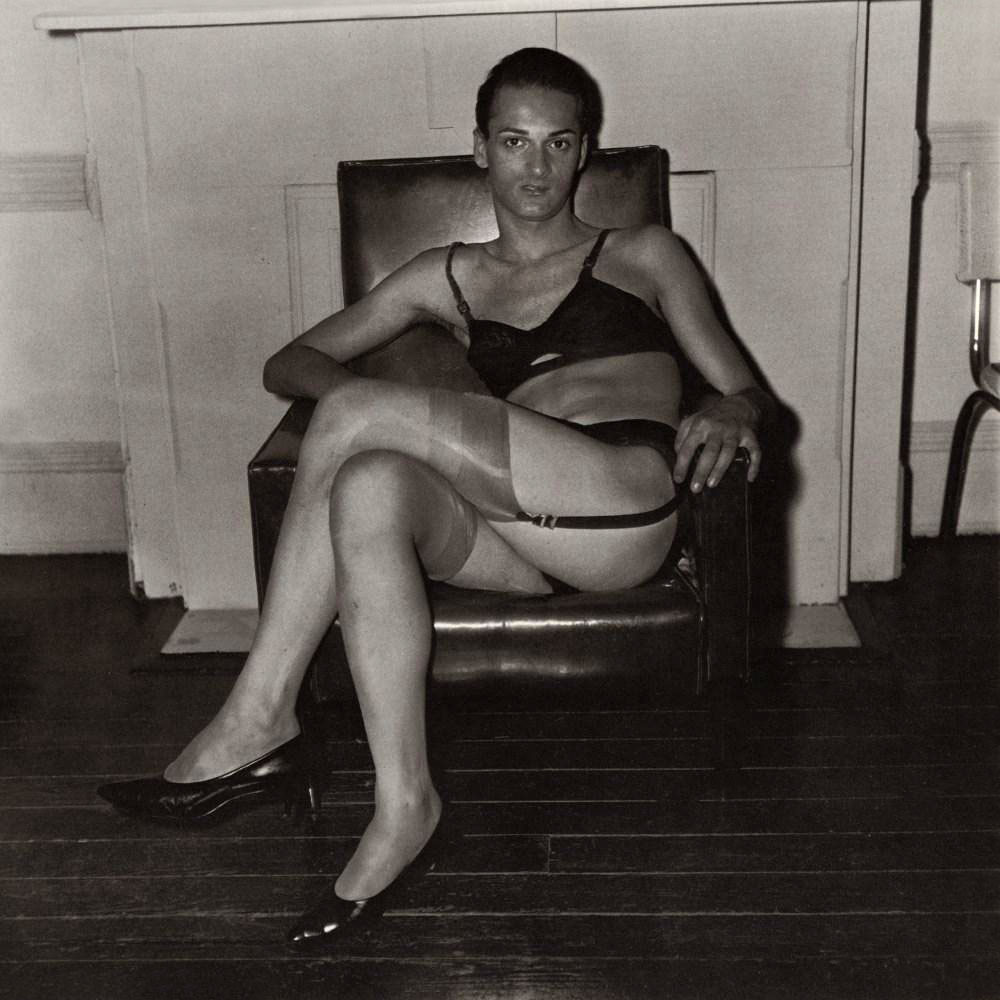
Diane Arbus (American, 1923-1971) 'Seated man in a bra and stockings, N.Y.C., 1967' 1967


Diane Arbus (American, 1923-1971)
Seated man in a bra and stockings, N.Y.C.
1967
Gelatin silver print


Since the demise of my old website, my PhD research Pressing the Flesh: Sex, Body Image and the Gay Male (RMIT University, Melbourne, 2001) has no longer been available online.

I have now republished the third of twelve chapters, “In Press”, so that it is available to read. More chapters will be added as I get time. I hope the text is of some interest. Other chapters include Historical Pressings which examines the history of photographic images of the male body; Bench Press which investigates the development of gym culture, its ‘masculinity’, ‘lifestyle’, and the images used to represent it; and Re-pressentation which alternative investigates ways of imag(in)ing the male body and the issues surrounding the re-pressentation of different body images for gay men.

Dr Marcus Bunyan March 2023


“In Press” chapter from Marcus Bunyan’s PhD research Pressing the Flesh: Sex, Body Image and the Gay Male RMIT University, Melbourne, 2001

Through plain language English (not academic speak) the text of this chapter investigates the photographic representation of the muscular male body in the (sometimes gay) media and gay male pornography. In the title of the chapter I use the word ‘press’ to infer a link to the media.

Keywords

photography, muscular male body, muscular male body in the media, appearance, lifestyle, narcissism, advertising, media, appearance, consumer capitalism, visible bodies, gay male, gay male pornography

Sections

1/ Consuming the Appearance
2/ Consumer Capitalism and Narcissism
3/ Visible Bodies
4/ Gay Male Pornography
5/ Alternatives to American gay male pornography
6/ Alternative bodies

Word count: 6,884


In Press


“Not only do the media shape our vision of the contemporary world, determining what most people can and cannot see and hear, but the very images of our own body, our own selves, our own personal self worth (or lack of it) is mediated by the omnipresent images of mass culture…”


Douglas Kellner1


From the fervent explosion that saw the birth of the gay liberation movement in the late 1960s and early 1970s there emerged a period of amazing freedom and growth for many gay people. Sexualities that were previously hidden behind a veil of secrecy were now being expressed and fought for out on the streets. Sex, especially the desire of gay men for casual sex, was now out in the open. A new body image emerged from this revolution, one that was neither male nor female, but androgynous. This new androgynous body image can be seen as a reflection of societal changes that were happening during the swinging Sixties, the era of “free love.” You could swing, i.e., move both ways sexually. The joining together of male and female, gay men and lesbians was a very positive force in the formation and acceptance of new identities.

But the honeymoon was soon over.

The idealism of the early gay liberation movement did not last long. Gay men, long persecuted for their camp and feminine ways sought images to combat the long held stereotype of the limp-wristed pansy who had abdicated his male power to others through his effeminacy. Manliness came out of the closet of the physique magazines to express the longed for power of patriarchy that gay men sought. There was an enormous surge in the production of homoerotic imagery and gay men responded by imitating heterosexual masculinity in an ironic way; the ‘clone’ image was born: boots, tight fitting jeans, check shirts, short hair and usually a moustache to top off the image. Anybody could go out and purchase such an outfit. It did not discriminate along class or social boundary lines and the ‘look’ was relatively ageless. This clone image extended to other identities that included the leather man, the sailor, the construction worker & the cowboy. But the image was still ‘butch’; skinny or fat guys really need not apply.

The pop group ‘The Village People’ are a perfect example of the camp irony that infused the gay scene at this time. Their song “Macho Man” echoes the desire for gay men to be seen as butch: “I wanna be a macho, macho man – I wanna be, a macho man,” they sing parading around in their tight fitting and revealing outfits. By making their stereotypical cloned images of the cowboy, construction worker, cop, etc., … incredibly camp they undermined the credibility of traditional masculinity. But soon this camp ironic comment was devoured by the dichotomy of existing sex and gender differences. As Dennis Altman has said,

“In the early days of the movement, both women and men saw the process of gay liberation as intimately related to the blurring of sexual and gender boundaries, a move toward androgyny … Our biggest failure was an inability to foresee the extent to which the opposite would happen and a new gay culture / identity would emerge that would build on existing male / female differences.”2


The body and its visibility became increasingly important as a site of construction that was and is crucial to a persons identity and self-esteem. Appearance is critical to this construction.

I suggest that in contemporary gay culture the muscular body of the gay male has stopped being a ‘camp’ ironic comment on ‘normal’ masculinity and instead the body and photographic images of it have become a marketable asset, a commodity3 in a selling and surveillance exercise. Men advertise for sex by displaying their muscular body for admiration and desire by others and observe themselves and others reactions to it. Identity is now mediated by acceptance of their image and by ‘measuring up’ to a perceived image ideal. Media started to make use of this new availability of the male body as an objectified image of desire as it opened up new markets to companies. It encouraged men to undertake face lifts, tummy tucks, pectoral implants and hair removal, to purchase underwear, toiletries, clothes and all manner of goods so that they too could approach the archetypal ‘ideal’ of the masculine male.


David Lloyd. Cover of Naked Men of San Diego calendar 1998


David Lloyd
Untitled
Nd
Cover of Naked Men of San Diego calendar
Santa Monica: The Phenomenon Factory, 1998


Today images of the smooth, muscular, white male body are everywhere in advertising, encouraging us to purchase more, to help us get closer to the ideal. As David Kellner has said in the quotation at the beginning of the chapter, the images of mass culture have become omnipresent. Naked men now adorn calendars containing full frontal nudity of smooth muscular white bodies all sporting the latest in designer erections! You can have your man any time of the day, any time of the year, when you get poked in the eye with this calendar.

The muscular Billy Doll, complete with huge anatomically correct penis, (read ‘scientifically’ or how big a gay man’s penis should be) is the contemporary idealisation of earlier stereotypical gay fantasy images, a kind of male Barbie doll on steroids for gay men. I believe that in today’s incarnation of the gay male body the camp ironic comment present in the fantasy images of an earlier generation has disappeared.
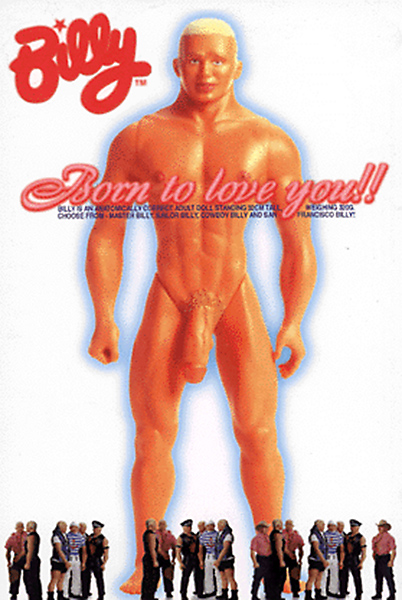
 

Behavior Saviour. 'Untitled' 'Billy postcard' 1998


Behavior Saviour
Untitled
‘Billy postcard’
1998


“Born to love you!! Billy is an anatomically correct adult doll standing 32 cm tall, weighing 320g. Choose from – Master Billy, Sailor Billy, Cowboy Billy and San Francisco Billy! Billy, the world’s first out and proud gay doll, comes beautifully packaged in a high quality presentation case with photographic backdrop.”
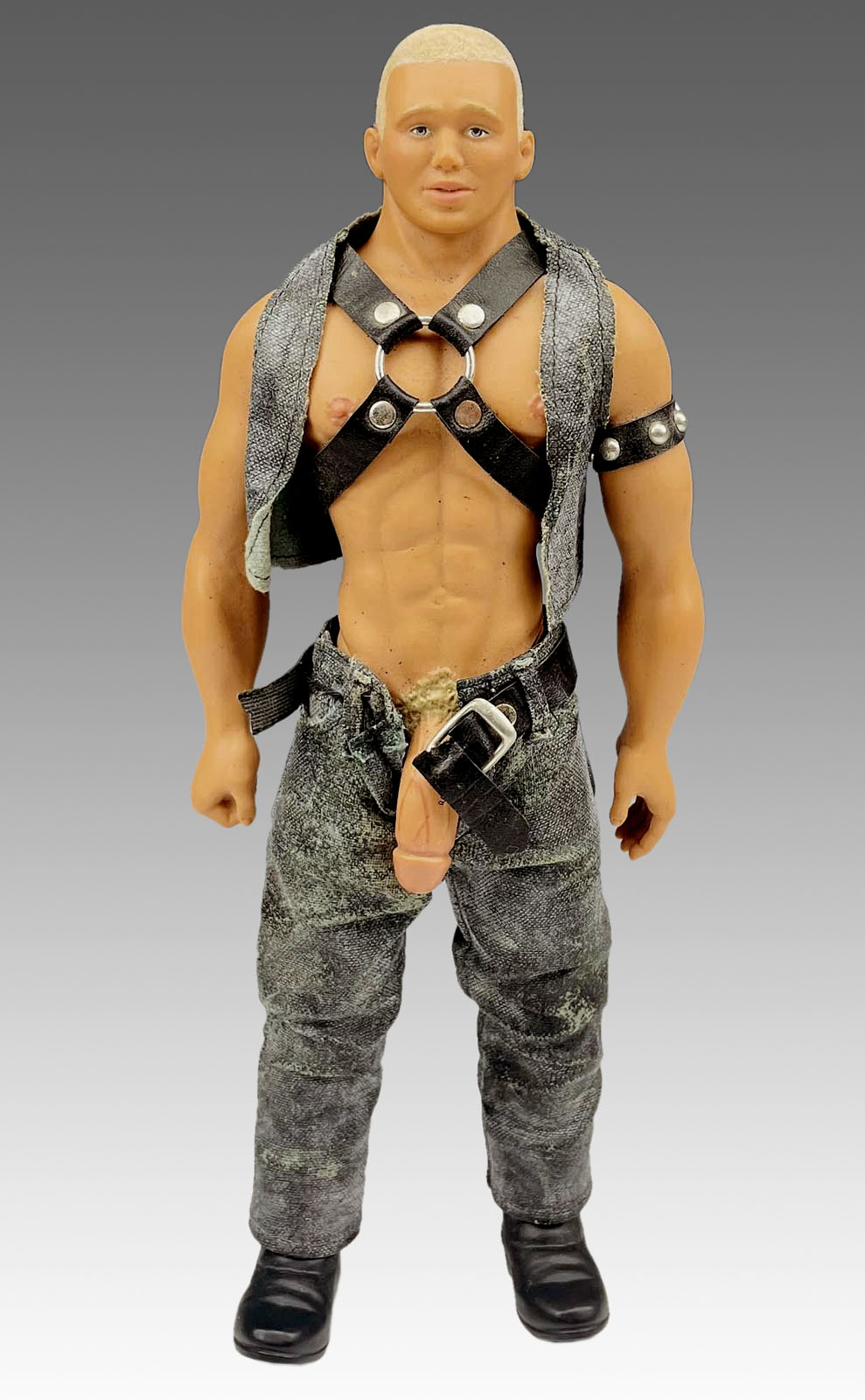
 

'Billy Doll' c. 1997


Billy Doll
c. 1997


It has been replaced by a desiring consumerism, in this case the desire for a muscular form complete with jaw dropping penis, the envy of every gay man. And after all, consumerism is a form of self-obsession. Makes you feel a little insecure, eh? Billy doesn’t have an inch of fat or any body hair, is perfectly proportioned (particularly his huge endowment) and is made of plastic. No fear of infection here! Women have been fighting this kind of body stereotyping with the Barbie Doll for years and now the gay male has his own equivalent.

Oh but Billy – he’s born to love you!!


Consuming the Appearance

Sex sells. The appearance and image of hard bodies sells. They are consumed by individuals and societies eager to attain what they offer; individuality, success, popularity and ‘lifestyle’. But these images are not individual, they are ‘the same’, to be consumed by every-body. Below are three examples of the current genre of male body photography; all bodies are of the same homogenised type. Only the photographers are different, but they might as well have been the same.
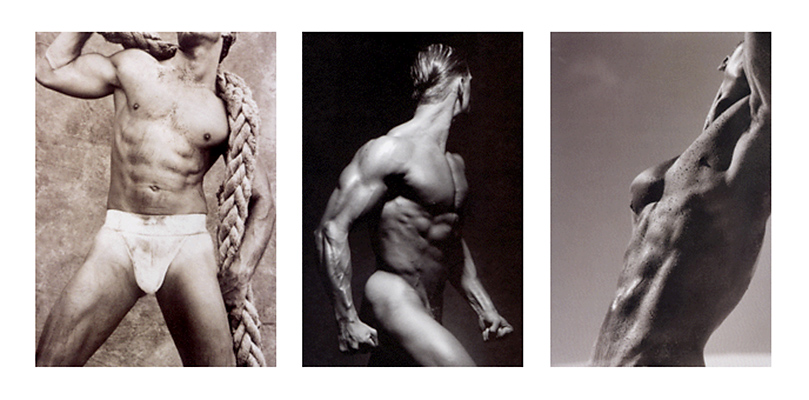
 

Various photographers of the male body in Blue Magazine


Michael Childers
Untitled
Nd
Blue Magazine
Sydney: Studio Magazines, February 1999, p. 68

Jason Lee
Untitled
Nd
Blue Magazine
Sydney: Studio Magazines, April 1997, p. 108

Rob Lang
Untitled
Nd
Blue Magazine
Sydney: Studio Magazines, February 1999, p. 93


Apparently, “Jason Lee’s brooding male nudes plumb the shadowy depths of Mystery, Sensuality and Despair … Figures possess an aura of subdued eroticism … Faces and identities are almost inconsequential, the subject reduced to a study of line and texture.”4 He says that he doesn’t want to use clichés that tend to occur when photographing women and to establish an identity and style all of his own. Michael Childers images are supposedly, “Dynamic, sensual and glamorous,”5 while Rob Lang’s desert studies of the male nude, “Document his search for the man within … and [are] essentially about unearthing an emotional bond.”6

These “types” of photographer (ie. ones who take generic photographs of the muscular male body) and many more like them feature heavily in Blue Magazine, a glossy publication aimed at the gay ‘lifestyle’ demographic. Of course most photographers would like to think that their work contains a deep revealing: mystery, sensuality, emotional bonds, etc., … but speaking as a photographer myself, I believe that this type of body photography (with its self-absorption and narcissism), isolates the body from communication with others. The bodies are complete(d) within their own sensual gratification. The construction of these images is formulaic, the body forming a masturbatory landscape endlessly repeated by different photographers in slightly different poses that appeal to a gay erotic consumerism. There is no individual identity present in photographer or subject contrary to what Jason Lee would like to think.

Identities of the models and photographers are inconsequential. These images are used by advertisers, fashion photographers, media and “artists” alike to sell product and fall into clichés that have developed in the photography of the male body over the last 60 years.
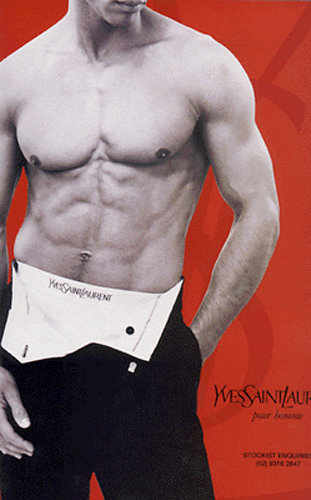
 

Anonymous photographer. 'Untitled' Nd Yves Saint Laurent advertisement 'Blue Magazine'


Anonymous photographer
Untitled
Nd
Yves Saint Laurent advertisement
Blue Magazine
Sydney: Studio Magazines, February 1999, p. 9
1999


I suggest that these images are no longer just a fashion, but that they are here to stay. I believe that the problems associated with the idealisation of these male images (for example steroid abuse, low self-esteem, body dysmorphia), can be compared to the eating disorders that women have succumbed to in their attempts to attain the waif like super-model look of many contemporary women fashion models.

Some social commentators have argued that the multiplicity of images available to the public (in consumer culture) open up new identities and new areas of becoming, deconstructing the hierarchy of what is seen as valuable in body image types. Central to this hierarchy is the ability of dominant groups (such as supermodels or muscular mesomorphs) to prove that their lifestyle7 and body type are desirable, are superior and worthy of emulation. Chris Schilling has observed that,

“The rapid internationalization and circulation of consumer and ‘lifestyle’ goods threatens the readability of those signs used by the dominant to signify their elite physical capital. These issues raise doubts about the continuing management and control by the dominant class of those fields in which physical capital is recognized and valorized. If fields become saturated with increasing body images and social practices which are presented as constituting valuable forms of physical capital, then their structure may change. Unless dominant sections of society are able to classify these styles into existing hierarchies, and have these classifications recognized as valid, then the logic of differences in which taste in cultural and consumer goods and lifestyle activities are held to be oppositionally structured is threatened. In contemporary consumer society, then, we may be witnessing processes which will make it extremely difficult for any one group to impose as hegemonic, as worthy of respect and deference across society, a single classificatory scheme of ‘valuable bodies’.”8


I disagree with this argument.

It is still all too easy for the dominant group within a subculture or society to impose and identify a ‘valuable’ body. This can be seen in any of the above images and the way they are used by all types of artists, media & advertisers to attract ‘value’ status. The body of the muscular mesomorph attracts a projected desire that media and advertisers rely on. It is still very difficult to put forward alternate body images that can be seen as fantasies, both desirable & ‘valuable’. Since most males would like to have a muscular mesomorphic body shape this body type does have social status. Covers of gay magazines such as Outrage (below) sell far more copies when they have an attractive, muscular smooth young man on the front of them.
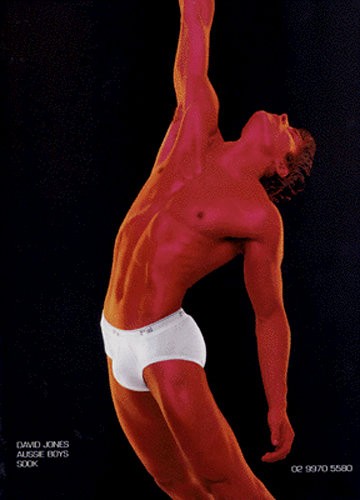
 

Anonymous photographer. 'Untitled' Nd in Blue Magazine 1999


Anonymous photographer
Untitled
Nd
2(x)ist underwear advertisement
in Blue Magazine. Sydney: Studio Magazines, February 1999, p.15
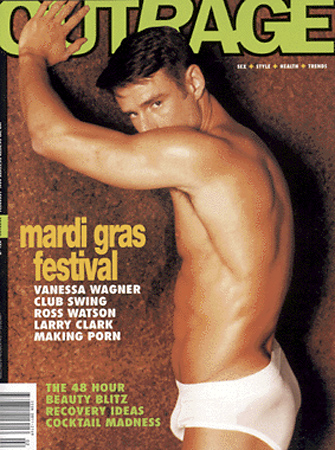
 

Darren Tieste. 'Geoff' Nd in Outrage Magazine 1999


Darren Tieste
Geoff
Nd
Outrage Magazine cover, “Making Porn” play and underwear feature
in Outrage Magazine No. 189. Melbourne: Bluestone Press, February 1999. Front cover / p. 63


Here Outrage kills three birds with one stone. Firstly, they have their attractive semi-naked cover model to help sell the mag. Secondly, there is an article on the play in which the model / actor is acting (different photographs). This promotes both the play and fills the magazine. Thirdly, the image is repeated inside the magazine with other models / actors in designer underwear as part of a photographic feature. Nice one Outrage!

This and other contemporary images of muscular male bodies are unlike the clone image of an earlier generation because the ‘look’ is now ageist, elitist and requires great sacrifices in order to come close to possessing the ‘ideal’. Great value is put on appearance, youth, beauty, and lifestyle to the possible detriment of everything else.


Consumer Capitalism and Narcissism

Consumer capitalism encourages the consumption of items that promote a socially valued model. This encourages narcissism9 in the individual as each seeks to tailor their appearance through the consumption of such items. The individual reflexively watches how they ‘measure up’ to the model of a socially valued self and modulates what they consume so that they can be seen as popular, attractive & possessing a good ‘lifestyle’. Anthony Giddens notes,

“Consumption addresses the alienated qualities of modern social life and claims to be their solution: it promises the very things the narcissist desires – attractiveness, beauty and personal popularity – through the consumption of the ‘right’ kinds of goods and services. Hence all of us, in modern social conditions, live as though surrounded by mirrors; in these we search for the appearance of an unblemished, socially valued self.”10


I suggest that looking at the self in a mirror may not be the same as seeking the truth of the Self in reality; after all, a mirror image is only a reflected surface, seen in reverse. This reflection, this appearance, dominates your social ‘value’ in contemporary society. Appearances are marketable, and the more unblemished a product you have the better. Across the many spectrums of life it is a buyers and sellers market, whether it is the body, the underwear or the aftershave. They have what you want; you might have what they want. What price a sale? Maybe it’s all an illusion with mirrors?

(Please see the Eye-Pressure chapter for more information on the gaze).
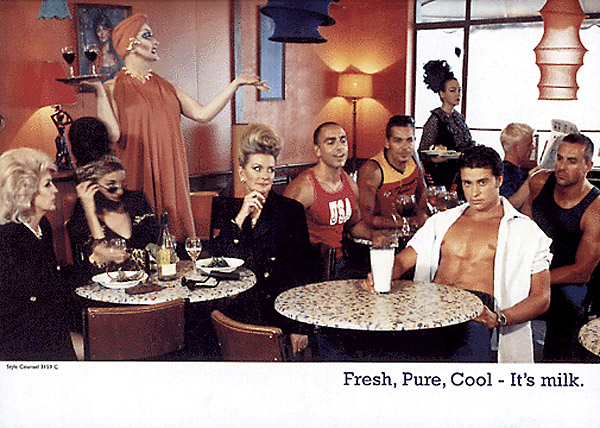
 

Anonymous photographer. 'Fresh, Pure, Cool – It's milk' Nd in Large Magazine 1997


Anonymous photographer
Fresh, Pure, Cool – It’s milk
Nd
Style Council milk advertisement
in Large Magazine Issue No.8. Melbourne: Large Publications Pty Ltd., 21st March 1997, back cover
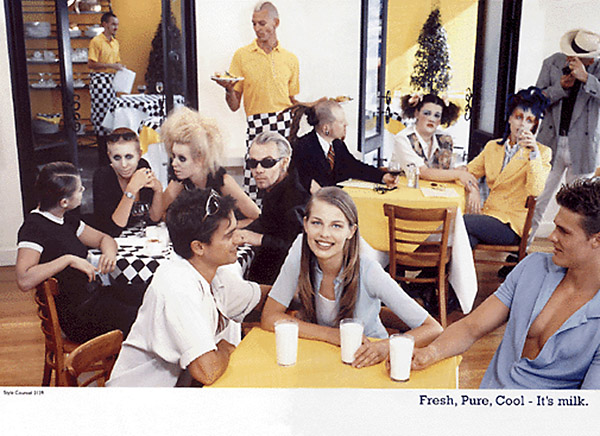
 

Anonymous photographer. 'Fresh, Pure, Cool – It's milk' Nd in Large Magazine 1997


Anonymous photographer
Fresh, Pure, Cool – It’s milk
Nd
Style Council milk advertisement
in Large Magazine Issue No.8. Melbourne: Large Publications Pty Ltd., 21st March 1997, pp. 1-2


The surface of such an identity construction hides the cost of its production. Seemingly, no effort is required to possess such a socially valuable body and ‘lifestyle’. Advertising promotes these socially valued bodies and lifestyles; this can be seen in the imagery and advertising message of the two milk advertisements. In the above advert the (phallic) glass of milk is linked to the smooth muscular body of the man holding it, who is the only person dressed in white. The milk and the man who is about to drink it are both, by association, fresh, pure, cool. The surrounding crowd is not staring at the milk, they are staring at, and desiring, him. On the left well-heeled matrons eye him with open desire and behind a group of (gay) men, all of a similar smooth, muscular body-type stare with open mouths and obviously lust after his sculptured torso. This tableaux reinforces the message that such a body is fresh, pure and cool, and is seen as a ‘valuable’ status symbol by society. It’s possible that by drinking milk you too can acquire such a possession!.

In the second advert a women and two men are again surrounded by ‘others’, people that could be regarded as freaks, with most of them having strange hair, over the top make-up and wearing dark clothes. They are not ‘normal’. When the advertising agency was casting for this campaign in Melbourne I went along – they wanted the weirdest looking people they could find. In contrast the male model at right reveals his smooth sculptured torso to the desiring gaze of an admiring viewer, much as in the first advertisement above.

This is the desirable body and the desirable ‘lifestyle’ to which we should all aspire!


Visible Bodies


“Visible bodies are caught in webs of communication irrespective of individual intentions and these systems can exert a considerable influence on the behaviour of those involved.”


Tom Burns11


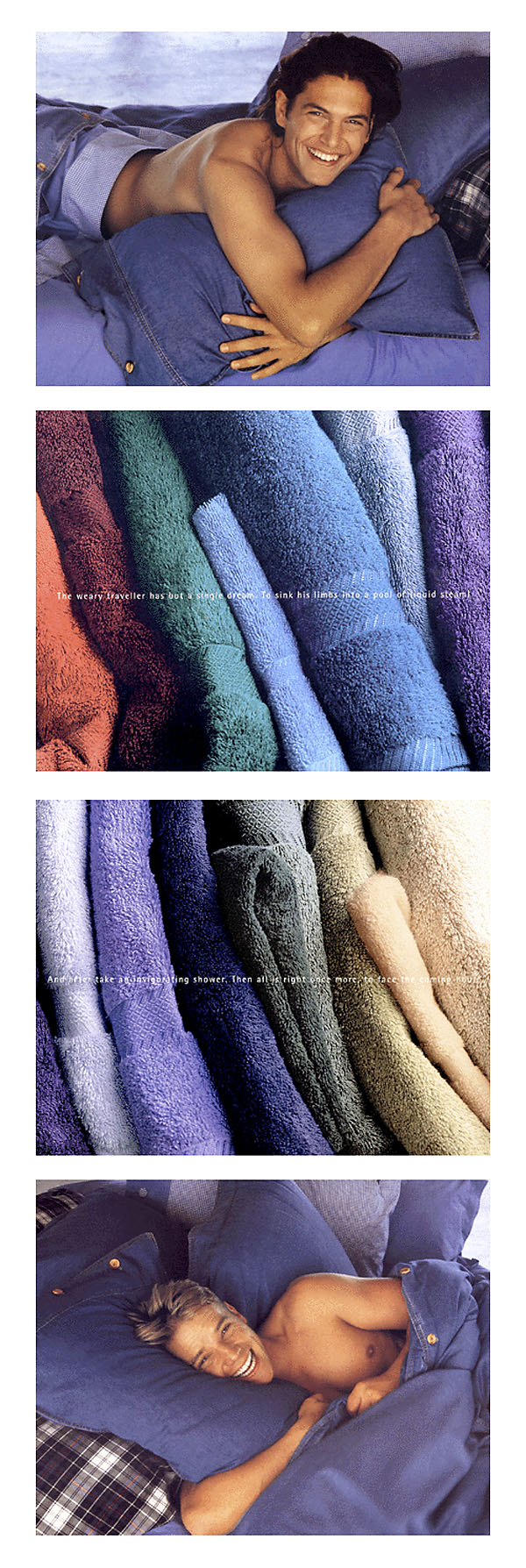
Media advertising makes use of these webs of communication to reinforce it’s system of consumer control. Sometimes advertisers do not openly deploy these lines of communication. In the example below Sheridan sheets has, perhaps subconsciously perhaps deliberately, targeted the gay ‘lifestyle’ demographic without making it too obvious. In the first photograph a beautiful, smooth, tanned young man lies in bed happily smiling at the camera …
 

Anonymous photographer. ''Sheer Poetry' by Sheridan' Nd in Sheridan Australia brochure 1998


Anonymous photographer
‘Sheer Poetry’ by Sheridan
Nd
in Sheridan Australia brochure. Mordialloc: DDI Adworks, 1998, pp. 17-20


On turning the page we find that this image is followed by a double page spread of towels in assorted colours. On the next page we find another gorgeous smooth, tanned young man reclining in bed smiling at the camera. Funny isn’t it that the sheets on both beds are identical, that one boy is photographed from one side of the bed and the other boy from the opposite side. They couldn’t be in the same bed could they, heaven forbid!

Instead of showing the boys in bed together which would not appeal to the wider heterosexual male or female purchaser, the designer of the brochure has cleverly suggested the possibility of homosexuality through the use of visible bodies in a disguised web of communication. The symbolic representation of such photographs (with their implicit language of sexual contact) can be recognised by gay men without the overt nature of homosexuality being thrust in the face of the general public. It took me some time to realise what the designers had done. I wonder how many gay men have consciously realised this association? I think most would only perceive and understand this message projection, this web of communication on a subconscious level. Still this subconscious recognition only serves to reinforce societal values of what is seen as worthy of esteem, what is desirable in a lifestyle, through visible bodies, possessions and in this case, sheets. It is the insidious nature of media advertising that it evens out the bumps of difference, that is, it standardises and shapes levels of diversity, style and taste into what is socially acceptable and desirable.

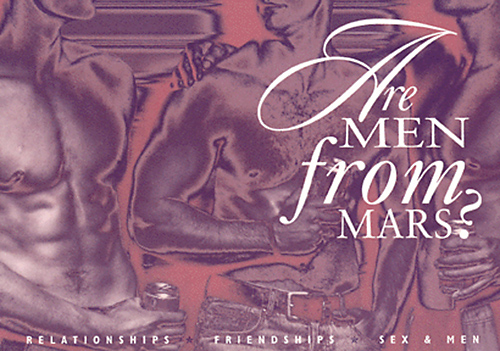
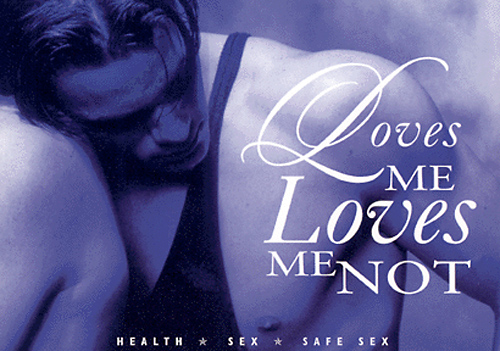
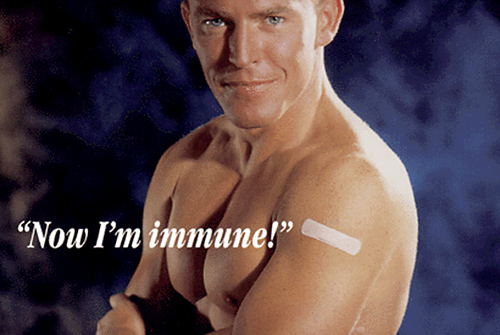
The advertising media that targets consumers are not the only one’s guilty of promoting a limiting desirability of ‘ideals’ through photographic imagery, the representation of valuable male bodies. Equally to blame are some well known health organisations, both gay and straight, that use ‘the same’ stereotypical muscular mesomorphic bodies to illustrate their health campaigns.
 

Stephen Paul. 'Are Men from Mars?' c. 1998


Stephen Paul
Are Men from Mars?
c. 1998
‘Momentum’ Postcard
Bristow and Prentice Response Advertising
Melbourne: Victorian AIDS Council/Gay Mens Health Centre Inc. c. 1998
 

Stephen Paul. 'Loves me, Loves me not' c. 1998


Stephen Paul
Loves me, Loves me not
c. 1998
‘Momentum’ Postcard
Bristow and Prentice Response Advertising
Melbourne: Victorian AIDS Council/Gay Mens Health Centre Inc. c. 1998
 

Anonymous photographer. 'Now I'm immune!' Nd


Anonymous photographer
Now I’m immune!
Nd
‘Get Vaccinated’ Postcard
Australian College of Sexual Health Physicians 1997


To be fair, there is an awareness amongst quite a few people at The Victorian AIDS Council / Gay Mens Health Centre in Melbourne, Australia, of the need for the imaging of a broader cross section of body-types in health promotions. Still, this does not stop the images on postcards such as the two above (designed by an advertising company), appearing with regular monotony. The back of “Are Men from Mars?” asks you to discover for your yourself what makes men tick by joining one of the many VAC courses. From the card image it would seem that what makes men tick is a muscular well defined body, clenched hands (symbol of phallic masculinity)12 and beer!

Once introduced to the VAC young gay men may attend the ‘Young and Gay’, ‘Boyant’ or ’18 and under’ courses. In an interview with Jim Sotiropolous13 I asked him about the courses, media advertising and body image commodification:


MAB: OK, so one example I heard about as that you looked at people’s underwear to see whether they were wearing Calvin Klein.

JS: The only thing I can relate that too is that in the first week we use autograph sheets as an icebreaker. A sheet has 6 questions on it and one of these questions is who owns a pair of CK underwear.

MAB: Why is that there? This is interesting to me because of the commodification of the body and consumer culture – if you can’t have the body you can buy the underwear!

JS: Because people talk about it. It is something that we know will get people saying “Well, yeah I do.” So they will sign it. Its no use asking very vague questions and you won’t get a response, so you have to ask very specific questions because we just know they will respond. They know about it. I think it is stronger than a gay focused strategy. You can’t miss the billboards and the advertising.

MAB: So they have been attracted by those images of men and gone out and bought this underwear pre-knowing about the gay community and what’s expected of a gay image?

JS: Yes – the images are very erotic in the CK ads. I was in New York recently and there is a billboard that stretches 2 blocks with the range of CK underwear, its amazing!

MAB: Is this self-reflective narcissism good for how people feel about their own bodies?

JS: No – I think that there a lot of people who know they will never achieve that ideal but I’m not sure …

MAB: … whether that’s a bad thing

JS: Up to a point, yeah.

MAB: I’m not positing it as a totally bad thing.”


I suggest that the very presence of this kind of question (whether it elicits a response or not), still smacks of a certain elitism and the promotion of a particular ‘lifestyle’ as desirable. Calvin Klein models are, after all, the epitome of the clean cut, well groomed, tanned, successful visible male body promoted by an advertising web of communication. This is how bodies unintentionally get caught up in webs of communication which affects the behaviour of all bodies, in this case through the proposition of such a question. This enmeshment causes problems not only for the gay male but also for the heterosexual male; increased levels of body dissatisfaction, eating disorders and steroid abuse have been noted by researchers.14 This may be due in part to the desirability and valued social status of muscular mesomorphic body images such as those used in the Calvin Klein advertisements.

I believe that the search for self-identity through consumption is, in the end, a self defeating exercise. It is like looking into a thousand mirrors at an image of infinite regress never able to find the original image, that essence of inner Self that is ours only in the most insightful of moments. WE are the ones that create the images in the media, the mirror images of how we would like to be. As Lakoff and Scherr have said,

“Who, in the first place, are these faceless hordes? Who is ‘society’ but you and me? And the ‘media’ are not active, it is well known, but reactive; what they discern that their viewers / hearers / readers want, they provide. If we, the viewing public, are not stimulated to buy by the blandishments dangled before us, the media will be instantly responsive – there will be a whole new set of blandishments dangled faster than the eye can blink. So if the same tired messages, the same recycled pictures, pass across our weary retinas year after year, we cannot in all honesty blame the media.”15


We can only blame ourselves.


Gay Male Pornography


“If one were to write the ultimate cliched Australian coming out story, it would be about a boy born in a hick town who has the lithe body of a ballet dancer. Engaged to be married, he instead becomes a flight steward. The scales of heterosexuality drop from his eyes and he moves to Sydney to reinvent himself via the Yellow Brick Road of pumping at the City Gym, over-tanning at Tamarama, pulling beers at the Albury, and joining that bare-chested Roman garrison who shoulder their way across dance party floors. There is only one thing for him left to do: preserve the dream forever by becoming an American (which means the world) video sex icon.”


Peter Jordaan16


Following on from the previous text we might be able to say that we have only ourselves to blame if the media reinforce images of traditional ‘virile’ masculinity in a consumer society. It is we who have created these erotic male fantasy images, images that express our desires, not the media. But it is also true that capitalism and consumerism rely on the sale of product and constantly enlarge and amplify product appeal by advertising, thrusting these fantasy images into our faces until they become an overpowering omnipotent archetype. The male body in the contemporary gay porn industry is a prime example of such an archetype, the (re)enforcement of masculine power in the desirable image of the muscular mesomorphic body. How did this (re)enforcement of masculine power in the body image of gay porn stars come about?
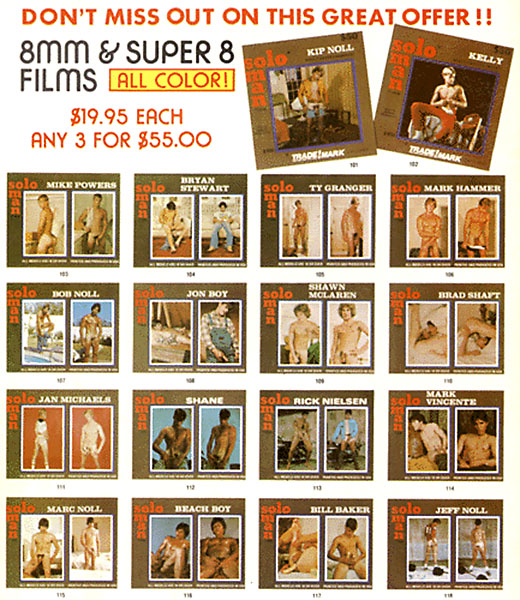
 

Anonymous photographers. 'Solo Man' Nd


Anonymous photographers
Solo Man
Nd
Super 8mm pornography films advertisement in Super Star Studs No. 2. New York: No publisher, Nd (early 1970s) Back cover
Courtesy: Marcus Bunyan


During my research at The One Institute in Los Angeles I investigated the type of body images that appeared in the transitional phase from physique magazines of the mid-late 1960s into the early gay pornography magazines of 1969-1970 in America which occurred after the Supreme Court ruling on obscenity. I wanted to find whether there had been a crossover, a continuation of the muscular mesomorphic body image that was a favourite of the physique photographers into the early pornography magazines. From the evidence of the images in the magazines I would have to say that there was a limited crossover of the bigger muscular bodies but most bodies that appeared in the early gay porn mags were of the youthful, smooth, muscular ephebe-type body image.

As can be seen from the images (above) most of the men featured in the early gay pornography magazines and films have bodies that appear to be quite ‘natural’ in their form. Models are mostly young, smooth, quite solid with toned physiques, not as ‘built’ as in the earlier physique magazines but still well put together. Examining the magazines at the One Institute I found that the bodies of older muscular/hairy men were not well represented. Perhaps this was due to the unavailability of the bigger and older bodybuilders to participate in such activity? In the male bodies of the c. early-1970s Super 8 mm pornography films (above) we can observe the desirable image of the smooth youthful ephebe (males between boy and man) being presented for our erotic pleasure.

We can also observe in the bodies of Mark Hammer, Mike Powers and Bob Noll the presence of a bigger more muscular body. These bodies are an early indication of the later development that was to take place in the body images of men in gay pornography – a shift to older more ‘masculine’ bodies, probably as a reaction to the stereotype of the effeminate limp-wristed pansy and also the fear of being seen as a pederast, that is a person who has sex with underage boys.

In the late 1970s another revolution started to take place; towards the end of the decade porn films became more widely available on videocassette. This made porn much more accessible to the gay consumer and allowed the expansion of the gay pornography industry. Instead of having to buy Super 8 movies and use home projectors that took an age to set up gay men could now have their ‘hit’ of pornography in a quick, convenient package.
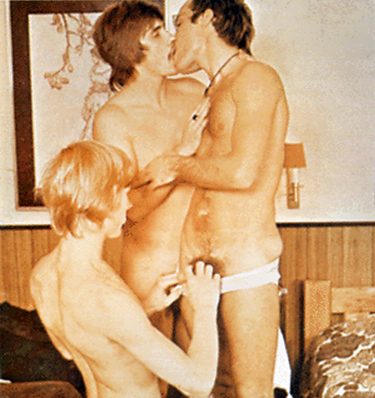
 

Anonymous photographer. 'Perfect Room Service' c. 1976


Anonymous photographer
Perfect Room Service
c. 1976
Homo Action
14 Color-Climax Corporation
Copenhagen: Peter Theander, 1976
Courtesy: Marcus Bunyan


Not all male bodies (especially those that appeared in the early European pornography films and magazines), conformed to the ‘ideal’ of the hairless muscular ephebe, as can be seen in this magazine ‘still’ photograph taken from a Danish Super 8 mm gay pornography film. Curiously the magazine is printed in Australia.


Early gay male pornographic films have a distinctly ‘underground’ flavour but some managed to capture the frenzied passion that drives such erotic encounters where the people really want to have sex with each other. In the early 1980s the amateurism of the early films was replaced by the professionalism (and money making power) of such directors as Steve Scott, Matt Sterling, John Travis and William Higgins who still managed to capture this sexual frenzy. Gone are the really youthful body types of the earlier magazines and films – smooth, white, older muscular bodies now dominate.

William Higgins is one of my favourite directors for his unique shooting style. He makes use of oblique angles, incredible distorted close-ups of blood engorged penises (Sailor in the Wild, 1983), slow motion repeats of cum shots from many angles, and jump cuts from one carnal scene to another without a break (Class Reunion, 1982). This surreal celluloid confusion adds to the mystery and excitement of the scenes and the participants really seem to enjoy their sex; they wince as the cock goes up their arse and there is a certain ‘reality’ about the whole sex thing.

Even in these early 1980s films the star has numerous sexual partners and fucks his way through the whole video having multiple ejaculations within the space of a few minutes running time. At the drop of a hat muscular men drop their pants and their loads all over the place and some of the scenes are really horny!

As with any pornography though, you have to trawl through heaps of dross before you find the gems that get you going. Multiple orgasms by the stars of pornographic videos help reinforce compulsive sexual behaviour17 that is learnt by gay men to be a societal performance ‘norm’.18 Withdrawing before cumming enabled the director to capture the ‘money shot’ (ejaculation) for the viewer; gay male sex on video became not a passionate intimate union between two men but a performance, a display of shooting skills (both physical and pictorial) which presents the body to best advantage. Later in his career William Higgins also pioneered the shaved bum which epitomises the pumped up, perfectly groomed young white male available for plumbing lessons.
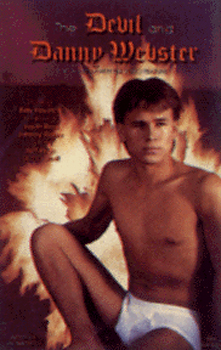
 

Anonymous photographer. 'Cover image from The Devil and Danny Webster pornography video' 1997


Anonymous photographer
Untitled
Nd
Cover image from The Devil and Danny Webster pornography video
Champions Video of Australia catalogue Issue 31. Canberra: No publisher, 1997, p. 12


“Unable to compete with the ‘sun-bronzed gym gods’, Danny spends his nights alone watching old movies – hoping for a miracle … “
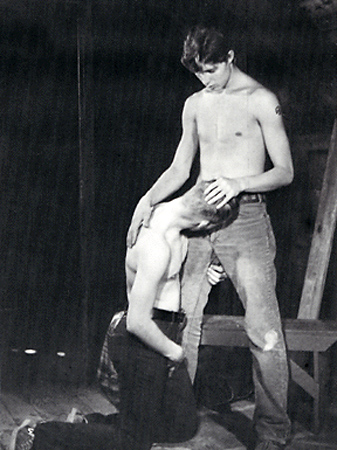
 

Anonymous photographer. 'Take it All! They Ate the Whole Thing!' Nd


Anonymous photographer
Untitled
Nd
in Take it All! They Ate the Whole Thing! Vol. 1 No. 1. American: No place or publisher, Nd
Courtesy: Marcus Bunyan

Rare image of thin bodies in gay male pornography.


Gay men wanted to be seen as virile ‘real’ men in reaction to the stereotype of the effeminate pansy. This emphasis on the possession and display of a muscular body became even more prevalent in pornography with the onset of the HIV / AIDS crisis in the mid-1980s.

Driven by the fear of disease and the anxiety, insecurity and dis-ease of being thin and being seen as possibly infected gay men started going to the gym and ‘pumping’ up in ever increasing numbers. A big, healthy, muscular body couldn’t possibly be infected with the virus! Body hair was out as it was a sign of experience and maturity and therefore of disease according to Michelangelo Signorile.19

Healthiness was in. Gay men with thin bodies (such as those above) or bodies like that of Danny Webster (above), hoped for a miracle otherwise they would be left on the shelf, never having any sex! Either that or they went to the gym and capitulated to the emerging stereotype. There was apparently no hope if you didn’t ‘fit’ the ideal. But this is not the real world, this is a fantasy! Many gay men gave in to this fantasy becoming ‘simulations’, carbon copies if you like, of their porn star heroes. Lots take illegal steroids to get close to their ‘ideal’.

Other gay men have carried on as they have always done; living their lives as positively as they can; incorporating their sexuality as part of their identity; coping with feelings of inadequacy that such bodily facades can generate. Perhaps if these bodies were seen as ‘unnatural’ gay men would get over some of their attraction towards them. Perhaps if they accepted them as an artifice, a deception; that the material (steroid abuse20 and possible HIV virus contraction to name two) and psychological (high / low self-esteem leading to depression and anxiety) cost of their production is hidden behind the rose coloured lens of the camera or the surface of the body, then their erotic power would be lessened. I suggest that gay men DO realise that these images are fantasies but still strive to attain the fantasy in themselves and in the bodies of their partners.
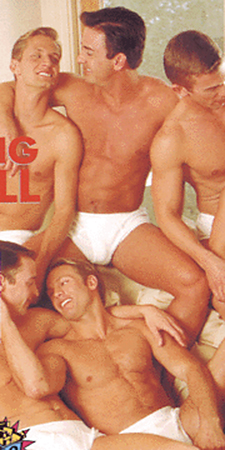
 

Anonymous photographer. Image from 'The Big Thrill' pornography video Nd


Anonymous photographer
Untitled
Nd
Image from The Big Thrill pornography video Nd
Cover of Champions Video of Australia catalogue Issue 46, 1998


“… when a dozen handsome young college guys arrive at the Kingsley Institute, the first thing they do is have a big pillow-fight, get incredibly horny, take their clothes off and have an all-in jerk off. After that, things get increasingly out of hand. All the young men are exceedingly cute and built like young gods, so they can link up in any combination they care to and make a very handsome couple. And they do care to. The viewer soon loses track of who’s doing what with who, or indeed of who is who, but it doesn’t really matter. These boys fit together like parts of a well-lubricated machine. They appear to have been selected for something more than their writing skills, then waxed and polished till they glow.” (My italics)

~ Rod Pounder21


In the above quotation we can see how the bodies in contemporary male pornography have become interchangeable, replaceable one with another. The image above is also a good example of the phenomenon of the homogenised body stamped out of the same mould. I believe that in contemporary gay male erotica it is not so much the sex that matters but the display of the body for admiration. There is a certain stiffness (pardon the pun) of performance now. The frenzied passion of sex has gone replaced by the surface, the positioning of the body for the benefit of the camera. It’s all to a formula. Big pricks have become even more important and stars have their dicks cast in rubber so the viewer at home can purchase and enjoy the satisfaction of taking their heroes prick (or a ‘simulation’ of it) up his own arse whilst watching the video at the same time.

Gay pornography depicts gay sex as ‘manly’ because gay men want to see themselves that way even though one man is fucking another man, supposedly queering ‘normal’ heterosexual masculinity. I believe this is not gay men ironically challenging traditional masculinity but the confirmation it’s power over them. As noted earlier, the body becomes a phallus – hard as granite and as tough as steel – signifying and embodying a mythological power. These bodies are built ‘tough’ despite the fact that you could probably drive a semi-trailer up their rear end and they probably wouldn’t feel a thing! Now, in contemporary male pornography, the range of body types is much narrower. Of course there are still specialist videos catering to the leather subculture, shaving fetishists, young men fantasies (mainly videos from Germany), wrestling, hairy men, toys, black men, etc., … but these form a small specialist minority group of the video market. In the main the videos that fill the Champions catalogue, for example, feature models that are constructed of smooth, prime white beef.
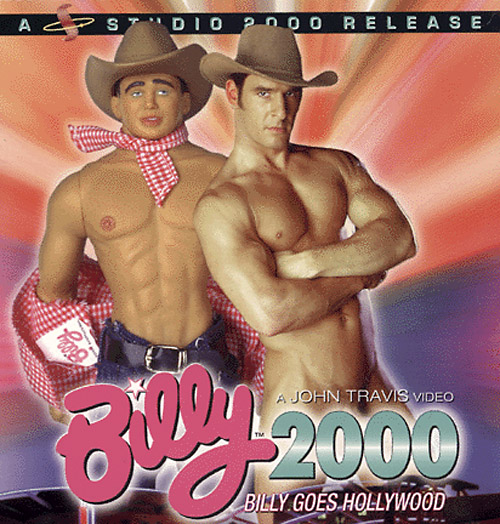
 

John Travis. Cover image from 'Billy 2000: Billy Goes to Hollywood' pornography video 1999


John Travis
Untitled
Nd
Cover image from Billy 2000: Billy Goes to Hollywood pornography video
Studio 2000, 1999


Recently I watched a video called Billy 2000: Billy Goes to Hollywood, directed by John Travis. The video features 4 couples and one solo performance. The story, as far as it goes, is that gay men go into a shop and sees the Billy doll (discussed earlier) and starts fantasising about meeting a man who looks exactly like the doll, including having his large ‘anatomically correct penis’. Low and behold we fade out into dream sex scenes between different men and different versions of the doll which has now come to life, wearing exactly the same clothes as the doll does. What follows are, I think, four of the most boring gay sex scenes I have ever seen. There is no passion in the sex and all four couples copy exactly (deliberately?) the same positions by rote: man sucks dolls dick, man sits on dolls dick, man gets fucked from behind by dolls dick, doll ejaculates all over mans back. This is formulaic sex. As we can see in the above image the muscular male body is now simulating the ‘ideal’ embodied in a doll! Great marketing ploy to link the sale of the doll and the video together…

As Peter Jordaan has observed,

“There is a desperate need for more gay romance. A video like 1992’s Matt Sterling effort ‘Scorcher’ stands out simply because one of the couples in it actually look with pleasure into each other’s eyes while they are fucking … dick-tugging videos which also tug at the heart remain rare delights indeed.”22


I most certainly agree.


Alternatives to American gay male pornography

As an alternative to American videos three names stand out in the pantheon of porn directors. The first is Kristen Bjorn was has made a reputation for himself and his videos by photographing men from all over the world in apparently natural, spontaneous sexual situations. His videos feature large casts of men from different ethnic backgrounds but all his actors are power- fully built, masculine men. The second is Jean-Paul Cadinot. His videos, usually set in reform schools, school dormitories, scout troops and army barracks feature young ephebes having their way with each other with a lusty abandon not usually present in American videos. Lastly there is George Duroy, pioneer of EuroAmerican videos such as Accidental Lovers (1993) and Sauna Paradiso (1994) that have been shot (using American money) in Eastern Europe after the fall of the Iron Curtain using East European men.

His videos include a combination of athletic, young performers who are all smooth; from the slim and toned ephebe to the more muscular built lad. And well built they are. The images below are a good examples of both body types. The boys, for they are not men in the American sense of the porn video word, really do seem to enjoy having sex and ‘making it’ with each other in a loving and intimate way. Which is great!
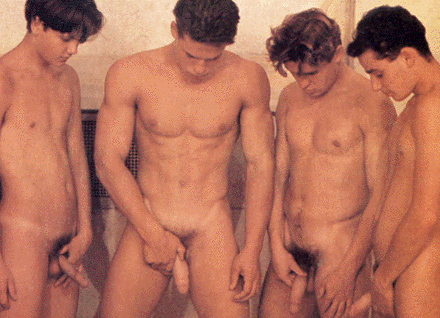
 

George Duroy. 'Untitled' from 'Sauna Paradiso' pornography video 1994


George Duroy
Untitled
Nd
Image from Sauna Paradiso pornography video
Falcon International Collection 1994
in Douglas, Jerry (ed.,). Manshots: The Firsthand Video Guide Vol. 7 No. 2. Teaneck, N.J.: FirstHand Ltd., December, 1994, p. 46.


Milan Demko, Victor Gravek, Pavol Zurek and Thomas Novak compare stiff dicks
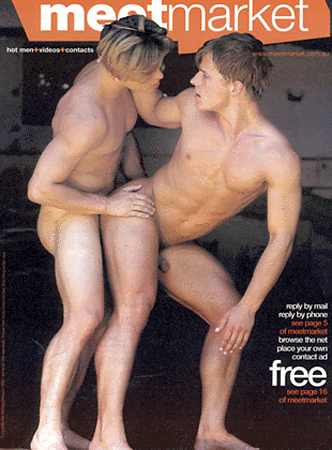
 

Anonymous photographer. ‘Untitled’ image from ‘Lucky Lukas’ pornography video 1999


Anonymous photographer
Untitled
Nd
Image from Lucky Lukas pornography video
Blue Diamond Video Services advertisement in ‘Meetmarket’ section in Outrage Magazine No. 189. Melbourne: Bluestone Press, February 1999, p. 1


Dean Durber, in an article for Blue Magazine called “New Wood” observes,

“Even if the innocence of much cuter and younger faces is forced off the shelves, the recent interest in intimacy and tenderness cannot be ignored. We might yet see older men on screen who actually appear to enjoy what they do. Especially if there’s money to be made and pleasure to be had.”


Why forced off the shelves? Apparently because of concerns over pederasty (love of young boys) and the perceived age of the ephebes involved. But here’s the rub – it’s all in the name of money in the end. It’s all about selling product even if you do have a good time. The fantasy scenarios are just that – idealised fantasies. They are set up to sell product and use body image to do so. These EuroAmerican videos just use the fresh new faces and bodies of muscular young men to appeal to a different market demographic.

Let me comment on just one more thing that happens in a lot of porn videos. I have noticed that it is usually the bigger guy (either dick or body size) that fucks the smaller guy therefore marking him as the man – no matter who is making the video. Commenting, unwittingly, on this disparity in body size Stan Ward in his review of Sauna Paradiso says that when the boys in the above photograph have a fourway, “Soon enough the boys are separated from the men. Novak and Demko continue the oral action while Gravec gives Zurek a royal screw up the arse … For the money shots, the boys and men come together …”23

Does that mean that if you have a smaller body that you are not a man? Does it mean that to be a gay man you have to partake in anal sex? It would seem that a big cock or its substitute, a big body, will always classify you as a man and not a boy and to participate in anal sex will make you a man not a boy. But whether its boys or men, gay pornography is there for one major reason – to make money within a media driven, image conscious consumer society.


Alternative bodies

There are, however, one group of photographs that have appeared in some porn mags that do not represent the ideal of the perfect muscular mesomorph or the smooth, young ephebe. These are photographs that accompany the messages of ordinary gay men wanting to meet other men for sex and companionship. These are the images of themselves they want to show to the general public. How they perceive themselves. How they are posed reveals small contexts of identity, even though their actual identity is hidden because of the masking of the face (No. 3 is ingenious in this regard; it uses the flash of the camera in the mirror to obliterate the facial features). The backgrounds and attire (when present) can tell a lot about a person.
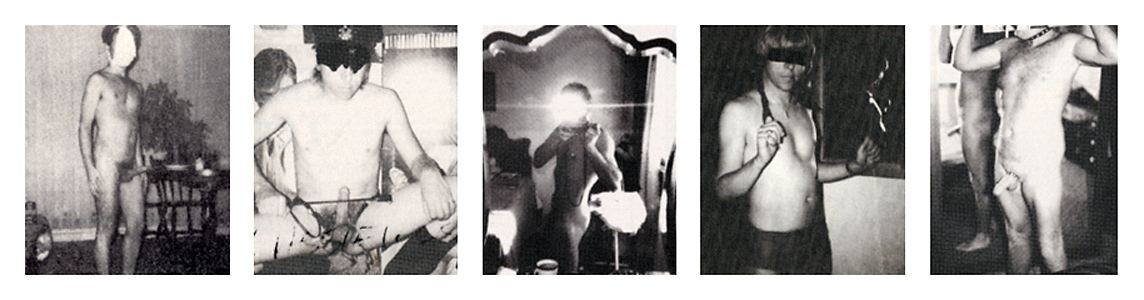
 

Anonymous photographer. ‘’Untitled Nd in 'Get In Touch section in various issues of ‘Gay’ 1984-185


(left to right)

Anonymous photographer
Untitled
Nd
in ‘Get In Touch’ section in Gay No. 104. Enmore: No publisher, 1984, p. 48.
Courtesy: Marcus Bunyan

Anonymous photographer
Untitled
Nd
in ‘Get In Touch’ section in Gay No.100. Enmore: No publisher, 1984, p. 46.
Courtesy: Marcus Bunyan

Anonymous photographer
Untitled
Nd
in ‘Get In Touch’ section in Gay No.121. Enmore: No publisher, 1985, p. 48.
Courtesy: Marcus Bunyan

Anonymous photographer
Untitled
Nd
in ‘Get In Touch’ section in Gay No. 101. Enmore: No publisher, 1984, p. 47.
Courtesy: Marcus Bunyan

Anonymous photographer
Untitled
Nd
in ‘Get In Touch’ section in Gay No. 118. Enmore: No publisher, 1985, p. 47.
Courtesy: Marcus Bunyan


Numbers 1 and 3 remind me of the photographs of Diane Arbus, shot in that person’s lounge room and bedroom respectively (see the photograph at the beginning of the chapter and below). In the background of No.3 we can see an ironing board, a wooden bed head and the bed itself. In the foreground we can see a full cup of tea or coffee sitting on the dressing table to which the mirror is attached.

No.’s 2, 4, and 5 feature men who are obviously into leather, cock rings, boots and whips; a poster of a man stares over the shoulder of the figure in No. 2 adding to the menacing air – I’m watching you! Note in all the images the bodies are of an everyday, ‘natural’ type. Types that we can see down the beach or at the sauna that are not toned and tanned but older, plumper, taller or skinnier, and for this reason they have an attractiveness which is solely their own.

These bodies have been lived in, they have earnt every wrinkle and crease, have survived their life experiences and are still sexually valuable in their own individuality and difference. These bodies are not fantasy material in the ‘normal’ understanding of what a contemporary male fantasy body should look like. This is because in the buyers and sellers market of contemporary gay society big, buff, and beautiful is the perfect dish of the last two decades and will continue to be so as long as gay men continue to desire this ‘ideal’.

Dr Marcus Bunyan
2001


Bodies are unstable … and how frightening, that can be, and how those two emotions comprise desire.”

Jesse Dorris. “Jimmy DeSana’s Transgressive Vision of Life and Desire,” on the Aperture website December 14, 2022 [Online] Cited 19/12/2022


Diane Arbus (American, 1923-1971) 'A naked man being a woman, N.Y.C.' 1968


Diane Arbus (American, 1923-1971)
A naked man being a woman, N.Y.C.
1968
Gelatin silver print


Footnotes

1/ Kellner, D. “Critical Theory, Commodities and the Consumer Society,” in Theory, Culture and Society 1, 3: 1983, p. 66, quoted in Evans, David. Sexual Citizenship: The Material Construction of Sexualities. London: Routledge, 1993, p. 48.

2/ Altman, Denis. The Homosexualisation of America. Boston: Beacon Press, 1982, p. 211, quoted in Chapkis, Wendy. Beauty Secrets: Women and the Politics of Appearance. Boston: South End Press, 1986, p. 136.

3/ This is not a new concept and the lament that the gay body is used as a commodity and marketable sexual tool and not exclusively joined in affection and love has been around since well before Stonewall within the gay community. Of course sex and love are NOT mutually exclusive but some people seem to think that they are:

“Not too many years ago it was unheard of to dress in a “gay” manner or to act in any way which might lead others to suspect that you were a homosexual. Now, almost overnight, we have “gay” bars “gay” dance clubs, “gay” books, even business firms openly soliciting the business of homosexuals.

While this is good in the sense that it gives the homosexual a right to live like the rest of humanity, it has led to problems which were heard of in the past. Perhaps a slave needs his chains let loose slowly if he worn them for many years. Perhaps the “gay” world was not ready for this freedom or maybe it came to quickly. However, the homosexual now finds himself in a position where his “public image” is not that it should be. The blame for this lies mainly with those who flaunt their homosexuality in the faces of the general public.

A homosexual, as defined by most medical authorities, is one who seeks love and sexual satisfaction from his or her own sex. The majority of today’s homosexuals (or so it seems to the general public) could best be described as persons who look for as much sexual satisfaction from as many of their own sex as they can, without giving their love to any of them. This has come about because of the so-called “emancipation” mentioned previously. A homosexual can gratify his passions so easily now that the finer things in life seem to be cast aside …
Inside the “gay” bars, the tourist or outsider can walk in, and with no effort, behold the spectacle of people openly trying to make a one-night stand with each other. Outside the bar, the same tourist or outsider can hear those who failed in their mission inside the bar bargaining with someone on the street for the use of his body for the night … This is the image today’s homosexual is giving to the general public …

Why not get back to caring for one another? Hurt each other if you have to – you can start over again and learn from your mistake. Stop chalking up your conquests as if sex were a commodity.

Why not see how long you can stay with one person? Put love back into homosexual life.

Stop poking fun at the person who seeks love and friendship instead of one-night stands.

Let the love that is locked away and going to waste inside yourself be let loose and given to someone who will return it with interest. Don’t be afraid of your emotions. Get back to making the “gay” life what it should be – two people living together who need love of their own kind.”

Lady Beesborough. “The Public is Watching,” in The Greyhuff Review. 1st Edition. Minneapolis, Minn: Directory Services Inc., 1965, pp. 24-25. Sourced at The Kinsey Institute, University of Indiana, USA.

Even at this date (1965, which is pre-Stonewall), some people obviously saw gay male sex (and inherently the gay male body) as being a promiscuous commodity, which is quite amazing because nothing much has changed today. It is still a sellers market and gay men still go for it! The advice not to be afraid of your emotions is a good one – but that will naturally open gay men up to experiences, including many sexual interactions and not just love! As I comment elsewhere in the Re-Pressentation chapter, gay men are paradoxically both seeking sexual release and intimate connection whilst at the same time being afraid of that connection and revealing themselves to others.

4/ Swift, Michael. “Darkside,” in Blue Magazine. Sydney: Studio Magazines, April 1997, p. 106.

5/ Parry, Tracey. “Access All Areas,” in Blue Magazine. Sydney: Studio Magazines, February 1999, p. 66.

6/ Massengill, Reed. “Sand Man,” in Blue Magazine. Sydney: Studio Magazines, February 1999, p. 90.

7/ “Lifestyle refers to a relatively integrated set of practices chosen by an individual in order to give material form to a particular narrative of self-identity. The more tradition loses its ability to provide people with a secure and stable sense of self, the more individuals have to negotiate lifestyle choices, and attach importance to these choices.”

Schilling, Chris. The Body and Social Theory. London: Sage Publications, 1993, pp. 181-183. See also Giddens, A. Modernity and Self-Identity. Cambridge: Polity Press, 1991, p. 2, 5, pp. 80-81.

8/ Schilling, Chris. The Body and Social Theory. London: Sage Publications, 1993, p. 143. See also Featherstone, Mike. “Perspectives on Consumer Culture,” in Sociology 24(1). 1990, pp. 5-22.

9/ Below are four quotations about the definition and effects of narcissism.
“Notwithstanding his occasional illusions of omnipotence, the narcissist depends on others to validate his self-esteem. He cannot live without an admiring audience. His apparent freedom from family ties and institutional constraints [especially gay men] does not free him to stand alone or to glory in his individuality. On the contrary, it contributes to his insecurity, which he can overcome only by seeing his “grandiose self” reflected in the attentions of others, or by attaching himself to those who radiate celebrity, power and charisma. For the narcissist the world is a mirror…” (My italics)

Lasch, Christopher. The Culture of Narcissism. New York: W.W. Norton and Company, 1978, p. 10.

“Central to the narcissistic personality is an orientation to the body as youthful, enduring and constitutive of the self. The narcissistic body is open to new experiences, but only as long as they can be easily appropriated and consumed to reinforce its own sense of self as sacred and immortal.” (My italics)

Schilling, Chris. The Body and Social Theory. London: Sage Publications, 1993, p. 194.

“Narcissism presumes a constant search for self-identity, but this is a search that remains frustrated, because the restless pursuit of ‘who I am’ is an expression of narcissistic absorption rather than a realisable quest … Narcissism treats the body as an object of sensual gratification, rather than relating sensuality to communication with others.”

Giddens, Anthony. Modernity and Self-Identity: Self and Society in the Late Modern Age. California: Stanford University Press, 1991, p. 170.

“According to what I said about the nature of love, the main condition for the achievement of love is the overcoming of one’s narcissism. The narcissistic orientation is one which one experiences as real only that which exists within oneself, while the phenomena in the outside world have no reality in themselves, but are experienced only from the viewpoint of their being useful or dangerous to one. The opposite pole to narcissism is objectivity; it is the faculty to see people and things as they are, objectively, and to be able to separate this objective picture from a picture which is formed by one’s desires and fears.”

Fromm, Erich. The Art of Loving. London: Allen and Unwin, 1957, p. 118.

10/ Giddens, Anthony. Modernity and Self-Identity: Self and Society in the Late Modern Age. California: Stanford University Press, 1991, p. 172.

11/ Burns, Tom. Erving Goffman. London: Routledge, 1992, p. 38, quoted in Schilling, Chris. The Body and Social Theory. London: Sage Publications, 1993, p. 85.

12/ “The penis can never live up to the mystique implied by the phallus. Hence the excessive, even hysterical quality of so much male imagery. The clenched fists, the bulging muscles, the hardened jaws, the proliferation of phallic symbols – they are all straining after what can hardly ever be achieved, the embodiment of the phallic physique.” (My italics)

Dyer, R. Only Entertainment. London: Routledge, 1992, p. 116, quoted in Stratton, Jon. The Desirable Body. Manchester: Manchester University Press, 1996, p. 195.

13/ Interview with Jim Sotiropolous, Melbourne. 23/09/1997. Co-ordinator of 3 different programmes at The Victorian AIDS Council / Gay Mens Health Centre, Melbourne, Victoria.

14/ For a discussion of these issues please see Mishkind, Marc, Rodin, Linda, Silberstein, Lisa and Striegel-Moore, Ruth. “The Embodiment of Masculinity: Cultural, Psychological and Behavioural Dimensions,” in Kimmel, M. (ed.,). Changing Men: New Directions in Research on Men and Masculinity. Newbury Park, CA: Sage Publications, 1987, pp. 37-47. An extract from this paper can be found in Appendix A of the Bench Press chapter.

15/ Lakoff, Robin and Scherr, Raquel. Face Value: The Politics of Beauty. Boston: Routledge and Kegan Paul, 1984, pp. 292-293.

16/ Jordaan, Peter. “The Naked VCR,” in Outrage Magazine No. 131. Melbourne: Bluestone Media, 1994, p. 45.

17/ “Some people are so horny and desperate to have a connection that they will do anything to have sex, especially with someone who they find attractive. Sometimes sexually they even step over the line of physical attraction … and this can indicate compulsive sexual behaviour. I’M SO HORNY I JUST HAVE TO HAVE SEX!”

Interview with Greg Adkins. Melbourne. 02/10/1997. Outreach Beats Education Officer at The Victorian AIDS Council / Gay Mens Health Centre, Melbourne, Victoria.

18/ “We find it more important to preserve and foster the myth of sexuality as mechanical process than we do to develop any kind of detailed or sensitive phenomenology of sexual experience (ie., establishing how in fact people experience their sexual needs and feelings). I suspect that a vast proportion of people live in secret unhappiness about their sexuality because they are unable to meet what are in truth entirely mythical ‘norms’ of ‘performance’.”

Smail, David. Illusion and Reality: The Meaning of Anxiety. London: J.M. Dent & Sons, 1984, p. 113.

19/ Signorile, Michelangelo. Life Outside: The Signorile Report on Gay Men: Sex, Drugs, Muscles, and the Passages of Life. New York: HarperCollins Publishers, 1997, p. 68.

20/ “Big Ears has heard of at least two cases of ‘roid rage in Sydney this week as the countdown to Mardi Gras and bodily perfection reaches its climax. One Big Ears associate minding his own business in a well known Oxford St. venue this week was set upon by an incredible hulk wielding a broken bottle after he tried to help up the hulk’s substance affected, brick shit-house of a friend who had toppled over and landed on top of him, all but crushing him to death. Meanwhile, in an inner Sydney gym, another Big Ears associate witnessed a similar savage and unprovoked attack this week. Enraged that someone was using a machine he wanted to use, brick shit-house #3 dragged off the poor girl in question, threw her against the wall and all but choked her until gym staff managed to pull him off. Hello? Mardi Gras is supposed to be a party not a battle to the death. Gone, it seems, are the days when all you needed to get yourself through an all night party were a jazzy pair of shorts and a bubbly personality…”

Big Ears. Melbourne Star Observer. Melbourne: Bluestone Media, 26th February, 1999, p. 15.

21/ Rod Pounder. “Video Review: One Hot Summer,” in Brother Sister Magazine. Melbourne, 9th May, 1997, p. 29.

22/ Jordaan, Peter. “The Naked VCR,” in Outrage Magazine No. 131. Melbourne: Bluestone Media, 1994, p. 50.

23/ Ward, Stan. “‘Sauna Paradiso’ review,” in Douglas, Jerry (ed.,). Manshots: The Firsthand Video Guide Vol. 7 No. 2. Teaneck, N.J.: FirstHand Ltd., December 1994, p. 46.


LIKE ART BLART ON FACEBOOK

Back to top

Exhibition: ‘Herb Ritts: Beauty and Celebrity’ at Oklahoma City Museum of Art, Oklahoma City

Exhibition dates: 9th May – 28th July 2013


Herb Ritts (American, 1952-2002) 'Fred with Tires - Bodyshop Series, Hollywood' 1984


Herb Ritts (American, 1952-2002)
Fred with Tires – Bodyshop Series, Hollywood
1984
Gelatin silver print
24 x 20 in. (60.9 x 50.8cm)
Gift of Herb Ritts. Museum of Fine Arts, Boston
© Herb Ritts Foundation


I admit that I went through a stage of disliking Herb Ritts photographs – no longer!

In contemplation, his formal aestheticism confirms a serene beauty – spare, refined, erotic.

Dr Marcus Bunyan


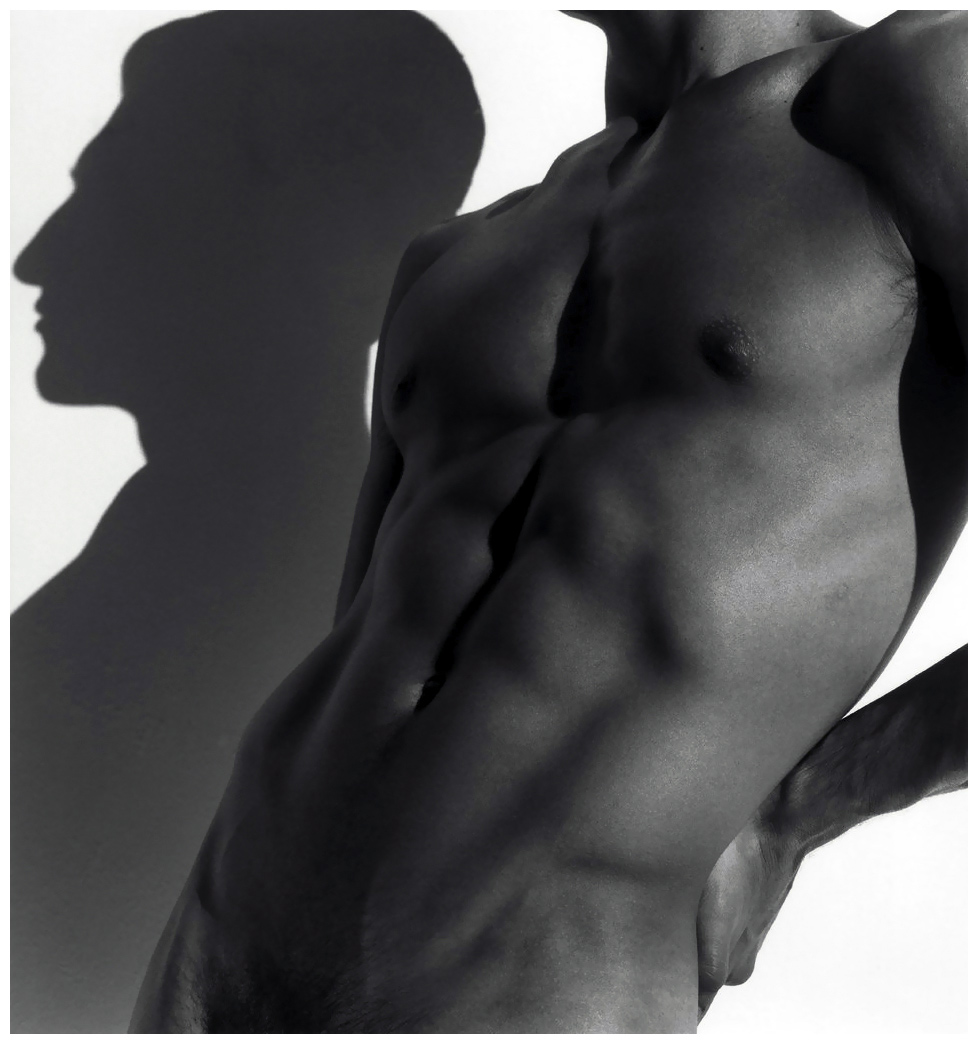
Fred with Tires became the archetypal photograph of the male body in the 1980s and made the world-wide reputation of its commercial photographer, Herb Ritts. Gay men flocked to buy it, myself included. I was drawn by the powerful, perfectly sculpted body, the butchness of his job, the dirty trousers, the boots and the body placed within a social context. At the time I realised that the image of this man was a constructed fantasy, ie. not the ‘real’ thing, and this feeling of having been deceived has grown ever since. His hair is teased up and beautifully styled, the grease is applied to his body just so, his body twisted to just the right degree to accentuate the muscles of the stomach and around the pelvis. You can just imagine the stylist standing off camera ready to readjust the hair if necessary, the assistants with their reflectors playing more light onto the body. This/he is the seduction of a marketable homoeroticsm, the selling of an image as sex, almost camp in its overt appeal to gay archetypal stereotypes.

Herb Ritts, whether in his commercial work or in his personal images such as those of the gay bodybuilders Bob Paris and Rod Jackson, has helped increase the acceptance of the openly homoerotic photograph in a wider sphere but this has been possible only with an increased acceptance of homosexual visibility within the general population. 
Openly gay bodies such as that of Australian rugby league star Ian Roberts or American diver Greg Luganis can become heroes and role models to young gay men coming out of the closet for the first time, visible evidence that gay men are everywhere in every walk of life. This is fantastic because young gay men do need gay role models to look up to but the bodies they possess only conform to the one type, that of the muscular mesomorph and this reinforces the ideal of a traditional masculinity. Yes, the guy in the shower next to you might be a poofter, might be queer for heavens sake, but my God what a body he’s got!”

Marcus Bunyan. “Historical Pressings,” from Pressing the Flesh: Sex, Body Image and the Gay Male (Phd thesis) 2001


Many thankx to Oklahoma City Museum of Art for allowing me to publish the photographs in the posting. Please click on the photographs for a larger version of the image.


Herb Ritts (American, 1952-2002) 'Djimon with Octopus, Hollywood' 1989


Herb Ritts (American, 1952-2002)
Djimon with Octopus, Hollywood
1989
Gelatin silver print
44.5 x 38.7cm (17 1/2 x 15 1/4 in.)
© Herb Ritts Foundation


Herb Ritts (American, 1952-2002) 'Tony with shadow, Los Angeles' 1988


Herb Ritts (American, 1952-2002)
Tony with shadow, Los Angeles
1988
Gelatin silver print
© Herb Ritts Foundation


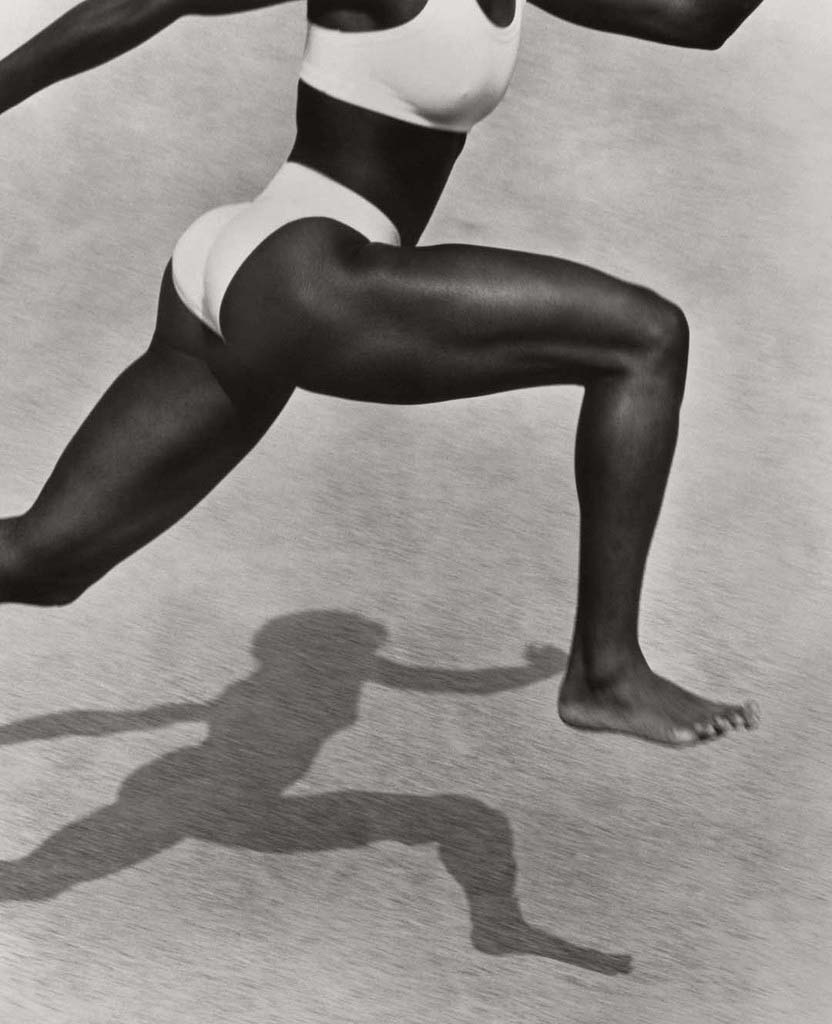
Herb Ritts (American, 1952-2002) 'Jackie Joyner-Kersee, Point Dume' 1987


Herb Ritts (American, 1952-2002)
Jackie Joyner-Kersee, Point Dume
1987
Gelatin silver print
31.9 x 25.4cm (12 9/16 x 10 in.)
Gift of Herb Ritts. Museum of Fine Arts, Boston
© Herb Ritts Foundation


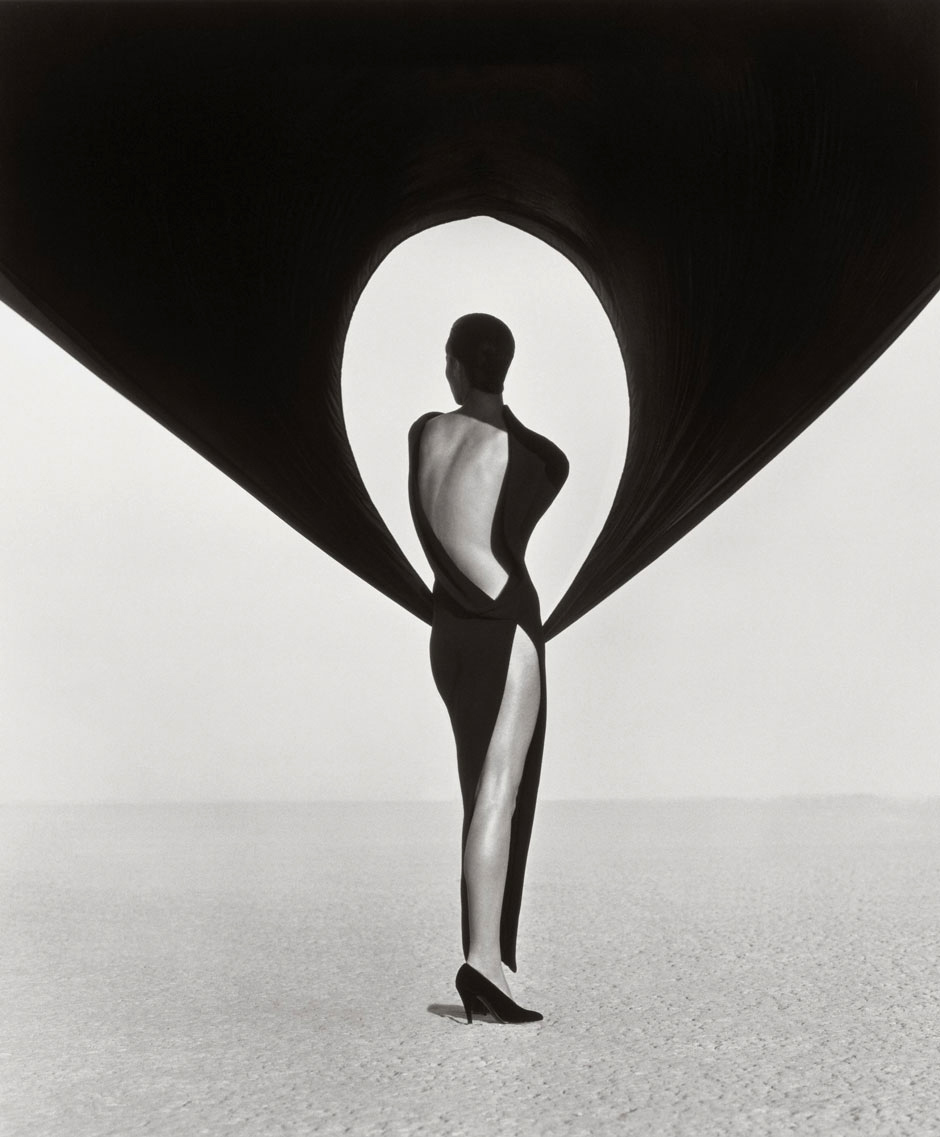
Herb Ritts (American, 1952-2002) 'Versace Dress, Back View, El Mirage' 1990


Herb Ritts (American, 1952-2002)
Versace Dress, Back View, El Mirage
1990
Gelatin silver print
137.2 x 109.2cm (54 x 43 in.)
Gift of Herb Ritts. Museum of Fine Arts, Boston
© Herb Ritts Foundation


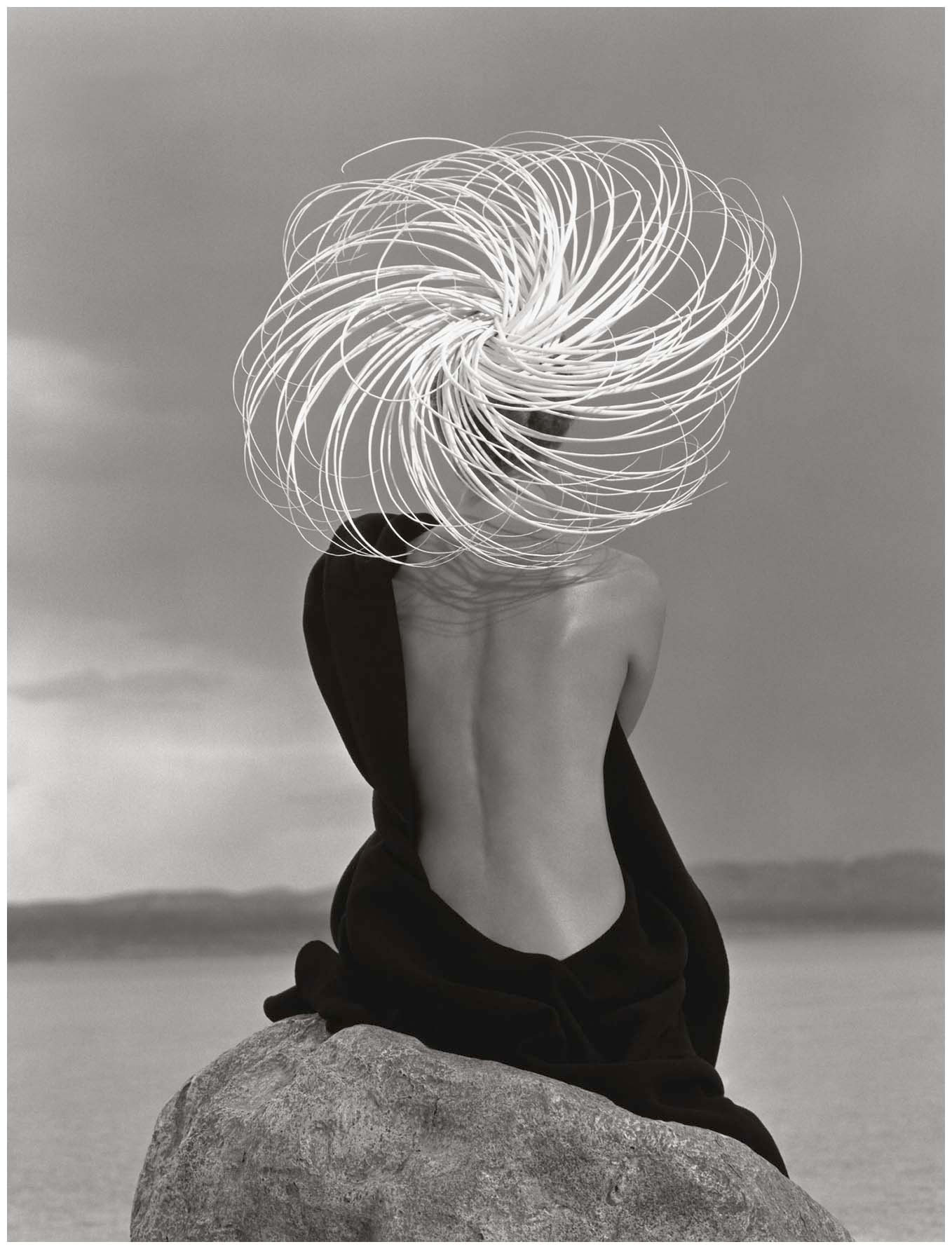
The American photographer Herb Ritts produced a body of work in the 1980s and 1990s that seems to embody the outdoor lifestyle and glamour of the southern California beautiful set. This photograph, taken at El Mirage Dry Lake in California, appeared on the cover of Italian designer Gianni Versace’s September 1990 catalogue and incorporates a formalism and contemporary sensuality characteristic of Ritts’s aesthetic. Ritts’s photograph appeals through its boldly contrasting lights and darks.


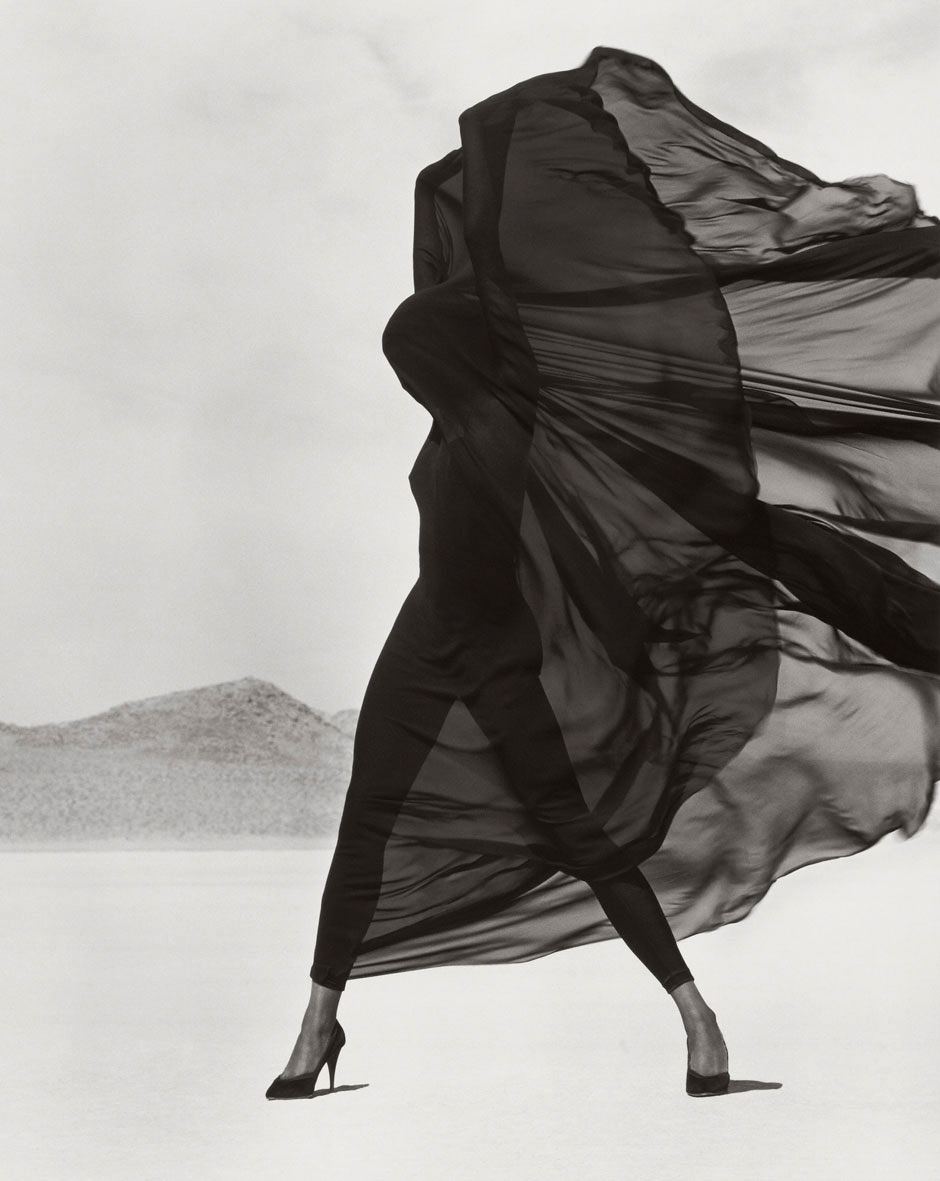
Herb Ritts (American, 1952-2002) 'Versace Veiled Dress, El Mirage' 1990


Herb Ritts (American, 1952-2002)
Versace Veiled Dress, El Mirage
1990
55.8 x 44.6cm (21 15/16 x 17 9/16 in.)
Gift of Herb Ritts. Museum of Fine Arts, Boston
© Herb Ritts Foundation


Herb Ritts (American, 1952-2002) 'Now and Zen 1, El Mirage' 1999


Herb Ritts (American, 1952-2002)
Now and Zen 1, El Mirage
1999
Gelatin silver print
© Herb Ritts Foundation


Herb Ritts: Beauty and Celebrity will be on view at the Oklahoma City Museum of Art from May 9 through July 28, 2013. Organised by the Museum of Fine Arts, Boston with the support of the Herb Ritts Foundation and the Oklahoma City Museum of Art, this exhibition will feature over eighty large-scale black-and-white photographs by acclaimed photographer, Herb Ritts (American, 1952-2002). Ranging in scale from intimate portraits to ten foot murals, the exhibition will highlight the diversity of the artist’s work. Known for his innovative approach to fashion, intimate portraiture of celebrities, and the classical treatment of the nude, Ritts emerged in the 1980s to become one of the most successful celebrity and fashion photographers of the late twentieth century and an important part of the history of American photography.

Herb Ritts grew up in Los Angeles and maintained his studio in Hollywood. A self-taught photographer, Ritts first began taking photographs in the late 1970s after studying economics at Bard College. The intimate publicity images that he made of Richard Gere were among his first serious portraits and helped to launch his career. Throughout the 1980s and 1990s, Ritts built his reputation as a leading celebrity portraitist and fashion photographer, contributing regularly to publications such as GQ, Mademoiselle, Vogue, and Vanity Fair. From 1988, he also made music videos and commercials for which he won numerous awards.

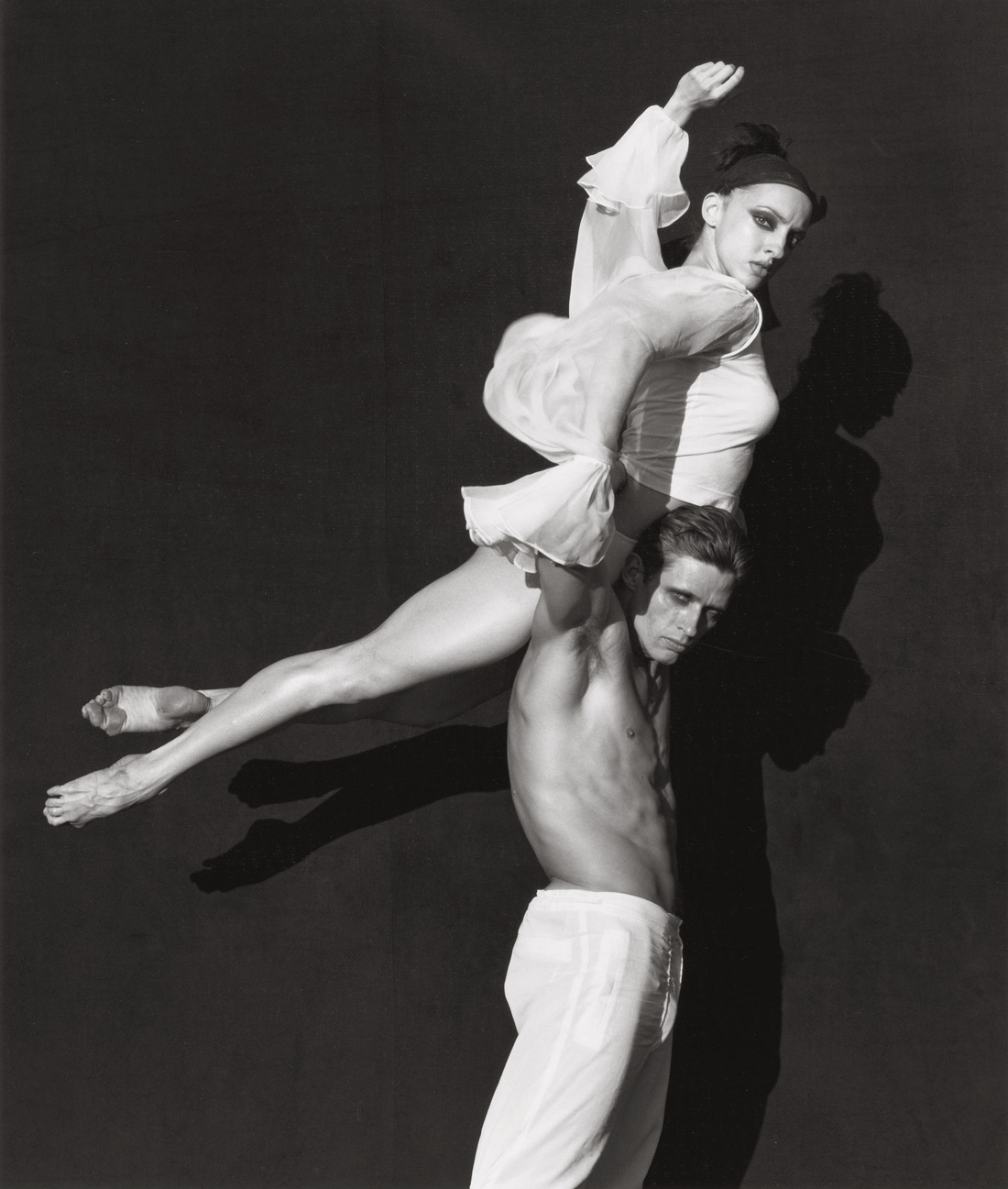
The photographs included in the exhibition represent some of Herb Ritts’s most iconic works which incorporate the natural light of the California sun while emphasising shapes, unusual juxtapositions, and the beauty of the human form. Ritts celebrates nature and the human body in evoking the tactile appeal of surface textures of grains of sand, veiled fabric, drying mud, and cascading water seen in Waterfall 4 (1988), Backflip (1987), and Woman in Sea (1988). Fashion photographs on view include such as Versace Veiled Dress, El Mirage (1990), Stephanie, Cindy, Christy, Tatjana, Naomi, Hollywood (1989), and Djimon with Octopus (1989). Examples of celebrity portraiture include Richard Gere, Jack Nicholson, Madonna, Elizabeth Taylor, Johnny Depp, Bruce Springsteen, Drew Barrymore, David Bowie, Matthew McConaughey, and Mick Jagger. Also included in the exhibition are poetic and eternal images in Ritts’s Africa series, taken in 1993 when he traveled to East Africa, and examples from the rare Corps et Ames (1999) series of photographs, portraying dancers in motion.

This exhibition – drawn from the photography collection at the Museum of Fine Arts, Boston, and the Herb Ritts Foundation – present Herb Ritts’ style and the range of his career.

Press release from the Oklahoma City Museum of Art website


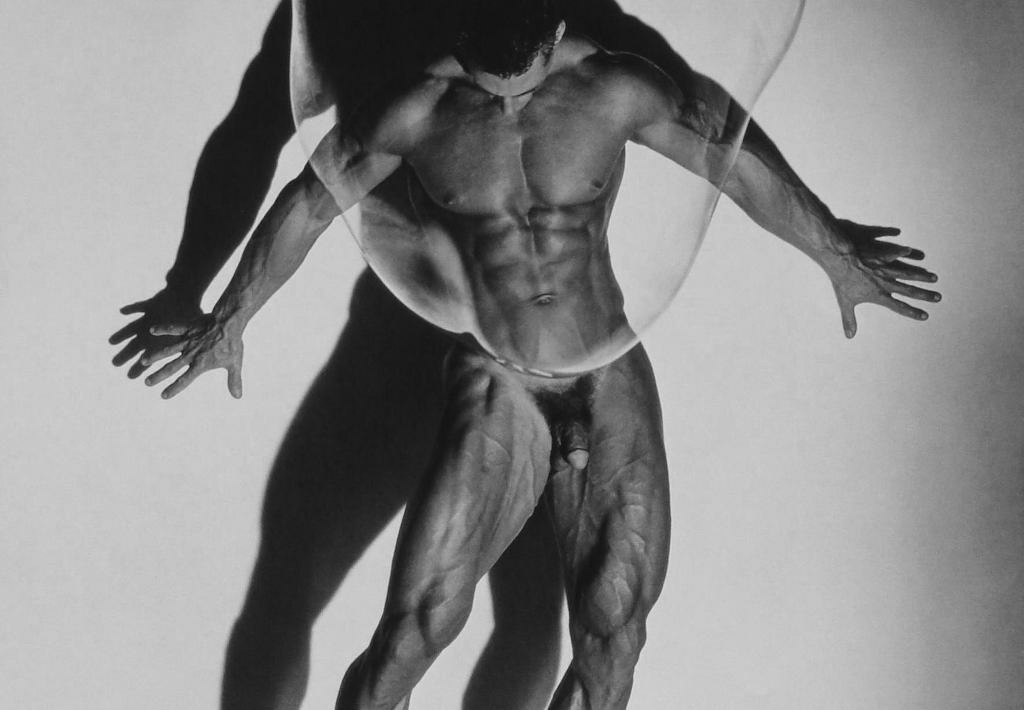
Herb Ritts (American, 1952-2002) 'Male Nude with Bubble, Los Angeles' 1987


Herb Ritts (American, 1952-2002)
Male Nude with Bubble, Los Angeles
1987
Gelatin silver print
© Herb Ritts Foundation


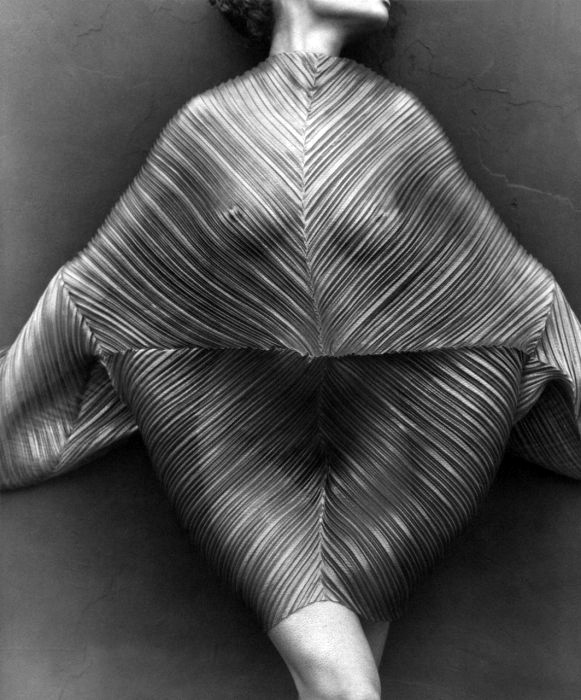
Herb Ritts (American, 1952-2002) 'Wrapped Torso, Los Angeles' 1989


Herb Ritts (American, 1952-2002)
Wrapped Torso, Los Angeles
1989
Platinum print
46.4 x 38.4cm (18 1/4 x 15 1/8 in.)
Gift of Herb Ritts. Museum of Fine Arts, Boston
© Herb Ritts Foundation


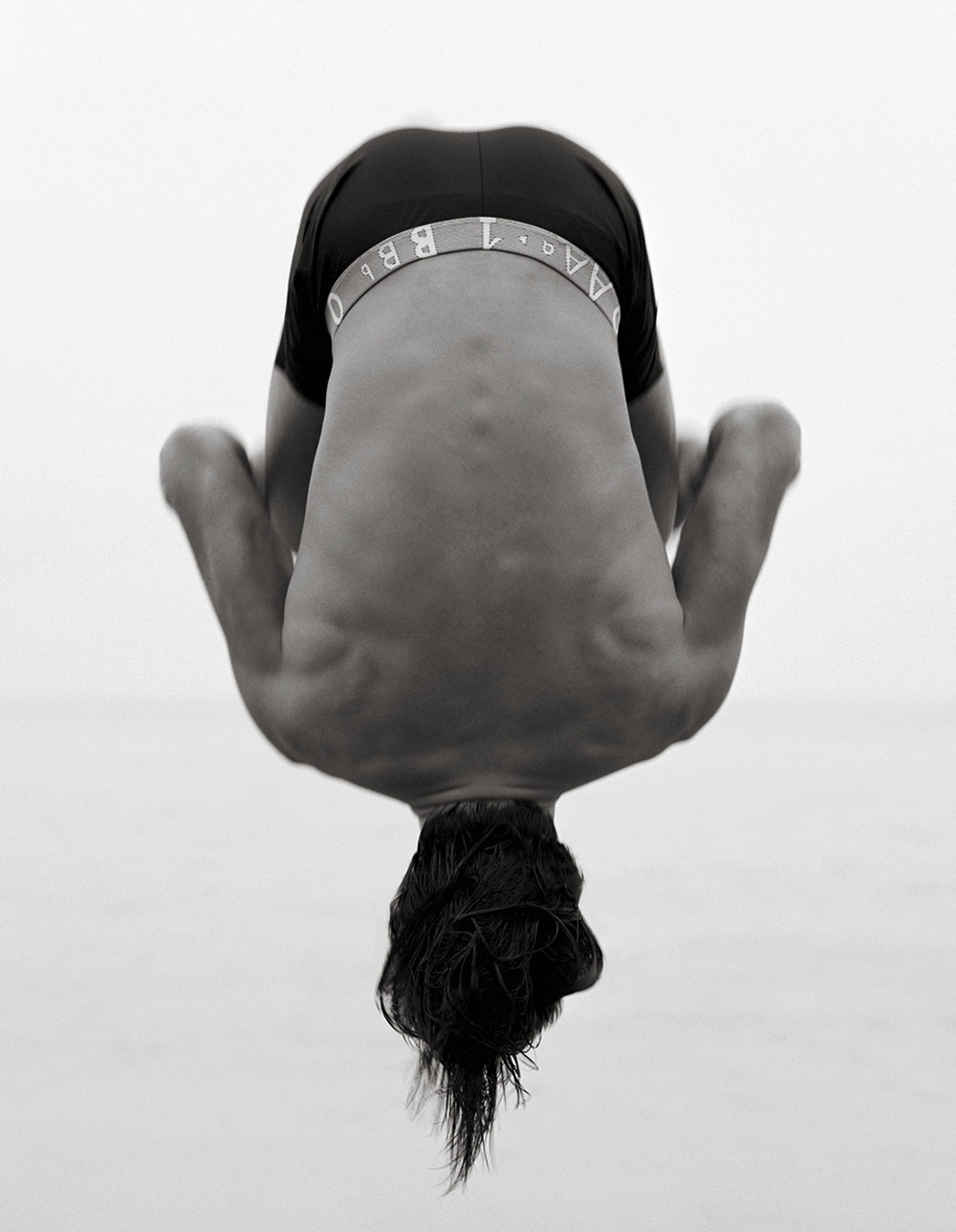
Herb Ritts (American, 1952-2002) 'Backflip, Paradise Cove' 1987


Herb Ritts (American, 1952-2002)
Backflip, Paradise Cove
1987
Gelatin silver print
90 x 70 in. (228.6 x 177.8cm)
© Herb Ritts Foundation


Herb Ritts (American, 1952-2002) 'Corp et Âmes - 14, Los Angeles' 1999


Herb Ritts (American, 1952-2002)
Corp et Âmes – 14, Los Angeles
1999
Gelatin silver print
14 x 11 in. (35.5 x 27.9cm)
© Herb Ritts Foundation


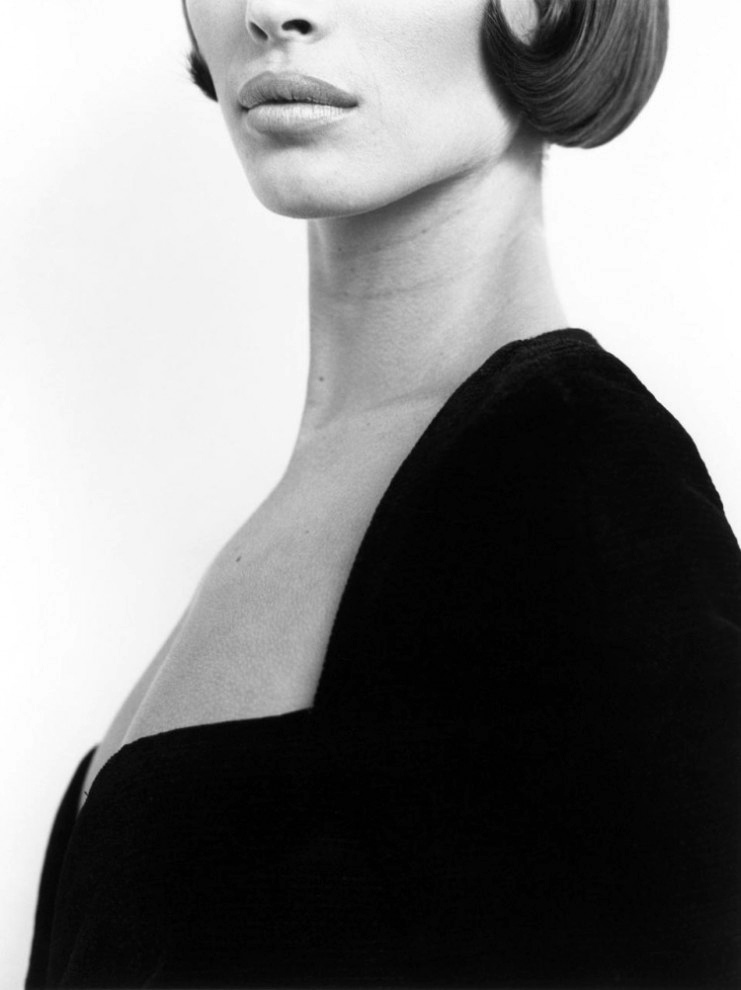
Herb Ritts (American, 1952-2002) 'Chrissy Turlington, Versace 3, Milan' 1991


Herb Ritts (American, 1952-2002)
Chrissy Turlington, Versace 3, Milan
1991
Gelatin silver print
© Herb Ritts Foundation


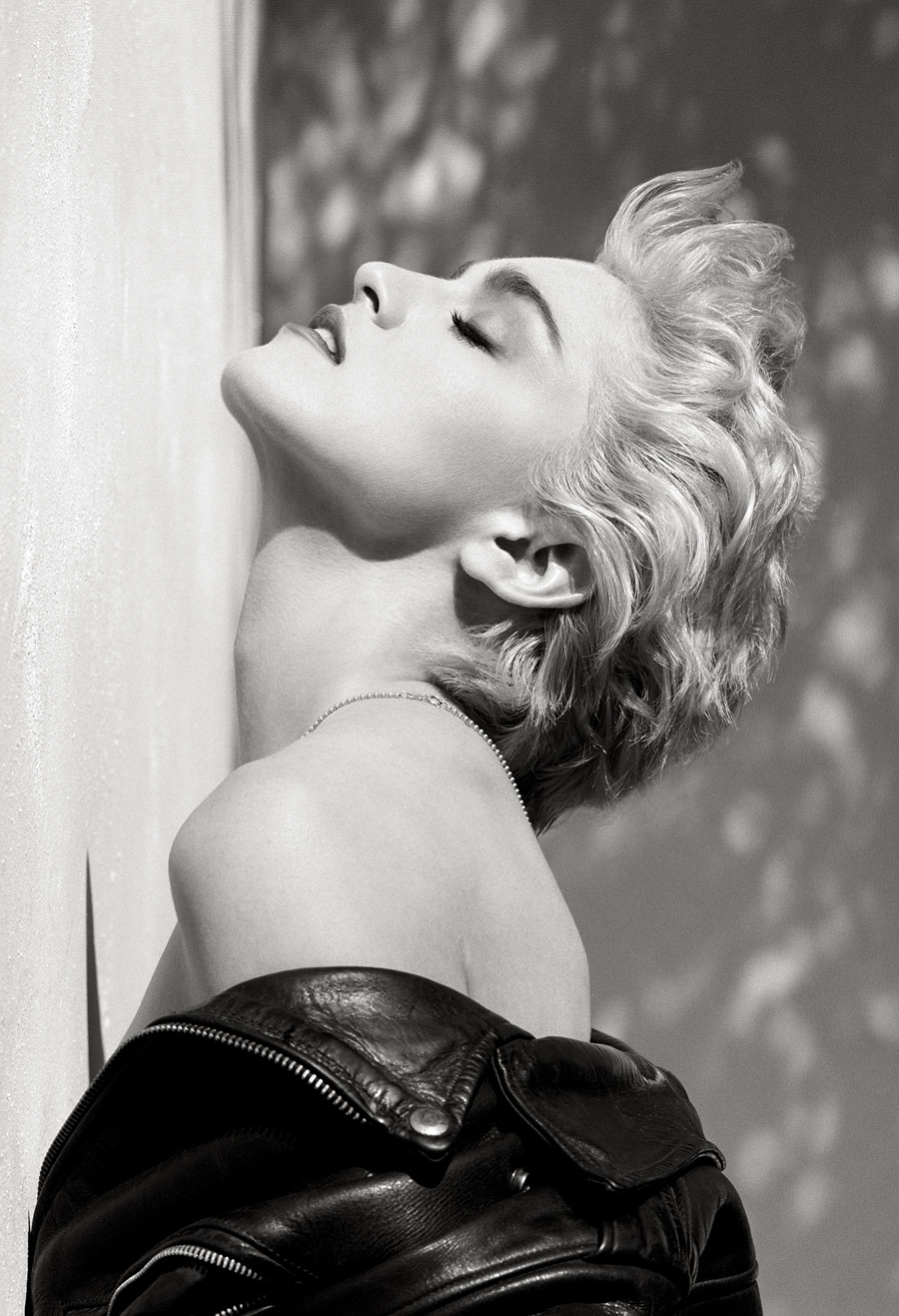
Herb Ritts (American, 1952-2002) 'Madonna (True Blue Profile), Hollywood' 1986


Herb Ritts (American, 1952-2002)
Madonna (True Blue Profile), Hollywood
1986
Gelatin silver print
24 x 20 in. (60.9 x 50.8cm)
Gift of Herb Ritts Foundation. Museum of Fine Arts, Boston
© Herb Ritts Foundation


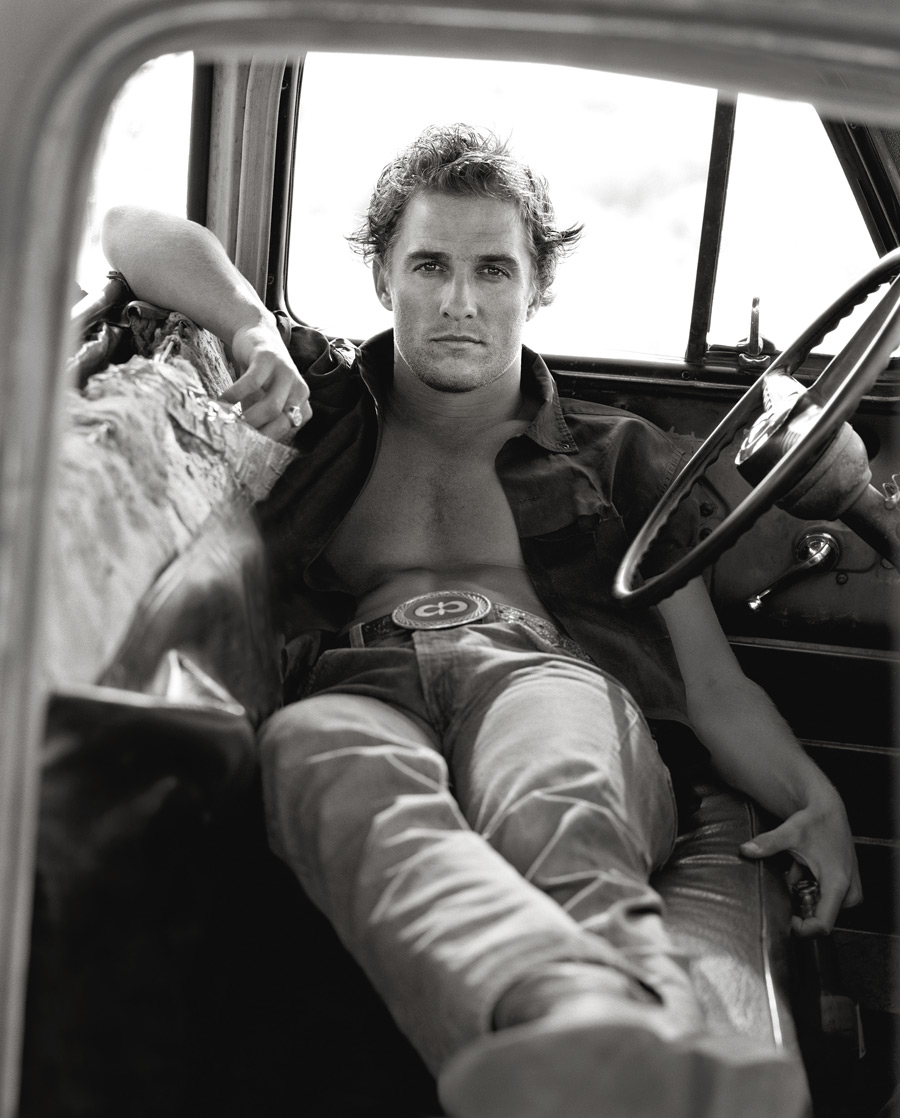
Herb Ritts (American, 1952-2002) 'Matthew McConaughey, Palmdale' 1996


Herb Ritts (American, 1952-2002)
Matthew McConaughey, Palmdale
1996
Gelatin silver print
24 x 20 in. (60.9 x 50.8cm)
Gift of Herb Ritts Foundation. Museum of Fine Arts, Boston
© Herb Ritts Foundation


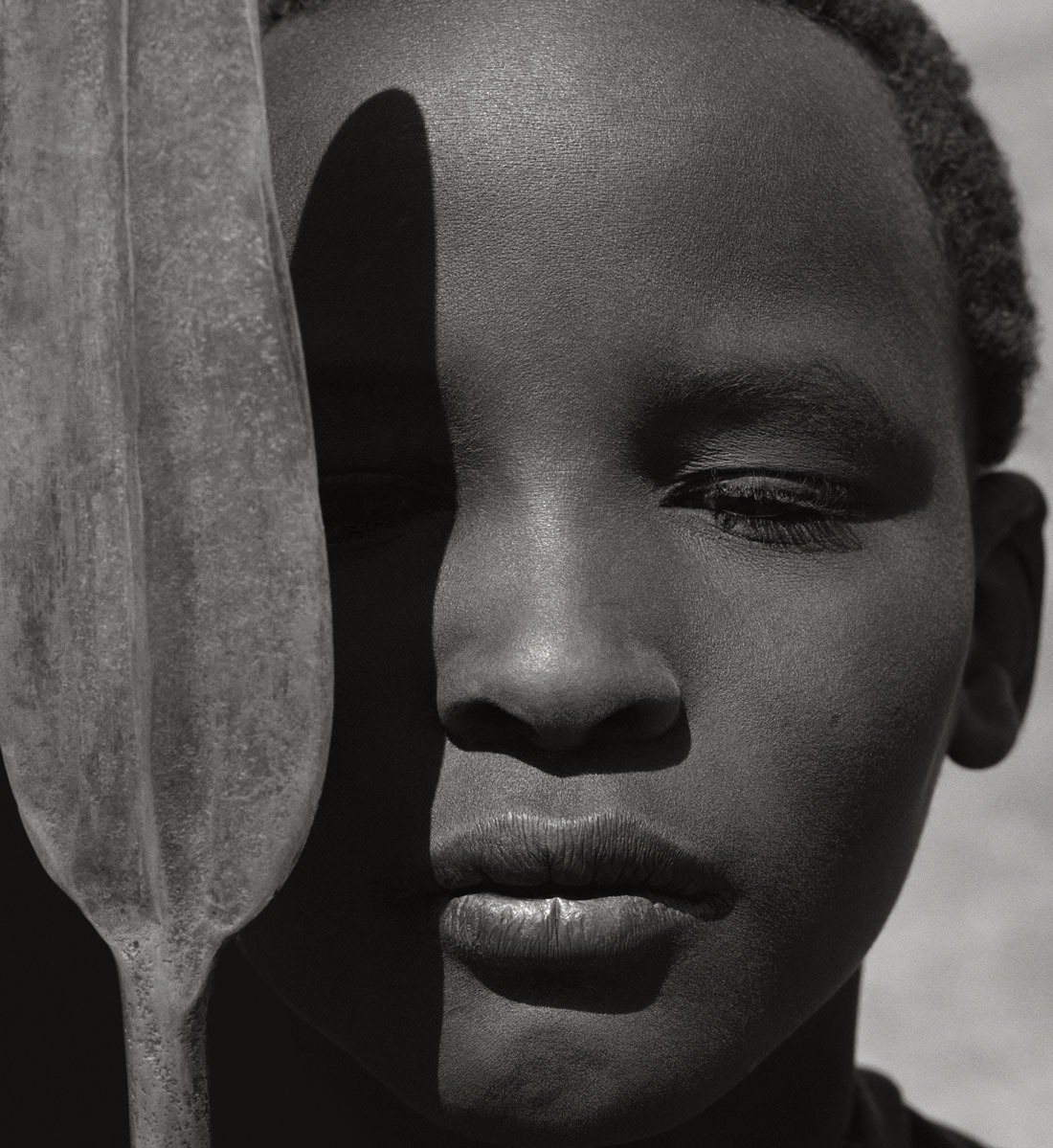
Herb Ritts (American, 1952-2002) 'Loriki with Spear, Africa' 1993


Herb Ritts (American, 1952-2002)
Loriki with Spear, Africa
1993
Gelatin silver print
45 x 41 in. (114.3 x 104.1cm)
© Herb Ritts Foundation


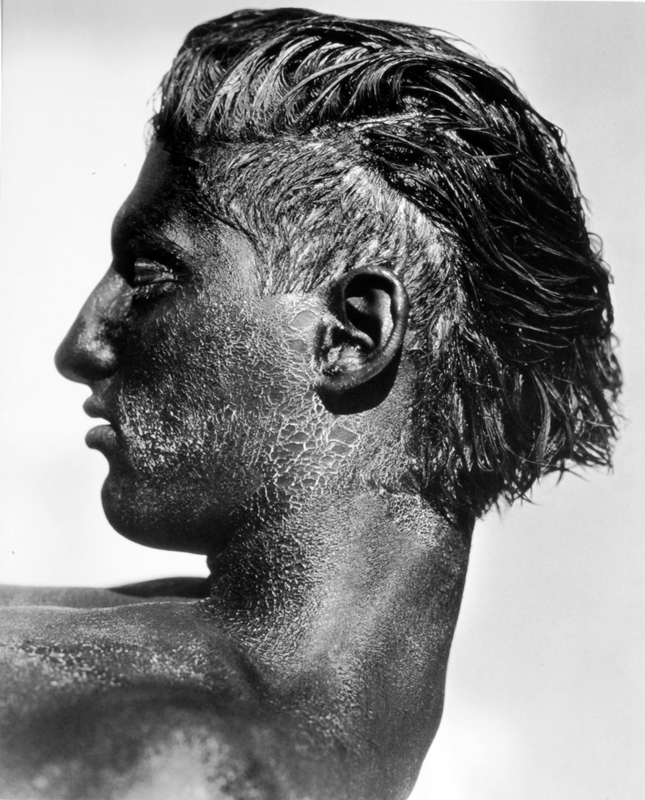
Herb Ritts (American, 1952-2002) 'Tony Ward' 1986


Herb Ritts (American, 1952-2002)
Tony Ward
1986
Gelatin silver print
© Herb Ritts Foundation


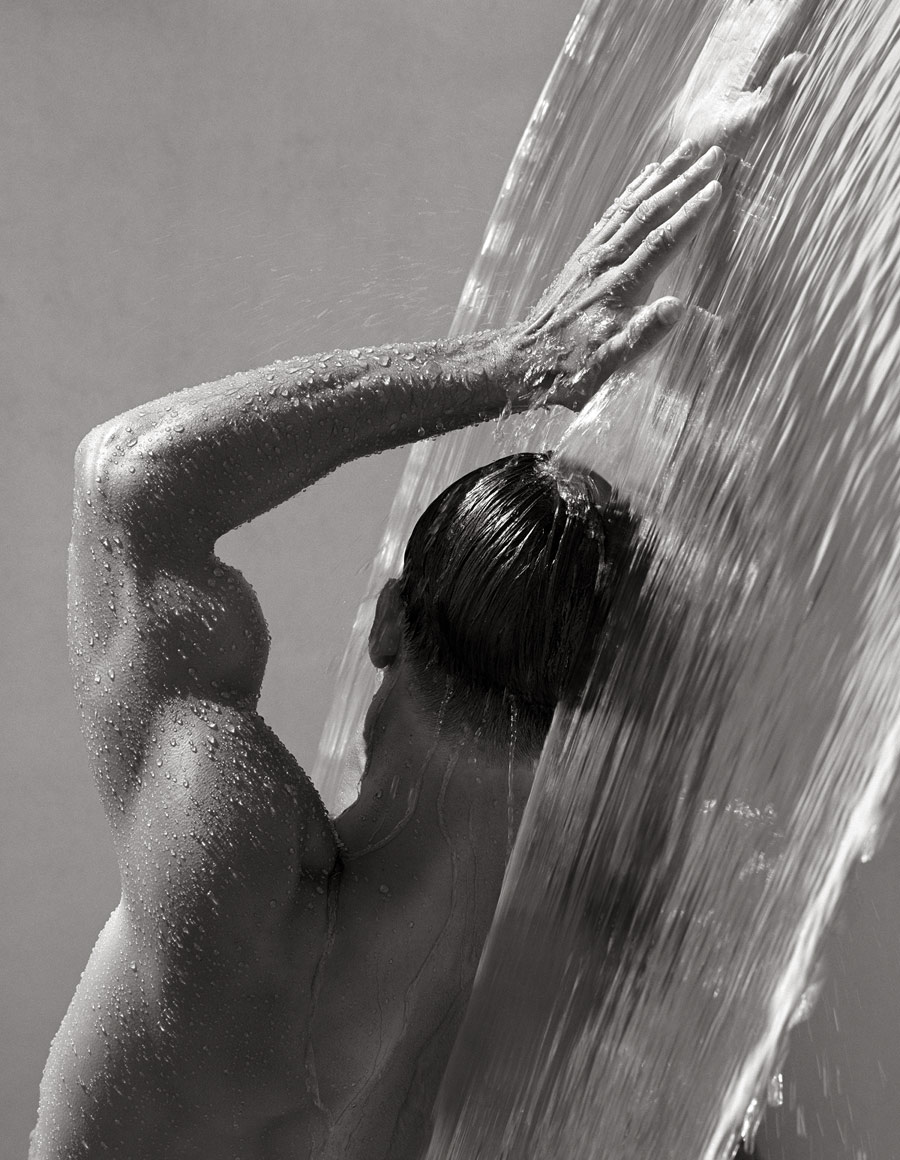
Herb Ritts (American, 1952-2002) 'Waterfall IV, Hollywood' 1988


Herb Ritts (American, 1952-2002)
Waterfall IV, Hollywood
1988
Platinum print
20 x 16 in. (50.8 x 40.64cm)
© Herb Ritts Foundation


Herb Ritts (American, 1952-2002) 'Woman in Sea, Hawaii' 1988


Herb Ritts (American, 1952-2002)
Woman in Sea, Hawaii
1988
Gelatin silver print
24 x 20 in. (60.9 x 50.8cm)
Gift of Herb Ritts. Museum of Fine Arts, Boston
© Herb Ritts Foundation


Herb Ritts (American, 1952-2002) 'Bill T. Jones VI, Los Angeles' 1995


Herb Ritts (American, 1952-2002)
Bill T. Jones VI, Los Angeles
1995
Gelatin silver print
© Herb Ritts Foundation


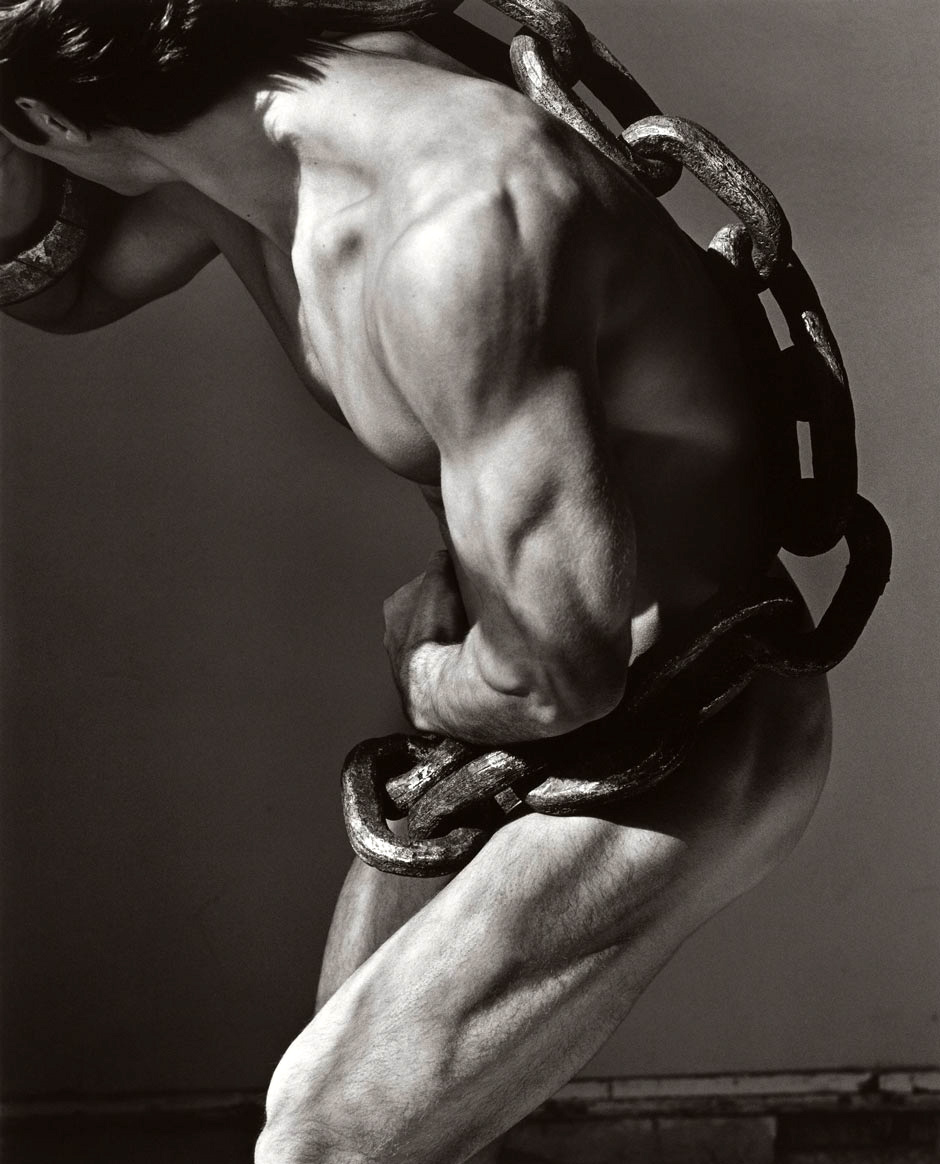
Herb Ritts (American, 1952-2002) 'Man with Chain, Los Angeles' 1985


Herb Ritts (American, 1952-2002)
Man with Chain, Los Angeles
1985
Gelatin silver print
47.8 x 38.4 cm (18 13/16 x 15 1/8 in.)
Gift of Herb Ritts. Museum of Fine Arts, Boston
© Herb Ritts Foundation


Oklahoma City Museum of Art
415 Couch Drive
Oklahoma City, OK 73102

Opening hours:
Tuesday – Saturday: 10am – 5pm
Sunday: noon – 5pm
Closed: Mondays and Major Holidays

Oklahoma City Museum of Art website

LIKE ART BLART ON FACEBOOK

Back to top

Text/Exhibition: “George Platt Lynes, Minor White and ‘The Temptation of Saint Anthony Is Mirrors’ ” on the exhibition ‘HIDE/SEEK: Difference and Desire in American Portraiture’ at the Brooklyn Museum, New York

Exhibition dates: 18th November 2011 – 12th February 2012


Minor White (American, 1908-1976) 'Tom Murphy (San Francisco)' 1948


Minor White (American, 1908-1976)
Tom Murphy (San Francisco)
1948
from The Temptation of St Anthony is Mirrors 1948
Gelatin silver print
4 5/8 x 3 5/8 in. (11.7 x 9.2cm)
The Minor White Archive, Princeton University Art Museum Bequest of Minor White, MWA 48-136
© Trustees of Princeton University


“The possibility of using our bodies as a possible source of very numerous pleasures is something that is very important. For instance, if you look at the traditional construction of pleasure, you see that bodily pleasure, or pleasures of the flesh, are always drinking, eating and fucking. And that seems to be the limit of the understanding of our bodies, our pleasures ….

It is very interesting to note, for instance, that for centuries people generally, as well as doctors, psychiatrists, and even liberation movements, have always spoken about desire, and never about pleasure. “We have to liberate our desire,” they say. No! We have to create new pleasure. And then maybe desire will follow.” (My bold)


Michel Foucault 1


George Platt Lynes, Minor White and The Temptation of Saint Anthony Is Mirrors

I had the great privilege of visiting The Minor White Archive at Princeton University while I was researching for my PhD. While there I studied the work cards and classic prints of the great photographer, paying particular attention to his photography of the male. What was a great surprise and delight to me were the presence of photographs of explicit sexual acts, men photographed with erections – images that have, to my knowledge, never been published. I don’t think that many people would even know that Minor White took such photographs. Although these images would have never been for public consumption it is still very unusual to find a classical photographer with such a public profile taking photographs of erect penises, especially in the 1940s!

Disturbed by having been in battle in the Second World War and seeing some of his best male friends killed, White’s early photographs of men (in their uniforms) depict the suffering and anguish that the mental and physical stress of war can cause. He was even more upset than most because he was battling his own inner sexual demons at the same time, his shame and disgust at being a homosexual and attracted to men, a difficulty compounded by his religious upbringing. In his photographs White both denied his attraction to men and expressed it. His photographs of the male body are suffused with both sexual mystery and a celebration of his sexuality despite his bouts of guilt. After the war he started to use the normal everyday bodies of his friends to form sequences of photographs, sometimes using the body as a metaphor for the landscape and vice versa. In the above photograph (Tom Murphy, left), based on a religious theme, we see a dismembered hairy body front on, the hands clutching and caressing the body, the lower hand hovering near the exposed genitalia, the upper hand cupping the breast. We see the agony and ecstasy of a homoerotic desire cloaked in a religious theme.

The image comes from the The Temptation of St Anthony is Mirrors (1948), four pages of which can be seen below. While at The Minor White Archive I looked at the only complete, undamaged book in existence. What an experience!

The book has a powerful and intense presence. It was beautifully sequenced as you would expect from Minor White and features photographs of Tom Murphy. There is a series of his hands over the back of a chair in different positions: hanging, curled, splayed, held slightly upwards, and these are paired with photographs of bare feet and turned up jeans, bare feet and rocks, and three other photographs of Tom Murphy. In an excellent paper Cruising and Transcendence in the Photographs of Minor White (Nd. Later published as an online-only feature accompanying Aperture magazine’s Spring 2015 issue, “Queer”), author Kevin Moore observes that the hand-bound volume with images paired on facing pages – “mirrors” to both one another and the artist – is a personal account as well as a meditation on the sins of the flesh.

“Temptation (which was never published or exhibited) begins with a sort of prologue, comprising a single full-length nude of Tom Murphy, White’s student and the model most commonly associated with his work. The pose is similar to those found in the beefcake pictures White was producing at this time: Murphy adopts a classical contrapposto stance and is entirely nude, his pale, wiry body positioned against a dark backdrop. A piece of driftwood at the model’s feet proposes a theme of innocence – man in his natural state. The sequence then moves to pairings of images describing man in his civilised state, featuring several loving close-ups of Murphy’s gesturing hands, a shot of his bare feet, and a single shoulder-length portrait, in which he wears a buttoned shirt and looks intently off to the side. Next, there is an interlude suggesting growing dissolution: an image of Murphy’s feet and a petrified stone is paired with a shot of Murphy in full dress slouched on a mass of rocks and staring vacantly off into the distance. The next pairing (images 9 and 10 below) accelerates the descent into temptation. Here, the pose in a second picture of Murphy’s feet suggests agitation, while a three-quarter length portrait of Murphy, crouched in the bushes and looking back over his shoulder, is as emblematic an image of cruising as White ever produced. The photographs that follow descend further into lust and self-recrimination, conveyed through photographs in which Murphy’s naked body alternates between expressions of pain and pleasure. The sequence ends with a series of beatific nudes (images 27 and 28 below), which express redemption through nonsexual treatments of the body and in the body’s juxtaposition with natural forms – a return to nature.

White may have thought at first that the sequence format would help him transcend the limits of personal biography, that he could use the breadth and fluidity of the sequence to emphasize a universal narrative while exercising control over the potentially explosive and revealing content of individual images. This proved to be overly optimistic, at least in his earliest uses of the form. White’s colleagues, for example, immediately understood Temptation for what it really was: an agonized portrayal of White’s love for his male student.”


Moore goes on to conclude that White obsfucated his sexuality, displacing gay ‘cruising’ “by a universalised mystical searching – sexual longing setting in motion a heroic search” using photography as his medium, and that his photographs became a dreamscape, perhaps even a dream(e)scape: “in which meanings are obscured, not clarified; signs are effaced, not illuminated; beauty is closeted, not set out for all to see. White was attracted to the ambiguity of the dream because it offered cover and protection but also freedom to maneuver. The dream supported the irrational, maintained a sense of mystery, and beautified frustration.”

I have to disagree with Kevin Moore. Anyone who has seen The Temptation of Saint Anthony Is Mirrors in the flesh (so to speak) can feel the absolute presence of these images, their reality, the connection between image and viewer. Maybe White was a Romantic but he was realistically romantic; his images are not dreamscapes, they offer multiple readings and contexts, insights into the human condition. Even though there was anguish and guilt present about his sexuality, channelled through his photography, anyone bold enough to take photographs of erections in 1940 has some ticker. It takes a clear eye and a courageous heart to do this, knowing what was at stake in this era of sexual repression. Beauty is not closeted here, unless I am looking at different images from Kevin Moore. In fact the magic of the photography of Minor White is his ability to modulate space, to modulate bodies so that they are beautiful, ambiguous and mystical whatever their context. Not everything in this world has to be in your face. Like a Glen Gould playing the Goldberg Variations revelation of beauty takes time, concentration and meditation.

Also, an overriding feeling when viewing the images was one of loneliness, sadness and anguish, for the bodies seemed to be observed and not partaken of, to be unavailable both physically and in a strange way, photographically. For a photographer who prided himself on revealing the spirit within, through photography, these are paradoxical photographs, visually accessible and mysteriously (un)revealing, photographs of a strange and wonderful ambivalence. Two great words: obsfucation, ambivalence. Clouded with mixed feelings and emotions, not necessarily anything to do with sexuality. Not everything has to be about sexuality. It is the difference between imbibing Freud or Jung – personally I prefer the more holistic, more inclusive, more spiritual Jung.


And so to the image of George Platt Lynes that I have paired with the nude of Tom Murphy (below).

Platt Lynes was another artist who struggled with is sexuality, but seemingly not to such an extent as Minor White did. GPL worked as a fashion photographer and had his own studio in New York where he photographed dancers, artists and celebrities among others. He undertook a series of mythological photographs on classical themes (which are amazing in composition and feature Surrealist motifs). Privately he photographed male nudes but was reluctant to show them in public for fear of the harm that they could do to his reputation and business with the fashion magazines. Generally his earlier male nude photographs concentrate on the idealised youthful body or ephebe.

As Lynes became more despondent with his career as a fashion photographer his private photographs of male nudes tended to take on a darker and sharper edge. After a period of residence in Hollywood he returned to New York nearly penniless. His style of photographing the male nude underwent a revision. While the photographs of his European colleagues still relied on the sun drenched bodies of young adolescent males evoking memories of classical beauty and the mythology of Ancient Greece the later nudes of Platt Lynes feature a mixture of youthful ephebes and heavier set bodies which appear to be more sexually knowing. The compositional style of dramatically lit photographs of muscular torsos of older men shot in close up (see photograph below for example) were possibly influenced by a number of things – his time in Hollywood with its images of handsome, swash-buckling movie stars with broad chests and magnificent physiques; the images of bodybuilders by physique photographers that George Platt Lynes visited; the fact that his lover George Tichenor had been killed during WWII; and the knowledge that he was penniless and had cancer. There is, I believe, a certain sadness but much inner strength in his later photographs of the male nude that harnesses the inherent sexual power embedded within their subject matter.

When undertaking research into GPL’s photographs at The Kinsey Institute as part of my PhD I noted that most of the photographs had annotations in code on the back of them giving details of age, sexual proclivities of models and what they are prepared to do and where they were found. This information gives a vital social context to GPL’s nude photographs of men and positions them within the moral and ethical framework of the era in which they were made. The strong image (below) is always quoted as an example of GPL’s more direct way of photographing the male nude in the last years of his life. The male is solid, imposing, lit from above, heavy set, powerful, massive. The eyes are almost totally in shadow. Later photos have more chiaroscuro than earlier work, more use of contrasting light (especially down lit or uplit figures) but are they more direct? Yes. The men look straight into camera.

This monumentality of body and form was matched by a new openness in the representation of sexuality. There are intimate photographs of men in what seem to be post-coital revere, in unmade beds, genitalia showing or face down showing their butts off. Some of the faces in these later photographs remain hidden, as though disclosure of identity would be detrimental for fear of persecution. The photograph above is very ‘in your face’ for the conservative time from which it emerges, remembering it was the era of witch hunts against communists and subversives (including homosexuals). Conversely, this photograph is quite restrained compared to the most striking series of GPL’s photographs that I saw at The Kinsey Institute which involves an exploration the male anal area (a photograph from the 1951 series can be found in the book titled George Platt Lynes: Photographs from The Kinsey Institute). This explicit series features other photographs of the same model – in particular one that depicts the male with his buttocks in the air pulling his arse cheeks apart. After Lynes found out he had cancer he started to send his photographs to the German homoerotic magazine Der Kries under the pseudonym Roberto Rolf, and in the last years of his life he experimented with paper negatives, which made his images of the male body even more grainy and mysterious.

I believe that Lynes understood, intimately, the different physical body types that gay men find desirable and used them in his photographs. He visited Lon of New York (a photographer of beefcake men) in his studio and purchased photographs of bodybuilders for himself, as did the German photographer George Hoyningen-Huene. It is likely that these images of bodybuilders did influence his later compositional style of images of men; it is also possible that he detected the emergence of this iconic male body type as a potent sexual symbol, one that that was becoming more visible and sexually available to gay men.


The differences between the White and GPL nudes is instructive. White: introspective, haunted, religious with an unrequited sense of longing – hands clutching self, inward pointing; GPL: more closely cropped, more open, one hand firmly grasping but the other hand open, receptive, presented to the viewer above the available phallic organ. It reminds me for some unknown reason, some quirk of my brain association, of the shell of Botticelli’s Birth of Venus (1486) inverted. There is difference between the two artists – one struggling with his sexuality, being realistically romantic, the other physically doing something about it – posting his photographs to one of the first gay magazines in the world. But both were taking photographs of intimate sexual acts that could never have been published in their lifetimes – that are still are hidden from view today. When, oh when, will someone have the courage to publish this work?

Dr Marcus Bunyan


My notes on Minor White’s photographs and notes on George Platt Lynes photographs from my Phd thesis Pressing the Flesh: Sex, Body Image and the Gay Male (2001) can be found below.


Many thankx to the Brooklyn Museum for allowing me to publish the photographs in the posting. Please click on the photographs for a larger version of the image.

1/ Gallagher, Bob and Wilson, Alexander. “Sex and the Politics of Identity: An Interview with Michel Foucault,” in Thompson, Mark. Gay Spirit: Myth and Meaning. New York: St. Martin’s Press, 1987, p.31.


Research notes on photographs from the Minor White Archive, Princeton University, New Jersey 06/08/1999

Download the Minor White research notes (85kb pdf)

Research at The Kinsey Institute , Bloomington, Indiana 16/08/1999 – 19/08/1999. George Platt Lynes photographs from the Collection at The Kinsey Institute

Download the George Platt Lynes research notes (55kb pdf)


Minor White (American, 1908-1976) 'The Temptation of Saint Anthony Is Mirrors' 1948


(top)
Minor White (American, 1908-1976)
Images 9 and 10 in the bound sequence The Temptation of Saint Anthony Is Mirrors
1948
9.3 x 11.8cm; 11.2 x 9.1cm

(bottom)
Minor White (American, 1908-1976)
Images 27 and 28 in the bound sequence The Temptation of Saint Anthony Is Mirrors
1948. 5.3 x 11.6cm; 10.6 x 8.9cm


 Minor White (American, 1908-1976) 'Tom Murphy (San Francisco)' 1948  George Platt Lynes (American, 1907-1955) 'Untitled' Nd


(left)
Minor White (American, 1908-1976)
Tom Murphy (San Francisco)
1948
from The Temptation of St Anthony is Mirrors 1948
Gelatin silver print
4 5/8 x 3 5/8 in. (11.7 x 9.2 cm)

(right)
George Platt Lynes 
(American, 1907-1955)
Untitled
Nd
Gelatin silver print


George Platt Lynes (American, 1907-1955) 'Untitled (Frontal Male Nude)' Nd (early 1950s)


George Platt Lynes (American, 1907-1955)
Untitled (Frontal Male Nude)
Nd (early 1950s)
Gelatin silver print


Thomas Eakins (American, 1844-1916) 'Walt Whitman' (American, 1818-1892) 1891


Thomas Eakins (American, 1844-1916)
Walt Whitman (American, 1818-1892)
1891
10.3 x 12.2cm
National Portrait Gallery, Smithsonian Institute


Charles Demuth (American, 1883-1935) 'Dancing Sailors' 1917


Charles Demuth (American, 1883-1935)
Dancing Sailors
1917
Watercolour and pencil on paper
20.3 x 25.4cm
Cleveland Museum of Art, Ohio; Mr and Mrs William H Marlatt Fund


George Wesley Bellows (American, 1882-1925) 'Riverfront No.1' 1915


George Wesley Bellows (American, 1882-1925)
Riverfront No.1
1915
Oil on canvas
115.3 x 160.3cm
Columbus Museum of Art, Ohio: Howald Fund Purchase


Marsden Hartley (American, 1877-1943) 'Eight Bells Folly: Memorial to Hart Crane' 1933


Marsden Hartley (American, 1877-1943)
Eight Bells Folly: Memorial to Hart Crane
1933
Oil on canvas
Gift of Ione and Hudson D. Walker
Frederick R. Weisman Art Museum, University of Minnesota


Harold Hart Crane (July 21, 1899 – April 27, 1932) was an American poet. Finding both inspiration and provocation in the poetry of T. S. Eliot, Crane wrote modernist poetry that is difficult, highly stylised, and very ambitious in its scope. In his most ambitious work, The Bridge, Crane sought to write an epic poem in the vein of The Waste Land that expressed something more sincere and optimistic than the ironic despair that Crane found in Eliot’s poetry. In the years following his suicide at the age of 32, Crane has come to be seen as one of the most influential poets of his generation…

Crane visited Mexico in 1931-32 on a Guggenheim Fellowship and his drinking continued as he suffered from bouts of alternating depression and elation … While on board the steamship SS Orizaba enroute to New York, he was beaten after making sexual advances to a male crew member, seeming to confirm his own idea that one could not be happy as a homosexual. Just before noon on April 27, 1932, Hart Crane jumped overboard into the Gulf of Mexico. Although he had been drinking heavily and left no suicide note, witnesses believed his intentions to be suicidal, as several reported that he exclaimed “Goodbye, everybody!” before throwing himself overboard. (The legend among poets is: He walked to the fantail, took off his coat quietly, and jumped.) His body was never recovered.

Text from the Wikipedia website


Peter Hujar (1937-1987) 'Susan Sontag' (1933-2004) 1975


Peter Hujar (American, 1937-1987)
Susan Sontag (American, 1933-2004)
1975
Gelatin silver print
National Portrait Gallery, Smithsonian Institute
© Estate of Peter Hujar


Keith Haring (American, 1958-1990). 'Unfinished Painting' 1989


Keith Haring (American, 1958-1990)
Unfinished Painting
1989
Acrylic on canvas
100 x 100cm
Courtesy of Katia Perlstein, Brussels, Belgium
© Keith Haring Foundation


David Wojnarowicz (American, 1954-1992) 'A Fire In My Belly' (Film In Progress) (film still), 1986-87


David Wojnarowicz (American, 1954-1992)
A Fire In My Belly (Film In Progress) (film still)
1986-1987
Super 8mm film
black and white & color (transferred to video)
Courtesy of The Estate of David Wojnarowicz and P.P.O.W Gallery, New York and The Fales Library and Special Collection


One day before World AIDS Day, the renown painter, photographer, writer, filmmaker, performance artist and activist David Wojnarowicz, who died in 1992 at the age of 37 from AIDS-related complications, has had one of his most important works, A Fire In My Belly, pulled from The Smithsonian Institution’s National Portrait Gallery’s HIDE / SEEK exhibit because of pressure from conservative politicians and the Catholic League.”


HIDE/SEEK: Difference and Desire in American Portraiture, the first major museum exhibition to explore how gender and sexual identity have shaped the creation of American portraiture, organised by and presented at the National Portrait Gallery last fall, will be on view at the Brooklyn Museum from November 18, 2011, through February 12, 2012. With the cooperation of the National Portrait Gallery, the Brooklyn Museum has reconstituted the exhibition in concert with the Tacoma Art Museum, where it will be on view from March 17 through June 10, 2012.

HIDE/SEEK includes approximately a hundred works in a wide range of media created over the course of one hundred years that reflect a variety of sexual identities and the stories of several generations. Highlighting the influence of gay and lesbian artists, many of whom developed new visual strategies to code and disguise their subjects’ sexual identities as well as their own, HIDE/ SEEK considers such themes as the role of sexual difference in depicting modern Americans, how artists have explored the definition of sexuality and gender, how major themes in modern art – especially abstraction – have been influenced by marginalisation, and how art has reflected society’s changing attitudes.

Announcing the Brooklyn presentation, Museum Director Arnold L. Lehman states, “From the moment I first learned about this extraordinary exhibition in its planning stages, presenting it in Brooklyn has been a priority. It is an important chronicle of a neglected dimension of American art and a brilliant complement and counterpoint to ‘Youth and Beauty: Art of the American Twenties’, a touring exhibition organised by the Brooklyn Museum, also on view this fall.”

In addition to its commentary on a marginalised cultural history, HIDE/ SEEK offers an unprecedented survey of more than a century of American art. Beginning with late nineteenth-century portraits by Thomas Eakins and John Singer Sargent, it includes works from the first half of the 1900s by such masters as Romaine Brooks, George Bellows, Marsden Hartley, and Georgia O’Keeffe; the exhibition continues through the postwar period with works by Jasper Johns, Robert Rauschenberg, Agnes Martin, and Andy Warhol, and concludes with major works by late twentieth-century artists such as Keith Haring, Glenn Ligon, Nan Goldin, Felix Gonzalez-Torres, and Catherine Opie.

The Brooklyn presentation will feature nearly all of the works included in the National Portrait Gallery exhibition. Among them are rarely seen paintings by Charles Demuth, whose better-known industrialised landscapes are on view in the Brooklyn Museum exhibition Youth and Beauty; a poignant portrait of New Yorker writer Janet Flanner wearing two masks, taken by photographer Bernice Abbott; Andrew Wyeth’s painting of a young neighbour standing nude in a wheat field, much like Botticelli’s Venus emerging from her shell; Robert Mapplethorpe’s photograph riffing on the classic family portrait, in which a leather-clad Brian Ridley is seated on a wingback chair shackled to his whip-wielding partner, Lyle Heeter; and Cass Bird’s photographic portrait of a friend staring out from under a cap emblazoned with the words “I look Just Like My Daddy.” The exhibition will also include David Wojnarowicz’s A Fire in My Belly, an unfinished film the artist created between 1986 and 1987.

Press release from the Brooklyn Museum website


Berenice Abbott (American, 1898-1991) 'Janet Flanner' (1892-1978) 1927


Berenice Abbott (American, 1898-1991)
Janet Flanner (American, 1892-1978)
1927
Photographic print
23 x 17.3cm
Prints and Photographs Division, Library of Congress, Washington, D.C
C Berenice Abbott / Commerce Graphics Ltd., Inc.


Thomas Eakins (American, 1844 -1916) 'Salutat' 1898


Thomas Eakins (American, 1844-1916)
Salutat
1898
Oil on canvas
127.0 x 101.6cm
Addison Gallery of American Art, Phillips Academy, Andover, Massachusetts
Gift of anonymous donor


Walker Evans (American, 1903-1975) 'Lincoln Kirstein' 1930


Walker Evans (American, 1903-1975)
Lincoln Kirstein (American, 1907-1996)
1930
Gelatin silver print
16.1cm x 11.4cm
The Metropolitan Msuem of Art, Ford Motor Company Collection
© Walker Evans Archive, The Metropolitan Museum of Art


Lincoln Edward Kirstein (May 4, 1907 – January 5, 1996) was an American writer, impresario, art connoisseur, philanthropist, and cultural figure in New York City, noted especially as co-founder of the New York City Ballet. He developed and sustained the company with his organising ability and fundraising for more than four decades, serving as the company’s general director from 1946 to 1989. According to the New York Times, he was “an expert in many fields,” organising art exhibits and lecture tours in the same years.


Marsden Hartley (American, 1877-1943) 'Painting No. 47, Berlin' 1915


Marsden Hartley (American, 1877-1943)
Painting No. 47, Berlin
1915
Oil on canvas
39 7/16 x 32 in (100.1 x 81.3cm)
Hirshhorn Museum and Sculpture Garden, Smithsonian Institution, Washington, D.C.
Gift of Joseph H. Hirshhorn, 1972


George Platt Lynes (American, 1907-1955) 'Marsden Hartley' 1942


George Platt Lynes (American, 1907-1955)
Marsden Hartley
1942
Gelatin silver print
23.5 x 19.1cm
Bates College Museum of Art, Lewiston, ME, Marsden Hartley Memorial Collection
© Estate of George Platt Lynes


Beauford Delaney (American, 1901-1979) 'James Baldwin' 1963


Beauford Delaney (American, 1901-1979)
James Baldwin
1963
Pastel on paper
64.8 x 49.8cm
National Portrait Gallery, Smithsonian Institution


Cass Bird (American, b. 1974) 'I Look Just Like My Daddy' 2003


Cass Bird (American, b. 1974)
I Look Just Like My Daddy
2003
C-type print
72.6 x 101.6cm
Collection of the artist, New York
© Cass Bird


Brooklyn Museum
200 Eastern Parkway
Brooklyn, NY 11238-6052
Phone: (718) 638-5000

Opening hours:
Wednesday – Sunday 11am – 6pm
Monday and Tuesday closed

Brooklyn Museum website

LIKE ART BLART ON FACEBOOK

Back to top

Essay / review: ‘In camera and in public’ at the Centre for Contemporary Photography, Melbourne

Exhibition dates:  16th September – 23rd October 2011

Curator: Naomi Cass

Artists: ASIO de-classified photos and footage, Denis Beaubois (France/Australia), Luc Delahaye (France), Cherine Fahd (Australia), Percy Grainger (Australia/USA), Bill Henson (Australia), Sonia Leber and David Chesworth (Australia), Walid Raad (Lebanon/USA), Kohei Yoshiyuki (Japan)


Persons Of Interest - ASIO surveillance 1949 -1980. 'Author Frank Hardy in the doorway of the Building Workers Industrial Union, 535 George St, Sydney, August 1955'


Persons Of Interest – ASIO surveillance 1949-1980
Author Frank Hardy in the doorway of the Building Workers Industrial Union, 535 George St, Sydney, August 1955
NAA A9626, 212


Un/aware and in re/pose: the self, the subject and the city

Keywords: surveillance, surveillance photography, the gaze, the camera, photography, stolen images, voyeurism, scopophilia, public/private, disciplinary systems, facework, civil inattention, portrait, social history, persons of interest, the city, the self, subject, awareness, repose, reciprocity, the spectacle, the spectator.


“The paradox is the more we seek to fix our vision of the world and to control it the less sure we are as to who we are and what our place is in the world.”


Marcus Bunyan 2011


“Stare. It is the way to educate your eye, and more. Stare, pry, listen, eavesdrop. Die knowing something. You are not here long.”


Walker Evans


“Texts that testify do not simply report facts but, in different ways, encounter – and make us encounter – strangeness.”


Shoshana Felman and Dori Laub 1


Curated by Naomi Cass as part of the Melbourne Festival, this is a brilliant exhibition at the Centre for Contemporary Photography, Melbourne. The exhibition explores, “the fraught relationship between the camera and the subject: where the image is stolen, candid or where the unspoken contract between photographer and subject is broken in some way – sometimes to make art, sometimes to do something malevolent.”2 It examines the promiscuity of gazes in public/private space specifically looking at surveillance, voyeurism, desire, scopophilia, secret photography and self-reflexivity. It investigates the camera and its moral and physical relationship to the unsuspecting subject. Does the camera see something different if the subject is unaware? Is the viewer complicit in the process as they (repeatedly) stare at the photographs? Are we all implicated in a kind of “mass social surveillance” based on Foucault’s concept of the self-regulating disciplinary society, a society that is watched from a single, panoptic vantage point (that of the omnipresent camera lens) and through the agency of the watchers watching each other?3 More on this later in the writing.

To the left

A selection of photographs from the series The Sleepers by Cherine Fahd, A4 sized black and white photographs of homeless people, asleep on the grass in a park, taken in secret from a sixth floor apartment in Kings Cross, Sydney. Fahd “went to great pains to make sure her subjects were anonymous, unidentifiable, their faces turned away”4 resulting in photographs of corpse-like bodies on contextless backgrounds – wrapped, isolated, entwined, covered in shadow, the bodies disorientated in space and consequently disorientating the gaze of the viewer.

To the right

A selection of photographs from the Crowd Series (1980-82) by Bill Henson. Snapped in secret these black and white journalistic surveillance photographs (‘taken’ in an around Flinders Street railway station in Melbourne) have a brooding intensity and melancholic beauty. Henson uses a flattened perspective that is opposed to the principles of linear perspective in these photographs. Known as The Art of Describing5 and much used in Dutch still life painting of the 17th century to give equal weight to objects within the image plane, here Henson uses the technique to emphasise the mass and jostle of the crowd with their “waiting, solemn and compliant” people.

“When exhibiting the full series, Henson arranges the works into small groupings that create an overall effect of aberrant movement and fragmentation. From within these bustling clusters of images, individual faces emerge like spectres of humanity that will once again dissolve into the crowd … all apparently adrift in the flow of urban life. The people in these images have an anonymity that allows them to represent universal human experiences of alienation, mortality and fatigue.”6


Henson states, “The great beauty in the subject comes, for me, from the haunted space, that unbridgeable gap – which separates the profound intimacy and solitude of our interior world from the ‘other’… The business of how a child’s small hand appearing between two adults at a street crossing can suggest both a vulnerability, great tenderness, and yet also contain within it all of the power that beauty commands, is endlessly fascinating to me.”7 His observation is astute but for me it is the un/awareness of the people in these photographs that are their beauty, their insertion into the crowd but their isolation from the crowd and from themselves. As Maggie Finch observes, it is “that feeling of being both alone and private in a crowd, thus free but also exposed.”8

In the sociologist Erving Goffman’s terms the photographs can be seen as examples of what he calls “civil inattention”9 which is a carefully monitored demonstration of what might be called polite estrangement, the “facework” as we glance at people in the crowd, holding the gaze of the other only briefly, then looking ahead as each passes the other.

“Civil inattention is the most basic type of facework commitment involved in encounters with strangers in circumstances of modernity. It involves not just the use of the face itself, but the subtle employment of bodily posture and positioning which gives off the message “you may trust me to be without hostile intent” – in the street, public buildings, trains or buses, or at ceremonial gatherings, parties, or other assemblies. Civil inattention is TRUST as ‘background noise’ – not as a random collection of sounds, but as carefully restrained and controlled social rhythms. It is characteristic of what Goffman calls “unfocused interaction.””10


This is what I believe Henson’s photographs are about. Not so much the tenderness of the child’s hand but a fear of engagement with the ‘other’. As such they can be seen as image precursors to the absence/presence of contemporary communication and music technologies. How many times do people talk on their mobile phone or listen to iPods in crowds, on trams and trains, physically present but absenting themselves from interaction with other people. Here but not here; here and there. The body is immersed in absent presence, present and not present, conscious and not conscious, aware and yet not aware of the narratives of a ‘recipro/city failure’. A failure to engage with the light of place, the time of exposure and an attentiveness to the city.

As Susan Stewart insightfully observes,

“To walk in the city is to experience the disjuncture of partial vision/partial consciousness … The walkers of the city travel at different speeds, their steps like handwriting of a personal mobility. In the milling of the crowd is the choking of class relations, the interruption of speed, and the machine.”11

On a pedestal

Travelling in the city, in a machine (in this case a subway train) is the subject of the next body of work in the exhibition, represented by the book L’Autre (The Other) by French artist Luc Delahaye.12 Using a hidden camera Delahaye photographs the commuters faces in repose.

“I stole these photographs between ’95 and ’97 in the Paris metro. ‘Stole’ because it is against the law to take them, it’s forbidden. The law states that everyone owns their own image. But our image, this worthless alias of ourselves, is everywhere without us knowing it. How and why can it be said to belong to us? But more importantly, there’s another rule, that non-aggression pact we all subscribe to: the prohibition against looking at others. Apart from the odd illicit glance, you keep staring at the wall. We are very much alone in these public places and there’s violence in this calm acceptance of a closed world.”13


This is another example of Goffman’s civil inattention as Delahaye stares into the distance and feigns absence long enough to get his stolen photograph (much like Walker Evans earlier photographs of people on the New York subway photographed with Evans’s camera concealed inside his overcoat).14 Here the photographs are much closer cropped than Evans’, allowing the viewer no escape from staring at the stolen faces. The faces seen in repose remind me of the composite portraits of criminals and the diseased, Specimens of Composite Portraiture c. 1883 by Sir Francis Galton, remembering that one of the earliest scientific functions of the camera was to document the likenesses of criminals, degenerates and other aberrant beings. We must also remember that, as Geoffrey Batchen suggests, “we are so used to the idea that we are always being watched that we might have turned our whole lives into “a grand, impenetrable pose” because we assume the camera eye is always present.”15

In the physiognomy of these faces the viewer is asked to assess a person’s character or personality from their outer appearance. While the viewer may be complicit in this task we must also remember that the photographer who stole these photographs has also re/posed these faces, choosing which people to secretly photograph and culling images that did not meet his conceptual project. We find no smiling or laughing faces in the book, no context is given (the photographs being tightly cropped on the body and face) and the phatic image, the one that grabs us has been manipulated, reposed and restaged for our edification. While the subject may be unaware of being photographed and their face may be in repose, this repose is as much a cultural construct as if they had known their photograph was being taken.

As John Berger and Jean Mohr write,

“The photographer choses the events he photographs. This choice can be thought of as a cultural construction. The space for this construction is, as it were, cleared by his rejection of what he did not choose to photograph.”16

On the wall in front

Series of images from Persons of Interest: ASIO surveillance photographs 1949-1980 taken in secret to record the state’s purported enemies (ASIO is the Australian Security Intelligence Organisation, Australia’s national security service, which is responsible for the protection of the country and its citizens from espionage, sabotage, acts of foreign interference, politically-motivated violence, attacks on the Australian defence system, and terrorism). The photographs were not taken as art and served a purely utilitarian purpose, that of recording and documenting the conversations and movements of persons of interest to the powers that be. “The camera can’t change the world, but there’s an idea that it can protect us – hence surveillance, which promises to watch over us, and watch out for us, rather than merely watch.”17

According to Haydn Keenan, director of the documentary Persons of Interest “Surveillance secretly records an image of someone so that the recorder so that the recorder can have advantage over the subject. Sometimes it’s political, sometimes social, but the very essence of surveillance is the secret theft of the image.”18 Keenan goes on to identify four types of photographic surveillance:

1/ Photographs taken by ASIO agents who are known to the person of interest. These are particularly disconcerting because they are the kind of intimate photographs that you would see in a family album
2/ ASIO photographer taking photographs in public, at demos and public meetings, always happening to get the person of interest “in the frame” so to speak.
3/ Long lens photographs taken by setting up an observation post and then sitting down and waiting.
4/ Photographs taken by what was called a ‘butterbox’ – a camera concealed in another object like a briefcase.19


There are thousands of these images, photographs of people in the wrong place at the wrong time. The closely cropped black and white photographs have an intimacy and anonymity to them. They build up a mental image of the changing face of what the State saw as threat: Aboriginal land rights, gay rights, women’s liberation, anti-Vietnam demonstrations, youth culture, Communism – and now terrorism. These photographs evince an inherent suspicion about social issues and they had the power to dramatically alter lives (through the loss of work or home, through imprisonment). “Yet what ASIO didn’t realise is that they were constructing an invaluable social history of Australian dissent as they gradually confused subversion with dissent.”20 The eye of the beholder cast a dark shadow but one that would not remain private forever.

Around the corner

The largest series of the exhibition, The Park by Japanese photographer Kohei Yoshiyuki (1971-1979), features twenty-five luscious A3 sized black and white photographs with deep blacks, framed in thin white, wood frames. The photographs were taken in Japanese parks at night where fornicating couples use public space as private space. In most cases the couples were not aware they were being observed by voyeurs and if they were, “with exhibitionist complicity, they fornicate to an audience of peeping Toms.”21 What they were definitely not aware of was that they were being photographed. As Amelia Groom observes, “The levels of complicity, performativity and victimisation of the subjects remains ambiguous.”22

These informal, grainy, infra-red flash photographs, “were first published in 1972 in the popular ‘secret camera’ genre magazine Shukan Shincho and were not initially considered as art photography … however they also sit within a broad tradition of voyeurism in Japanese art.”23 Starting in mid-distance the photographs eventually close right in on the subject matter, tightly composed on the mass of hands going everywhere, the flash over exposing various elements of the infra-red composition. The photographs are most effective when the viewer does not see the object of desire, but is positioned behind the voyeur who is hidden behind the hedge, looking. The viewpoint of the erotic act is denied, is out of shot/sight. We are literally “lined up right behind Yoshiyuki in the chain of voyeurism”24 imbibing the camera’s active, desiring masculine gaze. “Looking at Yoshiyuki’s images induces an uneasiness that has something to do with seeing the seer looking while seeing ourselves being seen looking.”25 The photographs are multiply voyeuristic, implicating the watchers, the photographer and us.26 But they implicate us only as part of a larger cultural signification.

Penny Modra in The Sunday Age M magazine observes of these photographs that, “you are a peeping Tom peeping at peeping Toms peeping at people.”27 I believe it is more than that. The definition of “peeping” is that of stealing a quick glance; to peer through a small aperture or from behind something (peering through a small aperture number is quite an appropriate metaphor since we are dealing with the photographic lens). While this may be true of the act of photography itself it is not true of the process of photography that took place to get the photographer to the point of exposure. Yoshiyuki himself “assembled the story of his association with the park voyeurs and details how the series was shot after spending six months getting to know those observers in the shrubbery.”28 Much as Diane Arbus befriended the subjects in her photographs, Yoshiyuki, rather than having a furtive glance of desire, planned his series using the all seeing narrative eye trained on its target over several months. He positions his subject squarely in his line of sight. And while a voyeur “can be defined as a person who observes without participation, a powerless or passive spectator … a photographer, contemplating a nude or any sexual subject is also a voyeur, but someone with a camera, or the means to distribute a photograph, is not entirely passive or powerless.”29 This power can be seen in the fame that the series has bought the photographer, his infamous series now heralded around the world.

At the centre

Black and white ‘snapshot’ photographs from the series Lust Branch by Percy Grainger, printed between 1933 and 1942, that document his sadomasochistic sexual practices including ‘self beating’ which he believed were intrinsic to his creativity. The envelope containing some of the photographs was marked “Private Matters: Do Not Open Until 10 (ten) Years After My Death.” The archive has the quality of forensic records as it documents, in a quasi-scientific Victorian tradition, evidence of his proclivities, his normalcy. The dark 4″ x 5″ brown-toned photographs show Grainger posing in a domestic setting (in Kansas) with a chair and also show the use of a suspended mirror to document his fustigations. Robert Nelson states that the shock of these images isn’t the flagellantism itself but that we’re looking at it. “The transgression isn’t the perversity but the breach of privacy the composer orchestrated: he lashed himself not only with a whip but a camera.”30 Personally I don’t register this shock as S/M practices have regularly been part of my life. What I find more disquieting is people who try to define what is normal and what should be recorded or not and by whom and who gets to see them.

I vividly remember going to the Minor White archive at Princeton University and seeing photographs of erect penises taken by White (who was gay) and thinking why I hadn’t seen these photographs before. The shock was not of seeing them but the fact that they were still hidden and had never been reproduced. Similarly, at The Kinsey Institute there are colour photographs of 1950s physique magazine body builders having full on sex, never to be seen in public. Also at the Kinsey are erotic photographs by the gay George Platt Lynes, taken for his own pleasure but never exhibited in public.31 Lynes had to resort to sending his erotic work to an early German pornographic magazine to get the photographs published. Taking these photographs is not a breach of privacy but an expression of normalcy, freedom and creativity.

In conclusion

“The idea of a photographic ‘gaze’ relates to a specific way of looking, and being looked at through the camera, and implies a certain psychological relationship of power and control.”32 Foucault’s analysis of the gaze as a means of surveillance, which is predatory and controlling, used to classify and discipline, allows the camera and mirror to be equated as tools of self-reflection and surveillance, where the double (created through self-reflection and surveillance) can be alienated from the self, taken away (like a photograph) for closer examination.33 Victor Burgin in his seminal 1977 essay Looking at photographs “argues that the ‘recording eye’ of the camera sets it apart from the subject at which it looks. The camera creates an ordering device which ‘depicts a scene and the gaze of the spectator, an object and a viewing subject.'”34 The camera’s gaze is not passive, it is active; it imparts its own subjectivity forming a triangular relationship between the object being photographed, camera and photographer. It has its own reality.

In a society where we are living in the age of ubiquitous networked photography35 the borders between public and private are collapsing. The idea that the gazer is able to see but not be seen; in essence, that the looking is anonymous36 is becoming a fallacy. Everything, even the watcher, becomes visible (after an ever shorter time). The separation that takes place between the looker and the looked-at is disappearing; we all know we are being watched even as we watch (and post) ourselves. “The act of seeing and the thing seen, the seer and the spectacle … are [becoming] one.”37

I would suggest that there is no fixed definition of private and public. For example even after people sign out from Facebook the sites they visit are still tracked.38 Anything that you post on Facebook, the music you like – if you just listen to it, Facebook takes it to mean that you approve of it and distributes it too your friends. Similarly with CCTV, ASIO images, mobile phone images, what is thought of as an invasion of privacy is eventually made public through FOI, leaking, teenage girls posting online (Ricky Nixon) etc … As noted earlier someone with a camera, or the means to distribute a photograph, is not entirely passive or powerless.

Even as the photographer “lifts” the object of his attention with his machine, the camera, he “takes” a picture, “and in so doing he makes a claim for that object or that composition, and a claim for his act of seeing in the first place … transposing a particular and emphatically personal point of view”39 and making a claim for the very act of seeing itself. The thing itself (the object photographed) and the way the photographer looks at it cannot be separated. In other words, in constant oscillation, we stand behind but also in front of the metaphorical camera: “I am nothing; I see all.”40

We know that we are being monitored and so we conform; even if no one is there, even if we cannot see the guard (as in Jeremy Bentham’s Panopticon prison) we suspect we are being watched and so self regulate our behaviour. “And yet, our contemporary society … has ironically embraced surveillance … This is most apparent in social media where millions of people regularly upload their most intimate moments via webcam … we happily embrace the mechanisms devised to control us and turn them into a kind of freefall celebration.”41

“It is though the millions of people, artists or not, who produce and publish images of themselves, their friends, surroundings and ideas in a sort of mass social surveillance (while often being tracked by the devices they are using) are implicated … in surveillance as a source of entertainment and personal gratification.”42

Surveillance, sousveillance as the sight of (perverse) resistance.


These contradictory, constantly shifting contemporary information and image flows tends to erode the moral authority of any social order, patriarchal or otherwise, opening up an expanded and abstracted terrain of becoming. Images exceed, incorporate or reverse the values that are presumed to reside within them.43 These phatic images, for that is what they are – targeted images that force you to look and hold your attention – “produce a ‘message-intensification’ within the visual image that accentuates pictorial detail while simultaneously forcing image context and location to recede or disappear. The phatic image is at once technically-mediated, manipulable, intensified and perhaps most importantly for [Paul] Virilio de-localized.”44 This can be observed in bodies of work in this exhibition: most have no image context or defined location while intensifying their message through close-up details. All have been circulated around the world for consumption. Vision is everywhere and nowhere at one and the same time.

The person who gazes is not unfamiliar with the world upon which he looks; he understands the image as seen from without as another would see it, in the midst of the visible.45 No longer is the image seen or considered from a certain spot. That vision is decentred by the networks of signifiers that come to me from the social milieu …

“The viewing subject does not stand at the center of the perceptual horizon, and cannot command the chains and series of signifiers passing across the visual domain. Vision unfolds to the side of, in tangent to, the field of the other. And to that form of seeing Lacan gives a name: seeing on the field of the other, seeing under the Gaze.”46


While the self and environment are under constant surveillance in an attempt to resemble the truth, to re-assemble the referentiality of the image, it is not the breakdown of an already existing web of visuality (the disciplinary gaze of surveillance) but the wilful amending of its intent that opens up new terrains of becoming. In the public city it is the publicity of the image that will continue to thwart the controlling eye. We are all actors in a performative space, transforming the gaze and collapsing its vision into the tactile worlds of virtual reality (Ron Burnett), “engaging with ideas of pose, of masquerade, of performance, of witness and record as they transact across increasingly contingent boundaries of private and public, fact and artifice,”47 to question who we become in the necessarily public register of the photographic – the public register of memory and history.48

Each enframing of reality opens up the possibility of new discourses. The paradox is the more we seek to fix our vision of the world and to control it the less sure we are as to who we are and what our place is in the world. Does the painting emerge from the figure or the figure from the painting?

Does the image/reality emerge from the image …


Dr Marcus Bunyan

Word count: 3,870


Many thank to the CCP and Naomi Cass for allowing me to publish the text and photographs in the posting. Please click on the photographs for a larger version of the image. Text © Centre for Contemporary Photography 2011.


Endnotes

1/ Felman, Shoshana and Laub, Dori. Testimony: Crises of Witnessing in Literature, Psychoanalysis, and History. London: Routledge, 1992, p. 5 quoted in  Fisher, Jean. “Witness for the Prosecution: The Writings of Coco Fusco,” in Fusco, Coco. The Bodies That Were Not Ours. London: Routledge, 2001, pp. 227-228

2/ Stephens, Andrew. “Who’s watching you?” in The Saturday Age. 23rd September 2011 [Online] Cited 14/10/2011

3/ Foucault, Michel. Discipline and Punish: The Birth of the Prison. Translated from the French by Alan Sheridan. New York: Pantheon Books, 1977 cited in McDonald, Helen. “It’s Rude to Stare,” Footnote 9 in Radok, Stephanie (ed.,). Artlink: Art & Surveillance. South Australia: Artlink, Vol. 31, No. 3, 2011, p. 25

4/ Stephens, Op. cit.,

5/ See Alpers, Svetlana. The Art of Describing: Dutch Art in the Seventeenth Century. University Of Chicago Press, 1984

6/ Anon. BILL HENSON: early work from the MGA collection. Education Resource. A Monash Gallery of Art Travelling Exhibition [Online] Cited 14/10/2011. No longer available online

7/ Henson, Bill quoted in the exhibition catalogue. First published as a pdf for the exhibition In camera and in public. Curated by Naomi Cass. Centre for Contemporary Photography, 16 September – 23 October 2011

8/ Stephens, Op. cit.,

9/ See  Goffman, E. Behaviour in Public Places. New York: Free Press, 1963

10/ Giddens, Anthony. The Consequences of Modernity. Cambridge: Polity Press, 1991, pp. 82-83

11/ Stewart, Susan. On Longing: Narratives of the Miniature, the Gigantic, the Souvenir, the Collection. Durham: Duke University Press, 1993, p. 2. Prologue

12/ Delahaye, Luc. L’Autre. Phaidon Press, 1999

13/ Delahaye, Luc quoted in the exhibition catalogue. First published as a pdf for the exhibition In camera and in public. Curated by Naomi Cass. Centre for Contemporary Photography, 16 September – 23 October 2011

14/ Morrison, Blake. “Exposed: Voyeurism, Surveillance and the Camera,” on the The Guardian website 22nd May 2011 [Online] Cited 14/10/2011

15/ Stephens, Op. cit.,

16/ Berger, John and Mohr, Jean. Another Way of Telling. New York: Pantheon Books, 1982, pp. 92-93

17/ Morrison, Op. cit.,

18/ Keenan, Haydn. “A Job for the Dogs,” in Radok, Stephanie (ed.,). Artlink: Art & Surveillance. South Australia: Artlink, Vol. 31, No. 3, 2011, p. 18

19/ Ibid.,

20/ Keenan, Haydn quoted in the exhibition catalogue. First published as a pdf for the exhibition In camera and in public. Curated by Naomi Cass. Centre for Contemporary Photography, 16 September – 23 October 2011

21/ Nelson, Robert. “Snapped in the moment – forever,” in The Age newspaper. Wednesday, October 5th 2011, p. 19

22/ Groom, Amelia. “Seeing Darkness,” in Kohei Yoshiyuki: The Park. Institute of Modern Art pamphlet for the exhibition

23/ Cass, Naomi quoted in the exhibition catalogue. First published as a pdf for the exhibition In camera and in public. Curated by Naomi Cass. Centre for Contemporary Photography, 16 September – 23 October 2011

24/  Groom, Op. cit.,

25/ Ibid.,

26/ Goldberg, Vicky. “Voyeurism Exposed,” on Artnet magazine website. 2010 [Online] Cited 14/10/2011

27/ Modra, Penny. The Sunday Age M magazine. September 25th, 2011

28/ Gefter, Philip. “Sex in the Park, and its Sneaky Spectators,” in The New York Times, 23rd September 2007 cited in Lida, Shihoko. “Gaze without Subjectivity: Kohei Yoshiyuki and Yoko Asakai,” Footnote 4 in Radok, Stephanie (ed.,). Artlink: Art & Surveillance. South Australia: Artlink, Vol. 31, No. 3, 2011, p. 28

29/ Goldberg, Op. cit.,

30/ Nelson, Op cit.,

31/ See Bunyan, Marcus, “Thesis Notes II – Research Notes and Papers: Research Notes on the Photographs from the Collection at The Minor White Archive and The Kinsey Insitute,” in Pressing the Flesh: Sex, Body Image and the Gay Male. 2001 [Online] Cited 14/10/2011. No longer available online

32/ Finch, Maggie. Looking at Looking. Melbourne: National Gallery of Victoria, 2011, p. 2

33/ Ibid.,

34/ Burgin, Victor, “Looking at photographs,” in Burgin, Victor (ed.,). Thinking Photography. London: Macmillan Education, 1987, p. 146 quoted in Finch, Maggie. Looking at Looking. Melbourne: National Gallery of Victoria, 2011, p. 3

35/ Palmer, Daniel and Whyte, Jessica. “‘No credible photographic interest’: photographic restrictions and surveillance in a time of terror,” in Philosophy of Photography Vol. 1, No. 2, 2010, p. 182

36/ Mulvey, Laura. “Visual Pleasure and Narrative Cinema.” Film Theory and Criticism: Introductory Readings in Braudy, Leo and Cohen, Marshall (eds.,). New York: Oxford UP, 1999, pp. 833-44 cited in Boen, Ashley. “The Male Pornographic Gaze,” on Boen, Ashley. Cultures of the Camera: The Male Gaze website [Online] Cited 15/10/2011. No longer available online

37/ Parrington, Vernon Louis. Main Currents in American Thought 1927-1930. New York: Harcourt Brace and Co., 1930 quoted in Blinder, Caroline. “”The Transparent Eyeball”: On Emerson and Walker Evans,” Footnote 11 in Mosaic: a Journal for the Interdisciplinary Study of Literature. Winnipeg: Dec 2004. Vol. 37, Iss. 4; pg. 149, 15 pgs

38/ Bloomberg. “Facebook in tracking suit,” in The Age newspaper. Monday, October 3rd 2011, p. 3

39/ Blinder, Caroline. “”The Transparent Eyeball”: On Emerson and Walker Evans,” Footnote 11 in Mosaic: a Journal for the Interdisciplinary Study of Literature. Winnipeg: Dec 2004. Vol. 37, Iss. 4; pg. 149, 15 pgs

40/ Ibid.,

41/ Marsh, Anne. “Surveillance Art: Genre and Political Action,” in Radok, Stephanie (ed.,). Artlink: Art & Surveillance. South Australia: Artlink, Vol. 31, No. 3, 2011, p. 57

42/ King, Natalie and Fraser, Virginia. “People Who Love To Watch,” in Radok, Stephanie (ed.,). Artlink: Art & Surveillance. South Australia: Artlink, Vol. 31, No. 3, 2011, p. 15

43/ Lumby, Catharine. “Nothing Personal: Sex, Gender and Identity in The Media Age,” in Matthews, Jill (ed.,). Sex in Public: Australian Sexual Cultures. St. Leonards: Allen and Unwin, 1997, pp. 14-15

44/ Virilio, Paul. “A topographical amnesia,” in The Vision Machine. London: British Film Institute, 1994 cited in Thumlert, Kurt. Intervisuality, Visual Culture, and Education. [Online] Cited 10/10/2011. No longer available online

45/ Merleau-Ponty, Maurice. Le Visible et l’invisible. Paris: 1964, p. 177 (trans. by Alphonso Lingis, Evanston, 1968, p. 134) quoted in Damisch, Hubert. The Origin of Perspective. (trans. John Goodman). Cambridge, MA.: MIT Press, 1994, pp. 34-35

46/ Foster, Hal (ed.,). Vision and Visuality. Bay Press, Seattle: Dia Art Foundation Discussions in Contemporary Culture, Number 2, 1988, p. 94

47/ French, Blair. “The Things That Bill Sees,” catalogue essay from the exhibition Perfect Strangers. Canberra: Canberra Contemporary Art Space, 2000, np.

48/ Ibid.,


Cherine Fahd (Australian, b. 1974) 'Untitled' from the series 'The Sleepers' 2005-2008


Cherine Fahd (Australian, b. 1974)
Untitled
From the series The Sleepers
2005-2008
Lightjet print
28.5 × 40.2 cm
Courtesy the artist


Cherine Fahd (Australian, b. 1974) 'Untitled' from the series 'The Sleepers' 2005-2008


Cherine Fahd (Australian, b. 1974)
Untitled
From the series The Sleepers
2005-2008
Lightjet print
28.5 × 40.2 cm
Courtesy the artist


In 2003 I began photographing people I didn’t know in the streets of Paris, working in a conventional street photography style. I became a prowler searching for photographic opportunities in the faces and gestures of total strangers, fascinated with capturing private moments within the public realm.

In 2005 I was living on the sixth floor of an apartment in Kings Cross, Sydney, below was a park unadorned by play equipment or even a bench. From my window I could see homeless people asleep on the grass in the middle of the day. What struck me most were their bodies resting in dappled light and gesturing in ways usually saved for private moments. The drape of their clothes and the quality of light reminded me of so many paintings I had seen.

So The Sleepers began. I photographed people asleep in the park with my mini DV camera, which allowed me to zoom in and capture detail but also allowed for a grainy image reminiscent of surveillance footage. In the sleeping posture – curled up or lying flat – people generally covered their faces, ensuring their anonymity. I liked this aspect of the work. Although I was photographing them unawares, I wasn’t really intruding if I couldn’t see their faces. Oddly, I have stopped working in this candid way. I wasn’t sure why at the time. In retrospect I understand that it became too difficult because audiences became obsessed with whether I had permission to photograph people. I never considered asking anyone if I could take their photo. It would have defeated the whole point. People change when they know there is a camera present, better to let them be.

The moral dilemmas engulfing candid photography are not something I am interested in addressing in my work. I would much rather ponder whether their faces, or their bodies, or their gestures are cues to something more mysterious, spiritual and human.

Cherine Fahd 2011 text from the exhibition catalogue


Kohei Yoshiyuki (Japanese, b. 1946) 'Untitled' 1971 From the series 'The Park'


Kohei Yoshiyuki (Japanese, b. 1946)
Untitled
1971
From the series The Park
Gelatin Silver Print
© Kohei Yoshiyuki, Courtesy Yossi Milo Gallery, New York


Kohei Yoshiyuki (Japanese, b. 1946) 'Untitled' 1971 From the series 'The Park'


Kohei Yoshiyuki (Japanese, b. 1946)
Untitled
1971
From the series The Park
Gelatin Silver Print
© Kohei Yoshiyuki, Courtesy Yossi Milo Gallery, New York


Kohei Yoshiyuki’s now infamous documentation of voyeurism features confronting photographs of public space clandestinely used as private space at night: Japanese parks where, in the absence of privacy, young people perform intimate acts while being watched by onlookers.

During the 1970s, young commercial photographer Kohei Yoshiyuki (a pseudonym; his real name remains unknown) frequented Tokyo’s Shinjuku, Yoyogi and Aoyama parks at night with a 35mm camera, infrared film and a flash. Photographed over a decade, the series was exhibited at the Komai Gallery in Tokyo in 1979 where the images were printed life-size and exhibited in the dark while visitors used hand held torches to view the photographs. These prints were subsequently destroyed.1

Images from The Park were first published in 1972 in the popular ‘secret camera’ genre magazine Shukan Shincho and were not initially considered as art photography.2 However, Yoshiyuki’s series also sits within a broad tradition of voyeurism in Japanese art, including eighteenth and nineteenth century erotic ukiyo-e prints and in cinema.

In 1980 Yoshiyuki published a further selection and, in 1989, he wrote about the process of getting to know the park voyeurs. In 2006 Yoshiyuki was included in Martin Parr’s publication The Photobook: A History: Volume 2 as an unknown innovator, prompting Yossi Milo Gallery to track down the reclusive artist and convince him to reprint the remaining negatives for what became a highly successful exhibition in 2007.

Of the relationship between couples and voyeur Yoshiyuki wrote: ‘The couples were not aware of the voyeurs in most cases. The voyeurs try to look at the couple from a distance … then slowly approach toward the couple behind the bushes, and from the blind spots of the couple they try to come as close as possible, and finally peep from a very close distance. But sometimes there are the voyeurs who try to touch … and gradually escalating – then trouble would happen.’3

Naomi Cass text from the exhibition catalogue


1/ Amelia Groom. “Seeing Darkness,” in Kohei Yoshiyuki: The Park exhibition catalogue, IMA, Brisbane, July 2011
2/ Shihoko Iida, “Gaze without subjectivity,” in Artlink: Art and Surveillance, 31: 3, 2011, p. 28
3/ Philip Gefter, “Sex in the Park, and its Sneaky Spectators,” in The New York Times, 23 Sept 2007


Luc Delahaye (French, b. 1962) 'Untitled' from the series 'L'Autre' 1995/1997


Luc Delahaye (French, b. 1962)
Untitled
1995/1997
From the series L’Autre
Courtesy the artist and Galerie Nathalie Obadia


I stole these photographs between ’95 and ’97 in the Paris metro. ‘Stole’ because it is against the law to take them, it’s forbidden. The law states that everyone owns their own image. But our image, this worthless alias of ourselves, is everywhere without us knowing it. How and why can it be said to belong to us? But more importantly, there’s another rule, that non-aggression pact we all subscribe to: the prohibition against looking at others. Apart from the odd illicit glance, you keep staring at the wall. We are very much alone in these public places and there’s violence in this calm acceptance of a closed world.

I am sitting in front of someone to record his image, the form of evidence, but just like him I too stare into the distance and feign absence. I try to be like him. It’s all a sham, a necessary lie lasting long enough to take a picture. If to look is to be free, the same holds true for photographing: I hold my breath and let the shutter go.

Luc Delahaye, from L’Autre, Phaidon Press, London, 1999 text from the exhibition catalogue


Luc Delahaye (French, b. 1962) 'Untitled' from the series 'L'Autre' 1995/1997


Luc Delahaye (French, b. 1962)
Untitled
1995/1997
From the series L’Autre
Courtesy the artist and Galerie Nathalie Obadia


To photograph people is to violate them, by seeing them as they never see themselves, by having knowledge of them that they can never have; it turns people into objects that can be symbolically possessed. Just as a camera is a sublimation of the gun, to photograph someone is a subliminal murder – a soft murder, appropriate to a sad, frightened time.


Susan Sontag On Photography 1977


In camera and in pubic is about the relationship between camera and subject when this is fraught in some way, in particular, where the subject is not aware of being photographed, where the contract between photographer and subject has been broken.

Candid photography has been critical in the development of art and evidential photography, in revealing aspects of our history and society which have been hidden, ignored, lied about or simply abandoned. Candid photography has delivered some of the most widely regarded, potent and treasured images.

However, the camera is merely a technical device and some would even say a dumb device, which can be, and is used for contradictory and malicious ends. Candid photography has also hurt, harmed and destroyed people. There are more images in the world than ever before, and image sharing technologies in the hands of those with subversive, destructive or immature desires. Paradoxically, on one hand there is greater access to unmediated information of all genres through the internet but also a counter move of public disquiet about candid photography. Many well-regarded, indeed renowned photographers will no longer photograph at the beach, by a pubic pool, at a junior sports match, on the street. The context for photography has changed.

This exhibition looks at the physical and moral proximity of camera to subject in both historical and contemporary work by Cherine Fahd, Bill Henson, Luc Delahaye, Sonia Leber and David Chesworth, Kohei Yoshiyuki, Denis Beaubois, Percy Grainger, Walid Raad and declassified ASIO images from the late 1940s to the 1980s.

In viewing In camera… it is sobering to consider where the photographer is positioned, to viscerally experience the proximity of camera to unsuspecting subject because, importantly, the exhibition moves from candid photography taken with the sole intention of making art (Henson, Fahd, Delahaye, Leber and Chesworth, Raad and Yoshiyuki) through to the intention of surveillance. Not surprisingly, on first view, even the declassified ASIO images are compelling and beautiful.

Of the artists, the viewer might well ask, have you obtained permission to photograph? But as we all know the unprepared body and face reveals quite a different story than the figure composed for the camera. It is the non-composed figure which is the lifeblood of much art and photography.

Surveillance is in part the subject of work by Denis Beaubois, Walid Raad and to some extent in Leber and Chesworth’s multi-media work. Certainly Beaubois, Leber and Chesworth consider the role of architectural space and the all-seeing eye of the state and in the latter, the eye of god within the panopticon of the domed cathedral. Walid Raad puts the tedium of surveillance in perspective when his fictional operative repeatedly forgoes his designated work to relish the setting sun.

In camera and in public exploits the form of CCP’s nautilus galleries and reflects the progress of the camera turned towards an unsuspecting subject until Gallery 4 where, in the hand of Percy Grainger, the camera is turned towards himself, in an astonishing series of vintage photographs, possibly created for display in the Grainger Museum. ‘In camera’ and in public, indeed. In 1941 Grainger wrote, “Most museums, most cultural endeavours, suffer from being subjected to too much taste, too much elimination, too much selection, too much specialisation! What we want (in museums and cultural records) is all-sidedness, side lights, crossreferences.”

We all love to stare, to linger, to see what we might have missed, and with advancing technologies, to see what is unavailable to the naked human eye, and here lies the problem. In looking at these images, are we implicated in an act of transgression?”

Text Naomi Cass September 2011 from the exhibition catalogue


Denis Beaubois (Mauritius, b. 1970) 'In the event of Amnesia the city will recall…' 1996-1997


Denis Beaubois (Mauritius, b. 1970)
In the event of Amnesia the city will recall…
1996-1997
DVD
9 mins 30 secs
Courtesy the artist


This work explores the relationship between the individual and the metropolis. Twelve sites were selected around the city of Sydney where surveillance cameras are prominently placed, the locations were mapped out and the stage for this work was created. A daily pilgrimage was made to the sites for a period of three days. No permission was sought for the use of these sites. The performer arrived unannounced and carried out his actions. Upon arrival the performer attempted to engage with the electronic eye. The performer’s actions were directed to the camera, which adopted the role of audience.

The primary audience was the surveillance camera (or those who monitor them). Their willingness to observe is not based upon the longing for entertainment. It stems from a necessity to assess and monitor designated terrain. Imbued with a watchdog consciousness, the primary audience scans the field for suspects, clues and leads. Like many audiences, it assesses the scene and attempts to pre-empt the plot. However this audience is extremely discerning and, ultimately, by assessing and reacting to the event it also adopts the role of performer.

Within this metropolis the walls do not have ears but are equipped with eyes. The city must understand the movements of those who dwell within its domain. To successfully achieve this it must be capable of reading its inhabitants. What can be read can be controlled in theory. Yet the city’s eyes are not content following the narrative provided by its inhabitants. The city weaves its own text within the surface narrative. A paranoid fiction based on foresight.

Denis Beaubois 1997 text from the exhibition catalogue


Denis Beaubois (Mauritius, b. 1970) 'In the event of Amnesia the city will recall…' 1996-1997


Denis Beaubois (Mauritius, b. 1970)
In the event of Amnesia the city will recall…
1996-1997
DVD
9 mins 30 secs
Courtesy the artist


In camera and in public represents a very different approach to this year’s Festival theme of protest and revolution. Taking a look at society through the lens of the state, the street photographer, the artist and the eye of the voyeur, this exhibition curated by Naomi Cass examines the abandonment of the contract between photographer and subject.

Ranging from candid street photography through to surveillance photography, In camera explores the camera and its relationship to the subject, unaware of being photographed. From images taken in public spaces, including a series of striking faces taken on the Paris metro, the exhibition proceeds to the grainy anxiety of declassified ASIO photos from the 1960s.

Kohei Yoshiyuki’s now infamous documentation of voyeurism, The Park (1970-1979), features confronting photographs of public space clandestinely used as private space at night: Japanese parks where, in the absence of privacy, young people perform intimate acts while being watched by onlookers.

At the heart of CCP galleries are Percy Grainger’s extraordinary naked self-portraits from his so-called ‘lust branch’ collection, hand printed by Grainger between 1933 and 1942. Here the camera is turned on himself, in camera.

Cherine Fahd offers frank photographs of daytime sleeping bodies in a Kings Cross park taken from her 6th floor apartment, while Bill Henson captures hauntingly beautiful crowd scenes during the 1980s. Sonia Leber and David Chesworth secretly film from the dome of St Pauls Cathedral, London and Walid Raad impersonates a fictional operative who failing in his surveillance task, repeatedly films the sunset.

Finally, Denis Beaubois, with a playful and performative video, seeks a kind of revenge of the subject, through his attempts to engage with a number of surveillance cameras, inviting the camera to respond to pleas earnestly delivered on cue cards.

Press release from the CCP website


Bill Henson (Australian, b. 1955) 'Untitled 1980/82'


Bill Henson (Australian, b. 1955)
Untitled 1980/82
Gelatin silver chlorobromide print
From a series of 220
57.5 × 53.4cm
Courtesy the artist and Roslyn Oxley9 Gallery, Sydney


Bill Henson (Australian, b. 1955) 'Untitled 1980/82'


Bill Henson (Australian, b. 1955)
Untitled 1980/82
Gelatin silver chlorobromide print
from a series of 220
57.5 × 53.4cm
courtesy the artist and Roslyn Oxley9 Gallery, Sydney


The great beauty in the subject comes, for me, from the haunted space, that unbridgeable gap – which separates the profound intimacy and solitude of our interior world from the ‘other’ and in trying to show, in this case through envisioning the crowd, how an awesome, unassailable, even monumental, beauty and grace might attend the undulating, fluid mass of a wall of people as they move toward you.

It is the contradictory nature of life and the way in which this can be suggested in art which first drew me to photograph crowds – much as this underpins my interest in any art form…

The business of how a child’s small hand appearing between two adults at a street crossing can suggest both a vulnerability, great tenderness, and yet also contain within it all of the power that beauty commands, is endlessly fascinating to me.

Bill Henson 2011 text from the exhibition catalogue


Persons Of Interest - ASIO surveillance 1949-1980 'Writer Frank Hardy, St Kilda, July 1964'


Persons Of Interest – ASIO surveillance 1949-1980
Writer Frank Hardy, St Kilda, July 1964
NAA 9626, 212


Persons Of Interest - ASIO surveillance 1949 -1980. 'Eddie Mabo, CPA district conference, Townsville, September 1965'


Persons Of Interest – ASIO surveillance 1949-1980
Eddie Mabo, CPA district conference, Townsville, September 1965
NAA A9626, 162


Persons Of Interest – ASIO surveillance 1949-1980
Curated by Haydn Keenan
Selected surveillance images from a forthcoming documentary series from Smart Street Films


I discovered these images as part of my research for our documentary series Persons Of Interest which will be screened on SBS early next year. They are part of a massive archive of pictures secretly recorded by the Australian Security Intelligence Organisation (ASIO) from 1949 onwards.

These images are not art. Unlike art these pictures have the power to alter lives dramatically. Be photographed at the wrong place and you’ll find it hard to get a job, when you do you’ll get the sack soon after. Appear in these images and your career will go nowhere without explanation. The eye of the beholder will cast a shadow you will not see until thirty years later when you get access to your file.

The photos create a strange world of frozen youth, high hopes and issues that were seen as subversive then but are now so integrated into the mainstream that they need explanation for Gen Y. ASIO was created to hunt down and eliminate a Soviet spy ring operating in Canberra in the late 1940s. Most of the members of the spy ring were connected with or were members of the Communist Party of Australia. For the next forty years ASIO followed everything the Party did.

The purpose of photographic surveillance is to identify Persons Of Interest in a definitive manner and to record their associations and contacts thereby building a network. Surveillance would occur during demonstrations, May Day marches and at political meetings. It would also occur at specific locations and everyone entering or leaving the location would be recorded. Each person in a photograph with an ASIO file would have an identifying number marked on the image next to them.

I have thousands of these images and what I have noticed is that one builds up a mental image of the changing face of what the State saw as a threat. What starts as the hunt for Communist spies gradually evolves into suspicion about social issues like Aboriginal land rights, youth culture, Women’s Liberation, anti Vietnam, Apartheid – even amateur actors at New Theatre were thoroughly photographed. There’s even a file on the Mother’s Club at Gardenvale Primary School. The absurdity is evident in hindsight. Yet what ASIO didn’t realise is that they were constructing an invaluable social history of Australian dissent as they gradually confused subversion with dissent.

They recorded many people, especially in the 1960s filled with youthful exuberance, high in hope and action. These people were questioning the central values of a society their parents had created. Here they are frozen in the malevolent eye of the security services. Whilst it’s invasive, seedy and incompetent, even they can’t diminish sunlit youth.

Haydn Keenan 2011 text from the exhibition catalogue


Percy Grainger (Australian, 1882-1961) 'Private Matters: Do not open until 10 (ten) years after my death' 1955-1956


Percy Grainger (Australian, 1882-1961)
Private Matters: Do not open until 10 (ten) years after my death
1955-1956
Envelope
25.1 x 32cm
Courtesy the Grainger Museum, The University of Melbourne


Internationally renowned Australian pianist and composer Percy Grainger (1882-1961) built new sounds by modifying old instruments. He built electronic instruments from recycled materials; he built new words, new types of garments and previously unforged links between folk and classical music. He also built the Past-Horde-House, his term for museum, in which he curated his life.

In these photographs, hand printed between 1933 and 1942, Percy Grainer turns the camera on himself (and to a lesser degree his wife Ella) to document his sexual practices, which he believed were intrinsic to his being and his creativity. These works form part of what Grainer called the ‘lust branch’ of his Museum.

Grainger was a sadomasochist and wrote to his partners and friends quite openly about his thoughts on sex, including what he called ‘self beating’. However when in 1956 Sir Eugene Goossens, British composer and Sydney Symphony Orchestra conductor was detained for bringing pornography into the country, and was subsequently destroyed by the scandal, Grainger, like a number of prominent Australian artists, either left the country or outwardly restrained their behaviour. Consequently, Grainger sealed his ‘lust branch’ of the Museum, a selection of books, whips and photographs related to sadomasochistic behaviour in a travelling trunk, and left the instruction: Not to be opened until 10 (ten) years after my death (exhibited). Contained within the accompanying envelope is a kind of manifesto in the form of a letter, the pages of which are carefully bound together by hand, in which he writes, ‘The photographs of myself whipped by myself in Kansas City and the various photographs of my wife whipped by me show that my flagellantism was not make-believe or puerility, but had the element of drasticness in it. Nevertheless my flagellantism was never inhuman or uncontrolled.’

While Grainger was the subject of intense, international media scrutiny, marketing and photography, to document their sadomasochistic practices Grainger had to teach himself photography. The archive he left has the quality of forensic records, consistent with the quasi scientific method he practiced in other aspects of his life. Exhibited is Grainger’s self-printed, hand-made album, Photo-skills Guide in which he makes technical observations, similarly evident in and on other ‘lust branch’ photographs.

Grainger considered his sexual expression integral to all aspects of his life, indeed for Grainger sexuality was inseparable from his renowned life as a pianist and composer. It is probable that the ‘lust branch’ images were designed for display in the Museum, in a more enlightened period. In 1941 Grainger wrote, ‘I have a bottomless hunger for truth … life is innocent, yet full of meaning. Destroy nothing, forget nothing … say all. Trust life, trust mankind. As long as the picture of truth is placed in the right frame (art, science, history) it will offend none.’

Naomi Cass 2011 text from the exhibition catalogue


Centre for Contemporary Photography
Level 2, Perry St Building
Collingwood Yards, Collingwood
Victoria 3066

Opening hours:
Wednesday – Saturday 11am – 5pm

Centre for Contemporary Photography website

LIKE ART BLART ON FACEBOOK

Back to top