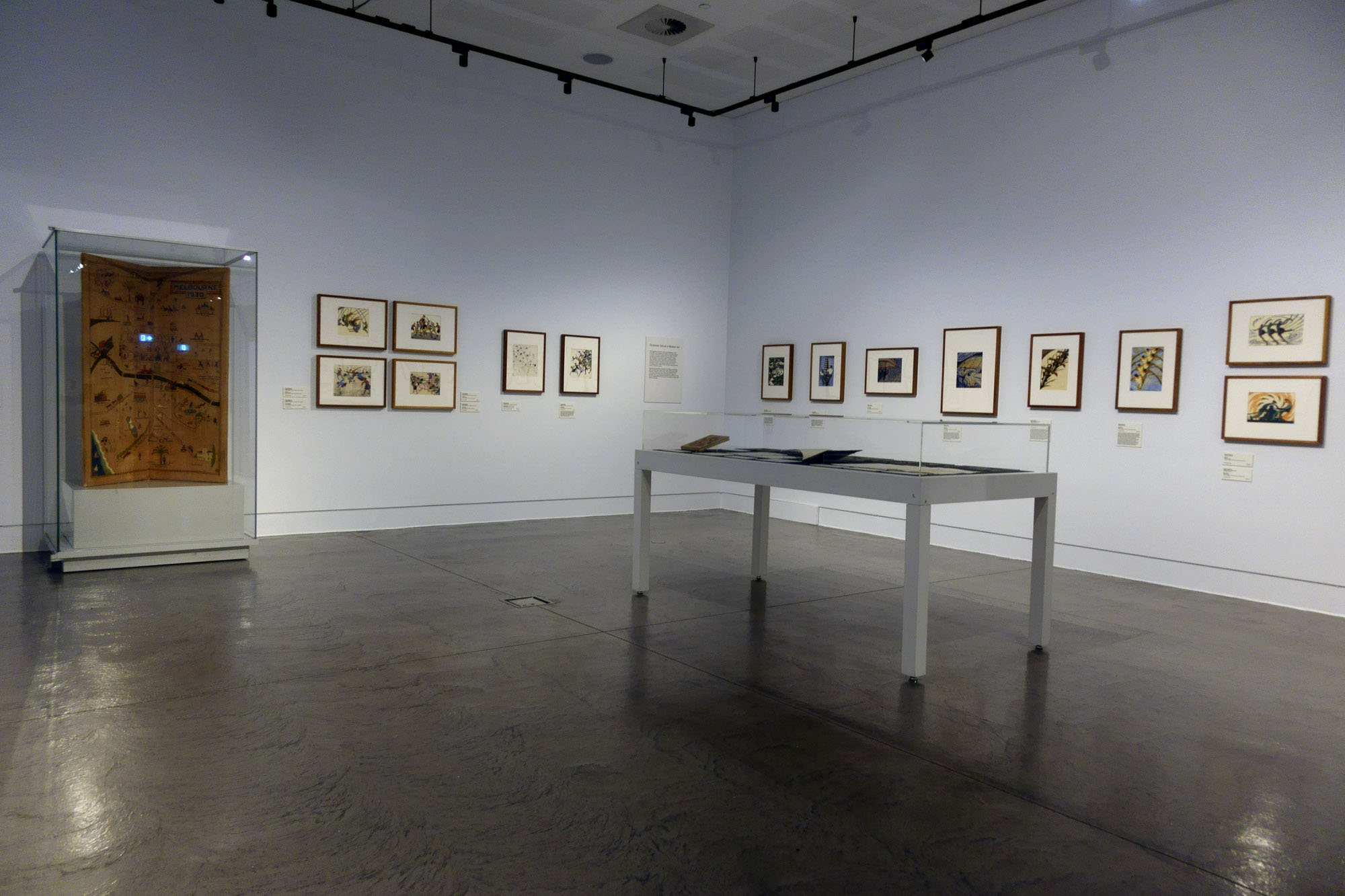
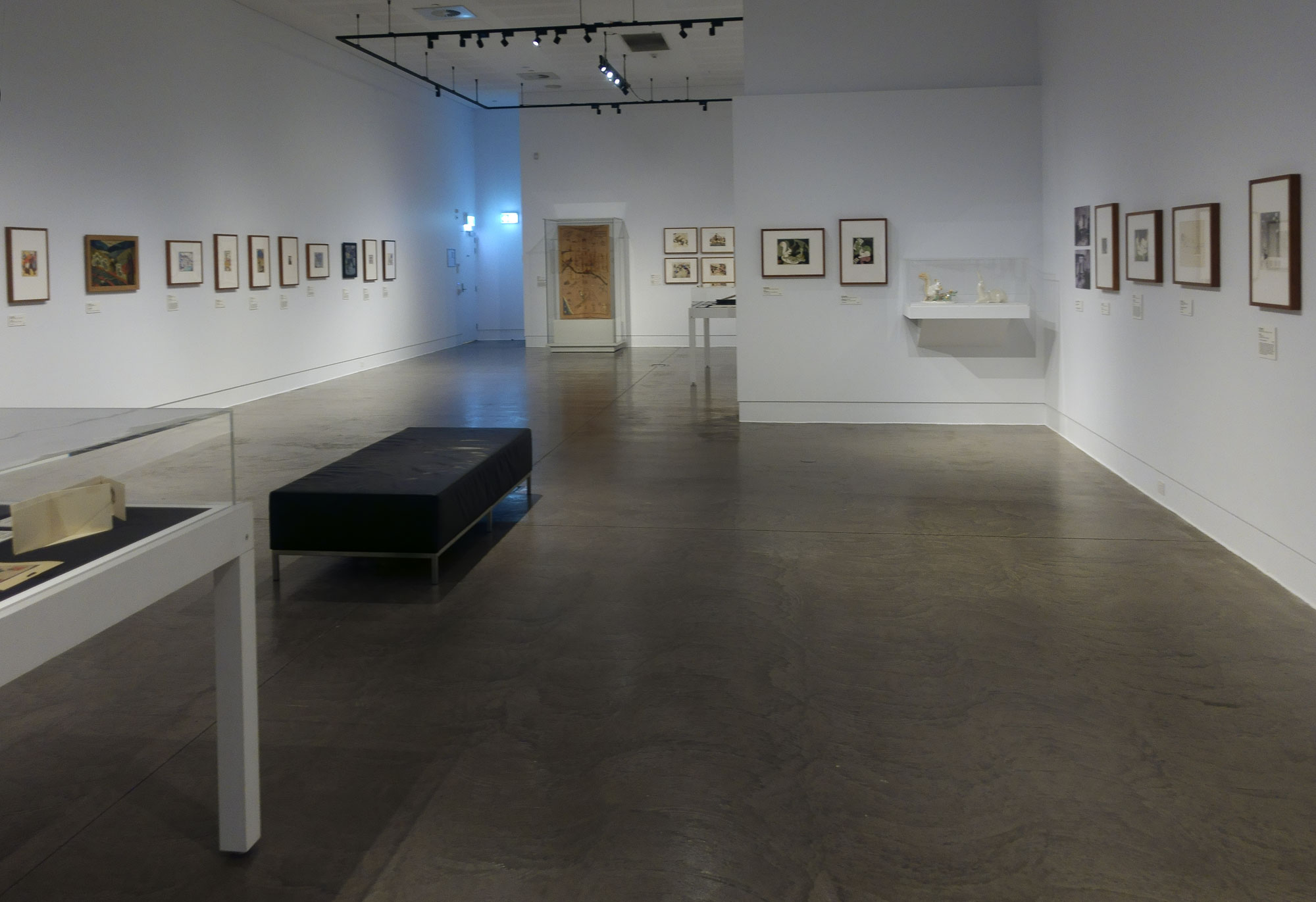
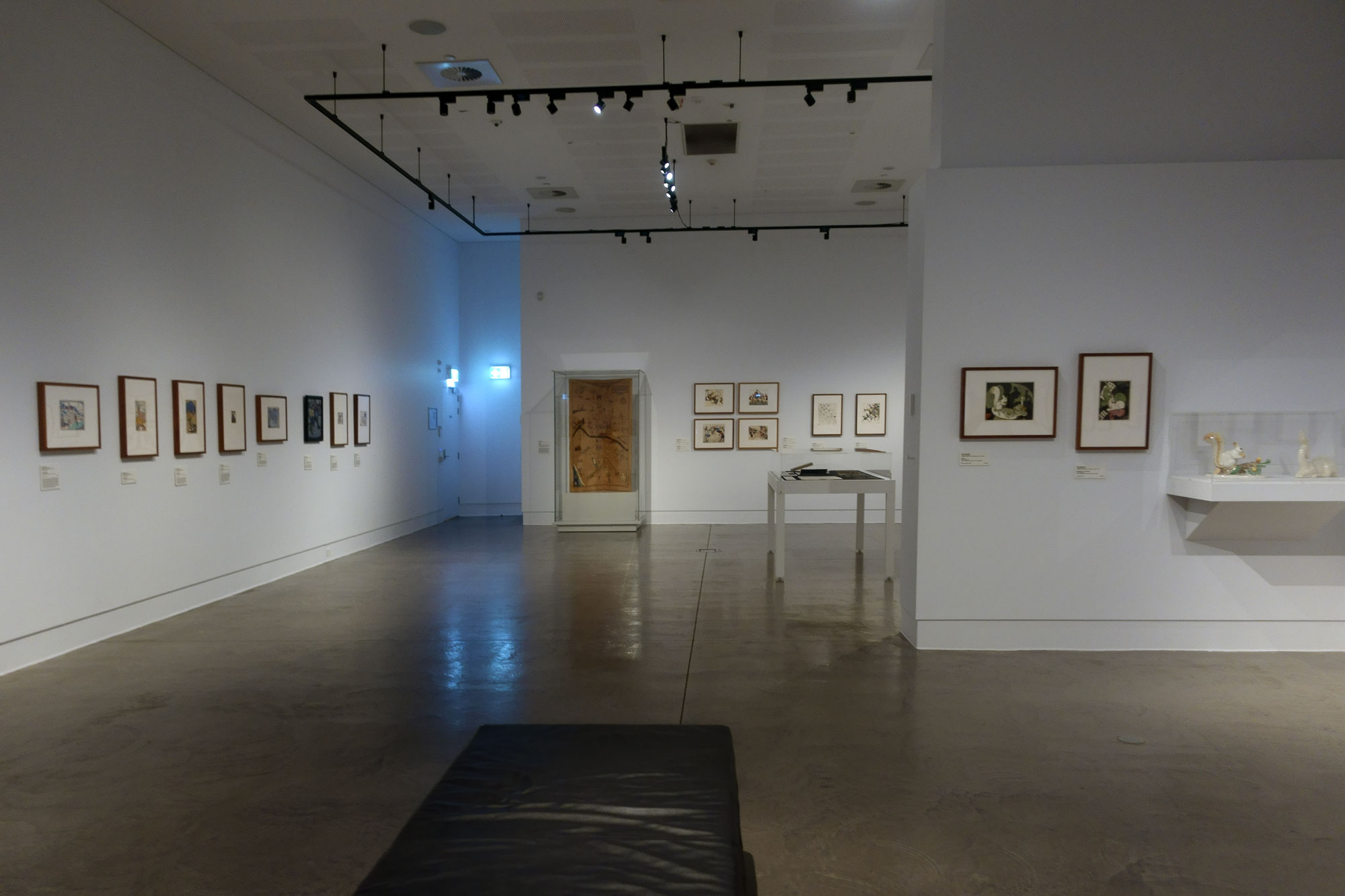
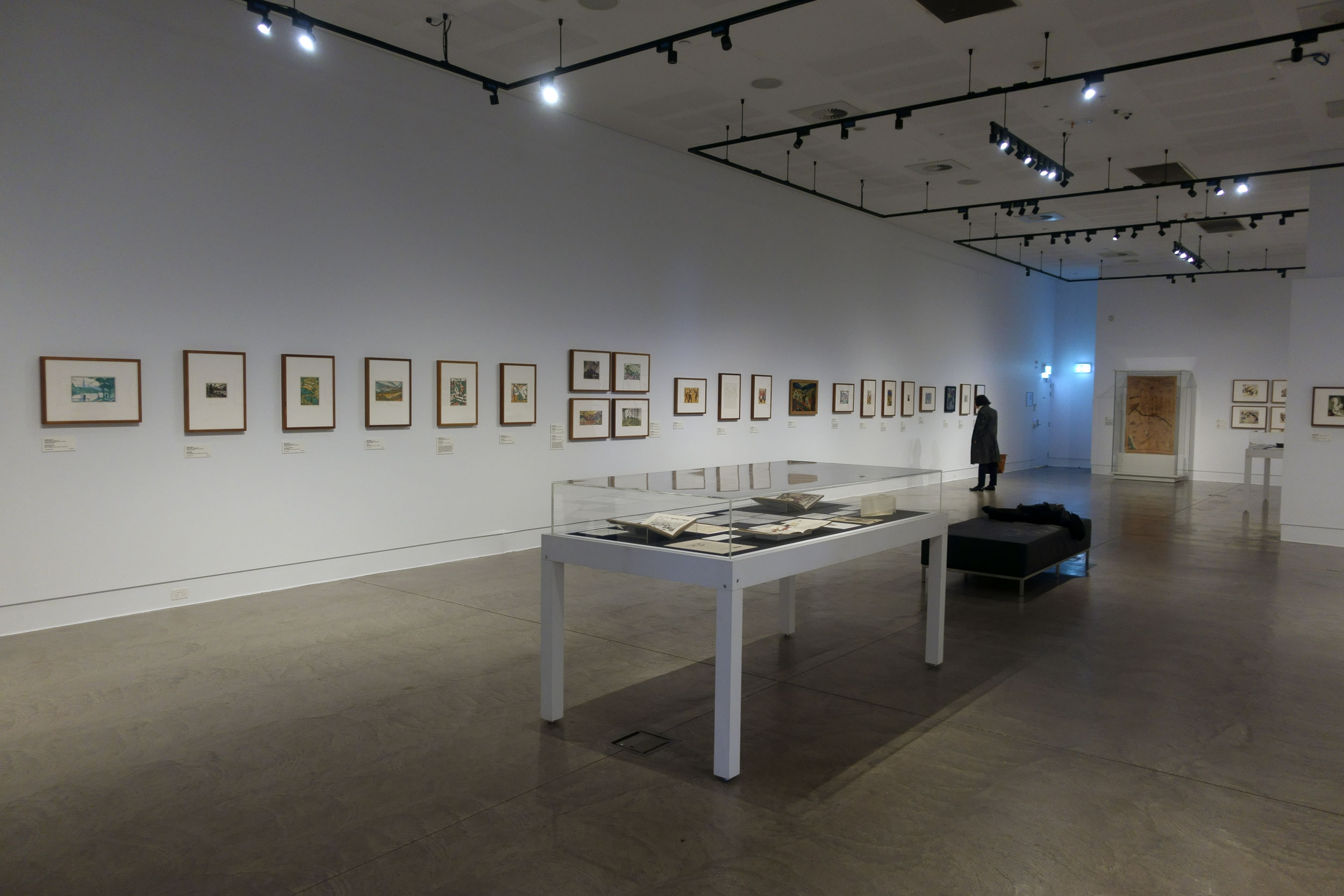
Exhibition: ‘Spowers & Syme’ at the Geelong Art Gallery, Victoria

Exhibition dates: 16th July – 16th October, 2022

A National Gallery Touring Exhibition

Curator: Dr Sarina Noordhuis-Fairfax, Curator of Australian Prints and Drawings at the National Gallery of Australia, Kamberri/Canberra
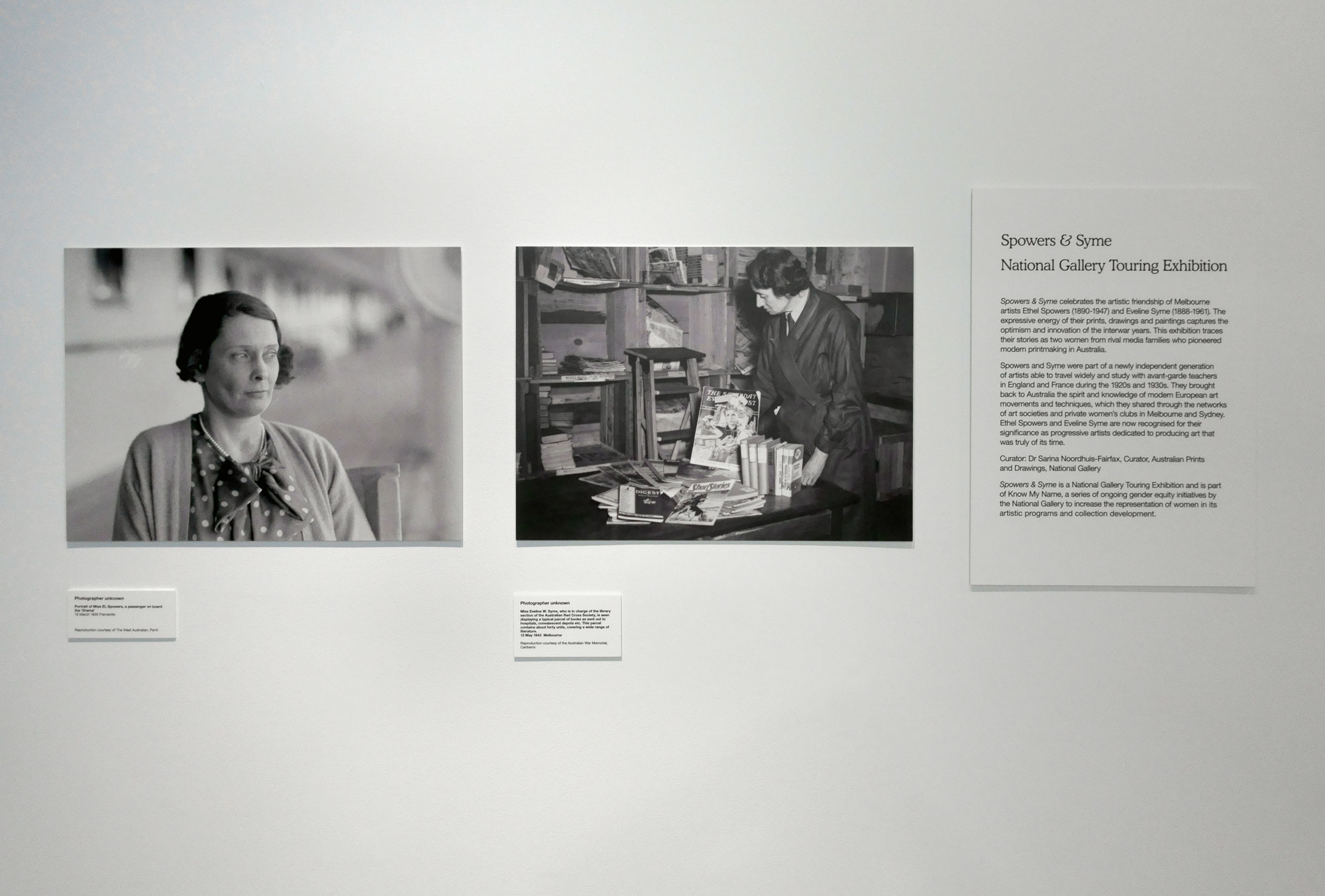
 

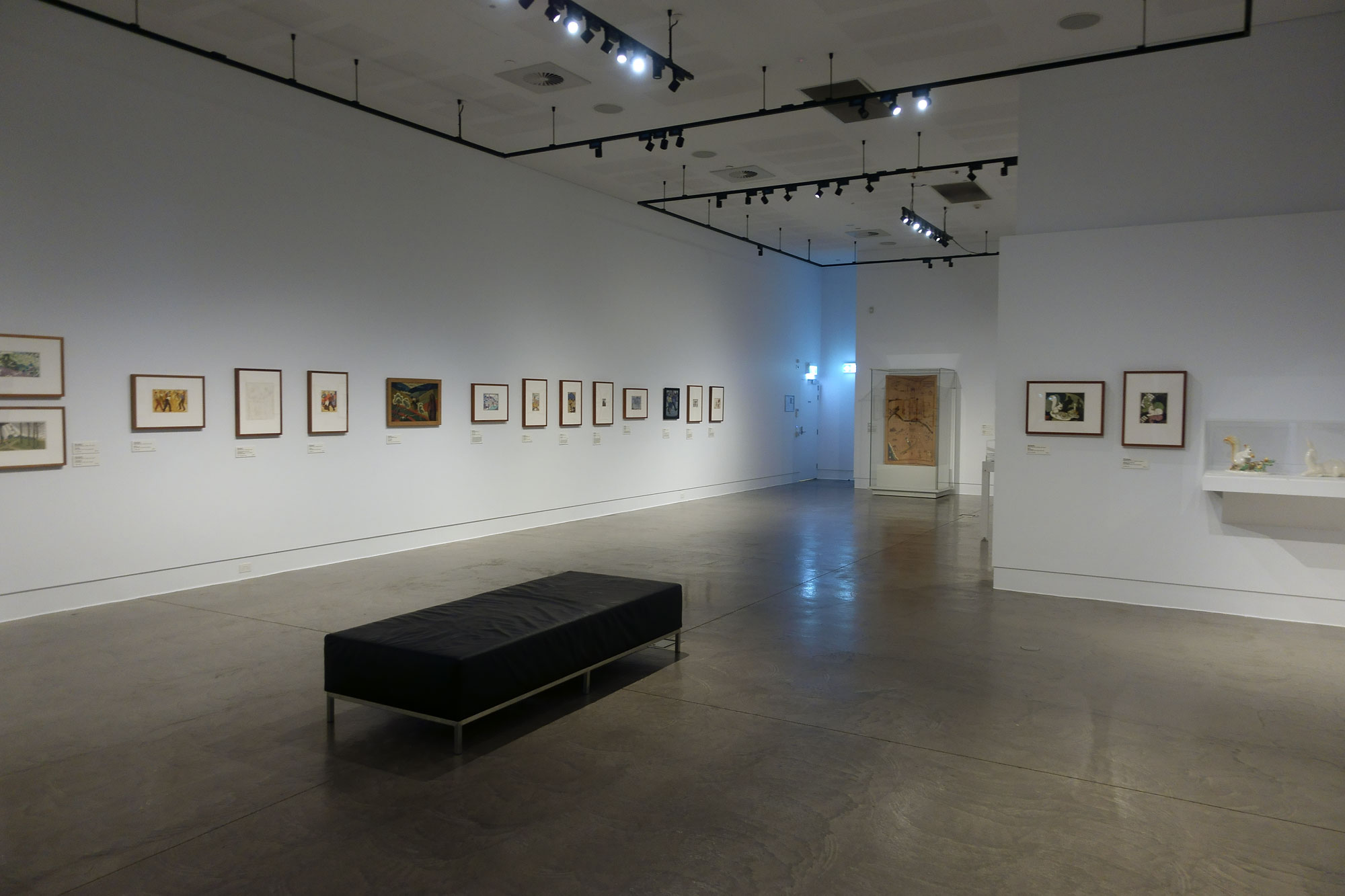
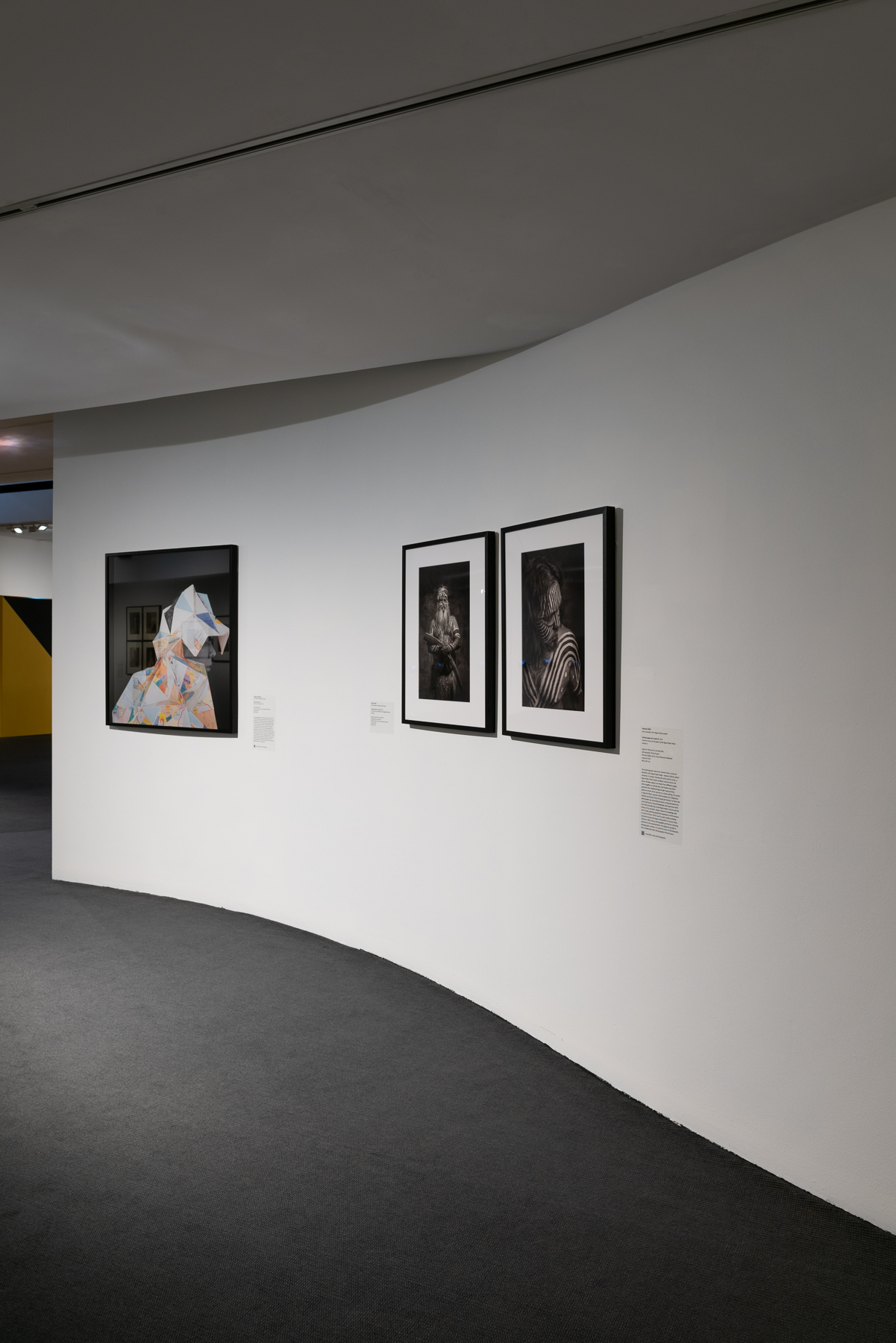
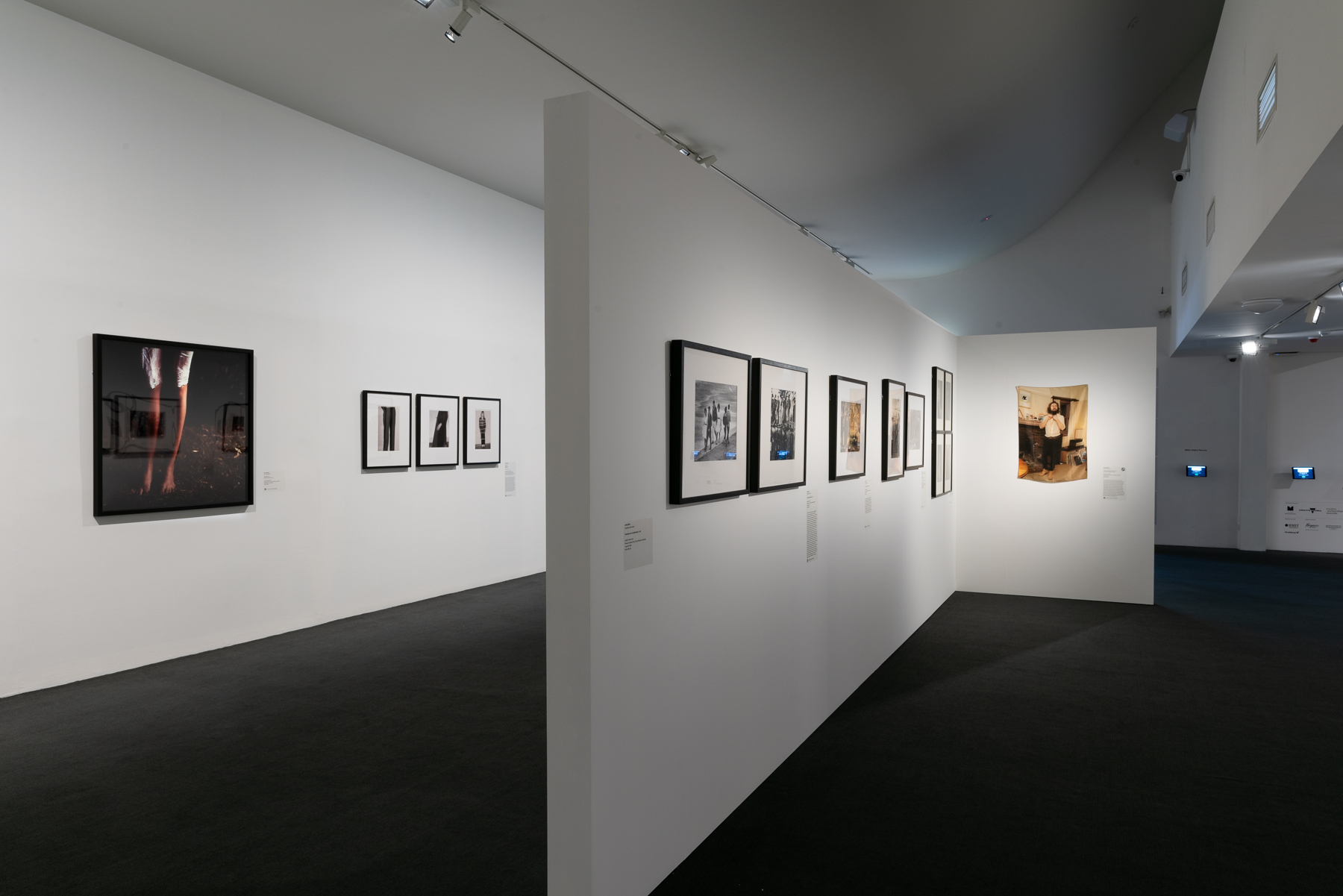
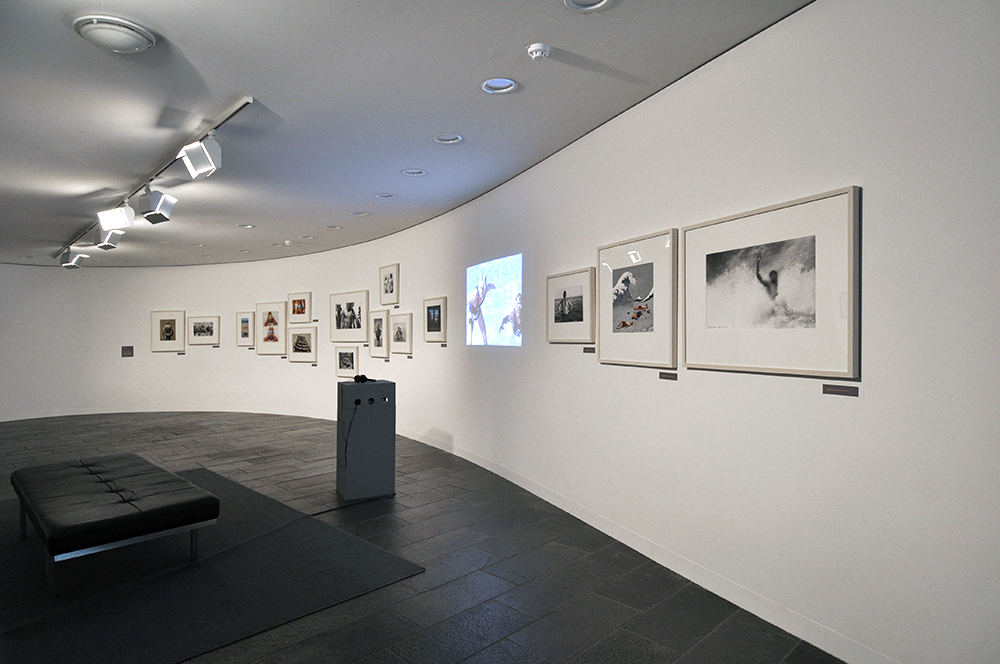
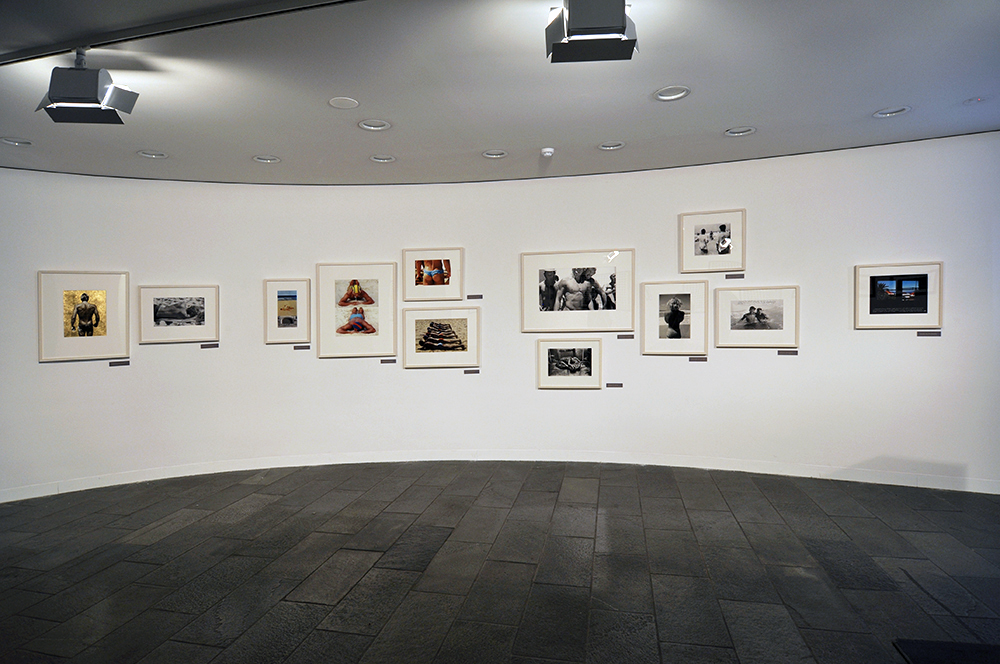
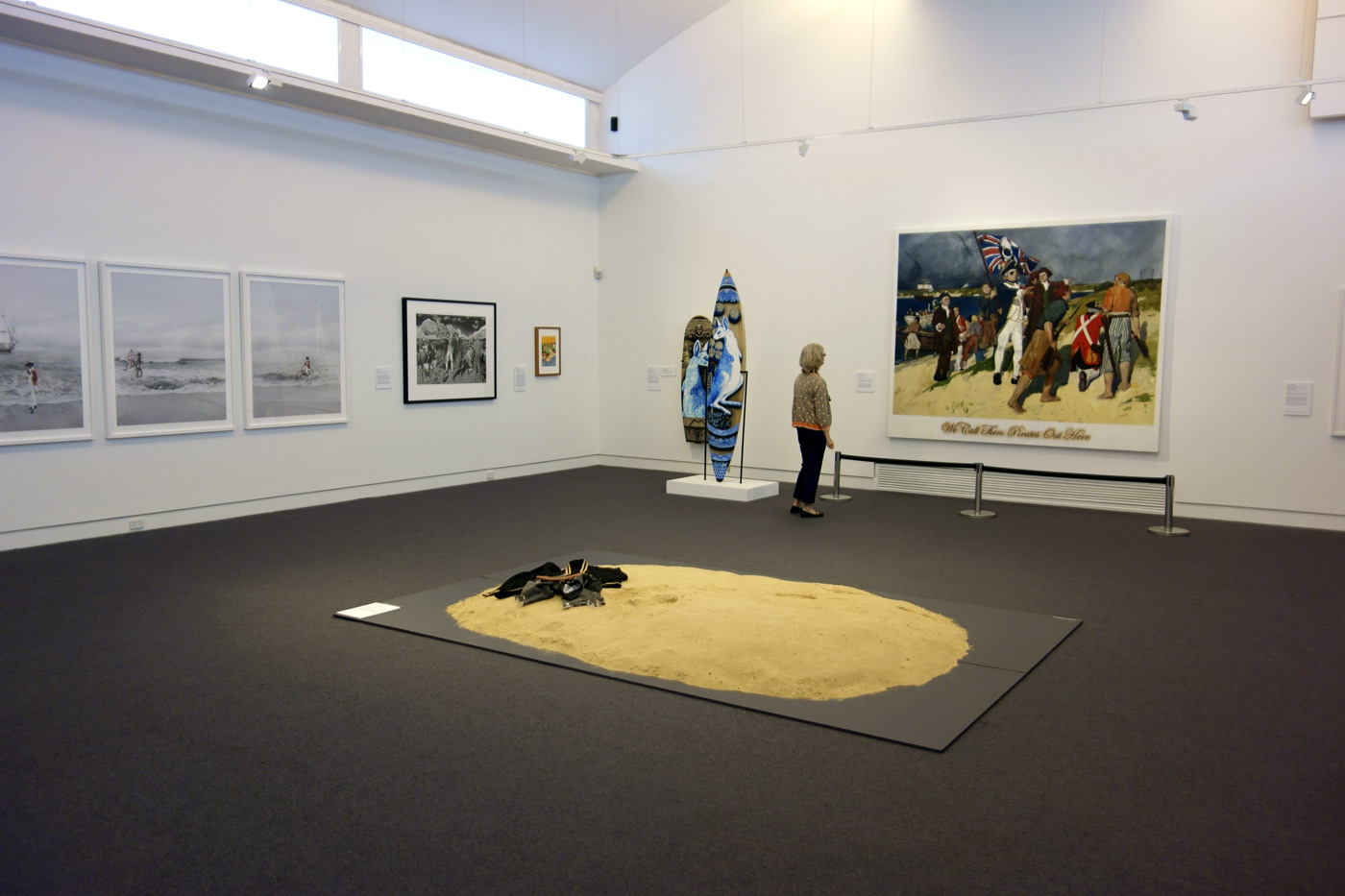
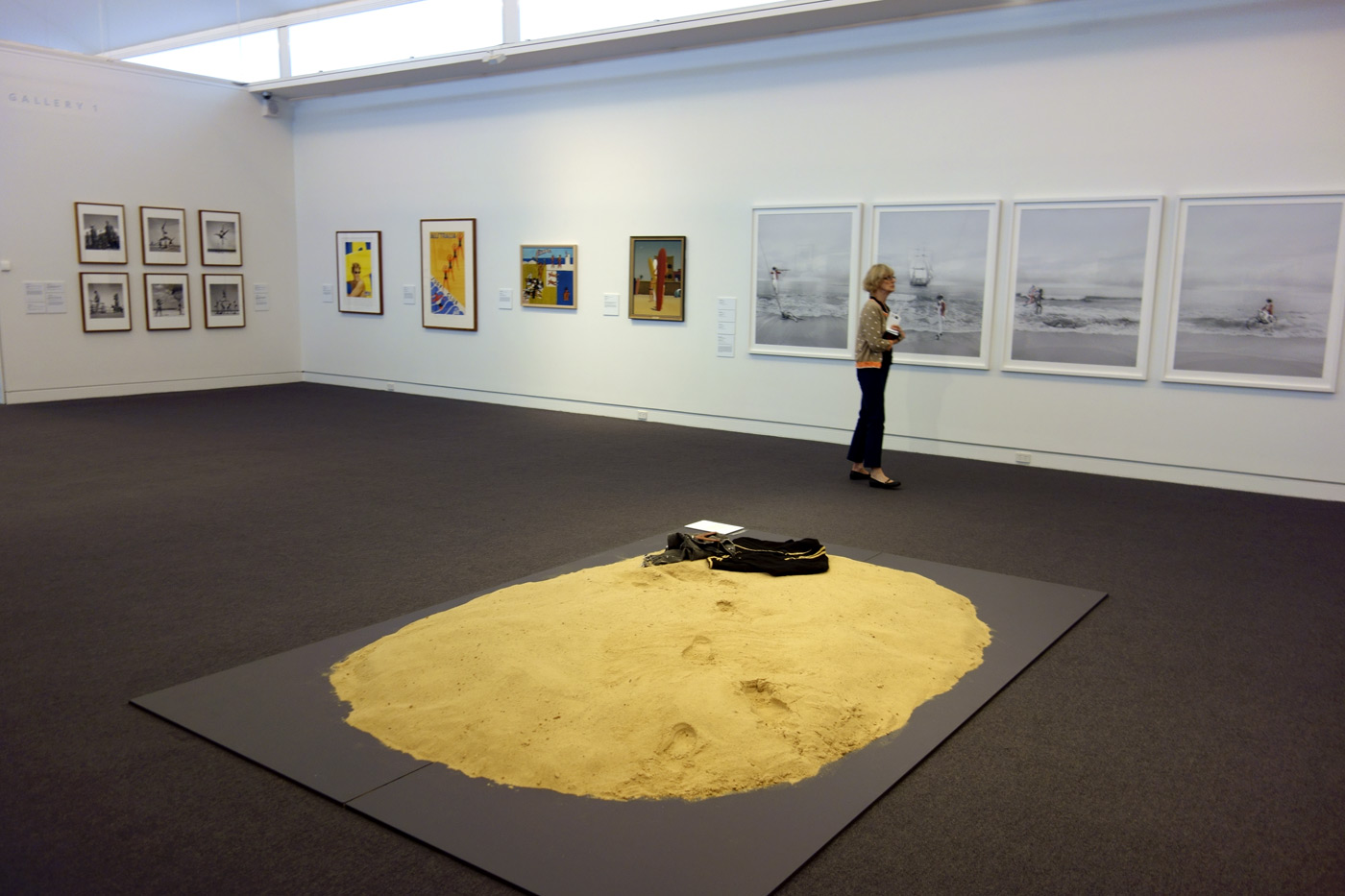
Installation view of the exhibition 'Spowers & Syme' at the Geelong Art Gallery showing photographs of both Ethel Spowers and Eveline Syme


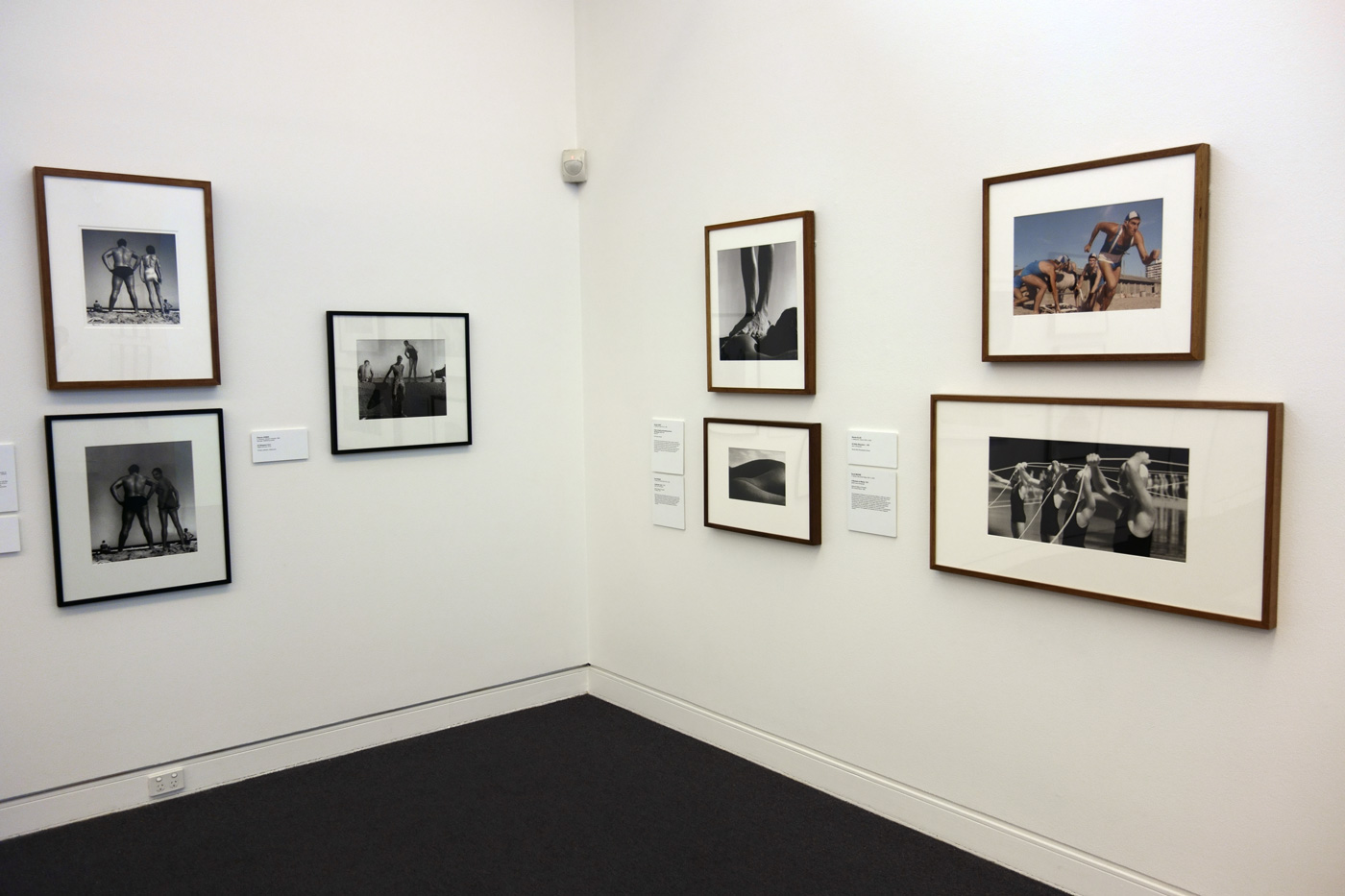
Installation view of the exhibition Spowers & Syme at the Geelong Art Gallery showing photographs of both Ethel Spowers and Eveline Syme (below)
Photo: Marcus Bunyan


My friend and I travelled down the highway from Melbourne to Geelong especially to see this National Gallery of Australia touring exhibition – and my god, was it worth the journey!

I have always loved woodcuts and the Art Deco era so it was a great pleasure to see the work of two very talented artists from this period, who were “enthusiastic exponents of modern art in Melbourne during the 1930s and ’40s.” Modern art that would have challenged the conservative (male) art conventions of the day, much as modernist photographs by Max Dupain challenged the ongoing power of Pictorialist photography in 1930s Australia.

From viewing the exhibition it would seem to me that Eveline Syme has the sparer, more ascetic aesthetic. Her forms are more graphic, her lines more severe, her spaces more “blocky” (if I can use that word – in other words, more positive and negative space), her colour palette more restrained than in the work of Ethel Spowers. But her work possesses its own charm: a wonderful Japanese inspired landscape such as The factory (1933, below), with its mix of modernism and naturalism; silhouetted blue figures full of dynamism, movement in a swirling circular motif in Skating (1929, below); or the flattened perspective and 3 colour palette of Sydney tram line (1936, below) – all offer their own delicious enjoyment of the urban landscape.

But the star of the show is the work of the astonishing Ethel Spowers. Her work is luminous… containing such romanticism, fun, humour, movement, play, intricate design, bold colours, lyrical graphics… and emotion – that I literally went weak at the knees when viewing these stunningly beautiful art works. There is somethings so joyful about Spowers designs that instantly draws you in, that makes you smile, that made me cry! They really touched my heart…

Even now writing about them, they seem to me like stills from a dream, scenes out of a fairy tale: the pattern of the white gulls obscuring the plough; the rays of sunlight striking the ground behind The lonely farm; the mysterious stillness of The island of the dead; the arching leap over the rope in Fox and geese; the pyramid construction of Football; the delicacy of movement and line in Swings; and the butterfly-like canopies in Wet afternoon. I could go on and on about the joy these works brought me when looking at them, their vivaciousness, their intense, effervescent spirit. If you get a chance before the exhibition closes next weekend in Geelong please go to see them.

As you may have gathered I am totally in love with the work of Ethel Spowers. Thank you, thank you to the artist for making them, and thank you to the energy of the cosmos for allowing me to see them in person!

Dr Marcus Bunyan


Many thankx to Geelong Art Gallery for allowing me to publish the photographs in the posting. Please click on the photographs for a larger version of the image. All installation images © Marcus Bunyan, Geelong Art Gallery and the National Gallery of Australia.


“Is it too great a truism to repeat that the best art is always the child of its own age?”


Eveline Syme


Celebrating the artistic friendship of Melbourne artists Ethel Spowers and Eveline Syme, the National Gallery Touring Exhibition Spowers and Syme will present the changing face of interwar Australia through the perspective of two pioneering modern women artists.

The exhibition offers rare insight into the unlikely collaboration between the daughters of rival media families. Studying together in Paris and later with avant-garde printmaker Claude Flight in London, Ethel Spowers and Eveline Syme returned to the conservative art world of Australia – where they became enthusiastic exponents of modern art in Melbourne during the 1930s and ’40s.

Much-loved for their innovative approach to lino and woodcut techniques, Spowers and Syme showcases their dynamic approach through prints and drawings whose rhythmic patterns reflect the fast pace of the modern world through everyday observations of childhood themes, overseas travel and urban life.

Text from the Geelong Gallery website
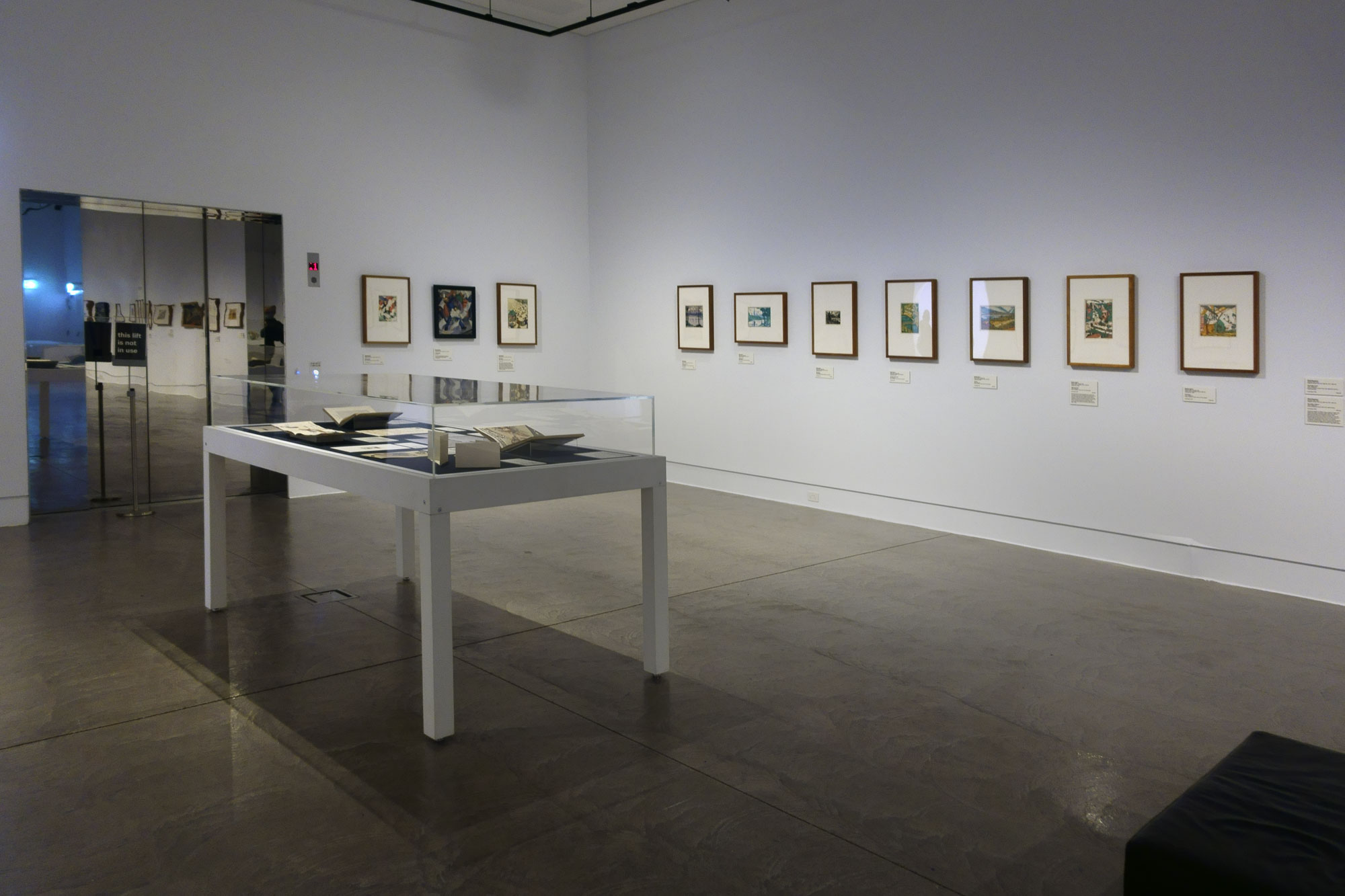
 

Installation view of the exhibition 'Spowers & Syme' at the Geelong Art Gallery

Installation view of the exhibition 'Spowers & Syme' at the Geelong Art Gallery

Installation view of the exhibition 'Spowers & Syme' at the Geelong Art Gallery

Installation view of the exhibition 'Spowers & Syme' at the Geelong Art Gallery

Installation view of the exhibition 'Spowers & Syme' at the Geelong Art Gallery

Installation view of the exhibition 'Spowers & Syme' at the Geelong Art Gallery


Installation views of the exhibition Spowers & Syme at the Geelong Art Gallery
Photos: Marcus Bunyan
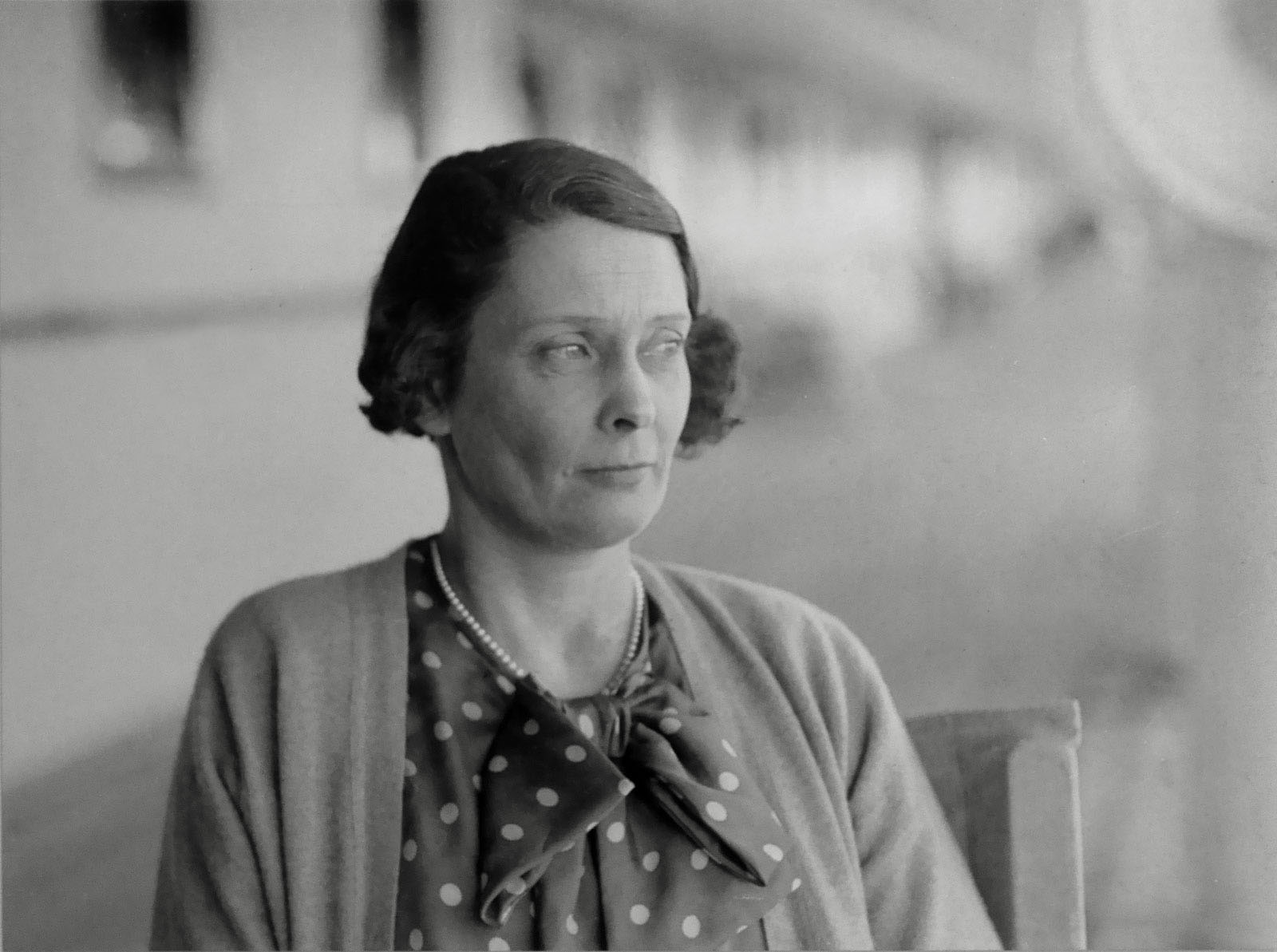
 

Photographer unknown. 'Portrait of Miss EL Spowers, a passenger on board the 'Orama'' 19 March 1935 (installation view)


Photographer unknown
Portrait of Miss EL Spowers, a passenger on board the ‘Orama’ (installation view)
19 March 1935
Fremantle
Reproduction courtesy of The West Australian, Perth
Photo: Marcus Bunyan
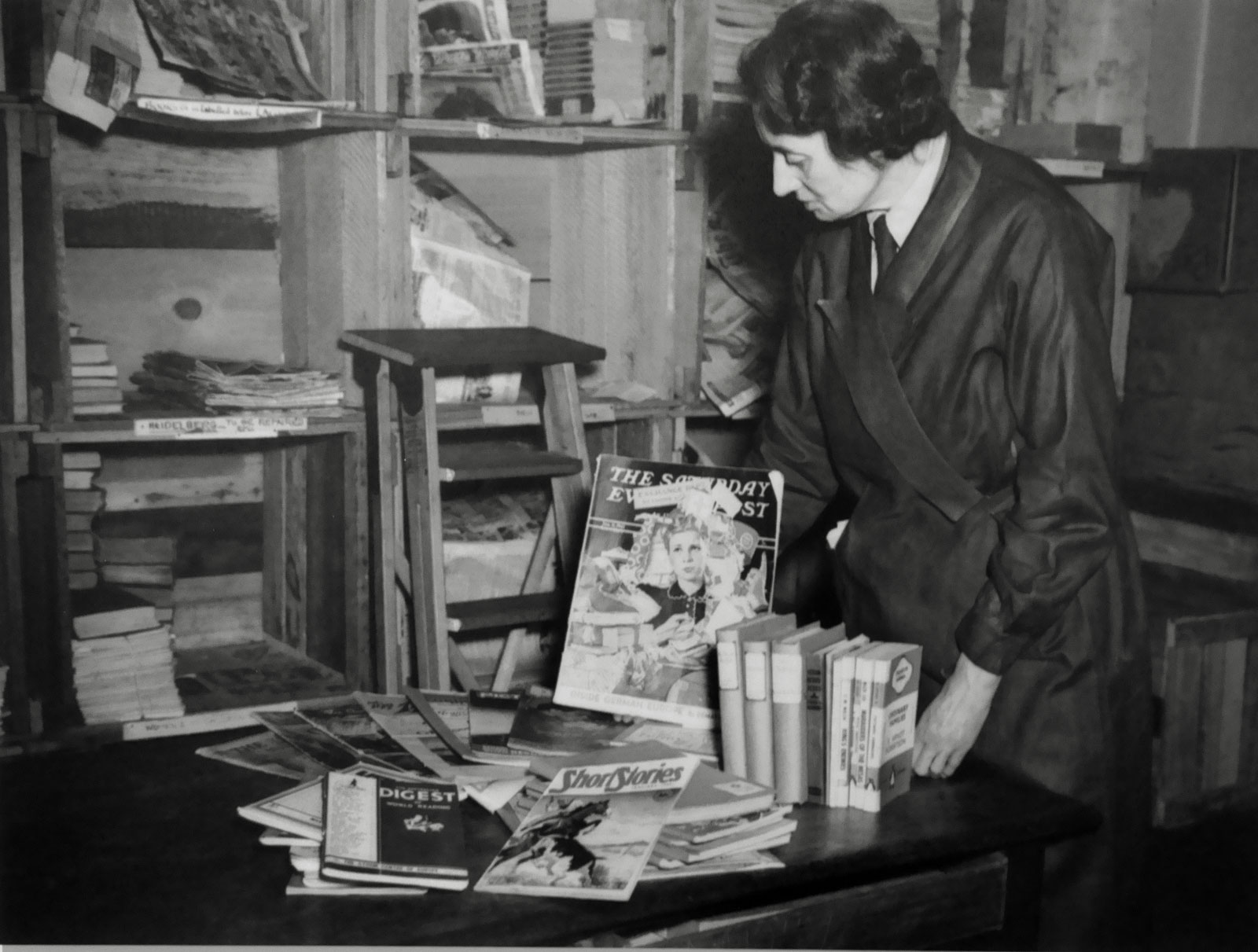
 

Photographer unknown. 'Miss Eveline W. Syme, who is in charge of the library section of the Australian Red Cross Society, is seen displaying a typical parcel of books as sent out to hospitals, convalescent depots etc. This parcel contains about forty units, covering a wide range of literature' 13 May 1943 (installation view)


Photographer unknown
Miss Eveline W. Syme, who is in charge of the library section of the Australian Red Cross Society, is seen displaying a typical parcel of books as sent out to hospitals, convalescent depots etc. This parcel contains about forty units, covering a wide range of literature (installation view)
13 May 1943
Melbourne
Reproduction courtesy of the Australian War Memorial, Canberra
Photo: Marcus Bunyan
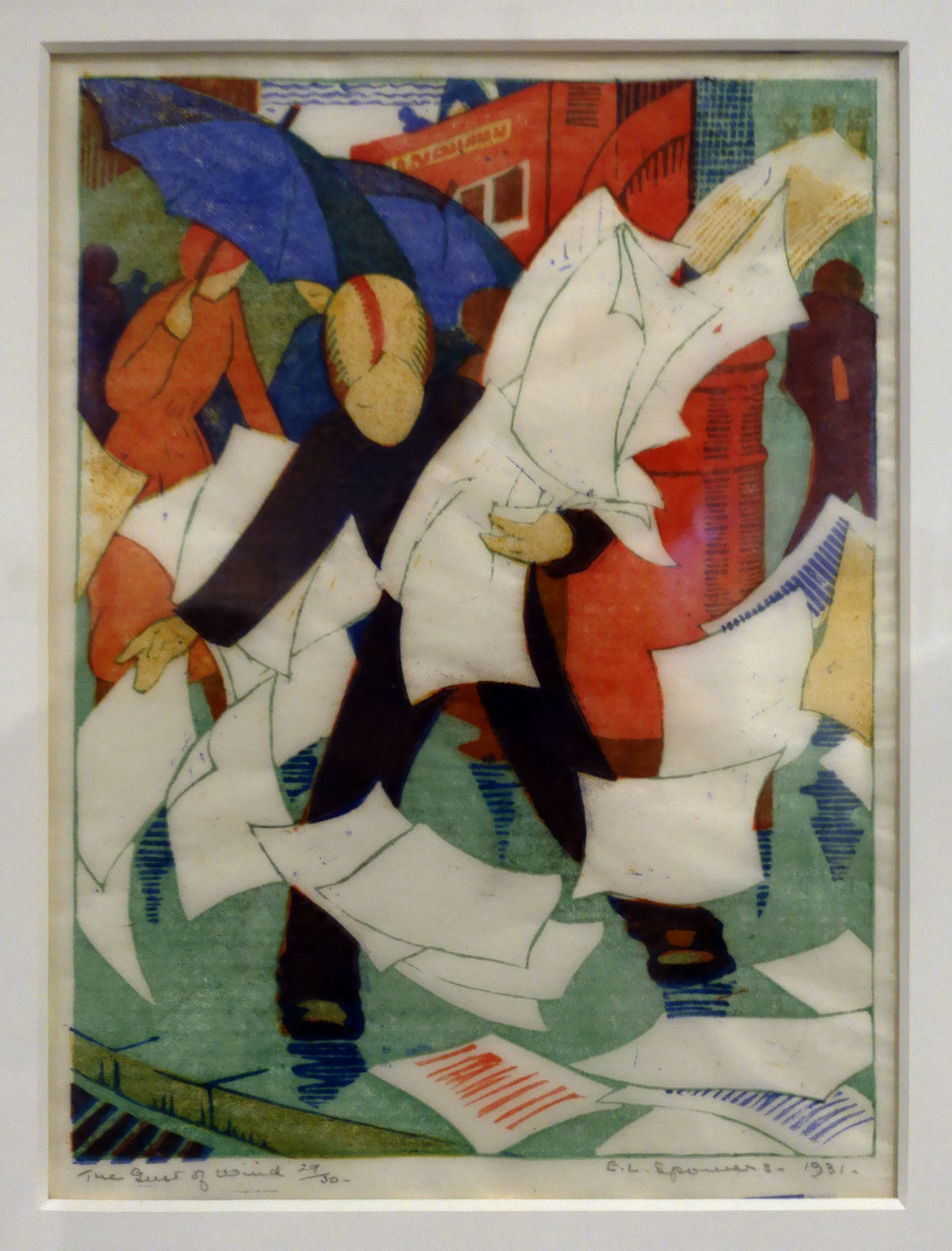
 

Ethel Spowers (Australian, 1890-1947) 'The gust of wind' 1931 (installation view)


Ethel Spowers (Australian, 1890-1947)
The gust of wind (installation view)
1931
Melbourne
Linocut, printed in colour inks, from four blocks
National Gallery of Australia, Kamberri/Canberra
Purchased 1976
Photo: Marcus Bunyan
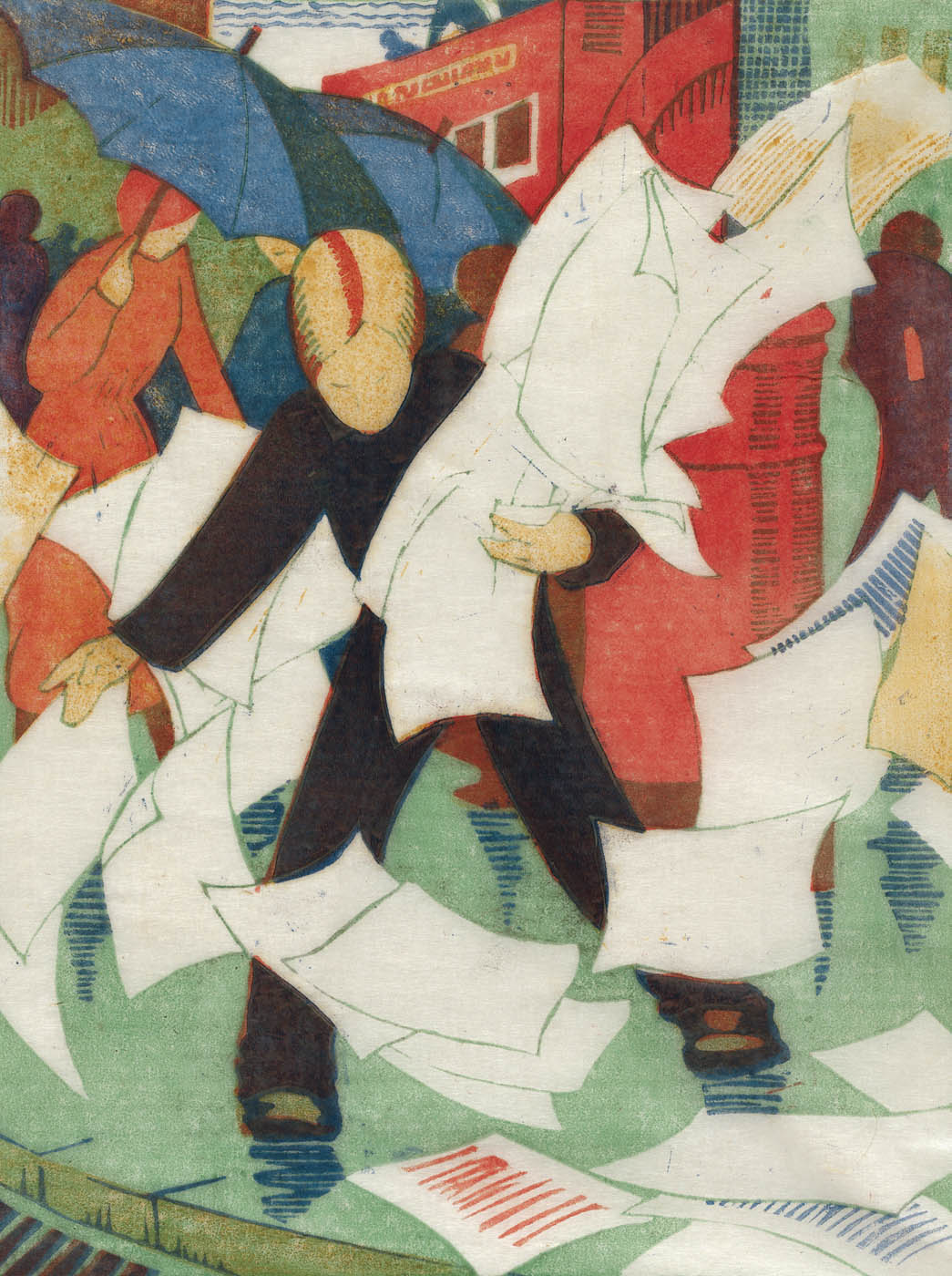
 

Ethel Spowers (Australian, 1890-1947) 'The gust of wind' 1931 from the exhibition 'Spowers & Syme' at the Geelong Art Gallery, Victoria, July - Oct, 2022


Ethel Spowers (Australian, 1890-1947)
The gust of wind
1931
National Gallery of Australia, Kamberri/Canberra
Purchased 1976
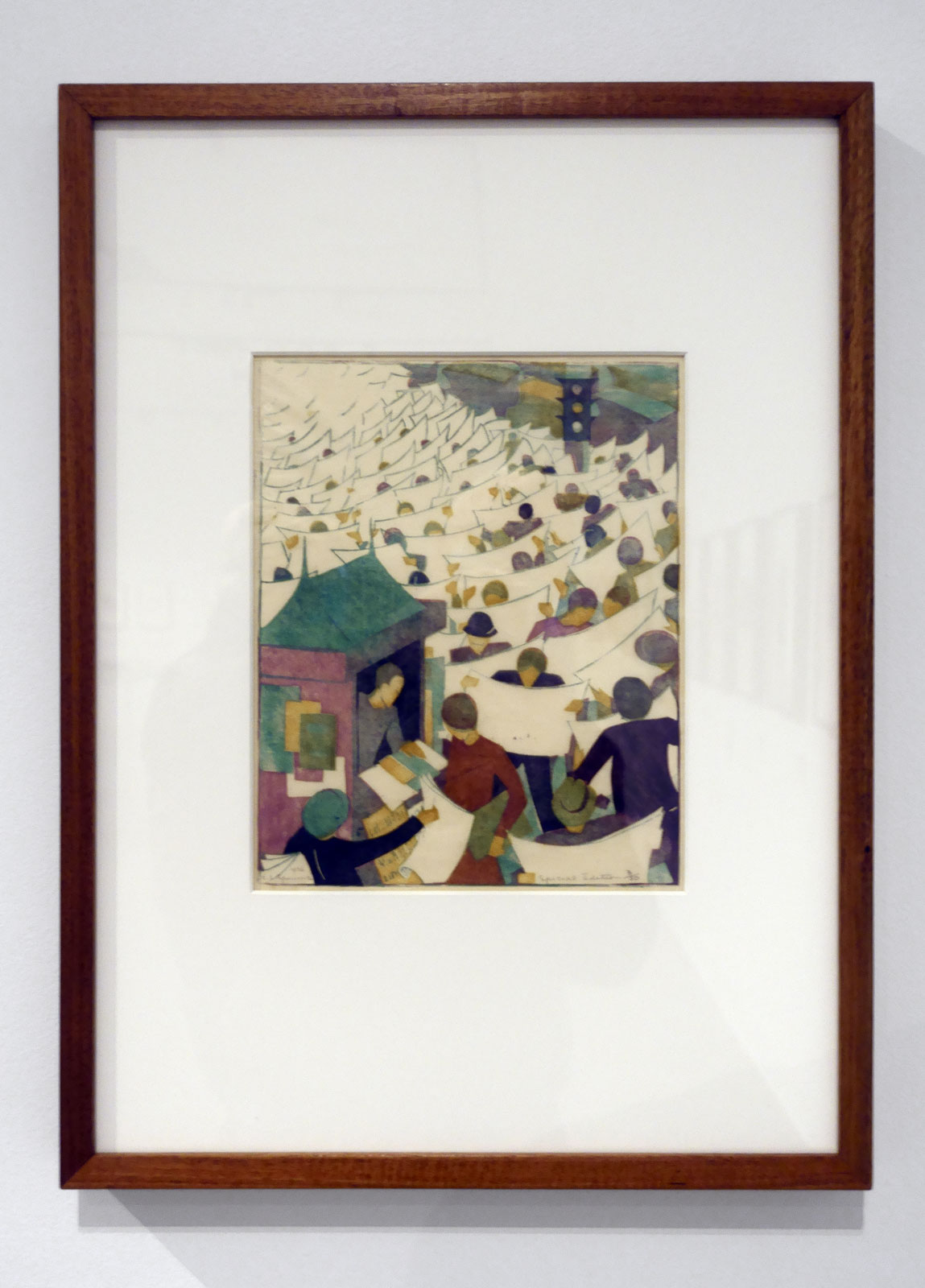
 

Ethel Spowers (Australian, 1890-1947) 'Special edition' 1936 (installation view)


Ethel Spowers (Australian, 1890-1947)
Special edition (installation view)
1936
Melbourne
Linocut, printed in colour inks, from four blocks
National Gallery of Australia, Kamberri/Canberra
Purchased 1976
Photo: Marcus Bunyan


Raised in Toorak society, Ethel Spowers was the second daughter of William Spewers, an Aotearoa New Zealand-born journalist and proprietor of The Argus and The Australasian newspapers. The Spowers family lived at Toorak House in St Georges Road. Eveline Syme was the first-born daughter of company director and pastoralist Joseph Syme, who was a partner in competing newspaper The Age until 1891. The Syme family lived at Rotherfield (now Sherwood Hall) in St Kilda. Eveline moved to Toorak in around 1927.

Wall text
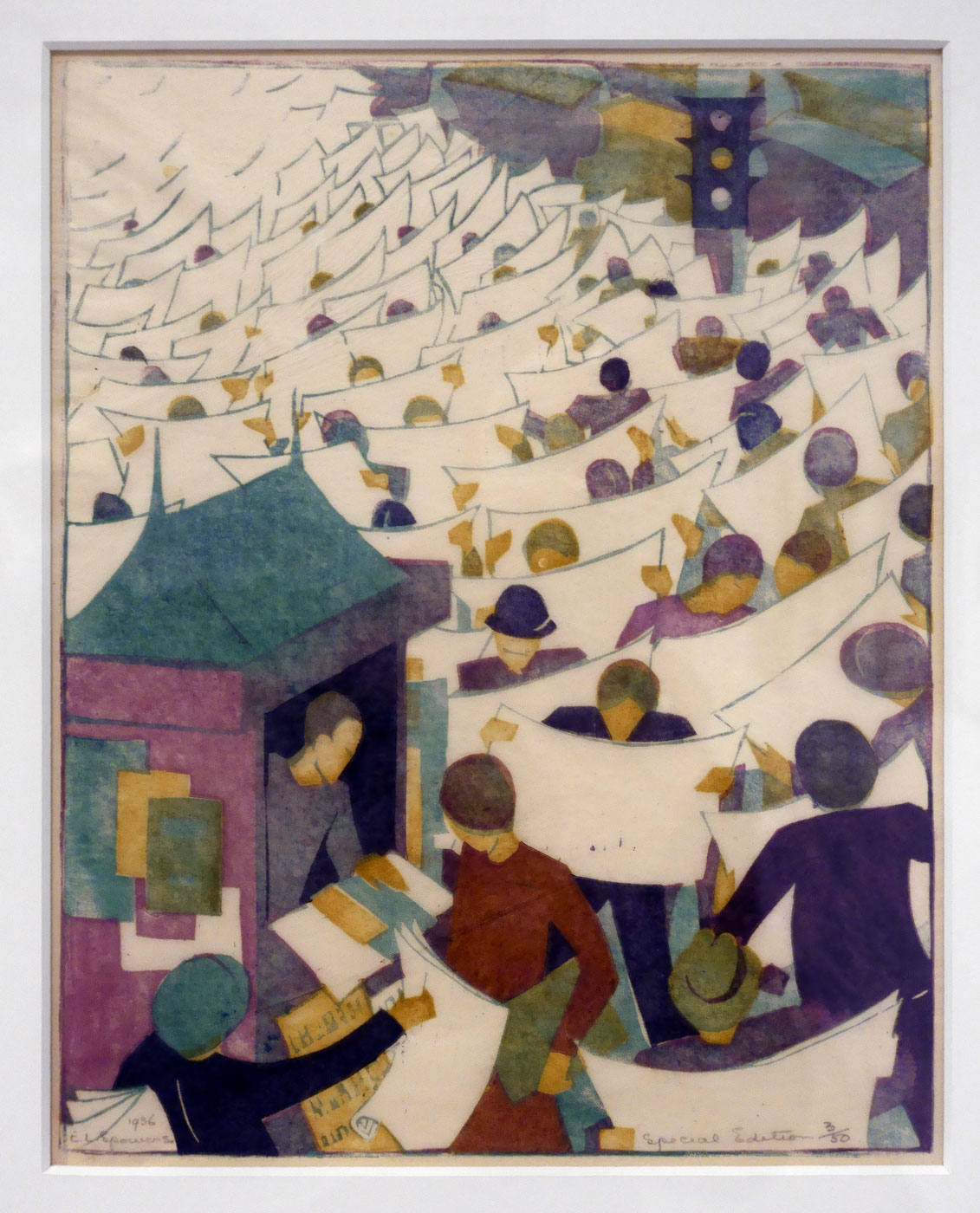
 

Ethel Spowers (Australian, 1890-1947) 'Special edition' 1936 (installation view)


Ethel Spowers (Australian, 1890-1947)
Special edition (installation view)
1936
Melbourne
Linocut, printed in colour inks, from four blocks
National Gallery of Australia, Kamberri/Canberra
Purchased 1976
Photo: Marcus Bunyan
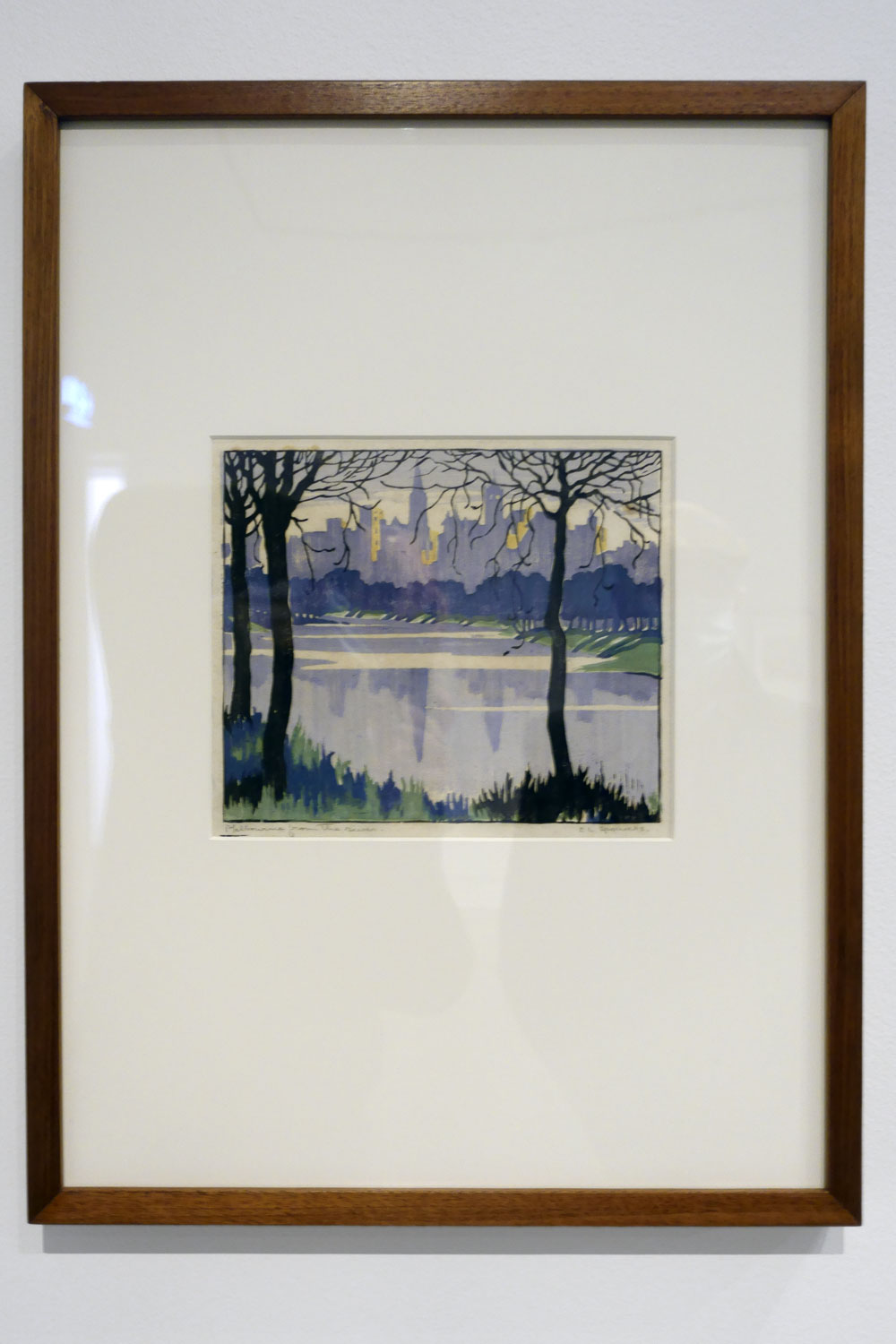
 

Ethel Spowers (Australian, 1890-1947) 'Melbourne from the river' c. 1924 (installation view)


Ethel Spowers (Australian, 1890-1947)
Melbourne from the river (installation view)
c. 1924
Melbourne
Woodcut, printed in colour inks in the Japanese manner, from five blocks
National Gallery of Australia, Kamberri/Canberra
Purchased 1976
Photo: Marcus Bunyan


A sense of place is important to all of us. For Spowers and Syme, Melbourne (Naarm) was their home and held a special place in their hearts. In the 1920s, Melbourne was an important city. Lively and busy, it was also very accessible to the river and beautiful landmarks. The Yarra River (Birrarung) winding gently through the city and the industrial landscape at Yallourn were worthy subjects to focus on. Spowers’ earlier work Melbourne from the river c 1924 (below) was created looking at the river and is framed by spindly trees.

Text from the National Gallery of Australia website
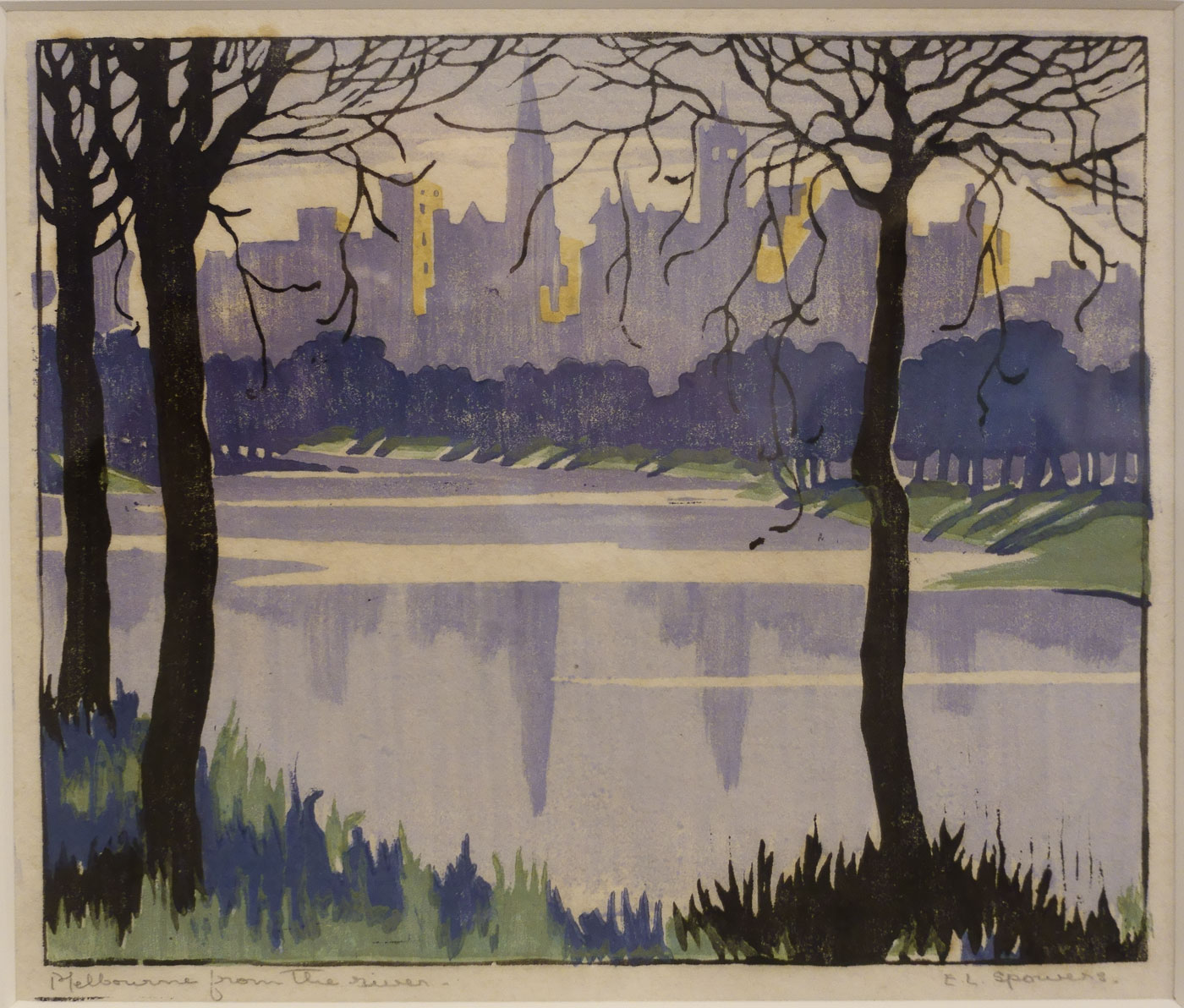
 

Ethel Spowers (Australian, 1890-1947) 'Melbourne from the river' c. 1924 (installation view)


Ethel Spowers (Australian, 1890-1947)
Melbourne from the river (installation view)
c. 1924
Melbourne
Woodcut, printed in colour inks in the Japanese manner, from five blocks
National Gallery of Australia, Kamberri/Canberra
Purchased 1976
Photo: Marcus Bunyan
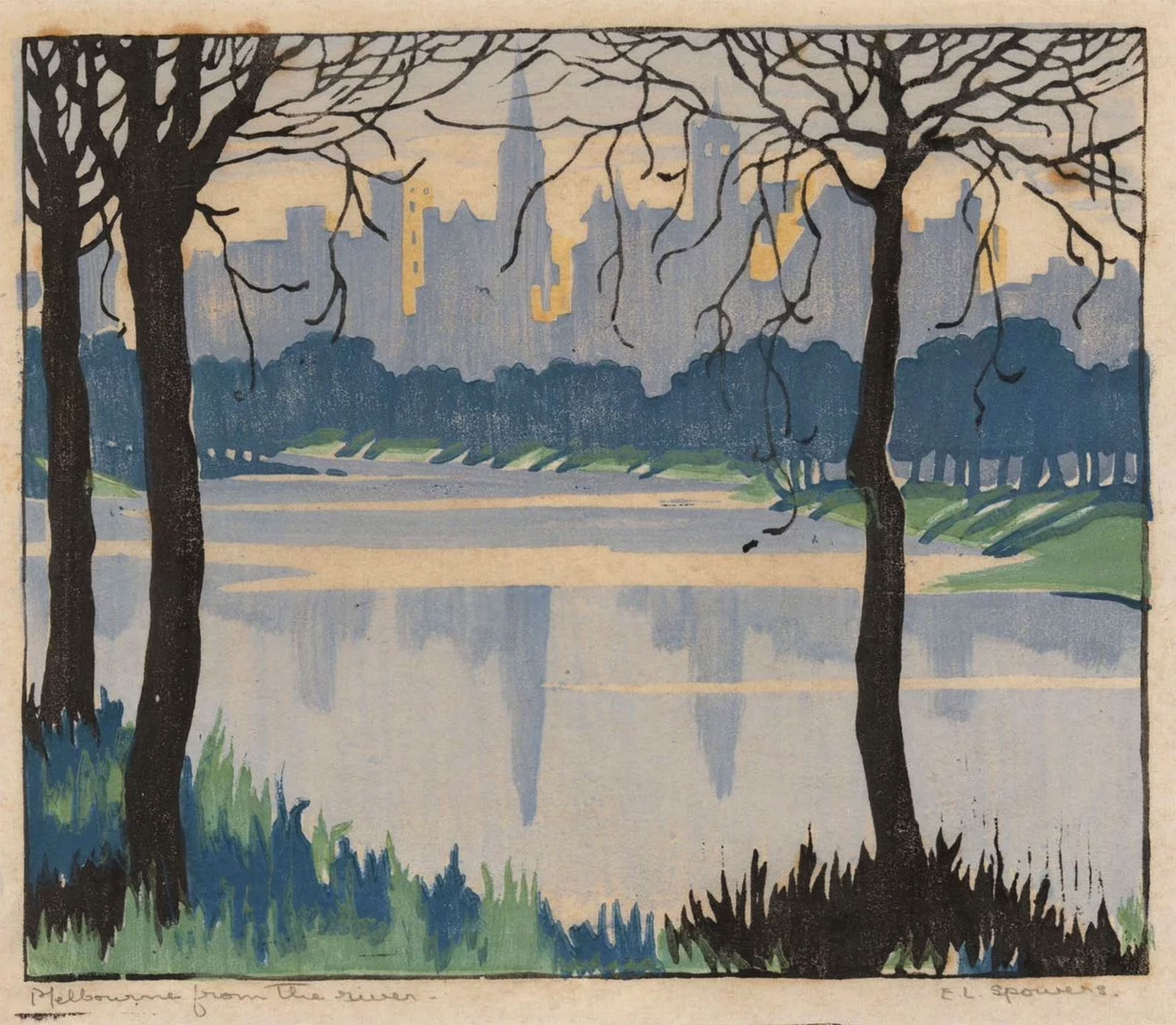
 

Ethel Spowers (Australian, 1890-1947) 'Melbourne from the river' c. 1924 from the exhibition 'Spowers & Syme' at the Geelong Art Gallery, Victoria, July - Oct, 2022


Ethel Spowers (Australian, 1890-1947)
Melbourne from the river
c. 1924
Melbourne
Woodcut, printed in colour inks in the Japanese manner, from five blocks
National Gallery of Australia, Kamberri/Canberra
Purchased 1976
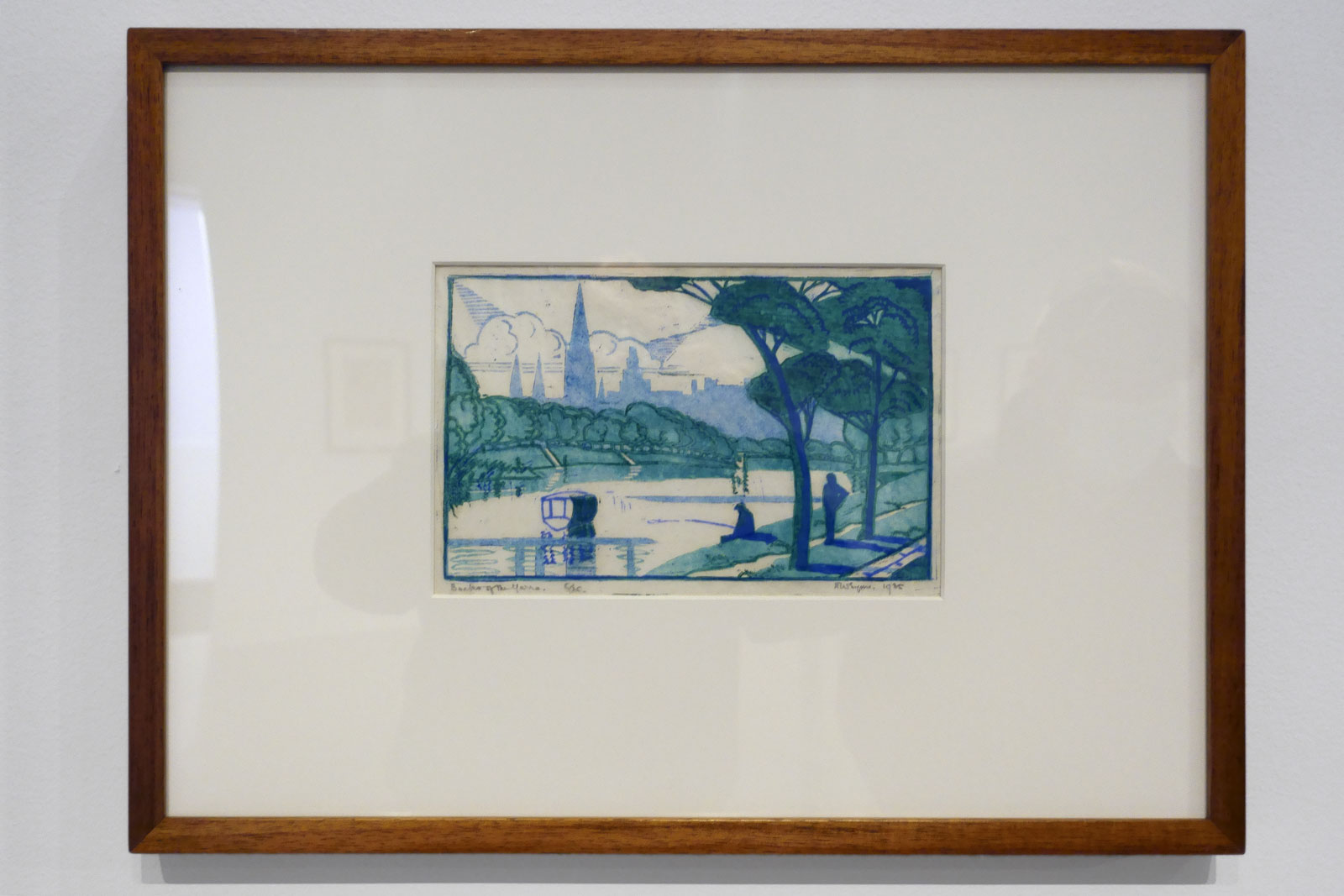
 

Eveline Syme (Australian, 1888-1961) 'Banks of the Yarra' 1935 (installation view)


Eveline Syme (Australian, 1888-1961)
Banks of the Yarra (installation view)
1935
Melbourne
Linocut, printed in colour inks, from three blocks
National Gallery of Australia, Kamberri/Canberra
Photo: Marcus Bunyan
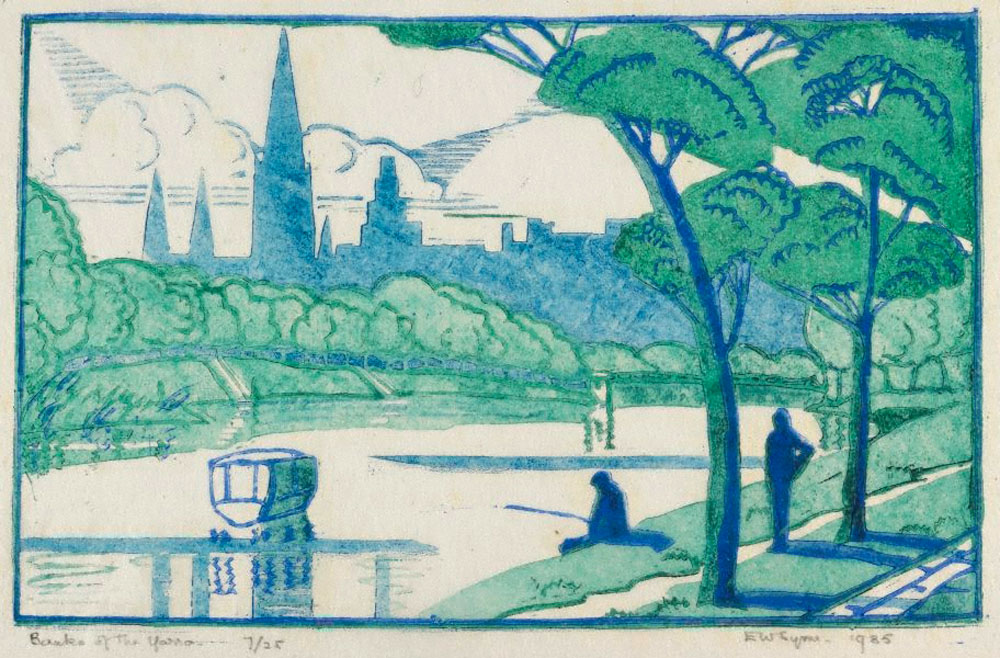
 

Eveline Syme (Australian, 1888-1961) 'Banks of the Yarra' 1935


Eveline Syme (Australian, 1888-1961)
Banks of the Yarra
1935
Melbourne
Linocut, printed in colour inks, from three blocks
National Gallery of Australia, Kamberri/Canberra
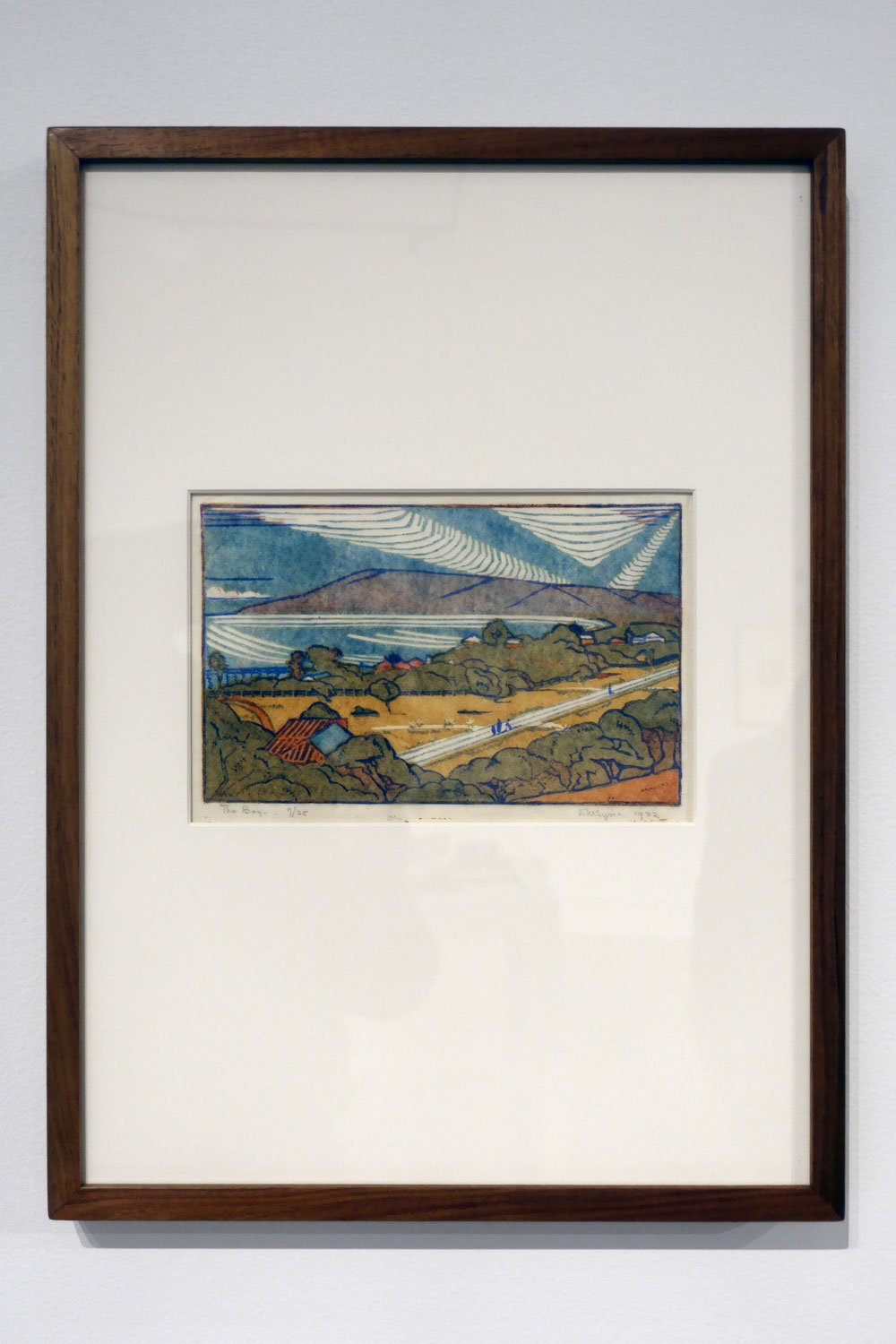
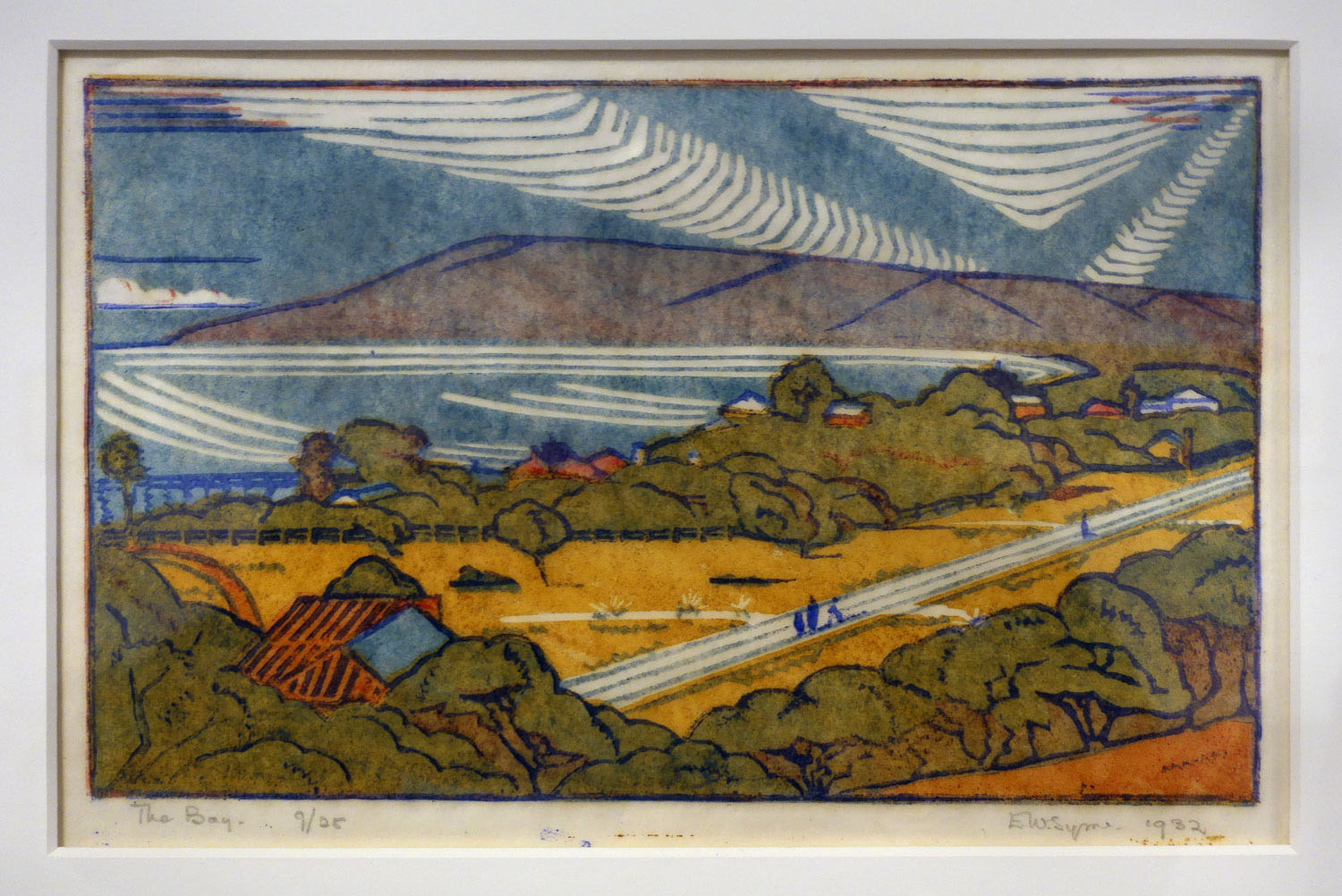
 

Eveline Syme (Australian, 1888-1961) 'The bay' 1932 (installation view)

Eveline Syme (Australian, 1888-1961) 'The bay' 1932 (installation view)


Eveline Syme (Australian, 1888-1961)
The bay (installation views)
1932
Melbourne
Linocut, printed in colour inks, from four blocks
National Gallery of Australia, Kamberri/Canberra
Purchased 1977
Photos: Marcus Bunyan
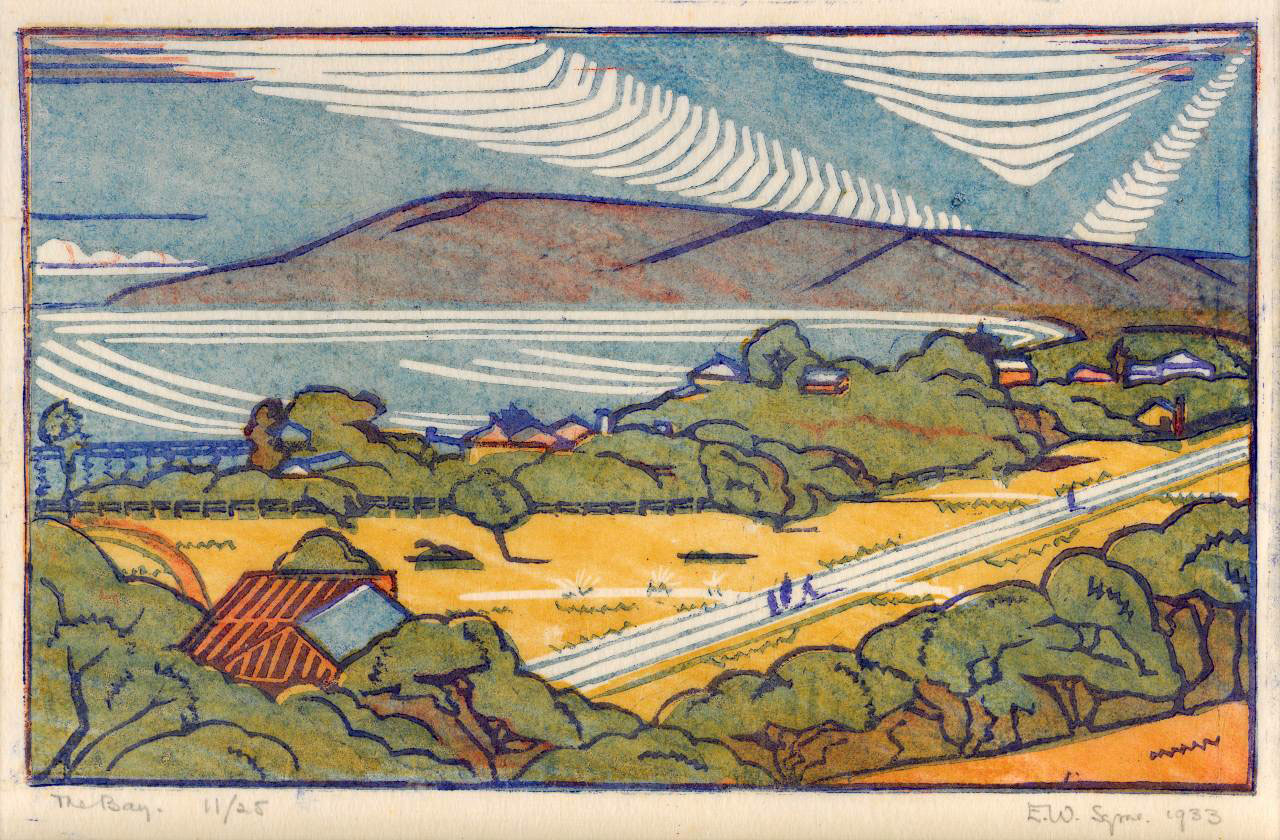
 

Eveline Syme (Australian, 1888-1961) 'The bay' 1932 from the exhibition 'Spowers & Syme' at the Geelong Art Gallery, Victoria, July - Oct, 2022


Eveline Syme (Australian, 1888-1961)
The bay
1932
Melbourne
Linocut, printed in colour inks, from four blocks
National Gallery of Australia, Kamberri/Canberra
Purchased 1977


Geelong Gallery is delighted to present National Gallery of Australia Touring Exhibition, Spowers & Syme opening on Saturday 16 July 2022.

Celebrating the artistic friendship of Melbourne artists Ethel Spowers and Eveline Syme, the Know My Name touring exhibition presents the changing
face of interwar Australia through the perspective of two pioneering women artists.

The National Gallery’s Curator of Australian Prints and Drawings, Dr Sarina Noordhuis-Fairfax hopes that Geelong and Victorian audiences will add the
names Spowers and Syme to their knowledge of ground-breaking women artists from the era including Margaret Preston, Thea Proctor, Dorrit Black and Grace Cossington Smith.

‘Spowers and Syme are often overlooked in Australian art history, yet during the 1930s they were recognised by peers as being among the most progressive artists working in Melbourne.’

‘Exhibiting in Australia and England, they championed key ideas from European modernism such as contemporary art reflecting the pace and vitality of life,’ said Noordhuis-Fairfax.

Much-loved for their dynamic approach to lino and woodcut prints, Spowers & Syme offers rare insights into the creative alliance between the daughters of rival media families from Melbourne-based newspapers The Argus and The Age. After studying art together in Paris and London, Spowers and Syme returned to the conservative art world of Australia where they became enthusiastic exponents of modern art during the 1930s and 1940s.

Geelong Galley Director & CEO, Jason Smith says ‘We look forward to sharing the important works of Spowers and Syme and exploring their contributions further through a number of public and education programs. Spowers & Syme will be further contextualised by modernist works by women artists in our Geelong permanent collection including a major survey of printmaker, Barbara Brash.

Press release from the Geelong Art Gallery
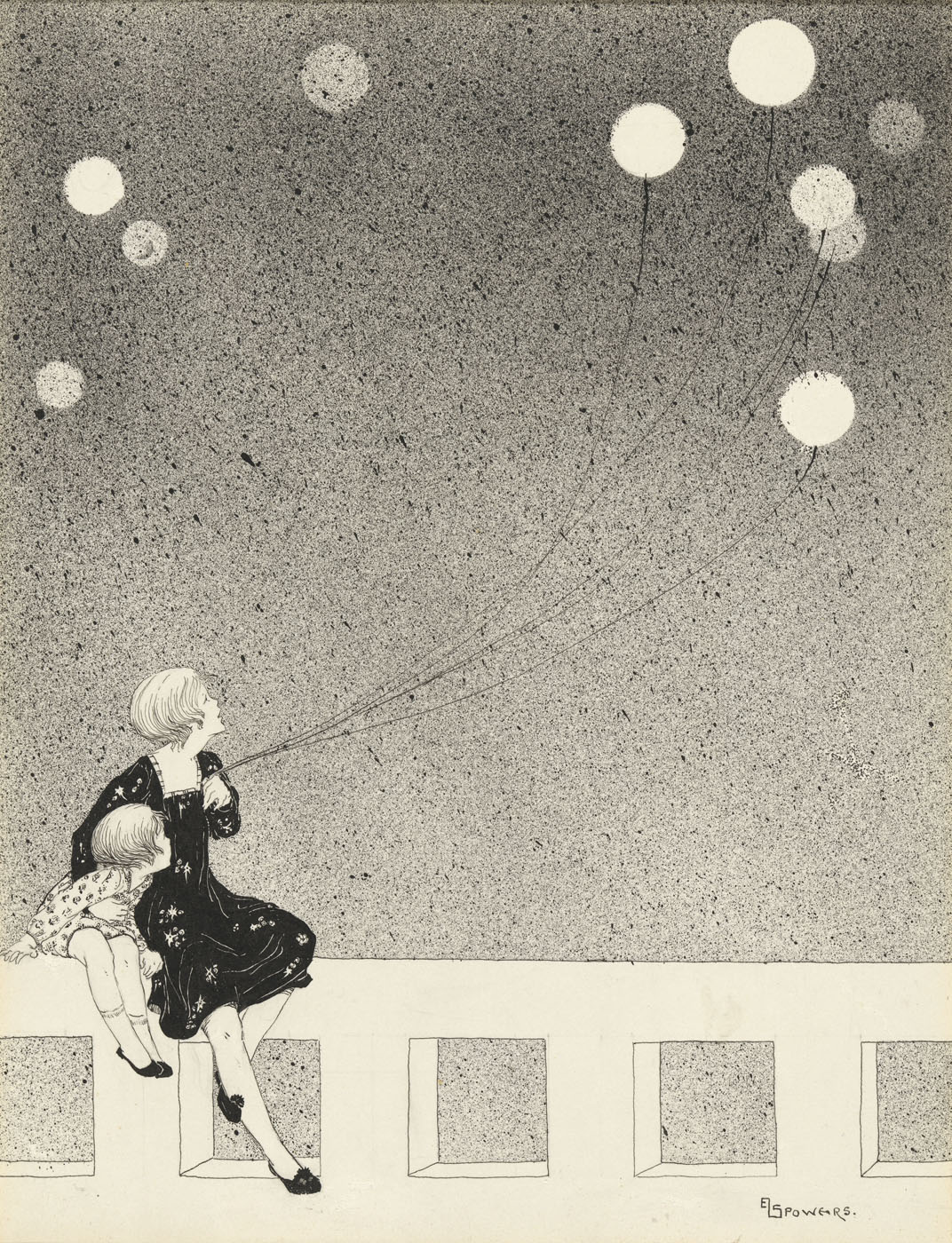
 

Ethel Spowers (Australian, 1890-1947) 'Balloons' c. 1920


Ethel Spowers (Australian, 1890-1947)
Balloons
c. 1920
National Gallery of Australia, Kamberri/Canberra
Gift of Chris Montgomery 1993
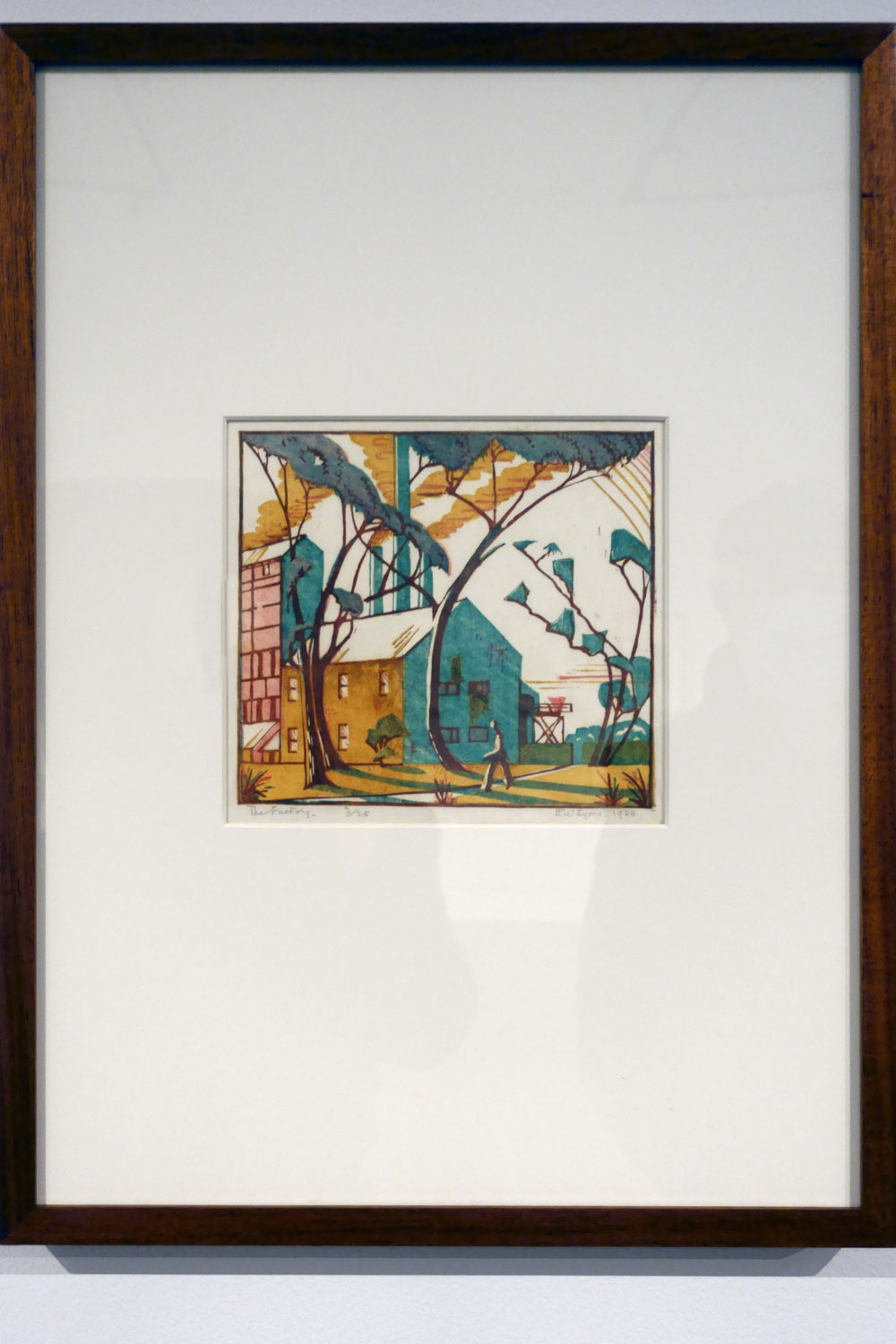
 

Eveline Syme (Australian, 1888-1961) 'The factory' 1933 (installation view)


Eveline Syme (Australian, 1888-1961)
The factory (installation view)
1933
Melbourne
Linocut, printed in colour inks, from four blocks
National Gallery of Australia, Kamberri/Canberra
Purchased 1979
Photo: Marcus Bunyan
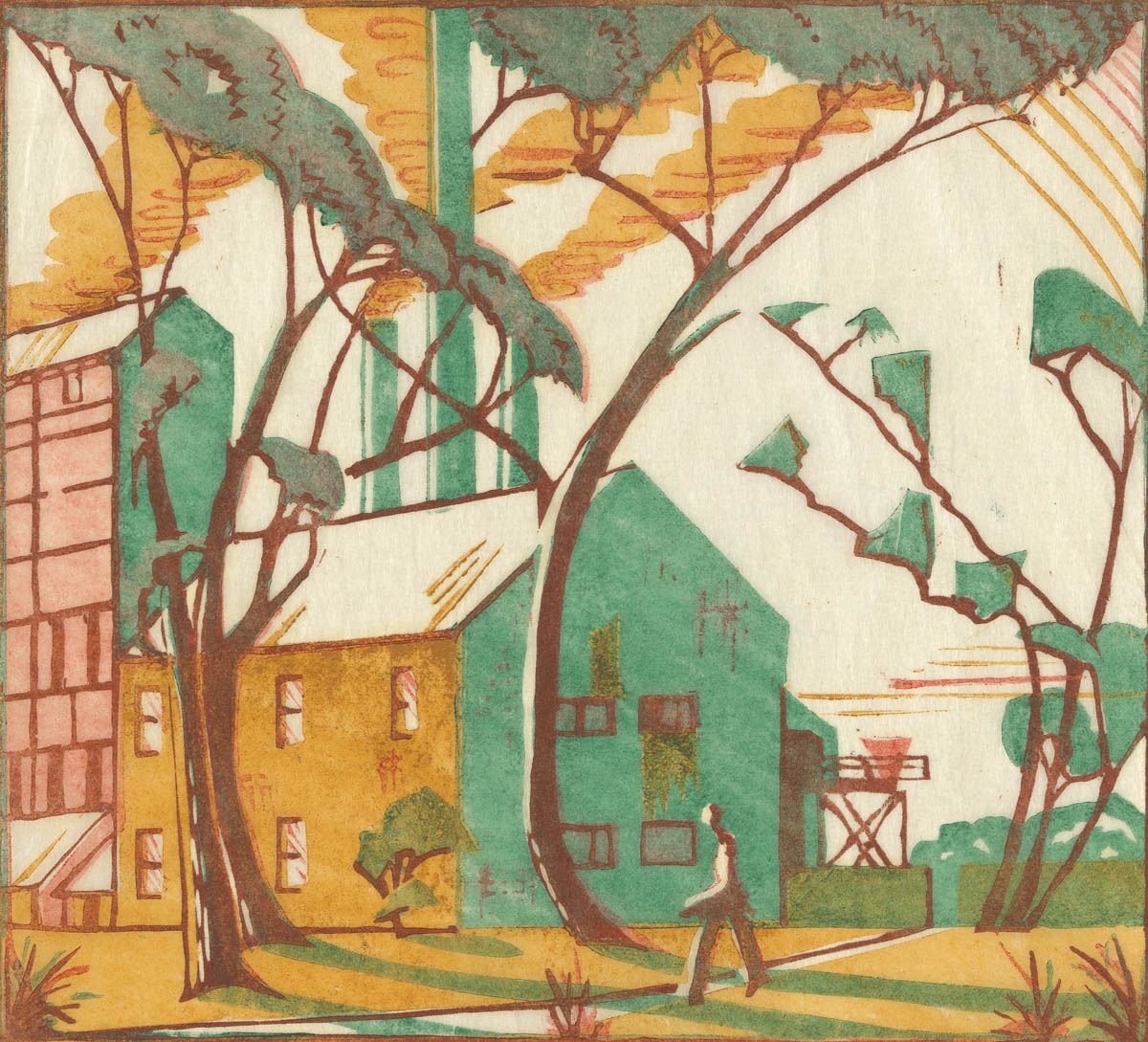
 

Eveline Syme (Australian, 1888-1961) 'The factory' 1933


Eveline Syme (Australian, 1888-1961)
The factory
1933
National Gallery of Australia, Kamberri/Canberra
Purchased 1979
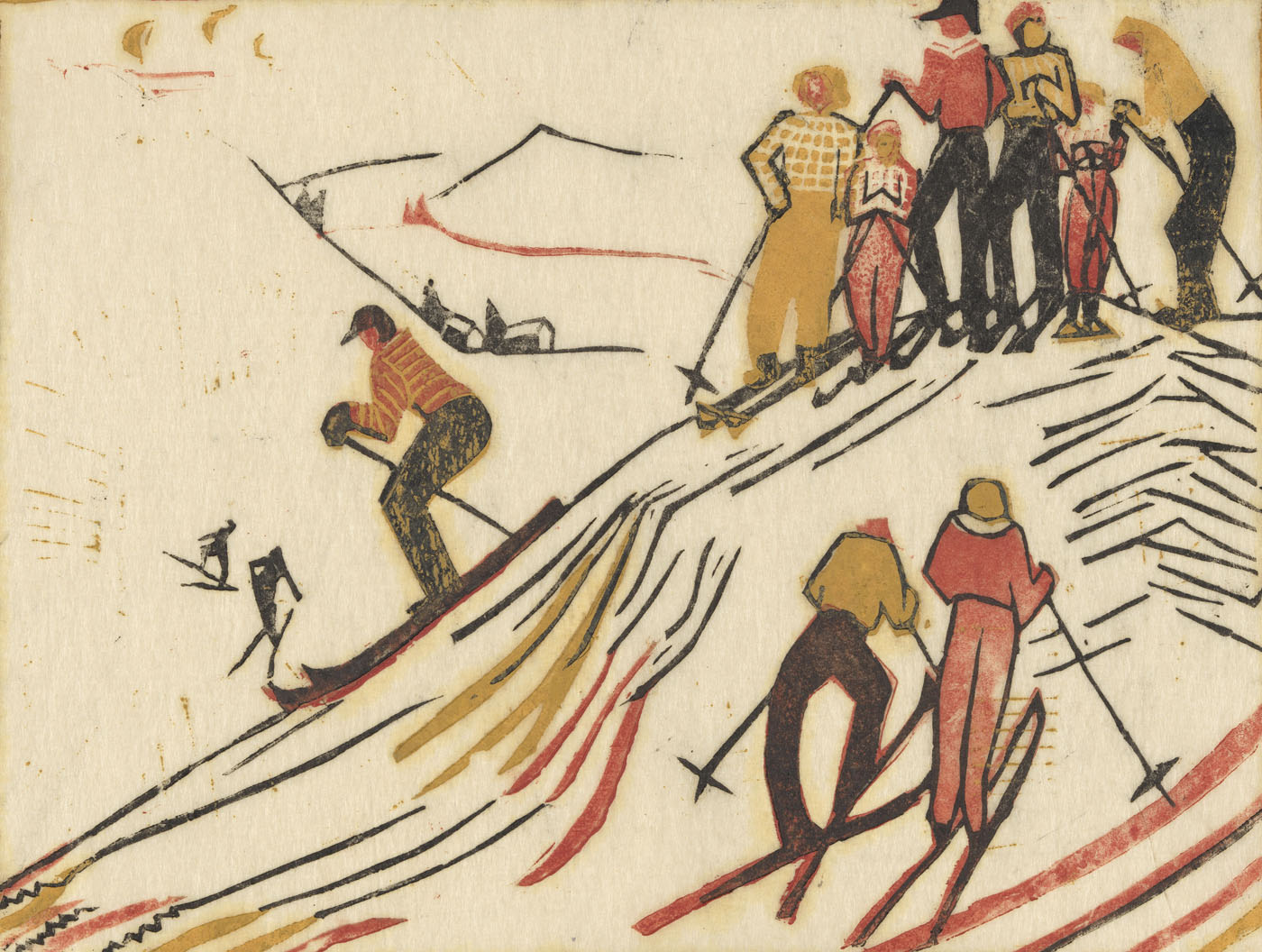
 

Eveline Syme (Australian, 1888-1961) 'Beginners' class' 1956


Eveline Syme (Australian, 1888-1961)
Beginners’ class
1956
National Gallery of Australia, Kamberri/Canberra
Purchased 1992
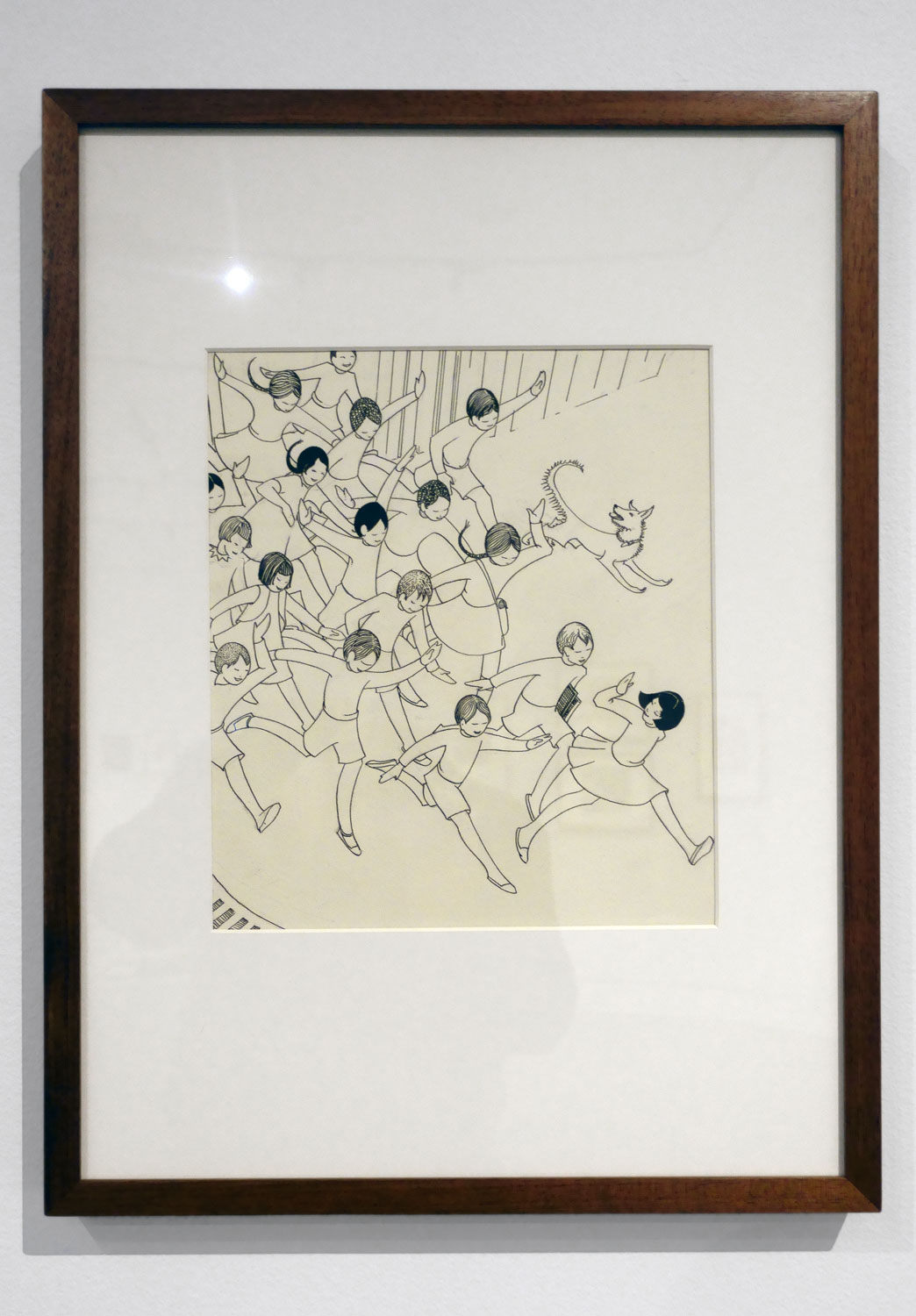
 

Ethel Spowers (Australian, 1890-1947) 'Drawing for the linocut 'School is out'' 1936 (installation view)


Ethel Spowers (Australian, 1890-1947)
Drawing for the linocut ‘School is out’ (installation view)
1936
Melbourne
Drawing in pen and black ink over pencil
National Gallery of Australia, Kamberri/Canberra
Gift of Chris Montgomery 1993
Photo: Marcus Bunyan


At the end of 1936 Spowers held her sixth and final solo exhibition. It was a survey of old favourites and new works, spanning a decade of imagination and experimentation. Among the twenty prints and six watercolours shown at Grosvenor Galleries in Sydney were five fresh linocuts: Kites, Football, School is out, Children’s hoops and Special edition. These works were a return to her most treasured themes: children and family.

Wall text
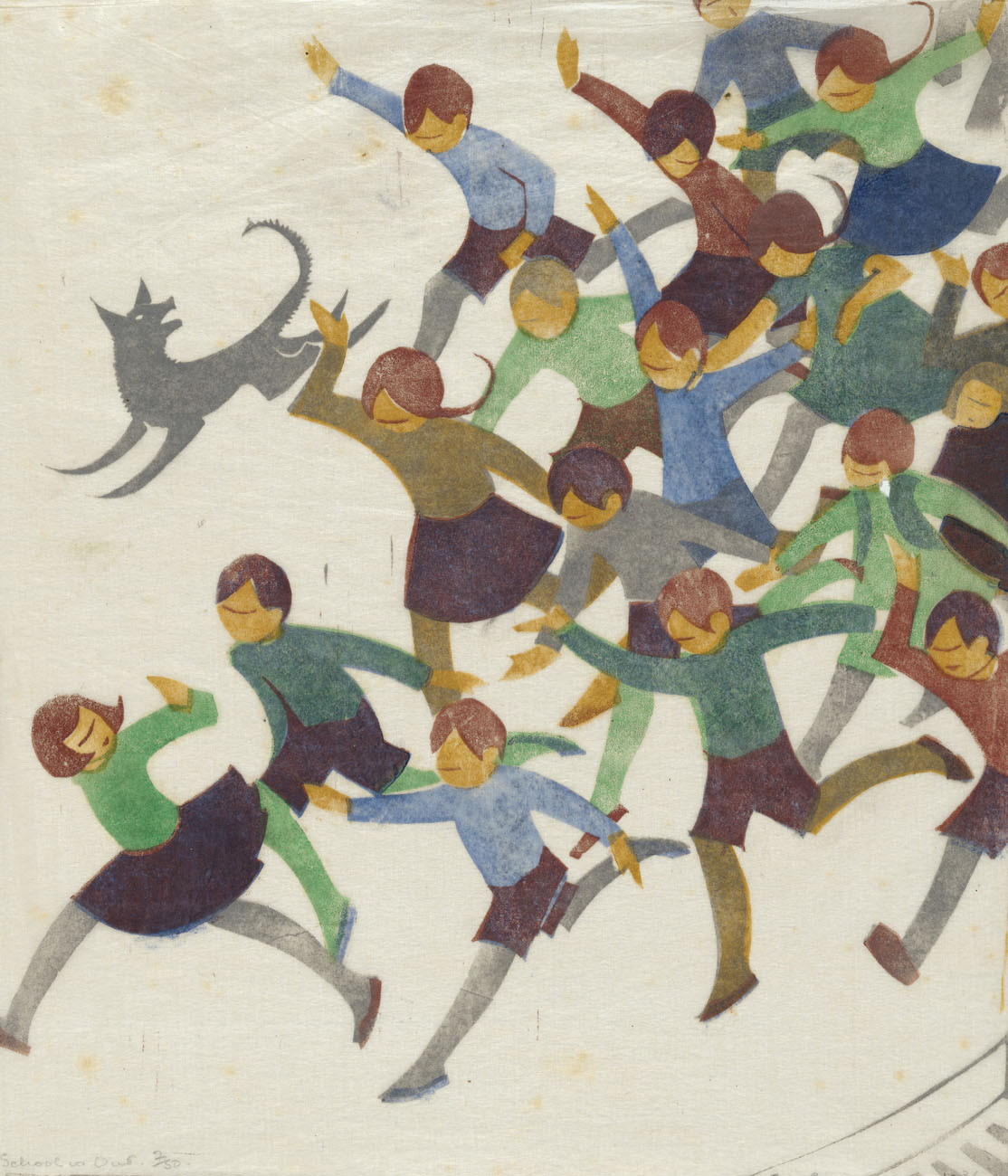
 

Ethel Spowers (Australian, 1890-1947) 'School is out' 1936


Ethel Spowers (Australian, 1890-1947)
School is out
1936
National Gallery of Australia, Kamberri/Canberra
Purchased 1976


Ethel Spowers and Eveline Syme captured the joy and dynamism of movement in sport and play. Through colour, pattern and intersecting lines we see the speed and energy of children skipping, running, reaching to catch a ball and the pace of skaters circling the rink in the icy coldness. Who could forget the wonderful feeling of swinging as high as possible, looking down at the world?

Spowers’ images of children playing are reminiscent of her own childhood and have a whimsical charm about them. They capture the sense of wonder and curiosity seen in young children.

Linoleum (lino) was a floor covering that was invented in 1860. Imaginative artists discovered how effective it was for creating prints. With the right tools, it was easy to carve an image into it and make prints using coloured inks on the exposed surface.

Anonymous text. “Play and Games – Spowers & Syme: Primary School Learning Resource,” on the National Gallery of Australia website Nd [Online] Cited 29/08/2022
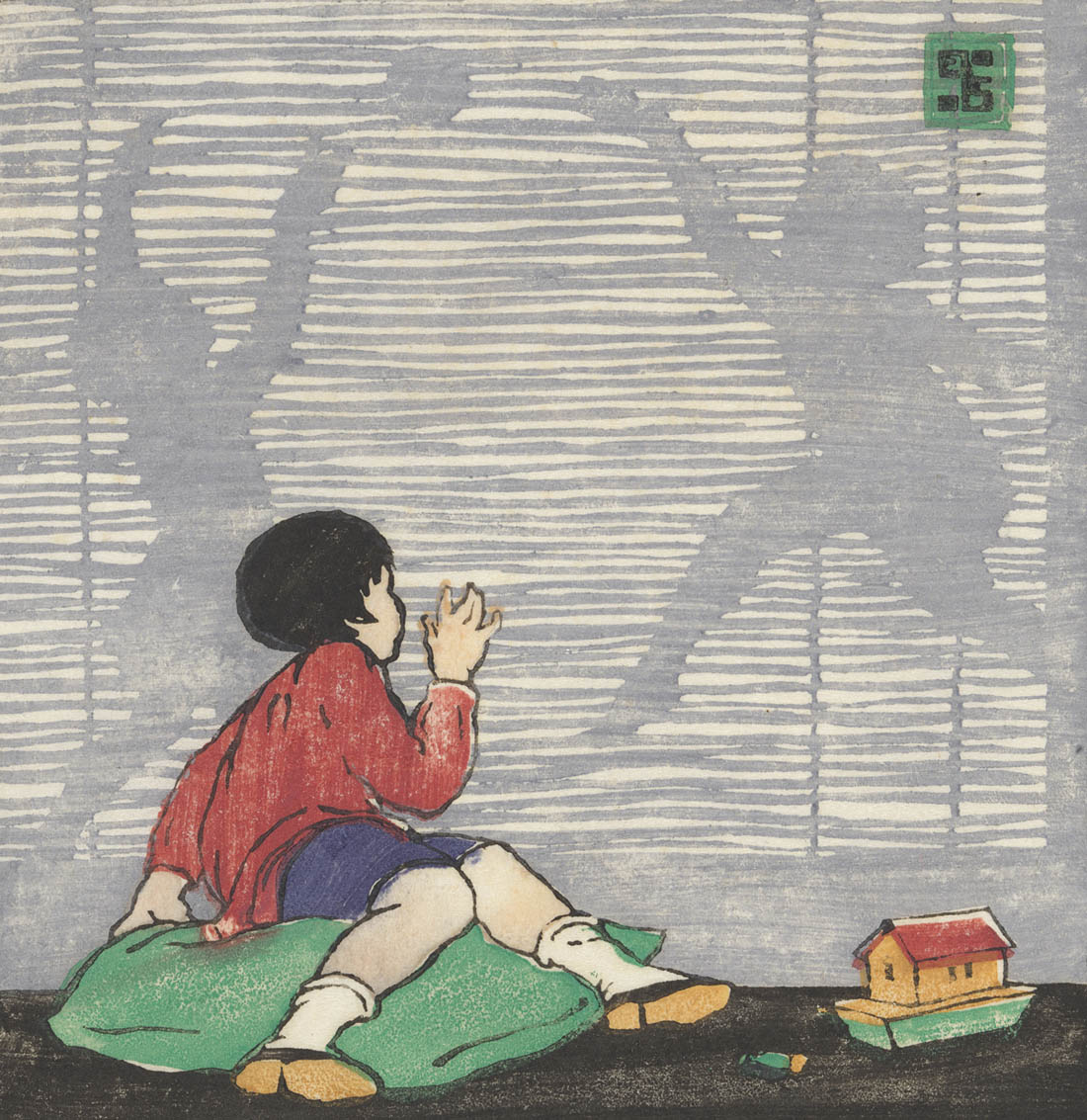
 

Ethel Spowers (Australian, 1890-1947) 'The bamboo blind' 1926


Ethel Spowers (Australian, 1890-1947)
The bamboo blind
1926
National Gallery of Australia, Kamberri/Canberra
Purchased 1976


Ethel Louise Spowers (1890-1947), painter and printmaker, was born on 11 July 1890 at South Yarra, Melbourne, second of six children of William George Lucas Spowers, a newspaper proprietor from New Zealand, and his London-born wife Annie Christina, née Westgarth. Allan Spowers was her only brother. She was educated at the Church of England Girls’ Grammar School, Melbourne, and was a prefect in 1908. Wealthy and cultured, her family owned a mansion in St Georges Road, Toorak. Ethel continued to live there as an adult and maintained a studio above the stables.

After briefly attending art school in Paris, Miss Spowers undertook (1911-1917) the full course in drawing and painting at Melbourne’s National Gallery schools. Her first solo exhibition, held in 1920 at the Decoration Galleries in the city, showed fairy-tale drawings influenced by the work of Ida Outhwaite. In 1921-1924 Spowers worked and studied abroad, at the Regent Street Polytechnic, London, and the Académie Ranson, Paris. She exhibited (1921) with fellow Australian artist Mary Reynolds at the Macrae Gallery, London. Two further solo shows (1925 and 1927) at the New Gallery, Melbourne, confirmed her reputation as an illustrator of fairy tales, though by then she was also producing woodcuts and linocuts inspired by Japanese art and covering a broader range of subjects.

A dramatic change in Spowers’ style occurred in 1929 when she studied under Claude Flight (the leading exponent of the modernist linocut) at the Grosvenor School of Modern Art, London. Her close friend Eveline Syme joined her there. Following further classes in 1931, during which Spowers absorbed modernist ideas of rhythmic design and composition from the principal Iain Macnab, she published an account of the Grosvenor School in the Recorder (Melbourne, 1932). In the 1930s her linocuts attracted critical attention for their bold, simplified forms, rhythmic sense of movement, distinctive use of colour and humorous observation of everyday life, particularly the world of children. They were regularly shown at the Redfern Gallery, London. The British Museum and the Victoria and Albert Museum purchased a number of her linocuts.

Stimulated by Flight’s proselytising zeal for the medium, Spowers organised in 1930 an exhibition of linocuts by Australian artists, among them Syme and Dorrit Black, at Everyman’s Library and Bookshop, Melbourne. A founding member (1932-1938) of George Bell‘s Contemporary Group, Spowers defended the modernist movement against its detractors. In an article in the Australasian on 26 April 1930 she called on ‘all lovers of art to be tolerant to new ideas, and not to condemn without understanding’.

Frances Derham remembered Spowers as being ‘tall, slender and graceful’, with ‘a small head, dark hair and grey eyes’. A rare photograph of Spowers, published in the Bulletin (3 September 1925), revealed her fashionable appearance and reflective character. In the late 1930s she stopped practising as an artist due to ill health, but continued her voluntary work at the Children’s Hospital. She died of cancer on 5 May 1947 in East Melbourne and was buried with Anglican rites in Fawkner cemetery. Although she had destroyed many of her paintings in a bonfire, a memorial exhibition of her watercolours, line-drawings, wood-engravings and colour linocuts was held at George’s Gallery, Melbourne, in 1948. Her prints are held by the National Gallery of Australia, Canberra, State galleries in Melbourne and Sydney, and the Ballarat Fine Art Gallery, Victoria.

Stephen Coppel. “Spowers, Ethel Louise (1890-1947),” in the Australian Dictionary of Biography, Volume 16 , 2002, online in 2006 [Online] Cited 26/08/2022
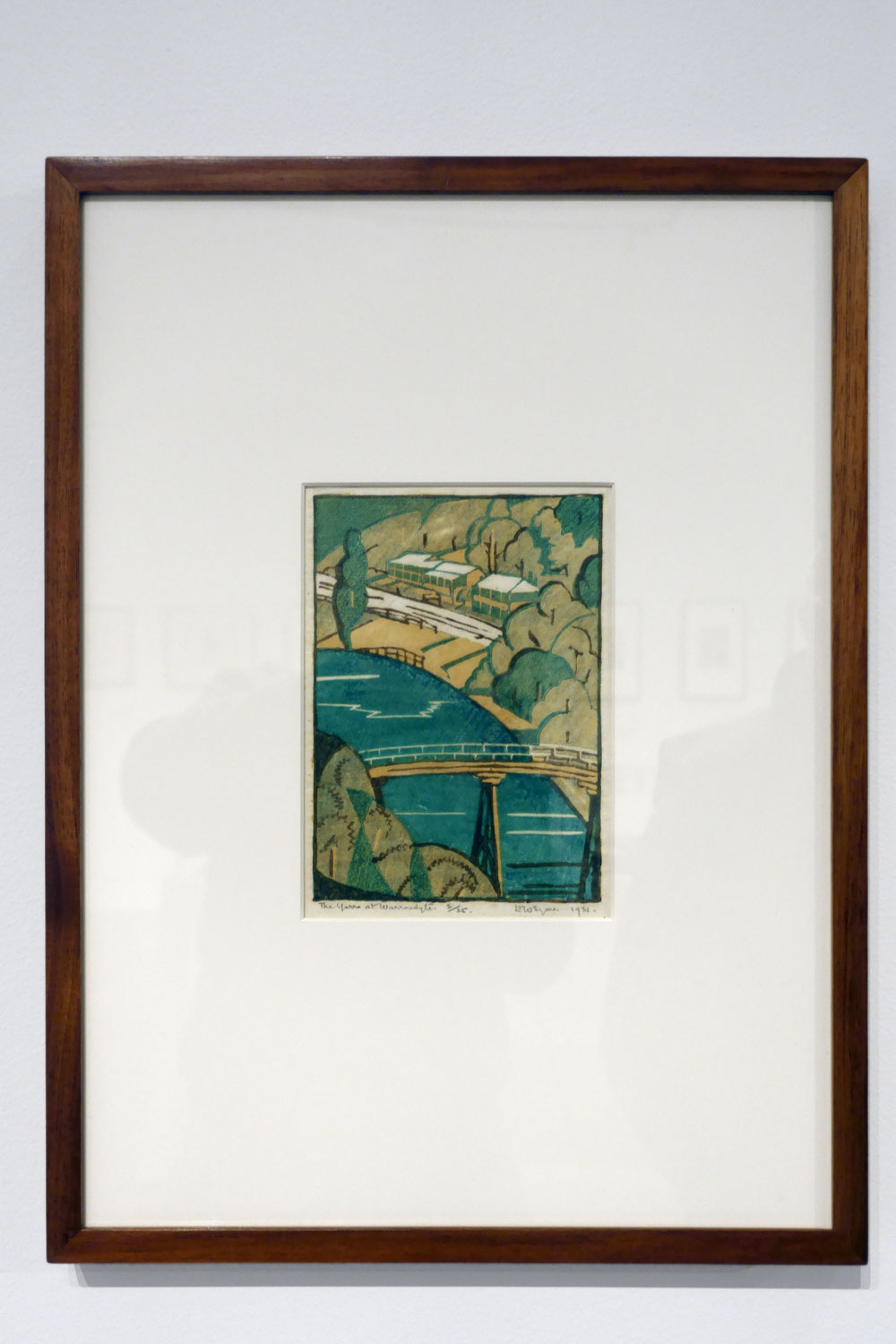
 

Eveline Syme (Australian, 1888-1961) 'The Yarra at Warrandyte' 1931 (installation view)

Eveline Syme (Australian, 1888-1961) 'The Yarra at Warrandyte' 1931 (installation view)


Eveline Syme (Australian, 1888-1961)
The Yarra at Warrandyte (installation views)
1931
National Gallery of Australia, Kamberri/Canberra
Purchased 1977
Photos: Marcus Bunyan
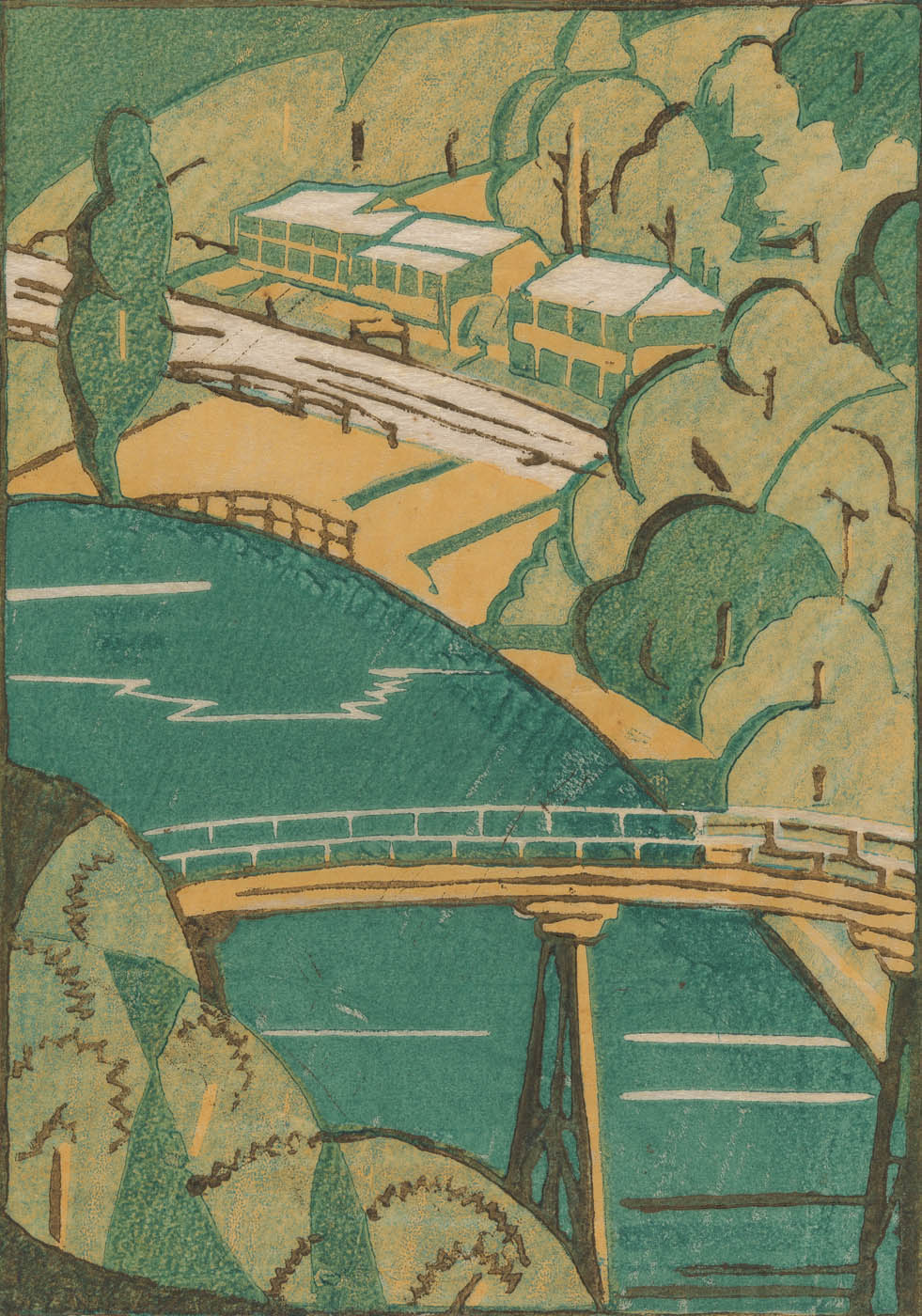
 

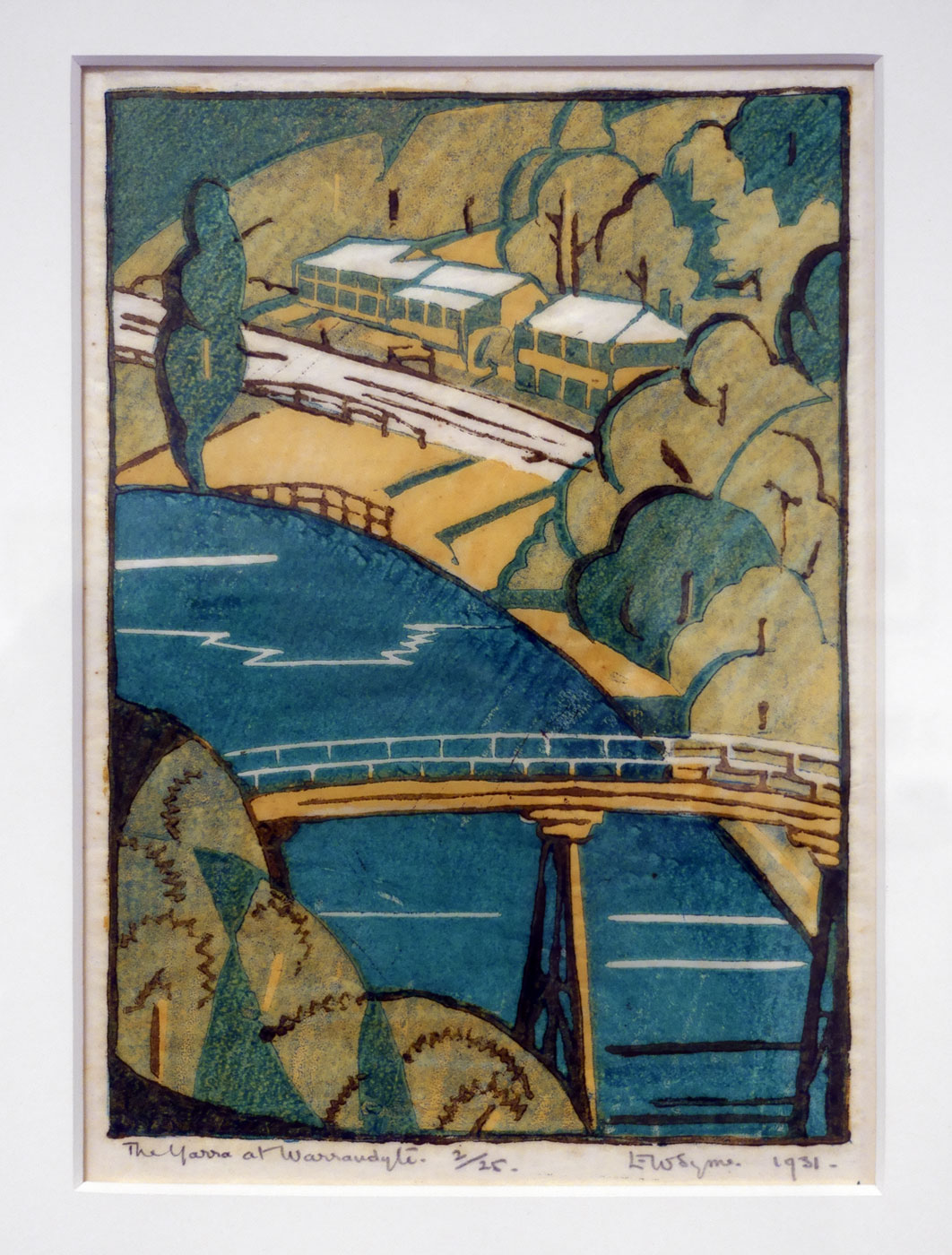
Eveline Syme (Australian, 1888-1961) 'The Yarra at Warrandyte' 1931


Eveline Syme (Australian, 1888-1961)
The Yarra at Warrandyte
1931
Melbourne
Linocut, printed in colour inks, from four blocks
National Gallery of Australia, Kamberri/Canberra
Purchased 1977


Eveline Winifred Syme (1888-1961), painter and printmaker, was born on 26 October 1888 at Thames Ditton, Surrey, England, daughter of Joseph Cowen Syme, newspaper proprietor, and his wife Laura, née Blair. Ebenezer Syme was her grandfather. Eveline was raised in the family mansion at St Kilda, Melbourne. After leaving the Church of England Girls’ Grammar School, Melbourne, she voyaged to England and studied classics in 1907-1910 at Newnham College, Cambridge (B.A., M.A., 1930). Because the University of Cambridge did not then award degrees to women, she applied to the University of Melbourne for accreditation, but was only granted admission to third-year classics. She chose instead to complete a diploma of education (1914).

Syme’s artistic career was enhanced by her close friendship with Ethel Spowers. She studied painting at art schools in Paris in the early 1920s, notably under Maurice Denis and André Lhote, and held a solo exhibition, mainly of watercolours, at Queen’s Hall, Melbourne, in 1925. Her one-woman shows, at the Athenaeum Gallery (1928) and Everyman’s Library and Bookshop (1931), included linocuts and wood-engravings. While many of her watercolours and prints drew on her travels through England, Provence, France, and Tuscany, Italy, she also responded to the Australian landscape, particularly the countryside around Melbourne and Sydney, and at Port Arthur, Tasmania. Syme’s chance discovery of Claude Flight’s textbook, Lino-Cuts (London, 1927), inspired her to enrol (with Spowers) in his classes at the Grosvenor School of Modern Art, London, in January 1929. In keeping with Flight’s modernist conception of the linocut, she began to produce prints incorporating bold colour and rhythmic design.

Returning to Melbourne in 1929 with an exhibition of contemporary wood-engravings from the Redfern Gallery, London, Syme became a cautious advocate of modern art. She published a perceptive account of Flight and his teaching in the Recorder (1929) and spoke on the radio about wood-engraving; she also wrote a pioneering essay on women artists in Victoria from 1857, which was published in the Centenary Gift Book (1934), edited by Frances Fraser and Nettie Palmer. Syme was a founding member (1932-1938) of George Bell‘s Contemporary Group. She regularly exhibited with the Melbourne Society of Women Painters and Sculptors and with the Independent Group of Artists. Her linocuts, perhaps her most significant achievement, owed much to her collaboration with Spowers.

During the mid-1930s Syme was prominent in moves to establish a women’s residential college at the University of Melbourne. In 1936, as vice-president of the appeal committee, she donated the proceeds of her print retrospective (held at the gallery of the Arts and Crafts Society of Victoria) to the building fund. A foundation member (1936-1961) of the council of University Women’s College, she served as its president (1940-1947) and as a member of its finance committee. She was appointed to the first council of the National Gallery Society of Victoria in 1947 and sat on its executive-committee in 1948-1953. In addition, she was a member (1919) and president (1950-1951) of the Lyceum Club.

A tall, elegant and reserved woman, Syme had a ‘crisp, quick voice’ and a ‘rather abrupt manner’. She died on 6 June 1961 at Richmond and was buried with Presbyterian forms in Brighton cemetery. In her will she left her books and £5000 to University Women’s College. Edith Alsop’s portrait (1932) of Syme is held by University College. Syme’s work is represented in the National Gallery of Australia, Canberra, State galleries in Melbourne, Sydney and Adelaide, and the Ballarat Fine Art Gallery, Victoria.

Stephen Coppel. “Syme, Eveline Winifred (1888-1961),” in the Australian Dictionary of Biography, Volume 16 , 2002, online in 2006 [Online] Cited 26/08/2022
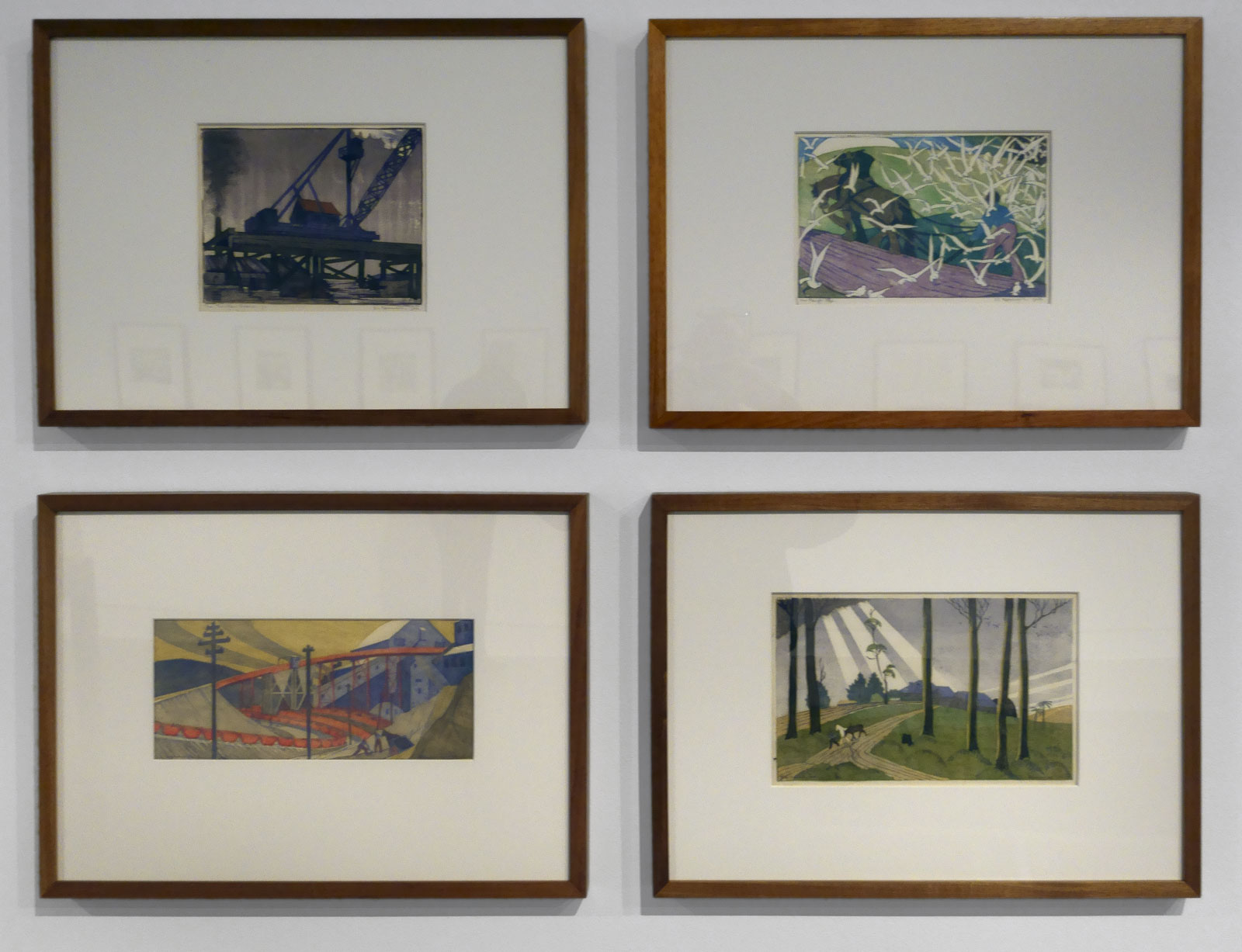
 

Installation view of the exhibition 'Spowers & Syme' at the Geelong Art Gallery


Installation view of the exhibition Spowers & Syme at the Geelong Art Gallery showing at top left, Spowers The timber crane (1926, below); at top right, Spowers The plough (1928, below); at bottom left, Spowers The works, Yallourn (1933, below); and at bottom right, Spowers The lonely farm (1933, below)
Photo: Marcus Bunyan
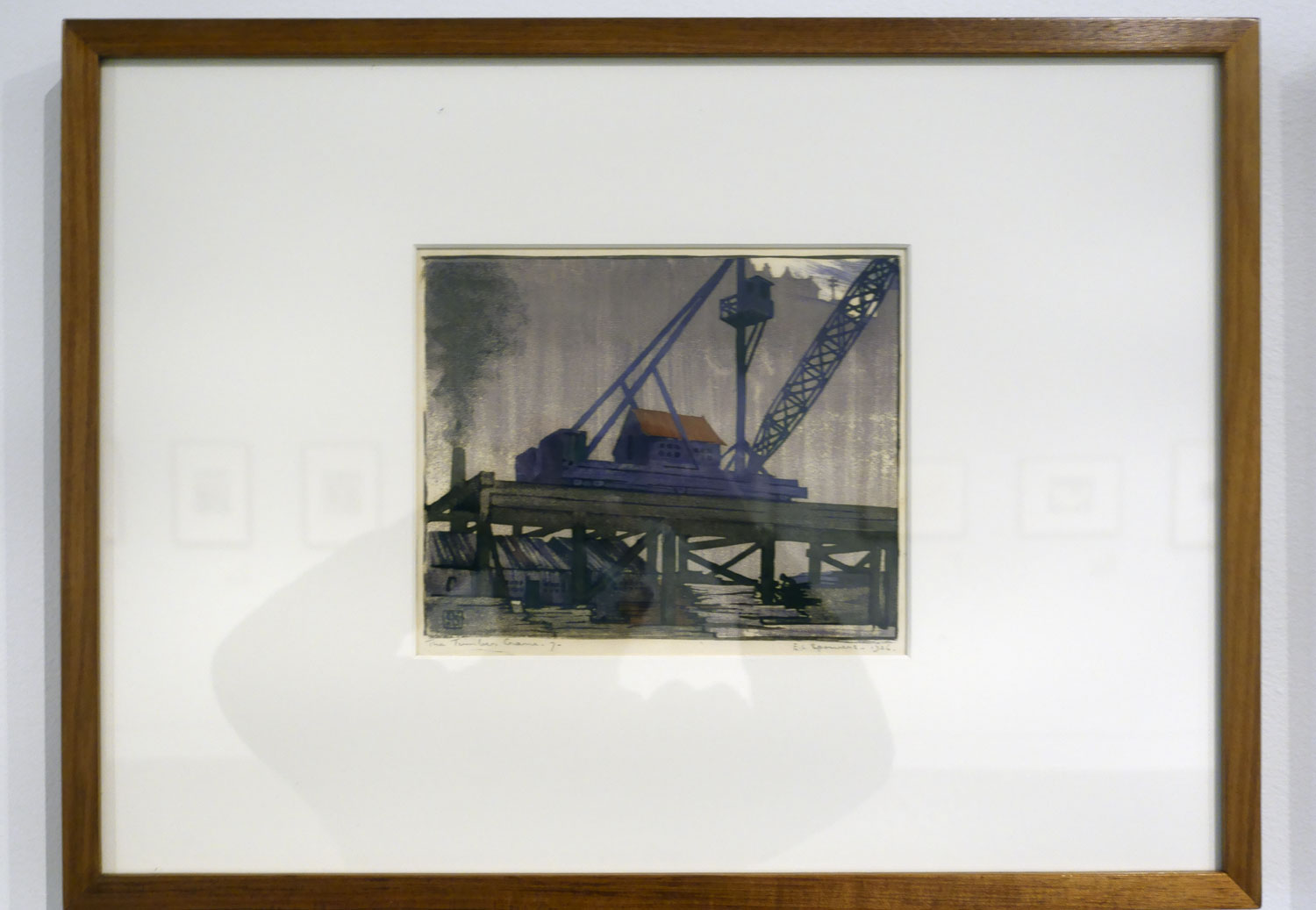
 

Ethel Spowers (Australian, 1890-1947) 'The timber crane' 1926 (installation view)


Ethel Spowers (Australian, 1890-1947)
The timber crane (installation view)
1926
Melbourne
Linocut, printed in colour inks in the Japanese manner, from five blocks
National Gallery of Australia, Kamberri/Canberra
Purchased 1976
Photo: Marcus Bunyan
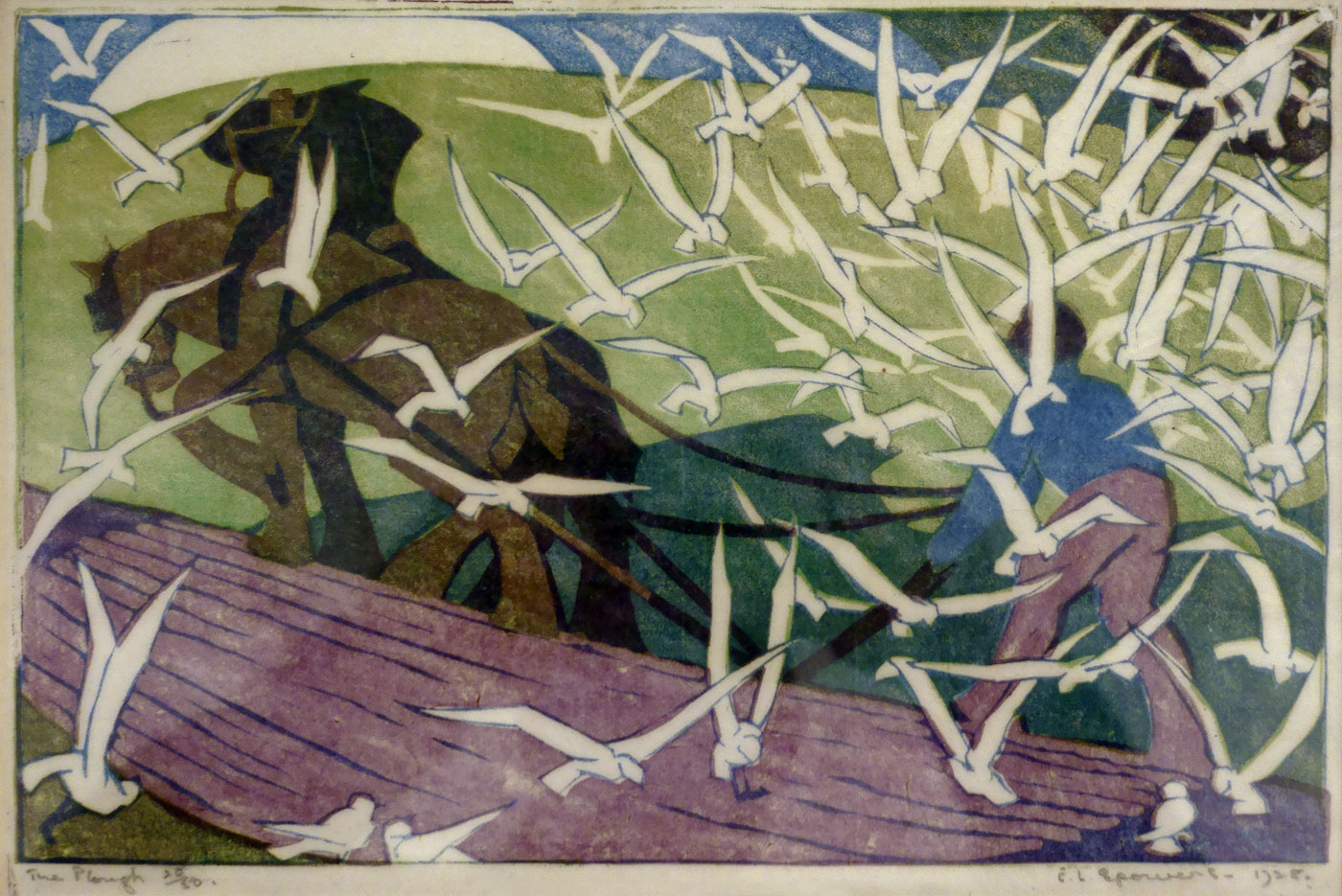
 

Ethel Spowers (Australian, 1890-1947) 'The plough' 1928 (installation view)


Ethel Spowers (Australian, 1890-1947)
The plough (installation view)
1928
London
Linocut, printed in colour inks, from three blocks
National Gallery of Australia, Kamberri/Canberra
Purchased 1978
Photo: Marcus Bunyan
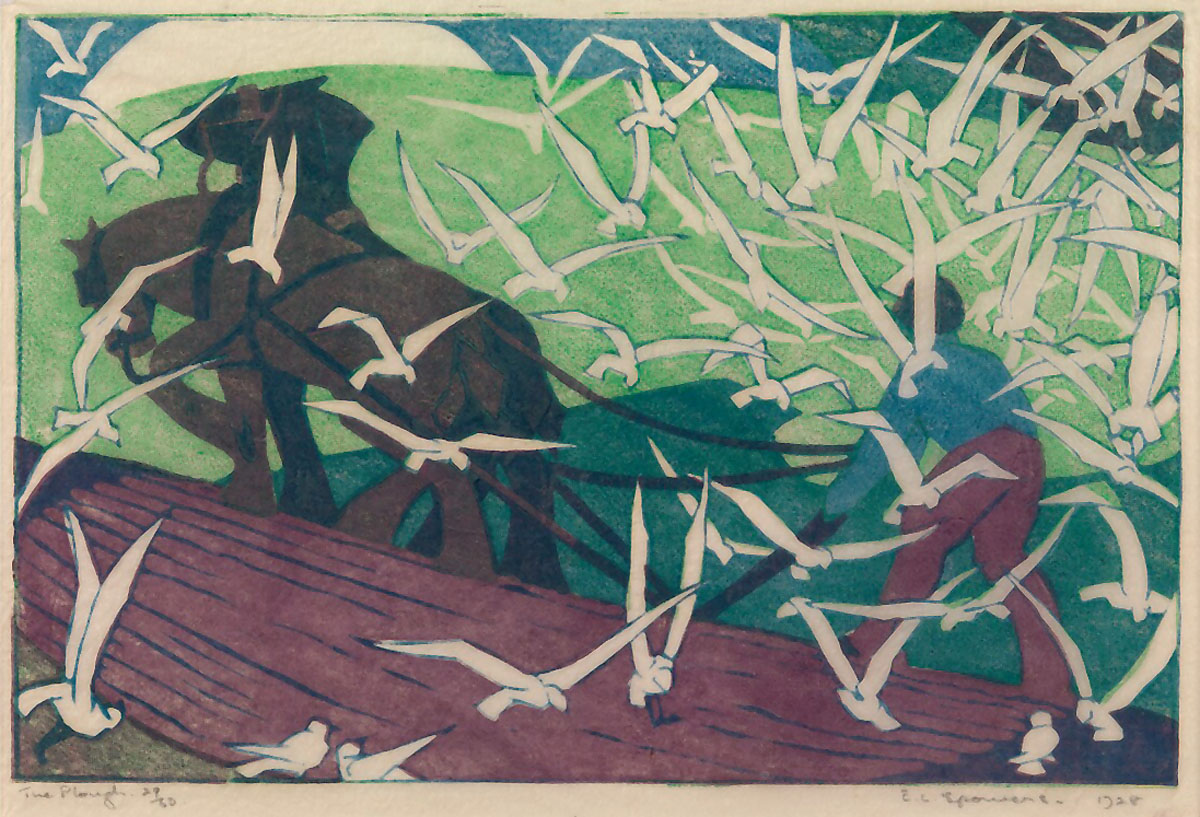
 

Ethel Spowers (Australian, 1890-1947) 'The plough' 1928


Ethel Spowers (Australian, 1890-1947)
The plough
1928
London
Linocut, printed in colour inks, from three blocks
National Gallery of Australia, Kamberri/Canberra
Purchased 1978
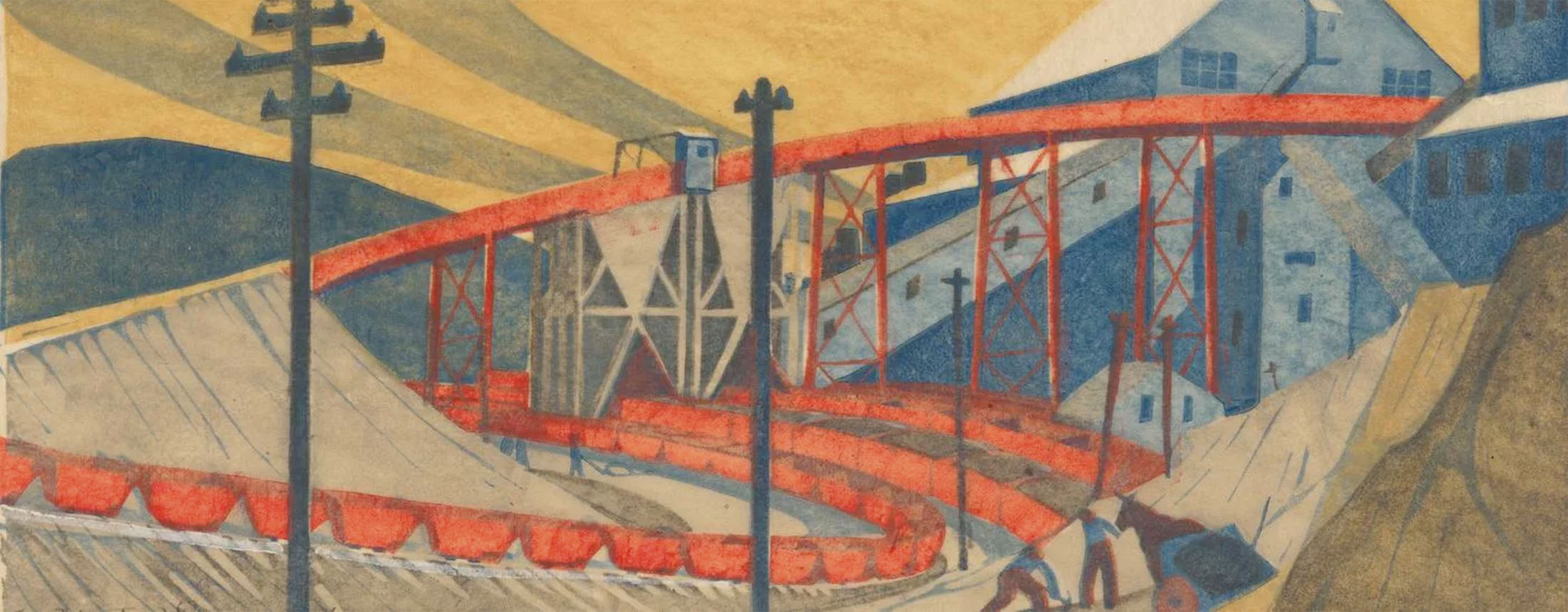
 

Ethel Spowers (Australian, 1890-1947) 'The works, Yallourn' 1933


Ethel Spowers (Australian, 1890-1947)
The works, Yallourn
1933
Linocut
15.7 x 34.8cm (printed image)
National Gallery of Australia, Kamberri/Canberra
Purchased 1976
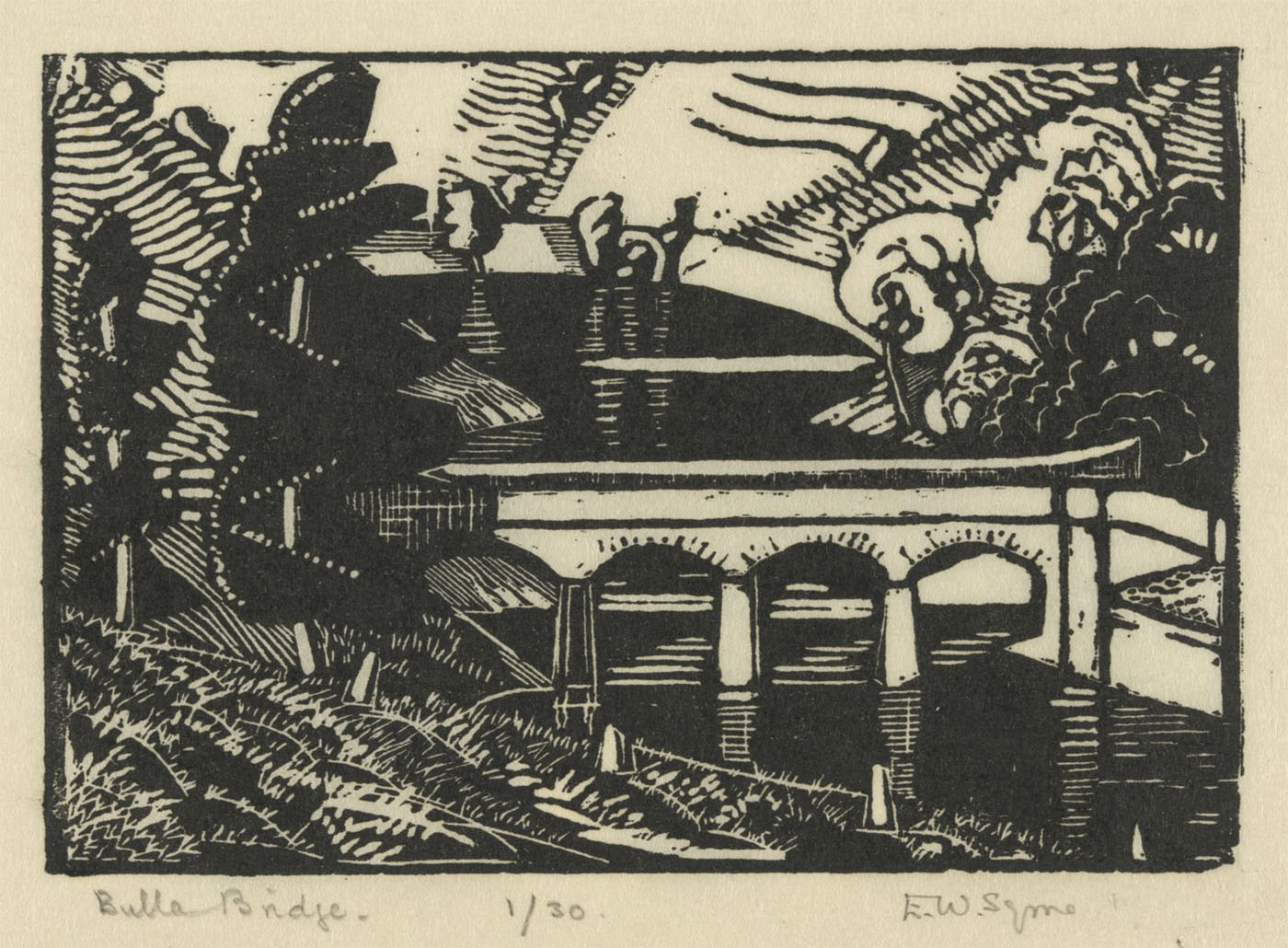
 

Eveline Syme (Australian, 1888-1961) 'Bulla Bridge' 1934


Eveline Syme (Australian, 1888-1961)
Bulla Bridge
1934
Wood engraving
10.1 x 14.7cm (printed image)
National Gallery of Australia, Kamberri/Canberra
Purchased 1977
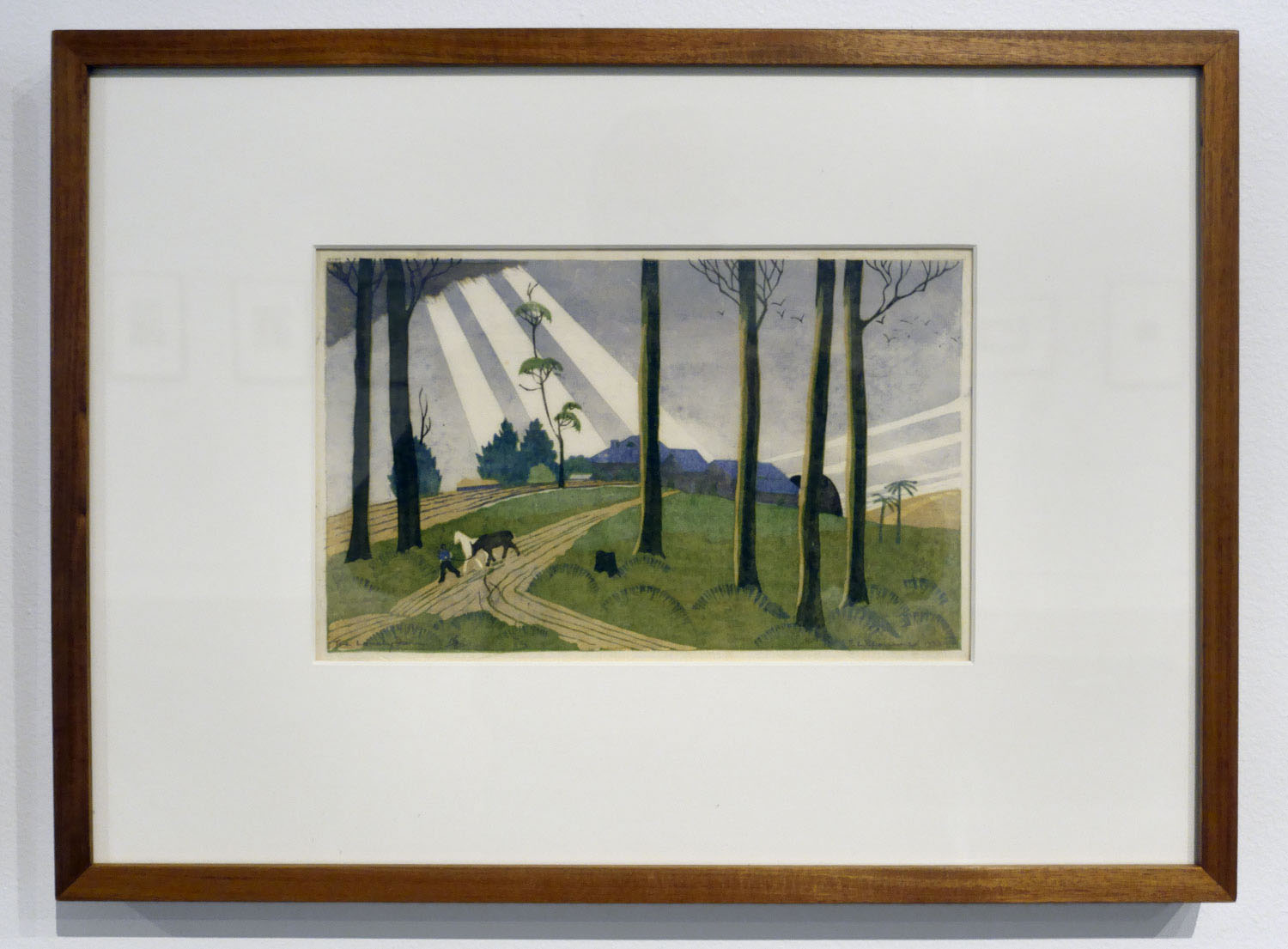
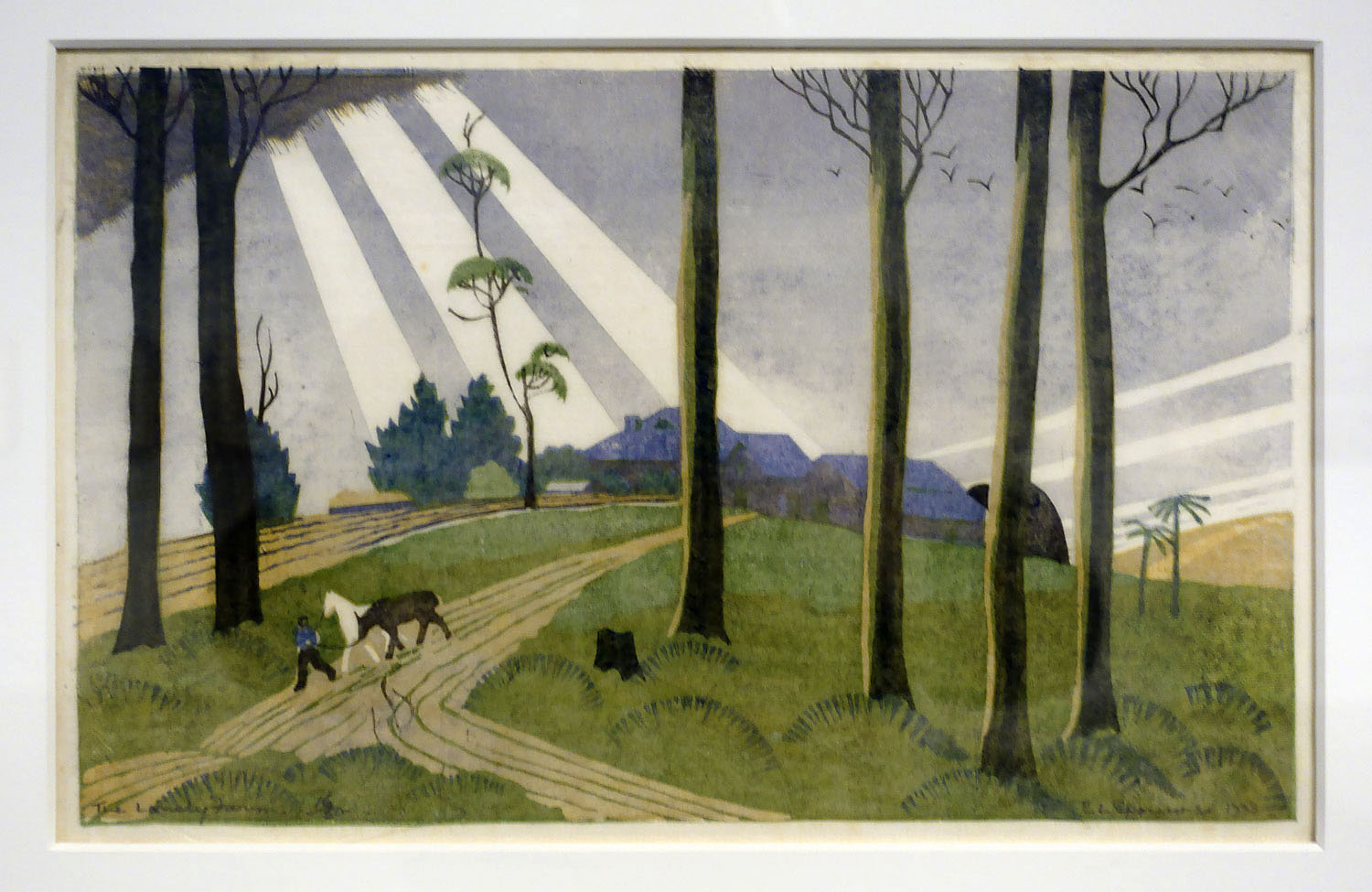
 

Ethel Spowers (Australian, 1890-1947) 'The lonely farm' 1933 (installation view)

Ethel Spowers (Australian, 1890-1947) 'The lonely farm' 1933 (installation view)


Ethel Spowers (Australian, 1890-1947)
The lonely farm (installation views)
1933
Melbourne
Linocut, printed in colour inks, from five blocks
National Gallery of Australia, Kamberri/Canberra
Purchased 1976
Photos: Marcus Bunyan
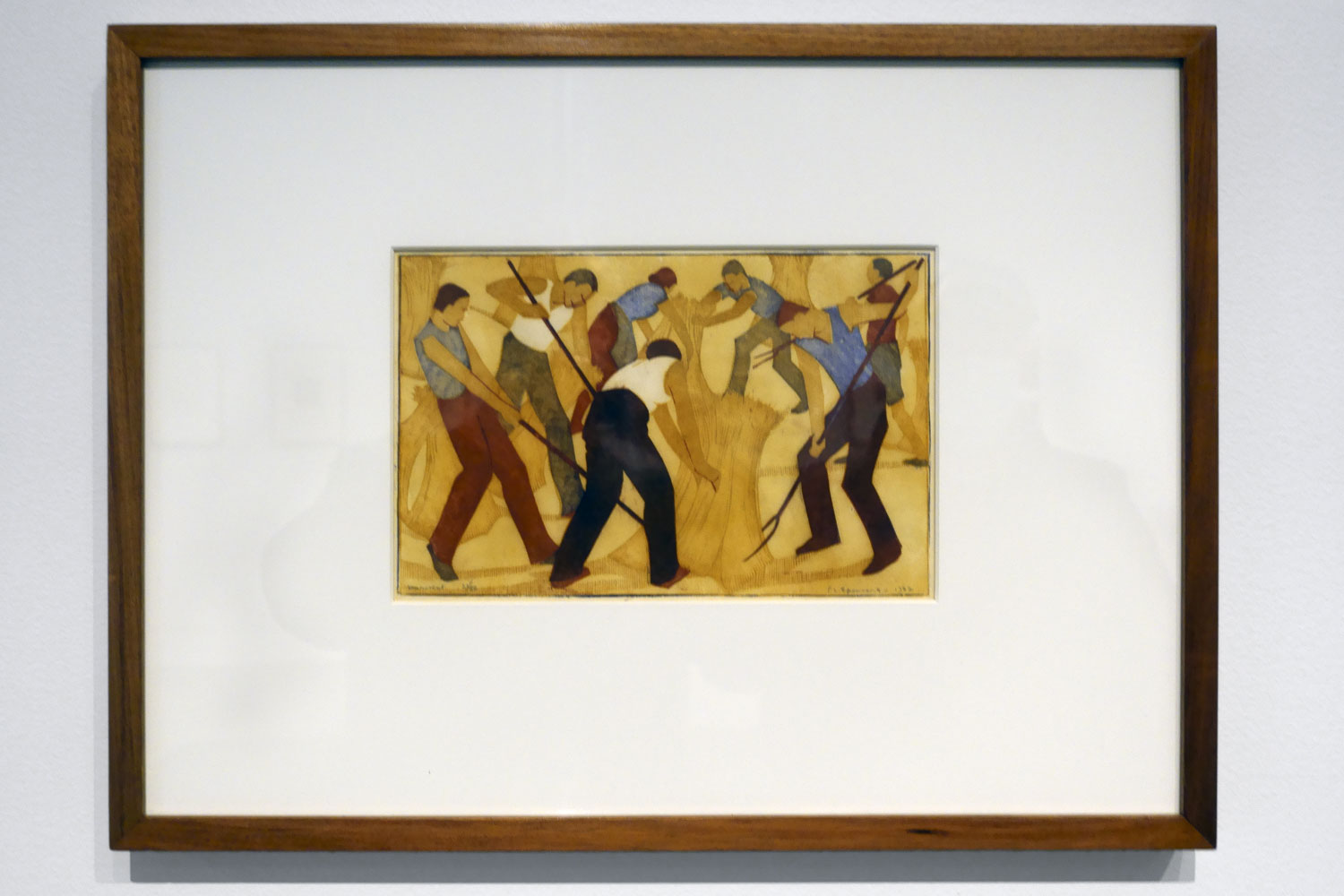
 

Ethel Spowers (Australian, 1890-1947) 'Harvest' 1932 (installation view)


Ethel Spowers (Australian, 1890-1947)
Harvest (installation view)
1932
Melbourne
Linocut, printed in colour inks, from five blocks
National Gallery of Australia, Kamberri/Canberra
Purchased 1976
Photo: Marcus Bunyan
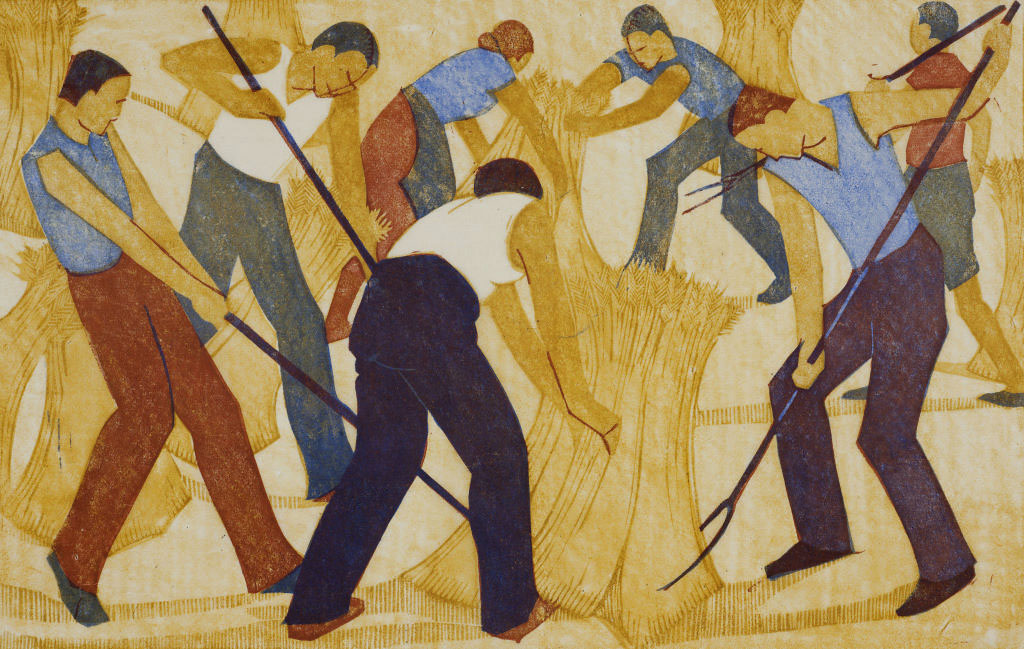
 

Ethel Spowers (Australian, 1890-1947) 'Harvest' 1932


Ethel Spowers (Australian, 1890-1947)
Harvest
1932
Melbourne
Linocut, printed in colour inks, from five blocks
National Gallery of Australia, Kamberri/Canberra
Purchased 1976
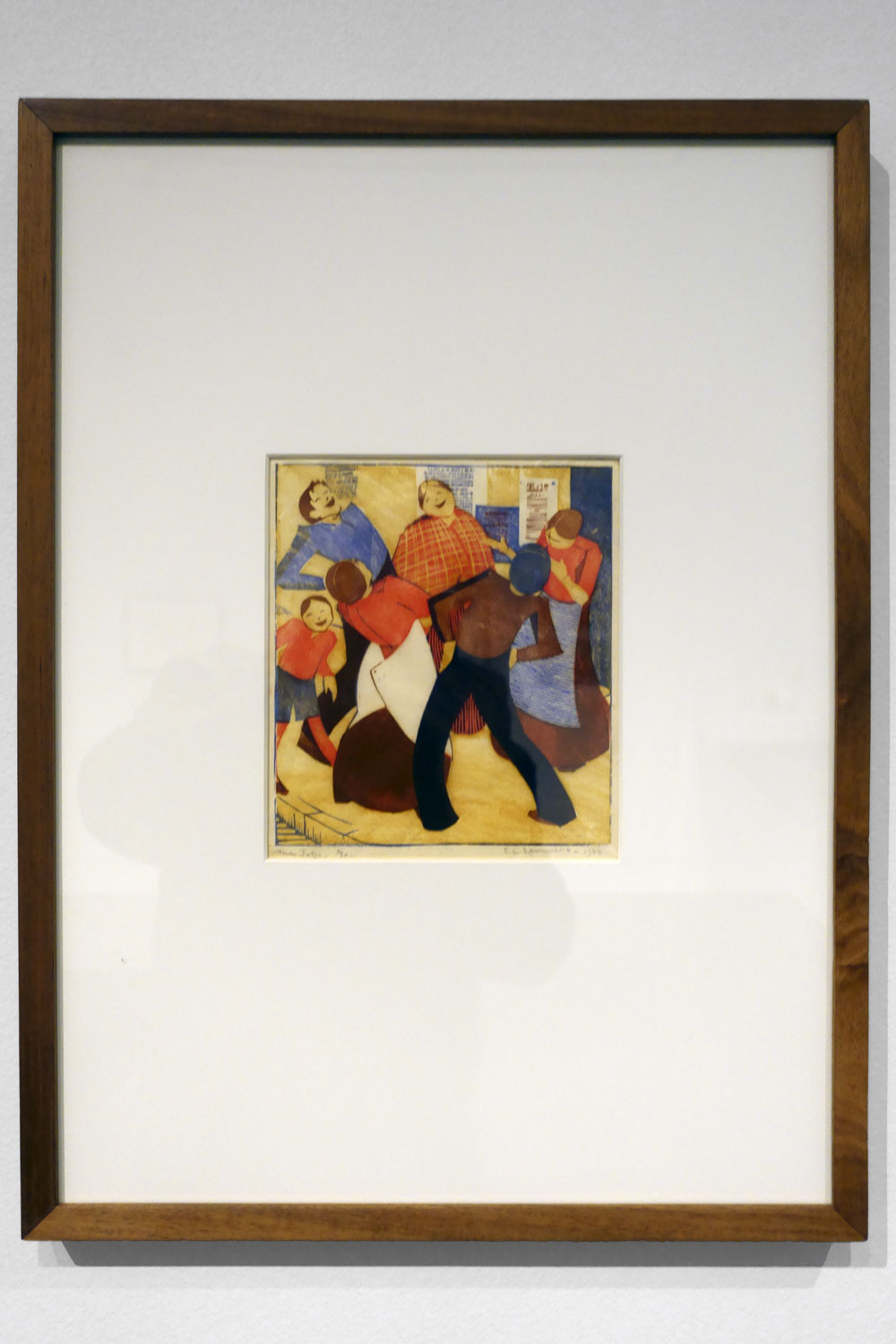
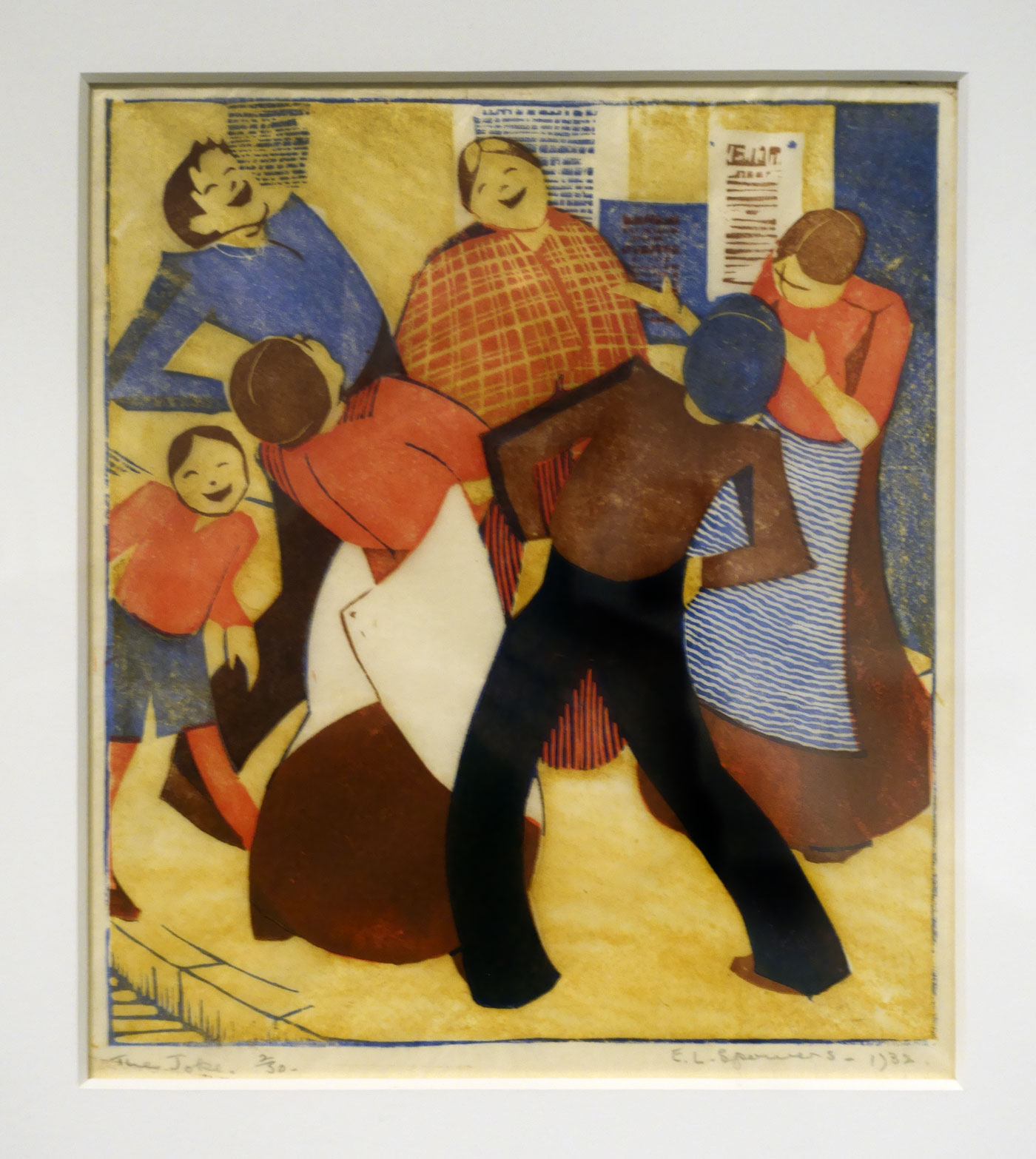
 

Ethel Spowers (Australian, 1890-1947) 'The joke' 1932 (installation view)

Ethel Spowers (Australian, 1890-1947) 'The joke' 1932 (installation view)


Ethel Spowers (Australian, 1890-1947)
The joke (installation views)
1932
Melbourne
Linocut, printed in colour inks, from four blocks
National Gallery of Australia, Kamberri/Canberra
Purchased 1976
Photos: Marcus Bunyan
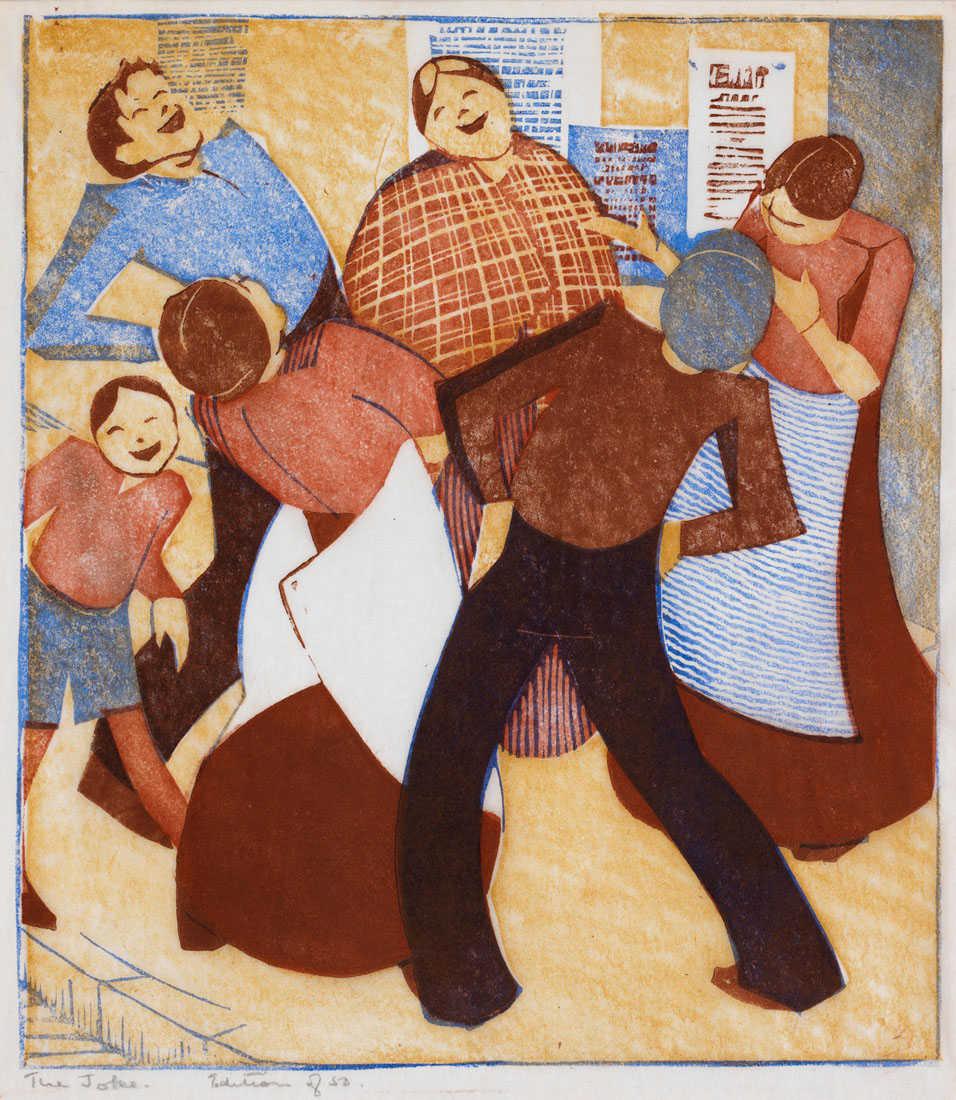
 

Ethel Spowers (Australian, 1890-1947) 'The joke' 1932


Ethel Spowers (Australian, 1890-1947)
The joke
1932
Melbourne
Linocut, printed in colour inks, from four blocks
National Gallery of Australia, Kamberri/Canberra
Purchased 1976
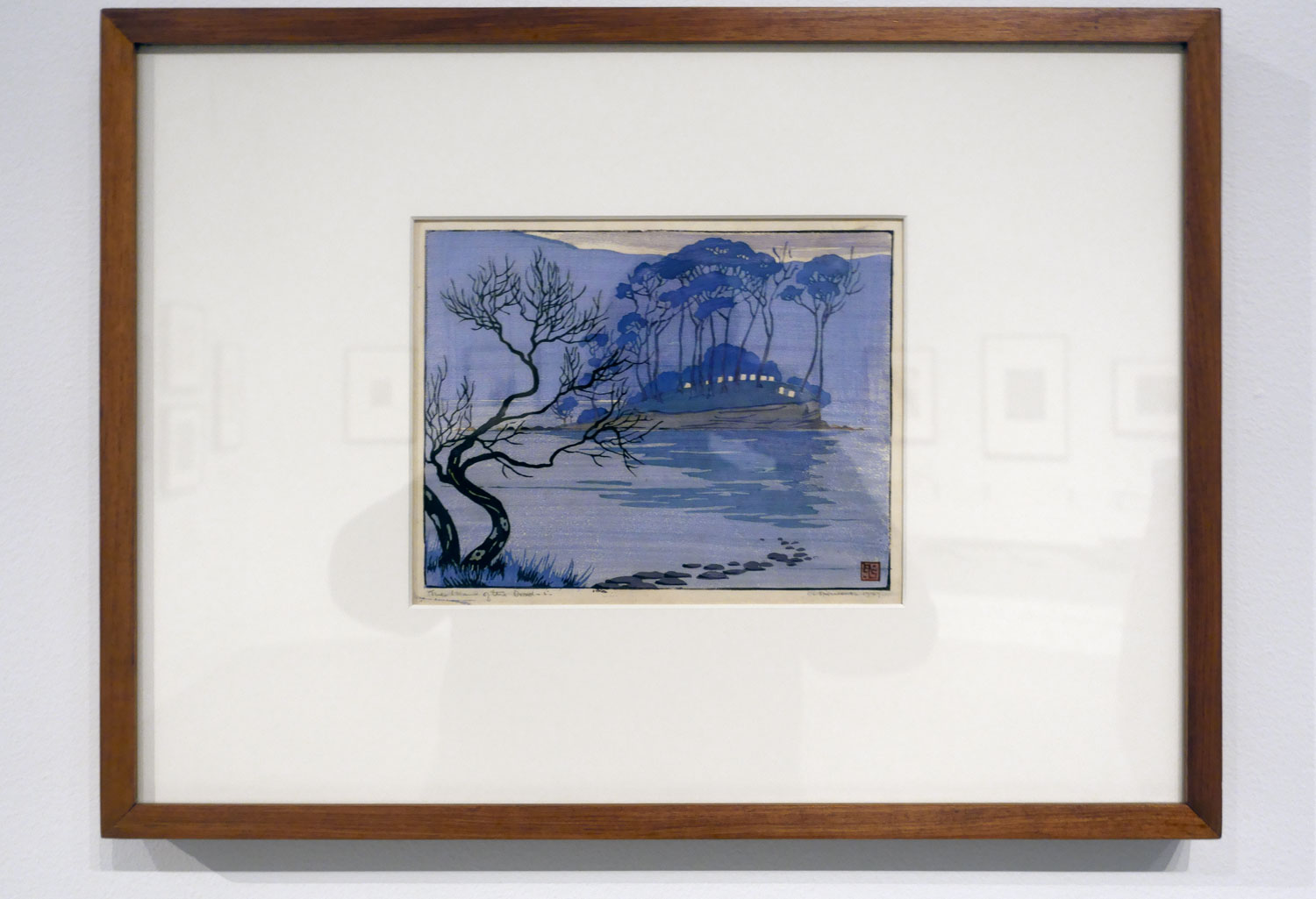
 

Ethel Spowers (Australian, 1890-1947) 'The island of the dead' 1927 (installation view)


Ethel Spowers (Australian, 1890-1947)
The island of the dead (installation view)
1927
Melbourne
Linocut, printed in colour inks in the Japanese manner, from seven blocks
National Gallery of Australia, Kamberri/Canberra
Purchased 1995
Photo: Marcus Bunyan


In January 1927 Spowers and Syme holidayed in Iutruwita / Tasmania. After they visited the penal settlement at Port Arthur, Spowers produced this view of the nearby cemetery of Point Puer. Following this trip, Syme made a monochrome wood-engraving, The ruins, Port Arthur c. 1927

Wall text
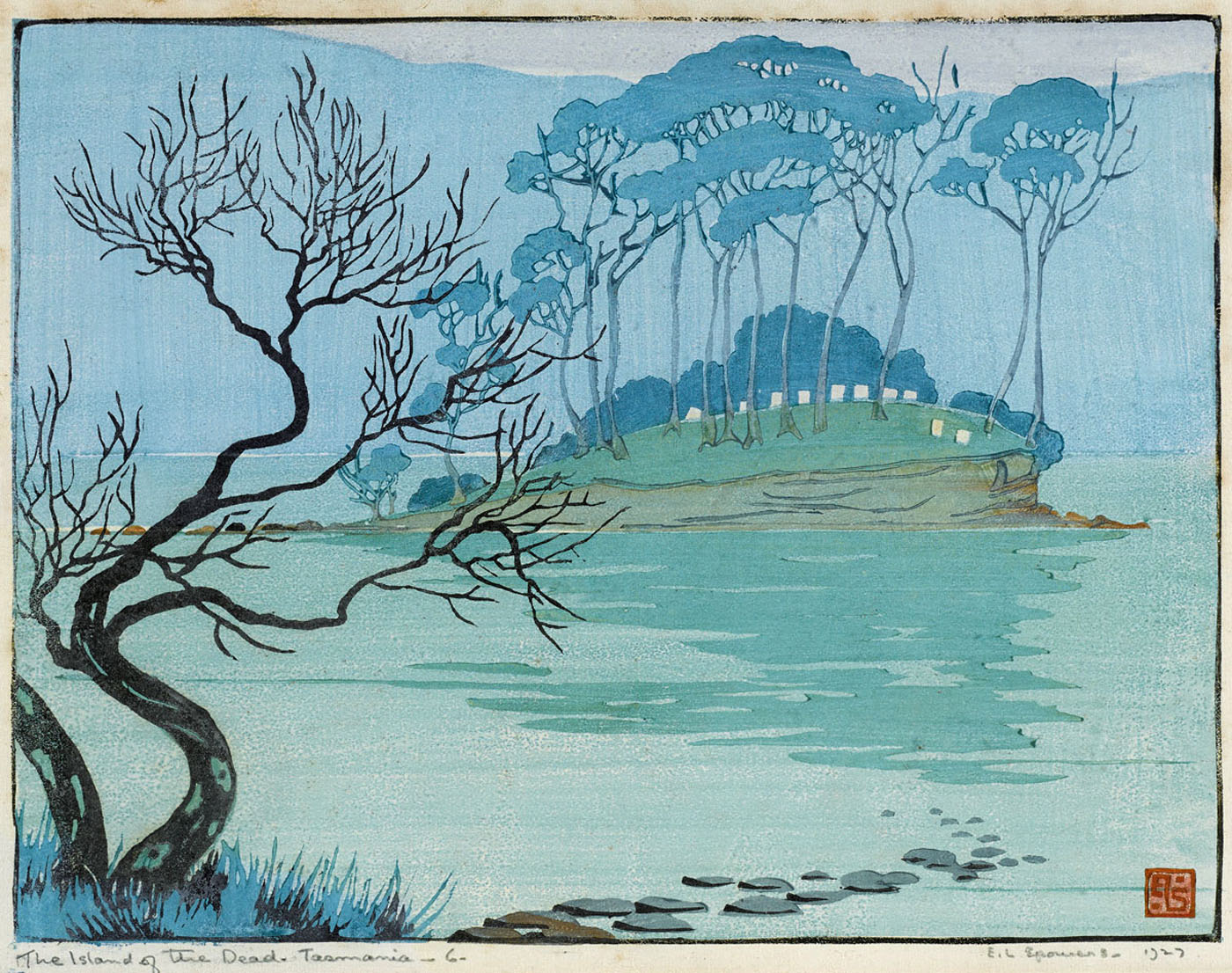
 

Ethel Spowers (Australian, 1890-1947) 'The island of the dead' 1927


Ethel Spowers (Australian, 1890-1947)
The island of the dead
1927
Melbourne
Linocut, printed in colour inks in the Japanese manner, from seven blocks
National Gallery of Australia, Kamberri/Canberra
Purchased 1995
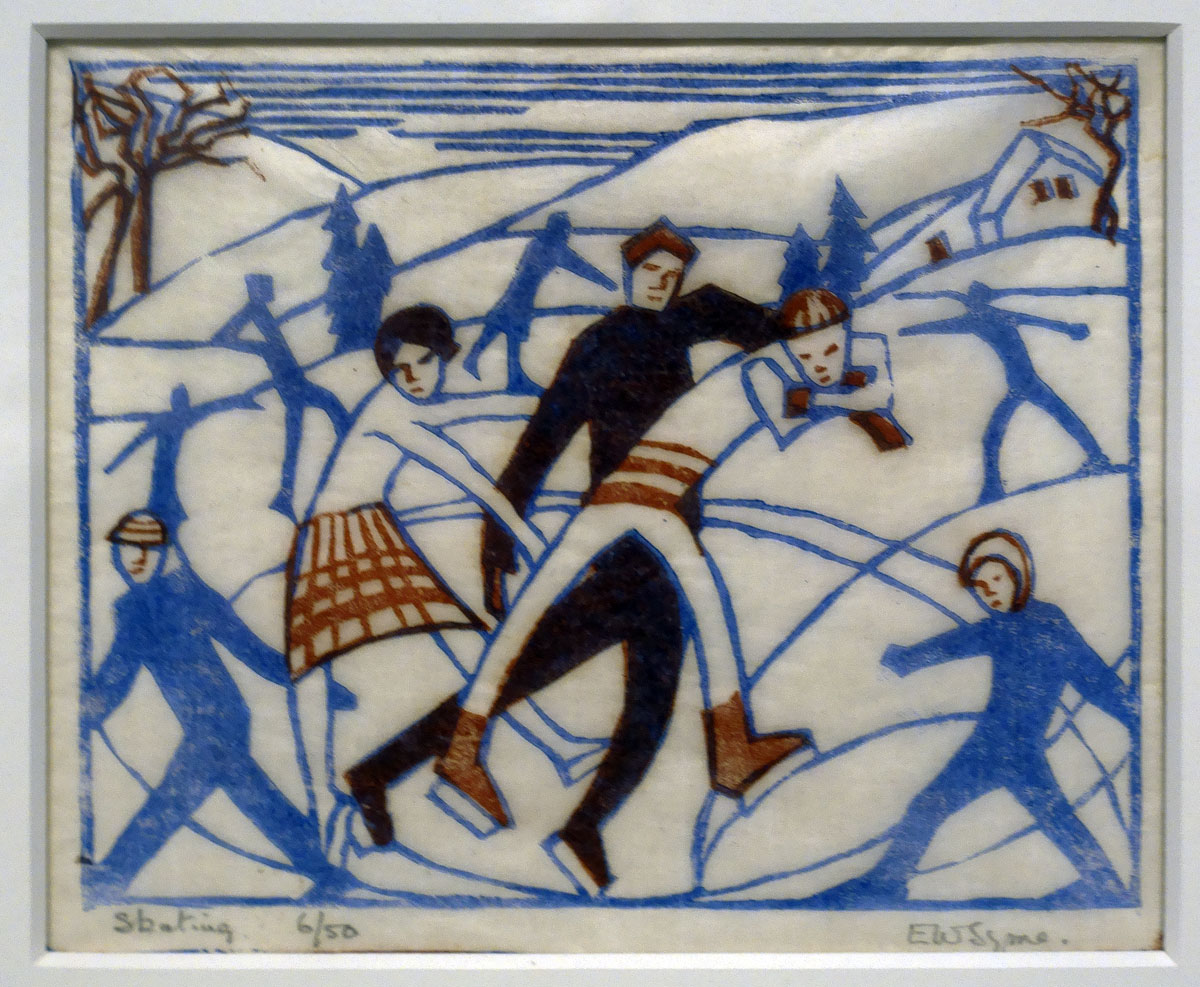
 

Eveline Syme (Australian, 1888-1961) 'Skating' 1929 (installation view)


Eveline Syme (Australian, 1888-1961)
Skating (installation view)
1929
London
Linocut, printed in colour inks, from two blocks
National Gallery of Australia, Kamberri/Canberra
Purchased 1979
Photo: Marcus Bunyan


When Syme joined Spowers at the Grosvenor School of Modern Art in January 1929 she made the two-block linocut Skating, which summarises Claude Flight’s teachings on how a composition ‘builds into a geometrical pattern of opposing rhythms’. Her design is simplified, using the repetition of intersecting lines and curves to suggest action. Although the skaters are frozen mid-turn, the print is filled with light and movement, with Syme’s humorous suggestion of novice efforts captured in awkwardly angled arms and legs.

Wall text
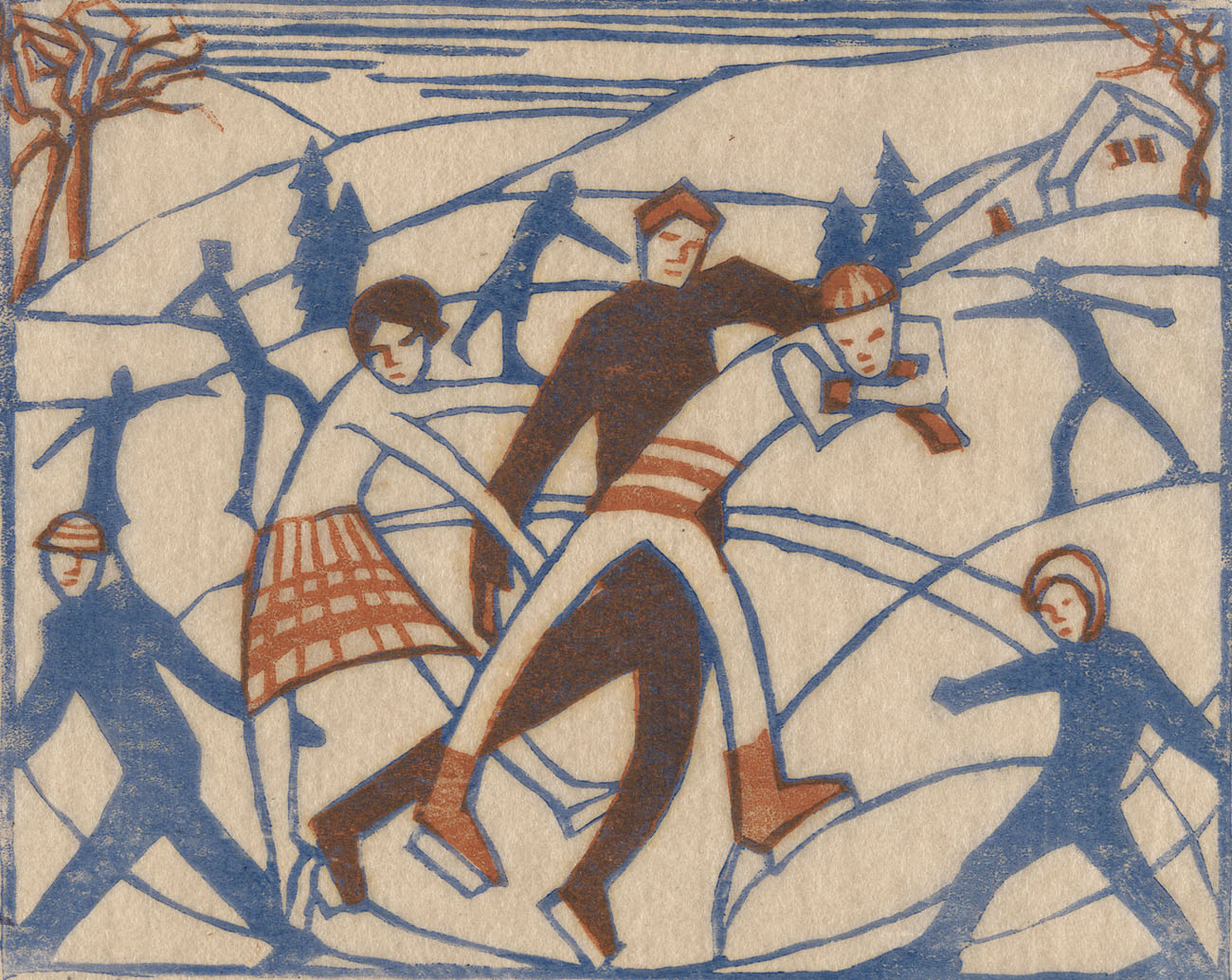
 

Eveline Syme (Australian, 1888-1961) 'Skating' 1929


Eveline Syme (Australian, 1888-1961)
Skating
1929
London
Linocut, printed in colour inks, from two blocks
National Gallery of Australia, Kamberri/Canberra
Purchased 1979
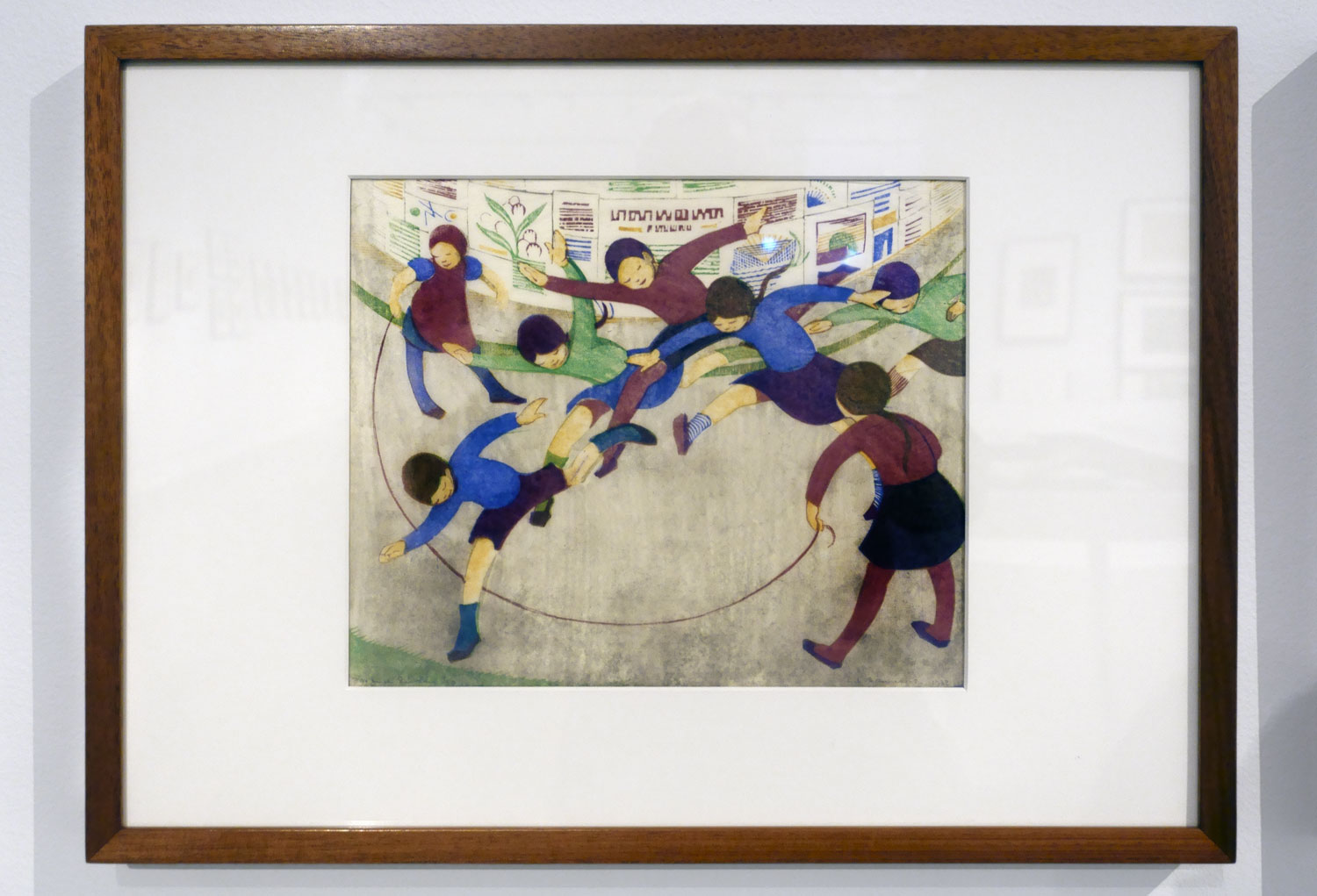
 

Ethel Spowers (Australian, 1890-1947) 'Fox and geese' 1933 (installation view)


Ethel Spowers (Australian, 1890-1947)
Fox and geese (installation view)
1933
Melbourne
Linocut, printed in colour inks, from five blocks
National Gallery of Australia, Kamberri/Canberra
Purchased 1978
Photo: Marcus Bunyan
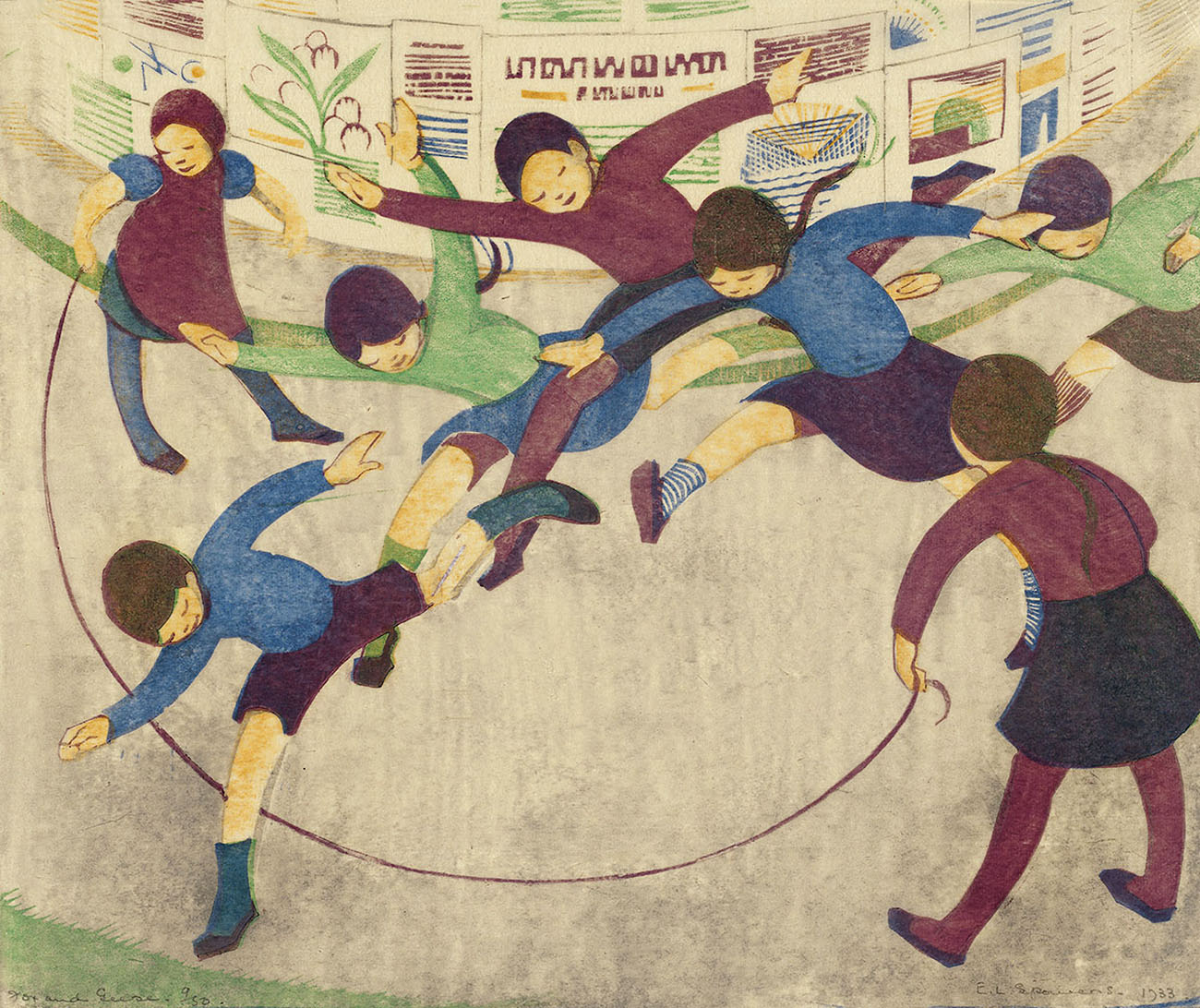
 

Ethel Spowers (Australian, 1890-1947) 'Fox and geese' 1933


Ethel Spowers (Australian, 1890-1947)
Fox and geese
1933
Melbourne
Linocut, printed in colour inks, from five blocks
National Gallery of Australia, Kamberri/Canberra
Purchased 1978
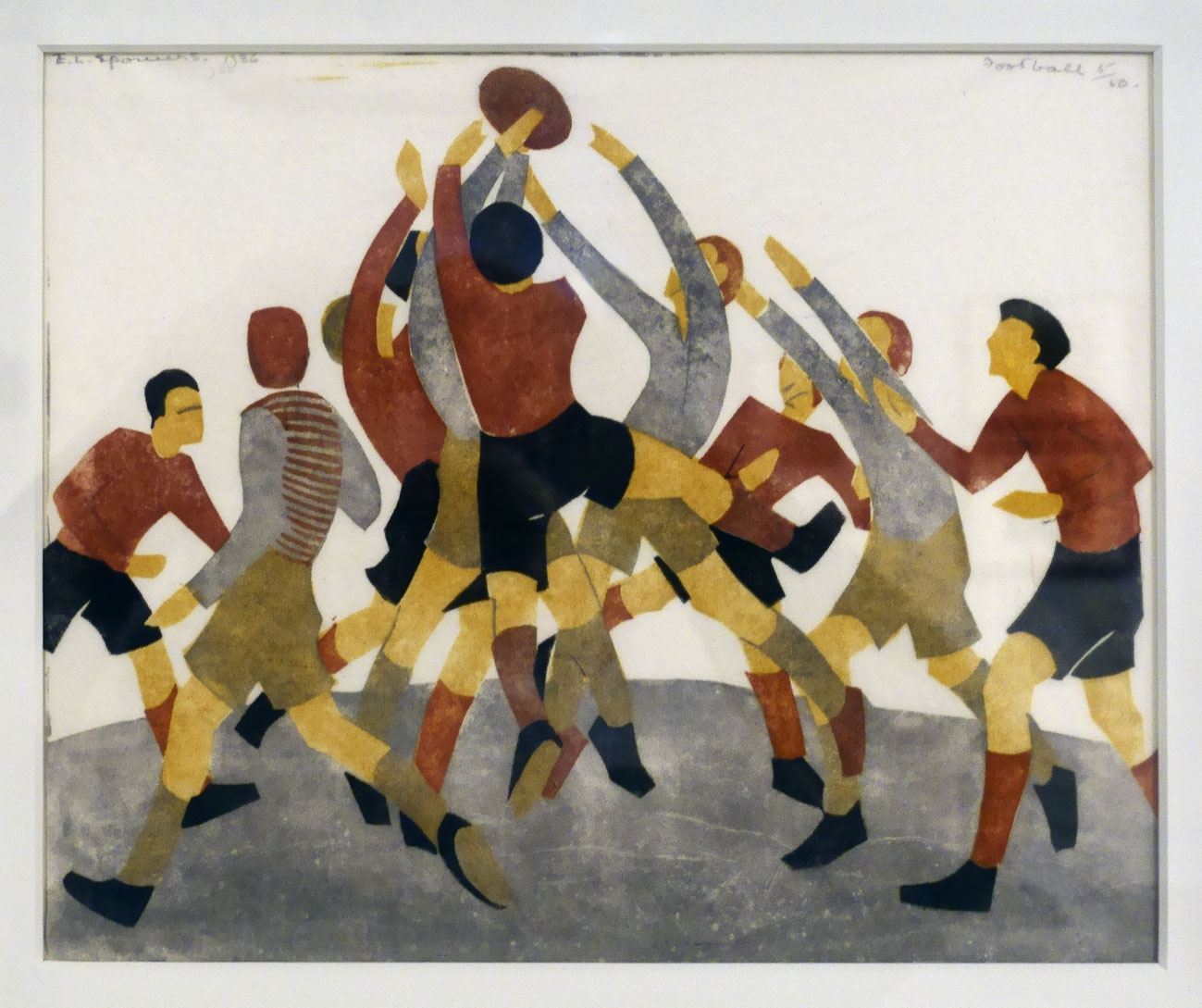
 

Ethel Spowers (Australian, 1890-1947) 'Football' 1936 (installation view)


Ethel Spowers (Australian, 1890-1947)
Football (installation view)
1936
Melbourne
Linocut, printed in colour inks, from four blocks
National Gallery of Australia, Kamberri/Canberra
Purchased 1982
Photo: Marcus Bunyan
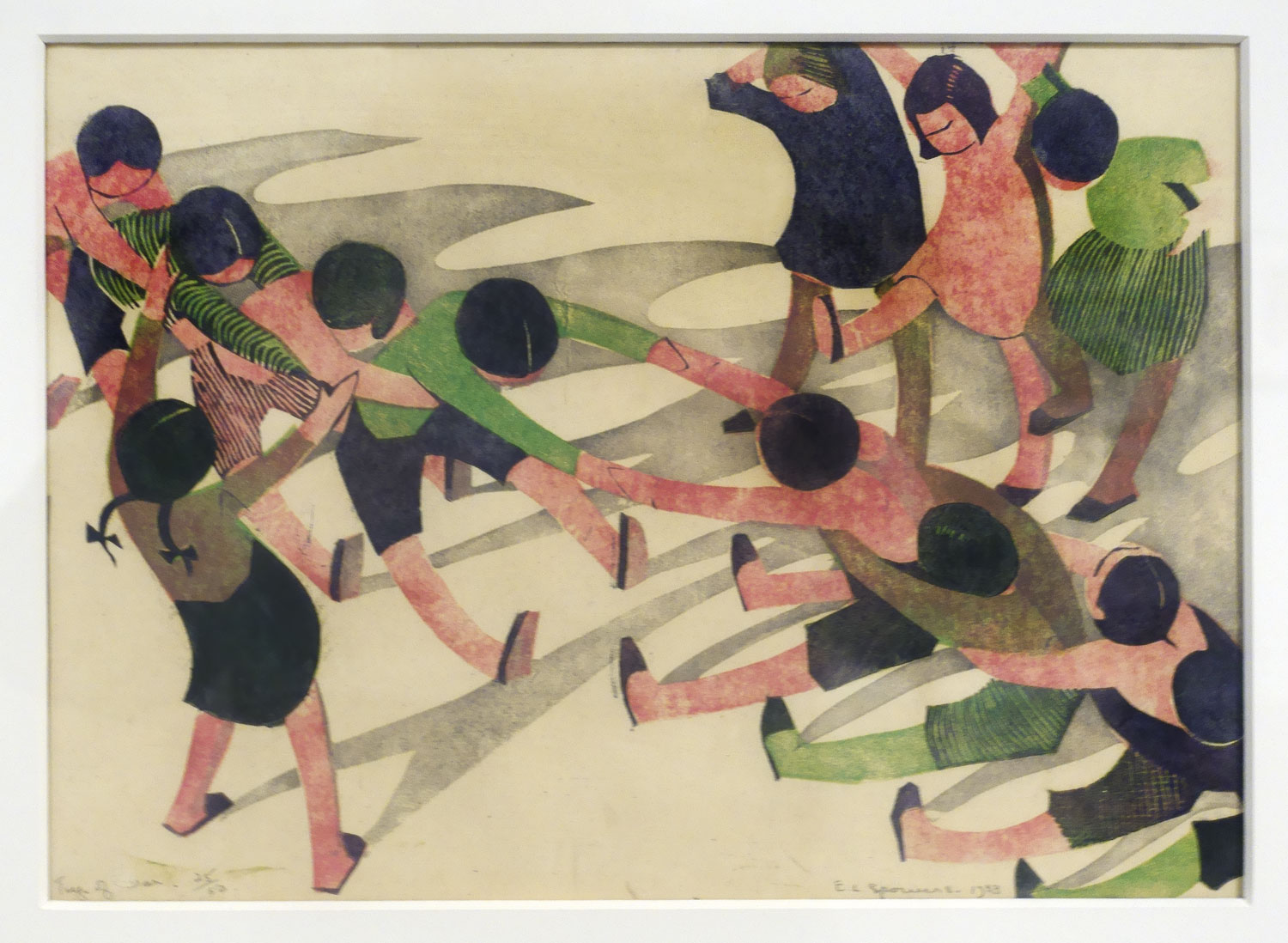
 

Ethel Spowers (Australian, 1890-1947) 'Tug of war' 1933 (installation view)


Ethel Spowers (Australian, 1890-1947)
Tug of war (installation view)
1933
Melbourne
Linocut, printed in colour inks, from four blocks
National Gallery of Australia, Kamberri/Canberra
Purchased 1976
Photo: Marcus Bunyan
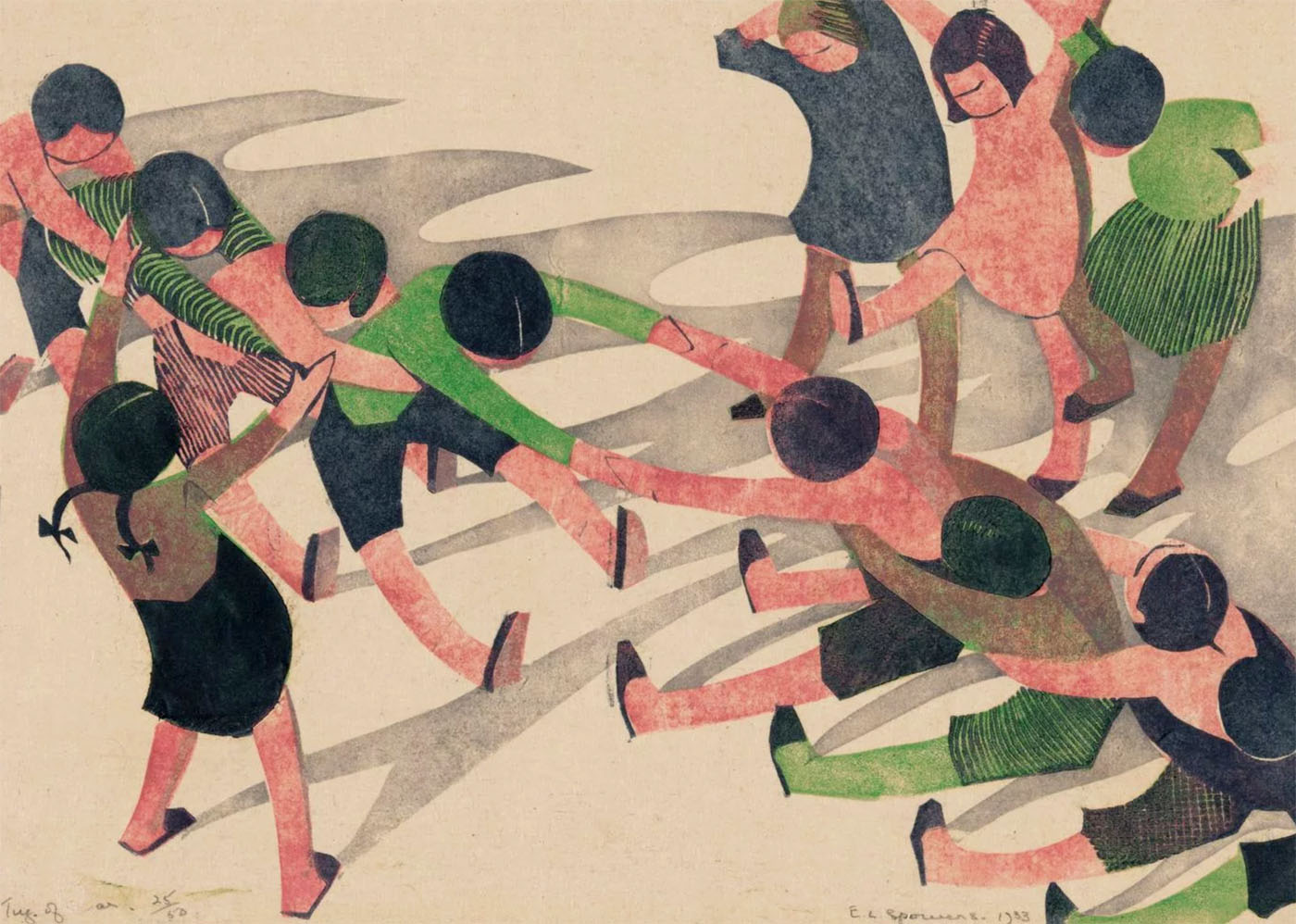
 

Ethel Spowers (Australian, 1890-1947) 'Tug of war' 1933


Ethel Spowers (Australian, 1890-1947)
Tug of war
1933
Melbourne
Linocut, printed in colour inks, from four blocks
National Gallery of Australia, Kamberri/Canberra
Purchased 1976


Ethel Spowers and Eveline Syme were lifelong friends who inspired and encouraged each another in their artistic pursuits. They were pioneers in printmaking and modern art and their careers reflected the changing circumstances of women after World War 1. Spowers and Syme were among a core group of progressive Australian artists who travelled widely and studied with avant-garde artists. They were at the forefront of Modernism in Australia.

Both women grew up in Melbourne in very comfortable circumstances. Their fathers ran rival newspapers, so their families had many common interests. Spowers’ father was involved with The Argus and The Australasian, while Syme’s father helped run The Age. Both families were dedicated to many causes and generous in their efforts to help others. They also supported war efforts and the Red Cross.

Spowers was the second child of six siblings and her home life was filled with rich and varied creative experiences. Her family lived in a large home in inner Melbourne called Toorak House, a graceful mansion with large gardens to play in and explore. Syme was also one of six siblings and lived nearby in a large house in St Kilda called Rotherfield.

Spowers and Syme studied and travelled together in Australia and overseas. Both were inspired by the artist Claude Flight who taught them at the Grosvenor School in London. He encouraged his students to capture the joy of movement through colour and rhythmic line and the new method of colour linocut printing. Spowers and Syme became strong supporters of being brave as artists, prepared to experiment and promote new ways of doing and seeing.

Throughout their lives the two friends advocated for important causes. Spowers’ focus was always on the welfare of children through her involvement in kindergarten education and volunteering at the local children’s hospital. Syme was particularly dedicated to the advancement of women’s university education.

Anonymous text. “About the Artists – Spowers & Syme: Primary School Learning Resource,” on the National Gallery of Australia website Nd [Online] Cited 29/09/2022
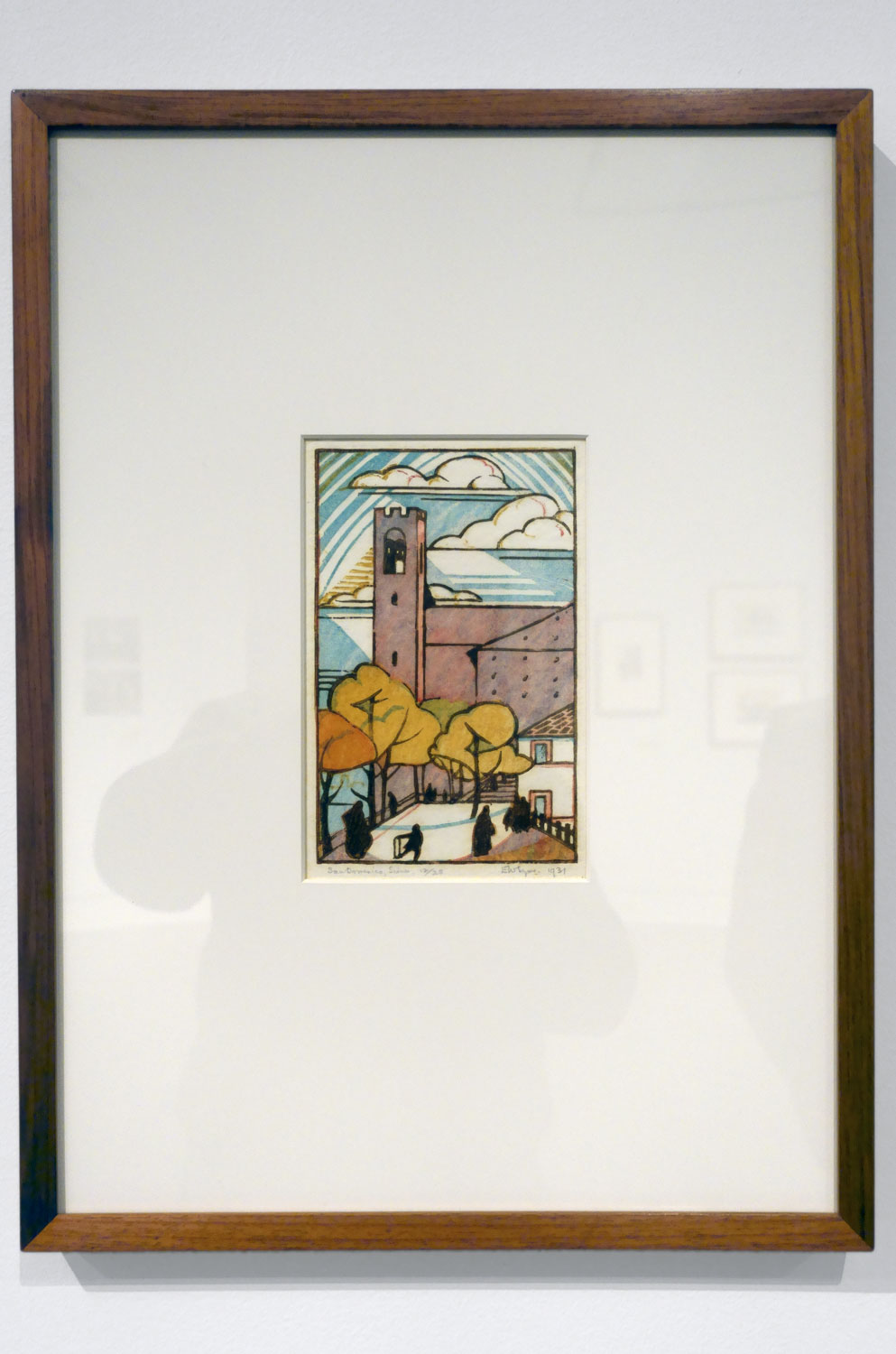
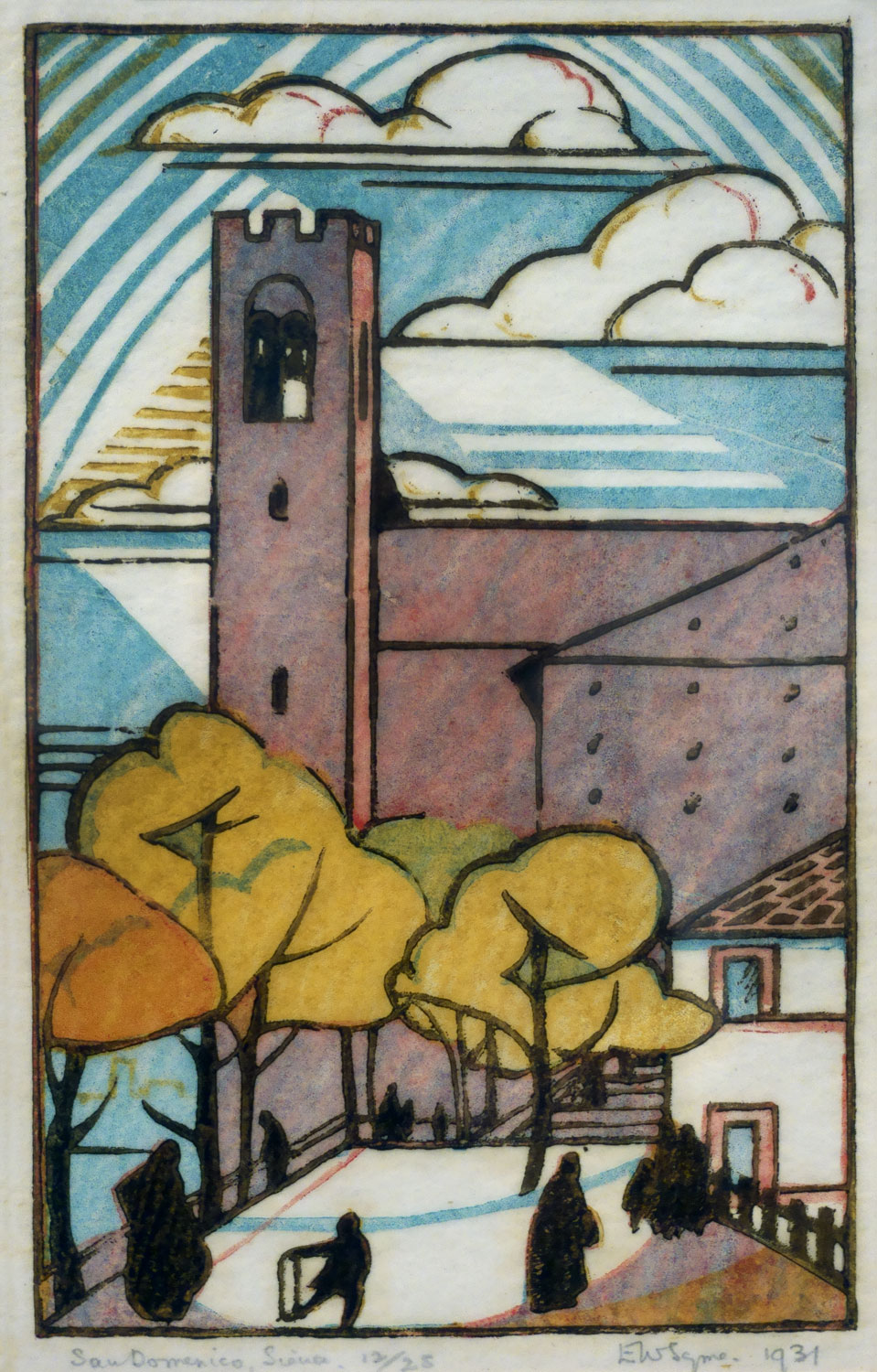
 

Eveline Syme (Australian, 1888-1961) 'San Domenico, Siena' 1931 (installation view)

Eveline Syme (Australian, 1888-1961) 'San Domenico, Siena' 1931 (installation view)


Eveline Syme (Australian, 1888-1961)
San Domenico, Siena (installation view)
1931
Melbourne
Linocut, printed in colour inks, from four blocks
National Gallery of Australia, Kamberri/Canberra
Purchased 1977
Photos: Marcus Bunyan


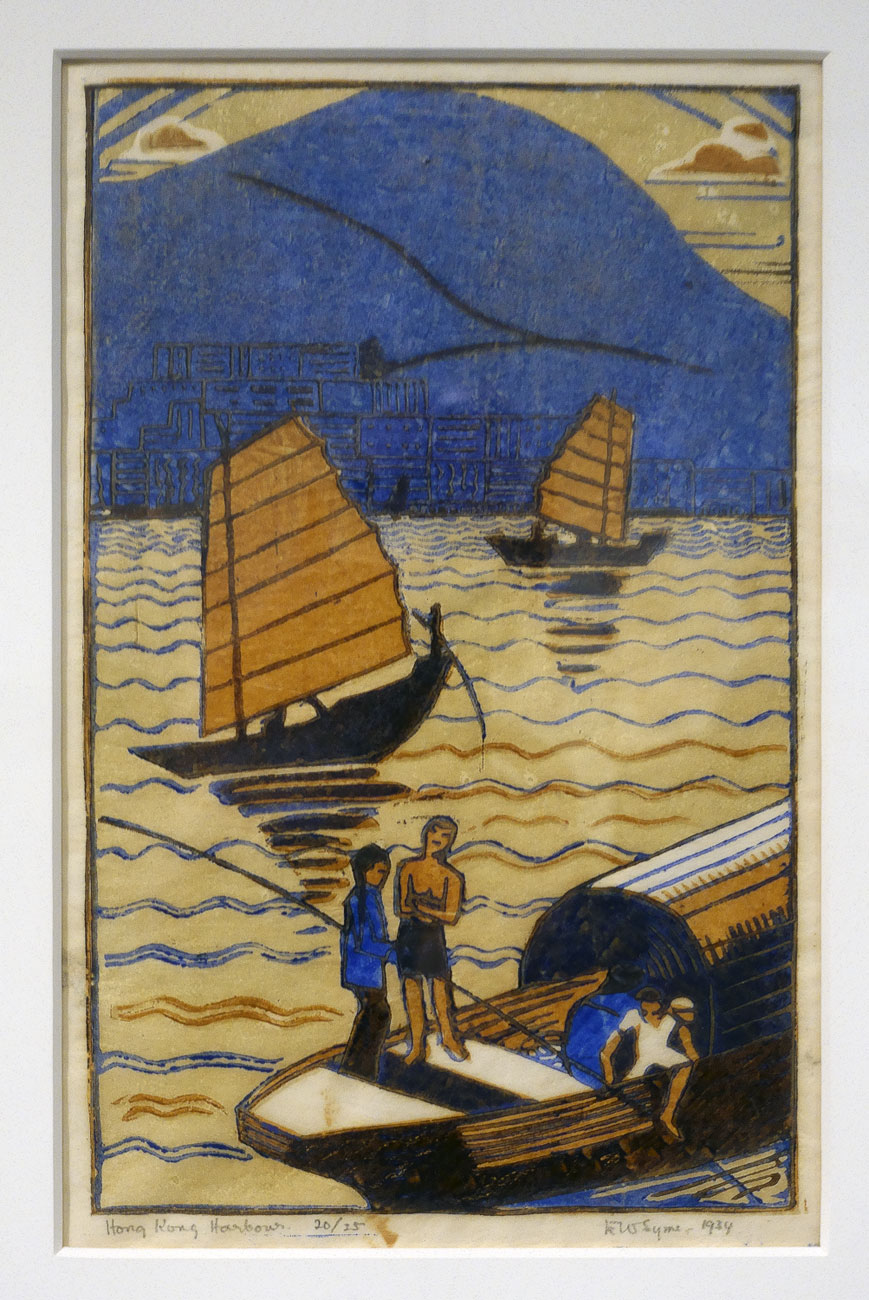
An inveterate traveller, Syme produced drawings and watercolours of landscape views from her trips around Victoria, her voyages to England via Colombo, and her travels through Europe, Japan, Hong Kong and the United States of America. In addition to exhibiting her watercolours, Syme often used these compositions as the basis for subsequent prints and oil paintings.

Wall text
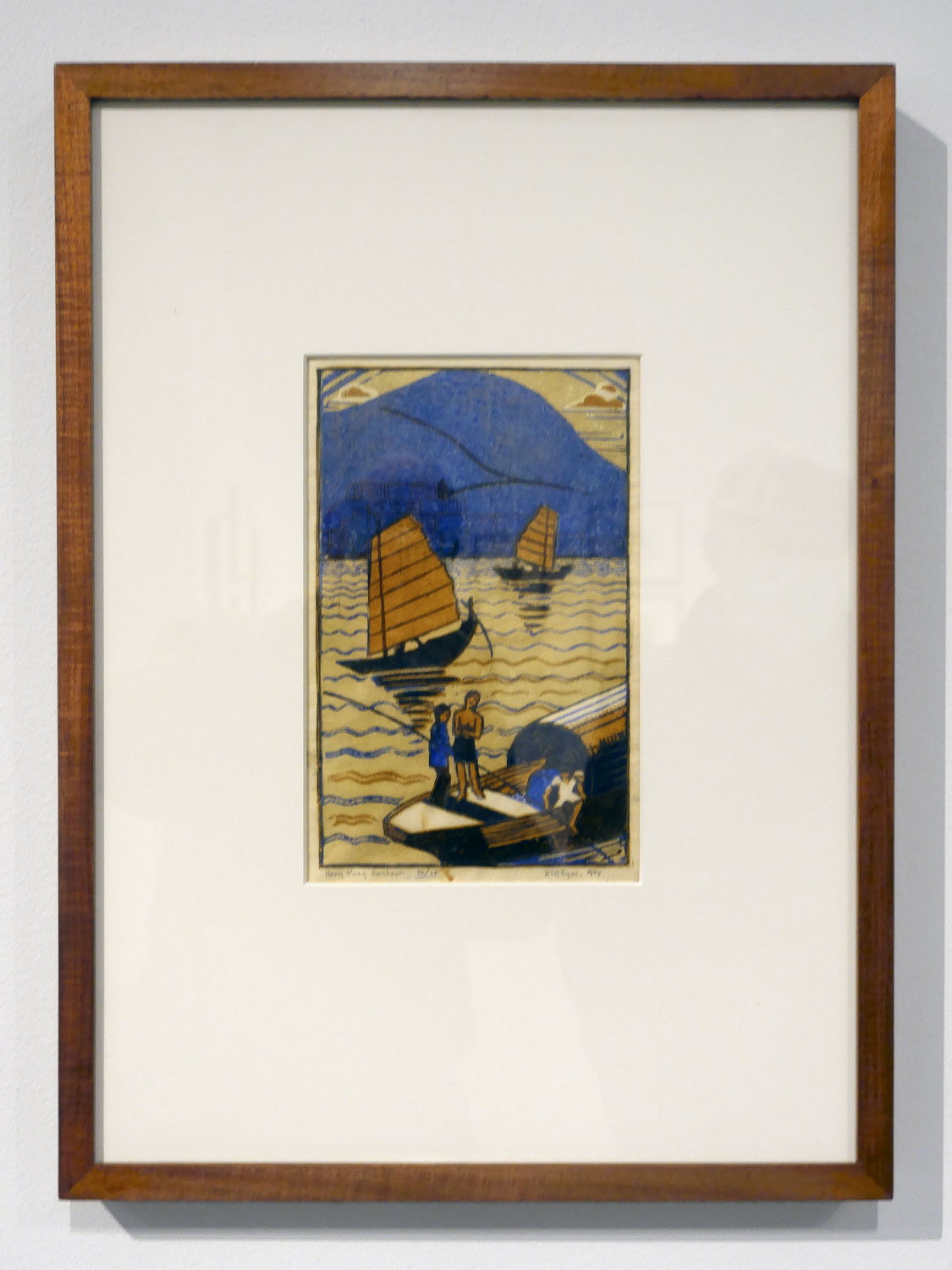
 

Eveline Syme (Australian, 1888-1961) 'Hong Kong harbour' 1934 (installation view)

Eveline Syme (Australian, 1888-1961) 'Hong Kong harbour' 1934 (installation view)


Eveline Syme (Australian, 1888-1961)
Hong Kong harbour (installation views)
1934
Melbourne
Linocut, printed in colour inks, from four blocks
National Gallery of Australia, Kamberri/Canberra
Purchased 1976
Photos: Marcus Bunyan
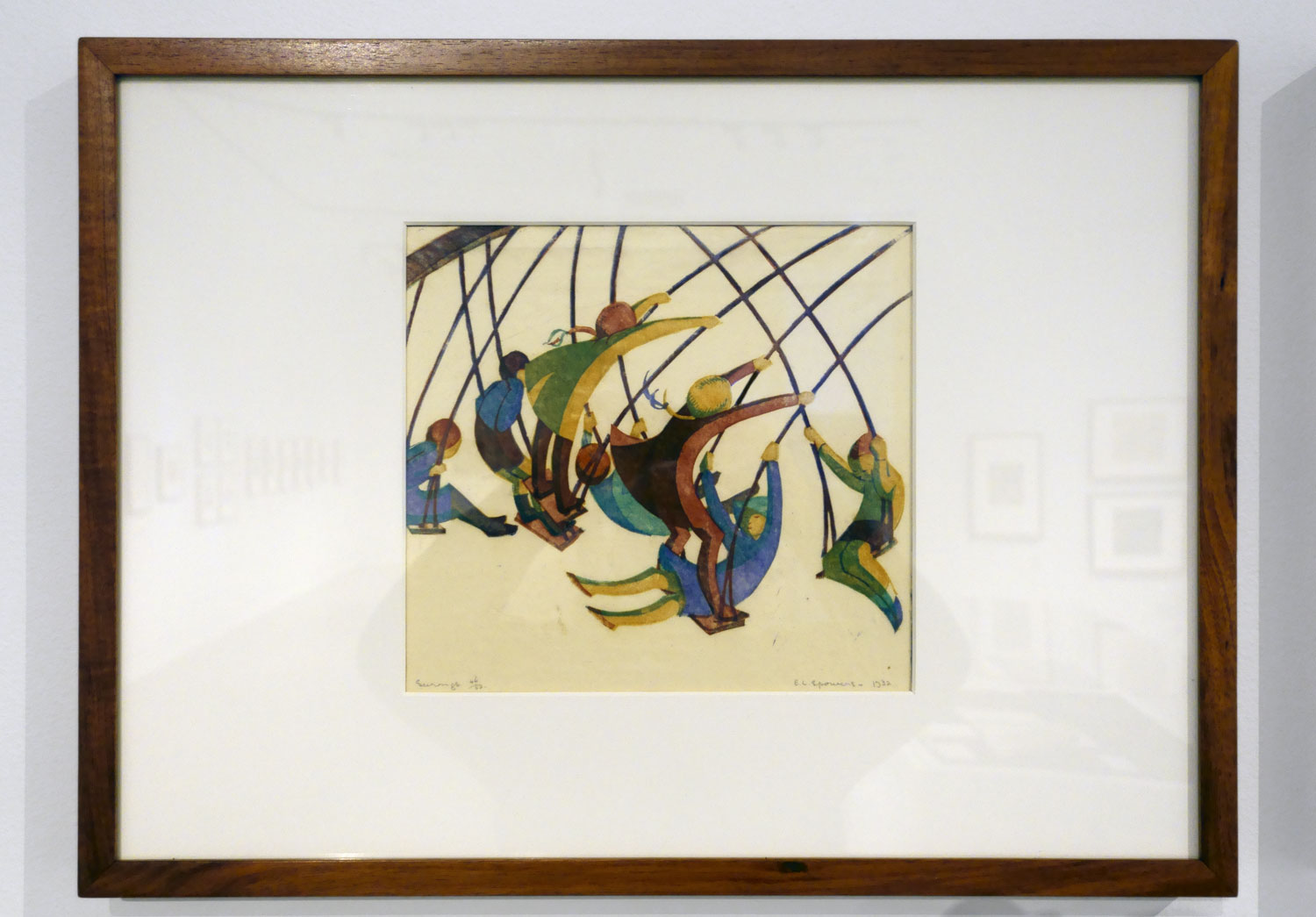
 

Ethel Spowers (Australian, 1890-1947) 'Swings' 1932 (installation view)


Ethel Spowers (Australian, 1890-1947)
Swings (installation view)
1932
Melbourne
Linocut, printed in colour inks, from four blocks
National Gallery of Australia, Kamberri/Canberra
Purchased 1976
Photo: Marcus Bunyan
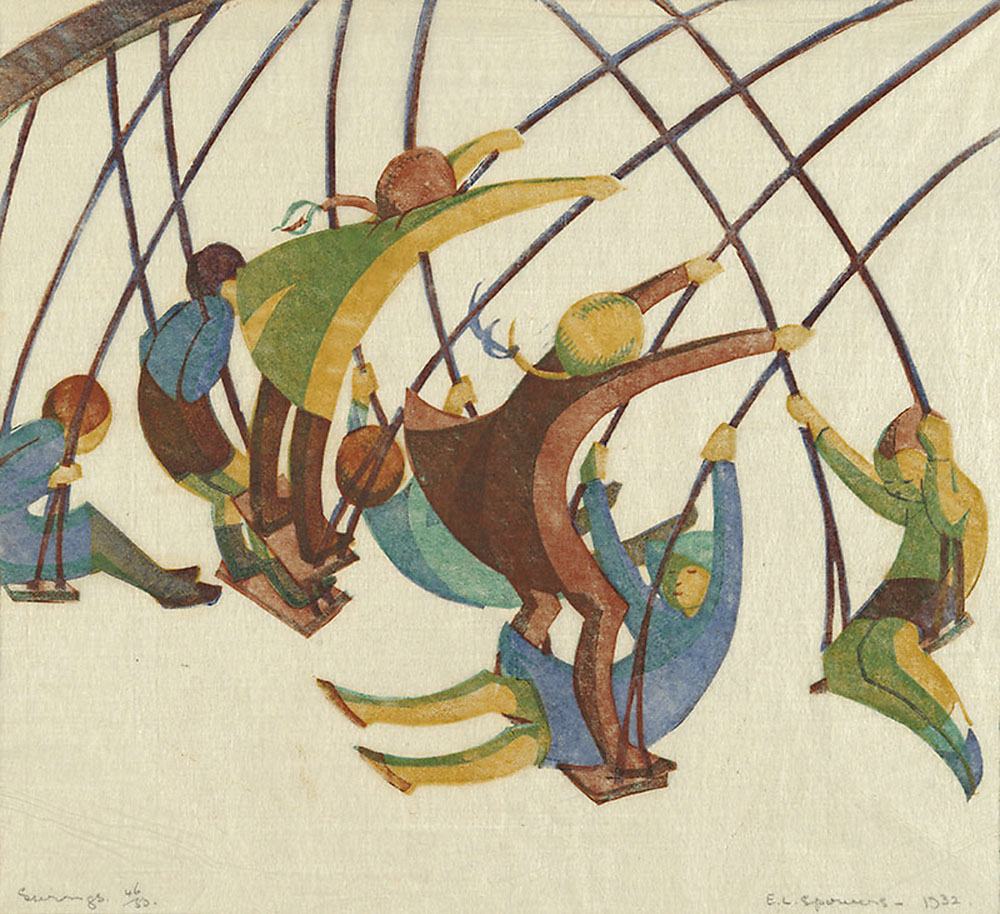
 

Ethel Spowers (Australian, 1890-1947) 'Swings' 1932


Ethel Spowers (Australian, 1890-1947)
Swings
1932
Melbourne
Linocut, printed in colour inks, from four blocks
National Gallery of Australia, Kamberri/Canberra
Purchased 1976
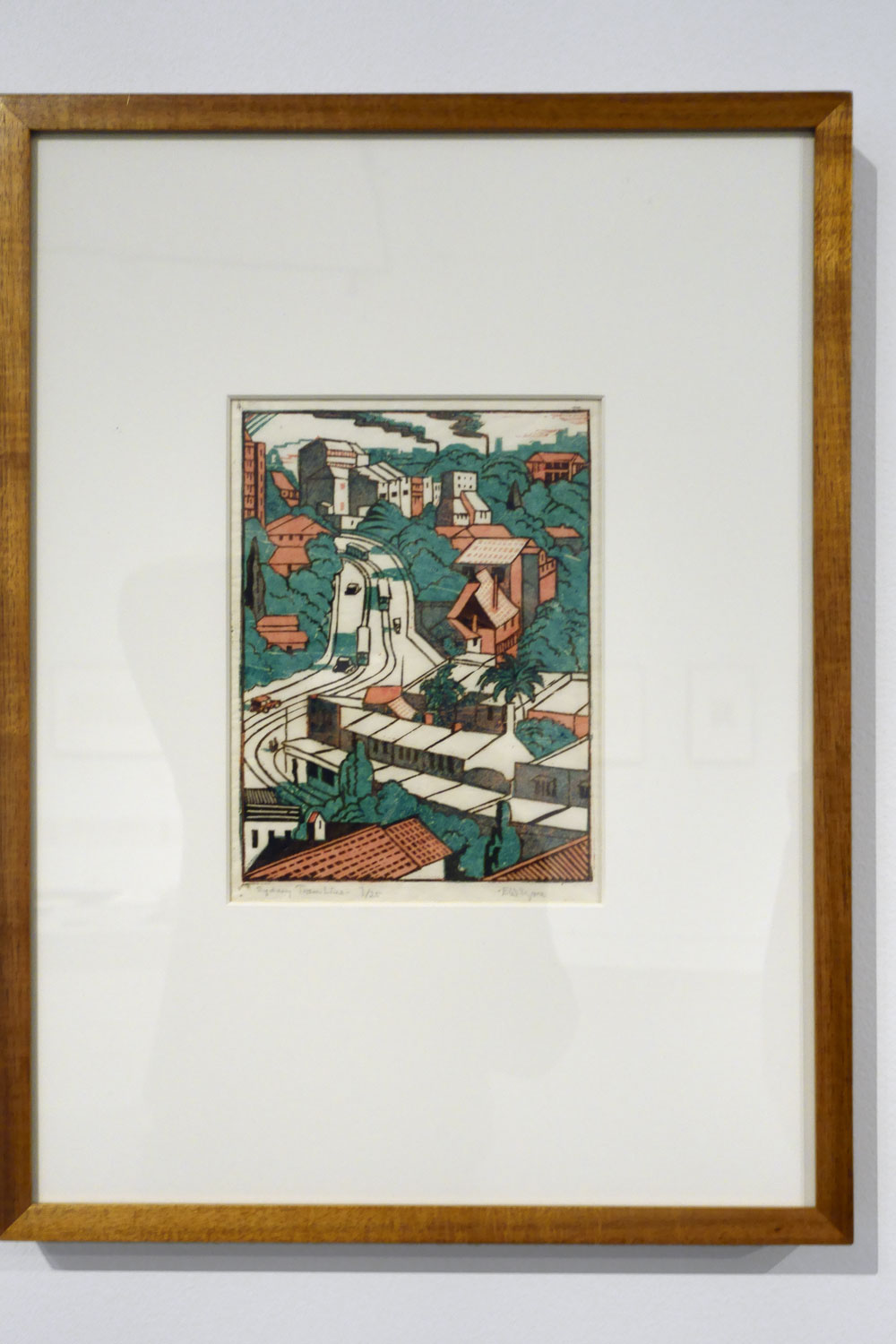
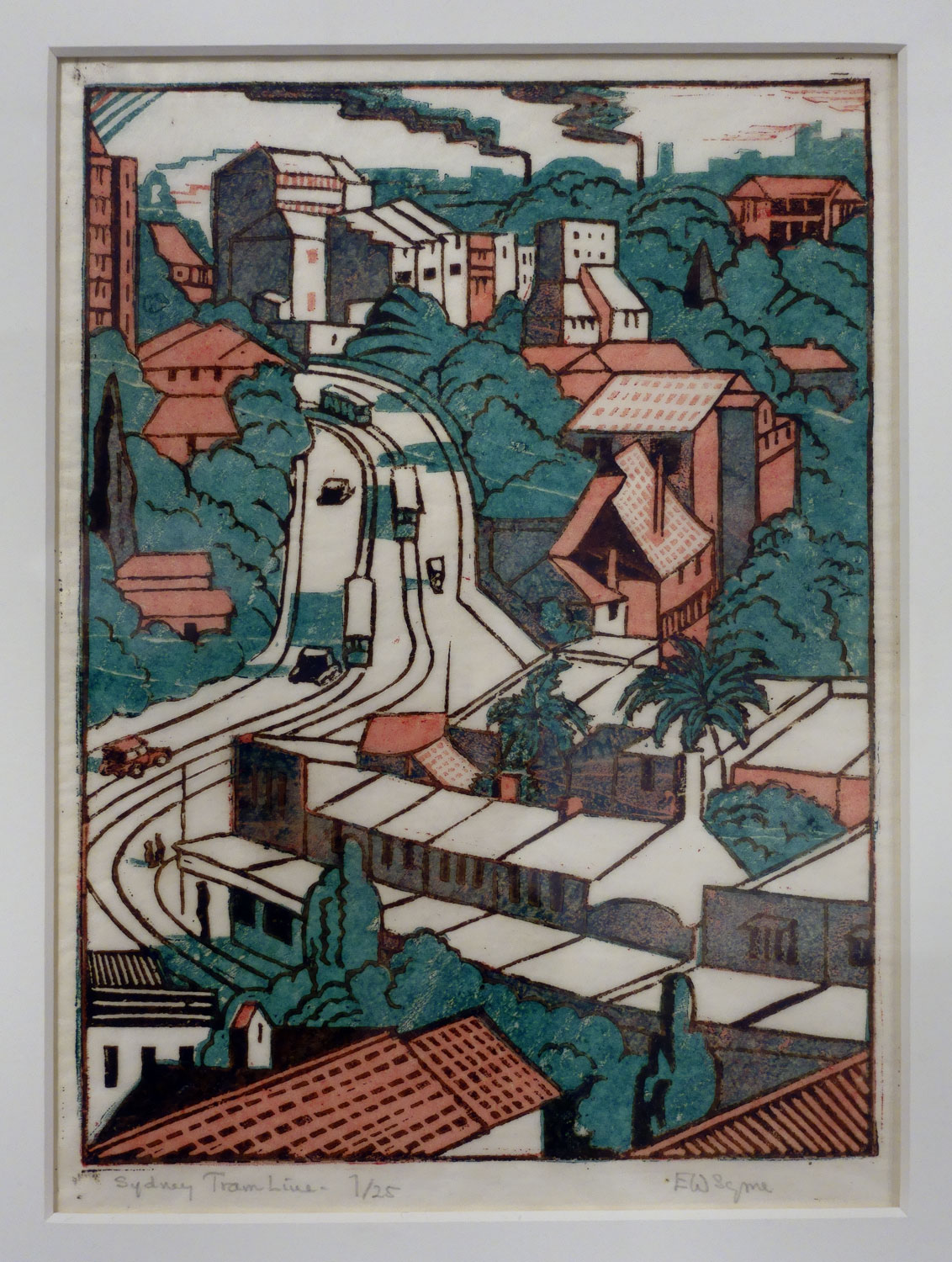
 

Eveline Syme (Australian, 1888-1961) 'Sydney tram line' 1936 (installation view)

Eveline Syme (Australian, 1888-1961) 'Sydney tram line' 1936 (installation view)


Eveline Syme (Australian, 1888-1961)
Sydney tram line (installation views)
1936
Melbourne
Linocut, printed in colour inks, from three blocks
National Gallery of Australia, Kamberri/Canberra
Purchased 1979
Photos: Marcus Bunyan


Powers and Syme were associated with numerous art and social group, which established intersecting circles of connection and opportunity in Melbourne and Sydney. During the 1930s they both exhibited in Sydney with other progressive artists at Dorrit Black’s Modern Art Centre and with the Contemporary Group co-founded by Thea Proctor. This print is based on an earlier watercolour by Syme, drawn after staying with Spowers’ sister at Double Bay in 1932.

Wall text
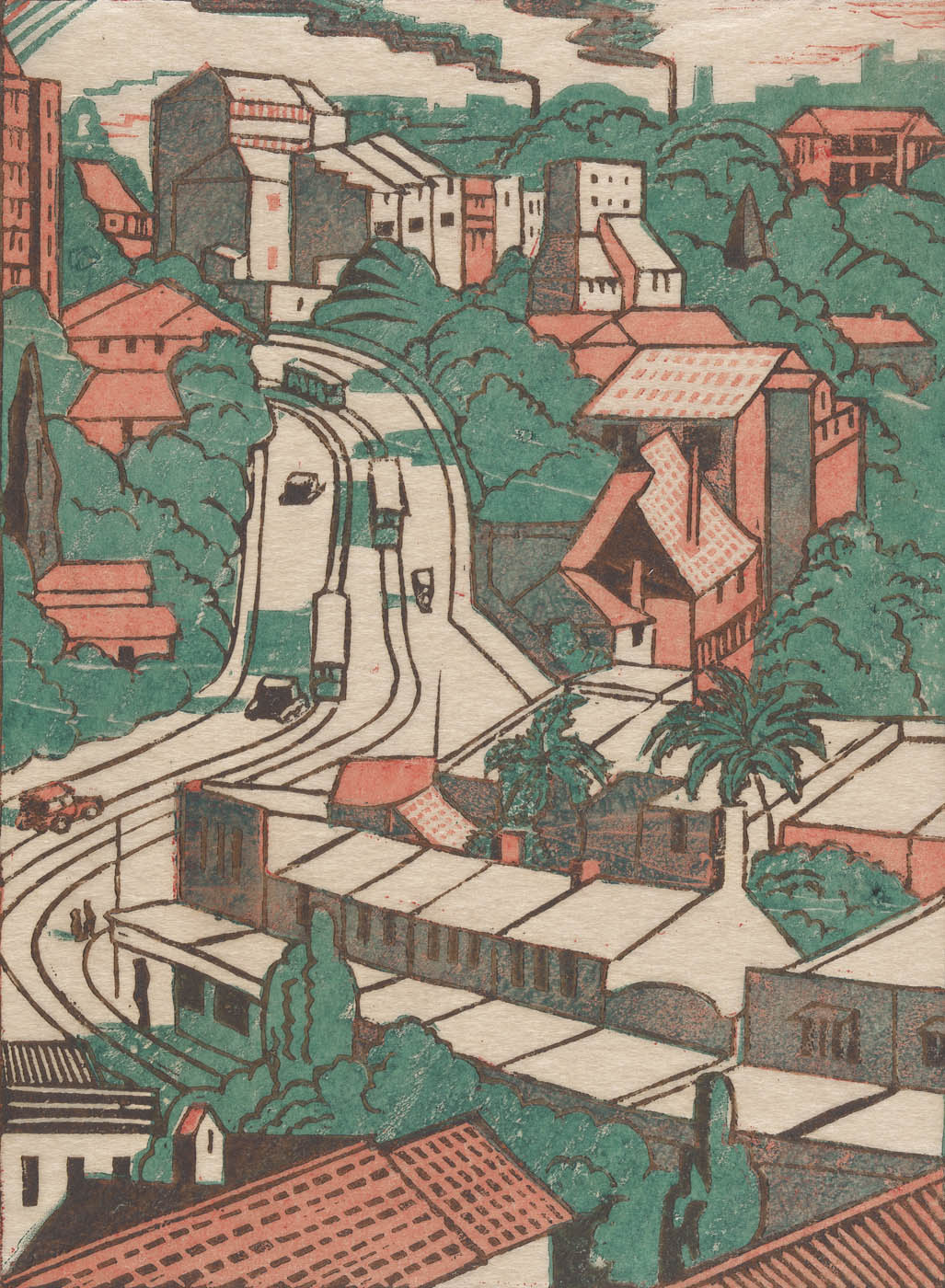
 

Eveline Syme (Australian, 1888-1961) 'Sydney tram line' 1936


Eveline Syme (Australian, 1888-1961)
Sydney tram line
1936
National Gallery of Australia, Kamberri/Canberra
Purchased 1979
© Estate of Eveline Syme
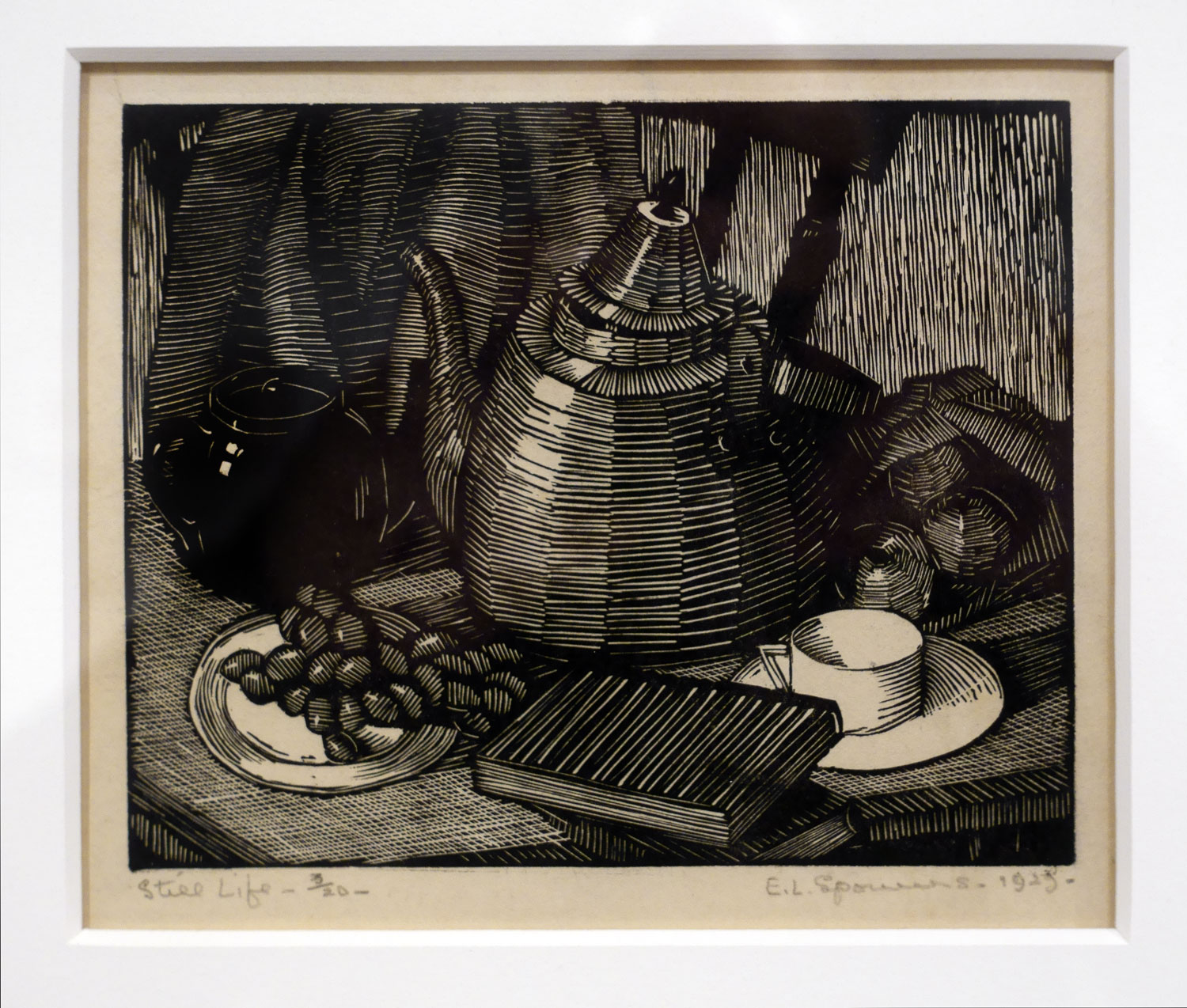
 

Ethel Spowers (Australian, 1890-1947) 'Still life' 1925 (installation view)


Ethel Spowers (Australian, 1890-1947)
Still life (installation view)
1925
Melbourne
Wood-engraving, printed in black ink, from one block
National Gallery of Australia, Kamberri/Canberra
Purchased 1981
Photo: Marcus Bunyan
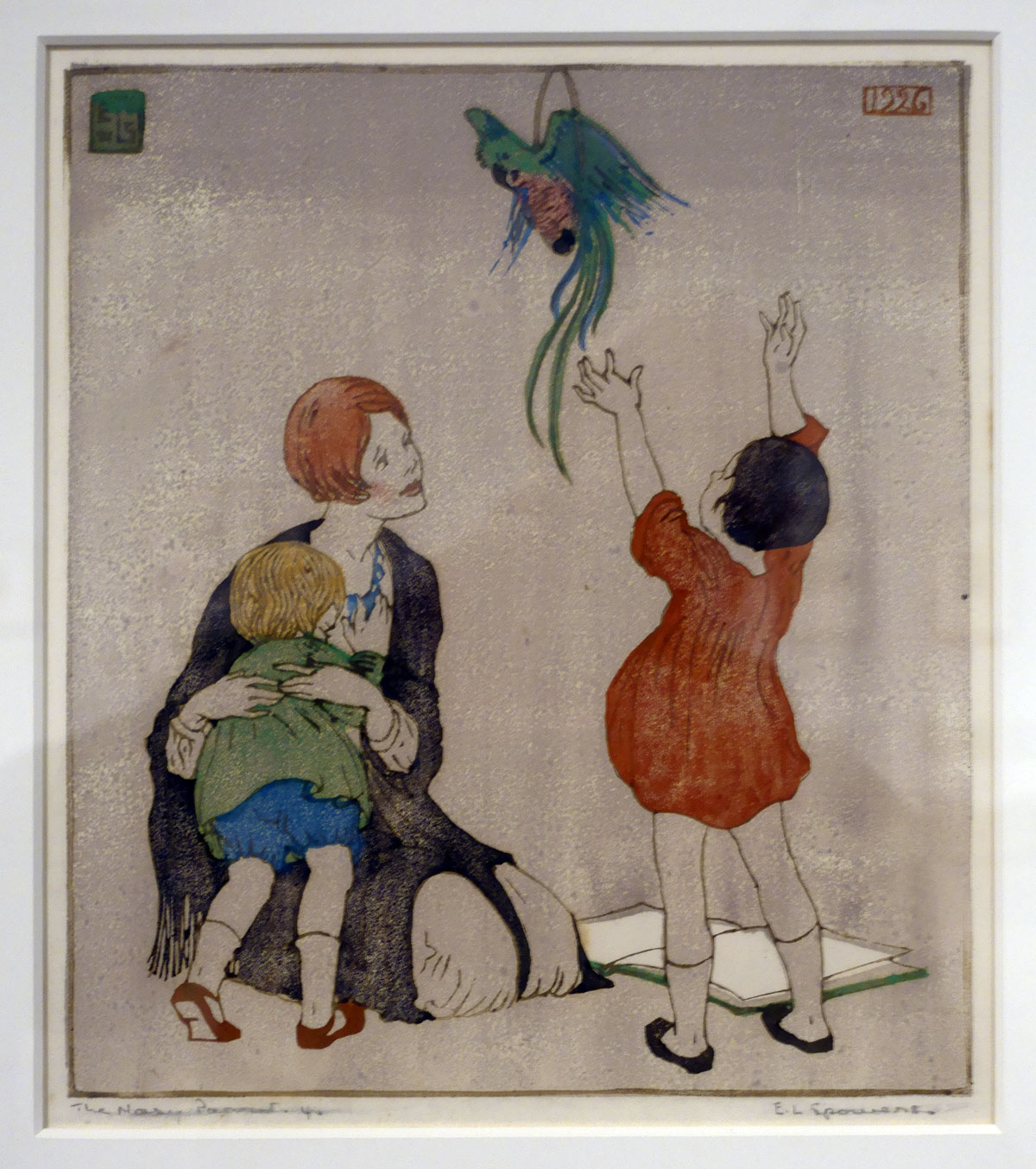
 

Ethel Spowers (Australian, 1890-1947) 'The noisy parrot' 1926 (installation view)


Ethel Spowers (Australian, 1890-1947)
The noisy parrot (installation view)
1926
Melbourne
Woodcut, printed in colour inks in the Japanese manner, from five blocks
National Gallery of Australia, Kamberri/Canberra
Purchased 2015
Photo: Marcus Bunyan
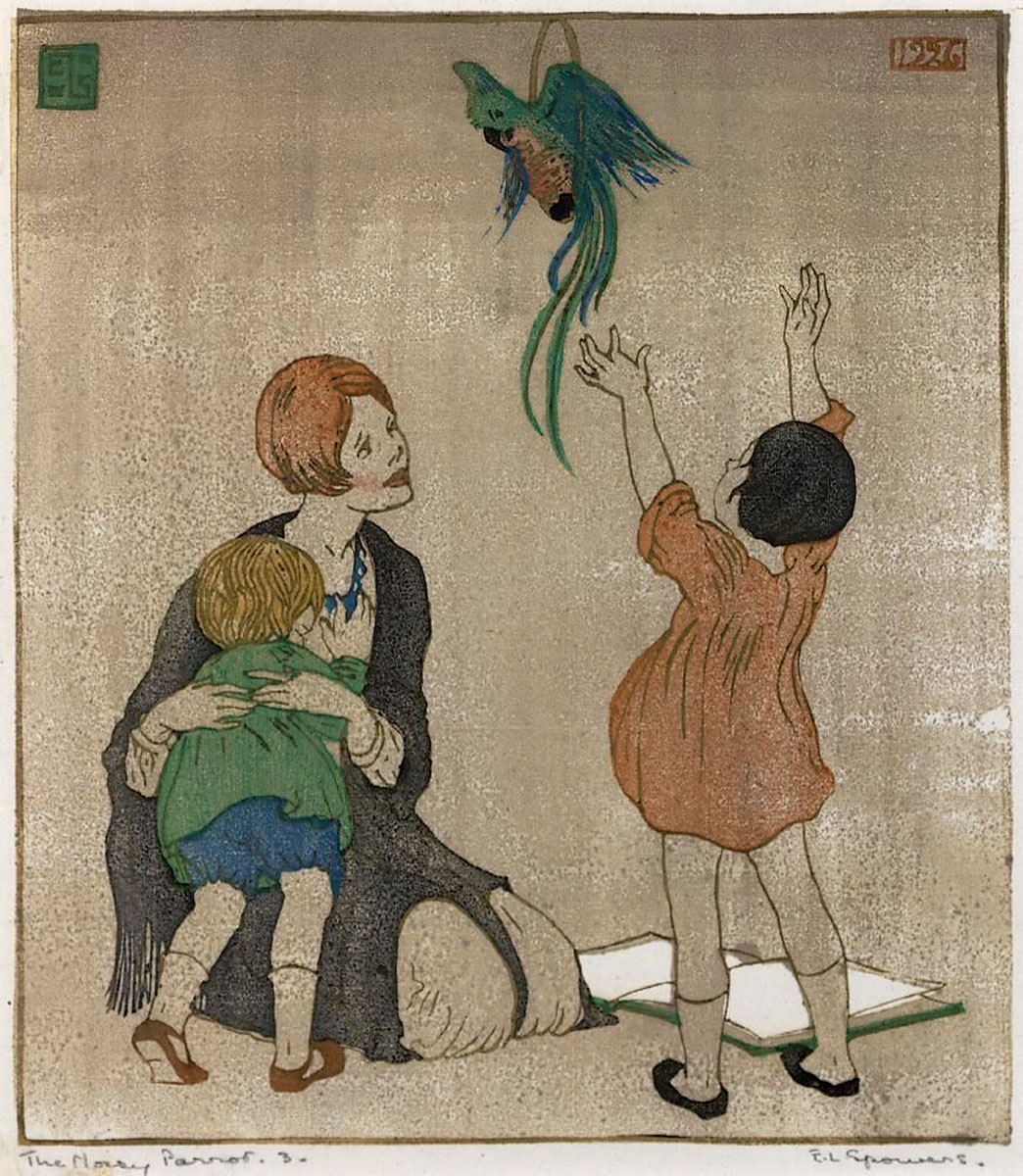
 

Ethel Spowers (Australian, 1890-1947) 'The noisy parrot' 1926


Ethel Spowers (Australian, 1890-1947)
The noisy parrot
1926
Melbourne
Woodcut, printed in colour inks in the Japanese manner, from five blocks
National Gallery of Australia, Kamberri/Canberra
Purchased 2015
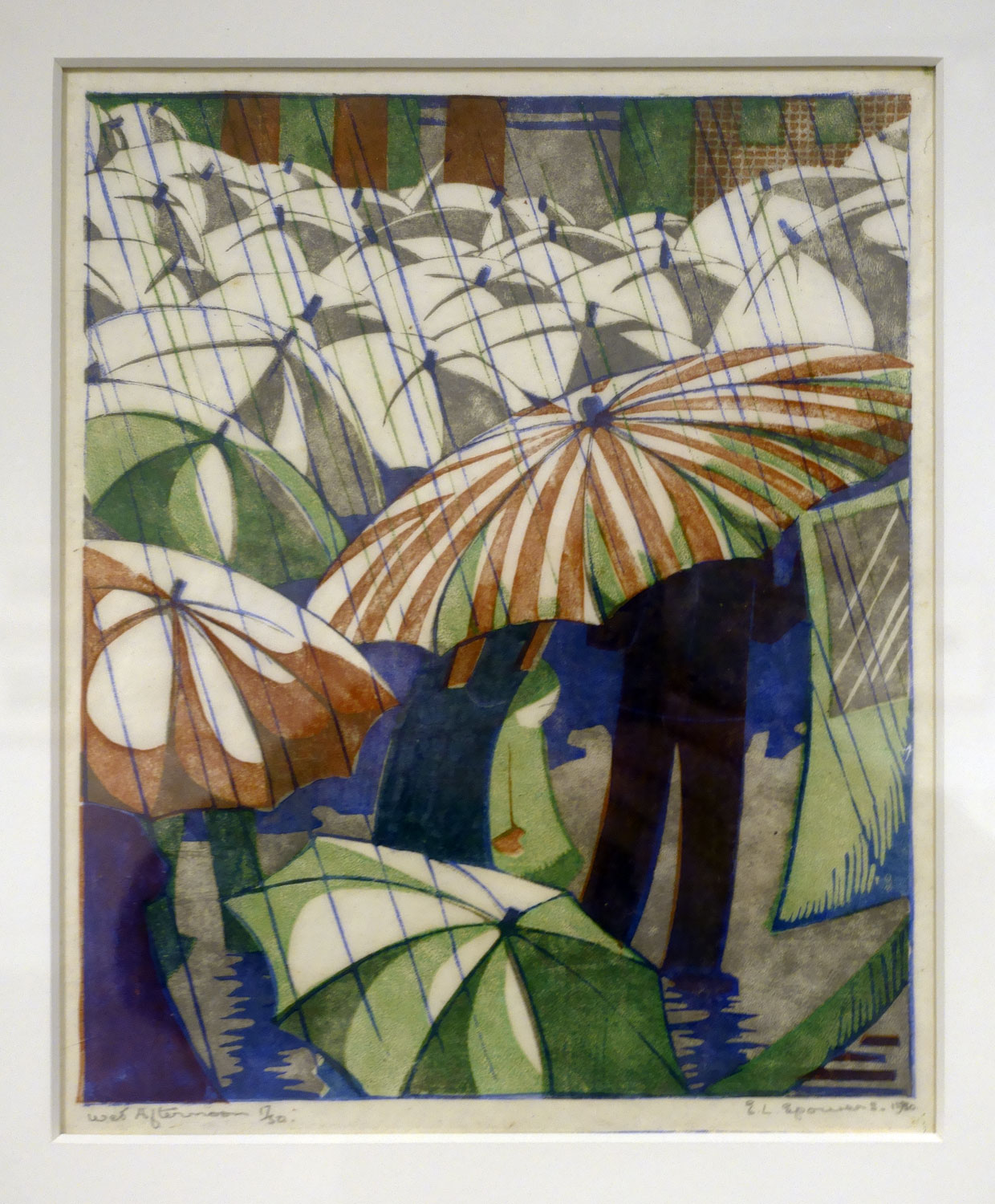
 

Ethel Spowers (Australian, 1890-1947) 'Wet afternoon' 1930 (installation view)


Ethel Spowers (Australian, 1890-1947)
Wet afternoon (installation view)
1930
Melbourne
Linocut, printed in colour inks, from four blocks
National Gallery of Australia, Kamberri/Canberra
Purchased 1983
Photo: Marcus Bunyan


In July 1930 Claude Flight included this print in British lino-cuts, the second annual exhibition held at the Redfern Gallery in London. Impressions were acquired by the Victoria & Albert museum and the British Museum. Wet afternoon was exhibited again in September at the annual exhibition of the Arts and Crafts Society of Victoria at Melbourne Town Hall and in the first exhibition of linocuts in Australia held in December at Everyman’s Lending Library in the centre of avant-garde Melbourne.

Wall text
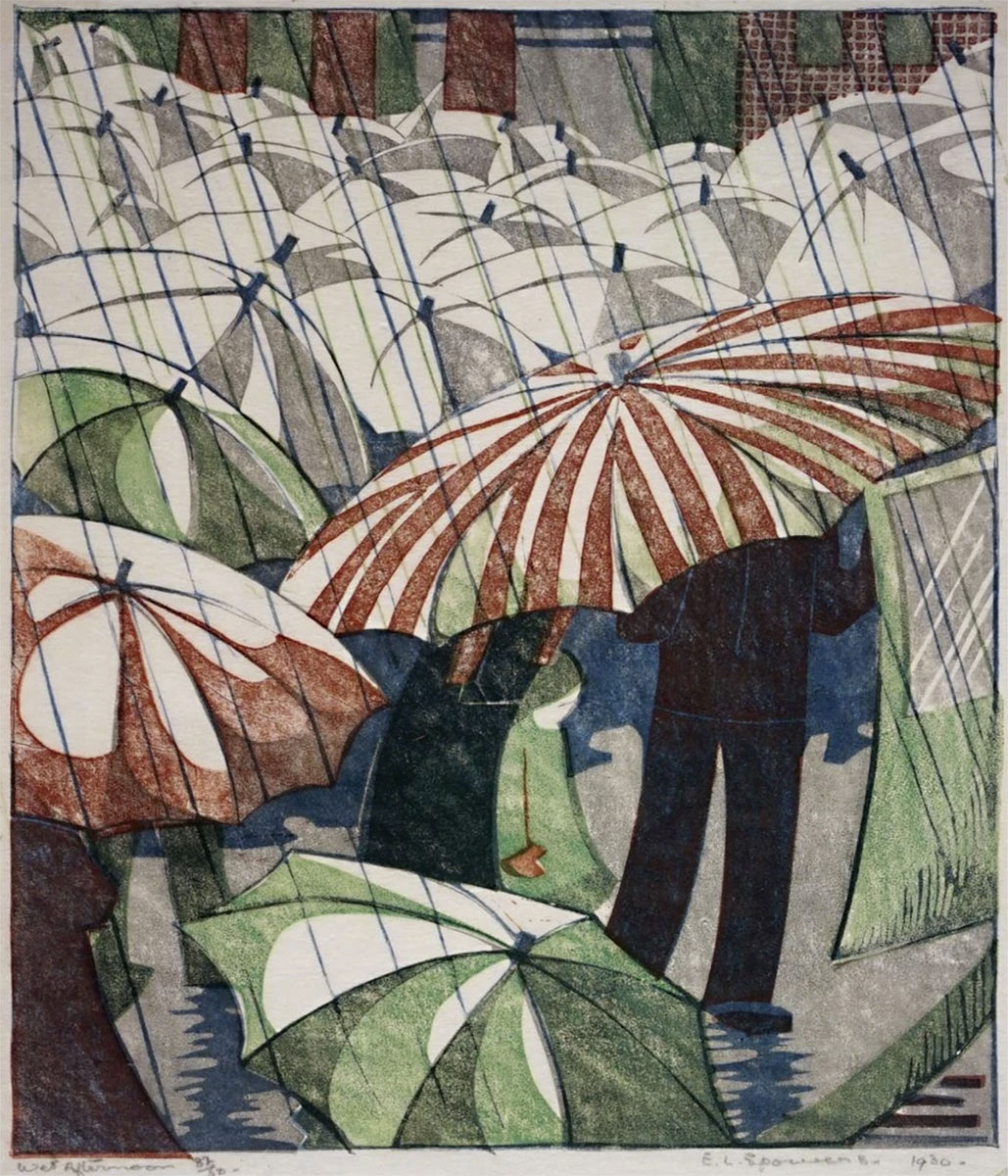
 

Ethel Spowers (Australian, 1890-1947) 'Wet afternoon' 1930


Ethel Spowers (Australian, 1890-1947)
Wet afternoon
1930
Melbourne
Linocut, printed in colour inks, from four blocks
National Gallery of Australia, Kamberri/Canberra
Purchased 1983


Prints, pigments & poison

The vibrant works by Ethel Spowers and Eveline Syme, printed on smooth Japanese gampi papers from 1927 to 1950, demanded special consideration during conservation preparation from the Spowers & Syme exhibition. Andrea Wise, Senior Conservator, Paper, explains the process and details the green pigment with the toxic backstory. …

The typical palette in Spowers & Syme works feature carbon black, yellow and brown ochres, ultramarine, cobalt and cerulean blues, emerald green and two organic lake pigments – alizarin crimson and a distinct lilac. Lake pigments are made by attaching a dye to a base material such as alumina, making a dyestuff into a workable particulate pigment. This process can also extend more expensive dyestuffs, making them cheaper to use. Bound with oil to create printer’s inks, this limited palette was then overprinted to achieve a wider range of colours.

Emerald green commonly recurs throughout the works. A highly toxic vivid green, invented in the 19th century, it was still commercially available until the early 1960s. Many historical pigments are toxic, based on arsenic, mercury and lead.

Today we are increasingly aware of the health and safety issues related to work of art, but this was not always the case. Emerald green belongs to a group of copper acetoarsenate pigments that were extensively used for many household goods including furniture and wallpapers. A similar pigment, Scheele’s green, was used on the wallpaper in Napoleon’s apartments on St Helena and has been suggested as the cause of his death. Large amounts of arsenic (100 times that of a living person) were found on Napoleon’s hair and scalp after he had died. While poisoning theories still abound, it has been confirmed through other medical cases from the period that arsenic dust and fumes would be circulated in damp Victorian rooms sealed tight against the drafts that were thought to promote ill health.

Anonymous text. “Prints, pigments & poison,” on the National Gallery of Australia website Nov 18, 2021 [Online] Cited 30/08/2022
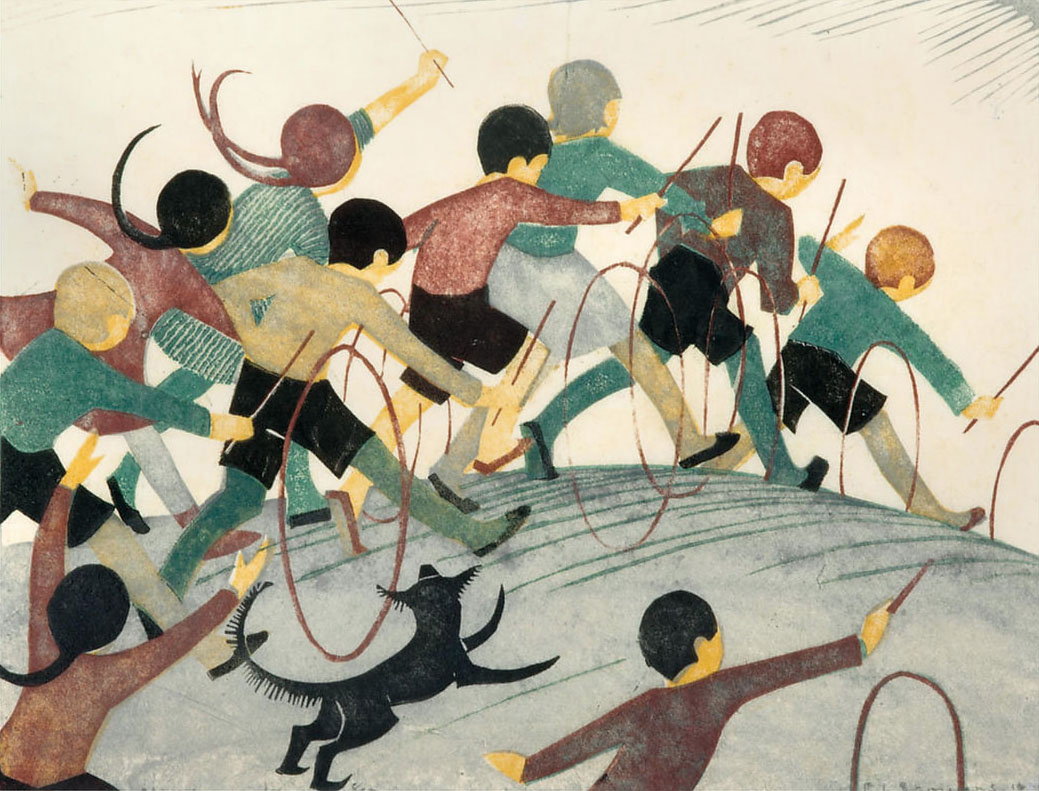
 

Ethel Spowers (Australian, 1890-1947) 'Children's Hoops' 1935


Ethel Spowers (Australian, 1890-1947)
Children’s Hoops
1935
Melbourne
Linocut, printed in colour inks, from five blocks
National Gallery of Australia, Kamberri/Canberra
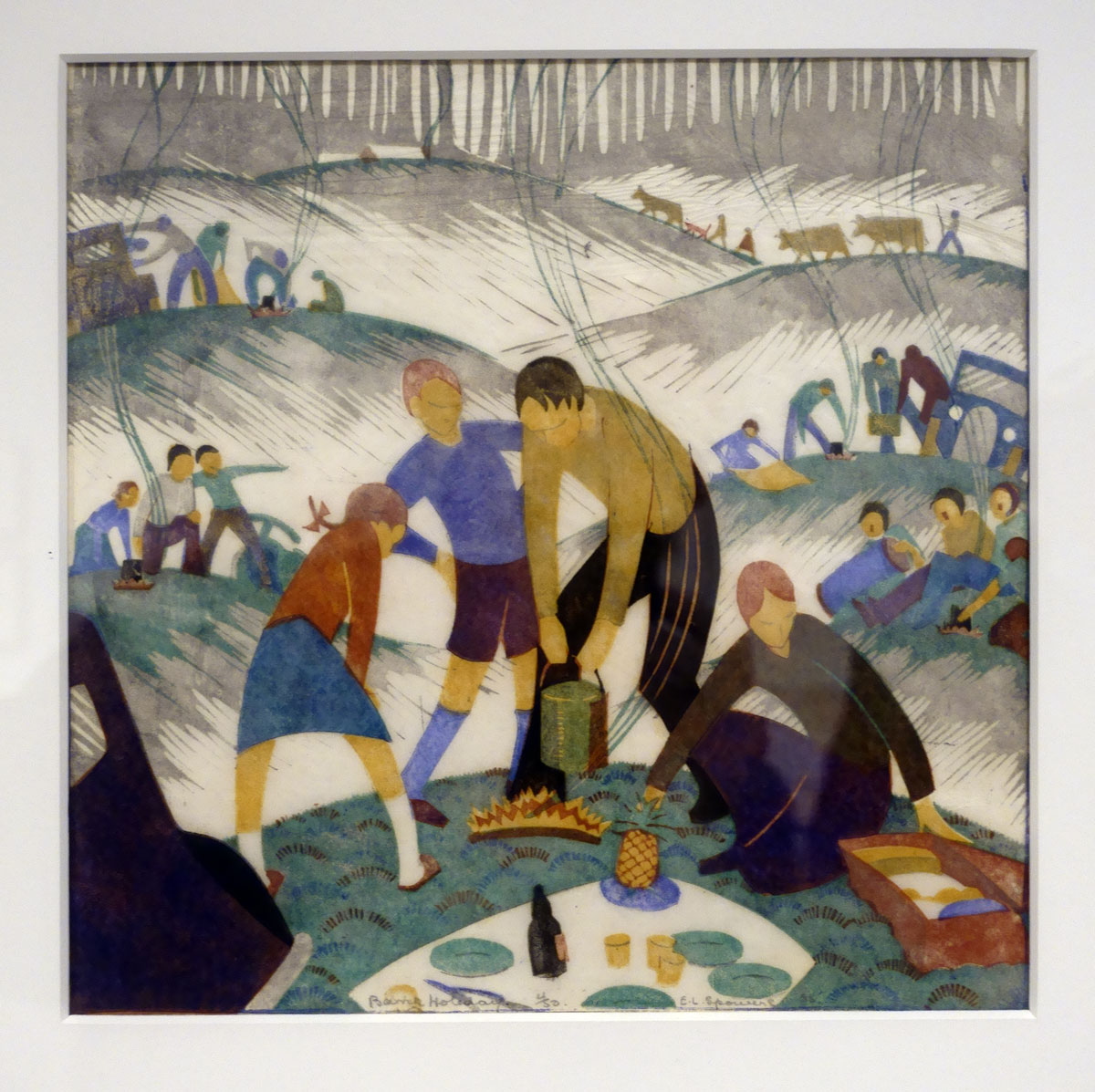
 

Ethel Spowers (Australian, 1890-1947) 'Bank holiday' 1935 (installation view)


Ethel Spowers (Australian, 1890-1947)
Bank holiday (installation view)
1935
Melbourne
Linocut, printed in colour inks, from six blocks
National Gallery of Australia, Kamberri/Canberra
Purchased 1976
Photo: Marcus Bunyan
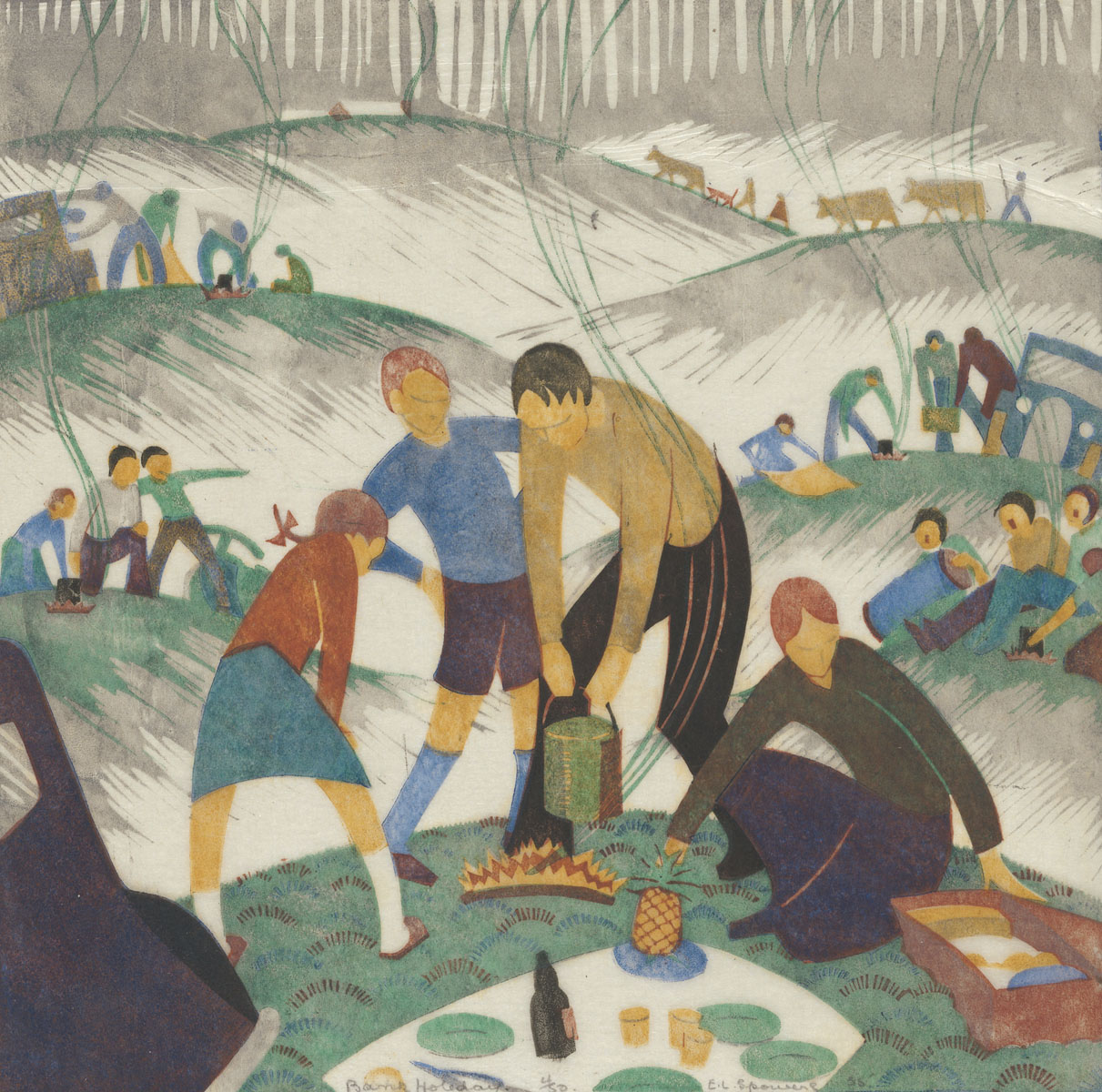
 

Ethel Spowers (Australian, 1890-1947) 'Bank holiday' 1935


Ethel Spowers (Australian, 1890-1947)
Bank holiday
1935
National Gallery of Australia, Kamberri/Canberra
Purchased 1976
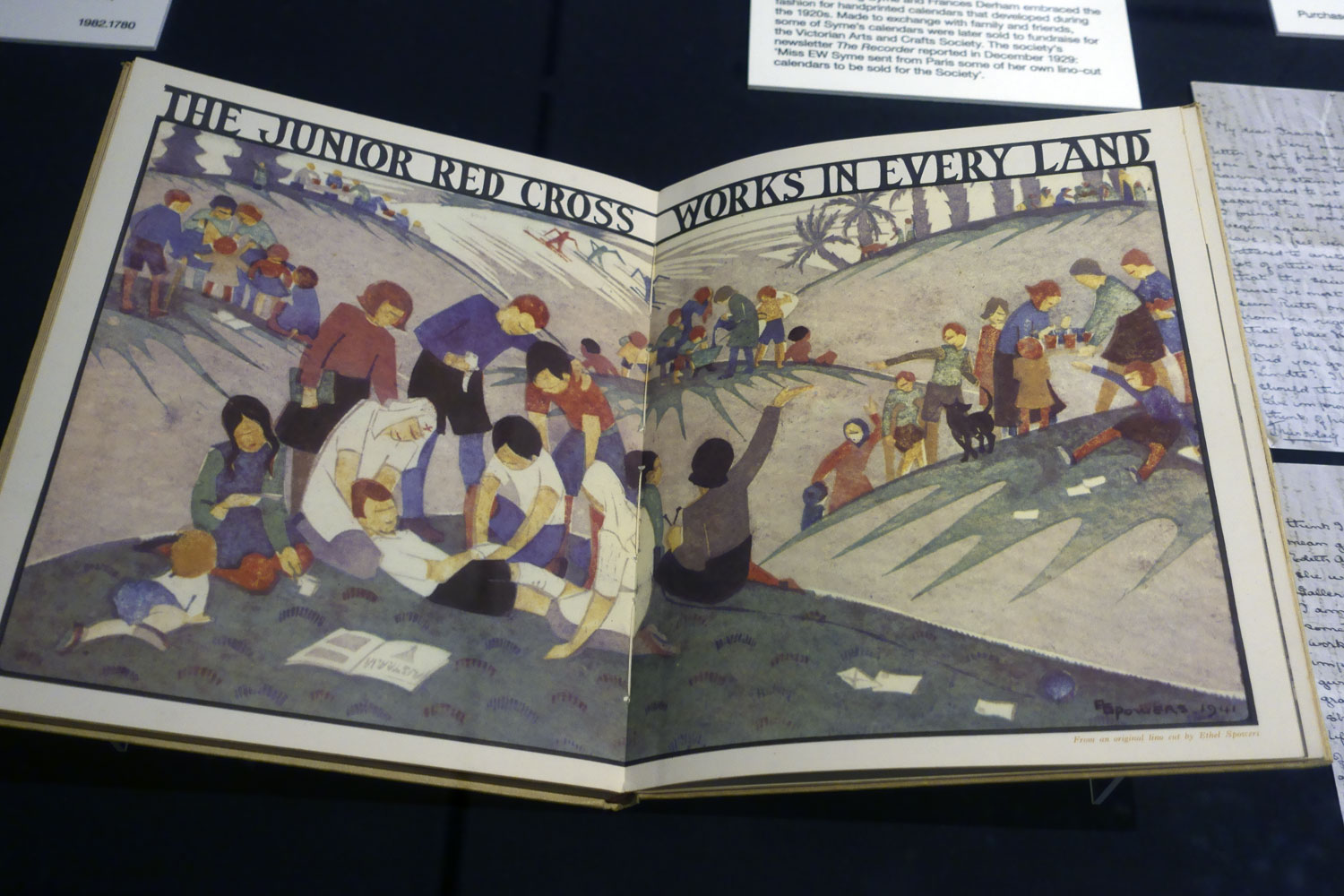
 

Ethel Spowers (Australian, 1890-1947) 'The Junior Red Cross works in every land' 1941 (installation view)


Ethel Spowers (Australian, 1890-1947)
The Junior Red Cross works in every land (installation view)
Linocut, printed in colour, from six blocks
Reproduced in Joan and Daryl Lindsay
The story of the Red Cross Melbourne, 1941
National Gallery of Australia Research Library
Photo: Marcus Bunyan


Powers made one final linocut print around 1941 for inclusion in a published history of the Australian Red Cross Society compiled by Joan and Daryl Lindsay. The Spowers family had a long philanthropic connection with this cause, and Eveline Syme became the first chairperson of the Red Cross Society Picture Library. Reproduced as a lithographic illustration, the long narrow composition is based on the picnicking families in Spowers’ earlier linocut Bank holiday 1935 (see above).

Wall text
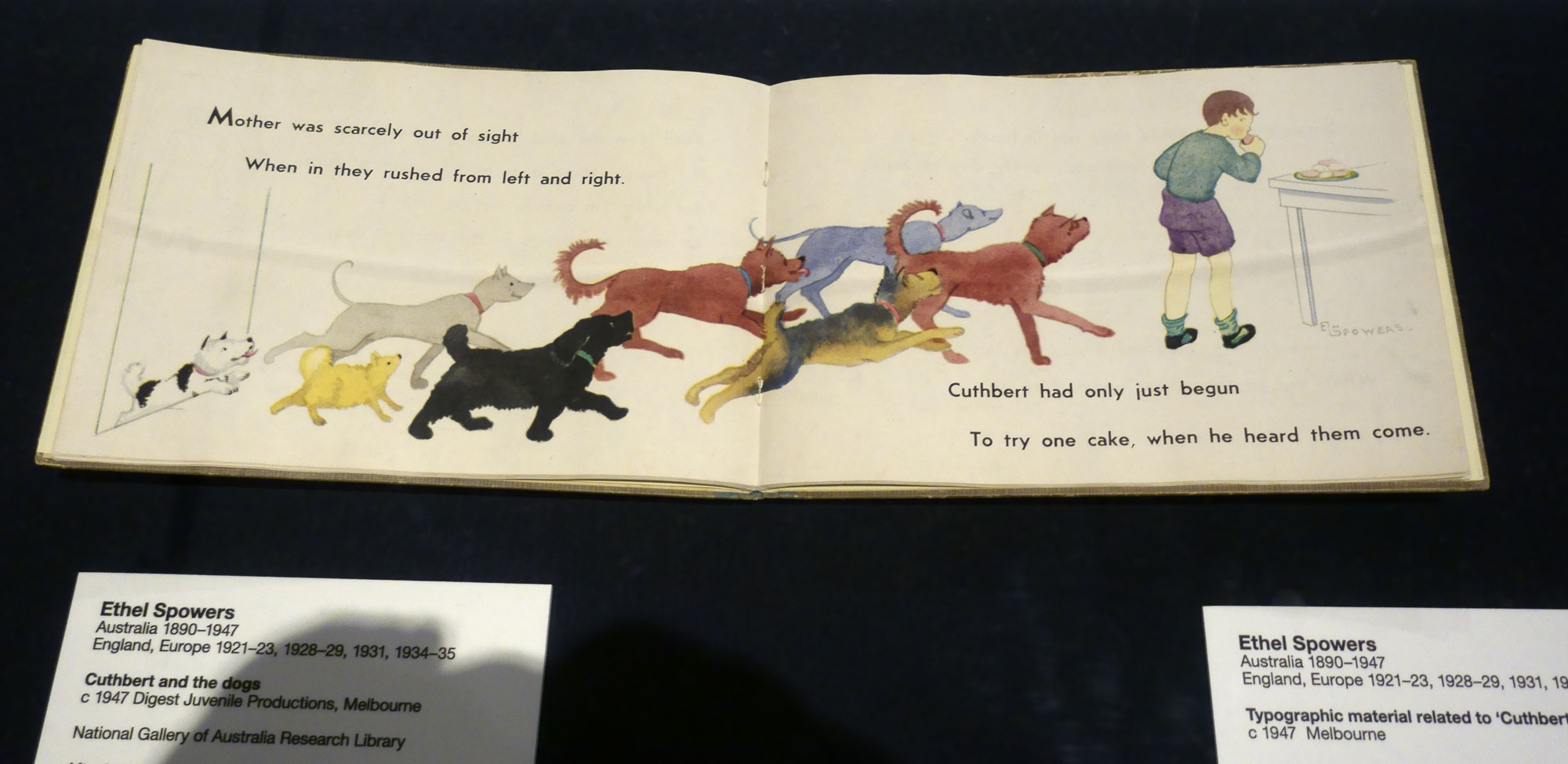
 

Ethel Spowers (Australian, 1890-1947) 'Cuthbert and the dogs' c. 1947 (installation view)


Ethel Spowers (Australian, 1890-1947)
Cuthbert and the dogs (installation view)
c. 1947
Digest Juvenile Productions, Melbourne
National Gallery of Australia Research Library
Photo: Marcus Bunyan


After being diagnosed with breast cancer in the mid-1930s, Spowers stopped printmaking and began a series of short stories for children. During the last decade of her life, she wrote and illustrated at least seven books. Their charm drew on stories the Spowers siblings wrote together as children, yet these were cautionary tales in which youthful characters were often reformed by the results of their actions. Of these, only Cuthbert and the dogs was published.

Wall text


Grosvenor School of Modern Art

This progressive private school was established in 1925 by Scottish wood-engraver Iain Macnab at 33 Warwick Square in Pimlico. Formerly the London studio and house of Scottish portraitist James Rannie Swinton, the ground-floor interior was repurposed into studios for tuition in drawing, painting and composition, with the basement set up for lithography, etching and block printing. With no entrance examinations or fixed terms, students could attend classes at any time by purchasing a book of fifteen tickets, with each ticket permitting entry to a two-hour session.

Merchant hand-selected a small team of similarly anti-academic staff, including Claude Flight. For five years Flight taught weekly afternoon classes on colour linocuts. He emphasised that art must capture the vitality of the machine age and taught his students a new way of seeing that analysed the activities of urban life and condensed these into dynamic compositions bursting with rhythm and energy.
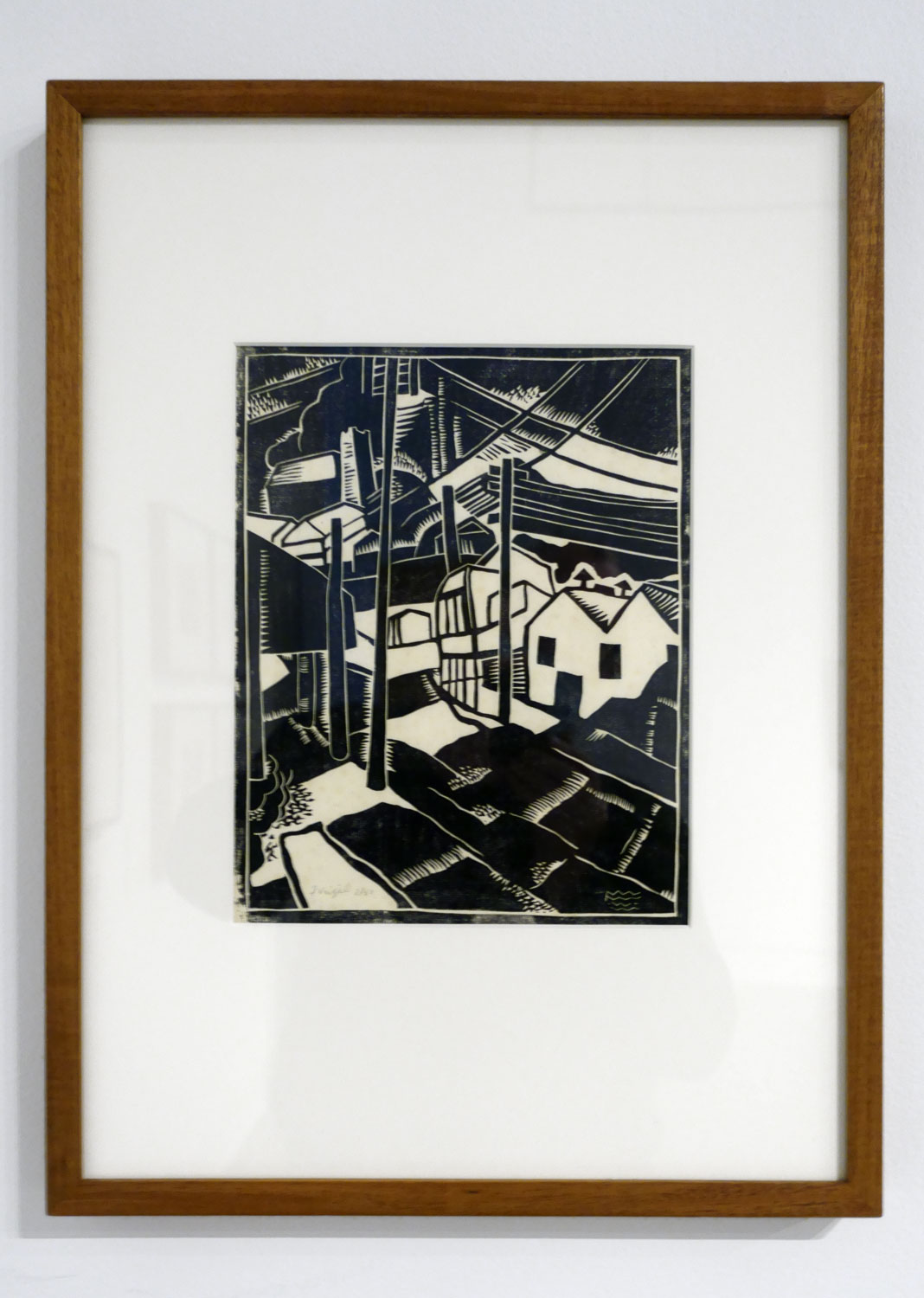
 

Frank Weitzel (New Zealand, 1905 - England 1932) 'Slum street' c. 1929 (installation view)


Frank Weitzel (New Zealand, 1905 – England 1932)
Slum street (installation view)
c. 1929
Sydney
Linocut, printed in black ink, from one block
National Gallery of Australia, Kamberri/Canberra
Purchased 1993
Photo: Marcus Bunyan


The son of German immigrants, Weitzel has a volatile upbringing in Aotearoa New Zealand where his father interned as an enemy alien. At the age of 16, Wentzel emigrated with his mother to the united States of America, where he studied sculpture in California. After travels through Europe, he relocated to Sydney in 1928 were he produced a series of linocuts in response to the city and was invited by Dorrit Black to exhibit with the Group of Seven. Black arranged for Wentzel to meet Claude Flight in London in 1930; Flight included his prints in the annual linocut exhibitions at Redfern Gallery in 1930 and 1931.

Wall text


Frank Weitzel was known mainly as a sculptor but in his studio over Grubb’s butcher shop at Circular Quay, he worked in the tradition of the artist-craftsman, producing linocut batik shawls and wall-hangings, lamp shades, book-ends etc. He also played violin in the Conservatorium Orchestra and designed a modern room (with Henry Pynor) at the Burdekin House Exhibition in 1929. In 1931, looking for work in London he sought out David Garnett, a publisher and member of the Bloomsbury Group of artist-craftsman. While Garnett was not interested in Weitzel’s drawings for publication, he became an admirer of his sculpture and invited Weitzel to care-take his property ‘Hilton Hall’ and commissioned him to do heads of children. Weitzel came to be praised also by Jacob Epstein, Roger Fry, Paul Nash and Duncan Grant. Garnett describes Weitzel in his autobiography as “small, thin, with frizzy hair which stood piled up on his head, blue-eyed, with a beaky nose. I guessed he was not eating enough… He was proletarian, rather helpless, very eager about art and also about communism”. At around this time Weitzel wrote to Colin Simpson back in Australia, “Now I am working on a show of my own which is being arranged for me by some terrific money bags”. The exhibition was never held. Weitzel contracted tetanus apparently from minerals which got under his finger nails while digging for clay for his sculptures. He died on the 22 February 1932 at the age of 26. A posthumous exhibition was organised by Dorrit Black at the Modern Art Centre, 56 Margaret Street, Sydney, on the 7 June 1933- opened by another supporter of modernism, the artist John D. Moore. The works had been brought back to Sydney by Weitzel’s sister Mary, who had travelled to England to collect them. This small show (41 works) included illustrations to a poem by Weitzel, poster designs for the Empire Marketing Board, Underground Railways, Shell Motor Spirit, Barclay’s Lager and the Predential Insurance Company, as well as sculpture, drawings and linocuts which had been exhibited with Grosvenor School artists in London.

Anonymous text. “Frank Weitzel (1905-1932),” on the Christie’s website Nd [Online] Cited 28/08/2022
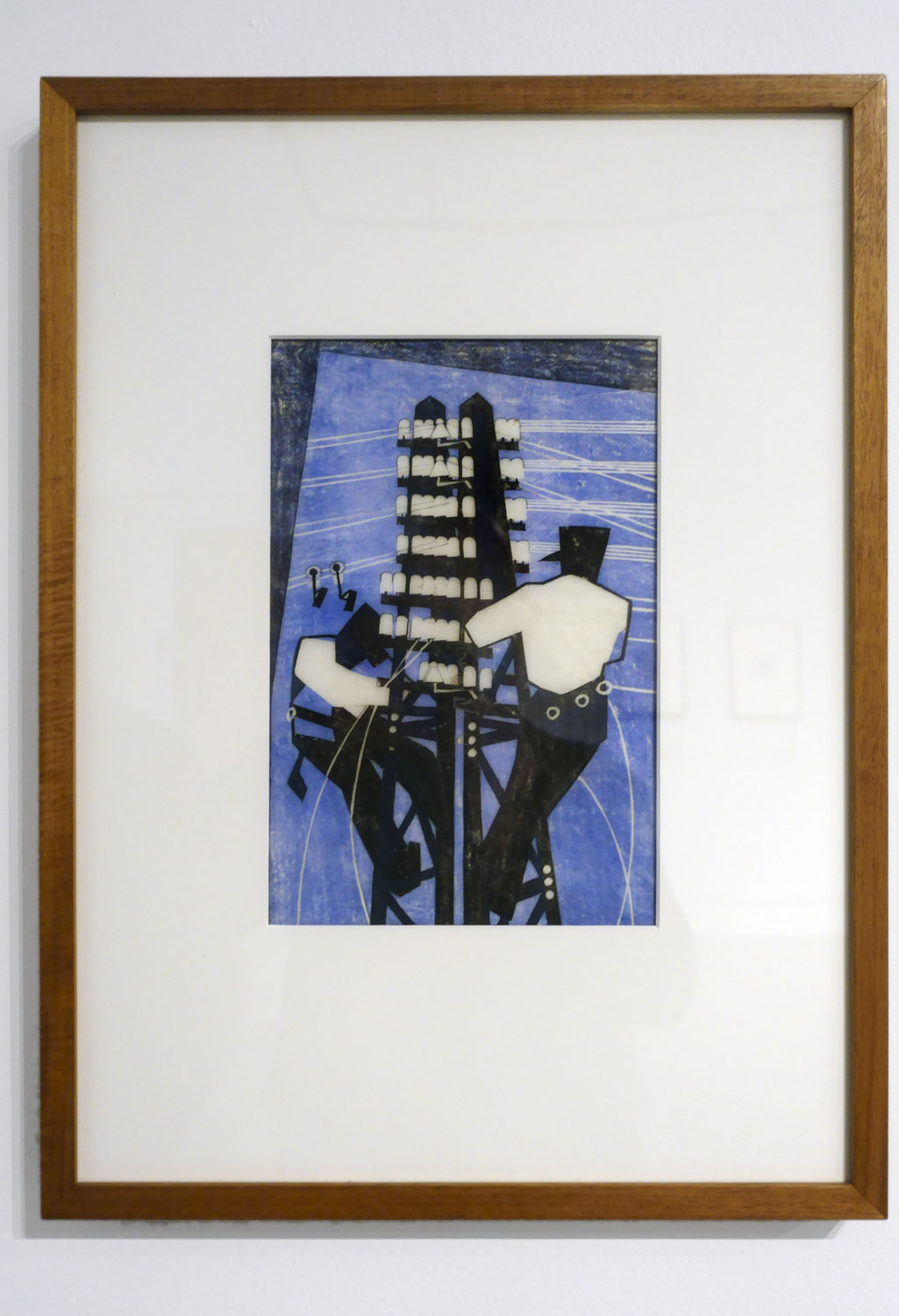
 

Lill Tschudi (Swiss, 1911-2004) 'Fixing the wires' 1932 (installation view)


Lill Tschudi (Swiss, 1911-2004)
Fixing the wires (installation view)
1932
London
Linocut, printed in colour inks, from two blocks
National Gallery of Australia, Kamberri/Canberra
Gift of the artist 1990
Photo: Marcus Bunyan


In December 1929, at the age of 18, Tschudi enrolled at the Grosvenor School of Modern Art where she studied under Claude Flight for six months. She also studied in Paris with progressive teachers including André Lhote. Flight was a lifelong supporter of Tschudi and using Fixing the wires as an empale in his 1934 textbook on linocut techniques nothing that ‘the most important point to consider … is the arrangement whereby each colour block is considered as a space-filling whole, as well as part of the final composition made up of the superimposition of all the colour harmonies’.

Wall text
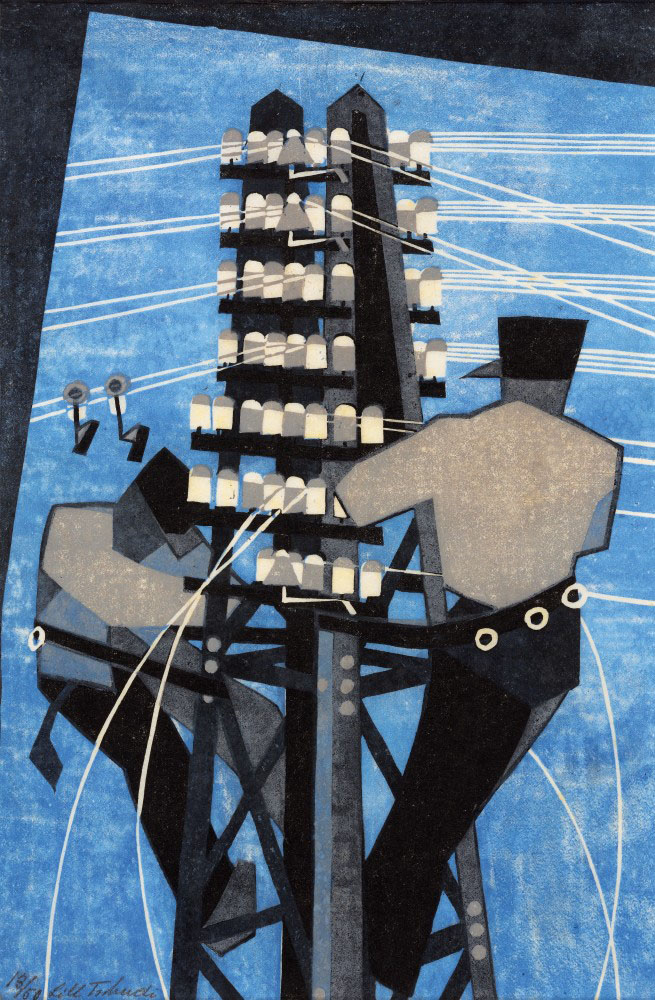
 

Lill Tschudi (Swiss, 1911-2004) 'Fixing the wires' 1932


Lill Tschudi (Swiss, 1911-2004)
Fixing the wires
1932
London
Linocut, printed in colour inks, from two blocks
National Gallery of Australia, Kamberri/Canberra
Gift of the artist 1990
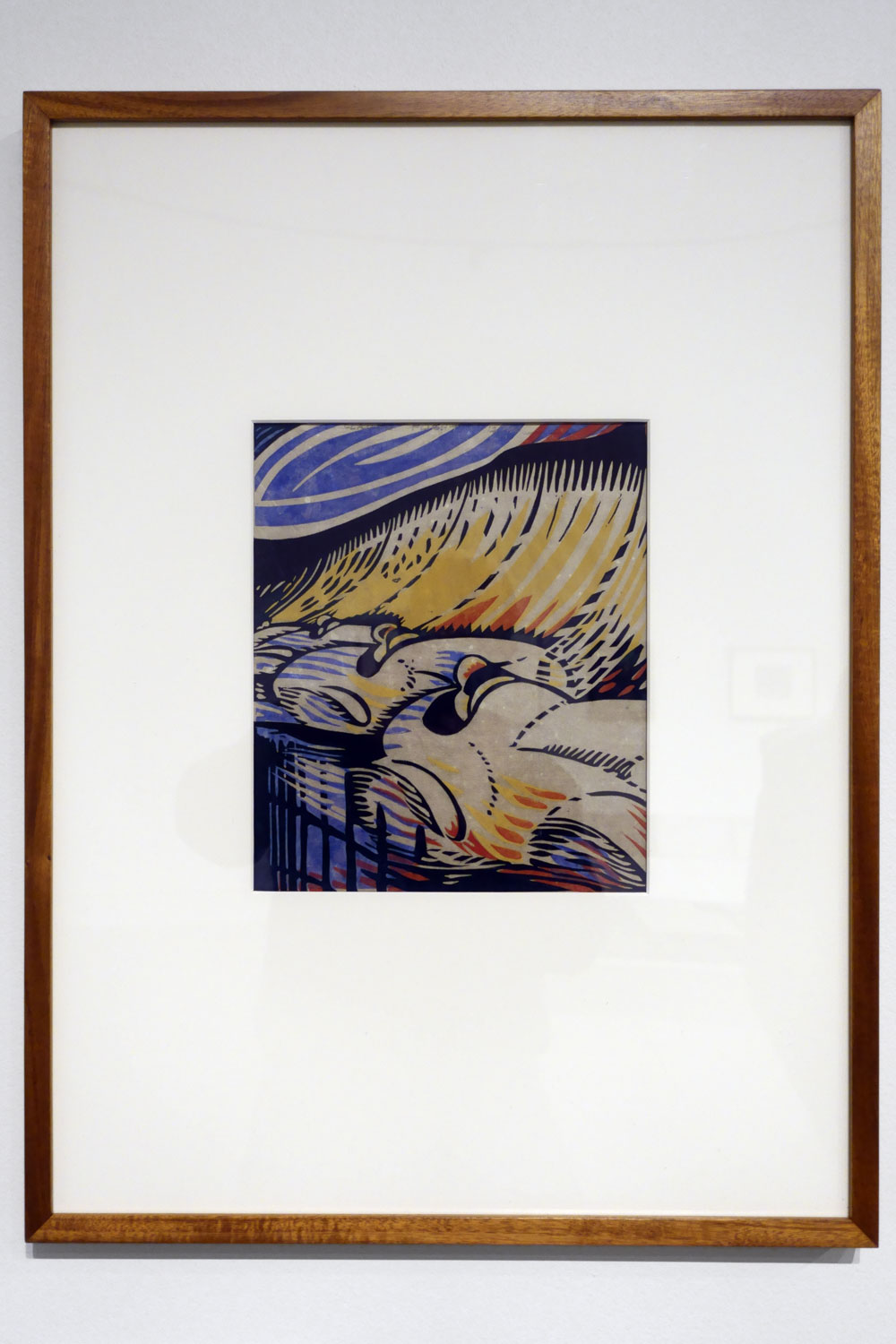
 

Claude Flight (English, 1881-1955) 'Brooklands' c. 1929 (installation view)


Claude Flight (English, 1881-1955)
Brooklands (installation view)
c. 1929
London
Linocut, printed in colour inks, from four blocks
National Gallery of Australia, Kamberri/Canberra
Purchased 1978
Photo: Marcus Bunyan


At the Grosvenor School of Modern Art in London, Claude Flight taught his students the art of the modern colour linocut. He emphasised the importance of composition, building his images of urban life out of simplified form and pattern. Flight’s own practice drew on an exciting mix of avant-garde ideas: from the abstraction of British Vorticism to the dynamism of Italian Futurism to the bold geometric energy of Art Deco and the Arts and Crafts Movement’s emphasis on the handmade.

Wall text
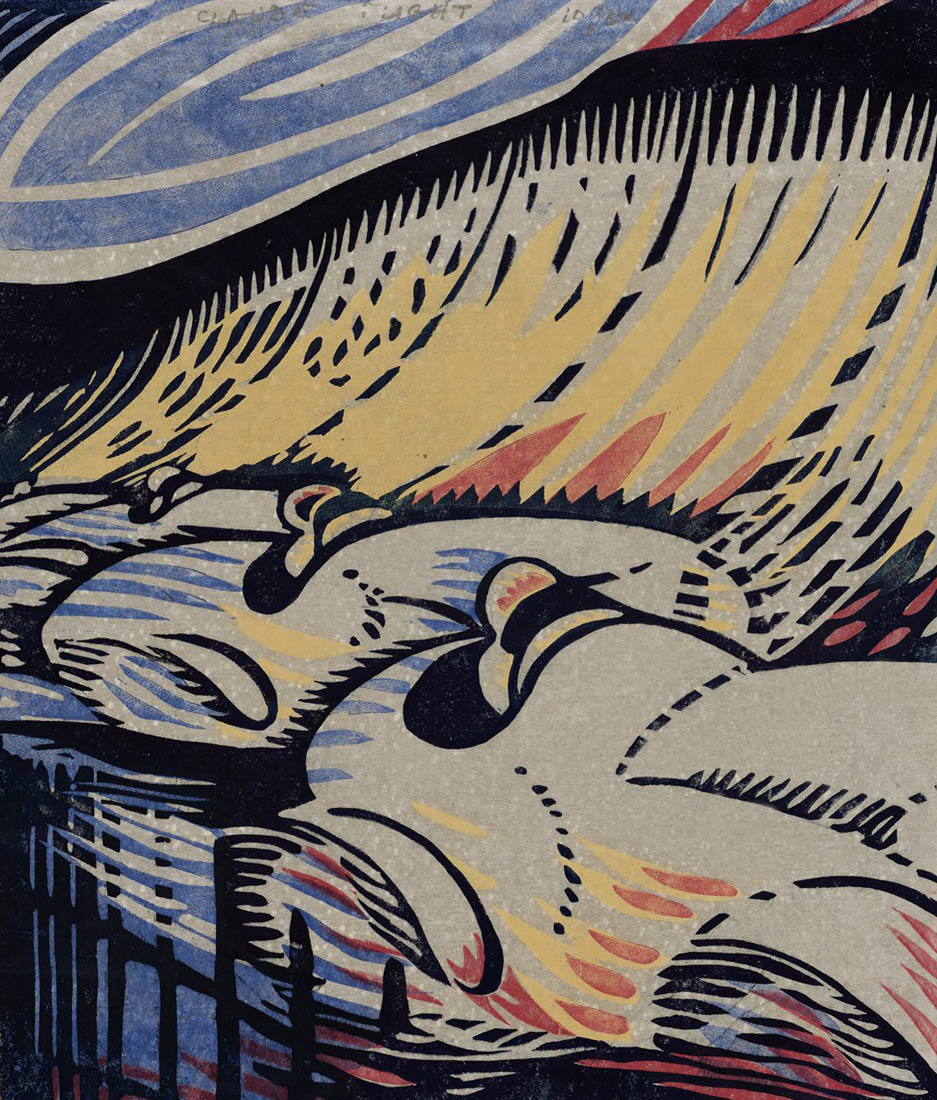
 

Claude Flight (English, 1881-1955) 'Brooklands' c. 1929


Claude Flight (English, 1881-1955)
Brooklands
c. 1929
London
Linocut, printed in colour inks, from four blocks
National Gallery of Australia, Kamberri/Canberra
Purchased 1978
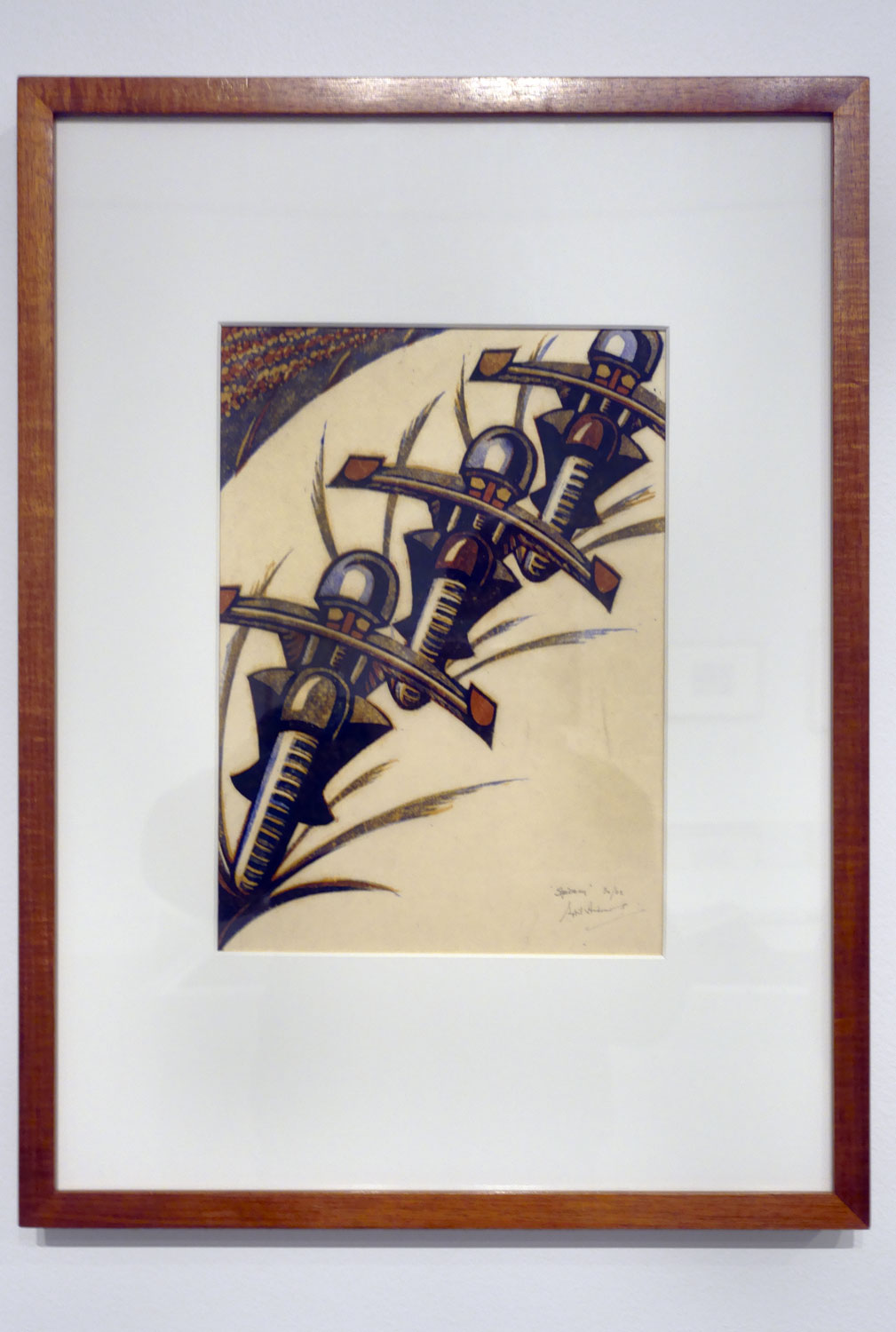
 

Sybil Andrews (English-Canadian, 1898-1992) 'Speedway' 1934 (installation view)


Sybil Andrews (English-Canadian, 1898-1992)
Speedway (installation view)
1934
London
Linocut, printed in colour inks, from four blocks
National Gallery of Australia, Kamberri/Canberra
Purchased 1978
Photo: Marcus Bunyan


Andrews first studied art by correspondence while working as a welder at an airbase in bristol during the First World War. After meeting her mentor Cyril Power in Bury St Edmonds, they moved to London to study art before Andrews joined the Grosvenor School of Modern Art as a school secretary. Like Flight, Andrews and Power believed that art should reflect the spirit of the time. Andrews showed her work in joint exhibitions with Power at Redfern Gallery, and often explored the them of manual about. She left London in 1938 and emigrated to Canada with her husband Walter Morgan in 1947, where she eventually established a practice as artist and teacher.

Wall text
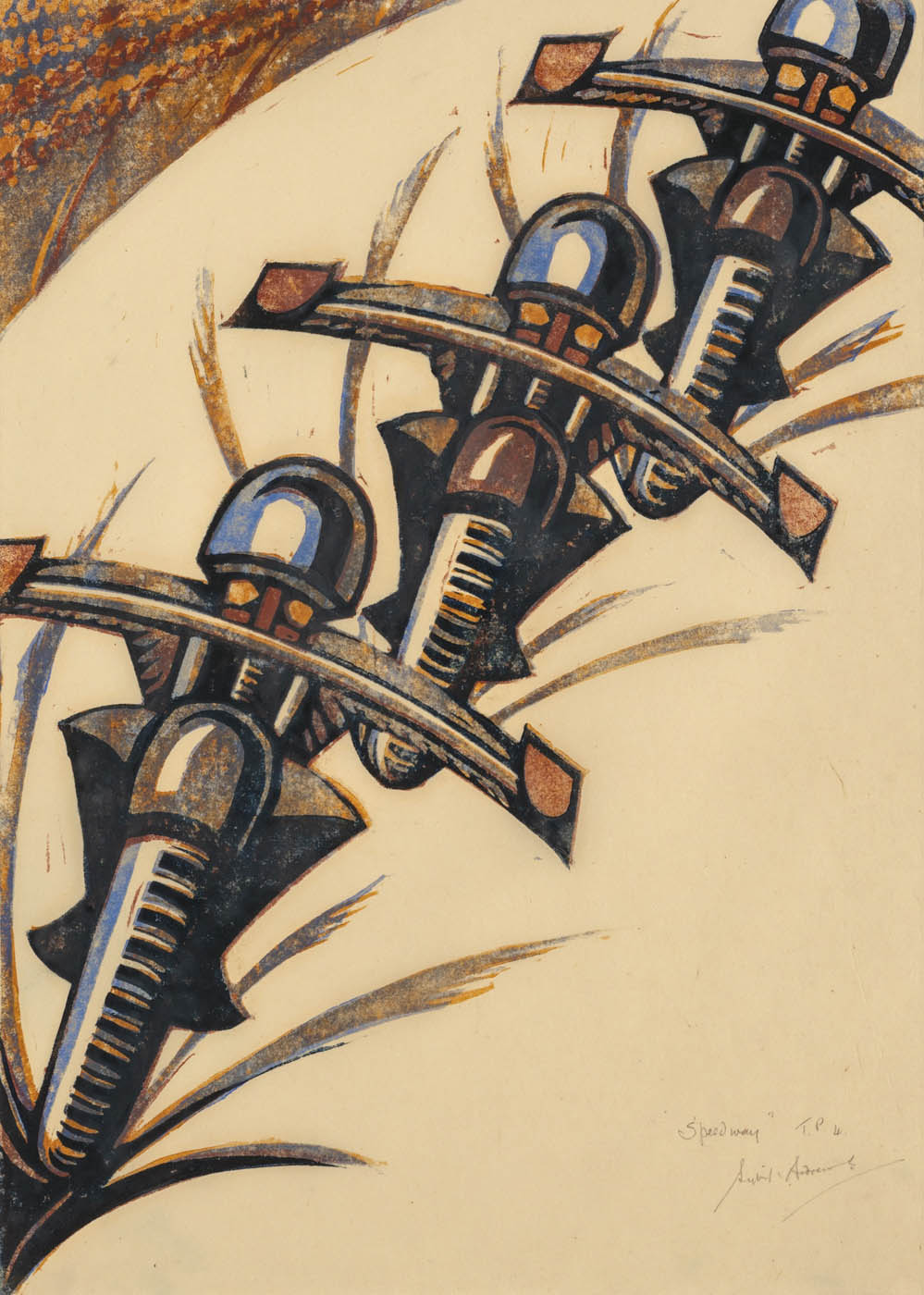
 

Sybil Andrews (English-Canadian, 1898-1992) 'Speedway' 1934


Sybil Andrews (English-Canadian, 1898-1992)
Speedway
1934
London
Linocut, printed in colour inks, from four blocks
National Gallery of Australia, Kamberri/Canberra
Purchased 1978
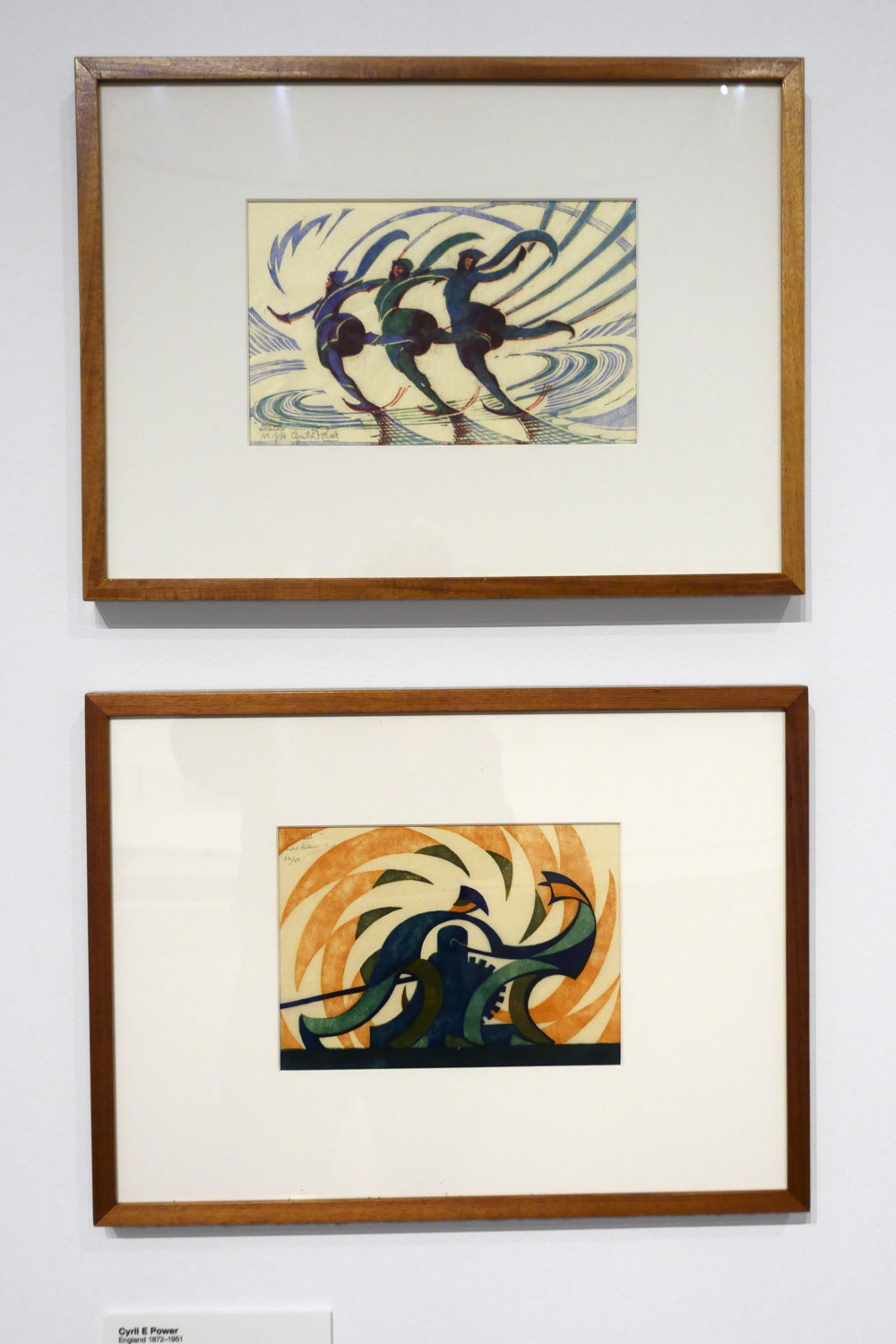
 

Cyril E Power (English, 1872-1951) 'Skaters' c. 1932 and Sybil Andrews (English-Canadian, 1898-1992) 'The winch' 1930 (installation view)


Cyril E Power (English, 1872-1951)
Skaters (installation view)
c. 1932
London
Linocut, printed in colour inks, from three blocks
National Gallery of Australia, Kamberri/Canberra
Purchased 1978

Sybil Andrews (English-Canadian, 1898-1992)
The winch (installation view)
1930
London
Linocut, printed in colour inks, from three blocks
National Gallery of Australia, Kamberri/Canberra
Purchased 1978
Photo: Marcus Bunyan
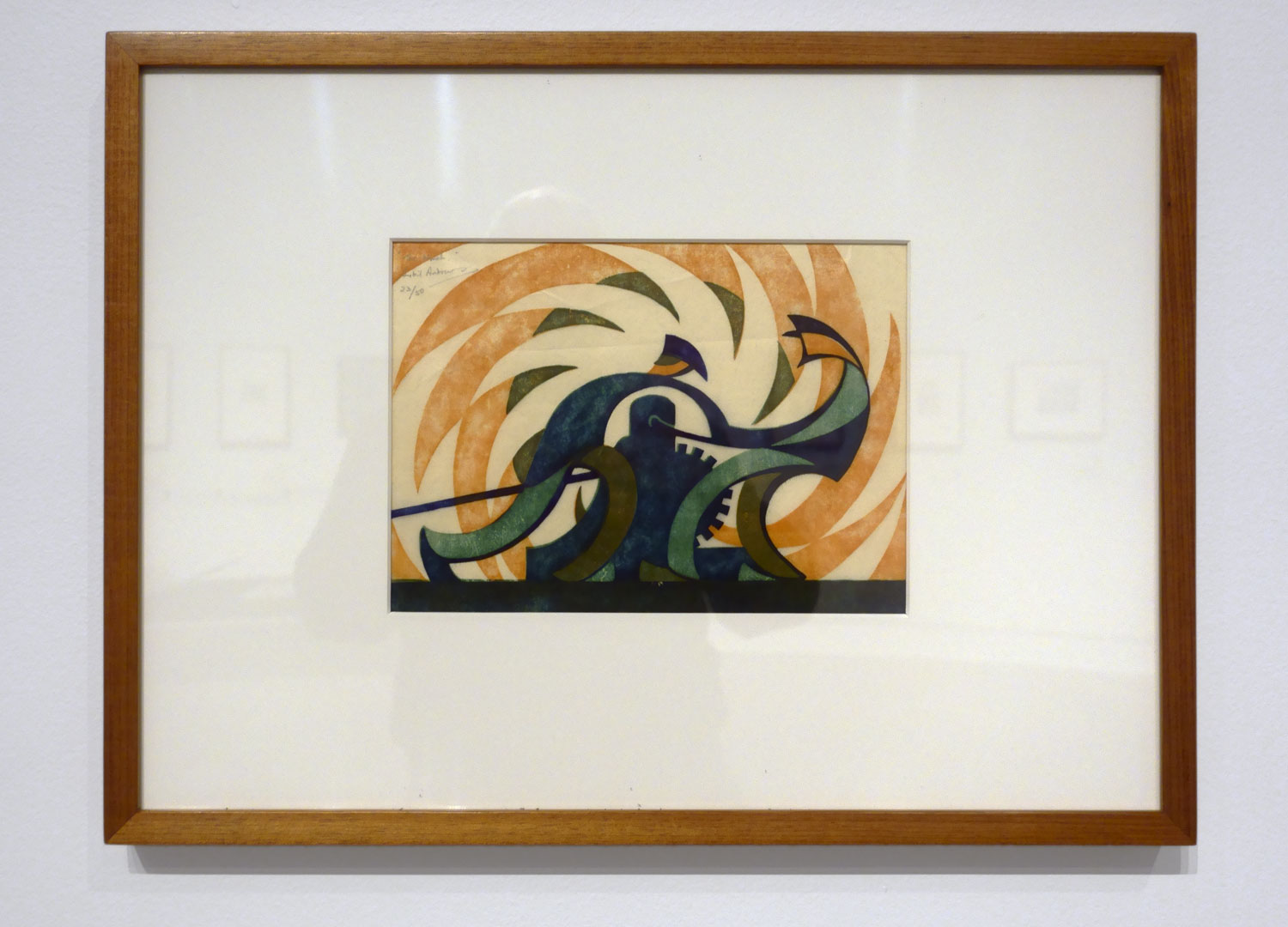
 

Sybil Andrews (English-Canadian, 1898-1992) 'The winch' 1930 (installation view)


Sybil Andrews (English-Canadian, 1898-1992)
The winch (installation view)
1930
London
Linocut, printed in colour inks, from three blocks
National Gallery of Australia, Kamberri/Canberra
Purchased 1978
Photo: Marcus Bunyan
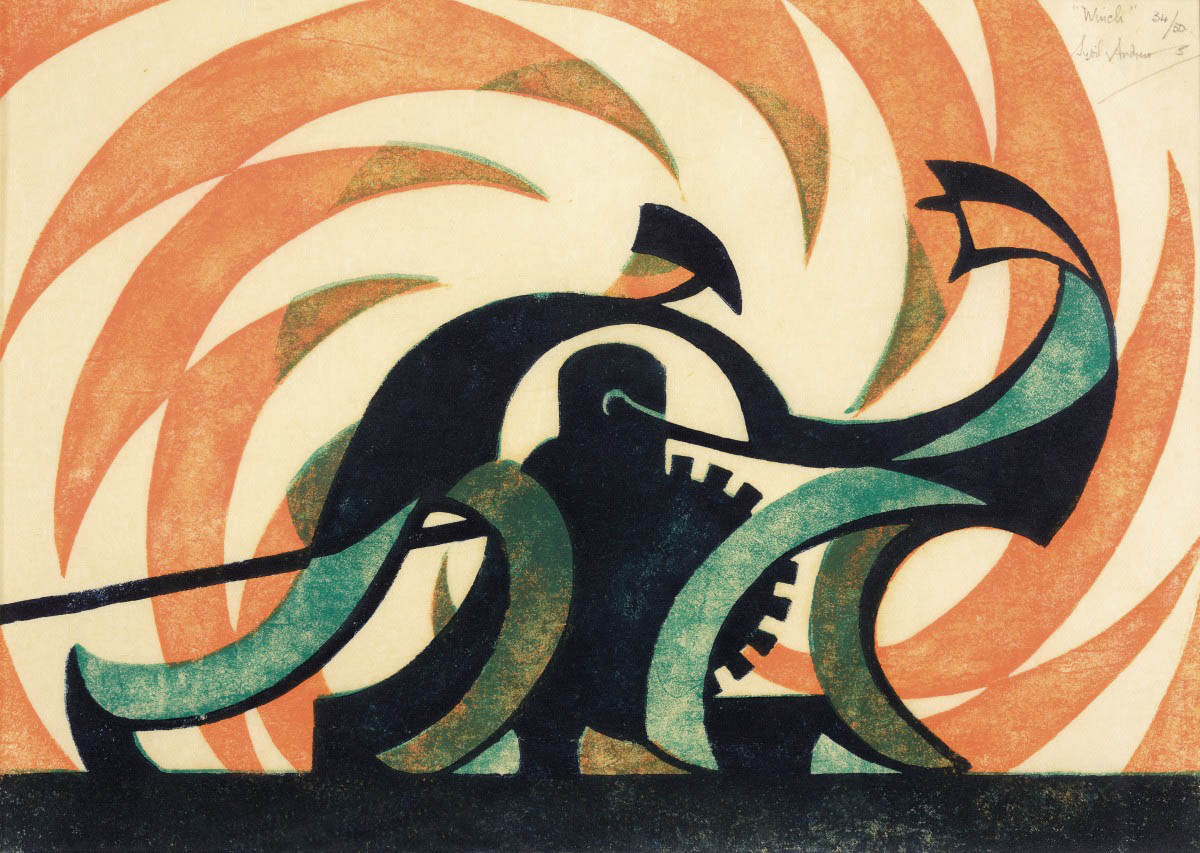
 

Sybil Andrews (English-Canadian, 1898-1992) 'The winch' 1930


Sybil Andrews (English-Canadian, 1898-1992)
The winch
1930
London
Linocut, printed in colour inks, from three blocks
National Gallery of Australia, Kamberri/Canberra
Purchased 1978
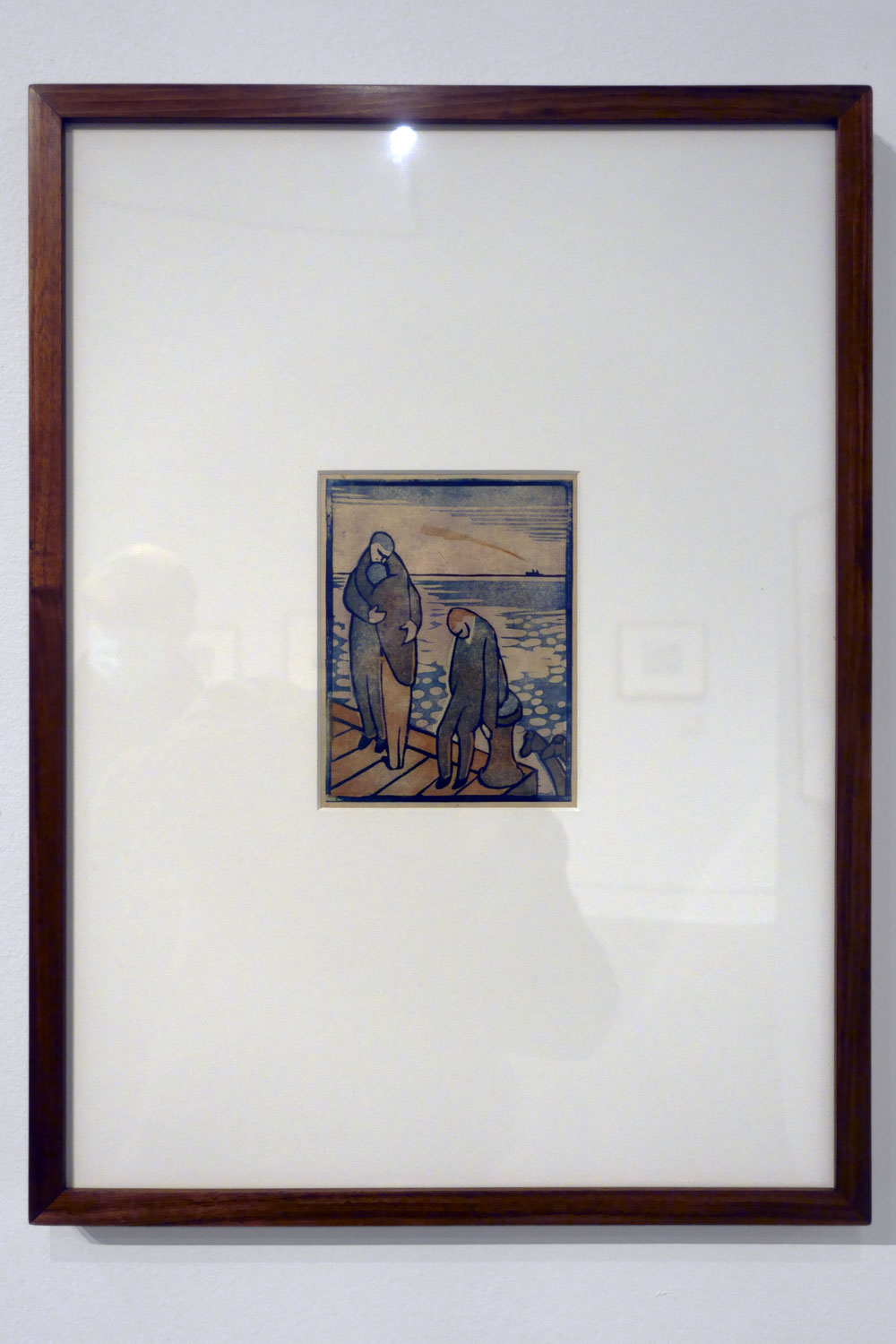
 

George Bell (Australian, 1876-1966) 'The departure' 1931 (installation view)


George Bell (Australian, 1876-1966)
The departure (installation view)
1931
Melbourne
Linocut, printed in colour inks, from three blocks
National Gallery of Australia, Kamberri/Canberra
Gift of Mrs B Niven 1988
Photo: Marcus Bunyan


Geelong Art Gallery
Little Malop Street
Geelong, Victoria
Australia 3220
Phone: +61 3 5229 3645

Opening hours:
Daily 10am – 5pm

Geelong Art Gallery website

LIKE ART BLART ON FACEBOOK

Back to top

Review: ‘Found and Gathered: Rosalie Gascoigne | Lorraine Connelly-Northey’ at The Ian Potter Centre: NGV Australia, Federation Square, Melbourne

Exhibition dates: 30th October, 2021 – 20th February, 2022


Greg Weight. 'Rosalie Gascoigne' 1993 (detail) and Jules Boag. 'Portrait of Lorraine Connelly-Northey' Nd  (detail)


Image left: Greg Weight
Rosalie Gascoigne (detail)
1993
Gelatin silver photograph on paper
Image: 45.5 x 35.6cm
Sheet: 50.4 x 40.4cm
National Portrait Gallery, Australia
Gift of Patrick Corrigan AM 2004. Donated through the Australian Government’s Cultural Gifts Program.
© Gregory Weight/Copyright Agency, 2021

Image right: Jules Boag
Portrait of Lorraine Connelly-Northey (detail)
Courtesy of Jules Boag
© Jules Boag


Synergy. Now’s there’s an interesting word. It means “the interaction or cooperation of two or more organisations, substances, or other agents to produce a combined effect greater than the sum of their separate effects.” It derives from mid 19th century: from Greek sunergos ‘working together’, from sun- ‘together’ + ergon ‘work’. Thus, this glorious exhibition brings together two artists metaphorically “working together” under the Australian sun… even as they are separated by culture, location, time and space.

Their work comes together in a confluence of ideas of approximately equal width – one grounded in stories of family and Country thousands of years old, the artist investigating post-colonial settlement and the industrial world and interpreting Australian Indigenous objects of ritual and culture; the other not so much grounded but playing with Western ideas of pattern and randomness, belonging, and the metaphysical space of the landscape of the Monaro, in the southwest of New South Wales. Both points of view are equally valid and have important things to say about our various relationships to the land (both Indigenous and colonial) and the “creation” of a contemporary Australian national identity.

Both artists use found objects in their work, but as Russell-Cook points out, “I think that what unites the two artists is the shared materials they use, but not a ‘shared-use of materials.’ They are both fascinated by the artistic possibilities of found objects, but they use those materials to tell contrasting stories.” Connelly-Northey uses her experience of living on Country and her gleaning of discarded objects in Country to gather up the threads of her multiple heritages and Aboriginal custodianship of the land to picture – through the merging of organic and inorganic forms – the disenfranchisement of her people but also to celebrate their deep roots in Country. Gascoigne on the other hand is the more ethereal of the two artists, concerned as she is with light, land, spirit of place and the rightness of materials being used. Hers is a very structured and formal art practice grounded in her training in the Japanese art of ikebana and her understanding of Minimalism. Sympathetically, through their individual creativity both artists transmute (to change in form, nature, or substance) the reality of the materials they work with, the raw material of experience transmuted into stories. As Rozentals and Russell-Cook observe, “Both Connelly-Northey and Gascoigne’s work is defined by, and yet transcends, its sense of materiality.”

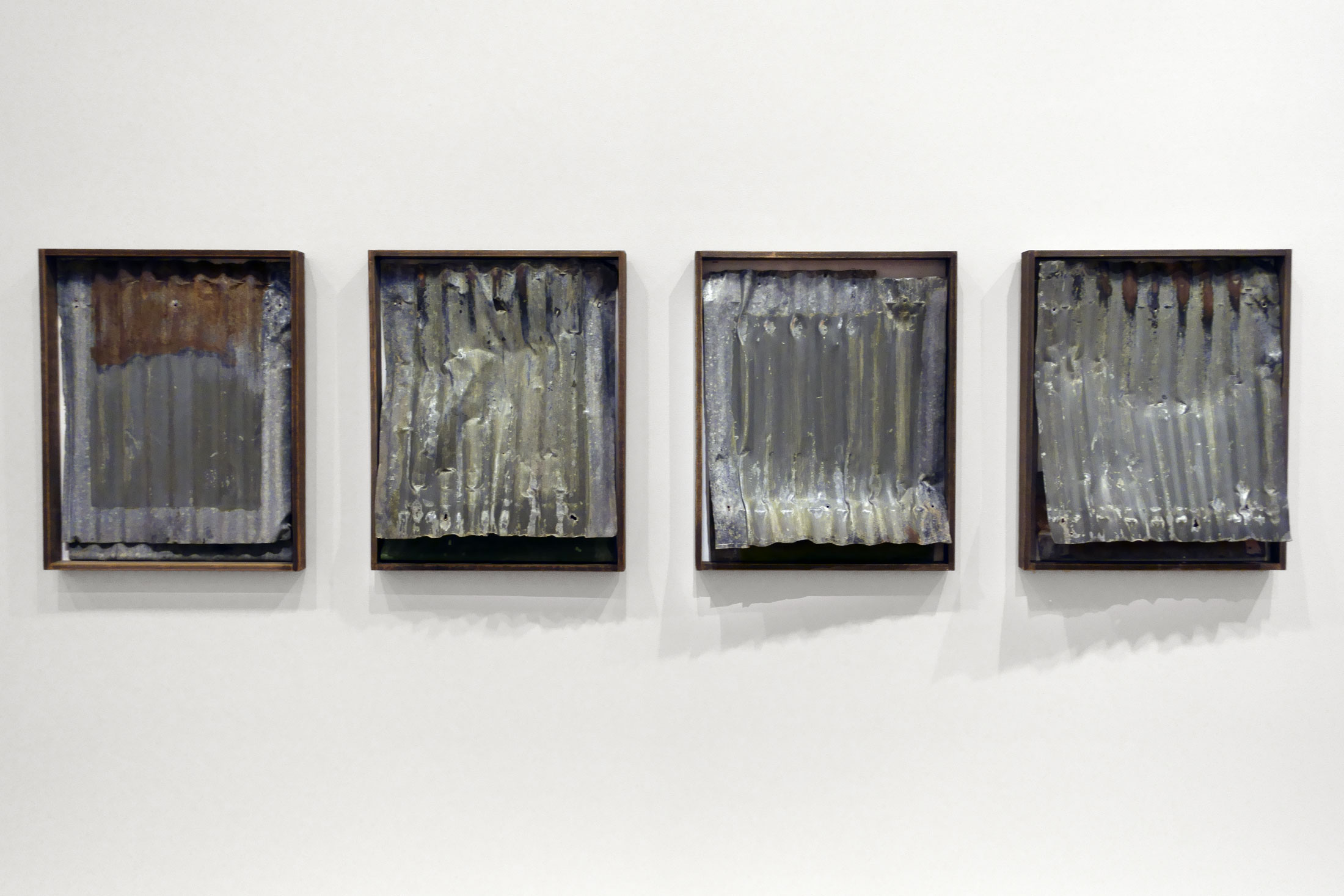
Two things jar slightly. Connelly-Northey is ‘a bit anxious’ that her Indigenous originality won’t be recognised and that “I’ve worked too hard for people to think I borrowed it all from Rosalie. Our use of corrugated iron is the only thing we have in common.”

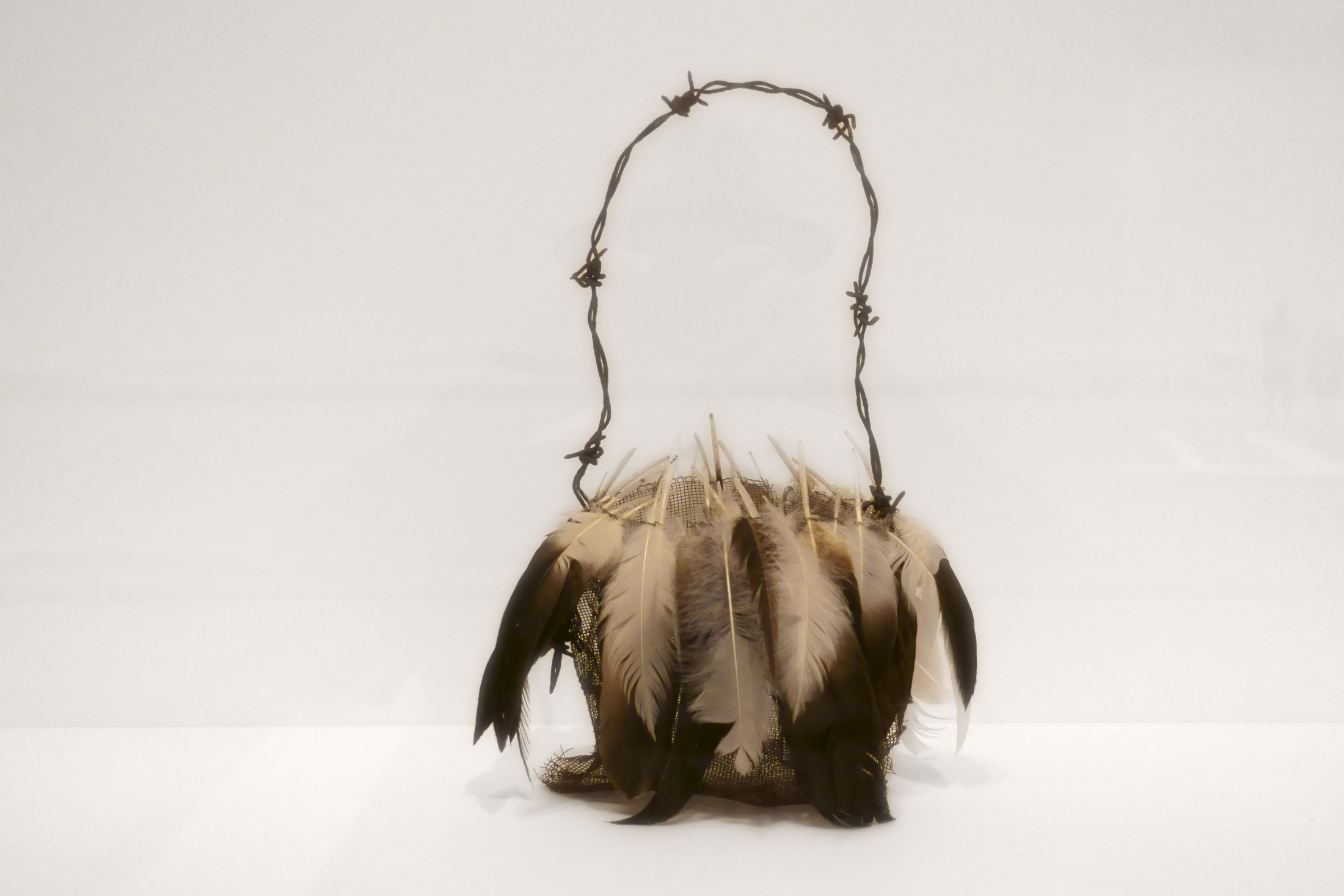
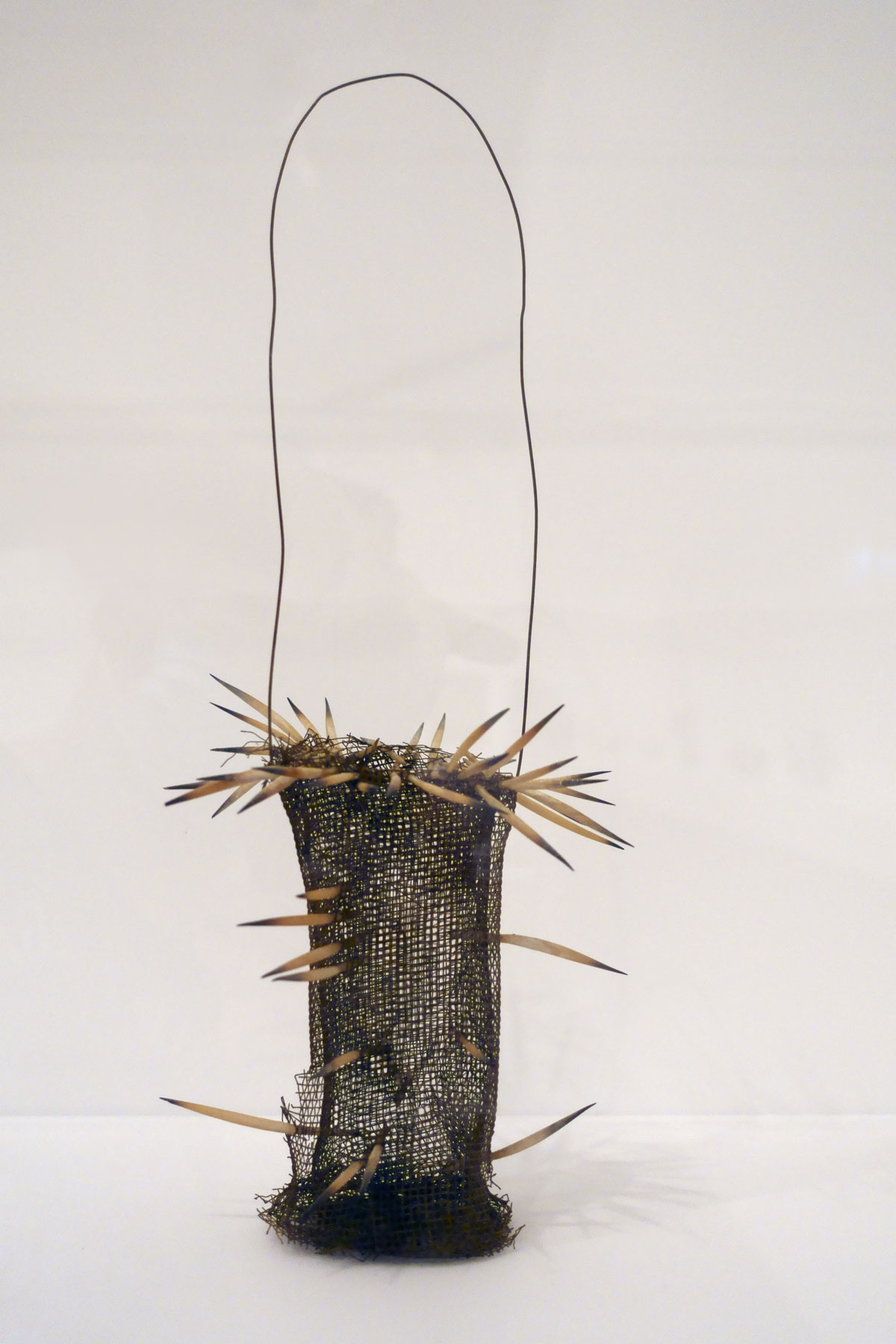
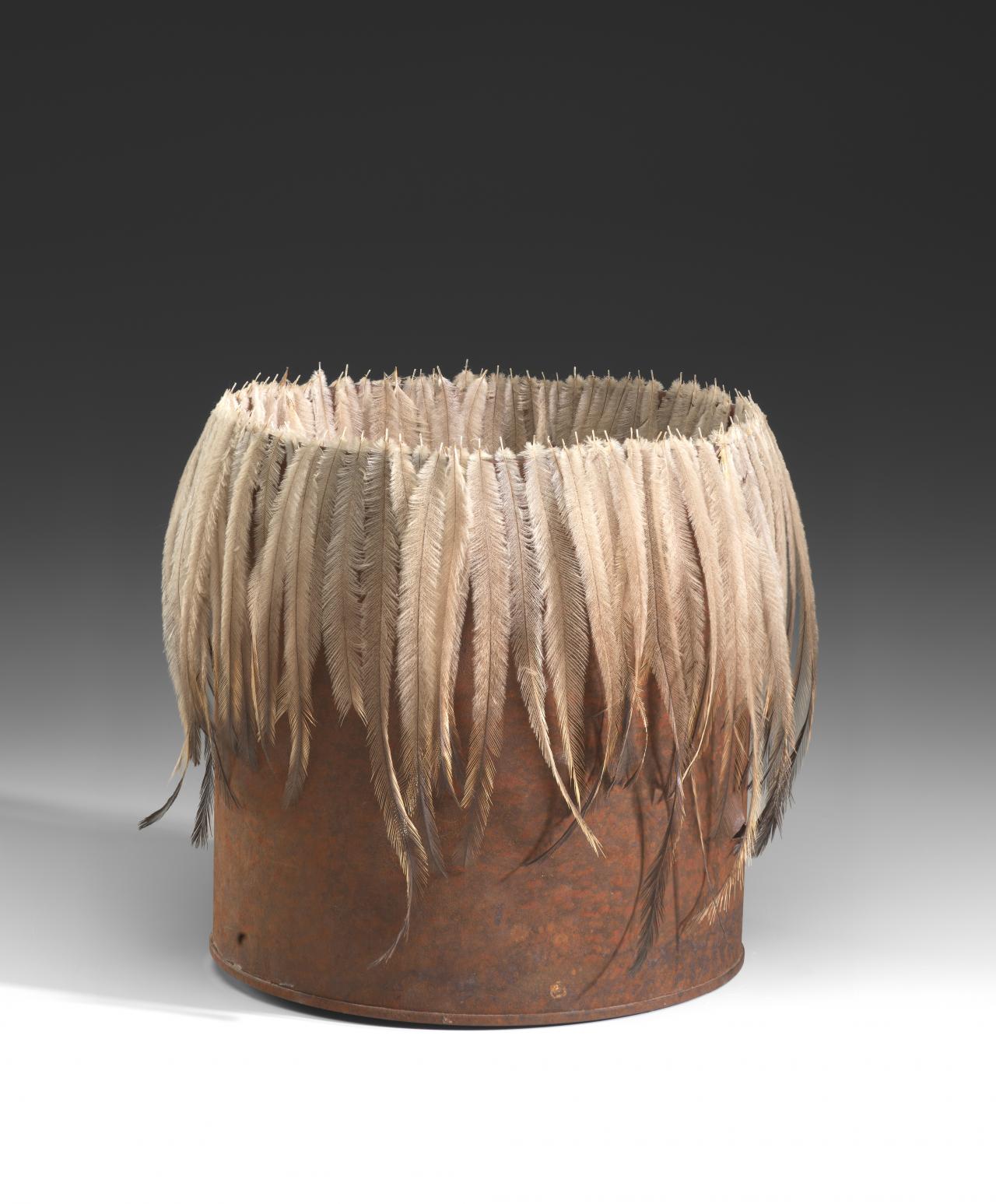
Connelly-Northey can have no fear that her Indigenous originality won’t be recognised because every pore of her strong work speaks to her cultural being. Her spiky, brittly astringent, barbed and feathered works take you to Country, posing the viewer uncomfortable questions about “soft” assertions of history and the hard reality of contemporary Indigenous life: metal as string, desecration of sacred sights, barbed wire handles, “hunters and gatherers whose remains have been upturned by settled Australian societies.” She weaves her stories well.

If the second statement has not been taken out of context, it shows a heap of unnecessary defensive aggression by Connelly-Northey towards Gascoigne’s work. It’s a silly, uninformed statement which hints at a lack of confidence in the strength of her own work. Patently, their use of corrugated iron is not the only thing they have in common.

Both speak towards a love of the Australian land whether from an ancient Aboriginal custodianship perspective or from a Western colonial perspective. Both use scavenging, gathering and gleaning in order to recycle the refuse of society in their art making, Connelly-Northey using weaving to bring together that which is disparate; Gascoigne assembling her formal compositions with an attention to order and randomness. Both artists love to move through the space and time of the land, exploring its idiosyncrasies, “disassociating objects from their original function via a system of obsessive collecting and gathering, while simultaneously reflecting their individual experiences of being immersed in the bush environment.” As Rozentals and Russell-Cook comment, “Despite their careers having been separated by time, and coming from vastly different backgrounds, in both artists we see a singular vision that is immediately recognisable, and unmistakably them. And yet there is a sympathetic connection between their practices that is undeniable.”

Conjoined by more than corrugated iron, more than land, air and clan, their common union is the journey of two creative souls on that golden path of life and the connection of those souls to the cosmos.

Dr Marcus Bunyan


All of the images unless otherwise stated are by Marcus Bunyan. © Marcus Bunyan, the artists and the National Gallery of Victoria. Please click on the photographs for a larger version of the image.


“Although they are often compared, Gascoigne and Connelly-Northey are separated conceptually and chronologically. For a start, despite being two Australian women artists working with landscape, they never met. This fact is less surprising when one remembers that Connelly-Northey’s practice only matured towards the later stages of Gascoigne’s life. Gascoigne came to prominence late and rapidly, with her first exhibition in 1974, when she was fifty-seven years old, and it was only eight years later that she represented Australia at the Venice Biennale. Connelly-Northey started exhibiting seriously in the mid-nineties, shortly before Gascoigne passed away in 1999. However, Connelly-Northey has herself commented on a nuanced relationship to the historical comparison with Gascoigne, pointing out in a recent conversation with Jeremy Eccles that “I’ve worked too hard for people to think I borrowed it all from Rosalie. Our use of corrugated iron is the only thing we have in common.” In some ways, then, the fact they never met may have been fortuitous, with both artists driven to probe their subject matter in distinct and complete ways. …

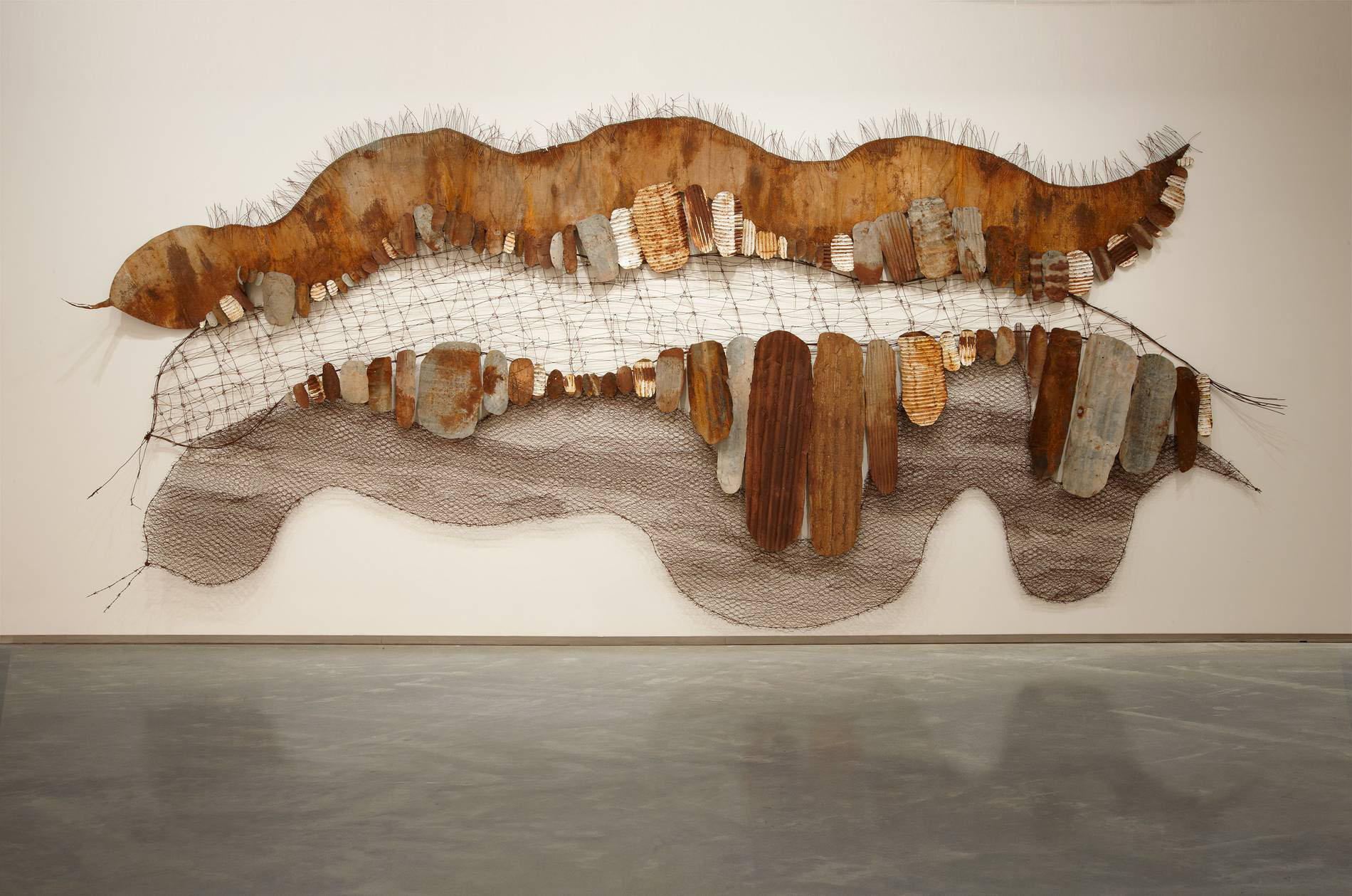
Surrounding built and natural environments are a recurring prompt for Connelly-Northey, who often merges organic and inorganic forms. She investigates the intricate dilemmas and complexities that arise when two cultures meet. Co-curator Myles Russell-Cook explains that the artist “is using her work to explore the connection between her multiple heritages, as well as her experience living on Country. Take her work On Country, 2017; in that installation, Connelly-Northey explores the relationship between the twin cities of Albury and Wodonga, depicting the river a living being, which she imagines as a snake repurposed out of chicken wire and rusted and industrial scrap metal. It’s a dioramic representation of the landscape, but it is also so embedded with references to Aboriginal custodianship of Country.” As a result, Russell-Cook argues, Connelly-Northey proposes “a really different way of being in Australian landscape.”

Beyond these conceptual and chronological differences, however, Russell-Cook points out that “I think that what unites the two artists is the shared materials they use, but not a ‘shared-use of materials.’ They are both fascinated by the artistic possibilities of found objects, but they use those materials to tell contrasting stories.” As Rozentals notes, for Gascoigne, “the objects had to be just right – what she collected, for instance, with shells. There could be no cracks and they had to be of a particular colour and a particular shine; she would collect the feathers of different species of birds from particular locations.” For Russell-Cook, “At the heart of what Connelly-Northey does, is the act of cleaning up Country: going out and collecting up bits of discarded and refuse machinery, and then working with that to create customary forms. She makes a lot of possum-skin cloaks, narrbong-galang, which are a type of string bag, as well as koolimans (coolamons), lap-laps, and other types of cultural objects … she repurposes them to create a juxtaposition between cultural memories.”


Extract from Rose Vickers. “Found and Gathered: Lorraine Connelly-Northey and Rosalie Gascoigne,” in Artist Profile, Issue 57, 2021 [Online] Cited 01/02/2022


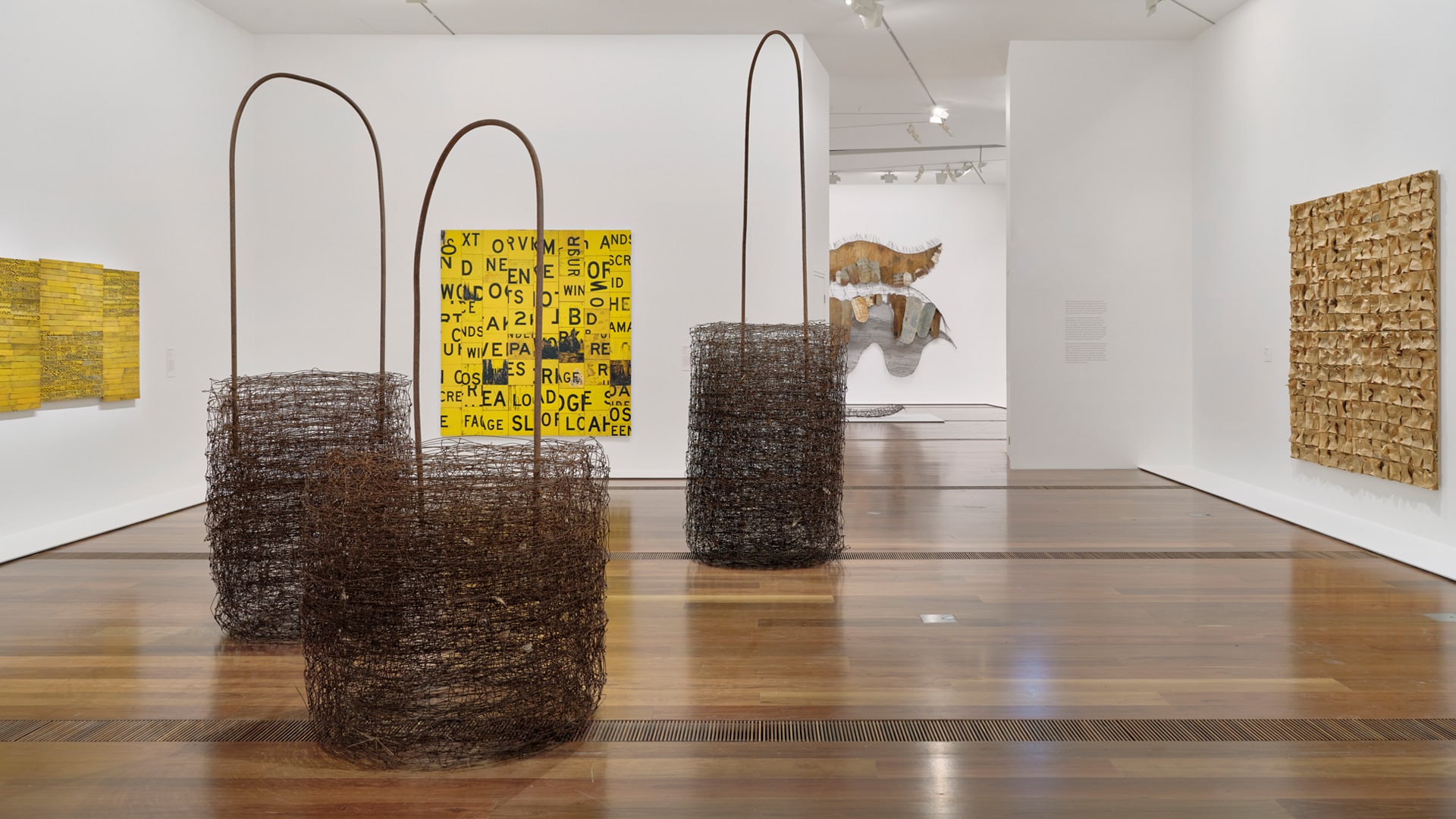
Installation view of the exhibition 'Found and Gathered' at The Ian Potter Centre NGV Australia


Installation view of the exhibition Found and Gathered at The Ian Potter Centre NGV Australia
Photo: Tom Ross NGV


'Found and Gathered' title wall text


Wall text from the exhibition


Entrance to the exhibition 'Found and Gathered' at The Ian Potter Centre NGV Australia


Entrance to the exhibition Found and Gathered at The Ian Potter Centre NGV Australia
Photo: Marcus Bunyan


Lorraine Connelly-Northey (Australian / Waradgerie, b. 1962) 'Lap Lap' (various numbers) 2011 (installation view)

Lorraine Connelly-Northey (Australian / Waradgerie, b. 1962) 'Lap Lap' (various numbers) 2011 (installation view)

Lorraine Connelly-Northey (Australian / Waradgerie, b. 1962) 'Lap Lap' (various numbers) 2011 (installation view)

Lorraine Connelly-Northey (Australian / Waradgerie, b. 1962) 'Lap Lap' (various numbers) 2011 (installation view)


Lorraine Connelly-Northey (Australian / Waradgerie, b. 1962)
Lap Lap (various numbers) (installation views)
2011
Mixed media
Murray Art Museum Albury, commissioned 2011
Photos: Marcus Bunyan


Animal skins and woven plant fibres are preferred natural resources for making cloaks, belts, skirts and lap laps. Worn by both males and females, lap laps were created for a simple covering of the groin. Also considered a body adornment, the wearing of a lap lap has different significance between Nations. Connelly-Northey constructed these lap laps from hard and harsh materials, such as rusted industrial objects including an axe head, a cut-down rabbit trap, barbed fencing wire along with copper sheeting. Metaphorically, Connelly-Northey’s lap laps both expose and draw attention to the difficult and ‘barbed’ sexual relations thats existed between Aboriginal women and settlers, post-European arrival.


'Found and Gathered' wall text


Wall text from the exhibition


Installation view of Rosalie Gascoigne's 'Step through' (1977 - c. 1979-1980) from the exhibition 'Found and Gathered' at The Ian Potter Centre NGV Australia, Oct 2021 - Feb 2022

Installation view of Rosalie Gascoigne's 'Step through' (1977 - c. 1979-1980) from the exhibition 'Found and Gathered' at The Ian Potter Centre NGV Australia, Oct 2021 - Feb 2022


Installation view of Rosalie Gascoigne’s Step through (1977 – c. 1979-1980) at the exhibition Found and Gathered at The Ian Potter Centre NGV Australia
Photos: Marcus Bunyan


Rosalie Gascoigne (Australian born New Zealand, 1917-1999) 'Step through' 1977 - c. 1979-1980 (installation view)


Rosalie Gascoigne (Australian born New Zealand, 1917-1999)
Step through (installation view)
1977 – c. 1979-1980
Linoleum on plywood on wood
National Gallery of Australia, Canberra
Photo: Marcus Bunyan


In 1977, Rosalie Gascoigne commenced making sculptures out of discarded linoleum, which she sourced primarily from rubbish dumps. Step through features torn pieces of floral linoleum glued to plywood which are mounted on wooden blocks, and she used a jigsaw to cut around the shapes. Although linoleum is associated with domestic interiors, for Gascoigne it was about outdoor spaces. This work references untidy vacant blocks in the city, which one might ‘step-through’ as a short cut. Gascoigne’s floor-based works are intended to be experienced from all angles, and the arrangement of the blocks at different heights creates a rhythm, drawing the eyes to wander up and across the installation.


Rosalie Gascoigne (Australian born New Zealand, 1917-1999) 'Smoko' 1984 (installation view)

Rosalie Gascoigne (Australian born New Zealand, 1917-1999) 'Smoko' 1984 (installation view)


Rosalie Gascoigne (Australian born New Zealand, 1917-1999)
Smoko (installation views)
1984
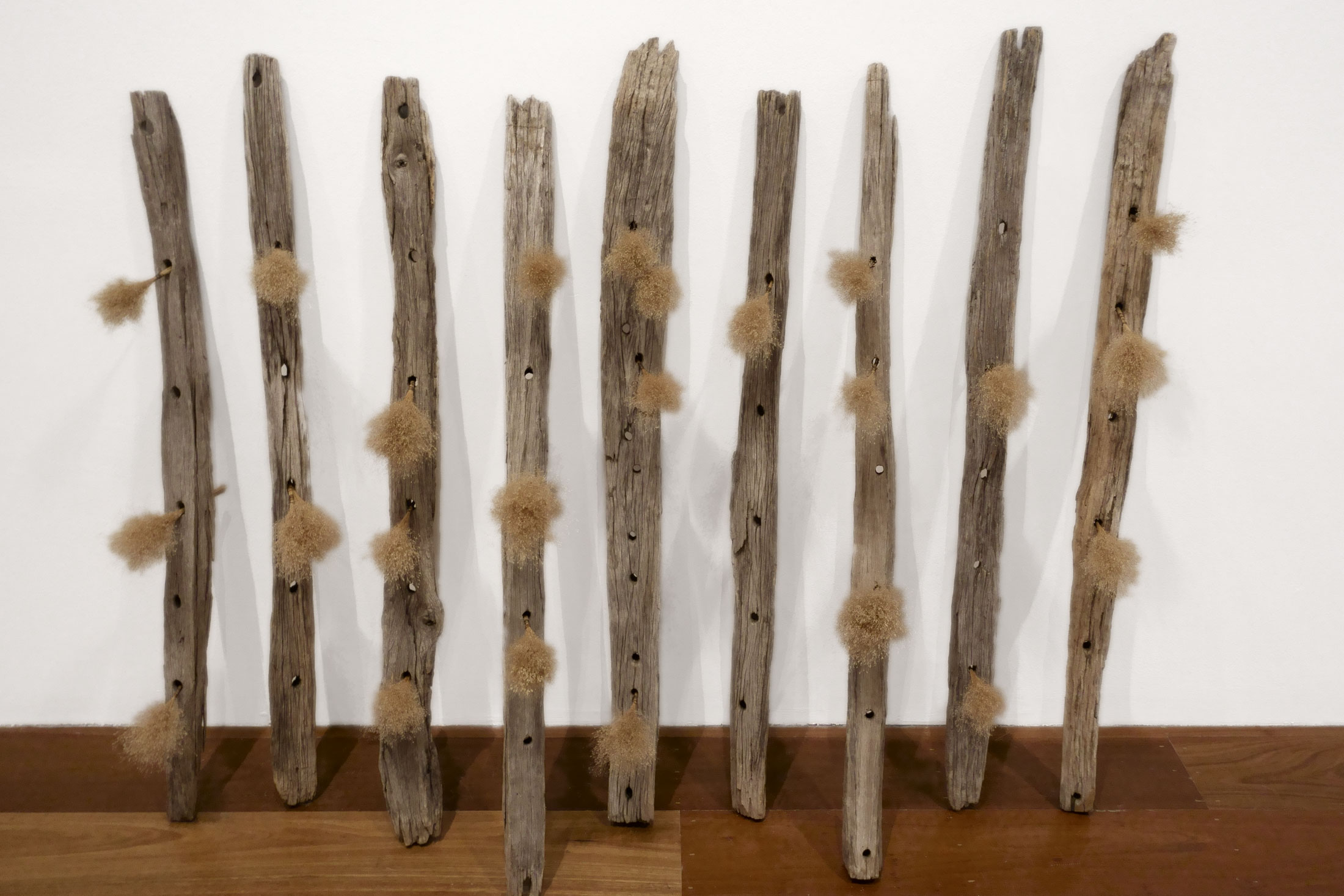
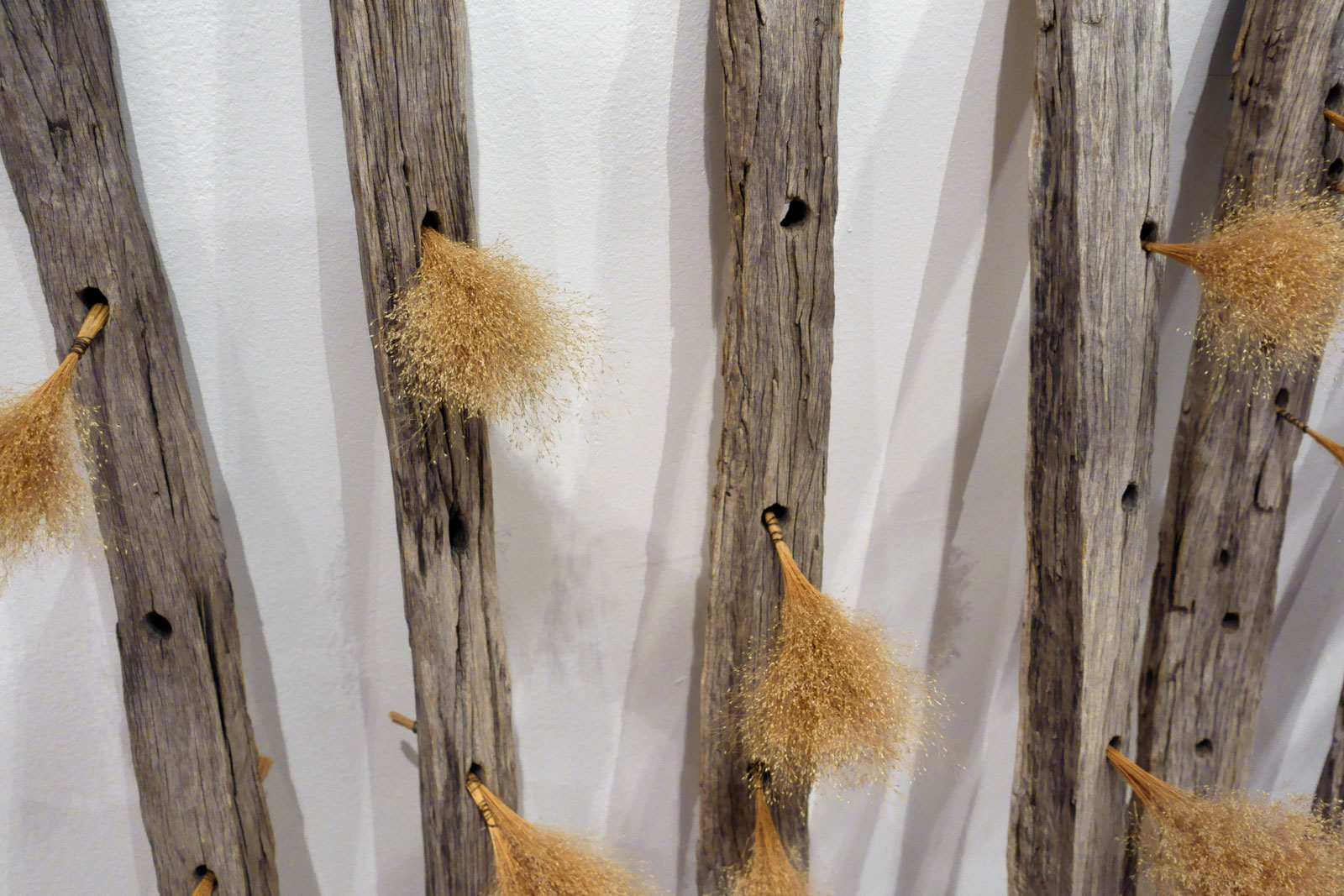
Weathered wood, dried grass (possibly African lovegrass, Eragrostis curvula)
Private collection, Tasmania
Photos: Marcus Bunyan


Installation view of Rosalie Gascoigne's 'Pieces to walk around' (1981, foreground) from the exhibition 'Found and Gathered' at The Ian Potter Centre NGV Australia, Oct 2021 - Feb 2022

Installation view of Rosalie Gascoigne's 'Pieces to walk around' (1981, foreground) from the exhibition 'Found and Gathered' at The Ian Potter Centre NGV Australia, Oct 2021 - Feb 2022


Installation views of Rosalie Gascoigne’s Pieces to walk around (1981, foreground) at the exhibition Found and Gathered at The Ian Potter Centre NGV Australia
Photos: Marcus Bunyan


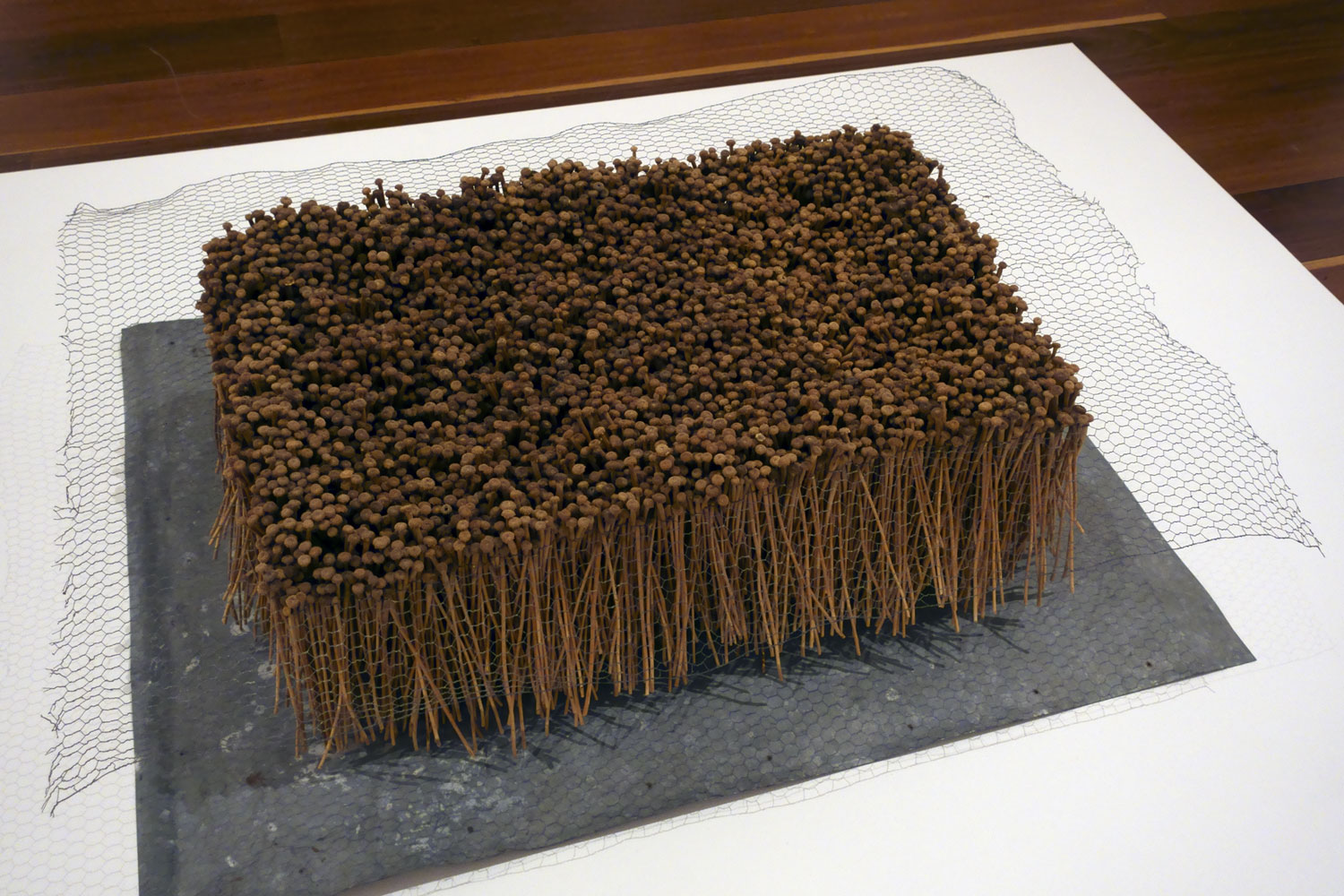
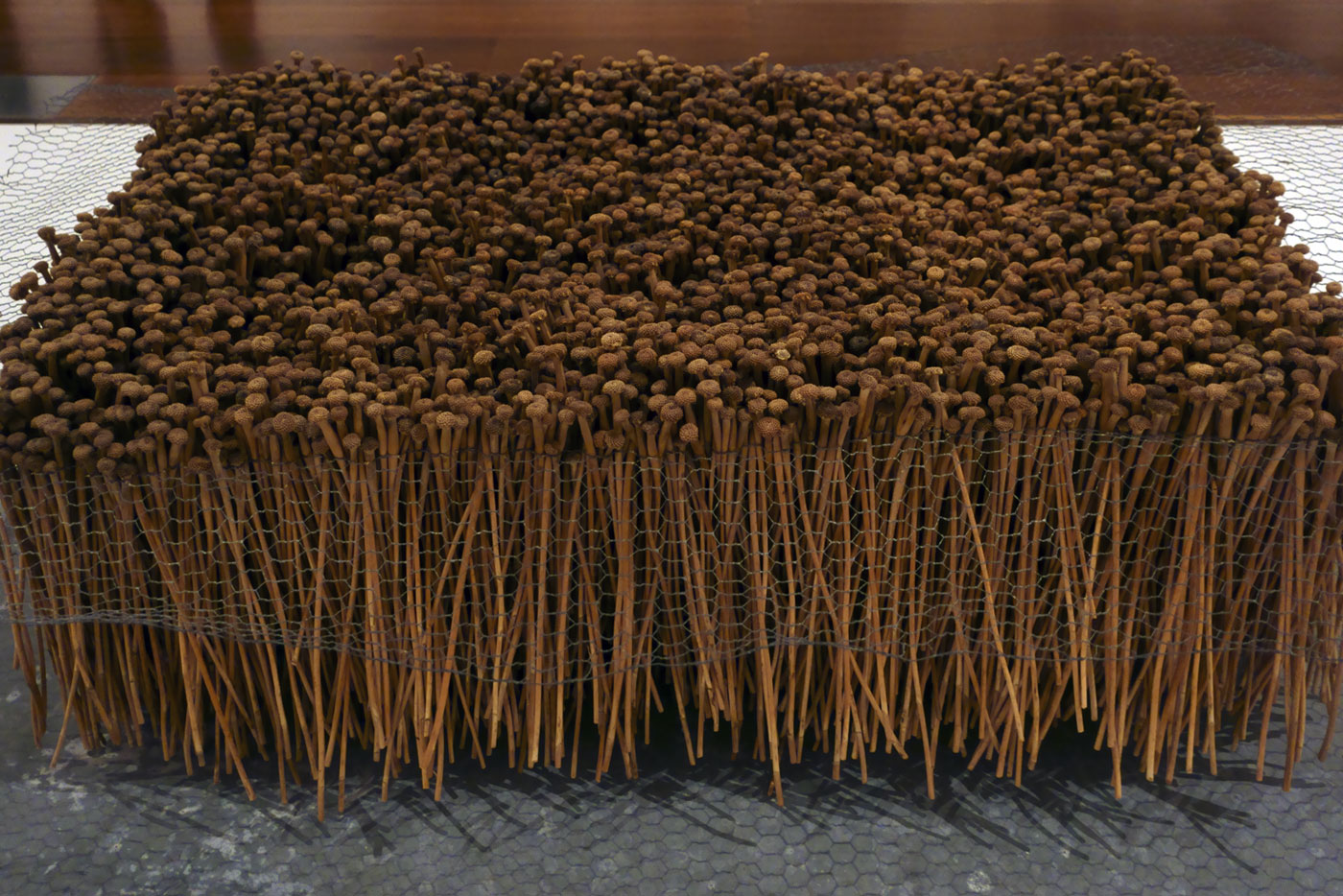
Rosalie Gascoigne (Australian born New Zealand, 1917-1999) 'Pieces to walk around' 1981 (installation view detail)


Rosalie Gascoigne (Australian born New Zealand, 1917-1999)
Pieces to walk around (installation view detail)
1981
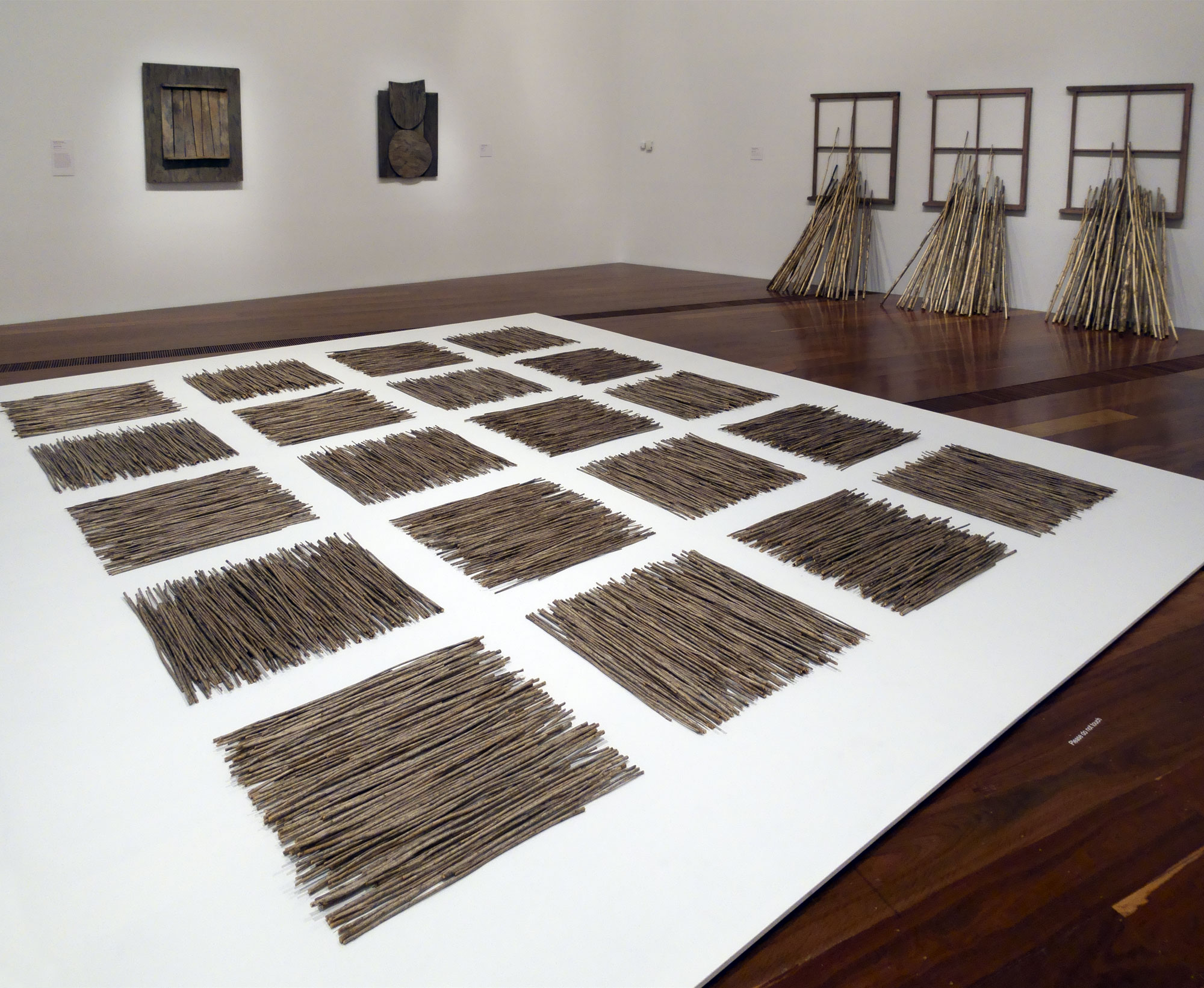
Saffron thistle sticks (Carthamus lanatus)
Museum of Contemporary Art, Sydney
Photo: Marcus Bunyan


‘This is a piece for walking around and contemplating. It is about being in the country with its shifting light and shades of grey, its casualness and it prodigality. The viewer’s response to the landscape may differ from mine, but I hope this picture will convey some sense of the countryside that produced it: and that an extra turn or two around the work will induce in the viewer the liberating feeling of being in the open country.’ ~ Rosalie Gascoigne, 1981


Piece to Walk Around is a microcosm of the landscape of the Monaro, in the southwest of New South Wales, where Rosalie Gascoigne lived from 1943. This environment provided the experiences and the materials that shaped her work, found on her journeys through it. Piece to Walk Around refers directly to the experience of moving through the Australian landscape, titled to draw attention to the changing visual effects as one circles the work and the shifting play of light on the natural material.

Comprised of a patchwork of bundles of saffron thistle stalks arranged in 20 squares lying on the floor in alternating directions, it resembles the undulating countryside, the ordering of agriculture and industry, and the mottled effects of light and shadow upon it. The work conveys a sense of the infinite expansiveness and liberation experienced in the country, as manifested in the grid’s open-ended structure to which additional bundles of thistles could theoretically be added or subtracted.

Gascoigne’s work from the early-1980s reveal a sophisticated aesthetic – an engagement with Minimalism’s orderliness and pre-occupation with the grid, and an almost Japanese mixture of formal composition and attention to nature. It was this sense of ‘order with randomness’ which Gascoigne recognised as an essential feature of the Monaro-Canberra region, and which resonates in the ‘careful-careless’ effect of this assemblage. Created only seven years after her first solo show in 1974, this work has a remarkable maturity and balance, achieved through a lifetime of looking at the landscape.

Anonymous text from the Museum of Contemporary Art Australia website Nd [Online] Cited 01/02/2022


Rosalie Gascoigne (Australian born New Zealand, 1917-1999) 'Takeover bid' 1981 (installation view)


Rosalie Gascoigne (Australian born New Zealand, 1917-1999)
Takeover bid (installation view)
1981
Found window frames, thistle stems
Heide Museum of Modern Art, Melbourne
Photo: Marcus Bunyan


Rosalie Gascoigne (Australian born New Zealand, 1917-1999) 'Takeover bid' 1981 (installation view detail)


Rosalie Gascoigne (Australian born New Zealand, 1917-1999)
Takeover bid (installation view detail)
1981
Found window frames, thistle stems
Heide Museum of Modern Art, Melbourne
Photo: Marcus Bunyan


Rosalie Gascoigne (Australian born New Zealand, 1917-1999) 'Balance' 1984 (installation view)


Rosalie Gascoigne (Australian born New Zealand, 1917-1999)
Balance (installation view)
1984
Weathered plywood
Collection of Justin Miller, Sydney
Photo: Marcus Bunyan


Rosalie Gascoigne (Australian born New Zealand, 1917-1999) 'Balance' 1984 (installation view detail)


Rosalie Gascoigne (Australian born New Zealand, 1917-1999)
Balance (installation view detail)
1984
Weathered plywood
Collection of Justin Miller, Sydney
Photo: Marcus Bunyan


Rosalie Gascoigne (Australian born New Zealand, 1917-1999) 'Graven image' 1982 (installation view)


Rosalie Gascoigne (Australian born New Zealand, 1917-1999)
Graven image (installation view)
1982
Weathered wood and plywood
Private collection, Canberra
Photo: Marcus Bunyan


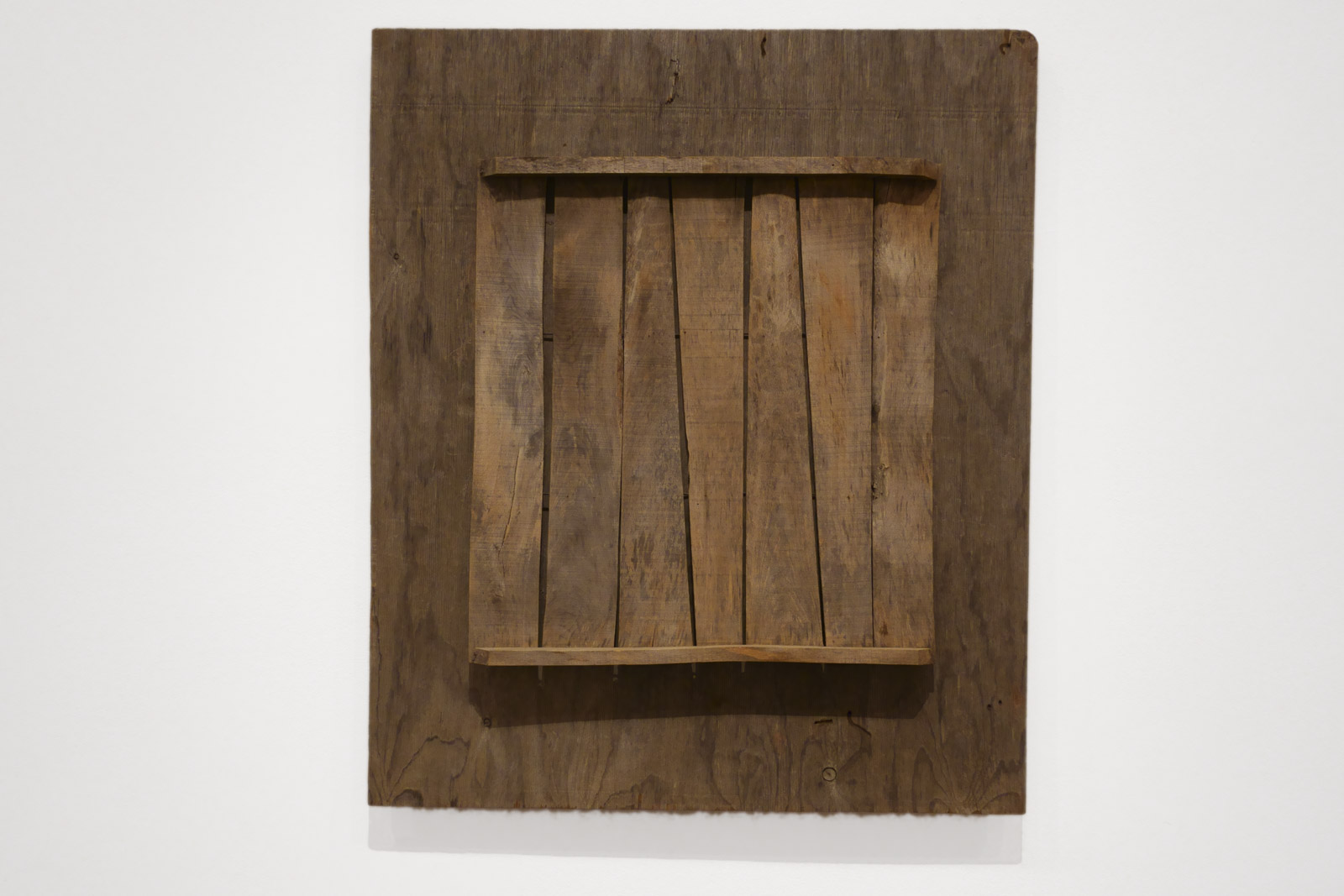
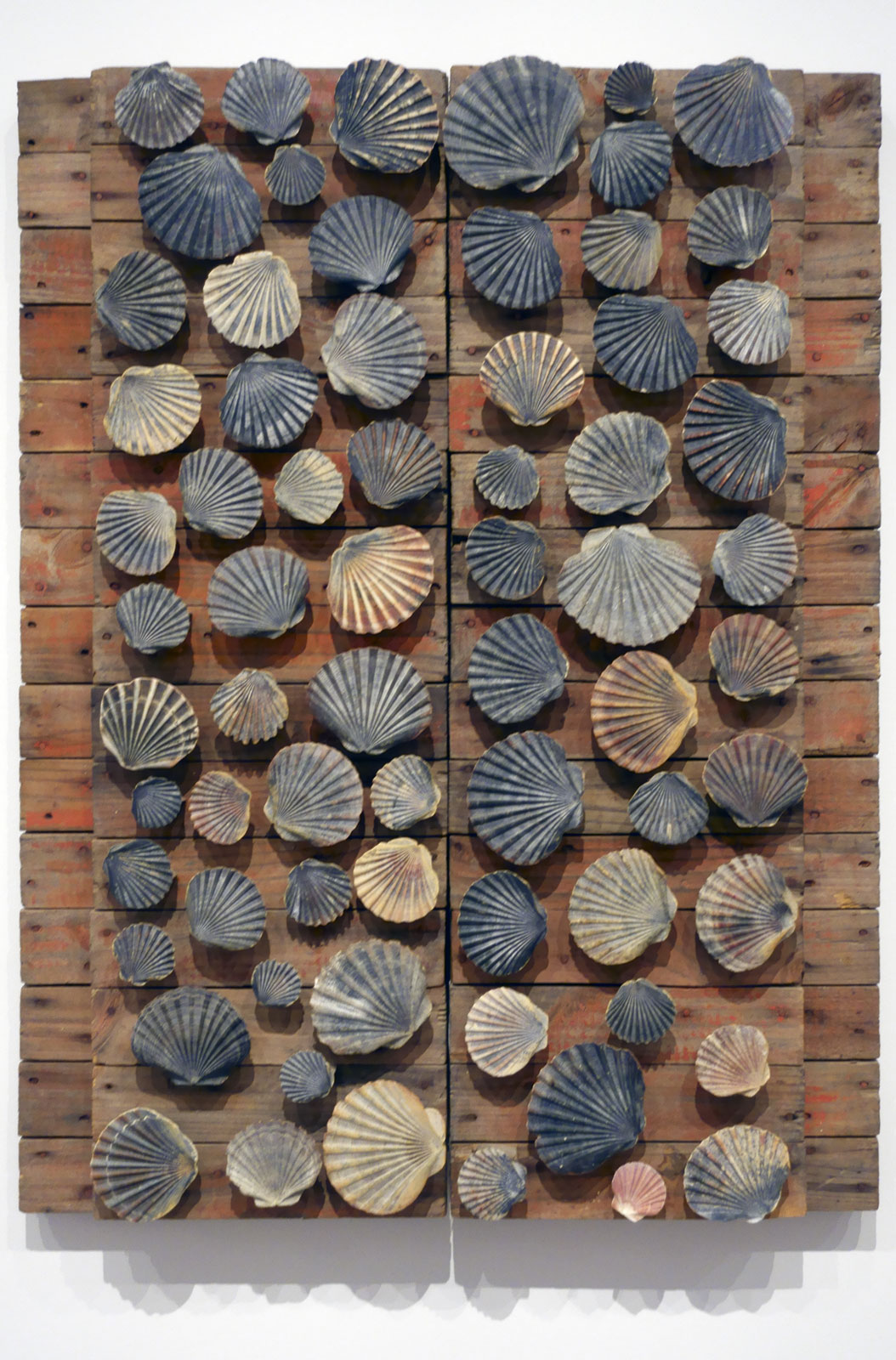
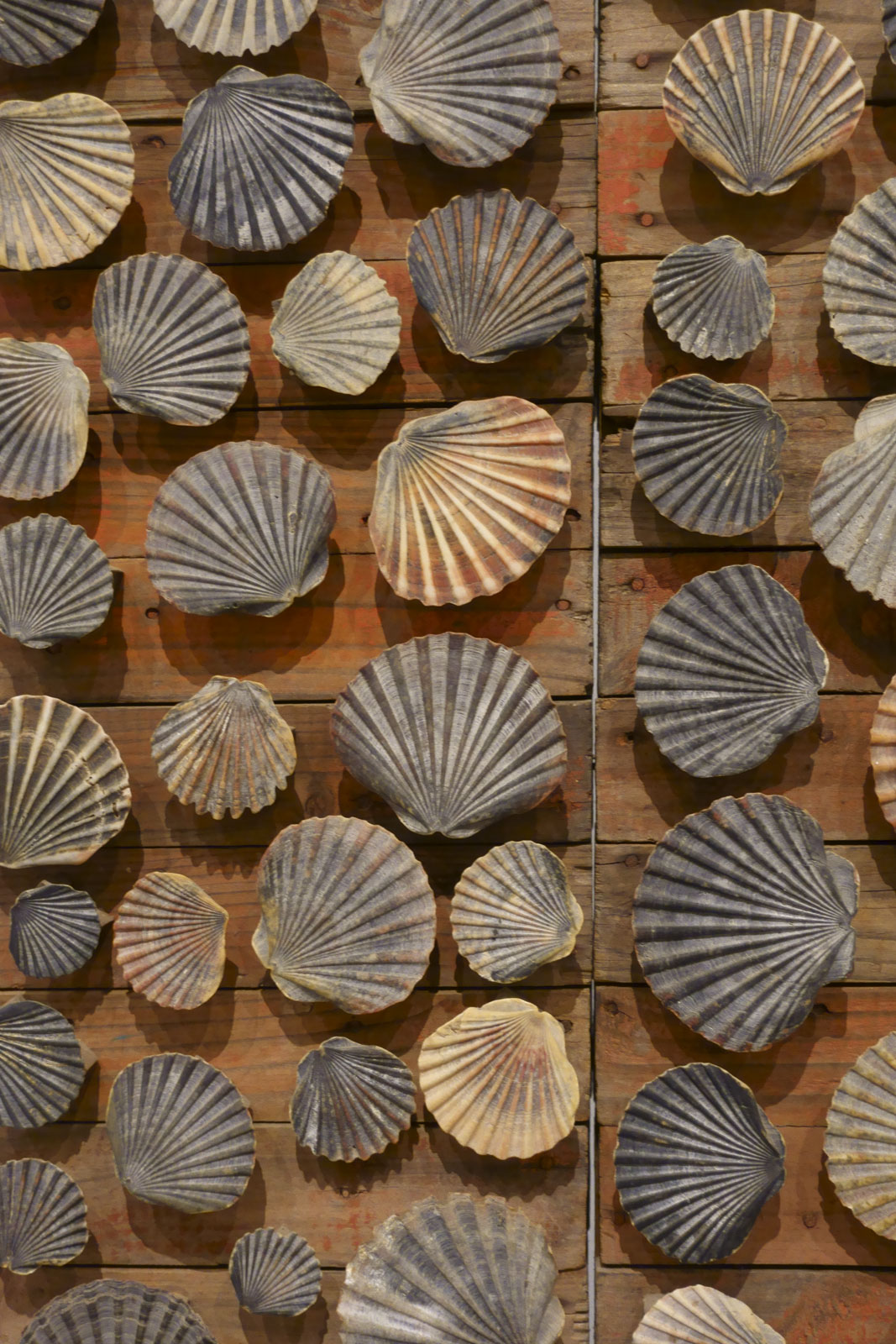
Rosalie Gascoigne perceived wood as being distinctly different to the manufactured materials she incorporated in her art, such as tin, aluminium and iron. Wood, like the shells, dried grasses and plants she also worked with across her career, came from nature. Gascoigne gathered wood that had been weathered, including window frames and fence palings, preferring pieces that had been bleached by the sun until they were almost grey in colour. Gascoigne would use wood either as the main component of a composition, or as the backing from another work.


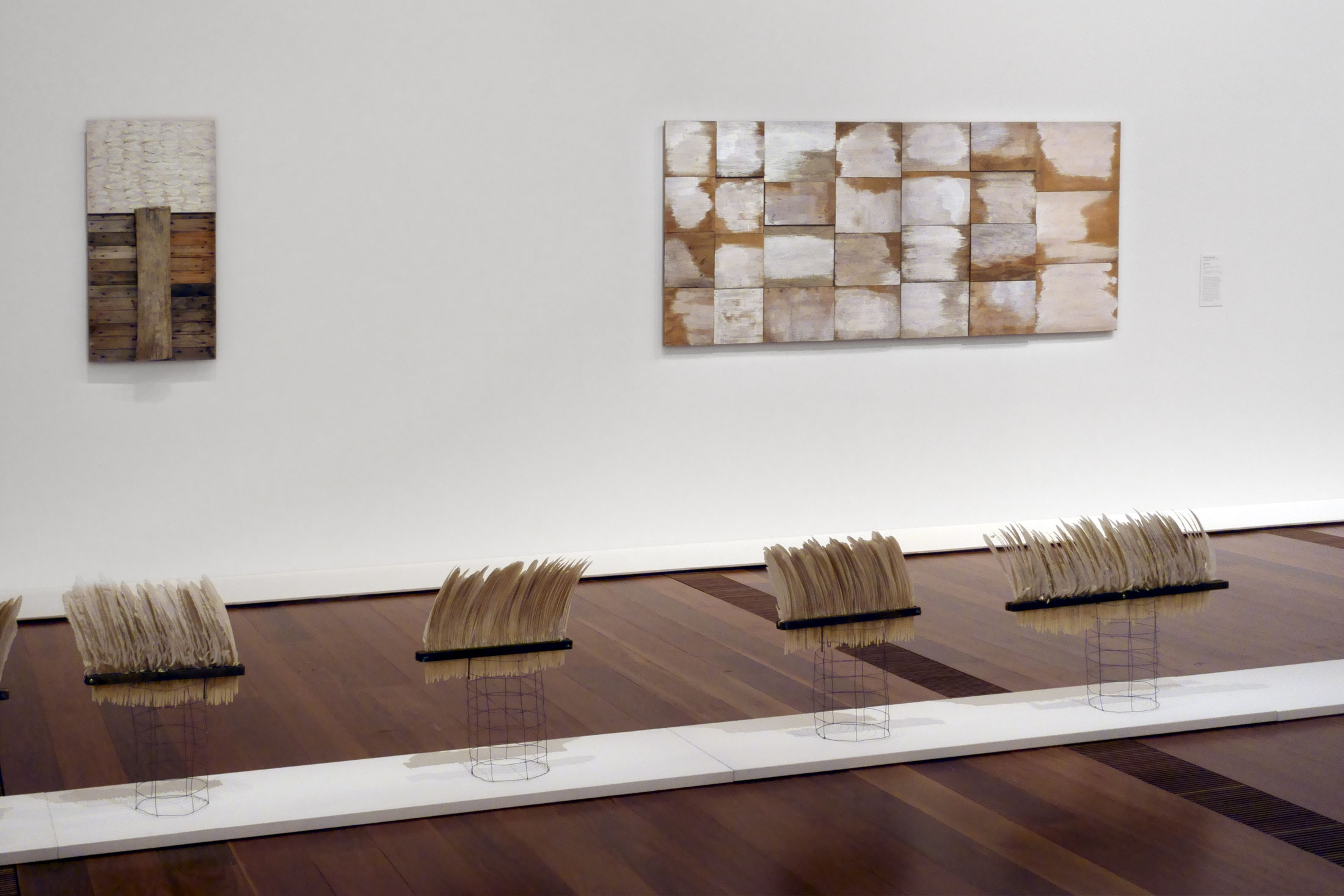
Installation view of Rosalie Gascoigne's 'Feathered Fence' (1978-1979, foreground) with 'Winter paddock' (1984, back left) and 'Afternoon' (1996, back right) at the exhibition 'Found and Gathered' at The Ian Potter Centre NGV Australia


Installation view of Rosalie Gascoigne’s Feathered Fence (1978-1979, foreground) with Winter paddock (1984, back left) and Afternoon (1996, back right) at the exhibition ‘Found and Gathered’ at The Ian Potter Centre NGV Australia
Photo: Marcus Bunyan


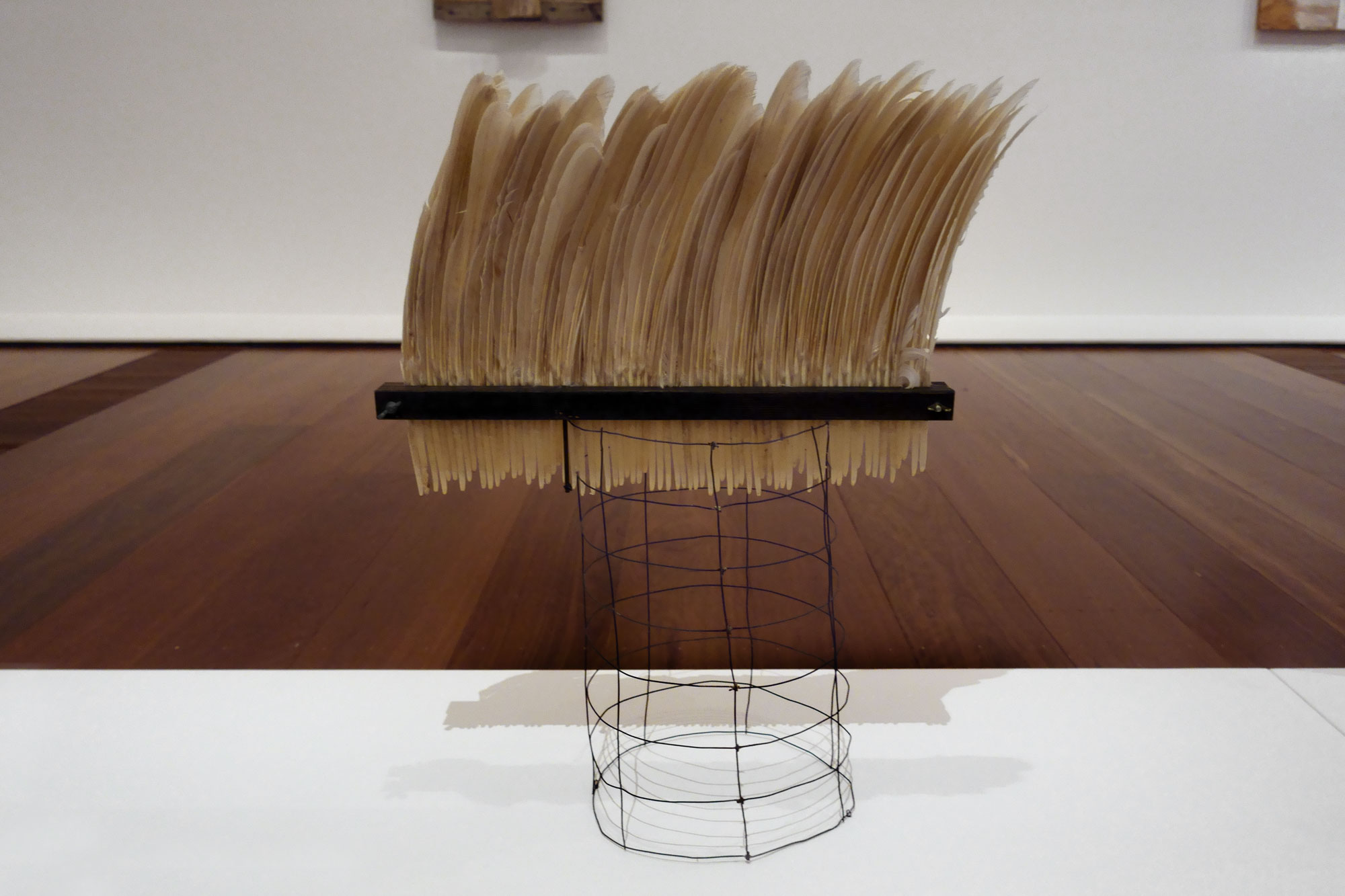
Rosalie Gascoigne (Australian born New Zealand, 1917-1999) 'Feathered fence' 1978-1979 (installation view detail)

Rosalie Gascoigne (Australian born New Zealand, 1917-1999) 'Feathered fence' 1978-1979 (installation view detail)


Rosalie Gascoigne (Australian born New Zealand, 1917-1999)
Feathered fence (installation view details)
1978-1979
Swan (Cygnus atratus) feathers, galvanised wire mesh, metal win nuts, synthetic polymer paint on wood
National Gallery of Australia, Canberra
Gift of the artist, 1994
Photos: Marcus Bunyan


Rosalie Gascoigne (Australian born New Zealand, 1917-1999) 'Afternoon' 1996 (installation view)

Rosalie Gascoigne (Australian born New Zealand, 1917-1999) 'Afternoon' 1996 (installation view)


Rosalie Gascoigne (Australian born New Zealand, 1917-1999)
Afternoon (installation views)
1996
Painted weathered plywood on backing boards
TarraWarra Museum of Art, Healesville
Gift of Eva Besen AO and Marc Besen AC
Photos: Marcus Bunyan


One of Rosalie Gascoigne’s late works, Afternoon, created for the exhibition In Place (Out of Time), held at the Museum of Modern Art in Oxford, comprises twenty-seven panels of weathered plywood organised in a grid-like configuration. Looking out from her vantage point at the top of Mount Stromlo across the countryside, Gascoigne was in awe of the view, the vast sky, and te sense of emptiness. The sections of lights applied white paint and areas of exposed timer of Afternoon are suggestive of passing clouds, and communicates her experiences and enduring recollections of being in the landscape.


As perhaps the most archetypal form of modernist abstraction, the grid has been employed as a formal, compositional device in countless artworks over the past century.

In ‘Grids’ (1979), Rosalind Krauss’ seminal essay on the subject, she describes this structural device as: ‘[f]lattened, geometricized, ordered, it is antinatural, antimimetic, antireal. It is what art looks like when it turns its back on nature’.(1) However, for Rosalie Gascoigne, the grid was employed as a compositional method in order to generate highly personal and experiential evocations of natural phenomena in ways which transcended the more rigid, impersonal qualities associated with its geometry.

In one of her late works entitled Afternoon (1996), Gascoigne assembled 27 individual panels of found painted timber in roughly similar sizes in a grid-like formation. At a surface level the serial repetition of components arranged and balanced according to vertical and horizontal axes corresponds to a reductive Minimalist sensibility. However, it is the heavily weathered timber with its faded white paint which infuses the work with a resonant and suggestive force. As the artist traversed the open countryside she deliberately sought out materials that she felt were ‘invested with the spirit of the place’ and capable of recalling ‘the feeling of an actual moment in the landscape’.(2) In this light, the vital materiality of the reclaimed painted timber is not only inscribed with the effects of its prolonged exposure to the elements, but it also speaks directly to Gascoigne’s deep and abiding memories of her experiences in the landscape. In Afternoon, the richly allusive quality of the individual boards is suggestive of passing clouds, evoking the ephemeral and transitory phenomena of nature in continuous metamorphosis. Contemplated as a unified pictorial whole, this humble assemblage of discarded and deteriorating matter assumes a metaphysical dimension bordering on the ineffable, one which resoundingly accords with the artist’s desire to ‘capture the “nothingness” of the countryside, those wide open spaces … the great Unsaid … the silence that often only visual beauty transcends’.(3)


Further Information

1/ Rosalind Krauss, ‘Grids’, October, Vol. 9, Summer, 1979, p. 50.

2/ Quoted in Deborah Edwards, Rosalie Gascoigne: Material as Landscape, (exh. cat.), Sydney: Art Gallery of New South Wales, 1997, p. 8.

3/ Ibid, p. 16.

Anonymous text. “Rosalie Gascoigne,” on the Culture Victoria website Nd [Online] Cited 01/02/2022


Rosalie Gascoigne (Australian born New Zealand, 1917-1999) 'Afternoon' 1996


Rosalie Gascoigne (Australian born New Zealand, 1917-1999)
Afternoon
1996
Painted weathered plywood on backing boards
TarraWarra Museum of Art, Healesville
Gift of Eva Besen AO and Marc Besen AC


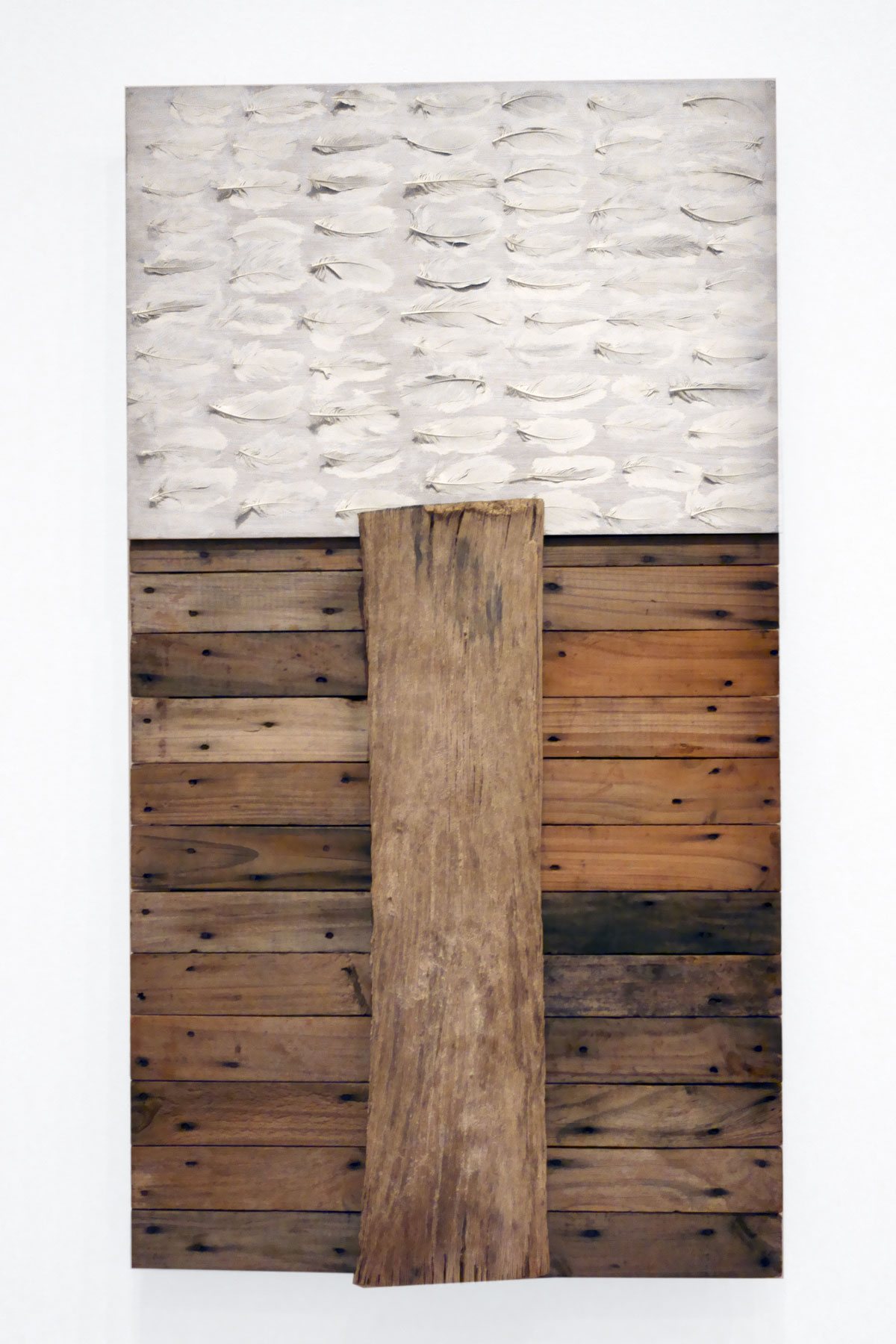
Rosalie Gascoigne (Australian born New Zealand, 1917-1999) 'Winter paddock' 1984 (installation view)


Rosalie Gascoigne (Australian born New Zealand, 1917-1999)
Winter paddock (installation view)
1984
Weathered and painted wood, painted plywood, silver gull (Chroicocephalus novaehollandiae) feathers
Parliament House Art Collection, Canberra
Acquired 1985
Photo: Marcus Bunyan


Rosalie Gascoigne (Australian born New Zealand, 1917-1999) 'Winter paddock' 1984 (installation view detail)


Rosalie Gascoigne (Australian born New Zealand, 1917-1999)
Winter paddock (installation view detail)
1984
Weathered and painted wood, painted plywood, silver gull (Chroicocephalus novaehollandiae) feathers
Parliament House Art Collection, Canberra
Acquired 1985
Photo: Marcus Bunyan


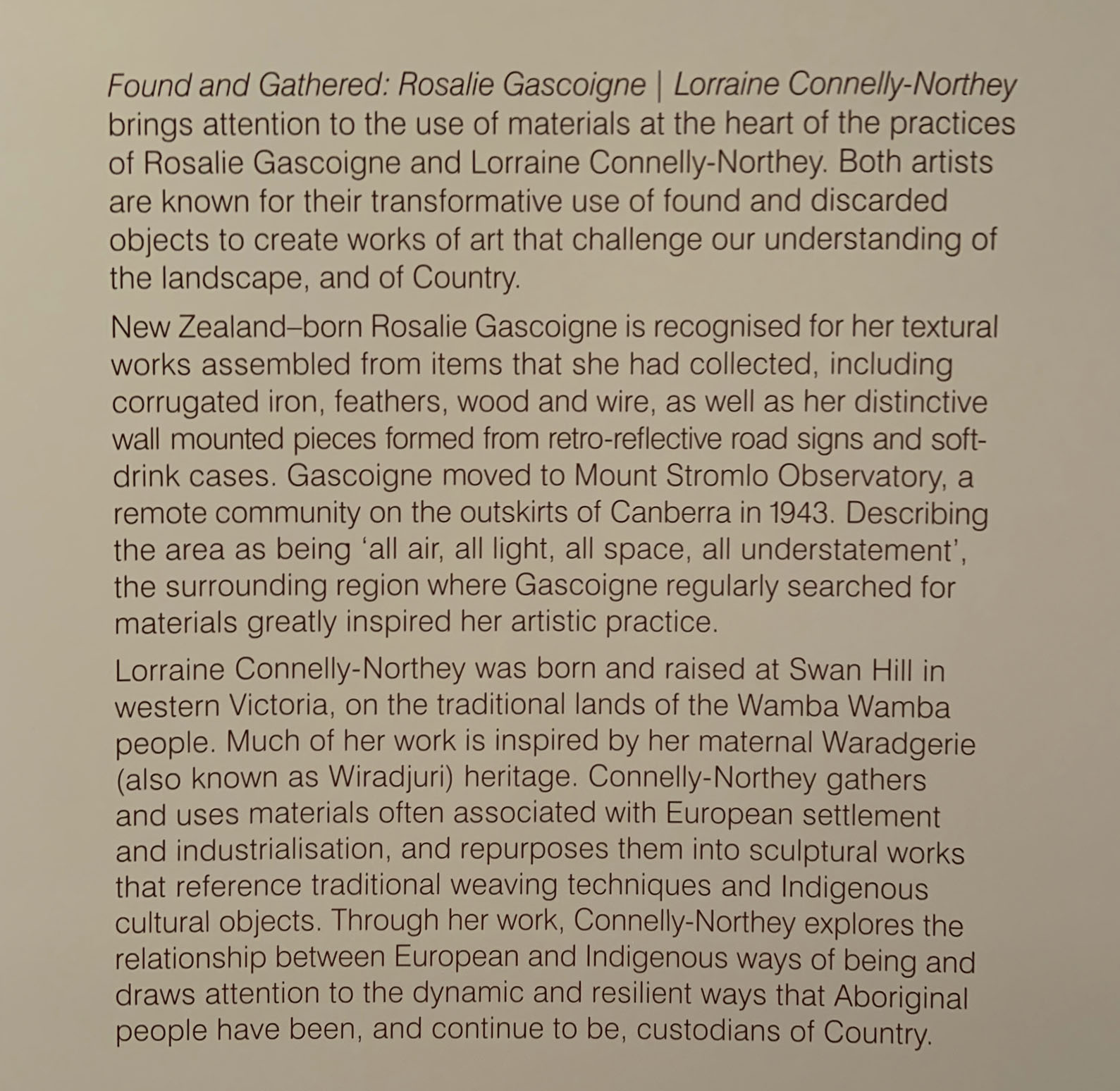
Found and Gathered: Rosalie Gascoigne | Lorraine Connelly-Northey brings attention to the shared materiality at the heart of the practices of Rosalie Gascoigne (1917-1999) and Lorraine Connelly-Northey (b. 1962). Both artists are known for their transformative use of found and discarded objects to create works of art that challenge our understanding of the landscape, and Country.

New Zealand–born Rosalie Gascoigne is recognised for her textural works assembled from items that she had collected, including corrugated iron, feathers, wood and wire, as well as her distinctive wall-mounted pieces formed from retro-reflective road signs and soft-drink cases. Gascoigne moved to Mount Stromlo Observatory, a remote community on the outskirts of Canberra in 1943. Describing the area as being ‘all air, all light, all space, all understatement’, the surrounding region where Gascoigne regularly searched for materials greatly inspired her artistic practice. Her first exhibition was held in 1974 when she was 57 years old, and in 1982, Gascoigne was selected as the inaugural female artist to represent Australia at the Venice Biennale.

Lorraine Connelly-Northey was born and raised at Swan Hill in western Victoria, on the traditional lands of the Wamba Wamba people. Much of her work is inspired by her maternal Waradgerie (also known as Wiradjuri) heritage. Connelly-Northey gathers and uses materials often associated with European settlement and industrialisation, and repurposes them into sculptural works that reference traditional weaving techniques and Indigenous cultural objects. Through her work, Connelly-Northey explores the relationship between European and Indigenous ways of being and draws attention to the dynamic and resilient ways that Aboriginal people have been, and continue to be, custodians of Country.

Through a major display of more than 75 wall-based and sculptural works, Found and Gathered highlights each artist’s unique and significant place within Australian art, while also illuminating the sympathetic relationships between their works. Continuing the popular series of paired exhibitions hosted by NGV, this is the first exhibition in this series focused on the work of two women.

Held at The Ian Potter: NGV Australia, this exhibition includes works by both artists held in the NGV Collection as well as works from major public institutions and private collections around Australia.

Text from the NGV Australia website


'Found and Gathered' wall text


Wall text from the exhibition


Lorraine Connelly-Northey (Australian / Waradgerie, b. 1962) 'Magpie bag' 2002 (installation view)


Lorraine Connelly-Northey (Australian / Waradgerie, b. 1962)
Magpie bag (installation view)
2002
From the Koolimans and String Bags series
Wire mesh, magpie feathers
27.8 × 33.5 × 10.0cm
National Gallery of Victoria, Melbourne
Purchased with funds donated by Supporters and Patrons of Indigenous Art, 2003
Photo: Marcus Bunyan


Lorraine Connelly-Northey (Australian / Waradgerie, b. 1962) 'Pelican bag' 2002 (installation view)


Lorraine Connelly-Northey (Australian / Waradgerie, b. 1962)
Pelican bag (installation view)
2002
From the Koolimans and String Bags series
Wire, pelican feathers
31.4 × 29.7 × 10.6cm
National Gallery of Victoria, Melbourne
Purchased with funds donated by Supporters and Patrons of Indigenous Art, 2003
Photo: Marcus Bunyan


Lorraine Connelly-Northey (Australian / Waradgerie, b. 1962) 'Narrbong (String bag)' 2005 (installation view)


Lorraine Connelly-Northey (Australian / Waradgerie, b. 1962)
Narrbong (String bag) (installation view)
2005
Wire, wire mesh
National Gallery of Victoria, Melbourne
Purchased with funds donated by Supporters and Patrons of Indigenous Art, 2005
Photo: Marcus Bunyan


Lorraine Connelly-Northey (Australian / Waradgerie, b. 1962) 'Narrbong (String bag)' 2005 (installation view)


Lorraine Connelly-Northey (Australian / Waradgerie, b. 1962)
Narrbong (String bag) (installation view)
2005
Wire mesh, feathers
26.5 × 10.5 × 11.5cm
National Gallery of Victoria, Melbourne
Purchased with funds donated by Supporters and Patrons of Indigenous Art, 2005
Photo: Marcus Bunyan


Lorraine Connelly-Northey (Australian / Waradgerie, b. 1962) 'Narrbong (String bag)' 2005 (installation view)


Lorraine Connelly-Northey (Australian / Waradgerie, b. 1962)
Narrbong (String bag) (installation view)
2005
Wire, wire mesh, emu feathers
17.8 × 8.7 × 8.5cm
National Gallery of Victoria, Melbourne
Purchased with funds donated by Supporters and Patrons of Indigenous Art, 2005
Photo: Marcus Bunyan


Lorraine Connelly-Northey reproduces the form of traditional cultural objects with a range of gathered materials found on the side of the road, in illegal rubbish dumps, or decaying on farms. As she explains: ‘We Aboriginal people only take what we need when we need it. I do a lot of travelling to spot something and it can take up a lot of time. The beauty is that I always work from leftovers and if I don’t use a material, I take it back. Also, in the sculpting process, I try to not alter the material too much’.


Lorraine Connelly-Northey (Australian / Waradgerie, b. 1962) 'Narrbong (String bag)' 2005 (installation view)


Lorraine Connelly-Northey (Australian / Waradgerie, b. 1962)
Narrbong (String bag) (installation view)
2005
Wire mesh, echidna quills
33.0 × 15.3 × 12.0cm
National Gallery of Victoria, Melbourne
Purchased with funds donated by Supporters and Patrons of Indigenous Art, 2005
© Lorraine Connelly-Northey
Photo: Marcus Bunyan


Lorraine Connelly-Northey (Australian / Waradgerie, b. 1962) 'Kooliman 2' 2002 (installation view)


Lorraine Connelly-Northey (Australian / Waradgerie, b. 1962)
Kooliman 2 (installation view)
2002
from the Koolimans and string bags series 2002
8.5 × 29.7 × 19.2cm
National Gallery of Victoria, Melbourne
Purchased with funds donated by Supporters and Patrons of Indigenous Art, 2003
© Lorraine Connelly-Northey
Photo: Marcus Bunyan


Lorraine Connelly-Northey (Australian / Waradgerie, b. 1962) 'String bag' 2002 (installation view)


Lorraine Connelly-Northey (Australian / Waradgerie, b. 1962)
String bag (installation view)
2002
from the Koolimans and string bags series 2002
Wire, wire mesh, feathers
23.5 × 16.4 × 8.4cm
National Gallery of Victoria, Melbourne
Purchased with funds donated by Supporters and Patrons of Indigenous Art, 2003
© Lorraine Connelly-Northey
Photo: Marcus Bunyan


Lorraine Connelly-Northey (Australian / Waradgerie, b. 1962) 'Narrbong (String bag)' 2005 (installation view)


Lorraine Connelly-Northey (Australian / Waradgerie, b. 1962)
Narrbong (String bag) (installation view)
2005
Wire, wire mesh
30.7 × 14.4 × 4.7cm
National Gallery of Victoria, Melbourne
Purchased with funds donated by Supporters and Patrons of Indigenous Art, 2005
© Lorraine Connelly-Northey
Photo: Marcus Bunyan


Lorraine Connelly-Northey (Australian / Waradgerie, b. 1962) 'Driftwood bag' 2002 (installation view)


Lorraine Connelly-Northey (Australian / Waradgerie, b. 1962)
Driftwood bag (installation view)
2002
from the Koolimans and string bags series 2002
Wire, wire mesh, driftwood
15.4 × 26.5 × 7.3cm
National Gallery of Victoria, Melbourne
Purchased with funds donated by Supporters and Patrons of Indigenous Art, 2003
© Lorraine Connelly-Northey
Photo: Marcus Bunyan


Lorraine Connelly-Northey (Australian / Waradgerie, b. 1962) 'Narrbong (String bag)' 2005 (installation view)


Lorraine Connelly-Northey (Australian / Waradgerie, b. 1962)
Narrbong (String bag) (installation view)
2005
Wire
15.9 × 22.5 × 9.4cm
National Gallery of Victoria, Melbourne
Purchased with funds donated by Supporters and Patrons of Indigenous Art, 2005
© Lorraine Connelly-Northey
Photo: Marcus Bunyan


Lorraine Connelly-Northey (Australian / Waradgerie, b. 1962) 'Kooliman 1' 2002


Lorraine Connelly-Northey (Australian / Waradgerie, b. 1962)
Kooliman 1
2002
From the Koolimans and string bags series 2002
16.5 × 18.0 × 14.7cm
Gallery of Victoria, Melbourne
Purchased with funds donated by Supporters and patrons of Indigenous Art, 2003
© Lorraine Connelly-Northey
Photo: NGV


Lorraine Connelly-Northey (Australian / Waradgerie, b. 1962). 'Narrbong (Container)' 2005


Lorraine Connelly-Northey (Australian / Waradgerie, b. 1962)
Narrbong (Container)
2005
Iron, emu feathers
30.5 × 34 × 35.5cm
National Gallery of Victoria, Melbourne
Gift of Robert Cirelli, through the Australian Government’s Cultural Gifts Program, 2019
Photo: NGV


Found and Gathered

By Beckett Rozentals and Myles Russell-Cook

Found and Gathered: Rosalie Gascoigne | Lorraine Connelly-Northey brings to attention the work of two artists, both who are well known for their transformative use of found and discarded objects to create works of art. Lorraine Connelly-Northey is a contemporary artist and Waradgerie (Wiradjuri) woman living on Wamba Wamba Country. Rosalie Gascoigne was born in Aotearoa (New Zealand), and moved to Mount Stromlo Observatory, a remote community in the Australia Capital Territory on the lands of Ngunawal people, in 1943. Both are celebrated as two of Australia’s pioneering contemporary artists.

Gascoigne passed away in 1999 not long after Connelly-Northey first began exhibiting. They never met, and it was not until many years after first showing as an artist that Connelly-Northey became aware of Gascoigne and her work. Despite never meeting, some enduring parallels between their work are evidence of their shared love for the natural sophistication of found objects. Found and Gathered: Rosalie Gascoigne | Lorraine Connelly-Northey is the first major exhibition to unite these artists, providing a conversation between artists and across time. Together these inspiring sculptors challenge our understanding of found materials, of seeing the landscape, and of being on Country.

Rosalie Gascoigne is recognised for textural works assembled from collected items, including corrugated iron, wire, feathers and wood, as well as her distinctive wall-mounted pieces formed from split soft-drink cases and brightly coloured yellow and red road signs. Producing work primarily about the landscape, Gascoigne’s art practice stemmed from her appreciation of humble found objects and weathered materials. Gascoigne sourced objects from the Southern Tablelands and the Monaro district, unique natural environments that lie close to Canberra, describing the regions as ‘all air, all light, all space, all understatement’,1 as well as building sites, refuse and recycling centres.

Born in 1962 and raised at Swan Hill in western Victoria, on the traditional lands of the Wamba Wamba people, today Lorraine Connelly-Northey is known for gathering and utilising industrial remnants associated with European settlement. Her practice is founded in the union of her father’s Irish heritage with her mother’s Waradgerie2 heritage. Since 1990, Connelly-Northey’s strong desire to undertake traditional Aboriginal weaving has resulted in a rediscovery of her childhood bush environments of the Mallee and along the Murray River, to learn more about Aboriginal lifestyle prior to European settlement.

Gascoigne commenced classes in the Japanese art of ikebana in 1962, studying under Tokyo-trained Norman Sparnon, who taught the modern Sogetsu school. Ikebana was to significantly inform the basis of her sculptural works. Looking towards line and form over colour, Gascoigne commenced making assemblages in 1964, her first works created from discarded rural machinery. In a similar way, the materials that Connelly-Northey works with are both natural and inorganic, combining items such as discarded wire, metal and scraps of old housing, with wood, shells, feathers and other naturally occurring media. In bringing together disparate materials, Connelly-Northey also uses her work to push audiences to consider the relationships between First Peoples and settler societies, and critiques the ongoing dispossession that is experienced by Aboriginal people throughout Australia.

Gascoigne’s first solo exhibition was held at Macquarie Galleries, Canberra, in 1974 when she was fifty-seven years old. Gascoigne quickly rose to prominence as one of Australia’s most admired artists, and four years later, she was the focus of Survey 2: Rosalie Gascoigne held at the National Gallery of Victoria, Melbourrne. In 1982, Gascoigne was the first female artist to represent Australia at the Venice Biennale. Following her distinguished career, a retrospective of Gascoigne’s work opened at The Ian Potter Centre: NGV Australia in 2008.3

Exhibited at the Venice Biennale in 1982 was Gascoigne’s first iron work, Pink window, 1975, an assemblage comprising a window frame and painted corrugated galvanised iron. Gascoigne stated of the work that

The pink and the shape and everything was actually as I found it, and I didn’t do a thing to it. It was only after quite some months I realised it could sit on that window frame. At the time I was on about the emptiness of the Australian landscape, and I kept thinking of a woman stuck out there on the plains standing at her window. She looks out, what does she see? Nothing. It spoke of loneliness or something … and it got happier as time went on. The pink carries it … the pink is very beautiful.4


Across her career, Gascoigne gathered wood, with a preference for pieces that had been weathered, such as fence palings and apiary boxes, as well as a dozen abandoned pink primed window frames, including the one featured in Pink window.

For Connelly-Northey, gathering her materials and ‘cleaning up’ the landscape is one in the same. She describes the act of ‘gathering’, as an act of ‘taking back Country’. Caring for lands and waterways and the importance of preserving culture are two things that were instilled in her from a young age, by both her mother and father, who encouraged her to reuse discarded materials, and taught her handiwork and craft.

Many of Connelly-Northey’s sculptures take the form of classical Aboriginal cultural objects, such as narrbong-gallang (string bags), kooliman-gallang (coolamons), possum-skin cloaks and lap laps. These objects can be rendered simply, such as her rectangular sheets of metal with bent wire handles and her drawings with cable wire, or as elaborately constructed pictorial installations, which combine a variety of mixed media. Connelly-Northey uses the title A Possum Skin Cloak as a way of introducing the cultural stories that appear within her more dioramic installations. Presented for the first time in this exhibition, Connelly-Northey unites four of her most ambitious possum skin cloak installations: A Possum Skin Cloak: Three rivers country, 2010 (Museum of Contemporary Art, Sydney); A Possum Skin cloak: Blackfella road, 2011-2013 (National Gallery of Victoria, Melbourne); A Possum Skin Cloak: On Country, 2017 (Murray Art Museum Albury); and her most recent work, A Possum Skin Cloak: Hunter’s Duck Net, 2021 (courtesy of the artist).

A Possum Skin Cloak: Hunter’s Duck Net depicts a traditional duck net cut from oxidised, corrugated iron, that hangs, framed between two majestic river red gums, one a scarred ‘canoe’ tree. Traditionally, when using duck nets, Aboriginal hunters would throw a boomerang, no doubt a returning one, overhead like a predatory hawk to the startle the ducks, forcing them to fly low and into the net strung across the tributary of the river. The ducks in Connelly-Northey’s work appear animated, some still on the water’s surface, others in mid-flight before being either trapped or escaping the net. The encircling boomerang can be seen at the top of this dioramic scene giving audiences a sense of the action at the moment just before the ducks become ensnared.

Gascoigne is perhaps most well known for her unique assemblages constructed from cut up and rearranged retro-reflective road signs that flash and flicker in the light. The first signs she found were discovered face down in the mud at a roadside dump and, by chance, had already been cut up into squares. Gascoigne, taken by the way the material responded to the light, began salvaging signs no longer in use, collecting examples abandoned on the side of the road and also at road maintenance depots.

Gascoigne’s use of the boldness of the retro-reflective road signs to reveal her ongoing interest in the expressive possibilities of the grid is exemplified in Flash art, 1987. In this work, Gascoigne has explored all aspects of the featured lettering and negative space, creating whole words, as well as including sections and fragments of text. The title references the reflective quality of the material, with Gascoigne stating that: ‘It was the most blasting of the retro-reflectives I ever did, because it was eight feet by eight feet, it had road tar on it, and when it lit up, boy, it was every bushfire’.5 The gestural smears of black tar across the bright yellow surface additionally links the work back to the roads and highways where the signs were once positioned in the landscape.

The customary shapes and forms that appear and reappear throughout Connelly-Northey’s work most often reference the cultural objects of her ancestors, and the stories embedded within Country. Connelly-Northey has dedicated a great deal of her life to researching and exploring how these cultural objects, as well as knowledge associated with Aboriginal custodianship of Country can be reimagined using materials associated with colonisation.

One of Connelly-Northey’s most ambitious installations, A Possum Skin Cloak: On Country, overflows across two adjoining walls. This major diorama features a series of blue, white and brown koolimans representing the twin cities Albury and Wodonga. Albury was originally known by the Waradgerie as Bungambrawatha, meaning Homeland. Wodonga retained its original name, which refers to a type of plant called cumbungi, a bush potato that is also commonly known as bulrush. Within the installation are two canoes placed on the body of the barbed-wire snake that represents the Murray River.

The large possum skin cloak that adjoins to the central installation represents the land of the grass seed people, the Waradgerie. Connelly-Northey has rendered her cloak in rusted iron and sections of pressed tin that were salvaged from Albury’s former town hall ceiling during the renovations of the Murray Art Museum Albury. It is distorted and undulates, creating a sense of folded fabric.

Both Connelly-Northey and Gascoigne’s work is defined by, and yet transcends, its sense of materiality. Gascoigne perceived the wood, shells, feathers and dried grasses that she collected as being markedly different to the industrial objects incorporated in her art, such as tin, aluminium and iron. Instead, these materials came from nature itself. Connelly-Northey views the act of gathering as one of the central inspirations behind her practice. Rather than drawing attention to the differences between collected materials, Connelly-Northey uses traditional weaving, not assemblage, as a way of bringing together that which is disparate.

Gascoigne and Connelly-Northey each dissociate objects from their original function, while simultaneously reflecting their individual experiences of being immersed in the bush environment. Despite their careers having been separated by time, and coming from vastly different backgrounds, in both artists we see a singular vision that is immediately recognisable, and unmistakably them. And yet there is a sympathetic connection between their practices that is undeniable.

Beckett Rozentals and Myles Russell-Cook


Notes

1/ Rosalie Gascoigne, interview with Peter Ross, ABC, 1990.

2/ ‘Waradgerie’, also known as ‘Wiradjuri’, is the artist’s preferred spelling.

3/ For further reading on the artist’s career and exhibition history, see Martin Gascoigne, Rosalie Gascoigne: Catalogue Raisonné, ANU Press, Canberra, 2019.

4/ Rosalie Gascoigne, interview with Ian North, Canberra, 9 Feb. 1982. Transcript held in National Gallery of Australia Research Library, Canberra, and Rosalie Gascoigne papers, box 21, National Library of Australia, Canberra.

5/ Rosalie Gascoigne quoted in Viki MacDonald, Rosalie Gascoigne, Regaro Pty Ltd, Paddington, Sydney, 1998, p. 76.


Rosalie Gascoigne (Australian born New Zealand, 1917-1999) 'Country air' 1977 (installation view)


Rosalie Gascoigne (Australian born New Zealand, 1917-1999)
Country air (installation view)
1977
Painted and corrugated galvanised iron, weathered wood, plywood
National Gallery of Australia
Purchased 1979
Photo: Marcus Bunyan


Rosalie Gascoigne began incorporating both sheet and corrugated iron in her work between 1973 and 1974. Gascoigne viewed galvanised iron as a very ‘Australian’ material, and she continued using iron until 1998, experimenting with different weights and colours of the pieces she collected. Country air  comprises four heavy, weathered and dented corrugated sheets, which Gascoigne found at the Canberra Brickworks in 1976, and are presented in the state that she found them. Encased in the simple timber frames, the ripples and bent pieces of iron have the illusion of curtains gently blowing in a breeze.


Rosalie Gascoigne (Australian born New Zealand, 1917-1999) 'Country air' 1977 (installation view detail)


Rosalie Gascoigne (Australian born New Zealand, 1917-1999)
Country air (installation view detail)
1977
Painted and corrugated galvanised iron, weathered wood, plywood
National Gallery of Australia
Purchased 1979
Photo: Marcus Bunyan


Installation view of Rosalie Gascoigne's 'Crop 2' (1982, foreground) and Lorraine Connelly-Northey's 'A Possum Skin cloak: Blackfella road' (2011-2013, background) at the exhibition 'Found and Gathered' at The Ian Potter Centre NGV Australia


Installation view of Rosalie Gascoigne’s Crop 2 (1982, foreground) and Lorraine Connelly-Northey’s A Possum Skin cloak: Blackfella road (2011-2013, background) at the exhibition Found and Gathered at The Ian Potter Centre NGV Australia
Photo: Marcus Bunyan


Rosalie Gascoigne (Australian born New Zealand, 1917-1999) 'Crop 2' 1982 (installation view)

Rosalie Gascoigne (Australian born New Zealand, 1917-1999) 'Crop 2' 1982 (installation view)


Rosalie Gascoigne (Australian born New Zealand, 1917-1999)
Crop 2 (installation views)
1982
Salsify (Tragopogon porrifolius), galvanised wire, corrugated iron
National Gallery of Victoria
Gift of Ben Gascoigne AO
Photos: Marcus Bunyan


Crop 2 comprises a piece of chicken wire that seems to float over a sheet of galvanised iron. The two are connected by hundreds of dried salsify heads (Tragopogon porrifolius – part of the daisy family), which are stripped of their leaves and threaded through the holes in the wire. The resulting effect is a poetic evocation of cultivated land, and of order imposed on the natural environment. Evident in Crop 2 is the influence of the artist’s training in Sogetsu ikebana, as it is based on a knowing combination of intuition and discipline, and a concentrated search for an essential form.


Lorraine Connelly-Northey (Australian / Waradgerie, b. 1962) 'A Possum Skin cloak: Blackfella road' 2011-2013 (installation view)


Lorraine Connelly-Northey (Australian / Waradgerie, b. 1962)
A Possum Skin cloak: Blackfella road (installation view)
2011-2013
Rusted iron and tin, fencing and barbed wire, wire
National Gallery of Victoria, Melbourne
Purchased with funds donated by Supporters and Patrons of Indigenous Art, 2014
Photo: Marcus Bunyan


Lorraine Connelly-Northey (Australian / Waradgerie, b. 1962) 'A Possum Skin cloak: Blackfella road' 2011-2013


Lorraine Connelly-Northey (Australian / Waradgerie, b. 1962)
A Possum Skin cloak: Blackfella road (installation view)
2011-2013
Rusted iron and tin, fencing and barbed wire, wire
National Gallery of Victoria, Melbourne
Purchased with funds donated by Supporters and Patrons of Indigenous Art, 2014
Photo: NGV


'Found and Gathered' wall text


Wall text from the exhibition


Lorraine Connelly-Northey (Australian / Waradgerie, b. 1962) 'A Possum Skin cloak: Blackfella road' 2011-2013 (installation view detail)

Lorraine Connelly-Northey (Australian / Waradgerie, b. 1962) 'A Possum Skin cloak: Blackfella road' 2011-2013 (installation view detail)


Lorraine Connelly-Northey (Australian / Waradgerie, b. 1962)
A Possum Skin cloak: Blackfella road (installation view details)
2011-2013
Rusted iron and tin, fencing and barbed wire, wire
National Gallery of Victoria, Melbourne
Purchased with funds donated by Supporters and Patrons of Indigenous Art, 2014
Photo: Marcus Bunyan


Lorraine Connelly-Northey (Australian / Waradgerie, b. 1962) 'A Possum Skin cloak' 2005-2006 (installation view)


Lorraine Connelly-Northey (Australian / Waradgerie, b. 1962)
A Possum Skin cloak (installation view)
2005-2006
From the Hunter-gatherer series
Rusted corrugated iron
119.5 × 131.5 × 5.0cm
National Gallery of Victoria, Melbourne
Purchased with funds donated by Supporters and Patrons of Indigenous Art, 2006
Photo: Marcus Bunyan


Lorraine Connelly-Northey (Australian / Waradgerie, b. 1962) A Possum Skin cloak 2005-2006 (installation view)


Lorraine Connelly-Northey (Australian / Waradgerie, b. 1962)
A Possum Skin cloak (installation view)
2005-2006
From the Hunter-gatherer series
Steel, Chinese chicken feathers
148.0 × 132.0 × 10.0cm
National Gallery of Victoria, Melbourne
Purchased with funds donated by Supporters and Patrons of Indigenous Art, 2006
Photo: Marcus Bunyan


Lorraine Connelly-Northey (Australian / Waradgerie, b. 1962) A Possum Skin cloak 2005-2006 (installation view detail)


Lorraine Connelly-Northey (Australian / Waradgerie, b. 1962)
A Possum Skin cloak (installation view detail)
2005-2006
From the Hunter-gatherer series
Steel, Chinese chicken feathers
148.0 × 132.0 × 10.0cm
National Gallery of Victoria, Melbourne
Purchased with funds donated by Supporters and Patrons of Indigenous Art, 2006
Photo: Marcus Bunyan


Installation view of Rosalie Gascoigne's 'Milky way' (1982, far left) and her 'Lantern' (1990, far right) and 'Vintage' (1990, second right) at the exhibition 'Found and Gathered' at The Ian Potter Centre NGV Australia


Installation view of Rosalie Gascoigne’s Milky way (1982, far left) and her Lantern (1990, third right) and Vintage (1990, second right) at the exhibition Found and Gathered at The Ian Potter Centre NGV Australia
Photo: Marcus Bunyan


Rosalie Gascoigne (Australian born New Zealand, 1917-1999) 'Milky way' 1995 (installation view)


Rosalie Gascoigne (Australian born New Zealand, 1917-1999)
Milky way (installation view)
1995
Painted wood
TarraWarra Museum of Art, Healesville
Gift of Eva Besen AO and Marc Besen AC
Photo: Marcus Bunyan


Rosalie Gascoigne moved to Mount Stromlo Observatory in 1943 to marry astronomer Ben Gascoigne, who she had previously met while studying at university in Auckland. The first of their three children was born later that year. It was also in 1943 that Gascoigne started exploring the region on foot, bringing home objects she discovered on her journeys. Milky way is one of just two works Gascoigne produced directly related to an astrological theme. Following his wife’s passing, Ben Gascoigne stated that although Gascoigne had many chances, at no time did she look through te telescopes at the Observatory during they years they lived there.


Rosalie Gascoigne (Australian born New Zealand, 1917-1999) 'Lantern' 1990 (installation view)


Rosalie Gascoigne (Australian born New Zealand, 1917-1999)
Lantern (installation view)
1990
Sawn plywood retro-reflective road signs on plywood backing
TarraWarra Museum of Art, Healesville
Gift of Eva Besen AO and Marc Besen AC
Photo: Marcus Bunyan


Rosalie Gascoigne (Australian born New Zealand, 1917-1999) 'Vintage' 1990 (installation view)


Rosalie Gascoigne (Australian born New Zealand, 1917-1999)
Vintage (installation view)
1990
Sawn plywood reflective road signs on composition board
Private collection, Canberra
Photo: Marcus Bunyan


Installation view of the exhibition 'Found and Gathered' at The Ian Potter Centre NGV Australia showing at right, Rosalie Gascoigne's 'Yellow beach' (1984)


Installation view of the exhibition Found and Gathered at The Ian Potter Centre NGV Australia showing at right, Rosalie Gascoigne’s Yellow beach (1984)
Photo: Marcus Bunyan


Rosalie Gascoigne (Australian born New Zealand, 1917-1999) '(Yellow beach)' 1984 (installation view)


Rosalie Gascoigne (Australian born New Zealand, 1917-1999)
(Yellow beach) (installation view)
1984
Scallop shells, painted wood, plywood
Private collection, Canberra
Photo: Marcus Bunyan


Rosalie Gascoigne (Australian born New Zealand, 1917-1999) 'Red beach' 1984 (installation view)


Rosalie Gascoigne (Australian born New Zealand, 1917-1999)
Red beach (installation view)
1984
Wood, nails, shells, paint
Private collection, Canberra
Photo: Marcus Bunyan


Rosalie Gascoigne was an avid shell collector, often focusing on gathering just one type of shell at a time, and storing them in boxes, jars and bowls. Discerning in her selection, she brought home only shells she deemed to be of good colour and with no chips. The Tasmanian scallop shells used in Red beach, (Yellow beach) and (Twenty-five scallop shells) were collected by Gascoigne’s son, Toss, who was living in Hobart at the time. He gathered them from Seven Mile beach, just near Hobart Airport, which the family used to visit.


Rosalie Gascoigne (Australian born New Zealand, 1917-1999) 'Red beach' 1984 (installation view)


Rosalie Gascoigne (Australian born New Zealand, 1917-1999)
Red beach (installation view)
1984
Wood, nails, shells, paint
Private collection, Canberra
Photo: Marcus Bunyan


Rosalie Gascoigne (Australian born New Zealand, 1917-1999) 'Twenty-five scallop shells' c. 1984-1986 (installation view)


Rosalie Gascoigne (Australian born New Zealand, 1917-1999)
Twenty-five scallop shells (installation view)
c. 1984-1986
Scallop shells, wood
Private collection, Canberra
Photo: Marcus Bunyan


Rosalie Gascoigne (Australian born New Zealand, 1917-1999) 'Twenty-five scallop shells' c. 1984-1986 (installation view detail)


Rosalie Gascoigne (Australian born New Zealand, 1917-1999)
Twenty-five scallop shells (installation view detail)
c. 1984-1986
Scallop shells, wood
Private collection, Canberra
Photo: Marcus Bunyan


Rosalie Gascoigne (Australian born New Zealand, 1917-1999) 'Turn of the tide' 1983 (installation view)


Rosalie Gascoigne (Australian born New Zealand, 1917-1999)
Turn of the tide (installation view)
1983
Painted wood, galvanised iron, shells
Private collection, Sydney
Photo: Marcus Bunyan


Rosalie Gascoigne (Australian born New Zealand, 1917-1999) 'Turn of the tide' 1983 (installation view detail)


Rosalie Gascoigne (Australian born New Zealand, 1917-1999)
Turn of the tide (installation view detail)
1983
Painted wood, galvanised iron, shells
Private collection, Sydney
Photo: Marcus Bunyan


Installation view of Lorraine Connelly-Northey's 'On Country' (2017) at the exhibition 'Found and Gathered' at The Ian Potter Centre NGV Australia


Installation view of Lorraine Connelly-Northey’s On Country (2017) at the exhibition Found and Gathered at The Ian Potter Centre NGV Australia
Photo: Marcus Bunyan


The installation On Country overflows onto the adjoining wall with this possum skin cloak. This component on On Country represents the land of the grass seed people, the Waradgerie. The object has been rendered in rusted iron and sections of pressed tin, and the cloak is fringed with white and brown koolimans of varying scales, which were salvaged from Albury’s former town hall ceiling during renovations of the Murray Art Museum Albury. The rusted sheet is distorted and undulates over the entire object creating a sense of folded fabric.


Installation view of Lorraine Connelly-Northey's 'On Country' 2017, on display at MAMA, Albury


Installation view of Lorraine Connelly-Northey’s On Country 2017, on display at MAMA, Albury
© the artist


'Found and Gathered' wall text


Wall text from the exhibition


Rosalie Gascoigne (Australian born New Zealand, 1917-1999) 'Inland sea' 1986


Rosalie Gascoigne (Australian born New Zealand, 1917-1999)
Inland sea
1986
Weathered painted corrugated iron, wire
(a-ff) 39.1 x 325.0 x 355.5cm (variable) (installation)
National Gallery of Victoria, Melbourne
Purchased, 1993
© Rosalie Gascoigne Estate/Licensed by Copyright Agency, Australia


In Inland sea, 1986 (above), sixteen large sheets of corrugated tin hover above the floor in a loose grid arrangement. The grid format unifies the separate parts of the composition, and also enhances the expressive power of different visual elements through repetition. The shapes and lines repeated across the buckling sheets of tin create a powerful sense of the gentle movement of wind or water.

The strong visual rhythms and movement evident in Gascoigne’s compositions are often achieved through the repetition of different visual elements. Step through, 1980 (above), is made from fifteen separate parts, each made from a torn piece of brightly coloured, floral patterned linoleum mounted on a block of wood. The blocks sit at different angles creating different levels within the installation. The spaces between the different parts create a meandering path for the viewer to explore, highlighting the importance of movement through and across space in Gascoigne’s work.

“I was thinking about the unkempt empty blocks in built up city areas … usually covered in rank grasses and flowering weeds … rubble, old tins and bottles. One steps through them gingerly and, with possible snakes in mind, lifts one’s knees high.” ~ Vici MacDonald, Rosalie Gascoigne, Regaro Pty Ltd, Sydney, 1998, p. 48

Text from the NGV Rosalie Gascoigne Education Kit


Rosalie Gascoigne (Australian born New Zealand, 1917-1999) 'Honey flow' 1985


Rosalie Gascoigne (Australian born New Zealand, 1917-1999)
Honey flow
1985
Painted and stencilled wood, nails on plywood backing
Collection of Justin Miller, Sydney


Some of the most eye-catching and striking board pieces by Rosalie Gascoigne are her compositions created out of distinctive yellow Schweppes soft-drink boxes. In 1985m Gascoigne created her first all-yellow-soft-drink box work, Honey flow, which was the same year she made her first all-yellow retro-reflective work. With both these materials, Gascoigne explored all aspects of the featured lettering and negative space, including whole words, sections of texts and letters, and isolated shapes. She also experimented with different degrees of weathering and shading of her materials.


Rosalie Gascoigne (Australian born New Zealand, 1917-1999) 'All summer long' 1996


Rosalie Gascoigne (Australian born New Zealand, 1917-1999)
All summer long
1996
Sawn painted and stencilled wood from soft-drink boxes
Bendigo Art Gallery, Bendigo


One of Rosalie Gascoigne’s largest wall-base pieces, All summer long was included in an exhibition of her all-yellow works held at the Adelaide Festival in 1996. The title references the long hot summer days experienced in Adelaide and its surrounds – the sunburnt landscape turning yellow. The slivers of black text once read ‘Schweppes screw top 32 fl. oz’, and the areas of split and broken text rise and fall against the expanses of the muted golden tones, drawing the eye steadily across the composition.


Rosalie Gascoigne (Australian born New Zealand, 1917-1999) 'Flash art' 1987


Rosalie Gascoigne (Australian born New Zealand, 1917-1999)
Flash art
1987
Tar on reflective synthetic polymer film on wood
National Gallery of Victoria, Melbourne
Purchased with funds donated by the Loti and Victor Smorgon Fund, 2010


Created from cut-up road signs that have been rearranged and organised in a grid configuration, the scratched panels and fragments of disconnected text form a striking abstract field of flickering letters against a bright yellow background. This work exemplifies Rosalie Gascoigne’s poetic use of found objects, particularly those containing text. The open structure and repetitive patterns evoke a sense of expansiveness and space, while the weather-beaten surface with gestural smears of tar connects it to a particular idea of place.


'Found and Gathered' wall text

'Found and Gathered' wall text


Wall text from the exhibition


Rosalie Gascoigne (Australian born New Zealand, 1917-1999) 'Suddenly the lake' 1995


Rosalie Gascoigne (Australian born New Zealand, 1917-1999)
Suddenly the lake
1995
FSC-coated plywood formboard, painted galvanised iron sheet, synthetic polymer paint on composition board
National Gallery of Australia, Canberra
Given by the artist in memory of Michael Lloyd, 1996


Suddenly the lake is based on the view of Lake George at Gearys Gap, New South Wales, seen while driving along the Federal Highway out of Canberra. The parallel hills also reference the work of New Zealand artist, Colin McCahon, who Gascoigne greatly admired. Gascoigne referred to the curved piece of formboard used in the work as her ‘Ellsworth Kelly curve’ as it reminded Gascoigne of American artist Kelly’s Orange curve, 1964-1965 (below), which she had viewed at the National Gallery of Australia, Canberra.


Ellsworth Kelly (American, 1923-2015) 'Orange curve' 1964-1965


Ellsworth Kelly (American, 1923-2015)
Orange curve
1964-1965
Oil on canvas
National Gallery of Australia, Canberra


Rosalie Gascoigne (Australian born New Zealand, 1917-1999) 'Clouds III' 1992


Rosalie Gascoigne (Australian born New Zealand, 1917-1999)
Clouds III
1992
Weathered painted composition board on plywood
(a-d) 75.4 × 362.2cm (installation)
National Gallery of Victoria, Melbourne
Purchased 1993


Evocative of clouds shifting and transforming shape across the horizon, the hand-torn masonite shapes incorporated into Clouds III speak to the transience of natural phenomena. The metaphysical quality Rosalie Gascoigne imbued in everyday materials that had been discarded enabled her to, as she articulated it, ‘capture the “nothingness” of the countryside, those wide-open spaces … the great Unsaid … the silence that often only visual beauty transcends’. Clouds III was originally displayed as part of an installation of three Cloud works at Roslyn Oxley9, Sydney, in 1992.


Rosalie Gascoigne (Australian born New Zealand, 1917-1999) 'Pink window' 1975


Rosalie Gascoigne (Australian born New Zealand, 1917-1999)
Pink window
1975
Window frame, pink undercoat, corrugated iron
116.0 x 104.0 x 10.0cm
Private Collection, Canberra
© Rosalie Gascoigne / Copyright Agency, Australia


Lorraine Connelly-Northey (Australian / Waradgerie, b. 1962) 'A Possum Skin Cloak: Three rivers country' 2010


Lorraine Connelly-Northey (Australian / Waradgerie, b. 1962)
A Possum Skin Cloak: Three rivers country
2010
Burnt finely corrugated tin, rusted wire, fenced wire, rabbit proof fencing wire, corrugated iron, tin, wire
Museum of Contemporary Art, purchased with funds provided by the Coe and Mordant families, 2010
Image courtesy the artist and Museum of Contemporary Art Australia
© the artist
Photo: Jenni Carter


Three rivers country pays homage to my mother’s knowledge of water on country. The work is my interpretation of an opossum skin cloak with incisions depicting rivers and koolimans. The work represents the land of the ‘Waradgerie Winnowers’, my mother’s tribal boundary, Waradgerie Country.”


Lorraine Connelly-Northey, 2010


In Lorraine Connelly-Northey’s A Possum Skin Cloak: Three rivers country, she challenges conventioanl historical narratives, employing the objects of Western industry to map Waradgerie Country. Waradgerie Country, in central New South Wales, is often referred to as ‘Three rivers country’, because the Wambool (the Macquarie), the Kalari (the Lachlan) and the Murrumbidjeri (Murrumbidgee) rivers course through it. As the artist states: ‘Three rivers country pays homage to my mother’s tribal boundary, Waradgerie Country, along with the peoples known as the grass seed people who created koolimans to winnow their seed for seed cake making’.

Waradgerie (Wiradjuri) country in central New South Wales is vast, with hills in the east, river floodplains and grasslands in the interior and mallee to the west. It is known as Three Rivers Country, as the Murrumbidgee, Kalari (Lachlan) and Wambool (Macquarie) rivers course through it, teeming with life. But as the colonial frontier spread west from Bathurst in the early 1800s, the Three Rivers Country was surveyed and cleared, dissected and demarcated, and kilometres of fencing spread through Waradgerie land like cracks through ice.

In her epic installation Three rivers country Lorraine Connelly-Northey wrestles with this history, employing the objects of western industry to map her country. The materials she uses marry the two foundations of her practice: the heritage of her Waradgerie mother and the heritage of her Irish father. While her father encouraged her use of discarded materials, it was as a young child with her mother that she honed her fine handiwork skills through crocheting and sewing. As Connelly-Northey explains: ‘I set out to ensure that however my art developed it would represent my parents equally.’1

In this work the snaking rivers dominate, shifting from rusted rippled iron and the delicate open weave of agricultural fencing to the familiar lacework of rabbit-proof wire. Tying these forms together are coolamons: oval-shaped bowls that form both the riverbanks and the great, cultivated plains of the interior. The work, says Connelly-Northey, ‘pays homage to my mother’s knowledge of water on country … [and represents] the land of the “Waradgerie Winnowers”.’ But it also speaks to her mother’s life experience, ‘born and raised on the banks of freshwater rivers’ in shanties patch worked together with discarded materials like those Connelly-Northey uses in her works of art.


Notes

1/ Lorraine Connelly-Northey quoted in Julian Bowron, Lorraine Connelly-Northey: Waradgerie weaver, exh. cat., Swan Hill Regional Art Gallery, Victoria, unpaginated.

2/ Lorraine Connelly-Northey, artist’s statement, in Carly Lane and Franchesca Cubillo (eds.,), unDisclosed: 2nd National Indigenous Art Triennial, exh. cat., National Gallery of Australia, Canberra, 2012, p. 39.

Anonymous text. “Lorraine Connelly-Northey: Three rivers country, 2010,” on the Museum of Contemporary Art website [Online] Cited 28/12/2021. No longer available online


Aboriginal Nations / Languages in NSW and ACT


Aboriginal Nations / Languages in NSW and ACT – Mount Stromlo is in the ACT (Canberra on the map)


The Ian Potter Centre: NGV Australia

Federation Square
Corner of Russell and 
Flinders Streets, Melbourne

Opening hours:
Daily 10am – 5pm

National Gallery of Victoria website

LIKE ART BLART ON FACEBOOK

Back to top

Pamphlet: ‘Australian Aboriginal Art’ with texts by Charles Barrett and A.S. Kenyon, National Museum of Victoria, 1952

August 2020


Cover of the pamphlet 'Australian Aboriginal Art' by Charles Barrett and A.S. Kenyon 1952


Unknown artist. Cover of the pamphlet Australian Aboriginal Art, National Museum of Victoria, 1952


I found this rare pamphlet in an op shop (charity shop). I have decided to publish it on Art Blart as part of a historical record, so that it is available to researchers into Indigenous Australian culture and art. While I believe that the text and images contain no information of secret sacred importance, if anyone has any concerns please contact me at bunyanth@netspace.net.au.

What is fascinating about the text is that it was originally published by the National Museum of Victoria in 1929, and then reprinted verbatim for this pamphlet in 1952. In other words, no new scholarship had taken place in the intervening 23 years that was noteworthy enough for the Museum to feel it needed to update the text. Other interesting facts are that Aboriginal Art was housed within the Australian Ethnology section, art as an outcome of the study of the characteristics of different people, and that it was known as “primitive art” made by “primitive peoples”. Even the National Gallery of Australia had a “primitive art” gallery up until the 1980s!

Of course, the texts are of their time. In the first text “The Primitive Artist” by Charles Barrett, he questions the quality, authenticity and age of the rock paintings at Mootwingee – whether they are a few centuries old or of old antiquity it – and apparently, it makes no difference. Barrett then praises the magic making art of Indigenous Australians, while at the same time encouraging us to look upon their art as merely pictures (Barrett, p. 11). He seems to be equally attracted and repulsed by “primitive art”, as an expression of man’s artistic tendency, in cave paintings and rock-carvings whose forms are grotesque and even repulsive.

Barrett admits that their finest decorations, on weapons and sacred objects, are magic: “Here is a magic truly; no “Art for Art’s sake.” (Barrett, p. 12). And then in the next paragraph, while extolling that we should have more interest in the Australian race, and learn its culture, he announces that Indigenous Australians are “living fossils” and are failing. Using the terminology of Edward S. Curtis (who photographed the First Nations Peoples of America in the early 20th century), they are The Vanishing Race (1904), the title of his photograph of Navajo riding off into an indeterminate distance. Destined for extinction. Further, Barrett states that every “relic” of the Aboriginals is worth preserving, as though all Indigenous people were already a historical artefact, no longer living. The use of the word relic is informative: its derivation comes from Old French relique (originally plural), from Latin reliquiae, the latter mid 17th century Latin, feminine plural (used as a noun) of reliquus ‘remaining’, based on linquere ‘to leave’. In other words, they remain and leave at one and the same time, the remainder only a husk of the original.

In the second text “The Art of the Australian Aboriginal” by A.S. Kenyon, the researcher and psychologist into Indigenous art is urged, indeed must, divest themselves of all civilised conceptions and mentality and assume those of a prehistoric man – or that of a child. “Prior or the British settlement of Eastern Australia – to be precise, prior to Governor Phillip establishing his colony at Port Jackson, there appears to be no record of aboriginal paintings or carvings.” (A.S. Kenyon, p. 22) What Kenyon seems to be suggesting is that it is only through the influence of the “civilised” Europeans that Indigenous Australians begin painting and carving. A description of the various representational techniques of Indigenous Australian art making follows, the art divided into two classes: fixed and portable. “In the first class, those of fixed objects, we have (a) rock-paintings; (b) rock-carvings; (c) tree-carvings; (d) tree-paintings; (e) ground-paintings; (f) ground-models. In the second, or portable class, there are (a) figures or models; (b) weapons, implements and utensils, decorated either by painting or carving; (c) ceremonial objects; (d) ornaments or personal adornment; (e) bark-paintings. (A.S. Kenyon, p. 27)

I believe it is important to have these texts (which are less than 100 years old), and the paradoxical historical attitudes towards Australian Indigenous culture and art they contain, published online. The pamphlet recognises Aboriginal culture yet also rules a ledger under it. (Professor Tom Griffiths’ observations on Geoffrey Blainey’s book Triumph of the Nomads). The attitude was that while this “primitive art” was worthy of study, ultimately it belonged to an archaic, fragile culture which was destined to be consigned to history.

I am so glad that this spiritual culture (and the changing Western understanding of Australian Indigenous art and culture) has proved the authors wrong.

Dr Marcus Bunyan


Please click on the photographs for a larger version of the image.


Title page of the pamphlet 'Australian Aboriginal Art' by Charles Barrett and A.S. Kenyon 1952


Title page of the pamphlet Australian Aboriginal Art with texts by Charles Barrett and A.S. Kenyon (text reprinted from the 1929 exhibition), National Museum of Victoria, 1952


Preface of the pamphlet 'Australian Aboriginal Art' by Charles Barrett and A.S. Kenyon 1952


Preface of the pamphlet Australian Aboriginal Art with texts by Charles Barrett and A.S. Kenyon (text reprinted from the 1929 exhibition), National Museum of Victoria, 1952


"The Primitive Artist" by Charles Barrett in the pamphlet 'Australian Aboriginal Art' by Charles Barrett and A.S. Kenyon


“The Primitive Artist” by Charles Barrett in the pamphlet Australian Aboriginal Art with texts by Charles Barrett and A.S. Kenyon (text reprinted from the 1929 exhibition), National Museum of Victoria, 1952, p. 5


"The Primitive Artist" by Charles Barrett in the pamphlet 'Australian Aboriginal Art' by Charles Barrett and A.S. Kenyon


“The Primitive Artist” by Charles Barrett in the pamphlet Australian Aboriginal Art with texts by Charles Barrett and A.S. Kenyon (text reprinted from the 1929 exhibition), National Museum of Victoria, 1952, p. 6-7


Mootwingee Rock Carvings


Unknown photographer. “Mootwingee Rock Carvings. Pecked Type,” in “The Primitive Artist” by Charles Barrett from the pamphlet Australian Aboriginal Art with texts by Charles Barrett and A.S. Kenyon (text reprinted from the 1929 exhibition), National Museum of Victoria, 1952, p. 6


Great Rock Shelter at Mootwingee, New South Wales


Unknown photographer. “Great Rock Shelter at Mootwingee, New South Wales,” in “The Primitive Artist” by Charles Barrett from the pamphlet Australian Aboriginal Art with texts by Charles Barrett and A.S. Kenyon (text reprinted from the 1929 exhibition), National Museum of Victoria, 1952, p. 7


Rock Engraving, Mootwingee


Unknown photographer. “Rock Engraving, Mootwingee,” in “The Primitive Artist” by Charles Barrett from the pamphlet Australian Aboriginal Art with texts by Charles Barrett and A.S. Kenyon (text reprinted from the 1929 exhibition), National Museum of Victoria, 1952, p. 7


"The Primitive Artist" by Charles Barrett in the pamphlet 'Australian Aboriginal Art' by Charles Barrett and A.S. Kenyon


“The Primitive Artist” by Charles Barrett in the pamphlet Australian Aboriginal Art with texts by Charles Barrett and A.S. Kenyon (text reprinted from the 1929 exhibition), National Museum of Victoria, 1952, p. 8-9


Painted Shields from North Queensland


“Painted Shields from North Queensland,” in “The Primitive Artist” by Charles Barrett from the pamphlet Australian Aboriginal Art with texts by Charles Barrett and A.S. Kenyon (text reprinted from the 1929 exhibition), National Museum of Victoria, 1952, p. 9


"The Primitive Artist" by Charles Barrett in the pamphlet 'Australian Aboriginal Art' by Charles Barrett and A.S. Kenyon


“The Primitive Artist” by Charles Barrett in the pamphlet Australian Aboriginal Art with texts by Charles Barrett and A.S. Kenyon (text reprinted from the 1929 exhibition), National Museum of Victoria, 1952, p. 10-11


Bark Drawing. Northern Territory. Native in canoe spearing crocodile


“Bark Drawing. Northern Territory. Native in canoe spearing crocodile,” in “The Primitive Artist” by Charles Barrett from the pamphlet Australian Aboriginal Art with texts by Charles Barrett and A.S. Kenyon (text reprinted from the 1929 exhibition), National Museum of Victoria, 1952, p. 11


"The Primitive Artist" by Charles Barrett in the pamphlet 'Australian Aboriginal Art' by Charles Barrett and A.S. Kenyon


“The Primitive Artist” by Charles Barrett in the pamphlet Australian Aboriginal Art with texts by Charles Barrett and A.S. Kenyon (text reprinted from the 1929 exhibition), National Museum of Victoria, 1952, p. 12-13


Rock Painting, South Africa


“Rock Painting, South Africa,” in “The Primitive Artist” by Charles Barrett from the pamphlet Australian Aboriginal Art with texts by Charles Barrett and A.S. Kenyon (text reprinted from the 1929 exhibition), National Museum of Victoria, 1952, p. 12


"The Art of the Australian Aboriginal" by A.S. Kenyon in the pamphlet 'Australian Aboriginal Art' by Charles Barrett and A.S. Kenyon


“The Art of the Australian Aboriginal” by A.S. Kenyon in the pamphlet Australian Aboriginal Art with texts by Charles Barrett and A.S. Kenyon (text reprinted from the 1929 exhibition), National Museum of Victoria, 1952, p. 14-15


Native Corroboree drawn by Tommy Barnes


“Native Corroboree. Drawn by Tommy Barnes, a Mission Aboriginal, showing European influence,” in “The Art of the Australian Aboriginal” by A.S. Kenyon from the pamphlet Australian Aboriginal Art with texts by Charles Barrett and A.S. Kenyon (text reprinted from the 1929 exhibition), National Museum of Victoria, 1952, p. 14.


"The Art of the Australian Aboriginal" by A.S. Kenyon in the pamphlet 'Australian Aboriginal Art' by Charles Barrett and A.S. Kenyon


“The Art of the Australian Aboriginal” by A.S. Kenyon in the pamphlet Australian Aboriginal Art with texts by Charles Barrett and A.S. Kenyon (text reprinted from the 1929 exhibition), National Museum of Victoria, 1952, p. 16-17


Prehistoric Rock Painting, Spain. Showing superimposed figures


“Prehistoric Rock Painting, Spain. Showing superimposed figures,” in “The Art of the Australian Aboriginal” by A.S. Kenyon from the pamphlet Australian Aboriginal Art with texts by Charles Barrett and A.S. Kenyon (text reprinted from the 1929 exhibition), National Museum of Victoria, 1952, p. 16


Stone Churingas from Central Australia. Showing symbolic and totemic figures


“Stone Churingas from Central Australia. Showing symbolic and totemic figures,” in “The Art of the Australian Aboriginal” by A.S. Kenyon from the pamphlet Australian Aboriginal Art with texts by Charles Barrett and A.S. Kenyon (text reprinted from the 1929 exhibition), National Museum of Victoria, 1952, p. 17


"The Art of the Australian Aboriginal" by A.S. Kenyon in the pamphlet 'Australian Aboriginal Art' by Charles Barrett and A.S. Kenyon


“The Art of the Australian Aboriginal” by A.S. Kenyon in the pamphlet Australian Aboriginal Art with texts by Charles Barrett and A.S. Kenyon (text reprinted from the 1929 exhibition), National Museum of Victoria, 1952, p. 18-19


"The Art of the Australian Aboriginal" by A.S. Kenyon in the pamphlet 'Australian Aboriginal Art' by Charles Barrett and A.S. Kenyon


“The Art of the Australian Aboriginal” by A.S. Kenyon in the pamphlet Australian Aboriginal Art with texts by Charles Barrett and A.S. Kenyon (text reprinted from the 1929 exhibition), National Museum of Victoria, 1952, p. 20-21


Rock Paintings. Prince Regent River, North-west Australia. Superimposed figures


“Rock Paintings. Prince Regent River, North-west Australia. Superimposed figures,” in “The Art of the Australian Aboriginal” by A.S. Kenyon from the pamphlet Australian Aboriginal Art with texts by Charles Barrett and A.S. Kenyon (text reprinted from the 1929 exhibition), National Museum of Victoria, 1952, p. 21


"The Art of the Australian Aboriginal" by A.S. Kenyon in the pamphlet 'Australian Aboriginal Art' by Charles Barrett and A.S. Kenyon


“The Art of the Australian Aboriginal” by A.S. Kenyon in the pamphlet Australian Aboriginal Art with texts by Charles Barrett and A.S. Kenyon (text reprinted from the 1929 exhibition), National Museum of Victoria, 1952, p. 22-23


Bark drawing representing Settler's Homestead, Lake Tyrrell, Victoria


“Bark drawing representing Settler’s Homestead, Lake Tyrrell, Victoria,” in “The Art of the Australian Aboriginal” by A.S. Kenyon from the pamphlet Australian Aboriginal Art with texts by Charles Barrett and A.S. Kenyon (text reprinted from the 1929 exhibition), National Museum of Victoria, 1952, p. 23


"The Art of the Australian Aboriginal" by A.S. Kenyon in the pamphlet 'Australian Aboriginal Art' by Charles Barrett and A.S. Kenyon


“The Art of the Australian Aboriginal” by A.S. Kenyon in the pamphlet Australian Aboriginal Art by Charles Barrett and A.S. Kenyon (text reprinted from the 1929 exhibition), National Museum of Victoria, 1952, p. 24-25


Rock Carvings, Port Jackson, New South Wales. Grooved type


“Rock Carvings, Port Jackson, New South Wales. Grooved type,” in “The Art of the Australian Aboriginal” by A.S. Kenyon from the pamphlet Australian Aboriginal Art with texts by Charles Barrett and A.S. Kenyon (text reprinted from the 1929 exhibition), National Museum of Victoria, 1952, p. 25


"The Art of the Australian Aboriginal" by A.S. Kenyon in the pamphlet 'Australian Aboriginal Art' by Charles Barrett and A.S. Kenyon


“The Art of the Australian Aboriginal” by A.S. Kenyon in the pamphlet Australian Aboriginal Art with texts by Charles Barrett and A.S. Kenyon (text reprinted from the 1929 exhibition), National Museum of Victoria, 1952, p. 26-27


Rock Painting, Prince Regent River, North-west Australia. From Bradshaw's original sketch


“Rock Painting, Prince Regent River, North-west Australia. From Bradshaw’s original sketch,” in “The Art of the Australian Aboriginal” by A.S. Kenyon from the pamphlet Australian Aboriginal Art with texts by Charles Barrett and A.S. Kenyon (text reprinted from the 1929 exhibition), National Museum of Victoria, 1952, p. 26


"The Art of the Australian Aboriginal" by A.S. Kenyon in the pamphlet 'Australian Aboriginal Art' by Charles Barrett and A.S. Kenyon


“The Art of the Australian Aboriginal” by A.S. Kenyon in the pamphlet Australian Aboriginal Art with texts by Charles Barrett and A.S. Kenyon (text reprinted from the 1929 exhibition), National Museum of Victoria, 1952, p. 28-29


Stencilled Hands in the Cave of Hands, Victoria Range, Victoria


Unknown photographer. “Stencilled Hands in the Cave of Hands, Victoria Range, Victoria,” in “The Art of the Australian Aboriginal” by A.S. Kenyon from the pamphlet Australian Aboriginal Art with texts by Charles Barrett and A.S. Kenyon (text reprinted from the 1929 exhibition), National Museum of Victoria, 1952, p. 29


"The Art of the Australian Aboriginal" by A.S. Kenyon in the pamphlet 'Australian Aboriginal Art' by Charles Barrett and A.S. Kenyon


“The Art of the Australian Aboriginal” by A.S. Kenyon in the pamphlet Australian Aboriginal Art with texts by Charles Barrett and A.S. Kenyon (text reprinted from the 1929 exhibition), National Museum of Victoria, 1952, p. 30-31


Rock Painting, Cave of the Serpent, Langi Ghiran, Victoria


“Rock Painting, Cave of the Serpent, Langi Ghiran, Victoria,” in “The Art of the Australian Aboriginal” by A.S. Kenyon from the pamphlet Australian Aboriginal Art with texts by Charles Barrett and A.S. Kenyon (text reprinted from the 1929 exhibition), National Museum of Victoria, 1952, p. 30


"The Art of the Australian Aboriginal" by A.S. Kenyon in the pamphlet 'Australian Aboriginal Art' by Charles Barrett and A.S. Kenyon


“The Art of the Australian Aboriginal” by A.S. Kenyon in the pamphlet Australian Aboriginal Art with texts by Charles Barrett and A.S. Kenyon (text reprinted from the 1929 exhibition), National Museum of Victoria, 1952, p. 32-33


Carved Tree. From a photograph by Edmund Milne


Edmund Milne. “Carved Tree. From a photograph by Edmund Milne,” in “The Art of the Australian Aboriginal” by A.S. Kenyon from the pamphlet Australian Aboriginal Art with texts by Charles Barrett and A.S. Kenyon (text reprinted from the 1929 exhibition), National Museum of Victoria, 1952, p. 32


"The Art of the Australian Aboriginal" by A.S. Kenyon in the pamphlet 'Australian Aboriginal Art' by Charles Barrett and A.S. Kenyon


“The Art of the Australian Aboriginal” by A.S. Kenyon in the pamphlet Australian Aboriginal Art with texts by Charles Barrett and A.S. Kenyon (text reprinted from the 1929 exhibition), National Museum of Victoria, 1952, p. 34-35


Decorated Shields, Carved and Painted


“Decorated Shields, Carved and Painted,” in “The Art of the Australian Aboriginal” by A.S. Kenyon from the pamphlet Australian Aboriginal Art with texts by Charles Barrett and A.S. Kenyon (text reprinted from the 1929 exhibition), National Museum of Victoria, 1952, p. 34


"The Art of the Australian Aboriginal" by A.S. Kenyon in the pamphlet 'Australian Aboriginal Art' by Charles Barrett and A.S. Kenyon


“The Art of the Australian Aboriginal” by A.S. Kenyon in the pamphlet Australian Aboriginal Art with texts by Charles Barrett and A.S. Kenyon (text reprinted from the 1929 exhibition), National Museum of Victoria, 1952, p. 36-37


Painted Bark Bags, Northern Territory


“Painted Bark Bags, Northern Territory,” in “The Art of the Australian Aboriginal” by A.S. Kenyon from the pamphlet Australian Aboriginal Art with texts by Charles Barrett and A.S. Kenyon (text reprinted from the 1929 exhibition), National Museum of Victoria, 1952, p. 36


"The Art of the Australian Aboriginal" by A.S. Kenyon in the pamphlet 'Australian Aboriginal Art' by Charles Barrett and A.S. Kenyon


“The Art of the Australian Aboriginal” by A.S. Kenyon in the pamphlet Australian Aboriginal Art with texts by Charles Barrett and A.S. Kenyon (text reprinted from the 1929 exhibition), National Museum of Victoria, 1952, p. 38-39


Bark Paintings, Alligator River, Northern Territory


“Bark Paintings, Alligator River, Northern Territory,” in “The Art of the Australian Aboriginal” by A.S. Kenyon from the pamphlet Australian Aboriginal Art with texts by Charles Barrett and A.S. Kenyon (text reprinted from the 1929 exhibition), National Museum of Victoria, 1952, p. 38


Making Tracings of Rock Paintings, Glen Isla Rock Shelter, Victoria Range, Victoria


Unknown photographer. “Making Tracings of Rock Paintings, Glen Isla Rock Shelter, Victoria Range, Victoria,” in “The Art of the Australian Aboriginal” by A.S. Kenyon from the pamphlet Australian Aboriginal Art with texts by Charles Barrett and A.S. Kenyon (text reprinted from the 1929 exhibition), National Museum of Victoria, 1952, p. 39


LIKE ART BLART ON FACEBOOK

Back to top

Exhibition: ‘Dressing up: clothing and camera’ at the Monash Gallery of Art, Wheelers Hill, Melbourne

Exhibition dates: 23rd November, 2019 – 9th February, 2020

Curator: Gareth Syvret

Artists: Gordon Bennett, Polly Borland, Pat Brassington, Eric Bridgeman, Jeff Carter, Nanette Carter, Jack Cato, Zoë Croggon, Sharon Danzig, Rennie Ellis, Elizabeth Gertsakis, Christine Godden, Alfred Gregory, Craig Holmes, Tracey Moffatt, Derek O’Connor, Jill Orr, Deborah Paauwe, David Rosetzky, Damien Shen, Wesley Stacey, Christian Thompson, Lyndal Walker, Justene Williams, Anne Zahalka.


Installation view of the exhibition 'Dressing Up' at the Monash Gallery of Art, Melbourne showing at centre right, Deborah Paauwe's 'Foreign body' (2004)


Installation view of the exhibition Dressing Up at the Monash Gallery of Art, Melbourne showing at centre right, Deborah Paauwe’s Foreign body (2004)
Photo: Marcus Bunyan


Making an appearance

There are some stimulating and challenging works in this first exhibition curated by new MGA Associate Curator Gareth Syvret, who was parachuted into the project at the last moment. The curator has pulled together work that examines the complex interweaving of “cultural scenarios,” “interpersonal scripts,” and “intrapsychic scripts” that ground how the camera, and the photographer, picture our relationship to dressing up… and how we see ourselves pictured by the camera.

In various ways, the works interrogate how clothes (or the lack of them) reinforce the postmodern fragmentation of the individual or group, the self being decentred and multiple, as when we change from work clothes, to drag, to leather, to wearing our footy beanie and scarf… and how these e/facements, these everyday performances (for that is what they are), camouflage or reveal our “true” nature. Do we dress up to fit in (to a tribe or group, or representation), or do we rebel against the status quo, as did that enfant terrible who refused all categorisation throughout his life, the Australian fashion pioneer Leigh Bowery. How do we turn our face towards, or away from, the camera? (turning away is a re/action to the power of representation, even if a negative one)

Firstly we must recognise that “cultural forms do not have single determinate meanings – people make sense of them in different ways, according to the cultural (including sub-cultural) codes available to them.” And secondly, we must acknowledge that, “the analysis of images always needs to see how any given instance is embedded in a network of other instances”1 through intertexuality – where we, reality, our representation, and the image, are just nodes within a network whose unity is variable and relative.

“Critical to understanding the construction of these constantly shifting networks in contemporary society are the concepts of weaving and intertexuality. Intertextuality is the concept that texts do not live in isolation, ‘caught up as they are in a system of references to other books, other texts, other sentences: it is a node within a network… Its unity is variable and relative’ (Foucault, 1973). In other words the network is decentred and multiple allowing the possibility of transgressive texts or the construction of a work of art through the techniques of assemblage [Deleuze and Guattari] – a form of fluid, associative networking that is now the general condition of art production.”2

This weaving of surfaces disrupts histories and memories that are already narrativised, already textualised. It disrupts this marking, the continual reiteration of norms, by weaving a lack of fixity into objects, namely how we see ourselves, how we pictures ourselves. Through dress, and the camera, through a constant process of reconceptualisation of space and matter, we can redefine the significations of the body of the animal in the fold of inscription, through a process of materialisation. The production of this materialisation (the matériel, or arms, of sartorial elegance) – of this signified – is open to struggle, the simulation “by virtue of its being referent-free invites a reading of a different order: it is a perpetual examination of the code.”3 A code which, Julia Kristeva notes, is not simply the product of a single author, but of its relationship to other texts and to the structures of language itself. “[A]ny text,” she argues, “is constructed of a mosaic of quotations; any text is the absorption and transformation of another.”4 And this is what is happening in this exhibition – work, and images, which are a mosaic of quotations fighting over unity and fragmentation, reality and representation… and the construction of identity.

What this exhibition, and this materialisation, does not, and cannot answer, is the critical question: why do we dress up in the first place? What is the overriding reason for this ritualistic, performative enactment, this action, which happens time after time, day after day. And what is that face that we present to the camera during this performance? As Roland Barthes lucidly observes in Camera Lucida, “The PORTRAIT-PHOTOGRAPH is a closed field of forces. Four image-repertoires intersect here, oppose and distort each other. In front of the lens, I am at the same time: the one I think I am, the one I want others to think I am, the one the photographer thinks I am, and the one he makes use of to exhibit his art.”5

So, who I am?

Dr Marcus Bunyan


1/ Dyer, Richard. The Matter of Images: Essays on Representations. London: Routledge, 1993, pp. 2-3

2/ Foucault, Michel cited in Thumlert, Kurt. Intervisuality, Visual Culture, and Education. Nd [Online] Cited 01/04/2011 no longer available online

3/ Tseëlon, E. The Masque of Femininity: The Representation of Women in Everyday Life. London: Sage, 1995, pp. 128-130

4/ Kristeva, Julia. “Word, Dialog and Novel”, in Moi, Toril (ed.,). The Kristeva Reader, New York: Columbia University Press, 1986, p, 37 quoted in Keep, Christopher; McLaughlin, Tim and Parmar, Robin. “Intertextuality,” on The Electronic Labyrinth website [Online] Cited 07/02/2020

5/ Barthes, Roland. Camera Lucida, London, 1984, p. 13


Many thankx to Monash Gallery of Art for allowing me to publish the photographs in the posting. All installation photographs © Marcus Bunyan proceed in a clockwise order around the exhibition. Please click on the photographs for a larger version of the image.


Dress and clothing are so much a part of the way people present themselves to the camera and this subject provides a strong theme through which to explore MGA’s extraordinary collection. Some photographs in the exhibition are well known, others have not previously been shown. All are equally compelling in showing the way photographers record and manipulate dress to tell their stories.


Gareth Syvret, MGA Associate Curator


As cultural hybrids, images are used as if they simultaneously block and unveil truth, reality, ways of seeing and understanding.


Ron Burnett. Cultures of Vision: Images, Media, & the Imaginary. Bloomington: Indiana University Press, 1995, p. 237


The meanings of clothes may usefully be divided into two types, ‘denotation’ and ‘connotation’, each working in its own way on its own level. … Denotation is sometimes called a first order of signification or meaning. It is the literal meaning of a word or image… Connotation is sometimes called a second order of signification or meaning. It may be described as the things that the word to the image makes a person think or feel, or as the associations that a word or an image has for someone…


Barnard, Malcolm. Fashion as Communication. London: Routledge, 1996


Installation view of the exhibition 'Dressing Up' at the Monash Gallery of Art, Melbourne

Installation view of the exhibition 'Dressing Up' at the Monash Gallery of Art, Melbourne showing Deborah Paauwe's 'Foreign body' (2004)

Installation view of the exhibition 'Dressing Up' at the Monash Gallery of Art, Melbourne showing Gordon Bennett's 'Self-portrait (Nuance II)' (1994)

Installation view of the exhibition 'Dressing Up' at the Monash Gallery of Art, Melbourne

Installation view of the exhibition 'Dressing Up' at the Monash Gallery of Art, Melbourne with at left, Gordon Bennett's 'Self-portrait (Nuance II)' (1994) and at right, Deborah Paauwe's 'Foreign body' (2004)


Installation views of the exhibition Dressing Up at the Monash Gallery of Art, Melbourne with at left in the bottom image, Gordon Bennett’s Self-portrait (Nuance II) (1994) and at right, Deborah Paauwe’s Foreign body (2004)
Photos: Marcus Bunyan


Gordon Bennett (Australian, 1955-2014) 'Self-portrait (Nuance II)' 1994 from the exhibition 'Dressing up: clothing and camera' at the Monash Gallery of Art, Wheelers Hill, Melbourne, November 2019 - February 2020


Gordon Bennett (Australian, 1955-2014)
Self-portrait (Nuance II)
1994
Gelatin silver prints
50.8 x 40.6cm (each)
Photographer: Leanne Bennett
Monash Gallery of Art, City of Monash Collection acquired 1995
Courtesy of the Estate of Gordon Bennett and Sutton Gallery (Melbourne)


Gordon Bennett’s Self -portrait (nuance II) performance was staged for the camera rather than a live audience. The artist prepared for the performance by painting his face with polyvinyl acetate glue. The process of peeling away the pale skin, created by the dry glue, was then documented in a series of photographs. This work is a subtle critique of simplistic oppositions between people who have light skin and people who have dark skin. Bennett discovered that he was of Aboriginal descent when he was 11 years old, but he resisted identifying as an Indigenous Australian for another 20 years. Conceived as a self-portrait, this work alludes to Bennett’s own process of ‘coming out’ as an Aboriginal man; removing his white mask. But, rather than representing this process in terms of a simple opposition, the photographs emphasise the nuanced ambiguities and transitory nature of identity.


Deborah Paauwe (Australian, b. 1972) 'Foreign body' 2004 from the exhibition 'Dressing up: clothing and camera' at the Monash Gallery of Art, Wheelers Hill, Melbourne, November 2019 - February 2020


Deborah Paauwe (Australian, b. 1972)
Foreign body
2004
From the series Chinese whispers
Chromogenic print
120 x 120cm
Monash Gallery of Art, City of Monash Collection acquired 2004
Courtesy of the artist, GAGPROJECTS Greenaway Art Gallery (Adelaide) and Michael Reid (Sydney)


Deborah Paauwe’s photographs are loaded and coded psychosexual puzzles. In this photograph Foreign body, who are the subjects and what is their relation? What is the nature of the embrace Paauwe concocts: eroticism or comfort? In their opposition as clothed and naked Paauwe’s models perform a drama, on desire, for the camera in which dress is figured as a method for revealing or concealing the body as the border between eye and flesh.


Installation view of the exhibition 'Dressing Up' at the Monash Gallery of Art, Melbourne showing at left, Eric Bridgeman's 'Woman from settlement with boobs' (2010) and at right, two photographs from Tracey Moffatt's series 'Scarred for life'


Installation view of the exhibition Dressing Up at the Monash Gallery of Art, Melbourne showing at left, Eric Bridgeman’s Woman from settlement with boobs (2010) and at right, two photographs from Tracey Moffatt’s series Scarred for life
Photo: Marcus Bunyan


Installation view of the exhibition 'Dressing Up' at the Monash Gallery of Art, Melbourne showing two photographs from Tracey Moffatt's series 'Scarred for life'


Installation view of the exhibition Dressing Up at the Monash Gallery of Art, Melbourne showing two photographs from Tracey Moffatt’s series Scarred for life
Photo: Marcus Bunyan


Tracey Moffatt (Australian, b. 1960) 'Job hunt' 1976 1994


Tracey Moffatt (Australian, b. 1960)
Job hunt
1976 1994
From the series Scarred for life
Off-set print
80 x 60cm
Monash Gallery of Art, City of Monash Collection acquired 1998
Courtesy of the artist and Roslyn Oxley9 Gallery (Sydney)


Scarred for life is a series of works based on true stories about traumatic childhood experiences. In response to each story, Moffatt has staged and photographed a scene that illustrates the tragic tale. The photographs have been made to look like snapshots from a family album, emphasising the everyday nature of the incidents and their ongoing significance as memories. The photographs have been presented in a way that mimics the format of the 1960s American magazine, Life, which was well known for publishing photo-essays in this captioned format. Moffatt often draws on the story-telling conventions of magazines, cinema and other popular forms of visual communication in ways that give her photographs a heightened sense of drama. In Job hunt the tension between the fictive nature of Moffatt’s artistry and the ordinariness of the subject’s dress as a schoolboy dramatises the everyday. This effect is explored further in The Wizard of Oz where the awkwardness of Moffatt’s casting of a boy in a dress as Dorothy in her own fiction is heightened by his father’s overblown gesture.


Installation view of the exhibition 'Dressing Up' at the Monash Gallery of Art, Melbourne showing at left, Christian Thompson's 'Gods and kings' (2015) and at right, Damien Shen's 'Ventral aspect of a male #1 and #2' (2014)

Installation view of the exhibition 'Dressing Up' at the Monash Gallery of Art, Melbourne showing at left, Christian Thompson's 'Gods and kings' (2015) and at right, Damien Shen's 'Ventral aspect of a male #1 and #2' (2014)

Installation view of the exhibition 'Dressing Up' at the Monash Gallery of Art, Melbourne showing at left, Christian Thompson's 'Gods and kings' (2015) and at right, Damien Shen's 'Ventral aspect of a male #1 and #2' (2014)


Installation views of the exhibition Dressing Up at the Monash Gallery of Art, Melbourne showing at left, Christian Thompson’s Gods and kings (2015) and at right, Damien Shen’s Ventral aspect of a male #1 and #2 (2014)
Photos: Marcus Bunyan


Christian Thompson (Australian / Bidjara, b. 1978) 'Gods and kings' 2015


Christian Thompson (Australian / Bidjara, b. 1978)
Gods and kings
2015
From the series Imperial relic
Chromogenic print
100.0 x 100.0cm
Monash Gallery of Art, City of Monash Collection acquired 2018
Courtesy of the artist and Michael Reid (Sydney + Berlin)


In this photograph by Christian Thompson the artist wears a makeshift hooded cape fashioned out of multiple maps of Australia charting different and conflicting Indigenous and colonial histories. The melding of these narratives through a careful but fragmented process of folding references the instrumentality of the map as a weapon of territoriality to challenge the idea of colonial power predicated on the designation of Australia as terra nullius. Describing his use of portraiture Thompson says, ‘I don’t think of them as being ‘myself’, because I think of my works as conceptual portraits. I’m really just the armature to layer ideas on top of … I really like the idea of wearing history, I like the idea of adorning myself in references to history.’ By wearing his cloak of maps, Thompson transfigures his body into a terrain where difficult histories are re-explored.


Damien Shen (Australian / Ngarrindjeri, b. 1976) 'Ventral aspect of a male #1' 2014


Damien Shen (Australian / Ngarrindjeri, b. 1976)
Ventral aspect of a male #1
2014
From the series On the fabric of the Ngarrindjeri body – volume II
Pigment ink-jet print
59.4 x 42.0cm
Photographer: Richard Lyons
Monash Gallery of Art, City of Monash Collection acquired 2016
Courtesy of the artists and MARS Gallery (Melbourne)


This work is from Shen’s series On the fabric of the Ngarrindjeri body – volume II (2014), which comprises 12 black-and-white photographs showing the artist and his uncle, a Ngarrindjeri elder known as Major Sumner. Across the series, the two subjects are shown from different angles, either together or individually. Their bodies have been painted in the traditional Ngarrindjeri way and they perform in front of the camera in a studio setting. While the majority of the images were taken in front of the studio backdrop, four of the images document Major Sumner ‘behind the scenes’.

This series is typical of Shen’s practice in that it explores his Indigenous identity and family history through portraiture. For Shen this series is extremely personal, as it documents his uncle sharing his cultural knowledge and experience with him. However, the series was also created to more broadly document Ngarrindjeri culture and the history of his ancestors. Furthermore, Shen’s use of a plain studio backdrop and sepia toning, along with his prosaic titles, directly reference 19th-century ethnographic portraiture, drawing attention to the history of the representation of Indigenous people. The candid backstage images are not sepia toned and have been juxtaposed with the staged portraits in a way that further highlights the artificiality of the studio setting.


Damien Shen (Australian / Ngarrindjeri, b. 1976) 'Ventral aspect of a male #2' 2014


Damien Shen (Australian / Ngarrindjeri, b. 1976)
Ventral aspect of a male #2
2014
From the series On the fabric of the Ngarrindjeri body – volume II
Pigment ink-jet print
59.4 x 42.0cm
Photographer: Richard Lyons
Monash Gallery of Art, City of Monash Collection acquired 2016
Courtesy of the artists and MARS Gallery (Melbourne)


Installation view of the exhibition 'Dressing Up' at the Monash Gallery of Art, Melbourne showing at left, Jill Orr's 'Lunch with the birds' (1979) and at centre, Zoë Croggon's 'Lucia' (2018) and at centre right, Justene Williams 'Blue foto' (2005)

Installation view of the exhibition 'Dressing Up' at the Monash Gallery of Art, Melbourne showing at left, Jill Orr's 'Lunch with the birds' (1979) and at centre, Zoë Croggon's 'Lucia' (2018) and at centre right, Justene Williams 'Blue foto' (2005)


Installation views of the exhibition Dressing Up at the Monash Gallery of Art, Melbourne showing at left, Jill Orr’s Lunch with the birds (1979) and at centre, Zoë Croggon’s Lucia (2018) and at centre right, Justene Williams Blue foto (2005)
Photos: Marcus Bunyan


Jill Orr (Australian, b. 1952) 'Lunch with the birds #3' 1979


Jill Orr (Australian, b. 1952)
Lunch with the birds #3
1979
Ink-jet print, printed 2007
Photographer: Elizabeth Campbell
30 x 44cm
Monash Gallery of Art, City of Monash Collection acquired 2008
Courtesy of the artist


Jill Orr’s Lunch with the birds performance took place on St Kilda beach on a wintery day in 1979. It was conceived as a shamanistic ritual that would provide an antidote to the junk food that is often thrown to scavenging seagulls. Dressed in her mother’s wedding gown, Orr lay on the beach surrounded by a meal of whole bread, fresh fish and pure grain, and waited for the birds to come and commune with her on the foreshore. Apart from the photographer Elizabeth Campbell, who had been commissioned to document the event, there was no human audience on the beach. Like other performances that Orr has enacted in the landscape, nature itself is the primary audience for this ritual. All the same, Orr is quite conscious of using photography to share the performance with gallery audiences. Working with the photographic documentation after the event, Orr composed the images as a narrative sequence (from which these works are taken) and presented them on black mount boards to suggest a filmstrip.


Zoë Croggon (Australian, b. 1989) 'Lucia' 2018


Zoë Croggon (Australian, b. 1989)
Lucia
2018
From the series Luce Rossa
Pigment ink-jet print
65 x 79cm
Monash Gallery of Art, City of Monash Collection acquired 2019
Courtesy of the artist and Daine Singer Gallery (Melbourne)


Zoë Croggon uses collage techniques to explore spatial relationships between the human form, architecture and the physical world. Her practice is informed by her experience of studying ballet and dance. In many of Croggon’s works, found photographs of the human body are cut out and re-placed, in tension, against surface and structure to explore the politics and poetics of space. For the series Lucia Rossa, the source materials are derived from Italian pornography, eroctica and fashion magazines. Although it is not overtly depicted, this work responds to the ways that the female body is ‘arranged, fragmented and presented for consumption…’ As such, ‘Lucia’ considers the condition of fabric, clothing and dress as a space for the body, laden with the politics of sexuality.


Installation view of the exhibition 'Dressing Up' at the Monash Gallery of Art, Melbourne showing at left, Justene Williams 'Blue foto' (2005) and at right, Christine Godden's photographs


Installation views of the exhibition Dressing Up at the Monash Gallery of Art, Melbourne showing at left, Justene Williams Blue foto (2005) and at right, Christine Godden’s photographs
Photo: Marcus Bunyan


Christine Godden (Australian, b. 1947) 'Untitled' 1976


Christine Godden (Australian, b. 1947)
Untitled
1976
Gelatin silver print
15.3 x 22.8cm
Monash Gallery of Art, City of Monash Collection acquired with the assistance of The Robert Salzer Foundation 2015
Courtesy of the artist


Christine Godden’s photographic work is a highly personal and poetic form of documentary practice, which is informed by a feminist interest in developing distinctly female perspectives on the world. Godden’s familiarity with the tradition of fine art photography in North America is evident in her commitment to high quality printing, which accentuates the sensuality of her subject matter. This photograph is from a body of Untitled works that was originally exhibited in 1976 at George Paton Gallery, Melbourne and the Australian Centre for Photography, Sydney. This tightly organised sequence of 44 photographs intended to show ‘how women see [and] how women think.’ The photographs present fragments or tightly cropped glimpses of textures and bodies (usually of women) that, with their combination of tenderness and formal rigour, take the appearance of being ‘female,’ while at the same time unpicking or unhinging the logic of a feminine imagery or style.


Christine Godden (Australian, b. 1947) 'Untitled' 1976


Christine Godden (Australian, b. 1947)
Untitled
1976
Gelatin silver print
15.3 x 22.8cm
Monash Gallery of Art, City of Monash Collection acquired with the assistance of The Robert Salzer Foundation 2015
Courtesy of the artist


Christine Godden (Australian, b. 1947) 'Untitled' 1976


Christine Godden (Australian, b. 1947)
Untitled
1976
Gelatin silver print
15.3 x 22.8cm
Monash Gallery of Art, City of Monash Collection acquired with the assistance of The Robert Salzer Foundation 2015
Courtesy of the artist


Installation view of the exhibition 'Dressing Up' at the Monash Gallery of Art, Melbourne showing at centre, Christine Godden's photographs; at right, David Rosetzky's photographs

Installation view of the exhibition 'Dressing Up' at the Monash Gallery of Art, Melbourne showing at left, Christine Godden's photographs; at middle left David Rosetzky's photographs; and at far right Sharon Danzig's 'No escape' (2004)


Installation views of the exhibition Dressing Up at the Monash Gallery of Art, Melbourne showing at left in the bottom image, Christine Godden’s photographs; at middle left David Rosetzky’s photographs; and at far right Sharon Danzig’s No escape (2004)
Photos: Marcus Bunyan


David Rosetzky (Australian, b. 1970) 'Hamish' 2004


David Rosetzky (Australian, b. 1970)
Hamish
2004
Chromogenic prints
50 x 61cm
Monash Gallery of Art, City of Monash Collection acquired 2005
Reproduction courtesy of the artist and Sutton Gallery (Melbourne)


This work by David Rosetzky is an early examples of cut-out and collaged photographic portraits that he has been producing periodically since 2004. To create these images, Rosetzky produces slick studio portraits of young models, referencing the style of photography prevalent in advertising and fashion magazines. He then layers a number of portraits on top of each other before hand-cutting sections to reveal parts of the underlying prints. Through this method of image making he seeks to represent the identity of his subjects as multi-layered, shifting and often concealed.


Installation view of the exhibition 'Dressing Up' at the Monash Gallery of Art, Melbourne

Installation view of the exhibition 'Dressing Up' at the Monash Gallery of Art, Melbourne

Installation view of the exhibition 'Dressing Up' at the Monash Gallery of Art, Melbourne showing at left, Sharon Danzig's 'No escape' (2004) and at right, the work of Pat Brassington

Installation view of the exhibition 'Dressing Up' at the Monash Gallery of Art, Melbourne showing at second left, Sharon Danzig's No escape (2004) and at right, the work of Pat Brassington


Installation views of the exhibition Dressing Up at the Monash Gallery of Art, Melbourne showing at second left in the bottom image, Sharon Danzig’s No escape (2004) and at right, the work of Pat Brassington
Photos: Marcus Bunyan


Installation view of the exhibition 'Dressing Up' at the Monash Gallery of Art, Melbourne showing work from Elizabeth Gertsakis' series 'Innocent reading for origin' (1987)

Installation view of the exhibition 'Dressing Up' at the Monash Gallery of Art, Melbourne showing work from Elizabeth Gertsakis' series 'Innocent reading for origin' (1987)

Installation view of the exhibition 'Dressing Up' at the Monash Gallery of Art, Melbourne showing work from Elizabeth Gertsakis' series 'Innocent reading for origin' (1987)


Installation views of the exhibition Dressing Up at the Monash Gallery of Art, Melbourne showing work from Elizabeth Gertsakis’ series Innocent reading for origin (1987)
Photos: Marcus Bunyan


Elizabeth Gertsakis. 'Innocent reading for origin' 1987


Elizabeth Gertsakis (Australian, b. 1954)
Innocent reading for origin
1987
Gelatin silver prints
74.0 x 48.5cm (each)
Monash Gallery of Art, City of Monash Collection acquired 1994
Courtesy of the artist


For the series Innocent reading for origin, Elizabeth Gertsakis uses photographs of her family taken at the time of their migration to Australia from Florina, Greece, her birthplace, when she was an infant. These photographs are presented with typescripts of her readings and observations about the photographs. As viewers we are witness to how the images form the artist’s words and, placed alongside them, how her words form the images. The dress of the people in the photographs is particularly significant for their interpretation and description and the ways that these images operate on the artist and the viewer. Gertsakis is concerned here with how photographs transmit memory and meaning in private and public. By shifting the format and scale of family photographs from shoebox to gallery wall, Gertsakis calls into question the status of the medium as vernacular and/or fine art.


Elizabeth Gertsakis. 'Innocent reading for origin' 1987


Elizabeth Gertsakis (Australian, b. 1954)
Innocent reading for origin
1987
Gelatin silver prints
74.0 x 48.5cm (each)
Monash Gallery of Art, City of Monash Collection acquired 1994
Courtesy of the artist


As necessity or luxury, to integrate or rebel, in freedom or oppression, dress is the nexus of selfhood. Photography and dress are forever entwined; from its inception in the 1840s one of photography’s main objectives has been the making of portraits. Clothing has been imaged by photographers ever since. In documentary mode, photography provides a record of the ways we dress and how clothing has changed over time. As an instrument of empire photography was used for the purpose of recording the dress and appearance of Indigenous people. Since the early twentieth century the practice of fashion photographers has posed body and garment to create brands and promote lifestyle choices to sell us the clothes we wear.

This exhibition draws together photographs from the MGA collection that feature dress or clothing as a significant element in their making. Some of the photographers included have produced works with documentary intent. For many, a classification of their practice is not so clear cut. These artists photograph dress, clothing and the body to actively question appearances. They use photography as a tactic for testing the nature of consumer culture, challenging social norms or protesting histories of colonisation and discrimination. Shaping and shaped by the individual, our clothes can conceal, reveal and transform who we are. Like the photographs in this exhibition they are the bearers of memory, emotion and time.

Text from the Monash Gallery of Art website [Online] Cited 22/12/2019


Installation view of the exhibition 'Dressing Up' at the Monash Gallery of Art, Melbourne showing the work of Polly Borland from her 'Bunny' series (2004-2005)


Installation view of the exhibition Dressing Up at the Monash Gallery of Art, Melbourne showing the work of Polly Borland from her Bunny series (2004-2005)
Photo: Marcus Bunyan


Polly Borland. 'Untitled XXIII' 2004-2005


Polly Borland (Australian, b. 1959)
Untitled XXIII
2004-2005
From the series Bunny
Chromogenic print, printed 2008
25.3 x 17.1cm
Monash Gallery of Art, City of Monash Collection acquired 2008
Courtesy of the artist and Murray White Room (Melbourne)


This photograph is from Polly Borland’s Bunny series, which consists of more than 50 images. Borland worked over an extended period of time in close collaboration with actress Gwendoline Christie as the subject of the photographs. The Bunny series plays upon the physicality of its model – who is extraordinarily tall – rendering tense, awkward and absurd poses. The surreal character of Bunny created through gestures of masking and dressing up acts as a darkly playful riposte to the objectification of the Playboy centrefold. Through a process of costuming explored between photographer and subject these images lampoon the fetishism of the glamour shot, supplanting it with their own fantasies both revealed and concealed.


Installation view of the exhibition 'Dressing Up' at the Monash Gallery of Art, Melbourne

Installation view of the exhibition 'Dressing Up' at the Monash Gallery of Art, Melbourne showing at left the work of Alfred Gregory, at centre the work of Jack Cato (1930s-1940s), and at right Lyndal Walker's Lachlan 'sprucing by the hearth' (2013) from the series 'Modern romance'


Installation views of the exhibition Dressing Up at the Monash Gallery of Art, Melbourne showing at left in the bottom image, the work of Alfred Gregory, at centre the work of Jack Cato (1930s-1940s), and at right Lyndal Walker’s Lachlan sprucing by the hearth (2013) from the series Modern romance.
Photo: Marcus Bunyan


Installation view of the exhibition 'Dressing Up' at the Monash Gallery of Art, Melbourne showing the work of Jeff Carter and Rennie Ellis

Installation view of the exhibition 'Dressing Up' at the Monash Gallery of Art, Melbourne showing the work of Jeff Carter and Rennie Ellis

Installation view of the exhibition 'Dressing Up' at the Monash Gallery of Art, Melbourne showing the work of Jeff Carter with at left 'Saturday arvo, Cronulla Beach' (1960) and 'Clan gathering, Wangaratta' (1955); and at right, Rennie Ellis' 'Richmond fans, Grand Final, MCG' (1974)


Installation views of the exhibition Dressing Up at the Monash Gallery of Art, Melbourne showing the work of Jeff Carter with at left in the bottom image: Saturday arvo, Cronulla Beach (1960) and Clan gathering, Wangaratta (1955); and at right, Rennie Ellis’ Richmond fans, Grand Final, MCG (1974)
Photos: Marcus Bunyan


Jeff Carter (Australian, 1928-2010) 'Saturday arvo, Cronulla Beach' 1960


Jeff Carter (Australian, 1928-2010)
Saturday arvo, Cronulla Beach
1960
Gelatin silver print
26.8 x 38.0cm
Monash Gallery of Art, City of Monash Collection acquired 1992
Courtesy of the artist


Jeff Carter (Australian, 1928-2010) 'Clan gathering, Wangaratta' 1955


Jeff Carter (Australian, 1928-2010)
Clan gathering, Wangaratta
1955
Gelatin silver print
29.1 x 31.9cm
Monash Gallery of Art, City of Monash Collection acquired 1992
Courtesy of the artist


Rennie Ellis (Australian, 1940-2003) 'Richmond fans, Grand Final, MCG' 1974


Rennie Ellis (Australian, 1940-2003)
Richmond fans, Grand Final, MCG
1974
Chromogenic print
26.7 x 40.7cm
Monash Gallery of Art, City of Monash Collection acquired 2007
Courtesy of the Rennie Ellis Photographic Archive (Melbourne)


This is one of the most famous photographs of the most important date in the Australian football calendar: Grand Final Day. Ellis turned his lens off the field onto the fans of the winning side on 28 September 1974, the Richmond Tigers. Ellis’s photograph encapsulates the centrality of clothing and colour to the tribalism of football fandom – in particular among ‘cheer squads’ – some of it official merchandise, some adapted or homemade. The image brilliantly exemplifies the unique ability of still photography to render human physicality and a moment in time.


Installation view of the exhibition 'Dressing Up' at the Monash Gallery of Art, Melbourne

Installation view of the exhibition 'Dressing Up' at the Monash Gallery of Art, Melbourne showing at left, Derek O'Connor's 'Untitled' (1981-1984) and at right, four Rennie Ellis photographs


Installation views of the exhibition Dressing Up at the Monash Gallery of Art, Melbourne showing at left in the bottom image, Derek O’Connor’s Untitled (1981-1984) and at right, four Rennie Ellis photographs (see below).
Photos: Marcus Bunyan


Rennie Ellis (Australian, 1940-2003) 'Confrontation, Gay Pride Week Picnic, Botanical Gardens' 1973


Rennie Ellis (Australian, 1940-2003)
Confrontation, Gay Pride Picnic, Botanic Gardens
1973
Selenium-toned gelatin silver print
22.8 x 34.3cm
Monash Gallery of Art, City of Monash Collection acquired 2016
Courtesy of the Rennie Ellis Photographic Archive (Melbourne)


Rennie Ellis (Australian, 1940-2003) 'Drag queens and security guard' 1973


Rennie Ellis (Australian, 1940-2003)
Drag queens and security guard
1973
Selenium-toned gelatin silver print
30 x 44cm
Monash Gallery of Art, City of Monash Collection acquired 2016
Courtesy of the Rennie Ellis Photographic Archive (Melbourne)


In 1973 the Australian Gay Liberation movement instigated a series of Gay Pride festivals in Adelaide, Brisbane, Melbourne and Sydney. This was a time when homosexual sex was classified as a criminal act across Australia, and the Gay Pride events sought to challenge these repressive laws and openly celebrate gay and lesbian culture in public spaces.

Rennie Ellis, one of the most prolific photojournalists of Australian society during the 1970s and 1980s, documented Melbourne’s Gay Pride Week with his characteristic warmth and candour. Commissioned to photograph the event for the National Review, Ellis captured everything from transgressive cross-dressers and camped up political banners to same-sex couples enjoying romantic interludes on the lawns of the Botanic Gardens.

Ellis made the only substantial visual record of Melbourne’s first gay and lesbian festival. These photographs show the importance of dress as a method for open expression of gay and queer identities. Since the making of these photographs, significant progress has been made on this issue, most notably with the Marriage Amendment (Definition and Religious Freedoms) Bill, 2017 providing equal rights to same sex couples. Continued work and education towards the eradication of discrimination on the basis of sexual orientation, however, remains imperative.


Installation view of the exhibition 'Dressing Up' at the Monash Gallery of Art, Melbourne showing at left, Derek O'Connor's 'Untitled' (1981-1984) and at right, two photographs by Wesley Stacey, both 'Untitled' (1973) from the series 'Friends'


Installation views of the exhibition Dressing Up at the Monash Gallery of Art, Melbourne showing at left, Derek O’Connor’s Untitled (1981-1984) and at right, two photographs by Wesley Stacey, both Untitled (1973) from the series Friends
Photo: Marcus Bunyan


Derek O'Connor (Australian born England, b. 1959) 'Untitled' 1981-1984 (installation view)


Derek O’Connor (Australian born England, b. 1959)
Untitled (installation view)
1981-1984
From the series Amata
Image 2 of a series of 4
Gelatin silver print
50.8 x 61.2cm
Monash Gallery of Art, City of Monash Collection acquired 2007
Courtesy of the artist
Photo: Marcus Bunyan


Derek O’Connor took this series of photographs in the early 1980s while he was living at Amata, an Aboriginal community situated in the Anangu Pitjantjatjara / Yankunyjatjara Lands in the far northwest of South Australia. They show a group of Aboriginal youths congregating around a campfire on the outskirts of the township, casually incorporating various elements of capitalist culture into their own communal space: second-hand ’70s clothing, a portable cassette player, a tin can with a Hans Heysen label, and petrol.

Photographs of this sort, which represent Aboriginal people as fringe-dwellers on the margins of White Australia, date back to the nineteenth century. Early examples of this genre typically cast Aboriginal people as a dying race, whose way of life was rapidly being undermined by the colonial regime. In O’Connor’s photographs, however, the Aboriginal youths personify a sense of persistent vitality, in spite of their circumstances. As O’Connor explains, ‘there is no self-pity or passive resignation in the way they face the camera. Their quiet defiance has a palpable sense of integrity.’


Monash Gallery of Art
860 Ferntree Gully Road, Wheelers Hill
Victoria 3150 Australia
Phone: + 61 3 8544 0500

Opening hours:
Tue – Fri: 10am – 5pm
Sat – Sun: 10pm – 4pm
Mon/public holidays: closed

Monash Gallery of Art website

LIKE ART BLART ON FACEBOOK

Back to top

Review: ‘Why Take Pictures?’ at the Centre for Contemporary Photography, Fitzroy, Melbourne

Exhibition dates: 15th June – 11th August, 2019

Artists: Alan Constable, Lyndal Irons, Glenn Sloggett, Michelle Tran, David Wadelton

Curator: Madé Spencer-Castle


Lyndal Irons (Australian) 'Backstage before Parade of Champions' 2015 from the exhibition 'Why Take Pictures?' at the Centre for Contemporary Photography, Fitzroy, Melbourne, June - August, 2019


Lyndal Irons (Australian)
Backstage before Parade of Champions
2015
From the series Physie
Courtesy of the artist


Picturing themselves

This is another strong exhibition at the Centre for Contemporary Photography, Melbourne, principally due to the integrity of the work and not the investigation of the theme for the exhibition, why take pictures?

I have always loved Alan Constable’s tactile cameras every since I first saw them. Constable is legally blind. He holds photographs of old cameras up to his eyes, a couple of inches away, and scans the images, committing them to memory. He then creates these most wonderful evocations of a seeing machine, almost as though he is transferring his in/sight into these in/operable, beautifully glazed structures. He twists two dimensional, photographic reality into these lumpy, misshapen sculptures, evocations of his memory and imagination. I have three of these cameras in my own collection. I treasure them.

Glen Sloggett’s works is, well… Glen Slogett’s work. What I mean by the statement is that you can always recognise his photographs through his signature as an artist. There is a delicious irony and dark humour present in his work… the cat / dead. The rose / a brothel. The scree of concrete / solidified. Slogett’s insightfulness into our existential condition is evidenced through his unique view of the world, pictured in thought provoking photographs. Nothing is quite as it seems. He has a fantastic eye and aesthetic. I remember the image Cheaper and Deeper (1996) from a book I saw many years ago and it so resonated with me. Just the sensibility of looking at these spaces and contexts. He pokes around in the strangeness of the world and reflects what he sees back to us: life hidden in plain sight, revealed in all its intricacies, in all its mundanity and glory. I really like his work.

Another artist I have a great affection for is David Wadelton. Again, the signature of his work is striking. You know it’s a Wadelton image. What I admire about his work is the persistence of his vision. His intellectual vision, his photographic vision. He sets out on a project and he puts his whole mind and soul into the work, documenting the shifting and changing spaces and places of Melbourne’s suburbs since 1975. What a great eye! The black and white objective newsagents, all Becher frontality, with this seeming emotional detachment when in fact each image is so emotionally charged – through the signage, and through the knowledge that these newsagents are disappearing from our city landscape. And then the colour, some might say kitsch, Suburban Baroque living rooms which picture “mid-century suburban interiors of the formerly working-class northern areas that were the destination of choice for many post-war immigrants from Europe.” Here a different technique, photographed at an angle, off to one side, from above, sometimes central, letting the spaces and colours speak for themselves. Now vanishing, these habitats redolent with pathos and longing for the motherland.

And then Lyndal Irons, an artist whose work I have never seen before. Again, beautifully composed images, the use of a limited colour palette and rouge highlights in Grooming Routine being particularly effective. There is something unnerving about the entire scenario – the fake tans, the too bright lipstick, the fervent admiration, the ecstatic posing… the winners having their photograph taken with their trophies while off to the side others watch (enviously?); the lines of young competitors and a photograph with the instructions: ‘Ideas For Photo Poses’ and ‘Make Sure The Photographer Can See your Number’. The whole charade reminds me of the hideous child beauty pageants in the good ol’ US of A. I would have liked to have seen more photographs from this body of work.

Where the exhibition fails is in its investigation into the theme, why take pictures? The exhibition does not interrogate with any rigour, in fact does not really scratch the surface of why we humans are so obsessed with taking photographs. Through the few lines of text that accompanies the exhibition (below), it offers a few titbits as way of remediation, a few possible ideas to cling to so as to answer the question: perhaps desire, perhaps obsession, curiosity, nostalgia and information. It then throws the photographic work of these artists at us as an answer, but what we are actually looking at is just representation, the outcome of the desire to picture, not an examination of the act itself. What the exhibition really needed was a thoroughly insightful text that examined our impulse to take pictures.

Here is a controversial statement. Every photograph is a self-portrait. What do I mean by this?

When we think back to the cave paintings of the Neolithic period, human beings picture the world around them by painting in colour on the rock that is earth. They picture themselves in that scene by painting what they know of the world around them. Through their imagination and creativity they place themselves in the scene – physically as hunters in the scene, and metaphorically through their relationship to the animals that they know and the objects that they carve, pictured on the cave walls. Theirs is a conscious decision to picture themselves as an infinite presence.

The same with photographs. Every time we press the shutter of a camera, it is a conscious decision to picture our relationship with the world. Through our will (to power), though our imagination and our desire, we place ourselves metaphorically (and physically when actually appear in the photograph) in every photograph. We stand behind the camera but imagine ourselves in that environment, have placed ourselves there to take the photograph. Every photograph is a self-portrait, one that establishes our relationship to the world, our identity, our values, who we are and how we react in each and every context.

These photographs are not memories at the time of their taking, although they make be taken under an impulse to memorialise. They will become memories, as when looking at old photo albums. They are not simply documents either, a recording of this time and place, because there is always the personal, the subjective relationship to the objective. Look at David Wadelton’s photographs of living rooms. Why was he present in all of these spaces? Just to observe, to document, to capture? No… he was their, to imagine, to create, to place himself at the scene, in the scene. Human beings make conscious choices to take photographs for all different kinds of reasons. But the one reason that is never mentioned is that, in reality, they are always picturing themselves.

Dr Marcus Bunyan


Many thankx to the Centre for Contemporary Photography for allowing me to publish the photographs in the posting. Please click on the photographs to view a larger version of the image.


Installation view of the exhibition 'Why Make Pictures?' at the Centre for Contemporary Photography, Melbourne

Installation view of the exhibition 'Why Make Pictures?' at the Centre for Contemporary Photography, Melbourne

Installation view of the exhibition 'Why Make Pictures?' at the Centre for Contemporary Photography, Melbourne

Installation view of the exhibition 'Why Make Pictures?' at the Centre for Contemporary Photography, Melbourne

Installation view of the exhibition 'Why Make Pictures?' at the Centre for Contemporary Photography, Melbourne


Installation views of the exhibition Why Make Pictures? at the Centre for Contemporary Photography, Melbourne
Photographs: J. Forsyth


Why Take Pictures? returns to one of the fundamental questions in photography, to consider our desire-drive and obsession with taking photographs, the apparatus of the camera and diverse approaches of looking through, or at, the lens. Featuring work by Alan Constable (VIC), Michelle Tran (VIC), Lyndal Irons (NSW), Glenn Sloggett (VIC) and David Wadelton (VIC), Why Take Pictures? considers the divergent motivations and compulsions as to why we take images in the first place.

We all take pictures, leaving every one of us with an extensive collection of images, historically as physical artefacts, but now stored within our digital devices. These collections become vessels of information and nostalgia, desire and curiosity. Why Takes Pictures? interrogates how and why we build up these storehouses of images, as considered through the lens of five exceptional artists.

Traversing documentary, commercial, political and highly personal modes, Why Take Pictures? presents a broad cross-section of different approaches to making photographs. Whether documenting social environments in states of change, examining the discarded or overlooked, prying at the strange behaviour of humans; or through examining the obsession with the camera itself, the artists in Why Take Pictures? are driven to continue to take photographs, like an itch that can’t be scratched.

Press release from the Centre for Contemporary Photography 21/09/2019


Biographies

Alan Constable is a multi-disciplinary artist whose practice spans drawing, painting and ceramics. His ceramic sculptures, which he began developing in 2007, reflects his life-long fascination with old cameras, which started at the age of eight when he would make replicas from cardboard cereal boxes. Constable’s finger impressions can be seen clearly on the clay surface, leaving the mark of the maker as a lasting imprint. Constable has been a regular studio artist at Arts Project Australia since 1991. Alongside selection in group exhibitions throughout Australia (including the Museum of Old and New Art in 2017), Constable has presented in a number of solo exhibitions including Andrew Baker Art Dealer, Brisbane; Darren Knight Gallery, Sydney; South Willard (curated by Ricky Swallow), Los Angeles; Stills Gallery, Sydney; and Helen Gory Galerie, Melbourne. Alan Constable is represented by Arts Projects Australia, Melbourne; Darren Knight Gallery, Sydney; and DUTTON, New York.

Hand-built from slabs of clay, Alan Constable’s charing sculptural cameras and optical devices … evoke and absolute obsession with the photographic apparatus. Legally blind, Constable creates his work through appropriating photographs from old books and magazines, holding the images close to his face and committing them to memory. Through recall, Constable reinterprets these images, transforming them from high-precision consumer objects, to tactile sculptures imbued with vitality, personality and warmth. Elegantly clunky, anthropomorphic and on the edge of the surreal, Constable’s compelling works all have ‘fictional’ apertures or viewfinders that can be physically seen through. Asking us to consider the functionality of vision, Constable’s ceramics have a human touch and sensibility that connects us directly to the devices we often consider merely utilitarian.


Alan Constable (Australian, b. 1956) 'Not titled' 2018 from the exhibition 'Why Take Pictures?' at the Centre for Contemporary Photography, Fitzroy, Melbourne, June - August, 2019


Alan Constable (Australian, b. 1956)
Not titled
2018
Earthenware and glaze
9 x 19 x 8cm
Courtesy of the artist
Alan Constable is represented by Arts Project Australia, Melbourne; Darren Knight, Sydney; Dutton, New York
Image copyright the artist, courtesy Arts Projects Australia
Photo: Andrew Barcham


Alan Constable (Australian, b. 1956) 'Not titled' 2019


Alan Constable (Australian, b. 1956)
Not titled
2019
Earthenware and glaze
Courtesy of the artist
Alan Constable is represented by Arts Project Australia, Melbourne; Darren Knight, Sydney; Dutton, New York
Image copyright the artist, courtesy Arts Projects Australia
Photo: Andrew Barcham


Alan Constable (Australian, b. 1956) 'Not titled' 2019


Alan Constable (Australian, b. 1956)
Not titled
2018
Earthenware and glaze
Courtesy of the artist
Alan Constable is represented by Arts Project Australia, Melbourne; Darren Knight, Sydney; Dutton, New York
Image copyright the artist, courtesy Arts Projects Australia
Photo: Andrew Barcham


Lyndal Irons (Australian) 'Mermaid Beach' 2015


Lyndal Irons (Australian)
Mermaid Beach
2015
From the series Physie
Archival inkjet print
37 x 55cm
Courtesy the artist


Lyndal Irons is a Sydney-based photographer and writer focused on local reportage, who is interested in seeking out parts of Australian society that are familiar and accessible, yet not often closely encountered. By recording social histories and building legacies using photographs and words, her work encourages curiosity and a deeper connection to daily life. Irons has presented solo exhibitions at the State Library of New South Wales (2015), the Australian Centre for Photography (2014), and Elizabeth Street Gallery (2014). Lyndal has been a finalist in the National Photographic Portrait Prize (2017), the Bowness Prize (2015) and the Olive Cotton Award for Portraiture (2015). Lyndal Irons’ Physie series documents one of Australia’s oldest sporting institutions: physical culture (physie) and calisthenics.


Lyndal Irons (Australian) 'Fans' 2015


Lyndal Irons (Australian)
Fans
2015
From the series Physie
Archival inkjet print
37 x 55cm
Courtesy the artist


Lyndal Irons (Australian) 'Grooming Routine' 2015


Lyndal Irons (Australian)
Grooming Routine
2015
From the series Physie
Archival inkjet print
37 x 55cm
Courtesy the artist


Lyndal Irons (Australian) 'Junior National Repecharge' 2015


Lyndal Irons (Australian)
Junior National Repecharge
2015
From the series Physie
Archival inkjet print
37 x 55cm
Courtesy the artist


Lyndal Irons (Australian) 'Ideas for Photo Poses' 2015


Lyndal Irons (Australian)
Ideas for Photo Poses
2015
From the series Physie
Archival inkjet print
37 x 55cm
Courtesy the artist


Glenn Sloggett (Australian, b. 1964) 'Pawn shop' 2018


Glenn Sloggett (Australian, b. 1964)
Pawn shop
2018
C-type print
120 x 100cm
Courtesy the artist


Glenn Sloggett has been exhibiting since the mid-90s. He won the prestigious Josephine Ulrick & Win Schubert Photography Award in 2008, and the inaugural John and Margaret Baker Memorial Fellowship for an Emerging Artist in 2001. He has held numerous solo exhibitions, including Cheaper and Deeper, a national touring show organised by the Australian Centre for Photography (2007). Sloggett’s work was featured on the ABC program The Art Life, and has been included in significant survey exhibitions of Australian art, including Australian Vernacular Photography, Art Gallery of New South Wales (2014); Melbourne Now, National Gallery of Victoria (2013-2014); internationally touring Photographica Australis (2002–2004); and nationally touring New Australiana, Australian Centre for Photography (2001). His work is held in numerous private and public collections including the Art Gallery of New South Wales, the National Gallery of Victoria and Monash Gallery of Art.

Interested in failure as a mechanism, Glenn Sloggett’s series of medium format photograph made with his twin-lens Rolleiflex could almost have been taken on a single walk around the neighbourhood on a strange, sunlit day. Wryly infused with dark humour and intermittent text punctuations such as “ICE IS A BAD THING” and “DO NOT LEAVE CHILDREN IN CARS”, Sloggett ask us to look beneath the surface of his documentary-style images. Why are people leaving their children in their cars? What precarious situation has driven someone to graffiti “is a bad thing” on this sign?

Sloggett’s work is at times bleak, and at others sublime. Looking closely, a cat that appears to be peacefully sunbaking has sunken eyes, an innocuous rose bush was taken in a brothel carpark. dumped concrete on the sidewalk looks like it has been churned up from a Friday night on the town.


Glenn Sloggett (Australian, b. 1964) 'Industrial dumping' 2019


Glenn Sloggett (Australian, b. 1964)
Industrial dumping
2019
C-type print
120 x 100cm
Courtesy the artist


Glenn Sloggett (Australian, b. 1964) 'Dead cat' 2019


Glenn Sloggett (Australian, b. 1964)
Dead cat
2019
C-type print
120 x 100cm
Courtesy the artist


Glenn Sloggett (Australian, b. 1964) 'Brothel car park' 2019


Glenn Sloggett (Australian, b. 1964)
Brothel car park
2019
C-type print
120 x 100 cm
Courtesy the artist


Michelle Tran (Australian, b. 1985) 'Sachi' 2019


Michelle Tran (Australian, b. 1985)
Sachi
2019
Archival inkjet print
79 x 54cm
Courtesy the artist and Hart & Co., Melbourne


Michelle Tran is a fashion and portrait photographer, born and raised in Melbourne by Vietnamese refugee parents. She began her photographic studies at the Victorian College of the Arts with an exploration into cultural identity through portraiture. Commercially, she has applied her interest in people to fashion, creating an approach that is both delicate and candid. Making a connection with her subjects, Michelle puts people at ease in front of the camera. Her portfolio includes portraits of celebrities such as Kendrick Lamar and Christian Louboutin, while her fashion and advertising work spans across brands including Adidas, MECCA, Amazon, Moroccan Oil, L’Oréal and Myer. Michelle lives in Melbourne with her partner, daughter and two rabbits. Michelle Tran is represented by Hart & Co., Melbourne.


Michelle Tran (Australian, b. 1985) 'Madison Shauna' 2019


Michelle Tran (Australian, b. 1985)
Madison Shauna
2019
Archival inkjet print
79 x 54cm
Courtesy the artist and Hart & Co., Melbourne


Michelle Tran (Australian, b. 1985) 'Sachi In Shadow' 2019


Michelle Tran (Australian, b. 1985)
Sachi In Shadow
2019
Archival inkjet print
79 x 54cm
Courtesy the artist and Hart & Co., Melbourne


Installation view of the exhibition 'Why Make Pictures?' at the Centre for Contemporary Photography, Melbourne

Installation view of the exhibition 'Why Make Pictures?' at the Centre for Contemporary Photography, Melbourne

Installation view of the exhibition 'Why Make Pictures?' at the Centre for Contemporary Photography, Melbourne

Installation view of the exhibition 'Why Make Pictures?' at the Centre for Contemporary Photography, Melbourne

Installation view of the exhibition 'Why Make Pictures?' at the Centre for Contemporary Photography, Melbourne


Installation views of the exhibition Why Make Pictures? at the Centre for Contemporary Photography, Melbourne showing the work of David Wadelton and his series Living Rooms (top), Milk Bars (middle) and Small business (bottom)


David Wadelton is a Melbourne-based painter and photographer who has documented the changing face of Melbourne’s Northern suburbs since 1975. Wadelton has held over 20 solo exhibitions, including three career surveys: Pictorial Knowledge, Geelong Art Gallery (1998); Icons Of Suburbia, McClelland Gallery, Langwarrin (2011) and The Northcote Hysterical Society, Bundoora Homestead Gallery (2015). Wadelton’s work has been included in Vision In Disbelief, 4th Biennale of Sydney (1982); Australian Culture Now, National Gallery of Victoria (2004); Far-Famed City of Melbourne, Ian Potter Museum of Art (2013); Melbourne Now, National Gallery of Victoria (2014); Crossing paths with Vivian Maier, Centre for Contemporary Photography (2014); The Documentary Take, Centre for Contemporary Photography (2016); Romancing the Skull, Ballarat Art Gallery (2017) and Beyond boundaries – Discoveries in contemporary photography, Aperture Gallery, New York (2019).


David Wadelton (Australian, b. 1955) 'Coburg' 2018


David Wadelton (Australian, b. 1955)
Coburg
2018
From the series Living Rooms
Courtesy the artist


David Wadelton (Australian, b. 1955) 'Reservoir' 2017-2019


David Wadelton (Australian, b. 1955)
Reservoir
2017-2019
From the series Living Rooms
Courtesy the artist


David Wadelton (Australian, b. 1955) 'Pascoe Vale South' 2018


David Wadelton (Australian, b. 1955)
Pascoe Vale South
2018
From the series Living Rooms
Courtesy the artist


David Wadelton (Australian, b. 1955) 'Reservoir' 2017


David Wadelton (Australian, b. 1955)
Reservoir
2017
From the series Living Rooms
Courtesy the artist


David Wadelton (Australian, b. 1955) 'Reservoir' 2017


David Wadelton (Australian, b. 1955)
Reservoir
2017
From the series Living Rooms
Courtesy the artist


David Wadelton (Australian, b. 1955) 'Glenferrie Road, Hawthorn' 2018


David Wadelton (Australian, b. 1955)
Glenferrie Road, Hawthorn
2018
From the series Newsagents
Courtesy the artist


David Wadelton (Australian, b. 1955) 'Broadway, Reservoir' 2019


David Wadelton (Australian, b. 1955)
Broadway, Reservoir
2019
From the series Newsagents
Courtesy the artist


David Wadelton (Australian, b. 1955) 'Watsonia Road Watsonia' 2016


David Wadelton (Australian, b. 1955)
Watsonia Road, Watsonia
2016
From the series Newsagents
Courtesy the artist


Centre for Contemporary Photography

No permanent exhibition space at the moment

Centre for Contemporary Photography website

LIKE ART BLART ON FACEBOOK

Back to top

Review: ‘An unorthodox flow of images’ at the Centre for Contemporary Photography (CCP), Melbourne Part 2

Exhibition dates: 30th September – 12th November, 2017

Curators: Naomi Cass and Pippa Milne

Living artists include: Laurence Aberhart, Brook Andrew, Rushdi Anwar, Warwick Baker, Paul Batt, Robert Billington, Christian Boltanski, Pat Brassington, Jane Brown, Daniel Bushaway, Sophie Calle, Murray Cammick, Christian Capurro, Steve Carr, Mohini Chandra, Miriam Charlie, Maree Clarke, Michael Cook, Bill Culbert, Christopher Day, Luc Delahaye, Ian Dodd, William Eggleston, Joyce Evans, Cherine Fahd, Fiona Foley, Juno Gemes, Simryn Gill, John Gollings, Helen Grace, Janina Green, Andy Guérif, Siri Hayes, Andrew Hazewinkel, Lisa Hilli, Eliza Hutchison, Therese Keogh, Leah King-Smith, Katrin Koenning, O Philip Korczynski, Mac Lawrence, Kirsten Lyttle, Jack Mannix, Jesse Marlow, Georgie Mattingley, Tracey Moffatt, Daido Moriyama, Harry Nankin, Jan Nelson, Phuong Ngo.

Historic photographers: Hippolyte Bayard (French, 1801-1887), Charles Bayliss (Australian born England, 1850-1897), Bernd and Hilla Becher (German; Bernd Becher 1931-2007, Hilla Becher 1934-2015), Lisa Bellear (Australian / Goernpil, 1962-2006), James E. Bray (Australian, 1832-1891), Jeff Carter (Australian, 1928-2010), Harold Cazneaux (Australian, 1878-1953), Olive Cotton (Australian, 1911-2003), Peter Dombrovskis (Australian, 1995-1996), Max Dupain (Australian, 1911-1992), Joyce Evans (Australian, 1929-2019), Walker Evans (American, 1903-1975), Sue Ford (Australian, 1943-2009), Marti Friedlander (New Zealand born Britain, 1928-2016), Kate Gollings (Australian, 1943-2017), André Kertész (Hungarian, 1894-1985), J. W. Lindt (Australian born Germany, 1845-1926), W. H. Moffitt (Australian, 1888-1948), David Moore (Australian, 1927-2003), Michael Riley (Australian / Wiradjuri/Kamilaroi, 1960-2004), Robert Rooney (Australian, 1937-2017), Joe Rosenthal (American, 1911-2006), Mark Strizic (Australian, 1928 -2012), Ingeborg Tyssen (Australian, 1945-2002), Aby Warburg (German, 1866-1929), Charles Woolley (Australian, 1834-1922).


J W Lindt (Australian, 1845-1926) 'Body of Joe Byrne, member of the Kelly Gang, hung up for photography Benalla' 1880 from the exhibition 'An unorthodox flow of images' at the Centre for Contemporary Photography (CCP), Melbourne, Sept - Dec, 2017


(1) J W Lindt (Australian, 1845-1926)
Body of Joe Byrne, member of the Kelly Gang, hung up for photography, Benalla
1880
Courtesy State Library Victoria, Pictures Collection


Thought to be the first press photograph in Australia, this shows Joe Byrne, a member of the Kelly Gang, strung up for documentation days after his death, which followed the siege at Glenrowan. Byrne is displayed for an unknown photographer and the painter Julian Ashton who is standing to the left with possibly a sketchbook under his arm. Lindt’s photograph captures not only the spectacle of Byrne’s body but the contingent of documentarians who arrived from Melbourne to record and widely disseminate the event for public edification.


Double take

I was a curatorial interlocutor for this exhibition so it was very interesting to see this exhibition in the flesh.

An unorthodox flow of images is a strong exhibition, splendidly brought to fruition by curators Naomi Cass and Pippa Milne at the Centre for Contemporary Photography (CCP), Melbourne. To be able to bring so many themes, images, ideas and people together through a network of enabling, and a network of images, is an impressive achievement.

The exhibition explores the notion of connectivity between images in our media saturated world – across context, time and space. “With a nod to networked image viewing behaviour and image sharing – in one long line – the flow also impersonates the form of a sentence.” While the viewer makes their own flows through the works on view, they must interpret the interpolation of images (much like a remark interjected in a conversation) in order to understand their underlying patterns of connection. Like Deleuze and Guattari’s horizontal rhizome theory1 – where the viewer is offered a new way of seeing: that of infinite plateaus, nomadic thought and multiple choices – here the relationship between the photograph and its beholder as a confrontation between self and other, and the dynamic relation between time, subjectivity, memory and loss is investigated … with the viewer becoming an intermediary in an endless flow of non-hierarchical images/consciousness.

In this throng of dialects, the exhibition meanders through different “sections” which are undefined in terms of their beginning and end. The starting point for this flow is the public demonstration of trauma for the edification of society (the photographs of the aftermath of the siege of Ned Kelly and his gang at Glenrowan), notably what is thought to be the first press photograph in Australia, J W Lindt’s Body of Joe Byrne, member of the Kelly Gang, hung up for photography, Benalla (1880, above), and the flow then gathers its associations through concepts such as studio work, the gaze, disruption, truth, performance and traces, to name just a few. The exhibition ceaselessly establishes connections between semiotic chains, organisations of power and contextual circumstances, moving forward and backwards in time and space, jumping across the gallery walls, linking any point to any point if the beholder so desires. In this sense (that of an expanded way of thinking laterally to create a democracy of sight and understanding), the exhibition succeeds in fostering connections, offering multiple entryways into the flow of images that proposes a new cultural norm.

For Deleuze and Guattari these assemblages (of images in this case), “… are the processes by which various configurations of linked components function in an intersection with each other, a process that can be both productive and disruptive. Any such process involves a territorialization; there is a double movement where something accumulates meanings (re-territorialization), but does so co-extensively with a de-territorialization where the same thing is disinvested of meanings.”2 Now here’s the rub (or the trade-off if you like) of this exhibition, for everything in life is a trade-off: the accumulation of new meaning that such a flow of images creates is balanced by what has been lost. Both an accumulation and disinvestment of meaning.

I have a feeling that in such a flow of images the emotion and presence of the subject has been lost, subsumed into a networked, hypermedia flow where, “images become more and more layered until they are architectural in design, until their relationship to the context from which they have grown cannot be talked about through the simple models offered by referentiality, or by attributions of cause and effect.”3 The linear perspective developed during the Renaissance and its attendant evidence of truth / objective reality (the logic of immediacy) is disrupted. It is no longer about being there, about the desire for presence, but about a logic of hypermediacy that privileges fragmentation, process, and performance. Of course, immediacy / hypermediacy are part of a whole and are not exclusionary to each other. But here contemporary art, and in particular contemporary photography, keeps coming back to the surface, redefining conceptual and aesthetic spaces.

This is where I was plainly unmoved by the whole exhibition. Conceptually and intellectually the exhibition is very strong but sequentially and, more importantly, emotionally – the flow of images failed to engage me. The dissociative association proposed – like a dissociative identity disorder – ultimately becomes a form of ill/literation, in which the images seem drained of their passion, a degenerative illness in which all images loose their presence and power. In a media saturated world what does it mean to pluck these images from a variable spatio-temporal dimensionality and sequence them together and hope they give meaning to each other? Ultimately, it’s a mental exercise of identity organisation that is pure construct.

Further, this (re)iteration is a repetition that is supposed to bring you successively closer to the solution of a problem: what is the relevance of the stream of image consciousness in contemporary society? What happens to the referentiality and presence of the individual image?

With this in mind, let us return to the first image in the flow of images, J W Lindt’s Body of Joe Byrne, member of the Kelly Gang, hung up for photography, Benalla (1880, above). Here Byrne is displayed for an unknown photographer and the painter Julian Ashton who is standing to the left with possibly a sketchbook under his arm. Amongst other things, the image is by a photographer taking a photograph of another photographer taking a photograph of the body of Joe Byrne. Immediately, the triangular relationship of camera / subject / viewer (cause and effect) is disrupted with the addition of the second photographer. There is a doubling of space and time within this one image, as we imagine the image the photographer in the photograph would have taken. And then we can see two variations of that internal photograph: Photographer unknown Joe Byrne’s Body, Benalla Gaol, 29 June 1880 (below) and William J. Burman’s Joe Byrne’s Body, Benalla Gaol, 29 June 1880 (1880, below) which 1/ appears to solve who the “photographer unknown” is (unless Burman purchase the rights to use another’s photographers’ negatives); and 2/ is a more tightly framed image than the first iteration. If you look at the top of the head in the second image the hair goes over the metal hinge of the door behind… so the photographer (the same one) has moved closer and dropped the height of the camera, so that the camera looks up more, at the body.

Other details fascinate. The ring on the left finger of Joe Byrne; his stripped shirt; the rope under his arms used to help support his weight; the rope disappearing out of picture to help string him up; and questions such as, how did they get his left hand to stay in that position? This is also, “an image of an audience as much as a portrait of the deceased … Members of the public are also documented; children, men – trackers perhaps, bearing witness to the public display of retribution that was intended to restore social order.” To the left we have what is presumably the photographers’ coat hung on a tree; a man wiping his nose with his thumb; and Aboriginal man; and a boy looking at the camera. Through his silhouette the Aboriginal man can probably be identified as Tracker Johnny, one of five trackers who helped track Ned Kelly, and we can see a portrait of him in an albumen photograph held by the Queensland Police Museum (1880, below). A picture of the ‘Other’, both outsiders, the outlaw and the Aboriginal, detailing the social order. The blurred image of the boy looking at the camera shows the length of the time exposure for the glass plate, but it is his “Janus-faced” visage that I am fascinated with… as he both looks forwards and backwards in time. Whilst most images within An unorthodox flow of images are conceptually grounded, they also evidence only one direct meaning in relationship to themselves within that network, “each one connected to those on either side,” – from point to point to point. Conversely, in this image the interpretation is open-ended, WITHIN THE ONE IMAGE. It is a network all of its own. I also remember, emotionally, the other images of the burnt out Glenrowan Inn, the place where the rails were taken up (I was there!), the bodies in the coffins, the preparation for the photograph of the Kelly Gang Armour laid out in a muddy field for documentation, and the burnt to a cinder, charred remains rescued from the ashes of the Glenrowan Inn laid out on a piece of wood. There is a physicality to these photographs, and an emotional charge, that no other photograph in this exhibition matches. I think, then, not of Joe Bryne’s lifeless body and its/the photographs morbidity, but of him as a younger man – standing legs crossed, one hand on hip, the other resting on the surface of a table, imagining his touch on that table in reality – a son, an outlaw, a living being.

I wish the curators had been braver. I wish that they had given these images more chance to breathe. I wish they had cut the number of images and sequenced them so that the space between them (what Minor White calls ice/fire, that frisson of space between two images that adds to their juxtaposed meaning) provided opportunity for a more emotional engagement with what was being presented. Yes, this is a strong exhibition but it could have been so much more powerful if the flow had not just meandered through the sentence, but cried out, and declaimed, and was quiet. Where was the punctum? Where was the life blood of the party, if only disappearing in a contiguous flow of images.

Dr Marcus Bunyan

Word count: 1,642


Footnotes

1/ Deleuze, Gilles and Guattari, Felix. A Thousand Plateaus: Capitalism and Schizophrenia. Minneapolis and London: University of Minneapolis Press, 1987

2/ Wood, Aylish. “Fresh Kill: Information technologies as sites of resistance,” in Munt, Sally (ed.,). Technospaces: Inside the New Media. London: Continuum, 2001, p. 166

3/ Burnett, Ron. Cultures of Vision: Images, Media, & the Imaginary. Bloomington: Indiana University Press, 1995, pp. 137-138.


Many thankx to the CCP for allowing me to publish the photographs in the posting. Please click on the photographs for a larger version of the image. The numbers in brackets refer to the number of the image in the field guide. The text is taken from the field guide to the exhibition [Online] Cited 01/11/2017. No longer available online.


J W Lindt (Australian, 1845-1926) 'Body of Joe Byrne, member of the Kelly Gang, hung up for photography Benalla' 1880 (detail)

J W Lindt (Australian, 1845-1926) 'Body of Joe Byrne, member of the Kelly Gang, hung up for photography Benalla' 1880 (detail)

J W Lindt (Australian, 1845-1926) 'Body of Joe Byrne, member of the Kelly Gang, hung up for photography Benalla' 1880 (detail)


J W Lindt (Australian, 1845-1926)
Body of Joe Byrne, member of the Kelly Gang, hung up for photography, Benalla (details)
1880
Courtesy State Library Victoria, Pictures Collection


An unorthodox flow of images commences with what is known as the first press photograph in Australia and unfurls through historic, press, portraiture, popular and art photography, some in their intended material form and others as reproductions. An unbroken thread connects this line of still and moving images, each tied to those on either side through visual, conceptual, temporal, material or circumstantial links.

This is a proposition about photography now. Relationships between images are sometimes real, and sometimes promiscuous. Unorthodox brings new contexts to existing artworks whilst celebrating the materiality of real photographs, in real time and critically, honouring the shared democratic experience of the public gallery space.

Text from the CCP website


Photographer unknown (Australian). 'Joe Byrne's Body, Benalla Gaol, 29 June' 1880


(2) Photographer unknown (Australian)
Joe Byrne’s Body, Benalla Gaol, 29 June
1880
Photographic print from glass plate
12 × 19.5cm
© Collection of Joyce Evans
Photo: Marcus Bunyan


This image appears to the one of the images taken by the photographer in J. W. Lindt’s Body of Joe Byrne, member of the Kelly Gang, hung up for photography, Benalla 1880 (above)


William J. Burman (Australian born England, 1814-1890) 'Joe Byrne's Body, Benalla Gaol, 29 June 1880' 1880 from the exhibition 'An unorthodox flow of images' at the Centre for Contemporary Photography (CCP), Melbourne, Sept - Dec, 2017


William J. Burman (Australian born England, 1814-1890)
Joe Byrne’s Body, Benalla Gaol, 29 June 1880
1880
At 209 Bourke Street, East Melbourne 1878-1888
Albumen carte de visite
6.5 × 10.5cm


This image appears to the one of the images taken by the photographer in J. W. Lindt’s Body of Joe Byrne, member of the Kelly Gang, hung up for photography, Benalla 1880.


Unknown photographer. 'Untitled [Portrait of Tracker Johnny from Maryborough District one of five trackers who helped track Ned Kelly]' c. 1880


Unknown photographer
Untitled [Portrait of Tracker Johnny from Maryborough District one of five trackers who helped track Ned Kelly] (detail, not in exhibition)
c. 1880
Albumen photograph
Queensland Police Museum
Non-commercial – Share Alike (cc)


J. E. Bray (Australian, 1832-1891) 'Kelly Gang Armour' 1880


(3) J. E. Bray (Australian, 1832-1891)
Kelly Gang Armour
1880
Albumen cabinet portrait
16.5 × 10.5cm
© Collection of Joyce Evans
Photo: Marcus Bunyan


“As objects of contemplation, images of the atrocious can answer to several different needs. To steel oneself against weakness. To make oneself more numb. To acknowledge the existence of the incorrigible.”

~ Susan Sontag, Regarding the Pain of Others (2003)


Unknown photographer. 'Place where rails were taken up by Kelly gang' 1880


(4) Unknown photographer
Place where rails were taken up by Kelly gang
1880
Albumen carte de visite
6.5 × 10.5cm
© Collection of Joyce Evans
Photo: Marcus Bunyan


J. E. Bray (Australian, 1832-1891) 'The Glenrowan Inn after the Kelly Siege' 1880


(5) J. E. Bray (Australian, 1832-1891)
The Glenrowan Inn after the Kelly Siege
1880
Albumen carte de visite
6.5 × 10.5cm
© Collection of Joyce Evans
Photo: Marcus Bunyan


J. E. Bray (Australian, 1832-1891) 'Charred remains from Kelly gang siege' 1880


(6) J. E. Bray (Australian, 1832-1891)
Charred remains from Kelly gang siege
1880
Albumen carte de visite
6.5 × 10.5cm
© Collection of Joyce Evans
Photo: Marcus Bunyan


In her comments on a related photograph by Bray, Helen Ennis writes, “What you see pictured, presumably as part of the official documentation are the thoroughly blackened remains of either Dan Kelly or Steve Hart… Relatives raked what remained of the bodies… from the ashes of the Glenrowan Inn. These were then photographed before family members took them home on horseback and buried them. … [These photographs] also underscore the brutality and barbarism of the post-mortem photographs – the violence physically enacted on the body in the first instance and then visually in terms of the photographic representation.”

Helen Ennis. “Portraiture in extremis” in Photogenic Essays / Photography / CCP 2000-2004, Daniel Palmer (ed.), 2005, CCP, pp. 23-39, p. 34


J. E. Bray (Australian, 1832-1891) 'Untitled ["McDonnell's Tavern opposite Railway Station, remains of Dan Kelly and Hart in coffins"]' 1880


(7) J. E. Bray (Australian, 1832-1891)
Untitled [“McDonnell’s Tavern opposite Railway Station, remains of Dan Kelly and Hart in coffins”]
1880
Albumen cabinet portrait
16.5 × 10.5cm
© Collection of Joyce Evans
Photo: Marcus Bunyan


W. E. (William Edward) Barnes (Australian, 1841-1916) 'Steve Hart' (1859-1880) c. 1878

W. E. (William Edward) Barnes (Australian, 1841-1916) 'Steve Hart' (1859-1880) c. 1878 (verso)


W. E. (William Edward) Barnes (Australian, 1841-1916)
Steve Hart (1859-1880) (front and verso, not in exhibition)
c. 1878
Albumen carte de visite
6.5 × 10.5cm
© Collection of Joyce Evans
Photo: Marcus Bunyan


W. E. (William Edward) Barnes (Australian, 1841-1916) 'Steve Hart' (1859-1880) c. 1878


W. E. (William Edward) Barnes (Australian, 1841-1916)
Steve Hart (1859-1880) (not in exhibition)
c. 1878
Albumen carte de visite
State Library of Victoria


Piero della Francesca (Italian, 1415-1492) 'Flagellation of Christ' 1455-1460


(9) Piero della Francesca (Italian, 1415-1492)
Flagellation of Christ
1455-1460
Oil and tempera on wood, reproduced as digital print on wallpaper
58.4 × 81.5 cm, reproduced at 20 × 30 cm


The meaning of della Francesca’s Flagellation and exact identity of the three foreground figures in fifteenth century dress, is widely contested. In the context of this flow of images, the painting represents the pubic display of suffering as punishment, for the edification of society. In both J.W. Lindt’s documentary photograph and the possibly allegorical Flagellation, the broken body of Joe Byrne and that of Christ are isolated from other figures and subject of conversation and debate by gathered figures. Other formal similarities include framing of the tableau into shallow and deep space the organising role of architecture in signifying the key subject.


Joosep Martinson. 'Police Hostage Situation Developing at the Lindt Café in Sydney' 2014


(10) Joosep Martinson
Police Hostage Situation Developing at the Lindt Café in Sydney
2014
Digital print on wallpaper
20 × 30cm


The scene outside the Lindt Cafe siege, caught by the photojournalist in a moment of public trauma. This bears formal resemblance to J.W. Lindt’s photograph of Joe Byrne, and even further back to Piero della Francesca.


Tracey Moffatt (Australian, b. 1960) 'I made a camera' 2003


(13) Tracey Moffatt (Australian, b. 1960)
I made a camera
2003
photolithograph
38 × 43cm, edition 201 of 750
Private collection


Returning to J.W. Lindt’s photograph in particular the hooded central figure photographing Joe Byrne – Tracey Moffatt’s picturing of children role-playing calls to mind the colonial photographer’s anthropological gesture.


Siri Hayes (Australian, b. 1977) 'In the far reaches of the familiar' 2011


(14) Siri Hayes (Australian, b. 1977)
In the far reaches of the familiar
2011
C-type print
88 × 70 cm, exhibition print
Courtesy the artist


The photographer’s hood is the photographer.


Janina Green (Australian born Germany, b. 1944) 'Self Portrait' 1996


(15) Janina Green (Australian born Germany, b. 1944)
Self Portrait
1996
Digital version of a hand-coloured work in early Photoshop
44 × 60cm
Courtesy the artist and M.33, Melbourne


Georgie Mattingly. 'Portrait IV' 2016


(16) Georgie Mattingly
Portrait IV (After Arthroplasty)
2016
Hand-tinted silver gelatin print
36 × 26cm
Unique hand print
Courtesy the artist


The photographer’s hood has become a meat-worker’s protective gear, tenderly hand-coloured. [And spattered with blood ~ Marcus]


Lisa Hilli (Makurategete Vunatarai (clan) Gunantuna / Tolai People, Papua New Guinea) 'In a Bind' 2015


(17) Lisa Hilli (Makurategete Vunatarai (clan) Gunantuna / Tolai People, Papua New Guinea)
In a Bind
2015
Pigment print on cotton rag
76 × 51.5cm
Courtesy the artist


‘The woven material that hoods the artist’s identity is a reference to collected Pacific artefacts, which are usually of a practical nature. Magimagi is a plaited coconut fibre used for reinforcing architectural structures and body adornment within the Pacific. Here it emphasises the artist’s feeling of being bound by derogatory Western and anthropological labels used by museums and the erasure of Pacific bodies and narratives within public displays of Pacific materiality.’  ~ Lisa Hilli 2017, in an email to the curator


In an era of ‘tumbling’ images, An unorthodox flow of images presents visual culture in a novel way: commencing with Australia’s first press photograph, 150 images unfurl in flowing, a-historical sequences throughout the gallery. Each work is connected to the one before through formal, conceptual or material links.

An unorthodox flow of images draws upon the photographic image in its many forms, from significant historical photographs by major Australian artists, such as J.W. Lindt, Olive Cotton and Max Dupain, through to contemporary international and Australian artists, such as Tracey Moffatt, Michael Parekowhai, Christian Boltanski and Daido Moriyama. This exhibition brings early career artists into the flow, including Georgie Mattingley, Jack Mannix and James Tylor.

Celebrating the breadth of photographic technologies from analogue through to digital, including hand made prints, a hand-held stereoscope, early use of Photoshop, iPhone videos and holography, An unorthodox flow of images propels the viewer through a novel encounter with technology, art, and the act of looking. Rather than a definitive narrative, this exhibition is a proposition about relationships between images: sometimes real and sometimes promiscuous, and is inevitably open to alternative readings. Contemporary culture necessitates quick, networked visual literacy. So viewers are invited to make their own readings of this unorthodox flow.

Akin to how images are experienced in our personal lives and perhaps to how artists are influenced by the multiverse of photography, this extraordinary gathering also includes spirited incursions from other kinds of images – rare prints of grizzly 19th century photojournalism abuts contemporary video first shared on Instagram, and surrealist French cinema nestles in with Australian image-makers.

This exhibition aims to bring new contexts to existing artworks to highlight networked image-viewing behaviour, whilst honouring the materiality of real photographs, in real time and critically, honouring the shared democratic experience of the public gallery space. An unorthodox flow of images is presented as part of the 2017 Melbourne Festival.

Press release from the CCP


Siri Hayes (Australian, b. 1977) 'Plein air explorers' 2008


(30)Siri Hayes (Australian, b. 1977)
Plein air explorers
2008
C-type print
108 × 135cm, edition 4 of 6
Collection of Jason Smith


An artist’s studio in the landscape.


Robyn Stacey (Australian, b. 1952) 'Wendy and Brett Whiteley's Library' 2016


(31) Robyn Stacey (Australian, b. 1952)
Wendy and Brett Whiteley’s Library
2016
From the series Dark Wonder
C-type print
110 × 159cm, edition of 5 + 3 artist proofs
Courtesy the artist and Jan Manton Gallery, Brisbane


The landscape brought into the studio by a camera obscura. Robyn Stacey captures the perfect moment of light and clarity, in this instance, also turning the egg-object into an orb of light.


Pat Brassington (Australian, b. 1942) 'Vedette' 2015


(37) Pat Brassington (Australian, b. 1942)
Vedette
2015
Pigment print
75 × 60cm, edition of 8,
Courtesy the artist and ARC ONE Gallery, Melbourne and Bett Gallery, Hobart


Two orbs, a positive and a negative space.


Anne Noble (New Zealand, b. 1954) 'Rubys Room 10' 1998-2004


(38) Anne Noble (New Zealand, b. 1954)
Ruby’s Room 10
1998-2004
Courtesy the artist and Two Rooms Gallery Auckland


Daido Moriyama (Japanese, b. 1938) 'DOCUMENTARY '78' 1986


(42) Daido Moriyama (Japanese, b. 1938)
DOCUMENTARY ’78
1986
Silver gelatin print
61 × 50.8cm
Private collection


Leah King-Smith (Australian / Bigambul, b. 1957) 'Untitled #3' 1991


(43) Leah King-Smith (Australian / Bigambul, b. 1957)
Untitled #3
1991
From the series Patterns of connection
C-type print
102 × 102cm, edition 6 of 25
Private collection


‘I was seeing the old photographs as both sacred family documents on one hand, and testaments of the early brutal days of white settlement on the other. I was thus wrestling with anger, resentment, powerlessness and guilt while at the same time encountering a sense of deep connectedness, of belonging and power in working with images of my fellow Indigenous human beings.’ ~ L King-Smith, White apron, black hands, Brisbane City Hall Gallery, 1994, p. 7. In this series, the artist superimposes the colonial portrait onto images of the subject’s own landscape, returning the dispossessed to country.


Unorthodox: a field guide

We could have started anywhere. Perhaps every image ever made connects with another image in some way. But, we have begun with what is known as the first press photograph in Australia – a grisly depiction of Kelly Gang member Joe Byrne, strung up some days after his execution, for a group of onlookers, including a group of documentarians who came in by train to record the event: a painter and several photographers. This is an image of an audience as much as a portrait of the deceased. A hooded photographer bends to his tripod, and a painter waits in line. Perhaps a seminal moment between competing technologies of record, magnificently captured by colonial photographer, J. W. Lindt (1845-1926): this is as decisive a moment as current technology permitted. Members of the public are also documented; children, men – trackers perhaps, bearing witness to the public display of retribution that was intended to restore social order.

From here, Unorthodox draws a thread of images together, each one connected to those on either side, whether through visual, conceptual, temporal, material or circumstantial ties, or by something even more diffuse and smoky – some images just conjure others, without a concrete reason for their bond. Spanning the entire gallery space, nearly 150 images unfurl with links that move through historic, press, portraiture, popular and art photography.

You are invited to wander through CCPs nautilus galleries, and make what you will of this flow because unlike a chain of custody, there is no singular narrative or forensic link: you are invited to explore not just connections between works but to see individual works in a new light.

At the core of this exhibition is an attempt to lay bare the way that images inform and seep into everyday life, underpinning the way that we see, interpret and understand the world. With a nod to networked image viewing behaviour and image sharing – in one long line – the flow also impersonates the form of a sentence.

The act of looking. Looking is a process, informed by context – where and when we see something, and what surrounds it. Here, images are unbuckled from their original context, indeed there are no museum labels on the wall. But this is often the way when viewing images on the internet, or reproduced in books, referenced in ads, reenacted in fashion shoots, or reinterpreted by artists. The notion of reproductions within photography is slippery, made more so by the rapid circulation of images whereby we sometimes only know certain originals through their reproductions. In this exhibition, sometimes we have the original images, at others we proffer ‘reproductions’, setting out a swathe of contemporary and historical approaches to the craft of photography and video, unhampered by traditional constraints of what we can or cannot show within a non-collecting contemporary art space.

This exhibition moves through a number of notional chapters, for example visual connections can be made between orbs made by soap bubbles (no. 32, 34) and moons (no. 33); eyes (no. 40, 41, 42), gaping mouths (no. 37), the balletic body in space (no. 45); and light from orbs (no. 44, 46) and then moonlight on the ocean (no. 47), which tumbles into salty connections, with photographs exposed by the light of the moon through seawater (no. 48) connecting to an image of salt mines (no. 50), and on to salt prints (no. 51).

We have been influenced by observing how audiences view exhibitions, traversing the space, seemingly drawing connections, making their own flows through works on view. In spite of its indexicality to the world, photography is particularly open to multiple readings due to its reproducibility and its vulnerability to manipulation. A key to this permeability is the intention of the photographer, which can become opaque over time. For example, installation artist Christian Boltanski’s found photograph (no. 137) has been taken out of its time and context so as to mean something quite different from what the photographer intended.

Importantly, due to their multiple readings, many works could be equally effective if placed in other sections of the exhibition. For example, of the many places to position Leah King-Smith’s Untitled #3 (no. 43), we have elected to locate it amongst compositions that include orbs. However, it is also a staged work; a constructed or collaged photograph; it embodies an Indigenous artist returning the colonial gaze and, due to the age of her source photograph, it represents a deceased person. And, in her own words King-Smith is responding to the trauma of settlement. ‘I was thus wrestling with anger, resentment, powerlessness… while at the same time encountering a sense of deep connectedness, of belonging and power in working with images of my fellow Indigenous human beings.’

A curious process indeed, we have been open to many repositories of images while gathering this flow – from our work with artists at CCP; to childhood memories of images and personal encounters with photography and video; to our trawling of the Internet and books; as well as conversations with writers, artists and collectors. From these stores, we have also considered which works were available in their material form, as opposed to reproductions on wallpaper, postcards and record covers. While we exhibit a broad timespan and multiple technologies, our primary desire as a contemporary art space is to create new contexts for the exhibition of contemporary photography and video.

Unorthodox is a proposition about relationships between images: sometimes real and sometimes promiscuous, and is inevitably open to alternative readings. It brings new contexts to existing artworks whilst celebrating the materiality of real photographs, in real time and critically, honouring the shared democratic experience of the public gallery space.

Naomi Cass and Pippa Milne


Brook Andrew (Australian, b. 1970) 'I Split Your Gaze' 1997


(62) Brook Andrew (Australian, b. 1970)
I Split Your Gaze
1997, printed 2005
Silver gelatin print
160 × 127cm
Private collection
Courtesy the artist and Tolarno Galleries, Melbourne; Roslyn Oxley9 Gallery, Sydney; and Galerie Nathalie Obadia, Paris and Brussels


Brassaï (French, 1899-1984) 'Young couple wearing a two-in-one suit at Bal De La Montagne Saint-Genevieve' 1931


(63) Brassaï (French, 1899-1984)
Young couple wearing a two-in-one suit at Bal De La Montagne Saint-Genevieve
c. 1931
Gelatin silver print
Reproduced as digital print on wallpaper
23.2 × 15.9cm, reproduced at 24.5 × 19cm


William Yang (Australian, b. 1943) 'Alter Ego' 2000


(64) William Yang (Australian, b. 1943)
Alter Ego
2000
from the series Self Portraits
Inkjet print, edition 2 of 30
68 × 88cm
Courtesy the artist


Sue Ford (Australian, 1943-2009) 'St Kilda' 1963


(65) Sue Ford (Australian, 1943-2009)
Lyn and Carol
1961
Silver gelatin print, edition 3 of 5
44 × 38cm
Courtesy Sue Ford Archive


Harold Cazneaux (Australian, 1878-1953) 'Spirit of endurance' 1937


(76) Harold Cazneaux (Australian, 1878-1953)
Spirit of Endurance
1937
Silver gelatin print
16.8 × 20.4cm
Private collection


In the following two works, a critical change of title by the artist reveals what, alone, the eye cannot see. This photograph had already achieved iconic status as a symbol of the noble Australian landscape when, following the loss of his son who died aged 21 at Tobruk in 1941, Cazneaux flipped the negative and presented the image under the new title Spirit of Endurance. The tree is now classified on the National Trust of South Australia’s Register of Significant Trees.


Jeff Carter (Australian, 1928-2010) 'The Eunuch, Marree, South Australia' 1964


(77) Jeff Carter (Australian, 1928-2010)
The Eunuch, Marree, South Australia
1964
Silver gelatin print
37.5 × 27.2cm
Private collection


Changing a title can dramatically alter the meaning of an image. This work has had several titles:

Morning Break 1964;
Dreaming in the sun at Marree, outside the towns single store 1966;
At times there is not too much to do except just sit in the sun… 1968;
‘Pompey’ a well known resident of Marree;
and finally The Eunuch, Marree, South Australia 2000

Under early titles, the photograph appeared to be a simple portrait of “Pompey”, a local Aboriginal man in Marree who worked at the town’s bakery. The final title draws viewers’ attention away from what might have seemed to be the man’s relaxed approach to life, and towards the violence enacted on Aboriginal communities in castrating young boys.


Persons Of Interest - ASIO surveillance 1949 -1980. 'Frank Hardy under awning Caption: Author Frank Hardy shelters under an awning, in the doorway of the Building Workers Industrial Union, 535 George St, Sydney, August 1955'


(82) Photographer undisclosed
Persons Of Interest – ASIO surveillance images
1949 -1980
‘Frank Hardy under awning Caption: Author Frank Hardy shelters under an awning, in the doorway of the Building Workers Industrial Union, 535 George St, Sydney, August 1955’
C-type prints
22 × 29cm each
Private collection


The Australian Security and Intelligence Organisation (ASIO) employed photographers to spy on Australian citizens. The photographs which were annotated to indicate persons of interest, were retained by ASIO along with other forms of material gathered through espionage.


Luc Delahaye (French, b. 1962) 'L'Autre' 1999 (detail)


(85) Luc Delahaye (French, b. 1962)
L’Autre (detail)
1999
Book published by Phaidon Press, London
17 × 22cm
Private collection


In the footsteps of Walker Evans’ classic candid series, Rapid Transit 1956


David Moore (Australian, 1927-2003) 'Migrants arriving in Sydney' 1966


(94) David Moore (Australian, 1927-2003)
Migrants arriving in Sydney
1966
Silver gelatin print
35.7 × 47cm
Private collection


In 2015, Judy Annear said of this famous photograph: “It’s great to consider that it’s not actually what it seems.” Years after the photo was published, it emerged that four of the passengers in it were not migrants but Sydneysiders returning home from holiday.


Joe Rosenthal (American, 1911-2006) 'Raising the Flag on Iwo Jima' 1945


(95) Joe Rosenthal (American, 1911-2006)
Raising the Flag on Iwo Jima
1945
Digital print on wallpaper, reproduced at 20 × 25cm


While not present at the the raising of the first flag over Iwo Jima, Rosenthal witnessed the raising of the replacement flag. Some maintain that this Pulitzer Prize winning photograph was staged, while others hold that it depicts the replacement of the first flag with a larger one.


Charles Kerry (Australian, 1857-1928) 'Aboriginal Chief' c. 1901-1907


(103) Charles Kerry (Australian, 1857-1928)
Aboriginal Chief
c. 1901-1907
Carte de visite
13.7 × 8.5 cm
Private collection


No name or details are recorded of this sitter from Barron River, QLD. He was a member of the touring Wild West Aboriginal troupe, which staged corroborees, weapon skills and tableaux of notorious encounters between armed Native Police and unarmed local communities.


Brook Andrew (Australian, b. 1970) 'Sexy and Dangerous' 1996


(104) Brook Andrew (Australian, b. 1970)
Sexy and Dangerous
1996
Computer-generated colour transparency on transparent synthetic polymer resin, included here as postcard of artwork
original 146.0 × 95.6cm, included here at 15.3 × 10.5cm
The artist is represented by Tolarno Galleries, Melbourne; Roslyn Oxley9 Gallery, Sydney; and Galerie Nathalie Obadia, Paris and Brussels


William Eggleston (American, b. 1939) 'Untitled (glass on plane)' 1965-1974


(116) William Eggleston (American, b. 1939)
Untitled (glass on plane)
1965-1974
C-type print
41 × 56cm
Private collection


Bill Culbert (New Zealand, b. 1935) 'Small glass pouring Light, France' 1997


(117) Bill Culbert (New Zealand, b. 1935)
Small glass pouring Light, France
1997
Silver gelatin print, edition of 25
40.5 × 40.5cm
Courtesy the artist and Roslyn Oxley9 Gallery, Sydney and Hopkinson Mossman Gallery, Auckland


Olive Cotton (Australian, 1911-2003) 'Teacup ballet' 1935, printed 1992


(118) Olive Cotton (Australian, 1911-2003)
Teacup Ballet
1935
Silver gelatin print
35.5 × 28cm
Courtesy Tony Lee


David Moore (Australian, 1927-2003) 'Sisters of Charity' 1956


(119) David Moore (Australian, 1927-2003)
Sisters of Charity
1956
Silver gelatin print
40.5 × 27.1cm
Private collection


Bernd and Hilla Becher (German; Bernd Becher 1931-2007, Hilla Becher 1934-2015) 'Kies-und Schotterwerke (Gravel Plants)' 2006


(120) Bernd and Hilla Becher (German; Bernd Becher 1931-2007, Hilla Becher 1934-2015)
Kies-und Schotterwerke (Gravel Plants)
2006
Silver gelatin print
99 × 121cm
Private collection


Max Dupain (Australian, 1911-1992) 'Backyard, Forster, New South Wales' 1940


(123) Max Dupain (Australian, 1911-1992)
Backyard, Forster, New South Wales
1940
Silver gelatin print
44 × 39cm
Private collection


Joyce Evans (Australian, 1929-2019) 'Budapest Festival' 1949


(138) Joyce Evans (Australian, 1929-2019)
Budapest Festival
1949
Inkjet print
7.6 × 7.6cm
Courtesy the artist


Jeff Wall (Canadian, b. 1946) 'A sudden gust of wind (after Hokusai)' 1993


(145) Jeff Wall (Canadian, b. 1946)
A sudden gust of wind (after Hokusai)
1993
Transparency on lightbox, included here as postcard of artwork
250 × 397 × 34cm, included here at 15.3 × 10.5cm
Artist is represented by Marian Goodman Gallery; Gagosian; and White Cube Gallery


Masayoshi Sukita (Japanese, b. 1938) 'David Bowie - Heroes' 1977


(147) Masayoshi Sukita (Japanese, b. 1938)
David Bowie – Heroes
1977
Record cover
31 × 31cm


Sukita: In gesture and gaze, Sukita’s photograph for David Bowie’s 1977 cover harks back 60 years to Weimar Republic artist, Erich Heckel’s 1917 painting, Roquairol, which is in Bowie’s art collection.


(148) Francis Alÿs (Belgian based Mexico, b. 1959)
Railings (Fitzroy square)
London, 2004
4.03 min.
Francis Alÿs website


We posit Fitzroy Square at this point; in honour of your journey through this unorthodox flow of images.


Centre for Contemporary Photography

No permanent exhibition space at the moment

Centre for Contemporary Photography website

LIKE ART BLART ON FACEBOOK

Back to top

Exhibition: ‘An unorthodox flow of images’ at the Centre for Contemporary Photography (CCP), Melbourne Part 1

Exhibition dates: 30th September – 12th November, 2017

Curators: Naomi Cass and Pippa Milne

Living artists include: Laurence Aberhart, Brook Andrew, Rushdi Anwar, Warwick Baker, Paul Batt, Robert Billington, Christian Boltanski, Pat Brassington, Jane Brown, Daniel Bushaway, Sophie Calle, Murray Cammick, Christian Capurro, Steve Carr, Mohini Chandra, Miriam Charlie, Maree Clarke, Michael Cook, Bill Culbert, Christopher Day, Luc Delahaye, Ian Dodd, William Eggleston, Cherine Fahd, Fiona Foley, Juno Gemes, Simryn Gill, John Gollings, Helen Grace, Janina Green, Andy Guérif, Siri Hayes, Andrew Hazewinkel, Lisa Hilli, Eliza Hutchison, Therese Keogh, Leah King-Smith, Katrin Koenning, O Philip Korczynski, Mac Lawrence, Kirsten Lyttle, Jack Mannix, Jesse Marlow, Georgie Mattingley, Tracey Moffatt, Daido Moriyama, Harry Nankin, Jan Nelson, Phuong Ngo.

Historic photographers: Hippolyte Bayard (French, 1801-1887), Charles Bayliss (Australian born England, 1850-1897), Bernd and Hilla Becher (German; Bernd Becher 1931-2007, Hilla Becher 1934-2015), Lisa Bellear (Australian / Goernpil, 1962-2006), James E. Bray (Australian, 1832-1891), Jeff Carter (Australian, 1928-2010), Harold Cazneaux (Australian, 1878-1953), Olive Cotton (Australian, 1911-2003), Peter Dombrovskis (Australian, 1995-1996), Max Dupain (Australian, 1911-1992), Joyce Evans (Australian, 1929-2019), Walker Evans (American, 1903-1975), Sue Ford (Australian, 1943-2009), Marti Friedlander (New Zealand born Britain, 1928-2016), Kate Gollings (Australian, 1943-2017), André Kertész (Hungarian, 1894-1985), J. W. Lindt (Australian born Germany, 1845-1926), W. H. Moffitt (Australian, 1888-1948), David Moore (Australian, 1927-2003), Michael Riley (Australian / Wiradjuri/Kamilaroi, 1960-2004), Robert Rooney (Australian, 1937-2017), Joe Rosenthal (American, 1911-2006), Mark Strizic (Australian, 1928 -2012), Ingeborg Tyssen (Australian, 1945-2002), Aby Warburg (German, 1866-1929), Charles Woolley (Australian, 1834-1922).


Installation photographs of the exhibition

The installation photographs (some of the 148 images in the exhibition) proceed in spatial order, in the flow that they appear in the gallery spaces. The numbers in brackets refer to the number of the image in the field guide. The text is taken from the field guide to the exhibition (Online cited 01/11/2017. No longer available online).

Dr Marcus Bunyan


Many thankx to the CCP for allowing me to publish the photographs in the posting. Please click on the photographs for a larger version of the image. All installation photographs © Dr Marcus Bunyan, the artists and the CCP.


An unorthodox flow of images commences with what is known as the first press photograph in Australia and unfurls through historic, press, portraiture, popular and art photography, some in their intended material form and others as reproductions. An unbroken thread connects this line of still and moving images, each tied to those on either side through visual, conceptual, temporal, material or circumstantial links.

This is a proposition about photography now. Relationships between images are sometimes real, and sometimes promiscuous. Unorthodox brings new contexts to existing artworks whilst celebrating the materiality of real photographs, in real time and critically, honouring the shared democratic experience of the public gallery space.

Text from the CCP website


Installation view of the exhibition 'An Unorthodox Flow of Images' at the Centre for Contemporary Photography (CCP), Melbourne, September - November 2017 with at right, wallpaper of J. W. Lindt's 'Body of Joe Byrne, member of the Kelly Gang, hung up for photography, Benalla' 1880, to open the exhibition


Installation view of the exhibition An Unorthodox Flow of Images at the CCP, Melbourne with at right, wallpaper of J. W. Lindt’s Body of Joe Byrne, member of the Kelly Gang, hung up for photography, Benalla 1880, to open the exhibition
Photo: Marcus Bunyan


J W Lindt (Australian, 1845-1926) 'Body of Joe Byrne, member of the Kelly Gang, hung up for photography Benalla' 1880 from the exhibition 'An unorthodox flow of images' at the Centre for Contemporary Photography (CCP), Melbourne, Sept - Dec, 2017


(1) J W Lindt (Australian, 1845-1926)
Body of Joe Byrne, member of the Kelly Gang, hung up for photography, Benalla
1880
Courtesy State Library Victoria, Pictures Collection


J W Lindt: Thought to be the first press photograph in Australia, this shows Joe Byrne, a member of the Kelly Gang, strung up for documentation days after his death, which followed the siege at Glenrowan. Byrne is displayed for an unknown photographer and the painter Julian Ashton who is standing to the left with possibly a sketchbook under his arm. Lindt’s photograph captures not only the spectacle of Byrne’s body but the contingent of documentarians who arrived from Melbourne to record and widely disseminate the event for public edification.


Installation view of the exhibition 'An Unorthodox Flow of Images' at the Centre for Contemporary Photography (CCP), Melbourne, September - November 2017 showing (3) J. E. Bray's 'Kelly Gang Armour' 1880 cabinet card


Installation view of the exhibition An Unorthodox Flow of Images at the CCP, Melbourne showing (3) J. E. Bray’s Kelly Gang Armour 1880 cabinet card © Collection of Joyce Evans
Photo: Marcus Bunyan


J. E. Bray: “As objects of contemplation, images of the atrocious can answer to several different needs. To steel oneself against weakness. To make oneself more numb. To acknowledge the existence of the incorrigible.”

~ Susan Sontag, Regarding the Pain of Others (2003)


Installation view of the exhibition 'An Unorthodox Flow of Images' at the Centre for Contemporary Photography (CCP), Melbourne, September - November 2017 showing (7) J. E. Bray's 'Untitled ["McDonnell's Tavern opposite Railway Station, remains of Dan Kelly and Hart in coffins"]' 1880 cabinet card (right) and (8) a photograph by an unknown photographer Hunters of Ned Kelly 1880 (left)


Installation view of the exhibition An Unorthodox Flow of Images at the CCP, Melbourne showing (7) J. E. Bray’s Untitled [“McDonnell’s Tavern opposite Railway Station, remains of Dan Kelly and Hart in coffins”] 1880 cabinet card (right) and (8) a photograph by an unknown photographer Hunters of Ned Kelly 1880 (left)
Photo: Marcus Bunyan


Installation view of the exhibition 'An Unorthodox Flow of Images' at the Centre for Contemporary Photography (CCP), Melbourne, September - November 2017 showing at right (13) Tracey Moffatt's 'I Made a Camera' 2003

Installation view of the exhibition 'An Unorthodox Flow of Images' at the Centre for Contemporary Photography (CCP), Melbourne, September - November 2017 showing (13) Tracey Moffatt's 'I Made a Camera' 2003


Installation views of the exhibition An Unorthodox Flow of Images at the CCP, Melbourne showing (13) Tracey Moffatt’s I Made a Camera 2003
Photos: Marcus Bunyan


Moffatt: Returning to J.W. Lindt’s photograph – in particular the hooded central figure photographing Joe Byrne – Tracey Moffatt’s picturing of children role-playing calls to mind the colonial photographer’s anthropological gesture.


Installation view of the exhibition 'An Unorthodox Flow of Images' at the Centre for Contemporary Photography (CCP), Melbourne, September - November 2017 showing (14) Siri Hayes' 'In the far reaches of the familiar' 2011 (right) and (15) Janina Green's 'Self Portrait' 1996 (left)


Installation view of the exhibition An Unorthodox Flow of Images at the CCP, Melbourne showing (14) Siri Hayes’ In the far reaches of the familiar 2011 (right) and (15) Janina Green’s Self Portrait 1996 (left)
Photo: Marcus Bunyan


Installation view of the exhibition 'An Unorthodox Flow of Images' at the Centre for Contemporary Photography (CCP), Melbourne, September - November 2017 showing (15) Janina Green's 'Self Portrait' 1996


Installation view of the exhibition An Unorthodox Flow of Images at the CCP, Melbourne showing (15) Janina Green’s Self Portrait 1996
Photo: Marcus Bunyan


Green: Although celebrated for her hand coloured prints, this is in fact made with the second version of Photoshop.


Installation view of the exhibition 'An Unorthodox Flow of Images' at the Centre for Contemporary Photography (CCP), Melbourne, September - November 2017 showing (16) Georgie Mattingley's 'Portrait IV (After Arthroplasty)' 2016 (right) and (17) Lisa Hilli's 'In a Bind' 2015 (middle)


Installation view of the exhibition An Unorthodox Flow of Images at the CCP, Melbourne showing (16) Georgie Mattingley’s Portrait IV (After Arthroplasty) 2016 (right) and (17) Lisa Hilli’s In a Bind 2015 (middle)
Photo: Marcus Bunyan


Mattingley: The photographer’s hood has become a meat-worker’s protective gear, tenderly hand-coloured.

Hilli: ‘The woven material that hoods the artist’s identity is a reference to collected Pacific artefacts, which are usually of a practical nature. Magimagi is a plaited coconut fibre used for reinforcing architectural structures and body adornment within the Pacific. Here it emphasises the artist’s feeling of being bound by derogatory Western and anthropological labels used by museums and the erasure of Pacific bodies and narratives within public displays of Pacific materiality.’  ~ Lisa Hilli 2017, in an email to the curator


Installation view of the exhibition 'An Unorthodox Flow of Images' at the Centre for Contemporary Photography (CCP), Melbourne, September - November 2017 showing (18) Fiona Pardington's 'Saul' 1986 (right), (19) Fiona MacDonald's '12 Artists' 1987 (postcard, middle), and (20) Jack Mannix's 'Still Life, Footscray' 2013 (left)


Installation view of the exhibition An Unorthodox Flow of Images at the CCP, Melbourne showing (18) Fiona Pardington’s Saul 1986 (right), (19) Fiona MacDonald’s 12 Artists 1987 (postcard, middle), and (20) Jack Mannix’s Still Life, Footscray 2013 (left)
Photo: Marcus Bunyan


Pardington: A portrait of Joe Makea in his beekeeper’s helmet.

MacDonald: A vintage Victorian Centre for Photography (VCP) postcard, prior to its change of name to CCP.

Mannix: A vanitas is a still life artwork which includes various symbolic objects designed to remind the viewer of their mortality and of the worthlessness of worldly goods and pleasures.


Installation view of the exhibition 'An Unorthodox Flow of Images' at the Centre for Contemporary Photography (CCP), Melbourne, September - November 2017 showing (27) Wolfgang Sievers' 'The writer Jean Campbell, in her flat in East Melbourne' 1950 (right); (26) André Kertész's 'Chez Mondrian, Paris' 1926 (middle top); (28) Gisèle Freund's 'Vita Sackville-West' 1938 (middle bottom); and (29) Anne Zahalka's 'Home #3 (mirror)' 1998 (left)


Installation view of the exhibition An Unorthodox Flow of Images at the CCP, Melbourne showing (27) Wolfgang Sievers’ The writer Jean Campbell, in her flat in East Melbourne 1950 (right); (26) André Kertész’s Chez Mondrian, Paris 1926 (middle top); (28) Gisèle Freund’s Vita Sackville-West 1938 (middle bottom); and (29) Anne Zahalka’s Home #3 (mirror) 1998 (left)
Photo: Marcus Bunyan


Sievers: Wolfgang’s inscription on the back of this particular print reads: The writer Jean Campbell in her near-eastern flat with her portrait by Lina Bryans.

Kertész: A studio is site for the artist’s gathering of images.

Freund: Vita Sackville-West’s writing studio was in an Elizabethan tower at Sissinghurst in Kent, overlooking her famous white garden. It remains, exactly as she left it.

Zahalka: The boundary between home and studio is often blurred when an artist has a small child.


Installation view of the exhibition 'An Unorthodox Flow of Images' at the Centre for Contemporary Photography (CCP), Melbourne, September - November 2017

Installation view of the exhibition 'An Unorthodox Flow of Images' at the Centre for Contemporary Photography (CCP), Melbourne, September - November 2017

Installation view of the exhibition 'An Unorthodox Flow of Images' at the Centre for Contemporary Photography (CCP), Melbourne, September - November 2017 showing (30) Siri Hayes' 'Plein air explorers' 2008


Installation views of the exhibition An Unorthodox Flow of Images at the CCP, Melbourne showing in the bottom image (30) Siri Hayes’ Plein air explorers 2008
Photos: Marcus Bunyan


Hayes: An artist’s studio in the landscape.


Installation view of the exhibition 'An Unorthodox Flow of Images' at the Centre for Contemporary Photography (CCP), Melbourne, September - November 2017 showing (31) Robyn Stacey's 'Wendy and Brett Whiteley's Library from the series Dark Wonder' 2016


Installation view of the exhibition An Unorthodox Flow of Images at the CCP, Melbourne showing (31) Robyn Stacey’s Wendy and Brett Whiteley’s Library from the series Dark Wonder 2016
Photo: Marcus Bunyan


Stacey: The landscape brought into the studio by a camera obscura. Robyn Stacey captures the perfect moment of light and clarity, in this instance, also turning the egg-object into an orb of light.


Installation view of the exhibition 'An Unorthodox Flow of Images' at the Centre for Contemporary Photography (CCP), Melbourne, September - November 2017 showing (33) NASA Images' 'A lunar disc as seen from the Apollo 15 spacecraft' 1971 (top); (34) Steve Carr's 'Smoke Bubble No. 30' 2010 (right); and (35) National Geographic Vol. 174, No. 6, December 1988 (left)


Installation view of the exhibition An Unorthodox Flow of Images at the CCP, Melbourne showing (33) NASA Images’ A lunar disc as seen from the Apollo 15 spacecraft 1971 (top); (34) Steve Carr’s Smoke Bubble No. 30 2010 (right); and (35) National Geographic Vol. 174, No. 6, December 1988 (left)
Photo: Marcus Bunyan


Carr: Smoke filled soap orb, reminiscent of a planet.

National Geographic: The subtitle to this special 1988 issue of National Geographic, which has a holographic front and back cover is: “As We Begin Our Second Century, the Geographic Asks: Can Man Save this Fragile Earth?”


Installation view of the exhibition 'An Unorthodox Flow of Images' at the Centre for Contemporary Photography (CCP), Melbourne, September - November 2017 showing (39) Jesse Marlow's 'Santa' 2002


Installation view of the exhibition An Unorthodox Flow of Images at the CCP, Melbourne showing (39) Jesse Marlow’s Santa 2002
Photo: Marcus Bunyan


Installation view of the exhibition 'An Unorthodox Flow of Images' at the Centre for Contemporary Photography (CCP), Melbourne, September - November 2017 showing (44) Susan Fereday's 'Köln' 2016


Installation view of the exhibition An Unorthodox Flow of Images at the CCP, Melbourne showing (44) Susan Fereday’s Köln 2016
Photo: Marcus Bunyan


Installation view of the exhibition 'An Unorthodox Flow of Images' at the Centre for Contemporary Photography (CCP), Melbourne, September - November 2017 showing (49) W. H. Moffitt's 'Beach Scene, Collard #3' c. 1944


Installation view of the exhibition An Unorthodox Flow of Images at the CCP, Melbourne showing (49) W. H. Moffitt’s Beach Scene, Collard #3 c. 1944
Photo: Marcus Bunyan


W. H. Moffitt: The bromoil process was invented in 1907 by Englishman C. Wellbourne Piper. A bromoil print is simply a black and white photograph printed on a suitable photographic paper from which the silver image is removed and lithography inks applied.


Installation view of the exhibition 'An Unorthodox Flow of Images' at the Centre for Contemporary Photography (CCP), Melbourne, September - November 2017 showing (51) Sarah Brown's 'Quietly' 2017 (right); (52) Robert Billington's 'Narrabeen Baths' 1994 (middle bottom); and (53) Trent Parke's 'Untitled #92' 1999-2000 (middle top)


Installation view of the exhibition An Unorthodox Flow of Images at the CCP, Melbourne showing (51) Sarah Brown’s Quietly 2017 (right); (52) Robert Billington’s Narrabeen Baths 1994 (middle bottom); and (53) Trent Parke’s Untitled #92 1999-2000 (middle top)
Photo: Marcus Bunyan


Brown: The salted paper technique was created in the mid-1830s by Henry Fox Talbot. He made what he called “sensitive paper for “photogenic drawing” by wetting a sheet of writing paper with a weak solution of ordinary table salt, blotting and drying it, then brushing one side with a strong solution of silver nitrate.


Installation view of the exhibition 'An Unorthodox Flow of Images' at the Centre for Contemporary Photography (CCP), Melbourne, September - November 2017 showing (55) Charles Bayliss' 'Ngarrindjeri people, Chowilla Station, Lower Murray River, South Australia' 1886 (right) and (56) Anne Noble's 'Antarctic diorama, Polaria Centre, Tromso, Norway' 2005 (left)

Installation view of the exhibition 'An Unorthodox Flow of Images' at the Centre for Contemporary Photography (CCP), Melbourne, September - November 2017 showing (55) Charles Bayliss' 'Ngarrindjeri people, Chowilla Station, Lower Murray River, South Australia' 1886 (right) and (56) Anne Noble's 'Antarctic diorama, Polaria Centre, Tromso, Norway' 2005 (left)


Installation view of the exhibition An Unorthodox Flow of Images at the CCP, Melbourne showing (55) Charles Bayliss’ Ngarrindjeri people, Chowilla Station, Lower Murray River, South Australia 1886 (right) and (56) Anne Noble’s Antarctic diorama, Polaria Centre, Tromso, Norway 2005 (left)
Photos: Marcus Bunyan


Bayliss: Water looks like glass in this colonial photograph where the subjects perform for Bayliss. “Bayliss here re-creates a ‘native fishing scene’ tableau, reminiscent of a museum diorama.”

Noble: Water is glass in this diorama; photographed as if it were from nature.


Installation view of the exhibition 'An Unorthodox Flow of Images' at the Centre for Contemporary Photography (CCP), Melbourne, September - November 2017 showing (55) Charles Bayliss' 'Ngarrindjeri people, Chowilla Station, Lower Murray River, South Australia' 1886


Installation view of the exhibition An Unorthodox Flow of Images at the CCP, Melbourne showing (55) Charles Bayliss’ Ngarrindjeri people, Chowilla Station, Lower Murray River, South Australia 1886
Photo: Marcus Bunyan


Installation view of the exhibition 'An Unorthodox Flow of Images' at the Centre for Contemporary Photography (CCP), Melbourne, September - November 2017 showing (58) Andrew Hazewinkel's 'Staring together at the stars, #1' 2013 (right); (59) Ian Dodd's 'Wet Hair' 1974 (second right); (60) Juno Gemes' 'One with the Land' 1978 (middle); (61) David Rosetzky's 'Milo' 2017 (upper left); and (62) Brook Andrew's 'I Split Your Gaze' 1997 (left)


Installation view of the exhibition An Unorthodox Flow of Images at the CCP, Melbourne showing (58) Andrew Hazewinkel’s Staring together at the stars, #1 2013 (right); (59) Ian Dodd’s Wet Hair 1974 (second right); (60) Juno Gemes’ One with the Land 1978 (middle); (61) David Rosetzky’s Milo 2017 (upper left); and (62) Brook Andrew’s I Split Your Gaze 1997 (left)
Photo: Marcus Bunyan


Gemes: The subtitle to this photograph in some collections reads: ‘waiting for the sacred fish the Dunya and Wanra to come in, Mornington Island, Queensland’.


Installation view of the exhibition 'An Unorthodox Flow of Images' at the Centre for Contemporary Photography (CCP), Melbourne, September - November 2017

Installation view of the exhibition 'An Unorthodox Flow of Images' at the Centre for Contemporary Photography (CCP), Melbourne, September - November 2017

Installation view of the exhibition 'An Unorthodox Flow of Images' at the Centre for Contemporary Photography (CCP), Melbourne, September - November 2017

Installation view of the exhibition 'An Unorthodox Flow of Images' at the Centre for Contemporary Photography (CCP), Melbourne, September - November 2017 showing at centre right in the bottom image (64) William Yang's 'Alter Ego' 2000


Installation views of the exhibition An Unorthodox Flow of Images at the CCP, Melbourne showing at centre right in the bottom image (64) William Yang’s Alter Ego 2000 and at right, Brook Andrew’s I Split Your Gaze 1997
Photos: Marcus Bunyan


Brook Andrew (Australian, b. 1970) 'I Split Your Gaze' 1997


Brook Andrew (Australian, b. 1970)
I Split Your Gaze
1997
Gelatin silver print


Installation view of the exhibition 'An Unorthodox Flow of Images' at the Centre for Contemporary Photography (CCP), Melbourne, September - November 2017 showing (65) Sue Ford's 'Lyn and Carol' 1961 (right)


Installation view of the exhibition An Unorthodox Flow of Images at the CCP, Melbourne showing (65) Sue Ford’s Lyn and Carol 1961 (right)
Photo: Marcus Bunyan


Sue Ford (Australian, 1943-2009) 'Lyn and Carol' 1961


Sue Ford (Australian, 1943-2009)
Lyn and Carol
1961
Gelatin silver print


Installation view of the exhibition 'An Unorthodox Flow of Images' at the Centre for Contemporary Photography (CCP), Melbourne, September - November 2017 showing (67) a stereoscope by an unknown photographer titled 'Affection' c. 1882


Installation view of the exhibition An Unorthodox Flow of Images at the CCP, Melbourne showing (67) a stereoscope by an unknown photographer titled Affection c. 1882
Photo: Marcus Bunyan


Kilburn Brothers, Littleton, N. H. (publisher): In the stereoscope, the double image combines to create the illusion of three-dimensional space. Compelled to make meaning from disrupted information, the brain merges two slightly different images into a seemingly single three-dimensional image.


Installation view of the exhibition 'An Unorthodox Flow of Images' at the Centre for Contemporary Photography (CCP), Melbourne, September - November 2017 showing (68) a photograph by an unknown photographer (Courret Hermanos Fotografía - Eugenio Courret 1841 - c. 1900) titled 'Lima Tapadas' c. 1887


Installation view of the exhibition An Unorthodox Flow of Images at the CCP, Melbourne showing (68) a photograph by an unknown photographer (Courret Hermanos Fotografía – Eugenio Courret 1841 – c. 1900) titled Lima Tapadas c. 1887
Photo: Marcus Bunyan


Installation view of the exhibition 'An Unorthodox Flow of Images' at the Centre for Contemporary Photography (CCP), Melbourne, September - November 2017 showing (76) Harold Cazneaux's 'Spirit of Endurance' 1937


Installation view of the exhibition An Unorthodox Flow of Images at the CCP, Melbourne showing (76) Harold Cazneaux’s Spirit of Endurance 1937
Photo: Marcus Bunyan


Cazneaux: In the following two works, a critical change of title by the artist reveals what, alone, the eye cannot see. This photograph had already achieved iconic status as a symbol of the noble Australian landscape when, following the loss of his son who died aged 21 at Tobruk in 1941, Cazneaux flipped the negative and presented the image under the new title Spirit of Endurance. The tree is now classified on the National Trust of South Australia’s Register of Significant Trees.


Harold Cazneaux (Australian born New Zealand, 1878-1953)
'Spirit of endurance' 1937


Harold Cazneaux (Australian born New Zealand, 1878-1953)
Spirit of endurance
1937
Gelatin silver print


Installation view of the exhibition 'An Unorthodox Flow of Images' at the Centre for Contemporary Photography (CCP), Melbourne, September - November 2017 showing (77) Jeff Carter's 'The Eunuch, Marree, South Australia' 1964 (NB. note reflections in the image from the gallery)


Installation view of the exhibition An Unorthodox Flow of Images at the CCP, Melbourne showing (77) Jeff Carter’s The Eunuch, Marree, South Australia 1964 (NB. note reflections in the image from the gallery)
Photo: Marcus Bunyan


Carter: Changing a title can dramatically alter the meaning of an image. This work has had several titles:

Morning Break 1964;
Dreaming in the sun at Marree, outside the towns single store 1966;
At times there is not too much to do except just sit in the sun… 1968;
‘Pompey’ a well known resident of Marree;
and finally The Eunuch, Marree, South Australia 2000

Under early titles, the photograph appeared to be a simple portrait of “Pompey”, a local Aboriginal man in Marree who worked at the town’s bakery. The final title draws viewers’ attention away from what might have seemed to be the man’s relaxed approach to life, and towards the violence enacted on Aboriginal communities in castrating young boys.


Jeff Carter (Australian 1928-2010) 'Morning Break, Marnee SA' 1964


Jeff Carter (Australian 1928-2010)
Morning Break, Marnee SA
1964
Silver gelatin print


Installation view of the exhibition 'An Unorthodox Flow of Images' at the Centre for Contemporary Photography (CCP), Melbourne, September - November 2017 showing (78) Lisa Bellear's 'The Black GST Protest at Camp Sovereignty' 2006


Installation view of the exhibition An Unorthodox Flow of Images at the CCP, Melbourne showing (78) Lisa Bellear’s The Black GST Protest at Camp Sovereignty 2006
Photo: Marcus Bunyan


Bellear (Minjungbul/Goernpil/Noonuccal/Kanak): Is the demonstrator leading the policeman? Is the policeman arresting this demonstrator? Or is this tenderness between two men? This is a photograph of a photograph. As was her practice, Lisa Bellear always gave the original to her subject.


Installation view of the exhibition 'An Unorthodox Flow of Images' at the Centre for Contemporary Photography (CCP), Melbourne, September - November 2017 showing (82) photographer undisclosed ASIO surveillance images 1949-1980

Installation view of the exhibition 'An Unorthodox Flow of Images' at the Centre for Contemporary Photography (CCP), Melbourne, September - November 2017 showing (82) photographer undisclosed ASIO surveillance images 1949-1980


Installation views of the exhibition An Unorthodox Flow of Images at the CCP, Melbourne showing (82) photographer undisclosed ASIO surveillance images 1949-1980
Photos: Marcus Bunyan


ASIO: The Australian Security and Intelligence Organisation (ASIO) employed photographers to spy on Australian citizens. The photographs which were annotated to indicate persons of interest, were retained by ASIO along with other forms of material gathered through espionage.


Installation view of the exhibition 'An Unorthodox Flow of Images' at the Centre for Contemporary Photography (CCP), Melbourne, September - November 2017 showing (83) O. Philip Korczynski's 'Unwanted Witness and Run' 1980s


Installation view of the exhibition An Unorthodox Flow of Images at the CCP, Melbourne showing (83) O. Philip Korczynski’s Unwanted Witness and Run 1980s
Photo: Marcus Bunyan


Installation view of the exhibition 'An Unorthodox Flow of Images' at the Centre for Contemporary Photography (CCP), Melbourne, September - November 2017 showing (85) pages from Luc Delahaye's book 'L'Autre' 1999

Installation view of the exhibition 'An Unorthodox Flow of Images' at the Centre for Contemporary Photography (CCP), Melbourne, September - November 2017 showing (85) pages from Luc Delahaye's book 'L'Autre' 1999

Installation view of the exhibition 'An Unorthodox Flow of Images' at the Centre for Contemporary Photography (CCP), Melbourne, September - November 2017 showing (85) pages from Luc Delahaye's book 'L'Autre' 1999

Installation view of the exhibition 'An Unorthodox Flow of Images' at the Centre for Contemporary Photography (CCP), Melbourne, September - November 2017 showing (85) pages from Luc Delahaye's book 'L'Autre' 1999


Installation views of the exhibition An Unorthodox Flow of Images at the CCP, Melbourne showing (85) pages from Luc Delahaye’s book L’Autre 1999
Photos: Marcus Bunyan


Delahaye: In the footsteps of Walker Evans’ classic candid series, Rapid Transit 1956.


Installation view of the exhibition 'An Unorthodox Flow of Images' at the Centre for Contemporary Photography (CCP), Melbourne, September - November 2017 showing (88) Tracey Lamb's 'Surveillance Image #3' 2015


Installation view of the exhibition An Unorthodox Flow of Images at the CCP, Melbourne showing (88) Tracey Lamb’s Surveillance Image #3 2015
Photo: Marcus Bunyan


Installation view of the exhibition 'An Unorthodox Flow of Images' at the Centre for Contemporary Photography (CCP), Melbourne, September - November 2017 showing (89) Walker Evans' 'Family Snapshots on Farmhouse Wall' 1936 (right) with (91) Photographer unknown 'Lee family portrait before the funeral' c. 1920 (top left); and (92) Photographer unknown 'Lee family portrait with portrait of dead father added' c. 1920 (bottom left)


Installation view of the exhibition An Unorthodox Flow of Images at the CCP, Melbourne showing (89) Walker Evans’ Family Snapshots on Farmhouse Wall 1936 (right) with (91) Photographer unknown Lee family portrait before the funeral c. 1920 (top left); and (92) Photographer unknown Lee family portrait with portrait of dead father added c. 1920 (bottom left)
Photo: Marcus Bunyan


Evans: During his celebrated work for the Farm Security Administration documenting the effects of the Great Depression, Walker Evans secretly removed these photographs from the home of his subject, and seemingly hurriedly pinned them to the exterior wall of the house, and photographed them without permission.


Installation view of the exhibition 'An Unorthodox Flow of Images' at the Centre for Contemporary Photography (CCP), Melbourne, September - November 2017 showing (90) photographer unknown 'In memoriam' album 1991


Installation view of the exhibition An Unorthodox Flow of Images at the CCP, Melbourne showing (90) photographer unknown In memoriam album 1991
Photo: Marcus Bunyan


Memoriam: Double exposure enables the impossible in this personal memorial album.


Installation view of the exhibition 'An Unorthodox Flow of Images' at the Centre for Contemporary Photography (CCP), Melbourne, September - November 2017 showing (91) Photographer unknown. 'Lee family portrait before the funeral' c. 1920 (top) and (92) photographer unknown. 'Lee family portrait with portrait of dead father added' c. 1920 (bottom)


Installation view of the exhibition An Unorthodox Flow of Images at the CCP, Melbourne showing (91) Photographer unknown Lee family portrait before the funeral c. 1920 (top) and (92) photographer unknown Lee family portrait with portrait of dead father added c. 1920 (bottom)
Photo: Marcus Bunyan


Funeral: When the family photographer arrived at the Lee home – the day of grandfather’s funeral – he asked them to pose with smiles so that, in the absence of a family portrait, he could create a composite portrait, which was given to the family some days later.


Installation view of the exhibition 'An Unorthodox Flow of Images' at the Centre for Contemporary Photography (CCP), Melbourne, September - November 2017 showing (93) Kate Gollings' 'Lee family portrait' 1986 (right) and (94) David Moore's 'Migrants arriving in Sydney' 1966 (left)


Installation view of the exhibition An Unorthodox Flow of Images at the CCP, Melbourne showing (93) Kate Gollings’ Lee family portrait 1986 (right) and (94) David Moore’s Migrants arriving in Sydney 1966 (left)
Photo: Marcus Bunyan


Gollings: A studio portrait of the Lee family, some 60 years following the previous two photographs. The young man is now grandfather. Still the photographer continues to craft the family, in this case through positioning the subjects, in ways which may or may not reflect actual family relationships.

Moore: In 2015, Judy Annear said of this famous photograph: “It’s great to consider that it’s not actually what it seems.” Years after the photo was published, it emerged that four of the passengers in it were not migrants but Sydneysiders returning home from holiday.


Installation view of the exhibition 'An Unorthodox Flow of Images' at the Centre for Contemporary Photography (CCP), Melbourne, September - November 2017 showing (98) Hippolyte Bayard's 'Self-portrait as a Drowned Man' 1840 (right); (99) J. W. Lindt's 'Untitled (Seated Aboriginal man holding Boomerangs)' c. 1874 (top middle); (100) J. W. Lindt's 'Untitled (Aboriginal man with Snake)' c. 1875 (bottom middle); and (101) Charles Woolley's 'Truccanini, last female Aborigine of Tasmania with shell necklace' 1886 (left)


Installation view of the exhibition An Unorthodox Flow of Images at the CCP, Melbourne showing (98) Hippolyte Bayard’s Self-portrait as a Drowned Man 1840 (right); (99) J. W. Lindt’s Untitled (Seated Aboriginal man holding Boomerangs) c. 1874 (top middle); (100) J. W. Lindt’s Untitled (Aboriginal man with Snake) c. 1875 (bottom middle); and (101) Charles Woolley’s Truccanini, last female Aborigine of Tasmania with shell necklace 1886 (left)
Photo: Marcus Bunyan


Bayard: With its telling title, this staged image is the first instance of intentional photographic fakery, made in protest by Bayard because he felt aggrieved that his role in the invention of photography was unrecognised.

Lindt: For white colonialists, photography became “a vehicle for recording new and exotic lands and informing the ‘unexotic’ Europe of the strange landscape, flora, fauna, and people. In the case of the postcard print fashion from around 1900; to entice tourists to cruise to [exotic] places … Ultimately and blatantly however, photography became another tool of colonialism, to label, control, dehumanise and disempower their subjects who could only reply in defiant gaze at the lens controlled by someone else.” ~ Djon Mundine from Fiona Foley: River of Corn, exh. cat. University of South Florida Contemporary Art Museum, Tampa, USA, 2001


Installation view of the exhibition 'An Unorthodox Flow of Images' at the Centre for Contemporary Photography (CCP), Melbourne, September - November 2017 showing (101) Charles Woolley's 'Truccanini, last female Aborigine of Tasmania with shell necklace' 1886 (right); (102) Christian Thompson's '(Bidjara) Untitled (self portrait) Image No 1' from 'Emotional Striptease' 2003 (middle); (103) Charles Kerry's 'Aboriginal Chief' c. 1901-1907 (top left); and (104) Brook Andrew's 'Sexy and Dangerous' 1996 (bottom left)


Installation view of the exhibition An Unorthodox Flow of Images at the CCP, Melbourne showing (101) Charles Woolley’s Truccanini, last female Aborigine of Tasmania with shell necklace 1886 (right); (102) Christian Thompson’s (Bidjara) Untitled (self portrait) Image No 1 from Emotional Striptease 2003 (middle); (103) Charles Kerry’s Aboriginal Chief c. 1901-1907 (top left); and (104) Brook Andrew’s Sexy and Dangerous 1996 (bottom left)
Photo: Marcus Bunyan


Thompson: Contemporary Indigenous artists return the colonial photographer’s gaze. “For Indigenous people the camera’s central role has been in transforming but really stereotyping our cultures.” In more recent times, “Indigenous people have moved behind the camera, firstly replacing the documenter, then creatively reinterpreting their photographic history.” ~ Djon Mundine from Fiona Foley: River of Corn, exh. cat. University of South Florida Contemporary Art Museum, Tampa, USA, 2001

Kerry: No name or details are recorded of this sitter from Barron River, QLD. He was a member of the touring Wild West Aboriginal troupe, which staged corroborees, weapon skills and tableaux of notorious encounters between armed Native Police and unarmed local communities.


Installation view of the exhibition 'An Unorthodox Flow of Images' at the Centre for Contemporary Photography (CCP), Melbourne, September - November 2017 showing (105) Fiona Foley's '(Badtjala) Wild Times Call 2' 2001 (right); (106) Murray Cammick's 'Bob Marley p owhiri, White Heron Hotel, April 1979' 1979 (second right); and (107) Kirsten Lyttle's '(Waikato, Tainui A Whiro, Ngāti Tahinga) Twilled Work' 2013 (middle left)


Installation view of the exhibition An Unorthodox Flow of Images at the CCP, Melbourne showing (105) Fiona Foley’s (Badtjala) Wild Times Call 2 2001 (right); (106) Murray Cammick’s Bob Marley p owhiri, White Heron Hotel, April 1979 1979 (second right); and (107) Kirsten Lyttle’s (Waikato, Tainui A Whiro, Ngāti Tahinga) Twilled Work 2013 (middle left)
Photo: Marcus Bunyan


Foley: Referencing Hollywood’s representation of the Wild West, Fiona Foley stands with Seminole Indians.

Lyttle: This is woven using the Maori raranga (plaiting) technique for making kete whakario (decorated baskets). According to Mick Pendergrast, the pattern is not named, but attributed to Te Hikapuhi, (Ngati Pikiao), late 19th Century. ~ Pendergrast, M (1984), Raranga Whakairo, Coromandel Press, NZ, pattern 19.


Installation view of the exhibition 'An Unorthodox Flow of Images' at the Centre for Contemporary Photography (CCP), Melbourne, September - November 2017 showing (107) Kirsten Lyttle's '(Waikato, Tainui A Whiro, Ngāti Tahinga) Twilled Work' 2013 (right) and (108) Michael Riley's '(Wiradjuri/Kamilaroi) Maria' 1985 (left)


Installation view of the exhibition An Unorthodox Flow of Images at the CCP, Melbourne showing (107) Kirsten Lyttle’s (Waikato, Tainui A Whiro, Ngāti Tahinga) Twilled Work 2013 (right) and (108) Michael Riley’s (Wiradjuri/Kamilaroi) Maria 1985 (left)
Photo: Marcus Bunyan


Installation view of the exhibition 'An Unorthodox Flow of Images' at the Centre for Contemporary Photography (CCP), Melbourne, September - November 2017 showing (109) Maree Clarke's '(Mutti Mutti, Yorta Yorta, BoonWurrung) Nan's House' (detail of installation) 2017 (right); (110) photographer unknown. 'Writer, Andre Malraux poses in his house of the Boulogne near Paris working at his book Le Musee Imaginaire or Imaginary Museum 2nd volume' 1953 (middle top); and (111) Clare Rae's 'Law Library' 2016 (bottom left)


Installation view of the exhibition An Unorthodox Flow of Images at the CCP, Melbourne showing (109) Maree Clarke’s (Mutti Mutti, Yorta Yorta, BoonWurrung) Nan’s House (detail of installation) 2017 (right); (110) photographer unknown Writer, Andre Malraux poses in his house of the Boulogne near Paris working at his book Le Musee Imaginaire or Imaginary Museum 2nd volume 1953 (middle top); and (111) Clare Rae’s Law Library 2016 (bottom left)
Photo: Marcus Bunyan


Clarke: This work is currently on display at the National Gallery of Australia, Canberra, as a hologram of the artist’s grandmother’s house, as remembered by the artist.

Unknown: ‘The imaginary museum’ or ‘the museum without walls’ (as it is often translated) is a collection reflecting Andre Malraux’s eurocentric conception of art history.


Installation view of the exhibition 'An Unorthodox Flow of Images' at the Centre for Contemporary Photography (CCP), Melbourne, September - November 2017 showing (117) Bill Culbert's 'Small glass pouring Light, France' 1997 (right) and (119) David Moore's 'Sisters of Charity' 1956 (left)


Installation view of the exhibition An Unorthodox Flow of Images at the CCP, Melbourne showing (117) Bill Culbert’s Small glass pouring Light, France 1997 (right) and (119) David Moore’s Sisters of Charity 1956 (left)
Photo: Marcus Bunyan


David Moore (Australian, 1927-2003) 'Sisters of Charity' 1956


David Moore (Australian, 1927-2003)
Sisters of Charity
1956
Gelatin silver print


Installation view of the exhibition 'An Unorthodox Flow of Images' at the Centre for Contemporary Photography (CCP), Melbourne, September - November 2017 showing (119) David Moore's 'Sisters of Charity' 1956 (bottom right); (118) Olive Cotton's 'Teacup Ballet' c. 1935 (top right); and (120) Bernd and Hilla Becher's 'Kies-und Schotterwerke' (Gravel Plants) 2006 (left)

Installation view of the exhibition 'An Unorthodox Flow of Images' at the Centre for Contemporary Photography (CCP), Melbourne, September - November 2017 showing (119) David Moore's 'Sisters of Charity' 1956 (bottom right); (118) Olive Cotton's 'Teacup Ballet' c. 1935 (top right); and (120) Bernd and Hilla Becher's 'Kies-und Schotterwerke' (Gravel Plants) 2006 (left)


Installation view of the exhibition An Unorthodox Flow of Images at the CCP, Melbourne showing (119) David Moore’s Sisters of Charity 1956 (bottom right); (118) Olive Cotton’s Teacup Ballet c. 1935 (top right); and (120) Bernd and Hilla Becher’s Kies-und Schotterwerke (Gravel Plants) 2006 (left)
Photo: Marcus Bunyan


Olive Cotton (Australian, 1911-2003) 'Teacup Ballet' 1935


Olive Cotton (Australian, 1911-2003)
Teacup Ballet
c. 1935
Gelatin silver print


Installation view of the exhibition 'An Unorthodox Flow of Images' at the Centre for Contemporary Photography (CCP), Melbourne, September - November 2017 showing (120) Bernd and Hilla Becher's 'Kies-und Schotterwerke' (Gravel Plants) 2006


Installation view of the exhibition An Unorthodox Flow of Images at the CCP, Melbourne showing (120) Bernd and Hilla Becher’s Kies-und Schotterwerke (Gravel Plants) 2006
Photo: Marcus Bunyan


Installation view of the exhibition 'An Unorthodox Flow of Images' at the Centre for Contemporary Photography (CCP), Melbourne, September - November 2017 showing (120) Bernd and Hilla Becher's 'Kies-und Schotterwerke' (Gravel Plants) 2006 (right) and (121) Robert Rooney's 'Garments: 3 December - 19 March 1973' 1973 (left)


Installation view of the exhibition An Unorthodox Flow of Images at the CCP, Melbourne showing (120) Bernd and Hilla Becher’s Kies-und Schotterwerke (Gravel Plants) 2006 (right) and (121) Robert Rooney’s Garments: 3 December – 19 March 1973 1973 (left)
Photo: Marcus Bunyan


Installation view of the exhibition 'An Unorthodox Flow of Images' at the Centre for Contemporary Photography (CCP), Melbourne, September - November 2017 showing (122) Helen Grace's 'Time and motion study #1 'Women seem to adapt to repetitive-type tasks...'' 1980, printed 2011 (detail)


Installation view of the exhibition An Unorthodox Flow of Images at the CCP, Melbourne showing (122) Helen Grace’s Time and motion study #1 ‘Women seem to adapt to repetitive-type tasks…’ 1980, printed 2011 (detail)
Photo: Marcus Bunyan


Installation view of the exhibition 'An Unorthodox Flow of Images' at the Centre for Contemporary Photography (CCP), Melbourne, September - November 2017 showing (122) Helen Grace's 'Time and motion study #1 'Women seem to adapt to repetitive-type tasks...'' 1980, printed 2011 (detail, right) and (123) Max Dupain's 'Backyard Forster' 1940 (left)


Installation view of the exhibition An Unorthodox Flow of Images at the CCP, Melbourne showing (122) Helen Grace’s Time and motion study #1 ‘Women seem to adapt to repetitive-type tasks…’ 1980, printed 2011 (detail, right) and (123) Max Dupain’s Backyard, Forster 1940 (left)
Photo: Marcus Bunyan


Max Dupain (Australian, 1911 - 1992) 'Backyard, Forster, New South Wales' 1940


Max Dupain (Australian, 1911-1992)
Backyard, Forster, New South Wales
1940
Gelatin silver print


Installation view of the exhibition 'An Unorthodox Flow of Images' at the Centre for Contemporary Photography (CCP), Melbourne, September - November 2017 showing (123) Max Dupain's 'Backyard Forster' 1940 (right) and (124) Marie Shannon's 'Pussy' 2016 (left)


Installation view of the exhibition An Unorthodox Flow of Images at the CCP, Melbourne showing (123) Max Dupain’s Backyard Forster 1940 (right) and (124) Marie Shannon’s Pussy 2016 (left)
Photo: Marcus Bunyan


Shannon: Also a trace of the cat.


Installation view of the exhibition 'An Unorthodox Flow of Images' at the Centre for Contemporary Photography (CCP), Melbourne, September - November 2017 showing (127) Mac Lawrence's 'Five raised fingers' 2016


Installation view of the exhibition An Unorthodox Flow of Images at the CCP, Melbourne showing (127) Mac Lawrence’s Five raised fingers 2016
Photo: Marcus Bunyan


Lawrence: Watery trace.


Installation view of the exhibition 'An Unorthodox Flow of Images' at the Centre for Contemporary Photography (CCP), Melbourne, September - November 2017 showing (136) Simon Terrill's 'Arsenal vs Fenerbahce' 2009


Installation view of the exhibition An Unorthodox Flow of Images at the CCP, Melbourne showing (136) Simon Terrill’s Arsenal vs Fenerbahce 2009


Terrill: The long exposure leaves only a trace of the football crowd, that has disappeared for the day.


Installation view of the exhibition 'An Unorthodox Flow of Images' at the Centre for Contemporary Photography (CCP), Melbourne, September - November 2017 showing (137) Christian Boltanski's 'L'ecole de la Große Hamburger Straße, Berlin 1938' 1993


Installation view of the exhibition An Unorthodox Flow of Images at the CCP, Melbourne showing (137) Christian Boltanski’s L’ecole de la Große Hamburger Straße, Berlin 1938 1993
Photo: Marcus Bunyan


Boltanski: Photography records the passing or death of a particular moment. This is a photograph of a Jewish School in Berlin in 1938.


Installation view of the exhibition 'An Unorthodox Flow of Images' at the Centre for Contemporary Photography (CCP), Melbourne, September - November 2017 showing (138) Joyce Evans' 'Budapest Festival' 1949 (top) and (139) photographer unknown. 'Nina Dumbadze, Honoured Master of Sports of the USSR, world champion in discus throwing from the series Women of the Soviet Georgia' c. 1953 (bottom)


Installation view of the exhibition An Unorthodox Flow of Images at the CCP, Melbourne showing (138) Joyce Evans’ Budapest Festival 1949 (top) and (139) photographer unknown Nina Dumbadze, Honoured Master of Sports of the USSR, world champion in discus throwing from the series Women of the Soviet Georgia c. 1953 (bottom)
Photo: Marcus Bunyan


Installation view of the exhibition 'An Unorthodox Flow of Images' at the Centre for Contemporary Photography (CCP), Melbourne, September - November 2017 showing (139) photographer unknown. 'Nina Dumbadze, Honoured Master of Sports of the USSR, world champion in discus throwing from the series Women of the Soviet Georgia' c. 1953


Installation view of the exhibition An Unorthodox Flow of Images at the CCP, Melbourne showing (139) photographer unknown Nina Dumbadze, Honoured Master of Sports of the USSR, world champion in discus throwing from the series Women of the Soviet Georgia c. 1953
Photo: Marcus Bunyan


Installation view of the exhibition 'An Unorthodox Flow of Images' at the Centre for Contemporary Photography (CCP), Melbourne, September - November 2017 showing (141) Harry Burrell's 'Thylacine or Tasmanian Tiger', cover image for 'The Australian Magazine' 1958, September, Vol 12, No 11 1958


Installation view of the exhibition An Unorthodox Flow of Images at the CCP, Melbourne showing (141) Harry Burrell’s Thylacine or Tasmanian Tiger, cover image for The Australian Magazine 1958, September, Vol 12, No 11 1958
Photo: Marcus Bunyan


Burrell: Published in this museum journal, there is now some contention as to whether Burrell’s series of photographs of the extinct thylacine were made from life, or staged using a taxidermied animal.


Installation view of the exhibition 'An Unorthodox Flow of Images' at the Centre for Contemporary Photography (CCP), Melbourne, September - November 2017 showing (148) Francis Alÿs' 'Fitzroy Square' 2004 (video still)

Installation view of the exhibition 'An Unorthodox Flow of Images' at the Centre for Contemporary Photography (CCP), Melbourne, September - November 2017 showing (148) Francis Alÿs' 'Fitzroy Square' 2004 (video still)


Installation view of the exhibition An Unorthodox Flow of Images at the CCP, Melbourne showing (148) Francis Alÿs’ Fitzroy Square 2004 (video stills)
Photos: Marcus Bunyan


(148) Francis Alÿs
Railings (Fitzroy square)
London, 2004
4.03 min.
Francis Alÿs website


We posit Fitzroy Square at this point; in honour of your journey through this unorthodox flow of images.


Centre for Contemporary Photography

No permanent exhibition space at the moment

Centre for Contemporary Photography website

LIKE ART BLART ON FACEBOOK

Back to top

Review: ‘Under the sun: Reimagining Max Dupain’s Sunbaker’ at the Monash Gallery of Art, Melbourne

Exhibition dates: 6th May – 6th August, 2017

“A GREAT review Marcus. As always. A master piece.” ~ Peter Barker, artist


Installation view of the exhibition 'Under the sun Reimagining Max Dupain's 'Sunbaker'' at Monash Gallery of Art, Melbourne


Installation view of the entrance to the exhibition Under the sun: Reimagining Max Dupain’s Sunbaker at Monash Gallery of Art, Melbourne
Photo: Marcus Bunyan


The misery of too much sun

Simply put (where the work in this exhibition is anything but), this is one of the most depressing Australian group photography exhibitions that I have seen in a very long time. I left the exhibition feeling like I wanted to slit my wrists.

“Reimagining” an image is always going to be problematic, especially such an iconic photograph as Max Dupain’s no-face, monolithic, Uluru-shaped, low depth of field, wet, British male tourist lying on Culburra Beach, New South Wales in the 1930s – an image that “supposedly conveys a quintessential Australian identity,” a “casual holiday snap that came to symbolise leisure and freedom in the 1970s [which] was taken in the uncertain economic times before the Second World War.”

The scope for such a contemporary conceptual exercise is vast and the artists in this exhibition don’t waste the opportunity. Variously but not exclusively we have:

~ Snow White and the Seven Dwarfs, the Breakfast Club (1985), a movie in which five teenagers navigate identity issues
~ Indigenous massacres in Australia … positions of the planets between 1789 and 1928, when 63 massacres of Indigenous peoples took place
~ Samoan culture – malu – the female-Samoan tattoo (tatau)
~ The lifeless body of three-year-old refugee Aylan Kurdi, lying face down on a beach in Turkey which now haunts the figure of the Sunbaker
~ Sufi-inspired choreography, the dancers wearing a hammam cloth
~ 1920s swimwear based on wartime camouflage schemes
~ Reclaiming of the feminist body both as a medium of deliberate submission and active resistance through women’s strength, endurance and resilience by undertaking physical and psychological experiments that test the limits of her body, playfully and painfully
~ Denunciating the violence of the sand mining industry on the ecosystem, the land and its peoples
~ Grandfather opal-mine worker in South Australia excluded from Aboriginal rights until 1967
~ Paradox of a nation seen as a sun-blessed paradise while its shores have been a place of contestation and misery
~ Memories of childhood landscapes and research into the Massacre Map published by the Koorie Heritage Trust, which identified sites where Indigenous massacres occurred between 1836 and 1853
~ Digitally animated Sunbaker to make it resonate as a symbol of the 229 years since colonisation


How you get from a holiday snap of a tourist visiting Australia, having a swim, flopping down on the beach and all the joy that this entails to Snow White and the Seven Dwarfs, the Breakfast Club, female-Samoan tattoos, camouflage schemes, reclaiming the feminist body and more contestation and misery than you can poke a stick at – massacres, more massacres, symbol of 229 years of colonisation and a body of a three-year-old refugee which now supposedly haunts the figure of Sunbaker – is mind boggling. And no, the powerful image of that small body does not haunt Sunbaker. It never will. Only in the titular imagination of the artist!

Some of these reconceptualisations draw such a long bow that the arrow fell out of the sky long before the art work was finished. The trajectory of most of this work is so cerebral that you wonder whether the artists actually thought about visual and associative outcomes, something that the viewer would make connection to and with, before they started making the work. Is this really a good idea? Does the image, Sunbaker, actually evoke any of these relationships? For example, what have positions of the planets between 1789 and 1928 and identified sites where Indigenous massacres occurred between 1836 and 1853 have to do with a sun baker… other than to assuage white guilt over the invasion of Aboriginal land? That is the crux of the matter: it’s all about white guilt.

There is such a thing as acknowledging the past and letting it go, while taking responsibility for the present and the future. As a Black American friend of mine said to me recently, he doesn’t blame white people for slavery, and neither do most Black Americans… it’s history, acknowledge it and move on; take responsibility for present injustices. Of course, past, present and future time are linked; memory and history influence culture, narrative and identity. But to constantly conceptualise, as much contemporary Australian photography does, the past AS the present through existential angst ridden explorations that produce forgettable images simply beggars belief. Let’s have more contestation and misery; let’s perpetuate the cycle of guilt, shame, misery and despair that we acknowledge was totally wrong. Let’s invert Sunbaker into a demon – a fractured, negative identity – both literally and metaphysically. Two artists literally do this, as though by inverting an image using this trope, you give the negative image profound power.

Other than Anne Zahalka’s wonderful feminist re-imag(in)ing of Sunbaker, the most evocative excavation of relationship to the original image comes from that gorgeous photographer William Yang. Just a celebration of sun, sand, sea, and male identity through beautiful, intimate images of the male body – “At Bondi Beach, people were sunbathing. There was an attractive openness in the atmosphere…” An atmosphere and a generosity of spirit sorely lacking in the rest of the work.

Dr Marcus Bunyan

PS. And it’s Sunbaker not The Sunbaker!


Many thankx to Monash Gallery of Art for allowing me to publish the photographs in the posting. All installation images © Marcus Bunyan and the Monash Gallery of Art. Please click on the photographs for a larger version of the image.


Max Dupain (Australian, 1911-1992) 'Sunbaker' c. 1937 from the exhibition 'Under the sun: Reimagining Max Dupain's Sunbaker' at the Monash Gallery of Art, Melbourne, May - August, 2017


Max Dupain (Australian, 1911-1992)
Sunbaker
c. 1937
Gelatin silver print
Monash Gallery of Art, City of Monash Collection acquired 1980


Anne Zahalka (Australian, b. 1957) 'The sunbather #2' 1989


Anne Zahalka (Australian, b. 1957)
The sunbather #2
1989
From the series Bondi: playground of the Pacific
Monash Gallery of Art, City of Monash Collection acquired 1997


Installation view of the exhibition 'Under the sun Reimagining Max Dupain's 'Sunbaker'' at Monash Gallery of Art, Melbourne

Installation view of the exhibition 'Under the sun Reimagining Max Dupain's 'Sunbaker'' at Monash Gallery of Art, Melbourne showing Sara Oscar's 'Pleasant Island (The Pacific Solution)' (2017)

Installation view of the exhibition 'Under the sun Reimagining Max Dupain's 'Sunbaker'' at Monash Gallery of Art, Melbourne showing Sara Oscar's 'Pleasant Island (The Pacific Solution)' (2017)

Installation view of the exhibition 'Under the sun Reimagining Max Dupain's 'Sunbaker'' at Monash Gallery of Art, Melbourne showing Sara Oscar's 'Pleasant Island (The Pacific Solution)' (2017)

Installation view of the exhibition 'Under the sun Reimagining Max Dupain's 'Sunbaker'' at Monash Gallery of Art, Melbourne showing Sara Oscar's 'Pleasant Island (The Pacific Solution)' (2017)

Installation view of the exhibition 'Under the sun Reimagining Max Dupain's 'Sunbaker'' at Monash Gallery of Art, Melbourne showing Sara Oscar's 'Pleasant Island (The Pacific Solution)' (2017)


Installation views of Sara Oscar’s Pleasant Island (The Pacific Solution) (2017) from the exhibition Under the sun: Reimagining Max Dupain’s Sunbaker at Monash Gallery of Art, Melbourne
Photos: Marcus Bunyan


Sara Oscar (Australian born 1975, Sydney, NSW) 'Pleasant Island (The Pacific Solution)' 2017 from the exhibition 'Under the sun: Reimagining Max Dupain's Sunbaker' at the Monash Gallery of Art, Melbourne, May - August, 2017

Sara Oscar (Australian born 1975, Sydney, NSW) 'Pleasant Island (The Pacific Solution)' 2017

Sara Oscar (Australian born 1975, Sydney, NSW) 'Pleasant Island (The Pacific Solution)' 2017

Sara Oscar (Australian born 1975, Sydney, NSW) 'Pleasant Island (The Pacific Solution)' 2017

Sara Oscar (Australian born 1975, Sydney, NSW) 'Pleasant Island (The Pacific Solution)' 2017


Sara Oscar (Australian born 1975, Sydney, NSW)
Pleasant Island (The Pacific Solution)
2017
Inkjet print on Hahnemuehle paper
Courtesy the artist


Sara Oscar draws connections between the present and the past. Interested in how time changes the meaning of images, her practice is drawn to allegory and metaphor.

In late 2015, photographs circulated widely of the lifeless body of three-year-old refugee Aylan Kurdi, lying face down on a beach in Turkey. The pose has come to symbolise the plight of all refugees and now haunts the figure of the Sunbaker. Nauru – a picturesque island in Micronesia that imprisons refugees to Australia under the Pacific Solution – is the subject of this series that draws connections between the themes of colonialism, beach culture and immigration.


Nasim Nasr (born 1964, Tehran, Iran; lives and works Sydney, NSW)
Still for Eighty Years
2017
Courtesy the artist and Greenaway Art Gallery, Adelaide
Video: © Dr Marcus Bunyan, Monash Gallery of Art and Nasim Nasr


Nasim Nasr’s multimedia practice explores the cultural differences between East and West, looking at the complex identities that exist at their nexus.

Shot on Culburra Beach, NSW – where Dupain photographed the SunbakerStill for Eighty Years juxtaposes traditional motifs from the Middle East with the Australian beach landscape. Here, the beach becomes a place for cross-cultural dialogue. Inviting us to contemplate their mesmerising Sufi-inspired choreography, the dancers wear a hammam cloth specifically woven for the performance. Nasr’s work is a meditation on the transient nature of identity.


Installation view of the exhibition 'Under the sun Reimagining Max Dupain's 'Sunbaker'' at Monash Gallery of Art, Melbourne showing Nasim Nasr's 'Still for Eighty Years' (2017)

Installation view of the exhibition 'Under the sun Reimagining Max Dupain's 'Sunbaker'' at Monash Gallery of Art, Melbourne showing Nasim Nasr's 'Still for Eighty Years' (2017)

Installation view of the exhibition 'Under the sun Reimagining Max Dupain's 'Sunbaker'' at Monash Gallery of Art, Melbourne showing Nasim Nasr's 'Still for Eighty Years' (2017)


Installation views of Nasim Nasr’s Still for Eighty Years (2017) from the exhibition Under the sun: Reimagining Max Dupain’s Sunbaker at Monash Gallery of Art, Melbourne
Photos: Marcus Bunyan


Nasim Nasr (born 1964, Tehran, Iran; lives and works Sydney, NSW) 'Still for Eighty Years' 2017 from the exhibition 'Under the sun: Reimagining Max Dupain's Sunbaker' at the Monash Gallery of Art, Melbourne, May - August, 2017

Nasim Nasr (born 1964, Tehran, Iran; lives and works Sydney, NSW) 'Still for Eighty Years' 2017

Nasim Nasr (born 1964, Tehran, Iran; lives and works Sydney, NSW) 'Still for Eighty Years' 2017

Nasim Nasr (born 1964, Tehran, Iran; lives and works Sydney, NSW) 'Still for Eighty Years' 2017

Nasim Nasr (born 1964, Tehran, Iran; lives and works Sydney, NSW) 'Still for Eighty Years' 2017


Nasim Nasr (born 1964, Tehran, Iran; lives and works Sydney, NSW)
Still for Eighty Years
2017
Production stills from video
Courtesy the artist and Greenaway Art Gallery, Adelaide


Installation view of the exhibition 'Under the sun Reimagining Max Dupain's 'Sunbaker'' at Monash Gallery of Art, Melbourne showing Justene Williams' 'Home security: out of the sun' (2017)


Installation view of Justene Williams’ Home security: out of the sun (2017) from the exhibition Under the sun: Reimagining Max Dupain’s Sunbaker at Monash Gallery of Art, Melbourne
Photo: Marcus Bunyan


Justene Williams (Australian, b. 1970, Sydney, NSW) 'Home security: out of the sun' 2017


Justene Williams (Australian, b. 1970, Sydney, NSW)
Home security: out of the sun
2017
Dye sublimation print on chromaluxe metal
Courtesy of the artist and Sarah Cottier Gallery, Sydney


Home security is inspired by Dupain’s involvement in the Department of Home Security during the Second World War as part of the Sydney Camouflage Group. Working for the Australian Government, the group deployed visual illusions inspired by surrealism, cubism and abstraction to conceal military equipment. With his astute photographic eye for shadows, exposure and patterns, Dupain contributed to The Art of Camouflage, a manual that described techniques he later taught to soldiers in Darwin and Papua-new Guinea.

Inspired by the sheltering trees of the Sydney College of the Arts Callan Park Campus and 1920s swimwear based on wartime camouflage schemes, this work continues Williams exploration of the poetics and politics of camouflage.


Installation view of the exhibition 'Under the sun Reimagining Max Dupain's 'Sunbaker'' at Monash Gallery of Art, Melbourne showing Daniel von Sturmer's 'Sunbaker (MGA replica)' (2017)


Installation view of Daniel von Sturmer’s Sunbaker (MGA replica) (2017) from the exhibition Under the sun: Reimagining Max Dupain’s Sunbaker at Monash Gallery of Art, Melbourne
Photo: Marcus Bunyan


Continuing his After Images series (begun in 2013), Daniel von Sturmer has photographed the shadow cast by the replica of Dupain’s Sunbaker held in the Monash Gallery of Art collection. Using a specially constructed ‘set’, the resulting work – a 1:1 image of the Sunbaker shadow – questions the aura held by the original, iconic image. How relevant is the original when multiple reproductions exist?

Examining the ability of photography to accurately capture the real world, this abstract black square draws connections between an image’s meaning and how significance is transferred from the original to the shadow.


Daniel von Sturmer (Born 1972, Auckland, Aotearoa, New Zealand Lives and works in Melbourne, Vic) 'Sunbaker (MGA replica)' 2017


Daniel von Sturmer (Born 1972, Auckland, Aotearoa, New Zealand Lives and works in Melbourne, Vic)
Sunbaker (MGA replica)
2017
Unique archival pigment print
Courtesy the artist and Anna Schwartz Gallery, Melbourne / Sydney


Under the sun: Reimagining Max Dupain’s Sunbaker is a large-scale exhibition of new works commissioned from 15 artists responding to Australian photographer Max Dupain’s iconic ‘Sunbaker’ image. Artists include Peta Clancy, Christopher Day, Destiny Deacon, Michaela Gleave, Nasim Nasr, Sara Oscar, Julie Rrap, Khaled Sabsabi, Yhonnie Scarce, Christian Thompson, Angela Tiatia. Kawita Vatanajyankur, Daniel Von Sturmer, Justene Williams and William Yang. Under the sun is a travelling exhibition produced by the Australian Centre for Photography (ACP).

MGA Curator Stella Loftus-Hills said, “MGA is delighted to be hosting Under the sun and to be revisiting Max Dupain’s Sunbaker (1937) 80 years after its creation. Dupain’s iconic photograph entered MGA’s collection in 1980 and this exhibition is a wonderful opportunity for our audiences to view the work in the context of contemporary art and to reflect upon its relationship to current ideas around national identity.”

Under the sun explores views of our culture, our identity and our nationhood through works that surprise, challenge and enthuse audiences. Commissioned by ACP, the mix of artists reflects Australia’s multi-cultural, multi-ethnic and multi-faith nature, enabling a creative and often very personal exploration of the question ‘is there something new under the sun?’ These artists contemplate, challenge and interpret the representation of Max Dupain’s photograph – which became an icon of a particular time and a particular vision of Australian culture – while offering unique perspectives on what it could possibly signify in our current society.

ACP Curator, Claire Monneraye said: “Max Dupain’s ‘Sunbaker’, remains an iconic representation of the Australian way of life and a milestone in the history of Australian photography. In this exhibition, the 15 artists have interrogated the social and political implications embedded within this image but also challenged the status of this photograph in our visual culture. Pushing the boundaries of the photographic medium, their works expose the aesthetical complexities at play in discussions around collective identity.

Examining the legacy of the past and questioning the relevance that this image might retain in the future, the exhibition draws on a range of diverse practitioners and creative forms to consider questions of representation and cultural pluralism while also reflecting on the depiction of the idealised body, discussing gender issues, cultural and political ideas relating to immigration and colonisation, and our relationship with the land.”

Press release from the Monash Gallery of Art


Kawita Vatanajyankur (Born 1987, Bangkok, Thailand Lives and works Bangkok and Sydney, NSW)
Carrier (extract)
2017
Video, duration: approx. 5 mins
Courtesy the artist and Stills Gallery, Sydney
Video: © Dr Marcus Bunyan, Monash Gallery of Art and Kawita Vatanajyankur


In this video work, Kawita Vatanajyankur reflects on her experience of migrating to Australia, exploring the resulting shift of identity. Celebrating women’s strength, endurance and resilience, Vatanajyankur’s captivating, seductive – and yet disquieting – video work critiques the challenges faced by migrant Asian women in relation to everyday labour.

Referring to her performances as ‘meditation postures’, the artist undertakes physical and psychological experiments that test the limits of her body, playfully and painfully. The artist’s self-objectification is part of a feminist art tradition that reclaims the female body, both as a medium of deliberate submission and active resistance.


Installation view of the exhibition 'Under the sun Reimagining Max Dupain's 'Sunbaker'' at Monash Gallery of Art, Melbourne showing Kawita Vatanajyankur's 'Carrier' (2017)

Installation view of the exhibition 'Under the sun Reimagining Max Dupain's 'Sunbaker'' at Monash Gallery of Art, Melbourne showing Kawita Vatanajyankur's 'Carrier' (2017)


Installation views of Kawita Vatanajyankur’s Carrier (2017) from the exhibition Under the sun: Reimagining Max Dupain’s Sunbaker at Monash Gallery of Art, Melbourne
Photos: Marcus Bunyan


Kawita Vatanajyankur (Born 1987, Bangkok, Thailand Lives and works Bangkok and Sydney, NSW) 'Carrier' 2017 (video still)

Kawita Vatanajyankur (Born 1987, Bangkok, Thailand Lives and works Bangkok and Sydney, NSW) 'Carrier' 2017 (video still)


Kawita Vatanajyankur (Born 1987, Bangkok, Thailand Lives and works Bangkok and Sydney, NSW)
Carrier
2017
Video stills
Courtesy the artist and Stills Gallery, Sydney


Installation view of the exhibition 'Under the sun Reimagining Max Dupain's 'Sunbaker'' at Monash Gallery of Art, Melbourne showing Destiny Deacon's 'Sand minding and Sand grabs' (2017)

Installation view of the exhibition 'Under the sun Reimagining Max Dupain's 'Sunbaker'' at Monash Gallery of Art, Melbourne showing Destiny Deacon's 'Sand minding and Sand grabs' (2017)

Installation view of the exhibition 'Under the sun Reimagining Max Dupain's 'Sunbaker'' at Monash Gallery of Art, Melbourne showing Destiny Deacon's 'Sand minding and Sand grabs' (2017)


Installation views of Destiny Deacon’s Sand minding and Sand grabs (2017) from the exhibition Under the sun: Reimagining Max Dupain’s Sunbaker at Monash Gallery of Art, Melbourne
Photos: Marcus Bunyan


Destiny Deacon (Born 1957, Maryborough, Qld Lives and works Melbourne, Vic KuKu (Cape York) and Erub/Mer (Torres Strait) peoples) 'Sand minding' 2017

Destiny Deacon (Born 1957, Maryborough, Qld Lives and works Melbourne, Vic KuKu (Cape York) and Erub/Mer (Torres Strait) peoples) 'Sand minding' 2017

Destiny Deacon (Born 1957, Maryborough, Qld Lives and works Melbourne, Vic KuKu (Cape York) and Erub/Mer (Torres Strait) peoples) 'Sand minding' 2017

Destiny Deacon (Born 1957, Maryborough, Qld Lives and works Melbourne, Vic KuKu (Cape York) and Erub/Mer (Torres Strait) peoples) 'Sand minding' 2017


Destiny Deacon (Born 1957, Maryborough, Qld Lives and works Melbourne, Vic KuKu (Cape York) and Erub/Mer (Torres Strait) peoples)
Sand minding
2017
Archival inkjet pigment print
Sand grabs
2017
Archival inkjet pigment prints
Courtesy the artist and Roslyn Oxley9 Gallery, Sydney


Throughout her career Destiny Deacon has orchestrated a personal and political theatre of kitsch and poignant ‘Aboriginalia’ to expose and deconstruct Indigenous issues. Deacon’s anti-art aesthetic confronts us with the cruelty of racism and the sombre reality of Australia’s colonial history.

Acknowledging the sand as central to Dupain’s photograph, Destiny Deacon denunciates the violence of the sand mining industry on the ecosystem, the land and its peoples. While hands are performing a destructive soil surgery, two uncanny dolls emerge from the sand. Both whistleblowers and guardians of the land, they invite us to consider a topical issue and its consequences.


Installation view of the exhibition 'Under the sun Reimagining Max Dupain's 'Sunbaker'' at Monash Gallery of Art, Melbourne showing Christopher Day's 'Untitled' (2017)


Installation view of Christopher Day’s Untitled (2017) from the exhibition Under the sun: Reimagining Max Dupain’s Sunbaker at Monash Gallery of Art, Melbourne
Photo: Marcus Bunyan


Christopher Day (Born 1978, Melbourne, Vic, 1978 Lives and works Melbourne, Vic) 'Untitled' 2017


Christopher Day (Born 1978, Melbourne, Vic, 1978 Lives and works Melbourne, Vic)
Untitled
2017
Pigment print


After processing, developing and scanning the photographs shot on his 35 mm camera, Christopher Day assembles, crops, combines and rearranges his images, again and again. Blending personal and historical narratives, Day’s complex imagery is ambiguous, humorous and allegorical, challenging simplistic definitions of identity and gender.

In this work a shiny round apple bearing visible teeth marks alludes to the story of Snow White and the Seven Dwarfs – each character embodying a set of clichés including Snow White herself, whose beauty and feminine charm become her undoing. The artist also refers to The Breakfast Club (1985), a movie in which five teenagers navigate identity issues.


Installation view of the exhibition 'Under the sun Reimagining Max Dupain's 'Sunbaker'' at Monash Gallery of Art, Melbourne showing Michaela Gleave's 'Under One Sun' (2017)


Installation view of Michaela Gleave’s Under One Sun (2017) from the exhibition Under the sun: Reimagining Max Dupain’s Sunbaker at Monash Gallery of Art, Melbourne
Photo: Marcus Bunyan


Michaela Gleave (Born 1980, Alice Springs, NT Lives and works Sydney, NSW) 'Under One Sun' (detail) 2017


Michaela Gleave (Born 1980, Alice Springs, NT Lives and works Sydney, NSW)
Under One Sun (detail)
2017
Silver gelatin prints
Courtesy the artist and Anna Pappas Gallery, Melbourne


Under One Sun highlights the complexity of colonial history and the ambivalence of representing identity. Using Wikipedia‘s listing of Indigenous massacres in Australia, Michaela Gleave highlights the lack of the associated verified historical data. Her zoomed out installation documents the positions of the planets between 1789 and 1928, when 63 massacres of Indigenous peoples took place.

James Cook’s first Pacific voyage, to document the 1769 Transit of Venus and investigate the existence of Terra Australis Incognita, opened the way for the European settlement of Australia. Drawing parallels between the development of photography, science and colonisation, the artist reminds us that technological advances in astronomy and navigation helped expand the British Empire, with science often justifying the atrocities committed.


Installation view of the exhibition 'Under the sun Reimagining Max Dupain's 'Sunbaker'' at Monash Gallery of Art, Melbourne showing Yhonnie Scarce's 'Working Class Man (Andamooka Opal Fields)' (2017)

Installation view of the exhibition 'Under the sun Reimagining Max Dupain's 'Sunbaker'' at Monash Gallery of Art, Melbourne

Installation view of the exhibition 'Under the sun Reimagining Max Dupain's 'Sunbaker'' at Monash Gallery of Art, Melbourne showing Yhonnie Scarce's 'Working Class Man (Andamooka Opal Fields)' (2017) (detail)

Installation view of the exhibition 'Under the sun Reimagining Max Dupain's 'Sunbaker'' at Monash Gallery of Art, Melbourne showing Yhonnie Scarce's 'Working Class Man (Andamooka Opal Fields)' (2017) (detail)

Installation view of the exhibition 'Under the sun Reimagining Max Dupain's 'Sunbaker'' at Monash Gallery of Art, Melbourne showing Yhonnie Scarce's 'Working Class Man (Andamooka Opal Fields)' (2017) (detail)


Installation views of Yhonnie Scarce’s Working Class Man (Andamooka Opal Fields) (2017) from the exhibition Under the sun: Reimagining Max Dupain’s Sunbaker at Monash Gallery of Art, Melbourne
Photos: Marcus Bunyan

Yhonnie Scarce (Born 1973, Woomera, SA Lives and works Melbourne, Vic and Adelaide, SA Kokatha and Nukunu peoples)
Working Class Man (Andamooka Opal Fields)
2017
Inkjet print on cotton rag paper, vintage metal bucket, blown glass
Courtesy the artist and This Is No Fantasy + Dianne Tanzer Gallery, Melbourne


In this deeply personal work, Yhonnie Scarce pays tribute to her grandfather, who endured many hardships during his life as an opal-mine worker in South Australia. Looking at this family photograph, Scarce felt compelled to tell the story of a man who provided for his family and contributed to society, yet remained excluded from the rights of Australian citizenship until 1967.

Beyond the nostalgic, Scarce includes vernacular photographs in her installations not only to control her personal narrative but also to reaffirm the presence of unsung heroes. ‘Politically motivated and emotionally driven’, Working Class Man (Andamooka Opal Fields) epitomises the experience of many Indigenous Australians while interrogating the effects of colonisation on future generations.


Installation view of the exhibition 'Under the sun Reimagining Max Dupain's 'Sunbaker'' at Monash Gallery of Art, Melbourne showing at right, Angela Tiatia's 'Dark Light' (2017)

Installation view of the exhibition 'Under the sun Reimagining Max Dupain's 'Sunbaker'' at Monash Gallery of Art, Melbourne showing at left, Angela Tiatia's 'Dark Light' (2017)

Installation view of the exhibition 'Under the sun Reimagining Max Dupain's 'Sunbaker'' at Monash Gallery of Art, Melbourne showing at left, Angela Tiatia's 'Dark Light' (2017)

Installation view of the exhibition 'Under the sun Reimagining Max Dupain's 'Sunbaker'' at Monash Gallery of Art, Melbourne showing Angela Tiatia's 'Dark Light' (2017)


Installation views of Angela Tiatia’s Dark Light (2017) from the exhibition Under the sun: Reimagining Max Dupain’s Sunbaker at Monash Gallery of Art, Melbourne
Photos: Marcus Bunyan

Angela Tiatia (Born 1973, Auckland, Aotearoa, New Zealand Lives and works in Sydney, NSW)
Dark Light
2017
Video, duration: 4 min, self-adhesive inkjet pigment print
Courtesy the artist and Alcaston Gallery, Melbourne


With Dark Light, Angela Tiatia deconstructs every element of the Sunbaker to reconfigure its exact opposite. The sensual tension created by this process forces us to re-examine the familiar.

Tiatia also reveals deeper contradictions. A chandelier symbolising opulence and power is hung over the artist’s body which is baring the malu – the female-Samoan tattoo (tatau). In pre-Christian times, the malu signified protection and shelter as young women entered womanhood. However, it was condemned by missionaries alongside their male equivalent (pe’a) and some Samoan communities still forbid women to publicly expose the malu. Dark Light sees Tiatia resisting the forces of colonialism embedded within Samoan culture.


Christian Thompson (Born 1978, Gawler, SA Lives and works in London, England Bidjara people) 'This Brutal World' 2017


Christian Thompson (Born 1978, Gawler, SA Lives and works in London, England Bidjara people)
This Brutal World
2017
Inkjet pigment print
Courtesy the artist and Michael Reid, Sydney / Berlin


With This Brutal World, Christian Thompson focuses on portraiture and its ability to trouble the relationship between past and present.

Where Dupain’s Sunbaker supposedly conveys a quintessential Australian identity, Thompson reminds us of assimilation policies first outlined at the Aboriginal Welfare Initial Conference of Commonwealth and State Aboriginal Authorities in 1937. Here the artist wears a costume borrowed from London’s National Theatre. His eyes are covered with dried roses and his body is superimposed on the glittering shallow creek beds – images captured during trips to his traditional homelands in outback Queensland. Thompson employs references to the natural world to evoke spirituality.


Installation view of the exhibition 'Under the sun Reimagining Max Dupain's 'Sunbaker'' at Monash Gallery of Art, Melbourne showing Julie Rrap's 'Speechless' (2017)

Installation view of the exhibition 'Under the sun Reimagining Max Dupain's 'Sunbaker'' at Monash Gallery of Art, Melbourne showing Julie Rrap's 'Speechless' (2017)

Installation view of the exhibition 'Under the sun Reimagining Max Dupain's 'Sunbaker'' at Monash Gallery of Art, Melbourne showing Julie Rrap's 'Speechless' (2017)

Installation view of the exhibition 'Under the sun Reimagining Max Dupain's 'Sunbaker'' at Monash Gallery of Art, Melbourne showing Julie Rrap's 'Speechless' (2017)


Installation views of Julie Rrap’s Speechless (2017) from the exhibition Under the sun: Reimagining Max Dupain’s Sunbaker at Monash Gallery of Art, Melbourne
Photos: Marcus Bunyan


Julie Rrap (Born 1950, Lismore, NSW Lives and works Sydney, NSW) 'Speechless' 2017

Julie Rrap (Born 1950, Lismore, NSW Lives and works Sydney, NSW) 'Speechless' 2017


Julie Rrap (Born 1950, Lismore, NSW Lives and works Sydney, NSW)
Speechless
2017
Bronze and steel
Courtesy the artist and Roslyn Oxley9 Gallery, Sydney


Julie Rrap’s long interest in the politics of the human body informed her investigation of the Sunbaker pose. A casual holiday snap that came to symbolise leisure and freedom in the 1970s, Dupain’s photograph was taken in the uncertain economic times before the Second World War.

Exploring the ambivalence of the pose and transposing this contradiction to now, Rrap draws attention to the paradox of a nation seen as a sun-blessed paradise while its shores have been a place of contestation and misery. Speechless places the viewer in two positions, showing the viewpoint of both the person who speaks out and the one who keeps their head down.


Installation view of the exhibition 'Under the sun Reimagining Max Dupain's 'Sunbaker'' at Monash Gallery of Art, Melbourne showing at left, Peta Clancy's 'Fissures in time' (2017)

Installation view of the exhibition 'Under the sun Reimagining Max Dupain's 'Sunbaker'' at Monash Gallery of Art, Melbourne showing Peta Clancy's 'Fissures in time' (2017)

Installation view of the exhibition 'Under the sun Reimagining Max Dupain's 'Sunbaker'' at Monash Gallery of Art, Melbourne showing Peta Clancy's 'Fissures in time' (2017)


Installation views of Peta Clancy’s Fissures in time (2017) from the exhibition Under the sun: Reimagining Max Dupain’s Sunbaker at Monash Gallery of Art, Melbourne
Photos: Marcus Bunyan


Peta Clancy (Born 1970, Melbourne, Vic, Lives and works Melbourne, Vic) 'Fissures in time #3' 2017

Peta Clancy (Born 1970, Melbourne, Vic, Lives and works Melbourne, Vic) 'Fissures in time #3' 2017 'Fissures in time #1' 2017

Peta Clancy (Born 1970, Melbourne, Vic, Lives and works Melbourne, Vic) 'Fissures in time #2' 2017

Peta Clancy (Born 1970, Melbourne, Vic, Lives and works Melbourne, Vic) 'Fissures in time #4' 2017


Peta Clancy (Born 1970, Melbourne, Vic, Lives and works Melbourne, Vic)
Fissures in time (L to R) #3 #1 #2 #4
2017
Archival pigment prints
Courtesy the artist


Drawing on memories of childhood landscapes, Peta Clancy repeatedly visited several locations in Victoria, taking photographs with her large-format camera. Informed by her research into the Massacre Map published by the Koorie Heritage Trust, which identified sites where Indigenous massacres occurred between 1836 and 1853, the artist has produced placeless images that question our relationship to landscapes of trauma and how we perceive reality.

After photographing a site, Clancy returned to install a large print on a custom-designed frame in front of the same landscape; slicing through the paper, then revealing sections of the scene behind before re-photographing it. The resulting images challenge you to see with fresh eyes.


Installation view of the exhibition 'Under the sun Reimagining Max Dupain's 'Sunbaker'' at Monash Gallery of Art, Melbourne showing William Yang's 'SUMMER, A suite of images and My Time at South Bondi' (2017)

Installation view of the exhibition 'Under the sun Reimagining Max Dupain's 'Sunbaker'' at Monash Gallery of Art, Melbourne showing William Yang's 'SUMMER, A suite of images and My Time at South Bondi' (2017)

Installation view of the exhibition 'Under the sun Reimagining Max Dupain's 'Sunbaker'' at Monash Gallery of Art, Melbourne showing William Yang's 'SUMMER, A suite of images and My Time at South Bondi' (2017)

Installation view of the exhibition 'Under the sun Reimagining Max Dupain's 'Sunbaker'' at Monash Gallery of Art, Melbourne showing William Yang's 'SUMMER, A suite of images and My Time at South Bondi' (2017)

Installation view of the exhibition 'Under the sun Reimagining Max Dupain's 'Sunbaker'' at Monash Gallery of Art, Melbourne showing William Yang's 'SUMMER, A suite of images and My Time at South Bondi' (2017)

Installation view of the exhibition 'Under the sun Reimagining Max Dupain's 'Sunbaker'' at Monash Gallery of Art, Melbourne showing William Yang's 'SUMMER, A suite of images and My Time at South Bondi' (2017)

Installation view of the exhibition 'Under the sun Reimagining Max Dupain's 'Sunbaker'' at Monash Gallery of Art, Melbourne showing William Yang's 'SUMMER, A suite of images and My Time at South Bondi' (2017)

Installation view of the exhibition 'Under the sun Reimagining Max Dupain's 'Sunbaker'' at Monash Gallery of Art, Melbourne showing William Yang's 'SUMMER, A suite of images and My Time at South Bondi' (2017)


Installation views of William Yang’s SUMMER, A suite of images and My Time at South Bondi (2017) from the exhibition Under the sun: Reimagining Max Dupain’s Sunbaker at Monash Gallery of Art, Melbourne
Photos: Marcus Bunyan

William Yang (Born 1943, Mareeba, Qld Lives and works Sydney, NSW)
SUMMER, A suite of images
2017
Digital pigment prints
Courtesy the artist and Stills Gallery, Sydney

My Time at South Bondi
2017
Video with music by Daniel Holdsworth
Duration: 4 min
Courtesy the artist and Stills Gallery, Sydney


A prolific documentary photographer, storyteller and performer, William Yang creates works that tell an intimate, autobiographical story.

For this installation, William Yang draws on his extensive archive of images, memories and sensual experiences, showing the unique atmosphere of freedom that prevailed on Sydney beaches in the 70s, 80s and 90s. Taken around Bondi and Tamarama, Yang has captured the joy of an era and the beauty of the elements with humour and generosity. More than reminiscence or exposé, Yang’s images reveal sensitive connections and insightful reflections about cultural identity.


William Yang (Born 1943, Mareeba, Qld Lives and works Sydney, NSW) 'Golden Summer' 1987/2016


William Yang (Born 1943, Mareeba, Qld Lives and works Sydney, NSW)
Golden Summer
1987/2016
Digital print with gold foil
Courtesy the artist and Stills Gallery, Sydney


William Yang (Born 1943, Mareeba, Qld Lives and works Sydney, NSW) 'Lifesaver Double' 1987/2017


William Yang (Born 1943, Mareeba, Qld Lives and works Sydney, NSW)
Lifesaver Double
1987/2017
Digital print
Courtesy the artist and Stills Gallery, Sydney


William Yang (Born 1943, Mareeba, Qld Lives and works Sydney, NSW) 'Lifesavers #3' 1987/2017


William Yang (Born 1943, Mareeba, Qld Lives and works Sydney, NSW)
Lifesavers #3
1987/2017
Digital print
Courtesy the artist and Stills Gallery, Sydney


William Yang (Born 1943, Mareeba, Qld Lives and works Sydney, NSW) 'Splashproof #1' 1994/2017


William Yang (Born 1943, Mareeba, Qld Lives and works Sydney, NSW)
Splashproof #1
1994/2017
Digital print with digital text
Courtesy the artist and Stills Gallery, Sydney


William Yang (Born 1943, Mareeba, Qld Lives and works Sydney, NSW) 'Splashproof #2' 1994/2017


William Yang (Born 1943, Mareeba, Qld Lives and works Sydney, NSW)
Splashproof #2
1994/2017
Digital print
Courtesy the artist and Stills Gallery, Sydney


William Yang (Born 1943, Mareeba, Qld Lives and works Sydney, NSW) 'Splashproof #3' 1994/2017


William Yang (Born 1943, Mareeba, Qld Lives and works Sydney, NSW)
Splashproof #3
1994/2017
Digital print
Courtesy the artist and Stills Gallery, Sydney


William Yang (Born 1943, Mareeba, Qld Lives and works Sydney, NSW) 'Bondi Beach (1970s)' 1970s/2017


William Yang (Born 1943, Mareeba, Qld Lives and works Sydney, NSW)
Bondi Beach (1970s)
1970s/2017
Digital print with text
Courtesy the artist and Stills Gallery, Sydney


William Yang (Born 1943, Mareeba, Qld Lives and works Sydney, NSW) 'Tamarama Lifesavers' 1981/2017


William Yang (Born 1943, Mareeba, Qld Lives and works Sydney, NSW)
Tamarama Lifesavers
1981/2017
Digital print
Courtesy the artist and Stills Gallery, Sydney


William Yang (Born 1943, Mareeba, Qld Lives and works Sydney, NSW) 'Checking Out Bondi' 1981/2017


William Yang (Born 1943, Mareeba, Qld Lives and works Sydney, NSW)
Checking Out Bondi
1981/2017
Digital print
Courtesy the artist and Stills Gallery, Sydney


William Yang (Born 1943, Mareeba, Qld Lives and works Sydney, NSW) 'Childhood of Icarus' 1975/2017


William Yang (Born 1943, Mareeba, Qld Lives and works Sydney, NSW)
Childhood of Icarus
1975/2017
Digital print
Courtesy the artist and Stills Gallery, Sydney


Khaled Sabsabi (Born 1965, Tripoli, Lebanon Lives and works Sydney, NSW)
229 (extract)
2017
Three-channel video with sound
Duration: 3 min 49 sec
Hand-painted laser prints on transparencies
C-type prints
Courtesy the artist and Milani Gallery, Brisbane
Video: © Dr Marcus Bunyan, Monash Gallery of Art and Khaled Sabsabi


Khaled Sabsabi has recreated the negative of the Sunbaker by reframing the image and playing with the essential codes of the photographic medium. Sabsabi has multiplied, handpainted and digitally animated the photograph to make it resonate as a symbol of the 229 years since colonisation.

229 challenges the representation of race by inverting black and white, forcing us to question the almost imperceptible alterations, and examine notions of copyright and origin. Ultimately, 229 asks the viewer to be actively engaged and socially responsible.


Installation view of the exhibition 'Under the sun Reimagining Max Dupain's 'Sunbaker'' at Monash Gallery of Art, Melbourne showing Khaled Sabsabi's '229' (2017)

Installation view of the exhibition 'Under the sun Reimagining Max Dupain's 'Sunbaker'' at Monash Gallery of Art, Melbourne showing Khaled Sabsabi's '229' (2017)

Installation view of the exhibition 'Under the sun Reimagining Max Dupain's 'Sunbaker'' at Monash Gallery of Art, Melbourne showing Khaled Sabsabi's '229' (2017)

Installation view of the exhibition 'Under the sun Reimagining Max Dupain's 'Sunbaker'' at Monash Gallery of Art, Melbourne showing Khaled Sabsabi's '229' (2017)

Installation view of the exhibition 'Under the sun Reimagining Max Dupain's 'Sunbaker'' at Monash Gallery of Art, Melbourne showing Khaled Sabsabi's '229' (2017)

Installation view of the exhibition 'Under the sun Reimagining Max Dupain's 'Sunbaker'' at Monash Gallery of Art, Melbourne showing Khaled Sabsabi's '229' (2017)

Installation view of the exhibition 'Under the sun Reimagining Max Dupain's 'Sunbaker'' at Monash Gallery of Art, Melbourne showing Khaled Sabsabi's '229' (2017)


Installation views of Khaled Sabsabi’s 229 (2017) from the exhibition Under the sun: Reimagining Max Dupain’s Sunbaker at Monash Gallery of Art, Melbourne
Photos: Marcus Bunyan


Khaled Sabsabi (Born 1965, Tripoli, Lebanon Lives and works Sydney, NSW) '229' 2017 (video still)

Khaled Sabsabi (Born 1965, Tripoli, Lebanon Lives and works Sydney, NSW) '229' 2017 (video still)

Khaled Sabsabi (Born 1965, Tripoli, Lebanon Lives and works Sydney, NSW) '229' 2017 (video still)

Khaled Sabsabi (Born 1965, Tripoli, Lebanon Lives and works Sydney, NSW) '229' 2017 (video still)

Khaled Sabsabi (Born 1965, Tripoli, Lebanon Lives and works Sydney, NSW) '229' 2017 (video still)


Khaled Sabsabi (Born 1965, Tripoli, Lebanon Lives and works Sydney, NSW)
229
2017
Production stills from video
Courtesy the artist and Milani Gallery, Brisbane


Monash Gallery of Art
860 Ferntree Gully Road, Wheelers Hill
Victoria 3150 Australia
Phone: + 61 3 8544 0500

Opening hours:
Tue – Fri: 10am – 5pm
Sat – Sun: 10pm – 4pm
Mon/public holidays: closed

Monash Gallery of Art website

LIKE ART BLART ON FACEBOOK

Back to top

Exhibition: ‘Patrick Pound: The Great Exhibition’ as part of the NGV Festival of Photography at NGV Australia, Melbourne Part 1

Exhibition dates: 31st March – 30th July, 2017

Individual art works from the NGV collection (in artist alphabetical order) appearing in Patrick Pound: The Great Exhibition at NGV Australia


” … from an air guitar to Being and nothingness … “


Antoine-Louis Barye (France, 1796-1875) 'Walking lion' c. 1840 from the exhibition 'Patrick Pound: The Great Exhibition' as part of the NGV Festival of Photography at NGV Australia, Melbourne, March - July, 2017


Antoine-Louis Barye (French, 1796-1875)
Walking lion
Lion qui marche
c. 1840, cast 1900
Bronze
National Gallery of Victoria
Felton Bequest, 1927


Part 1 of this bumper posting. See Part 2 of the posting with my review of the exhibition.

My hand is progressing slowly. A return to part-time work in the next couple of weeks, for which I will be grateful. It has been tough road dealing with this injury.

Dr Marcus Bunyan


Many thankx to the National Gallery of Victoria for allowing me to publish the photographs in the posting. Please click on the photographs for a larger version of the image.


Antoine-Louis Barye (French, 1796-1875) 'Walking tiger' c. 1841 from the exhibition 'Patrick Pound: The Great Exhibition' as part of the NGV Festival of Photography at NGV Australia, Melbourne, March - July, 2017


Antoine-Louis Barye (French, 1796-1875)
Walking tiger
Tigre qui marche
c. 1841, cast 1900
Bronze
National Gallery of Victoria
Felton Bequest, 1927


John Armstrong (English, 1893-1973) 'Invocation' 1938 from the exhibition 'Patrick Pound: The Great Exhibition' as part of the NGV Festival of Photography at NGV Australia, Melbourne, March - July, 2017


John Armstrong (English, 1893-1973)
Invocation
1938
Tempera on plywood
National Gallery of Victoria
Purchased with funds donated by Ian Hicks AM and Dorothy Hicks, 2006


Invocation is one of a series of paintings, which John Armstrong begun in the 1930’s as a direct statement against the rise of Fascism in Europe. John Armstrong observed Fascism in Italy at first hand and became an active left wing campaigner against the proliferation of nuclear weapons. He was commissioned as an official war artist, designing a cover for a leaflet in the 1945 election campaign and contributed occasional articles and poetry to left wing journals. In his painting Victory, he imagined the result of a nuclear holocaust, which attracted the attention at the Royal Academy Summer Exhibition in 1958.

Text from the Leicester Galleries website [Online] Cited 17/07/2017. No longer available online


Eugène Atget (French, 1857-1927) 'Eclipse' 1911, printed 1956- early 1970s


Eugène Atget (French, 1857-1927)
Eclipse
1911, printed 1956- early 1970s
Gelatin silver photograph
National Gallery of Victoria
Purchased, 1978


Surrogates and the Surreal

Atget’s photograph Pendant l’éclipse (During the eclipse) was featured on the cover of the seventh issue of the Parisian Surrealists’ publication La Révolution surréaliste, with the caption Les Dernières Conversions (The last converts), in June 1926. The picture was uncredited, as were the two additional photographs reproduced inside. Although Atget firmly resisted the association, his work – in particular his photographs of shop windows, mannequins, and the street fairs around Paris – had captured the attention of artists with decidedly avant-garde inclinations, such as Man Ray and Tristan Tzara. Man Ray lived on the same street as Atget, and the young American photographer Berenice Abbott (working as Man Ray’s studio assistant) learned of the French photographer and made his acquaintance in the mid-1920s – a relationship that ultimately brought the contents of Atget’s studio at the time of his death (in 1927) to The Museum of Modern Art almost forty years later.

Text from Art Blart posting Eugène Atget: “Documents pour artistes” at the Museum of Modern Art (MoMA), New York


Pierre Bonnard (France, 1867-1947) 'Siesta' 1900


Pierre Bonnard (France, 1867-1947)
Siesta
La Sieste
1900
Oil on canvas
National Gallery of Victoria
Felton Bequest, 1949


Eugène Boudin (French, 1824-1998) 'Low tide at Trouville' 1894


Eugène Boudin (French, 1824-1998)
Low tide at Trouville
Trouville, Mareé basse
1894
Oil on canvas
National Gallery of Victoria
Felton Bequest, 1939


John Brack (Australian, 1920-1999) 'Self-portrait' 1955


John Brack (Australian, 1920-1999)
Self-portrait
1955
Melbourne, Victoria
Oil on canvas
National Gallery of Victoria
Purchased with the assistance of the National Gallery Women’s Association, 2000


Striking in its candour, with its subject stripped of vanity and dressed in early-morning attire, Self portrait is a piercing study of a man engaged in the intimacy of shaving. Although images of women at their toilette have been frequently depicted by both male and female Australian artists, it is unusual for men to be shown or to show themselves in this context. Modest in scale, Brack’s image is conceived in a complex yet subtle colour scheme, applied with clarity and precision.

Geoffrey Smith. “John Brack’s Self Portrait,” on the National Gallery of Victoria website 4th June 2014 [Online] Cited 21/12/2021


Britains Ltd, London manufacturer (English, 1860-1997) 'Milk float and horse' c. 1950


Britains Ltd, London manufacturer (English, 1860-1997)
Milk float and horse
no. 45F from the Model home farm series 1921-1961
c. 1950
Painted lead alloy
National Gallery of Victoria
Presented by Miss Lucy Kerley and her nephew John Kerley, 1982


Jacques Callot (French, 1592-1635) 'The firing squad' 1633


Jacques Callot (French, 1592-1635)
The firing squad
L’Arquebusade
Plate 12 from Les Misères et les malheurs de la guerre
The miseries and misfortunes of war series
1633
Etching, 2nd of 3 states
National Gallery of Victoria
Purchased, 1950


Paul Caponigro (American, 1932-2024) 'Nahant, Massachusetts' 1965


Paul Caponigro (American, 1932-2024)
Nahant, Massachusetts
1965
Gelatin silver photograph
National Gallery of Victoria
Purchased with the assistance of the National Gallery Society of Victoria, 1977


Jean Charles Cazin (French, 1841-1901, lived in England 1871-1875) 'The rainbow' late 1880s


Jean Charles Cazin (French, 1841-1901, lived in England 1871-1875)
The rainbow
L’Arc-en-ciel
late 1880s
Oil on canvas
National Gallery of Victoria
Felton Bequest, 1913


Marshall Claxton (English, 1813-1881, lived in Australia 1850-1854) 'An emigrant's thoughts of home' 1859


Marshall Claxton (English, 1813-1881, lived in Australia 1850-1854)
An emigrant’s thoughts of home
1859
Oil on cardboard
National Gallery of Victoria
Presented by the National Gallery Women’s Association, 1974


Marshall Claxton’s painting An emigrant’s thoughts of home (1859) belongs to a clutch of works, both fine and popular, both pictorial and literary, that for an Australasian audience are perhaps the most resonant of the many products of Victorian culture. Emigration, a social and political phenomenon for mid-nineteenth-century Britain, and the essential lubricant of British imperialism, inspired a profusion of paintings, prints, novels, plays, poems, essays and letters that speak eloquently about the realities and myths of Victorian Britain and its role in the world, engaging concepts of the family, womanhood, the artist’s role and function and, indeed, the meaning of life.

Pamela Gerrish Nunn. “Look homeward Angel: Marshall Claxton’s emigrant,” on the National Gallery of Victoria website 18th June 2014 [Online] Cited 21/12/2021


Olive Cotton (Australian, 1911-2003) 'Teacup ballet' 1935, printed 1992


Olive Cotton (Australian, 1911-2003)
Teacup ballet
1935, printed 1992
Gelatin silver photograph
National Gallery of Victoria
Purchased from Admission Funds, 1992


Among Cotton’s most famous photographs, Teacup ballet has very humble origins. It was taken after hours in the Dupain studio and used a set of cheap cups and saucers Cotton had earlier bought from a Woolworths store for use around the studio. As she later recounted: ‘Their angular handles suggested to me the position of “arms akimbo” and that led to the idea of a dance pattern’. The picture uses a range of formal devices that became common to Cotton’s work, especially the strong backlighting used to create dramatic tonal contrasts and shadows. The picture achieved instant success, and was selected for exhibition in the London Salon of Photography for 1935.

Text © National Gallery of Australia, Canberra


Olive Cotton (Australian, 1911-2003) 'The sleeper' 1939, printed 1992


Olive Cotton (Australian, 1911-2003)
The sleeper
1939, printed 1992
Gelatin silver photograph, ed. 4/25
National Gallery of Victoria
Purchased from Admission Funds, 1992


The sleeper 1939, Olive Cotton’s graceful study of her friend Olga Sharp resting while on a bush picnic, made around the same time as Max Dupain’s Sunbaker, presents a different take upon the enjoyment of life in Australia. The woman is relaxed, nestled within the environment. The mood is one of secluded reverie.

Text © National Gallery of Australia, Canberra


Edward Curtis (American, 1868-1952) 'Kalóqutsuis - Qágyuhl' 1914, printed 1915


Edward Curtis (American, 1868-1952)
Kalóqutsuis – Qágyuhl
1914, printed 1915
Photogravure
National Gallery of Victoria
Gift of Ms Christine Godden, 1991


Not only was he one of the greatest ethnographic photographers of all time (as well as being an ethnographer recording more than 10,000 songs on a primitive wax cylinder, and writing down vocabularies and pronunciation guides for 75 languages) … he was also an aesthetic photographer. Looking at his photographs you can feel that he adhered to the principles of the nature and appreciation of beauty situated within the environment of the Native American cultures and peoples. He had a connection to the people and to the places he was photographing…

Curtis created a body of work unparrallleled in the annals of photography – an ethnographic study of an extant civilisation before it vanished (or so they thought at the time). Such a project stretched over thirty years, producing 45-50 thousand negatives “many of them on glass and some as large as fourteen by seventeen inches” of which 2,200 original photographs appeared in his magnum opus, The North American Indian…

While all great photographers have both technical skill and creative ability it is the dedication of this artist to his task over so many years that sets him apart. That dedication is critically coupled with his innate ability to capture the “spirit” of the Native American cultures and peoples, their humanity.

Dr Marcus Bunyan from a posting on the Palm Springs Art Museum exhibition Edward S. Curtis: One Hundred Masterworks 2016


Frances Derham (Australian, 1894-1987) 'Building the bridge' 1929


Frances Derham (Australian, 1894-1987)
Building the bridge
1929
Colour linocut on Japanese paper
National Gallery of Victoria
Gift of Mr Richard Hodgson Derham, 1988


Kerry Dundas (Australian, b. 1931, lived in Europe 1958-1967) 'A girl is carried away under arrest' 1961-1963


Kerry Dundas (Australian, b. 1931, lived in Europe 1958-1967)
A girl is carried away under arrest
From the Youth against the Bomb series
1961-1963
Gelatin silver photograph
National Gallery of Victoria
Purchased 1971


Max Dupain (Australian, 1911-1992) 'Bondi' 1939


Max Dupain (Australian, 1911-1992)
Bondi
1939
Gelatin silver photograph
30.3 × 29.5cm
National Gallery of Victoria
Purchased with the assistance of the Visual Arts Board, 1976


Walker Evans (American, 1903-1975) 'Hitchhikers, near Vicksburg, Mississippi' 1936, printed c. 1975


Walker Evans (American, 1903-1975)
Hitchhikers, near Vicksburg, Mississippi
1936, printed c. 1975
Gelatin silver photograph
National Gallery of Victoria
Purchased 1975


Walker Evans (American, 1903-1975) 'Auto dump, near Easton, Pennsylvania' 1935, printed c. 1975


Walker Evans (American, 1903-1975)
Auto dump, near Easton, Pennsylvania
1935, printed c. 1975
Gelatin silver photograph
National Gallery of Victoria
Purchased 1975


William Frater (born Scotland 1890, arrived Australia 1913, died 1974) 'The blue nude' c. 1934


William Frater (born Scotland 1890, arrived Australia 1913, died 1974)
The blue nude
c. 1934
Oil on canvas on cardboard
National Gallery of Victoria
Gift of Mrs Lina Bryans 1969


His contribution to art in Australia was, however, as a painter who introduced Post-Impressionist principles and challenged the notion that art was an imitation of nature.

Frater’s oeuvre developed between 1915 and 1920 towards a simplification of design, an interplay of massed lights and shadows, and sonorous low-keyed colour that reflected his interest in the classical seventeenth century painters in interaction with the analytical tonal theory of Max Meldrum. Notable examples of his predominantly figure and portrait paintings are ‘The artist’s wife reading’ (1915) and ‘Portrait of artist’s wife’ (1919). An experimental Colourist phase followed in the next decade. His first solo exhibition was held in May 1923 at the Athenaeum, Melbourne, and he exhibited with the Twenty Melbourne Painters from the late 1920s, and the Contemporary Group of Melbourne in the 1930s.

His approach in the 1930s was markedly indebted to Cézanne, especially in the portraits which predominated until his retirement… Frater gave aggressive leadership to the small group of modernists in the 1920s. His example, teaching, lecturing and crusty style of polemic did much to disrupt the academic style as the arbiter of pictorial values and to pioneer a change of taste in the community.

L. J. Course. “Frater, William (1890-1974),” on the Australian Dictionary of Biography website, published first in hardcopy 1981 [Online] Cited 23 December 2021


Emmanuel Frémiet (French, 1824-1910) 'Gorilla carrying off a woman' 1887


Emmanuel Frémiet (French, 1824-1910)
Gorilla carrying off a woman
Gorille enlevant une femme
1887
Bronze
National Gallery of Victoria
Gift of the artist 1907


Lee Friedlander (American, b. 1934) 'Hillcrest, New York' 1970, printed c. 1977


Lee Friedlander (American, b. 1934)
Hillcrest, New York
1970, printed c. 1977
Gelatin silver photograph
National Gallery of Victoria
Purchased 1977


Lee Friedlander (American, b. 1934) 'Mount Rushmore' 1969, printed c. 1977


Lee Friedlander (American, b. 1934)
Mount Rushmore
1969, printed c. 1977
Gelatin silver photograph
National Gallery of Victoria
Purchased 1977


The ‘tourist gaze’

As Grundberg notes, Friedlander’s terse depiction shows both the sight and the tourists themselves, being brought into existence through the effects of looking, reflecting, framing and imaging. These, he adds, are all linked to the general project of culturally appropriating the natural world. ‘Natural site has become acculturated sight’ (Grundberg 1990: 15).

As the image makes clear, the ‘sight’ or the ‘site’ is a ‘seeing’ without a subject, for it pre-exists the arrival and activity of any individual tourist-photographer, who, once located there, is framed as much as framing. The sight is not so much an object to be viewers an already structured condition of seeing, a situation which places the sightseer even as he or she freely choose to look or shoot.

The effects of photography’s presence in the tourist system merely completed a process under way before photography’s birth. As tourists, even at the moment of photographing, even if touring cameraless, we are not so much looking as looking at images, or looking for images. Tourism provides us less with experience than with events to be seen, Or rather, events to look at. The privileging of the visual grants us separation from our own experience… We look on or look in through the distancing arrangements of the camera or through eyes educated to see with the same ontological remoteness. The world of the tourist is ‘over there’, in the past-present, in the exotic-ordinary. It is framed off, the object of imaging or description, in some spectacular distance, or set back as performance (Greenwood in Smith 1989).

Peter Osborne. Traveling Light: Photography, Travel and Visual Culture. Manchester University Press, 2000, pp. 81-82.


Barbara Hepworth (English, 1903-1975) 'Eidos' 1947


Barbara Hepworth (English, 1903-1975)
Eidos
1947
Stone, synthetic polymer paint
National Gallery of Victoria
Purchased with the assistance of the Samuel E. Wills Bequest to commemorate the retirement of Dr E. Westbrook, Director of Arts for Victoria, 1981


Eidos a Greek term meaning “form” “essence”, “type” or “species”. The early Greek concept of form precedes attested philosophical usage and is represented by a number of words mainly having to do with vision, sight, and appearance. The words, εἶδος (eidos) and ἰδέα (idea) come from the Indo-European root *weid-, “see”. Eidos (though not idea) is already attested in texts of the Homeric era, the earliest Greek literature. This transliteration and the translation tradition of German and Latin lead to the expression “theory of Ideas.” The word is however not the English “idea,” which is a mental concept only.

The meaning of the term εἶδος (eidos), “visible form”, and related terms μορφή (morphē), “shape”, and φαινόμενα (phainomena), “appearances”, from φαίνω (phainō), “shine”, Indo-European *bhā-, remained stable over the centuries until the beginning of philosophy, when they became equivocal, acquiring additional specialised philosophic meanings.

“Theory of forms” on the Wikipedia website


Lewis Hine (American, 1874-1940) 'Sam Pine, 8 year old truant newsboy who lives at 717 West California Street' 1917


Lewis Hine (American, 1874-1940)
Sam Pine, 8 year old truant newsboy who lives at 717 West California Street
1917
Gelatin silver photograph
National Gallery of Victoria
Purchased 1980


David Hockney (born England 1937, worked in United States 1964-1968, 1975- ) 'Reclining figure' 1975


David Hockney (born England 1937, worked in United States 1964-1968, 1975- )
Reclining figure
1975
Etching and liftground etching, ed. 38/75
National Gallery of Victoria
Gift of Margaret Toll 2006


Edmond-François Aman-Jean (French, 1860-1936) 'Woman resting' c. 1904


Edmond-François Aman-Jean (French, 1860-1936)
Woman resting
La Femme couchée
c. 1904
Oil on canvas
National Gallery of Victoria
Felton Bequest 1905


Max Klinger (German, 1857-1920) 'Cast of artist's hands' 1920


Max Klinger (German, 1857-1920)
Cast of artist’s hands
1920
plaster
National Gallery of Victoria
Gift of Mrs Marcelle Osins, 1994


Fred Kruger (Australian born Germany, 1831-1888) 'Coast scene, Mordialloc Creek, near Cheltenham' c. 1871


Fred Kruger (Australian born Germany, 1831-1888)
Coast scene, Mordialloc Creek, near Cheltenham
c. 1871
Albumen silver photograph
National Gallery of Victoria
Gift of Mrs Beryl M. Curl, 1979


The best of the landscape photographs have nothing to do with Arcadian, pastoral life at all. For me, Kruger’s photographs only start to come alive when he is photographing gum trees against the sky. Anyone who has tried to photograph the Australian bush knows how difficult it is to evince a “feeling” for the bush and Kruger achieves this magnificently in a series of photographs of gum trees in semi-cleared land, such as Bush scene near Highton (c. 1879). These open ‘park-like’ landscapes are not sublime nor do they picture the spread of colonisation but isolate the gum trees against the sky. They rely on the thing itself to speak to the viewer, not a constructed posturing or placement of figures to achieve a sterile mise-en-scène.

Dr Marcus Bunyan from a posting on the NGV exhibition Fred Kruger: Intimate Landscapes 2012


Kusakabe Kimbei (Japanese, 1841-1934) 'No title (Couple with a cabinet photograph and ghost in background)' 1880s


Kusakabe Kimbei (Japanese, 1841-1934)
No title (Couple with a cabinet photograph and ghost in background)
1880s
Albumen silver photograph, colour dyes
National Gallery of Victoria
Purchased 2004


Kimbei Kusakabe arrived in Yokohama in 1856 and became Felice Beato’s pupil, hand-colouring his photographs until 1863. In 1881, he opened his own studio and promptly became one of the most prosperous and influential photographers of his generation, rivalling the Western artists that had until then dominated the market. With his coloured portraits, everyday scenes and landscapes, he is the purveyor of souvenir images for Westerners visiting Japan. Kimbei Kusakabe depicted men in serene social and economic contexts while women – his favourite subjects – were represented in romantic portraits as well as domestic and cultural scenes. The young mysterious and submissive geisha was particularly appealing to Western audiences and the Japanese photographer helped establish their visual identity as icons of feminine beauty and social etiquette. Kimbei Kusakabe’s rare images are a rich resource for the comprehension of a Japan that has now disappeared.

Text from The Red List website [Online] Cited 17/07/2017. No longer available online


Kusakabe Kimbei worked with Felice Beato and Baron Raimund von Stillfried as a photographic colourist and assistant before opening his own workshop in Yokohama in 1881, in the Benten-dōri quarter, and from 1889 operating in the Honmachi quarter. He also opened a branch in the Ginza quarter of Tokyo. Around 1885, he acquired the negatives of Felice Beato and of Stillfried, as well as those of Uchida Kuichi. Kusakabe also acquired some of Ueno Hikoma’s negatives of Nagasaki. He stopped working as a photographer in 1912-1913.

Text from the Wikipedia website


Dorothea Lange (American, 1895-1965) 'Towards Los Angeles, California' 1936, printed c. 1975


Dorothea Lange (American, 1895-1965)
Towards Los Angeles, California
1936, printed c. 1975
Gelatin silver photograph
National Gallery of Victoria
Purchased 1975


Dorothea Lange (American, 1895-1965) 'Ditched, stalled and stranded, San Joaquin Valley, California' 1935, printed c. 1975


Dorothea Lange (American, 1895-1965)
Ditched, stalled and stranded, San Joaquin Valley, California
1935, printed c. 1975
Gelatin silver photograph
National Gallery of Victoria
Purchased 1975


Russell Lee (American, 1903-1986) 'Interlude, after watching the Fourth of July Parade, Vale, Oregon' 1941, printed c. 1975


Russell Lee (American, 1903-1986)
Interlude, after watching the Fourth of July Parade, Vale, Oregon
1941, printed c. 1975
Gelatin silver photograph
National Gallery of Victoria
Purchased 1975


José López (born Cuba 1941, lived in United States c. 1961-1992, died United States 1992) Luis Medina (born Cuba 1942, lived in United States 1961-1985, died United States 1985) 'Boy asleep by the beach' 1976


José López (born Cuba 1941, lived in United States c. 1961-1992, died United States 1992)
Luis Medina (born Cuba 1942, lived in United States 1961-1985, died United States 1985)
Boy asleep by the beach
1976
Gelatin silver photograph
National Gallery of Victoria
Purchased 1978


Ruth Maddison (Australian, b. 1945) 'No title (Woman collecting a Christmas present from the car)' 1977-1978


Ruth Maddison (Australian, b. 1945)
No title (Woman collecting a Christmas present from the car)
from the Christmas Holidays with Bob’s Family, Mermaid Beach, Queensland series
1977-1978, printed 1979
Gelatin silver photograph, coloured pencils and fibre tipped pen, ed. 1/5
National Gallery of Victoria
Purchased 1980


This was a very hands on process, an observation confirmed by artist Ruth Maddison. “The process was like hand watering your garden, an intense exchange and engagement with the object. When I started I was completely untrained, but I loved the process. I just experimented in order to understand what medium does what on what paper surface. There was the beauty of its object and its physicality. I just loved the object.” Her series Christmas holiday with Bob’s family, Mermaid Beach, Queensland (1977-1978), photographed over Christmas Day and several days afterwards, evidences this magical transformation. Vernacular photographs of a typical Australia Christmas holiday become something else, transformed into beautiful, atypical representations of family, friendship, celebration and life.

Dr Marcus Bunyan commenting on the National Gallery of Australia exhibition Colour My World: Handcoloured Australia Photography 2015


Henri Matisse (France, 1869-1954) 'Reclining nude on a pink couch' 1919


Henri Matisse (France, 1869-1954)
Reclining nude on a pink couch
Nu couché sur canapé rose
1919
Oil on canvas
National Gallery of Victoria
Felton Bequest 1952


Amedeo Modigliani (born Italy 1884, lived in France 1906-1920, died France 1920) 'Nude resting' c. 1916-1919


Amedeo Modigliani (born Italy 1884, lived in France 1906-1920, died France 1920)
Nude resting
c. 1916-1919
Pencil on buff paper; laid down
National Gallery of Victoria
Felton Bequest 1948


László Moholy-Nagy (born Hungary 1895, lived in Germany 1920-1934, lived in United States 1935-1937, United States 1937-1946, died United States 1946) 'Helsinki' 1927, printed 1973


László Moholy-Nagy (born Hungary 1895, lived in Germany 1920-1934, lived in United States 1935-1937, United States 1937-1946, died United States 1946)
Helsinki
1927, printed 1973
Gelatin silver photograph
National Gallery of Victoria
Purchased 1975


David Moore (Australian, 1927-2003) 'Migrants arriving in Sydney' 1966


David Moore (Australian, 1927-2003)
Migrants arriving in Sydney
1966
Gelatin silver photograph
National Gallery of Victoria
Purchased 1991


In this evocative image Moore condenses the anticipation and apprehension of immigrants into a tight frame as they arrive in Australia to begin a new life. The generational mix suggests family reconnections or individual courage as each face displays a different emotion.

Moore’s first colour image Faces mirroring their expectations of life in the land down under, passengers crowd the rail of the liner Galileo Galilei in Sydney Harbour was published in National Geographic in 1967.1 In that photograph the figures are positioned less formally and look cheerful. But it is this second image, probably taken seconds later, which Moore printed in black-and-white, that has become symbolic of national identity as it represents a time when Australia’s rapidly developing industrialised economy addressed its labour shortage through immigration. The strength of the horizontal composition of cropped figures underpinned by the ship’s rail is dramatised by the central figure raising her hand – an ambiguous gesture either reaching for a future or reconnecting with family. The complexity of the subject and the narrative the image implies ensured its public success, which resulted in a deconstruction of the original title, ‘European migrants’, by the passengers, four of whom it later emerged were Sydneysiders returning from holiday, alongside two migrants from Egypt and Lebanon.2 Unintentionally Moore’s iconic image has become an ‘historical fiction’, yet the passengers continue to represent an evolving Australian identity in relation to immigration.

1/ Max Dupain and associates: Accessed 17/06/2006. No longer available online
2/ Thomas D & Sayers A 2000, From face to face: portraits by David Moore, Chapter & Verse, Sydney

© Art Gallery of New South Wales Photography Collection Handbook, 2007

From a posting on the exhibition The Photograph and Australia at the Art Gallery of New South Wales.


Henry Moore (English, 1898-1986) 'Reclining figure distorted - Sectional line' 1979


Henry Moore (English, 1898-1986)
Reclining figure distorted – Sectional line
1979
Chalk, charcoal, wax crayon, ballpoint pen and watercolour over pencil
National Gallery of Victoria
Gift of Ginny Green, Sandra Bardas OAM family, Vicki Vidor OAM and Bindy Koadlow in memory of their parents Loti Smorgon AO and Victor Smorgon AC through the Australian Government’s Cultural Gifts Program, 2014


William De Morgan (designer, England 1839-1917) 'Startled tigers, dish' c. 1880


William De Morgan & Co., London (manufacturer, England 1872-1911)
William De Morgan (designer, England 1839-1917)
Startled tigers, dish
c. 1880
Earthenware
National Gallery of Victoria
Felton Bequest 1980


Helen Ogilvie (Australian, 1902-1993) '(Four figures seated at a table listening to a phonograph through earpieces)' c. 1947


Helen Ogilvie (Australian, 1902-1993)
(Four figures seated at a table listening to a phonograph through earpieces)
Illustration to Flinders Lane: recollections of Alfred Felton by Russell Grimwade. Melbourne University Press, Carlton, 1947
c. 1947
Wood-engraving on Japanese paper, proof
National Gallery of Victoria


“What interested me I think were the English wood engravers. I would have seen them in reproductions in books … I think it appealed to me as an artistic expression because it was done so directly with the hand. I know that when a painter is painting the hand is connected with the brain. But with wood engraving it seemed to me it was almost more so. And I got very worked up about it, but I had no way of learning … I know how I got started. Eric Thake was the man who said to me, “I’ll show you how to use your tool.”‘

from Anne Ryan, ‘Australian etchings and engravings 1880s-1930s from the Gallery’s collection’, AGNSW, Sydney 2007


John Perceval (Australian, 1923-2000) 'Lover's walk in the corn, summer, England' 1964


John Perceval (Australian, 1923-2000)
Lover’s walk in the corn, summer, England
1964
Oil and toy mouse on canvas
National Gallery of Victoria
Presented through The Art Foundation of Victoria by Fingal Pastoral Property Limited, Fellow, 1997


Peter Peryer (New Zealand, 1941-2018) 'Seeing' 1989


Peter Peryer (New Zealand, 1941-2018)
Seeing
1989
Gelatin silver photograph
National Gallery of Victoria
Purchased 1996


G. B. Poletto (Italian, 1915-1988) 'No title (Ava Gardner in wardrobe still for On the beach: Street)' 1957


G. B. Poletto (Italian, 1915-1988)
No title (Ava Gardner in wardrobe still for On the beach: Street)
1957
Gelatin silver photograph
National Gallery of Victoria
Purchased 2003


David Potts (Australian, 1926-2012, lived in England 1950-1955) 'Cat show, London' 1953


David Potts (Australian, 1926-2012, lived in England 1950-1955)
Cat show, London
1953
Gelatin silver photograph
National Gallery of Victoria
Purchased through the KODAK (Australasia) Pty Ltd Fund 1975


August Sander (German, 1876-1964) 'Itinerant basket makers' 1929


August Sander (German, 1876-1964)
Itinerant basket makers
from the People of the Twentieth Century project
1929, printed 1973
Gelatin silver photograph
National Gallery of Victoria
Purchased 1974


Nomadism

In the literature on nomadism, there is considerable disagreement over the range of societies that should be designated as “nomadic,” but there is some consensus that at least three categories of mobile peoples should be recognised. The first category, to which many wish to restrict the term “nomadic,” is that of pastoral nomads… The second broad category of nomads is that of hunter-gatherers, whose mode of subsistence sets them apart from both pastoralists and sedentary farmers…

The third basic category is that of Gypsies, itinerant basket-makers, tinkers, weavers, mimes, magicians, musicians, horse dealers, nostrum traders, carnival people, circus performers, and so on. Characterised the variously as “service nomads,” “economic nomads,” “commercial nomads,” “craftsman nomads,” “non-food producing nomads,” “floating industrial populations,” “peripatetic tribes,” “peripatetic peoples” or plain “peripatetics,” these are spatially mobile peoples who primarily exploit resources in the social environment. They exploit what Berland and Salo call a distinct peripatetic niche: “the regular demand for specialised goods and/or services that more sedentary or pastoral communities cannot, or will not, support on a permanent basis.”

Ronald Bogue. Deleuze’s Way: Essays in Transverse Ethics and Aesthetics. London and New York: Routledge, 2007, pp. 114-115.


Ben Shahn (born Lithuania 1898, lived in United States c. 1925-1969, died United States 1969) 'A deputy with a gun on his hip during the September 1935 strike in Morgantown, West Virginia' 1935, printed c. 1975


Ben Shahn (born Lithuania 1898, lived in United States c. 1925-1969, died United States 1969)
A deputy with a gun on his hip during the September 1935 strike in Morgantown, West Virginia
1935, printed c. 1975
Gelatin silver photograph
National Gallery of Victoria
Purchased, 1975


Athol Shmith (Australian, 1914-1990) 'Misses Mary and Rae Plotkin, bridesmaids at the wedding of Mrs Edith Sheezel' 1940


Athol Shmith (Australian, 1914-1990)
Misses Mary and Rae Plotkin, bridesmaids at the wedding of Mrs Edith Sheezel
1940
Hand-coloured gelatin silver photograph
National Gallery of Victoria
Gift of Mary Lipshut through the Australian Government’s Cultural Gift’s Program, 2012


Baron Raimund von Stillfried (Austrian, 1839-1911, lived throughout Europe and Asia 1871-1910) 'No title (Tattooed bettōs, porters)' c. 1875, printed c. 1877-1880


Baron Raimund von Stillfried (Austrian, 1839-1911, lived throughout Europe and Asia 1871-1910)
No title (Tattooed bettōs, porters)
c. 1875, printed c. 1877-1880
Albumen silver photograph, colour dyes
National Gallery of Victoria
Purchased through the NGV Foundation with the assistance of The Herald & Weekly Times Limited, Fellow, 2001


“There are two employments which I have mentioned among those of domestic servants because they would be so classed by us, but which in Japan rank among the trades. The jinrikisha man and the groom belong, as a rule, to a certain class at the bottom of the social ladder, and no samurai would think of entering either of these occupations, except under stress of severest poverty. The bettōs, or grooms, are a hereditary class and a regular guild, and have a reputation, among both Japanese and foreigners, as a betting, gambling, cheating, good-for-nothing lot. An honest bettō is a rare phenomenon.”

Alice Mabel Bacon. Japanese Girls and Women. Boston and New York: Houghton Mifflin Company The Riverside Press, 1891, p. 319.


Hiroshi Sugimoto (born Japan 1948, lived in United States and Japan 1976- ) 'Winnetka Drive-In, Paramount' 1993


Hiroshi Sugimoto (born Japan 1948, lived in United States and Japan 1976- )
Winnetka Drive-In, Pb  aramount
1993
Gelatin silver photograph, ed. 8/25
National Gallery of Victoria
Bowness Family Fund for Contemporary Photography, 2009


Hiroshi Sugimoto’s famous series Theaters is represented in the exhibition by the work Winnetka Drive-In, Paramount (1993) where  Sugimoto “photographs auditoriums of American movie theaters, and drive-in movies, during showings. The exposure time used for the photograph corresponds with the projection time of the film. This allows him to save the duration of the entire film in a single shot. What remains visible of the film’s time-compressed, individual images is the bright screen of the movie theater, which illuminates the architecture of the space. That its content retreats into the background makes the actual film a piece of information, manifesting itself in the (movie theater) space. As a result, instead of a content-related event, film presents itself here as the relationship between time and spatial perception.”3

If we think of the camera lens as being fully open, like an eye without blinking, for the duration of the length of the film then the shutter of the lens has to be set on “B” for Bulb which allows for long exposure times under the direct control of the photographer. “The term bulb is a reference to old-style pneumatically actuated shutters; squeezing an air bulb would open the shutter and releasing the bulb would close it… It appears that when instantaneous shutters were introduced, they included a B setting so that the familiar bulb behaviour could be duplicated with a cable release.”4 In other words light waves, reflecting from the surface of objects, are controlled by the photographer over an indefinite period (not the short “snap” of the freeze frame / the decisive moment), accumulating light from thousands of years in the past through the lens of the camera onto the focal plane, coalescing into a single image, controlled and constructed by the photographer.

Dr Marcus Bunyan from a review of the NGV exhibition Light Works 2012

3/ Kellein, Thomas and Sugimoto, Hiroshi. Time Exposed. Thames & Hudson, First edition, 1995, p. 91, quoted in Heike Helfert. “Hiroshi Sugimoto “Theaters”,” on the Media Art Net website Nd [Online] Cited 08/09/2012.
4/ Anonymous. “Bulb (photography),” on the Wikipedia website Nd [Online] Cited 08/09/2012.


James Thomas (English, 1854-1921, lived in Italy 1889-1906) 'Thyrsis' 1914


James Thomas (English, 1854-1921, lived in Italy 1889-1906)
Thyrsis
1914
Bronze, patina
National Gallery of Victoria
Felton Bequest, 1915


Joseph Turner (active in Australia 1856-1880s) 'No title (Laying the foundation stone of the Geelong clock tower)' 1856


Joseph Turner (active in Australia 1856-1880s)
No title (Laying the foundation stone of the Geelong clock tower)
1856
Daguerreotype leather, wood, silk, gilt metal and glass (case)
National Gallery of Victoria
Purchased, 1974


Market Square was a town square located in the centre of Geelong, Victoria, Australia. Consisting of eight acres (2.9 hectares) of land, the area was reserved by Governor Sir George Gipps as a town square during the initial surveying of Geelong. The area later became a produce market, before being progressively built upon. Today the Market Square Shopping Centre occupies the site, having been opened in 1985 by the City of Geelong…

A clock tower was built in the centre of the square in 1856. It was the idea of the second mayor of Geelong James Austin, who offered to pay for a clock tower in Geelong to mark his term as mayor. The clock was featured in The Illustrated London News in March 1855. Components for the clock arrived in Geelong on November 13, 1855 from England, but the location for the clock had yet to be decided. Suggestions of high ground at top of Moorabool, Yarra or Gheringhap Streets were put forward at the time, the indecision lasting into early 1856. In July 1857 a decision was made, and the foundation stone was finally laid in the Market Square…

The clock tower remained until October 1923 when it was demolished to make way for the CML Building. There was a public outcry, and no one was willing to demolish it. However, it was deemed too impractical to move intact, and was brought down by steel cables attached to traction engine. The site of the clock tower is marked by a plaque in the Market Square Shopping Centre.

Text from the Wikipedia website


William Wegman (American, b. 1943) 'Horned hound' 1991


William Wegman (American, b. 1943)
Horned hound
1991
Polaroid photograph
National Gallery of Victoria
Purchased, 1992


The Ian Potter Centre: NGV Australia
Federation Square
Corner of Russell and 
Flinders Streets, Melbourne

Opening hours:
Daily 10am – 5pm

National Gallery of Victoria website

LIKE ART BLART ON FACEBOOK

Back to top

Review: ‘On the beach’ at the Mornington Peninsula Regional Art Gallery, Mornington

Exhibition dates: 11th December, 2015 – 28th February, 2016

Curator: Wendy Garden


Installation view of the exhibition 'On the beach' at the Mornington Peninsula Regional Art Gallery


Installation view of the exhibition On the beach at the Mornington Peninsula Regional Art Gallery
Photo: © Marcus Bunyan and the Mornington Peninsula Regional Art Gallery


This is another solid thematic group exhibition at the Mornington Peninsula Regional Art Gallery (curator Wendy Garden), following on from their recent success, Storm in a teacup.

The exhibition is not as successful as Storm in a teacup, mainly because most of the works are based on the monolithic, monosyllabic representation of beach culture, and its figuration, during the early decades of the twentieth century (White Australia policy, Australian stereotypes of the interwar period) and the re-staging of these ideas in the contemporary art presented through a diachronic (through/time), performative discourse.

There is so much re-staging in this exhibition I was left to wonder whether there was any original art work being produced that does not quote sources of history, memory, identity, representation and art from past generations. Daniel Boyd re-stages Captain Cook’s landing at Botany Bay with said hero as a pirate. Stephen Bowers replicates the Minton willow pattern motif and early paintings of kangaroos. Leanne Tobin re-stages Bungaree’s disrobing on the beach during his journey with Matthew Flinders. Diane Jones re-stages Max Dupain’s Sunbaker replacing the anonymous prostrate man with her head looking into the camera, or Dupain’s Form at Bondi with her head turned towards the camera. Worst offender is Anne Zahalka who re-states Dupain’s Sunbaker (again!) as a red-headed white women on the beach; or re-presents Charles Meere’s Australian beach pattern (1940, below) not once but twice – the first time in The bathers (1989) broadening the racial background of people to depict multicultural Australia in the 1980s, the second time in The new bathers (2013) broadening the mix even further. Most successful of these re-stagings is Michael Cook’s series of photographs Undiscovered in which the artist subverts deeply ingrained understandings of settlement, that of terra nullius, by depicting Captain Cook as black and positioning him in high-key, grey photographs of impressive beauty and power, surveying the land he has ‘discovered’ while perched upon an invisibly balanced ladder.

But with all of the works that quote from the past there is a sense that, even as the artists are critiquing the culture, they are also buying into the system of patriarchy, racism and control that they seek to comment on. They do not subvert the situation, merely (and locally) extrapolate from it. The idealised, iconic representation of early 20th century Australia culture in the paintings from the 1920-30s and the photographs from the 1940s-70s – specimens of perfect physical beauty – are simply shifted to a new demographic – that of iconic, individual figures in the same poses as the 1940s but of a different ethnicity. The colour of the figure and the clothing might have changed, but the underlying structure remains the same. And if you disturb one of the foundation elements, such as the base figure in one of George Caddy’s balancing beachobatics photographs, the whole rotten edifice of a racism free, multicultural Australia will come tumbling down, just as it did during the Cronulla Riot.

What I would have liked to have seen in this exhibition was a greater breadth of subject matter. Where are the homeless people living near the beach, the sex (for example, as portrayed in Tracey Moffat’s voyeuristic home video Heaven which shows footage of male surfers changing out of their wetsuits in car parks – “shot by Moffatt and a number of other women as if they were making a birdwatching documentary” – which challenges the masculinity of Australian surf culture and the ability of women to stare at men, instead of the other way around), death (drownings on beaches, the heartbreak of loss), and debauchery (the fluxus of Schoolies, that Neo-Dada performance of noise and movement), the abstract nature of Pictorialist photographs of the beach, not to mention erosion and environmental loss due to global warming. The works presented seem to have a too narrowly defined conceptual base, and a present narrative constructed on a coterie of earlier works representing what it is to be Australian at the beach. The contemporary narrative does not address the fluidity of the landscape in present time (in works such as Narelle Autio’s series Watercolours or The place in between).

The dark underside of the beach, its abstract fluidity, its constant movement is least well represented in this exhibition. Although I felt engaged as a viewer the constant re-quoting and rehashing of familiar forms left me a little bored. I wanted more inventiveness, more insight into the conditions and phenomena of beach culture in contemporary Australia. An interesting exhibition but an opportunity missed.

Dr Marcus Bunyan


Many thankx to the Mornington Peninsula Regional Art Gallery for allowing me to publish most of the photographs in the posting. Other photographs come from Art Blart’s archive and those freely available online. Thankx also go to Manuela Furci, Director of the Rennie Ellis Photographic Archive for allowing me to publish his photographs in the posting. Please click on the photographs for a larger version of the image. All text comes from the wall labels to the exhibition. Images noted © Marcus Bunyan and the Mornington Peninsula Regional Art Gallery.


Installation view of the exhibition 'On the beach' at the Mornington Peninsula Regional Art Gallery with Daniel Boyd's 'We call them pirates out here' (2006)


Installation view of the exhibition On the beach at the Mornington Peninsula Regional Art Gallery with Daniel Boyd’s We call them pirates out here (2006, below)
Photo: © Marcus Bunyan and the Mornington Peninsula Regional Art Gallery


Daniel Boyd (Australian, b. 1982) 'We call them pirates out here' 2006 (installation view)


Daniel Boyd (Australian, b. 1982)
We call them pirates out here (installation view)
2006
Museum of Contemporary Art
Purchased with funds provided by the Coe and Mordant families, 2006
Photo: © Marcus Bunyan and the Mornington Peninsula Regional Art Gallery


“The landing of Captain Cook in Botany Bay, 1770 by E. Phillips Fox is such an iconic and important image relating to the birth of Australia. Shifting the proposed view of Fox’s painting to something that was an indigenous person’s perspective allowed for me to challenge the subjective history that has been created.”

Daniel Boyd, 2008


In this painting Daniel Boyd parodies E. Phillips Fox’s celebrated painting which was commissioned in 1902 by the Trustees of the National Gallery of Victoria to commemorate federation. No longer an image valorising colonial achievement, Boyd recasts the scene as one of theft and invasion. Captain Cook is depicted as a pirate to contest his heroic status in Australia’s foundation narratives. Smoke in the distance is evidence of human occupation and is a direct retort to the declaration that Australia was ‘terra nullius’ – land belonging to no-one, which was used to justify British possession.


Stephen Bowers (Australian, b. 1952) Peter Walker (board maker) (Australian, b. 1961) 'Antipodean willow surfboard' 2012 'Antipodean willow surfboard (Mini Simmons)' 2012 (installation view)


Stephen Bowers (Australian, b. 1952)
Peter Walker (board maker) (Australian, b. 1961)
Antipodean willow surfboard (installation view)
2012
Antipodean willow surfboard (Mini Simmons) (installation view)
2012
Hollow core surfboard, Paulownia wood, fibreglass, synthetic polymer paint
Courtesy of the artist and Lauraine Diggins Fine Art, Caulfield
Photo: © Marcus Bunyan and the Mornington Peninsula Regional Art Gallery


Stephen Bowers (Australian, b. 1952) Peter Walker (board maker) (Australian, b. 1961) 'Antipodean willow surfboard (Mini Simmons)' 2012 (installation view detail)


Stephen Bowers (Australian, b. 1952)
Peter Walker (board maker) (Australian, b. 1961)
Antipodean willow surfboard (Mini Simmons) (installation detail)
2012
Hollow core surfboard, Paulownia wood, fibreglass, synthetic polymer paint
Courtesy of the artist and Lauraine Diggins Fine Art, Caulfield
Photo: © Marcus Bunyan and the Mornington Peninsula Regional Art Gallery


In these works Bowers combines the willow pattern motif, a ready-made metaphor of hybridity, with an image of a kangaroo as envisioned by George Stubbs in 1772. The willow pattern as an English invention, created by Thomas Minton in 1790. It is an imaginative geography and, like the first known European painting of a kangaroo, considers other lands as strange, exotic places. In this work the imagery of colonial occupation is visualised as a fusion of cultures underpinned by half-truths, fantasy and desire.


Leanne Tobin (Australian, b. 1961) 'Clothes don't always maketh the man' 2012 (installation view)

Leanne Tobin (Australian, b. 1961) 'Clothes don't always maketh the man' 2012 (installation view detail)


Installation views of Leanne Tobin’s Clothes don’t always maketh the man (2012)


Leanne Tobin (Australian, b. 1961)
Clothes don’t always maketh the man (installation details)
2012
Sand, textile, wood
Collection of the artist
Photos: © Marcus Bunyan and the Mornington Peninsula Regional Art Gallery


Bungaree (c. 1755-1830) was a Garigal man who circumnavigated the continent of Australia with Matthew Flinders on the H.M.S. Investigator between 1802-1803. Unlike Bennelong, who attempted to assimilate with British ways and Pemulwuy, who resisted, Bungaree made the decision to navigate a relationship with the British while still maintaining his cultural traditions. He played an important role as an envoy on Flinder’s voyages, negotiating with the different Aboriginal groups they encountered. A skilled mediator, Bungaree was adept at living between both worlds. When coming ashore he would shed his white man’s clothes so that he could conduct protocol relevant to the local elders. In this respect the beach became a zone of transformation and exchange.


Installation view of the exhibition 'On the beach' at the Mornington Peninsula Regional Art Gallery with in the foreground, Leanne Tobin's 'Clothes don't always maketh the man' (2012), and in the background left, photographs from Michael Cook's 'Undiscovered' series (2010)

Installation view of the exhibition 'On the beach' at the Mornington Peninsula Regional Art Gallery with in the foreground, Leanne Tobin's 'Clothes don't always maketh the man' (2012), and in the background right, photographs from Michael Cook's 'Undiscovered' series (2010)


Installation views of the exhibition On the beach at the Mornington Peninsula Regional Art Gallery with in the foreground, Leanne Tobin’s Clothes don’t always maketh the man (2012), and in the background photographs from Michael Cook’s Undiscovered series (2010, below)
Photos: © Marcus Bunyan and the Mornington Peninsula Regional Art Gallery


Michael Cook (Australian, b. 1968) 'Undiscovered 4' 2010 from the exhibition 'On the beach' at the Mornington Peninsula Regional Art Gallery, Mornington, Dec 2015 - Feb 2016


Michael Cook (Australian, b. 1968)
Undiscovered 4
2010
inkjet print on Hahnemuhle paper
124.0 x 100.0cm
Australian National Maritime Museum


A selection of works from a series of ten photographs in which Michael Cook contests the idea of ‘discovery’ that underpins narratives of the British settlement of Australia… Cook depicts the historic Cook as an Aboriginal man replete in his British naval officers attire. His ship, the famed Endeavour, is anchored in the sea behind him. By mimicking the moment of first discovery Cook subverts deeply ingrained understandings of settlement and asks us to consider what type of national Australia would be if the British had acknowledged Aboriginal people’s prior ownership.


Installation view of the exhibition 'On the beach' at the Mornington Peninsula Regional Art Gallery showing, at top left, Max Dupain's 'Form at Bondi' (1939); to the right of that Dupain's 'At Newport' (1952); to the right upper is George Caddy's 'Chest strength and breathing exercise, 20 February 1937'; followed at far right by Rennie Ellis' 'St Kilda Lifesavers' (1968, top) and David Moore's 'Lifesavers at Manly' (1959, bottom)


Installation view of the exhibition On the beach at the Mornington Peninsula Regional Art Gallery showing, at top left, Max Dupain’s Form at Bondi (1939); to the right of that Dupain’s At Newport (1952, below); to the right upper is George Caddy’s Chest strength and breathing exercise, 20 February 1937 (below); followed at far right by Rennie Ellis’ St Kilda Lifesavers (1968, top) and David Moore’s Lifesavers at Manly (1959, bottom)
Photo: © Marcus Bunyan and the Mornington Peninsula Regional Art Gallery


Max Dupain (Australian, 1911-1992) 'At Newport' 1952, Sydney from the exhibition 'On the beach' at the Mornington Peninsula Regional Art Gallery, Mornington, Dec 2015 - Feb 2016


Max Dupain (Australian, 1911-1992)
At Newport
1952, Sydney
Silver gelatin photograph


George Caddy (Australian, 1914-1983) 'Chest strength and breathing exercise, 20 February 1937' 1937


George Caddy (Australian, 1914-1983)
Chest strength and breathing exercise, 20 February 1937
1937
Digital print on paper
Paul Caddy collection
Courtesy of Paul Caddy


Like Max Dupain, who was three years his senior, Caddy was interested in the new modernist approach to photography. During 1936 he read magazines such as Popular Photography from New York and US Camera rather than Australasian Photo-Review which continued to champion soft-focus pictorialism. This photograph was taken the same year as Dupain’s famous Sunbather photograph. The framing and angle is similar reflecting their common interest in sharp focus, unusual vantage points and cold composition.


George Caddy (Australian, 1914-1983) 'Freshwater Surf Life Saving Club reel team march past, 3 April 1938' 1938


George Caddy (Australian, 1914-1983)
Freshwater Surf Life Saving Club reel team march past, 3 April 1938
1938
Digital print
Collection of the Mitchell Library, State Library of New South Wales
Purchased from Paul Caddy, 2008


This photograph was taken only months after an infamous rescue at Bondi. On 6 February 1938 a sand bar collapsed sweeping two hundred people out to sea. 80 lifesavers rescued all but 5 people in a day subsequently described as Black Sunday. By 1938 the Surf Life Saving Association, which incorporated clubs from around Australia, had rescued 39,149 lives in its 30 year history. In 1938 alone there were 3,442 rescues. Up until the events of Black Sunday no one had drowned while lifesavers were on duty at Australian beaches. In comparison 2,000 people drowned in England each year.1

1/ Alan Davies, Bondi Jitterbug: George Caddy and his amera, Sydney: State Library of New South Wales, p. 13.


Installation view of the exhibition 'On the beach' at the Mornington Peninsula Regional Art Gallery showing at far left, Anne Zahalka's 'The sunbather #2' (1989) and, at right, a selection of George Caddy's beachobatics photographs


Installation view of the exhibition On the beach at the Mornington Peninsula Regional Art Gallery showing at far left, Anne Zahalka’s The sunbather #2 (1989, below) and, at right, a selection of George Caddy’s beachobatics photographs
Photo: © Marcus Bunyan and the Mornington Peninsula Regional Art Gallery


Installation view of the exhibition 'On the beach' at the Mornington Peninsula Regional Art Gallery showing at far left, Max Dupain's 'Sunbaker' (1937, top) with Diane Jones 'Sunbaker' (2003, below); in the centre Anne Zahalka's 'The sunbather #2' (1989); then Max Dupain's 'Form at Bondi' (1939, top) with Diane Jones 'Bondi' (2003) underneath


Installation view of the exhibition On the beach at the Mornington Peninsula Regional Art Gallery showing at far left, Max Dupain’s Sunbaker (1937, top) with Diane Jones Sunbaker (2003, below); in the centre Anne Zahalka’s The sunbather #2 (1989, below); then Max Dupain’s Form at Bondi (1939, top) with Diane Jones Bondi (2003) underneath
Photo: © Marcus Bunyan and the Mornington Peninsula Regional Art Gallery


Anne Zahalka (Australian, b. 1957) 'The sunbather #2' 1989


Anne Zahalka (Australian, b. 1957)
The sunbather #2
1989
From the series Bondi: playground of the Pacific 1989
Type C photograph


Installation photograph of Charles Meere's painting 'Australian beach pattern' (1940) and Anne Zahalka's photograph 'The bathers' (1989) from the series 'Bondi: playground of the Pacific' 1989


Installation photograph of Charles Meere’s painting Australian beach pattern (1940, below) and Anne Zahalka’s photograph The bathers (1989) from the series Bondi: playground of the Pacific 1989
Photo: © Marcus Bunyan and the Mornington Peninsula Regional Art Gallery


Zahalka restates Charles Meere’s painting in order to subvert the narrow stereotype of the Australian ideal… In this work Zahalka broadens the racial background of people depicted to create a more representative image of multicultural Australia in the 1980s


Charles Meere (Australian born England, 1890-1961) 'Australian beach pattern' 1940 (installation view detail)


Charles Meere (Australian born England, 1890-1961)
Australian beach pattern (installation view detail)
1940
Oil and wax on canvas
Collection of Joy Chambers-Grundy and Reg Grundy AC OBE
Photo: © Marcus Bunyan and the Mornington Peninsula Regional Art Gallery


A now iconic representation of early 20th century Australia culture… The scene is dominated by a mass of suntanned bodies: muscular, square-jawed white Australians – specimens of perfect physical beauty – enjoying the strenuous physical activities of the beach. A glorification of the strong, healthy, racially pure Australian ideal of the 1930s, it is eerily reminiscent of Nazi German Aryan propaganda between the wars.

Notably, the figures themselves all appear anonymous and disconnected, with indistinct facial features that show no acknowledgement of their fellow beach-goers. Their identities are overwhelmed by Meere’s obsession with arrangement. Rather than reflect real life, the figures are placed to create an idealised work of perfect balance. It is fascinating to consider that this iconic representation of Australian beach culture actually came from the imagination of an Englishman, who had only lived in Australia since the mid-1930s and who, according to his apprentice, ‘never went to the beach’ and ‘made up most of the figures’.1

1/ Freda Robertshaw quoted in Linda Slutzkin, Charles Meere 1890-1961. Sydney: S. H. Ervin Gallery, 1987, p. 6.


Installation view of the exhibition 'On the beach' at the Mornington Peninsula Regional Art Gallery showing at far left, George Caddy's beachobatic photographs, and on the far wall Sidney Nolan's 'Bathers' (1943) and Jeffrey Smart's 'Surfers Bondi' (1963)


Installation view of the exhibition On the beach at the Mornington Peninsula Regional Art Gallery showing at far left, George Caddy’s beachobatic photographs, and on the far wall Sidney Nolan’s Bathers (1943, below) and Jeffrey Smart’s Surfers Bondi (1963, below)
Photo: © Marcus Bunyan and the Mornington Peninsula Regional Art Gallery


Sidney Nolan (Australian, 1917-1992) 'Bathers' 1943 (installation view)


Sidney Nolan (Australian, 1917-1992)
Bathers (installation view)
1943
Ripolin enamel on canvas
Headed Museum of Modern Art, Melbourne
Bequest of John and Sunday Reed, 1982
Photo: © Marcus Bunyan and the Mornington Peninsula Regional Art Gallery


Jeffrey Smart (Australian, 1921-2013) 'Surfers Bondi' 1963 (installation view)


Jeffrey Smart (Australian, 1921-2013)
Surfers Bondi
1963
Oil on board
Private collection


When bans on daylight bathing were lifted in 1902, the beach became a prime leisure destination. The beach became not only as a public space of recreation but also as a place where the Australian identity was developing, for many epitomising the liberties of Australia’s society. On the beach brings together 76 outstanding and iconic paintings, photographs and installations to consider the defining relationship we have to the shore.

Works by artists including Vernon Ah Kee, Arthur Boyd, Gordon Bennett, Daniel Boyd, Max Dupain, Charles Meere, Tracey Moffatt, David Moore, Sidney Nolan, Polixeni Papapetrou, John Perceval, Scott Redford, Jeffrey Smart, Albert Tucker, Guan Wei and Anne Zahalka, as well as outstanding recently discovered works by George Caddy (see above). A champion jitterbug dancer, Caddy’s photographs of ‘beachobatics’ were kept undisturbed in a shoebox for 60 years until they were ‘discovered’ by his son after his death. They capture the exuberance and optimism of Australian society between the wars.

The beach first became a prime leisure destination in the early decades of the twentieth century. Up to Federation many artists had looked to the bush to galvanise a fledging nationalism, but during the interwar years this shifted and increasingly the beach became the site of Australian identity. Already by 1908 one Melbourne newspaper commented upon the ‘vast throng of holidaymakers all along the coast.’ In the years following the First World War, against a backdrop of a growing interest in physical fitness, the beach was seen as a place for creating ‘a fine healthy race of men.’ Understandings of the beach as an Australian way of life emerged during this period and increasingly the Australian type was associated with bronzed athletic bodies on the beach.

On the beach looks at artists’ responses to the stereotype of the interwar period and juxtaposes modernist works with contemporary artists’ responses to include a more culturally diverse mix of people. Other artists in the exhibition challenge understandings of the beach as a benign space and consider the history of violence that is latent.

Press release from the Mornington Peninsula Regional Art Gallery


Photographer Joyce Evans looking at two colour photographs by Rennie Ellis in the exhibition 'On the beach' at the Mornington Peninsula Regional Art Gallery


Photographer Joyce Evans looking at two colour photographs by Rennie Ellis in the exhibition
Photo: © Marcus Bunyan and the Mornington Peninsula Regional Art Gallery


Installation view of the exhibition 'On the beach' at the Mornington Peninsula Regional Art Gallery showing on the wall left hand side, photographs by Rennie Ellis


Installation view of the exhibition On the beach at the Mornington Peninsula Regional Art Gallery showing on the wall left hand side, photographs by Rennie Ellis
Photo: © Marcus Bunyan and the Mornington Peninsula Regional Art Gallery


Installation view of the exhibition 'On the beach' at the Mornington Peninsula Regional Art Gallery showing on the wall right hand side, photographs by Rennie Ellis; and at right, Fiona Foley's 'Nulla 4 eva IV' (2009)


Installation view of the exhibition On the beach at the Mornington Peninsula Regional Art Gallery showing on the wall right hand side, photographs by Rennie Ellis; and at right, Fiona Foley’s Nulla 4 eva IV (2009)
Photo: © Marcus Bunyan and the Mornington Peninsula Regional Art Gallery


Rennie Ellis (Australian, 1940-2003) 'Union Jack, Lorne' c. 1968


Rennie Ellis (Australian, 1940-2003)
Union Jack, Lorne
c. 1968
Silver gelatin selenium toned fibre-based print
Rennie Ellis Photographic Archive


Rennie Ellis (Australian, 1940-2003) 'Four Sunbathers, Lorne' c. 1968


Rennie Ellis (Australian, 1940-2003)
Four Sunbathers, Lorne
c. 1968
Type C photograph (ed. AP)
Rennie Ellis Photographic Archive


Rennie Ellis (Australian, 1940-2003) 'Bondi, New South Wales' 1997


Rennie Ellis (Australian, 1940-2003)
Bondi, New South Wales
1997


“On the beach we chuck away our clothes, our status and our inhibitions and engage in rituals of sun worship and baptism. It’s a retreat to our primal needs.”

Rennie Ellis


Vernon Ah Kee (Australian, b. 1967; Kuku Yalandji, Waanji, Yidinji and Gugu Yimithirr) 'cantchant' 2007-2009 (installation view)

Vernon Ah Kee (Australian, b. 1967; Kuku Yalandji, Waanji, Yidinji and Gugu Yimithirr) 'cantchant' 2007-2009 (installation view detail)

Vernon Ah Kee (Australian, b. 1967; Kuku Yalandji, Waanji, Yidinji and Gugu Yimithirr) 'cantchant' 2007-2009 (installation view detail)

Vernon Ah Kee (Australian, b. 1967; Kuku Yalandji, Waanji, Yidinji and Gugu Yimithirr) 'cantchant' 2007-2009 (installation view detail)

Vernon Ah Kee (Australian, b. 1967; Kuku Yalandji, Waanji, Yidinji and Gugu Yimithirr) 'cantchant' 2007-2009 (installation view detail)

Vernon Ah Kee (Australian, b. 1967; Kuku Yalandji, Waanji, Yidinji and Gugu Yimithirr) 'cantchant' 2007-2009 (installation view detail)

Vernon Ah Kee (Australian, b. 1967; Kuku Yalandji, Waanji, Yidinji and Gugu Yimithirr) 'cantchant' 2007-2009 (installation view detail)

Vernon Ah Kee (Australian, b. 1967; Kuku Yalandji, Waanji, Yidinji and Gugu Yimithirr) 'cantchant' 2007-2009 (installation view detail)

Vernon Ah Kee (Australian, b. 1967; Kuku Yalandji, Waanji, Yidinji and Gugu Yimithirr) 'cantchant' 2007-2009 (installation view detail)


Installation views of Vernon Ah Kee’s cantchant 2007-09


Vernon Ah Kee (Australian, b. 1967; Kuku Yalandji, Waanji, Yidinji and Gugu Yimithirr)
cantchant (installation views)
2007-2009
Synthetic polymer paint and resin over digital print on roamer, vinyl
Courtesy of the artist and Milani Gallery, Brisbane
Photos: © Marcus Bunyan and the Mornington Peninsula Regional Art Gallery


Vernon Ah Kee’s response to the events at Cronulla (the Cronulla Riot) us a powerful retort to the racists and their mantra ‘we grew here, you flew here’ chanted on the beach during the riots. Ah Kee takes issue pointing out the hypocrisy in their statement.

“We grew here, you flew here is an insincere statement and they were chanting it over and over again. It’s a way to exercise racism. I’m like ‘WE’ grew here, say what you want, but we’re the fellas that grew here.”

The surfboards are printed with Yidinji shield designs and the portraits are members of the artists family. The work was exhibited in the Australian Pavilion at the 2009 Venice Biennale.


Installation view of the exhibition 'On the beach' at the Mornington Peninsula Regional Art Gallery showing on the far wall, Charles Blackman's 'Sunbather' (c. 1954) and Arthur Boyd's 'Kite flyers (South Melbourne)' (1943)


Installation view of the exhibition On the beach at the Mornington Peninsula Regional Art Gallery showing on the far wall, Charles Blackman’s Sunbather (c. 1954, below) and Arthur Boyd’s Kite flyers (South Melbourne) (1943, below)
Photo: © Marcus Bunyan and the Mornington Peninsula Regional Art Gallery


Charles Blackman (Australian, b. 1928) 'Sunbather' c. 1954 (installation view)


Charles Blackman (Australian, b. 1928)
Sunbather (installation view)
c. 1954
Oil on board
Private collection, Melbourne
Photo: © Marcus Bunyan and the Mornington Peninsula Regional Art Gallery


This is one of a number of paintings and drawings made in response to Blackman’s observations of life on Melbourne’s beaches. Blackman moved from Sydney to Melbourne in 1945 to be part of Melbourne’s burgeoning art scene, making friends with John Perceval, Joy Hester and John and Sunday Reed amongst others.

During this period Blackman regularly took the tram to St Kilda beach to swim and paint. Although he enjoyed spending time on the beach, there is a sinister overtone to this painting of a prostrate figure lying on the sand. A bleak, grey palette articulates the pallid lifeless flesh amplifying a sense of death. The hollow slits that substitute for eyes further accentuate the corpse-like appearance. It is a stark contrast to many paintings of the era that emphasise physical vitality and wellbeing. Rather the sense of isolation and heavy treatment of shadows and water creates a painting that is psychologically disturbing. This painting can be seen as a response to his wife, Barbara’s developing blindness. It has been noted that as the ‘darkness grew in her life, his pictures got darker.’1 Blackman stated many years later ‘I was trying to paint pictures which were unseeable.’2

1/ Barry Humphries quoted in Peter Wilmoth. “An artist in wonderland,” in The Age, 21 May 2006
2/ Charles Blackman interviewed by James Gleeson, 28 April 1979


Arthur Boyd (Australian, 1920-1999) 'Kite flyers (South Melbourne)' 1943 (installation view)


Arthur Boyd (Australian, 1920-1999)
Kite flyers (South Melbourne) (installation view)
1943
Oil on canvas mounted on cardboard
46.3 x 60.9cm
National Gallery of Victoria
The Arthur Boyd Gift, 1975
Photo: © Marcus Bunyan and the Mornington Peninsula Regional Art Gallery


Installation view of the exhibition 'On the beach' at the Mornington Peninsula Regional Art Gallery showing in the centre, Brett Whiteley's 'Balmoral' (1975-1978). To the left of this painting is Nancy Kilgour's 'Figures on Manly Beach' (1930) and to the right Norma Bull's 'Bathing Beach' (c. 1950-1960s) with at bottom, George W. Lambert's 'Anzacs bathing in the sea' (1915)

Installation view of the exhibition 'On the beach' at the Mornington Peninsula Regional Art Gallery showing in the centre, Brett Whiteley's 'Balmoral' (1975-1978). To the left of this painting is Nancy Kilgour's 'Figures on Manly Beach' (1930) and to the right Norma Bull's 'Bathing Beach' (c. 1950-1960s) with at bottom, George W. Lambert's 'Anzacs bathing in the sea' (1915)

Installation view of the exhibition 'On the beach' at the Mornington Peninsula Regional Art Gallery showing in the centre, Brett Whiteley's 'Balmoral' (1975-1978). To the left of this painting is Nancy Kilgour's 'Figures on Manly Beach' (1930) and to the right Norma Bull's 'Bathing Beach' (c. 1950-1960s) with at bottom, George W. Lambert's 'Anzacs bathing in the sea' (1915)


Installation views of the exhibition On the beach at the Mornington Peninsula Regional Art Gallery showing in the centre, Brett Whiteley’s Balmoral (1975-1978, below). To the left of this painting is Nancy Kilgour’s Figures on Manly Beach (1930, below) and to the right Norma Bull’s Bathing Beach (c. 1950-1960s, below) with at bottom, George W. Lambert’s Anzacs bathing in the sea (1915, below)
Photos: © Marcus Bunyan and the Mornington Peninsula Regional Art Gallery


Brett Whiteley (Australian, 1939-1992) 'Balmoral' 1975-1978 (installation view detail)


Brett Whiteley (Australian, 1939-1992)
Balmoral (installation detail)
1975-1978
Oil and collage on canvas
180 x 204cm
Collection of the Hunter-Dyer family
Photo: © Marcus Bunyan and the Mornington Peninsula Regional Art Gallery


Nancy Kilgour (Australian, 1904-1954) 'Figures on Manly Beach' c. 1930


Nancy Kilgour (Australian, 1904-1954)
Figures on Manly Beach
c. 1930
Oil on canvas
76 x 117cm
Manly Art Gallery and Museum, Sydney
Purchase with the assistance of the NSW Ministry for the Arts, 1986


Nancy Kilgour’s artificial arrangement of figures is believed to have been painted in the 1930s before Charles Meere painted his highly contrived composition Australian Beach Pattern, 1940. The staged poses create a tableau of Australians enjoying the freedoms of life on the beach. What is interesting about Kilgour’s painting is that a number of people are depicted fully clothed. so the emphasis is not so much on toned physiques but rather the pleasures of relaxing on the beach. The painting is also unusual because, whereas most beach scenes are cast in brilliant sunshine, the figures in the foreground in this painting are rendered in shadow suggesting the presence of the towering Norfolk Island Pine trees which form a crescent along the Manly foreshore.


Norma Bull (Australian, 1906-1980) 'Bathing Beach' c. 1950-1960s


Norma Bull (Australian, 1906-1980)
Bathing Beach
c. 1950s-60s
Oil on aluminium
30.5 x 40cm
Collection of the Warrnambool Art Gallery, Victoria


Norma Bull began her career at the National Gallery School in 1929, Receiving acclaim for her portraits she won the Sir John Longstaff Scholarship in 1937 and travelled to London where she worked as a war artist during the Second World War. After nine years in Europe, Bull returned to Australia and spent the next year following Wirth’s Circus, painting acrobats, clowns and scenes from circus life. She settled in the Melbourne suburb of Surrey Hills and spent her summer holidays at Anglesea which provided the opportunity to paint seascapes and beach scenes.


George W. Lambert (Australian, 1867-1930) 'Anzacs bathing in the sea' 1915 (installation view)

George W. Lambert (Australian, 1867-1930) 'Anzacs bathing in the sea' 1915 (installation view detail)


George W. Lambert (Australian, 1867-1930)
Anzacs bathing in the sea (installation full and detail)
1915
Oil on canvas
25 x 34cm
Mildura Arts Centre
Senator R.D. Elliott Bequest, presented to the City of Mildura by Mrs Hilda Elliott, 1956
Photos: © Marcus Bunyan and the Mornington Peninsula Regional Art Gallery


George Lambert, Australia’s official war artist, travelled to Gallipoli where he created detailed studies of large battle scenes. He also painted a number of smaller, more intimate works which were execute rapidly on the spot such as this scene of men bathing in the sea. Lambert’s focus is the musculature of their bodies. They are depicted as exemplars of heroic Australian masculinity. Historian C.E.W. Bean reflected in the 1920s that it was through the events on Anzac Cove on 25th April 1915 ‘that the consciousness of Australian nationhood was born.’1 In this respect the painting can be seen to have baptismal overtures.

1/ C.E.W. Bean, Official history of Australia in the War of 1914-1918 Volume 2, Sydney: Angus and Robertson, 1934, p. 346.


Installation view of the exhibition 'On the beach' at the Mornington Peninsula Regional Art Gallery showing at second left, Anne Zahalka's 'The girls #2, Cronulla Beach' (2007); at left on the far wall John Anderson's 'Abundance' (2015) followed by John Hopkins 'The crowd' (1970)


Installation view of the exhibition On the beach at the Mornington Peninsula Regional Art Gallery showing at second left, Anne Zahalka’s The girls #2, Cronulla Beach (2007, below); and at left on the far wall John Anderson’s Abundance (2015, below) followed by John Hopkins The crowd (1970, below)
Photo: © Marcus Bunyan and the Mornington Peninsula Regional Art Gallery


Anne Zahalka (Australian, b. 1957) 'The girls #2, Cronulla Beach' 2007 from the series 'Scenes from the Shire' 2007


Anne Zahalka (Australian, b. 1957)
The girls #2, Cronulla Beach
2007
From the series Scenes from the Shire 2007
Type C photograph
73.3 x 89.2cm
Mornington Peninsula Regional Art Gallery
Gift of the artist, 2012


John Anderson (Australian, b. 1947) 'Abundance' 2015 (installation view detail)


John Anderson (Australian, b. 1947)
Abundance (installation view detail)
2015
Oil on linen
Courtesy of the artist and Australian Galleries, Melbourne and Sydney
Photo: © Marcus Bunyan and the Mornington Peninsula Regional Art Gallery


John Hopkins (Australian, b. 1943) 'The crowd' 1970


John Hopkins (Australian, b. 1943)
The crowd
1970
Synthetic polymer paint on canvas
172.7 x 245.2cm
Mornington Peninsula Regional Art Gallery
Gift of the artist, 1974


Polixeni Papaetrou (Australian, 1960-2018) 'Ocean Man' 2013


Polixeni Papaetrou (Australian, 1960-2018)
Ocean Man
2013
From the series The Ghillies 2012-13
National Gallery of Victoria, Melbourne
Purchased NGV Foundation, 2013


The ghillie suit is a form of camouflage originally used by hunters and the military. Recently popularised in the video game, Call of duty, the ghillie suit is worn by Papapetrou’s son, Solomon, who poses on the beach at Queenscliff. Appearing neither man nor nature, his indistinct form speaks of transformation and becoming – of prison and absence. By depicting the figure as some sort of monster emerging from the depths of the ocean, Papapetrou creates an image that draws upon Jungian understanding of the sea as a symbol of the collective unconscious – both a source of life and return.


Mornington Peninsula Regional Art Gallery
Civic Reserve, Dunns Road, Mornington

Opening hours:
Tuesday – Sunday 10am – 5pm

Mornington Peninsula Regional Art Gallery website

LIKE ART BLART ON FACEBOOK

Back to top