Exhibition: ‘Calder and Abstraction: From Avant-Garde to Iconic’ at the Los Angeles County Museum of Art (LACMA), Los Angeles

Exhibition dates: 24th November 2013 – 27th July 2014


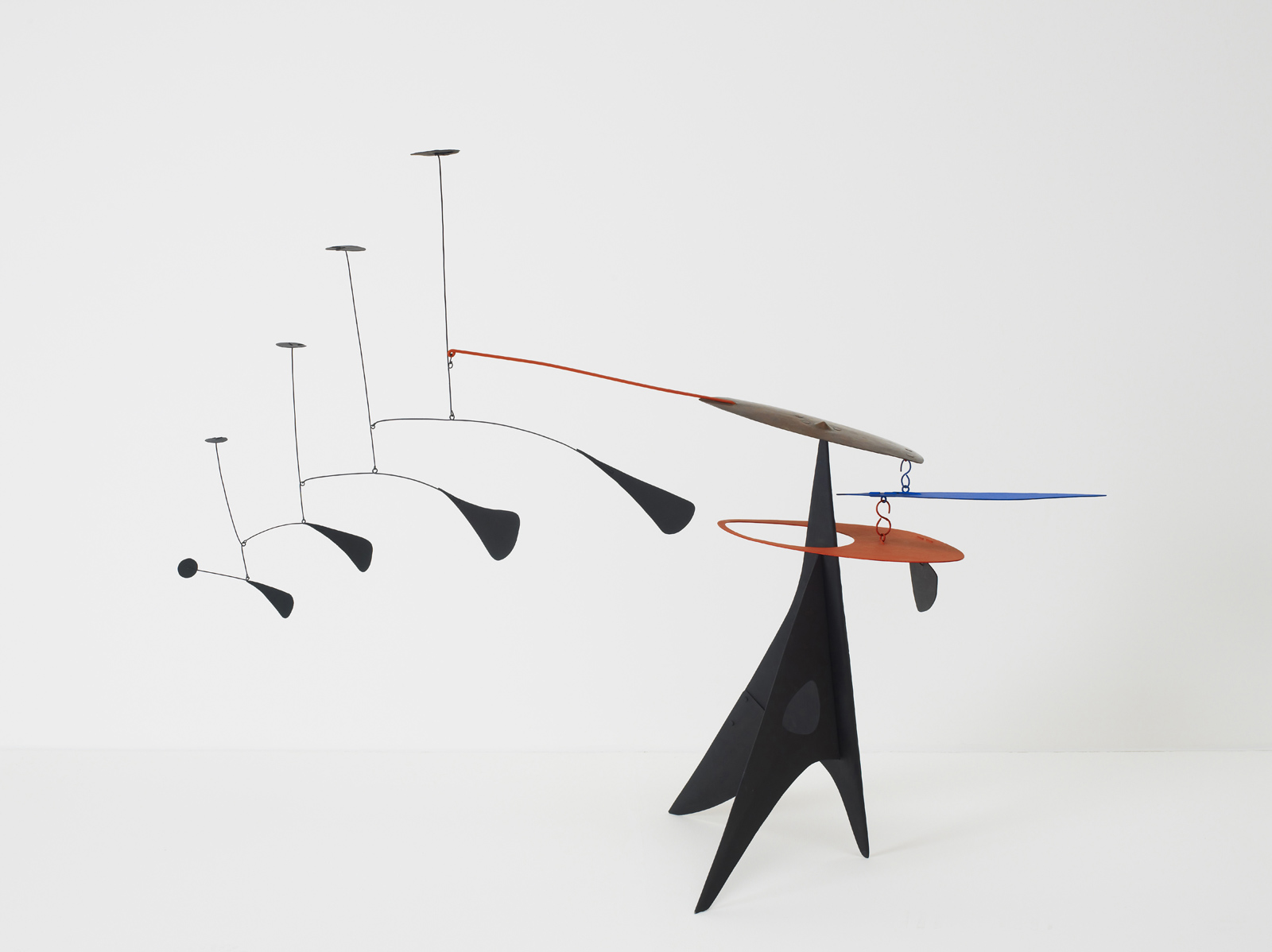
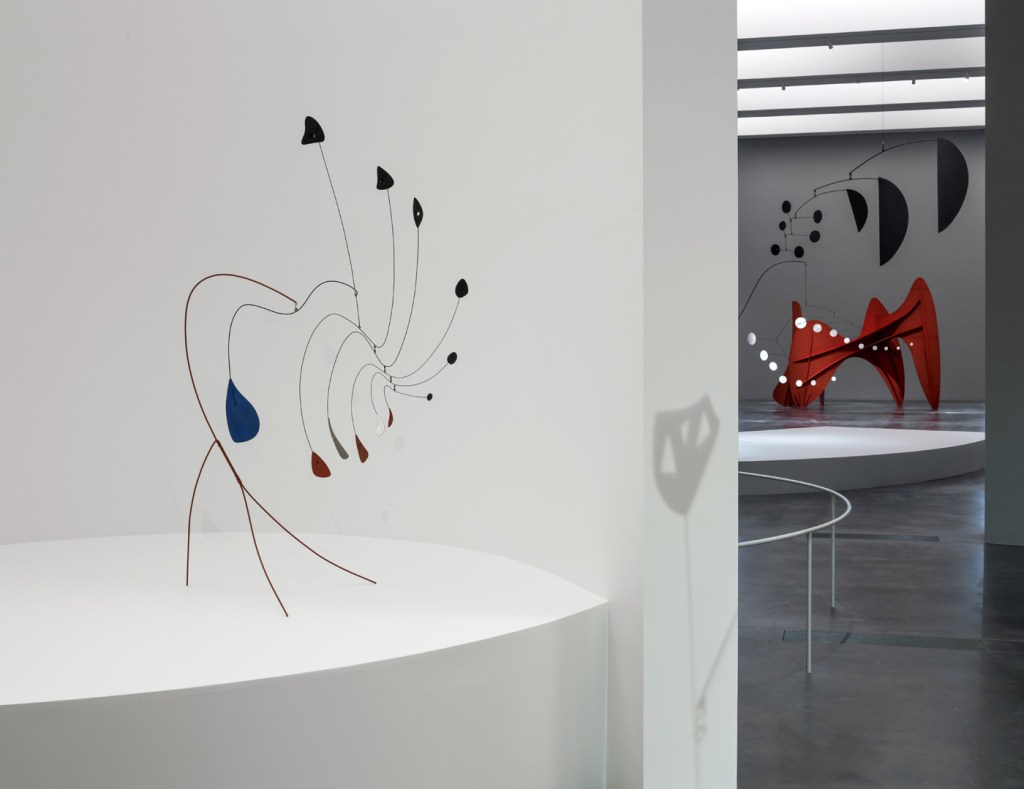
Alexander Calder (American, 1898-1976) 'Blue Feather' c. 1948


Alexander Calder (American, 1898-1976)
Blue Feather
c. 1948
Sheet metal, wire and paint
42 x 55 x 18 inches
Calder Foundation, New York
© Calder Foundation, New York/Artists Rights Society (ARS)
Photo: Calder Foundation, New York/Art Resource NY


Any of them – or just one of them. I don’t care!

Just to have one in your home would be like wishing upon a star… to contemplate, to observe, to understand these inherently tactile sculptures. What a joy.

Marcus


Many thankx to the Los Angeles County Museum of Art (LACMA) for allowing me to publish the art work in the posting. Please click on the photographs for a larger version of the image. Download Calder and Abstraction: From Avant-Garde to Iconic Didactics (30kb pdf)


This slideshow requires JavaScript.


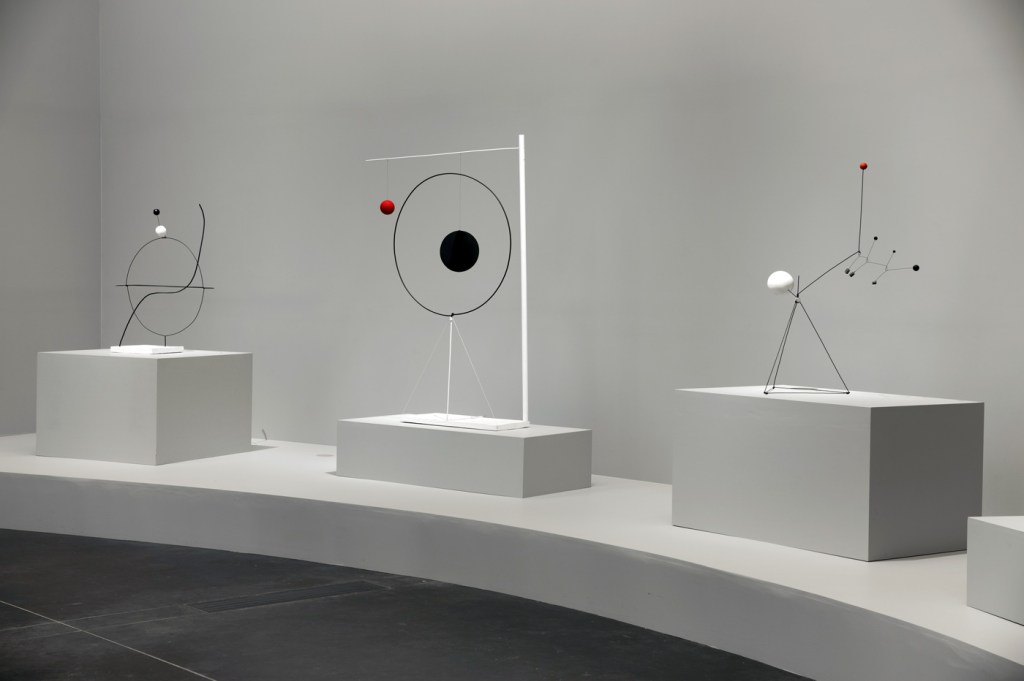
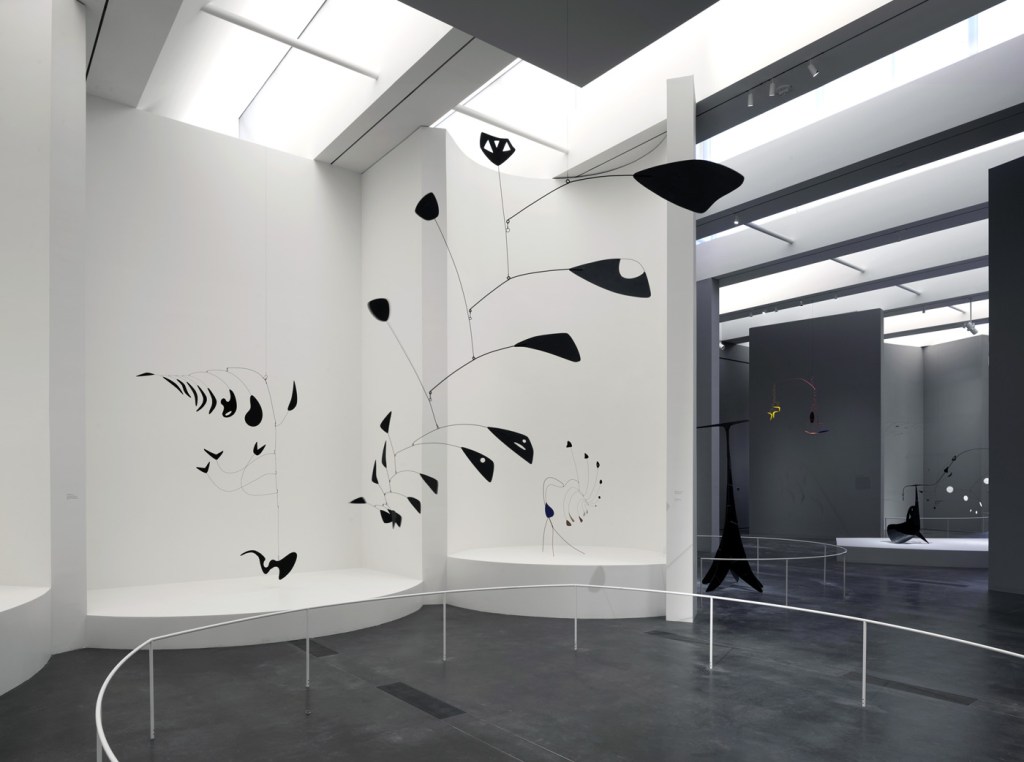
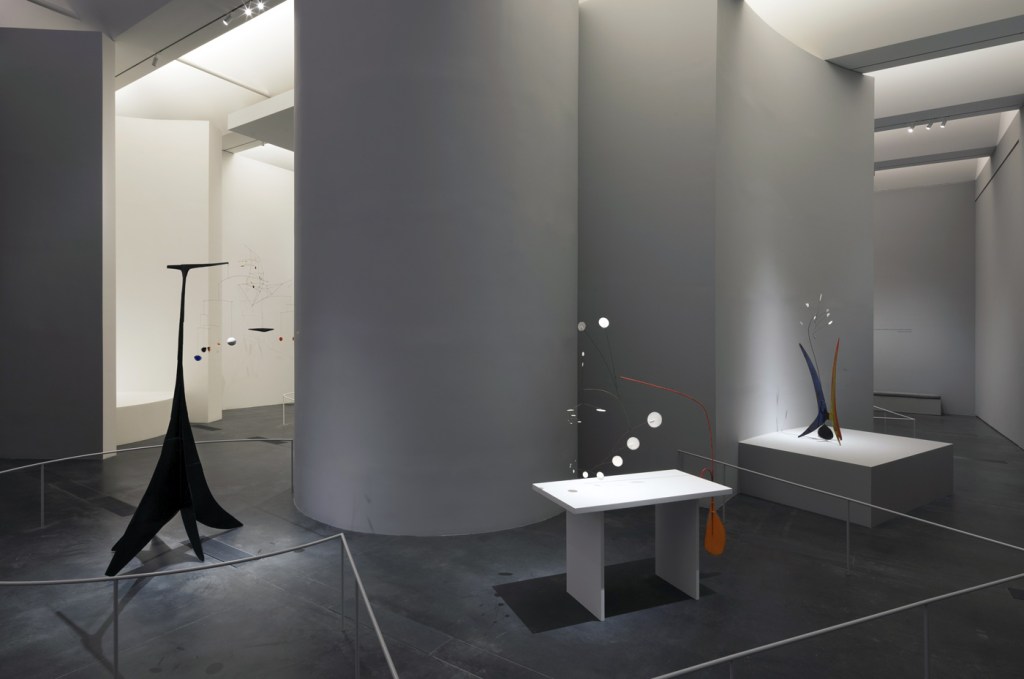
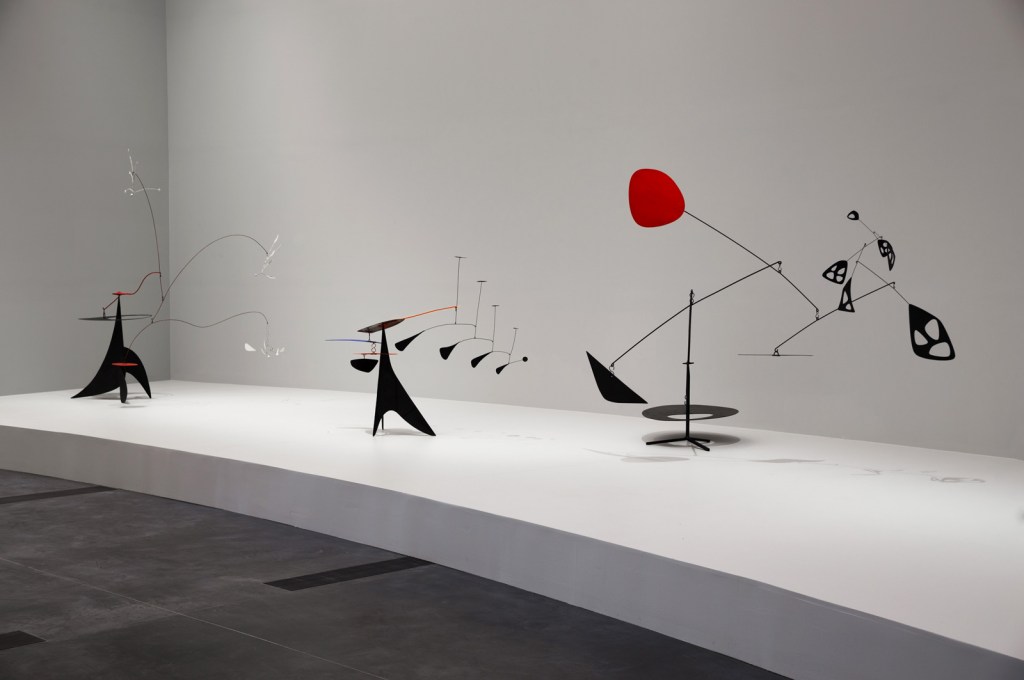
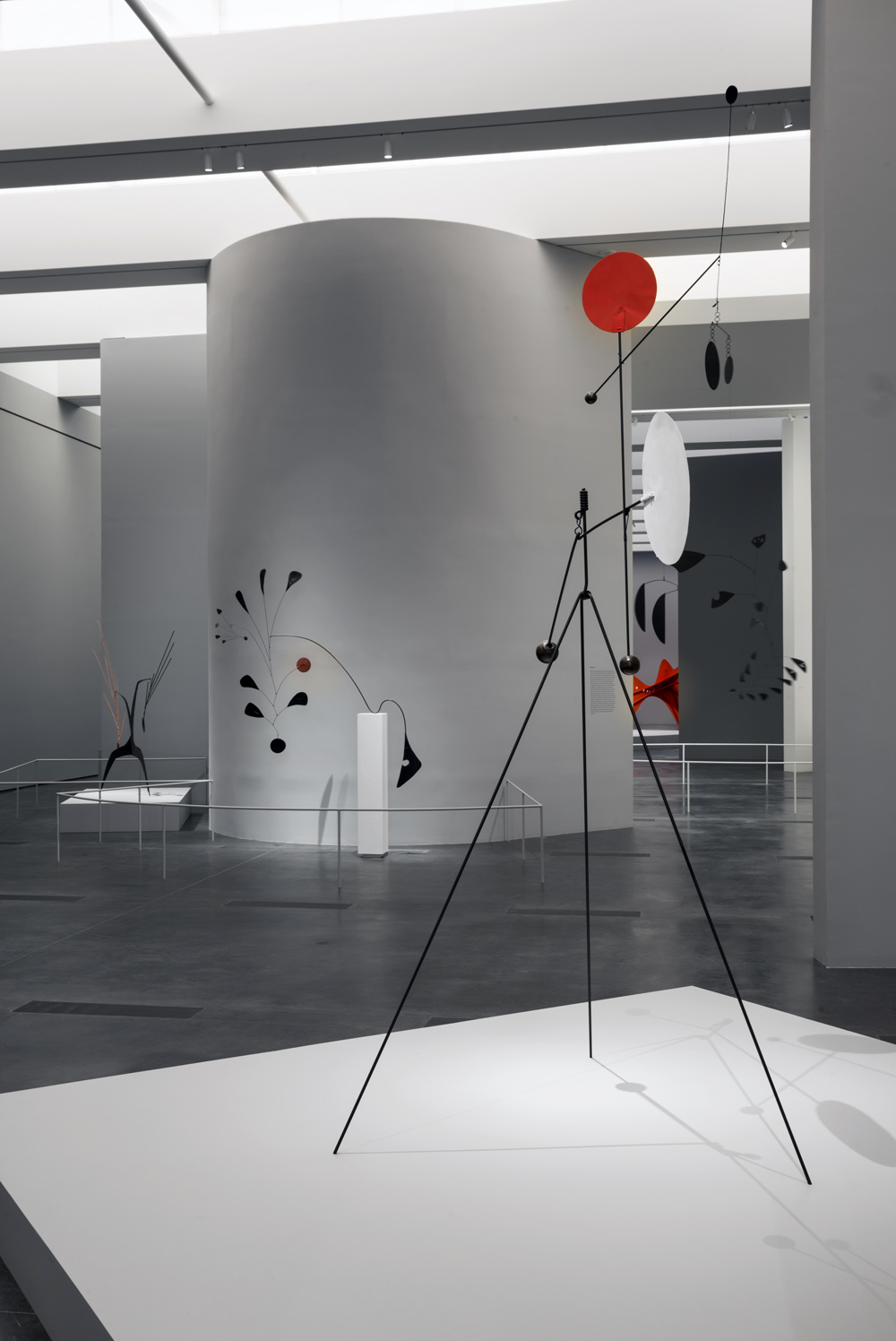
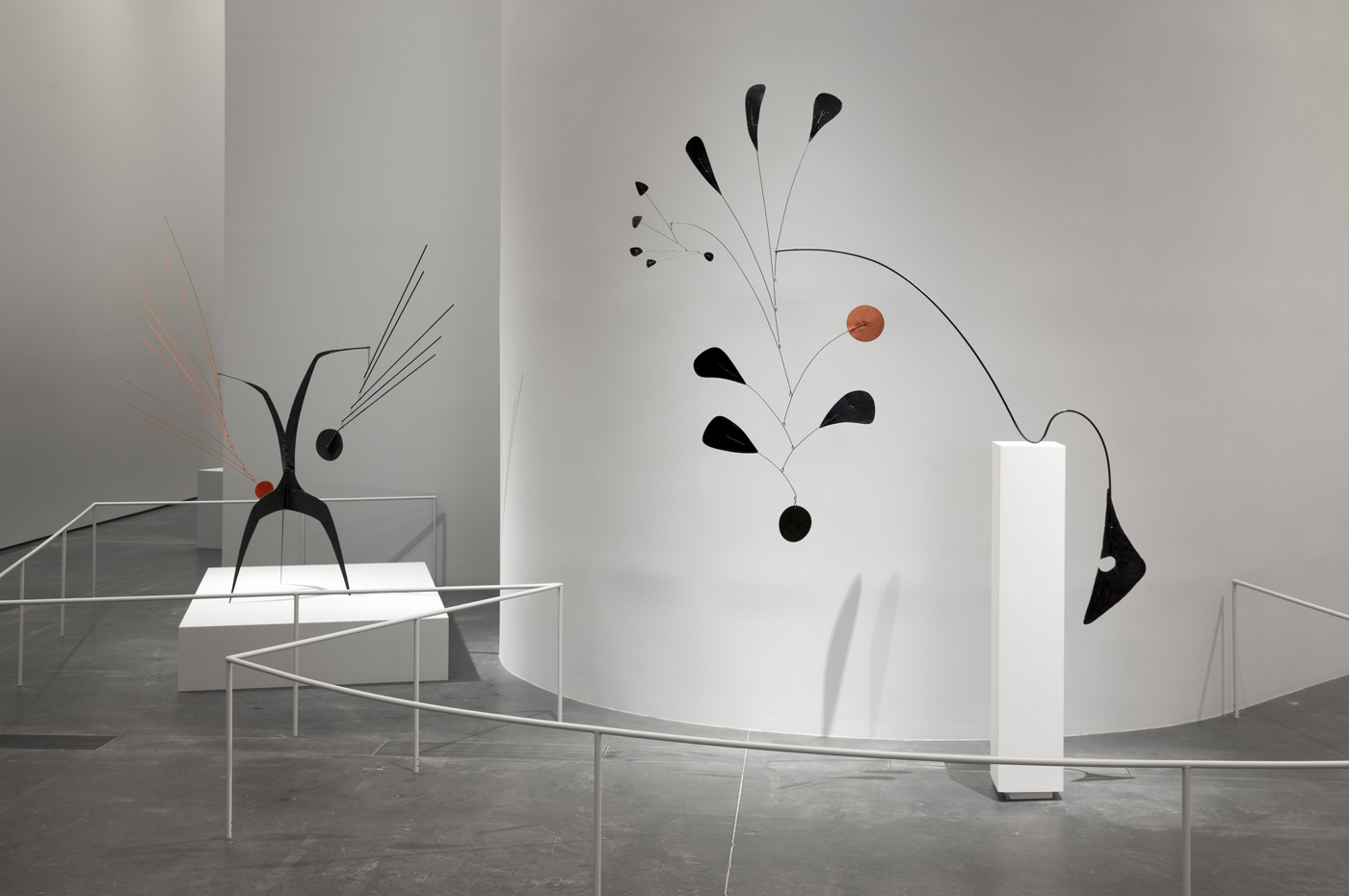
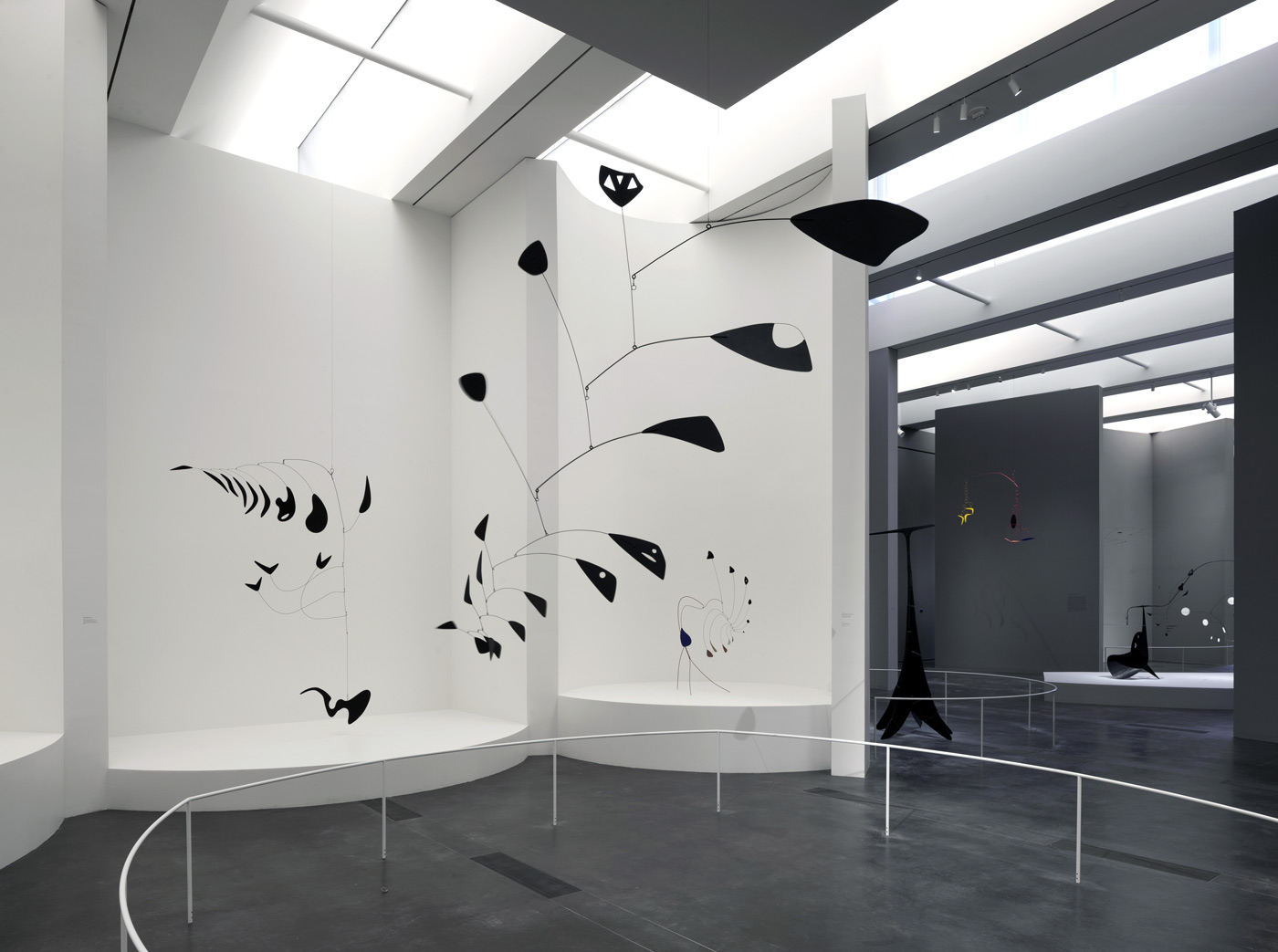
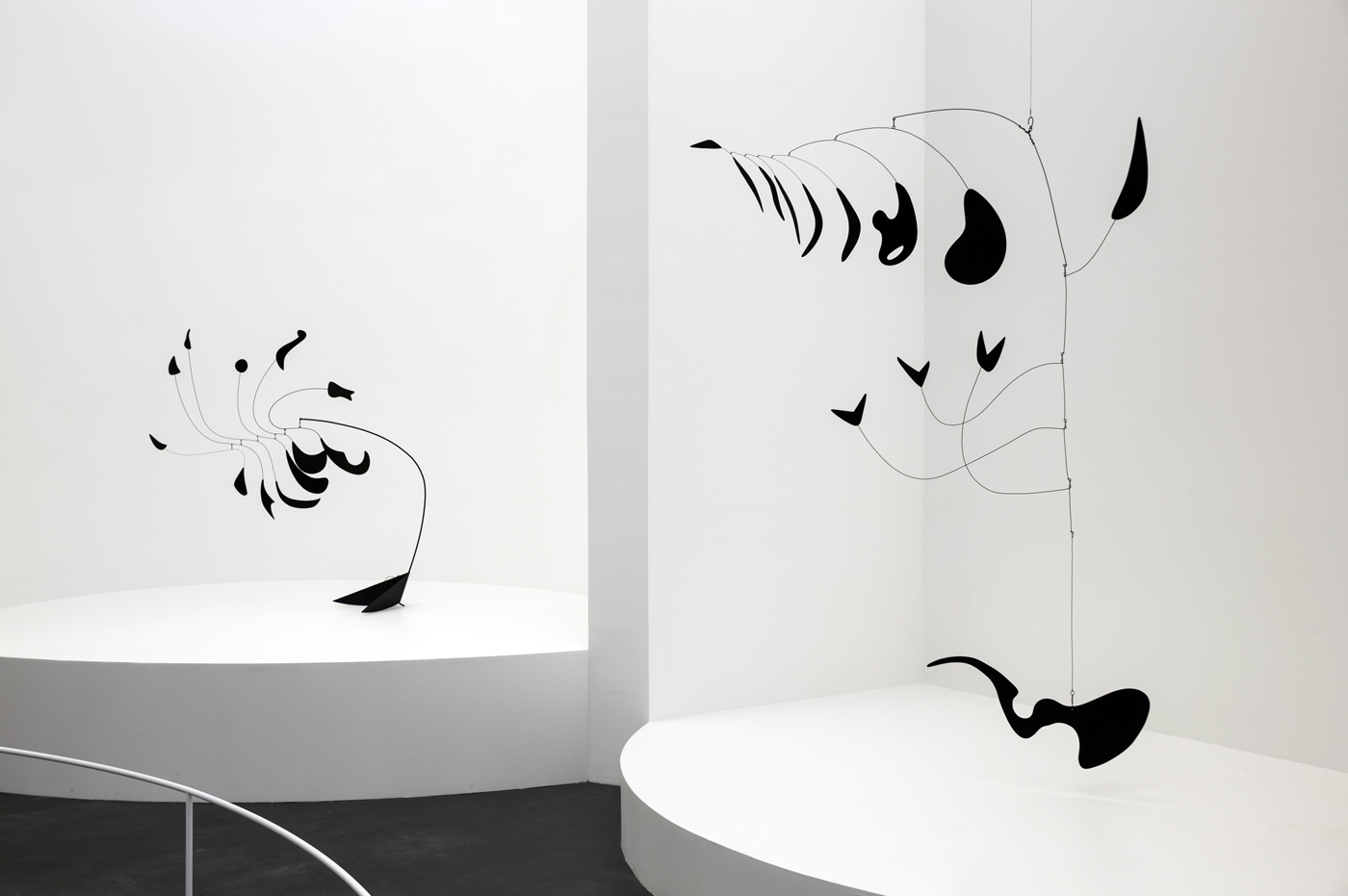
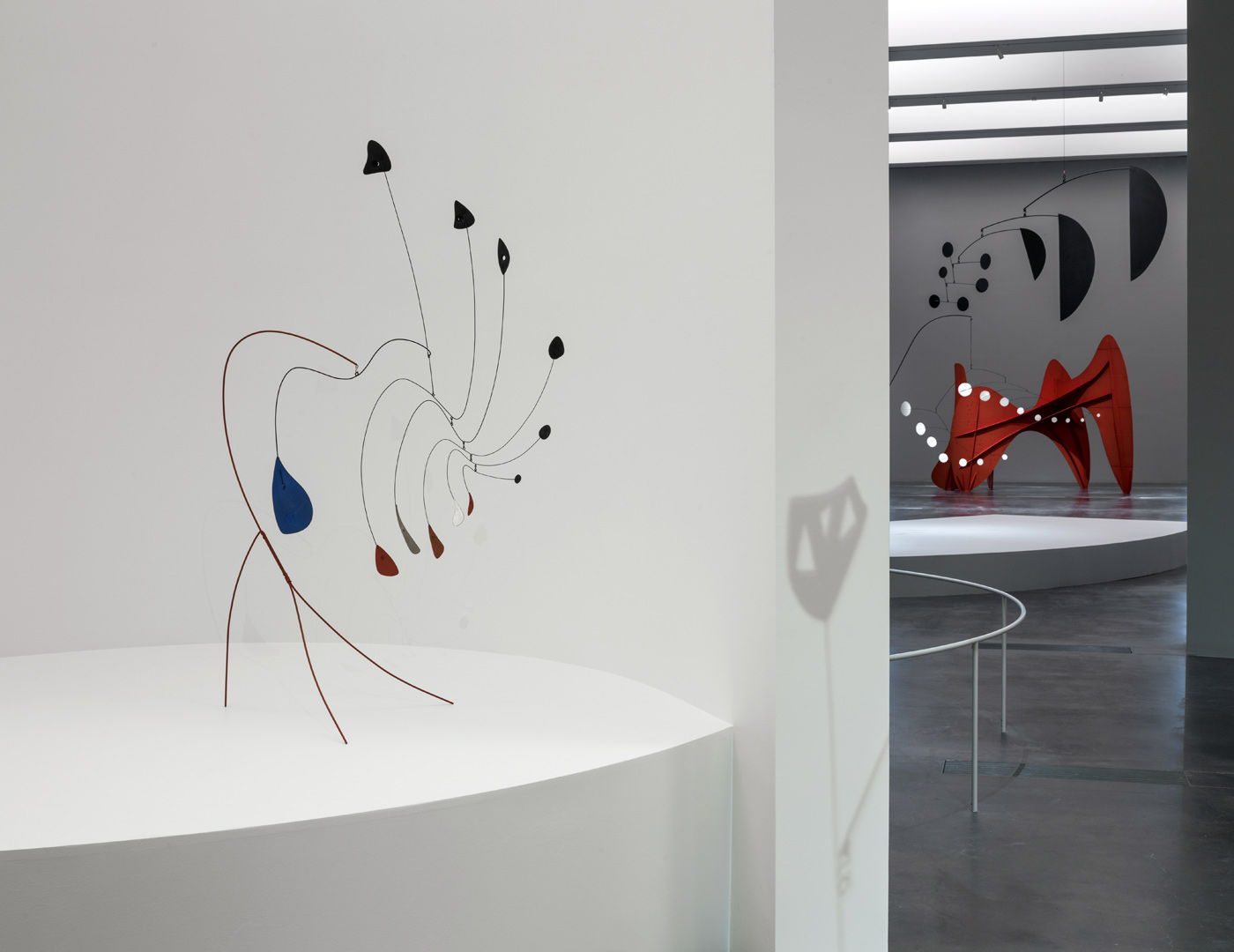
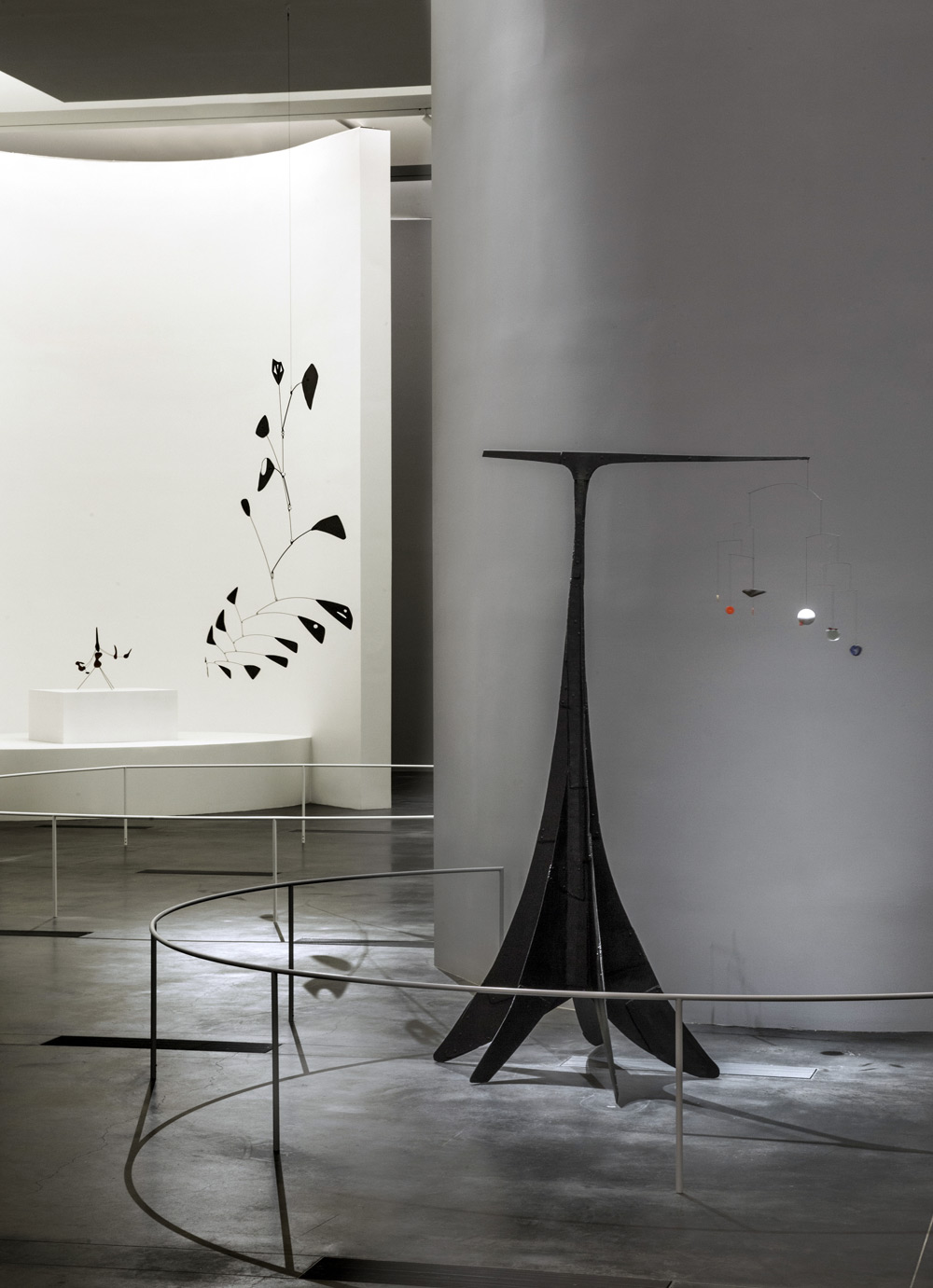
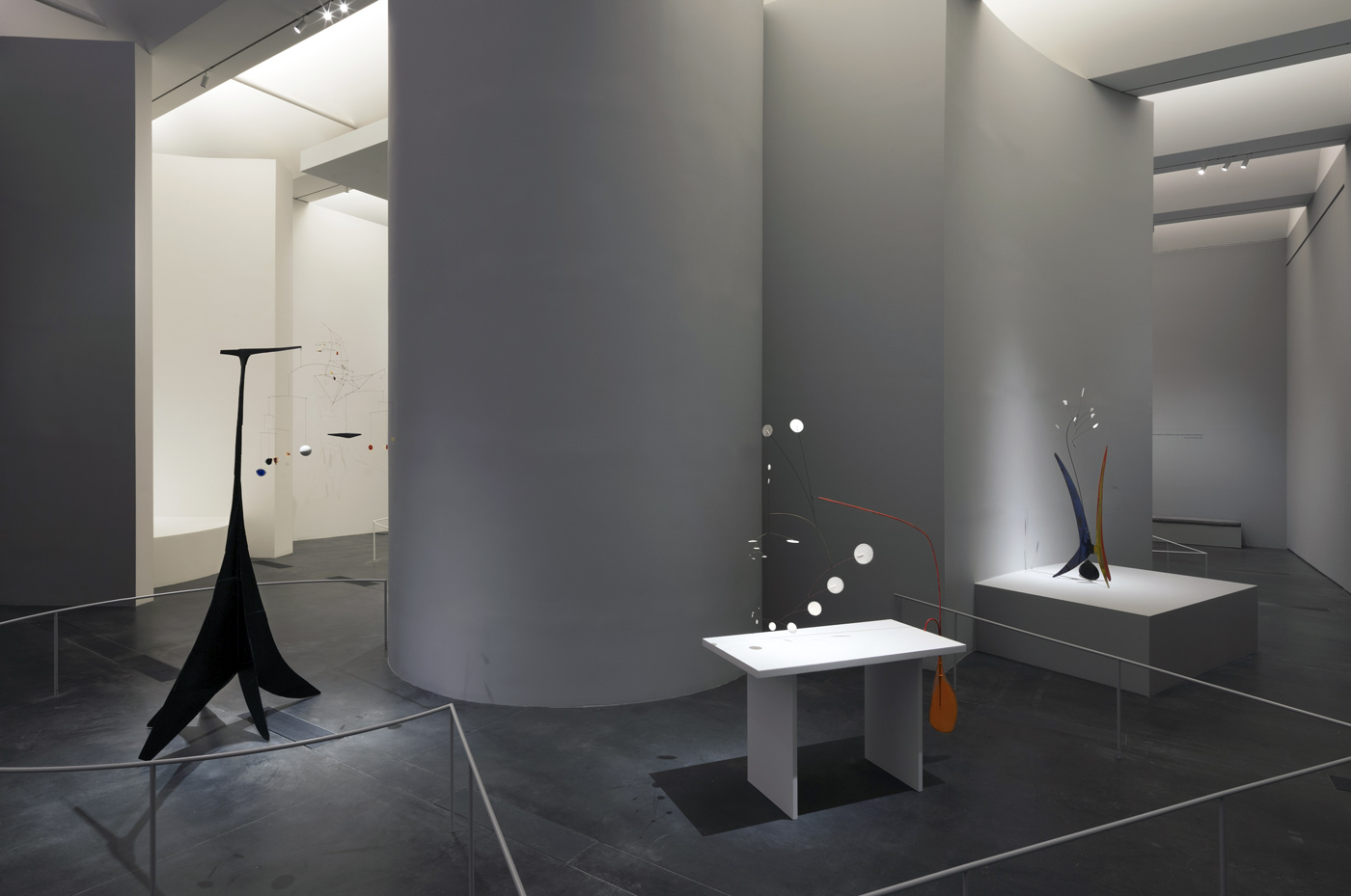
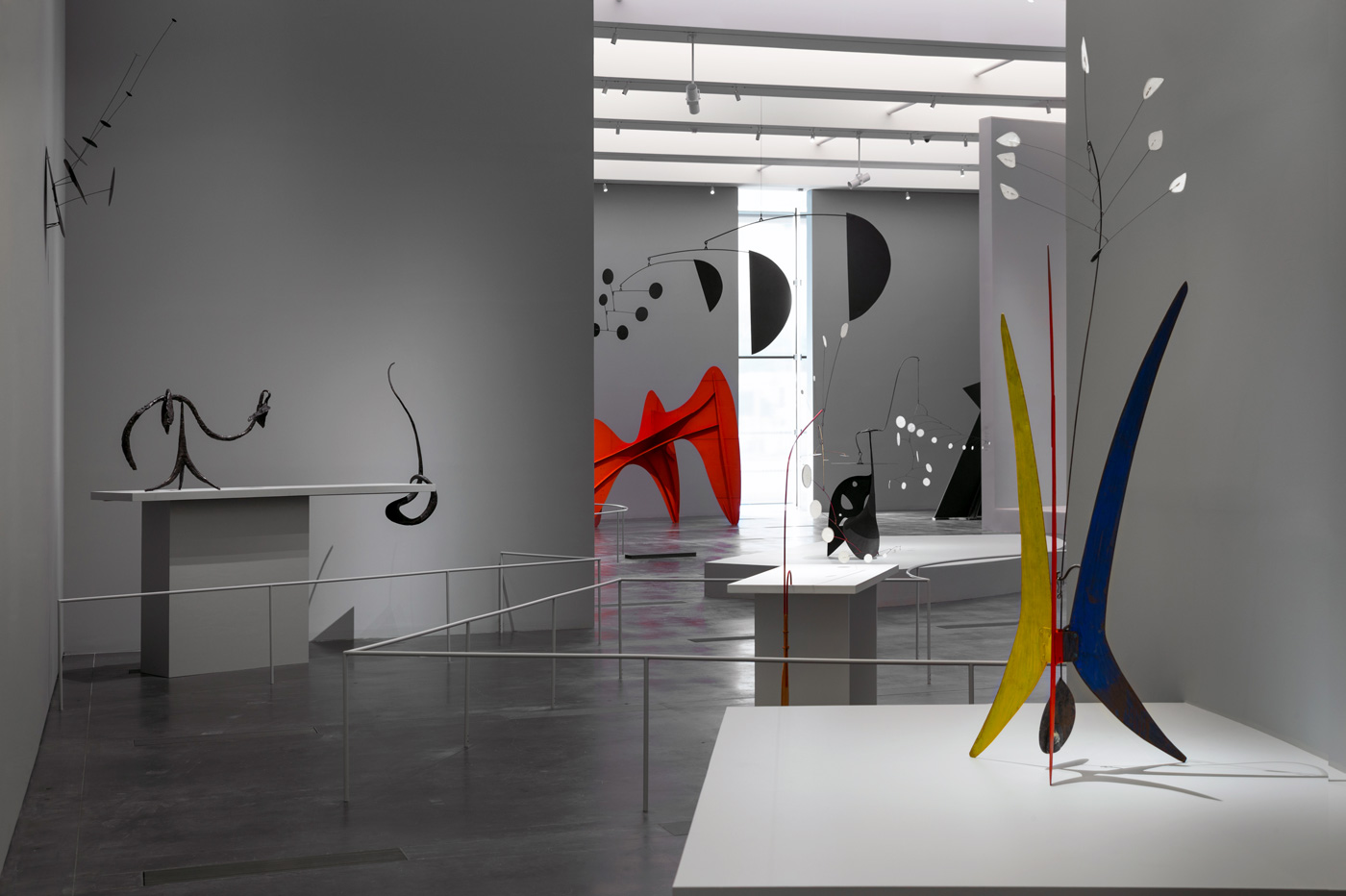
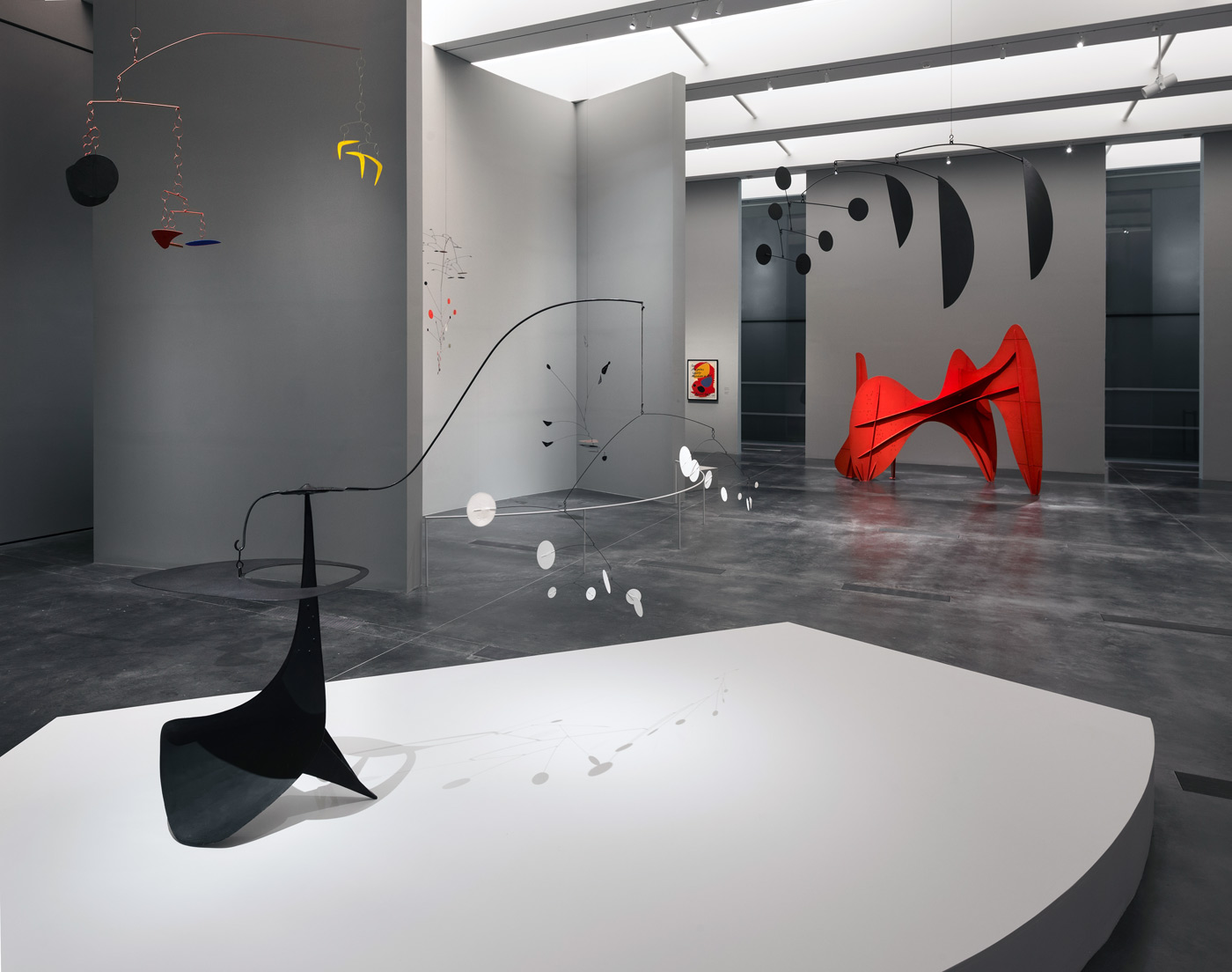
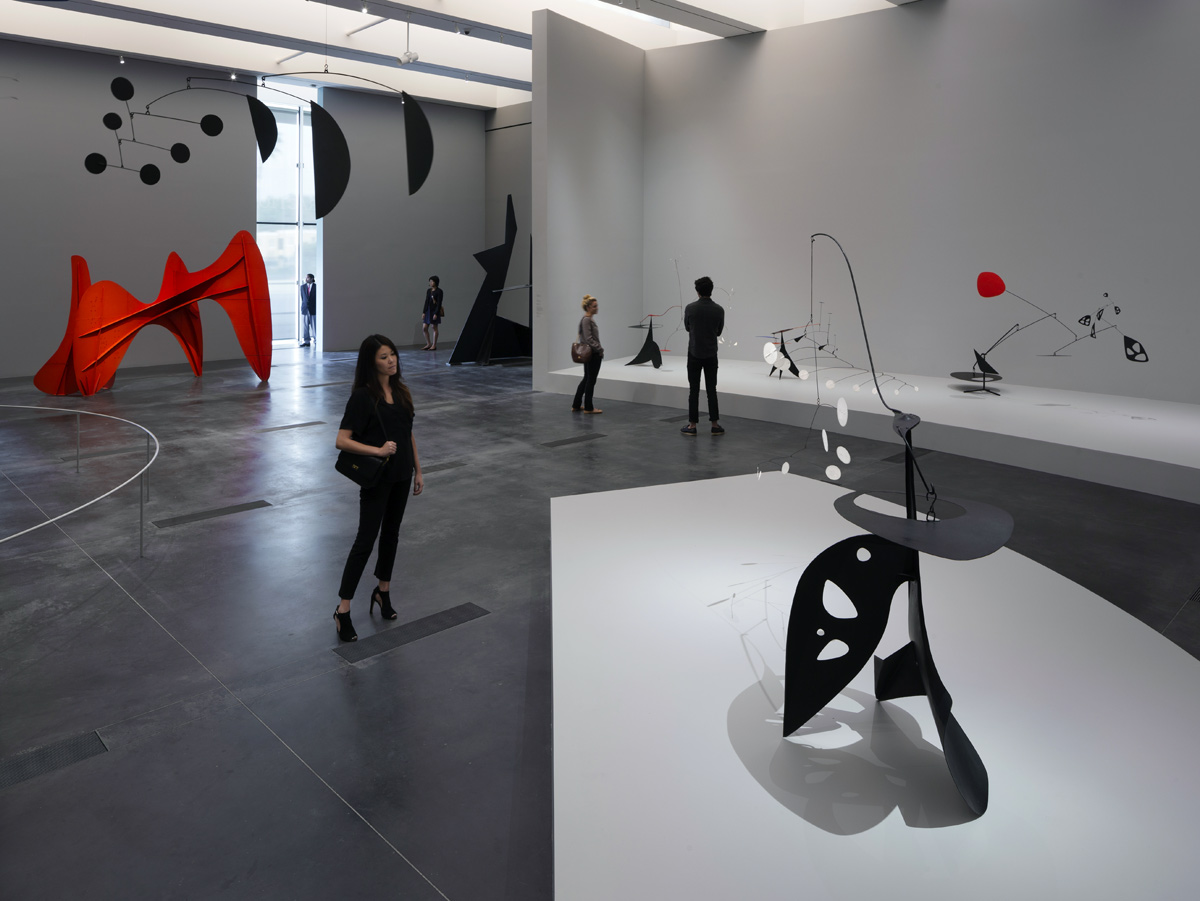
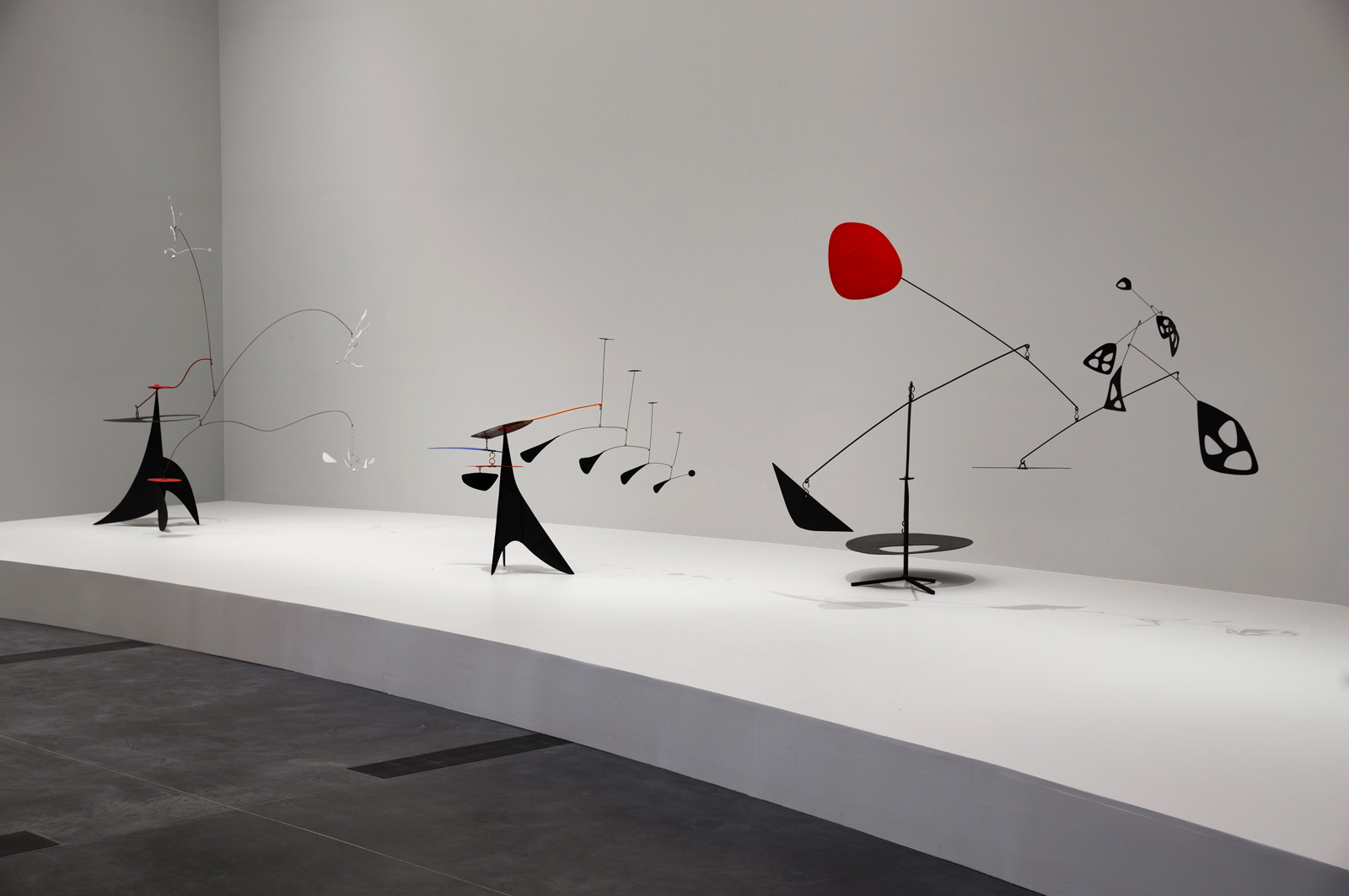
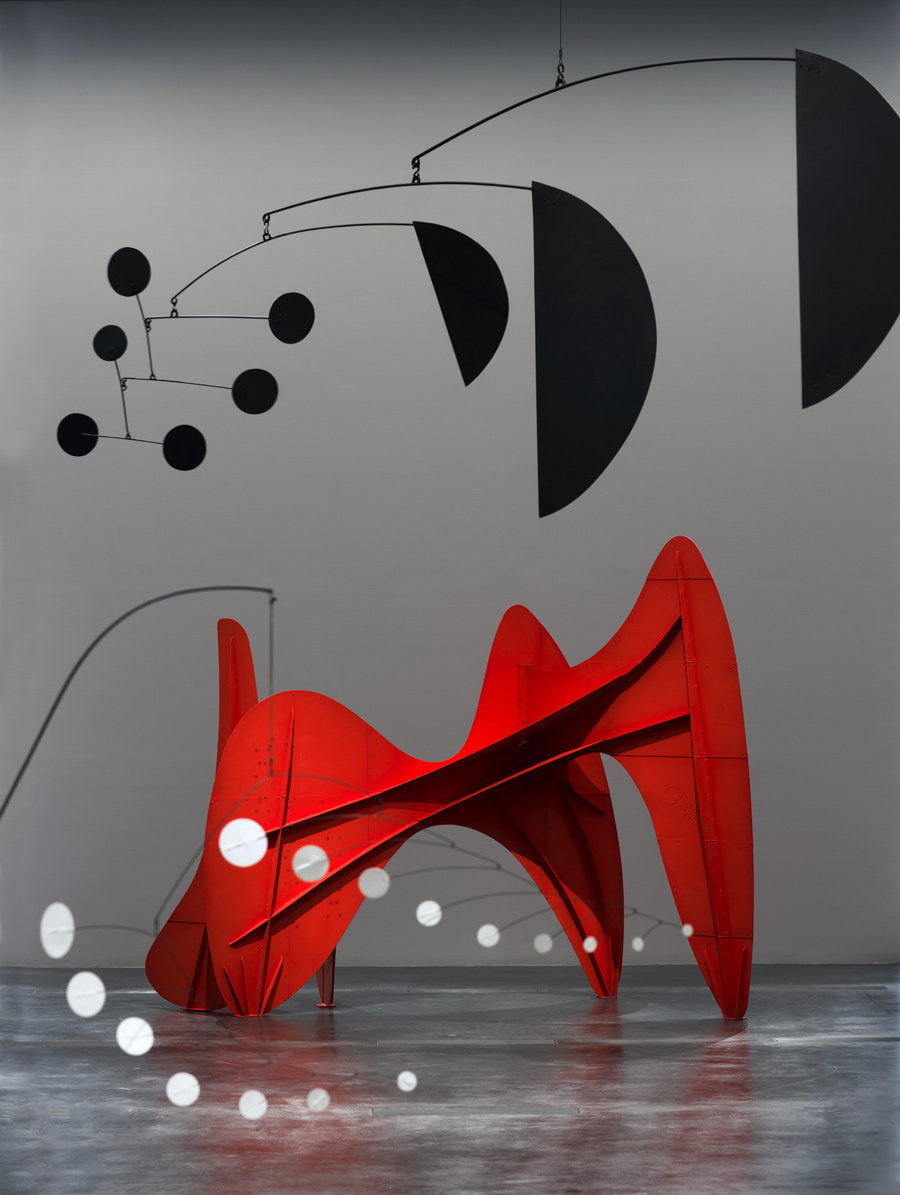
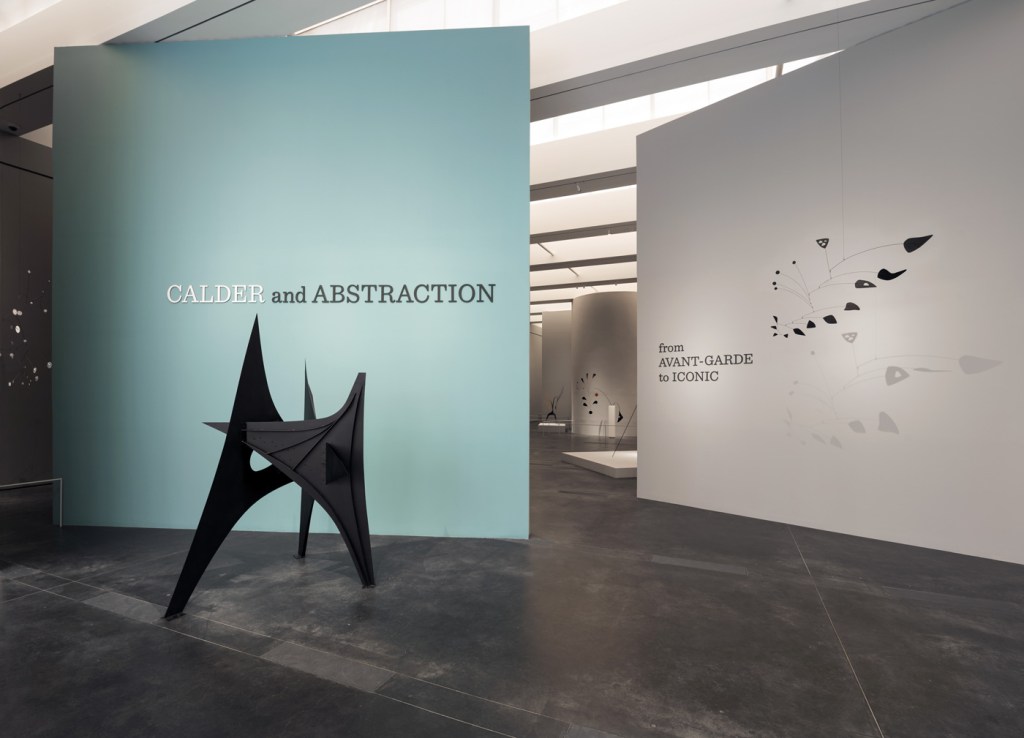
Installation view of 'Calder and Abstraction: From Avant-Garde to Iconic' at the Los Angeles County Museum of Art (LACMA)

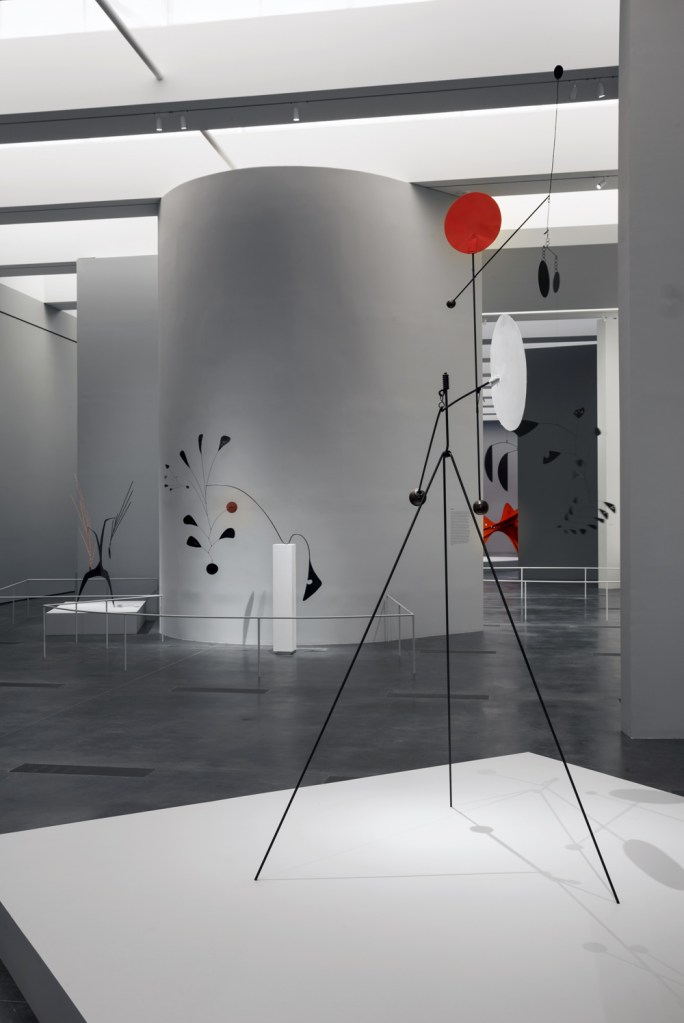
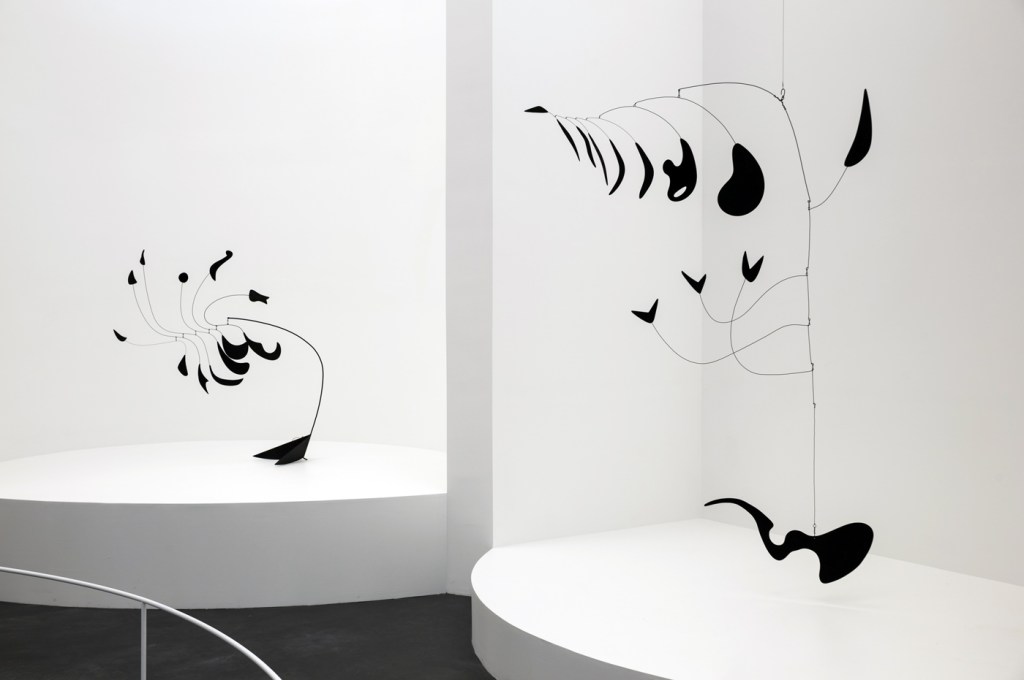
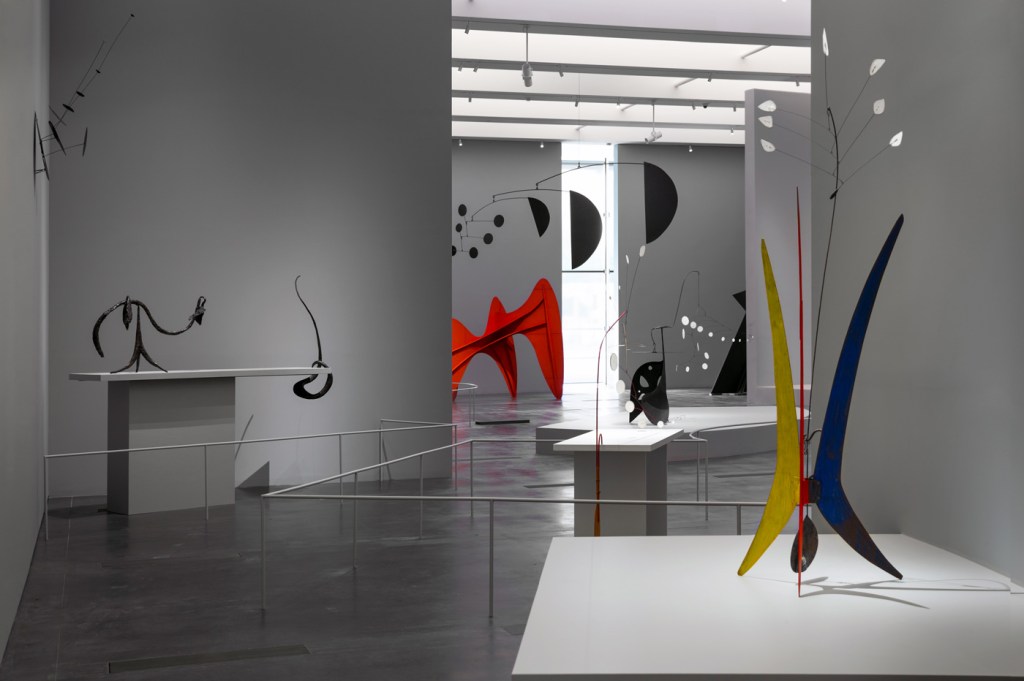
Installation view of 'Calder and Abstraction: From Avant-Garde to Iconic' at the Los Angeles County Museum of Art (LACMA)

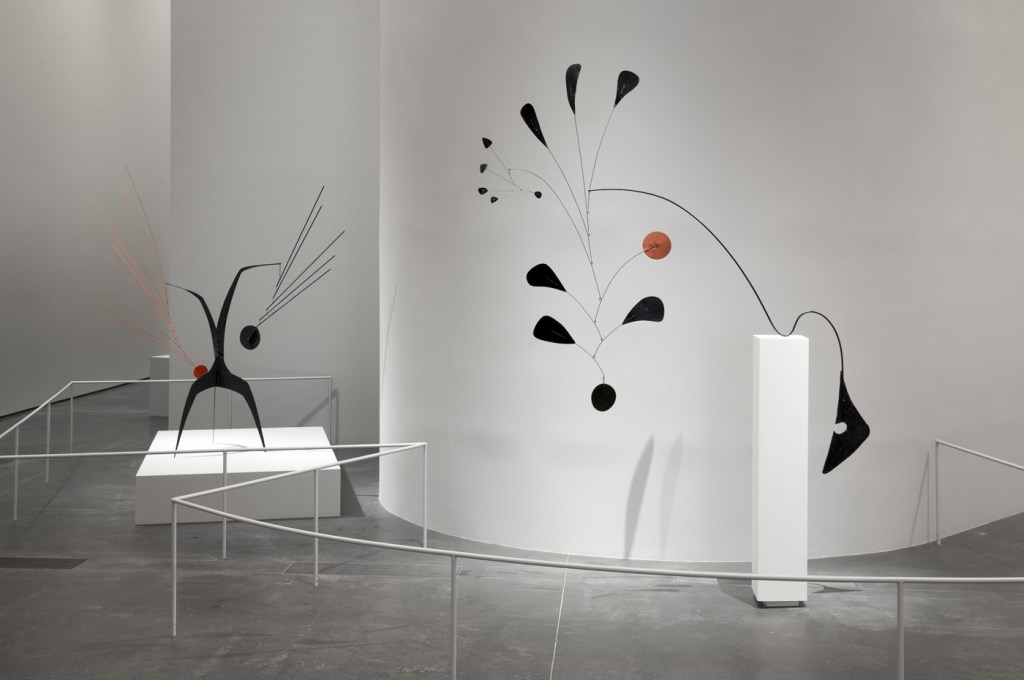
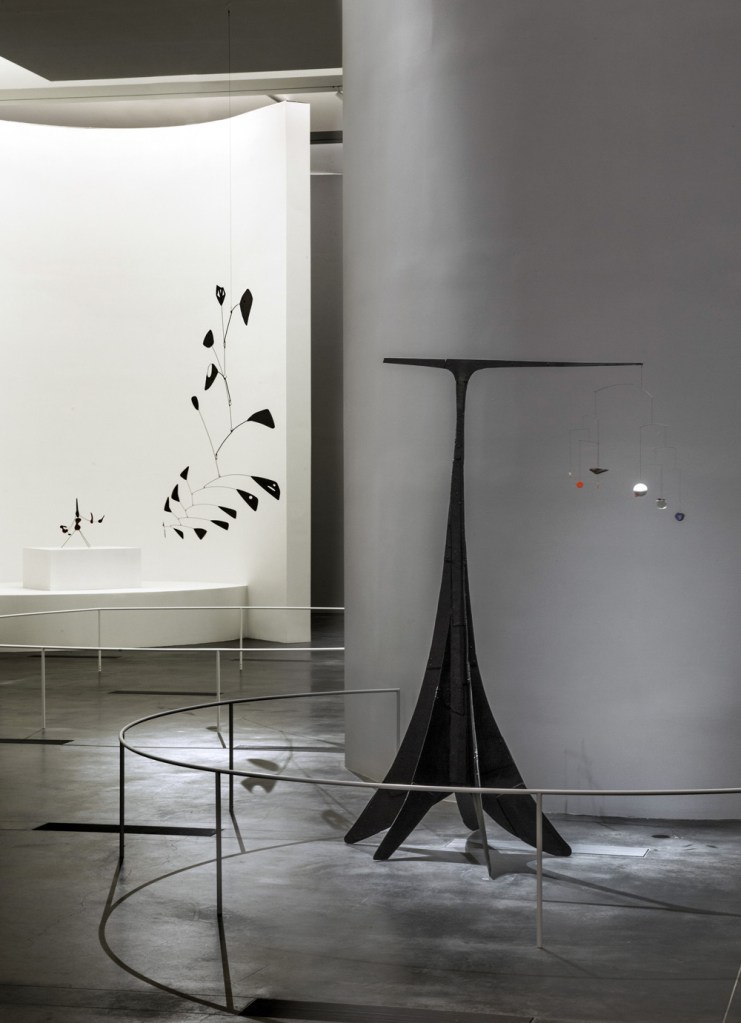
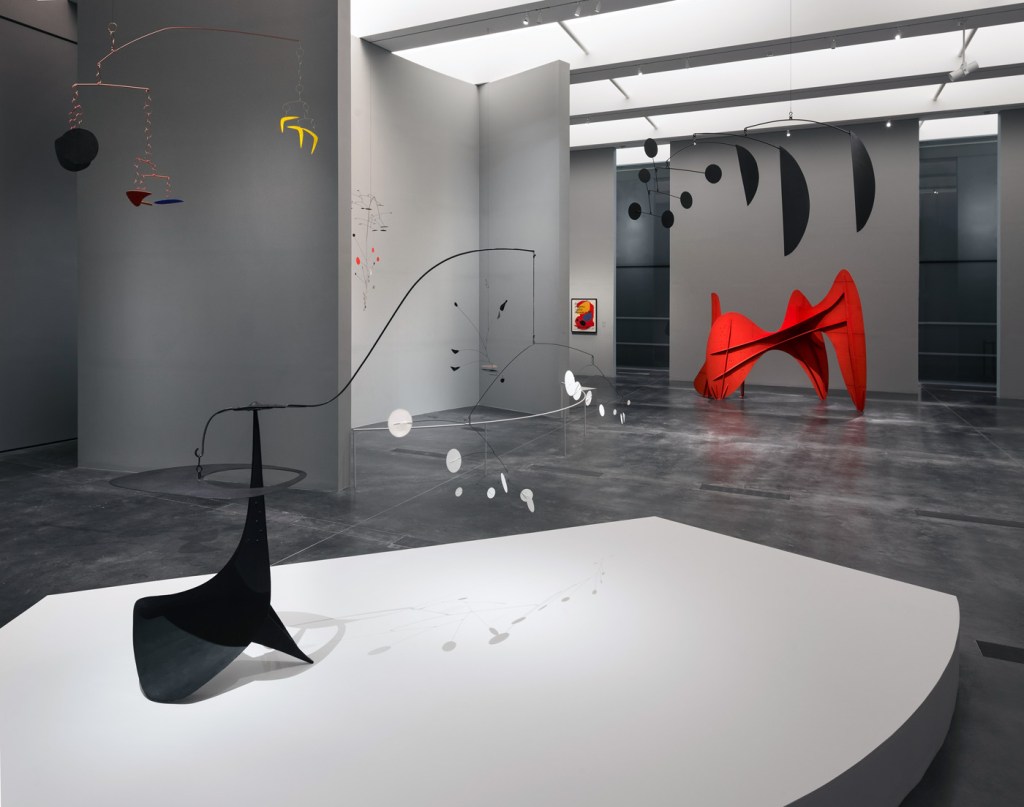
Installation view of 'Calder and Abstraction: From Avant-Garde to Iconic' at the Los Angeles County Museum of Art (LACMA)

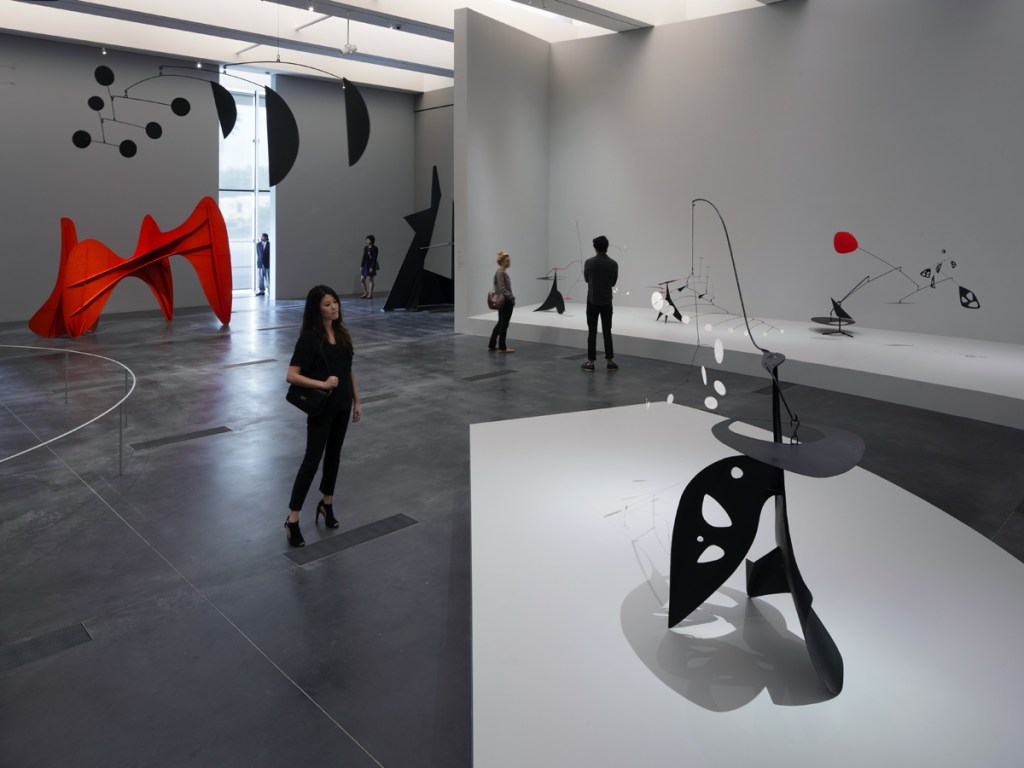
Installation view of 'Calder and Abstraction: From Avant-Garde to Iconic' at the Los Angeles County Museum of Art (LACMA)

Installation view of 'Calder and Abstraction: From Avant-Garde to Iconic' at the Los Angeles County Museum of Art (LACMA)

Installation view of 'Calder and Abstraction: From Avant-Garde to Iconic' at the Los Angeles County Museum of Art (LACMA)

Installation view of 'Calder and Abstraction: From Avant-Garde to Iconic' at the Los Angeles County Museum of Art (LACMA)

Installation view of 'Calder and Abstraction: From Avant-Garde to Iconic' at the Los Angeles County Museum of Art (LACMA)

Installation view of 'Calder and Abstraction: From Avant-Garde to Iconic' at the Los Angeles County Museum of Art (LACMA)

Installation view of 'Calder and Abstraction: From Avant-Garde to Iconic' at the Los Angeles County Museum of Art (LACMA)

Installation view of 'Calder and Abstraction: From Avant-Garde to Iconic' at the Los Angeles County Museum of Art (LACMA)

Installation view of 'Calder and Abstraction: From Avant-Garde to Iconic' at the Los Angeles County Museum of Art (LACMA)

Installation view of 'Calder and Abstraction: From Avant-Garde to Iconic' at the Los Angeles County Museum of Art (LACMA)

Installation view of 'Calder and Abstraction: From Avant-Garde to Iconic' at the Los Angeles County Museum of Art (LACMA)


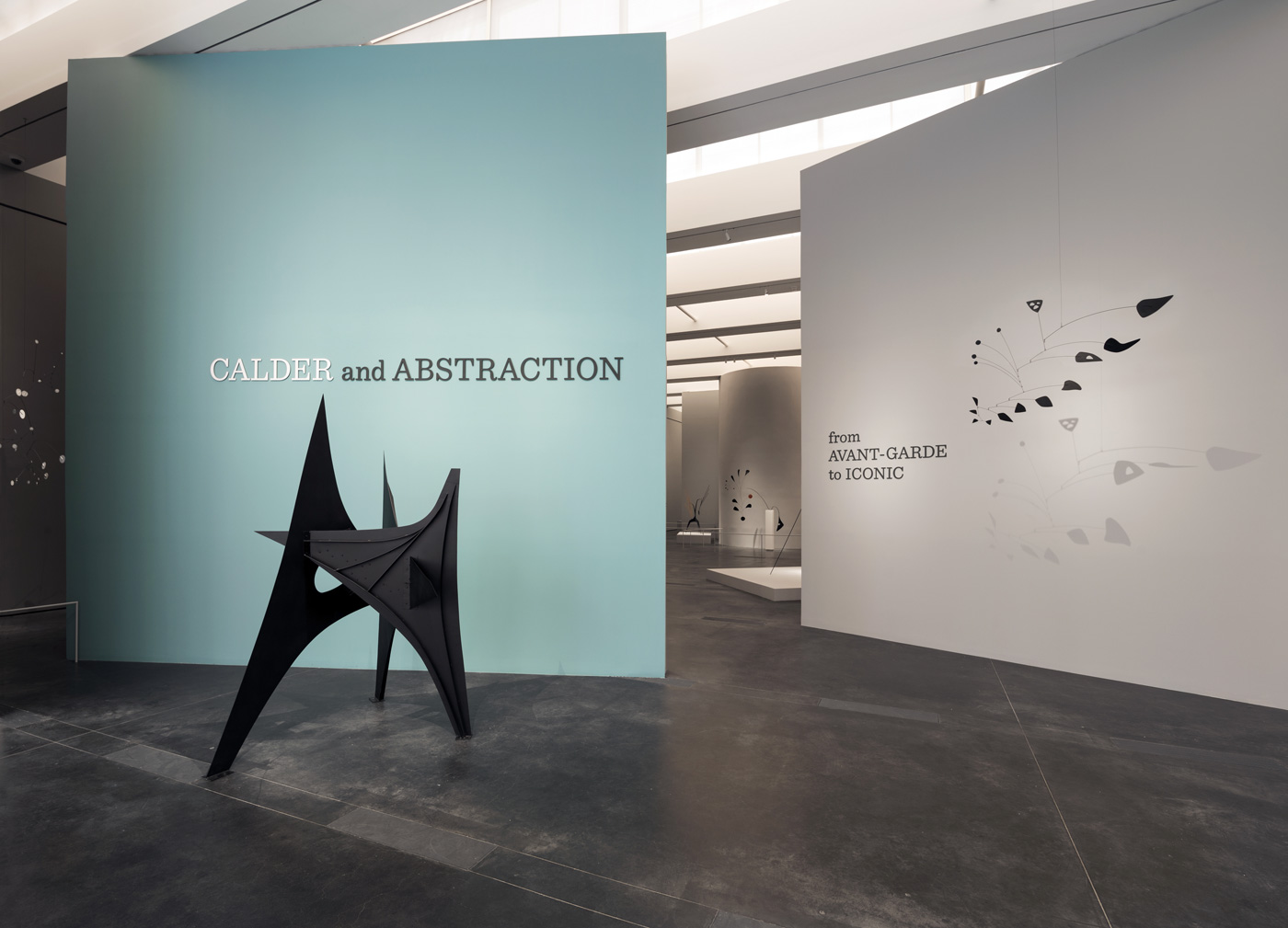
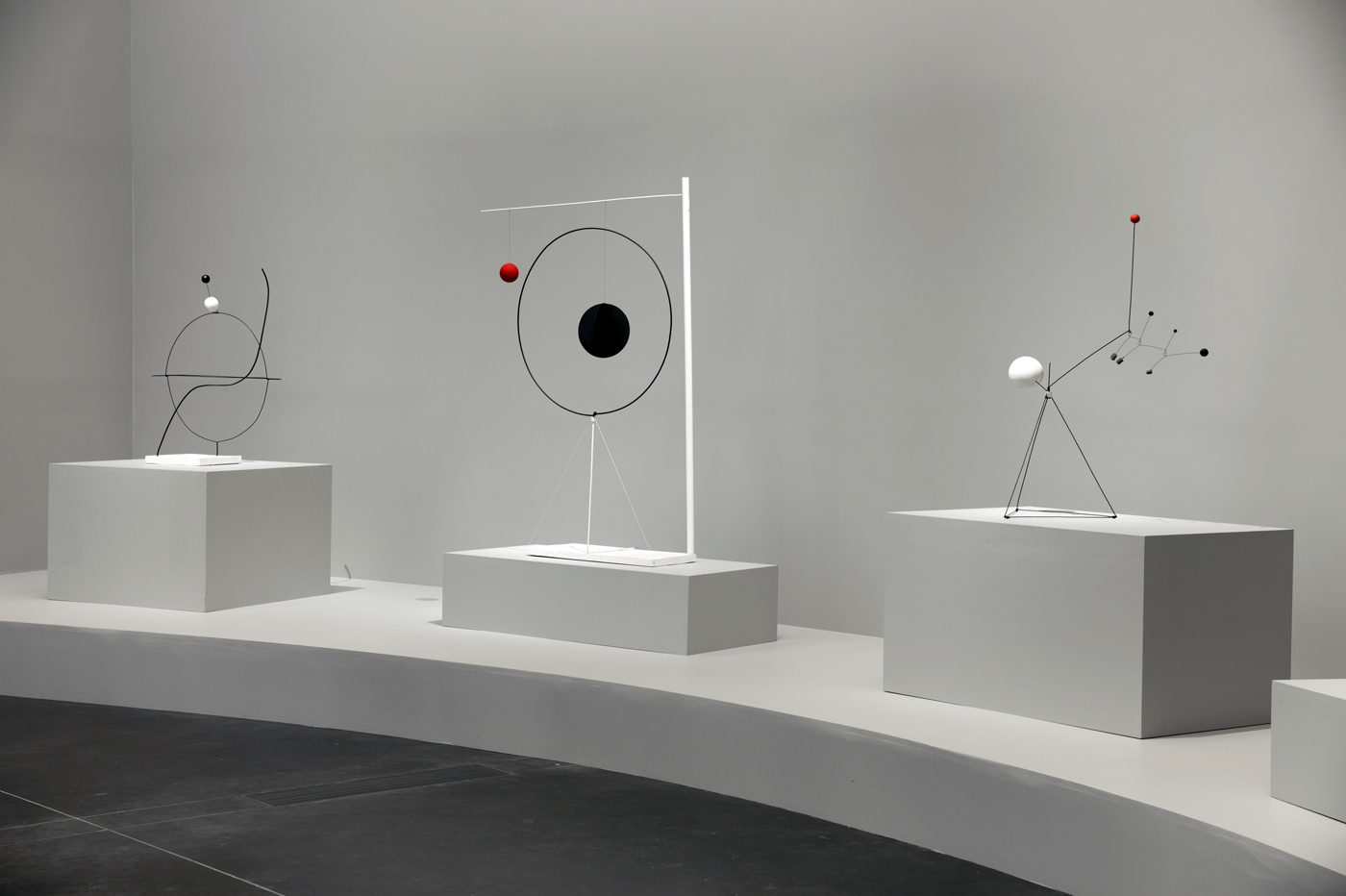
Installation views of Calder and Abstraction: From Avant-Garde to Iconic at the Los Angeles County Museum of Art (LACMA)
© Calder Foundation, New York/Artists Rights Society (ARS)
Photos: Fredrik Nilsen


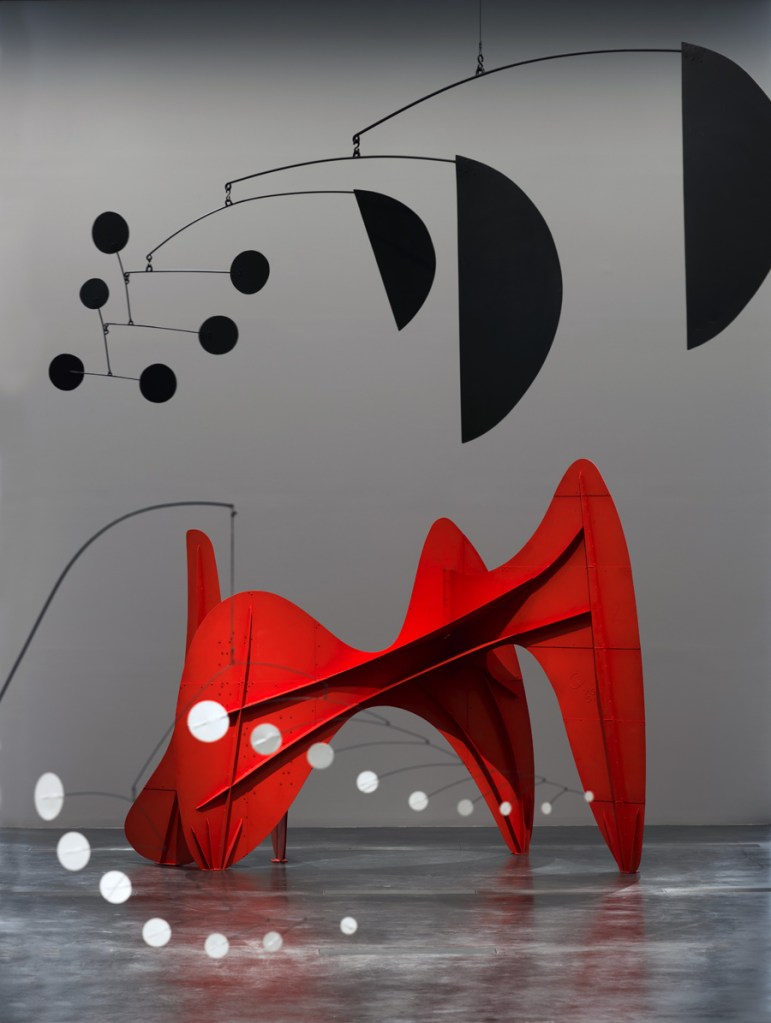
The Los Angeles County Museum of Art (LACMA) presents Calder and Abstraction: From Avant-Garde to Iconic, the first monographic presentation of Alexander Calder’s work in a Los Angeles museum. Taking as its compass the large-scale sculpture Three Quintains (Hello Girls), a site-specific fountain commissioned by LACMA’s Art Museum Council in 1964 for the opening of LACMA’s Hancock Park campus, Calder and Abstraction brings together a range of nearly fifty abstract sculptures, including mobiles, stabiles, and maquettes for larger outdoor works, that span more than four decades of the artist’s career. The exhibition at LACMA is organised by LACMA’s senior curator of modern art Stephanie Barron and designed by Gehry Partners, LLP.

Barron remarks, “Calder is recognised as one of the greatest pioneers of modernist sculpture, but his contribution to the development of abstract modern sculpture – steeped in beauty and humour – has long been underestimated by critics. Calder was considered a full-fledged member of the European avant-garde, becoming friendly with André Breton, Marcel Duchamp, Joan Miró, and Piet Mondrian, and exhibited alongside Jean Arp, Wassily Kandinsky, Fernand Léger, and many of the Surrealists. His radical inventions move easily between seeming opposites: the avant-garde and the iconic, the geometric and the organic, art and science – an anarchic upending of the sculptural paradigm.”

Calder and Abstraction offers a window into the remarkably original thinking of this distinguished artist and elucidates his revolutionary and pivotal contribution to the development of modern sculpture,” says Michael Govan, CEO and Wallis Annenberg Director of LACMA. “Three Quintains (Hello Girls) at LACMA has for decades been seen as an emblem of the museum. Following in the footsteps of its legacy, our campus continues to be enhanced by large-scale, public art – most recently with the inclusion of Chris Burden’s Urban Light (2008) and Michael Heizer’s Levitated Mass (2012).”

Exhibition overview

Calder and Abstraction traces the evolution of abstraction in the artist’s sculptural practice. The exhibition, arranged in loose chronological order, presents highlights of Calder’s oeuvre from his earliest abstract works to the crescendo of his career in the late 1940s to his later public sculptural commissions. While he is considered one of the most popular artists of his time, his work also shares sensibilities with less immediately accessible artists, including the Surrealists and the champions of pure abstraction that made up the Abstraction-Création group, such as Robert Delaunay, Theo van Doesburg, and Kurt Schwitters, among others.

From 1926 to 1933, Pennsylvania-born Calder lived primarily in Paris and was a prevalent figure of the European avant-garde along with peers Marcel Duchamp, Joan Miró, Piet Mondrian, Jean Hélion, Wassily Kandinsky, Fernand Léger, Alberto Giacometti, fellow American Man Ray, and many of the Surrealists. At the time, Paris was the epicentre of creative production, and Surrealism was the most significant artistic movement in France. A number of his works from the 1930s referenced astronomy, a preoccupation shared by a number of avant-garde artists. In Gibraltar two off-kilter rods thrust upward from a plane encircling a wood base, suggesting a personal solar system. Calder was fascinated with representing the natural world and the cosmos as potent and brimming with energy: “When I have used spheres and discs … they should represent more than what they just are. … [T]he earth is a sphere but also has some miles of gas about it, volcanoes upon it, and the moon making circles around it. … A ball of wood or a disc of metal is rather a dull object without this sense of something emanating from it.”

A crucial encounter for Calder occurred in 1930 upon visiting artist Piet Mondrian’s studio. Calder credited Mondrian with opening his eyes to the term “abstract,” providing the catalyst to a new phase in his practice. Calder later described this visit as pivotal in his move towards abstraction: “The visit gave me a shock. … Though I had heard the word ‘modern’ before, I did not consciously know or feel the term ‘abstract.’ So now, at thirty-two, I wanted to paint and work in the abstract.”

Calder appropriated Surrealism’s affinity to curvilinear, biomorphic forms into his sculptures, and when he met Miró in 1928, the two men discovered a mutual admiration for each other’s work and developed a close friendship. As Calder stated, “Well, the archaeologists will tell you there’s a little bit of Miró in Calder and a little bit of Calder in Miró.”

The decade after he met Miró and Mondrian proved to be the most radical of Calder’s career. He embraced the Surrealist notion of integrating chance into his works in addition to the Constructivist idea that painting and sculpture should be freed from their standard constraints, such as gravity and traditional sculptural mass. He consequently developed his two signature typologies: the mobile, a term coined by Marcel Duchamp after a visit to Calder’s home and studio in 1931; and the stabile, named by Jean Arp in 1932.

Calder’s mobiles are hanging, kinetic sculptures made of discrete movable parts stirred by air currents, creating sinuous and delicate drawings in space. Either suspended or freestanding, these often large constructions consist of flat pieces of painted metal connected by wire veins and stems. Eucalyptus (1940), one of Calder’s first mature mobiles, was created during World War II. The piece can be seen as a composition of violent, tortured biomorphic shapes that suggest gaping mouths, body parts, sexual organs, and sinister weapons.

Stabiles, which were developed alongside Calder’s mobiles but came to full maturity later in his career, are stationary abstract sculptures, often with mobiles attached to them (standing mobiles). In several of Calder’s works from the 1940s – the most prolific decade of his sculptural production – he effectively blended the mobile and stabile forms, as seen in Laocoön (1947), in which the stabile supports graceful, arcing branches that cut a broad swath as they rotate at an irregular rhythm.

In the mid-1950s, Calder began working with quarter-inch steel (thicker than the aluminium he had used during the 1940s), which enabled him to construct larger, more durable, and more ambitious sculptures and posed him as an ideal collaborator with architects to create works for public spaces. With commissions from the city of Spoleto, Italy (1962), Montreal’s Expo (1967) and Grand Rapids, Michigan (1969) – represented in the exhibition by La Grande vitesse (intermediate maquette) – Calder began a virtually non-stop output of public sculpture until his death in 1976.

Calder’s public sculpture evolved at a time when communities were becoming increasingly proud of public sculpture, although his resolutely bold abstract forms, though hard to imagine now, were initially met with some controversy. Today encountering Calder’s iconic sculpture in the centre of a city, in front of a courthouse, in the midst of the Senate Office Building, or in front of a museum is a hallmark of postwar public sculpture that he helped to invent.

Exhibition design and installation

Calder was constantly in conversation and collaborated with other artists and architects in his lifetime, but a major architect has not designed a Calder show since the 1980s. Frank O. Gehry’s design for LACMA’s exhibition allows for quiet areas of contemplation, unexpected juxtapositions of related works, and opportunities for both intimate and panoramic views of the works. Gehry’s gently curved walls frame the sculptures and recall the harmony between art and architecture, emphasising the organic nature of Calder’s works. Gehry’s own method of developing architectural forms is inherently tactile, sharing some of the same hands-on techniques of a sculptor.

With the assistance of technology and effective planning, Calder and Abstraction at LACMA features a selection of sculptures that are animated throughout the course of the day.

Press release from the LACMA website
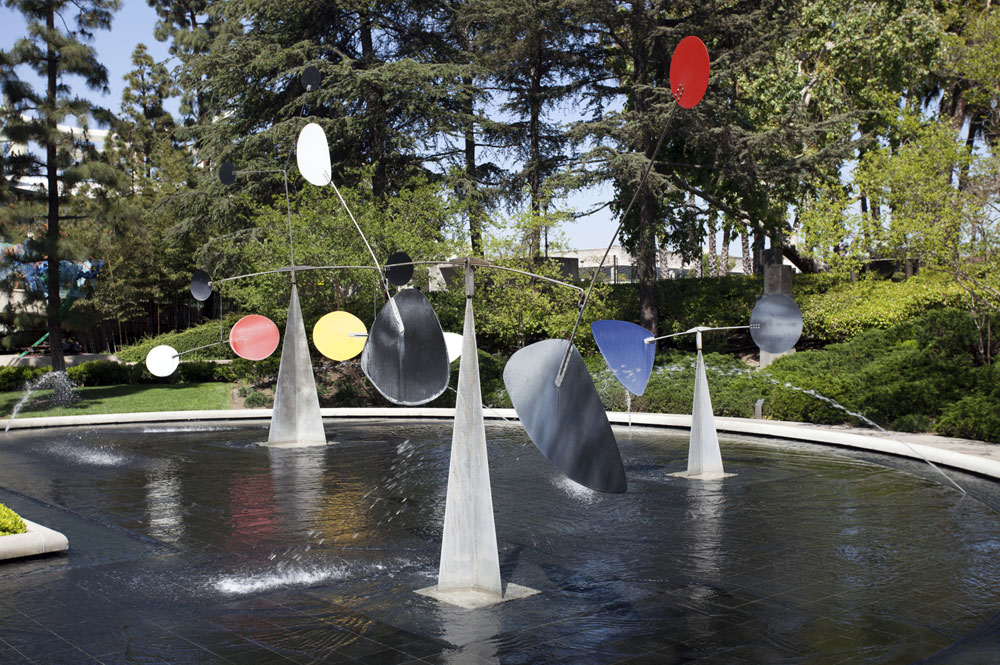
 

Alexander Calder (American, 1898-1976) 'Three Quintains (Hello Girls)' 1964


Alexander Calder (American, 1898-1976)
Three Quintains (Hello Girls)
1964
Sheet metal and paint with motor
275 x 288 inches
Los Angeles County Museum of Art
© Calder Foundation, New York/Artists Rights Society (ARS)
Photo: Museum Associates/LACMA
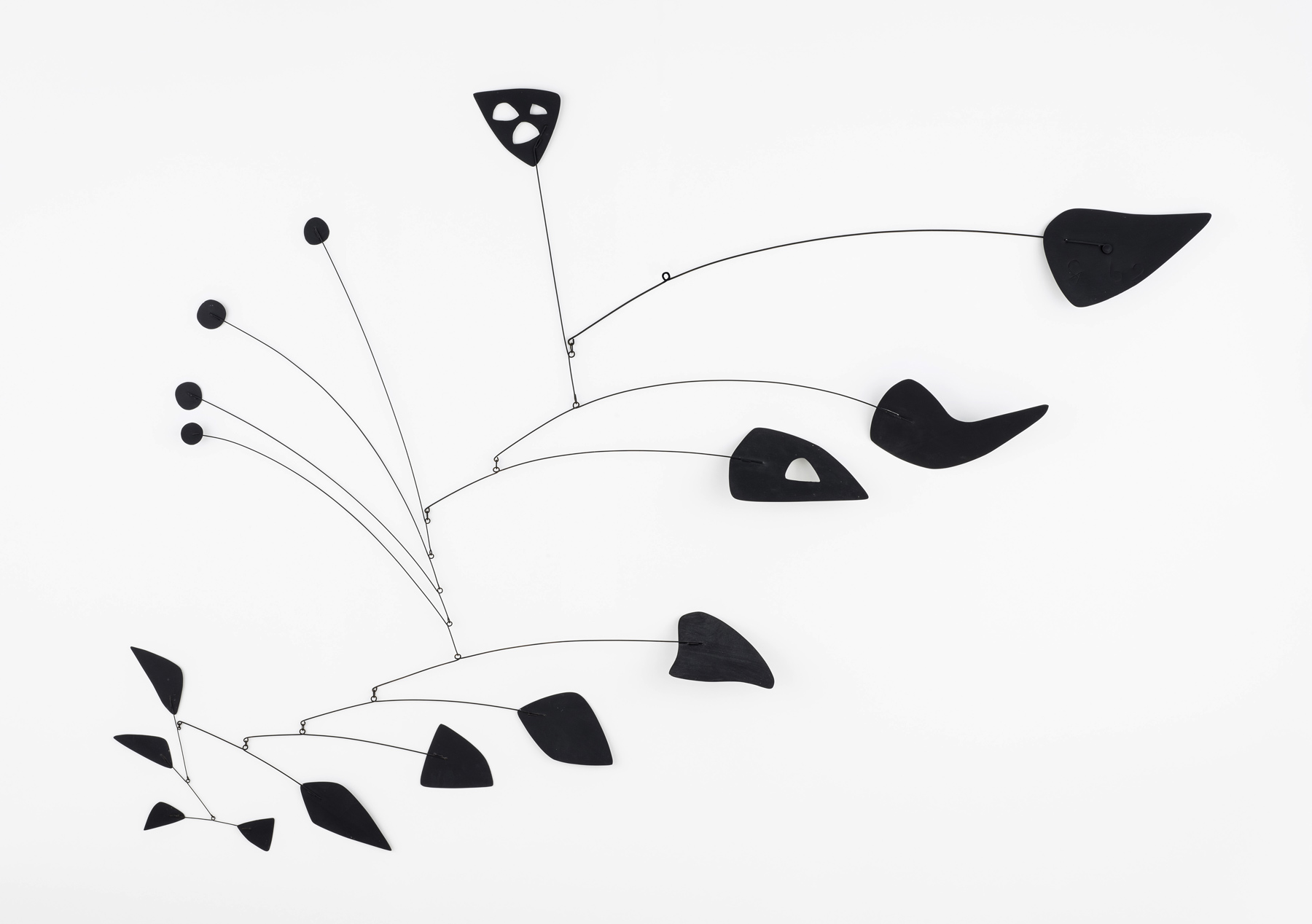
 

Alexander Calder (American, 1898-1976) 'Little Face' 1962


Alexander Calder (American, 1898-1976)
Little Face
1962
Sheet metal, wire and paint
42 x 56 inches
Los Angeles County Museum of Art
© Calder Foundation, New York/Artists Rights Society (ARS)
Photo: Museum Associates/LACMA
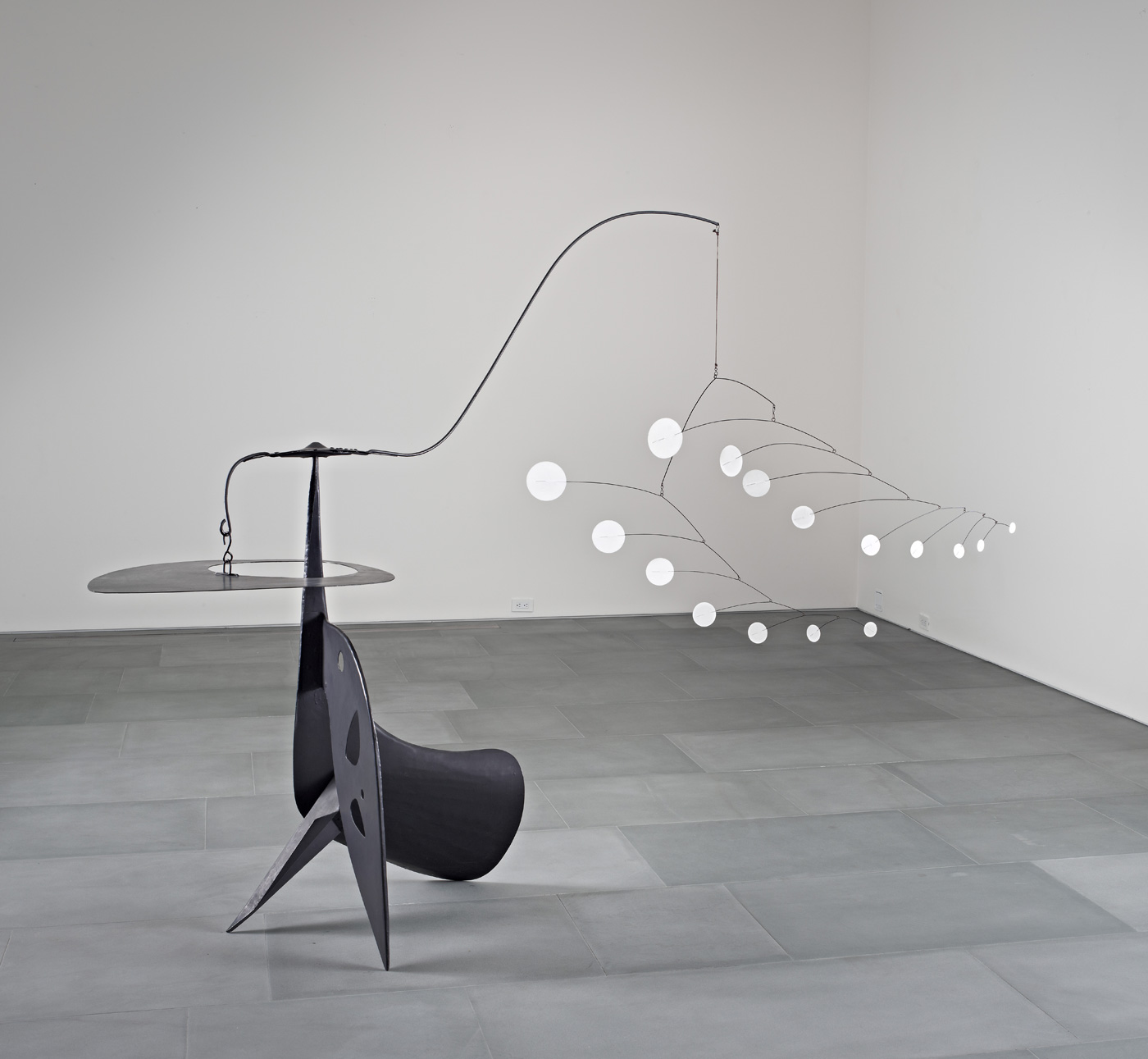
 

Alexander Calder (American, 1898-1976) 'Laocoön' 1947


Alexander Calder (American, 1898-1976)
Laocoön
1947
Sheet metal, wire, rod, string and paint
80 x 120 x 28 inches
The Eli and Edythe L. Broad Collection
© Calder Foundation, New York/Artists Rights Society (ARS)
Photo: Douglas M. Parker Studio, Los Angeles
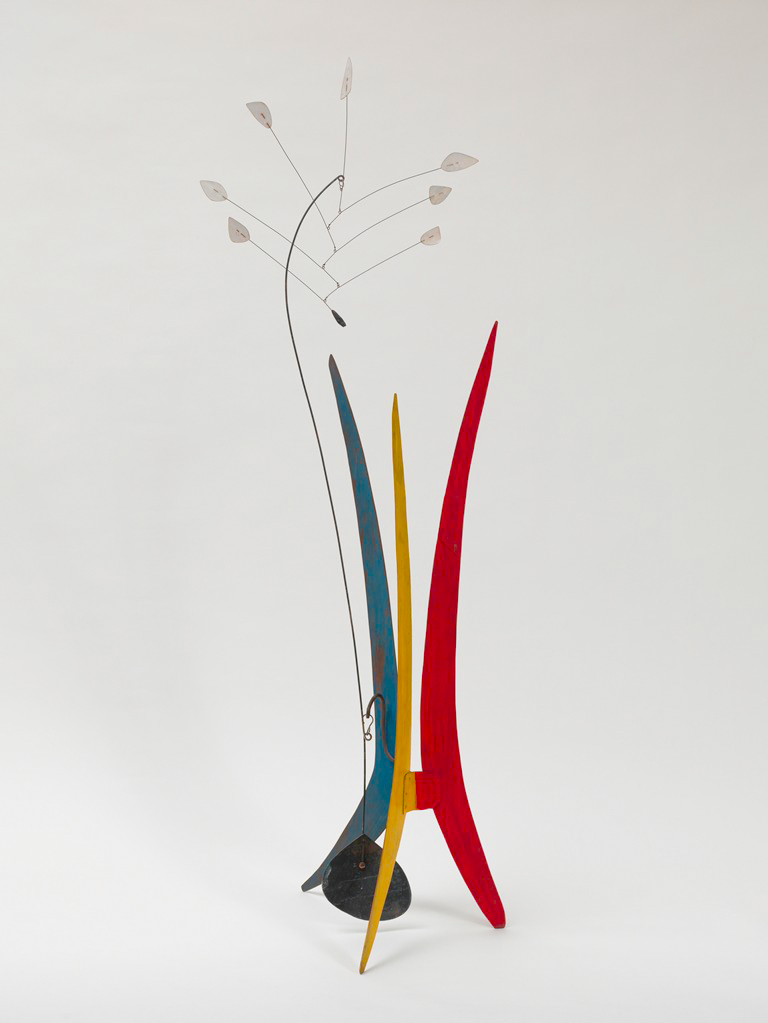
 

Alexander Calder (American, 1898-1976) 'Yucca' 1941


Alexander Calder (American, 1898-1976)
Yucca
1941
Sheet metal, wire and paint
73 x 23 x 20 inches
Solomon R. Guggenheim Museum, New York, Hilla Rebey Collection, 1971
© Calder Foundation, New York/Artists Rights Society (ARS)
Photo: Solomon R. Guggenheim Foundation, New York, by Kristopher McKay
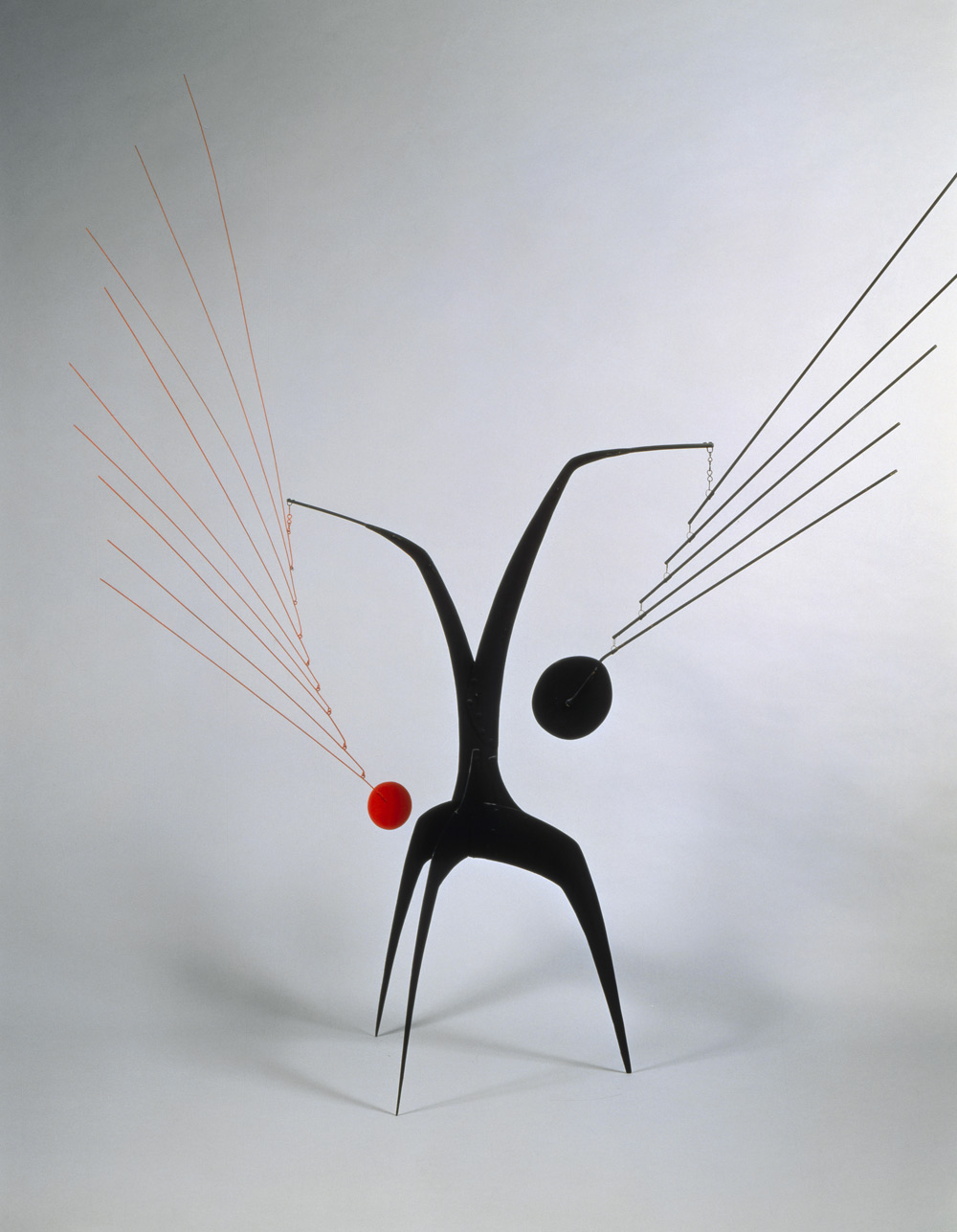
 

Alexander Calder (American, 1898-1976) 'Un effet du japonais' 1941


Alexander Calder (American, 1898-1976)
Un effet du japonais
1941
Sheet metal, rod, wire and paint
80 x 80 x 48 inches
Calder Foundation, New York
© Calder Foundation, New York/Artists Rights Society (ARS)
Photo: Calder Foundation, New York/Art Resource NY
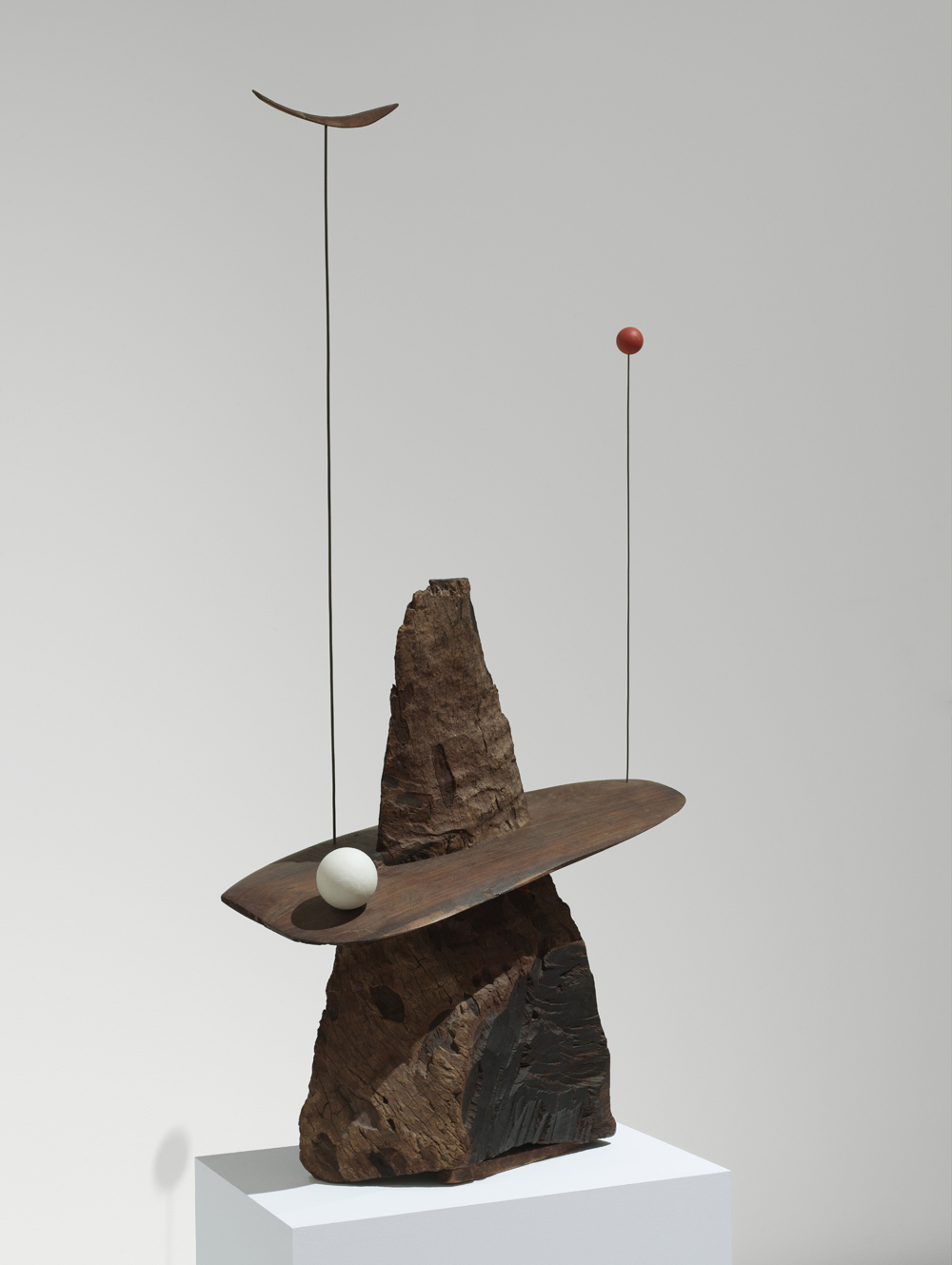
 

Alexander Calder (American, 1898-1976) 'Gibraltar' 1936


Alexander Calder (American, 1898-1976)
Gibraltar
1936
Lignum vitae, walnut, steel rods, and painted wood
52 x 24 x 11 inches
The Museum of Modern Art, New York. Gift of the artist.
© Calder Foundation, New York/Artists Rights Society (ARS)
Digital image: © 2013 The Museum of Modern Art/Licences by SCALA/Art Resource, NY
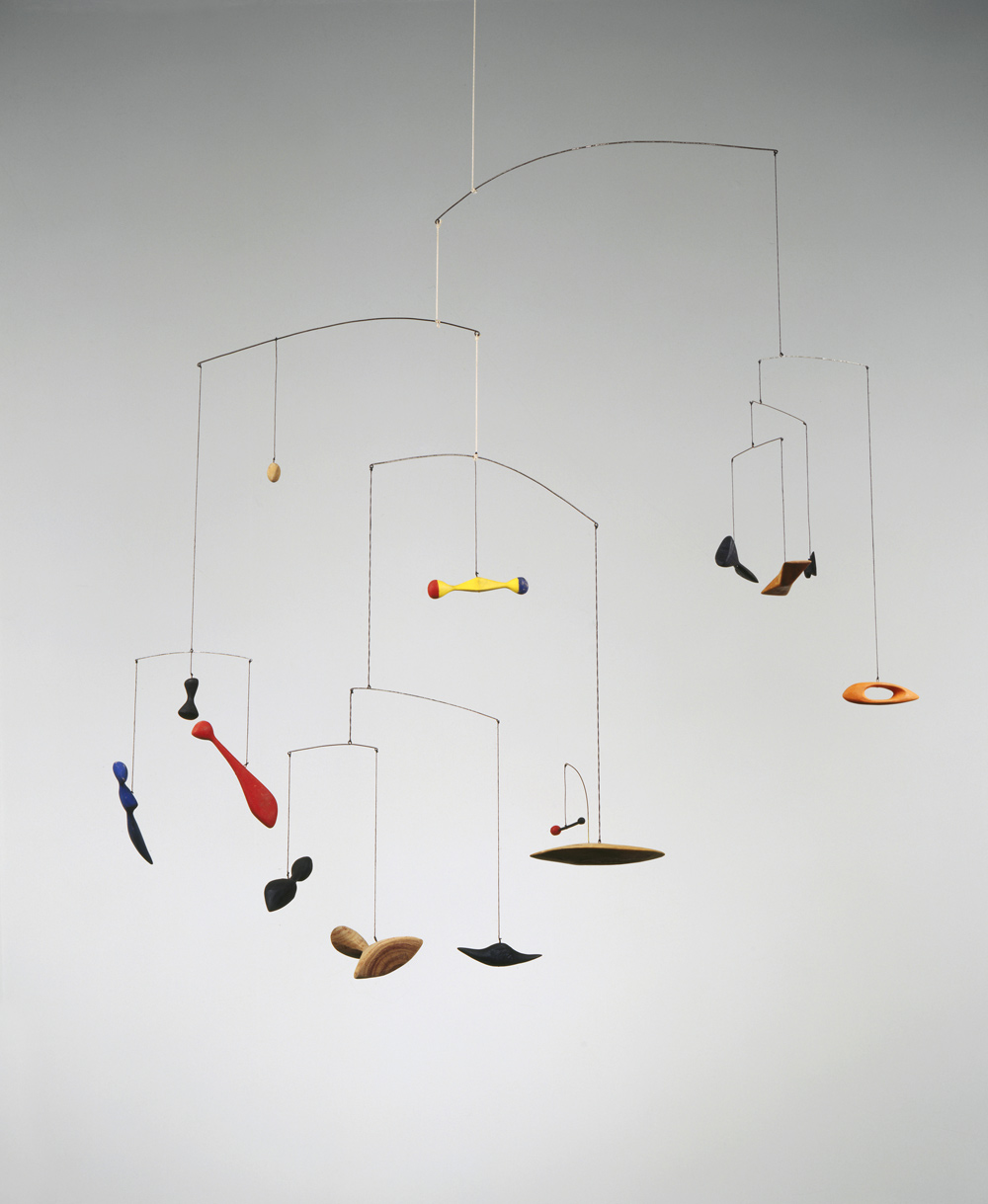
 

Alexander Calder (American, 1898-1976) 'Constellation Mobile' 1943


Alexander Calder (American, 1898-1976)
Constellation Mobile
1943
Wood, wire, string and paint
53 x 48 x 35 inches
Calder Foundation, New York
© Calder Foundation, New York/Artists Rights Society (ARS)
Photo: Calder Foundation, New York/Art Resource NY
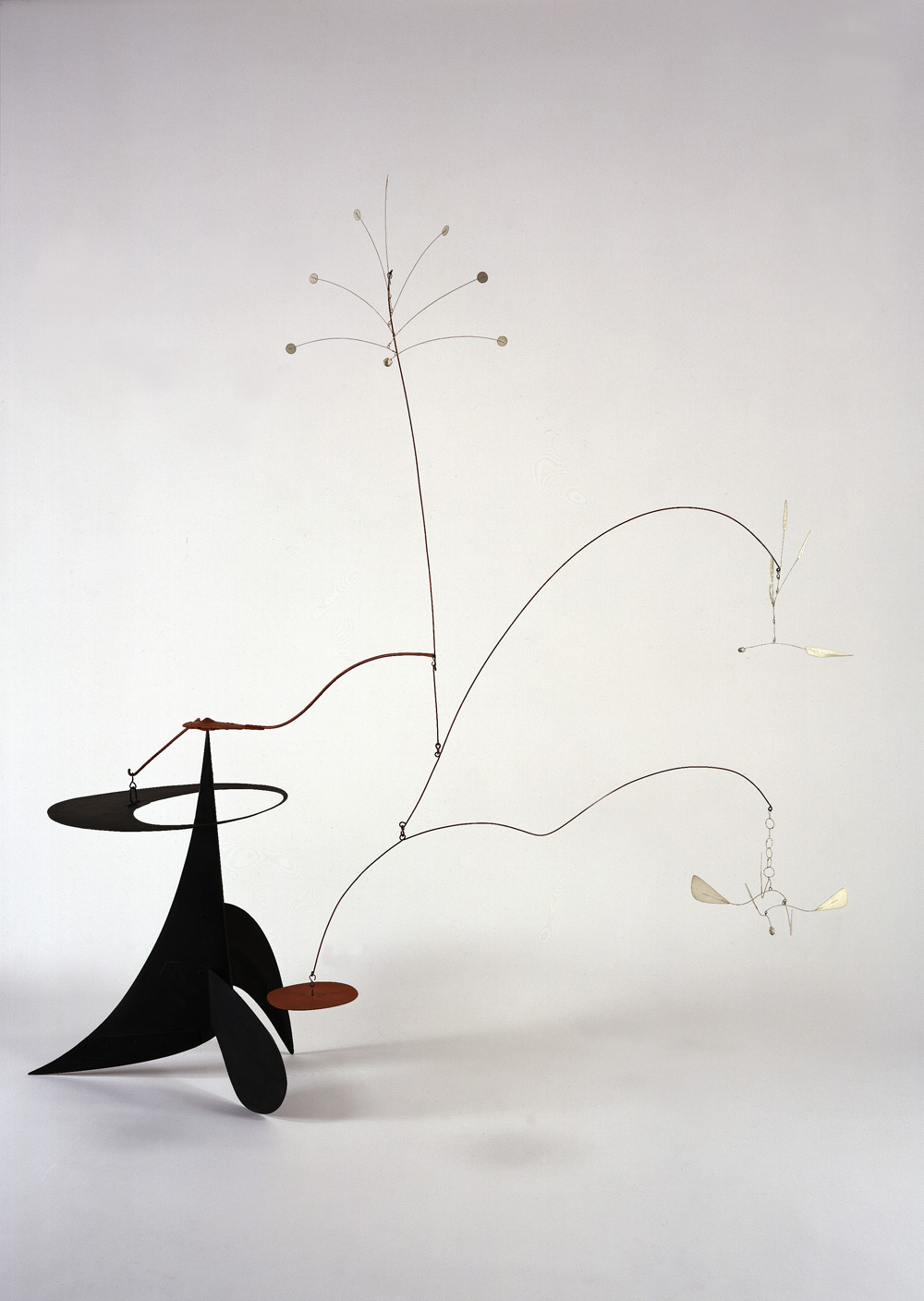
 

Alexander Calder (American, 1898-1976) 'Bougainvillier' 1947


Alexander Calder (American, 1898-1976)
Bougainvillier
1947
Sheet metal, wire, lead and paint
78 x 86 inches
Collection of John and Mary Shirley
© Calder Foundation, New York/Artists Rights Society (ARS)
Photo: Calder Foundation, New York/Art Resource NY
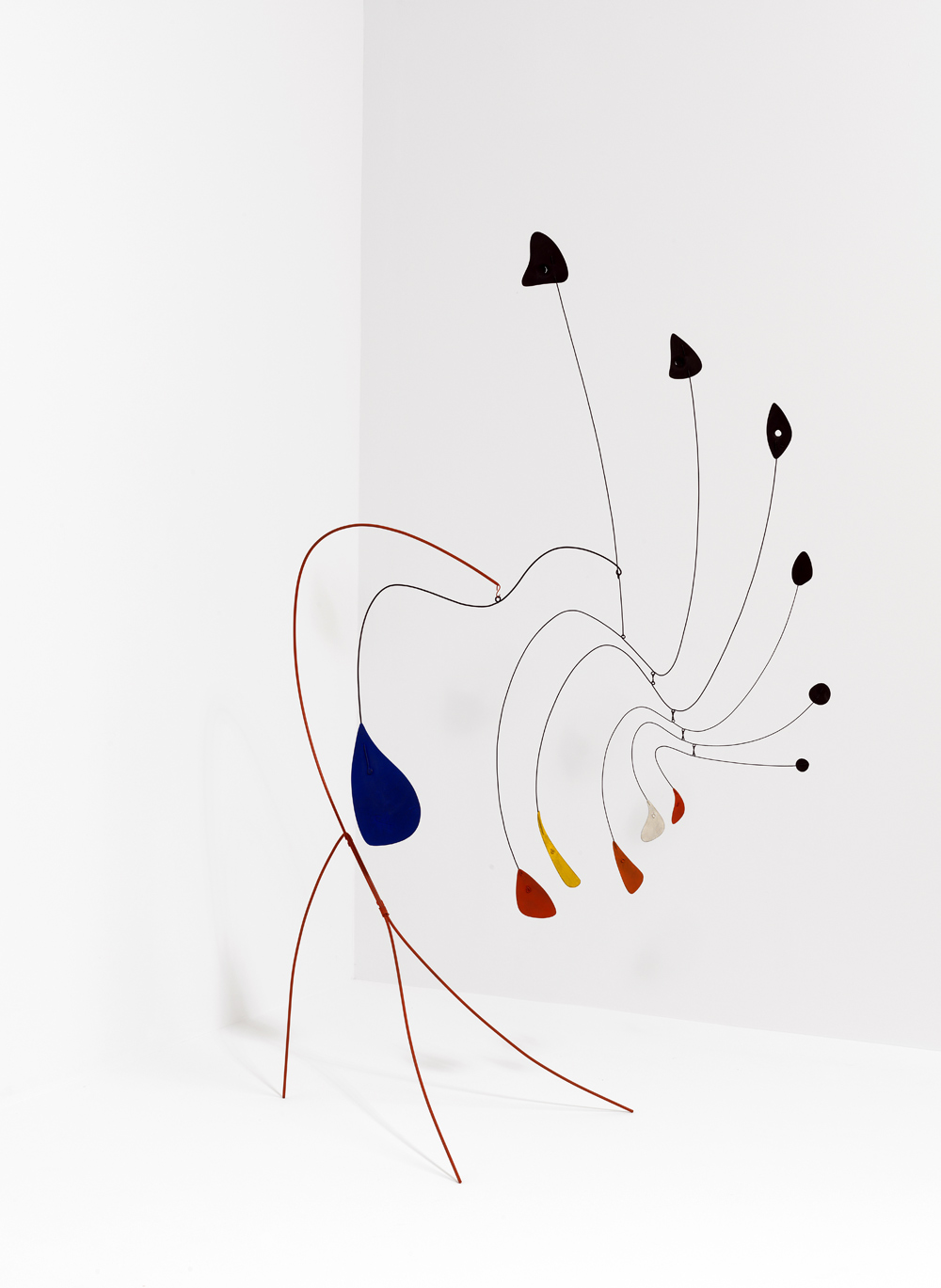
 

Alexander Calder (American, 1898-1976) 'Le Demoiselle' 1939


Alexander Calder (American, 1898-1976)
Le Demoiselle
1939
Sheet metal, wire and paint
58 x 21 x 29 inches
Glenstone
© Calder Foundation, New York/Artists Rights Society (ARS)
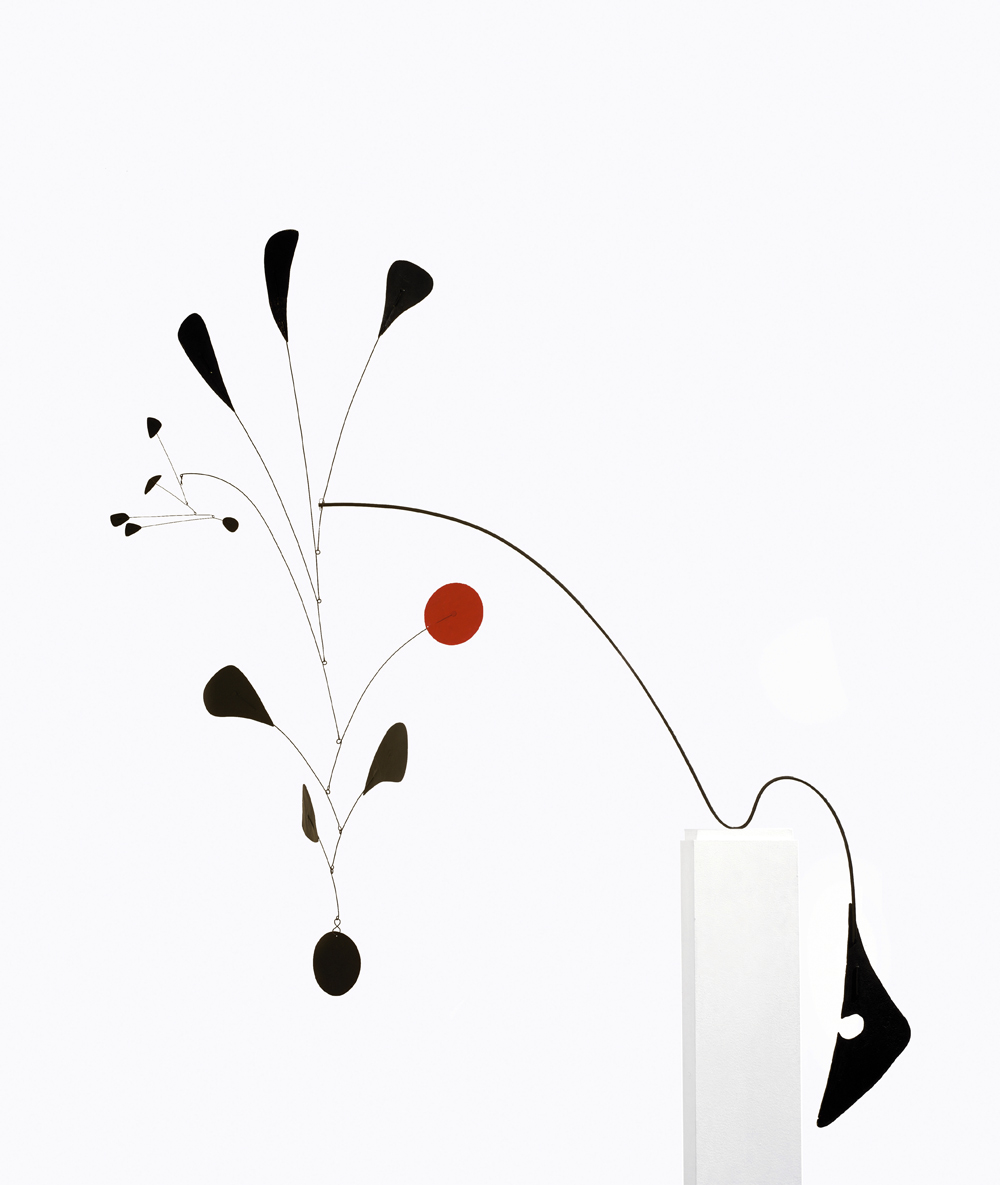
 

Alexander Calder (American, 1898-1976) 'Red Disc' 1947


Alexander Calder (American, 1898-1976)
Red Disc
1947
Sheet metal, wire and paint
81 x 78 inches
Frances A. Bass
© Calder Foundation, New York/Artists Rights Society (ARS)
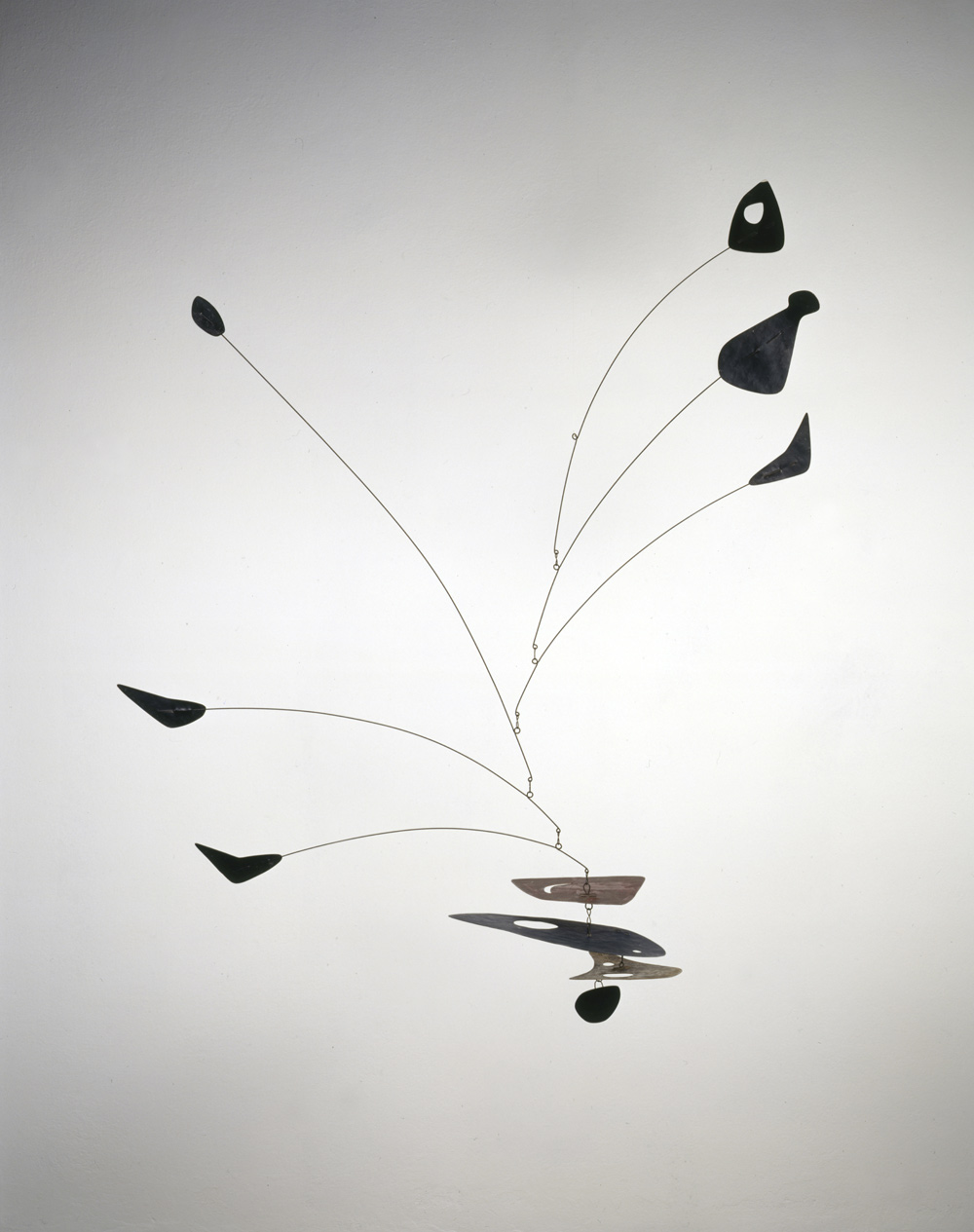
 

Alexander Calder (American, 1898-1976) 'Untitled' 1947


Alexander Calder (American, 1898-1976)
Untitled
1947
Sheet metal, wire and paint
66 x 53 inches
Private collection
© Calder Foundation, New York/Artists Rights Society (ARS)
Photo: Calder Foundation, New York/Art Resource NY
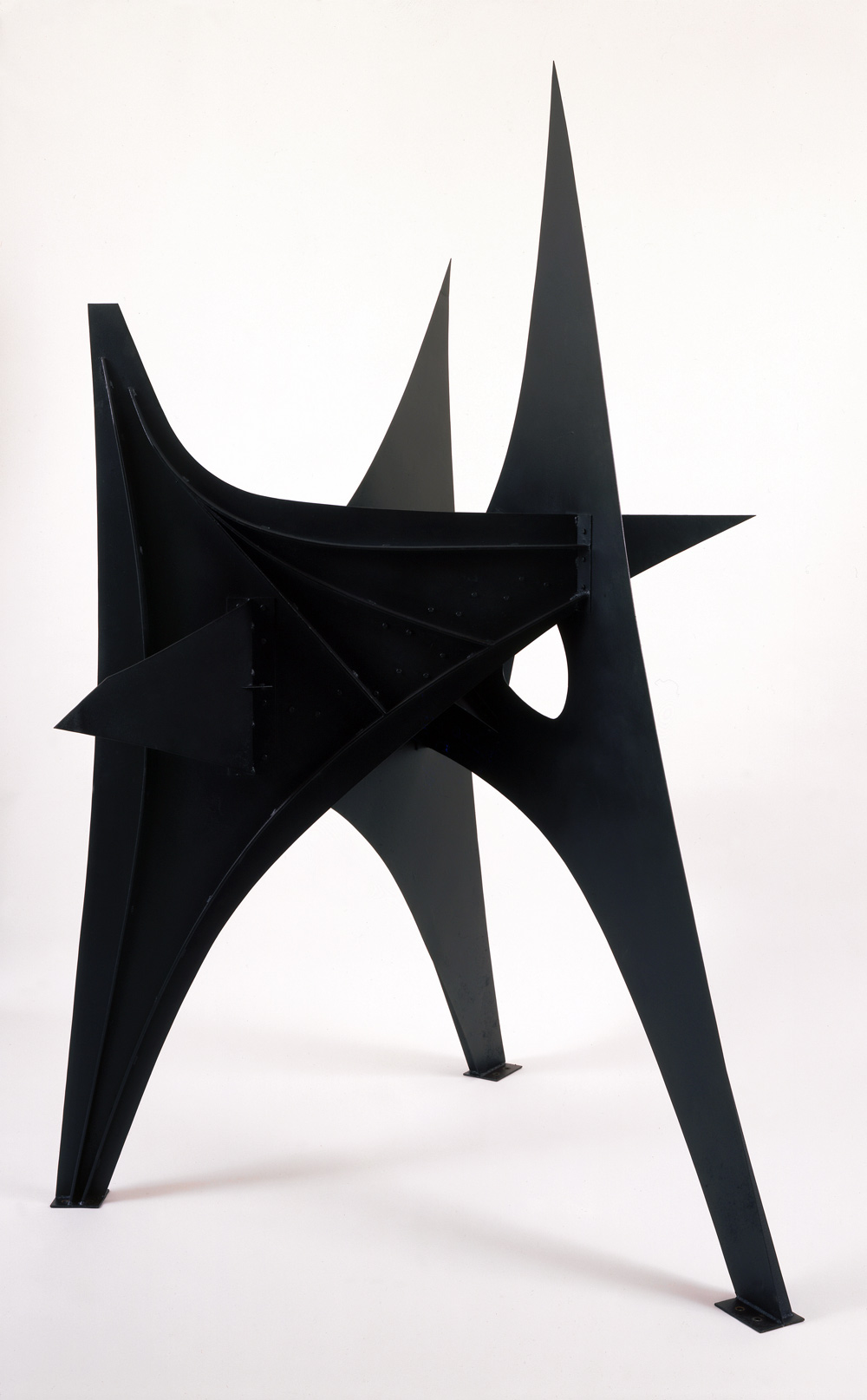
 

Alexander Calder (American, 1898-1976) 'Trois Pics (intermediate maquette)' 1967


Alexander Calder (American, 1898-1976)
Trois Pics (intermediate maquette)
1967
Sheet metal, bolts, and paint
96 x 63 x 70 inches
Calder Foundation, New York
© Calder Foundation, New York/Artists Rights Society (ARS)
Photo: Calder Foundation, New York/Art Resource NY


Los Angeles County Museum of Art (LACMA)
5905 Wilshire Boulevard (at Fairfax Avenue)
Los Angeles, CA, 90036
Phone: 323 857 6000

Opening hours:
Monday, Tuesday, Thursday: 11am – 6pm
Friday: 11am – 8pm
Saturday, Sunday: 10am – 7pm
Closed Wednesday
LACMA website

LIKE ART BLART ON FACEBOOK

Back to top

Exhibition: ‘Emmet Gowin’ at the Fondation Henri Cartier-Bresson, Paris

Exhibition dates: 14th May – 27th July 2014


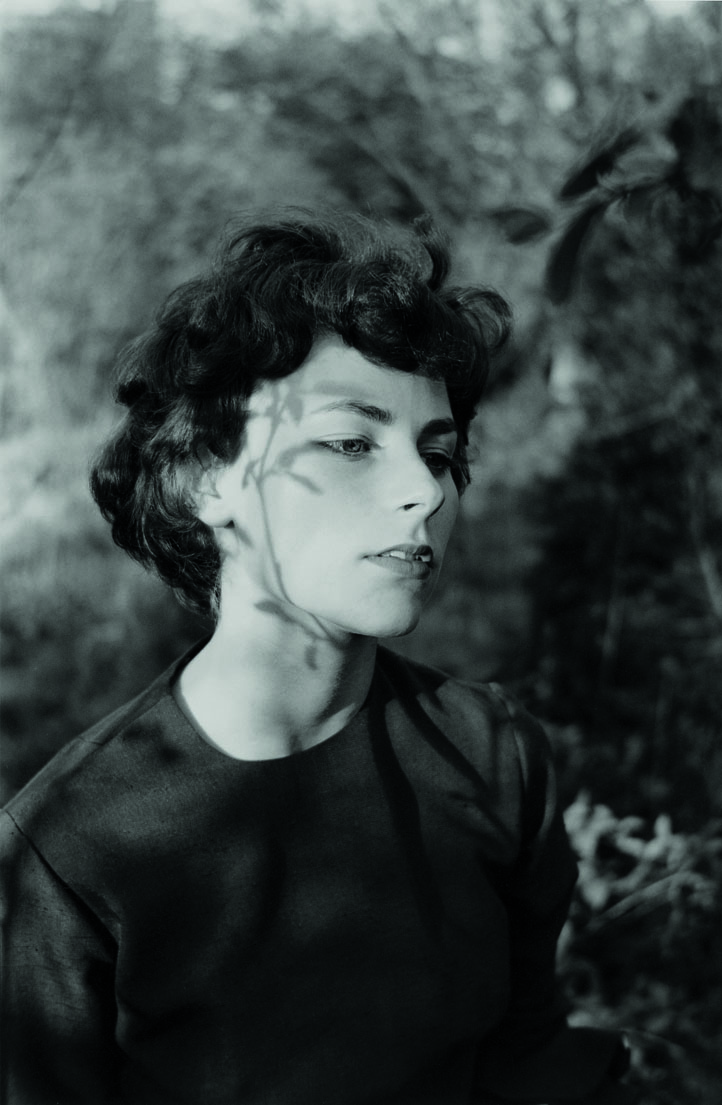
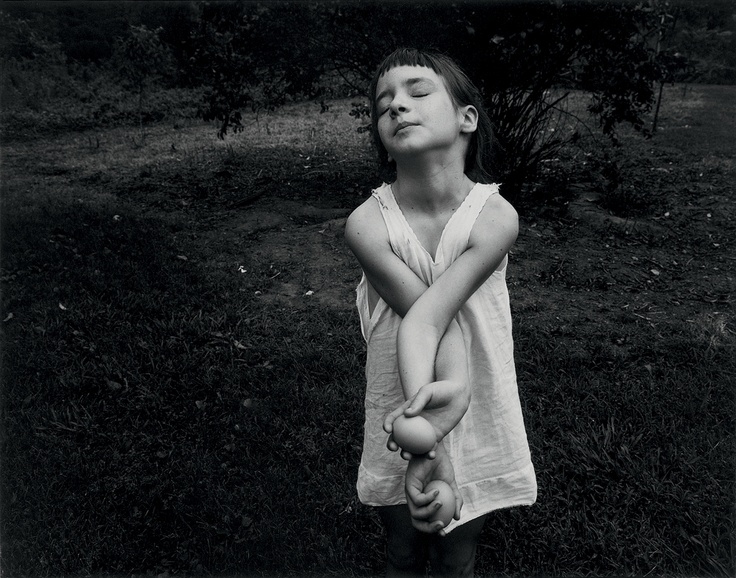
Emmet Gowin (American, b. 1941) 'Nancy, Danville (Virginia)' 1969


Emmet Gowin (American, b. 1941)
Nancy, Danville (Virginia)
1969
Gelatin silver print
© Emmet Gowin, cortesy Pace/MacGill Gallery, New York


Emmet Gowin is a superlative photographic artist. His images possess a unique sensuality that no other artist, save Frederick Sommer, dare approach.

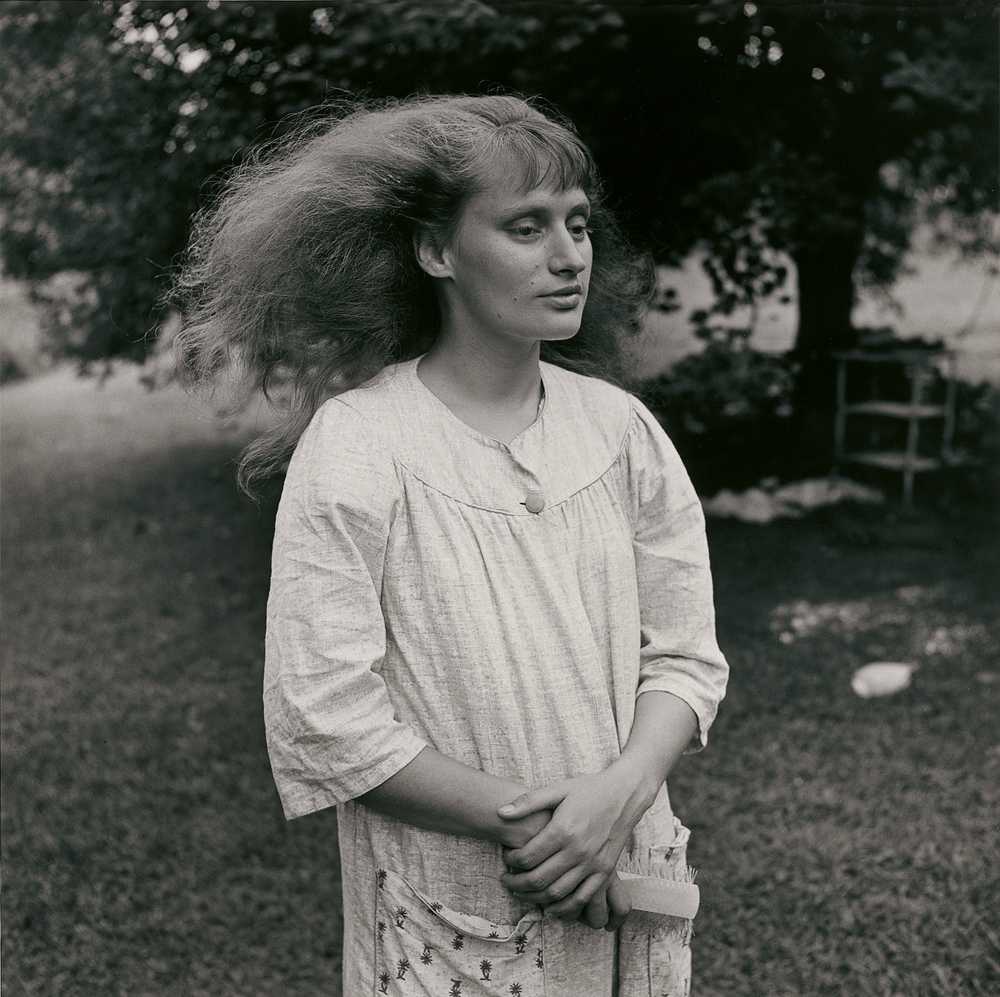
His own family was an early significant subject matter, one to which only he had ready access. “I was wondering about in the world looking for an interesting place to be, when I realised that where I was was already interesting.”1 I feel that the photographs of his family are his strongest work for they image an intimate story, and Gowin is nothing if not a magnificent storyteller. Look at the beauty of images such as Nancy, Danville (Virginia) (1969, above) or Ruth, Danville (Virginia) (1968, below) and understand what awareness it takes – first to visualise, then capture on the negative, then print these almost mystical moments of time.

As Gowin observed in his senior thesis, which was predicated upon the necessary co-ingredients of art and spirituality, “Art is the presence of something mysterious that transports you to a place where life takes on a clearness that it ordinarily lacks, a transparency, a vividness, a completeness.”2 He complemented this understanding of art and spirituality with an interest in science. He was in harmony with the physicists and the scientists, finding them to be the most poetic people of the age.3 Inspired by Sommer, Gowin perfected his printing technique through a respect for the medium, respect for the materials and conviction as to what the materials were capable of doing.4

“Sommer freely shared with Gowin his knowledge of photographic equipment, materials, chemicals and printing techniques and Gowin often repeats Sommer’s admonition to him: “Don’t let anyone talk you out of physical splendour.” Over the years Gowin developed methods of printing born from patient experimentation and a love of craft. His background in painting and drawing taught him that there are many solution to making a finished work of art… which he often builds to achieve the most satisfying integration of elements: “The mystery of a beautiful photograph really is revealed when nothing is obscured. We recognise that nothing has been withheld from us, so that we must complete its meaning. We are returned, it seems directly, to the sense and smell of its origin… A complete print is simply a fixed set of relationships, which accommodates its parts as well as our feelings. Clusters of stars in the sky are formed by us into constellations. Perhaps I feel that this constellation has enough stars, and doesn’t need any more. This grouping is complete. It feels right. Feeling, alone, tells us when a print is complete.””5

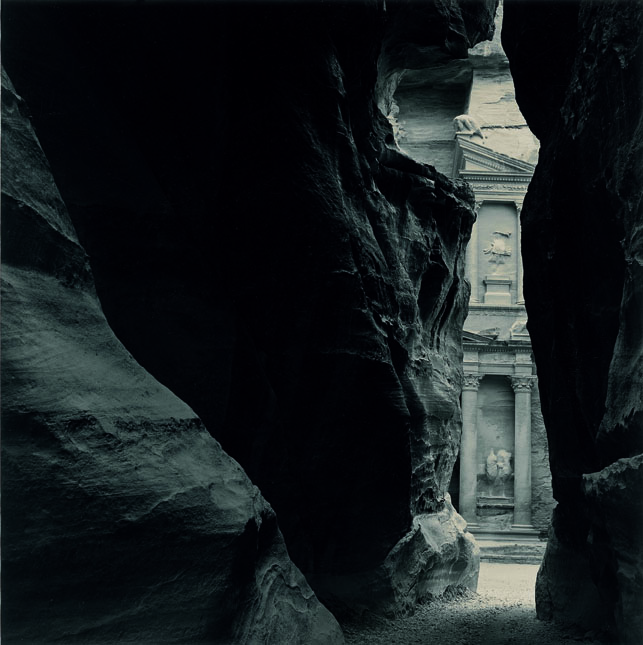
His later more universal work, such as the landscapes and aerial photographs, are no less emphatic than the earlier personal work but they are a second string to the main bow. The initial impetus of this work can be seen in the book Emmet Gowin Photographs as a development from still life photographs such as Geography Pages, 1974 (p. 62). This second theme took Gowin longer to develop but his photographs are no less powerful for it. His photographs of Petra possess the most amazing serenity of any taken at this famous site; his photographs of Mount St Helens after the volcanic eruption and the aerial photographs of nuclear sites and aeration ponds are among the strongest aerial photographs that I have ever seen. Gowin’s experimentation with the development of the negative, using different times and developers; his experimentation with the development of the print, sometimes using multiple developers and monotones or strong / subtle split toning (as can be seen in the photographs below) is outstanding. His poetic ability rouses the senses and is munificent but for me these photographs do not possess the “personality” or significance of his earlier family photographs. But only just, and we are talking fractions here!

“These photographs of the tracings of human beings reveal mankind not as a nurturer but as a blind and godlike power. Even his latest aerial agricultural landscapes made on route to nuclear sites have a magnificent indifference to human scale. For Gowin, confrontation of man’s part in the creation of ecological problems would seem to require the most transcendental point of view, and as his subjects have become more difficult and frightening, he has created his lushest and most seductive prints.”6

Gowin is an artist centred in a space of sensibility. An understanding of the interrelationships between people and the earth is evidenced through aware and clearly seen images. Gowin digs down into the essence of the earth in order to understand our habituation of it. How we fail to change the course we are on even as we recognise what it is that we are doing to the world. When the stimulus is constantly repeated there is a reduction of psychological or behavioural response and this is what Gowin pokes a big stick at. As he observes,

“We are products of nature. We are nature’s consciousness and awareness, the custodians of this planet… We begin as the intimate person that clings to our mother’s breast, and our conception of the world is that interrelationship. Out safety depends on that mother. And now I’m beginning to see that there’s a mother larger than the human mother and it’s the earth; if we don’t take care of that we will have lost everything.”7

I was luck enough to meet Emmet Gowin when he visited Australia in 1995. He had an exhibition in the small gallery in Building 2 in Bowens Lane at RMIT University, presented a public lecture and held a workshop with about 20 students. I remember I was bowled over by his intensity and star power and I admit, I asked a stupid question. The impetuousness of youth with stars in their eyes certainly got the better of me. Now when I look at the work again I am still in awe of the works sincerity, spirituality, sensuality and respect for subject matter. No matter what he is photographing.

Dr Marcus Bunyan


1/ Gowin, Emmet quoted in Chahroudi, Martha. “Introduction,” in Emmet Gowin Photographs. Philadelphia Museum of Art, 1990, p. 10.
2/ Ibid., p. 9.
3/ Ibid., p. 11.
4/ Ibid., p. 11.
5/ Gowin quoted in Kelly, Jain (ed.,). Darkroom 2. New York, 1978, p. 43 quoted in Chahroudi, Martha. “Introduction,” in Emmet Gowin Photographs. Philadelphia Museum of Art, 1990, p. 11.
6/ Chahroudi, Op. cit., p. 15.
7/ Ibid., p. 15.

Only two of the images are from the Fondation Henri Cartier-Bresson – the rest I sourced from the internet. Please click on the photographs for a larger version of the image.


“For me, pictures provide a means of holding, intensely, a moment of communication between one human and another.”

“There is a profound silence that whines in the ear, a breathless quiet, as if the light or something unheard was breathing. I hold my breath to make certain it’s not me. It must be the earth itself breathing.


Emmet Gowin


Emmet Gowin (American, b. 1941) 'Edith and Ruth, Danville (Virginia)' 1966


Emmet Gowin (American, b. 1941)
Edith and Ruth, Danville (Virginia)
1966
Gelatin silver print
© Emmet Gowin, cortesy Pace/MacGill Gallery, New York


Emmet Gowin (American, b. 1941) 'Barry, Dwayne and Turkeys, Danville, Virginia' 1970


Emmet Gowin (American, b. 1941)
Barry, Dwayne and Turkeys, Danville, Virginia 
1970
Gelatin silver print
© Emmet Gowin, cortesy Pace/MacGill Gallery, New York


Emmet Gowin, the catalog accompanying a retrospective now touring in Spain, is a great introduction to the artist’s works and a great keepsake for a fan. The writings by Keith Davis, Carlos Gollonet and Gowin himself identify the photographer’s humanist and spiritual roots and detail his journey from 1960’s-era people pictures focused on his wife, Edith and family in Danville, VA, to aerial photographs of ravaged landscapes, like the nuclear test grounds in Nevada, and his most recent project  archiving tropical, nocturnal-moths.

While his disparate bodies of work may look like geologic shifts in subject matter, Gowin talks in the book about the spiritual quest he’s on, and his realisation that humankind inhabits the land, and that the land is a vital part of who we are. To my eye, what holds all the works together is Gowin’s never-ceasing focus on non-conventional beauty. His way of photographing both people and the wasted landscapes plays up the dark sublime. These are not traditional pretty pictures, but they are exquisitely beautiful. All Gowin photos smoulder with emotion and feel like they were snapped with a breath held, bated with desire.

Roberta Fallon. “Emmett Gowin – From family of man to mariposas nocturnas at Swarthmore’s List Gallery,” on The Artblog website, March 22, 2012 [Online] Cited 05/07/2014


Emmet Gowin (American, b. 1941) 'Edith, Noël, Danville (Virginia)' 1971


Emmet Gowin (American, b. 1941)
Edith, Noël, Danville (Virginia)
1971
Gelatin silver print
© Emmet Gowin, Courtesy Pace/MacGill Gallery, New York


Emmet Gowin (American, b. 1941) 'Edith, Danville (Virginia)' 1971


Emmet Gowin (American, b. 1941)
Edith, Danville (Virginia)
1971
Gelatin silver print
7 3/4 x 9 7/8″ (19.7 x 25.1cm)
Gift of Judith Joy Ross
© Emmet Gowin, Courtesy Pace/MacGill Gallery, New York


Emmet Gowin (American, b. 1941) 'Edith, Danville (Virginia)' 1970


Emmet Gowin (American, b. 1941)
Edith, Danville (Virginia)
1970
Gelatin silver print
© Emmet Gowin, Courtesy Pace/MacGill Gallery, New York


Emmet Gowin (American, b. 1941) 'Edith, Newtown (Pennsylvania)' 1974


Emmet Gowin (American, b. 1941)
Edith, Newtown (Pennsylvania)
1974
Gelatin silver print
© Emmet Gowin, cortesy Pace/MacGill Gallery, New York


Emmet Gowin (American, b. 1941) 'Ruth, Danville (Virginia)' 1968


Emmet Gowin (American, b. 1941)
Ruth, Danville (Virginia)
1968
Gelatin silver print
© Emmet Gowin, cortesy Pace/MacGill Gallery, New York


Emmet Gowin (American, b. 1941) 'Edith, Chincoteague Island (Virginia)' 1967


Emmet Gowin (American, b. 1941)
Edith, Chincoteague Island (Virginia)
1967
Gelatin silver print
© Emmet Gowin, Courtesy Pace/MacGill Gallery, New York


From May 14th to July 27th 2014, Fondation Henri Cartier-Bresson will hold an exhibition of the American photographer Emmet Gowin. This important retrospective is showing 130 prints of one of the most original and influential photographer of these last forty years. This exhibition shows on two floors his entire career: his most famous series from the end of the sixties, the moths’ flights and the aerial photographs. The exhibition organised by Fundación MAPFRE in collaboration with Fondation HCB is accompanied by a catalogue published by Xavier Barral edition.

Born in Danville (Virginia) in 1941, Emmet Gowin grows up in Chincoteague Island, in a religious family. His father, a Methodist minister gives him a righteous discipline and a strict education, while his mother, musician, was a gentle, nurturing presence. During his spare time, Emmet encounters the surrounding landscape and begins drawing.

He completes his high school education and enrols in a local business school in 1951 and works at the same time at the design department of Sears, the multinational department store chain. In 1961, Gowin enters in the Commercial Art Department at Richmond Professional Institute, where he studies drawing, painting, graphic design, and history of Art. After a few months, he realises that photography is the best mean of expression and gives him the possibility to seize the Fate and the Unexpected.

Gowin’s early photographic influences came in the form of books and catalogues such as Images à la Sauvette by Henri Cartier-Bresson, History of Photography by Beaumont Newhall or Walker Evans’s American Photographs. Emmet Gowin acquires his first Leica 35mm in 1962 and after two years spent observing the Masters of photography, he finally feels ready to affirm his own photographic style. In 1963, he goes for the first time in New York and meets Robert Franck who encouraged him.

The first Gowin’s portfolios realised in 1965, is technically simple in approach. While the subjects vary considerably, all are drawn from everyday life: kids playing outdoors, Edith’s family, adults in the streets or squares, cars and early pictures of Edith. They get married in 1964. Edith Morris and Emmet Gowin are born in the same city but they grew up in totally different families. Edith’s one, was more exuberant and emotionally close than Emmet’s. As we can discover in the first floor of the exhibition, Edith and her family are the heart of the photograph’s creative universe. As mentioned by Carlos Gollonet, curator of the exhibition, Gowin’s work, seen cumulatively, is a portrait of the artist.

In 1965, they move to Providence, and Emmet begins his studies with Harry Callahan at Rhode Island School of Design. He begins to consistently use a 4 x 5 inch view camera from this time on. This bigger negative produced prints with beautiful transparent details and correspondingly finer and smoother tonal scale.

Just before his first son’s birth, Elijah, in 1967, Emmet and Edith moved to Ohio, where he begins teaching at the Dayton Art Institute. This marks the start of a teaching career that spans more than four decades. He concentrates his work on Edith and let us going through his private life and proposes a very personal artistic vision of this work: I do not feel that I can make picture impersonally, but that I am affected by and involved with the situations which lead to, or beyond, the making of the pictures. In these years, he met Ralph Eugene Meatyard and Frederik Sommer, who would become his close friend and mentor.

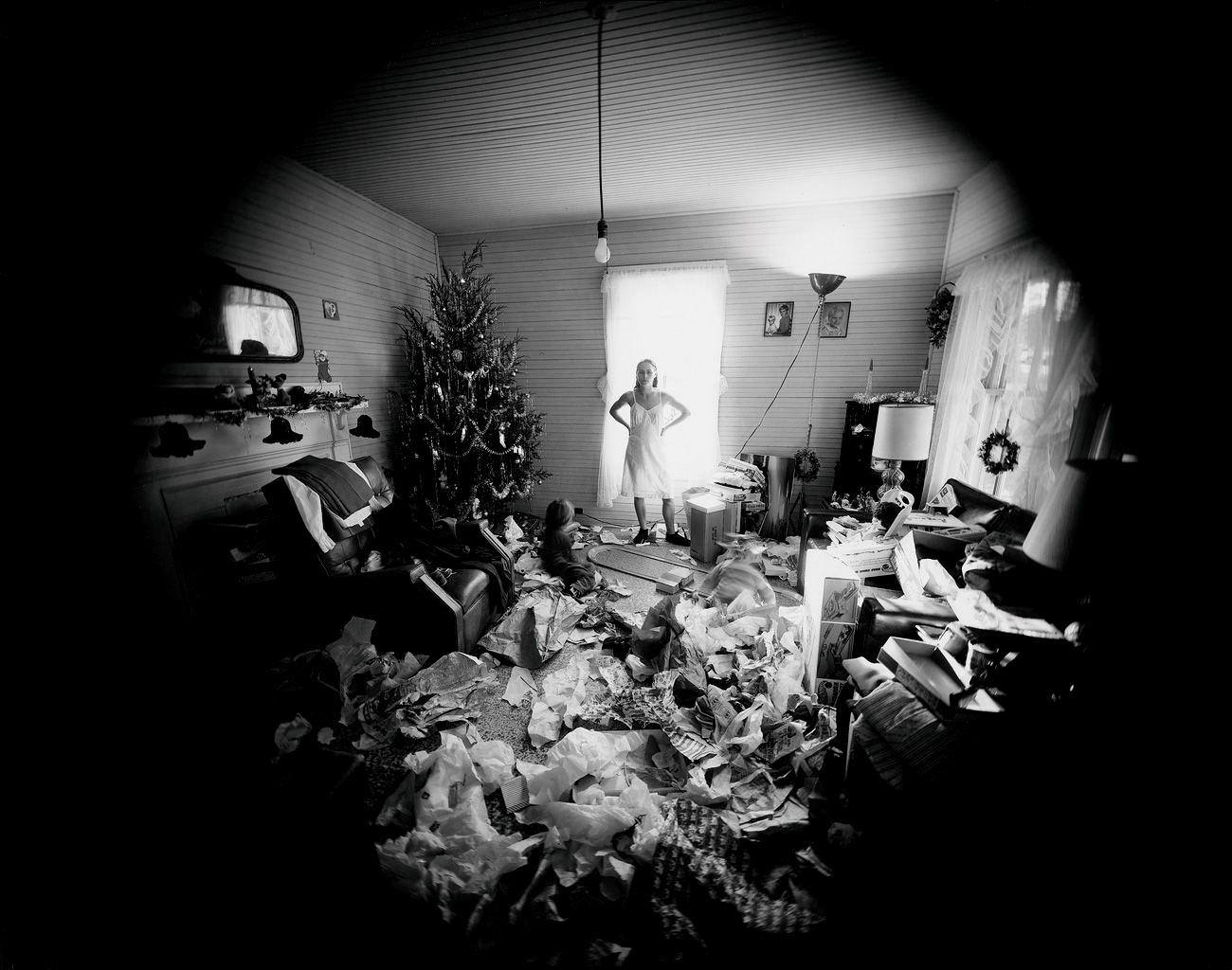
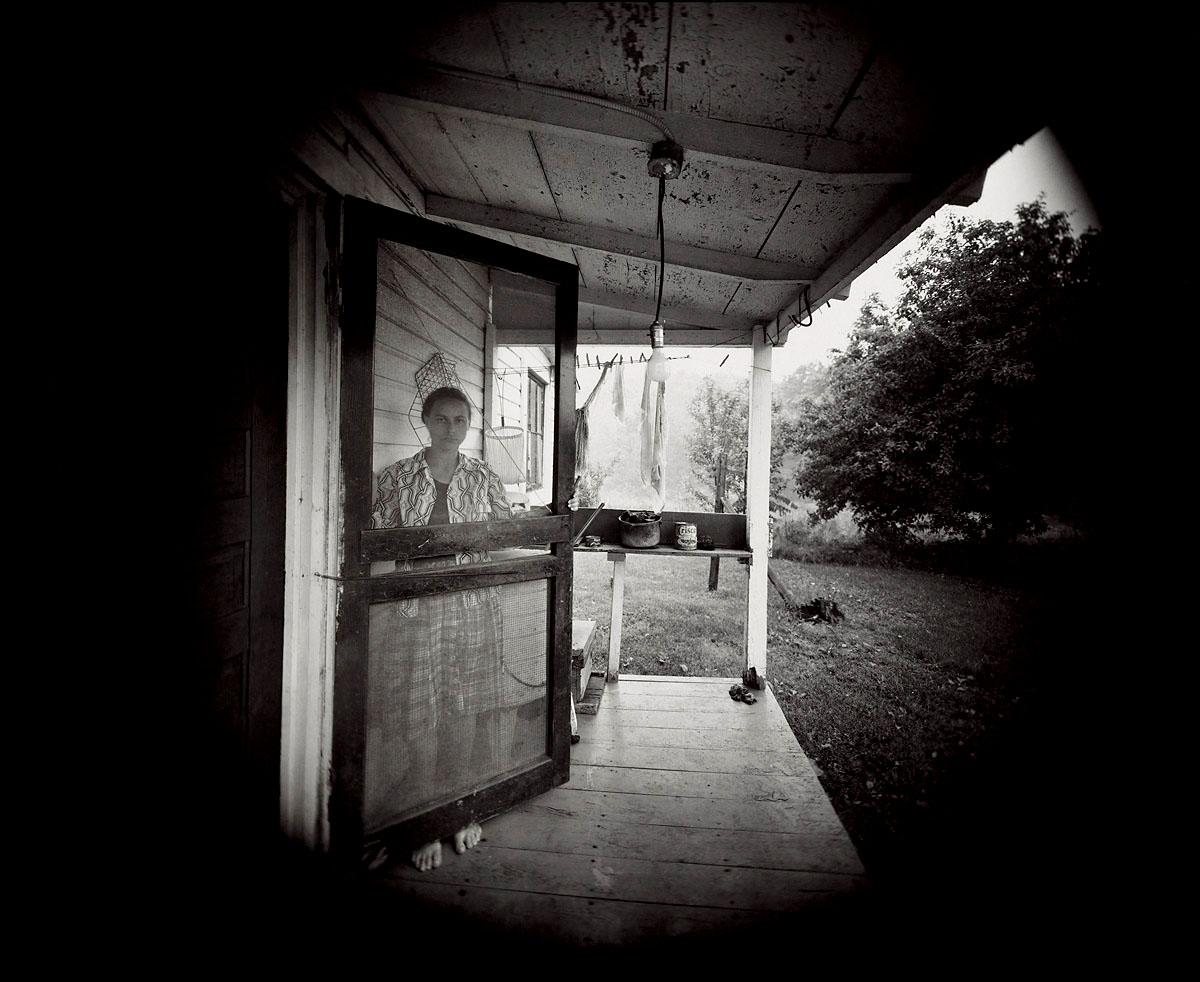
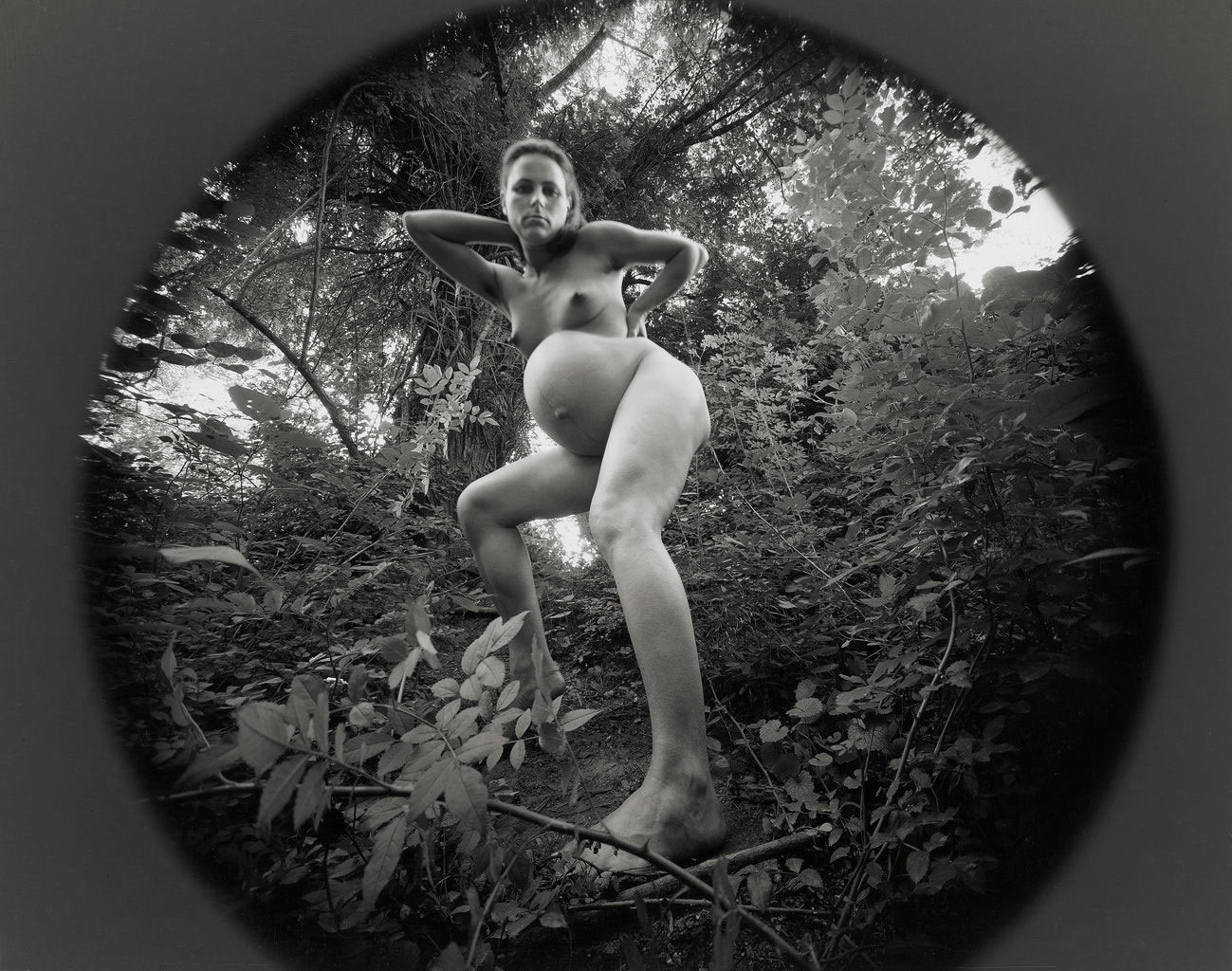
At the end of the 1960’s, Gowin begins making circular images of Edith, her family, and their own household, both indoors and out. The Gowin’s second son, Isaac, born in 1974, was the subject – both before and after birth – of many of these circular 8×10 inch photographs, which give the impression of looking through a keyhole. At the beginning of the 1970’s, the exhibitions at the Light Gallery and MoMA mark a significant step toward his American success. In 1973, he’s appointed Lecturer at Princeton University. He is later appointed Full Professor, a position he will hold until his retirement in 2009. He inspired a new generation of photographers such as Fazal Sheikh, David Maisel or Andrew Moore.

From 1973, Gowin goes back to sources, nature and landscape and introduces the idea of Working Landscapes in which the contributions of many generations, overtime, shape the use and care of the land. He travels in Europe, Ireland and Italy, where he discovered the ancient Etruscan city of Matera. His first monograph, Emmet Gowin: photographs, is published in 1976. In 1982, the Queen Noor of Jordan, one of Gowin’s students at Princeton, invites him to photograph the archeological site of Petra. Some of these photos are exhibited on the second floor of the foundation. Later, he continues making views of nature and traveled overseas, reverting to a traditional rectangular format. His interest in gardens and the historical balance between nature and human culture stimulates a dedication to a larger landscape, recorded first from the ground and then from the air. He photographs the incredible destruction of the Mount St. Helens volcano, Washington, and spent years recording the inhabited – and often scarred – face of the American West. Gowin is not an environmental activist. Nonetheless, once he comes to know and experience these landscapes his acute moral and intellectual sense is also conveyed in his images. He wants to show the conflict that exists in our relationship with nature. “It is not a call for an action … It’s a call for reflection, meditation and consideration to be on a more intimate basis with the world.”

Over the past few years, Gowin has constantly photographed nocturnal moths. His scientific interest has led him to catalog thousands of species working alongside with biologists in tropical jungles. By chance, he traveled with a cutout silhouette of Edith in his wallet or luggage and produced a series of photographs in which Edith is once again the principal subject, in this case through her silhouette. They recall the instrument known as the physionotrace, a forerunner of the earliest photographs which was used to male silhouette reproducing the images of loved ones. Those images, printed on handmade paper with the silver image gold toned confirm that Emmet Gowin is one of the finest photographers of any period.

Press release from the Fondation Henri Cartier-Bresson website


Emmet Gowin (American, b. 1941) 'Old Handford City Site and the Columbia River, Handford Nuclear Reservation, near Richland (Washington)' 1986


Emmet Gowin (American, b. 1941)
Old Handford City Site and the Columbia River, Handford Nuclear Reservation, near Richland (Washington)
1986
Gelatin silver print
© Emmet Gowin, Courtesy Pace/MacGill Gallery, New York


The aerial photos, taken while flying over bomb test sites and waste water catchment basins and other scenes of industrial/military destruction are almost abstract to the eye. They are also very beautiful. Getting nose to nose with these works and reading the title card, however, allows the slowly-dawning realisation that you are looking at a full blown horror. This suite of works dates from 1980 when Gowin took to the air to view the aftermath of the Mt. St. Helens volcanic eruption in Washington state and was taken with the way things not visible from “human” space below revealed themselves from above. In 1986 he started exploring man-made industrial inroads into the land from the air, flying over Hanford Reservation, for one, where nuclear reactors and chemical separation plants made scars on the land like nothing nature had done. These are truly devastating pictures, and what makes them more so is the thought that this is the tip of the iceberg and that many other sites on earth bear the scars of man-made intrusion.

Roberta Fallon. “Emmett Gowin – From family of man to mariposas nocturnas at Swarthmore’s List Gallery,” on The Artblog website, March 22, 2012 [Online] Cited 05/07/2014


Emmet Gowin (American, b. 1941) 'Aeration Pond, Toxic Water Treatment Facility, Pine Bluff, AK (Arkansas)' 1989


Emmet Gowin (American, b. 1941)
Aeration Pond, Toxic Water Treatment Facility, Pine Bluff, AK (Arkansas)
1989
Toned gelatin silver print
© Emmet Gowin, Courtesy Pace/MacGill Gallery, New York


Emmet Gowin (American, b. 1941) 'Golf Course under Construction (Arizona)' 1993


Emmet Gowin (American, b. 1941)
Golf Course under Construction (Arizona)
1993
Gelatin silver print
© Emmet Gowin, Courtesy Pace/MacGill Gallery, New York


Emmet Gowin (American, b. 1941) 'Aerial view: Mt. St. Helens rim, crater and lava dome' 1982


Emmet Gowin (American, b. 1941)
Aerial view: Mt. St. Helens rim, crater and lava dome
1982
Gelatin silver print
© Emmet Gowin, Courtesy Pace/MacGill Gallery, New York


Every Time less than the pulsation of the artery

Is equal in its period & value to Six Thousand Years.


For in this Period the Poet’s Work is Done, and all the Great

Events of Time start forth & are conceiv’d in such a Period

Within an Moment, a Pulsation of the Artery. …


For every Space larger than a red Globule of Man’s blood,

Is visionary, and is created by the Hammer of Los:

And every Space smaller than a red Globule of Man’s blood opens

Into Eternity of which this vegetable Earth is but a shadow…


William Blake. From “Milton”


Emmet Gowin (American, b. 1941) 'The Khazneh from the Sîq, Petra (Jordan)' 1985


Emmet Gowin (American, b. 1941)
The Khazneh from the Sîq, Petra (Jordan)
1985
Gelatin silver print
© Emmet Gowin, Courtesy Pace/MacGill Gallery, New York


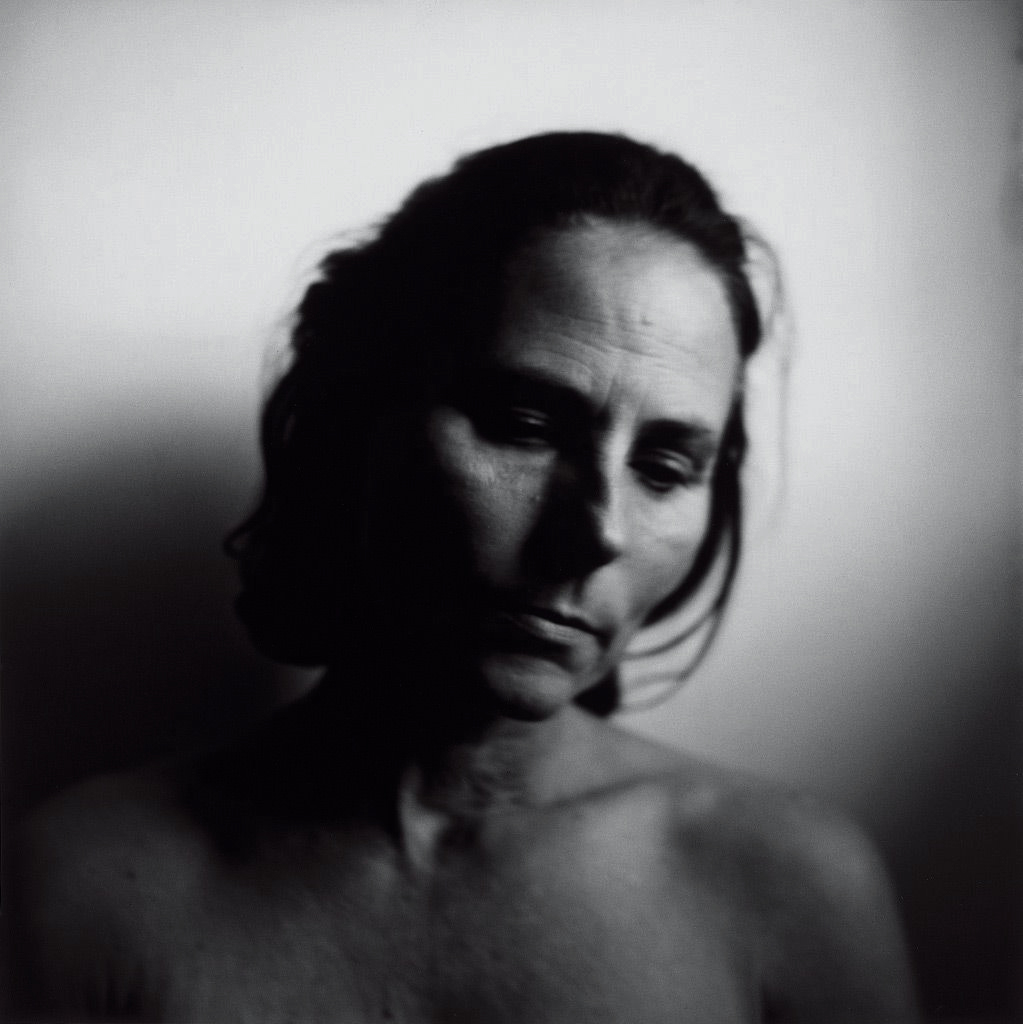
Emmet Gowin (American, b. 1941) 'Edith, Newtown (Pennsylvania)' 1994


Emmet Gowin (American, b. 1941)
Edith, Newtown (Pennsylvania)
1994
Gelatin silver print
© Emmet Gowin, Courtesy Pace/MacGill Gallery, New York


Emmet Gowin (American, b. 1941) 'Edith, Danville (Virginia)' 1963


Emmet Gowin (American, b. 1941)
Edith, Danville (Virginia)
1963
Gelatin silver print
© Emmet Gowin, Courtesy Pace/MacGill Gallery, New York


Emmet Gowin (American, b. 1941) 'Edith and Moth Flight' 2002


Emmet Gowin (American, b. 1941)
Edith and Moth Flight
2002
Digital ink jet print
19 x 19cm (7 1/2 x 7 1/2 in.)
National Gallery of Art, Washington, Charina Endowment Fund
© Emmet and Edith Gowin, Courtesy Pace/MacGill Gallery, New York


Fondation Henri Cartier-Bresson
79 rue des Archives
75003 Paris

Opening hours:
Tuesday – Sunday 11am – 7pm
Closed on Mondays

Fondation Henri Cartier-Bresson website

LIKE ART BLART ON FACEBOOK

Back to top

Exhibition: ‘In the Looking Glass: Recent Daguerreotype Acquistions’ at the Nelson-Atkins Museum of Art, Kansas City

Exhibition dates: 25th January – 20th July 2014


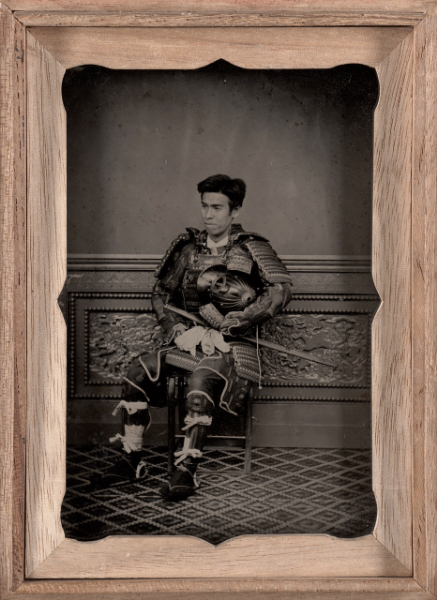
Attributed to: Tsukamoto, Japanese. 'Portrait of a man in samurai armor' mid 1870s


Attributed to:
Tsukamoto (Japanese)
Portrait of a man in samurai armour
mid 1870s
Ambrotype
5 x 3 1/2 inches
Gift of the Hall Family Foundation
© Nelson Gallery Foundation


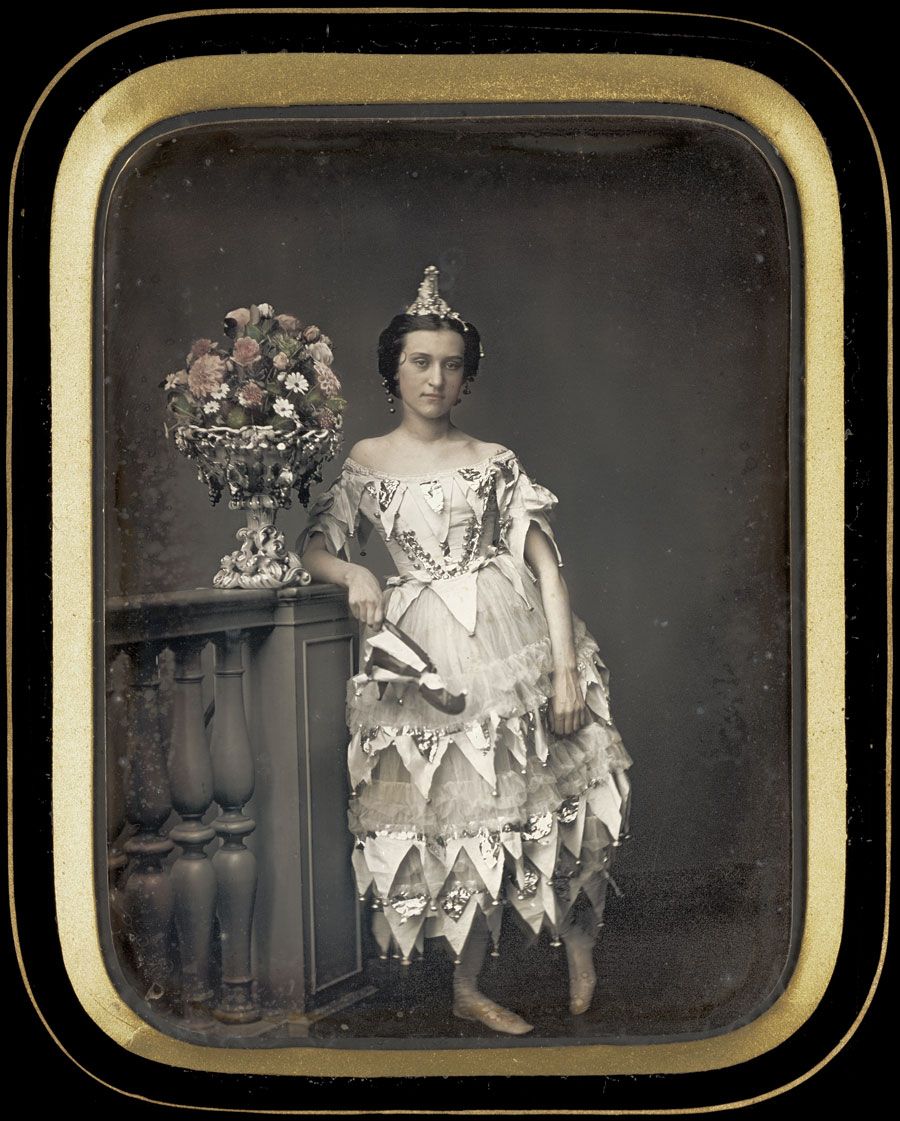
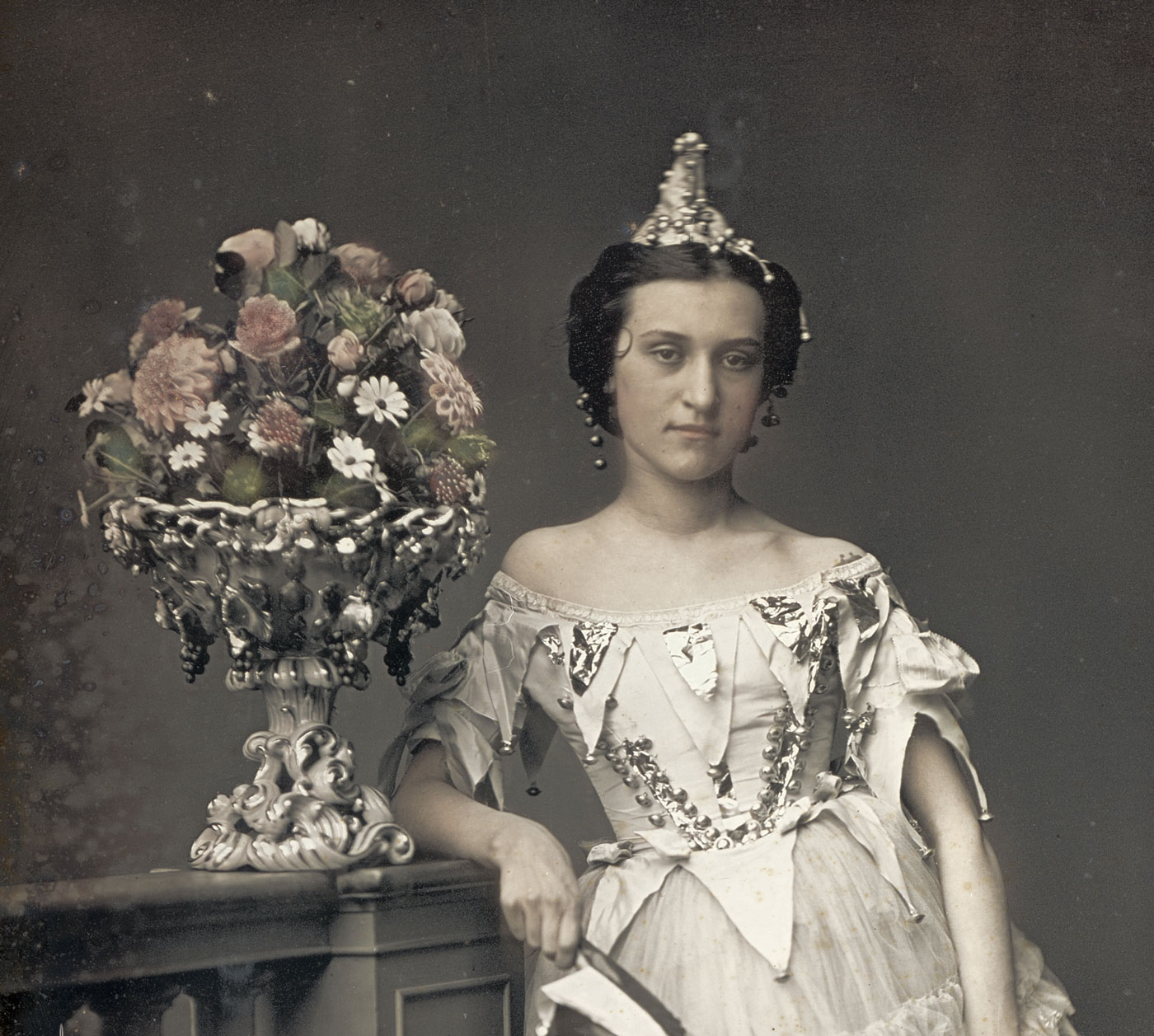
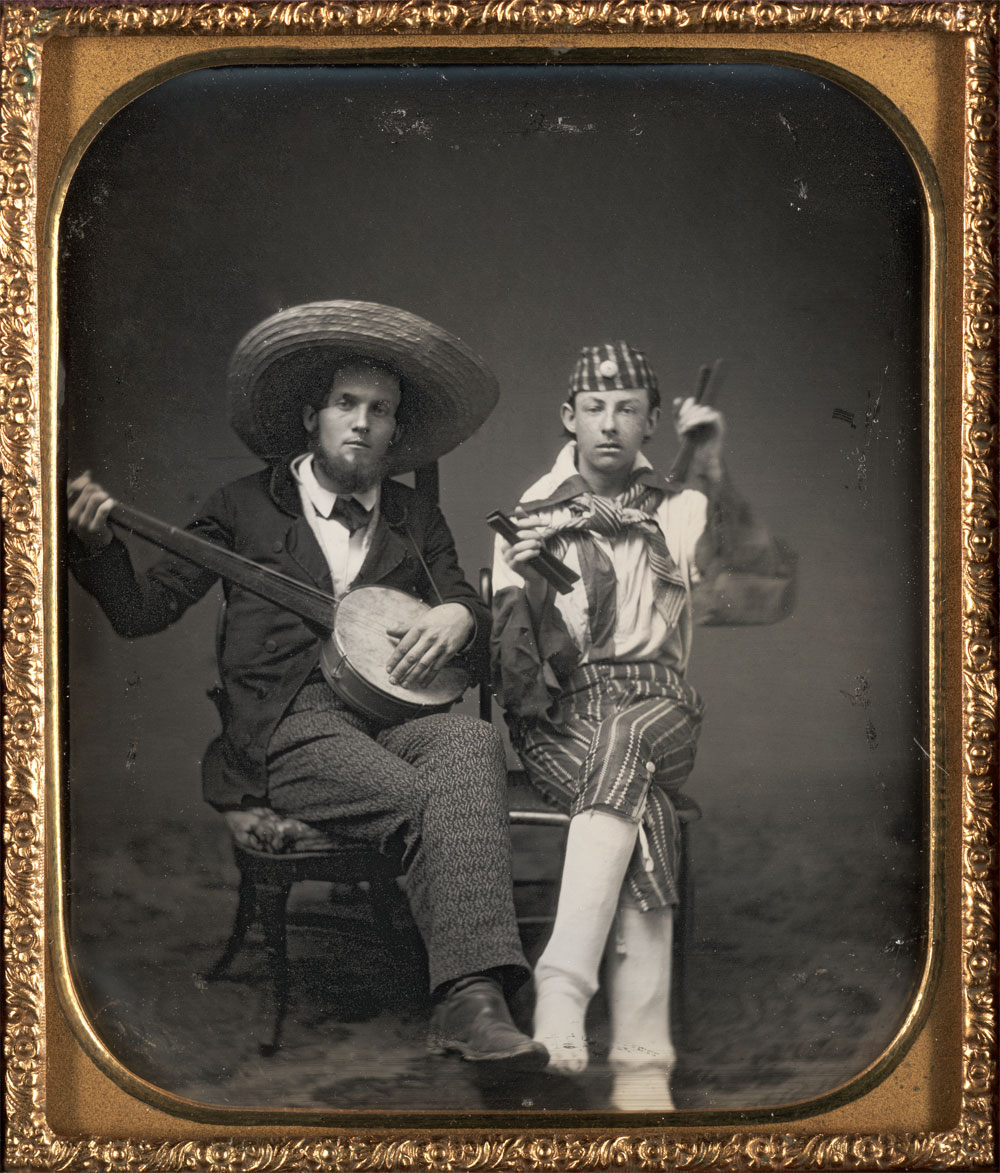
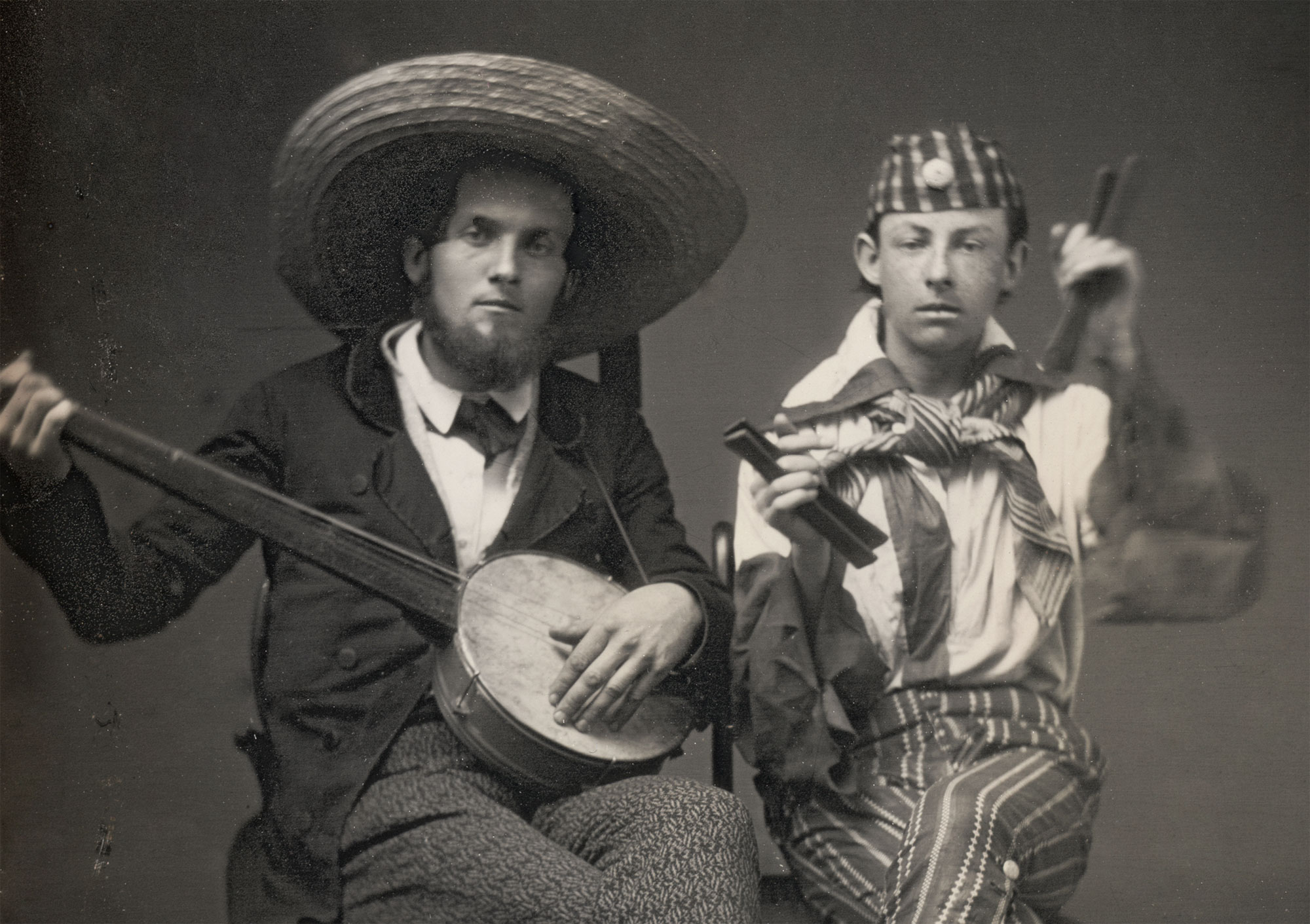
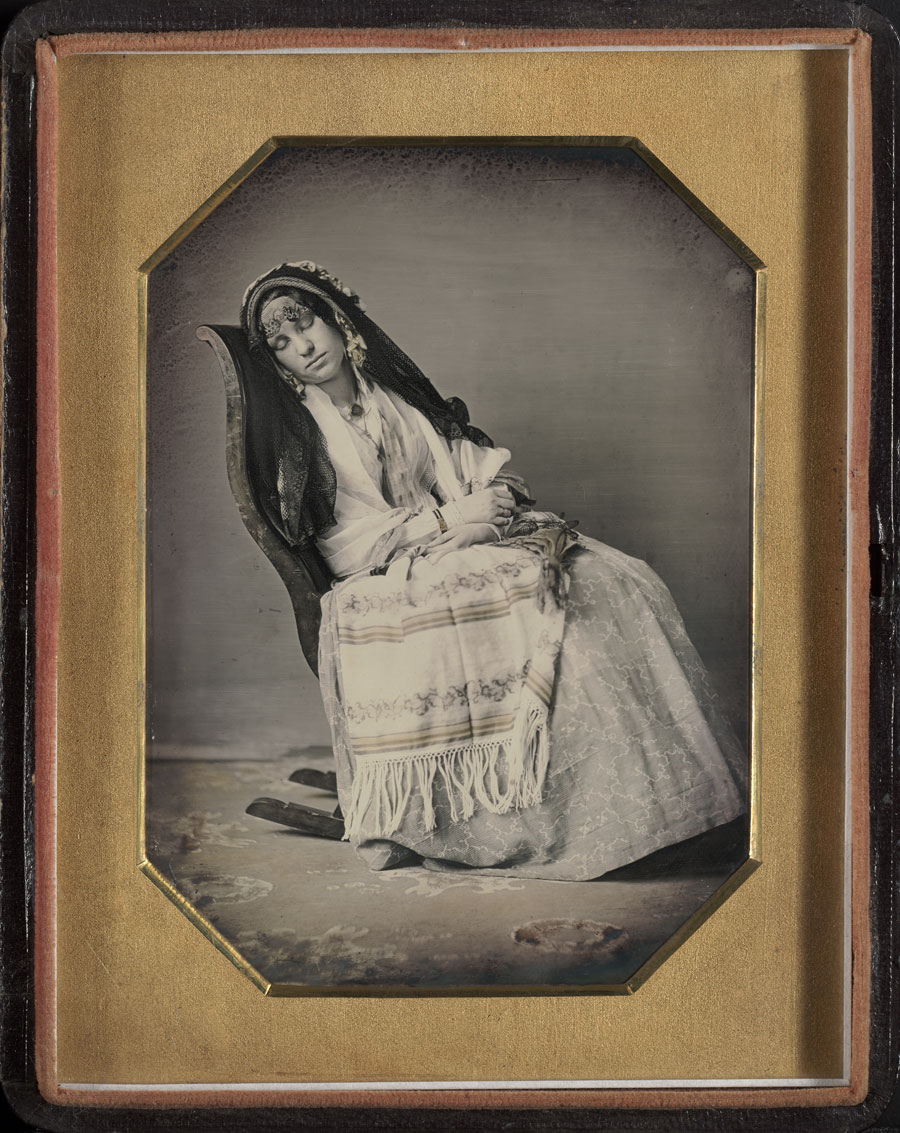
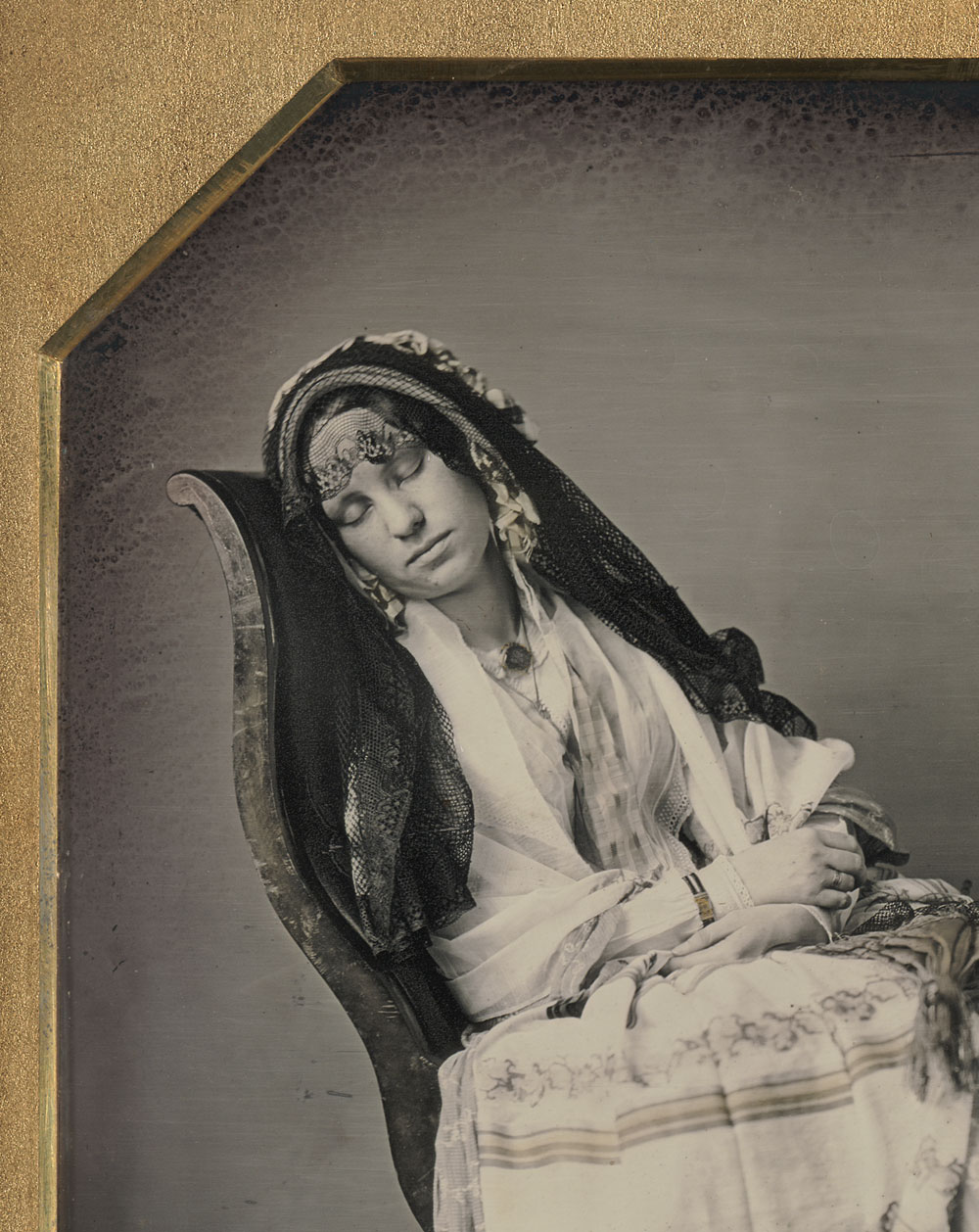
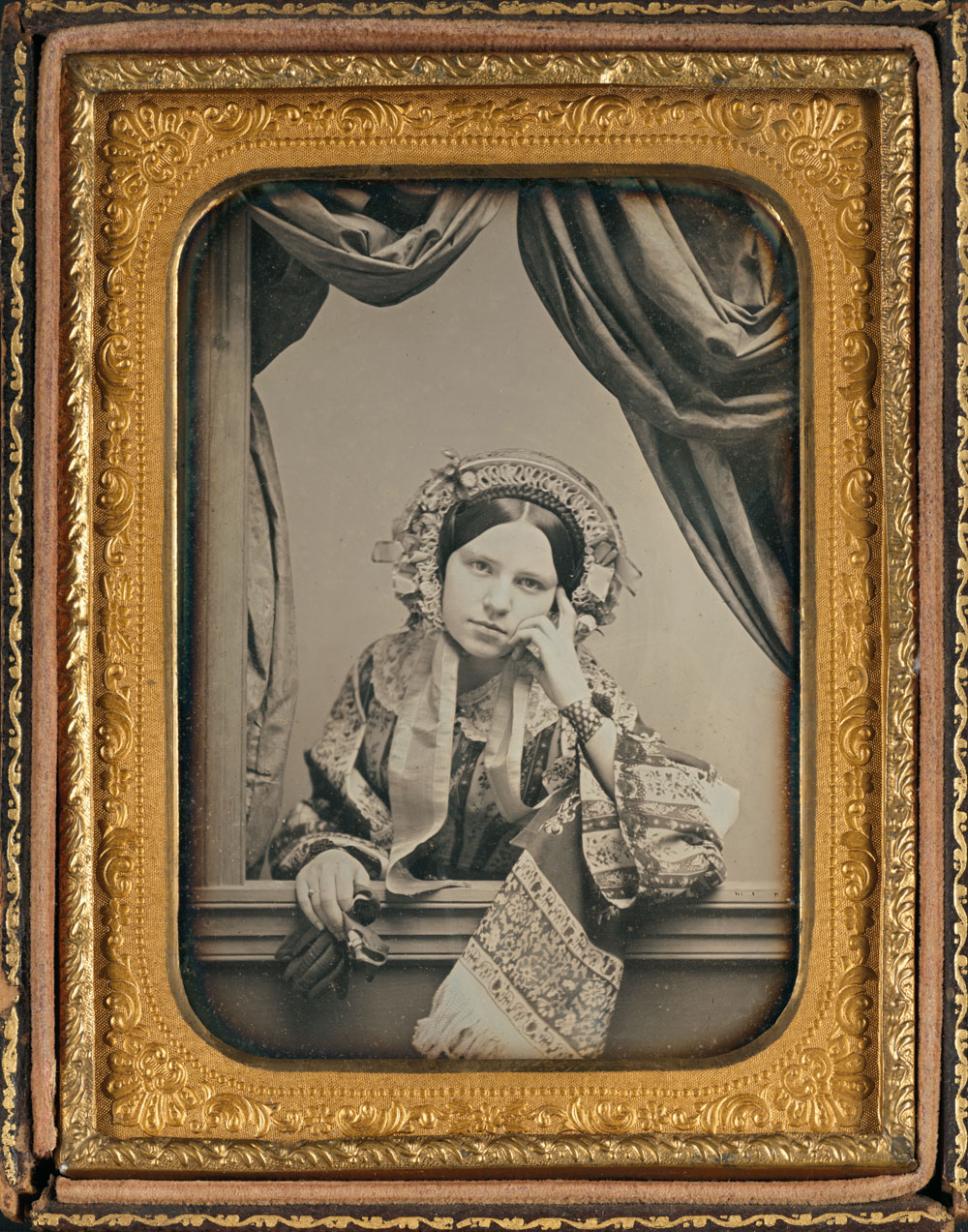
OMG some of these images are SO beautiful and others SO bizarre. Please enlarge the detailed shots of Lady in Costume (c. 1850, below) and Traveling Minstrels – banjo and bones (c. 1850, below) – my two favourites – so you can see the costumes and the people. The clothes of the bones player are incredible… I wonder what they did with their lives, where they went and how they lived. How old do you think they are? And what is that on the front of his hat, a watch?

Dr Marcus Bunyan


Many thankx to The Nelson-Atkins Museum of Art for allowing me to publish the photographs in the posting. Please click on the photographs for a larger version of the image.


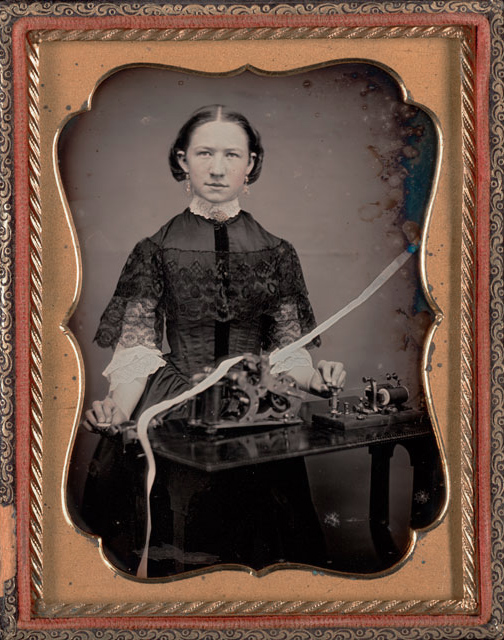
Unknown maker (American) 'Woman telegrapher' c. 1850


Unknown maker (American)
Woman telegrapher
c. 1850
Daguerreotype, quarter plate
image size: 4 1/4 x 3 1/4 inches
Gift of the Hall Family Foundation
© Nelson Gallery Foundation


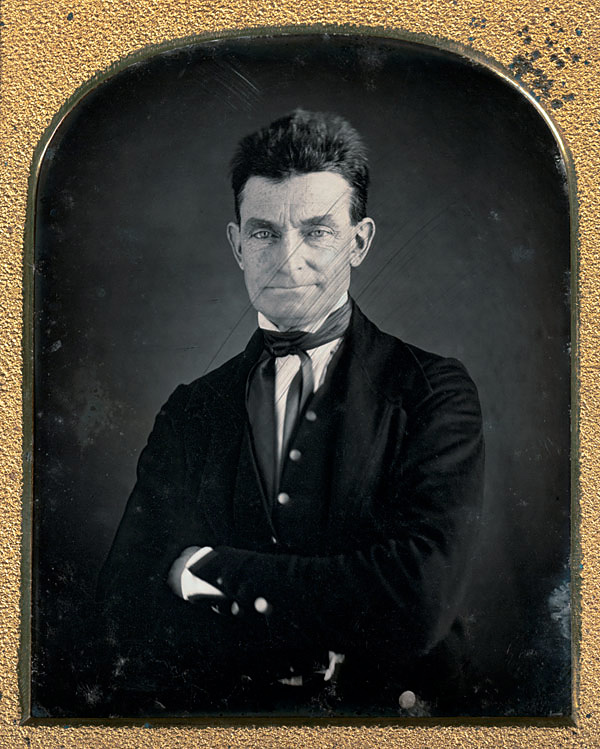
Augustus Washington (American, 1820-1875) 'John Brown' c. 1846-1847


Augustus Washington (American, 1820-1875)
John Brown
c. 1846-1847
Quarter plate daguerreotype
4 x 3 3/16 inches
Gift of the Hall Family Foundation
© Nelson Gallery Foundation


John Brown (May 9, 1800 – December 2, 1859) was a white American abolitionist who believed armed insurrection was the only way to overthrow the institution of slavery in the United States. During the 1856 conflict in Kansas, Brown commanded forces at the Battle of Black Jack and the Battle of Osawatomie. Brown’s followers also killed five slavery supporters at Pottawatomie. In 1859, Brown led an unsuccessful raid on the federal armoury at Harpers Ferry that ended with his capture. Brown’s trial resulted in his conviction and a sentence of death by hanging.

Brown’s attempt in 1859 to start a liberation movement among enslaved African Americans in Harpers Ferry, Virginia, electrified the nation. He was tried for treason against the Commonwealth of Virginia, the murder of five men and inciting a slave insurrection. He was found guilty on all counts and was hanged. Southerners alleged that his rebellion was the tip of the abolitionist iceberg and represented the wishes of the Republican Party to end slavery. Historians agree that the Harpers Ferry raid in 1859 escalated tensions that, a year later, led to secession and the American Civil War.

Text from Wikipedia website


(Pierre) Victor Plumier (French, active 1840s-1850s) 'Lady in Costume' c. 1850


(Pierre) Victor Plumier (French, active 1840s-1850s)
Lady in Costume
c. 1850
Daguerreotype, half-plate
Plate: 5 1/2 x 4 1/2 inches (13.97 x 11.43cm)
Mount (open): 8 1/8 x 6 5/8 inches (20.64 x 16.83cm)
Gift of the Hall Family Foundation
© Nelson Gallery Foundation


(Pierre) Victor Plumier, French, active 1840s-1850s 'Lady in Costume' c. 1850 (detail)


(Pierre) Victor Plumier, French, active 1840s-1850s
Lady in Costume (detail)
c. 1850
Daguerreotype, half-plate
Plate: 5 1/2 x 4 1/2 inches (13.97 x 11.43cm)
Mount (open): 8 1/8 x 6 5/8 inches (20.64 x 16.83cm)
Gift of the Hall Family Foundation
© Nelson Gallery Foundation


Unknown photographer. 'Traveling Minstrels – banjo and bones' c. 1850


Unknown photographer
Traveling Minstrels – banjo and bones
c. 1850
Daguerreotype, sixth plate
Plate: 3 1/4 x 2 3/4 inches (8.26 x 6.99cm)
Case: 3 3/4 x 3 3/8 x 5/8 inches (9.53 x 8.59 x 1.6cm)
Gift of the Hall Family Foundation
© Nelson Gallery Foundation


The bones are a musical instrument (more specifically, a folk instrument) which, at the simplest, consists of a pair of animal bones, or pieces of wood or a similar material. Sections of large rib bones and lower leg bones are the most commonly used true bones, although wooden sticks shaped like the earlier true bones are now more often used…

They have contributed to many music genres, including 19th century minstrel shows, traditional Irish music, the blues, bluegrass, zydeco, French-Canadian music, and music from Cape Breton in Nova Scotia…

They are typically about 5″ to 7″ in length, but can be much longer, and they are often curved, roughly resembling miniature barrel staves. Bones can also be flat, for example by the cutting of a yardstick. They are played by holding them between one’s fingers, convex surfaces facing one another, and moving one’s wrist in such a way that they knock against each other…

While North American players are typically two-handed, the Irish tradition finds the vast majority of bones players using only one hand, a distinction in method that has a strong impact on musical articulation. The comparison of the function of banjo rolls with that of bones within an ensemble suggests that stereotypically a subdivided accompaniment pattern is played on the bones.

Text from Wikipedia website


Unknown photographer. 'Traveling Minstrels – banjo and bones' c. 1850 (detail)


Unknown photographer
Traveling Minstrels – banjo and bones (detail)
c. 1850
Daguerreotype, sixth plate
Plate: 3 1/4 x 2 3/4 inches (8.26 x 6.99cm)
Case: 3 3/4 x 3 3/8 x 5/8 inches (9.53 x 8.59 x 1.6cm)
Gift of the Hall Family Foundation
© Nelson Gallery Foundation


David C. Collins (American, 1825-1909) 
Thomas P. Collins (American, 1823-1873) 'Portrait of Frances Amelia Collins Mitchell' c. 1850


David C. Collins (American, 1825-1909)

Thomas P. Collins (American, 1823-1873)
Portrait of Frances Amelia Collins Mitchell
c. 1850
Daguerreotype, half plate
Plate: 5 1/2 x 4 1/2 inches (13.97 x 11.43cm)
Case: 6 x 4 7/8 x 3/4 inches (15.24 x 12.37 x 1.91cm)
Gift of the Hall Family Foundation
© Nelson Gallery Foundation


David C. Collins (American, 1825-1909) 
Thomas P. Collins (American, 1823-1873) 'Portrait of Frances Amelia Collins Mitchell' c. 1850 (detail)


David C. Collins (American, 1825-1909)

Thomas P. Collins (American, 1823-1873)
Portrait of Frances Amelia Collins Mitchell (detail)
c. 1850
Daguerreotype, half plate
Plate: 5 1/2 x 4 1/2 inches (13.97 x 11.43cm)
Case: 6 x 4 7/8 x 3/4 inches (15.24 x 12.37 x 1.91cm)
Gift of the Hall Family Foundation
© Nelson Gallery Foundation


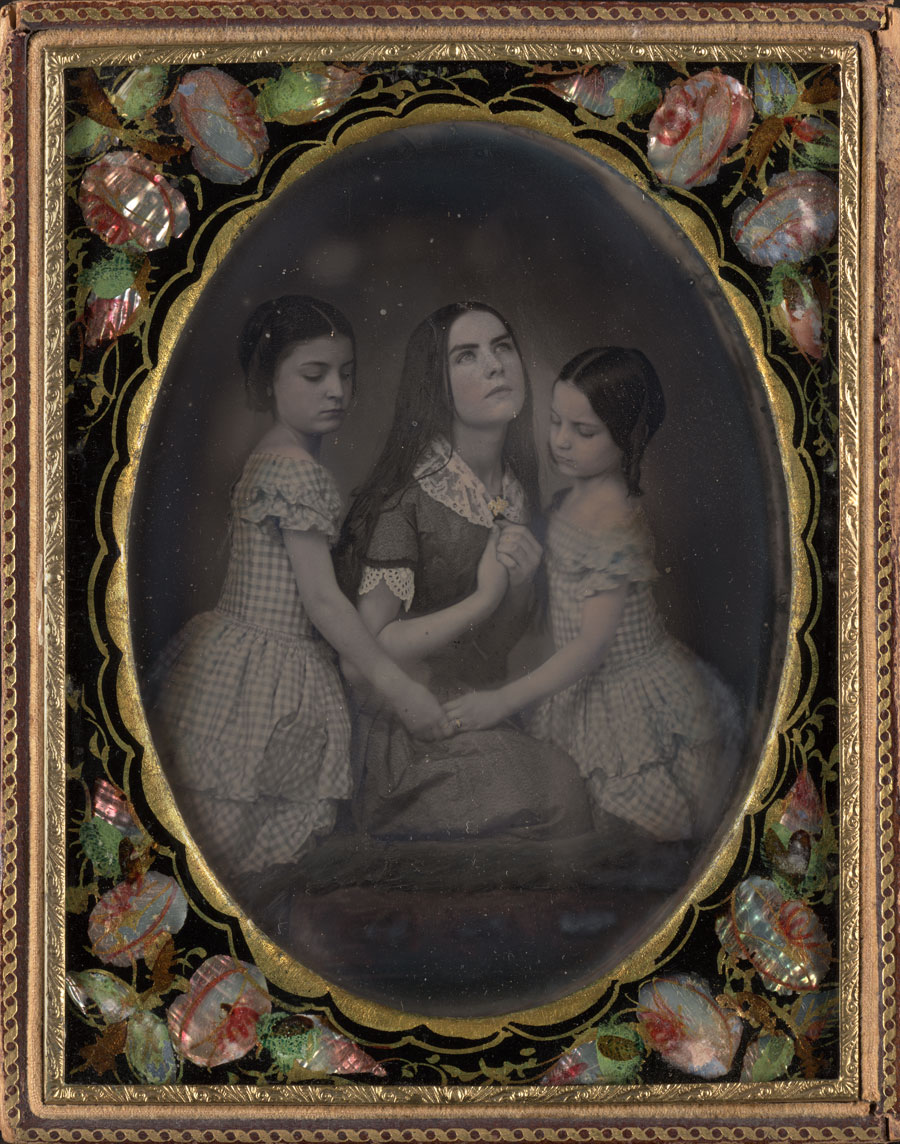
Unknown photographer. 'Portrait of Three Girls' c. 1850s


Unknown photographer
Portrait of Three Girls
c. 1850s
Daguerreotype, half plate
Plate: 5 1/2 x 4 1/2 inches (13.97 x 11.43cm)
Gift of the Hall Family Foundation
© Nelson Gallery Foundation


An exhibition featuring more than 50 daguerreotypes acquired by The Nelson-Atkins Museum of Art since 2007 opened on Jan. 24. In the Looking Glass: Recent Daguerreotype Acquisitions is a fascinating look at an early photographic process that was introduced in 1839. “In the 19th century, daguerreotypes seemed to be magical bits of reality,” says Jane Aspinwall, associate curator of Photography. “Now, more than a century later, they still hold that kind of wonder and appeal.”

A precursor of printed photography, the daguerreotype image is formed on a highly polished silver surface that is exposed to iodine fumes. The fumes produce a light sensitive coating. The plate is then covered with a protective dark slide and placed into a camera. An image is projected through the lens and onto the plate; the image is then developed using heated mercury. The distinguishing visual characteristics of a daguerreotype are that the image is on a bright, mirror-like surface of metallic silver and it appears either positive or negative depending on the lighting conditions and whether a light or dark background is being reflected in the metal.

Important additions to the Nelson-Atkins American collection include portraits by major makers, including possibly the earliest of only six known daguerreotypes of noted abolitionist John Brown. In the French holding, lively portraits, cityscapes, and archaeological images are highlighted. A 170-year-old daguerreotype from Egypt transports viewers to the shimmering banks of the Nile River, a place few would have been able to travel to at the time. British pieces are distinguished by elaborate hand-colouring.

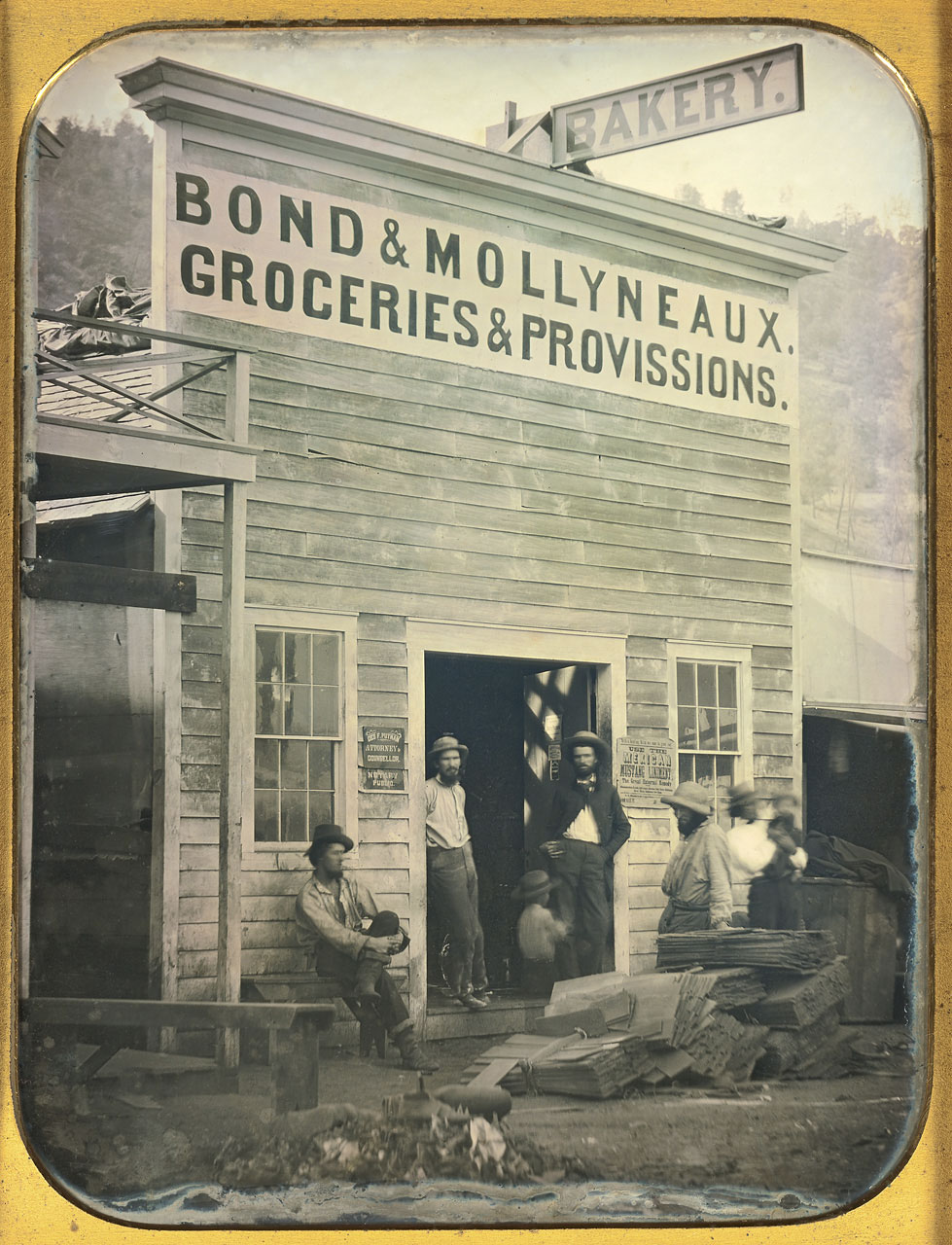
Small, intimate American daguerreotypes, most housed in jewel-like velvet or silk-lined cases, were made to be held close and scrutinised. Because they are reflective, the Nelson-Atkins designed more than two dozen cases with special lighting features to provide optimal viewing conditions, bringing each detailed image to life. A daguerreotype of a young girl clutching a shawl around her bare shoulders seems to float; another sharply detailed, rare Gold Rush image [second image, below] depicts a small group of men standing in front of their grocery store located in a California frontier town.

“It’s an amazing experience to view these precious, one-of-a-kind daguerreotypes,” said Aspinwall. “Once you see one, you never forget it. It takes you back in time to share a mid-19­th century moment with the sitter.”

The Nelson-Atkins is recognised as having one of the top five American daguerreotype collections in the U.S. and loaned more than 80 to the Taft Museum in Cincinnati for the 2013 exhibition Photographic Wonders. Daguerreotypes are an internationally significant cornerstone of the museum’s photography holdings.”

Press release from the  Nelson-Atkins Museum of Art website


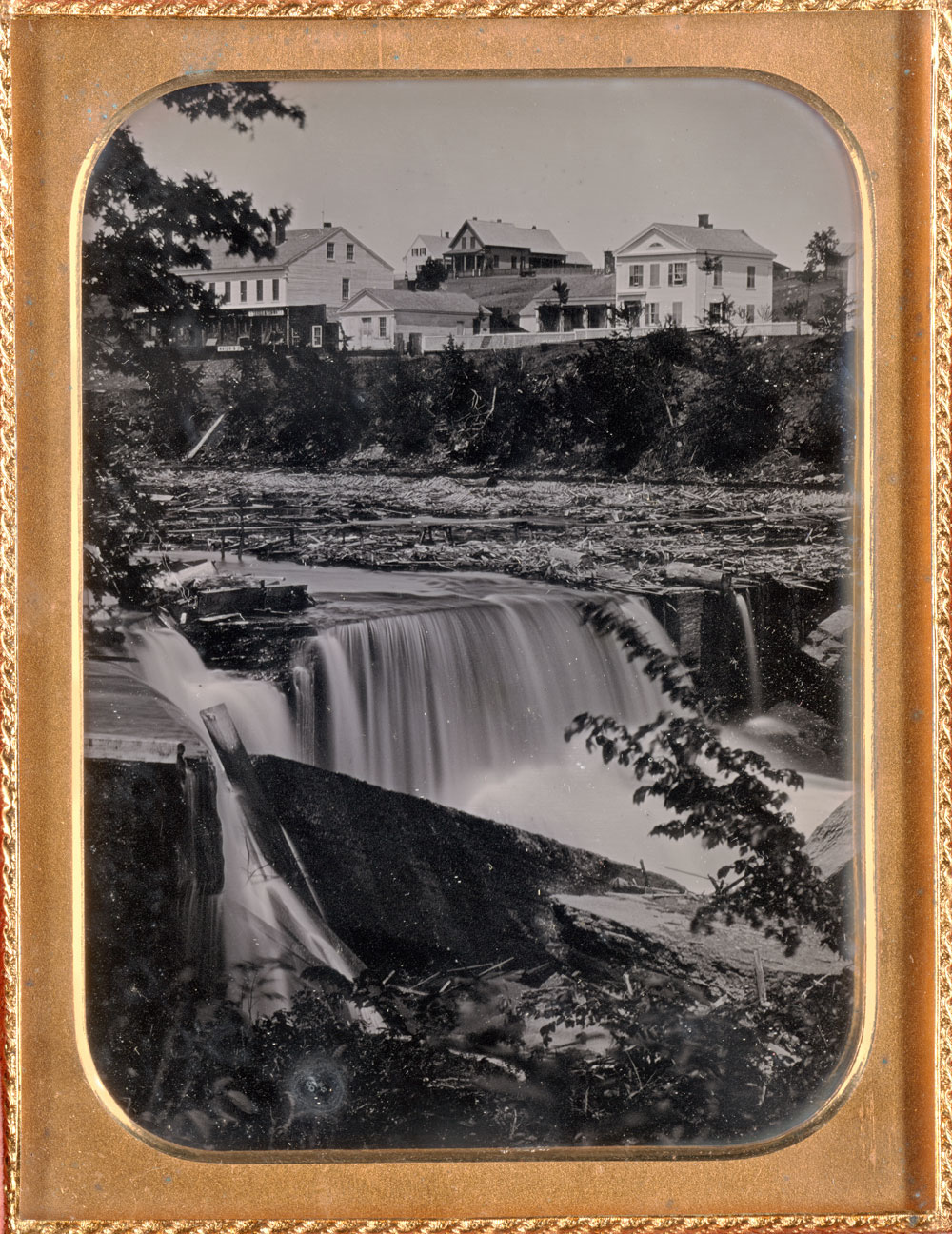
Unknown photographer. 'St. Anthony Falls' c. 1852


Unknown photographer
St. Anthony Falls
c. 1852
Daguerreotype, half plate
Plate: 5 1/2 x 4 1/2 inches (13.97 x 11.43cm)
Case: 6 x 4 3/4 x 1/2 inches (15.24 x 12.07 x 1.27cm)
Gift of the Hall Family Foundation
© Nelson Gallery Foundation


Unknown maker, American. 'Bond & Mollyneaux Groceries and Provisions' c. 1850


Unknown maker, American
Bond & Mollyneaux Groceries and Provisions
c. 1850
Daguerreotype, whole plate
Image size: 8 1/2 x 6 1/2 inches
© Nelson Gallery Foundation


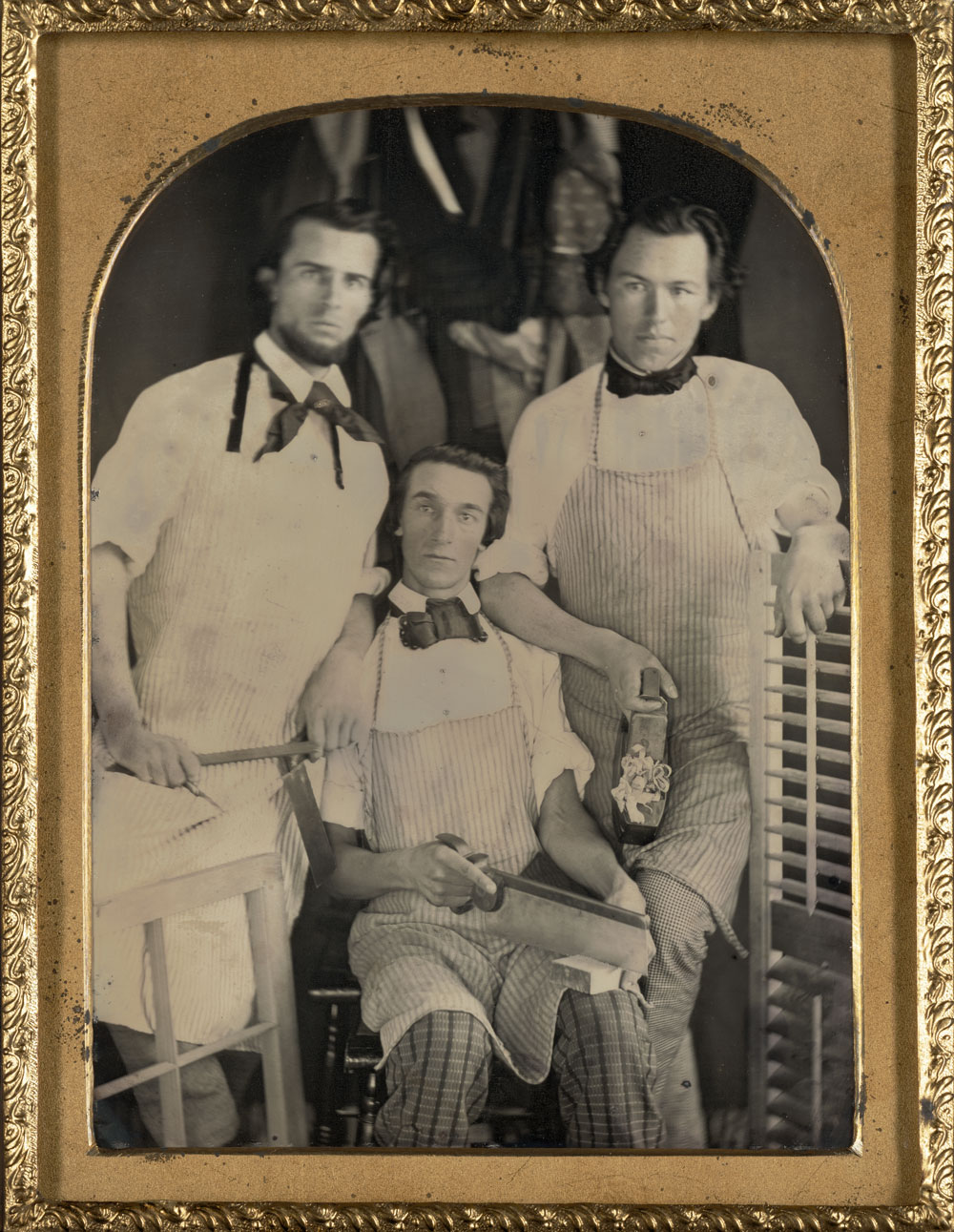
Unknown photographer. 'Three carpenters in their workshop' c. 1848-1850


Unknown photographer
Three carpenters in their workshop
c. 1848-1850
Daguerreotype, quarter plate
Plate: 4 1/4 x 3 1/4 inches (10.8 x 8.26cm)
Case (open): 4 3/4 x 7 1/2 inches (12.07 x 19.05cm)
Gift of the Hall Family Foundation
© Nelson Gallery Foundation


David C. Collins (American, 1825-1909) Thomas P. Collins (American, 1823-1873) 'Portrait of Annie M. Collins' c. 1847


David C. Collins (American, 1825-1909)
Thomas P. Collins (American, 1823-1873)
Portrait of Annie M. Collins
c. 1847
Daguerreotype, quarter plate
Plate: 4 1/4 x 3 1/4 inches (10.8 x 8.26cm)
Case: 4 5/8 x 3 3/4 inches (11.76 x 9.53cm)
Gift of the Hall Family Foundation
© Nelson Gallery Foundation


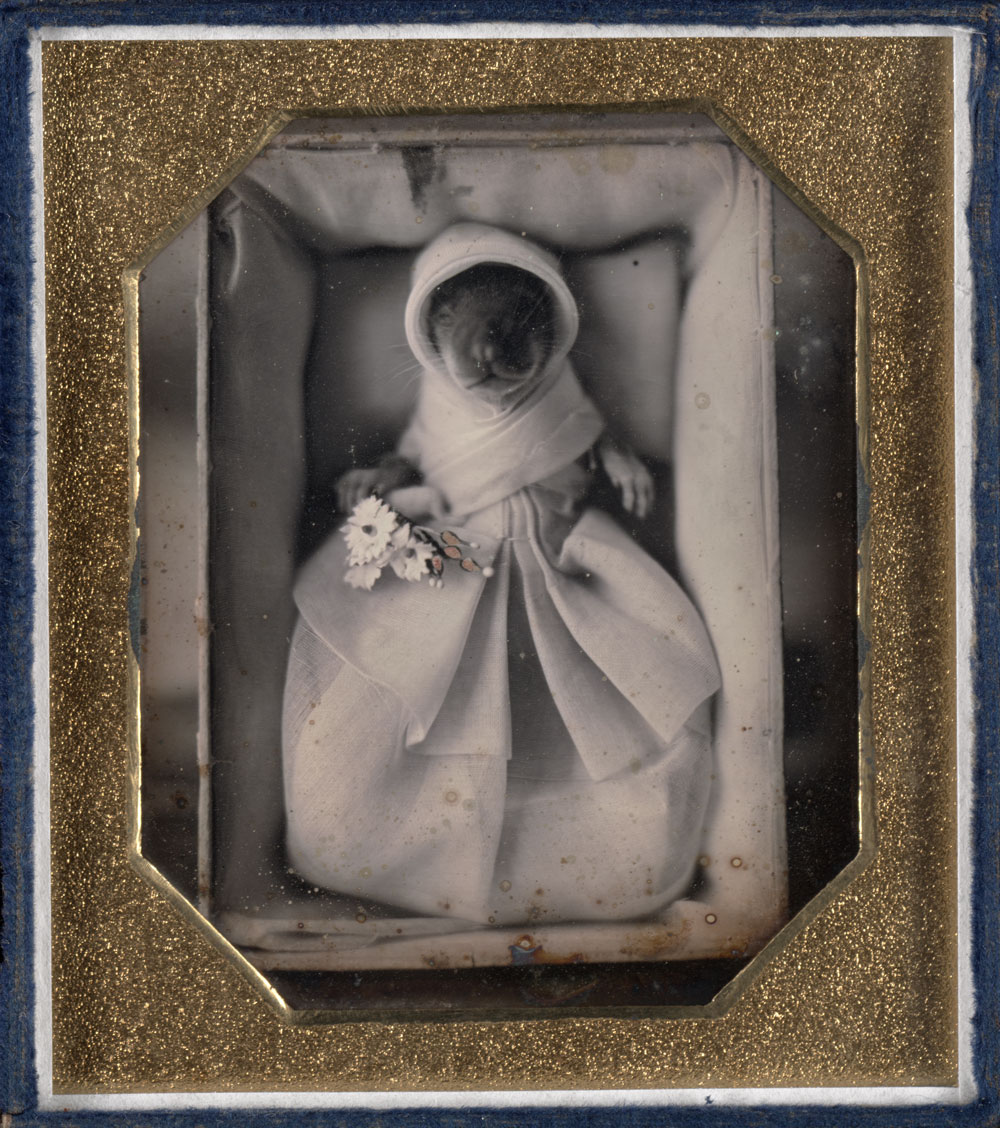
Unknown photographer. 'Genushe (animal post-mortem)' c. 1845-1846


Unknown photographer
Genushe (animal post-mortem)
c. 1845-1846
Daguerreotype, sixth plate
Plate: 3 1/4 x 2 3/4 inches (8.26 x 6.99cm)
Case: 3 3/4 x 3 1/4 x 1/4 inches (9.53 x 8.26 x 0.64cm)
Gift of the Hall Family Foundation
© Nelson Gallery Foundation


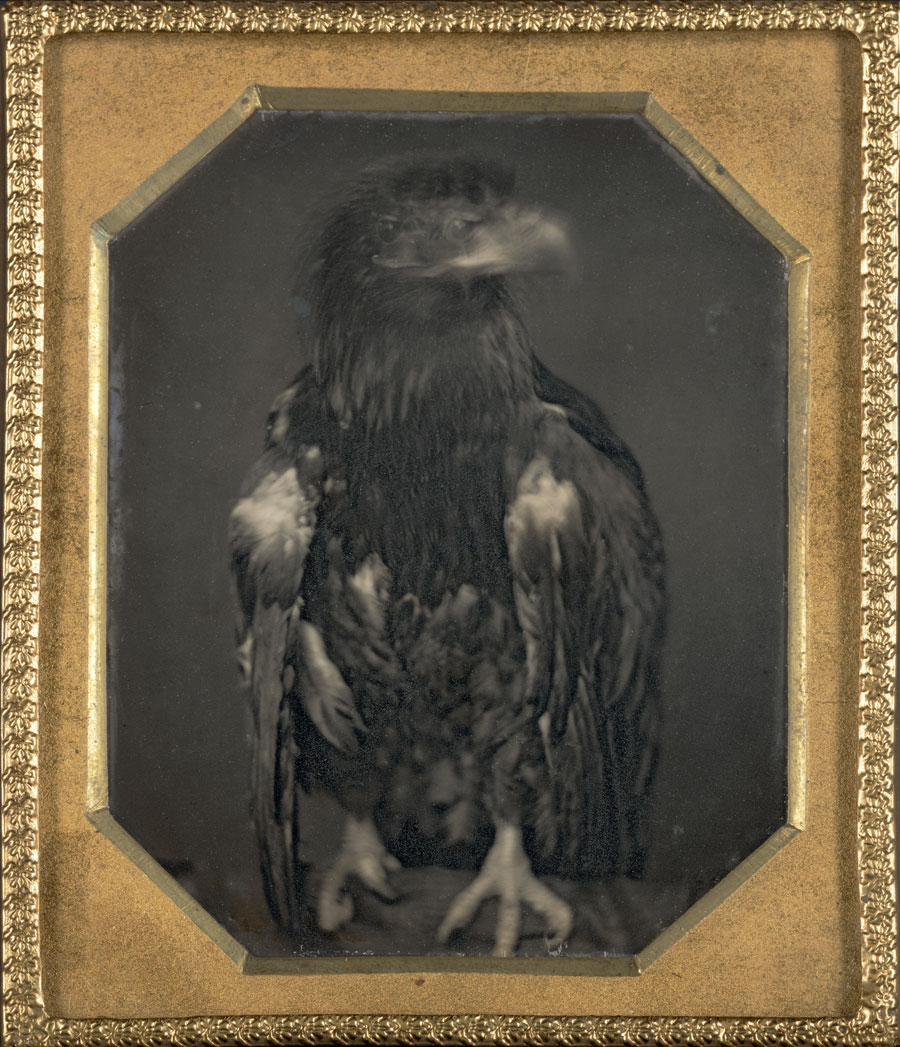
Unknown photographer. 'Untitled (eagle facing left)' c. 1850


Unknown photographer
Untitled (eagle facing left)
c. 1850
Daguerreotype, sixth plate
Case: 3 3/4 x 3 3/4 x 3/4 inches (9.53 x 9.53 x 1.91cm)
Gift of the Hall Family Foundation
© Nelson Gallery Foundation


The Nelson-Atkins Museum of Art
4525 Oak Street
Kansas City, MO 64111

Opening hours:
Thursday – Monday 10am – 5pm
Closed Tuesdays and Wednesdays

The Nelson-Atkins Museum of Art website

LIKE ART BLART ON FACEBOOK

Back to top

Exhibition: ‘Robert Mapplethorpe’ at the Grand Palais, Paris

Exhibition dates: 26th March – 13th July 2014

Grand Palais
Galerie sud-est, entrée avenue Winston Churchill


Many thankx to the Grand Palais for allowing me to publish the photographs in the posting. Please click on the photographs for a larger version of the image.


“I have boundless admiration for the naked body. I worship it.”

“I was a Catholic boy, I went to church every Sunday. A church has a certain magic and mystery for a child. It still shows in how I arrange things. It’s always little altars.”

“I am looking for perfection in form. I do that with portraits. I do it with cocks. I do it with flowers.”


Robert Mapplethorpe


Installation view of the exhibition 'Robert Mapplethorpe' at the Grand Palais, Paris 2014

Installation view of the exhibition 'Robert Mapplethorpe' at the Grand Palais, Paris 2014

Installation view of the exhibition 'Robert Mapplethorpe' at the Grand Palais, Paris 2014

Installation view of the exhibition 'Robert Mapplethorpe' at the Grand Palais, Paris 2014


Installation views of the exhibition Robert Mapplethorpe at the Grand Palais, Paris 2014
© Didier Plowy pour la Réunion des musées nationaux-Grand Palais, Paris 2014


The exhibition will present over 250 works making it one of the largest retrospective shows for this artist ever held in a museum. It will cover Mapplethorpe’s entire career as a photographer, from the Polaroids of the early 1970s to the portraits from the late 1980s, touching on his sculptural nudes and still lifes, and sadomasochism.

The focus on his two muses Patti Smith and Lisa Lyon explores the theme of women and femininity and reveals a less known aspect of the photographer’s work. The challenge of this exhibition is to show that Mapplethorpe is a great classical artist, who addressed issues in art using photography as he might have used sculpture. It also puts Mapplethorpe’s art into the context of the New York art scene in the 1970-1980s.

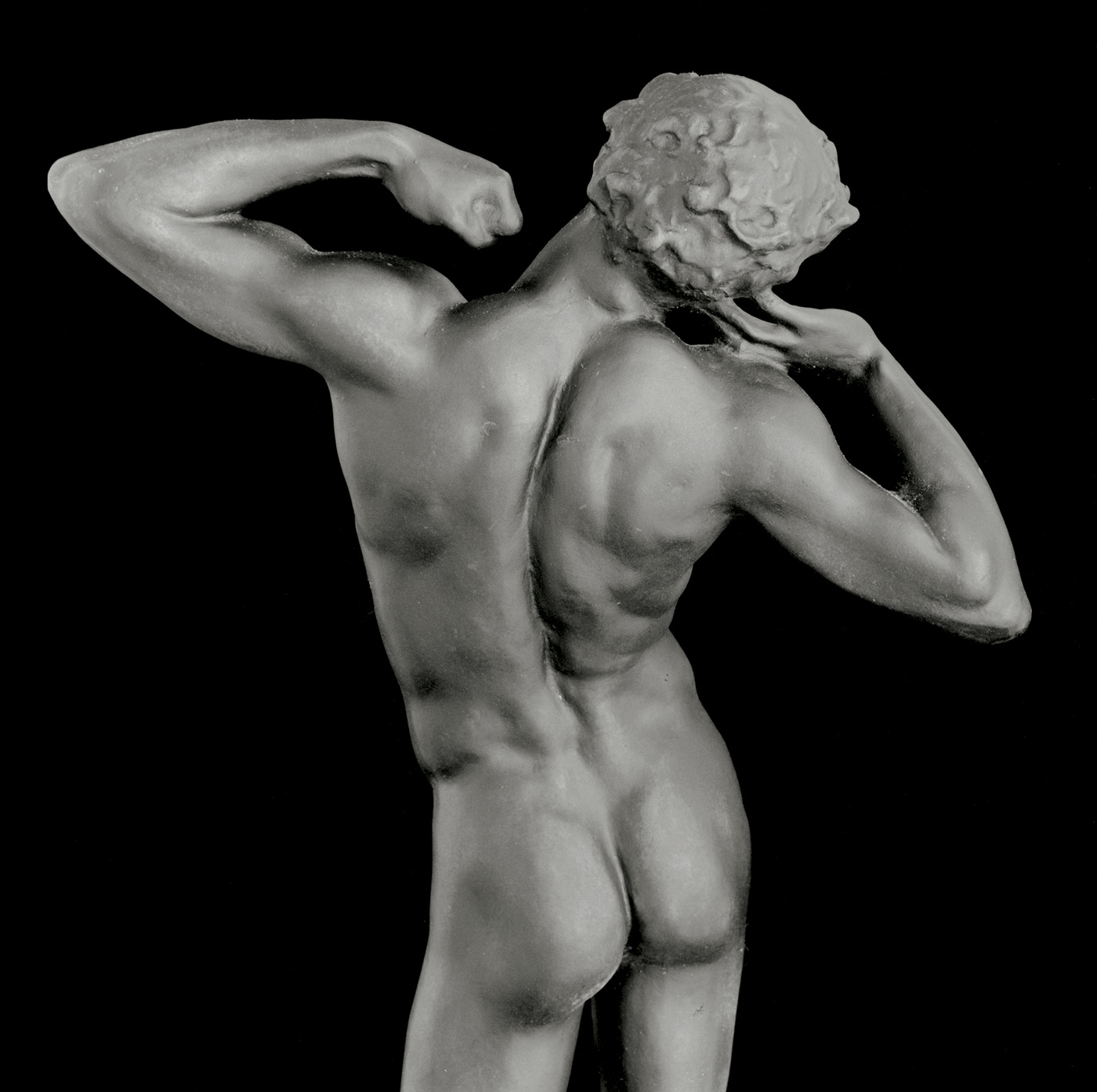
In his interview with Janet Kardon in 1987, Mapplethorpe explained that photography in the 1970s was the perfect medium for a fast-paced time. He did not really choose photography; in a way it was photography that chose him. Later in the same interview, he said “If I had been born one hundred or two hundred years ago, I might have been a sculptor, but photography is a very quick way to see, to make a sculpture. Lisa Lyon reminded me of Michelangelo’s subjects, because he did muscular women.”

Mapplethorpe positioned himself from the outset as an Artist, with a capital A. Unlike Helmut Newton, who as a teenager already wanted to be a fashion photographer, and imposed his vision of the world and photography, making it an art in its own right, Robert Mapplethorpe is a sculptor at heart, a plastic artist driven by the question of the body and its sexuality and obsessed by the search for perfect form.

Like Man Ray, Mapplethorpe wanted to be “a creator of images” rather than a photographer, “a poet” rather than a documentarist. In the catalogue for the Milan exhibition which compared the two artists, Bruno Cora recalls the parallels in their lives and works: “Before becoming masterly photographers, Man Ray and Mapplethorpe had both been painters and sculptors, creators of objects; they both lived in Brooklyn in New York; they both made portraits of the intellectuals of their time; and they were both incisive explorers of the nude form, its sculptural qualities and the energy emanating from it.”

Mapplethorpe was an artist before being a photographer. His images come from a pictorial culture in which we find Titian (The Flaying of Marsyas / Dominick and Elliot), David, Dali, and even the great artists of the Italian Renaissance, Michelangelo, Piero della Francesca, Bernini …

As in Huysmans’s novel, the exhibition is a countdown for this other dandy from the end of another world, Robert Mapplethorpe. It starts with his self-portrait with a skull-headed cane, the image of a young man already old, the tragedy of a life cut down in full flight by AIDS. But his almost royal final posture, as if beyond death, still (just) alive but already in the posterity of his oeuvre, seems to beckon us with a gesture of his pastoral cane to follow him into the world that he constructed in twenty years of photography. The exhibition continues with statuary, a dominant theme in Mapplethorpe’s last years, photos of statues of the gods in his personal pantheon: Eros, of course, and Hermes … The artist always said he used photography to make sculptures, and he ended his oeuvre with photographs of sculptures. His nudes were already photographic sculptures.

Works are not created just anywhere. To be fully appreciated, Mapplethorpe’s art must be put into the socio-cultural context of arty New York in the 1970s and 80s, and the underground gay culture there at that time. Two permeable and equally radical worlds. To take the measure of the libertarian explosion of the time, we need to watch Flesh, Warhol’s film with Joe Dalessandro, which narrates 24 hours in the life of a young New York male prostitute. To understand the violence and passion of gay sexuality for young New Yorkers fighting for freedom in a repressive period, we must read Edmund White’s The Beautiful Room is Empty, the story of a young gay in the years of riots and demonstrations and extreme emancipation; and Andrew Holleran’s Dancer from the Dance (1978), to plunge into the sexual experiments of Fire Island in the 1970s.

Mapplethorpe is hailed as one of the world’s greatest photographers and the exhibition aims to give a broad view of his work.

Press release from the Grand Palais website


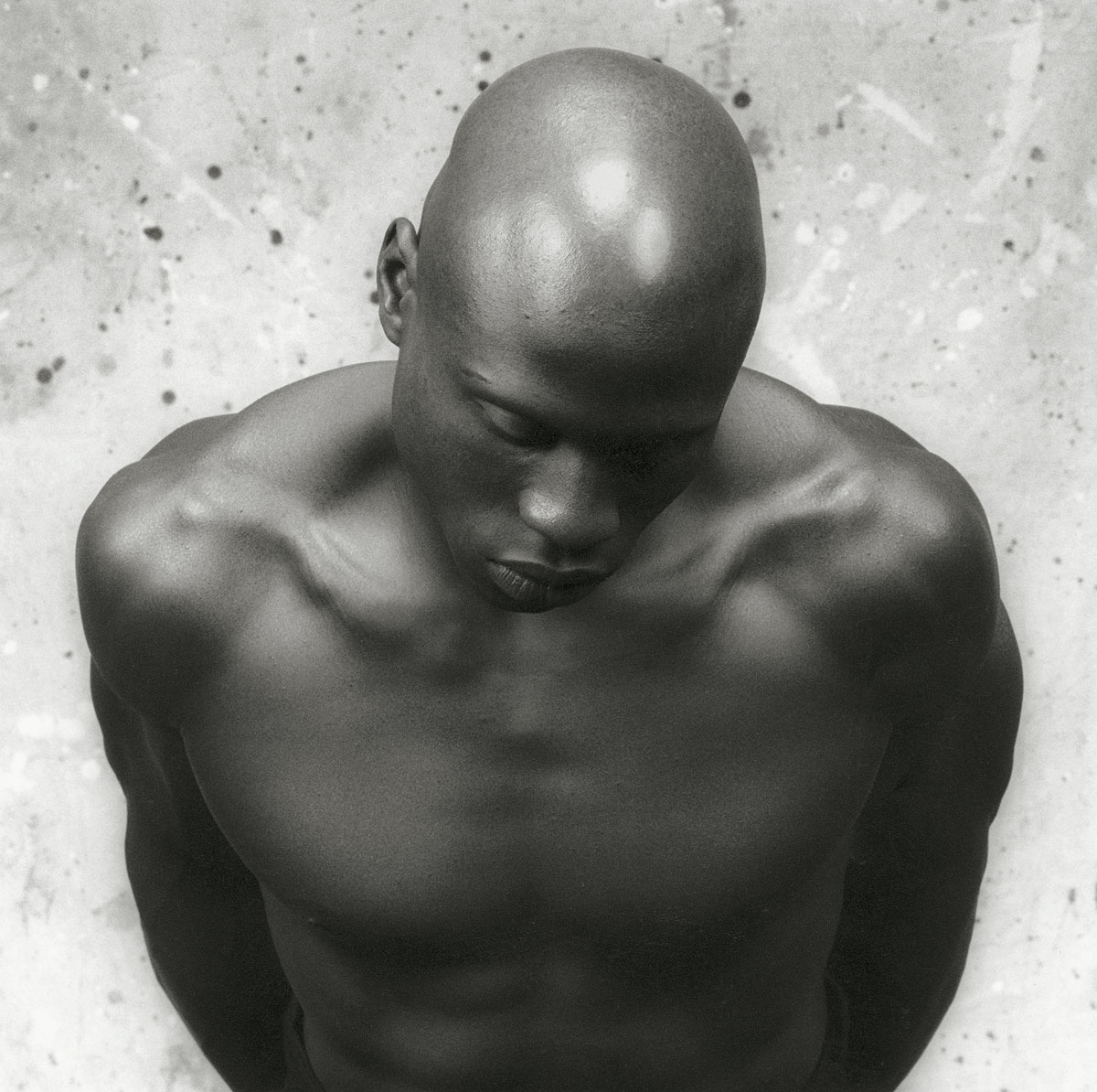
Robert Mapplethorpe (American, 1946-1989) 'Milton Moore' 1981


Robert Mapplethorpe (American, 1946-1989)
Milton Moore
1981
50.8 x 40.6cm / 50.8 x 40.6cm
Silver gelatin prints
New York, Fondation Robert Mapplethorpe
© Robert Mapplethorpe Foundation. Used by permission


Robert Mapplethorpe (American, 1946-1989) 'Milton Moore' 1981 (detail)


Robert Mapplethorpe (American, 1946-1989)
Milton Moore (detail)
1981
50.8 x 40.6cm
Silver gelatin print
New York, Fondation Robert Mapplethorpe
© Robert Mapplethorpe Foundation. Used by permission


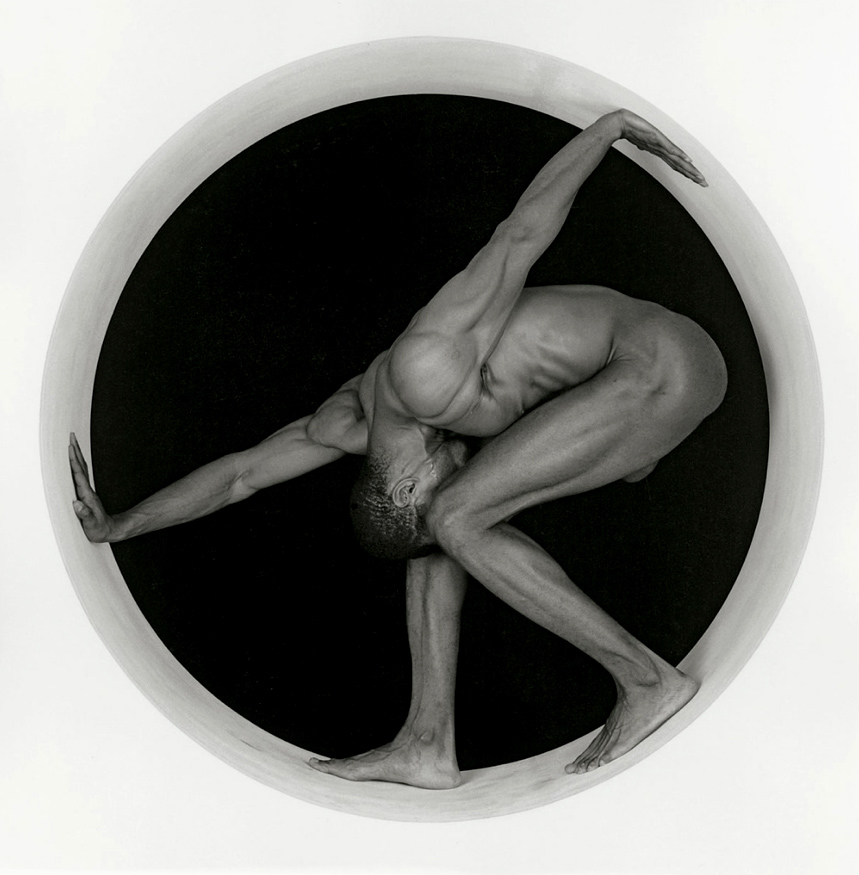
Robert Mapplethorpe (American, 1946-1989) 'Ken Moody' 1983


Robert Mapplethorpe (American, 1946-1989)
Ken Moody
1983
50.8 x 40.6cm
Silver gelatin print
New York, Fondation Robert Mapplethorpe
© Robert Mapplethorpe Foundation. Used with permission


Introductory text

Robert Mapplethorpe was an artist with an obsessive quest for aesthetic perfection.

A sculptor at heart, and in his imagination, he wanted “people to see [his] works first as art and second as photography.”1 An admirer of Michelangelo, Mapplethorpe championed the classical ideal – revised and reworked for the libertarian New York of the 1970s – and explored sophisticated printing techniques to create unique works and mixed compositions, which he framed in unusual ways.

Like the novel by Joris-Karl Huysmans, this exhibition has been organised “À rebours” [against the nap] and examines the work of another dandy, living at the end of another world. It opens with Mapplethorpe’s self-portrait with the skull-head cane: the image of a young man, already old, tragically cut down in the prime of life by AIDS, it also reveals how the master of the realm of shadows – photography – gave free rein to his imagination. Like a modern day Orpheus, beyond death, he seems alive – although only just – yet already in the afterlife of his work, beckoning us with his satanic cane to follow him into the underworld of his life, in search of his desire.

“Photography and sexuality have a lot in common,” explains Mapplethorpe. “Both are question marks, and that’s precisely what excites me most in life.”2 Exploring the photography of the body, he pushed it to the limits of pornography, perhaps like no other artist before him. The desire we see in these images – often the photographer’s own desire – also reflects life in New York, as lived by some, in the 1970s and 80s, at the height of the sexual liberation movement. “I’m trying to record the moment I’m living in and where I’m living, which happens to be in New York. I am trying to pick up on the madness and give it some order.”3

This retrospective of Mapplethorpe’s work – the first in France since he passed away – features some two hundred and fifty images exploring a range of themes. They cover every aspect of Mapplethorpe’s art – bronze bodies and flesh sculptures, geometric and choreographic, still lives and anatomical details, bodies as flowers and flowers as bodies, court portraiture, night photography, and eroticism, soft and hard – interspersed with self-portraiture in all its forms. The works from the photographer’s early career, which close the exhibition, reveal how the path taken by his art was already mapped out in his first Polaroids. The sign of a great artist.

1/ Inge Biondi, “The Yin and the Yang of Robert Mapplethorpe,” in The Print Collector’s Newsletter, New York, January 1979, p. 11
2/ Mark Thompson, “Mapplethorpe,” in The Advocate, Atlanta, 24 July 1980
3/ Sarah Kent, “Mapplethorpe,” in Time Out, London, 3-9 November 1983


Robert Mapplethorpe (American, 1946-1989) 'Thomas' 1987


Robert Mapplethorpe (American, 1946-1989)
Thomas
1987
61 x 50.8cm
Silver gelatin print
New York, Fondation Robert Mapplethorpe
© Robert Mapplethorpe Foundation. Used with permission


Robert Mapplethorpe (American, 1946-1989) 'Calla Lily' 1986


Robert Mapplethorpe (American, 1946-1989)
Calla Lily
1986
92.7 x 92.7cm
Silver gelatin print
© Robert Mapplethorpe Foundation. Used with permission


Robert Mapplethorpe (American, 1946-1989) 'The Sluggard' (Le Paresseux) 1988


Robert Mapplethorpe (American, 1946-1989)
The Sluggard (Le Paresseux)
1988
61 x 50.8cm
Silver gelatin print
New York, Fondation Robert Mapplethorpe
© Robert Mapplethorpe Foundation. Used with permission


Robert Mapplethorpe (American, 1946-1989) 'Self-portrait (Autoportrait)' 1988


Robert Mapplethorpe (American, 1946-1989)
Self-portrait (Autoportrait)
1988
61 x 50.8cm
Platinum print
© Robert Mapplethorpe Foundation. Used with permission


Grand Palais, Galeries Nationales
3, Avenue du Général Eisenhower
75008 Paris

Opening hours:
Wednesday – Saturday 10am – 10pm
Monday and Sunday 10am – 8pm
Closed every Tuesday

Grand Palais website

LIKE ART BLART ON FACEBOOK

Back to top

Exhibition: ‘Ana Mendieta: Traces’ at the Museum der Moderne Salzburg

Exhibition dates: 29th March – 6th July 2014

PLEASE NOTE: THIS POSTING CONTAINS PHOTOGRAPHS WHICH MAY BE DISTRESSING TO SOME PEOPLE


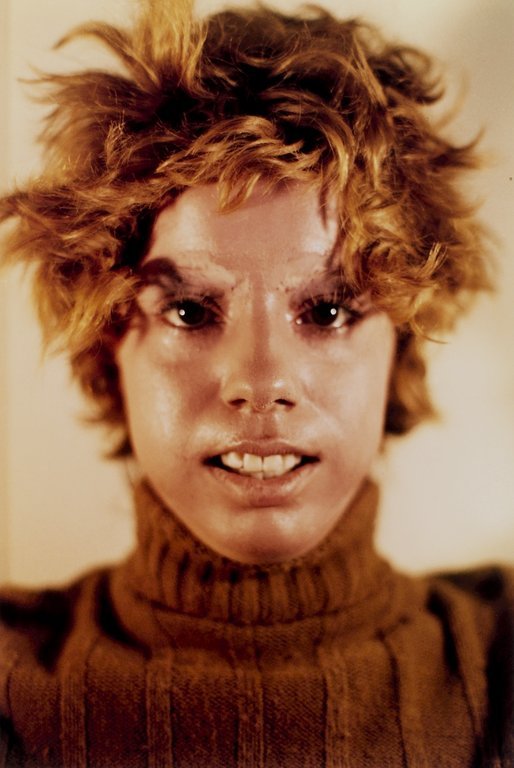
Ana Mendieta (Cuban-American, 1948-1985) 'Untitled (Facial Hair Transplant)' 1972


Ana Mendieta (Cuban-American, 1948-1985)
Untitled (Facial Hair Transplant)
1972
Suite of seven colour photographs, estate prints 1997
© The Estate of Ana Mendieta Collection, L.L.C.
Courtesy Galerie Lelong, New York and Paris and Alison Jacques Gallery, London


If I had half of this artists courage, I might not even have a quarter of her talent.

Marcus


Many thankx to the Museum der Moderne Salzburg for allowing me to publish the photographs and text in the posting. Please click on the photographs for a larger version of the image.

View the catalogue essays Ana Mendieta: Traces by Stephanie Rosenthal and Embers by Adrian Heathfield (2.66Mb pdf)


“Art is a material act of culture, but its greatest value is its spiritual role, and that influences society, because it’s the greatest contribution to the intellectual and moral development of humanity that can be made”

“My art is grounded on the belief in one universal energy which runs through everything; from insect to man, from man to spectre, from spectre to plant, from plant to galaxy.”

“To me, the work has existed on different levels. It existed on the level of being in nature and eventually being eroded away. But obviously when it’s shown to someone as a photograph, that’s what it is.”


Ana Mendieta


The few women working with the body at that time were in instant affinity with each other… The struggle for all of us was to keep the sensuousness of the body and to de-eroticize it in terms of cultural expectations. It was gratifying and exciting to discover her work. Those of us who had already been situating the body as central to our visual aesthetic could also anticipate the resistance that would be around her.

I see her death as part of some larger denial of the feminine. Like a huge metaphor saying, we don’t want this depth of feminine eroticism, nature, absorption, integration to happen. It’s too organic. It’s too sacral. In a way, her death also has a symbolic trajectory. More than Ana dies, when she dies.”


Carolee Schneeman quoted in Camhi, Leslie. “ART; Her Body, Herself,” on the New York Times website published June 20, 2004 [Online] Cited 20/06/2014


“You do feel the sadness that she’s not with us and you wonder where she would have gone with her work.”


Raquelin
 Mendieta


Ana Mendieta (Cuban-American, 1948-1985) 'Untitled (Facial Cosmetic Variations)' 1972 (detail)


Ana Mendieta (Cuban-American, 1948-1985)
Untitled (Facial Cosmetic Variations)
(detail)
1972
Suite of eight colour photographs (estate prints, 1997)
Each 50.8 x 406cm
The Estate of Ana Mendieta Collection; courtesy Galerie Lelong, New York and Paris


Ana Mendieta (Cuban-American, 1948-1985) 'Rape' 1973


Ana Mendieta (Cuban-American, 1948-1985)
Rape
1973
Colour photograph (lifetime print)
20.4 x 25.4cm
The Estate of Ana Mendieta Collection; courtesy Galerie Lelong, New York and Paris


Ana Mendieta (Cuban-American, 1948-1985) 'Rape Scene' 1973


Ana Mendieta (Cuban-American, 1948-1985)
Rape Scene
1973
Colour photograph (lifetime print)
39.8 x 31 x 3.2cm (framed)
Tate: Presented by the American Patrons of Tate, courtesy of the Latin American Acquisitions Committee 2010


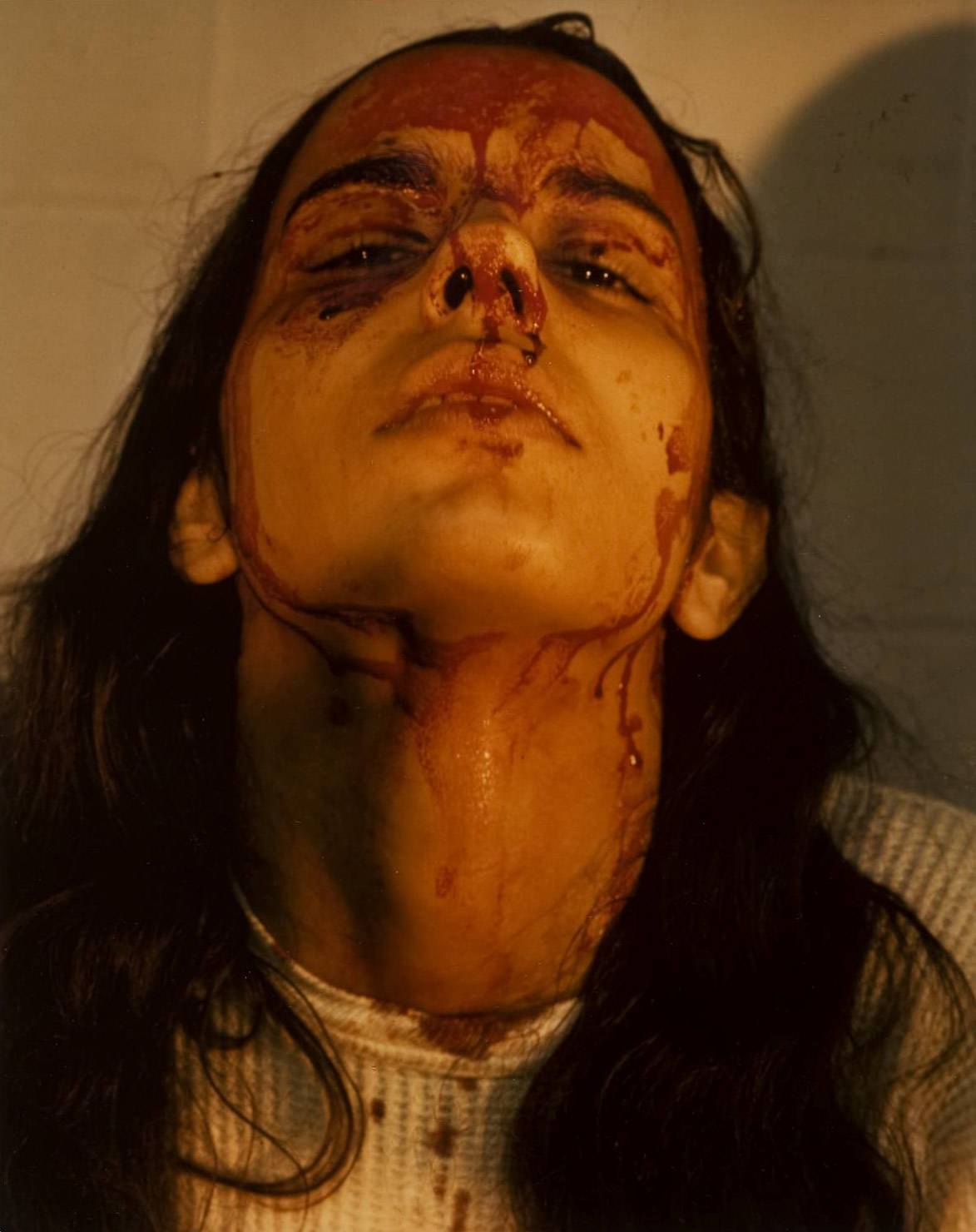
Rape Scene (1973) was part of series of works devised in response to the rape and murder of a fellow student on the Iowa University campus, where Mendieta completed her BA, MA (painting) and an MFA (inter-media). She invited friends and fellow students to her apartment. The viewer entered through a slightly ajar door into a dark apartment into a room where the artist appeared under a single source of light revealing Mendieta stripped from the waist down. The artist stood slouched and bound over a table, nude from the waist down with her body smeared in blood. Around her was an assemblage of broken plates and blood on the floor. Her direct identification with a specific victim meant that she could not be seen as an anonymous object in a theatrical tableau.


Ana Mendieta (Cuban-American, 1948-1985) 'Untitled (Self-Portrait with Blood)' 1973 (detail)


Ana Mendieta (Cuban-American, 1948-1985)
Untitled (Self-Portrait with Blood)
(detail)
1973
Suite of six colour photographs (estate prints 1997)
Each 50.8 x 40.6cm
Private collection, London; Courtesy Alison Jacques Gallery, London


Ana Mendieta (Cuban-American, 1948-1985) 'Untitled (Body Tracks)' 1974


Ana Mendieta (Cuban-American, 1948-1985)
Untitled (Body Tracks)
1974
Colour photograph, lifetime print
Collection of Igor DaCosta
© The Estate of Ana Mendieta Collection, L.L.C.
Courtesy Galerie Lelong, New York and Paris and Alison Jacques Gallery, London


Ana Mendieta (Cuban-American, 1948-1985) 'Untitled (Glass on Body Imprints)' 1972


Ana Mendieta (Cuban-American, 1948-1985)
Untitled (Glass on Body Imprints)
1972
Suite of six colour photographs, estate prints
© The Estate of Ana Mendieta Collection, L.L.C.
Courtesy Galerie Lelong, New York and Paris and Alison Jacques Gallery, London


Ana Mendieta (Cuban-American, 1948-1985) 'Untitled' 1973


Ana Mendieta (Cuban-American, 1948-1985)
Untitled
1973
Lifetime colour photograph
Collection Walker Art Center, Minneapolis, T. B. Walker Acquisition Fund, 2011
© The Estate of Ana Mendieta Collection, L.L.C.
Courtesy Galerie Lelong, New York and Paris and Alison Jacques Gallery, London


Ana Mendieta (Cuban-American, 1948-1985) 'Blood and Feathers #2' 1974


Ana Mendieta (Cuban-American, 1948-1985)
Blood and Feathers #2
1974
Colour photograph, lifetime print
Collection Raquelín Mendieta Family Trust
© The Estate of Ana Mendieta Collection, L.L.C.
Courtesy Galerie Lelong, New York and Paris and Alison Jacques Gallery, London


Ana Mendieta (Cuban-American, 1948-1985) 'Imagen de Yagul' 1973


Ana Mendieta (Cuban-American, 1948-1985)
Imagen de Yagul
1973
Lifetime colour photograph
Glenstone
© The Estate of Ana Mendieta Collection, L.L.C.
Courtesy Galerie Lelong, New York and Paris and Alison Jacques Gallery, London


Ana Mendieta: Traces is the first comprehensive survey of this influential artist’s work to be presented in Great Britain or the German-speaking world. It persuasively demonstrates that her art, while very much rooted in the concerns of her day, maintains a powerful connection to our present moment. Born in Cuba in 1948, Mendieta was forced to immigrate to the United States as a child due to her father’s political situation, and much of her work is obliquely haunted by the exile’s sense of displacement, while also reflecting her position as a double minority in North America’s largely white, male art world of the 1970s and 1980s. From the beginning, motifs of transience, absence, violence, belonging, and an identity in flux animated her multidisciplinary art, which ranged nomadically across practices associated with body art, land art, performance, sculpture, photography and film. At its core lay her recurring use of her own body – its physical and photographic traces – and her interest in marginal outdoor sites and elemental materials.

Spanning her brief, yet remarkably productive, career, this exhibition explores the many distinct facets of her practice. It captures her powerfully visceral evocation of ritual and sacrifice, as well as cycles of life and decay, while also highlighting her pioneering role as a conceptual border-crosser. Including photographs, drawings, sculptures, Super-8 films and a substantial selection of photographic slides, most of which have not been exhibited until now, Ana Mendieta: Traces reveals an artist whose underlying concerns led her to bravely re-work and re-combine genres, to draw on different cultures, both archaic and contemporary, while challenging the limits of the art discourse of her time. Her work continues to profoundly challenge, disturb, influence and inspire.

The Museum der Moderne Salzburg will open an extensive retrospective of the work of Ana Mendieta, one of our era’s most important and influential artists. Mendieta was born to a politically active family in Havana, Cuba in 1948. In the wake of the Cuban revolution, when she was only twelve years old, her parents sent her together with her sister to the United States. In 1985, at just thirty-six years old, she died under tragic circumstance in New York. During her short yet prolific career, she developed a unique visual language that is mesmerising in its intimacy, and equally challenging. Her pioneering work has been acknowledged by large retrospectives in the United States and Europe, and is represented in the collections of major museums.

According to Sabine Breitwieser, director at the Museum der Moderne Salzburg, who has arranged the exhibition, “a comprehensive exhibition in the German-speaking area, especially in Austria, and the German monograph on Ana Mendieta are long overdue. The artist’s distinctive work, in which she stages her body within the landscape, seems to be ideally exhibited at this site, where nature and the theatrical take on such a major role. Due to the fragility of the work, this could possibly be one of the last extensive Mendieta exhibitions.”

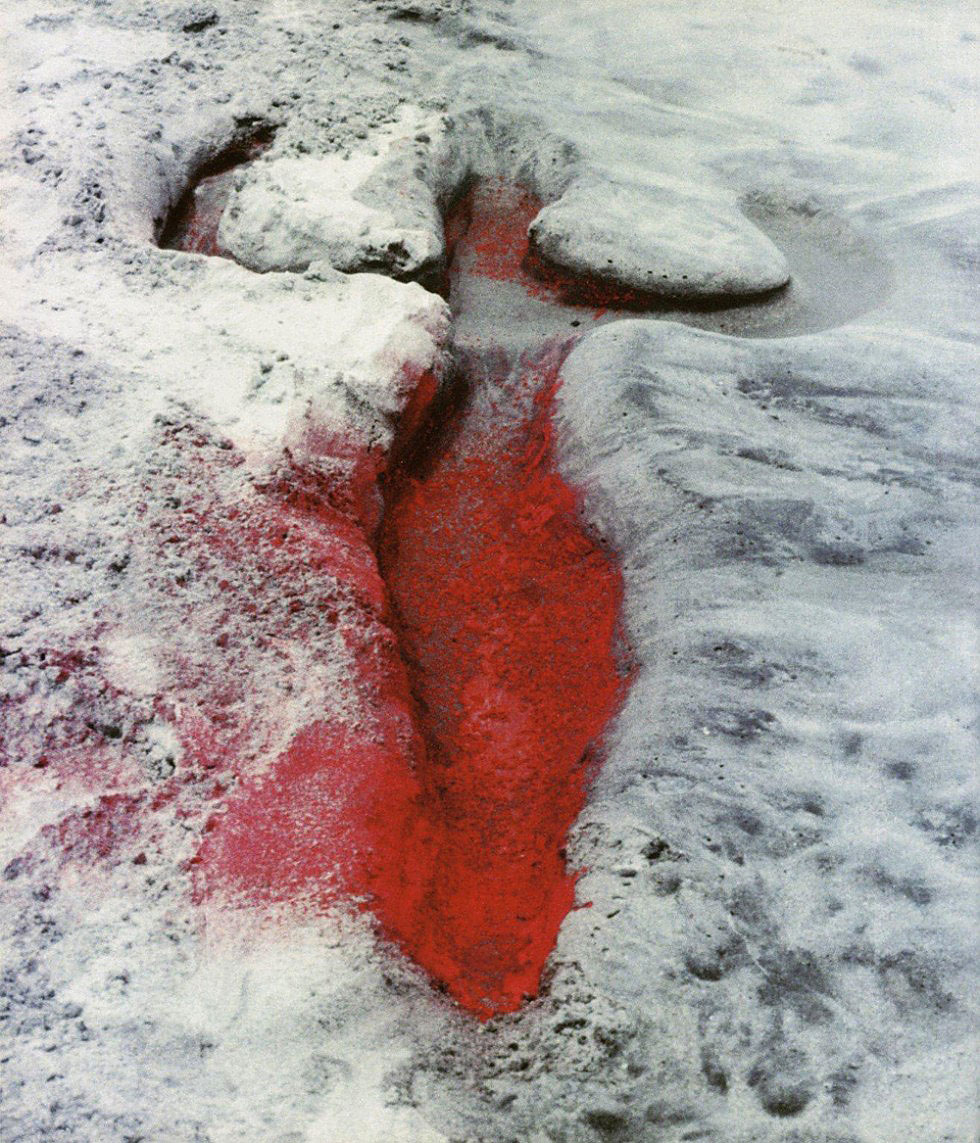
Among the central themes in Mendieta’s artistic work are exile and cultural displacement. In her search for identity and finding her place in the world, she attempted to create a dialogue between the landscape and the female body. Her work reveals numerous points of contingency with the emerging art movements of the 1960s and 1970s – Conceptual art, land art, and performance art. Nonetheless, it refuses any kind of categorisation and instead addresses missing links or gaps between different media and art forms. “Through my art I want to express the immediacy of life and the eternity of nature,” wrote Mendieta in 1981. Using her own body and elementary materials, such as blood, fire, earth, and water, she created transitory pieces that combine rituals with metaphors for life, death, rebirth, and spiritual transformation. Her disembodied “earth body” sculptures were private, meditative ceremonies in nature documented in the form of slides and films. From them, Mendieta developed the so-called Siluetas (silhouettes), which form the core of her work. In the 1980s, Mendieta’s body disappeared from her artworks and she started to generate indoor works for galleries. Her engagement with nature continued in her sculptures and drawings, which she created as lasting works.

The exhibition presents roughly 150 works, which are organised throughout twelve spaces; two of these spaces are reconstructions of the original exhibitions by the artist. The works shown are in a multitude of media ranging from photography, film, and sculpture through to drawing. A further section will present the artist’s archive. Slides and photographs, notebooks and postcards offer insight into Mendieta’s working methods. The concern of Stephanie Rosenthal, chief curator of the Hayward Gallery London, is “to show Ana Mendieta’s outstanding work in all of its facets, and to place her artistic process at the center.”

While the artistic media that Mendieta utilises in her works could not be any more diverse, the pictures that she produces are characterised by an unmistakable, overwhelming and mystical poetry. This exhibition makes clear that almost thirty years after the artist’s premature death, her work has lost none of its singularity and uniqueness.

Text from the Museum der Moderne Salzburg website


Ana Mendieta (Cuban-American, 1948-1985) 'Untitled (Silueta Series)' 1978


Ana Mendieta (Cuban-American, 1948-1985)
Untitled (Silueta Series)
1978
Gelatin silver print
20.3 x 25.4cm
Solomon R. Guggenheim Museum


Ana Mendieta (Cuban-American, 1948-1985) 'Alma, Silueta en Fuego' (Soul, Silhouette on Fire) 1975 (still)


Ana Mendieta (Cuban-American, 1948-1985)
Alma, Silueta en Fuego (
Soul, Silhouette on Fire) (still)
1975
Super-8 colour, silent film transferred to DVD
3:07 minutes
The Estate of Ana Mendieta Collection; Courtesy Galerie Lelong, New York and Paris, and Alison Jacques Gallery, London


Ana Mendieta (Cuban-American, 1948-1985) 'Anima, Silueta de Cohetes (Firework Piece)' 1976 (still)


Ana Mendieta (Cuban-American, 1948-1985)
Anima, Silueta de Cohetes (Firework Piece)
(still)
1976
(Soul, Silhouette of Fireworks)
Super-8 colour, silent film transferred to DVD
2:22 minutes
The Estate of Ana Mendieta Collection; courtesy Galerie Lelong, New York and Paris


Ana Mendieta (Cuban-American, 1948-1985) 'Untitled (Cuilapán Niche)' 1973


Ana Mendieta (Cuban-American, 1948-1985)
Untitled (Cuilapán Niche)
1973
Black and white photograph (lifetime print)
25.4 x 20.4cm
Private collection, London; Courtesy Gallery Lelong, New York and Paris, and Alison Jacques Gallery London


Ana Mendieta died at just 36 years old, but the imprint of her life digs deeper than most. Mendieta’s work occupies the indeterminate space between land, body and performance art, refusing to be confined to any one genre while working to expand the horizons of them all. With the immediacy of a fresh wound and the weightlessness of a half-remembered song, Mendieta’s artwork remains as haunting and relevant today as ever.

Her haunting imagery explores the relationship between earth and spirit while tackling the eternally plaguing questions of love, death and rebirth. Like an ancient cave drawing, Mendieta’s art gets as close as possible to her subject matter allowing no excess, using primal and visceral means to navigate her themes. Decades after her death, the Museum der Moderne Salzburg will show a retrospective of the late feminist artist’s work, simply titled “Ana Mendieta: Traces.”

Mendieta, who was born in Havana, Cuba in 1948, moved to the U.S. at 12 years old to escape Castro’s regime. There she hopped between refugee camps and foster homes, planting inside her an obsession with ideas of loss, belonging and the impermanence of place. As an artist in the 1970s, Mendieta embarked upon her iconic series “Silhouettes,” in which she merged body and earthly material, making nature both canvas and medium. In her initial “Silhouette,” Mendieta lay shrouded in an ancient Zapotec grave, letting natural forms eat up her diminutive form.

Her “earth-body” sculptures, as they came to be known, feature blood, feathers, flowers and dirt smothered and stuck on Mendieta’s flesh in various combinations. In “Imagen de Yagul,” speckled feverishly in tiny white flowers, she appears as ethereal and disembodied as Ophelia, while in “Untitled Blood and Feathers” Mendieta looks simultaneously the helpless victim and the guilty culprit. “She always had a direction – that feeling that everything is connected,” Ana’s sister Raquelin said of her work.

An uncertain mythology runs throughout Mendieta’s oeuvre, a feeling at once primal, pagan and feminine. Admirers have cited the Afro-Cuban religion of Santeria as an influence, as well as the ancient rituals of Mexico, where Mendieta made much of her work. Yet many of Mendieta’s pieces removed themselves from the spiritual realm to address present day events, for example “Rape Scene,” a 1973 performance based off the rape and murder of a close friend. For the piece Mendieta remained tied to a table for two hours, motionless, her naked body smeared with cow’s blood. In another work, Mendieta smushes her face and body against glass panes, like a child eager to peek into an off-limits locale, or a bug that’s crashed into a windshield. Against the glass, her scrambled facial features almost resemble a Cubist artwork.

Mendieta died tragically young in 1985, falling from her New York City apartment window onto a delicatessen below. She was living with her husband of eight months, minimalist sculptor Carl Andre at the time. Andre was convicted of murder following the horrific incident and later acquitted. Though the art world remains captivated by the mysterious nature of Mendieta’s passing, her sister emphasised the importance of removing Ana’s work from her life story. “I don’t want it to get in the way of the work,” she said. “Her death has really nothing to do with her work. Her work was about life and power and energy and not about death.”

Fellow feminist performance artist Carolee Schneeman disagrees, however, telling The New York Times in 2004: “I see her death as part of some larger denial of the feminine. Like a huge metaphor saying, we don’t want this depth of feminine eroticism, nature, absorption, integration to happen. It’s too organic. It’s too sacral. In a way, her death also has a symbolic trajectory.”

Since many of Mendieta’s artworks were bodily performances, the ephemera that remain are but traces of her original endeavours. For an artist whose career was built on imprints, ghosts and impressions, this seems aptly fitting. Visceral yet distant, bodily yet spiritual, Mendieta’s images speak a language very distant from the insular artistic themes that so often populate gallery and museum walls. Mendieta’s works present the female body turned out, at once vulnerable and all-powerful, frail and supernatural. As her retrospective makes obvious, her artistic traces are still oozing lifeblood.

Priscilla Frank. “The Haunting Traces Of Ana Mendieta Go On View (NSFW),” on the Huffington Post website February 4, 2014 [Online] Cited 30/06/2014


Ana Mendieta (Cuban-American, 1948-1985) 'Untitled' 1976 "Silueta Series, Mexico"


Ana Mendieta (Cuban-American, 1948-1985)
Untitled
1976
“Silueta Series, Mexico”
Colour photograph (lifetime print)
39.8 x 31 x 3.2cm (framed)
Tate: Presented by the American Patrons of Tate, courtesy of the Latin American Acquisitions Committee 2010


Mendieta formed a silueta on the beach at La Ventosa, Mexico, filling it with red tempera that was ultimately washed away by the ocean waves. The artist documented the obliteration of the figure by the tide in a sequence of 35 mm slides.


Ana Mendieta (Cuban-American, 1948-1985) 'Tree of Life' 1976


Ana Mendieta (Cuban-American, 1948-1985)
Tree of Life
1976
Colour photograph, lifetime print
Collection Raquelín Mendieta Family Trust
© The Estate of Ana Mendieta Collection, L.L.C.
Courtesy Galerie Lelong, New York and Paris and Alison Jacques Gallery, London


Ana Mendieta (Cuban-American, 1948-1985) 'Untitled' 1978 "Silueta Series, Iowa"


Ana Mendieta (Cuban-American, 1948-1985)
Untitled
1978
“Silueta Series, Iowa”
Colour photograph (lifetime print)
25.4 x 20.3cm
The Estate of Ana Mendieta Collection; courtesy Galerie Lelong, New York and Paris


Ana Mendieta (Cuban-American, 1948-1985) 'Itiba Cahubaba (Esculturas Rupestres)' [Old Mother Blood (Rupestrian Sculptures)] 1982


Ana Mendieta (Cuban-American, 1948-1985)
Itiba Cahubaba (Esculturas Rupestres) [Old Mother Blood (Rupestrian Sculptures)]
1982
Black and white photograph, box mounted, exhibition copy
Collection Ignacio C. Mendieta
© The Estate of Ana Mendieta Collection, L.L.C.
Courtesy Galerie Lelong, New York and Paris and Alison Jacques Gallery, London


Ana Mendieta (Cuban-American, 1948-1985) 'Untitled' 1982


Ana Mendieta (Cuban-American, 1948-1985)
Untitled
1982
Graphite on leaf of a copey tree (Clusia major)
E. Righi Collection
© The Estate of Ana Mendieta Collection, L.L.C.
Courtesy Galerie Lelong, New York and Paris and Alison Jacques Gallery, London


Ana Mendieta with 'Untitled' wood sculpture, 1984-1985


Ana Mendieta with Untitled wood sculpture, 1984-1985
© The Estate of Ana Mendieta Collection, L.L.C.
Courtesy Galerie Lelong, New York and Paris and Alison Jacques Gallery, London


Ana Mendieta (Cuban-American, 1948-1985) 'El Laberinto de Venus' (Labyrinth of Venus) 1985


Ana Mendieta (Cuban-American, 1948-1985)
El Laberinto de Venus (Labyrinth of Venus)
1985
Acrylic on paper
Collection Raquelín Mendieta Family Trust
© The Estate of Ana Mendieta Collection, L.L.C.
Courtesy Galerie Lelong, New York and Paris and Alison Jacques Gallery, London


Museum der Moderne Salzburg
Mönchsberg 32
5020 Salzburg
Phone: +43 662 842220

Opening hours:
Tuesday – Sunday: 10.00am – 6.00pm
Wednesday: 10.00am – 8.00pm
Monday: closed

Museum der Moderne website

LIKE ART BLART ON FACEBOOK

Back to top

Exhibition: ‘John Divola: As Far As I Could Get’ at the Los Angeles County Museum of Art (LACMA)

Exhibition dates: 6th October 2013 – 6th July 2014


John Divola (American, b. 1949) 'Cone, 87CN09' 1987


John Divola (American, b. 1949)
Cone, 87CN09
1987
Black and White Polapan Print (Polaroid)
20 x 24 inches
© John Divola


FINALLY… two postings on consecutive days by conceptual artists who use photography to document their staging, performance, sculpture, body, earth-body, action art, found art, land art – WORK THAT I REALLY LIKE AND CAN REALLY CARE ABOUT.

I care about both artists work not so much because of the quality of the photography but because of their passion, insight, ideas and general human nous, their need to understand humans and the worlds we inhabit: that INTELLIGENCE necessary for understanding what is true or real, using their intuition to root out, to dig down into the human psyche.

In this posting Divola eloquently investigates the mysterious process of creation through imagination (only for the original “model” then to be destroyed); the notion of photographic authenticity and an interrogation of the human impulse to master the natural world; photography at its most deceptively naturalistic revealing hidden, dead animals; and the landscape altered by human presence and staged to serve as a theatre for creative activity through the “captured” act of running away.

Dr Marcus Bunyan


Many thankx to the Los Angeles County Museum of Art (LACMA) for allowing me to publish the photographs in the posting. Please click on the photographs for a larger version of the image.


Installation view of 'John Divola: As Far As I Could Get' at the Los Angeles County Museum of Art (LACMA)

Installation view of 'John Divola: As Far As I Could Get' at the Los Angeles County Museum of Art (LACMA)

Installation view of 'John Divola: As Far As I Could Get' at the Los Angeles County Museum of Art (LACMA)


Installation views of John Divola: As Far As I Could Get at the Los Angeles County Museum of Art (LACMA)
© John Divola
Photo
© 2013 Museum Associates/LACMA


John Divola (American, b. 1949) 'Man in Vortex, 87CA2' 1987


John Divola (American, b. 1949)
Man in Vortex, 87CA2
1987
Black and White Polapan Print (Polaroid)
20 x 24 inches
© John Divola


In Divola’s words, the Polaroids feature “The photograph as an object has an relationship to that which it represents, something like the relationship the snake skin has to the snake that sheds it. The relationship of something dead to something living.” The Polapan prints especially lend themselves to this associate with skin. Their plasticity and their alchemical marks bear witness to a mysterious process of creation; their subject matter conjured up, and then discarded. Divola’s “studio constructions,” as he called them, were temporary structures made solely for the purpose of photographic depiction, including funnels, human and animal figures, and expressively painted backdrops. Divola’s photographs are themselves echo chambers: they replicate and reverberate light from objects that have long since vanished.

Divola’s process has important photo-conceptual precedents: Richard Long’s photographic records of lines made by walking, Jan Dibbets’ play with optical illusion through the camera’s lens, or Robert Smithson’s Yucatan Mirror Displacements. Divola’s work, though, is equally in conversation with the work of Jasper Johns. Johns, known for his paintings of numbers, flags, maps, and targets, focused on flat subjects as a means to conjoining the surface of subject matter with a painting’s flat picture plane. Divola has transmuted the achievements and medium-specificity of high modern painting into images that explore photography’s mimetic qualities and its sheer surface. These are images are about a recognisable reality we cannot access, dim echoes of a familiar world, yet one that has vanished.

“JOHN DIVOLA – Echo Chamber” on the Gallery Luisotti website [Online] Cited 01/07/2014. No longer available online


John Divola (American, b. 1949) 'Rock and Water #1, 88RW1' 1988


John Divola (American, b. 1949)
Rock and Water #1, 88RW1
1988
Black and White Polapan Print (Polaroid)
20 x 24 inches
© John Divola


John Divola (American, b. 1949) 'Cells, 87CA1' 1987-1989


John Divola (American, b. 1949)
Cells, 87CA1
1987-1989
Internal Dye-diffusion print
20 x 24 inches
© John Divola


John Divola (American, b. 1949) 'Man on Hill, 89MHA1' 1987-1989


John Divola (American, b. 1949)
Man on Hill, 89MHA1
1987-1989
Internal Dye-diffusion Print
20 x 24 inches
© John Divola


John Divola (American, b. 1949) 'Moon, 88MOA1' 1988


John Divola (American, b. 1949)
Moon, 88MOA1
1988
Internal Dye-diffusion print
20 x 24 inches
Courtesy of the artist
© John Divola


John Divola (American, b. 1949) 'Rabbit, 87RBA1' 1987


John Divola (American, b. 1949)
Rabbit, 87RBA1
1987
Internal Dye-diffusion print
20 x 24 inches
Courtesy of the artist
© John Divola


John Divola (American, b. 1949) 'Artificial Nature' (detail, 1 of 36) 2002


John Divola (American, b. 1949)
Artificial Nature (detail, 1 of 36)
2002
Gelatin Silver Print
8 x 10 in.
Los Angeles County Museum of Art, purchased with funds provided by the Ralph M. Parsons Fund and the Photographic Arts Council, 2013
© John Divola


Across the gallery is a series of found photographs, “Artificial Nature” (2002), made up of continuity stills (the photographs taken on film sets to make ensure uniformity from scene to scene) from mid-century films. The photographs show fabricated landscapes created in studio backlots. The images zero in on the notion of photographic truth – the idea that when you look at a photograph, what you’re seeing is an accurate representation of the world – by presenting a false natural landscape. Without outside knowledge, upon first glance, the photographs look like ordinary landscapes.

Maxwell Williams. “John Divola’s SoCal Moment,” on the Art in America website [Online] Cited 01/07/2014. No longer available online


“Artificial Nature” (2002) stands out, and as with many of Divola’s series, the bluntness of the title belies the delicacy and actual locus of interest. Composed of thirty-six “continuity stills”, these black and white prints have been repurposed from movie studio archives, framed and hung in a tight grid. Ranging in provenance from the 1930s to the 1960s, each picture documents a movie set dressed as a lush, natural landscape. A clapperboard sign planted in the foreground might identify the scene as “wooded hillside” or “the beach.” At once romantic and businesslike, the series opens a delicious gap between intention and effect. To view these pictures only through the lens of nature vs. artifice would be reductive and superficial at best. Treat them instead as a peek into the cabinetry of early pop mechanics, or evidence of a peculiar temporality where worlds should be fixed with a sign because they so routinely congeal and vanish.

Kristin Posehn. “John Divola: As Far As I Could Get,” on The Miami Rail website [Online] Cited 01/07/2014.


John Divola (American, b. 1949) 'Artificial Nature' (detail, 1 of 36) 2002

John Divola (American, b. 1949) 'Artificial Nature' (detail, 1 of 36) 2002

John Divola (American, b. 1949) 'Artificial Nature' (detail, 1 of 36) 2002

John Divola (American, b. 1949) 'Artificial Nature' (detail, 1 of 36) 2002


John Divola (American, b. 1949)
Artificial Nature (detail, 4 of 36)
2002
Gelatin Silver Print
8 x 10 in.
Los Angeles County Museum of Art, purchased with funds provided by the Ralph M. Parsons Fund and the Photographic Arts Council, 2013
© John Divola


With a career compromising four decades, John Divola is as distinctive for his commitment to the photographic community as for his thought-provoking work, Divola’s influence within the field of photography is widely recognised by curators, critics, scholars and photographers throughout the country; yet, his work has remained largely uncelebrated. Many of his former students have achieved illustrious careers and far more recognition, even as Divola continues to mentor and inspire both undergraduate and graduate students in contemporary practice.

As Far As I Could Get is the first over-arching presentation of Divola’s work and is a collaborative project led by the Santa Barbara Museum of Art (SBMA), shown simultaneously at SBMA, the Los Angeles County Museum of Art (LACMA), and the Pomona College Museum of Art (PCMA) in the fall of 2013. Though Divola’s photographic series are diverse in subject matter, this approach as one exhibition among three Southern California venues emphasises the consistent conceptual and performative threads that run through Divola’s entire body of work.

Divola was born in Los Angeles in 1949. After graduating with a BA from California State University, Northridge, he entered the MFA program at the University of California Los Angeles. There, under the tutelage of Robert Heineken, the artist began to develop his own unique photographic practice, one that merges photography, painting, and conceptual art. In addition to his own studio practice, he teaches contemporary art in the underserved California inland empire and writes on current photographic practice for a national audience.

John Divola’s photos of photographs range widely but the intellectual rigour from which they spring is unvarying. Whether testing the visual limits of photography by vandalising abandoned houses, interrogating the iconography of the divine through paint, flour, and film, or emphasising the distance between image and reality through the blurred figure of a running dog, Divola’s work is simultaneously fun and philosophical, visually appealing as well as intellectually stimulating.

LACMA On view: Four series of John Divola’s work in the Ahmanson Building, 2nd Floor

The series 20 x 24 Polaroids is Divola’s earliest work exhibited at LACMA, shot between 1987 and 1989. Hastily fabricated sculptures created out of impermanent materials attempt, on one level, to approximate actual physical objects in the world – branches, a rabbit, the moon, etc. At the same time, the roughly-hewn surfaces and ticky-tacky backdrops insist on the artificiality of what is depicted. These works express Divola’s ambivalence to the idea of photography as a descriptive medium with a one-to-one relationship to the real. Photography, in this case, is not employed in the service of documentary truth, but instead is held up as a crucial interlocutor in a creative exercise.

Artificial Nature (2002) offers a clear example of Divola’s interrogation of the human impulse to master the natural world. The work is a collection of 36 continuity stills from films made between the 1930s and the 1960s. These photographs, taken on film sets to establish consistency across multiple cuts (to ensure that the placement of objects remains constant from take to take), document fabricated landscapes contained within the artificial space of the film studio. Representing the diversity of natural topographies add weather patterns, the images also include accessories such as signage and clapperboards, highlighting the distance between ourselves and the natural world – a distance that is only accentuated by cinematic representation.

Seven Songbirds and a Rabbit (1995) is a series of details from the Keystone Mast collection of stereographic negatives housed at the California Museum of Photography, University of California Riverside. Stereoscopy, a three-dimensional imaging technology popular from the mid 19th to the early 20th century, exemplifies photography at its most deceptively naturalistic. When Divola began to examine the original glass-plate negatives in the Keystone collection, he found a wealth of detail, such as the birds and rabbit nestled amidst the foliage that gave the series its title.

The series As Far As I Could Get (1996-2010), five works of which are included in the LACMA exhibition, has Divola once again engaging with the natural environment, but this time in a more performative vein. Divola positioned his camera on a tripod, set the timer for ten seconds, and then ran straight into the established frame. At one level, this was a completely dispassionate endeavour. On another level, because the resulting pictures depict a man in a landscape, not in a controlled experimental setting, the viewer cannot suppress a frisson of physical and emotional tension. The works engage the viewer with the natural landscape – a landscape altered by human presence and staged to serve as a theatre for creative activity.

Press release from the LACMA website


John Divola (American, b. 1949) 'Seven Songbirds and a Rabbit' 1995 (detail)

John Divola (American, b. 1949) 'Seven Songbirds and a Rabbit' 1995 (detail)

John Divola (American, b. 1949) 'Seven Songbirds and a Rabbit' 1995 (detail)

John Divola (American, b. 1949) 'Seven Songbirds and a Rabbit' 1995 (detail)

John Divola (American, b. 1949) 'Seven Songbirds and a Rabbit' 1995 (detail)

John Divola (American, b. 1949) 'Seven Songbirds and a Rabbit' 1995 (detail)


John Divola (American, b. 1949)
Seven Songbirds and a Rabbit (details)
1995
Gelatin Silver Print on Linen
20 x 20 inches
© John Divola


John Divola (American, b. 1949) 'As Far As I Could Get (R02F09), 10 Seconds' 1996-1997


John Divola (American, b. 1949)
As Far As I Could Get (R02F09), 10 Seconds
1996-1997
Pigment Print
60 x 40 inches
© John Divola


John Divola (American, b. 1949) 'As Far As I Could Get (R02F06), 10 Seconds' 1996-1997


John Divola (American, b. 1949)
As Far As I Could Get (R02F06), 10 Seconds
1996-1997
Pigment Print
60 x 40 inches
© John Divola


“Divola is a photographer who works in distinct conceptual series that span and stretch the reaches of photography as art. For instance, at LACMA, the works include a series called “As Far As I Could Get” (1996-2010), where Divola sets a 10-second timer and sprints as far from the camera as he can. It’s performative, simple, amusing and alienating – a tiny body in full physical exertion, far off in the landscape.”

Maxwell Williams. “John Divola’s SoCal Moment,” on the Art in America website [Online] Cited 01/07/2014. No longer available online.


John Divola (American, b. 1949) 'As Far As I Could Get (R02F33), 10 Seconds' 1996-1997


John Divola (American, b. 1949)
As Far As I Could Get (R02F33), 10 Seconds
1996-1997
Pigment Print
60 x 40 inches
© John Divola


John Divola (American, b. 1949) 'As Far As I Could Get, 10 Seconds' 1996-1997


John Divola (American, b. 1949)
As Far As I Could Get, 10 Seconds
1996-1997
Pigment Print
60 x 40 inches
© John Divola


John Divola (American, b. 1949) 'As Far As I Could Get, 10 Seconds' 1996-1997


John Divola (American, b. 1949)
As Far As I Could Get (R02F33), 10 Seconds
1996-1997
Pigment Print
60 x 40 inches
© John Divola


John Divola (American, b. 1949) 'As Far As I Could Get, 10 Seconds' 1996-1997


John Divola (American, b. 1949)
As Far As I Could Get (R02F33), 10 Seconds
1996-1997
Pigment Print
60 x 40 inches
© John Divola


Los Angeles County Museum of Art (LACMA)
5905 Wilshire Boulevard (at Fairfax Avenue)
Los Angeles, CA, 90036
Phone: 323 857 6000

Opening Hours:
Monday, Tuesday, Thursday: 11am – 6pm
Friday: 11am – 8pm
Saturday, Sunday: 10am – 7pm
Closed Wednesday
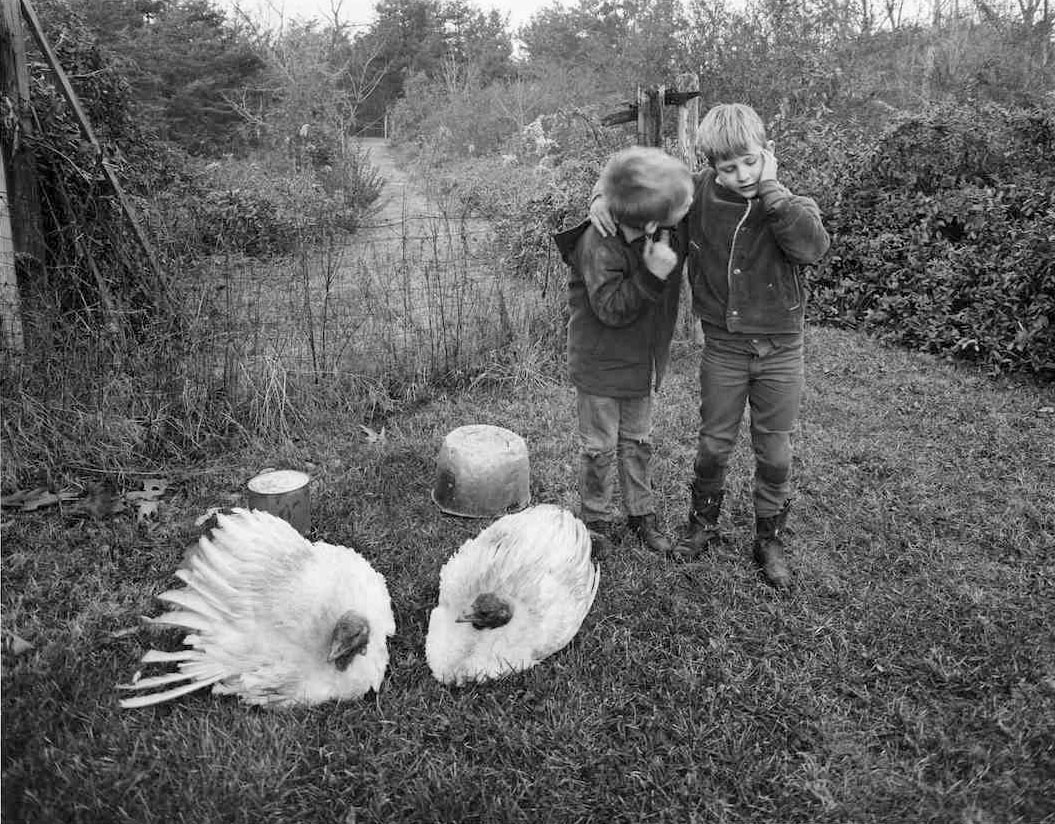
LACMA website

LIKE ART BLART ON FACEBOOK

Back to top

Photographs and text: George Platt Lynes and the male nude

June 2014

*PLEASE NOTE THIS POSTING CONTAINS ART PHOTOGRAPHS OF MALE NUDITY – IF YOU DO NOT LIKE PLEASE DO NOT LOOK, FAIR WARNING HAS BEEN GIVEN*


Man Ray (American, 1890-1976) 'George Platt Lynes' 1927


Man Ray (American, 1890-1976)
George Platt Lynes
1927


The greatest photographer of the male nude the world has ever seen – George Platt Lynes (American, April 15, 1907 – December 6, 1955).

Lynes worked as a fashion photographer in his own studio in New York (which he opened in 1932) before moving to Hollywood in 1946 where he took the post of Chief Photographer for the Vogue studios. Although an artistic success the sojourn was a financial failure and he returned to New York in 1948. Although continuing his commercial work he became disinterested in it, concentrating his energies on photographing the male nude. He began a friendship with Dr Alfred Kinsey of the Kinsey Institute in Bloomington, Indiana and helped with his sex research. Between 1949 and 1955, Lynes sold and donated much of his erotic nudes to Kinsey.1 By May 1955 he had been diagnosed terminally ill with lung cancer. He closed his studio. He destroyed much of his print and negative archives particularly his male nudes. However, it is now known that he had transferred many of these works to the Kinsey Institute. After a final trip to Europe, Lynes returned to New York City where he died.2

Since the early 1930s Lynes had photographed male nudes and distributed the images privately to his circle of friends. He was reluctant to show them in public for fear of the harm that they could do to his reputation and business with the fashion magazines, for he was a gay man “passing” in a homophobic society. Generally his earlier male nude photographs concentrate on the idealised youthful body or ephebe. As Lynes became more despondent with his career as a fashion photographer his private photographs of male nudes tend to take on a darker and sharper edge. After a period of residence in Hollywood he returned to New York nearly penniless. His style of photographing the male nude underwent a revision. While the photographs of his European colleagues still relied on the sun drenched bodies of young adolescent males evoking memories of classical beauty and the mythology of Ancient Greece the later nudes of Platt Lynes feature a mixture of youthful ephebes and heavier set bodies which appear to be more sexually knowing. The compositional style of dramatically lit photographs of muscular torsos of older, rougher men shot in close up were possibly influenced by a number of things – his time in Hollywood with its images of handsome, swash-buckling movie stars with broad chests and magnificent physiques; the images of bodybuilders by physique photographers that George Platt Lynes visited; the fact that his lover George Tichenor had been killed during WWII; and the knowledge that he was penniless and had cancer. There is, I believe, a certain sadness but much inner strength in his later photographs of the male nude that harnesses the inherent sexual power embedded within their subject matter.

This monumentality of body and form was matched by a new openness in the representation of sexuality. There are intimate photographs of men in what seem to be post-coital revere, in unmade beds, genitalia showing or face down showing their butts off (see Untitled [Charles ‘Tex’ Smutney, Charles ‘Buddy’ Stanley, and Bradbury Ball] c. 1942, below). Some of the faces in these later photographs remain hidden, as though disclosure of identity would be detrimental for fear of persecution or prosecution. However, this photograph is quite restrained compared to the most striking series of GPL’s photographs which involves an exploration the male anal area (a photograph from the 1951 series can be found in the book titled George Platt Lynes: Photographs from The Kinsey Institute). This explicit series features other photographs of the same model – in particular one that depicts the male with his buttocks in the air pulling his arse cheeks apart. After Lynes found out he had cancer he started to send his photographs to the German homoerotic magazine Der Kries under the pseudonym Roberto Rolf, and in the last years of his life he experimented with paper negatives (see below), which made his images of the male body even more grainy and mysterious.

Further, when undertaking research into GPL’s photographs at The Kinsey Institute as part of my PhD I noted that most of the photographs had annotations in code on the back of them giving details of age, sexual proclivities of models and what they are prepared to do and where they were found. This information gives a vital social context to GPL’s nude photographs of men and positions them within the moral and ethical framework of the era in which they were made. Most of the photographs list the names of the models used but we are unable to print them due to an agreement between GPL and Dr. Kinsey as to their secrecy.

I believe that Lynes understood, intimately, the different physical body types that gay men find desirable and used them in his photographs. He visited Lon of New York (a photographer of beefcake men) in his studio and purchased photographs of bodybuilders for himself, as did the German photographer George Hoyningen-Huene. It is likely that these images of bodybuilders influenced his later compositional style of images of men; it is also possible that he detected the emergence of this iconic male body type as a potent sexual symbol, one that that was becoming more visible and sexually available to gay men.

Dr Marcus Bunyan


1/ Brown, Elspeth. “Queer Desire and Cold War Homophobia,” on the In The Darkroom blog May 2013 [Online] Cited 24/06/2014. No longer available online

2/ “He clearly was concerned that this work, which he considered his greatest achievement as a photographer, should not be dispersed or destroyed…We have to remember the time period we’re talking about – America during the post-war Red Scare… ”

Quotation from George Platt Lynes, The Male Nudes. Rizzoli International Pub, 2011 cited on “George Platt Lynes” on the Wikipedia website [Online] Cited 24/06/2014.


Many thankx to Associate Professor Elspeth H. Brown for allowing me to publish her text “Queer Desire and Cold War Homophobia”. Please click on the photographs for a larger version of the image.


“The depth and commitment he had in photographing the male nude, from the start of his career to the end, was astonishing. There was absolutely no commercial impulse involved – he couldn’t exhibit it, he couldn’t publish it.”


Allen Ellenzweig


George Platt Lynes (American, April 15, 1907 - December 6, 1955) 'Untitled (male nude with tattoo)' 1950-1955


George Platt Lynes (American, April 15, 1907 – December 6, 1955)
Untitled (male nude with tattoo)
1950-1955
Silver gelatin photograph
24.5 x 19.5cm


George Platt Lynes (American, April 15, 1907 - December 6, 1955) 'Untitled' Nd [c. 1951]


George Platt Lynes (American, April 15, 1907 – December 6, 1955)
Untitled
Nd [c. 1951]
Silver gelatin photograph


George Platt Lynes (American, April 15, 1907 - December 6, 1955) 'Jack Fontan' c. 1950


George Platt Lynes (American, April 15, 1907 – December 6, 1955)
Jack Fontan
c. 1950
Silver gelatin photograph


Samuel M. Steward,. "George Platt Lynes," in 'The Advocate', No. 332, December 10, 1981, p.22

Samuel M. Steward,. "George Platt Lynes," in 'The Advocate', No. 332, December 10, 1981, p.23

Samuel M. Steward,. "George Platt Lynes," in 'The Advocate', No. 332, December 10, 1981, p.24


Samuel M. Steward. “George Platt Lynes,” in The Advocate, No. 332, December 10, 1981, pp. 22-24


George Platt Lynes (American, April 15, 1907 - December 6, 1955) 'Untitled [Charles 'Tex' Smutney, Charles 'Buddy' Stanley, and Bradbury Ball]' c. 1942


George Platt Lynes (American, April 15, 1907 – December 6, 1955)
Untitled [Charles ‘Tex’ Smutney, Charles ‘Buddy’ Stanley, and Bradbury Ball]
c. 1942
Silver gelatin photograph


According to David Leddick the models are Charles ‘Tex’ Smutney, Charles ‘Buddy’ Stanley, and Bradbury Ball. The image comes from a series of 30 photographs of these three boys undressing and lying on a bed together. Leddick, David. Naked Men: Pioneering Male Nudes 1935-1955. New York: Universe Publishing, 1997, p. 21.


George Platt Lynes (American, April 15, 1907 - December 6, 1955) 'Ted Starkowski (standing, arms folded)' c. 1950


George Platt Lynes (American, April 15, 1907 – December 6, 1955)
Ted Starkowski (standing, arms folded)
c. 1950
Silver gelatin photograph from a paper negative


George Platt Lynes (American, April 15, 1907 - December 6, 1955) 'Ted Starkowski (standing, arms behind back)' c. 1950


George Platt Lynes (American, April 15, 1907 – December 6, 1955)
Ted Starkowski (standing, arms behind back)
c. 1950
Silver gelatin photograph from a paper negative
22.9 x 19.1cm


George Platt Lynes (American, April 15, 1907 - December 6, 1955) 'Untitled' 1952


George Platt Lynes (American, April 15, 1907 – December 6, 1955)
Untitled
1952
Silver gelatin photograph


George Platt Lynes (American, April 15, 1907 - December 6, 1955) 'Untitled (male nude study)' Nd


George Platt Lynes (American, April 15, 1907 – December 6, 1955)
Untitled (male nude study)
Nd
Silver gelatin photograph


Queer Desire and Cold War Homophobia

Associate Professor Elspeth H. Brown

This photograph [above] archives queer, illicit desire in Cold War America. It was made by George Platt Lynes, and is part of a set of male nudes that the photographer made in the decades leading to his death, from lung cancer, in 1955. Because exhibiting these photographs was a impossibility during Lynes’s lifetime due to Cold War homophobia, he circulated them privately among his queer kinship networks.

Lynes was part of a closely connected circle of elite gay men who dominated American arts and letters in the interwar and early post-war years. For 16 years, Lynes lived with the writer Glenway Wescott and museum curator Monroe Wheeler, who were a couple for over fifty years; they had a variety of other sexual partners throughout, including Lynes, who shared a bedroom with Wheeler during their years together. All three of them, as well as friends and colleagues Lincoln Kirstein, Paul Cadmus, and other leading figures, participated in sex parties in the 1940s and 1950s, as documented in their personal papers. However, in the context of 1950s-era red scares, which particularly focused on homosexuals, the more open sexual subcultures of the 1930s and 1940s were driven even further underground.

In April of 1950, Glenway Wescott wrote George Platt Lynes that while the erotic explicitness of George’s nudes didn’t personally concern him, he was worried for Monroe Wheeler, since Wheeler held a public position as a curator at the Museum of Modern Art. “I really don’t mind scabrousness, etc., on my account, as you must know,” he wrote. “Only that our poor M [Monroe] must conclude his career with good effect and honor, I am anxious not to involve him in what is now called (in the nation’s capital) ‘guilty by association’ (have you been reading the columns and columns in the newspapers upon this and correlative points?).”

Although McCarthyism is often understood as the effort to purge suspected communists from the State Department and other branches of the federal government, the Red Scare equally targeted homosexuals, who were forced out of public service and into the closet. Wescott may well have been referring to the front page of the New York Times on March 1, 1950, where Secretary of State Dean Acheson testified about the Alger Hiss trial and the loyalty program at the State Department. Although the article purportedly concerned communism, it shows that the red scare mainly affected homosexuals, as Wescott clearly understood. Senator Bridges asked John E. Peurifoy, Deputy Under-Secretary of State in charge of the security program, how many members of the State Department had resigned since the investigations began in 1947. “Ninety-one persons in the shady category,” Mr. Peurifoy replied, “most of these were homosexuals.” This was not necessarily newsworthy in and of itself, so far as the New York Times was concerned in 1950, and the remainder of the article detailed the testimony relating to other aspects of the hearings.

Lynes continued to make and circulate his portraits, despite this climate of homophobia. He was very concerned that the work find an audience, and published it in several issues of the German homosexual journal Der Kreis in the 1950s. He also became an important informant for Alfred Kinsey’s research, as did Glenway Wescott and other members of their circle. Between 1949 and 1955, Lynes sold and donated much of his erotic nudes to Kinsey, where they are now part of the Kinsey Institute collections in Bloomington, Indiana.

© Elspeth H. Brown 2013
Associate Professor of History
University of Toronto

Reproduced with permission of the author.

Elspeth H. Brown website


George Platt Lynes (American, April 15, 1907 - December 6, 1955) 'Untitled' 1951


George Platt Lynes (American, April 15, 1907 – December 6, 1955)
Untitled
1951
Silver gelatin photograph


George Platt Lynes (American, April 15, 1907 - December 6, 1955) 'Untitled (Charles Romans in the artist's apartment)' 1953


George Platt Lynes (American, April 15, 1907 – December 6, 1955)
Untitled (Charles Romans in the artist’s apartment)
1953
Silver gelatin photograph
19.5 x 24.5cm


George Platt Lynes (American, April 15, 1907 - December 6, 1955) 'Don Cerulli' 1952


George Platt Lynes (American, April 15, 1907 – December 6, 1955)
Don Cerulli
1952
Silver gelatin photograph


George Platt Lynes (American, April 15, 1907 - December 6, 1955) 'Male nude study' 1951


George Platt Lynes (American, April 15, 1907 – December 6, 1955)
Male nude study
1951
Silver gelatin photograph


George Platt Lynes (American, April 15, 1907 - December 6, 1955) 'Untitled' 1951


George Platt Lynes (American, April 15, 1907 – December 6, 1955)
Untitled
1951
Silver gelatin photograph
22.9 x 19.1cm


George Platt Lynes (American, April 15, 1907 - December 6, 1955) 'Untitled' 1936


George Platt Lynes (American, April 15, 1907 – December 6, 1955)
Untitled
1936
Silver gelatin photograph


George Platt Lynes (American, April 15, 1907 - December 6, 1955) 'George Tooker' 1945


George Platt Lynes (American, April 15, 1907 – December 6, 1955)
George Tooker
1945
Silver gelatin photograph


George Platt Lynes (American, April 15, 1907 - December 6, 1955) 'Tex Smutney' 1943


George Platt Lynes (American, April 15, 1907 – December 6, 1955)
Tex Smutney
1943
Silver gelatin photograph


Chronology by Jack Woody

1907-1924 Born April 15, 1907, East Orange, New Jersey. Raised in comfortable circumstances and privately educated. Schoolmate Lincoln Kirstein described the young Lynes as “precocious,” crediting him with a subsequent introduction to George Balanchine.

1925 Makes first trip to Europe. Meets lifetime companions Glenway Wescott and Monroe Wheeler. Befriends Gertrude Stein, Pavel Tchelitchew and Jean Cocteau during his stay. Returns to New York City, works at Brentano’s Bookstore for a short time.

1926 Publishes the As Stable Pamphlets in his parents’ house, Englewood, New Jersey. Includes Gertrude Stein’s DESCRIPTIONS OF LITERATURE and Ernest Hemingway’s first published play TODAY IS FRIDAY with cover designs by Pavel Tchelitchew and Jean Codeau. Enters Yale University in Autumn, leaves in December.

1927 Opens Park Place Book Shop in Englewood. The gift of a view camera encourages Lynes to make a career of photography.

1928-1930 During 1928 Lynes exhibits his celebrity portraits at Park Place Book Shop to launch a portrait business in the shop. Continues travelling to Europe, teaching himself by trial-and-error a technical understanding of the medium.

1931 Introduced to Julien Levy. Together they experiment with photographing surrealistic still-lifes. Levy arranges to include Lynes in Surrealism exhibition at Wadsworth Atheneum, Hartford, Connecticut. Visits and photographs Gertrude Stein at Bilignin.

1932 First important exhibition at the Julien Levy Gallery in tandem with Walker Evans. The death of his father forces Lynes to take up photography as a means of economic support.

1933 Opens first New York City studio on East 50th Street. Continued public showings of his work and interest in his celebrity portraits attracts a large clientele of New York socialites and their families.

1934 Begins publishing his fashion and portrait work in such magazines as Town and Country, Harpers’ Bazaar and Vogue magazines.

1935 Invited by Lincoln Kirstein and George Balanchine to document the repertoire and principal dancers in their fledgling American Ballet (now New York City Ballet), a collaboration that will continue until Lynes’ death in 1955.

1936 Surrealistic composition The Sleepwalker included in New York Museum of Modern Art’s exhibition, Fantastic Art, Dada and Surrealism. Lynes undertakes an extensive project to photographically interpret mythological situations.

1937-1940 Continues involvement with mythology series. Successful commercial career now headquartered in a large studio at 604 Madison Avenue. Commercial fashion accounts include Hattie Carnegie, Henri Bendel, Saks Fifth Avenue and Bergdorf Goodman.

1941-1945 Photographs airfield activities for First Air Force’s publicity and documentation. Begins to lose interest in commercial work, a process accelerated by the death of George Tichenor in 1942. Disillusioned with New York and his private life Lynes closes his studio and leaves for Los Angeles to head Vogue Magazine‘s Hollywood studio.

1946-1947 Lynes begins to photograph in his rented Hollywood Hills home, experimenting with effects achieved with minimal amounts of available light. Photographs Christopher Isherwood, Igor Stravinsky, Thomas Mann and Aldous Huxley.

1948-1950 Friends sponsor the financially troubled Lynes’ return to New York where he is uninterested in and unable to repeat his earlier commercial successes. Economics force Lynes to experiment with cheaper photographic tools. He is particularly interested in the paper negative. Meets sex researcher Alfred Kinsey; impressed with Lynes’ work, Kinsey arranges to purchase hundreds of photographs for his Bloomington, Indiana institute.

1951-1954 Publishes his male nudes in homoerotic magazine Der Kries using the pseudonyms Roberto Rolf and Robert Orville. Declares bankruptcy. Lives in a succession of apartments and studios as illness becomes apparent.

1955 In May diagnosed terminally ill with cancer. Last portrait sitting is June 16 with Monroe Wheeler. Closes studio and undergoes radium and drug therapy. Lynes begins to destroy large portions of his negative and print archives. In the Autumn he leaves for Europe, returning to New York in November to be hospitalised. At night Lynes leaves the hospital to attend the theatre and ballet. He dies on December sixth, forty-eight years old.


George Platt Lynes (American, April 15, 1907 - December 6, 1955) 'Mel Fillini' 1950


George Platt Lynes (American, April 15, 1907 – December 6, 1955)
Mel Fillini
1950
Silver gelatin photograph


George Platt Lynes (American, April 15, 1907 - December 6, 1955) 'Robert McVoy' c. 1941


George Platt Lynes (American, April 15, 1907 – December 6, 1955)
Robert McVoy
c. 1941
Silver gelatin photograph


LIKE ART BLART ON FACEBOOK

Back to top

Exhibition: ‘Bill Cunningham: Facades’ at the New York Historical Society, New York

Exhibition dates: 14th March – 15th June 2014


Unknown artist. 'Bill Cunningham Photographing Three Models at New York County Court House' c. 1968-1976


Unknown artist
Bill Cunningham Photographing Three Models at New York County Court House
c. 1968-1976
Gelatin silver photograph
New-York Historical Society, Gift of Bill Cunningham


Now this is more like it!

If you want fabulousness with flair, and a dash of savoir-faire; if you want architecture with fashion, history with panache, you need look no further. Camp, kitsch, OTT but with poise, aplomb, grace and sophistication – here is the artist for the job. Oh, what fun he and his muse Editta Sherman must have had with this project.

But behind it all is a damn good photographer, with a great eye for composition. Look at the hat, the building and the “attitude” of the hands in Guggenheim Museum (c. 1968-1976, below). This is how you make people smile and think (about the city, conservation and creativity), not with some overblown frippery like the photographs of Lagerfeld in the last posting.

It’s a pity the press images were initially so poor. I had to spend hours cleaning up the images they were so badly scratched to present them to you in a viewable state. Be that as it may, these are a joy, I love them…

Dr Marcus Bunyan


Many thankx to the New York Historical Society for allowing me to publish the photographs in the posting. Please click on the photographs for a larger version of the image.


Bill Cunningham (American, 1929-2016) 'Gothic bridge in Central Park (designed 1860)' c. 1968-1976


Bill Cunningham (American, 1929-2016)
Gothic bridge in Central Park (designed 1860)
c. 1968-1976
Gelatin silver photograph
New-York Historical Society, Gift of Bill Cunningham


Bill Cunningham (American, 1929-2016) 'Editta Sherman on the Train to the Brooklyn Botanic Garden' c. 1972


Bill Cunningham (American, 1929-2016)
Editta Sherman on the Train to the Brooklyn Botanic Garden
c. 1972
Gelatin silver photograph
New-York Historical Society, Gift of Bill Cunningham


Bill Cunningham (American, 1929-2016) 'Guggenheim Museum (built 1959)' c. 1968-1976


Bill Cunningham (American, 1929-2016)
Guggenheim Museum (built 1959)
c. 1968-1976
Gelatin silver photograph
New-York Historical Society, Gift of Bill Cunningham


This spring, the New-York Historical Society presents a special exhibition celebrating the creative intersection of fashion and architecture through the lens of a visionary photographer. Bill Cunningham: Facades, on view from March 14 through June 15, 2014, explores the legendary photographer’s project documenting the architectural riches and fashion history of New York City.

Beginning in 1968, Bill Cunningham scoured the city’s thrift stores, auctions and street fairs for vintage clothing and scouted architectural sites on his bicycle. The result was a photographic essay entitled Facades (completed in 1976), which paired models – most particularly his muse, fellow photographer Editta Sherman – posed in period costumes at historic New York settings.

Nearly four decades after Cunningham donated 88 gelatin silver prints from the series to the New-York Historical Society in 1976, approximately 80 original and enlarged images from this whimsical and bold work are being reconsidered in a special exhibition curated by Dr. Valerie Paley, New-York Historical Society Historian and Vice President for Scholarly Programs. The exhibition offers a unique perspective on both the city’s distant past and the particular time in which the images were created, examining Cunningham’s project as part of the larger cultural zeitgeist in late 1960s-70s New York City, an era when historic preservation and urban issues loomed large.

“We are thrilled to feature these important photographs by New York Times photographer Bill Cunningham, who captured an uncertain moment in our city’s history, when New York seemed on the brink of losing its place of privilege as a capital of the world. Cunningham’s vivid sense of New York’s illustrious past and his unfettered optimism about its future make the photographs among the most dramatic and important documentation of the city’s social history,” said Louise Mirrer, President and CEO of the New-York Historical Society. “The exhibition is especially timely, as Mrs. Editta Sherman, Bill Cunningham’s muse for his project and the famed ‘duchess of Carnegie Hall,’ passed away last November 2013 at the age of 101. Mrs. Sherman’s indomitable spirit, humour and creativity are powerfully felt through the photographic images. We are gratified that many of her family members will be with us for our opening exhibition event.”

Over eight years, Bill Cunningham collected more than 500 outfits and photographed more than 1,800 locations for the Facades project, jotting down historical commentary on the versos of each print. The selection of 80 images on view evoke the exuberance of Cunningham and Sherman’s treasure hunt and their pride for the city they called home. Cunningham’s images are contextualised with reproductions of original architectural drawings from New-York Historical’s collection.

During the years that Cunningham worked on Facades, New York City was in a municipal financial crisis that wreaked havoc on daily existence, with crime, drugs, and garbage seemingly taking over the city. However, the 1970s also was an era of immense creativity, when artists and musicians experimented with new forms of expression. While Cunningham’s photographs offer an unsullied version of the tough cityscape during this chaotic time, his vision was part of a larger movement towards preserving the historic heritage of the built environment to improve the quality of urban life.

Most images in Facades feel timeless, such as Gothic Bridge (designed 1860), featuring Editta Sherman strolling through a windswept Central Park, framed by the wrought-iron curves of a classic bridge. However, at least one will offer a peek behind the scenes of the project. Cunningham and Sherman often traveled to locations by public transportation to avoid wrinkling the costumes, and Editta Sherman on the Train to the Brooklyn Botanical Garden (c. 1972) captures the jarring juxtaposition of Sherman sitting primly in a graffiti-covered subway car.

Other exhibition highlights include Sherman dressed in a man’s Revolutionary War-era hat, powdered wig, overcoat and breeches at St. Paul’s Chapel and Churchyard (built c. 1766-1796), the oldest surviving church in Manhattan, where George Washington worshipped. In Federal Hall (built c. 1842), Cunningham paired the Parthenon-like architectural details of the building with a Grecian-style, 1910s pleated Fortuny gown. For Grand Central Terminal (built c. 1903-1913), Cunningham drew on his millinery background to create a voluminous feathered hat that echoes the spirit of the “crown of the Terminal,” the ornate rooftop sculpture with monumental figures of Mercury, Minerva, and Hercules.

Bill Cunningham (1929-2016) was a fashion photographer for the New York Times, known for his candid street photography. Cunningham moved to New York in 1948, initially working in advertising and soon striking out on his own to make hats under the name “William J.” After serving a tour in the U.S. Army, he returned to New York and began writing for the Chicago Tribune. While working at the Tribune and Women’s Wear Daily, he began taking photographs of fashion on the streets of New York. The Times first published a group of his impromptu pictures in December 1978, which soon became a regular series. In 2008 Cunningham was awarded the title chevalier dans l’ordre des Arts et des Lettres by the French Ministry of Culture. He is the subject of the award-winning documentary film Bill Cunningham New York (2010). Bill Cunningham and Editta Sherman were neighbours in the Carnegie Hall Studios, a legendary artists’ residence atop the concert hall, for 60 years.

Press release from the New York Historical Society website


Bill Cunningham (American, 1929-2016) 'St. Paul’s Chapel and Churchyard (built c. 1766-1796)' c. 1968-1976


Bill Cunningham (American, 1929-2016)
St. Paul’s Chapel and Churchyard (built c. 1766-96)
c. 1968-1976
Gelatin silver photograph
New-York Historical Society, Gift of Bill Cunningham


Bill Cunningham (American, 1929-2016) 'Grand Central Terminal (built c. 1903-1913)' c. 1968-1976


Bill Cunningham (American, 1929-2016)
Grand Central Terminal (built c. 1903-1913)
c. 1968-1976
Gelatin silver photograph
New-York Historical Society, Gift of Bill Cunningham


Bill Cunningham (American, 1929-2016) 'Federal Hall (built c. 1842, costume c. 1910)' c. 1968-1976


Bill Cunningham (American, 1929-2016)
Federal Hall (built c. 1842, costume c. 1910)
c. 1968-1976
Gelatin silver photograph
New-York Historical Society, Gift of Bill Cunningham


Bill Cunningham (American, 1929-2016) 'Bowery Savings Bank (built c. 1920)' c. 1968-1976


Bill Cunningham (American, 1929-2016)
Bowery Savings Bank (built c. 1920)
c. 1968-1976
Gelatin silver photograph
New-York Historical Society, Gift of Bill Cunningham


Bill Cunningham (American, 1929-2016) 'Club 21' (founded c. 1920s; costume c. 1940) c. 1968-1976


Bill Cunningham (American, 1929-2016)
Club 21 (founded c. 1920s; costume c. 1940)
c. 1968-1976
Gelatin silver photograph
New-York Historical Society, Gift of Bill Cunningham


Bill Cunningham (American, 1929-2016) 'Associated Press Building at Rockefeller Center (built c. 1939)' c. 1968-1976


Bill Cunningham (American, 1929-2016)
Associated Press Building at Rockefeller Center (built c. 1939)
c. 1968-1976
Gelatin silver photograph
New-York Historical Society, Gift of Bill Cunningham


Bill Cunningham (American, 1929-2016) 'Paris Theater (built 1947)' c. 1968-1976


Bill Cunningham (American, 1929-2016)
Paris Theater (built 1947)
c. 1968-1976
Gelatin silver photograph
New-York Historical Society, Gift of Bill Cunningham


Bill Cunningham (American, 1929-2016) 'General Motors Building' c. 1968-1976


Bill Cunningham (American, 1929-2016)
General Motors Building
c. 1968-1976
Gelatin silver photograph
New-York Historical Society, Gift of Bill Cunningham


The New York Historical Society

170 Central Park West
at Richard Gilder Way (77th Street)
Phone: (212) 873-3400

Opening hours:
Monday CLOSED
Tuesday – Sunday 11am – 5pm
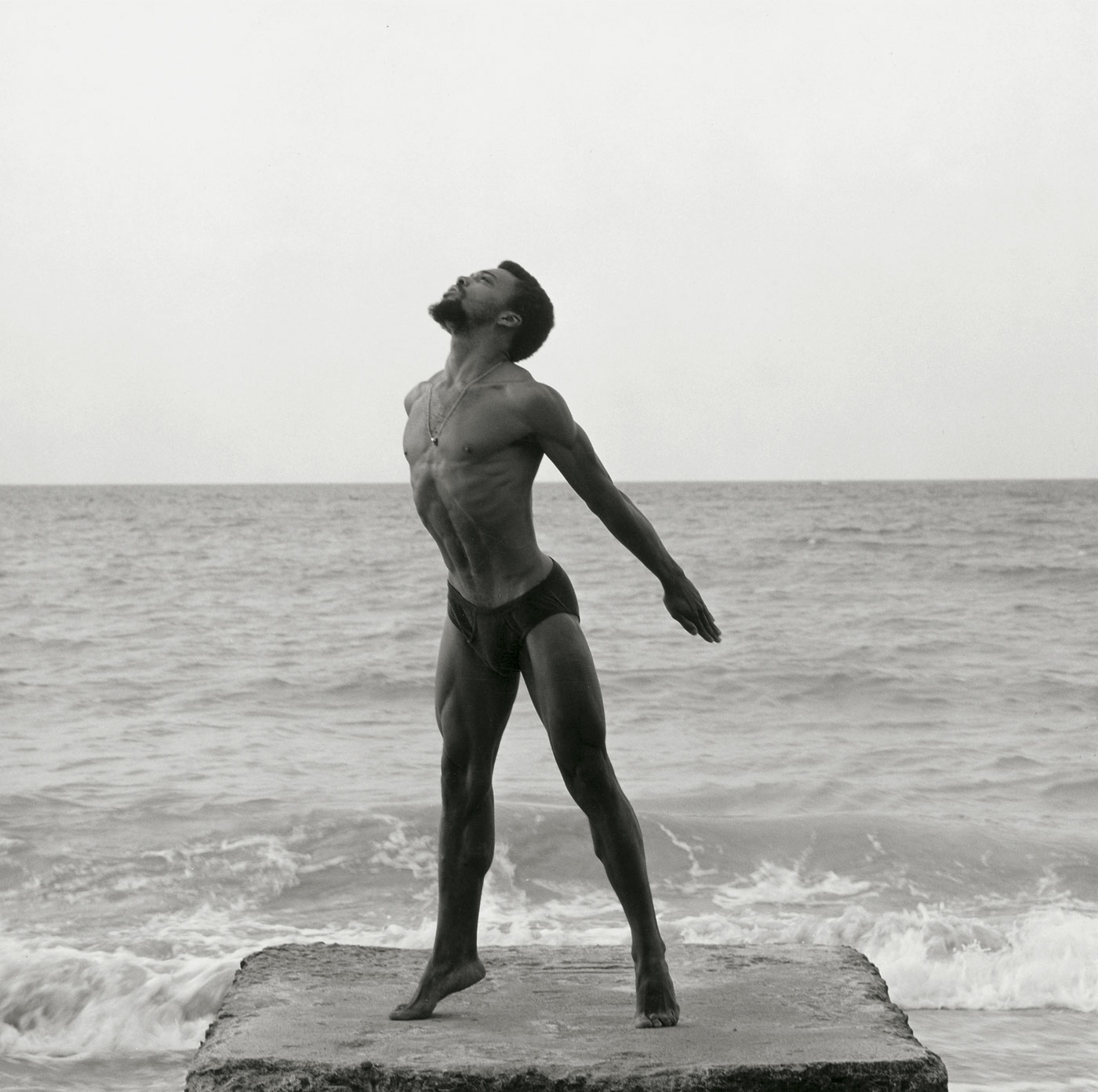
The New York Historical Society
 website

LIKE ART BLART ON FACEBOOK

Back to top

Exhibition: ‘Garry Winogrand’ at the National Gallery of Art, Washington

Exhibition dates: 2nd March – 8th June 2014


More photographs by Gary Winogrand.


Many thankx to the National Gallery of Art for allowing me to publish the photographs in the posting. Please click on the photographs for a larger version of the image.


Garry Winogrand (American, 1928-1984) 'New York' 1950


Garry Winogrand (American, 1928-1984)
New York
1950
Gelatin silver print
Framed: 40.64 x 50.8cm (16 x 20 in.)
San Francisco Museum of Modern Art, Fractional and promised gift of Carla Emil and Rich Silverstein
© The Estate of Garry Winogrand, courtesy Fraenkel Gallery, San Francisco


Garry Winogrand (American, 1928-1984) 'Coney Island, New York' c. 1952


Garry Winogrand (American, 1928-1984)
Coney Island, New York
c. 1952
Gelatin silver print
Framed: 40.64 x 50.8cm (16 x 20 in.)
The Museum of Modern Art, New York. Purchase and gift of Barbara Schwartz in memory of Eugene M. Schwartz
© The Estate of Garry Winogrand, courtesy Fraenkel Gallery, San Francisco


Garry Winogrand (American, 1928-1984) 'Richard Nixon Campaign Rally, New York' 1960


Garry Winogrand (American, 1928-1984)
Richard Nixon Campaign Rally, New York
1960
Gelatin silver print
Framed: 45.72 x 55.88cm (18 x 22 in.)
Posthumous print made from original negative on the occasion of the Garry Winogrand exhibition organised by the National Gallery of Art and the San Francisco Museum of Modern Art, courtesy Center for Creative Photography, The University of Arizona
© The Estate of Garry Winogrand, courtesy Fraenkel Gallery, San Francisco


Garry Winogrand (American, 1928-1984) 'John F. Kennedy, Democratic National Convention, Los Angeles' 1960


Garry Winogrand (American, 1928-1984)
John F. Kennedy, Democratic National Convention, Los Angeles
1960
Gelatin silver print
Framed: 45.72 x 55.88cm (18 x 22 in.)
Posthumous print made from original negative on the occasion of the Garry Winogrand exhibition organised by the National Gallery of Art and the San Francisco Museum of Modern Art, courtesy Center for Creative Photography, The University of Arizona
© The Estate of Garry Winogrand, courtesy Fraenkel Gallery, San Francisco


Garry Winogrand (American, 1928-1984) 'Metropolitan Opera, New York City' c. 1951


Garry Winogrand (American, 1928-1984)
Metropolitan Opera, New York City
c. 1951
Gelatin silver print
Framed: 45.72 x 55.88cm (18 x 22 in.)
Posthumous print made from original negative on the occasion of the Garry Winogrand exhibition organised by the National Gallery of Art and the San Francisco Museum of Modern Art, courtesy Center for Creative Photography, The University of Arizona
© The Estate of Garry Winogrand, courtesy Fraenkel Gallery, San Francisco


The first retrospective in 25 years of work by artist Garry Winogrand – renowned photographer of New York City and postwar American life – will be on view at the National Gallery of Art, Washington, March 2 through June 8, 2014. Revealing the full breadth of his art for the first time, Garry Winogrand brings together some 190 of the artist’s most iconic images – many never before exhibited or reproduced.

“Winogrand is widely recognised as one of the preeminent photographers of postwar America, though his work remains largely unexplored and incompletely published,” said Earl A. Powell III. “Building on several recent exhibitions of 20th-century American photographers, such as Robert Frank and Harry Callahan, the Gallery is proud to present another major American photographer to our visitors.”

The exhibition was on view at the San Francisco Museum of Modern Art (SFMOMA) from March 9 through June 2, 2013. After Washington, the exhibition will travel to the Metropolitan Museum of Art, New York (June 27 through September 21, 2014); the Jeu de Paume, Paris (October 14, 2014, through January 25, 2015); and the Fundación MAPFRE, Madrid (March 3 through May 10, 2015).

Exhibition highlights

Garry Winogrand (1928-1984), a New Yorker who roamed the United States during the postwar decades, left behind a sweeping portrait of American life. His photographs powerfully combine the hope and exhilaration as well as the anxiety and turbulence that characterised America during these vital years, revealing a country that glitters with possibility but threatens to spin out of control. From Fifth Avenue to Sunset Boulevard, from Cape Kennedy to the Texas State Fair, he made the American middle class the primary subject of his pictures. Endlessly curious, Winogrand scrutinised both cities and suburbs, always on the lookout for those instants when happenstance and optics might join to make a good picture that exposes some deep current in American culture.

Working in the tumultuous postwar decades, Winogrand captured moments of everyday American life, producing an expansive picture of a nation rich with possibility yet threatening to spin out of control. He did much of his best-known work in New York City in the 1960s, but he also traveled widely around the United States, from California and Texas to Miami and Chicago. Combining hope and buoyancy with anxiety and instability, his photographs trace the mood of the country itself, from the ebullience of the postwar optimism to the chaos of the 1960s and the gloom and depression of the post-Vietnam era.

When he died suddenly at age 56, Winogrand left behind thousands of rolls of exposed but undeveloped film and unedited contact sheets – some 250,000 frames in total. Many of these pictures have been printed for the first time for this long-awaited retrospective of his work. By presenting such archival discoveries alongside celebrated pictures, Garry Winogrand reframes a career that was, like the artist’s America, both epic and unresolved.

The exhibition is divided into three sections over seven galleries, each presenting a broad variety of subjects found in Winogrand’s art. “Down from the Bronx” presents photographs taken in New York City from his start in 1950 to 1971; “A Student of America” looks at work made in the same period during journeys outside New York; and “Boom and Bust” addresses Winogrand’s late period – from 1971, when he moved away from New York, to his death in 1984 – including photographs from Texas and Southern California, as well as Chicago, Washington, and Miami. The third section also presents a small number of Manhattan photographs made during Winogrand’s return visits; like much of his later work, they express a sense of desolation unprecedented in his earlier photographs.

Plunging headlong into his work, Winogrand preferred shooting film to editing his pictures or producing books and exhibitions. As a result, many of his strongest early photographs fell into obscurity as he matured, while numerous later ones remained unprocessed at his death. Winogrand never published or exhibited approximately one-third of the photographs presented here, and more than sixty have been printed for this exhibition and are being shown in public for the first time. By presenting such discoveries alongside his celebrated pictures, Garry Winogrand reinterprets a career that was, like the artist’s America, both epic and unresolved. A video of Winogrand at Rice University in the 1970s, edited for the exhibition, allows visitors to experience rare footage of the artist talking to students in a casual, extemporaneous manner.

Garry Winogrand (1928-1984)

Born in the Bronx, Winogrand is known primarily as a New York City street photographer, often associated with famed contemporaries Diane Arbus and Lee Friedlander. Exposing some 20,000 rolls of film in his short lifetime, Winogrand photographed business moguls, everyday women on the street, famous actors and athletes, hippies, politicians, antiwar demonstrators, soldiers, animals in zoos, rodeos, car culture, and airports. He was also an avid traveler who roamed around the United States to locations that included Los Angeles, San Francisco, Dallas, Houston, Chicago, Ohio, Colorado, and the open country of the Southwest.

After serving in the military as a weather forecaster, Winogrand began working as a photographer while studying painting on the G.I. Bill at Columbia University (1948-1951). He supplied commercial photographs to such general-interest magazines as Life, Look, Sports Illustrated, Collier’s, and Pageant. His career was further shaped by the decline of these popular magazines and the rise of a new culture of photography centred in the art world.

Although Winogrand was a prolific photographer throughout his career, he largely postponed printing and editing his work, especially at the end of his life. He published five books, but they contain only a fraction of his oeuvre. In his later years he spoke of reviewing and reediting all of his photographs, but he died abruptly, leaving behind more than 6,500 rolls of film (almost 250,000 images) that he had never seen, as well as proof sheets from his earlier years that he had marked but never printed. Winogrand’s archive, including his film and proof sheets, is now housed at the Center for Creative Photography of the University of Arizona, Tucson.

Press release from the National Gallery of Art website


Garry Winogrand (American, 1928-1984) 'New York' c. 1960


Garry Winogrand (American, 1928-1984)
New York
c. 1960
Gelatin silver print
Framed: 40.64 x 50.8cm (16 x 20 in.)
The Garry Winogrand Archive, Center for Creative Photography, The University of Arizona
© The Estate of Garry Winogrand, courtesy Fraenkel Gallery, San Francisco


Garry Winogrand (American, 1928-1984) 'Los Angeles' 1980-1983


Garry Winogrand (American, 1928-1984)
Los Angeles
1980-1983
Gelatin silver print
Framed: 40.64 x 50.8cm (16 x 20 in.)
The Garry Winogrand Archive, Center for Creative Photography, The University of Arizona
© The Estate of Garry Winogrand, courtesy Fraenkel Gallery, San Francisco


Garry Winogrand (American, 1928-1984) 'Los Angeles' 1980-1983


Garry Winogrand (American, 1928-1984)
Los Angeles
1980-1983
Gelatin silver print
Framed: 45.72 x 55.88cm (18 x 22 in.)
Posthumous print made from original negative on the occasion of the Garry Winogrand exhibition organised by the National Gallery of Art and the San Francisco Museum of Modern Art, courtesy Center for Creative Photography, The University of Arizona
© The Estate of Garry Winogrand, courtesy Fraenkel Gallery, San Francisco


Garry Winogrand (American, 1928-1984) 'Los Angeles' 1983


Garry Winogrand (American, 1928-1984)
Los Angeles
1983
Gelatin silver print
Framed: 45.72 x 55.88cm (18 x 22 in.)
Posthumous print made from original negative on the occasion of the Garry Winogrand exhibition organised by the National Gallery of Art and the San Francisco Museum of Modern Art, courtesy Center for Creative Photography, The University of Arizona
© The Estate of Garry Winogrand, courtesy Fraenkel Gallery, San Francisco


Garry Winogrand (American, 1928-1984) 'New York' 1961


Garry Winogrand (American, 1928-1984)
New York
1961
Gelatin silver print
Framed: 50.8 x 40.64cm (20 x 16 in.)
The Museum of Modern Art, New York. Purchase and gift of Barbara Schwartz in memory of Eugene M. Schwartz
© The Estate of Garry Winogrand, courtesy Fraenkel Gallery, San Francisco


Garry Winogrand (American, 1928-1984) 'Park Avenue, New York' 1959


Garry Winogrand (American, 1928-1984)
Park Avenue, New York
1959
Gelatin silver print
Framed: 40.64x 50.8cm (16 x 20 in.)
National Gallery of Art, Patrons’ Permanent Fund
© The Estate of Garry Winogrand, courtesy Fraenkel Gallery, San Francisco


National Gallery of Art
National Mall between 3rd and 7th Streets
Constitution Avenue NW, Washington

Opening hours:
Daily 10.00am – 5.00pm

National Gallery of Art website

LIKE ART BLART ON FACEBOOK

Back to top

Exhibition / text: ‘Vivian Maier (1926-2009). A Photographic Revelation’ at Château de Tours

Exhibition dates: 9th November 2013 – 1st June 2014


Vivian Maier (American, 1926-2009) 'Untitled' 1954


Vivian Maier (American, 1926-2009)
Untitled
1954
© Vivian Maier / Maloof Collection, Courtesy Howard Greenberg Gallery, New York


“Maier doesn’t have a partner to dance with. She sees something well enough, whereas Lee Friedlander expects something. If there is an idea out there in the ether she grabs onto it in a slightly derivative way. Maier states that these things happened with this subject matter but with Arbus, for example, she meets something extra/ordinary and alien – and goes beyond, beyond, beyond.”


Dr Marcus Bunyan May 2014


The next best thing

The photographs of Vivian Maier. Unknown in her lifetime (nanny as secretive photographer), her negatives discovered at an auction after her death – some developed, all scanned, in some cases cropped, the medium format images then printed. The latest “must have” for any self respecting photography collection, be it private or public. But are they really that good?

To be unequivocal about it, they are good – but, in most cases, they are not “great”. Maier is a very good photographer but she will never be a great photographer. This might come as a surprise to the legions of fans on Facebook (and the thousands of ‘Likes’ for each image), those who think that she is the best thing since sliced bread. But let’s look at the evidence – the work itself.

The photographs can seen on the Vivian Maier Official website and I have spent quite a lot of time looking at them. As with any artist, there are some strong images and some not so strong ones but few reach ‘master’ status. The lighting is good, the use of low depth of field, the location and the presence of the people she photographed are all there, as are the influences that you recite in your mind as to the people her photographs remind you of: Lewis Hine, Berenice Abbott, Lisette Model, Diane Arbus, Helen Levitt, Lee Friedlander et al. Somehow through all this she makes the photographs she takes her own for she has a “rare sense of photographic vision” as Edward Petrosky expressed it on my LinkedIn page, but ultimately they don’t really take you anywhere. It’s like she has an addiction to taking photographs (a la Gary Winogrand), but no way of advancing her art to the next level.

Vivien Maier’s photographs stand out because she hasn’t withheld enough within them. What do I mean by that? Let’s look at some examples to explain what I mean…

Included in the postings are two comparisons: Vivian Maier, June 19, 1961, Chicago IL, 1961 / Lee Friedlander, Stony Point, New York, 1966; and Vivian Maier, New York, Nd 1966 / Berenice Abbott, New York at Night, 1932. As with most of Maier’s photography, she relies on intuition when taking a photograph and a bloody good intuition it is too. This intuition usually stands her in good stead and she almost always gets the shot, but there is an underlying lack of structure to her images. Here I am talking as much about psychological structure as physical structure, for both go hand in hand.

If we compare the Maier with the Friedlander we can say that, if we look at the windows in the Friedlander, every one is a masterpiece! From the mother and son at left with the white-coated marchers, to the central window with the miniature house, dog and tree, to the dark-suited marchers at right. Everything feels compelling, intricate weavings of a narrative that the viewer has to try and make sense of. Each part of the Friedlander image is absolutely necessary for that picture… whereas there are so many things in the Vivien Maier that belong in other pictures ie. a good picture but a lot that doesn’t belong in that picture. Things that should have been held back, by making another image somewhere else. Her narrative is confusing and thus the eye is also confused.

A similar scenario can be observed when comparing the photographs of New York at night by Abbott and Maier. Abbott’s photograph is a tight, orchestrated and muscular rendition of the city which seethes with energy and form. Maier’s interpretation fades off into nothingness, the main arterials of the city leading the eye up to the horizon line and then [nothing]. It is a pleasant but wishy-washy photograph, with all the energy of the city draining away in the mind and in the eye.

One of Maier’s photographs that most resonates with me is September 1953, New York, NY (1953, below). This IS a masterpiece. There is a conciseness of vision here, reminiscent of Weston’s Nude of 1938 with its link to the anamorphic structure of his photographs of peppers. There is nothing auxiliary to the purpose of the photograph, yet there is that indefinable something that takes it out of itself. The dirt of the clothes, under the fingers, the ring on the hand, the shape that no human should be in and its descent onto the pavement, the despair of that descent captured in the angle of the camera looking down on the victim. The photograph has empathy, promotes understanding and empathy in the viewer. Most of us have been there. Other photographs that approach a higher perspective are Maier’s self-portraits, in which there is a conscious exploration of her reflection in/of the world: a slightly dour, serious figure reflected back from the world into the lens of the camera – a refracted identity, the phenomenon of self as light passing obliquely through the interface between one medium and another, between living, the camera and memory.

But too often Maier’s photographs are just so… obvious. Did she wait long enough for the composition to reveal itself to her more, god what’s the word, more ambiguously. Maier doesn’t have a partner to dance with. She sees something well enough, whereas Lee Friedlander expects something. If there is an idea out there in the ether she grabs onto it in a slightly derivative way. Maier states that these things happened with this subject matter but with Arbus, for example, she meets something extra/ordinary and alien – and goes beyond, beyond, beyond.

What we can say is that Maier’s vision is very good, her intuition excellent, but there is, critically, not that indefinable something that takes her images from good to great. This is the key thing – everything is usually thrown at the image, she withholds nothing, and this invariably stops them taking that step to the next level. This is a mighty difficult step for any artist to take, let alone one taking photographs in the shadows. Personally I don’t believe that these images are a “photographic revelation” in the spirit of Minor White. What is a revelation is how eagerly they have been embraced around the world as great images without people really looking deeply at the work; how masterfully they have been promoted through films, books, websites and exhibitions; how Maier’s privacy has been expunged in the quest for dollars; and how we know very little about her vision for the negatives as there are no extant prints of the work.

Dr Marcus Bunyan


Many thankx to the Château de Tours for allowing me to publish the photographs in the posting. Please click on the photographs for a larger version of the image.


Edward Weston (American, 1886-1958) 'Nude' 1936


Edward Weston (American, 1886-1958)
Nude
1936
Gelatin silver print


Vivian Maier (American, 1926-2009) 'September 1953, New York, NY' 1953


Vivian Maier (American, 1926-2009)
September 1953, New York, NY
1953
© Vivian Maier / Maloof Collection, Courtesy Howard Greenberg Gallery, New York


Vivian Maier (American, 1926-2009) 'June 19, 1961, Chicago IL' 1961


Vivian Maier (American, 1926-2009)
June 19, 1961, Chicago IL
1961
© Vivian Maier / Maloof Collection, Courtesy Howard Greenberg Gallery, New York


Lee Friedlander (American, b. 1934) 'Stony Point, New York, 1966' 1966


Lee Friedlander (American, b. 1934)
Stony Point, New York, 1966
1966
Silver gelatin photograph


Vivian Maier (American, 1926-2009) 'New York' Nd


Vivian Maier (American, 1926-2009)
New York
Nd
© Vivian Maier / Maloof Collection, Courtesy Howard Greenberg Gallery, New York


Berenice Abbott (American, 1898-1991) 'New York at Night' 1932


Berenice Abbott (American, 1898-1991)
New York at Night
1932
Gelatin silver print
12 7/8 x 10 9/16″ (32.7 x 26.9cm)


Vivian Maier (American, 1926-2009) 'New York, NY, 18 Octobre 1953' 1953


Vivian Maier (American, 1926-2009)
New York, NY, 18 Octobre 1953
1953
© Vivian Maier / Maloof Collection, Courtesy Howard Greenberg Gallery, New York


Vivian Maier (American, 1926-2009) 'New York, NY' c. 1953


Vivian Maier (American, 1926-2009)
New York, NY
c. 1953
© Vivian Maier / Maloof Collection, Courtesy Howard Greenberg Gallery, New York


Vivian Maier (American, 1926-2009) 'St East nº108, New York , NY, September 28, 1959' 1959


Vivian Maier (American, 1926-2009)
St East nº108, New York , NY, September 28, 1959
1959
© Vivian Maier / Maloof Collection, Courtesy Howard Greenberg Gallery, New York


Vivian Maier (American, 1926-2009) 'New York, NY' 1954


Vivian Maier (American, 1926-2009)
New York, NY
1954
© Vivian Maier / Maloof Collection, Courtesy Howard Greenberg Gallery, New York


Vivian Maier was the archetypal self-taught photographer with a keen sense of observation and an eye for composition. She was born in New York in 1926, but spent part of her childhood in France before returning to New York in 1951 when she started taking photos. In 1956, she moved to Chicago, where she lived until her death in 2009.

Her talent is comparable with that of the major figures of American street photography such as Lisette Model, Helen Levitt, Diane Arbus and Garry Winogrand. The exhibition presented at the Château de Tours by the Jeu de Paume, in partnership with the Municipality of Tours and diChroma photography, is the largest ever exhibition in France devoted to Vivian Maier. It includes 120 black and white and colour gelatin silver prints from the original slides and negatives, as well as extracts from Super 8 films she made in the 60s and 70s. This project, which is sourced from John Maloof’s collection, with the valuable assistance of Howard Greenberg Gallery in New York, reveals a poetic vision that is imbued with humanity.

John Maloof discovered Vivian Maier’s astonishing photos completely by chance in 2007 at an auction in Chicago. At the time, this young collector was looking for historical documentation about a specific neighbourhood of the city and he bought a sizeable lot of prints, negatives and slides (of which a major part had not even been developed) as well as some Super 8 films by an unknown and enigmatic photographer, Vivian Maier. By all accounts, Vivian Maier was a discreet person and somewhat of a loner. She took more than 120,000 photos over a period of thirty years and only showed this consequential body of work to a mere handful of people during her lifetime.

Vivian Maier earned her living as a governess, but all her free time and every day off was spent walking through the streets of New York, then later Chicago, with a camera slung around her neck (first of all box or folding cameras, later a Leica) taking photos. The children she looked after describe her as a cultivated and open-minded woman, generous but not very warm. Her images on the other hand bear witness to her curiosity for everyday life and the attention she paid to those passers – by who caught her eye: facial features, bearing, outfits and fashion accessories for the well-to-do and the telltale signs of poverty for those who were less fortunate.

While some photos are obviously furtively taken snapshots, others bear witness to a real encounter between the photographer and her models, who are photographed face-on and from close up. Her photos of homeless people and people living on the fringe of society demonstrate the depth of her empathy as she painted a somewhat disturbing portrait of an America whose economic boom was leaving many by the wayside.

Vivian Maier remained totally unknown until her death in April 2009. She had been taken in by the Gensburgs, for whom she had worked for almost seventeen years, and many of her possessions as well as her entire photographic output had been placed in storage. It was seized and sold in 2007 to settle unpaid bills.

Her biography has now been reconstructed, at least in part, thanks to a wealth of research and interviews carried out by John Maloof and Jeffrey Goldstein after the death of Vivian Maier. Jeffrey Goldstein is another collector who purchased a large part of her work. According to official documents, Vivian Maier was of Austro-Hungarian and French origin and her various trips to Europe, in particular to France (in the Alpine valley of Champsaur where she spent part of her childhood) have been clearly identified and documented. However, the circumstances that led her to take an interest in photography and her life as an artist remain veiled in mystery.

Photography seemed to be much more than a passion: her photographic activity was the result of a deeply felt need, almost an obsession. Each time she changed employers and had to move house, all her boxes and boxes of films (that she hadn’t had developed for want of money), as well as her archives comprising books and press cuttings about various stories in the news, came along too.

Vivian Maier’s body of work highlights those seemingly insignificant details that she came across during her long walks through the city streets: odd gestures, strange figures and graphic arrangements of figures in space. She also produced a series of captivating self-portraits from her reflection in mirrors and shop windows.

Press release from the Château de Tours


Vivian Maier (American, 1926-2009) 'Self-portrait' Nd


Vivian Maier (American, 1926-2009)
Self-portrait
Nd
© Vivian Maier / Maloof Collection, Courtesy Howard Greenberg Gallery, New York


Vivian Maier (American, 1926-2009) 'Chicago' Nd


Vivian Maier (American, 1926-2009)
Chicago
Nd
© Vivian Maier / Maloof Collection, Courtesy Howard Greenberg Gallery, New York


Vivian Maier (American, 1926-2009) 'Florida, 9 January 1957' 1957


Vivian Maier (American, 1926-2009)
Florida, 9 January 1957
1957
© Vivian Maier / Maloof Collection, Courtesy Howard Greenberg Gallery, New York


Vivian Maier (American, 1926-2009) 'Untitled' 1954


Vivian Maier (American, 1926-2009)
Untitled
1954
© Vivian Maier / Maloof Collection, Courtesy Howard Greenberg Gallery, New York


Vivian Maier (American, 1926-2009) 'Chicago, IL, January, 1956' 1956


Vivian Maier (American, 1926-2009)
Chicago, IL, January, 1956
1956
© Vivian Maier/Maloof Collection, Courtesy Howard Greenberg Gallery, New York


Vivian Maier (American, 1926-2009) 'Chicago, August 22, 1956' 1956


Vivian Maier (American, 1926-2009)
Chicago, August 22, 1956
1956
© Vivian Maier/Maloof Collection, Courtesy Howard Greenberg Gallery, New York


Château de Tours
25 Avenue André Malraux
37000 Tours

Opening hours:
Tuesday to Friday: 2pm – 6pm
Saturday and Sunday: 3pm – 6pm

Vivian Maier Official website

LIKE ART BLART ON FACEBOOK

Back to top