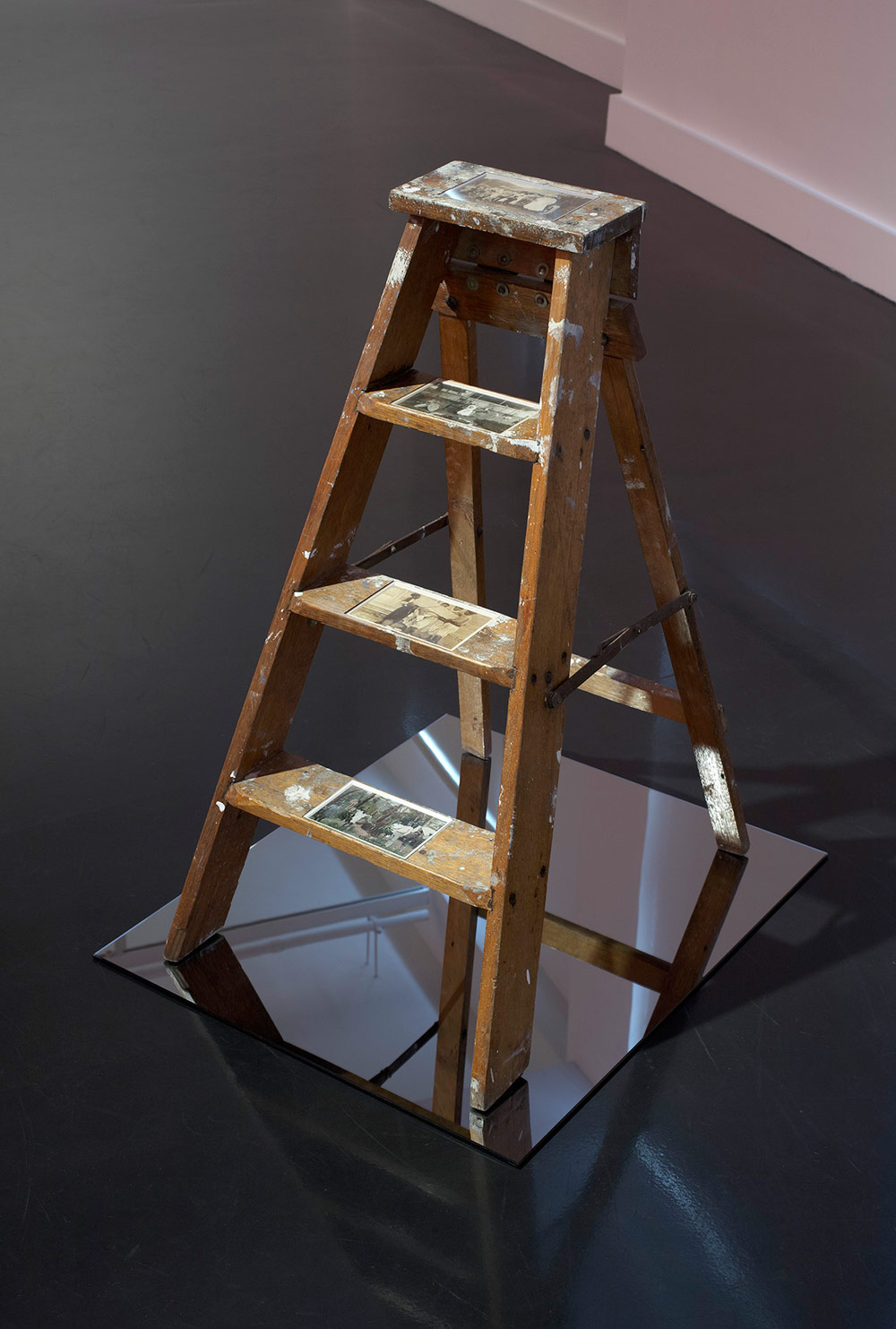
Text / Exhibition: ‘The Unflinching Gaze: photo media and the male figure’ at the Bathurst Regional Art Gallery, New South Wales

Exhibition dates: 14th October – 3rd December, 2017

Curator: Richard Perram OAM

Warning: this posting contains male nudity. If you don’t want to see please do not look.
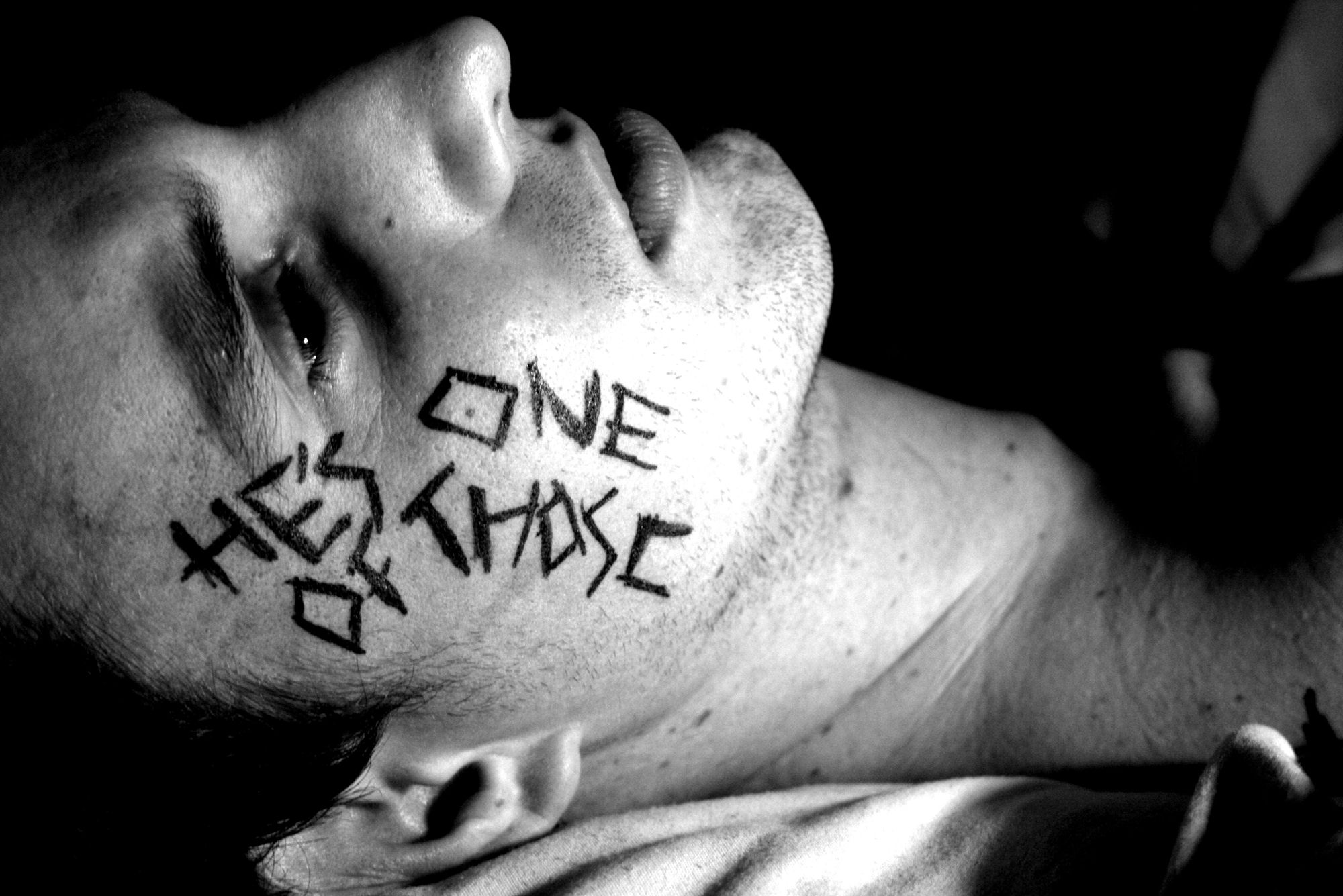
 

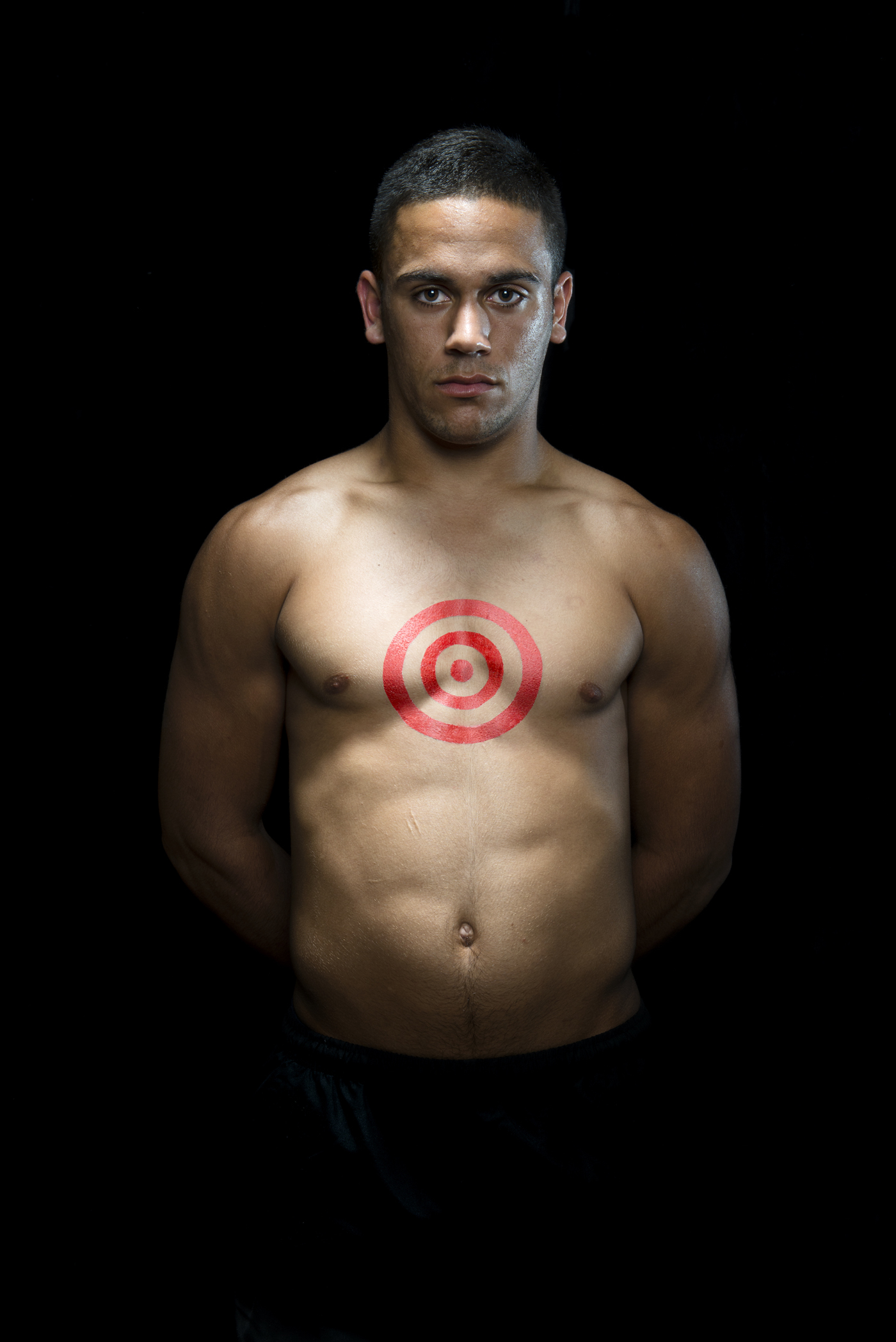
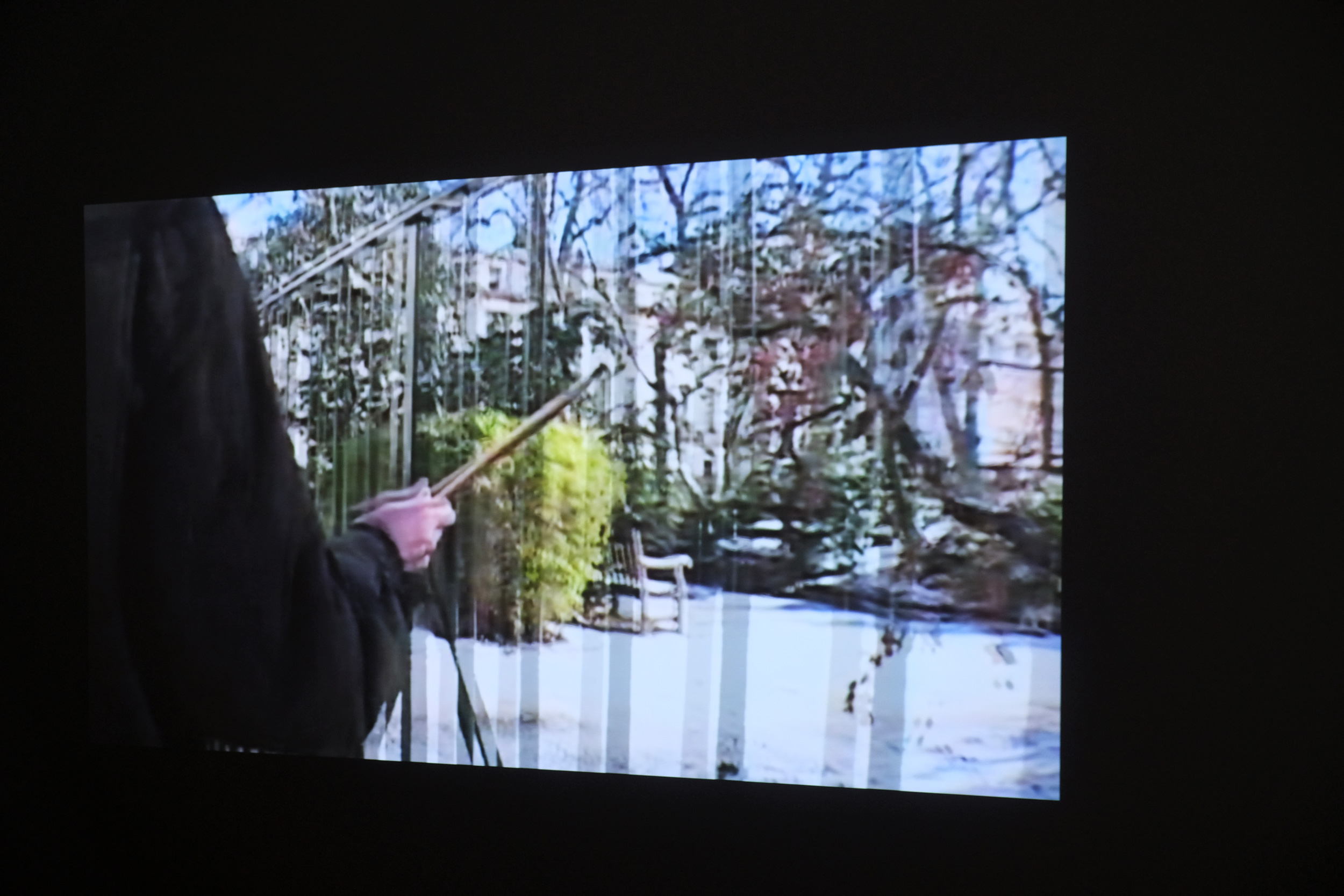
Todd Fuller (Australian, b. 1988) and Amy Hill (Australian, b. 1988) 'They're Only Words' 2009 (video still) from the exhibition 'The Unflinching Gaze: photo media and the male figure' at the Bathurst Regional Art Gallery, New South Wales, October- December, 2017


Todd Fuller (Australian, b. 1988) and Amy Hill (Australian, b. 1988)
They’re Only Words (video still)
2009
Film, sound duration: 2:42 mins
Courtesy the artists and May Space, Sydney


I must congratulate curator and gallery Director, Richard Perram OAM and the Bathurst Regional Art Gallery for putting on such a fine exhibition, worthy of many a large gallery in a capital city. An incredible achievement, coming at the same time as Latrobe Regional Art Gallery put on the recent René Magritte exhibition. All power to these regional galleries. Now on with the show…

Show and tell

The male body. The female body. The trans body. The gay body. Etc. etc. etc. …
The male gaze. The female gaze. The trans gaze. The gay gaze. Etc. etc. etc. …

I did my Doctor of Philosophy, all four and a half years of it, on the history of photography and its depiction of the male body so I know this subject intimately. It is such a complicated subject that after all of time, nothing is ever certain, everything is changeable and fluid.

To start, the definition of masculinity that I used as a determination for the term in my PhD is included as the first quotation below. The quotation is followed by others – on the optic experience and the creation of body image; on body image and our relation to other people; on the anxiety caused by the crisis of looking as it intersects with the crisis of the body; and how we can overcome the passivity of objective truth (accepting dominant images in this case, as they are presented to us) through an active struggle for subjective truth, or an acceptance of difference. A further, longer quote in the posting by Chris Schilling examines Ernst Goffman’s theories of body, image and society in which Goffman states that the body is characterised by three main features: firstly, that the body as material property of individuals; secondly, that meanings attributed to the body are determined by ‘shared vocabularies of body idiom’ such as dress, bearing, movements and position, sound level, physical gestures such as waving and saluting, facial decorations, and broad emotional expressions; and thirdly; that the body plays an important role in mediating the relationship between people’s self-identity and their social identity. These quotations just start to scratch the surface of this very complicated, negotiated social area.

What we can say is this: that masculinity is always and forever a construct; that male body image is always and forever a further construct built on the first construct; and that photo media images of the male body are a construct, in fact a double or triple construct as they seek to capture the surface representation of the previous two conditions.

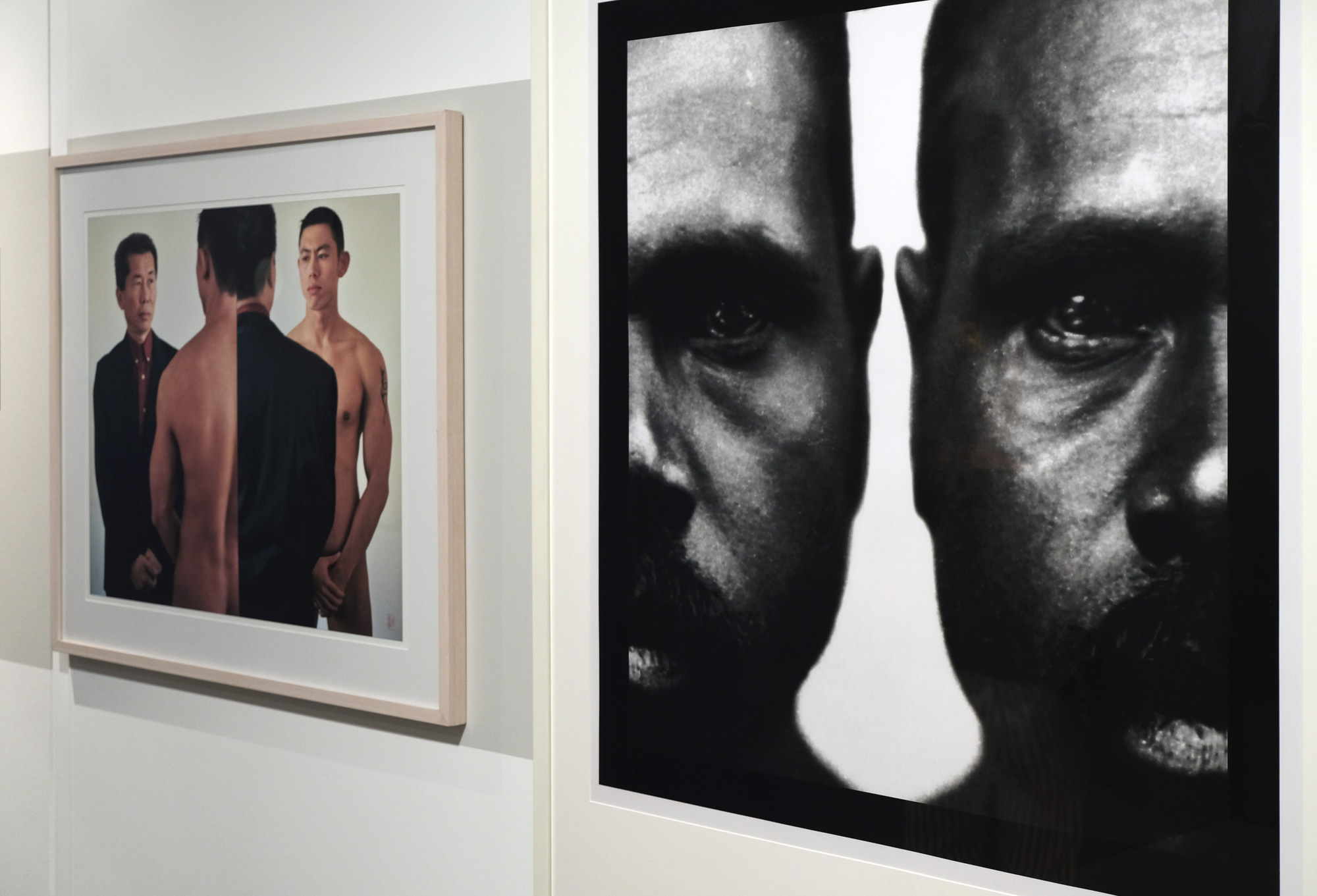
What strikes me with most of the photographs in this posting is that they are about a constructed “performance” of masculinity, performances that challenge cultural signifiers of mainstream and marginalised aspects of Western patriarchal culture. In most the masculine subject position is challenged through complex projections of masculinity, doubled through the construction of images. In fact, spectatorship is no longer male and controlling but polymorphous and not organised along normative gender lines.

Thus, these artists respond to four defined action problems in terms of representation of body usage: “… control (involving the predicability of performance); desire (whether the body is lacking or producing desire); the body’s relation to others (whether the body is monadic and closed in on itself or dyadic and constituted through either communicative or dominating relations with others); and the self-relatedness of the body (whether the body associates and ‘feels at home’ in itself, or dissociates itself from its corporeality).”1 Further, four ideal types of body usage can be defined in terms of these action problems: the disciplined body where the medium is regimentation, the model of which is the rationalisation of the monastic order; the mirroring body where the medium is consumption, the model of which is the department store; the dominating body where the medium is force, the model of which is war; and the communicative body where the medium is recognition, the model of which could be shared narratives, communal rituals (such as sex) and caring relationships.2

As Chris Schilling observes, “The boundaries of the body have shifted away from the natural and on to the social, and the body now has ‘a thoroughly permeable “outer layer” through which the reflexive project of the self and externally formed abstract systems enter.” In other words, masculinity and male figure can be anything to any body and any time in any context. The male body can be prefigured by social conditions. But the paradox is, the more we know masculinity and the male body, the more knowledge we have, the more we can alter and shape these terms, the less certain we are as to what masculinity and the male body is, and how or if it should be controlled. Taking this a step further, Schilling notes that the photographic image of the body itself has become an abstract system/symbolic token which is traded without question, much as money is, without the author or participants being present.3 You only have to look into some of the gay chats rooms to know this to be true!

The most difficult question I had to ask myself in relation to this exhibition was, what is it to be male? Such a question is almost impossible to answer…

Is being male about sex, a penis, homosociality, homosexuality, heterosexuality, friendship, braveness, dominance, perversity, fantasy, love, attraction, desire, pleasure, Ockerism, respect, loyality, spirituality, joy, happiness etc. etc. It is all of these and more besides. And this is where I find some most of these images to be just surface representations of deeper feelings: I just like dressing in drag; I like pulling a gun on someone; I like holding a knife next to my penis to make my phallus and my armoured body look “butch”. It’s as though the “other”, our difference from ourselves (and others), has been normalised and found wanting. I want to strip them away from this performative, normalising aspect. Most of these photographs are male figures dressed up to the nines, projecting an image, a surface, to the outside world (even though the performative tells us a great deal about the peculiarities of the human imagination). I want them to be more essential, not just a large penis dressed up for show. Only in the image Untitled (Auschwitz victim) (Nd, below), where the performance for the camera and the clothing the man is wearing is controlled by others – does some sense of an inner strength of a male come through. In times of unknown horror and dire circumstances, this man stares you straight in the eye with a calm presence and inner composure.

For me personally, being male is about a spiritual connection – to myself, to the earth and to the cosmos. I hope it is about respect for myself and others. Of course I use the systems above as a projection of myself into the world, as to who I am and who I want people to see through my image. But there is so much more to being male than these defined, representational personas. This is not some appeal to, as David Smail puts it, “a simple relativity of ‘truths'” (anything to anybody at anytime in any context), nor a essentialist reductionism to a “single truth” about our sense of being, but an appeal for a ‘non-finality’ of truth, neither fixed nor certain, that changes according to our values and what we understand of ourselves, what it is to be male. This understanding requires intense, ongoing inner work, something many males have no desire to undertake…

Dr Marcus Bunyan

Word count: 1,230


Footnotes

1/ Chris Schilling, The Body and Social Theory, Sage Publications, London, 1993, p.95.

2/ Ibid., p. 95.

3/ Ibid., p. 183.


Many thankx to Director Richard Perram, Assistant Curator Julian Woods and the Bathurst Regional Art Gallery for allowing me to publish the photographs in the posting. Please click on the photographs for a larger version of the image.


“The category of “masculinity” should be seen as always ambivalent, always complicated, always dependent on the exigencies (necessary conditions and requirements) of personal and institutional power … [masculinity is] an interplay of emotional and intellectual factors – an interplay that directly implicates women as well as men, and is mediated by other social factors, including race, sexuality, nationality, and class … Far from being just about men, the idea of masculinity engages, inflects, and shapes everyone.”


Berger, Maurice; Wallis, Brian and Watson, Simon. Constructing Masculinity. Introduction. New York: Routledge, 1995, pp. 3-7.


“We choose and reject by action … Nietzsche calls the body ‘Herrschaftsgebilde’ (creation of the dominating will). We may say the same about body-image. Since optic experience plays such an enormous part in our relation to the world, it will also play a dominating role in the creation of the body-image. But optic experience is also experience by action. By actions and determinations we give the final shape to our bodily self. It is a process of continual active development.” (My underline)


Schilder, Paul. The Image and Appearance of The Human Body. New York: International Universities Press, 1950, pp. 104-105.


“Body images should not exist in isolation. We desire the relation of our body-images to the body-images of all other persons, and we want it especially concerning all sexual activities and their expression in the body-image. Masturbation is specifically social. It is an act by which we attempt to draw the body-images of others, especially in their genital region, nearer to us.”


Schilder, Paul. The Image and Appearance of The Human Body. New York: International Universities Press, 1950, p. 237.


“As the French critic Maurice Blanchot wrote, “The image has nothing to do with signification, meaning, as implied by the existence of the world, the effort of truth, the law and the brightness of the day. Not only is the image of an object not the meaning of that object and of no help in comprehending it, but it tends to withdraw it from its meaning by maintaining it in the immobility of a resemblance that it has nothing to resemble” … It is this severance of meaning and its object, this resemblance of nothing, that the crisis of looking intersects with the crisis of the body. In contemporary culture we promote the body as infinitely extendable and manageable. Indeed, we mediate this concept through the permeation of the photographic image in popular culture – through advertising and dominant discourse that place the young, beautiful, erotic body as the desirable object of social attention. This is a body apparently conditioned by personal control (moral concern). But the splitting apart of image and meaning pointed to by Blanchot suggests that such control is illusory. There is no single truth; there are only competing narratives and interpretations of a world that cannot be wholly, accurately described.” (My underline)


Blanchot, Maurice. The Gaze of Orpheus. New York: Barrytown, 1981, p. 85, quoted in Townsend, Chris. Vile Bodies: Photography and the Crisis of Looking. Munich: Prestel, 1998, p. 10.


“Where objective knowing is passive, subjective knowing is active – rather than giving allegiance to a set of methodological rules which are designed to deliver up truth through some kind of automatic process [in this case the construction of the male figure through the image], the subjective knower takes a personal risk in entering into the meaning of the phenomena to be known … Those who have some time for the validity of subjective experience but intellectual qualms about any kind of ‘truth’ which is not ‘objective’, are apt to solve their problem by appealing to some kind of relativity. For example, it might be felt that we all have our own versions of the truth about which we must tolerantly agree to differ. While in some ways this kind of approach represents an advance on the brute domination of ‘objective truth’, it in fact undercuts and betrays the reality of the world given to our subjectivity. Subjective truth has to be actively struggled for: we need the courage to differ until we can agree. Though the truth is not just a matter of personal perspective, neither is it fixed and certain, objectively ‘out there’ and independent of human knowing. ‘The truth’ changes according to, among other things, developments and alterations in our values and understandings … the ‘non-finality’ of truth is not to be confused with a simple relativity of ‘truths’.” (My underline).


Smail, David. Illusion and Reality: The Meaning of Anxiety. London: J.M. Dent & Sons, 1984, pp. 152-153.


The Unflinching Gaze: photo media & the male figure

The Unflinching Gaze: photo media & the male figure surveys how the male figure has been depicted by Australian and international artists in photo media over the last 140 years. It includes historic and contemporary fine art photography and film, fashion photography, pop videos and homoerotic art. Images range from the beautiful to the banal to the confounding.

The Unflinching Gaze: photo media & the male figure is a Bathurst Regional Art Gallery exhibition in partnership with Leslie-Lohman Museum of Gay and Lesbian Art, New York. Curated by Richard Perram OAM. This exhibition is supported by the Dobell Exhibition Grant, funded by the Sir William Dobell Art Foundation and managed by Museums & Galleries of NSW.
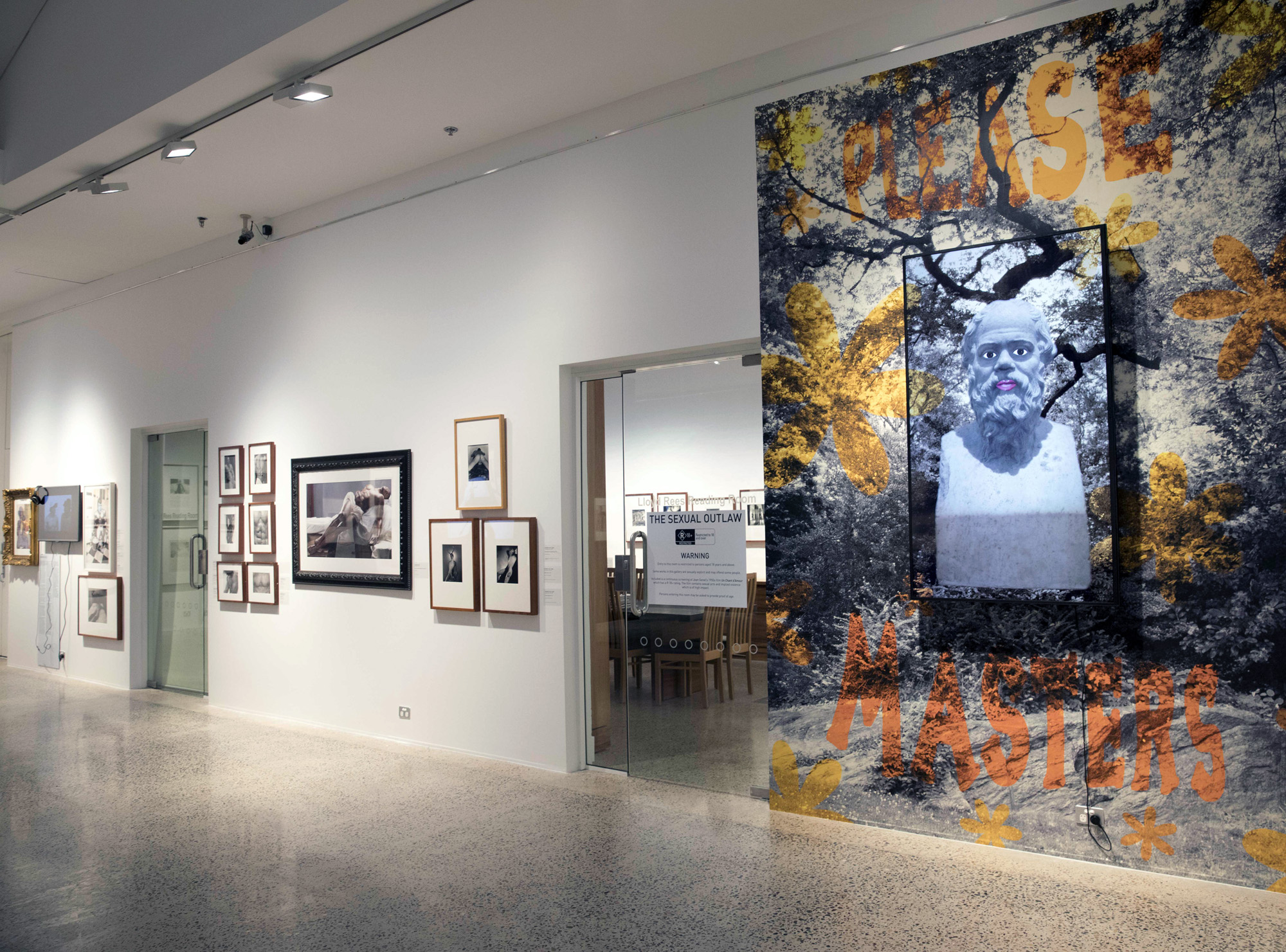
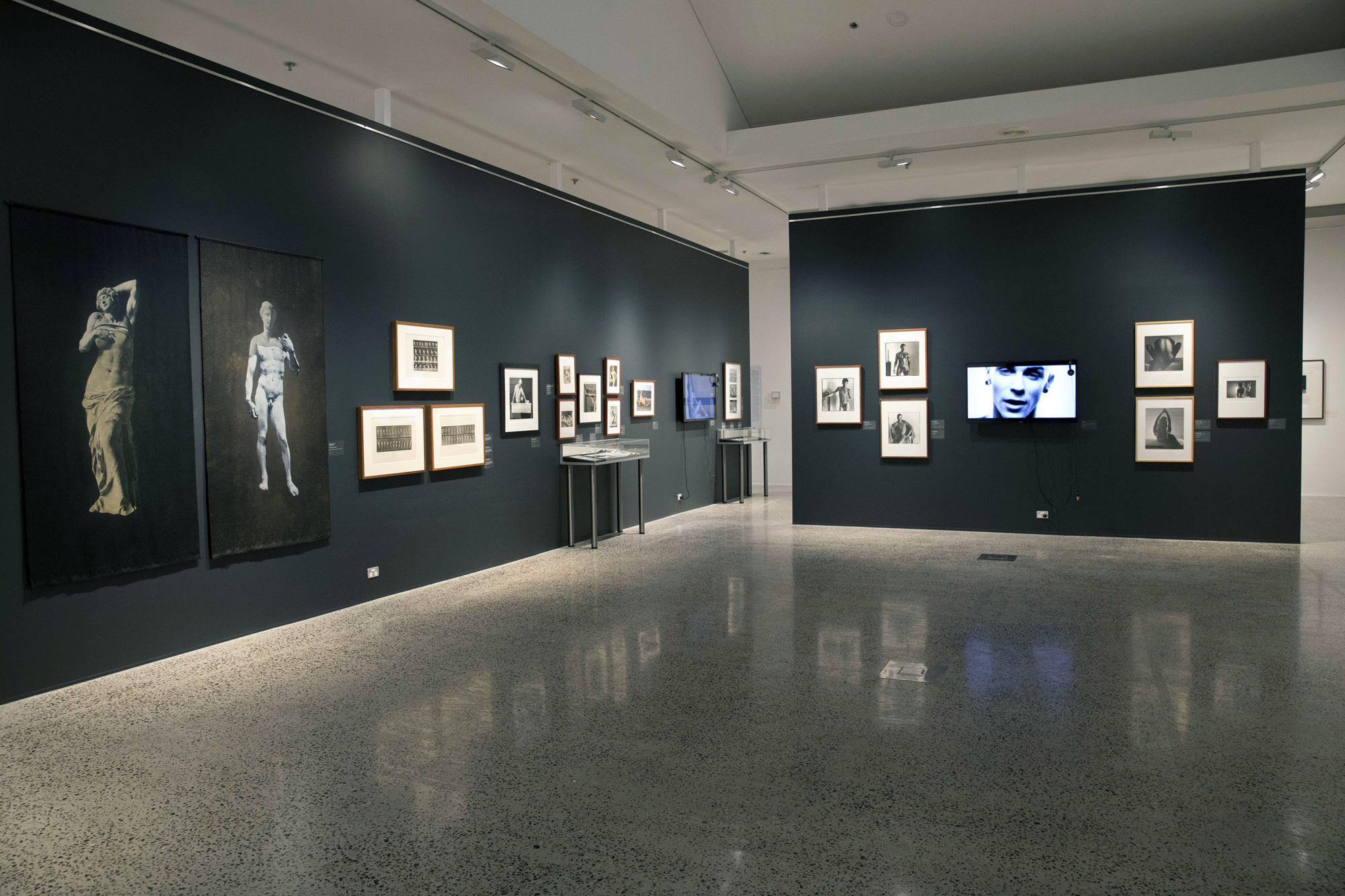
 

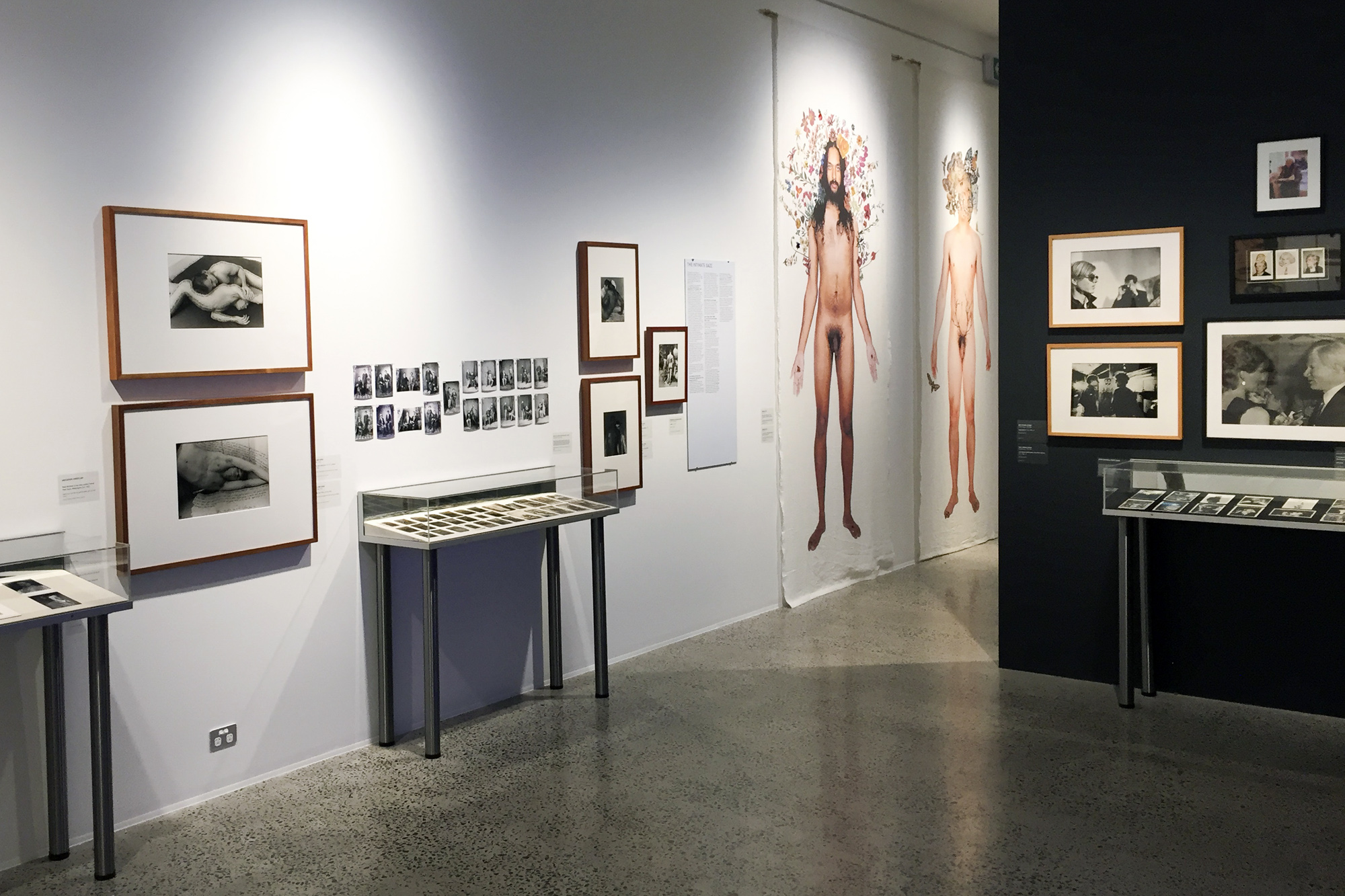
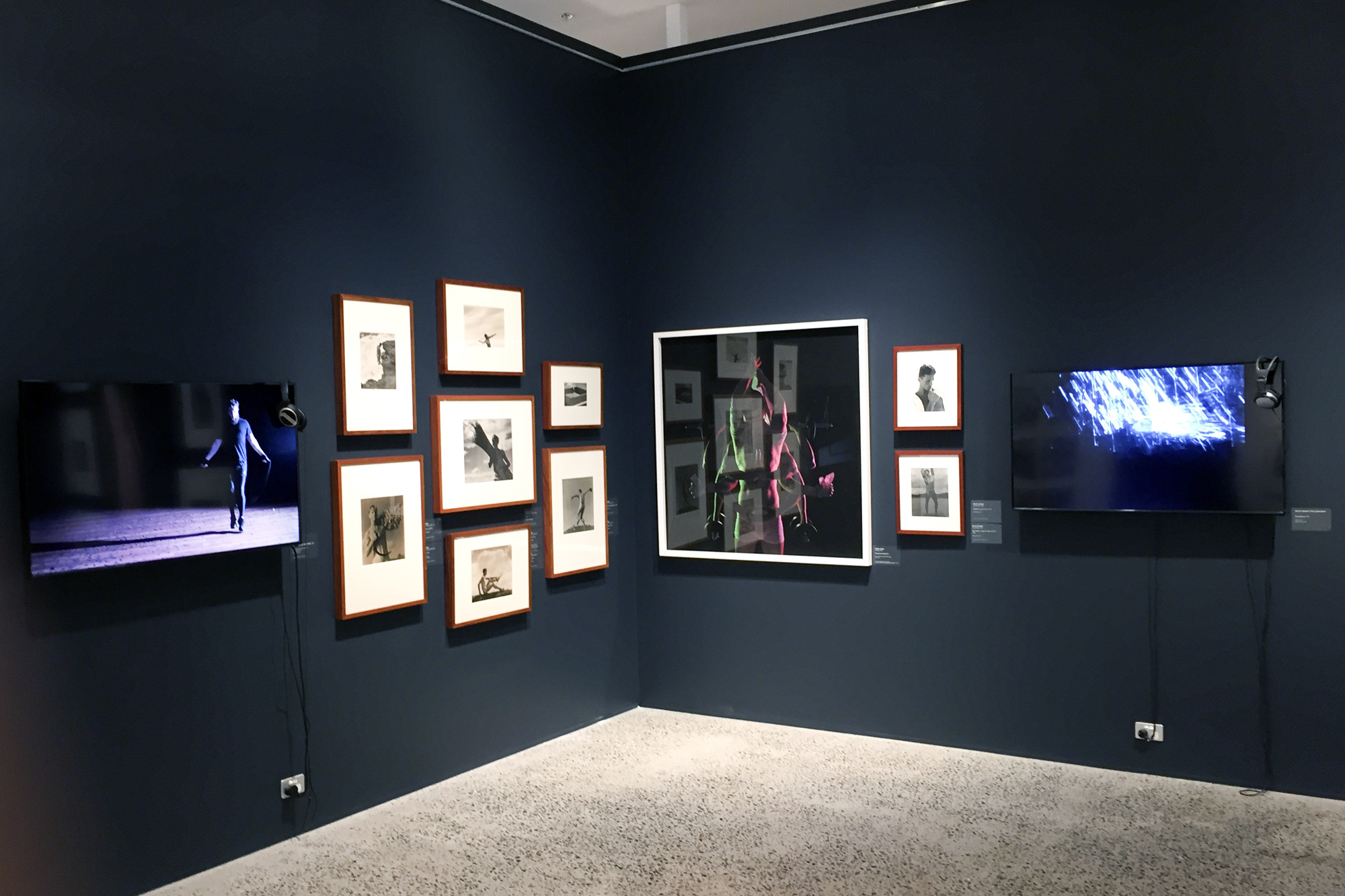
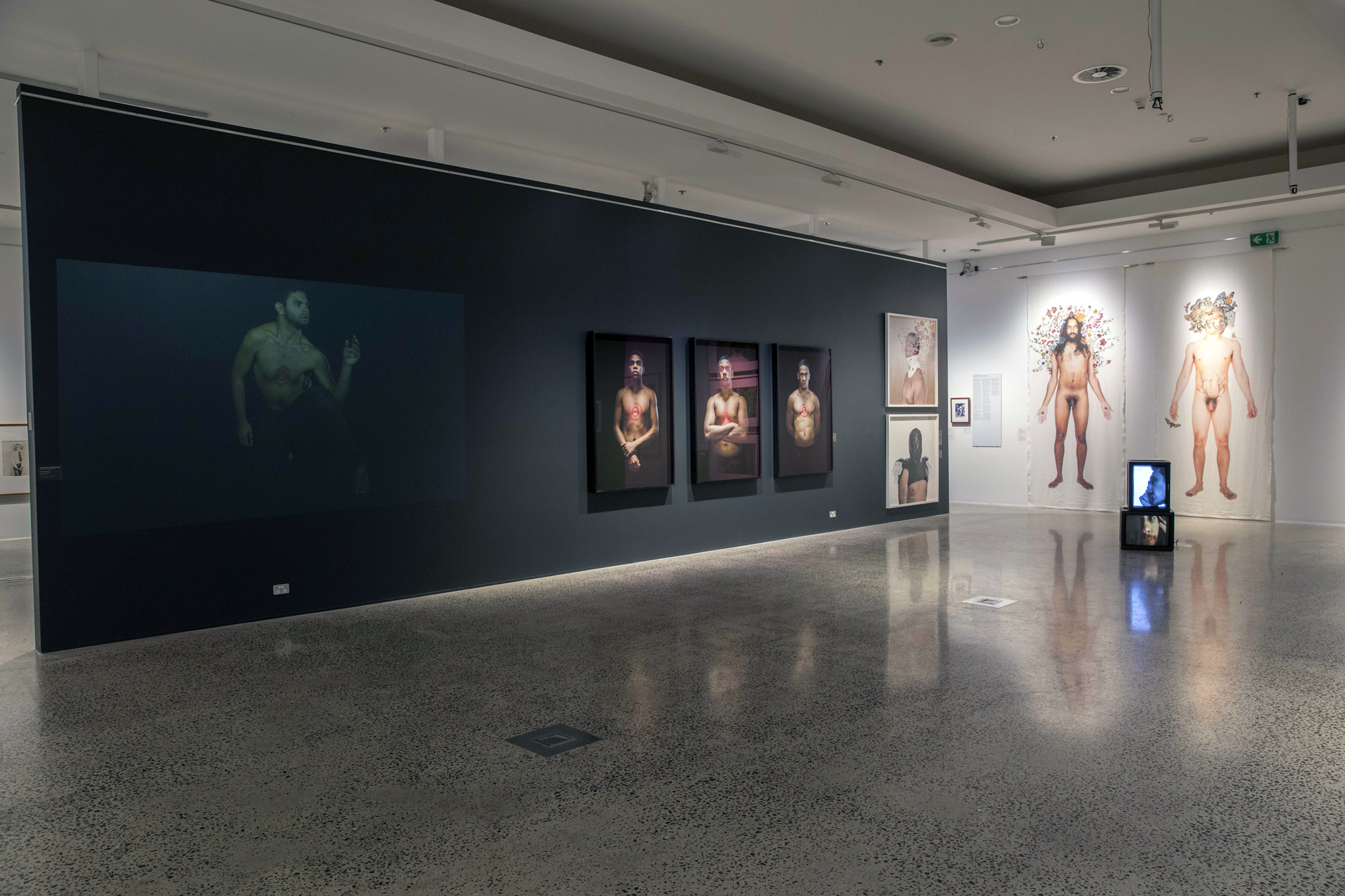
Installation view of the exhibition 'The Unflinching Gaze: photo media and the male figure' at the Bathurst Regional Art Gallery

Installation view of the exhibition 'The Unflinching Gaze: photo media and the male figure' at the Bathurst Regional Art Gallery

Installation view of the exhibition 'The Unflinching Gaze: photo media and the male figure' at the Bathurst Regional Art Gallery

Installation view of the exhibition 'The Unflinching Gaze: photo media and the male figure' at the Bathurst Regional Art Gallery

Installation view of the exhibition 'The Unflinching Gaze: photo media and the male figure' at the Bathurst Regional Art Gallery


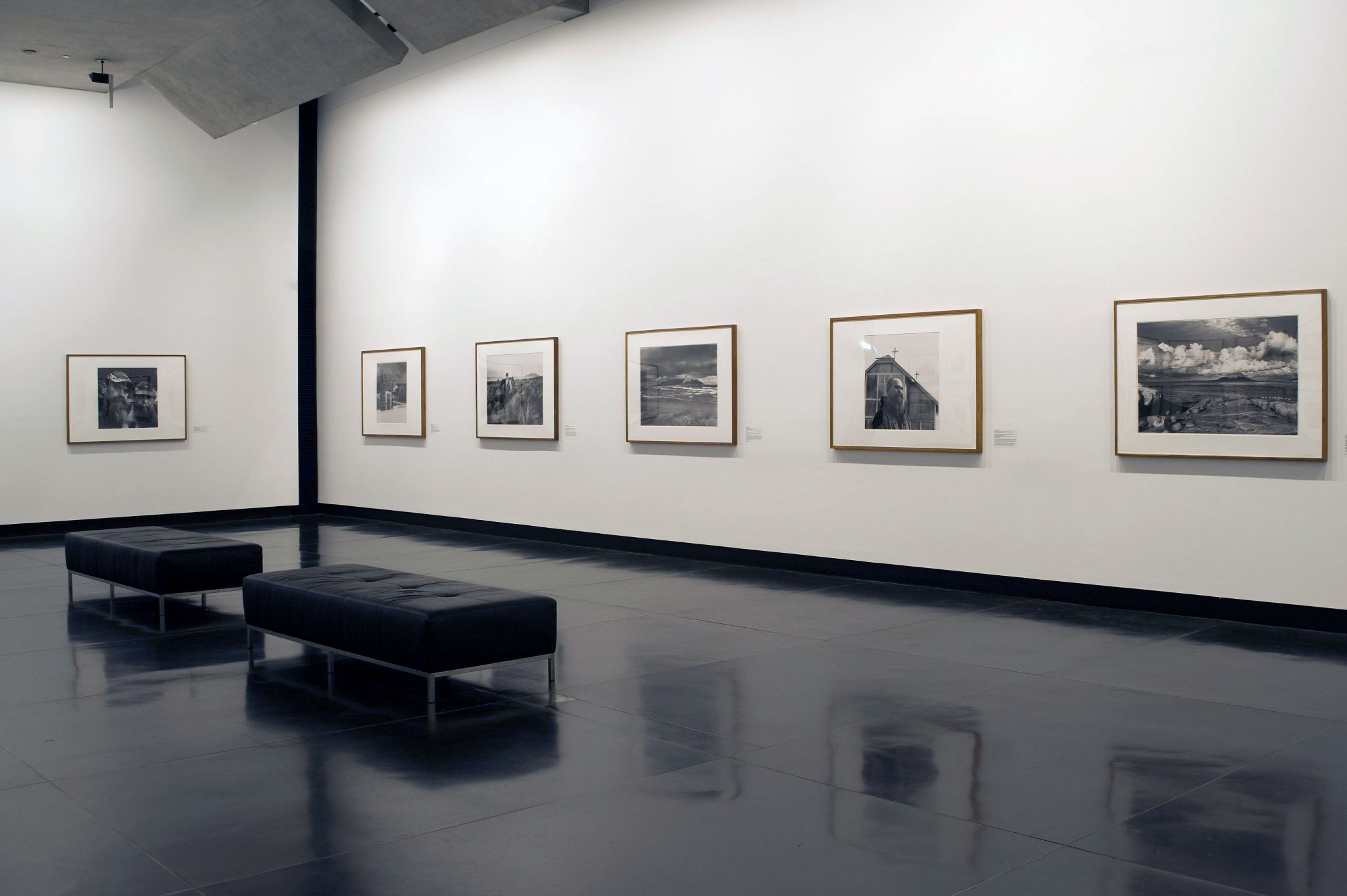
Installation views of the exhibition The Unflinching Gaze: photo media and the male figure at the Bathurst Regional Art Gallery, New South Wales
Photos: Sharon Hickey Photography


In line with current thinking the exhibition posits masculinity, and gender itself, as a kind of performance – a social construct that is acquired rather than biologically determined.

This idea has its limits, with most people happy to accept anatomy as destiny. Nevertheless, there is much we view as ‘natural’ that might be more accurately described as ‘cultural’. In an exceptional catalogue essay, Peter McNeil refers to Jonathan Ned Katz’s book, The Invention of Heterosexuality, which notes that the term “heterosexual” was first published in the United States in 1892. This is a remarkably late entry for a concept often viewed as a cornerstone of social orthodoxy.

A condition doesn’t require a word to make it a reality but it sure helps. Wittgenstein’s famous dictum: “The limits of my language are the limits of my world,” reminds us of the power of naming and categorisation.

To establish anything as an unquestionable norm is to stigmatise other views as abnormal. From the perception of abnormality comes the fear and hatred that surfaced during a same-sex marriage postal survey that revealed more about political cowardice than it did about Australian social attitudes. Although Perram has no qualms about celebrating gay sexuality his chief concern is to encourage a broader, more inclusive understanding of masculinity. …

One of the most striking moments in Perram’s show is a juxtaposition of Mapplethorpe’s 1983 portrait of gay porn star, Roger Koch, aka Frank Vickers, wearing a wig, bra and fishnets, his hands clasped demurely over his groin. The feminine coyness is at odds with Vickers’s musclebound torso and biceps which are fully on display in his self-portrait of the same year, along with his semi-erect penis.

The photos may be two versions of camp but the comparison shows how an individual’s sexual identity can be reconfigured with the appropriate props and body language. In the case of performance artist, Leigh Bowery, captured in a series of photos by Fergus Greer, the play of fantasy transcended the simple binary opposition of male and female, to create monstrous hybrids that question the limits of what it is to be human.”

John McDonald. “The Unflinching Gaze,” November 24, 2017 [Online] Cited 25/11/2017


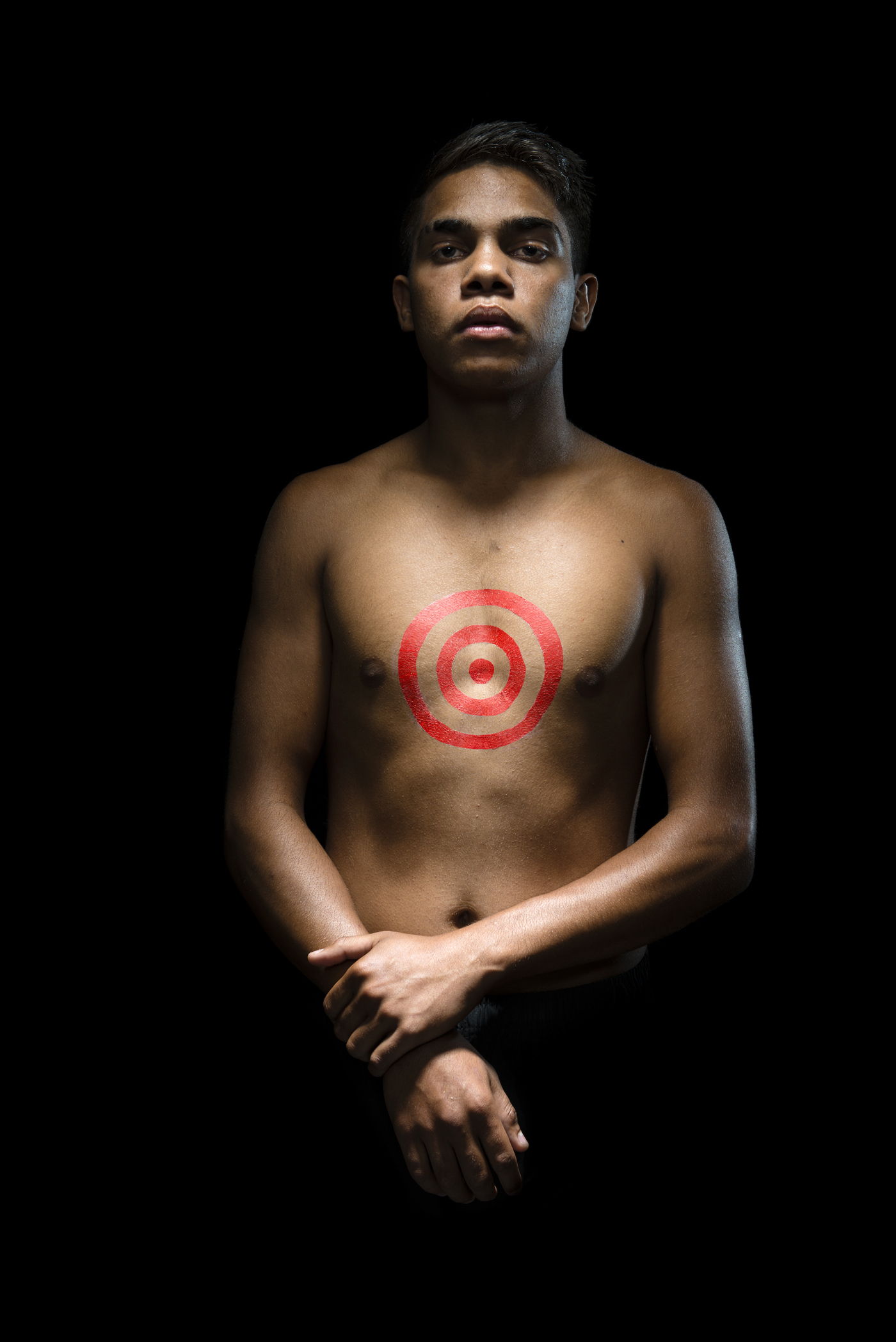
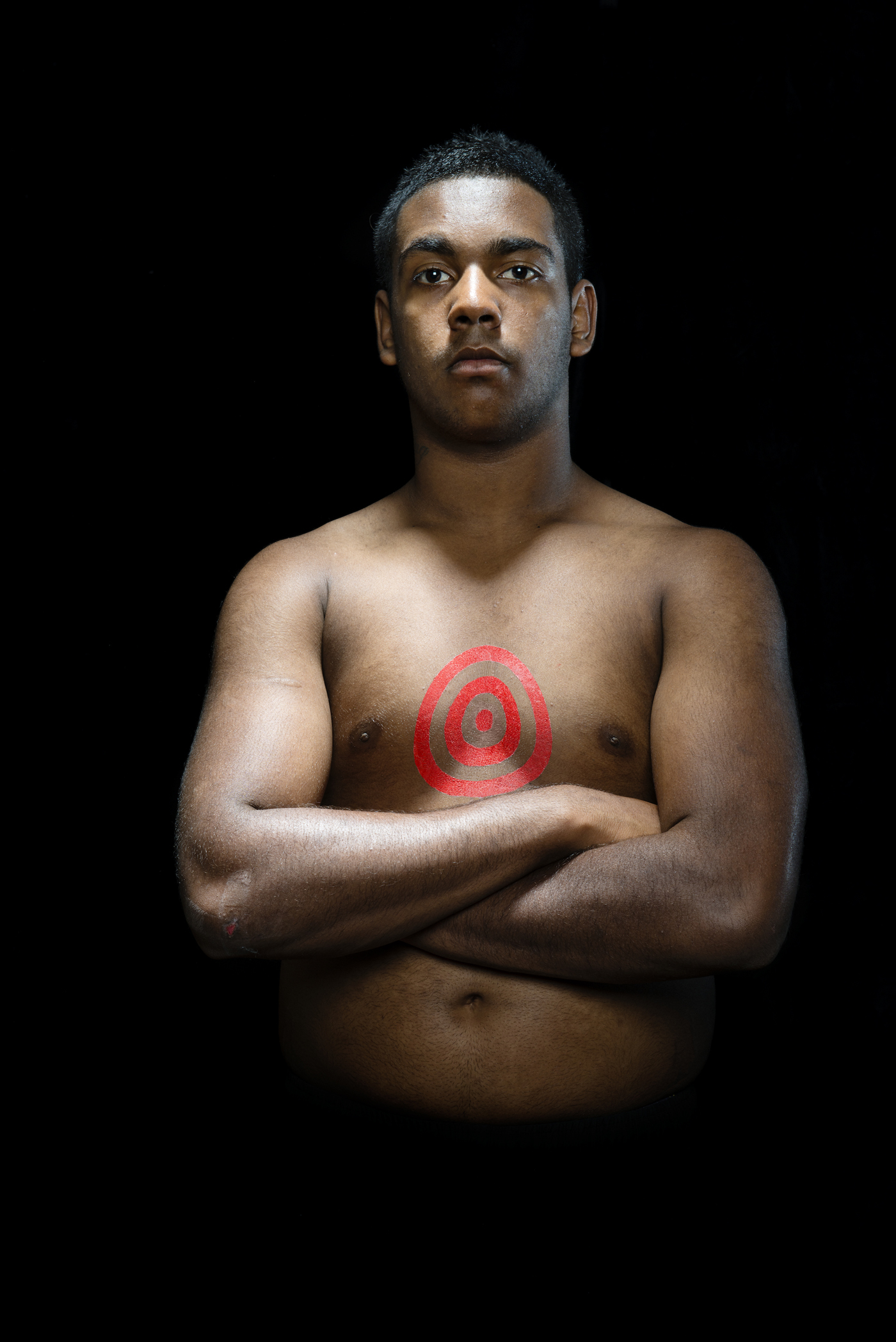
Tony Albert (Australia, b. 1981) 'Brother (Our Past)' 2013 from the exhibition 'The Unflinching Gaze: photo media and the male figure' at the Bathurst Regional Art Gallery, New South Wales, October - December, 2017

Tony Albert (Australia, b. 1981) 'Brother (Our Present)' 2013 from the exhibition 'The Unflinching Gaze: photo media and the male figure' at the Bathurst Regional Art Gallery, New South Wales, October - December, 2017

Tony Albert (Australia, b. 1981) 'Brother (Our Future)' 2013 from the exhibition 'The Unflinching Gaze: photo media and the male figure' at the Bathurst Regional Art Gallery, New South Wales, October - December, 2017


Tony Albert (Australian, b. 1981)
Brother (Our Past) 2013
Brother (Our Present) 2013
Brother (Our Future) 2013
Pigment on paper, edition of 3 150 x 100cm each
Courtesy UTS Art, Corrigan Collection


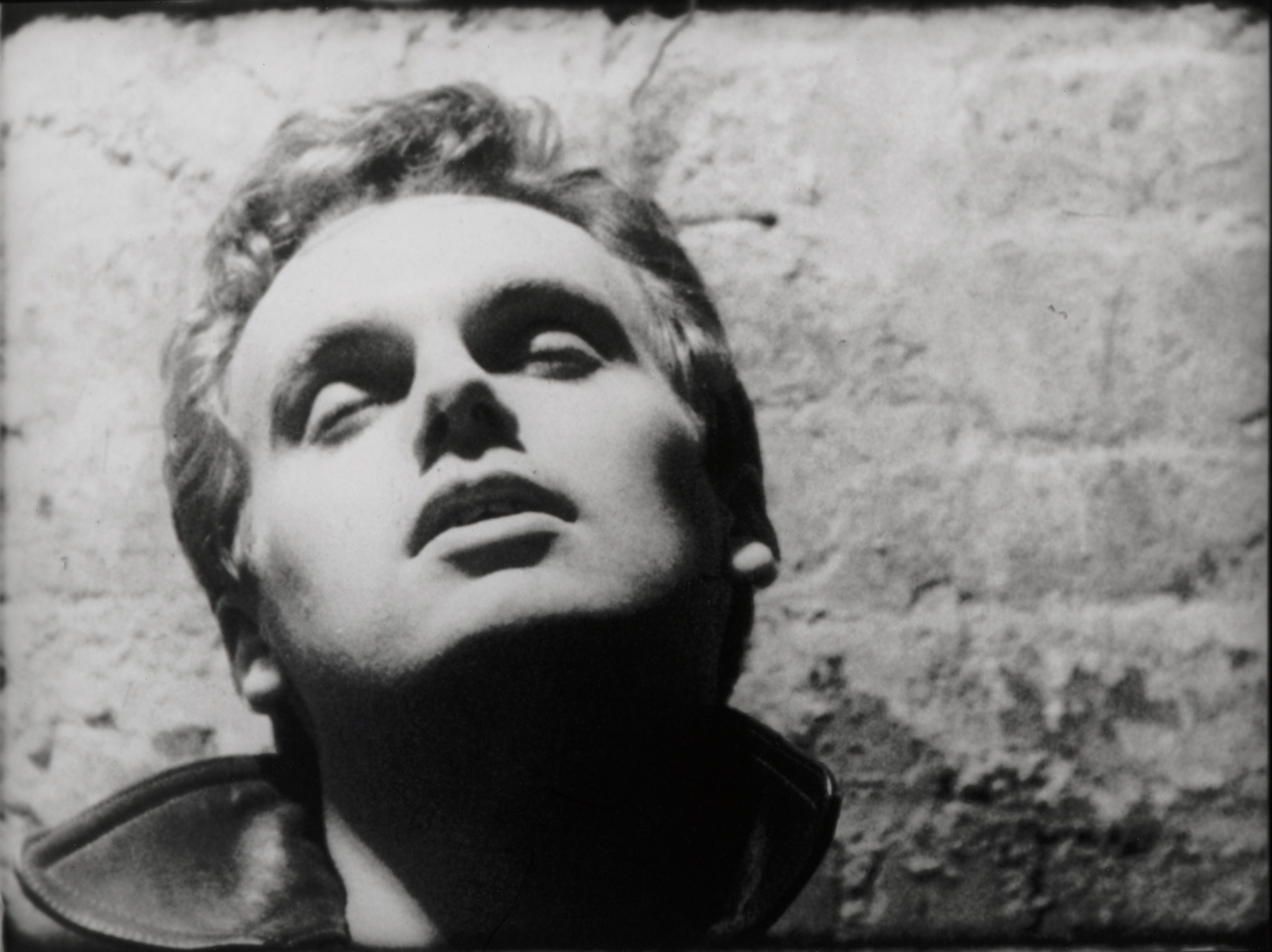
Andy Warhol (United States, 1928-1987) 'Blow Job' 1964 (still)


Andy Warhol (American, 1928-1987)
Blow Job [still]
1964
16mm film, black and white, silent duration: 41 min at 16 frames per second
© 2017 The Andy Warhol Museum, Pittsburgh, PA, a museum of Caregie Institute. All rights reserved


Andy Warhol (American, 1928-1987)
Blowjob
1964


Blow Job is a silent film directed by Andy Warhol. It depicts the face of an uncredited DeVeren Bookwalter as he apparently receives fellatio from an unseen partner. While shot at 24 frames per second, Warhol specified that it should be projected at 16 frames per second, slowing it down by a third.

Whether it is a male or a female performing the act is not stated, and the viewer must assume that fellatio is occurring. The salaciousness has also been speculated to be entirely in the title with no fellatio actually being performed. The identity of the person performing the act is disputed. Warhol states in his book Popism: The Warhol Sixties (1980) that five different boys performed the fellatio. In this book, Warhol writes that he originally asked Charles Rydell, the boyfriend of filmmaker Jerome Hill, to star in the film, promising that there would be “five beautiful boys” to perform the act.

However, when Warhol set up the film shoot at The Factory on a Sunday, Rydell failed to show up. Warhol phoned Rydell at Hill’s suite at the Algonquin Hotel and asked where Rydell was. Rydell replied that he thought Warhol was kidding and had no intention of appearing in such a film. When he declined Andy used “a good-looking kid that happened to be hanging around the Factory that day”, who was later identified as Bookwalter. According to Peter Gidal, the film distances the viewer from the experience it purportedly depicts, “Sometimes the young actor looks bored, sometimes as if he is thinking, sometimes as if he is aware of the camera, sometimes as if he is not.” Douglas Crimp states that after a few minutes, “it becomes clear that we will see nothing more than the repetition, with slight variations, of what we’ve already seen”. This frees the mind to look in a different way. Likewise, the sexual act has the effect of distracting the actor from the presence of the camera, creating a unique kind of unselfconsciousness.

Critic Roy Grundmann argues that “Blow Job‘s self-reflexive devices create a new kind of spectatorial address that dislodges audiences from their contemplative positions in a number of ways. Blow Job‘s reflexivity makes spectators intensely aware that seeing a film makes projecting onto and investing into an image a part of oneself which is also a socialized acculturated act”. Grundmann further claims that “viewers oscillate between an awareness of their contingency on the larger scheme and the promise of ocular centric mastery of the image”.

Text from the YouTube website


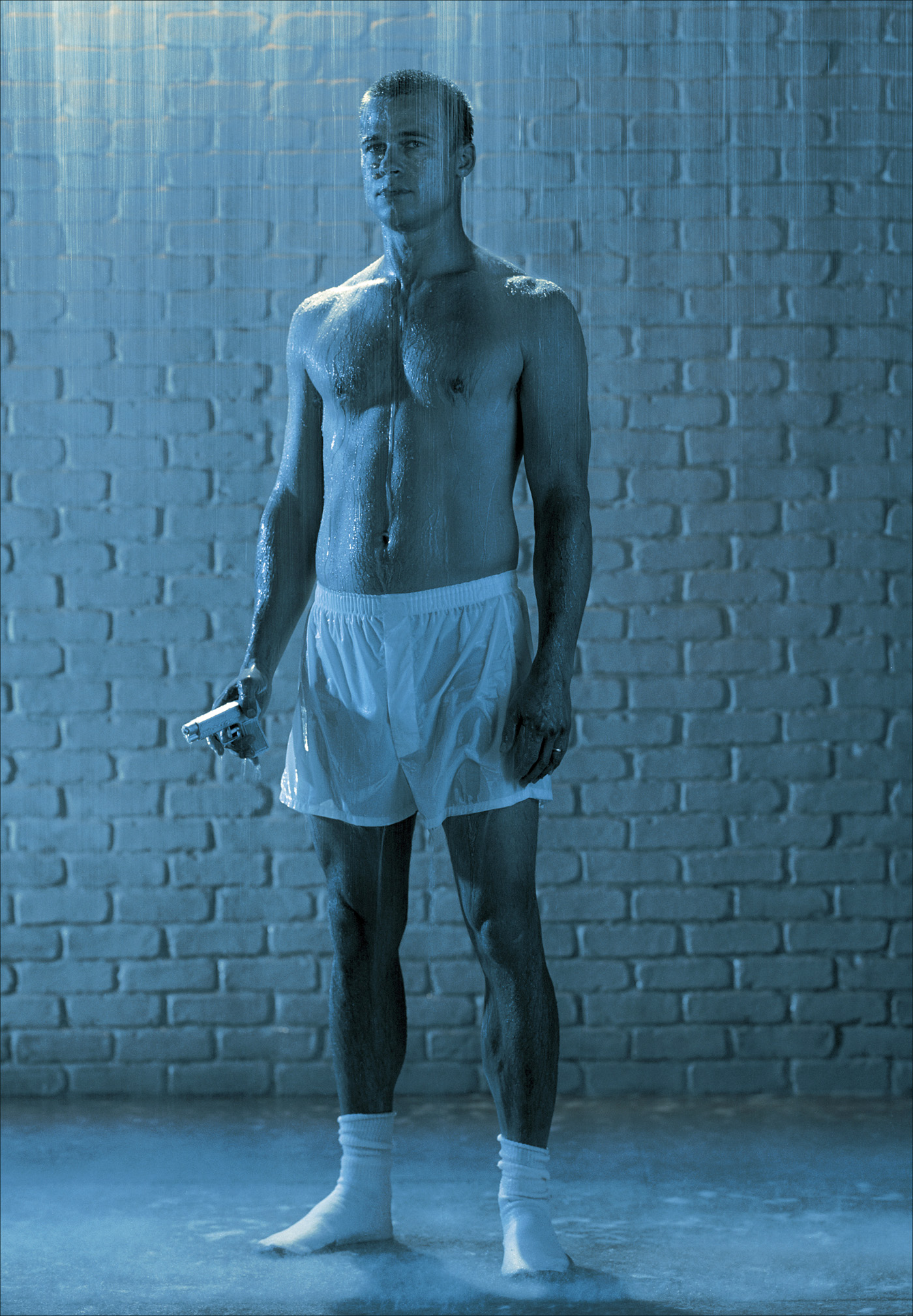
Robert Wilson (American, b. 1941) 'Brad Pitt' 2004 (video still)


Robert Wilson (American, b. 1941)
Brad Pitt
2004
Video portrait, looped
Dimensions variable
Courtesy the artist and the Byrd Hoffman Water Mill Foundation, New York


Robert Wilson (American, b. 1941)
Brad Pitt video portrait
2004


Peter Elfes (Australia, b. 1961) 'Brenton [Heath-Kerr] as Tom of Finland' 1992


Peter Elfes (Australian, b. 1961)
Brenton (Heath-Kerr) as Tom of Finland
1992
Cibachrome print
51 x 40.6cm
Courtesy the artist
© Peter Elfes


Casa Susanna Attributed to Andrea Susan '(Lee in white dress)' 1961


Casa Susanna
Attributed to Andrea Susan
(Lee in white dress)
1961
Digital copy from colour photographs
Collection of Art Gallery of Ontario, purchased with funds generously donated by Martha LA McCain 2015
© Art Gallery of Ontario
Photo: Ian Lefebvre


Nikki Johnson (American, b. 1972) 'David Amputation Fetishist' 2007


Nikki Johnson (American, b. 1972)
David Amputation Fetishist
2007
Digital print (from a set of images)
Courtesy the artist


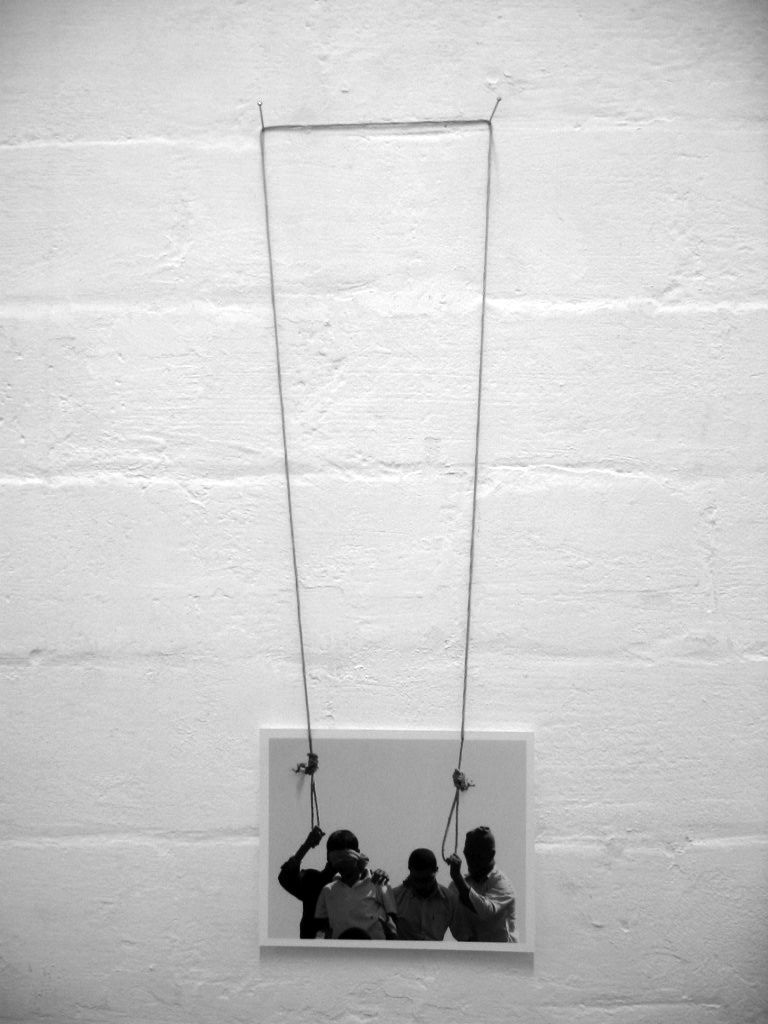
Luke Parker (Australian, b. 1975) 'Double hanging' 2005


Luke Parker (Australian, b. 1975)
Double hanging
2005
Photograph, cotton thread, pins
15 x 40cm
Courtesy the artist and 55 Sydenham Rd


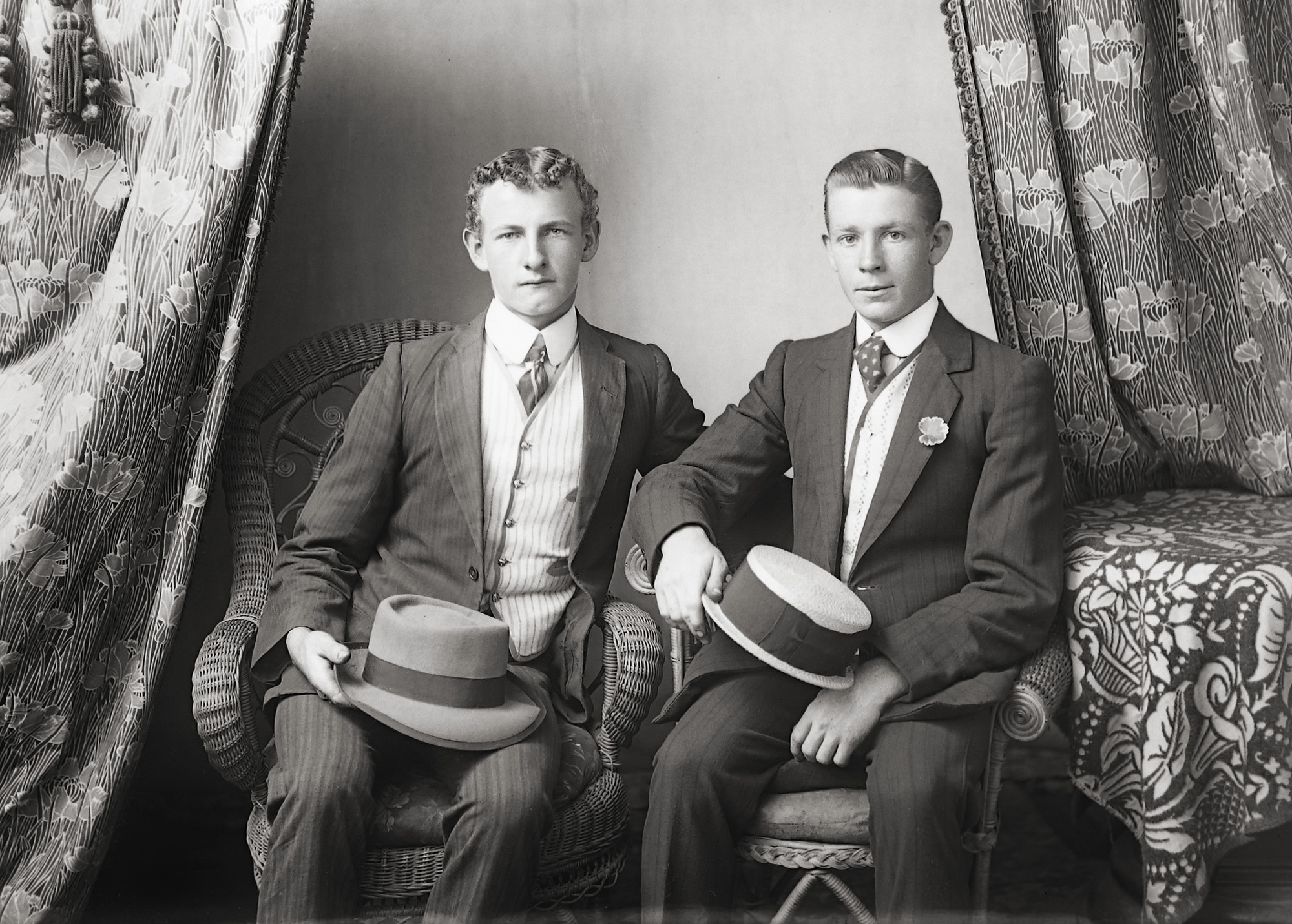
Gregory Collection. 'Mr Cullen & Mr Gornall' Date unknown


Gregory Collection
Mr Cullen & Mr Gornall
Date unknown
Digital copy from scanned negative
Courtesy the Bathurst Historical Society


Two hundred photos and videos by sixty two leading artists (twenty four Australian and thirty eight international) will be exhibited at Bathurst Regional Art Gallery (BRAG) from Saturday 14 October until Sunday 3 December 2017.

Curated by BRAG Director Richard Perram OAM, an openly gay man, The Unflinching Gaze: photo media and the male figure surveys how the male figure has been depicted by Australian and international artists in photo media over the last 140 years. It includes historic and contemporary fine art photography and film, fashion photography, pop videos and homoerotic art. Images range from the beautiful to the banal to the confounding.

Key artists in the exhibition include iconic American artists Robert Mapplethorpe, Andy Warhol, and avant-garde theatre director Robert Wilson with a video portrait of Brad Pitt; European artists such as Eadweard Muybridge, and Baron Wilhelm Von Gloeden; and historic and contemporary Australian artists including Beaufoy Merlin and Charles Bayliss, Max Dupain, Deborah Kelly, William Yang, Gary Carsley, Owen Leong and Liam Benson. Works have been sourced from Australian and international collections, including a major loan of 60 works from the Leslie-Lohman Museum of Gay and Lesbian Art, New York.

The exhibition brings an unflinching gaze to how concepts of humanity and the male figure are intertwined and challenged. Themes include the Pink Triangle, which deals with the persecution, torture and genocide of homosexuals in concentration camps during World War II to those in Chechyna today; and the AIDS crisis in the 1980s.

The Unflinching Gaze exhibition is a unique opportunity for audiences in the Bathurst Region to access a world class photo-media exhibition, says Richard Perram OAM. The Unflinching Gaze not only deals with aesthetic concerns but also engages the community in a discussion around social issues. BRAG is working with local Bathurst LGBTI community groups to ensure that one of the most important outcomes of the exhibition will be to inform and educate the general Bathurst community and support and affirm the Bathurst LGBTI community.

The Unflinching Gaze: photo media and the male figure is a Bathurst Regional Art Gallery exhibition in partnership with Leslie Lohman Museum of Gay and Lesbian Art, New York. Curated by Richard Perram OAM. This exhibition is supported by the Dobell Exhibition Grant, funded by the Sir William Dobell Art Foundation and managed by Museums & Galleries of NSW.
Press release from the Bathurst Regional Art Gallery (BRAG)
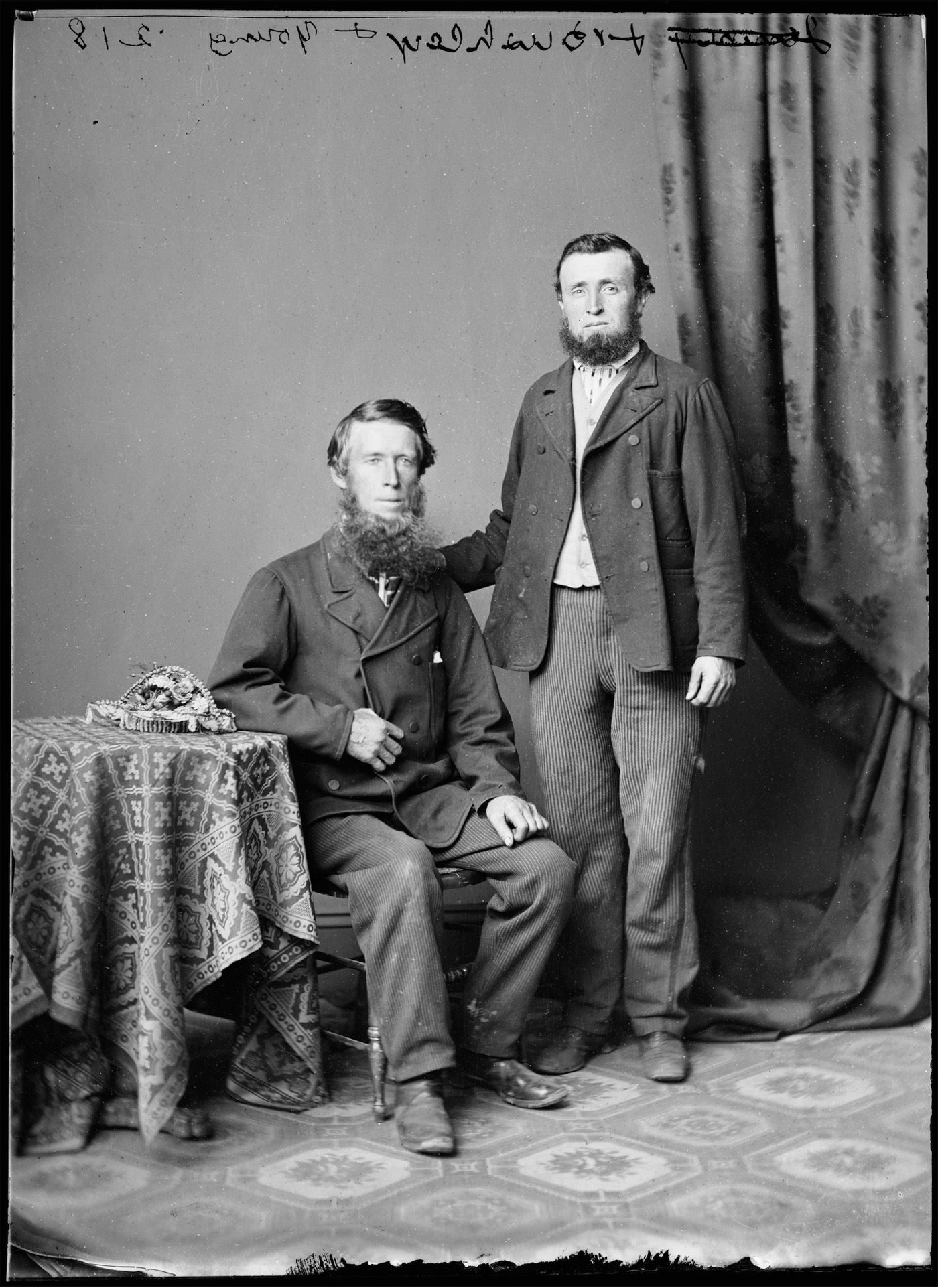
 

American & Australian Photographic Company (Beaufoy Merlin & Charles Bayliss) 'Mssrs. Bushley & Young' Nd


American & Australian Photographic Company
(Beaufoy Merlin and Charles Bayliss)
Mssrs. Bushley & Young
Nd
Digital reproductions from glass photo negatives, quarter plate
From the Collections of the State Library of NSW
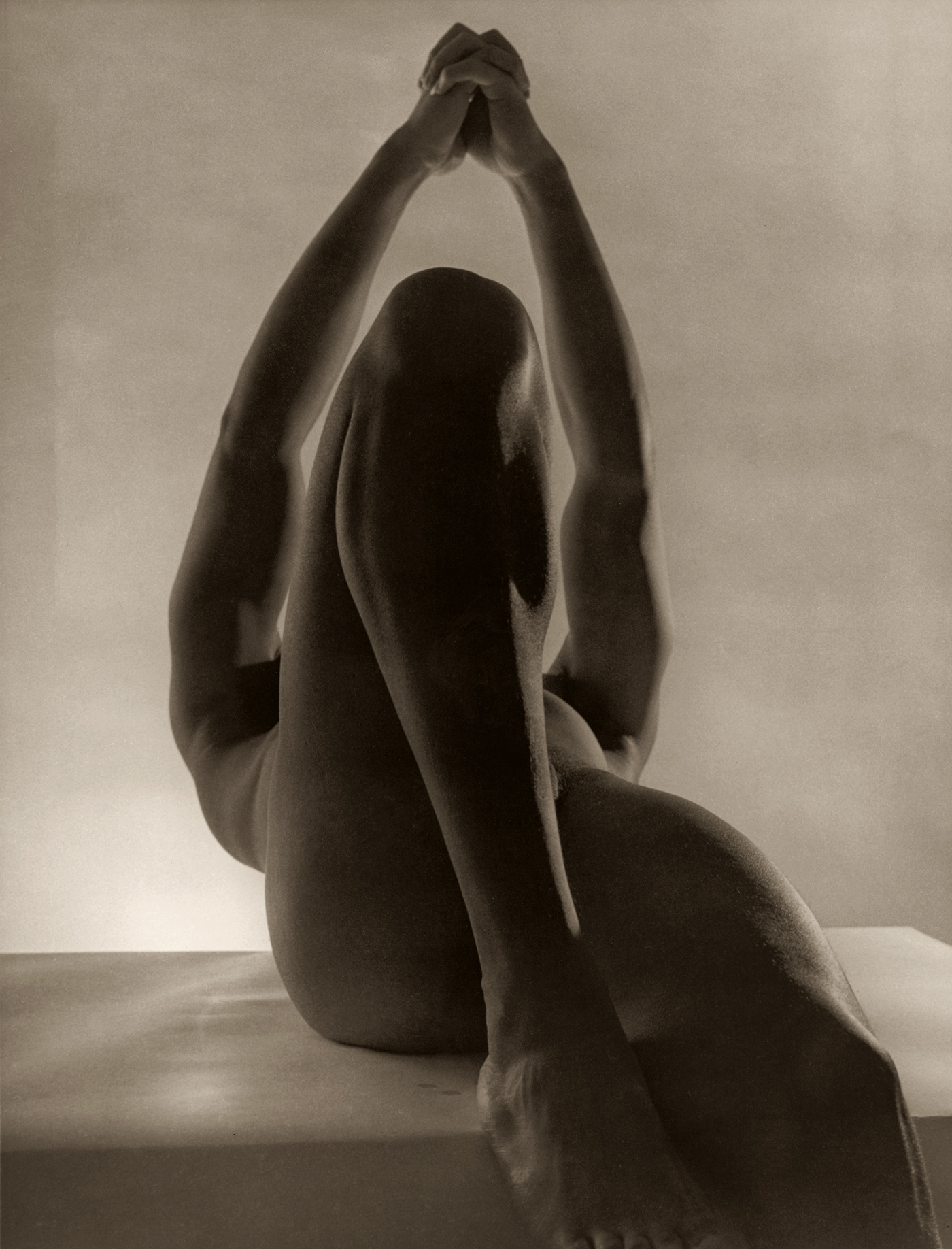
 

Horst P. Horst (Germany; United States, 1906-1996) 'Male Nude I NY' 1952


Horst P. Horst (Germany; United States, 1906-1996)
Male Nude I NY
1952
Silver gelatin print
25.4 x 20.3cm
Leslie-Lohman Museum of Gay & Lesbian Art, gift of Ricky Horst
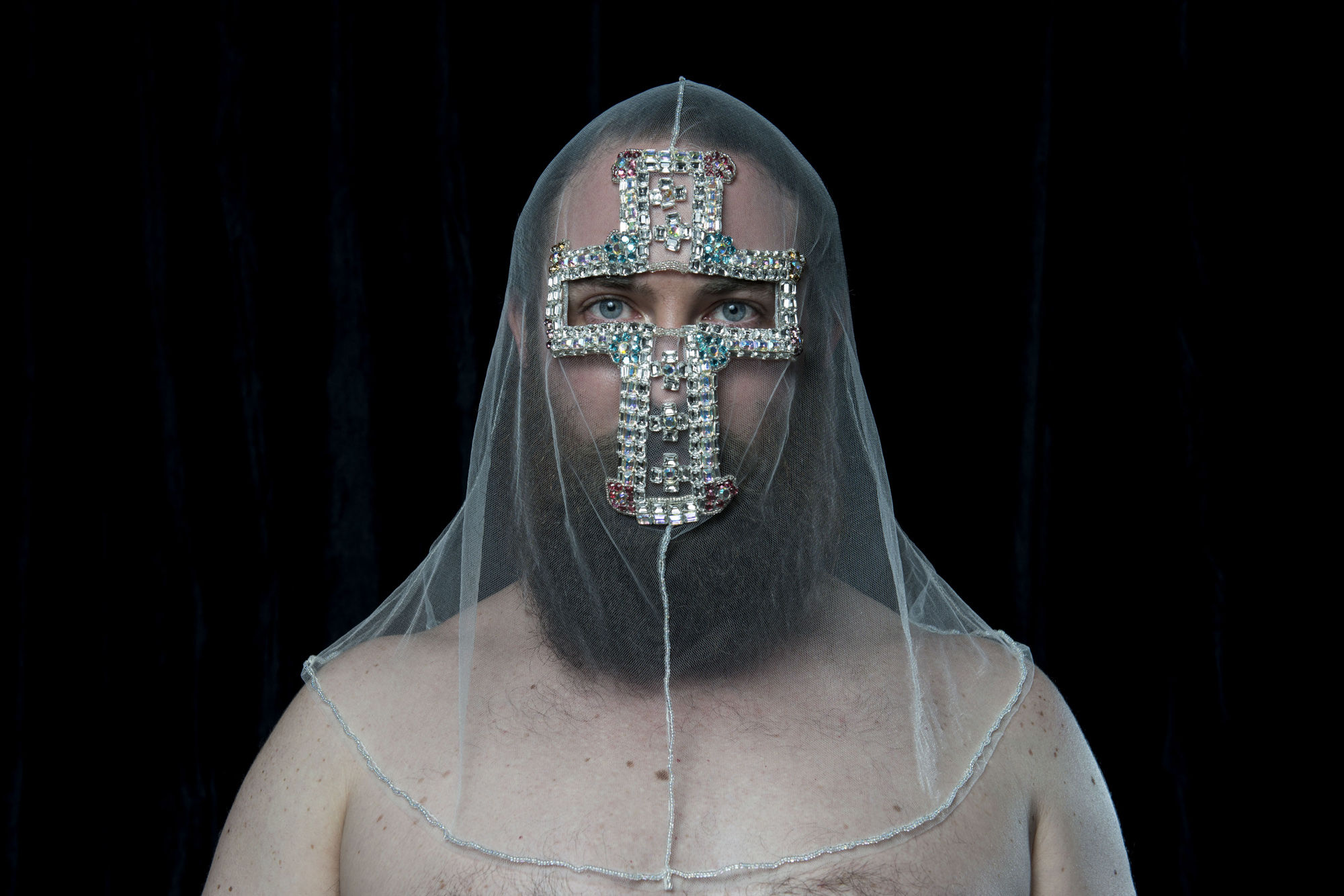
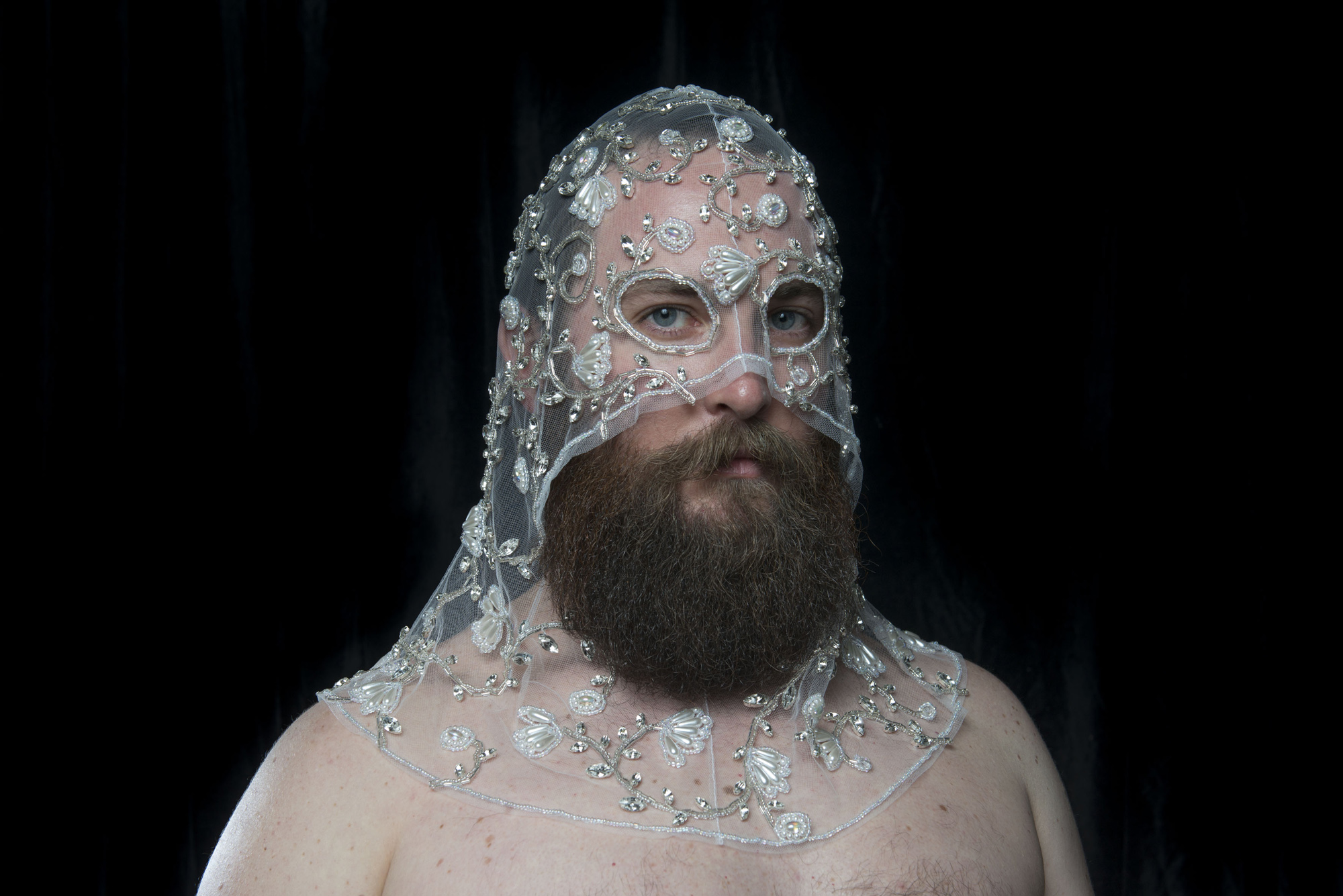
 

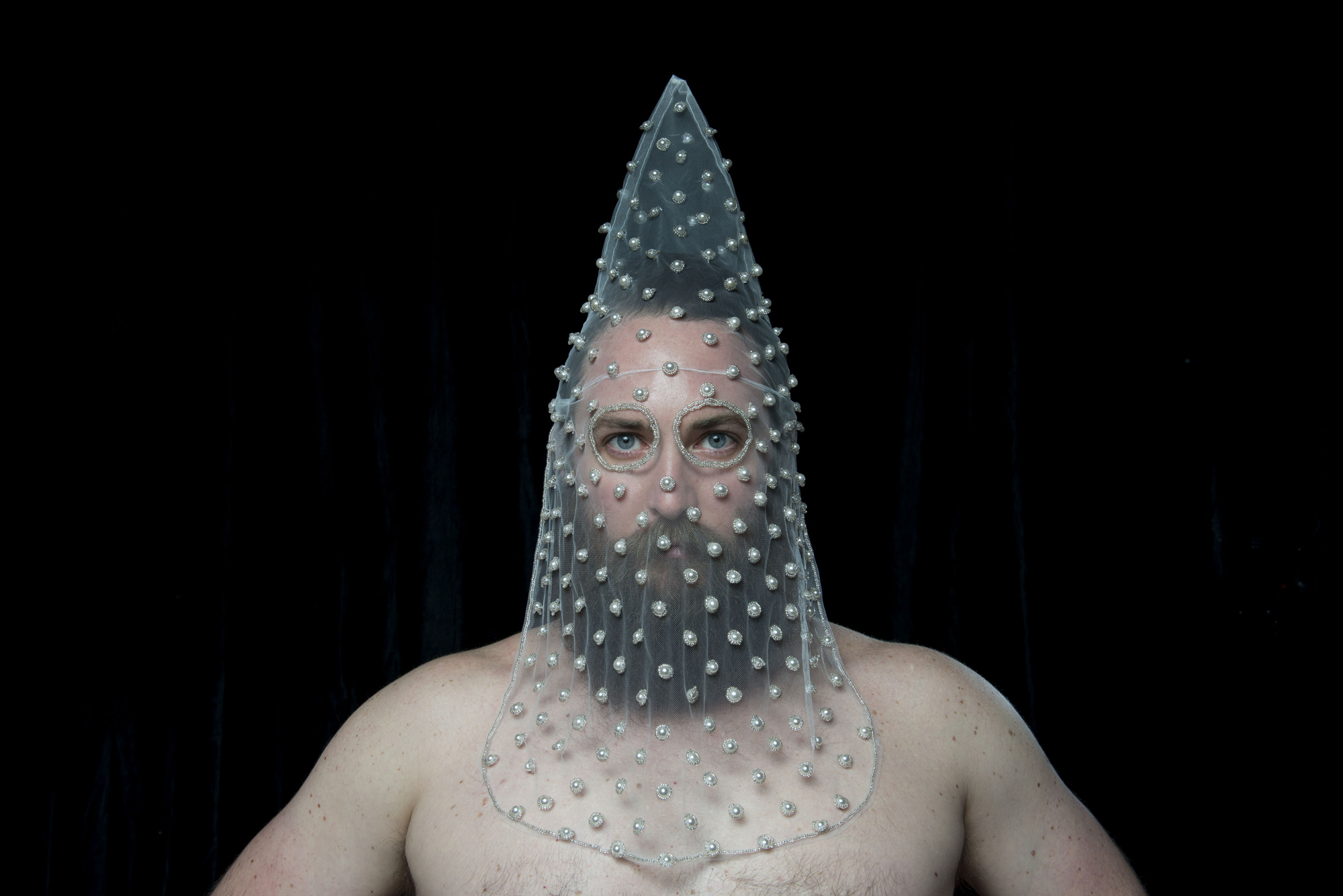
Liam Benson (Australian, b. 1980) 'The Crusader' 2015

Liam Benson (Australian, b. 1980) 'The Executioner' 2015

Liam Benson (Australian, b. 1980) 'The Terrorist' 2015


Liam Benson (Australian, b. 1980)
The Crusader 2015
The Executioner 2015
The Terrorist 2015
Inkjet print on cotton rag paper, edition of 5 90 x 134cm
Photograph by Alex Wisser
Courtesy of the artist and Artereal Gallery
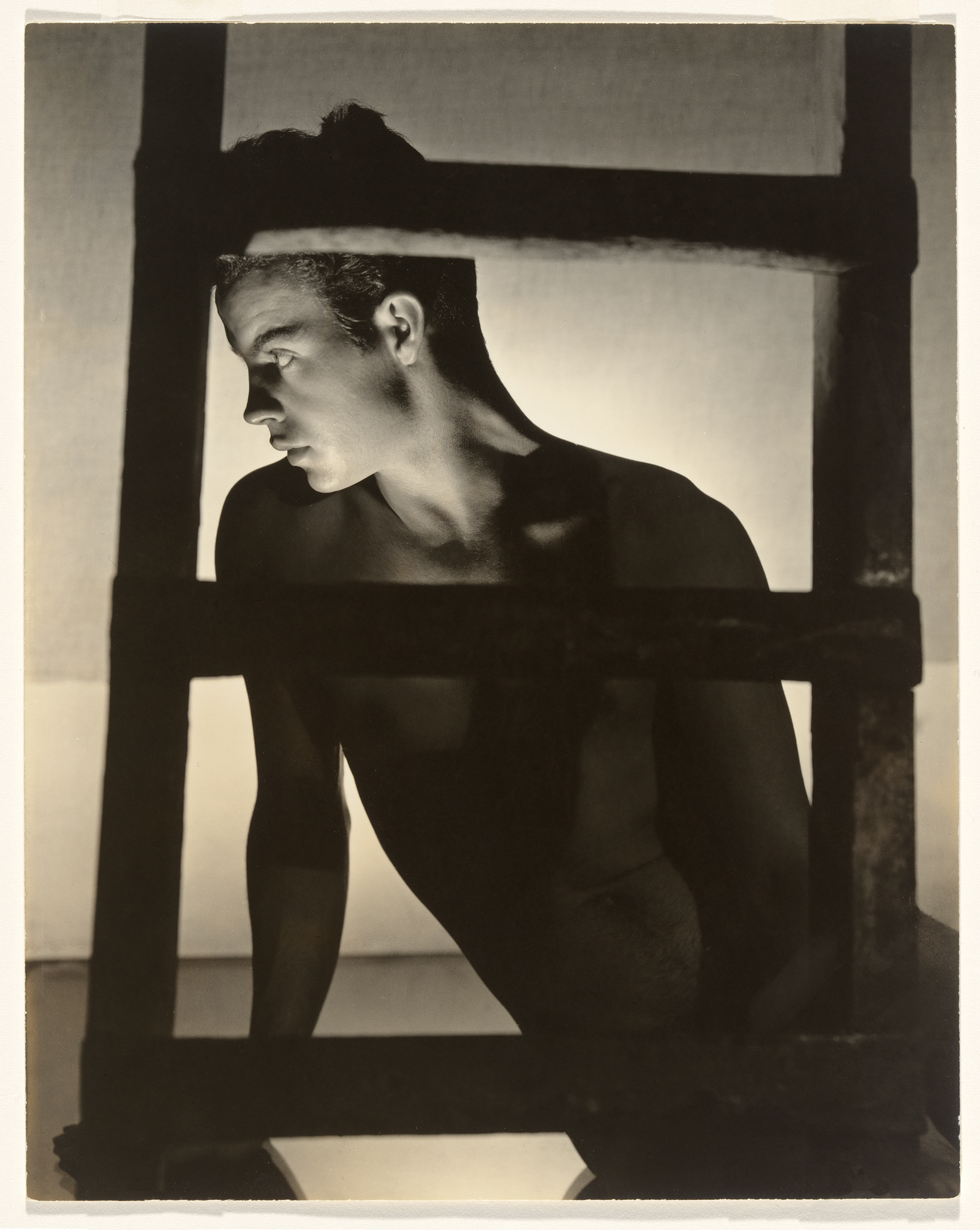


George Platt Lynes (American, 1907-1955) 'Blanchard Kennedy' 1936


George Platt Lynes (American, 1907-1955)
Blanchard Kennedy
1936
Gelatin silver photograph
23 x 18.2cm
National Gallery of Australia, Canberra. Purchased 1981
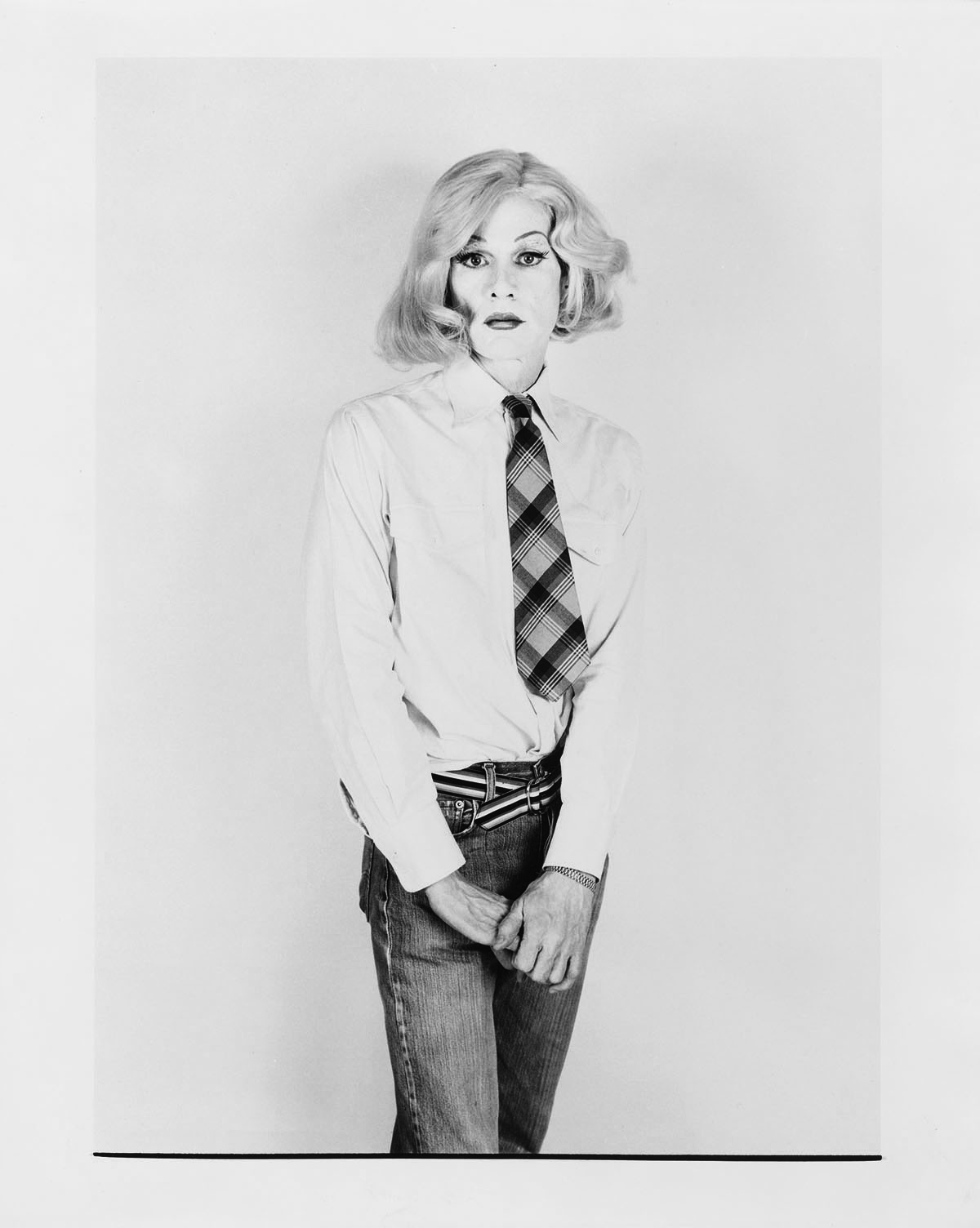
 

Christopher Makos (American, b. 1948) 'Altered Image: One Photograph of Andy Warhol' 1982


Christopher Makos (American, b. 1948)
Altered Image: One Photograph of Andy Warhol
1982
Gelatin silver photograph
50.6 x 40.8cm each
National Gallery of Australia, Canberra. Purchased 1982
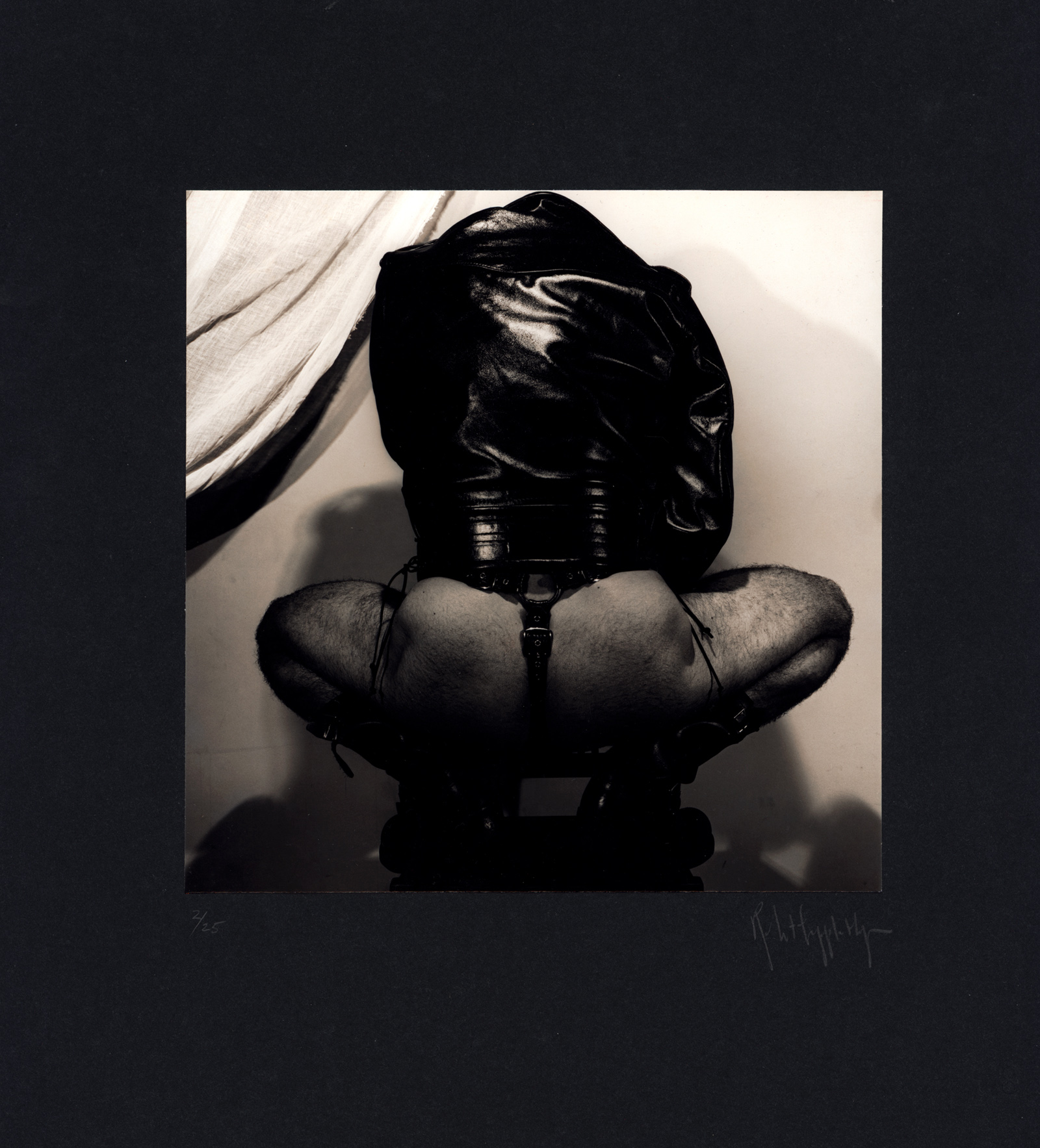
 

Robert Mapplethorpe (United States, 1946-1989) 'Helmut, N.Y.C. (from X Portfolio)' 1978


Robert Mapplethorpe (American, 1946-1989)
Helmut, N.Y.C. (from X Portfolio)
1978
Selenium toned silver gelatin print
19.7 x 19.7cm
Leslie-Lohman Museum of Gay & Lesbian Art, Foundation Purchase
© Robert Mapplethorpe Foundation. Used by permission
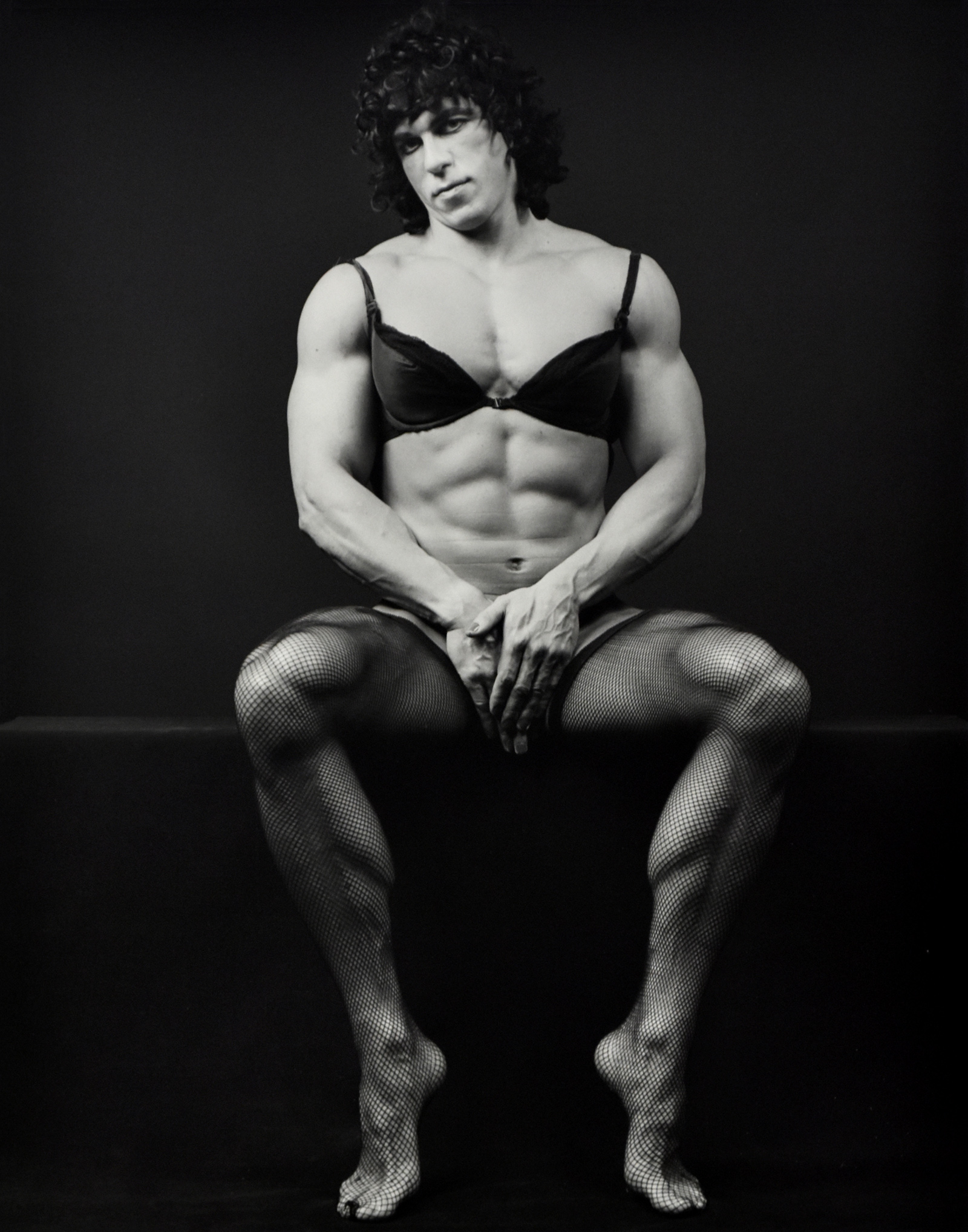
 

Robert Mapplethorpe (United States, 1946-1989) 'Roger Koch aka Frank Vickers: From the "Roger" Series' 1983


Robert Mapplethorpe (American, 1946-1989)
Roger Koch aka Frank Vickers: From the “Roger” Series
1983
Gelatin silver photo
48.9 x 38.1cm
Leslie-Lohman Museum of Gay & Lesbian Art, Founders Gift
© Robert Mapplethorpe Foundation. Used by permission


Body, image and society

Goffman’s approach to the body is characterised by three main features. First, there is a view of the body as material property of individuals. In contrast to naturalistic views … Goffman argues that individuals usually have the ability to control and monitor their bodily performances in order to facilitate social interaction. Here, the body is associated with the exercise of human agency, and it appears in Goffman’s work as a resource which both requires and enables people to manage their movements and appearances.

Second, while the body is not actually produced by social forces, as in Foucault’s work, the meanings attributed to it are determined by ‘shared vocabularies of body idiom’ which are not under the immediate control of individuals (E. Goffman, Behaviour In Public Places: Notes on the Social Organisation of Gatherings, The Free Press, New York, 1963, p.35). Body idiom is a conventionalized form of non-verbal communication which is by far the most important component of behaviour in public. It is used by Goffman in a general sense to refer to ‘dress, bearing, movements and position, sound level, physical gestures such as waving and saluting, facial decorations, and broad emotional expressions’ (Goffman, 1963:33). As well as allowing us to classify information given off by bodies, shared vocabularies of body idiom provide categories which label and grade hierarchically people according to this information. Consequently, these classifications exert a profound influence over ways in which individuals seek to manage and present their bodies.

The first two features of Goffman’s approach suggest that human bodies have a dual location. Bodies are the property of individuals, yet are defined as significant and meaningful by society. This formulation lies at the core of the third main feature of Goffman’s approach to the body. In Goffman’s work, the body plays an important role in mediating the relationship between people’s self-identity and their social identity. The social meanings which are attached to particular bodily forms and performances tend to become internalized and exert a powerful influence on an individuals sense of self and feelings of inner worth.

Goffman’s general approach to the body is revealed through his more specific analyses of the procedures involved in what he terms the ‘interaction order’. Goffman conceptualises the interaction order as somehow autonomous sphere of social life (others include the economic sphere) which should not be seen as ‘somehow prior, fundamental, or constitutive of the shape of macroscopic phenomena’ (Goffman, 1983:4). His analysis of this sphere of life demonstrates that intervening successfully in daily life, and maintaining a single definition in the face of possible disruptions, requires a high degree of competence in controlling the expressions, movements and communications of the body.” (Goffman, 1969).

Schilling, Chris. The Body and Social Theory. London: Sage Publications, 1993, pp. 82-83.
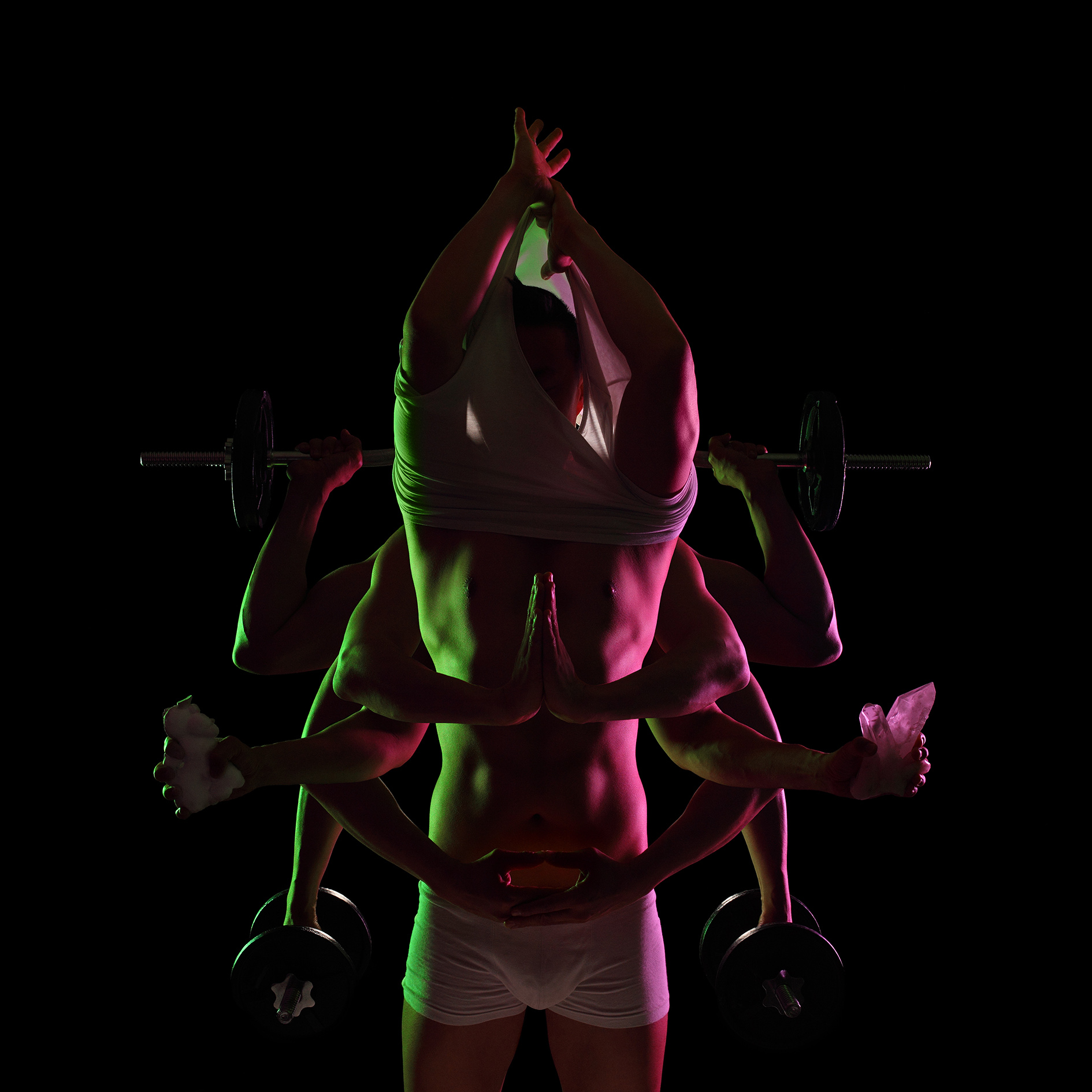
 

Owen Leong (Australian, b. 1979) 'Resistance Training' 2017


Owen Leong (Australian, b. 1979)
Resistance Training
2017
Archival pigment print on cotton paper, edition of 5 + 2 AP
120 x 120cm
Courtesy the artist and Artereal Gallery, Sydney Commissioned by BRAG for The Unflinching Gaze: photo media & the male figure with funds from BRAGS Inc. (Bathurst Regional Art Gallery Society Inc.)
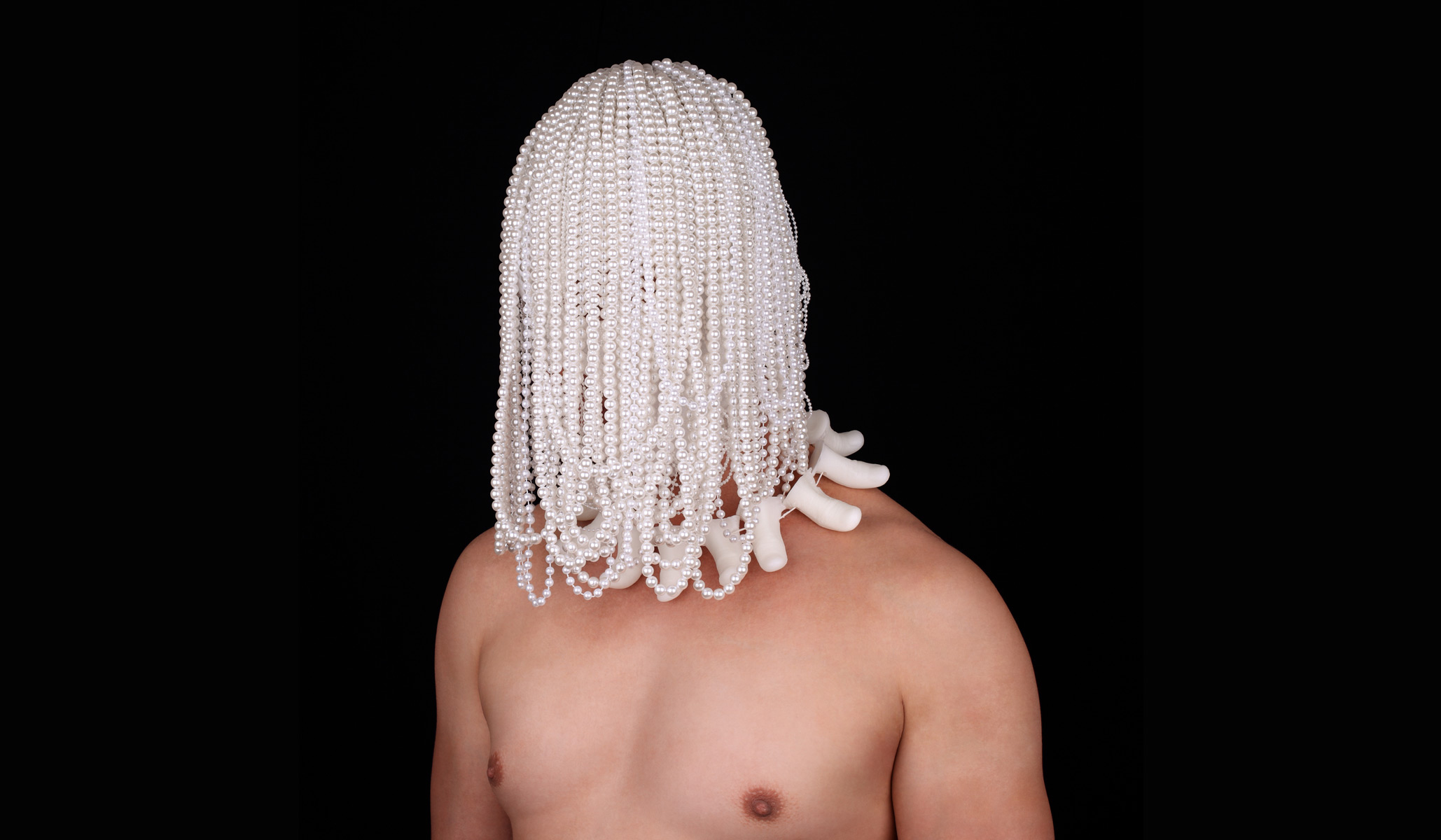
 

Owen Leong (Australian, b. 1979) 'Milk Teeth' 2014


Owen Leong (Australian, b. 1979)
Milk Teeth
2014
Archival pigment print on cotton paper, edition of 5 + 2Ap
120 x 120cm
Courtesy of the artists and Artereal Gallery Sydney
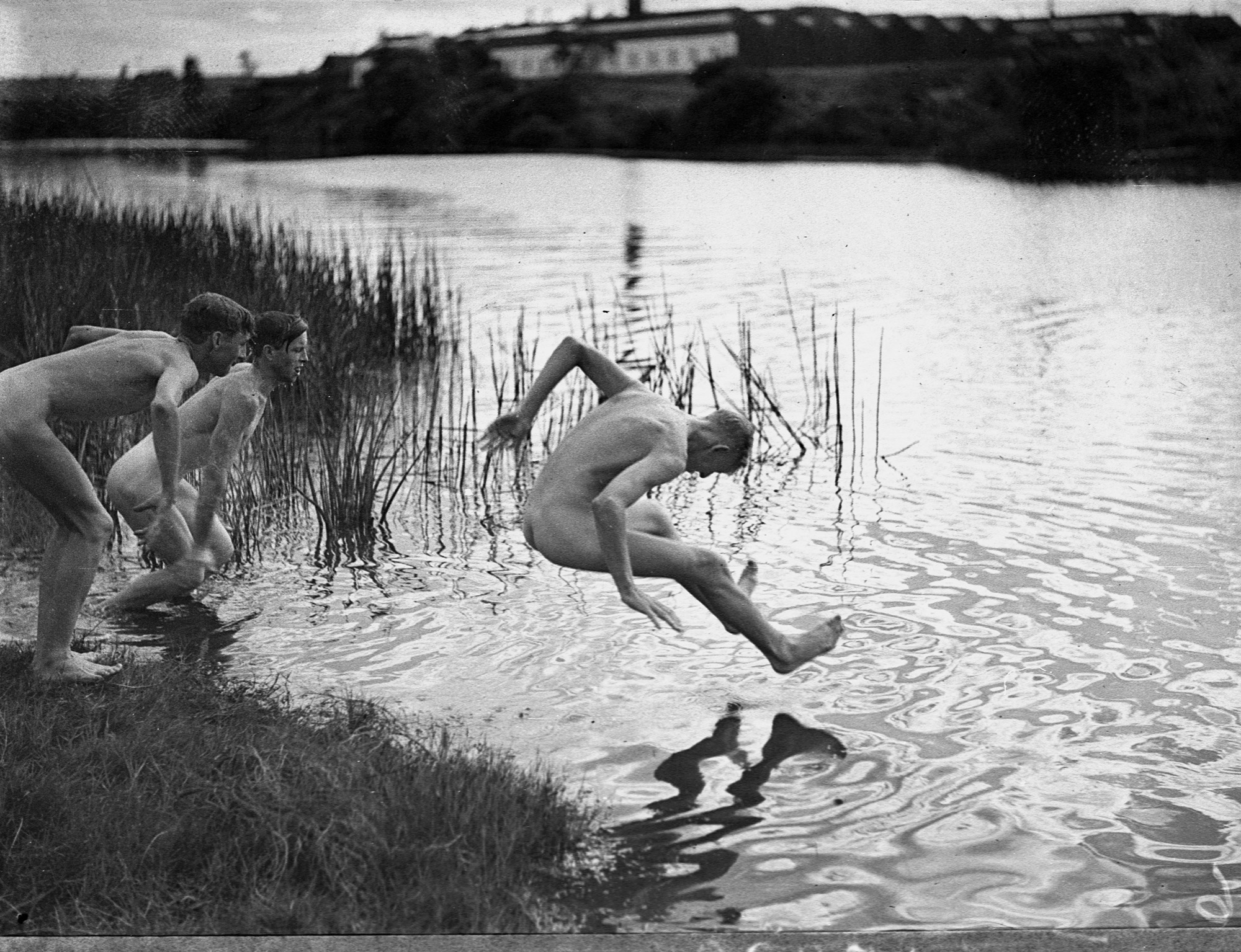
 

Samuel J Hood (Australia, 1872-1953) 'The 9th Field Brigade' 24/2/1938


Samuel J Hood (Australian, 1872-1953)
The 9th Field Brigade (four images)
24/2/1938 (Liverpool, NSW)
Photo negative (copied from original nitrate photograph) 35mm
From the Collections of the State Library of NSW
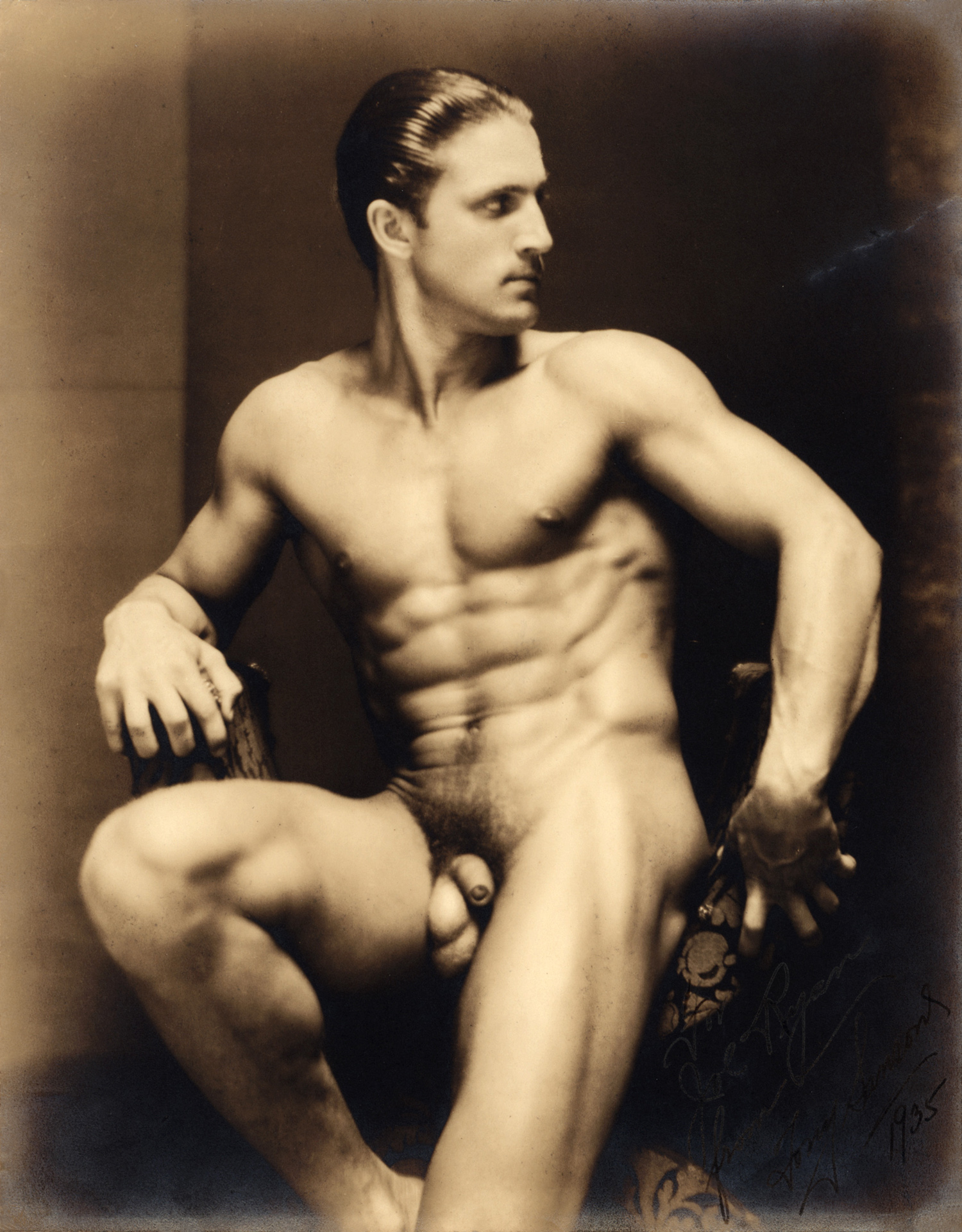
 

Anthony Sansone (Italy; United States, 1905-1987) 'Untitled' 1935


Anthony Sansone (Italy; United States, 1905-1987)
Untitled
1935
Bromide print
24.1 x 18.9cm
Leslie-Lohman Museum of Gay & Lesbian Art, gift of David Aden Gallery
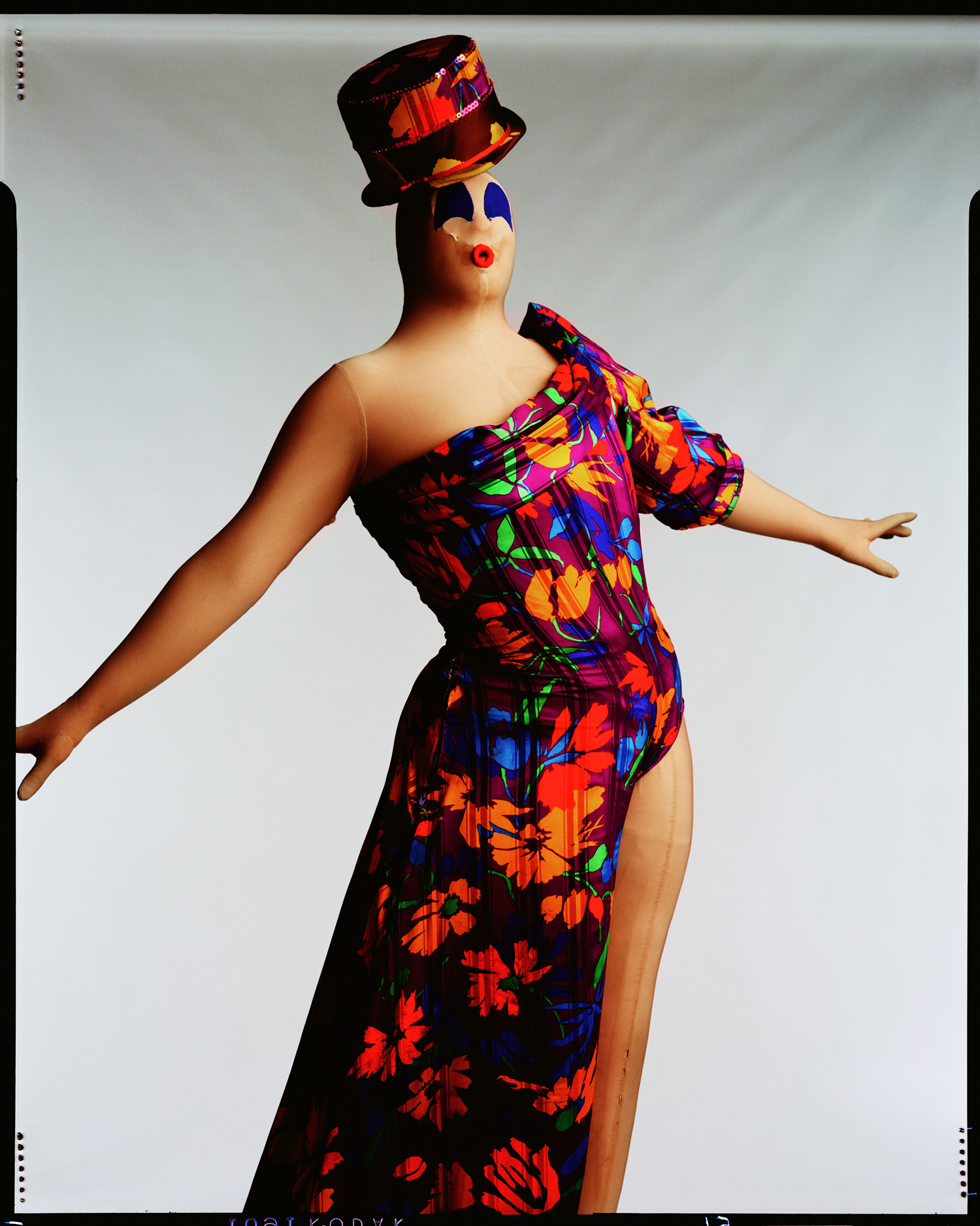
 

Fergus Greer (United Kingdom, 1961-1994) 'Leigh Bowery, Session V' Look 27 February 1992


Fergus Greer (United Kingdom, 1961-1994)
Leigh Bowery, Session V
Look 27 February 1992
Digital reproduction
Courtesy Fergus Greer
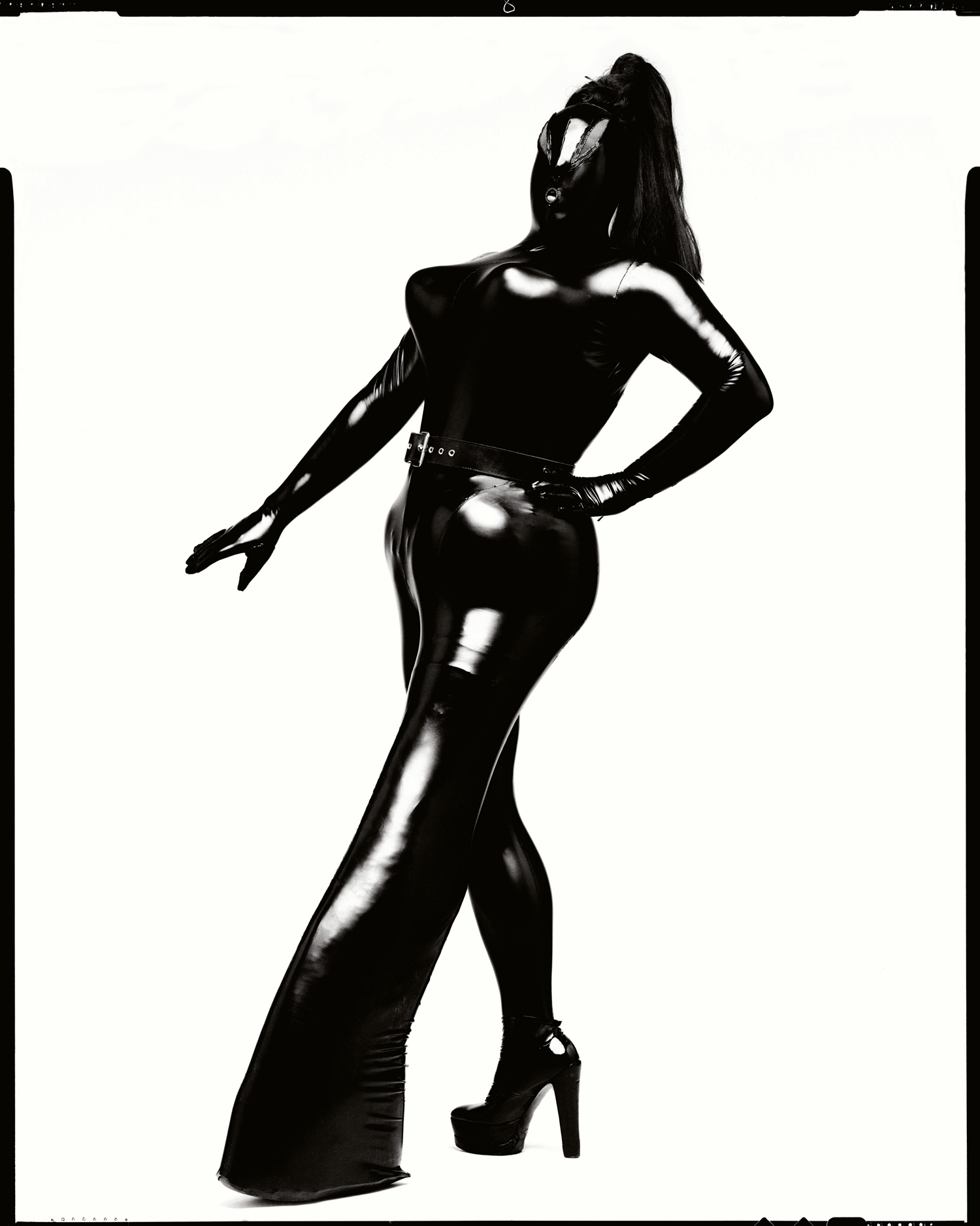
 

Fergus Greer (United Kingdom, 1961-1994) 'Leigh Bowery, Session VII' Look 34, June 1994


Fergus Greer (United Kingdom, 1961-1994)
Leigh Bowery, Session VII
Look 34, June 1994
Digital reproduction
Courtesy Fergus Greer
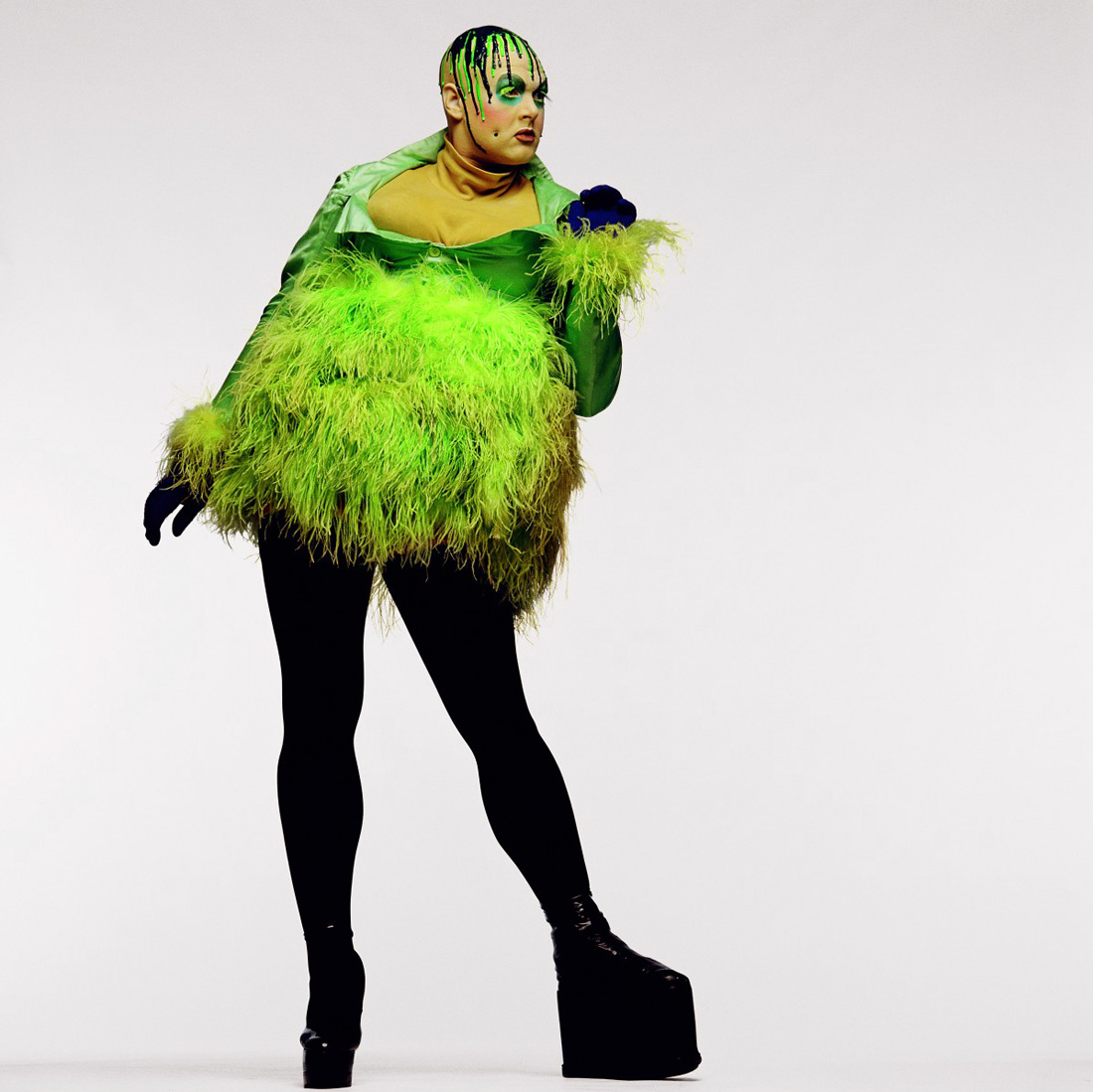
 

Fergus Greer (English, 1961-1994) 'Leigh Bowery, Session VII, Look 34' June 1994


Fergus Greer (United Kingdom, 1961-1994)
Leigh Bowery, Session VII, Look 34
June 1994
Silver gelatin print
60.7 × 50.5cm
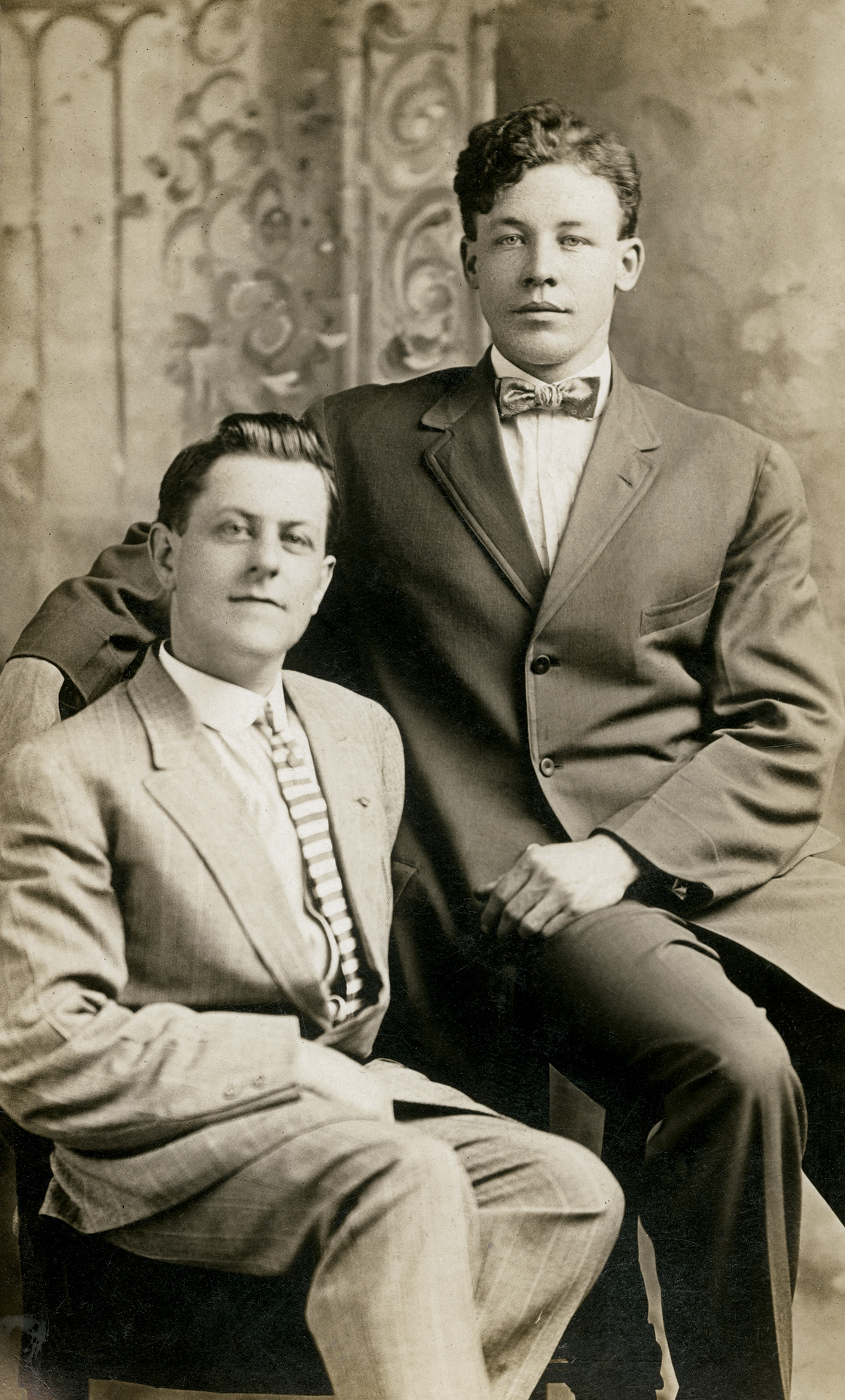
 

Unknown American photographer. 'Vintage photograph from the Closeted History/Wunderkamera' Nd


Unknown American photographer
Vintage photograph from the Closeted History/Wunderkamera
Nd
Tintypes, paper photographs
Collection of Luke Roberts
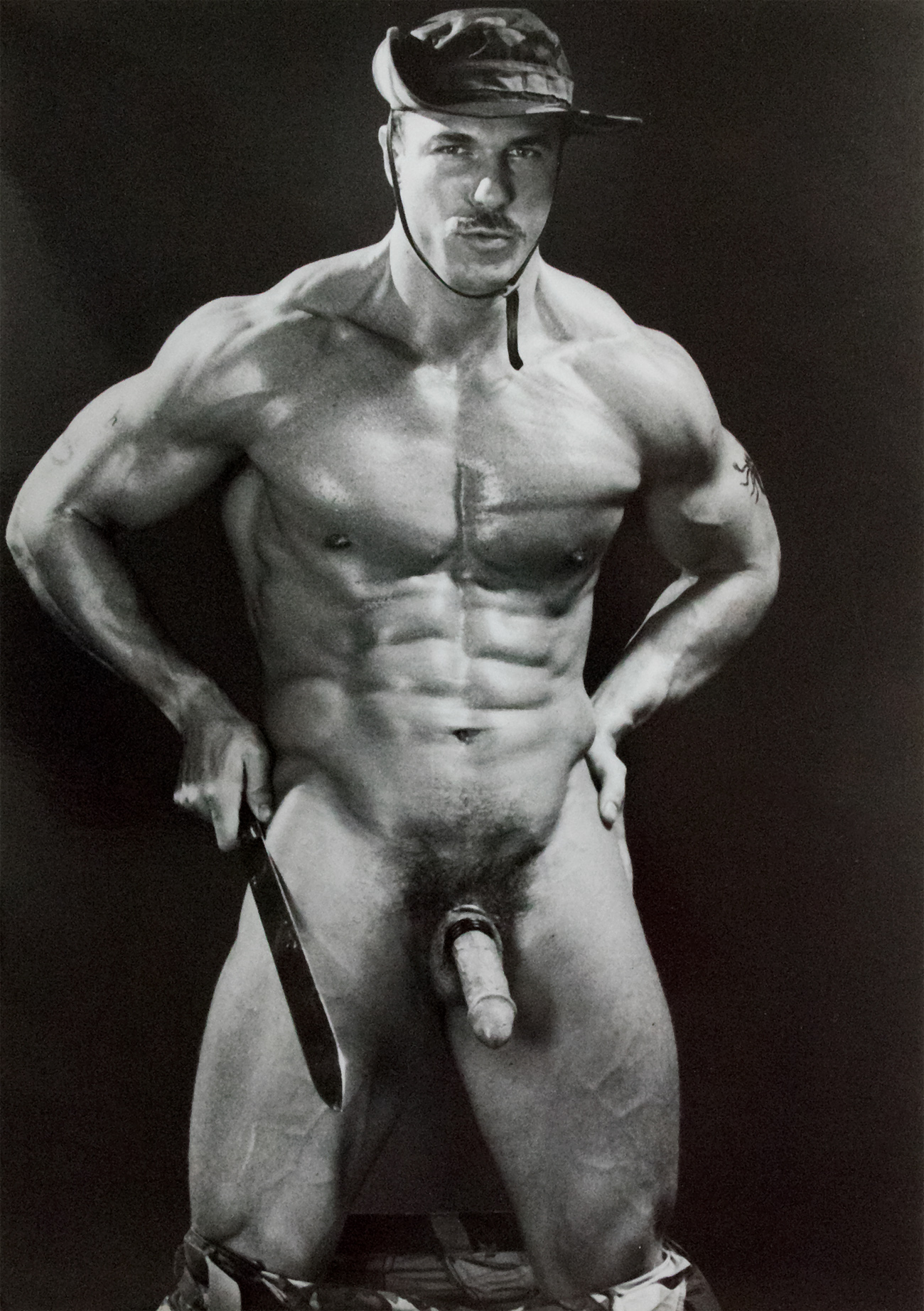
 

Frank Vickers (United States, 1948-1991) 'Untitled (self-portrait)' 1983


Frank Vickers (American, 1948-1991)
Untitled (self-portrait)
1983
Silver gelatin print
17.8 x 12.4cm
Leslie-Lohman Museum of Gay & Lesbian Art, Founders’ gift
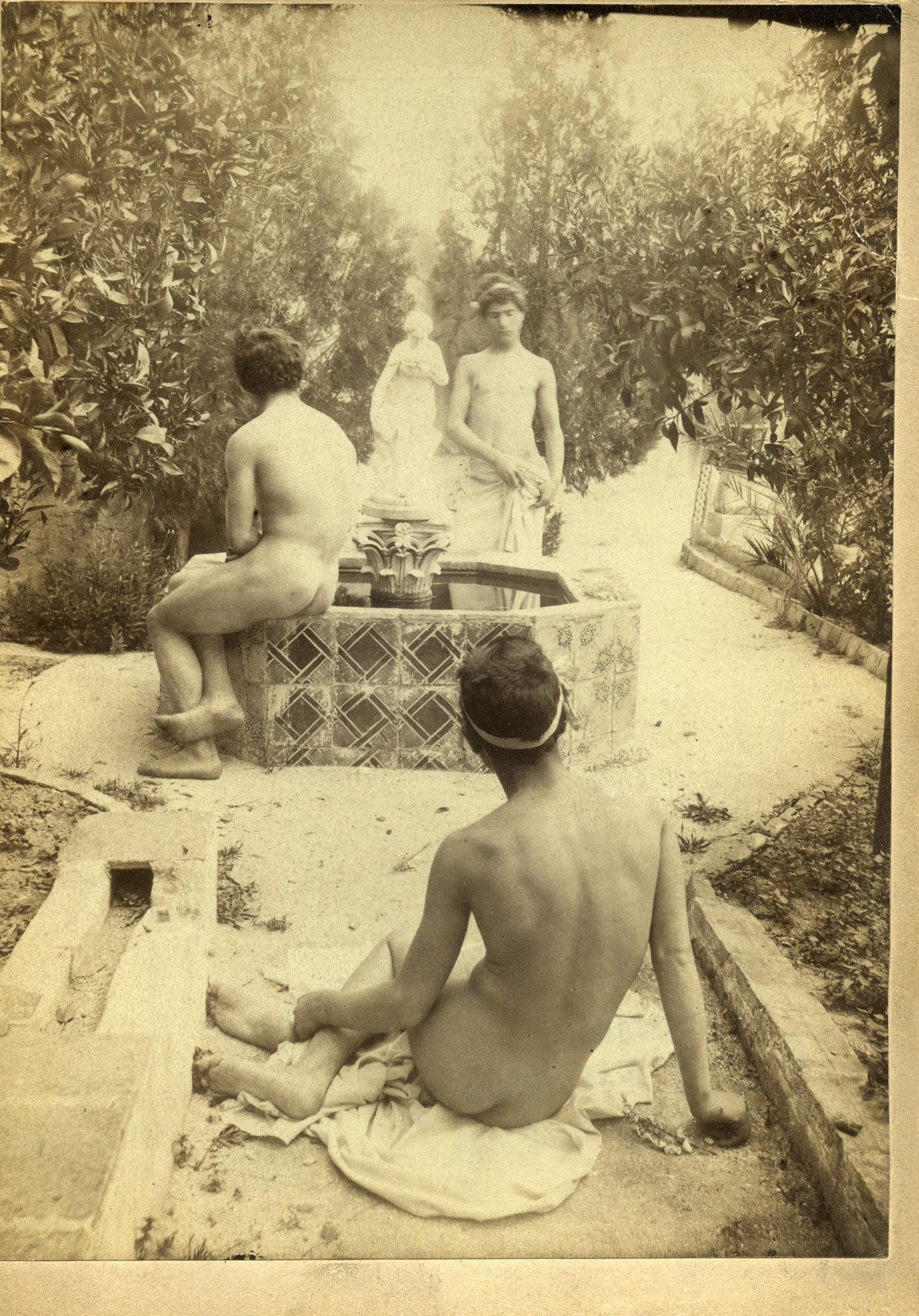
 

Baron Wilhelm von Gloeden (Germany; Italy, 1856-1931) 'Untitled' c. 1910


Baron Wilhelm von Gloeden (Germany; Italy, 1856-1931)
Untitled
c. 1910
Albumen silver print
20.3 x 15.2cm
Leslie-Lohman Museum of Gay and Lesbian Art, Founders’ gift
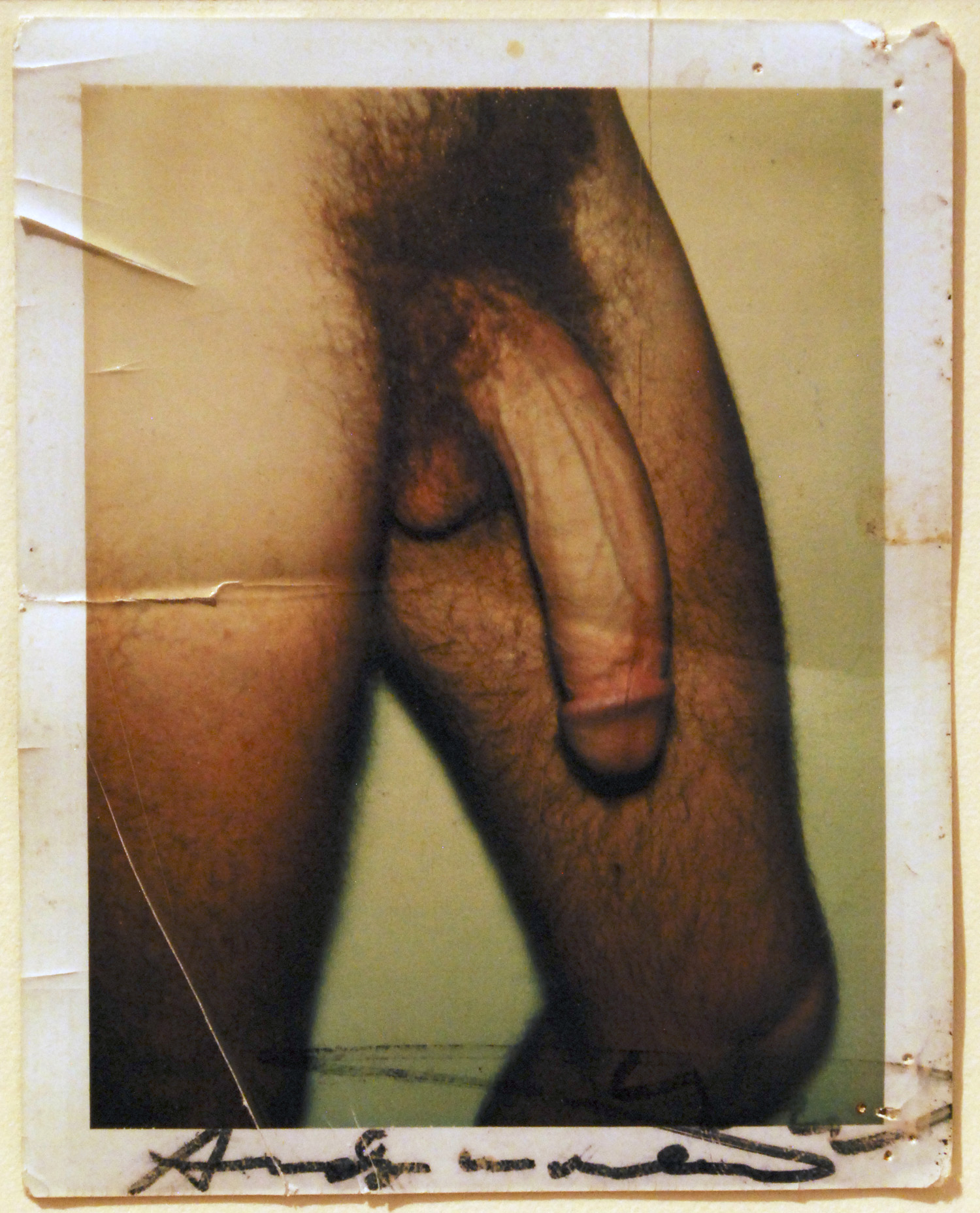
 

Andy Warhol (United States, 1928-1987) 'Untitled (Victor Hugo's Penis)' Date unknown


Andy Warhol (American, 1928-1987)
Untitled (Victor Hugo’s Penis)
Date unknown
Polaroid
8.5 x 10.5cm
Collection of Byrd Hoffman Water Mill Foundation
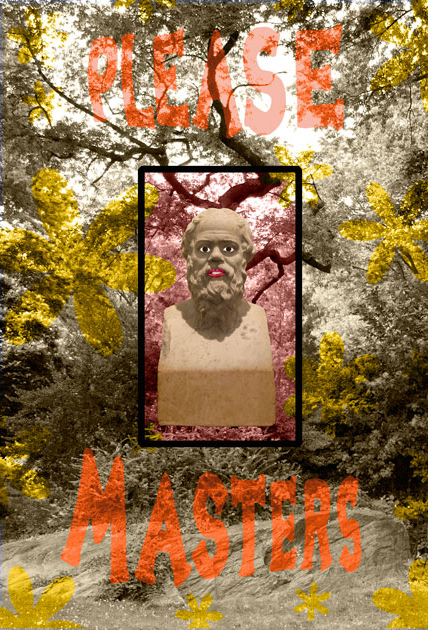
 

Gary Carsley (Australia, b. 1957) 'YOWL' 2017 (still)


Gary Carsley (Australian, b. 1957)
YOWL [still]
2017
Single Channel HD Video on Layered A3 Photocopy substrate
360 x 247cm
Duration 4.32 min
Videography Ysia Song, Soundscape Tarun Suresh, Art Direction Shahmen Suku
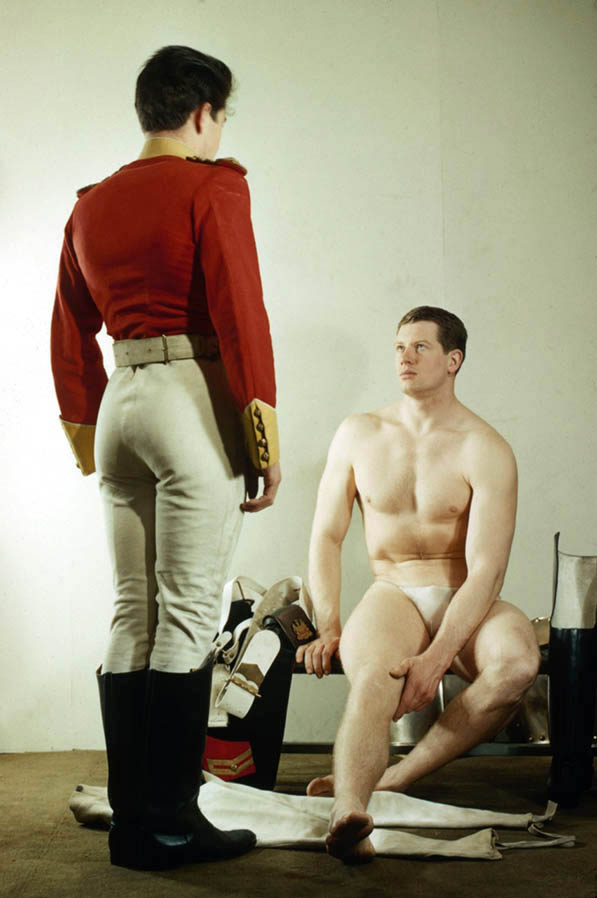
 

Royale Hussar (Basil Clavering and John Parkhurst) 'Queens Guard 3' 1959-1960


Royale Hussar (Basil Clavering and John Parkhurst)
Queens Guard 3
1959-1960
Digital print from original negative
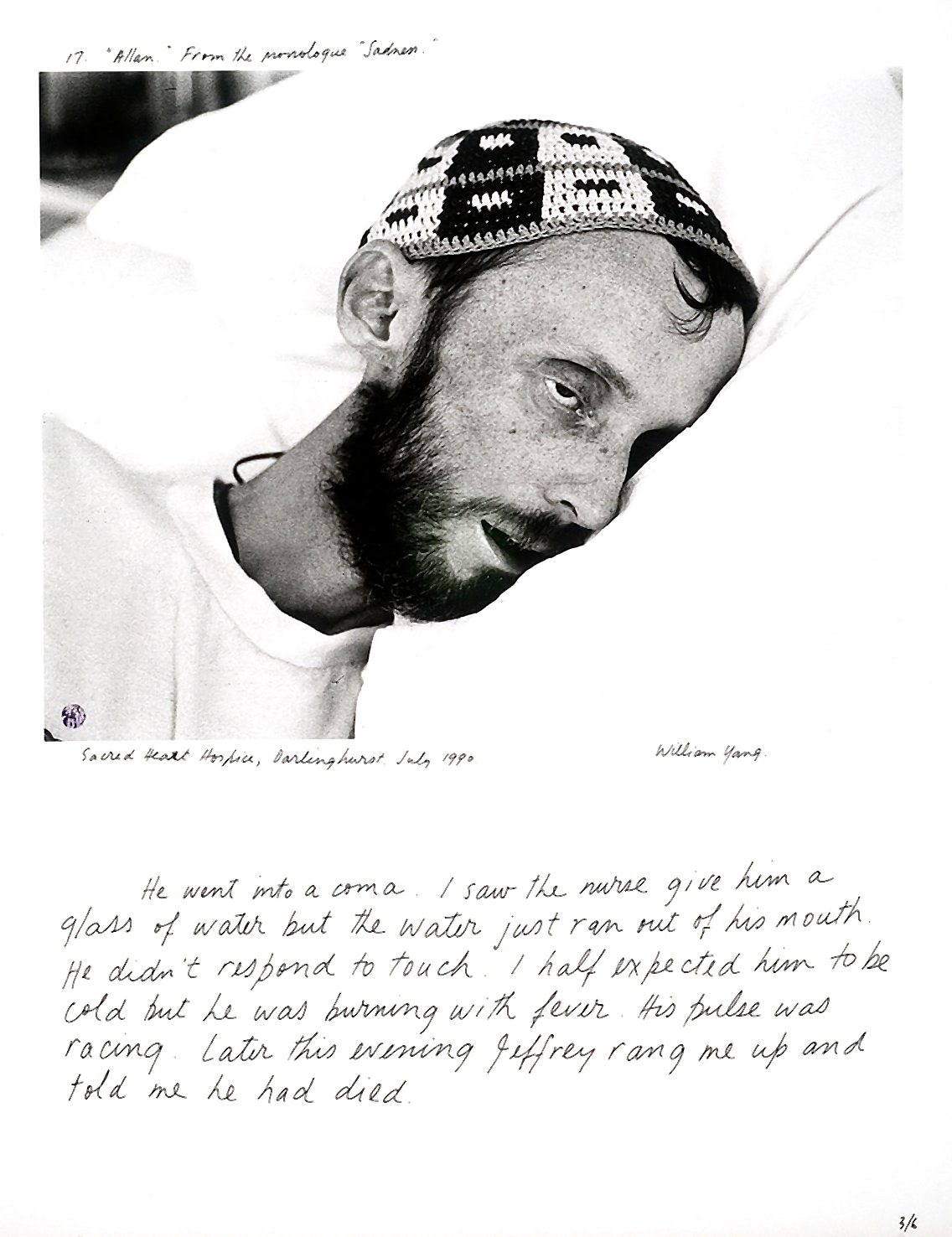
 

William Yang (Australian-Chinese, b. 1943) ''Allan' from the monologue 'Sadness'' 1992


William Yang (Australian-Chinese, b. 1943)
‘Allan’ from the monologue ‘Sadness’
1992
19 gelatin silver photographs in the monologue
51.0 x 41.0cm each sheet
Photograph: William Yang/Bathurst Regional Art Gallery


A photograph from the Sadness series, which depicts the slow death of his sometime lover, Allan Booth, from AIDS.


Unknown photographer. 'Untitled [Auschwitz victim]' Nd


Unknown photographer
Untitled [Auschwitz victim]
Nd
Photograph: Bathurst Regional Art Gallery


This prisoner was sent to Auschwitz under Section 175 of the German Criminal Code, which criminalised homosexuality.


The picture may have been taken by Wilhelm Brasse who was born on this date, 3 December in 1917, who became known as the “photographer of Auschwitz concentration camp”, though he was one of several, including Alfred Woycicki , Tadeusz Myszkowski, Józef Pysz, Józef Światłoch, Eugeniusz Dembek, Bronisław Jureczek, Tadeusz Krzysica, Stanisław Trałka, and Zdzisław Pazio whom the Camp Gestapo kept alive for the job of recording thousands of photographs of their fellow prisoners, supervised by Bernhard Walter, the head of Erkenundienst.

The photographs themselves present a transgression of the subject’s own self-image. The carte-de-visite format forces a confrontation of the victim (which in this situation, they are) with themselves in a visual interrogation, by placing a profile and a three-quarter view either side of a frontal mug shot. The final image seems to depict the subject beholden to a higher authority.

Brasse had been arrested in 1940, at age 23, for trying to leave German-occupied Poland and sent to KL Auschwitz-Birkenau where because he had been a Polish professional photographer in his aunt’s studio his skills were useful. Brasse has estimated that he took 40,000 to 50,000 “identity pictures” from 1940 until 1945.

Brasse and another prisoner Bronisław Jureczek preserved the photographs when in January 1945, during the evacuation of the camp, they were ordered to burn all of the photographs. They put wet photo paper in the furnace first and followed by such a great number of photos and negatives that the fire was suffocated. When the SS-Hauptscharfürer Walter left the laboratory, Brasse and Jureczek swept undestroyed photographs from the furnace, scattering them in the rooms of the laboratory and boarding up the door to the laboratory. 38,916 photographs were saved.

James McCardle. “Ghosts,” on the On This Day in Photography website 03/12/2017
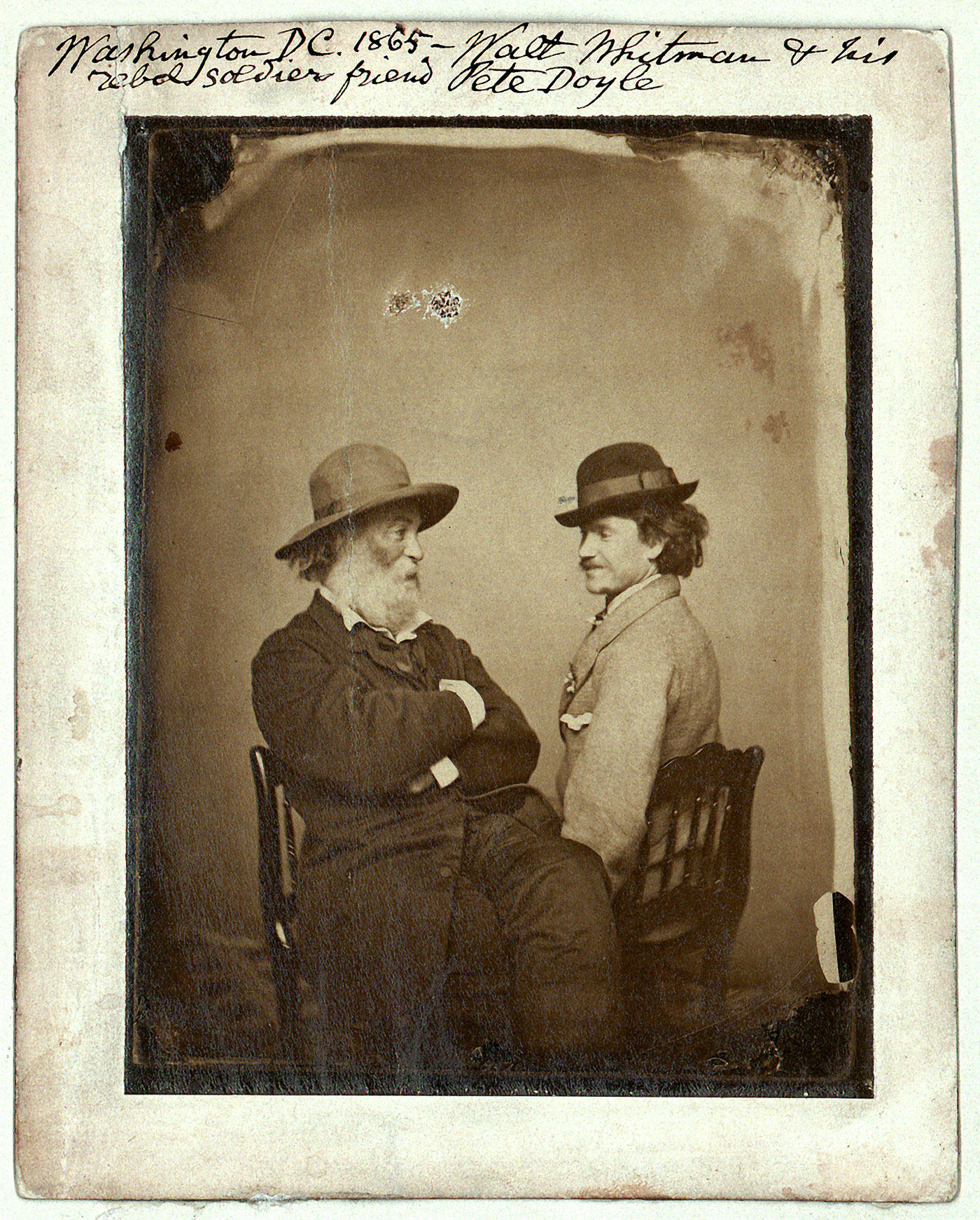
 

M. P. Rice (American) 'American poet Walt Whitman and his 'rebel soldier friend', Pete Doyle' Walt Whitman and Peter Doyle, Washington DC. c. 1865


M. P. Rice (American)
American poet Walt Whitman and his ‘rebel soldier friend’, Pete Doyle
Walt Whitman and Peter Doyle, Washington DC.
c. 1865
Charles E. Feinberg Collection, Library of Congress
Photograph: Library of Congress/Library of Congress/Bathurst Regional Art Gallery


The first extant photo of Whitman with anyone else, here Peter Doyle, Whitman’s close friend and companion in Washington. Doyle was a horsecar driver and met Whitman one stormy night in 1865 when Whitman, looking (as Doyle said) “like an old sea-captain,” remained the only passenger on Doyle’s car. They were inseparable for the next eight years.
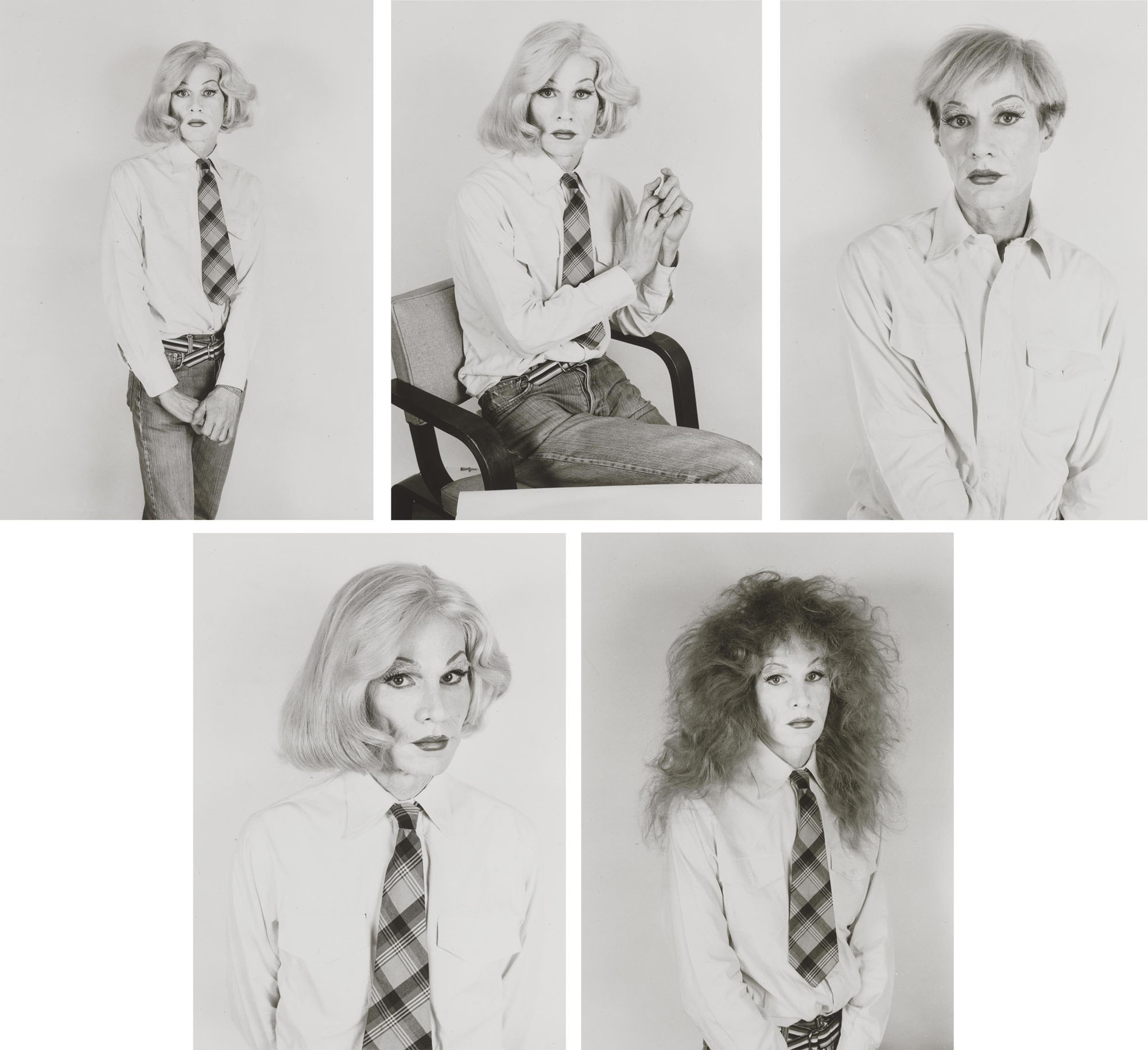
 

Christopher Makos (American, b. 1982) 'Altered Image: Five Photographs of Andy Warhol' 1982


Christopher Makos (American, b. 1982)
Altered Image: Five Photographs of Andy Warhol
1982
Portfolio of five gelatin silver prints
Each sheet: 20 x 16 in. (50.8 x 40.6cm)
Each image: 18 x 12 3/4 in. (45.7 x 32.3cm)


Bathurst Regional Art Gallery (BRAG)
70 -78 Keppel St
Bathurst NSW 2795

Opening hours:
Tues to Sat 10am – 5pm
Sundays 11am – 2pm

Bathurst Regional Art Gallery website

LIKE ART BLART ON FACEBOOK

Back to top

Exhibition: ‘An unorthodox flow of images’ at the Centre for Contemporary Photography (CCP), Melbourne Part 1

Exhibition dates: 30th September – 12th November, 2017

Curators: Naomi Cass and Pippa Milne

Living artists include: Laurence Aberhart, Brook Andrew, Rushdi Anwar, Warwick Baker, Paul Batt, Robert Billington, Christian Boltanski, Pat Brassington, Jane Brown, Daniel Bushaway, Sophie Calle, Murray Cammick, Christian Capurro, Steve Carr, Mohini Chandra, Miriam Charlie, Maree Clarke, Michael Cook, Bill Culbert, Christopher Day, Luc Delahaye, Ian Dodd, William Eggleston, Cherine Fahd, Fiona Foley, Juno Gemes, Simryn Gill, John Gollings, Helen Grace, Janina Green, Andy Guérif, Siri Hayes, Andrew Hazewinkel, Lisa Hilli, Eliza Hutchison, Therese Keogh, Leah King-Smith, Katrin Koenning, O Philip Korczynski, Mac Lawrence, Kirsten Lyttle, Jack Mannix, Jesse Marlow, Georgie Mattingley, Tracey Moffatt, Daido Moriyama, Harry Nankin, Jan Nelson, Phuong Ngo.

Historic photographers: Hippolyte Bayard (French, 1801-1887), Charles Bayliss (Australian born England, 1850-1897), Bernd and Hilla Becher (German; Bernd Becher 1931-2007, Hilla Becher 1934-2015), Lisa Bellear (Australian / Goernpil, 1962-2006), James E. Bray (Australian, 1832-1891), Jeff Carter (Australian, 1928-2010), Harold Cazneaux (Australian, 1878-1953), Olive Cotton (Australian, 1911-2003), Peter Dombrovskis (Australian, 1995-1996), Max Dupain (Australian, 1911-1992), Joyce Evans (Australian, 1929-2019), Walker Evans (American, 1903-1975), Sue Ford (Australian, 1943-2009), Marti Friedlander (New Zealand born Britain, 1928-2016), Kate Gollings (Australian, 1943-2017), André Kertész (Hungarian, 1894-1985), J. W. Lindt (Australian born Germany, 1845-1926), W. H. Moffitt (Australian, 1888-1948), David Moore (Australian, 1927-2003), Michael Riley (Australian / Wiradjuri/Kamilaroi, 1960-2004), Robert Rooney (Australian, 1937-2017), Joe Rosenthal (American, 1911-2006), Mark Strizic (Australian, 1928 -2012), Ingeborg Tyssen (Australian, 1945-2002), Aby Warburg (German, 1866-1929), Charles Woolley (Australian, 1834-1922).


Installation photographs of the exhibition

The installation photographs (some of the 148 images in the exhibition) proceed in spatial order, in the flow that they appear in the gallery spaces. The numbers in brackets refer to the number of the image in the field guide. The text is taken from the field guide to the exhibition (Online cited 01/11/2017. No longer available online).
Dr Marcus Bunyan


Many thankx to the CCP for allowing me to publish the photographs in the posting. Please click on the photographs for a larger version of the image. All installation photographs © Dr Marcus Bunyan, the artists and the CCP.


An unorthodox flow of images commences with what is known as the first press photograph in Australia and unfurls through historic, press, portraiture, popular and art photography, some in their intended material form and others as reproductions. An unbroken thread connects this line of still and moving images, each tied to those on either side through visual, conceptual, temporal, material or circumstantial links.

This is a proposition about photography now. Relationships between images are sometimes real, and sometimes promiscuous. Unorthodox brings new contexts to existing artworks whilst celebrating the materiality of real photographs, in real time and critically, honouring the shared democratic experience of the public gallery space.

Text from the CCP website


Installation view of the exhibition 'An Unorthodox Flow of Images' at the Centre for Contemporary Photography (CCP), Melbourne, September - November 2017 with at right, wallpaper of J. W. Lindt's 'Body of Joe Byrne, member of the Kelly Gang, hung up for photography, Benalla' 1880, to open the exhibition


Installation view of the exhibition An Unorthodox Flow of Images at the CCP, Melbourne with at right, wallpaper of J. W. Lindt’s Body of Joe Byrne, member of the Kelly Gang, hung up for photography, Benalla 1880, to open the exhibition
Photo: Marcus Bunyan


J W Lindt (Australian, 1845-1926) 'Body of Joe Byrne, member of the Kelly Gang, hung up for photography Benalla' 1880 from the exhibition 'An unorthodox flow of images' at the Centre for Contemporary Photography (CCP), Melbourne, Sept - Dec, 2017


(1) J W Lindt (Australian, 1845-1926)
Body of Joe Byrne, member of the Kelly Gang, hung up for photography, Benalla
1880
Courtesy State Library Victoria, Pictures Collection


J W Lindt: Thought to be the first press photograph in Australia, this shows Joe Byrne, a member of the Kelly Gang, strung up for documentation days after his death, which followed the siege at Glenrowan. Byrne is displayed for an unknown photographer and the painter Julian Ashton who is standing to the left with possibly a sketchbook under his arm. Lindt’s photograph captures not only the spectacle of Byrne’s body but the contingent of documentarians who arrived from Melbourne to record and widely disseminate the event for public edification.


Installation view of the exhibition 'An Unorthodox Flow of Images' at the Centre for Contemporary Photography (CCP), Melbourne, September - November 2017 showing (3) J. E. Bray's 'Kelly Gang Armour' 1880 cabinet card


Installation view of the exhibition An Unorthodox Flow of Images at the CCP, Melbourne showing (3) J. E. Bray’s Kelly Gang Armour 1880 cabinet card © Collection of Joyce Evans
Photo: Marcus Bunyan


J. E. Bray: “As objects of contemplation, images of the atrocious can answer to several different needs. To steel oneself against weakness. To make oneself more numb. To acknowledge the existence of the incorrigible.”

~ Susan Sontag, Regarding the Pain of Others (2003)


Installation view of the exhibition 'An Unorthodox Flow of Images' at the Centre for Contemporary Photography (CCP), Melbourne, September - November 2017 showing (7) J. E. Bray's 'Untitled ["McDonnell's Tavern opposite Railway Station, remains of Dan Kelly and Hart in coffins"]' 1880 cabinet card (right) and (8) a photograph by an unknown photographer Hunters of Ned Kelly 1880 (left)


Installation view of the exhibition An Unorthodox Flow of Images at the CCP, Melbourne showing (7) J. E. Bray’s Untitled [“McDonnell’s Tavern opposite Railway Station, remains of Dan Kelly and Hart in coffins”] 1880 cabinet card (right) and (8) a photograph by an unknown photographer Hunters of Ned Kelly 1880 (left)
Photo: Marcus Bunyan


Installation view of the exhibition 'An Unorthodox Flow of Images' at the Centre for Contemporary Photography (CCP), Melbourne, September - November 2017 showing at right (13) Tracey Moffatt's 'I Made a Camera' 2003

Installation view of the exhibition 'An Unorthodox Flow of Images' at the Centre for Contemporary Photography (CCP), Melbourne, September - November 2017 showing (13) Tracey Moffatt's 'I Made a Camera' 2003


Installation views of the exhibition An Unorthodox Flow of Images at the CCP, Melbourne showing (13) Tracey Moffatt’s I Made a Camera 2003
Photos: Marcus Bunyan


Moffatt: Returning to J.W. Lindt’s photograph – in particular the hooded central figure photographing Joe Byrne – Tracey Moffatt’s picturing of children role-playing calls to mind the colonial photographer’s anthropological gesture.


Installation view of the exhibition 'An Unorthodox Flow of Images' at the Centre for Contemporary Photography (CCP), Melbourne, September - November 2017 showing (14) Siri Hayes' 'In the far reaches of the familiar' 2011 (right) and (15) Janina Green's 'Self Portrait' 1996 (left)


Installation view of the exhibition An Unorthodox Flow of Images at the CCP, Melbourne showing (14) Siri Hayes’ In the far reaches of the familiar 2011 (right) and (15) Janina Green’s Self Portrait 1996 (left)
Photo: Marcus Bunyan


Installation view of the exhibition 'An Unorthodox Flow of Images' at the Centre for Contemporary Photography (CCP), Melbourne, September - November 2017 showing (15) Janina Green's 'Self Portrait' 1996


Installation view of the exhibition An Unorthodox Flow of Images at the CCP, Melbourne showing (15) Janina Green’s Self Portrait 1996
Photo: Marcus Bunyan


Green: Although celebrated for her hand coloured prints, this is in fact made with the second version of Photoshop.


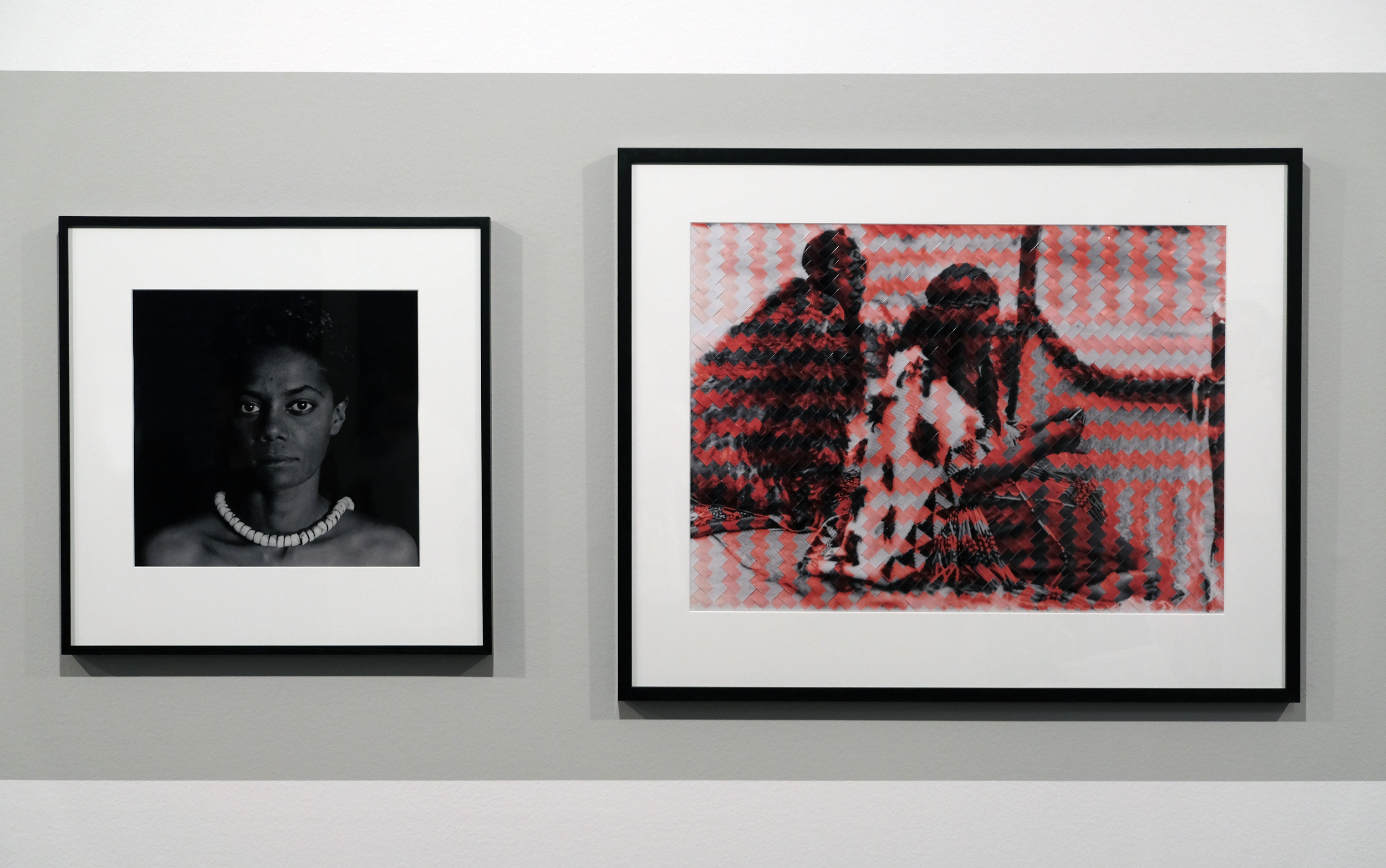
Installation view of the exhibition 'An Unorthodox Flow of Images' at the Centre for Contemporary Photography (CCP), Melbourne, September - November 2017 showing (16) Georgie Mattingley's 'Portrait IV (After Arthroplasty)' 2016 (right) and (17) Lisa Hilli's 'In a Bind' 2015 (middle)


Installation view of the exhibition An Unorthodox Flow of Images at the CCP, Melbourne showing (16) Georgie Mattingley’s Portrait IV (After Arthroplasty) 2016 (right) and (17) Lisa Hilli’s In a Bind 2015 (middle)
Photo: Marcus Bunyan


Mattingley: The photographer’s hood has become a meat-worker’s protective gear, tenderly hand-coloured.

Hilli: ‘The woven material that hoods the artist’s identity is a reference to collected Pacific artefacts, which are usually of a practical nature. Magimagi is a plaited coconut fibre used for reinforcing architectural structures and body adornment within the Pacific. Here it emphasises the artist’s feeling of being bound by derogatory Western and anthropological labels used by museums and the erasure of Pacific bodies and narratives within public displays of Pacific materiality.’  ~ Lisa Hilli 2017, in an email to the curator


Installation view of the exhibition 'An Unorthodox Flow of Images' at the Centre for Contemporary Photography (CCP), Melbourne, September - November 2017 showing (18) Fiona Pardington's 'Saul' 1986 (right), (19) Fiona MacDonald's '12 Artists' 1987 (postcard, middle), and (20) Jack Mannix's 'Still Life, Footscray' 2013 (left)


Installation view of the exhibition An Unorthodox Flow of Images at the CCP, Melbourne showing (18) Fiona Pardington’s Saul 1986 (right), (19) Fiona MacDonald’s 12 Artists 1987 (postcard, middle), and (20) Jack Mannix’s Still Life, Footscray 2013 (left)
Photo: Marcus Bunyan


Pardington: A portrait of Joe Makea in his beekeeper’s helmet.

MacDonald: A vintage Victorian Centre for Photography (VCP) postcard, prior to its change of name to CCP.

Mannix: A vanitas is a still life artwork which includes various symbolic objects designed to remind the viewer of their mortality and of the worthlessness of worldly goods and pleasures.


Installation view of the exhibition 'An Unorthodox Flow of Images' at the Centre for Contemporary Photography (CCP), Melbourne, September - November 2017 showing (27) Wolfgang Sievers' 'The writer Jean Campbell, in her flat in East Melbourne' 1950 (right); (26) André Kertész's 'Chez Mondrian, Paris' 1926 (middle top); (28) Gisèle Freund's 'Vita Sackville-West' 1938 (middle bottom); and (29) Anne Zahalka's 'Home #3 (mirror)' 1998 (left)


Installation view of the exhibition An Unorthodox Flow of Images at the CCP, Melbourne showing (27) Wolfgang Sievers’ The writer Jean Campbell, in her flat in East Melbourne 1950 (right); (26) André Kertész’s Chez Mondrian, Paris 1926 (middle top); (28) Gisèle Freund’s Vita Sackville-West 1938 (middle bottom); and (29) Anne Zahalka’s Home #3 (mirror) 1998 (left)
Photo: Marcus Bunyan


Sievers: Wolfgang’s inscription on the back of this particular print reads: The writer Jean Campbell in her near-eastern flat with her portrait by Lina Bryans.

Kertész: A studio is site for the artist’s gathering of images.

Freund: Vita Sackville-West’s writing studio was in an Elizabethan tower at Sissinghurst in Kent, overlooking her famous white garden. It remains, exactly as she left it.

Zahalka: The boundary between home and studio is often blurred when an artist has a small child.


Installation view of the exhibition 'An Unorthodox Flow of Images' at the Centre for Contemporary Photography (CCP), Melbourne, September - November 2017

Installation view of the exhibition 'An Unorthodox Flow of Images' at the Centre for Contemporary Photography (CCP), Melbourne, September - November 2017

Installation view of the exhibition 'An Unorthodox Flow of Images' at the Centre for Contemporary Photography (CCP), Melbourne, September - November 2017 showing (30) Siri Hayes' 'Plein air explorers' 2008


Installation views of the exhibition An Unorthodox Flow of Images at the CCP, Melbourne showing in the bottom image (30) Siri Hayes’ Plein air explorers 2008
Photos: Marcus Bunyan


Hayes: An artist’s studio in the landscape.


Installation view of the exhibition 'An Unorthodox Flow of Images' at the Centre for Contemporary Photography (CCP), Melbourne, September - November 2017 showing (31) Robyn Stacey's 'Wendy and Brett Whiteley's Library from the series Dark Wonder' 2016


Installation view of the exhibition An Unorthodox Flow of Images at the CCP, Melbourne showing (31) Robyn Stacey’s Wendy and Brett Whiteley’s Library from the series Dark Wonder 2016
Photo: Marcus Bunyan


Stacey: The landscape brought into the studio by a camera obscura. Robyn Stacey captures the perfect moment of light and clarity, in this instance, also turning the egg-object into an orb of light.


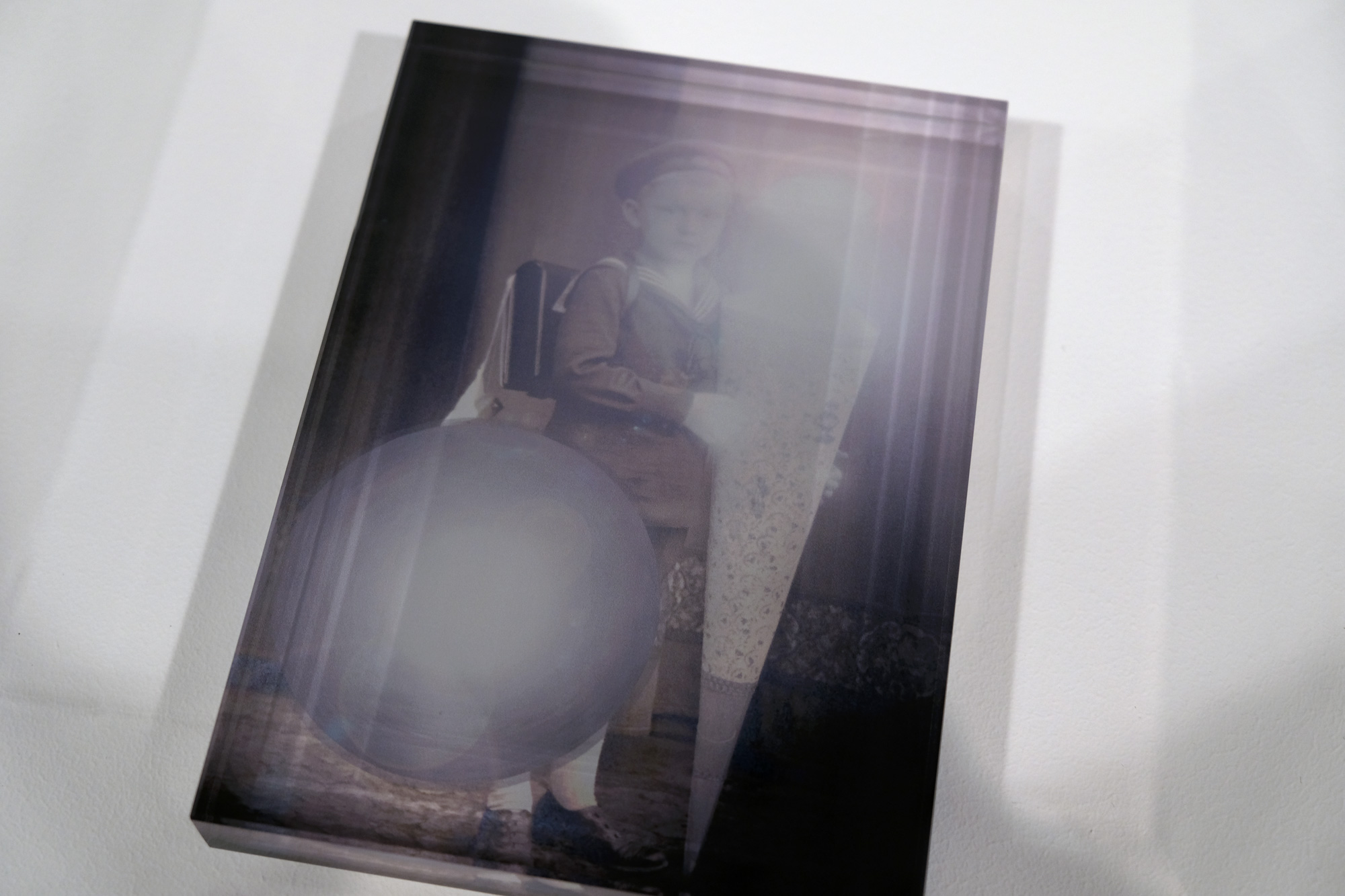
Installation view of the exhibition 'An Unorthodox Flow of Images' at the Centre for Contemporary Photography (CCP), Melbourne, September - November 2017 showing (33) NASA Images' 'A lunar disc as seen from the Apollo 15 spacecraft' 1971 (top); (34) Steve Carr's 'Smoke Bubble No. 30' 2010 (right); and (35) National Geographic Vol. 174, No. 6, December 1988 (left)


Installation view of the exhibition An Unorthodox Flow of Images at the CCP, Melbourne showing (33) NASA Images’ A lunar disc as seen from the Apollo 15 spacecraft 1971 (top); (34) Steve Carr’s Smoke Bubble No. 30 2010 (right); and (35) National Geographic Vol. 174, No. 6, December 1988 (left)
Photo: Marcus Bunyan


Carr: Smoke filled soap orb, reminiscent of a planet.

National Geographic: The subtitle to this special 1988 issue of National Geographic, which has a holographic front and back cover is: “As We Begin Our Second Century, the Geographic Asks: Can Man Save this Fragile Earth?”


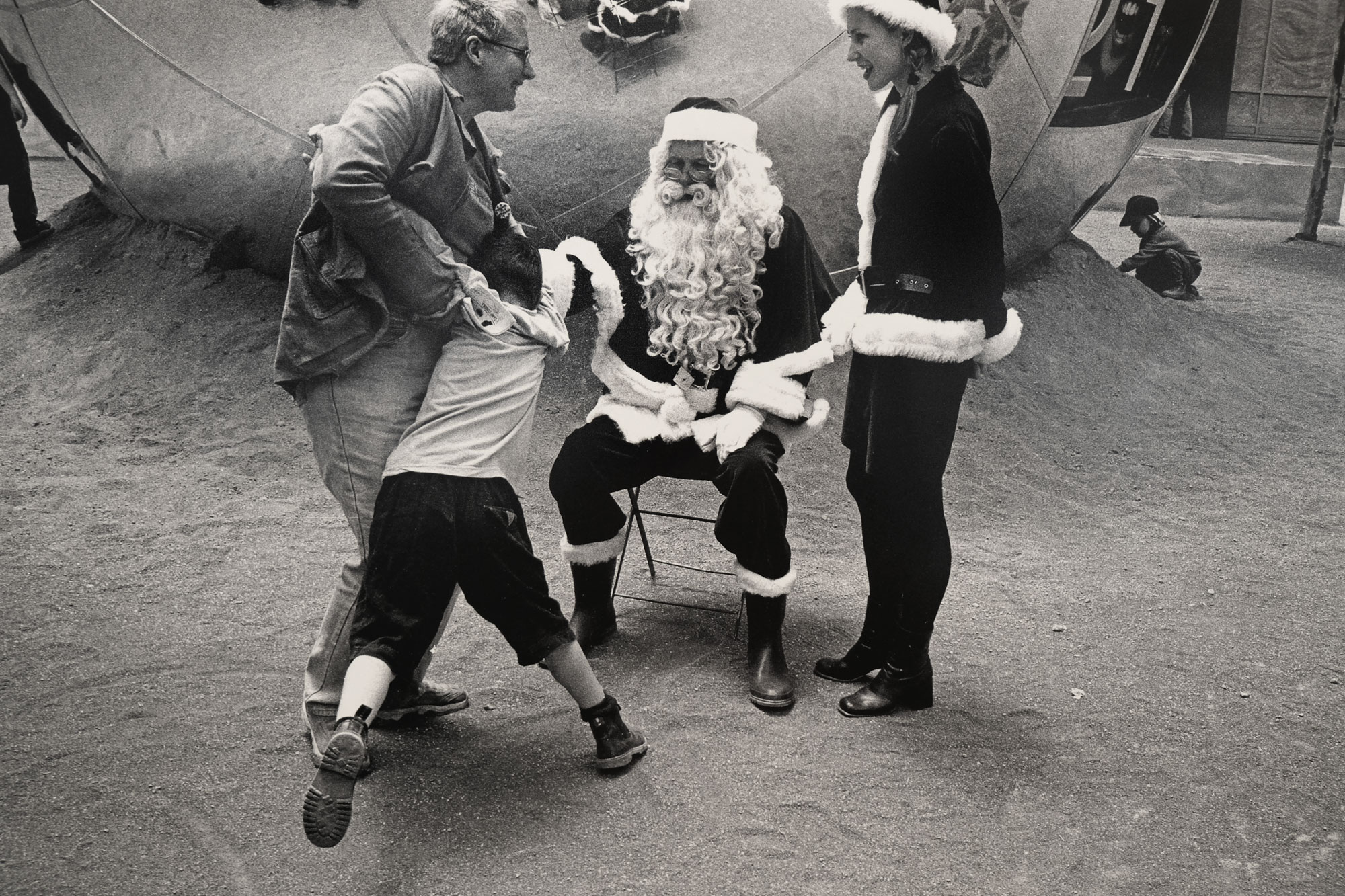
Installation view of the exhibition 'An Unorthodox Flow of Images' at the Centre for Contemporary Photography (CCP), Melbourne, September - November 2017 showing (39) Jesse Marlow's 'Santa' 2002


Installation view of the exhibition An Unorthodox Flow of Images at the CCP, Melbourne showing (39) Jesse Marlow’s Santa 2002
Photo: Marcus Bunyan


Installation view of the exhibition 'An Unorthodox Flow of Images' at the Centre for Contemporary Photography (CCP), Melbourne, September - November 2017 showing (44) Susan Fereday's 'Köln' 2016


Installation view of the exhibition An Unorthodox Flow of Images at the CCP, Melbourne showing (44) Susan Fereday’s Köln 2016
Photo: Marcus Bunyan


Installation view of the exhibition 'An Unorthodox Flow of Images' at the Centre for Contemporary Photography (CCP), Melbourne, September - November 2017 showing (49) W. H. Moffitt's 'Beach Scene, Collard #3' c. 1944


Installation view of the exhibition An Unorthodox Flow of Images at the CCP, Melbourne showing (49) W. H. Moffitt’s Beach Scene, Collard #3 c. 1944
Photo: Marcus Bunyan


W. H. Moffitt: The bromoil process was invented in 1907 by Englishman C. Wellbourne Piper. A bromoil print is simply a black and white photograph printed on a suitable photographic paper from which the silver image is removed and lithography inks applied.


Installation view of the exhibition 'An Unorthodox Flow of Images' at the Centre for Contemporary Photography (CCP), Melbourne, September - November 2017 showing (51) Sarah Brown's 'Quietly' 2017 (right); (52) Robert Billington's 'Narrabeen Baths' 1994 (middle bottom); and (53) Trent Parke's 'Untitled #92' 1999-2000 (middle top)


Installation view of the exhibition An Unorthodox Flow of Images at the CCP, Melbourne showing (51) Sarah Brown’s Quietly 2017 (right); (52) Robert Billington’s Narrabeen Baths 1994 (middle bottom); and (53) Trent Parke’s Untitled #92 1999-2000 (middle top)
Photo: Marcus Bunyan


Brown: The salted paper technique was created in the mid-1830s by Henry Fox Talbot. He made what he called “sensitive paper for “photogenic drawing” by wetting a sheet of writing paper with a weak solution of ordinary table salt, blotting and drying it, then brushing one side with a strong solution of silver nitrate.


Installation view of the exhibition 'An Unorthodox Flow of Images' at the Centre for Contemporary Photography (CCP), Melbourne, September - November 2017 showing (55) Charles Bayliss' 'Ngarrindjeri people, Chowilla Station, Lower Murray River, South Australia' 1886 (right) and (56) Anne Noble's 'Antarctic diorama, Polaria Centre, Tromso, Norway' 2005 (left)

Installation view of the exhibition 'An Unorthodox Flow of Images' at the Centre for Contemporary Photography (CCP), Melbourne, September - November 2017 showing (55) Charles Bayliss' 'Ngarrindjeri people, Chowilla Station, Lower Murray River, South Australia' 1886 (right) and (56) Anne Noble's 'Antarctic diorama, Polaria Centre, Tromso, Norway' 2005 (left)


Installation view of the exhibition An Unorthodox Flow of Images at the CCP, Melbourne showing (55) Charles Bayliss’ Ngarrindjeri people, Chowilla Station, Lower Murray River, South Australia 1886 (right) and (56) Anne Noble’s Antarctic diorama, Polaria Centre, Tromso, Norway 2005 (left)
Photos: Marcus Bunyan


Bayliss: Water looks like glass in this colonial photograph where the subjects perform for Bayliss. “Bayliss here re-creates a ‘native fishing scene’ tableau, reminiscent of a museum diorama.”

Noble: Water is glass in this diorama; photographed as if it were from nature.


Installation view of the exhibition 'An Unorthodox Flow of Images' at the Centre for Contemporary Photography (CCP), Melbourne, September - November 2017 showing (55) Charles Bayliss' 'Ngarrindjeri people, Chowilla Station, Lower Murray River, South Australia' 1886


Installation view of the exhibition An Unorthodox Flow of Images at the CCP, Melbourne showing (55) Charles Bayliss’ Ngarrindjeri people, Chowilla Station, Lower Murray River, South Australia 1886
Photo: Marcus Bunyan


Installation view of the exhibition 'An Unorthodox Flow of Images' at the Centre for Contemporary Photography (CCP), Melbourne, September - November 2017 showing (58) Andrew Hazewinkel's 'Staring together at the stars, #1' 2013 (right); (59) Ian Dodd's 'Wet Hair' 1974 (second right); (60) Juno Gemes' 'One with the Land' 1978 (middle); (61) David Rosetzky's 'Milo' 2017 (upper left); and (62) Brook Andrew's 'I Split Your Gaze' 1997 (left)


Installation view of the exhibition An Unorthodox Flow of Images at the CCP, Melbourne showing (58) Andrew Hazewinkel’s Staring together at the stars, #1 2013 (right); (59) Ian Dodd’s Wet Hair 1974 (second right); (60) Juno Gemes’ One with the Land 1978 (middle); (61) David Rosetzky’s Milo 2017 (upper left); and (62) Brook Andrew’s I Split Your Gaze 1997 (left)
Photo: Marcus Bunyan


Gemes: The subtitle to this photograph in some collections reads: ‘waiting for the sacred fish the Dunya and Wanra to come in, Mornington Island, Queensland’.


Installation view of the exhibition 'An Unorthodox Flow of Images' at the Centre for Contemporary Photography (CCP), Melbourne, September - November 2017

Installation view of the exhibition 'An Unorthodox Flow of Images' at the Centre for Contemporary Photography (CCP), Melbourne, September - November 2017

Installation view of the exhibition 'An Unorthodox Flow of Images' at the Centre for Contemporary Photography (CCP), Melbourne, September - November 2017

Installation view of the exhibition 'An Unorthodox Flow of Images' at the Centre for Contemporary Photography (CCP), Melbourne, September - November 2017 showing at centre right in the bottom image (64) William Yang's 'Alter Ego' 2000


Installation views of the exhibition An Unorthodox Flow of Images at the CCP, Melbourne showing at centre right in the bottom image (64) William Yang’s Alter Ego 2000 and at right, Brook Andrew’s I Split Your Gaze 1997
Photos: Marcus Bunyan


Brook Andrew (Australian, b. 1970) 'I Split Your Gaze' 1997


Brook Andrew (Australian, b. 1970)
I Split Your Gaze
1997
Gelatin silver print


Installation view of the exhibition 'An Unorthodox Flow of Images' at the Centre for Contemporary Photography (CCP), Melbourne, September - November 2017 showing (65) Sue Ford's 'Lyn and Carol' 1961 (right)


Installation view of the exhibition An Unorthodox Flow of Images at the CCP, Melbourne showing (65) Sue Ford’s Lyn and Carol 1961 (right)
Photo: Marcus Bunyan


Sue Ford (Australian, 1943-2009) 'Lyn and Carol' 1961


Sue Ford (Australian, 1943-2009)
Lyn and Carol
1961
Gelatin silver print


Installation view of the exhibition 'An Unorthodox Flow of Images' at the Centre for Contemporary Photography (CCP), Melbourne, September - November 2017 showing (67) a stereoscope by an unknown photographer titled 'Affection' c. 1882


Installation view of the exhibition An Unorthodox Flow of Images at the CCP, Melbourne showing (67) a stereoscope by an unknown photographer titled Affection c. 1882
Photo: Marcus Bunyan


Kilburn Brothers, Littleton, N. H. (publisher): In the stereoscope, the double image combines to create the illusion of three-dimensional space. Compelled to make meaning from disrupted information, the brain merges two slightly different images into a seemingly single three-dimensional image.


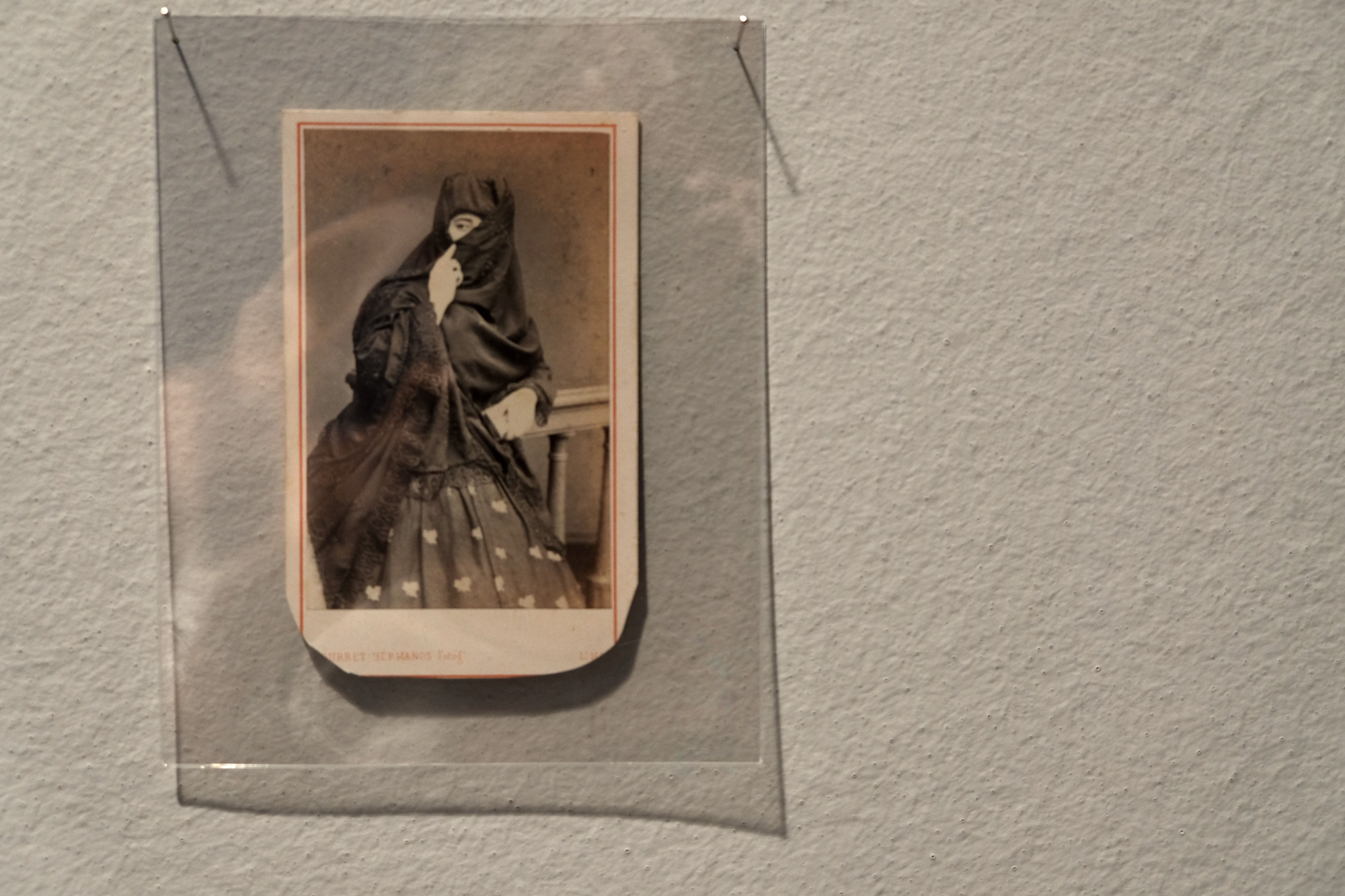
Installation view of the exhibition 'An Unorthodox Flow of Images' at the Centre for Contemporary Photography (CCP), Melbourne, September - November 2017 showing (68) a photograph by an unknown photographer (Courret Hermanos Fotografía - Eugenio Courret 1841 - c. 1900) titled 'Lima Tapadas' c. 1887


Installation view of the exhibition An Unorthodox Flow of Images at the CCP, Melbourne showing (68) a photograph by an unknown photographer (Courret Hermanos Fotografía – Eugenio Courret 1841 – c. 1900) titled Lima Tapadas c. 1887
Photo: Marcus Bunyan


Installation view of the exhibition 'An Unorthodox Flow of Images' at the Centre for Contemporary Photography (CCP), Melbourne, September - November 2017 showing (76) Harold Cazneaux's 'Spirit of Endurance' 1937


Installation view of the exhibition An Unorthodox Flow of Images at the CCP, Melbourne showing (76) Harold Cazneaux’s Spirit of Endurance 1937
Photo: Marcus Bunyan


Cazneaux: In the following two works, a critical change of title by the artist reveals what, alone, the eye cannot see. This photograph had already achieved iconic status as a symbol of the noble Australian landscape when, following the loss of his son who died aged 21 at Tobruk in 1941, Cazneaux flipped the negative and presented the image under the new title Spirit of Endurance. The tree is now classified on the National Trust of South Australia’s Register of Significant Trees.


Harold Cazneaux (Australian born New Zealand, 1878-1953)
'Spirit of endurance' 1937


Harold Cazneaux (Australian born New Zealand, 1878-1953)
Spirit of endurance
1937
Gelatin silver print


Installation view of the exhibition 'An Unorthodox Flow of Images' at the Centre for Contemporary Photography (CCP), Melbourne, September - November 2017 showing (77) Jeff Carter's 'The Eunuch, Marree, South Australia' 1964 (NB. note reflections in the image from the gallery)


Installation view of the exhibition An Unorthodox Flow of Images at the CCP, Melbourne showing (77) Jeff Carter’s The Eunuch, Marree, South Australia 1964 (NB. note reflections in the image from the gallery)
Photo: Marcus Bunyan


Carter: Changing a title can dramatically alter the meaning of an image. This work has had several titles:

Morning Break 1964;
Dreaming in the sun at Marree, outside the towns single store 1966;
At times there is not too much to do except just sit in the sun… 1968;
‘Pompey’ a well known resident of Marree;
and finally The Eunuch, Marree, South Australia 2000

Under early titles, the photograph appeared to be a simple portrait of “Pompey”, a local Aboriginal man in Marree who worked at the town’s bakery. The final title draws viewers’ attention away from what might have seemed to be the man’s relaxed approach to life, and towards the violence enacted on Aboriginal communities in castrating young boys.


Jeff Carter (Australian 1928-2010) 'Morning Break, Marnee SA' 1964


Jeff Carter (Australian 1928-2010)
Morning Break, Marnee SA
1964
Silver gelatin print


Installation view of the exhibition 'An Unorthodox Flow of Images' at the Centre for Contemporary Photography (CCP), Melbourne, September - November 2017 showing (78) Lisa Bellear's 'The Black GST Protest at Camp Sovereignty' 2006


Installation view of the exhibition An Unorthodox Flow of Images at the CCP, Melbourne showing (78) Lisa Bellear’s The Black GST Protest at Camp Sovereignty 2006
Photo: Marcus Bunyan


Bellear (Minjungbul/Goernpil/Noonuccal/Kanak): Is the demonstrator leading the policeman? Is the policeman arresting this demonstrator? Or is this tenderness between two men? This is a photograph of a photograph. As was her practice, Lisa Bellear always gave the original to her subject.


Installation view of the exhibition 'An Unorthodox Flow of Images' at the Centre for Contemporary Photography (CCP), Melbourne, September - November 2017 showing (82) photographer undisclosed ASIO surveillance images 1949-1980

Installation view of the exhibition 'An Unorthodox Flow of Images' at the Centre for Contemporary Photography (CCP), Melbourne, September - November 2017 showing (82) photographer undisclosed ASIO surveillance images 1949-1980


Installation views of the exhibition An Unorthodox Flow of Images at the CCP, Melbourne showing (82) photographer undisclosed ASIO surveillance images 1949-1980
Photos: Marcus Bunyan


ASIO: The Australian Security and Intelligence Organisation (ASIO) employed photographers to spy on Australian citizens. The photographs which were annotated to indicate persons of interest, were retained by ASIO along with other forms of material gathered through espionage.


Installation view of the exhibition 'An Unorthodox Flow of Images' at the Centre for Contemporary Photography (CCP), Melbourne, September - November 2017 showing (83) O. Philip Korczynski's 'Unwanted Witness and Run' 1980s


Installation view of the exhibition An Unorthodox Flow of Images at the CCP, Melbourne showing (83) O. Philip Korczynski’s Unwanted Witness and Run 1980s
Photo: Marcus Bunyan


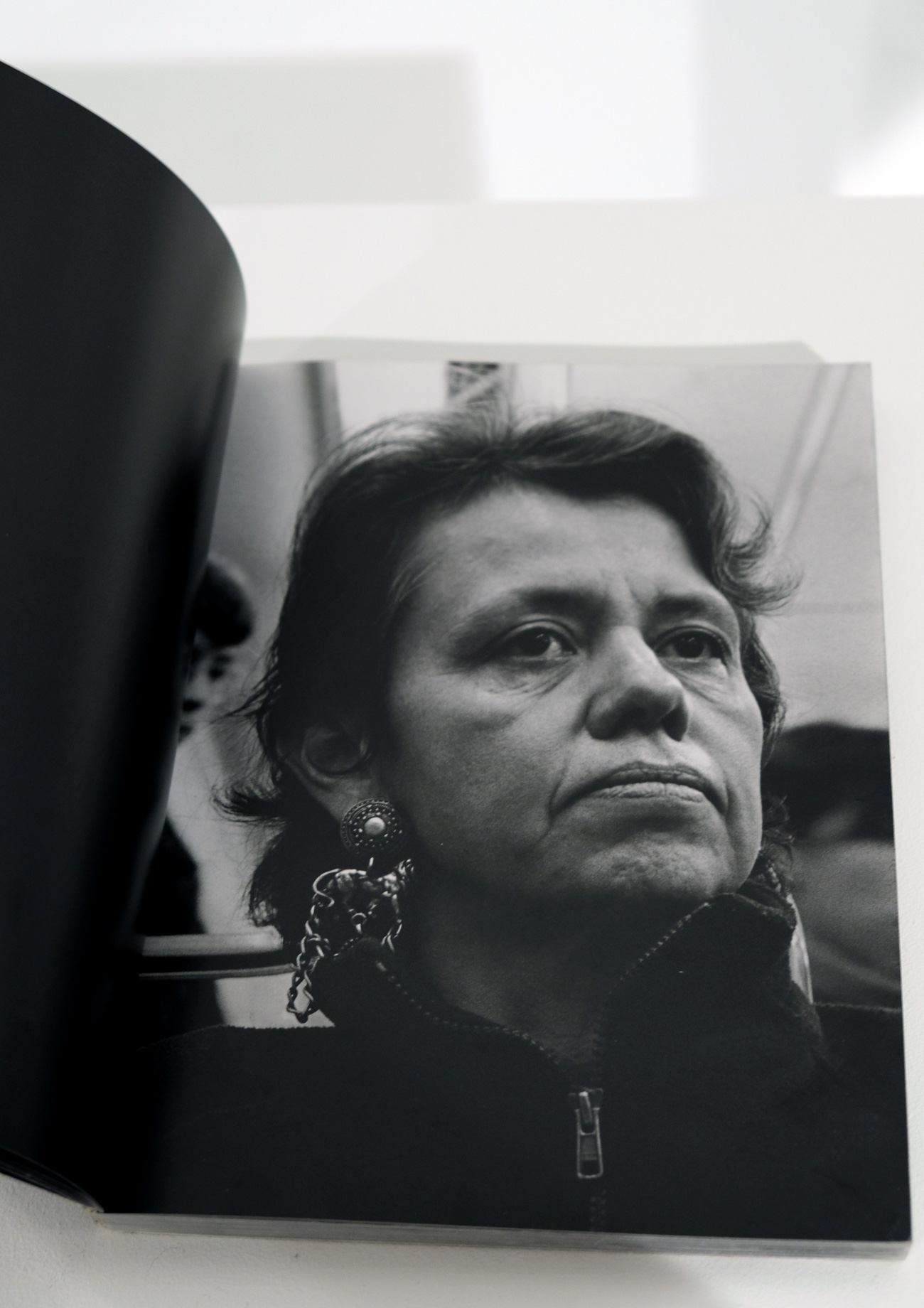
Installation view of the exhibition 'An Unorthodox Flow of Images' at the Centre for Contemporary Photography (CCP), Melbourne, September - November 2017 showing (85) pages from Luc Delahaye's book 'L'Autre' 1999

Installation view of the exhibition 'An Unorthodox Flow of Images' at the Centre for Contemporary Photography (CCP), Melbourne, September - November 2017 showing (85) pages from Luc Delahaye's book 'L'Autre' 1999

Installation view of the exhibition 'An Unorthodox Flow of Images' at the Centre for Contemporary Photography (CCP), Melbourne, September - November 2017 showing (85) pages from Luc Delahaye's book 'L'Autre' 1999

Installation view of the exhibition 'An Unorthodox Flow of Images' at the Centre for Contemporary Photography (CCP), Melbourne, September - November 2017 showing (85) pages from Luc Delahaye's book 'L'Autre' 1999


Installation views of the exhibition An Unorthodox Flow of Images at the CCP, Melbourne showing (85) pages from Luc Delahaye’s book L’Autre 1999
Photos: Marcus Bunyan


Delahaye: In the footsteps of Walker Evans’ classic candid series, Rapid Transit 1956.


Installation view of the exhibition 'An Unorthodox Flow of Images' at the Centre for Contemporary Photography (CCP), Melbourne, September - November 2017 showing (88) Tracey Lamb's 'Surveillance Image #3' 2015


Installation view of the exhibition An Unorthodox Flow of Images at the CCP, Melbourne showing (88) Tracey Lamb’s Surveillance Image #3 2015
Photo: Marcus Bunyan


Installation view of the exhibition 'An Unorthodox Flow of Images' at the Centre for Contemporary Photography (CCP), Melbourne, September - November 2017 showing (89) Walker Evans' 'Family Snapshots on Farmhouse Wall' 1936 (right) with (91) Photographer unknown 'Lee family portrait before the funeral' c. 1920 (top left); and (92) Photographer unknown 'Lee family portrait with portrait of dead father added' c. 1920 (bottom left)


Installation view of the exhibition An Unorthodox Flow of Images at the CCP, Melbourne showing (89) Walker Evans’ Family Snapshots on Farmhouse Wall 1936 (right) with (91) Photographer unknown Lee family portrait before the funeral c. 1920 (top left); and (92) Photographer unknown Lee family portrait with portrait of dead father added c. 1920 (bottom left)
Photo: Marcus Bunyan


Evans: During his celebrated work for the Farm Security Administration documenting the effects of the Great Depression, Walker Evans secretly removed these photographs from the home of his subject, and seemingly hurriedly pinned them to the exterior wall of the house, and photographed them without permission.


Installation view of the exhibition 'An Unorthodox Flow of Images' at the Centre for Contemporary Photography (CCP), Melbourne, September - November 2017 showing (90) photographer unknown 'In memoriam' album 1991


Installation view of the exhibition An Unorthodox Flow of Images at the CCP, Melbourne showing (90) photographer unknown In memoriam album 1991
Photo: Marcus Bunyan


Memoriam: Double exposure enables the impossible in this personal memorial album.


Installation view of the exhibition 'An Unorthodox Flow of Images' at the Centre for Contemporary Photography (CCP), Melbourne, September - November 2017 showing (91) Photographer unknown. 'Lee family portrait before the funeral' c. 1920 (top) and (92) photographer unknown. 'Lee family portrait with portrait of dead father added' c. 1920 (bottom)


Installation view of the exhibition An Unorthodox Flow of Images at the CCP, Melbourne showing (91) Photographer unknown Lee family portrait before the funeral c. 1920 (top) and (92) photographer unknown Lee family portrait with portrait of dead father added c. 1920 (bottom)
Photo: Marcus Bunyan


Funeral: When the family photographer arrived at the Lee home – the day of grandfather’s funeral – he asked them to pose with smiles so that, in the absence of a family portrait, he could create a composite portrait, which was given to the family some days later.


Installation view of the exhibition 'An Unorthodox Flow of Images' at the Centre for Contemporary Photography (CCP), Melbourne, September - November 2017 showing (93) Kate Gollings' 'Lee family portrait' 1986 (right) and (94) David Moore's 'Migrants arriving in Sydney' 1966 (left)


Installation view of the exhibition An Unorthodox Flow of Images at the CCP, Melbourne showing (93) Kate Gollings’ Lee family portrait 1986 (right) and (94) David Moore’s Migrants arriving in Sydney 1966 (left)
Photo: Marcus Bunyan


Gollings: A studio portrait of the Lee family, some 60 years following the previous two photographs. The young man is now grandfather. Still the photographer continues to craft the family, in this case through positioning the subjects, in ways which may or may not reflect actual family relationships.

Moore: In 2015, Judy Annear said of this famous photograph: “It’s great to consider that it’s not actually what it seems.” Years after the photo was published, it emerged that four of the passengers in it were not migrants but Sydneysiders returning home from holiday.


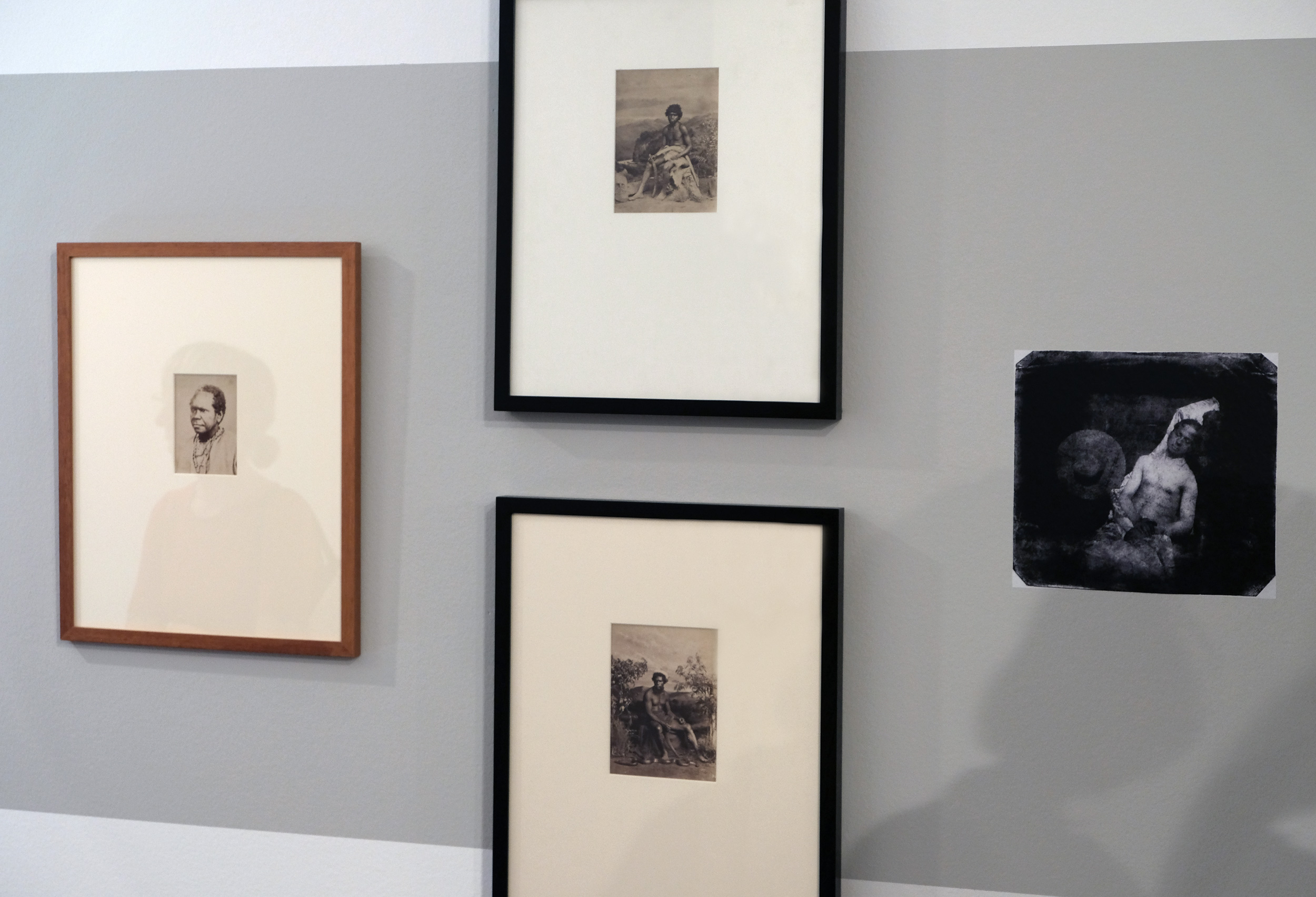
Installation view of the exhibition 'An Unorthodox Flow of Images' at the Centre for Contemporary Photography (CCP), Melbourne, September - November 2017 showing (98) Hippolyte Bayard's 'Self-portrait as a Drowned Man' 1840 (right); (99) J. W. Lindt's 'Untitled (Seated Aboriginal man holding Boomerangs)' c. 1874 (top middle); (100) J. W. Lindt's 'Untitled (Aboriginal man with Snake)' c. 1875 (bottom middle); and (101) Charles Woolley's 'Truccanini, last female Aborigine of Tasmania with shell necklace' 1886 (left)


Installation view of the exhibition An Unorthodox Flow of Images at the CCP, Melbourne showing (98) Hippolyte Bayard’s Self-portrait as a Drowned Man 1840 (right); (99) J. W. Lindt’s Untitled (Seated Aboriginal man holding Boomerangs) c. 1874 (top middle); (100) J. W. Lindt’s Untitled (Aboriginal man with Snake) c. 1875 (bottom middle); and (101) Charles Woolley’s Truccanini, last female Aborigine of Tasmania with shell necklace 1886 (left)
Photo: Marcus Bunyan


Bayard: With its telling title, this staged image is the first instance of intentional photographic fakery, made in protest by Bayard because he felt aggrieved that his role in the invention of photography was unrecognised.

Lindt: For white colonialists, photography became “a vehicle for recording new and exotic lands and informing the ‘unexotic’ Europe of the strange landscape, flora, fauna, and people. In the case of the postcard print fashion from around 1900; to entice tourists to cruise to [exotic] places … Ultimately and blatantly however, photography became another tool of colonialism, to label, control, dehumanise and disempower their subjects who could only reply in defiant gaze at the lens controlled by someone else.” ~ Djon Mundine from Fiona Foley: River of Corn, exh. cat. University of South Florida Contemporary Art Museum, Tampa, USA, 2001


Installation view of the exhibition 'An Unorthodox Flow of Images' at the Centre for Contemporary Photography (CCP), Melbourne, September - November 2017 showing (101) Charles Woolley's 'Truccanini, last female Aborigine of Tasmania with shell necklace' 1886 (right); (102) Christian Thompson's '(Bidjara) Untitled (self portrait) Image No 1' from 'Emotional Striptease' 2003 (middle); (103) Charles Kerry's 'Aboriginal Chief' c. 1901-1907 (top left); and (104) Brook Andrew's 'Sexy and Dangerous' 1996 (bottom left)


Installation view of the exhibition An Unorthodox Flow of Images at the CCP, Melbourne showing (101) Charles Woolley’s Truccanini, last female Aborigine of Tasmania with shell necklace 1886 (right); (102) Christian Thompson’s (Bidjara) Untitled (self portrait) Image No 1 from Emotional Striptease 2003 (middle); (103) Charles Kerry’s Aboriginal Chief c. 1901-1907 (top left); and (104) Brook Andrew’s Sexy and Dangerous 1996 (bottom left)
Photo: Marcus Bunyan


Thompson: Contemporary Indigenous artists return the colonial photographer’s gaze. “For Indigenous people the camera’s central role has been in transforming but really stereotyping our cultures.” In more recent times, “Indigenous people have moved behind the camera, firstly replacing the documenter, then creatively reinterpreting their photographic history.” ~ Djon Mundine from Fiona Foley: River of Corn, exh. cat. University of South Florida Contemporary Art Museum, Tampa, USA, 2001

Kerry: No name or details are recorded of this sitter from Barron River, QLD. He was a member of the touring Wild West Aboriginal troupe, which staged corroborees, weapon skills and tableaux of notorious encounters between armed Native Police and unarmed local communities.


Installation view of the exhibition 'An Unorthodox Flow of Images' at the Centre for Contemporary Photography (CCP), Melbourne, September - November 2017 showing (105) Fiona Foley's '(Badtjala) Wild Times Call 2' 2001 (right); (106) Murray Cammick's 'Bob Marley p owhiri, White Heron Hotel, April 1979' 1979 (second right); and (107) Kirsten Lyttle's '(Waikato, Tainui A Whiro, Ngāti Tahinga) Twilled Work' 2013 (middle left)


Installation view of the exhibition An Unorthodox Flow of Images at the CCP, Melbourne showing (105) Fiona Foley’s (Badtjala) Wild Times Call 2 2001 (right); (106) Murray Cammick’s Bob Marley p owhiri, White Heron Hotel, April 1979 1979 (second right); and (107) Kirsten Lyttle’s (Waikato, Tainui A Whiro, Ngāti Tahinga) Twilled Work 2013 (middle left)
Photo: Marcus Bunyan


Foley: Referencing Hollywood’s representation of the Wild West, Fiona Foley stands with Seminole Indians.

Lyttle: This is woven using the Maori raranga (plaiting) technique for making kete whakario (decorated baskets). According to Mick Pendergrast, the pattern is not named, but attributed to Te Hikapuhi, (Ngati Pikiao), late 19th Century. ~ Pendergrast, M (1984), Raranga Whakairo, Coromandel Press, NZ, pattern 19.


Installation view of the exhibition 'An Unorthodox Flow of Images' at the Centre for Contemporary Photography (CCP), Melbourne, September - November 2017 showing (107) Kirsten Lyttle's '(Waikato, Tainui A Whiro, Ngāti Tahinga) Twilled Work' 2013 (right) and (108) Michael Riley's '(Wiradjuri/Kamilaroi) Maria' 1985 (left)


Installation view of the exhibition An Unorthodox Flow of Images at the CCP, Melbourne showing (107) Kirsten Lyttle’s (Waikato, Tainui A Whiro, Ngāti Tahinga) Twilled Work 2013 (right) and (108) Michael Riley’s (Wiradjuri/Kamilaroi) Maria 1985 (left)
Photo: Marcus Bunyan


Installation view of the exhibition 'An Unorthodox Flow of Images' at the Centre for Contemporary Photography (CCP), Melbourne, September - November 2017 showing (109) Maree Clarke's '(Mutti Mutti, Yorta Yorta, BoonWurrung) Nan's House' (detail of installation) 2017 (right); (110) photographer unknown. 'Writer, Andre Malraux poses in his house of the Boulogne near Paris working at his book Le Musee Imaginaire or Imaginary Museum 2nd volume' 1953 (middle top); and (111) Clare Rae's 'Law Library' 2016 (bottom left)


Installation view of the exhibition An Unorthodox Flow of Images at the CCP, Melbourne showing (109) Maree Clarke’s (Mutti Mutti, Yorta Yorta, BoonWurrung) Nan’s House (detail of installation) 2017 (right); (110) photographer unknown Writer, Andre Malraux poses in his house of the Boulogne near Paris working at his book Le Musee Imaginaire or Imaginary Museum 2nd volume 1953 (middle top); and (111) Clare Rae’s Law Library 2016 (bottom left)
Photo: Marcus Bunyan


Clarke: This work is currently on display at the National Gallery of Australia, Canberra, as a hologram of the artist’s grandmother’s house, as remembered by the artist.

Unknown: ‘The imaginary museum’ or ‘the museum without walls’ (as it is often translated) is a collection reflecting Andre Malraux’s eurocentric conception of art history.


Installation view of the exhibition 'An Unorthodox Flow of Images' at the Centre for Contemporary Photography (CCP), Melbourne, September - November 2017 showing (117) Bill Culbert's 'Small glass pouring Light, France' 1997 (right) and (119) David Moore's 'Sisters of Charity' 1956 (left)


Installation view of the exhibition An Unorthodox Flow of Images at the CCP, Melbourne showing (117) Bill Culbert’s Small glass pouring Light, France 1997 (right) and (119) David Moore’s Sisters of Charity 1956 (left)
Photo: Marcus Bunyan


David Moore (Australian, 1927-2003) 'Sisters of Charity' 1956


David Moore (Australian, 1927-2003)
Sisters of Charity
1956
Gelatin silver print


Installation view of the exhibition 'An Unorthodox Flow of Images' at the Centre for Contemporary Photography (CCP), Melbourne, September - November 2017 showing (119) David Moore's 'Sisters of Charity' 1956 (bottom right); (118) Olive Cotton's 'Teacup Ballet' c. 1935 (top right); and (120) Bernd and Hilla Becher's 'Kies-und Schotterwerke' (Gravel Plants) 2006 (left)

Installation view of the exhibition 'An Unorthodox Flow of Images' at the Centre for Contemporary Photography (CCP), Melbourne, September - November 2017 showing (119) David Moore's 'Sisters of Charity' 1956 (bottom right); (118) Olive Cotton's 'Teacup Ballet' c. 1935 (top right); and (120) Bernd and Hilla Becher's 'Kies-und Schotterwerke' (Gravel Plants) 2006 (left)


Installation view of the exhibition An Unorthodox Flow of Images at the CCP, Melbourne showing (119) David Moore’s Sisters of Charity 1956 (bottom right); (118) Olive Cotton’s Teacup Ballet c. 1935 (top right); and (120) Bernd and Hilla Becher’s Kies-und Schotterwerke (Gravel Plants) 2006 (left)
Photo: Marcus Bunyan


Olive Cotton (Australian, 1911-2003) 'Teacup Ballet' 1935


Olive Cotton (Australian, 1911-2003)
Teacup Ballet
c. 1935
Gelatin silver print


Installation view of the exhibition 'An Unorthodox Flow of Images' at the Centre for Contemporary Photography (CCP), Melbourne, September - November 2017 showing (120) Bernd and Hilla Becher's 'Kies-und Schotterwerke' (Gravel Plants) 2006


Installation view of the exhibition An Unorthodox Flow of Images at the CCP, Melbourne showing (120) Bernd and Hilla Becher’s Kies-und Schotterwerke (Gravel Plants) 2006
Photo: Marcus Bunyan


Installation view of the exhibition 'An Unorthodox Flow of Images' at the Centre for Contemporary Photography (CCP), Melbourne, September - November 2017 showing (120) Bernd and Hilla Becher's 'Kies-und Schotterwerke' (Gravel Plants) 2006 (right) and (121) Robert Rooney's 'Garments: 3 December - 19 March 1973' 1973 (left)


Installation view of the exhibition An Unorthodox Flow of Images at the CCP, Melbourne showing (120) Bernd and Hilla Becher’s Kies-und Schotterwerke (Gravel Plants) 2006 (right) and (121) Robert Rooney’s Garments: 3 December – 19 March 1973 1973 (left)
Photo: Marcus Bunyan


Installation view of the exhibition 'An Unorthodox Flow of Images' at the Centre for Contemporary Photography (CCP), Melbourne, September - November 2017 showing (122) Helen Grace's 'Time and motion study #1 'Women seem to adapt to repetitive-type tasks...'' 1980, printed 2011 (detail)


Installation view of the exhibition An Unorthodox Flow of Images at the CCP, Melbourne showing (122) Helen Grace’s Time and motion study #1 ‘Women seem to adapt to repetitive-type tasks…’ 1980, printed 2011 (detail)
Photo: Marcus Bunyan


Installation view of the exhibition 'An Unorthodox Flow of Images' at the Centre for Contemporary Photography (CCP), Melbourne, September - November 2017 showing (122) Helen Grace's 'Time and motion study #1 'Women seem to adapt to repetitive-type tasks...'' 1980, printed 2011 (detail, right) and (123) Max Dupain's 'Backyard Forster' 1940 (left)


Installation view of the exhibition An Unorthodox Flow of Images at the CCP, Melbourne showing (122) Helen Grace’s Time and motion study #1 ‘Women seem to adapt to repetitive-type tasks…’ 1980, printed 2011 (detail, right) and (123) Max Dupain’s Backyard, Forster 1940 (left)
Photo: Marcus Bunyan


Max Dupain (Australian, 1911 - 1992) 'Backyard, Forster, New South Wales' 1940


Max Dupain (Australian, 1911-1992)
Backyard, Forster, New South Wales
1940
Gelatin silver print


Installation view of the exhibition 'An Unorthodox Flow of Images' at the Centre for Contemporary Photography (CCP), Melbourne, September - November 2017 showing (123) Max Dupain's 'Backyard Forster' 1940 (right) and (124) Marie Shannon's 'Pussy' 2016 (left)


Installation view of the exhibition An Unorthodox Flow of Images at the CCP, Melbourne showing (123) Max Dupain’s Backyard Forster 1940 (right) and (124) Marie Shannon’s Pussy 2016 (left)
Photo: Marcus Bunyan


Shannon: Also a trace of the cat.


Installation view of the exhibition 'An Unorthodox Flow of Images' at the Centre for Contemporary Photography (CCP), Melbourne, September - November 2017 showing (127) Mac Lawrence's 'Five raised fingers' 2016


Installation view of the exhibition An Unorthodox Flow of Images at the CCP, Melbourne showing (127) Mac Lawrence’s Five raised fingers 2016
Photo: Marcus Bunyan


Lawrence: Watery trace.


Installation view of the exhibition 'An Unorthodox Flow of Images' at the Centre for Contemporary Photography (CCP), Melbourne, September - November 2017 showing (136) Simon Terrill's 'Arsenal vs Fenerbahce' 2009


Installation view of the exhibition An Unorthodox Flow of Images at the CCP, Melbourne showing (136) Simon Terrill’s Arsenal vs Fenerbahce 2009


Terrill: The long exposure leaves only a trace of the football crowd, that has disappeared for the day.


Installation view of the exhibition 'An Unorthodox Flow of Images' at the Centre for Contemporary Photography (CCP), Melbourne, September - November 2017 showing (137) Christian Boltanski's 'L'ecole de la Große Hamburger Straße, Berlin 1938' 1993


Installation view of the exhibition An Unorthodox Flow of Images at the CCP, Melbourne showing (137) Christian Boltanski’s L’ecole de la Große Hamburger Straße, Berlin 1938 1993
Photo: Marcus Bunyan


Boltanski: Photography records the passing or death of a particular moment. This is a photograph of a Jewish School in Berlin in 1938.


Installation view of the exhibition 'An Unorthodox Flow of Images' at the Centre for Contemporary Photography (CCP), Melbourne, September - November 2017 showing (138) Joyce Evans' 'Budapest Festival' 1949 (top) and (139) photographer unknown. 'Nina Dumbadze, Honoured Master of Sports of the USSR, world champion in discus throwing from the series Women of the Soviet Georgia' c. 1953 (bottom)


Installation view of the exhibition An Unorthodox Flow of Images at the CCP, Melbourne showing (138) Joyce Evans’ Budapest Festival 1949 (top) and (139) photographer unknown Nina Dumbadze, Honoured Master of Sports of the USSR, world champion in discus throwing from the series Women of the Soviet Georgia c. 1953 (bottom)
Photo: Marcus Bunyan


Installation view of the exhibition 'An Unorthodox Flow of Images' at the Centre for Contemporary Photography (CCP), Melbourne, September - November 2017 showing (139) photographer unknown. 'Nina Dumbadze, Honoured Master of Sports of the USSR, world champion in discus throwing from the series Women of the Soviet Georgia' c. 1953


Installation view of the exhibition An Unorthodox Flow of Images at the CCP, Melbourne showing (139) photographer unknown Nina Dumbadze, Honoured Master of Sports of the USSR, world champion in discus throwing from the series Women of the Soviet Georgia c. 1953
Photo: Marcus Bunyan


Installation view of the exhibition 'An Unorthodox Flow of Images' at the Centre for Contemporary Photography (CCP), Melbourne, September - November 2017 showing (141) Harry Burrell's 'Thylacine or Tasmanian Tiger', cover image for 'The Australian Magazine' 1958, September, Vol 12, No 11 1958


Installation view of the exhibition An Unorthodox Flow of Images at the CCP, Melbourne showing (141) Harry Burrell’s Thylacine or Tasmanian Tiger, cover image for The Australian Magazine 1958, September, Vol 12, No 11 1958
Photo: Marcus Bunyan


Burrell: Published in this museum journal, there is now some contention as to whether Burrell’s series of photographs of the extinct thylacine were made from life, or staged using a taxidermied animal.


Installation view of the exhibition 'An Unorthodox Flow of Images' at the Centre for Contemporary Photography (CCP), Melbourne, September - November 2017 showing (148) Francis Alÿs' 'Fitzroy Square' 2004 (video still)

Installation view of the exhibition 'An Unorthodox Flow of Images' at the Centre for Contemporary Photography (CCP), Melbourne, September - November 2017 showing (148) Francis Alÿs' 'Fitzroy Square' 2004 (video still)


Installation view of the exhibition An Unorthodox Flow of Images at the CCP, Melbourne showing (148) Francis Alÿs’ Fitzroy Square 2004 (video stills)
Photos: Marcus Bunyan


(148) Francis Alÿs
Railings (Fitzroy square)
London, 2004
4.03 min.
Francis Alÿs website


We posit Fitzroy Square at this point; in honour of your journey through this unorthodox flow of images.


Centre for Contemporary Photography

No permanent exhibition space at the moment

Centre for Contemporary Photography website

LIKE ART BLART ON FACEBOOK

Back to top

Exhibition: ‘My Country, I Still Call Australia Home: Contemporary Art from Black Australia’ at The Gallery of Modern Art (GOMA), Brisbane

Exhibition dates: 1st June – 7th October 2013


Tony Albert (Australia, Queensland Girramay people b. 1981) Girramay people 'Sorry' 2008


Tony Albert (Australia, Queensland b. 1981)
Girramay people
Sorry
2008
Found kitsch objects applied to vinyl letters
The James C Sourris, AM, Collection. Purchased 2008 with funds from James C Sourris through the Queensland Art Gallery Foundation
Collection: Queensland Art Gallery


R U SORRY?

Do you feel FORGIVEN?

What do I have to feel sorry for
I only arrived here yesterday

I FORGIVE you for all the SADNESS and SORROW that COLONISATION has CAUSED

You gutless wonder

GUILT, GUILTY, GUILTLESS, GUILELESS, GUTLESS


The persistence of memory – how the past lingers and subverts

MEMORY – inflicting more DAMAGE on the already DAMAGED

(TIME) to MOVE ON… Nothing to  see here


Dr Marcus Bunyan


Many thankx to the The Gallery of Modern Art (GOMA) for allowing me to publish the photographs in the posting. Please click on the photographs for a larger version of the image.


Bindi Cole (Australian, Victoria Wathaurung people b. 1975) 'I forgive you' 2012


Bindi Cole (Australian, Victoria b. 1975)
Wathaurung people
I forgive you
2012
Emu feathers on MDF board
Purchased 2012. Queensland Art Gallery Foundation
Collection: Queensland Art Gallery
© Bindi Cole 2012. Licensed by Viscopy, Sydney, 2013


Bindi Cole (Australian, Victoria Wathaurung people b. 1975) 'Crystal' 2009


Bindi Cole (Australian, Victoria b. 1975)
Wathaurung people
Crystal
2009
From the series Sistagirls
Pigment print on Hahnemühle Photo Rag paper
Purchased 2011 with funds from the Bequest of Grace Davies and Nell Davies through the Queensland Art Gallery Foundation
Collection: Queensland Art Gallery
© Bindi Cole 2009. Licensed by Viscopy, Sydney, 2013


~ Review: ‘Sistagirls’ by Bindi Cole at Nellie Castan Gallery, Melbourne, July 2010


Bindi Cole (Australian, Victoria Wathaurung people b. 1975) 'Frederina' 2009


Bindi Cole (Australian, Victoria b. 1975)
Wathaurung people
Frederina
2009
From the series Sistagirls
Pigment print on Hahnemühle Photo Rag paper
Purchased 2011 with funds from the Bequest of Grace Davies and Nell Davies through the Queensland Art Gallery Foundation
Collection: Queensland Art Gallery
© Bindi Cole 2009. Licensed by Viscopy, Sydney, 2013


Arthur Koo-ekka Pambegan Jr (Australian, Queensland Wik-Mungkan people 1936-2010) 'Flying Fox Story Place' 2002-2003


Arthur Koo-ekka Pambegan Jr (Australian, Queensland 1936-2010)
Wik-Mungkan people
Flying Fox Story Place
2002-2003
Carved milkwood (Alstonia muellerana) with synthetic polymer paint and natural pigments
Commissioned 2002 with funds from the Queensland Art Gallery Foundation Grant
Collection: Queensland Art Gallery


Ron Yunkaporta (Australian, Queensland Wik-Ngathan people b. 1956) 'Thuuth thaa' munth (Law poles)' 2002-2003


Ron Yunkaporta (Australian, Queensland b. 1956)
Wik-Ngathan people
Thuuth thaa’ munth (Law poles)
2002-2003
Cottontree wood (Hibiscus tiliaceus), ibis feathers, bush string with natural pigments
Commissioned 2002 with funds from the Queensland Art Gallery Foundation Grant
Collection: Queensland Art Gallery


Jennifer Mye Jr. (Australian, Queensland Meriam Mir people b. 1984) 'Basket with short handles' 2011


Jennifer Mye Jr. (Australian, Queensland b. 1984)
Meriam Mir people
Basket with short handles
2011
Woven polypropylene tape (blue with Australian flag motif)
Purchased 2011 with funds from Thomas Bradley through the Queensland Art Gallery Foundation


Ken Thaiday Sr (Australian, Queensland Meriam Mir people b. 1950) 'Symbol of the Torres Strait' 2003


Ken Thaiday Sr (Australian, Queensland b. 1950)
Meriam Mir people
Symbol of the Torres Strait
2003
Plywood, synthetic polymer paint, feathers, black bamboo, plastic tubing, fishing line
Purchased 2004 with funds from Corrs Chambers Westgarth through the Queensland Art Gallery Foundation
Collection: Queensland Art Gallery


Dinny McDinny (Australian, Northern Territory Marnbaliya people, Balyarrinji skin group c. 1927-2003) 'Kalajangu – Rainbow Dreaming came through Marnbaliya Country' 2003


Dinny McDinny (Australian, Northern Territory c. 1927-2003)
Marnbaliya people, Balyarrinji skin group
Kalajangu – Rainbow Dreaming came through Marnbaliya Country
2003
Synthetic polymer paint on canvas
Purchased 2004
Queensland Art Gallery Foundation
Collection: Queensland Art Gallery


Sally Gabori (Australian, Queensland Kaiadilt people 1924-2015) 'Dibirdibi Country' 2008


Sally Gabori (Australian, Queensland 1924-2015)
Kaiadilt people
Dibirdibi Country
2008
Synthetic polymer paint on linen
Purchased 2008 with funds from Margaret Mittelheuser, AM, and Cathryn Mittelheuser, AM, through the Queensland Art Gallery Foundation
Collection: Queensland Art Gallery
© Sally Gabori 2008. Licensed by Viscopy, Sydney, 2013


Gabori created a body of work, which expressed sensations of life and cultural memory in diaspora, and differed from other known forms of Aboriginal painting, which focused on story-telling. Most of Gabori’s works represent places on Bentinck Island of deep personal significance to the artist: her husband’s place, Dibirdibi Country, her father’s place, Thundi, her own Country, Mirdidingki, and the first outstation, Nyinyilki.

Gabori lived on Bentinck Island in accordance with custom, developing knowledge of Kaiadilt cartography and cosmology, until the entire population was removed to Mornington Island mission by European settlers in 1948.

Text from the NGV website


Wakartu Cory Surprise (Australian, Western Australia Walmajarri people 1929-2011) 'Mimpi' 2011


Wakartu Cory Surprise (Australian, Western Australia 1929-2011)
Walmajarri people
Mimpi
2011
Synthetic polymer paint on canvas
Purchased 2012
Queensland Art Gallery
Collection: Queensland Art Gallery
© Wakartu Cory Surprise 2011. Licensed by Viscopy, Sydney, 2013


“When I paint, I think about my country and where I have been travelling across that couontry. I paint from here (points to head-thinking about country) and here (points to breasts, collarbone and shoulder blades which is reference to body painting). I think abut my people the old people and what they told me, I think about jumangkarni (Dreamtime). Nobody taught me how to paint, I put down my own ideas, I saw these palces for my self, I went there with the old people. I paint jiji (sand hills), jumu (soak water), jila (spring), jiwari (rock hole), pamarr (hills and rock country), I think about mangarri (vegetable food) and kuyu (game) from my country and when I was there. Whe I paint I am thinking about law from a long time ago, I am thinking about the country, my country. When I first painted we didn’t get money, nothing. I like painting, its good, I get pamarr (word for rock, stone money) for it, I can buy my food, tyres, fix my car, I give some money to family and I keep some for me.”

~ Wakartu Cory Surprise


Ruby Tjangawa Williamson (Australian, South Australia b. 1940); Nita Williamson (Australian, South Australia b. 1963); Suzanne Armstrong (Australian, South Australia b. 1980); Pitjantjatjara people (Collaborating artists). 'Ngayuku ngura (My country) Puli murpu (Mountain range)' 2012


Ruby Tjangawa Williamson (Australian, South Australia b. 1940)
Pitjantjatjara people
Nita Williamson (Australian, South Australia b. 1963)
Suzanne Armstrong (Australian, South Australia b. 1980)
Pitjantjatjara people (Collaborating artists)
Ngayuku ngura (My country) Puli murpu (Mountain range)
2012
Synthetic polymer paint on linen
Purchased 2012 with funds from Margaret Mittelheuser, AM, and Cathryn Mittelheuser, AM, through the Queensland Art Gallery Foundation
Collection: Queensland Art Gallery


Ruby Tjangawa Williamson is a senior law woman committed to fostering traditional culture. She began painting in 2000. Her distinctive works are acclaimed and she is regarded as one of Amata’s most significant artists. Williamson also weaves tjanpi (desert grass) baskets and makes punu (wood carvings) with pokerwork designs.


My Country, I Still Call Australia Home: Contemporary Art from Black Australia is the Gallery’s largest exhibition of contemporary art by Aboriginal and Torres Strait Islander artists to date. The exhibition examines the strengths of the Gallery’s holdings and explores three central themes – presenting Indigenous views of history (My history), responding to contemporary politics and experiences (My life), and illustrating connections to place (My country).

From paintings and sculptures about ancestral epicentres to photographs and moving-image works that interrogate and challenge the established history of Australia, to installations responding to political and social situations affecting all Australians, the thread that binds these artists is their collective desire to share their experiences and tell their stories.

“Drawing on three decades of research, collaboration and Collection development, My Country, I Still Call Australia Home highlights the connection Aboriginal and Torres Strait Islander artists have with country as both ‘land’ and ‘nation’, and features over 300 works by 116 artists from every state and territory,” Mr Saines said.

“Curated by Bruce McLean, a Wirri / Birri-Gubba man with heritage from the central coast of Qoeensland and the Gallery’s Curator of Indigenous Australian Art, the exhibition gives voice to artists who investigate historical and contemporary political and social issues. Many of these issues and works are confronting and controversial, and we are proud of the role our Gallery plays as a forum for discussion, debate and education.”

Mr Saines said the exhibition was divided in to three broad thematic strands that explore how Aboriginal and Torres Strait Islander artists depict the stories of their communities and highlight contemporary Indigenous experiences in Australia.

Press release from the Gallery of Modern Art (GOMA) website


Michael Cook (Australian, Queensland Bidjara people b. 1968) 'Civilised #13' 2012


Michael Cook (Australian, Queensland b. 1968)
Bidjara people
Civilised #13
2012
Inkjet print on paper
Purchased 2012
Queensland Art Gallery
Collection: Queensland Art Gallery
© The artist


Michael Cook’s works depict an ethereal dreamworld, a timeless place that traverses both the colonial and contemporary worlds and is sustained on ‘what ifs’ and hypotheticals. It is a place of Cook’s own modern Dreaming. His central question is quite simple: what if the British, instead of dismissing Aboriginal society, had taken a more open approach to their culture and knowledge systems? This all-Aboriginal world is a sort of utopia where questions can be posed and answered without the complication of race – there is no black and white, no right or wrong. The figures within them are both conquerors and conquered. Through the use of images of Aboriginal people, often in roles opposite to the stereotypical, Cook ensures that an Aboriginal voice is ever-present.


Fiona Foley (Australian, Queensland/New South Wales Badtjala people, Wondunna clan, Fraser Island b. 1964) 'The Oyster Fishermen #1' 2011


Fiona Foley (Australian, Queensland/New South Wales b. 1964)
Badtjala people, Wondunna clan, Fraser Island
The Oyster Fishermen #1
2011
Inkjet print on Hahnemühle paper
Purchased 2012
Queensland Art Gallery Foundation
Collection: Queensland Art Gallery


Vernon Ah Kee (Australian, Queensland Kuku Yalanji/Waanyi/Yidinyji/GuuguYimithirr people b. 1967) 'Tall Man' 2010 (still)


Vernon Ah Kee (Australian, Queensland b. 1967)
Kuku Yalanji/Waanyi/Yidinyji/GuuguYimithirr people
Tall Man (still)
2010
Four-channel digital video installation from DVD
Purchased 2012
Queensland Art Gallery
Collection: Queensland Art Gallery


Gordon Hookey (Australian, Queensland/New South Wales Waanyi people b. 1961) 'Blood on the wattle, blood on the palm' 2009


Gordon Hookey (Australian, Queensland/New South Wales b. 1961)
Waanyi people
Blood on the wattle, blood on the palm
2009
Oil on linen
The James C Sourris, AM, Collection
Gift of James C Sourris, AM, through the Queensland Art Gallery Foundation 2012
Donated through the Australian Government’s Cultural Gifts Program
Collection: Queensland Art Gallery


Michael Riley (Australian, New South Wales Kamilaroi/Wiradjuri people 1960-2004) 'Sacrifice (portfolio)' 1993 (detail)


Michael Riley (Australian, New South Wales 1960-2004)
Kamilaroi/Wiradjuri people
Sacrifice (portfolio) (detail)
1993
Colour cibachrome photograph
Purchased 2002
Collection: Queensland Art Gallery


Christian Thompson (Australian, Queensland/New South Wales/Victoria Bidjarra/Kunja people b. 1978) 'Black Gum 2' (from 'Australian Graffiti' series) 2008


Christian Thompson (Australian, Queensland/New South Wales/Victoria b. 1978)
Bidjarra/Kunja people
Black Gum 2 (from Australian Graffiti series)
2008
Type C photograph
Purchased 2008
The Queensland Art Gallery Foundation Grant
Collection: Queensland Art Gallery


Warwick Thornton (Australian, Northern Territory Kaytej people b. 1970) 'Stranded' 2011 (still)


Warwick Thornton (Australian, Northern Territory b. 1970)
Kaytej people
Stranded (still)
2011
3D digital video: 11.06 minutes, colour, sound
Commissioned by the 2011 Adelaide Film Festival Investment Fund
Purchased 2011
Queensland Art Gallery Foundation
Collection: Queensland Art Gallery
© Warwick Thornton. Image courtesy the artist and Stills Gallery


Gallery of Modern Art (GOMA)

The Queensland Art Gallery (QAG) and Gallery of Modern Art (GOMA) are located 150 metres from each other, on the south bank of the Brisbane River. Entrance to both buildings is possible from Stanley Place, and the river front entrance to the Queensland Art Gallery is on Melbourne Street. The Galleries are within easy walking distance to the city centre and South Bank Parklands.

Opening hours:
Daily 10.00am – 5.00pm

Gallery of Modern Art (GOMA) website

LIKE ART BLART ON FACEBOOK

Back to top

Text: ‘Un/settling Aboriginality’ Dr Marcus Bunyan / Exhibition: ‘Brook Andrew: 52 Portraits’ at Tolarno Gallery, Melbourne

Exhibition dates: 15th June – 20th July 2013


Many thankx to Tolarno Gallery for allowing me to publish the photographs in the posting. Please click on the photographs for a larger version of the image.

Download the text Un/settling Aboriginality (1.1Mb pdf)


Un/settling Aboriginality

Dr Marcus Bunyan

Abstract

This text investigates the concepts of postcolonialism / neo-colonialism and argues that Australia is a neo-colonial rather than a postcolonial country. It examines the work of two Australian artists in order to understand how their work is linked to the concept of neo-colonialism and ideas of contemporary Aboriginal identity, Otherness, localism and internationalism.

Keywords

postcolonialism, postcolonial, art, neo-colonialism, Australian art, Australian artists, Aboriginal photography, hybridism, localism, internationalism, Otherness, Australian identity, Brook Andrew, Ricky Maynard, Helen Ennis.


Australia and postcolonialism / neo-colonialism

Defining the concept of postcolonialism is difficult. “To begin with, “post-colonial” is used as a temporal marker referring to the period after official decolonisation,”1 but it also refers to a general theory that Ania Loomba et al. call “the shifting and often interrelated forms of dominance and resistance; about the constitution of the colonial archive; about the interdependent play of race and class; about the significance of gender and sexuality; about the complex forms in which subjectivities are experienced and collectivities mobilized; about representation itself; and about the ethnographic translation of cultures.”2

“Postcolonial theory formulates its critique around the social histories, cultural differences and political discrimination that are practised and normalised by colonial and imperial machineries… Postcolonial critique can be defined as a dialectical discourse which broadly marks the historical facts of decolonisation. It allows people emerging from socio-political and economic domination to reclaim their sovereignty; it gives them a negotiating space for equity.”3

While colonialism and imperialism is about territory, possession, domination and power,4 postcolonialism is concerned with the history of colonialism, the psychology of racial representation and the frame of representation of the ‘Other’. It addresses the ongoing effects of colonialism and imperialism even after the colonial period has ended.
“Past and present inform each other, each implies the other and… each co-exists with the other.”5 Even after colonialism has supposedly ended there will always be remains that flow into the next period. What is important is not so much the past itself but its bearing upon cultural attitudes of the present and how the uneven relationships of the past are remembered differently.6 While the aims of postcolonialism are transformative, its objectives involve a wide-ranging political project – to reorient ethical norms, turn power structures upside down and investigate “the interrelated histories of violence, domination, inequality and injustice”7 and develop a tradition of resistance to the praxis of hegemony.

McCarthy and Dimitriadis posit three important motifs in postcolonial art.8 Briefly, they can be summarised as follows:

1/ A vigorous challenge to hegemonic forms of representation in Western models of classical realism and technologies of truth in which the eye of the Third World is turned on the West and challenges the ruling narrating subject through multiple perspectives and points of view.

2/ A rewriting of the narrative of modernity through a joining together of the binaries ‘centre’ and ‘periphery’, ‘developed’ and ‘underdeveloped’, and ‘civilised’ and ‘primitive’. “Culture, for these [postcolonial] artists, is a crucible of encounter, a crucible of hybridity in which all of cultural form is marked by twinness of subject and other.”9

3/ A critical reflexivity and thoughtfulness as elements of an artistic practice of freedom. This practice looks upon traditions with dispassion, one in which all preconceived visions and discourses are disrupted, a practice in which transformative possibilities are not given but have to worked for in often unpredictable and counter-intuitive ways.


According to Robert Young the paradigm of postcolonialism is to “locate the hidden rhizomes of colonialism’s historical reach, of what remains invisible, unseen, silent or unspoken” to examine “the continuing projection of past conflicts into the experience of the present, the insistent persistence of the afterimages of historical memory that drive the desire to transform the present.”10 This involves an investigation into a dialectic of visibility and invisibility where subjugated peoples were present but absent under the eye of the coloniser through a refusal of those in power to see who or what was there. “Postcolonialsm, in its original impulse, was concerned to make visible areas, nations, cultures of the world which were notionally acknowledged, technically there, but which in significant other senses were not there…”11 In other words, to acknowledge the idea of the ‘Other’ as a self determined entity if such an other should ever exist because, as Young affirms, “Tolerance requires that there be no “other,” that others should not be othered. We could say that there can be others, but there should be no othering of “the other.”12

The “Other” itself is a product of racial theory but Young suggests that “the question is not how to come to know “the other,” but for majority groups to stop othering minorities altogether, at which point minorities will be able to represent themselves as they are, in their specific forms of difference, rather than as they are othered.”13 Unfortunately, with regard to breaking down the divisiveness of the same-other split, “As soon as you have employed the very category of “the other” with respect to other peoples or societies, you are imprisoned in the framework of your own predetermining conceptualisation, perpetuating its form of exclusion.”14 Hence, as soon as the dominant force names the “other” as a paradigm of society, you perpetuate its existence as an object of postcolonial desire. This politics of recognition can only be validated by the other if the other choses to name him or herself in order to “describe a situation of historical discrimination which requires challenge, change and transformation… Othering was a colonial strategy of exclusion: for the postcolonial, there are only other human beings.”15

Important questions need to be asked about the contextual framework of postcolonialism as it is linked to race, culture, gender, settler and native: “When does a settler become coloniser, colonised and postcolonial? When does a race cease to be an oppressive agent and become a wealth of cultural diversities of a postcolonial setting? Or in the human history of migrations, when does the settler become native, indigenous, a primary citizen? And lastly, when does the native become truly postcolonial?”16


This last question is pertinent with regard to Australian culture and identity. It can be argued that Australia is not a postcolonial but a neo-colonial country. Imperialism as a concept and colonialism as a practice are still active in a new form. This new form is neo-colonialism. Rukundwa and van Aarde observe that, “Neo-colonialism is another form of imperialism where industrialised powers interfere politically and economically in the affairs of post-independent nations. For Cabral (in McCulloch 1983: 120-121), neo-colonialism is “an outgrowth of classical colonialism.” Young (2001: 44-52) refers to neo-colonialism as “the last stage of imperialism” in which a postcolonial country is unable to deal with the economic domination that continues after the country gained independence. Altbach (1995: 452-56) regards neo-colonialism as “partly planned policy” and a “continuation of the old practices”.”17

Australia is not a post-independent nation but an analogy can be made. The Australian government still interferes with the running of Aboriginal communities through the NT Intervention or, as it is more correctly known, Northern Territory National Emergency Response Act 2007. Under the Stronger Futures legislation that recently passed through the senate, this intervention has been extended by another 10 years. “Its flagship policies are increased government engagement, income management, stabilisation, mainstreaming, and the catch cries “closing the gap” and “real jobs”.”18 As in colonial times the government has control of a subjugated people, their lives, income, health and general wellbeing, instead of partnering and supporting Aboriginal organisations and communities to take control of their futures.19

Further, Australia is still a colony, the Queen of England is still the Queen of Australia; Britannia remains in the guise of the “Commonwealth.” Racism, an insidious element of the colonial White Australia Policy (which only ended in 1973), is ever prevalent beneath the surface of Australian society. Witness the recent racial vilification of Sydney AFL (Aussie Rules!) player Adam Goodes by a teenager20 and the inexcusable racial vilification by Collingwood president Eddie McGuire when he said that Goodes could be used to promote the musical King Kong.21

“The dialectics of liberation from colonialism, whether political, economic, or cultural, demand that both the colonizer and the colonized liberate themselves at the same time.”22 This has not happened in Australia. The West’s continuing political, economic and cultural world domination has “lead to a neo-colonial situation, mistakenly called post-coloniality, which does not recognize the liberated other as a historical subject (in sociological theory, a historical subject is someone thought capable of taking an active role in shaping events) – as part of the historical transforming processes of modernity.”23 As has been shown above, Aboriginal communities are still thought incapable of taking an active role in shaping and administering their own communities. The result of this continuation of old practices is that Australia can be seen as a neo-colonial, not postcolonial, country.

Kathryn Trees asks, “Does post-colonial suggest colonialism has passed? For whom is it ‘post’? Surely not for Australian Aboriginal people at least, when land rights, social justice, respect and equal opportunity for most does not exist because of the internalised racism of many Australians. In countries such as Australia where Aboriginal sovereignty, in forms appropriate to Aboriginal people, is not legally recognised, post-colonialism is not merely a fiction, but a linguistic manoeuvre on the part of some ‘white’ theorists who find this a comfortable zone that precludes the necessity for political action.”24


Two Australian artists, two different approaches

There are no dots or cross-hatching in the work of Ricky Maynard or Brook Andrew; no reference to some arcane Dreaming, for their work is contemporary art that addresses issues of identity and empowerment in different ways. Unlike remote Indigenous art that artist Richard Bell has labelled ‘Ooga Booga Art’ (arguing that it is based upon a false notion of tradition that casts Indigenous people as the exotic other, produced under the white, primitivist gaze),25 the work of these two artists is temporally complex (conflating past, present and future) and proposes that identity is created at the intersection of historically shifting subject positions, which destabilises any claim to an ‘authentic’ identity position and brings into question the very label ‘Aboriginal’ art and ‘Aboriginality’. By labelling an artist ‘Aboriginal’ or ‘gay’ for example, do you limit the subject matter that those artists can legitimately talk about, or do you just call them artists?

As Stephanie Radok has speculated, “surely as long as we call it Aboriginal art we are defining it ethnically and foregrounding its connection to a particular culture, separating it from other art and seeing it as a gift, a ‘present’ from another ethnography.”26 Be that as it may, artists can work from within a culture, a system, in order to critique the past in new ways: “The collective efforts of contemporary artists… do not reflect an escapist return to the past but a desire to think about what the past might now mean in new, creative ways.”27

Ways that un/settle Aboriginality through un/settling photography, in this case.


Since the 1980s photographers addressing Indigenous issues have posed an alternative reality or viewpoint that, “articulates the concept of time as a continuum where the past, present and future co-exist in a dynamic form. This perspective has an overtly political dimension, making the past not only visible but also unforgettable.”28 The perspective proposes different strategies to deliberately unsettle white history so that “the future is as open as the past, and both are written in tandem.”29

Artists Ricky Maynard and Brook Andrew both critique neo-colonialism from inside the Western gallery system using a relationship of interdependence (Aboriginal/colonial) to find their place in the world, to help understand who they are and, ex post facto, to make a living from their art. They both offer an examination of place, space and identity construction through what I call ‘the industry of difference’.

Ricky Maynard works with a large format camera and analogue, black and white photography in the Western documentary tradition to record traditional narratives of Tasmanian Aboriginal people in order to undermine the myth that they were all wiped off the face of the planet by colonisation. Through his photography he re-identifies the narratives of a subjugated and supposedly exterminated people, narratives that are thousands of years old, narratives that challenge a process of Othering or exclusion and which give voice to the oppressed.

Portrait of a Distant Land is done through the genre of documentary in a way that offers authenticity and honest image making in the process. It has to deal with all those ethical questions of creating visual history, the tools to tell it with and how we reclaim our own identity and history from the way we tell our own stories. It comes from the extension of the way the colonial camera happened way back in the 19th century and how it misrepresented Aboriginal people. The Government anthropologists and photographers were setting up to photograph the dying race. Of course it simply wasn’t true. That was a way that colonial people wanted to record their history. You see those earlier colonial and stereotypical images of Aboriginal people in historic archives, their photographic recordings were acts of invasion and subjugation used for their own purpose.”30


Ricky Maynard (Australian, b. 1953) 'Coming Home' 2005


Ricky Maynard (Australian, b. 1953)
Coming Home
2005
from Portrait of a Distant Land
Gelatin silver print
34 x 52cm, edition of 10 + 3 AP


“I can remember coming here as a boy in old wooden boats to be taught by my grandparents and my parents.

I’ll be 57 this year and I have missed only one year when my daughter Leanne was born. Mutton birding is my life. To me it’s a gathering of our fella’s where we sit and yarn we remember and we honour all of those birders who have gone before us. Sometimes I just stand and look out across these beautiful islands remembering my people and I know I’m home. It makes me proud to be a strong Tasmanian black man.

This is something that they can never take away from me.”

Murray Mansell Big Dog Island, Bass Strait, 2005 31


Ricky Maynard (Australian, b. 1953) 'Vansittart Island, Bass Strait, Tasmania' 2005


Ricky Maynard (Australian, b. 1953)
Vansittart Island, Bass Strait, Tasmania
2005
from Portrait of a Distant Land
Gelatin silver print
34 x 52cm, edition of 10 + 3 AP


“As late as 1910 men came digging on Vansittart and Tin Kettle Islands looking for skeletons here. We moved them where none will find them, at the dead of night my people removed the bodies of our grandmothers and took them to other islands, we planted shamrocks over the disturbed earth, so the last resting place of those girls who once had slithered over the rocks for seals will remain a secret forever.”

Old George Maynard 1975 32


Ricky Maynard (Australian, b. 1953) 'The Healing Garden, Wybalenna, Flinders Island, Tasmania' 2005


Ricky Maynard (Australian, b. 1953)
The Healing Garden, Wybalenna, Flinders Island, Tasmania
2005
from Portrait of a Distant Land
Gelatin silver print
34 x 52cm, edition of 10 + 3 AP


“It’s pretty important you know, the land, it doesn’t matter how small, it’s something, just a little sacred site, that’s Wybalenna. There was a massacre there, sad things there, but we try not to go over that. Where the bad was we can always make it good.”

Aunty Ida West 1995 Flinders Island, Tasmania 33


Maynard’s photographs are sites of contestation, specific, recognisable sites redolent with contested history. They are at once both local (specific) and global (addressing issues that affect all subjugated people and their stories, histories). Through his art practice Maynard journeys from the periphery to the centre to become a fully recognised historical subject, one that can take an active role in shaping events on a global platform, a human being that aims to create what he describes as “a true visual account of life now.”34 But, as Ian McLean has noted of the work of Derrida on the idea of repression, what returns in such narratives is not an authentic, original Aboriginality but the trace of an economy of repression: “Hence the return of the silenced nothing called Aboriginal as the being and truth of the place, is not the turn-around it might seem, because it does not reinstate an original Aboriginality, but reiterates the discourses of colonialism.”35

Sad and poignant soliloquies they may be, but in these ‘true’ visual accounts it is the trace of repression represented through Western technology (the camera, the photograph) and language (English is used to describe the narratives, see above) that is evidenced in these critiques of neo-colonialism (a reiteration of the discourses of colonialism) – not just an authentic lost and reclaimed Aboriginality – for these photographs are hybrid discourses that are both local/global, European/Indigenous.

In his art practice Brook Andrew pursues a more conceptual mutli-disciplinary approach, one that successfully mines the colonial photographic archive to interrogate the colonial power narrative of subjugation, genocide, disenfranchisement through a deconstructive discourse, one that echoes with the repetitions of coloniality and evidences the fragments of racism through the status of appearances. “Through his persistent confrontation with the historical legacy of physiognomia in our public Imaginary”36 in video, neon, sculpture, craniology, old photography, old postcards, music, books, ethnography and anthropology, Andrew re-images and reconceptualises the colonial archive. His latest body of work 52 Portraits (Tolarno Galleries 15 June – 20 July 2013), is “a play on Gerhard Richter’s 48 Portraits projects, which lifted images of influential Western men from the pages of encyclopaedias, 52 Portraits shifts the gaze to the ubiquitous and exotic other.”37 The colonial portraits are screen-printed in black onto silver-coated canvases giving them an ‘other’ worldly, alien effect (as of precious metal), which disrupts the surface and identity of the original photographs. Variously, the unnamed portraits taken from his personal collection of old colonial postcards re-present unknown people from the Congo, Africa, Argentina, Ivory Coast, Brazil, Algeria, Australia, South America, etc… the images incredibly beautiful in their silvered, slivered reality (as of the time freeze of the camera), replete with fissures and fractures inherent in the printing process. Accompanying the series is an installation titled Vox: Beyond Tasmania (2013), a Wunderkammer containing a skeleton and colonial artefacts, the case with attached wooden trumpet (reminding me appropriately of His Master’s Voice) that focuses the gaze upon an anonymous skull, an unknowable life from the past. In the catalogue essay for the exhibition, Ian Anderson observes, “His view is global – and even though my response is highly local – I too see the resonances of a global cultural process that re-ordered much of humanity through the perspective of colonizing peoples.”38

While this may be true, it is only true for the limited number of people that will see the exhibition – usually white, well-educated people, “The realities of the commercial art world are such that it is chiefly the white upper crust that will see these works. Make of that what you will.”39 Through a lumping together of all minority people – as though multiple, local indigeneties can be spoken for through a single global indigeneity – Andrew seems to want to speak for all anonymous Indigenous people from around the world through his ‘industry of difference’. Like colonialism, this speaking is again for the privileged few, as only they get to see these transformed images, in which only those with money can afford to buy into his critique.

Personally, I believe that Andrew’s constant remapping and re-presentation of the colonial archive in body after body of work, this constant picking at the scab of history, offers no positive outcomes for the future. It is all too easy for an artist to be critical; it takes a lot more imagination for an artist to create positive images for a better future.


Conclusion

By the mid-eighties black and indigenous subjectivities were no longer transgressive and the ‘black man’s’ burden’ had shifted from being a figure of oblivion to that of a minority voice.40 Black subjectivities as minority identities use the language of difference to envisage zones of liberation in which marginality is a site of transformation. But, as Ian McLean asks, “Have these post or anti-colonial identities repulsed the return of coloniality?”41 In the fight against neo-colonialism he suggests not, when the role of minority discourses “are simultaneously marginalised and occupy an important place in majority texts.”42 Periphery becomes centre becomes periphery again. “Minority artists are not left alone on the periphery of dominant discourse. Indeed, they are required to be representatives of, or speak for, a particular marginalised community; and because of this, their speech is severely circumscribed. They bear a ‘burden of representation’.”43 McLean goes on to suggest the burden of representation placed on Aboriginal artists is one that cannot be escaped. The category ‘Aboriginal’ is too over determined. Aboriginal artists, like gay artists addressing homosexuality, can only address issues of race, identity and place.44

“Aboriginal artists must address issues of race, and all on the stage of an identity politics. Black artists, it seems, can perform only if they perform blackness. Reduced to gestures of revolt, they only reinforce the scene of repression played out in majority discourses of identity and otherness. Allowed to enter the field of majority language as divergent and hence transgressive discourses which police as much as they subvert the boundaries of this field, they work to extend certain boundaries necessary to Western identity formations, but which its traditions have repressed. In other words, minority discourses are complicit with majority texts.”45

As social constructs (the heart of the political terrain of imperial worlds) have been interrogated by artists, this has led to the supposed dissolution of conceptual binaries such as European Self / Indigenous Other, superior / inferior, centre / periphery.46 The critique of neo-colonialism mobilises a new, unstable conceptual framework, one that unsettles both imperialist structures of domination and a sense of an original Aboriginality. Counter-colonial perspectives might critique neo-colonial power through disruptive inhabitations of colonialist constructs (such as the photograph and the colonial photographic archive) but they do so through a nostalgic reworking and adaptation of the past in the present (through stories that are eons old in the case of Ricky Maynard or through appropriation of the colonial photographic archive in the case of Brook Andrew). Minority discourses un/settle Aboriginality in ways not intended by either Ricky Maynard or Brook Andrew, by reinforcing the boundaries of the repressed ‘Other’ through a Western photographic interrogation of age-old stories and the colonial photographic archive.

Both Maynard and Andrew picture identities that are reductively marshalled under the sign of minority discourse, a discourse that re-presents a field of representation in a particularly singular way (addressed to a privileged few). The viewer is not caught between positions, between voices, as both artists express an Aboriginal (not Australian) subjectivity, one that reinforces a black subjectivity and oppression by naming Aboriginal as ‘Other’ (here I am not proposing “assimilation” far from it, but inclusion through difference, much as gay people are now just members of society not deviants and outsiders).

Finally, what interests me further is how minority voices can picture the future not by looking at the past or by presenting some notion of a unitary representation (local / global) of identity, but by how they can interrogate and image the subject positions, political processes, cultural articulation and critical perspectives of neo-colonialism in order that these systems become the very preconditions to decolonisation.

Dr Marcus Bunyan
July 2013

Word count: 3,453 excluding image titles and captions.


Endnotes

1/ Abraham, Susan. “What Does Mumbai Have to Do with Rome? Postcolonial Perspectives on Globalization and Theology,” in Theological Studies 69, 2008, pp. 376-93 cited in Kenzo, Mabiala Justin-Robert. What Is Postcolonialism and Why Does It Matter: An African Perspective. Nd [Online] Cited 13/06/2013. No longer available online

2/ Loomba, Ania et al. “Beyond What? An Introduction,” in Loomba, Ania et al. (ed.,). Postcolonial Studies and Beyond. Durham, N.C.: Duke University, 2005, pp. 1-38

3/ Rukundwa, Lazare S and van Aarde, Andries G. “The formation of postcolonial theory,” in HTS Teologiese Studies / Theological Studies 63(3), 2007, p. 1174

4/ “Neither imperialism nor colonialism is a simple act of accumulation and acquisition. Both are supported and perhaps even impelled by impressive ideological formations that include notions that certain territories and people require and beseech domination, as well as forms of knowledge affiliated with domination: the vocabulary of classic nineteenth-century imperial cultural is plentiful with such words and concepts as ‘inferior’ or ‘subject races’, ‘subordinate people’, ‘dependency’, ‘expansion’, and ‘authority’.”
Said, Edward. “Overlapping Territories, Intertwined Histories,” in Said, Edward. Culture and Imperialism. London: Chatto and Windus, 1993, p. 8

5/ Ibid., p. 2

6/ Ibid., p. 19

7/ Young, Robert J.C. “Postcolonial Remains,” in New Literary History Vol. 43. No. 1. Winter 2012, p. 20

8/ See McCarthy, Cameron and Dimitriadis, Greg. “The Work of Art in the Postcolonial Imagination,” in Discourse: Studies in the Cultural Politics of Education 21(1), 2000, p. 61

9/ Ibid., p. 61

10/ Young, Op. cit., p. 21

11/ Young, Ibid., p. 23

12/ “Critical analysis of subjection to the demeaning experience of being othered by a dominant group has been a long-standing focus for postcolonial studies, initiated by Frantz Fanon in his Black Skin, White Masks (1952).”
Young, Robert J.C. “Postcolonial Remains,” in New Literary History Vol. 43. No. 1. Winter 2012, p. 36

13/ Ibid., p. 37

14/ Ibid., p. 38

15/ Ibid., p. 39

16/ Rukundwa, Op cit., p. 1173

17/ Ibid., p. 1173

18/ Anon. “The 30-year cycle: Indigenous policy and the tide of public opinion” on The Conversation website 06/06/2012 [Online] Cited 16/06/2013

19/ Karvelas, Patricia. “Senate approves Aboriginal intervention by 10 years,” on The Australian website June 29, 2012 [Online] Cited 16/06/2013. No longer available online

20/ ABC/AAP. “AFL: Adam Goodes racially abused while leading Sydney to Indigenous Round win over Collingwood Sat May 25, 2013” on the ABC News website [Online] Cited 15/06/2013

21/ Anon. “Eddie McGuire, Adam Goodes and ‘apes’: a landmark moment in Australian race relations,” on The Conversation website, 31 May 2013 [Online] Cited 15/06/2013

22/ Araeen, Rasheed. “The artist as a post-colonial subject and this individual’s journey towards ‘the centre’,” in King, Catherine. View of Difference. Different Views of Art. Yale University Press, 1999, p. 232

23/ Ibid.,

24/ Trees, Kathryn. “Postcolonialism: Yet Another Colonial Strategy?” in Span, Vol. 1, No. 36, 1993, pp. 264-265 quoted in Heiss, Anita. “Post-Colonial-NOT!” in Dhuuluu Yala (To Talk Straight): Publishing Aboriginal Writing in Australia. Canberra: Aboriginal Studies Press, 2003, pp. 43-46

25/ Skerritt, Henry F. “Drawing NOW: Jus’ Drawn'” in Art Guide Australia, September/ October 2010, pp. 34-35 [Online] Cited 17/06/2013.

26/ Ibid.,

27/ Ennis, Helen. “The Presence of the Past,” in Ennis, Helen. Photography and Australia. London: Reaktion Books, 2007, p. 141

28/ Ibid., p. 135

29/ Ibid., “Black to Blak,” p. 45

30/ Maynard, Ricky quoted in Perkins, Hetti. Art + Soul. Melbourne: The Miegunyah Press, Melbourne University Publishing, 2010, p. 85

31/ Mansell, Murray quoted on the Stills Gallery website [Online] Cited 22/06/2013

32/ Maynard, George quoted on the Stills Gallery website [Online] Cited 22/06/2013

33/ West, Ida quoted on the Stills Gallery website [Online] Cited 22/06/2013

34/ Maynard, Ricky. “The Craft of Documentary Photography,” in Phillips, Sandra. Racism, Representation and Photography. Sydney, 1994, p. 115 quoted in Ennis, Helen. Photography and Australia. London: Reaktion Books, 2007, p. 106

35/ McLean, Ian. “Post colonial: return to sender” 1998 paper delivered as the Hancock lecture at the University of Sydney on 11/11/1998 as part of the annual conference of the Australian Academy of Humanities which had as its theme: ‘First Peoples Second Chance Australia In Between Cultures’

36/ Papastergiadis, Nikos. “Brook Andrew: Counterpoints and Harmonics.” Catalogue essay for Brook Andrew’s exhibition 52 Portraits at Tolarno Galleries, Melbourne, June 2013

37/ Rule, Dan. “Brook Andrew: 52 Portraits,” in Arts & Entertainment, Lifestyle, in The Saturday Age newspaper, June 29th 2013, p. 5

38/ Anderson, Pangkarner Ian. “Re-Assembling the trophies and curios of Colonialism & the Silent Terror.” Catalogue essay for Brook Andrew’s exhibition 52 Portraits at Tolarno Galleries, Melbourne, June 2013

39/ Rule, Dan. Op. cit.,

40/ McLean, Ian. “Post colonial: return to sender” 1998

41/ Ibid.,

42/ Ibid.,

43/ Ibid.,

44/ “Whether they like it or not, they [Aboriginal artists] bear a burden of representation. This burden is triply inscribed. First, they can only enter the field of representation or art as a disruptive force. Second, their speaking position is rigidly circumscribed: they are made to speak as representatives of a particular, that is, Aboriginal community. Third, this speaking is today made an essential component of the main game, the formation of Australian identity – what Philip Batty called ‘Australia’s desire to know itself through Aboriginal culture’.”
McLean, Ian. “Post colonial: return to sender” 1998

45/ Ibid.,

46/ Jacobs observes, “As the work on the nexus of power and identity within the imperial process has been elaborated, so many of the conceptual binaries that were seen as fundamental to its architecture of power have been problematised. Binary couplets like core / periphery, inside / outside. Self / Other, First World / Third World, North / South have given way to tropes such as hybridity, diaspora, creolisation, transculturation, border.”
Jacobs, J. M. “(Post)colonial spaces,” Chapter 2 in Edge of Empire. London: Routledge, 1996, p. 13


Bibliography

Anderson, Pangkarner Ian. “Re-Assembling the trophies and curios of Colonialism & the Silent Terror.” Catalogue essay for Brook Andrew’s exhibition 52 Portraits at Tolarno Galleries, Melbourne, June 2013

Araeen, Rasheed. “The artist as a post-colonial subject and this individual’s journey towards ‘the centre’,” in King, Catherine. View of Difference. Different Views of Art. Yale University Press, 1999, p. 232

ABC/AAP. “AFL: Adam Goodes racially abused while leading Sydney to Indigenous Round win over Collingwood Sat May 25, 2013” on the ABC News website [Online] Cited 15/06/2013.

Abraham, Susan. “What Does Mumbai Have to Do with Rome? Postcolonial Perspectives on Globalization and Theology,” in Theological Studies 69, 2008, pp. 376-93 cited in Kenzo, Mabiala Justin-Robert. What Is Postcolonialism and Why Does It Matter: An African Perspective. Nd [Online] Cited 13/06/2013

Anon. “Eddie McGuire, Adam Goodes and ‘apes’: a landmark moment in Australian race relations,” on The Conversation website, 31 May 2013 [Online] Cited 15/06/2013

Anon. “The 30-year cycle: Indigenous policy and the tide of public opinion,” on The Conversation website 06/06/2012 [Online] Cited 16/06/2013

Ennis, Helen. “The Presence of the Past,” in Ennis, Helen. Photography and Australia. London: Reaktion Books, 2007, p. 141

Heiss, Anita. “Post-Colonial-NOT!” in Dhuuluu Yala (To Talk Straight): Publishing Aboriginal Writing in Australia. Canberra: Aboriginal Studies Press, 2003, pp. 43-46

Jacobs, J. M. “(Post)colonial spaces,” Chapter 2 in Edge of Empire. London: Routledge, 1996, p. 13

Karvelas, Patricia. “Senate approves Aboriginal intervention by 10 years,” on The Australian website June 29, 2012 [Online] Cited 16/06/2013

Kenzo, Mabiala Justin-Robert. What Is Postcolonialism and Why Does It Matter: An African Perspective. Nd [Online] Cited 13/06/2013.

King, Catherine. View of Difference. Different Views of Art. Yale University Press, 1999

Loomba, Ania et al. “Beyond What? An Introduction,” in Loomba, Ania et al. (ed.,). Postcolonial Studies and Beyond. Durham, N.C.: Duke University, 2005, pp. 1-38

Maynard, Ricky. “The Craft of Documentary Photography,” in Phillips, Sandra. Racism, Representation and Photography. Sydney, 1994, p.115 quoted in Ennis, Helen. Photography and Australia. London: Reaktion Books, 2007, p. 106

McCarthy, Cameron and Dimitriadis, Greg. “The Work of Art in the Postcolonial Imagination,” in Discourse: Studies in the Cultural Politics of Education 21(1), 2000, p. 61

McLean, Ian. “Post colonial: return to sender” 1998 paper delivered as the Hancock lecture at the University of Sydney on 11/11/1998 as part of the annual conference of the Australian Academy of Humanities which had as its theme: ‘First Peoples Second Chance Australia In Between Cultures’

Papastergiadis, Nikos. “Brook Andrew: Counterpoints and Harmonics.” Catalogue essay for Brook Andrew’s exhibition 52 Portraits at Tolarno Galleries, Melbourne, June 2013

Perkins, Hetti. Art + Soul. Melbourne: The Miegunyah Press, Melbourne University Publishing, 2010, p. 85

Phillips, Sandra. Racism, Representation and Photography. Sydney, 1994, p. 115

Rukundwa, Lazare S and van Aarde, Andries G. “The formation of postcolonial theory” in HTS Teologiese Studies/Theological Studies 63(3), 2007, p. 1174

Rule, Dan. “Brook Andrew: 52 Portraits,” in Arts & Entertainment, Lifestyle, in The Saturday Age newspaper, June 29th 2013, p. 5

Said, Edward. “Overlapping Territories, Intertwined Histories,” in Said, Edward. Culture and imperialism. London: Chatto and Windus, 1993, p. 8

Skerritt, Henry F. “Drawing NOW: Jus’ Drawn'” in Art Guide Australia, September/ October 2010, pp. 34-35 [Online] Cited 17/06/2013

Trees, Kathryn. “Postcolonialism: Yet Another Colonial Strategy?” in Span, Vol. 1, No. 36, 1993, pp. 264-265 quoted in Heiss, Anita. “Post-Colonial-NOT!” in Dhuuluu Yala (To Talk Straight): Publishing Aboriginal Writing in Australia. Canberra: Aboriginal Studies Press, 2003, pp. 43-46

Young, Robert J.C. “Postcolonial Remains,” in New Literary History Vol. 43. No. 1. Winter 2012, p. 20


Brook Andrew (Australian, b. 1970) 'Portrait 19 (Manitoba, Canada)' 2013


Brook Andrew (Australian, b. 1970)
Portrait 19 (Manitoba, Canada)
2013
Mixed media on Belgian linen
70 x 55 x 5cm
Edition of 3 + 2 AP
Real photo postcard
Title: An Old Savage of Manitoba


Brook Andrew (Australian, b. 1970) 'Portrait 9 (Arab)' 2013


Brook Andrew (Australian, b. 1970)
Portrait 9 (Arab)
2013
Mixed media on Belgian linen
70 x 55 x 5cm
Edition of 3 + 2 AP
Real photo postcard
Title: Danseuse arabe
Publisher: Photo Garrigues Tunis – 2008
Inscribed on front: Tunis 20/8/04


Brook Andrew (Australian, b. 1970) 'Portrait 7 (Australia)' 2013


Brook Andrew (Australian, b. 1970)
Portrait 7 (Australia)
2013
Mixed media on Belgian linen
70 x 55 x 5cm
Edition of 3 + 2 AP
Title: “An Australian Wild Flower”
Pub. Kerry & Co., Sydney One Penny Stamp with post mark on image side of card. No Address.


Brook Andrew (Australian, b. 1970) 'Portrait 40 (Unknown)' 2013


Brook Andrew (Australian, b. 1970)
Portrait 40 (Unknown)
2013
Mixed media on Belgian linen
70 x 55 x 5cm
Edition of 3 + 2 AP
Title: “Typical Ricksha Boys.”
R.111. Copyright Pub. Sapsco Real Photo, Pox 5792, Johannesburg
Pencil Mark €5


Brook Andrew (Australian, b. 1970) 'Portrait 44 (Syria)' 2013


Brook Andrew (Australian, b. 1970)
Portrait 44 (Syria)
2013
Mixed media on Belgian linen
70 x 55 x 5cm Edition of 3 + 2 AP
Real photo postcard
Title: Derviches tourneurs á Damas
Printed on verso: Turquie, Union Postal Universelle, Carte postale


Brook Andrew (Australian, b. 1970) 'Vox: Beyond Tasmania' 2013

Brook Andrew (Australian, b. 1970) 'Vox: Beyond Tasmania' 2013

Brook Andrew (Australian, b. 1970) 'Vox: Beyond Tasmania' 2013

Brook Andrew (Australian, b. 1970) 'Vox: Beyond Tasmania' 2013 (detail)

Brook Andrew (Australian, b. 1970) 'Vox: Beyond Tasmania' 2013 (detail)

Brook Andrew (Australian, b. 1970) 'Vox: Beyond Tasmania' 2013 (detail)


Brook Andrew (Australian, b. 1970)
Vox: Beyond Tasmania (full piece and detail shots)
2013
Timber, glass and mixed media
267 x 370 x 271cm


Brook Andrew’s newest exhibition is a blockbuster comprising 52 portraits, all mixed media and all measuring 70 x 55 x 5cm. The portraits are of unknown people from Africa, Argentina, Ivory Coast, Syria, Sudan, Japan, Australia … They are based on 19th century postcards which Brook Andrew has collected over many years. These postcards were originally made for an international market interested in travel.

‘Colonial photographers made a trade in photographic images, which were on sold as postcards and souvenirs,’ writes Professor Ian Anderson in Re-assembling the trophies and curios of Colonialism & the Silent Terror. According to Brook Andrew, ‘names were not recorded when Indigenous peoples were photographed for ethnographic and curio purposes. The history and identity of these people remain absent.  In rare instances, some families might know an ancestor from a postcard.’

The exhibition takes it title from a book of drawings by Anatomist Richard Berry: TRANSACTIONS of the ROYAL SOCIETY OF VICTORIA. Published in 1909, Volume V of this rare book contains FIFTY-TWO TASMANIA CRANIA – tracings of 52 Tasmanian Aboriginal skulls that were at the time mainly in private collections.

‘These skulls,’ says Brook Andrew, ‘represented a pan-international practice of collecting Aboriginal skulls as trophies, a practice dependent on theories of Aboriginal people being part of the most primitive race of the world, hence a dying species. This theory activated many collections and grave robbing simultaneously.’

In 52 Portraits Brook Andrew delves into hidden histories such as the ‘dark art of body-snatching’ and continues his fascination with the meaning of appearances. ‘He zooms in on the head and torso of young men and women,’ says Nikos Papastergiadis. ‘Brook Andrew’s exhibition, takes us to another intersection where politics and aesthetics run in and over each other.’

The original images embody the colonial fantasies of innocence and backwardness, as well as more aggressive, but tacit expression of the wish to express uninhibited sexual availability. Brook Andrew aims to confront both the lascivious fascination that dominated the earlier consumption of these images and prudish aversions and repressive gaze that informs our more recent and much more ‘politically correct’ vision. His images make the viewer consider the meaning of these bodies and his focus also directs a critical reflection on the assumptions that frame the status of these images.

The centre piece of the exhibition is a kind of Wunderkammer containing all manner of ‘curiosities’ including a skull, drawings of skulls, a partial skeleton, photographs, diaries, glass slides, a stone axe and Wiradjuri shield. Titled Vox: Beyond Tasmania, the Wunderkammer/Gramophone plays out stories of Indigenous peoples.

In the interplay between the 52 Portraits and Vox: Beyond Tasmania, Brook Andrew aims to stir and open our hearts with his powerful 21st century ‘memorial’.

Press release from the Tolarno Galleries website


Tolarno Galleries
Level 4
104 Exhibition Street
Melbourne VIC 3000
Australia
Phone: 61 3 9654 6000

Opening hours:
Tuesday – Friday 10am – 5pm
Saturday 1pm – 4pm

Tolarno Galleries website

LIKE ART BLART ON FACEBOOK

Back to top

Review: ‘Ricky Maynard: Portrait of a Distant Land’ at The Ian Potter Museum of Art, Melbourne

Exhibition dates: 25th May – 14th August 2011


Ricky Maynard (Australian, b. 1953) 'The Healing Garden, Wybalenna, Flinders Island, Tasmania' 2005 from the series 'Portrait of a Distant Land'


Ricky Maynard (Australian, b. 1953)
The Healing Garden, Wybalenna, Flinders Island, Tasmania
2005
From the series Portrait of a Distant Land
Gelatin silver resin-coated print
Museum of Contemporary Art, purchased with funds provided by the Coe and Mordant families, 2010
© Courtesy the artist


Having posted about this exhibition when it was presented at the Museum of Contemporary Art, Sydney I was looking forward to seeing it ‘in the flesh’ at The Ian Potter Museum of Art. I have seen the exhibition three times now and each time I have left feeling underwhelmed.

While it is encouraging to see the development of an Aboriginal photographic art practice and the documentary depiction from inside this culture as a form of visual oral history, there is something leaden about this story telling. Other than a few incisive images I had no feeling for these photographs; the photographs don’t really take me anywhere. The best of them give access to the spaces they depict (usually the landscapes of distant islands or mountains that evoke “a sense of absence that exist within these landscapes,” a sense of displacement and departure) but most of the work seems to be blocked at the surface of the image: there just seems to be no way in to the emotional and psychological aspects of the photographs. The viewer is hardly ever drawn into the pictures force field. Occasionally they come alive but even when photographing scenes of friends and happiness there is a deadness about the work – a portrait of an emotionally distant and constrained land that is understandable (due to the “existence of the struggle beneath the surface”) but does not make for very compelling art. Even in the printing the highlights are occluded and grey as though a miasma hovers over their production. Commenting in The Age newspaper, Dan Rule observes that series such as Maynard’s mid-80s The Moonbird People that describes the Aboriginal community of his native Flinders Island during the annual mutton bird season, “are at once formally sparse and richly layered in the textural and historical narrative of the land.” Poetic and bearing an incredible weight of history. Personally I didn’t buy into the poetry of the storytelling and I found the photographs heavy going as though that incredible weight of history was inexorably weighing them down. If you want to see real poetry in the art of photography look at the work of William Clift.

I am asked by the curator Keith Munro “Do not forget these faces” but there is nothing truly memorable about them unlike, for example, some of the photographs of Sue Ford or Carol Jerrems. A perfect example are the photographs of Wik elders from the series Returning to places That Name Us (2000, see three photographs below). The viewer is caught at the surface of these images, observing the minutiae of detail, the faces closely cropped at the forehead and neck against a contextless white background. These are confronting images of presence at the large size they are produced in the exhibition but what else are they? At a smaller scale one might have related to the scars, creases and furrows of the Elders like the bark of the tree weathering the storm, an intimacy with a fellow human being and their life journey – but not here. My favourite photograph was an untitled landscape from the series In the Footsteps of Others. In this beautiful image a mountain hovers in the distance while in the foreground dark grasses and trees are shot through with raked sunlight. A mysterious, haunting evocation of space and place that left me wanting more precisely because of its ambiguity and longing.

While the photographs capture individuals and their relationship to place it is a journey they do not take me on. This is the crux of the matter for a photographer – allowing the viewer to see things that are not immediately visible, to construct their own narrative and take that leap of faith invested in the equivalency of the image. For me this never happened with this exhibition.

Dr Marcus Bunyan


Many thankx to Katrina Raymond for her help and to The Ian Potter Museum of Art for allowing me to publish the text and photographs in the posting. Please click on the photographs for a larger version of the image.


“For me, photographs have always been personal and I hope to convey the intimacy of a diary. Photography has the ability to tell stories about the world and how the photograph has power to frame a culture.”


Ricky Maynard


Installation view of the exhibition 'Ricky Maynard: Portrait of a Distant Land' at The Ian Potter Museum of Art, Melbourne showing at left, 'Custodians' (2005); at third left, 'Coming Home' (2005); at second right, 'Mission'
(2005); and at right, 'Vansittart Island' (2007)


Installation view of the exhibition Ricky Maynard: Portrait of a Distant Land at The Ian Potter Museum of Art, Melbourne showing at left, Custodians (2005, below); at third left, Coming Home (2005, below); at second right, Mission
(2005, below); and at right, Vansittart Island (2007, below)


Ricky Maynard (Australian, b. 1953) 'Custodians' 2005 From the series ‘Portrait of a distant land’


Ricky Maynard (Australian, b. 1953)
Custodians
2005
From the series Portrait of a distant land
Gelatin silver resin-coated print
Museum of Contemporary Art, purchased with funds provided by the Coe and Mordant families, 2010
© Courtesy the artist


Ricky Maynard (Australian, b. 1953; Trawlwoolway) 'Coming Home' 2005 From the series 'Portrait of a distant land'


Ricky Maynard (Australian, b. 1953)
Coming Home
2005
From the series Portrait of a Distant Land
Gelatin silver photograph, selenium toned
37.4 × 54.1cm
© Ricky Maynard


Ricky Maynard (Australian, b. 1953) ‘Mission’ 2005 from the series ‘Portrait of a distant land’


Ricky Maynard (Australian, b. 1953)
Mission
2005
From the series Portrait of a distant land
Gelatin silver resin-coated print
70 x 100cm
Museum of Contemporary Art, purchased with funds provided by the Coe and Mordant families, 2010
© Courtesy the artist


Ricky Maynard (Australian, b. 1953) 'Vansittart Island' 2007 From the series 'Portrait of a Distant Land'


Ricky Maynard (Australian, b. 1953)
Vansittart Island
2007
From the series Portrait of a Distant Land
Gelatin silver photograph, selenium toned
33.9 x 52.1cm
© Ricky Maynard


Ricky Maynard (Australian, b. 1953) 'Broken Heart' 2005 From the series 'Portrait of a Distant Land'


Ricky Maynard (Australian, b. 1953)
Broken Heart
2005
From the series Portrait of a Distant Land
Gelatin silver resin-coated print
Museum of Contemporary Art, purchased with funds provided by the Coe and Mordant families, 2010
© Courtesy the artist


Portrait of a Distant Land is an exhibition of 60 works by leading indigenous photographer Ricky Maynard, spanning two decades of his practice. Through his photographs Ricky Maynard offers a journey of alternative perspectives and cultural insights. His passion and meticulous attention to detail encapsulates an honest and deeply felt interpretation of his people and the land they inhabit.

Drawing on six bodies of work, this remarkable exhibition was first shown as part of the inaugural Photoquai Biennale organised by Musée du Quai Branly in Paris.

Maynard is based on Flinders Island in Bass Strait and has been recording the lives of his people since the mid 1980s. Several of Maynard’s renowned photographs trace songlines, massacre sites, key historical events, important meeting places, sacred cultural sites and practices of Tasmanian Aboriginal people.

The artist works closely with the communities he photographs and his approach to social documentary represents a major development in the representation of Aboriginal and Torres Strait Islander people in Australia.

In Urban Diary (1997) Maynard focuses on the experiences of Aboriginal people in Melbourne’s beachside suburb, St Kilda, while his portraits of Wik elders in Returning to Places that Name Us (2000) are inspired by the landmark High Court of Australia’s ruling which recognised the existence of the traditional lands of the Wik people located on Cape York in northern Queensland. Also on view are images from the series The Moonbird People (1985-88) which depicts a Tasmanian Aboriginal community during the annual muttonbird season, and No More Than What You See (1993), a confrontational and emotionally-charged portrait of Indigenous people incarcerated in the South Australian prison system.

Maynard’s personal pilgrimage and spiritual journey as a member of the Ben Lomond and Big River people of Tasmania comes full circle with his images of important cultural sites, ochre trails and scarred trees represented in the series In the Footsteps of Others (2003).

Press release from The Ian Potter Museum of Art


Ricky Maynard (Australian, b. 1953) ‘Untitled’ 1997 From the series ‘Urban diary’


Ricky Maynard (Australian, b. 1953)
Untitled
1997
From  the series Urban diary
Gelatin silver fibre print
Museum of Contemporary Art, purchased with funds provided by the Coe and Mordant families, 2010
© Courtesy the artist


Ricky Maynard (Australian, b. 1953) ‘Untitled’ 1997 From the series ‘Urban diary’


Ricky Maynard (Australian, b. 1953)
Untitled
1997
From the series Urban diary
Gelatin silver fibre print
Museum of Contemporary Art, purchased with funds provided by the Coe and Mordant families, 2010
© Courtesy the artist


Portrait of a Distant Land

DO NOT FORGET THESE FACES – THEY HOLD SOMETHING YOU WOULD NOT BELIEVE 1

Through his photographs Ricky Maynard offers a journey of alternative perspectives and cultural insights. His passion and meticulous attention to detail encapsulates an honest and deeply felt interpretation of his people and the land they inhabit.

Maynard, of Tasmanian Aboriginal descent, is a documentary photographer who lives on Flinders Island in the Bass Strait between Tasmania and the southeast Australian mainland. This exhibition presents his latest developing body of work Portrait of a Distant Land, which he began in 2005, as well as a selection of images from five earlier series including The Moonbird People (1985-88), No More Than What You See (1993), Urban Diary (1997), Returning to Places that Name Us (2000) and In The Footsteps of Others (2003), tracing key aspects of Maynard’s practice to the present day.

The ten works from the Portrait of a Distant Land series trace song lines, key historical events, massacre sites, petroglyphs and midden2, important meeting places, sacred cultural sites and practices of Tasmanian Aboriginal people. Presented alongside insightful and poignant quotations by community members who have maintained their local cultural heritage, these powerful images reaffirm a cultural dynamic forged by a strong belief in the importance of upholding cultural integrity both in and through picture making. Importantly, they provide the viewer with a greater understanding of both individual and  collective histories from outside a dominant gaze. Wybalenna on Flinders Island as depicted in Death in Exile and The Healing Garden for instance, is one of numerous historically-scarred sites; and for Maynard Vansittart Island encapsulates the crude and culturally insensitive research and documentation by dominant societies that continues to this day. Some photographs such as Mission, Broken Heart and A Free Country capture moments of reflection while others, like Traitor and The Spit are powerfully loaded references to either specific historical acts of oppression that contributed greatly to the devastation of Aboriginal people of Tasmania or recall childhood memories of people and place. Alongside these works, Coming Home is an example of cultural assertion: it depicts the ongoing significance of muttonbird hunting to Maynard’s people.

The annual muttonbirding season is the subject of Maynard’s powerful and innovative black and white series The Moonbird People, a deeply personal story relating the importance of this tradition to the people on the islands in Bass Strait3. The series was commissioned for the book After 200 Years: Photographic Essays on Aboriginal and Islander Australia Today, produced as part of Australia’s bicentennial celebrations in 1988 4. These images record a cultural practice that significantly predates European colonisation and continues today.

Urban Diary focuses on the experiences of Aboriginal people in Melbourne’s beachside suburb, St Kilda. This body of work captures the interactions between members of the community whilst also depicting some of the challenges Aboriginal people face in urban environments. Through his ability to connect with his subjects, Maynard reveals and honours the humility of this group of individuals who have invited him into their lives.

In the early 1990s, Maynard was given special access by the South Australian Correctional Service to document the life of Aboriginal inmates held in South Australian prisons. No More Than What You See goes beyond mere documentation. The photographs not only reveal the regimented and sanitised environment that inmates are forced to inhabit, they emphasise the dehumanising aspects that have had an indelible impact upon their lives – suggesting personal experiences that may have led to imprisonment and demonstrating the effects of prison life upon them. The fact that the photographs were taken in 1993 during the International Year of the Indigenous People, makes the series more poignant.

Contributing to the provocative nature of this diverse range of images of male and female inmates are the piercing eyes that confront us and expressions of individuality: the family snapshots pinned to the walls of their cells that express the desire to make even the most hostile spaces appear homely. Maynard’s portrayal stands in stark contrast to the impersonal and statistical report of the Royal Commission into Aboriginal Deaths in Custody (1987-1990)5 and to the common presumption that young Aboriginal and Torres Strait Islander detainees will become adult offenders.

There is a change of direction in Returning to Places that Name Us. This series of exclusive large-scale portraits was inspired by the landmark High Court of Australia’s Wik ruling which recognised the existence of the traditional lands of the Wik people located on Cape York in northern Queensland.6 Maynard’s visit to Aurukun to photograph Wik elders became complicated because the Federal Government responded to the High Court ruling on Native Title with the introduction of an amended Wik ‘Ten Point Plan’. In his portraits of Wik elders, Maynard’s aim was to:

IDENTIFY IN THESE PICTURES THE EXISTENCE OF STRUGGLE BELOW THE SURFACE, TO SEE THINGS THAT ARE NOT IMMEDIATELY VISIBLE AND TO RECOGNISE THAT WHAT THINGS MEAN HAS MORE TO DO WITH THE OBSERVER.7

As Maynard has stated: ‘… I seek a balance between craftsmanship and social relevance. Photography has the ability to tell stories about the world and… the photograph has the power to frame a culture.’8

Important cultural sites found in the artist’s ‘country’ are the focus of the series In The Footsteps of Others including ochre trails, petroglyphs, stonework sites and scarred trees. Points of travel, contact and interaction, departure and displacement are also referenced. What you begin to sense in these landscapes is a strange absence, an echo of which occurs in his current body of work Portrait of a Distant Land. There is also a strong sense of presence within this absence – of markings, events and cultural practice that have been in existence for thousands of years.

In all of his photographs, Ricky Maynard’s emphasis is on the broader social and cultural context: he is determined not to present Aboriginal people as victims. Rather, he challenges the assumptions of many non-Indigenous Australians and proposes social change by questioning popular notions of historical events and shared histories. He addresses elements of historical amnesia or highlights social issues that affect Aboriginal people.

While this form of documentary photography is not something new, what becomes an interesting development is the formation of an Aboriginal photographic practice, documenting a cultural framework that sees Maynard acknowledge the importance of co-authorship between image maker and subject. This is significant from a wider Aboriginal viewpoint and certainly from the local perspective he represents in his latest body of work.

Focusing on Aboriginal people who historically were ignored and continually denied their cultural heritage, Ricky Maynard considers landscape photography to be a process of rediscovery, a ‘revaluation of where we find ourselves’… ‘a continuing journey’, a way ‘to address issues of identity, site, place and nation’.9 His personal pilgrimage and spiritual journey as a member of the Ben Lomond and Big River people of Tasmania back to the country where he produced his very first body of work The Moonbird People becomes then, much more than just a portrait of a distant land.

Keith Munro
Curator, Aboriginal and Torres Strait Islander Programs
Museum of Contemporary Art, Sydney


Footnotes

1/ Quote accompanying Custodians 2005, from the series Portrait of a Distant Land.

2/ Petroglyphs, pictures carved into stone, are one of the oldest forms of human expression. A midden (or kitchen midden) is an archaeological term used worldwide to describe any kind of feature containing waste products such as animal bones, shells and other refuse that indicate a site of human settlement. Shell middens, some nearly 40,000 years old, have been found in Australian coastal regions.

3/ Muttonbirding is the seasonal harvest of petrel chicks, especially the shearwater species, for food, oil and feathers. It usually refers to the more sustainable and regulated harvesting of chicks in the southern regions of Australia and New Zealand for five weeks every autumn. For the Bass Strait Islanders it is short-tailed shearwater, or ‘yolla’; and in Aotearoa/New Zealand it is the sooty shearwater or ‘titi’.

4/ Penny Taylor (ed), After 200 Years: Photographic Essays of Aboriginal and Islander Australia Today, Australian Institute of Aboriginal Studies, Aboriginal Studies Press, Canberra, 1988.

5/ The Royal Commission into Aboriginal Deaths in Custody led to fundamental changes to the way the criminal justice system deals with Indigenous people in Australia. The Commission (October 1987 and November 1990) investigated the deaths of 99 Aboriginal persons in police and prison custody between 1983-1987. The disproportionate rate at which Aboriginal people were arrested and imprisoned in Australia was identified as the principal and immediate explanation for deaths in custody. Although more than 300 of the Commission’s recommendations were adopted, little has changed and there is still widespread suspicion in the Aboriginal community about a spate of deaths in custody.

6/ Following the 1992 Mabo Decision that established that native title is recognised under Australian law, The High Court of Australia’s 1996 Wik Decision further investigated land ownership of pastoral leases. The Wik Decision recognised native title rights for land that was owned on behalf of the Australian public by government; issuing co-existence to Indigenous peoples and pastoral owners. The Native Title Amendment Act (commonly referred to as the ‘Ten Point Plan’), passed by the government in 1998 in response to the Wik Decision, counteracted the coexistence and authorised the absolute governing of land rights issues to the newly established Native Title Tribunal.

7/ Artist statement, Returning to Places that Name Us 2000.

8/ Artist statement, In Response to Place, exhibition catalogue, City Gallery, Melbourne Town Hall, Melbourne, 2007.

9/ Ibid.,


Ricky Maynard (Australian, b. 1953) ‘Bruce, Wik elder’ 2000


Ricky Maynard (Australian, b. 1953)
Bruce, Wik elder
2000
From the series Returning to places that name us
Gelatin silver fibre print
Museum of Contemporary Art, purchased with funds provided by the Coe and Mordant families, 2010
© Courtesy the artist


Ricky Maynard (Australian, b. 1953) ‘Arthur, Wik elder’ 2000


Ricky Maynard (Australian, b. 1953)
Arthur, Wik elder
2000
From the series Returning to places that name us
Gelatin silver fibre print
Museum of Contemporary Art, purchased with funds provided by the Coe and Mordant families, 2010
© Courtesy the artist


Ricky Maynard (Australian, b. 1953) ‘Gladys, Wik elder’ 2000


Ricky Maynard (Australian, b. 1953)
Gladys, Wik elder
2000
From the series Returning to places that name us
Gelatin silver fibre print
Museum of Contemporary Art, purchased with funds provided by the Coe and Mordant families, 2010
© Courtesy the artist


The Ian Potter Museum of Art
The University of Melbourne,
Corner Swanston Street and Masson Road
Parkville, Victoria 3010

Opening hours: Tuesday – Saturday 11am – 5pm

The Ian Potter Museum of Art website

LIKE ART BLART ON FACEBOOK

Back to top

Review: ‘Paradise’ by Brook Andrew at Tolarno Galleries, Melbourne

Exhibition dates: 18th June – 30th July 2011


Brook Andrew 'Paradise' installation at Tolarno Galleries, Melbourne


Brook Andrew Paradise installation at Tolarno Galleries, Melbourne


This is a strong, refined photo-ethnographic exhibition by Brook Andrew at Tolarno Galleries in Melbourne, one that holds the viewers attention, an exhibition that is witty and inventive if sometimes veering too closely to the simplistic and didactic in some works.

Rare postcards of Indigenous peoples and their colonising masters and surrounded by thick polished wood frames (the naturalness of the wood made smooth and perfect) and coloured neon lights that map out the captured identities, almost like a highlighting texta and forms of urban graffiti. This device is especially effective in works such as Men and Women (both 2011, below) with their male and female neon forms, and Flow Chart (2011, below) that references an anthropological map.

Other works such as Monument 1 (2011, below) lay the postcards into the rungs of a small step ladder covered in white paint that has echoes of the colonisers renovation of suburban homes and becomes a metaphor for the Indigenous peoples being stepped on, oppressed and downtrodden. In a particularly effective piece, Monument 2 (2011, below) the viewer stares down into a black box with multiple layers of neon that spell out the words ‘I see you’ in the Wiradjuri language: we can relate this work to Lacan’s story of the sardine can, where the point of view of the text makes us, the viewer, seem rather out of place in the picture, an alien in the landscape. The text has us in its sights making us uncomfortable in our position.

The work Paradise (2011, six parts, above) can certainly be seen as paradise lost but the pairing of black / white / colour postcards is the most reductive of the whole exhibition vis a vis Indigenous peoples and the complex discourse involved in terms of oppression, exploitation, empowerment, identity, mining rights and land ownership. The two quotations below can be seen to be at opposite ends of the same axis in this discourse. My apologies for the long second quotation but it is important to understand the context of what Akiko Ono is talking about with regard to the production of Indigenous postcards.


White… has the strange property of directing our attention to color while in the very same movement it exnominates itself as a color. For evidence of this we need look no further than to the expression “people of color,” for we know very well that this means “not White.” We know equally well that the color white is the higher power to which all colors of the spectrum are subsumed when equally combined: white is the sum totality of light, while black is the total absence of light. In this way elementary optical physics is recruited to the psychotic metaphysics of racism, in which White is “all” to Black’s “nothing”…”


Victor Burgin 1


“In his study of Aboriginal photography, Peterson also looks at the dynamics of colonial power relations in which both European and Aboriginal subjects are constituted in and by their relations to each other. Peterson in the main writes about two different contexts of the usage of photography of Aboriginal people

1. popular usage of photographs, especially in the form of postcards in the early twentieth century (Peterson 1985, 2005)

2. anthropologists’ ethnographic involvement with photography (Peterson 2003, 2006).

Regarding the first, Peterson depicts how the discourses of atypical (that is, disorganised) family structures and destitution among Aboriginal people were produced and interacted with the prevalent moral discourses of the time. He makes an important remark about the interactive dimensions that existed between the photographer and the Aboriginal subject. Hand-printed postcards in the same period showed much more positive images of Aboriginal people (Peterson 2005: 18-22). These were ‘real’ photographs taken by the photographers who had daily interactions with Aboriginal people…

Peterson gives greater attention to photographs taken by anthropologists for scientific purposes, and in this second context provides a more detailed treatment of his insight regarding the discrepancies between the colonisers’ discourse and the actual visual knowledge that photography offers…

These two contexts are not, of course, mutually exclusive. By dealing with image ethics and the changing photographic contract, Peterson (2003) shows the interlocking formations of popular image, anthropological knowledge and Aboriginal self-representation. In particular, it is important to remember that Aboriginal people have not always rejected collaboration with and appropriation of the idioms of the coloniser. Aboriginal people were not bothered by posing for photographers to produce images such as ‘naked’ Aboriginal men and women in formal pose, accompanied by an ‘unlikely combination’ of weapons (Peterson 2005); and at times complex negotiations occurred between the photographer and the photographed – resulting in both consent and refusal (Peterson 2003: 123-31).

These anecdotes suggest the necessity of unravelling the ‘lived’ dimensions of colonial and / or racial subjugation and resistance to that subjugation from the site of their occurrence …

Rather than scrutinising the authenticity of Aboriginality or taking it for granted that ethnographic photography is doomed to reproduce a colonial or anthropological power structure, it is more important to attend to the ‘instances in which colonized subjects undertake to represent themselves in ways that engage with the colonizer’s own terms’, as Pratt (1992: 7, emphasis in the original) suggests. She proposes the term ‘autoethnography’ to refer to these instances: ‘If ethnographic texts are a means by which Europeans represent to themselves their (usually subjugated) others, autoethnographic texts are those the others construct in response to or in dialogue with those metropolitan representations’ (Pratt 1992).


Akiko Ono 2


The work Paradise buys into the first quotation in a big way, playing as it does with the idioms of black / white / colour. It can also be seen as a form of autoethnographic text that uses rare postcards to critique historical relations between peoples and cultures. What it does not do, I feel, is delve deeper to try to understand the “interlocking formations of popular image, anthropological knowledge and Aboriginal self-representation” and resistance to that subjugation from the site of their occurrence. As the quotation observes “Aboriginal people have not always rejected collaboration with and appropriation of the idioms of the coloniser” and it is important to understand how the disciplinary systems of the coloniser (the ethnographic documenting through photography) were turned on their head to empower Indigenous people who undertake to represent themselves in ways that engage with the coloniser’s own terms. Nothing is ever just black and white. It is the interstitial spaces between that are always the most interesting.

In conclusion this an elegant exhibition of old and new, an autoethnographic text that seeks to address critical issues that look back at us and say – ‘I see you’.

Dr Marcus Bunyan


1/ Burgin, Victor. In/Different Spaces: Place and Memory in Visual Culture. Berkeley: University of California Press, 1995, p. 131

2/ Ono, Akiko. “Who Owns the ‘De-Aboriginalised’ Past? Ethnography meets photography: a case study of Bundjalung Pentecostalism,” in Musharbash, Yasmine and Barber, Marcus (eds.,). Ethnography & the Production of Anthropological Knowledge: Essays in honour of Nicolas Peterson. The Australian National University E Press [Online] Cited 16/07/2011 (no longer available online)

~ Peterson, N. 1998. “Welfare colonialism and citizenship: politics, economics and agency,” in N. Peterson and W. Sanders (eds.,). Citizenship and Indigenous Australians: Changing Conceptions and Possibilities. Cambridge: Cambridge University Press, pp. 101-17.
~ Peterson, N. 1999. “Hunter-gatherers in first world nation states: bringing anthropology home,” in Bulletin of the National Museum of Ethnology 23 (4), pp. 847-61.
~ Peterson, N. 2003. “The changing photographic contract: Aborigines and image ethics,” in C. Pinney and N. Peterson (eds.,). Photography’s Other Histories. Durham, NC: Duke University Press, pp. 119-45.
~ Peterson, N. 2005. “Early 20th century photography of Australian Aboriginal families: illustration or evidence?” in Visual Anthropology Review 21 (1-2), pp. 11-26.
~ Peterson, N. 2006. “Visual knowledge: Spencer and Gillen’s use of photography in The Native Tribes of Central Australia,” in Australian Aboriginal Studies (1), pp. 12-22
~ Pratt, M. L. 1992. Imperial Eyes: Travel Writings and Transculturation. London: Routledge


Footnote 1. Peterson has built up a collection of process-printed (that is, mass-produced) postcard images and hand-printed images dating from 1900 to 1920 (that is, real photographic postcards), over 20 years, during which time he obtained a copy every time he saw a new image. He feels confident that he has seen two-thirds of the process-printed picture postcards from the period although it is harder to estimate how many hand-printed images were circulating (Peterson 2005: 25n.3). He had a collection of 528 process-printed postcards (Peterson 2005: 25) and 272 hand-printed photographs (p. 18) by 2005.


Many thankx to Olivia Radonich for her help and to Tolarno Galleries for allowing me to publish the text and photographs in the posting. Please click on the photographs for a larger version of the image. Images courtesy the artist and Tolarno Galleries, Melbourne. Photos by Christian Capurro.


Brook Andrew 'Paradise' installation at Tolarno Galleries, Melbourne


Brook Andrew Paradise installation at Tolarno Galleries, Melbourne


Brook Andrew (Australian, b. 1970) 'Paradise 1 (red)' 2011


Brook Andrew (Australian, b. 1970)
Paradise 1 (red)
2011
Rare postcards, sapele, and neon
24.5 x 28.5 x 8cm


Brook Andrew (Australian, b. 1970) 'Paradise 2 (orange)' 2011


Brook Andrew (Australian, b. 1970)
Paradise 2 (orange)
2011
Rare postcards, sapele, and neon
24.5 x 34 x 8cm


Brook Andrew (Australian, b. 1970) 'Paradise 3 (yellow)' 2011


Brook Andrew (Australian, b. 1970)
Paradise 3 (yellow)
2011
Rare postcards, sapele, and neon
24.5 x 28.5 x 8cm


Brook Andrew (Australian, b. 1970) 'Paradise 4 (green)' 2011


Brook Andrew (Australian, b. 1970)
Paradise 4 (green)
2011
Rare postcards, sapele, and neon
25 x 33.5 x 8cm


Brook Andrew (Australian, b. 1970) 'Paradise 5 (magenta)' 2011


Brook Andrew (Australian, b. 1970)
Paradise 5 (magenta)
2011
Rare postcards, sapele, and neon
24.5 x 28 x 8cm


Brook Andrew (Australian, b. 1970) 'Flow Chart' 2011


Brook Andrew (Australian, b. 1970)
Flow Chart
2011
Rare postcards, sapele and neon
283 x 449.5 x 8.5cm


Brook Andrew 'Paradise' installation at Tolarno Galleries, Melbourne


Brook Andrew Paradise installation at Tolarno Galleries, Melbourne


Brook Andrew (Australian, b. 1970) 'Men' 2011


Brook Andrew (Australian, b. 1970)
Men
2011
Rare postcards, sapele, and neon
82 x 264 x 12.5cm


Brook Andrew (Australian, b. 1970) 'Women' 2011


Brook Andrew (Australian, b. 1970)
Women
2011
Rare postcards, sapele, and neon
179 x 179 x 6cm


Brook Andrew (Australian, b. 1970) 'Women' 2011 (detail)


Brook Andrew (Australian, b. 1970)
Women (detail)
2011
Rare postcards, sapele, and neon
179 x 179 x 6cm


Tolarno Galleries is pleased to present Paradise, a major solo exhibition by Brook Andrew. Widely regarded as a multi-disciplinary artist, Brook Andrew’s Jumping Castle War Memorial was a highlight of the 17th Biennale of Sydney. Recently his major installation, Ancestral Worship 2010, was included in 21st Century: Art in the First Decade at Gallery of Modern Art, Brisbane. His powerful new installation – Marks and Witness: A Lined crossing in Tribute to William Barak 2011 – was commissioned by the National Gallery of Victoria and is currently on display at Federation Square, Melbourne.

Paradise expands Brook Andrew’s interest in forgotten histories. His new works ask us to think about what has disappeared from our worlds, literally, and also from our consciousness. The exhibition features a number of assemblages made in neon and wood and incorporating rare postcards and photographs collected over many years. Men 2011 includes the original postcard that became the source for Sexy and Dangerous, Andrew’s iconic work of 1995.

Brook Andrew’s continuing search for curious portrait images from the 19th and early 20th century represents his fascination with the way the camera has documented a particular ‘colonial’ gaze and an interest in the exotic. Outlining or highlighting these images in glorious coloured neon emphasises this point.

However bright the neon, Brook Andrew’s works are characterised by a formal beauty and simplicity that explores conceptually complex ideas and themes. Nowhere is this more apparent than in Monument 4, a ‘boomerang bar’ or Monument 2, a black lacquer box of neon containing the words ‘I see you’ in Wiradjuri. Gazing into this ‘well of words’ is like looking into infinity.

Brook Andrew’s work is held in every major collection in Australia. An important survey of his work: Brook Andrew Eye to Eye was presented by Monash University Museum of Art in 2007. In 2008 his work was showcased in Theme Park at AAMU Museum of Contemporary Aboriginal Art in The Netherlands. Major publications accompanied both of these solo exhibitions.”

Press release from Tolarno Galleries


Brook Andrew (Australian, b. 1970) 'Monument 2' 2011


Brook Andrew (Australian, b. 1970)
Monument 2
2011
Black lacquer, wood, perspex, neon, mirror and wire
38 x 99 x 87cm


Brook Andrew (Australian, b. 1970) 'Monument 2' 2011 (detail)


Brook Andrew (Australian, b. 1970)
Monument 2 (detail)
2011
Black lacquer, wood, perspex, neon, mirror and wire
38 x 99 x 87cm


Brook Andrew (Australian, b. 1970) '18 lives in Paradise' Single box detail


Brook Andrew (Australian, b. 1970)
18 lives in Paradise
Single box detail
2011


The basic unit used in 18 Lives in Paradise is a cardboard printed box 50 x 50 x 50 cm. The boxes are the building blocks for a sculpture, wall or any other structure. The box is also a parody of the courier box – those containers daily transported around the globe in the vast movement of lives and identities today. What was thought of as fixed may not be so.

The images are sourced from postcards. The postcards range from the early to mid-twentieth century and form part of a worldwide curiosity in indigenous people, circus acts and personalities, environment and resources … The images come together as an assemblage of ‘freaks’ and represent the collision paths of indigenous and non-indigenous cultures; those being documented out of curiosity and those belonging to dominant cultures who have used the land and its people for entertainment and wealth.

18 Lives in Paradise can form a column or wall. It can be a barrier, a beacon or epitaph. En masse, the boxes are a symbol of many lives whose identities are sometimes twisted for the gaze of the curious world.

Brook Andrew 2011


Brook Andrew (Australian, b. 1970) 'Monument 1' 2011


Brook Andrew (Australian, b. 1970)
Monument 1
2011
Black lacquer, are postcards, wood, mirror and metal
104.5 x 69.5 x 58cm


Tolarno Galleries
Level 4, 104 Exhibition Street
Melbourne VIC 3000 Australia
Phone: +61 3 9654 6000

Opening hours:
Tues – Fri 10am – 5pm
Sat 1pm – 4pm

Tolarno Galleries website

LIKE ART BLART ON FACEBOOK

Back to top

Exhibition: ‘Ricky Maynard: Portrait of a Distant Land’ at Museum of Contemporary Art (MCA), Sydney

Exhibition dates: 4th June – 23rd August, 2009


Many thankx to the MCA for allowing me to publish the photographs in the posting. Please click on the photographs for a larger version of the image.


Ricky Maynard (Australian, b. 1953)
'Coming Home' 2005


Ricky Maynard (Australian, b. 1953)
Coming Home
2005
From the series Portrait of a Distant Land
Gelatin silver photograph, selenium toned
37.4 × 54.1cm
© Ricky Maynard


I can remember coming here as a boy in old wooden boats to be taught by my grandparents and my parents. I’ll be 57 this year and I have missed only one year when my daughter Leanne was born. Mutton birding is my life. To me it’s a gathering of our fellas where we sit and yarn, we remember and we honour all of those birders who have gone before us. Sometimes I just stand and look out across these beautiful islands remembering my people and I know I’m home. It makes me proud to be a strong Tasmanian black man. This is something that they can never take away from me.

Murray Mansell, Big Dog Island, Bass Strait, 2005


Ricky Maynard (Australian, b. 1953) 'The Healing Garden, Wybalenna, Flinders Island, Tasmania' 2005


Ricky Maynard (Australian, b. 1953)
The Healing Garden, Wybalenna, Flinders Island, Tasmania
2005
From the series Portrait of a Distant Land
Gelatin silver photograph, selenium toned
34.0 x 52.0 cm
© Ricky Maynard


This winter the Museum of Contemporary Art presents a major survey of photographic works by documentary photographer Ricky Maynard, encompassing more than two decades of the artist’s practice.

Portrait of a Distant Land features more than 60 evocative and captivating photographic works, drawn from six bodies of work, which document the lives and culture of Maynard’s people, the Ben Lomond and Cape Portland peoples of Tasmania.

The exhibition is curated by MCA Aboriginal and Torres Strait Islander Programs Keith Munro and is presented at the MCA from 4 June until 23 August 2009. Born in Launceston, Tasmania in 1953 Maynard is a self taught documentary photographer now based on Flinders Island in the Bass Strait between Tasmania and mainland Australia.

Maynard first came to prominence in the late 1980s with a photographic essay about Aboriginal mutton bird farmers and he has continued to document physical and social landscapes which form a visual record and representation of Aboriginal and Torres Strait Islander people in Australia.

“For me, photographs have always been personal and I hope to convey the intimacy of a diary. Photography has the ability to tell stories about the world and how the photograph has power to frame a culture,” said Maynard, describing his practice.

The works presented in Portrait of a Distant Land survey a broad range of themes and issues facing Aboriginal and Torres Strait Islander people today. It includes photographs which document sites significant to Maynard’s people: ranging from serenely beautiful landscapes which follow the song lines, tribal movements and historical displacement routes of his ancestors, to the confrontational and emotionally-charged images of Indigenous people incarcerated in the South Australian prison system.

The six photographic series by Maynard which are featured in the exhibition are The Moonbird People (1985-1988), No More Than What You See (1993), Urban Diary (1997), In The Footsteps of Others (2003), Returning To Places That Name Us (2000) and Portrait of a Distant Land (2005- ). Together these works create a form of visual diary of multiple landscapes derived from collective oral histories of Maynard’s people.”

Press release from the MCA website [Online] Cited 05/07/2009. No longer available online


Ricky Maynard (Australian, b. 1953) ‘Arthur, Wik elder’ from the series ‘Returning to places that name us’ 2000


Ricky Maynard (Australian, b. 1953)
Arthur, Wik Elder
2000
From the series Returning to Places that Name Us
Gelatin silver photograph
96.1 x 121.4cm
© Ricky Maynard


The owner of an enviable collection of antique cameras, Maynard is a lifelong student of the history of photography, particularly of the great American social reformers Jacob Riis, Lewis Hines, Dorothea Lange and Walker Evans. He is interested in the power of the uninflected image – of sheer veracity – as an agent of record and change. Maynard’s images cut through the layers of rhetoric and ideology that inevitably couch black history (particularly Tasmanian history) to present images of experience itself. ‘To know the meaning of a culture you must recognise the limits and meaning of your own,’ the artist explains. ‘You can see its facts but not its meaning. We share meaning by living it.’ Maynard’s photographs are, he says, about ‘leaving proof’ – about ‘… life in passing and in complicated times’.

The word ‘Wik’ has come to denote a historic decision of the High Court of Australia rather than the name of the Indigenous peoples from the western Cape York Peninsula in northern Queensland. In his intimate portraits of elders from these communities, Maynard aims to unpick this abstraction. Etched on each face is the complexity of an unspoken life story, delineated, one imagines, by hardship, perseverance and the burden – and wealth – of an extraordinary living memory. As he wrote in his artist’s statement for the exhibition Returning to Places that Name Us in 2001, ‘… I wanted a presence and portraits that spoke, and through this process to present an idea, rather than preach messages’. In this series, Maynard achieves his aim of capturing meanings that no other medium could convey.

Hannah Fink in ‘Tradition today: Indigenous art in Australia’, Art Gallery of New South Wales, Sydney, 2004

© Art Gallery of New South Wales. Text from the Art Gallery of New South Wales website [Online] Cited 14/03/2019


Ricky Maynard (Australian, b. 1953) 'Gladys Tybingoomba' 2001


Ricky Maynard (Australian, b. 1953)
Gladys Tybingoomba
2001
From the series Returning To Places That Name Us
Gelatin silver photograph
© Ricky Maynard


Ricky Maynard (Australian, b. 1953) 'Custodians' from the series 'Portrait of a Distant Land' 2005


Ricky Maynard (Australian, b. 1953)
Custodians
2005
From the series Portrait of a Distant Land
Gelatin silver photograph, selenium toned
43.0 x 41.2cm
© Ricky Maynard


Ricky Maynard (Australian, b. 1953) 'Vansittart Island' from the series 'Portrait of a Distant Land' 2007


Ricky Maynard (Australian, b. 1953)
Vansittart Island
2007
From the series Portrait of a Distant Land
Gelatin silver photograph, selenium toned
33.9 x 52.1cm
© Ricky Maynard


Ricky Maynard (Australian, b. 1953) 'The Spit' from the series 'Portrait of a Distant Land' 2007


Ricky Maynard (Australian, b. 1953)
The Spit
2007
From the series Portrait of a Distant Land
Gelatin silver photograph, selenium toned
41.8 x 50.4cm
© Ricky Maynard


Ricky Maynard (Australian, b. 1953) 'The Mission' 2005 From the series 'Portrait of a Distant Land'


Ricky Maynard (Australian, b. 1953)
The Mission
2005
From the series Portrait of a Distant Land
Gelatin silver photograph, selenium toned
43.0 x 41.2cm
© Ricky Maynard


Maynard is a lifelong student of the history of photography, particularly of the great American social reformers Jacob Riis, Lewis Hines, Dorothea Lange and Walker Evans. Maynard’s images cut through the layers of rhetoric and ideology that inevitably couch black history (particularly Tasmanian history) to present images of experience itself. His visual histories question ownership; he claims that ‘the contest remains over who will image and own this history… we must define history, define whose history it is, and define its purpose as well as the tools used for the telling it’.

In Portrait of a distant land Maynard addresses the emotional connection between history and place. He uses documentary style landscapes to illustrate group portraits of Aboriginal peoples’ experiences throughout Tasmania. Each work combines several specific historical events, creating a narrative of shared experience – for example The Mission relies on historical records of a small boy whom Europeans christened after both his parents died in the Risdon massacre. This work highlights the disparity between written, oral and visual histories, as Maynard attempts to create ‘a combination of a very specific oral history as well as an attempt to show a different way of looking at history in general’.

Text from the Art Gallery of New South Wales website [Online] Cited 14/03/2019


Museum of Contemporary Art (MCA)
140 George Street
The Rocks, Sydney, Australia

Opening hours: 10am – 5pm daily

MCA website

LIKE ART BLART ON FACEBOOK

Back to top