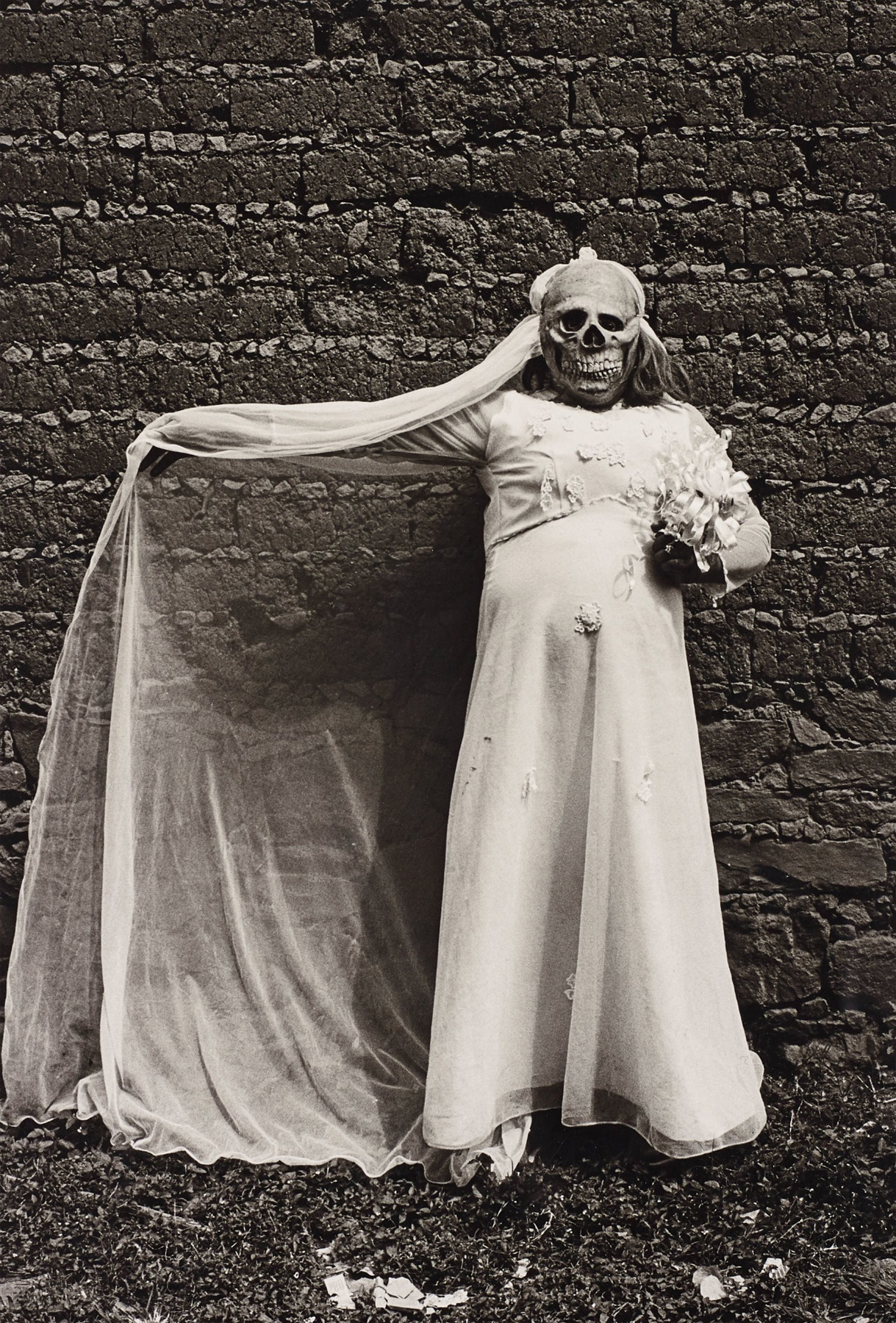
Exhibition: ‘Magic Realism: Art in Weimar Germany 1919-33’ at the Tate Modern, London

Exhibition dates: 30th July, 2018 – 14th July, 2019

Curator: Matthew Gale, Head of Displays and Katy Wan, Assistant Curator, Tate Modern
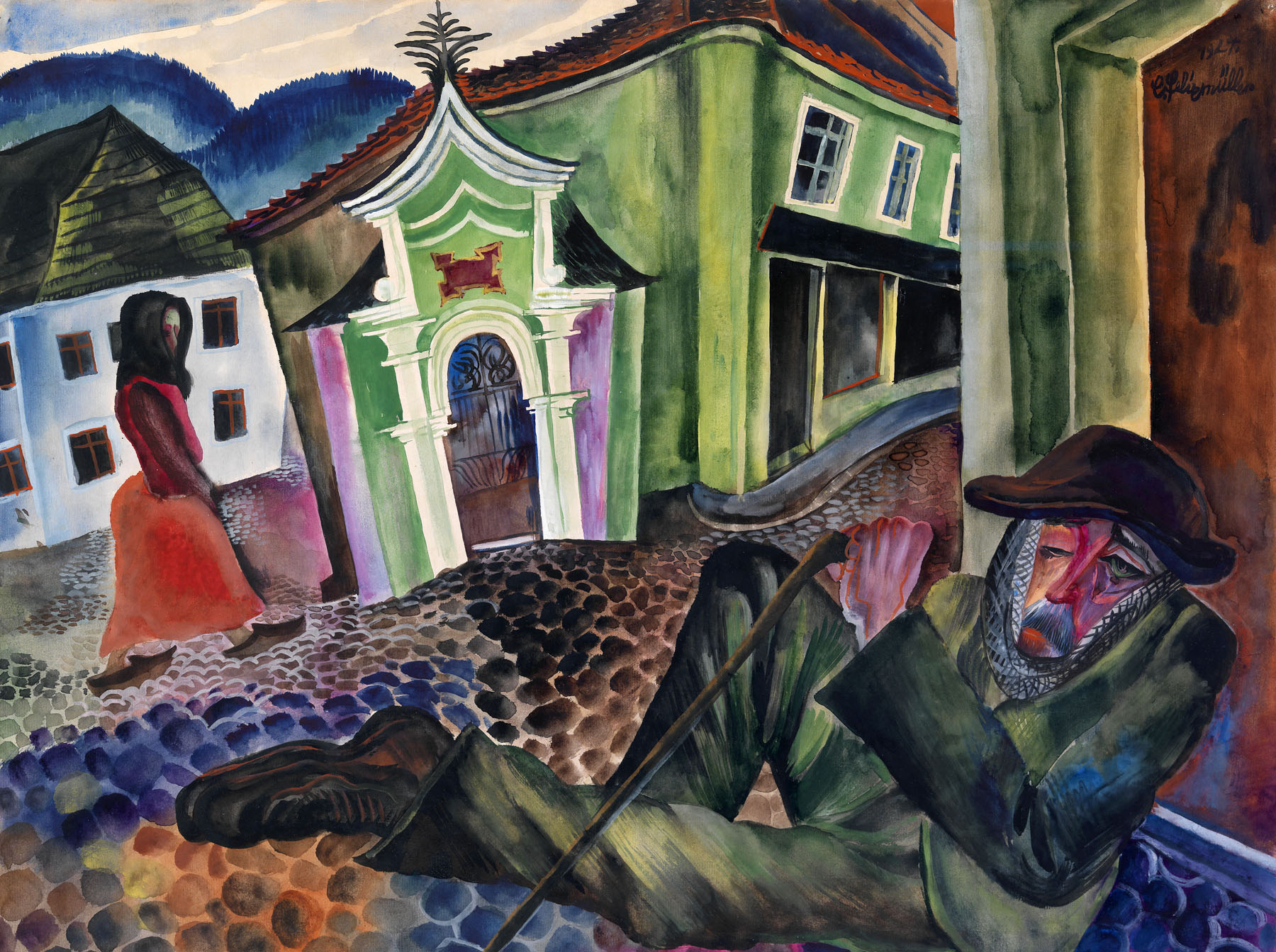
 

Conrad Felixmüller (German, 1897-1977) 'The Beggar of Prachatice' 1924 from the exhibition 'Magic Realism: Art in Weimar Germany 1919-33' at the Tate Modern, London, July 2018 - July 2019


Conrad Felixmüller (German, 1897-1977)
The Beggar of Prachatice
1924
Watercolour, gouache and graphite on paper
500 x 645 mm
The George Economou Collection
© DACS, 2018


Butchers, lion tamers, and Lustmord (sexualised murder) makers. War, rape, prostitution, violence, old age and death. Creativity, defeat, disfigurement, and revelry. Suicide and misery, poverty and widowhood, beauty and song. Magic in realism, realism and magic.

The interwar years are one of the most creative artistic periods in human history. But there is a magical dark undertone which emanates from the mind of this Neue Sachlichkeit or New Objectivity:

“The art historian Dennis Crockett says there is no direct English translation, and breaks down the meaning in the original German:

Sachlichkeit should be understood by its root, Sache, meaning “thing”, “fact”, “subject”, or “object.” Sachlich could be best understood as “factual”, “matter-of-fact”, “impartial”, “practical”, or “precise”; Sachlichkeit is the noun form of the adjective/adverb and usually implies “matter-of-factness” …


The New Objectivity was composed of two tendencies which Hartlaub characterised in terms of a left and right wing: on the left were the verists, who “tear the objective form of the world of contemporary facts and represent current experience in its tempo and fevered temperature;” and on the right the classicists, who “search more for the object of timeless ability to embody the external laws of existence in the artistic sphere.”

The verists’ vehement form of realism emphasised the ugly and sordid. Their art was raw, provocative, and harshly satirical. George Grosz and Otto Dix are considered the most important of the verists. The verists developed Dada’s abandonment of any pictorial rules or artistic language into a “satirical hyperrealism”, as termed by Raoul Hausmann, and of which the best known examples are the graphical works and photo-montages of John Heartfield. Use of collage in these works became a compositional principle to blend reality and art, as if to suggest that to record the facts of reality was to go beyond the most simple appearances of things. This later developed into portraits and scenes by artists such as Grosz, Dix, and Rudolf Schlichter. Portraits would give emphasis to particular features or objects that were seen as distinctive aspects of the person depicted. Satirical scenes often depicted a madness behind what was happening, depicting the participants as cartoon-like.

Other verists, like Christian Schad, depicted reality with a clinical precision, which suggested both an empirical detachment and intimate knowledge of the subject. Schad’s paintings are characterised by “an artistic perception so sharp that it seems to cut beneath the skin”, according to the art critic Wieland Schmied. Often, psychological elements were introduced in his work, which suggested an underlying unconscious reality.

Compared to the verists, the classicists more clearly exemplify the “return to order” that arose in the arts throughout Europe. The classicists included Georg Schrimpf, Alexander Kanoldt, Carlo Mense, Heinrich Maria Davringhausen, and Wilhelm Heise. The sources of their inspiration included 19th-century art, the Italian metaphysical painters, the artists of Novecento Italiano, and Henri Rousseau.

The classicists are best understood by Franz Roh’s term Magic Realism, though Roh originally intended “magical realism” to be synonymous with the Neue Sachlichkeit as a whole. For Roh, as a reaction to expressionism, the idea was to declare “[that] the autonomy of the objective world around us was once more to be enjoyed; the wonder of matter that could crystallise into objects was to be seen anew.” With the term, he was emphasising the “magic” of the normal world as it presents itself to us – how, when we really look at everyday objects, they can appear strange and fantastic.” (Text from the Wikipedia website)

It strikes me, with a slap of the hand across the face, that the one, realism, cannot live cannot breathe with/out the other, the Other, magic. One cannot coexist without the other, as in the body not living without oxygen to breathe: one occupies the other whilst itself being inhabited. The precondition to reality is in essence the unknown. As order relies on mutation to define itself, so reality calls forth that form of hyperrealism, a state of magic, that we can have knowledge of (the image of ourselves before birth, that last image, can we remember, before death) but cannot mediate.

Magic/realism is no duality but a fluid, observational, hybridity which exists on multiple planes of reality – from the downright mad and evil to the ecstatic and revelatory. The fiction of a stable reality is twisted; magic or the supernatural is supposedly presented in an otherwise real-world or mundane setting. Or is it the other way round? Or no way round at all?

It is the role of the artist to set up opposites, throwing one against the other, to throw… into the void.

Dr Marcus Bunyan


Many thankx to the Tate Modern for allowing me to publish the art work in the posting. Please click on the photographs for a larger version of the image.


“Art is exorcism. I paint dreams and visions too; the dreams and visions of my time. Painting is the effort to produce order; order in yourself. There is much chaos in me, much chaos in our time.”


Otto Dix


Tate Modern will explore German art from between the wars in a year-long, free exhibition, drawing upon the rich holdings of The George Economou Collection.

These loans offer a rare opportunity to view a range of artworks not ordinarily on public display, and to see a small selection of key Tate works returned to the context in which they were originally created and exhibited nearly one hundred years ago.

This presentation explores the diverse practices of a number of different artists, including Otto Dix, George Grosz, Albert Birkle and Jeanne Mammen. Although the term ‘magic realism’ is today commonly associated with the literature of Latin America, it was inherited from the artist and critic Franz Roh who invented it in 1925 to describe a shift from the art of the expressionist era, towards cold veracity and unsettling imagery. In the context of growing political extremism, the new realism reflected a fluid social experience as well as inner worlds of emotion and magic.
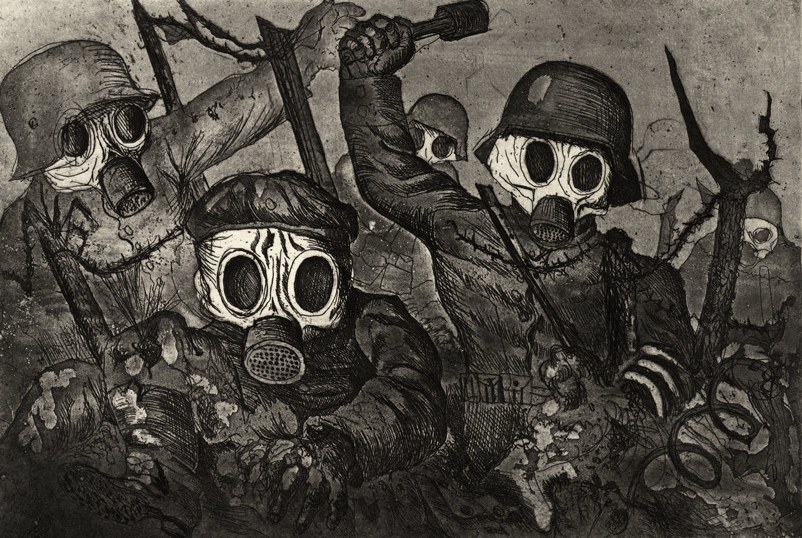
 

Otto Dix (German, 1891-1969) 'Assault Troops Advance under Gas (Sturmtruppe geht unter Gas vor) '1924 from the exhibition 'Magic Realism: Art in Weimar Germany 1919-33' at the Tate Modern, London, July 2018 - July 2019


Otto Dix (German, 1891-1969)
Assault Troops Advance under Gas (Sturmtruppe geht unter Gas vor)
1924
© DACS 2017
Image: Otto Dix Stiftung


Otto Dix World War I service

When the First World War erupted, Dix enthusiastically volunteered for the German Army. He was assigned to a field artillery regiment in Dresden. In the autumn of 1915 he was assigned as a non-commissioned officer of a machine-gun unit on the Western front and took part in the Battle of the Somme. In November 1917, his unit was transferred to the Eastern front until the end of hostilities with Russia, and in February 1918 he was stationed in Flanders. Back on the western front, he fought in the German Spring Offensive. He earned the Iron Cross (second class) and reached the rank of vizefeldwebel. In August of that year he was wounded in the neck, and shortly after he took pilot training lessons.

He took part in a Fliegerabwehr-Kurs (“Defense Pilot Course”) in Tongern, was promoted to Vizefeldwebel and after passing the medical tests transferred to Aviation Replacement Unit Schneidemühl in Posen. He was discharged from service in 22 December 1918 and was home for Christmas.

Dix was profoundly affected by the sights of the war, and later described a recurring nightmare in which he crawled through destroyed houses. He represented his traumatic experiences in many subsequent works, including a portfolio of fifty etchings called Der Krieg, published in 1924. Subsequently, he referred again to the war in The War Triptych, painted from 1929-1932.

Text from the Wikipedia website
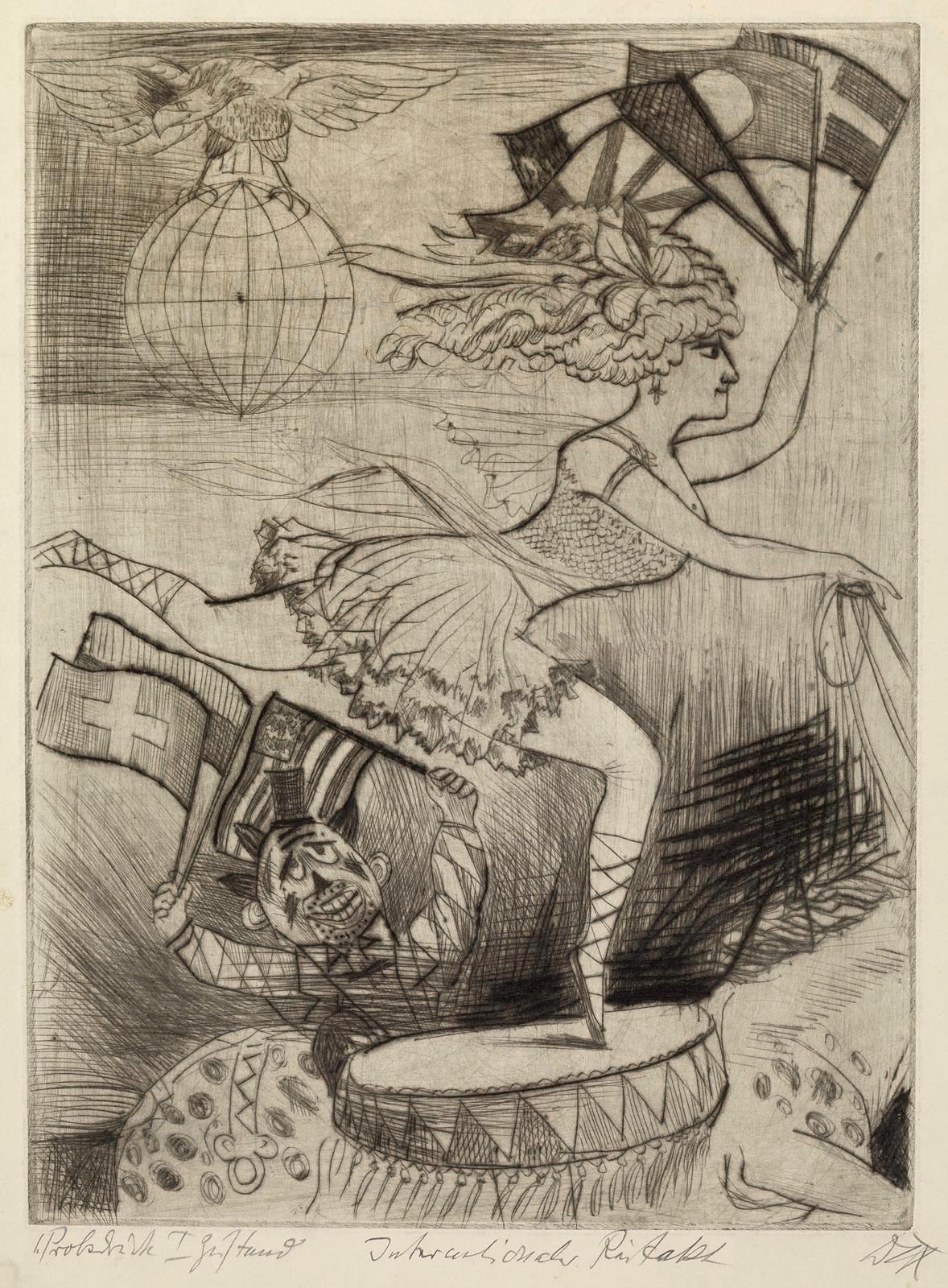
 

Otto Dix (German, 1891-1969) 'International Riding Act' (Internationaler Reitakt) 1922


Otto Dix (German, 1891-1969)
International Riding Act (Internationaler Reitakt)
1922
Etching, drypoint on paper
496 x 431 mm
The George Economou Collection
On short term loan
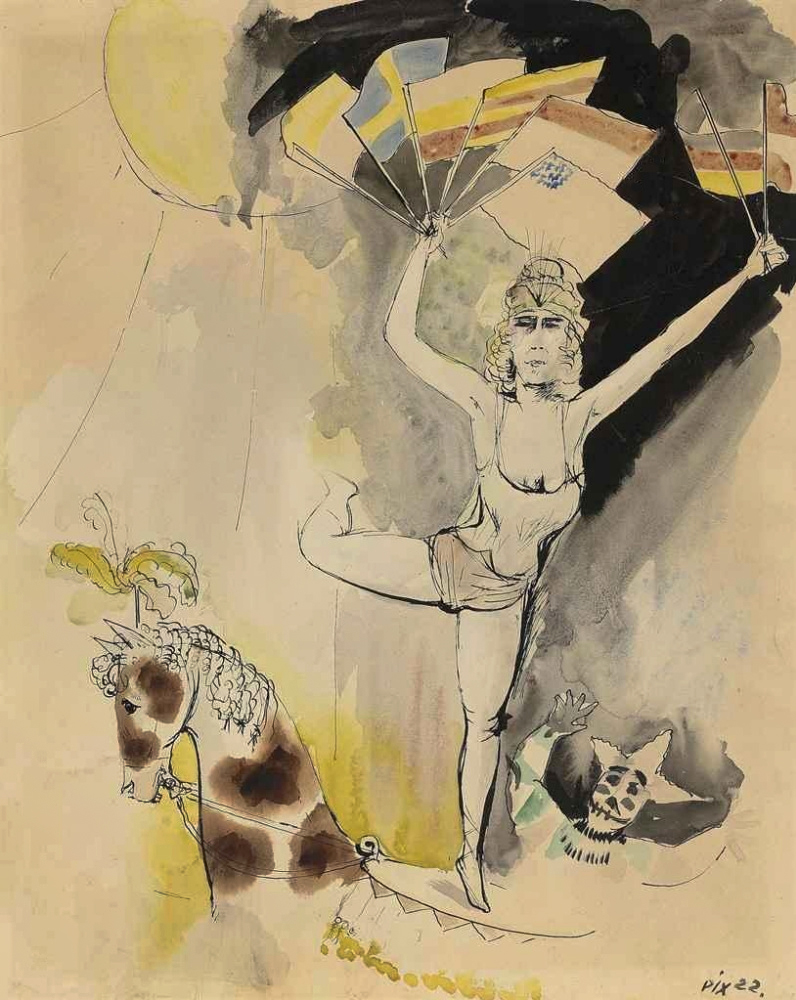
 

Otto Dix (German, 1891-1969) 'International Riding Scene' (Internationale Reiterszene) 1922


Otto Dix (German, 1891-1969)
International Riding Scene (Internationale Reiterszene)
1922
Watercolour, pen and ink on paper
510 × 410 mm
The George Economou Collection
On short term loan
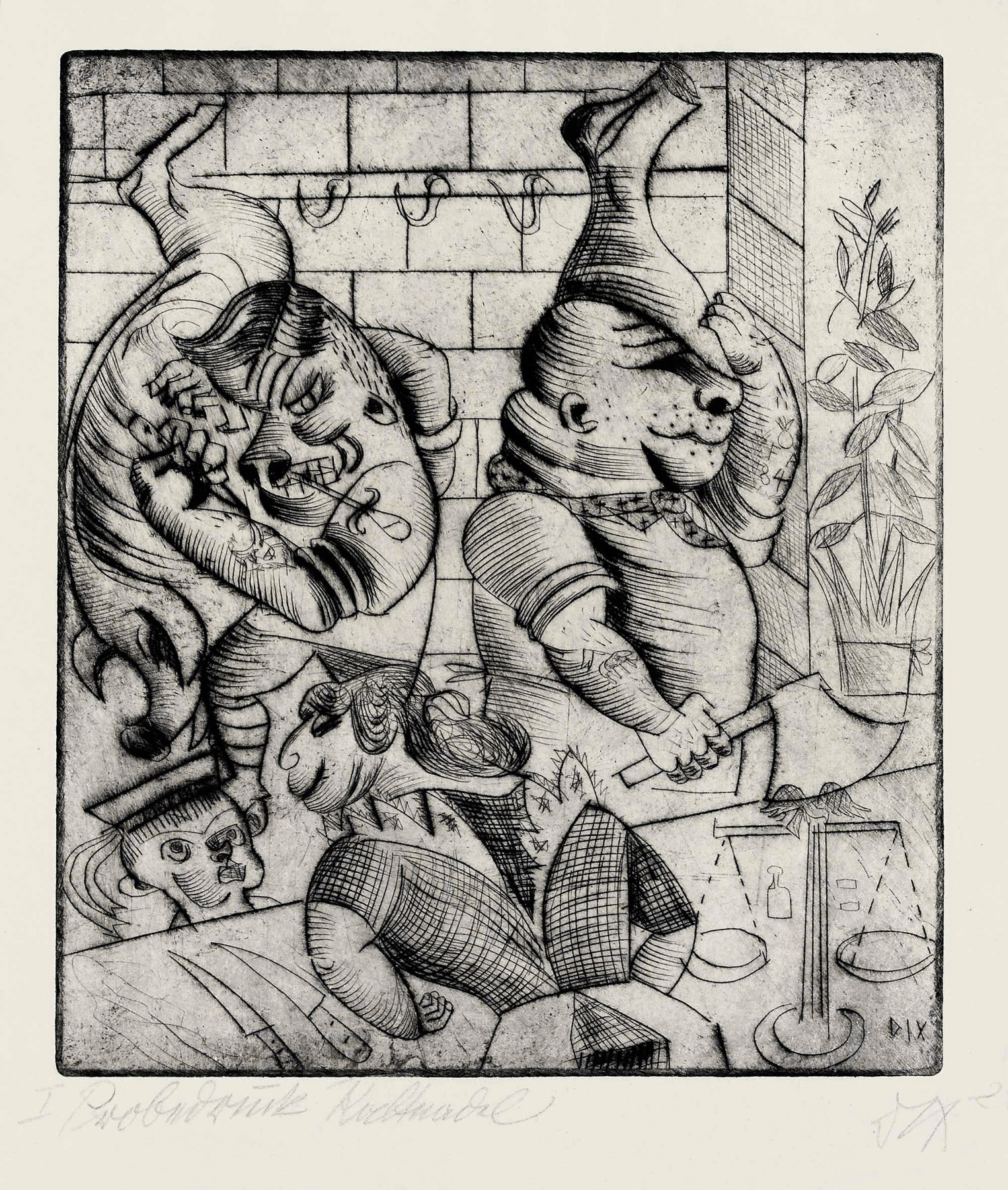
 

Otto Dix (German, 1891-1969) 'Butcher Shop' (Fleischerladen) 1920


Otto Dix (German, 1891-1969)
Butcher Shop (Fleischerladen)
1920
Etching, drypoint on paper
495 x 338 mm
The George Economou Collection
On short term loan
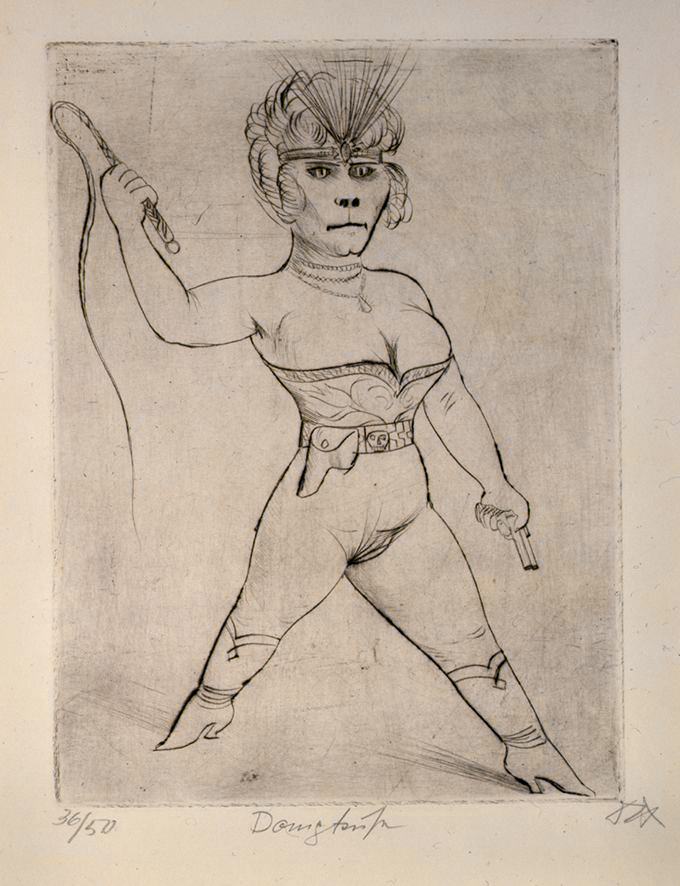
 

Otto Dix (German, 1891-1969) 'Lion-Tamer' (Dompteuse) 1922


Otto Dix (German, 1891-1969)
Lion-Tamer (Dompteuse)
1922
Etching, drypoint on paper
496 x 429 mm
The George Economou Collection
On short term loan
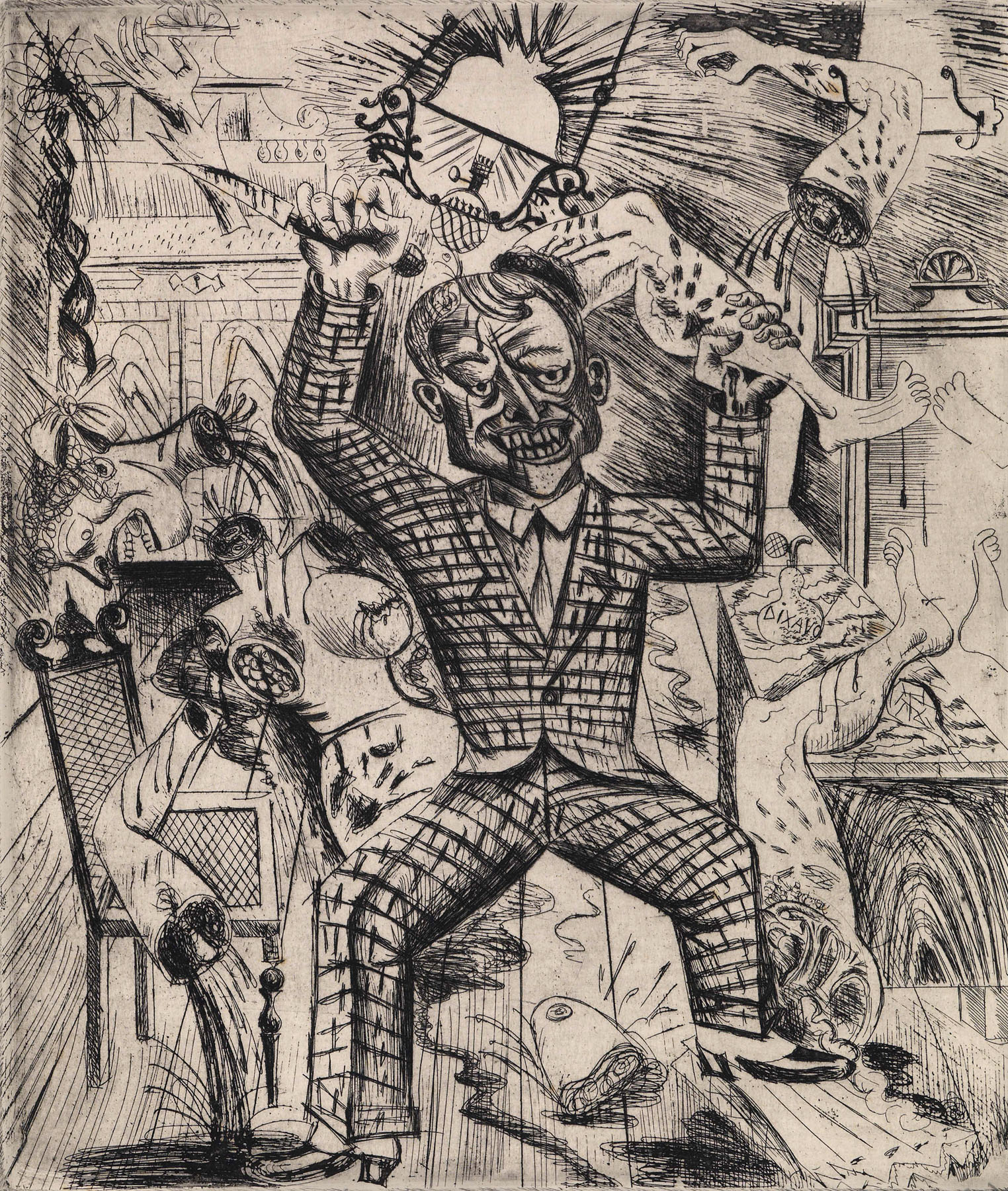
 

Otto Dix (German, 1891-1969) 'Lust Murder' (Lustmord) 1922


Otto Dix (German, 1891-1969)
Lust Murder (Lustmord)
1922
Watercolour, ink and graphite on paper
485 x 365 mm
The George Economou Collection
On short term loan
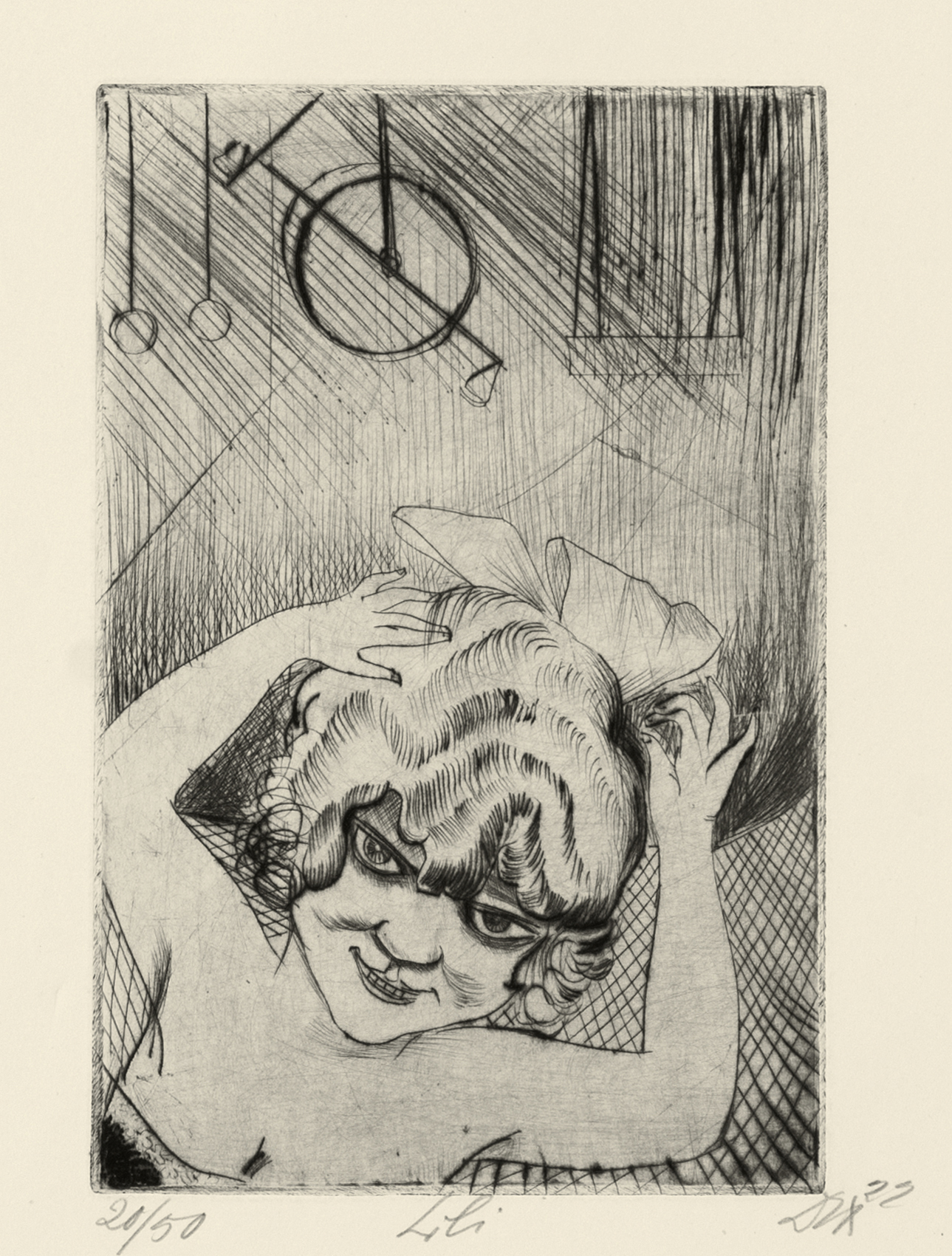
 

Otto Dix (German, 1891-1969) 'Lili, the Queen of the Air' (from 'Circus' portfolio) 1922


Otto Dix (German, 1891-1969)
Lili, the Queen of the Air (from Circus portfolio)
1922
Etching, drypoint on paper
The George Economou Collection
© The Estate of Otto Dix 2018


Otto Dix Post-war artwork

At the end of 1918 Dix returned to Gera, but the next year he moved to Dresden, where he studied at the Hochschule für Bildende Künste. He became a founder of the Dresden Secession group in 1919, during a period when his work was passing through an expressionist phase. In 1920, he met George Grosz and, influenced by Dada, began incorporating collage elements into his works, some of which he exhibited in the first Dada Fair in Berlin. He also participated in the German Expressionists exhibition in Darmstadt that year.

In 1924, he joined the Berlin Secession; by this time he was developing an increasingly realistic style of painting that used thin glazes of oil paint over a tempera underpainting, in the manner of the old masters. His 1923 painting The Trench, which depicted dismembered and decomposed bodies of soldiers after a battle, caused such a furore that the Wallraf-Richartz Museum hid the painting behind a curtain. In 1925 the then-mayor of Cologne, Konrad Adenauer, cancelled the purchase of the painting and forced the director of the museum to resign.

Dix was a contributor to the Neue Sachlichkeit exhibition in Mannheim in 1925, which featured works by George Grosz, Max Beckmann, Heinrich Maria Davringhausen, Karl Hubbuch, Rudolf Schlichter, Georg Scholz and many others. Dix’s work, like that of Grosz – his friend and fellow veteran – was extremely critical of contemporary German society and often dwelled on the act of Lustmord, or sexualised murder. He drew attention to the bleaker side of life, unsparingly depicting prostitution, violence, old age and death.

In one of his few statements, published in 1927, Dix declared, “The object is primary and the form is shaped by the object.”

Among his most famous paintings are Sailor and Girl (1925), used as the cover of Philip Roth’s 1995 novel Sabbath’s Theater, the triptych Metropolis (1928), a scornful portrayal of depraved actions of Germany’s Weimar Republic, where nonstop revelry was a way to deal with the wartime defeat and financial catastrophe, and the startling Portrait of the Journalist Sylvia von Harden (1926). His depictions of legless and disfigured veterans – a common sight on Berlin’s streets in the 1920s – unveil the ugly side of war and illustrate their forgotten status within contemporary German society, a concept also developed in Erich Maria Remarque’s All Quiet on the Western Front.

Text from the Wikipedia website
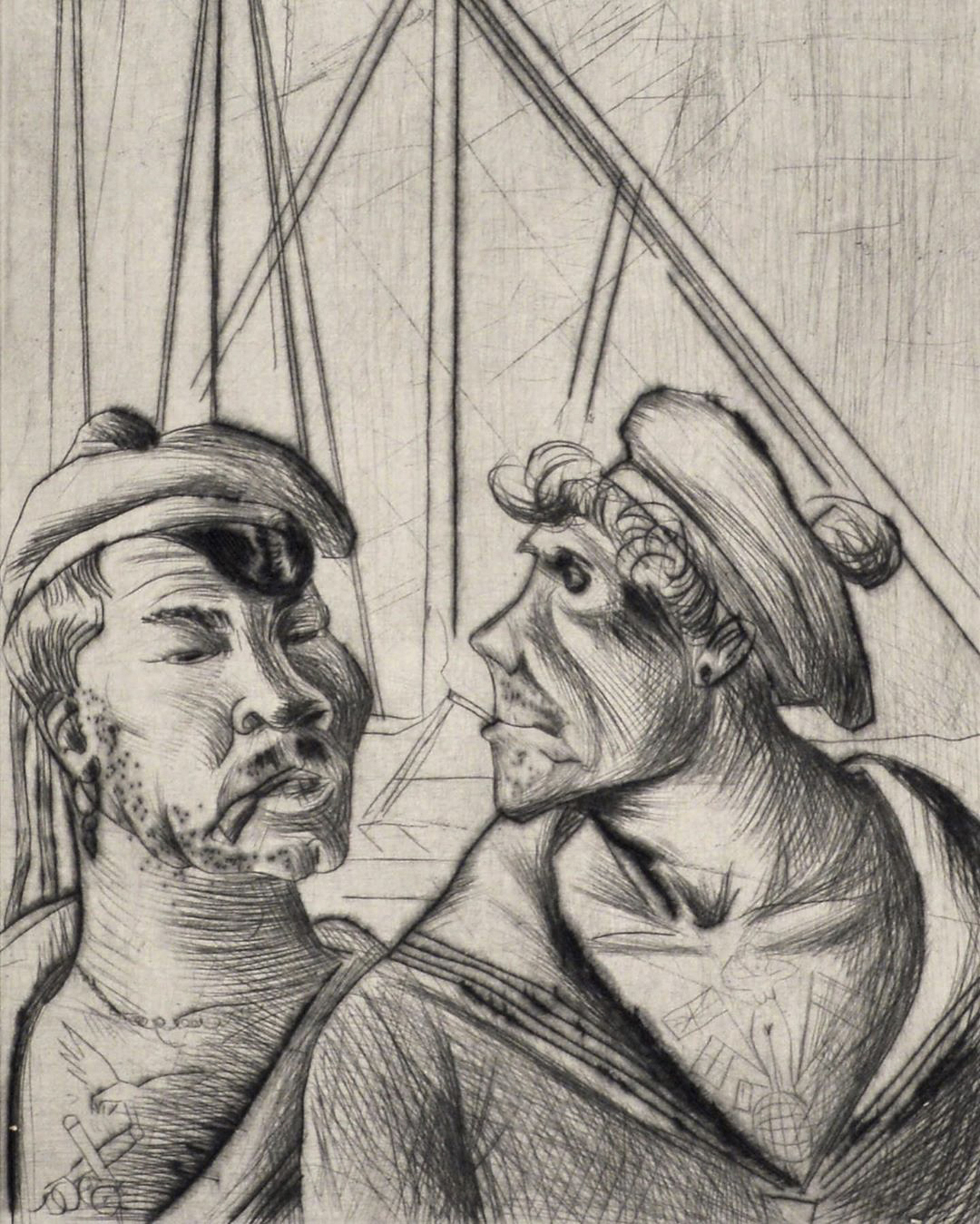
 

Otto Dix (German, 1891-1969) 'Technical Personnel' (Technisches Personal) 1922


Otto Dix (German, 1891-1969)
Technical Personnel (Technisches Personal)
1922
Etching, drypoint on paper
497 x 426 mm
The George Economou Collection
On short term loan


Magic Realism

The term magic realism was invented by German photographer, art historian and art critic Franz Roh in 1925 to describe modern realist paintings with fantasy or dream-like subjects.

The term was used by Franz Roh in his book Nach Expressionismus: Magischer Realismus (After Expressionism: Magic Realism).

In Central Europe magic realism was part of the reaction against modern or avant-garde art, known as the return to order, that took place generally after the First World War. Magic realist artists included Giorgio de Chirico, Alberto Savinio and others in Italy, and Alexander Kanoldt and Adolf Ziegler in Germany. Magic realism is closely related to the dreamlike depictions of surrealism and neo-romanticism in France. The term is also used of certain American painters in the 1940s and 1950s including Paul Cadmus, Philip Evergood and Ivan Albright.

In 1955 the critic Angel Flores used the term magic realism to describe the writing of Jorge Luis Borges and Gabriel García Márquez, and it has since become a significant if disputed literary term.

Text from the Tate website [Online] Cited 23/06/2019
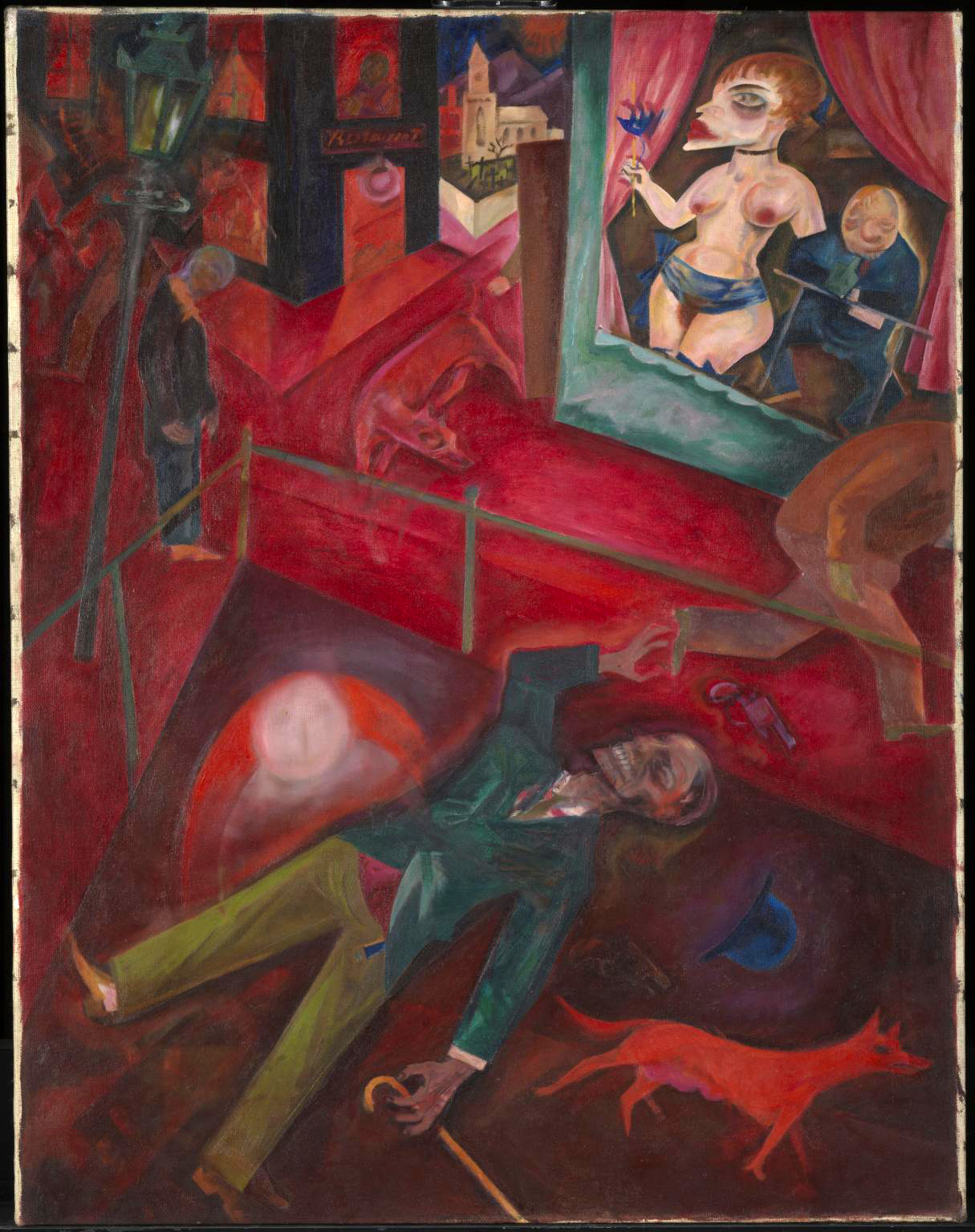
 

George Grosz (German, 1893-1959) 'Suicide' (Selbstmörder) 1916


George Grosz (German, 1893-1959)
Suicide (Selbstmörder)
1916
Oil paint on canvas
1000 x 775 mm
Tate
Purchased with assistance from the Art Fund 1976


The horrific picture of Suicide by Groz astonishes by its savage imagery, harsh colours and restless composition. Highlighting the misery of the middle class who has no means to live on today and no future tomorrow, the artist gets one man strung up on a lamp post and the other shot on a stage just near a prompter guy in his cabin. Is his death a real thing or is it a part of some performance? It seems to be quite real because everybody promptly abandons the scene except for the hungry dogs roaming the desolate streets of Berlin. And these murders are no worse than dubious pleasures given by an ugly, man-like prostitute to an aged bald client visiting her in a cheap apartment block – the only source of solace from the cold and desolation for the bourgeois at the time. The pervasive moral corruption in Berlin during the war years is underlined by the forsaken Kirche at the back.

Text from the Arthive website [Online] Cited 23/06/2019


Grosz was drafted into the German army in 1914, after the outbreak of the First World War. His experiences in the trenches deepened his intense loathing for German society. Discharged from the army for medical reasons, he produced savagely satirical paintings and drawings that ‘expressed my despair, hate and disillusionment’. This work shows dogs roaming past the abandoned bodies of suicides in red nocturnal streets. The inclusion of an aged client visiting a prostitute reflects the pervasive moral corruption in Berlin during the war years.

Gallery label, September 2004


Rudolf Schlichter (German, 1890-1955) 'The Artist with Two Hanged Women' (Der Künstler mit zwei erhängten Frauen) 1924


Rudolf Schlichter (German, 1890-1955)
The Artist with Two Hanged Women (Der Künstler mit zwei erhängten Frauen)
1924
Watercolour and graphite on paper
453 x 340 mm
The George Economou Collection
On short term loan


Sexualised murder was a recurrent theme within this period: the exhibition holding a number of other works similar to the piece by Dix. An example is Rudolf Schlichter’s The Artist with Two Hanged Women watercolour. Schlichter was known to have sexual fantasies revolved around hanging, as well as an obsession with women’s buttoned boots. Acting as a self-portrait, the image represents Schlichter’s private fantasies, whilst also drawing upon the public issues of suicide, which saw an unsettling rise during this period.

Text by Georgia Massie-Taylor from the G’s Spots blog
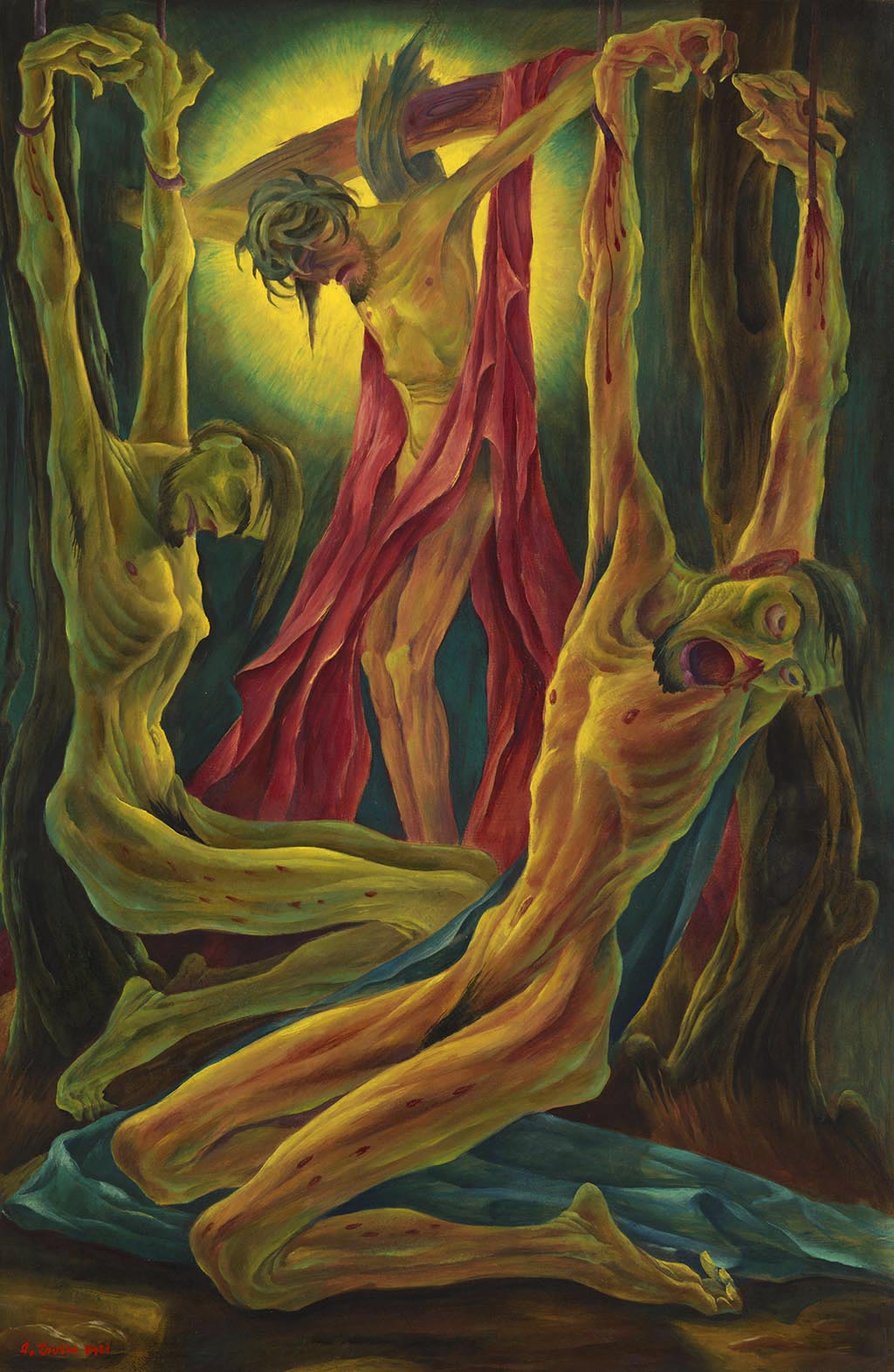
 

Albert Birkle (German, 1900-1986) 'Crucifixion' (Kreuzigung) 1921


Albert Birkle (German, 1900-1986)
Crucifixion (Kreuzigung)
1921
Oil paint on board
920 x 607 mm
The George Economou Collection
On short term loan
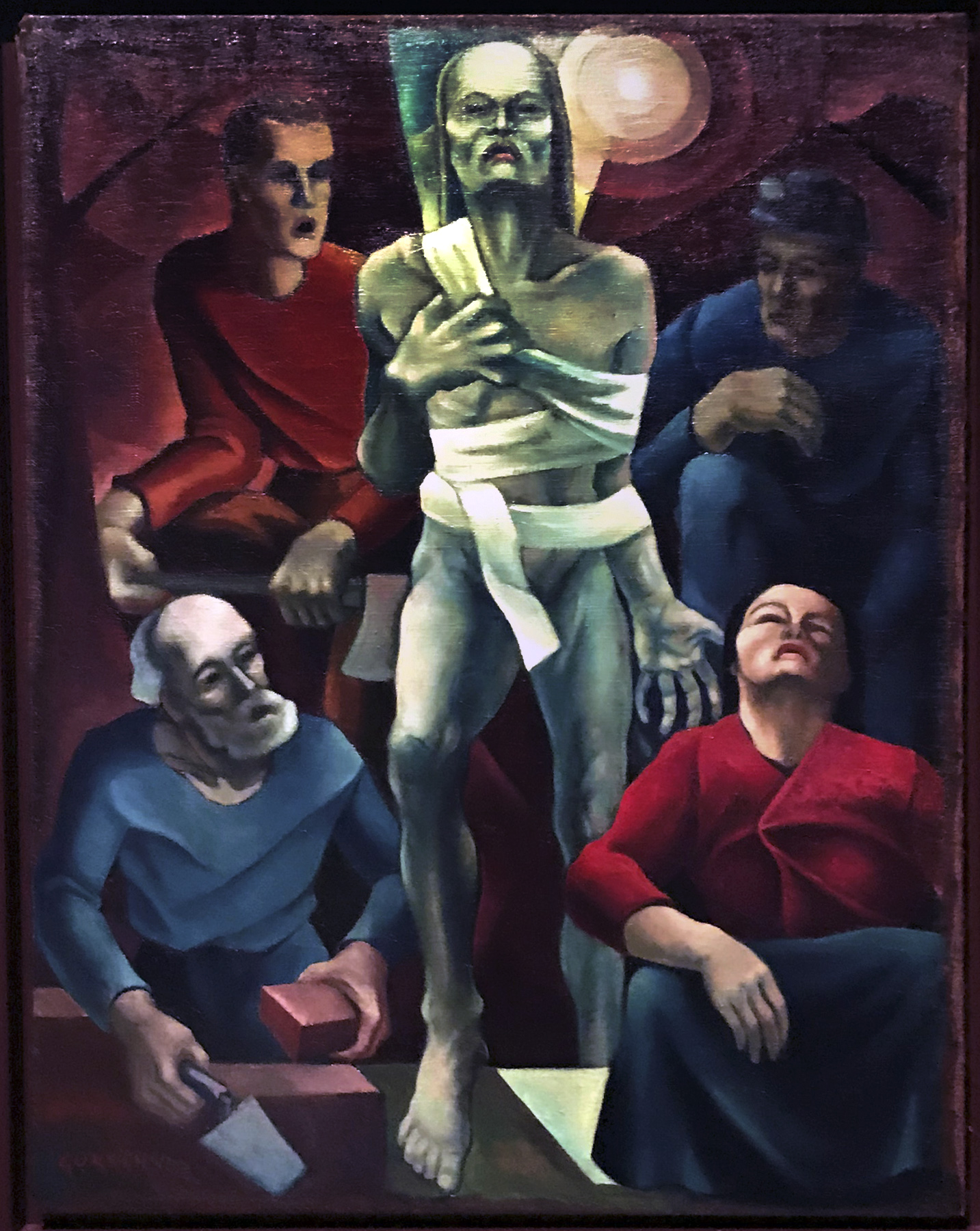
 

Herbert Gurschner (Austrian, 1901-1975) 'Lazarus (The Workers)' (Lazarus (Die Arbeiter)) 1928


Herbert Gurschner (Austrian, 1901-1975)
Lazarus (The Workers) (Lazarus (Die Arbeiter))
1928
Oil paint on canvas
920 x 690 mm
The George Economou Collection
On short term loan


Herbert Gurschner (Austrian, 1901-1975)

Herbert Gurschner was born on August 27, 1901 in Innsbruck. In 1917 he attended the art school in Innsbruck and had his first exhibition. Between 1918 and 1920 he studied at the Munich Art Academy. After that he had other exhibitions in Innsbruck.

In 1924 he married an English nobleman, through which he came to London artist and collector circles. In 1929 he had his first exhibition in the London Fine Art Society. Two years later, he showed another exhibition in the Fine Art Society and made the artistic breakthrough in England. Subsequently, he was able to open several exhibitions throughout the UK. Herbert Gurschner found access to aristocratic, diplomatic and business circles and was able to exhibit his works in New York City, among others .

At the time of World War II Gurschner obtained British citizenship and served in the British army. During this time, he met his future second wife, the actress Brenda Davidoff, with whom he lived in London. In the postwar years Gurschner exhibited only sporadically and instead focuses on the stage design (including for the Royal Opera House, Globe Theater and Hammersmith Apollo). On January 10, 1975 Gurschner died in London.

Text from the German Wikipedia website translated by Google Translate
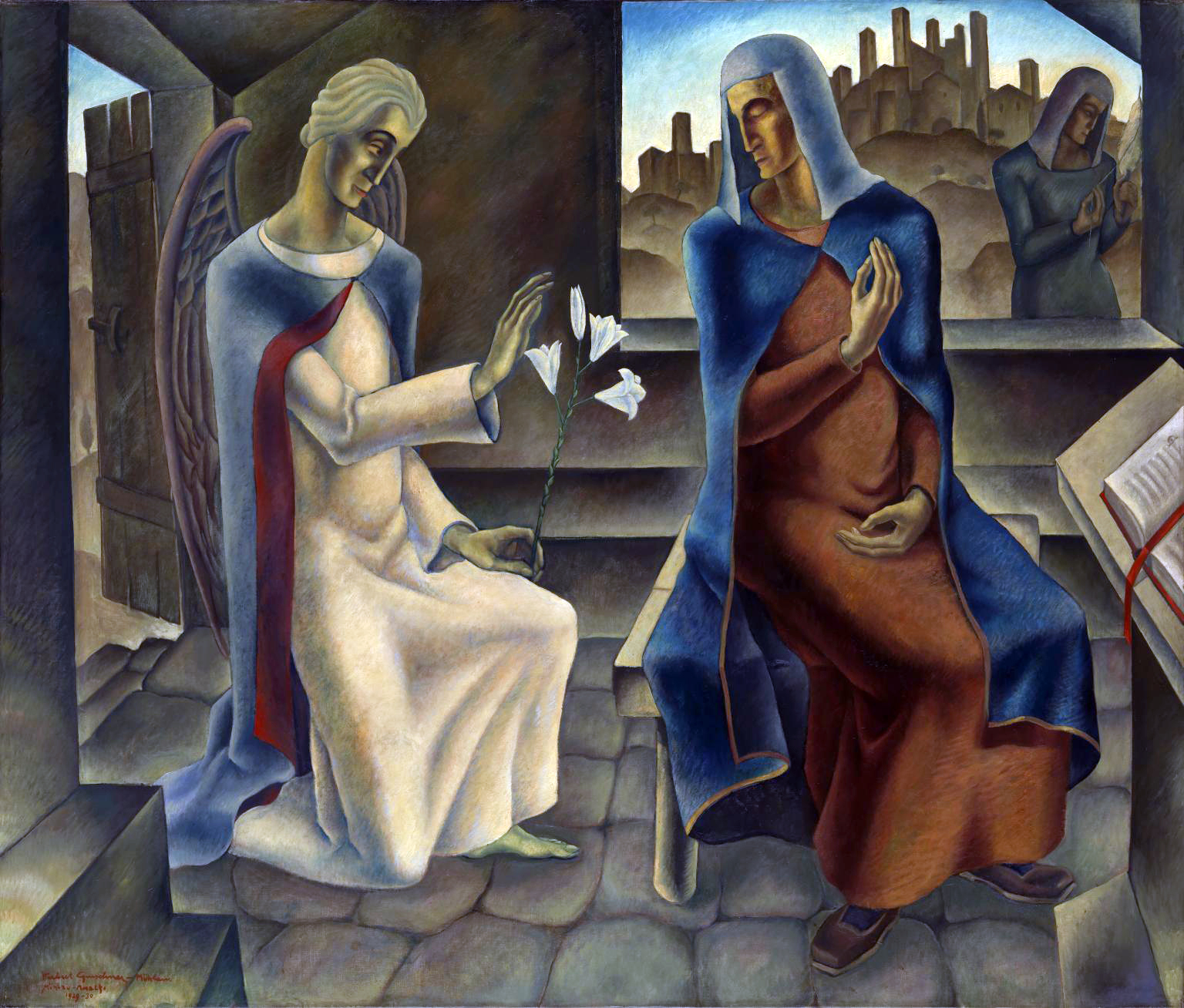
 

Herbert Gurschner (Austrian, 1901-1975) 'The Annunciation' 1929-1930 


Herbert Gurschner (Austrian, 1901-1975)
The Annunciation
1929-30
Oil on canvas
1617 x 1911 mm
Tate
Presented by Lord Duveen 1931


This summer, Tate Modern will explore the art of the Weimar Republic (1919-33) in a year-long, free display, drawing upon the rich holdings of The George Economou Collection. This presentation of around seventy paintings and works on paper will address the complex paradoxes of the Weimar era, in which liberalisation and anti-militarism flourished in tandem with political and economic uncertainty. These loans offer a rare opportunity to view a range of artworks not ordinarily on public display – some of which have never been seen in the United Kingdom before – and to see a selection of key Tate works returned to the context in which they were originally created and exhibited nearly one hundred years ago.

Although the term ‘magic realism’ is today commonly associated with the literature of Latin America, it was inherited from the artist and critic Franz Roh who invented it in 1925 to describe a shift from the anxious and emotional art of the expressionist era, towards the cold veracity and unsettling imagery of this inter-war period. In the context of growing political extremism, this new realism reflected a more liberal society as well as inner worlds of emotion and magic.

The profound social and political disarray after the First World War and the collapse of the Empire largely brought about this stylistic shift. Berlin in particular attracted a reputation for moral depravity and decadence in the context of the economic collapse. The reconfiguration of urban life was an important aspect of the Weimar moment. Alongside exploring how artists responded to social spaces and the studio, entertainment sites like the cabaret and the circus will be highlighted, including a display of Otto Dix’s enigmatic Zirkus (‘Circus’) print portfolio. Artists recognised the power in representing these realms of public fantasy and places where outsiders were welcomed.

Works by Otto Dix, George Grosz and Max Beckmann perhaps best known today for their unsettling depictions of Weimar life, will be presented alongside the works of under recognised artists such as Albert Birkle, Jeanne Mammen and Rudolf Schlichter, and many others whose careers were curtailed by the end of the Weimar period due to the rise of Nationalist Socialism and its agenda to promote art that celebrated its political ideologies.

The display comes at a pertinent time, in a year of commemoration of the anniversary of the end of the First World War, alongside Aftermath: Art in the Wake of World War One at Tate Britain and William Kentridge’s new performance for 14-18 Now at Tate Modern entitled The Head and the Load, running from 11-15 July 2018.

Magic Realism is curated by Matthew Gale, Head of Displays and Katy Wan, Assistant Curator, Tate Modern. The display is realised with thanks to loans from The George Economou Collection, with additional support from the Huo Family Foundation (UK) Limited.

Press release from the Tate website [Online] Cited 23/06/2019
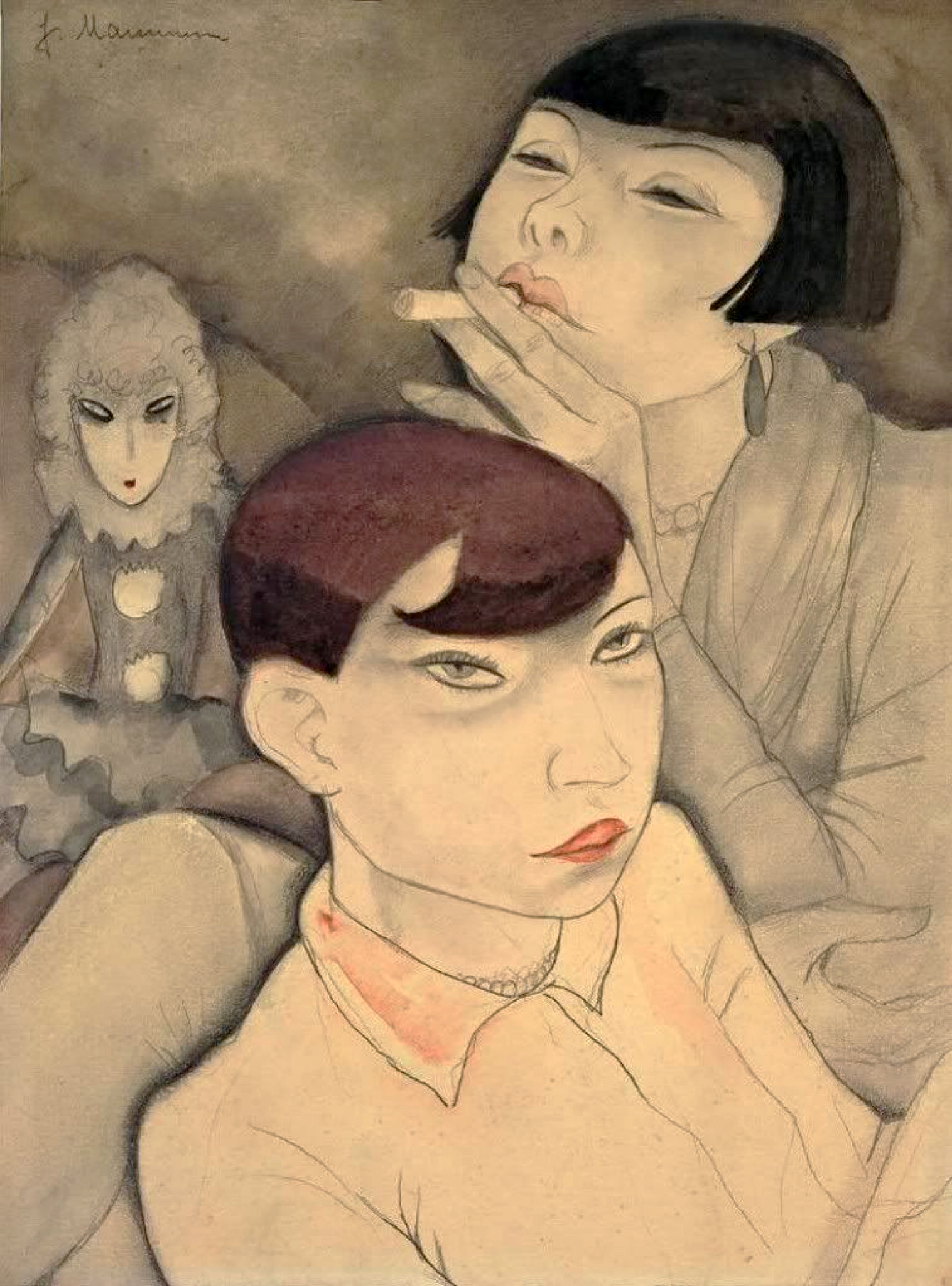
 

Jeanne Mammen (German, 1890-1976) 'Boring Dolls' (Langweilige Puppen) 1929


Jeanne Mammen (German, 1890-1976)
Boring Dolls (Langweilige Puppen)
1929
Watercolour and graphite on paper mounted on cardboard
384 x 286 mm
The George Economou Collection
On short term loan
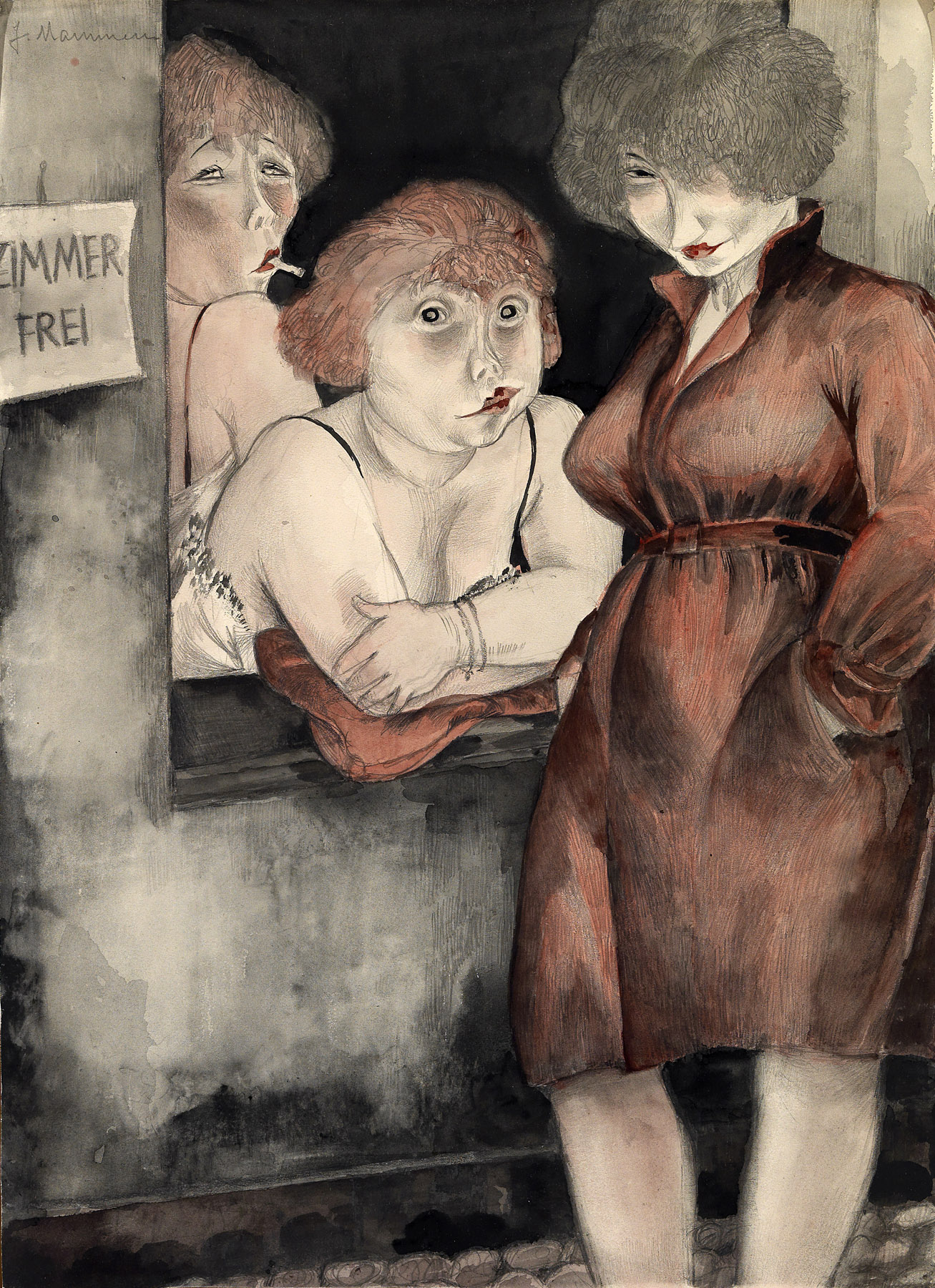
 

Jeanne Mammen (German, 1890-1976) 'Free room' (Brüderstrasse (Zimmer frei)) 1930


Jeanne Mammen (German, 1890-1976)
Free room (Brüderstrasse (Zimmer frei))
1930
Watercolour, ink and graphite on vellum
The George Economou Collection
On short term loan
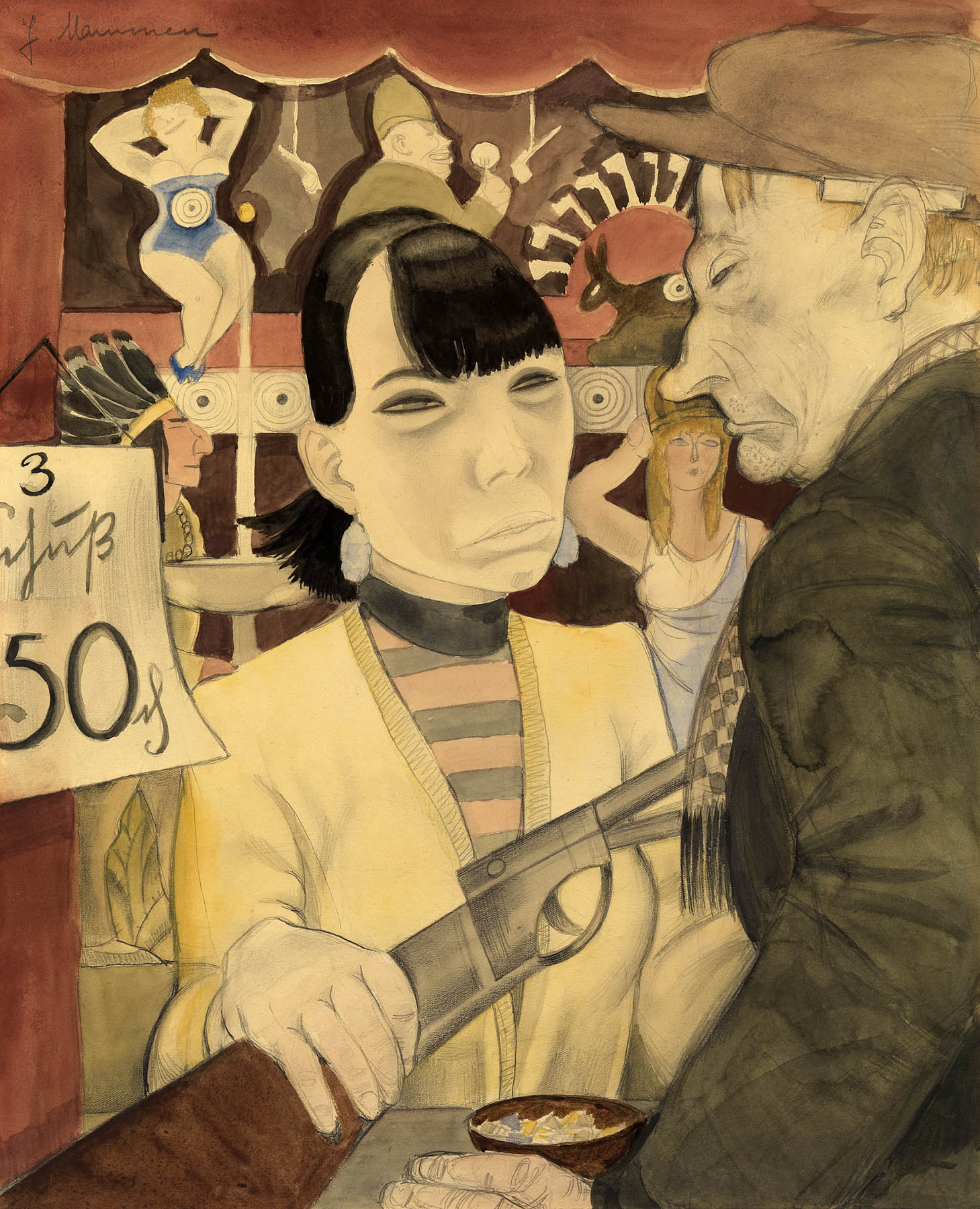
 

Jeanne Mammen (German, 1890-1976) 'At the Shooting Gallery' 1929


Jeanne Mammen (German, 1890-1976)
At the Shooting Gallery
1929
Watercolour and graphite on vellum
445 x 360 mm
The George Economou Collection
© DACS, 2018


Jeanne Mammen (German, 1890-1976)

Jeanne Mammen (21 November 1890 – 22 April 1976) was a German painter and illustrator of the Weimar period. Her work is associated with the New Objectivity and Symbolism movements. She is best known for her depictions of strong, sensual women and Berlin city life.

… In 1921, Mammen moved into an apartment with her sister in Berlin. This apartment was a former photographer’s studio which she lived in until her death. Aside from Art throughout her life Mammen also was interested in science. She was close friends with Max Delbrück who left Europe and took some of her artwork with him and exhibited them in California. In addition to bringing these art works to be exhibited he also sent Mammen care packages from the United States with art supplies.

In 1930 she had a major exhibition in the Fritz Gurlitt gallery. Over the next two years, at Gurlitt’s suggestion, she created one of her most important works: a series of eight lithographs illustrating Les Chansons de Bilitis, a collection of lesbian love poems by Pierre Louÿs.

In 1933, following her inclusion in an exhibition of female artists in Berlin, the Nazi authorities denounced her motifs and subjects as “Jewish”, and banned her lithographs for Les Chansons de Bilitis. The Nazis were also opposed to her blatant disregard for apparent ‘appropriate’ female submissiveness in her expressions of her subjects. Much of her work also includes imagery of lesbians. The Nazis shut down most of the journals she had worked for, and she refused to work for those that complied with their cultural policies. Until the end of the war she practiced a kind of “inner emigration”. She stopped exhibiting her work and focused on advertising. For a time she also peddled second-hand books from a handcart.

Text from the Wikipedia website
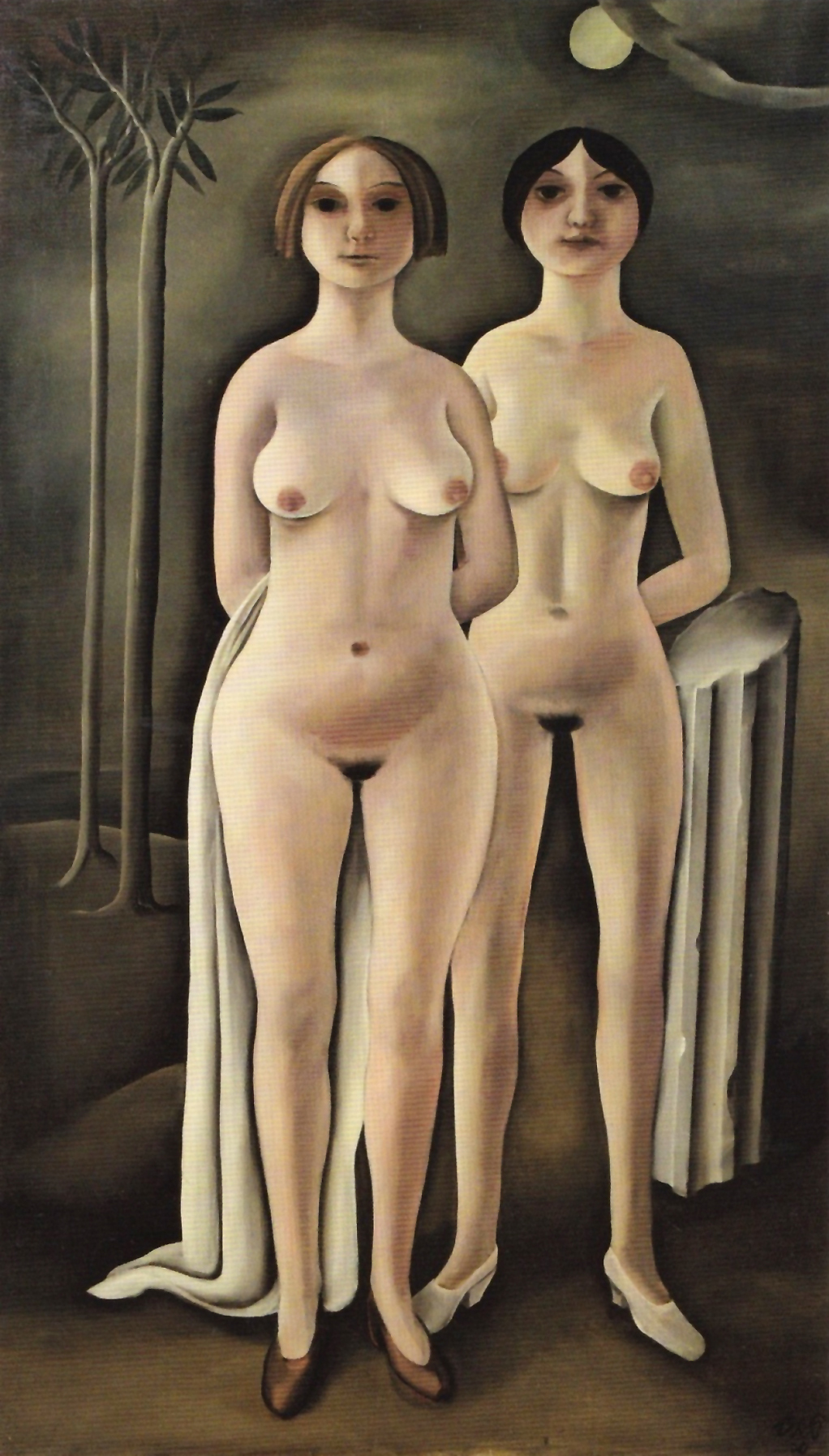
 

Otto Rudolf Schatz (Austrian, 1900-1961) 'Moon Women' (Mondfrauen) 1930


Otto Rudolf Schatz (Austrian, 1900-1961)
Moon Women (Mondfrauen)
1930
Oil paint on canvas
1915 x 1110 mm
The George Economou Collection
On short term loan


Otto Rudolf Schatz (Austrian, 1900-1961)

Otto Rudolf Schatz was born on January 18, 1900, the son of a post office family in Vienna. From 1915 to 1918 Schatz studied at the Viennese Art Academy under Oskar Strnad and Anton von Kenner. In 1918 his studies were interrupted by military service in the Second World War although he graduated in 1919. During this time the artist’s chosen medium was wood.  From 1920 he worked with the painter Max Hevesi who exhibited Schatz’s paintings and woodcuts. Otto Rudolf Schatz also published books with the art critic Arthur Roessler including The Gothic Mood.

In 1923 Schatz became friends with the Viennese gallery owner Otto Kallir who became one of his most important patrons. Kallir continuously presented Schatz’s works in the Neue Galerie. In the same year the Austrian collector Fritz Karpfen published Austrian Art featuring Schatz’s art. The artist’s book of twelve woodcuts was published with a foreword by the art historian Erica Tietze-Conrat. The painter also traveled to Venice in 1923.

In 1924 he had his first collective exhibition in the Neue Galerie. In 1925 Schatz exhibited in the Neue Galerie together with Anton Faistauer, Franz Probst, and Marianne Seeland. In the same year he became a member of the Austrian artists’ association Kunstschau and he provided eight original woodcuts for the publication of a fairytale book Im Satansbruch by Ernst Preczang.

In 1927 Schatz contributed woodcuts to the volume The New Town by the Berlin Büchergilde Gutenberg. From 1928 to 1938 he was a valued member in the Hagenbund in Vienna. In 1929 he produced several illustrations for The Stromverlag among others and for Stefan Zweig’s Fantastic Night and H. G. Wells The Invisible. In 1936 he participated in a collective exhibition with Georg Ehrlich in the Neue Galerie. In 1936 to 1937 Schatz traveled through the United States as well as visited the World Exhibition in Paris. His paintings were seen in exhibition of his New York, in the Neue Galerie, and in the Hagenbund. The artists provided illustrations for the Büchergilde Gutenberg edition of Upton Sinclair’s Co-op.

When the National Socialists gained power in 1938 Schatz was forbidden to work. In 1938 he lived with his Jewish wife Valerie Wittal in Brno and in 1944 in Prague where he painted landscape miniatures. In 1944 Schatz was imprisoned in the Klettendorf labour camp and then transferred to the Graditz and Bistritz concentration camps. In 1946 Schatz returned to Vienna where he was promoted by the cultural politician, city counsellor, and writer Viktor Matejka. In 1946 he became a member of the Vienna Secession. In 1947 Schatz received the prize of the city of Vienna for graphics. In the same year eighteen woodcuts were created for Peter Rosegger’s Jakob der Letzte. In 1949 Scatz’s watercolour series Das war der Prater was published in book form. In 1951 Schatz won the competition for the design of the Vienna Westbahnhof. On April 26, 1961 Otto Rudolf Schatz died of lung cancer in Vienna.

As a graphic artist and painter Otto Rudolf Schatz occupies a leading position in the Austrian inter-war period. His multi-faceted work which moves between Expressionism and New Objectivity, was characterised by a social-critical attitude that gives his work historical significance. The artist’s works are now found in numerous collections including the Belvedere in Vienna, the Vienna Museum, and the Hans Schmid Private Foundation.

Anonymous text. “Biography,” on the Otto Rudolf Schatz website Nd [Online] Cited 23/06/2019
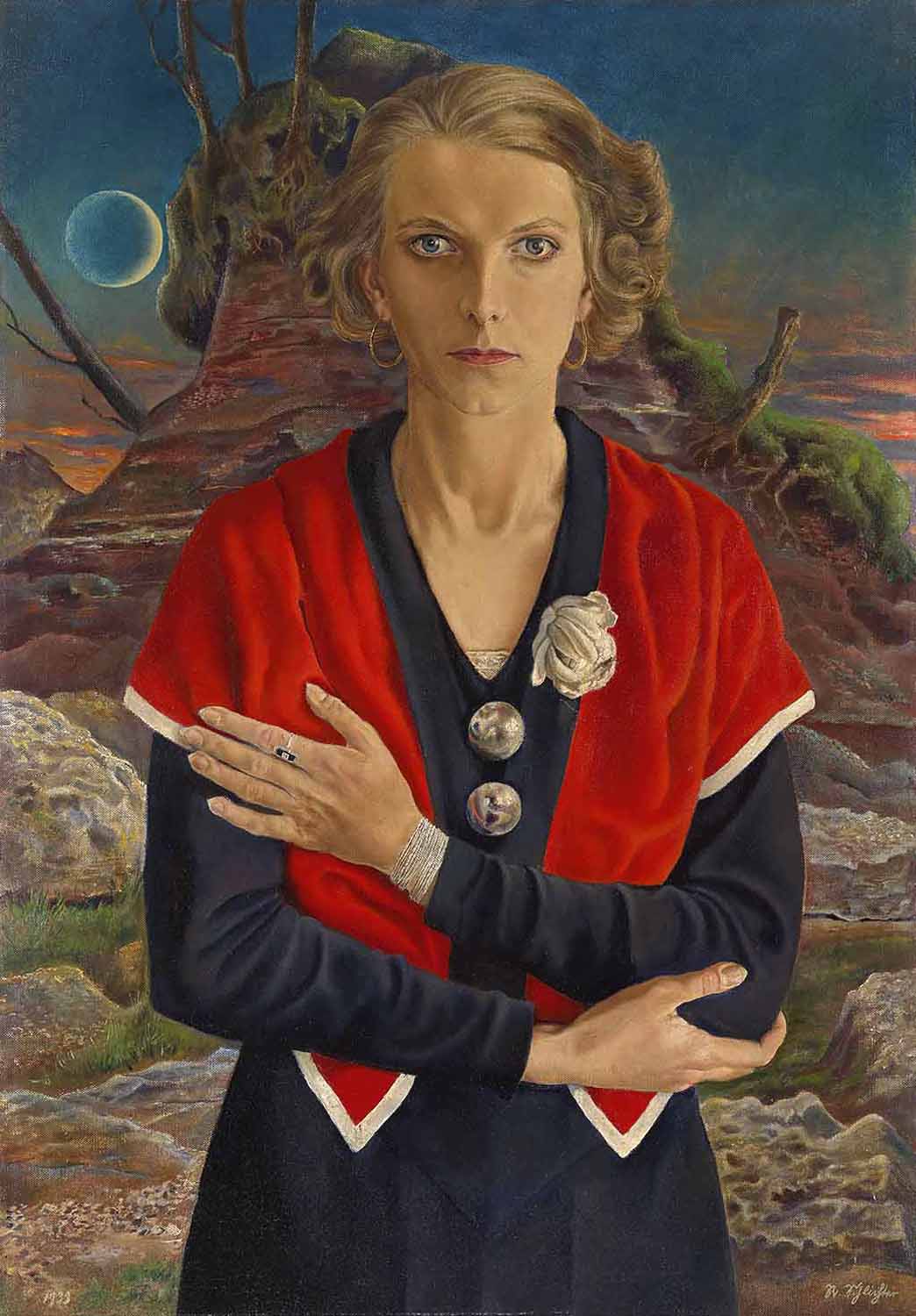
 

Rudolf Schlichter (German, 1890-1955) 'Lady with Red Scarf (Speedy with the Moon)' (Frauenportrait (Speedy)) 1933


Rudolf Schlichter (German, 1890-1955)
Lady with Red Scarf (Speedy with the Moon) (Frauenportrait (Speedy))
1933
The George Economou Collection
On short term loan


Rudolf Schlichter (German, 1890-1955)

Rudolf Schlichter (or Rudolph Schlichter) (December 6, 1890 – May 3, 1955) was a German artist and one of the most important representatives of the Neue Sachlichkeit (New Objectivity) movement.

Schlichter was born in Calw, Württemberg. After an apprenticeship as an enamel painter at a Pforzheim factory he attended the School of Arts and Crafts in Stuttgart. He subsequently studied under Hans Thoma and Wilhelm Trübner at the Academy in Karlsruhe. Called for military service in World War I, he carried out a hunger strike to secure early release, and in 1919 he moved to Berlin where he joined the Communist Party of Germany and the “November” group. He took part in a Dada fair in 1920 and also worked as an illustrator for several periodicals.

A major work from this period is his Dada Roof Studio, a watercolour showing an assortment of figures on an urban rooftop. Around a table sit a woman and two men in top hats. One of the men has a prosthetic hand and the other, also missing a hand, appears on closer scrutiny to be mannequin. Two other figures in gas masks may also be mannequins. A child holds a pail and a woman wearing high button shoes (for which Schlichter displayed a marked fetish) stands on a pedestal, gesturing inexplicably.

In 1925 Schlichter participated in the “Neue Sachlichkeit” exhibit at the Mannheim Kunsthalle. His work from this period is realistic, a good example being the Portrait of Margot (1924) now in the Berlin Märkisches Museum. It depicts a prostitute who often modelled for Schlichter, standing on a deserted street and holding a cigarette.

When Adolf Hitler took power, bringing to an end the Weimar period, his activities were greatly curtailed. In 1935 he returned to Stuttgart, and four years later to Munich. In 1937 his works were seized as degenerate art, and in 1939 the Nazi authorities banned him from exhibiting. His studio was destroyed by Allied bombs in 1942.

At the war’s end, Schlichter resumed exhibiting works. His works from this period were surrealistic in character. He died in Munich in 1955.

Text from the Wikipedia website
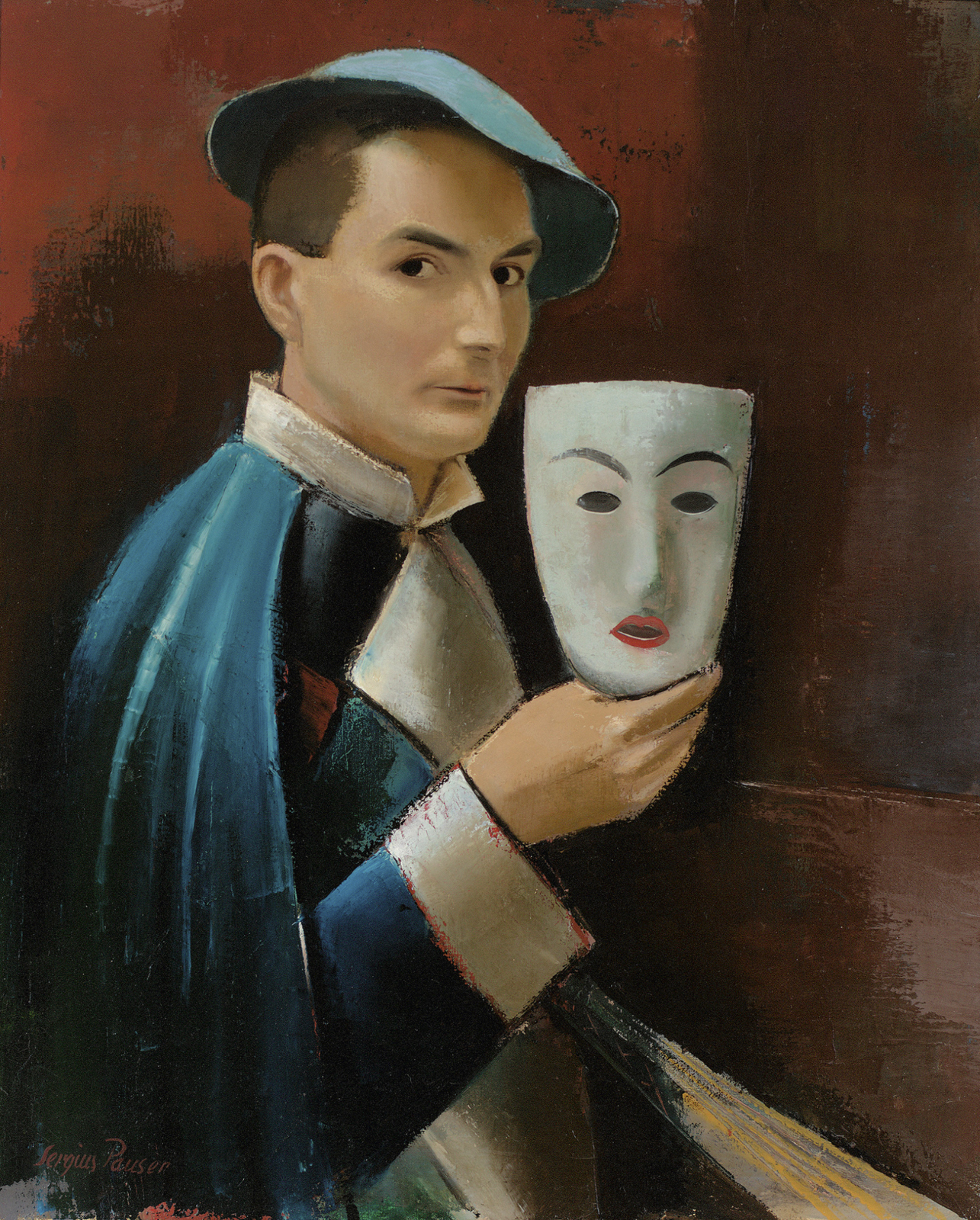
 

Sergius Pauser (Austrian, 1896-1970) 'Self-Portrait with Mask' 1926


Sergius Pauser (Austrian, 1896-1970)
Self-Portrait with Mask
1926
Oil paint on canvas
600 x 730 mm
The George Economou Collection
© Angela Pauser and Wolfgang Pauser


Sergius Pauser (Austrian, 1896-1970)

Sergius Pauser, who was born in Vienna on 28 December 1896, represents the prototype of this generation of artists. As a painter, he enjoyed the recognition of his contemporaries and as a much sought-after artist who was able to earn his living with his paintings. He was never a revolutionary but rather a “gentleman of the Viennese order”, who sought to capture moods and atmosphere in his paintings. The writer Thomas Bernhard (1931-1989) wrote of Pauser: “Sergius Pauser uttered thoughts about people – Adalbert Stifter, for example – that I have never heard before or since; he succeeded in revealing the most concealed corners of poetic sensitivity; he was a tender and vigilant diviner on the landscape of world literature, a philosopher and an artist through and through.” And yet a painter like Sergius Pauser is barely known today; only a few of his works hang in Austrian galleries and many of his paintings cannot be traced due to the emigration of their owners.

Dr. Isabella Ackerl. “Sergius Pauser (1896-1979),” on the Sergius Pauser website Nd [Online] Cited 23/06/2019
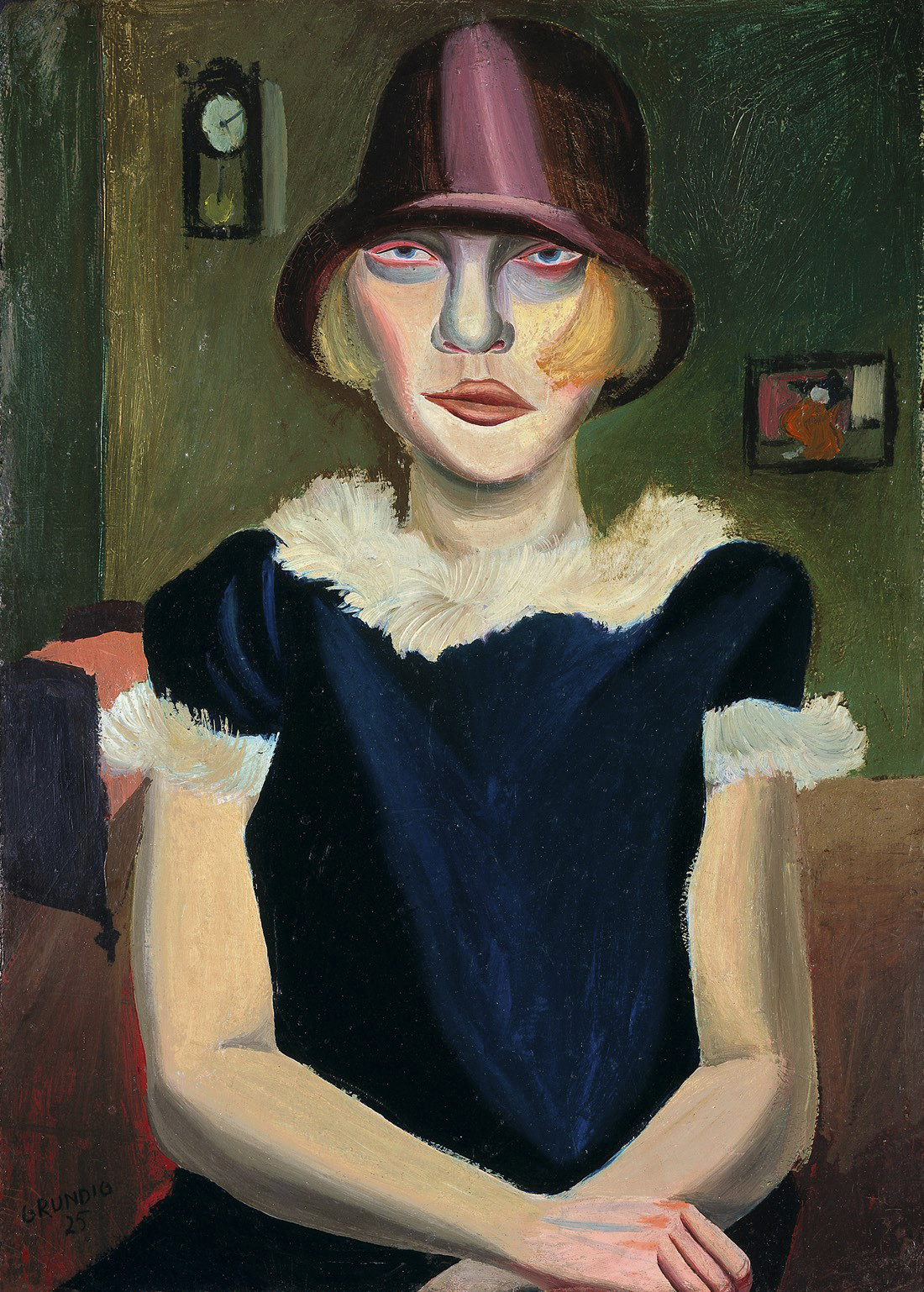
 

Hans Grundig (German, 1901-1958) 'Girl with Pink Hat' 1925


Hans Grundig (German, 1901-1958)
Girl with Pink Hat
1925
Oil paint on cardboard
704 x 500 mm
The George Economou Collection
© DACS, 2018


Hans Grundig (German, 1901-1958)

Hans Grundig (February 19, 1901 – September 11, 1958) was a German painter and graphic artist associated with the New Objectivity movement.

He was born in Dresden and, after an apprenticeship as an interior decorator, studied in 1920–1921 at the Dresden School of Arts and Crafts. He then studied at the Dresden Academy from 1922 to 1923. During the 1920s his paintings, primarily portraits of working-class subjects, were influenced by the work of Otto Dix. Like his friend Gert Heinrich Wollheim, he often depicted himself in a theatrical manner, as in his Self-Portrait during the Carnival Season (1930).

He had his first solo exhibition in 1930 at the Dresden gallery of Józef Sandel. He made his first etchings in 1933.

Politically anti-fascist, he joined the German Communist Party in 1926, and was a founding member of the arts organisation Assoziation revolutionärer bildender Künstler in Dresden in 1929.

Following the fall of the Weimar Republic, Grundig was declared a degenerate artist by the Nazis, who included his works in the defamatory Degenerate Art exhibition in Munich in 1937. He expressed his antagonism toward the regime in paintings such as The Thousand Year Reich (1936). Forbidden to practice his profession, he was arrested twice – briefly in 1936, and again in 1938, after which he was interned in Sachsenhausen concentration camp from 1940 to 1944.

In 1945 he went to Moscow, where he attended an anti-fascist school. Returning to Berlin in 1946, he became a professor of painting at the Dresden Academy of Fine Arts. In 1957 he published his autobiography, Zwischen Karneval und Aschermittwoch (“Between Shrovetide carnival and Ash Wednesday”). He was awarded the Heinrich Mann Prize in Berlin in 1958, the year of his death.

Text from the Wikipedia website
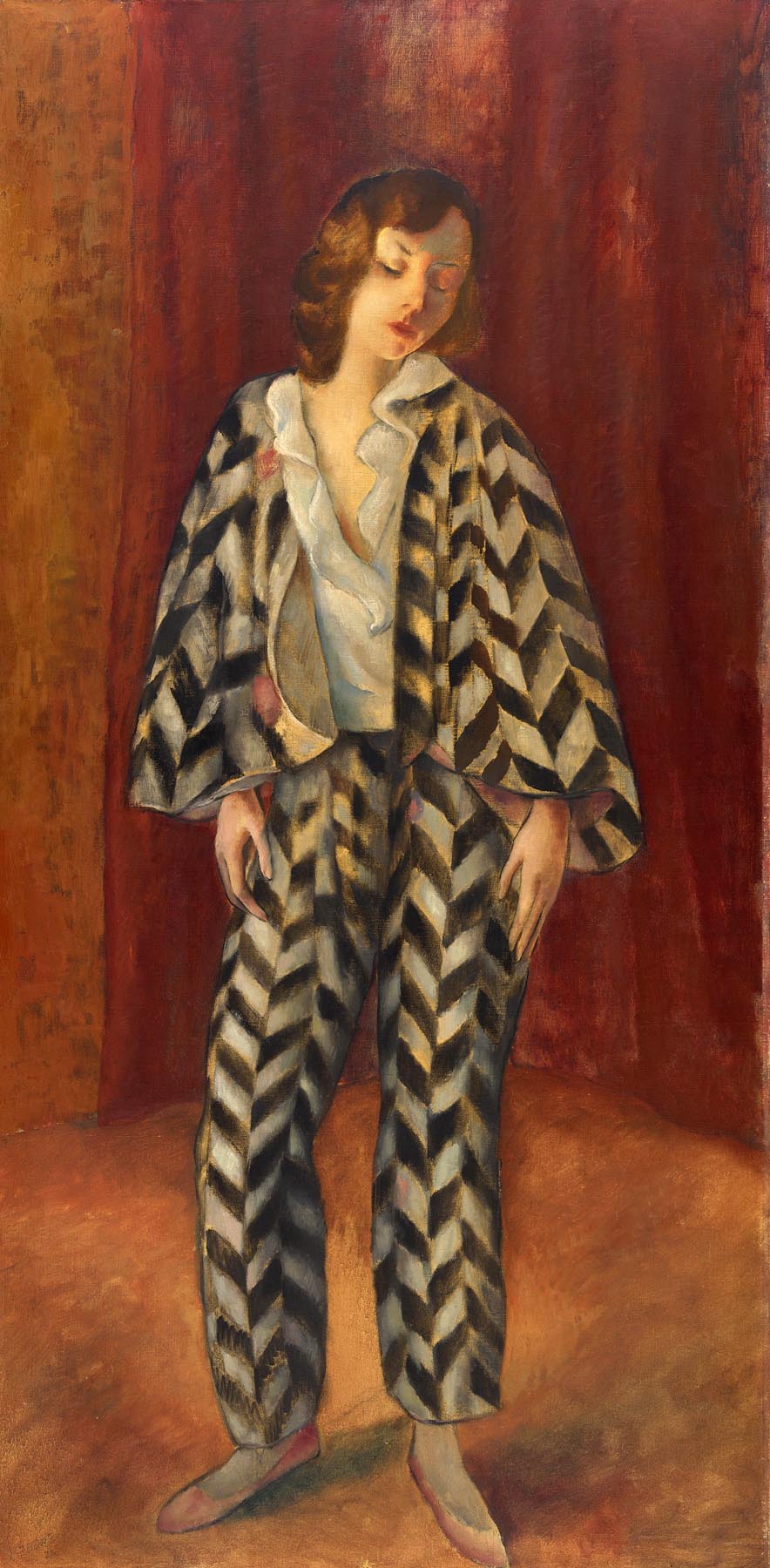
 

Josef Eberz (1880-1942) 'Dancer (Beatrice Mariagraete)' 1923


Josef Eberz (German, 1880-1942)
Dancer (Beatrice Mariagraete)
1923
Oil paint on canvas
1580 x 785 mm
The George Economou Collection


Josef Eberz died in utter loneliness on 27 August 1942, his apartment with his studio burned out in a bombing raid.
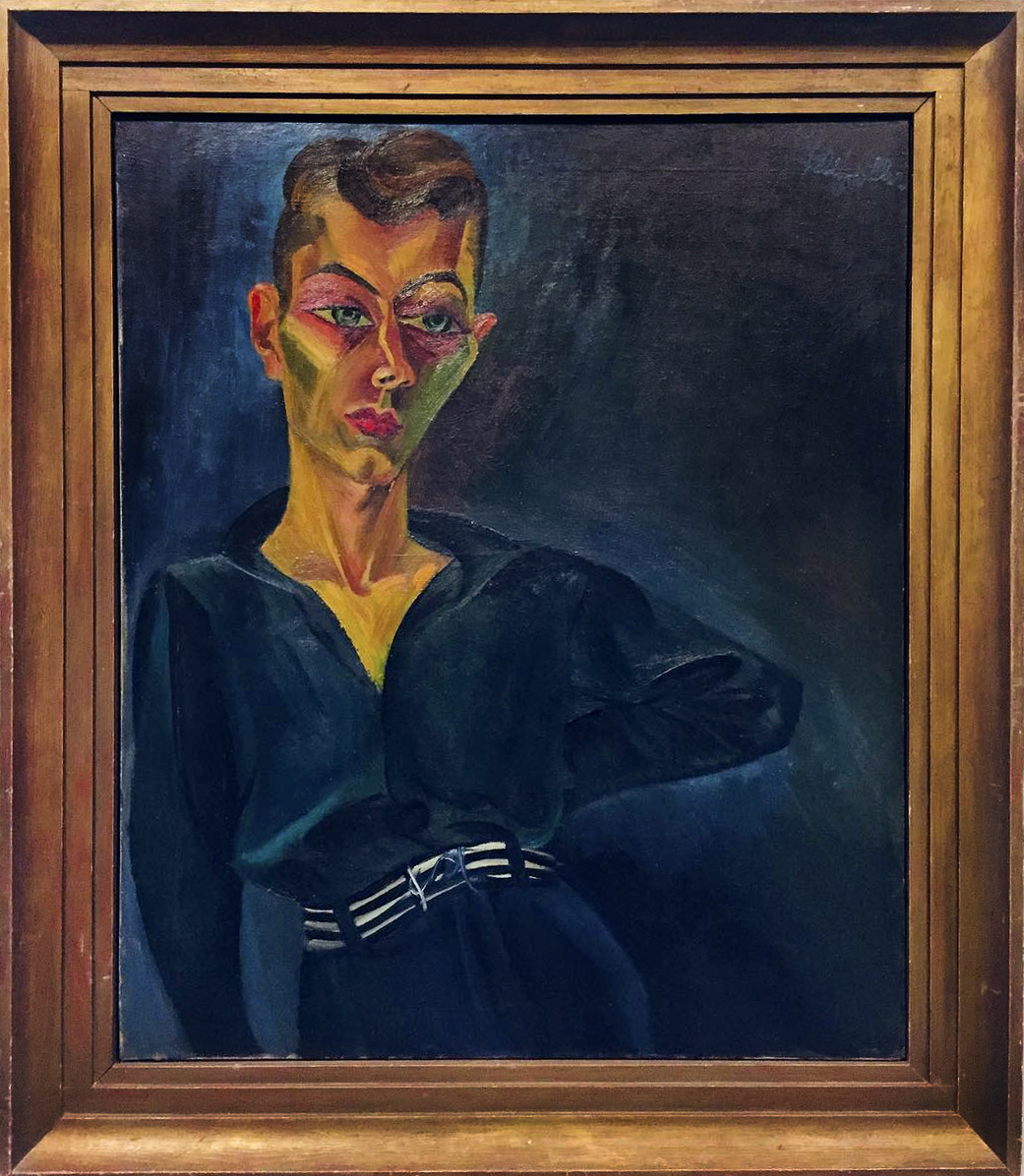
 

Conrad Felixmüller (German, 1897-1977) 'Portrait of Ernst Buchholz' 1921


Conrad Felixmüller (German, 1897-1977)
Portrait of Ernst Buchholz
1921
Oil paint on canvas
900 x 750 mm
The George Economou Collection
© DACS, 2018


Conrad Felixmüller (German, 1897-1977)

Conrad Felixmüller (21 May 1897 – 24 March 1977) was a German expressionist painter and printmaker. Born in Dresden as Conrad Felix Müller, he chose Felixmüller as his nom d’artiste.

He attended drawing classes at the Dresden School of Arts and Crafts in 1911-1912 before studying under Carl Bantzer at the Dresden Academy of Art. In 1917 he performed military service as a medical orderly, and became a founding member of the Dresden Expressionist group Expressionistische Arbeitsgemeinschaft Dresden. He achieved his earliest success as a printmaker. Felixmüller was a member of the Communist Party of Germany from 1918 to 1922. He published many woodcuts and drawings in left-wing magazines, and remained a prolific printmaker throughout his career. He was a close friend of the composer Clemens Braun of whom he produced a number of portraits and a woodcut depicting him on his deathbed.

He was one of the youngest members of the New Objectivity movement. His paintings often deal with the social realities of Germany’s Weimar Republic. He was mentor to the German Expressionist Otto Dix.

Felixmüller’s work became more objective and restrained after the mid-1920s. He wrote in 1929:

“It has become increasingly clear to me that the only necessary goal is to depict the direct, simple life which one has lived oneself, also involving the design of colour as painting – in the manner in which it was cultivated by the Old Masters for centuries, until Impressionism and Expressionism, infected by the technical and industrial delusions of grandeur, rejected every affinity for tradition, ability and results, committing harakiri.”


In the 1930s, many of his works were seized as degenerate art by the Nazis, and destroyed. In 1944, his studio in Berlin was bombed, resulting in more losses of his works. From 1949 to 1962 Felixmüller taught at the University of Halle. He died in the Berlin suburb of Zehlendorf.

Text from the Wikipedia website
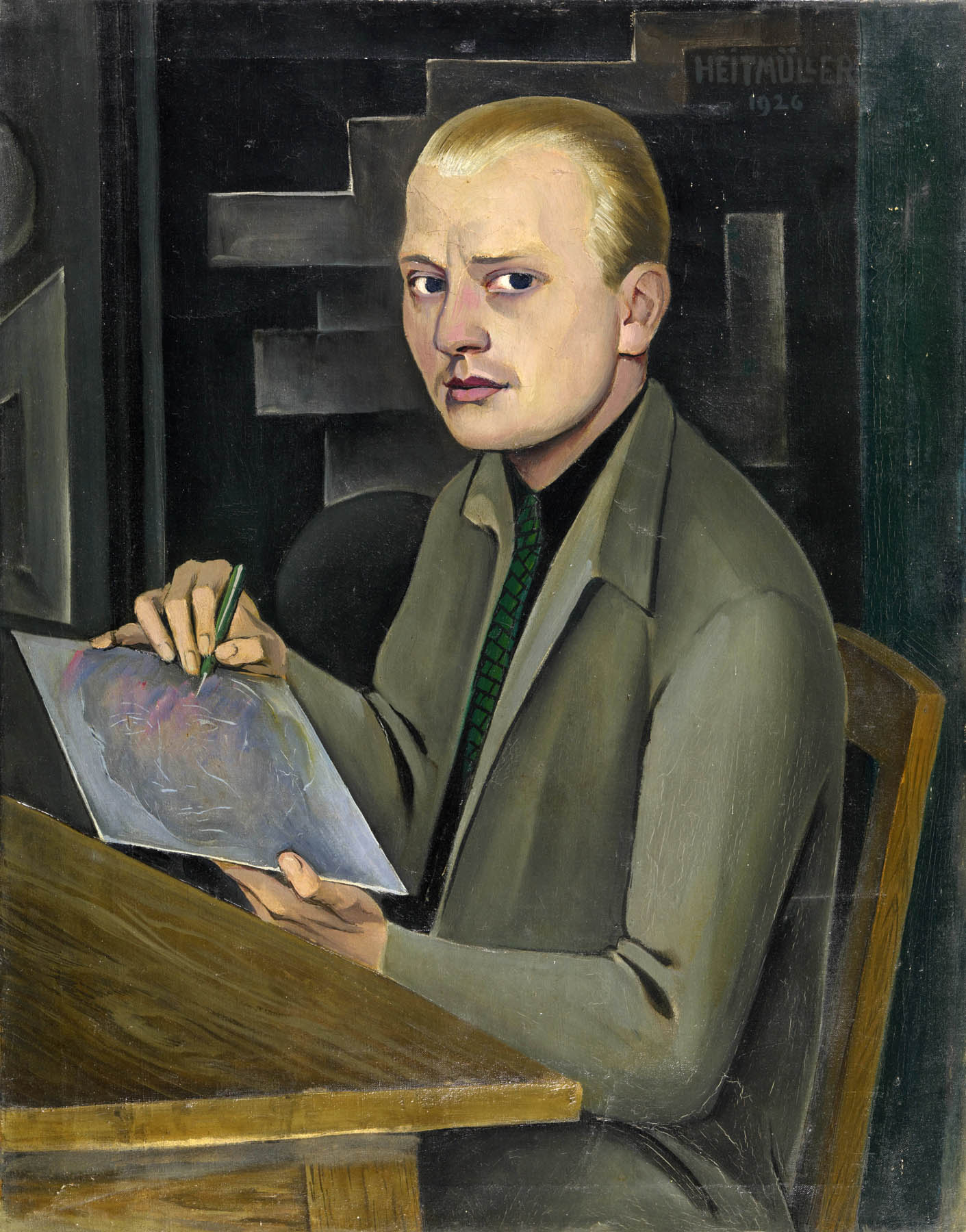
 

August Heitmüller (German, 1873-1935) 'Self-Portrait' 1926


August Heitmüller (German, 1873-1935)
Self-Portrait
1926
Oil paint on canvas
900 x 705 mm
The George Economou Collection
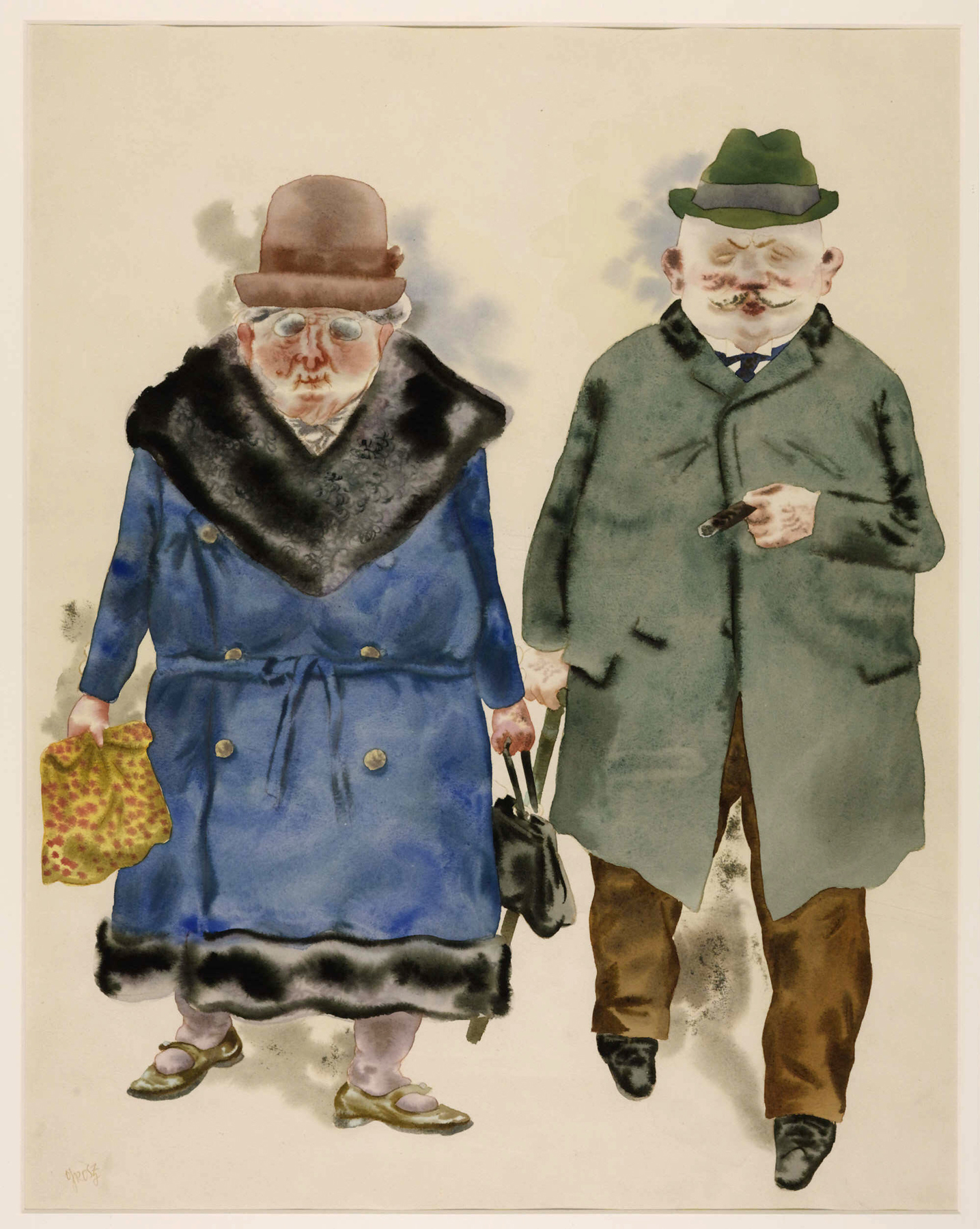
 

George Grosz (German, 1893-1959) 'A Married Couple' 1930


George Grosz (German, 1893-1959)
A Married Couple
1930
Watercolour, gouache, pen and ink on paper
505 x 440 mm
The George Economou Collection
© Estate of George Grosz, Princeton, N.J. 2018
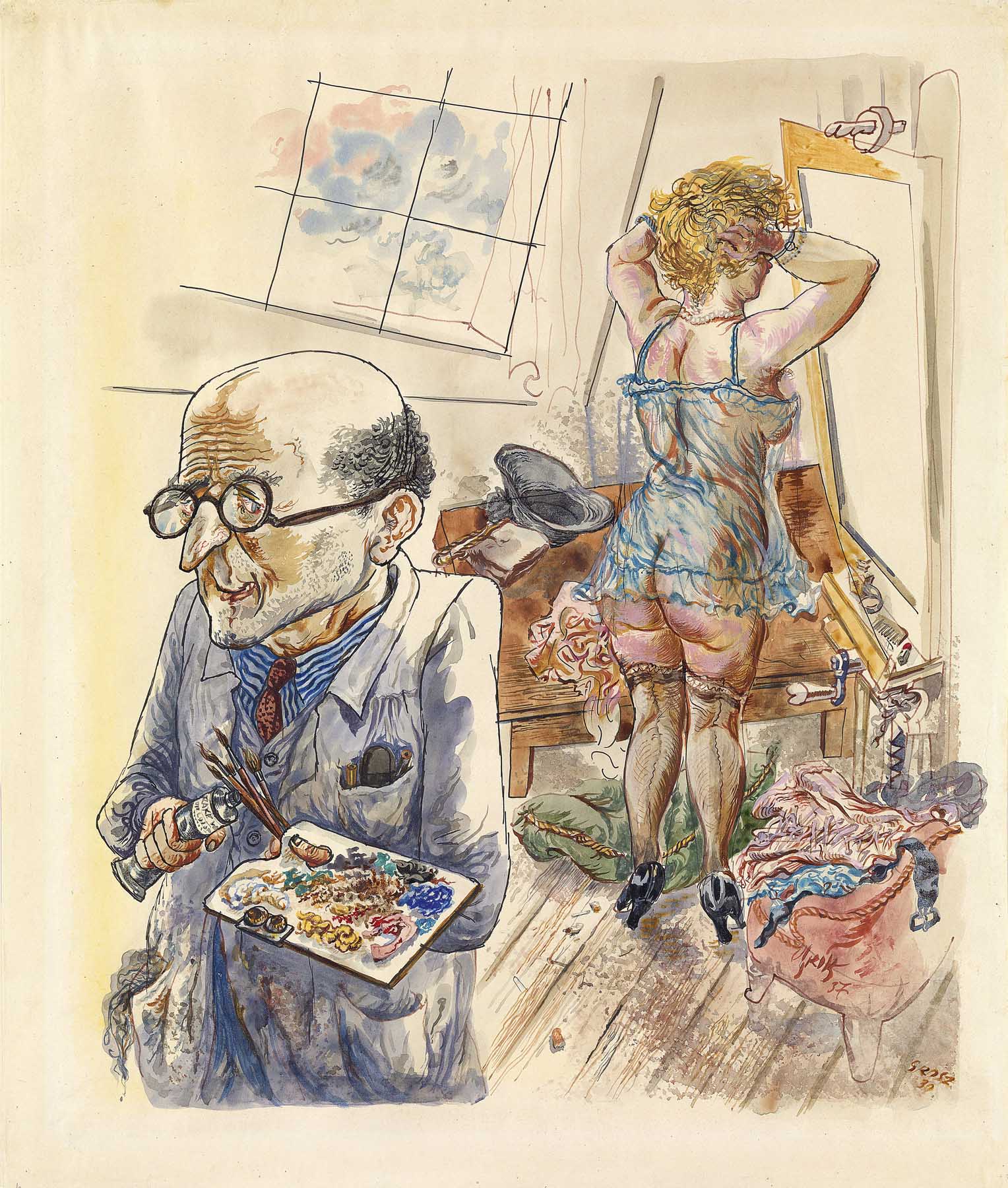
 

George Grosz (German, 1893-1959) 'Self-Portrait with Model in the Studio' 1930-1937


George Grosz (German, 1893-1959)
Self-Portrait with Model in the Studio
1930-1937
Watercolour on paper
660 x 473 mm
Tate
© Estate of George Grosz, Princeton, N.J. 2018
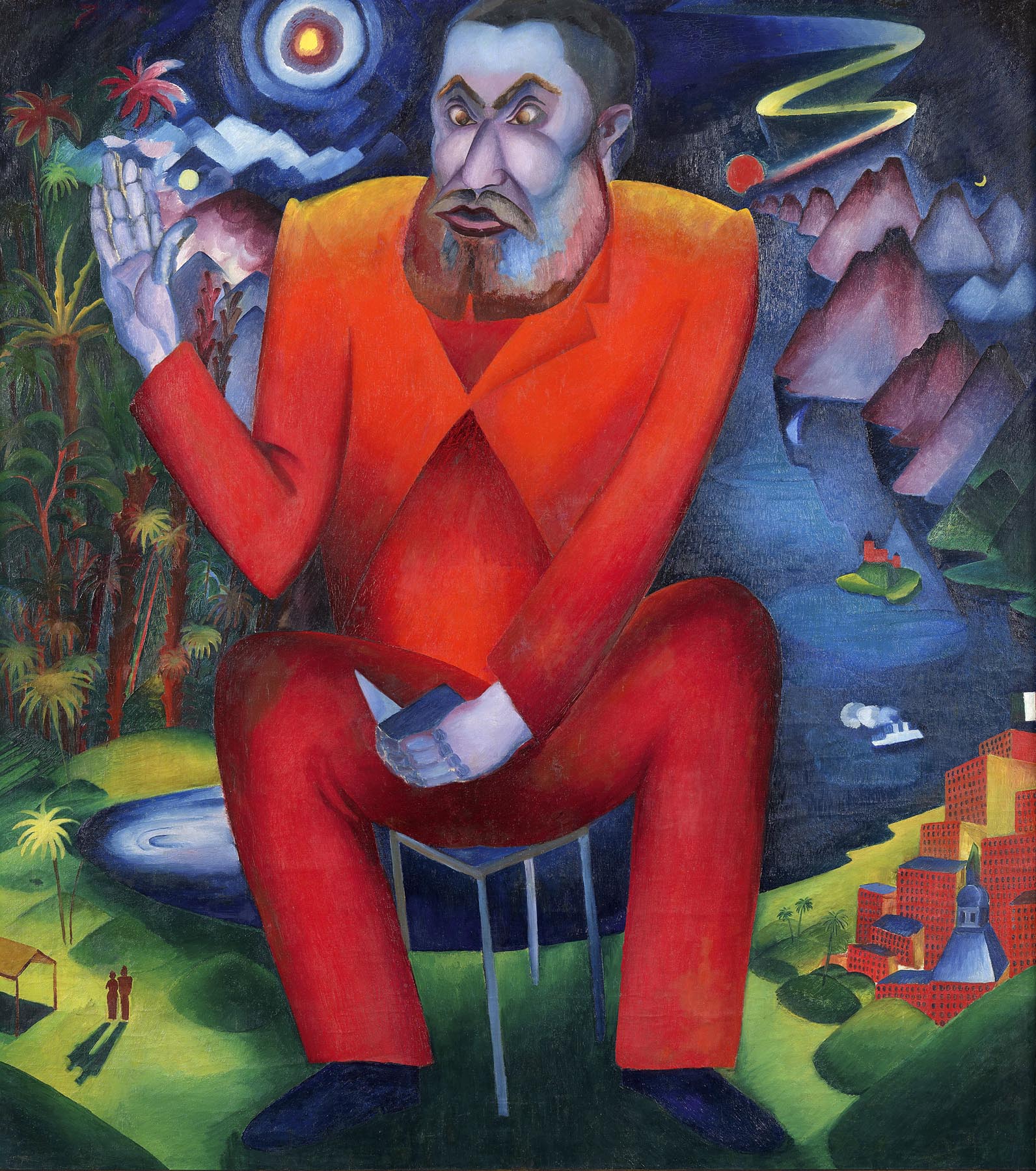
 

Heinrich Maria Davringhausen (German, 1894-1970) 'The Poet Däubler' (Der Dichter Däubler) 1917


Heinrich Maria Davringhausen (German, 1894-1970)
The Poet Däubler (Der Dichter Däubler)
1917
Oil paint on canvas
1810 x 1603 mm
The George Economou Collection
On short term loan


Heinrich Maria Davringhausen (German, 1894-1970)

Heinrich Maria Davringhausen (21 October 1894 – 13 December 1970) was a German painter associated with the New Objectivity.

Davringhausen was born in Aachen. Mostly self-taught as a painter, he began as a sculptor, studying briefly at the Düsseldorf Academy of Arts before participating in a group exhibition at Alfred Flechtheim’s gallery in 1914. He also traveled to Ascona with his friend the painter Carlo Mense that year. At this early stage his paintings were influenced by the expressionists, especially August Macke.

Exempted from military service in World War I, he lived in Berlin from 1915 to 1918, forming friendships with George Grosz and John Heartfield. In 1919 he had a solo exhibition at Hans Goltz’ Galerie Neue Kunst in Munich, and exhibited in the first “Young Rhineland” exhibition in Düsseldorf. Davringhausen became a member of the “Novembergruppe” and gained some prominence among the artists representing a new tendency in German art of the postwar period. He was asked to take part in the Neue Sachlichkeit (New Objectivity) exhibition in Mannheim which brought together many leading “post-expressionist” artists, including Grosz, Otto Dix, Max Beckmann, Alexander Kanoldt and Georg Schrimpf.

Davringhausen went into exile with the fall of the Weimar republic in 1933, first going to Majorca, then to France. In Germany approximately 200 of his works were removed from public museums by the Nazis on the grounds that they were degenerate art. Prohibited from exhibiting, Davringhausen was interned in Cagnes-sur-Mer but fled to Côte D’Azur. In 1945 however he returned to Cagnes-sur-Mer, a suburb of Nice, where he remained for the rest of his life. He worked as an abstract painter under the name Henri Davring until his death in Nice in 1970.

Perhaps the best-known work from Davringhausen’s New Objectivity period is Der Schieber (The Black-Marketeer), a Magic realist painting of 1920-1921, which is in the Kunstmuseum Düsseldorf im Ehrenhof. Painted in acidulous colours, it depicts a glowering businessman seated at a desk in a modern office suite that foreshortens dramatically behind him. Although Davringhausen rarely presented social criticism in his work, in Der Schieber “the artist created the classic pictorial symbol of the period of inflation that was commencing”.

Much of Davringhausen’s work was deposited in 1989 in the Leopold Hoesch museum in Düren, which has subsequently organised several exhibitions of his pictures, above all those from the later period.

Text from the Wikipedia website
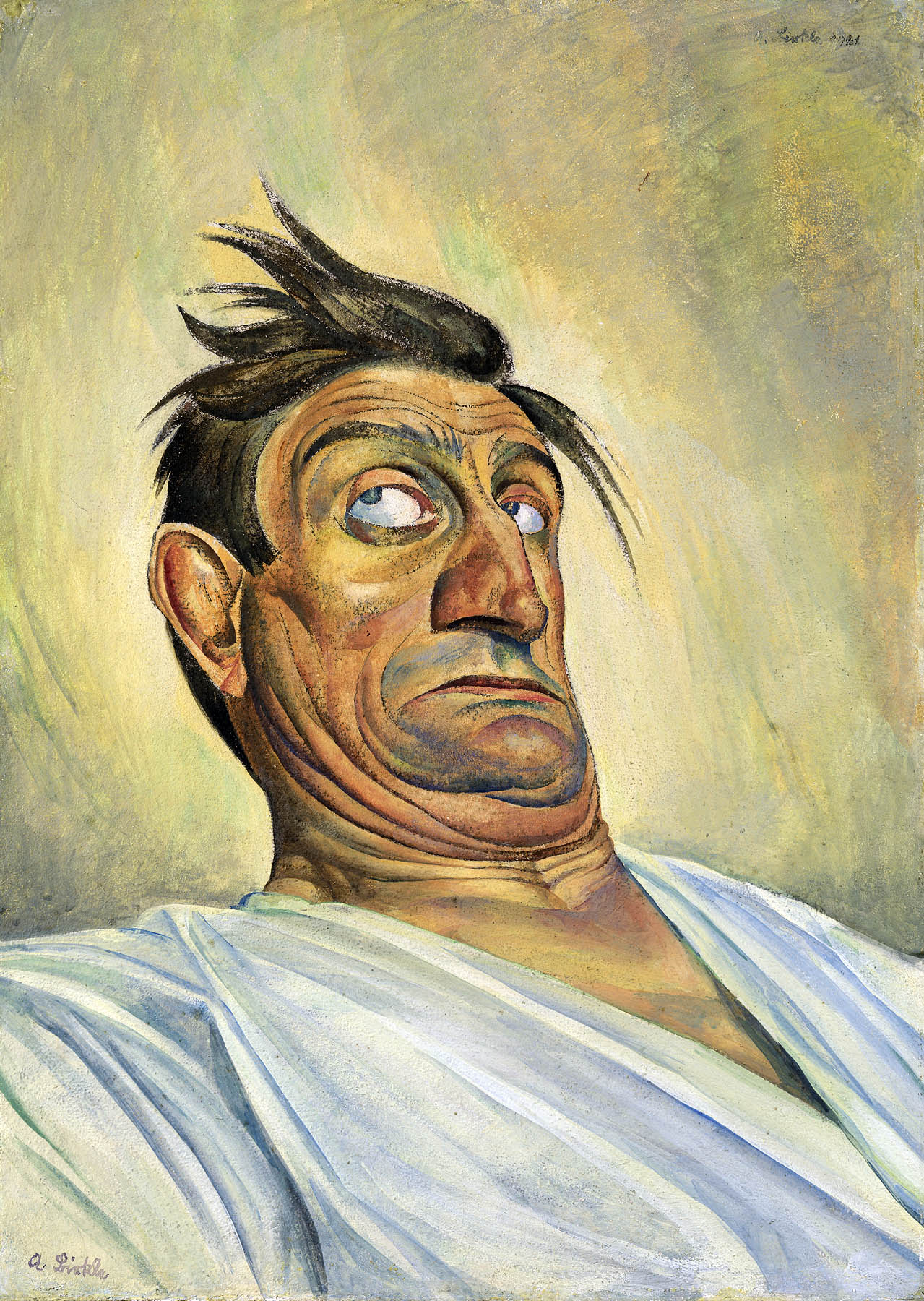
 

Albert Birkle (German, 1900-1986) 'The Acrobat Schulz V' 1921


Albert Birkle (German, 1900-1986)
The Acrobat Schulz V
1921
Oil paint on canvas
920 x 607 mm
The George Economou Collection
© DACS, London 2018


Albert Birkle (German, 1900-1986)

Albert Birkle was born in Charlottenburg, then an independent city and since 1920 part of Berlin. His grandfather on his mother’s side, Gustav Bregenzer, and his father, Carl Birkle, both were painters, originally from Swabia. Albert Birkle was trained as a decorative painter in his father’s firm. From 1918 to 1924, he studied at the Hochschule für die bildenden Künste / College of Fine Arts, a predecessor of today’s Universität der Künste Berlin. Birkle developed a unique style informed by expressionism and New Objectivity / Neue Sachlichkeit. His subjects were lonely, mystic landscapes, typical scenes of Berlin of the 20’s and 30’s, such as scenes from Tiergarten Park, bar scenes etc., character portraits, and religious scenes. In his style of portrait painting he was often compared to Otto Dix and George Grosz.

In 1927, Birkle had his first one man show in Berlin, which turned out to be very successful. He decided to turn down a professorship at the Koenigsberg Acadamy of Arts in order to continue to work independently as an artist and to dedicate himself to assignments in the field of church decoration, where he had become a specialist. As National Socialism was on its way to power, Birkle moved to Salzburg, Austria in 1932. Nevertheless, he represented Germany at the Venice Biennale as late as 1936. In 1937, his artwork was declared to be “entarted”, his works were removed from public collections, and a painting ban was imposed on him.

In 1946, Birkle received Austrian citizenship. In the post-war year, he made a living painting religious frescos for various churches and doing oil paintings. In his final year, he more and more returned back to his Berlin themes of the 20’s and 30’s.

Text from the Albert Birkle website [Online] Cited 23/06/2019


Tate Modern
Bankside
London SE1 9TG
United Kingdom

Opening hours:
Daily 10.00 – 18.00

Tate Modern website

LIKE ART BLART ON FACEBOOK

Back to top

Photographs: Herbert Ponting Chinese stereocards

June 2019


Herbert Ponting (British, 1870-1935) (photographer) The Universal Photo Art Co (C.H. Graves) (publisher) 'At the barber's, Peking, China' 1902


Herbert Ponting (British, 1870-1935) (photographer)
The Universal Photo Art Co., (C.H. Graves) (publisher)
At the barber’s, Peking, China
c. 1902
Albumen print on card


Fabulous, early Herbert Ponting social documentary stereoviews. I have never seen these before.

The placement of figures and the formal construction of the pictorial plane – strong diagonals and verticals, near to far, vanishing point – make for beautifully balanced, tensioned and dynamic images.

Marcus


Please click on the photographs for a larger version of the image.


Herbert Ponting (British, 1870-1935) (photographer) The Universal Photo Art Co (C.H. Graves) (publisher) 'A Chinese strawberry garden. Proprietor and coolie. China' c. 1902


Herbert Ponting (British, 1870-1935) (photographer)
The Universal Photo Art Co., (C.H. Graves) (publisher)
A Chinese strawberry garden. Proprietor and coolie. China
c. 1902
Albumen print on card


Herbert Ponting (British, 1870-1935) (photographer) The Universal Photo Art Co (C.H. Graves) (publisher) 'En Route to the Great Wall of China. Entrance to the city of Nankow' c. 1902


Herbert Ponting (British, 1870-1935) (photographer)
The Universal Photo Art Co., (C.H. Graves) (publisher)
En Route to the Great Wall of China. Entrance to the city of Nankow
c. 1902
Albumen print on card


Herbert Ponting (British, 1870-1935) (photographer) Underwood & Underwood (publisher) 'Where China's Great Wall begins its 1,250 mile course - from Shan-hai-ewan (N.) to Liao Hsi Mountains' 1904


Herbert Ponting (British, 1870-1935) (photographer)
Underwood & Underwood (publisher)
Where China’s Great Wall begins its 1,250 mile course – from Shan-hai-ewan (N.) to Liao Hsi Mountains
1904
Albumen print on card


Herbert Ponting (British, 1870-1935)

Herbert George Ponting, FRGS (21 March 1870 – 7 February 1935) was a professional photographer. He is best known as the expedition photographer and cinematographer for Robert Falcon Scott’s Terra Nova Expedition to the Ross Sea and South Pole (1910-1913). In this role, he captured some of the most enduring images of the Heroic Age of Antarctic Exploration. …

Early life

Ponting was born in Salisbury, Wiltshire in the south of England, on 21 March 1870. His father was a successful banker, Francis Ponting, and his mother was Mary Sydenham. From the age of eighteen Herbert was employed at a local bank branch in Liverpool, where he stayed for four years. That time was long enough to convince him that he did not wish to follow in the profession of his father, and attracted to stories of the American West, he moved to California where he worked in mining and then bought a fruit ranch in the 1890s. In 1895 he married a California woman, Mary Biddle Elliott; their daughter Mildred, was born in Auburn, California in January 1897.

Ponting sold his fruit farm in 1898 and, with his wife and daughter, returned to Britain to stay with his family. When they returned to the USA he turned his long-standing hobby of photography in his next career. Following a chance meeting with a professional photographer in California, to whom he had given advice about the locality and showed his own photos, he entered his pictures in competitions and won awards; he also sent some of his stereoscopic photographs to companies who published them. His work was also selected for the first San Francisco Salon; at that time he was living in Sausalito, north of San Francisco. He took stereoviews of and reported on the Russo-Japanese war of 1904-1905, and afterwards continued to travel around Asia, working in Burma, Korea, Java, China and India taking stereoviews and working as a freelance photographer for English-speaking periodicals. Improvements in the printing press had made it possible, for the first time, for mass-market magazines to print and publish photographic illustrations.

After spending much of 1901-1906 travelling around photographing in Asia, Ponting returned to Europe, where he continued to take stereoviews (including in Switzerland and Spain) and wrote illustrated articles for magazines including Country Life, the Graphic, the Illustrated London News, Pearson’s, and the Strand Magazine. In the Strand, Ponting’s work appeared side by side with the Sherlock Holmes stories of Arthur Conan Doyle, one of Ponting’s contemporaries.

Ponting expanded his photographs of Japan into a 1910 book, In Lotus-land Japan. He took extensive photographs in Spain. He was elected a Fellow of the Royal Geographical Society (FRGS). His flair for journalism and ability to shape his photographic illustrations into a narrative led to his being signed as expedition photographer aboard the Terra Nova, the first time a professional photographer was included on an Antarctic expedition.

Text from the Wikipedia website


Herbert Ponting (British, 1870-1935) (photographer) The "Perfec" Stereograph. H.C. White Co., (publisher) 'The-Tien-ning-ssu Pagoda, near Peking, China' 1907


Herbert Ponting (British, 1870-1935) (photographer)
The “Perfec” Stereograph. H.C. White Co., (publisher)
The-Tien-ning-ssu Pagoda, near Peking, China
1907
Albumen print on card


Herbert Ponting (British, 1870-1935) (photographer) The "Perfec" Stereograph. H.C. White Co., (publisher) 'Peking, the capital of China, looking east from a balcony of the Drum Tower' 1907


Herbert Ponting (British, 1870-1935) (photographer)
The “Perfec” Stereograph. H.C. White Co., (publisher)
Peking, the capital of China, looking east from a balcony of the Drum Tower
1907
Albumen print on card


William Cooper (British, 1878-1945) 'Drum Tower, Peking' 1910


William Cooper (British, 1878-1945)
Drum Tower, Peking
1910
Gelatin silver print
University of Bristol – Historical Photographs of China
Creative Commons 3.0


Beijing’s Bell and Drum Towers are situated on a small square north of the Forbidden City. The towers, which were used for telling time until 1924, were built in 1272 during the reign of Kublai Khan and were rebuilt after two fires during the Ming and Qing dynasties. The Bell and Drum Towers are quintessential landmarks of historic Beijing.


William Boyd Cooper (1878-1945)

William Boyd Cooper (1878-1945) was born in Belfast, Northern Ireland. Around 1911, he was appointed Professor of Commerce at Peking University, where he lectured in English and French. Cooper joined the North China British Volunteer Corps. On 12 February 1917, he was commissioned as a Second Lieutenant in the Chinese Labour Corps (CLC). He served in France with the CLC and rose to be a captain, relinquishing his Commission in 1919. William Cooper and his family returned from China and settled in Wimbledon, London. The William Cooper Collection is held in Special Collections, University of Bristol Library (Special Collections ref DM2823). 336 images.

Anonymous text. “Cooper, William Collection,” on the Historical Photographs of China website Nd [Online] Cited 04/06/2023


Herbert Ponting (British, 1870-1935) (photographer) The "Perfec" Stereograph. H.C. White Co., (publisher) 'A Tea seller in the streets of Moukden, Manchuria' c. 1906


Herbert Ponting (British, 1870-1935) (photographer)
The “Perfec” Stereograph. H.C. White Co., (publisher)
A Tea seller in the streets of Moukden, Manchuria
c. 1906
Albumen print on card


Herbert Ponting (British, 1870-1935) (photographer) 'A poppy field in Manchuria, natives extracting fluid from which opium is made' c. 1902-1907


Herbert Ponting (British, 1870-1935) (photographer)
The “Perfec” Stereograph. H.C. White Co., (publisher)
A poppy field in Manchuria, natives extracting fluid from which opium is made
c. 1902-1907
Albumen print on card


Herbert Ponting (British, 1870-1935) (photographer) 'The Old Bell Tower in the heart of Mukden, Manchuria' 1905


Herbert Ponting (1870-1935) (photographer)
The “Perfec” Stereograph. H.C. White Co., (publisher)
The Old Bell Tower in the heart of Mukden, Manchuria
1905
Albumen print on card


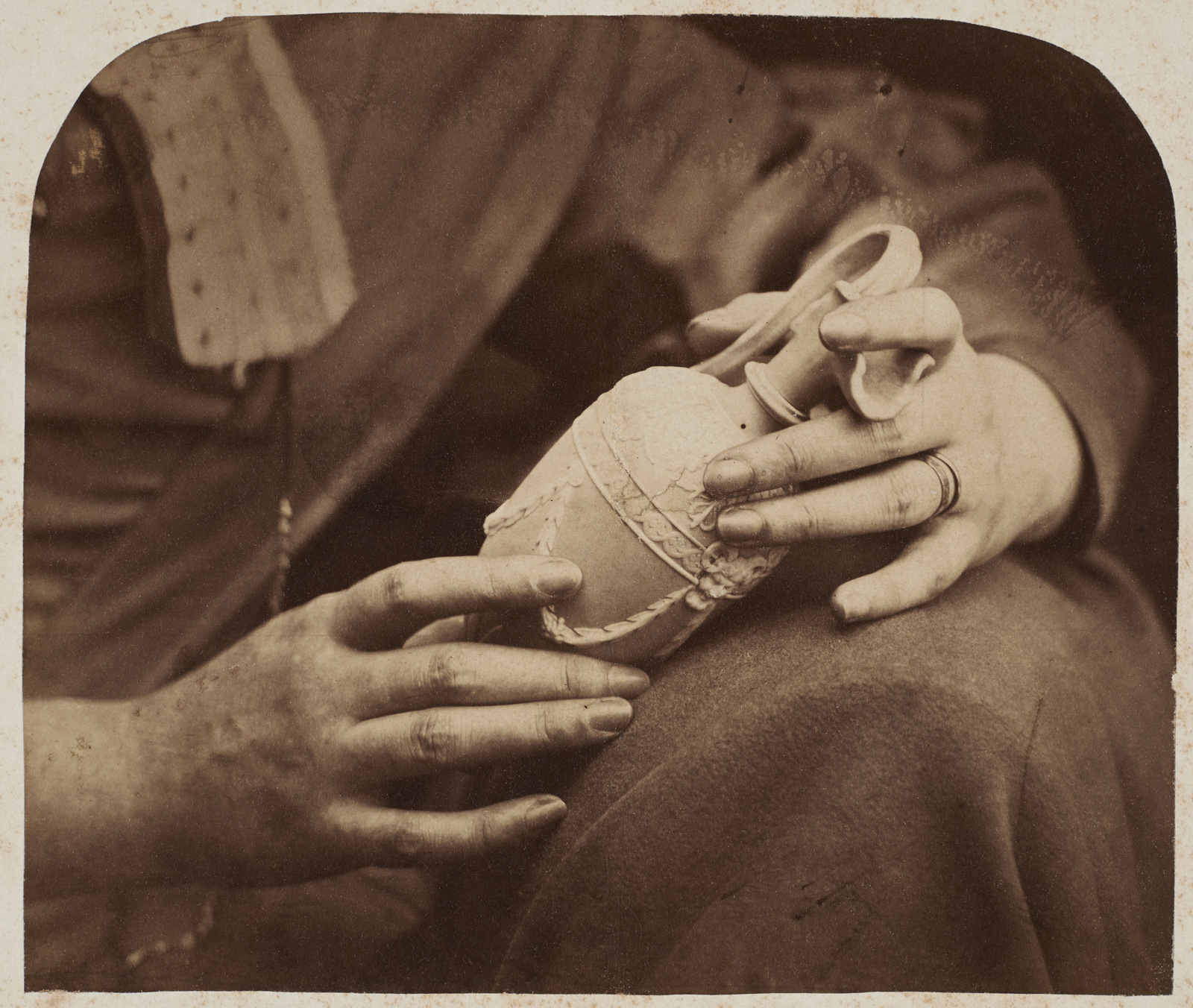
Herbert Ponting (British, 1870-1935) (photographer) 'Along the Great Wall of China (originally 1700 miles long), looking east up to a watch tower' 1907


Herbert Ponting (British, 1870-1935) (photographer)
The “Perfec” Stereograph. H.C. White Co., (publisher)
Along the Great Wall of China (originally 1700 miles long), looking east up to a watch tower
1907
Albumen print on card


Herbert Ponting (British, 1870-1935) (photographer) 'Scene on Ha-ta-Men St., one of the principal thoroughfares of Peking, China' 1907


Herbert Ponting (British, 1870-1935) (photographer)
The “Perfec” Stereograph. H.C. White Co., (publisher)
Scene on Ha-ta-Men St., one of the principal thoroughfares of Peking, China
1907
Albumen print on card


LIKE ART BLART ON FACEBOOK

Back to top

Photographs: Still life colour separation images by Bernard F. Eilers

June 2019


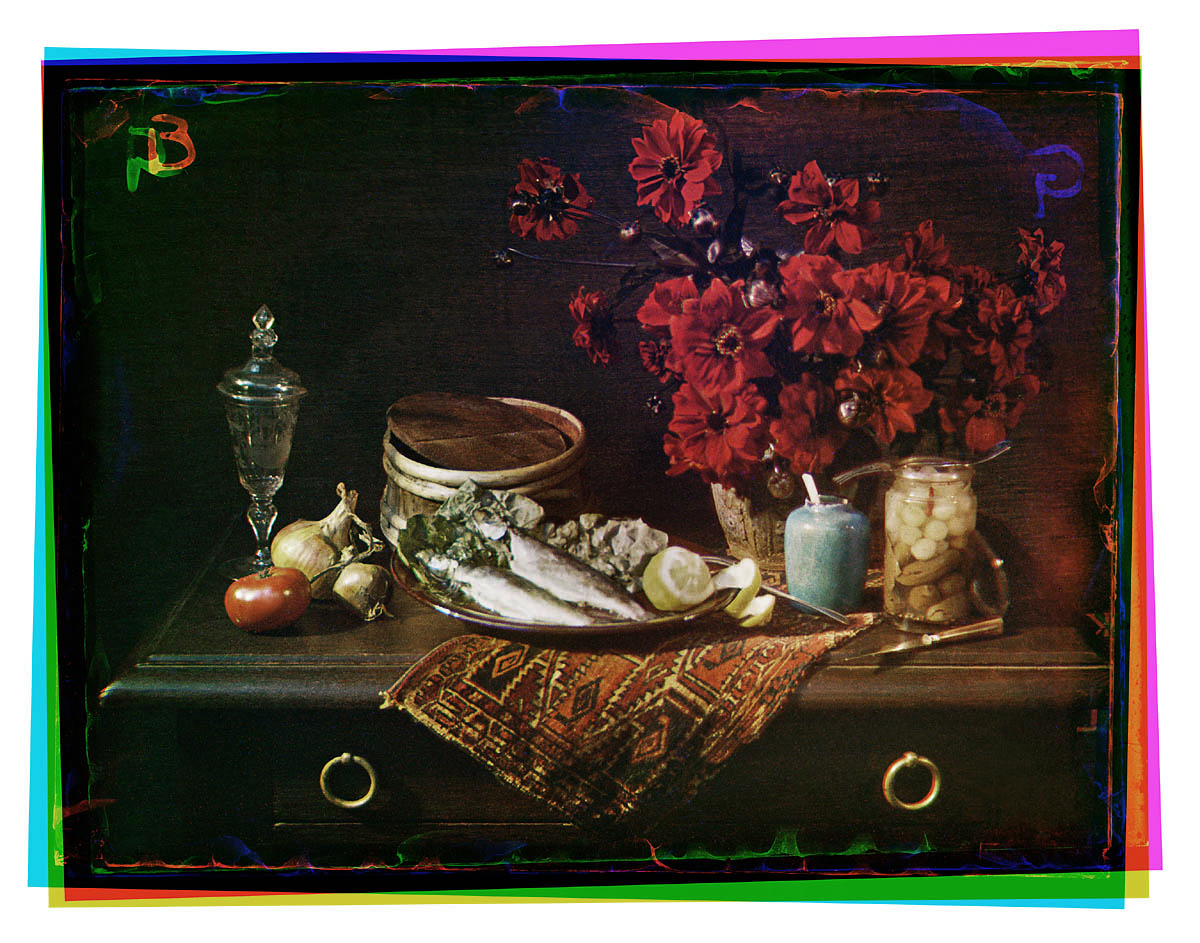
Bernard F. Eilers (Dutch, 1878-1951) 'Stilleven met haringen en rode dahlia's' (Still life with herring and red dahlias) c. 1935


Bernard F. Eilers (Dutch, 1878-1951)
Stilleven met haringen en rode dahlia’s (Still life with herring and red dahlias)
c. 1935
Colour separation
4.5 x 6 mm
Stadsarchief Amsterdam


I came across these early colour photographs by chance while rummaging around the web – the process (foto-chroma Eilers), the man (Bernard F. Eilers) and his photographs now largely forgotten outside his native Holland.

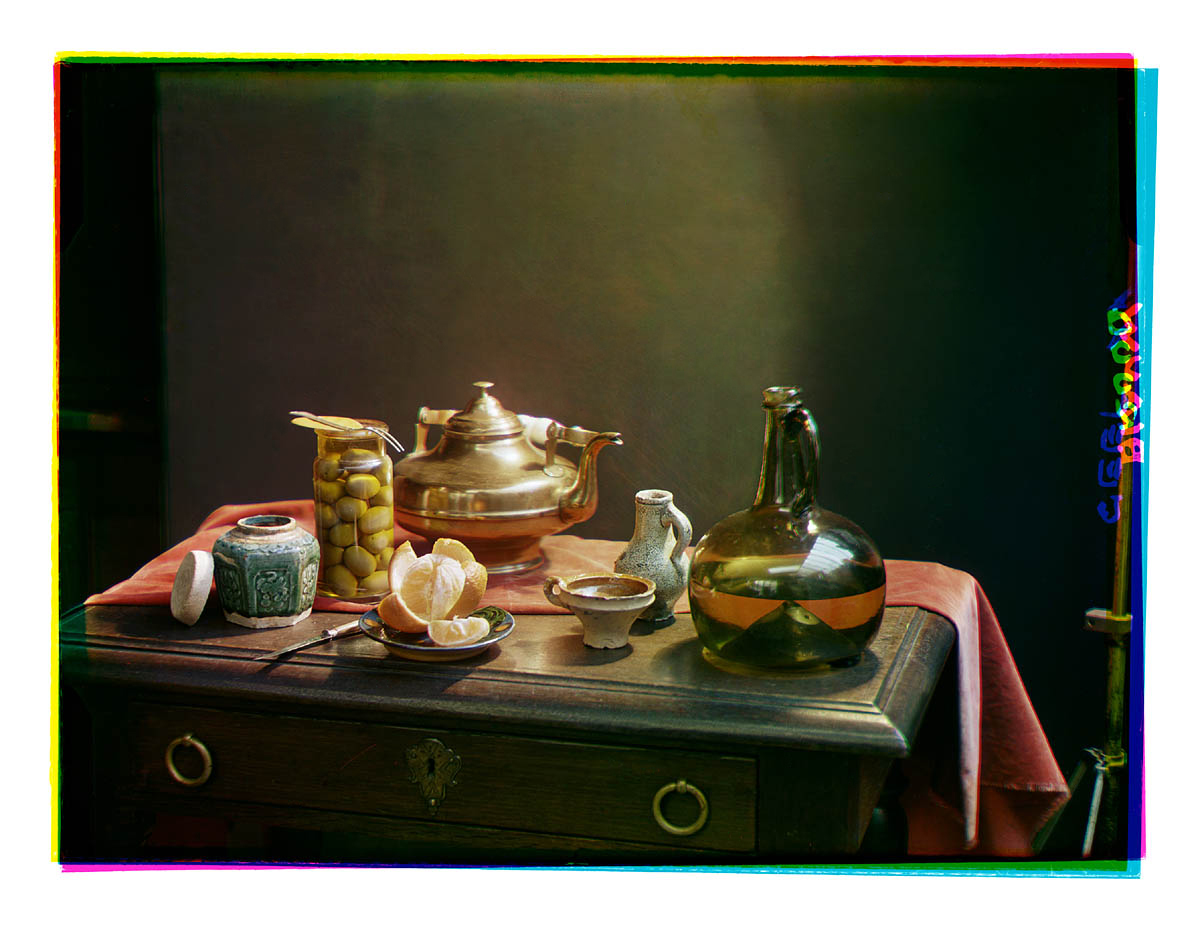
In this posting I have focused on the still life because I feel these photographs, which are the strongest body of Eilers work. Reminiscent of 17th Dutch still life painting, the photographs possess an inimitable feeling of space and project an indomitable presence that radiates almost magically from the surface of the image. The use of low depth of field and a stunning colour process (where the separated colours are hushed and muted but forward and present) make it possible to imagine picking up the tomatoes from the tin dish.

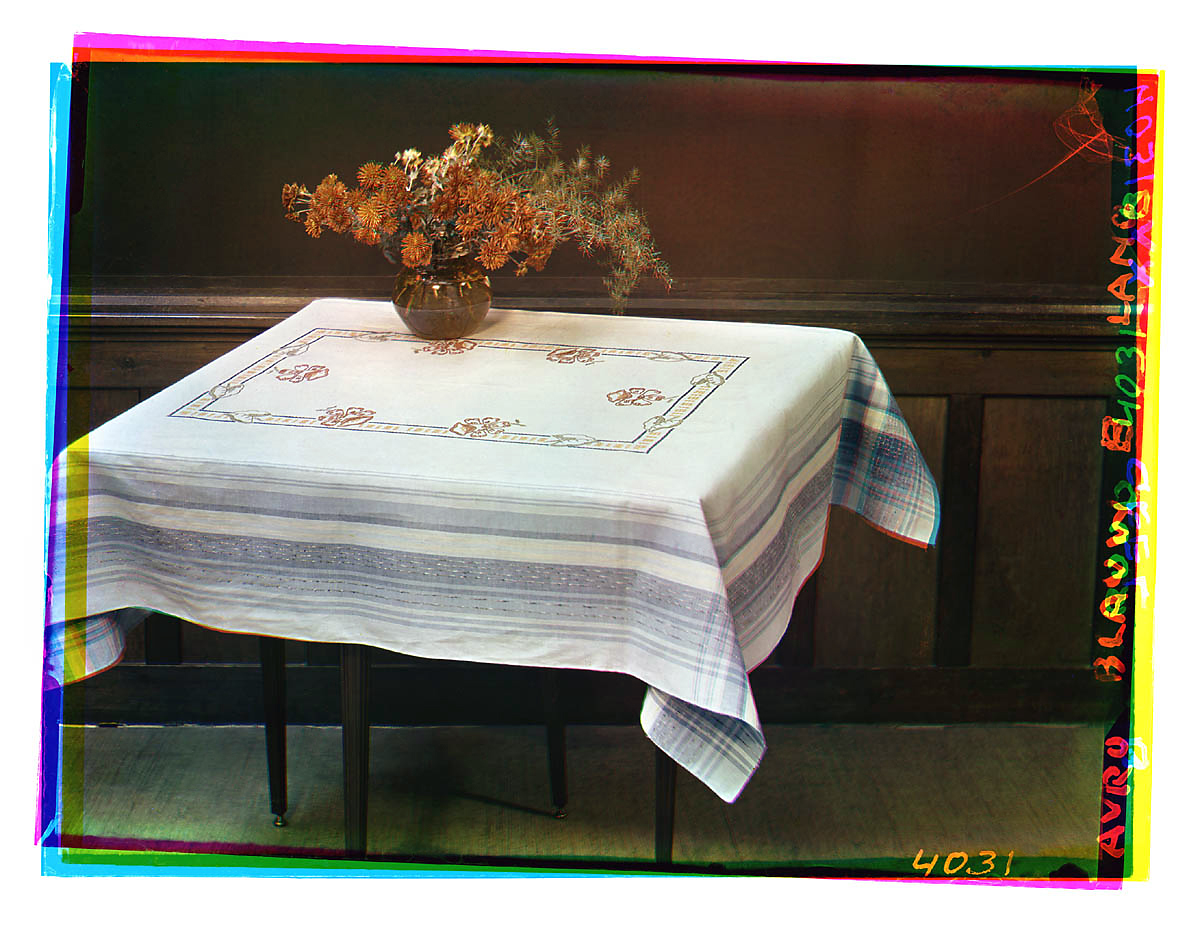
While the images are tightly framed, apparently simple constructions of light, colour and form… to make them so beautiful, so resonant of life itself, is due to the incredible technical and sensual skill of the artist. The precision of construction, of lighting, of feeling is impeccable. Notice the placement of the bowl of flowers in Table with tablecloth and a vase of red chrysanthemums (c. 1935, below) and its relationship to the pattern and that precise drop of the folded corner of the tablecloth. Or the spiral of the peeled lemon not quite touching the table, while red lanterns ascend like musical notes from the painted vessel in Still life with fruit (1934, below).

These informed, atmospheric and meditative images require the viewer to slow down and apply themselves to the act of looking, the act of imbibing the spirit of the artist, the object and the world. Beautiful, beautiful images, they make my heart sing.

Dr Marcus Bunyan


Bernard F. Eilers photographs from “Memory of the Netherlands,” on the National Library of the Netherlands website. A collection of the Stadsarchief Amsterdam. Please click on the photographs for a larger version of the image.


Bernard F. Eilers (1878-1951) was one of the leading Dutch photographers in the first quarter of the twentieth century. Along with Henri Berssenbrugge and Berend Zweers, Eilers was part of the second generation of Dutch pictorialists and his fine art prints were widely exhibited in the Netherlands during his lifetime. In 1911 he launched his business as a portrait and reproduction photographer. He was one of the Netherlands’ first commercial photographers, undertaking commissions for numerous clients including the Philips Company and Amsterdam-based architects and furniture makers. Around 1935, he created the photographic colour separation technique Foto-chroma Eilers, successfully producing prints of great intensity and depth of colour.

The following photographs were created by digitising 927 glass negatives from the Amsterdam Municipal Archives in 2004.


To achieve first-class picture quality, sets of three practically matching black-and-white negatives had to be selected from a far more sizeable total collection. Assembling these sets was an arduous task: they had not always been filed neatly together and could be found among several glass negative formats, particularly among the 4.5 x 6 cm size. In the end, it appeared that the selection of some sets did not lead to a satisfactory result, but the whole operation nevertheless yielded 309 beautiful prints.


Bernard F. Eilers (Dutch, 1878-1951) 'Stilleven met Oosterse poppetjes' (Still life with Eastern figures) 1934-04/1939-09


Bernard F. Eilers (Dutch, 1878-1951)
Stilleven met Oosterse poppetjes (Still life with Eastern figures)
1934-04/1939-09
Colour separation
4.5 x 6 mm
Stadsarchief Amsterdam


Bernard F. Eilers (Dutch, 1878-1951) 'Stilleven met tinnen en steengoed kannen' (Still life with pewter and stoneware jugs) 1934-04/1939-10


Bernard F. Eilers (Dutch, 1878-1951)
Stilleven met tinnen en steengoed kannen (Still life with pewter and stoneware jugs)
1934-04/1939-10
Colour separation
4.5 x 6 mm
Stadsarchief Amsterdam


Bernard F. Eilers (Dutch, 1878-1951) 'Stilleven met fruitschaal en drie kruiken op een kastje' (Still life with a fruit bowl and three jugs on a cupboard) 1934-04/1936


Bernard F. Eilers (Dutch, 1878-1951)
Stilleven met fruitschaal en drie kruiken op een kastje (Still life with a fruit bowl and three jugs on a cupboard)
1934-04/1936
Colour separation
4.5 x 6 mm
Stadsarchief Amsterdam


Bernard F. Eilers (Dutch, 1878-1951) 'Stilleven met een bloeiende primula, een majolica bord, steengoed kannetje en ander voorwerpen' (Still life with a flowering primula, a majolica plate, stoneware jug and other objects) 1934-04/1939-10


Bernard F. Eilers (Dutch, 1878-1951)
Stilleven met een bloeiende primula, een majolica bord, steengoed kannetje en ander voorwerpen (Still life with a flowering primula, a majolica plate, stoneware jug and other objects)
1934-04/1939-10
Colour separation
4.5 x 6 mm
Stadsarchief Amsterdam


Bernard F. Eilers (Dutch, 1878-1951) 'Stilleven met een glazen fles en een koperen pot' (Still life with a glass bottle and a copper pot) 1934-04/1939-10


Bernard F. Eilers (Dutch, 1878-1951)
Stilleven met een glazen fles en een koperen pot (Still life with a glass bottle and a copper pot)
1934-04/1939-10
Colour separation
4.5 x 6 mm
Stadsarchief Amsterdam


Bernard F. Eilers (Dutch, 1878-1951) 'Stilleven met koperen pot en glazen fles' (Still life with copper pot and glass bottle) 1920/1939


Bernard F. Eilers (Dutch, 1878-1951)
Stilleven met koperen pot en glazen fles (Still life with copper pot and glass bottle)
1920/1939
Colour separation
4.5 x 6 mm
Stadsarchief Amsterdam


Bernard F. Eilers (Dutch, 1878-1951) 'Stilleven met schilderspalet' (Still life with painter's palette) 1934-05/1939-10


Bernard F. Eilers (Dutch, 1878-1951)
Stilleven met schilderspalet (Still life with painter’s palette)
1934-05/1939-10
Colour separation
4.5 x 6 mm
Stadsarchief Amsterdam


Bernard F. Eilers (Dutch, 1878-1951) 'Stilleven met groenten waaronder prei, boerenkool en uien' (Still life with vegetables including leek, kale and onions) 1934-04/1935-10


Bernard F. Eilers (Dutch, 1878-1951)
Stilleven met groenten waaronder prei, boerenkool en uien (Still life with vegetables including leek, kale and onions)
1934-04/1935-10
Colour separation
4.5 x 6 mm
Stadsarchief Amsterdam


Bernard F. Eilers (Dutch, 1878-1951) 'Stilleven met glazen fles en een tinnen schaal met tomaten' (Still life with glass bottle and a tin dish with tomatoes) 1920/1939


Bernard F. Eilers (Dutch, 1878-1951)
Stilleven met glazen fles en een tinnen schaal met tomaten (Still life with glass bottle and a tin dish with tomatoes)
1920/1939
Colour separation
4.5 x 6 mm
Stadsarchief Amsterdam


Bernard F. Eilers (Dutch, 1878-1951) 'Stilleven met steengoed kannen, fruit, tingoed en gedroogde bloemen van een lampionplant in een fles' (Still life with stoneware jugs, fruit, tin goods and dried flowers of a lantern plant in a bottle) 1934-04/1934-12


Bernard F. Eilers (Dutch, 1878-1951)
Stilleven met steengoed kannen, fruit, tingoed en gedroogde bloemen van een lampionplant in een fles (Still life with stoneware jugs, fruit, tin goods and dried flowers of a lantern plant in a bottle)
1934-04/1934-12
Colour separation
4.5 x 6 mm
Stadsarchief Amsterdam


Bernard F. Eilers (Dutch, 1878-1951) 'Stilleven met fruit' (Still life with fruit) 1934-04/1934-12


Bernard F. Eilers (Dutch, 1878-1951)
Stilleven met fruit (Still life with fruit)
1934-04/1934-12
Colour separation
4.5 x 6 mm
Stadsarchief Amsterdam


Bernard F. Eilers was a colour magician. Around 1935, he created the photographic colour separation technique foto-chroma Eilers, which would make him world famous. In a time when experiments with colour photography were abundant, he succeeded in producing colour prints that far surpassed those of other fellow pioneers in terms of colour intensity and depth.

The Great Depression of the 1930s was not a good time for Eilers; few people could afford to enlist the services of a photographer. In these years, he decided to devote his leisure time to perfecting three-colour photography. His aim was to expose and print three shots on paper in a single turn. For more than a year and a half, he worked at improving the camera, the filters and the printing foils. Finally, Eilers succeeded in producing perfect colour prints. He named his technique: foto-chroma eilers. The difficult feat he had accomplished brought Eilers praise and honour, but the big photographic industries of the day soon caught up with him; around the same time, Kodak and Agfa introduced the first modern colour films.

For this site, Eilers’s old analogue technique was simulated digitally. The result is a collection of spectacular colour prints originating from a period that is mostly associated with black-and-white photography.

Text from the Memory of the Netherlands website [Online] Cited 02/04/2019


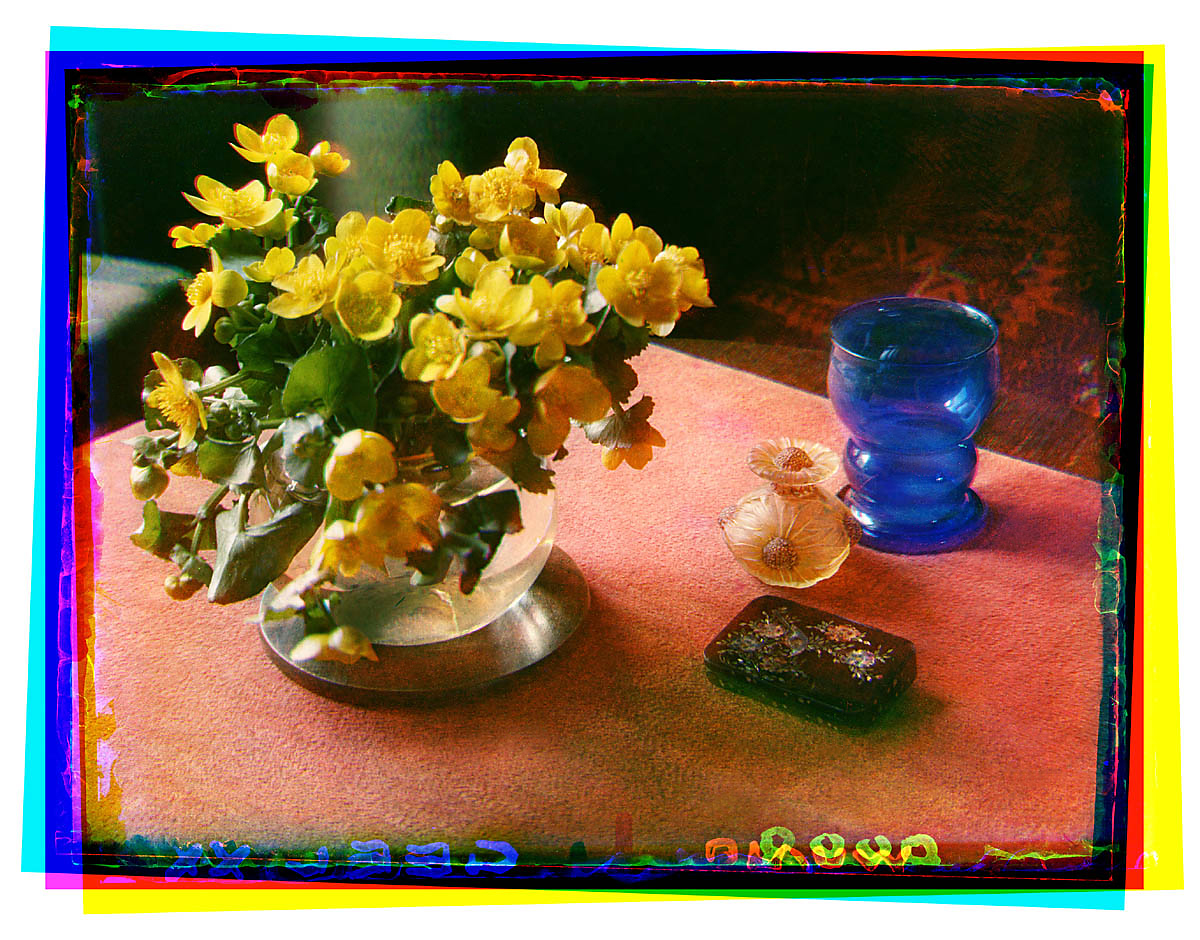
Bernard F. Eilers (Dutch, 1878-1951) 'Stilleven met dotterbloemen in een glazen vaas en enkele glazen voorwerpen' (Still life with dotter flowers in a glass vase and some glass objects) 1934-04/1939-09


Bernard F. Eilers (Dutch, 1878-1951)
Stilleven met dotterbloemen in een glazen vaas en enkele glazen voorwerpen (Still life with dotter flowers in a glass vase and some glass objects)
1934-04/1939-09
Colour separation
4.5 x 6 mm
Stadsarchief Amsterdam


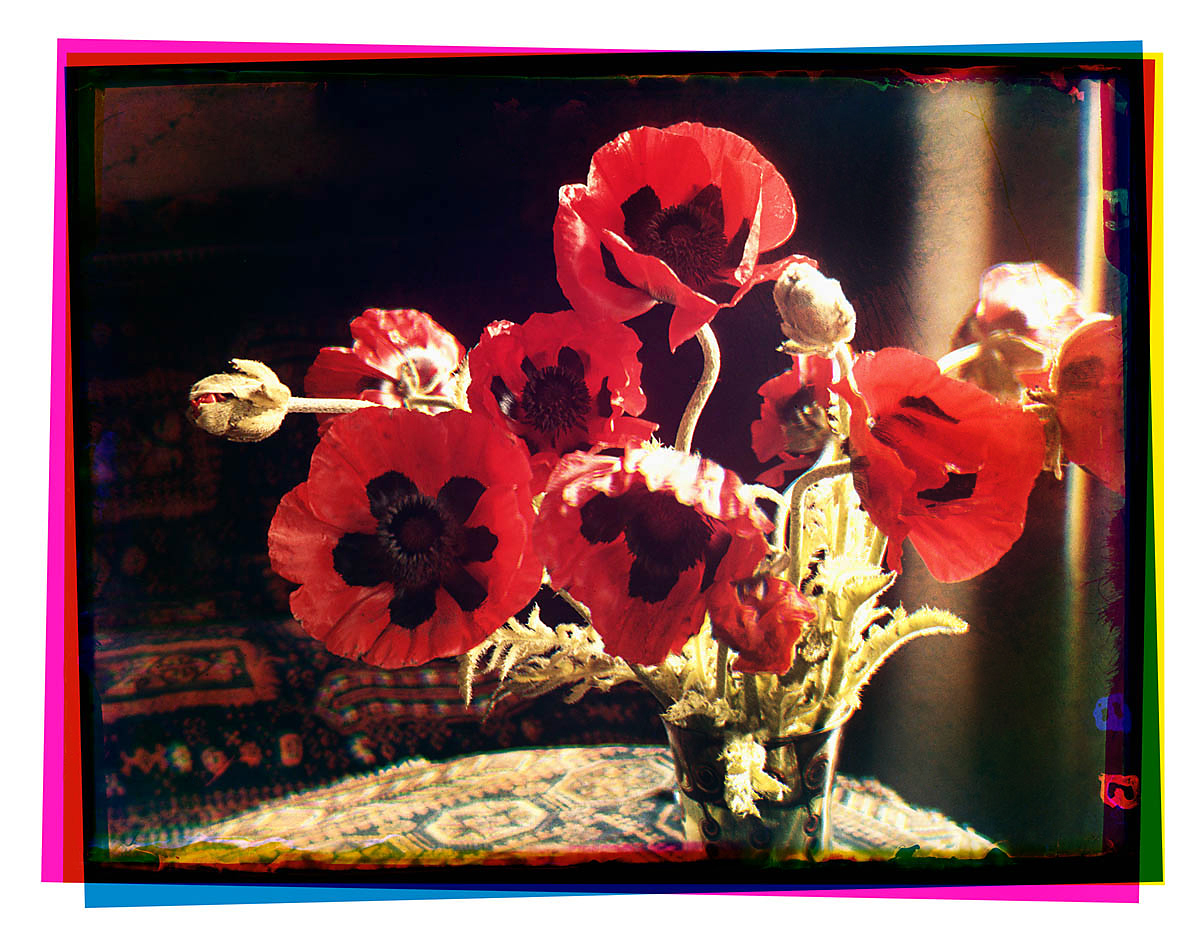
Bernard F. Eilers (Dutch, 1878-1951) 'Stilleven met bloemen van de papaver in een vaas' (Still life with poppy flowers in a vase) 1934-07/1939-08


Bernard F. Eilers (Dutch, 1878-1951)
Stilleven met bloemen van de papaver in een vaas (Still life with poppy flowers in a vase)
1934-07/1939-08
Colour separation
4.5 x 6 mm
Stadsarchief Amsterdam


Stilleven met bloemen van de papaver in een vaas. Opname in de huiskamer van de familie Eilers, Jacob Marisstraat 88, Amsterdam

Still life with flowers of the poppy in a vase. Recording in the living room of the Eilers family, Jacob Marisstraat 88, Amsterdam


Bernard F. Eilers (Dutch, 1878-1951) 'Gedekte tafel met een ontbijtservies' (Set table with a breakfast set) c. 1935


Bernard F. Eilers (Dutch, 1878-1951)
Gedekte tafel met een ontbijtservies (Set table with a breakfast set)
c. 1935
Colour separation
4.5 x 6 mm
Stadsarchief Amsterdam


Bernard F. Eilers (Dutch, 1878-1951) 'Tafel met tafelkleed en een vaas rode chrysanten' (Table with tablecloth and a vase of red chrysanthemums) c. 1935


Bernard F. Eilers (Dutch, 1878-1951)
Tafel met tafelkleed en een vaas rode chrysanten (Table with tablecloth and a vase of red chrysanthemums)
c. 1935
Colour separation
4.5 x 6 mm
Stadsarchief Amsterdam


Bernard F. Eilers (Dutch, 1878-1951) 'Stilleven met lamp, Japanse poppen en wajangpoppen' (Still life with lamp, Japanese dolls and Wajang dolls) 1920/1939


Bernard F. Eilers (Dutch, 1878-1951)
Stilleven met lamp, Japanse poppen en wajangpoppen (Still life with lamp, Japanese dolls and Wajang dolls)
1920/1939
Colour separation
4.5 x 6 mm
Stadsarchief Amsterdam


Bernard F. Eilers (1878-1951) was active in many photographic fields. Besides practicing the traditional genres such as townscapes, portraits and still life he also applied himself to architecture, art reproduction and ad photography.

In his lifetime, Eilers was held in high regard as an art photographer both in and outside the Netherlands. He owed his greatest successes to his photographs of Amsterdam, that exude much atmosphere and make one think of a painting by Breitner or Witsen. His free work is pictorial and seems to belong in the nineteenth rather than the twentieth century. In his photographs, Eilers achieved exceptionally high quality by his practically unequalled mastery of the means offered by modern photographic techniques. His photographs paint a nostalgic picture of the Netherlands in years gone by.

As a professional photographer, Eilers had many customers, including companies like Philips, Verkade and the Dutch car manufacturer Spijker, as well as architects such as Van der Mey, Kramer and De Klerk. His Golden Age as a photographer of architectural subjects coincided with that of the so-called Amsterdam School and its monthly publication Wendingen. Aside from what he described as his sixth sense, “the feeling in space”, Eilers considered a feeling for tone to be of the utmost importance when photographing a building in order to properly reproduce its size and proportions.

Eilers was a gifted technician. This emerges most of all from his pioneering work in the field of colour photography. He excelled in the application of new techniques such as the Lumière sheet and the multi-colour bromine colour printing. Eilers even developed a colour technique of his own: the foto-chroma eilers.

Text from the Memory of the Netherlands website [Online] Cited 02/04/2019


Bernard F. Eilers (Dutch, 1878-1951) 'Stilleven met sierfruit op een tinnen bord' (Still life with ornamental fruit on a tin plate) 1920/1935


Bernard F. Eilers (Dutch, 1878-1951)
Stilleven met sierfruit op een tinnen bord (Still life with ornamental fruit on a tin plate)
1920/1935
Colour separation
4.5 x 6 mm
Stadsarchief Amsterdam


Bernard F. Eilers (Dutch, 1878-1951) 'Metalen beker met twee oren' (Metal cup with two ears) 1920/1939


Bernard F. Eilers (Dutch, 1878-1951)
Metalen beker met twee oren (Metal cup with two ears)
1920/1939
Colour separation
4.5 x 6 mm
Stadsarchief Amsterdam


Bernard F. Eilers (Dutch, 1878-1951) 'Kleurenspectrum gefotografeerd bij daglicht' (Color spectrum photographed in daylight) 1934-04/1936


Bernard F. Eilers (Dutch, 1878-1951)
Kleurenspectrum gefotografeerd bij daglicht (Color spectrum photographed in daylight)
1934-04/1936
Colour separation
4.5 x 6 mm
Stadsarchief Amsterdam


Bernard F. Eilers (Dutch, 1878-1951) 'Zelfportret met drie kleurfilters (violetblauw, groen en oranje)' (Self-portrait with three colour filters (violet blue, green and orange)) 1934-04/1936-01


Bernard F. Eilers (Dutch, 1878-1951)
Zelfportret met drie kleurfilters (violetblauw, groen en oranje) (Self-portrait with three colour filters (violet blue, green and orange))
1934-04/1936-01
Colour separation
4.5 x 6 mm
Stadsarchief Amsterdam


LIKE ART BLART ON FACEBOOK

Back to top

Exhibition and auction, photographs and text: ‘The Gay Day Archive 1974-83’ – photographs by Hank O’Neal; text by Alan Ginsberg

Exhibition dates: 15th June – 20th June 2019

Auction: 20th June, 2019 at 1:30pm


Hank O'Neal (American, b. 1940) 'The Gay Day Archive' 1974-1983 from the exhibition 'The Gay Day Archive 1974-83' – photographs by Hank O'Neal; text by Alan Ginsberg, June 2019


Hank O’Neal (American, b. 1940) (photographer)
Alan Ginsberg (American, 1926-1997) (writer)
Untitled (Gay Daddies)
1974-1983
From The Gay Day Archive
Gelatin silver print


“Born gay and free”

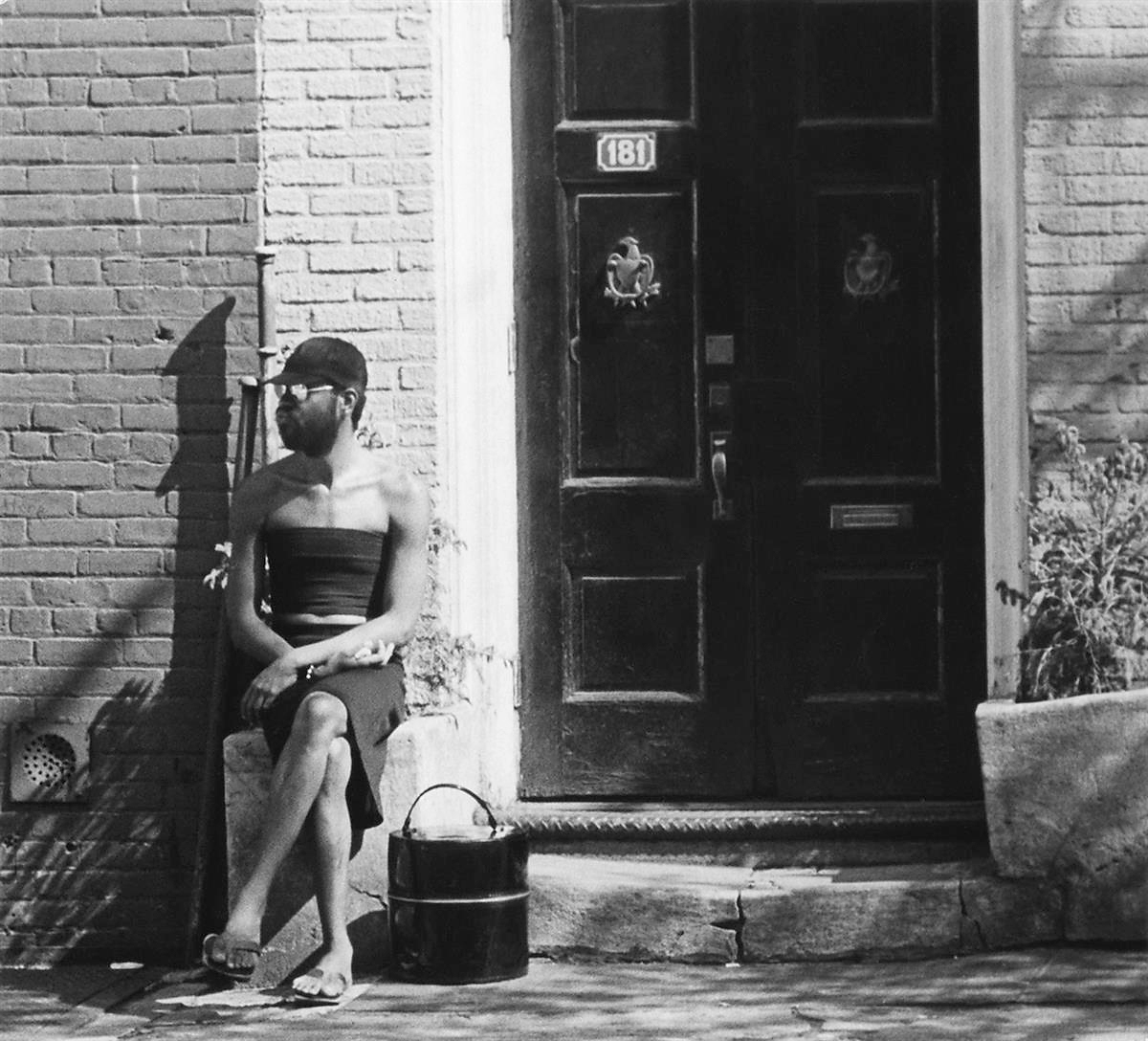
I was born in 1958 and came out as a gay man in 1975, six short years after the Stonewall uprising, the nominal (the UK had decriminalised homosexuality in 1967) but official start of Gay Liberation around the world, especially in the United States of America. I survived the plague that hit in the early 1980s. A lot of my friend’s didn’t.

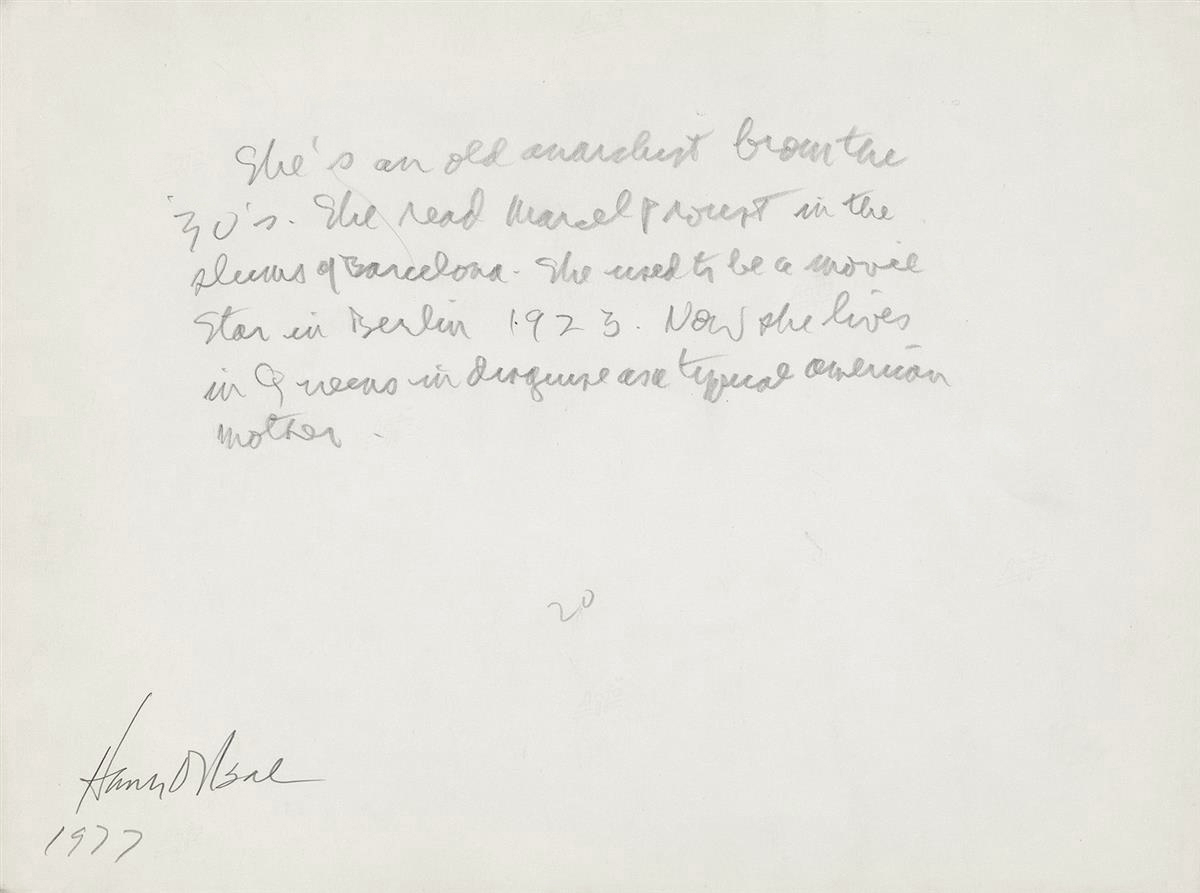
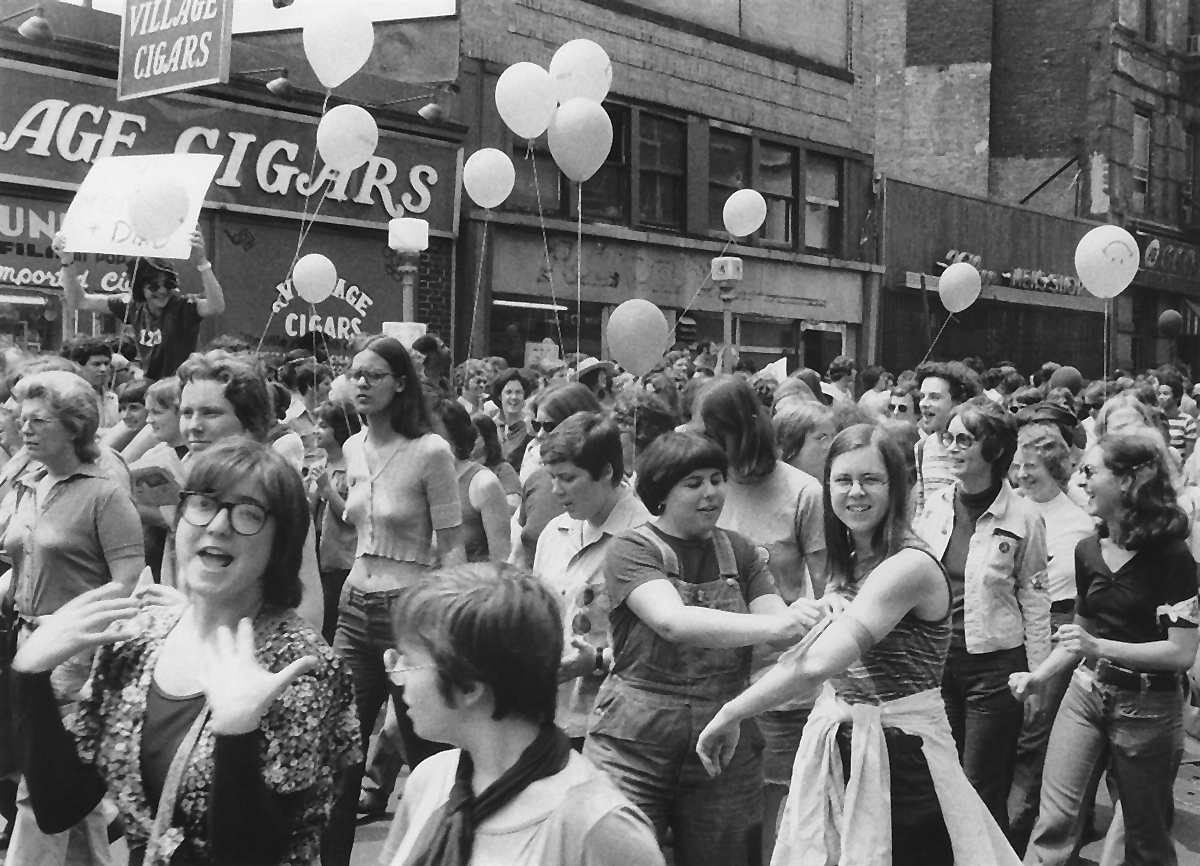
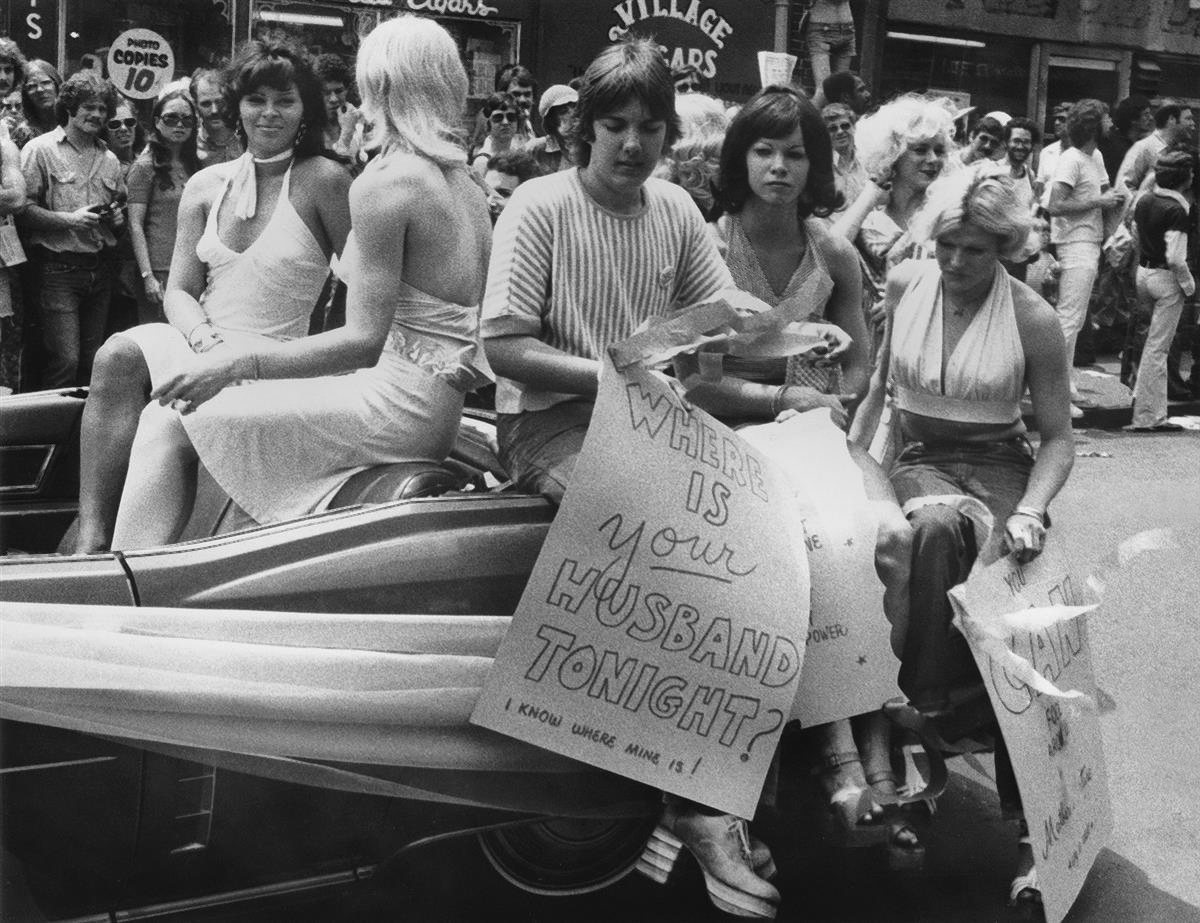
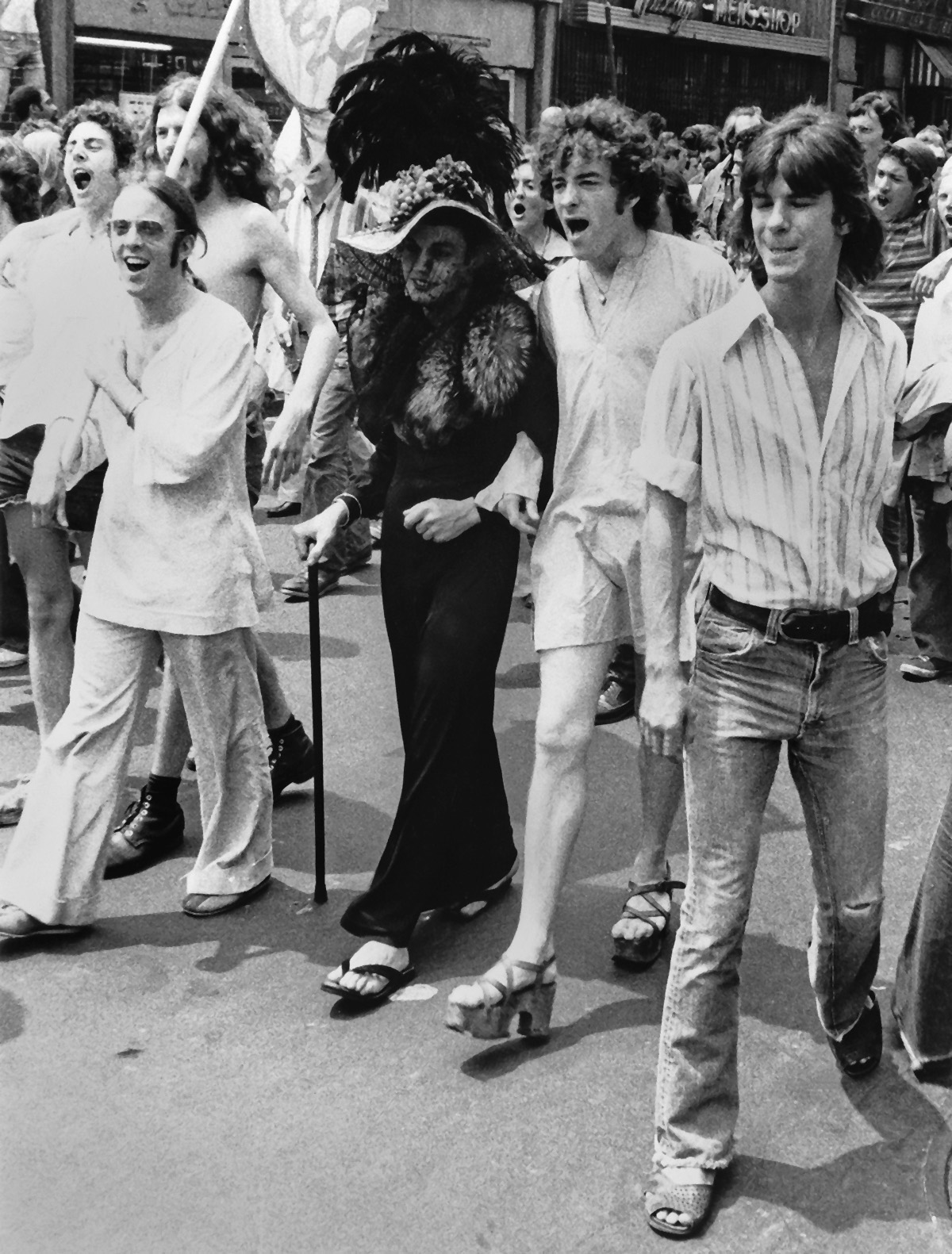
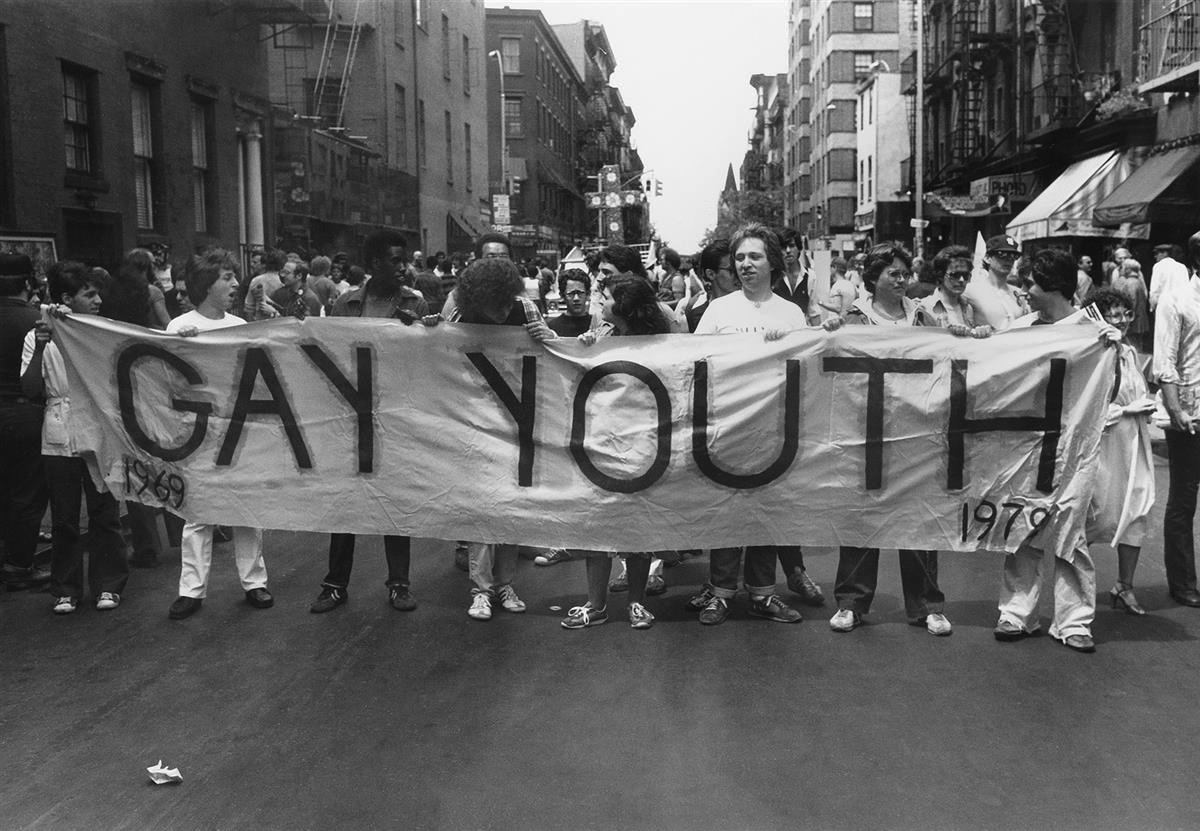
These fabulous photographs and lilting prose make wonderful bedfellows, shining a light on those very early years of outness, campness, empowerment and sexual and personal freedom pre HIV/AIDS. From Gay Daddies to Gay Teachers, from being nowhere (in sight) … to being everywhere. As Ginsberg eloquently proposes, “wearing their hearts on a banner for nothing but love.” Gay youth, dignity and equality, proud of my gay son whoever he may be.

There is such a sense of joy, happiness and love contained in these photographs. The two lads in “Untitled [summery mouths]” are redolent of the era. Cute as a button: platform shoes, tight flared jeans, keys hanging, hands clasped around, small waists, tight singlets, sultry curly hair. Disco love is in the air. I could have been one of these men, memories of those days, those halcyon 70s days.

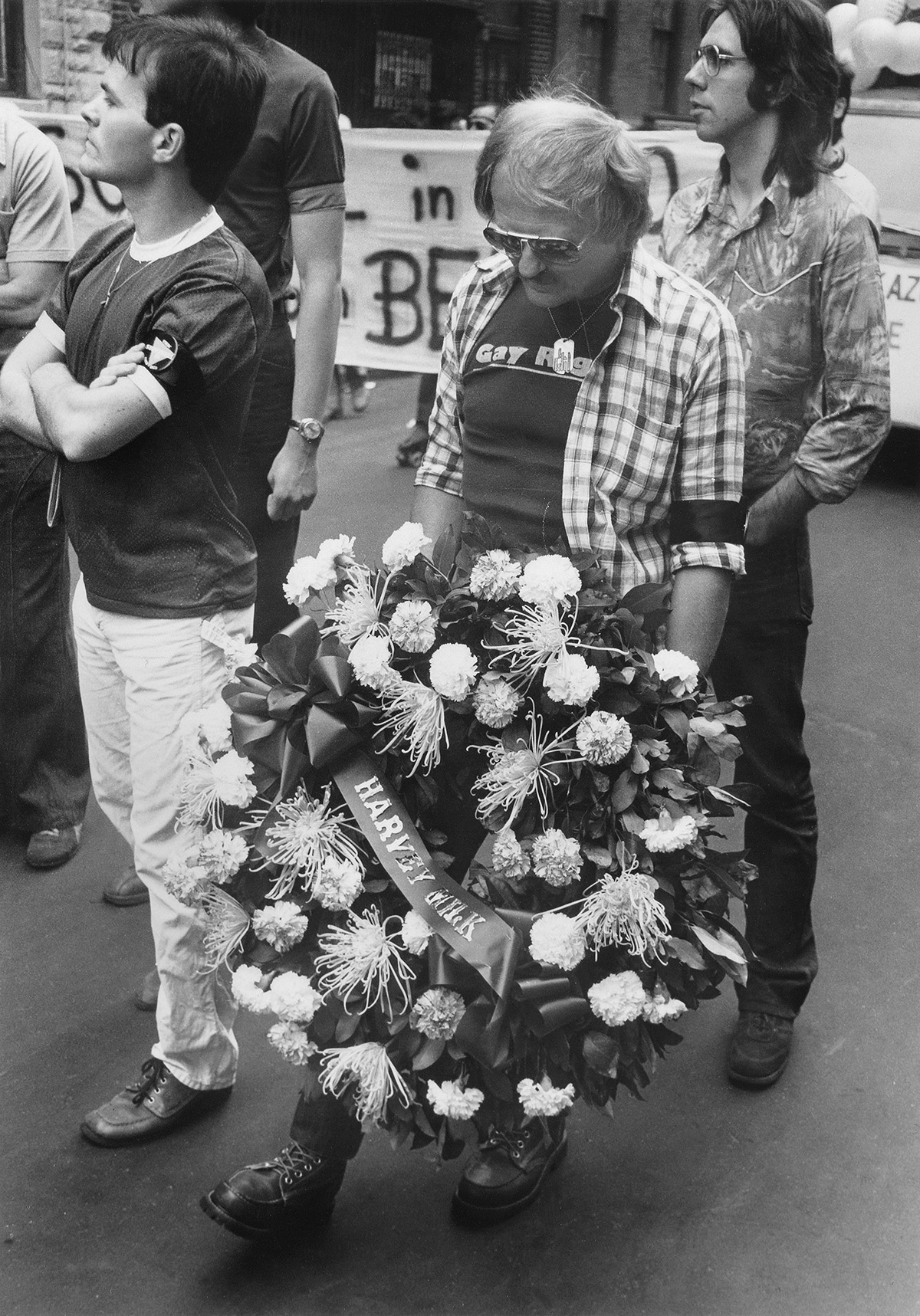
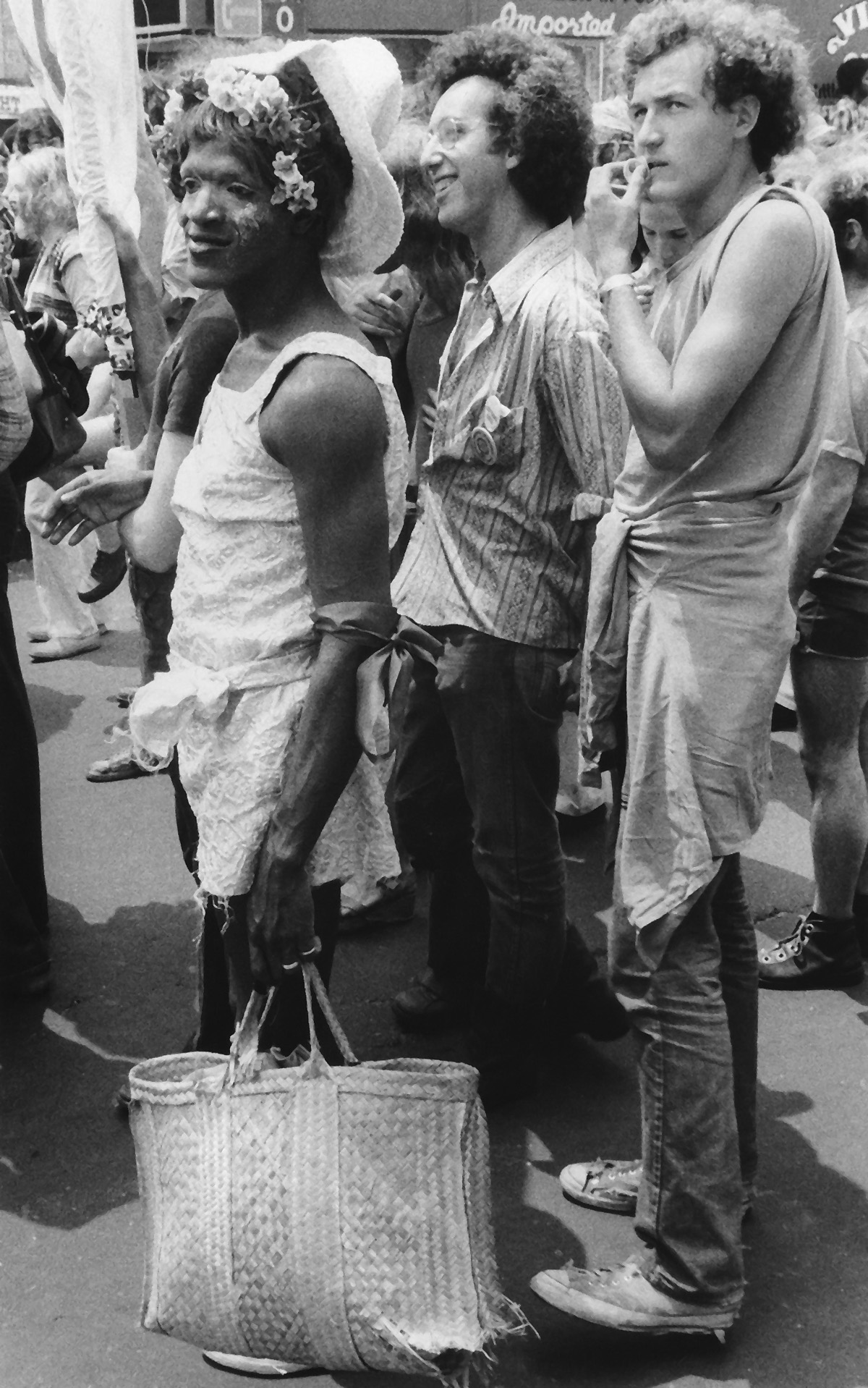
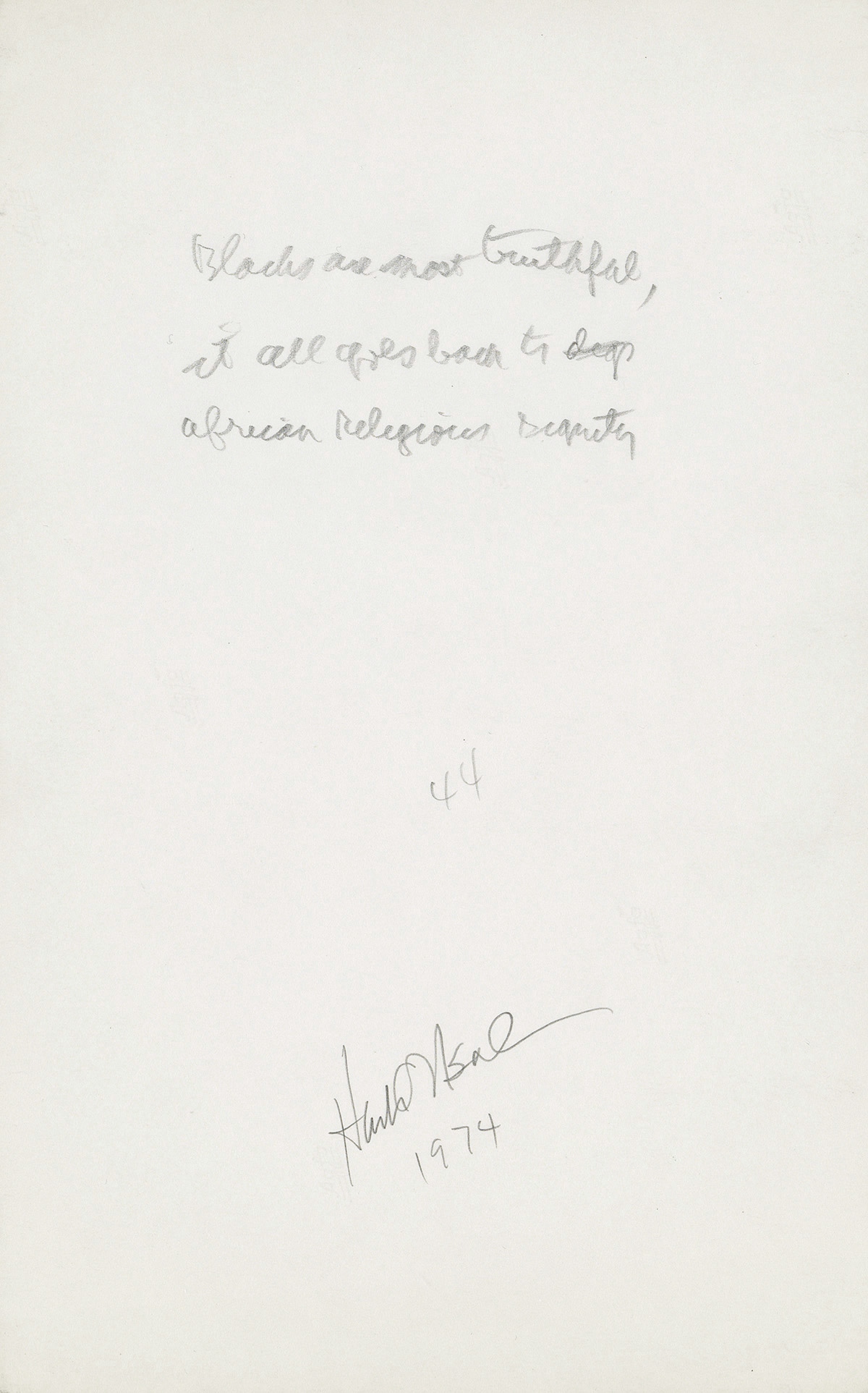
There are heroes too. Marsha P. Johnson, performance artist, drag mother, transgender, gender nonconforming survival sex worker political activist human… probably murdered by thugs after the 1992 pride parade. And Harvey Milk, that assassinated visionary who became a martyr to the cause, marching in spirit with the crowd. The man carrying a wreath with his name – head down, black armband, gay rights t-shirt – is such a poignant image of the loss of a hero. And then Ginsberg’s text, “Harvey Milk died for your sins.” (He had initially written “our” but crossed it out).

That erasure is so important. I remember working at Channel 7 as a set painter in Melbourne in the late 1980s to pay for university. It was a typical male only workplace at the time, all “blokes”, and I was confronted one day by one of them about being openly gay. My response: I’m quite happy being how I am, it’s you that obviously has the problem. Why don’t you look at yourself first before you start attacking other people.

This is why it is so important that Ginsberg crossed out “our” and wrote “your” sins. LGBTQI people have not sinned. There just are. They have nothing to forgive themselves for. It is the prejudice of others that leads them to fight for dignity and equality. As one of the posters in the photographs says, “People should love one another regardless of race, religion, age or sex.” A men to that.

Dr Marcus Bunyan


PS. The exhibition of these photographs is only on for a few days. Please see them if you can.

The photographs and text are used under “fair use” for the purposes of freedom of speech, research, education and informed comment. Please click on the photographs for a larger version of the image.


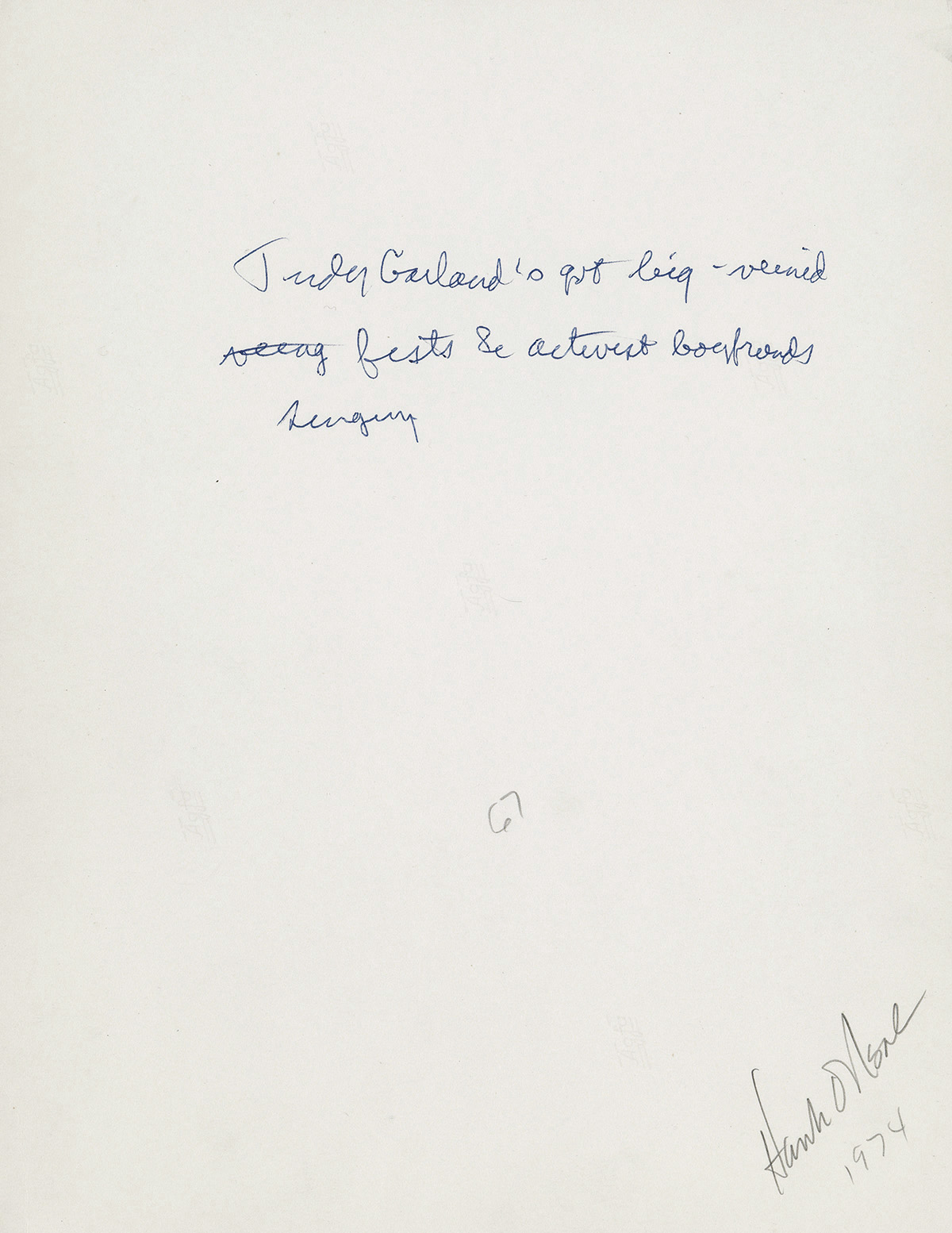
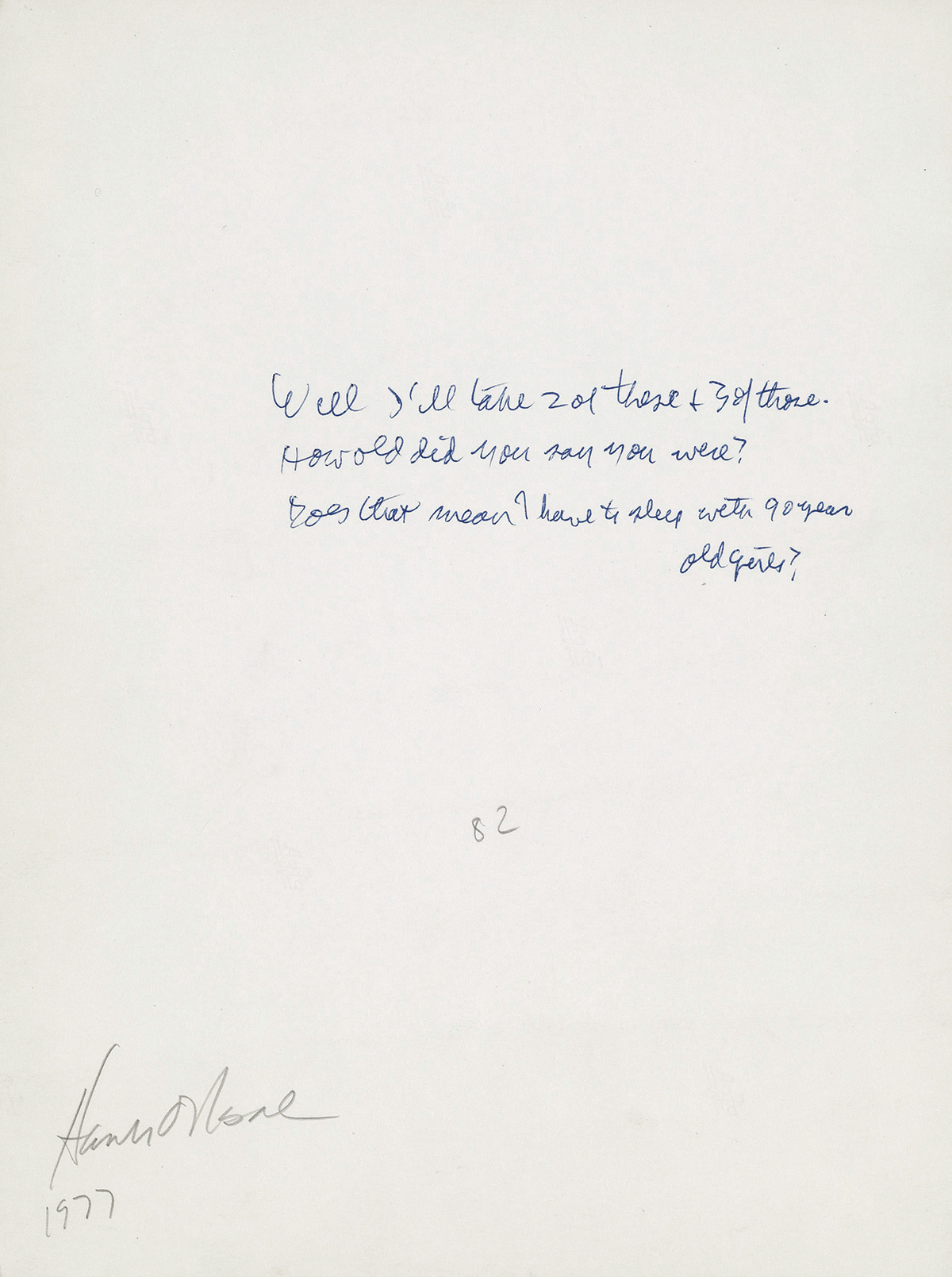
A festive visual compilation by the NY-based photographer and author O’Neal of the parade signifying the Gay Liberation Movement. Pictured are an array of fun-loving and politically-motivated participants, several openly displaying affection. With photographs of the transgender activist Marsha P. Johnson. Silver prints, various sizes, with most of the sheets 6 x 7 1/2 inches, 15.2 x 19 cm., or the reverse; each captioned by Ginsberg, and signed and dated by O’Neal on verso. 1974-1983. AND – An additional group of approximately 165 photographs by O’Neal of the NYC parades, comprising 95 silver prints, various sizes but most 11 x 14 inches, 28 x 35.6 cm., and the reverse, 5 are signed and dated by O’Neal and contain Ginsberg’s captions; and 70 smaller silver prints, various sizes to 8 x 10 inches, 20.3 x 25.4 cm., and the reverse, a few with O’Neal’s hand stamp and notations and many are dated, in pencil, on verso; with duplicates and triplicates. 1974-1983.

Estimate $70,000 – 100,000
Text for the Swann Auction Galleries website [Online] Cited 30/05/2019. No longer available online


Hank O'Neal (American, b. 1940) 'The Gay Day Archive' 1974-1983 from the exhibition 'The Gay Day Archive 1974-83' – photographs by Hank O'Neal; text by Alan Ginsberg, June 2019


Hank O’Neal (American, b. 1940) (photographer)
Alan Ginsberg (American, 1926-1997) (writer)
Untitled (WE ARE EVERYWHERE)
1974-1983
From The Gay Day Archive
Gelatin silver print


Hank O'Neal (American, b. 1940) (photographer) Alan Ginsberg (American, 1926-1997) (writer) 'The Gay Day Archive' 1974-1983


Hank O’Neal (American, b. 1940) (photographer)
Alan Ginsberg (American, 1926-1997) (writer)
Untitled [WE ARE EVERYWHERE] (verso)
1974-1983
From The Gay Day Archive
Gelatin silver print


We all look pretty normal,
boy next door, handsome punk,
ad man’s delight, daughters of the
American Revolution.


Hank O'Neal (American, b. 1940) 'The Gay Day Archive' 1974-1983


Hank O’Neal (American, b. 1940) (photographer)
Alan Ginsberg (American, 1926-1997) (writer)
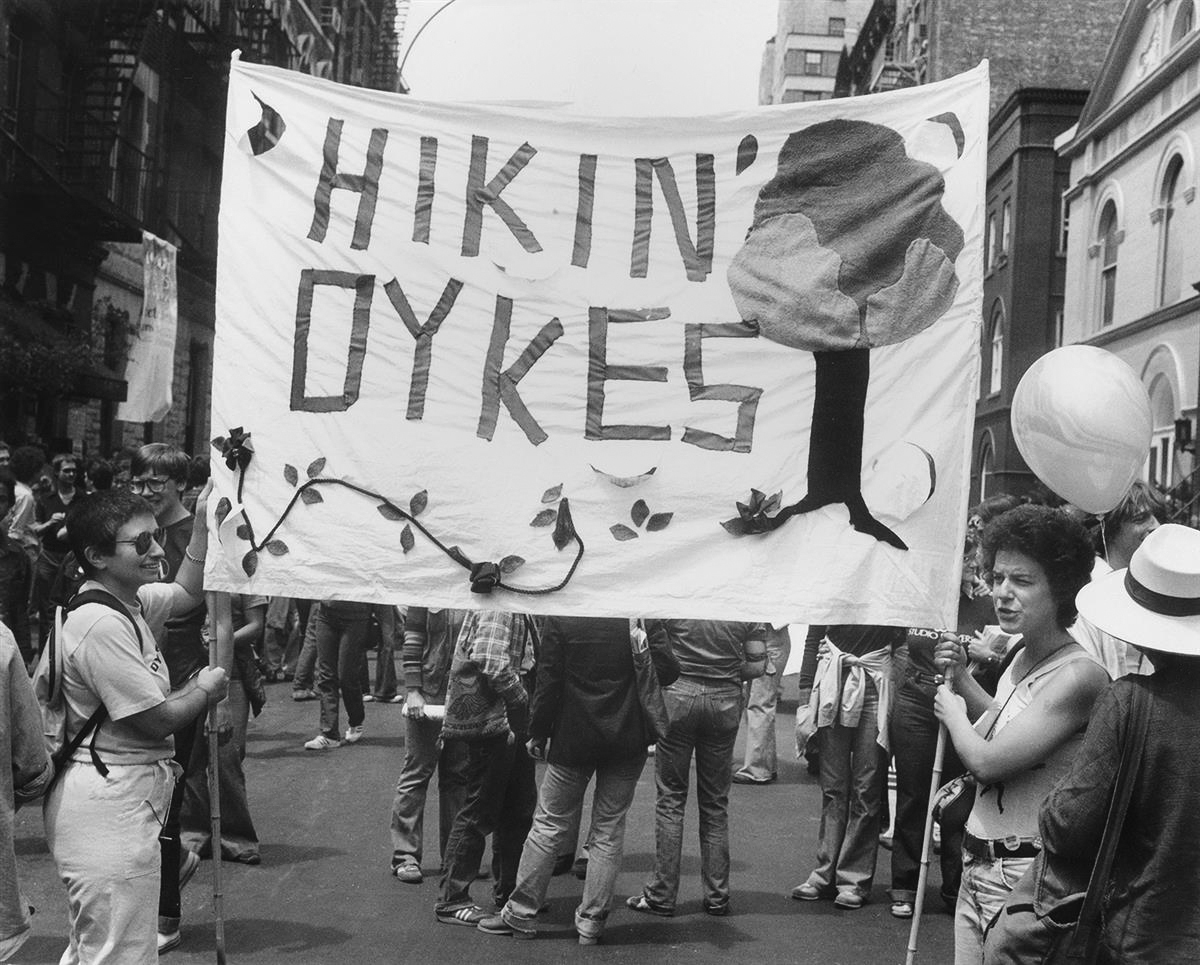
Untitled (Hikin’ Dykes)
1974-1983
From The Gay Day Archive
Gelatin silver print


Hank O'Neal (American, b. 1940) (photographer) Alan Ginsberg (American, 1926-1997) (writer) 'The Gay Day Archive' 1974-1983


Hank O’Neal (American, b. 1940) (photographer)
Alan Ginsberg (American, 1926-1997) (writer)
Untitled (Hikin’ Dykes) (verso)
1974-1983
From The Gay Day Archive
Gelatin silver print


Black white brown boy girl what idealism! –
wearing their
hearts on a banner for nothing but love


Hank O'Neal (American, b. 1940)  'The Gay Day Archive' 1974-1983


Hank O’Neal (American, b. 1940) (photographer)
Alan Ginsberg (American, 1926-1997) (writer)
Untitled (GAY YOUTH 1969-1979)
1974-1983
From The Gay Day Archive
Gelatin silver print


Hank O'Neal (American, b. 1940) (photographer) Alan Ginsberg (American, 1926-1997) (writer) 'The Gay Day Archive' 1974-1983


Hank O’Neal (American, b. 1940) (photographer)
Alan Ginsberg (American, 1926-1997) (writer)
Untitled (GAY YOUTH 1969-1979) (verso)
1974-83
From The Gay Day Archive
Gelatin silver print


The Guy in the right looks like my daddy when
he was young (and alive).


Hank O'Neal (American, b. 1940) 'The Gay Day Archive' 1974-1983


Hank O’Neal (American, b. 1940) (photographer)
Alan Ginsberg (American, 1926-1997) (writer)
Untitled (Dominant/Submissive Love)
1974-83
From The Gay Day Archive
Gelatin silver print


Allen Ginsberg (American, 1926-1997)

Irwin Allen Ginsberg (June 3, 1926 – April 5, 1997) was an American poet, philosopher and writer. He is considered to be one of the leading figures of both the Beat Generation during the 1950s and the counterculture that soon followed. He vigorously opposed militarism, economic materialism, and sexual repression and was known as embodying various aspects of this counterculture, such as his views on drugs, hostility to bureaucracy and openness to Eastern religions. He was one of many influential American writers of his time who were associated with the Beat Generation, including Jack Kerouac and William S. Burroughs.

Ginsberg is best known for his poem “Howl”, in which he denounced what he saw as the destructive forces of capitalism and conformity in the United States. In 1956, “Howl” was seized by San Francisco police and US Customs. In 1957, it attracted widespread publicity when it became the subject of an obscenity trial, as it described heterosexual and homosexual sex at a time when sodomy laws made homosexual acts a crime in every U.S. state. “Howl” reflected Ginsberg’s own sexuality and his relationships with a number of men, including Peter Orlovsky, his lifelong partner. Judge Clayton W. Horn ruled that “Howl” was not obscene, adding, “Would there be any freedom of press or speech if one must reduce his vocabulary to vapid innocuous euphemisms?”

Ginsberg was a practicing Buddhist who studied Eastern religious disciplines extensively. He lived modestly, buying his clothing in second-hand stores and residing in downscale apartments in New York’s East Village. One of his most influential teachers was the Tibetan Buddhist Chögyam Trungpa, the founder of the Naropa Institute in Boulder, Colorado. At Trungpa’s urging, Ginsberg and poet Anne Waldman started The Jack Kerouac School of Disembodied Poetics there in 1974.

Ginsberg took part in decades of non-violent political protest against everything from the Vietnam War to the War on Drugs. His poem “September on Jessore Road”, calling attention to the plight of Bangladeshi refugees, exemplifies what the literary critic Helen Vendler described as Ginsberg’s tireless persistence in protesting against “imperial politics, and persecution of the powerless.”

His collection The Fall of America shared the annual U.S. National Book Award for Poetry in 1974. In 1979, he received the National Arts Club gold medal and was inducted into the American Academy and Institute of Arts and Letters. Ginsberg was a Pulitzer Prize finalist in 1995 for his book Cosmopolitan Greetings: Poems 1986-1992.

Full text “Alan Ginsberg,” on the Wikipedia website


Hank O'Neal (American, b. 1940) 'The Gay Day Archive' 1974-1983


Hank O’Neal (American, b. 1940) (photographer)
Alan Ginsberg (American, 1926-1997) (writer)
Untitled (Miss Rollerind)
1974-1983
From The Gay Day Archive
Gelatin silver print


Hank O'Neal (American, b. 1940) (photographer) Alan Ginsberg (American, 1926-1997) (writer) 'The Gay Day Archive' 1974-1983


Hank O’Neal (American, b. 1940) (photographer)
Alan Ginsberg (American, 1926-1997) (writer)
Untitled (Miss Rollerind) (verso)
1974-1983
From The Gay Day Archive
Gelatin silver print


Miss Rollerind, queen of late 70s
disco world universe drama, observed by
a (gay??) black man on the asphalt.


Hank O'Neal (American, b. 1940) 'The Gay Day Archive' 1974-83


Hank O’Neal (American, b. 1940) (photographer)
Alan Ginsberg (American, 1926-1997) (writer)
Untitled (COME! DIGNITY + EQUALITY)
1974-1983
From The Gay Day Archive
Gelatin silver print


Hank O'Neal (American, b. 1940) (photographer) Alan Ginsberg (American, 1926-1997) (writer) 'The Gay Day Archive' 1974-1983


Hank O’Neal (American, b. 1940) (photographer)
Alan Ginsberg (American, 1926-1997) (writer)
Untitled (COME! DIGNITY + EQUALITY) (verso)
1974-1983
From The Gay Day Archive
Gelatin silver print


Come all over the sky, look up!


Hank O'Neal (American, b. 1940) 'The Gay Day Archive' 1974-1983


Hank O’Neal (American, b. 1940) (photographer)
Alan Ginsberg (American, 1926-1997) (writer)
Untitled (ADOLPH ANITA JOE – The REAL ThREAtS to HUMANITY!)
1974-1983
From The Gay Day Archive
Gelatin silver print


Hank O'Neal (American, b. 1940) (photographer) Alan Ginsberg (American, 1926-1997) (writer) 'The Gay Day Archive' 1974-1983


Hank O’Neal (American, b. 1940) (photographer)
Alan Ginsberg (American, 1926-1997) (writer)
Untitled (ADOLPH ANITA JOE – The REAL ThREAtS to HUMANITY!) (verso)
1974-1983
From The Gay Day Archive
Gelatin silver print


What a pleasant conversation they are having under Hitler’s head,
guy with handsome bicep chest, holding the banner aloft
lightly, and the eye passed smiling inquirer.


Hank O'Neal (American, b. 1940) 'The Gay Day Archive' 1974-1983


Hank O’Neal (American, b. 1940) (photographer)
Alan Ginsberg (American, 1926-1997) (writer)
Untitled (GAY MEN’S HEALTH PROJECT)
1974-1983
From The Gay Day Archive
Gelatin silver print


Hank O'Neal (American, b. 1940) (photographer) Alan Ginsberg (American, 1926-1997) (writer) 'The Gay Day Archive' 1974-1983


Hank O’Neal (American, b. 1940) (photographer)
Alan Ginsberg (American, 1926-1997) (writer)
Untitled (GAY MEN’S HEALTH PROJECT) (verso)
1974-1983
From The Gay Day Archive
Gelatin silver print


See anyone there you’d like to leave VD with?


Hank O'Neal (American, b. 1940) 'The Gay Day Archive' 1974-1983


Hank O’Neal (American, b. 1940) (photographer)
Alan Ginsberg (American, 1926-1997) (writer)
Untitled (Good tight dress)
1974-1983
From The Gay Day Archive
Gelatin silver print


Hank O'Neal (American, b. 1940) (photographer) Alan Ginsberg (American, 1926-1997) (writer) 'The Gay Day Archive' 1974-1983


Hank O’Neal (American, b. 1940) (photographer)
Alan Ginsberg (American, 1926-1997) (writer)
Untitled (Good tight dress) (verso)
1974-1983
From The Gay Day Archive
Gelatin silver print


Good tight dress, totally olive oil lady
from midtown, but the top’s a baseball
capped ruffian whistling at the whore


Hank O'Neal (American, b. 1940) 'The Gay Day Archive' 1974-1983


Hank O’Neal (American, b. 1940) (photographer)
Alan Ginsberg (American, 1926-1997) (writer)
Untitled (I’m PROUD of my Gay Son)
1974-1983
From The Gay Day Archive
Gelatin silver print


Hank O'Neal (American, b. 1940) (photographer) Alan Ginsberg (American, 1926-1997) (writer) 'The Gay Day Archive' 1974-1983


Hank O’Neal (American, b. 1940) (photographer)
Alan Ginsberg (American, 1926-1997) (writer)
Untitled (I’m PROUD of my Gay Son) (verso)
1974-1983
From The Gay Day Archive
Gelatin silver print


Resolute parents that have gone thru the mill
& seen the skeleton in the closet & come out of the
gruesome fun house into the light – now they’re on their own feet
older + dignified; with house dresses + majestic walrus mustaches.


Hank O'Neal (American, b. 1940) 'The Gay Day Archive' 1974-1983


Hank O’Neal (American, b. 1940) (photographer)
Alan Ginsberg (American, 1926-1997) (writer)
Untitled (Look at her! Mad but actually handsome)
1974-1983
From The Gay Day Archive
Gelatin silver print


Hank O'Neal (American, b. 1940) (photographer) Alan Ginsberg (American, 1926-1997) (writer) 'The Gay Day Archive' 1974-1983


Hank O’Neal (American, b. 1940) (photographer)
Alan Ginsberg (American, 1926-1997) (writer)
Untitled (Look at her! Mad but actually handsome) (verso)
1974-1983
From The Gay Day Archive
Gelatin silver print


Look at her! Mad but actually handsome


Hank O'Neal (American, b. 1940) 'The Gay Day Archive' 1974-1983


Hank O’Neal (American, b. 1940) (photographer)
Alan Ginsberg (American, 1926-1997) (writer)
Untitled (Cops with personal mustaches)
1974-1983
From The Gay Day Archive
Gelatin silver print


Hank O'Neal (American, b. 1940) (photographer) Alan Ginsberg (American, 1926-1997) (writer) 'The Gay Day Archive' 1974-1983


Hank O’Neal (American, b. 1940) (photographer)
Alan Ginsberg (American, 1926-1997) (writer)
Untitled (Cops with personal mustaches) (verso)
1974-1983
From The Gay Day Archive
Gelatin silver print


Cops with person mustaches, shun photogs, big tit guy in pancake suffering their own vision in the sun, and a thin socialist dyke


Hank O'Neal (American, b. 1940) 'The Gay Day Archive' 1974-1983


Hank O’Neal (American, b. 1940) (photographer)
Alan Ginsberg (American, 1926-1997) (writer)
Untitled (Gay Rights)
1974-1983
From The Gay Day Archive
Gelatin silver print


Hank O'Neal (American, b. 1940) (photographer) Alan Ginsberg (American, 1926-1997) (writer) 'The Gay Day Archive' 1974-1983


Hank O’Neal (American, b. 1940) (photographer)
Alan Ginsberg (American, 1926-1997) (writer)
Untitled (Gay Rights) (verso)
1974-1983
From The Gay Day Archive
Gelatin silver print


You mean all that hair + teeth is gay?


Hank O’Neal

Hank O’Neal (born June 5, 1940) is an American music producer, author and photographer.

Photography

He began taking photographs while a teenager, and began to pursue the field seriously in 1969, when he bought a professional camera and began documenting recording sessions and jazz concerts that he was producing. Long before Berenice Abbott admonished him to always have a project, he undertook his first, in rural East Texas during 1970-1973. These photographs led to his first exhibition in September 1973, at The Open Mind Gallery in New York City.

In the 1970s he associated with a diverse group of photographers, notably Walker Evans, André Kertész and most importantly, Berenice Abbott, with whom he worked for the last 19 years of her life.

From 1970 to 1999 (in addition to undertaking many photographic projects), O’Neal also published numerous books related to photography. In 1999, at the urging of gallery director Evelyn Daitz, he had a major retrospective of his work to that point at The Witkin Gallery. Since that time, he has focused his activities toward photography, and continues to mount exhibitions yearly throughout the U.S. and Canada. In 2003 his photographic career was summarised in a profile in The New York Times.

Books (text and illustrations)

The Eddie Condon Scrapbook of Jazz (St. Martin’s Press, 1973)
A Vision Shared (St. Martin’s Press, 1976)
Berenice Abbott – American Photographer (McGraw-Hill, 1982)
Life Is Painful, Nasty and Short … In My Case It Has Only Been Painful and Nasty – Djuna Barnes L 1978-81 (Paragon, 1990)
Charlie Parker (Filipacchi, 1995)
The Ghosts of Harlem (Filipacchi, 1997) French language edition
The Ghosts of Harlem (Vanderbilt University Press, 2009) English language edition
Hank O’Neal Portraits 1971-2000 (Sordoni Art Gallery, 2000)
Billie & Lester in Oslo (A Play with Music, 2005)
Gay Day – The Golden Age of the Christopher Street Parade (Abrams, 2006)
Berenice Abbott (Steidl, 2008)
The Unknown Berenice Abbott – Steidl (October 15, 2013)
A Vision Shared – 40th Anniversary Edition – Steidl (December 1, 2016)
Berenice Abbott – The Paris Portraits – Steidl (November 22, 2016)

Books (photographs only)

Allegra Kent’s Water Beauty Book (St Martin’s Press, 1976)
All the King’s Men (Limited Editions Club, 1990)
XCIA’s Street Art Project: The First Four Decades (Siman Media Works, 2012)

Portfolios

Berenice Abbott – Portraits In Palladium (Text Only, Commerce Graphics / Lunn Limited, 1990)
Hank O’Neal – Photographs (Text and 12 gravure prints), Limited Editions Club, 1990)
The Ghosts of Harlem (Text and 12 photographs), Glenside Press, 2007)

Text from “Hank O’Neal,” on the Wikipedia website


Hank O'Neal (American, b. 1940) 'The Gay Day Archive' 1974-1983


Hank O’Neal (American, b. 1940) (photographer)
Alan Ginsberg (American, 1926-1997) (writer)
Untitled [MY SON IS GAY AND THAT’S OK]
1974-1983
From The Gay Day Archive
Gelatin silver print


Hank O'Neal (American, b. 1940) (photographer) Alan Ginsberg (American, 1926-1997) (writer) 'The Gay Day Archive' 1974-1983


Hank O’Neal (American, b. 1940) (photographer)
Alan Ginsberg (American, 1926-1997) (writer)
Untitled (MY SON IS GAY AND THAT’S OK) (verso)
1974-1983
From The Gay Day Archive
Gelatin silver print


She’s an old anarchist from the
30’s. She read Marcel Proust in the
slums of Barcelona. She used to be a movie
Star in Berlin in 1923. Now she lives
in Queens in disguise as a typical american
mother.


Hank O'Neal (American, b. 1940) 'The Gay Day Archive' 1974-1983


Hank O’Neal (American, b. 1940) (photographer)
Alan Ginsberg (American, 1926-1997) (writer)
Untitled (GOD is GAY)
1974-1983
From The Gay Day Archive
Gelatin silver print


Hank O'Neal (American, b. 1940) (photographer) Alan Ginsberg (American, 1926-1997) (writer) 'The Gay Day Archive' 1974-1983


Hank O’Neal (American, b. 1940) (photographer)
Alan Ginsberg (American, 1926-1997) (writer)
Untitled (GOD is GAY) (verso)
1974-1983
From The Gay Day Archive
Gelatin silver print


According to Barbelo Gnostic theory,
God reflected on himself (or herself) & thus shone Sophia,
the First Word-thought, who thereat made sex
with herself and birthed the first Aeon,
Laldabaoth


Barbēlō refers to the first emanation of God in several forms of Gnostic cosmogony. Barbēlō is often depicted as a supreme female principle, the single passive antecedent of creation in its manifoldness. This figure is also variously referred to as ‘Mother-Father’ (hinting at her apparent androgyny), ‘First Human Being’, ‘The Triple Androgynous Name’, or ‘Eternal Aeon’. So prominent was her place amongst some Gnostics that some schools were designated as Barbeliotae, Barbēlō worshippers or Barbēlōgnostics.

Gnosticism (from Ancient Greek: γνωστικός gnostikos, “having knowledge”, from γνῶσις gnōsis, knowledge) is a modern name for a variety of ancient religious ideas and systems, originating in Jewish Christian milieux in the first and second century AD. These systems believed that the material world is created by an emanation or ‘works’ of a lower god (demiurge), trapping the divine spark within the human body. This divine spark could be liberated by gnosis, spiritual knowledge acquired through direct experience. Some of the core teachings include the following:

1/ All matter is evil, and the non-material, spirit-realm is good.
2/ There is an unknowable God, who gave rise to many lesser spirit beings called Aeons.
3/ The creator of the (material) universe is not the supreme god, but an inferior spirit (the Demiurge).
4/ Gnosticism does not deal with “sin,” only ignorance.
5/ To achieve salvation, one needs gnosis (knowledge).

Laldabaoth is the demiurge (a heavenly being, subordinate to the Supreme Being, that is considered to be the controller of the material world and antagonistic to all that is purely spiritual) from Gnostic Christianity.


Hank O'Neal (American, b. 1940) 'The Gay Day Archive' 1974-1983


Hank O’Neal (American, b. 1940) (photographer)
Alan Ginsberg (American, 1926-1997) (writer)
Untitled (a big crowd)
1974-1983
From The Gay Day Archive
Gelatin silver print


Hank O'Neal (American, b. 1940) (photographer) Alan Ginsberg (American, 1926-1997) (writer) 'The Gay Day Archive' 1974-1983


Hank O’Neal (American, b. 1940) (photographer)
Alan Ginsberg (American, 1926-1997) (writer)
Untitled (a big crowd) (verso)
1974-1983
From The Gay Day Archive
Gelatin silver print


a big crowd of boys + girls + …? – but
that tall girl looks worried, doesn’t she have a baloon?


Hank O'Neal (American, b. 1940) 'The Gay Day Archive' 1974-1983


Hank O’Neal (American, b. 1940) (photographer)
Alan Ginsberg (American, 1926-1997) (writer)
Untitled (STONEWALL CHORALE)
1974-1983
From The Gay Day Archive
Gelatin silver print


Hank O'Neal (American, b. 1940) (photographer) Alan Ginsberg (American, 1926-1997) (writer) 'The Gay Day Archive' 1974-1983


Hank O’Neal (American, b. 1940) (photographer)
Alan Ginsberg (American, 1926-1997) (writer)
Untitled (STONEWALL CHORALE) (verso)
1974-1983
From The Gay Day Archive
Gelatin silver print


Masculine & Feminine Sopranos!
marching on the Stone
floor on Manhattan, Explaining Life


Hank O'Neal (American, b. 1940) 'The Gay Day Archive' 1974-1983


Hank O’Neal (American, b. 1940) (photographer)
Alan Ginsberg (American, 1926-1997) (writer)
Untitled (WHERE IS your HUSBAND TONIGHT?)
1974-1983
From The Gay Day Archive
Gelatin silver print


Hank O'Neal (American, b. 1940) (photographer) Alan Ginsberg (American, 1926-1997) (writer) 'The Gay Day Archive' 1974-1983


Hank O’Neal (American, b. 1940) (photographer)
Alan Ginsberg (American, 1926-1997) (writer)
Untitled (WHERE IS your HUSBAND TONIGHT?) (verso)
1974-1983
From The Gay Day Archive
Gelatin silver print


What pretty wives!
are they photocopies of men?
do they smoke cigars in secret?


Hank O'Neal (American, b. 1940) 'The Gay Day Archive' 1974-1983


Hank O’Neal (American, b. 1940) (photographer)
Alan Ginsberg (American, 1926-1997) (writer)
Untitled (singing to skyscrapers)
1974-1983
From The Gay Day Archive
Gelatin silver print


Hank O'Neal (American, b. 1940) (photographer) Alan Ginsberg (American, 1926-1997) (writer) 'The Gay Day Archive' 1974-1983


Hank O’Neal (American, b. 1940) (photographer)
Alan Ginsberg (American, 1926-1997) (writer)
Untitled (singing to skyscrapers) (verso)
1974-1983
From The Gay Day Archive
Gelatin silver print


They’ve been meeting in secret + public
for years, & now sing to skyscrapers.


Today, at least a million spectators line the Pride parade route along Fifth Avenue. But, in its earliest days, the celebration was a much smaller event characterised by NY-style high energy, pithy signage, raucous crowd chants, extensive cruising and great music (remember disco?). Most of O’Neal’s photographs focused on NY’s West Village or Christopher Street, the epicenter of gaydom. A range of sub-cultures associated with the LGBTQ+ community are depicted: young and longhaired post-hippies, bare-chested muscle men, drag queens, fairies, leather-ites, Gay Daddies, protestors, pastors, parents of gays and the hikin’ dykes.

Some participants hold placards, including those protesting Anita Bryant, the once popular singer, who emerged as an strident anti-gay crusader in the late 1970s and teamed up with the divisive evangelical figure Jerry Falwell. A banner for the Gay Men’s Health Project is a harbinger of the tragic era to come.

Ginsberg first saw the photographs in 1982 and, according to O’Neal, was inspired to add his distinctive captions to the backs of the prints. His brief handwritten notes, which often reflect personal or historic observations, strike a wonderful tone. A caption that accompanies a picture of a group of men holding the banner WE ARE EVERYWHERE reads, “We all look pretty normal, boy next door, handsome punk, ad man’s delight, daughters of the American Revolution.” A shot depicting two men dressed in ancient Roman costume reads, “Clark Gable and Nero on a date, smiling for the 1920s Hollywood photogs.” His lengthy caption for the Johnson print (featured on the catalog cover) reads: “If I keep dressing up like this I’ll save the world from nuclear apocalypse. But will anyone love me for it? I’ll save the world anyway I know that looks good.” And still others honour the courageous and brave: one participant holds a wreath bearing the name Harvey Milk; Ginsberg wrote, “Harvey Milk died for your sins.” (He had initially written “our” but crossed it out).

O’Neal’s photographs were reproduced in the book, Gay Day: The Golden Age of the Christopher Street Parade, 1974-1983 (Abrams, 2006), with a Preface by William Burroughs. Interestingly during this same period Ginsberg had revisited his own Beat-era photographs, which were shot in the 1950s and processed at a local drugstore. He developed a unique hybrid picture-text style, adding detailed, handwritten mini-narratives to the lower margins of the prints, which captured his vivid, visual memories.

Text for the Swann Auction Galleries website [Online] Cited 30/05/2019. No longer available online


Hank O'Neal (American, b. 1940) 'The Gay Day Archive' 1974-1983


Hank O’Neal (American, b. 1940) (photographer)
Alan Ginsberg (American, 1926-1997) (writer)
Untitled (HARVEY MILK)
1974-1983
From The Gay Day Archive
Gelatin silver print


Hank O'Neal (American, b. 1940) (photographer) Alan Ginsberg (American, 1926-1997) (writer) 'The Gay Day Archive' 1974-1983


Hank O’Neal (American, b. 1940) (photographer)
Alan Ginsberg (American, 1926-1997) (writer)
Untitled (HARVEY MILK) (verso)
1974-1983
From The Gay Day Archive
Gelatin silver print


Harvey Milk died for your sins


Harvey Milk (1930-1978)

Harvey Bernard Milk (May 22, 1930 – November 27, 1978) was an American politician and the first openly gay elected official in the history of California, where he was elected to the San Francisco Board of Supervisors. Although he was the most pro-LGBT politician in the United States at the time, politics and activism were not his early interests; he was neither open about his sexuality nor civically active until he was 40, after his experiences in the counterculture movement of the 1960s.

In 1972, Milk moved from New York City to the Castro District of San Francisco amid a migration of gay and bisexual men. He took advantage of the growing political and economic power of the neighbourhood to promote his interests and unsuccessfully ran three times for political office. Milk’s theatrical campaigns earned him increasing popularity, and in 1977 he won a seat as a city supervisor. His election was made possible by a key component of a shift in San Francisco politics.

Milk served almost eleven months in office, during which he sponsored a bill banning discrimination in public accommodations, housing, and employment on the basis of sexual orientation. The Supervisors passed the bill by a vote of 11-1 and was signed into law by Mayor Moscone. On November 27, 1978, Milk and Mayor George Moscone were assassinated by Dan White, who was another city supervisor. White had recently resigned to pursue a private business enterprise, but that endeavour eventually failed and he sought to get his old job back. White was sentenced to seven years in prison for manslaughter, which was later reduced to five years. He was released in 1983 and committed suicide by carbon monoxide inhalation two years later.

Despite his short career in politics, Milk became an icon in San Francisco and a martyr in the gay community. In 2002, Milk was called “the most famous and most significantly open LGBT official ever elected in the United States”. Anne Kronenberg, his final campaign manager, wrote of him: “What set Harvey apart from you or me was that he was a visionary. He imagined a righteous world inside his head and then he set about to create it for real, for all of us.” Milk was posthumously awarded the Presidential Medal of Freedom in 2009.

Extract from “Harvey Milk,” on the Wikipedia website


Hank O'Neal (American, b. 1940) 'The Gay Day Archive' 1974-1983


Hank O’Neal (American, b. 1940) (photographer)
Alan Ginsberg (American, 1926-1997) (writer)
Untitled (Blacks are most truthful)
1974-1983
From The Gay Day Archive
Gelatin silver print


Hank O'Neal (American, b. 1940) (photographer) Alan Ginsberg (American, 1926-1997) (writer) 'The Gay Day Archive' 1974-1983


Hank O’Neal (American, b. 1940) (photographer)
Alan Ginsberg (American, 1926-1997) (writer)
Untitled (Blacks are most truthful) (verso)
1974-1983
From The Gay Day Archive
Gelatin silver print


Blacks are most truthful,
it all goes back to deep
african religious ?


Hank O'Neal (American, b. 1940) 'The Gay Day Archive' 1974-1983


Hank O’Neal (American, b. 1940) (photographer)
Alan Ginsberg (American, 1926-1997) (writer)
Untitled (Judy Garland)
1974-1983
From The Gay Day Archive
Gelatin silver print


Hank O'Neal (American, b. 1940) (photographer) Alan Ginsberg (American, 1926-1997) (writer) 'The Gay Day Archive' 1974-1983


Hank O’Neal (American, b. 1940) (photographer)
Alan Ginsberg (American, 1926-1997) (writer)
Untitled (Judy Garland) (verso)
1974-1983
From The Gay Day Archive
Gelatin silver print


Judy Garland’s got big-veined
fists & activist boyfriends
singing


Hank O'Neal (American, b. 1940) 'The Gay Day Archive' 1974-1983


Hank O’Neal (American, b. 1940) (photographer)
Alan Ginsberg (American, 1926-1997) (writer)
Untitled (PEOPLE SHOULD LOVE ONE ANOTHER)
1974-1983
From The Gay Day Archive
Gelatin silver print


Hank O'Neal (American, b. 1940) (photographer) Alan Ginsberg (American, 1926-1997) (writer) 'The Gay Day Archive' 1974-1983


Hank O’Neal (American, b. 1940) (photographer)
Alan Ginsberg (American, 1926-1997) (writer)
Untitled (PEOPLE SHOULD LOVE ONE ANOTHER) (verso)
1974-1983
From The Gay Day Archive
Gelatin silver print


Well I’ll take 2 of these + 3 of those.
How old did you say you were?
Does that mean I have to sleep with 90 year old girls?


Hank O'Neal (American, b. 1940) 'The Gay Day Archive' 1974-1983


Hank O’Neal (American, b. 1940) (photographer)
Alan Ginsberg (American, 1926-1997) (writer)
Untitled (summery mouths)
1974-1983
From The Gay Day Archive
Gelatin silver print


Hank O'Neal (American, b. 1940) (photographer) Alan Ginsberg (American, 1926-1997) (writer) 'The Gay Day Archive' 1974-1983


Hank O’Neal (American, b. 1940) (photographer)
Alan Ginsberg (American, 1926-1997) (writer)
Untitled (summery mouths) (verso)
1974-1983
From The Gay Day Archive
Gelatin silver print


Young meat Catholes (?)
appreciating each other’s
summery mouths


Hank O'Neal (American, b. 1940) 'The Gay Day Archive' 1974-1983


Hank O’Neal (American, b. 1940) (photographer)
Alan Ginsberg (American, 1926-1997) (writer)
Untitled (ANITA SLEEPS WITH BIG BUSINESS)
1974-1983
From The Gay Day Archive
Gelatin silver print


Hank O'Neal (American, b. 1940) (photographer) Alan Ginsberg (American, 1926-1997) (writer) 'The Gay Day Archive' 1974-1983


Hank O’Neal (American, b. 1940) (photographer)
Alan Ginsberg (American, 1926-1997) (writer)
Untitled (ANITA SLEEPS WITH BIG BUSINESS) (verso)
1974-1983
From The Gay Day Archive
Gelatin silver print


Anita O’Day is still singing.


Hank O'Neal (American, b. 1940) 'The Gay Day Archive' 1974-1983


Hank O’Neal (American, b. 1940) (photographer)
Alan Ginsberg (American, 1926-1997) (writer)
Untitled (ANITA DEAR SHOVE IT)
1974-1983
From The Gay Day Archive
Gelatin silver print


Hank O'Neal (American, b. 1940) (photographer) Alan Ginsberg (American, 1926-1997) (writer) 'The Gay Day Archive' 1974-1983


Hank O’Neal (American, b. 1940) (photographer)
Alan Ginsberg (American, 1926-1997) (writer)
Untitled (ANITA DEAR SHOVE IT) (verso)
1974-1983
From The Gay Day Archive
Gelatin silver print


I’ll bet Anita had affairs in
high school with her girlfriends.
Pretty Girl.


Anita Bryant (American, b. 1940)

Anita Jane Bryant (born March 25, 1940) is an American singer and political activist. …

In the 1970s, Bryant became known as an outspoken opponent of gay rights in the US. In 1977, she ran the “Save Our Children” campaign to repeal a local ordinance in Dade County, Florida which prohibited discrimination on the basis of sexual orientation. Her involvement with the campaign was condemned by gay rights activists. They were assisted by many other prominent figures in music, film, and television, and retaliated by boycotting the orange juice which she had promoted. This, as well as her later divorce, damaged her financially…

Victory and defeat

On June 7, 1977, Bryant’s campaign led to a repeal of the anti-discrimination ordinance by a margin of 69 to 31 percent. However, the success of Bryant’s campaign galvanised her opponents, and the gay community retaliated against her by organising a boycott of orange juice. Gay bars all over North America stopped serving screwdrivers and replaced them with the “Anita Bryant Cocktail”, which was made with vodka and apple juice. Sales and proceeds went to gay rights activists to help fund their fight against Bryant and her campaign.

In 1977, Florida legislators approved a measure prohibiting gay adoption.The ban was overturned more than 30 years later when, on November 25, 2008, Miami-Dade Circuit Court Judge Cindy S. Lederman declared it unconstitutional.

Bryant led several more campaigns around the country to repeal local anti-discrimination ordinances, including campaigns in St. Paul, Minnesota; Wichita, Kansas; and Eugene, Oregon. In 1978, her success led to the Briggs Initiative in California, which would have made pro-gay statements regarding homosexual people or homosexuality by any public school employee cause for dismissal. Grassroots liberal organisations, chiefly in Los Angeles and the San Francisco Bay Area, organised to defeat the initiative. Days before the election, the California Democratic Party opposed the proposed legislation. President Jimmy Carter, governor Jerry Brown, former president Gerald Ford, and former governor Ronald Reagan – then planning a run for the presidency – all voiced opposition to the initiative, and it ultimately suffered a massive defeat at the polls.

In 1998, Dade County repudiated Bryant’s successful campaign of 20 years earlier and reauthorised an anti-discrimination ordinance protecting individuals from discrimination on the basis of sexual orientation by a seven-to-six vote. In 2002, a ballot initiative to repeal the 1998 law, called Amendment 14, was voted down by 56 percent of the voters. The Florida statute forbidding gay adoption was upheld in 2004 by a federal appellate court against a constitutional challenge but was overturned by a Miami-Dade circuit court in November 2008.

Bryant became one of the first persons to be publicly “pied” as a political act (in her case, on television), in Des Moines, Iowa, on October 14, 1977. Bryant quipped “At least it’s a fruit pie,” making a pun on the derogatory term of “fruit” for a gay man. While covered in pie, she began to pray to God to forgive the activist “for his deviant lifestyle” before bursting into tears as the cameras continued rolling. Bryant’s husband said that he would not retaliate, but followed the protesters outside and threw a pie at them. By this time, gay activists ensured that the boycott on Florida orange juice had become more prominent and it was supported by many celebrities, including Barbra Streisand, Bette Midler, Paul Williams, Dick Clark (Bryant had made several appearances on his shows, especially his namesake television show), Vincent Price (he joked in a television interview that Oscar Wilde’s A Woman of No Importance referred to her), John Waters, Carroll O’Connor, Linda Lavin, Mary Tyler Moore, Charles Schulz, Billie Jean King, and Jane Fonda. In 1978, Bryant and Bob Green told the story of their campaign in the book At Any Cost. The gay community continued to regard Bryant’s name as synonymous with bigotry and homophobia.

Extract from “Anita Bryant,” on the Wikipedia website


Hank O'Neal (American, b. 1940) 'The Gay Day Archive' 1974-1983


Hank O’Neal (American, b. 1940) (photographer)
Alan Ginsberg (American, 1926-1997) (writer)
Untitled (I deserve a cute boy’s kiss) (Marsha P. Johnson)
1974-1983
From The Gay Day Archive
Gelatin silver print


Hank O'Neal (American, b. 1940) (photographer) Alan Ginsberg (American, 1926-1997) (writer) 'The Gay Day Archive' 1974-1983


Hank O’Neal (American, b. 1940) (photographer)
Alan Ginsberg (American, 1926-1997) (writer)
Untitled (I deserve a Cute boy’s kiss) (verso)
1974-1983
From The Gay Day Archive
Gelatin silver print


I deserve a Cute
boy’s kiss for this truthful hat. And he’s
so sensitive, look at that
tiny white dog!


Hank O'Neal (American, b. 1940) 'The Gay Day Archive' 1974-1983


Hank O’Neal (American, b. 1940) (photographer)
Alan Ginsberg (American, 1926-1997) (writer)
Untitled (BORN GAY AND FREE)
1974-1983
From The Gay Day Archive
Gelatin silver print


Hank O'Neal (American, b. 1940) (photographer) Alan Ginsberg (American, 1926-1997) (writer) 'The Gay Day Archive' 1974-1983


Hank O’Neal (American, b. 1940) (photographer)
Alan Ginsberg (American, 1926-1997) (writer)
Untitled (BORN GAY AND FREE) (verso)
1974-1983
From The Gay Day Archive
Gelatin silver print


What a pretty mother! Brave
handsome courageous + true.


Hank O'Neal (American, b. 1940) 'The Gay Day Archive' 1974-1983


Hank O’Neal (American, b. 1940) (photographer)
Alan Ginsberg (American, 1926-1997) (writer)
Untitled (Marsha P. Johnson)
1974-1983
From The Gay Day Archive
Gelatin silver print


Hank O'Neal (American, b. 1940) (photographer) Alan Ginsberg (American, 1926-1997) (writer) 'The Gay Day Archive' 1974-1983


Hank O’Neal (American, b. 1940) (photographer)
Alan Ginsberg (American, 1926-1997) (writer)
Untitled (Marsha P. Johnson) (verso)
1974-1983
From The Gay Day Archive
Gelatin silver print


If I keep dressing up like this
I’ll save the world from
Nuclear Apocalypse. But will anyone
love me for it? I’ll save the world
anyway. I know what looks good.


Marsha P. Johnson (American, 1945-1992)

Marsha P. Johnson (August 24, 1945 – July 6, 1992) was an American gay liberation activist and self-identified drag queen. Known as an outspoken advocate for gay rights, Johnson was one of the prominent figures in the Stonewall uprising of 1969. A founding member of the Gay Liberation Front, Johnson co-founded the gay and transvestite advocacy organisation S.T.A.R. (Street Transvestite Action Revolutionaries), alongside close friend Sylvia Rivera. A popular figure in New York City’s gay and art scene, Johnson modelled for Andy Warhol, and performed onstage with the drag performance troupe, Hot Peaches. Known for decades as a welcoming presence in the streets of Greenwich Village, Johnson was known as the “mayor of Christopher Street”. From 1987 through 1992, Johnson was an AIDS activist with ACT UP.

Performance work and identity

Johnson initially called herself “Black Marsha” but later decided on “Marsha P. Johnson” as her drag queen name, getting Johnson from the restaurant Howard Johnson’s on 42nd Street. She said that the P stood for “pay it no mind” and used the phrase sarcastically when questioned about her gender, saying “it stands for pay it no mind”. She said the phrase once to a judge, who was humoured by it and released her. Johnson variably identified herself as gay, as a transvestite, and as a queen (referring to drag queen). According to Susan Stryker, a professor of human gender and sexuality studies at the University of Arizona, Johnson’s gender expression may be called gender non-conforming in absence of Johnson’s use of transgender, which was not used broadly during her lifetime.

Johnson said her style of drag was not serious (or “high drag”) because she could not afford to purchase clothing from expensive stores. She received leftover flowers after sleeping under tables used for sorting flowers in the Flower District of Manhattan, and was known for placing flowers in her hair. Johnson was tall, slender and often dressed in flowing robes and shiny dresses, red plastic high heels, and bright wigs, which tended to draw attention.

Johnson sang and performed as a member of J. Camicias’ international, NYC-based, drag performance troupe, Hot Peaches, from 1972 through to shows in the 1990s. When The Cockettes, a similar drag troupe from San Francisco, formed an East Coast troupe, The Angels of Light, Johnson was also asked to perform with them. In 1973, Johnson performed the role of “The Gypsy Queen” in the Angels’ production, “The Enchanted Miracle”, about the Comet Kohoutek. In 1975, Johnson was photographed by famed artist Andy Warhol, as part of a “Ladies and Gentlemen” series of Polaroids. In 1990, Johnson performed with The Hot Peaches in London. Now an AIDS activist, Johnson also appears in The Hot Peaches production The Heat in 1990, singing the song “Love” while wearing an ACT UP, “Silence = Death” button.

Stonewall uprising and other activism

Johnson said she was one of the first drag queens to go to the Stonewall Inn, after they began allowing women and drag queens inside; it was previously a bar for only gay men. On the early morning hours of June 28, 1969, the Stonewall uprising occurred. While the first two nights of rioting were the most intense, the clashes with police would result in a series of spontaneous demonstrations and marches through the gay neighbourhoods of Greenwich Village for roughly a week afterwards.

Johnson has been named, along with Zazu Nova and Jackie Hormona, by a number of the Stonewall veterans interviewed by David Carter in his book, Stonewall: The Riots That Sparked the Gay Revolution, as being “three individuals known to have been in the vanguard” of the pushback against the police at the uprising. Johnson denied she had started the uprising, stating in 1987 that she had arrived at around “2:00 [that morning]”, and that “the riots had already started” when she arrived and that the Stonewall building “was on fire” after cops set it on fire. The riots reportedly started at around 1:20 that morning after Stormé DeLarverie fought back against the police officer who attempted to arrest her that night.

Carter writes that Robin Souza had reported that fellow Stonewall veterans and gay activists such as Morty Manford and Marty Robinson had told Souza that on the first night, Johnson “threw a shot glass at a mirror in the torched bar screaming, ‘I got my civil rights'”. Souza told the Gay Activists Alliance shortly afterwards that it “was the shot glass that was heard around the world”. Carter, however, concluded that Robinson had given several different accounts of the night and in none of the accounts were Johnson’s name brought up, possibly in fear that if he publicly credited the uprising to Johnson due to her well-known mental state and gender nonconforming, then Stonewall, and indirectly the gay liberation movement, “could have been used effectively by the movement’s opponents”. The alleged “shot glass” incident has also been heavily disputed. Prior to Carter’s book, it was claimed Johnson had “thrown a brick” at a police officer, an account that was never verified. Johnson also claimed herself that she was not at the Stonewall Inn when the rioting broke out but instead had heard about it and went to get Sylvia Rivera who was at a park uptown sleeping on a bench to tell her about it. However, many have corroborated that on the second night, Johnson climbed up a lamppost and dropped a bag with a brick in it down on a cop car, shattering the windshield.

Following the Stonewall uprising, Johnson joined the Gay Liberation Front and participated in the first Christopher Street Liberation Pride rally on the first anniversary of the Stonewall rebellion in June 1970. One of Johnson’s most notable direct actions occurred in August 1970 when she and fellow GLF members staged a sit-in protest at Weinstein Hall at New York University after administrators canceled a dance when they found out was sponsored by gay organisations. Shortly after that, she and close friend Sylvia Rivera co-founded the Street Transvestite Action Revolutionaries (STAR) organisation (initially titled Street Transvestites Actual Revolutionaries). The two of them became a visible presence at gay liberation marches and other radical political actions. In 1973, Johnson and Rivera were banned from participating in the gay pride parade by the gay and lesbian committee who were administering the event stating they “weren’t gonna allow drag queens” at their marches claiming they were “giving them a bad name”. Their response was to march defiantly ahead of the parade. During a gay rights rally at New York City Hall in the early ’70s, photographed by Diana Davies, a reporter asked Johnson why the group was demonstrating, Johnson shouted into the microphone, “Darling, I want my gay rights now!”

During another incident around this time, which landed Johnson in court, she was confronted by police officers for hustling in New York, and when they went to apprehend her, she hit them with her handbag, which contained two bricks. When Johnson was asked by the judge why she was hustling, Johnson explained she was trying to secure enough money for her husband’s tombstone. During a time when same-sex marriage was illegal in the United States, the judge asked her what “happened to this alleged husband”, Johnson responded, “Pigs killed him”. Initially sentenced to 90 days in prison for the assault, Johnson’s lawyer eventually convinced the judge to send her to Bellevue instead.

With Rivera, Johnson established the STAR House, a shelter for gay and trans street kids in 1972, and paid the rent for it with money they made themselves as sex workers. While the House was not focused on performance, Marsha was a “drag mother” of STAR House, in the longstanding tradition of chosen family in the Black and Latino LGBT community. Johnson worked to provide food, clothing, emotional support and a sense of family for the young drag queens, trans women, gender nonconformists and other gay street kids living on the Christopher Street docks or in their house on the Lower East Side of New York.

In the 1980s Johnson continued her street activism as a respected organiser and marshal with ACT UP. In 1992, when George Segal’s Stonewall memorial was moved to Christopher Street from Ohio to recognise the gay liberation movement, Johnson commented, “How many people have died for these two little statues to be put in the park to recognise gay people? How many years does it take for people to see that we’re all brothers and sisters and human beings in the human race? I mean how many years does it take for people to see that we’re all in this rat race together.

Extract from “Marsha P. Johnson,” on the Wikipedia website


Swann Galleries
104 East 25th Street
New York, NY 10010
Phone: (212) 254-4710

Exhibition opening times:
Saturday, June 15 – 12 to 5pm
Monday, June 17 – 10am to 6pm
Tuesday, June 18 – 10am to 6pm
Wednesday, June 19 – 10am to 6pm
Thursday, June 20 – 10am to 12pm

Swann Auction Galleries website

LIKE ART BLACK ON FACEBOOK

Back to top

Exhibition: ‘Oscar Rejlander: Artist Photographer’ at the J. Paul Getty Museum, Getty Center, Los Angeles

Exhibition dates: 12th March – 9th June, 2019

Curators: Lori Pauli, curator of photographs at the National Gallery of Canada, and Karen Hellman, assistant curator of photographs at the J. Paul Getty Museum


Oscar G. Rejlander (British born Sweden, 1813-1875) 'The Two Ways of Life' 1856-1857 from the exhibition 'Oscar Rejlander: Artist Photographer' at the J. Paul Getty Museum, Getty Center, Los Angeles, March - June, 2019


Oscar G. Rejlander (British born Sweden, 1813-1875)
Two Ways of Life (Hope in Repentance)
1857
Albumen silver print
21.8 x 40.8cm (8 9/16 x 16 1/16 in.)
Moderna Museet, Stockholm


Oscar Rejlander, the father of photography, sets in motion many of the later developments of photographic art.

I could wax lyrical about the light, staging and humour of the images; the allegorical, religious and emotional portraits; the influence of photography on painting; the spontaneous act caught on film (Eh!); the combination printing, precursor to digital manipulation (Two Ways of Life); the costume dramas (The Comb Seller); or the presaging of the work of August Sander (The Juggler). But I won’t.

Instead, I just want you to think about the period in which these photographs were made – that Dickensian era of archetypal humanity, intricate narrative. I want you to feel that these reality pictures are alive and how they transcend the time of their creation through the lyricism of the print.

From the mind of the artist to works of art that stare down that cosmic time shift, from cradle to grave.

Marcus


Many thanks to the J. Paul Getty Museum for allowing me to publish the photographs in the posting. Please click on the photographs for a larger version of the image.


“It is the mind of the artist, and not the nature of his materials which makes his production a work of art.”


Oscar G. Rejlander


Oscar Gustav Rejlander is best known for his work “Two Ways of Life,” a masterpiece for which he used over 32 different negatives. It took him around six weeks to create it and over 3 days to produce a final print.


Oscar G. Rejlander (British born Sweden, 1813-1875) 'The Infant Photography Giving the Painter an Additional Brush' c. 1856 from the exhibition 'Oscar Rejlander: Artist Photographer' at the J. Paul Getty Museum, Getty Center, Los Angeles, March - June, 2019


Oscar G. Rejlander (British born Sweden, 1813-1875)
The Infant Photography Giving the Painter an Additional Brush
c. 1856
Albumen silver print
6 × 7.1cm (2 3/8 × 2 13/16 in.)
Courtesy The J. Paul Getty Museum, Los Angeles


After emigrating from Sweden to England in 1839 and taking up photography in 1852, he became one of the first to recognise photography’s potential as a “handmaid of art” – exemplified by early photographs like “The Infant Photography Giving the Painter an Additional Brush.” This tiny print served to demonstrate how photography could preserve an allegorical scene for a painter’s extended study. It also functioned as a self-portrait and hinted at Rejlander’s hidden ambitions: reflected in the convex mirror, he presents himself as a modern-day Jan van Eyck.

Extract from Dana Ostrander. “The Overlooked Legacy of Oscar Rejlander, Who Elevated Photography to an Art,” on the Hyperallergic website April 2, 2019 [Online] Cited 06/06/2019


Oscar G. Rejlander (British born Sweden, 1813-1875) 'Non Angeli sed Angli (Not Angels but Anglos), after Raphael’s Sistine Madonna' c. 1854-1856


Oscar G. Rejlander (British born Sweden, 1813-1875)
Non Angeli sed Angli (Not Angels but Anglos), after Raphael’s Sistine Madonna
c. 1854-1856
Albumen silver print
20.5 x 26.3cm (8 1/16 x 10 3/8 in.)
Princeton University Art Museum
Museum purchase, David H. McAlpin, Class of 1920, Fund


Oscar G. Rejlander (British born Sweden, 1813-1875) 'Mary Constable and Her Brother' 1866


Oscar G. Rejlander (British born Sweden, 1813-1875)
Mary Constable and Her Brother
1866
Albumen silver print
16.8 x 22.1cm (6 5/8 x 8 11/16 in.)
The Metropolitan Museum of Art, Gilman Collection
Purchase, Harriette and Noel Levine Gift, 2005


Oscar G. Rejlander (British born Sweden, 1813-1875) 'The Bachelor's Dream' c. 1860


Oscar G. Rejlander (British born Sweden, 1813-1875)
The Bachelor’s Dream
c. 1860
Albumen silver print
13.9 x 19.6cm (5 1/2 x 7 11/16 in.)
George Eastman Museum, purchase
Photo: Courtesy of the George Eastman Museum


Oscar G. Rejlander (British born Sweden, 1813-1875) 'Hard Times (The Out of Work Workman's Lament)' 1860


Oscar G. Rejlander (British born Sweden, 1813-1875)
Hard Times (The Out of Work Workman’s Lament)
1860
Albumen silver print
13.8 x 19.7cm (5 7/16 x 7 3/4 in.)
George Eastman Museum, purchase
Photo: Courtesy of the George Eastman Museum


Oscar G. Rejlander (British born Sweden, 1813-1875) 'Head of St. John the Baptist in a Charger' c. 1860


Oscar G. Rejlander (British born Sweden, 1813-1875)
Head of St. John the Baptist in a Charger
c. 1860
Albumen silver print
14.1 x 17.8cm (5 9/16 x 7 in.)
George Eastman Museum, purchase
Photo: Courtesy of the George Eastman Museum


Oscar G. Rejlander (British born Sweden, 1813-1875) 'Study of Hands' 1856


Oscar G. Rejlander (British born Sweden, 1813-1875)
Study of Hands
1856
Albumen silver print
14.8 x 17.6cm (5 13/16 x 6 15/16 in.)
National Gallery of Canada, Ottawa
Purchased 2014


Oscar G. Rejlander (British born Sweden, 1813-1875) 'A "Set To"' 1855


Oscar G. Rejlander (British born Sweden, 1813-1875)
A “Set To”
1855
In “Prince Albert’s Calotype Album,” vol. 2, about 1860
Salted paper print
15 x 21cm (5 7/8 x 8 1/4 in.)
Royal Collection Trust
© Her Majesty Queen Elizabeth II 2019


Oscar G. Rejlander (British, born Sweden, 1813-1875) was one of the 19th century’s greatest innovators in the medium of photography, counting Queen Victoria, Prince Albert, Charles Darwin, Lewis Carroll and Julia Margaret Cameron among his devotees. Nevertheless, the extent of Rejlander’s work and career has often been overlooked. Oscar Rejlander: Artist Photographer, on view March 12 – June 9, 2019 at the J. Paul Getty Museum, Getty Center, Los Angeles, is the first exhibition to explore the prolific career of the artist who became known as “the father of art photography,” and whose bold experimentation with photographic techniques early in the medium’s development and keen understanding of human emotion were ahead of their time.

The exhibition features 150 photographs that demonstrate Rejlander’s remarkable range, from landscapes and portraits to allegories and witty commentaries on contemporary society, alongside a selection of his early paintings, drawings, and prints.

“Rejlander tells us in his writings that ‘It is the mind of the artist, and not the nature of his materials, which makes his production a work of art’,” says Timothy Potts, director of the J. Paul Getty Museum. “While technologies have dramatically changed, some of the fundamental issues that Rejlander grappled with in his photographs still resonate with photographic practice today. His photographs, though made a century and a half ago, are both meticulously of their time and timeless, foreshadowing many later achievements of the medium through to the digital age.”

Oscar G. Rejlander was born in Sweden and moved to England in 1839, working first as a painter before turning to photography in 1852. He made a living as a portrait photographer while experimenting with photographic techniques, most notably combination printing, in which parts of multiple negatives were exposed separately and then printed to form a single picture. Rejlander moved to London in 1862, where his business continued to grow and where his wife, Mary Bull, worked alongside him in his photography studios.

Portraits and Images of Everyday Life

Portraiture, particularly of members of the higher ranks of London society, was Rejlander’s main professional activity and supported his livelihood. Art critics and clients alike admired his skill with lighting as well as the natural and seemingly spontaneous expressions he was able to capture. Rejlander photographed some of the most important figures of the day, including the English scientist Charles Darwin, known for his theory of evolution, and poets Alfred Lord Tennyson and Henry Taylor. He also guided the first photographic efforts of the writer and mathematician Charles Lutwidge Dodgson (known as Lewis Carroll), the creator of Alice’s Adventures in Wonderland, as well as photographer Julia Margaret Cameron.

From the beginning of his career as a photographer, Rejlander was keenly interested in depicting the activities of ordinary people, particularly the middle and lower classes of society. It was through his staged domestic images that he illustrated familial relationships with tenderness and humour, often using models and props to re-create in his studio the scenes he had witnessed in the streets, from young boys who swept up dirt and debris in exchange for tips, to street vendors such as “flower girls” who offered bouquets for sale to passersby. Like a modern street photographer, Rejlander chose his compositions and subjects based on what he saw and heard, realising the final images in the studio.

In 1863 Rejlander constructed a unique iron, wood, and glass “tunnel studio,” where the sitter, positioned in the open, light-filled part of the studio, would look into the darker part of the room where the camera and operator were situated, nearly invisible. The pupils of the sitters’ eyes expanded, allowing for “more depth and expression,” as a writer observed in Photographic News. In addition to this technique, Rejlander often exploited his own unique ability to enact exaggerated emotions to assist his subjects. Charles Darwin illustrated many of Rejlander’s expressive photographs in The Expression of the Emotions in Man and Animals, published in 1872.

Combination Printing and Two Ways of Life

Rejlander holds an important place in the history of photography primarily because of the groundbreaking way he applied the technique of combination printing. On view in the exhibition is the most ambitious example of the artist’s pioneering experimentation, the epic photograph, Two Ways of Life, or Hope in Repentance (1857). It attracted immediate attention upon its exhibition both for its large size and the ambition of its production, which included the combination printing of over 30 separate wet collodion on glass negatives, a process that took more than three days.

The work represents an intricate allegory of two opposing philosophies of life: Vice and Virtue. In the centre of the picture, a wise man guides a younger man to the right, toward a life of virtue – work, study, and religion. To the left, a second young man is tempted by the call of desire, gambling, idleness, and vice. Prince Albert may have worked with Rejlander on the overall conception of the picture, and he and Queen Victoria purchased three versions for their art collection.

Despite this support from the Royal Family, Two Ways of Life divided the photographic community, with professional photographers considering it a technical tour de force, and amateurs seeing it as not only artificial in production but also immoral in its subject. However, it remains one of finest examples of combination printing to come from this period.

Art and Photography

Today, the debate about photography’s status as an art may be obsolete, but the arts community in 19th-century Britain was passionately divided over Rejlander’s chosen medium. Rejlander strongly advocated the view that photography was an independent art, while he was also convinced that a photograph could help artists by providing an effective substitute for working from live models. He was possibly the first to provide artists with visual references for their work in photographs, creating figure studies in a range of poses and costumes, including close-ups of hands, feet, drapery, and even fleeting facial expressions. Although many painters were reluctant to disclose their reliance on photography, several collected Rejlander’s photographs, including George Frederic Watts (English, 1817-1904) and Henri Fantin-Latour (French, 1836-1904).

Paintings also strongly influenced Rejlander’s choice of subjects, leading him not only to imitate the styles of artists but also to re-create the figures found in their compositions. He frequently photographed actors or models posing as a “Madonna,” a “Devotee,” a “Disciple,” or specific Christian figures such as John the Baptist. He may have intended these studies, as well as others showing figures in classical robes, for artists to consult as well.

“What we hope comes through in the exhibition is Rejlander’s humanity and humour, as well as his humble nature, particularly evident in the fact that he often sent his work to exhibitions under the name ‘amateur’,” says Karen Hellman, assistant curator of photographs at the Getty Museum. “His explanation: ‘When I compare what I have done with what I think I ought to do, and some day hope I shall do, I think of myself as only an amateur, after all – that is to say, a beginner’.”

Oscar Rejlander: Artist Photographer, is on view March 12 – June 9, 2019 at J. Paul Getty Museum, Getty Center. The exhibition is curated by Lori Pauli, curator of photographs at the National Gallery of Canada, and Karen Hellman, assistant curator of photographs at the J. Paul Getty Museum.

Press release from the J. Paul Getty Museum


Oscar G. Rejlander (British born Sweden, 1813-1875) 'Mr. Collett's Return' 1841


Oscar G. Rejlander (British born Sweden, 1813-1875)
Mr. Collett’s Return
1841
Black chalk, charcoal and white wash highlights on paper (backed)
92.8 × 74.4cm
The Collection: Art and Archaeology in Lincolnshire (Usher Gallery, Lincoln)


Attributed to Oscar G. Rejlander (British born Sweden, 1813-1875) '[Landscape]' c. 1855


Attributed to Oscar G. Rejlander (British born Sweden, 1813-1875)
[Landscape]
c. 1855
Salted paper print
22.3 × 19.7cm
National Gallery of Canada, Ottawa
Purchased 2014


Oscar G. Rejlander (British born Sweden, 1813-1875) 'The Sailor Boy' 1855, printed 1873


Oscar G. Rejlander (British born Sweden, 1813-1875)
The Sailor Boy
1855, printed 1873
Carbon print
19 x 16cm (7 1/2 x 6 5/16 in.)
Royal Collection Trust
© Her Majesty Queen Elizabeth II 2019


Oscar G. Rejlander (British born Sweden, 1813-1875) 'Ariadne' 1857


Oscar G. Rejlander (British born Sweden, 1813-1875)
Ariadne
1857
Albumen print from a wet collodion negative
Paul Mellon Fund
Courtesy National Gallery of Art, Washington


“I believe photography will make painters better artists and more careful draughtsmen. You may test their figures by photography. In Titian’s Venus and Adonis, Venus has her head turned in a manner that no female could turn it and at the same time shows so much of her back. Her right leg also is too long. I have proved the correctness of this opinion by photography with variously shaped female models.” ~ Oscar G. Rejlander 1863

“He was perhaps the first to market photographic nude studies to artists, and he even used them to test the anatomical accuracy of the Old Masters. His photograph “Ariadne” was created, in part, to expose the unnatural pose and elongated feminine proportions in Titian’s “Venus and Adonis.” Many of Rejlander’s contemporaries came to rely on these nude studies, and the exhibition contains at least three originally owned by the painter Henri Fantin-Latour.”

Extract from Dana Ostrander. “The Overlooked Legacy of Oscar Rejlander, Who Elevated Photography to an Art,” on the Hyperallergic website April 2, 2019 [Online] Cited 06/06/2019


Oscar G. Rejlander (British born Sweden, 1813-1875) 'Madonna and Child with St. John the Baptist' c. 1860


Oscar G. Rejlander (British born Sweden, 1813-1875)
Madonna and Child with St. John the Baptist
c. 1860
Albumen silver print
17.8 × 12.4cm (7 × 4 7/8 in.)
Courtesy The J. Paul Getty Museum, Los Angeles


Oscar G. Rejlander (British born Sweden, 1813-1875) 'Young Lady in a Costume' c. 1860


Oscar G. Rejlander (British born Sweden, 1813-1875)
Young Lady in a Costume
c. 1860
Albumen silver print
Courtesy National Gallery of Canada, Ottawa


Oscar G. Rejlander (British born Sweden, 1813-1875) 'Eh!' negative about 1854-1855; print about 1865


Oscar G. Rejlander (British born Sweden, 1813-1875)
Eh!
negative about 1854-1855; print about 1865
Albumen silver print
8.9 x 5.9cm (3 1/2 x 2 5/16 in.)
The J. Paul Getty Museum, Los Angeles


Oscar G. Rejlander (British born Sweden, 1813-1875) 'The First Negative' 1857


Oscar G. Rejlander (British born Sweden, 1813-1875)
The First Negative
1857
Albumen silver print
29 x 15cm (11 7/16 x 5 7/8 in.)
Musée d’Orsay, Paris Photo
© RMN-Grand Palais / Art Resource, NY / Patrice Schmidt


In “The First Negative,” Rejlander restages Pliny’s account of the origins of painting, boldly suggesting that the act of tracing a shadow is more akin to creating a photographic negative than a painting.


Oscar G. Rejlander (British born Sweden, 1813-1875) 'The Participles, or Grammar for Little Boys: Catching' 1857


Oscar G. Rejlander (British born Sweden, 1813-1875)
The Participles, or Grammar for Little Boys: Catching
1857
Albumen silver print
18.7 x 12.7cm (7 3/8 x 5 in.)
Moderna Museet, Stockholm


Oscar G. Rejlander (British born Sweden, 1813-1875) 'The Participles, or Grammar for Little Boys: Caught' 1857


Oscar G. Rejlander (British born Sweden, 1813-1875)
The Participles, or Grammar for Little Boys: Caught
1857
Albumen silver print
20.3 x 15.7cm (8 x 6 3/16 in.)
The J. Paul Getty Museum, Los Angeles


Oscar G. Rejlander (British born Sweden, 1813-1875) 'Mr. Coleman as Belphegor' c. 1857, printed later


Oscar G. Rejlander (British born Sweden, 1813-1875)
Mr. Coleman as Belphegor
c. 1857, printed later
Platinum print
18.2 x 14.4cm (7 3/16 x 5 11/16 in.)
The Royal Photographic Society Collection at the V&A, acquired with the generous assistance of the Heritage Lottery Fund and Art Fund Image
© Victoria & Albert Museum, London


Oscar G. Rejlander (British born Sweden, 1813-1875) 'Please Give Us a Copper' c. 1866-1868


Oscar G. Rejlander (British born Sweden, 1813-1875)
Please Give Us a Copper
c. 1866-1868
Albumen silver print
17.9 x 12.6cm (7 1/16 x 4 15/16 in.)
Princeton University Art Museum. Museum purchase


A copper is a brown coin of low value made of copper or bronze.


Oscar G. Rejlander (British born Sweden, 1813-1875) 'The Juggler' c. 1865, printed later


Oscar G. Rejlander (British born Sweden, 1813-1875)
The Juggler
c. 1865, printed later
Platinum print
19.5 x 14.6cm (7 11/16 x 5 3/4 in.)
The Royal Photographic Society Collection at the V&A, acquired with the generous assistance of the Heritage Lottery Fund and Art Fund Image
© Victoria and Albert Museum, London


Oscar G. Rejlander (British born Sweden, 1813-1875) 'Enchanted by a Parrot (Mary Rejlander?)' c. 1860


Oscar G. Rejlander (British born Sweden, 1813-1875)
Enchanted by a Parrot (Mary Rejlander?)
c. 1860
Albumen silver print
Image (approx.): 50 x 30cm (19 11/16 x 11 13/16 in.)
William Talbott Hillman Collection
Photo: Hans P. Kraus, Jr., New York


Oscar G. Rejlander (British born Sweden, 1813-1875) 'The Cup that Cheers' c. 1860


Oscar G. Rejlander (British born Sweden, 1813-1875)
The Cup that Cheers
c. 1860
Albumen silver print
19.9 x 15cm (7 13/16 x 5 7/8 in.)
Princeton University Art Museum
Museum purchase, gift of Mr. and Mrs. Max Adler


Oscar G. Rejlander (British born Sweden, 1813-1875) 'Knuckle Bones' 1860


Oscar G. Rejlander (British born Sweden, 1813-1875)
Knuckle Bones
1860
Albumen silver print
15.4 x 12.5cm (6 1/16 x 4 15/16 in.)
George Eastman Museum, purchase
Photo: Courtesy of the George Eastman Museum


Knucklebones

Knucklebones, also known as TaliFivestones, or Jacks, is a game of ancient origin, usually played with five small objects, or ten in the case of jacks. Originally the “knucklebones” (actually the astragalus, a bone in the ankle, or hock) were those of a sheep, which were thrown up and caught in various manners. Modern knucklebones consist of six points, or knobs, projecting from a common base, and are usually made of metal or plastic. The winner is the first player to successfully complete a prescribed series of throws, which, though similar, differ widely in detail. The simplest throw consists in either tossing up one stone, the jack, or bouncing a ball, and picking up one or more stones or knucklebones from the table while it is in the air. This continues until all five stones or knucklebones have been picked up. Another throw consists in tossing up first one stone, then two, then three and so on, and catching them on the back of the hand. Different throws have received distinctive names, such as “riding the elephant”, “peas in the pod”, “horses in the stable”, and “frogs in the well”.

Text from the Wikipedia website


Oscar G. Rejlander (British born Sweden, 1813-1875) '"Father Times" (Where's the Cat?)' c. 1860


Oscar G. Rejlander (British born Sweden, 1813-1875)
“Father Times” (Where’s the Cat?)
c. 1860
Albumen paper print
16.5 x 14.2cm (6 1/2 x 5 9/16 in.)
Wilson Centre for Photography


Oscar G. Rejlander (British born Sweden, 1813-1875) 'Night in Town (Poor Jo, Homeless)' before 1862; print after 1879


Oscar G. Rejlander (British born Sweden, 1813-1875)
Night in Town (Poor Jo, Homeless)
before 1862; print after 1879
Carbon print
20.3 x 15.7cm (8 x 6 3/16 in.)
National Gallery of Canada, Ottawa
Purchased 1993


Oscar G. Rejlander (British born Sweden, 1813-1875) 'Grief (Hidden Her Face, Yet Visible Her Anguish)' 1864


Oscar G. Rejlander (British born Sweden, 1813-1875)
Grief (Hidden Her Face, Yet Visible Her Anguish)
1864
Albumen silver print
19.6 x 14cm (7 11/16 x 5 1/2 in.)
Fine Arts Museums of San Francisco, M. H. de Young Memorial Museum. Gift of John H. Rubel


Oscar G. Rejlander (British born Sweden, 1813-1875) 'The Comb Seller (Oscar and Mary Rejlander)' c. 1860


Oscar G. Rejlander (British born Sweden, 1813-1875)
The Comb Seller (Oscar and Mary Rejlander)
c. 1860
Albumen silver print
20 x 14.9cm (7 7/8 x 5 7/8 in.)
University of New Mexico Art Museum, Albuquerque. Gift of Eleanor and Van Deren Coke


Oscar G. Rejlander (British born Sweden, 1813-1875) 'Lionel Tennyson' c. 1863


Oscar G. Rejlander (British born Sweden, 1813-1875)
Lionel Tennyson
c. 1863
Albumen print from a wet collodion negative
Image (oval): 18.3 x 14.3cm (7 3/16 x 5 5/8 in.)
National Gallery of Art, Washington, Paul Mellon Fund


Oscar G. Rejlander (British born Sweden, 1813-1875) 'Mental Distress (Mother's Darling)' 1871


Oscar G. Rejlander (British born Sweden, 1813-1875)
Mental Distress (Mother’s Darling)
1871
Carbon print of a polychrome drawing from a photograph
54 x 43.2cm (21 1/4 x 17 in.)
The Royal Photographic Society Collection at the V&A, acquired with the generous assistance of the Heritage Lottery Fund and Art Fund Image
© Victoria & Albert Museum, London


Oscar G. Rejlander (British born Sweden, 1813-1875) 'Lewis Carroll (Charles Lutwidge Dodgson)' 1863


Oscar G. Rejlander (British born Sweden, 1813-1875)
Lewis Carroll (Charles Lutwidge Dodgson)
1863
Albumen silver print
8.9 x 5.9cm (3 1/2 x 2 5/16 in.)
The Metropolitan Museum of Art, Gilman Collection
Purchase, Sam Salz Foundation Gift, 2005


Oscar G. Rejlander (British born Sweden, 1813-1875) 'Allegorical Study (Sacred and Profane Love)' c. 1860


Oscar G. Rejlander (British born Sweden, 1813-1875)
Allegorical Study (Sacred and Profane Love)
c. 1860
Albumen paper print
12 x 17.5cm (4 3/4 x 6 7/8 in.)
Wilson Centre for Photography


Oscar G. Rejlander (British born Sweden, 1813-1875) 'Bad Temper' Negative about 1865; print later


Oscar G. Rejlander (British born Sweden, 1813-1875)
Bad Temper
Negative about 1865; print later
Albumen paper print
The Royal Photographic Society Collection at the V&A, acquired with the generous assistance of the Heritage Lottery Fund and Art Fund, Image
© Victoria & Albert Museum, London


Oscar G. Rejlander (British born Sweden, 1813-1875) 'Henry Taylor' 1863


Oscar G. Rejlander (British born Sweden, 1813-1875)
Henry Taylor
1863
Albumen silver print
20.2 x 15cm (7 15/16 x 5 7/8 in.)
Spencer Museum of Art, University of Kansas
Gift of Dr. and Mrs. William D. Paden


Sir Henry Taylor KCMG (18 October 1800 – 27 March 1886) was an English dramatist and poet, Colonial Office official, and man of letters.


Oscar G. Rejlander (British born Sweden, 1813-1875) 'Self-Portrait with Parrot' c. 1865


Oscar G. Rejlander (British born Sweden, 1813-1875)
Self-Portrait with Parrot
c. 1865
In “Album of Photographs by Oscar G. Rejlander,” 1856-72
Albumen silver print
Closed: 37.4 x 27.6 x 0.3cm (14 3/4 x 10 7/8 x 1/8 in.)
Sir Nicholas Mander Collection


The J. Paul Getty Museum
1200 Getty Center Drive
Los Angeles, California 90049

Opening hours:
Daily 10am – 5.30pm
Monday closed

The J. Paul Getty Museum website

LIKE ART BLACK ON FACEBOOK

Back to top

Exhibition: ‘Sanlé Sory: Peuple de la Nuit’ at David Hill Gallery, London

Exhibition dates: 5th April – 31st May, 2019


Sanlé Sory (West African, b. 1943) 'Le plein chez Total, route de Banfora' 1974 from the exhibition 'Sanlé Sory: Peuple de la Nuit' at David Hill Gallery, London, April - May, 2019


Sanlé Sory (West African, b. 1943)
Le plein chez Total, route de Banfora (Full at Total, Banfora Road)
1974
Gelatin silver print
© Sanlé Sory


The Equilibrist

I love these photographs. They are so direct, so honest.

The use of flash is magnificent. The square format perfect.

The players, that is the subjects, are characters on the stage of life. They know exactly what they are doing, self directing, directed by the photographer (using his commercial studio experience) into – pow! – that pose. They show off, they goof for the camera, they wear their best clothes, they lean on their cars. Here there is an innate balance between the photographer and his subjects.

There are intimate moments and moments of pure fun (such as Les Trois Cowboys de la Brousse (The Three Cowboys of the Bush), 1971 below), kitsch even. There is an immense pride and joy that emanates from these images – of human stories, of friendship, of dance and music. People escaping their ordinary lives. The people and their world are beautiful.

Unlike the close intimacy (the camera up close and personal), unexpected moments, and in motion photographs of Studio 54 and the New York City nightclub scene by Larry Fink – “where Fink’s subjects are caught off-guard by his camera, and their expressions provide windows into their weariness or giddy party euphoria” – here the photographer stands off at a mid-length distance allowing the surrounding context to add texture to the portraits. Doors, walls (with attached photographs), vegetation, cars and the night background his incisive “flash”, that recognition of just the right moment to take the photograph – even though, and perhaps because, the subjects are in on the act. To capture not just an image, but a feeling.

These people of the night are crystallised in these crystalline tableaux (“he writes a crystalline prose”), spectacular images that make you want to love them all the more. Oh, what it is to be human!

Dr Marcus Bunyan


Many thankx to David Hill Gallery for allowing me to publish the photographs in the posting. Please click on the photographs for a larger version of the image. There are more ecstatic photographs from this photographer from the book Sory Sanlé – Volta Photo 1965-1985 (2017) on the British Journal of Photography website.


“We fulfilled people’s fantasies. We gave them a chance to experiment, to escape their ordinary lives”


Sanlé Sory


Sanlé Sory (West African, b. 1943) 'Les jeunes danseurs de Sikasso Sira' 1972 from the exhibition 'Sanlé Sory: Peuple de la Nuit' at David Hill Gallery, London, April - May, 2019


Sanlé Sory (West African, b. 1943)
Les jeunes danseurs de Sikasso Sira (The young dancers of Sikasso Sira)
1972
Gelatin silver print
© Sanlé Sory


Sanlé Sory (West African, b. 1943) 'Valse a Bobo' 1968


Sanlé Sory (West African, b. 1943)
Valse a Bobo (Waltz a Bobo)
1968
Gelatin silver print
© Sanlé Sory


Sanlé Sory (West African, b. 1943) 'A la mode Bobolaise' 1983


Sanlé Sory (West African, b. 1943)
A la mode Bobolaise (Bobolaise fashion)
1983
Gelatin silver print
© Sanlé Sory


Sanlé Sory (West African, b. 1943) 'Ali et Sita en soiree' 1974


Sanlé Sory (West African, b. 1943)
Ali et Sita en soiree (Ali and Sita in the evening)
1974
Gelatin silver print
© Sanlé Sory


Sanlé Sory (West African, b. 1943) 'Bobo a gogo' 1975


Sanlé Sory (West African, b. 1943)
Bobo a gogo
1975
Gelatin silver print
© Sanlé Sory


Sanlé Sory (West African, b. 1943) 'D’Adamo aux Beatles' 1969


Sanlé Sory (West African, b. 1943)
D’Adamo aux Beatles (From Adamo to the Beatles)
1969
Gelatin silver print
© Sanlé Sory


Sanlé Sory (West African, b. 1943) 'Deux couples dansant le blues' 1979


Sanlé Sory (West African, b. 1943)
Deux couples dansant le blues (Two couples dancing the blues)
1979
Gelatin silver print
© Sanlé Sory


Sanlé Sory (West African, b. 1943) 'Fete au Volta dancing' 1982


Sanlé Sory (West African, b. 1943)
Fete au Volta dancing
1982
Gelatin silver print
© Sanlé Sory


Sanlé Sory (West African, b. 1943) 'Ford Fairlane decapotable' 1966


Sanlé Sory (West African, b. 1943)
Ford Fairlane decapotable (Ford Fairlane convertible)
1966
Gelatin silver print
© Sanlé Sory


Sanlé Sory (West African, b. 1943) 'La 4L et son maitre' 1970


Sanlé Sory (West African, b. 1943)
La 4L et son maitre (The 4L and his master)
1970
Gelatin silver print
© Sanlé Sory


Sanlé Sory (West African, b. 1943) 'La cliente de la Calebasse d'or' 1969


Sanlé Sory (West African, b. 1943)
La cliente de la Calebasse d’or (The client of the Golden Calabash)
1969
Gelatin silver print
© Sanlé Sory


Sanlé Sory (West African, b. 1943) 'Laissez-moi entrer' 1967


Sanlé Sory (West African, b. 1943)
Laissez-moi entrer (Let me in)
1967
Gelatin silver print
© Sanlé Sory


Sanlé Sory (West African, b. 1943) 'Le diable noir' 1975


Sanlé Sory (West African, b. 1943)
Le diable noir (The black devil)
1975
Gelatin silver print
© Sanlé Sory


Sanlé Sory (West African, b. 1943) 'Le Malien et ses chaussures a la mode' 1975


Sanlé Sory (West African, b. 1943)
Le Malien et ses chaussures a la mode (Malian and his fashionable shoes)
1975
Gelatin silver print
© Sanlé Sory


Sanlé Sory’s Peuple de la Nuit portraits capture the vibrant youth culture, dance parties and flourishing music scene of his home city, a Bobo Dioulasso, Burkina Faso, West Africa. This expansive collection of images, taken between the years 1960-1985 have been unveiled for the first time in a stunning exhibition and book.

Recently unearthed from Sanlé’s personal archive, Peuple de la Nuit is an evocative tribute to the nightlife of a distant era. This collection of black-and-white photographs the carefree spirit of Sanlé’s subjects, including the musicians, dancers and lovers that graced some of Bobo’s hippest venues – Volta Dancing, Calebasse d’Or, Normandie and Dafra Bar.

Eager to portray the region’s unique energy and passion, Sory would set off towards the remote villages along the Kou Valley, north West of Bobo. Driving in his Volta Photo Citroen 2CV van carrying a few lights and a home-made sound system, Sanlé would stage his own Bals Poussière (dustball parties) which often lasted until well after sunrise – at which point the farmers and herders would head straight back to tend their fields and cattle.

Born in 1943 in Burkina Faso, back when it was still a French colony known as Republique de HauteVolta, Sanlé Sory began to take photographs in 1960 – the year the country regained independence. After cutting his teeth working as an apprentice to a Ghanian photographer for several years, by 1960 Sanlé had established his own studio, Volta Photo, in his hometown, Bobo-Dioulasso, which instantly became a cultural hub for the city’s most stylish residents – young and old, rich and poor.

After working long days there, Sory would often go out and shoot the vibrant nightlife of his hometown and surrounding areas, amassing hundreds of photos spanning several decades which remained undiscovered until well into his 70s.

Now exhibited for the very first time at the David Hill Gallery in London and coinciding with a book of the same name published by Stanley / Barker, Peuple de Nuit is a fascinating portrait of youth culture and the enigmatic night-time scene during the first decades of African independence.

SANLÉ SORY was born in 1943 in Burkina Faso, West Africa. Sanlé began to take photographs in 1960 and learnt his trade working as an apprentice to a Ghanaian photographer, where he was taught how to process and print photographs and how to use a Rolleiflex twin lens camera. Whilst working as a freelance reporter and shooting record covers, Sanlé decided studio photography was his calling and in 1960 had opened the Volta Photo studio in his hometown, Bobo-Dioulasso, which became an instant hit with locals. It was only at the age of 74 while living in obscurity that his work was discovered by the French record producer and archivist Florent Mazzoleni, who came across him while researching a project on West African music. A fan of Sory’s album covers, Mazzoleni went to meet his at his studio – only to find the photographer burning his vintage negatives. In 2013 he was given a solo show at the Institut Français du Burkina Faso in both Ouagadougou and Bobo Dioulasso. 2017 saw the release of his first book Volta Photo 1960-1985 with an accompanying exhibition at David Hill Gallery. In 2018, his work was shown at the Art Institute of Chicago, when he became the first African photographer to have a solo exhibition at an American museum. The was also an exhibition at the Yossi Milo Gallery, New York, and his work was part of the Autophoto at the Fondation Cartier, Paris.

Text from the David Hill Gallery website [Online] Cited 21st April 2019


Sanlé Sory (West African, b. 1943) 'Le musicien' 1967


Sanlé Sory (West African, b. 1943)
Le musicien (The musician)
1967
Gelatin silver print
© Sanlé Sory


Sanlé Sory (West African, b. 1943) 'Le quart d’heure rumba a la soiree privee' 1977


Sanlé Sory (West African, b. 1943)
Le quart d’heure rumba à la soirée privée (The quarter of an hour rumba at the private party)
1977
Gelatin silver print
© Sanlé Sory


Sanlé Sory (West African, b. 1943) 'Le repos des danseurs' 1978


Sanlé Sory (West African, b. 1943)
Le repos des danseurs (The rest of the dancers)
1978
Gelatin silver print
© Sanlé Sory


Sanlé Sory (West African, b. 1943) 'L'equilibriste' 1972


Sanlé Sory (West African, b. 1943)
L’equilibriste (The Equilibrist)
1972
Gelatin silver print
© Sanlé Sory


Sanlé Sory (West African, b. 1943) 'Les deux AMI 8' 1975


Sanlé Sory (West African, b. 1943)
Les deux AMI 8
1975
Gelatin silver print
© Sanlé Sory


Sanlé Sory (West African, b. 1943) 'Les deux amourex de Dogona' 1972


Sanlé Sory (West African, b. 1943)
Les deux amourex de Dogona (The two lovers of Dogona)
1972
Gelatin silver print
© Sanlé Sory


Sanlé Sory (West African, b. 1943) 'Les noceurs de Banzon' 1972


Sanlé Sory (West African, b. 1943)
Les noceurs de Banzon (Banzon’s swingers)
1972
Gelatin silver print
© Sanlé Sory


Sanlé Sory (West African, b. 1943) 'Les sans soucis de Dogona' 1980


Sanlé Sory (West African, b. 1943)
Les sans soucis de Dogona (The carefree Dogona)
1980
Gelatin silver print
© Sanlé Sory


Sanlé Sory (West African, b. 1943) 'Les Trois Cowboys de la Brousse' 1971


Sanlé Sory (West African, b. 1943)
Les Trois Cowboys de la Brousse (The Three Cowboys of the Bush)
1971
Gelatin silver print
© Sanlé Sory


Sanlé Sory (West African, b. 1943) 'Posons maintenant!' 1976


Sanlé Sory (West African, b. 1943)
Posons maintenant! (Let’s pose now!)
1976
Gelatin silver print
© Sanlé Sory


Sanlé Sory (West African, b. 1943) 'Sapeurs mossi de nuit' 1975


Sanlé Sory (West African, b. 1943)
Sapeurs mossi de nuit (Mossi Sapeurs of the night)
1975
Gelatin silver print
© Sanlé Sory


Sanlé Sory (West African, b. 1943) 'Surprise party en ville' 1974


Sanlé Sory (West African, b. 1943)
Surprise party en ville (Surprise party in town)
1974
Gelatin silver print
© Sanlé Sory


Sanlé Sory (West African, b. 1943) 'Yacouba Zero' 1970


Sanlé Sory (West African, b. 1943)
Yacouba Zero
1970
Gelatin silver print
© Sanlé Sory


Sanlé Sory (West African, b. 1943) 'Yeye le dur' 1973


Sanlé Sory (West African, b. 1943)
Yeye le dur (Yeye the hard)
1973
Gelatin silver print
© Sanlé Sory


Sanlé Sory (West African, b. 1943) 'Soirée dansante à la maison' 1968


Sanlé Sory (West African, b. 1943)
Soirée dansante à la maison (Dancing party at home)
1968
Gelatin silver print
© Sanlé Sory


Sanlé Sory (West African, b. 1943) 'Une biere pour moi' 1980


Sanlé Sory (West African, b. 1943)
Une biere pour moi (A beer for me)
1980
Gelatin silver print
© Sanlé Sory


David Hill Gallery
345 Ladbroke Grove, North Kensington,
London W10 6HA, UK

Opening hours:
Tuesday – Saturday 10am – 4.30pm
Other times by appointment

David Hill Gallery website

LIKE ART BLART ON FACEBOOK

Back to top

Exhibition: ‘Josef Albers in Mexico’ at the Heard Museum, Phoenix, Arizona

Exhibition dates: 1st February – 27th May, 2019

Curator: Lauren Hinkson, Associate Curator of Collections at the Guggenheim Museum in New York

Organised by The Solomon R. Guggenheim Foundation, New York


Josef Albers (American born Germany, 1888-1976) 'Study for Homage to the Square, Closing' 1964 from the exhibition 'Josef Albers in Mexico' at the Heard Museum, Phoenix, Arizona, Feb - May, 2019


Josef Albers (American born Germany, 1888-1976)
Study for Homage to the Square, Closing
1964
Acrylic on Masonite
Solomon R. Guggenheim Museum, New York, Gift, The Josef Albers Foundation, Inc., 1996


It is fascinating to see “the influence and connectivity between the work of Josef Albers and the abstracted geometric vocabulary of pre-Columbian art, architecture and material culture” … and the press release might add, between Albers, architecture and the flattened, geometric vocabulary of his photographs.

The lesser-known photographs and collages are “a visual conversation Albers created in response to his frequent visits to Mexico to view archaeological sites as early as the 1930s, illustrating the nuanced relationship between the geometry and design elements of pre-Columbian monuments and the artist’s iconic abstract canvases and works on paper.”

But these photographic collages stand as works of art in their own right, for they are music not just notation. Just look at the elegance and tension between the lower images in Mitla (1956, below). You don’t group photographs together like this so that they sing, so that the ‘ice-fire’ as Minor White would say (that space between each image that acts as tension between two or more images), enacts powerful attractors of light, form and energy (or spirit, if you like) … without knowing what you are doing, without feeling the presence of what you are photographing.

While artists have used photographs as “models” for other forms of art for years (for example Atget’s “documents for artists”), and we acknowledge that purpose, these images stand on their own two feet as visually nuanced, cerebral and finished works of art.

Dr Marcus Bunyan


Many thankx to the Heard Museum for allowing me to publish the photographs in the posting. Please click on the photographs for a larger version of the image.


Josef Albers (American born Germany, 1888-1976) 'Study for Sanctuary' 1941-1942 from the exhibition 'Josef Albers in Mexico' at the Heard Museum, Phoenix, Arizona, Feb - May, 2019


Josef Albers (American born Germany, 1888-1976)
Study for Sanctuary
1941-1942
Ink on paper
The Josef and Anni Albers Foundation, Bethany, Connecticut, 1976


Josef Albers (American born Germany, 1888-1976) 'Ballcourt at Monte Alban, Mexico' c. 1936-1937


Josef Albers (American born Germany, 1888-1976)
Ballcourt at Monte Alban, Mexico
c. 1936-1937
Gelatin silver print
The Josef and Anni Albers Foundation, Bethany, Connecticut, 1976


Josef Albers (American born Germany, 1888-1976) 'Tenayuca' 1942


Josef Albers (American born Germany, 1888-1976)
Tenayuca I
1942
Oil on Masonite
The Josef and Anni Albers Foundation, Bethany, Connecticut, 1976


Josef Albers (American born Germany, 1888-1976) 'The Pyramid of the Magician, Uxmal' 1950


Josef Albers (American born Germany, 1888-1976)
The Pyramid of the Magician, Uxmal
1950
Gelatin silver print
Solomon R. Guggenheim Museum, New York, Gift, The Josef Albers Foundation, Inc., 1996


Josef Albers (American born Germany, 1888-1976) 'Governor’s Palace, Uxmal' 1952


Josef Albers (American born Germany, 1888-1976)
Governor’s Palace, Uxmal
1952
Gelatin silver print
Solomon R. Guggenheim Museum, New York, Gift, The Josef Albers Foundation, Inc., 1996


Josef Albers (American born Germany, 1888-1976) 'Luminous Day' 1947-1952


Josef Albers (American born Germany, 1888-1976)
Luminous Day
1947-1952
Oil on Masonite
The Josef and Anni Albers Foundation, Bethany, Connecticut, 1976


Josef Albers (American born Germany, 1888-1976) 'Platform of the Eagles, Chichen Itza' 1952


Josef Albers (American born Germany, 1888-1976)
Platform of the Eagles, Chichen Itza
1952
Gelatin silver print
The Josef and Anni Albers Foundation, Bethany, Connecticut, 1976


The Heard Museum is presenting Josef Albers in Mexico. The exhibition demonstrates the influence and connectivity between the work of Josef Albers (German, 1888-1976) and the abstracted geometric vocabulary of pre-Columbian art, architecture and material culture. The Heard Museum is the third and final stop of the exhibition which opened in New York in 2017 then traveled to the Peggy Guggenheim Collection in Venice in 2018.

Josef Albers in Mexico is organised by the Solomon R. Guggenheim Foundation, and curated by Lauren Hinkson, Associate Curator of Collections at the Guggenheim Museum in New York. Drawing from the collections of the Solomon R. Guggenheim Museum and the Josef and Anni Albers Foundation, Josef Albers in Mexico presents an opportunity to learn about a little-known aspect of the artist’s practice and the influences he absorbed in his travels.

“Through his close attention to ancient architecture, Josef Albers developed new modes of seeing the modern world,” says Lauren Hinkson. “This exhibition of his celebrated paintings, along with lesser-known photographs and collages, reveals the complex and often surprising roles of place, time, and spirituality in Albers’s body of work.”

Included in the exhibition are rarely seen early paintings by Albers, including Homage to the Square and Variant / Adobe series, works on paper, and a rich selection of photographs and photocollages, many of which have never before been on view. The photographic works reveal a visual conversation Albers created in response to his frequent visits to Mexico to view archaeological sites as early as the 1930s, illustrating the nuanced relationship between the geometry and design elements of pre-Columbian monuments and the artist’s iconic abstract canvases and works on paper. Accompanying the artworks are a series of letters, personal photographs, studies and other ephemera.

Josef Albers was born in Bottrop, Germany in 1888 and was a fixture at the pioneering school of art, architecture, and design, the Bauhaus, until its forced closure by the Nazis. Albers and his wife, Anni Albers (1899-1994), an accomplished artist and textile designer, relocated to the United States in 1933, where he first accepted a position as head of the department of art at Black Mountain College outside of Asheville, North Carolina, a position he held until 1949. He then went on to be the head of the design department at Yale University in New Haven, Connecticut. Josef and Anni Albers traveled often to Latin America with particular interest in Mexico – visiting the country more than a dozen times from the 1930s to the 1960s. Albers’ fascination with the visual culture of Mexico left an indelible mark on his own artistic production and methodology, with sites like Teotihuacán, Chichén Itza, Monte Albán, and Mitla resonating within his paintings and stimulating new experiments in his photography.

The Heard also produced a series of public programs co-curated by the Heard Museum’s Fine Arts Curator, Erin Joyce. Topics include explorations of colour theory with some of todays’ leading artists, designers, and architects; the influence of Indigenous art and aesthetics on broader visual art, the role it has on informing artistic production and investigations into formalism and politics. Josef Albers in Mexico runs through Monday, May 27, 2019 at the Heard Museum.

Press release from the Heard Museum website [Online] Cited 25/02/2019


Josef Albers (American born Germany, 1888-1976) 'Mitla' 1956


Josef Albers (American born Germany, 1888-1976)
Mitla
1956
Gelatin silver prints and postcards, mounted to paperboard
The Josef and Anni Albers Foundation, Bethany, Connecticut, 1976


Josef Albers (American born Germany, 1888-1976) 'Mitla' 1956 (detail)


Josef Albers (American born Germany, 1888-1976)
Mitla (detail)
1956
Gelatin silver prints and postcards, mounted to paperboard
The Josef and Anni Albers Foundation, Bethany, Connecticut, 1976


Josef Albers (American born Germany, 1888-1976) 'Mitla' 1956 (detail)


Josef Albers (American born Germany, 1888-1976)
Mitla (detail)
1956
Gelatin silver prints and postcards, mounted to paperboard
The Josef and Anni Albers Foundation, Bethany, Connecticut, 1976


Josef Albers (American born Germany, 1888-1976) 'Mitla' 1956 (detail)


Josef Albers (American born Germany, 1888-1976)
Mitla (detail)
1956
Gelatin silver prints and postcards, mounted to paperboard
The Josef and Anni Albers Foundation, Bethany, Connecticut, 1976


Josef Albers (American born Germany, 1888-1976) 'Mitla' 1956 (detail)


Josef Albers (American born Germany, 1888-1976)
Mitla (detail)
1956
Gelatin silver prints and postcards, mounted to paperboard
The Josef and Anni Albers Foundation, Bethany, Connecticut, 1976


Josef Albers (American born Germany, 1888-1976) 'Josef Albers, Mitla' 1935-1939


Anni Albers (American born Germany, 1899-1994)
Josef Albers, Mitla
1935-1939
The Josef and Anni Albers Foundation, Bethany, Connecticut, 1976


Heard Museum
2301 N. Central Avenue
Phoenix, Arizona 85004

Opening hours:
Monday – Sunday 10am – 4pm

Heard Museum website

LIKE ART BLART ON FACEBOOK

Back to top

Exhibition: ‘The young Picasso – Blue and Rose Periods’ at Fondation Beyeler, Riehen, Switzerland

Exhibition dates: 3rd February – 26th May, 2019

Curator: Dr Raphaël Bouvier


Pablo Picasso (Spanish, 1881-1973) 'Yo Picasso' 1901 from the exhibition 'The young Picasso – Blue and Rose Periods' at Fondation Beyeler, Riehen, Switzerland, Feb - May, 2019


Pablo Picasso (Spanish, 1881-1973)
Yo Picasso (I Picasso)
1901
Oil on canvas
73.5 x 60cm
Private collection
© Succession Picasso / 2018, ProLitteris, Zurich


Room 1

The young artist gazes defiantly over his shoulder at the viewer. His white shirt, painted with bold brushstrokes, glows against the dark background; in his right hand he holds a palette with traces of paint which, together with the lively orange and yellow in his cravat and face, create marked contrasts. The aspiring artist produced this self-portrait for his first exhibition at Ambroise Vollard’s gallery in Paris. Picasso painted himself here in a style reminiscent of Henri de Toulouse-Lautrec or Vincent van Gogh. The palette alone identifies the subject as an artist. The expressively applied colours, their brushstrokes clearly visible, carry significance: here the painter is not portrayed working, but through his work itself. The painting is a bold statement by the artist newly arrived in Paris – something that Picasso underscores with the inscription ‘Yo’ (Engl.: I) besides his signature in the upper left corner of the canvas. From this point on, he would sign his works simply ‘Picasso’ – his mother’s surname.


And now for something completely different…

My favourite periods of Picasso, probably because her tries to depict the feelings of the people he is portraying.

I love the painting’s disrupted humanism, the monumental, twisted, isolated figures placed against a colourful, pictorially flattened, sometimes contextless ground. The spirit these paintings call forth – the intense gaze in the 1901 self-portrait; the sad introspection, depression of the Melancholy Women (1901); the existential themes of death, suffering and love in La Vie (Life) (1903) – show a 21 year old artist mature beyond his years, wizened in wisdom and understanding through the death of his sister and his friend Casagemas: “poverty, dejection, creative anguish, and grief for those lost.”

“In the most emotional, emotionally expressive pictures of this phase, the artist looks into the depths of human misery and relies on expressive topics such as life, love, sexuality and death.”

The circus and acrobat paintings continue the theme of melancholy, disenchanted figures of the commedia dell’arte intertwined in the transformation of bodies in space (Henri Lefebvre).

Call me an old romantic, but the attitude and the touch of the emaciated blind man’s hand as he reaches for his flagon of wine totally does it for me in a way that the more brutish, primitivist paintings of his later raw style never can.

Dr Marcus Bunyan


Many thankx to the Fondation Beyeler for allowing me to publish the images in the posting. Please click on the images for a larger version of the art.


“I was a painter and became Picasso.”

 “The Blue Period was not a question of light and colour. It was an inner necessity to paint like that.


Pablo Picasso


At the age of just twenty, the aspiring genius Picasso (1881-1973) was already engaged in a restless search for new themes and forms of expression, which he immediately brought to perfection. One artistic revolution followed another, in a rapid succession of changing styles and visual worlds. The exhibition at the Fondation Beyeler places the focus on the Blue and Rose periods (1901-1906), and thus on a central phase in Picasso’s work. It also sheds fresh light on the emergence, from 1907 onward, of Cubism, as an epochal new movement that was nevertheless rooted in the art of the preceding period.

In these poignant and magical works, realised in Spain and France, Picasso – the artist of the century – creates images that have a universal evocative power. Matters of existential significance, such as life, love, sexuality, fate, and death, find their embodiment in the delicate beauty of young women and men, but also in depictions of children and old people who carry within them happiness and joy, accompanied by sadness.

Text from the Fondation Beyeler website [Online] Cited 19/04/2019


Unknown photographer. 'Pablo Picasso, Pere Mañach and Antonio Torres Fuster, Boulevard de Clichy 130, Paris' 1901 from the exhibition 'The young Picasso – Blue and Rose Periods' at Fondation Beyeler, Riehen, Switzerland, Feb - May, 2019


Unknown photographer
Pablo Picasso, Pere Mañach and Antonio Torres Fuster, Boulevard de Clichy 130, Paris
1901
Photo: © NMR-Grand Palace (Picasso-Paris National Museum) / Daniel Arnaudet


Pablo Picasso (Spanish, 1881-1973) 'Buveuse d'absinthe' (The Absinthe Drinker) 1901 from the exhibition 'The young Picasso – Blue and Rose Periods' at Fondation Beyeler, Riehen, Switzerland, Feb - May, 2019


Pablo Picasso (Spanish, 1881-1973)
Buveuse d’absinthe (The Absinthe Drinker)
1901
Oil on canvas
73 x 54cm
The State Hermitage Museum, St. Petersburg


Room 2

In his early years, Picasso reused his canvases multiple times, mostly due to a lack of money. He often overpainted his own pictures or – as in Femme dans la loge and Buveuse d’absinthe – used both the front and back sides. Femme dans la loge was done at the time of Picasso’s first exhibition at Ambroise Vollard’s gallery. While the figure of the ageing dancer or courtesan, along with the setting, showcase a colouristic firework, the woman’s face is carefully modelled, revealing individualised features. The work Buveuse d’absinthe, today known as the front side, was created only shortly thereafter, and marks the transition from Picasso’s early pictures to those of the Blue Period. Here, flat, opaquely applied colours extend over large areas, with individual fields of colour clearly delineated from one another by dark contours. The absinthe drinker sits away from the small table, alone, her gaze blank, self-absorbed. The scene emanates an atmosphere of melancholy and other-worldliness that would later come to typify the works of the Blue Period.

“… the images created by the young artist are sharply dramatic. For example, in this painting, the most striking detail is a giant right hand of a woman, who is absorbed in her thoughts and tries to embrace and protect herself with this hand.”


Pablo Picasso (Spanish, 1881-1973) 'Arlequin assis' (Harlequin sitting) 1901


Pablo Picasso (Spanish, 1881-1973)
Arlequin assis (Harlequin sitting)
1901
Oil on canvas
83.2 x 61.3cm
New York, Metropolitan Museum of Art, Purchase Mr. and Mrs. John L. Loeb, Gift 1960
© Succession Picasso / 2018, ProLitteris, Zurich
Photo: © The Metropolitan Museum of Art / Art Resource / Scala, Florence


Room 2

Arlequin assis is one of the earliest Harlequin depictions in Picasso’s oeuvre. In an unnaturally twisted pose, the Harlequin sits at a table and turns his head in the opposite direction to the rest of his body. The table jutting diagonally into the picture space offers him a support on which to rest his elbow. As in Picasso’s female portraits of 1901, here, too, the hands attract the viewer’s attention due to their large size and elongated shape. Surprisingly, the Harlequin with his melancholy posture in fact bears the facial features of Pierrot. Although Picasso was perfectly familiar with the differences between Harlequin and Pierrot, he often mixed up their distinguishing features. At that time, the two commedia dell’arte figures were part of popular culture, be it in magazine illustrations, the circus or in the opera.


Introduction of the exhibition

Pablo Picasso’s pioneering works of the Blue and Rose Periods, which characterise his oeuvre from 1901 to 1906, ushered in the art of the twentieth-century and at the same time constitute one of its outstanding achievements. In fact, Picasso’s pictures from these years include some of the subtlest examples of modern painting and are now among the most valuable and sought-after art treasures of all.

Extensive presentations of these works are accordingly rare. The exhibition “The Young Picasso: Blue and Rose Periods” at the Fondation Beyeler thus represents a milestone in the history of the museum. The show traces the unparalleled artistic development that began with the works of the early months of 1901, when Picasso was not yet twenty, and continued until 1907. In the course of these six years, the young Pablo Ruiz Picasso developed his own personal style and became “Picasso,” as he began to sign his works in 1901. The compelling images of the Blue and Rose Periods, characterised by a unique emotional power and depth, show the artist from an exceptionally sensitive side and thus offer a nuanced picture of his work and personality.

The exhibition begins with works from the early months of 1901, created initially in Madrid and then above all during Picasso’s second stay in Paris. These exuberantly colourful paintings, which clearly exhibit the influence of Vincent van Gogh and Henri de Toulouse-Lautrec, reveal Picasso’s personal view of Paris and the elegant world of the Belle Époque. From the late summer of 1901 onward, following the tragic suicide of his artist-friend Carles Casagemas, who had accompanied him during his first visit to Paris, in 1900, Picasso began work on a series of pictures in which the colour blue became the dominant expressive element, announcing the start of the so-called Blue Period. He created these works, pervaded by an atmosphere of melancholy and spirituality, in the following years, up to 1904, as he moved back and forth between Paris and Barcelona. They owe at least part of their inspiration to Symbolism and the singular Mannerist style of El Greco and show Picasso engaging with existential questions of life, love, sexuality, fate, and death, movingly embodied by fragile, introverted figures of all ages. The pictures of the Blue Period are mainly concerned with marginalised victims of society, in situations of extreme vulnerability – beggars, people with disabilities, prostitutes, and prisoners, living in poverty and misery, whose despair is mitigated, however, by an aura of dignity and grace. This also reflects Picasso’s own precarious circumstances before his breakthrough as an artist.

His final relocation to Paris, in 1904, when he set up his studio at the Bateau-Lavoir, marked the beginning of a new phase in his life and work. It is at this point that Picasso met Fernande Olivier, his first longer-term companion and muse. The pictures gradually break free from the limited palette dominated by blue, which gives way to warmer rose and ochre tones, although the underlying mood of melancholy still persists. Picasso’s works are increasingly populated by jugglers, performers, and acrobats, in group or family configurations, personifying the anti-bourgeois, bohemian life of the circus and the art world. In 1906 the artist achieved his first major commercial success, when the dealer Ambroise Vollard bought nearly the entire stock of new pictures in his studio. This enabled Picasso, with Olivier, to leave Paris and spend several weeks in the Catalonian mountain village of Gósol. Under the impression of the rugged landscape and the villagers’ simple way of life, Picasso painted mainly pictures of human figures in idyllic, primordial settings, combining classical and archaic elements.

In the fall of 1906, after his return to Paris, he spent some time absorbing the impressions from his recent encounters with ancient Iberian sculpture and the visual world of Paul Gauguin, and began, in his quest for a new artistic authenticity, to formulate a Primitivist pictorial language. This found expression in an innovative reduction and simplification of the human figure. In sharp contrast to the fine-limbed creatures of the circus world, Picasso’s figures from this phase are bulky and heavy, with impressive female nudes whose bodies take on almost geometric form. This new conception of the figure took a further, radical turn in 1907, in the works that would lead – also under the growing influence of African and Oceanic art – to Picasso’s revolutionary painting Les Demoiselles d’Avignon, proclaiming the advent of Cubism.

The development of the Blue and Rose Periods makes it clear that the young Picasso managed, within just six years, to achieve a preternaturally early aesthetic perfection, incorporating artistic mannerisms and archaisms into the articulation of new principles for the depiction of the human body through deformation and deconstruction. In a process that only appears contradictory, Picasso’s striving for new aesthetic possibilities advanced through several forms of refinement, and in a gradual emancipation from classical ideals of beauty, to the realisation of a groundbreaking form of artistic authenticity and autonomy. Cubism, in this light, no longer appears as a radical hiatus in Picasso’s oeuvre, but rather as the logical extension of the artistic ideas of the Blue and Rose Periods.

The exhibition at the Fondation Beyeler, which has been organised in collaboration with the Musées d’Orsay et de l’Orangerie and the Musée national Picasso-Paris, differs from the first presentation in Paris in one important respect: its prospective extension of the view of Picasso’s Blue and Rose Periods by the inclusion of the artist’s first proto-Cubist pictures from 1907, created in the context of Les Demoiselles d’Avignon. One of the preliminary studies for the latter work, titled Femme (époque des “Demoiselles d’Avignon”), forms the spectacular starting point of the Fondation Beyeler’s extensive Picasso collection, and at the same time marks the finale of this exhibition. Whereas the presentation in Paris supplemented the finished works with numerous preliminary studies and copious archive material, the exhibition at the Fondation Beyeler places the focus firmly on Picasso’s painting and sculpture in the period concerned. With some seventy-five masterpieces from renowned museums and outstanding private collections across the globe, the show presents the quintessence of Picasso’s oeuvre from 1901 to 1907, illuminating a chief phase of transition in the multifaceted work of the young artist. Many central works from this period now count among the major attractions in the collections of leading international museums. Yet, several key works are still in private hands – a number of which are on public display in Riehen for the first time in many decades.

Text from the Fondation Beyeler website [Online] Cited 19/04/2019


Pablo Picasso (Spanish, 1881-1973) 'Arlequin et sa compagne' (Harlequin and his companion) 1901


Pablo Picasso (Spanish, 1881-1973)
Arlequin et sa compagne (Harlequin and his companion)
1901
Oil on canvas
73 x 60cm
Moscow, Pushkin State Museum of Fine Arts
© Succession Picasso / 2018, ProLitteris, Zurich


Pablo Picasso (Spanish, 1881-1973) 'Casagemas dans cercueil' (Casagemas in His Coffin) 1901


Pablo Picasso (Spanish, 1881-1973)
Casagemas dans cercueil (Casagemas in His Coffin)
1901
Oil on cardboard
72.5 x 57.8cm
Private collection


Room 3

This impressive work was one of a series of paintings with which Picasso dealt with the tragic loss of his artist-friend Carles Casagemas, who committed suicide on 17 February 1901. In the vertical-format picture only part of the lifeless figure is depicted. The body, diagonally fixed into the composition, is cropped by the coffin and the picture edge. Rendered in profile, the face with its yellow-green colouration and prominent facial contours stands out against the blue-white shroud. The image represents a variation of the painting La Mort de Casagemas (below) from the same period, which is also on view in the present exhibition. In it, the subject’s head has been moved close to the viewer and a huge candle emits multicoloured light. By contrast, most of the other works in the Casagemas cycle are rendered in a range of mainly blue tones. Picasso retrospectively remarked: ‘The thought that Casagemas was dead led to me painting in blue’.


Pablo Picasso (Spanish, 1881-1973) 'La Mort de Casagemas' 1901


Pablo Picasso (Spanish, 1881-1973)
La Mort de Casagemas (The Death of Casagemas)
1901
Oil on wood
27 x 35cm
Musée national Picasso-Paris
© Succession Picasso / 2018, ProLitteris, Zurich
Photo: © RMN-Grand Palais (Musée national Picasso-Paris) / Mathieu Rabeau


Pablo Picasso (Spanish, 1881-1973) 'Le Mort (la mise au tombeau)' (Death (The Burial)) 1901


Pablo Picasso (Spanish, 1881-1973)
Le Mort (la mise au tombeau) (Death (The Burial))
1901
Oil on canvas
© Succession Picasso / 2018, ProLitteris, Zurich


Pablo Picasso (Spanish, 1881-1973) 'Courtesan with necklace of gems' 1901


Pablo Picasso (Spanish, 1881-1973)
Courtesan with necklace of gems (Courtesan avec collier de pierres précieuses)
1901
Oil on canvas
© Succession Picasso / 2018, ProLitteris, Zurich


Pablo Picasso (Spanish, 1881-1973) 'Femme en bleu' 1901


Pablo Picasso (Spanish, 1881-1973)
Femme en bleu (Woman in blue)
1901
Oil on canvas
133 x 100cm
Madrid, Museo Nacional Centro de Arte Reine Sofía
© Succession Picasso / 2018, ProLitteris, Zurich


Pablo Picasso (Spanish, 1881-1973) 'Autoportrait' 1901


Pablo Picasso (Spanish, 1881-1973)
Autoportrait (Self-portrait)
1901
Oil on canvas
81 x 60cm
Musée national Picasso-Paris
© Succession Picasso / 2018, ProLitteris, Zurich
Photo: © RMN-Grand Palais (Musée national Picasso-Paris) / Mathieu Rabeau


Room 3

Picasso painted this self-portrait at the end of his second stay in Paris. Compared with the work Yo Picasso, exhibited at the Galerie Vollard in the summer of 1901, a clear shift has taken place the following winter. The artist portrays himself bearded and pale-faced, with hollow cheeks, aged and wrapped in a heavy overcoat, making his body appear like a dense mass. The imposing, self-assured pose of the first portrait has given way to a posture conveying uncertainty. Yet here, too, Picasso’s intense gaze casts its spell on the viewer. The self-portrait is one of Picasso’s first works that emphasise the rich variety of his range of blue tones. As a means to express melancholy, blue pervades the entire composition, which is divided into blue-green and midnight blue fields of colour. Picasso kept the painting throughout his life.


Pablo Picasso (Spanish, 1881-1973) 'Femme assise au fichu' 1901


Pablo Picasso (Spanish, 1881-1973)
Femme assise au fichu (Melancholy Woman)
1901
Oil on canvas
100 x 69.2cm
The Detroit Institute of Arts, Bequest of Robert H. Tannahill
© Succession Picasso / 2018, ProLitteris, Zurich
Photo: © Bridgeman Images


Room 3

Femme assise au fichu presents a seated woman in profile, introspectively withdrawn, her arms folded and legs crossed. Her brightly illuminated face lends her an appearance both profound and monumental. She is situated in a bare room, probably a cell in the Saint-Lazare women’s prison in Paris, which Picasso visited several times in the autumn and winter of 1901-02 to make drawings for his portraits of women. The prison also housed numerous prostitutes, many of whom suffered from sexually transmitted diseases. In paintings such as this one, Picasso found a universal means of representing the social themes of poverty, misery and isolation.


Pablo Picasso (Spanish, 1881-1973) 'La Buveuse assoupie' (The Drinker dozing) 1902


Pablo Picasso (Spanish, 1881-1973)
La Buveuse assoupie (The Drinker dozing)
1902
Oil on canvas
Kunstmuseum Bern, Stiftung Othmar Huber, Berne
© Succession Picasso/ 2018, ProLitteris, Zurich


View of the installation of the painting 'La Vie' (1903) for the exhibition 'The young Picasso - Blue and Rose Periods' at Fondation Beyeler


View of the installation of the painting La Vie (1903) for the exhibition The young Picasso – Blue and Rose Periods at Fondation Beyeler, Riehen, Switzerland


Pablo Picasso (Spanish, 1881-1973) 'La Vie' 1903


Pablo Picasso (Spanish, 1881-1973)
La Vie (Life)
1903
Oil on canvas
197 x 127.3cm
The Cleveland Museum of Art, Donation Hanna Fund
© Succession Picasso / ProLitteris, Zurich 2018
Photo: © The Cleveland Museum of Art


Room 3

In La Vie, the allegorical masterpiece of the Blue Period, Picasso brings together existential themes such as death, suffering and love in a complexity suffused with melancholy. When the then twenty-one-year-old artist began with the preparatory drawings for this monumental painting in Barcelona in May 1903, he had already been painting primarily blue pictures for over two years. Although Picasso had originally planned the work as a self-portrait, his deceased friend Carles Casagemas appears here once again (and for the final time). Accompanied by a naked woman who nestles against his body, he stands in the left half of the picture, wearing only a white loincloth. He points his index finger at a clad woman, who carries an infant swaddled in a cloth. Appearing in the background as pictures within a picture are further figures, cowering. They lend the work an additional symbolic and enigmatic dimension.

In Picasso’s most celebrated painting from the Blue Period, however, he returns to the plight of the artist. La Vie (Life) (1903) brings us into an artist’s studio. While earlier versions of the painting, locked beneath the final work and revealed by X-rays, show Picasso as the central figure, in the end he depicted Casagemas as his subject. He is naked except for a loincloth as a nude woman clutches him, and the two look over at a mother and child. Behind them sit two canvases covered with crouching bodies.

Every element of the scene conveys vulnerability. The artist brings different facets of his troubles into a single canvas: poverty, dejection, creative anguish, and grief for those lost, like Casagemas. Interestingly, those X-rays have also revealed that the painting was executed on top of an earlier work called Last Moments, inspired by his sister’s death.

Perhaps, in bringing these various instances of heartbreak together, Picasso was also in the final stages of processing his grief. Indeed, soon after the artist finished La Vie, he moved to Paris and emerged from his Blue Period – into a palette of soft, joyful pinks. “Colours, like features, follow the changes of the emotions,” Picasso later explained.

Extract from Alexxa Gotthardt. “The Emotional Turmoil behind Picasso’s Blue Period,” on the Artsy website Dec 13, 2017 [Online] Cited 19/04/2019


Pablo Picasso (Spanish, 1881-1973) 'Le Repas de l'aveugle' (The Blind Man's Meal) 1903


Pablo Picasso (Spanish, 1881-1973)
Le Repas de l’aveugle (The Blind Man’s Meal)
1903
Oil on canvas
95.3 x 94.6cm
New York, The Metropolitan Museum of Art, Purchase Mr. and Mrs. Ira Haupt, Gift 1950
© Succession Picasso / 2018, ProLitteris, Zurich
Photo: © 2017, The Metropolitan Museum of Art / Art Resource / Scala, Florence


Room 3

Painted in Barcelona in 1903, the picture Le Repas de l’aveugle depicts an emaciated blind man sitting before a frugal meal. The man’s whole suffering is conveyed by the exaggeration of his body with his bony shoulders, hollow-cheeked face and thin fingers. He is one of those miserable and solitary figures that appear like modern martyrs in Picasso’s pictures. The depicted provisions – the bread and wine – could be interpreted as Christian symbols. The starkly reduced range of colours and the dramatic effect of the scene created by the light lend the image a mystical quality. Here we feel the influence of El Greco’s paintings and Spanish religious art of the sixteenth and seventeenth centuries.


This exhibition, the most ambitious ever staged by the Fondation Beyeler, is devoted to the paintings and sculptures of the young Pablo Picasso from the so-called Blue and Rose periods, between 1901 and 1906. For the first time in Europe, the masterpieces of these crucial years, most of them a milestone on Picasso’s path to preeminence as the twentieth century’s most famous artist, are presented together, in a concentration and quality that are unparalleled. Picasso’s pictures from this phase of creative ferment are some of the finest and most emotionally compelling examples of modern painting, and are counted among the most valuable and sought-after works in the entire history of art. It is unlikely that they will be seen again in such a selection in a single place.

At the age of just twenty, the rising genius Picasso (1881-1973) embarked on a quest for new themes and forms of expression, which he immediately refined to a pitch of perfection. One artistic revolution followed another, in a rapid succession of changing styles and visual worlds. The focus of the exhibition is on the Blue and Rose periods, and thus on the six years in the life of the young Picasso that can be considered central to his entire oeuvre, paving the way for the epochal emergence of Cubism, which developed from Picasso’s previous work, in 1907. Here, the exhibition converges with the Fondation Beyeler’s permanent collection, whose earliest picture by Picasso is a study, dating from this pivotal year, for the Demoiselles d’Avignon.

In the chronologically structured exhibition, Picasso’s early painting career is explored through examples of his treatment of human subjects. Journeying back and forth between Paris and Barcelona, he addressed the human figure in a series of different approaches. In the phase dominated by the colour blue, from 1901, he observed the material deprivation and the psychological suffering of people on the margins of society, before turning – in 1905, when he had settled in Paris – to the themes of the Rose period, conferring the dignity of art on the hopes and yearnings of circus performers: jugglers, acrobats and harlequins. In his search for a new artistic authenticity, Picasso stayed for several weeks in mid-1906 in the village of Gósol, in the Spanish Pyrenees, and created a profusion of paintings and sculptures uniting classical and archaic ideals of the body. Finally, the increasing deformation and fragmentation of the figure, apparent in the “primitivist” pictures, especially of the female nude, which were painted subsequently in Paris, heralds the emergence of the new pictorial language of Cubism.

Press release from Fondation Beyeler website [Online] Cited 19/04/2019


Pablo Picasso (Spanish, 1881-1973) 'Femme en chemise (Madeleine)' 1904-1905


Pablo Picasso (Spanish, 1881-1973)
Femme en chemise (Madeleine) (Young Woman in a Chemise (Madeleine))
1904-1905
Oil on canvas
72.7 x 60cm
London, Tate, Bequeathed by C. Frank Stoop 1933
© Succession Picasso / 2018, ProLitteris, Zurich
Photo: © Tate, London 2018


Room 4

A young woman, depicted in profile, stands isolated in an empty, dark-blue space. Her slender body is draped in a white blouse. Her left breast, its curve emphasised, is simultaneously concealed and revealed by the flimsily thin cloth. The woman’s pale skin and distinct facial features, as well as the delicately defined contours of her body, set her apart from the background. The colour scheme, suffused with light and depth, hints at Picasso’s gradual turn to warm pink and brown tones. The identity of the model long remained unclear because Picasso had overpainted the figure of a boy here with the slender silhouette of his first muse and lover, Madeleine. The artist first met Madeleine in 1904, after moving into his studio at the Bateau-Lavoir in Paris. She posed repeatedly for Picasso’s paintings in the transitional phase from the Blue to the Rose Period, until the spring of 1905.


Pablo Picasso (Spanish, 1881-1973) 'Fillette nue au panier de fleurs' (Le panier fleuri) (Girl with a Basket of Flowers) 1905


Pablo Picasso (Spanish, 1881-1973)
Fillette nue au panier de fleurs (Le panier fleuri) (Girl with a Basket of Flowers)
1905
Oil on canvas
155 x 66 cm
Private collection, New York


The painting Fillette au panier de fleurs is surprising in many respects. First of all, because of the extended vertical format, which also makes the girl appear elongated. The adolescent stands quite naked before us, with her body turned to the side and a serious expression on her face. A slight counter-movement is suggested in the transition from her feet to her torso. The girl’s face is turned towards the viewer and carefully modelled in the manner of a portrait. The body, by contrast, appears somewhat withdrawn, almost unreal. The radiant red flowers in the woven basket create a strong accent against the pale skin, black hair and light blue background. The art dealer Clovis Sagot purchased the picture from Picasso for the modest sum of seventy-five francs. It was one of the first works that the American writer and art collector Gertrude Stein acquired together with her brother Leo, as early as 1905. The Stein siblings subsequently built up a significant Picasso collection


Pablo Picasso (Spanish, 1881-1973) 'Le Marchand de gui' (The Mistletoe Seller) 1902-1903


Pablo Picasso (Spanish, 1881-1973)
Le Marchand de gui (The Mistletoe Seller)
1902-03
Oil on Canvas
55 x 38cm
© Succession Picasso / 2018 ProLitteris, Zurich 2018


Room 5

With an empathetic eye, Picasso concentrates here on the representation of two poverty-stricken people who together go about their hard, daily work – the selling of mistletoe. The wrinkled yet gentle face of the bearded old man contrasts with the smooth, fresh, yet serious visage of the boy, for whom the companion is at once antithesis and role model. While the two figures do not look at one another, their physical closeness and the old man’s affectionate gesture nevertheless suggest the greatest tenderness. With the subtle play of colours, Picasso succeeds in generating a mystical atmosphere. In his dignified appearance, the mistletoe vendor with the child comes here to symbolise a life of poverty endured without resignation and at the same time the hope of happiness.


Pablo Picasso (Spanish, 1881-1973) 'Tête d'un arlequin' (Head of a harlequin) 1905


Pablo Picasso (Spanish, 1881-1973)
Tête d’un arlequin (Head of a harlequin)
1905
Oil on canvas
40.7 x 31.8cm
The Detroit Institute of Arts, Bequest of Robert H. Tannahill
© Succession Picasso / 2018, ProLitteris, Zurich
Photo: © Bridgeman Images


Pablo Picasso (Spanish, 1881-1973) 'Femme de l'Île de Majorque' (Woman from Mallorca) 1905


Pablo Picasso (Spanish, 1881-1973)
Femme de l’Île de Majorque (Woman from Mallorca)
1905
Gouache and watercolour on cardboard
67 x 51cm
Moscow, Pushkin State Museum of Fine Arts
© Succession Picasso / 2018, ProLitteris, Zurich


Pablo Picasso (Spanish, 1881-1973) 'Femme à l'éventail' (Woman with a fan) 1905


Pablo Picasso (Spanish, 1881-1973)
Femme à l’éventail (Woman with a fan)
1905
Oil on canvas
100.3 x 81cm
Washington, National Gallery of Art, Gift of the W. Averell Harriman Foundation in memory of Marie N. Hariman
© Succession Picasso / 2018, ProLitteris, Zurich


Pablo Picasso (Spanish, 1881-1973) 'Famille de saltimbanques avec un singe' (Family of acrobats with a monkey) 1905


Pablo Picasso (Spanish, 1881-1973)
Famille de saltimbanques avec un singe (Family of acrobats with a monkey)
1905
Oil on canvas
© Succession Picasso/2018, ProLitteris, Zurich
Photo: © Göteborg Konstmuseum


Une vie pas tout à fait en rose: A life not quite in pink

Regarding the pink period, Apollinaire preferred to call it the “period of acrobats”, which would be more accurate as the works are not only pink. In 1905, without actually adopting this colour, Picasso moved away from cold nocturnal tonalities for a semblance of serenity, as if the colours corresponded indeed to a state of mind. The tones are earthy, pastels. The unit is more likely to come from the circus theme and in particular from the Circus Medrano, not far from the Bateau-Lavoir, which Picasso frequents as many painters and poets of his time. It’s less about the circus, like Seurat’s, than about his backstage, like a family of acrobats with a monkey. The characters of the commedia dell’arte are intertwined, the figure of the buffoon and the figure of the madman who will be the subject of a sculpture. This one, exposed to the Foundation, was the portrait of the poet Max Jacob, to whom Picasso then added the cap which completed the analogy between the madman and the artist. Picasso liked to be assimilated to this strange, wandering, unattached, somewhat marginalised person who, like the artist, can afford a critical look at the world. There is still a lot of blue and melancholy. The same misery permeates the scene of the couple watching an empty plate, the clumsy and lonely pink acrobat or the sickly Harlequin. No acrobatic scenes under the applause of the public. Here we find the same disenchantment. Apollinaire always speaks of “pulmonary” rose. The blue / pink partition therefore remains relative.

Extract from Geneviève Nevejan. “Picasso jeune et mélancolique,” on the Choisir website 31 January 2019 [Online] Cited 19/04/2019. No longer available online


Pablo Picasso (Spanish, 1881-1973) 'Acrobate et jeune arlequin' 1905


Pablo Picasso (Spanish, 1881-1973)
Acrobate et jeune arlequin (Acrobat and Young Harlequin)
1905
Gouache on cardboard
105 x 76cm
Private collection
© Succession Picasso / 2018, ProLitteris, Zurich


Room 5

Acrobate et jeune arlequin is among Picasso’s most impressive pictures from the world of the circus. Two performers of delicate appearance sit in front of a tattered looking blue backdrop. On the left is an androgynous boy in Harlequin costume with a chalk-white face, gazing to the right, towards the young man in acrobat’s clothing. The latter is depicted with arms clasped and eyes closed. At the transition point between the worlds of blue and pink, both the space and the figures seem to be in a state of transformation. Can the diamond pattern of the Harlequin’s costume and the geometric shape of the acrobat’s arms be seen as anticipating a ‘Cubification’ of the body? As the first-ever museum purchase of a work by Picasso, Acrobate et jeune arlequin was acquired for the municipal museum in Elberfeld near Wuppertal in 1911; today it is privately owned.


Pablo Picasso (Spanish, 1881-1973) 'Arlequin assis sur fond rouge' 1905


Pablo Picasso (Spanish, 1881-1973)
Arlequin assis sur fond rouge (Seated Harlequin on Red Background)
1905
Watercolour and ink on cardboard
57.5 x 41.2cm
Staatliche Museen zu Berlin, Nationalgalerie, Museum Berggruen
© Succession Picasso / 2018 ProLitteris, Zurich 2018
Photo: bpk / Nationalgalerie, SMB, Museum Berggruen / Jens Ziehe


Room 6

Picasso never presents his Harlequins as tricksters or buffoons entertaining the audience with wild leaps, but rather as passive, melancholy figures. In Arlequin assis au fond rouge the Harlequin sits, motionless, his mouth closed. His naked, slightly splayed legs dangle from a wall. He appears bare, exposed, even though he wears a thin, washed-out costume and a hat. Despite his conspicuously frontal pose, his gaze is not directed exactly at the viewer. Picasso aims at capturing the essence of the figure, his great solitude, which is further accentuated by the vibrant, pulsating red background. The Harlequin figure may also embody the creative, sensitive artist, who must stand his ground in modern society


Installation view of the exhibition 'The young Picasso - Blue and Rose Periods' at Fondation Beyeler, Riehen, Switzerland


Installation view of the exhibition The young Picasso – Blue and Rose Periods at Fondation Beyeler, Riehen, Switzerland showing at left, La toilette (1906) and at right, Les Deux Frères (The Two Brothers) (1906)


Room 7

In Deux Frères a boy carries his younger brother on his back; the two appear to merge together. The elder boy’s facial features are finely modelled, whereas those of the younger one are somewhat blurred and reduced to a few shapes. Both figures are naked, and place and time are uncertain. Only the edge of the floor and dark shadows indicate the room in which they are located. The artist makes it seem here that the figures are made of the same material as the space surrounding them. The painting was produced in Gósol, a Catalan mountain village in the eastern Pyrenees, where Picasso retreated for several weeks in the early summer of 1906. Far from urban life, he began developing a new pictorial language characterised by simplicity and earthiness. Here, Picasso drew inspiration notably from the naked body, initially from the male and then the female one.


Pablo Picasso (Spanish, 1881-1973) 'La toilette' 1906


Pablo Picasso (Spanish, 1881-1973)
La toilette
1906
Oil on canvas
59 1/2 x 39 inches (151.13 x 99.06cm)
Collection Albright-Knox Art Gallery, Buffalo, New York
Fellows for Life Fund, 1926
© Succession Picasso / 2018 ProLitteris, Zurich 2018


Room 7

In the summer of 1904 Picasso met Fernande Olivier, who would become his most important model and was also his companion until 1912. She shared with him a desperately poor life at the run-down Bateau-Lavoir studio building, in Montmartre, Paris. In 1906 she accompanied him to the Pyrenean village of Gósol in Spain. Olivier posed for Picasso, and to an extent her figure became a field for artistic experimentation. In La Toilette, Picasso’s search for a new archaic formal language still manifests itself in predominantly classical figures. In a bare interior, a naked young woman stands to the left, turned towards the viewer, arranging her hair in a mirror held by a black-haired woman dressed in blue and seen in profile. It is possible that the depictions of both women are portraits of Olivier, highlighting different, contrasting facets of the same person.


Pablo Picasso (Spanish, 1881-1973) 'Autoportrait' (Self-portrait) 1906


Pablo Picasso (Spanish, 1881-1973)
Autoportrait (Self-portrait)
1906
Oil on canvas
65 x 54cm
Musée national Picasso-Paris
© Succession Picasso / 2018, ProLitteris, Zurich
Photo: © RMN-Grand Palais (Musée national Picasso-Paris) / Mathieu Rabeau


Room 8

In his early years Picasso frequently portrayed himself. Although not identified by obvious attributes, this image is also a self-portrait of the artist in which he illustrates his most recent achievements as a painter. The stocky man’s solid torso, his greyish skin tone and mask-like face exemplify the Primitivist pictorial language that Picasso developed in 1906. The artist was seeking new means of expression, painting almost exclusively nudes and in the process moving noticeably away from his earlier work. He was no longer interested in depicting feelings, wanting rather to experiment with new forms and render his subjects with new pictorial means. Picasso’s facial features in this painting appear formulaic, stereotypical – and he has moved quite some distance from the aesthetic of the Blue and Rose Periods.


Pablo Picasso (Spanish, 1881-1973) 'Femme nue assise, les jambes croisées' (Seated Female Nude with Crossed Legs) 1906


Pablo Picasso (Spanish, 1881-1973)
Femme nue assise, les jambes croisées (Seated Female Nude with Crossed Legs)
1906
Oil on canvas


Room 8

Picasso’s discovery of centuries-old Iberian sculpture flowed, in the autumn of 1906, into numerous female nudes in which a new, raw style emerged. Among them is this imposing representation of a seated woman in which the artist limited himself to brown and grey tones. The schematically rendered robust body composed of geometric volumes and the ossified, mask-like face with its empty eyes are typical of Picasso’s Primitivism in this period. Thus, the artist introduced here, within a classical picture theme, a new image of the body, aimed at reduction. This was to prove seminal for his artistic development in subsequent years culminating in the painting Les Demoiselles d’Avignon.


Pablo Picasso (Spanish, 1881-1973) 'Nu sur fond rouge (Jeune femme nue à la chevelure)' 1906


Pablo Picasso (Spanish, 1881-1973)
Nu sur fond rouge (Jeune femme nue à la chevelure) (Nude on red background (Young nude woman with hair)
1906
Oil on canvas
81 x 54cm
Paris, Musée de l’Orangerie, Collection Jean Walter and Paul Guillaume
© Succession Picasso / 2018, ProLitteris, Zurich
Photo: © RMN-Grand Palais (Musée de l’Orangerie) / Hervé Lewandowski


Pablo Picasso (Spanish, 1881-1973) 'Femme' (Epoque des "Demoiselles d’Avignon") 1907


Pablo Picasso (Spanish, 1881-1973)
Femme (Epoque des “Demoiselles d’Avignon”) (Woman (‘Demoiselles d’Avignon’ Period))
1907
Oil on canvas
119 x 93.5cm
Fondation Beyeler, Riehen / Basel
© Succession Picasso / 2018 ProLitteris, Zurich Photo: Robert Bayer, Basel


Room 9

Femme, from 1907, also originated in the context of Picasso’s seminal picture Les Demoiselles d’Avignon and is the earliest work in the extensive Picasso collection assembled by Ernst and Hildy Beyeler. The sketch-like painting shows a naked female figure with raised arms, depicted in a pose that remains ambivalent. Wearing the cap of a sailor or ship’s captain (perhaps her hair is also set in a chignon), she is presented next to a yellow curtain drawn to the side and in front of a blue and green background. The face, whose features recall those of African masks, clearly reveals the great influence that non-European sculpture had on Picasso in this phase of his career. Whereas the figure’s face, arms and breasts are fully painted and bordered with clear contours, the lower body is sketched with just a few lines. In Femme Picasso seems to be deliberately playing with an aesthetic of incompletion – yet in light of its expressive power and manner of composition, the work is unquestionably finished.


Anonymous photographer. 'Pablo Picasso on Place Ravignan, Montmartre, Paris' 1904


Anonymous photographer
Pablo Picasso on Place Ravignan, Montmartre, Paris
1904
Silver gelatin print on paper
12 x 8.9cm
Musée national Picasso-Paris


Fondation Beyeler
Beyeler Museum AG
Baselstrasse 77, CH-4125
Riehen, Switzerland

Opening hours:
10am – 6pm daily, Wednesdays until 8pm

Fondation Beyeler website

LIKE ART BLART ON FACEBOOK

Back to top

Exhibition: ‘The Gutter Art of Stephen Varble: Genderqueer Performance Art in the 1970s, photographs by Greg Day’ at ONE Gallery, West Hollywood, California

Exhibition dates: 1st March – 17th May, 2019

Curator: David J. Getsy


Greg Day (American, b. 1944) 'Stephen Varble in the Suit of Armor' October 1975, printed 2018 from the exhibition 'The Gutter Art of Stephen Varble: Genderqueer Performance Art in the 1970s, photographs by Greg Day' at ONE Gallery, West Hollywood, California, March - May, 2025


Greg Day (American, b. 1944)
Stephen Varble in the Suit of Armor
October 1975, printed 2018
Digital print
© Greg Day 2019


“Varble’s total irreverence is no more evident than in his willingness to “cross party lines,” as he did when he wore his Suit of Armor, constructed with gold VO labels from Seagram’s boxes, to both the 1975 Easter Parade and to West Village leather bars! He was an equal opportunity offender, rubbing up against conformity in all forms.”

Bob Nickas. “Stephen Varble: Now More Than Ever,” on the Affidavit website [Online] Cited 10/04/2019


Confusing queen reigns, on parade

I love doing these posts on artists that certainly I, and I suspect a lot of the readers of this website, would have never have heard of. Artists full of spunk, full of daring-do, artists who rise to challenge the patrons of patriarchy, and the colluders of capitalism (Varble became ever-more critical of commodification and capitalism). Artists who declaim the value of the individual, who shine a light on the plight of the downtrodden and those discriminated against. Can you not once bring yourself to utter the word “AIDS” you bigoted president?

In an era of reactionary religious and right wing hypocrisy – Christian sleaze and paedophilia anyone, anti-Muslim and anti-gay Facebook posts in the Australian election, murderous right wing rampage in New Zealand – now more than ever, we need artists like Stephen Varble (American, 1946-1984). Human beings that speak up and speak out against bigotry, discrimination, and awful men in high places.

“Varble made the recombination of signs for gender a central theme in his increasingly outrageous costumes and performances… [He] sought to make a place for himself outside of art’s institutions and mainstream cultures all the while critiquing them both.” Australian artists such as Leigh Bowery and Brenton Heath-Kerr have a lot to thank Varble for.

He might have risen from the gutter, but his intentions were full of stars.

Dr Marcus Bunyan


Many thankx to the ONE Gallery for allowing me to publish the photographs in the posting. Please click on the photographs for a larger version of the image.


Varble’s work wasn’t drag in the conventional cross-dressing sense, or “gay art,” which was often defined from a predominantly masculine perspective in the immediate post-Stonewall years. His intention was to stretch and break down the very idea of binary identities, confuse the concept of gender, leave it optional. And this goal puts him well in the framework of queer and transgender thinking now. …

For a series of mid-1970s performances he called “Gutter Art,” he would arrive, elaborately dressed, by limousine (paid for by a Japanese patron, Miyazaki Morihiro) in front of luxury stores on the Upper East Side. Once parked, he unloaded old kitchen utensils from the trunk and started washing them with black ink, as if referring to the domestic life of sweatshop labor. He soon gained notoriety as a kind of cultural terrorist. (Tiffany’s hired guards to keep him out.) He turned up, uninvited, at red carpet events – film premieres, the Met’s Costume Institute gala – to dazzle and deride the guests.


Holland Cotter. “Stephen Varble: The Street Was His Stage, the Dress Was His Weapon,” on The New York Times website January 10, 2019 [Online] Cited 10/04/2019


Greg Day (American, b. 1944) 'Stephen Varble in the Demonstration Costume with Only One Shoe (for the Chemical Bank Protest)' 22 March 1976, printed 2018 from the exhibition 'The Gutter Art of Stephen Varble: Genderqueer Performance Art in the 1970s, photographs by Greg Day' at ONE Gallery, West Hollywood, California, March - May, 2025


Greg Day (American, b. 1944)
Stephen Varble in the Demonstration Costume with Only One Shoe (for the Chemical Bank Protest)
22 March 1976, printed 2018
Digital print
© Greg Day 2019


“A chauffeured Rolls Royce glides glacially to the curb in front of the Chemical Bank at New York’s Sheridan Square. The uniformed driver, out in an instant, holds open the passenger door. Rather than a well-heeled person to which such a car would belong, a more hallucinatory sight will emerge, equally glamorous and ridiculous. Two legs appear, only one of which has a shoe. The full length of the body gradually appears, improbably covered in netting and not much else, the entwined nets adorned with crumpled bills. What seem to be bare breasts droop from the chest of a figure of otherwise unidentifiable gender, further confused by a toy fighter jet, poised for takeoff, at crotch level. While no words are spoken, a cartoon speech bubble overhead proclaims, cheerily but with a disgruntled undertow: Even Though You May Be Forged, Chemical Still Banks Best!”

Bob Nickas. “Stephen Varble: Now More Than Ever,” on the Affidavit website [Online] Cited 10/04/2019


The Chemical Bank Protest was Varble’s most notorious and widely reported disruption, and it encapsulated his disdain for commerce, capitalism, and propriety. To contest a forgery against him, Varble went to the Sheridan Square bank to demand his money returned. He created his Demonstration Costume with Only One Shoe from Christmas tree packaging, gold leaf wrappers, and fake money. His costumes often combined different signs of gender, and here he wore tow condoms filled with cow’s blood for breasts and a toy jet fighter as a codpiece. The toy referenced the plane ticket the forger purchase with the money, and one shoe was missing to “symbolise his economic loss.” Hovering over his head, a speech bubble touted, “Even Though You May Be Forged, Chemical Still Banks Best!”

Varble’s performances often affected an ironic enthusiasms for his targets (be it a bank, a boutique, a gallery, or a presidential candidate), and his insincere flattery was meant to provide cover for his disruption of business as usual.

Arriving in a borrowed limousine, Varble boldly entered to make his demands as the line of customers at the teller window gawked. On being told by the manager that he could not be helped, Varble punctured the blood-filled condoms and dipped a pen in the spilled blood to write checks (for “none-million dollars”) in his dramatic, mime-like movements before sweeping out to the sound of applause from the customers.

Wall text from the exhibition


“Varble began to truly set himself apart from other gender-focused 1970s performance artists with his outré 1976 performance at Chemical Bank in Sheridan Square. After hearing that someone had forged his signature and emptied out his bank account, Varble walked into the bank dressed in fake money, with breasts made out of condoms and filled with cow’s blood. He demanded his money back. When the bank teller could not comply, Varble punctured his condom-breasts, spilling blood all over the floor, and wrote checks in blood for “none-million dollars,” which he addressed to his companion at the bank, Peter Hujar. The exhibition includes a photograph Hujar took that day, evoking a time when the lax security in banks allowed artists to perform and express themselves, however outrageously (although Varble was then escorted out of the cow’s blood-filled bank by security).”

Extract from Michael Valinsky. “A Forgotten Precursor of Genderqueer Performance Art,” in Hyperallergic website [Online] Cited 14/05/219


Installation view of the exhibition 'The Gutter Art of Stephen Varble: Genderqueer Performance Art in the 1970s, photographs by Greg Day' at ONE Gallery

Installation view of the exhibition 'The Gutter Art of Stephen Varble: Genderqueer Performance Art in the 1970s, photographs by Greg Day' at ONE Gallery


Installation views of the exhibition The Gutter Art of Stephen Varble: Genderqueer Performance Art in the 1970s, photographs by Greg Day at ONE Gallery


Installation view of the exhibition 'The Gutter Art of Stephen Varble: Genderqueer Performance Art in the 1970s, photographs by Greg Day' at ONE Gallery showing, at left top, Greg Day's 'Stephen Varble with the Enormous Pink Satin and baby Doll' (1975); left below 'Stephen Varble Performing in a Garbage Can at his Loft on Franklin Street' (1975); and at centre, 'Closing Party with Varble's Enormous Pink Satin Skirt' (1975)


Installation view of the exhibition The Gutter Art of Stephen Varble: Genderqueer Performance Art in the 1970s, photographs by Greg Day at ONE Gallery showing, at left top, Greg Day’s Stephen Varble with the Enormous Pink Satin and baby Doll (1975); left below Stephen Varble Performing in a Garbage Can at his Loft on Franklin Street (1975); and at centre, Closing Party with Varble’s Enormous Pink Satin Skirt (1975)


Franklin Street Exhibition and Party Performance

in 1976, Varble organised an exhibition of his own work in the loft her share with Jim McWilliams on Franklin Street. He painted the interiors pink, built large decorations, and displayed all his costumes on cut-out mannequins mounted on the walls. The largest piece in the exhibition was a new work the Enormous Pink Satin Skirt, some fifteen feet in length. The object played a central role in the “Gala Ending” party that closed the exhibition, as can be seen in the photograph (main above). For this major event Varble enlisted the help of established gender non-conforming performers such as Mario Montez, Jackie Curtis, and Taylor Mead to act as living mannequins for his most iconic costumes. Modelling Varble’s art they paraded with his satin silhouette dolls through the crowd and did impromptu performances – such as when Agusta Machado enacted a campy drama of claustrophobia in Varble’s refrigerator. Day was there to capture the wild party, managing to take individual portraits of some of the major performers in attendance…

In the midst of the playful chaos, Varble gathered these Warhol stars and others (such as Paul Ambrose and New York drag personality Ruth Truth) inside the Enormous Pink Satin Skirt, and at a designated time they al burst forth dancing. As the exhibition gave attendees a retrospective view of his output the performance provided a testament to Varble’s place in the queer performance culture of New York. As the art critic Gregory Battock remarked, “It was the kind of event only Stephen Varble could have planned: chaotic, meandering, spurious and very New York […] Even though invitations were hard to come by, everybody was there.”

Wall text from the exhibition


Installation view of the exhibition 'The Gutter Art of Stephen Varble: Genderqueer Performance Art in the 1970s, photographs by Greg Day' at ONE Gallery with, at left, Greg Day's 'Stephen Varble Destroying his Blue and Green Corrugated Paper Dress from the Camera' (October 1975); at second left, 'Stephen Varble in the Elizabethan Farthingale'; and at third right, 'Stephen Varble in the Suit of Armor' (October 1975)


Installation view of the exhibition The Gutter Art of Stephen Varble: Genderqueer Performance Art in the 1970s, photographs by Greg Day at ONE Gallery with, at left, Greg Day’s Stephen Varble Destroying his Blue and Green Corrugated Paper Dress from the Camera (October 1975); at second left, Stephen Varble in the Elizabethan Farthingale; and at third left, Stephen Varble in the Suit of Armor (October 1975)


Installation view of the exhibition 'The Gutter Art of Stephen Varble: Genderqueer Performance Art in the 1970s, photographs by Greg Day' at ONE Gallery


Installation view of the exhibition The Gutter Art of Stephen Varble: Genderqueer Performance Art in the 1970s, photographs by Greg Day at ONE Gallery


'Stephen Varble, Gutter Art flyer' [recto] 1975


Stephen Varble, Gutter Art flyer [recto]
1975
Xerographic print on paper
Courtesy Greg Day and the Leslie-Lohman Museum
Photo: Courtesy Greg Day and the Leslie-Lohman Museum


Installation view of the exhibition 'The Gutter Art of Stephen Varble: Genderqueer Performance Art in the 1970s, photographs by Greg Day' at ONE Gallery


Installation view of the exhibition The Gutter Art of Stephen Varble: Genderqueer Performance Art in the 1970s, photographs by Greg Day at ONE Gallery


Greg Day (American, b. 1944) 'Stephen Varble in the Elizabethan Farthingale' October 1975, printed 2018


Greg Day (American, b. 1944)
Stephen Varble in the Elizabethan Farthingale
October 1975, printed 2018
Digital print
© Greg Day, 2019


In costumes made from street trash, food waste, and stolen objects, Stephen Varble (1946-1984) took to the streets of 1970s New York City to perform his “Gutter Art.” With disruption as his aim, he led uninvited costumed tours through the galleries of SoHo, occupied Fifth Avenue gutters, and burst into banks and boutiques in his gender-confounding ensembles. Varble made the recombination of signs for gender a central theme in his increasingly outrageous costumes and performances. While maintaining he/him as his pronouns, Varble performed gender as an open question in both his life and his work, sometimes identifying as a female persona, Marie Debris, and sometimes playing up his appearance as a gay man. Only later would the term “genderqueer” emerge to describe the kind of self-made, non-binary gender options that Varble adopted throughout his life and in his disruptions of the 1970s art world.

At the pinnacle moment of Varble’s public performances, the photographer Greg Day (b. 1944) captured the inventiveness and energy of his genderqueer costume confrontations. Trained as an artist and anthropologist and with a keen eye for documenting ephemeral culture as it flourished, Day took hundreds of photographs of Varble’s trash couture, public performances, and events in 1975 and 1976. Varble understood the importance of photographers, and Day was his most important photographic collaborator. This exhibition brings together a selection of Day’s photographs of Varble performing his costume works and also includes Day’s photographs of Varble’s friends and collaborators such as Peter Hujar, Jimmy DeSana, Shibata Atsuko, Agosto Machado, and Warhol stars Jackie Curtis, Taylor Mead, and Mario Montez.

Varble sought to make a place for himself outside of art’s institutions and mainstream cultures all the while critiquing them both. The story of Varble told through Day’s photographs is both about their synergistic artistic friendship and about the queer networks and communities that made such an anti-institutional and genderqueer practice imaginable. Together, Varble and Day worked to preserve the radical potential of Gutter Art for the future.

The Gutter Art of Stephen Varble builds upon the 2018 retrospective exhibition of Stephen Varble’s work at the Leslie-Lohman Museum of Gay and Lesbian Art, New York, titled Rubbish and Dreams: The Genderqueer Performance Art of Stephen Varble, as featured in the New York Times on January 11, 2019. The new ONE Gallery exhibition, with its focus on the collaboration of Varble with the photographer Greg Day, will explore the ways in which Varble’s disruptive guerrilla performance art has lived on primarily through vibrant photographs that captured his inventive costumes, transformed trash, and public confrontations.

The Gutter Art of Stephen Varble: Genderqueer Performance Art in the 1970s photographs by Greg Day is curated by David J. Getsy, Goldabelle McComb Finn Distinguished Professor of Art History at the  School of the Art Institute of Chicago. The Gutter Art of Stephen Varble is organised by the ONE Archives Foundation, Inc. Generous support is provided by the City of West Hollywood.

About the ONE Archives Foundation, Inc.

The ONE Archives Foundation, Inc. is an independent 501(c)(3) dedicated to telling the accurate and authentic stories of LGBTQ people, history and culture through public exhibitions, educational projects and trainings, and community outreach programs. Our exhibitions, school programs, and community outreach programs are free. We depend entirely on members of the public and private foundations for support.

Press release from the ONE Gallery [Online] Cited 10/04/2019


Installation view of the exhibition 'The Gutter Art of Stephen Varble: Genderqueer Performance Art in the 1970s, photographs by Greg Day' at ONE Gallery showing, at left, a still from Stephen Varble's video 'Journey to the Sun' (1978-1983); and at right Greg Day's 'Stephen Varble in the Piggy Bank Dress' (1975)


Installation view of the exhibition The Gutter Art of Stephen Varble: Genderqueer Performance Art in the 1970s, photographs by Greg Day at ONE Gallery showing, at left, a still from Stephen Varble’s video Journey to the Sun (1978-1983); and at right Greg Day’s Stephen Varble in the Piggy Bank Dress (1975)


Stephen Varble (American, 1946-1984)
Journey to the Sun
1978-1983
U-matic video transferred to digital, 2018
Courtesy David J. Getsy


Varble receded from the art world and from street performance around 1977, becoming ever-more critical of commodification and capitalism. As he told an interviewer that year, “This is the age of pornography and contempt. The dollar is good. […] The end of capitalism is coming.” Varble instead began to develop private performances and videos about his private mythologies and messianic dreams. His last five years were consumed with working on an epic, operatic work of video art: Journey to the Sun. It started in 1978 as a performance about the mythology of Greta Garbo, and Varble invited friends to his Riverside Drive apartment to view his monologues accompanied by project slides. His ambitions soon outgrew this format, and he turned to video for its ability to combine text, image and performance. He considered these videos to be revivals of illuminated Medieval manuscripts with their rich visual play between words and pictures, and he called his group of collaborators in the video the “Happy Arts School of Manuscript Illumination.” The aim of the “school” was to promote Varble’s vision of societal transformation through the making of modern fables in the form of videos, books, and prints. His “video books,” as he called the tapes, offered an “antidote to nature’s ruin on this heavenly globe.”

Journey to the Sun tells the story of a musician, the Grey Crowned Warbler, who undergoes tribulation and metamorphosis on a journey to transcendence. The tale is a loosely autobiographical fable of an artist who encounters a stern mystical teacher, Sage Purple Pythagoras (played by his partner, Daniel Cahill) who tests the Warbler. Many of Varble’s iconic costumes feature in the video, and he combined elements of his own history with references to literature, religion, and popular culture (notably, Garbo). Combining heavily scripted monologues with improvised performances. Journey to the Sun does not offer a tidy or easily understood narrative. Rather, it sketches a fantastic and surreal visual world in which dreams are realised through the transformations of everyday objects, popular imagery, and rubbish.

To make this “rodeo-paced” video, Varble filled his apartment with drawings and writings on the walls, blacked out the windows, and began filming scenes both scripted and improvised with collaborators. Journey to the Sun is remarkable for its time due to the complexity and density of the video editing – all of which was done by Varble in his apartment. He only completed about thirty percent of his planned work before his death from AIDS-related complications in January 1984. This screening copy presents a continuous segment of around 80 minutes that has been selected from the three surviving U-matic master tapes, but no changes have been made other than the choice of where to begin and end this combined excerpt. This is but a fragment of the much longer video epic Varble hoped would be his major contribution.

Wall text from the exhibition


Installation view of the exhibition 'The Gutter Art of Stephen Varble: Genderqueer Performance Art in the 1970s, photographs by Greg Day' at ONE Gallery showing Stephen Varble's 'Blue Boy'


Installation view of the exhibition The Gutter Art of Stephen Varble: Genderqueer Performance Art in the 1970s, photographs by Greg Day at ONE Gallery showing Stephen Varble’s Blue Boy


“One afternoon, Stephen invited me to accompany him to a performance in midtown Manhattan. He bought Blue Boy with him. We took the F train uptown from Washington Square. Sitting on the subway car bench and wearing his Chemical Bank Protest attire. Stephen hugged, kissed, fondled and poked Blue Boy. He spoke to him in an affectionate and sometimes argumentative language of moans, “ohs” and clicks. I sat across from him and watched as people entered the car. They stared, laughed, gasped, and made disparaging remarks about his sanity before moving to another part of the subway car. Even riding the train was an opportunity for Stephen to shock.”

Greg Day
Wall text from the exhibition


Gutter Art: Stephen Varble and Genderqueer Performance on the Streets of 1970s New York with David J. Getsy from Leslie-Lohman Museum on Vimeo.


Greg Day (American, b. 1944) 'Stephen Varble at the 12th Annual Avant-Garde Festival' 1975


Greg Day (American, b. 1944)
Stephen Varble at the 12th Annual Avant-Garde Festival
1975
Digital print
© Greg Day 2019


ONE Gallery, West Hollywood
626 N. Robertson Boulevard
West Hollywood, CA 90069

Opening hours:
Friday 12 – 5pm
Saturday 12 – 5pm

ONE Archives website

ONE Archives at the USC Libraries

LIKE ART BLART ON FACEBOOK

Back to top

Exhibition: ‘Graciela Iturbide’s Mexico’ at the Museum of Fine Arts, Boston

Exhibition dates: 19th January – 12th May, 2019

Curator: Kristen Gresh, Estrellita and Yousuf Karsh Curator of Photographs


Graciela Iturbide (Mexican, b. 1942) 'Desierto de Sonora, México' 1979 from the exhibition 'Graciela Iturbide's Mexico' at the Museum of Fine Arts, Boston, Jan - May, 2019


Graciela Iturbide (Mexican, b. 1942)
Desierto de Sonora, México
1979
Gelatin silver print
35.6 x 35.4cm
Courtesy of the Museum of Fine Arts, Boston
© Graciela Iturbide


From a different world

There’s something consistently awesome about Mexican photography that is so grounded, so essential, and yet at the same time so spiritual.

One of my favourite photographic artists of all time is Manuel Alvarez Bravo, he of the lyrical narrative, the sensual body, the assassinated worker. Iturbide seems to be cut from the same cloth – she was his assistant for two years; he her teacher about photography and life – and his influence is telling in Iturbide’s imaginative and sometimes incongruous images, such as the skull in Mexico… I want to get to know you! (1975, below) or Our Lady of the Iguanas, Juchitán, Mexico (1979, below).

Life, death, violence, sacrifice, beauty, identity and place, mixed with daubs of Surrealism, are constant themes of Mexican photography and this symbology can be seen in Iturbide’s unusual urban geometries and her eye for the unexpected. She is a visionary ethnographer who paints in black and white a story of magical literary realism… seeing through her camera something different than she sees with her eyes directly. She sees, and then feels, a different world.

Octavio Paz, the great Mexican poet, writing about the great Mexican photographer Manuel Alvarez Bravo, said that, “Reality exists, but it is more real in black and white.” And so here. Iturbide feels that black and white is more real than colour – and that reality is in black and white. It is in this tonal space that Graciela Iturbide’s Mexico pictures a place of beauty and contradiction, a place of transformations and interstitial spaces (intermediate, indeterminate spaces), an amalgamation of Indigenous and Spanish traditions. “I always shoot what surprises me,” she says. “My eyes see them, and my heart shoots them.”

Gracia Graciela, oh Graceful Beauty, for your gift to us.

Dr Marcus Bunyan


Many thankx to the Museum of Fine Arts Boston for allowing me to publish the photographs in the posting. Please click on the photographs for a larger version of the image.


“Photography is also like life, right? … I think in my case, taking photos as therapy has a lot to do with death with everything I do, with Frida Kahlo, because I like to photograph things in therapy, things that are healing, which is powerful, right?”


Graciela Iturbide


Hear from the Artist | Museum of Fine Arts, Boston


Graciela Iturbide (Mexican, b. 1942) 'Mexico City' 1969 from the exhibition 'Graciela Iturbide's Mexico' at the Museum of Fine Arts, Boston, Jan - May, 2019


Graciela Iturbide (Mexican, b. 1942)
Mexico City
1969
Gelatin silver print
Courtesy of the Museum of Fine Arts, Boston
© Graciela Iturbide


Graciela Iturbide (Mexican, b. 1942) 'Chalma' 1974


Graciela Iturbide (Mexican, b. 1942)
Chalma
1974
Gelatin silver print
Museum purchase with funds donated by John and Cynthia Reed, Charles H. Bayley Picture and Painting Fund, Barbara M. Marshall Fund, Lucy Dalbiac Luard Fund, Horace W. Goldsmith Foundation Fund for Photography, Francis Welch Fund, and Jane M. Rabb Fund for Film and Photography
Courtesy of the Museum of Fine Arts, Boston
© Graciela Iturbide


Graciela Iturbide (Mexican, b. 1942) 'Casa de la Muerte, Ciudad de México' 1975


Graciela Iturbide (Mexican, b. 1942)
Casa de la Muerte, Ciudad de México
1975
Gelatin silver print
Museum purchase with funds donated by John and Cynthia Reed, Charles H. Bayley Picture and Painting Fund, Barbara M. Marshall Fund, Lucy Dalbiac Luard Fund, Horace W. Goldsmith Foundation Fund for Photography, Francis Welch Fund, and Jane M. Rabb Fund for Film and Photography
Courtesy of the Museum of Fine Arts, Boston
© Graciela Iturbide


Graciela Iturbide (Mexican, b. 1942) 'Volantín, San Martin Tilcajete, Oaxaca, Mexico' (Merry-Go-Round, San Martín Tilcajete, Oaxaca, Mexico) 1976


Graciela Iturbide (Mexican, b. 1942)
Volantín, San Martín Tilcajete, Oaxaca, Mexico (Merry-Go-Round, San Martín Tilcajete, Oaxaca, Mexico)
1976
Gelatin silver print
Museum purchase with funds donated by John and Cynthia Reed, Charles H. Bayley Picture and Painting Fund, Barbara M. Marshall Fund, Lucy Dalbiac Luard Fund, Horace W. Goldsmith Foundation Fund for Photography, Francis Welch Fund, and Jane M. Rabb Fund for Film and Photography
Courtesy of the Museum of Fine Arts, Boston
© Graciela Iturbide


Graciela Iturbide (Mexican, b. 1942) 'Mujer ángel, Desierto de Sonora, México' (Angel Woman, Sonora Desert, Mexico) 1979


Graciela Iturbide (Mexican, b. 1942)
Mujer Ángel, Desierto de Sonora, México (Angel Woman, Sonora Desert, Mexico)
1979
Gelatin silver print
Courtesy of the Museum of Fine Arts, Boston
© Graciela Iturbide


Pedro Meyer. 'Manuel Álvarez Bravo and Graciela Iturbide, Coyoacán (Mexico)' 1983


Pedro Meyer (Spanish, b. 1935)
Manuel Álvarez Bravo and Graciela Iturbide, Coyoacán (Mexico)
1983
Gelatin silver print


When I went to study at the university he was teaching at the university as well and I attended one of his courses; that’s how I got to know him. Then, after a couple of weeks I became his assistant. At that time he was not that famous in Mexico, he was very famous in Europe and the United States. He was known in Mexico but he was not really a big star. So, what I really need to make clear is that he was not just a teacher of photography; he was a teacher about life for me. Because he taught me about everything, he talked about literature, cinematography… so he was more of a teacher of life… he never said this picture is good or this picture is bad, he would never say that flat out. Instead, he would always say something to guide you in the right direction. Yet he would never say, “This is good or this is bad”.

With Álvarez I went to certain little towns but I was only his assistant for two years. After that I made the decision to cut the umbilical cord and make my own way.

Extract from Munem Wasif. “An Interview with Graciela Iturbide,” on the Chobi Mela website, November 24, 2014 [Online] Cited 06/04/2019


Graciela Iturbide (Mexican, b. 1942) 'Festival del Lagarto' 1985


Graciela Iturbide (Mexican, b. 1942)
Festival del Lagarto (Lizard Festival)
1985
Gelatin silver print
Museum purchase with funds donated by John and Cynthia Reed, Charles H. Bayley Picture and Painting Fund, Barbara M. Marshall Fund, Lucy Dalbiac Luard Fund, Horace W. Goldsmith Foundation Fund for Photography, Francis Welch Fund, and Jane M. Rabb Fund for Film and Photography
Courtesy of the Museum of Fine Arts, Boston
© Graciela Iturbide


Graciela Iturbide (Mexican, b. 1942) 'Dance, Juchitán, México' 1986


Graciela Iturbide (Mexican, b. 1942)
Dance, Juchitán, México
1986
Gelatin silver print
Courtesy of the Museum of Fine Arts, Boston
© Graciela Iturbide


Graciela Iturbide (Mexican, b. 1942) 'Pajaros en el poste, carretera a Guanajuato, Mexico' 1990


Graciela Iturbide (Mexican, b. 1942)
Pajaros en el poste, carretera a Guanajuato, Mexico (Birds on a post, road to Guanajuato, Mexico)
1990
Gelatin silver print
Museum purchase with funds donated by John and Cynthia Reed, Charles H. Bayley Picture and Painting Fund, Barbara M. Marshall Fund, Lucy Dalbiac Luard Fund, Horace W. Goldsmith Foundation Fund for Photography, Francis Welch Fund, and Jane M. Rabb Fund for Film and Photography
Courtesy of the Museum of Fine Arts, Boston
© Graciela Iturbide


Graciela Iturbide (Mexican, b. 1942) 'Cayó del Cielo, Chalma, México' 1989


Graciela Iturbide (Mexican, b. 1942)
Cayó del Cielo, Chalma, México
1989
Gelatin silver print
Museum purchase with funds donated by John and Cynthia Reed, Charles H. Bayley Picture and Painting Fund, Barbara M. Marshall Fund, Lucy Dalbiac Luard Fund, Horace W. Goldsmith Foundation Fund for Photography, Francis Welch Fund, and Jane M. Rabb Fund for Film and Photography
Courtesy of the Museum of Fine Arts, Boston
© Graciela Iturbide


Graciela Iturbide (Mexican, b. 1942) 'La danza de la cabrita, antes de la matanza, La Mixteca, Oaxaca, Mexico' (The Little Goat's Dance, Before the Slaughter, La Mixteca, Oaxaca, Mexico) 1992


Graciela Iturbide (Mexican, b. 1942)
La danza de la cabrita, antes de la matanza, La Mixteca, Oaxaca, Mexico (The Little Goat’s Dance, Before the Slaughter, La Mixteca, Oaxaca, Mexico)
1992
Gelatin silver print
Museum purchase with funds donated by John and Cynthia Reed, Charles H. Bayley Picture and Painting Fund, Barbara M. Marshall Fund, Lucy Dalbiac Luard Fund, Horace W. Goldsmith Foundation Fund for Photography, Francis Welch Fund, and Jane M. Rabb Fund for Film and Photography
Courtesy of the Museum of Fine Arts, Boston
© Graciela Iturbide


A way of life, a way of seeing

The photographs of Graciela Iturbide not only bear witness to Mexican society but express an intense personal and poetic lyricism about her native country. One of the most influential photographers active in Latin America today, Iturbide captures everyday life and its cultures, rituals, and religions, while also raising questions about paradoxes and social injustice in Mexican society. Her photographs tell a visual story of Mexico since the late 1970s – a country in constant transition, defined by the coexistence of the historical and modern as a result of the culture’s rich amalgamation of cultures. For Iturbide, photography is a way of life and a way of seeing and understanding Mexico and its beauty, challenges, and contradictions.

This is the first major East Coast presentation of Iturbide’s work, featuring approximately 125 photographs that span her five-decade-long career. Organised into nine sections, the exhibition opens with early photographs, followed by three series focused on three of Mexico’s many indigenous cultures: Juchitán captures the essential role of women in Zapotec culture; Los que viven en la arena (Those Who Live in the Sand) concentrates on the Seri people living in the Sonoran Desert; and La Mixteca documents elaborate goat-slaughtering rituals in Oaxaca, serving as critical commentary on the exploitation of workers. Thematic groupings highlight Iturbide’s explorations of various aspects of Mexican culture, including fiestas, death and mortality, and birds and their symbolism. Her more recent work is presented in two series related to Mexico’s cultural and artistic heritage, featuring plants – mainly cacti – in “intensive care” at the Oaxaca Ethnobotanical Gardens, as well as El baño de Frida (Frida’s Bathroom), depicting personal belongings in Frida Kahlo’s bathroom at the Casa Azul that had been locked away for 50 years after the artist’s death.

Iturbide’s powerful and provocative photographs are anti-picturesque, anti-folkloric. Her work embodies her empathetic approach to photography and her deep connection with her subjects, asking questions through its capacity for imaginary associations. Drawn primarily from Iturbide’s own collection, “Graciela Iturbide’s Mexico” also includes the Museum’s recent acquisition of 37 works by the artist, as well as loans from museums and private collections throughout the US and Mexico. The exhibition is accompanied by an illustrated catalogue produced by MFA Publications.

Text from the Museum of Fine Arts, Boston website [Online] Cited 05/04/2019


Graciela Iturbide (Mexican, b. 1942) 'Cementerio de Dolores Hidalgo, Guanajuato, México' 1978


Graciela Iturbide (Mexican, b. 1942)
Cementerio de Dolores Hidalgo, Guanajuato, México (Cemetery of Dolores Hidalgo, Guanajuato, México)
1978
Gelatin silver print
11.3 x 11.3cm
Courtesy of the Museum of Fine Arts, Boston
© Graciela Iturbide


Graciela Iturbide (Mexican, b. 1942) 'Jardín Botánico, Oaxaca, México' 1998-1999


Graciela Iturbide (Mexican, b. 1942)
Jardín Botánico, Oaxaca, México
1998-1999
Gelatin silver print
Courtesy of the Museum of Fine Arts, Boston
© Graciela Iturbide


Graciela Iturbide (Mexican, b. 1942) 'Jardín Botánico de Oaxaca, México' 2002


Graciela Iturbide (Mexican, b. 1942)
Jardín Botánico de Oaxaca, México
2002
Gelatin silver print
35.7 x 32.8cm
Museum purchase with funds donated by John and Cynthia Reed, Charles H. Bayley Picture and Painting Fund, Barbara M. Marshall Fund, Lucy Dalbiac Luard Fund, Horace W. Goldsmith Foundation Fund for Photography, Francis Welch Fund, and Jane M. Rabb Fund for Film and Photography
Courtesy of the Museum of Fine Arts, Boston
© Graciela Iturbide


Graciela Iturbide (Mexican, b. 1942) 'El Baño de Frida, Coyoacán, Ciudad de México' (Frida's Bathroom, Coyoacán, Mexico City) 2005


Graciela Iturbide (Mexican, b. 1942)
El Baño de Frida, Coyoacán, Ciudad de México (Frida’s Bathroom, Coyoacán, Mexico City)
2005
Gelatin silver print
35.7 x 35.5cm
Courtesy of the Museum of Fine Arts, Boston
© Graciela Iturbide


Graciela Iturbide (Mexican, b. 1942) 'El Baño de Frida, Coyoacán, Ciudad de México' (prosthetic leg against wall) 2006


Graciela Iturbide (Mexican, b. 1942)
El Baño de Frida, Coyoacán, Ciudad de México (Prosthetic leg against wall, Frida’s Bathroom, Coyoacán, Mexico City)
2006
Gelatin silver print
Museum purchase with funds donated by John and Cynthia Reed, Charles H. Bayley Picture and Painting Fund, Barbara M. Marshall Fund, Lucy Dalbiac Luard Fund, Horace W. Goldsmith Foundation Fund for Photography, Francis Welch Fund, and Jane M. Rabb Fund for Film and Photography
Courtesy of the Museum of Fine Arts, Boston
© Graciela Iturbide


Graciela Iturbide (Mexican, b. 1942) 'El Baño de Frida, Coyoacán, Ciudad de México' (Frida's Bathroom, Coyoacán, Mexico City) 2006


Graciela Iturbide (Mexican, b. 1942)
El Baño de Frida, Coyoacán, Ciudad de México (Frida’s Bathroom, Coyoacán, Mexico City)
2006
Gelatin silver print
Courtesy of the Museum of Fine Arts, Boston
© Graciela Iturbide


Nearly 140 Images in Graciela Iturbide’s Mexico Portray Photographer’s Native Country through Her Eyes

Throughout a five-decade-long career, photographer Graciela Iturbide (born 1942) has focused on capturing and understanding the beauty, rituals, challenges and contradictions of her native Mexico. Graciela Iturbide’s Mexico is the first major East Coast presentation of the artist’s work, featuring nearly 140 photographs that tell the visual story of her country since the late 1970s. Going beyond documentary photography, Iturbide’s work reveals Mexico’s complexities through her personal explorations. Focused on the tensions between urban and rural life, human presence and nature, and indigenous and Spanish cultures, her photographs have contributed to Mexico’s visual identity while calling attention to the rich syncretism, diversity and inequalities of Mexican society. The exhibition is drawn primarily from Iturbide’s own collection and also highlights a recent acquisition of her photographs, the first major group of works by the artist to enter the Museum’s collection – 35 purchased by the MFA and two donated by Iturbide. Loans from museums and private collections throughout the U.S., Mexico and France are also included. On view from January 19 through May 12, 2019 in the Henry and Lois Foster Gallery, the exhibition features interpretation in English and Spanish, as well as a documentary video of the artist, produced by the Museum and shot at Iturbide’s studio in Mexico City. Graciela Iturbide’s Mexico is accompanied by an illustrated catalogue produced by MFA Publications, which features more than 100 striking tritone reproductions of evocative photographs alongside essays that invite readers to share in Iturbide’s personal artistic journey. This beautiful volume with a three-piece cloth and printed binding with foil stamping teases out key ideas and visual relationships across different moments in the photographer’s storied career. The exhibition is supported by the Leigh and Stephen Braude Fund for Latin American Art, The Bruce and Laura Monrad Fund for Exhibitions, and the Diane Krane Family and Jonathan and Gina Krane Family Fund. Generous support for the publication was provided by the Andrew W. Mellon Publications Fund.

“I am thrilled to present Graciela’s groundbreaking images to our global audiences, and it has been a pleasure and honour to work closely with her in preparation for this exhibition,” said Kristen Gresh, Estrellita and Yousuf Karsh Curator of Photographs. “Her work has successfully and beautifully brought to the forefront the many untold stories of Mexican culture and history – from the eyes of an insider.”

The exhibition is organised thematically into nine sections and opens with early photographs. One of her first works, Zihuatanejo, México (1969, Collection of Les and Sandy Nanberg), is a pensive portrait of a young girl that marks the beginning of Iturbide’s forays into photographing the diverse peoples of Mexico. Shot during the same year, Mexico City (1969, Collection of Daniel Greenberg and Susan Steinhauser) portrays a sex worker in what appears to be a cantina or pulquería. In fact, the subject is a figure in a wax museum. The photograph’s graphic background – a mural of a large skull painted on a wall – alludes to both Mexico’s long history of muralism and the country’s fascination with death. Works such as Little Bull / Torito (1982, Collection of Galeria Lopez Quiroga) and Juchitán (1975, MFA) reveal Iturbide’s attraction to unusual urban geometries and her eye for the unexpected. Together, these early images attest to the photographer’s keen observation of Mexican contemporary culture in the 1970s and early 1980s.

The next three sections of the exhibition focus on Iturbide’s deep commitment to photographing different populations throughout Mexico. One of her early projects was to document the way of life of the Seri Indians, a formerly nomadic group of fisherfolk living in the Sonoran Desert in northwestern Mexico. In 1978, Iturbide and anthropologist Luis Barjau immersed themselves within the community, staying for a month and a half on their first trip and another month on the second. The result of their collaboration was the 1981 book Los que viven en la arena ( Those Who Live in the Sand) and a selection of additional photographs that Iturbide printed and exhibited years later. The exhibition features two prints of one of Iturbide’s most well-known works, Angel Woman / Mujer ángel (1979, Collection of Elizabeth and Michael Marcus and Collection of Galeria Lopez Quiroga ), an ethereal image that captures a woman in traditional dress carrying a boom box as she heads down to the empty desert plain. The photograph exemplifies a theme running through the series: the impact of capitalism on the Seri people’s otherwise minimalist culture. This early project confirmed Iturbide’s interests in working thematically, raising her awareness of Mexico’s diversity and building close relationships with her subjects.

Over the course of a decade beginning in 1979, Iturbide traveled regularly to Juchitán, a city in southern Oaxaca. Juchitán is home to the Zapotec culture, in which women are known for their economic, political and sexual independence. Iturbide’s iconic photograph Our Lady of the Iguanas / Nuestra Señora de las Iguanas (1979, Brooklyn Museum) portrays a woman, Zobeida Diaz, wearing a wreath of iguanas on her head as she makes her way to sell them at the market. The iguana has historical importance in Zapotec society, both as a gastronomic delicacy and as an animal believed to have healing properties. Our Lady of the Iguanas, reproduced today on everything from municipal offices to highway signs and murals, has become a symbol for the community of Juchitán and for Zapotec womanhood. Original contact sheets displayed alongside the photograph show a cinematic sequence of Diaz interacting with Iturbide as she poses for the camera. She appears to be overtaken by laughter at certain points – an indication of the artist’s empathetic way of connecting with her subjects. Yellow grease-pencil marks also reveal Iturbide’s working method and creative process, highlighting the image she had chosen to print and how she envisioned cropping it. In her final selection, the iguanas themselves appear to be posing for the camera – an idea that corresponds to Iturbide’s search for the unexpected and the symbolic.

In addition to highlighting the importance of women in Juchitán, Iturbide also captured the society’s openness to muxes – men who dress as women, sometimes referred to as a Zapotec third gender. Her photographs of a muxe named Magnolia – Magnolia with Mirror / Magnolia con espejo (1986, J. Paul Getty Museum) and Magnolia with Sombrero / Magnolia con sombrero (1986, MFA) – demonstrate her ability to connect intimately with the community. Immersing herself in Zapotec culture, Iturbide also recorded the enduring legacy of native traditions – from an annual two-day festival and pilgrimage celebrating an alligator deity to el rapto, a premarital ritual practiced by those in lower and middle classes. Her strong and poetic images of Juchitán not only gained her international recognition, but also became a point of departure for a new vision of Juchitec society that has since been integrated into Mexico’s identity.

Following the Juchitán section are Iturbide’s photographs of the annual goat-slaughtering ritual in the Oaxacan region of La Mixteca, in south-central Mexico. The tradition dates back to colonial times, when Spanish landowners contracted Mixtec workers to butcher animals for sale, and carries on today. Tens of thousands of goats are killed during the month-long festival, which involves ritualistic aspects such as saving a lone animal every year as an act of repentance before the slaughter. Iturbide’s photographs from this series also highlight the exploitation of workers in one of Mexico’s poorest regions, who have created a ritual out of their harsh working conditions as a way of coping with the violence and pain. This experience had a tremendous impact on Iturbide, marking a personal turning point. Her wrenching experience in La Mixteca became the last time she spent extended amounts of time with an indigenous community.

The next three sections focus on themes that recur throughout Iturbide’s oeuvre: fiestas, death and birds. Since the mid-1970s, Iturbide has traveled throughout the country, including Chalma, Oaxaca and Tlaxcala, to observe and record a variety of fiestas – lavish and visually stimulating celebrations, which often include elaborate costumes or disguises. Death is another dominant element of Mexican culture, and Iturbide’s photographs related to the subject reflect both a personal experience and larger cultural manifestations. Her works range from depictions of signs of mortality in everyday life, as seen in the early photograph Mexico… I want to get to know you! / México… Quiero Conocerte! (1975, MFA), to representations of surreal-like funerary rituals and celebrations like the annual Día de los Muertos (Day of the Dead). Iturbide’s fascination with birds is intimately linked to her own emotional journey toward overcoming a personal loss. Her photographs of the subject – ranging from spectacular and sublime skies full of birds to close-up portraits of birds in trees and even self-portraits with birds – show her interest in the rites and cycles of the natural world, while also evoking the spiritual world.

In 1998, Iturbide was invited by Francisco Toledo to photograph the newly opened Ethnobotanical Garden of Oaxaca. By design, the garden tells the story of the relationship between the people of Oaxaca and their native plants, which are arranged by ecological and cultural themes. The next section of the exhibition presents these photographs, particularly of cacti undergoing therapeutic treatment. The images, published in her 2004 book Naturata, reflect the caretaking aspect of the garden. A startling view of the tops of several columnar cacti in Botanical Garden / Jardín Botánico (1998-1999) shows them with bundles of newspaper padding and wooden boards as splints, all bound around the plants with rope. In another photograph, Botanical Garden / Jardín Botánico (2002) a thorny treelike plant receives an intravenous treatment as two bags of a cream-coloured liquid drip into lines connected to its limbs.

The final section features the most recent series in the exhibition, El baño de Frida (Frida’s Bathroom), which will be on view from February 27, 2019 through June 16, 2019 in the Museum’s Art of the Americas Wing, alongside another MFA exhibition, Frida Kahlo and Arte Popular. In 2005, Iturbide was commissioned to photograph personal belongings in Frida Kahlo’s bathroom at the Casa Azul, which had been locked away for 50 years following the artist’s death. Iturbide’s stark images provide an emotional narrative about the intimate space within the “Blue House,” where Kahlo was born and died, and the mystery of the objects. Iturbide’s photographs focus primarily on objects related to Kahlo’s pain – from a box of Demerol, an opioid pain medication, to a prosthetic leg. In one photograph, a hospital gown – stained by blood or paint – hangs ominously against the tiled wall, serving as a reminder of Kahlo’s many operations. In another, a self-portrait that depicts Iturbide’s bare feet in Kahlo’s bathtub, the photographer puts herself in the artist’s place and evokes one of Kahlo’s famous paintings, What the Water Gave Me (1938). Iturbide’s images reveal a side of Kahlo that is dramatically different from the colourful magical realist portrayed by her clothes and paintings. In photographing Kahlo’s private space, Iturbide grapples not only with the cultural and symbolic legacy of the painter, but with her own legacy as well. The series reveals a silent dialogue between the two women, two artists of Mexico, who have seen their art as a form of therapy and escape from everyday life.

About Graciela Iturbide

Iturbide was born in 1942 in Mexico City. In 1969, at the age of 27, she enrolled at the film school Centro de Estudios Cinematográficos at the Universidad Nacional Autónoma de México to become a film director. However, she was soon drawn to the art of still photography as practiced by the Mexican modernist master Manuel Álvarez Bravo, who was teaching at the University. From 1970 to 1971 she worked as Bravo’s assistant, accompanying him on various photographic journeys throughout Mexico. In the early half of the 1970s, Iturbide traveled widely across Latin America – in particular to Cuba and Panama. In 1978, she was commissioned by the Ethnographic Archive of the National Indigenous Institute of Mexico to photograph Mexico’s indigenous population. Iturbide decided to document and record the way of life of the Seri people along the country’s border with Arizona. In 1979, she was invited by the artist Francisco Toledo to photograph the Juchitán people who form part of the Zapotec culture native to Oaxaca in southern Mexico. This series resulted in the publication of her book Juchitán de las Mujeres in 1989. Between 1980 and 2000, Iturbide was invited to work in Cuba, Germany, India, Madagascar, Hungary, France and the U.S., producing a number of important projects. She has enjoyed solo exhibitions at the Centre Pompidou (1982), San Francisco Museum of Modern Art (1990), J. Paul Getty Museum (2007), MAPFRE Foudation, Madrid (2009), Photography Museum Winterthur (2009) and Barbican Art Gallery (2012), among others. Iturbide is the recipient of the W. Eugene Smith Memorial Foundation Award (1987); the Grand Prize Mois de la Photo, Paris (1988); a Guggenheim Fellowship for the project Fiesta y Muerte (1988); the Hugo Erfurth Award, Leverkusen, Germany (1989); the International Grand Prize, Hokkaido, Japan (1990); the Rencontres Internationales de la Photographie Award, Arles (1991); the Hasselblad Award (2008); the National Prize of Sciences and Arts in Mexico City (2008); an Honorary Degree in photography from Columbia College Chicago (2008); and an Honorary Doctorate of Arts from the San Francisco Art Institute (2009).

Press release from the Museum of Fine Arts, Boston website [Online] Cited 05/04/2019


Graciela Iturbide (Mexican, b. 1942) 'Señor Enmarcado, Ciudad de México' (Framed Man, Mexico City) 1970


Graciela Iturbide (Mexican, b. 1942)
Señor Enmarcado, Ciudad de México, (Framed Man, Mexico City)
1970
Gelatin silver print
Courtesy of the Museum of Fine Arts, Boston
© Graciela Iturbide


Graciela Iturbide (Mexican, b. 1942) '¡Mexico, Quiero Conocerte!, Chiapas, Mexico' (Mexico... I want to get to know you!) 1975


Graciela Iturbide (Mexican, b. 1942)
¡Mexico, Quiero Conocerte!, Chiapas, Mexico (Mexico… I want to get to know you!)
1975
Gelatin silver print
Gift of the artist
Courtesy of the Museum of Fine Arts, Boston
© Graciela Iturbide


Graciela Iturbide (Mexican, b. 1942) 'Los Pollos, Juchitán, México' (Chickens, Juchitán, Mexico) 1979


Graciela Iturbide (Mexican, b. 1942)
Los Pollos, Juchitán, México (Chickens, Juchitán, Mexico)
1979
Gelatin silver print
Courtesy of the Museum of Fine Arts, Boston
© Graciela Iturbide


“For her, the camera is an instrument of sharing, making visible what, to many, is invisible,” Ms. Gresh said. Ms. Iturbide’s photos, she added, provide “a poetic vision of contemporary culture informed by a sense of life’s surprises and mysteries.”


Graciela Iturbide (Mexican, b. 1942) 'Nuestra Señora de las Iguanas, Juchitán, México' (Our Lady of the Iguanas, Juchitán, Mexico) 1979


Graciela Iturbide (Mexican, b. 1942)
Nuestra Señora de las Iguanas, Juchitán, México (Our Lady of the Iguanas, Juchitán, Mexico)
1979
Gelatin silver print
Courtesy of the Museum of Fine Arts, Boston
© Graciela Iturbide


Graciela Iturbide (Mexican, b. 1942) 'Iguanas, Juchitán, México' 1984


Graciela Iturbide (Mexican, b. 1942)
Iguanas, Juchitán, México
1984
Gelatin silver print
Museum purchase with funds donated by John and Cynthia Reed, Charles H. Bayley Picture and Painting Fund, Barbara M. Marshall Fund, Lucy Dalbiac Luard Fund, Horace W. Goldsmith Foundation Fund for Photography, Francis Welch Fund, and Jane M. Rabb Fund for Film and Photography
Courtesy of the Museum of Fine Arts, Boston
© Graciela Iturbide


Graciela Iturbide (Mexican, b. 1942) 'Serafina, Juchitán, México' 1984


Graciela Iturbide (Mexican, b. 1942)
Serafina, Juchitán, México
1984
Gelatin silver print
Courtesy of the Museum of Fine Arts, Boston
© Graciela Iturbide


Graciela Iturbide (Mexican, b. 1942) 'Magnolia with Mirror, Juchitán, México' 1986


Graciela Iturbide (Mexican, b. 1942)
Magnolia with Mirror, Juchitán, México
1986
Gelatin silver print
Courtesy of the Museum of Fine Arts, Boston
© Graciela Iturbide


Graciela Iturbide (Mexican, b. 1942) 'Magnolia (2), Juchitán, México' (Magnolia with Sombrero / Magnolia con sombrero) 1986


Graciela Iturbide (Mexican, b. 1942)
Magnolia (2), Juchitán, México (Magnolia with Sombrero / Magnolia con sombrero)
1986
Gelatin silver print
30 x 47.2cm
Courtesy of the Museum of Fine Arts, Boston
© Graciela Iturbide


“The dark ballast of Iturbide’s photography is a deep knowledge of predation: how humans prey on animals; how multinational corporations subsume developing economies; how modern industry exploits a largely indigenous underclass; how artists wrangle life from their subjects in the name of creation. In one haunting early photograph, a young Cuna woman walks through an open field in Panama, Pepsi-Cola’s logo embroidered on her shirt. The pernicious creep of capitalism, yes, but also its corollary: a vivid reminder that indigenous people, often relegated to an imagined antiquity, are full participants in contemporary life. …

In 1979, the painter Francisco Toledo invited Iturbide to visit his native Juchitán, in southeastern Oaxaca, a town known for its fierce independence and long-standing leftist sympathies. She returned frequently over the next decade, chronicling the public and private life of its largely Zapotec population. As a perpetual guest, Iturbide became a master of the threshold, of doorways and frames, storefront windows and cemeteries, masks and carnival, of the moments preceding and following transformation.

Contact sheets enclosed in glass vitrines accompany select images, often annotated with grease pencil. According to Iturbide, there are – pace Cartier-Bresson – two “decisive moments” in photography: “One, when you take the photo; and two, when you discover it in the contact sheet, because you often think you took one photo, and another comes out.” In the sheet for Magnolia with Mirror (1986, above), a livewire thread of intimacy is palpable in the sense of giddy experimentation between artist and subject. In the proofs for Our Lady of the Iguanas, Zobeida Díaz shakes the hand of a passerby, adjusts her crown of iguanas, suppresses laughter. The sheets underscore the contingency and providence of any image’s origins, how a slightly upturned lip or shifted frame catapults one into the pantheon while another slips into obscurity.”

Extract from Christopher Alessandrini. “Graciela Iturbide, Visionary Ethnographer,” on The New York Review of Books website [Online] Cited 06/04/2019


Graciela Iturbide (Mexican, b. 1942) 'Novia Muerte, Chalma, Mexico' 1986


Graciela Iturbide (Mexican, b. 1942)
Novia Muerte, Chalma, Mexico
1986
Gelatin silver print
30.5 x 20.5cm (12 x 8 1/8 in.)
Courtesy of the Museum of Fine Arts, Boston
© Graciela Iturbide


Graciela Iturbide (Mexican, b. 1942) 'Cuatro Pescaditos, Juchitán, México' (Four Little Fishes, Juchitán, Mexico) 1986


Graciela Iturbide (Mexican, b. 1942)
Cuatro Pescaditos, Juchitán, México (Four Little Fishes, Juchitán, Mexico)
1986
Gelatin silver print
Courtesy of the Museum of Fine Arts, Boston
© Graciela Iturbide


Graciela Iturbide (Mexican, b. 1942) 'El gallo, Juchitán, México' 1986


Graciela Iturbide (Mexican, b. 1942)
El gallo, Juchitán, México
1986
Gelatin silver print
32 x 47.8cm
Courtesy of the Museum of Fine Arts, Boston
© Graciela Iturbide


Graciela Iturbide (Mexican, b. 1942) 'El sacrificio, La Mixteca, Oaxaca, México' 1992


Graciela Iturbide (Mexican, b. 1942)
El sacrificio, La Mixteca, Oaxaca, México
1992
Gelatin silver print
35.9 x 64.3cm
Courtesy of the Museum of Fine Arts, Boston
© Graciela Iturbide


Graciela Iturbide (Mexican, b. 1942) 'Torito' (Little Bull) 1982


Graciela Iturbide (Mexican, b. 1942)
Torito (Little Bull)
1982
Gelatin silver print
Collection of Galeria Lopez Quiroga
Courtesy of the Museum of Fine Arts, Boston
© Graciela Iturbide


Iturbide studied photography at universities in Mexico, where she met her mentor, the teacher, cinematographer, and photographer Manuel Álvarez Bravo. Inspired by Bravo, she developed her particular interest in the daily life of Mexico’s indigenous cultures. Iturbide has photographed things and people found in Mexico City, in her native Juchitán, in Oaxaca, and on the Mexico-U.S. border. Her camera lens often traces Mexico’s rich life of religion and rituals. Torito represents an assemblage of a bicycle frame and a cow’s skull and horn, found in Mexico City, and shows the photographer’s exploration of the relationship between the individual and the broader culture.


Museum of Fine Arts, Boston
Avenue of the Arts
465 Huntington Avenue
Boston, Massachusetts

Opening hours:
Saturday – Monday, Wednesday 10am – 5pm
Closed Tuesday
Thursday – Friday 10am – 10pm

Museum of Fine Arts, Boston website

LIKE ART BLART ON FACEBOOK

Back to top