Exhibition: ‘True Stories: American Photography from the Sammlung Moderne Kunst’ at Pinakothek der Moderne, Munich

Exhibition dates: 2nd March – 20th September 2012


Lewis Baltz (American, 1945-2014) 'Greenbrae' 1968


Lewis Baltz (American, 1945-2014)
Greenbrae
1968
from the series The Prototype Works
Vintage gelatin silver print
13.1 x 21.4cm
Sammlung Moderne Kunst in the Pinakothek der Moderne Munich, Acquired in 2011 by PIN. Freunde der Pinakothek der Moderne e.V.
© Lewis Baltz


You can’t get much better than this to start a posting: Baltz, Friedlander, Winogrand, Nixon, Baldessari, Eggleston and Shore. I recall seeing my first vintage Stephen Shore at the American Dreams exhibition at the Bendigo Art Gallery last year. What a revelation. At the time I said,

“Two Stephen Shore chromogenic colour prints from 1976 where the colours are still true and have not faded. This was incredible – seeing vintage prints from one of the early masters of colour photography; noticing that they are not full of contrast like a lot of today’s colour photographs – more like a subtle Panavision or Technicolor film from the early 1960s. Rich, subtle, beautiful hues.”

You can get an idea of those colours in the image posted here. Like an early Panavision or Technicolor feature film.

Perhaps there is something to this analogue photography that digital will never be able to capture, let alone reproduce…

Dr Marcus Bunyan


Many thankx to Pinakothek der Moderne for allowing me to publish the photographs in the posting. Please click on the photographs for a larger version of the image.
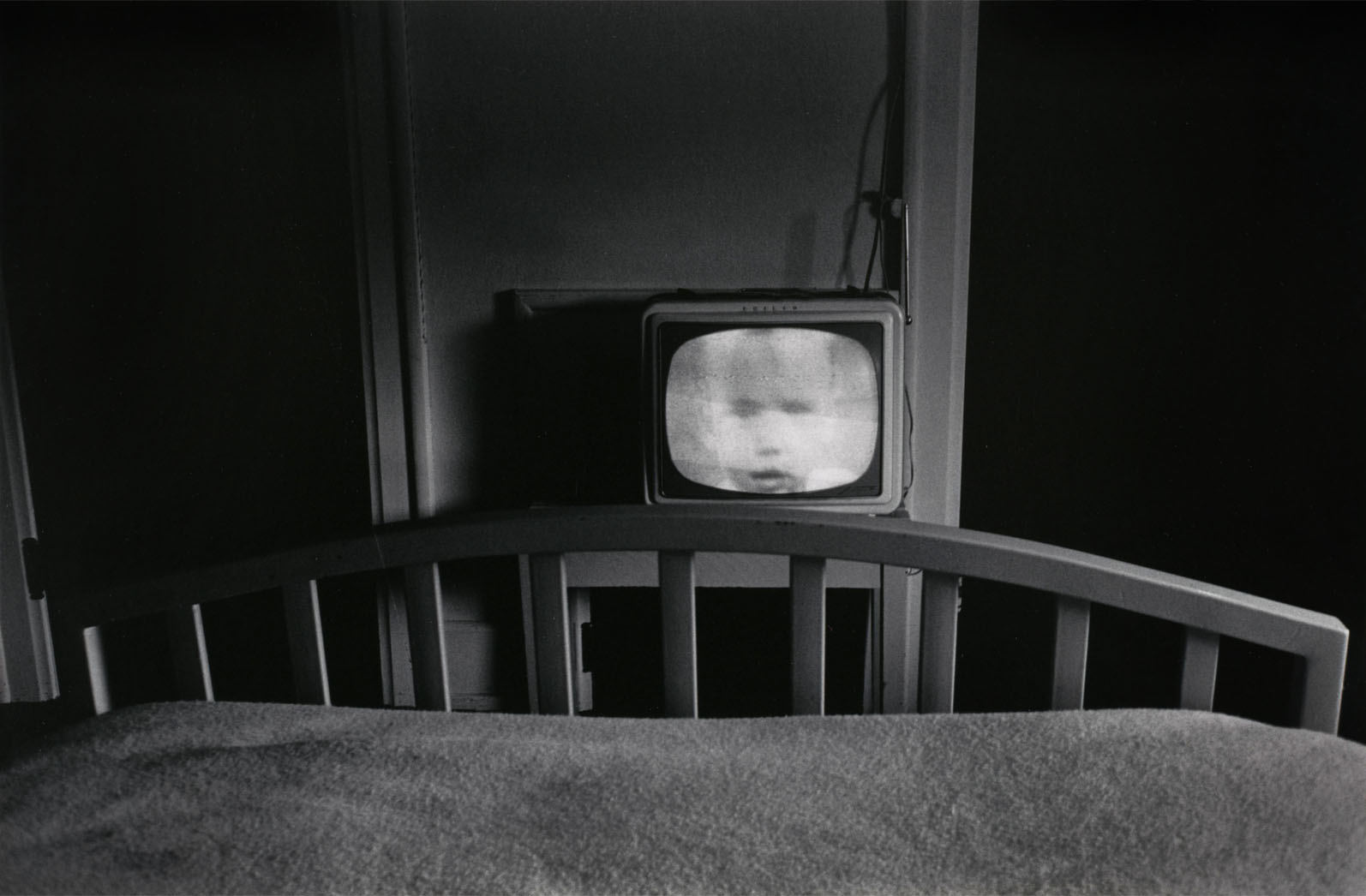


Lee Friedlander (American, b. 1934) 'T.V. in hotel room – Galax, Virginia' 1962


Lee Friedlander (American, b. 1934)
T.V. in hotel room – Galax, Virginia
1962
From the portfolio 15 Photographs
Gelatin silver print
© Lee Friedlander


Lee Friedlander (American, b. 1934) 'Untitled (Self-Portrait Reflected in Window, New Orleans)' c. 1965


Lee Friedlander (American, b. 1934)
Untitled (Self-Portrait Reflected in Window, New Orleans)
c. 1965
Gelatin silver print
© Lee Friedlander
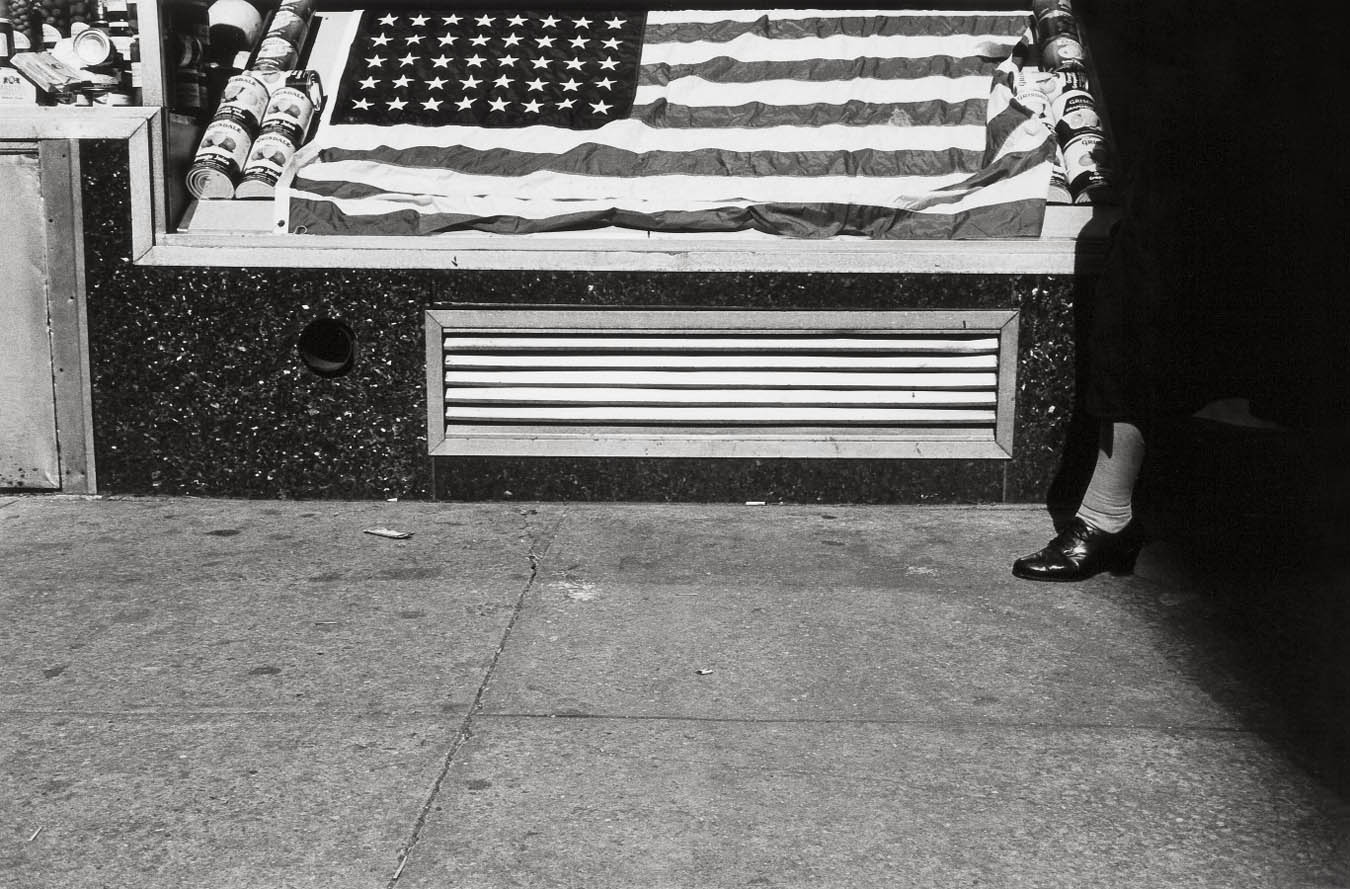
 

Lee Friedlander (American, b. 1934) 'Flag, New York City' 1965


Lee Friedlander (American, b. 1934)
Flag, New York City
1965
Gelatin silver print
© Lee Friedlander


Lee Friedlander (American, b. 1934) 'New York City' 1966


Lee Friedlander (American, b. 1934)
New York City
1966
Gelatin silver print
Baryt paper (card)
21.9 x 32.8cm
On permanent loan from Siemens AG, Munich, to the Sammlung Moderne Kunst since 2003
© Lee Friedlander


Lee Friedlander (American, b. 1934) 'Provincetown, Massachusetts' 1968


Lee Friedlander (American, b. 1934)
Provincetown, Massachusetts
1968
Gelatin silver print
© Lee Friedlander


Lee Friedlander (American, b. 1934) 'Route 9W, New York' 1969


Lee Friedlander (American, b. 1934)
Route 9W, New York
1969
Gelatin silver print, Baryt paper (card)
20.4 x 30.5cm
On permanent loan from Siemens AG, Munich, to the Sammlung Moderne Kunst since 2003
© Lee Friedlander
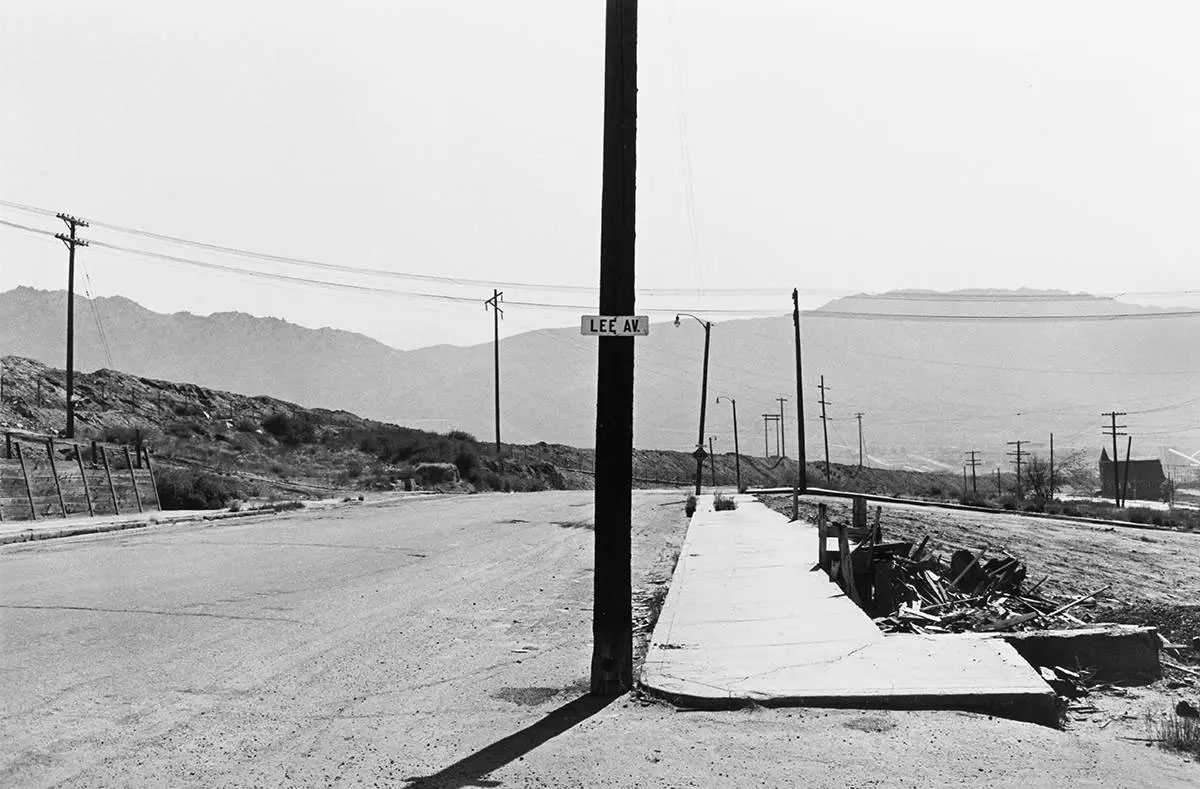
 

Lee Friedlander (American, b. 1934) 'Lee Ave., Butte, Montana' 1970


Lee Friedlander (American, b. 1934)
Lee Ave., Butte, Montana
1970
Gelatin silver print on baryta paper
© Lee Friedlander


Garry Winogrand (American, 1928-1984) 'New York World's Fair' 1964


Garry Winogrand (American, 1928-1984)
New York World’s Fair
1964
Gelatin silver print
© Estate of Garry Winogrand


Garry Winogrand (American, 1928-1984) 'Los Angeles, California' 1969


Garry Winogrand (American, 1928-1984)
Los Angeles, California
1969
Gelatin silver print (pre 1984)
21.8 x 32.8cm
On permanent loan from Siemens AG, Munich, to the Sammlung Moderne Kunst since 2003
© Estate of Garry Winogrand


Garry Winogrand (American, 1928-1984) 'New York City' 1969


Garry Winogrand (American, 1928-1984)
New York City
1969
Gelatin silver print
© Estate of Garry Winogrand
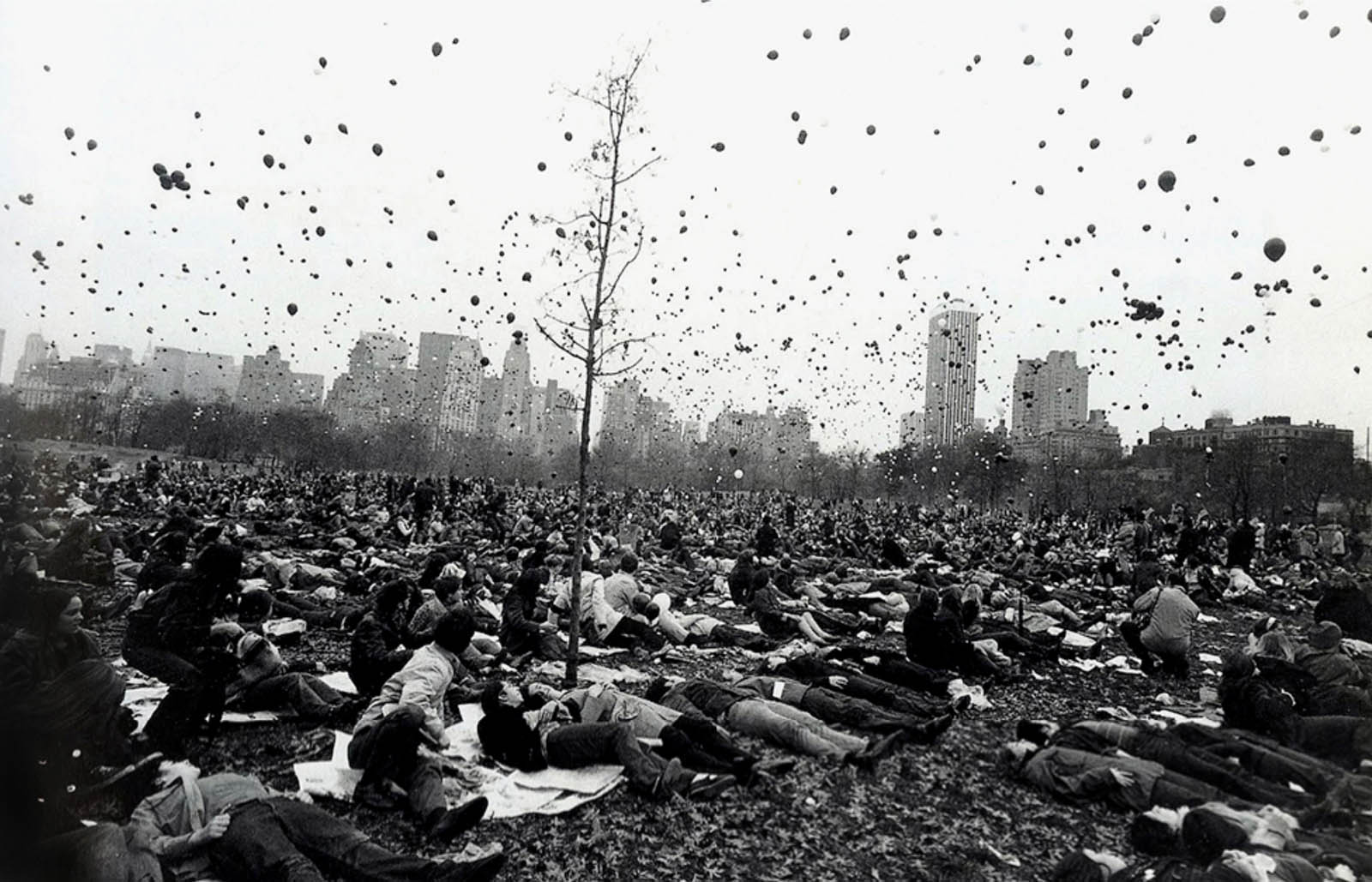
 

Garry Winogrand (American, 1928-1984) 'Peace Demonstration, Central Park, New York' 1970


Garry Winogrand (American, 1928-1984)
Peace Demonstration, Central Park, New York
1970
Gelatin silver print
© Estate of Garry Winogrand


Nicholas Nixon (American, b. 1947) 'Buildings on Tremont Street, Boston' 1975


Nicholas Nixon (American, b. 1947)
Buildings on Tremont Street, Boston
1975
From the series Boston Views 1974-1976
Gelatin silver print, Baryt paper (card)
© Nicholas Nixon
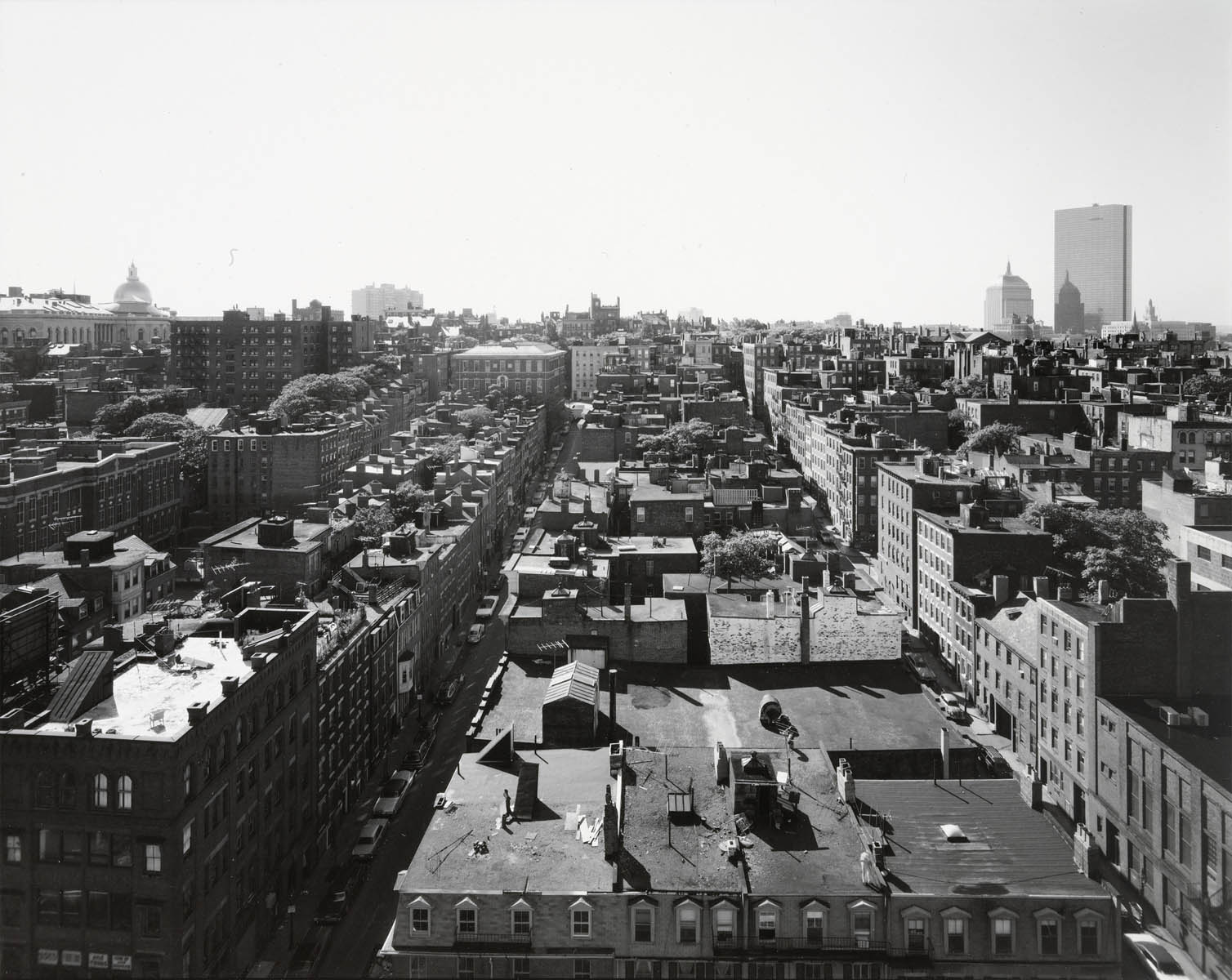
 

Nicholas Nixon (American, b. 1947) 'View of Beacon Hill, Boston' 1975


Nicholas Nixon (American, b. 1947)
View of Beacon Hill, Boston
1975
From the series Boston Views 1974-1976
Gelatin silver print, Baryt paper (card)
© Nicholas Nixon


Nicholas Nixon (American, b. 1947) 'View of State Street, Boston' 1976


Nicholas Nixon (American, b. 1947)
View of State Street, Boston
1976
From the series Boston Views 1974-1976
Gelatin silver print, Baryt paper (card)
20.3 x 25.2cm
On permanent loan from Siemens AG, Munich, to the Sammlung Moderne Kunst since 2003
© Nicholas Nixon
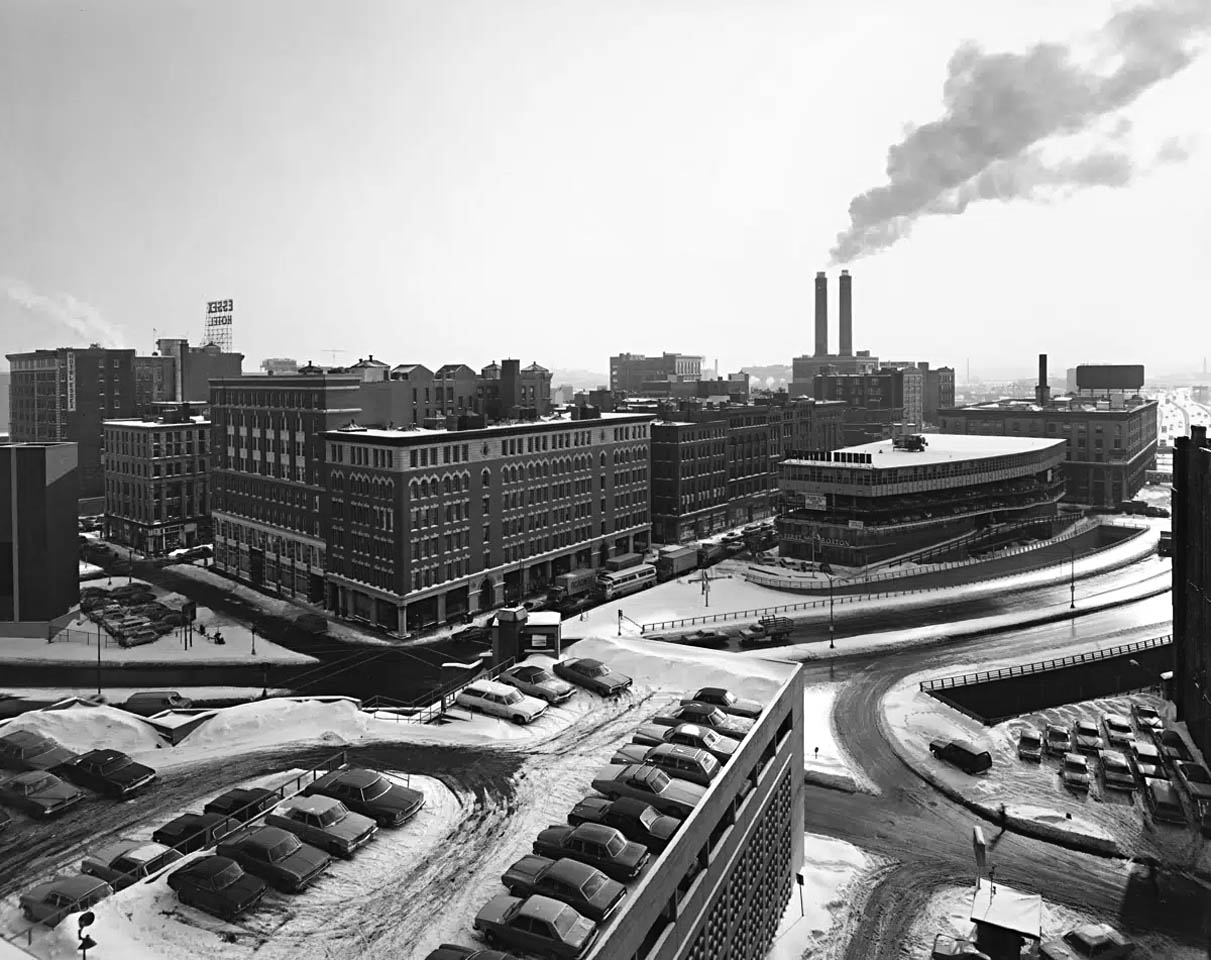
 

Nicholas Nixon (American, b. 1947) 'View of Essex Street and Downtown Entrance to the Massachusetts Turnpike, Boston' 1976


Nicholas Nixon (American, b. 1947)
View of Essex Street and Downtown Entrance to the Massachusetts Turnpike, Boston
1976
From the series Boston Views 1974-1976
Gelatin silver print, Baryt paper (card)
© Nicholas Nixon
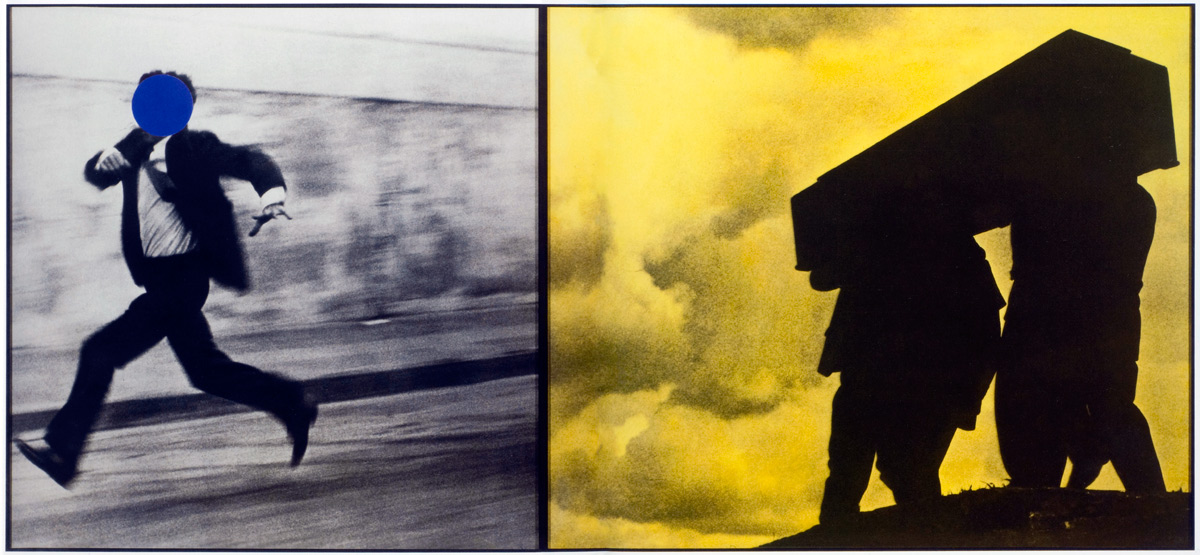
 

John Baldessari (American, 1931-2020) 'Man Running/Men Carrying Box' 1988-1990


John Baldessari (American, 1931-2020)
Man Running/Men Carrying Box
1988-1990
Gelatin silver prints, vinyl paint and shading in oil
Part 1: 121.3 x 118.6cm; Part 2: 121.3 x 146.6cm
On permanent loan from Siemens AG, Munich, to the Sammlung Moderne Kunst since 2003
© John Baldessari
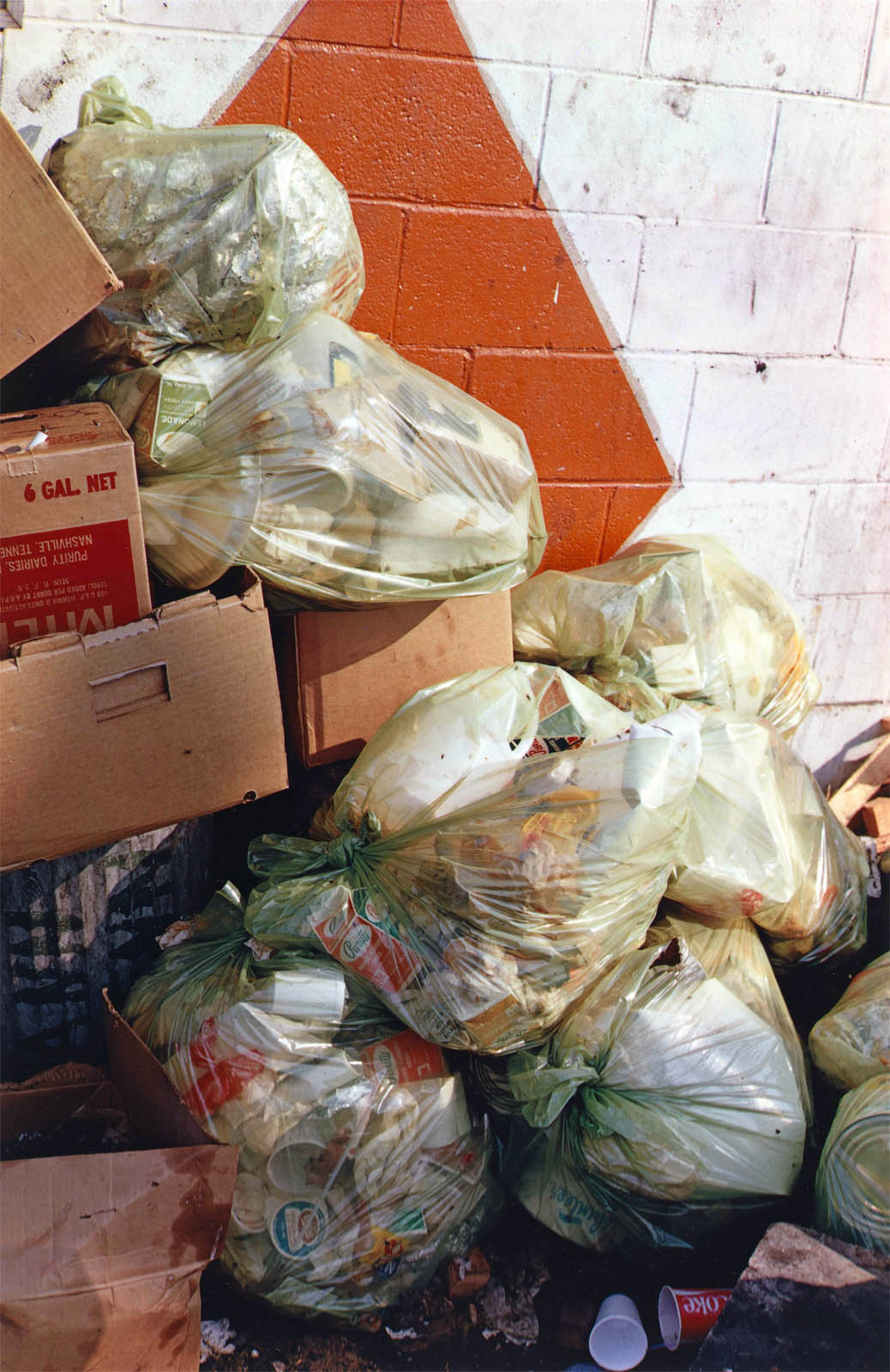
 

William Eggleston (American, b. 1939) 'Untitled' 1970-1973 From the portfolio 'Troubled Waters'


William Eggleston (American, b. 1939)
Untitled
1970-1973
From the portfolio Troubled Waters 1980
© Eggleston Artistic Trust


William Eggleston (American, b. 1939) 'Untitled' 1980 From the portfolio 'Troubled Waters' 1980


William Eggleston (American, b. 1939)
Untitled
1980
From the portfolio Troubled Waters 1980
© Eggleston Artistic Trust
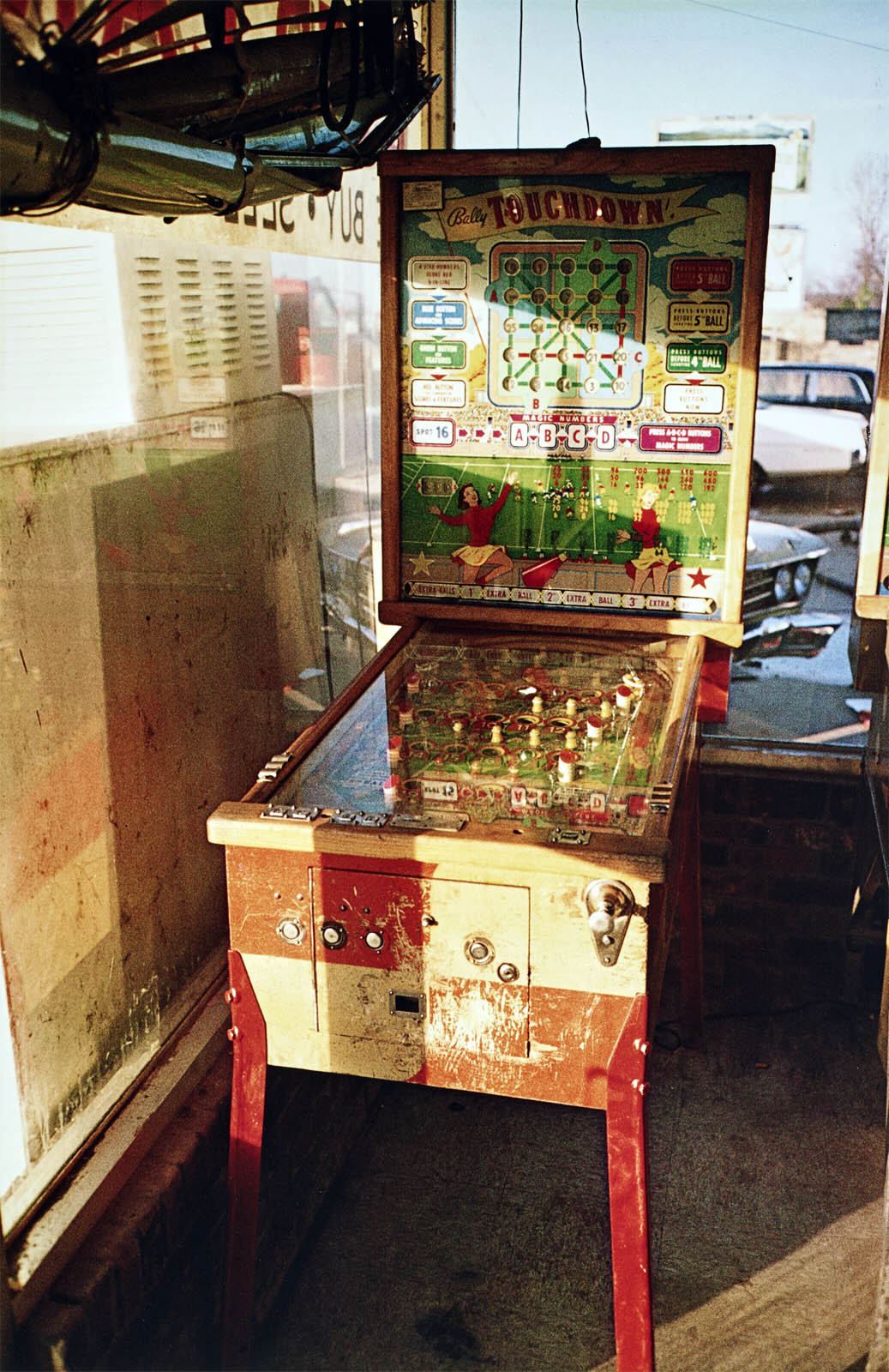
 

William Eggleston (American, b. 1939) 'Untitled' 1970-1973 From the portfolio 'Troubled Waters' 1980


William Eggleston (American, b. 1939)
Untitled
1970-1973
From the portfolio Troubled Waters 1980
© Eggleston Artistic Trust


William Eggleston (American, b. 1939) 'Untitled' 1980


William Eggleston (American, b. 1939)
Untitled
1980
The first of 15 works from the portfolio Troubled Waters
Dye transfer print
29 x 44cm
On permanent loan from Siemens AG, Munich, to the Sammlung Moderne Kunst since 2003
© Eggleston Artistic Trust


William Eggleston (American, b. 1939) 'Tennessee (Gulf Sign)' 1971


William Eggleston (American, b. 1939)
Tennessee (Gulf Sign)
1971
Dye transfer print
© Eggleston Artistic Trust


William Eggleston (American, b. 1939) from 'Southern Suite' (10-part series) 1981


William Eggleston (American, b. 1939)
from Southern Suite (10-part series)
1981
Dye transfer print
25.0 x 38.2cm
Sammlung Moderne Kunst in the Pinakothek der Moderne Munich. Acquired in 2006 through PIN. Freunde der Pinakothek der Moderne e.V.
© Eggleston Artistic Trust


American photography forms an extensive and simultaneously top-quality focal point in the collection, of which a selected overview is now being exhibited for the first time. The main interest of young photographers, who have been examining changes in political, social and ecological aspects of everyday American life since the late 1960s, has been the American social landscape. They have developed new pictorial styles that define stylistic devices perceived as genuinely American while at the same time being internationally recognised. Whereas Lee Friedlander, Garry Winogrand, Robert Adams, Lewis Baltz and Larry Clark, who are now considered classical modern photographers, have remained true to black-and-white photography, William Eggleston and Stephen Shore in particular have established colour photography as an artistically independent form of expression. The exhibition brings together around 100 works that, thanks to the Siemens Photography Collection and through acquisitions, bequests and donations, are now part of the museum’s holdings. True stories covers a spectrum from the street photography of the late 1960s to New Topographics and pictures by the New York photographer Zoe Leonard, taken just a few years ago.

“A new generation of photographers has directed the documentary approach toward more personal ends. Their work betrays a sympathy for the imperfection and frailties of society. Their aim has been not to reform life but to know it.” With the exhibition New Documents in spring 1967, John Szarkowski, the influential curator of photography at the Museum of Modern Art in New York, rang in a new era in American photography. Those photographers represented, including Lee Friedlander and Garry Winogrand in addition to Diane Arbus, stood for a change in attitude within documentary photography that was conditioned exclusively by the subjective viewpoint of an individual’s reality. The object of photographic interest lay in the American social landscape and its conditions. It was less concerned with the natural landscape and its increasingly cultural reshaping than with the urban or urbanised space and how people move within it. In so doing, the New Documentarians rejected any obviously explanatory impetus, turning instead to the everyday and commonplace.

The exhibition New Topographics: Photographs of a Man-Altered Landscape that was staged in the mid 1970s at the International Museum of Photography in Rochester, represented a countermovement to this subjective form of expression. Their protagonists, including Robert Adams, Lewis Baltz, Nicholas Nixon and Stephen Shore, also pleaded for a documentary approach and were influenced by figures such as Walker Evans und Robert Frank, but considered themselves rooted in the tradition of 19th-century topographical photography in particular. The prime initiator of this working method, that was expressly not governed by style, is the Los Angeles-based artist Ed Ruscha. Their central aim is a distanced and seemingly analytical depicition, free of judgement; their topic, the landscape altered by mankind. It is the image of the American West in particular, so much conditioned by myths and dreams but long since brought back to reality as a result of commercial and ecological exploitation, that is visible in their works.

The decisive quantum leap to establishing the position of colour photography was made by the Southerner William Eggleston in his exhibition in 1976, also held at the Museum of Modern Art in New York, and the publication of the William Eggleston’s Guide. The harsh public criticism of his pictures was not to do with his use of colour but the fact that Eggleston photographed things and everyday situations – on the spur of the moment and in a seemingly careless manner – that, until then, had not been considered worthy of being photographed turning them into exquisite prints using the expensive and complicated dye-transfer process. In Eggleston’s cosmos of images that is strongly influenced by motifs and the light of the Mississippi Delta, colour constitutes the picture. The “rush of colour” championed by this exhibition led to the comprehensive implementation of colour photography in the field of artistic photography in the years that followed, starting in the USA and then in Europe – and especially in Germany.

An artistic attitude became established at the end of the 1970s that, with recourse to existing picture material from art, film, advertising and the mass media, formulated new pictorial concepts and, in the same breath, opened up traditional artistic and art-historical categories such as authorship, originality, uniqueness, intellectual property and authenticity to discussion. Appropriation Art owes its decisive influences to the artist John Baldessari, who lives and teaches in California. One of its most famous representatives is Richard Prince, who became famous in particular as a result of his artistic adaptation of advertising images. Concept art in the 1960s and ’70s similarly makes use of photography, both as part of an artistic practice using the most varied of materials and as a unique medium for documenting campaigns, happenings and performances. As works by Dan Graham and Zoe Leonard clearly show, the previously precisely delineated boundaries between photography that alludes to its own intrinsically, media-related history and the use of photography as an artistic strategy, have become more fluid.

Press release from the Pinakothek der Moderne website
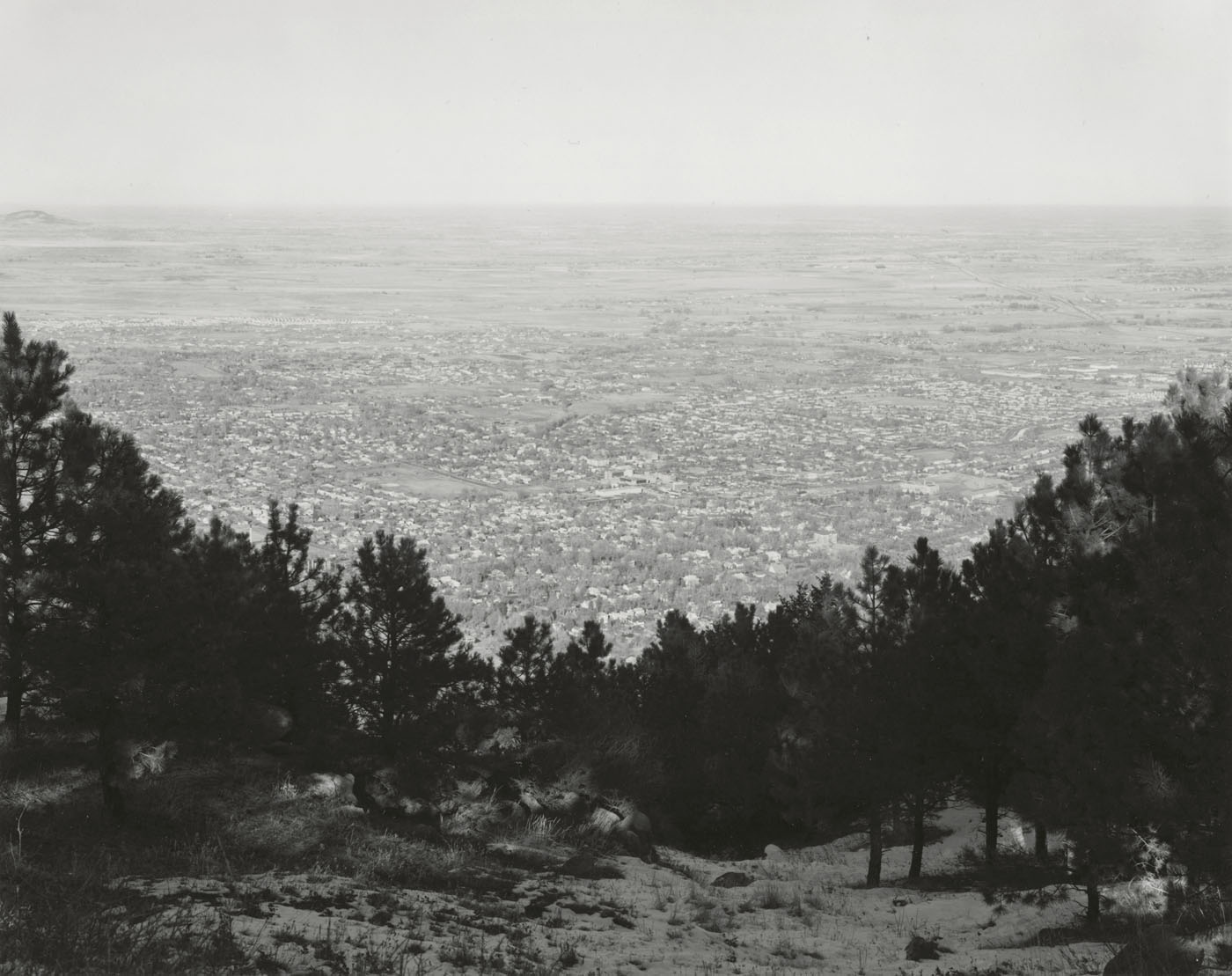
 

Robert Adams (American, b. 1937) 'East from Flagstaff Mountain, Boulder County, Colorado' 1975


Robert Adams (American, b. 1937)
East from Flagstaff Mountain, Boulder County, Colorado
1975
Gelatin silver print
Courtesy Fraenkel Gallery, San Francisco
© Robert Adams
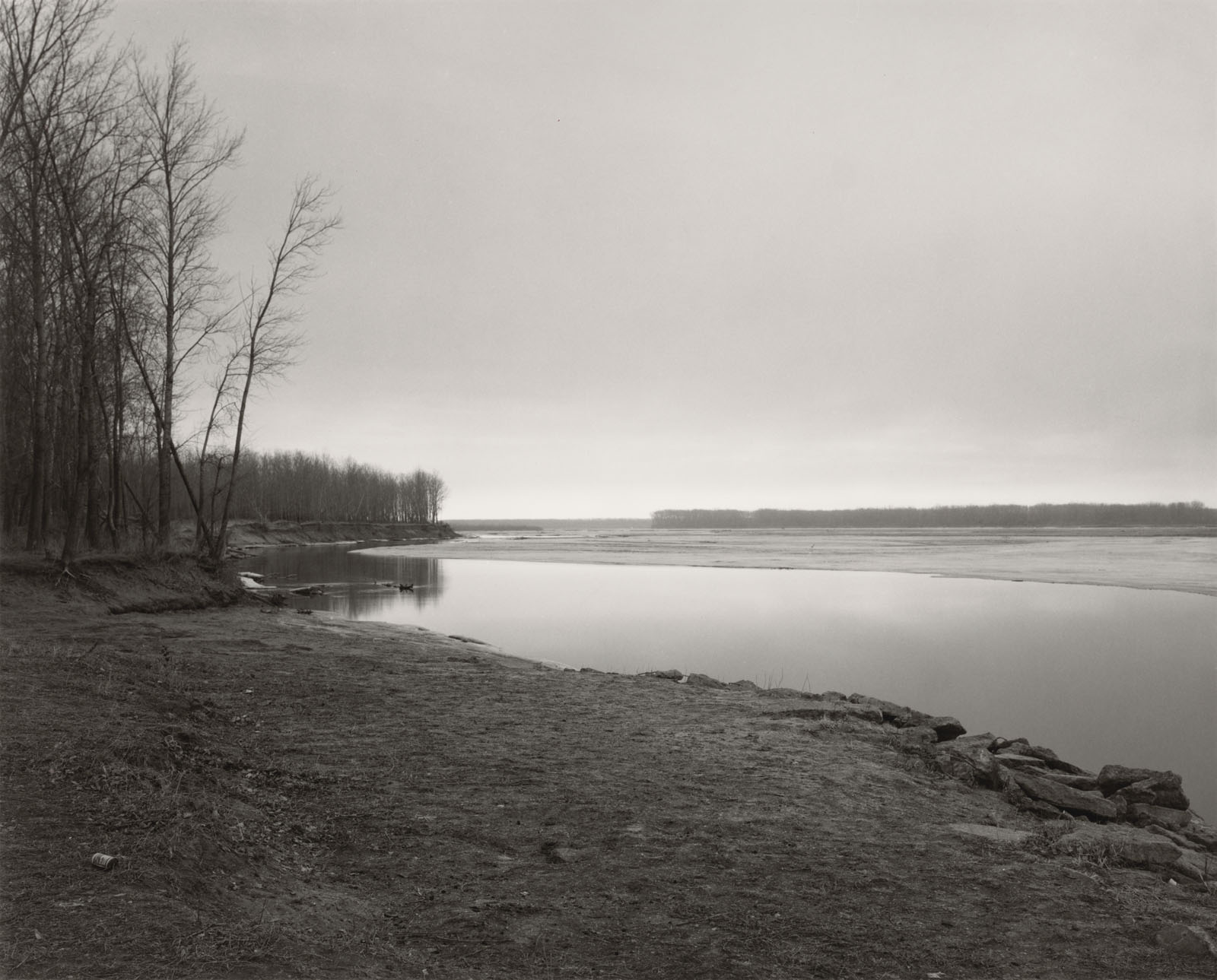
 

Robert Adams (American, b. 1937) 'Missouri River, Clay County, South Dakota' 1977


Robert Adams (American, b. 1937)
Missouri River, Clay County, South Dakota
1977
Gelatin silver print
Courtesy Fraenkel Gallery, San Francisco
© Robert Adams
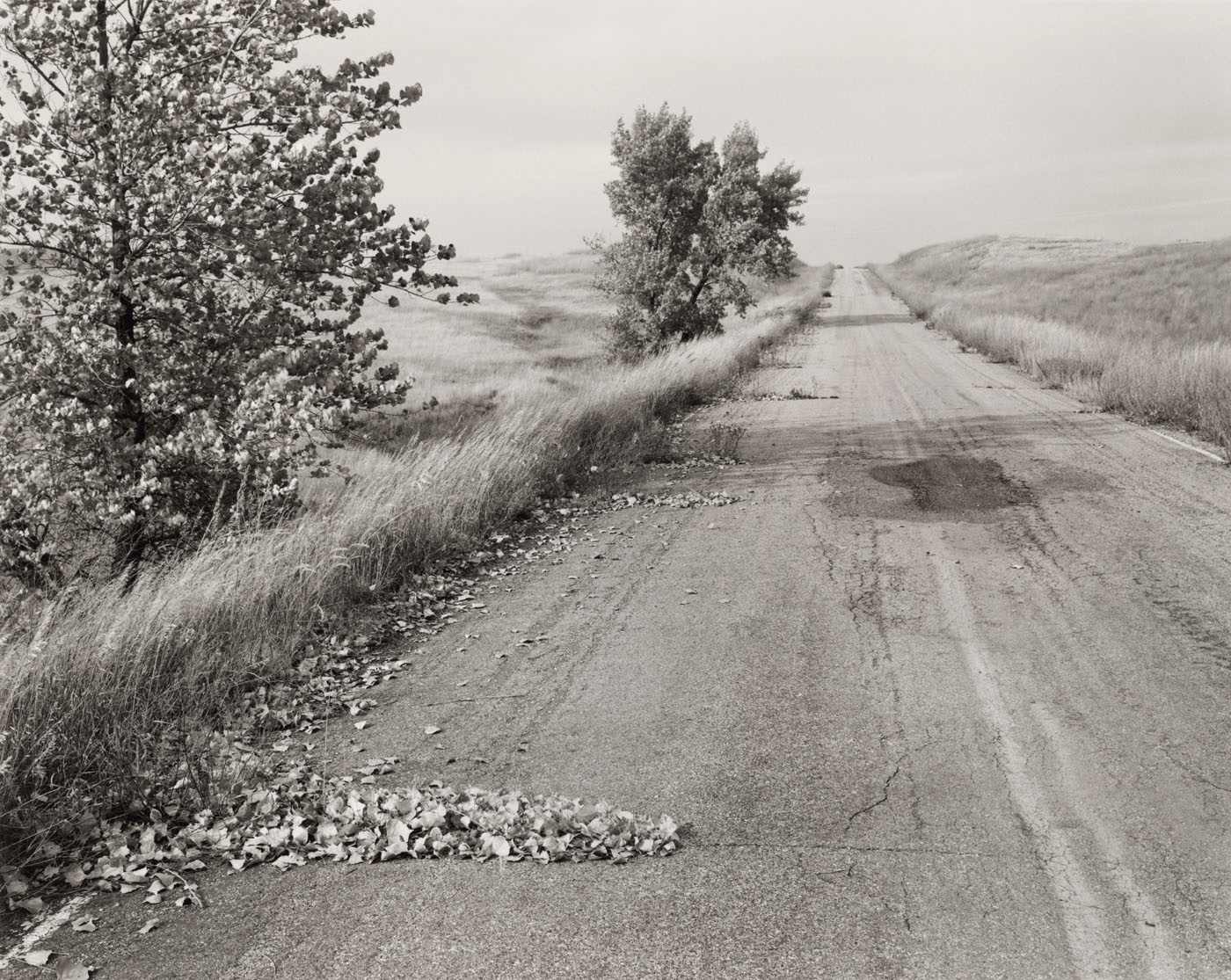
 

Robert Adams (American, b. 1937) 'Nebraska State Highway 2, Box Butte County, Nebraska' 1978, printed 1991


Robert Adams (American, b. 1937)
Nebraska State Highway 2, Box Butte County, Nebraska
1978, printed 1991
Gelatin silver print
Courtesy Fraenkel Gallery, San Francisco
© Robert Adams
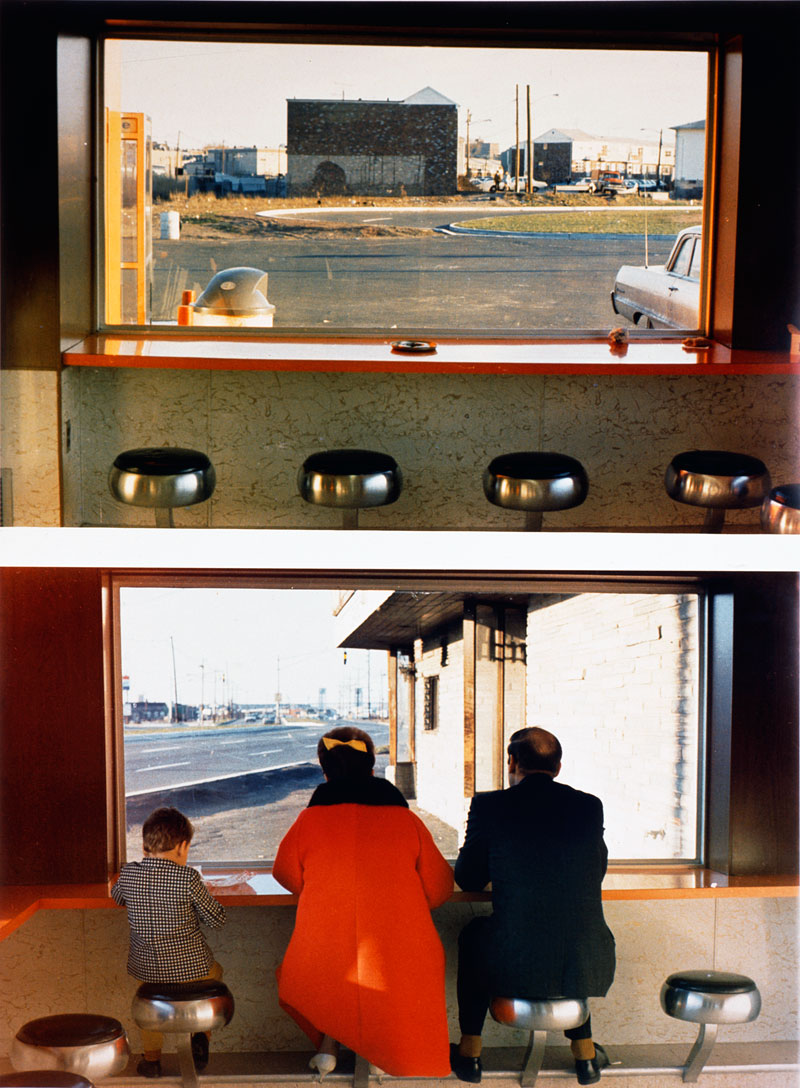
 

Dan Graham (American, b. 1942) 'View Interior, New Highway Restaurant, Jersey City, N.J.,' 1967 (detail)


Dan Graham (American, b. 1942)
View Interior, New Highway Restaurant, Jersey City, N.J., (detail)
1967 (printed 1996)
C-prints
Each 50.6 x 76.2cm
On permanent loan from Siemens AG, Munich, to the Sammlung Moderne Kunst since 2003
© Dan Graham
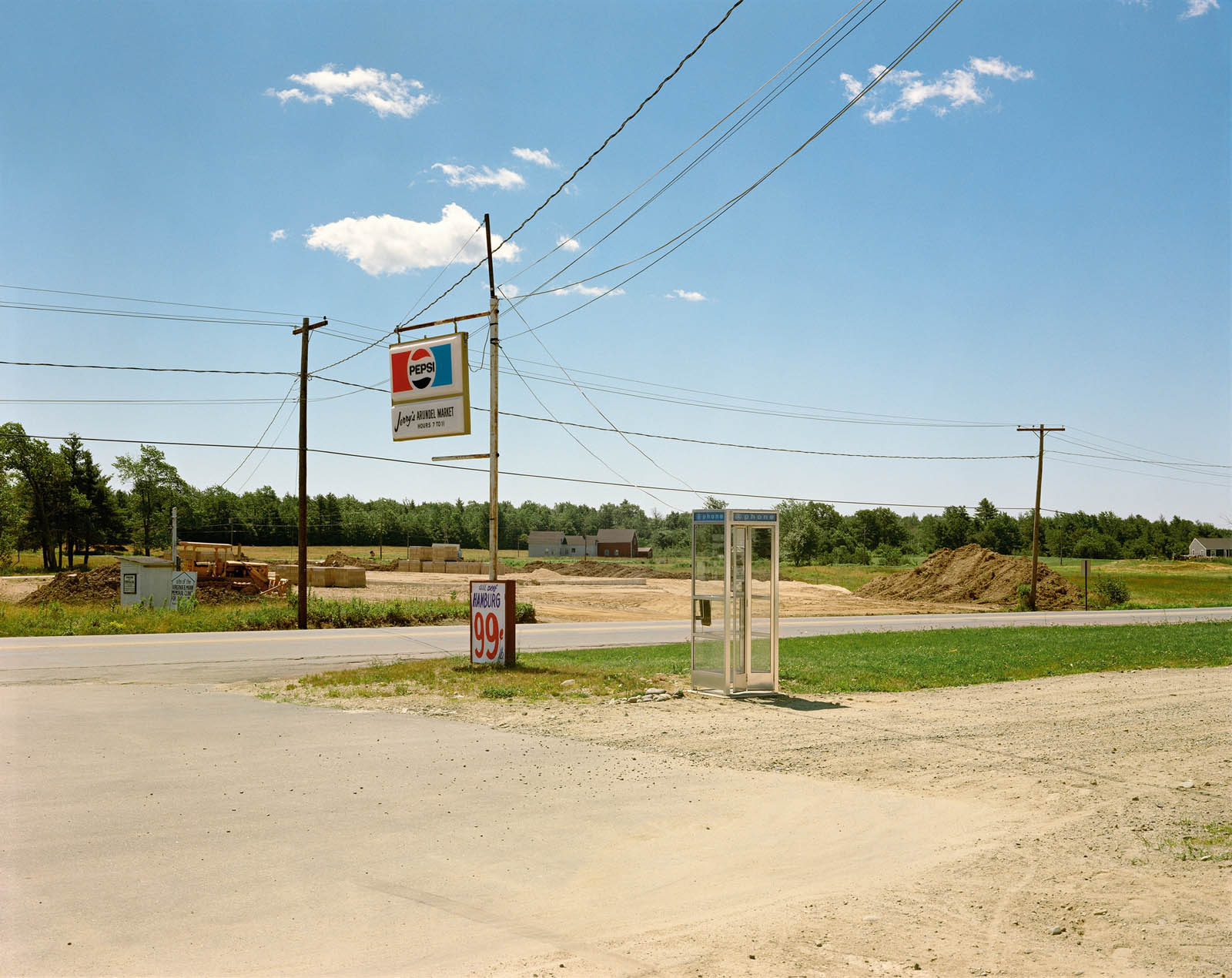
 

Stephen Shore (American, b. 1947) 'U.S. 1, Arundel, ME.' 1974


Stephen Shore (American, b. 1947)
U.S. 1, Arundel, ME.
1974
Chromogenic print
© Stephen Shore


Stephen Shore (American, b. 1947) 'Wilde Street and Colonization Avenue, Dryden, Ontario' 1974


Stephen Shore (American, b. 1947)
Wilde Street and Colonization Avenue, Dryden, Ontario
1974
Chromogenic print
© Stephen Shore
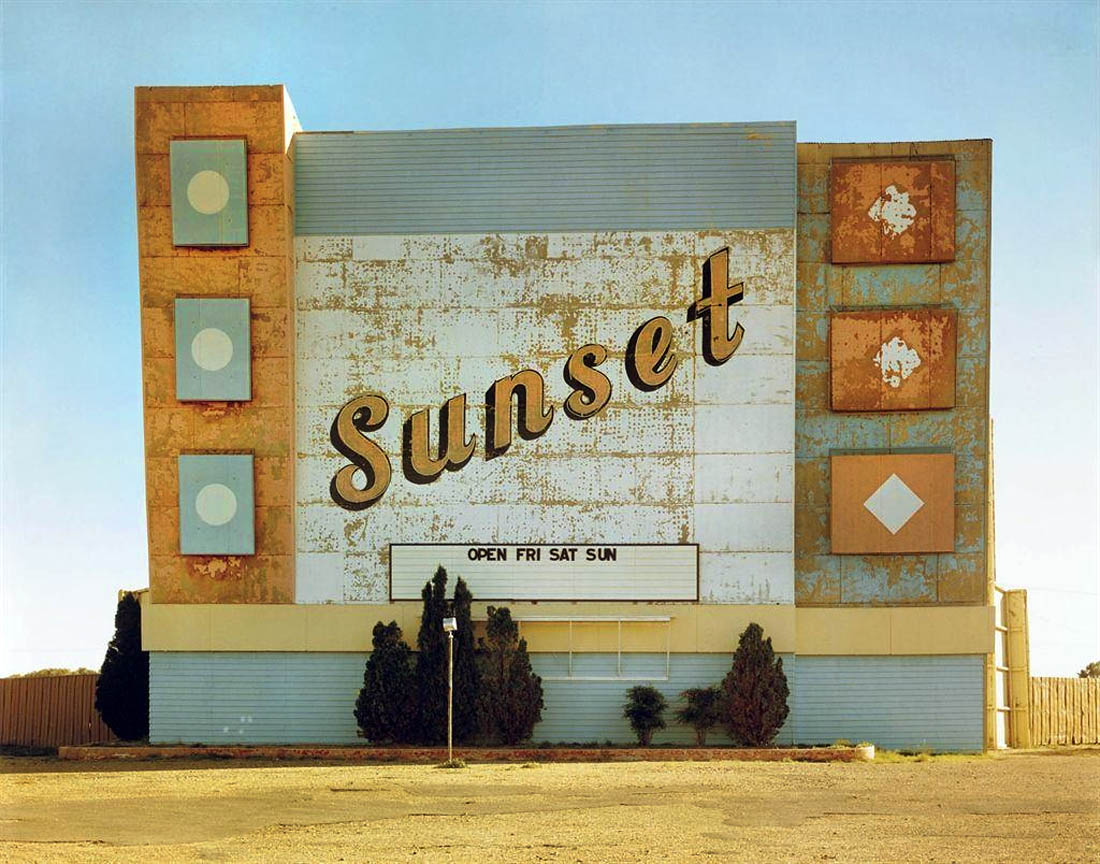
 

Stephen Shore (American, b. 1947) 'West 9th Avenue, Amarillo, Texas' 1974


Stephen Shore (American, b. 1947)
West 9th Avenue, Amarillo, Texas
1974
Dye coupler print
© Stephen Shore


Shore was a consummate New York City boy who dropped out of high school when he was 17 and instead spent his time watching and making films and photographing Andy Warhol and his compatriots at his studio, the Factory. But a 1969 trip to Amarillo, Texas, to visit the family of his friend Michael Marsh set him on a new path, spurring a decade of road trips exploring the United States. His itineraries usually included Amarillo, and its people and buildings appear throughout his photographs from the time. “I loved Amarillo, not just what it looked like but the way people hung out – the pace of the life, the car culture, the barbecue joints,” he said. This stark, frontal portrait of the Sunset drive-in conveys the withering Texas heat that has peeled the facade’s paint, as well as a sense of forlornness and neglect that proved prescient when the drive-in closed two years later.

Text taken from the Carter Handbook (2023) on the American Carter Museum of American Art website


Stephen Shore (American, b. 1947) 'La Brea Avenue & Beverly Boulevard, Los Angeles, California' 1975


Stephen Shore (American, b. 1947)
La Brea Avenue & Beverly Boulevard, Los Angeles, California
1975
Chromogenic print, Kodak professional paper (1998)
20.4 x 25.5cm
On permanent loan from Siemens AG, Munich, to the Sammlung Moderne Kunst since 2003
© Stephen Shore
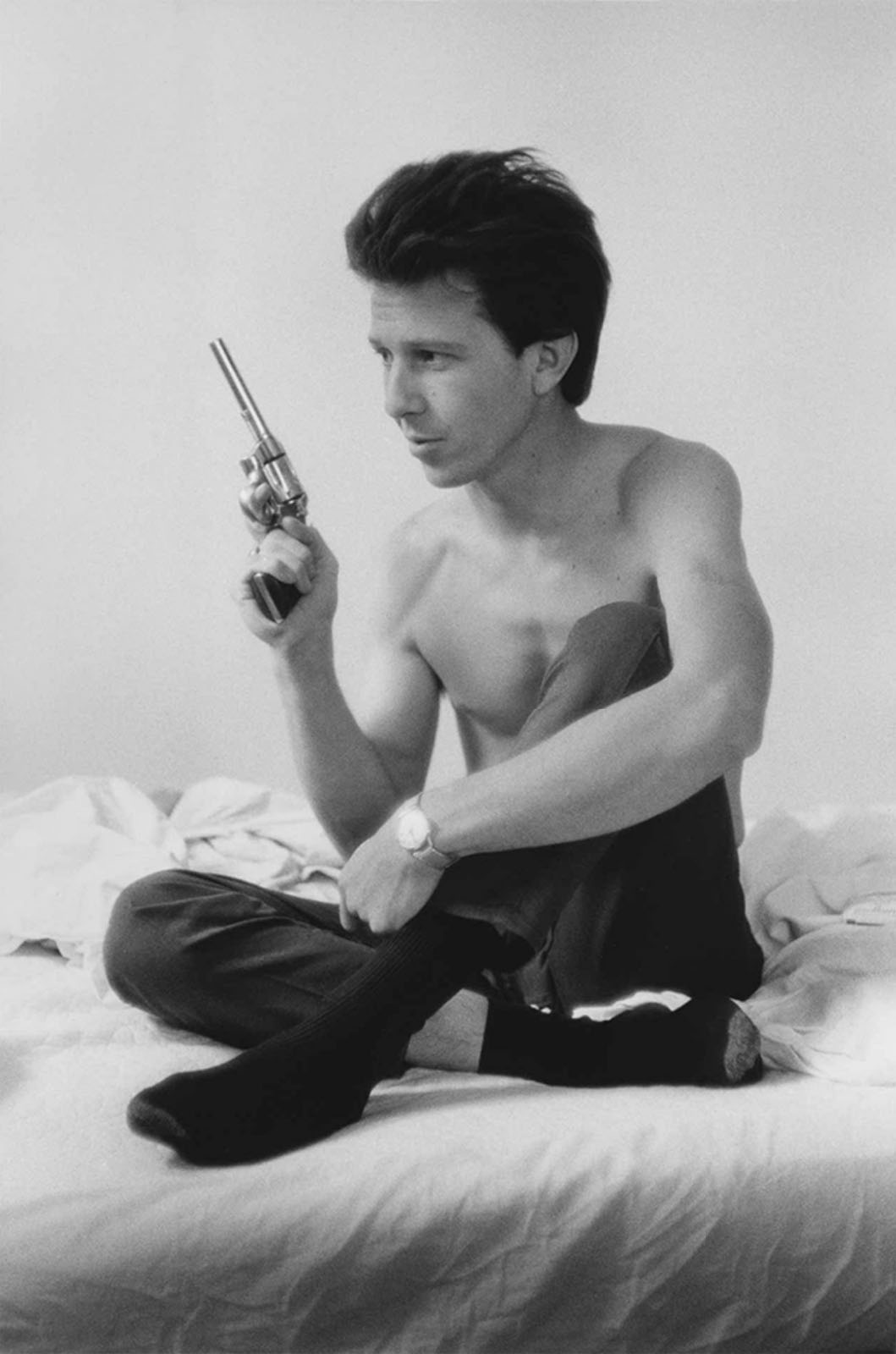
 

Larry Clark (American, b. 1943) 'Billy Mann Dead 1970' 1968


Larry Clark (American, b. 1943)
Billy Mann Dead 1970
1968
From the series Tulsa
Gelatin silver print
© Larry Clark


Larry Clark (American, b. 1943) 'Tulsa' 1972


Larry Clark (American, b. 1943)
Tulsa
1972
Gelatin silver print
20.3 x 25.4cm (sheet)
Sammlung Moderne Kunst in the Pinakothek der Moderne Munich. Acquired in 2003 by PIN. Freunde der Pinakothek der Moderne
© Larry Clark
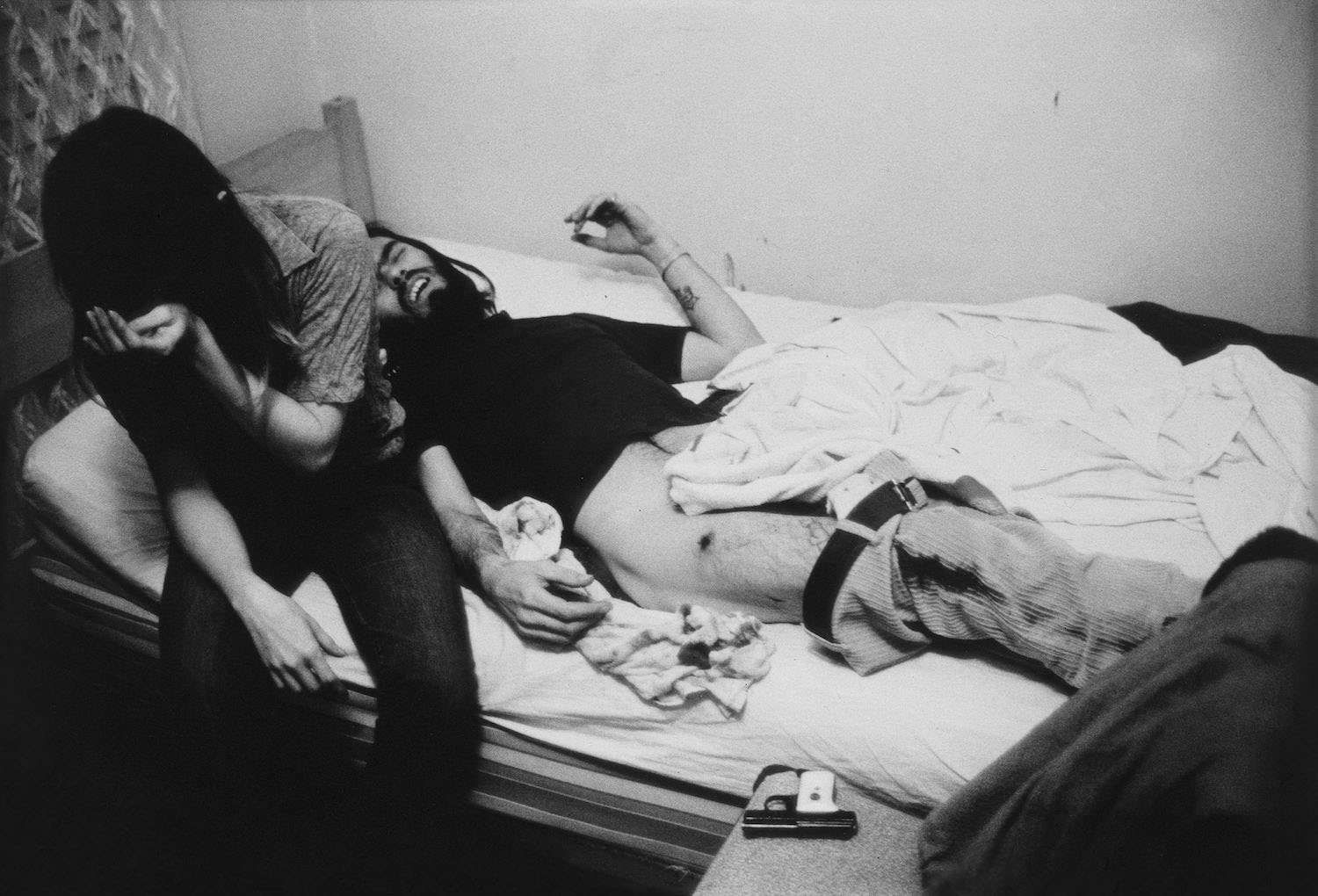
 

Larry Clark (American, b. 1943) 'Accidental Gunshot Wound' 1971


Larry Clark (American, b. 1943)
Accidental Gunshot Wound
1971
Gelatin silver print
© Larry Clark


Judith Joy Ross (American, b. 1946) 'Untitled' 1984 from the series 'Portraits at the Vietnam Veterans Memorial, Washington, D.C.'


Judith Joy Ross (American, b. 1946)
Untitled
1984, printed 1996
From the series Portraits at the Vietnam Veterans Memorial, Washington, D.C. 1983-1984
Gelatin silver print on daylight printing-out paper, shading in gold
25.2 x 20.2cm
On permanent loan from Siemens AG, Munich, to the Sammlung Moderne Kunst since 2003
© Judith Joy Ross


Judith Joy Ross (American, b. 1946) 'Untitled' 1984, printed 1996 From the series 'Portraits at the Vietnam Veterans Memorial, Washington, D.C.'


Judith Joy Ross (American, b. 1946)
Untitled
1984, printed 1996
From the series Portraits at the Vietnam Veterans Memorial, Washington, D.C. 1983-1984
Gelatin silver print on daylight printing-out paper
© Judith Joy Ross
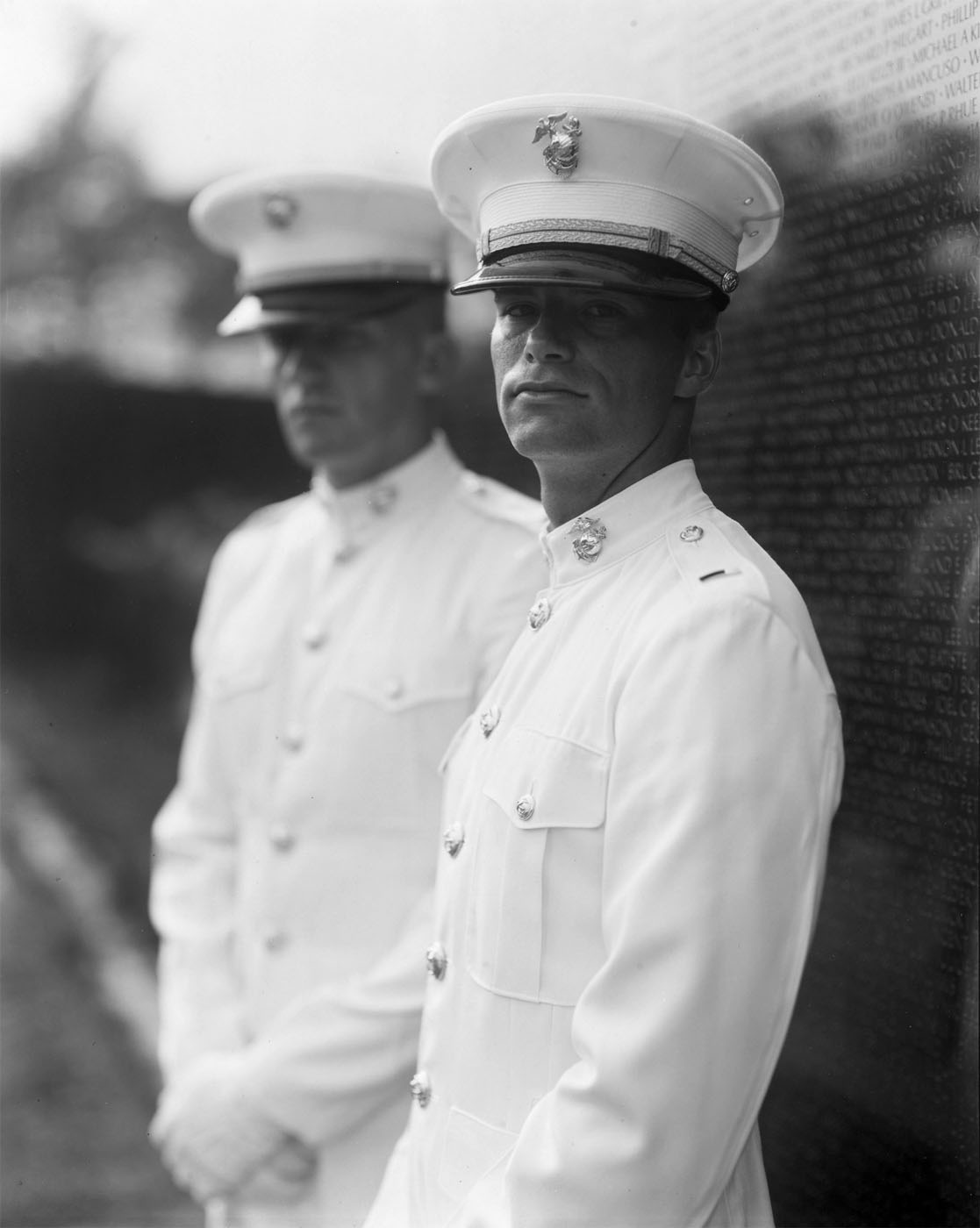
 

Judith Joy Ross (American, b. 1946) 'Untitled' 1984, printed 1996 From the series 'Portraits at the Vietnam Veterans Memorial, Washington, D.C.'


Judith Joy Ross (American, b. 1946)
Untitled
1984, printed 1996
From the series Portraits at the Vietnam Veterans Memorial, Washington, D.C. 1983-1984
Gelatin silver print on daylight printing-out paper
© Judith Joy Ross
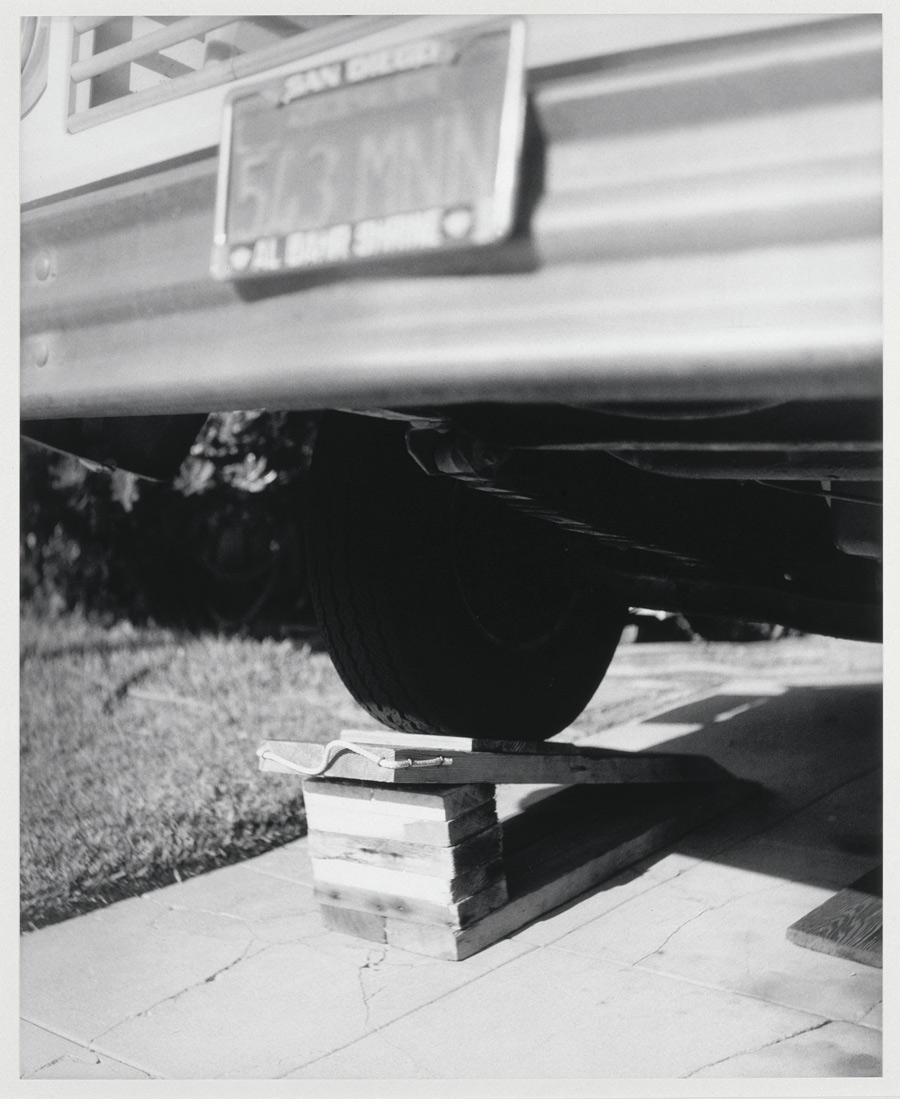
 

John Gossage (American, b. 1946) 'EL NEGRITO' 1997


John Gossage (American, b. 1946)
EL NEGRITO
1997
From the series There and Gone
Gelatin silver print, Baryt paper, screen print on photo mount card
55.4 x 45.0 cm
On permanent loan from Siemens AG, Munich, to the Sammlung Moderne Kunst since 2003
© John Gossage


Pinakothek Der Moderne
Barer Strasse 40
Munich

Opening hours:
Daily except Monday 10am – 6pm
Thursday 10am – 8pm

Pinakothek der Moderne website

LIKE ART BLART ON FACEBOOK

Back to top

Exhibition: ‘Famous in the Fifties: Photographs by Daniel Farson’ at the National Portrait Gallery, London

Exhibition dates: 19th March – 16th September 2012


Daniel Farson (British, 1927-1997) 'Adam Faith' 1962


Daniel Farson (British, 1927-1997)
Adam Faith
1962
Silver gelatin photograph
© Estate of Daniel Farson


My god, how beautiful the young Adam Faith was!

Since I didn’t know some of these people I have posted brief biographies. From the biographies we find that most mingled in the same artistic and theatrical circles in Soho, where Farson also hung out. Farson’s photographs are candid and show a deep affection for the subject being photographed: strong, vibrant characters that lived life to the full. He had a good eye did Daniel Farson. The photograph of Shelagh Delaney (1959, below) is a beauty, perfectly capturing one of those dank English days, where the mist envelopes the earth and chills one to the bone, standing outside pebble-dashed council houses in some windswept part of England. I remember it only too well.

Dr Marcus Bunyan

.
Many thankx to the National Portrait Gallery for allowing me to publish the photographs in the posting. Please click on some of the photographs for a larger version of the image. All photographs © Estate of Daniel Farson and the National Portrait Gallery.


Terence Nelhams Wright (23 June 1940 – 8 March 2003), known as Adam Faith, was an English singer, actor, and financial journalist. As a British rock and roll teen idol, he scored consecutive No. 1 hits on the UK Singles Chart with “What Do You Want?” (1959) and “Poor Me” (1960). He became the first UK artist to lodge his initial seven hits in the top 5, and was ultimately one of the most charted acts of the 1960s. He was also one of the first UK acts to record original songs regularly.

Faith also maintained an acting career, appearing as Dave in the teen exploitation film Beat Girl (1960), the eponymous lead in the ITV television series Budgie (1971-1972) and Frank Carver in the BBC comedy drama Love Hurts (1992-1994).

Text from the Wikipedia website


Daniel Farson (British, 1927-1997) 'Cyril Connolly and Lady Caroline Blackwood' c. 1953


Daniel Farson (British, 1927-1997)
Cyril Connolly and Lady Caroline Blackwood
c. 1953
Silver gelatin photograph
© Michael Parkin / National Portrait Gallery, London


Cyril Vernon Connolly (10 September 1903 – 26 November 1974) was an English intellectual, literary critic and writer. He was the editor of the influential literary magazine Horizon (1940-1949) and wrote Enemies of Promise (1938), which combined literary criticism with an autobiographical exploration of why he failed to become the successful author of fiction that he had aspired to be in his youth.

Connolly did his best work as a critic. Like Edmund Wilson in the United States, he wielded enormous influence. An astute and often witty commentator, with great gifts for often cruel mimicry, Connolly informed the thinking and attitudes of a generation. In The Unquiet Grave he writes: “Approaching forty, sense of total failure: … Never will I make that extra effort to live according to reality which alone makes good writing possible: hence the manic-depressiveness of my style, – which is either bright, cruel and superficial; or pessimistic; moth-eaten with self-pity.”

As editor of Horizon, Connolly gave a platform to a wide range of distinguished and emerging writers. He was robust in his criticism of the decline of the Mandarin and perhaps too effusive in his welcome of the New Vernacular. Kenneth Tynan, writing in the March 1954 Harper’s Bazaar, praised Connolly’s style as “one of the most glittering of English literary possessions.”


The Lady Caroline Maureen Hamilton-Temple-Blackwood (16 July 1931 – 14 February 1996) was a writer and artist’s muse, and the eldest child of the 4th Marquess of Dufferin and Ava and the brewery heiress Maureen Guinness.

A well-known figure in the literary world through her journalism and her novels, Caroline Blackwood was equally well known for her high-profile marriages, first to the artist Lucian Freud, then to the composer Israel Citkowitz and finally to the poet Robert Lowell, who described her as “a mermaid who dines upon the bones of her winded lovers.” Her novels are known for their wit and intelligence, and one in particular is scathingly autobiographical in describing her unhappy childhood.

Text from the Wikipedia website


Daniel Farson (British, 1927-1997) 'Nina Hamnett' 1952


Daniel Farson (British, 1927-1997)
Nina Hamnett
1952
Silver gelatin photograph
© Michael Parkin / National Portrait Gallery, London


Nina Hamnett (14 February 1890 – 16 December 1956) was a Welsh artist and writer, and an expert on sailors’ chanteys, who became known as the Queen of Bohemia.

Flamboyantly unconventional, and openly bisexual, Nina Hamnett once danced nude on a Montparnasse café table just for the “hell of it”. She drank heavily, was sexually promiscuous, and kept numerous lovers and close associations within the artistic community. Very quickly, she became a well-known bohemian personality throughout Paris and modeled for many artists. Her reputation soon reached back to London, where for a time, she went to work making or decorating fabrics, clothes, murals, furniture, and rugs at the Omega Workshops, which was directed by Roger Fry, Vanessa Bell, and Duncan Grant.

Her artistic creations were widely exhibited during World War I including at the Royal Academy in London as well as the Salon d’Automne in Paris. Back in England, she taught at the Westminster Technical Institute from 1917 to 1918. After divorcing Kristian, she took up with another free spirit, composer E. J. Moeran. From the mid 1920s until the end of World War II, the area known as Fitzrovia was London’s main Bohemian artistic centre. The place took its name from the popular Fitzroy Tavern on the corner of Charlotte and Windmill Streets that formed the area’s centre. Home of the café life in Fitzrovia, it was Nina Hamnett’s favourite hangout as well as that of her friend from her home town, Augustus John, and later another Welshman, the poet Dylan Thomas.

In 1932 Hamnett published Laughing Torso, a tale of her bohemian life, which became a bestseller in the United Kingdom and United States. The notorious occultist Aleister Crowley unsuccessfully sued her and the publisher for libel over allegations of Black Magic made in her book. Although she won the case, the situation profoundly affected her for the remainder of her life. Alcoholism would soon overtake her many talents and the tragic Queen of the Fitzroy spent a good part of the last few decades of her life at the bar, (usually that of the Fitzroy Tavern in Fitzrovia), trading anecdotes for drinks.

Nina Hamnett died in 1956 from complications after falling out her apartment window and being impaled on the fence forty feet below. The great debate has always been whether or not it was a suicide attempt or merely a drunken accident. Her last words were, “Why don’t they let me die?”

Text from the Wikipedia website


Daniel Farson (British, 1927-1997) 'Lucian Freud and Brendan Behan' 1952


Daniel Farson (British, 1927-1997)
Lucian Freud and Brendan Behan
1952
Silver gelatin photograph
© Estate of Daniel Farson


Lucian Michael Freud (8 December 1922 – 20 July 2011) was a German-born British painter. Known chiefly for his thickly impastoed portrait and figure paintings, he was widely considered the pre-eminent British artist of his time. His works are noted for their psychological penetration, and for their often discomforting examination of the relationship between artist and model.

From the 1950s, he began to work in portraiture, often nudes (though his first full length nude was not painted until 1966), to the almost complete exclusion of everything else, and by the middle of the decade developed a much more free style using large hogs-hair brushes, with an intense concentration of the texture and colour of flesh, and much thicker paint, including impasto. With this technique, he would often clean his brush after each stroke when painting flesh, so that the colour remained constantly variable. He also started to paint standing up, which continued until old age, when he switched to a high chair. The colours of non-flesh areas in these paintings are typically muted, while the flesh becomes increasingly highly and variably coloured. By about 1960, Freud had established the style that he would use, with some changes, for the rest of his career. The portraits in the new style often used an over life-size scale from the start, but were mostly relatively small heads or half-lengths. Later portraits were often very much larger, and appealed to galleries and collectors. In his late career he often followed a portrait by producing an etching of the subject in a different pose, drawing directly onto the plate, with the sitter in his view.

Freud’s portraits often depict only the sitter, sometimes sprawled naked on the floor or on a bed or alternatively juxtaposed with something else, as in Girl With a White Dog (1951-52) and Naked Man With Rat (1977-78). According to Edward Chaney, “The distinctive, recumbent manner in which Freud poses so many of his sitters suggests the conscious of unconscious influence both of his grandfather’s psychoanalytical couch and of the Egyptian mummy, his dreaming figures, clothed or nude, staring into space until (if ever) brought back to health and/or consciousness. The particular application of this supine pose to freaks, friends, wives, mistresses, dogs, daughters and mother alike (the latter regularly depicted after her suicide attempt and eventually, literally mummy-like in death), tends to support this hypothesis.”

“I paint people,” Freud said, “not because of what they are like, not exactly in spite of what they are like, but how they happen to be.”


Brendan Francis Behan (9 February 1923 – 20 March 1964) was an Irish poet, short story writer, novelist, and playwright who wrote in both English and Irish.

In 1954, Behan’s first play The Quare Fellow was produced in Dublin. It was well received, however, it was the 1956 production at Joan Littlewood’s Theatre Workshop in Stratford, London, that gained Behan a wider reputation – this was helped by a famous drunken interview on BBC television. In 1958, Behan’s play in the Irish language An Giall had its debut at Dublin’s Damer Theatre. Later, The Hostage, Behan’s English language adaptation of An Giall, met with great success internationally. Behan’s autobiographical novel, Borstal Boy, was published the same year and became a worldwide best seller. Behan was known for his drink problem, which resulted in him suffering from diabetes, which ultimately resulted in his death on 20 March 1964.

“There’s no bad publicity except an obituary,” he once said.

Text from the Wikipedia website


Daniel Farson (British, 1927-1997) 'Robert Graves' 1954


Daniel Farson (British, 1927-1997)
Robert Graves
1954
Silver gelatin photograph
© Estate of Daniel Farson


Robert von Ranke Graves (also known as Robert Ranke Graves and most commonly Robert Graves) (24 July 1895 – 7 December 1985) was an English poet, scholar / translator / writer of antiquity specialising in Classical Greece and Rome, and novelist. During his long life he produced more than 140 works. Graves’s poems – together with his translations and innovative analysis and interpretations of the Greek myths, his memoir of his early life, including his role in the First World War, Good-Bye to All That, and his speculative study of poetic inspiration, The White Goddess – have never been out of print.

He earned his living from writing, particularly popular historical novels such as I, ClaudiusKing JesusThe Golden Fleece, and Count Belisarius. He also was a prominent translator of Classical Latin and Ancient Greek texts; his versions of The Twelve Caesars and The Golden Ass remain popular today for their clarity and entertaining style. On 11 November 1985, Graves was among 16 Great War poets commemorated on a slate stone unveiled in Westminster Abbey’s Poet’s Corner. The inscription on the stone was written by friend and fellow Great War poet Wilfred Owen. It reads: “My subject is War, and the pity of War. The Poetry is in the pity.” Of the 16 poets, Graves was the only one still living at the time of the commemoration ceremony.

Text from the Wikipedia website


A new display of photographs by legendary Soho figure, Daniel Farson will open at the National Portrait Gallery on 19 March. Famous in the Fifties: Photographs by Daniel Farson will celebrate the multi-faceted career of Farson who worked as a Picture Post photographer, television presenter, and writer.

The sixteen portraits on display include artist Lucian Freud and writer Brendan Behan in Dublin, Cyril Connolly and Lady Caroline Blackwood on Old Compton Street in Soho, artist and illustrator Nina Hamnett, actress Barbara Windsor, artist Graham Sutherland and actor Richard Burton. Writer Anthony Carson, critic John Davenport, photographer John Deakin and poet David Wright are all photographed opposite the French pub in Soho where Farson was a regular. An unpublished photograph of Kingsley Amis and his family is included along with a copy of Panorama, the magazine established by Farson at the University of Cambridge. The jackets of five books written by Farson will be displayed alongside his portraits of their subjects including Graham Sutherland and Gilbert and George. A portrait of Adam Faith inscribed by Farson, ‘I put him on TV first’, illustrates his impact as a pioneering television interviewer. The last exhibition of Farson’s work was in 1997, the year of his death, organised by Robin Muir for Roy Miles. This will be the first solo display of photographs by Farson at the National Portrait Gallery.

Born in Kensington in 1927, Farson was the only child of American-born journalist and adventurer, Negley Farson, and his wife, Enid Eveleen a niece of the author Bram Stoker. He became a political correspondent for the Central Press Agency in Fleet Street at the age of just seventeen and in 1947 he enlisted in the American Army Air Corps gaining experience on the army’s Stars and Stripes magazine supplement. Whilst attending Cambridge University in 1949, Farson established the magazine Panorama which in turn helped him secure a job as a staff photographer for Picture Post in 1951. In the early 1950s he began his affiliation with Soho, where he found acceptance of his homosexuality and later struggled with alcoholism. In 1956 Farson joined commercial television in its infancy, presented his own series and became a television personality. He was under contract with Associated-Rediffusion for eight years, which he described as, ‘one of the busiest and happiest times of my life’. In 1962 Farson bought a pub, the Waterman’s Arms, on the Isle of Dogs where he successfully revived music hall acts. However, this did not prevent bankruptcy and in 1964 Farson moved to his parents’ former home in north Devon. It was here and later in Appledore, Devon, that Farson wrote twenty-seven books, including biographies of his great uncle, Bram Stoker, and his autobiography Never a Normal Man (1997), published in the year in which he died.

Press release from the National Portrait Gallery website


Daniel Farson (British, 1927-1997) 'Richard Burton' 1954


Daniel Farson (British, 1927-1997)
Richard Burton
1954
Silver gelatin photograph
© National Portrait Gallery, London


Daniel Farson’s multifaceted career as a Picture Post photographer, television presenter, writer and legendary Soho figure is celebrated with this showcase display.

The son of an English mother and the renowned American foreign correspondent, Negley Farson, Daniel Farson first became interested in photography working for the US Army’s Stars and Stripes magazine supplement. On display is an issue of Panorama, the magazine he established at Cambridge University, which helped Farson secure a job as a staff photographer for Picture Post.

Farson’s association with bohemia is demonstrated by intimate portraits of Lucian Freud and Brendan Behan and a group of writers shown with lifelong friend John Deakin, photographed in Soho, Farson’s haunt of many years.

A portrait of Adam Faith inscribed by Farson, ‘I put him on TV first’, illustrates Farson’s impact on television, presenting programmes including Out of Step (series, 1957) and Living for Kicks (1960). His portrait of Joan Littlewood is one of a group that relates to the theatre. In 1967 Littlewood produced Farson’s play about Marie Lloyd, a venture which followed his revival of music hall acts as the landlord of The Waterman’s Arms on the Isle of Dogs.

From 1964 Farson lived in Devon and became the author of 27 books. Four book jackets are shown alongside his portraits of those he wrote about including Graham Sutherland and Gilbert and George.

Text from the National Portrait Gallery website


Daniel Farson (British, 1927-1997) 'Joan Littlewood' 1963


Daniel Farson (British, 1927-1997)
Joan Littlewood
1963
Silver gelatin photograph
© National Portrait Gallery, London


Joan Maud Littlewood (6 October 1914 – 20 September 2002) was an English theatre director, noted for her work in developing the left-wing Theatre Workshop. She has been called “The Mother of Modern Theatre.” Littlewood and her company lived and slept in the Theatre Royal while it was restored. Productions of The Alchemist and Richard II, the latter of which starred Harry H. Corbett as the King, established the reputation of the company. The works for which she is now best remembered are probably Shelagh Delaney’s A Taste of Honey (1958), which gained critical acclaim, and the satirical musical Oh, What a Lovely War! (1965), her stage adaptation of a work for radio by Charles Chilton. Both were subsequently made into films. Theatre Workshop also championed the work of Irish playwright Brendan Behan, and Littlewood is often rumoured to have a significant role in his work. She also conceived and developed along with architect Cedric Price the Fun Palace, an experimental model of participatory social environment that, although never realized, has become an important influence in Architecture of the 20th and 21st Centuries.

Text from the Wikipedia website


Daniel Farson (British, 1927-1997) 'Barbara Windsor' 1963


Daniel Farson (British, 1927-1997)
Barbara Windsor
1963
Silver gelatin photograph
© National Portrait Gallery, London


Daniel Farson (British, 1927-1997) 'Shelagh Delaney' 1959


Daniel Farson (British, 1927-1997)
Shelagh Delaney
1959
Silver gelatin photograph
© Estate of Daniel Farson


Shelagh Delaney (25 November 1938 – 20 November 2011) was an English dramatist and screenwriter, best known for her debut work, A Taste of Honey (1958). A Taste of Honey, first performed on 27 May 1958, is set in her native Salford. “I had strong ideas about what I wanted to see in the theatre. We used to object to plays where the factory workers came cap in hand and call the boss ‘sir’. Usually North Country people are shown as gormless, whereas in actual fact, they are very alive and cynical.”

Reuniting the original cast, the play subsequently enjoyed a run of 368 performances in the West End from January 1959; it was also seen on Broadway, with Joan Plowright as Jo and Angela Lansbury as her mother. It is “probably the most performed play by a post-war British woman playwright.” Breaking new ground in touching on issues like homosexuality “this earthily realistic, moving story of a reluctant teenage mother-to-be … raises issues which were later to become prime concerns of feminist writers.”

Text from the Wikipedia website


Daniel Farson (British, 1927-1997) 'Gilbert & George' 1990


Daniel Farson (British, 1927-1997)
Gilbert & George
1990
Silver gelatin photograph
© Estate of Daniel Farson


National Portrait Gallery
St Martin’s Place
London, WC2H 0HE

Opening hours:
Closed until 2023

National Portrait Gallery website

LIKE ART BLART ON FACEBOOK

Back to top

Exhibition: ‘Home Front: Wartime Sydney 1939-45’ at the Museum of Sydney

Exhibition dates: 31st March – 9th September 2012


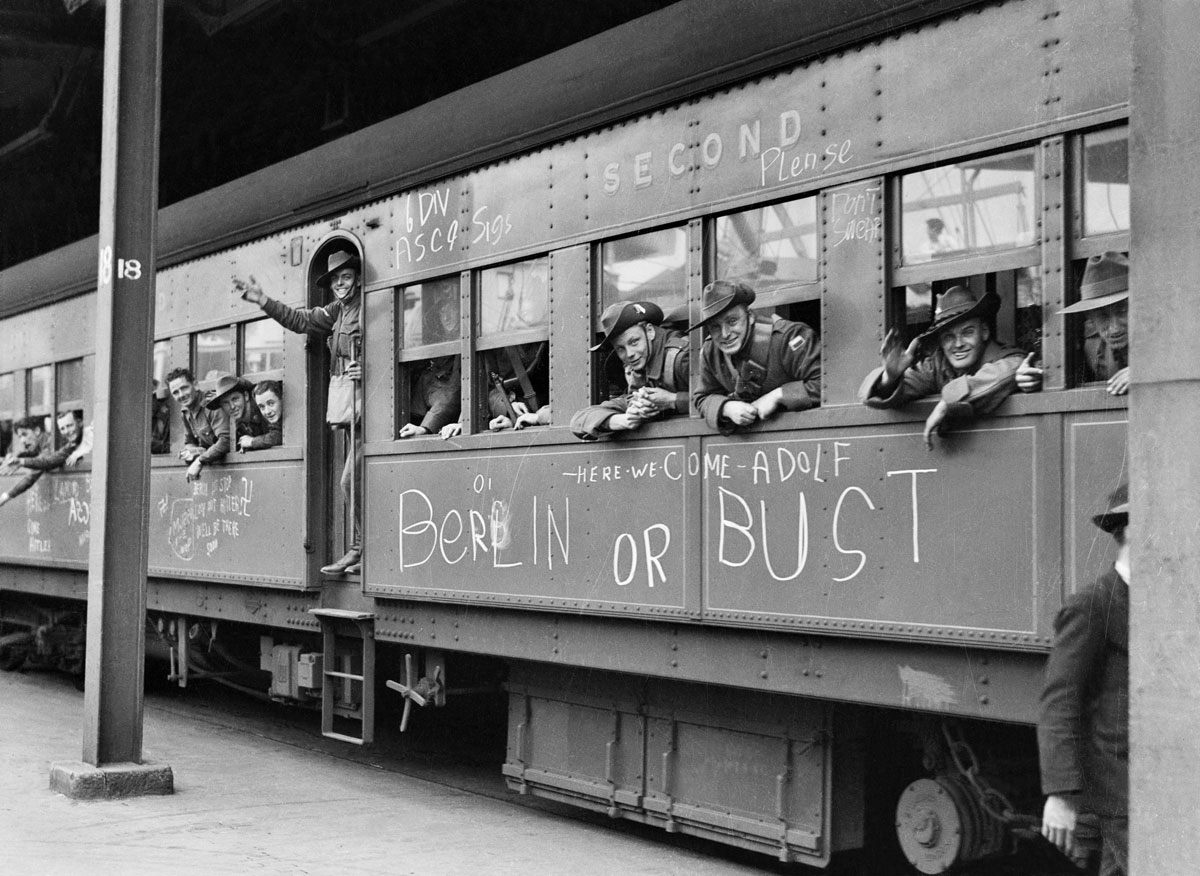
Sam Hood (Australian, 1872-1953) '6th division AIF troops waving from troop-train carriage, 13 September 1940' 1940


Sam Hood (Australian, 1872-1953)
6th division AIF troops waving from troop-train carriage, 13 September 1940
1940
© Australian War Memorial


Some poignant photographs in this posting of young Australian men setting off to fight in the early stages of the Second World War. The message scrawled in chalk on the side of the train (below, at left) reads, “Berlin first stop. Look out Hitler, we’ll be there soon.” Little did they know it would be five long, hard years of fighting and countless deaths before that aphorism would come true. The 6th division AIF troops first fought in North Africa against the Italians at Tobruk and was then sent to Greece to fight the German advance. About 39 per cent of the Australian troops in Greece on 6 April 1941 were either killed, wounded or became prisoners of war. The division then fought in the Pacific War on the Kokoda Trail campaign in the New Guinea theatre until the end of the war.

I wonder how many of the men, smiling and leaning out of the train carriage or departing on a troop ship, returned to these shores?

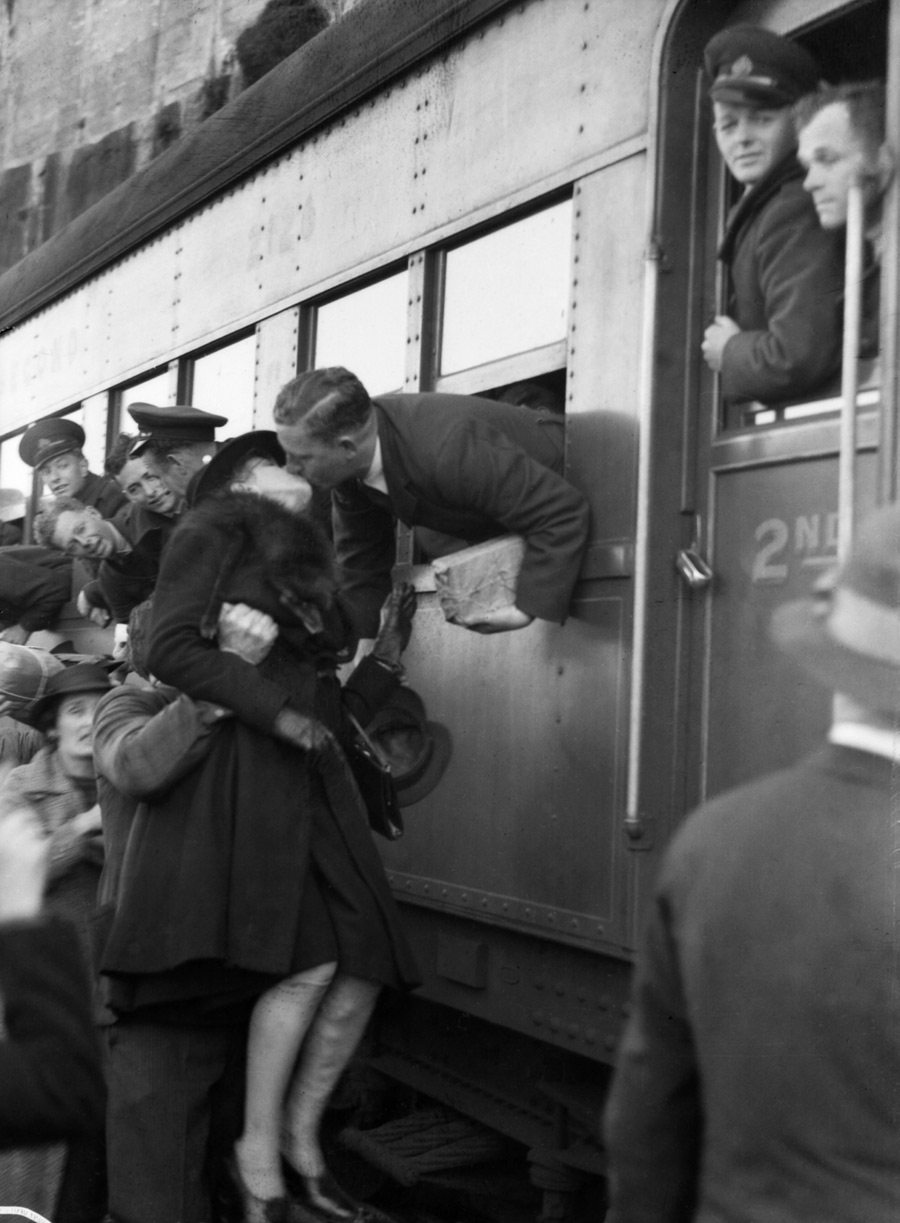
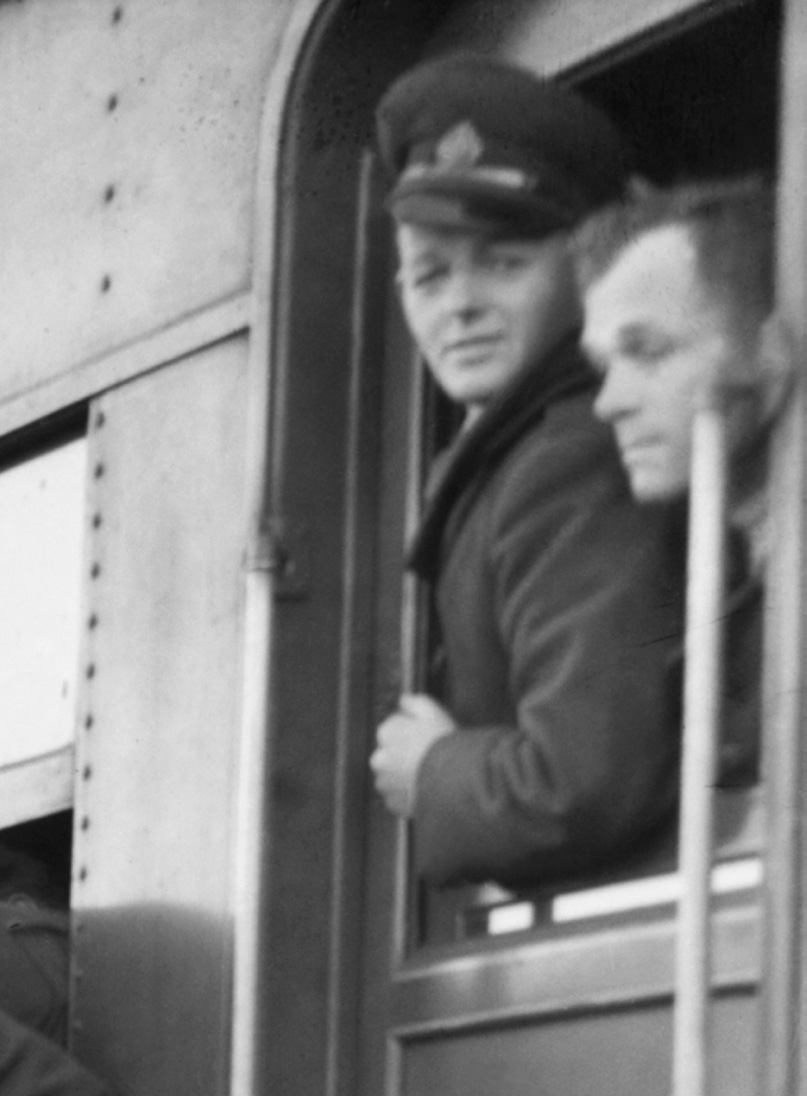
The last photograph in the posting is so very eloquent it actually moved me to tears. The women being hoisted aloft to kiss her loved one last time – clutching her handbag, complete with rumpled, lumpy stockings. To the right (and this is what caught my eye), a man looks straight at the camera while another right next to him has this distant melancholy look on his face as though he is not actually there. A portent of things to come. Brave men, fighting in the only war that Australians have had to fight for their own freedom, not at the whim of a colonial power or overseas ally in some far of distant land. Brave men and women – we wouldn’t be here without them.

Dr Marcus Bunyan


Many thankx to the Museum of Sydney for allowing me to publish the photographs in the posting. Please click on the photographs for a larger version of the image.


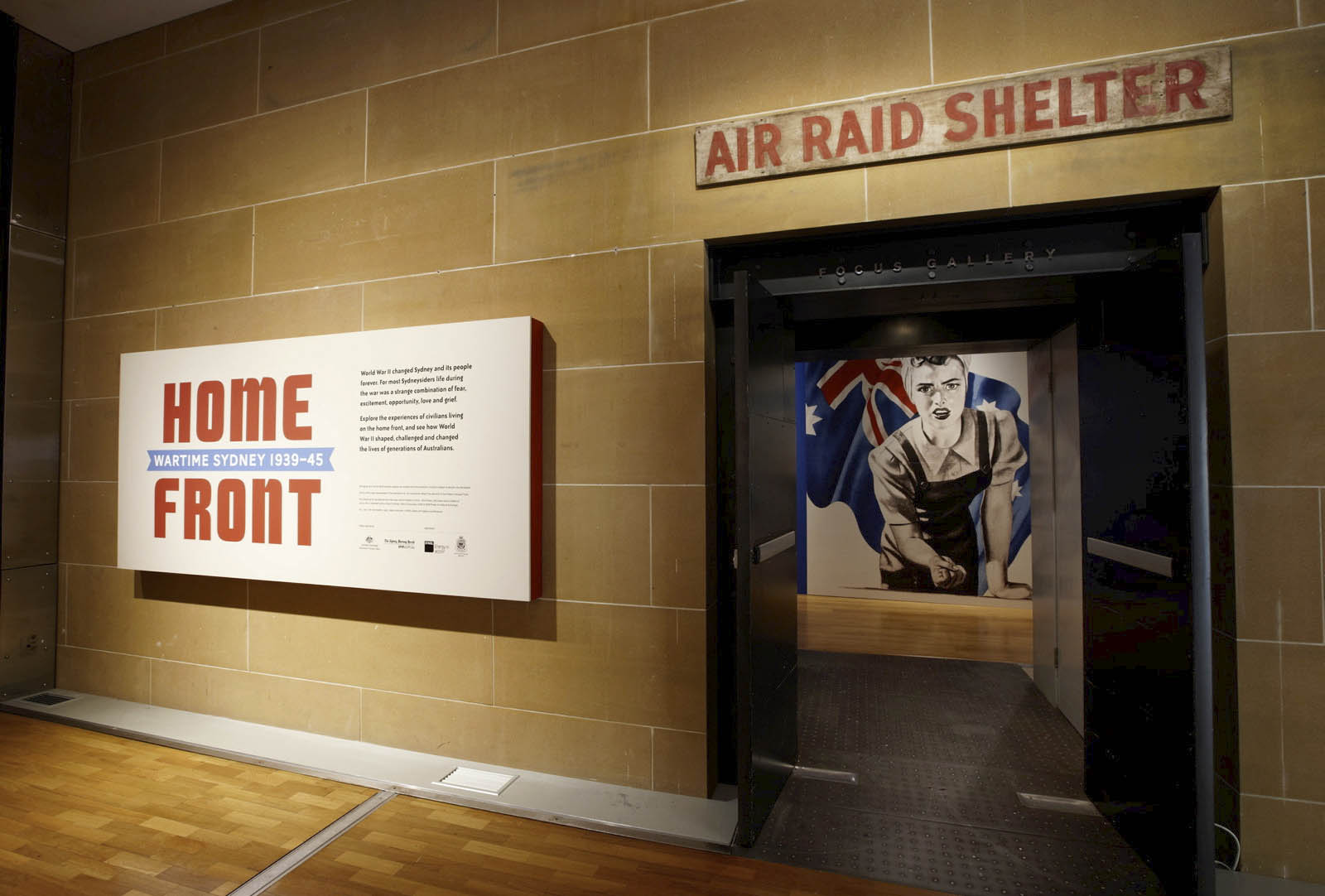
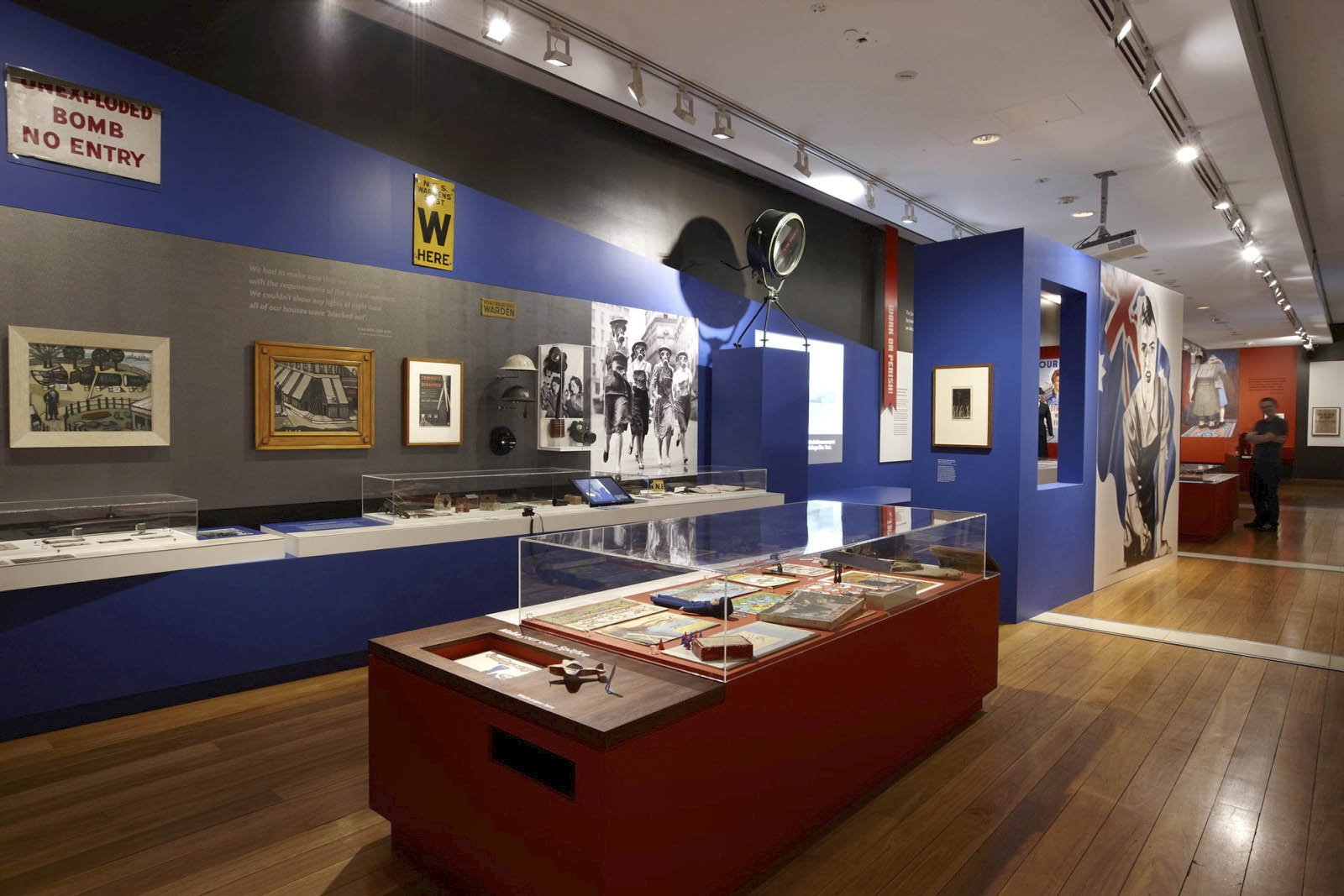
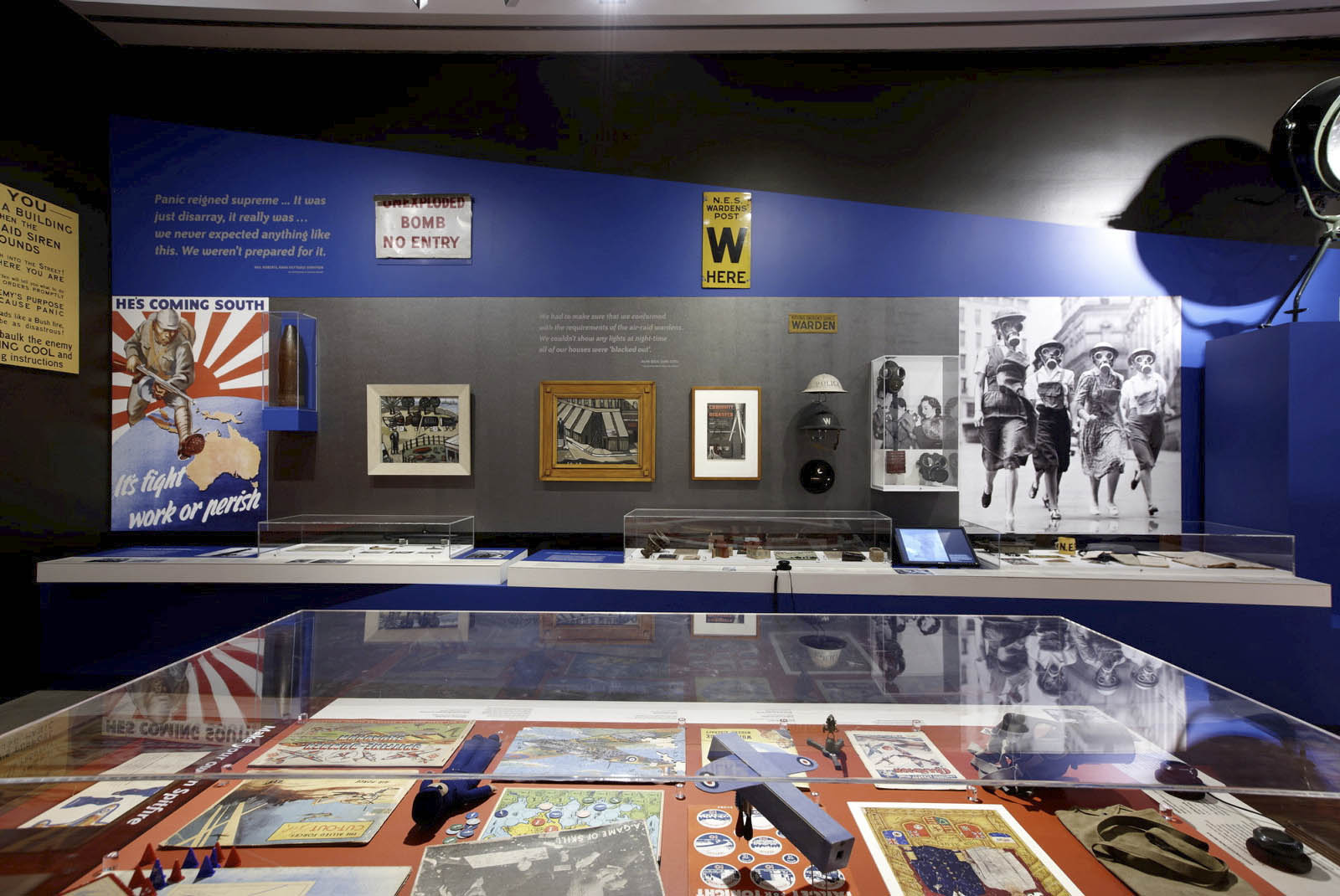
Installation view of the exhibition 'Home Front: Wartime Sydney 1939-45' at the Museum of Sydney 

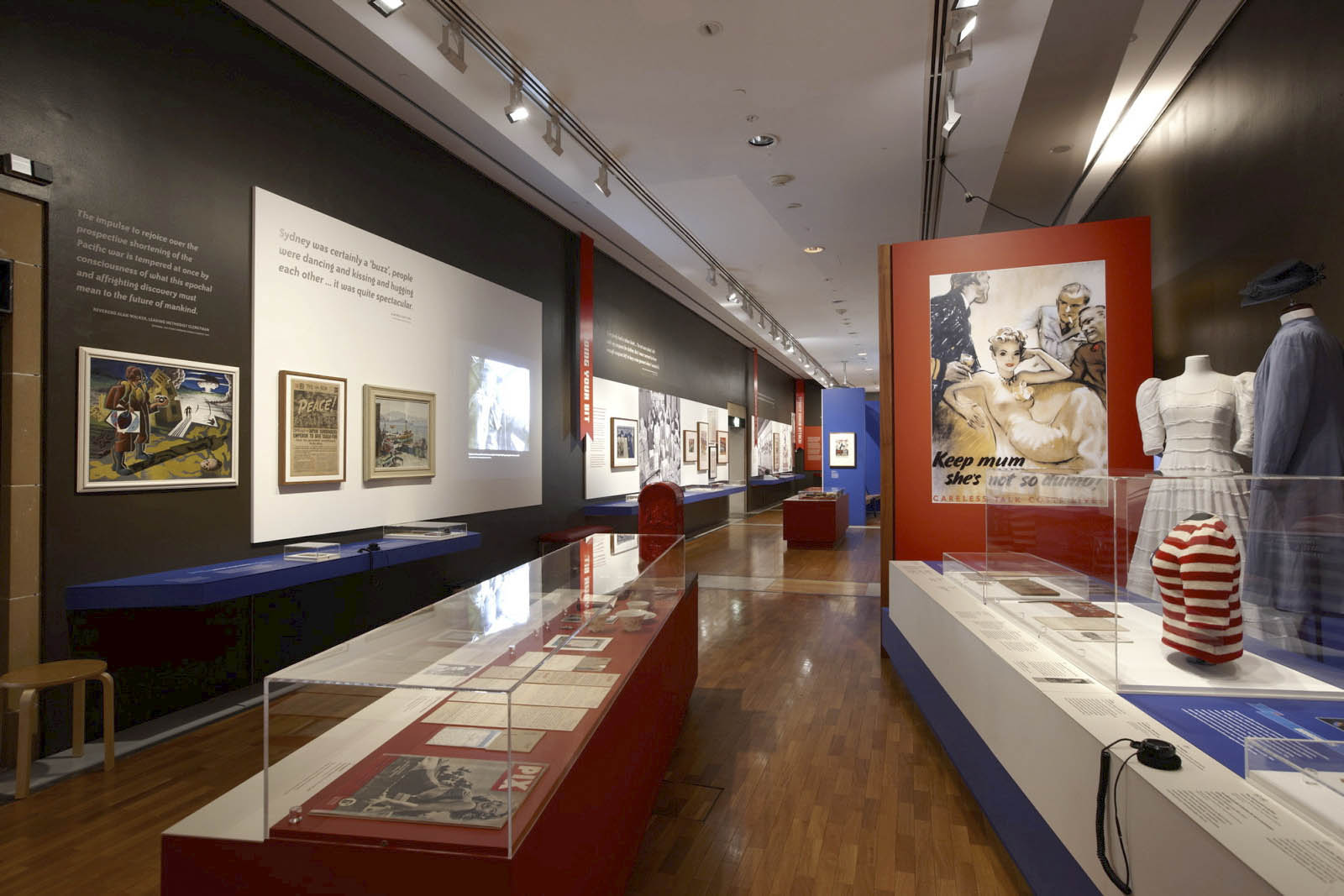
Installation view of the exhibition 'Home Front: Wartime Sydney 1939-45' at the Museum of Sydney 

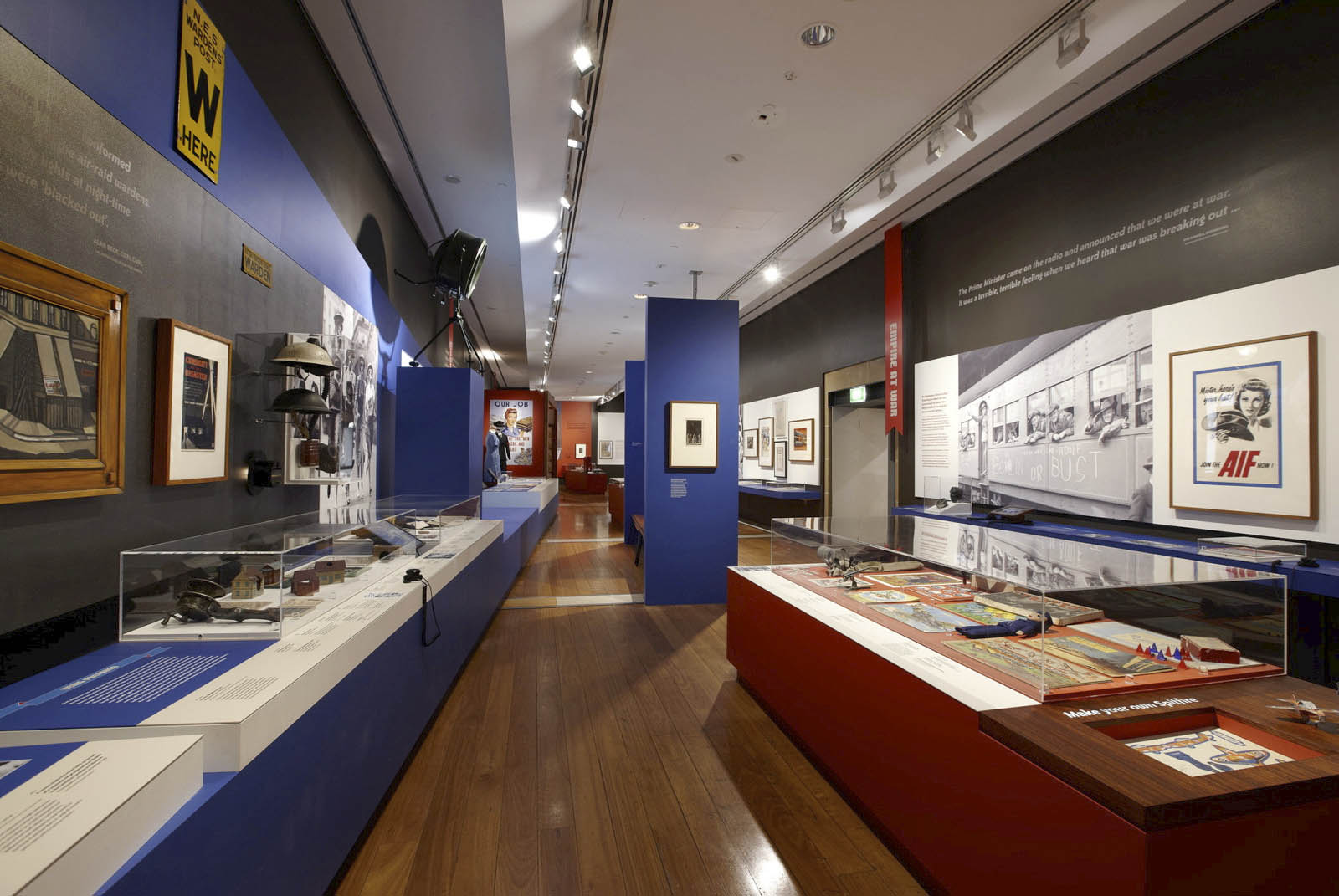
Installation view of the exhibition 'Home Front: Wartime Sydney 1939-45' at the Museum of Sydney 

Installation view of the exhibition 'Home Front: Wartime Sydney 1939-45' at the Museum of Sydney

Installation view of the exhibition 'Home Front: Wartime Sydney 1939-45' at the Museum of Sydney


Installation view of the exhibition Home Front: Wartime Sydney 1939-45 at the Museum of Sydney
Historic Houses Trust of NSW
Photos: Jenni Carter


Anonymous photographer. 'Troops of the 6th Division wave goodbye, Sydney 1940' 1940


Anonymous photographer
Troops of the 6th Division wave goodbye, Sydney 1940
1940
© Australian War Memorial


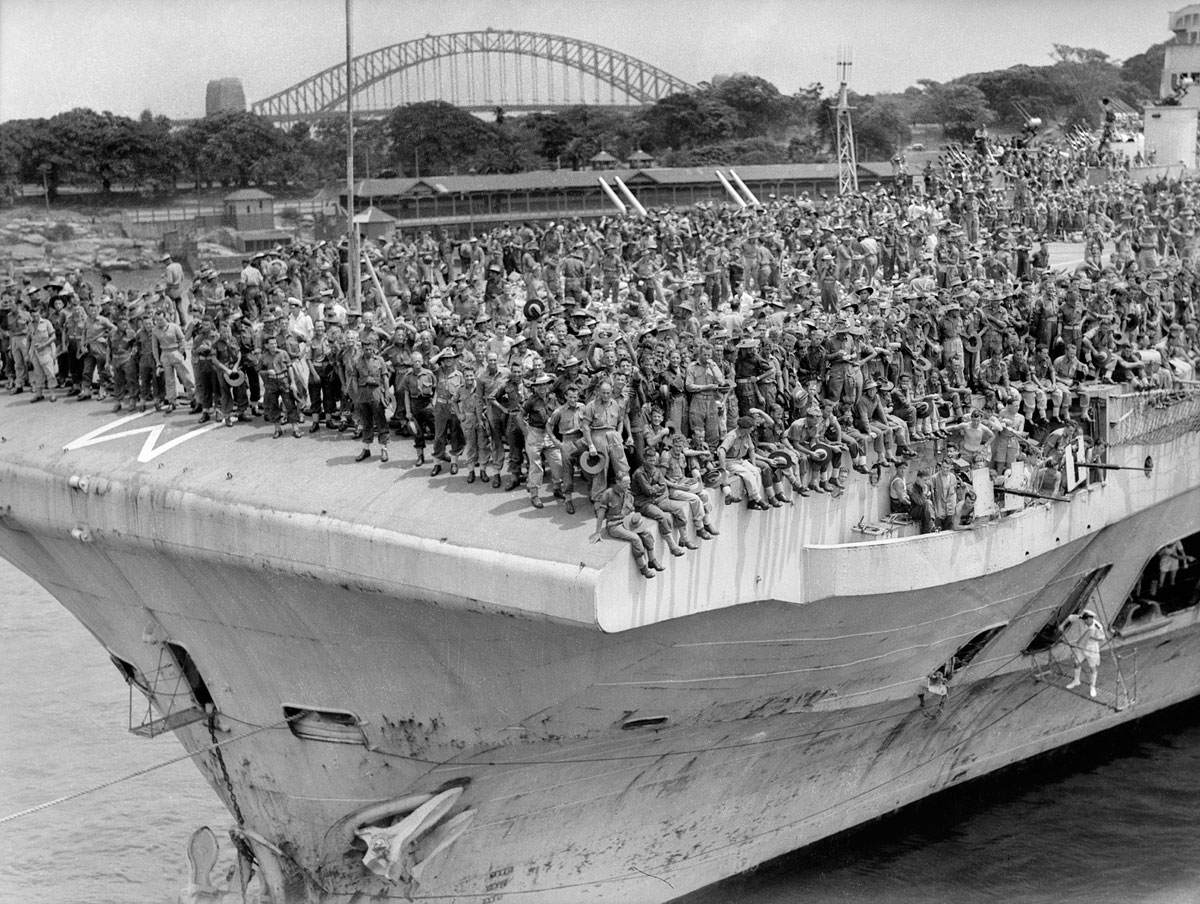
Anonymous photographer. 'Men of the 6th Division returning from Wewak crowd the deck of HMS Implacable, 18 Dec 1945' 1945


Anonymous photographer
Men of the 6th Division returning from Wewak crowd the deck of HMS Implacable, 18 Dec 1945
1945
© Australian War Memorial


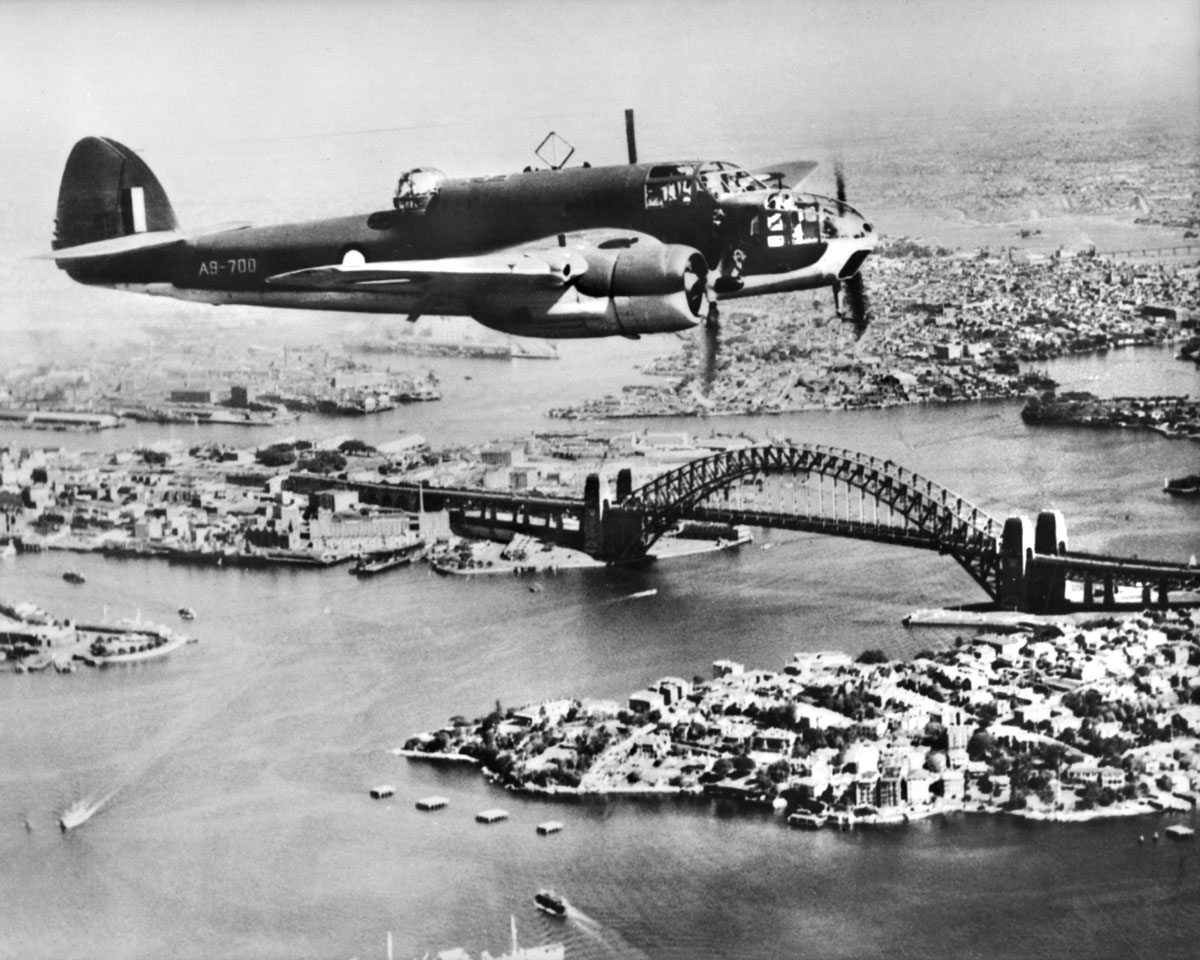
Anonymous photographer. 'An Australian built DAP Bristol Beaufort VIII aircraft, serial no A9-700, in flight over Sydney Harbour near the Bridge' c. 1944


Anonymous photographer
An Australian built DAP Bristol Beaufort VIII aircraft, serial no A9-700, in flight over Sydney Harbour near the Bridge
c. 1944
© Australian War Memorial


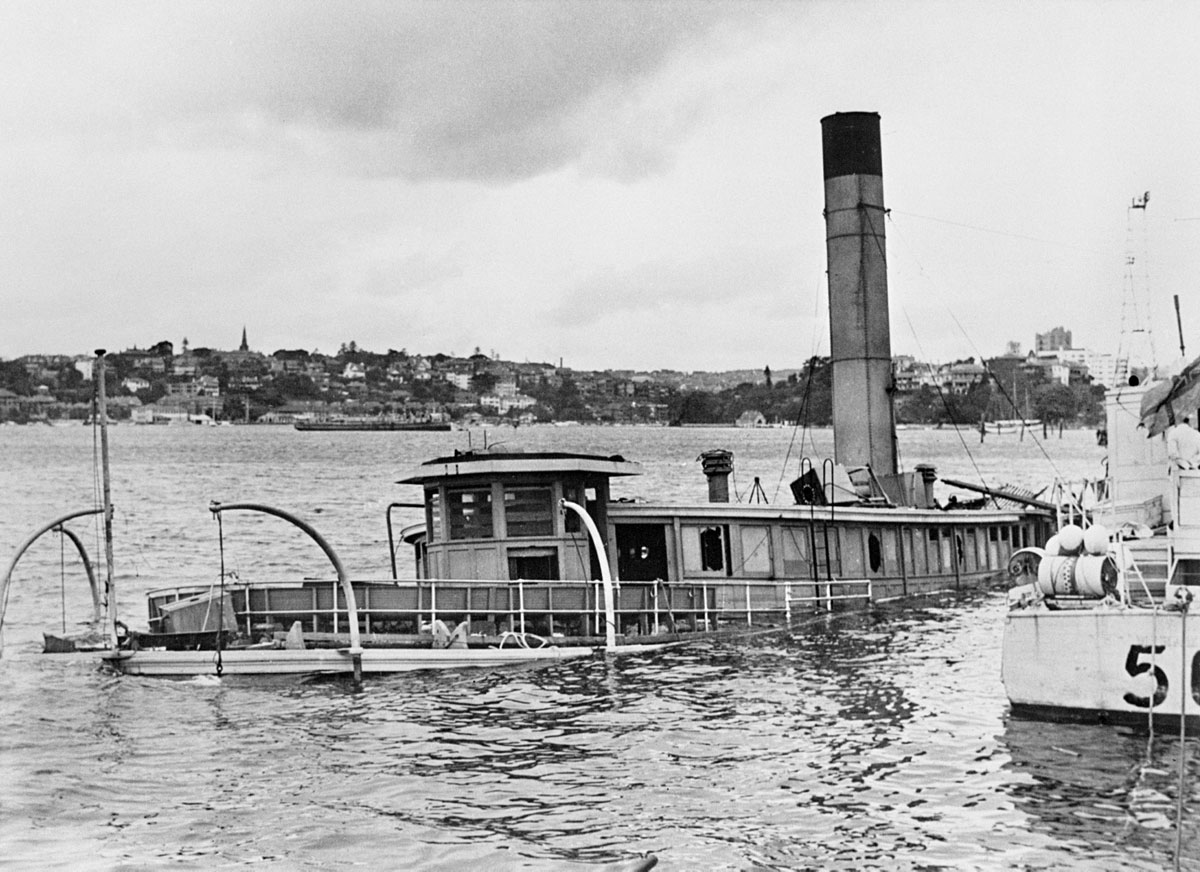
Anonymous photographer. 'Partly submerged RAN accommodation ship damaged during the unsuccessful Japanese midget submarine attack 1 June 1942' 1942


Anonymous photographer
Partly submerged RAN accommodation ship damaged during the unsuccessful Japanese midget submarine attack 1 June 1942
1942
© Australian War Memorial


Anonymous photographer. 'Two women donning gas masks as part of an air raid drill' Nd


Anonymous photographer
Two women donning gas masks as part of an air raid drill
Nd
© Argus Newspaper Collection of Photographs, State Library of Victoria


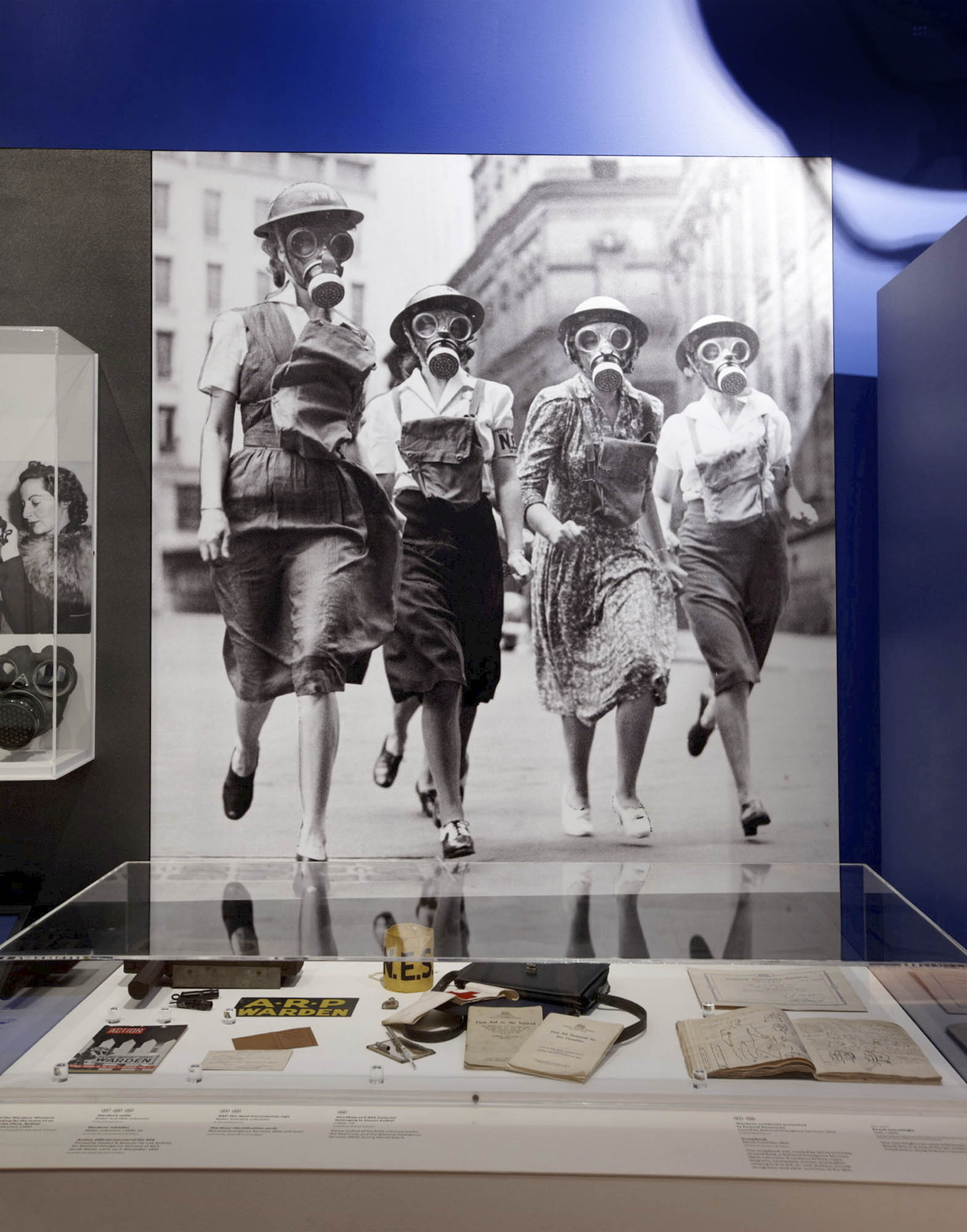
Installation view of the exhibition 'Home Front: Wartime Sydney 1939-45' at the Museum of Sydney showing at centre, a detail of 'Members of the Wardens' Women's Auxiliary making for the scene of an incident' (c. 1943) by an anonymous photographer


Installation view of the exhibition Home Front: Wartime Sydney 1939-45 at the Museum of Sydney showing at centre, a detail of Members of the Wardens’ Women’s Auxiliary making for the scene of an incident (c. 1943, below) by an anonymous photographer
Historic Houses Trust of NSW
Photo: Jenni Carter


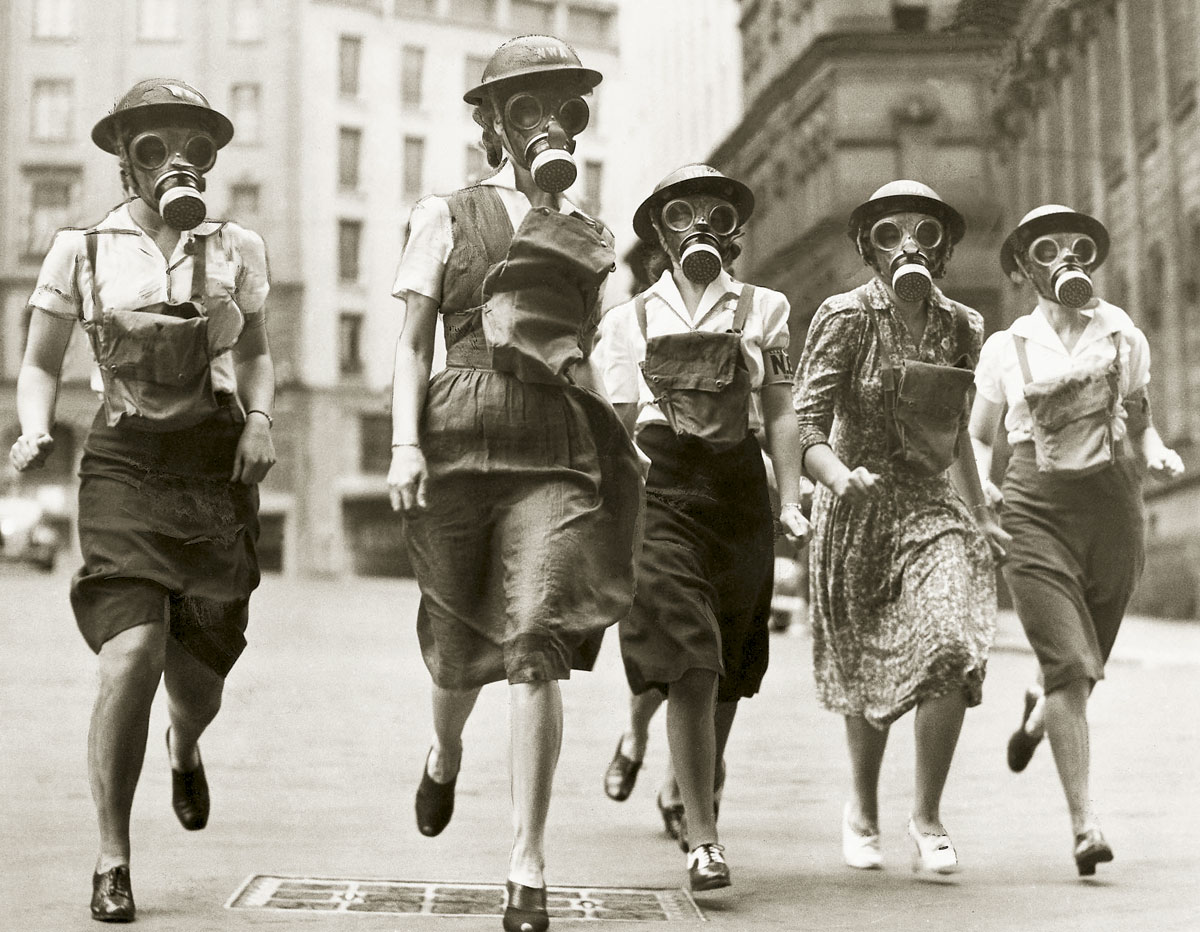
Anonymous photographer. 'Members of the Wardens' Women's Auxiliary making for the scene of an incident' c. 1943


Anonymous photographer
Members of the Wardens’ Women’s Auxiliary making for the scene of an incident
c. 1943
© Argus Newspaper Collection of Photographs, State Library of Victoria


In May 1942 three Japanese midget submarines entered Sydney Harbour in an attempt to sink allied ships, bringing the once far away war to the shores of the harbourside city and shaking the country to its core. Coinciding with the 70th anniversary of the Japanese attack on Sydney Harbour, Home Front: Wartime Sydney 1939-45 a new exhibition opening 31 March at the Museum of Sydney, explores the experience of the women, men and children who rallied together to support the war effort from home.

Unprepared for another world war, Australians initially referred to the conflict as ‘the phoney war’, however it wasn’t long before propaganda posters were plastered around Sydney, censorship and food rationing became the norm, and tank traps and barbed wire replaced bronzed bodies on Sydney beaches. For six long years the world seemed to come to Sydney as soldiers, sailors and airmen from many nations called Sydney home, making wartime an exciting and thrilling period for some, while for others it was a long and lonely time interrupted by the occasional letter from a loved one serving overseas.

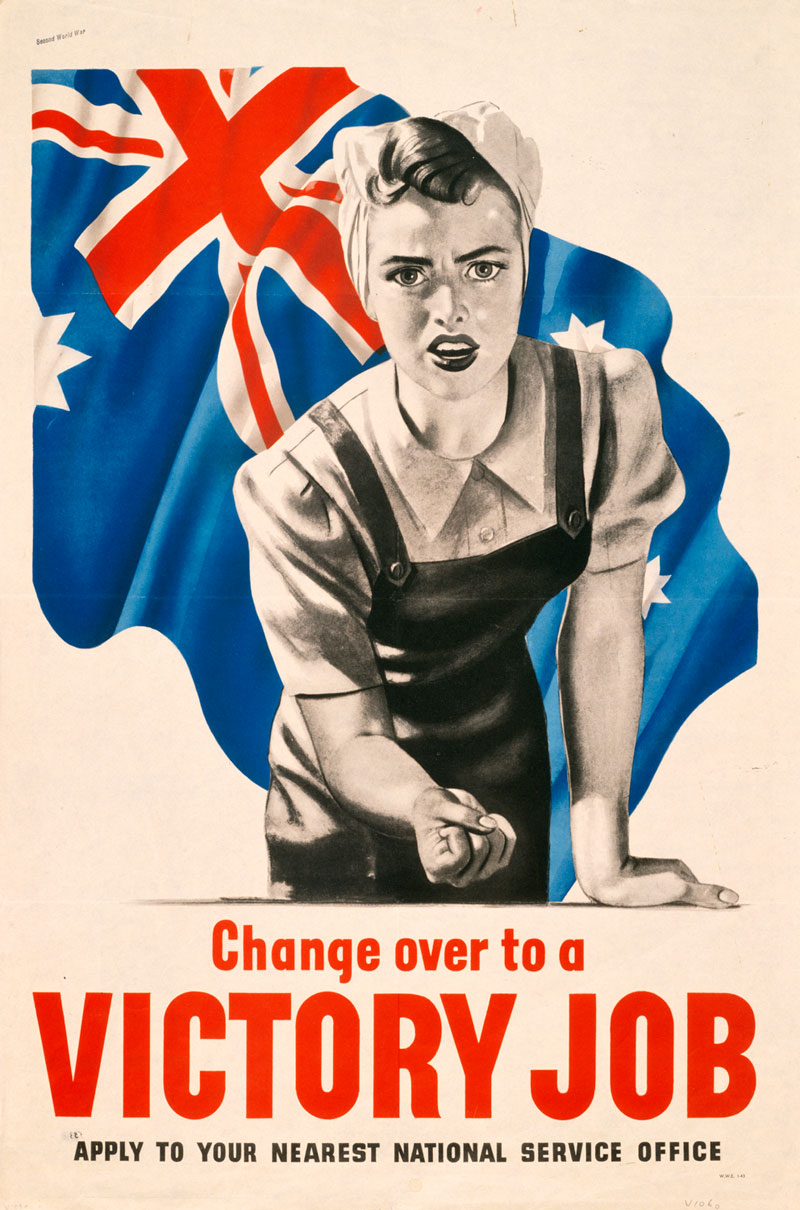
Almost 40,000 Australians lost their lives with the war leaving a lasting impact at home and transforming the lives of generations of Australians, in particular the lives of women, says Curator Annie Campbell. “As well as having to cope with war related anxieties and stress, many women were ‘manpowered’ to work in wartime industries such as ammunitions factories and aircraft construction. Everyone had to make sacrifices on the home front, however despite wartime shortages and rationing, women were expected and actively encouraged to look smart, which often involved some innovative thinking. One of my favourite objects in the exhibition is a wedding dress made out of parachute silk and mosquito net for a war bride, later worn by her sister and two girlfriends on their special days.

While the troops were busy on the battlefields, Sydneysiders prepared for the possibility of an enemy invasion on home soil. An anti-submarine boom net was installed across Sydney Harbour to keep out attacking forces, bomb shelters were constructed in Hyde Park and protective timbers were placed around landmark buildings. In 1942 blackout restrictions were introduced to limit the effectiveness of air raids, all Sydney lights were switched off and car, train and tram headlights were masked, giving the city a sinister feel. But it wasn’t all doom and gloom, large numbers of people were ready to have fun in Sydney and the Trocadero on George Street became a mecca for white American servicemen, while the Booker T Washington Club in Albion Street Surry Hills serviced the African-American GI’s,” says Campbell.

Highlights of the exhibition include the microphone used by Prime Minister Robert Menzies to announce that Australia was at war, remnants of the Japanese midget submarines that attacked Sydney, over 100 photographs and artworks depicting wartime Sydney, and a short documentary featuring historic footage. Over 200 wartime Sydney mementoes will also feature in the exhibition including propaganda posters, warden’s memorabilia, letters from soldiers serving overseas and a selection of wartime fashions.

Press release from the Museum of Sydney website


Anonymous photographer. 'Sydney kindergarten children wearing air raid headgear designed to muffle sounds and prevent them from biting tongues' Nd


Anonymous photographer
Sydney kindergarten children wearing air raid headgear designed to muffle sounds and prevent them from biting tongues
Nd
© Mitchell Library, State Library of NSW


Anonymous photographer. 'Eve Holliman, Hilda Jamieson and Vera Thurlow converting a car into an ambulance' Nd


Anonymous photographer
Eve Holliman, Hilda Jamieson and Vera Thurlow converting a car into an ambulance
Nd
© Argus Newspaper Collection of Photographs, State Library of Victoria


Anonymous photographer. 'Woman war worker' 1944


Anonymous photographer
Woman war worker
1944
© Mitchell Library, State Library of NSW


Anonymous designer and photographer. 'Change Over to a Victory Job propaganda poster' Nd


Anonymous designer and photographer
Change Over to a Victory Job propaganda poster
Nd
© Australian War Memorial


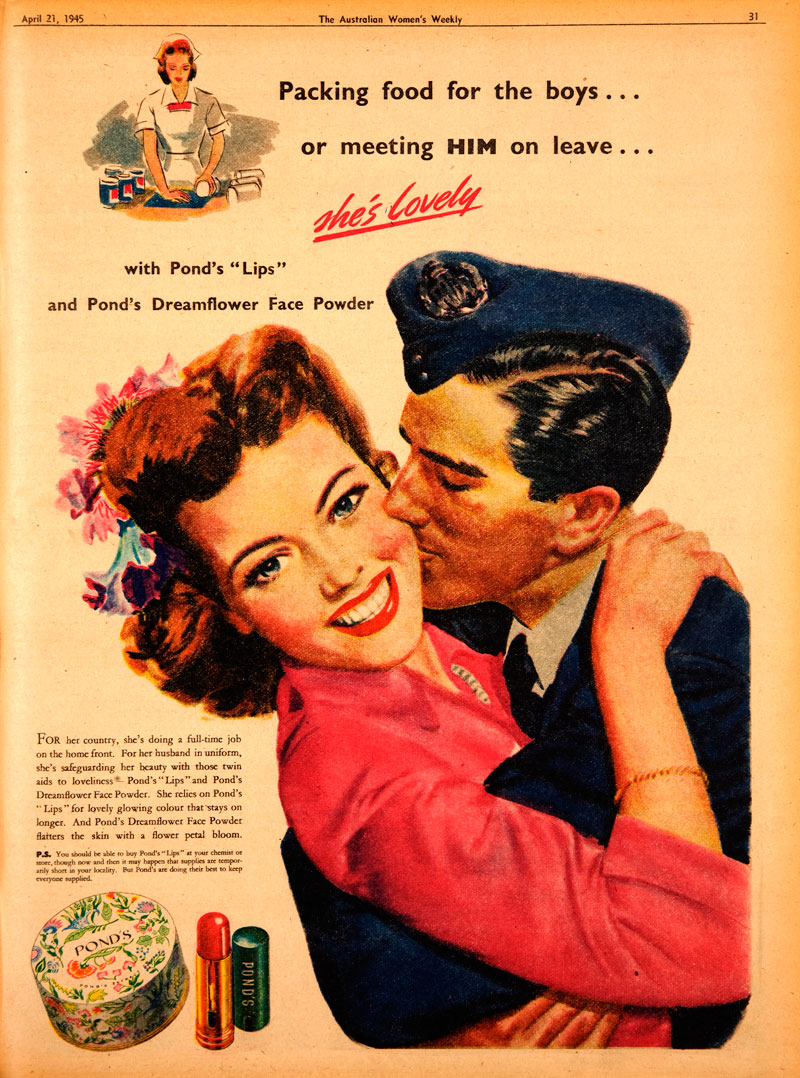
Anonymous designer and photographer. 'Advertisement for Ponds' 1945


Anonymous designer and photographer
Advertisement for Ponds
1945
© National Library of Australia


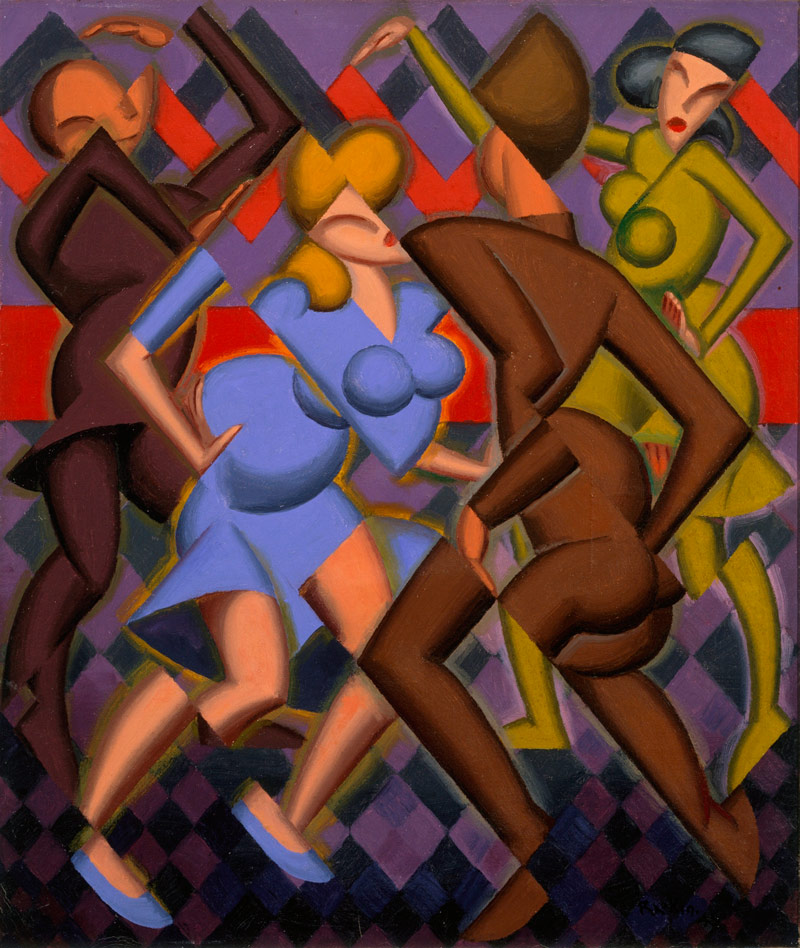
Weaver Hawkins (English, 1893-1977) 'Jitterbugs' 1945


Weaver Hawkins (English, 1893-1977)
Jitterbugs
1945
Oil on canvas, Art Gallery of New South Wales
© Estate of H F Weaver Hawkins
Photograph Jenni Carter


Sam Hood (Australian, 1872-1953) 'Sydney embarkation, 13 September 1940' 1940


Sam Hood (Australian, 1872-1953)
Sydney embarkation, 13 September 1940
1940
© Australian War Memorial


Sam Hood (Australian, 1872-1953) 'Sydney embarkation, 13 September 1940' 1940 (detail)


Sam Hood (Australian, 1872-1953)
Sydney embarkation, 13 September 1940 (detail)
1940
© Australian War Memorial


Museum of Sydney
Cnr Bridge and Phillip Streets
Sydney, NSW 2000
Phone: (02) 9251 5988

Opening hours:
Daily 10am – 5pm
Closed Good Friday and Christmas Day

Museum of Sydney website

LIKE ART BLART ON FACEBOOK

Back to top

Exhibition: ‘Before Color: William Eggleston’ at Nederlands Fotomuseum, Rotterdam

Exhibition dates: 16th June – 26th August 2012


William Eggleston (American, b. 1939) 'Untitled' 1960


William Eggleston (American, b. 1939)
Untitled
1960
Courtesy Cheim & Read, New York and Peder Lund, Oslo
Eggleston Artistic Trust
Photo Courtesy Vegard Kleven, Oslo


“As these rediscovered prints reveal, the man who made colour photography into an artform worked brilliantly in monochrome – and his eye for unsettling detail is every bit as sharp”


Sean O’Hagan


These are magnificent, intelligent photographs. They are works from the master that show that Eggleston found his own style early on. His understanding of the “quietness” of space and form within the picture plane is already fully developed and his aesthetic decision to use grainy, black and white high speed film just adds to the stillness and eeriness of the photographs. His signature style, his unique messianic voice, really shines through in these recently discovered images which could be seen to be BC – before the beginning of colour (photography) as eulogised by the museum establishment.

Highlights in these photographs include:

~ The pose of the women caught mid-stride, about to put the telephone back in its cradle

~ The man and the woman frozen mid-conversation in a minimal hotel lobby(?) with the shroud of a dark man on the plaque behind

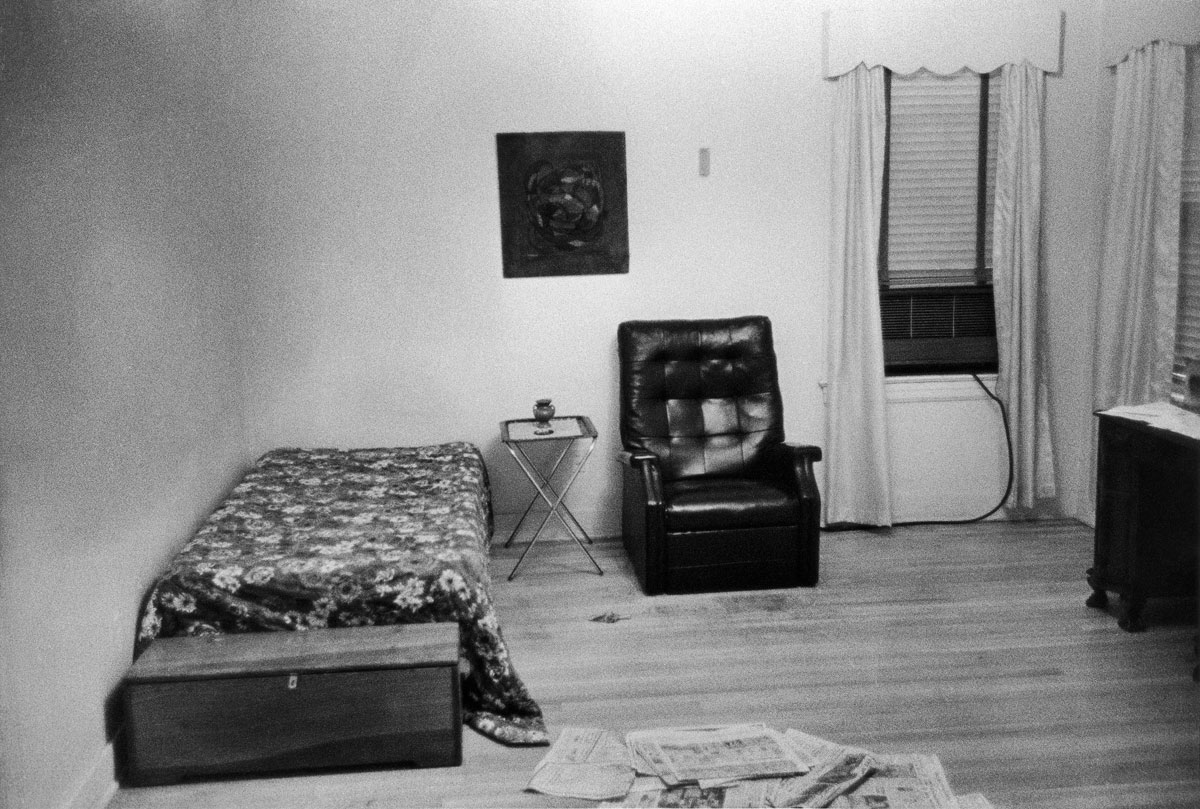
~ The barren hotel room with old air conditioner, vinyl chair, floral bedspread and newspapers strewn over the floor (remeniscent of the spaces of so many of his later colour photographs)

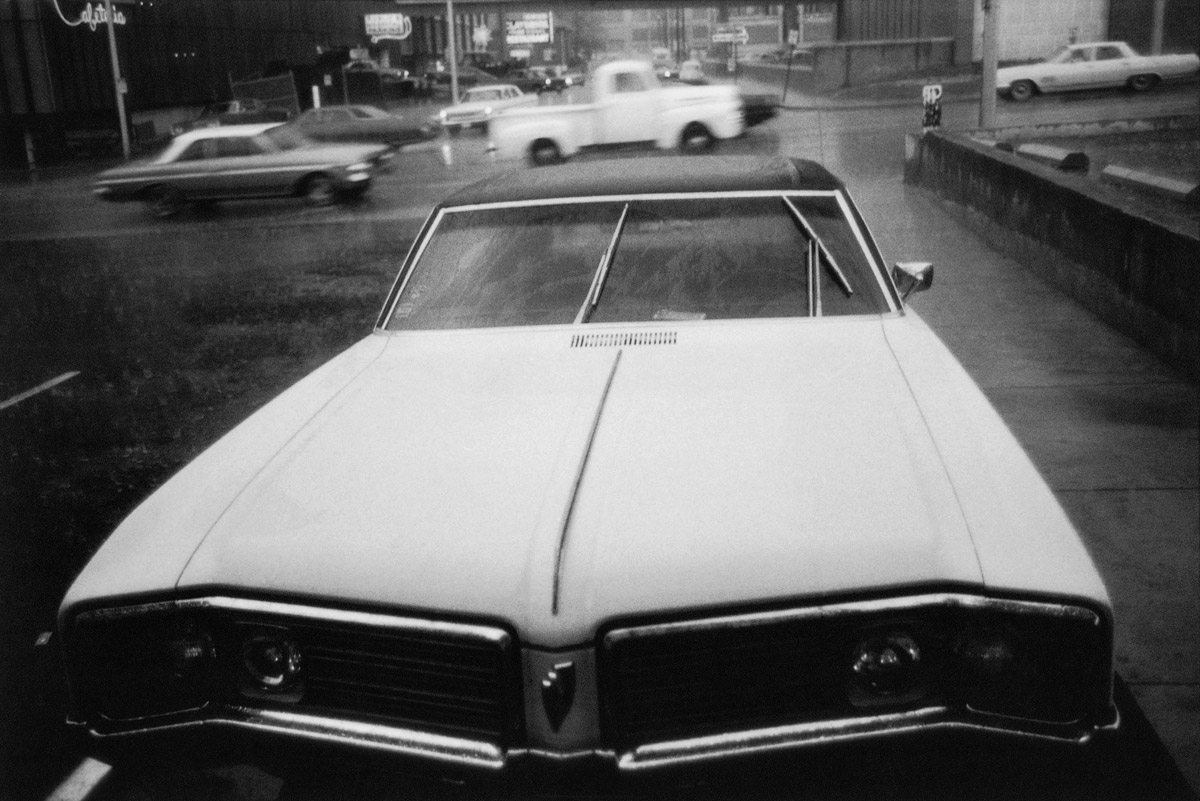
~ And my favourite, Untitled (1960, below), the bulk of the heavy car looming out of the murk at the bottom of the picture frame, the intransigent windscreen wipers, the rain and the blurred traffic moving behind. You can almost touch and taste the atmosphere of this moment, in this day, of that year…

.
The wondrous thing is that Eggleston’s voice transfers beautifully through into the saturation of his later colour dye-transfer prints. His pared down vision of “Southern” life and world become unmistakably his own in the colour photographs. Unlike the Japanese photographer Daido Moriyama, whose panache in his black and white photographs is matched only by the shallowness of his colour work, here Eggleston lays the ground work for the rest of his monumental career.

Great to see these early photographs. I’m so glad they found them!

Dr Marcus Bunyan


Many thankx to the Nederlands Fotomuseum for allowing me to publish the photographs in the posting. Please click on the photographs to view a larger version of the image.


William Eggleston (American, b. 1939) 'Untitled' 1960


William Eggleston (American, b. 1939)
Untitled
1960
Courtesy Cheim & Read, New York and Peder Lund, Oslo
Eggleston Artistic Trust
Photo Courtesy Cheim & Read, New York


William Eggleston (American, b. 1939) 'Untitled' 1966


William Eggleston (American, b. 1939)
Untitled
1966
Private collection, Oslo. Courtesy Peder Lund
Eggleston Artistic Trust
Photo Courtesy Cheim & Read, New York


The American photographer William Eggleston (1939) is known as one of the first major pioneers of artistic colour photography. His book William Eggleston’s Guide was one of the most influential photography books of the 20th century and still inspires many today. Eggleston’s black-and-white photographs are less well-known. In Before Color, the Nederlands Fotomuseum highlights this famous photographer’s earliest work, which was only recently discovered. The photographs show that Eggleston found his own style early on. Inspired by Henri Cartier-Bresson, Eggleston used a 35mm camera and fast black-and-white film to photograph the American way of life in the early 1960s. We see his own surroundings: suburban Memphis, with its diners, car parks and supermarkets, as well as the houses and domestic interiors of the people who lived there. Before Color by William Eggleston will be on display from 16 June until 26 August.

Black-and-white snapshots

When Eggleston started taking photographs in the early 1960s, he was particularly inspired by the French photographer Henri Cartier-Bresson and his book The Decisive Moment from 1952. Contrary to the big names in American photography at the time – who were preoccupied with the stunning landscape, like Ansel Adams – Cartier-Bresson took snapshots of everyday life. Eggleston found this approach very appealing. Using a 35mm camera and fast black-and-white film he began photographing his own surroundings. These were predominantly shaped by suburban Memphis, with its diners, car parks and supermarkets, but he also focused on the houses and domestic interiors of the people who lived there.

Breaking a tradition

At the same time Eggleston experimented with colour photography. Together with Joel Meyerowitz, Joel Sternfeld and others, he broke the long tradition of black-and-white photography by working in colour and focusing on subjects from daily life. In 1972 he completed an extensive series of 2,200 photographs entitled Los Alamos, which provided a unique picture of life in America in the ’60s and early ’70s. He discovered the deep and saturated colours of the so-called dye-transfer printing technique, originally a commercial application that he perfected and that would become his international trademark. His first solo exhibition in 1976 was also the first exhibition in the Museum of Modern Art devoted to colour photography. The exhibition was accompanied by what would become the acclaimed and influential book William Eggleston’s Guide.

Before color

Eggleston would later abandon black-and-white film altogether and his earliest work was forgotten. So it was a surprise when a box of his black-and-white photographs was recently found in the archives of the William Eggleston Artistic Trust in Memphis. The photographs were exhibited for the first time in 2010 at the Cheim & Read Gallery in New York and published in the book Before Color (Steidl, 2010).

Before Color exhibition

This is the first time that Before Color has been exhibited in the Netherlands and includes nearly 40 photographs from William Eggleston’s early career. The images show that Eggleston found his personal style and photographic motifs early on and provide a wonderful picture of the American way.

Press release from the Nederlands Fotomuseum website


William Eggleston (American, b. 1939) 'Untitled' 1960


William Eggleston (American, b. 1939)
Untitled
1960
Courtesy Cheim & Read, New York and Peder Lund, Oslo
Eggleston Artistic Trust
Photo Courtesy Cheim & Read, New York


William Eggleston (American, b. 1939) 'Untitled' Nd


William Eggleston (American, b. 1939)
Untitled
Nd
Courtesy Cheim & Read, New York and Peder Lund, Oslo
Eggleston Artistic Trust
Photo Courtesy Cheim & Read, New York


William Eggleston (American, b. 1939) 'Untitled' 1960


William Eggleston (American, b. 1939)
Untitled
Nd
Courtesy Cheim & Read, New York and Peder Lund, Oslo
Eggleston Artistic Trust
Photo Courtesy Cheim & Read, New York


William Eggleston (American, b. 1939) 'Untitled' Nd


William Eggleston (American, b. 1939)
Untitled
Nd
Courtesy Cheim & Read, New York and Peder Lund, Oslo
Eggleston Artistic Trust
Photo Courtesy Cheim & Read, New York


William Eggleston (American, b. 1939) 'Untitled' Nd


William Eggleston (American, b. 1939)
Untitled
Nd
Courtesy Cheim & Read, New York and Peder Lund, Oslo
Eggleston Artistic Trust
Photo Courtesy Cheim & Read, New York


William Eggleston (American, b. 1939) 'Untitled' Nd


William Eggleston (American, b. 1939)
Untitled
Nd
Courtesy Cheim & Read, New York and Peder Lund, Oslo
Eggleston Artistic Trust
Photo Courtesy Cheim & Read, New York


William Eggleston (American, b. 1939) 'Untitled' Nd


William Eggleston (American, b. 1939)
Untitled
Nd
Courtesy Cheim & Read, New York and Peder Lund, Oslo
Eggleston Artistic Trust
Photo Courtesy Cheim & Read, New York


William Eggleston (American, b. 1939) 'Untitled' Nd


William Eggleston (American, b. 1939)
Untitled
Nd
Courtesy Cheim & Read, New York and Peder Lund, Oslo
Eggleston Artistic Trust
Photo Courtesy Cheim & Read, New York


The history of the “South” and what it is to be “Southern” cannot easily be separated from its horrific legacy of abject cruelty and malevolence against African Americans… of slavery, lynching, segregation, Jim Crow laws and lasting prejudice…

William Eggleston: Before Color is then surely a tour into this menace and heinous history and into the “Southern” legacy. In fact with the absence of color in this work, it is a significantly stronger embodiment of this history and of this malice. Although 90% of the book is absent of African American subjects, one can’t help but “feel” them in almost all of the pictures. The photographs, mainly consisting of white Memphis residents in the 1950-60’s, and their homes, cars and places, are also then filled by a default and implication with blacks. There is also a palpable undertone and a foreshadowing of the socio-economic decay that will fall on to this city and much of the South. As you look at the pictures, you “see” what “they” have done and the legacy that has been created, what has and what will occur. The atmosphere is dreary and ugly, there is no “Southern charm”. In photographs of newly constructed houses for example, through Eggleston’s gaze, the places are already giving hints to coming decay. It is as if the legacy has become an omen and what has been reaped, for generations now, everyone will sow.

Doug Rickard. “William Eggleston – “Before Color” (2010),” on the ASX website January 12, 2013 [Online] Cited 22/01/2013


William Eggleston (American, b. 1939) 'Untitled' 1960


William Eggleston (American, b. 1939)
Untitled
1960
Private collection, Oslo. Courtesy Peder Lund
Eggleston Artistic Trust
Photo Courtesy Cheim & Read, New York


William Eggleston (American, b. 1939) 'Untitled' 1960


William Eggleston (American, b. 1939)
Untitled
1960
Private collection, Oslo. Courtesy Peder Lund
Eggleston Artistic Trust
Photo Courtesy Cheim & Read, New York


William Eggleston (American, b. 1939) 'Untitled' c. 1968


William Eggleston (American, b. 1939)
Untitled
c. 1968
William Eggleston/2010 Eggleston Artistic Trust
Courtesy Cheim & Read, New York


William Eggleston (American, b. 1939) 'Untitled' c. 1970


William Eggleston (American, b. 1939)
Untitled
c. 1970
William Eggleston/2010 Eggleston Artistic Trust. Courtesy Cheim & Read, New York


William Eggleston (American, b. 1939) 'Untitled' c. 1970


William Eggleston (American, b. 1939)
Untitled
c. 1970
William Eggleston/2010 Eggleston Artistic Trust. Courtesy Cheim & Read, New York


Nederlands Fotomuseum
Wilhelminakade 332
3072 AR Rotterdam
The Netherlands

Opening hours
Tuesday – Sunday 11am – 5pm

Nederlands Fotomuseum website

LIKE ART BLART ON FACEBOOK

Back to top

Exhibition: ‘Eugène Atget, Paris’ at the Carnavalet Museum, Paris

Exhibition dates: 25th April – 29th July 2012


Eugène Atget (French, 1857-1927) 'Heurtoir à tête de lion, hôtel de la Monnaie, quai Conti, 6e arrondissement' September 1900


Eugène Atget (French, 1857-1927)
Heurtoir à tête de lion, hôtel de la Monnaie, quai Conti, 6e arrondissement
(Lion head knocker, Hotel Monnaie, Quai Conti, 6th District)
September 1900
Albumen paper print
Paris, musée Carnavalet
© Eugène Atget / Musée Carnavalet/ Roger-Viollet


More photographs from the master, including some of the less well known figurative work. The exhibition has been rating its socks off, with long queues and people being stopped from entering until the crowds inside have dissipated, so that people can actually see the small prints. Being a Leo the image of the lion’s head (Heurtoir à tête de lion, 1900, above) is my favourite in the posting, which is why it’s at the top. Owning an Atget. It has a nice ring to it. Just imagine owning this Atget. I would be in a spin for days!

Dr Marcus Bunyan


Many thankx to the Carnavalet Museum for allowing me to publish the photographs in the posting. Please click on the photographs for a larger version of the image.


Eugène Atget (French, 1857-1927) 'Chevet de l'église Saint-Séverin, rue Saint-Jacques, 5ème arrondissement, Paris' 1908


Eugène Atget (French, 1857-1927)
Chevet de l’église Saint-Séverin, rue Saint-Jacques, 5ème arrondissement, Paris
1908
Albumen paper print
Musée Carnavalet, Histoire de Paris
CC0 Paris Musées / Musée Carnavalet – Histoire de Paris


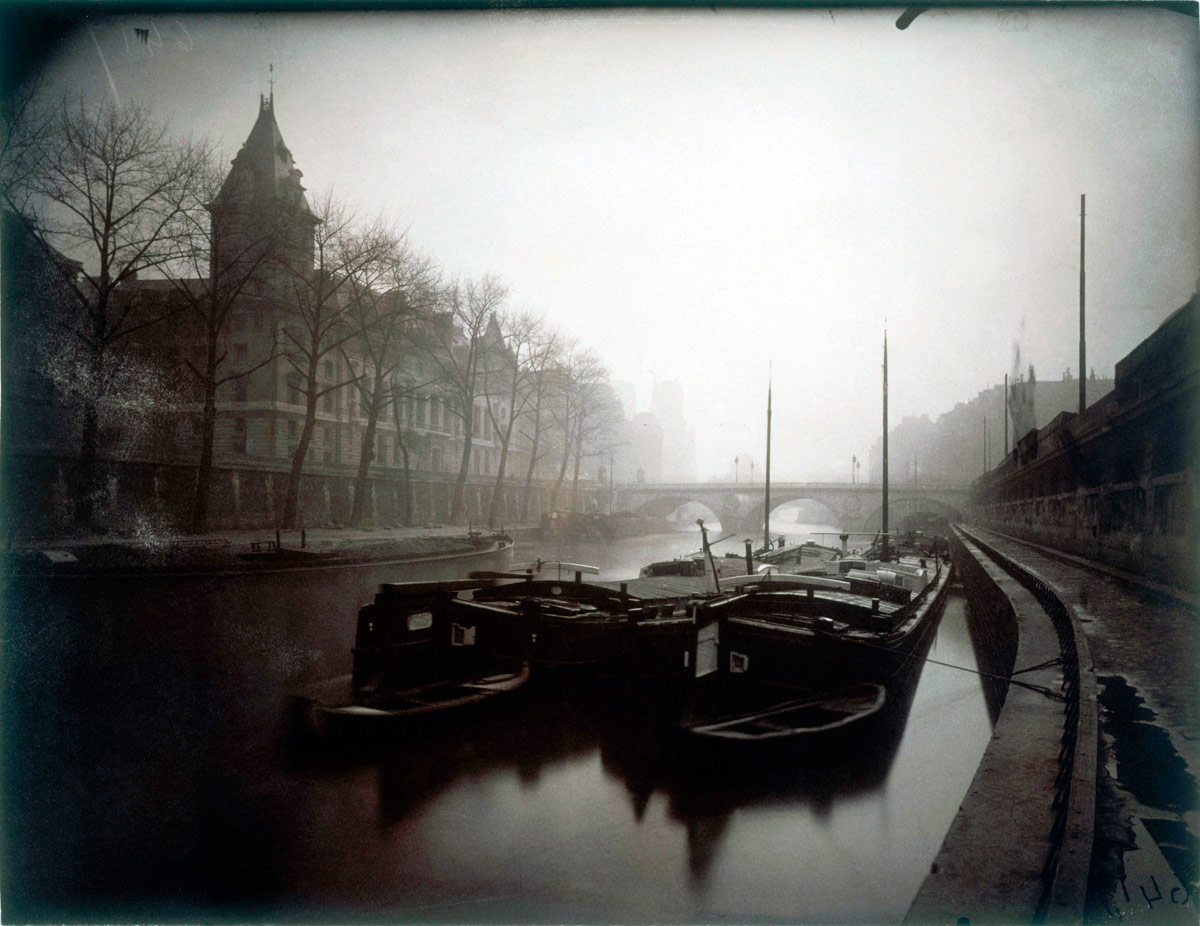
Eugène Atget (French, 1857-1927) 'La Conciergerie et la Seine, brouillard en hiver, 1er arrondissement' 1923


Eugène Atget (French, 1857-1927)
La Conciergerie et la Seine, brouillard en hiver, 1er arrondissement
(The Conciergerie and the Seine, fog in winter, 1st district)

1923
Print on matte albumen paper
Paris, musée Carnavalet
© Eugène Atget / Musée Carnavalet / Roger-Viollet


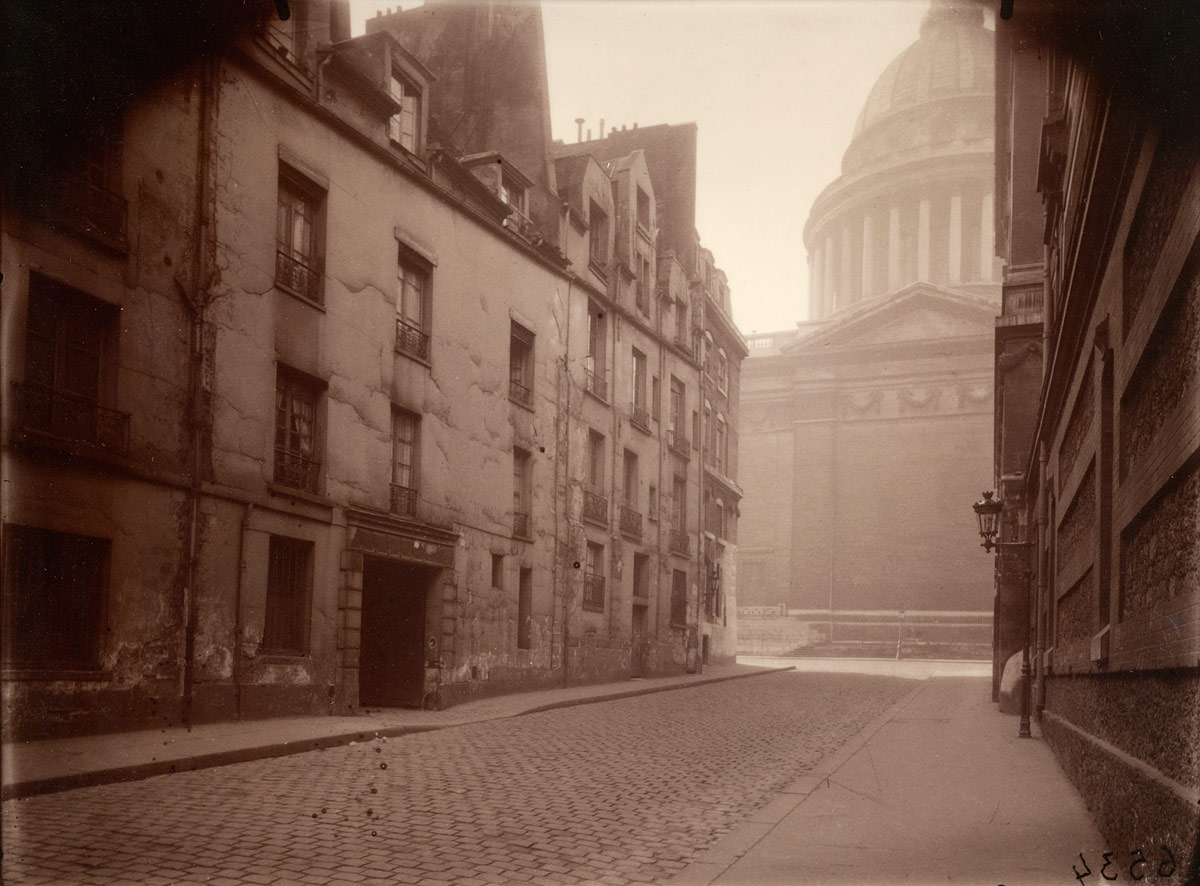
Eugène Atget (French, 1857-1927) 'Coin de la rue Valette et Pantheon, 5e arrondissement, matinee de mars' 1925


Eugène Atget (French, 1857-1927)
Coin de la rue Valette et Pantheon, 5e arrondissement, matinee de mars
1925
Albumen paper print
Paris, musée Carnavalet
© Eugène Atget / Musée Carnavalet / Roger-Viollet


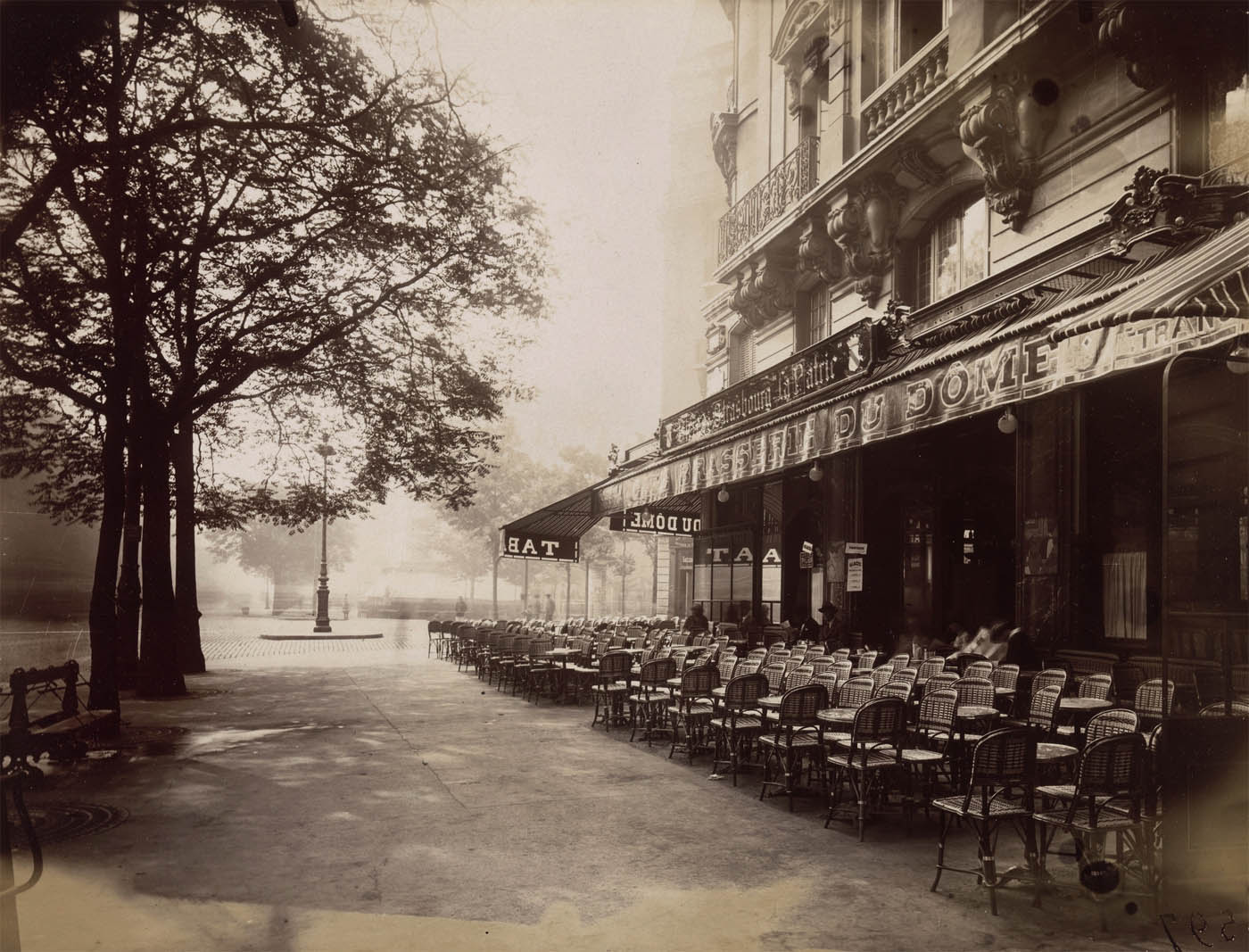
Eugène Atget (French, 1857-1927) 'Le Dôme, boulevard Montparnasse' June 1925


Eugène Atget (French, 1857-1927)
Le Dôme, boulevard Montparnasse
June 1925
Albumen paper print
Paris, musée Carnavalet
© Eugène Atget / Musée Carnavalet / Roger-Viollet


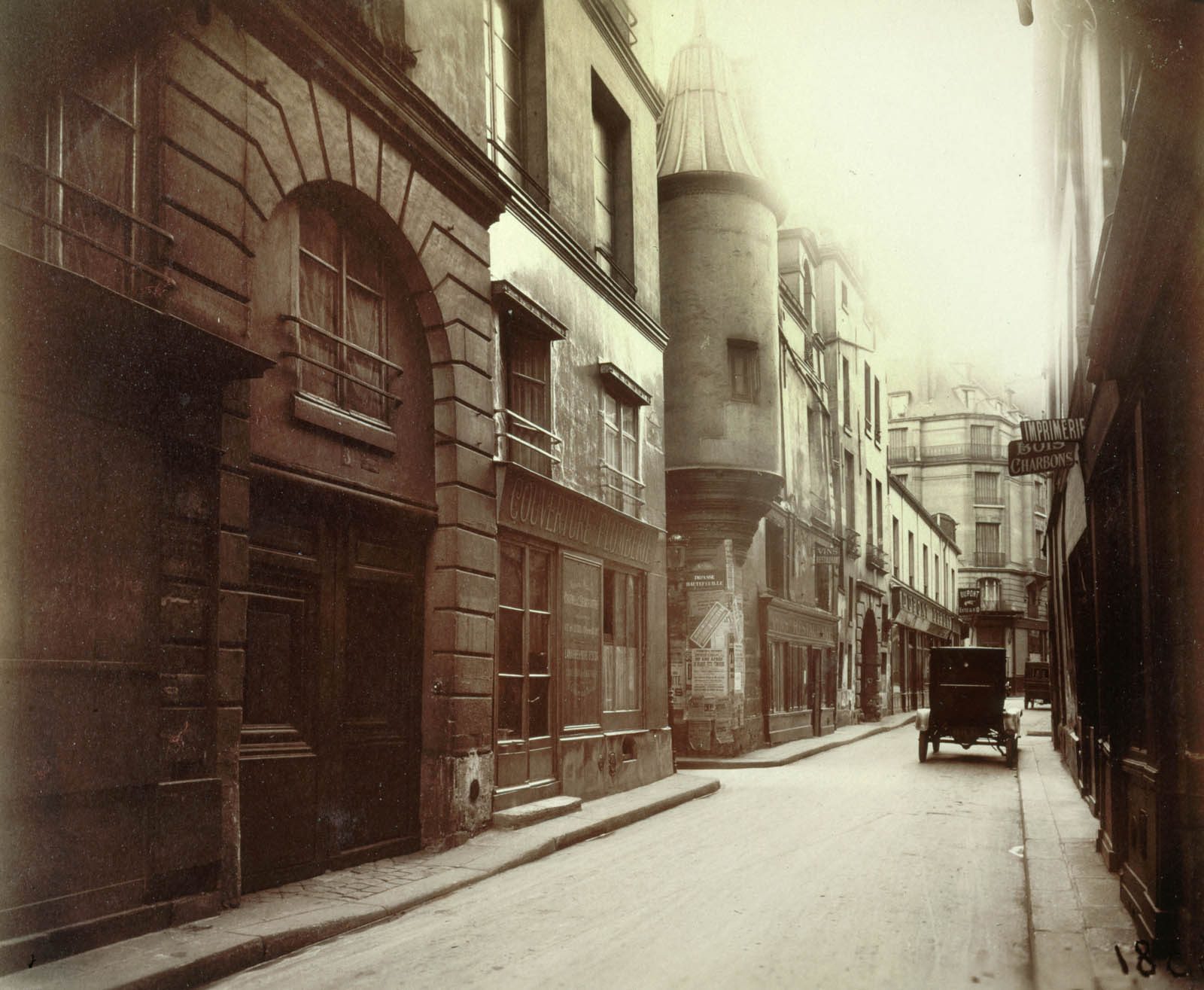
Eugène Atget (French, 1857-1927) 'Rue Hautefeuille, 6e arrondissement' 1898


Eugène Atget (French, 1857-1927)
Rue Hautefeuille, 6e arrondissement
1898
Albumen paper print
Paris, musée Carnavalet
© Eugène Atget / Musée Carnavalet / Roger-Viollet


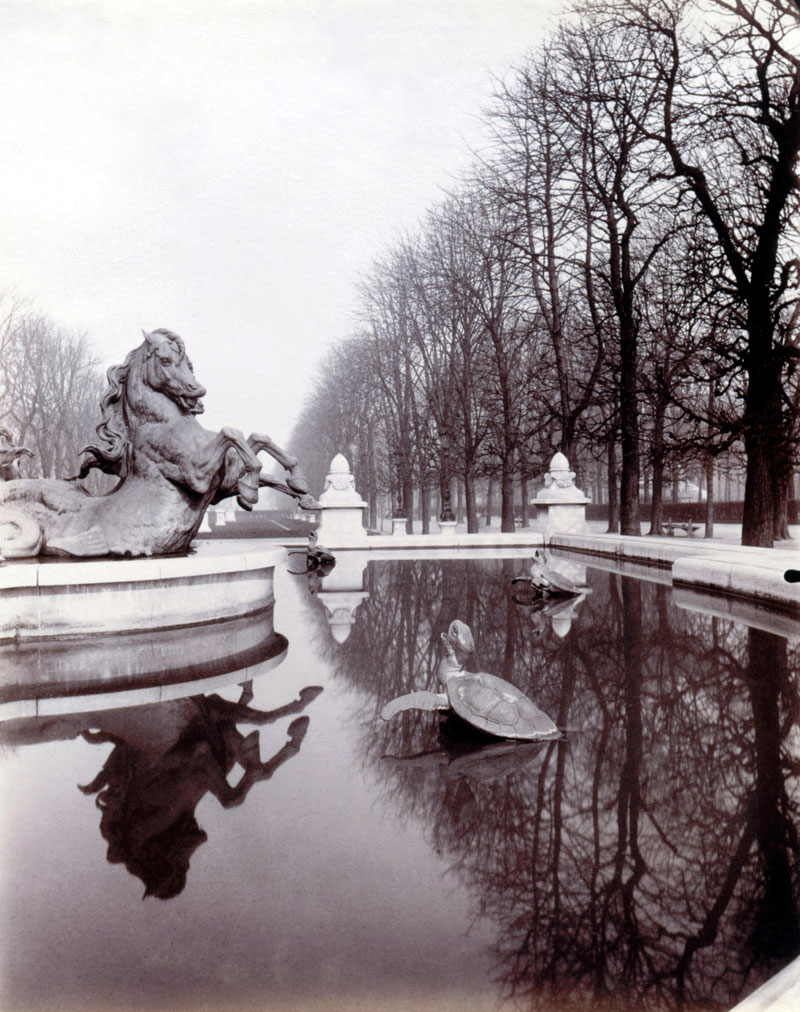
Eugène Atget (French, 1857-1927) 'Fontaine de l’Observatoire, par le sculpteur Carpeaux, jardin Marco-Polo, vue prise vers le jardin du Luxembourg, 6e arrondissement' 1902


Eugène Atget (French, 1857-1927)
Fontaine de l’Observatoire, par le sculpteur Carpeaux, jardin Marco-Polo, vue prise vers le jardin du Luxembourg, 6e arrondissement
(Fountain of the Observatory, by the sculptor Carpeaux, Marco Polo Garden, view towards the Luxembourg gardens, the sixth borough)

1902
Albumen paper print
Paris, musée Carnavalet
© Eugène Atget / Musée Carnavalet / Roger-Viollet


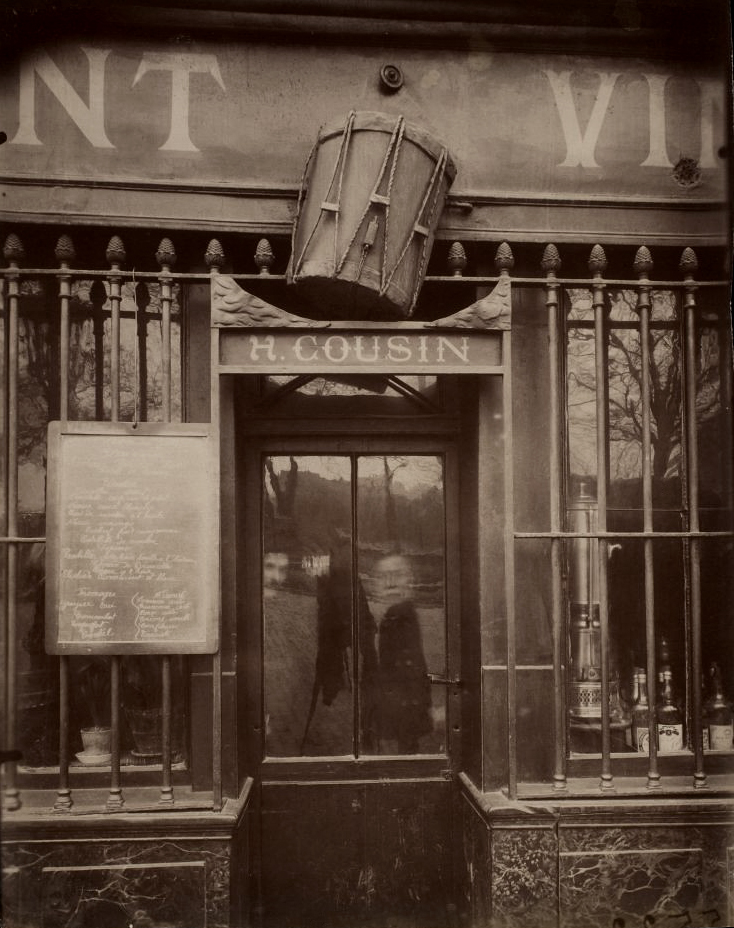
Eugène Atget (French, 1857-1927) 'Cabaret au Tambour, 62 quai de la Tournelle, 5th arrodissement' 1908


Eugène Atget (French, 1857-1927)
Cabaret au Tambour, 62 quai de la Tournelle, 5th arrodissement
1908
Albumen paper print
Paris, musée Carnavalet
© Eugène Atget / Musée Carnavalet / Roger-Viollet


In spring 2012, the Carnavalet Museum presents the Parisian work of one of the most famous photographers of the 20th century, Eugène Atget (Libourne, 1857 – Paris, 1927). The exhibition proposes a selection of 230 prints created in Paris between 1898 and 1927 from the collections of the Carnavalet Museum, in addition to those of the George Eastman House in Rochester and the collections of the Fundación Mapfre in Madrid.

This retrospective, which brings together some well-known images and others previously unseen, paints an unusual portrait of the capital, far from the clichés of the Belle Époque. Visitors will discover the streets of the Paris of old, the gardens, the quays of the Seine, the former boutiques and the travelling salesmen. Atget’s photographs also reveal the changes in his processes: when he started out, this self-taught photographer tried to bring together landscapes and motifs and then images of Paris streets, in order to sell them to artists as models. It was when he dedicated himself to the streets of Paris that he attracted the attention of prestigious institutions such as the Carnavalet Museum and the National Library, which were to become his main clients until the end of his life.

In addition, one room in the exhibition is dedicated to the presentation of a series of 43 photograph prints, collected in the 1920s by the American artist Man Ray. This album, which is currently kept in Rochester (United States), allows visitors to gain a better understanding of Atget’s influence on the Surrealists. Reflecting on Atget’s prints, the public will also discover the work of Emmanuel Pottier (Meslaydu-Maine, 1864 – Paris, 1921), his practically unknown contemporary who, like other photographers, explored the subject of picturesque Paris.

Press release from the Carnavalet Museum website


Eugène Atget (French, 1857-1927) 'Hôtel des abbés de Fecamp, 3 rue Hautefeuille, 6ème arrondissement, Paris' 1902


Eugène Atget (French, 1857-1927)
Hôtel des abbés de Fecamp, 3 rue Hautefeuille, 6ème arrondissement, Paris
1902
Albumen paper print
Musée Carnavalet, Histoire de Paris
CC0 Paris Musées / Musée Carnavalet – Histoire de Paris


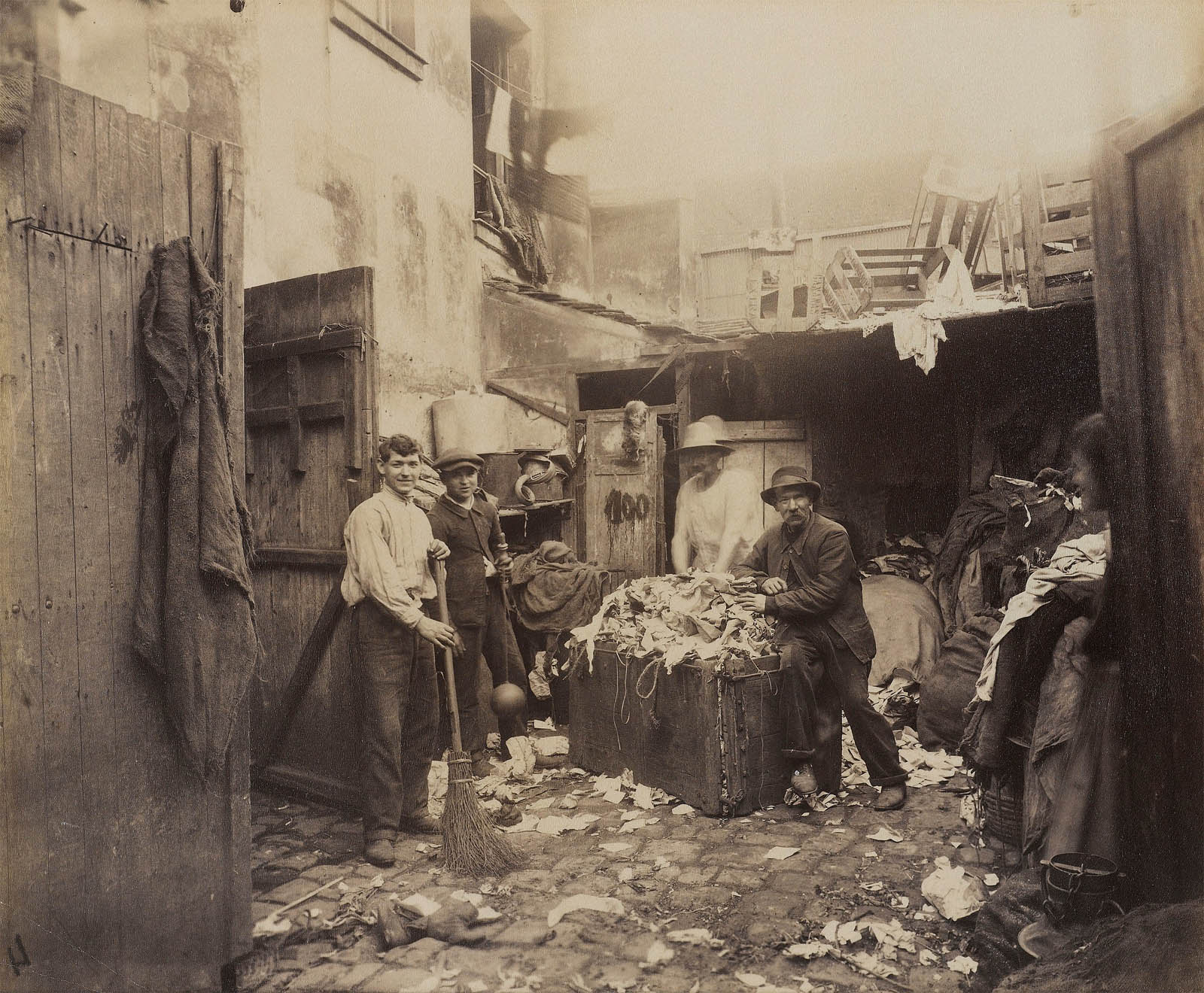
Eugène Atget (French, 1857-1927) 'Porte d'Asnières (gate), Cité Valmy (17th arr.), chiffonniers (rag-and-bone men)' 1913


Eugène Atget (French, 1857-1927)
Porte d’Asnières (gate), Cité Valmy (17th arr.), chiffonniers (rag-and-bone men)
1913
Albumen paper print
Paris, musée Carnavalet
© Eugène Atget / Musée Carnavalet / Roger-Viollet


Eugène Atget is known for his views of Paris streets and parks from the early 20th century. Equipped with a tripod, an 18 x 24 cm camera, glass plates with the same dimensions and a black cover, he captured street scenes, beautiful façades or out-of-the-way courtyards. The Carnavalet Museum was one of his first clients and conserves over 9,100 prints by this photographer.

In 1913, Atget became interested in a section of Paris that was scheduled to disappear. This was the “Zone”, unbuildable land that extended beyond the old fortifications built under Louis Philippe between 1841 and 1844. From the beginning, this area was the totally illegal refuge for the poorest of the poor, in particular day labourers and ragmen. They lived there and developed their activities of collection and sorting. Atget’s photos reveal the precarious circumstances of the families that lived and worked in these insalubrious lodgings, without dwelling on their misery. A place with a sulfurous and disquieting reputation, the Zone is represented without pathos or romanticism.

Text from the Carnavalet website


Eugène Atget (French, 1857-1927) 'Chanteuse de rue et joueur d’orgue de Barbarie' 1898


Eugène Atget (French, 1857-1927)
Chanteuse de rue et joueur d’orgue de Barbarie
(Street singer and organ player of Barbary)

1898
Albumen paper print
Paris, musée Carnavalet
© Eugène Atget / Musée Carnavalet / Roger-Viollet


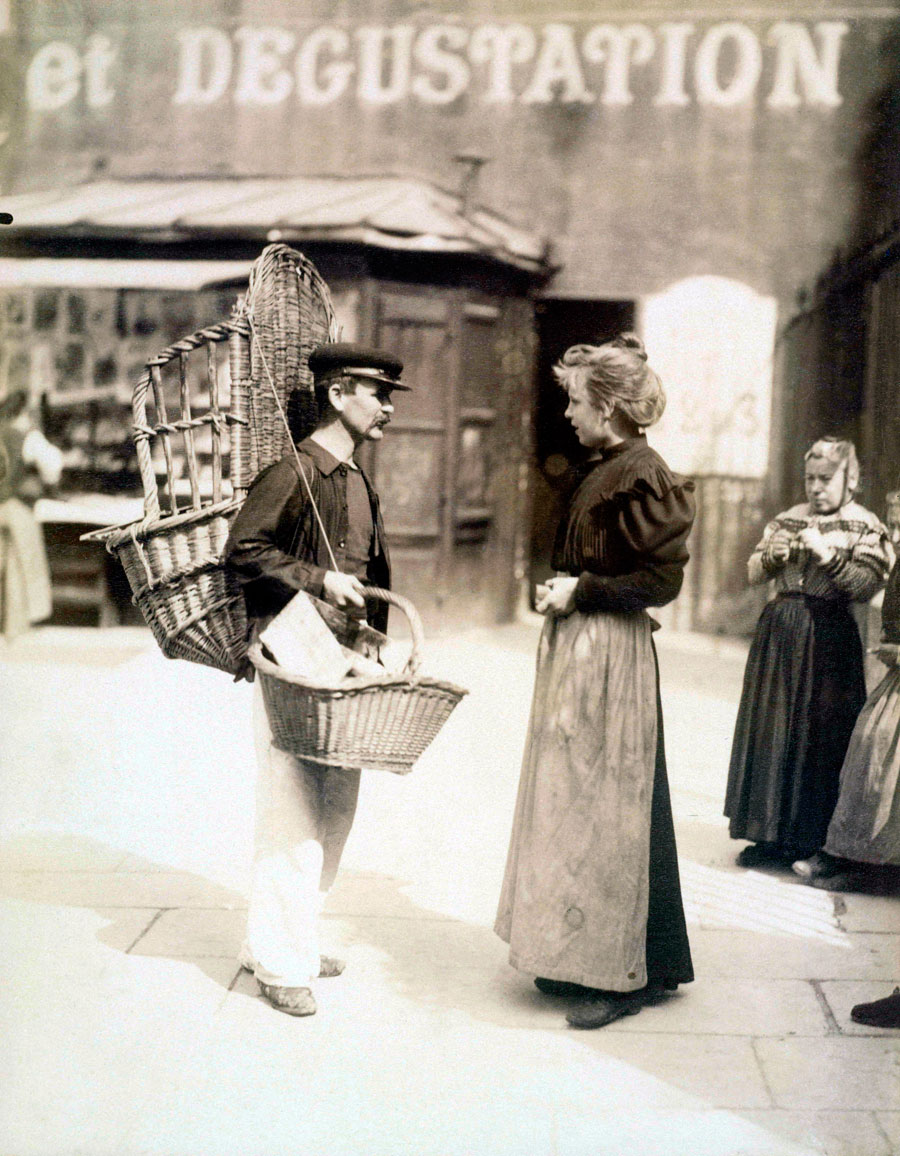
Eugène Atget (French, 1857-1927) 'Marchand ambulant, place Saint-Médard, 5e arrondissement' Septembre 1899


Eugène Atget (French, 1857-1927)
Marchand ambulant, place Saint-Médard, 5e arrondissement
(Peddler, Place Saint-Médard, 5th District)

Septembre 1899
Albumen paper print
Paris, musée Carnavalet
© Eugène Atget / Musée Carnavalet / Roger-Viollet


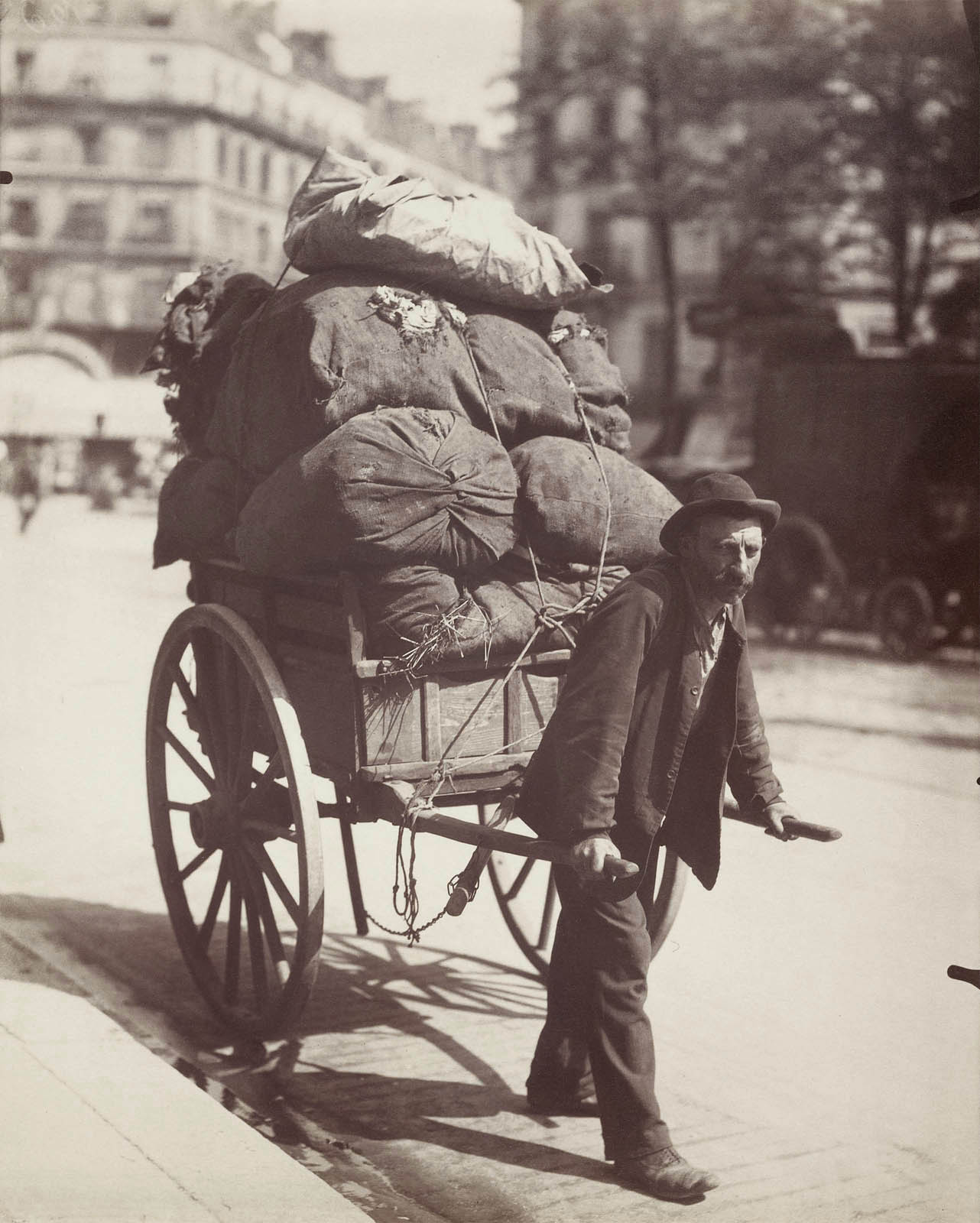
Eugène Atget (French, 1857-1927) 'Chiffonier' (Ragpicker) 1899


Eugène Atget (French, 1857-1927)
Chiffonier (Ragpicker)
1899
Albumen paper print
Paris, musée Carnavalet
© Eugène Atget / Musée Carnavalet / Roger-Viollet


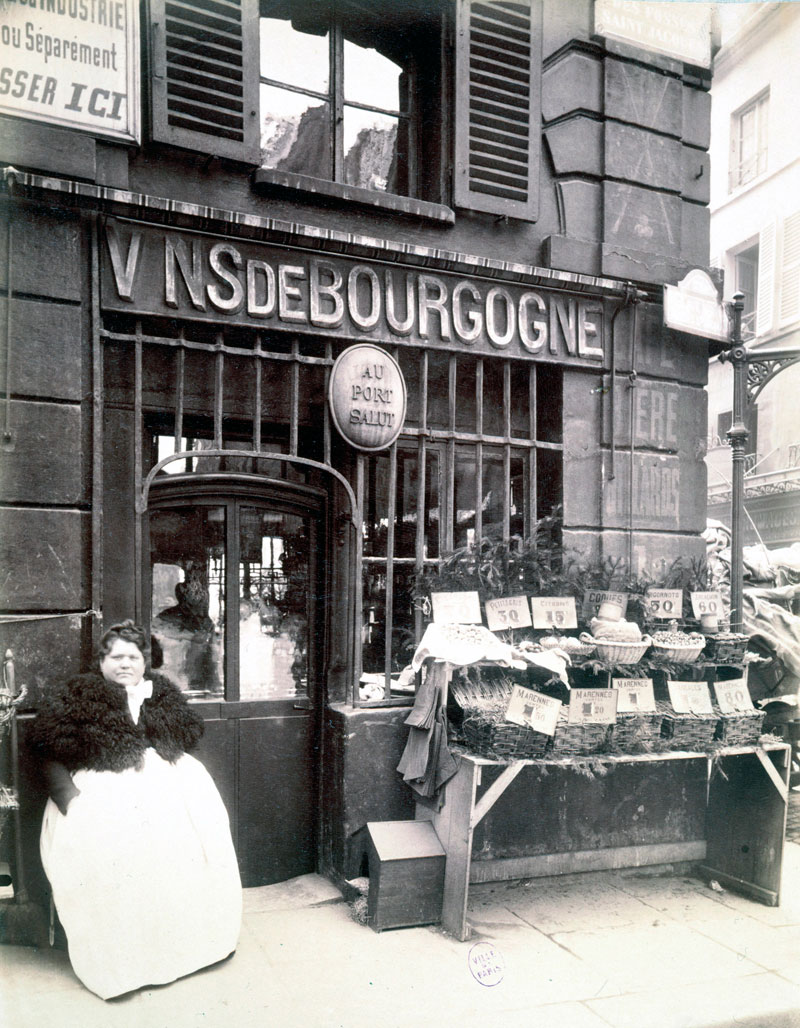
Eugène Atget (French, 1857-1927) 'Cabaret "Au Port Salut," marchande de coquillages, rue des Fossés-Saint-Jacques, 5e arrondissement' 1903


Eugène Atget (French, 1857-1927)
Cabaret “Au Port Salut,” marchande de coquillages, rue des Fossés-Saint-Jacques, 5e arrondissement
(Cabaret “At Port Salut,” Merchant of shells, Rue des Fosses-Saint-Jacques, 5th District)

1903
Albumen print mounted on blue grey cardboard
Paris, musée Carnavalet
© Eugène Atget / Musée Carnavalet / Roger-Viollet


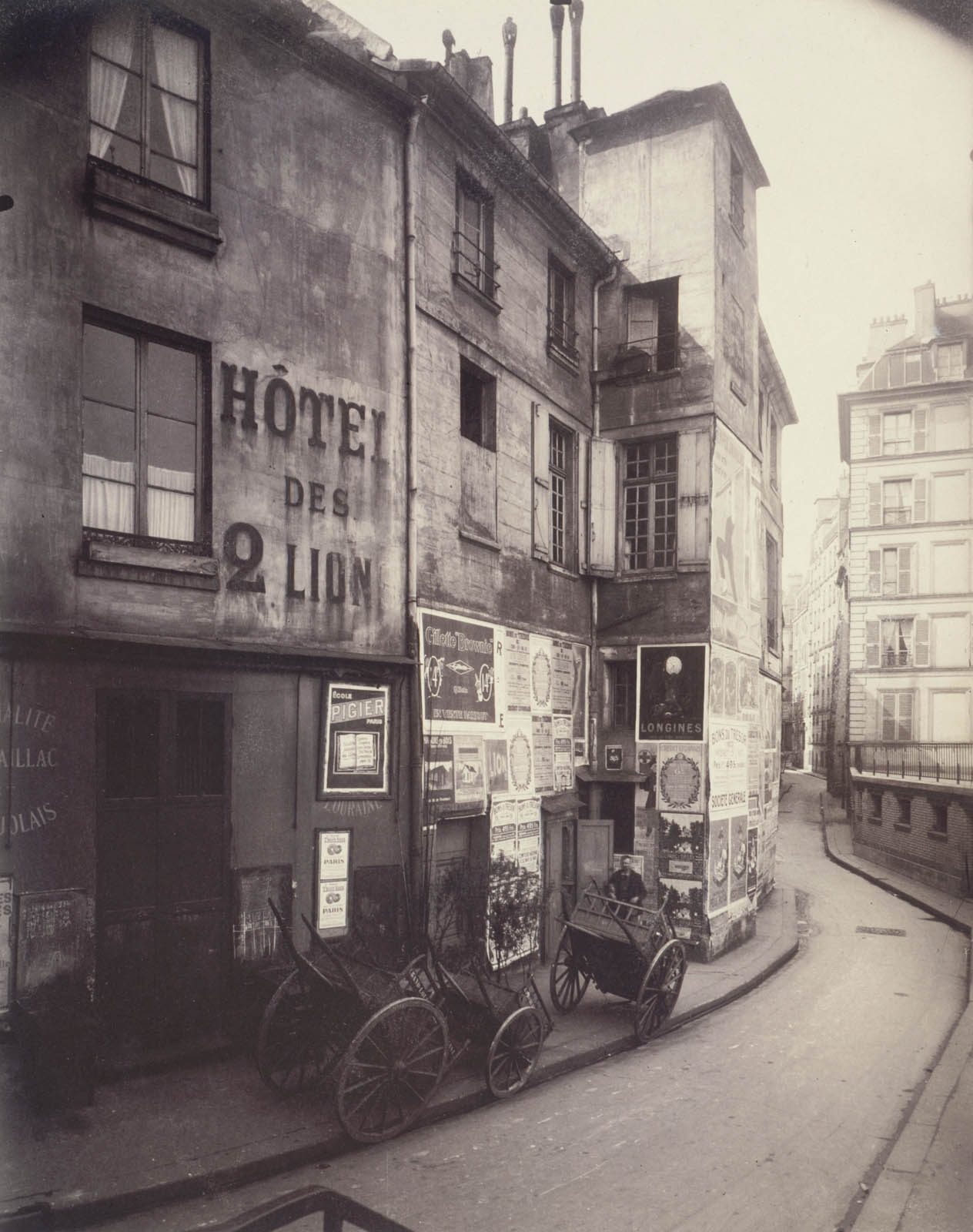
Eugène Atget (French, 1857-1927) '"Hotel des Deux Lions", rue des Ursins, 4ème arrondissement, Paris' 1923


Eugène Atget (French, 1857-1927)
“Hotel des Deux Lions”, rue des Ursins, 4ème arrondissement, Paris
1923
Musée Carnavalet, Histoire de Paris
CC0 Paris Musées / Musée Carnavalet – Histoire de Paris


Eugène Atget (French, 1857-1927) 'Rue Asseline' 1924-1925


Eugène Atget (French, 1857-1927)
Rue Asseline
1924-1925
Gelatin aristotype
Collection Man Ray 1926
© Eugène Atget/Album de Man Ray, George Eastman House


Carnavalet Museum
23, rue de Sévigné
75003 Paris
Phone: 01 44 59 58 58

Tuesday – Sunday 10am – 6pm,
except Mondays and public holidays

Carnavalet Museum website

LIKE ART BLART ON FACEBOOK

Back to top

Exhibition: ‘Christer Strömholm: Les Amies de Place Blanche’ at the International Centre of Photography (ICP), New York

Exhibition dates: 18th May – 2nd September 2012

Curator: Pauline Vermare, ICP Curatorial Assistant


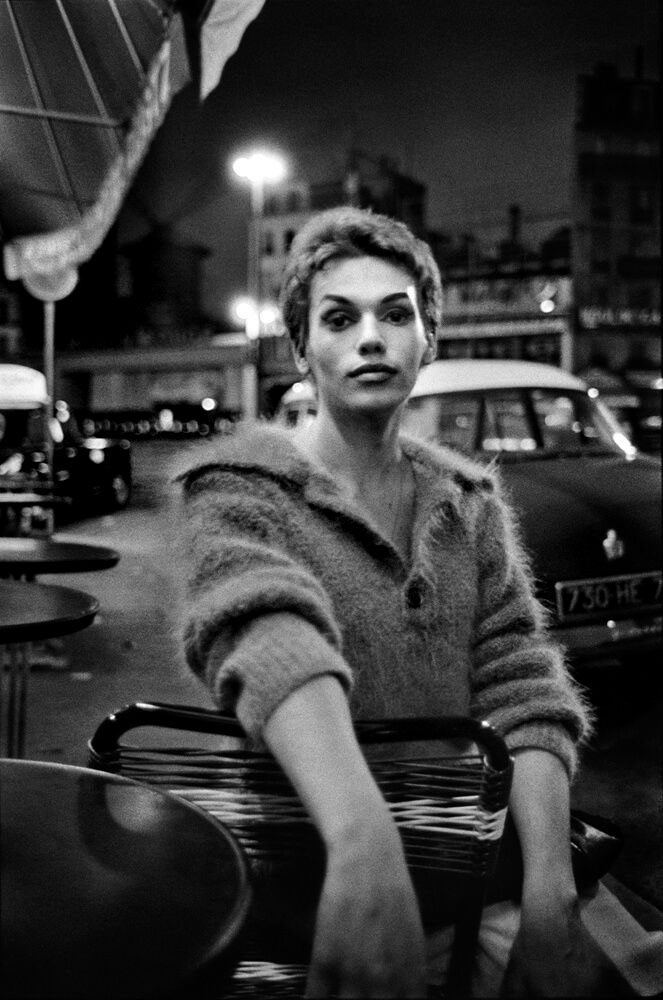
Christer Strömholm (Swedish, 1918-2002) 'Pepita' 1963


Christer Strömholm (Swedish, 1918-2002)
Pepita
1963
Gelatin silver print
© Christer Strömholm/Strömholm Estate


I am myself

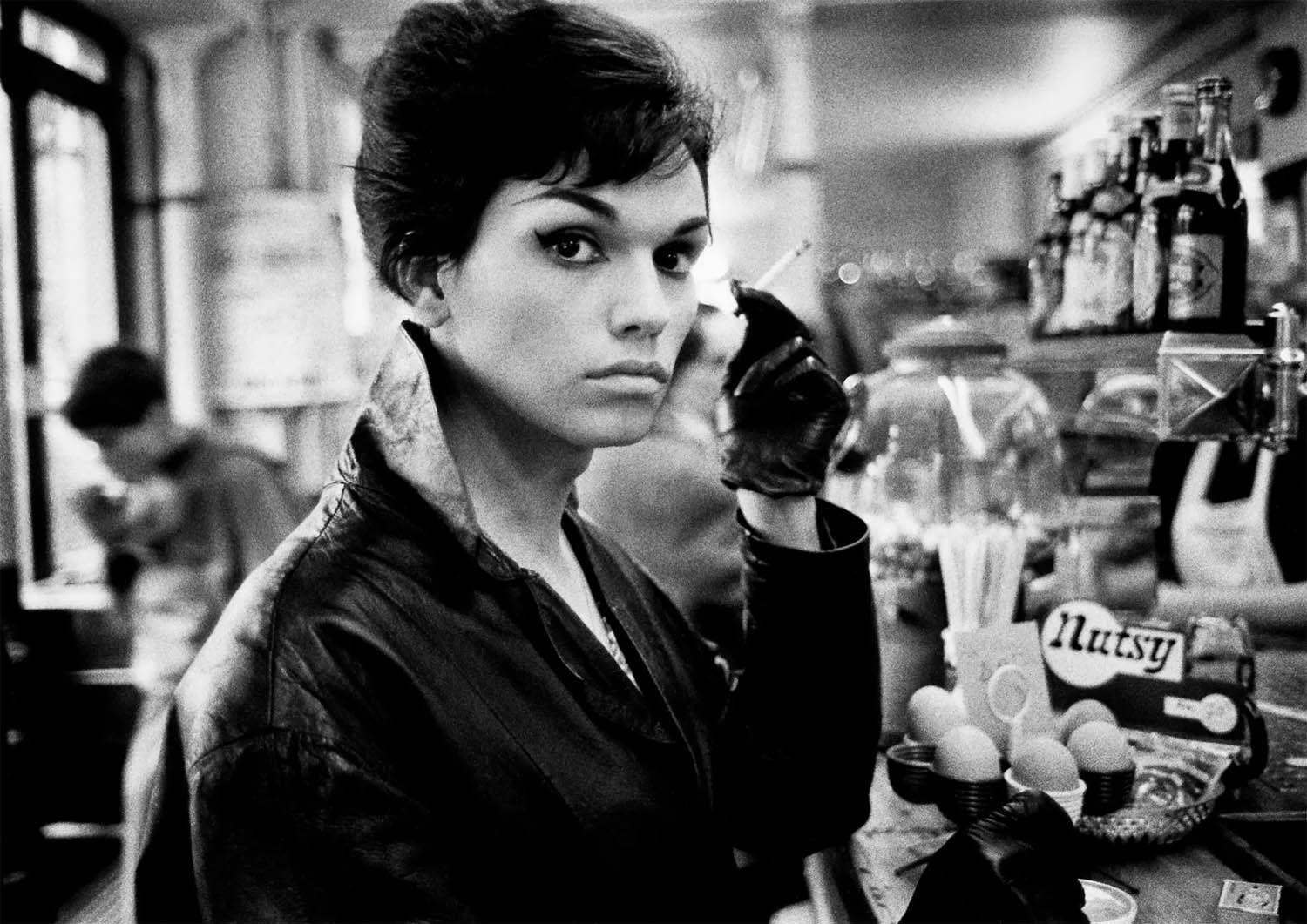
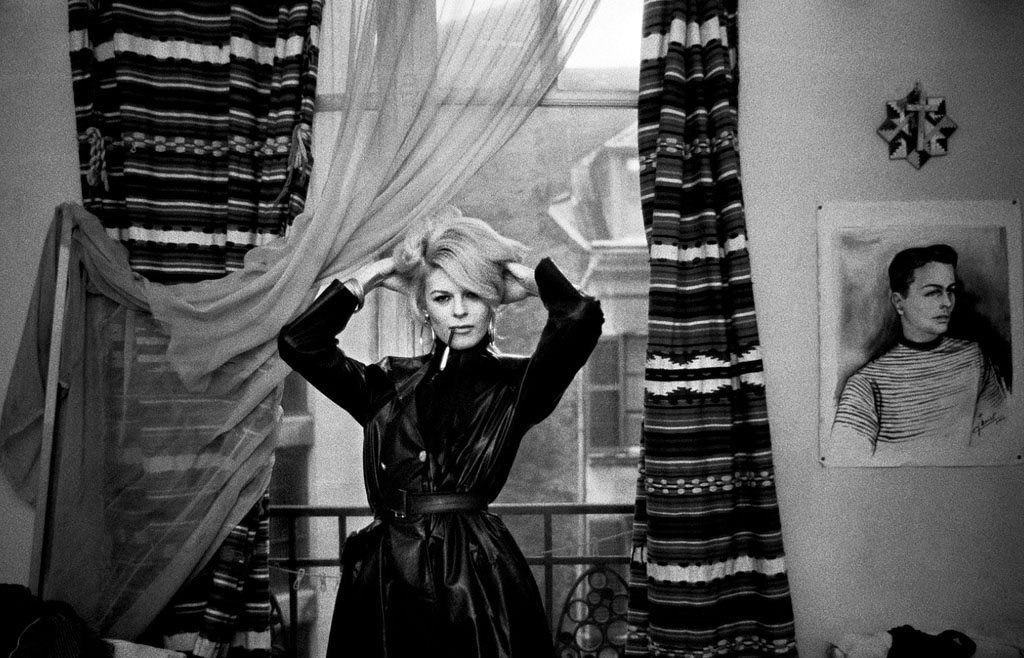
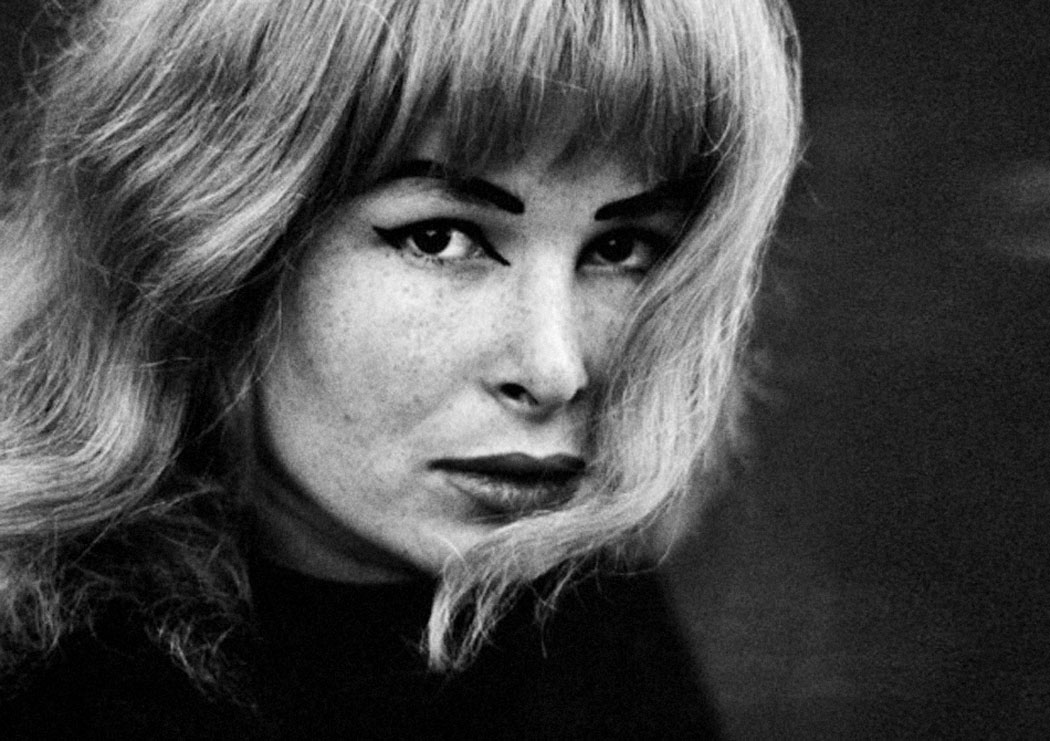
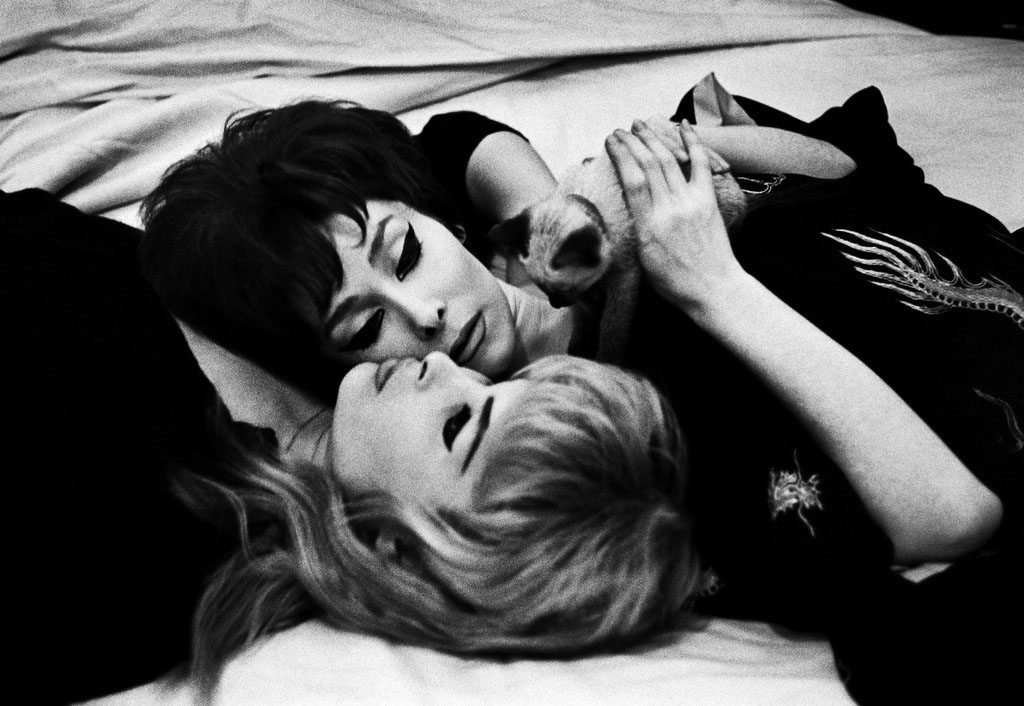
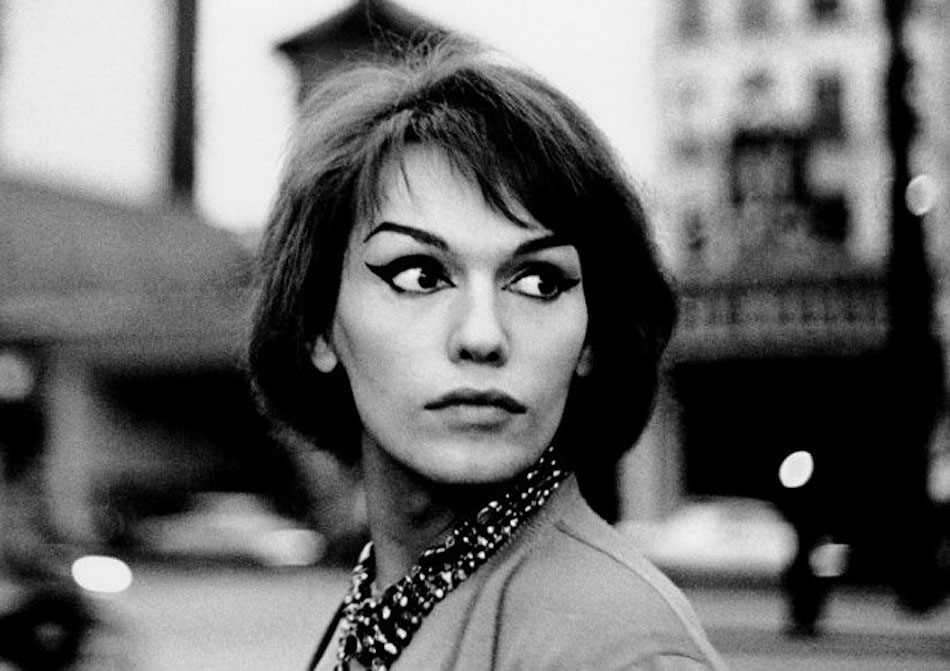
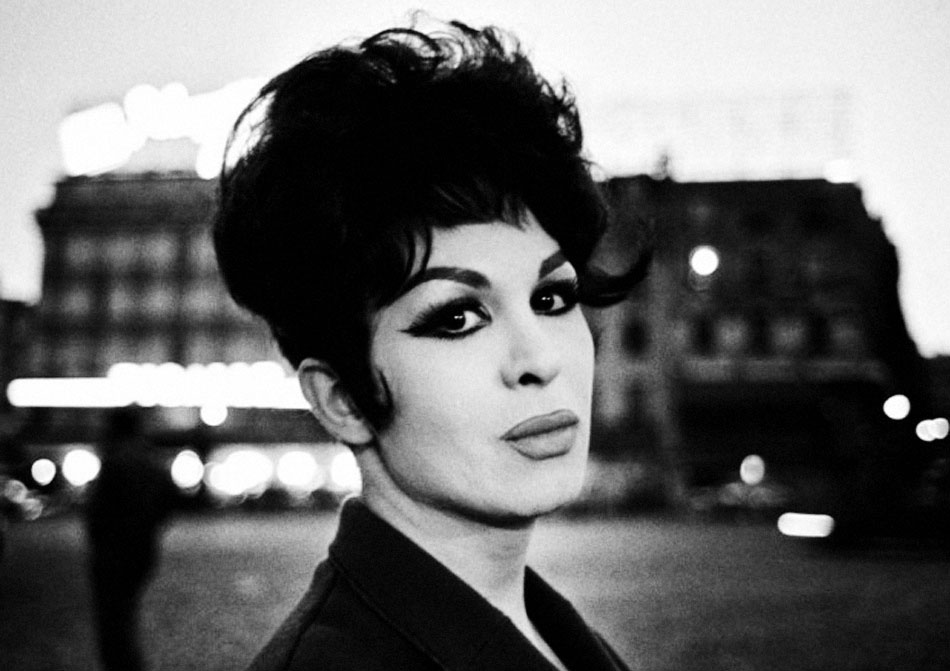
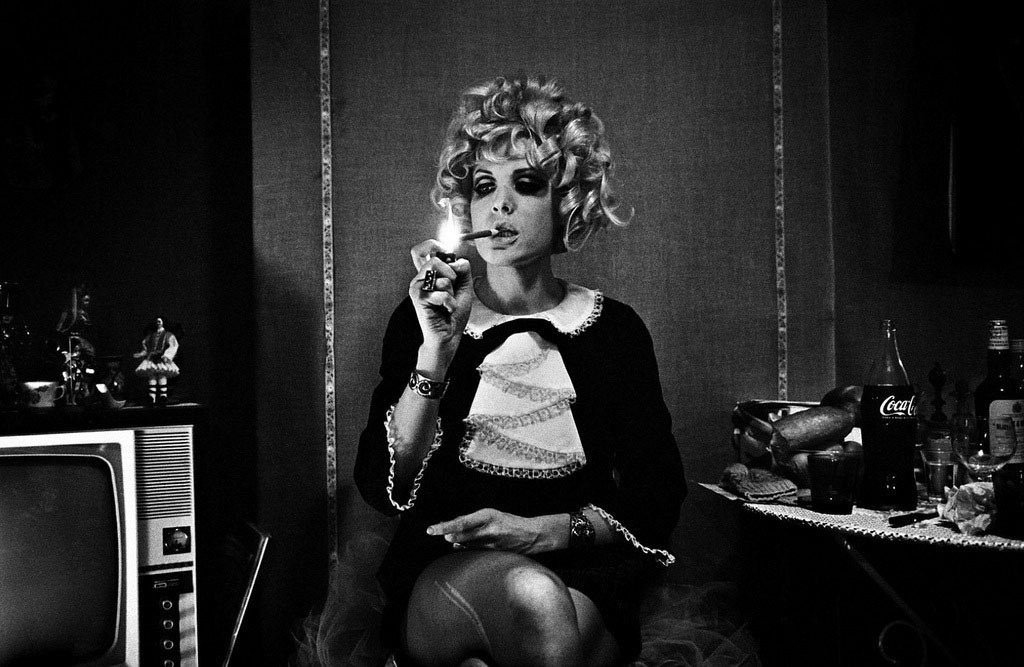
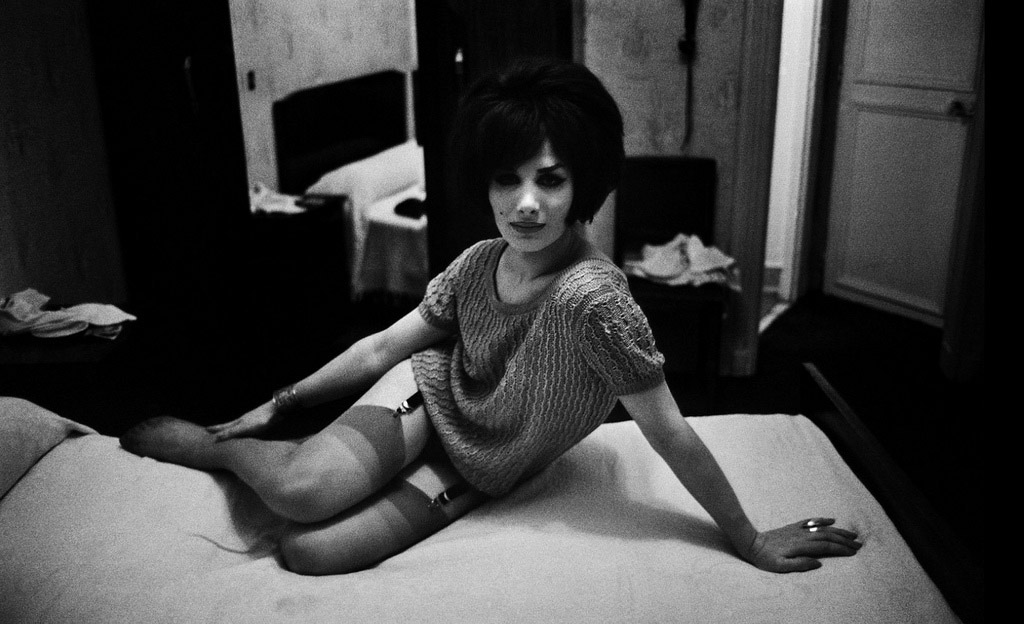
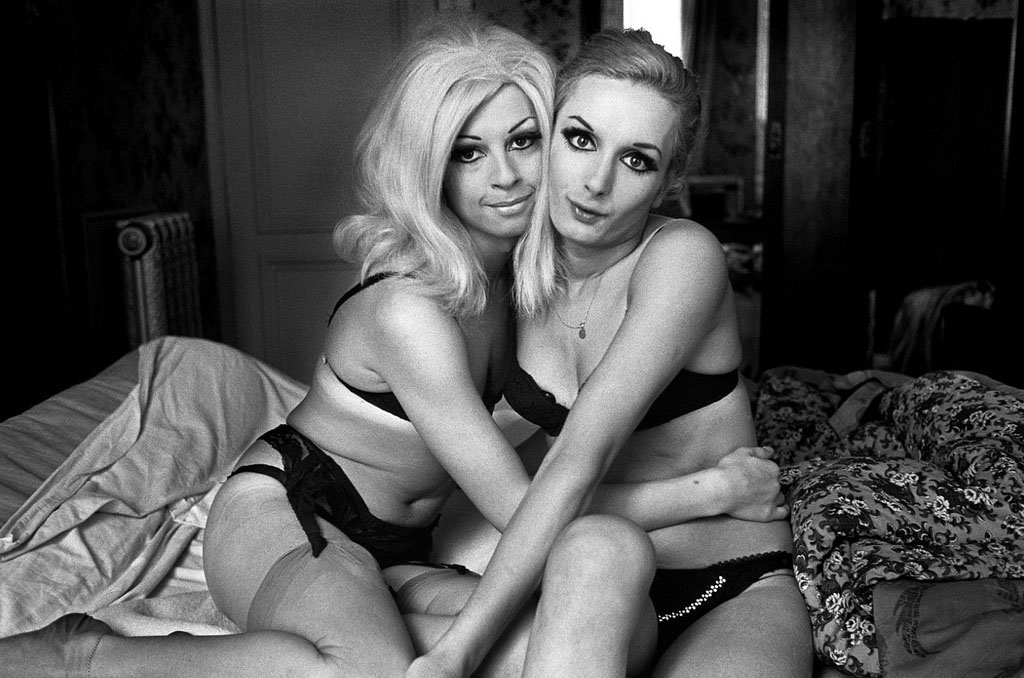
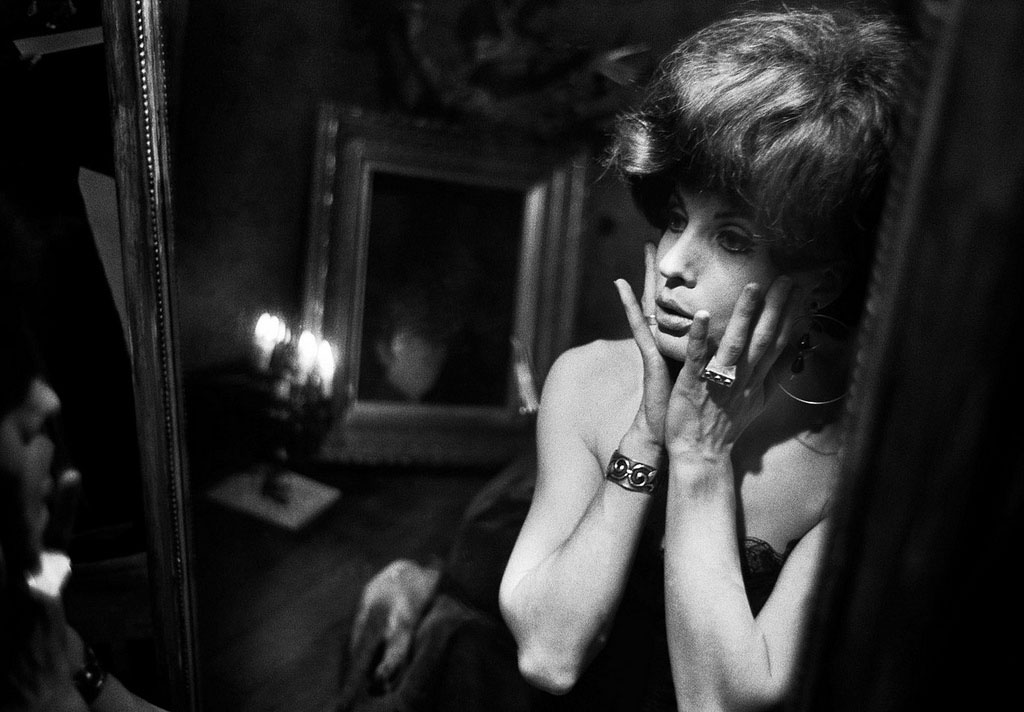
These are stunning photographs; they glow with an inner light and energy. With perfect composition and use of chiaroscuro the artist let’s the women speak for themselves – confident, self assured and happy in the life they are leading. Having come out as a gay man myself in 1975, six short years after the Stonewall Riots in New York, I can attest to how difficult and how much prejudice there was against gay men in the early 1970s. Imagine then, being a transexual living in Paris in the early to mid 1960s and the issues that these woman had to deal with.

And yet there is a joyous quality to these photographs, an intimate relationship between people (not just artist and subject), a sense of fondness, friendship and fraternity. There is an intimacy here that transcends documentation. The last photograph in the posting (Gina, 1963, below) is just this wonderful, happy photograph where you just can’t help smiling yourself. There is a lightness here that is at variance with Brassai’s heavy set Parisian nights, that is more sensitive to the subject than Diane Arbus’ thrusting camera and her depiction of transexuals.

As good as the quote by Strömholm is (below), it is not just the freedom to choose one’s own life and identity, it is the ability to make that choice an informed choice, where you can select from a variety of things, where your preference indicates that your choice is based on one’s values or predilections. Without being informed the decision you may make is not free; if you are uninformed you may be unaware. An informed choice is based upon a clear appreciation and understanding of the facts, implications, and future consequences of any action.

Despite the prejudice and pain these woman would have suffered living an everyday life in the 1960s they have made an informed choice. These are strong, courageous woman and their friend has captured their resolve beautifully.

Dr Marcus Bunyan


Many thankx to the International Centre of Photography for allowing me to publish the photographs in the posting. Please click on the photographs for a larger version of the image.


“It was then – and still is – about obtaining the freedom to choose one’s own life and identity.”


“It was because I didn’t understand it myself… as soon as you ask yourself why their lives are the way they are, it becomes difficult not to take pictures.”


“This is a book [Les Amies de Place Blanche] about insecurity. A portrayal of those living a different life in the big city of Paris, of people who endured the roughness of the streets. … This is a book about the quest for self-identity, about the right to live, about the right to own and control one’s own body.”


Christer Strömholm


Christer Strömholm: Les Amies de Place Blanche @ ICP

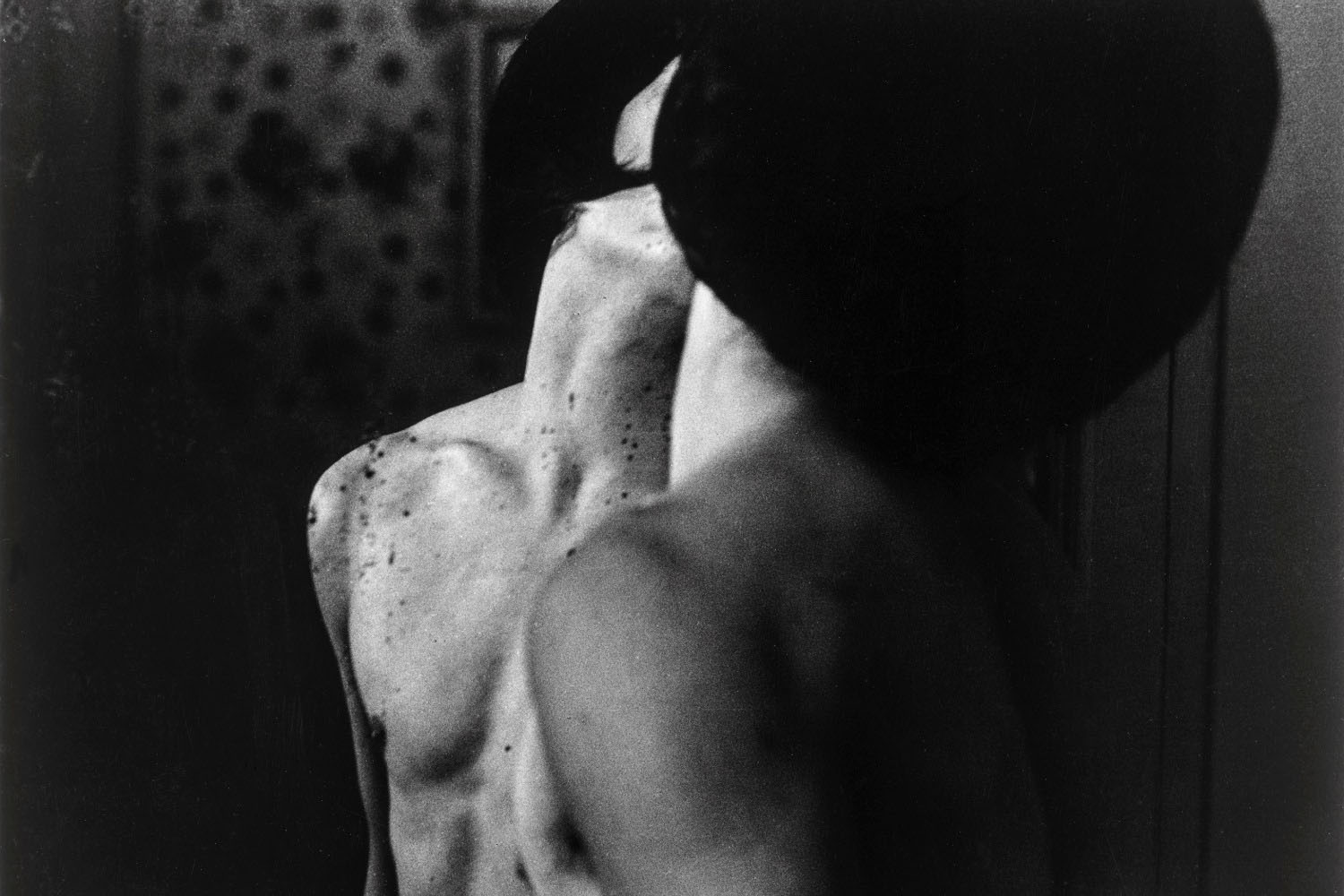
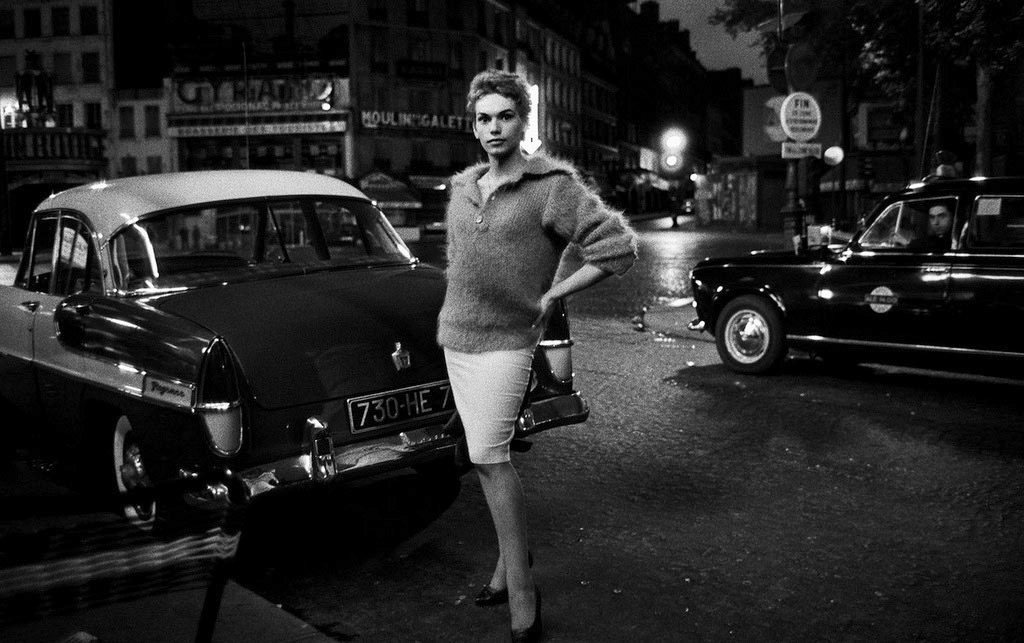
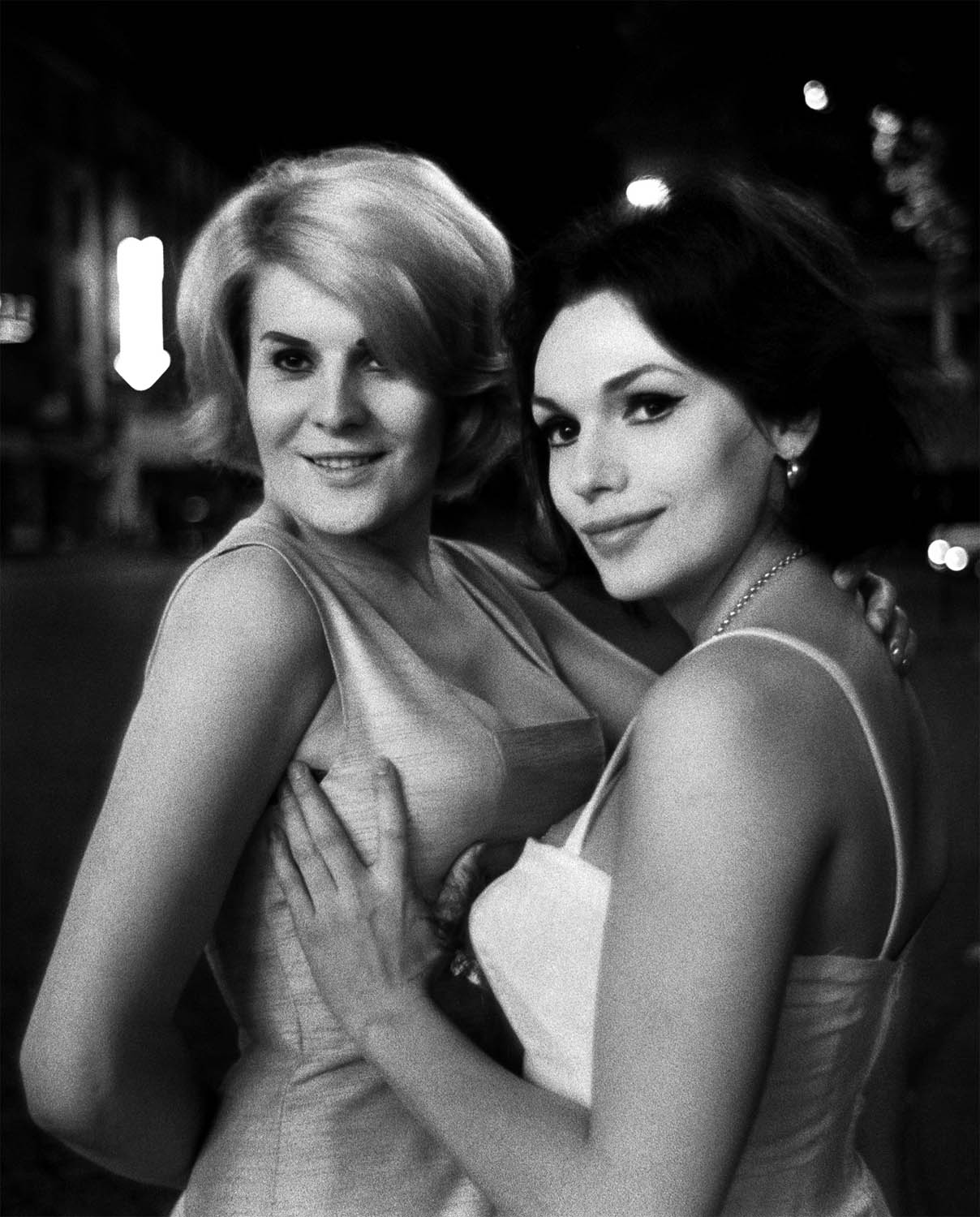
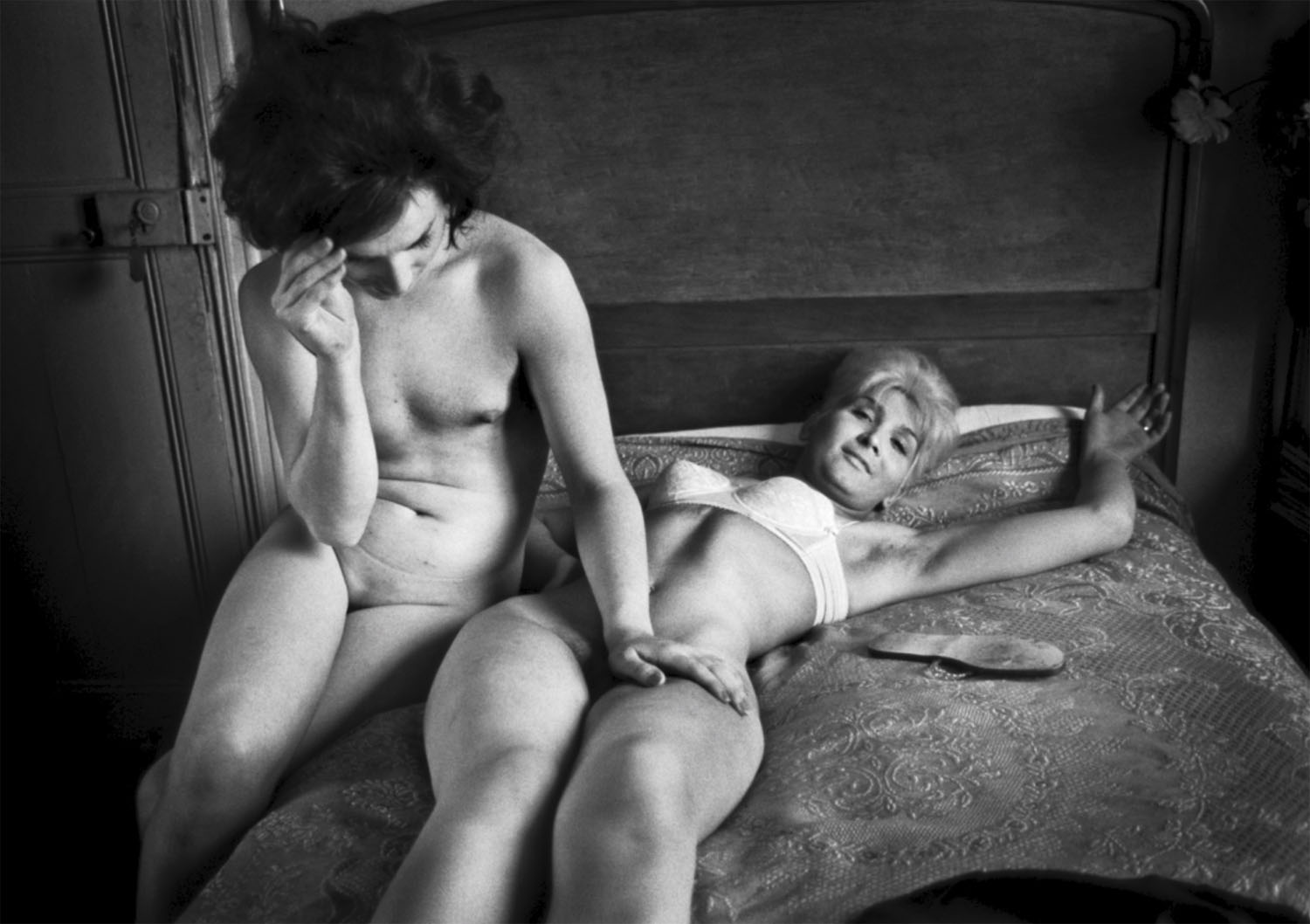
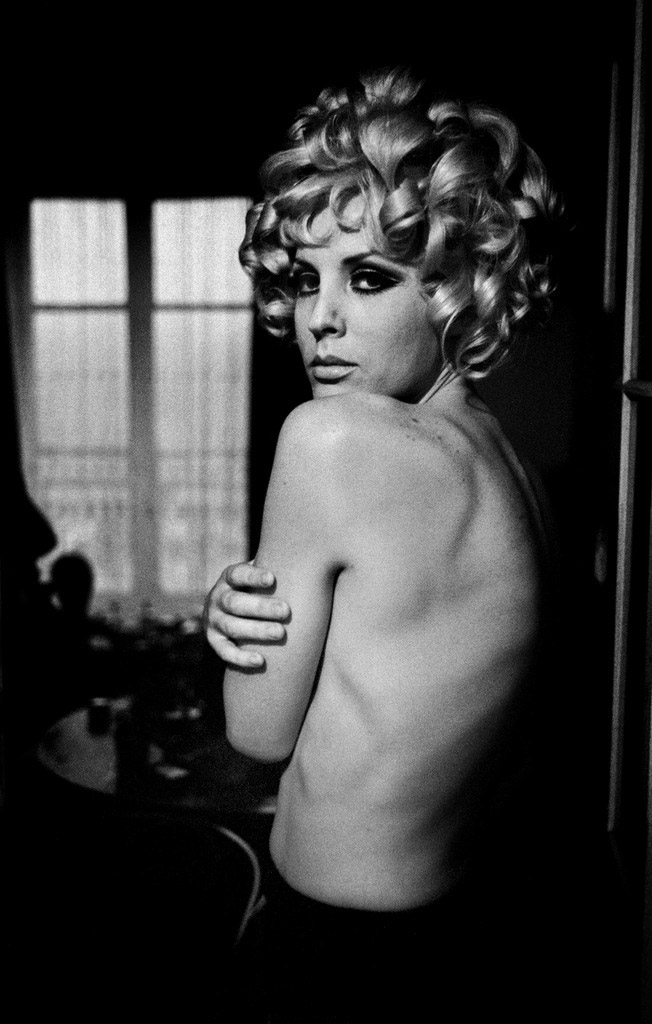
Christer Strömholm (1918-2002) was one of the great photographers of the 20th century, but he is little known outside of his native Sweden. This exhibition presents his most powerful and acclaimed body of work: Les Amies de Place Blanche, a documentation of transsexual “ladies of the night” in Paris in the 1960s. Arriving in Paris in the late 1950s, Strömholm settled in Place Blanche in the heart of the city’s red-light district. There, he befriended and photographed young transsexuals struggling to live as women and to raise money for sex-change operations. Strömholm’s surprisingly intimate portraits and lush Brassaï-like night scenes form a magnificent, dark, and at times quite moving photo album, a vibrant tribute to these girls, the “girlfriends of Place Blanche.” The photographs were first published in Sweden in 1983, and the book quickly sold out, becoming a cult classic; it is being reissued in French and English this year. Strömholm’s photo-essay raises profound issues about sexuality and gender; as he wrote in 1983, “It was then – and still is – about obtaining the freedom to choose one’s own life and identity.” This exhibition, the first presentation of Strömholm’s work in an American museum, is organised by ICP Curatorial Assistant Pauline Vermare


Christer Strömholm (Swedish, 1918-2002) 'At a fun fair, Paris' 1954-1955


Christer Strömholm (Swedish, 1918-2002)
At a fun fair, Paris
1954-1955
Gelatin silver print
© Christer Strömholm/Strömholm Estate


Christer Strömholm (Swedish, 1918-2002) '"Lady Leopard" at a fair, Paris' 1954-1955


Christer Strömholm (Swedish, 1918-2002)
“Lady Leopard” at a fair, Paris
1954-1955
Gelatin silver print
© Christer Strömholm/Strömholm Estate


Christer Strömholm (Swedish, 1918-2002) "Little Christer" 1955


Christer Strömholm (Swedish, 1918-2002)
“Little Christer”
1955
Gelatin silver print
© Christer Strömholm/Strömholm Estate


Christer Strömholm (Swedish, 1918-2002) 'Nana, Paris' 1959


Christer Strömholm (Swedish, 1918-2002)
Nana, Paris
1959
Gelatin silver print
© Christer Strömholm/Strömholm Estate


Christer Strömholm (Swedish, 1918-2002) 'Nana, Paris' 1959


Christer Strömholm (Swedish, 1918-2002)
Nana, Paris
1959
Gelatin silver print
© Christer Strömholm/Strömholm Estate


Christer Strömholm (Swedish, 1918-2002) 'Jacky' 1959


Christer Strömholm (Swedish, 1918-2002)
Jacky
1959
Gelatin silver print
© Christer Strömholm/Strömholm Estate


Christer Strömholm (Swedish, 1918-2002) 'Agnès Caprice' 1960s


Christer Strömholm (Swedish, 1918-2002)
Agnès Caprice
1960s
Gelatin silver print
© Christer Strömholm/Strömholm Estate


Agnès Caprice, showgirl of trans cabaret Le Carrousel and frequent subject of photo series Les Amies de La Place Blanche. She later partnered and had a child with an actress and performer of a butch lesbian cabaret. Caprice would pass at a young age due to addiction, after the devastating loss of 7 of her fellow Le Carrousel performers in a 1966 plane crash.

Text from the Genderoutlaws website


Christer Strömholm (Swedish, 1918-2002) 'Cobra and Caprice' 1961


Christer Strömholm (Swedish, 1918-2002)
Cobra and Caprice
1961
Gelatin silver print
© Christer Strömholm/Strömholm Estate


Christer Strömholm (Swedish, 1918-2002) 'Nana' 1963


Christer Strömholm (Swedish, 1918-2002)
Nana
1963
Gelatin silver print
© Christer Strömholm/Strömholm Estate


Christer Strömholm (Swedish, 1918-2002) 'Carmen, Pigalle, Paris' 1962


Christer Strömholm (Swedish, 1918-2002)
Carmen, Pigalle, Paris
1962
Gelatin silver print
© Christer Strömholm/Strömholm Estate


Christer Strömholm (Swedish, 1918-2002) 'Belinda' 1967


Christer Strömholm (Swedish, 1918-2002)
Belinda
1967
Gelatin silver print
© Christer Strömholm/Strömholm Estate


Christer Strömholm (Swedish, 1918-2002) 'Sabrina' 1967


Christer Strömholm (Swedish, 1918-2002)
Sabrina
1967
Gelatin silver print
© Christer Strömholm/Strömholm Estate


Christer Strömholm (Swedish, 1918-2002) 'Suzannah, Hôtel Pierrots' 1962


Christer Strömholm (Swedish, 1918-2002)
Suzannah, Hôtel Pierrots
1962
Gelatin silver print
© Christer Strömholm/Strömholm Estate


Christer Strömholm (Swedish, 1918-2002) 'Soraya and Sonia' 1962


Christer Strömholm (Swedish, 1918-2002)
Soraya and Sonia
1962
Gelatin silver print
© Christer Strömholm/Strömholm Estate


Christer Strömholm (Swedish, 1918-2002) 'Jacky' 1961


Christer Strömholm (Swedish, 1918-2002)
Jacky
1961
Gelatin silver print
© Christer Strömholm/Strömholm Estate


Christer Strömholm (Swedish, 1918-2002) 'Themis' 1963


Christer Strömholm (Swedish, 1918-2002)
Themis
1963
Gelatin silver print
© Christer Strömholm/Strömholm Estate


Christer Strömholm (Swedish, 1918-2002) 'Giulia and Carol' 1964


Christer Strömholm (Swedish, 1918-2002)
Giulia and Carol
1964
Gelatin silver print
© Christer Strömholm/Strömholm Estate


Christer Strömholm (Swedish, 1918-2002) 'Giulia and Carol, Pigalle, Paris' 1964


Christer Strömholm (Swedish, 1918-2002)
Giulia and Carol, Pigalle, Paris
1964
Gelatin silver print
© Christer Strömholm/Strömholm Estate


Christer Strömholm (Swedish, 1918-2002) 'Sabrina' 1967


Christer Strömholm (Swedish, 1918-2002)
Sabrina
1967
Gelatin silver print
© Christer Strömholm/Strömholm Estate


Christer Strömholm (Swedish, 1918-2002) 'Narcissus' 1968


Christer Strömholm (Swedish, 1918-2002)
Narcissus
1968
Gelatin silver print
© Christer Strömholm/Strömholm Estate


Raising profound issues about identity, sexuality, and gender, Christer Strömholm: Les Amies de Place Blanche, on view at the International Center of Photography (1133 Avenue of the Americas at 43rd Street) May 18 – September 2, 2012, presents 40 photographs, historical publications, and ephemera documenting young transgender males in the heart of Paris’ red-light district in the 1960s.

Arriving in Paris in the late 1950s, Christer Strömholm (Stockholm, 1918-2002) settled in Place Blanche, home of the famous Moulin Rouge. There, he befriended and photographed young transsexuals – “ladies of the night” – struggling to live as women and to raise money for sex-change operations. In General Charles de Gaulle’s ultra-conservative France, transvestites were outlaws, regularly abused and arrested by the police for being “men dressed as women outside the period of carnival.” Some of these women had tragic fates. Others, like “Nana” and “Jacky,” eventually fulfilled their destiny and led happy lives as women. Living alongside them for 10 years, Strömholm photographed his subjects in their hotel rooms, in bars, and in the streets of Paris.

“These intimate portraits and Brassaï-like lush night scenes form a magnificent, dark, and moving photo album, a vibrant tribute to these girls,” said ICP Curatorial Assistant Pauline Vermare, who organised the exhibition. These photographs were first published in Sweden in 1983, and the book Vännerna från Place Blanche (“The Girlfriends of Place Blanche”) – which will be reissued this year in French and English – quickly sold out, becoming a cult classic and solidifying Strömholm as one of the great photographers of the 20th century. The work for this exhibition is provided by the Strömholm Estate in Stockholm, the Marvelli Gallery in New York, and from the collection of Alice Zimet.

As Strömholm wrote in 1983: “These are images of people whose lives I shared and whom I think I understood. These are images of women – biologically born as men – that we call ‘transsexuals.’ As for me, I call them ‘my friends of Place Blanche.’ It was then – and still is – about obtaining the freedom to choose one’s own life and identity.”

Christer Strömholm is a lesser known artist, but may well be the father figure of Scandinavian photography. A prominent artist and winner of the prestigious Hasselblad Award in 1997, he was also an influential teacher and the mentor to some of today’s leading Swedish photographers including J.H. Engström, Anders Petersen, and Lars Tunbjörk. Highly revered in his native Sweden since the 1980s, he is still little known outside of Europe. This exhibition is the first presentation of Strömholm’s work in an American museum, and features his most powerful and acclaimed body of work.

Press release from the International Centre of Photography website


Christer Strömholm (Swedish, 1918-2002) 'Nana with cars' 1959


Christer Strömholm (Swedish, 1918-2002)
Nana with cars
1959
Gelatin silver print
© Christer Strömholm/Strömholm Estate


Christer Strömholm (Swedish, 1918-2002) 'Nana' 1959


Christer Strömholm (Swedish, 1918-2002)
Nana
1959
Gelatin silver print
© Christer Strömholm/Strömholm Estate


Christer Strömholm (Swedish, 1918-2002) 'Nana' 1959


Christer Strömholm (Swedish, 1918-2002)
Nana
1959
Gelatin silver print
© Christer Strömholm/Strömholm Estate


Christer Strömholm (Swedish, 1918-2002) 'Gina and Nana' 1960


Christer Strömholm (Swedish, 1918-2002)
Gina and Nana
1960
Gelatin silver print
© Christer Strömholm/Strömholm Estate


Christer Strömholm (Swedish, 1918-2002) 'Carole and Nana' 1960


Christer Strömholm (Swedish, 1918-2002)
Carole and Nana
1960
Gelatin silver print
© Christer Strömholm/Strömholm Estate


Christer Strömholm (Swedish, 1918-2002) 'Suzannah and Sylvia' 1962


Christer Strömholm (Swedish, 1918-2002)
Suzannah and Sylvia
1962
Gelatin silver print
© Christer Strömholm/Strömholm Estate


Christer Strömholm (Swedish, 1918-2002) 'Suzannah and Sylvia' 1962


Christer Strömholm (Swedish, 1918-2002)
Suzannah and Sylvia
1962
Gelatin silver print
© Christer Strömholm/Strömholm Estate


Under the strict Catholic social regime of Charles de Gaulle, transsexuals in Paris at this time were forced to confine their identities to within their hotel rooms, fearing the brutality of the police and imprisonment. Against this political backdrop Strömholm delved into the harsh world of sex work; Strömholm pervades this intimate and world of prostitution and deconstructs the division between private and public. The image of Susannah and Mimosa pictured below provides an insight into their private lives; the playful depiction of the women contrasts heavily with our contextual understanding of the photograph, of the hard life transsexuals endured in Paris. Strömholm reveals a dynamic sense of sorority between Suzanne and Mimosa in this portrait, personal interactions emerge which portrays the women as vibrant characters, a contrast against the grim reality of prostitution in Paris. Strömholm reveals a close bond between the women which goes beyond simplistic definitions of the women solely as exploited sex workers. Whilst Strömholm’s work can be viewed as a social commentary of the transgender women of Paris and the struggles they faced in daily life, there is a rather more emotive and delicate edge to Strömholm’s work which is a stark departure from the work of social documentary photographers.

Anonymous. “Christer Strömholm Exhibition Review: ‘Les Amies de Place Blanche’,” on the Camera History website 23rd January 2013 [Online] Cited 19/09/2024


Christer Strömholm (Swedish, 1918-2002) 'Sonia, Hôtel Pierrots' 1962


Christer Strömholm (Swedish, 1918-2002)
Sonia, Hôtel Pierrots
1962
Gelatin silver print
© Christer Strömholm/Strömholm Estate


“This is a book about the quest for self-identity, about the right to live, about the right to own and control one’s body. These are images of people whose lives I shared and whom I think I understood. This is where I arrived in 1959. This is where I settled and started to tell of the life I shared with the transsexuals. They soon became ‘the friends of Place Blanche’. …

After the sun had set, the air cooled down. At the time when shadows stretched, we could catch glimpses of prostitutes walking out of alleys. Big and beautiful women. Some of them exceeded in height their hope-swollen clients. Surrounded by circuses, freaks and snakes, the prostitutes stood there in the buildings’ shadows, keeping a constant eye on the boulevard, the shows and the clients.

Midway through January, when the fairground people set off again, the boulevard went back to normal – the party was over. On the boulevard and in the alleys surrounding place Pigalle and place Blanche, the prostitutes – both male and female, lesbians, transsexuals, transvestites or in other words: the usual group – took back their old spots.

Prostitution was as active as it used to be at the end of the 19th century. Organised prostitution happened all year long. A desperate fight, both to earn the daily bread and, for transsexuals, to see their identitarian dreams come true.

These beautiful ladies dreamt of travelling to Casablanca to undergo surgery. The outcome of a transformation started a long time ago. These women were biologically born as men. They lived here, in the place Blanche neighbourhood. They worked in cabarets, sang, did stripteases. They were outspoken and they answered back immediately to the public, it was a typical Parisian tradition. A cocky and saucy sense of humour.

They earned 60 French francs a day, enough to pay for the food and the hotel room but not enough to afford the 40,000 francs surgery. The streets were their only solution. Some of them had loyal customers, others stood in the same place on the street. Here, prostitution was part of the neighbourhood life. A way to survive.

At the time of the Commune, there already were transvestites on the place Blanche. But it was in the late 50s that the word ‘transsexual’ began to be used. It was also at that time that it became possible for a man to physically become a woman thanks to hormones and surgery. But hormone therapy has also been the cause of tragedies. Often they were denied the help of a doctor. So they had to fend for themselves.

My friends lived together in a world apart, a world of shadows and loneliness, anxiety, hopelessness and alienation. The only thing they demanded was to have the right to be themselves, not to be forced to deny or repress their feelings, to have the right to live their own lives, to be responsible, to be at ease with themselves.

Nothing more. It was then – and still is – about attaining the right to own one’s own life and identity.

Christer Strömholm from his 1983 book Les Amies de Place Blanche


Christer Strömholm (Swedish, 1918-2002) 'Sabrina' 1967


Christer Strömholm (Swedish, 1918-2002)
Sabrina
1967
Gelatin silver print
© Christer Strömholm/Strömholm Estate


Christer Strömholm (Swedish, 1918-2002) 'Gina' 1963


Christer Strömholm (Swedish, 1918-2002)
Gina
1963
Gelatin silver print
© Christer Strömholm/Strömholm Estate


International Center of Photography
1133 Avenue of the Americas at 43rd Street
New York NY 10036
Phone: 212 857 0045

Opening hours:
Wednesday – Monday 11am – 7pm
Closed Tuesdays

International Center of Photography website

LIKE ART BLART ON FACEBOOK

Back to top

Exhibition: ‘Photography in Mexico: Selected Works from the Collections of SFMOMA and Daniel Greenberg and Susan Steinhauser’ at the San Francisco Museum of Modern Art (SFMOMA)

Exhibition dates: 10th March – 8th July 2012

List of Photographers Included: Katya Brailovsky, Lola Alvarez Bravo, Manuel Alvarez Bravo, Manuel Carrillo, Alejandro Cartagena, Eduardo del Valle and Mirta Gomez, Pia Elizondo, Dave Gatley, Oscar Fernando Gomez, Héctor Garcia, Lourdes Grobet, Graciela Iturbide, Geoffrey James, Mark Klett, Pablo Lopez Luz, Elsa Medina, Susan Meiselas, Enrique Metinides, Pedro Meyer, Tina Modotti, Rodrigo Moya, Pablo Ortiz Monasterio, Paolo Pellegrin, Antonio Reynoso, Daniela Rossell, Mark Ruwedel, Victoria Sambunaris, Alec Soth, Paul Strand, Yvonne Venegas, Brett Weston, Edward Weston, and Mariana Yampolsky.


Manuel Alvarez Bravo (Mexican, 1902-2002) 'Obrero en huelga, asesinado' (Striking Worker, Assassinated) 1934 and 'La buena fama durmiendo' (The Good Reputation Sleeping) 1939


Manuel Alvarez Bravo (Mexican, 1902-2002)
Obrero en huelga, asesinado (Striking Worker, Assassinated)
1934
Gelatin silver print
19.2 x 23.8cm

Manuel Alvarez Bravo (Mexican, 1902-2002)
La buena fama durmiendo (The Good Reputation Sleeping)
1939
Gelatin silver print
20.3 x 25.4cm

Compilation by Dr Marcus Bunyan


“There is no one ‘Mexican photography,’ but one strand that runs throughout is a synthesis of aesthetics and politics. We see that with Manuel Alvarez Bravo, and we still see it in work made decades later.”


Jessica S. McDonald


One of my early heroes in photography was Manuel Alvarez Bravo whom I rate as one of the best photographers that has ever lived, up there with Atget and Sudek. His photograph Parabola optica (Optical Parable, 1931, below) lays the foundation for an inherent language of Mexican photography: that of a parable, a short allegorical story designed to illustrate or teach some truth, religious principle, or moral lesson. Many Mexican photographs tell such stories based on the mythology of the country: there are elements of the absurd, surrealism, macabre, revolution, political and socio-economic issues, also of death, violence, beauty, youth, sexuality and religion to name but a few – a search for national identity that is balanced in the photographs of Bravo by a sense of inner peace and redemption. This potent mix of issues and emotions is what makes Mexican photography so powerful and substantive. In the “presence” (or present, the awareness of the here and now) of Mexican photography there is a definite calligraphy of the body in space in most of the work. This handwriting is idiosyncratic and emotive; it draws the viewer into an intimate narrative embrace.

Two famous photographs by Bravo illustrate some of these themes (Apollonian / Dionysian; utopian / dystopian). When placed together they seem to have a strange attraction one to the other (see photographs above).

Unlike most Australian documentary photography where there is an observational distance present in the photographs – a physical space between the camera/photographer and the subject – Mexican documentary photography is imbued with a revolutionary spirit and validated by the investment of the photographer in the subject itself, as though the image is the country is the photographer. There is an essence and energy to the Mexican photographs that seems to turn narrative on its head, unlike the closed loop present in the tradition of Australian story telling. The intimate, swirling narratives of Mexican photography could almost be termed lyrical socio-realist. The halo of the golden child of Yvonne Venegas’ Nirvana (2006, below) menaced by the upturned forks is a perfect example.

Some of the themes mentioned above are evidenced in the photographs in this posting. Not the placid nude or heroic pyramid of Weston but the howl of the masked animal and surrealism of Our Lady of the Iguanas demands our close engagement. I only wish Australian photographers could be as forthright in their investigation of the morals and ethics of this country and our seemingly never ending search for a national identity (other than war, mateship, the beach, sport and the appropriation of Aboriginal painting exported as the Australian art “identity”).

Dr Marcus Bunyan


Many thankx to SFMoMA for allowing me to publish the photographs in the posting. Please click on the photographs for a larger version of the image.


Enrique Metinides (Mexican, 1934-2022) 'Retrieval of a drowned body from Lake Xochimilco with the public reflected in the water' 1960


Enrique Metinides (Mexican, 1934-2022)
Rescate de un ahogado en Xochimilco con público reflejado en el agua (Retrieval of a drowned body from Lake Xochimilco with the public reflected in the water)
1960
Gelatin silver print
13 3/4 x 20 3/4 in
San Francisco Museum of Modern Art, Anonymous Fund purchase
© Enrique Metinides


Pablo Ortiz Monasterio (Mexican, b. 1952) 'Y es plata, cemento o brisa' c. 1985


Pablo Ortiz Monasterio (Mexican, b. 1952)
Y es plata, cemento o brisa
c. 1985
Gelatin silver print
8 9/16 x 12 3/4 in (21.75 cm x 32.39cm)
Collection of Daniel Greenberg and Susan Steinhauser
© Pablo Ortiz Monasterio

Yvonne Venegas (American, b. 1970) 'Nirvana' from the series 'Maria Elvia De Hank' 2006


Yvonne Venegas (American, b. 1970)
Nirvana from the series Maria Elvia De Hank
2006
Inkjet print
19 1/2 x 24 in (49.53 cm x 60.96cm)
Collection of the San Francisco Museum of Modern Art
© Yvonne Venegas


Oscar Fernando Gómez (Mexican, b. 1970) 'Untitled' from 'The Windows Series' 2008-2010


Oscar Fernando Gómez (Mexican, b. 1970)
Untitled from the series The Windows
2008-2010
Inkjet print
17 1/4 x 24 in (43.82 cm x 60.96cm)
Collection of the San Francisco Museum of Modern Art
© Oscar Fernando Gómez


Paolo Pellegrin (Italian, b. 1964) 'USA. El Paso, Texas. May 17, 2011. Two men, who illegally attempted to enter the U.S., run across the dry Rio Grande river back to Juarez, Mexico after being spotted by the US Border Patrol' 2011


Paolo Pellegrin (Italian, b. 1964)
USA. El Paso, Texas. May 17, 2011. Two men, who illegally attempted to enter the U.S., run across the dry Rio Grande river back to Juarez, Mexico after being spotted by the US Border Patrol
2011
Inkjet print
15 3/16 x 22 3/4 in (38.58 cm x 57.79cm)
Collection of the San Francisco Museum of Modern Art
© Paolo Pellegrin


From March 10 through July 8, 2012, the San Francisco Museum of Modern Art (SFMOMA) will present the exhibition Photography in Mexico: Selected Works from the Collections of SFMOMA and Daniel Greenberg and Susan Steinhauser. Exploring the distinctively rich and diverse tradition of photography in Mexico from the 1920s to the present, the exhibition showcases works by important Mexican photographers as well as major American and European artists who found Mexico to be a place of great artistic inspiration.

Organised by SFMOMA Assistant Curator of Photography Jessica S. McDonald, the selection of more than 150 works draws from SFMOMA’s world-class photography holdings and highlights recent major gifts and loans from collectors Daniel Greenberg and Susan Steinhauser. The presentation reflects the collections’ particular strengths, featuring photographs made in Mexico by Tina Modotti, Paul Strand, and Edward Weston, along with works by key Mexican photographers including Lola Alvarez Bravo, Manuel Alvarez Bravo, Manuel Carrillo, Héctor Garcia, Lourdes Grobet, Graciela Iturbide, Enrique Metinides, Pedro Meyer, Pablo Ortiz Monasterio, and Mariana Yampolsky.

The exhibition begins with the first artistic flowering of photography in Mexico after the Mexican Revolution (1910-1920) and goes on to look at the explosion of the illustrated press at midcentury; the documentary investigations of cultural traditions and urban politics that emerged in the 1970s and 1980s; and more recent considerations of urban life, globalisation, and issues particular to the U.S.-Mexico border region. Rather than attempting to define a national style, the exhibition considers the range of approaches and concerns that photographers in Mexico have pursued over time. As McDonald notes, “There is no one ‘Mexican photography,’ but one strand that runs throughout is a synthesis of aesthetics and politics. We see that with Manuel Alvarez Bravo, and we still see it in work made decades later.”

As arts and culture flourished in Mexico after the Revolution, many European and American artists were drawn to the country. Among them were Edward Weston and Tina Modotti, who arrived in Mexico in 1923. Inspired by what they saw there, Weston and Modotti in turn motivated Mexican photographers to pursue the medium’s artistic possibilities; their influence helped “give Mexican photographers confidence that art photography was a viable path,” says McDonald. Hence, the exhibition opens with a selection of works made in Mexico by Modotti, Weston, his son Brett Weston, and Paul Strand during the 1920s and 1930s.

One of the Mexican photographers encouraged by Modotti and Weston was Manuel Alvarez Bravo, who went on to become one of the most influential photographers and teachers in the country’s history as well as a key figure in the broader international history of the medium. The exhibition features a substantial number of major works by the photographer, many of them donated or loaned to SFMOMA by Daniel Greenberg and Susan Steinhauser. In considering Alvarez Bravo’s career, the exhibition illuminates the birth and development of a tradition of art photography in Mexico. The presentation also includes a selection of works by Alvarez Bravo’s first wife, Lola Alvarez Bravo, an important photographer in her own right who established a successful commercial and artistic practice.

In mid-20th-century Mexico, as in the United States and Europe, earning an adequate income as an art photographer was an unlikely proposition. Instead, many photographers made a living through photojournalism, contributing to the numerous illustrated publications in circulation during this period. In the decades following the Revolution, there was great interest in traditional ways of life and in defining what it meant to be Mexican. Some photographers, such as Manuel Carrillo, created images documenting the nation’s traditions and celebrating its common people. Others, like Hector Garcia and Rodrigo Moya, rejected this sentimental approach, focusing instead on contemporary concerns and the political and social turbulence that continued to influence post-revolutionary Mexican life.

The late 1960s and 1970s saw the rise of critical theory and a new interest in investigating the nature of photography as a medium; in Mexico as elsewhere, there were more opportunities to study photography and to pursue noncommercial projects. A number of Mexican photographers, such as Lourdes Grobet, Graciela Iturbide, Pedro Meyer, and Pablo Ortiz Monasterio, created extended documentary series. Iturbide lived among indigenous people and recorded the details of their daily lives; Grobet focused on wrestling and the cultural concept of the mask; Ortiz Monasterio captured gritty, dystopian views of Mexico City. The exhibition draws extensively on gifts from Daniel Greenberg and Susan Steinhauser to represent directions in Mexican photography of the 1970s and 1980s.

Since the 1990s, the attention of many Mexican photographers has turned away from cultural traditions and rural landscapes and toward the cities and suburbs where many Mexicans now live. Works by Katya Brailovsky, Alejandro Cartagena, Pablo Lopez Luz, Daniela Rossell, and Yvonne Venegas reflect this interest in the changing social landscape, looking at issues of wealth and class, urbanization and land use, and the effects of the globalised economy. The exhibition closes with contemporary international photographers’ perspectives on U.S.-Mexico border issues. Images by Mark Klett, Victoria Sambunaris, and Alec Soth consider the border as landscape, while works by Elsa Medina, Susan Meiselas, and Paolo Pellegrin document the experiences of migrant workers and people trying, successfully or unsuccessfully, to cross into the United States.

About Daniel Greenberg and Susan Steinhauser

Based in Los Angeles, Daniel Greenberg and Susan Steinhauser have a deep and longstanding interest in Mexican photography, which they have been collecting since 1995. The photography department at SFMOMA has benefited greatly from their generosity: they have donated more than 175 works to the museum over the last six years. Their recent major gift of Mexican work, including over 50 photographs by Manuel Alvarez Bravo, Graciela Iturbide, and others, has created an ideal opportunity for SFMOMA to present this exhibition exploring photography in Mexico.

Press release from SFMOMA website


Edward Weston (American, 1886-1958) 'Pirámide del Sol, Teotihuacán' 1923


Edward Weston (American, 1886-1958)
Pirámide del Sol, Teotihuacán
1923
Gelatin silver print
7 9/16 x 9 1/2 in
San Francisco Museum of Modern art, gift of Brett Weston
© 1981 Center for Creative Photography, Arizona Board of Regents


Edward Weston (American, 1886-1958) 'Tina Modotti, Half-Nude in Kimono' 1924


Edward Weston (American, 1886-1958)
Tina Modotti, Half-Nude in Kimono
1924
Gelatin silver print
9 5/8 x 4 11/16 in
San Francisco Museum of Modern Art, Albert M. Bender Collection, Albert M. Bender Bequest Fund purchase
© 1981 Center for Creative Photography, Arizona Board of Regents


Manuel Alvarez Bravo (Mexican, 1902-2002) 'Parabola optica (Optical Parable)' 1931


Manuel Alvarez Bravo (Mexican, 1902-2002)
Parabola optica (Optical Parable)
1931
Gelatin silver print
9 3/4 x 7 1/4 in. (24.77 x 18.42cm)
Collection of Daniel Greenberg and Susan Steinhauser
© Colette Urbajtel / Asociación Manuel Álvarez Bravo


Lola Álvarez Bravo (Mexican, 1907-1993) 'Los gorrones' c. 1955


Lola Álvarez Bravo (Mexican, 1907-1993)
Los gorrones
c. 1955, printed later
Gelatin silver print
9 5/8 x 11 3/4 in (24.45 cm x 29.85cm)
Collection of Daniel Greenberg and Susan Steinhauser
© 1995 Center for Creative Photography, The University of Arizona Foundation


Hector Garcia (Mexican, 1923-2012) 'Aquelarre Cargadores con Diablos' 1971


Hector Garcia (Mexican, 1923-2012)
Aquelarre Cargadores con Diablos
1971
Gelatin silver print


Hector Garcia Cobo (August 23, 1923 – June 2, 2012) was a Mexican photographer and photojournalist who had a sixty-year career chronicling Mexico’s social classes, Mexico City and various events of the 20th century, such as the 1968 student uprising. He was born poor but discovered photography in his teens and early 20s, deciding to study it seriously after his attempt to photograph the death of a co-worker failed. He was sent to the Academia Mexicana de Artes y Ciencias Cinematográficas by magazine director Edmundo Valdés who recognised García’s talent. Most of García’s career was related to photojournalism, working with publications both inside and outside of Mexico. However, a substantial amount of his work had more artistic and critical qualities. Many of these were exhibited in galleries and museums, with sixty five individual exhibitions during his lifetime. This not only included portraits of artists and intellectuals (including a famous portrait of David Alfaro Siqueiros at Lecumberri Prison) but also portraits of common and poor people. He was also the first photojournalist to explicitly criticise Mexico’s elite, either making fun of them or contrasting them to the very poor.

Text from the Wikipedia website


Lourdes Grobet (Mexican, 1940-2022) 'Ponzoña, Arena Coliseo' c. 1983


Lourdes Grobet (Mexican, 1940-2022)
Ponzoña, Arena Coliseo
c. 1983
Gelatin silver print
14 x 11 in
San Francisco Museum of Modern Art, gift of Jane and Larry Reed
© Lourdes Grobet


Lourdes Grobet Argüelles (1940-2022)

Lourdes Grobet Argüelles (25 July 1940 – 15 July 2022) was a Mexican contemporary photographer, known for her photographs of Mexican lucha libre wrestlers.

Grobet spent some time as a painter before focussing on photography. Her photography led her to explore lucha libre, and she spent a lot of time getting to know the luchadores (wrestlers). Grobet did some theatre and video, and published several books. Grobet’s work has been the subject of numerous exhibitions, and she received many grants and awards for her work.

Career

Kati Horna introduced Grobet to the world of photography, though the main influences in her early career were Mathias Goeritz, Gilberto Aceves Navarro, El Santo and others. Grobet studied as a painter in Mexico for some time and then took a trip to Paris in 1968; it changed her life and the way that she viewed the art world.

While she was in Paris, Grobet visited many art galleries and discovered kinetic art; because of this, she liked working with multimedia. She spent some time working at a jazz concert, controlling lighting and kinetic projections. When Grobet returned to Mexico, she decided that she wanted to focus on photography; after she got back home, she decided to burn all of her old work and start over.

In 1981 Grobet released her first set of photographs. At the beginning of her career in photography, she was part of a group called Consejo Mexicano de Fotografía (Mexican Council of Photography), formed by Pedro Meyer in 1977. With her participation in this group, she was able to revitalise photography in Mexico,[citation needed] which led to a movement called the Grupos. Grobet was focused on establishing a community-based perspective.

Grobet spent some time with indigenous people during a time of great struggle for them. She took the time to learn more about them and photograph them in a theatrical way. She wanted to relate to indigenous people using her artistic initiative, so they made costumes and scenery of their own and she then took their photos. Later on, Grobet took interest in the Mayan culture. Wanting to learn more about the Mayans she went to the suburbs; while this was not a common thing to do, she wanted to steer clear of any tourists. She wanted to get accurate information about the people she documented and explore an area less traveled. She discovered temples that were made by an unknown civilisation and she decided they were to be called the Olmayazetec.

After her education and her travels, Grobet came back to México City. She once again started to explore her childhood interest of luchadores. She found that there was very little information pertaining to the luchadores, and so she decided that she wanted to make them more known to the world.

Grobet spent thirty years devoted to taking pictures of the luchadores and studying their way of life. She spent time photographing lucha libre wrestlers inside and outside of the ring, both in their masks, but also in their own homes. Grobet wanted to show that they lived normal lives, just like everyone else. She got very close with well known Lucha Libre wrestlers such as: El Santo, Blue Demon, Mil Mascaras, Sagrada, Octagon, Misioneros de la Muerte, Los Perros del Mal, and Los Brazos. Influenced greatly by Mathias Goeritz, the Polish sculptor from Gdańsk, and by Gilberto Aceves Navarro, a Mexican master of art murals, who were her teachers, Grobet worked on pictures of El Santo, one of the most important Mexican wrestlers, and a hero of lucha libre who starred in more than 50 films. Since 1975, she has published more than 11,000 photographs of the sport, including those on the sport in the United States since the 1930s, and as an important part of Mexican popular culture, adopting a sociological attitude. The sport involves many costumes and masks, leading it to a sport-carnival air which is much appreciated by Mexicans.

She also ventured into cinema. In her 2013 movie Bering. Balance and Resistance, Grobet questions the political separation between the Big Diomede Island (Russia) and the Little Diomede Island (USA) in the Bering Strait, a border between the United States and Russia. Showing the consequences of the separation between both Islands. After the American-Soviet conflict of the 21st century, the Beringia region was divided in two, which caused the separation of complete Nanook families and also, paradoxically, separated the place where the first human beings that populated the American continent crossed.

Grobet has had over one hundred exhibitions of her photographs, both group and solo exhibitions. She had her work exhibited at the London Mexfest festival in 2012. She won an award at the Second Biennal in Fine Art Photography. In 1975, for the exhibition Hora y media, she transformed a gallery into a photographic laboratory. She developed the photographs, but without fixing them, and displayed them on three walls. While the public looked at the photographs, the lights from the gallery made it look like they disappeared.

In 1977, Grobet presented Travelling, an exhibition of photography on an escalator. Among her other works were Paisajes pintados, Teatro campesino, Strip Tease.

Text from the Wikipedia website


Graciela Iturbide (Mexican, b. 1942) 'La Nuestra Senora de las Iguanas, Juchitan, Oaxaca, Mexico' (Our Lady of the Iguanas, Juchitan, Oxaca, Mexico) 1979


Graciela Iturbide (Mexican, b. 1942)
La Nuestra Senora de las Iguanas, Juchitan, Oaxaca, Mexico (Our Lady of the Iguanas, Juchitan, Oxaca, Mexico)
1979
Gelatin silver print
17 5/16 x 14 7/16 in
San Francisco Museum of Modern Art, gift of the artist
© Graciela Iturbide


Graciela Iturbide (Mexican, b. 1942) '¿Ojos para volar?, Coyoacán, Ciudad de México' (Eyes to Fly With?, Coyoacan, Mexico City) 1991


Graciela Iturbide (Mexican, b. 1942)
¿Ojos para volar?, Coyoacán, Ciudad de México (Eyes to Fly With?, Coyoacan, Mexico City)
1991
Platinum print
19.5 × 19.5cm
© Graciela Iturbide


Mariana Yampolsky (Mexican, 1925–2002) 'Caricia' (Caress) 1989


Mariana Yampolsky (Mexican, 1925–2002)
Caricia (Caress)
1989
Gelatin silver print
13 3/8 × 17 1/2 in (34 × 44.5cm)
San Francisco Museum of Modern Art


Susan Meiselas (American, b. 1948) 'Shortie on the Bally, Barton, VT' 1974


Susan Meiselas (American, b. 1948)
Shortie on the Bally, Barton, VT
1974
Gelatin silver print


The exhibition closes with contemporary international photographers’ perspectives on U.S.-Mexico border issues. Images by Mark Klett, Victoria Sambunaris, and Alec Soth consider the border as landscape, while works by Elsa Medina, Susan Meiselas, and Paolo Pellegrin document the experiences of migrant workers and people trying, successfully or unsuccessfully, to cross into the United States.

Anonymous. “Major Mexican Photographers at the SFMOMA,” on the Literal, Latin American Voices magazine website 15th November 2011 [Online] Cited 18/09/2024


Alejandro Cartagena (Mexican, b. 1977) 'Fragmented Cities, Juarez #2' from the series 'Suburbia Mexicana' 2007


Alejandro Cartagena (Mexican, b. 1977)
Fragmented Cities, Juarez #2
2007
From the series Suburbia Mexicana
Inkjet print
20 x 24 in
San Francisco Museum of Modern Art, Accessions Committee Fund purchase
© Alejandro Cartagena


San Francisco Museum of Modern Art (SFMOMA)
151 Third Street (between Mission + Howard)
San Francisco CA 94103

Opening hours:
Monday – Tuesday: 10am – 5pm
Wednesday: Closed
Thursday: 1 – 8pm
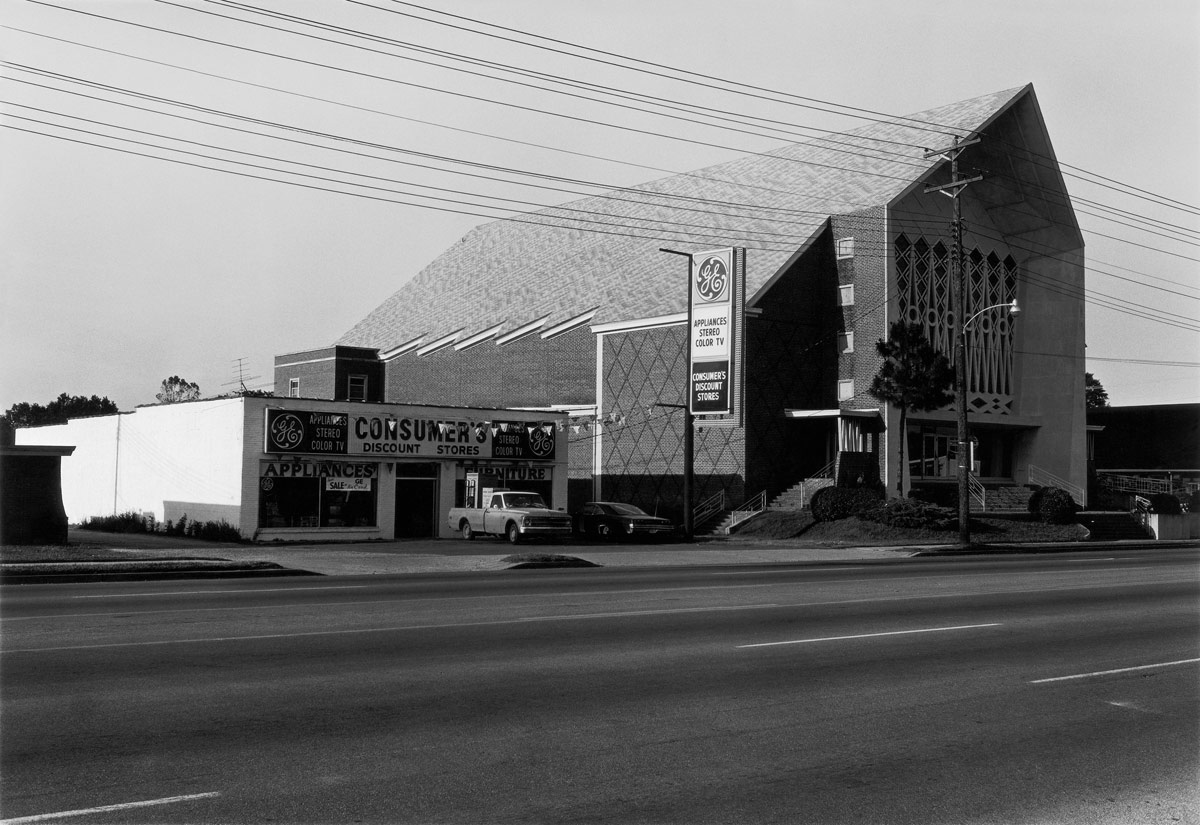
Fri – Sun: 10am – 5pm

San Francisco Museum of Modern Art website

LIKE ART BLART ON FACEBOOK

Back to top

Exhibition: ‘Eugène Atget: As Paris Was’ at Ticho House, the Museum of Israel, Jerusalem

Exhibition dates: 23rd March – 30th June 2012


Eugène Atget (French, 1857-1927) 'Saint-Cloud' Nd


Eugène Atget (French, 1857-1927)
Saint-Cloud
Nd
Albumen print


Some Atget photographs that I have never seen before makes this posting all the more pleasurable. The pendulous nature of the sea monster, like a leg hanging over the edge of a table (can’t u just feel the weight of it!); the oppressive solidity of the wall on the left hand side of Coin des rues Poulletier et Saint-Louis-en-l’île (c. 1915); and the two undated photographs of Saint-Cloud: the dark, spidery presence of the tree in winter and the absolute recognition of the visual escape point in the reflection of trees in pond. Magnificent.

Marcus


Many thankx to the Museum of Israel for allowing me to publish the photographs in the posting. Please click on the photographs for a larger version of the image.


Eugène Atget (French, 1857-1927) 'Saint-Cloud' Nd


Eugène Atget (French, 1857-1927)
Saint-Cloud
Nd
Albumen print


Eugène Atget (French, 1857-1927) 'Bagatelle' 1926


Eugène Atget (French, 1857-1927)
Bagatelle
1926
Albumen print


The photographic oeuvre of Eugène Atget (1857-1927) has become a landmark in the history of the medium, and his works are recognised as an integral part of the canon of documentary photography. His subject matter was Paris with its houses, streets, parks, and castles – interior and exterior details of architecture being transformed by modernity. His fame came decades later; however his enduring legacy in the field is still discernible worldwide. This exhibition of Atget’s photographs of Paris, the first ever in Israel.

The Israel Museum, Jerusalem has announced  the acquisition of 200 photographs by the pioneering French documentary photographer Eugène Atget, gifted by Pamela and George Rohr, New York, and an anonymous donor, New York. These works add an important new dimension to the Museum’s exceptional photography holdings, encompassing over 55,000 works from the earliest days of photography to contemporary times.

Seventy of these newly gifted works will be presented in Eugène Atget: As Paris Was, an exhibition at Ticho House, the Israel Museum’s historic venue in downtown Jerusalem, featuring Atget’s images of Paris from the mid-1890s until 1927. Marking the first ever presentation of the photographer’s work in Israel, the exhibition is curated by Nissan Perez, Horace and Grace Goldsmith Senior Curator in the Museum’s Noel and Harriette Levine Department of Photography.

French photographer Eugène Atget is recognised internationally for his integral role in the canon of documentary photography. After working as a sailor, actor, and painter for almost thirty years, he embarked on a self-assigned mission to document French life, culture, and history in and around Paris. He chose houses, streets, parks, and castles as his subjects, capturing interior and exterior details of architecture being transformed by modernity. Without any official recognition, this enterprise yielded a massive visual compendium of nearly 10,000 photographs that Atget loosely designated as “documents pour artistes” (documents for artists), created by means of anachronistic technology and an antiquated camera.

“We are deeply grateful to our donors for this generous gift of so important a trove of works by Eugène Atget, a pivotal figure in the history of photography,” said James S. Snyder, Anne and Jerome Fisher Director of the Israel Museum. “We are proud to be sharing Atget’s unique vision with Israeli audiences for the first time and in the resonant setting of our historic Ticho House, which also juxtaposes turn-of-the-last century Jerusalem with its encroaching modernity.”

“Atget’s photographs of Paris, including those featured in Eugène Atget: As Paris Was, do not depict the city as a bustling modern metropolis,” said exhibition curator Nissan Perez. “He trained his lens on the older, often decaying buildings and parks. The scenes he captured, mostly devoid of human presence, express desolation and solitude, reminiscent of an empty stage awaiting the actors’ entrance.”

Press release from the Museum of Israel, Jerusalem website


Eugène Atget (French, 1857-1927) 'Gargouille, cour du Louvre' 1902


Eugène Atget (French, 1857-1927)
Gargouille, cour du Louvre
1902
Albumen print


Eugène Atget (French, 1857-1927) 'Poupées, 63 rue de Sèvres' 1910-1911


Eugène Atget (French, 1857-1927)
Poupées, 63 rue de Sèvres
1910-1911
Albumen print


Eugène Atget (French, 1857-1927) 'Hôtel, 1 rue des Prouvaires et 54 rue Saint-Honoré' 1912


Eugène Atget (French, 1857-1927)
Hôtel, 1 rue des Prouvaires et 54 rue Saint-Honoré
1912
Albumen print


Eugène Atget (French, 1857-1927) 'Coin des rues Poulletier et Saint-Louis-en-l'île' c. 1915


Eugène Atget (French, 1857-1927)
Coin des rues Poulletier et Saint-Louis-en-l’île
c. 1915
Albumen print


Eugène Atget (French, 1857-1927) 'Place Pigalle' 1925


Eugène Atget (French, 1857-1927)
Place Pigalle
1925
Gelatin silver chloride printing-out paper print
17.8 × 22.9cm (7 × 9 in.)


When photographing this newly remodelled nightclub in the Place Pigalle section of Montmartre, Eugène Atget deviated from his usual subject matter, Paris’s historic architecture. Atget may have chosen to photograph this building to illustrate the sharp contrast between its flat, comparatively windowless planes and the colonnaded buildings that surround it.

Although this structure is new, the Place Pigalle had been a centre of bawdy nightlife since at least the 1870s, when artists and writers frequented its bohemian cafes and music halls. Despite the Place Pigalle’s colourful history, Atget seems not to have photographed here until 1925, when he made this picture. Today’s tourists still frequent the area’s strip joints, drag shows, and discotheques.

Text from the Google Arts & Culture website


Ticho House
10 HaRav Agan Street, Jerusalem
(near Zion Square)
Phone: 02-645-3746

Ticho House hours:
Wednesday: 12 – 8pm
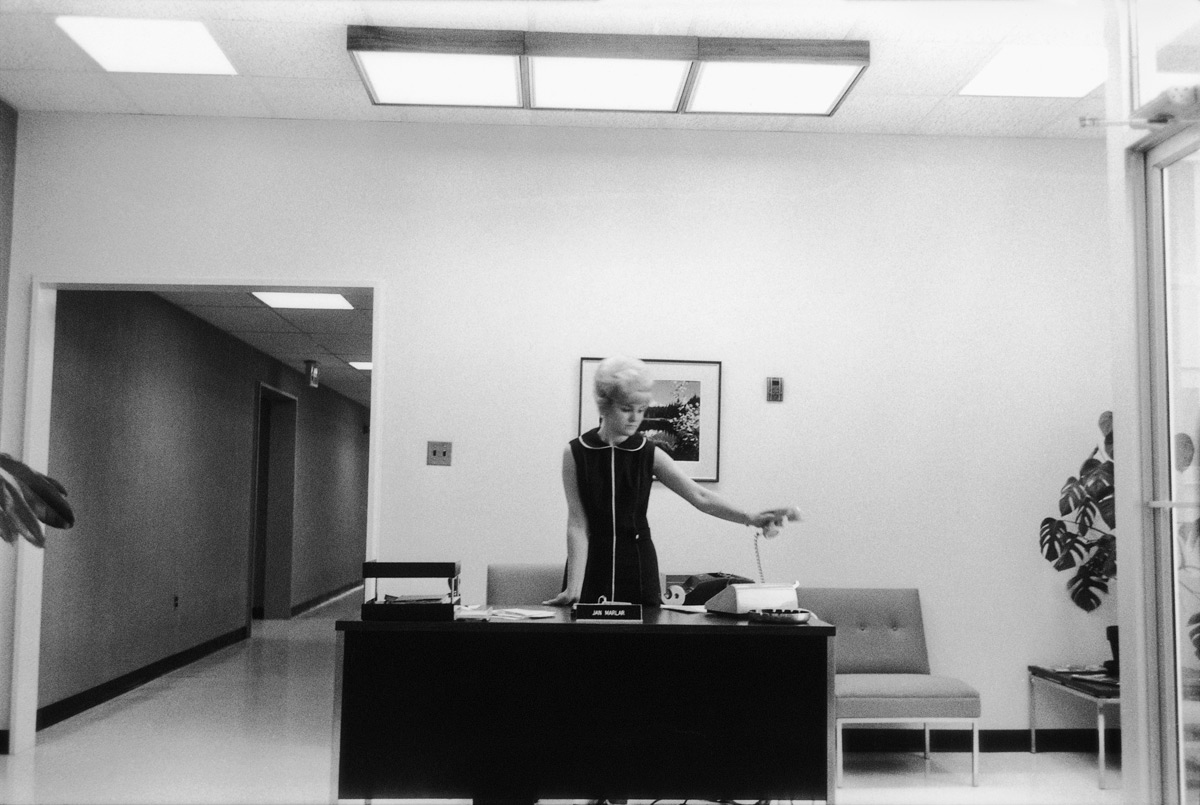
Thursday: 12 – 8pm
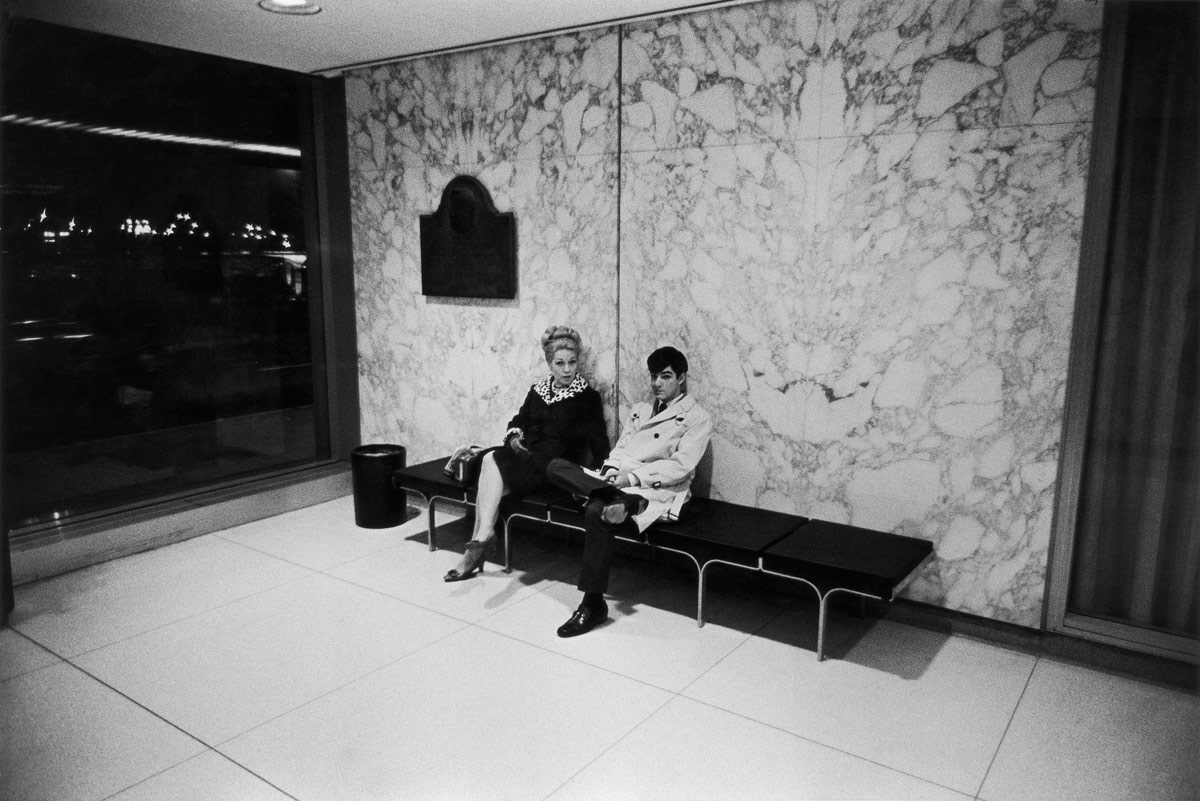
Friday: 10am – 2pm

Ticho Museum website
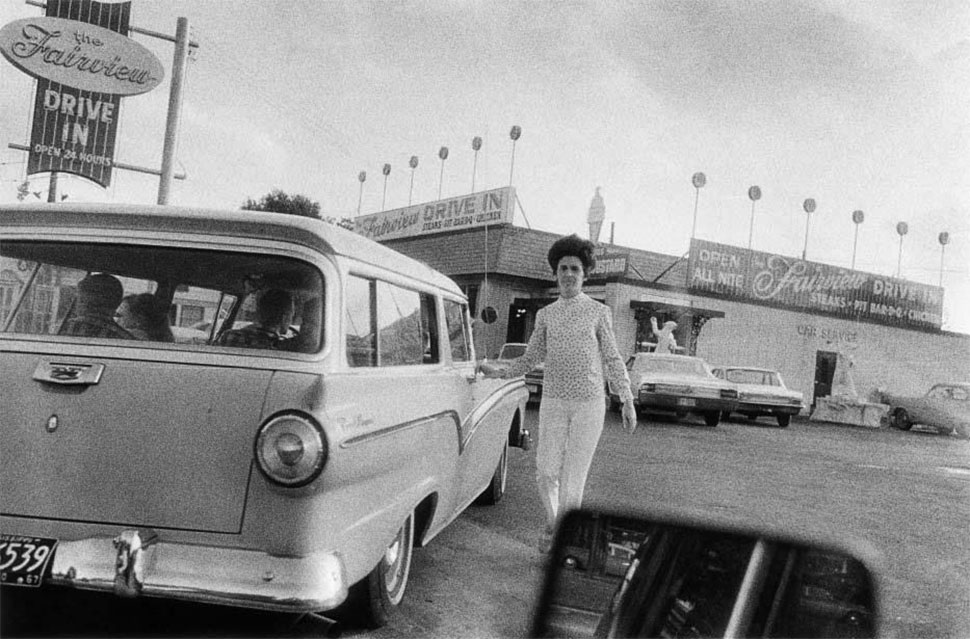
LIKE ART BLART ON FACEBOOK

Back to top

Exhibition: ‘Gillian Wearing’ at Whitechapel Gallery, London

Exhibition dates: 28th March – 17th June 2012

Galleries 1, 8 and Victor Petitgas Gallery


Many thankx to the Whitechapel Gallery for allowing me to publish the photographs in the posting. Please click on the photographs for a larger version of the image.


Gillian Wearing (English, b. 1963) 'Dancing in Peckham' 1994


Gillian Wearing (English, b. 1963)
Dancing in Peckham
1994
Colour video with sound
25 minutes
© the artist
Courtesy Maureen Paley, London


Gillian Wearing (English, b. 1963) 'Self Portrait at 17 Years Old' 2003


Gillian Wearing (English, b. 1963)
Self Portrait at 17 Years Old
2003
Framed C-type print
115.5 x 92 cm
© the artist
Courtesy Maureen Paley, London


The films and photographs of British artist Gillian Wearing (b. Birmingham, 1963) explore our public personas and private lives. This Turner Prize winner’s remarkable works draw on fly-on-the-wall documentaries, reality TV and the techniques of theatre, to explore how we present ourselves to the world.

Wearing’s portraits and mini-dramas reveal a paradox, given the chance to dress up, put on a mask or act out a role, the liberation of anonymity allows us to be more truly ourselves.

The exhibition begins with the artist herself, dancing in a shopping mall, blissfully unaware of her bemused audience. The idea of performance continues with works including Wearing’s 1997 masterpiece, 10–16. Adults lip synch the voices and act out the physical tics of seven children in a captivating film which moves from the breathless excitement of a ten year old to the existential angst of an adolescent.

Other highlights include Wearing’s iconic 1992 series, Signs that say what you want them to say, and not Signs that say what someone else wants you to say where strangers are offered paper and pen to communicate their message. In the upper galleries we enter the inner world of subjectivity. An advert – Confess All On Video. Don’t Worry, You Will Be In Disguise. Intrigued? Call Gillian… (1994) attracted a series of disturbing disclosures. Wearing jettisons her own identity to adopt the guise of family members or artists such as Diane Arbus or Andy Warhol, so revealing her own background and influence.

This comprehensive survey, which also premieres new films and sculptures, shows how Wearing is both political – often focusing on the dispossessed or the traumatised – and poetic, finding the extraordinary in us all.

Text from the Whitechapel Gallery website


Curator Introduction to Gillian Wearing

Curator Daniel Hermann introduces the Gillian Wearing exhibition at the Whitechapel Gallery from 28 March – 17 June 2012.


Installation view of the exhibition 'Gillian Wearing' at Whitechapel Gallery, London showing work from her series 'Signs that say what you want them to say and not Signs that say what someone else wants you to say'


Installation view of the exhibition Gillian Wearing at Whitechapel Gallery, London showing work from her series Signs that say what you want them to say and not Signs that say what someone else wants you to say


Gillian Wearing (English, b. 1963) 'HELP' 1992-1993


Gillian Wearing (English, b. 1963)
HELP
1992-1993
From the series Signs that say what you want them to say and not Signs that say what someone else wants you to say
C-type print mounted on aluminium
Dimensions variable
© the artist
Courtesy Maureen Paley, London


Gillian Wearing (English, b. 1963) 'I'M DESPERATE' 1992-1993


Gillian Wearing (English, b. 1963)
I’M DESPERATE 
1992-3
From the series Signs that say what you want them to say and not Signs that say what someone else wants you to say
C-type print mounted on aluminium
Dimensions variable
© the artist
Courtesy Maureen Paley, London


Gillian Wearing (English, b. 1963) 'WILL BRITAIN GET THROUGH THIS RECESSION?' 1992-1993


Gillian Wearing (English, b. 1963)
WILL BRITAIN GET THROUGH THIS RECESSION?
1992-3
From the series Signs that say what you want them to say and not Signs that say what someone else wants you to say
C-type print mounted on aluminium
Dimensions variable
© the artist
Courtesy Maureen Paley, London


The Whitechapel Gallery presents the first major international survey of Turner Prize-winning British artist Gillian Wearing’s photographs and films which explore the public and private lives of ordinary people. Fascinated by how people present themselves in front of the camera in fly-on-the-wall documentaries and reality TV, Gillian Wearing explores ideas of personal identity through often masking her subjects and using theatre’s staging techniques.

This major exhibition surveys Wearing’s work from the early photographs Signs that Say What You Want Them to Say and Not Signs that Say What Someone Else Wants You to Say (1992-3) to her latest video Bully (2010) and also includes several new photographs made specially for the Whitechapel Gallery exhibition.

Visitors to the exhibition enter a film set-style installation showcasing photographs and films in ‘front and back stage’ areas. Highlights include a striking photograph of the artist posing as her younger self, Self-Portrait at 17 Years Old (2003), Dancing in Peckham (1994), a film which blurs the boundaries between public space and private expression as Wearing dances in the middle of a shopping mall, and the UK premiere of recent film Bully (2010). New photographic works shown for the first time include two portraits of Wearing as artists August Sander and Claude Cahun as part of her ongoing series of iconic photographers, as well as still lives of flowers, looking back to the rich symbolism of the great age of 17th century Dutch painting.

A gallery is dedicated to Wearing’s well-known photographs giving people the chance to write what they were thinking at that moment, titled Signs that Say What You Want Them to Say and Not Signs that Say What Someone Else Wants You to Say (1992-3). The series includes a city worker holding a sign saying, ‘I’m Desperate’, a policeman holding ‘Help!’ and another person’s sign ‘Will Britain ever get through this recession’.

The exhibition also includes a series of private viewing booths for three confessional videos shown together for the first time and in which Gillian Wearing asked people to describe intensely personal experiences. These include Trauma (2000) where sitters describe childhood traumas while wearing a mask. As well as the powerful videos Secrets and Lies (2000) and Confess All On Video. Don’t Worry, You Will Be In Disguise. Intrigued? Call Gillian… (1994). Alongside these works the video 2 into 1 (1997) sees a mother lip synching the voices of her twin sons and vice versa as they describe their relationship.

Press release from Whitechapel Gallery website


Gillian Wearing: Self Made, 2010 Trailer

Gillian Wearing’s debut feature film introduces a cast of untrained actors to a Method acting teacher. Drawing upon their own experiences, each participant creates and stars in their own mini-film.


Gillian Wearing (English, b. 1963) 'Bully' 2010


Gillian Wearing (English, b. 1963)
Bully
2010
Colour video for projection with sound
7 minutes 55 seconds
© the artist
Courtesy Maureen Paley, London


Installation view of the exhibition 'Gillian Wearing' at Whitechapel Gallery, London showing at left a still from the video '2 into 1' (1997)


Installation view of the exhibition Gillian Wearing at Whitechapel Gallery, London showing at left a still from the video 2 into 1 (1997, below)


Gillian Wearing (English, b. 1963) '2 into 1' 1997


Gillian Wearing (English, b. 1963)
2 into 1
1997
Colour video for monitor with sound
4 minutes 30 seconds
© the artist
Courtesy Maureen Paley, London


Gillian Wearing (English, b. 1963) 'Trauma' 2000


Gillian Wearing (English, b. 1963)
Trauma
2000
Colour video for monitor with sound
30 minutes
© the artist
Courtesy Maureen Paley, London


Gillian Wearing (English, b. 1963) 'Me as Cahun Holding a Mask of My Face' 2012


Gillian Wearing (English, b. 1963)
Me as Cahun Holding a Mask of My Face
2012
Framed bromide print
149 x 120.5 cm
© the artist
Courtesy Maureen Paley, London


Installation view of the exhibition 'Gillian Wearing' at Whitechapel Gallery, London showing work from a series of iconic photographers


Installation view of the exhibition Gillian Wearing at Whitechapel Gallery, London showing work from a series of iconic photographers


Gillian Wearing (English, b. 1963) 'Me as Sander' 2012


Gillian Wearing (English, b. 1963)
Me as Sander
2012
Framed bromide print
149 x 98.8cm
© the artist
Courtesy Maureen Paley, London


Whitechapel Gallery
77 – 82 Whitechapel High Street
London E1 7QX
Phone: + 44 (0) 20 7522 7888

Opening hours:
Tuesday – Sunday 11am – 6pm
Thursdays and Fridays 11am  9pm
Closed Monday

Whitechapel Gallery website

LIKE ART BLART ON FACEBOOK

Back to top

Exhibition: ‘Cindy Sherman’ at the Museum of Modern Art (MoMA), New York

Exhibition dates: 26th February – 11th June 2012


Installation view of the exhibition 'Cindy Sherman' at MoMA, New York showing at left and centre, 'Cindy Sherman society portraits' (2008)


Installation view of the exhibition Cindy Sherman at MoMA, New York showing at left and centre, Cindy Sherman society portraits (2008)


Ceaselessly inventive, the bodies (literally) of work of Cindy Sherman are a wonder to behold. From film stills to head shots, from history portrait to society portraits, Sherman constantly reinvents herself, her variations of identity exploring “the complexity of representation in a world saturated with images,” her iterations into the construction of femininity and masculinity constantly “provocative, disparaging, empathetic, and mysterious.”

Where to next? Her recent series of digitally altered landscapes and portraits (Cindy Sherman at Metro Pictures, New York, April – June 2012) seem less resolved than her earlier work, becoming almost a pastiche of themselves. Despite their massive size they seem to lack resolution, the great female impersonator of our time relying for effect on Self as feminine earth (m)Other, tricked up in dubious, quasi-ethnic regalia. Sherman is almost sacrosanct with regard to criticism but it’s about time someone said it: these images are pretty awful.

After so many simulacra, so many layerings and expositions of identity isn’t it about time Sherman got back to basics and ditched these grandiose notions of identity sublime. The sublimation (an unconscious defence mechanism by which consciously unacceptable instinctual drives are expressed in personally and socially acceptable channels) of her/Self, her actual body, the energy of her (non) presence is finally starting to wear thin. Will the real Cindy Sherman (if ever there is such a thing) please stand up and tell us: what do you really stand for, where as a human being, is your spirit really at?

Dr Marcus Bunyan


Many thankx to MoMA for allowing me to publish the photographs in the posting. Please click on the photographs for a larger version of the image.


Installation view of the exhibition 'Cindy Sherman' at MoMA, New York showing 'Cindy Sherman history portraits' (1988-1990)


Installation view of the exhibition Cindy Sherman at MoMA, New York showing Cindy Sherman history portraits (1988-1990)


Installation view of the exhibition 'Cindy Sherman' at MoMA, New York showing 'Cindy Sherman headshots' (2000-2002)


Installation view of the exhibition Cindy Sherman at MoMA, New York showing Cindy Sherman headshots (2000-2002)


Cindy Sherman (American, b. 1954) 'Untitled Film Still #21' 1978


Cindy Sherman (American, b. 1954)
Untitled Film Still #21 
1978
Gelatin silver print
7 1/2 x 9 1/2″ (19.1 x 24.1cm)
The Museum of Modern Art, New York. Horace W. Goldsmith Fund through Robert B. Menschel


Cindy Sherman (American, b. 1954) 'Untitled Film Still #6' 1977


Cindy Sherman (American, b. 1954)
Untitled Film Still #6 
1977
Gelatin silver print
9 7/16 x 6 1/2″ (24 x 16.5cm)
The Museum of Modern Art, New York
Acquired through the generosity of Jo Carole and Ronald S. Lauder in memory of Eugene M. Schwartz


Cindy Sherman (American, b. 1954) 'Untitled Film Still #56' 1980


Cindy Sherman (American, b. 1954)
Untitled Film Still #56 
1980
Gelatin silver print
6 3/8 x 9 7/16″ (16.2 x 24cm)
The Museum of Modern Art, New York
Acquired through the generosity of Jo Carole and Ronald S. Lauder in memory of Mrs. John D. Rockefeller 3rd


Gallery 2

In fall 1977, Sherman began making pictures that would eventually become her groundbreaking Untitled Film Stills. Over three years, the series (presented here in its entirety) grew to comprise a total of seventy black-and-white photographs. Taken as a whole, the Untitled Film Stills – resembling publicity pictures made on movie sets – read like an encyclopaedic roster of stereotypical female roles inspired by 1950s and 1960s Hollywood, film noir, B movies, and European art-house films. But while the characters and scenarios may seem familiar, Sherman’s Stills are entirely fictitious; they represent clichés (career girl, bombshell, girl on the run, vamp, housewife, and so on) that are deeply embedded in the cultural imagination. While the pictures can be appreciated individually, much of their significance comes in the endless variation of identities from one photograph to the next. As a group they explore the complexity of representation in a world saturated with images, and refer to the cultural filter of images (moving and still) through which we see the world.

Wall text from the exhibition


Cindy Sherman (American, b. 1954) 'Untitled #137' 1984


Cindy Sherman (American, b. 1954)
Untitled #137 
1984
Chromogenic colour print
70 1/2 x 47 3/4″ (179.1 x 121.3cm)
Philadelphia Museum of Art
Purchased with the Alice Newton Osborn Fund, 1985


Cindy Sherman (American, b. 1954) 'Untitled #458' 2007-2008


Cindy Sherman (American, b. 1954)
Untitled #458 
2007-08
Chromogenic colour print
6′ 5 3/8″ x 58 1/4″ (196.5 x 148cm)
Glenstone


Gallery 3

Fashion – a daily form of masquerade that communicates culture, gender, and class – has been a constant source of inspiration for Sherman and a leading ingredient in the creation of her work. Throughout her career the artist has completed a number of commissions for fashion designers and magazines, and this gallery gathers many of these works. Sherman’s fashion pictures challenge the industry’s conventions of beauty and grace. Her first such commission, made in 1983, parodies typical fashion photography. Rather than projecting glamour, sex, or wealth, the pictures feature characters that are far from desirable – whether goofy, hysterical, angry, or slightly mad. Later commissions resulted in more extreme images of characters with bloodshot eyes, bruises, and scars. These exaggerated figures reached ostentatious heights in a 2007-08 commission, in which fashion victims – including steely fashion editors, PR mavens, assistant buyers, and wannabe fashionistas – wear clothing designed by Balenciaga and ham it up for the camera. Sherman’s interest in the construction of femininity and the mass circulation of images informs much of her work; the projects that take fashion as their subject illustrate the artist’s fascination with fashion images but also her critique of what they represent.

Wall text from the exhibition


Cindy Sherman (American, b. 1954) 'Untitled #424' 2004


Cindy Sherman (American, b. 1954)
Untitled #424 
2004
Chromogenic colour print
53 3/4 x 54 3/4″ (136.5 x 139.1cm)
Holzer Family Collection


Gallery 5

Sherman, who photographs alone in her studio, has used a variety of techniques to suggest different locations and imaginary (sometimes impossible) spaces, extending the narrative possibilities of her images. In her first foray into colour, in 1980, the artist photographed herself in front of rear-screen projections of various cityscapes and landscapes, evoking films from the 1950s and 1960s that used similar techniques to create the illusion of a change in location. In later series, such as the head shots (2000-2002), clowns (2003-04), and society portraits (2008), the artist used digital tools to create a variety of environments. The garish fluorescent colours in a clown picture contribute to the disturbing quality of the portrait, while a fairy tale forest provides a dreamy backdrop for a well-to-do lady.

Wall text from the exhibition


The Museum of Modern Art presents the exhibition Cindy Sherman, a retrospective tracing the groundbreaking artist’s career from the mid-1970s to the present, from February 26 to June 11, 2012. The exhibition brings together 171 key photographs from the artist’s significant series – including the complete Untitled Film Stills (1977-80), the critically acclaimed centerfolds (1981), and the celebrated history portraits (1988-90) – plus examples from all of her most important bodies of work, ranging from her fashion photography of the early 1980s to the breakthrough sex pictures of 1992 to her 2003-04 clowns and monumental society portraits from 2008. In addition, the exhibition features the American premiere of her 2010 photographic mural. An exhibition of films drawn from MoMA’s collection selected by Sherman will also be presented in the Museum’s theatres in April. Cindy Sherman is organised by Eva Respini, Associate Curator, with Lucy Gallun, Curatorial Assistant, Department of Photography, The Museum of Modern Art.

Cindy Sherman is widely considered to be one of the most important and influential artists of our time and her work is the unchallenged cornerstone of post-modern photography. Masquerading as a myriad of characters in front of her own camera, Sherman creates invented personas and tableaus that examine the construction of identity, the nature of representation, and the artifice of photography. Her works speak to an increasingly image-saturated world, drawing on the unlimited supply of visual material provided by movies, television, magazines, the Internet, and art history.

Ms. Respini says, “To create her photographs, Sherman works unassisted in her studio and assumes multiple roles as photographer, model, art director, make-up artist, hairdresser, and stylist. Whether portraying a career girl or a blond bombshell, a fashion victim or a clown, a French aristocrat or a society lady of a certain age, for over 35 years this relentlessly adventurous artist has created an eloquent and provocative body of work that resonates deeply with our visual culture.”

The American premiere of Sherman’s recent photographic mural (2010) will be installed outside the galleries on the sixth floor. The mural represents the artist’s first foray into transforming space through site-specific fictive environments. In the mural Sherman transforms her face via digital means, exaggerating her features through Photoshop by elongating her nose, narrowing her eyes, or creating smaller lips. The characters, who sport an odd mix of costumes and are taken from daily life, are elevated to larger-than-life status and tower over the viewer. Set against a decorative toile backdrop, her characters seem like protagonists from their own carnivalesque worlds, where fantasy and reality merge. The emphasis on new work presents an opportunity for reassessment in light of the latest developments in Sherman’s oeuvre.

Entering the galleries, the exhibition strays from a chronological narrative typical of retrospectives, and groups photographs thematically to create new and surprising juxtapositions and to suggest common threads across several series. A gallery devoted to her work made for the fashion industry brings together commissions from 1983 to 2011. Sherman’s interest in the construction of femininity and mass circulation of images informs much of the work that takes fashion as its subject, illustrating not only a fascination with fashion images but also a critical stance against what they represent. A gallery exploring themes of the grotesque focuses on bodies of work from the mid-1980s through the mid-1990s, including disasters (1986-89) and sex pictures (1992). Sherman’s investigation of macabre narratives followed a trajectory of the physical disintegration of the body, and features prosthetic parts as a stand-in for the human body. A gallery devoted to Sherman’s exploration of myth, carnival, and fairy tales pairs works from her 2003 clowns with her 1985 fairy tales series. These theatrical pictures revel in their own artificiality, with menacing characters and fantastical narratives.

Galleries devoted to single bodies of work are interspersed among the thematic rooms. Sherman’s seminal series the Untitled Film Stills, comprising 70 black-and-white photographs made between 1977 and 1980, are presented in their entirety (the complete series is in MoMA’s collection). Made to look like publicity pictures taken on movie sets, the Untitled Film Stills read like an encyclopaedic roster of female roles inspired by 1950s and 1960s Hollywood, film noir, B movies, and European art-house films. While the characters and scenarios may seem familiar, Sherman’s Stills are entirely fictitious. Her characters represent deeply embedded clichés (career girl, bombshell, girl on the run, housewife, and so on) and rely on the persistence of recognisable manufactured stereotypes that loom large in the cultural imagination.

Other series presented in depth include Sherman’s 1981 series of 12-colour photographs known as the centerfolds. Originally commissioned by Artforum magazine, these send-ups of men’s erotic magazine centerfolds depict characters in a variety of emotional states, ranging from terrified to heartbroken to melancholic. With this series, Sherman plays into the male conditioning of looking at photographs of exposed women, but she turns this on its head by taking on the roles of both (assumed) male photographer and female pinup. The history portraits investigate the relationships between painter and model, and are featured in depth in the exhibition. These theatrical portraits borrow from a number of art historical periods, from Renaissance, Baroque, Rococo, and Neoclassical. This free-association sampling creates an illusion of familiarity, but not with any one specific era or style (just as the Untitled Film Stills evoke generic types, not particular films). The subjects (for the first time, many are men) include aristocrats, Madonna and child, clergymen, women of leisure, and milkmaids, who pose with props, elaborate costumes, and obvious prostheses.

Sherman has explored the experience of ageing in a youth- and status-obsessed society with several bodies of work made since 2000. For her headshots from 2000-2002 (sometimes called Hollywood / Hamptons), the artist conceived a cast of characters of would-be or has-been actors (in reality secretaries, housewives, or gardeners) posing for head shots to get an acting job. With this series, Sherman underscores the transformative qualities of makeup, hair, expression, and pose, and the recognition of certain stereotypes as powerful transmitters of cultural clichés. Her monumental 2008 society portraits feature women “of a certain age” from the top echelons of society who struggle with today’s impossible standards of beauty. The psychological weight of these pictures comes through in the unrelenting honesty of the description of ageing and the small details that belie the attempt to project a certain appearance. In the infinite possibilities of the mutability of identity, these pictures stand out for their ability to be at once provocative, disparaging, empathetic, and mysterious.

Press release from the MoMA website


Cindy Sherman (American, b. 1954) 'Untitled #193' 1989


Cindy Sherman (American, b. 1954)
Untitled #193 
1989
Chromogenic colour print
48 7/8 x 41 15/16″ (124.1 x 106.5cm)
The Doris and Donald Fisher Collection


Cindy Sherman (American, b. 1954) 'Untitled #213' 1989


Cindy Sherman (American, b. 1954)
Untitled #213 
1989
Chromogenic colour print
41 1/2 x 33″ (105.4 x 83.8cm)
Courtesy the artist and Metro Pictures, New York


Cindy Sherman (American, b. 1954) 'Untitled #216' 1989


Cindy Sherman (American, b. 1954)
Untitled #216 
1989
Chromogenic colour print
7′ 3 1/8″ x 56 1/8″ (221.3 x 142.5cm)
The Museum of Modern Art, New York. Gift of Werner and Elaine Dannheisser


Gallery 7

Sherman’s history portraits (1988-90) investigate modes of representation in art history and the relationship between painter and model. These classically composed portraits borrow from a number of art-historical periods – Renaissance, baroque, rococo, Neoclassical – and make allusions to paintings by Raphael, Caravaggio, Fragonard, and Ingres (who, like all the Old Masters, were men). This free-association sampling creates a sense of familiarity, but not of any one specific era or style. The subjects (for the first time for Sherman, many are men) include aristocrats, Madonnas with child, clergymen, women of leisure, and milk-maids, who pose with props, costumes, and obvious prostheses. Theatrical and artificial – full of large noses, bulging bellies, squirting breasts, warts, and unibrows – the history portraits are poised between humorous parody and grotesque caricature.

A handful of Sherman’s portraits were inspired by actual paintings. Untitled #224 was made after Caravaggio’s Sick Bacchus (c. 1593), which is commonly believed to be a self-portrait of the artist as the Roman god of wine. In Sherman’s reinterpretation, the numerous layers of representation – a female artist impersonating a male artist impersonating a pagan divinity – create a sense of remove, pastiche, and criticality. Even where Sherman’s pictures offer a gleam of art-historical recognition, she has inserted her own interpretation of the canonised paintings, creating contemporary artefacts of a bygone era.

Wall text from the exhibition


Cindy Sherman (American, b. 1954) 'Untitled #359' 2000


Cindy Sherman (American, b. 1954)
Untitled #359 
2000
Chromogenic color print
30 x 20″ (76.2 x 50.8cm)
Collection Metro Pictures, New York


Gallery 8

After almost a decade of staging still lifes with dolls and props, in her 2000-2002 head-shots series Sherman returned to a more intimate scale and to using herself as a model. The format recalls ID pictures, head shots, or vanity portraits made in garden-variety portrait studios by professional photographers. First exhibited in Beverly Hills, the series explores the cycle of desire and failed ambition that permeates Hollywood. Sherman conceived a cast of would-be or has-been female actors posing for head shots in order to get acting jobs; later, for an exhibition in New York, she added East Coast types. Whichever part of the country they’re from, we’ve seen these women before – on reality television, in soap operas, or at a PTA meeting. With these pictures, Sherman underscores the transformative qualities of makeup, hair, expression, and pose, and the power of stereotypes as transmitters of cultural clichés. She projects well-drawn personas: the enormous pouting lips of the woman in Untitled #360 suggest a yearning for youth, while the glittery makeup and purple iridescent dress worn by the character in Untitled #400 indicate an aspiration to reach a certain social status. In her role as both sitter and photographer, Sherman has disrupted the usual power dynamic between model and photographer and created new avenues through which to explore the very apparatus of portrait photography itself.


Cindy Sherman (American, b. 1954) 'Untitled #465' 2008


Cindy Sherman (American, b. 1954)
Untitled #465 
2008
Chromogenic colour print
63 3/4 x 57 1/4″ (161.9 x 145.4cm)
Whitney Museum of American Art, New York
Purchase, with funds from the Painting and Sculpture Committee and the Photography Committee, 2009


Cindy Sherman (American, b. 1954) 'Untitled #466' 2008


Cindy Sherman (American, b. 1954)
Untitled #466
2008
Chromogenic colour print


Cindy Sherman (American, b. 1954) 'Untitled #474' 2008


Cindy Sherman (American, b. 1954)
Untitled #474 
2008
Chromogenic colour print
7′ 7″ x 60 1/4″ (231.1 x 153cm)
The Museum of Modern Art, New York
Acquired through the generosity of an anonymous donor, Michael Lynne, Charles Heilbronn, and the Carol and David Appel Family Fund


Gallery 10

Set against opulent backdrops and presented in ornate frames, the characters in Sherman’s 2008 society portraits seem at once tragic and vulgar. The figures are not based on specific women, but the artist has made them look entirely familiar in their struggle with the impossible standards of beauty that prevail in a youth – and status – obsessed culture. At this large scale, it is easy to decipher the characters’ vulnerability behind the makeup, clothes, and jewellery. The psychological weight of these pictures comes through the unrelenting honesty of their description of ageing, the tell-tale signs of cosmetic alteration, and the small details that belie the characters’ attempts to project a polished and elegant appearance. Upon careful viewing, they reveal a dark reality lurking beneath the glossy surface of perfection. As with much of her work, in her society portraits Sherman has demonstrated a remarkable capacity to channel the zeitgeist. These well-heeled divas presaged the financial collapse of 2008, the end of an era of opulence – the size of the photographs alone seems a commentary on an age of excess. Among the numerous iterations of contemporary identity, these pictures stand out as at once provocative, disparaging, empathetic, and mysterious.

Wall text from the exhibition


Cindy Sherman (American, b. 1954) 'Untitled #475' 2008


Cindy Sherman (American, b. 1954)
Untitled #475 
2008
Chromogenic colour print
7′ 2 3/8″ x 71 1/2″ (219.4 x 181.6cm)
The Broad Art Foundation, Santa Monica


Gallery 11

Because the majority of Sherman’s pictures feature the artist as model, they showcase a single character. In the 1970s Sherman experimented with cutouts of multiple figures, in her whimsical 1975 stop-motion animated short film Doll Clothes and her rarely seen 1976 collages, which were achieved through a labor-intensive process of cutting and pasting multiple photographs. When Sherman began working digitally in the early 2000s, she was able to more easily incorporate multiple figures in one frame, allowing for a variety of new narrative possibilities. Where the early works chart the movements and gestures of a single character through space, the multiple figures in recent works interact with one another to create tableaus.

Wall text from the exhibition


The Museum of Modern Art
11 West 53 Street
New York, NY 10019
Phone: (212) 708-9400

Opening hours:
10.30am – 5.30pm
Open seven days a week

MoMA website

LIKE ART BLART ON FACEBOOK

Back to top