Vale René Burri

October 2014


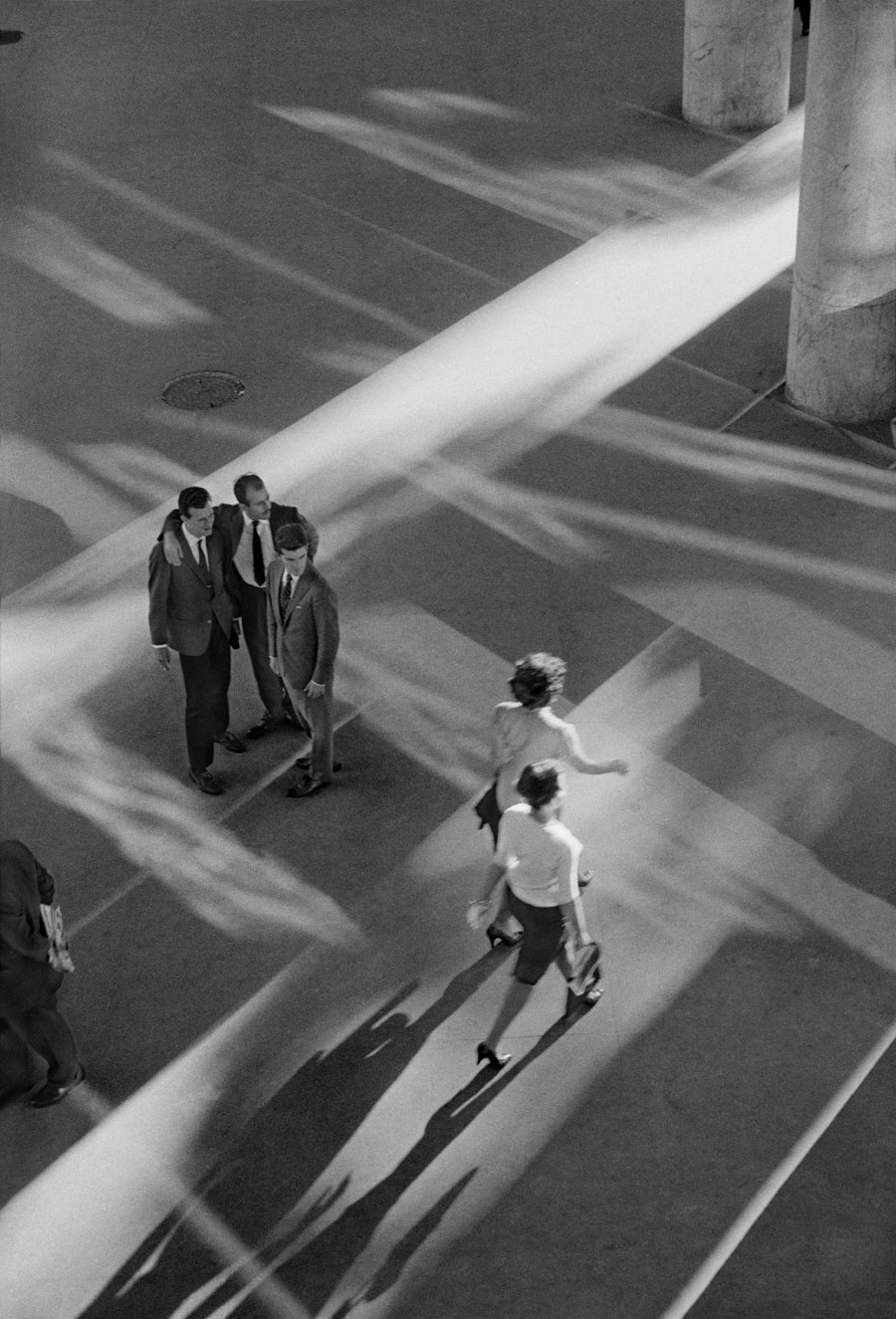
René Burri (Swiss, 1933-2014) 'Men On A Rooftop, Sao Paulo', 1960


René Burri (Swiss, 1933-2014)
Men On A Rooftop, Sao Paulo
1960
© Rene Burri/Magnum Photos


Another strong, passionate photographer has gone. One of his best images and one of my favourites is Men on a rooftop (1960, above). For more images see my earlier posting René Burri: A Retrospective at Flo Peters Gallery, Hamburg, November 2009 – January 2010.

Marcus


Please click on the photographs for a larger version of the image.


“When Burri left Zurich in the 1950s, he set out to discover the world and some sense of man’s smallness within it. Switzerland was landlocked, bordered by mountains; a camera was a way out. Even then, he worried about what he could do that was new – “when shutters rattle from morning to night in every corner of the world … when every continent is lit with the flash of cameras.” His job, he believes, has been to “trace the enormous social changes taking place in our age, conveying my thoughts and images of them.” And, more poetically, “to put the intensity that you yourself have experienced into the picture – otherwise it is just a document.” He retired from reporting once that intensity, that sense of the bigness of the world, was gone.”


Saturday February 7, 2004 The Guardian


René Burri (Swiss, 1933-2014) 'Ernesto Guevara (Che) Havana' 1963


René Burri (Swiss, 1933-2014)
Ernesto Guevara (Che) Havana
1963
© Rene Burri/Magnum Photos


René Burri (Swiss, 1933-2014) 'Brazil, Rio de Janeiro' 1960


René Burri (Swiss, 1933-2014)
Brazil, Rio de Janeiro
1960
© Rene Burri/Magnum Photos


It is with great sadness that the Musée de l’Elysée has learned of the death of René Burri, on Monday October 20 in Zurich, at the age of 81. In his later years, René Burri wished to create a foundation for the preservation of his work. The Musée de l’Elysée in Lausanne hosts the Fondation René Burri established in June 2013.

The members of the Fondation de l’Elysée as well as the Musée de l’Elysée team extend their deepest sympathies to the family. A member of Magnum, René Burri was without a doubt one of the most talented photographers of his generation. He was present wherever history was being made and an acute witness of the major events of his time.

On the occasion of his 80th year, René Burri wished to create a foundation for the conservation and promotion of his work in museums and among the public, both in Switzerland and around the world. The Musée de l’Elysée hosts the Fondation René Burri and has been working closely with the artist and his family since June 2013 toward this goal.

“Thanks to the work being undertaken by the Musée de l’Elysée, we feel confident that René Burri’s legacy, which is of universal importance, will be passed on to future generations in the best possible conditions,” says the family.

This major Swiss patrimony has been bestowed to the Musée de l’Elysée on a 20-year loan, with the possibility for renewal. The René Burri photographic archives consist of approximately 30,000 images (vintage and modern prints, contact sheets and slides), in black and white and in colour. One third of this collection has already been received by the museum and an open-air exhibition will be organised in Lausanne as early as next year.

Press release from the Musée de l’Elysée


René Burri (Swiss, 1933-2014) 'United Arab Emirates, Das Island' 1976


René Burri (Swiss, 1933-2014)
United Arab Emirates, Das Island
1976
© Rene Burri/Magnum Photos


René Burri (Swiss, 1933-2014) 'Pekin' 1989


René Burri (Swiss, 1933-2014)
Pekin
1989
© Rene Burri/Magnum Photos


René Burri (Swiss, 1933-2014) 'Nuit des images' 2013


René Burri (Swiss, 1933-2014)
Nuit des images
2013
Musee de l’Elysee
© Reto Duriet


Musée de l’Elysée
18, avenue de l’Elysée CH
1014 Lausanne
Phone: + 41 21 316 99 11

Opening hours
Wednesday – Monday 10am – 6pm
Closed Tuesday

Musée de l’Elysée website

LIKE ART BLART ON FACEBOOK

Back to top

Exhibition: ‘Christina Broom’ at the Museum of London

Exhibition dates: 4th April – 28th September 2014


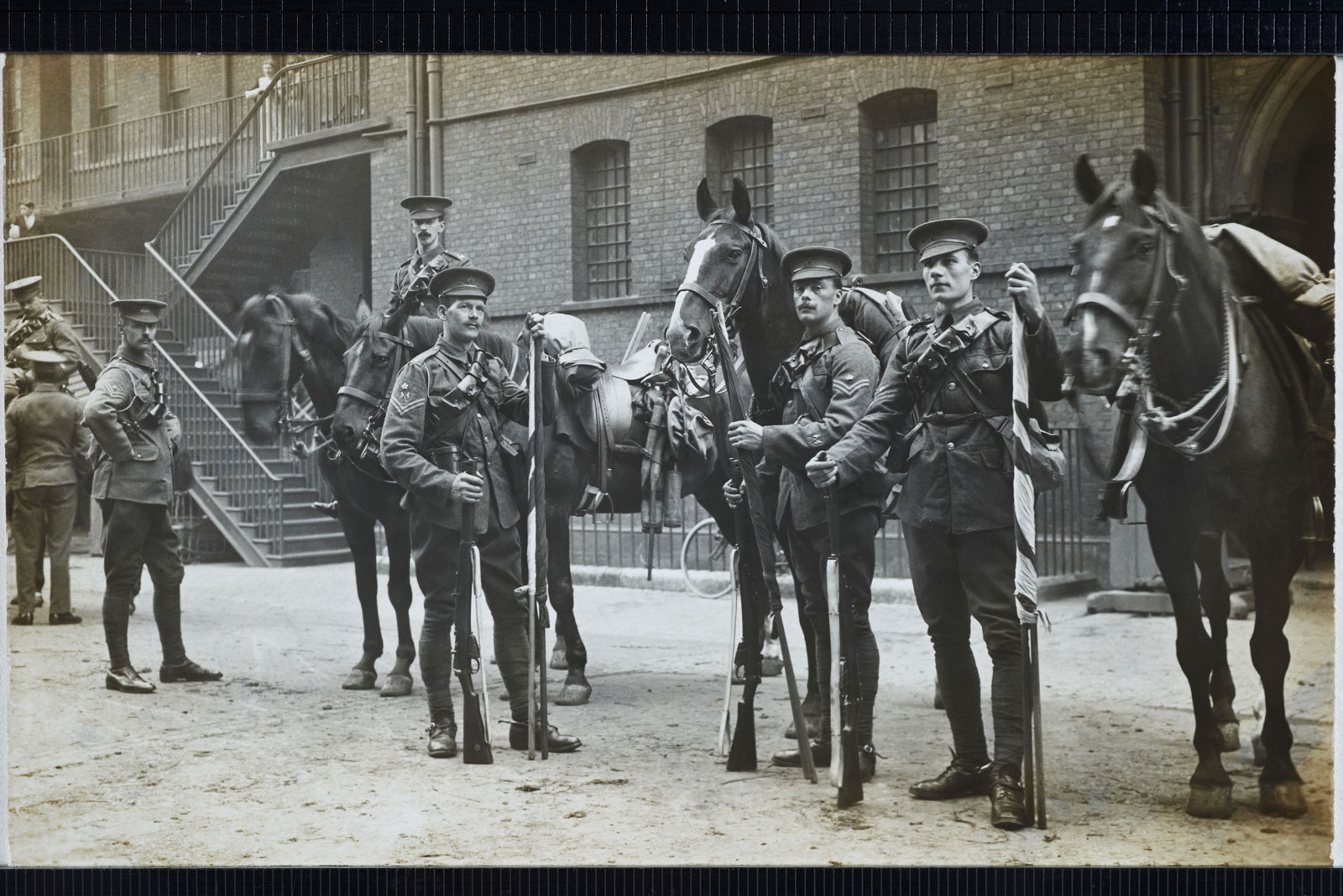
Christina Bloom (British, 1862-1939) 'The 1st Life Guards prepare to leave Hyde Park Barracks and head to war, on 15 August 1914'


Christina Bloom (British, 1862-1939)
The 1st Life Guards prepare to leave Hyde Park Barracks and head to war, on 15 August 1914. They were destined for the devastating Battle of Mons
1914
Christina Broom/Museum of London


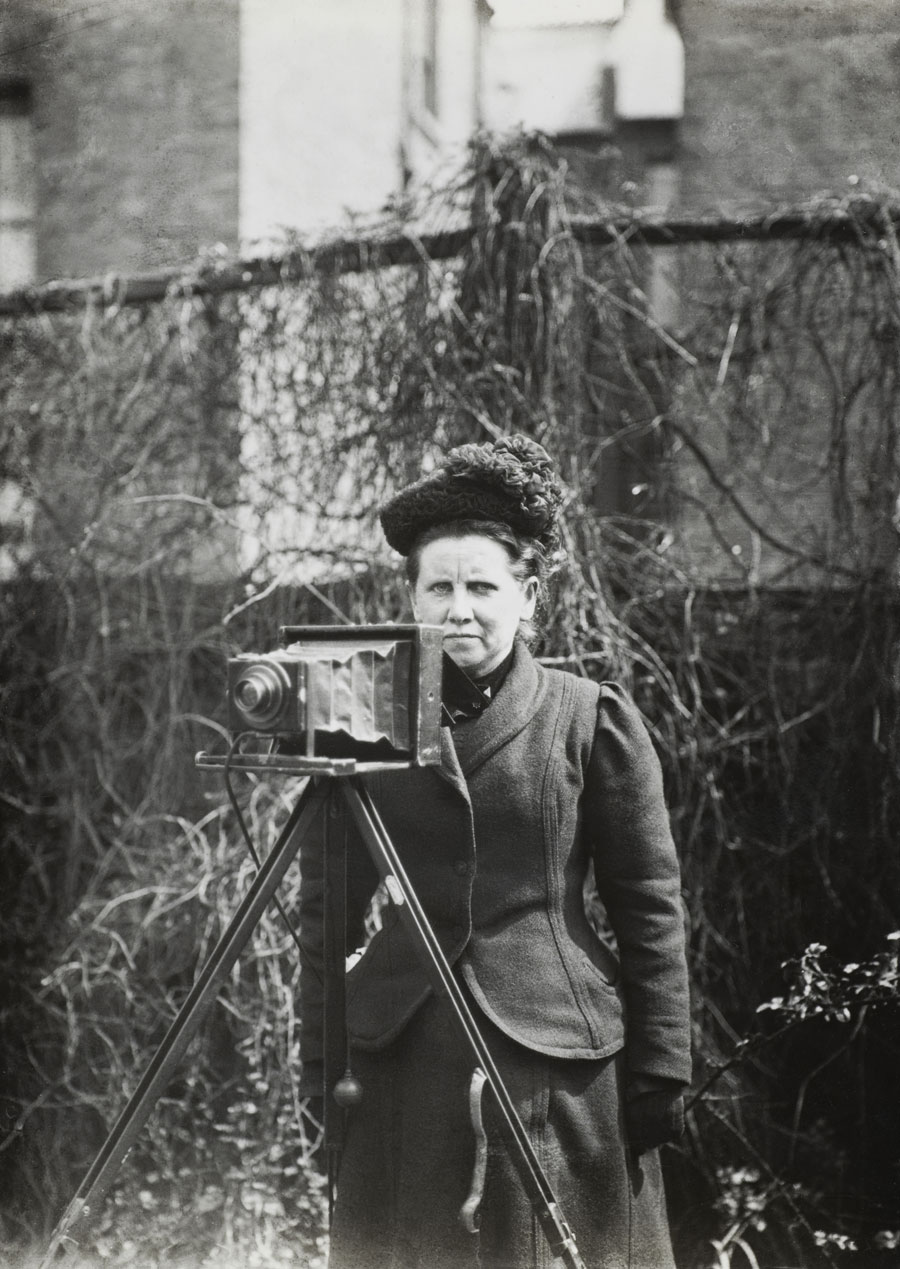
Look at the portrait of Christina Bloom at the bottom of the posting. Now there is a formidable human being. The look in the eyes shows determination and toughness, toughness to survive and succeed in a male dominated world.

Broom taught herself photography at the age of 40 – “to create and sell photographic postcards – a trade which was thriving. At work between 1903 and 1939, she gained exclusive access to leading London events from suffragette processions to King George V’s coronation and became photographer to the Household Brigade, forging a unique relationship with the Guards” – and became the UK’s first female press photographer. She must have had something special … and then you look at her photographs and you realise what: spontaneity, structure, spirit and the rest. Her tableaux vivant in this posting are almost sculptural in their construction, the photographer ordering the elements, posing the people but then evincing from them a warmth and intimacy in their engagement with the camera that is quite remarkable.

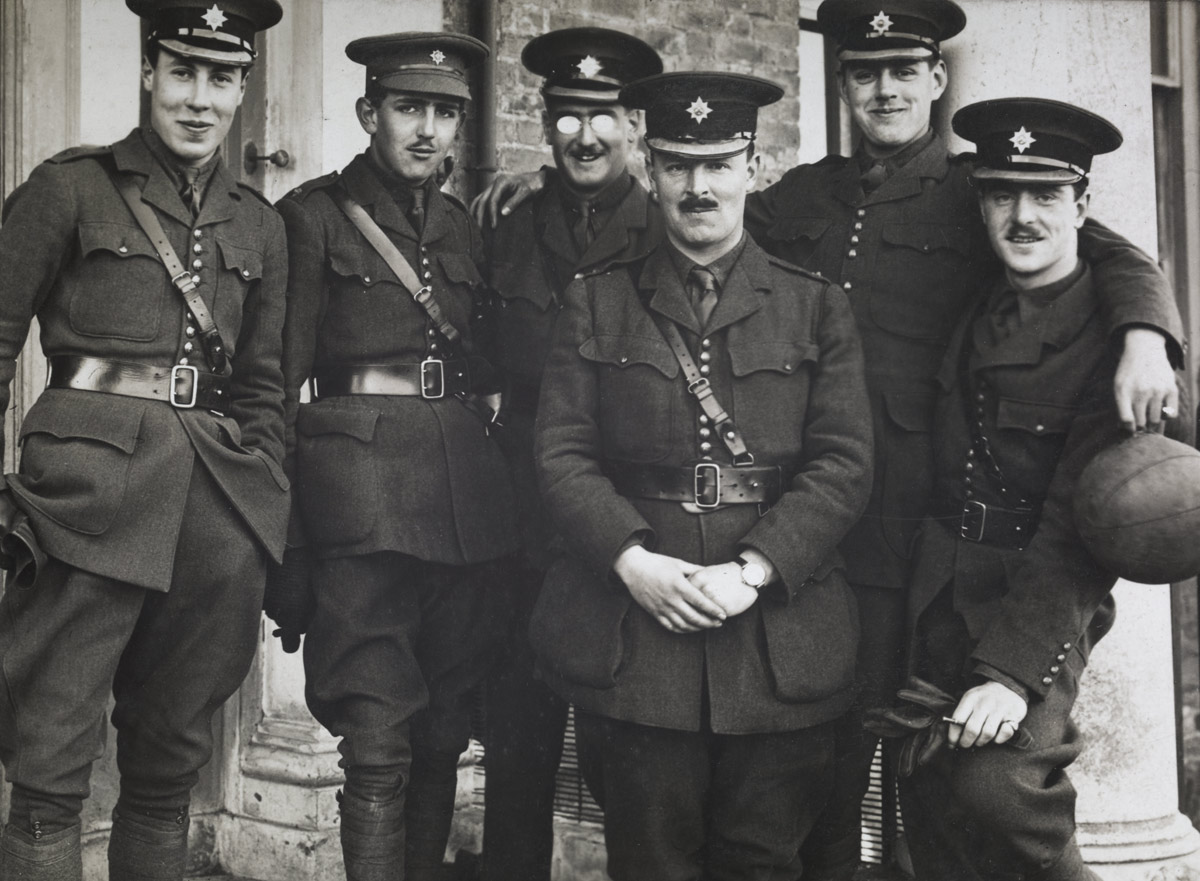
In terms of structure you need look no further than The 1st Life Guards prepare to leave Hyde Park Barracks (1914, top photo below) or Captain Greer of the 1st Irish Guards and his machine gun team (Nd, below) to see how Broom arranges her subject matter. In the 1st Life Guards photograph the man standing at left, the man seated on the horse and the man second right stare directly at the camera forming strong triangular sight lines. This triangle is then crossed by the man third from left who gazes out of the picture perpendicular to the camera’s gaze. His gaze is then “crossed” by the soldier standing at right staring away into the distance at 45 degree angle away from the camera. This image is a masterclass in sight lines and positioning, complemented by the intimacy of the gaze of the soldier second from the right staring directly into the camera (see detail), and the women positioned on the staircase in the background. Magic is happening here.

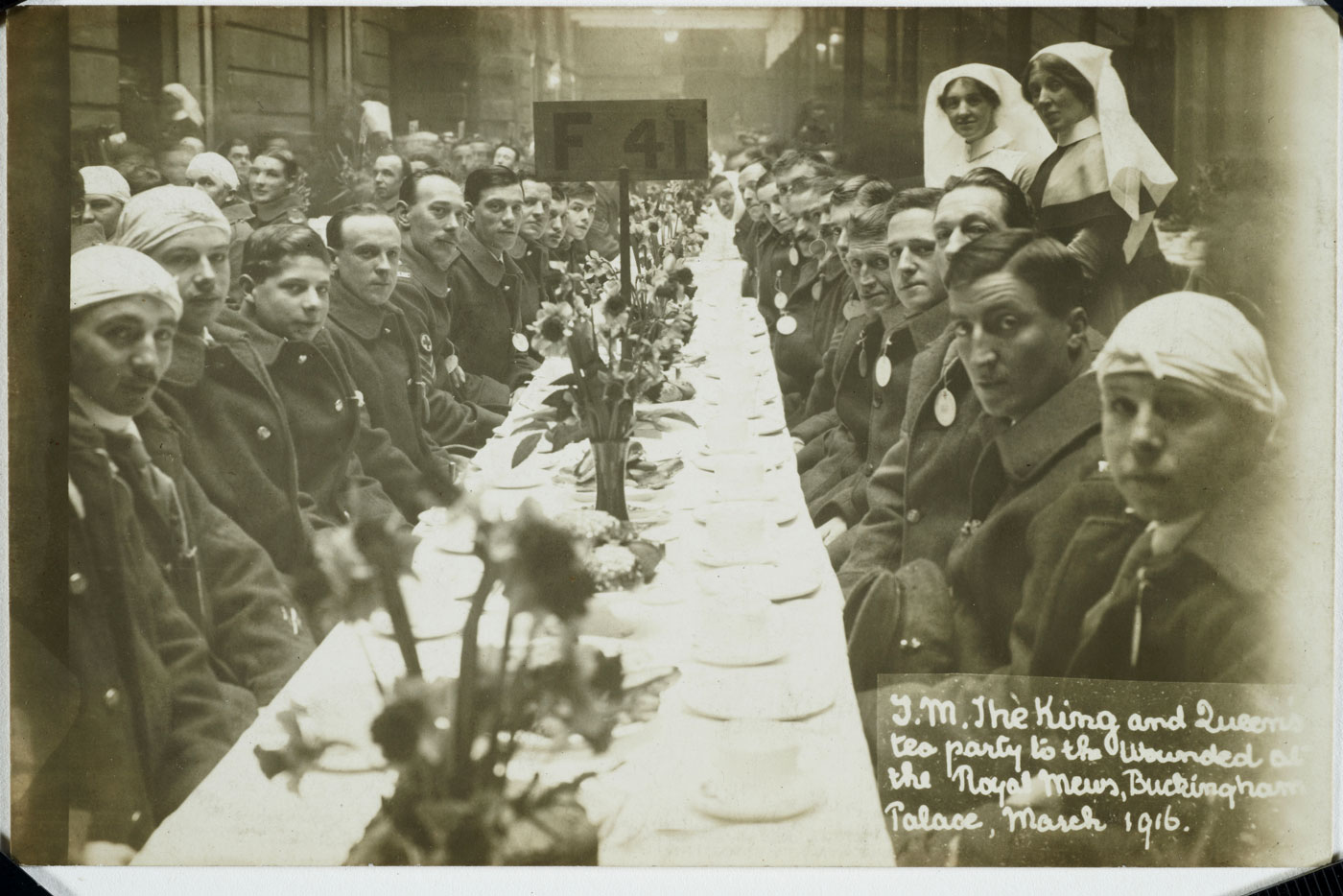
Again, in the second image of the machine gun team the photograph is eloquently and formally constructed – the symmetry of the twin doors and white squares behind echoed by the horseshoe arrangement of the men with the machine guns pointing in opposite directions. The stoic words ‘MACHINE GUN SHED. EAST’ are emblazoned above the men as though to press home their purpose, but upon detailed inspection the character of the men shines through – the stiff upper lip, the wicked sense of humour and the cheeky chappy can all be seen in this otherwise formally posed photograph. Added poignancy comes with the knowledge that every single person in the photograph was killed soon afterwards on the battlefields of the Western Front. Evidence of the stress of the war can be seen in the photograph King George V and Queen Mary host a tea party for wounded soldiers and sailors (1916, below). Gone are the jovial bonhomie smiles and comradeship, to be replaced by bandages and bouquets, and gaunt-looking, wary, young, scared looking soldiers staring out at the camera. Terrific photographs from a skilled and intuitive artist.

Dr Marcus Bunyan


Many thankx to the Museum of London for allowing me to publish the photographs in the posting. Please click on the photographs for a larger version of the image.


Christina Bloom (British, 1862-1939) 'The 1st Life Guards prepare to leave Hyde Park Barracks and head to war, on 15 August 1914' (detail)


Christina Bloom (British, 1862-1939)
The 1st Life Guards prepare to leave Hyde Park Barracks and head to war, on 15 August 1914 (detail)
1914
Christina Broom/Museum of London


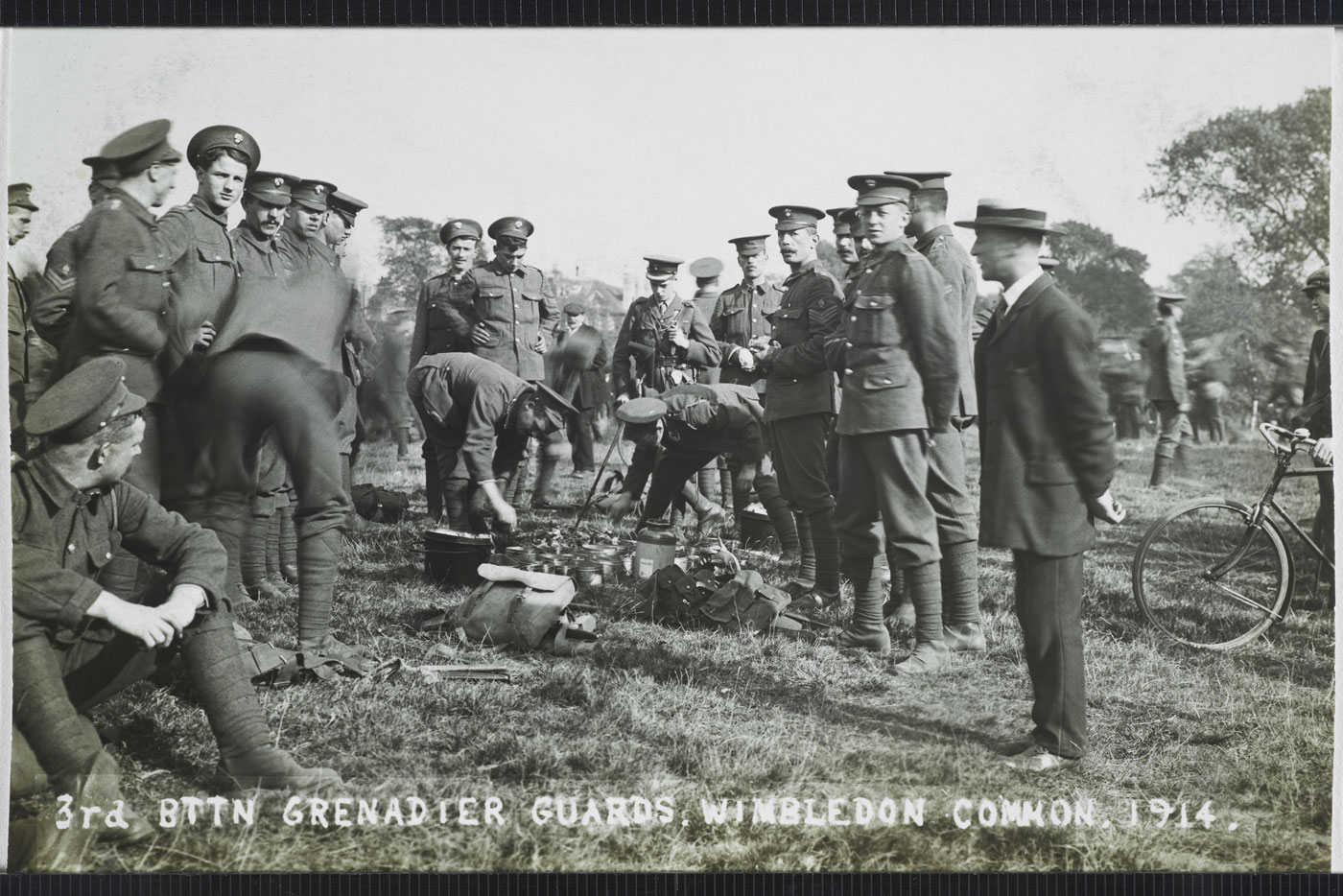
Christina Bloom (British, 1862-1939) 'The 3rd Battalion Grenadier Guards prepare for war at the Wimbledon Common training camp in 1914'


Christina Bloom (British, 1862-1939)
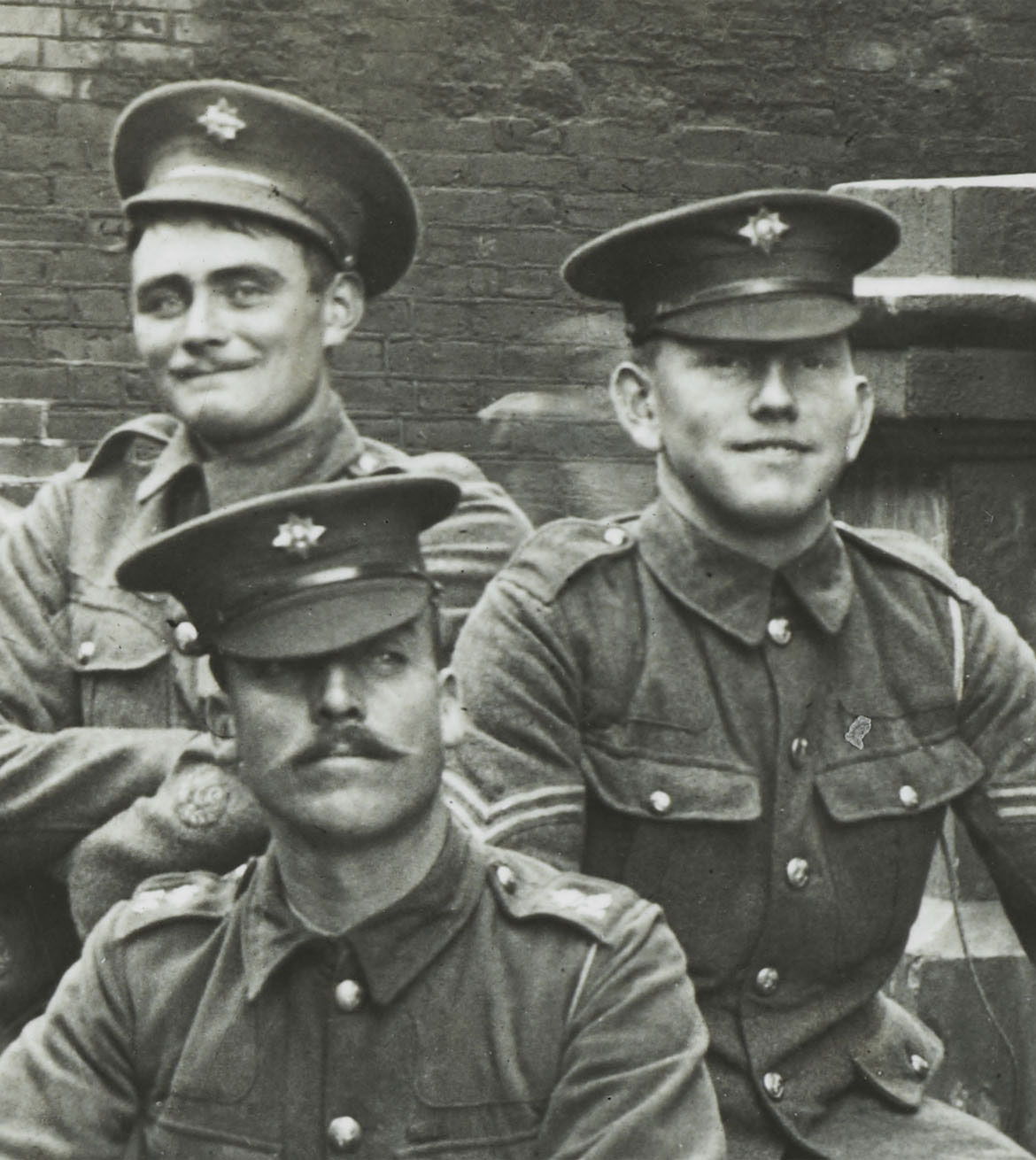
The 3rd Battalion Grenadier Guards prepare for war at the Wimbledon Common training camp in 1914. Lieutenant HRH the Prince of Wales can be seen inspecting the field kitchen, having marched there from Wellington Barracks
1914
Christina Broom/Museum of London


Christina Bloom (British, 1862-1939) 'The 3rd Battalion Grenadier Guards prepare for war at the Wimbledon Common training camp in 1914' (detail)


Christina Bloom (British, 1862-1939)
The 3rd Battalion Grenadier Guards prepare for war at the Wimbledon Common training camp in 1914 (detail)
1914
Christina Broom/Museum of London


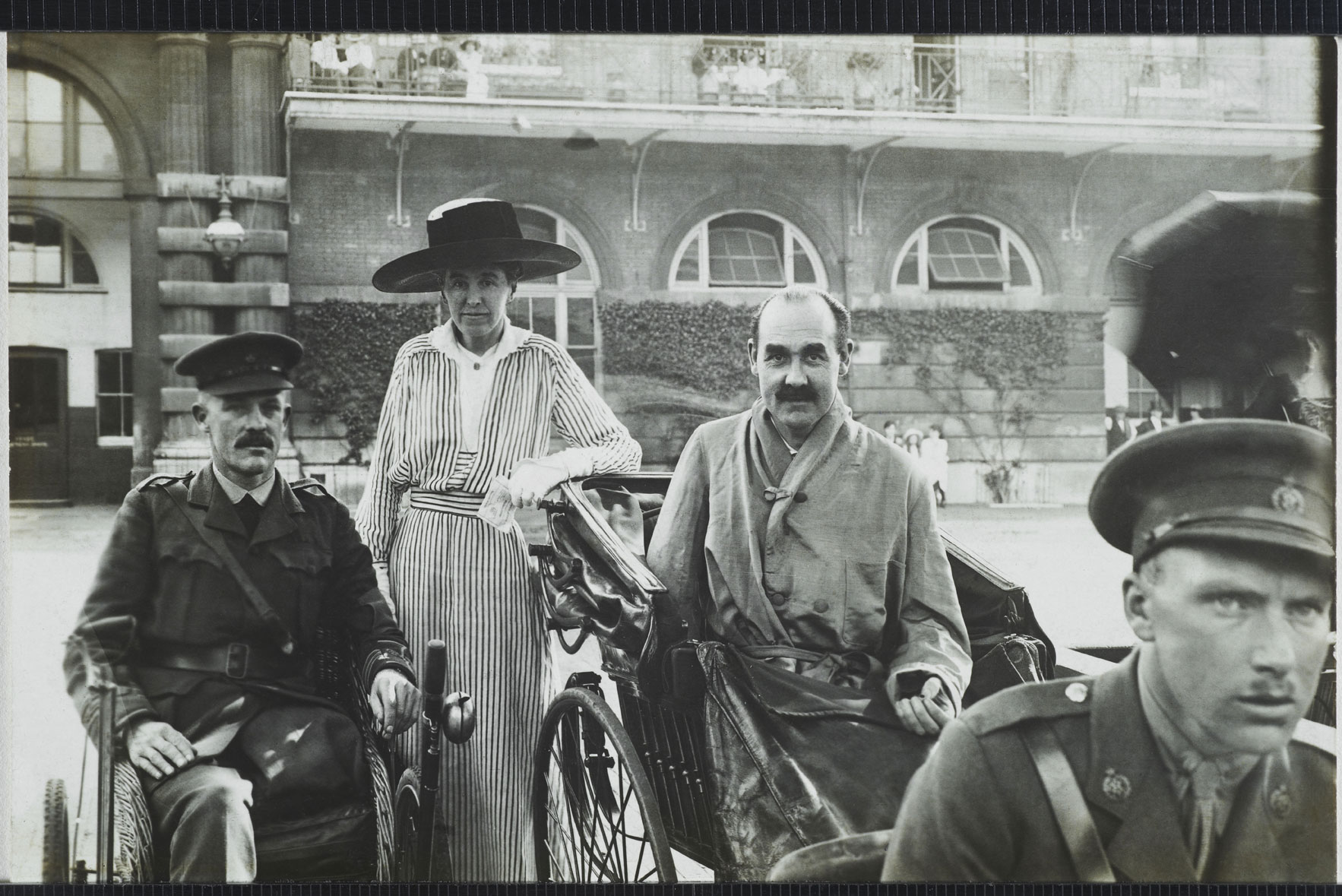
Christina Bloom (British, 1862-1939) 'Wounded patients from King Edward VII’s Hospital for Officers visit the Royal Mews in 1915'


Christina Bloom (British, 1862-1939)
Wounded patients from King Edward VII’s Hospital for Officers visit the Royal Mews in 1915. Originally set up after the Boer War by two sisters, the hospital treated injured officers during the First World War at its premises in Grosvenor Gardens
1915
Christina Broom/Museum of London


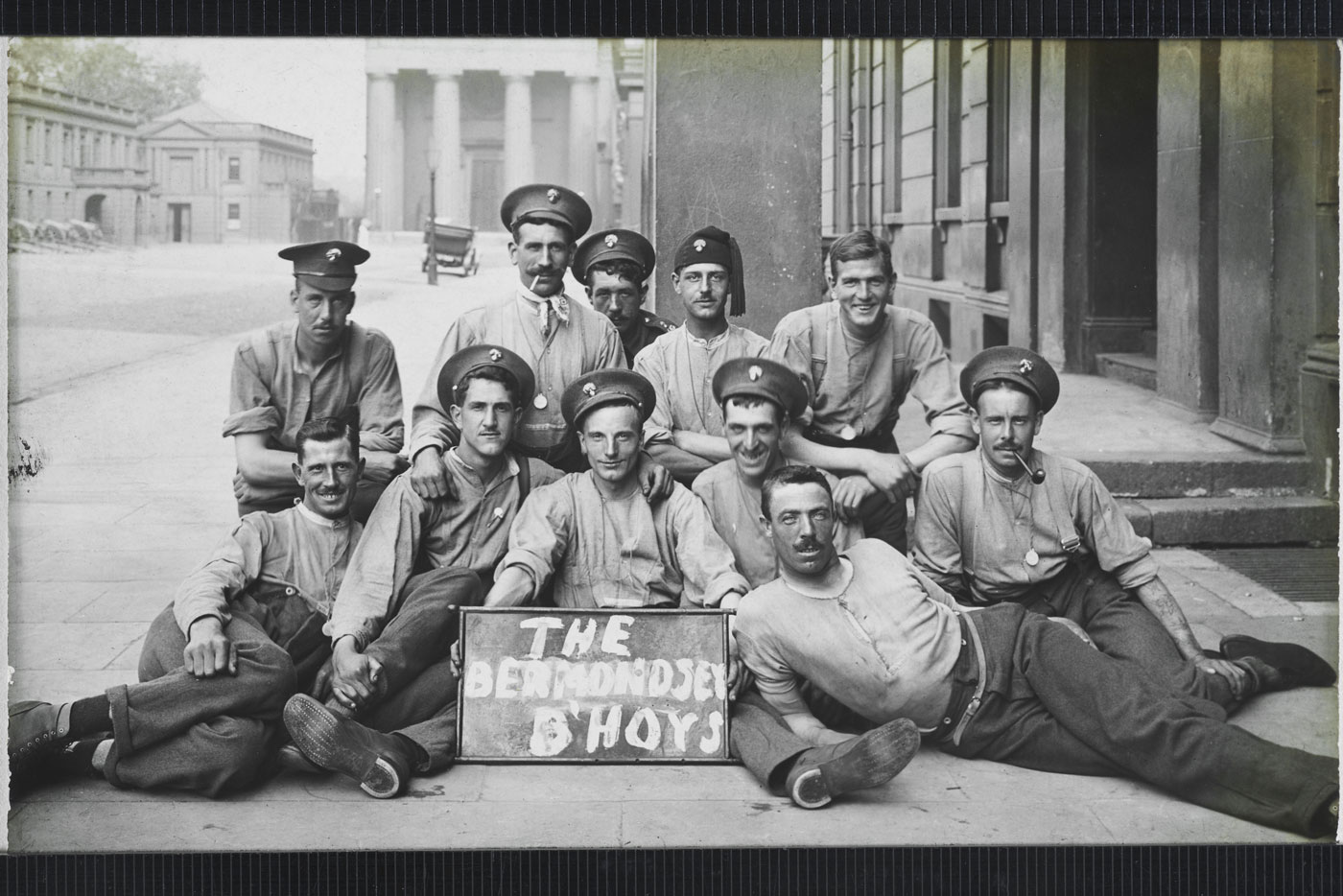
Christina Bloom (British, 1862-1939) 'The 'Bermondsey B'hoys' from the 2nd Grenadier Guards' c. 1914-1915


Christina Bloom (British, 1862-1939)
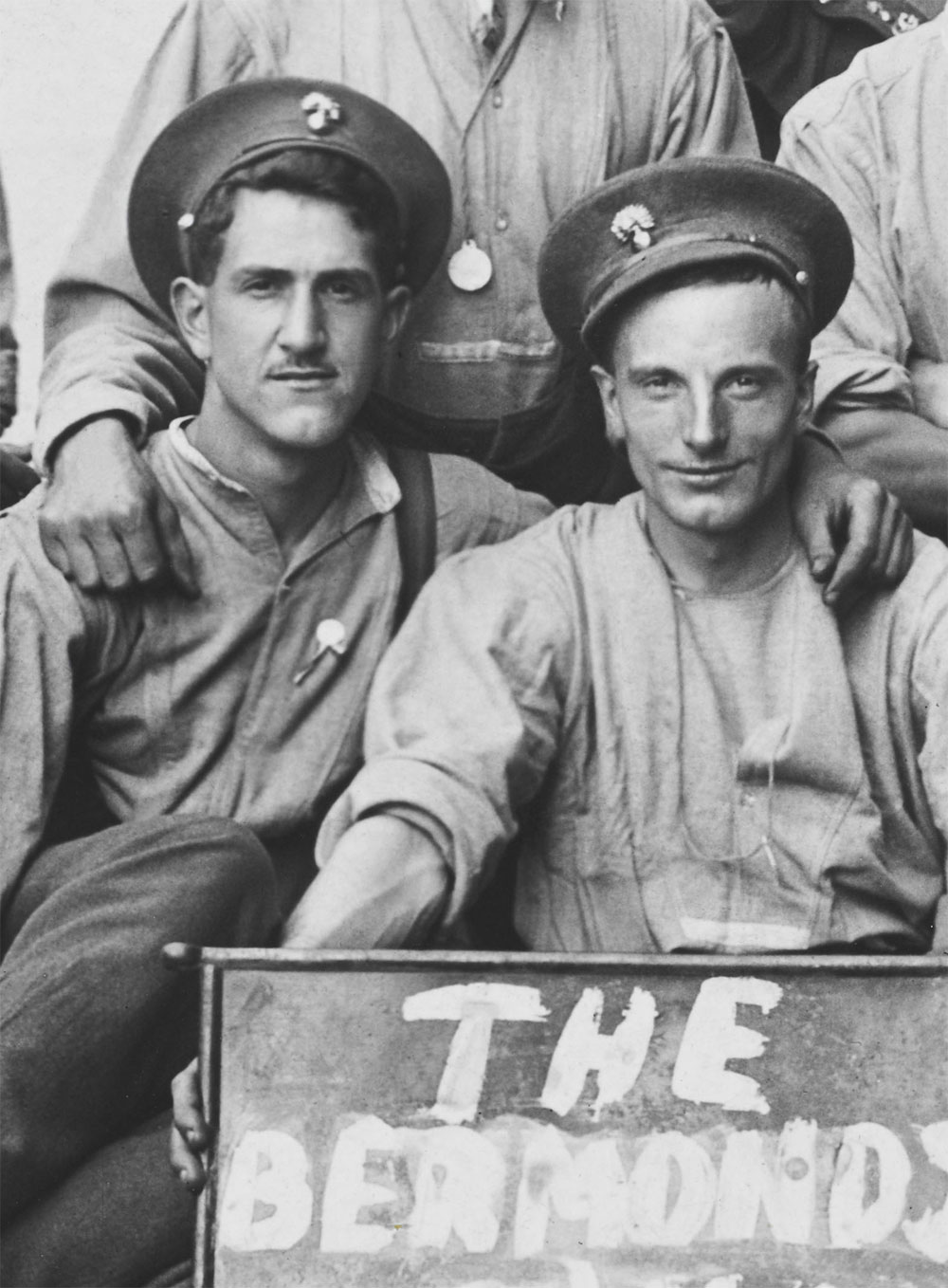
The ‘Bermondsey B’hoys’ from the 2nd Grenadier Guards appear at ease for this informal photograph taken inside their base at Wellington Barracks sometime during 1914 or 1915
c. 1914-1915
Christina Broom/Museum of London


Christina Bloom (British, 1862-1939) 'The 'Bermondsey B'hoys' from the 2nd Grenadier Guards' c. 1914-1915 (detail)


Christina Bloom (British, 1862-1939)
The ‘Bermondsey B’hoys’ from the 2nd Grenadier Guards appear at ease for this informal photograph taken inside their base at Wellington Barracks sometime during 1914 or 1915 (detail)
c. 1914-1915
Christina Broom/Museum of London


Today, the Museum of London announces a major new acquisition – the remaining photography collections of Christina Broom – the UK’s first female press photographer. The collection includes wartime photo of Rudyard Kipling’s son, Jack, who tragically died in the Battle of Loos, 1915.

Aged 40, Broom taught herself photography to create and sell photographic postcards – a trade which was thriving. At work between 1903 and 1939, she gained exclusive access to leading London events from suffragette processions to King George V’s coronation and became photographer to the Household Brigade, forging a unique relationship with the Guards.

Museum of London’s Curator of Photographs, Anna Sparham, said: “At over 2,500 photographs strong, this acquisition sees the museum add to its already significant collection of suffragette images by Christina Broom, with scenes documenting key moments of early 20th century London life. It also brings to light Broom’s diverse photographic oeuvre, traversing subjects such as royal celebration and occasion, the Oxford and Cambridge Boat Races, women’s work and predominantly London’s military activities before, during and in the aftermath of war. Whilst Broom’s images exude strength and relevance on their own, for me, it is the photographer’s own fascinating story of determination and entrepreneurialism that makes them truly come alive.”

The collection also includes a snapshot of Jungle Book writer, Rudyard Kipling’s son Jack, taken by Broom in 1915. Jack tragically died in the Battle of Loos later that year.

From Friday 4 April, highlights from this remarkable collection will be on show as part of a new, free display – Christina Broom. In this centenary year of the outbreak of the First World War, the display focuses on Broom’s portrayal of London’s military life. On show is a small, yet poignant selection of stills depicting soldiers in London mobilising for war and leaving for the Western Front. A major exhibition focused on Broom’s life and photography will follow in the near future.”

Press release from the Museum of London


Christina Bloom (British, 1862-1939) 'Captain Greer of the 1st Irish Guards and his machine gun team' Nd


Christina Bloom (British, 1862-1939)
Captain Greer of the 1st Irish Guards and his machine gun team group together for this rather formal photograph, just prior to leaving for the war. They were all killed in battle soon afterwards
Nd
Christina Broom/Museum of London


Eric Beresford Greer was the son of Sir Joseph Henry Greer and Olivia Mary Beresford of Grange, Moy. He was born in April 1892 at the Curragh, Co. Kildare. He was raised by his Grandmother Agnes Isabella Greer in Moy, County Tyrone. He was educated at Eton College from 1906-1910 and joined the Irish Guards in 1911. Eric B Greer married Pamela Fitzgerald around 13 Feb 1917. Lieutenant Colonel Eric Beresford Greer was commanding the 2nd Battalion of the Irish Guards when he was killed in action on 31 July 1917. Lieutenant Colonel Eric Beresford Greer was awarded the Military Cross.

His death near the village of Boezinghe on 31st July 1917 is recorded in Rudyard Kipling’s ‘The Irish Guards in the Great War’.

He had been in every battle in which the Guards were engaged since the opening of the war, including the fighting at Cuinchy, when Michael O’Leary performed the valorous deeds which won him, on the recommendation of Colonel Greer, the Victoria Cross. Enthusiastic in everything he took up, he interested himself much in athletics, and was the quarter mile champion of the army, and winner of the Irish Guards Cup each year from the time that he joined the regiment. While at Eton he also distinguished himself at the different sporting fixtures. He was awarded the Military Cross for conspicuous gallantry and devotion to duty in the field and was also mentioned in dispatches. His younger brother, Lieutenant Francis St Leger Greer, M.C., fell in action in February last, having previously been decorated for conspicuous gallant in action. The late Colonel Greer was married a few months ago to the younger daughter of the Honourable Eustace and Mrs Fitzgerald of 2 Manson Place, Queens Gate, London S.W.


Christina Bloom (British, 1862-1939) 'Captain Greer of the 1st Irish Guards and his machine gun team group together for this rather formal photograph, just prior to leaving for the war' Nd (detail)


Christina Bloom (British, 1862-1939)
Captain Greer of the 1st Irish Guards and his machine gun team group together for this rather formal photograph, just prior to leaving for the war (detail)
Nd
Christina Broom/Museum of London


Christina Bloom (British, 1862-1939) 'Soldiers from the Household Battalion leaving for the Front' 1916


Christina Bloom (British, 1862-1939)
Soldiers from the Household Battalion leaving for the Front bid farewell to their families from a platform at Waterloo Station in 1916. Broom made several similar photographs. For many relatives, they served as final mementos
1916
Christina Broom/Museum of London


Christina Bloom (British, 1862-1939) 'King George V and Queen Mary host a tea party for wounded soldiers and sailors' 1916


Christina Bloom (British, 1862-1939)
King George V and Queen Mary host a tea party for wounded soldiers and sailors at the Royal Mews in March 1916. The wounded, including many from British colonies, were brought to Buckingham Palace from nine London hospitals
1916
Christina Broom/Museum of London


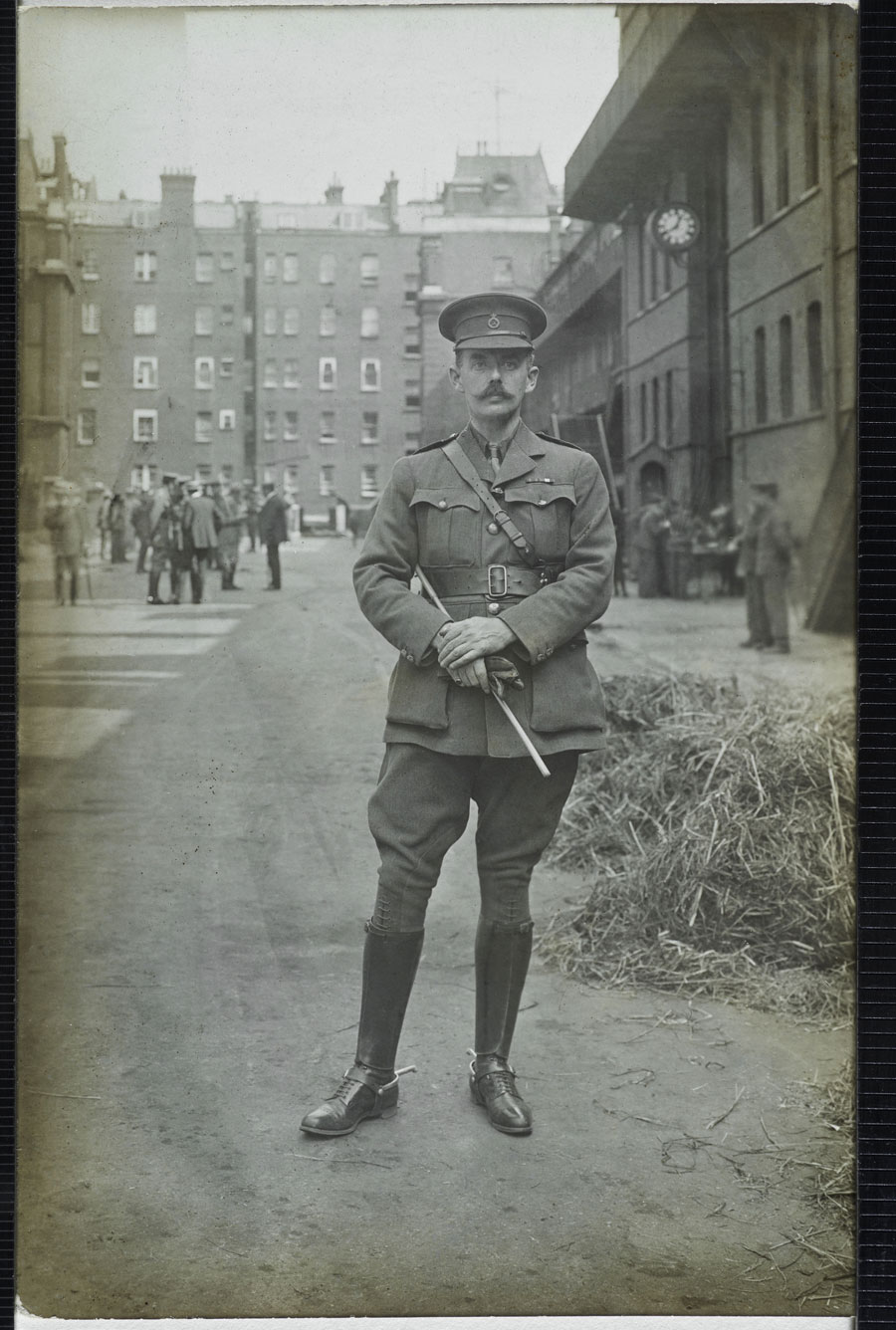
Christina Broom. 'Jack Kipling'

Christina Broom. 'Jack Kipling'


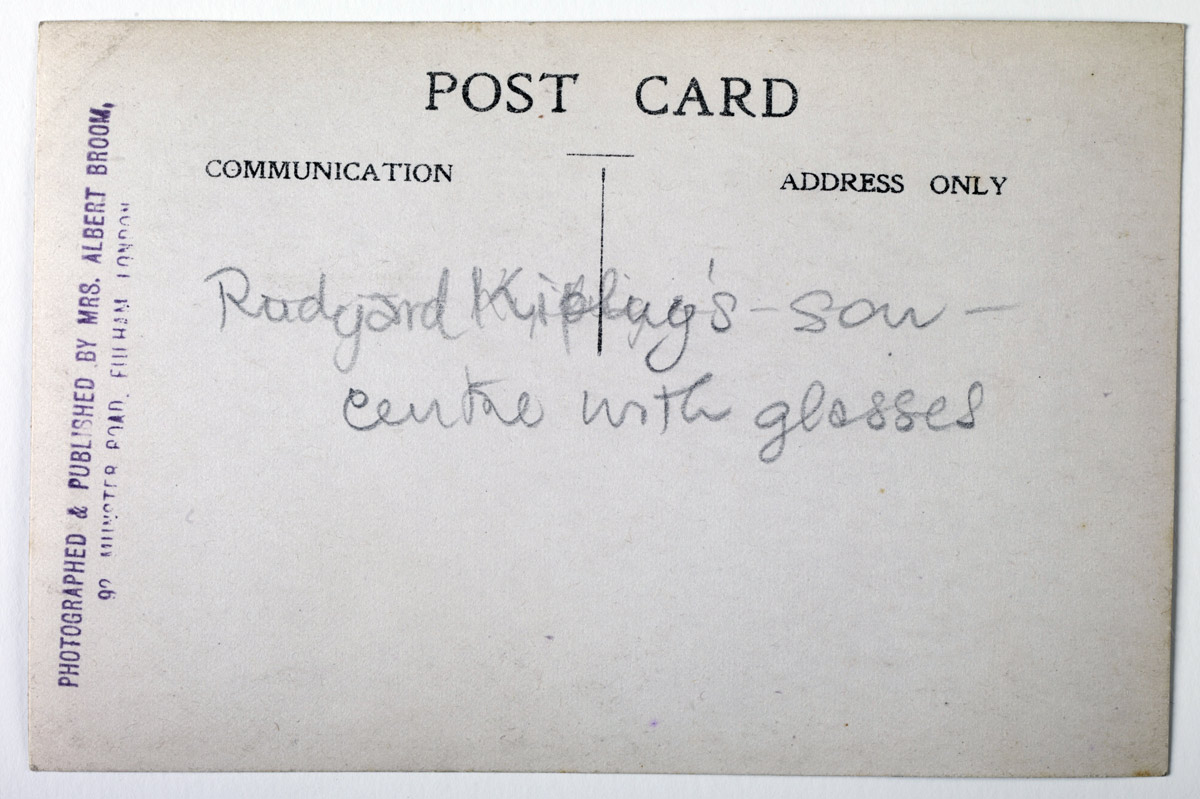
Jack Kipling suffered from incredibly poor eye-sight, and had to wear very thick glasses to be able to see anything at all. When the First World War broke out in August 1914, Jack (then only aged 17) was desperate to join up. When he tried to volunteer, he was turned down because of his poor vision. He turned to his father for help. Rudyard Kipling pulled strings amongst his military friends and Jack was enlisted as a trainee officer, still under age. (Officers were supposed to be at least 18 years old, in order legally to join up). Tragically, Jack was killed in the Battle of Loos in 1915 at the age of 18. Kipling felt the loss of his son keenly, harbouring a tremendous amount of guilt for the part he played in Jack’s journey to the Western Front.

On the back of the photographic postcard, the words “Rudyard Kipling’s son – centre with glasses” are written in pencil.

Christina Broom/Museum of London


Christina Bloom (British, 1862-1939) 'A lieutenant from the 1st Life Guards poses for the camera in August 1914'


Christina Bloom (British, 1862-1939)
A lieutenant from the 1st Life Guards poses for the camera in August 1914. He was later recorded as missing presumed killed during the War. Christina Broom’s stall can be seen in the distance just beneath the clock
1914
Christina Broom/Museum of London


Christina Bloom (British, 1862-1939) 'A trio of soldiers' Nd


Christina Bloom (British, 1862-1939)
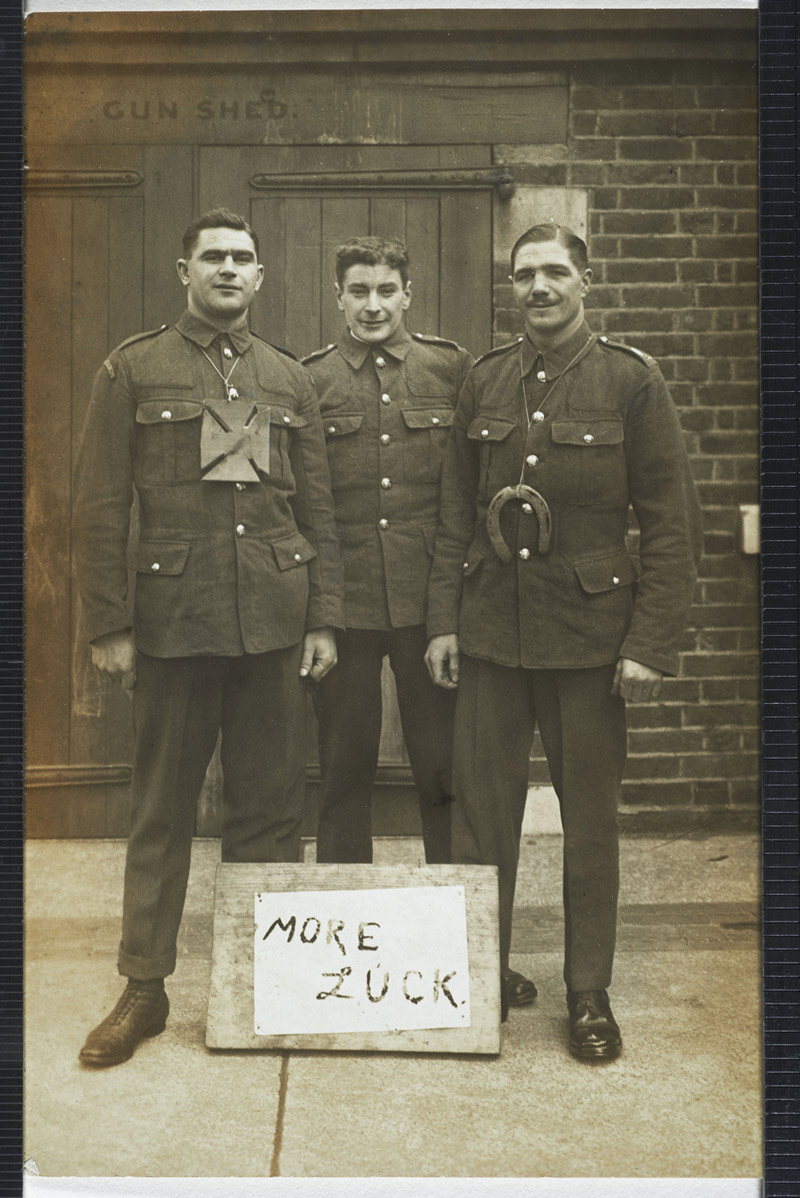
A trio of soldiers, including an Irish Guard on the left and a Scots Guard on the right, stand together with their hopeful message
Nd
Christina Broom/Museum of London


Anonymous photographer. 'Portrait of photographer, Christina Broom' Nd


Anonymous photographer
Portrait of photographer, Christina Broom
Nd
Christina Broom/Museum of London


Museum of London
150 London Wall
London EC2Y 5HN

Opening hours:
Daily 10am – 5pm

Museum of London website

LIKE ART BLART ON FACEBOOK

Back to top

Exhibition: ‘Playgrounds. Reinventing the square’ at the Museo Nacional Centro de Arte Reina Sofía, Madrid

Exhibition dates: 29th April – 22nd September 2014

Curatorship: Manuel J. Borja-Villel, Tamara Díaz y Teresa Velázquez

Artists: Vito Acconci, Efrén Álvarez , Erich Andrés, Karel Appel, Archigram, Archizoom, Ricardo Baroja, Bernardo Bertolucci, Lina Bo Bardi; André Vainer and Marcelo Ferraz. Photography: Paquito, André Breton, Hans Bruggeman, Caja Lúdica, Camping Producciones, Henri Cartier-Bresson, Tranquillo Casiraghi, Mariana Castillo Deball, Francesc Català-Roca, Mario Cattaneo, Agustí Centelles, Chto Delat?, Julieta Colomer, Joan Colom, Constant (Constant Nieuwenhuys), Waldemar Cordeiro, Corneille, Violette Cornelius, Margit Czenki, Guy Debord, Maya Deren, Disobedience Archive. Curator: Marco Scotini, Ed van der Elsken , James Ensor, El equipo de Mazzanti (Giancarlo Mazzanti, Carlos Medellín, Stanley Schultz, Juliana Zambrano, Eugenia Concha, Lucia Lanzoni and Mariana Bravo), Escuela de Valparaíso, Marcelo Expósito, Aldo van Eyck, Kattia García Fayat, Priscila Fernandes, Ángel Ferrant, José A. Figueroa, Robert Filliou, Peter Fischli, Peter Friedl, Alberto Giacometti, John Goldblatt, Francisco de Goya, GRAV (Groupe de Recherche d’Art Visuel), Grupo Contrafilé, Eric Hobsbawm, Lady Allen of Hurtwood, Internationale Situationniste, Cor Jaring, Kindel (Joaquín del Palacio), Henri Lefebvre, Fernand Léger, Helen Levitt, Liverani, L.S. Lowry, Maruja Mallo (Ana María Gómez González), Man Ray (Emmanuel Radnitzky), Melchor María Mercado, Boris Mikhailov, Masato Nakagawa, Beaumont Newhall, Palle Nielsen , Isamu Noguchi , Nils Norman, Nudo (Eduardo Marín and Vladimir Llaguno), Hélio Oiticica, OMA / Rem Koolhaas, Cas Oorthuys, Amédée Ozenfant, Martin Parr, Jan H Peeterse, Erik Petersen, Adrian Piper, Cedric Price, Ab Pruis, Edgar Reitz and Alexander Kluge, Oliver Ressler, Jorge Ribalta, Xavier Ribas, Marcos L. Rosa, Emilio Rosenstein (Emil Vedin), Roberto Rossellini, Otto Salemon, Louis Sciarli, Alison y Peter Smithson, Kenneth Snelson, José Solana (José Gutiérrez Solana), Carl Theodor Sørensen, Humphrey Spender, Christensen Tage, Túlio Tavares (comp.), Teatro Ojo, Robert Venturi, Denise Scott Brown and Steven Izenour, Jean Vigo, Nuria Vila, Dmitry Vilensky, Pedro Vizcaíno, Peter Watkins, Weegee (Arthur H. Fellig), David Weiss


Many thankx to the Museo Nacional Centro de Arte Reina Sofía for allowing me to publish the photographs in the posting. Please click on the photographs for a larger version of the image.


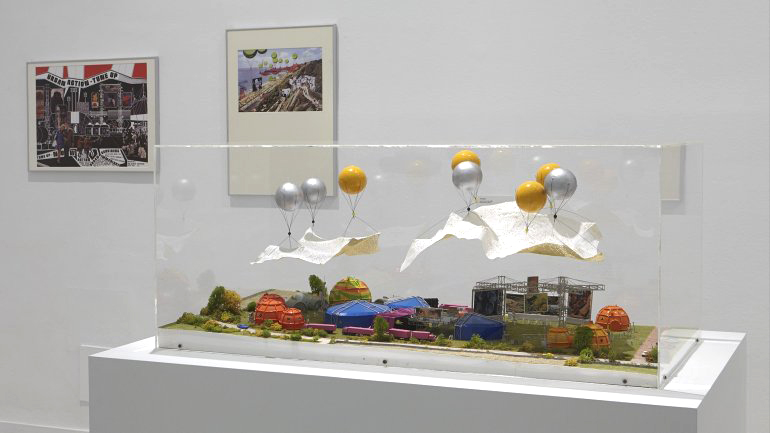
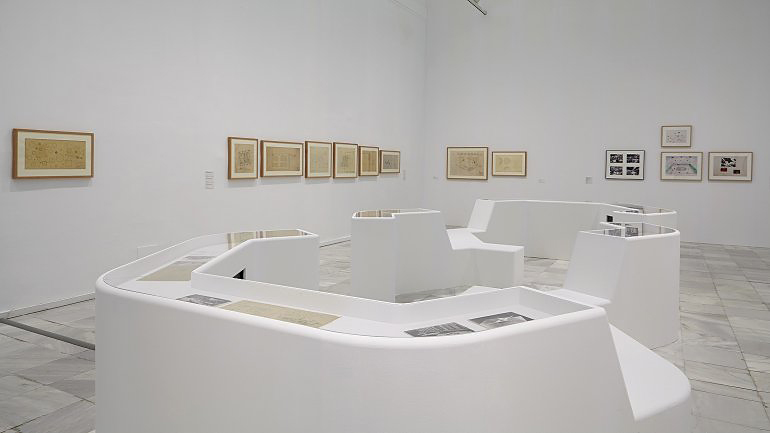
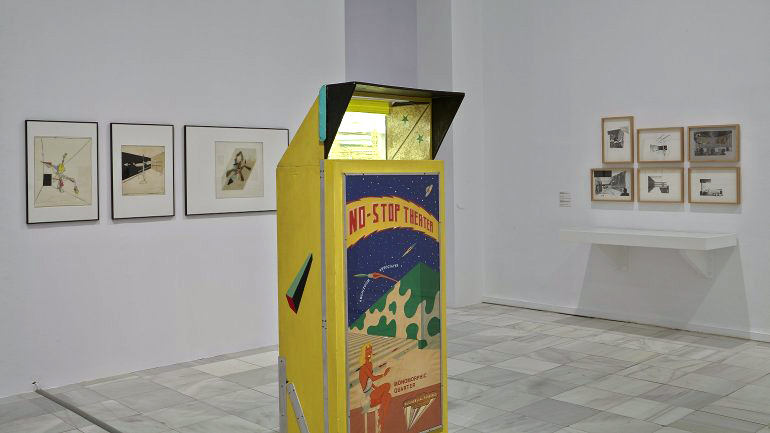
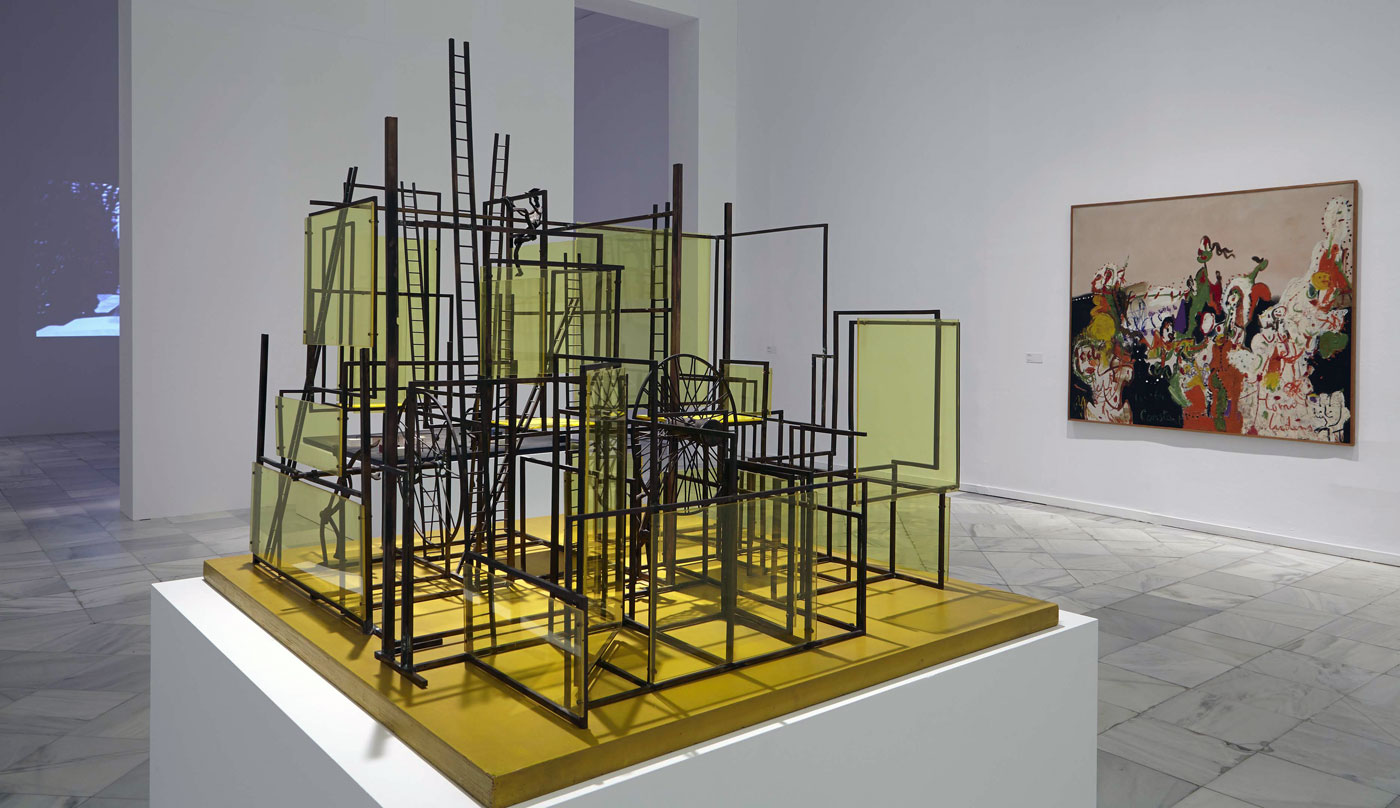
Installation view of the exhibition 'Playgrounds. Reinventing the square' at the Museo Nacional Centro de Arte Reina Sofía, Madrid

Installation view of the exhibition 'Playgrounds. Reinventing the square' at the Museo Nacional Centro de Arte Reina Sofía, Madrid

Installation view of the exhibition 'Playgrounds. Reinventing the square' at the Museo Nacional Centro de Arte Reina Sofía, Madrid

Installation view of the exhibition 'Playgrounds. Reinventing the square' at the Museo Nacional Centro de Arte Reina Sofía, Madrid

Installation view of the exhibition 'Playgrounds. Reinventing the square' at the Museo Nacional Centro de Arte Reina Sofía, Madrid

Installation view of the exhibition 'Playgrounds. Reinventing the square' at the Museo Nacional Centro de Arte Reina Sofía, Madrid

Installation view of the exhibition 'Playgrounds. Reinventing the square' at the Museo Nacional Centro de Arte Reina Sofía, Madrid

Installation view of the exhibition 'Playgrounds. Reinventing the square' at the Museo Nacional Centro de Arte Reina Sofía, Madrid


Installation views of the exhibition Playgrounds. Reinventing the square at the Museo Nacional Centro de Arte Reina Sofía, Madrid


Through a selection of works from different time periods and in different mediums (paintings, sculptures, installations, videos, photographs, archive devices…), this exhibition analyses the socialising, transgressive and political potential of play when it appears linked to public space. The premise of Playgrounds is twofold: on one side, the popular tradition of carnival shows how the possibility of using recreational logic to subvert, reinvent and transcend exists, if only temporarily. On the other side, there has been two fundamental constants in utopian imagery throughout history: the vindication of the need for free time (countering work time, productive time) and the acknowledged existence of a community of shared property, with a main sphere of materialisation in public space.

The historical-artistic approach to the political and collective dimension of spaces of play, on view in this exhibition, gets under way in the second half of the 19th century, a time that signals the start of the process of free time becoming consumption time; a process that threw the concept of public space into crisis as it started to be conceived not only as an element for exercising (political) control, but also one for financial gain. Thus, cities started to become the objects of rational and utilitarian planning, where the field of architecture was redefined, providing spaces for play with new values, built as one of the key points of the modern ideology of the public.

This ideology was reshaped in the early decades of the 20th century; for instance, during this time projects were implemented that allowed the recovery and increased value of land that had been completely torn apart by war, turning it into areas of play aimed at nurturing children’s independence. The significant turning point in this process of restructuring took place during the 1960s, when, as demonstrated by numerous artistic and activist experiences and practices in recent decades, the festive subversion and anti-authoritarian outbursts from carnivalesque logic started to be employed as political tools attempting to generate other ways of making and contemplating the city, as well as organising community life.

With some 300 works, the exhibition recounts a different history of art, from the end of the 19th century to the present day, whereby the artwork plays a part in redefining public space by exploring the city as a game board, questioning modern-day carnival, vindicating the right to laziness, reinventing the square as a place of revolt and discovering the possibilities of a new world through its waste. The exhibit takes the playground model as an ideological interrogation of an alienated and consumerist present.

Text from the Museo Nacional Centro de Arte Reina Sofía website


Frank Burke (Australian, 1920-1984) 'A kids scooter race at the Paddy's Markets in Sydney, 19 August 1956' 1956


Frank Burke (Australian, 1920-1984)
A kids scooter race at the Paddy’s Markets in Sydney, 19 August 1956
1956
Silver gelatin print


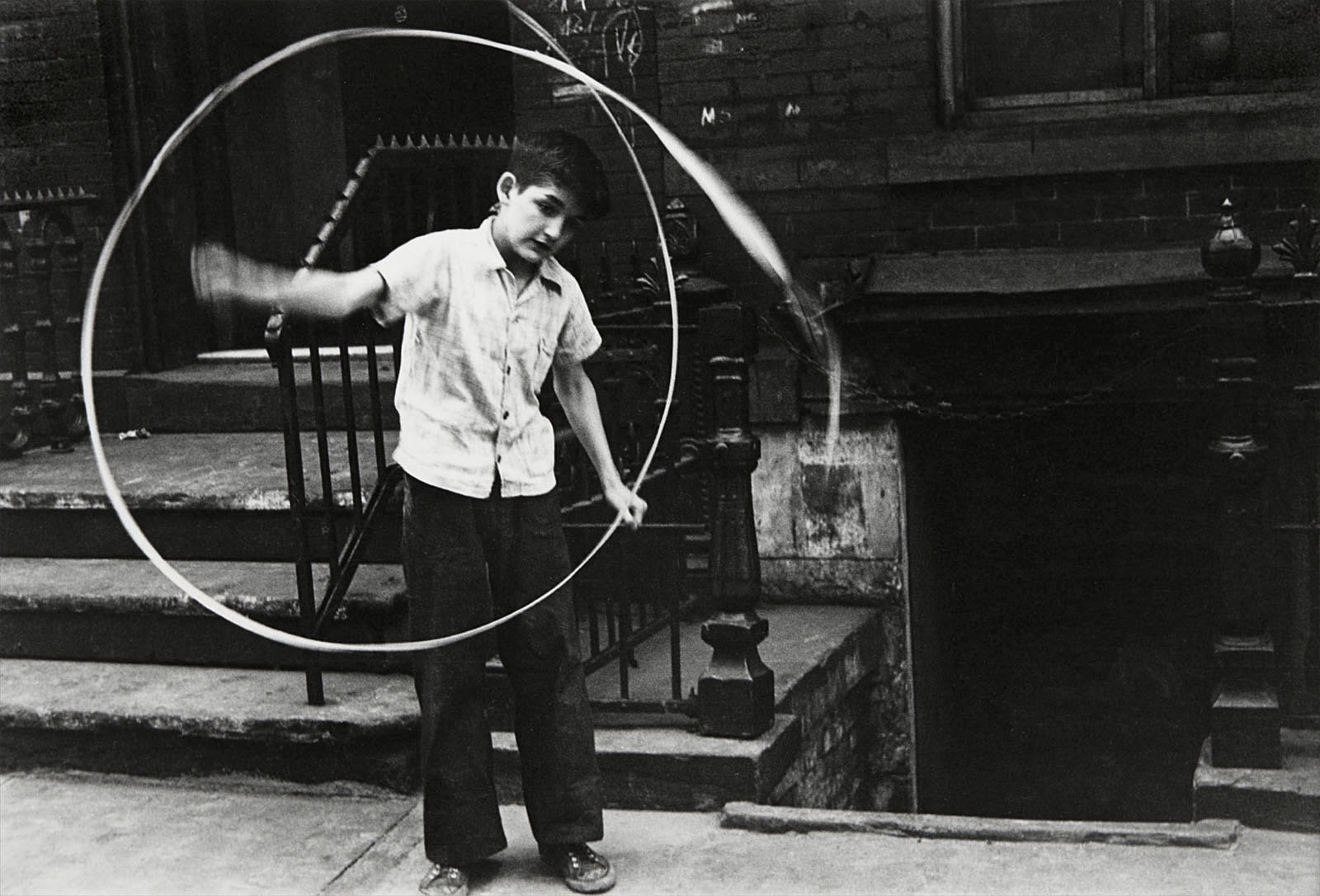
Helen Levitt (American, 1913-2009) 'Boy with Ribbon' 1940


Helen Levitt (American, 1913-2009)
Boy with Ribbon
1940
Silver gelatin print


Helen Levitt (American, 1913-2009) 'New York (Two girls with ribbon)' c. 1940


Helen Levitt (American, 1913-2009)
New York (Two girls with ribbon)
c. 1940


Agustí Centelles (Catalan, 1909-1985) 'Barcelona, España. Guardería infantil en Vía Layetana' [Babysitting in Layetana Road] 1936-1939


Agustí Centelles (Catalan, 1909-1985)
Barcelona, España. Guardería infantil en Vía Layetana [Babysitting in Layetana Road]
1936-1939
Silver gelatin print


Fernand Léger (French, 1881-1951) 'Les Loisirs - Hommage à Louis David' [Leisure - Homage to Louis David] 1948-1949


Fernand Léger (French, 1881-1951)
Les Loisirs – Hommage à Louis David [Leisure – Homage to Louis David]
1948-1949


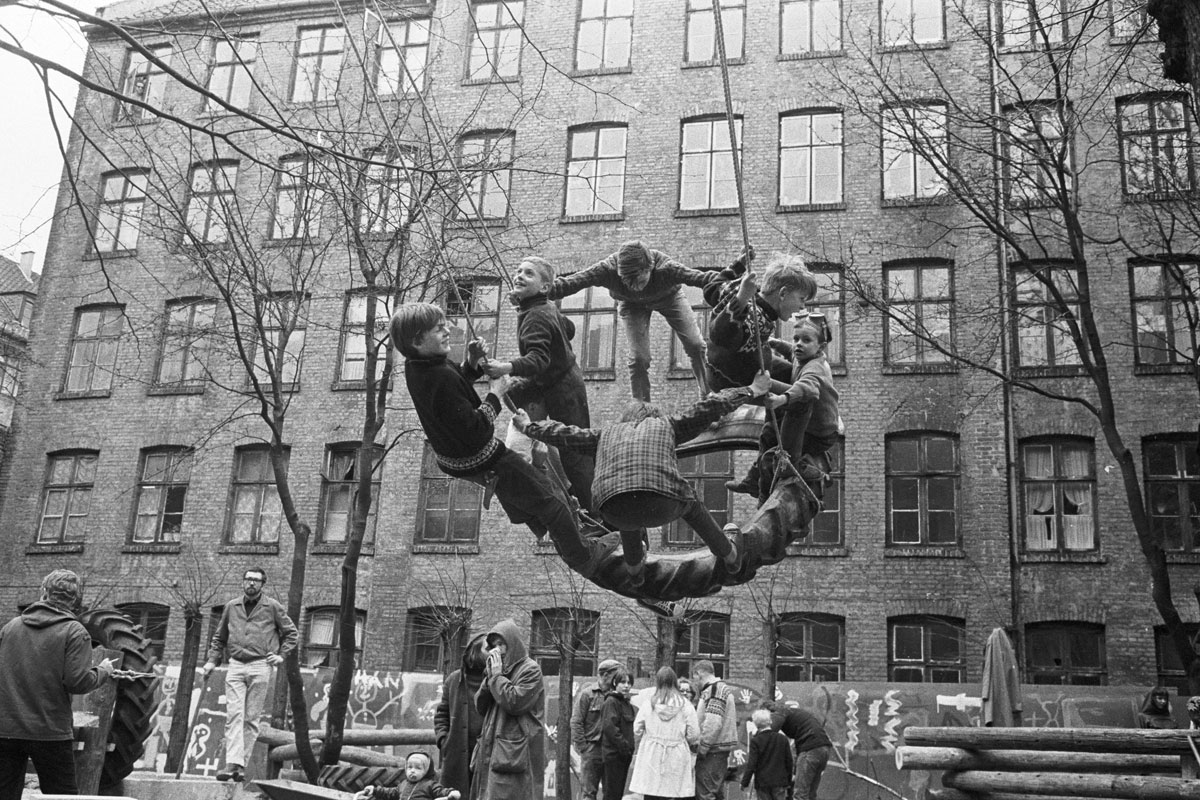
Palle Nielsen (Danish, 1920-2000) 'A group of activists from different organisations in Denmark cleared a backyard in Stengade 52'


Palle Nielsen (Danish, 1920-2000)
A group of activists from different organisations in Denmark cleared a backyard in Stengade 52 in the area Nørrebro in Copenhagen the 31 of March 1968 and build a playground for the children instead. This was done to create attention of the lack of playgrounds as well as an overall redevelopment of the area
© VEGAP, Madrid, 2014
© PETERSEN ERIK / Polfoto


Louis Sciarli (French, b. 1925) 'Le Corbusier. Marseille: Unité d'habitation, École Maternelle' [Le Corbusier. Marseille: housing unit, Kindergarten] 1945/2014


Louis Sciarli (French, b. 1925)
Le Corbusier. Marseille: Unité d’habitation, École Maternelle [Le Corbusier. Marseille: housing unit, Kindergarten]
1945/2014


Maruja Mallo (Ana María Gómez González) (Viveiro, Lugo, Spain, 1902 - Madrid, Spain, 1995) 'The Fair' 1927


Maruja Mallo (Ana María Gómez González) (Viveiro, Lugo, Spain, 1902 – Madrid, Spain, 1995)
The Fair (La verbena)
1927 (September)
Oil on canvas
119 x 165cm


In 1928, at a one-woman exhibition put on by Ortega y Gasset in the rooms of the Revista de Occidente, Maruja Mallo showed the four oil paintings in the Madrid Fair series from which La verbena (The Fair), currently in the Museo Reina Sofía collection, is taken. In this colourful painting, an example of her personal world-view, the artist creates Baroque-filled scenes that are apparently without logic, where the motifs self-multiply into a whirlwind of lines and sensations. Imbued with a sharp critical sense, which is translated by the painter into subtle satire, the painting contains all the elements of the traditional popular Madrid fairs (the shooting gallery, the test-your-strength machine), alongside the principal characters and other, stranger kinds of characters like the one-eyed giant, the priest enjoying one of the sideshows or the man with deformed feet, begging with a guitar on his back. All this contributes to an undeniably Surrealist atmosphere.


Marcos L. Rosa. 'Revisitando los playgrounds de Aldo van Eyck' 1974/2011


Marcos L. Rosa
Revisitando los playgrounds de Aldo van Eyck
1974/2011


The exhibition addresses the socialising, transgressive and political potential of play in relation to public space. Ever since the popular tradition of the carnival, it has been recognised that it is possible, even if only temporarily, to subvert, reinvent and transcend an everyday life reduced to a mere exercise in survival. The recognition of the existence of communal goods and the need for free time, in direct contradistinction to working time, are two fundamental constants of the utopian imagination throughout history.The public space, as an ambience which synthesises the notion of communal goods, is materialised as part of the experience of citizen participation.

Adopting as its premise the notion of carnival pageantry as a practice that alters the established order, the exhibition Playgrounds. Reinventing the square will explore the collective dimension of play and the need for a “ground” of its own in order to engage in the construction of a new public arena. Playgrounds (curated by Manuel J. Borja-Villel, Tamara Díaz and Teresa Velázquez) takes a historical and artistic approach to the space reserved for play and its socialising, transgressive and political potential from the dawn of modernity to the present day. The show to be seen at the Museo Reina Sofía aims to explore the recreational, playful, festive side of life that puts the humdrum reality of the everyday on hold, subverting, reinventing and transcending it for one fleeting moment.

With approximately 300 works in several formats (painting, sculpture, facilities, video, photography, graphical arts, cinema and documents) of artists like James Ensor, Francisco of Goya, Henri Cartier-Bresson, Helen Levitt, Alberto Giacometti, Ángel Ferrant, Hélio Oiticica, Lina Bo Bardi, Fischli and Weiss, Vito Acconci, Priscila Fernandes, or Xabier Rivas, Playgrounds. Reinventing the square shows how the playful element, understood as creative strategy, coexists with questions related to the public sphere Departing from this idea, the exhibition explores the recognition of the time and the space of the game as areas of essay and learning.

The show adopts the model of the ‘playground’ as an ideological interrogation of an alienated and consumerist present. After the industrial revolution and the gradual implantation of labor systems based on the capitalist principle of minimum investment for maximum gain, there emerges an indissociable identification between producer and consumer, one of whose immediate consequences is the conversion of free time into consumption time. The alienation of labor dominates modes of life and gives rise to a crisis in public spaces, threatened in their turn by economic forces. Derived from a rational and utilitarian planning of the city, the public park is instituted as a surrogate collective paradise, leading from the mid-19th century to great urban facilities for mass consumption and entertainment. From architecture, within the Modern Movement and its derivates, comes the definition of the playground, endowed with new social, pedagogical and functional values while at the same time emerging as one of the key points of the modern ideology of the public.

The ideas of a “junk playground”, proposed by the Danish architect Carl Theodor Sørensen in 1935, and of an “adventure playground”, which was promoted in the United Kingdom by the landscape architect Lady Allen of Hurtwood and spread to several European cities after the Second World War, are means of retrieving and attaching significance to wastelands and bomb sites as play areas aimed at child autonomy. In the sixties, the child is vindicated as an autonomous political subject in a context dominated by the vindication of the right to the city, and coinciding with the high point of the revolt of the homo ludens (borrowing from the essay of the same name by Johan Huizinga) in the context of May ’68. As evidenced by the numerous processes of social activism in recent years, festive subversion and the anti-authoritarian overspilling of boundaries by the carnival become new ways of practising politics. The movements of 2011 in such scattered locations as Tahrir (Cairo), Sol (Madrid), Syntagma (Athens), and other squares, streets and neighbourhoods restored the public and democratic dimension of such spaces. This temporary occupation, articulated through virtual communications networks, implied a reappropriation of the political and experimentation with other forms of organisation and communal life.

The introduction to the exhibition will provide background on the carnivalesque concept of life, underscoring certain aspects related to the notion of free time in modern life. The show will also revisit the street as a place of play and self-realisation, through examples of adventure playgrounds as well as photographs and films that will give a historic panoramic since the 1930s from a documentary perspective. The nucleus of the exhibition is devoted to the model of the modern playground and its contradictions, with relevant materials accounting for the urban revolution of the 1960s, the consideration of the city as a relational and psychological construction and works that parallel aesthetic and political transformations.

The last section of the show will consist of a series of experiments based on anti-hegemonic exercises, such us the civil appropriation of the street for “playground” use and works that challenge passive recreation through the emancipative power of play, not to mention recent experiences that resume the collective reinvention of the square and have become essential in envisioning new ways of doing politics.

Press release from the Museo Nacional Centro de Arte Reina Sofía


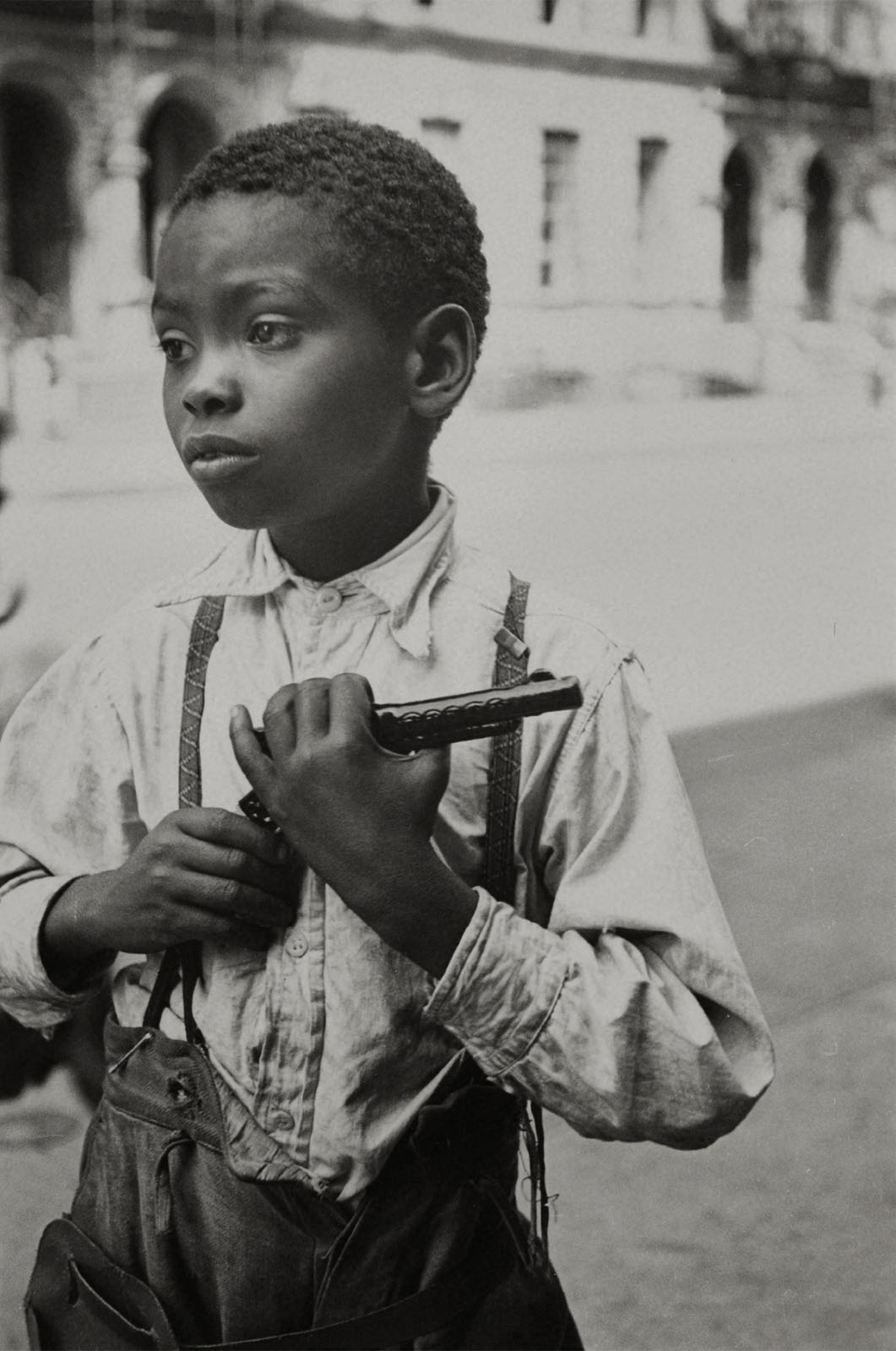
Helen Levitt (American, 1913-2009) 'Untitled (Boy and gun)' 1940


Helen Levitt (American, 1913-2009)
Untitled (Boy and gun)
1940
Silver gelatin print


Helen Levitt (American, 1913-2009) 'Children playing with a picture frame, New York' (Niños jugando con un marco, Nueva York) c. 1940


Helen Levitt (American, 1913-2009)
Children playing with a picture frame, New York (Niños jugando con un marco, Nueva York)
c. 1940


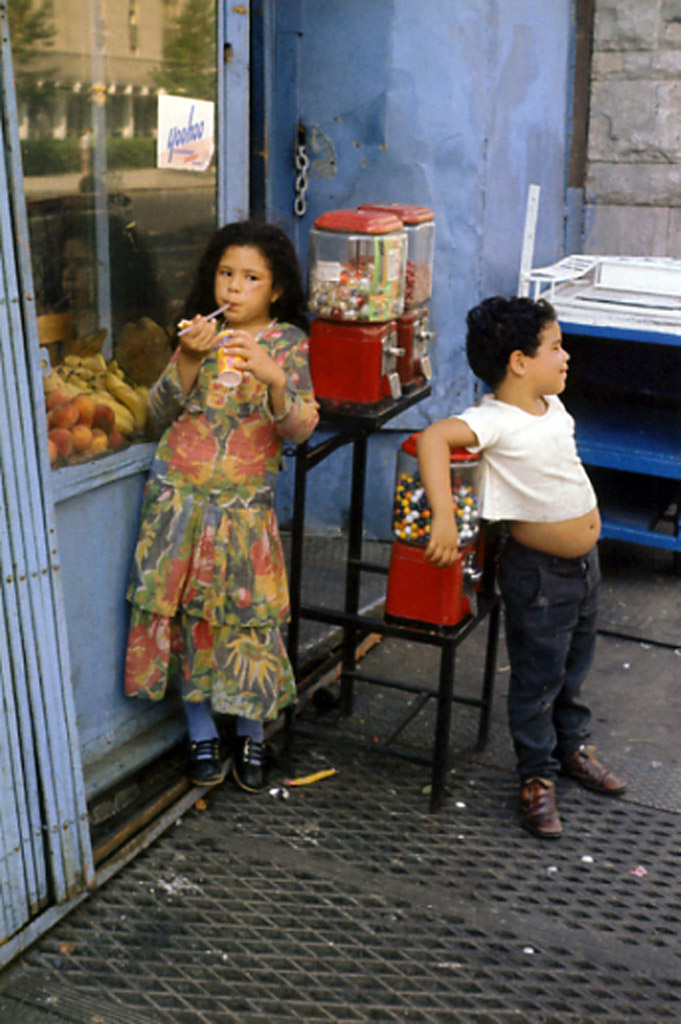
Helen Levitt (American, 1913-2009) 'Fruit and candy' Nd


Helen Levitt (American, 1913-2009)
Fruit and candy
Nd


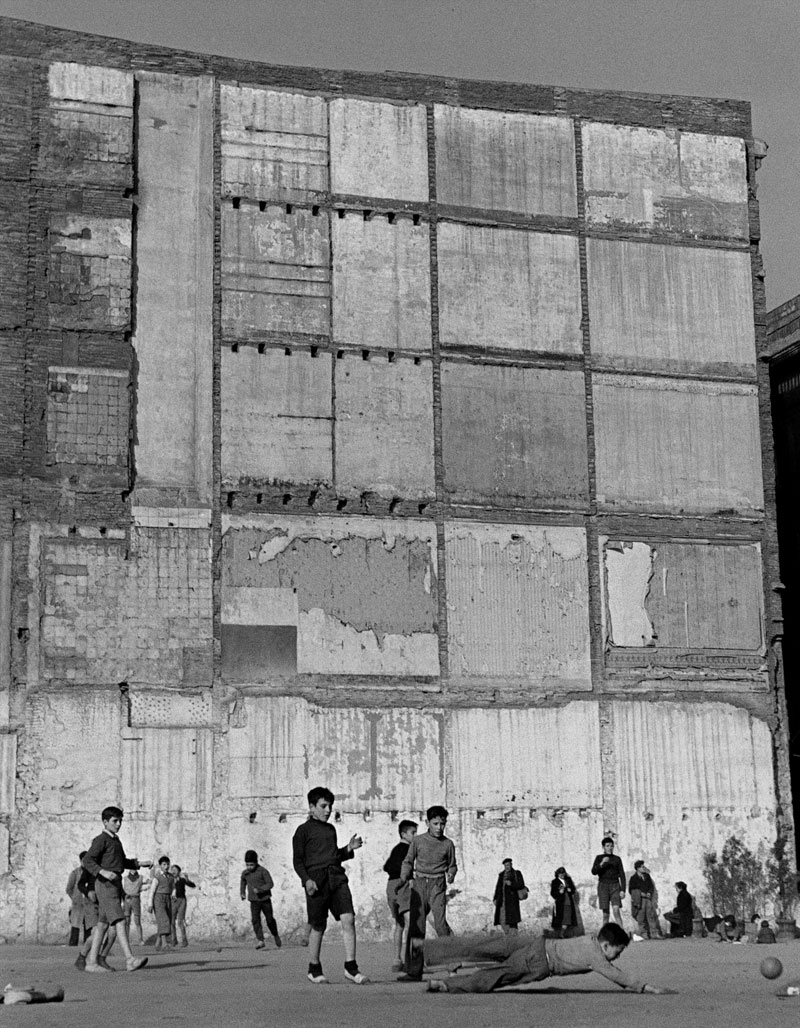
Francesc Català-Roca Valls (Tarragona, Spain, 1922 - Barcelona, Spain, 1998) 'Games in an Empty Lot' 1950 (circa) / Posthumous print, 2003


Francesc Català-Roca Valls (Tarragona, Spain, 1922 – Barcelona, Spain, 1998)
Games in an Empty Lot
1950 (circa) / Posthumous print, 2003
Selenium-toned gelatin silver print on paper


Joan Colom (Spanish, 1921-2017) 'No title' 1958-1961


Joan Colom (Spanish, 1921-2017)
No title
1958-1961 (circa) / Vintage print
From the series El carrer (The Street)
Gelatin silver print on paper


Joan Colom published his series on Barcelona’s Chinatown in the magazine AFAL (1962) with an autobiography: “Age: 40. Profession: Accountant. Hobbies: Apart from photography, obviously, none.” Of his method, Colom said: “I have decided to only work with subjects that I have predetermined.” Oriol Maspons adds the technical details: “Everything was taken using a Leica M2, shot from the hip without framing or focusing. A real photographer’s work. More than a year on the same subject.” The series had been exhibited with some success (and controversy) at the Sala Aixelá in Barcelona the previous year, under the title El carrer (The Street). In 1964 it was finally published by Lumen in one of the finest photo-books in their Palabra e Imagen collection, “Izas, rabizas y colipoterras”, designed by Oscar Tusquets and Cristian Cirici. Camilo José Cela contributed a text based around Colom’s (surreptitious but captionless) photos that was full of broad, cruel humour, pitilessly mocking the women, photographed by Colom and judged by Cela. Somewhat ahead of her time, one of the women actually sued the photographer, the only result of which was the photo-book’s withdrawal from bookshops, and Colom’s retirement from photography for years. From the 1980s onwards public obscurity became public recognition, which has continued to grow.


Museo Nacional Centro de Arte Reina Sofía
Sabatini building. Room A1
Calle Santa Isabel, 52
Madrid 28012 Spain
Phone: (+34) 91 7741000

Opening hours:
Monday – Saturday from 10.00am – 9.00pm
Sunday from 10.00am – 2.30pm

Museo Nacional Centro de Arte Reina Sofía website

LIKE ART BLART ON FACEBOOK

Back to top

Exhibition: ‘Kati Horna’ at Jeu de Paume, Paris

Exhibition dates: 3rd June – 21st September 2014


Kati Horna (Mexican born Hungary, 1912-2000) 'Untitled' Paris, 1939


Kati Horna (Mexican born Hungary, 1912-2000)
Untitled
Paris, 1939
From the Muñecas del miedo series [Dolls of Fear],
Gelatin silver print
15.3 x 22.8cm
Archivo Privado de Fotografía y Gráfica Kati y José Horna
© 2005 Ana María Norah Horna y Fernández


I really love the work of artists such as Kati Horna and Florence Henri “with the production of collages and photomontages inspired by the avant-garde movements of the 1930s (the Bauhaus, Surrealism, German Neue Sachlichkeit, Russian Constructivism).”

Horna’s photographs have more of a political edge than that of Florence Henri, with her unique photographic reportage of the Spanish Civil War between 1937-39 and her Hitler series both having a strong social critique. Here is another politically aware artist who stood up for the cause, who recorded the “everyday life for the civilian population through a vision that was in empathy with the environment and the people.” Again, here is another who was lucky to survive the maelstrom of the Second World War, who would have certainly ended up dead if she and her Andalusian artist husband José Horna had not fled Paris in 1939 for their adopted country Mexico.

Dr Marcus Bunyan

PS I spent hours cleaning up the press images, there were in a really poor state, but the work was so worthwhile… they really sing now!


Many thankx to the Jeu de Paume for allowing me to publish the photographs in the posting. Please click on the photographs for a larger version of the image.


This summer, the Jeu de Paume, which is celebrating 10 years devoted to the image, will be inviting the public to discover Kati Horna (1912-2000), an avant-garde, humanist photographer, who was born in Hungary and exiled in Mexico, where she documented the local art scene.


Robert Capa (Hungarian-American, 1913-1954) (attributed to) 'Kati Horna in the Studio of József Pécsi' Budapest, 1933


Robert Capa (Hungarian-American, 1913-1954) (attributed to)
Kati Horna in the Studio of József Pécsi
Budapest, 1933
Gelatin silver print
10.5 x 7.5cm
Archivo Privado de Fotografía y Gráfica Kati y José Horna
© 2005 Ana María Norah Horna y Fernández


In collaboration with the Museo Amparo in Puebla (Mexico), the Jeu de Paume is presenting the first retrospective of the work of photographer Kati Horna (Szilasbalhási, Hungary, 1912-Mexico, 2000), showing more than six decades of work in Hungary, France, Spain and Mexico. Kati Horna, a photographer whose adopted homeland was Mexico, was one of a generation of Hungarian photographers (including André Kertész, Robert Capa, Eva Besnyö, László Moholy-Nagy, Nicolás Muller, Brassaï, Rogi André, Ergy Landau and Martin Munkácsi) forced to flee their country due to the conflicts and social upheaval of the 1930s.

Cosmopolitan and avant-garde, Kati Horna was known above all for her images of the Spanish Civil War, produced at the request of the Spanish Republican government between 1937 and 1939. Her work is characterised by both its adherence to the principles of Surrealist photography and her very personal approach to photographic reportage.

This major retrospective helps to bring international recognition to this versatile, socially committed, humanist photographer, highlighting her unusual artistic creativity and her contribution to photojournalism. It offers a comprehensive overview of the work of this artist, who started out as a photographer in Hungary at the age of 21, in the context of the European avant-garde movements of the 1930s: Russian Constructivism, the Bauhaus school, Surrealism and German Neue Sachlichkeit. Her vast output, produced both in Europe and Mexico, her adopted country, is reflected in a selection of over 150 works – most of them vintage prints, the vast majority of them unpublished or little known.

In Mexico, Kati Horna formed a new family with the émigré artists Remedios Varo, Benjamin Péret, Emerico ‘Chiki’ Weisz, Edward James and, later on, Leonora Carrington. In parallel with her reportages, she took different series of photographs of visual stories, extraordinary creations featuring masks and dolls, motifs that began to appear in her work in the 1930s.

Kati Horna also became the great portraitist of the Mexican literary and artistic avant-garde; her visionary photographs captured the leading artists in Mexico during the 1960s, such as Alfonso Reyes, Germán Cueto, Remedios Varo, Pedro Friedeberg, Alejandro Jodorowsky, Mathias Goeritz and Leonora Carrington.

The exhibition is divided into five periods: her beginnings in Budapest, Berlin and Paris between 1933 and 1937; Spain and the Civil War from 1937 to 1939; Paris again in 1939; then Mexico. The exhibition also presents a number of documents, in particular the periodicals that she contributed to during her travels between Hungary, France, Spain and Mexico. The works come from the Archivo Privado de Fotografía y Gráfica Kati y José Horna, the Centro Documental de la Memoria Histórica de España, Salamanca, the Museo Amparo, Puebla, as well as private collections.

Press release from the Jeu de Paume website


Kati Horna (Mexican born Hungary, 1912-2000) 'Invierno en el patio' [Winter in the Courtyard] Paris, 1939


Kati Horna (Mexican born Hungary, 1912-2000)
Invierno en el patio [Winter in the Courtyard]
Paris, 1939
Gelatin silver print
18.8 x 18.3cm
Archivo Privado de Fotografía y Gráfica Kati y José Horna
© 2005 Ana María Norah Horna y Fernández


Beginnings: Budapest, Berlin And Paris


Afterwards I returned to Paris, and do you know why I didn’t die of hunger in Paris? Before I left, everyone mocked me, “there’s the photographer”, I was the photographer of eggs. I had this idea of being the first one to do things, not with figurines, but little stories with eggs, and it was that wonderful draughtsman who subsequently committed suicide who did the faces for me… The first was the romantic story of a carrot and a potato. The carrot declared its love to the potato. He always did the faces and I staged the scenes. I took the photos with my big camera with 4 x 5 negatives.


Kati Horna


Born in Hungary to a family of bankers of Jewish origin during a period of political and social instability, Kati Horna would always be deeply marked by the violence, injustice and danger around her. This situation helped to forge her ideological commitment, her perpetual search for freedom, her particular way of denouncing injustice, as well as her compassionate and human vision, like that of Lee Miller and her pictures of the Second World War. As was the case for her great childhood friend Robert Capa, to whom she would remain close throughout her life, photography became a fundamental means of expression.

At the age of 19 she left Budapest to live in Germany for a year, where she joined the Bertolt Brecht collective. She frequented photographer friends and compatriots Robert Capa and ‘Chiki’ Weisz, as well as other major figures in Hungarian photography, such as László Moholy-Nagy – who at the time was a teacher at the Bauhaus school – and Simon Guttman, founder of the Dephot agency (Deutscher Photodienst). On her return from Budapest, she enrolled in the studio of József Pécsi – the famous Hungarian photographer (1889-1956) – before leaving her birth country again, in 1933, to settle in Paris.

It was during this period of apprenticeship that her own aesthetic took shape, which marked her entire career, with the production of collages and photomontages inspired by the avant-garde movements of the 1930s (the Bauhaus, Surrealism, German Neue Sachlichkeit, Russian Constructivism). Paris was a cosmopolitan capital and Surrealism was at its height at the time. This movement heavily influenced Kati Horna’s style, both through its themes and its techniques, be it the narrative collage, superimposition or photomontage. Her photography was closely linked to the arts of the image, used as an illustrative technique and as a support for a poetics of the object. Her taste for stories and staged images are clearly evident. From 1933 she worked for the Lutetia-Press agency, for whom she did her first photo stories: Mercado de pulgas [Flea Market] (1933), which would not be published until 1986 in the Mexican periodical Foto Zoom, and Cafés de París (1934).


Kati Horna (Mexican born Hungary, 1912-2000) 'Robert Capa in the Studio of József Pécsi' Budapest, 1933


Kati Horna (Mexican born Hungary, 1912-2000)
Robert Capa in the Studio of József Pécsi
Budapest, 1933
Gelatin silver print
25.3 x 20.1cm
Archivo Privado de Fotografía y Gráfica Kati y José Horna
© 2005 Ana María Norah Horna y Fernández


Kati Horna (Mexican born Hungary, 1912-2000) 'Untitled' Paris, 1937


Kati Horna (Mexican born Hungary, 1912-2000)
Untitled
Paris, 1937
From the Hitlerei series [Hitler series]
in collaboration with Wolfgang Burger
Gelatin silver print
16.8 x 12cm
Archivo Privado de Fotografía y Gráfica Kati y José Horna
© 2005 Ana María Norah Horna y Fernández


Spain And The Civil War


Photography, with its various possibilities, enables one to show, liberate and develop one’s own sensibility which can be expressed in graphic images.

And at the moment of pressing the shutter you had to keep the image, let your emotion, discovery and visual surprise flow, the moment had to be kept in your head. That’s what I call developing one’s visual memory.


Kati Horna


Between 1937 and 1939, Kati Horna covered the Spanish Civil War with great sensitivity. The Spanish Republican government asked her to produce images on the Civil War. Thus, between 1937 and 1939 she photographed the places where the major events of the war took place, in the Aragon province, in the country’s cities (Valencia, Madrid, Barcelona and Lerida), as well as a number of strategic villages in Republican Spain.

A collection of more than 270 negatives has survived from this period, today conserved in the Centro Documental de la Memoria Histórica de España, Salamanca. They bear witness to the reality of the conflict at the front as well as, and above all, everyday life for the civilian population through a vision that was in empathy with the environment and the people. Committed to the anarchist cause, she became the editor of the periodical Umbral, where she would meet her future husband, the Andalusian anarchist José Horna – and worked on the cultural periodical of the National Confederation of Labour, Libre-Studio. She also collaborated on the periodicals Tierra y Libertad, Tiempos Nuevos and Mujeres Libres, publications that are being exhibited for the first time. At the time, her work was distinguished by its photomontages, which have both a symbolic and metaphorical character.


Kati Horna (Mexican born Hungary, 1912-2000) 'Untitled, Vélez Rubio, Almeria province, Andalusia, Spanish Civil War' 1937


Kati Horna (Mexican born Hungary, 1912-2000)
Untitled, Vélez Rubio, Almeria province, Andalusia, Spanish Civil War
1937
Gelatin silver print
25.5 x 20.5cm
Archivo Privado de Fotografía y Gráfica Kati y José Horna
© 2005 Ana María Norah Horna y Fernández


Kati Horna (Mexican born Hungary, 1912-2000) 'Subida a la catedral [Ascending to the Cathedral], Spanish Civil War' Barcelona 1938


Kati Horna (Mexican born Hungary, 1912-2000)
Subida a la catedral [Ascending to the Cathedral], Spanish Civil War
Barcelona, 1938
Gelatin silver print (photomontage)
22.2 x 16.6cm
Archivo Privado de Fotografía y Gráfica Kati y José Horna
© 2005 Ana María Norah Horna y Fernández


Kati Horna (Mexican born Hungary, 1912-2000) 'Los Paraguas, mitin de la CNT' [Umbrellas, Meeting of the CNT], Spanish Civil War Barcelona, 1937


Kati Horna (Mexican born Hungary, 1912-2000)
Los Paraguas, mitin de la CNT [Umbrellas, Meeting of the CNT], Spanish Civil War
Barcelona, 1937
Gelatin silver print
24.2 x 19.2cm
Archivo Privado de Fotografía y Gráfica Kati y José Horna
© 2005 Ana María Norah Horna y Fernández


Mexico


I am in an existential crisis. Today everyone is running, today everyone is driving. My pictures? They were the product of a creative love, linked to my experiences and the way they were taken. I was never in a hurry.

S.nob was a joy… I don’t know why I enjoyed myself so much, but the facility that Salvador [Elizondo] and the team, and Juan [García Ponce] gave me, a great creativity came out of me.


Kati Horna


Kati Horna returned to Paris in 1939. Her husband, the Andalusian artist José Horna, enlisted in the Ebra division that covered the retreat of the Spanish civilians to France. In October, as soon as he reached Prats-de-Mollo, in the French Pyrenees, he was incarcerated in a camp for Spanish refugees. Kati Horna succeeded in getting him freed. They left for Paris where they were again harassed, obliging them to flee France for Mexico. Mexico would become her final homeland.

During her everyday life she came into contact with some of the extraordinary figures of Surrealism (Leonora Carrington, Remedios Varo, Benjamin Péret and Edward James) and the Panic movement (Alejandro Jodorowsky), as well as avant-garde Mexican artists, writers and architects (Mathias Goeritz, Germán Cueto, Pedro Friedeberg, Salvador Elizondo, Alfonso Reyes and Ricardo Legorreta).

Kati Horna established herself as a chronicler of the period, leaving for posterity a unique corpus. In Mexico, she worked as a reporter for periodicals such as Todo (1939), Nosotros (1944-1946), Mujeres (1958-1968), Mexico this Month (1958-1965), S.nob (1962) and Diseño (1968-1970). During the last 20 years of her life, she also taught photography at the Universidad Iberoamericana and the San Carlos Academy (Univesidad Nacional Autónoma de México), where she trained an entire generation of contemporary photographers.

Horna’s quotes come from the catalogue, co-published by the Jeu de Paume and the Museo Amparo


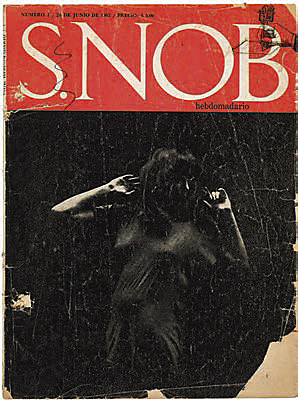
Cover of the magazine S.nob No. 2 (27 June 1962)


Cover of the magazine S.nob No. 2 (27 June 1962)
© 2005 Ana María Norah Horna y Fernández


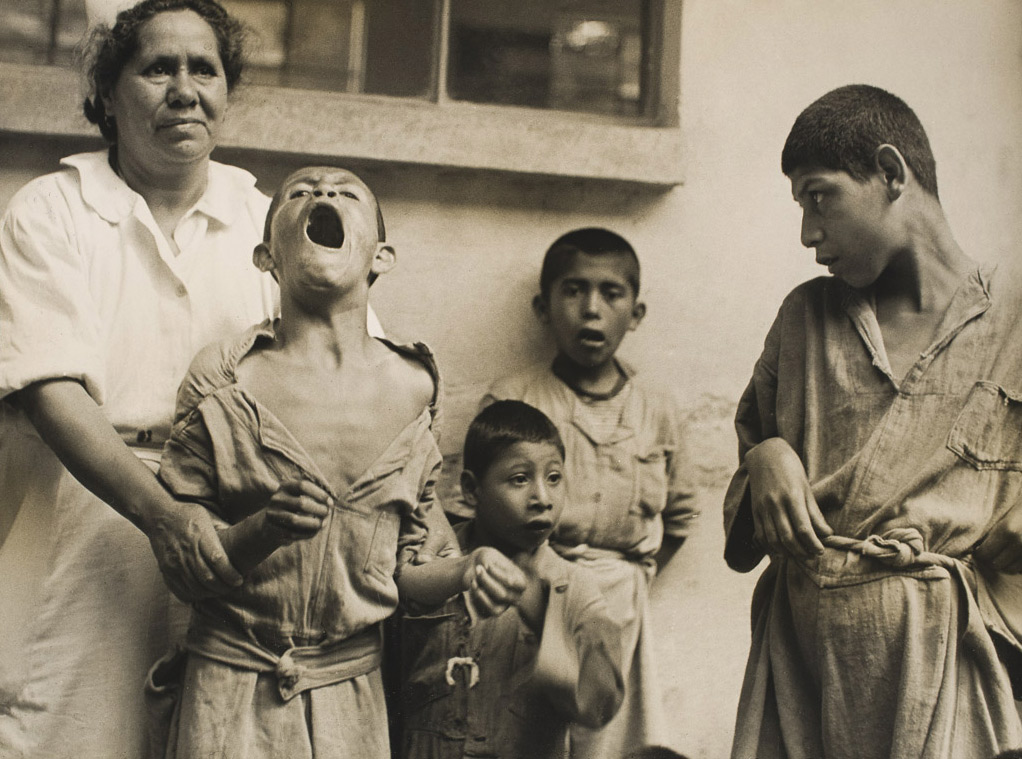
Kati Horna (Mexican born Hungary, 1912-2000) 'Untitled, La Castañeda psychiatric hospital, Mixcoac' Mexico, 1944


Kati Horna (Mexican born Hungary, 1912-2000)
Untitled, La Castañeda psychiatric hospital, Mixcoac
Mexico, 1944
Archivo Privado de Fotografía y Gráfica Kati y José Horna
© 2005 Ana María Norah Horna y Fernández


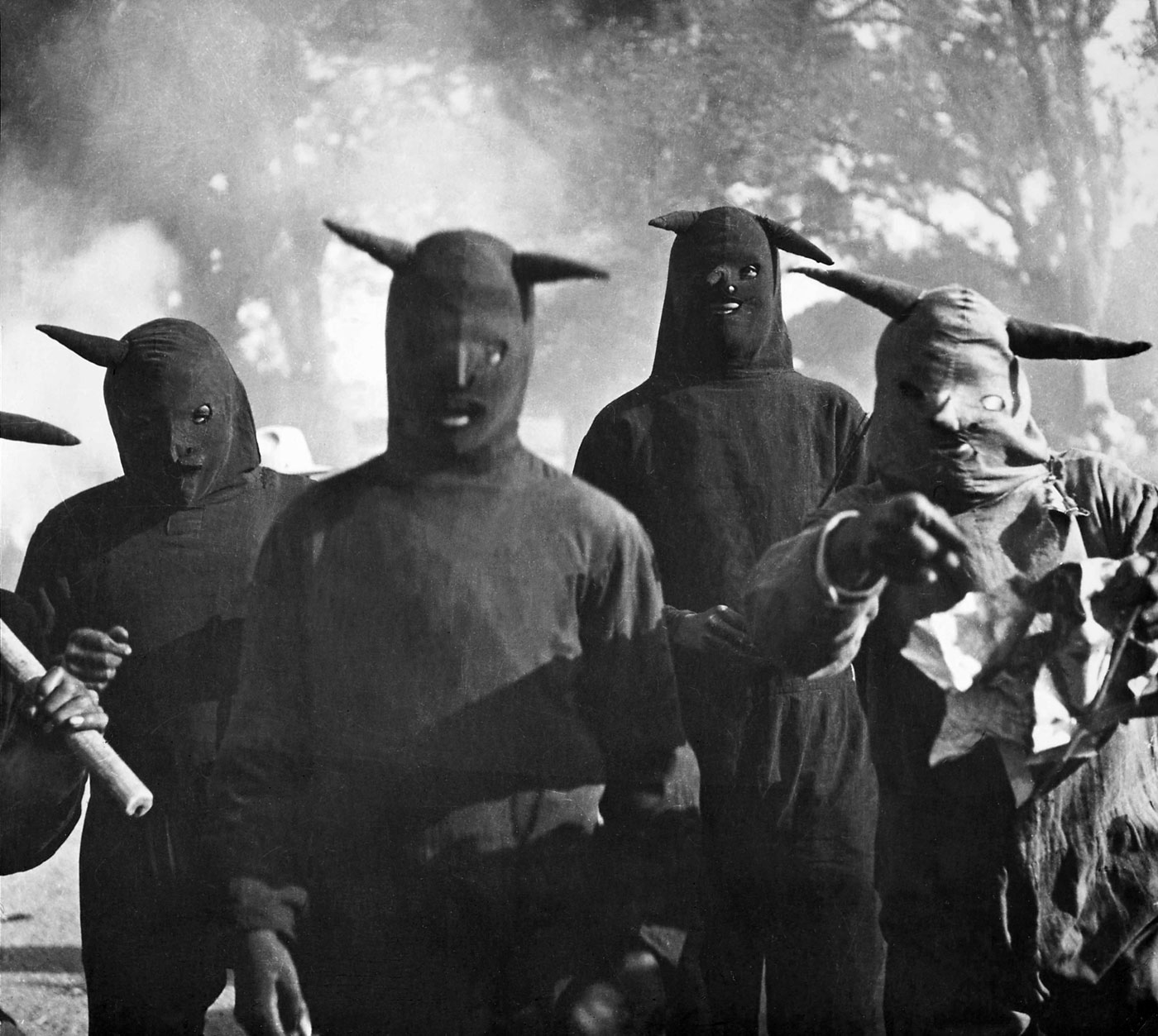
Kati Horna (Mexican born Hungary, 1912-2000) 'Untitled, Carnaval de Huejotzingo, Puebla' 1941


Kati Horna (Mexican born Hungary, 1912-2000)
Untitled, Carnaval de Huejotzingo, Puebla
1941
Gelatin silver print
19.5 x 21.5cm
Archivo Privado de Fotografía y Gráfica Kati y José Horna
© 2005 Ana María Norah Horna y Fernández


Kati Horna (Mexican born Hungary, 1912-2000) 'Untitled, Oda a la necrofília series [Ode to Necrophilia]' Mexico 1962


Kati Horna (Mexican born Hungary, 1912-2000)
Untitled
Mexico, 1962
From the Oda a la necrofília series [Ode to Necrophilia]
Gelatin silver print
25.4 x 20.8cm
Museo Amparo Collection
© 2005 Ana María Norah Horna y Fernández


Kati Horna (Mexican born Hungary, 1912-2000) 'El botellón' [The Bottle] Mexico, 1962


Kati Horna (Mexican born Hungary, 1912-2000)
El botellón [The Bottle]
Mexico, 1962
From the Paraísos artificiales series [Artificial Paradises]
Gelatin silver print
24.4 x 18.9cm
Collection Museo Amparo
© 2005 Ana María Norah Horna y Fernández


Kati Horna (Mexican born Hungary, 1912-2000) 'Remedios Varo' Mexico, 1957


Kati Horna (Mexican born Hungary, 1912-2000)
Remedios Varo
Mexico, 1957
Gelatin silver print
25.3 x 20.3cm
Private collection
© 2005 Ana María Norah Horna y Fernández


Kati Horna (Mexican born Hungary, 1912-2000) 'Antonio Souza y su esposa Piti Saldivar' [Antonio Souza and his Wife Piti Saldivar] Mexico, 1959


Kati Horna (Mexican born Hungary, 1912-2000)
Antonio Souza y su esposa Piti Saldivar [Antonio Souza and his Wife Piti Saldivar]
Mexico, 1959
Gelatin silver print
25 x 20.3cm
Archivo Privado de Fotografía y Gráfica Kati y José Horna
© 2005 Ana María Norah Horna y Fernández


Kati Horna (Mexican born Hungary, 1912-2000) 'José Horna elaborando la maqueta de la casa de Edward James' [José Horna Working on the Maquette for Edward James's House] Mexico, 1960


Kati Horna (Mexican born Hungary, 1912-2000)
José Horna elaborando la maqueta de la casa de Edward James [José Horna Working on the Maquette for Edward James’s House]
Mexico, 1960
Gelatin silver print
25.3 x 20.3cm
Archivo Privado de Fotografía y Gráfica Kati y José Horna
© 2005 Ana María Norah Horna y Fernández


Kati Horna (Mexican born Hungary, 1912-2000) 'Mujer y máscara' [Woman with Mask] Mexico, 1963


Kati Horna (Mexican born Hungary, 1912-2000)
Mujer y máscara [Woman with Mask]
Mexico, 1963
Gelatin silver print
25 x 19.7 cm
Archivo Privado de Fotografía y Gráfica Kati y José Horna
© 2005 Ana María Norah Horna y Fernández


Jeu de Paume
1, Place de la Concorde
75008 Paris
métro Concorde
Phone: 01 47 03 12 50

Opening hours:
Tuesday – Sunday: 11.00am – 7.00pm
Closed Monday

Jeu de Paume website

LIKE ART BLART ON FACEBOOK

Back to top

Exhibition: ‘Josef Koudelka: Nationality Doubtful’ at the Art Institute of Chicago

Exhibition dates: 7th June – 14th September 2014


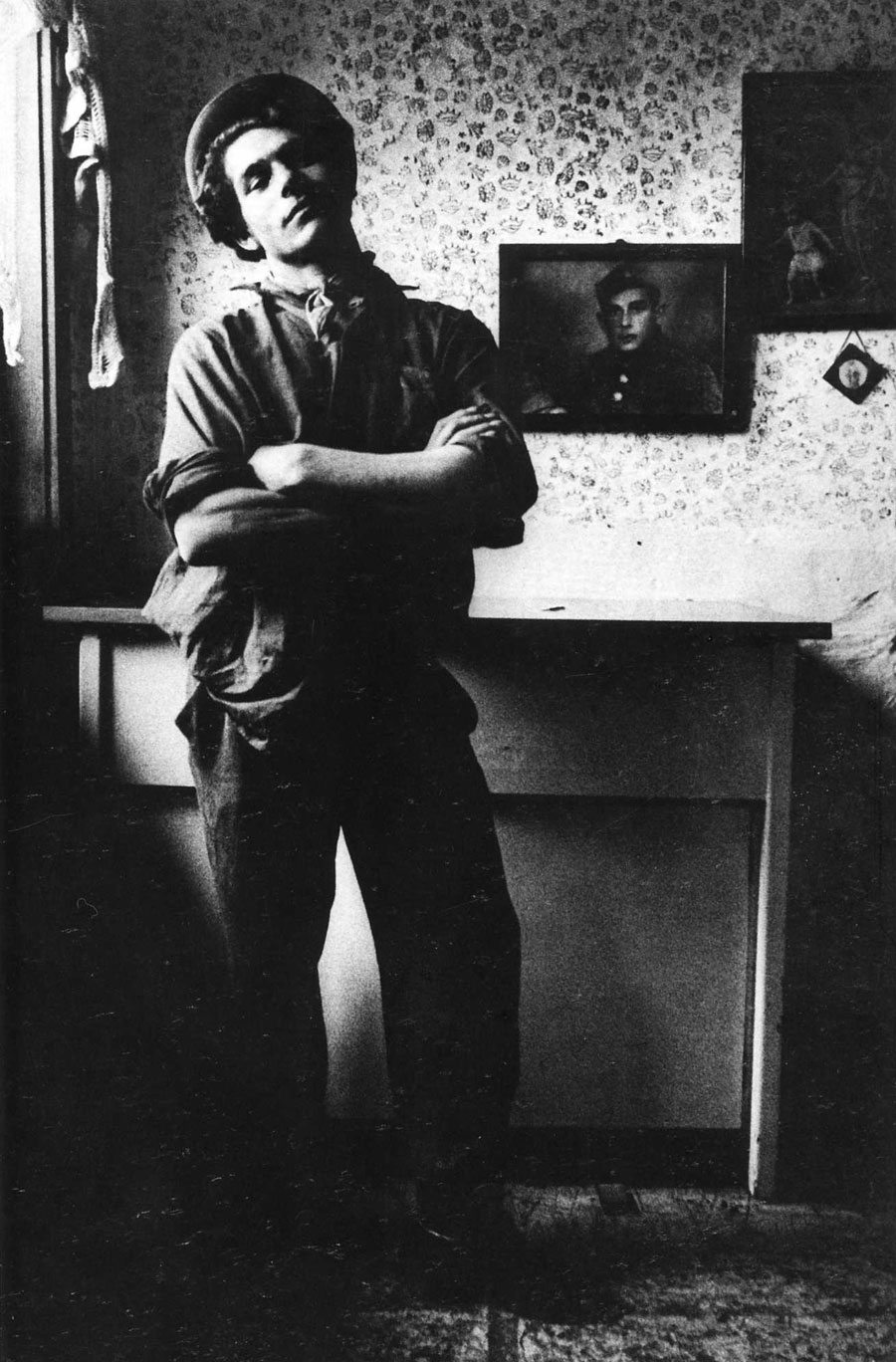
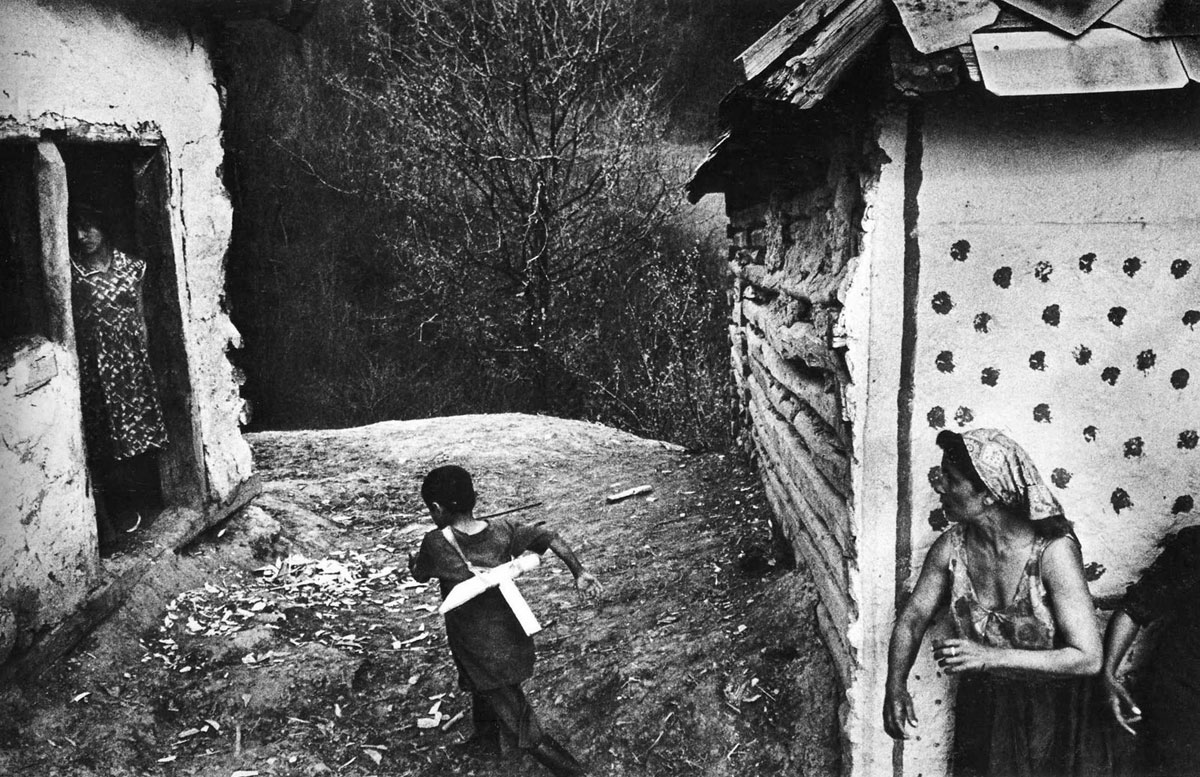
Josef Koudelka (Czech-French, b. 1938) 'Czechoslovakia (Kadañ)' 1963, printed 1967


Josef Koudelka (Czech-French, b. 1938)
Czechoslovakia (Kadañ)
1963, printed 1967
from the series Gypsies
The Art Institute of Chicago, restricted gift of Artworkers Retirement Society
© Josef Koudelka/Magnum Photos. Courtesy of Pace/MacGill Gallery, New York


One of the greats – mainly for his series GypsiesInvasion and Exiles.

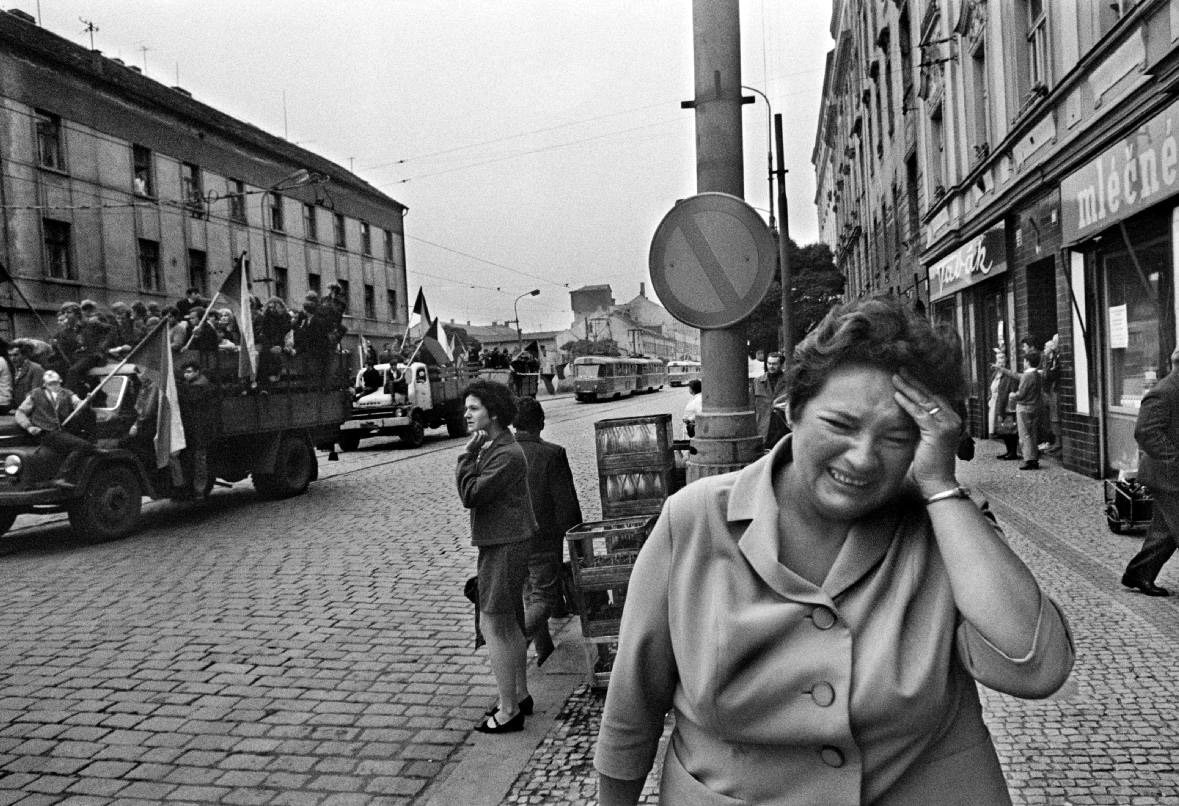
Powerful images: strong, honest, respectful, beautifully composed but above all gritty, gritty, gritty. There is a dark radiance here, an ether/reality, as though the air was heavy with melancholy, emotion, loss, violence, isolation and, sometimes, love. No wonder he describes his work as a “theater of the real.” Humanism, and photography at its most essential.

Dr Marcus Bunyan


Many thankx to the Art Institute of Chicago for allowing me to publish the photographs in the posting. Please click on the photographs for a larger version of the image.


“I try to be a photographer. I cannot talk. I am not interested in talking. If I have anything to say, it may be found in my images. I am not interested in talking about things, explaining about the whys and the hows. I do not mind showing my images, but not so much my contact sheets. I mainly work from small test prints. I often look at them, sometimes for a long time. I pin them to the wall, I compare them to make up my mind, be sure of my choices. I let others tell me what they mean. [To Robert Delpire] My photographs, you know them. You have published them, you have exhibited them, then you can tell whether they mean something or not.”

“There is still an enormous amount of hostility and racial prejudice towards Roma, especially in Eastern Europe, but not just there. It does not matter on which political spectrum you are, left or right, it is very universal, people are often very discriminatory against them.”


Josef Koudelka


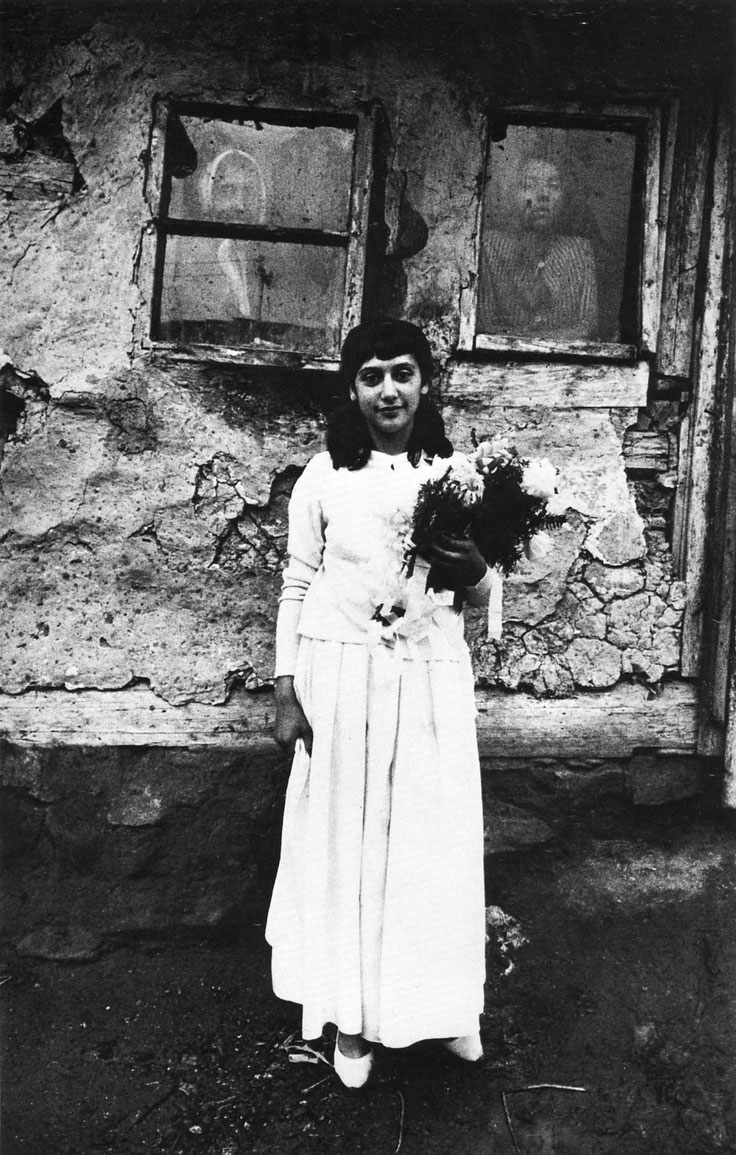
Josef Koudelka (Czech-French, b. 1938) 'Romania' 1968, printed 1980s


Josef Koudelka (Czech-French, b. 1938)
Romania
1968, printed 1980s
from the series Gypsies
The Art Institute of Chicago, promised gift of Robin and Sandy Stuart
© Josef Koudelka/Magnum Photos. Courtesy of Pace/MacGill Gallery, New York


Czech-born French artist Josef Koudelka belongs in the firmament of classic photographers working today. Honoured with the French Prix Nadar (1978), the Hasselblad Prize (1992), and the International Center of Photography Infinity Award (2004), Koudelka is also a leading member of the world-renowned photo agency Magnum. This exhibition, his first retrospective in the United States since 1988, is also the first museum show ever to emphasise his original vintage prints, period books, magazines, and significant unpublished materials.

Koudelka became famous in anonymity through the worldwide publication of his daring photographs of the Soviet-led invasion of Prague in August 1968. Just 30 years old at the time, Koudelka had already worked for a decade, principally on Gypsies, for which he visited Roma populations for weeks at a time in his home country and later abroad over the course of years. This ambitious series beautifully combines a sense of modern history with timeless humanism.

Choosing exile to avoid reprisals for his Invasion photographs, Koudelka travelled throughout Europe during the 1970s and 1980s, camping at village festivals from spring through fall and then printing in wintertime. His photographs of those decades became the series Exiles. Since the late 1980s Koudelka has made panoramic landscape photographs in areas massively shaped by industry, territorial conflict, or – in the case of the Mediterranean rim – the persistence of Classical civilisation.

Tracing this long and impressive career, this exhibition draws on Koudelka’s extensive holdings of his own work and on recent major acquisitions by the Art Institute, including the complete surviving contents of the debut presentation of Gypsies in 1967 (22 photographs), as well as ten Invasion images printed by the photographer just weeks after the event. Also on display are early experimental and theatre photographs and some of the photographer’s beautifully produced books – which stretch dozens of feet when unfolded. A fully illustrated catalogue accompanies the exhibition, which after its debut at the Art Institute travels to the J. Paul Getty Museum, Los Angeles, and Fundación MAPFRE, Madrid.

Text from the Art Institute of Chicago website


Gypsies exists as an invaluable documentation of a people during a tumultuous time in their history. From an image of a trio of suited musicians engrossed in their instruments, to stirring portraits of families in cramped living conditions, the photoessay is both a testament to the strength of Roma culture and a stark document of the realities of these people’s lives. Having fully immersed himself in the project, Koudelka’s work presents an unbiased and honest portrait of a community whose nomadic way of life has been contested throughout history.

Anonymous text from the Magnum Photos website [Online] Cited 15/06/2021


Josef Koudelka (Czech-French, b. 1938) 'Festival of gypsy music. Straznice, Czechoslovakia' 1966


Josef Koudelka (Czech-French, b. 1938)
Festival of gypsy music. Straznice, Czechoslovakia
1966
from the series Gypsies


Josef Koudelka (Czech-French, b. 1938) 'Slovakia' 1967


Josef Koudelka (Czech-French, b. 1938)
Slovakia
1967
From the series Gypsies


Josef Koudelka (Czech-French, b. 1938) 'Slovakia' 1967


Josef Koudelka (Czech-French, b. 1938)
Slovakia
1967
From the series Gypsies


Josef Koudelka (Czech-French, b. 1938) 'Reconstruction of a homicide. In the foreground: a young gypsy suspected of being guilty. Jarabina, Czechoslovakia' 1963


Josef Koudelka (Czech-French, b. 1938)
Reconstruction of a homicide. In the foreground: a young gypsy suspected of being guilty. Jarabina, Czechoslovakia
1963
From the series Gypsies


Josef Koudelka (Czech-French, b. 1938) 'Jarabina, Czechoslovakia' 1963. Various images from the series 'Gypsies'


Josef Koudelka (Czech-French, b. 1938)
Jarabina, Czechoslovakia
1963
From the series Gypsies


Josef Koudelka (Czech-French, b. 1938) 'Slovakia' 1963


Josef Koudelka (Czech-French, b. 1938)
Slovakia
1963
From the series Gypsies


Josef Koudelka (Czech-French, b. 1938) 'Velka Lomnica, Slovakia, Czechoslovakia' 1963


Josef Koudelka (Czech-French, b. 1938)
Velka Lomnica, Slovakia, Czechoslovakia
1963
From the series Gypsies


Josef Koudelka (Czech-French, b. 1938) 'Velka Lomnica, Slovakia, Czechoslovakia' 1966


Josef Koudelka (Czech-French, b. 1938)
Velka Lomnica, Slovakia, Czechoslovakia
1966
From the series Gypsies


Josef Koudelka (Czech-French, b. 1938) 'Slovakia. Zehra' 1967


Josef Koudelka (Czech-French, b. 1938)
Slovakia. Zehra
1967
From the series Gypsies


Josef Koudelka (Czech-French, b. 1938) 'Gypsy. Okres Poprad, Slovakia, Czechoslovakia' 1967


Josef Koudelka (Czech-French, b. 1938)
Gypsy. Okres Poprad, Slovakia, Czechoslovakia
1967
From the series Gypsies


Josef Koudelka (Czech-French, b. 1938) Various images from the series 'Gypsies'


Josef Koudelka (Czech-French, b. 1938) Various images from the series 'Gypsies'


Josef Koudelka (Czech-French, b. 1938) Various images from the series 'Gypsies'


Josef Koudelka (Czech-French, b. 1938) Various images from the series 'Gypsies'


Josef Koudelka (Czech-French, b. 1938) Various images from the series 'Gypsies'


Josef Koudelka (Czech-French, b. 1938)
Images from the series Gypsies
Book printed 1975; new Aperture edition 2011


Josef Koudelka (Czech-French, b. 1938) 'Spain' 1971


Josef Koudelka (Czech-French, b. 1938)
Spain
1971
From the series Gypsies


Aperture’s new edition of Koudelka: Gypsies (2011) rekindles the energy and astonishment of this foundational body of work by master photographer Josef Koudelka. Lavishly printed in a unique quadratone mix by artisanal printer Gerhard Steidl, it offers an expanded look at Cikáni (Czech for “gypsies” ) – 109 photographs of Roma society taken between 1962 and 1971 in then-Czechoslovakia (Bohemia, Moravia and Slovakia), Romania, Hungary, France and Spain. The design and edit for this volume revisits the artist’s original intention for the work, and is based on a maquette originally prepared in 1968 by Koudelka and graphic designer Milan Kopriva. Koudelka intended to publish the work in Prague, but was forced to flee Czechoslovakia, landing eventually in Paris. In 1975, Robert Delpire, Aperture and Koudelka collaborated to publish Gitans, la fin du voyage (Gypsies, in the English-language edition), a selection of 60 photographs taken in various Roma settlements around East Slovakia.


Josef Koudelka (Czech-French, b. 1938) 'Spain' 1971 'Slovakia (Rakúsy)' 1966, printed 1967


Josef Koudelka (Czech-French, b. 1938)
Slovakia (Rakúsy)
1966, printed 1967
From the series Gypsies
The Art Institute of Chicago, restricted gift of Sandy and Robin Stuart and Photography Gala Fund
© Josef Koudelka/Magnum Photos. Courtesy of Pace/MacGill Gallery, New York.


The unforgettable photographs of acclaimed Czech-born, French photographer Josef Koudelka (b. 1938), including eyewitness images of the 1968 Soviet-led invasion of Czechoslovakia, have not been shown at a major U.S. museum since 1988. These documentary works as well as extensive selections from the photographer’s work going back to 1958 – including his renowned series Gypsies, Exiles, and a variety of recent panoramic photographs – will feature in the major retrospective exhibition Josef Koudelka: Nationality Doubtful, from June 7 through September 14, 2014. It is the first museum show ever to emphasise Koudelka’s original vintage prints, period publications and unpublished study materials.

Josef Koudelka: Nationality Doubtful, which takes place in the Abbott (182-4) and Bucksbaum (188) galleries on the ground floor of the Modern Wing, draws primarily on Koudelka’s extensive holdings of his own work. For decades, the photographer has exhibited new and recent prints of images that have grown iconic through frequent exhibitions and reproductions, while holding back the earliest, vintage prints – until now. For example, over the years there have been more than one dozen solo exhibitions of Gypsies and numerous reprints of the book of the same name, which has appeared in two editions and six languages. Among the rarities that will be included in Josef Koudelka: Nationality Doubtful is the only surviving maquette for the first book version of Gypsies, which Koudelka had to leave unfinished at his exile from Prague in 1970.

Koudelka’s habit of revisiting past projects while simultaneously advancing into new territory will be squarely on view in Josef Koudelka: Nationality Doubtful. Twenty-two original photographs from the very first show of Gypsies, held in Prague in 1967, will be displayed for the first time since that date. In an adjacent room, a different selection from the series, printed at a different size and in another way, will also be shown. Similarly, extremely rare vintage prints of Invasion, made and circulated anonymously to the press directly following the Soviet invasion of Czechoslovakia, will be shown alongside much larger prints commissioned soon after the fall of the Berlin Wall in 1989, when Koudelka returned from exile and had his first post-Soviet exhibition in Prague.

Also on display will be selections from his early experimental photographs and years of work with Prague theatre companies, made during the flowering of the Czech stage and cinema in the 1960s.

Koudelka was born in a small Moravian town in 1938 and moved to Prague, then the capital of Czechoslovakia, in the 1950s. He studied aeronautical engineering while practicing photography obsessively from 1958; in 1966, he turned full-time to a photographic career. Already in 1961, Koudelka had begun his most ambitious life project, Gypsies, for which he visited Roma populations for weeks at a time, principally in Slovakia. The rigorously humanist pictures became his calling card at home and internationally in the later 1960s after being published in the Swiss magazine Camera and shown to curators and photography representatives around Western Europe and the United States. Meanwhile, Koudelka’s Invasion photographs became famous after they appeared worldwide to commemorate the first anniversary of the events of August 1968. Worried about reprisals even though the images had been published anonymously, Koudelka chose to leave his country in May 1970.

In exile Koudelka adopted a semi-nomadic existence. He followed village festivals, pilgrimages, and Roma gatherings throughout the United Kingdom (his country of asylum in the 1970s), Spain, Italy, and France (his principal residence from 1981, and country of citizenship from 1986), photographing throughout the year and printing largely in wintertime. The world-famous photography agency Magnum, which had stewarded publication of the Invasion photographs, became Koudelka’s home base and as he says his “family.” Koudelka’s photographs of these years were gathered together in 1988 as Exiles, which will also be part of the exhibition.

Since the late 1980s Koudelka has made panoramic landscape photographs in areas massively shaped by industry, territorial conflict, or – in the case of the Mediterranean rim – the persistence of Classical civilisation. The final gallery of Josef Koudelka: Nationality Doubtful will showcase six of these mural-size black-and-white images, as well as three of the impressive accordion-fold books that Koudelka has made of them since 1989, some of which stretch to more than 100 feet long.

Despite his peripatetic life, Koudelka’s moving and stunning photographs have made him one of the most sought-after figures in print and at exhibition. Honoured with the French Prix Nadar (1978), the Hasselblad Prize (1992), and the International Center of Photography Infinity Award (2004), Koudelka remains today a leading member of Magnum.

A fully illustrated catalogue accompanies the exhibition, overseen closely by the artist and designed by the Czech firm Najbrt Studio. Edited by Matthew S. Witkovsky, the Richard and Ellen Sandor Chair and Curator of Photography at the Art Institute, the book provides extensive new information on Koudelka’s formative years in Prague during the thaw of the 1960s, as well as the first complete history of Gypsies, its twists and turns from 1961 through 2011. Amanda Maddox, assistant curator of photographs at the J. Paul Getty Museum, which has co-organised the exhibition, provides fresh knowledge on Koudelka’s underrepresented decade in England and the UK. Stuart Alexander and Gilles Tiberghien, two longtime friends of the photographer, have contributed illuminating essays on Koudelka’s years in France and his fascination for panoramic landscape, respectively.

Press release from the Art Institute of Chicago


Josef Koudelka (Czech-French, b. 1938) 'France' 1987


Josef Koudelka (Czech-French, b. 1938)
France
1987


Josef Koudelka (Czech-French, b. 1938) 'Lisbon, Portugal' 1975


Josef Koudelka (Czech-French, b. 1938)
Lisbon, Portugal
1975


Josef Koudelka (Czech-French, b. 1938) 'Lisbon, Portugal' 1975 'Ireland' 1972, printed 1987/88


Josef Koudelka (Czech-French, b. 1938)
Ireland
1972, printed 1987/88
From the series Exiles
© Josef Koudelka/Magnum Photos. Courtesy of Pace/MacGill Gallery, New York


Josef Koudelka (Czech-French, b. 1938) 'Spain' 1975


Josef Koudelka (Czech-French, b. 1938)
Spain
1975


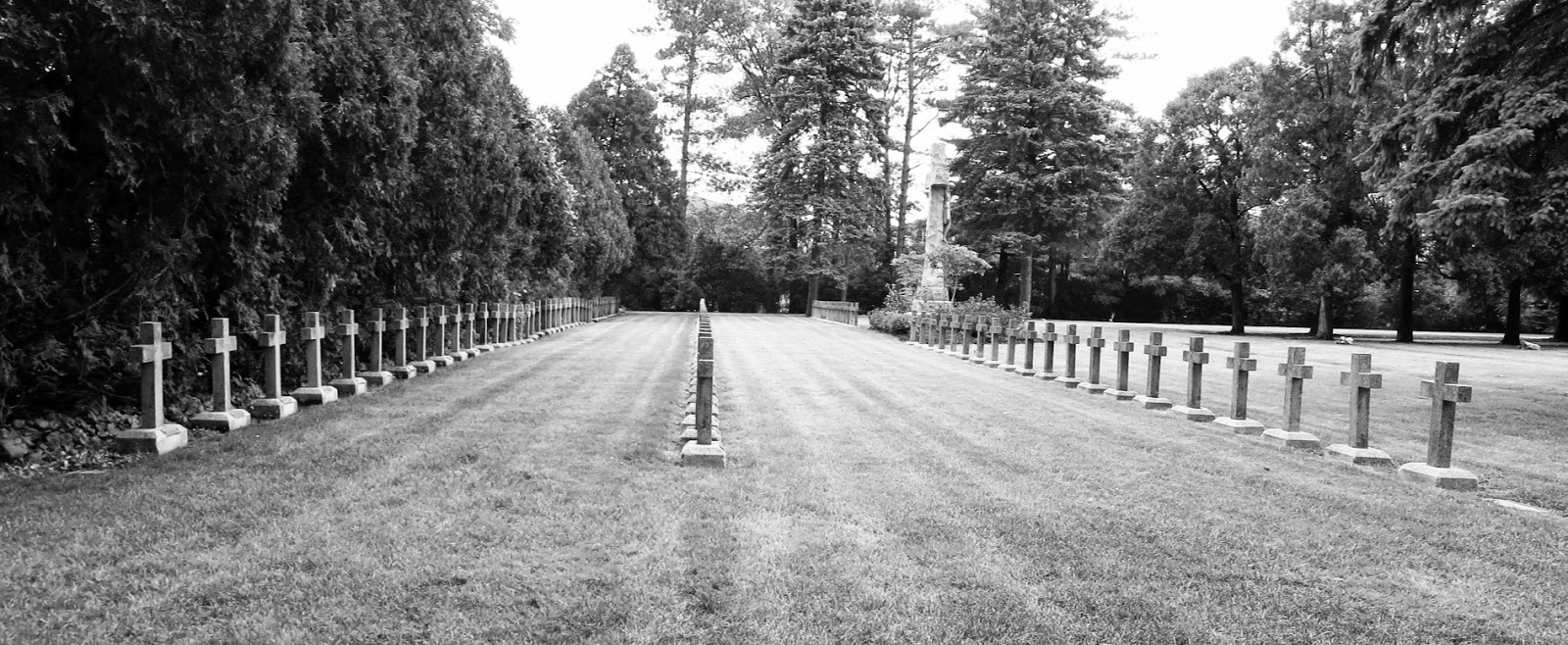
Josef Koudelka (Czech-French, b. 1938) 'St. Procopius Abbey graveyard, Lisle' Nd


Josef Koudelka (Czech-French, b. 1938)
St. Procopius Abbey graveyard, Lisle
Nd


Josef Koudelka (Czech-French, b. 1938) 'Poland' 1958


Josef Koudelka (Czech-French, b. 1938)
Poland
1958
The Art Institute of Chicago, Photography Gala Fund and restricted gift of John A. Bross
© Josef Koudelka/Magnum Photos. Courtesy of Pace/MacGill Gallery, New York


Drama was an important part of Koudelka’s early career: In a literal sense, because he worked for a theatre magazine in the ’60s, creating fantastically emotive images, but also because theatricality was, and still is, deeply embedded in the photographer’s world view. The week in 1968 when young Czechoslovakians stood up against invading Soviet forces occurred when he was working as a stage photographer, and so it became not only a tragedy but also a drama to be recorded. Likewise, his “Gypsies” series, created in the same period, is described by Koudelka as a “theater of the real.”

Through dynamic composition and juxtaposition, Koudelka’s work challenges us to differentiate between spectacle and reality, and while there is no positive indication that one is valued over the other, this is not at all the same as the disbelief in reality that is characteristic of postmodernism. As he puts it, “You form the world in your viewfinder, but at the same time the world forms you.”

In a sense, Koudelka does not want us to become too comfortable with his works as definitive statements. Instead, he crops bodies in images abruptly; we often see people cut off at the knees or ankles, visually and figuratively separating them from the Earth. In other works, disembodied arms and legs jut into the space of the photograph, making scenes surreal and reminding us that whatever coherency the composition has, we can never see the whole picture of what’s really going on. Even with the more poetic and purposefully aesthetic panorama prints of his later “Chaos” series – monumental testaments to the violence we enact both on the natural world and upon each other – through the pitted insistence of film grain and the lack of bright tones or highlights, we are not permitted redemption through “art” or the creation of “beautiful” objects.

In this respect Koudelka’s work, in its celebration of the imperfect, has more in common with the aesthetics of the haiku poet Basho, or the tea master Sen no Rikyu, than with the luscious highly detailed colour images that largely dominate the world of contemporary art photography.”

John L. Tran. “Josef Koudelka: the theatrics of life” on The Japan Times website 18 December 2013 [Online] Cited 15/06/2021


Josef Koudelka (Czech-French, b. 1938) 'Untitled (Student on tank, eyes crossed out)' 1968


Josef Koudelka (Czech-French, b. 1938)
Untitled (Student on tank, eyes crossed out)
1968
From the series Invasion
© Josef Koudelka/Magnum Photos. Courtesy of Pace/MacGill Gallery, New York


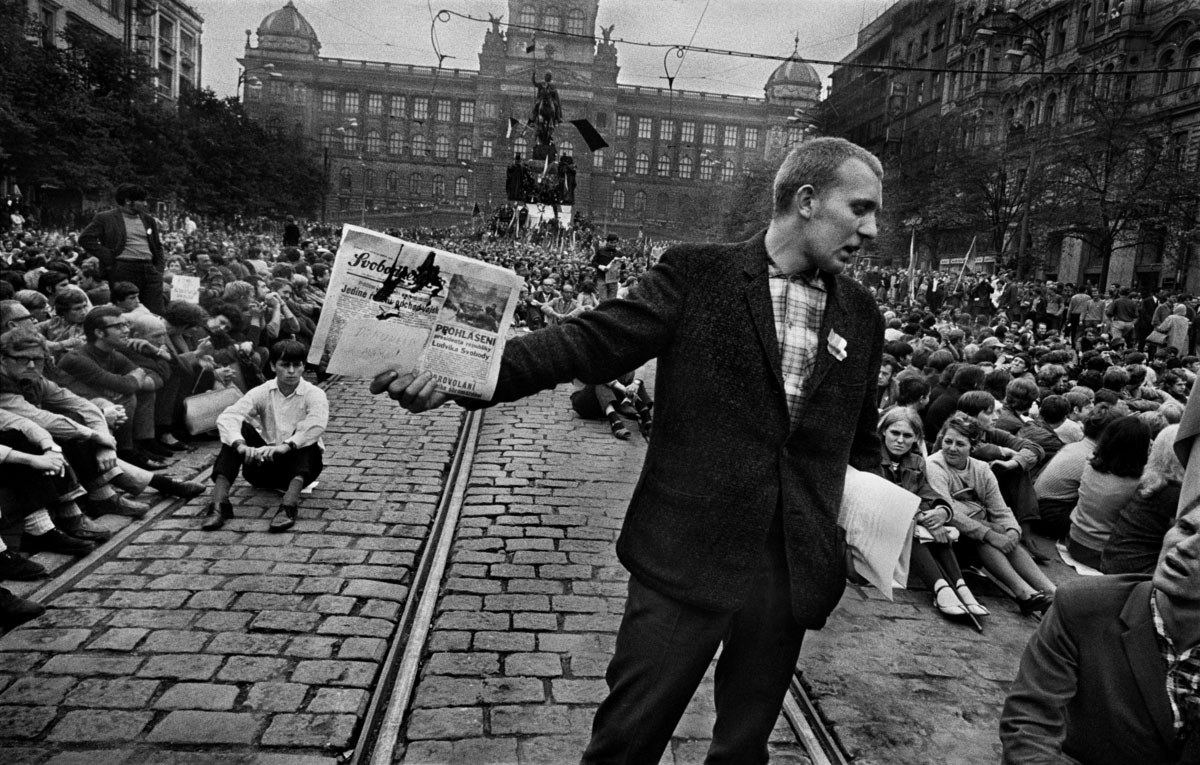
Josef Koudelka (Czech-French, b. 1938) 'Invasion by Warsaw Pact troops in front of the Radio headquarters. Prague, Czechoslovakia' 1968


Josef Koudelka (Czech-French, b. 1938)
Invasion by Warsaw Pact troops in front of the Radio headquarters. Prague, Czechoslovakia
1968
From the series Invasion
© Josef Koudelka/Magnum Photos. Courtesy of Pace/MacGill Gallery, New York


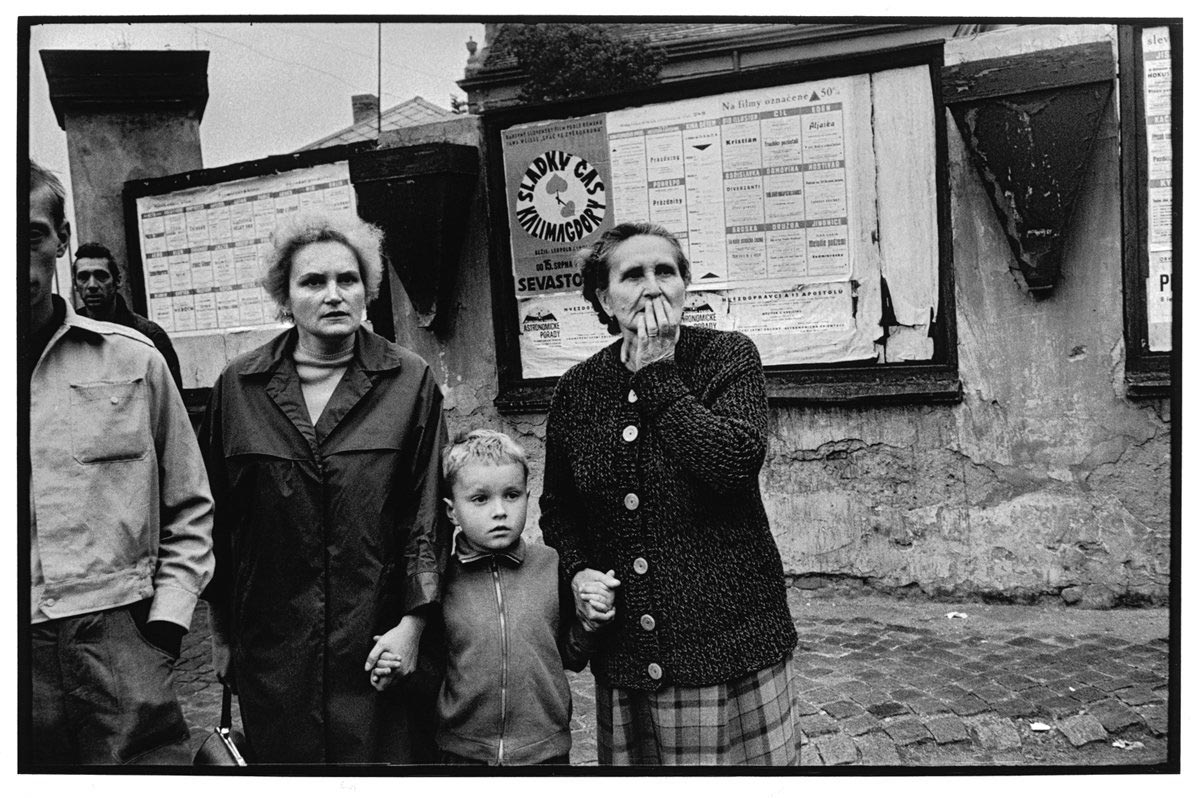
Josef Koudelka (Czech-French, b. 1938) 'Untitled' Various images from the series 'Invasion'


Josef Koudelka (Czech-French, b. 1938) 'Untitled' Various images from the series 'Invasion'


Josef Koudelka (Czech-French, b. 1938) 'Untitled' Various images from the series 'Invasion'


Josef Koudelka (Czech-French, b. 1938) 'Untitled' Various images from the series 'Invasion'


Josef Koudelka (Czech-French, b. 1938) 'Untitled' Various images from the series 'Invasion'


Josef Koudelka (Czech-French, b. 1938)
Untitled
Images from the series Invasion
1968


The Art Institute of Chicago
111 South Michigan Avenue
Chicago, Illinois 60603-6404
Phone: (312) 443-3600

Opening hours:
Thursday – Monday 10am – 11pm
Closed Tuesday and Wednesday

The Art Institute of Chicago website

LIKE ART BLART ON FACEBOOK

Back to top

Exhibition: ‘Robert Heinecken: Object Matter’ at The Museum of Modern Art (MoMA), New York

Exhibition dates: 15th March – 7th September 2014

Curators: Eva Respini, Curator, with Drew Sawyer, Beaumont and Nancy Newhall Curatorial Fellow, Department of Photography, The Museum of Modern Art

*PLEASE NOTE THIS POSTING CONTAINS ART PHOTOGRAPHS OF FEMALE NUDITY – IF YOU DO NOT LIKE PLEASE DO NOT LOOK, FAIR WARNING HAS BEEN GIVEN*


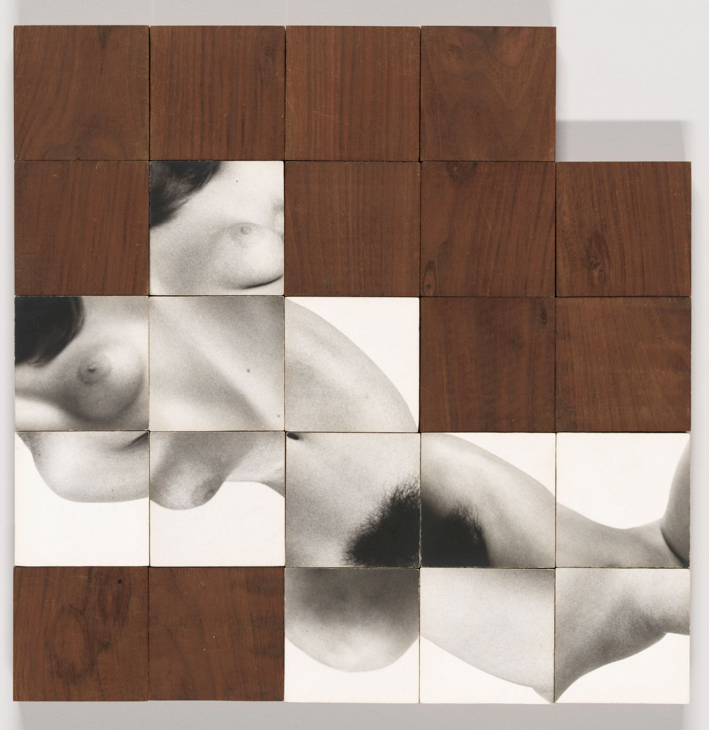
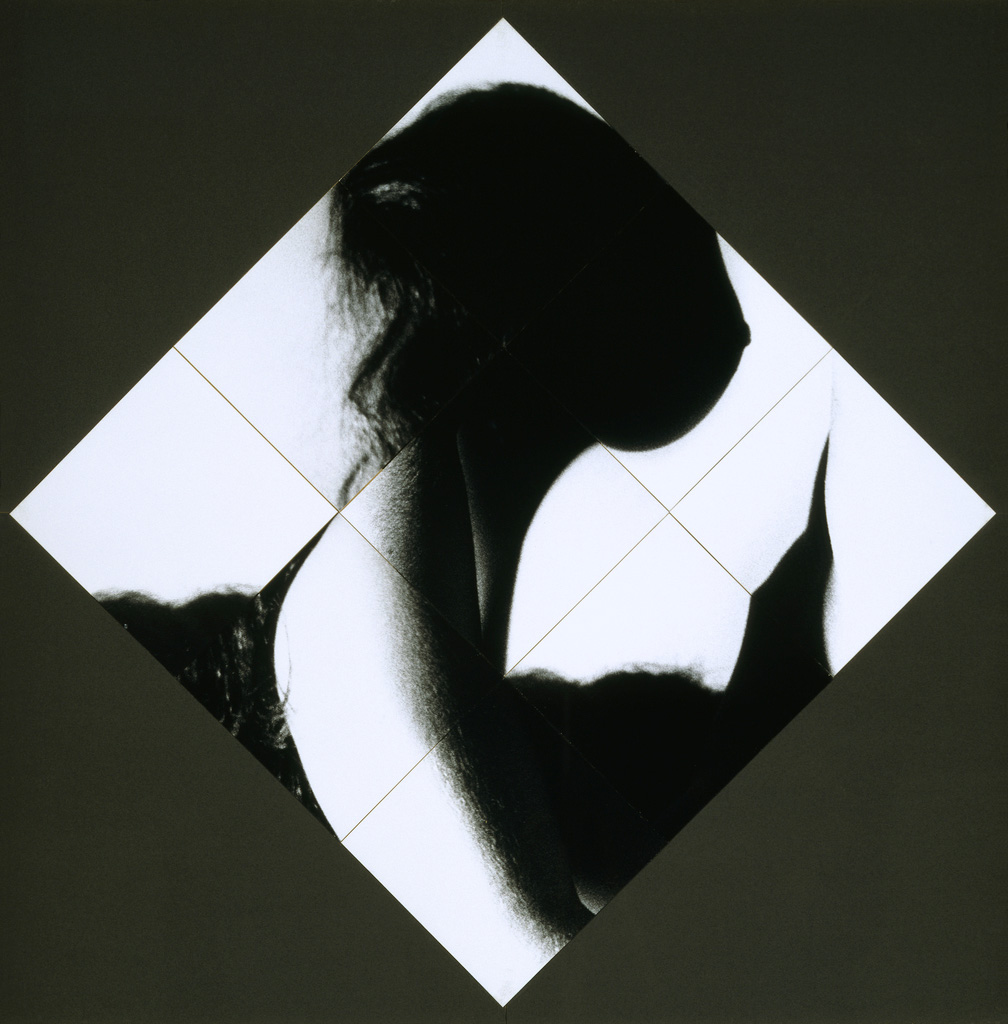
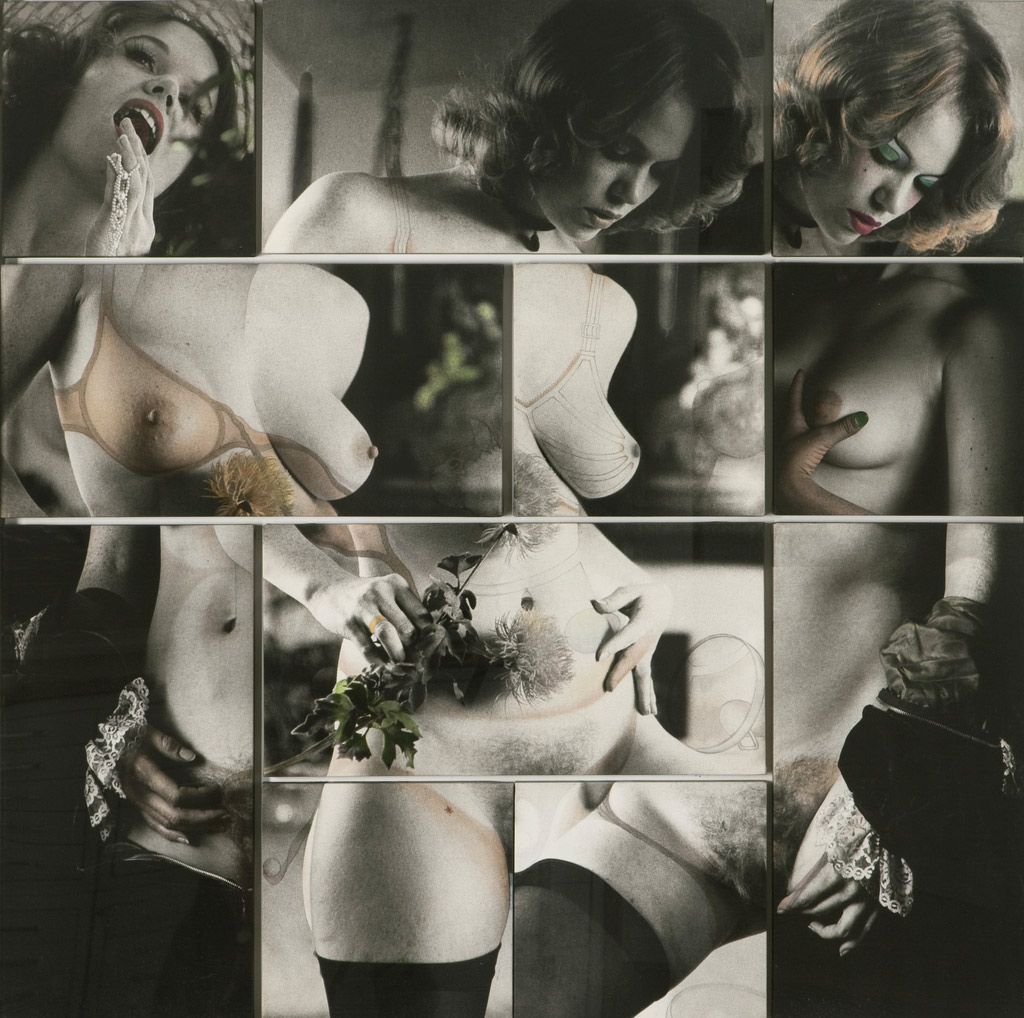
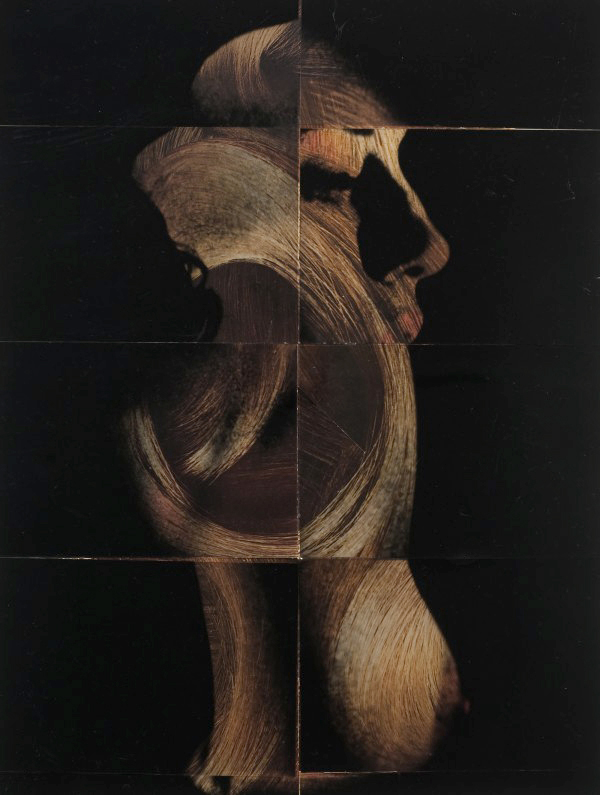
Robert Heinecken (American, 1931-2006) 'Figure Horizon #1' 1971


Robert Heinecken (American, 1931-2006)
Figure Horizon #1
1971
Ten canvas panels with photographic emulsion
Each 11 13/16 x 11 13/16″ (30 x 30cm)
The Museum of Modern Art, New York. Gift of Shirley C. Burden, by exchange


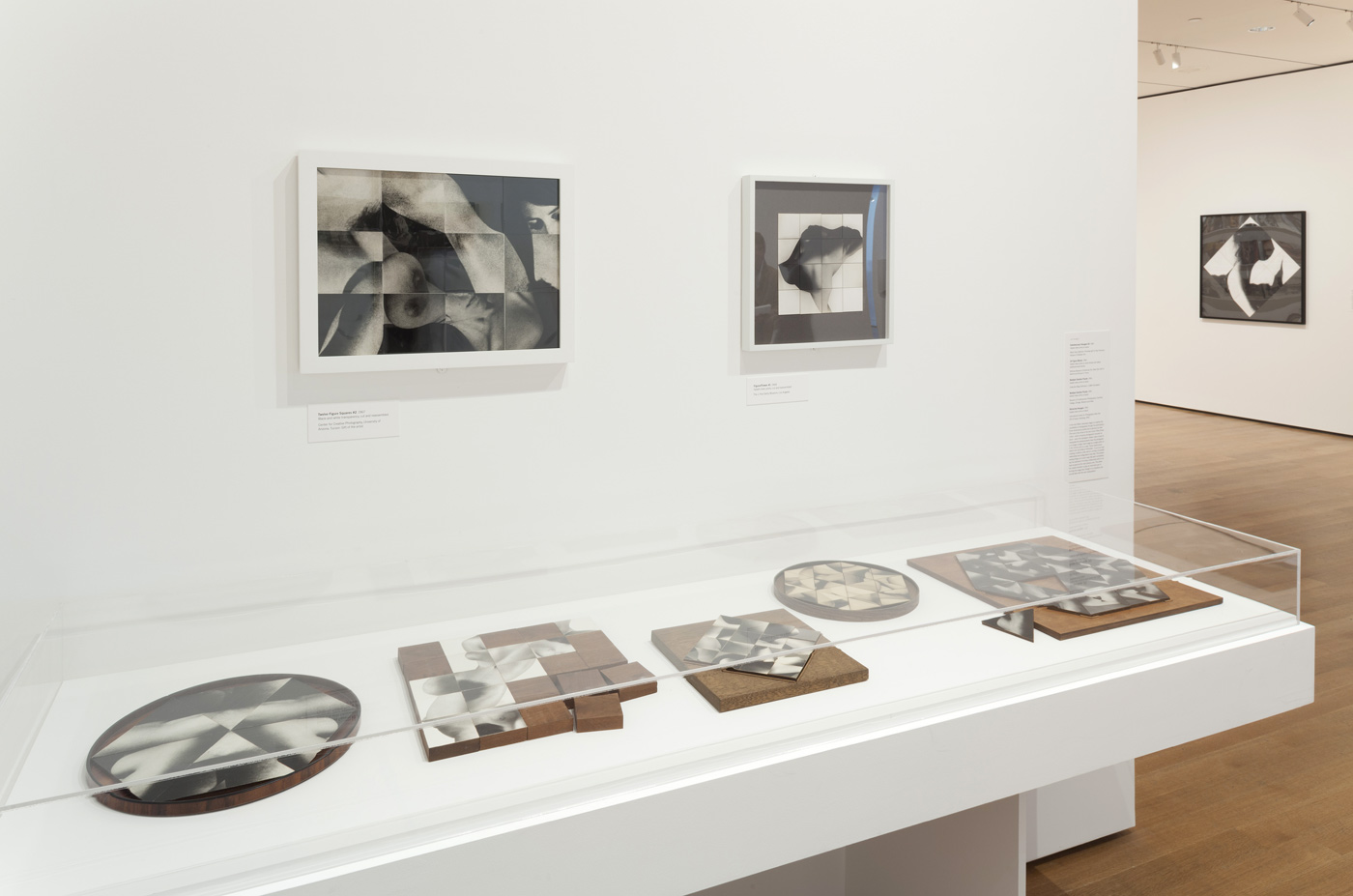
A bumper posting on probably the most important photo-media artist who has ever lived. This is how to successfully make conceptual photo-art.

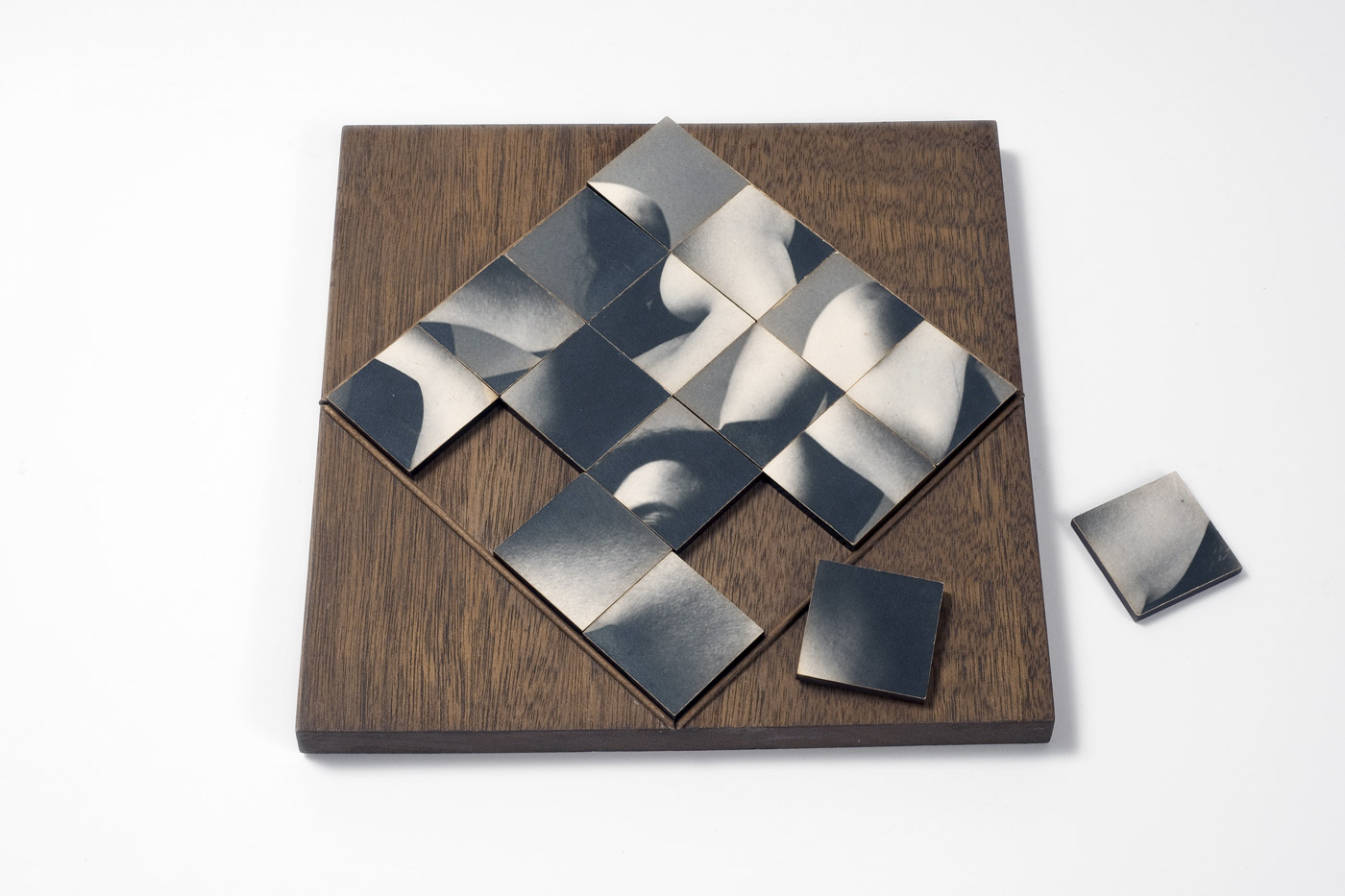
A revolutionary artist, this para-photographer’s photo puzzles are just amazing!

Dr Marcus Bunyan


Many thank to MoMA for allowing me to publish the photographs in the posting. Please click on the photographs for a larger version of the image.


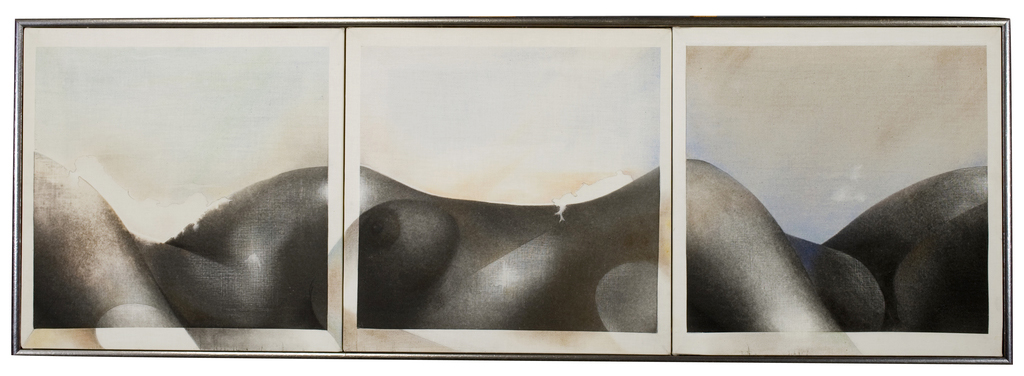
Robert Heinecken (American, 1931-2006) 'Le Voyeur / Robbe-Grillet #2' 1972


Robert Heinecken (American, 1931-2006)
Le Voyeur / Robbe-Grillet #2
1972
Three canvas panels with bleached photographic emulsion and pastel chalk
14 x 40″ (35.6 x 101.6cm)
George Eastman House, Rochester, New York. Museum Purchase with National Endowment for the Arts support


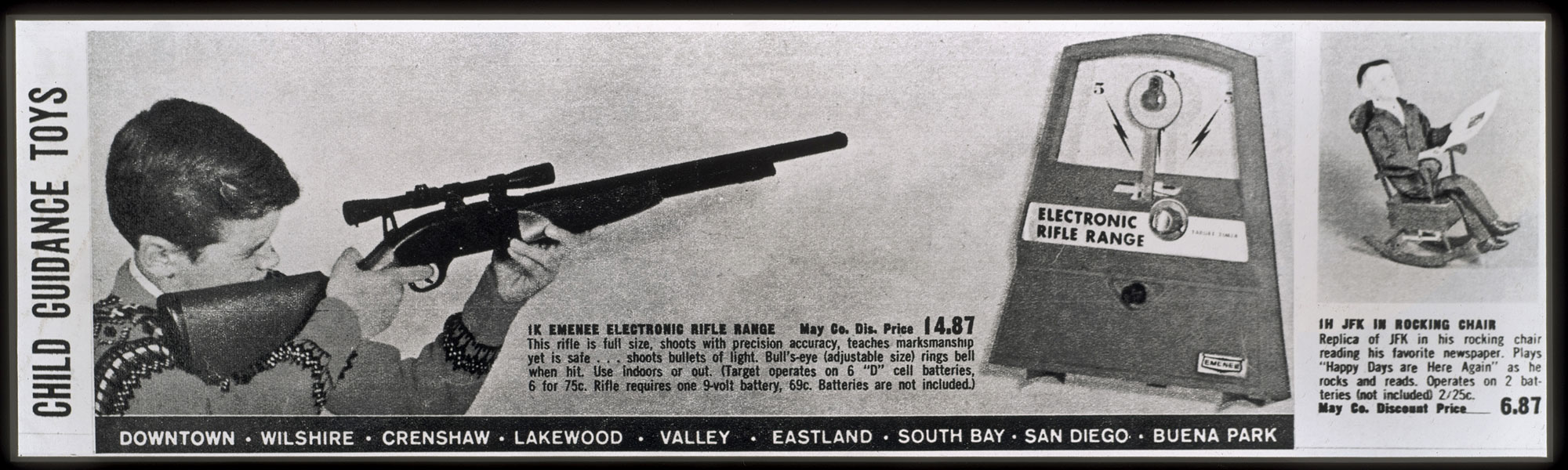
Robert Heinecken (American, 1931-2006) 'Child Guidance Toys' 1965


Robert Heinecken (American, 1931-2006)
Child Guidance Toys
1965
Black-and-white film transparency
5 x 18 1/16″ (12.7 x 45.8cm)
The Art Institute of Chicago. Gift of Boardroom, Inc.


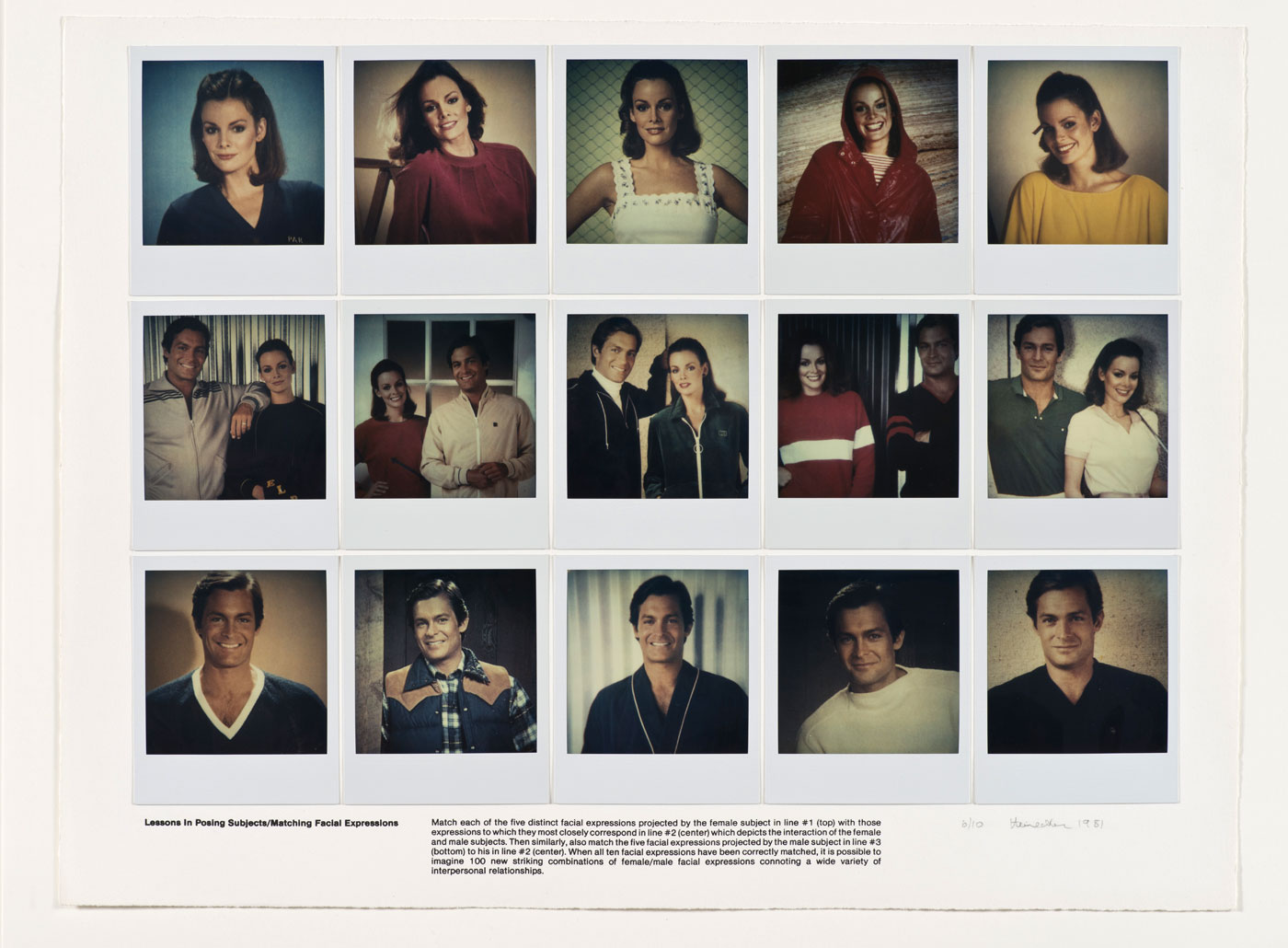
Robert Heinecken (American, 1931-2006) 'Lessons in Posing Subjects / Matching Facial Expressions' 1981


Robert Heinecken (American, 1931-2006)
Lessons in Posing Subjects / Matching Facial Expressions
1981
Fifteen internal dye diffusion transfer prints (SX-70 Polaroid) and lithographic text on Rives BFK paper
15 x 20″ (38.1 x 50.8cm)
Collection UCLA Grunwald Center for Graphic Art, Hammer Museum, Los Angeles. Gift of Dean Valentine and Amy Adelson


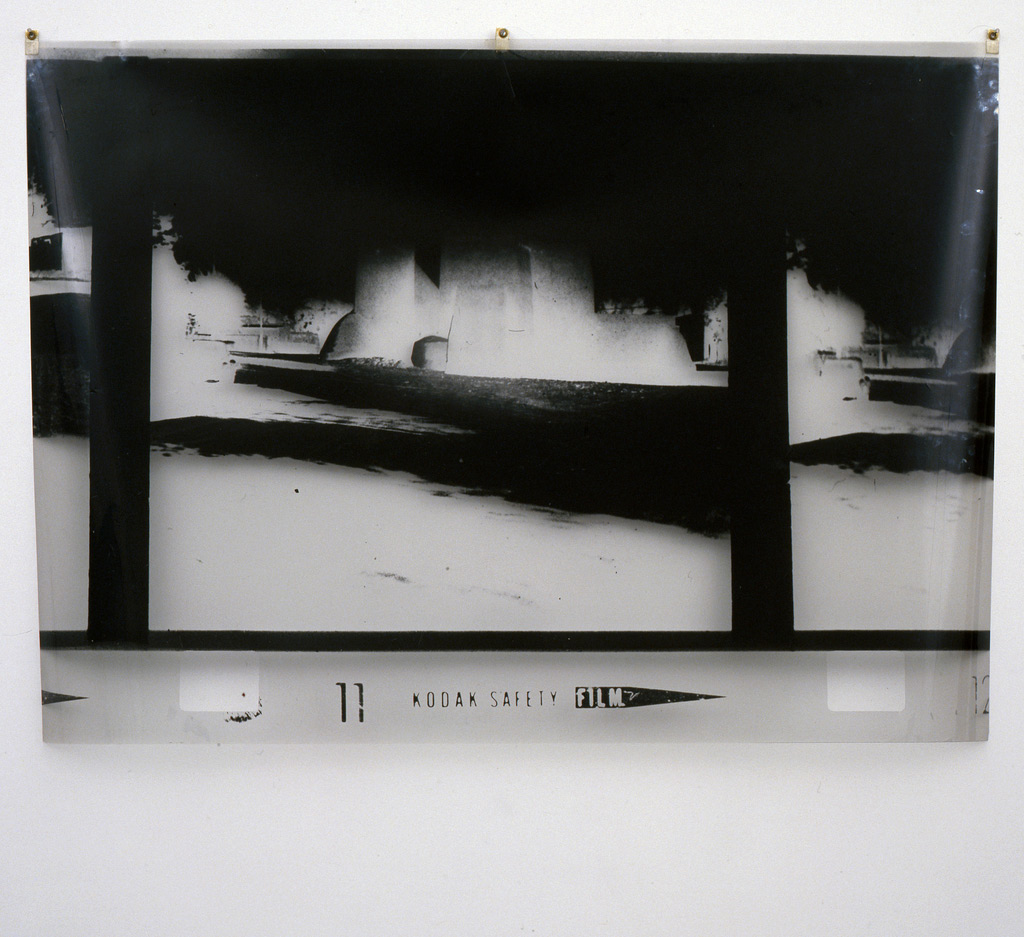
Robert Heinecken (American, 1931-2006) 'Kodak Safety Film / Taos Church' 1972


Robert Heinecken (American, 1931-2006)
Kodak Safety Film / Taos Church
1972
Black-and-white film transparency
40 x 56″ (101.6 x 142.2cm)
The Museum of Modern Art, New York. Committee on Photography Fund


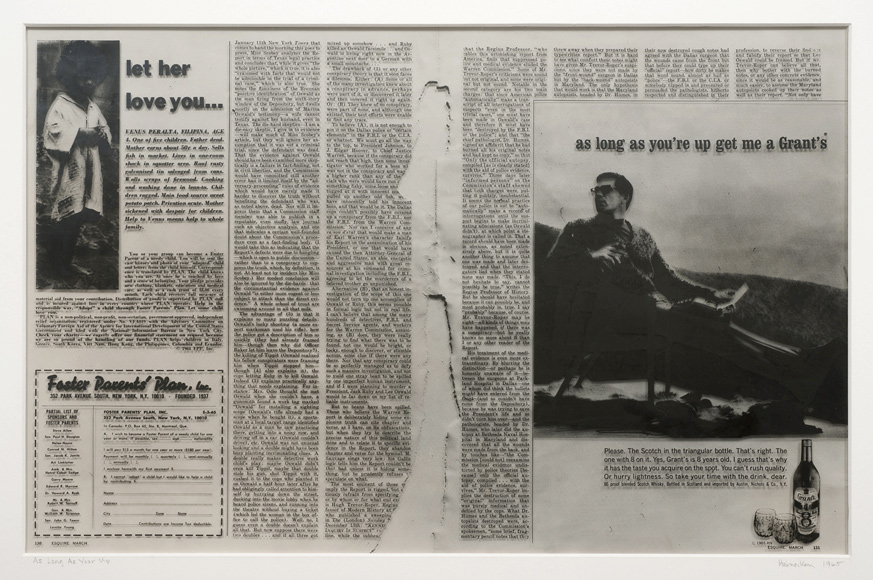
Robert Heinecken (American, 1931-2006) 'As Long As Your Up' 1965


Robert Heinecken (American, 1931-2006)
As Long As Your Up
1965
Black-and-white film transparency
15 1/2 x 19 5/8″ (39.4 x 49.8cm)
The Robert Heinecken Trust, Chicago. Courtesy Petzel Gallery, New York


Robert Heinecken (American, 1931-2006) 'Periodical #5' 1971


Robert Heinecken (American, 1931-2006)
Periodical #5
1971
Offset lithography on found magazine
12 1/4 x 9″ (31.1 x 22.9cm)
Collection Philip Aarons and Shelley Fox Aarons, New York


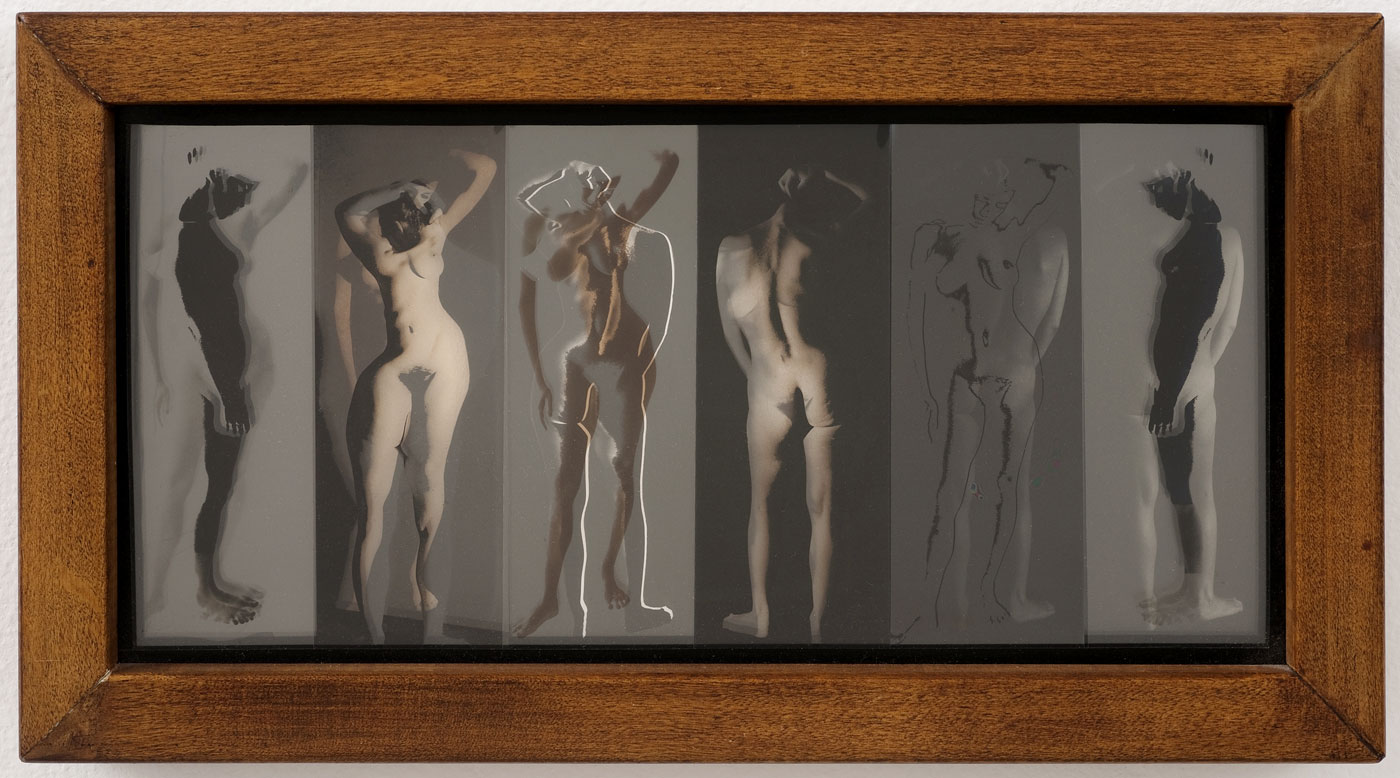
Robert Heinecken (American, 1931-2006) 'Six Figures/Mixed' 1968


Robert Heinecken (American, 1931-2006)
Six Figures/Mixed
1968
Layered Plexiglas and black-and-white film transparencies
5.75 x 9.75 x 1.5″ (14.61 x 24.77 x 3.81cm)
Collection Darryl Curran, Los Angeles


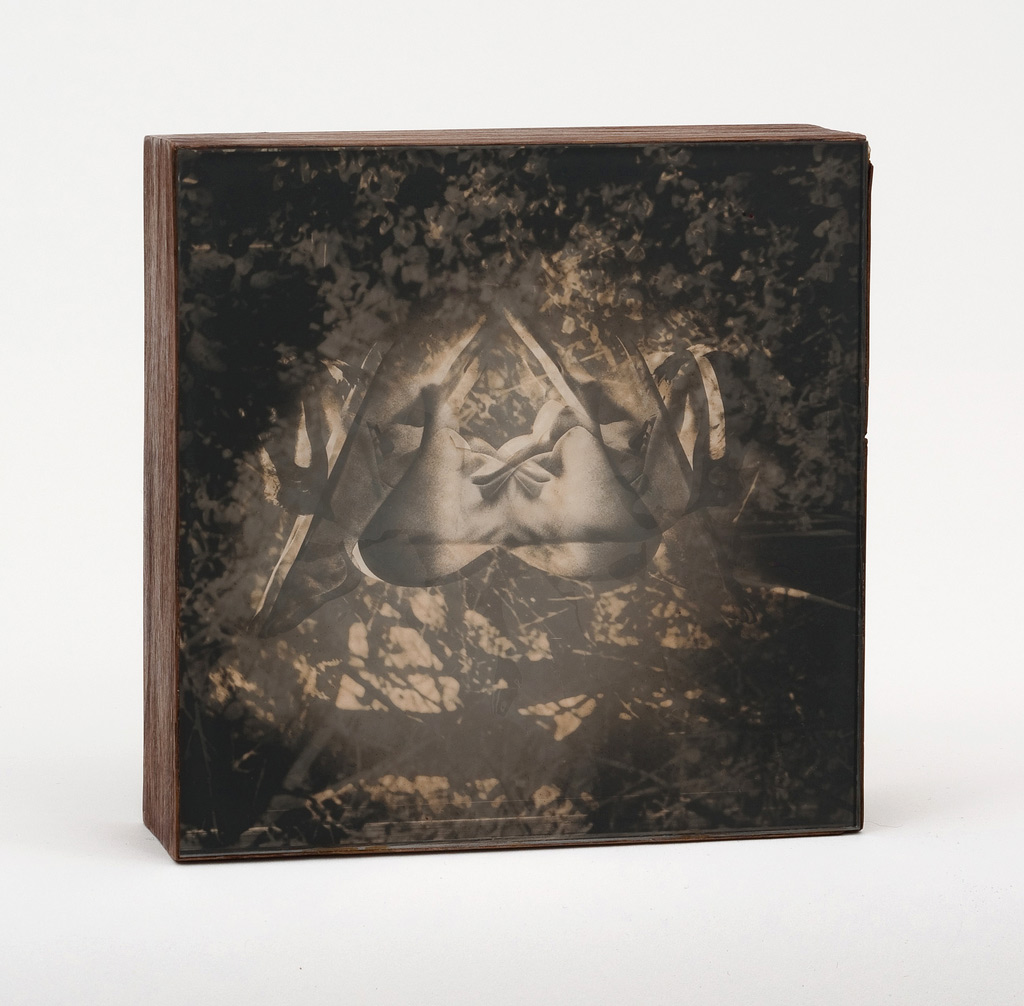
Robert Heinecken (American, 1931-2006) 'Figure / Foliage #2' 1969


Robert Heinecken (American, 1931-2006)
Figure / Foliage #2
1969
Layered Plexiglas and black-and-white film transparencies
5 x 5 x 1 1/4″ (12.7 x 12.7 x 3.2cm)
Collection Anton D. Segerstrom, Corona del Mar, California


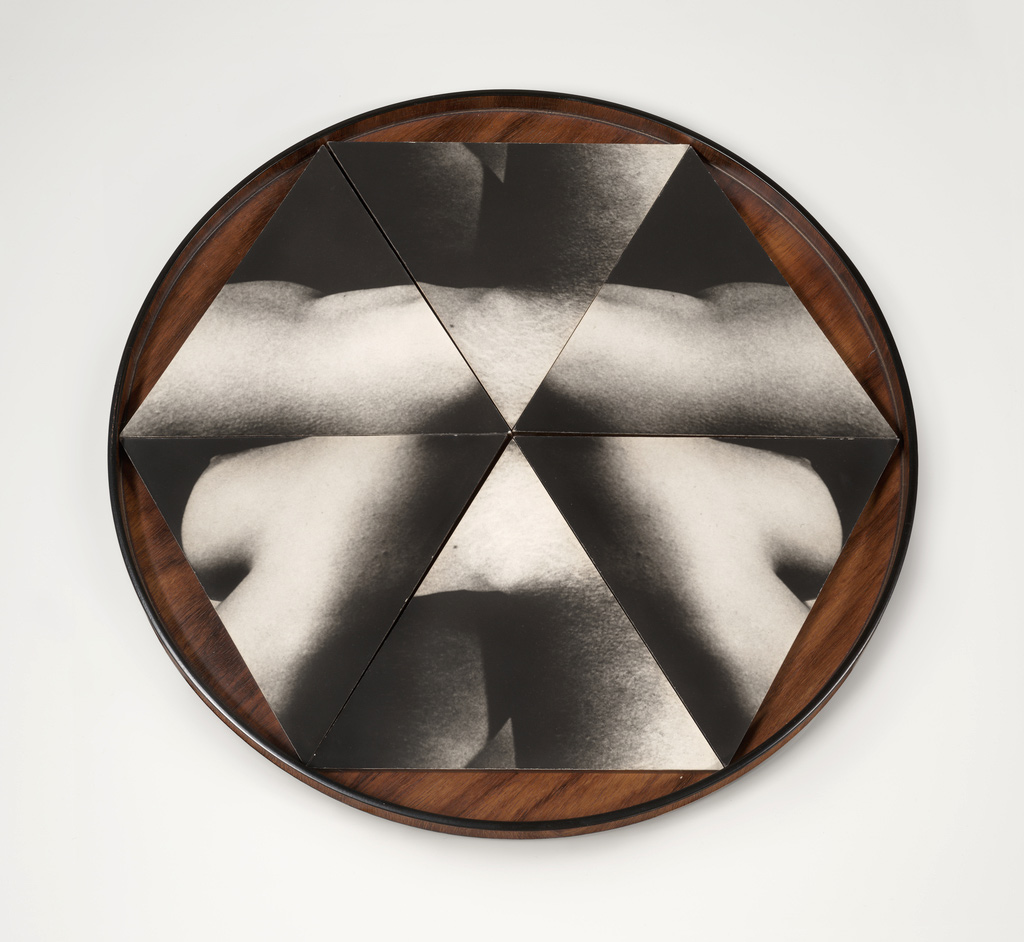
Robert Heinecken (American, 1931-2006) 'Kaleidoscopic Hexagon #2' 1965


Robert Heinecken (American, 1931-2006)
Kaleidoscopic Hexagon #2
1965
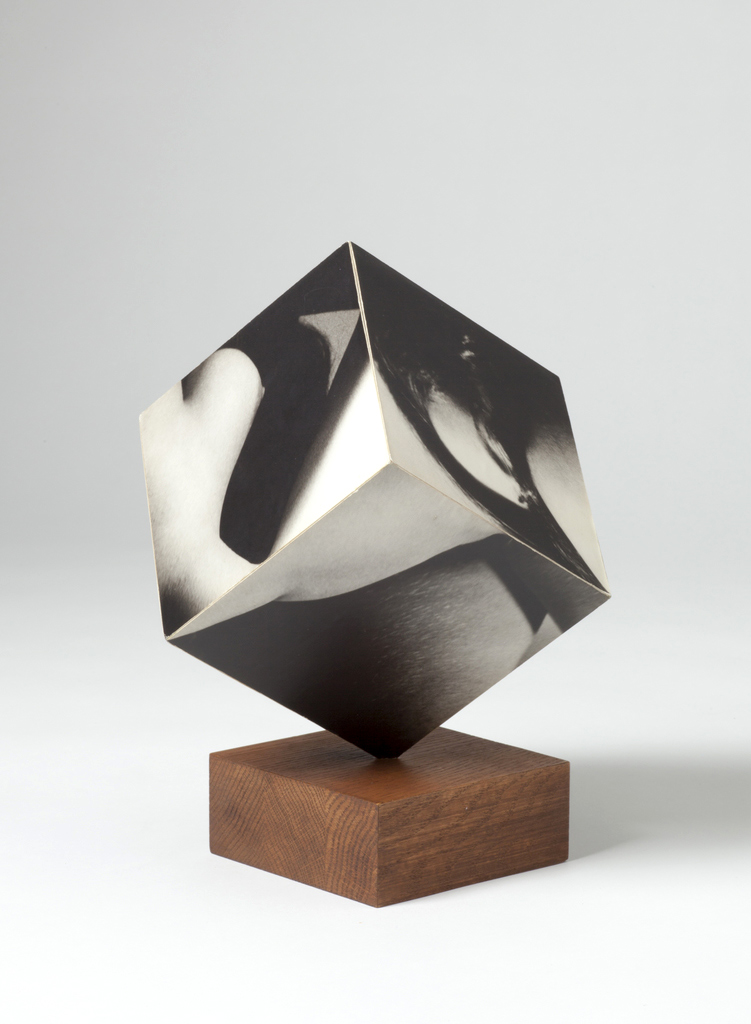
Six gelatin silver prints on wood
Diameter: 14″ (35.6cm)
Black Dog Collection. Promised gift to San Francisco Museum of Modern Art


Robert Heinecken (American, 1931-2006) '24 Figure Blocks' 1966


Robert Heinecken (American, 1931-2006)
24 Figure Blocks
1966
Twelve gelatin silver prints on wood blocks, and twelve additional wood blocks
14 1/16 x 14 1/16 x 13/16″ (35.7 x 35.7 x 2.1cm)
Whitney Museum of American Art, New York. Gift of Jeanne and Richard S. Press


Robert Heinecken (American, 1931-2006) 'Multiple Solution Puzzle' 1965


Robert Heinecken (American, 1931-2006)
Multiple Solution Puzzle
1965
Sixteen gelatin silver prints on wood
11 1/4 x 11 1/4 x 1″ (28.6 x 28.6 x 2.5cm)
Collection Maja Hoffmann/LUMA Foundation


The Museum of Modern Art presents Robert Heinecken: Object Matter, the first retrospective of the work of Robert Heinecken since his death in 2006 and the first exhibition on the East Coast to cover four decades of the artist’s unique practice, from the early 1960s through the late 1990s, on view from March 15 to September 7, 2014. Describing himself as a “para-photographer,” because his work stood “beside” or “beyond” traditional ideas associated with photography, Heinecken worked across multiple mediums, including photography, sculpture, printmaking, and collage. Culling images from newspapers, magazines, pornography, and television, he recontextualized them through collage and assemblage, photograms, darkroom experimentation, and rephotography. His works explore themes of commercialism, Americana, kitsch, sex, the body, and gender. In doing so, the works in this exhibition expose his obsession with popular culture and its effects on society, and with the relationship between the original and the copy. Robert Heinecken: Object Matter is organised by Eva Respini, Curator, with Drew Sawyer, Beaumont and Nancy Newhall Curatorial Fellow, Department of Photography, The Museum of Modern Art. The exhibition will travel to the Hammer Museum, and will be on view there from October 5, 2014 through January 17, 2015.

Heinecken dedicated his life to making art and teaching, establishing the photography program at UCLA in 1964, where he taught until 1991. He began making photographs in the early 1960s. The antithesis of the fine-print tradition exemplified by West Coast photographers Ansel Adams and Edward Weston, who photographed landscapes and objects in sharp focus and with objective clarity, Heinecken’s early work is marked by high contrast, blur, and under- or overexposure, as seen in Shadow Figure (1962) and Strip of Light (1964). In the mid-1960s he began combining and sequencing disparate pictures, as in Visual Poem/About the Sexual Education of a Young Girl (1965), which comprises seven black-and-white photographs of dolls with a portrait of his then-five-year-old daughter Karol at the centre.

The female nude is a recurring motif, featured in Refractive Hexagon (1965), one of several “photopuzzles” composed of photographs of female body parts mounted onto 24 individual “puzzle” pieces. Other three-dimensional sculptures – geometric volumes ranging in height from five to 22 inches – consist of photographs mounted onto individual blocks, which rotate independently around a central axis. In Fractured Figure Sections (1967), as in Refractive Hexagon, the female figure is never resolved as a single image – the body is always truncated, never contiguous. In contrast, a complete female figure can be reconstituted in his largest photo-object, Transitional Figure Sculpture (1965), a towering 26-layer octagon composed from photographs of a nude that have been altered using various printing techniques. At the time, viewer engagement was key to creating random configurations and relationships in the work; any number of possibilities may exist, only to be altered with the next manipulation. Today, due to the fragility of the works, these objects are displayed in Plexiglas-covered vitrines. However, the number of sculptures and puzzles gathered here offer the viewer a sense of this diversity.

Heinecken’s groundbreaking suite Are You Rea (1964-68) is a series of 25 photograms made directly from magazine pages. Representative of a culture that was increasingly commercialised, technologically mediated, and suspicious of established truths, Are You Rea cemented Heinecken’s interest in the multiplicity of meanings inherent in existing images and situations. Culled from more than 2000 magazine pages, the work includes pictures from publications such as Life, Time, and Woman’s Day, contact-printed so that both sides are superimposed in a single image. Heinecken’s choice of pages and imagery are calculated to reveal specific relationships and meanings – ads for Coppertone juxtaposed with ads for spaghetti dinners and an article about John F. Kennedy superimposed on an ad for Wessex carpets – the portfolio’s narrative moves from relatively commonplace and alluring images of women to representations of violence and the male body.

Heinecken began altering magazines in 1969 with a series of 120 periodicals titled MANSMAG: Homage to Werkman and Cavalcade. He used the erotic men’s magazine Cavalcade as source material, making plates of every page, and randomly printing them on pages that were then reassembled into a magazine, now scrambled. In the same year, he disassembled numerous Time magazines, imprinting pornographic images taken from Cavalcade on every page, and reassembled them with the original Time covers. He circulated these reconstituted magazines by leaving them in waiting rooms or slipping them onto newsstands, allowing the work to come full circle – the source material returning to its point of origin after modification. He reprised this technique in 1989 with an altered issue of Time titled 150 Years of Photojournalism, a greatest hits of historical events seen through the lens of photography.


Installation view of 'Robert Heinecken: Object Matter' at The Museum of Modern Art (MoMA)

Installation view of 'Robert Heinecken: Object Matter' at The Museum of Modern Art (MoMA)

Installation view of 'Robert Heinecken: Object Matter' at The Museum of Modern Art (MoMA)

Installation view of 'Robert Heinecken: Object Matter' at The Museum of Modern Art (MoMA)


Installation views of Robert Heinecken: Object Matter at The Museum of Modern Art (MoMA)
Photos by Jonathan Muzikar
© The Museum of Modern Art


Robert Heinecken (American, 1931-2006) 'Breast / Bomb #5' 1967


Robert Heinecken (American, 1931-2006)
Breast / Bomb #5
1967
Gelatin silver prints, cut and reassembled
38 1/2 x 38 1/4″ (97.8 x 97.2cm)
Denver Art Museum. Funds From 1992 Alliance For Contemporary Art Auction


Robert Heinecken (American, 1931-2006) 'Then People Forget You' 1965


Robert Heinecken (American, 1931-2006)
Then People Forget You
1965
Gelatin silver print
10 3/8 x 12 15/16″ (26.3 x 32.8cm)
The Art Institute of Chicago. Gift of Boardroom, Inc.


Robert Heinecken (American, 1931-2006) 'Cliche Vary / Autoeroticism' 1974


Robert Heinecken (American, 1931-2006)
Cliche Vary / Autoeroticism
1974
Eleven canvas panels with photographic emulsion and pastel chalk
39 1/2 x 39 1/2 in. (100.3 x 100.3cm)
Collection Susan and Peter MacGill, New York


Robert Heinecken (American, 1931-2006) 'Surrealism on TV' 1986


Robert Heinecken (American, 1931-2006)
Surrealism on TV
1986
216 35 mm colour slides, slide-show time variable
The Robert Heinecken Trust, Chicago; courtesy Cherry and Martin Gallery, Los Angeles
© 2013 The Robert Heinecken Trust.


Robert Heinecken (American, 1931-2006) 'Shiva Manifesting as a Single Mother' 1989


Robert Heinecken (American, 1931-2006)
Shiva Manifesting as a Single Mother
1989
Magazine paper, paint and varnish
Collection Philip F. Denny, Chicago
© 2014 The Robert Heinecken Trust


Transparent film is also used in many of Heinecken’s works to explore different kinds of juxtapositions. In Kodak Safety Film / Christmas Mistake (1971), pornographic images are superimposed on a Christmas snapshot of Heinecken’s children with the suggestion in the title that somehow two rolls of film were mixed up at the photo lab. Kodak Safety Film / Taos Church (1972) takes photography itself as a subject, picturing an adobe church in New Mexico that was famously photographed by Ansel Adams and Paul Strand, and painted by Georgia O’Keeffe and John Marin. Presented as a negative, Heinecken’s version transforms an icon of modernism into a murky structure flanked by a pickup truck, telephone wires, and other modern-day debris.

Heinecken’s hybrid photographic paintings, created by applying photographic emulsion on canvas, are well represented in the exhibition. In Figure Horizon #1(1971), Heinecken reprised the cut-and-reassemble techniques from his puzzles and photo-sculptures, sequencing images of sections of the nude female body, to create impossible undulating landscapes. Cliché Vary, a pun on the 19th-century cliché verre process, is comprised of three large-scale modular works, all from 1974: Autoeroticism, Fetishism, and Lesbianism. The works are comprised of separately stretched canvas panels with considerable hand-applied colour on the photographic image, invoking clichés associated with autoeroticism, fetishism, and lesbianism. Reminiscent of his cut-and-reassembled pieces, each panel features disjointed views of bodies and fetish objects that never make a whole, and increase in complexity, culminating with Lesbianism, which is made with seven or eight different negatives.

In the mid-1970s, Heinecken experimented with new materials introduced by Polaroid – specifically the SX-70 camera (which required no darkroom or technical know-how) – to produce the series He/She (1975-1980) and, later, Lessons in Posing Subjects (1981-82). Heinecken experimented with different types of instant prints, including the impressive two-panel S.S. Copyright Project: “On Photography” (1978), made the year after the publication of Susan Sontag’s collection of essays On Photography (1977). The S.S. Copyright Project consists of a magnified and doubled picture of Sontag, derived from the book’s dustcover portrait (taken by Jill Krementz). The work equates legibility with physical proximity – from afar, the portraits appear to be grainy enlargements from a negative (or, to contemporary eyes, pixilated low-resolution images), but at close range, it is apparent that the panels are composed of hundreds of small photographic scraps stapled together. The portrait on the left is composed of photographs of Sontag’’ text; the right features random images taken around Heinecken’s studio by his assistant.

Heinecken’s first large-scale sculptural installation, TV/Time Environment (1970), is the earliest in a series of works that address the increasingly dominant presence of television in American culture. In the installation, a positive film transparency of a female nude is placed in front of a functioning television set in an environment that evokes a living room, complete with recliner chair, plastic plant, and rug. Continuing his work with television, Heinecken created videograms – direct captures from the television that were produced by pressing Cibachrome paper onto the screen to expose the sensitized paper. Inaugural Excerpt Videograms (1981) features a composite from the live television broadcast of Ronald Reagan’s inauguration speech and the surrounding celebrations. The work, originally in 27 parts, now in 24, includes randomly chosen excerpts of the oration and news reports of it. Surrealism on TV (1986) explores the idea of transparency and layering using found media images to produce new readings. It features a slide show comprised of more than 200 images loaded into three slide projectors and projected in random order. The images generally fit into broad categories, which include newscasters, animals, TV evangelists, aerobics, and explosions.

Text from the MoMA press release


Robert Heinecken (American, 1931-2006) 'Figure Cube' 1965


Robert Heinecken (American, 1931-2006)
Figure Cube
1965
Gelatin silver prints on Masonite
5 7/8 x 5 7/8″ (15 x 15cm)
The Robert Heinecken Trust. Courtesy Center for Creative Photography, University of Arizona, Tucson


Robert Heinecken (American, 1931-2006) 'Figure in Six Sections' 1965


Robert Heinecken (American, 1931-2006)
Figure in Six Sections
1965
Gelatin silver prints on wood blocks
8 1/2 x 3 x 3″ (21.6 x 7.6 x 7.6cm)
Collection Kathe Heinecken. Courtesy The Robert Heinecken Trust, Chicago


Robert Heinecken (American, 1931-2006) 'Fractured Figure Sections' 1967


Robert Heinecken (American, 1931-2006)
Fractured Figure Sections
1967
Gelatin silver prints on wood blocks
8 1/4 x 3 x 3″ (21 x 7.6 x 7.6cm)
The Museum of Modern Art, New York. The Photography Council Fund and Committee on Photography Fund


Robert Heinecken (American, 1931-2006) 'The S.S. Copyright Project: "On Photography"' (Part 1 of 2) 1978


Robert Heinecken (American, 1931-2006)
The S.S. Copyright Project: “On Photography” (Part 1 of 2)
1978
Collage of black and white instant prints attached to composite board with staples
b 47 13/16 x 47 13/16″ (121.5 x 121.5cm)
The Museum of Modern Art, New York. Purchased as the partial gift of Celeste Bartos


Robert Heinecken (American, 1931-2006) 'Recto/Verso #2' 1988


Robert Heinecken (American, 1931-2006)
Recto/Verso #2
1988
Silver dye bleach print
8 5/8 x 7 7/8″ (21.9 x 20cm)
The Museum of Modern Art, New York. Mr. and Mrs. Clark Winter Fund


Robert Heinecken (American, 1931-2006) 'Figure Parts / Hair' 1967


Robert Heinecken (American, 1931-2006)
Figure Parts / Hair
1967
Black-and-whtie film transparencies over magazine-page collage
16 x 12″ (40.6 x 30.5cm)
Collection Karol Heinecken Mora, Los Angeles


Robert Heinecken (American, 1931-2006) 'V.N. Pin Up' 1968


Robert Heinecken (American, 1931-2006)
V.N. Pin Up
1968
Black-and-white film transparency over magazine-page collage
12 1/2 x 10″ (31.8 x 25.4cm)
Museum of Contemporary Art, Chicago. Gift of Daryl Gerber Stokols


Robert Heinecken (American, 1931-2006) 'Typographic Nude' 1965


Robert Heinecken (American, 1931-2006)
Typographic Nude
1965
Gelatin silver print
14 1/2 x 7″ (36.8 x 17.8cm)
Collection Geofrey and and Laura Wyatt, Santa Barbara, California


Robert Heinecken (American, 1931-2006) 'Are You Rea #1' 1968


Robert Heinecken (American, 1931-2006)
Are You Rea #1
1968
Twenty-five gelatin silver prints
Various dimensions
Collection Jeffrey Leifer, San Francisco


Robert Heinecken (American, 1931-2006) 'Are You Rea #25' 1968


Robert Heinecken (American, 1931-2006)
Are You Rea #25
1968
Twenty-five gelatin silver prints
Various dimensions
Collection Jeffrey Leifer, San Francisco


Robert Heinecken (American, 1931–2006) 'Cybill Shepherd / Phone Sex' 1992


Robert Heinecken (American, 1931–2006)
Cybill Shepherd / Phone Sex
1992
Silver dye bleach print on foamcore
63 x 17″ (160 x 43.2cm)
The Robert Heinecken Trust, Courtesy of Petzel Gallery, New York


Robert Heinecken (American, 1931-2006) 'MANSMAG: Homage to Werkman and Cavalcade' 1969


Robert Heinecken (American, 1931-2006)
MANSMAG: Homage to Werkman and Cavalcade
1969
Offset lithography on bound paper
8 3/4 x 6 5/8″ (22.2 x 16.8cm)
The Robert Heinecken Trust, Chicago


The Museum of Modern Art
11 West 53 Street
New York, NY 10019
Phone: (212) 708-9400

Opening hours:
Sunday – Friday, 10.30am – 5.30pm
Saturday, 10.30am – 7.00pm

MOMA website

LIKE ART BLART ON FACEBOOK

Back to top

Exhibition: ‘Blow-Up: Antonioni’s Film Classic and Photography’ at the Albertina, Vienna

Exhibition dates: 30th April – 17th August 2014


Arthur Evans (British, 1908-1994) 'David Hemmings in "Blow Up" (directed by Michelangelo Antonioni)' 1966


Arthur Evans (British, 1908-1994)
David Hemmings in “Blow Up” (directed by Michelangelo Antonioni)
1966
Film still
Courtesy Philippe Garner
© Neue Visionen Filmverleih GmbH/Turner Entertainment Co. – A Warner Bros Entertainment Company. All rights reserved.


The act of looking and the gaze through the eye of a photographer’s camera are the central motifs of Blow-Up.

“Don McCullin created the iconographic photographs that in the film are blown up by Thomas to discover something about the alleged crime. However, the blow-ups only offer ambivalent proof as they become more and more blurred and abstract by the continuous enlarging. Even photography that supposedly represents reality like no other form of media cannot help in shedding any light on the mysterious events in the park. Pictorial reality – thus Antonioni’s conclusion – is only ever constructed by the medium itself.” (Press release)

Then, look at Don Mcullin’s photograph British Butcher, East London (c. 1965, below). The Union Jack hat, the knife being sharpened and the contrast of the image. Savage. Not home grown but “Home killed”. Pictorial reality constructed by the medium but not just by the medium – but also by the aesthetic choices and the imagination of the photographer.

Dr Marcus Bunyan


Many thankx to the Albertina for allowing me to publish the photographs in the posting. Please click on the photographs for a larger version of the image.


Arthur Evans (British, 1908-1994) 'David Hemmings in "Blow Up" (directed by Michelangelo Antonioni)' 1966


Arthur Evans (British, 1908-1994)
David Hemmings in “Blow Up” (directed by Michelangelo Antonioni)
1966
Film still
Private collection Vienna
Courtesy: New Visions Film Distribution GmbH


Arthur Evans (British, 1908-1994) 'David Hemmings in "Blow Up" (directed by Michelangelo Antonioni)' 1966


Arthur Evans (British, 1908-1994)
David Hemmings in “Blow Up” (directed by Michelangelo Antonioni)
1966
Film still
Private collection Vienna
Courtesy: New Visions Film Distribution GmbH


Arthur Evans (British, 1908-1994) 'David Hemmings in "Blow Up" (directed by Michelangelo Antonioni)' 1966


Arthur Evans (British, 1908-1994)
David Hemmings in “Blow Up” (directed by Michelangelo Antonioni)
1966
Film still
Private collection Vienna
Courtesy: New Visions Film Distribution GmbH


Anonymous. 'Promotional image for "Blow-Up"' 1966


Anonymous
Promotional image for “Blow-Up”
1966
Courtesy Philippe Garner
© New Visions Film Distribution GmbH / Turner Entertainment Co. – A Warner Bros. Entertainment Company. All rights reserved.


The cult film Blow-Up by Michelangelo Antonioni (1966) occupies a central position in the history of film as well as that of art and photography. No other film has shown and sounded out the diverse areas of photography in such a differentiated way. Shot in London, this film, which tells the story of a fashion photographer who happens to photograph a murder in a park, has become a classic. Its relevance and the unabated fascination it evokes are partially due to the remarkable range of themes it deals with. While Antonioni’s description of the social and artistic environment of his protagonist in 1960’s London can be understood as a visual document of the Swinging Sixties, the eponymous photographic blow-ups meticulously examined by the photographer to find something out about an alleged crime prompted a theoretical discourse on the representation and ambiguity of pictures from the first showing of the film. Both themes, the historical outline as well as the media reflexions, concern the main focus of the film: photography.

For the first time the exhibition in the Albertina presents in several chapters the diverse and differentiated connections between film and photography, thus allowing a trenchant profile of the photographic trends of the 1960s.

Photography in Blow-Up

The photographic range of Blow-Up is highly diversified and ranges from fashion photography and social reportage to abstract photography. Film stills are shown next to works that can actually be seen in Blow-Up, as well as pictures that illuminate the cultural and artistic frame of the film production, London in the Swinging Sixties.

The meaning of photography for the film Blow-Up is most apparent when Antonioni uses it to characterise his main character Thomas. Played by David Hemmings, the protagonist is not only a fashion photographer, but is also working on an illustrated book with photographs of social reportage. In order to depict both the main figure and its two areas of work in an authentic way, Antonioni is guided by real photographers of the time; before starting to shoot the film he meticulously researched the work as well as environment of the British fashion (photography) scene.

In the course of his preparations Antonioni sent out questionnaires to fashion photographers and visited them in their studios. Thus the main character is modelled after various photographers like David Bailey, John Cowan and Don McCullin; some of them Antonioni asked to cooperate on his film. He also integrated their works, for example Don McCullin’s reportage photographs that the protagonist browses through in the film, or fashion photographs by John Cowan that in the film can be seen in the protagonist’s studio.

In addition Don McCullin created the iconographic photographs that in the film are blown up by Thomas to discover something about the alleged crime. However, the blow-ups only offer ambivalent proof as they become more and more blurred and abstract by the continuous enlarging. Even photography that supposedly represents reality like no other form of media cannot help in shedding any light on the mysterious events in the park. Pictorial reality – thus Antonioni’s conclusion – is only ever constructed by the medium itself.

Antonioni used the photographs seen in the film for media-theoretical reflections and thus set stills and moving pictures in a differentiated context. This complex connection between film and photography is made very clear by the film stills that were created for Blow-Up. These still photographs are based on an elaborate process whereby the photographer has certain scenes re-enacted for the photo camera thus transforming the film from moving images into something static. The manifold references of Blow-Up are once more condensed into photographs in the film stills, as the pictures reflect the real context of fashion photography in 1960’s London through the depiction of the photographer, of well-known fashion models and the use of clothes to match.

Artistic references

The photographic references in Blow-Up are also set in relation to other art forms. This contextualisation is essential for Antonioni’s understanding of photography. Antonioni was, unlike most other film directors, committed to the applied arts which he showed already in 1964 with his film Deserto Rosso, its abstract compositions based on Mark Rothko’s paintings. In Blow-Up an artistic reference of this nature becomes apparent in the character of the protagonist’s neighbour, an abstract painter named Bill, who is modelled on British artist Ian Stephenson. Also the oil paintings in the film were created by Ian Stephenson. They show abstract motifs that in the film are compared with the stylistically related ‘blow-ups’.

The Swinging Sixties

Michelangelo Antonioni filmed Blow-Up at the height of the Swinging Sixties, the social and artistic trends of which are rendered in the film. The agitation of youth culture so characteristic of this time í and not least of all initiated by the Beatles í is shown as well as its trendsetting figures. Thus a concert by the British band The Yardbirds, with Jimmy Page, the subsequent founder of Led Zeppelin, served as a filming location. The scene of the infamous Pot-Party in the film was shot in the apartment of the art and antique dealer Christopher Gibbs, who shaped the fashion look of the Swinging Sixties.

British art of the 1960s was also essential for Antonioni as it anticipated many of those abstract tendencies that set the tone for Blow-Up. There was, for instance, the pop art artist Richard Hamilton who created blow-ups from ordinary postcards, thus reducing motifs to dots. Or Nigel Henderson, a member of the Independent Group, who had already produced photos in the 1950s, in which he pointed out their material qualities by creasing them and using special procedures for the negatives.

As much as Antonioni’s work is rooted in the 1960s, it is nevertheless a timeless classic that is still relevant for today’s art. This becomes apparent in the exhibition by means of selectively chosen contemporary works that refer to Blow-Up. Particularly the filmic outline on the representation of images and their ambiguity serves as the artistic basis for the creations of various contemporary photographers. Blow-Up has lost none of its relevance for art since its creation in 1966.

Press release from the Albertina website


Don McCullin (British, b. 1935) 'Thomas' blow-ups from the Park' 1966


Don McCullin (British, b. 1935)
Thomas’ blow-ups from the Park
1966
Courtesy Philippe Garner
© New Visions Film Distribution GmbH / Turner Entertainment Co. – A Warner Bros. Entertainment Company. All rights reserved.


Don McCullin (British, b. 1935) 'Thomas' blow-ups from the Park' 1966


Don McCullin (British, b. 1935)
Thomas’ blow-ups from the Park
1966
Courtesy Philippe Garner
© New Visions Film Distribution GmbH / Turner Entertainment Co. – A Warner Bros. Entertainment Company. All rights reserved.


Patrick Hunt. 'David Bailey on the set of G.G. Passion' 1966


Patrick Hunt
David Bailey on the set of G.G. Passion
1966
Courtesy Philippe Garner


Arthur Evans (British, 1908-1994) 'Veruschka von Lehndorff with David Hemmings in "Blow Up" (directed by Michelangelo Antonioni)' 1966


Arthur Evans (British, 1908-1994)
Veruschka von Lehndorff with David Hemmings in “Blow Up” (directed by Michelangelo Antonioni)
1966
Film still
Private collection Vienna
Courtesy: New Visions Film Distribution GmbH


David Bailey (British, b. 1938) 'Brian Epstein (Box of Pin-Ups)' 1965


David Bailey (British, b. 1938)
Brian Epstein (Box of Pin-Ups)
1965
V & A Images / Victoria and Albert Museum
© David Bailey


Shezad Dawood (British, b. 1974) 'Make it big (Blow-Up)' 2002/2003


Shezad Dawood (British, b. 1974)
Make it big (Blow-Up)
2002/2003
Film still
Courtesy of the artist and Paradise Row, London


Richard Hamilton (British, 1922-2011) 'Swinging London III' 1972


Richard Hamilton (British, 1922-2011)
Swinging London III
1972
Kunstmuseum Winterthur
© Swiss Institute for Art Research, Zurich, Jean-Pierre Kuhn purchase in 1997


Exhibition texts

Shot in London in 1966, Michelangelo Antonioni’s masterpiece Blow-Up confronts its audience with the manifold genres of photography and their different social references with a precision like no other feature film. The director involved some of the most interesting photographers of the day in the production of the film. The photojournalist Don McCullin was on set as were the fashion photographers John Cowan and David Montgomery as well as the paparazzo Tazio Secchiaroli. They served as models for Antonioni’s protagonist, took photographs for Blow-Up, and, not least, made their work available to the filmmaker.

Set against the social and artistic backdrop of London’s Swinging Sixties, Blow-Up tells us about a fashion photographer by the name of Thomas (David Hemmings) who secretly photographs two lovers in a park. He later enlarges these pictures and believes that he has coincidentally documented a murder. The blow-ups reveal a man lurking in the trees with a gun and, as Thomas supposes, a corpse. Fashion shootings and Thomas’s work on a book with reportage photographs featuring homeless people in London provide two further strands of reference in the film.

Presenting these contexts in five thematic sections, the exhibition in the Albertina offers a pointed cross-section of tendencies in the photography of the 1960s. The show not only explores the photo-historical circumstances under which Blow-Up was made but also presents real works of art Antonioni integrated into his film, as well as photographs he commissioned for the story. The visual translation of the film into stills constitutes another important field thematised in the exhibition. A selection of more recent works of art highlights the timelessness of Antonioni’s film.

Making film stills

Making film stills involves a complex production process in the course of which scenes of a film are specially reenacted in front of the still photographer’s camera. The difficulties the photographer is faced with result from the difference between film and photography as media. He has to transform the contents of a medium that renders movements and sequences of events in time into a photograph that freezes them in a single static moment.

Arthur Evans’s stills for Blow-Up go far beyond the genre’s traditional function of promoting a film. Evans created series of pictures which allow us to reconstruct certain sequences of movement and depict scenes not shown in the film. Hence his stills for Blow-Up are meta-pictures that shed light on the film from another perspective.

Voyeurism

The act of looking and the gaze through the eye of a photographer’s camera are the central motifs of Blow-Up, which becomes particularly evident in the famous scene in the park. This part of the film depicts the dynamics resulting from a camera focusing on persons and capturing them in a picture. Antonioni presents his protagonist as a paparazzo and voyeur secretly photographing people in the tradition of Alfred Hitchcock’s Rear Window (1954). Hidden behind shrubs, trees, and a fence, he watches a pair of lovers. The camera serves as an instrument for peeping through the keyhole, as it were. The dialogic dimension between photographer and model is revealed when the woman (Vanessa Redgrave) spots the photographer. She defends herself against Thomas’s invasive gaze, bites his hand, and runs away. The aesthetic of Thomas’s photographs shot in the park corresponds to the situation of their taking. The pictures are imbued with the instantaneousness and spontaneity deriving from the photographers wish to wrest a single picture from a dynamic context in a fraction of a second.

It is no coincidence that the photographer Tazio Secchiaroli was present on set in the very hours this scene was shot. Secchiaroli was an Italian paparazzo who had been after the suspects in a still unresolved murder case, the Montesi scandal, with his camera. Made against the background of this political scandal, Federico Fellini’s film La dolce vita (1960) features pushy photo reporters modelled after Secchiaroli.

Blow-Ups

The blow-ups of Thomas’s photographs shot in the park are the most famous pictures featured in Antonioni’s film. The filmmaker entrusted the renowned photojournalist Don McCullin with taking them. Following Antonioni’s instructions, McCullin had to position himself in the same places as Thomas in the film to reproduce his perspectives. He also used the same Nikon F camera the protagonist works with in Blow-Up. In order to ensure that the process of taking the pictures we see in the film corresponds with the photographer’s results, McCullin advised the actor David Hemmings on how to proceed. The actor learned how to handle the 35-mm camera correctly and was instructed about the body language connected with using it.

Fashion photography

The metropolis of London was the center of a new kind of fashion photography in the 1960s – a renown inseparably bound up with three names to this day: David Bailey, Terence Donovan, and Brian Duffy, also known as Black Trinity. Relying on 35-mm cameras, which had hitherto mainly been used for reportage photographs and ensured a supposedly spontaneous and dynamic pictorial language, these three photographers staged their models in unusual places outside their studios.

In preparing his film, Antonioni had meticulously researched the photographer’s living and working conditions by means of a several-page questionnaire in which he even inquired into their love relationships and eating habits. It was David Bailey who served as a model for the protagonist of Blow-Up. For his dynamic body language in the fashion shootings, for instance, Thomas took the cue from him. The style of clothes Thomas wears is indebted to that of the British fashion photographer John Cowan. Cowan made his studio available to Antonioni for the studio shots and acted as the filmmaker’s adviser. The photographs seen on the studio wall in Blow-Up are fashion photographs by Cowan which Antonioni chose for the film.

David Montgomery

David Montgomery is a US-American fashion photographer living in London. Before shooting his film, Antonioni visited him in his studio to watch him working with Veruschka, Jill Kennington, and Peggy Moffitt – the models he would subsequently cast for Blow-Up. David Montgomery has a cameo appearance in the beginning of the film: we see him taking pictures of the model Donyale Luna on Hoxton Market in London’s East End. When this scene was shot, he actually made the fashion photographs featuring Luna which he pretends to take in the film. Since Montgomery was no actor by his own account, he had to really take pictures in order to be able to play the scene in a convincing manner.

Arthur Evan’s fashion photographs

Arthur Evans, the still photographer, depicted the models appearing in Blow-Up in groups and in individual portraits. These pictures taken on set are very unusual for a still photographer, because they do not show scenes of the film, but are independently staged fashion photographs. The models’ costumes were designed by Jocelyn Rickards, the hats were made by James Wedge. Evans translated the linear patterns characteristic of both designers into graphic compositions in his photos.

Social reportage

Michelangelo Antonioni characterises his film’s protagonist also as a social reportage photographer who, for a book project on London he is working on, secretly takes pictures in a homeless shelter. A scene of the film has Thomas showing his publisher a dummy of the volume. The portraits in it were made by the photojournalist Don McCullin; their originals are presented in the exhibition for the very first time.

The pictures were taken in London’s East End in the early 1960s, when the area was notorious for its residents’ poverty, miserable housing conditions, and racial unrest. The photographer provides a cross-section of its inhabitants whom he mainly characterises through their occupation. The two-fold orientation of the film’s protagonist as fashion and reportage photographer is based on fact, as illustrated by both David Bailey and David Montgomery. The stylistic boundaries between the two genres blur in their works. The strategy of picturing models in urban surroundings with a 35-mm camera, for example, is clearly rooted in reportage photography.

Swinging London: Art and Life

Michelangelo Antonioni filmed Blow-Up in the heyday of London’s Swinging Sixties whose social and artistic trends are depicted in the film. He captured the youth culture and its agitation so characteristic of these years – which was not least triggered by the Beatles – as well as the protagonists of the scene. One location he chose was a concert of the Yardbirds, a British band counting Jimmy Page, who would found Led Zeppelin, among its players. The famous pot-party in Blow-Up was shot in the art and antique dealer Christopher Gibbs’ flat, who determined the fashion look of the Swinging Sixties to a remarkable degree.

The British art of the 1960s was also very important to Antonioni, as it already anticipated many of the abstract tendencies informing Blow-Up. The Pop artist Richard Hamilton, for example, used to enlarge everyday picture postcards, reducing their motifs to an abstract dot matrix. Nigel Henderson, a member of the Independent Group, had already emphasised the material qualities of his photos in the 1950s by folding his prints and employing negative techniques. Antonioni integrated works by British artists: for example a picture by Peter Sedgley, a representative of Op art, and oil paintings by Ian Stephenson into his film.

Ian Stephenson

Antonioni’s understanding of photography was informed by painting í an influence that becomes manifest in the character of the protagonist’s neighbour, in Blow-Up a painter named Bill. Antonioni compares the neighbour’s abstract paintings with the photographer’s blow-ups. When Thomas and his neighbour talk about the paintings, Bill maintains that he does not see much in them while painting them and only finds meaning in them later on. This form of reception tallies with Thomas’s attempt to determine the meaning of his similarly abstract enlargements.

The character of the painter is based on the British artist Ian Stephenson. Antonioni visited the artist in his studio before he started shooting Blow-Up. He watched the painter at work and selected the paintings he wanted to use in the film.

Blow-Up

The photographs central to Antonioniés film are the blow-ups of the pictures which the protagonist has taken in the park and which he examines meticulously. The enlargements reveal a man with a pistol lurking in the trees and a mass in the grass, which Thomas interprets as a lifeless body. To make the presumed corpse more visible Thomas enlarges the photograph again and again until it shows nothing but its grain and materiality, despite the photographs inherent relation to reality.

Antonioni uses the blow-ups to question the representation of reality by media and their specific modes of perception. He interlinks these considerations with the film. The final scene of Blow-Up shows Thomas coming upon a group of mimes playing an imaginary game of tennis. When the (invisible) ball lands behind the fence, Thomas joins in the mimes’ game, picks up the ball from the lawn and throws it back to the players. A camera pan traces the trajectory of the invisible ball. In evoking the ball without showing it, Antonioni confronts us with the most radical abstraction: the motif is not rendered as an abstract or blurry form like in the enlargements, but is altogether absent. The media-theoretical implications of Blow-Up are still the subject of conceptual photographs today. Like Antonioni, the Italian Ugo Mulas and the American Allan McCollum, for example, question photography’s relation to reality in their blow-ups.

Le montagne incantate

The nucleus for the blow-ups in the film is to be found in a series of artworks titled Le montagne incantate (The Enchanted Mountains), which Antonioni started working on in the mid-1950s. The filmmaker photographically enlarged his small-format abstract watercolours, making the material qualities of the paper and the application of the paint visible. Consequentially, Antonioni recommended the use of a magnifying glass – as used by the protagonist in Blow-Up – as the ideal instrument for viewing these pictures.

Text from the Albertina website


Brian Duffy (English, 1933-2010) 'Jane Birkin' 1960s


Brian Duffy (English, 1933-2010)
Jane Birkin
1960s
© Brian Duffy Archive


Eric Swayne (British, 1932-2007) 'Grace and Telma, Italian Vogue, 1966' 1966


Eric Swayne (British, 1932-2007)
Grace and Telma, Italian Vogue, 1966
1966
Courtesy Tom Swayne
© Eric Swayne


Terence Donovan (English, 1936-1996) 'The Secrets of an Agent' 1961


Terence Donovan (English, 1936-1996)
The Secrets of an Agent
1961
© Terence Donovan Archive


Ian Stephenson (English, 1934-2000) 'Still Life Abstraction D1' 1957


Ian Stephenson (English, 1934-2000)
Still Life Abstraction D1
1957
© Kate Stephenson, widow of Ian Stephenson


Jill Kennington (British, b. 1943) "Blow-Up" 1966


Jill Kennington (British, b. 1943)
“Blow-Up”
1966
© New Visions Film Distribution GmbH / Turner Entertainment Co. – A Warner Bros. Entertainment Company. All rights reserved.


Don McCullin (British, b. 1935) 'Down-and-out begging for help, Aldgate, 1963' 1963


Don McCullin (British, b. 1935)
Down-and-out begging for help, Aldgate, 1963
1963
© Don McCullin, courtesy Hamiltons Gallery, London


Don McCullin (British, b. 1935) 'British Butcher, East London' c. 1965


Don McCullin (British, b. 1935)
British Butcher, East London
c. 1965
© Don McCullin Courtesy Hamiltons Gallery, London


Terry O'Neill (British, 1938-2019) 'David Bailey photographing Moyra Swan' 1965


Terry O’Neill (British, 1938-2019)
David Bailey photographing Moyra Swan
1965
© Terry O’Neill – Courtesy Philippe Garner


Tazio Secchiaroli (Italian, 1925-1998) 'David Hemmings and Veruschka von Lehndorff in "Blow-Up" (directed by Michelangelo Antonioni)' 1966


Tazio Secchiaroli (Italian, 1925-1998)
David Hemmings and Veruschka von Lehndorff in “Blow-Up” (directed by Michelangelo Antonioni)
1966
Filmstill
Source: BFI stills
© New Visions Film Distribution GmbH / Turner Entertainment Co. – A Warner Bros. Entertainment Company. All rights reserved.


David Montgomery (American, b. 1937) 'Donyale Luna on the set of "Blow-Up"' 1966


David Montgomery (American, b. 1937)
Donyale Luna on the set of “Blow-Up”
1966
© David Montgomery


Albertina
Albertinaplatz 1
1010 Vienna, Austria
Phone: +43 (0)1 534 83-0

Opening hours:
Daily 10am – 6pm
Wednesday and Friday 10am – 9pm

Albertina website

LIKE ART BLART ON FACEBOOK

Back to top

Exhibition: ‘Public Intimacy: Art and Other Ordinary Acts in South Africa’ at the Yerba Buena Center for the Arts, San Francisco

Exhibition dates: 21st February – 29th June 2014

Exhibition artists

Public Intimacy presents

~ Photography by Ian Berry, Ernest Cole, David Goldblatt, Terry Kurgan, Sabelo Mlangeni, Santu Mofokeng, Billy Monk, Zanele Muholi, Lindeka Qampi, Jo Ractliffe, and Mikhael Subotzky and Patrick Waterhouse
~ Video works by William Kentridge, Donna Kukama, Anthea Moys, and Berni Searle
~ Painting and sculpture by Nicholas Hlobo and Penny Siopis
~ Puppetry by Handspring Puppet Company
~ Publications, prints, graphic works, and public interventions by Chimurenga, ijusi (Garth Walker), Anton Kannemeyer, and Cameron Platter
~ Performances by Athi-Patra Ruga, Kemang Wa Lehulere, and Sello Pesa and Vaughn Sadie with Ntsoana Contemporary Dance Theatre


Santu Mofokeng (South Africa, 1956-2020) 'Opening Song, Hand Clapping and Bells' 1986


Santu Mofokeng (South Africa, 1956-2020)
Opening Song, Hand Clapping and Bells
1986
From the series Train Church
Pigment print
9 13/16 x 13 3/4 in. (25 x 35cm)
© Santu Mofokeng


Continuing my fascination with South African art and photography, here is another exhilarating collection of work from an exhibition jointly arranged between SFMOMA and the Yerba Buena Center for the Arts, San Francisco. This art has so much joy, life, movement and “colour”. I particularly like The Future White Women of Azania series by Athi-Patra Ruga, who presented his work at the 55th Venice Biennale in the African pavilion. Thank god not another rehashed colonial image, even though he is working with the tropes of myth and the history of Africa as a contemporary response to the post-apartheid era.

Dr Marcus Bunyan


Many thankx to SFMOMA and Yerba Buena Center for the Arts for allowing me to publish the installation photographs in the posting. Most of the other photographs were gathered from the internet. Please click on the photographs for a larger version of the image.


“Disrupting expected images of South Africa, the 25 contemporary artists and collectives featured in Public Intimacy eloquently explore the poetics and politics of the everyday. This collaboration with Yerba Buena Center for the Arts presents pictures from SFMOMA’s collection of South African photography alongside works in a broad range of media, including video, painting, sculpture, performance, and publications – most made in the last five years, and many on view for the first time on the West Coast. Coinciding with the 20th anniversary of democracy in South Africa, Public Intimacy reveals the nuances of human interaction in a country still undergoing significant change, vividly showing public life there in a more complex light.”

Text from the SFMOMA website
 

Santu Mofokeng (South Africa, 1956-2020) 'Leading in Song, Johannesburg – Soweto Line' 1986


Santu Mofokeng (South Africa, 1956-2020)
Leading in Song, Johannesburg – Soweto Line
1986
From the series Train Church
Pigment print
9 13/16 x 13 3/4 in. (25 x 35cm)
© Santu Mofokeng
 

Santu Mofokeng (South Africa, 1956-2020) 'Hands in Worship, Johannesburg – Soweto Line' 1986


Santu Mofokeng (South Africa, 1956-2020)
Hands in Worship, Johannesburg – Soweto Line
1986
From the series Train Church
Pigment print
9 13/16 x 13 3/4 in. (25 x 35cm)
© Santu Mofokeng


These images, by the South African photographer Santu Mofokeng, ostensibly depict scenes of segregated transport during apartheid. Yet in their composition they evoke something more: the rhythms and textures of everyday life. Taken from within and among a crowd of commuters, the pictures seem to sway with the velocity of the train carriage. Shards of light blur the edges of figures, interplaying with shifting shadows as passengers move in unison. Titled “Train Church,” Mofokeng’s series was made during a few weeks in 1986, and in South Africa it became veritably synonymous with his name. Mofokeng, who died in January, at the age of sixty-three, was a photographer whose body of work – both images and text – waded through themes of history and land, memory and spirituality, and helped shape the course of South African photography.

Oluremi C. Onabanjo. “How Santu Mofokeng Shaped South African Photography,” on The New Yorker website February 24, 2020 [Online] Cited 10/04/2021.
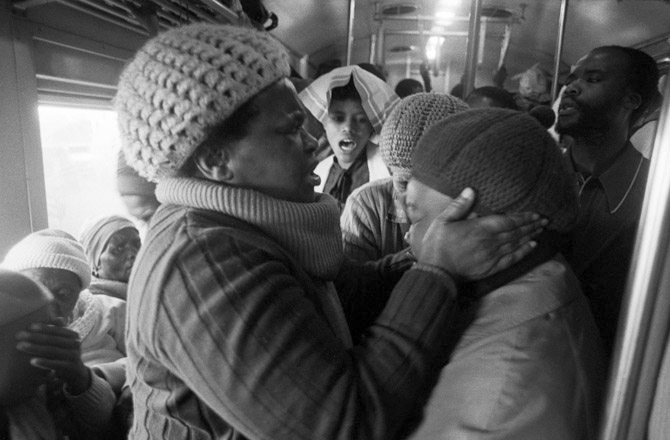
 

Santu Mofokeng (South Africa, 1956-2020) 'Supplication, Johannesburg – Soweto Line' 1986


Santu Mofokeng (South Africa, 1956-2020)
Supplication, Johannesburg – Soweto Line
1986
From the series Train Church
Pigment print
9 13/16 x 13 3/4 in. (25 x 35cm)
© Santu Mofokeng
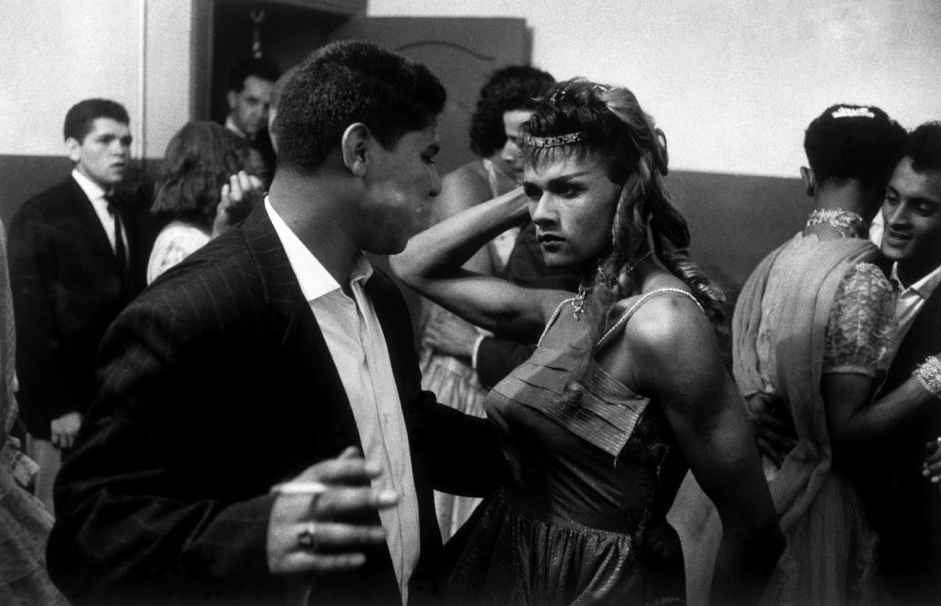
 

Ian Berry (British, b. 1934) 'Guests at a 'moffie'drag party' Cape Town, South Africa, 1960


Ian Berry (British, b. 1934)
Guests at a ‘moffie’drag party
Cape Town, South Africa, 1960
Silver gelatin photograph


Ian Berry was born in Lancashire, England. He made his reputation in South Africa, where he worked for the Daily Mail and later for Drum magazine. He was the only photographer to document the massacre at Sharpeville in 1960, and his photographs were used in the trial to prove the victims’ innocence.

He moved to South Africa in 1952, where he soon taught himself photography. He worked under the tutelage of Roger Madden, a South African photographer who had been an assistant to Ansel Adams. After some time as an amateur photographer, Berry began photographing communities and weddings. During this period he met Jürgen Schadeberg, also a European immigrant and photographer. Schadeberg was offered a position with the new African Sunday newspaper eGoli but declined, suggesting Berry apply for the position instead. After working there only 10 months, the newspaper closed, and Berry began working for the Benoni City Times, but he soon became more interested in freelance work.

Berry returned to Great Britain and traveled for some time but returned to South Africa in the early 1960s and worked for the Daily Mail. Later Tom Hopkinson, previously editor of the British Picture Post, hired Berry to work for Drum magazine. He was in Sharpeville on 21 March 1960, when a peaceful protest turned violent, leading to the deaths of 69 people and the wounding of 178 others by police. There were no other photographs documenting the events, and Berry’s were entered into evidence in the court proceedings proving that the victims had done nothing wrong. Berry was invited by Henri Cartier-Bresson to join Magnum Photos in 1962 when he was based in Paris; five years later he became a full member. In 1964 he moved to London and began working for Observer Magazine. He has since traveled the globe, documenting social and political strife in China, Republic of Congo, Czechoslovakia, Ethiopia, Israel, Ireland, Vietnam, and the former Soviet Union. He has contributed to publications including Esquire, Fortune, Geo, Life, National Geographic, Paris-Match, and Stern.

Text from the Wikipedia website
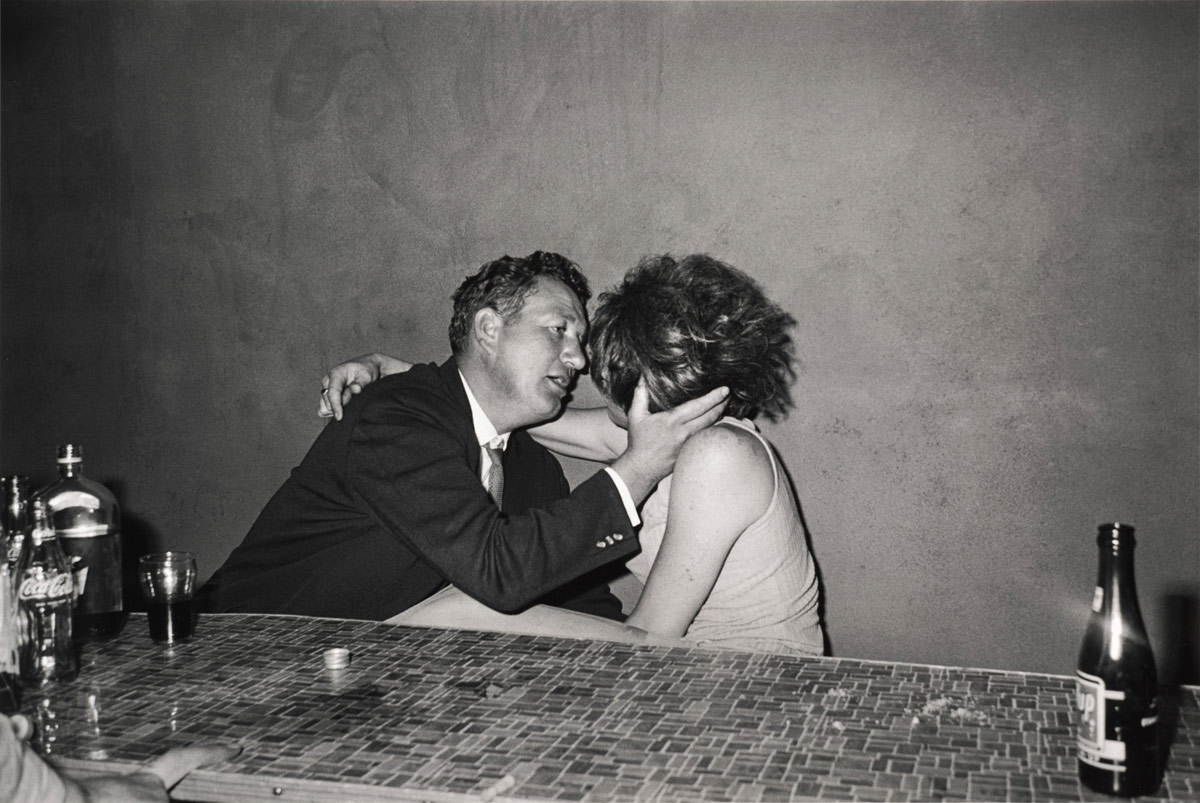
 

Billy Monk (South African, 1937-1982) 'The Catacombs, 30 September 1967' 1967, printed 2011


Billy Monk (South African, 1937-1982)
The Catacombs, 30 September 1967
1967, printed 2011
Gelatin silver print
10 1/16 x 14 15/16 in. (25.56 x 37.94 cm)
Collection SFMOMA, Accessions Committee Fund purchase
© Estate of Billy Monk
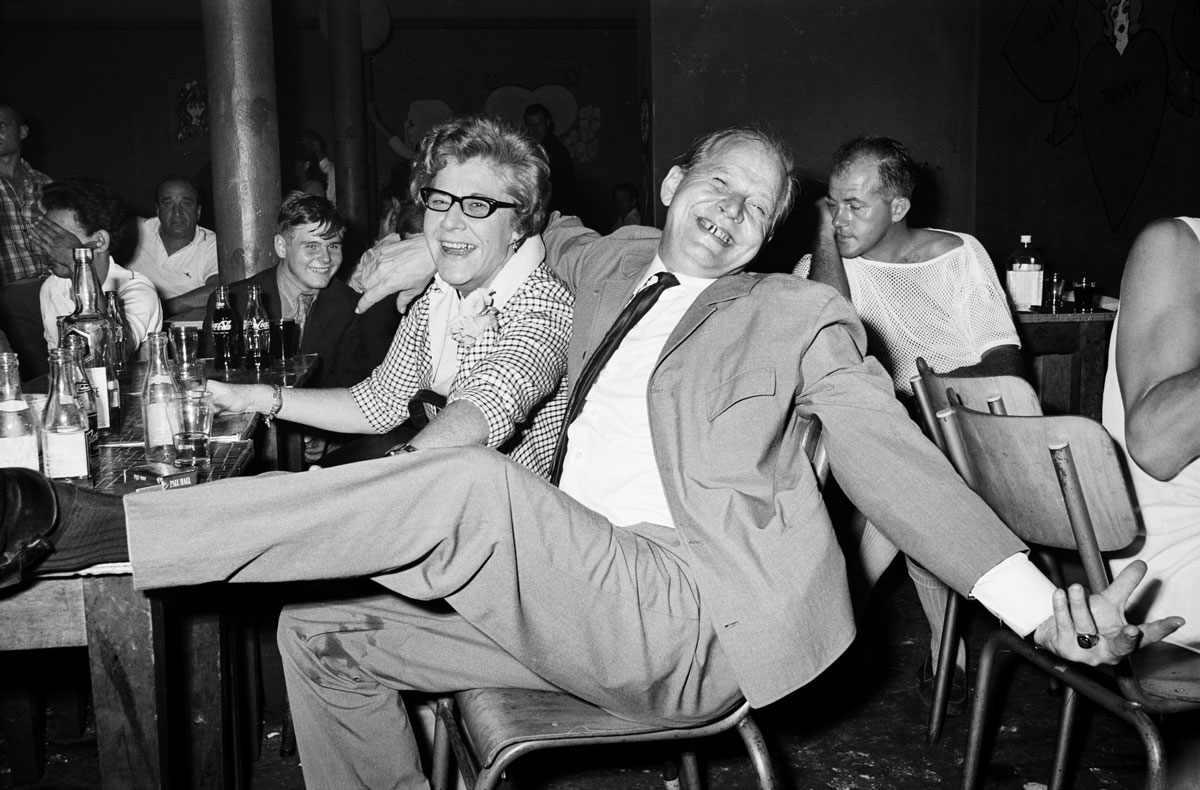
 

Billy Monk (South African, 1937-1982) 'The Catacombs, 5 February 1968' 1968, printed 2011


Billy Monk (South African, 1937-1982)
The Catacombs, 5 February 1968
1968, printed 2011
Gelatin silver print
11 x 16 in. (27.94 x 40.64cm)
Courtesy of Stevenson, Cape Town and Johannesburg
© Estate of Billy Monk


William John Monk (died 31 July 1982) was a South African, known for his photographs of a Cape Town nightclub between 1967 and 1969, during apartheid. In 2012 a posthumous book was published, Billy Monk: Nightclub Photographs. …

When Monk’s work as a bouncer did not work out he took up photography. Still working in The Catacombs, he began to make his living taking pictures of the diverse clientele in a seedy bar. He used a Pentax camera, with a 35 mm focal-length lens, a small flash and Ilford FP4 film. Monk stopped taking pictures in 1969. His photographs show a variety of the underbelly of Cape Town life at the time – ranging from old men with young wives and gay couples, to midgets and mixed race relationships, he shows a side of life under apartheid that is rarely seen elsewhere.

Discovery of his work

Monk’s work was discovered in 1979 by Jac de Villiers, when he moved into Monk’s old studio. Not only were they already well constructed by the photographer, they were also impeccably annotated with dates and names, which made curation a simple and enjoyable process. The first exhibition of Monk’s work took place at the Market Gallery in Johannesburg in 1982 – and although Monk could not attend the event it was subject to much critical acclaim.

Apartheid

Monk was working during apartheid in South Africa – a time when the colour of your skin was indicative of where you could live, work, who you could marry, and where you could drink. The underground lifestyle of The Catacombs allowed for dissent. Monk chose to take pictures originally as a way of making money, by selling them to his clients.

His photographs reveal a variety of clientele. Some are sloppy, some are neat and put together. Many of the women are heavily made up with short dresses, and almost all the photographs are highly sexually charged. The photographs reveal much of what was not allowed under apartheid rule – specifically a variety of same sex and mixed race couples.

Text from the Wikipedia website
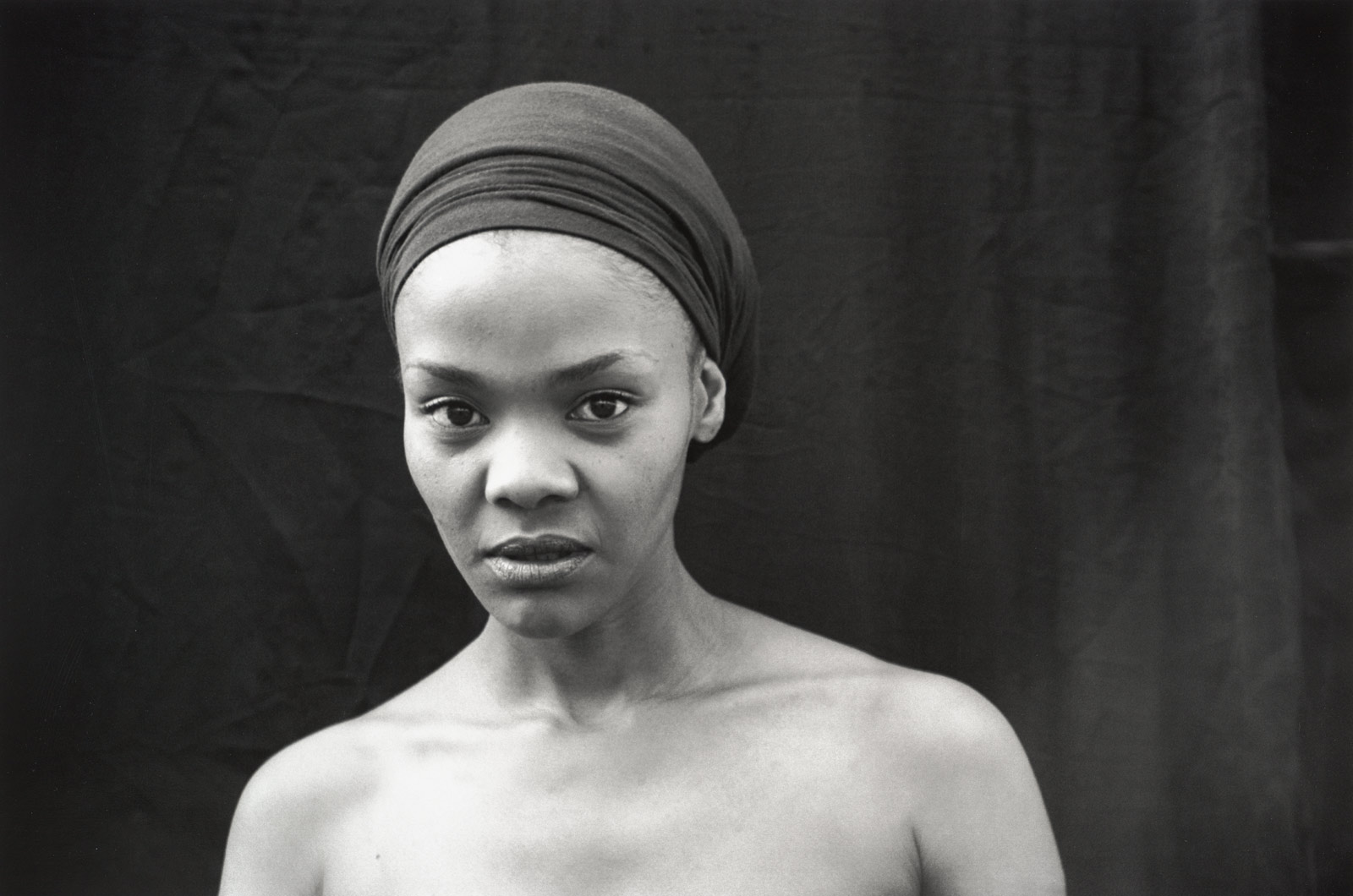
 

Zanele Muholi (South Africa, b. 1972) 'Nomonde Mbusi, Berea, Johannesburg' 2007


Zanele Muholi (South Africa, b. 1972)
Nomonde Mbusi, Berea, Johannesburg
2007
From the Faces and Phases series
Gelatin silver print
23 13/16 in. x 34 1/16 in. (60.5 cm x 86.5cm)
Courtesy of the artist and Stevenson, Cape Town and Johannesburg
© Zanele Muholi


Zanele Muholi, born 1972

Muholi’s work addresses the reality of what it is to be LGBT (lesbian, gay, bisexual, transgender) in South Africa. She identifies herself as a visual activist, dealing with issues of violation, violence and prejudice that she and her community face, despite South Africa’s progressive constitution.

In Faces and Phases, she sets out to give visibility to black lesbians and to celebrate the distinctiveness of individuals through the traditional genre of portraiture. The portraits are taken outdoors with a hand-held camera to retain spontaneity and often shown in a grid to highlight difference and diversity. In the series Beulahs, she shows young gay men, wearing Zulu beads and other accessories usually worn by women, who invert normative gender codes in both costume and pose. At the same time her photographs evoke tourist postcards and recycled stereotypes of Africans and recall traditional anthropological and ethnographic iconography.

Faces and Phases, is a group of black and white portraits that I have been working on from 2006 until now – it has become a lifetime project. The project is about me, the community that I’m part of. I was born in the township: I grew up in that space. Most of us grew up in a household where heterosexuality was the norm. When you grow up, you think that the only thing that you have to become as a maturing girl or woman is to be with a man; you have to have children, and also you need to have lobola or “bride price” paid for you. For young men, the expectation for them is to be with women and have wives and procreate: that’s the kind of space which most of us come from. We are seen as something else by society – we are seen as deviants. We’re not going to be here forever, and I wanted to make sure that we leave a history that is tangible to people who come after us.”

Zanele Muholi, interviewed by Tamar Garb, South Africa, 2010.
Text from the V&A website
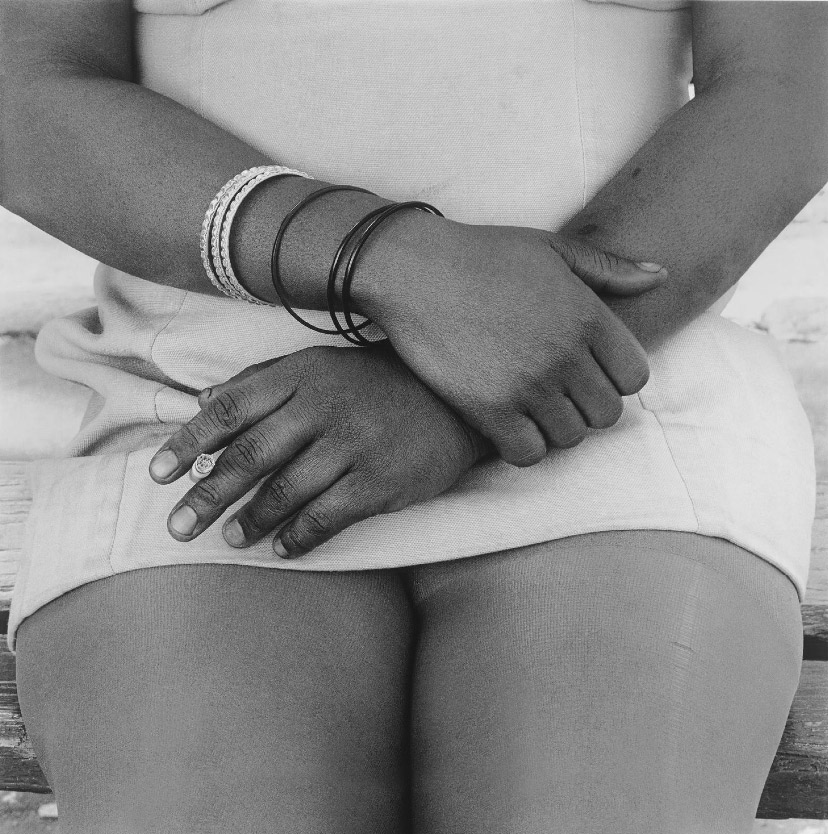
 

David Goldblatt (South Africa, 1930-2018) 'Woman smoking, Fordsburg, Johannesburg' 1975


David Goldblatt (South Africa, 1930-2018)
Woman smoking, Fordsburg, Johannesburg
1975
Pigment inkjet print
23 5/8 in. x 29 1/2 in. (60 cm x 75cm)
Collection SFMOMA, Accessions Committee Fund purchase
© David Goldblatt


David Goldblatt HonFRPS (29 November 1930 – 25 June 2018) was a South African photographer noted for his portrayal of South Africa during the period of apartheid. After apartheid had ended he concentrated more on the country’s landscapes. What differentiates Goldblatt’s body of work from those of other anti-apartheid artists is that he photographed issues that went beyond the violent events of apartheid and reflected the conditions that led up to them. His forms of protest have a subtlety that traditional documentary photographs may lack: “[M]y dispassion was an attitude in which I tried to avoid easy judgments. … This resulted in a photography that appeared to be disengaged and apolitical, but which was in fact the opposite.”


Jointly organised by the San Francisco Museum of Modern Art (SFMOMA) and Yerba Buena Center for the Arts (YBCA), Public Intimacy: Art and Other Ordinary Acts in South Africa brings together 25 artists and collectives who disrupt expected images of a country known through its apartheid history. The exhibition features an arc of artists who look to the intimate encounters of daily life to express the poetics and politics of the “ordinary act,” with work primarily from the last five years as well as photographic works that figure as historical precedents. On view at YBCA February 21 through June 29, 2014, Public Intimacy presents more than 200 works in a wide range of mediums, many of them making U.S. or West Coast debuts.

The exhibition joins SFMOMA’s important and growing collection of South African photography with YBCA’s multidisciplinary purview and continued exploration of the Global South. Significant documentary photography is paired with new photographs and work in other mediums, including video, painting, sculpture, performance, and publications, to reveal the multifaceted nuances of everyday life in a country still undergoing significant change. Coinciding with the 20th anniversary of democracy in South Africa, Public Intimacy looks at the way artists imagine present and future possibilities in South Africa. A new orientation emerges through close-up views of street interactions, portraiture, fashion and costume, unfamiliar public actions, and human imprints on the landscape.

The exhibition’s three curators – Betti-Sue Hertz, director of visual arts at YBCA; Frank Smigiel, associate curator of public programs at SFMOMA; and Dominic Willsdon, Leanne and George Roberts Curator of Education and Public Programs at SFMOMA – developed the show after visits to South Africa, where they met with artists, curators, and critics. The exhibition – and a companion publication to be published in fall 2014 – grew out of this research.

“Although South Africa’s political history remains vital to these artists and is important for understanding their work, Public Intimacy offers a more subtle view of the country through personal moments,” said Hertz. “It goes against expectations in order to reveal the smaller gestures and illuminate how social context has affected artists and how they work.”

“The familiar image of contemporary South Africa as a place of turmoil is, of course, not the whole story,” added Willsdon. “The art in this exhibition restages how those violent incidents fit in the broader realm of human interactions – a way of showing public life there in a more complex light.”

“Another central aspect of the exhibition is live performance,” said Smigiel. “Three major live works will unfold both in and outside the gallery context, offering a way to situate and reframe San Francisco through the lens of what artists are producing in South Africa.”

Public Intimacy is part of SFMOMA’s collaborative museum exhibitions and extensive off-site programming taking place while its building is temporarily closed for expansion construction through early 2016. As neighbours across Third Street in San Francisco, YBCA and SFMOMA have partnered in the past on various performance and exhibition projects, but Public Intimacy represents the deepest collaboration of shared interests to date between the two institutions. It also brings together SFMOMA’s approach to curating live art and YBCA’s multidisciplinary interest in exhibitions, social practice, and performances.

Exhibition highlights

While the exhibition explores new approaches to daily life in post-apartheid South Africa, it also makes visible the continued commitment of artists to activism and contemporary politics. Beginning with photographs from the late 1950s and after, the exhibition includes vital moments in the country’s documentary photography – from Ian Berry’s inside look at an underground drag ball to Billy Monk’s raucous nightclub photos – each capturing a moment of celebration within different social strata of South African society. Ernest Cole’s photographs of miners’ hostels and bars and Santu Mofokeng’s stirring photographs of mobile churches on commuter trains reveal everyday moments both tender and harsh.

David Goldblatt’s photographs depict the human landscape in apartheid and after, providing the genesis of the idea of “public intimacy.” Over decades of photographs in urban, suburban, and rural locations, Goldblatt has chronicled the changing nature of interpersonal engagement in South Africa. At the same time, they provide a historical backdrop and visual precedent for other artists in the exhibition, including Zanele Muholi and Sabelo Mlangeni.

Muholi has won several awards for her powerful photographic portraits as well as her activism on behalf of black lesbians in South Africa. Although best known for her photographs – in particular her Faces and Phases series – Muholi continuously experiments with an expanded practice including documentary film, beadwork, text, and her social-action organisation Inkanyiso, which gives visibility to conditions facing lesbians of colour in her country. “Sexual politics has been looked at less than racial politics in South Africa, but in many ways, the two have always been intertwined,” said Willsdon.

Mikhael Subotzky and Patrick Waterhouse bring another perspective to the upheavals of life in the city of Johannesburg with works from their Ponte City (2008-10) series, comprised of photographs, video, and a publication offering various views of this centrally located and iconic 54-story building. The works illustrate the struggles facing many native and immigrant South Africans in the years following the dissolution of apartheid, including stalled economic growth and social opportunities.

In contrast to the daily realities pictured in photographic works in the exhibition, Athi-Patra Ruga’s ongoing performance series The Future White Women of Azania (2010-present) features fantastical characters – usually played by the artist – whose upper bodies sprout colourful balloons while their lower bodies pose or process in stockings and high heels. Ruga’s Azania is a changing utopia, and Smigiel notes the shift: “The balloons are filled with liquid, and as the figure moves through the streets, they start popping, so the character dissolves and reveals a performer, and the liquid spills out and into a rather sloppy line drawing.” A new iteration of the series, The Elder of Azania, will premiere in the YBCA Forum during the exhibition’s opening weekend.

Chimurenga, an editorial collective working at the intersection of pan-African culture, art, and politics produces publications, events, and installations. Founded in 2002 by Ntone Edjabe, the collective has created the Chimurenga Library, an online archiving project that profiles independent pan-African paper periodicals from around the world. Expanding upon this concept, their presence in Public Intimacy will have two elements: a text and media resource space in YBCA’s galleries and an intervention at the San Francisco Public Library main branch that will explore the history of pan-African culture in the Bay Area, scheduled to open in late May.

Providing one of the most personally vulnerable moments in the exhibition, Penny Siopis’s series of 90 small paintings on enamel, Shame (2002), provokes a visceral reaction. With red paint reminiscent of blood and bruises, Siopis mixes colour and text in an attempt to convey emotion rather than narrative. While she is interested in the guilt and embarrassment most frequently associated with shame, she also looks at the possibility for empathy that emerges from traumatic experiences.

In all of these works, explains Hertz, “We are looking at how art and activism align, but we’re also interested in how politics is embedded in less obviously political practices, such as Sabelo Mlangeni’s photographs of mining workers’ hostels, Penny Siopis’s powerful painting series about human vulnerability, or Nicholas Hlobo’s large-scale, organically shaped sculptures made primarily of rubber.

Text from the SFMOMA website
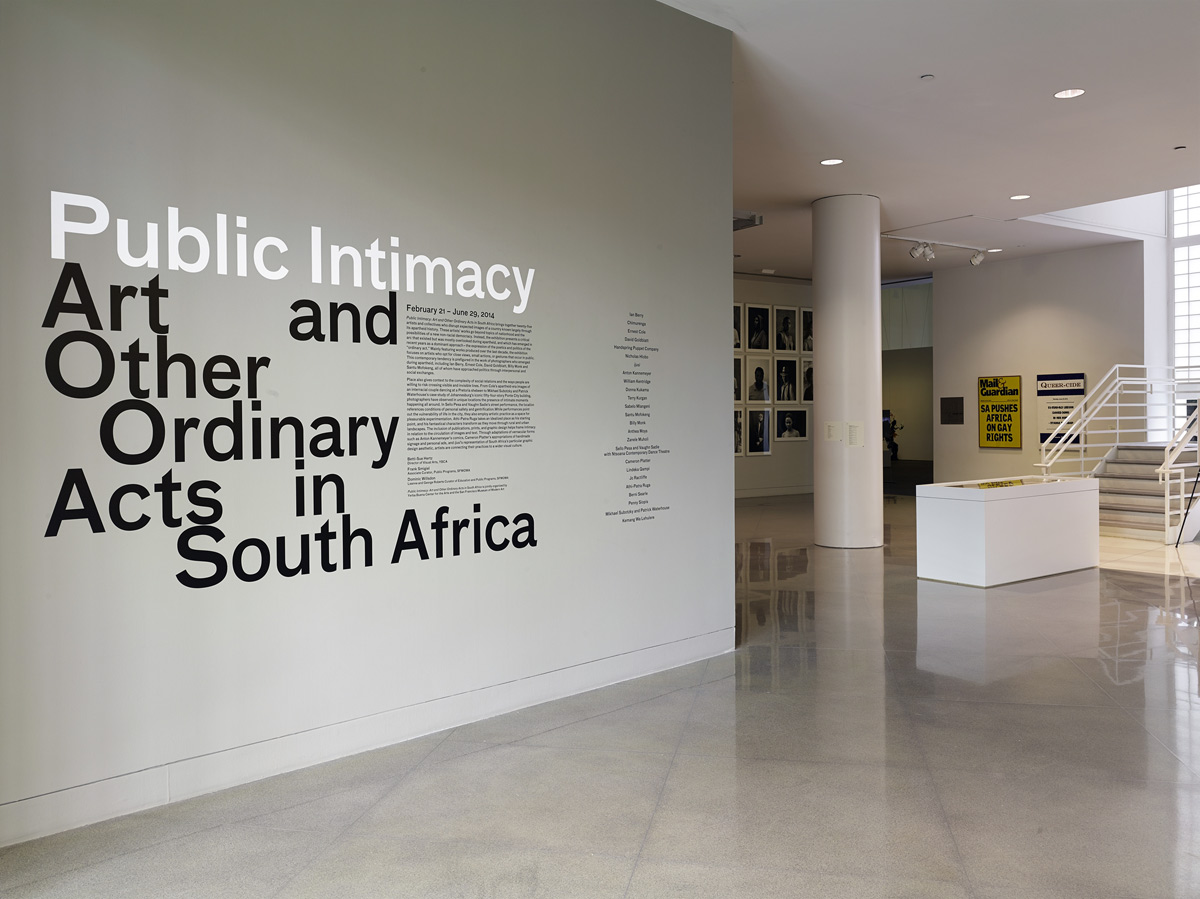
 

Installation view of the exhibition 'Public Intimacy: Art and Other Ordinary Acts in South Africa' at the Yerba Buena Center for the Arts, San Francisco

Installation view of the exhibition 'Public Intimacy: Art and Other Ordinary Acts in South Africa' at the Yerba Buena Center for the Arts, San Francisco

Installation view of the exhibition 'Public Intimacy: Art and Other Ordinary Acts in South Africa' at the Yerba Buena Center for the Arts, San Francisco

Installation view of the exhibition 'Public Intimacy: Art and Other Ordinary Acts in South Africa' at the Yerba Buena Center for the Arts, San Francisco

Installation view of the exhibition 'Public Intimacy: Art and Other Ordinary Acts in South Africa' at the Yerba Buena Center for the Arts, San Francisco

Installation view of the exhibition 'Public Intimacy: Art and Other Ordinary Acts in South Africa' at the Yerba Buena Center for the Arts, San Francisco


Installation views of the exhibition Public Intimacy: Art and Other Ordinary Acts in South Africa at the Yerba Buena Center for the Arts, San Francisco with, in the last photo, Nicholas Hlobo, Umphanda ongazaliyo (installation view), 2008; rubber, ribbon, zips, steel, wood, plaster; ICA Boston; © Nicholas Hlobo; photo: John Kennar.
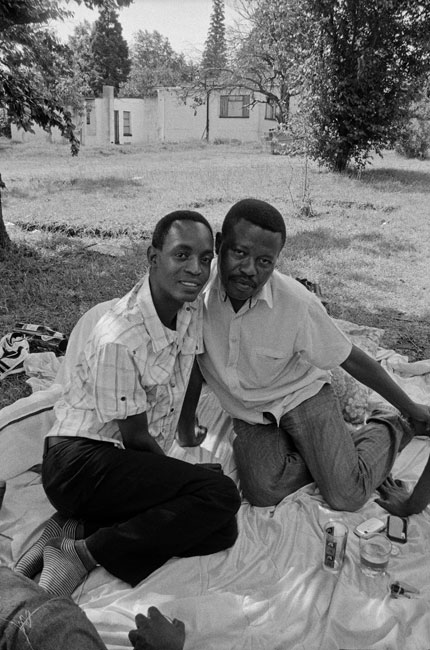
 

Sabelo Mlangeni (South Africa, b. 1980) 'Couple Bheki and Sipho' 2009


Sabelo Mlangeni (South Africa, b. 1980)
Couple Bheki and Sipho
2009
From the series Country Girls
Gelatin silver print
40 x 30cm
Courtesy the artist and Stevenson, Cape Town and Johannesburg
© Sabelo Mlangeni


Figures & Fictions: Sabelo Mlangeni from Victoria and Albert Museum on Vimeo.
 

Anton Kannemeyer (South Africa, b. 1967) 'D is for dancing ministers' 2006


Anton Kannemeyer (South Africa, b. 1967)
D is for dancing ministers
2006
From the series Alphabet of Democracy
Lithograph on Chine Collé
22 1/16 x 24 in. (56 x 61cm)
Courtesy the artist and Stevenson, Cape Town and Johannesburg
© Anton Kannemeyer


Anton Kannemeyer (born 1967) is a South African comics artist, who sometimes goes by the pseudonym Joe Dog.

Anton Kannemeyer was born in Cape Town. He studied graphic design and illustration at the University of Stellenbosch, and did a Master of Arts degree in illustration after graduating. Together with Conrad Botes, he co-founded the magazine Bitterkomix in 1992 and has become revered for its subversive stance and dark humour. He has been criticised for making use of “offensive, racist imagery”. Kannemeyer himself said that he gets “lots of hate mail from white Afrikaners”.

His works challenge the rigid image of Afrikaners promoted under Apartheid, and depict Afrikaners having nasty sex and mangling their Afrikaans. “X is for Xenophobia”, part of his “Alphabet of Democracy”, depicts Ernesto Nhamwavane, a Mozambican immigrant who was burnt alive in Johannesburg in 2008. Some of Kannemeyer’s works deal with the issues of race relations and colonialism, by appropriating the style of Hergé’s comics, namely from Tintin in the Congo. In “Pappa in Afrika”, Tintin becomes a white African, depicted either as a white liberal or as a racist white imperialist in Africa. In this stereotyped satire, the whites are superior, literate and civilised, and the blacks are savage and dumb. In “Peekaboo”, a large acrylic work, the white African is jumping up in alarm as a black man figure pokes his head out of the jungle shouting an innocuous ‘peekaboo!’ A cartoon called “The Liberals” has been interpreted as an attack on white fear, bigotry and political correctness: a group of anonymous black people (who look like golliwogs) are about to rape a white lady, who calls her attackers “historically disadvantaged men”.

Text from the Wikipedia website
 

Terry Kurgan (South Africa, b. 1958) 'Hotel Yeoville' 2012


Terry Kurgan (South Africa, b. 1958)
Hotel Yeoville
2012
Digital print on bamboo hahnemulle paper
Courtesy the artist
© Terry Kurgan
 

Penny Siopis (South Africa, b. 1953) 'Untitled' from the series 'Shame' 2002


Penny Siopis (South Africa, b. 1953)
Untitled from the series Shame
2002
Paint on enamel
© Penny Siopis


Siopis established herself as one of the most talented and challenging artists in South Africa and beyond, by working across painting, installation and film, bringing together diverse references and materials in ways that disturb disciplinary boundaries and binaries.

Concepts of time run through all her work often manifesting in the actual physical changes of her materials; in her early cake paintings oil paint is made to be unnaturally affected by gravity, age and decay; in her films using archival footage time is marked as much by the effects of age on the celluloid as by the historical period caught in the sweep of the camera; in her accumulations of found objects in her installations, ideas of the heirloom come to the fore with her ongoing conceptual work Will (1997- ) – in which she bequeaths objects to beneficiaries – being the ultimate time piece only becoming complete on her death; her glue and ink paintings index flux as they record the material transformation that happens when viscous glue matter reacts with pigment, gravity, the artist’s bodily gestures, and the drying effects of the air.

Siopis sees her art practice as ‘open form’, operating as an intimate model in which the physical changes of her materials can be extrapolated into a larger ethics of personal and political transformation. According to Achille Mbembe this quality marks her interest in process as a perpetual state of becoming and entails “the crafting of an unstable relation between form and formlessness, in the understanding that the process of becoming proceeds in ways that are almost always unpredictable and at times accidental.”

Shame paintings

Siopis began the Shame paintings in 2002 and they became a key feature of her exhibition Three Essays on Shame (2005), an intervention in the museum of Sigmund Freud, once his house, in London. It was part of a project that marked the centenary of Freud’s groundbreaking publication Three Essays on the Theory of Sexuality. Responding to Freud, Siopis’ installation consisted of three parts located in Freud’s study (with the famous couch), dining room and bedroom and titled Voice, Gesture and Memory. The small paintings shown in a grid in this room were presented as a frieze in the Memory section of the original exhibition. The artist invokes this exhibition here through the arrangement of some of the objects from the installation on a table reminiscent of that in Freud’s dining room, where she had placed Baubo, one of Freud’s objects from his collection of antiquities. Baubo is a small terracotta figurine who gestures to her genitalia in a provocative way, an act some have interpreted as a show of shame that speaks of both vulnerability and empowerment.

In the installation Siopis also evoked a complex dialogue between Freud’s ideas and her personal experiences by inserting references (voice recordings and objects) to the traumatic proceedings of the South African Truth and Reconciliation Commission and colonial and apartheid history. Once again she was interested in binding the traces of human vulnerability and the dramatic effects of sweeping historical narratives.

In this body of work Siopis manipulates thick and gooey lacquer gel paint, used in home-craft to create stained glass and coloured mirror effects on surfaces. For her it is a physical process that moulds anxiety into form. It translates the result of childhood trauma that we know as shame onto a painted surface. Through the reflective qualities of the medium Siopis blends the bodily sensation with the experience of being looked at, both of which define shame. The use of language in the form of ready-made rubber stamped clichés that clash with the raw power of this familiar emotion further underscores the ‘unspeakable’ character of the experience.

Text from the Wikipedia website
 

Athi-Patra Ruga (South Africa, b. 1984) 'The Future White Women of Azania' 2012


Athi-Patra Ruga (South Africa, b. 1984)
The Future White Women of Azania
2012
Performed as part of Performa Obscura in collaboration with Mikhael Subotzky
Commissioned for the exhibition Making Way, Grahamstown, South Africa
Photo: Ruth Simbao, courtesy Athi-Patra Ruga and WHATIFTHEWORLD/GALLERY
 

Athi-Patra Ruga (South Africa, b. 1984) 'The Future White Women of Azania' 2012


Athi-Patra Ruga (South Africa, b. 1984)
The Future White Women of Azania
2012
Performed as part of Performa Obscura in collaboration with Mikhael Subotzky
Commissioned for the exhibition Making Way, Grahamstown, South Africa
Photo: Ruth Simbao, courtesy Athi-Patra Ruga and WHATIFTHEWORLD/GALLERY


Athi-Patra Ruga (born in 1984) is a South African artist who uses performance, photography, video, textiles, and printmaking to explore notions of utopia and dystopia, material and memory. His work explores the body in relation to sensuality, culture, and ideology, often creating cultural hybrids. Themes such as sexuality, HIV/AIDS, African culture, and the place of queerness within post-apartheid South Africa also permeate his work. …

Future White Women of Azania (FWWoA, 2010-2016)

FWWoA consists of several works, including performance, tapestry, sculpture, video, and photography creating a saga. FWWoA is an allegory of post apartheid nationalism, where Ruga then becomes the “elder” or historian. Creating this constellationary history, drawing references from pre Xhosa history and post apartheid South Africa, tells the history of the non-dynastic line of queens who rule the lands of Azania. Ruga’s works are attentive to the demands for justice for his ancestors and the need for radical transformation in the future, to shatter the ideologies of “rainbowism”. By using Azania as the framework for a critical history of South Africa, FWWoA reveals the silencing of black voices that extends back to the first moments of colonial contact, while also addressing the impossible and unrealized ideologies of forgiveness, reconciliation and redemption practiced in a post apartheid South African.

Azania’s allegorical capacity derives from its status as a symbol of a liberated South Africa during the anti-apartheid struggle. However, the term has a specific history that complicates such dreams. The place name ‘Azania’ first appears in The Periplus of the Erythraean Sea (40 AD) to refer to the lands of southern and eastern Africa. By designating the lands of Africa as ‘Azania’, Ruga understands the label as one example in a long history of constructing Africa as uninhabited until European colonial contact.

Ruga’s tapestries in the FWWoA saga chronicles allegorical depictions of queens, maps, and other iconography of Azania. The struggles of the non-dynastic line of queens depicting signifiers of an Azanian national identity: national seal, crest, flower, maps, while also including Ruga’s long standing interest in popular culture. Taking inspirations from Gustave Eiffel’s ‘Statue of Liberty’ or Eugene Delacroix’s ‘Liberty Leading the People’, Ruga brings about the idea of objectifying the woman’s body as the conflict, but in his own work creates them as powerful but passive. In his work ‘The Lands of Azania’, Ruga reworks the map of Eastern Africa. Insetting a national animal, the saber-tooth zebra, the Azanian flag, and giving several countries new names. Throughout the geography of Azania he further explores the overlaps of exile and diaspora in the African and Jewish communities.

A narrative with five characters, a national flower, crest and animal including the rainbow coloured balloon characters. One of Ahti-Patra’s goals was to make a myth accessible even for children. A cute figure that has the capacity to be festive, create fanfare yet become disquieting when it violently pops and bleeds.

Text from the Wikipedia website
 

Athi-Patra Ruga (South Africa, b. 1984) 'The Night of the Long Knives I' 2013


Athi-Patra Ruga (South Africa, b. 1984)
The Night of the Long Knives I
2013


Archival inkjet Print on Photorag Baryta
202 x 157cm


The Future White Woman of Azania is an ongoing series of performances first conceived in 2010 and evolving to engage new definitions of nationhood in relation to the autonomous body. In the enactment of the site-specific work commissioned for the 55th Venice Biennale, the performance takes the form of an absurdist funerary procession. The participants are the ABODADE – the sisterhood order of Azania and the central protagonist – The Future White Woman.

“Azania, as a geographic location, is first described in 1stCentury Greek records of navigation and trade, The Peryplus of the Erythrean Sea and is thought to refer to a portion of the East and Southern African coast. The word Azania itself is thought to have been derived from an Arabic word referring to the ‘dark-skinned inhabitants of Africa.’

Azania is then eulogised in the black consciousness movement as a pre-colonial utopian black homeland – this Promised Land, referenced in struggle songs, political sermons and African Nationalist speeches. In Cold War pop culture, Marvel Comics used Azania as a fictional backdrop to a Liberation story that bares a close resemblance to the situation that was Apartheid in Old South Africa… so it is at once a mythical and faintly factual place/state that this performance unfolds… Who are the Azanians for what it’s worth? It is in this liminal state that the performance unfolds…”

Seeking to radically reimage the potential of Azania and its inhabitants, the performance questions the mythical place that we mourn for and asks who its future inhabitants may be. Using the “Nation-Finding language of pomp and procession,” Ruga proposes a bold and iconoclastic break with the past Utopian promise of the elders and instead presents us with a new potential and hybridity.

Text from the Athi-Patra Ruga blog March 17, 2015 [Online] Cited 08/04/2021.
 

Athi-Patra Ruga (South Africa, b. 1984) 'Uzuko' 2013


Athi-Patra Ruga (South Africa, b. 1984)
Uzuko
2013
Wool, thread and artificial flowers on tapestry canvas
200 x 180 cm


Athi-Patra Ruga is one of a handful of artists, working in South Africa today, who has adopted the tropes of myth as a contemporary response to the post-apartheid era. Ruga has always worked with creating alternative identities that sublimate marginalised experience into something strangely identifiable.

In The Future White Women of Azania he is turning his attention to an idea intimately linked to the apartheid era’s fiction of Azania – a Southern African decolonialised arcadia. It is a myth that perhaps seems almost less attainable now than when the Pan Africanist Congress (PAC) appropriated the name in 1965 as the signifier of an ideal future South Africa – then at least was a time to dream more optimistically largely because the idea seemed so infinitely remote.

But Ruga, in his imaginings of Azania, has stuck closer to the original myth, situating it in Eastern Africa as the Roman, Pliny the Elder, did in the first written record of the name. Here Ruga in his map The Lands of Azania (2014-2094) has created lands suggestive of sin, of decadence and current politics. Countries named Palestine, Sodom, Kuntistan, Zwartheid and Nunubia are lands that reference pre-colonial, colonial and biblical regions with all their negative and politically disquieting associations. However, in what seems like something of a response to the ‘politically’ embroidered maps of the Italian artist Alighiero e Boetti, Ruga infers that the politicisation of words are in a sense prior to the constructed ideology of the nation state.

What is more Azania is a region of tropical chromatic colours, which is populated with characters whose identities are in a state of transformation. At the centre of the panoply of these figures stands The Future White Woman whose racial metamorphosis, amongst a cocoon of multi-coloured balloons, suggests something disturbing, something that questions the processes of a problematic cultural assimilation. And it is here that the veracity of the myth of a future arcadia is being disputed if not entirely rejected.

To be sure, unlike Barthes’ suggestion in his essay ‘Myth Today’, Ruga is not creating myth in an act that depoliticises, simplifying form in order to perpetuate the idea of an erroneous future ‘good society’. Instead, placing himself in amongst the characters in a lavish self portrait Ruga imagines himself into the space of the clown or jester (much like the Rococo painter Watteau did in his painting ‘Giles’), into the space of interpreter as well as a cultural product of the forces outside of his own control.

Ruga’s Azania is a world of confusing transformations whose references are Rococo and its more modern derivative Pop. But whatever future this myth is foreshadowing, with its wealth, its tropical backdrop, its complicated and confusing identities, it is not a place of peaceful harmony – or at least not one that is easily recognisable. As Ruga adumbrated at a recent studio visit, his generation’s artistic approach of creating myths or alternative realities is in some ways an attempt to situate the traumas of the last 200 years in a place of detachment. That is to say at a farsighted distance where their wounds can be contemplated outside of the usual personalised grief and subjective defensiveness.

Statement from WHATIFTHEWORLD.com on the Empty Kingdom website [Online] Cited 20/06/2014. No longer available online
 

Mikhael Subotzky and Patrick Waterhouse. 'Ponte City from Yeoville Ridge' 2008


Mikhael Subotzky and Patrick Waterhouse
Ponte City from Yeoville Ridge
2008
Lightjet chromogenic print
Courtesy the artists and Goodman Gallery
© Mikhael Subotzky and Patrick Waterhouse
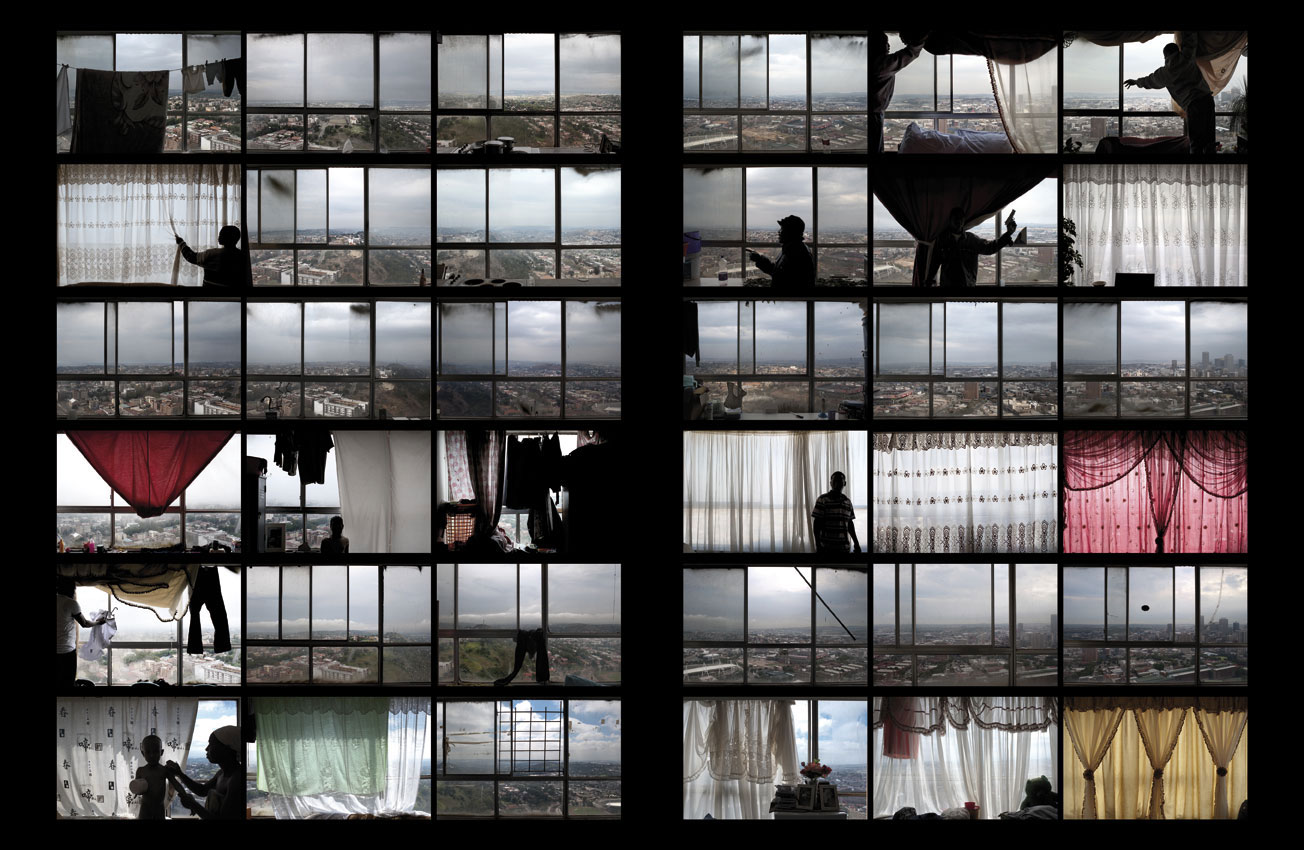
 

Mikhael Subotzky and Patrick Waterhouse. 'Ponte City, Johannesburg' 2008


Mikhael Subotzky and Patrick Waterhouse
Ponte City, Johannesburg
2008
Lightjet chromogenic print
Courtesy the artists and Goodman Gallery
© Mikhael Subotzky and Patrick Waterhouse
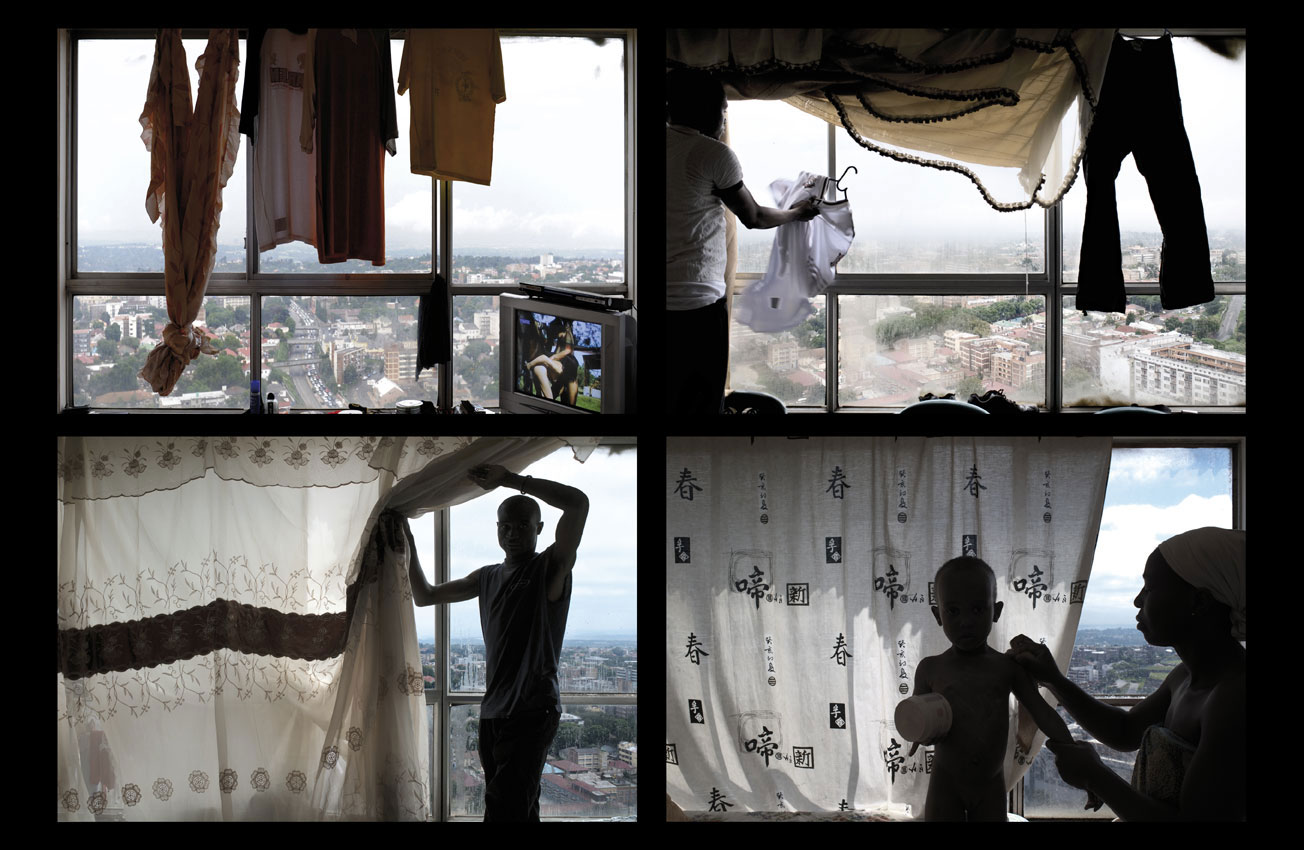
 

Mikhael Subotzky and Patrick Waterhouse. 'Ponte City, Johannesburg' 2008


Mikhael Subotzky and Patrick Waterhouse
Ponte City, Johannesburg
2008
Lightjet chromogenic print
Courtesy the artists and Goodman Gallery
© Mikhael Subotzky and Patrick Waterhouse
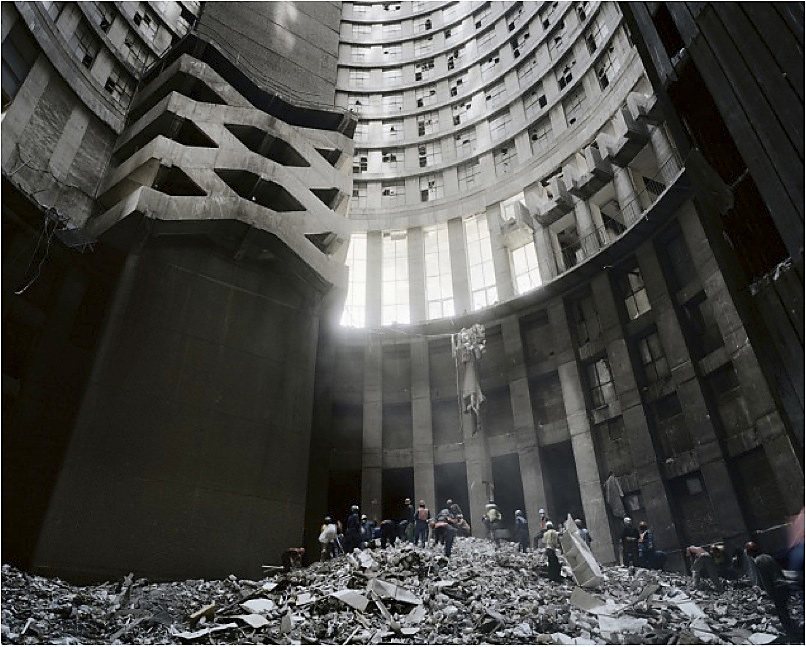
 

Mikhael Subotzky and Patrick Waterhouse. 'Cleaning the Core, Ponte City, Johannesburg' 2008


Mikhael Subotzky and Patrick Waterhouse
Cleaning the Core, Ponte City, Johannesburg
2008
Lightjet chromogenic print
49 7/16 x 59 1/16 in. (125.5 x 150cm)
Courtesy the artists and Goodman Gallery
© Mikhael Subotzky and Patrick Waterhouse
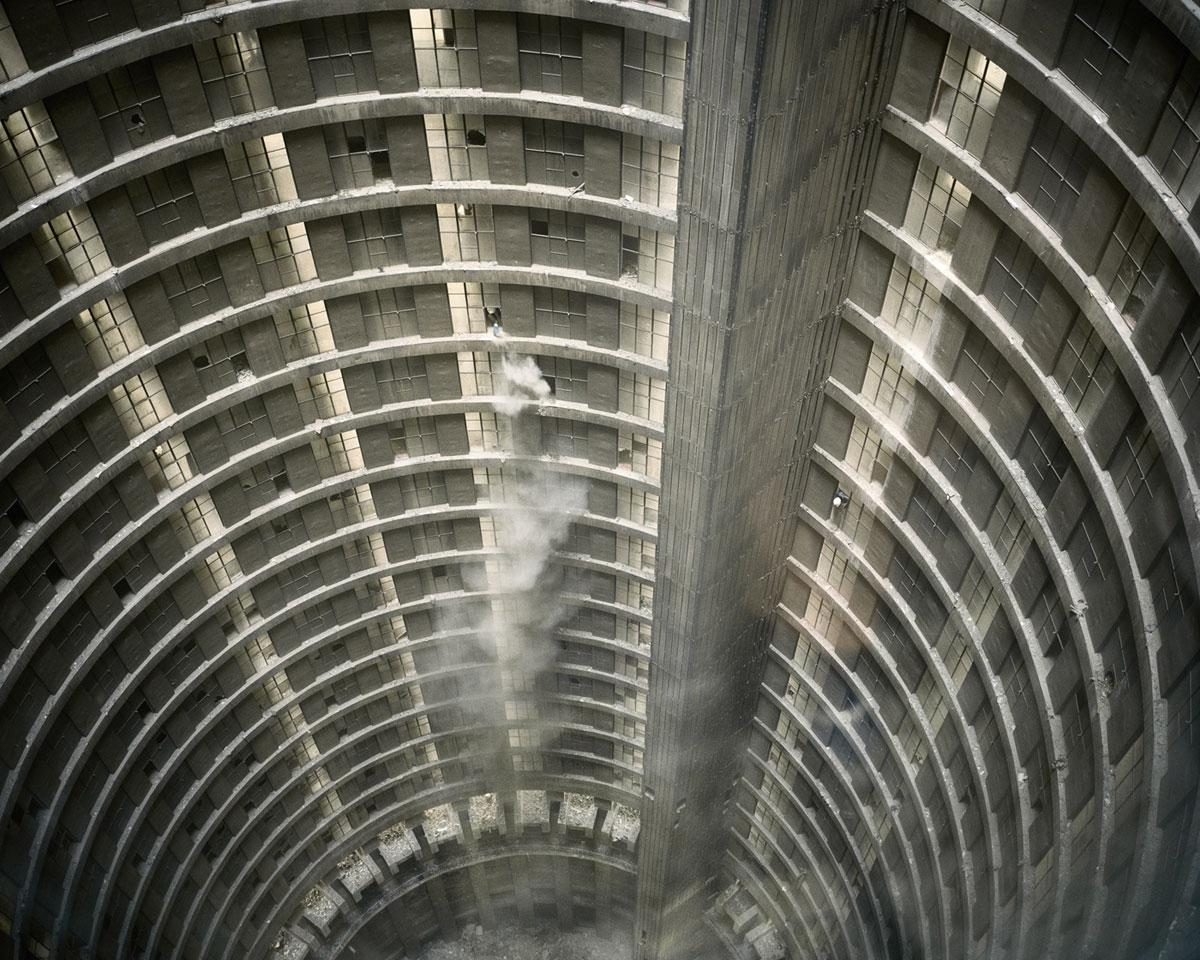
 

Mikhael Subotzky and Patrick Waterhouse. 'Untitled I, Ponte City, Johannesburg' 2008


Mikhael Subotzky and Patrick Waterhouse
Untitled I, Ponte City, Johannesburg
2008
Lightjet chromogenic print
Courtesy the artists and Goodman Gallery
© Mikhael Subotzky and Patrick Waterhouse


Originally intended as a nuclear point in the upwardly mobile social cartography of Johannesburg’s Hillbrow, the 173 meter-high cylindrical apartment building Ponte City became an urban legend, and an essential part of visual renderings of the city. It was the conflicted spectacle of Ponte City that drew South African photographer, Mikhael Subotzky and Patrick Waterhouse, a British artist, to look more closely in rather than at the tower.
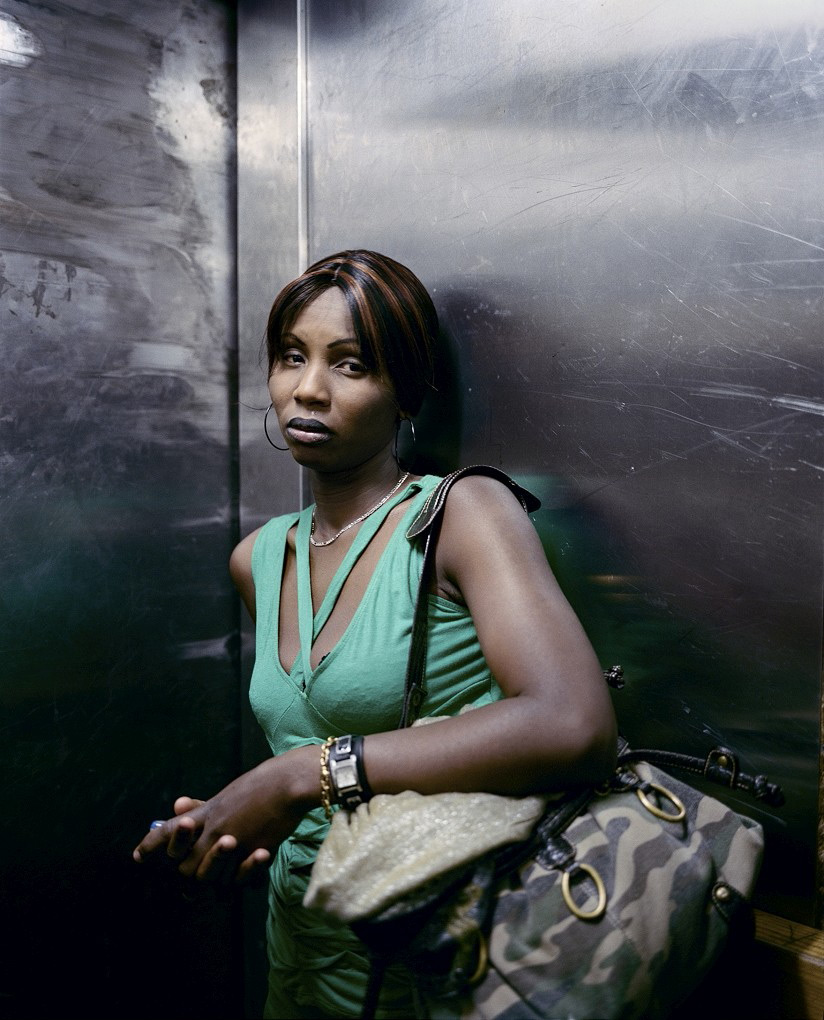
 

Mikhael Subotzky and Patrick Waterhouse. 'Lift Portrait 2, Ponte City, Johannesburg (0328)' 2008


Mikhael Subotzky and Patrick Waterhouse
Lift Portrait 2, Ponte City, Johannesburg (0328)
2008
C-print mounted on Dibond
124 cm x 151.5cm


Yerba Buena Center for the Arts
701 Mission Street
San Francisco, CA 94103

Opening hours:
Sunday and Wednesday noon – 6.00pm
Thursday – Saturday noon – 8.00pm
Free First Tuesday of the month noon – 8.00pm

SFMOMA website

LIKE ART BLART ON FACEBOOK

Back to top

Exhibition: ‘Garry Winogrand’ at the National Gallery of Art, Washington

Exhibition dates: 2nd March – 8th June 2014


More photographs by Gary Winogrand.


Many thankx to the National Gallery of Art for allowing me to publish the photographs in the posting. Please click on the photographs for a larger version of the image.


Garry Winogrand (American, 1928-1984) 'New York' 1950


Garry Winogrand (American, 1928-1984)
New York
1950
Gelatin silver print
Framed: 40.64 x 50.8cm (16 x 20 in.)
San Francisco Museum of Modern Art, Fractional and promised gift of Carla Emil and Rich Silverstein
© The Estate of Garry Winogrand, courtesy Fraenkel Gallery, San Francisco


Garry Winogrand (American, 1928-1984) 'Coney Island, New York' c. 1952


Garry Winogrand (American, 1928-1984)
Coney Island, New York
c. 1952
Gelatin silver print
Framed: 40.64 x 50.8cm (16 x 20 in.)
The Museum of Modern Art, New York. Purchase and gift of Barbara Schwartz in memory of Eugene M. Schwartz
© The Estate of Garry Winogrand, courtesy Fraenkel Gallery, San Francisco


Garry Winogrand (American, 1928-1984) 'Richard Nixon Campaign Rally, New York' 1960


Garry Winogrand (American, 1928-1984)
Richard Nixon Campaign Rally, New York
1960
Gelatin silver print
Framed: 45.72 x 55.88cm (18 x 22 in.)
Posthumous print made from original negative on the occasion of the Garry Winogrand exhibition organised by the National Gallery of Art and the San Francisco Museum of Modern Art, courtesy Center for Creative Photography, The University of Arizona
© The Estate of Garry Winogrand, courtesy Fraenkel Gallery, San Francisco


Garry Winogrand (American, 1928-1984) 'John F. Kennedy, Democratic National Convention, Los Angeles' 1960


Garry Winogrand (American, 1928-1984)
John F. Kennedy, Democratic National Convention, Los Angeles
1960
Gelatin silver print
Framed: 45.72 x 55.88cm (18 x 22 in.)
Posthumous print made from original negative on the occasion of the Garry Winogrand exhibition organised by the National Gallery of Art and the San Francisco Museum of Modern Art, courtesy Center for Creative Photography, The University of Arizona
© The Estate of Garry Winogrand, courtesy Fraenkel Gallery, San Francisco


Garry Winogrand (American, 1928-1984) 'Metropolitan Opera, New York City' c. 1951


Garry Winogrand (American, 1928-1984)
Metropolitan Opera, New York City
c. 1951
Gelatin silver print
Framed: 45.72 x 55.88cm (18 x 22 in.)
Posthumous print made from original negative on the occasion of the Garry Winogrand exhibition organised by the National Gallery of Art and the San Francisco Museum of Modern Art, courtesy Center for Creative Photography, The University of Arizona
© The Estate of Garry Winogrand, courtesy Fraenkel Gallery, San Francisco


The first retrospective in 25 years of work by artist Garry Winogrand – renowned photographer of New York City and postwar American life – will be on view at the National Gallery of Art, Washington, March 2 through June 8, 2014. Revealing the full breadth of his art for the first time, Garry Winogrand brings together some 190 of the artist’s most iconic images – many never before exhibited or reproduced.

“Winogrand is widely recognised as one of the preeminent photographers of postwar America, though his work remains largely unexplored and incompletely published,” said Earl A. Powell III. “Building on several recent exhibitions of 20th-century American photographers, such as Robert Frank and Harry Callahan, the Gallery is proud to present another major American photographer to our visitors.”

The exhibition was on view at the San Francisco Museum of Modern Art (SFMOMA) from March 9 through June 2, 2013. After Washington, the exhibition will travel to the Metropolitan Museum of Art, New York (June 27 through September 21, 2014); the Jeu de Paume, Paris (October 14, 2014, through January 25, 2015); and the Fundación MAPFRE, Madrid (March 3 through May 10, 2015).

Exhibition highlights

Garry Winogrand (1928-1984), a New Yorker who roamed the United States during the postwar decades, left behind a sweeping portrait of American life. His photographs powerfully combine the hope and exhilaration as well as the anxiety and turbulence that characterised America during these vital years, revealing a country that glitters with possibility but threatens to spin out of control. From Fifth Avenue to Sunset Boulevard, from Cape Kennedy to the Texas State Fair, he made the American middle class the primary subject of his pictures. Endlessly curious, Winogrand scrutinised both cities and suburbs, always on the lookout for those instants when happenstance and optics might join to make a good picture that exposes some deep current in American culture.

Working in the tumultuous postwar decades, Winogrand captured moments of everyday American life, producing an expansive picture of a nation rich with possibility yet threatening to spin out of control. He did much of his best-known work in New York City in the 1960s, but he also traveled widely around the United States, from California and Texas to Miami and Chicago. Combining hope and buoyancy with anxiety and instability, his photographs trace the mood of the country itself, from the ebullience of the postwar optimism to the chaos of the 1960s and the gloom and depression of the post-Vietnam era.

When he died suddenly at age 56, Winogrand left behind thousands of rolls of exposed but undeveloped film and unedited contact sheets – some 250,000 frames in total. Many of these pictures have been printed for the first time for this long-awaited retrospective of his work. By presenting such archival discoveries alongside celebrated pictures, Garry Winogrand reframes a career that was, like the artist’s America, both epic and unresolved.

The exhibition is divided into three sections over seven galleries, each presenting a broad variety of subjects found in Winogrand’s art. “Down from the Bronx” presents photographs taken in New York City from his start in 1950 to 1971; “A Student of America” looks at work made in the same period during journeys outside New York; and “Boom and Bust” addresses Winogrand’s late period – from 1971, when he moved away from New York, to his death in 1984 – including photographs from Texas and Southern California, as well as Chicago, Washington, and Miami. The third section also presents a small number of Manhattan photographs made during Winogrand’s return visits; like much of his later work, they express a sense of desolation unprecedented in his earlier photographs.

Plunging headlong into his work, Winogrand preferred shooting film to editing his pictures or producing books and exhibitions. As a result, many of his strongest early photographs fell into obscurity as he matured, while numerous later ones remained unprocessed at his death. Winogrand never published or exhibited approximately one-third of the photographs presented here, and more than sixty have been printed for this exhibition and are being shown in public for the first time. By presenting such discoveries alongside his celebrated pictures, Garry Winogrand reinterprets a career that was, like the artist’s America, both epic and unresolved. A video of Winogrand at Rice University in the 1970s, edited for the exhibition, allows visitors to experience rare footage of the artist talking to students in a casual, extemporaneous manner.

Garry Winogrand (1928-1984)

Born in the Bronx, Winogrand is known primarily as a New York City street photographer, often associated with famed contemporaries Diane Arbus and Lee Friedlander. Exposing some 20,000 rolls of film in his short lifetime, Winogrand photographed business moguls, everyday women on the street, famous actors and athletes, hippies, politicians, antiwar demonstrators, soldiers, animals in zoos, rodeos, car culture, and airports. He was also an avid traveler who roamed around the United States to locations that included Los Angeles, San Francisco, Dallas, Houston, Chicago, Ohio, Colorado, and the open country of the Southwest.

After serving in the military as a weather forecaster, Winogrand began working as a photographer while studying painting on the G.I. Bill at Columbia University (1948-1951). He supplied commercial photographs to such general-interest magazines as Life, Look, Sports Illustrated, Collier’s, and Pageant. His career was further shaped by the decline of these popular magazines and the rise of a new culture of photography centred in the art world.

Although Winogrand was a prolific photographer throughout his career, he largely postponed printing and editing his work, especially at the end of his life. He published five books, but they contain only a fraction of his oeuvre. In his later years he spoke of reviewing and reediting all of his photographs, but he died abruptly, leaving behind more than 6,500 rolls of film (almost 250,000 images) that he had never seen, as well as proof sheets from his earlier years that he had marked but never printed. Winogrand’s archive, including his film and proof sheets, is now housed at the Center for Creative Photography of the University of Arizona, Tucson.

Press release from the National Gallery of Art website


Garry Winogrand (American, 1928-1984) 'New York' c. 1960


Garry Winogrand (American, 1928-1984)
New York
c. 1960
Gelatin silver print
Framed: 40.64 x 50.8cm (16 x 20 in.)
The Garry Winogrand Archive, Center for Creative Photography, The University of Arizona
© The Estate of Garry Winogrand, courtesy Fraenkel Gallery, San Francisco


Garry Winogrand (American, 1928-1984) 'Los Angeles' 1980-1983


Garry Winogrand (American, 1928-1984)
Los Angeles
1980-1983
Gelatin silver print
Framed: 40.64 x 50.8cm (16 x 20 in.)
The Garry Winogrand Archive, Center for Creative Photography, The University of Arizona
© The Estate of Garry Winogrand, courtesy Fraenkel Gallery, San Francisco


Garry Winogrand (American, 1928-1984) 'Los Angeles' 1980-1983


Garry Winogrand (American, 1928-1984)
Los Angeles
1980-1983
Gelatin silver print
Framed: 45.72 x 55.88cm (18 x 22 in.)
Posthumous print made from original negative on the occasion of the Garry Winogrand exhibition organised by the National Gallery of Art and the San Francisco Museum of Modern Art, courtesy Center for Creative Photography, The University of Arizona
© The Estate of Garry Winogrand, courtesy Fraenkel Gallery, San Francisco


Garry Winogrand (American, 1928-1984) 'Los Angeles' 1983


Garry Winogrand (American, 1928-1984)
Los Angeles
1983
Gelatin silver print
Framed: 45.72 x 55.88cm (18 x 22 in.)
Posthumous print made from original negative on the occasion of the Garry Winogrand exhibition organised by the National Gallery of Art and the San Francisco Museum of Modern Art, courtesy Center for Creative Photography, The University of Arizona
© The Estate of Garry Winogrand, courtesy Fraenkel Gallery, San Francisco


Garry Winogrand (American, 1928-1984) 'New York' 1961


Garry Winogrand (American, 1928-1984)
New York
1961
Gelatin silver print
Framed: 50.8 x 40.64cm (20 x 16 in.)
The Museum of Modern Art, New York. Purchase and gift of Barbara Schwartz in memory of Eugene M. Schwartz
© The Estate of Garry Winogrand, courtesy Fraenkel Gallery, San Francisco


Garry Winogrand (American, 1928-1984) 'Park Avenue, New York' 1959


Garry Winogrand (American, 1928-1984)
Park Avenue, New York
1959
Gelatin silver print
Framed: 40.64x 50.8cm (16 x 20 in.)
National Gallery of Art, Patrons’ Permanent Fund
© The Estate of Garry Winogrand, courtesy Fraenkel Gallery, San Francisco


National Gallery of Art
National Mall between 3rd and 7th Streets
Constitution Avenue NW, Washington

Opening hours:
Daily 10.00am – 5.00pm

National Gallery of Art website

LIKE ART BLART ON FACEBOOK

Back to top

Text / exhibition: ‘Australian vernacular photography’ at the Art Gallery of New South Wales (AGNSW), Sydney

Exhibition dates: 8th February – 18th May 2014


John F Williams (Australian, 1933-2016) 'The Rocks, Sydney' 1973
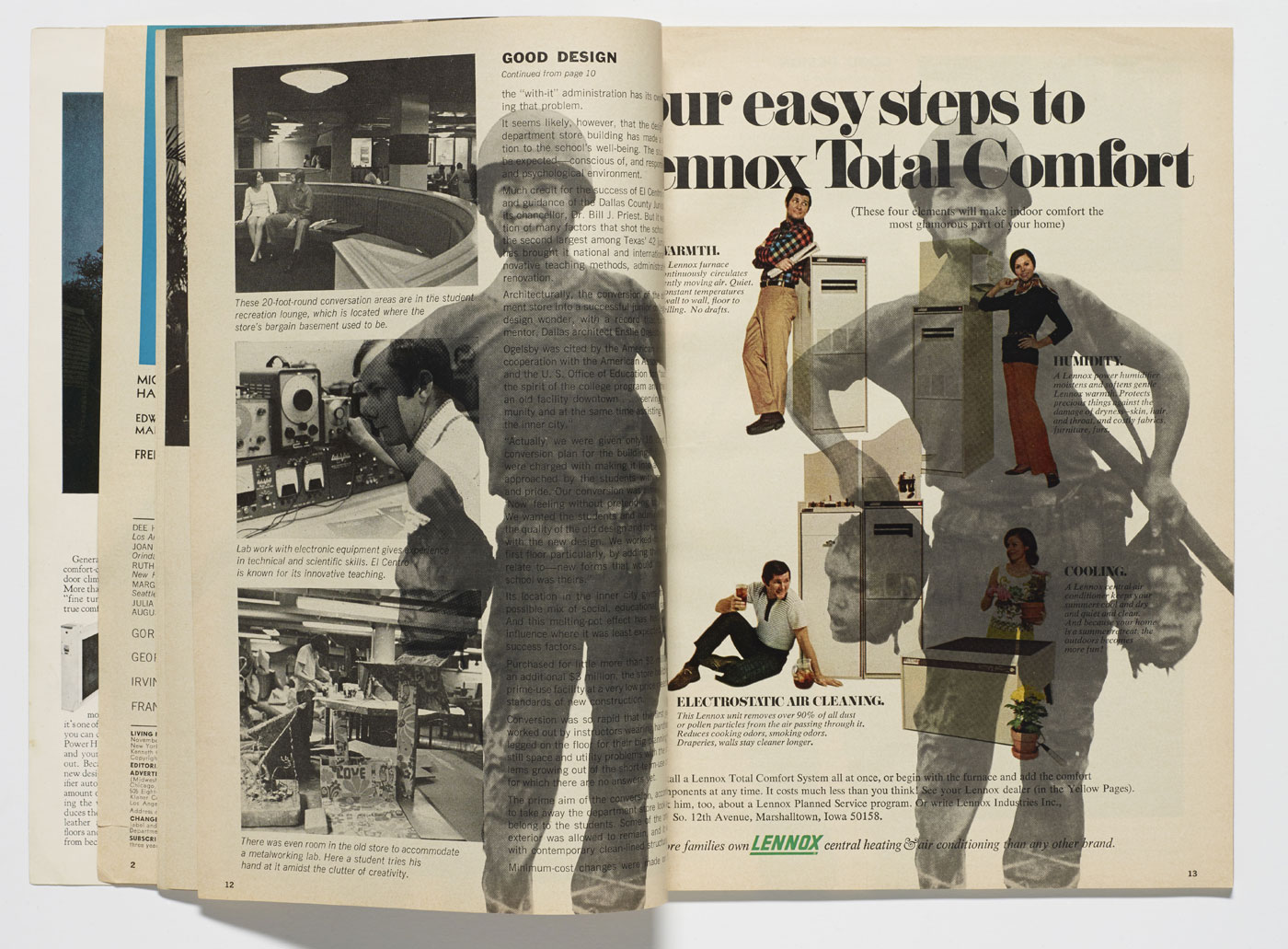
 

John F Williams (Australian, 1933-2016)
The Rocks, Sydney
1973
Gelatin silver photograph
22.6 x 34.1cm
Purchased 1989
© John F Williams


Australian vernacular photography. Such a large subject. Such a small exhibition.

With only 27 photographs from various artists (18 of which are shown in this posting), this exhibition can only ever be seen as the runt of the litter. I would have thought such a large area of photographic investigation needed a more expansive exposition than is offered here. There are no photobook, photo booth, Aboriginal, anonymous, authorless, family, gay or marginalised cultural photographs / snapshots. There are no light leaks, blur, fingers obstructing lenses, double exposures – all examples of serendipity and happenstance which could enter into an aesthetic arena.

Vernacular photography1 can be defined as the “creation of photographs, usually by amateur or unknown photographers both professional and amateur, who take everyday life and common things as subjects… Examples of vernacular photographs include travel and vacation photos, family snapshots, photos of friends, class portraits, identification photographs, and photo-booth images. Vernacular photographs are types of accidental art, in that they often are unintentionally artistic.”2 ‘Found photography’ is the recovery of a lost, unclaimed, or discarded vernacular photograph or snapshot.

While all of the photographs in the exhibition are unique images, some are definitely not vernacular in their construction – they are planned and staged photographs, what I would call planned happenstance (after John Krumboltz’s theory of career development). A perfect example of this are the photographs by Sue Ford (Sue Pike, 1963, printed 1988, below), Anne Zahalka (The girls #2, Cronulla beach, 2007, below) and Fiona Hall (Bondi Beach, Sydney, Australia, October 1975, below) which have an air of ceremonial seriousness that belies their classification as part of this exhibition. My favourites are the fantastic images by Glen Sloggett – witty, colourful, humorous with the photographer “acutely aware of the photographer and photograph’s role in pointedly constructing a narrative around Australian identity and history” – they are nevertheless self-deprecating enough that this does not impact on their innate “found” quality, as though the artist had just wandered along and captured the shot.

The route that the AGNSW has taken is similar to that of MoMA. Residing in the collection and shot by artists, these “vernacular” photographs are placed in a high art context. Their status as amateur or “authorless” photographs is undermined. This exhibit does not present vernacular photographs as just that. As the article on the One Street blog notes, what is being exhibited is as much about what has been collected by the AGNSW, its methodical and historicising classification, as it is about vernacular photographic form: chance, mistake and miscalculation. It is about creating a cliché from which to describe an ideal Australian identity, be it the beach, larrikinism, or the ANZAC / sporting “warrior”, and not about a true emotional resonance in the image that is created by, or come upon by, chance.

Dr Marcus Bunyan


Many thankx to the Art Gallery of New South Wales for allowing me to publish the photographs in the posting. Please click on the photographs for a larger version of the image.


1/ “Vernacular photography,” on One Way Street blog 20th October 2007 [Online] Cited 11/05/2014

“What is vernacular photography? Too broad to be understood as a genre per se, it can encompass anonymous snapshots, industrial photography, scientific photography, “authorless” photography, advertising, smut, as well as work that might be perceived as “other” than any of this random list. It could be understood as an oppositional photography – outside technical or artistic histories, yet, especially with the snapshot, it could also be entirely conventionalised, a manifestation of visual banalities, or an image so enigmatic that its meaning or genesis is entirely obscured. It is mistakes & failures as much as it may not be, & how we understand the images may or may not be separate from their initial intents. Is this a category we are making up?

The idea of the vernacular in photography is also an indication of photography as a medium informing the everyday, prevalent, “naturalised.””

2/ Szarkowski, John. “INTERVIEW: “Eyes Wide Open: Interview with John Szarkowski” (2006)” by Mark Durden, Art in America, May, 2006, cited in “Vernacular photography,” on Wikipedia website [Online] Cited 11/05/2014. No longer available online


Ed Douglas (United States of America, Australia, b. 6 May 1943) 'City-spaces #28, (John Williams), Sydney' 1976 printed 2012


Ed Douglas (United States of America, Australia, b. 6 May 1943)
City-spaces #28, (John Williams), Sydney
1976 printed 2012
From the series City-spaces 1975-78
Purchased with funds provided by the Photography Collection Benefactors’ Program 2012
© Ed Douglas


Words and Photos: Geoffrey Batchen’s Writing About Vernacular Photography

“At first, I was simply interested in bringing attention to a diverse range of photographic objects and practices that had not been much written about. But I soon recognised that these objects represented a significant challenge to the predominant history of photography. This history, dominated by the values ​​and tropes of art history, was not well-equipped to talk about photographs that were openly commercial, hybrid and mundane. Ie: the history of photography ignores most types of photography. My interest, therefore, has become more methodological and theoretical, in an effort to establish new ways to think of photography that could address the medium as a whole. I suggest that any substantial inclusion of vernacular photographs into a general history of photography will require a total transformation of the character of that history…

I suggest that any inclusion of vernacular photography in the larger story, will require a complete transformation of the character of that story; it will require a new kind of history altogether. My writings may have encouraged this idea, but I am just one of many scholars who have been pursuing this goal. Indeed, I would say that this idea is now the norm. The next step is to look beyond this and engage other parts of the history of photography that have been similarly neglected. For example, there are many researchers at the moment that are examining the photographs produced outside Europe and the United States, such as China, Indonesia, and Africa…

Snapshots are complicated objects. They are unique to each maker and almost always completely generic. They happily adopt the visual economy that mediates most photographic practices: same but different. You might say that every snapshot is an authentic copy of a prescribed set of middle-class values and familiar pictorial clichés. That does not make them any less fascinating, especially for people who treasure them. But it does make them difficult to write about…

It is certainly possible to recognise the existence of regional practices of photography. I wrote, for example, about the making of fotoescultura in Mexico, and about a specific form of ambrotype in Japan. No doubt one could claim to see some regional aspects of snapshots made in the United States that distinguish them from ones made in Australia or, say, Indonesia. But the more challenging task is to talk about those things that can’t be seen. For example, snapshots made in Australia and China may look exactly the same to my eye, but it stands to reason that they don’t mean the same thing (after all, access to the camera for personal photos is a fairly recent phenomenon in China). We must learn how to write these kind of differences.”

Interview by LG. “Words and Photos: Geoffrey Batchen’s Writing About Vernacular Photography,” on the LesPHOTOGRAPHES.com website Nd (translated from the French) [Online] Cited 04/05/2014. No longer available online


Ed Douglas (United States of America, Australia, b. 6 May 1943) 'City-spaces #40, Sydney' 1976 printed 2012


Ed Douglas (United States of America, Australia, b. 6 May 1943)
City-spaces #40, Sydney
1976 printed 2012
From the series City-spaces 1975-78
Gelatin silver photograph
23.6 x 30.7cm image
Purchased with funds provided by the Photography Collection Benefactors’ Program 2012
© Ed Douglas


After relocating from USA to Australia in 1973, Ed Douglas spent a few years living in the country prior to taking on a teaching position at Sydney College for the Arts in 1976. The series City-spaces was commenced in Sydney and then developed further when Douglas moved to Adelaide in 1977. Having been schooled in the formal traditions of American documentary photography, Douglas’s images appear like notations of an urban explorer attempting to locate himself in a new country. Seemingly fragmentary, they look at the specificities of the mundane and the ordinary. Close acquaintances such as photographers Ingeborg Tyssen and John F. Williams appear in City spaces #29 and City spaces #28, indicating the personal nature of the series.

Intimately scaled and tonally rich, the black and white images exalt the formal beauty which can be found in the random textures of daily existence. They are also permeated with gentle humour and a sense of quiet drama that unfolds in the strangely misplaced confluences of objects, figures and spaces. Douglas’s interest in the formal and emotional qualities of topography was emblematic of new approaches in documentary photography of the time. His 1983 series of colour photographs depicting the gypsum mine on Kangaroo Island (collection of AGNSW) developed this trajectory further by fusing the aesthetics of abstraction and objective documentation.


Gerrit Fokkema (Papua New Guinea, Australia, b. 1954) 'Woman hosing, Canberra' 1979


Gerrit Fokkema (Papua New Guinea, Australia, b. 1954)
Woman hosing, Canberra
1979
Gelatin silver photograph
34.9 x 46.5 cm image
© Gerrit Fokkema


Gerrit Fokkema’s photographs of everyday Sydney and Canberra in the early 1980s are examples of Australian photography becoming more self-aware. These decisive snapshots of suburban life reveal an irony and conjure Fokkema’s own history growing up in Queanbeyan. Though captured in seemingly banal settings, the images intrigue, pointing to issues beyond what is represented in the frame. The housewife watering the road and a young tattooed man in front of a car are both depicted alone within a sprawling suburban landscape, suggesting the isolation and boredom in the Australian dream of home ownership. The sense of strangeness in these images is consciously sought by Fokkema, aided by his embrace of the glaring and unforgiving ‘natural’ Australian light.

Gerrit Fokkema’s Woman hosing, Canberra is an affectionate and gently ironic portrait of suburban life in Canberra. Fokkema was familiar with his subject matter, raised as he was in the nearby township of Queanbeyan. After studying photography at Canberra Technical College 1974-77 he became the staff photographer for the Canberra Times in 1975. He held his first exhibition in the same year at the Australian Centre for Photography, Sydney. His career as a photo-journalist lead him to work with the Sydney Morning Herald in 1980 and participation with several international Day in the life of…. projects between 1986 and 1989.

Fokkema uses the ‘decisive moment’ of photo-journalism to reveal the incidental quirks of ordinary life in this image. The bland uniformity of the streetscape, with its identical archways and mundanely shuttered doors, is punctuated by the absurd proposition of a woman watering the street rather than the adjacent grass. Her presence is the only sign of life in an otherwise inanimate scene, and her actions suggest a kind of strangeness that lies within the normality of suburbia. Many of Fokkema’s images play with such chance incidences and odd juxtapositions, revealing his interest in surrealism and the notion of automatism. Indeed, the repeated archways and the lone figure inhabiting otherwise empty urban space of Woman hosing, Canberra recall the proto-typical surrealist painting, Mystery and melancholy of a street 1914, by Giorgio de Chirico. Fokkema’s image is, however, very much a product of Australia – of its bright ‘available’ light and of the dream of home-ownership. Fokkema has continued to document the Australian way of life. In 1986 he left newspapers to freelance as a commercial photographer and published Wilcannia, portrait of an Australian town. He has since exhibited works based on tender observations of his family members and of family life.

© Art Gallery of New South Wales Photography Collection Handbook, 2007


Gerrit Fokkema (Papua New Guinea, Australia, b. 1954) 'Blacktown man' 1983


Gerrit Fokkema (Papua New Guinea, Australia, b. 1954)
Blacktown man
1983
Gelatin silver photograph
30.6 x 40.6cm image
© Gerrit Fokkema


The work of Gerrit Fokkema exhibits a particular sensitivity to the uneasiness of people in Australian landscapes, both urban and rural. Fokkema was born in New Guinea in 1954, but raised in Canberra and worked as a press photographer before freelancing from 1986. Although his photographs demonstrate an interest in the formal qualities of landscape, the sense of rhythm his compositions generate also evoke the monotony of Australian space – sweeping terracotta roofs and long straight paths. This monotony is only interrupted by the presence of the human figure, usually isolated, alone and awkwardly out of place. In Blacktown Man 1983, the flat image of the man appears dramatically superimposed on the land and sky of the suburban street. By reminding us of our sometimes uncomfortable relationship with the spaces we inhabit, Fokkema’s work rejects any attempt to romanticise Australian life.


Trent Parke (Australian, b. 1971) 'Backyard swing set, QLD' 2003


Trent Parke (Australian, b. 1971)
Backyard swing set, QLD
2003
From the series Minutes to midnight
Type C photograph
109.9 x 164cm
Gift of Albie Thoms in memory of Linda Slutzkin, former Head of Public Programmes, Art Gallery of New South Wales 2006
© Trent Parke


Australian vernacular photography traces developments in photographic practice from the postwar period through to the present day, with images ranging from documentary or ‘straight’ photography (where the subjects are usually unaware of the camera), through to those that look self-reflexively at the constructed nature of the medium.

The increasing role of photography in the latter part of the 20th century attests to the rising need Australians felt to apprehend the nation, personal identity and society through images. Many of these photographs offer frank perspectives on Australian culture without the romanticising tendencies of earlier photographers. Photographing the everyday became a way of understanding how Australia saw (and sees) itself, with recurrent themes such as beach culture, suburbia, race relations, protest and the role of women among the central concerns of image-makers then and now.

By the 1960s Australian photographers were comparing their work with international peers, thanks to photographic publications and the watershed 1959 tour of The family of man exhibition organised by the Museum of Modern Art, New York. Institutional support for photography didn’t come until the 1970s; however those committed to the medium forged on, intent on capturing their visions of Australia photographically. The family of man exhibition toured Australia in 1959 and was enormously influential, with its themes of birth, love and death common to all humanity. However, possibilities for Australian photographers to be noticed were rare until the 1970s due to the lack of institutional support. Nonetheless, photographers from David Moore and Robert McFarlane to the young Sue Ford forged on, trying to find their own vision of Australian life and how it could be represented photographically. This exhibition looks at some of the photographers from then as well as those working more recently – such as Anne Zahalka, Trent Parke and Glenn Sloggett – to consider their various approaches to the depiction of modern Australian life.

In the Australian Photography Annual of 1947, photographer and director of the Art Gallery of NSW Hal Missingham wrote: “In a country supposedly occupied by people indulging in a vigorous outdoor life, where are the [photographic] records of beach and sport… where are the photographs of the four millions of people who live and work in our cities? What are they like – what do they do – what do they wear, and think?”

Text from the AGNSW website


Jeff Carter (Australia, 05 Aug 1928 - Oct 2010) 'The Sunbather' 1966


Jeff Carter (Australia, 05 Aug 1928 – Oct 2010)
The Sunbather
1966
Gelatin silver photograph
39.1 x 27.6cm image
© Jeff Carter


“I don’t regard photography as an art form, although I know it can be for others… To me the camera is simply an unrivalled reporter’s tool. It is an aid to getting the story “properly true,”” Jeff Carter said in 2006. Working mainly as a photojournalist, Carter wanted to make images that depicted social reality. He aimed to show the ‘unknown’, those people who are rarely seen. His approach resulted in frank, arguably even unflattering, images of Australian life, such as this of a beach-goer in the 1960s, heralding the changing social mores of the time.


John F. Williams (Australia, 1933-2016) 'Sydney' 1964, printed later


John F Williams (Australia, 1933-2016)
Sydney
1964, printed later
Gelatin silver photograph
24.3 x 24.3 cm image
© John F Williams


Sydney photographer, lecturer and historian John F. Williams has a long and personal interest in the ramifications of the Allies’ commitment to and sacrifice in the First World War which he later explored in his 1985 series From the flatlands. Williams became an amateur street photographer, inspired by Henri Cartier-Bresson and the photojournalist W. Eugene Smith. He read The family of man catalogue and saw the exhibition in 1959 but he rejected its “saccharine humanism and deliberate ahistoricism” choosing instead to socially document the raw character of Australia.1

When interviewed in 1994 Williams said: “After the [First World War] you had a range of societies which were pretty much exhausted, and they tended to turn inwards. In a society like Australia which had a poorly formed image of itself, where there was no intellectual underpinning, the image of the soldier replaced everything else as a national identity.”2

Sydney expresses the ‘Anzac spirit’ born in the battlefields of Gallipoli, the Somme and Flanders, a character study of an independent, introspective soldier. With an air of grit, determinedly smoking and wearing his badge, ribbons and rosemary as remembrance, Sydney stands apart from the crowd, not marching with his regiment. Williams embraced the ‘element of chance’ or the ‘decisive moment’ as he documented the soldier in a public place observing the procession. Taken from a low angle and very close up the man is unaware of the photographer at the moment the shot was taken, apparently lost in his own memories. The old soldier represents a generation now lost to history but portraits such as these continue to reinforce the myth of national identity.

1/ Jolly, M. “Faith sustained,” in Art Monthly, September 1989, pp. 18-19
2/ “John Williams – photographer and historian: profile,” in Sirius, winter, Macquarie University, Sydney, 1994, p. 5

© Art Gallery of New South Wales Photography Collection Handbook, 2007


Robert McFarlane (Australia, b. 1942) 'Happening Centennial Park, Sydney' c. 1968


Robert McFarlane (Australia, b. 1942)
Happening Centennial Park, Sydney
c. 1968
Gelatin silver photograph
25.9 x 17.6cm image
© Robert McFarlane


Hal Missingham (Australia, 08 Dec 1906 - 07 Apr 1994) 'Surf carnival, Cronulla' 1968, printed 1978


Hal Missingham (Australia, 08 Dec 1906 – 07 Apr 1994)
Surf carnival, Cronulla
1968, printed 1978
Media category
Gelatin silver photograph
38.1 x 26.3cm image
© Hal Missingham Estate


Photographer and former Art Gallery of NSW director, Hal Missingham wrote in the 1947 Australian Photography annual: “In a country supposedly occupied by people indulging in a vigorous outdoor life, where are the [photographic] records of beach and sport…? Where are the photographs of the four millions of people who live and work in our cities? What are they like – What do they do – What do they wear, and think?” This image points to Missingham’s own attempts to answer that question. An interesting counterpoint to the images taken at Cronulla around 40 years later, here Missingham shows a group of young women standing behind a fence watching as young men train to be lifesavers.

Hal Missingham often holidayed at his beach house at Garie in the Royal National Park south of Sydney, not far from Cronulla. In 1970 he published Close focus a book of photographic details of rocks, pools, sand and driftwood. As a beachcomber and observer of beach culture Missingham delighted in his immediate environment. Surf carnival, Cronulla is a quintessential Australian scene, one that frames an important aspect of national identity and culture. As passive observers, the 1960s was a time when many girls were still ‘minding the towels’ for the boys who surfed or competed in carnivals. Barricaded from the beach and its male activity the young women in bikinis are oblivious to the photographer who has foregrounded their relaxed tanned bodies behind the wire as they in turn observe and discuss the surf lifesavers in formation at the water’s edge. Although a beach is accessible for the majority of Australians and is now an accepted egalitarian space where women bodysurf, ride surfboards and compete along with beachgoers from diverse ethnic backgrounds, Surf carnival, Cronulla suggests a specific demography.

© Art Gallery of New South Wales Photography Collection Handbook, 2007


Fiona Hall (Australia, b. 1953) 'Bondi Beach, Sydney, Australia, October 1975' 1975


Fiona Hall (Australia, b. 1953)
Bondi Beach, Sydney, Australia, October 1975
1975
Gelatin silver photograph
28.2 x 27.9cm image
Hallmark Cards Australian Photography Collection Fund 1987
© Fiona Hall


Australian vernacular photography considers how photographers have used their cameras to depict Australian life, and how ideas of the nation have been constructed through photographic images.

Sixteen Australian photographers are represented by some 27 photographs taken from the 1960s to the 2000s. The photographs range from the more conventionally photo-documentary through to later works by photographers positioned more consciously in an art context. A selection of photography books of the period are also on display.

Artists include: Jeff Carter, Ed Douglas, Peter Elliston, Gerrit Fokkema, Sue Ford, Fiona Hall, Robert McFarlane, Hal Missingham, David Moore, Trent Parke, Roger Scott, Glenn Sloggett, Ingeborg Tyssen, John F Williams, William Yang and Anne Zahalka. Each of these artists in their own way interweave personal, documentary and fictional aspects through their images.

The works in Australian vernacular photography expose the sense of humour or larrikinism often seen as typical to Australia through showing aspects of beach and urban culture that hadn’t been imaged so bluntly before the 1960s. The characters that emerge range from leathery sunbathers, beer-drinking blokes and hippies, to beach babes, student protesters and suburban housewives, shedding light on the sense of liberation and self-recognition that arose during this period.

As photography struggled to gain recognition as an art form in the mid 20th century, the influence of exhibitions such as the Museum of Modern Art, New York’s Family of Man, which toured Australia in 1959, was vital in allowing Australian photographers to compare their work to that of their international peers.

Throughout the 1960s and ’70s, photographers such as Jeff Carter, Sue Ford, David Moore, Roger Scott and John F Williams worked in a photo-documentary mode that was less about staging a shot or creating formal harmony within the frame than about capturing a moment of lived reality. To this end, such photographs involved minimal intervention from the photographer, both before and after the shutter release. Subjects were often unaware of being photographed and extensive darkroom manipulation was frowned upon, the rawness of prints was supposed to signal authenticity.

This approach resulted in images that seemed to offer a frank perspective on Australian culture, without the romanticising tendencies of earlier photography, which had sought to construct ideals rather than document what was actually there. As artists began to realise what they could do with the camera, so too did the images evolve. By the 1980s and ’90s photographers were making images that showed the subject’s awareness of being photographed, as with Gerrit Fokkema, or presented a harsh, even aggressive perspective on the depicted situations by removing people altogether, as with Peter Elliston. This signalled the increasingly self-conscious role of photographers themselves in the equation, suggesting the influence of post-modern theories of subjectivity and their effect on the images produced.

By the time we reach the 2000s, artists such as William Yang, Anne Zahalka and Trent Parke are acutely aware of the photographer and photograph’s role in pointedly constructing a narrative around Australian identity and history. The exhibition maps out this history and offers unexpected insight into the construction of a particularly Australian vernacular within photographic practice.

Press release from the AGNSW


Sue Ford (Australia, 1943 - 06 Nov 2009) 'Sue Pike' 1963, printed 1988


Sue Ford (Australia, 1943 – 06 Nov 2009)
Sue Pike
1963, printed 1988
Media category
Gelatin silver photograph
34.2 x 34.2cm image
Gift of Tim Storrier 1989
© Estate of Sue Ford


Sue Ford’s photograph of her friend Sue Pike blow-drying her hair in the kitchen captures the young woman preparing for a night out. Ford often photographed those close to her as well as continually making self-portraits throughout her career. The photograph is domestic and intimate, showing a common aspect of life for young women in the 1960s. It suggests the procedure of preening necessary to go out and find ‘marriage and children’, while the alcohol and cigarette indicates the emerging movement for women’s liberation.

“My earliest “studio portraits” … were of my friends from school … These photo sessions were approached with a ceremonial seriousness, My friends usually brought different clothes with them and during the sessions we would change clothes and hairstyles.” Sue Ford 1987 1

Sue Ford took the majority of her photographs at this time with the camera set on a 1/60th of a second at f/11, a ‘recipe’ she wrote which had more chance of success. Poetic, fragmentary text relating to Ford’s 1961 photo-essay in “A sixtieth of a second: portraits of women 1961-1981” identify the young women’s recipe for flirtatious endeavour – ‘gossamer hairspray’, ‘peroxide’, ‘plucked eyebrows’, ‘big hair rollers to achieve “La Bouffant”‘, ‘Saturday nite’ and ‘Jive’. Sue Pike exemplifies the era of girls preparing for a night out with the boys in their ‘FJ Holdens and Hot Rods’. Staged in the kitchen, probably on a Saturday afternoon, Sue Pike, in a padded brunch coat with hair in rollers plugged into a portable hair dryer, will be a part of the action, the gossip and camaraderie. A further portrait taken in the same year shows Sue Pike metamorphosed as a beautiful bride, carefully coifed ash blonde hair under a white net veil, eyes momentarily shut, traditionally decorated with pearls and posy. Ford suggests in her prose and portraits that there are choices to be made – ‘marriage and children’ or mini-skirts and the Pill, as her old school friends go in different directions.

1/ Ford. S. “A sixtieth of a second: portraits of women 1961-1981,” Experimental Art Foundation, Adelaide, 1987, p. 4

© Art Gallery of New South Wales Photography Collection Handbook, 2007


Anne Zahalka (Australia, b. 1957) 'The girls #2, Cronulla beach' 2007


Anne Zahalka (Australia, b. 1957)
The girls #2, Cronulla beach
2007
Type C photograph
72.5 x 89.5cm image
Gift of the artist 2011. Donated through the Australian Government’s Cultural Gifts Program
© Anne Zahalka. Licensed by Viscopy, Sydney


As part of a generation of Australian women artists who came to the fore in the early 1980s, Anne Zahalka’s practice has always been concerned with questioning dominant myths and cultural constructs. The broad sweep of Zahalka’s oeuvre has often been underpinned by a common strategy: the world in her images appears as theatre where place, gender and national identity are questioned.

Many of Zahalka’s more recent works are located outside the studio though the natural environment can be seen to be equally constructed. In The girls #2, Cronulla beach, the photographer has returned to the seaside, which was the setting for one of her most iconic series, Bondi: playground of the Pacific 1989. The girls was made as a response to the Cronulla riots and after an introduction to Aheda Zanetti, the designer of the burqini. Zahalka “also knew of a documentary film being made following the recruiting of Lebanese men and women into the lifesaving club. It seemed like there was change adrift on the beachfront.”1 The permutations and post-modern anxiety about what constitutes Australian identity seen in the Bondi… series, have spilled out into the real world. But the image of these young Muslim women lifeguards seems to celebrate the potential to transgress accepted value systems.

Anne Zahalka said in 1995: “I am primarily concerned with… representations to do with place, identity and culture. Through the appropriation and reworking of familiar icons and styles I seek to question (and understand) their influence, meaning and value.” Twelve years later, Zahalka continues this line of inquiry with the series Scenes from the Shire. In this image, three Muslim girls wearing Burqinis (swimwear made for Muslim women conceived by Lebanese-Australian designer Aheda Zanetti) are standing cross-armed on Cronulla beach, a lifesaving raft is in the background. Zahalka made this work in response to the Cronulla riots of 2005. The image juxtaposes Muslim tradition with the Australian icon of the lifesaver, suggesting cultural overlap and changing national identity.

1. A. Zahalka et al, “Hall of mirrors: Anne Zahalka portraits 1987-2007,” Australian centre of photography, Sydney 2007, p. 43


William Yang (Australia, b. 1943) 'Ruby's kitchen Enngonia' 2000, printed 2002


William Yang (Australia, b. 1943)
Ruby’s kitchen Enngonia
2000, printed 2002
From the series miscellaneous obsessions
Type C photograph
35.5 x 53.5cm image
© William Yang


William Yang was born in North Queensland, a third generation Chinese-Australian. He is known both as a photographer and for his monologues with slides which he has presented around the world to great acclaim. One of these, Sadness 1992, was adapted for the screen by Tony Ayres and won AWGIEs amongst other awards. A major retrospective of Yang’s work, Diaries, was held at the State Library of NSW in 1998. Through April 24 – June 1, 2003 Yang presented all his monologues at Belvoir St Theatre, Sydney.

Yang has documented various subcultures over the last 30 years and this is reflected in his photographs as well as his monologues. A remarkable storyteller with a unique style, his current work is a synthesis of his ongoing concerns. While these concerns spring very much from his experiences growing up with a Chinese background in far north Queensland, through to his exploration of the gay community in Sydney, the work transcends the personal and becomes a meditation on the subtleties of the ordinary and everyday.

This series of images reflects Yang’s current life of travel and contact with his far flung friends and extended family. Though the subject, at its most superficial, is food, where, when and who is there at the time is of equal importance. Consequently each photograph in the series presents a web of connections and is underpinned with similar intentions to Yang’s other work, regardless of the subject.

“I don’t think I have a great technical attitude but I am interested in people,” William Yang said in 1998. Yang is known for his candid photographs of friends and situations he encounters. The images are usually accompanied by a story about his life, sometimes handwritten on the print itself, sometimes spoken aloud in performative contexts. He uses narrative as a way of locating his images in a particular moment in his personal history as well as social history at large. Yang explores themes around Australian and gay identity in a way that is frank and sometimes confronting. In this work, from a series about food, a chunk of kangaroo meat sits casually atop a laminate bench; other Australian icons such as Wonder White and Weet-Bix are also visible. The work allows for a multiplicity of signs to coexist: the slaughtered Australian mascot, the drab generic kitchen, the processed ‘white’ bread, with the Chinese-Australian photographer observing it all.


Glenn Sloggett (Australia, b. 1964) 'Cheaper & deeper' 1996


Glenn Sloggett (Australia, b. 1964)
Cheaper & deeper
1996
From the series Cheaper & deeper
Type C photograph
80.0 x 79.9cm image
Gift of Amanda Love 2011. Donated through the Australian Government’s Cultural Gifts Program
© Glenn Sloggett


Based in Melbourne, Glen Sloggett has exhibited extensively across Australia, including a touring exhibition with the Australian Centre for Photography, New Australiana 2001. Internationally, his work was included in the 11th Asian Art Biennale in Bangladesh, 2004 and the 9th Mois de la Photo ‘Image and Imagination’ in Montreal 2005.

Sloggett’s work depicts scenes from Australian suburbia with a startling mix of warmth and melancholy. Devoid of people, his photographs reflect the isolation and abandonment that afflicts the fringes of Australian urban centres. His images don’t flinch from the ugly, kitsch, and bleak. Sloggett says, “No matter where I go, I always find places and environments that are in the process of falling down. These are the images of Australia that resonate most strongly for me as an artist. I want to capture the last signs of optimism before inevitable disrepair.” (Glen Sloggett, quoted in A. Foster. Cheaper and deeper, ex. Bro. ACP 2005) His images of disrepair are infused with black humour and at the same time, affection for Australian suburbia.

From dumpy derelict flats to pavements graffitied with the words ‘mum killers’, Sloggett’s photographs capture an atmosphere of neglect. One classic image depicts a pink hearse, with the slogan Budget burials cheaper & deeper!! stencilled in vinyl on the side window. Another image shows an industrial barrel, on which is scrawled the evocative word ‘Empty’. In a third image, a dog rests on the pavement outside ‘Kong’s 1 hour dry cleaning’ – the bold red and yellow lettering on its window in stark contrast to the cracked paint of the exterior wall, and half-clean sheet that forms a makeshift curtain. These images have a profundity that is at once touching and surprising; as Alasdair Foster has commented, “In a world of rabid materialism and shallow sentiment, Sloggett’s photographs show us that life really is much cheaper and deeper.”

These five works by Glenn Sloggett serve as forms of photographic black humour. Devoid of people and always in colour, his photographs often take mundane elements from the world and make us notice their tragicomedy. This group is rooted in a play with text, where the tension between what is written and what we see is paramount. Sloggett makes comment on Australian life and culture, showing how the fringes of towns and the paraphernalia of the everyday give insight into the Australian psyche.


Glenn Sloggett (Australia, b. 1964) 'Hope Street' 2000


Glenn Sloggett (Australia, b. 1964)
Hope Street
2000
From the series Cheaper & deeper
Type C photograph
80.4 x 80.6cm image
Gift of Amanda Love 2011. Donated through the Australian Government’s Cultural Gifts Program
© Glenn Sloggett


Glenn Sloggett (Australia, b. 1964) 'Empty' 2000


Glenn Sloggett (Australia, b. 1964)
Empty
2000
From the series Cheaper & deeper
Type C photograph
80.4 x 80.6cm image
Gift of Amanda Love 2011. Donated through the Australian Government’s Cultural Gifts Program
© Glenn Sloggett


Glenn Sloggett (Australia, b. 1964) 'Kong's 1 hour dry cleaning' 1998


Glenn Sloggett (Australia, b. 1964)
Kong’s 1 hour dry cleaning
1998
From the series Cheaper & deeper
Type C photograph
80.2 x 80.0cm image
Gift of Amanda Love 2011. Donated through the Australian Government’s Cultural Gifts Program
© Glenn Sloggett


Art Gallery of New South Wales
Art Gallery Road, The Domain
Sydney NSW 2000, Australia

Opening hours:
Open every day 10am – 5pm
except Christmas Day and Good Friday

Art Gallery of New South Wales website

LIKE ART BLART ON FACEBOOK

Back to top