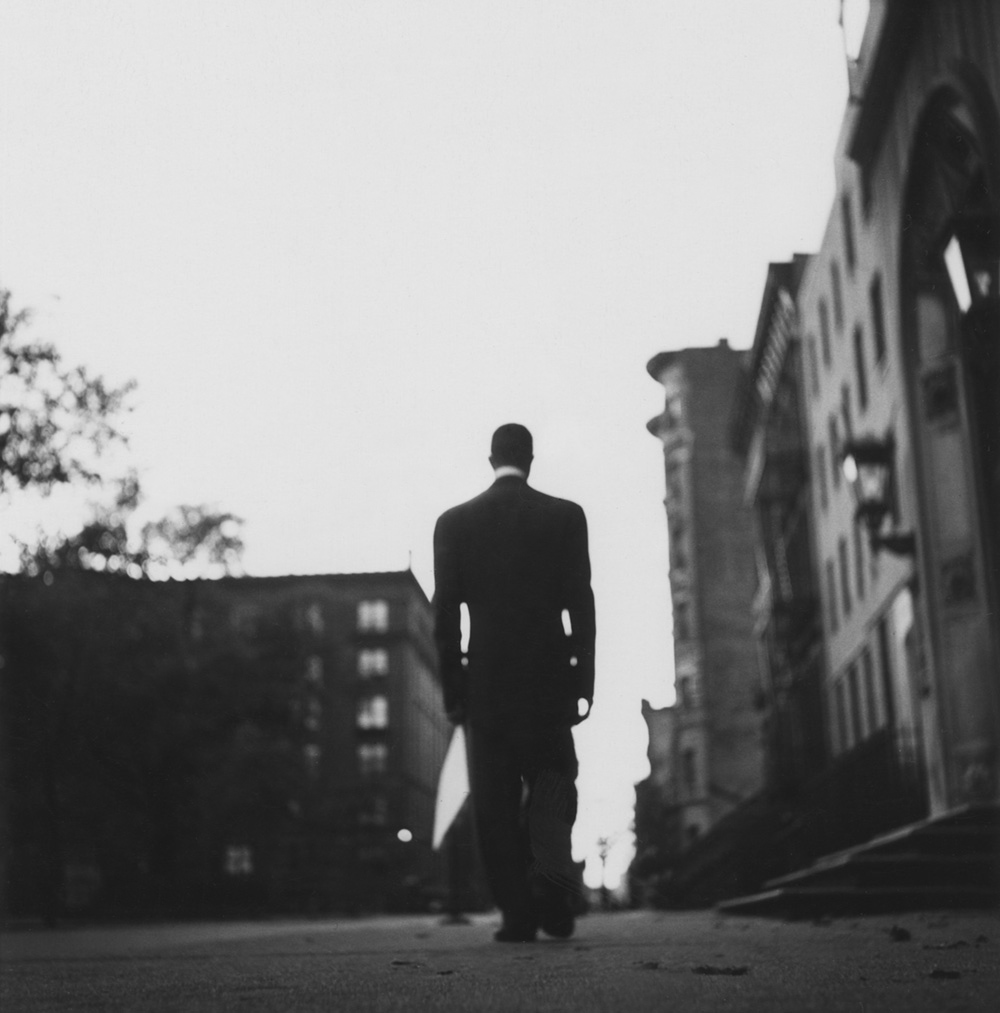
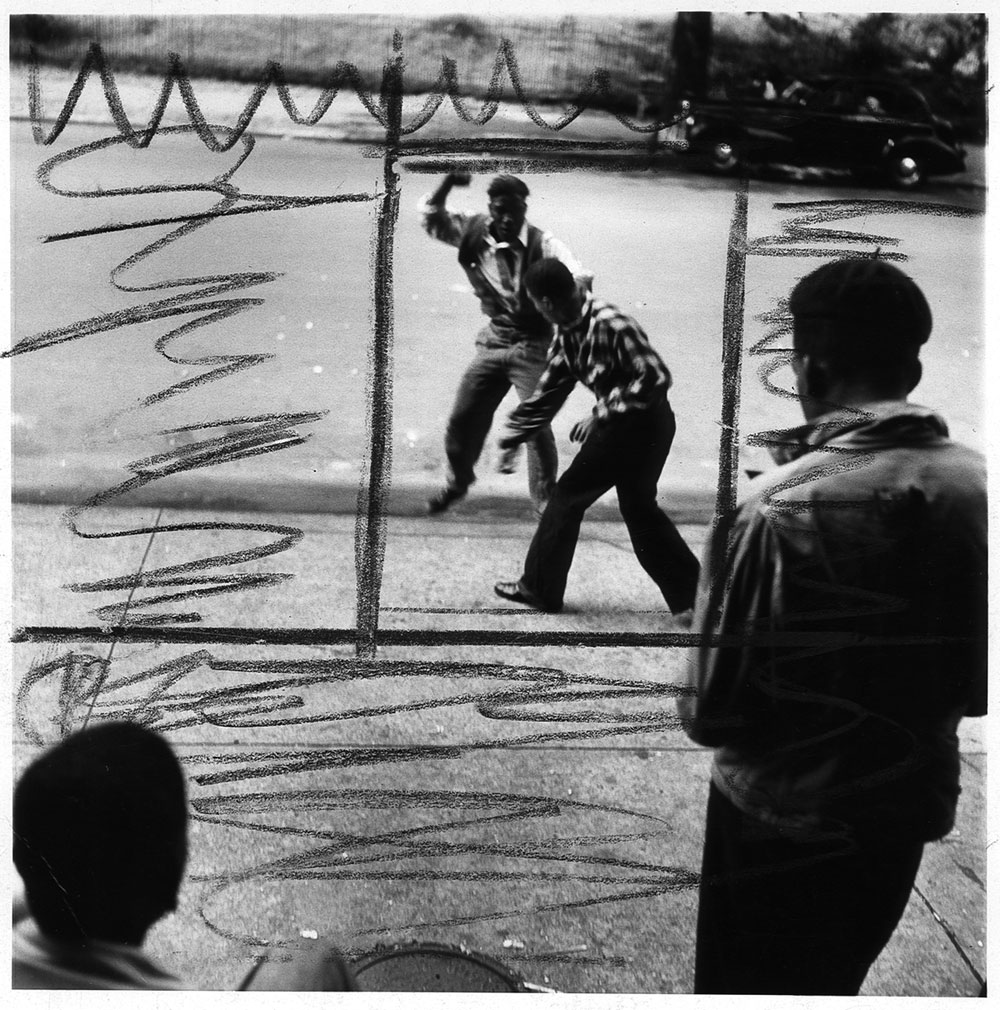
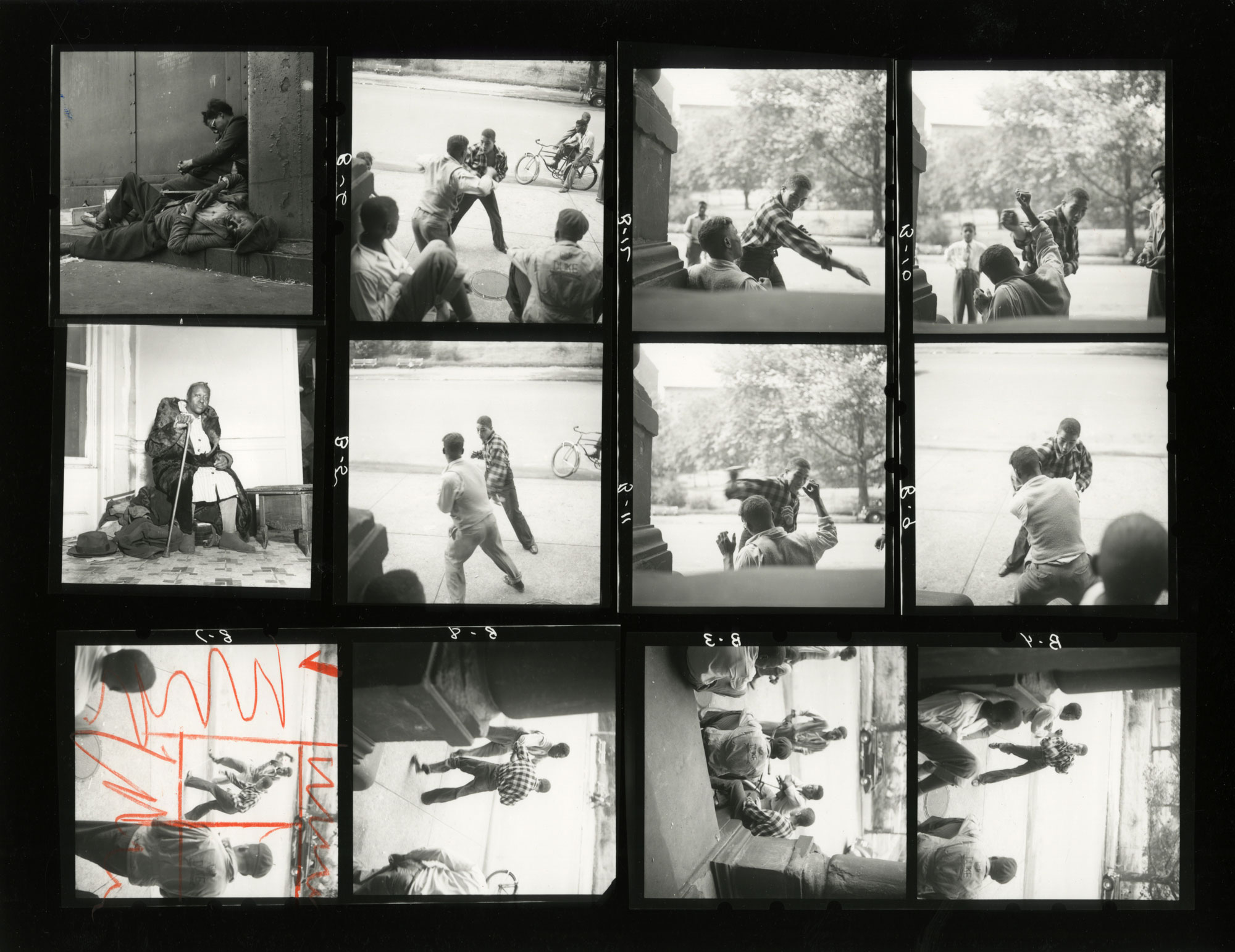
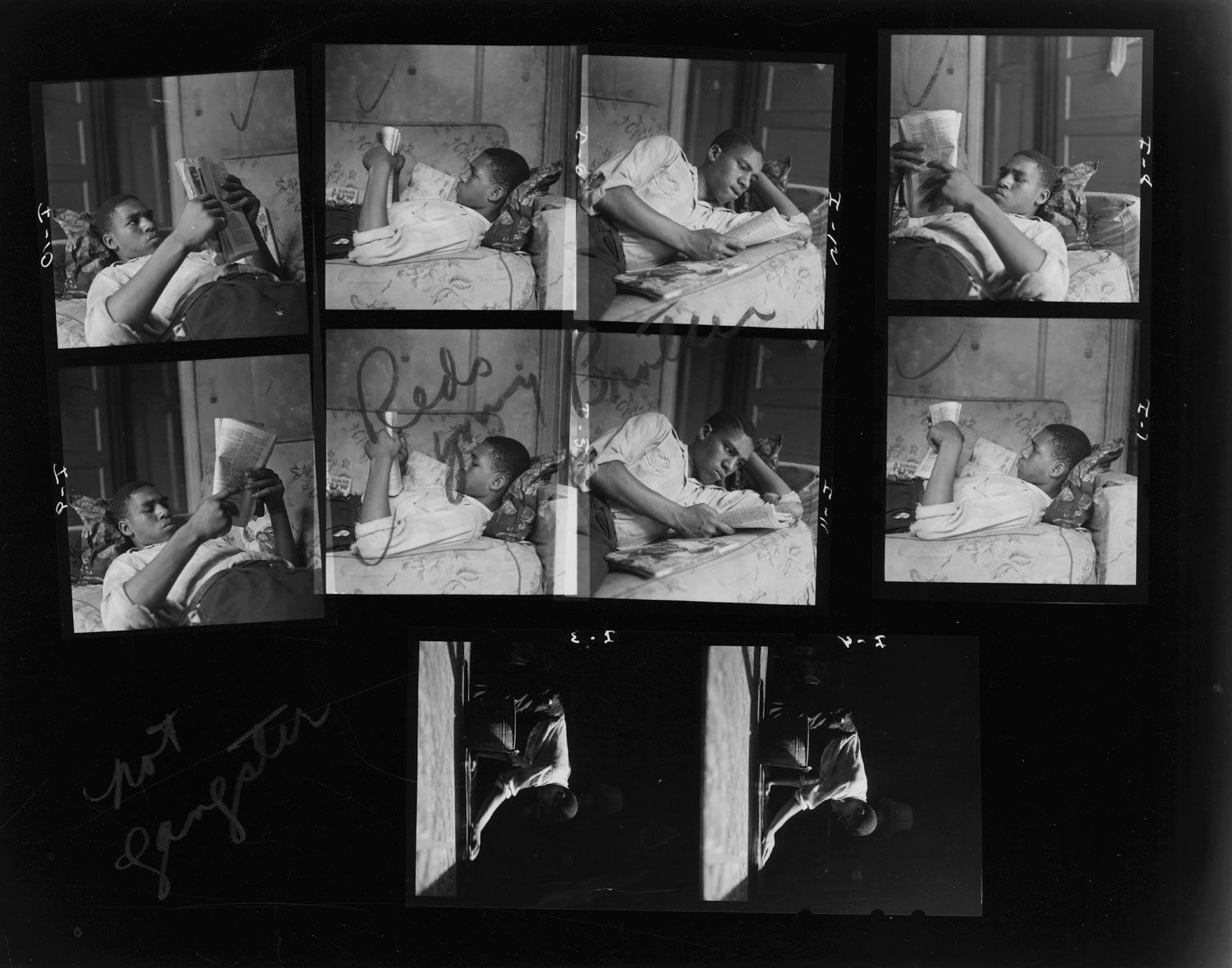
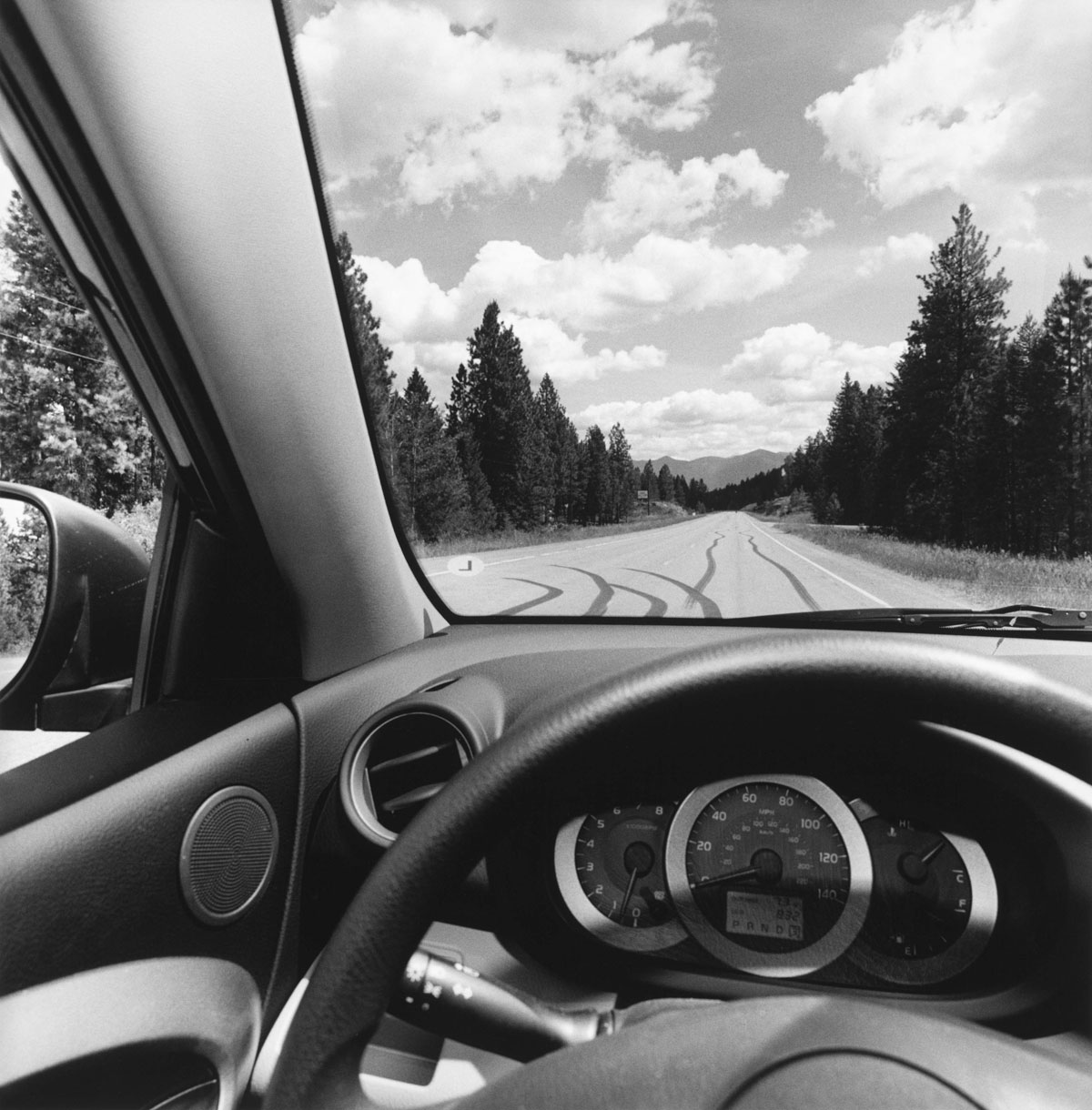
Exhibition: ‘Everyday Epiphanies: Photography and Daily Life Since 1969’ at The Metropolitan Museum of Art, New York

Exhibition dates: 25th June 2013 – 26th January 2014


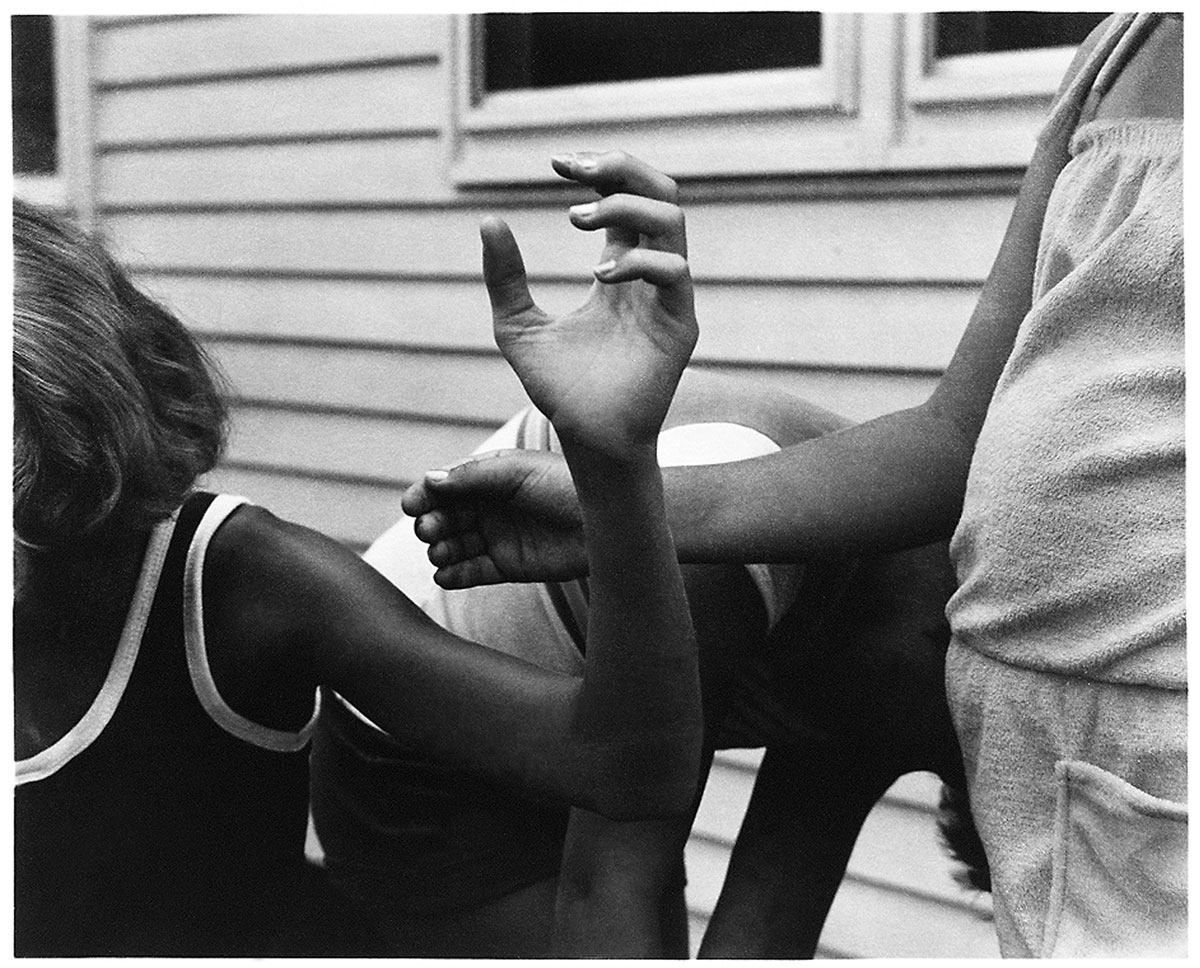
John Baldessari (American, 1931-2020) 'Hands Framing New York Harbor' 1971


John Baldessari (American, 1931-2020)
Hands Framing New York Harbor
1971
Gelatin silver print
25.4 x 18cm (10 x 7 1/16 in.)
Purchase, The Horace W. Goldsmith Foundation Gift, through Joyce and Robert Menschel, 1992
Shunk-Kender © Roy Lichtenstein Foundation


Epiphany: a moment in which you suddenly see or understand something in a new or very clear way.

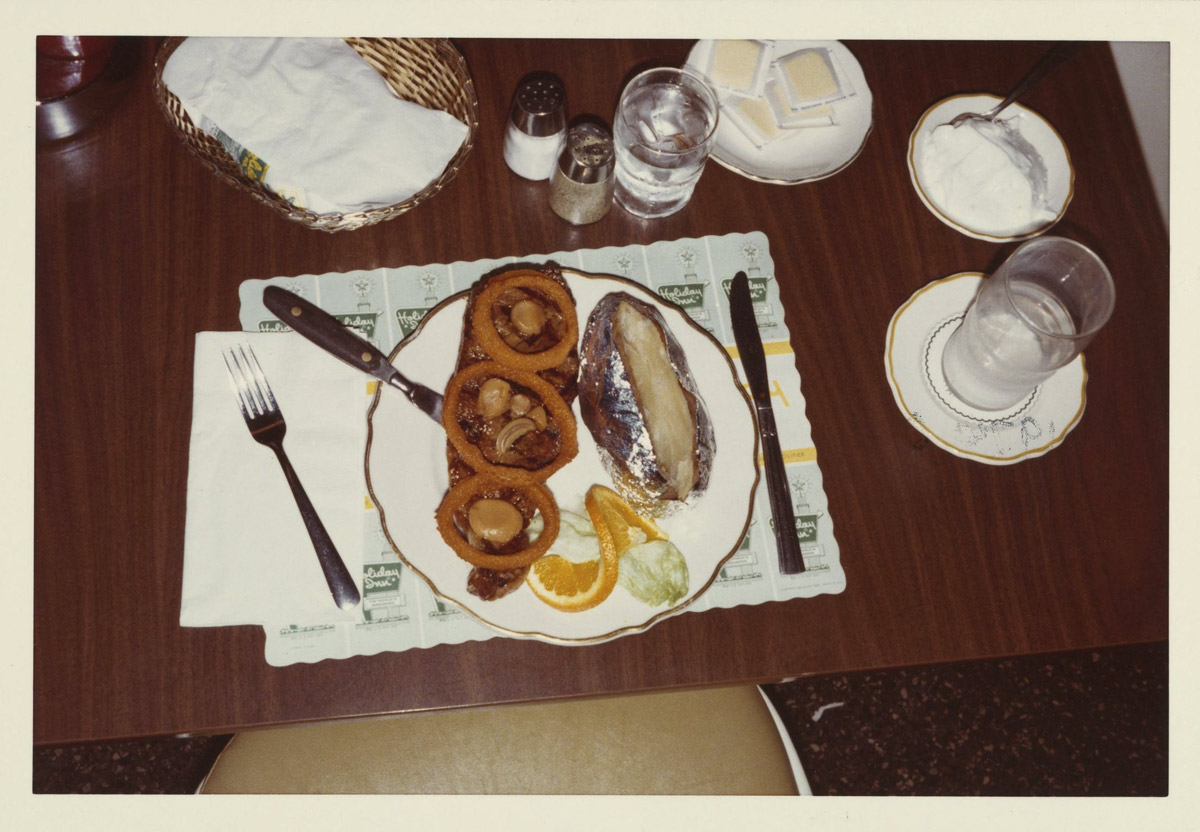
Stephen Shore’s photographs seem the most insightful epiphanies in this posting, picturing as they do “what he ate, the rest stops he visited, the people he met.” In other words, the wor(l)d as he saw it.

Marcus

Many thankx to The Metropolitan Museum of Art, New York for allowing me to publish the photographs in the posting. Please click on the photographs for a larger version of the image.


“With the unspoken rules that exhibitions in the Met’s contemporary photography gallery must be drawn exclusively from the museum’s permanent collection and be organised as surveys of the period from the late 1960s to the present, it’s no wonder that these long running shows are often so broad that their themes seem to dissolve into edited collections of everything. The newest selection of images is tied up under the umbrella of “everyday epiphanies”, a construct that implies a delight in the ordinary, the quotidian, or the familiar, but in fact, reaches outward beyond these routine boundaries to works that have a wide variety of conceptual underpinnings and points of view. With some effort, it’s possible to follow the logic of why each piece has been included here, but when seen together, the diversity of the works on view diminishes the show’s ability to deliver any durable insights… The works that function best inside this theme are those that capture moments of unexpected, elemental elegance, often as a result of the way the camera sees the world.”


Loring Knoblauch. “Everyday Epiphanies: Photography and Daily Life Since 1969 @Met,” on the Collector Daily website August 14, 2013 [Online] Cited 20/01/2014


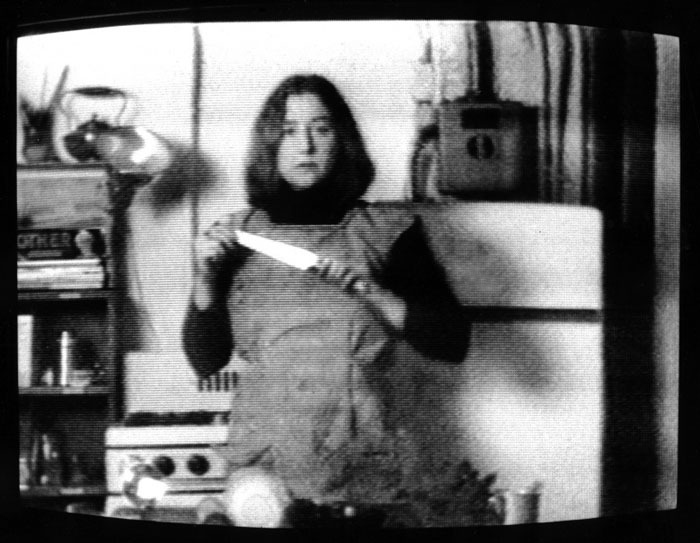
Martha Rosler (American, b. 1943) 'Semiotics of the Kitchen' 1975 (still)


Martha Rosler (American, b. 1943)
Semiotics of the Kitchen (still)
1975
Video
Purchase, Henry Nias Foundation Inc. Gift, 2010
Courtesy Electronic Arts Intermix (EAI), New York


Jan Groover (American, 1943-2012) 'Untitled' 1980


Jan Groover (American, 1943-2012)
Untitled
1980
Platinum print
19 x 24cm (7 1/2 x 9 7/16 in.)
David Hunter McAlpin Fund, 1981
The Metropolitan Museum of Art
© Jan Groover


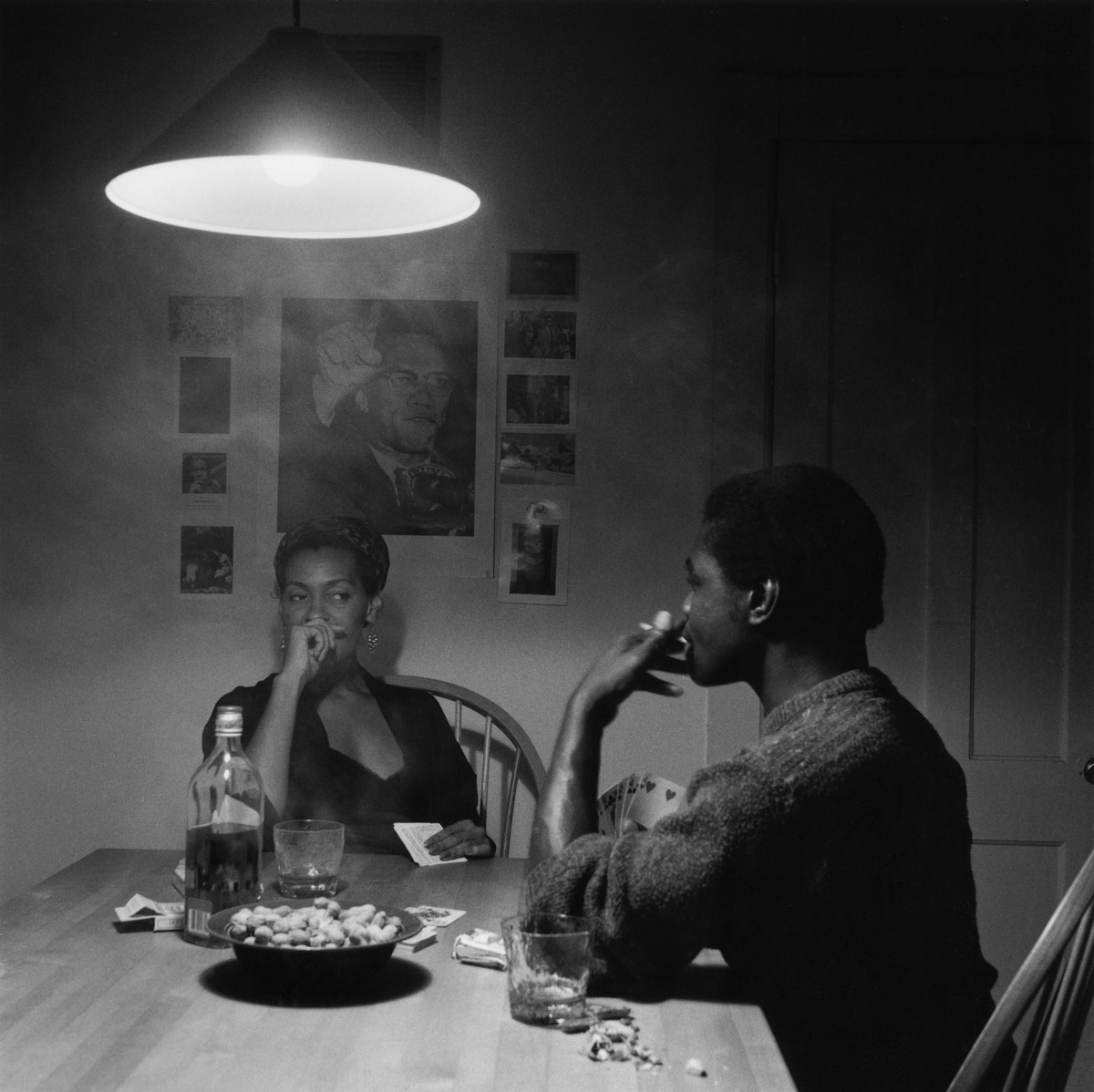
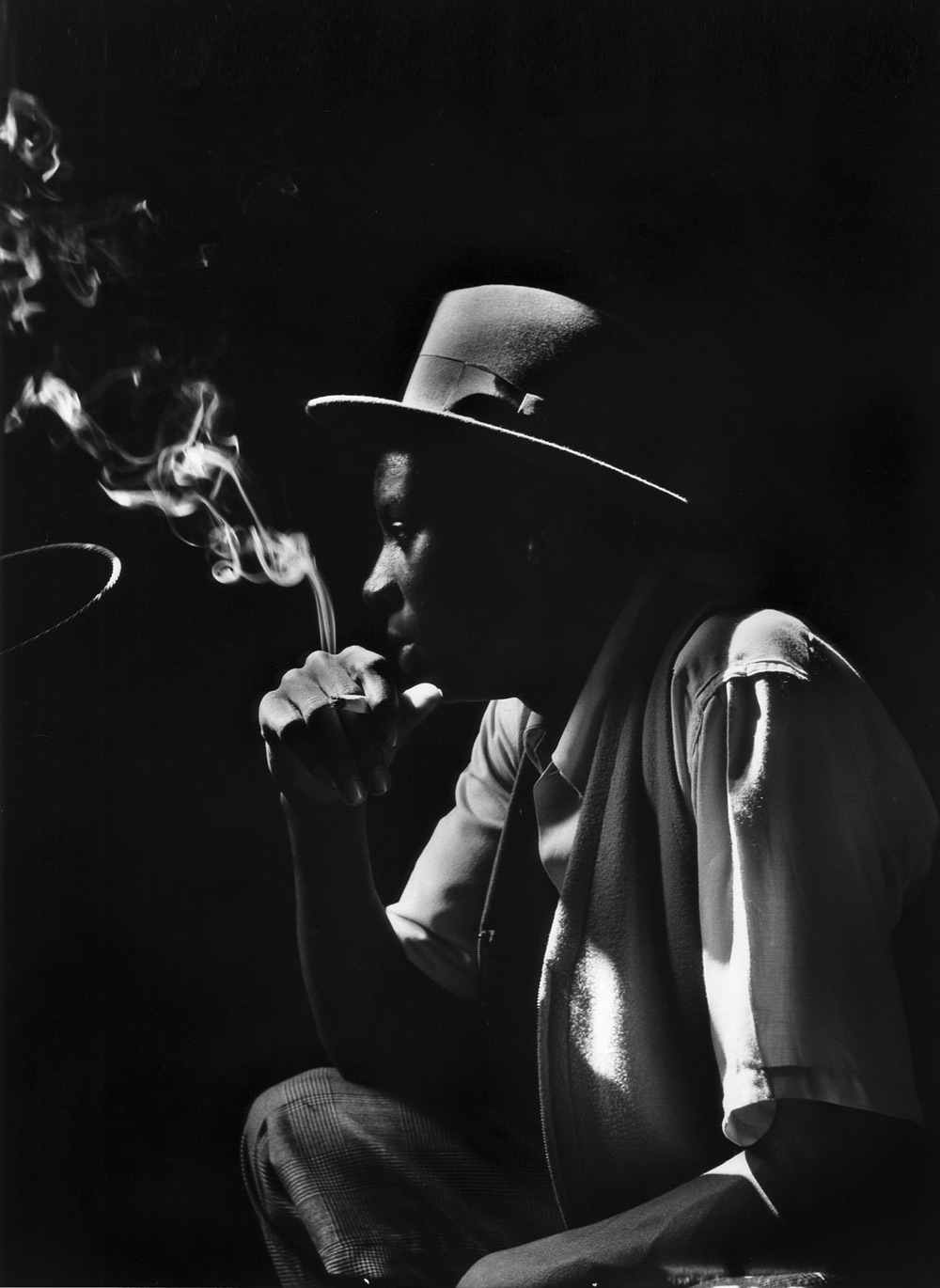
Carrie Mae Weems (American, b. 1953) 'Untitled (Man Smoking)' 1990


Carrie Mae Weems (American, b. 1953)
Untitled (Man Smoking)
1990
From the Kitchen Table Series
Gelatin silver print
Image: 71.8 × 71.8cm (28 1/4 × 28 1/4 in.)
Courtesy of the artist and Jack Shainman Gallery, New York


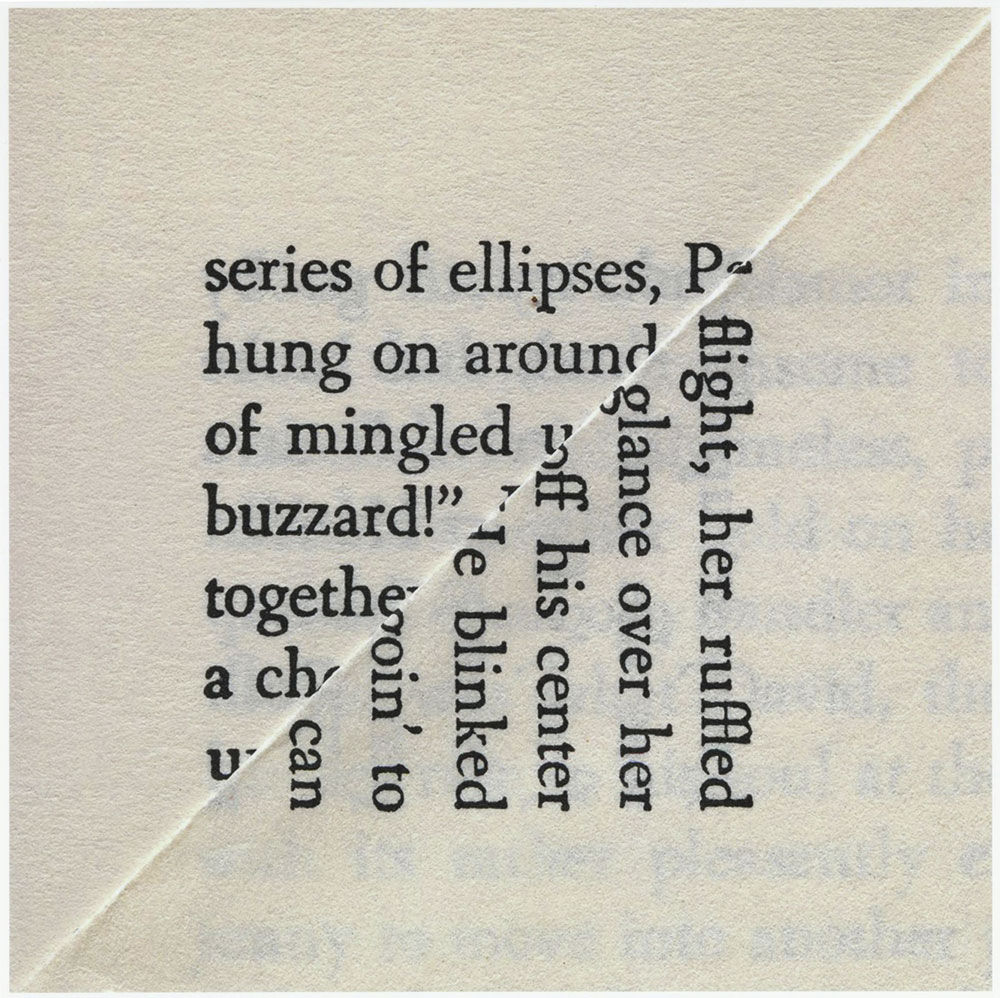
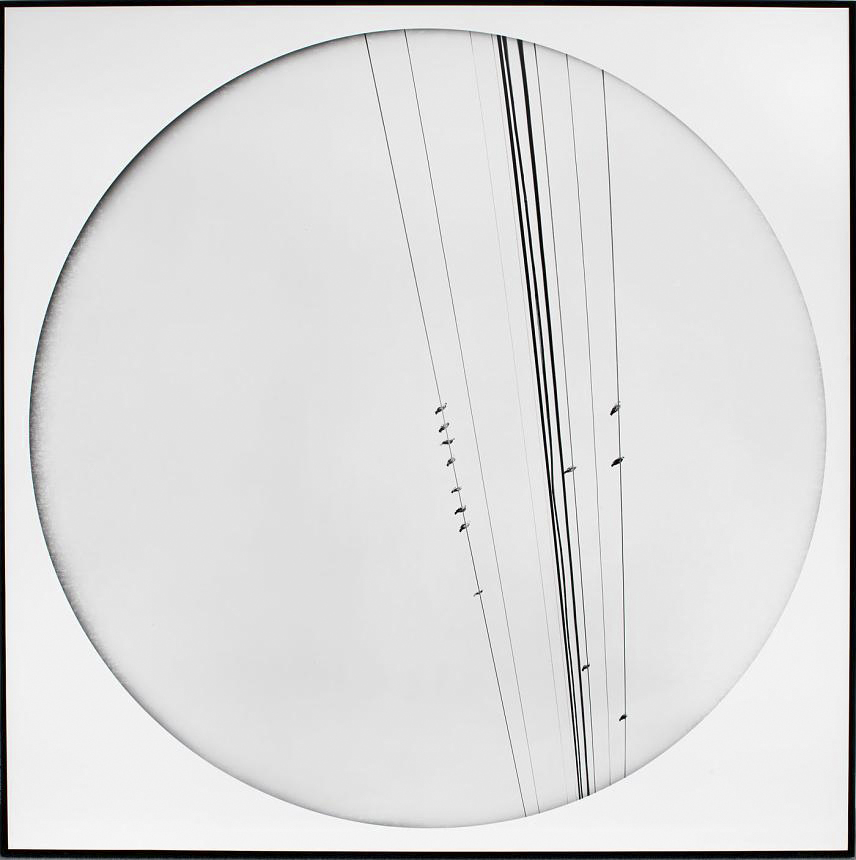
Erica Baum (American, b. 1961)  'Buzzard' 2009


Erica Baum (American, b. 1961) 
Buzzard
2009
Inkjet print
22.9 x 22.9cm (9 x 9 in.)
Purchase, Marian and James H. Cohen Gift, in memory of their son, Michael Harrison Cohen, 2012
The Metropolitan Museum of Art
© Erica Baum


Since the birth of photography in 1839, artists have used the medium to explore subjects close to home – the quotidian, intimate, and overlooked aspects of everyday existence. Everyday Epiphanies: Photography and Daily Life Since 1969, an exhibition of 40 works at The Metropolitan Museum of Art, presents photographs and videos from the last four decades that examine these ordinary moments. The exhibition features photographs by a wide range of artists including John Baldessari, Philip-Lorca diCorcia, Fischli & Weiss, Jan Groover, Robert Gober, Nan Goldin, Elizabeth McAlpine, Gabriel Orozco, David Salle, Robert Smithson, Stephen Shore, and William Wegman, as well as videos by Martha Rosler, Ilene Segalove, Brandon Lttu, and Svetlana and Igor Kopytiansky.

Daily life, as it had been lived in Western Europe and America since the 1950s, was called into question in the late 1960s by a counterculture that rebelled against the prior “cookie-cutter” lifestyle. Everything from feminism to psychedelic drugs to space exploration suggested a nearly infinite array of alternative ways to perceive reality; and artists and thinkers in the ’60s and ’70s proposed a “revolution of everyday life.” A four-part work by David Salle from 1973 exemplifies the artist’s flair for piquant juxtaposition at an early stage in his career. In depicting four women in bathrobes standing before their respective kitchen windows in contemplative states, Salle goes against the grain of feminist orthodoxy – revealing a penchant for courting controversy that he would expand in his later paintings; pasted underneath the black-and-white images of the women are brightly coloured labels of their preferred coffee brands, with the arbitrarily differentiated brands signifying an insufficient substitute for true freedom in the postwar era. Martha Rosler’s bracingly caustic video Semiotics of the Kitchen and Ilene Segalove’s wistfully funny The Mom Tapes complete a trio of works investigating the role of women in a rapidly changing society.

In the 1980s, artists’ renewed interest in conventions of narrative and genre led to often highly staged or produced images that hint at how even our deepest feelings are mediated by the images that surround us. In the wake of the economic crash of the late 1980s, photographers focused increasingly on what was swept under the carpet – the repressed and the taboo. Sally Mann’s Jesse at Five (1987) depicts the artist’s daughter as the central figure, half-dressed, dolled-up, and posed like an adult. Mann often created these frank images of her children and caused some controversy during the culture wars of the late 1980s and early 1990s. However, her photographs of her children are remarkable for the artist’s assured handling of a potentially explosive subject with equanimity and grace.

During the following decade, artists created photographs and videos that confused the real and the imaginary in ways that almost eerily predicted the epistemological quandaries posed by the digital revolution. Meanwhile, a trio of recently made works by Erica Baum, Elizabeth McAlpine, and Brandon Lattu combine process and product in novel ways to comment obliquely on the shifting sands of how we come to know the world in our digital age.

Press release from The Metropolitan Museum of Art website


Jean-Marc Bustamante (French, b. 1952) 'Untitled' 1997


Jean-Marc Bustamante (French, b. 1952) 
Untitled
1997
Chromogenic print
40 x 59cm (15 3/4 x 23 1/4 in.)
Purchase, The Horace W. Goldsmith Foundation Gift, through Joyce and Robert  Menschel, 1999
The Metropolitan Museum of Art
© Jean-Marc Bustamante


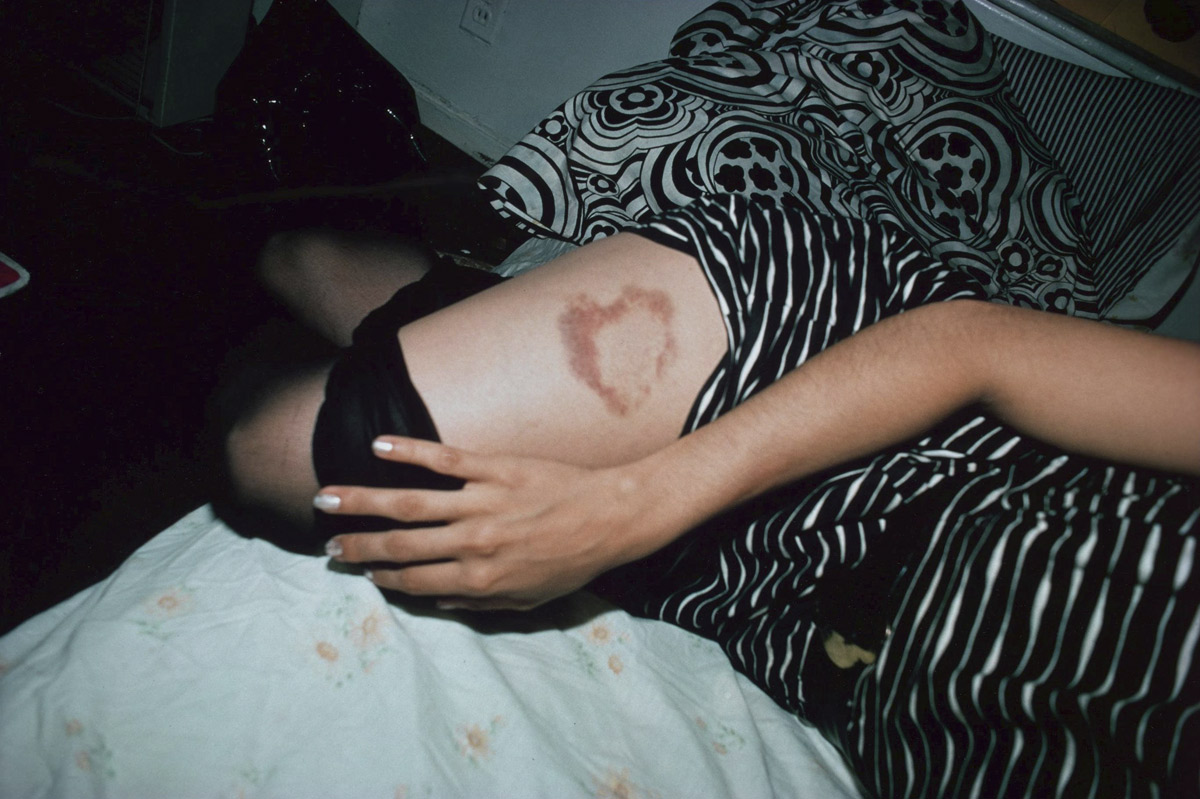
Nan Goldin (American, b. 1953) 'Heart-Shaped Bruise, NYC' 1980


Nan Goldin (American, b. 1953)
Heart-Shaped Bruise, NYC
1980
Silver dye bleach print
50.8 x 60.96cm (20 x 24 in.)
Purchase, The Horace W. Goldsmith Foundation Gift, through Joyce and Robert  Menschel, 2001
The Metropolitan Museum of Art
© Nan Goldin, Courtesy Matthew Marks Gallery, New York


Larry Sultan (American, 1946-2009) 'My Father Reading the Newspaper' 1989


Larry Sultan (American, 1946-2009)
My Father Reading the Newspaper
1989
Chromogenic print
Stewart S. MacDermott Fund, 1991
© Larry Sultan


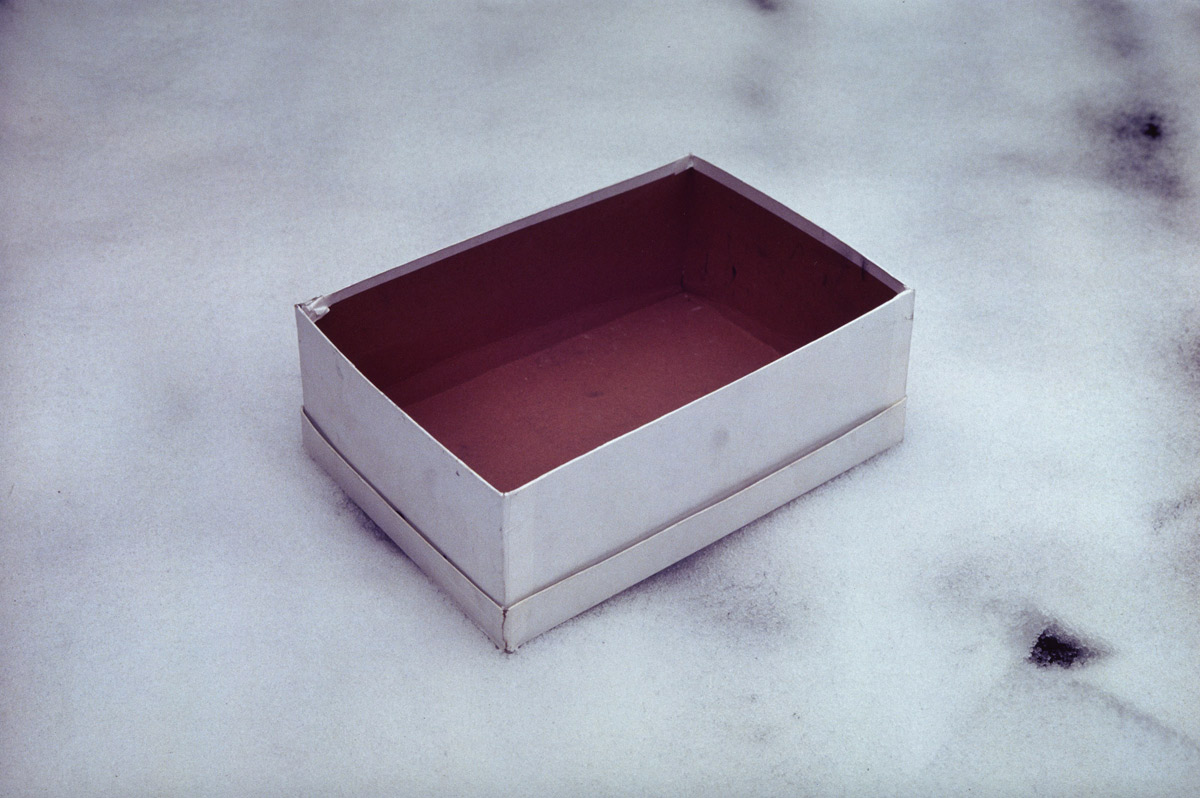
Gabriel Orozco (Mexican, b. 1962) 'Caja vacia de zapatos' (Empty shoebox) 1993


Gabriel Orozco (Mexican, b. 1962)
Caja vacia de zapatos (Empty shoebox)
1993
Silver dye bleach print
31.8 x 46.4cm (12 1/2 x 18 1/4 in.)
Gift of the artist, 1995
The Metropolitan Museum of Art
© Gabriel Orozco


Gabriel Orozco (Mexican born Jalapa Enriquez, b. 1962) 'Vitral' 1998


Gabriel Orozco (Mexican, born Jalapa Enriquez, b. 1962)
Vitral
1998
Silver dye bleach print
40.6 x 50.8cm (16 x 20 in.)
Purchase, The Judith Rothschild Foundation Gift, 1999
© Gabriel Orozco

.

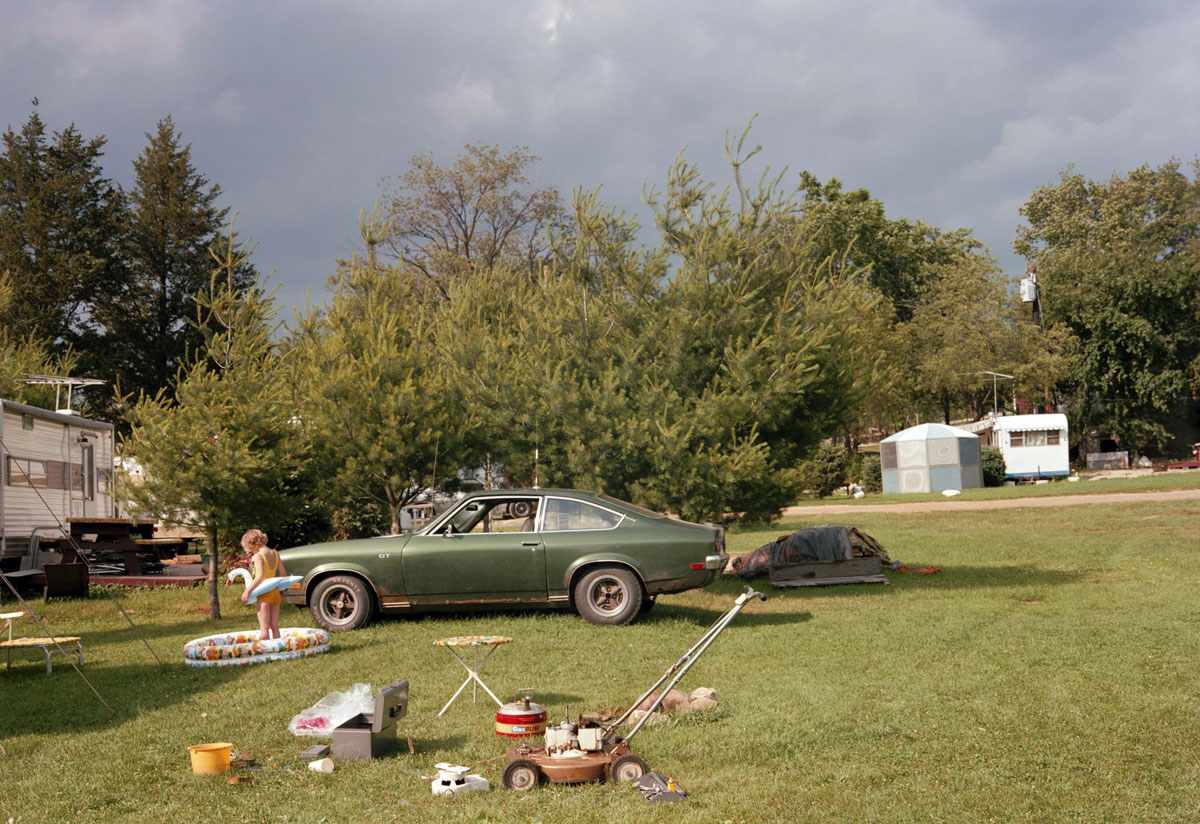
Stephen Shore (American, b. 1947) 'Oklahoma City, Oklahoma' July 9, 1972


Stephen Shore (American, b. 1947)
Oklahoma City, Oklahoma
July 9, 1972
From the series American Surfaces
Chromogenic print
Gift of Weston J. Naef, 1974
© Stephen Shore


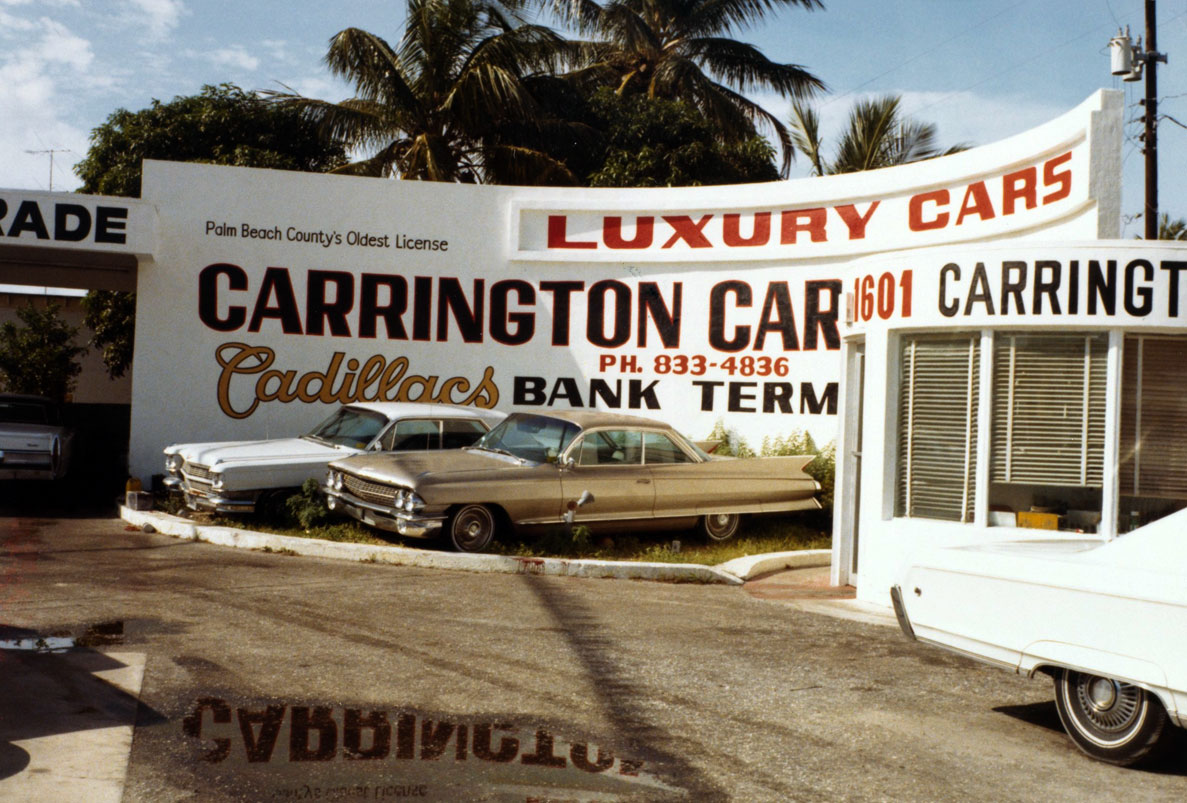
As a teenager in the 1960s, Shore was one of two in-house photographers at Andy Warhol’s Factory. During his first cross-country photographic road trip, Shore adopted the catholic approach of his mentor, accepting into his art everything that came along – what he ate, the rest stops he visited, the people he met. He then processed his colour film as “drugstore prints”, the imprecise, colloquial term for the kind of amateur non-specialised snapshots that filled family photo albums. The entire series of 229 prints was shown for the first time in 1974 and acquired by the Metropolitan from that exhibition.


Stephen Shore (American, b. 1947) 'West Palm Beach, Florida' January 1973


Stephen Shore (American, b. 1947)
West Palm Beach, Florida
January 1973
From the series American Surfaces
Chromogenic print
Gift of Weston J. Naef, 1974
© Stephen Shore


Stephen Shore (American, b. 1947) 'Clovis, New Mexico' 1974


Stephen Shore (American, b. 1947)
Clovis, New Mexico
1974
From the series American Surfaces
Chromogenic print
Gift of Weston J. Naef, Jr., 1974
The Metropolitan Museum of Art
© Stephen Shore


The Metropolitan Museum of Art
1000 Fifth Avenue at 82nd Street
New York, New York 10028-0198
Phone: 212-535-7710

Opening hours:
Sunday – Tuesday and Thursday: 10am – 5pm
Friday and Saturday: 10am – 9pm
Closed Wednesday

The Metropolitan Museum of Art website

LIKE ART BLART ON FACEBOOK

Back to top

Exhibition: ‘Erwin Blumenfeld (1897-1969) Photographs, drawings and photomontages’ at Jeu de Paume, Paris

Exhibition dates: 15th October 2013 – 26th January 2014


Erwin Blumenfeld (American-German, 1897-1969) 'Grauenfresse / Hitler, Holland, 1933' 1933


Erwin Blumenfeld (American-German, 1897-1969)
Grauenfresse / Hitler, Holland, 1933
1933
Collage and ink on photomontage (gelatin silver print, double-exposition). Printed later
Collection Helaine and Yorick Blumenfeld, Courtesy of Modernism Inc., San Francisco
© The Estate of Erwin Blumenfeld


Considering the nature of Blumenfeld’s collages such as Grauenfresse / Hitler, Holland, 1933 and Minotaur / Dictator I would say that the artist was very, very lucky to escape to America in 1941. Let us remember all those that were not so fortunate…

Marcus


Many thankx to Jeu de Paume for allowing me to publish the photographs in the posting. Please click on the photographs for a larger version of the image.


“In 1940 Blumenfeld was interned as a German Jew in France, first in Montbard, then in Loriol, Le Vernet, and Catus. He made a daring escape with his family in 1941, returning via Casablanca to New York, where he subsequently lived and worked until his death.” (press release)

“After Blumenfeld returned to France, during World War II, Blumenfeld and his family spent time in Vézelay with Le Corbusier and Romain Rolland. He was incarcerated at Camp Vernet and other concentration camps. His daughter Lisette (who had just turned 18) was incarcerated at the Gurs internment camp. Luckily Blumenfeld was bunked next to the husband of the woman Lisette was bunked next to. Through postcards and letters the Blumenfeld family of five managed to reunite. In 1941 they obtained a visa and escaped to North Africa and then New York.”

Text from the Wikipedia website


Erwin Blumenfeld (American-German, 1897-1969) 'Minotaur / Dictator' [Minotaure / Dictateur] The Minotaur or The Dictator Paris, c. 1937


Erwin Blumenfeld (American-German, 1897-1969)
Minotaur / Dictator [Minotaure / Dictateur]
The Minotaur or The Dictator
Paris, c. 1937
Vintage gelatin silver print
Collection Yvette Blumenfeld Georges Deeton / Art+Commerce, New York, Gallery Kicken Berlin, Berlin


The Vichy Policy on Jewish Deportation

Paul Webster

Jewish Statute

Despite autonomy from German policies, Pétain brought in legislation setting up a Jewish Statute in October 1940. By then about 150,000 Jews had crossed what was known as the Demarcation Line to seek protection from Vichy in the south – only to find they were subjected to fierce discrimination along lines practised by the Germans in the north.

Jews were eventually banned from the professions, show business, teaching, the civil service and journalism. After an intense propaganda campaign, Jewish businesses were ‘aryanised’ by Vichy’s Commission for Jewish Affairs and their property was confiscated. More than 40,000 refugee Jews were held in concentration camps under French control, and 3,000 died of poor treatment during the winters of 1940 and 1941. The writer Arthur Koestler, who was held at Le Vernet near the Spanish frontier, said conditions were worse than in the notorious German camp, Dachau.

During 1941 anti-Semitic legislation, applicable in both zones, was tightened. French police carried out the first mass arrests in Paris in May 1941when 3,747 men were interned. Two more sweeps took place before the first deportation train provided by French state railways left for Germany under French guard on 12 March 1942. On 16 July 1942, French police arrested 12,884 Jews, including 4,501 children and 5,802 women, in Paris during what became known as La Grande Rafle (‘the big round-up’). Most were temporarily interned in a sports stadium, in conditions witnessed by a Paris lawyer, Georges Wellers.

‘All those wretched people lived five horrifying days in the enormous interior filled with deafening noise … among the screams and cries of people who had gone mad, or the injured who tried to kill themselves’, he recalled. Within days, detainees were being sent to Germany in cattle-wagons, and some became the first Jews to die in the gas chambers at Auschwitz.

Vichy crimes

Many historians consider that an even worse crime was committed in Vichy-controlled southern France, where the Germans had no say. In August 1942, gendarmes were sent to hunt down foreign refugees. Families were seized in their houses or captured after manhunts across the countryside. About 11,000 Jews were transported to Drancy in the Paris suburbs, the main transit centre for Auschwitz. Children as young as three were separated from their mothers – gendarmes used batons and hoses – before being sent to Germany under French guard, after weeks of maltreatment.

During 1942, officials sent 41,951 Jews to Germany, although the deportations came to a temporary halt when some religious leaders warned Vichy against possible public reaction. Afterwards, arrests were carried out more discreetly. In 1943 and 1944, the regime deported 31,899 people – the last train left in August 1944, as Allied troops entered Paris. Out of the total of 75,721 deportees, contained in a register drawn up by a Jewish organisation, fewer than 2,000 survived.

Revolt and aftermath

The number of dead would have been far higher if the Italian fascist leader, Benito Mussolini, had not ordered troops in France to defy German-French plans for mass round ups in Italian-occupied south-eastern France. Thousands were smuggled into Italy after Italian generals said that ‘no country can ask Italy, cradle of Christianity and law, to be associated with these (Nazi) acts’. After the Italian surrender in September 1943, arrests in the area restarted, but by then French public opinion had changed. Escape lines to Switzerland and Spain had been set up, and thousands of families risked death to shelter Jews. Since the war, Israel has given medals to 2,000 French people, including several priests, in recognition of this, and of the fact that about 250,000 Jews survived in France.

Post-war indifference to anti-Semitic persecution pushed the issue into the background until Serge Klarsfield, a Jewish lawyer whose Romanian father died in Germany, reawakened the national conscience. He tracked down the German chief of the Secret Service in Lyon, Klaus Barbie, who was hiding in Bolivia but was subsequently jailed for life in 1987. His case threw light on Vichy’s complicity in the Holocaust. Klarsfeld’s efforts were frustrated by the Socialist president of France at this time, Francois Mitterrand, who had been an official at Vichy and was decorated by Pétain. It was not until 1992 that one of Barbie’s French aides, Paul Touvier, who had been a minor figure in wartime France, was jailed for life for his crimes.

Facing facts

French courts, responding to Mitterrand’s warnings that trials would cause civil unrest, blocked other prosecutions, including that of the Vichy police chief, René Bousquet, who organised the Paris and Vichy zone mass arrests. He was assassinated by a lone gunman in June 1993. It was not until Mitterrand retired in 1995 that France began to face up to its responsibility in the persecution of Jews. When the new right-wing president, Jacques Chirac, came to power, he immediately condemned Vichy as a criminal regime and two years later the Catholic Church publicly asked for forgiveness for its failure to protect the Jews.

But the most significant step forward was the trial in 1997 of Maurice Papon, 89, for crimes concerning the deportation of Jews from Bordeaux. He had served as a cabinet minister after the war, before losing a 16-year legal battle to avoid trial. He was released from jail because of poor health, but his ten-year prison sentence has been interpreted as official recognition of French complicity in the Holocaust, although there are still those who continue to defend his actions.

Since the trial, France has opened up hidden archives and offered compensation to survivors – and ensured that schools, where history manuals used not to mention France’s part in the deportations, now have compulsory lessons on Vichy persecution. While anti-Semitism is still a social problem in France, there is no official discrimination, and today’s 600,000-strong Jewish community is represented at every level of the establishment, including in the Catholic Church, where the Archbishop of Paris is Cardinal Jean-Marie Lustiger.

Extract from Paul Webster. “The Vichy Policy on Jewish Deportation,” on the BBC History website, 17/02/2011 [Online] Cited 23/01/2021


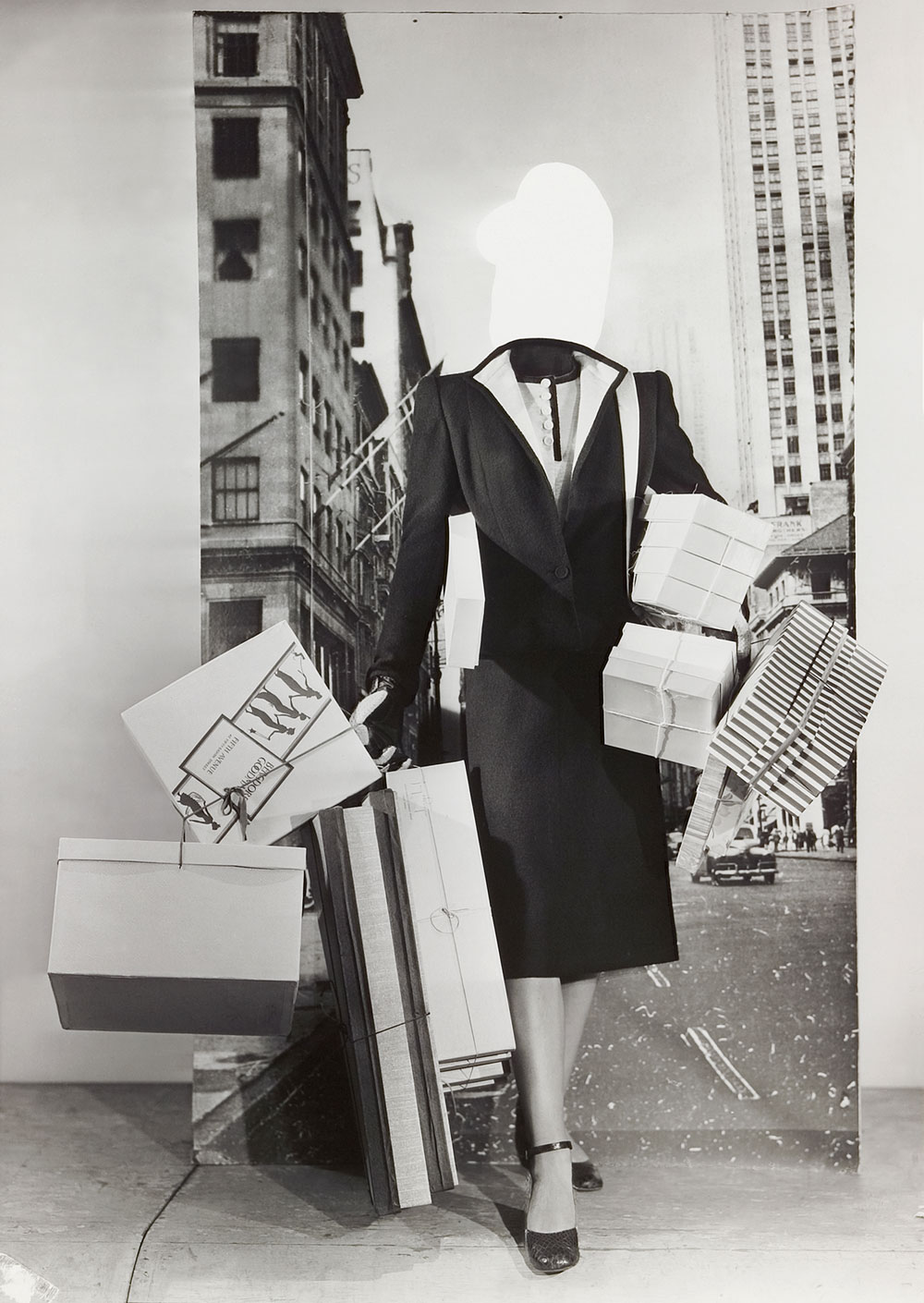
Erwin Blumenfeld (American-German, 1897-1969) 'Mode-Montage' c. 1950


Erwin Blumenfeld (American-German, 1897-1969)
Mode-Montage
c. 1950
Vintage gelatin silver print
Collection Helaine et Yorick Blumenfeld
Courtesy of Modernism Inc., San Francisco
© The Estate of Erwin Blumenfeld


Erwin Blumenfeld (American-German, 1897-1969) 'Marguerite von Sivers sur le toit du studio 9, rue Delambre' [Marguerite von Sivers on the roof of Blumenfeld’s studio at 9, rue Delambre] Paris, 1937


Erwin Blumenfeld (American-German, 1897-1969)
Marguerite von Sivers sur le toit du studio 9, rue Delambre [Marguerite von Sivers on the roof of Blumenfeld’s studio at 9, rue Delambre]
Paris, 1937
Vintage gelatin silver print
Collection Yvette Blumenfeld Georges Deeton / Art+Commerce, New York, Gallery Kicken Berlin, Berlin
© The Estate of Erwin Blumenfeld


Erwin Blumenfeld (American-German, 1897-1969) 'Untitled [Natalia Pasco]' 1942


Erwin Blumenfeld (American-German, 1897-1969)
Untitled [Natalia Pasco]
1942
Vintage gelatin silver print
Collection Henry Blumenfeld
© The Estate of Erwin Blumenfeld


Erwin Blumenfeld (American-German, 1897-1969) 'Voile mouillé' [Wet veil] Paris, 1937


Erwin Blumenfeld (American-German, 1897-1969)
Voile mouillé [Wet Veil]
Paris, 1937
Vintage gelatin silver print
Collection particulière, Suisse
© The Estate of Erwin Blumenfeld


Erwin Blumenfeld (American-German, 1897-1969) 'Cecil Beaton' 1946


Erwin Blumenfeld (American-German, 1897-1969)
Cecil Beaton
1946
Vintage silver gelatin print
Collection particulière, Suisse
© The Estate of Erwin Blumenfeld


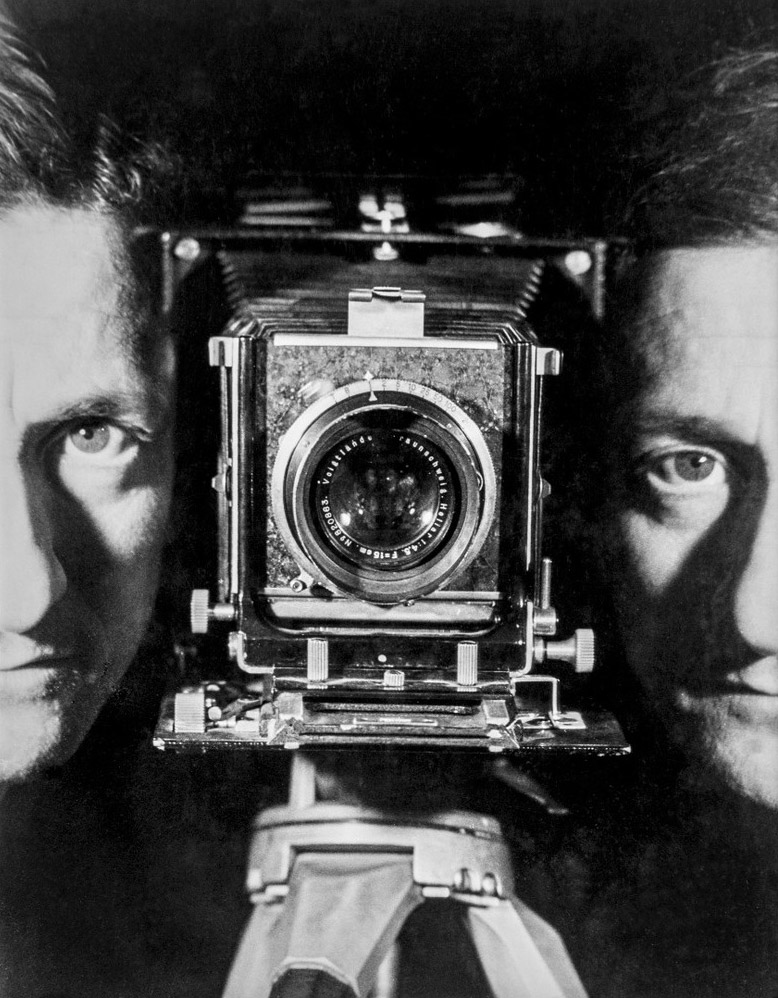
Erwin Blumenfeld (American-German, 1897-1969) 'Self-Portrait' Paris, c. 1937


Erwin Blumenfeld (American-German, 1897-1969)
Self-Portrait
Paris, c. 1937
Gelatin silver print. Printed later
Collection Helaine and Yorick Blumenfeld
© The Estate of Erwin Blumenfeld


Erwin Blumenfeld (American-German, 1897-1969) 'Untitled (Self-Portrait)' 1945


Erwin Blumenfeld (American-German, 1897-1969)
Untitled (Self-Portrait)
1945


Erwin Blumenfeld’s life and work impressively document the socio-political context of artistic development between the two World Wars, while highlighting the individual consequences of emigration. The exhibition devoted to Erwin Blumenfeld’s multi-layered œuvre brings together over 300 works and documents from the late 1910s to the 1960s, and encompasses the various media explored by the artist throughout his career: drawings, photographs, montages and collages.

This exhibition traces his visual creativity and encompasses the early drawings, the collages and montages, which mostly stem from the early 1920s, the beginnings of his portrait art in Holland, the first black and white fashion photographs of the Paris period, the masterful colour photography created in New York and the urban photos taken toward the end of his life.

The retrospective also showcases his drawings, many of which have never been shown before, as well as his early collages and photomontages, shedding fascinating light on the evolution of his photographic oeuvre and revealing the full extent of his creative genius. The now classic motifs of his experimental black-and-white photographs can be seen alongside his numerous self-portraits and portraits of famous and little-known people, as well as his fashion and advertising work.

In the first years of his career, he worked only in black and white, but as soon as it became technically possible he enthusiastically used colour. He transferred his experiences with black-and-white photography to colour; applying them to the field of fashion, he developed a particularly original repertoire of forms. The female body became Erwin Blumenfeld’s principal subject. In his initial portrait work, then the nudes he produced while living in Paris and, later on, his fashion photography, he sought to bring out the unknown, hidden nature of his subjects; the object of his quest was not realism, but the mystery of reality

Blumenfeld’s work was showcased most recently in France in a 1981 show at the Centre Pompidou, which focused on his fashion photography, in 1998 at the Maison Européenne de la Photographie, as well as more recently in the exhibition Blumenfeld Studio, Colour, New York, 1941-1960 (Chalon-sur-Saône, Essen, London).

Press release from the Jeu de Paume website


“Bringing together over three hundred works and documents dating from the late 1910s to the 1960s, this exhibition, the first in France to showcase the multilayered aspects of Erwin Blumenfeld’s oeuvre, encompasses the various media explored by the artist throughout his career: drawing, photography, montage, and collage.

The life and work of Erwin Blumenfeld (Berlin, 1897 – Rome, 1969) provides an impressive record of the socio-political context of artistic development between the two World Wars, while highlighting the individual consequences of emigration. Erwin Blumenfeld, a German Jew, only spent a few years in his country of birth. It was only in 1919, when he was in self-imposed exile in the Netherlands, that Blumenfeld began to take a deeper interest in photography, particularly the photographic process and above all the artistic possibilities offered by darkroom experiments. For a short while, he ran an Amsterdam-based portrait studio that doubled as an exhibition space, before moving to Paris in 1936, where the art dealer Walter Feilchenfeldt helped him rent a studio in the rue Delambre. That same year, his photographs were exhibited at the Galerie Billiet, while the following year saw his first beauty cover, for Votre Beauté magazine. In 1938 he received a visit from leading fashion photographer Cecil Beaton, who helped him to obtain a contract with the French Vogue. Blumenfeld travelled to New York, returning in 1939, shortly before the outbreak of war, to become Harper’s Bazaar’s fashion correspondent in Paris.

In 1940 he was interned as a German Jew in France, first in Montbard, then in Loriol, Le Vernet, and Catus. He made a daring escape with his family in 1941, returning via Casablanca to New York, where he subsequently lived and worked until his death. It was in New York that Blumenfeld’s astonishing career as a much sought after, highly paid fashion photographer really took off, first of all in the studio he shared with Martin Munkácsi, then from 1943 in his own premises. The contract he signed with the publishers Condé Nast in 1944 marked the beginning of ten years of remarkable photography and cover shots for various magazines in the company’s stable. Following on from his experimental black-and-white shots of the 1930s, he began playing with colour. The present exhibition includes, besides photographs, both magazine work and early experimental films made for the Dayton department store in Minneapolis, his leading advertising customer.

Not until 1960 did Blumenfeld return to Berlin for a visit. He devoted the following years to finishing his autobiography, begun in the 1950s. The work was completed in 1969 with the help of his assistant Marina Schinz, but was only published in 1975, initially in French translation, then in the original German in 1976. His book My One Hundred Best Photos was also released posthumously, in 1979.

Drawings, Montages, and Collages

Between 1916 and 1933 Erwin Blumenfeld produced a fairly limited number of drawings and montages. As a young man he was very interested in literature, writing poems and short stories. And as early as 1915 he mentioned that he was interested in writing an autobiography. Almost all of his montages and collages include drawings and snippets of language. He plays with written and printed words and typography, juxtaposing names, concepts, and places to create ironic commentaries and provocative titles. His collages typically combine drawing, language, and cut-outs of original or printed photographs. He also often used letter stationery to form a background, leaving bare spaces. In 1918 Blumenfeld made the acquaintance of the Dadaist George Grosz; two years later he and Paul Citroen wrote to Francis Picabia in the name of the Hollandse Dadacentrale, but neither was present at the First International Dada Fair in Berlin in 1920. That same year, Blumenfeld began using the pseudonyms Erwin Bloomfeld and Jan Bloomfield, as documented in his Dadaist publications and in some of his collages. The drawings in the present exhibition, most of which have never been shown in public, were produced in Berlin and the Netherlands. Only a handful of them are dated. They are quick sketches from life or from imagination, rough cartoons and acid caricatures, in pencil, ink, watercolour, or coloured pencil – whatever was to hand. Blumenfeld was clearly fascinated by the quality and immediacy of drawing as a medium, and, as these works reveal, it certainly stimulated his playful side.

Self-Portraits

Blumenfeld took his first photographs as a schoolboy, using himself as one of his first subjects. The earliest date from the 1910s, but he continued taking self-portraits to the end of his life. The young man with the dreamy gaze turned into the louche bohemian with a cigarette, then the carefully staged photographer experimenting with his camera. His self-portraits are not the product of excessive vanity, but rather playful experiments, with and without masks, models, and other grotesque objects such as a calf’s head, all used to create witty images.

Portraits

Blumenfeld’s first steps in professional photography were in portraiture. He started “learning by doing” in the early 1920s in Amsterdam, where he had opened the ladies handbag store Fox Leather Company. This is where he took portraits of customers, using a darkroom in the back of the store. Comparison of the contact sheets from the time with the blow-ups taken from them clearly shows, right from the outset, the importance in Blumenfeld’s work of the finishing in the lab. The final images display extremely tight framing, high levels of contrast, and lighting that creates dramatic, even devilish, effects. When he arrived in Paris in 1936 his first photographs were portraits, featuring among others Henri Matisse and Georges Rouault. Although he quickly entered the Paris fashion scene, he retained a strong interest in portraiture throughout the remainder of his life.

Nudes

Blumenfeld’s earliest, highly narrative nudes date from his time in the Netherlands, but the subject only became a passion during his Paris years from 1936 on, when he discovered the work of French avant-garde photographers. His admiration for them is particularly evident in his nude photographs, as is the influence of Man Ray’s work. The bodies of the women in these images were surfaces onto which he projected his artistic imagination. He cut them up, solarised them, and transformed them into abstract imagery through the play of light and shadow. The faces of his nudes from the 1930s are only rarely visible, the women remaining somewhat mysterious entities. The nudes Blumenfeld produced in the 1950s after he had settled in New York tended to be more concrete, illustrative works.

Architecture

The black-and-white architectural photographs that Erwin Blumenfeld took in the 1930s feature buildings and urban spaces from various experimental and abstract perspectives. The Eiffel Tower, for instance, is captured in sharp reliefs of light and shade, while the photographs of Rouen Cathedral are intended to draw the viewer’s visual attention to the building’s specific forms. Blumenfeld expresses his artistic vision and his knowledge of Gothic architecture by focusing on the abstraction of details. During the 1950s and 1960s Blumenfeld used a 35mm camera for cityscapes. The exhibition showcases three of these colour slide projects for the first time. They feature New York, Paris, and Berlin – three places that made a mark on his art and also shaped his career.

The Dictator

In 1933, according to his autobiography, Blumenfeld reacted to Hitler’s rise to power in Germany with a photomontage. This outstanding piece of work, probably his most famous photograph, symbolises and anticipates the dictator’s dehumanisation. Following on from the political themes in some of his early collages, he here combined different negatives – a skull and a portrait of Hitler – to make a single print. In one of these montages he included a swastika, while in a different portrait “bleeding eyes” were added later on the surface. Later on, in Paris, he photographed a calf’s head, using this subject to compose different images. One in which he placed the animal’s head on a woman’s torso was titled The Minotaure or The Dictator. This image, which does not refer to a specific figure, is obviously intended to be allegorical. In 1941 Blumenfeld was able to escape from the Nazis with his family to New York.

Fashion

Blumenfeld’s move to Paris in 1936 marked the beginning of his career as a fashion photographer, although he had already had contacts with magazines in Paris while living in Amsterdam. The work that appeared in French publications in the late 1930s raised Blumenfeld’s profile as a modernist photographer and brought him to the attention of the famous British photographer Cecil Beaton, who visited him in his studio in 1938 and helped him sign his first contract with the French edition of Vogue. When Blumenfeld made his first trip to New York following his sensational set of fashion photographs on the Eiffel Tower, he came home with a new contract as Paris fashion correspondent for Harper’s Bazaar. He was only able to file his reports for a year before he was interned in various prison camps across France. In 1941 he was able to escape from German-occupied France to New York with his family. In the first half of the 1950s, he drew on his experiments in black-and-white photography to develop an exceptionally original artistic repertoire, reflected in his use of colour and his fashion work.

Ute Eskildsen
Curator of the exhibition
Translated from German by Susan Pickford


Erwin Blumenfeld (American-German, 1897-1969) 'Three Graces (1947), New York' 1947


Erwin Blumenfeld (American-German, 1897-1969)
Three Graces (1947), New York
1947


Leslie Petersen appears here in a triple variation inspired by Botticelli’s Primavera. The photograph, was intended to show off a gown by Cadwallader. The final image is made of two shots. The two on the right are similar but with different degrees of sharpness. The pose on the left is different.

Text from Phaidon


Erwin Blumenfeld (American-German, 1897-1969) 'Nude (Lisette)' Paris, 1937


Erwin Blumenfeld (American-German, 1897-1969)
Nude (Lisette)
Paris, 1937
Gelatin silver print, negative print, solarisation. Vintage print
Collection Yvette Blumenfeld Georges Deeton / Art + Commerce, New York, Gallery Kicken Berlin, Berlin
© The Estate of Erwin Blumenfeld


Erwin Blumenfeld (American-German, 1897-1969) 'Charlie' 1920


Erwin Blumenfeld (American-German, 1897-1969)
Charlie
1920
Collage, Indian ink, watercolour and pencil on paper
Collection Helaine and Yorick Blumenfeld
© The Estate of Erwin Blumenfeld


Erwin Blumenfeld (American-German, 1897-1969) 'Untitled, New York, 1944' 1944


Erwin Blumenfeld (American-German, 1897-1969)
Untitled, New York, 1944
1944
Gelatin silver print. Vintage print
Collection Henry Blumenfeld
© The Estate of Erwin Blumenfeld


Erwin Blumenfeld (American-German, 1897-1969) 'In hoc signo vinces [in this sign you will conquer]' 1967


Erwin Blumenfeld (American-German, 1897-1969)
In hoc signo vinces [in this sign you will conquer]
1967
Gelatin silver print. Vintage print
Private collection, Switzerland
© The Estate of Erwin Blumenfeld


Erwin Blumenfeld (American-German, 1897-1969) 'Audrey Hepburn' New York, 1950


Erwin Blumenfeld (American-German, 1897-1969)
Audrey Hepburn
New York, 1950
Vintage silver gelatin print
Collection particulière, Suisse.
© The Estate of Erwin Blumenfeld


Audrey Hepburn is wearing a hat designed by Blumenfeld and made by Mister Fred, one of New York’s most talented milliners. Blumenfeld here uses a system of mirrors showing the front and back of the hat and allowing infinite repetition of the motif.

Text from Phaidon


Erwin Blumenfeld (American-German, 1897-1969) 'Untitled [Homme agenouillé avec tour]' [Kneeling man with tower] 1920


Erwin Blumenfeld (American-German, 1897-1969)
Untitled [Homme agenouillé avec tour] [Kneeling man with tower]
1920
Indian ink, ink, watercolor and collage on paper
Collection Henry Blumenfeld.
© The Estate of Erwin Blumenfeld


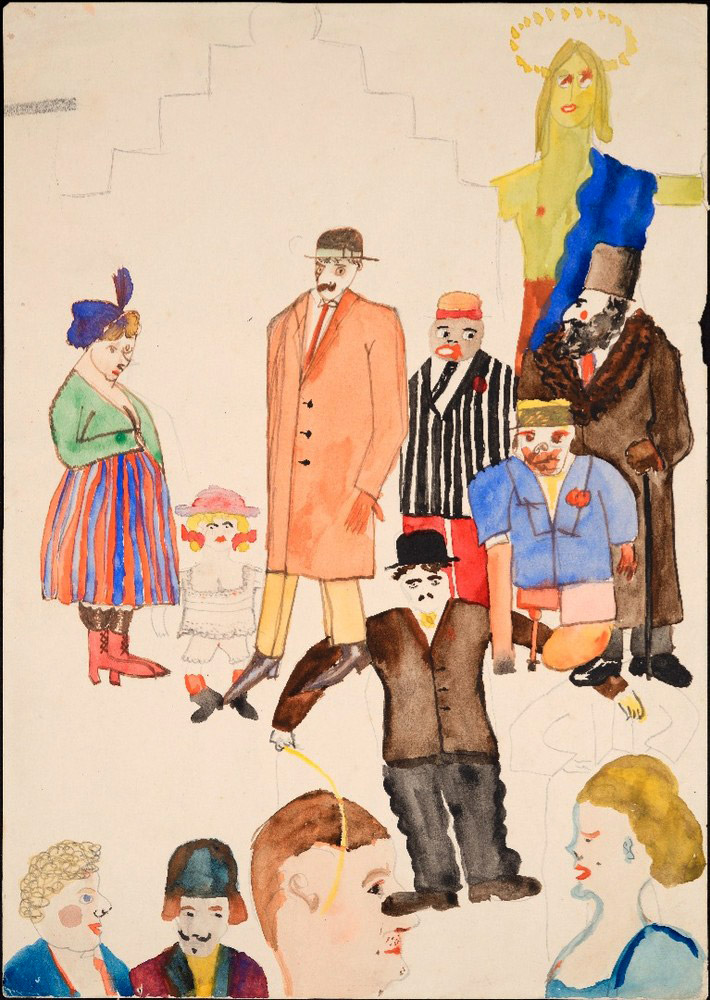
Erwin Blumenfeld (American-German, 1897-1969) 'Group with Chaplin' Early 1920's


Erwin Blumenfeld (American-German, 1897-1969)
Group with Chaplin
Early 1920’s
Gouache and pencil on paper
Collection Henry Blumenfeld
© The Estate of Erwin Blumenfeld


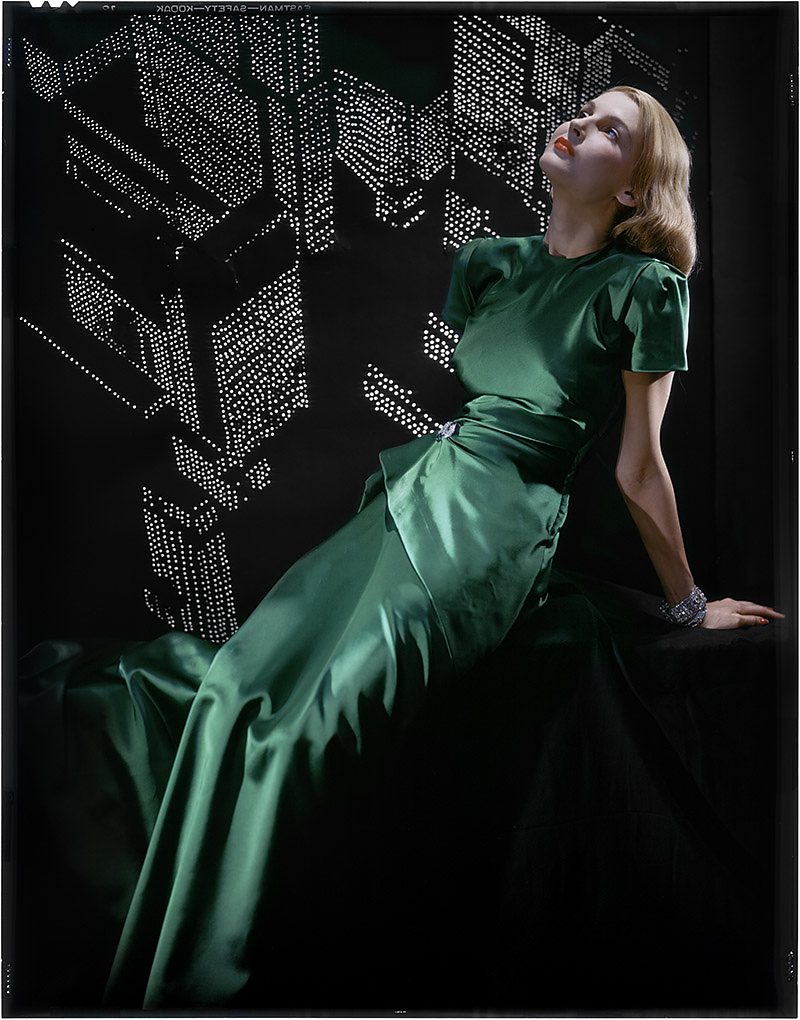
Erwin Blumenfeld (American-German, 1897-1969) 'Untitled (Green dress)' 1946


Erwin Blumenfeld (American-German, 1897-1969)
Untitled (Green dress)
1946


Erwin Blumenfeld (American-German, 1897-1969) 'Do your part for the Red Cross' [Soutenez la Croix-Rouge] 1945


Erwin Blumenfeld (American-German, 1897-1969)
Do your part for the Red Cross [Soutenez la Croix-Rouge]
1945
Variante de la photographie de couverture de Vogue US, 15 mars 1945
Variant of a cover photograph of Vogue, “Do your part for the Red Cross”, New York, March 15th, 1945
Impression jet d’encre sur papier Canson baryta, tirage posthume (2012).
Collection Henry Blumenfeld.
© The Estate of Erwin Blumenfeld


A model, a red cross: fashion and current affairs superimposed. The background to this humanitarian appeal is the liberation of the concentration camps and the aid brought to prisoners of war. Blumenfeld reinterprets these humanitarian signs just as he blurs those of fashion.

Text from Phaidon


Erwin Blumenfeld (American-German, 1897-1969) Variant of the photograph published in Life Magazine entitled "The Picasso Girl" [The young woman of Picasso] (model: Lisette) c. 1941-1942


Erwin Blumenfeld (American-German, 1897-1969)
Variante de la photographie parue dans Life Magazine et intitulée “The Picasso Girl” [La jeune femme Picasso]
Variant of the photograph published in Life Magazine entitled “The Picasso Girl” [The young woman of Picasso]
(model: Lisette)
c. 1941-1942
Inkjet printing on Canson baryta paper, posthumous print (2012)
Collection Henry Blumenfeld
© The Estate of Erwin Blumenfeld


Erwin Blumenfeld (American-German, 1897-1969) Three profiles. Variant of the photograph published in the article "Color and lighting" Photograph Annual of 1952


Erwin Blumenfeld (American-German, 1897-1969)
The young woman of Picasso
Trois profils. Variante de la photographie parue dans l’article “Color and lighting” [Couleur et éclairage], de Photograph Annual 1952
Three profiles. Variant of the photograph published in the article “Color and lighting” Photograph Annual of 1952
1952
Inkjet printing on Canson baryta paper, posthumous print (2012)
Collection Henry Blumenfeld
© The Estate of Erwin Blumenfeld


Jeu de Paume
1, Place de la Concorde
75008 Paris
métro Concorde
Phone: 01 47 03 12 50

Opening hours:
Tuesday – Sunday 11am – 7pm
Closed Monday

Jeu de Paume website

LIKE ART BLART ON FACEBOOK

Back to top

Exhibition: ‘Tell It with Pride: The 54th Massachusetts Regiment and Augustus Saint-Gaudens’ Shaw Memorial’ at the National Gallery of Art, Washington

Exhibition dates: 15th September 2013 – 20th January 2014
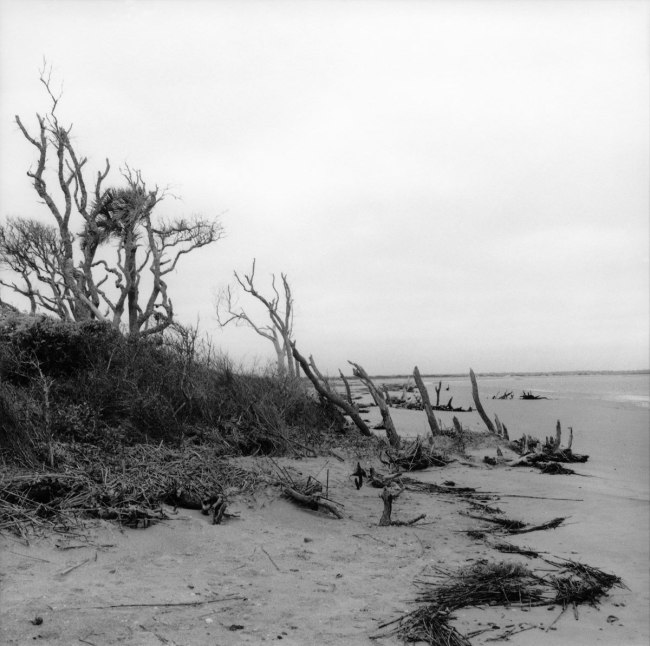
 

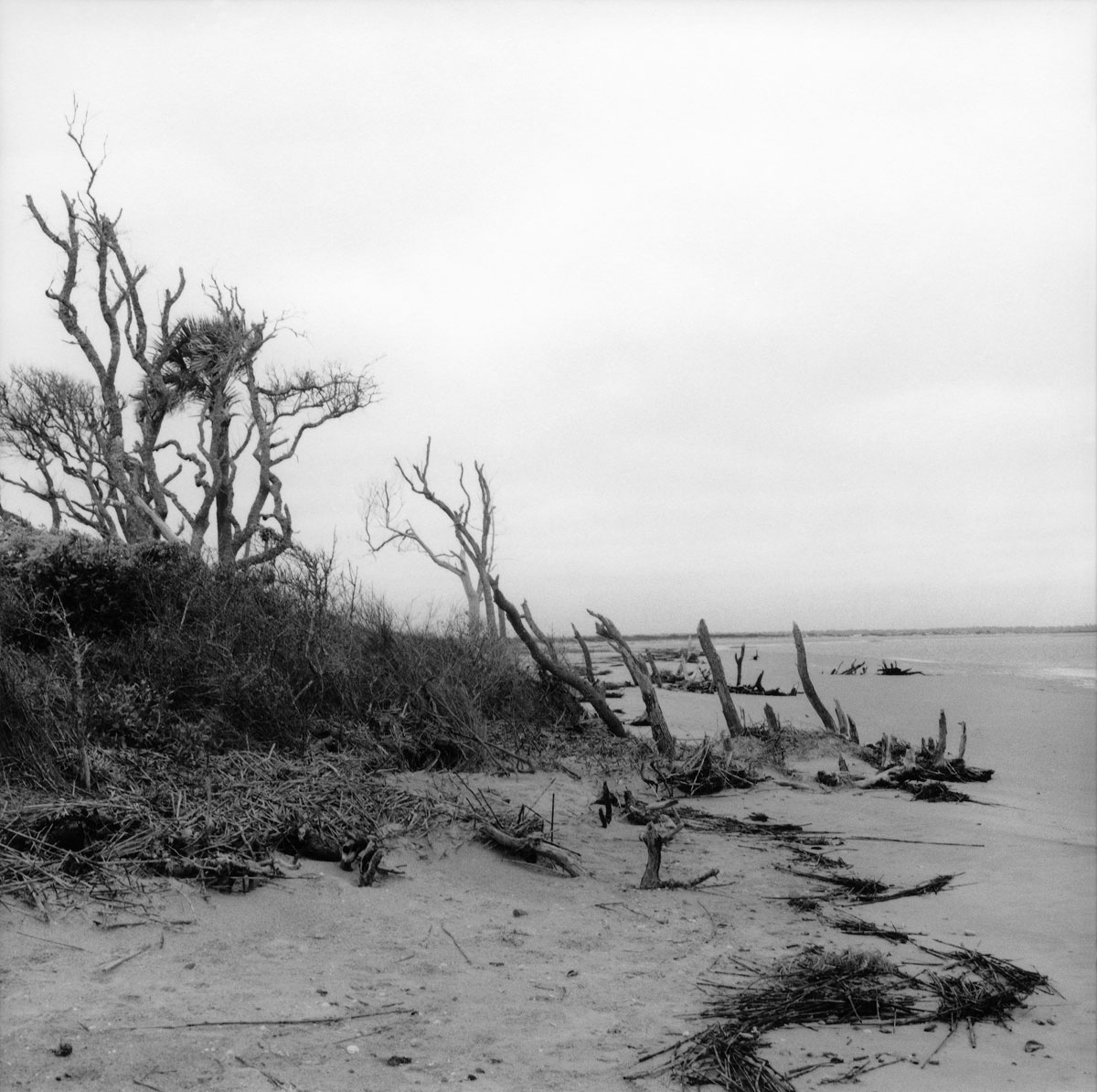
William Earle Williams (American, b. 1950) 'Folly Beach, South Carolina, 1999' 1999


William Earle Williams (American, b. 1950)
Folly Beach, South Carolina, 1999
1999
Gelatin silver print
Image: 19.05 x 19.05cm (7 1/2 x 7 1/2 in.)
National Gallery of Art, Washington, Mary and Dan Solomon Fund


This photograph is part of William Earle Williams’ series Unsung Heroes: African American Soldiers in the Civil War, depicting locations where black troops served, fought, and died.


“A man’s face as a rule says more, and more interesting things, than his mouth, for it is a compendium of everything his mouth will ever say, in that it is the monogram of all this man’s thoughts and aspirations.”


Arthur Schopenhauer


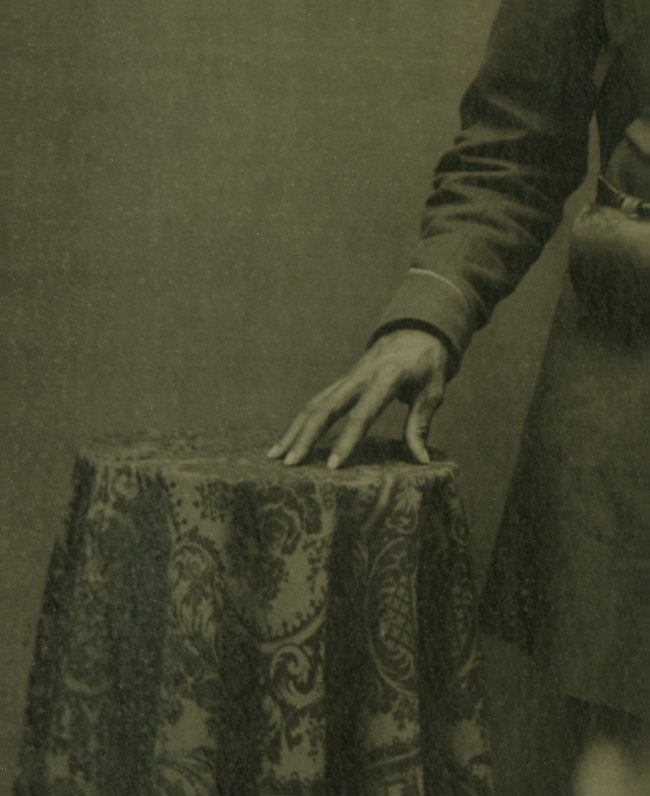
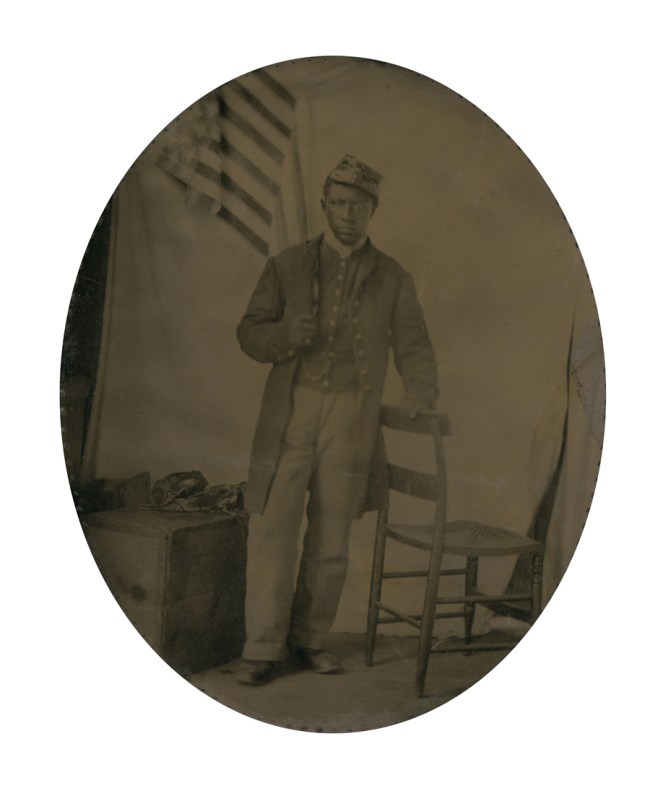
Now this is portrait photography, and all done with relatively long exposures. By god did they know how to take a photograph that has some presence, some frame of mind that evidences a distinct point of view. I had the best fun assembling this posting, even though it took me many hours to do so. The details are exquisite – the hands clasped on the lap, the hands holding the pipe and, best of all, the arched hand with the fingers gently touching the patterned fabric – such as you don’t observe today. The research to find out as much as I could about these people was both fascinating and tragic: “Abraham Brown accidentally killed himself while cleaning his gun on July 11, 1863.”

It is interesting to see the images without an over-mat so that you can observe the backdrop and props in the photographers studio, captured on the whole plate. The narrative external to the matted image, outside the frame. But this view of the image gives a spurious reading of the structure and tension points of the photograph. Any photographer worth his salt previsualises the image and these photographers would have been no different. They would have known their studio, their backdrops and props, and would have known which over-mat they were going to place the finished image in (chosen by themselves or the client). Look at any of the images I have over-matted in white and see how the images come alive in terms of their tension points and structure. How the body takes on a more central feature of the image. How props such as the American flag in Private Abraham F. Brown (1863, below) form a balancing triangle to the figure using the flag, the chair and the trunk as anchor points. This is how these images were intended to be seen and it is this form that gives them the most presence and power.

While it is intriguing to see what lies beyond the over-mat this continuum should not be the centre of our attention for it is the histories, subjectivities and struggles of these brave men that should be front and centre, just as they appear within this cartouche of their life.

Dr Marcus Bunyan


PS. I have just noticed that the Ambrotype by an unknown photographer Unidentified Private, Company I, 54th Massachusetts Regiment (1863, below) and the Albumen print by an unknown photographer Private James Matthew Townsend (1863, below) are taken in the same studio – notice the table and fabric and the curtain at right hand side. They were probably taken at the same sitting when both men were present. One obviously chose an Ambrotype and the other an Albumen print, probably because of cost?


Many thankx to the National Gallery of Art, Washington for allowing me to publish the photographs in the posting. Please click on the photographs for a larger version of the image. For an in depth look at the Battle of Fort Wagner see the National Park Service Civil War Series On the March to Fort Wagner web page.
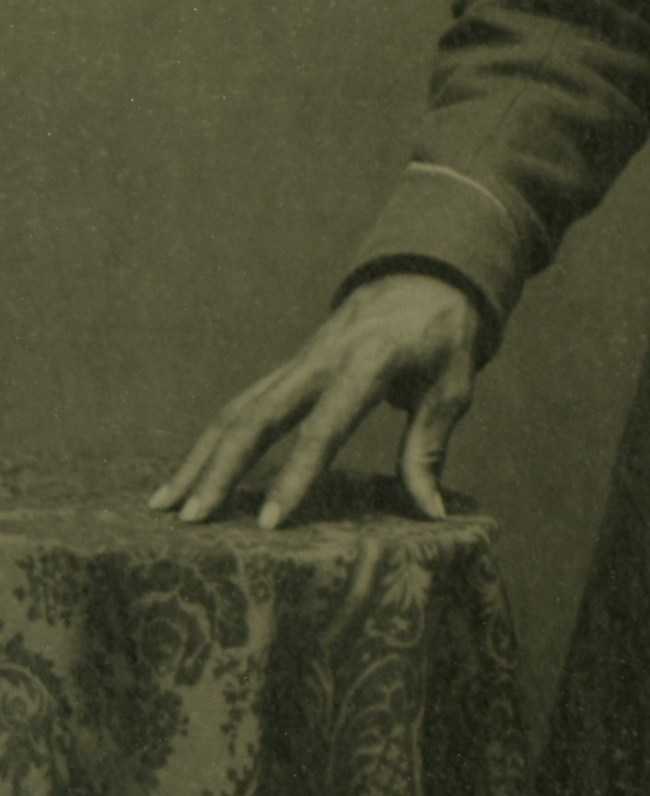


Unknown photographer. 'Unidentified Private, Company I, 54th Massachusetts Regiment' (detail) 1863


Unknown photographer. 'Unidentified Private, Company I, 54th Massachusetts Regiment' (detail) 1863


Unknown photographer
Unidentified Private, Company I, 54th Massachusetts Regiment (details)
1863
Ambrotype
Overall: 11.2 x 8.6cm (4 7/16 x 3 3/8 in.)
Image: 8.7 x 6.4cm (3 7/16 x 2 1/2 in.)
The Gilder Lehrman Institute of American History
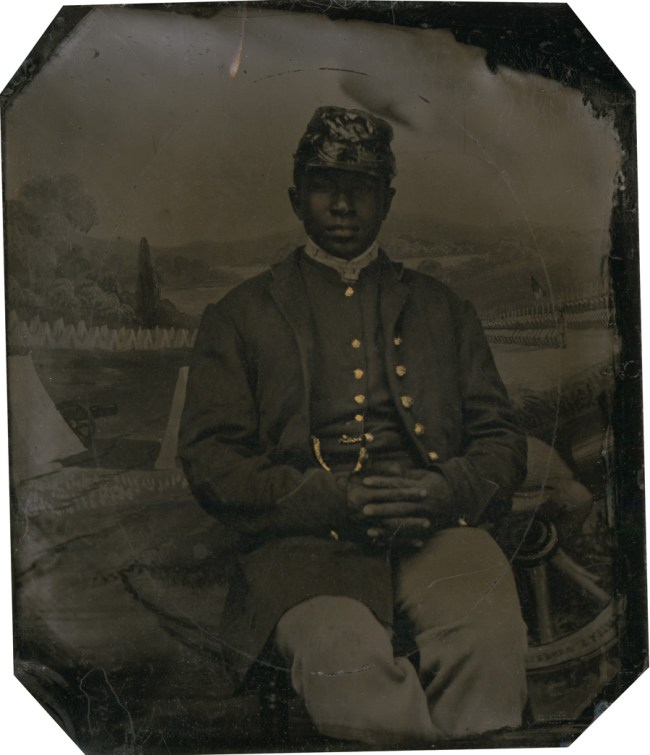
 

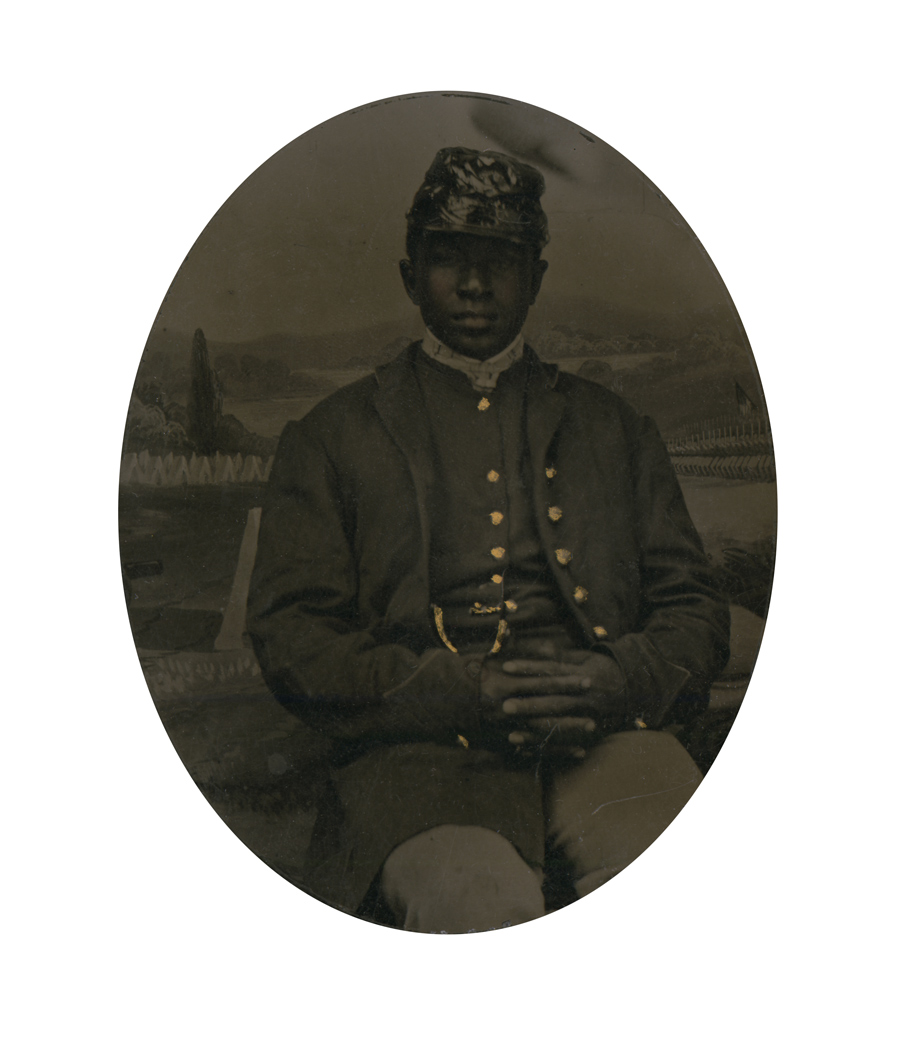
Unknown photographer. 'Private Abraham F. Brown' 1863


Unknown photographer
Private Abraham F. Brown
1863
Tintype
Mat: 17.8 x 12.7cm (7 x 5 in.)
Image: 8 x 7cm (3 1/8 x 2 3/4 in.)
Courtesy of the Massachusetts Historical Society


This photograph depicts Private Abraham F. Brown, a member of Company E, part of the 54th Massachusetts Volunteer Infantry Regiment, the first black regiment raised in the North during the Civil War.
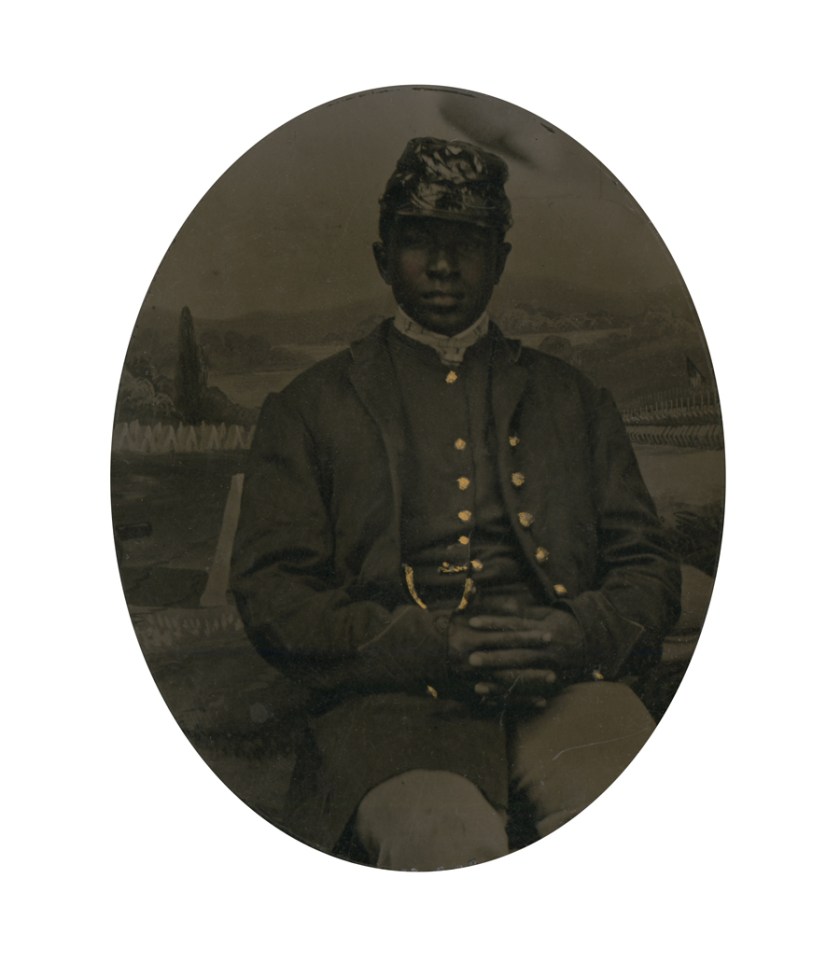
 

Unknown photographer. 'Private Abraham F. Brown' (with overmat) 1863


Unknown photographer
Private Abraham F. Brown (with over-mat)
1863
Tintype


Portrait as it would have originally been mated. The outline of the original mat can be seen in the image above.
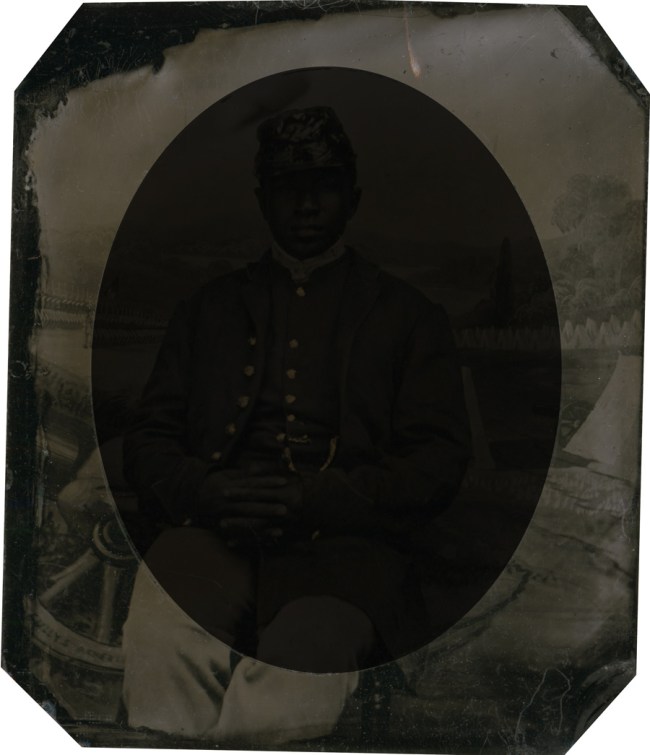
 

Unknown photographer. 'Private Abraham F. Brown' (inverted with overmat to show background extraneous to portrait) 1863


Unknown photographer
Private Abraham F. Brown (inverted with over-mat to show background extraneous to portrait)
1863
Tintype


Obscured image without overmat in order to show the original painted backdrop behind the figure in isolation.
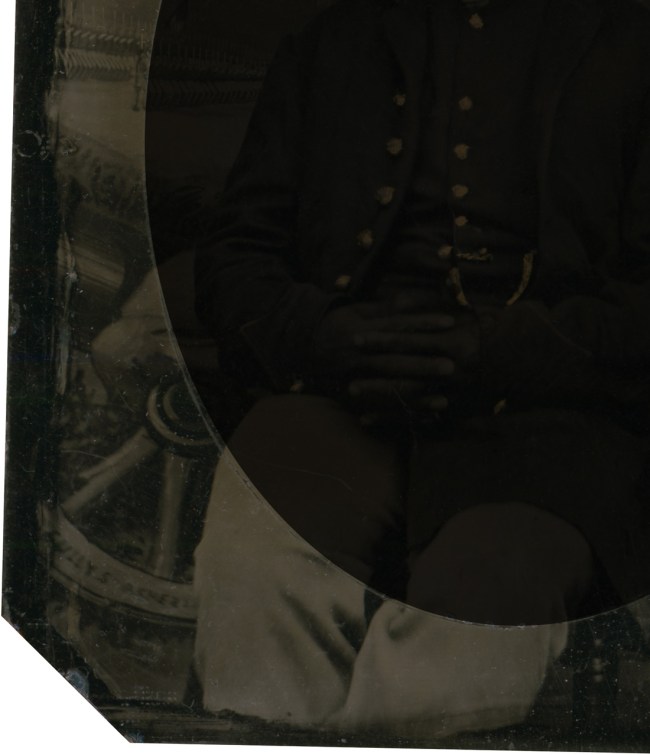
 

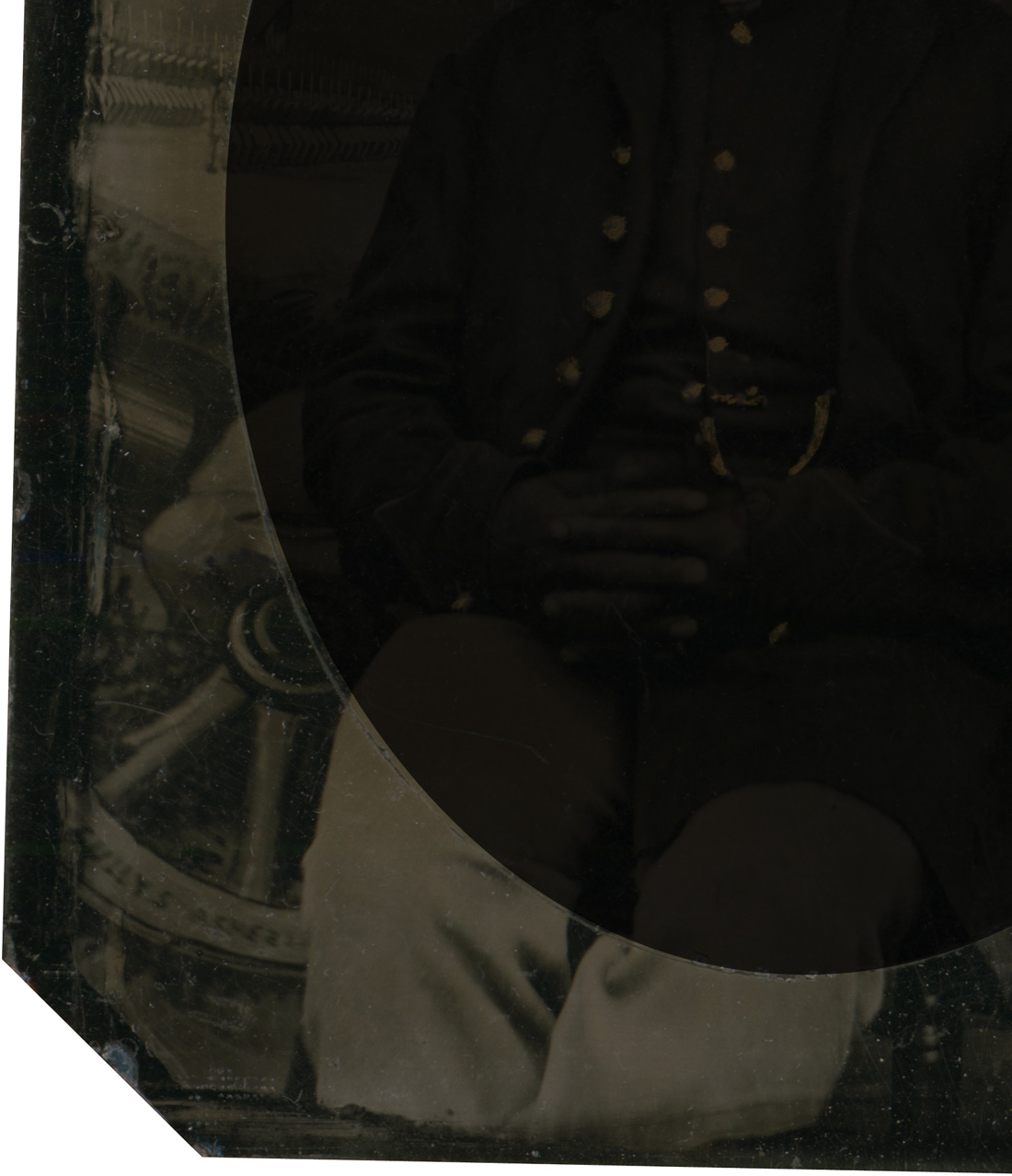
Unknown photographer. 'Private Abraham F. Brown' 1863 (detail)


Unknown photographer
Private Abraham F. Brown (detail)
1863
Tintype


Obscured image without overmat in order to show the original painted backdrop behind the figure in isolation – detail of writing on wheel
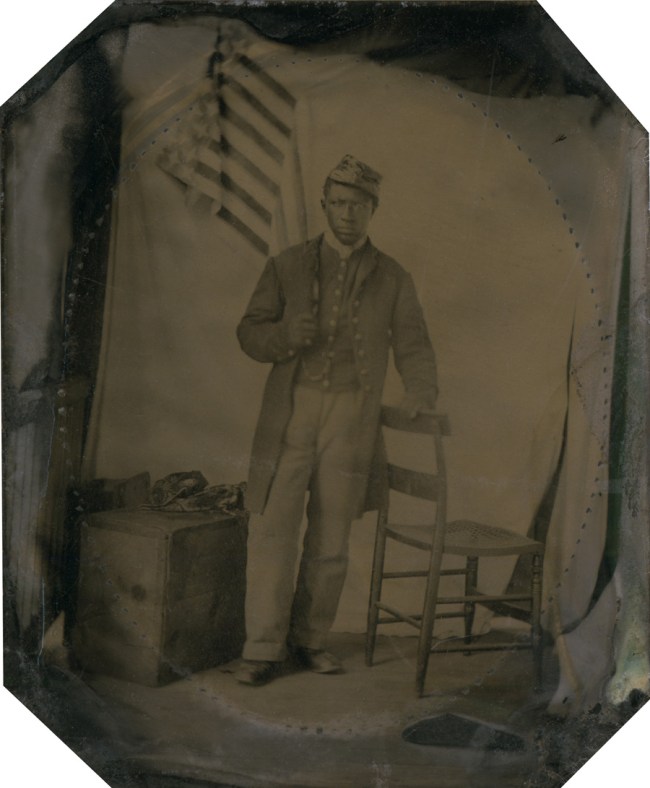
 

Unknown photographer. 'Private Abraham F. Brown' 1863


Unknown photographer
Private Abraham F. Brown
1863
Tintype
Mat: 17.8 x 12.7cm (7 x 5 in.)
Image: 8 x 6.5cm (3 1/8 x 2 9/16 in.)
Courtesy of the Massachusetts Historical Society


Private Abraham F. Brown probably had his portrait made shortly after the 54th arrived in SC in June 1863. A sailor born in Toronto, Canada, Abraham Brown accidentally killed himself while cleaning his gun on July 11, 1863, on James Island, northwest of Fort Wagner.
 

Unknown photographer. 'Private Abraham F. Brown' (with overmat) 1863


Unknown photographer
Private Abraham F. Brown (with over-mat)
1863
Tintype


Portrait as it would have originally been mated. The outline of the original mat can be seen in the image above.


Unknown photographer. 'Private Richard Gomar' c. 1880


Unknown photographer
Private Richard Gomar
c. 1880
Tintype
Mat: 17.8 x 12.7cm (7 x 5 in.)
Image: 8.5 x 6cm (3 3/8 x 2 3/8 in.)
Courtesy of the Massachusetts Historical Society


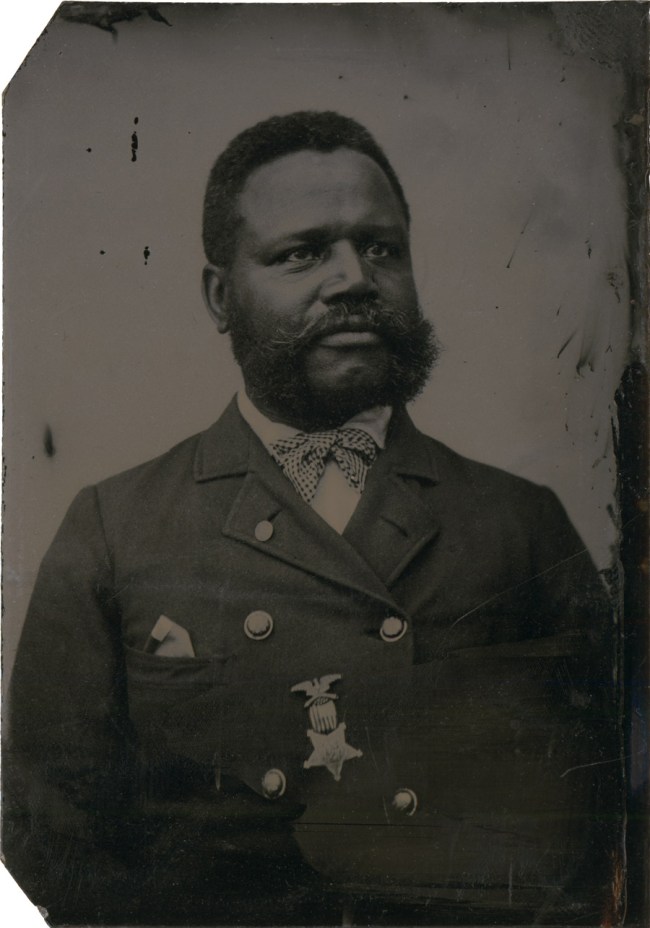
Richard Gomar enlisted in Company H on 17 April 1863 at the age of seventeen and was mustered in on 13 May. He was a labourer from Battle Creek, Michigan. He was mustered out after the regiment’s return to Boston on 20 August 1865. He received a state bounty of $50, and his last known address was Cedar Rapids, Iowa.

Portrayed here in a half-length study, Gomar is in civilian clothes and on his waistcoat is wearing a membership badge of the Grand Army of the Republic, the Union veterans’ organisation. This version of the badge was adopted in 1880. According to regulation, Gomar wears the badge on the left breast of his waistcoat, but the tintype process has reversed the image.


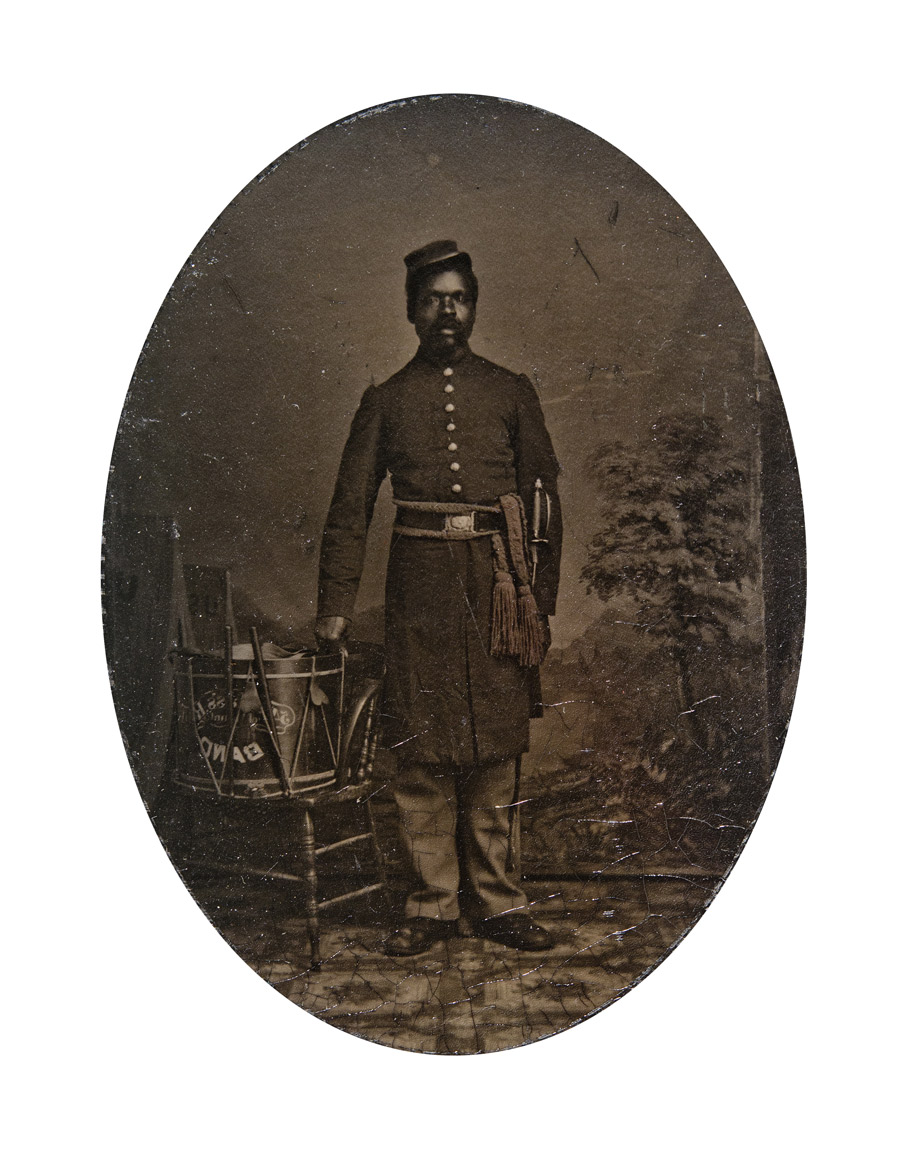
H. C. Foster (?) 'Private John Gooseberry, musician' 1864


H. C. Foster (?)
Private John Gooseberry, musician
1864
Tintype
Mat: 17.8 x 12.7cm (7 x 5 in.)
Image: 10 x 6.8cm (3 15/16 x 2 2/3 in.)
Plate: 10.7 x 8.1cm (4 3/16 x 3 3/16 in.)
Courtesy of the Massachusetts Historical Society


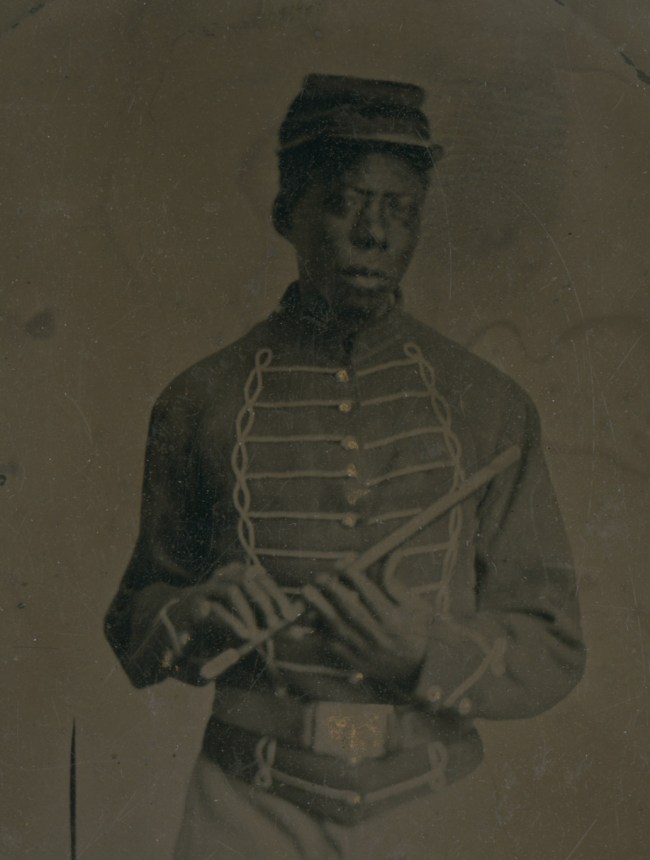
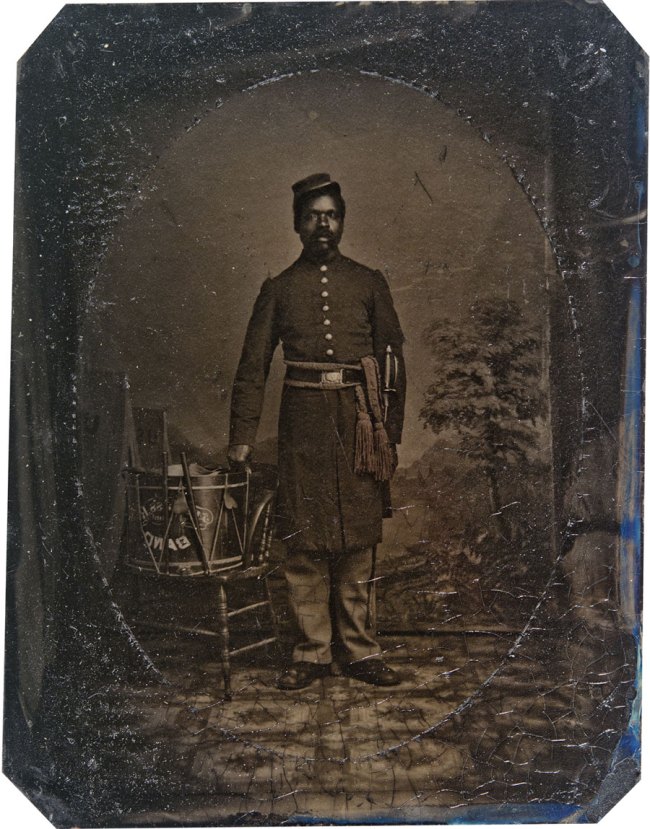
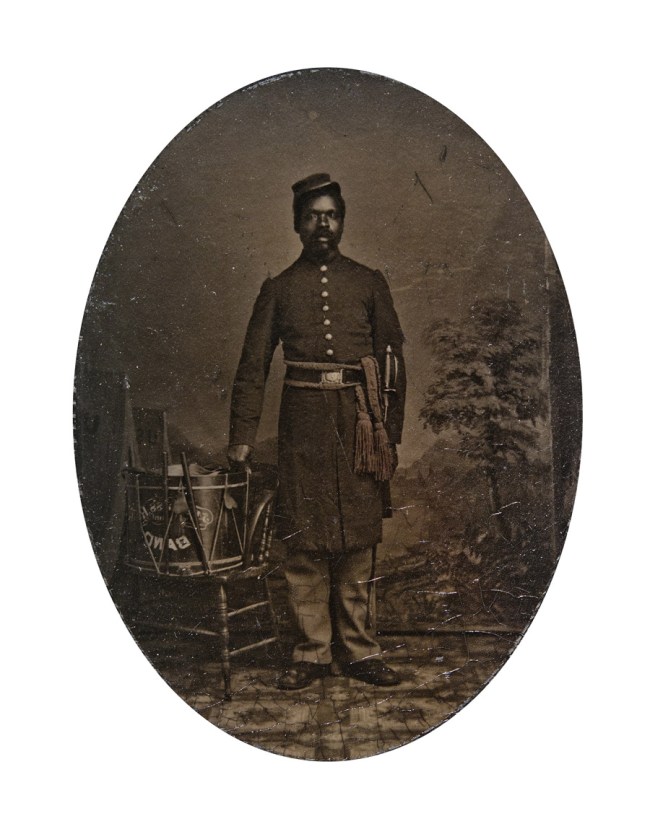
One of the twenty-one Black recruits from Canada, twenty-five-pear-old Goosberry, a sailor of St. Catharines, Ontario, was mustered into Company E on July 16, 1863, just two days before the fateful assault on Fort Wagner. He was mustered out of service on August 20, 1865, at the disbanding of the regiment. Born in New Orleans, he survived the war but died destitute at about age 38.

Goosberry appears in this full-length photograph wearing his uniform as a company musician, holding a fife and standing before a plain backdrop. The buttons and buckle of the uniform have been hand coloured, and there is an impression remaining on the tintype from an earlier oval frame.
 

H. C. Foster (?) 'Private John Gooseberry, musician' (detail) 1864


H. C. Foster (?)
Private John Gooseberry, musician (detail)
1864
Tintype
 

H. C. Foster (?) 'Private Alexander H. Johnson, musician' 1864


H. C. Foster (?)
Private Alexander H. Johnson, musician
1864
Tintype
Mat: 17.8 x 12.7cm (7 x 5 in.)
Image: 8 x 6.5cm (3 1/8 x 2 9/16 in.)
Courtesy of the Massachusetts Historical Society


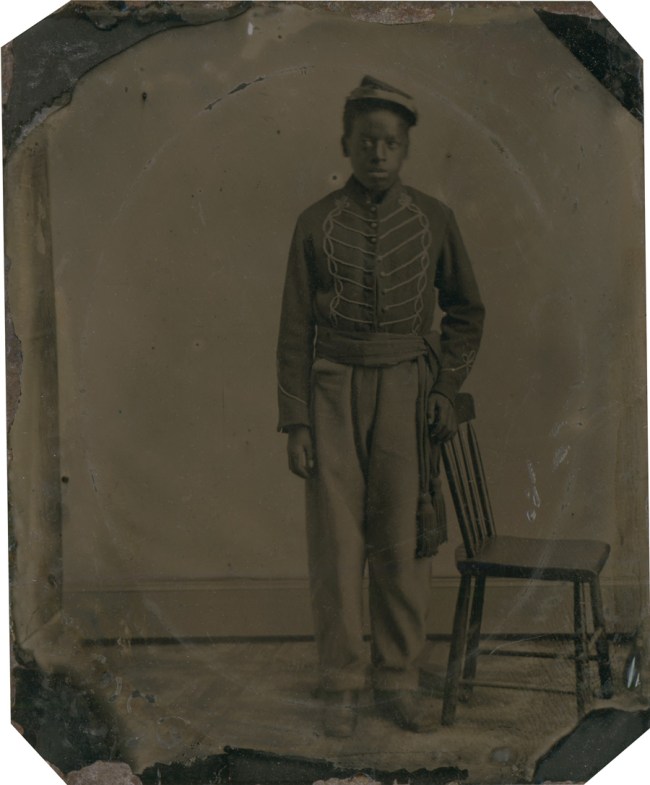
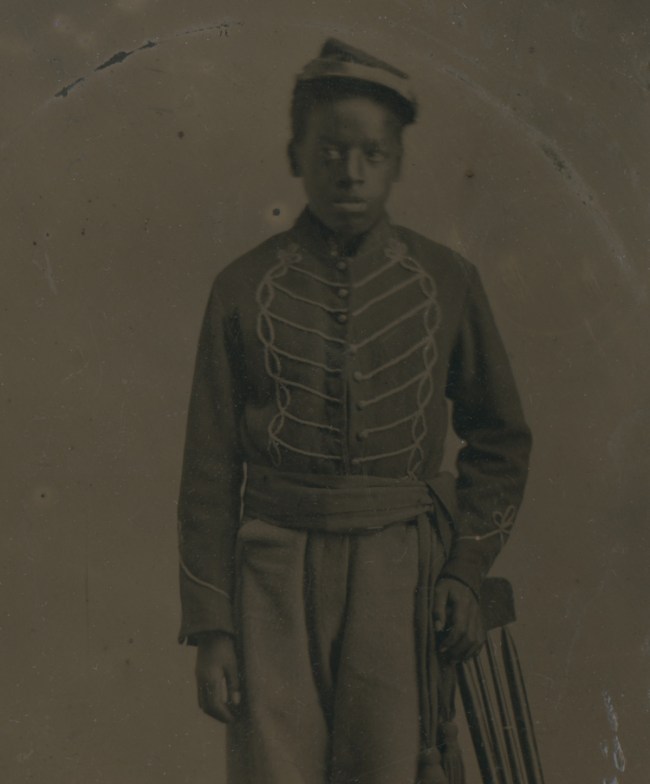
Johnson served as a musician in  Co. C. of the 54th Massachusetts Volunteer Infantry Regiment. Colonel Shaw referred to Private Alexander Johnson, a 16-year-old recruit from New Bedford, Massachusetts, as the “original drummer boy.” He was with Shaw when the colonel died at Fort Wagner and carried important messages to other officers during the battle.

Alexander H. Johnson enlisted at the age of 16 as a drummer boy in the 54th Massachusetts Infantry. He was the first black musician to enlist during the Civil War, and is depicted as the drummer leading the column of troops on the memorial honouring Colonel Shaw and the 54th Massachusetts in front of the Massachusetts state house in Boston. Alex was adopted by William Henry Johnson, the second black lawyer in the United States and close associate of Frederick Douglass. Johnson’s original surname was Howard and his mother was a Perry. His grandfather was Peter Perry, a native Hawaiian whaler who married an Indian woman.

After the war, Alex Johnson was a member of both the Grand Army of the Republic General George H. Ward Post #10 and of the Sons of Union Veterans of the Civil War in Worcester, Massachusetts. He is frequently mentioned in the book We All Got History by Nick Salvatore. Alexander Johnson died 19 March 1930, at the age of 82, just a few weeks after the 67th anniversary of his enlistment in the 54th.

Text from the Battle of Olustee website [Online] Cited 23/01/2021
 

H. C. Foster (?) 'Private Alexander H. Johnson, musician' (detail) 1864


H. C. Foster (?)
Private Alexander H. Johnson, musician (detail)
1864
Tintype
 

Unknown photographer. 'Private William J. Netson, musician' c. 1863-1864


Unknown photographer
Private William J. Netson, musician
c. 1863-1864
Tintype
Mat: 17.8 x 12.7cm (7 x 5 in.)
Image: 8.5 x 6.5cm (3 3/8 x 2 9/16 in.)
Courtesy of the Massachusetts Historical Society


Netson served as a Musician, in  Co. E, of the 54th Massachuetts Volunteer Infantry Regiment.
 

Unknown photographer. 'Private William J. Netson, musician' (with overmat) c. 1863-1864


Unknown photographer
Private William J. Netson, musician (with over-mat)
c. 1863-1864
Tintype


Portrait as it would have originally been mated. The outline of the original mat can be seen in the image above.
 

Unknown photographer. 'Private Charles A. Smith' c. 1880


Unknown photographer
Private Charles A. Smith
c. 1880
Tintype
Overall: 8.7 x 6.2cm (3 7/16 x 2 7/16 in.)
Image: 8.7 x 6cm (3 7/16 x 2 3/8 in.)
Courtesy of the Massachusetts Historical Society


Smith served as a  Private in Co. C. of the 54th Massachuetts Volunteer Infantry Regiment.
 

Unknown photographer. 'Sergeant Henry F. Steward' 1863


Unknown photographer
Sergeant Henry F. Steward
1863
Ambrotype
Mat: 17.8 x 12.7cm (7 x 5 in.)
Image: 10.5 x 8cm (4 1/8 x 3 1/8 in.)
Courtesy of the Massachusetts Historical Society


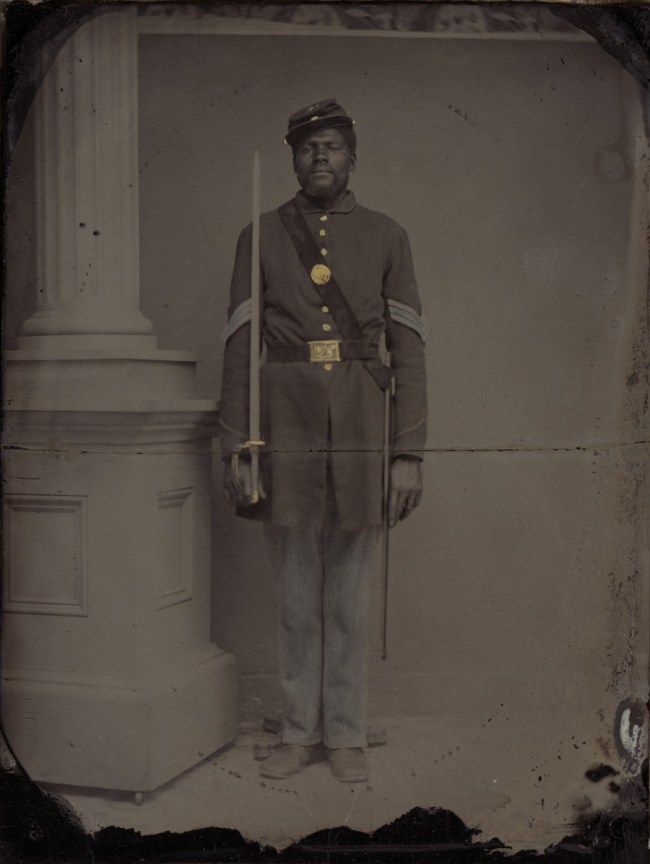
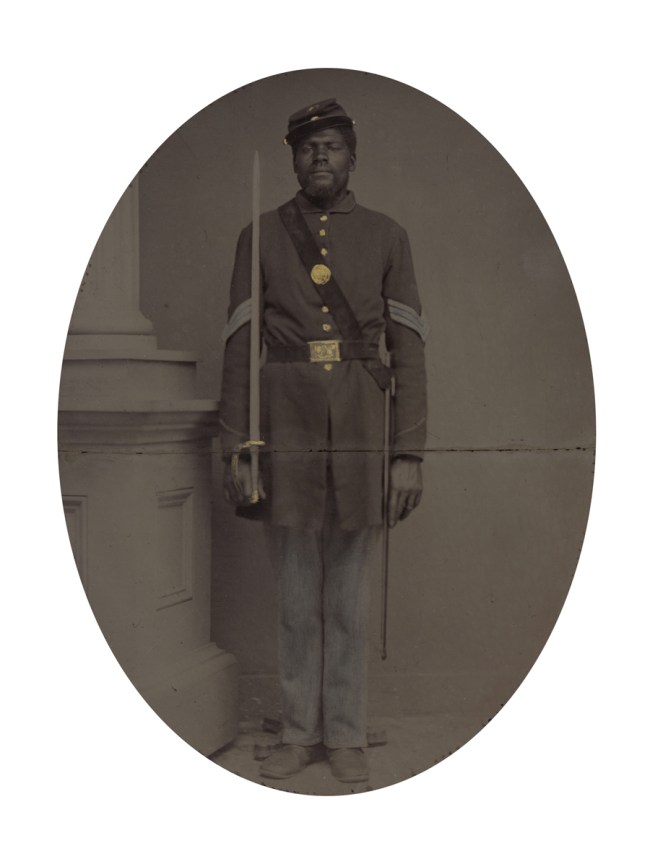
A twenty-three year old farmer from Adrian, Michigan, Henry Steward enlisted on 4 April 1863 and was mustered in on April 23. As a non-commissioned officer, as were all Black officers, Steward was actively engaged in the recruiting of soldiers for the regiment. He died of disease at the regimental hospital on Morris Island, South Carolina, on 27 September 1863, and his estate was paid a $50 state bounty. Standing at attention with his sword drawn in this full-length study, Steward is posed in front of a plain backdrop, but a portable column has been wheeled in to add detail on the left. Hand-coloured trousers and buttons highlight the uniform in this Ambrotype of Sergeant Steward.

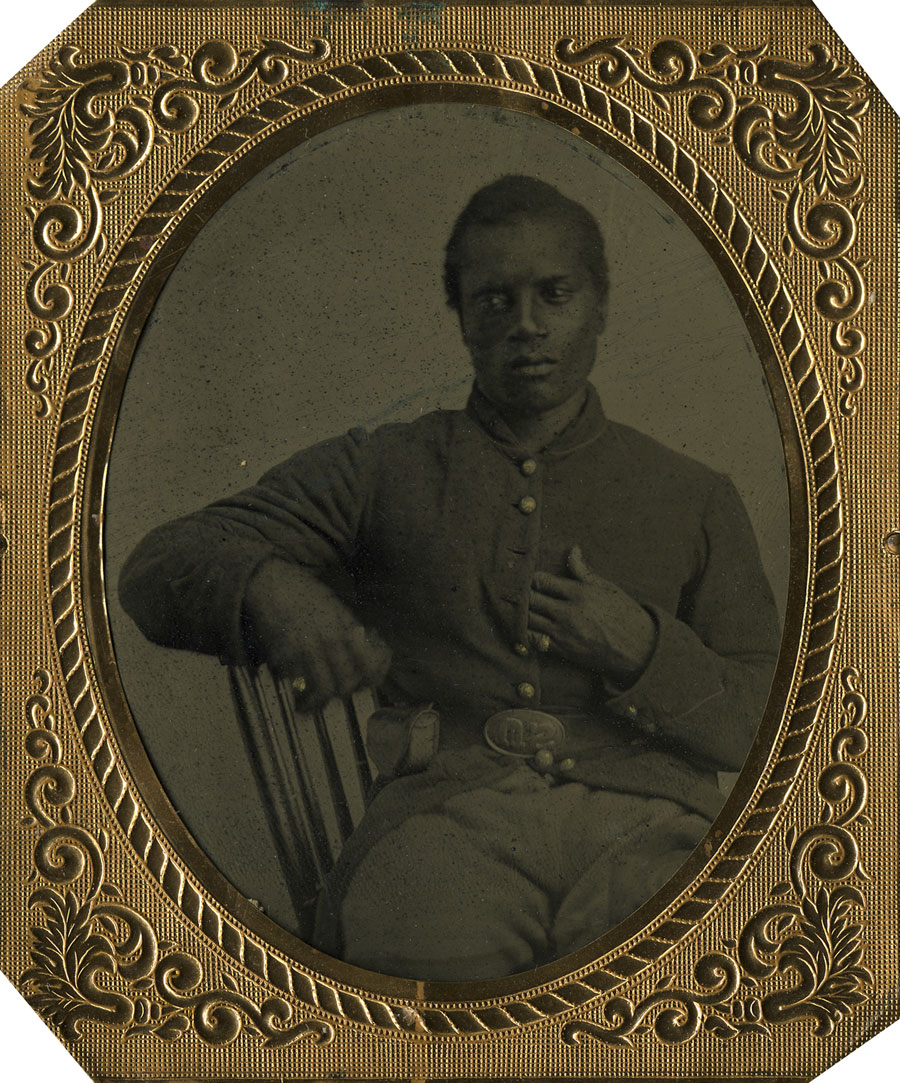
Beginning in March 1863, African American recruits streamed into Camp Meigs on the outskirts of Boston, eager to enlist in the 54th. By May, the regiment numbered more than 1,000 soldiers. Most were freemen working as farmers or labourers; some were runaway slaves. Many of the new enlistees, proud of their professions and uniforms, had photographs of themselves taken. Their pictures recall Frederick Douglass’ 1863 speech before an audience of potential recruits: “Once let the black man get upon his person the brass letters, U.S.; let him get an eagle on his button and a musket on his shoulder and bullets in his pocket, and there is no power on the earth or under the earth which can deny that he has earned the right of citizenship in the United States.”

Henry F. Steward, shown here, actively recruited for the 54th in Michigan. He had been promoted to sergeant soon after he arrived at Camp Meigs and probably had this portrait made shortly after he received his rifle and uniform. Proud of his new career, Stewart paid an extra fee to have the photographer tint his cap, sword, breastplate, and pants with paint to highlight their importance. Steward survived the Battle of Fort Wagner but died just over two months later, most likely of dysentery.
 

Unknown photographer. 'Sergeant Henry F. Steward' (with overmat) 1863


Unknown photographer
Sergeant Henry F. Steward (with over-mat)
1863
Ambrotype


Portrait as it would have originally been mated. The outline of the original mat can be seen in the image above.


Continuing its year-long celebration of African American history, art, music, and culture, the National Gallery of Art announces a major exhibition honouring one of the first regiments of African Americans formed during the Civil War. Tell It with Pride: The 54th Massachusetts Regiment and Augustus Saint-Gaudens’ Shaw Memorial will be on view in the American galleries on the West Building’s Main Floor from September 15, 2013, through January 20, 2014. The 54th Massachusetts fought in the Battle of Fort Wagner, South Carolina, on July 18, 1863, an event that has been documented and retold in many forms, including the popular movie Glory, released in 1989.

“Then, as today, the soldiers of the 54th Massachusetts Regiment captured the imagination: they were common men propelled by deep moral principles, willing to sacrifice everything for a nation that had taken much from them but now promised liberty,” said Earl A. Powell III, director, National Gallery of Art. “This exhibition celebrates the brave members of the 54th, Augustus Saint-Gaudens’ Shaw Memorial commemorating their heroism, and the works of art they and the monument continue to inspire.”

The magisterial Shaw Memorial (1900) by Augustus Saint-Gaudens (1848-1907), on long-term loan to the Gallery from the U.S. Department of the Interior, the National Park Service, and the Saint-Gaudens National Historic Site, is considered by many to be one of the finest examples of 19th-century American sculpture. This monument commemorates the July 18, 1863, storming of Fort Wagner by Colonel Robert Gould Shaw and the 54th Massachusetts, a troop of African American soldiers led by white officers that was formed immediately after President Abraham Lincoln signed the Emancipation Proclamation. Although one-third of the regiment was killed or wounded in the assault, including Shaw himself, the fierce battle was considered by many to be a turning point in the war: it proved that African Americans could be exemplary soldiers, with a bravery and dedication to country that equaled the nation’s most celebrated heroes.

Part of the exhibition’s title, “Tell It with Pride,” is taken from an anonymous letter written to the Shaw family announcing the death of Robert Gould Shaw. The letter is included in the exhibition and the catalogue accompanying the show.

When Saint-Gaudens created the figures in the memorial, he based his depiction of Shaw on photographs of the colonel, but he hired African American models, not members of the 54th Massachusetts, to pose for the other soldiers. This exhibition seeks to make real the anonymous African American soldiers of the 54th, giving them names and faces where possible. The first section of the exhibition shows vintage photographic portraits of the soldiers, the people who recruited them – including the noted abolitionists Frederick Douglass, Wendell Phillips, Charles Lenox Remond, and Sojourner Truth – and the women who nursed, taught, and guided them, such as Clara Barton, Charlotte Forten, and Harriet Tubman. In addition, the exhibition presents a copy of the Emancipation Proclamation, a recruiting poster, a letter written by a soldier, Corporal James Henry Gooding, to President Lincoln arguing for equal pay, and the Medal of Honor awarded to the first African American to earn this distinction, Sergeant William H. Carney, as well as other documents related to both the 54th Massachusetts and the Battle of Fort Wagner. Together, these works of art and documents detail critical events in American history and highlight both the sacrifices and the valour of the individual soldiers.

The second half of the exhibition looks at the continuing legacy of the 54th Massachusetts, the Battle of Fort Wagner, and the Shaw Memorial. By presenting some of the plaster heads Saint-Gaudens made in preparation for his work on the Shaw Memorial, the exhibition discusses its development from 1883, when Saint Gaudens’ concept began to take shape, through the installation of the bronze monument on Boston Common in 1897, to the artist’s final re-working in the late 1890s of the original plaster now on view at the National Gallery of Art.  The exhibition concludes by showing how the Shaw Memorial remains a deeply compelling work that continues to inspire artists as diverse as Lewis Hine, Richard Benson, Carrie Mae Weems, and William Earle Williams, who have reflected on these people, the event, and the monument itself in their own art.”

For over a century, the 54th Massachusetts, its famous battle at Fort Wagner, and the Shaw Memorial have remained compelling subjects for artists. Poets such as Paul Laurence Dunbar and Robert Lowell praised the bravery of these soldiers, as did composer Charles Ives. Artists as diverse as Lewis Hine, Richard Benson, Carrie Mae Weems, and William Earle Williams have highlighted the importance of the 54th as a symbol of racial pride, personal sacrifice, and national resilience. These artists’ works illuminate the enduring legacy of the 54th Massachusetts in the American imagination and serve as a reminder, as Ralph Ellison wrote in an introduction to Invisible Man, “that war could, with art, be transformed into something deeper and more meaningful than its surface violence.

Press release from the National Gallery of Art website
 

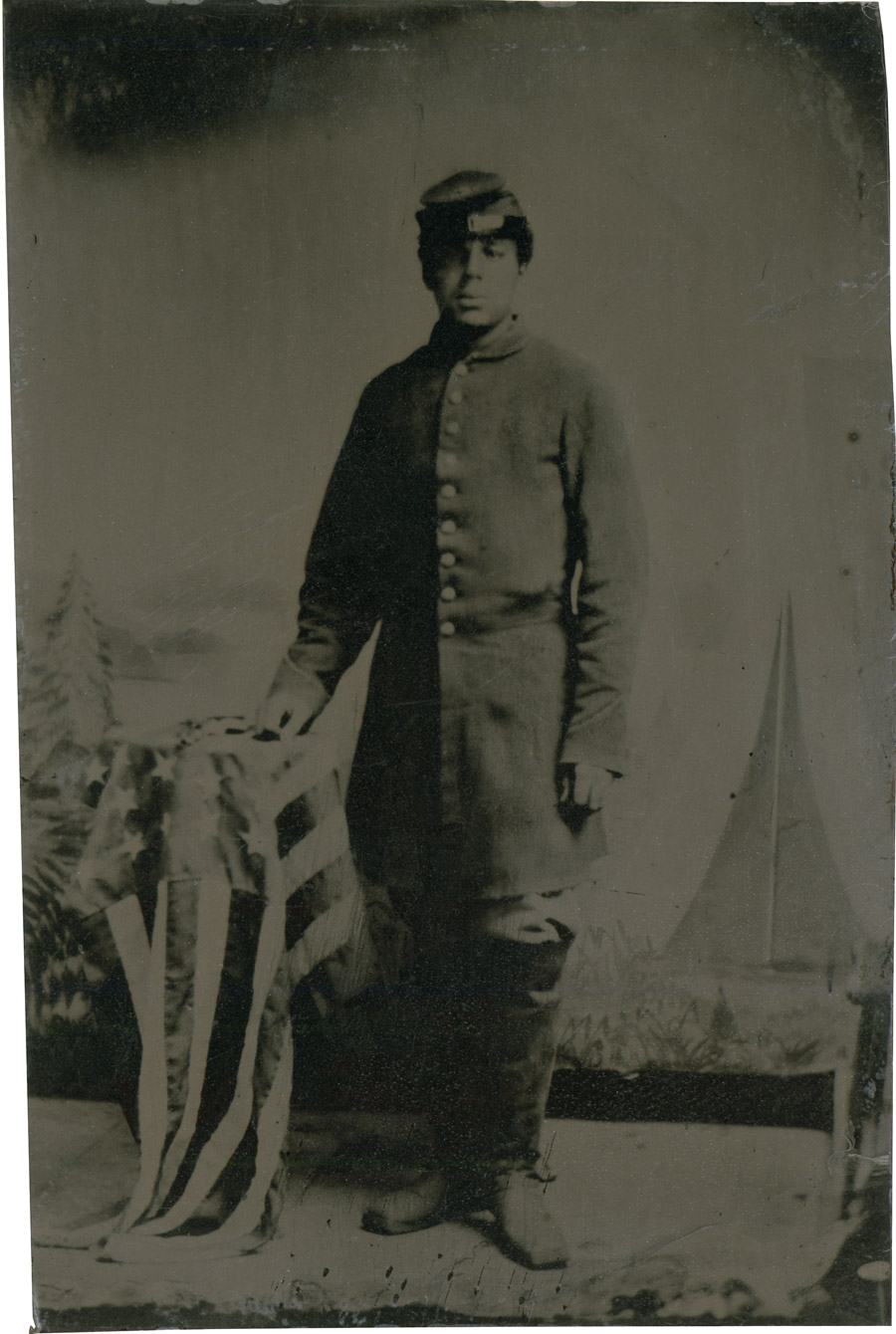
Unknown photographer. 'Private Charles H. Arnum' 1864


Unknown photographer
Private Charles H. Arnum
1864
Tintype
Mat: 17.8 x 12.7cm (7 x 5 in.)
Image: 10 x 6.5cm (3 15/16 x 2 9/16 in.)
Courtesy of the Massachusetts Historical Society


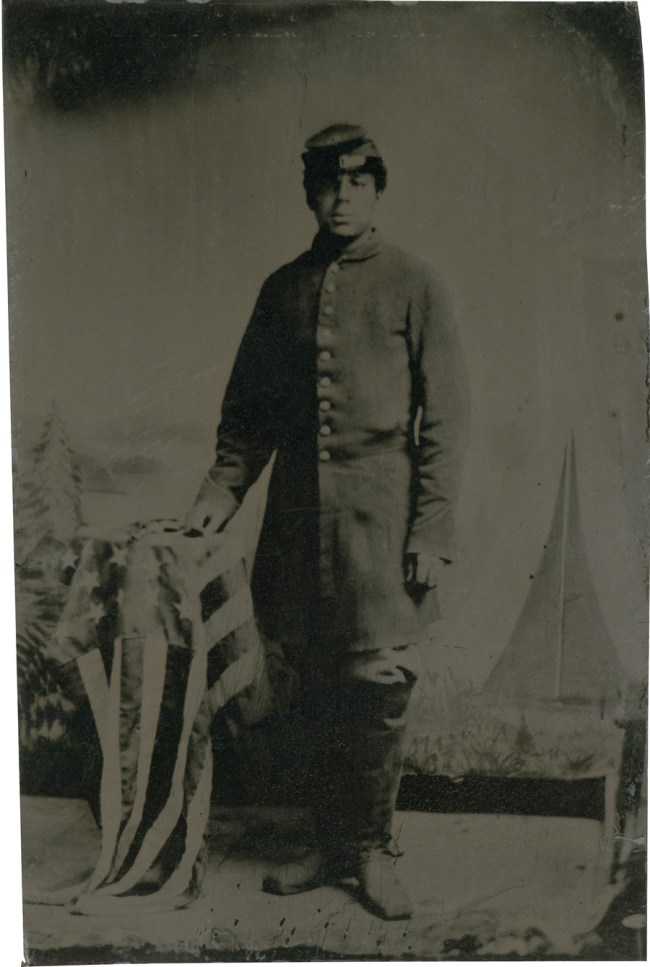
Listed as a teamster and a resident of Springfield, Massachusetts, the twenty-one year old Arnum enlisted at Littleton and was mustered in as a private into Company E on November 4, 1863. He served with the regiment until it was disbanded on August 20, 1865. He received $325 as a state bounty, and his last known address was North Adams, Massachusetts. This full-length study of Arnum shows him in uniform with his hand resting upon the American flag, which is draped over a table in the foreground. Behind him is a painted backdrop representing a seashore military camp.


Unknown photographer. 'Second Lieutenant Ezekiel G. Tomlinson, Captain Luis F. Emilio, and Second Lieutenant Daniel Spear' October 12, 1863


Unknown photographer
Second Lieutenant Ezekiel G. Tomlinson, Captain Luis F. Emilio, and Second Lieutenant Daniel Spear
October 12, 1863
Tintype
Overall: 8.6 x 6.5cm (3 3/8 x 2 9/16 in.)
Image: 8.3 x 6.2cm (3 1/4 x 2 7/16 in.)
Library of Congress, Prints and Photographs Division
 

John Adams Whipple (American, 1822-1891) 'Colonel Robert Gould Shaw' 1863


John Adams Whipple (American, 1822-1891)
Colonel Robert Gould Shaw
1863
Albumen print
Image: 8.4 x 5.8cm (3 5/16 x 2 5/16 in.)
Boston Athenaeum


Death at the Battle of Fort Wagner

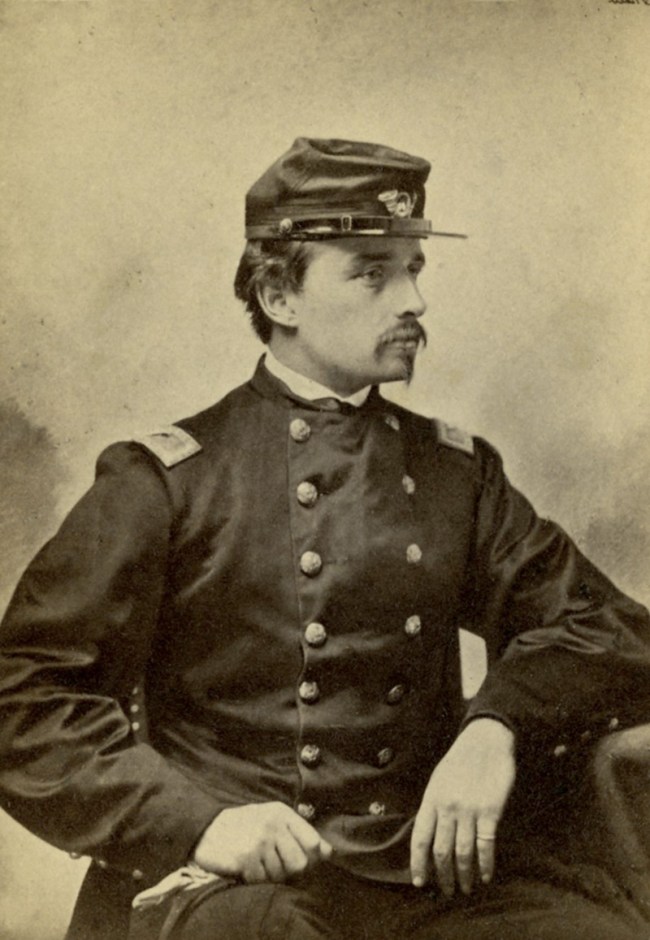
The 54th Regiment was sent to Charleston, South Carolina to take part in the operations against the Confederates stationed there. On July 18, 1863, along with two brigades of white troops, the 54th assaulted Confederate Battery Wagner. As the unit hesitated in the face of fierce Confederate fire, Shaw led his men into battle by shouting, “Forward, Fifty-Fourth, forward!” He mounted a parapet and urged his men forward, but was shot through the heart and died almost instantly. According to the Colors Sergeant of the 54th, he was shot and killed while trying to lead the unit forward and fell on the outside of the fort.

The victorious Confederates buried him in a mass grave with many of his men, an act they intended as an insult. Following the battle, commanding Confederate General Johnson Hagood returned the bodies of the other Union officers who had died, but left Shaw’s where it was. Hagood informed a captured Union surgeon that “had he been in command of white troops, I should have given him an honourable burial; as it is, I shall bury him in the common trench with the niggers that fell with him.” Although the gesture was intended as an insult, it came to be seen as an honour by Shaw’s friends and family that he was buried with his soldiers.

Efforts were made to recover Shaw’s body (which had been stripped and robbed prior to burial), but his father publicly proclaimed that he was proud to know that his son was interred with his troops, befitting his role as a soldier and a crusader for emancipation. In a letter to the regimental surgeon, Lincoln Stone, Frank Shaw wrote:

“We would not have his body removed from where it lies surrounded by his brave and devoted soldiers… We can imagine no holier place than that in which he lies, among his brave and devoted followers, nor wish for him better company – what a body-guard he has!”


Annie Haggerty Shaw, a widow at the age of 28, never remarried. She lived with her family in New York, Lenox and abroad, a revered figure and in later years an invalid. She died in 1907 and is buried at the cemetery of Church-on-the Hill in Lenox.

Text from the Wikipedia website


John Adams Whipple (September 10, 1822 – April 10, 1891) was an American inventor and early photographer. He was the first in the United States to manufacture the chemicals used for daguerreotypes; he pioneered astronomical and night photography; he was a prize-winner for his extraordinary early photographs of the moon; and he was the first to produce images of stars other than the sun (the star Vega and the Mizar-Alcor stellar sextuple system), which was thought to be a double star until 2009.

Text from the Wikipedia website
 

Unknown photographer. 'Captain Luis F. Emilio' c. 1863-1865


Unknown photographer
Captain Luis F. Emilio
c. 1863-1865
Tintype
Overall: 12.7 x 7.62cm (5 x 3 in.)
Image: 6.6 x 5.33cm (2 5/8 x 2 1/8 in.)
Pamplin Historical Park and The National Museum of the Civil War Soldier


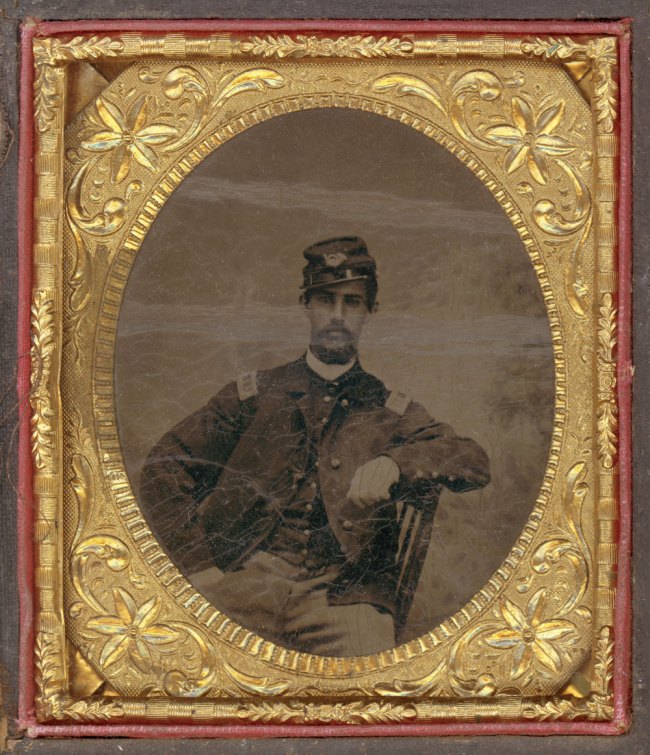
Luis F. Emilio (December 22, 1844 – September 16, 1918) was a Captain in the 54th Massachusetts Volunteer Infantry, an American Civil War Union regiment. Emilio was born on December 22, 1844 in Salem, Massachusetts, the son of a Spanish immigrant who made his living as a music instructor. Although the minimum age for service in the Union army was 18, in 1861 – at age 16 – Emilio gave his age as 18 and enlisted in Company F of the 23rd Massachusetts Volunteer Infantry. He was noticeably brave and steadfast, and by September, 1862 he had been promoted to the rank of Sergeant.

Emilio was among the group of original officers of the 54th selected by Massachusetts War Governor John Albion Andrew. He mustered in as a 2nd Lieutenant on March 30, 1863. Two weeks later, he was promoted to 1st Lieutenant, and on May 27, he was made Captain of Company E. Captain Emilio emerged from the ferocious assault on Fort Wagner on July 18, 1863 as the regiment’s acting commander, since all of the other ranking officers had been killed or wounded. He fought with the 54th for over three years of dangerous combat, mustering out of the Union army on March 29, 1865, still not yet 21 years old.

Following the war, he went into the real estate business, first in San Francisco, and later in New York. After assisting two old comrades documenting the history of the 23rd Massachusetts regiment in the mid-1880s, he began work on his own documentation of the 54th, publishing the first edition of Brave Black Regiment in 1891, and the revised edition in 1894. He died in New York on September 16, 1918 after a long illness, and was buried in the Harmony Grove Cemetery in Salem, Massachusetts.

Text from the Wikipedia website


Unknown photographer. 'Unidentified Private, Company I, 54th Massachusetts Regiment' 1863


Unknown photographer
Unidentified Private, Company I, 54th Massachusetts Regiment
1863
Ambrotype
Overall: 11.2 x 8.6cm (4 7/16 x 3 3/8 in.)
Image: 8.7 x 6.4cm (3 7/16 x 2 1/2 in.)
The Gilder Lehrman Institute of American History


Major J. W. Appleton. 'Diary of Major J. W. Appleton open to tintype of Private Samuel J. Benton' c. 1865-1885


Major J. W. Appleton
Diary of Major J. W. Appleton open to tintype of Private Samuel J. Benton
c. 1865-1885
Handwritten journal with clippings, drawings, and photographic prints
Page size: 35.56 x 20.96 cm (14 x 8 1/4 in.)
Image: 6.5 x 5.2cm (2 9/16 x 2 1/16 in.)
West Virginia University Libraries, West Virginia and Regional History Collection


Unknown photographer. 'Sergeant Major John Wilson' June 3, 1864


Unknown photographer
Sergeant Major John Wilson
June 3, 1864
Albumen print
Image: 9.1 x 5.8cm (3 9/16 x 2 5/16 in.)
West Virginia University Libraries, West Virginia and Regional History Collection


John Wilson, a painter from Cincinnati, Ohio, had this portrait made a month after he was promoted to sergeant major in May 1864. One of only five African American non-commissioned officers in the regiment at the time, Wilson proudly displayed his stripes and cap with its horn and the number “54.”


Unknown photographer. 'Private James Matthew Townsend' 1863


Unknown photographer
Private James Matthew Townsend
1863
Albumen print
Image: 8.6 x 5.8cm (3 3/8 x 2 5/16 in.)
Collection of Greg French
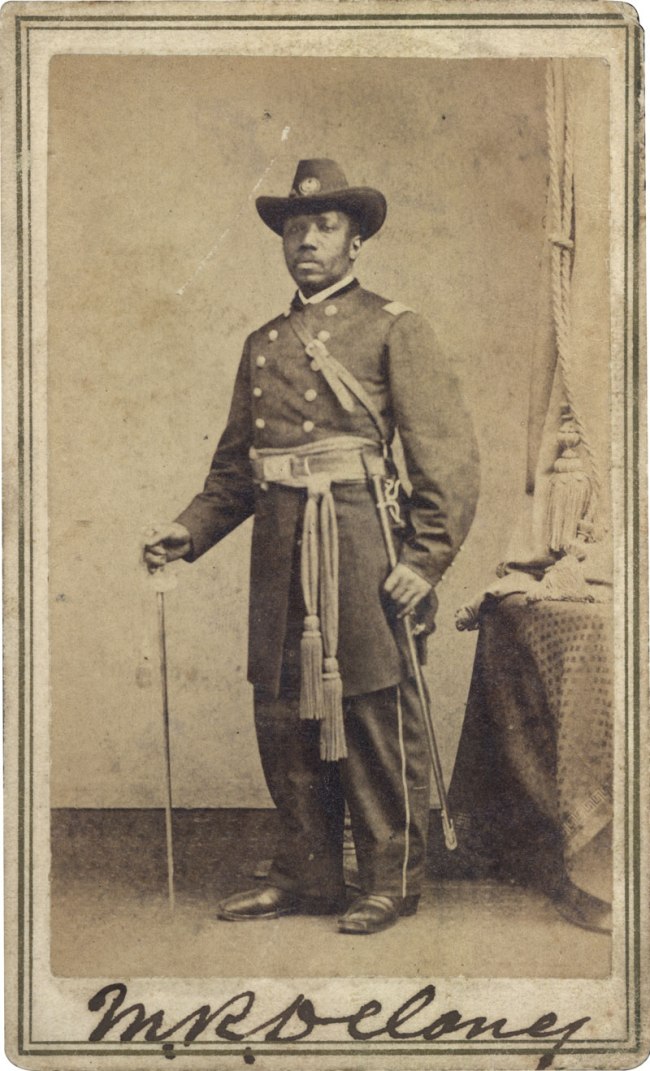
 

Abraham Bogardus. 'Major Martin Robison Delany' c. 1865


Abraham Bogardus
Major Martin Robison Delany
c. 1865
Albumen print
Image: 8.6 x 5.3cm (3 3/8 x 2 1/16 in.)
Courtesy of the National Park Service, Gettysburg National Military Park


Martin Robison Delany (May 6, 1812 – January 24, 1885) was an African-American abolitionist, journalist, physician, and writer, arguably the first proponent of American black nationalism. He was one of the first three blacks admitted to Harvard Medical School. Trained as an assistant and a physician, he treated patients during the cholera epidemics of 1833 and 1854 in Pittsburgh, when many doctors and residents fled the city. Active in recruiting blacks for the United States Colored Troops, he was commissioned as a major, the first African-American field officer in the United States Army during the American Civil War.

Text from Wikipedia website


Abraham Bogardus (November 29, 1822 – March 22, 1908) was an American Daguerreotypist and photographer who made some 200,000 daguerreotypes during his career.
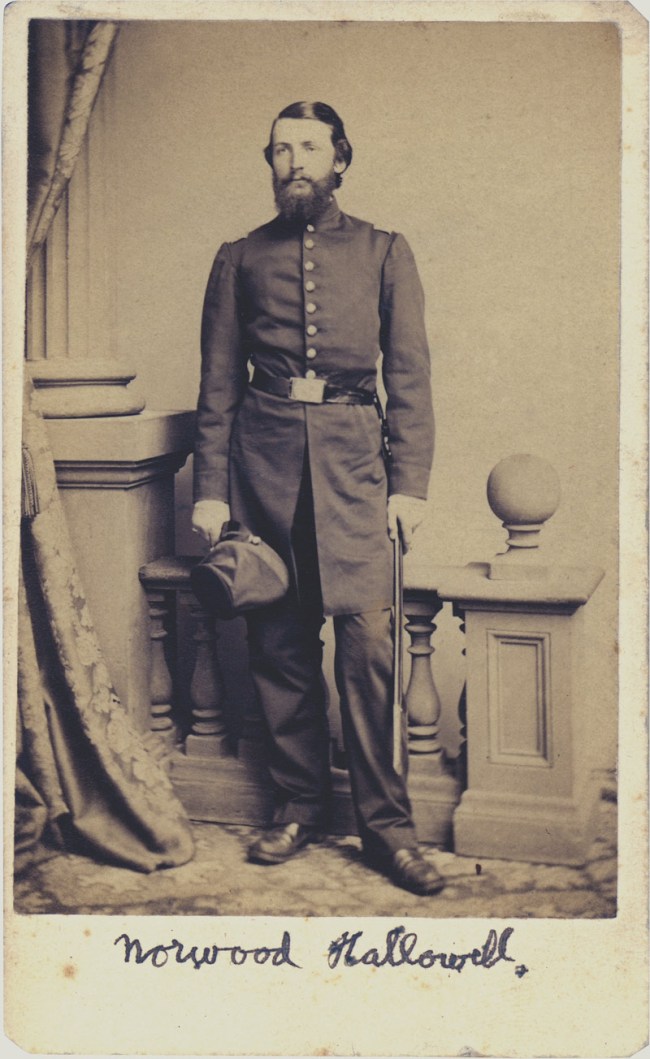
 

Unknown photographer. 'Captain Norwood P. Hallowell' c. 1862-1863


Unknown photographer
Captain Norwood P. Hallowell
c. 1862-1863
Albumen print
Overall: 10.16 x 6.35cm (4 x 2 1/2 in.)
Image: 8.8 x 5.9cm (3 7/16 x 2 5/16 in.)
Pamplin Historical Park and The National Museum of the Civil War Soldier
Courtesy of Pamplin Historical Park & The National Museum of the Civil War Soldier


Norwood Penrose “Pen” Hallowell (April 13, 1839 – April 11, 1914) was an officer in the Union Army during the American Civil War. One of three brothers to serve with distinction during the war, he and his brother Edward Needles Hallowell both became commanders of the first all-black regiments. He is also remembered for his close friendship with and influence upon future Supreme Court justice Oliver Wendell Holmes, Jr., who was his classmate at Harvard and his comrade during the war.

Hallowell’s fervent abolitionism led him to volunteer for service in the Civil War, and he inspired Holmes to do the same. He was commissioned a first lieutenant on July 10, 1861, joining the 20th Massachusetts Volunteer Infantry with his brother, Edward, and Holmes. Hallowell fought in the Battle of Ball’s Bluff on October 21, 1861, in which he distinguished himself by leading a line of skirmishers to hold off Confederate forces. Hallowell then swam across the Potomac River, constructed a makeshift raft, and made several trips to the Virginia bank to rescue trapped Union soldiers before his raft fell apart. Hallowell was promoted to captain on November 26, 1861. He was wounded in the Battle of Glendale on June 30, 1862, and suffered more severe wounds in the Battle of Antietam on September 17. His left arm was shattered by a bullet but later saved by a surgeon; Holmes was shot in the neck. Both took refuge in a farmhouse (a historic site now known as the Royer-Nicodemus House and Farm) and were eventually evacuated.

On April 17, 1863, he was promoted to lieutenant colonel, as second-in-command (after Colonel Robert Gould Shaw) of the 54th Massachusetts, one of the first all-black regiments in the U.S. On May 30, he accepted Governor John A. Andrew’s personal request that he be made colonel in command of the 55th Massachusetts, another all-black regiment. He and his regiment were stationed at Charleston Harbor and participated in the siege and eventual taking of Fort Wagner; Hallowell was one of the first to enter the fort after its abandonment. Hallowell faced continuing disability due to his wounds, and was discharged on November 2, 1863.

Text from the Wikipedia website
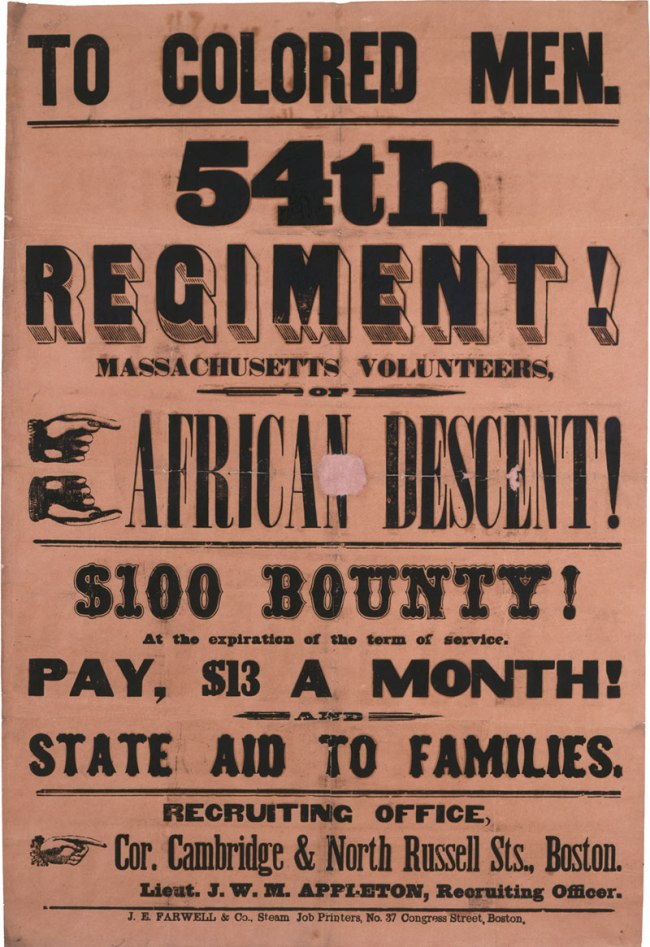
 

J. E. Farwell and Co. 'To Colored Men. 54th Regiment! Massachusetts Volunteers, of African Descent' 1863


J. E. Farwell and Co.
To Colored Men. 54th Regiment! Massachusetts Volunteers, of African Descent
1863
Ink on paper
Overall: 109.9 x 75.2cm (43 1/4 x 29 5/8 in.)
Courtesy of the Massachusetts Historical Society


The Massachusetts 54th Regiment was the first military unit consisting of black soldiers to be raised in the North during the Civil War. Prior to 1863, no concerted effort was made to recruit black troops as Union soldiers. At the beginning of the war, black men offered to serve as soldiers for the Union cause, however these offers were rejected by the military establishment and the country as a whole. A few makeshift regiments were raised – including the First South Carolina Regiment with whom the 54th Regiment would serve at Fort Wagner – however most were raised in the South and consisted primarily of escaped and abandoned slaves. (Footnote 1) The passage of the Emancipation Proclamation in December of 1862 provided the impetus for the use of free black men as soldiers and, at a time when state governors were responsible for the raising of regiments for federal service, Massachusetts was the first to respond with the formation of the 54th Regiment. (Footnote 2)

Soon after Governor John A. Andrew was allowed to begin recruiting black men for his newly formed 54th Regiment, Andrew realised the financial costs involved in such an undertaking and set out to raise money. He appointed George L. Stearns as the leader of the recruiting process, and also appointed the so-called “Black Committee” of prominent and influential citizens. The committee and those providing encouragement included Frederick Douglass, Amos A. Lawrence, William Lloyd Garrison, and Wendell Phillips, and $5000 was quickly raised for the cause. Newly appointed officers in the regiment also played an active part in the recruiting process. (Footnote 3)

An advertisement was placed in the Boston Journal for February 16, 1863 addressed “To Colored Men” recruiting “Good men of African descent.” It, like the recruiting posters, offered a “$100 bounty at the expiration of the term of service, pay $13 per month, and State aid for families”; it was signed by Lieutenant William J. Appleton of the 54th. (Footnote 4) Twenty-five men enlisted quickly, however the arrival of men at the recruiting stations and at Camp Meigs, Readville, soon slowed down. Stearns soon became aware that Massachusetts did not have enough eligible black men to fill a regiment and recruiters were sent to states throughout the North and South, and into Canada.

Pennsylvania proved to he a fertile source for recruits, with a major part of Company B coming from Philadelphia, despite recent race riots there. New Bedford and Springfield, Massachusetts, blacks made up the majority of Company C, while approximately seventy men recruited from western Massachusetts and Connecticut formed much of Company D. (Footnote 5) Stearns’s line of recruiting stations from Buffalo to St. Louis produced volunteers from New York, Illinois, Indiana, Ohio, Pennsylvania, and Canada. Few of the men were former slaves; most were freemen working as seamen, farmers, labourers, or carpenters. By May 1863, the regiment was full with 1000 enlisted men and a full complement of white officers. The remaining recruits became the nucleus of the 55th Massachusetts Regiment, commanded by Norwood P. Hallowell, who, for a short time, had served as second-in-command to Robert Gould Shaw of the 54th. (Footnote 6)

The question of pay to the volunteers became an important issue, even before the regiment’s departure from Boston on May 18. When Governor Andrew first proposed the idea to Edwin M. Stanton, Secretary of War, Andrew was assured that the men would be paid, clothed, and treated in the same way as white troops. As the recruiting posters and newspaper advertisements stated, this included a state bounty and a monthly pay of $13. In July of 1863, an order was issued in Washington fixing the compensation of black soldiers at the labourers’ rate of $10 per month. This amount was offered on several occasions to the men of the 54th, but was continually refused. Governor Andrew and the Massachusetts legislature, feeling responsible for the $3 discrepancy in pay promised to the troops, passed an act in November of 1863 providing the difference from state funds. The men refused to accept this resolution, however, demanding that they receive full soldier pay from the federal government. It was not until September of 1864 that the men of the 54th received any compensation for their valiant efforts, finally receiving their full pay since the time of enlistment, totalling $170,000. (Footnote 7) Each soldier was paid a $50 bounty before leaving Camp Meigs and this is the extent of the bounty that many received. By a later law, $325 was paid to some men, however most families received no State aid. (Footnote 8)

Although the Massachusetts 54th Regiment was the first to enlist black men as soldiers in the North, it was only the beginning for blacks as Union soldiers. By the end of the war, a total of 167 units, including other state regiments and the United States Colored Troops, were raised, totalling 186,097 men of African descent recruited into federal service. (Footnote 9)

Text from the project “Witness to America’s Past” on the Massachusetts Historical Society Collections Online website [Online] Cited 15/01/2014. No longer available online


Footnotes

1/ Burchard, Peter. One Gallant Rush: Robert Gould Shaw and His Brave Black Regiment. New York: St. Martin’s Press, 1965, p. xi.

2/ Hargrove, Hondon B. Black Union Soldiers in the Civil War. Jefferson, N.C.: McFarland, 1988, p. xi.

3/ Ibid., pp. 77-78.

4/ Emilio, Luis F. History of the fifty-fourth Regiment of Massachusetts Volunteer Infantry, 1863-1865. 2nd ed. Boston Boston Book Co., 1894, pp. 8-9.

5/ Ibid., pp. 9-10.

6/ Burchard, Peter. One Gallant Rush: Robert Gould Shaw and His Brave Black Regiment. New York: St. Martin’s Press, 1965, pp. 83-90.

7/ Massachusetts Soldiers, Sailors, and Marines in the Civil War.. 8 vols. Norwood, Mass.: Printed at The Norwood Press, 4:657.

8/ Emilio, Luis F. History of the fifty-fourth Regiment of Massachusetts Volunteer Infantry, 1863-1865. 2d ed. Boston Boston Book Co., pp. 327-328.

9/ Hargrove, Hondon B. Black Union Soldiers in the Civil War. Jefferson, N.C.: McFarland, 1988, p. 2.
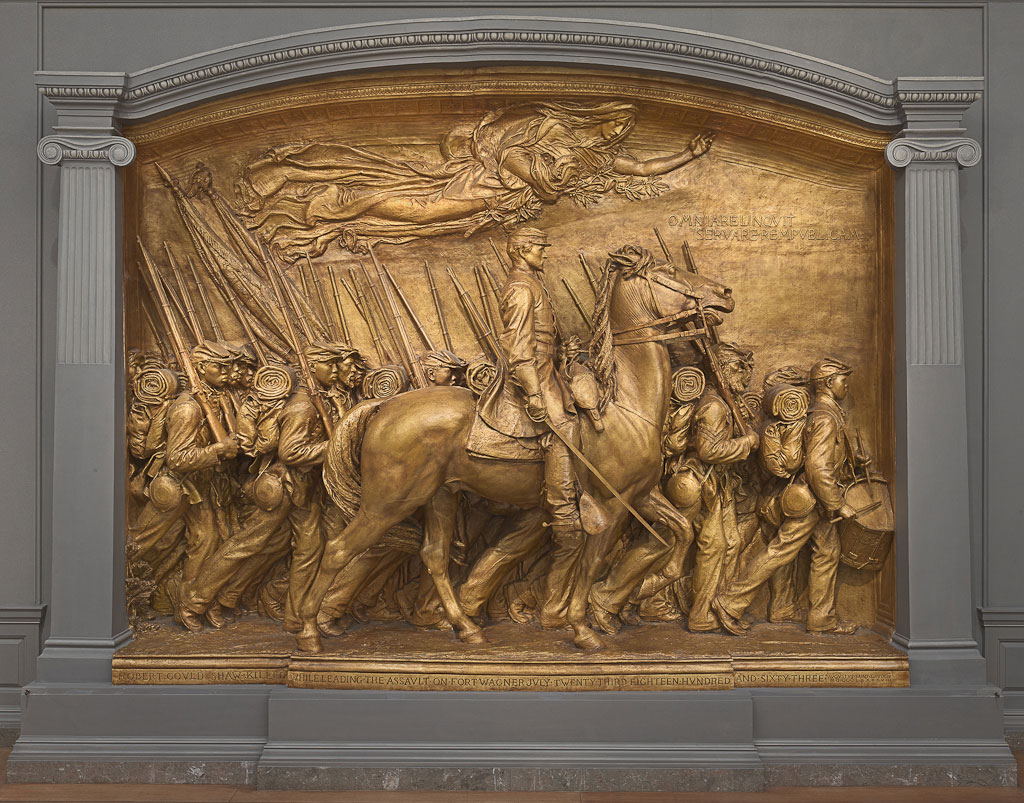
 

Augustus Saint-Gaudens (American, 1848-1907) 'Shaw Memorial' 1900


Augustus Saint-Gaudens (American, 1848-1907)
Shaw Memorial
1900
Patinated plaster
Overall (without armature or pedestal): 368.9 x 524.5 x 86.4cm (145 1/4 x 206 1/2 x 34 in.)
Overall (with armature & pedestal): 419.1 x 524.5 x 109.2cm (165 x 206 1/2 x 43 in.)
U.S. Department of the Interior, National Park Service, Saint-Gaudens National Historic Site, Cornish, New Hampshire, on long-term loan to the National Gallery of Art


Even before the war’s end in April 1865, the courage and sacrifice that the 54th Massachusetts demonstrated at Fort Wagner inspired artists to commemorate their bravery. Two artists working in Boston, Edward Bannister and Edmonia Lewis, were among the first to pay homage to the 54th in works they contributed to a fair that benefited African American soldiers. Yet it was not until the late 19th century that Augustus Saint-Gaudens’ Shaw Memorial solidified the 54th as an icon of the Civil War in the American consciousness.

Commissioned by a group of private citizens, Saint-Gaudens first conceived the memorial as a single equestrian statue of Colonel Shaw, following a long tradition of military monuments. Shaw’s family, however, uncomfortable with the portrayal of their 25-year-old son in a fashion typically reserved for generals, urged Saint-Gaudens to rework his design. The sculptor revised his sketch to honour both the regiment’s famed hero and the soldiers he commanded – a revolutionary conception at the time. Saint-Gaudens worked on his memorial for 14 years, producing a plaster and a bronze version.

When the bronze was dedicated on Boston Common on Memorial Day 1897, Booker T. Washington declared that the monument stood “for effort, not victory complete.” After inaugurating the Boston memorial, Saint-Gaudens continued to modify the plaster, reworking the horse, the faces of the soldiers, and the appearance of the angel above them. The success of his final plaster earned the artist the grand prize for sculpture when it was shown at the 1900 Universal Exposition in Paris. It was installed at the National Gallery of Art in 1997, on long-term loan from the U.S. Department of the Interior, the National Park Service, and the Saint-Gaudens National Historic Site in Cornish, New Hampshire.

Anonymous. “Tell It with Pride: The 54th Massachusetts Regiment and Augustus Saint-Gaudens’ Shaw Memorial,” on the National Gallery of Art website Nd [Online] Cited 23/01/2021


Richard Benson (American, 1943-2017) 'Robert Gould Shaw Memorial' 1973


Richard Benson (American, 1943-2017)
Robert Gould Shaw Memorial
1973
Pigmented ink jet print
Image: 26 x 32.9cm (10 1/4 x 12 15/16 in.)
National Gallery of Art, Washington, Gift of Susan and Peter MacGill
© Richard Benson. Courtesy Pace/MacGill Gallery, New York


In 1973 Richard Benson and Lincoln Kirstein published Lay This Laurel, a book with photographs by Benson, an essay by Kirstein, and poems and writings by Emily Dickinson, Frederick Douglass, and Walt Whitman, among others. It was intended to focus renewed attention on the bronze version of the Shaw Memorial on Boston Common, which had fallen into disrepair.
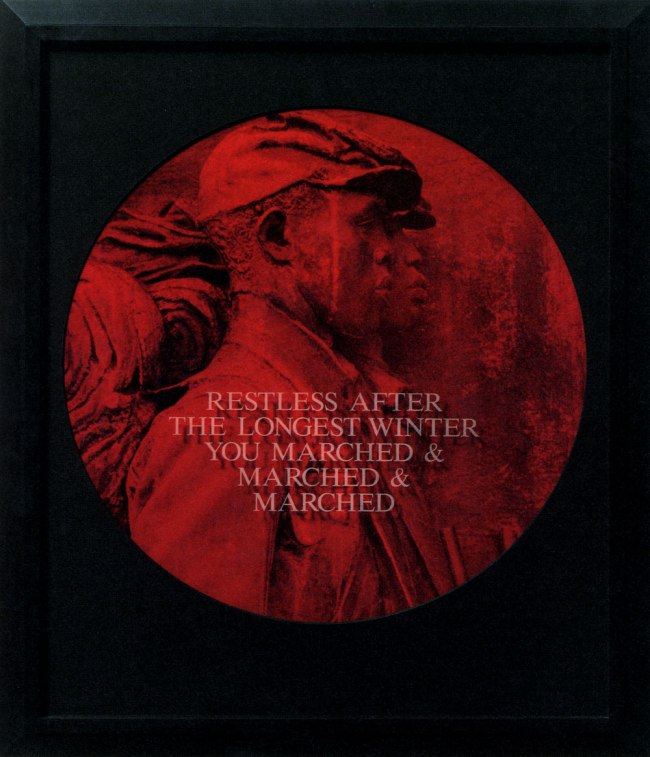
 

Carrie Mae Weems (American, b. 1953) 'Restless After the Longest Winter You Marched & Marched & Marched' From the series, 'From Here I Saw What Happened and I Cried' 1995-1996


Carrie Mae Weems (American, b. 1953)
Restless After the Longest Winter You Marched & Marched & Marched
From the series, From Here I Saw What Happened and I Cried
1995-1996
Chromogenic colour print with etched text on glass
Overall: 67.31 x 57.79cm (26 1/2 x 22 3/4 in.)
Courtesy of the artist and Jack Shainman Gallery, New York


In this piece Carrie Mae Weems appropriated and altered one of Richard Benson’s photographs of the Shaw Memorial. Printed with a blood red filter, it is placed beneath glass etched with words that allude to African Americans’ quest for freedom and equal rights as well as their long struggle to attain them.


National Gallery of Art
National Mall between 3rd and 7th Streets
Constitution Avenue NW, Washington

Opening hours:
Daily 10.00am – 5.00pm

National Gallery of Art website

LIKE ART BLART ON FACEBOOK

Back to top

Exhibition: ‘Philip-Lorca diCorcia: Photographs 1975-2012’ at the De Pont museum of contemporary art, Tilburg

Exhibition dates: 5th October 2013 – 19th January 2014

PLEASE NOTE: THIS POSTING CONTAINS ART PHOTOGRAPHS OF FEMALE NUDITY – IF YOU DO NOT LIKE PLEASE DO NOT LOOK, FAIR WARNING HAS BEEN GIVEN


Philip-Lorca diCorcia (American, b. 1951) 'Norfolk' 1979


Philip-Lorca diCorcia (American, b. 1951)
Norfolk
1979
Fujicolor Crystal Archive print
16 x 20 inches (40.6 x 50.8cm)
Courtesy the artist and David Zwirner, New York/London


This is (our) reality.


Many thankx to the De Pont museum of contemporary art for allowing me to publish the photographs in the posting. Please click on the photographs for a larger version of the image.


Philip-Lorca diCorcia (American, b. 1951) 'Marilyn; 28 years old; Las Vegas, Nevada; $30' 1990-1992


Philip-Lorca diCorcia (American, b. 1951)
Marilyn; 28 years old; Las Vegas, Nevada; $30
1990-1992
© Philip-Lorca diCorcia, Courtesy David Zwirner, New York/London


Philip-Lorca diCorcia (American, b. 1951) 'Ike Cole, 38 years old, Los Angeles, California, $25' 1990-1992


Philip-Lorca diCorcia (American, b. 1951)
Ike Cole, 38 years old, Los Angeles, California, $25
1990-1992
Fujicolor Crystal Archive print
30 x 40 inch (111.8 x 167.6cm)
© Courtesy of the artist and David Zwirner, New York and Sprüth Magers, London/Berlin


Philip-Lorca diCorcia (American, b. 1951) 'Eddie Anderson, 21 years old, Houston, Texas, $ 20' 1990-1992


Philip-Lorca diCorcia (American, b. 1951)
Eddie Anderson, 21 years old, Houston, Texas, $ 20
1990-1992
Fujicolor Crystal Archive print
30 x 40 inches (76.2 x 101.6cm)
Courtesy the artist and David Zwirner, New York/London


Philip-Lorca diCorcia (American, b. 1951) 'New York' 1993


Philip-Lorca diCorcia (American, b. 1951)
New York
1993
Ektacolor print
30 x 40 inches (76.2 x 101.6cm)
Courtesy the artist and David Zwirner, New York/London


Philip-Lorca diCorcia (American, b. 1951) 'Wellfleet' 1993


Philip-Lorca diCorcia (American, b. 1951)
Wellfleet
1993
Fujicolor Crystal Archive print
41.3 x 51.8cm
© Courtesy of the artist and David Zwirner, New York/London


Philip-Lorca diCorcia (American, b. 1951) 'Hong Kong' 1996


Philip-Lorca diCorcia (American, b. 1951)
Hong Kong
1996
Ektacolor print
25 x 37 1/2 inches (63.50 x 95.25cm)
Courtesy the artist, and David Zwirner, New York/London


Philip-Lorca diCorcia (American, b. 1951) 'New York City' 1996


Philip-Lorca diCorcia (American, b. 1951)
New York City
1996
Fujicolor Crystal Archive print
16 1/4 x 20 3/8 inches (41.3 x 51.8cm)
© Courtesy of the artist and David Zwirner, New York/London


Starting October 5, 2013 De Pont museum of contemporary art is hosting the first European survey of the oeuvre of US photographer Philip-Lorca diCorcia. Born in 1951, diCorcia is one of the most important and influential contemporary photographers. His images oscillate between everyday elements and arrangements that are staged down to the smallest detail. In his works, seemingly realistic images that are taken with an ostensibly documentary eye are undermined by their highly elaborate orchestration. This exhibition is organised in collaboration with Schirn Kunsthalle Frankfurt.

One of the primary issues that diCorcia addresses is the question of whether it is possible to depict reality, and this is what links his photographs, most of which he creates as series. For Hustlers (1990-1992), for example, he took pictures of male prostitutes in meticulously staged settings, while in what is probably his most famous series, Heads (2000-2001), he captured an instant in the everyday lives of unsuspecting passers­‐by. Alongside the series Streetwork (1993-1999), Lucky 13 (2004) and A Storybook Life (1975-1999), the exhibition at the Schirn, which was organised in close collaboration with the artist, will also present works from his new and ongoing East of Eden (2008-) project for the first time.

In addition, the work Thousand (2007) will also be on show in Tilburg. This installation consisting of 1,000 Polaroid’s, which are considered one complete work, offers a distinctive vantage point into the artist’s sensibility and visual preoccupations. Seen alongside Polaroid’s from some of diCorcia’s most recognised bodies of work and distinctive series – Hustlers, Streetwork, Heads, Lucky Thirteen – are intimate scenes with friends, family members, and lovers; self portraits; double-exposures; test shots from commercial and fashion shoots; the ordinary places of everyday life, such as airport lounges, street corners, bedrooms; and still life portraits of common objects, including clocks and lamps.

For the Hustlers series (1990-1992), diCorcia shot photographs of male prostitutes along Santa Monica Boulevard in Hollywood. The artist carefully staged the protagonists’ positions as well as the setting and the accompanying lighting. The titles of the respective photographs make reference to the name, age, and birthplace of the men as well as the amount of money diCorcia paid them for posing and which they typically receive for their sexual services. Staged in Tinseltown, the Hollywood district of Los Angeles, the hustlers become the touching performers of their own lost dreams.

The streets of New York, Tokyo, Paris, London, Mexico City, or Los Angeles are the setting for diCorcia’s Streetwork series. Produced between 1993 and 1999, passers-by walk into the artist’s photo trap on their way home, to work, to the gym, or to the grocery store, unsuspectingly passing through diCorcia’s arranged photoflash system. The photographer releases the shutter at a certain moment, “freezing” it in time. DiCorcia has time stand still in the hustle and bustle of big-city life and shifts individuals and groups of people into the centre of events. In much the same way as in Hustlers, what counts here is not the documentary character of the work; instead, diCorcia poses the question: What is reality?

The artist heightens this focus on the individual in his subsequent series, Heads (2000-2001), for which he selected seventeen heads out of a total of some three thousand photographs. The viewer’s gaze is directed toward the face of the passer-by, who is moved into the centre of the image by means of the lighting and the pictorial detail. The rest remains in shadowy darkness. The individuals – a young woman, a tourist, a man wearing a suit and tie – seem strangely isolated, almost lonely, their gazes otherworldly. DiCorcia turns the inside outward and for a brief moment elevates the individual above the crowd. The artist produces a profound intimacy.

With Streetwork and Heads, diCorcia treads a very individual path of street photography, which in America looks back at a long tradition established by artists such as Walker Evans, Robert Frank, or Diane Arbus. He reinvents the seemingly chance moment and transfers it into the present.

The painterly quality of diCorcia’s photographs, which is produced by means of dramatic lighting, becomes particularly evident in the series Lucky 13 (2004). The artist captures the athletic, naked bodies of pole dancers in the midst of a falling motion. The women achieve a sculptural plasticity by means of the strong lighting and the almost black background, and seem to have been chiselled in stone. Although the title of the series, an American colloquialism used to ward off a losing streak, makes reference to the seamy milieu of strip joints, the artist is not seeking to create a milieu study or celebrate voyeurism. Instead, the performers become metaphors for impermanence, luck, or the moment they begin to fall, suggesting the notion of “fallen angels.”

DiCorcia also includes a religious element in his most recent works, the series East of Eden, a work in progress that is being published for the first time in the catalogue accompanying the exhibition. Besides the biblical inspiration, which the title underscores, a literary connection can furthermore be made to the eponymous novel by John Steinbeck, which relates the story of Cain and Abel in the form of an American family saga set between the period of the Civil War and World War I. In his choice of motifs, diCorcia makes use of iconographic visual worlds: an apple tree in all its tantalising glory, a blind married couple sitting at the dining table, a landscape photograph that leads us into endless expanses.

DiCorcia deals intensely with the motif of the figure in his oeuvre. His compact compositions are marked by a non-dialogue between people and their environment or between individual protagonists. The motifs captured in compositional variations in most of the series feature painterly qualities. Subtly arranged and falling back on a complex orchestration of the lighting, the visual worlds created by the American manifest social realities in an almost poetic way. The emotionally and narratively charged works are complex nexuses of iconographic allusions to and depictions of contemporary American society.

Press release from the De Pont website


Philip-Lorca diCorcia (American, b. 1951) 'Head #10' 2001


Philip-Lorca diCorcia (American, b. 1951)
Head #10
2001
Fujicolor Crystal Archive print
48 x 60 inches (121.9 x 152.4cm)
Courtesy the artist and David Zwirner, New York/London


Philip-Lorca diCorcia (American, b. 1951) 'Head #11' 2001


Philip-Lorca diCorcia (American, b. 1951)
Head #11
2001
Fujicolor Crystal Archive print
48 x 60 inches (121.9 x 152.4cm)
Collection De Pont museum of contemporary art, Courtesy the artist and David Zwirner, New York/London


Philip-Lorca diCorcia (American, b. 1951) 'Head #23' 2001


Philip-Lorca diCorcia (American, b. 1951)
Head #23
2001
Fujicolor Crystal Archive print
48 x 60 inches (121.9 x 152.4cm)
© Courtesy of the artist and David Zwirner, New York/London


Philip-Lorca diCorcia (American, b. 1951) 'Lola' 2004


Philip-Lorca diCorcia (American, b. 1951)
Lola
2004
Fujicolor Crystal Archive print
64 1/2 x 44 1/2 inches (163.8 x 113cm)
Courtesy the artist and David Zwirner, New York/London


Philip-Lorca diCorcia (American, b. 1951) 'Juliet Ms. Muse' 2004


Philip-Lorca diCorcia (American, b. 1951)
Juliet Ms. Muse
2004
Fujicolor Crystal Archive print
64 1/2 x 44 1/2 inches (163.8 x 113cm)
Courtesy the artist and David Zwirner, New York/London


Philip-Lorca diCorcia (American, b. 1951) 'The Hamptons' 2008


Philip-Lorca diCorcia (American, b. 1951)
The Hamptons
2008
Inkjet print
40 x 60 inches (101.6 x 152.4cm)
Courtesy the artist and David Zwirner, New York/London


Philip-Lorca diCorcia (American, b. 1951) 'Sylmar, California' 2008


Philip-Lorca diCorcia (American, b. 1951)
Sylmar, California
2008
Inkjet print
56 x71 inches (142.2 x 180.3cm)
Collection De Pont museum of contemporary art, Courtesy the artist and David Zwirner, New York/London


De Pont museum of contemporary art
Wilhelminapark 1
5041 EA Tilburg

Opening hours:
Tuesday through Sunday 11am – 5pm

De Pont museum of contemporary art website

LIKE ART BLART ON FACEBOOK

Back to top

Exhibition: ‘Gordon Parks: The Making of an Argument’ at The New Orleans Museum of Art

Exhibition dates: 12th September 2013 – 12th January 2014


Gordon Parks (American, 1912-2006) 'Untitled, Harlem, New York' 1948


Gordon Parks (American, 1912-2006)
Untitled, Harlem, New York
1948
Gelatin silver print, printed later
Courtesy The Gordon Parks Foundation


Another great photographer with a social conscience. Fantastic to observe the dynamics of the proof sheets and how the images were cropped for final publication. The angles, the angles of Red’s young brother are illuminating, to see how the photographer framed his subject, what worked, what didn’t. There is a relatively new boxed set of the complete works of this artist published by Stiedl titled Gordon Parks Collected Works (2012).

Dr Marcus Bunyan


Many thankx to The New Orleans Museum of Art for allowing me to publish the photographs in the posting. Please click on the photographs for a larger version of the image.


“”The Making of an Argument” evaluates the editorial decisions made by the magazine and, in doing so, comments on how the context in which a picture is presented can drastically alter its message. “In order to meet the expectations set up by the subtitle and the opening text, an overwhelming majority of the pictures selected underscore violence, fear, frustration, aggression, or despair. Of the twenty-one images reproduced, only five strike a lighter note,” writes Russell Lord, the curator of photographs at NOMA. Lord also notes that the ways the images were cropped and darkened further functioned to convey the magazine’s intended message.”

Genevieve Fussell. “Gordon Parks: The Making of an Argument,” on The New Yorker website October 28, 2013 [Online] Cited 19/01/2021


Gordon Parks (American, 1912-2006) 'Untitled, Harlem, New York' 1948


Gordon Parks (American, 1912-2006)
Untitled, Harlem, New York
1948
Gelatin silver print, printed later
Courtesy The Gordon Parks Foundation


Gordon Parks (American, 1912-2006) 'Untitled, Harlem, New York' 1948


Gordon Parks (American, 1912-2006)
Untitled, Harlem, New York
1948
Gelatin silver print, printed later
Courtesy The Gordon Parks Foundation


Gordon Parks (American, 1912-2006) 'Untitled, Harlem, New York' 1948


Gordon Parks (American, 1912-2006)
Untitled, Harlem, New York
1948
Gelatin silver print, printed later
Courtesy The Gordon Parks Foundation


Gordon Parks (American, 1912-2006) 'Untitled, Harlem, New York' 1948


Gordon Parks (American, 1912-2006)
Untitled, Harlem, New York
1948
Gelatin silver print, printed later
Courtesy The Gordon Parks Foundation


This image shows both the full frame image that Gordon Parks shot and the cropped selection, framed in editor’s marking pen, that was ultimately published in Life magazine. The cropped version dramatically heightens the intensity of the image, bringing the viewer closer to the fight (see proof sheet below).


Gordon Parks (American, 1912-2006) 'Untitled, Harlem, New York' 1948


Gordon Parks (American, 1912-2006)
Untitled, Harlem, New York
1948
Gelatin silver print, printed later
Courtesy The Gordon Parks Foundation


Gordon Parks (American, 1912-2006) 'Untitled, Harlem, New York' 1948


Gordon Parks (American, 1912-2006)
Untitled, Harlem, New York
1948
Gelatin silver print, printed later
Courtesy The Gordon Parks Foundation


The opening spread of "Harlem Gang Leader," Life, November 1, 1948


The opening spread of “Harlem Gang Leader,” Life, November 1, 1948


This exhibition explores the making of Gordon Parks’ first photographic essay for Life magazine in 1948, “Harlem Gang Leader.” After gaining the trust of one particular group of gang members and their leader, Leonard “Red” Jackson, Parks produced a series of photographs that are artful, poignant, and, at times, shocking. From this large body of work (Parks made hundreds of negatives) the editors at Life selected twenty-one pictures to print in the magazine, often cropping or enhancing details in the pictures in the process. Gordon Parks: The Making of an Argument traces this editorial process and parses out the various voices and motives behind the production of the picture essay.

The exhibition considers Parks’ photographic practice within a larger discussion about photography as a narrative device. Featuring vintage photographs, original issues of Life magazine, contact sheets, and proof prints, the exhibition raises important questions about the role of photography in addressing social concerns, its use as a documentary tool, and its function in the world of publishing…

“This project raises important questions about the role of photography in addressing social concerns, its use as a documentary tool, and its function in the world of publishing,” said Susan M. Taylor, NOMA’s Director. “We are delighted to be working with The Gordon Parks Foundation on this exhibition since it is a project that addressed many of the major issues that Parks would explore throughout his career.”

In 1948, Gordon Parks began a professional relationship with Life magazine that would last twenty-two years. For his first project, he proposed a series of pictures about the gang wars that were then plaguing Harlem, believing that if he could draw attention to the problem then perhaps it would be addressed through social programs or government intervention. As a result of his efforts, Parks gained the trust of one particular group of gang members and their leader, Leonard “Red” Jackson, and produced a series of pictures of them that are artful, emotive, poignant, touching, and sometimes shocking. From this larger body of work, twenty-one pictures were selected for reproduction in a graphic and adventurous layout in Life magazine.

At each step of the selection process – as Parks chose each shot, or as the picture editors at Life re-selected from his selection – any intended narrative was complicated by another curatorial voice. Curator Russell Lord notes, “By the time the reader opened the pages of Life magazine, the addition of text, and the reader’s own biases further rendered the original argument into a fractured, multi-layered affair. The process leads to many questions: ‘What was the intended argument?’ and ‘Whose argument was it?’.”

Gordon Parks: The Making of an Argument examines these questions through a close study of how Parks’ first Life picture essay was conceived, constructed and received.”

Press release from the NOMA website


Gordon Parks (American, 1912-2006) 'Untitled, Harlem, New York' 1948


Gordon Parks (American, 1912-2006)
Untitled, Harlem, New York
1948
Gelatin silver print, printed later
Courtesy The Gordon Parks Foundation


Gordon Parks (American, 1912-2006) 'Untitled, Harlem, New York' 1948


Gordon Parks (American, 1912-2006)
Untitled, Harlem, New York
1948
Gelatin silver print, printed later
Courtesy The Gordon Parks Foundation


Gordon Parks (American, 1912-2006) 'Untitled, Harlem, New York' 1948


Gordon Parks (American, 1912-2006)
Untitled, Harlem, New York
1948
Gelatin silver print, printed later
Courtesy The Gordon Parks Foundation


Gordon Parks (American, 1912-2006) 'Untitled, Harlem, New York' 1948


Gordon Parks (American, 1912-2006)
Untitled, Harlem, New York
1948
Gelatin silver print, printed later
Courtesy The Gordon Parks Foundation


Gordon Parks (American, 1912-2006) 'Untitled, Harlem, New York' 1948


Gordon Parks (American, 1912-2006)
Untitled, Harlem, New York
1948
Gelatin silver print, printed later
Courtesy The Gordon Parks Foundation


Gordon Parks (American, 1912-2006) 'Untitled, Harlem, New York' 1948


Gordon Parks (American, 1912-2006)
Untitled, Harlem, New York
1948
Gelatin silver print, printed later
Courtesy The Gordon Parks Foundation


Gordon Parks (American, 1912-2006) 'Untitled, Harlem, New York' 1948


Gordon Parks (American, 1912-2006)
Untitled, Harlem, New York
1948
Gelatin silver print, printed later
Courtesy The Gordon Parks Foundation


Gordon Parks (American, 1912-2006) 'Untitled, Harlem, New York' 1948


Gordon Parks (American, 1912-2006)
Untitled, Harlem, New York
1948
Gelatin silver print, printed later
Courtesy The Gordon Parks Foundation


The New Orleans Museum of Art
One Collins Diboll Circle, City Park
New Orleans, LA 70124
Phone: (504) 658-4100

Opening hours:
Tuesday – Sunday 10am – 5pm
Closed Mondays

The New Orleans Museum of Art website

LIKE ART BLART ON FACEBOOK

Back to top

Exhibition: ‘City of Abstractions: Brett Weston in New York, 1944-45’ at 1285 Avenue of the Americas Art Gallery, New York

Exhibition dates: 30th September 2013 – 10th January 2014


Brett Weston (American, 1911-1993) '[Air vents, New York]' 1945


Brett Weston (American, 1911-1993)
[Air vents, New York]
1945
Image: 10 3/4 x 13 13/16 in. (27.3 x 35.1cm)
Gelatin silver print
Gift of the Brett Weston Archive, from the collection of Christian Keesee, 2003


Out of the 84 images online on eMuseum I have picked just 13 from the exhibition for this posting. While the press release is loquacious in its praise for these 8 x 10 view camera photographs – and Weston’s subjective and abstract view of the city with it’s flattened and abstracted deep space “distinguished by an attention to the formal values of linearity, depth, and contrast” – only the few that I have focused on here really work to any considerable degree.

Most of the photographs seem mundane, prosaic experiments in form, shape and detail. Church door, Bowery, New York and Wrought iron fence, New York (both c. 1945, below) are better examples of detail photographs by Weston, but other than their formal qualities they are pretty boring images. More interesting is the photograph Stoop with broom, arrow, and pushcart, New York (1944, below) with its cacophony of shapes and angles, form, light and shadow.

While most photographs in the posting have some interesting qualities, the only real show stopper is Air vents, New York (1944, below). This is a beautifully resolved modernist image which contrasts the air vents as sculptural objects with the city skyline beyond. Here Weston manipulates deep space (without deep focus / large depth of field) as part of the mise en scène, placing the significant props in different planes of the picture while successfully flattening the whole tableau vivant at the same time. The rendition of light is handsomely controlled, the air vents becoming Brancussi-like sculptures or some form of alien creature.

Dr Marcus Bunyan


Many thankx to the International Center of Photography and the Avenue of the Americas Art Gallery for allowing me to publish the photographs in the posting. Please click on the photographs for a larger version of the image.


Brett Weston (American, 1911-1993) '[42nd Street at First Avenue, New York]' c. 1945


Brett Weston (American, 1911-1993)
[42nd Street at First Avenue, New York]
c. 1945
Image: 7 3/4 x 9 3/4 in. (19.7 x 24.8cm)
Gelatin silver print
Gift of the Brett Weston Archive, from the collection of Christian Keesee, 2003


Brett Weston (American, 1911-1993) '[Oceano Dunes, California]' 1934


Brett Weston (American, 1911-1993)
[Oceano Dunes, California]
1934
Image: 10 5/8 x 13 13/16 in. (27 x 35.1cm)
Gelatin silver print
Gift of the Brett Weston Archive, from the collection of Christian Keesee, 2003


Brett Weston (American, 1911-1993) '[Stoop with broom, arrow, and pushcart, New York]' 1944


Brett Weston (American, 1911-1993)
[Stoop with broom, arrow, and pushcart, New York]
1944
Image: 10 1/4 x 13 5/8 in. (26 x 34.6cm)
Gelatin silver print
Gift of the Brett Weston Archive, from the collection of Christian Keesee, 2003


Brett Weston (American, 1911-1993) '[Airshafts, New York]' c. 1945


Brett Weston (American, 1911-1993)
[Airshafts, New York]
c. 1945
Image: 13 13/16 x 10 11/16 in. (35.1 x 27.1cm)
Gelatin silver print
Gift of the Brett Weston Archive, from the collection of Christian Keesee, 2003


Brett Weston (American, 1911-1993) '[Courtyard, New York]' c. 1945


Brett Weston (American, 1911-1993)
[Courtyard, New York]
c. 1945
Image: 19 x 15 1/4 in. (48.3 x 38.7cm)
Gelatin silver print
Gift of the Brett Weston Archive, from the collection of Christian Keesee, 2003


Brett Weston (1911-1993) is widely regarded as one of the leading photographers of the 20th century. He is known primarily for his bold compositions based on Western landscapes and natural forms, and for his extraordinary printing style. Weston was among a small group of California photographers in the 1930s, known as the Group f/64, who favoured large-format view cameras, straight and uncropped images, and stark black-and-white prints, often contact printed. This group included Ansel Adams and Brett Weston’s father, Edward Weston. But Brett Weston’s style became even more radical when he was drafted into the army during World War II, and, in 1944, sent to the Army Pictorial Center in New York. There, in addition to routine Army work, Weston explored the streets of New York with his large 8 x 10 view camera. Over the next two years, Weston took over 300 photographs, each distinguished by an attention to the formal values of linearity, depth, and contrast. Turning away from the documentary style that characterised much of the photography of New York in the preceding decade, notably Berenice Abbott’s project Changing New York (1939), Weston pioneered a highly subjective and abstract view of the city, often focusing on details such as the finial on an iron railing or ivy on the side of a building. In pictures like Air Vents (1944) and Whelans Drugstore (1944), Weston flattened and abstracted the deep space of the New York cityscape creating rich, two-dimensional black-and-white images. This approach would govern the most prolific period of Weston’s work in the late 1940s and 1950s, when he utilised this highly polished style to photograph Western dunes, beaches, rocks, and vegetation.

This exhibition includes over 100 photographs, drawn largely from the collection of the International Center of Photography. The exhibition is a collaboration between the International Center of Photography, the Brett Weston Archive, and the host Gallery of the Americas. It is organised by Brian Wallis, Chief Curator at the International Center of Photography, and Julie Maguire, Director of the Brett Weston Archive.

Please note that this exhibition is at the 1285 Avenue of the Americas Art Gallery between 51st and 52nd Streets.

Press release from the ICP website


Brett Weston (American, 1911-1993) '[House, Ewing Street, Staten Island, New York]' c. 1945


Brett Weston (American, 1911-1993)
[House, Ewing Street, Staten Island, New York]
c. 1945
Image: 10 x 8 in. (25.4 x 20.3cm)
Paper: 10 x 8 in. (25.4 x 20.3cm)
Gelatin silver print
Gift of the Brett Weston Archive, from the collection of Christian Keesee, 2003


Brett Weston (American, 1911-1993) '[Sutton Place, New York]' c. 1945


Brett Weston (American, 1911-1993)
[Sutton Place, New York]
c. 1945
Image: 10 x 8 in. (25.4 x 20.3cm)
Paper: 10 x 8 in. (25.4 x 20.3 cm)
Gelatin silver print
Gift of the Brett Weston Archive, from the collection of Christian Keesee, 2003


Brett Weston (American, 1911-1993) '[Skylight and fences, Midtown, New York]' c. 1945


Brett Weston (American, 1911-1993)
[Skylight and fences, Midtown, New York]
c. 1945
Image: 10 x 8 in. (25.4 x 20.3cm)
Gelatin silver print
Gift of the Brett Weston Archive, from the collection of Christian Keesee, 2003


Brett Weston (American, 1911-1993) '[Wrought iron fence, New York]' c. 1945


Brett Weston (American, 1911-1993)
[Wrought iron fence, New York]
c. 1945
Image: 9 9/16 x 6 13/16 in. (24.3 x 17.3cm)
Gelatin silver print
Gift of Christian K. Keesee, 2012


Brett Weston (American, 1911-1993) '[Church door, Bowery, New York]' c. 1945


Brett Weston (American, 1911-1993)
[Church door, Bowery, New York]
c. 1945
Image: 9 1/2 x 7 9/16 in. (24.1 x 19.2cm)
Gelatin silver print
Gift of the Brett Weston Archive, from the collection of Christian Keesee, 2003


Brett Weston (American, 1911-1993) '[Pillars and tree, New York]' 1944


Brett Weston (American, 1911-1993)
[Pillars and tree, New York]
1944
Image: 10 x 8 in. (25.4 x 20.3cm)
Gelatin silver print
Gift of the Brett Weston Archive, from the collection of Christian Keesee, 2003


Brett Weston (American, 1911-1993) '[St. Francis Grocery & Fruit, New York]' c. 1945


Brett Weston (American, 1911-1993)
[St. Francis Grocery & Fruit, New York]
c. 1945
Image: 9 1/2 x 7 9/16 in. (24.1 x 19.2cm)
Gelatin silver print
Gift of Christian K. Keesee, 2012


International Center of Photography
79 Essex Street, New York, NY 10002
between Delancey Street and Broome Street

Opening hours:
Wednesday – Monday 11am – 7pm

ICP website

ICP exhibition website

LIKE ART BLART ON FACEBOOK

Back to top

Exhibition: ‘A Democracy of Images: Photographs from the Smithsonian American Art Museum’ at the Smithsonian American Art Museum, Washington DC

Exhibition dates: 28th June 2013 – 5th January 2014
1st floor West, American Art Museum (8th and F Streets, N.W.)

Browse the exhibition and related works on the exhibition website


Unidentified artist. '[Bird in Basin with Thread Spool and Patterned Cloth]' c. 1855


Unidentified artist
[Bird in Basin with Thread Spool and Patterned Cloth]
c. 1855
Daguerreotype
Plate: 2 3/4 x 3 1/4 in. (6.9 x 8.2cm)
Smithsonian American Art Museum
Museum purchase from the Charles Isaacs Collection made possible in part by the Luisita L. and Franz H. Denghausen Endowment


The next two weeks sees a lot of exhibitions finish their run on the 5th January 2014.

Here is a bumper posting which contains one of my favourite photographs of all time: Danny Lyon’s Crossing the Ohio River, Louisville (1966, below). From a distance, this looks to be a very interesting exhibition on a large topic, delineated for the viewer into four main sections. The task of the curator cannot have been easy, picking 113 images to represent a “democracy” of images out of a collection of over 7,000 images. Of course there can never be a true “democracy” of images as some will always be more valued within our culture than others. There is a meritocracy in this exhibition which features images by masters of the medium but this is balanced by the inclusion of images by anonymous photographers, little known photographers and vernacular and street photography.

What is most impressive is the specially developed website which includes many images from the different sections of the exhibition. These images are of good quality and, along with relevant text, help the viewer place the images in context. Related content is also suggested from the full photographic collection at The Smithsonian which has been placed online with good image quality. This is a far cry from many exhibitions at state galleries in Australia where there are hardly any dedicated exhibition websites. Most of the photographic collection from these galleries is not available online and if it has been scanned, the image quality is generally poor. How many times have I searched a state gallery or library collection and come up with the answer: “Image not available” ?

Dr Marcus Bunyan


Many thankx to the Smithsonian American Art Museum for allowing me to publish the photographs and text in the posting. Please click on the photographs for a larger version of the image.


“More often, though, the moments, places, people and views that have been collected here feel offhand and stumbled upon, telling a fragmentary, incomplete tale. Sometimes it’s literally a glance, as in “Girl Holding Popsicle,” a 1972 image by Mark Cohen, who rarely even looked through his viewfinder. Other times, it’s more like a long stare, as in William Christenberry’s 1979 “China Grove Church – Hale County, Alabama,” a locale that the Washington-based artist and Alabama native returned to again and again. These 113 pictures are, at the same time, quietly telling, revealing bits of America in oblique, prismatic ways.”


Part of Michael O’Sullivan’s review of the exhibition in The Washington Post.


American Characters

Photographers have captured the texture of everyday life since the medium’s arrival in the United States in 1839. Photographic portraits have made both the iconic and the commonplace serve as stand-ins for all of us, forging a shared language of political and social understanding. In charting the passing parade of history – the faces of the anonymous and the famous; evolving stories of immigration, disenfranchisement, and assimilation; as well as emblematic objects and celebrated landmarks lodged within our collective memory – photographs reveal the complexities of America.


Larry Sultan (American, 1946-2009) 'Portrait of My Father with Newspaper' 1988


Larry Sultan (American, 1946-2009)
Portrait of My Father with Newspaper
1988
Chromogenic print
Image: 28 5/8 x 34 5/8 in. (72.7 x 87.9cm)
Smithsonian American Art Museum
Gift of Nan Tucker McEvoy
© 1988, Larry Sultan


In Portrait of My Father with Newspaper, Irving Sultan reads the Los Angeles Times as light pours in behind him. This carefully composed portrait reveals the artist’s father almost entirely through reflections and shadows. Thin newsprint shields his body from the camera, while only a vague profile of his face is discernible on the right half of the spread. Prompted by the discovery of a box of home movies, Larry Sultan embarked on an eight-year enquiry into his parents’ lives. He stayed in their home for weeks at a time, interviewing them about their marriage and photographing their domestic activities.


Eugene Richards (American, b. 1944) 'First Communion (Dorchester, Mass.)' 1976


Eugene Richards (American, b. 1944)
First Communion (Dorchester, Mass.)
1976
Gelatin silver print
Image: 8 x 12 in. (20.3 x 30.5cm)
Sheet: 11 x 14 in. (27.9 x 35.6cm)
Smithsonian American Art Museum
Transfer from the National Endowment for the Arts
© 1974, Eugene Richards


Mark Cohen (American, b. 1943) 'Girl Holding Popsicle' 1972, printed 1983


Mark Cohen (American, b. 1943)
Girl Holding Popsicle
1972, printed 1983
Gelatin silver print
Sheet: 14 x 17 in. (35.5 x 43.2cm)
Smithsonian American Art Museum
Gift of Dene and Mel Garbow
© 1972, Mark Cohen


In Girl Holding Popsicle a young girl twists shyly as she poses before a graffiti-inscribed brick wall. Mark Cohen took this photograph spontaneously as he passed through a back alley. Cohen does not hesitate to get assertively close to the strangers he meets in his hometown of Wilkes-Barre, Pennsylvania. Many of his photographs are made without looking through a viewfinder, and so remain a mystery even to Cohen until they are developed.


Unidentified artist. '[Gold Nugget]' c. 1860s


Unidentified artist
[Gold Nugget]
c. 1860s
Albumen silver print
Image: 2 1/8 x 3 5/8 in. (5.4 x 9.2cm)
Sheet: 2 3/8 x 3 7/8 in. (6.1 x 9.8cm) irregular
Smithsonian American Art Museum
Gift of Charles Isaacs and Carol Nigro


Mathew B. Brady (American, 1823-1896) 'Reviewing Stand in Front of the Executive Mansion, Washington, D.C., May, 1865' 1865, printed early 1880s


Mathew B. Brady (American, 1823-1896)
Reviewing Stand in Front of the Executive Mansion, Washington, D.C., May, 1865
1865, printed early 1880s
Albumen silver print
Sheet and image: 6 1/2 x 9 in. (16.5 x 22.9cm)
Smithsonian American Art Museum
Museum purchase through the Julia D. Strong Endowment


Kevin Bubriski (American, b. 1954) 'World Trade Center Series, New York City' 2001


Kevin Bubriski (American, b. 1954)
World Trade Center Series, New York City
2001
Gelatin silver print
Image: 18 x 18 in. (45.7 x 45.7cm)
Smithsonian American Art Museum
Gift of the Consolidated Natural Gas Company Foundation
© 2001, Kevin Bubriski


In the weeks and months following the World Trade Center attacks on September 11, 2001, Kevin Bubriski photographed people who gathered at Ground Zero. Frozen in awe, struck with disbelief, and overcome with loss, people stood before the destroyed building site to confront the horrible tragedy. More than ten years later, Bubriski’s photographs preserve the emotional impact of this infamous day through images of those who witnessed its aftermath first-hand.


Deborah Luster (American, b. 1951) '01-26 Location. 1800 Leonidas Street (Carrollton) Date(s). July 14, 2009 7:55 a.m. Name(s). Brian Christopher Smith (22) Notes. Face up with multiple gunshot wounds' 2008-2012


Deborah Luster (American, b. 1951)
01-26 Location. 1800 Leonidas Street (Carrollton) Date(s). July 14, 2009 7:55 a.m. Name(s). Brian Christopher Smith (22) Notes. Face up with multiple gunshot wounds
2008-2012
Gelatin silver print
55 x 55 in. (139.7 x 139.7cm)
Smithsonian American Art Museum
Museum purchase through the Luisita L. and Franz H. Denghausen Endowment
© 2010, Deborah Luster


This photograph, from a series that documents contemporary and historical homicide sites in New Orleans, presents Deborah Luster’s interpretation of the last view of the crime victim lying face up on the ground. The title is the entry from the New Orleans Police blotter, but the photograph is Luster’s meditation on looking, seeing, and the power of images to haunt our imagination.


Unidentified artist. '[Two Workmen Polishing a Stove]' c. 1865


Unidentified artist
[Two Workmen Polishing a Stove]
c. 1865
Albumen silver print
Sheet and image: 14 1/8 x 11 in. (35.9 x 28cm)
Smithsonian American Art Museum
Museum purchase from the Charles Isaacs Collection made possible in part by the Luisita L. and Franz H. Denghausen Endowment


Anthony Barboza (American, b. 1944) '"Marvelous" Marvin Hagler, boxer' 1981


Anthony Barboza (American, b. 1944)
“Marvelous” Marvin Hagler, boxer
1981
Gelatin silver print
Image: 13 7/8 x 13 7/8 in. (35.2 x 35.2cm)
Smithsonian American Art Museum
Gift of Kenneth B. Pearl
© 1981, Anthony Barboza


Edward S. Curtis (American, 1868-1952) 'Girl and Jar – San Ildefonso' 1905


Edward S. Curtis (American, 1868-1952)
Girl and Jar – San Ildefonso
1905
Photogravure
16 5/8 x 12 1/4 in. (12.3 x 31.1cm)
Smithsonian American Art Museum
Transfer from the United States Marshal Service of the U.S. Department of Justice


Between 1900 and 1930, Edward S. Curtis traveled across the continent photographing more than seventy Native American tribes. The photographs, compiled into twenty volumes, presented daily activities, customs, and religions of a people he called “a vanishing race.” Curtis hoped to preserve the legacy of Native peoples in lasting images. To this end, Curtis often costumed his subjects and set up scenes, mixing tribal artefacts and traditions to match his romantic vision of the people he studied. In this intimate portrait, a young Tewa woman named Povi-Tamu (“Flower Morning”) balances a large jug with help from a hidden fiber ring. She is from the San Ildefonso Pueblo of New Mexico, which is famed for its rich tradition of fine pottery. Curtis associated the serpentine design of the vessel with the serpent cult, which he noted was central to Tewa life.


Oliver H. Willard (American, active 1850s-1870s, died 1875) 'Portrait of a Young Woman' c. 1857


Oliver H. Willard (American, active 1850s-1870s, died 1875)
Portrait of a Young Woman
c. 1857
Salted paper print
8 7/8 x 6 3/4 in. (22.5 x 17.1cm)
Smithsonian American Art Museum
Museum purchase through the Horace W. Goldsmith Foundation, 1999.29.1


Spiritual Frontier

The earliest photographs made in America describe an awesome land blessed with such an abundance of natural beauty that it seemed heaven sent. Images of waterfalls, mountains, and vast open spaces conveyed the beauty, the grandeur, the sublimity, and dynamics of a great spiritual endeavour. In the nineteenth century photographers pictured wilderness landscapes that symbolised American greatness. More recently, photographers have described a landscape no less romantic, but now recalibrated to account for the interaction of nature and culture.


Eadweard Muybridge (English, 1830-1904) 'Valley of the Yosemite from Union Point' 1872


Eadweard Muybridge (English, 1830-1904)
Valley of the Yosemite from Union Point
1872
Albumen silver print
Sheet: 17 x 21 1/2 in. (43.2 x 54.6cm)
Smithsonian American Art Museum
Gift of Dr. and Mrs. Charles T. Isaacs


Eadweard Muybridge went to great lengths to photograph the best possible views of the West. He chopped down trees if they obstructed his camera, and ventured to “points where his packers refused to follow him.” Muybridge was determined to produce the most comprehensive photographs ever made of Yosemite and the surrounding region. His views were sold widely in both large-format prints and stereograph cards, which are viewed through a device that creates the illusion of three-dimensional space. This allowed Muybridge to transport his audience, if just for a moment, to a faraway place caught on film.


Robert Frank (Swiss, 1924-2019) 'Butte, Montana' 1956, printed 1973


Robert Frank (Swiss, 1924-2019)
Butte, Montana
1956, printed 1973
Gelatin silver print
Image: 8 3/4 x 13 in. (22.2 x 33cm)
Smithsonian American Art Museum
Museum purchase


Robert Adams (American, b. 1937) 'New Housing, Longmont, Colorado' 1973


Robert Adams (American, b. 1937)
New Housing, Longmont, Colorado
1973
Gelatin silver print
Sheet: 6 x 7 5/8 in. (15.1 x 19.3cm)
Smithsonian American Art Museum
Transfer from the National Endowment for the Arts
© 1973, Robert Adams


As both a photographer and writer, Robert Adams is committed to describing the western American landscape as both awe-inspiring and scarred by man. In New Housing, Longmont Colorado, Adams contrasted the vast space of the distant landscape view with a foreground image of the wall of a newly constructed suburban tract house. Adams invites a consideration of the balance between myth and reality and the land as home as well as scenic backdrop.


Charles L. Weed (American, 1824-1903) 'Mirror Lake and Reflections, Yosemite Valley, Mariposa County, California' 1865


Charles L. Weed (American, 1824-1903)
Mirror Lake and Reflections, Yosemite Valley, Mariposa County, California
1865
Albumen silver print
Sheet and image: 15 1/2 x 20 1/4 in. (39.4 x 51.4cm)
Smithsonian American Art Museum
Gift of Dr. and Mrs. Charles T. Isaacs


Like Carleton Watkins, his better-known competitor, Charles Weed recognised the pictorial dividend to be gained by showing Yosemite’s glorious geological features in duplicate, using the valley’s lakes as reflecting ponds. Weed first traveled to what was then known as “Yo-Semite,” in 1859, but with a relatively small camera; he returned in 1865 with a larger model capable of using what were called mammoth plates. Like Watkins, he sold his prints to buyers eager to own a photograph of majestic natural beauty.


Ansel Adams (American, 1902-1984) 'Monolith: The Face of Half Dome, Yosemite Valley' 1926-1927, printed 1927


Ansel Adams (American, 1902-1984)
Monolith: The Face of Half Dome, Yosemite Valley
1926-1927, printed 1927
Gelatin silver print
Sheet: 11 7/8 x 9 7/8 in. (30.2 x 25.1cm)
Smithsonian American Art Museum
Museum purchase
© 2013 The Ansel Adams Publishing Rights Trust


At just over 4,700 feet above the valley, Half Dome is the most iconic rock formation in Yosemite National Park. Adams squeezed the monolith into the frame to emphasise the majesty of its scale and the drama of its cliff. As it thrusts out of the brilliant white snow, Half Dome stands as a symbol of the unspoiled western landscape. Ansel Adams made his first trip to the Sierra Nevada mountain range when he was fourteen years old, and he returned every year until the end of his life, often for month-long stretches. Throughout his career Adams traveled widely – from Hawaii to Maine – to photograph the most picturesque vistas in America. After his death in 1984, a section of the Sierra Nevada was named the Ansel Adams Wilderness in his honour.


John Pfahl (American, 1939-2020) 'Goodyear #5, Niagara Falls, New York' 1989


John Pfahl (American, 1939-2020)
Goodyear #5, Niagara Falls, New York
1989
Chromogenic print
Sheet: 20 x 24 in. (50.8 x 61.0cm)
Smithsonian American Art Museum
Gift of the Consolidated Natural Gas Company Foundation
© 1989, John Pfahl


John Pfahl’s photographs embody the conflict between progress and preservation. Throughout the 1980s he focused on oil refineries and power plants. He chose the sites strategically based on their location in picturesque landscapes, where he observed a “transcendental” connection between industry and nature. In Goodyear #5 a nuclear power plant occupies the horizon. The setting sun provides a romantic colour palette as light filters through clouds of billowing steam. The landscape is reduced to an abstract composition that celebrates colour and texture. Pfahl’s intention with this series, titled Smoke, was to “make photographs whose very ambiguity provokes thought.” This photograph complicates popular notions of power plants by revealing an uncommonly beautiful view of a controversial structure.


A Democracy of Images: Photographs from the Smithsonian American Art Museum celebrates the numerous ways in which photography, from early daguerreotypes to contemporary digital works, has captured the American experience. The photographs presented here are selected from the approximately 7,000 images collected since the museum’s photography program began thirty years ago, in 1983. Ranging from daguerreotype to digital, they depict the American experience and are loosely grouped around four ideas: American Characters, Spiritual Frontier, America Inhabited, and Imagination at Work.

The exhibition’s title is inspired by American poet Walt Whitman’s belief that photography provided America with a new, democratic art form that matched the spirit of the young country and his belief that photography was a quintessentially American activity, rooted in everyday people and ordinary things and presented in a straightforward way. Known as the “poet of democracy,” Whitman wrote after visiting a daguerreotype studio in 1846: “You will see more life there – more variety, more human nature, more artistic beauty… than in any spot we know.” At the time of Whitman’s death, in 1892, George Eastman had just introduced mass market photography when he put an affordable box camera into the hands of thousands of Americans. The ability to capture an instant of lasting importance and fundamental truth mesmerised Americans then and continues to inspire photographers working today. Marking the thirtieth anniversary of the establishment of the museum’s pioneering photography collection, the exhibition examines photography’s evolution in the United States from a documentary medium to a full-fledged artistic genre and showcases the numerous ways in which it has distilled our evolving idea of “America.”

The exhibition features 113 photographs selected from the museum’s permanent collection, including works by Edward S. Curtis, Timothy H. O’SullivanBerenice AbbottDiane ArbusRoy DeCaravaWalker Evans,Irving PennTrevor Paglen, among others, as well as vernacular works by unknown artists. A number of recent acquisitions are featured, including works by Ellen CareyMitch EpsteinMuriel HasbunAlfredo Jaar, Annie Leibovitz, Deborah Luster, and Sally Mann. Landscapes, portraits, documentary-style works from the New York Photo League and images from surveying expeditions sent westward after the Civil War are among the images on display, and explore how photographs have been used to record and catalogue, to impart knowledge, to project social commentary, and as instruments of self-expression.

Photography’s arrival in the United States in 1840 allowed ordinary people to make and own images in a way that had not been previously possible. Photographers immediately became engaged with the life of the emerging nation, the activity of new urban centers, and the possibilities of unprecedented access to the vast western frontier. From the nineteenth to the twentieth century, photography not only captured the country’s changing cultural and physical landscape, but also developed its own language and layers of meaning.

A Democracy of Images: Photographs from the Smithsonian American Art Museum is organised around four major themes that defined American photography. “American Characters” examines the ways in which photographs of individuals, places, and objects become a catalogue of our collective memory and have contributed to the ever-evolving idea of the American character. “Spiritual Frontier” investigates early ideas of a vast, inexhaustible wilderness that symbolised American greatness. “America Inhabited” traces the nation’s rapid industrialisation and urbanisation through images of speed, change, progress, immigration, and contemporary rural, urban, and suburban landscapes. “Imagination at Work” demonstrates how photography’s role of spontaneous witness gradually gave way to contrived arrangement and artistic invention. The exhibition is organised by Merry Foresta, guest curator and independent consultant for the arts. She was the museum’s curator of photography from 1983 to 1999.

Connecting online

A complementary website designed for viewing on tablets includes photographs on view in the exhibition, an expanded selection of works from the museum’s collection and a timeline of American photography. It is available through tablet stations in the exhibition galleries, online, and on mobile devices.”

Press release from the Smithsonian American Art Museum website


America Inhabited

Photography’s early presence in America coincided with the rise of an industrial economy, the growth of major urban population centers, and the fulfilling of what some saw as the Manifest Destiny of spanning the continent from sea to sea. Images of progress and industry, as well as of city and suburbs, quickly added themselves to photography’s catalogue of places and people. Some of these images reflect idealistically, and at times nostalgically, on the beauty and humanity of our own backyards. Others stand as social documents that can be seen as critical and ironic, inviting outrage as well as compassion about the way we now live our lives.


Helen Levitt (American, 1913-2009) 'New York' c. 1942, printed later


Helen Levitt (American, 1913-2009)
New York
c. 1942, printed later
Gelatin silver print
Image: 7 1/8 x 10 1/2 in. (18.1 x 26.6cm)
Smithsonian American Art Museum
Museum purchase
© 1981, Helen Levitt


Caught before they run off into the streets, three masked youngsters pause on their front stoop. Expressive postures and mysterious disguises give this trio a theatrical quality. Helen Levitt, who found poetry in the uninhibited gestures of children, used a right-angle viewfinder to capture boys and girls roaming freely and playing with found objects. Working in New York City during the years surrounding World War II, her photographs show the drama of life that unfolded on the sidewalks of poor and working-class neighbourhoods.


Louis Faurer (American, 1916-2001) 'Broadway, New York, N.Y.' 1949-1950, printed 1980-1981


Louis Faurer (American, 1916-2001)
Broadway, New York, N.Y.
1949-1950, printed 1980-1981
Gelatin silver print
Image: 8 3/8 x 12 9/16 in. (21.3 x 32cm)
Smithsonian American Art Museum
Gift of David L. Davies and John D. Weeden and museum purchase
© Estate of Louis Faurer


Danny Lyon (American, b. 1942) 'Crossing the Ohio River, Louisville' 1966, printed 1985


Danny Lyon (American, b. 1942)
Crossing the Ohio River, Louisville
1966, printed 1985
Gelatin silver print
Image: 8 3/4 x 12 7/8 in. (22.2 x 32.7cm)
Smithsonian American Art Museum
Museum purchase made possible by Mrs. Marshall Langhorne
Photo courtesy Edwynn Houk Gallery


William Eggleston (America, born July 27, 1939) 'Memphis' c. 1970


William Eggleston (American, b. 1939)
Tricycle (Memphis)
about 1975, printed 1980
Dye transfer print
Smithsonian American Art Museum, Gift of Amy Loeserman Klein


An ordinary tricycle is made monumental in this playful colour photograph. Taken from below, it suggests a child’s perspective – elevating this rusty tricycle to a symbol of innocence and freedom. The quiet Memphis suburb in the background typifies the safe neighbourhoods where children could spend hours playing after school. This print was made with the expensive and exacting dye imbibition process, which was typically used for fashion and advertising at the time. Eggleston began experimenting with colour photography in the mid-1960s. Inspired by trips to a commercial photography lab, he developed an approach that imitates the random, imperfect style of amateur snapshots to describe his immediate surroundings combined with a keen interest in the effects of colour.


Tina Barney (American, b. 1945) 'Marina's Room' 1987


Tina Barney (American, b. 1945)
Marina’s Room
1987
Chromogenic print
Sheet: 48 x 60 in. (121.9 x 52.3cm)
Smithsonian American Art Museum
Museum purchase
© 1987, Tina Barney, Courtesy Janet Borden, Inc.


Aaron Siskind (American, 1903-1991) 'Untitled' 1937, printed later


Aaron Siskind (American, 1903-1991)
Untitled
1937, printed later
Gelatin silver print
Sheet: 10 x 14 in. (25.4 x 35.5cm)
Smithsonian American Art Museum
Gift of Tennyson and Fern Schad, courtesy of Light Gallery
© 1940, Aaron Siskind


In this untitled photograph Aaron Siskind focused on the regular grid of boarded-up windows on a derelict tenement building. Once portals into intimate domestic spaces, the windows represent loss in a community plagued by poverty, unemployment, and racial discrimination. Building upon the traditions of social documentary photographers before him, Siskind used his camera to raise public awareness of Harlem’s struggle, even as he created a modernist work of art.


Walker Evans (American, 1903-1975) 'Kitchen Wall, Alabama Farmstead' 1936, printed 1974


Walker Evans (American, 1903-1975)
Kitchen Wall, Alabama Farmstead
1936, printed 1974
Gelatin silver print
Sheet and image: 9 3/8 x 12 in. (23.9 x 30.5cm)
Smithsonian American Art Museum
Gift of Lee and Maria Friedlander


During the summer of 1936, Walker Evans joined writer James Agee in rural Alabama to work on a magazine assignment on cotton farming. Evans and Agee met with three tenant farm families and documented every detail of their experiences. The result, which the magazine declined to publish, was released as the book Let Us Now Praise Famous Men in 1941. It contains some of the most iconic and contentious photographs to document the Great Depression. Kitchen Wall, Alabama Farmstead reads like a modern novel. Every crack in the wood, every speck of paint tells part of the story. Evans drew special attention to the scarcity of cooking tools at the family’s disposal. These everyday utensils illustrate a metaphor for the struggle to meet basic needs.


Judy Fiskin (American, b. 1945) 'Long Beach Pike (broken fence)', from the 'Long Beach, California Documentary Survey Project' 1980


Judy Fiskin (American, b. 1945)
Long Beach Pike (broken fence), from the Long Beach, California Documentary Survey Project
1980
Gelatin silver print
Image: 2 1/2 x 2 1/2 in. (6.2 x 6.2cm)
Smithsonian American Art Museum
Transfer from the National Endowment for the Arts
© 1980, Judy Fiskin


For this series, sponsored by the National Endowment of the Art’s Long Beach Documentary Survey Project, Judy Fiskin focused on the Long Beach Pike, an amusement park that was demolished soon after she made the photographs. By printing in high contrast and restricting the scale of her prints, Fiskin reduced form to its bare essentials. Devoid of superfluous detail, these photographs appear more like conjured images than documents of reality. Judy Fiskin systematically catalogues the world of architecture and design in order to study variations of historical styles. Her series carefully investigate esoteric subjects such as military base architecture, “dingbat” style houses in southern California, and the art of flower arranging.


Berenice Abbott (American, 1898-1991) 'Brooklyn Bridge, Water and Dock Streets, Brooklyn' 1936


Berenice Abbott (American, 1898-1991)
Brooklyn Bridge, Water and Dock Streets, Brooklyn
1936
Gelatin silver print
Sheet: 18 x 14 3/8 in. (45.7 x 36.6cm)
Smithsonian American Art Museum
Transfer from the Evander Childs High School, Bronx, New York through the General Services Administration


Berenice Abbott returned home in 1929 after nearly eight years abroad and found herself fascinated by the rapid growth of New York City. She saw the city as bristling with new buildings and structures which seemed to her as solid and as permanent as a mountain range. Aiming to capture “the past jostling the present,” Abbott spent the next five years on a project she called Changing New York. In Brooklyn Bridge, Water and Dock Streets, Brooklyn, Abbott presented a century of history in a single image. The Brooklyn Bridge, once a marvel of modern engineering, seems dark and heavy compared with the skeletal structure beneath it. The construction site at center suggests the never-ending cycle of death and regeneration. And the Manhattan skyline, veiled and weightless, hangs just out of reach, its shape accommodating the ambitious spirit of American modernism.


Robert Disraeli (American, 1905-1987) 'Cold Day on Cherry Street' 1932


Robert Disraeli (American, 1905-1987)
Cold Day on Cherry Street
1932
Gelatin silver print
Image and sheet: 14 x 11 in. (35.5 x 28cm)
Smithsonian American Art Museum
Museum purchase made possible by Mr. and Mrs. G. Howland Chase, Mrs. James S. Harlan (Adeline M. Noble Collection), Lucie Louise Fery, Berthe Girardet, and Mrs. George M. McClellan
© 1932, Robert Disraeli


Imagination at Work

Nineteenth-century French commentator Alexis de Tocqueville observed that in America, nothing is ever quite what it seems. Yet the idea that “seeing is believing” is deeply ingrained in the American character. By yoking together style and subject under the guise of the real, today’s photographers borrow from photography’s rich past while embracing the conceptual framework of contemporary art. They read reality as something on the surface of a picture or, more complexly, as something located in the mind of its beholder.


Sonya Noskowiak (American born Germany, 1900-1975) 'Calla Lily' c. 1930s


Sonya Noskowiak (American born Germany, 1900-1975)
Calla Lily
c. 1930s
Gelatin silver print
Sheet: 7 3/8 x 9 3/4 in. (18.8 x 24.7cm)
Smithsonian American Art Museum
Museum purchase made possible through Deaccession Funds


Ray K. Metzker (American, 1931-2014) 'Composites: Philadelphia (Car and Street Lamp)' 1966


Ray K. Metzker (American, 1931-2014)
Composites: Philadelphia (Car and Street Lamp)
1966
Gelatin silver prints
Image: 25 3/8 x 17 3/4 in. (64.5 x 45cm)
Smithsonian American Art Museum
Museum purchase
© 1966, Ray K. Metzker


Ray Metzker’s Composites series, begun in 1964, connected in a dramatic fashion his interests in contrasts of light and shadow, his strong sense of design, and his earlier explorations of the multiple image. Metzker studied at Chicago’s Institute of Design, where a rigorously formal, problem-solving approach to photography was taught. For this series he assembled grids of individual photographs to create complex image-fields. When viewed from a distance, this work reads as an abstract, rhythmic pattern of light and dark. On closer inspection, however, many crisply descriptive images are revealed. The Composites function somewhat like short filmstrips. The mystery of these brief narratives is exaggerated by the repetitive design and provides a unique opportunity, in Metzker’s words, “to deal with complexity of succession and simultaneity, of collected and related moments.”


Irving Penn (American, 1917-2009) 'Mud Glove – New York' 1975, printed 1976


Irving Penn (American, 1917-2009)
Mud Glove – New York
1975, printed 1976
Platinum-palladium print
Sheet and image: 29 3/4 x 22 1/4 in. (75.5 x 56.5cm)
Smithsonian American Art Museum
Gift of the artist


Irving Penn was one of the most important and influential photographers of the twentieth century. In a career that spanned almost seventy years, Penn worked across multiple genres, from celebrity portraits to fashion, from still lives to images of native cultures in remote places of the world. Throughout his career Penn also worked on a series of photographs of discarded objects: things that had been lost, neglected, or misused. Printed in platinum, these detailed photographs of objects such as a lost glove found in the gutter, are Penn’s photographic memento mori, offering beauty compromised by age or disuse.


Edward Weston (American, 1886-1958) 'Pepper no. 30' 1930


Edward Weston (American, 1886-1958)
Pepper no. 30
1930
Gelatin silver print
Sheet: 9 1/2 x 7 1/2 in. (24.3 x 19.2cm)
Smithsonian American Art Museum
Museum purchase


Imogen Cunningham (American, 1883-1976) 'Auragia' 1953, printed c. 1960s


Imogen Cunningham (American, 1883-1976)
Auragia
1953, printed c. 1960s
Gelatin silver print
Sheet and image: 11 1/8 x 8 3/4 in. (28.3 x 22.2cm)
Smithsonian American Art Museum
Gift of Charles Isaacs and Carol Nigro


Ellen Carey (American, b. 1952) 'Dings and Shadows' 2012


Ellen Carey (American, b. 1952)
Dings and Shadows
2012
Chromogenic print
Sheet and image: 40 x 30 in. (101.6 x 76.2cm)
Smithsonian American Art Museum
Gift of Linda Cheverton Wick and Walter Wick
© 2012, Ellen Carey


Ellen Carey created the series she calls Dings and Shadows by exposing photosensitive paper to light projected through primary and complementary colour filters. The artist first folds and crushes paper; then after exposing the paper to light from a colour enlarger, flattens it out again for processing. In doing so, Carey dissects the process of developing film, and evokes the hand-crafted nature of early photographic techniques.


Some images from the Timeline on the website

1843

Daguerreotypists Albert S. Southworth and Josiah Johnson Hawes begin a partnership, establishing Southworth & Hawes as the most highly regarded portrait studio in Boston, Mass. The studio caters to the city’s elite, and is visited by Charles Dickens, Ralph Waldo Emerson, and Oliver Wendell Holmes, among many other influential people of the time.


Albert Sands Southworth (American, 1811-1894) and Josiah Johnson Hawes (American, 1808-1901) 'A Bride and Her Bridesmaids' 1851


Albert Sands Southworth (American, 1811-1894) and Josiah Johnson Hawes (American, 1808-1901)
A Bride and Her Bridesmaids
1851
Daguerreotype
Smithsonian American Art Museum
Museum purchase made possible by Walter Beck


1853

The New York Daily Tribune estimates that in the United States, three million daguerreotypes are being produced annually.


Unidentified artist. 'Mother and Son' c. 1855


Unidentified artist
Mother and Son
c. 1855
Daguerreotype with applied colour
Smithsonian American Art Museum
Museum purchase from the Charles Isaacs Collection made possible in part by the Luisita L. and Franz H. Denghausen Endowment


1857

Julian Vannerson and Samuel Cohner make the first systematic photographs of Native American delegations to visit Washington, D.C. They photograph ninety delegates representing thirteen tribes who conduct treaty and other negotiations with government officials.


Julian Vannerson (American, 1827-1875) 'Shining Metal' 1858


Julian Vannerson (American, 1827-1875)
Shining Metal
1858
Salted paper print
Smithsonian American Art Museum
Museum purchase from the Charles Isaacs Collection made possible in part by the Luisita L. and Franz H. Denghausen Endowment


1861

American Civil War begins with shots fired on Fort Sumter by Confederate troops. Portrait photographer Mathew Brady is given permission by President Abraham Lincoln to photograph the First Battle of Bull Run, but comes so close to the battle that he narrowly avoids capture. Using paid assistants Alexander Gardner, Timothy O’Sullivan, George N. Barnard, and others, Brady’s studio makes thousands of photos of the sites, material, and people of the war. Civilian free-lance photographer Egbert Guy Fowx sells numerous negatives to Brady’s studio, which publishes and copyrights many of them. Many other images are credited to Fowx, including this group of Union officers.


Egbert Guy Fowx (American, 1821-1889) 'New York 7th Regiment Officers' c. 1863


Egbert Guy Fowx (American, 1821-1889)
New York 7th Regiment Officers
c. 1863
Salted paper print
Smithsonian American Art Museum
Museum purchase from the Charles Isaacs Collection made possible in part by the Luisita L. and Franz H. Denghausen Endowment


1867

Eadweard Muybridge begins trip to photograph in Yosemite Valley. He publishes his photographs under the name “Helios,” which is also the name of his San Francisco studio. An exhibition of more than 300 photographic portraits of Native American delegates to Washington, D.C., opens in the Smithsonian Castle. Clarence R. King begins direction of the U.S. Geological Expedition of the Fortieth Parallel, appointing Timothy O’Sullivan as the official photographer. Photographer Carleton Watkins joins the survey in 1871.


Timothy H. O'Sullivan  (American born Ireland, 1840-1882) 'Tufa Domes, Pyramid Lake, Nevada' 1867


Timothy H. O’Sullivan  (American born Ireland, 1840-1882)
Tufa Domes, Pyramid Lake, Nevada
1867
Albumen silver print
Smithsonian American Art Museum
Museum purchase from the Charles Isaacs Collection made possible in part by the Luisita L. and Franz H. Denghausen Endowment


1869

Andrew J. Russell’s album, The Great West Illustrated in a Series of Photographic Views across the Continent; Taken along the Line of the Union Pacific Railroad from Omaha, Nebraska, Volume I, is published. George M. Wheeler begins direction of the United States Geological Surveys West of the 100th Meridian for the U.S. Army Corps of Engineers. Wheeler makes fourteen trips to the West over the next eight years. Photographer Timothy O’Sullivan accompanies him in 1871, 1873, and 1874.


Andrew Joseph Russell (American, 1829-1902) 'Sphinx of the Valley' 1869


Andrew Joseph Russell (American, 1829-1902)
Sphinx of the Valley
1869
Albumen silver print
Smithsonian American Art Museum
Museum purchase from the Charles Isaacs Collection made possible in part by the Luisita L. and Franz H. Denghausen Endowment


1967

The Friends of Photography is founded in Carmel, California, by Ansel Adams, Beaumont and Nancy Newhall, Brett Weston, and others, with the aim of promoting creative photography and supporting its practitioners. It remains in existence until 2001.


Brett Weston (American, 1911-1993) 'Untitled (Snow Covered Mountains)' 1973


Brett Weston (American, 1911-1993)
Untitled (Snow Covered Mountains)
1973
Gelatin silver print
Smithsonian American Art Museum
Transfer from the National Endowment for the Arts
© 1973, Brett Weston


1975

New Topographics: Photographs of a Man-Altered Landscape opens at the International Museum of Photography in Rochester, N.Y. It includes photographs by Robert Adams, Lewis Baltz, Bernd and Hilla Becher, Joe Deal, Frank Gohlke, Nicholas Nixon, John Schott, Stephen Shore, and Henry Wessel Jr.


Frank Gohlke (American, b. 1942) 'Grain Elevator, Dumas, Texas, 1973' 1973, printed 1994


Frank Gohlke (American, b. 1942)
Grain Elevator, Dumas, Texas, 1973
1973, printed 1994
Gelatin silver print
Smithsonian American Art Museum, Museum purchase through the Luisita L. and Franz H. Denghausen Endowment
© 1973, Frank Gohlke


Smithsonian American Art Museum
8th and F Streets, N.W.
Washington, D.C. 20004

Opening hours:
11.30am – 7.00pm daily

Smithsonian American Art Museum website

A Democracy of Images website

LIKE ART BLART ON FACEBOOK

Back to top

Videos: William Klein

December 2013


William Klein: In Pictures from Tate Modern


William Klein – Photographer Technique & Process

William Klein talks about his works, technique and process.

William Klein (1928-2022) is an American-born French photographer and filmmaker noted for his ironic approach to both media and his extensive use of unusual photographic techniques in the context of photojournalism and fashion photography. He was ranked 25th on Professional Photographer’s list of 100 most influential photographers.

Klein trained as a painter, studying under Fernand Léger and found early success with exhibitions of his work. He soon moved on to photography and achieved widespread fame as a fashion photographer for Vogue and for his photo essays on various cities. He has directed feature-length fiction films, numerous short and feature-length documentaries and has produced over 250 television commercials.

He has been awarded the Prix Nadar in 1957, the Royal Photographic Society’s Centenary Medal and Honorary Fellowship (HonFRPS) in 1999, and the Outstanding Contribution to Photography Award at the Sony World Photography Awards in 2012.


LIKE ART BLART ON FACEBOOK

Back to top

Vale Saul Leiter: the world will be less colour-full, less abstract, less sensual without him

November 2013


Saul Leiter (American, 1923-2013) 'Foot on El' 1954


Saul Leiter (American, 1923-2013)
Foot on El
1954


“Seeing is a neglected enterprise,” Mr. Leiter often said.

“I am not immersed in self-admiration,” he said. “When I am listening to Vivaldi or Japanese music or making spaghetti at 3 in the morning and realise that I don’t have the proper sauce for it, fame is of no use.”

“He broke all the rules when it came to composing a photograph,” said Mr. Leiter’s assistant, Margit Erb, who confirmed his death, at his home. “He put things into the abstract, he paid attention to colour, he threw foregrounds out of focus, which made the photographs feel very voyeuristic. He applied a painterly mentality that the photography world had not seen.”

His art was enough.

Dr Marcus Bunyan


Saul Leiter (American, 1923-2013) 'Taxi' 1956


Saul Leiter (American, 1923-2013)
Taxi
1956


“”In order to build a career and to be successful, one has to be determined,” Mr. Leiter said in an interview for a monograph published in Germany in 2008. “One has to be ambitious. I much prefer to drink coffee, listen to music and to paint when I feel like it.” …

Unplanned and unstaged, Mr. Leiter’s photographs are slices fleetingly glimpsed by a walker in the city. People are often in soft focus, shown only in part or absent altogether, though their presence is keenly implied. Sensitive to the city’s found geometry, he shot by design around the edges of things: vistas are often seen through rain, snow or misted windows.

“A window covered with raindrops interests me more than a photograph of a famous person,” Mr. Leiter says in [the film] “In No Great Hurry.””

Read the obituary of this wonderful artist at “Saul Leiter, Photographer Who Captured New York’s Palette, Dies at 89” on the New York Times website, November 27, 2013

More images

Exhibition: ‘Saul Leiter’ at Kunst Haus Wien, Vienna, January – May 2013
Exhibition: ‘Saul Leiter Retrospective’ at The House of Photography at Deichtorhallen Hamburg, February – April 2012
Exhibition: ‘Saul Leiter: New York Reflections’ at the Jewish Historical Museum, Amsterdam, October 2011 – March 2012


LIKE ART BLART ON FACEBOOK

Back to top

Exhibition: ‘Lee Friedlander – America by Car’ at Foam, Amsterdam

Exhibition dates: 13th September – 11th December 2013


Lee Friedlander (American, b. 1934) 'Bettina Katz, Cleveland, Ohio' 2009


Lee Friedlander (American, b. 1934)
Bettina Katz, Cleveland, Ohio
2009
From the series America by Car, 1995-2009
Gelatin silver print
15 × 15 in. (38.1 × 38.1cm)
Collection of the artist; courtesy Fraenkel Gallery, San Francisco
© Lee Friedlander, courtesy Fraenkel Gallery, San Francisco


“I’m not trying to do something to you, I’m trying to do something with you.”


American pianist and composer Keith Jarrett at a concert in Melbourne, 1970s


The eye of Lee Friedlander is incredible. His complex, classical photographs in books such as Letters from the People (1993), Flowers and Trees (1981), The American Monument (1976) and America by Car (2010) have redefined the (photographic) landscape. The artist is constantly reinventing himself, reinventing pictorial space – cutting, distorting, reflecting it back onto itself – to create layered images (after Eugène Atget and Walker Evans). These self-reflective spaces are as much about the artist and his nature as they are about the world in which he lives. They have become the basis of Friedlander’s visual language. Here is a love of the medium and of the world that is a reflection of Self.

I don’t see these cars (or photographs) as illusion factories. For me, this series of work is akin to a tri-view self-portrait. Instead of the artist painting the sitter (as in the triple portrait of Cardinal Richelieu, 1627 below), a vision, an energy of Self emanates outwards from behind the bulwark of the car steering wheel and dash. It is a Self and its relationship to the world split into multifaceted angles and views. He looks out the left window, the front window, the side window – and then he splits his views between side and front windows using the A pillar of the car as a dividing, framing tool. Sometimes he throws in the reflections of him / self with camera in the rear view mirror for good measure. There is wit, humour and irony in these photographs. There is cinematic panorama and moments of intimacy. There is greatness in these images.

Friedlander is not trying to do something to you, but something with you, for he is showing you something that you inherently know but may not be aware of. Like a Zen master, he asks you questions but also shows you the way. If you understand the path of life and the energy of the cosmos, you understand what a journey this is.

Dr Marcus Bunyan


Many thankx to Foam for allowing me to publish the photographs in the posting. Please click on the photographs for a larger version of the image.


Philippe de Champaigne (French, 1602-1674) 'Triple portrait of Cardinal Richelieu' 1642


Philippe de Champaigne (French, 1602-1674)
Triple portrait of Cardinal Richelieu
c. 1640
Oil on canvas
58cm (22.8 in) x 72cm (28.3 in)
The National Gallery, London
This reproduction is in the public domain


Lee Friedlander: America by Car

Published by D.A.P./Fraenkel


Lee Friedlander (American, b. 1934) 'Houston, Texas' 2006


Lee Friedlander (American, b. 1934)
Houston, Texas
2006
From the series America by Car, 1995-2009
Gelatin silver print
15 × 15 in. (38.1 × 38.1cm)
Collection of the artist; courtesy Fraenkel Gallery, San Francisco
© Lee Friedlander, courtesy Fraenkel Gallery, San Francisco


Lee Friedlander (American, b. 1934) 'Denali National Park, Alaska' 2007


Lee Friedlander (American, b. 1934)
Denali National Park, Alaska
2007
From the series America by Car, 1995-2009
Gelatin silver print
15 × 15 in. (38.1 × 38.1cm)
Collection of the artist; courtesy Fraenkel Gallery, San Francisco
© Lee Friedlander, courtesy Fraenkel Gallery, San Francisco


Lee Friedlander (American, b. 1934) 'Nebraska' 1999


Lee Friedlander (American, b. 1934)
Nebraska
1999
From the series America by Car, 1995-2009
Gelatin silver print
15 × 15 in. (38.1 × 38.1cm)
Collection of the artist; courtesy Fraenkel Gallery, San Francisco
© Lee Friedlander, courtesy Fraenkel Gallery, San Francisco


The automobile has come to symbolise the American dream and the associated urge for freedom. It is therefore no surprise that cars play a central role in the series America by Car and The New Cars 1964 by renowned American photographer Lee Friedlander (1934, US), now receiving their first showing in the Netherlands.

Road Trip

America by Car documents Friedlander’s countless wanderings around the United States over the past decade. In this he follows a trail laid down by numerous photographers, film makers and writers like Robert Frank, Stephen Shore and Jack Kerouac. Friedlander nevertheless succeeds in giving the theme of the American road trip his own very original twist, using the cars’ windscreens and dashboards to frame the familiar American landscape, as well as exploiting the reflections found in their wing and rear view mirrors. It is a simple starting point which results in complex and layered images that are typical for Friedlander’s visual language. He also has a sharp eye for the ironic detail. He makes free use of text on billboards and symbols on store signs to add further meaning to his work. His images are so layered that new information continues to surface with every glance, making America by Car a unique evocation of contemporary America.

Car portraits

The New Cars 1964 is a much older series. Friedlander had been commissioned by Harper’s Bazaar to photograph all the new models of automobile introduced in 1964. Rather than placing them centrally and showing them to best advantage, Friedlander decided to set the cars in the most banal of locations, in front of a furniture store or in a scrap yard for instance. Exploiting reflections, available light and unusual perspectives, his cars are almost completely absorbed into the street scene. Although they were rejected at the time by the magazine’s editorial board on the grounds that the images were not attractive enough, the pictures were put away in a drawer and since forgotten. Friedlander however recently rediscovered this series. The New Cars 1964 has since become a special historical and social document and has in its own right become part of Friedlander’s impressive oeuvre.

Fifty-year career

Lee Friedlander was born in the US in 1934. In a career extending across 5 decades Friedlander has maintained an obsessive focus on the portrayal of the American social landscape. His breakthrough in the eyes of the wider public came with the New Documents exhibition at the MoMA in 1967, where his work was presented alongside that of Diane Arbus and Garry Winogrand. Friedlander accumulated numerous awards during his career, including the MacArthur Foundation Award and three Guggenheim Fellowships. He also published more than twenty books. His work has been shown at many venues around the world, including the Whitney Museum of American Art and the MoMA in New York, San Francisco’s SFMOMA, the MAMM in Moscow and the National Museum of Photography in Copenhagen.

Press release from the FOAM website


Lee Friedlander (American, b. 1934) 'Cleveland, Ohio' 2009


Lee Friedlander (American, b. 1934)
Cleveland, Ohio
2009
From the series America by Car, 1995-2009
Gelatin silver print
15 × 15 in. (38.1 × 38.1cm)
Collection of the artist; courtesy Fraenkel Gallery, San Francisco
© Lee Friedlander, courtesy Fraenkel Gallery, San Francisco


Lee Friedlander (American, b. 1934) 'Montana' 2008


Lee Friedlander (American, b. 1934)
Montana
2008
From the series America by Car, 1995-2009
Gelatin silver print
15 × 15 in. (38.1 × 38.1cm)
Collection of the artist; courtesy Fraenkel Gallery, San Francisco
© Lee Friedlander, courtesy Fraenkel Gallery, San Francisco


Lee Friedlander (American, b. 1934) 'Montana' 2008


Lee Friedlander (American, b. 1934)
Montana
2008
From the series America by Car, 1995-2009
Gelatin silver print
15 × 15 in. (38.1 × 38.1cm)
Collection of the artist; courtesy Fraenkel Gallery, San Francisco
© Lee Friedlander, courtesy Fraenkel Gallery, San Francisco


Mr. Friedlander took his black-and-white, square-format photographs entirely from the interior of standard rental cars – late-model Toyotas and Chevys, by the looks of them – on various road trips over the past 15 years. In these pictures our vast, diverse country is buffered by molded plastic dashboards and miniaturized in side-view mirrors…

Mr. Friedlander groups images by subject, not geography: monuments, churches, houses, factories, ice cream shops, plastic Santas, roadside memorials.

So “America by Car,”… is more of an exercise in typology, along the lines of Ed Ruscha’s “Twentysix Gasoline Stations.” But there’s nothing deadpan or straightforward about the way Mr. Friedlander composes his pictures. He knows that cars are essentially illusion factories – to wit: “Objects in the mirror are closer than they appear.”

Some of the illusions on view here exploit the technology of the camera Mr. Friedlander has been using since the 1990s, the square-format Hasselblad Superwide (so named for its extra-wide-angle lens). The Superwide produces crisp and detail-packed images that are slightly exaggerated in perspective, giving the foreground – the car – a heightened immediacy…

Some of the photographs are dizzyingly complex, like one taken in Pennsylvania in 2007. The camera looks out through the passenger-side window, at a man whose feet appear to be perched on the door frame. He is standing in front of a trompe l’oeil mural of a train, which seems to be heading right at the car. In the side-view mirror you can see a woman approaching. It’s a bizarre pileup of early cinematic trickery (as in the Lumière Brothers), amateur photography and surveillance technology.

Mr. Friedlander’s love of such layering can be traced to Walker Evans and Eugène Atget. He also shares, in this series, Evans’s wry eye for signs of all kinds: the matter-of-fact “Bar” advertising a Montana watering hole, or the slightly more cryptic “ME RY RISTMAS” outside a service station in Texas [see image below]. He strikes semiotic gold at Mop’s Reaching the Hurting Ministry in Mississippi: “LIVE IN RELATIONSHIP ARE LIKE RENTAL CARS NO COMMITMENT.”

Cars distance people from one another, this series reminds us over and over. When Mr. Friedlander photographs people he knows – the photographer Richard Benson, or the legendary MoMA curator John Szarkowski (to whom the book is dedicated) – he remains in his seat, shooting through an open window. In just a few instances the subjects poke their heads inside, a gesture that seems transgressive in its intimacy…

Did he ever get out of the vehicle? Just once in this series, for a self-portrait. It’s the last picture, and it shows him leaning into the driver’s-side window, elbow propped on the door, left hand reaching for the steering wheel.

Maybe he was thinking of the last image in “The Americans” – a shot of Mr. Frank’s used Ford taken from the roadside, showing his wife and son huddled in the back seat. In Mr. Frank’s photograph the car is a protective cocoon. Mr. Friedlander seems to see it that way too, but from the inside out.

Excerpts of an excellent review of “America by Car” by Karen Rosenberg published on The New York Times website on September 2, 2010.


Lee Friedlander (American, b. 1934) 'Alaska' 2007


Lee Friedlander (American, b. 1934)
Alaska
2007
From the series America by Car, 1995-2009
Gelatin silver print
15 × 15 in. (38.1 × 38.1cm)
Collection of the artist; courtesy Fraenkel Gallery, San Francisco
© Lee Friedlander, courtesy Fraenkel Gallery, San Francisco


Lee Friedlander (American, b. 1934) 'Montana' 2008


Lee Friedlander (American, b. 1934)
Montana
2008
From the series America by Car, 1995-2009
Gelatin silver print
15 × 15 in. (38.1 × 38.1cm)
Collection of the artist; courtesy Fraenkel Gallery, San Francisco
© Lee Friedlander, courtesy Fraenkel Gallery, San Francisco


Lee Friedlander (American, b. 1934) 'California' 2008


Lee Friedlander (American, b. 1934)
California
2008
From the series America by Car, 1995-2009
Gelatin silver print
15 × 15 in. (38.1 × 38.1cm)
Collection of the artist; courtesy Fraenkel Gallery, San Francisco
© Lee Friedlander, courtesy Fraenkel Gallery, San Francisco


Lee Friedlander (American, b. 1934) 'Texas' 2006


Lee Friedlander (American, b. 1934)
Texas
2006
From the series America by Car, 1995-2009
Gelatin silver print
15 × 15 in. (38.1 × 38.1cm)
Collection of the artist; courtesy Fraenkel Gallery, San Francisco
© Lee Friedlander, courtesy Fraenkel Gallery, San Francisco


Foam
Keizersgracht 609
1017 DS Amsterdam
The Netherlands
Phone: + 31 20 5516500

Opening hours:
Daily from 10am – 6pm
Thurs – Friday 10am – 9pm

Foam website

LIKE ART BLART ON FACEBOOK

Back to top