Melbourne’s magnificent eleven 2012

January 2013


Here’s my pick of the eleven best artists/exhibitions which featured on the Art Blart blog in 2012. Enjoy!

Marcus


1/ Review: The work of Robyn Hosking, AT_SALON at Anita Traverso Gallery, Richmond

6th March – 24th March 2012
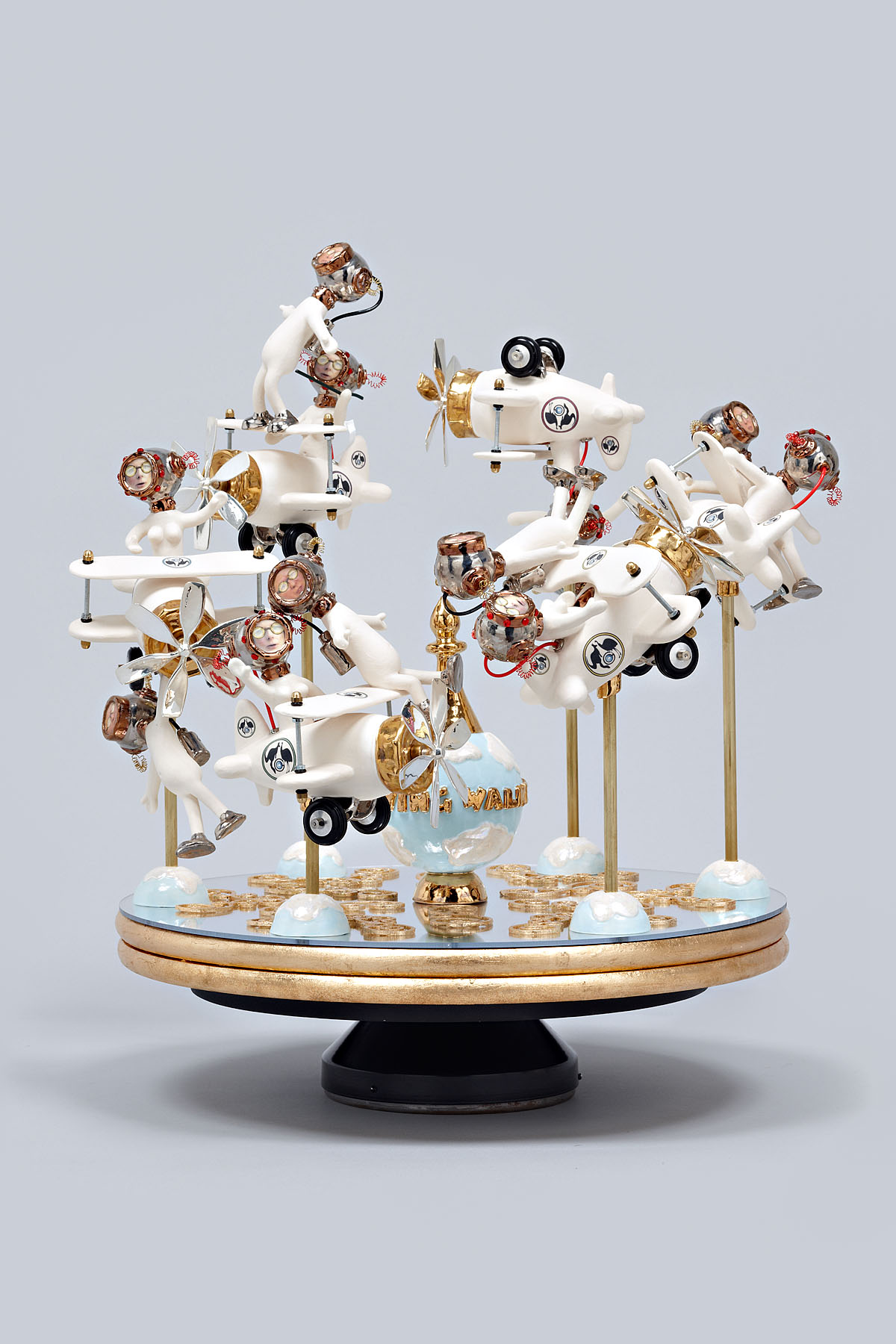
 

Robyn Hosking (Australian, b. 1948) 'The Wing Walker' 2011


Robyn Hosking (Australian, b. 1948)
The Wing Walker
2011
Mixed media
 

Robyn Hosking (Australian, b. 1948) 'The Wing Walker' 2011 (detail)


Robyn Hosking (Australian, b. 1948)
The Wing Walker (detail)
2011
Mixed media


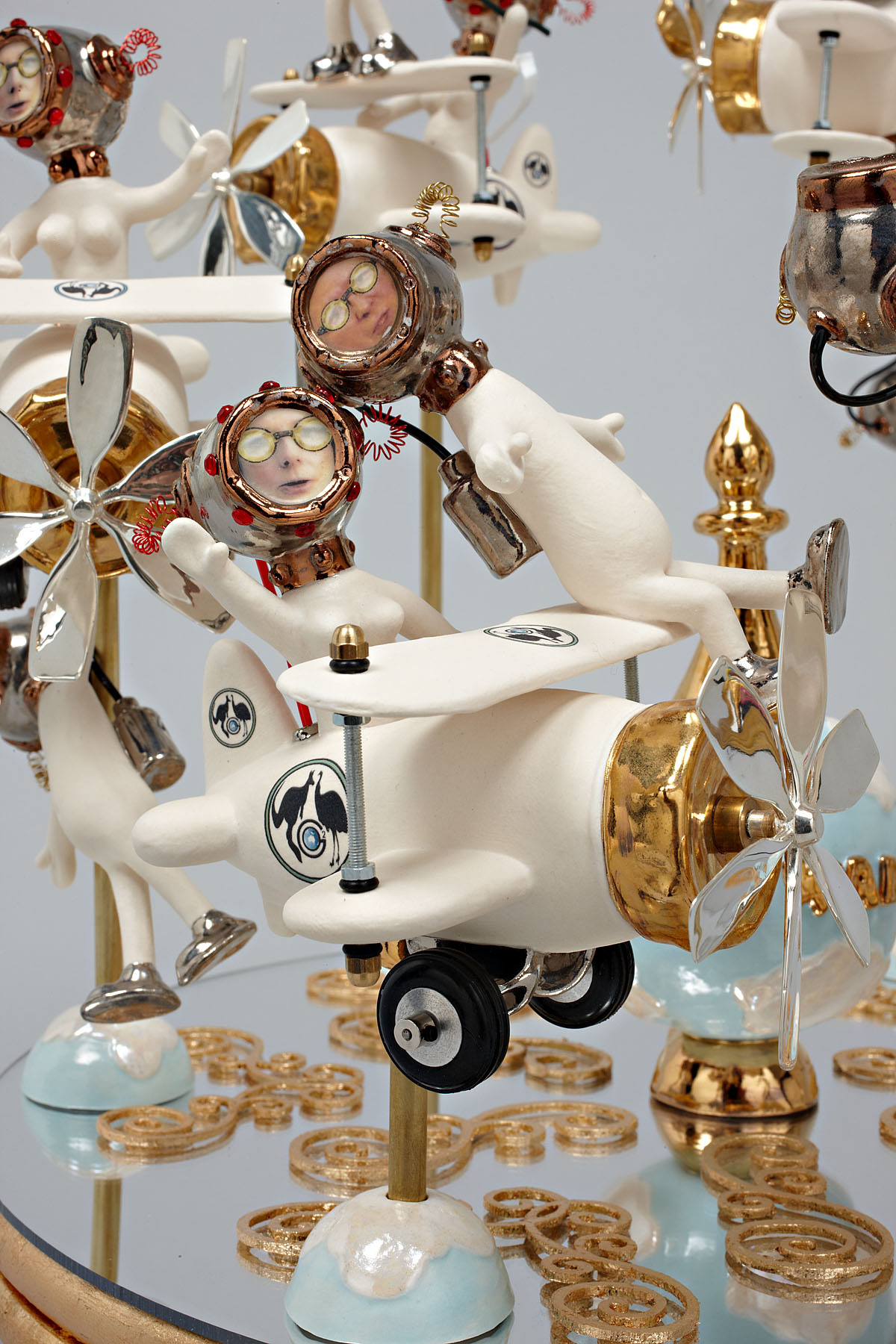
… My favourite has to be The Wing Walker (2011) as an irate Julia Gillard tries to get rid of Kevin Rudd once and for all, even poking him with a stick to push him off the edge of the biplane. Balanced on a slowly revolving turntable with the world at its centre, this political merry-go round is panacea for the soul for people sick of politicians. This is brilliant political satire. The planes are all ends up and even when Julia thinks she has got rid of Kevin there he is, hanging on for dear life from the undercarriage of one of the planes…

Reminding me of the fantasy creatures of Tom Moore, these whimsical manifestations deal with serious, life changing and challenging issues with purpose, feeling and a wicked sense of humour. I really enjoyed this art (and joy is the correct word) because it takes real world issues, melds fantasy and pointed observation and reflects it back, as the artist observes, in a funfair’s distorted mirror. Magic!


2/ Review: Martin Parr: In Focus at Niagara Galleries, Richmond, Melbourne

Exhibition dates: 6th March – 31st March 2012

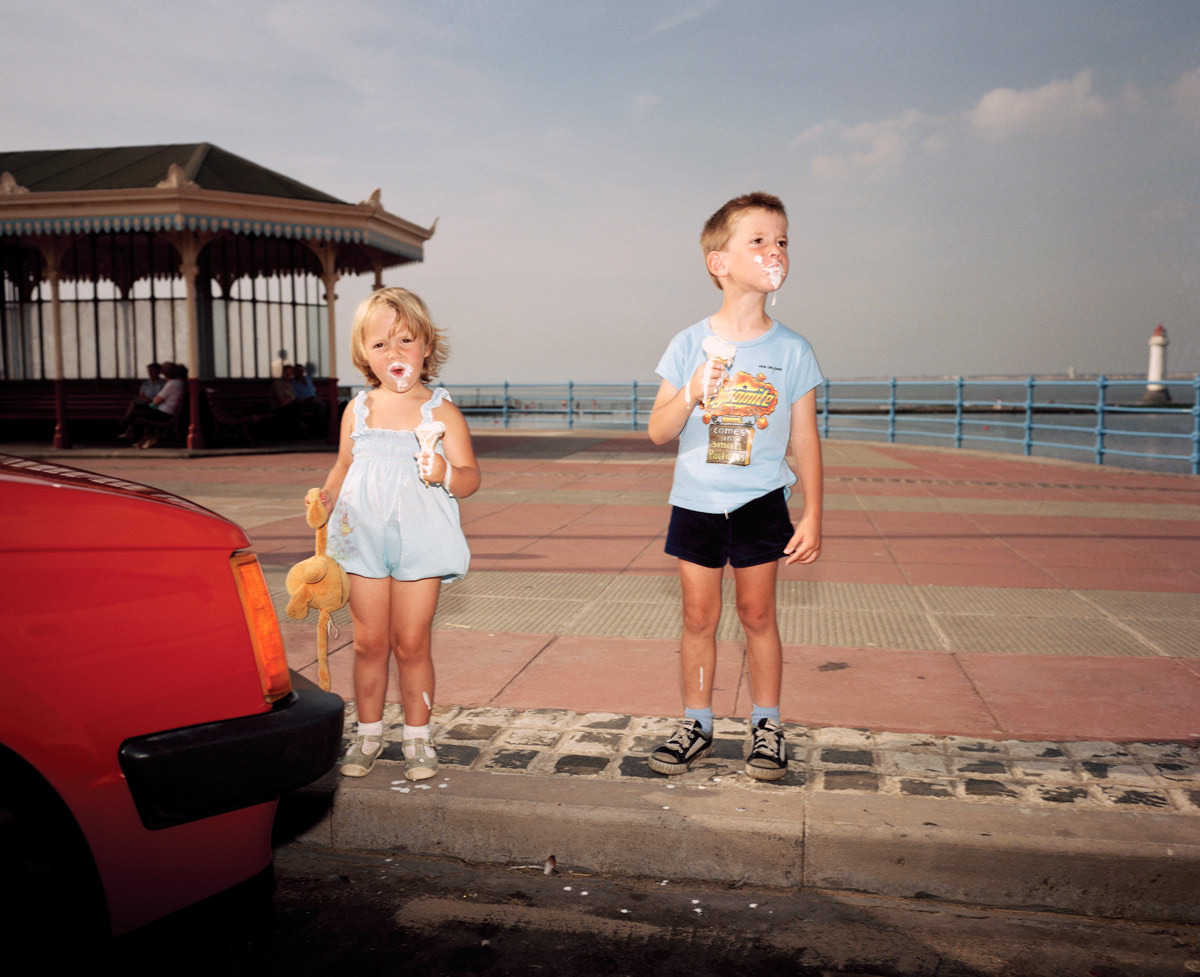
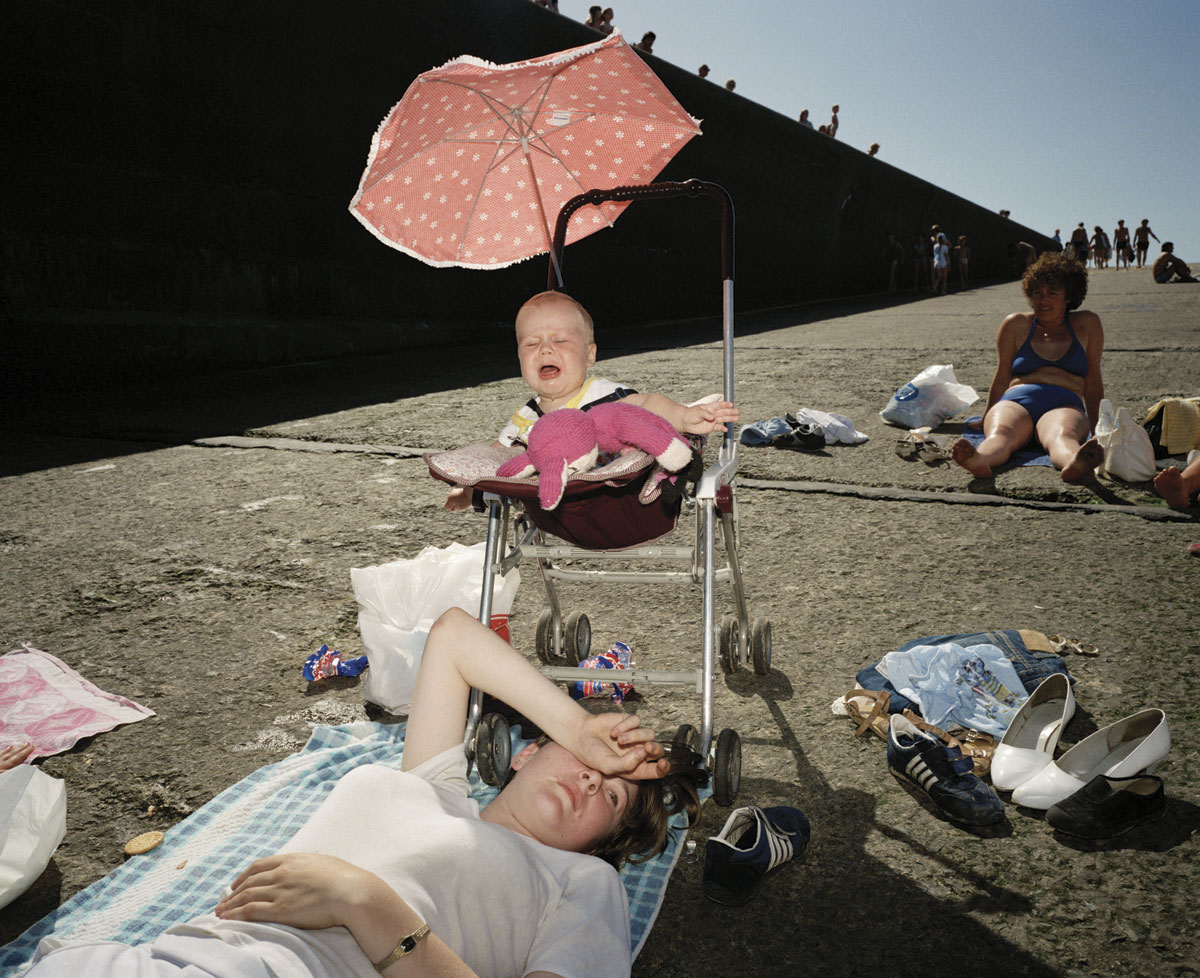
This is a fine exhibition of the work of celebrated English photographer Martin Parr at Niagara Galleries, Richmond, albeit with one proviso. The mainly large colour prints are handsomely displayed in plain white frames within the gallery space and are taken from his well known series: Last Resort, Luxury, New British and British Food. Parr’s work is at its best when he concentrates on the volume of space within the image plane and the details that emerge from such a concentrated visualisation – whether it be the tension points within the image, assemblage of colour, incongruity of dress, messiness of childhood or philistine nature of luxury.

And so it goes. The dirt under the fingernails of the child eating a doughnut, the lurid colours of the popsicle and jacket of the kid with dribble on his face, all fantastic… They are joyous paeans to the quirky, incongruous worlds in which we live and circulate. They evidence life itself in all its orthogonal absurdity.
 

Martin Parr (British, b. 1952) 'England. New Brighton' 1983-1985


Martin Parr (British, b. 1952)
England. New Brighton
1983-1985
From the series Last Resort
1983-1985
Pigment print
Edition of 5
102 x 127cm
Image courtesy of the artist and Niagara Galleries, Melbourne
 

Martin Parr (British, b. 1952) 'England. New Brighton' 1983-1985


Martin Parr (British, b. 1952)
England. New Brighton
1983-1985
From the series Last Resort
Pigment print
Edition of 5
102 x 127 cm
Image courtesy of the artist and Niagara Galleries, Melbourne


3/ Review: Tourist #5: Disappearing Project 1 – 41 by Nicola Loder at Helen Gory Galerie, Prahran, Melbourne

Exhibition dates: 14th March – 7th April 2012

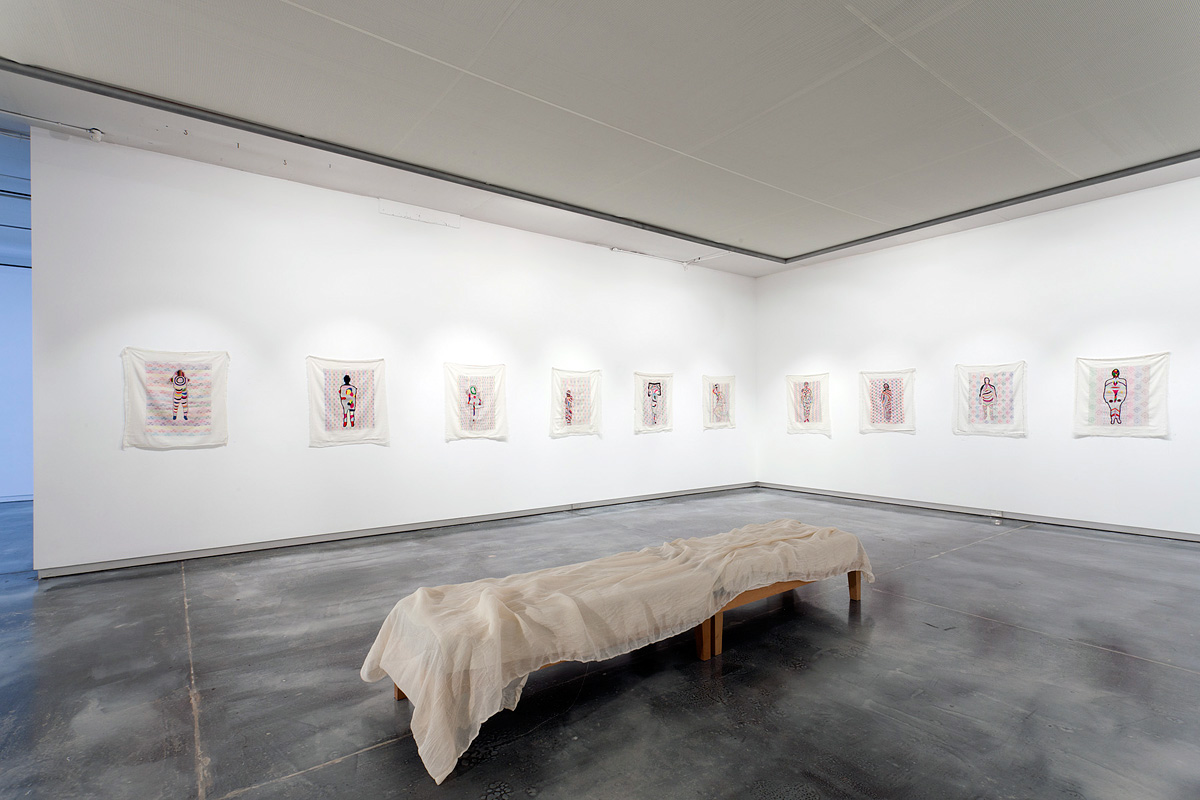
I have always loved the work of Nicola Loder ever since I saw her solo exhibition Child 1-175: A Nostalgia for the Present at Stop 22 Gallery in St Kilda in 1996. This exhibition is no exception. Loder is the consummate professional, her work is as imaginative and intriguing as ever and there has been a consistent thematic development of ideas within her work over a long period of time. These ideas relate to the nature of seeing and being seen, the mapping of identity and the process of its (dis)appearance…

Loder’s exquisitely sensuous description of disappearance allows us to see the phenomenal word afresh. I look forward with a sense of anticipation to the next voyage of discovery the artist will take me on.
 

'Tourist #5: Disappearing Project 1-41' by Nicola Loder, installation photograph at Helen Gorie Galerie


Tourist #5: Disappearing Project 1-41 by Nicola Loder, installation photograph at Helen Gorie Galerie
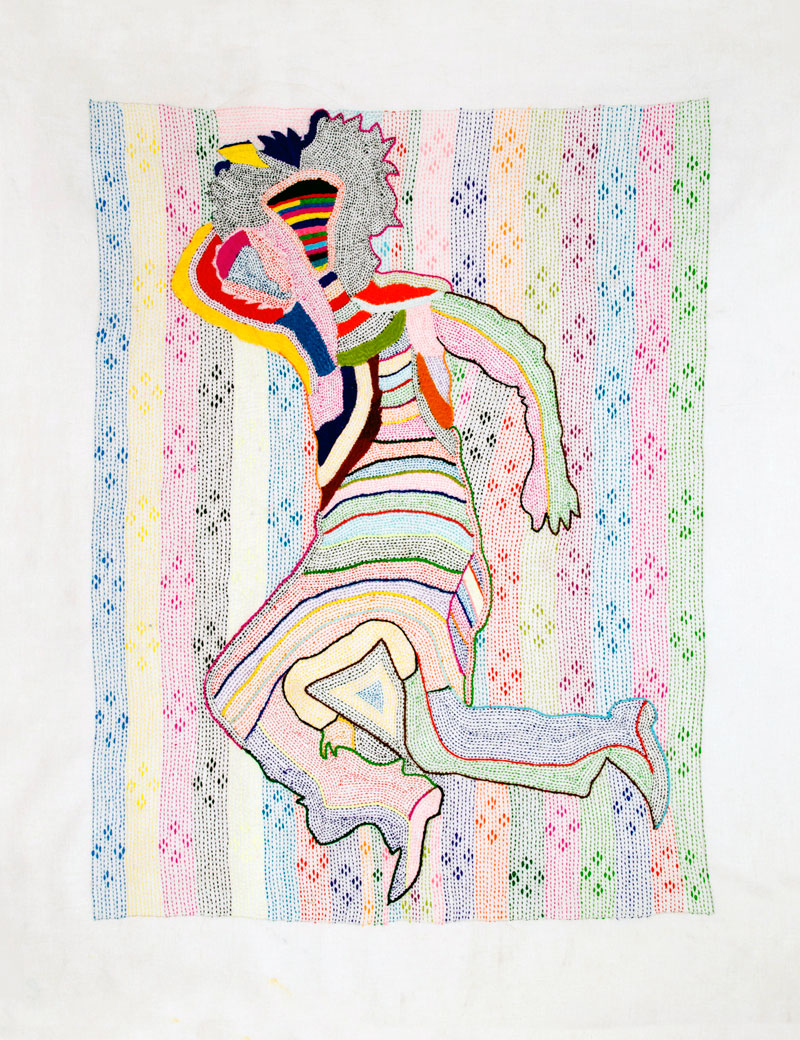
 

Nicola Loder (Australian, b. 1964) 'Tourist #5: Disappearing Project 1-41 (no 11)' 2012


Nicola Loder (Australian, b. 1964)
Tourist #5: Disappearing Project 1-41 (no 11)
2012
Polyester thread, muslin
86 x 69cm


4/ Review: Jane Brown / Australian Gothic at Edmund Pearce Gallery, Melbourne

Exhibition dates: 25th April – 12th May 2012


Jane Brown (Kuwait, Australia, b. 1967) 'Big Trout, New South Wales' 2010

Jane Brown (Kuwait, Australia, b. 1967)
Big Trout, New South Wales
2010
Museo silver rag print
59 x 46cm


Jane Brown (Kuwait, Australia, b. 1967) 'Adelong, New South Wales' 2011


Jane Brown (Kuwait, Australia, b. 1967)
Adelong, New South Wales
2011
Fibre based, silver gelatin print
16.5 x 20.5cm


This is a good exhibition of small, darkly hewn, traditionally printed silver gelatin photographs, beautifully hung in the small gallery at Edmund Pearce and lit in the requisite, ambient manner. There are some outstanding photographs in the exhibition. The strongest works are the surrealist tinged, film noir-ish mise-en-scènes, the ones that emphasise the metaphorical darkness of the elements gathered upon the stage. Photographs such as Big TroutThe Female Factory, Adelong, New South Wales and Captain’s Flat Hotel, New South Wales really invoke a feeling of unhomely (or unheimlich), where nature is out of kilter. These images unsettle our idea of Oztraliana, our perceived sense of Self and our place in the world. They disrupt normal transmission; they transmutate the seen environment, transforming appearance, nature and form.


5/ Review: Jacqui Stockdale: The Quiet Wild at Helen Gory Galerie, Melbourne

Exhibition dates: 18th April – 19th May 2012


Jacqui Stockdale (Australian, b. 1968) 'Rama-Jaara the Royal Shepherdess' 2012


Jacqui Stockdale (Australian, b. 1968)
Rama-Jaara the Royal Shepherdess
2012
Type C Print
100 x 78cm


Jacqui Stockdale (Australian, b. 1968) 'Lagunta Man, Leeawuleena' 2012 Type C Print 100 x 78cm


Jacqui Stockdale (Australian, b. 1968)
Lagunta Man, Leeawuleena
2012
Type C Print
100 x 78cm


These are incredibly humorous, magical and symbolic photographs. A thought came into my mind when I was in the gallery surrounded by the work: for me they represented a vision of the Major Arcana of the Tarot (for example Jaguar Hombre could be seen as an inverted version of the Hanged Man with his foot in a figure four, the Hanged Man symbolising the need to just be in the world, yielding his mind and body to the Universal flow). The Major Arcana deal with the human condition, each card representing the joys and sorrows every man and woman can experience in a lifetime. In a way Stockdale offers us her own set of subversive Major Arcana, images that transgress the boundaries of the colonial vernacular, offering the viewer a chance to explore the heart of the quiet wild.


6/ Review: Littoral by Kristian Laemmle-Ruff at Colour Factory Gallery, Fitzroy

Exhibition dates: 4th May – 26th May 2012


It was such a joy then to walk around the corner from the CCP to the Colour Factory Gallery and view the exhibition Littoral by emerging artist Kristian Laemmle-Ruff. This is one of the best, if not the best, “photography” exhibition I have seen so far this year. As soon as you walk into the simple, elegant gallery you are surrounded by fourteen large scale horizontal photographs that are suffused with colour variations bouncing across the gallery – here a blue, there a green, now a lush orange palette. The effect is much like Monet’s waterlilies at the Musée de l’Orangerie in Paris; seated in the middle of the four curved paintings you are surrounded by large daubs of paint of various hues that have an elemental effect – resonances of earth, air, water, fire – on the viewer. The same affection of colour and space can be found in Laemmle-Ruff’s photographs.


Kristian Laemmle-Ruff (Australian) 'Olympic Stadium' 2012


Kristian Laemmle-Ruff (Australian)
Olympic Stadium
2012
Type C print
100cm x 67cm


Kristian Laemmle-Ruff (Australian) 'Truck in Safi' 2010


Kristian Laemmle-Ruff (Australian)
Truck in Safi
2010
Type C print
100cm x 67cm


7/ Review: Lost & Found: Family Photos Swept away by the 3.11 East Japan Tsunami at the Centre for Contemporary Photography (CCP), Fitzroy, Melbourne

Exhibition dates: 1st June – 15th July 2012

What we are left with in these images are vestiges of presence, remnants or traces of people that have passed on. In a kind of divine intervention, these photographs ask the viewer questions about the one fact that we cannot avoid in our lives, our own mortality, and what remains after we pass on. We can never know these people and places, just as we can never know the place and time of our death – when our “time” is up – but these photographs awaken in us a subconscious remembering: that we may be found (in life), then lost (through death), then found again in the gaze of the viewer looking at the photographs in the future present. We are (dis)continuous beings.

There is no one single reading of these photographs for “there are only competing narratives and interpretations of a world that cannot be wholly, accurately described.” These indescribable photographs impinge on our consciousness calling on us to remember even as the speed of contemporary life asks us to forget. This ethical act of looking, of mourning and remembering, of paying homage to presence acknowledges that we choose not to let pass into the dark night of the soul these traces of our forebears, for each emanation is deeply embedded within individual and cultural memory.

These photographs are a contemporary form of Western ‘dreaming’ in which we feel a link to the collective human experience. In this reification, we bear witness to the (re)assemblance of life, the abstract made (subconsciously) concrete, as material thing. These images of absent presence certainly reached out and touched my soul. Vividly, I choose to remember rather than to forget.


'Untitled' from 'Lost and Found' 2011

'Untitled' from 'Lost and Found' 2011


Anonymous photographer
Untitled
2011
From Lost and Found 2011


8/ Review: Berlinde De Bruyckere: We are all Flesh at the Australian Centre for Contemporary Art (ACCA), Melbourne

Exhibition dates: 2nd June – 29th July 2012

The main work We Are All Flesh (2012) reminded me of a version of the game The Hanged Man (you know, the one where you have to guess the letters of a word and if you don’t get the letter, the scaffold and the hanged man are drawn). The larger of the two hanging pieces featured two horse skins of different colours intertwined like a ying yang paux de deux. Psychologically the energy was very heavy. The use of straps to suspend the horses was inspired. Memories of Rembrandt’s The Anatomy Lesson of Dr. Nicolaes Tulp and The Godfather rose to the surface. My favourite piece was 019 (2007). Elegant in its simplicity this beautiful display case from a museum was dismantled and shipped over to Australia in parts and then reassembled here. The figurative pieces of wood, made of wax, seemed like bodies drained of blood displayed as specimens. The blankets underneath added an element of comfort. The whole piece was restrained and beautifully balanced. Joseph Beuys would have been very proud.

The “visceral gothic” contained in the exhibition was very evident. I liked the artist’s trembling and shuddering. Her narratives aroused a frisson, a moment of intense danger and excitement, the sudden terror of the risen animal


Berlinde De Bruyckere (Belgian, b. 1964) 'We Are All Flesh' 2012


Berlinde De Bruyckere (Belgian, b. 1964)
We Are All Flesh
2012
Treated horse skin, epoxy, iron armature
280 x 160 x 100cm
Courtesy the artist, Hauser & Wirth and Galleria Continua


Berlinde De Bruyckere (Belgian, b. 1964) '019' 2007


Berlinde De Bruyckere (Belgian, b. 1964)
019
2007
Wax, epoxy, metal, glass, wood, blankets
293.5 x 517 x 77.5cm
Private Collection, Paris


9/ Review: Light Works at NGV International, Melbourne

Exhibition dates: 23rd March – 16th September 2012

This is an intimate and stimulating photographic exhibition at the NGV International featuring the work of artists Mike and Doug Starn, David Stephenson, Hiroshi Sugimoto, Bill Henson, Adam Fuss, Simone Douglas, Park Hong-Chun, Eugenia Raskopoulos, Sam Shmith, Christoph Dahlhausen and Patrick Bailly-Maitre-Grand. It is fantastic to see an exhibition of solely contemporary photographs at the National Gallery of Victoria taken from their collection (with nary a vintage silver gelatin photograph in sight!), one which examines the orchestration of light from which all photography emanates – used by different photographers in the creation, and there is the key word, of their work. Collectively, the works seem to ooze a mysterious inner light, a facing towards the transcendent divine – both comforting, astonishing and terrifying in part measure.
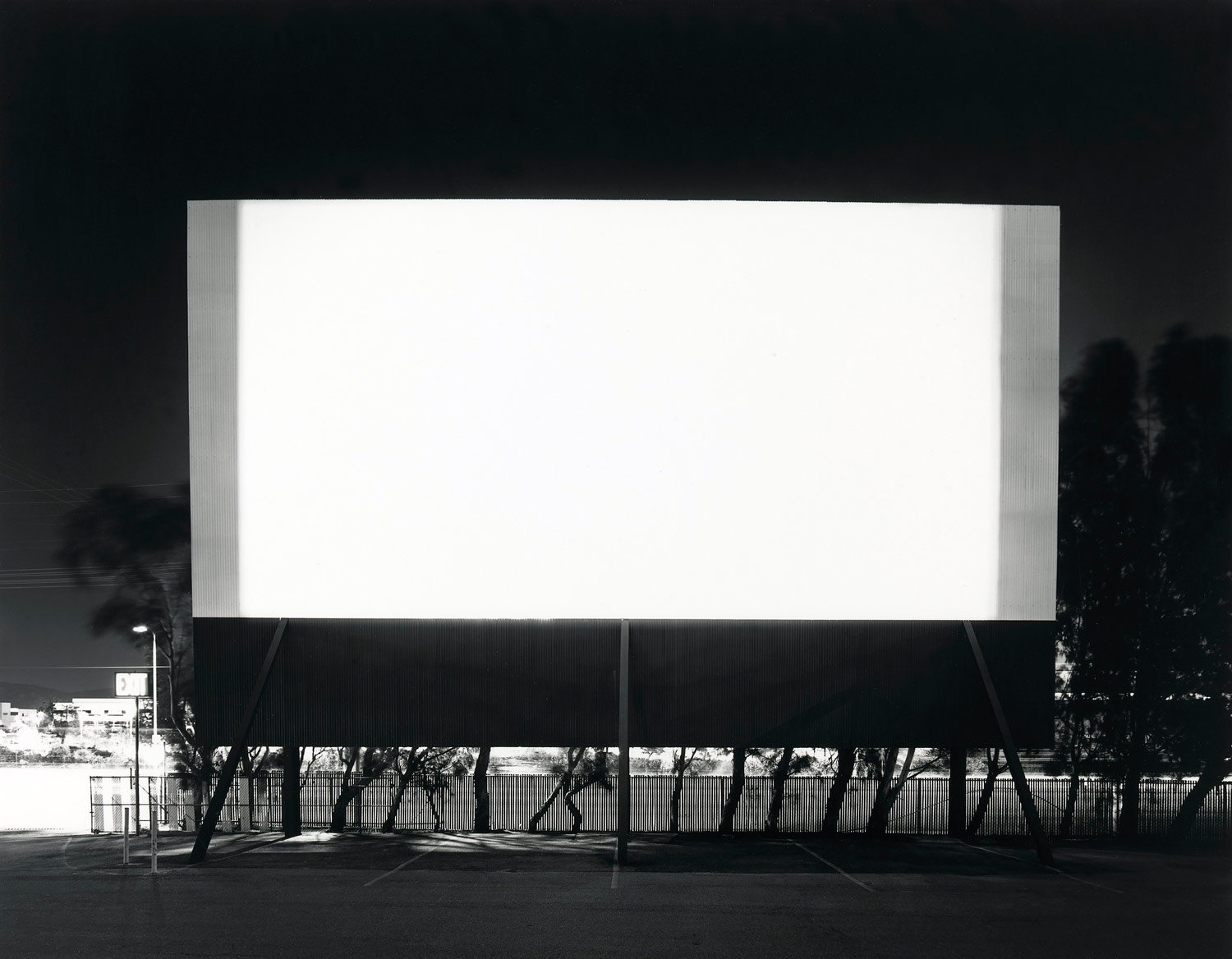
 

Hiroshi Sugimoto (Japanese, b. 1948-, worked in United States 1972- ) 'Winnetka Drive-In, Paramount' 1993


Hiroshi Sugimoto (Japanese, b. 1948-, worked in United States 1972- )
Winnetka Drive-In, Paramount
1993
Gelatin silver photograph
42.3 x 54.1cm
National Gallery of Victoria, Melbourne
Purchased with funds donated by the Bowness Family Fund for Contemporary Photography, 2009
© Hiroshi Sugimoto, courtesy The Pace Gallery, New York
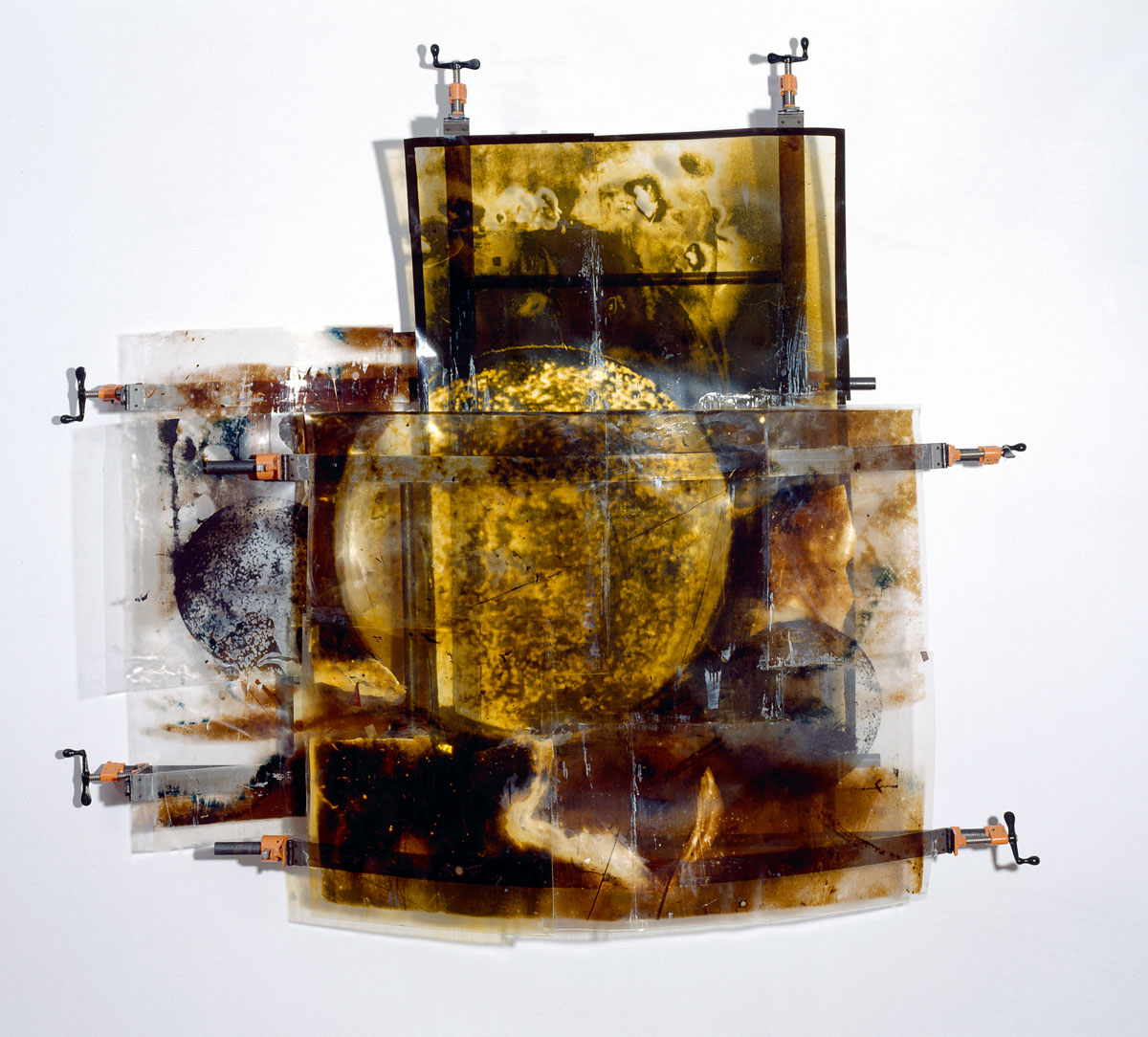
 

Mike Starn (American, b. 1961) and Doug Starn (American, b. 1961)
'Sol Invictus' 1992


Mike Starn (American, b. 1961) and Doug Starn (American, b. 1961)
Sol Invictus
1992
Orthographic film, silicon, pipe clamps, steel and adhesive tape
175 x 200 x 35cm
National Gallery of Victoria, Melbourne
Purchased with funds donated by the National Gallery Women’s Association, 1994
© Doug Starn, Mike Starn/ARS, New York. Licensed by VISCOPY, Sydney


10/ Review: Gregory Crewdson: In A Lonely Place at the Centre for Contemporary Photography (CCP), Fitzroy, Melbourne

Exhibition dates: 28th September – 11th November 2012

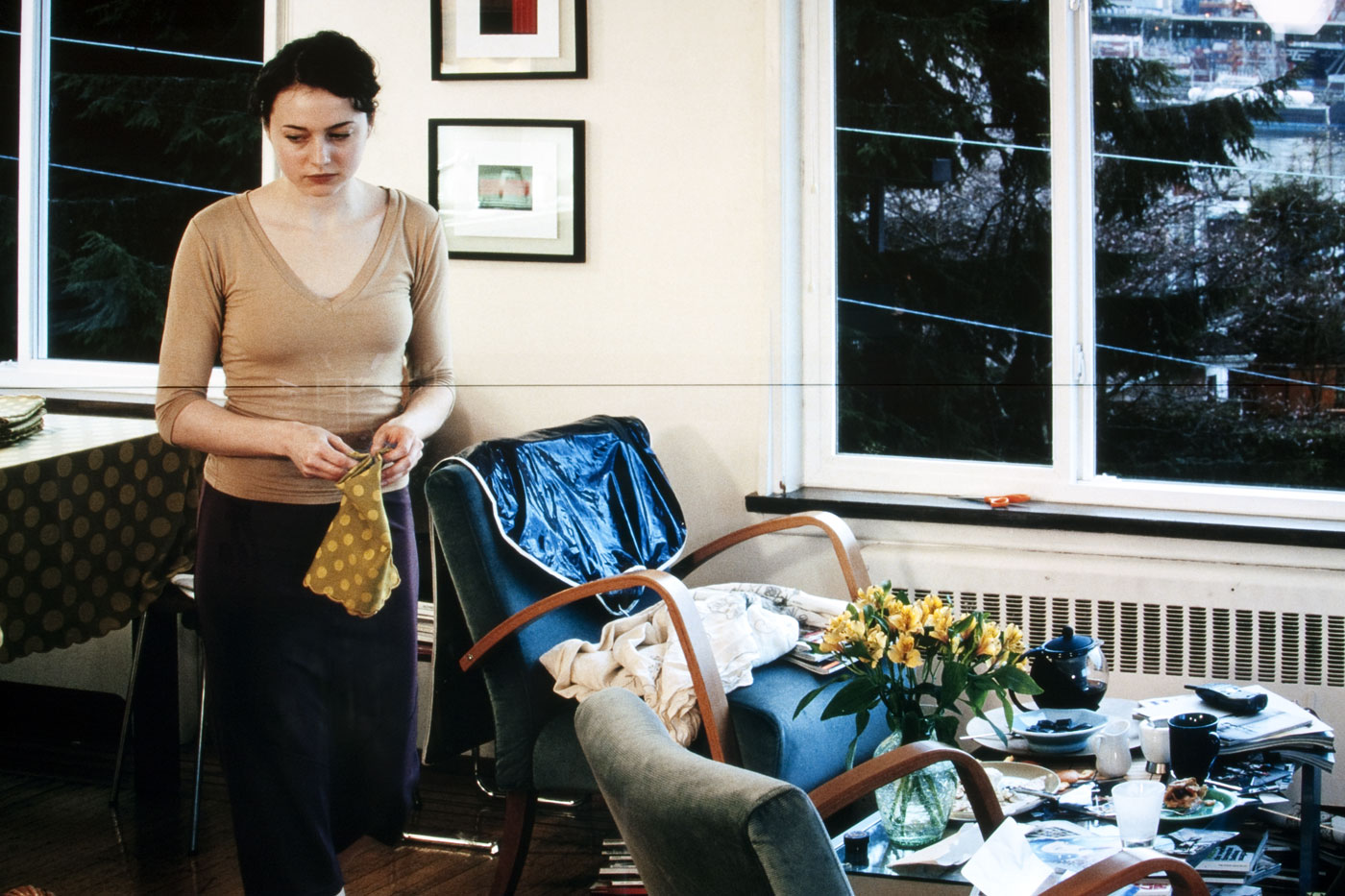
In his visual mosaics Crewdson engages our relationship with time and space to challenge the trace of experience. His tableaux act as a kind of threshold or hinge of experience – between interior and exterior, viewer and photograph. His photographs are a form of monism in which two forces (interior / exterior) try to absorb each other but ultimately lead to a state of equilibrium. It is through this “play” that the context of the photographs and their relationship to each other and the viewer are “framed.” This device emphasises the aesthetic as much as information and encourages the viewer to think about the relationship between the body, the world of which it is part and the dream-reason of time. This intertextual (n)framing (n meaning unspecified number in mathematics) encourages the viewer to explore the inbetween spaces in the non-narrative / meta-narrative, “and by leaps (intuitive leaps, poetic leaps, leaps of faith)” encourage escapism in the imagination of the viewer. It is up to us as viewers to seek the multiple, disparate significances of what is concealed in each photograph as “felt knowledge” (Walter Benjamin), recalling to mind the sensory data placed before our eyes, something that can be experienced but cannot be explained by man: “the single moment of the present amidst the transience of life and searching for some kind of eternal truth.”


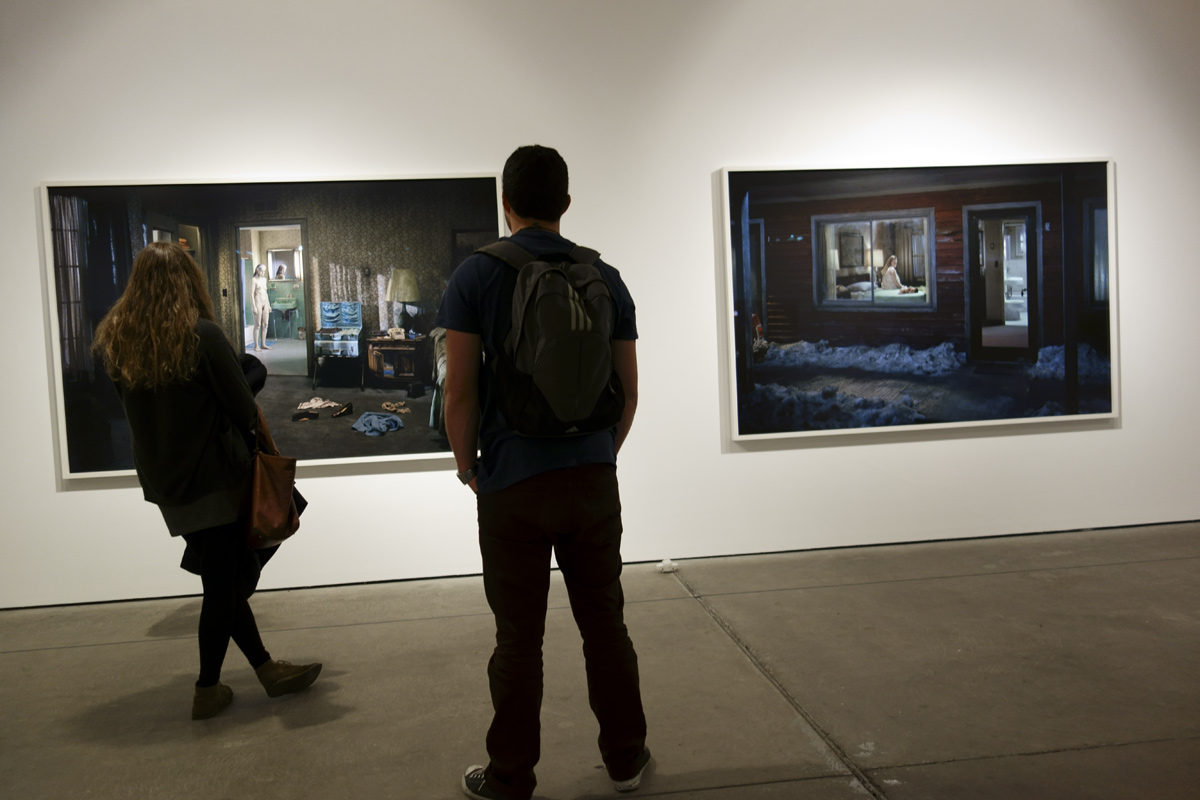
Installation photograph of the series 'Beneath the Roses' from the exhibition 'Gregory Crewdson: In a Lonely Place' at the Centre for Contemporary Photography (CCP), Melbourne


Installation photograph of the series Beneath the Roses from the exhibition Gregory Crewdson: In a Lonely Place at the Centre for Contemporary Photography (CCP), Melbourne


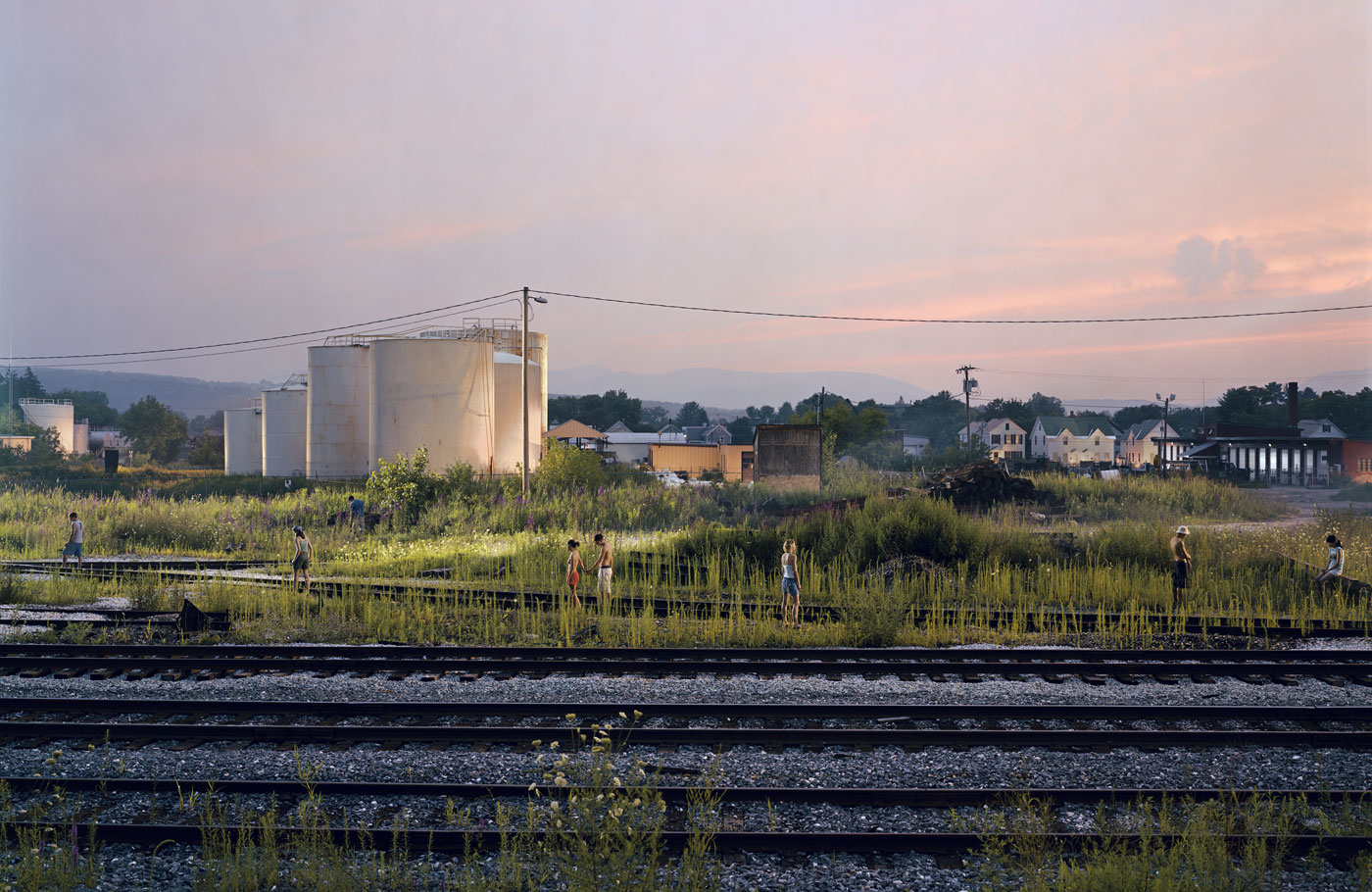
Gregory Crewdson (American, b. 1962) 'Untitled (Maple Street)' 2003-2005


Gregory Crewdson (American, b. 1962)
Untitled (Maple Street)
2003-2005
© Gregory Crewdson. Courtesy Gagosian Gallery


11/ Exhibition: Janina Green: Ikea at Edmund Pearce Gallery, Melbourne

Exhibition dates: 28th November 28 – 15th December 2012
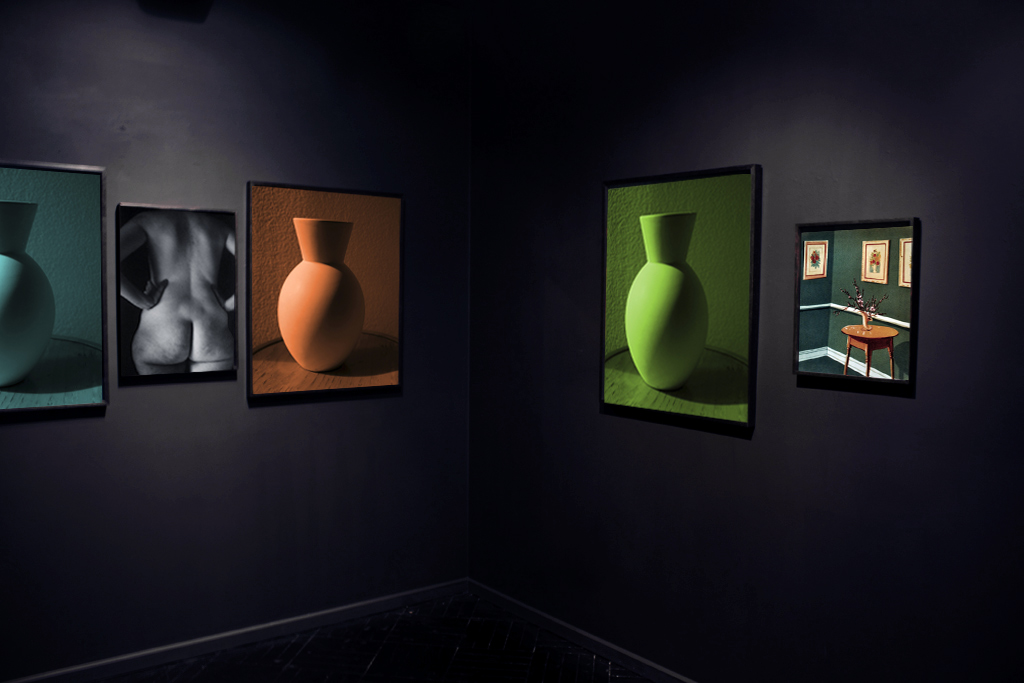
 

Installation photograph of 'Ikea' by Janina Green at Edmund Pearce Gallery, Melbourne


Installation photograph of Ikea by Janina Green at Edmund Pearce Gallery, Melbourne


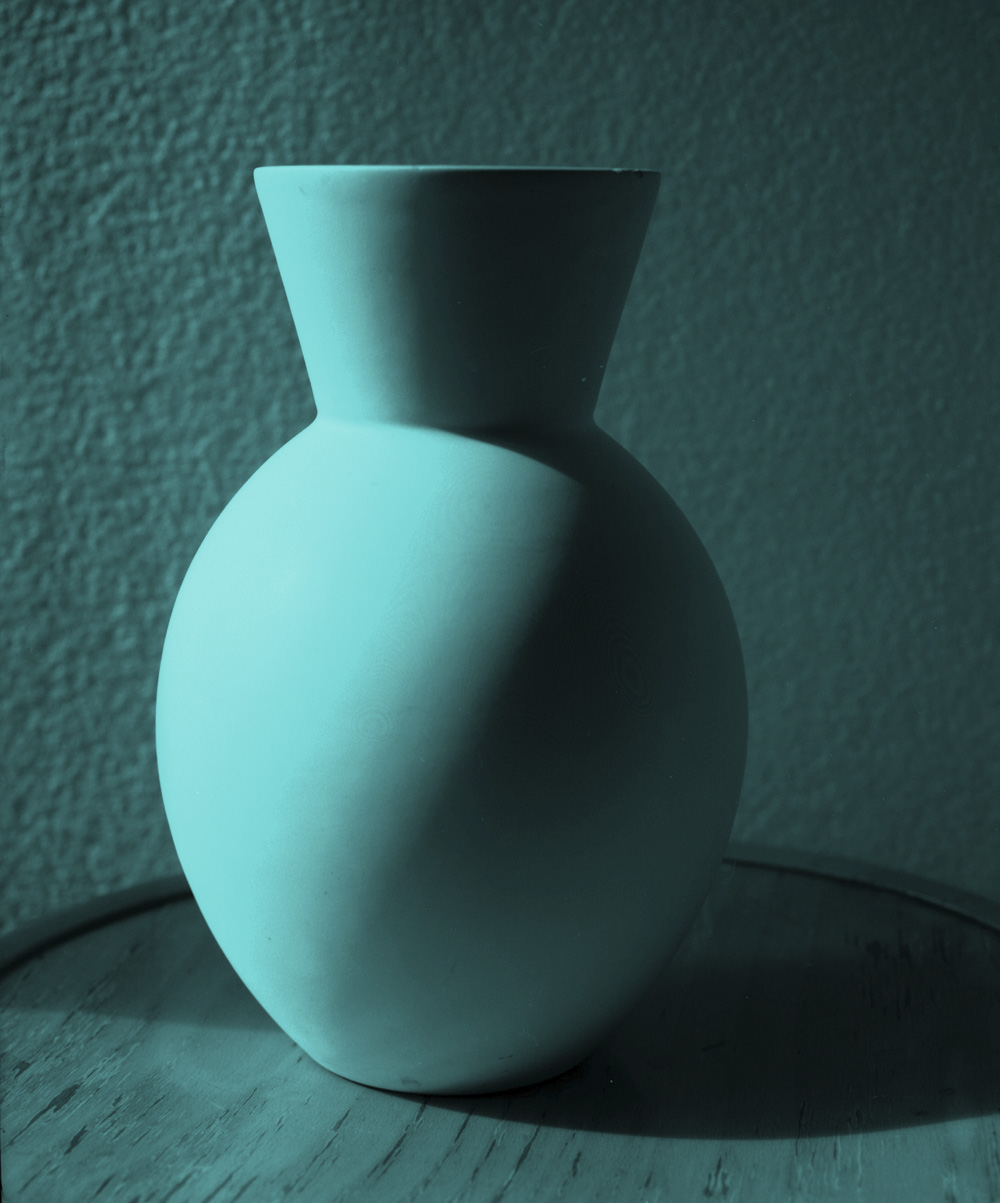
Janina Green (Australian born Germany, b. 1944) 'Orange vase' 1990 reprinted 2012


Janina Green (Australian born Germany, b. 1944)
Orange vase
1990 reprinted 2012
Silver gelatin print on fibre based paper, hand-tinted with orange photo dye
85 x 70 cm


Fable = invent (an incident, person, or story)

Simulacrum = pretends to be a faithful copy, but it is a copy with no original

Performativity = power of discourse, politicization of abjection, ritual of being

Body / identity / desire = imperfection, fluidity, domesticity, transgression, transcendence


Intimate, conceptually robust and aesthetically sensitive.
The association of the images was emotionally overwhelming.
An absolute gem. One of the highlights of the year.


LIKE ART BLART ON FACEBOOK

Back to top

Exhibition: ‘Janina Green: Ikea’ at Edmund Pearce Gallery, Melbourne

Exhibition dates: 28th November 28 – 15th December 2012


Installation photograph of 'Ikea' by Janina Green at Edmund Pearce Gallery, Melbourne


Installation photograph of Ikea by Janina Green at Edmund Pearce Gallery, Melbourne


“It is necessary to revisit what Walter Benjamin said of the work of art in the age of its mechanical reproducibility. What is lost in the work that is serially reproduced, is its aura, its singular quality of the here and now, its aesthetic form (it had already lost its ritual form, in its aesthetic quality), and, according to Benjamin, it takes on, in its ineluctable destiny of reproduction, a political form. What is lost is the original, which only a history itself nostalgic and retrospective can reconstitute as “authentic.” The most advanced, the most modern form of this development, which Benjamin described in cinema, photography, and contemporary mass media, is one in which the original no longer even exists, since things are conceived from the beginning as a function of their unlimited reproduction.”


Jean Baudrillard. ‘Simulacra and Simulation’. 1981 (English translation 1994)


“To apprehend myself as seen is, in fact, to apprehend myself as seen in the world and from the standpoint of the world. The look does not carve me out in the universe; it comes to search for me at the heart of my situation and grasps me only in irresolvable relations with instruments. If I am seen as seated, I must be seen as “seated-on-a-chair,” … But suddenly the alienation of myself, which is the act of being-looked-at, involves the alienation of the world which I organise. I am seated on this chair with the result that I do not see it at all, that it is impossible for me to see it …”


Jean-Paul Satre. ‘Being and Nothingness’ (trans. Hazel Barnes). London: Methuen, 1966, p. 263


“It must be possible to concede and affirm an array of “materialities” that pertain to the body, that which is signified by the domains of biology, anatomy, physiology, hormonal and chemical composition, illness, age, weight, metabolism, life and death. None of this can be denied. But the undeniability of these “materialities” in no way implies what it means to affirm them, indeed, what interpretive matrices condition, enable and limit that necessary affirmation. That each of those categories [BODY AND MATERIALITY] have a history and a historicity, that each of them is constituted through the boundary lines that distinguish them and, hence, by what they exclude, that relations of discourse and power produce hierarchies and overlappings among them and challenge those boundaries, implies that these are both persistent and contested regions.”


Judith Butler. ‘Bodies That Matter’. New York: Routledge, 1993, pp. 66-67


Fable = invent (an incident, person, or story)

Simulacrum = pretends to be a faithful copy, but it is a copy with no original

Performativity = power of discourse, politicisation of abjection, ritual of being

Body / identity / desire = imperfection, fluidity, domesticity, transgression, transcendence


Intimate, conceptually robust and aesthetically sensitive.
The association of the images was emotionally overwhelming.
An absolute gem. One of the highlights of the year.
Dr Marcus Bunyan


Many thankx to Edmund Pearce Gallery for allowing me to publish the photographs in the posting. Please click on the photographs for a larger version of the image.


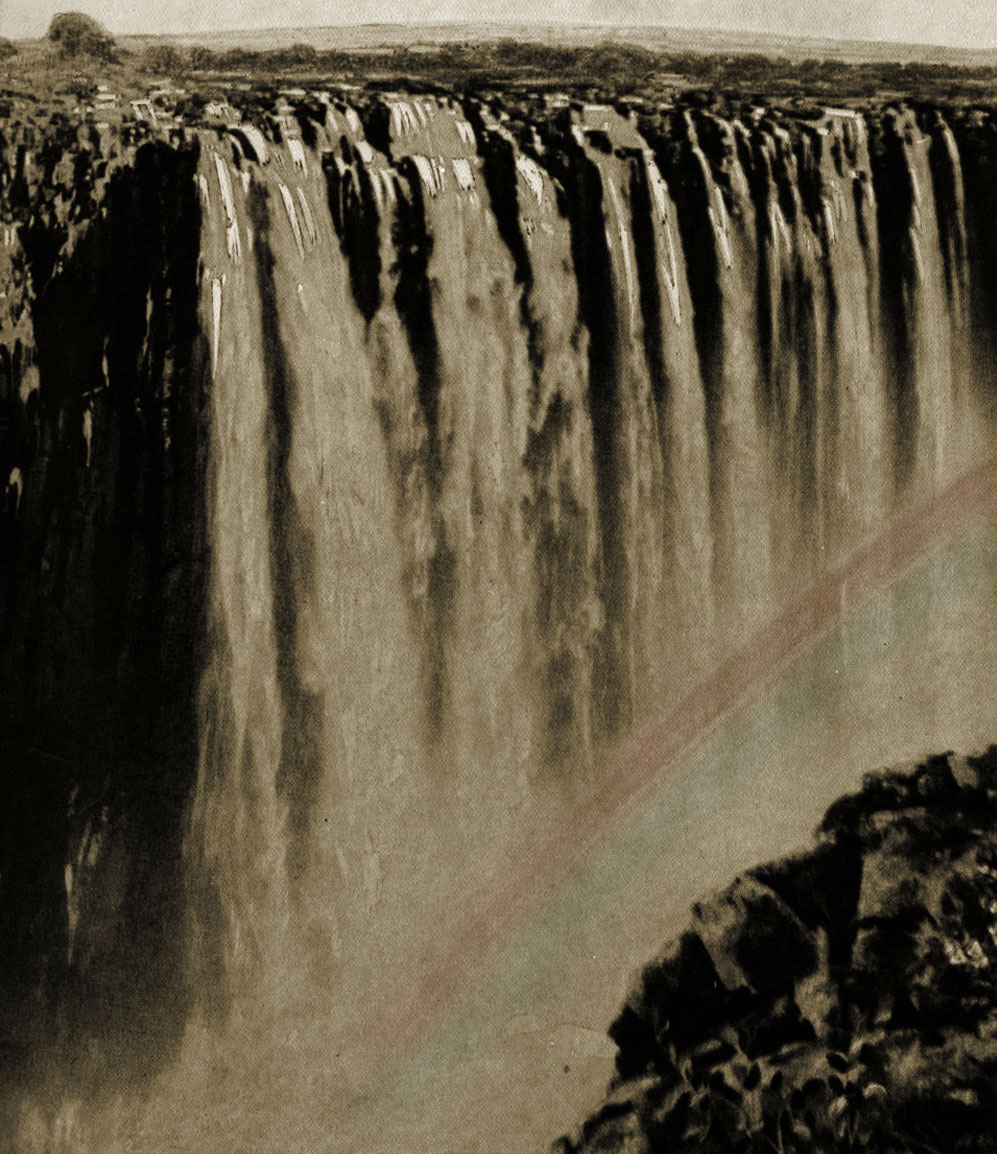
Janina Green (Australian born Germany, b. 1944) 'Waterfall' 1990


Janina Green (Australian born Germany, b. 1944)
Waterfall
1990
Silver gelatin print on Kentmere Parchment paper, tinted with coffee and photo dyes
58 x 48cm
Vintage print


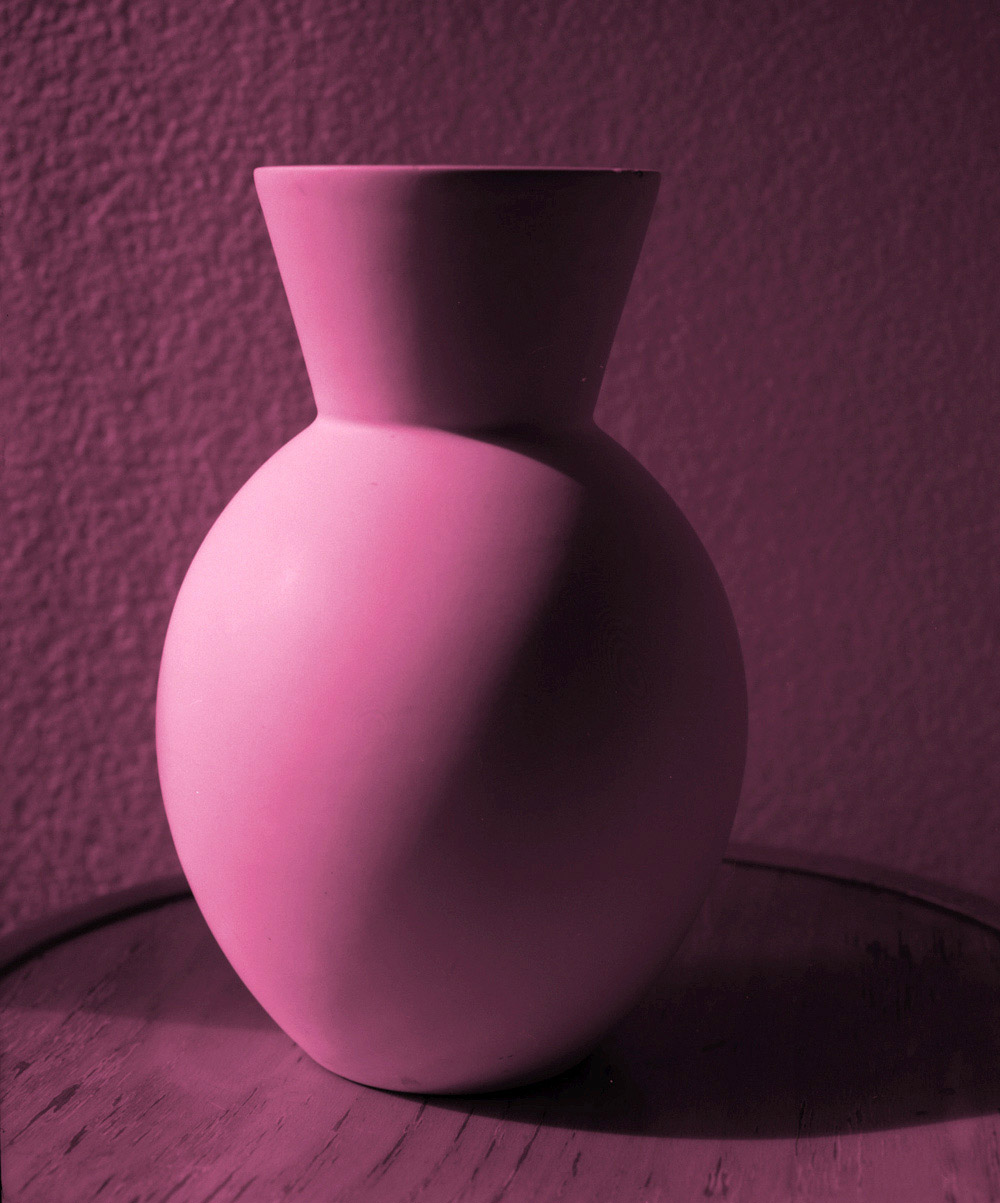
Janina Green (Australian born Germany, b. 1944) 'Pink vase' 1990 reprinted 2012


Janina Green (Australian born Germany, b. 1944)
Pink vase
1990 reprinted 2012
Silver gelatin print on fibre based paper, hand tinted with pink photo dye
85 x 70cm


Janina Green (Australian born Germany, b. 1944) 'Blue vase' 1990 reprinted 2012


Janina Green (Australian born Germany, b. 1944)
Blue vase
1990 reprinted 2012
Silver gelatin print on fibre based paper, hand tinted with blue photo dye
85 x 70cm


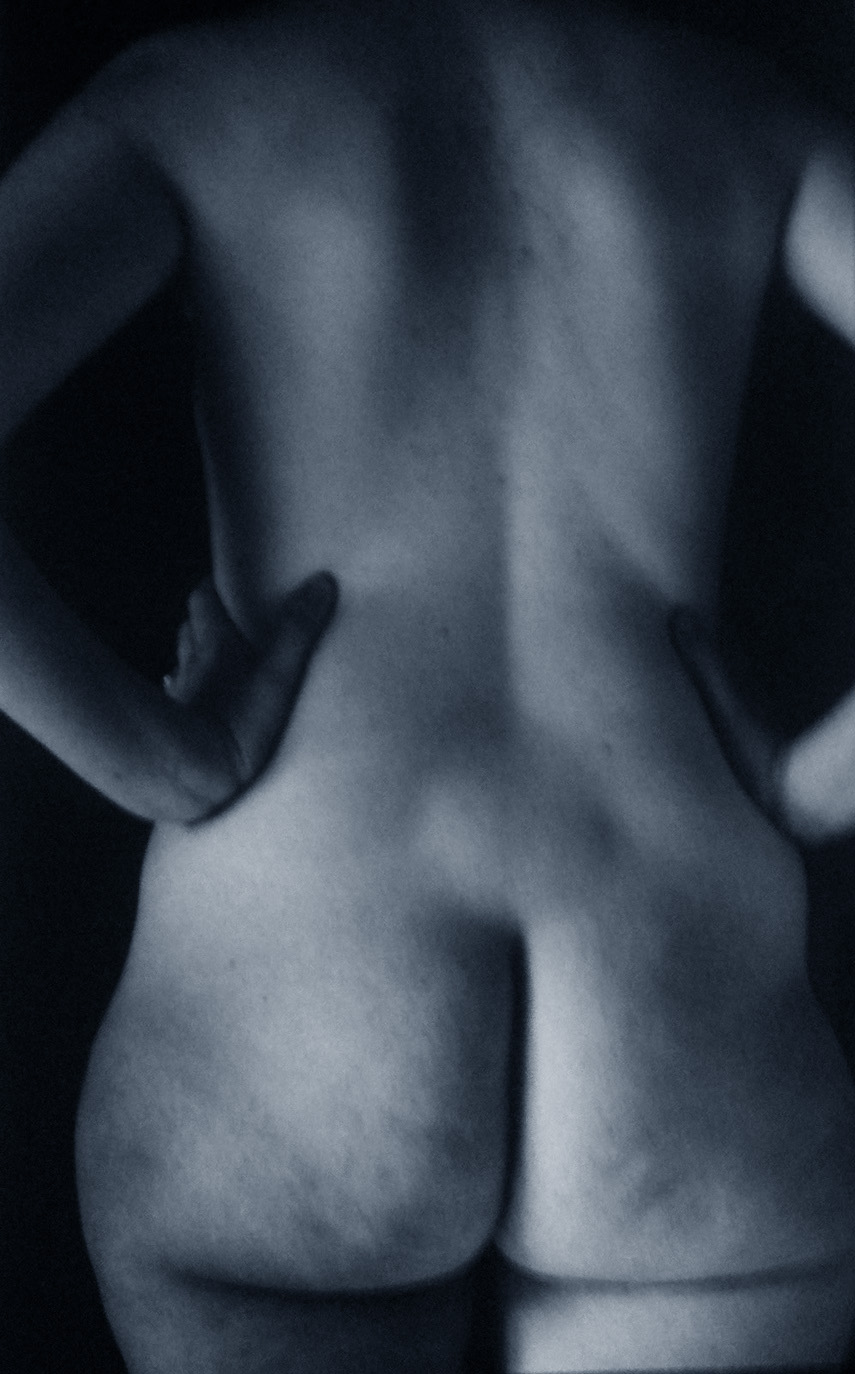
Janina Green (Australian born Germany, b. 1944) 'Nude' 1986


Janina Green (Australian born Germany, b. 1944)
Nude
1986
Silver gelatin print on fibre based paper, hand tinted with blue photo dye
60 x 45cm
Vintage print


My photographs are always about the past.

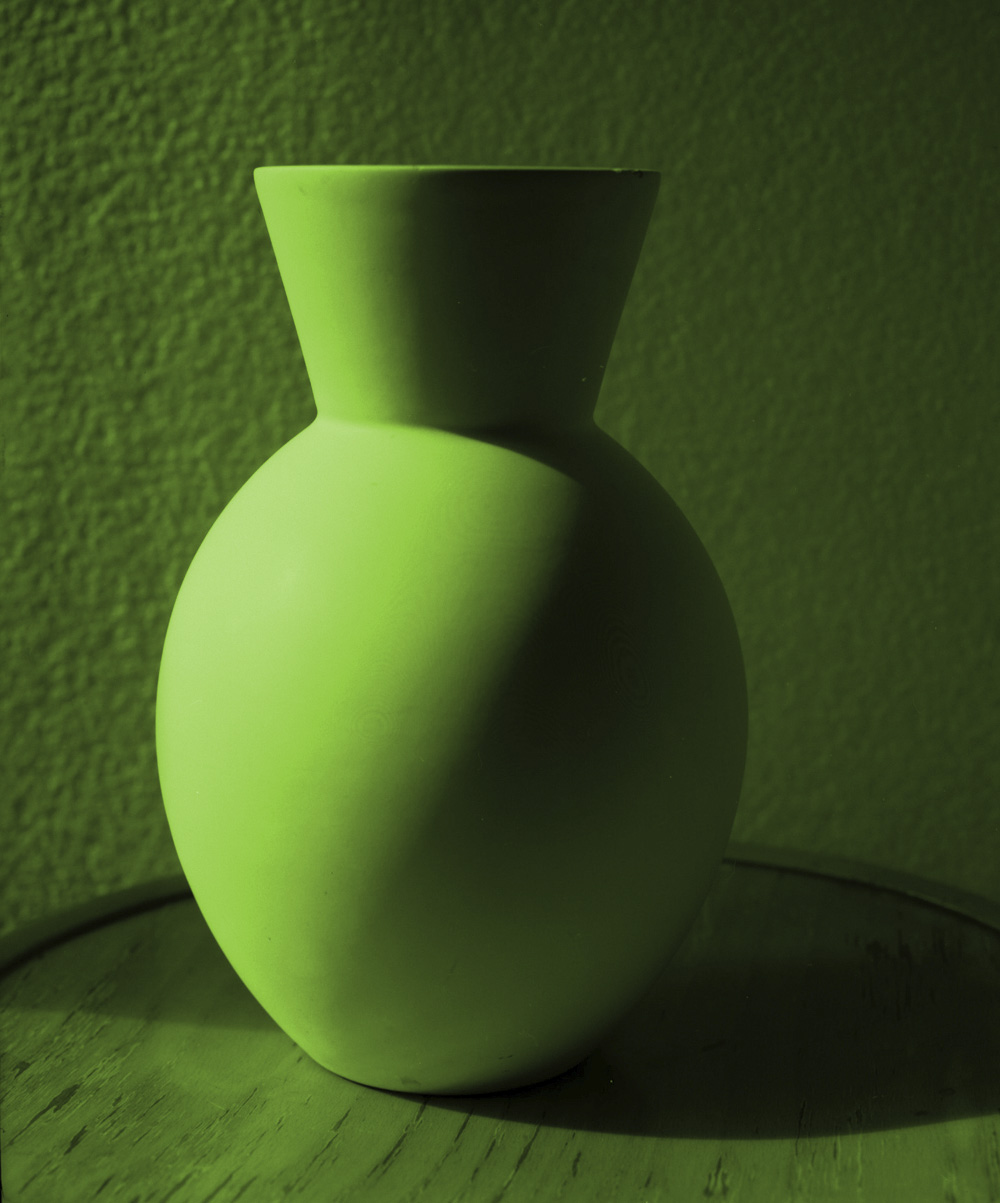
The Barthesian slogan, “this has been,” is for me, “I was there.” This series of images of a vase from Ikea consists of silver gelatin prints tinted in different coloured photographic dyes; photographs of a simple mass produced vase – its form the familiar vessel which so dominates Art History. “Ikea” for me is symbolic of the useful homely object and of the ideal home. The vase from Ikea no longer exists. The picture of that vase stands in for the vase that once existed. The photograph can be seen now – at this moment. It will continue to exist in the future. Its representation crosses time barriers.

My photographs are always documentations of a private performance.

Every photograph records what is in front of the camera, but my interest is in the occasion and the complex conditions of the making of the photograph – first the negative then the print. Each photograph ends up being a documentation of my state of mind during this intensely private moment as well as something for other people to look at. Because of changing conditions, every one of these prints from that same negative is different. For me each analogue print is an unsteady thing. They are now relics from another era, as is the vase.

As a counterpoint to the repetition of the vase prints, I have selected four vintage works from my archive.

Artists statement by Janina Green

Janina is represented by M.33


Janina Green (Australian born Germany, b. 1944) 'Orange vase' 1990 reprinted 2012


Janina Green (Australian born Germany, b. 1944)
Orange vase
1990 reprinted 2012
Silver gelatin print on fibre based paper, hand tinted with orange photo dye
85 x 70cm


Janina Green (Australian born Germany, b. 1944) 'Green vase' 1990 reprinted 2012


Janina Green (Australian born Germany, b. 1944)
Green vase
1990 reprinted 2012
Silver gelatin print on fibre based paper, hand tinted with green photo dye
85 x 70cm


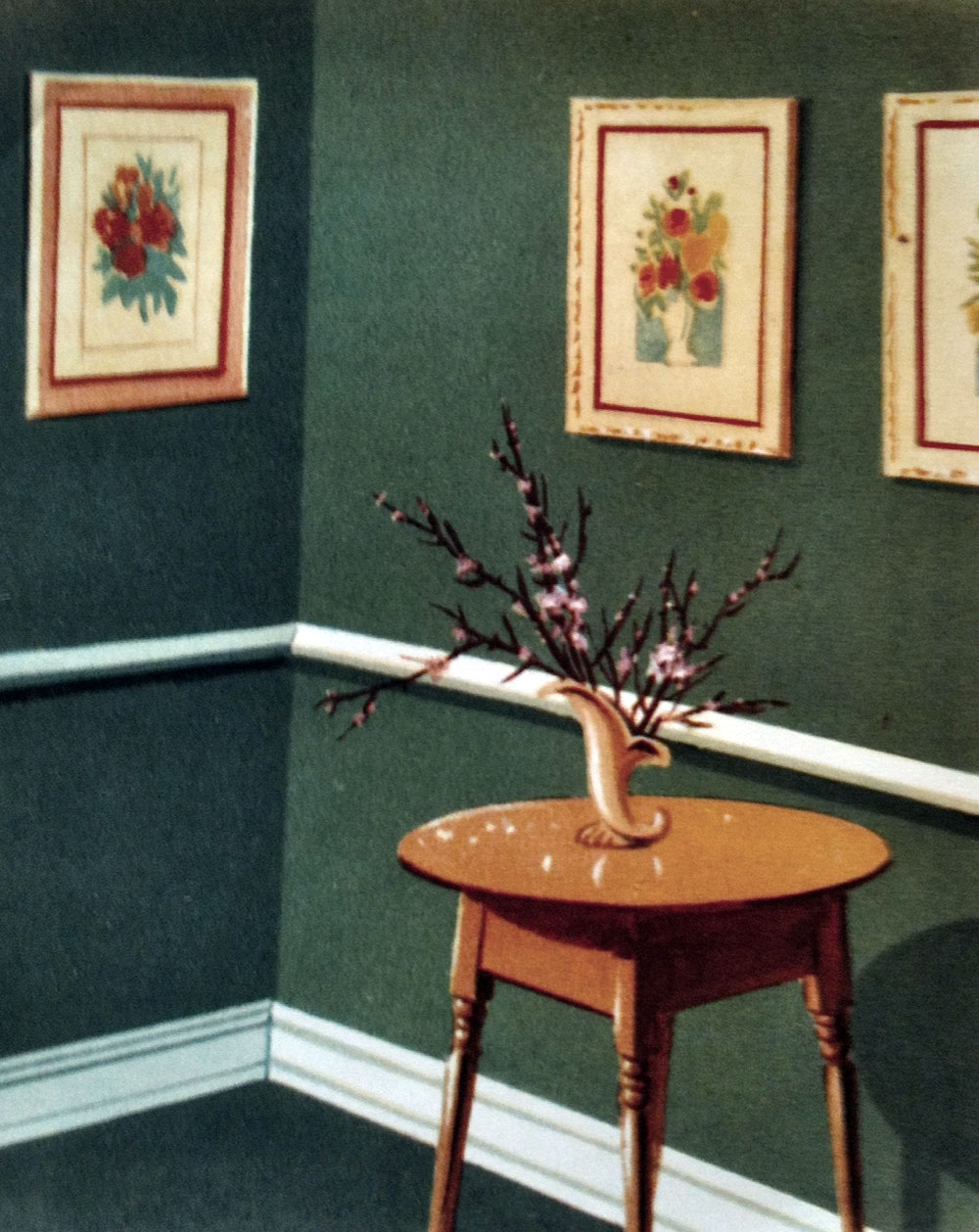
Janina Green (Australian born Germany, b. 1944) 'Interior' 1992


Janina Green (Australian born Germany, b. 1944)
Interior
1992
C Type print
38 x 30cm
Vintage print / edition of 5


Janina Green (Australian born Germany, b. 1944) 'Telephone' 1986 reprinted 2010


Janina Green (Australian born Germany, b. 1944)
Telephone
1986 reprinted 2010
Silver gelatin print on fibre based paper, tinted with coffee
58 x 48cm


Janina Green (Australian born Germany, b. 1944) 'Yellow vase' 1990 reprinted 2012


Janina Green (Australian born Germany, b. 1944)
Yellow vase
1990 reprinted 2012
Silver gelatin print on fibre based paper, hand tinted with yellow photo dye
85 x 70cm


Edmund Pearce Gallery

This gallery is now closed.

LIKE ART BLART ON FACEBOOK

Back to top

Public talk: ‘This is not my favourite photograph’ by Dr Marcus Bunyan part of ‘What makes a great photograph?’ at the Centre for Contemporary Photography (CCP), Fitzroy

Wednesday 5th December 2012


We were asked to choose our favourite photograph, one that we could nominate as a great photograph. I chose a slightly different take on proceedings.

Marcus


Many thankx to my fellow speakers for their talks and to Director of the Centre for Contemporary Photography Naomi Cass for inviting me to speak at a wonderful evening. Please click on the photographs for a larger version of the image.


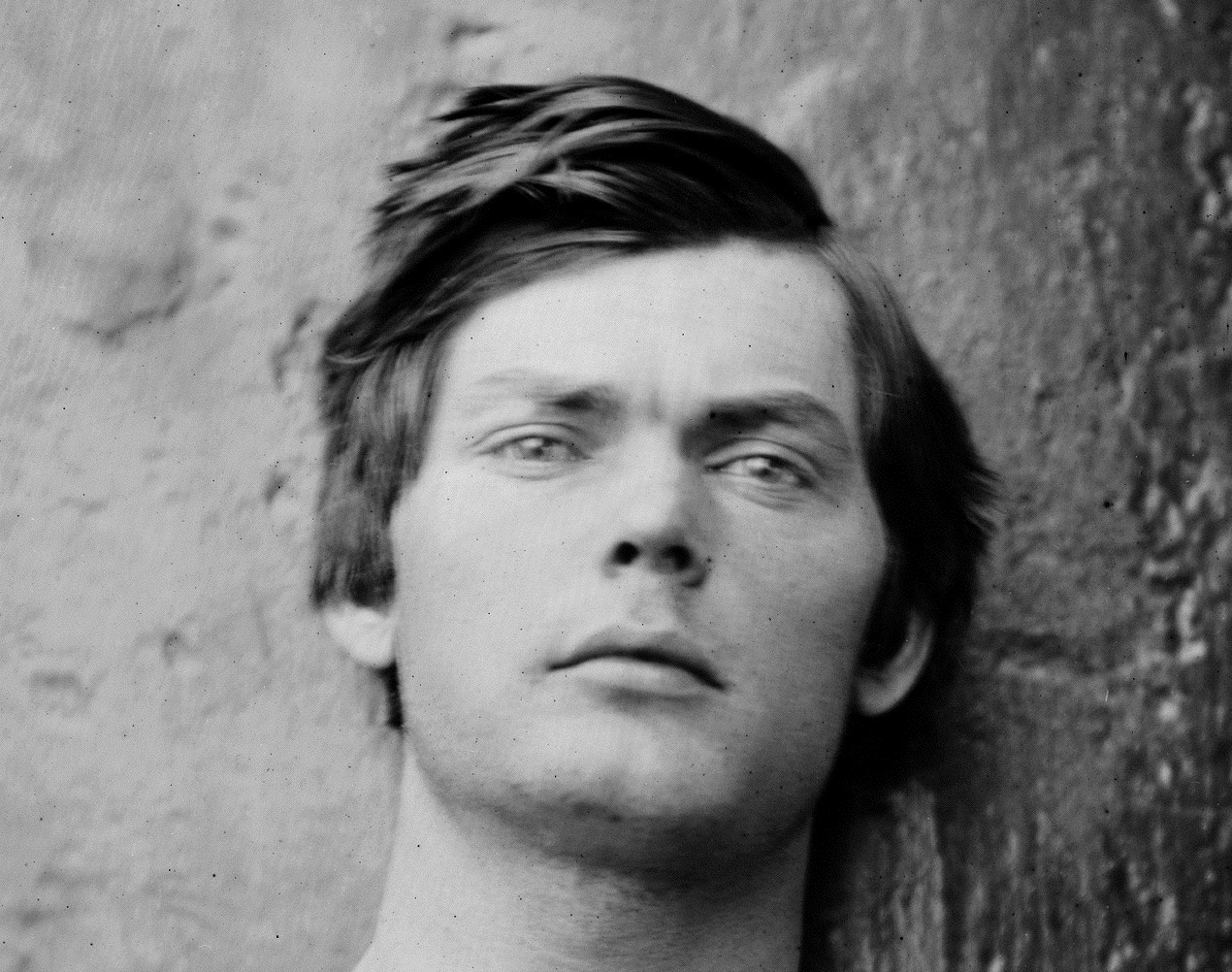
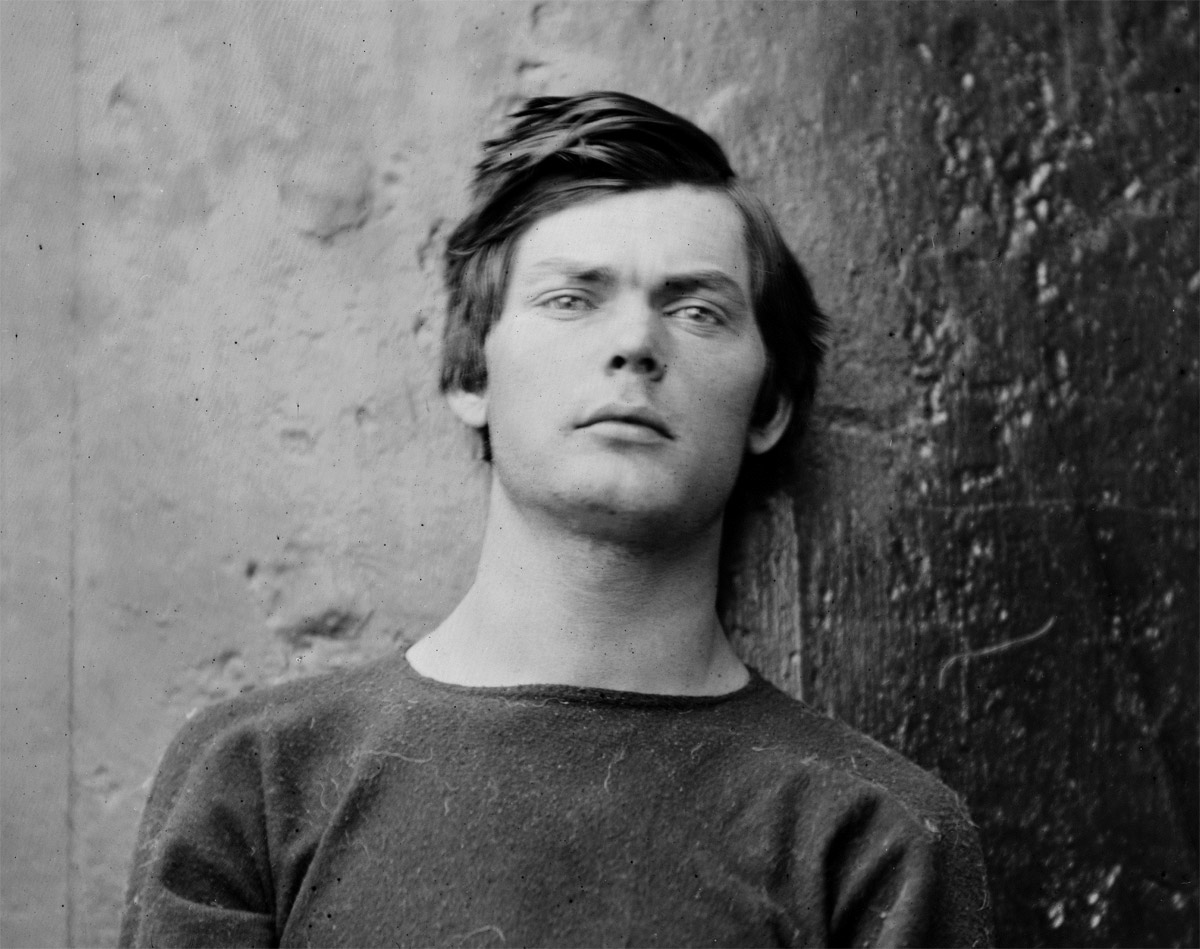
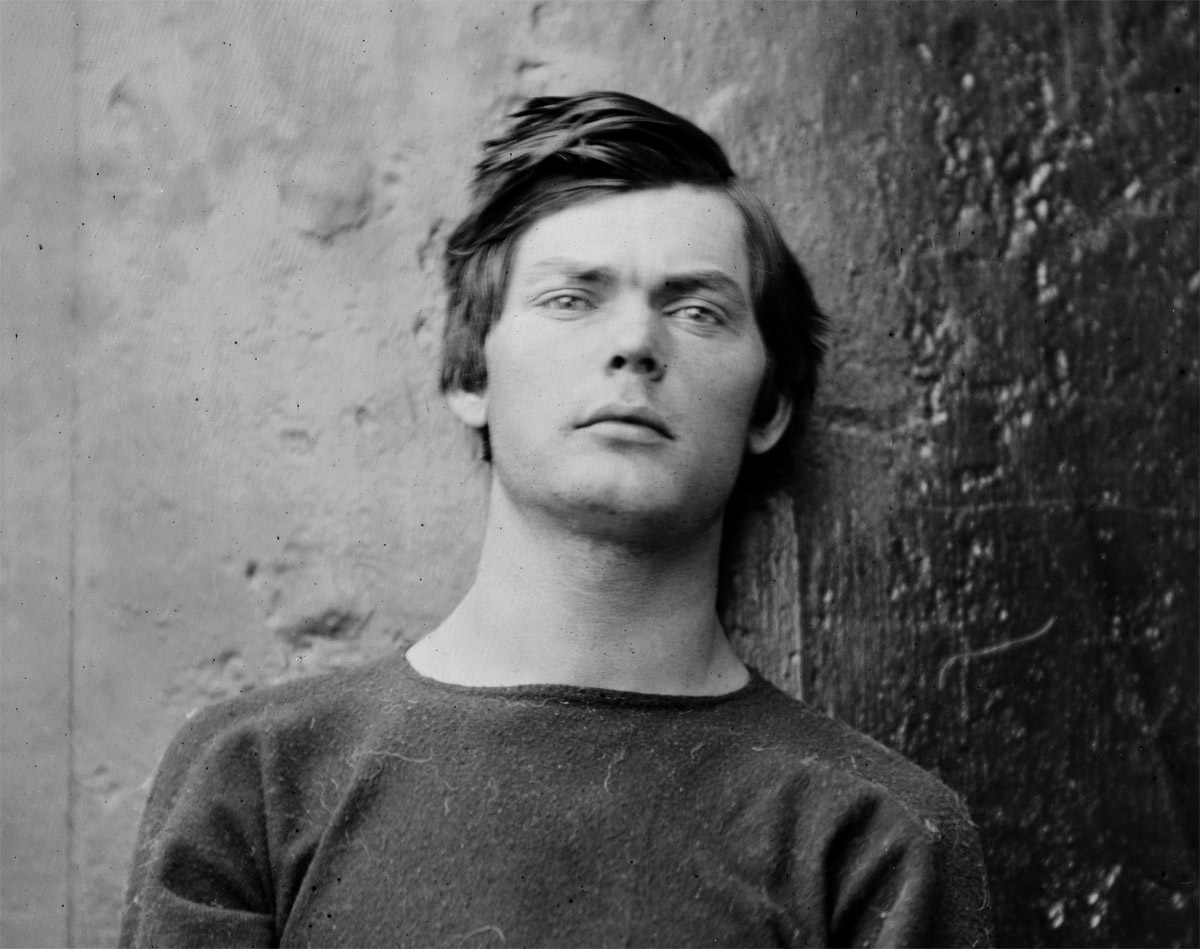
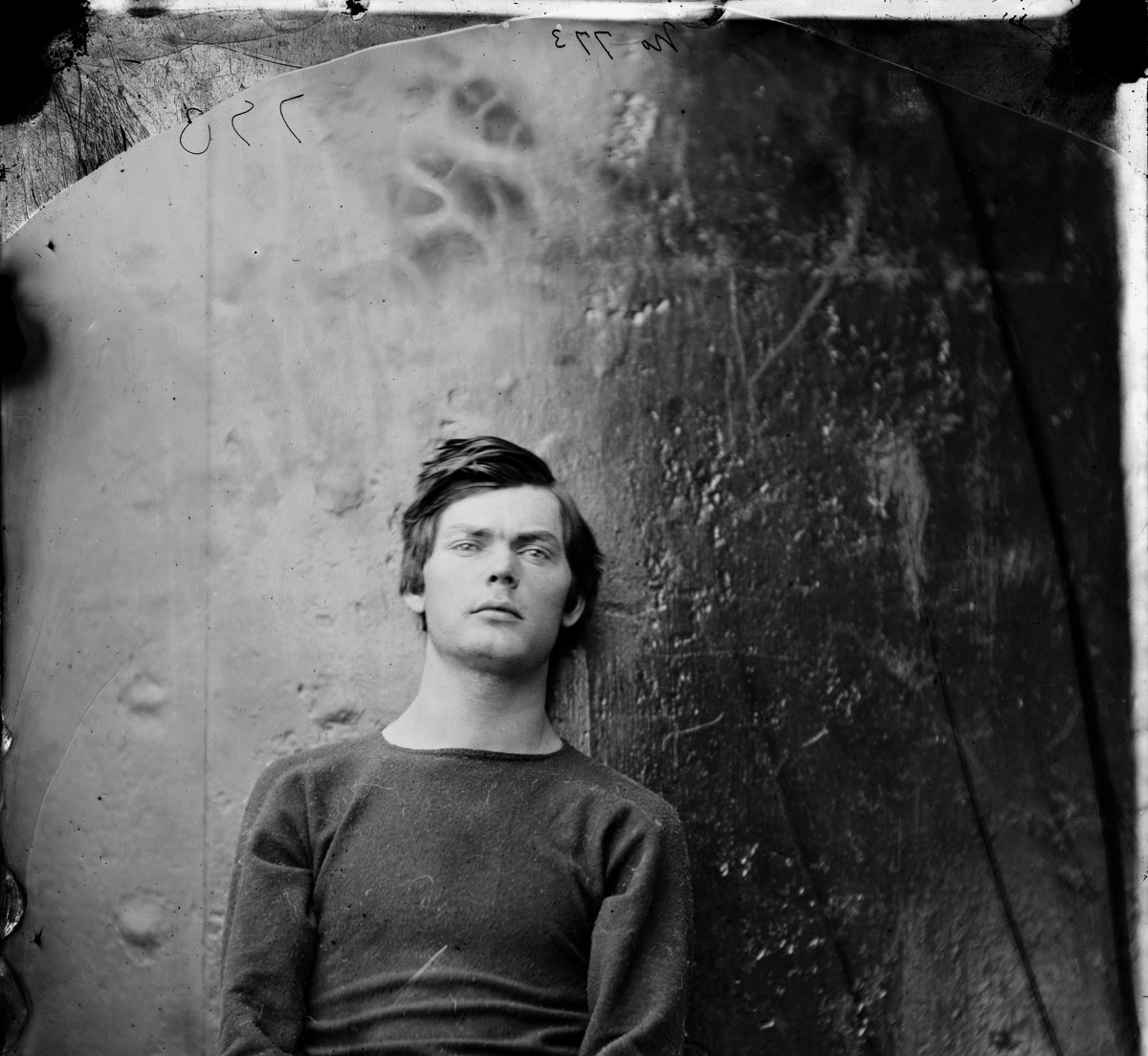
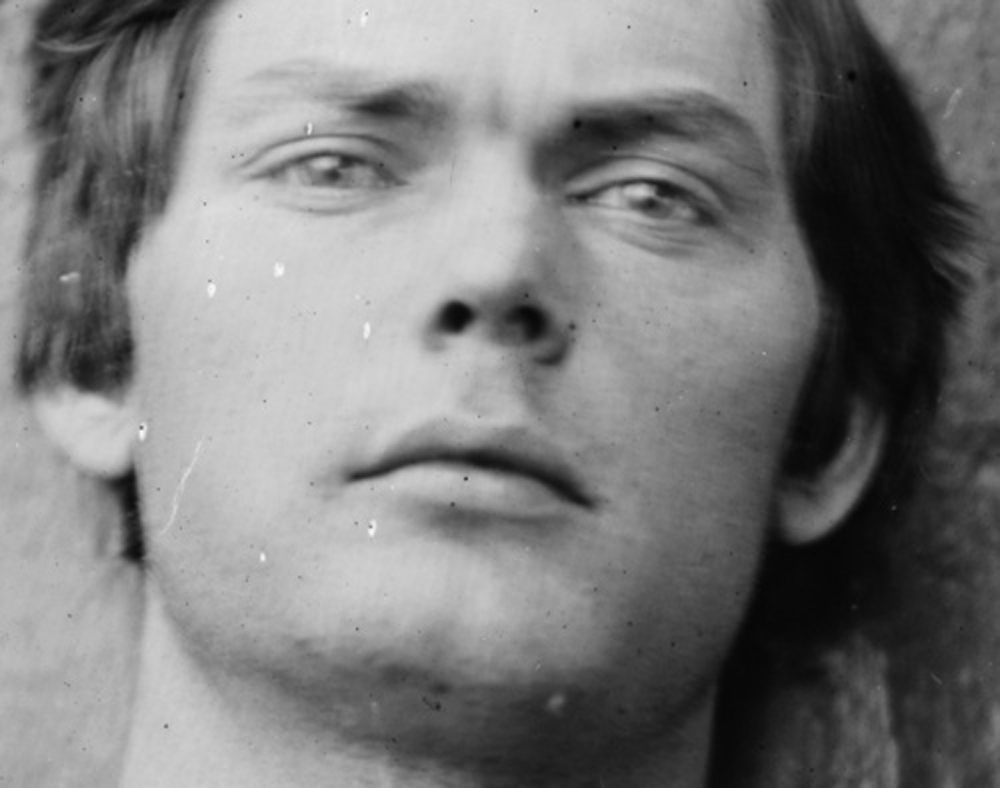
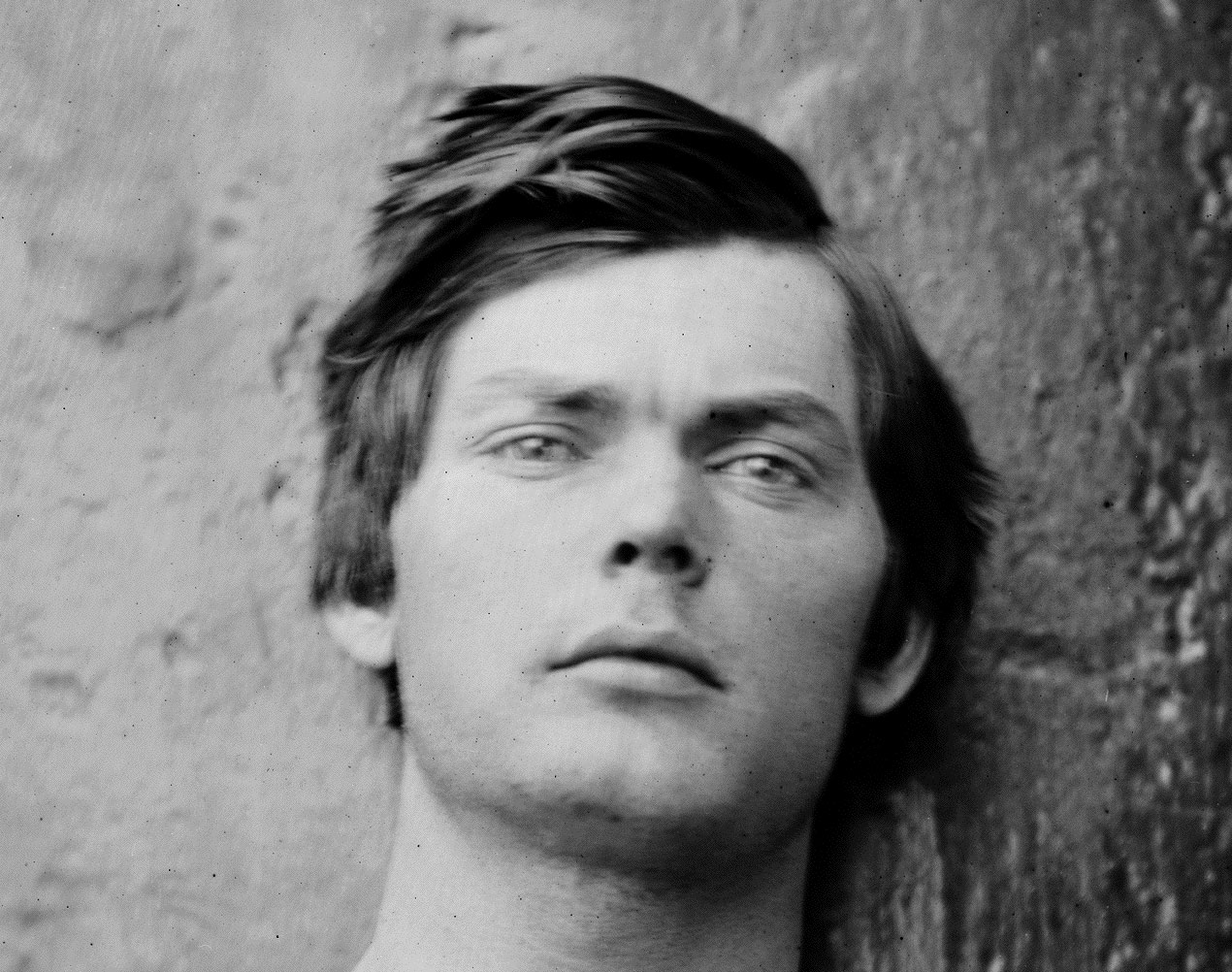
Alexander Gardner (American, 1821-1882) 'Lewis Paine' April 1865 (detail)


Alexander Gardner (American, 1821-1882) 'Lewis Paine' April 1865 (detail)


Alexander Gardner (American, 1821-1882) 'Lewis Paine' April 1865 (detail)


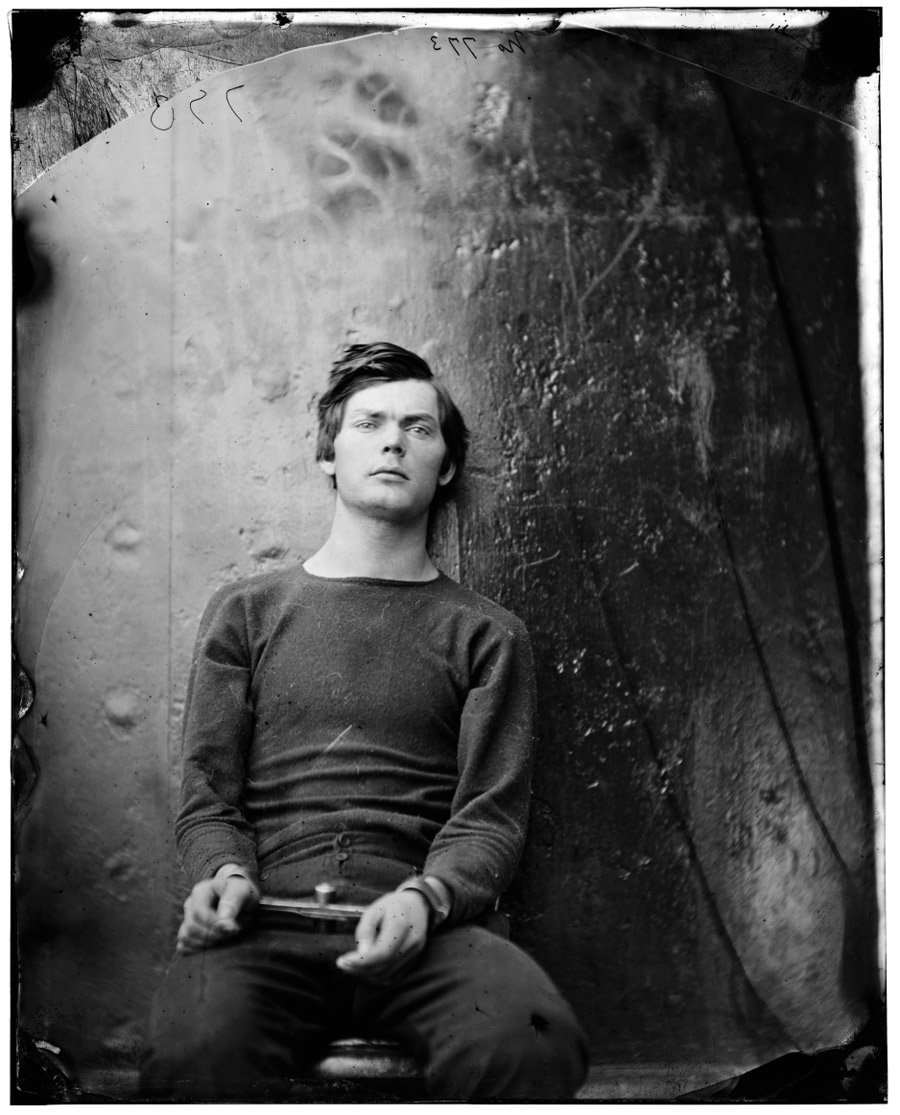
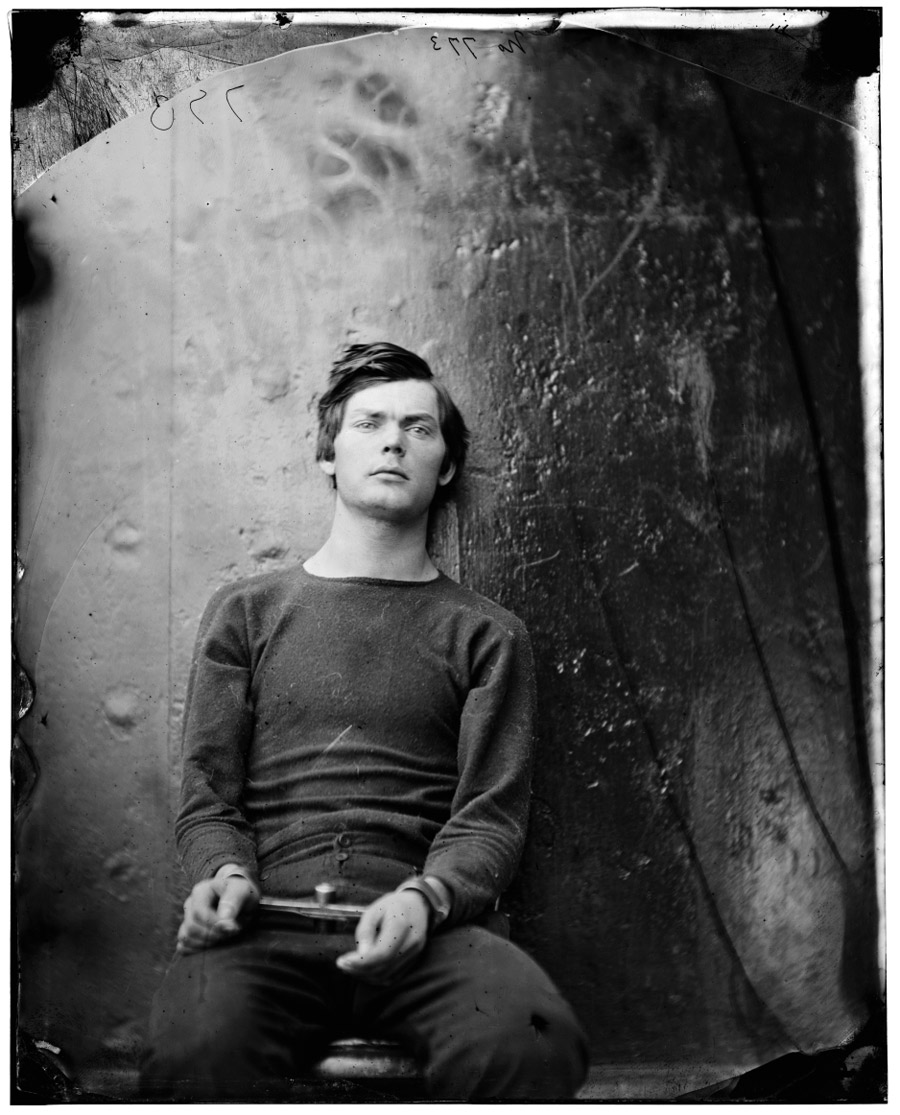
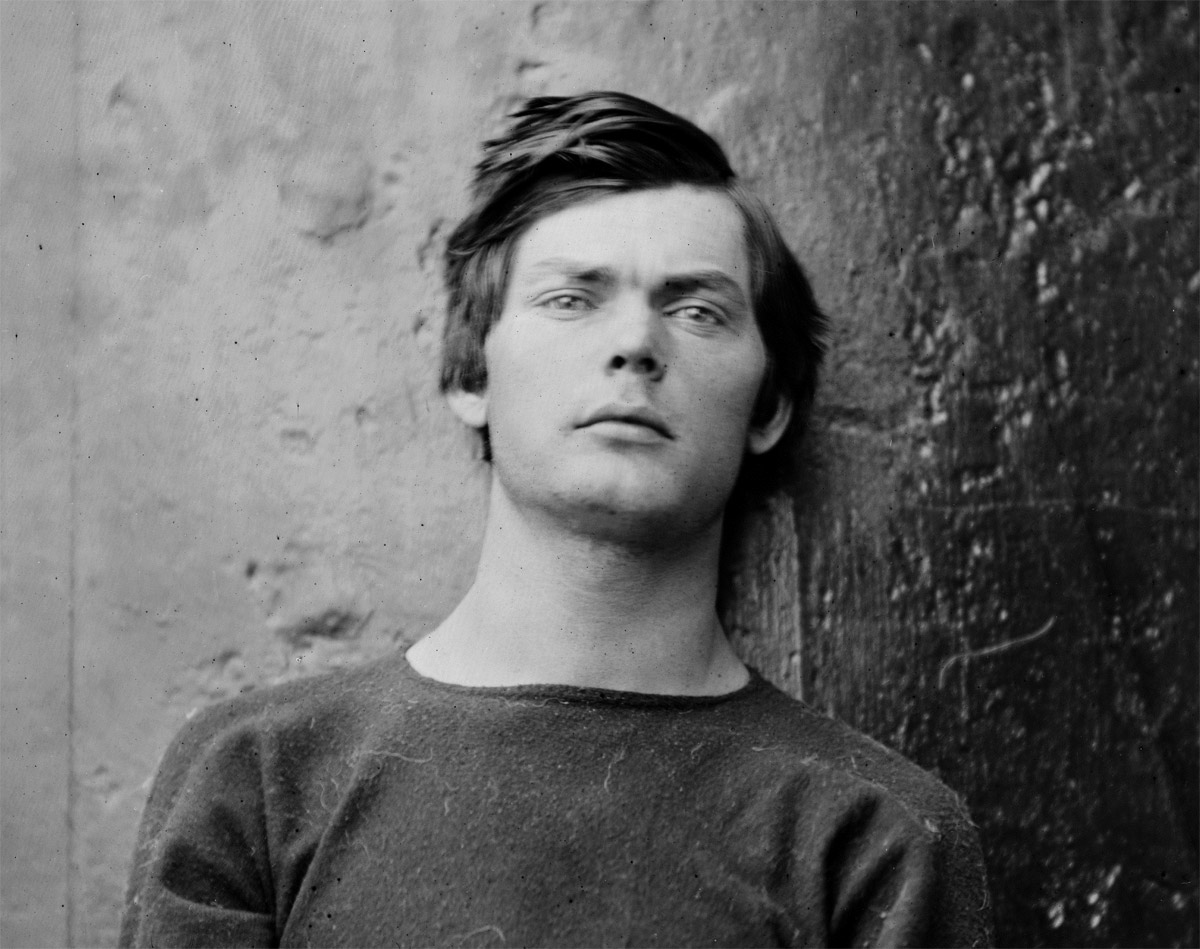
Alexander Gardner (American, 1821-1882) 'Lewis Paine' April 1865


Alexander Gardner (American, 1821-1882)
Lewis Paine
26th April, 1865
Albumen silver print from a Collodion glass plate negative


This is not my favourite photograph

A minute’s silence…


This is not my favourite photograph
Nor may it be a great photograph…
More interestingly to me, it is a remarkable photograph – one that you are able to make remarks on.
It is also a photograph that has haunted me for years.
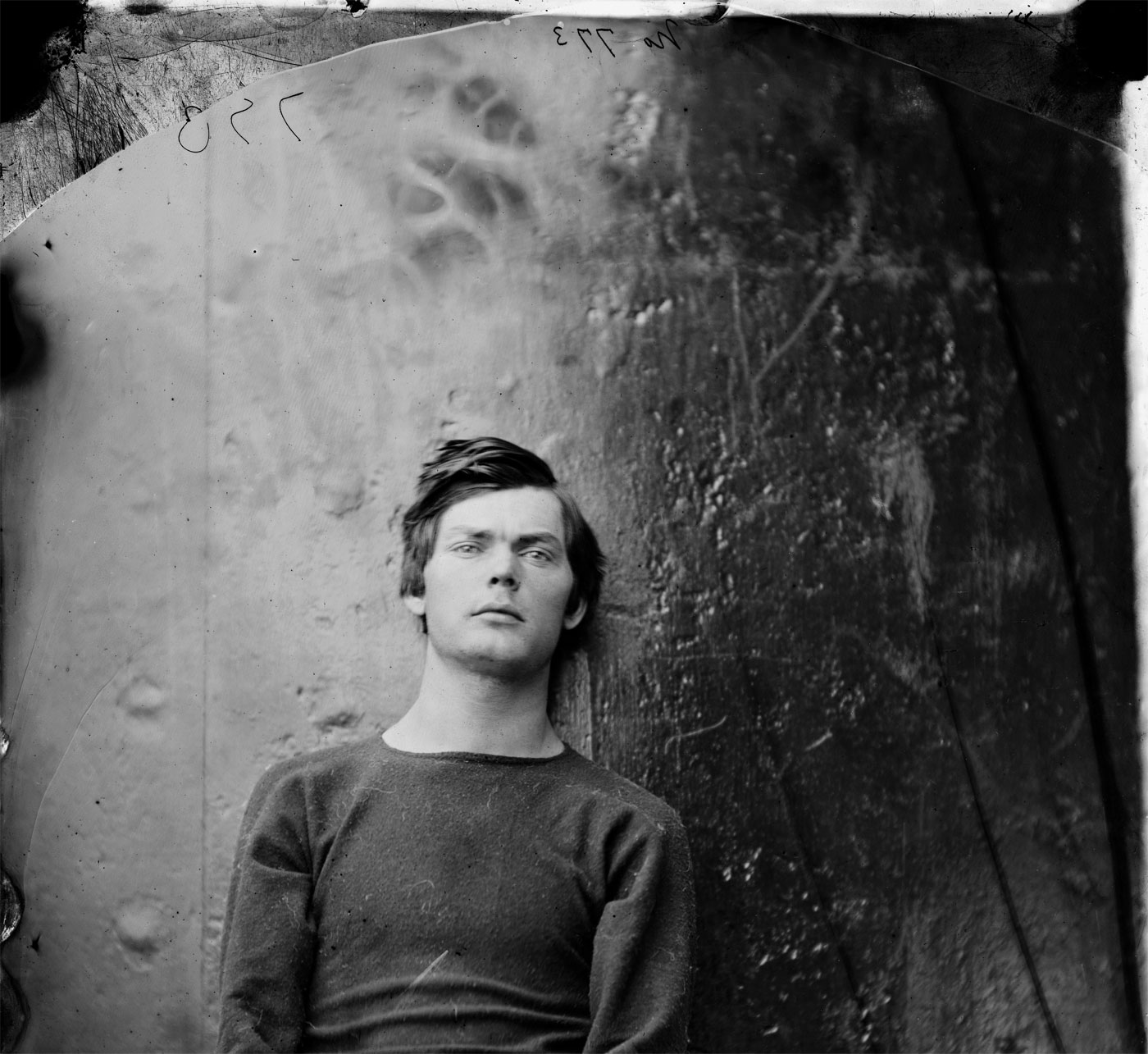
Taken by Alexander Gardner in April 1865, this photograph is a portrait of Lewis Thornton Powell (aka Lewis Payne or Paine) who was one of the conspirators in the assassination of Abraham Lincoln which had happened the same month. The photograph has a background of dark metal, and was taken on one of the ironclads U.S.S. Montauk or Saugus, where the conspirators were for a time confined. Paine was executed in July 1865 just eight short weeks later.
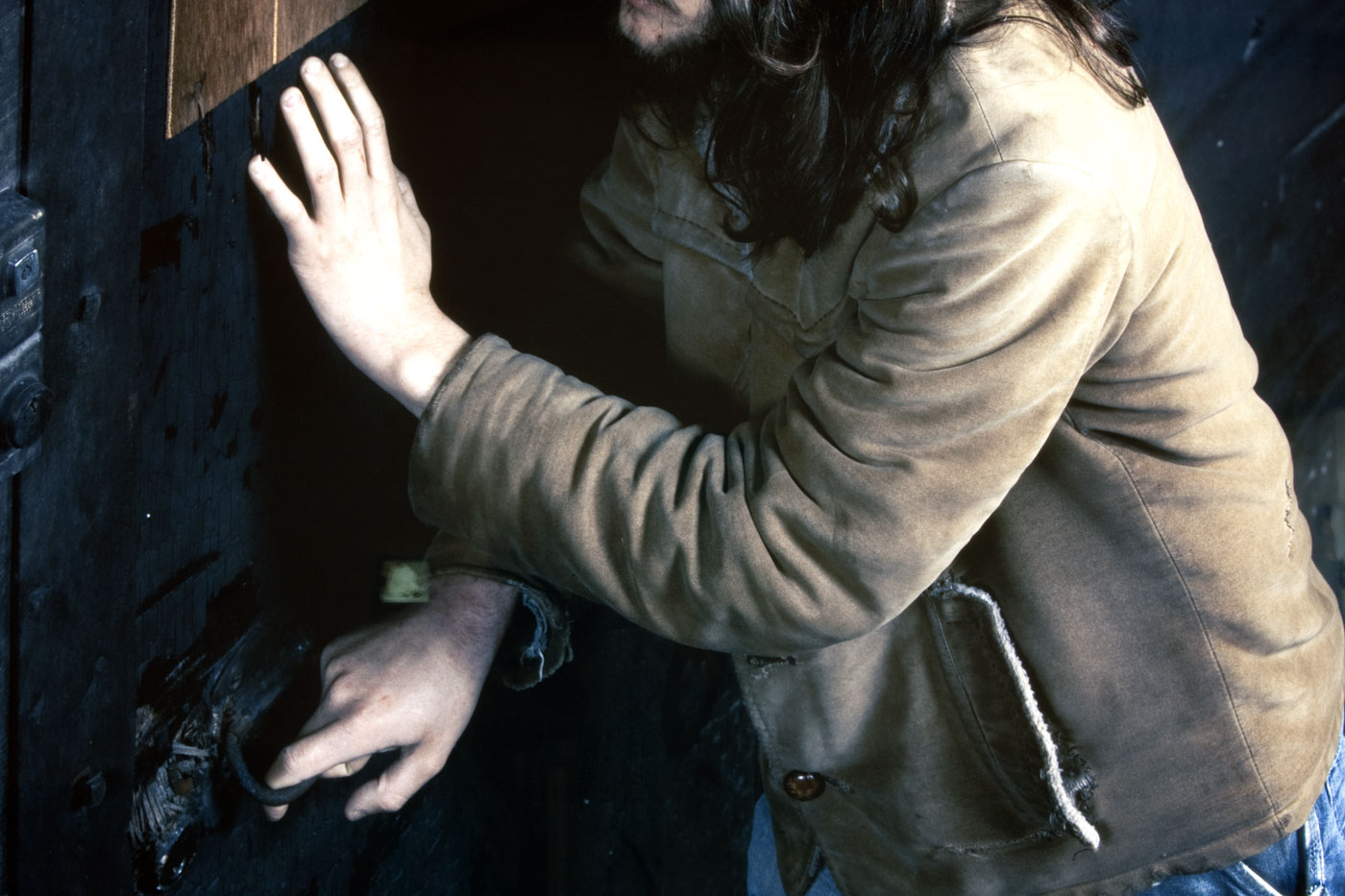
 

Alexander Gardner (American, 1821-1882) 'Lewis Paine' 26th April, 1865


Alexander Gardner (American, 1821-1882)
Three photographs of Lewis Paine
26th April, 1865


This is the triptych of photographs by Gardner in the form they are usually displayed, like a three-panel renaissance altar-piece. The left and right hand photographs were taken within minutes of each other, with the camera in the same position, whereas in the centre photograph the camera has been lowered to show more of the body, and the image has been cropped at the top. In the central plate the figure of Paine has been raised up in the frame – almost prematurely brought back to life by his placement.
The centre image is the only one where Paine stares directly at the camera. He surveys the viewer with a gaze I find enigmatic.


Alexander Gardner (American, 1821-1882) 'Lewis Paine' April 1865 (detail)


This is a very modern face, a very contemporary face. His hair is just like Justin Beiber’s.
Who brushed his hair across for this picture, and would it normally be this long, or has it just been ignored because of his fate?
He still has good muscle tone – has he been exercising in his cell?
And finally his clothing – is it navy issue, as his top appears to have been given to him, perhaps the coarse, navy blue wool of the Northern states.
 
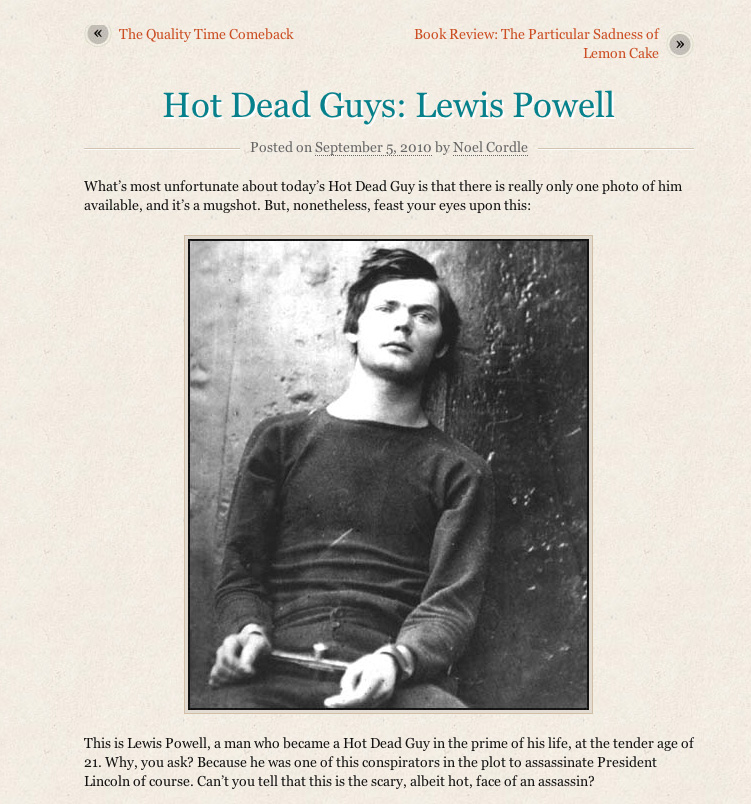
Noel Cordle. 'Hot Dead Guys: Lewis Powell' Posted on September 5th, 2010


Noel Cordle
Hot Dead Guys: Lewis Powell
Posted on September 5th, 2010
Mere Musings blog [Online] Cited 01/12/2012 no longer available online


There’s even a web page dedicated to him on “hot dead guys” where there’s that awkward moment when one of Lincoln’s conspirators is so sexy its ridiculous…
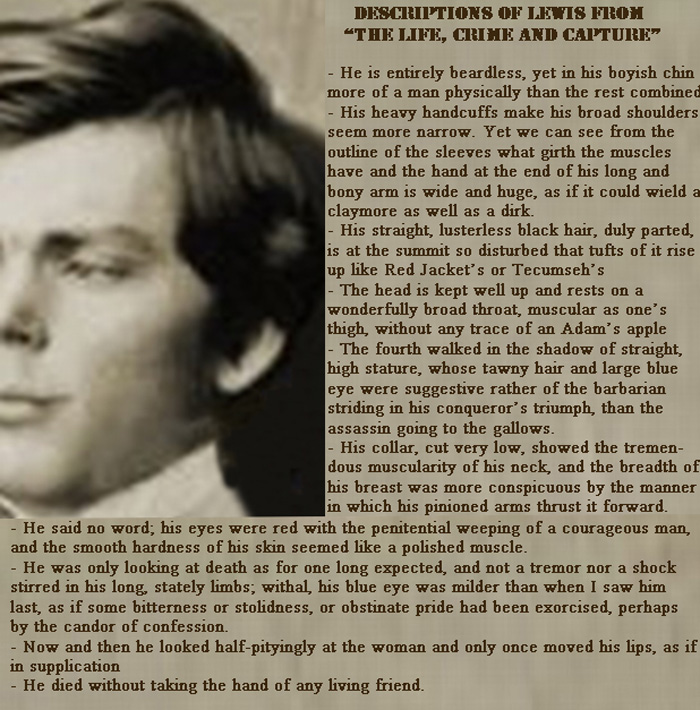
He wasn’t all bad. Biographers of Powell describe him as a quiet, introverted boy who enjoyed fishing and caring for sick and injured animals. Apparently, Lewis was an intelligent, sensitive, soul with great potential.


Descriptions of Lewis from "The Life, Crime and Capture"


Descriptions of Lewis from “The Life, Crime and Capture”


Alexander Gardner (American, 1821-1882) 'Lewis Paine' April 1865 (detail)

.

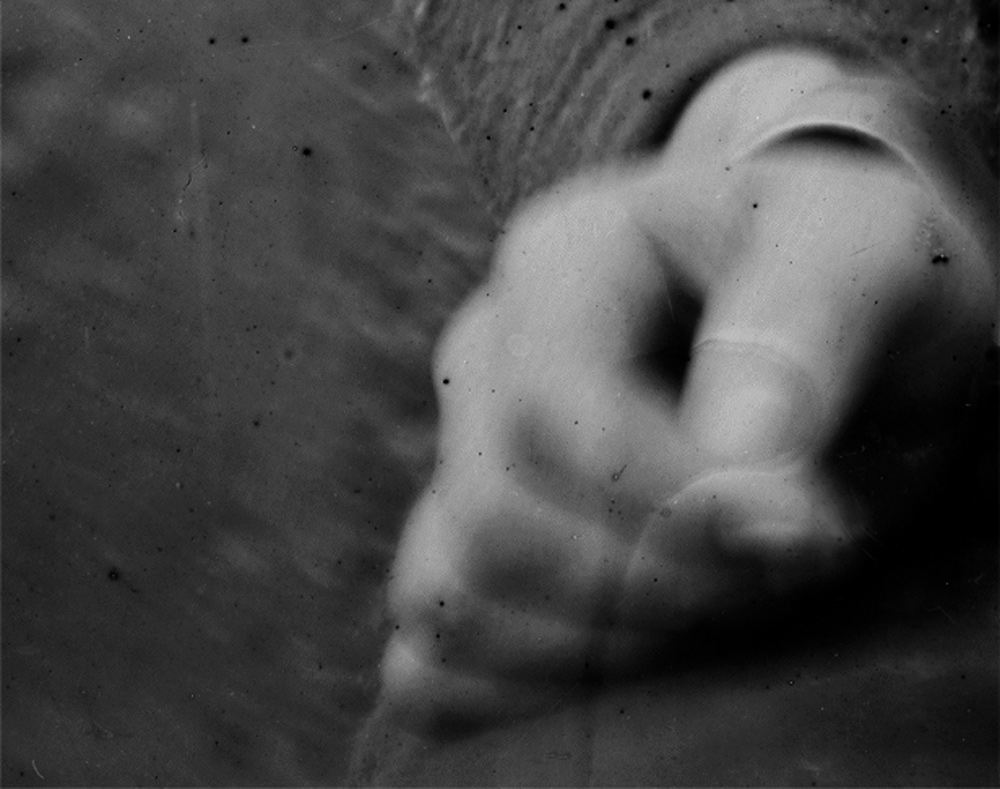
Alexander Gardner (American, 1821-1882) 'Lewis Paine' April 1865 (detail)


Alexander Gardner (American, 1821-1882)
Lewis Paine (detail)
26th April, 1865
Albumen silver print from a Collodion glass plate negative


Could we say that he is left-handed given the different size of his fingers (?)


Roland Barthes (French, 1915-1980) 'Camera Lucida (La Chambre claire)' 1980


Roland Barthes (French, 1915-1980)
Camera Lucida (La Chambre claire)
1980


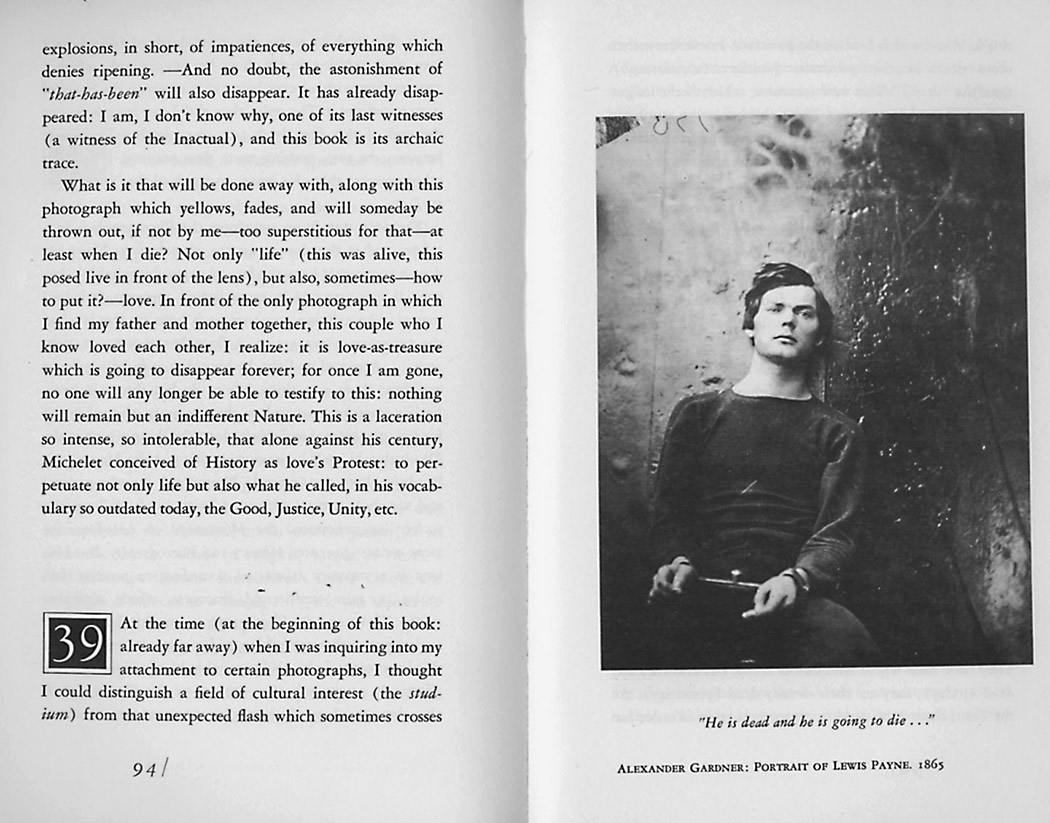
Roland Barthes in his seminal work Camera Lucida said in Section 39: “He is dead and he is going to die…
“The photograph is handsome, as is the boy: that is the studium. But the punctum is: he is going to die. I read at the same time: this will be and this has been; I observe with horror an anterior future of which death is the stake. By giving me the absolute past of the pose, the photograph tells me death in the future. What pricks me is the discovery of this equivalence.”


Alexander Gardner (American, 1821-1882) 'Lewis Paine' April 1865 (detail)


If we were to place this image within the metaphysical school of photography which peaked with Paul Caponigro and Minor White we could say:
Hovering above his head, has his spirit already begun to leave his body?


Alexander Gardner (American, 1821-1882) 'Lewis Paine' April 1865


One reading of his gaze is that he is really interested in what the photographer is doing – almost the gaze of an apprentice wanting to apply these skills in the future.
Given his fate is he insane because of his interest?
What is really going on in his mind – what is his perspective?
Another reading could be as looking out to the future in the hope of finding that he will be judged in another way.
And another is the immediacy of his gaze – it is a gaze that is happening now!
The other thing that I find quite mysterious is the distance of the photographer from the subject.
Was it fear that stopped him getting any closer or are there deck fittings we cannot see that prevented his approach?


Alexander Gardner (American, 1821-1882) 'Lewis Paine' April 1865 (detail)


What brought Paine to this place?

Michel Foucault calls the methods and techniques through which human beings constitute themselves, “Technologies of the self.” Foucault argued that we as subjects are perpetually engaged in processes whereby we define and produce our own ethical self-understanding. According to Foucault, technologies of the self are the forms of knowledge and strategies that “permit individuals to effect by their own means or with the help of others a certain number of operations on their own bodies and souls, thoughts, conduct, and way of being, so as to transform themselves in order to attain a certain state of immortality.”1
As we look into his eyes he knows that we know he is going to die, has already died but the intensity of that knowledge is brought into present time. What Paine emanates is a form of i-mortality.
I wonder, did Gardner ever show him the finished photographs before he died?


Alexander Gardner (American, 1821-1882) 'Lewis Paine' April 1865 (detail)


This is Barthes anterior future, a moment where truth is interpreted in the mind of the photographer, not out there but in here [points to head and heart], where past, present and future coalesce into single point in time – his death and our death are connected through his gaze, the knowledge of our discontinuity. Eons contracted into an eternal moment.
In this moment in time, what we are doing is we are making a list about the human condition when we talk about something that is remarkable. We are moving towards a language that defines the human condition…


Alexander Gardner (American, 1821-1882) 'Lewis Paine' April 1865 (detail)


But ultimately language can never fully describe the human condition, much as it may try… and this is why this photograph is remarkable, because it is ineffable, unknowable.
This photograph inhabits you, it haunts you like few others.
Early Wittgenstein described a world of facts pictured by thoughts. he said, “Don’t Think, But Look!”
I would add “Don’t think, but feel and look”

This photograph is a memoriam to a young man and his present death. As such it is a REMARKABLE photograph that haunts us all.

Dr Marcus Bunyan
December 2012


1/ Foucault, Michel. “Technologies of the self,” in L. H. Martin, H. Gutman and P. H. Hutton (eds.). Technologies of the self. Amherst: University of Massachusetts Press, 1988, p. 18.


Postscript

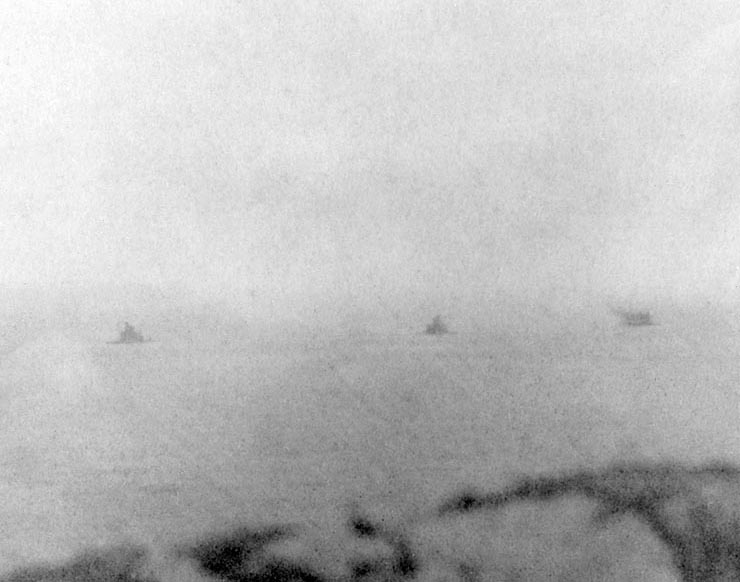
George Cook (American, 1819-1902) 'Union ironclads firing on Fort Moultrie, S.C.,' 8th September 1863


George Cook (American, 1819-1902)
Union ironclads firing on Fort Moultrie, S.C.,
8th September 1863
Photo courtesy of the Cook Collection, Valentine Richmond History


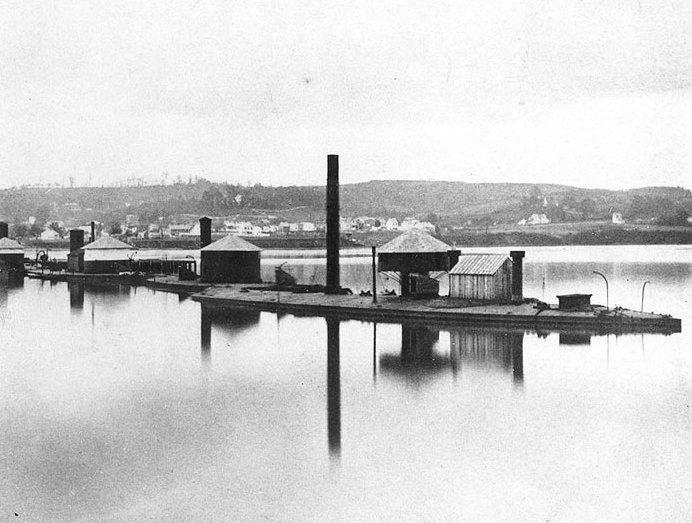
George Cook’s photograph of Union ironclads firing on Fort Moultrie, S.C., believed to be the world’s first combat photograph. Monitors engage Confederate batteries on Sullivan’s Island, Charleston, South Carolina. Photographed from one of the Confederate emplacements, the ships are identified as (from left to right): Weehawken, Montauk and Passaic. The monitor on the right appears to be firing its guns. Date is given as 8 September 1863, when other U.S. Navy ships were providing cover for Weehawken, which had gone aground on the previous day. She was refloated on the 8th after receiving heavy gunfire from the Confederate fortifications.


Kilburn Brothers (Edward and Benjamin Kilburn, American) 'Four monitors laid up in the Anacostia River, off the Washington Navy Yard' c. 1866


Kilburn Brothers (Edward and Benjamin Kilburn, American)
Four monitors laid up in the Anacostia River, off the Washington Navy Yard
c. 1866
Ships are (from left to right): USS Mahopac, USS Saugus, USS Montauk (probably), and either USS Casco or USS Chimo
Photo mounted on a stereograph card, marked: “Photographed and published by Kilburn Brothers, Littleton, N.H.”


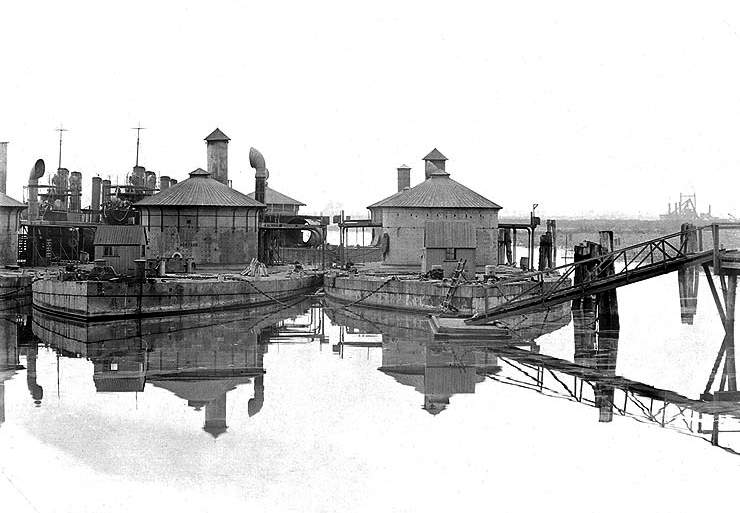
Anonymous photographer. ''Montauk' at left, and 'Lehigh' at right, laid up at the Philadelphia Navy Yard, Pennsylvania' c. late 1902 or early 1903
 

Anonymous photographer
‘Montauk’ at left, and ‘Lehigh’ at right, laid up at the Philadelphia Navy Yard, Pennsylvania
c. late 1902 or early 1903
U.S. Naval Historical Center photograph


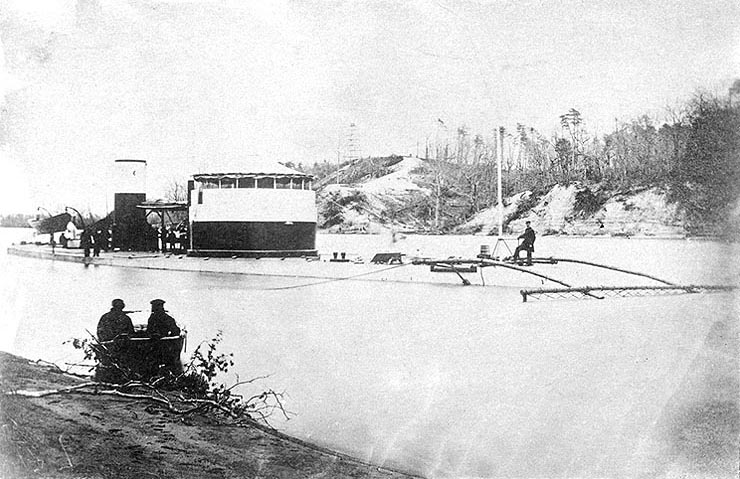
Anonymous photographer. 'Saugus, in Trent's Reach on the James River, Virginia' c. early 1865


Anonymous photographer
Saugus, in Trent’s Reach on the James River, Virginia
c. early 1865
Note the mine sweeping “rake” attached to her bow
U.S. Naval Historical Center photograph


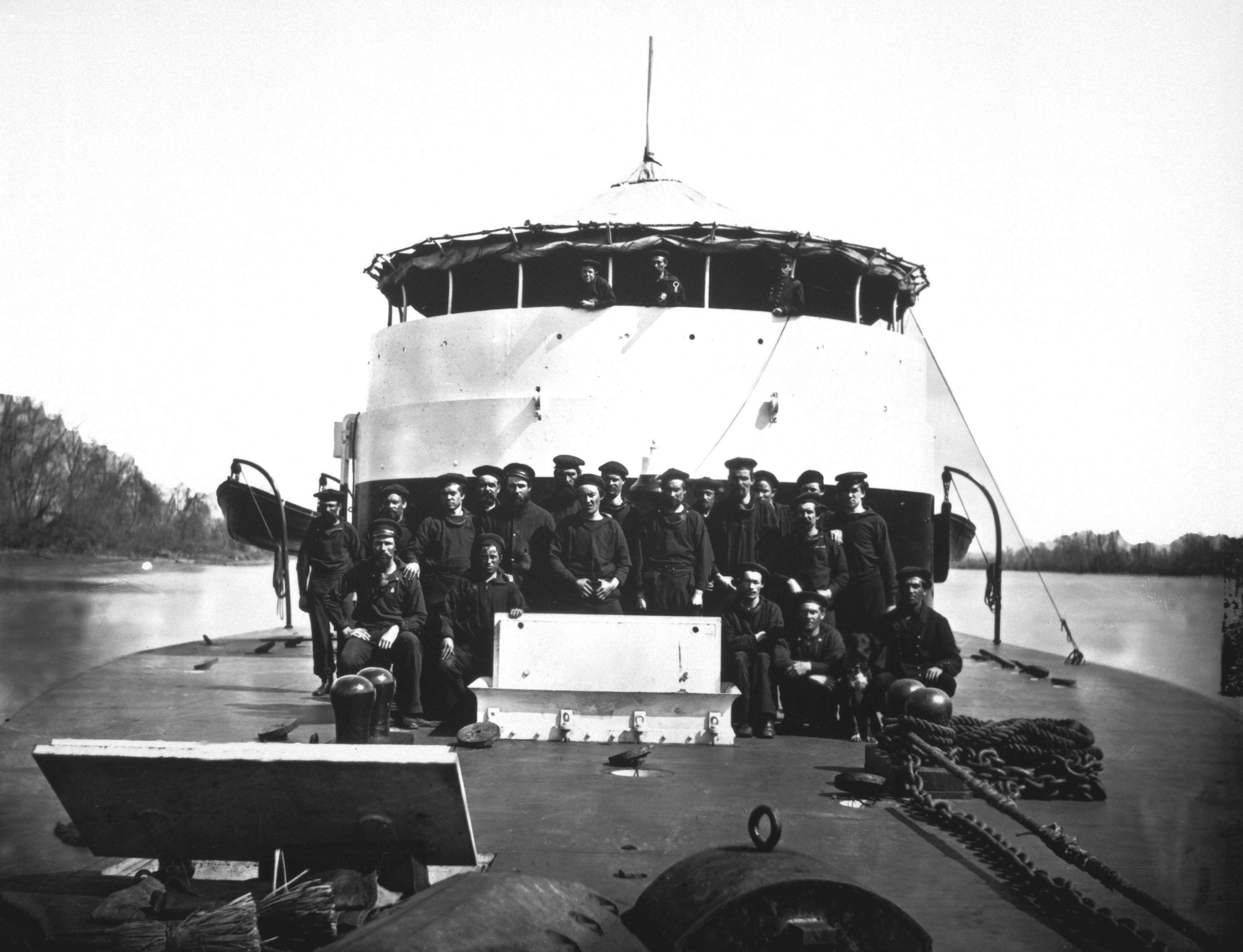
Anonymous photographer. 'Officers pose on deck of the Saugus, in front of the gun turret, probably while the ship was serving on the James River, Virginia' c. early 1865


Anonymous photographer
Officers pose on deck of the Saugus, in front of the gun turret, probably while the ship was serving on the James River, Virginia
c. early 1865
Note ship’s bell and other details of the turret and deck fittings
U.S. Naval Historical Center photograph


Centre for Contemporary Photography

No permanent exhibition space at the moment

Centre for Contemporary Photography website

LIKE ART BLART ON FACEBOOK

Back to top

Public talk: ‘What makes a great photograph?’ at the Centre for Contemporary Photography (CCP), Fitzroy

Wednesday 5 December 6.00pm – 7.30pm


CCP Public Program


Entry by gold coin donation
Bookings not required

Join CCP to reflect on the inscrutable and relevant question: What makes a great photograph? 

As part of the 2012 Kodak Salon, CCP presents an evening of confident and wildly divergent points of view on this topic.
A photography editor, a couple of curators, designers, a creative director, writers and artists will reveal their passionate choices on the night!

Speakers include: Serena Bentley, Marcus Bunyan, Helen Frajman, Natalie King, Bronek Kozka, Tin and Ed, Tom Mosby, and John Waricker. Chaired by Naomi Cass, CCP Director.


Centre for Contemporary Photography

No permanent exhibition space at the moment

Centre for Contemporary Photography website

LIKE ART BLART ON FACEBOOK

Back to top

Exhibition: ‘Jeff Wall Photographs’ at The Ian Potter Centre: National Gallery of Victoria Australia, Melbourne

Exhibition dates: 30th November 2012 – 17th March 2013


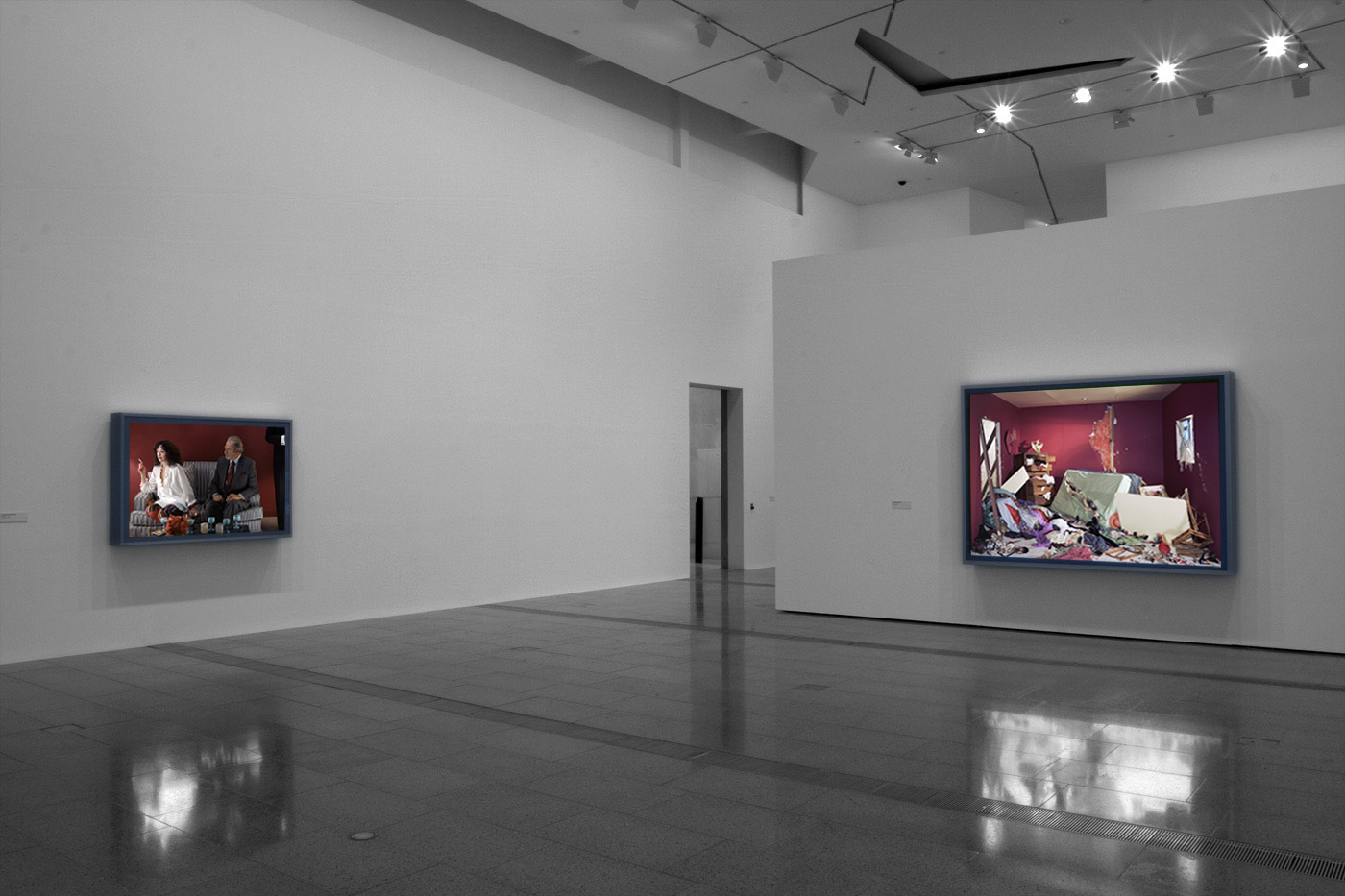
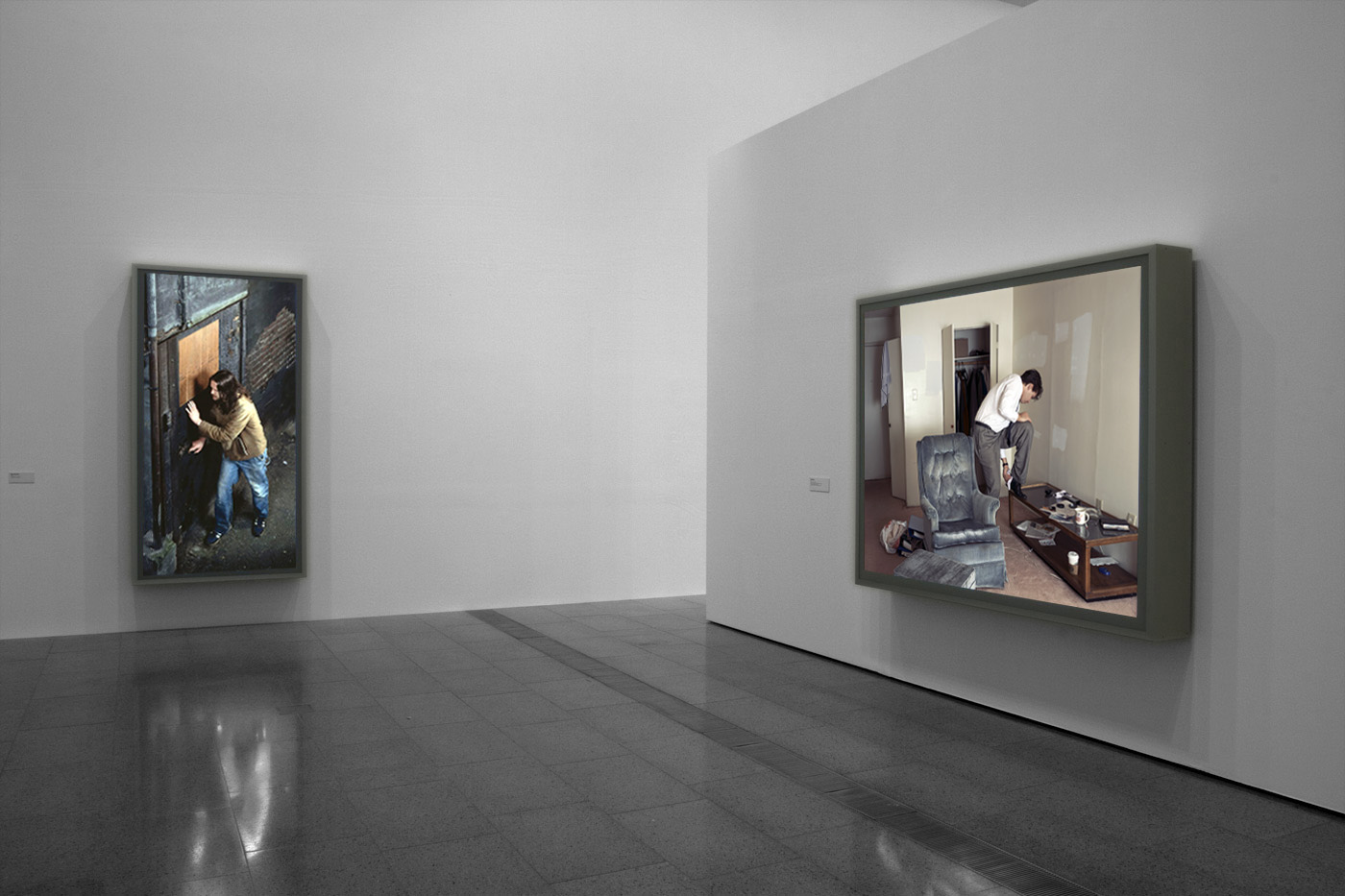
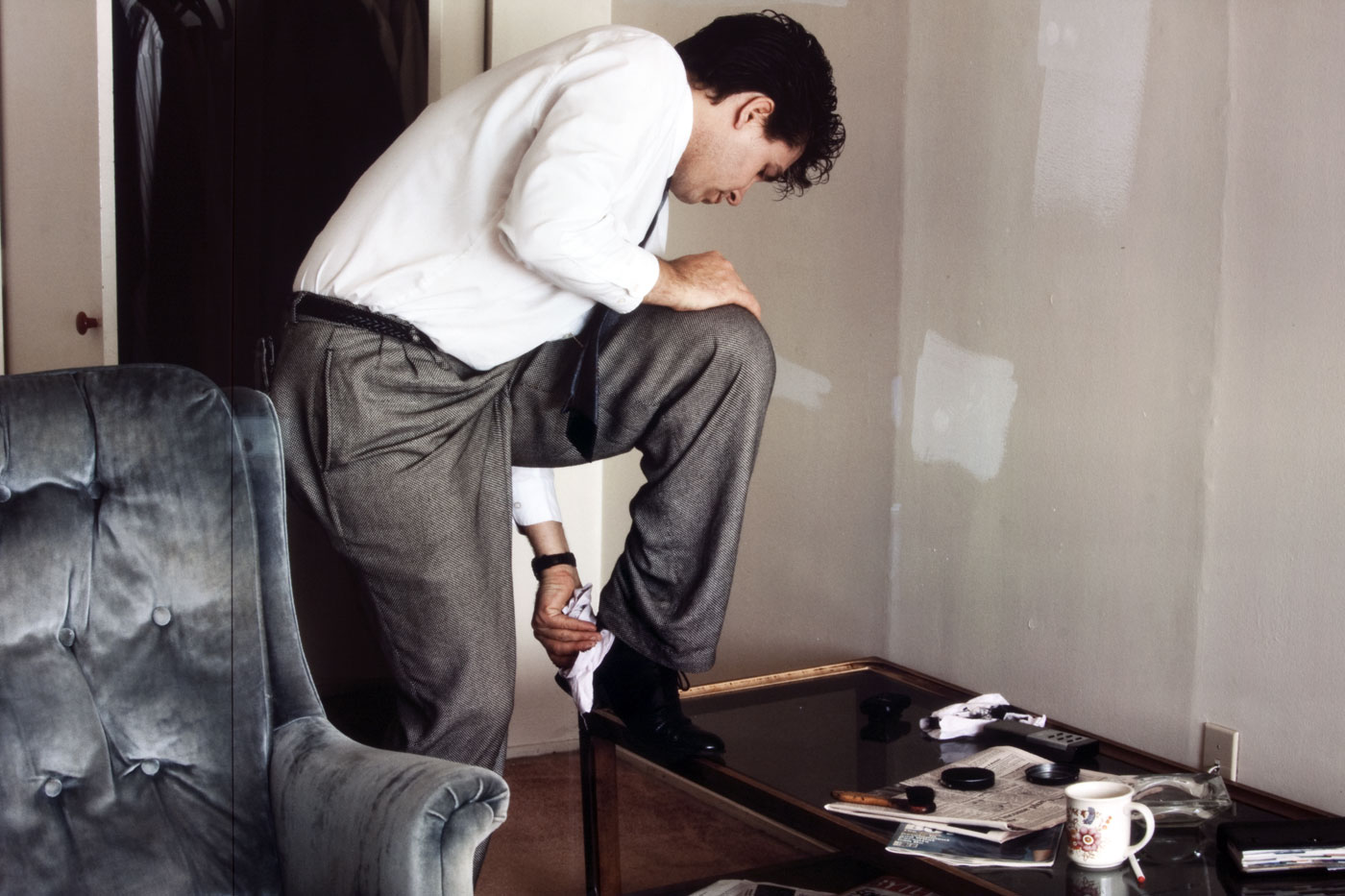
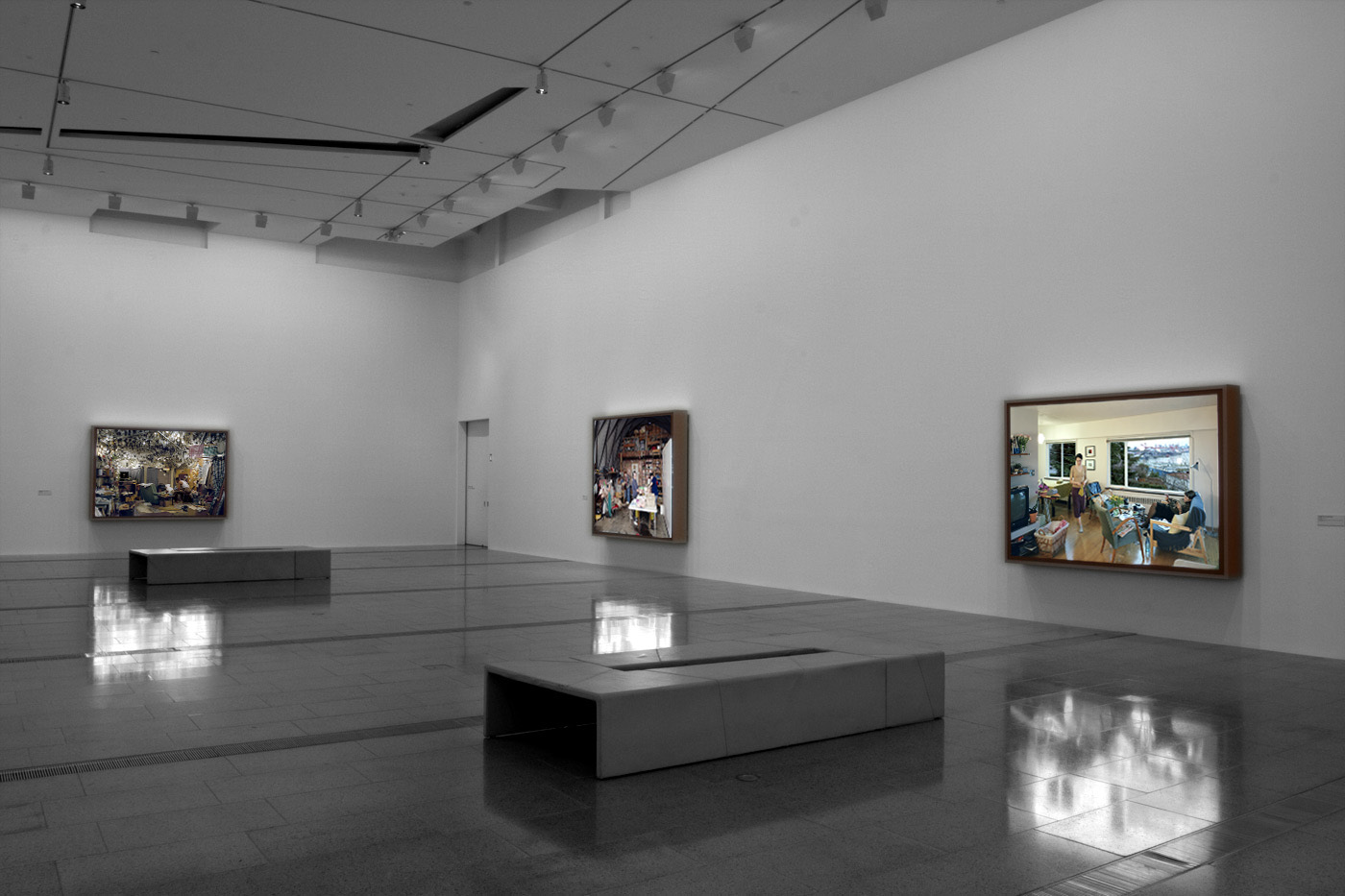
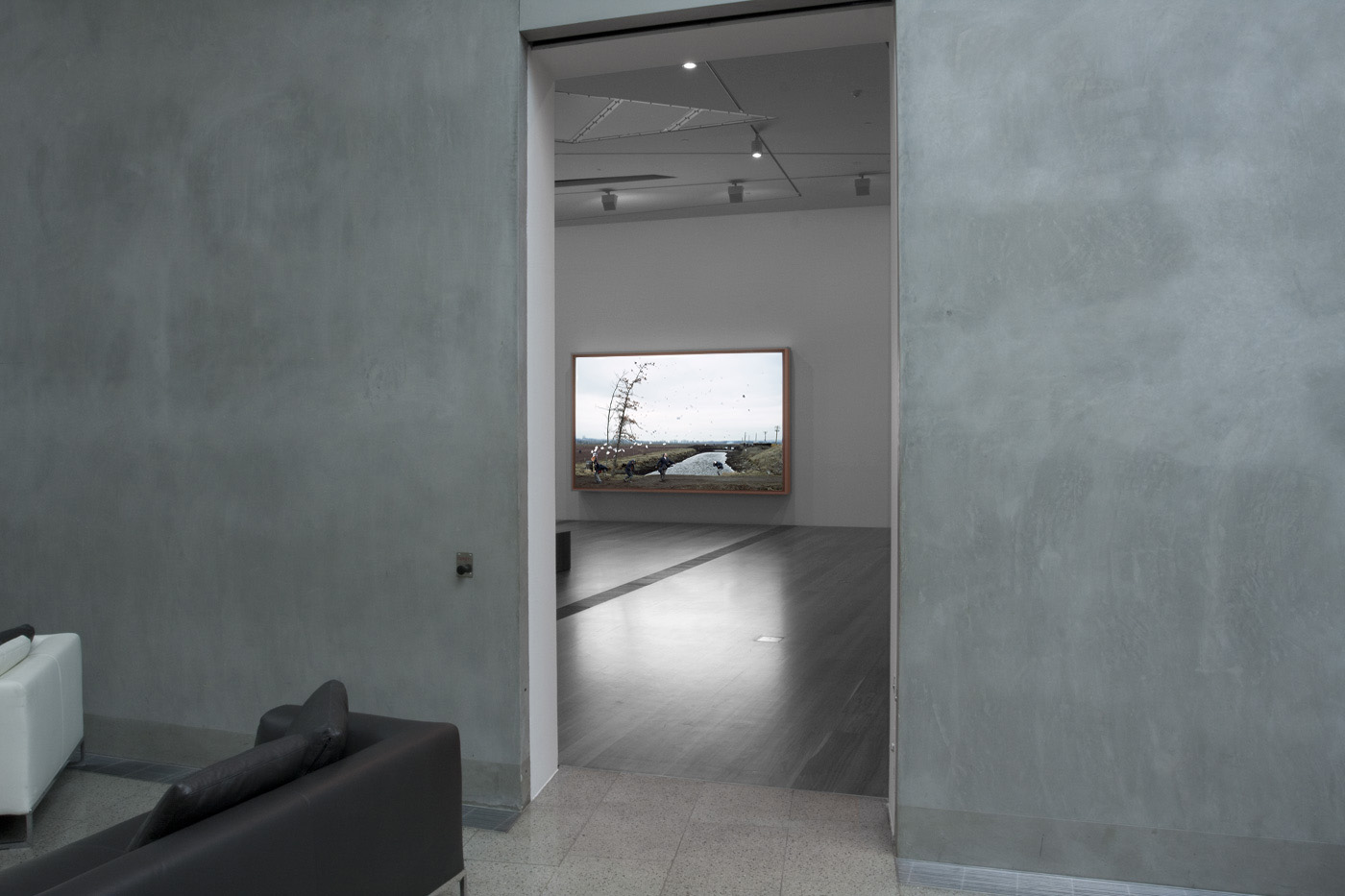
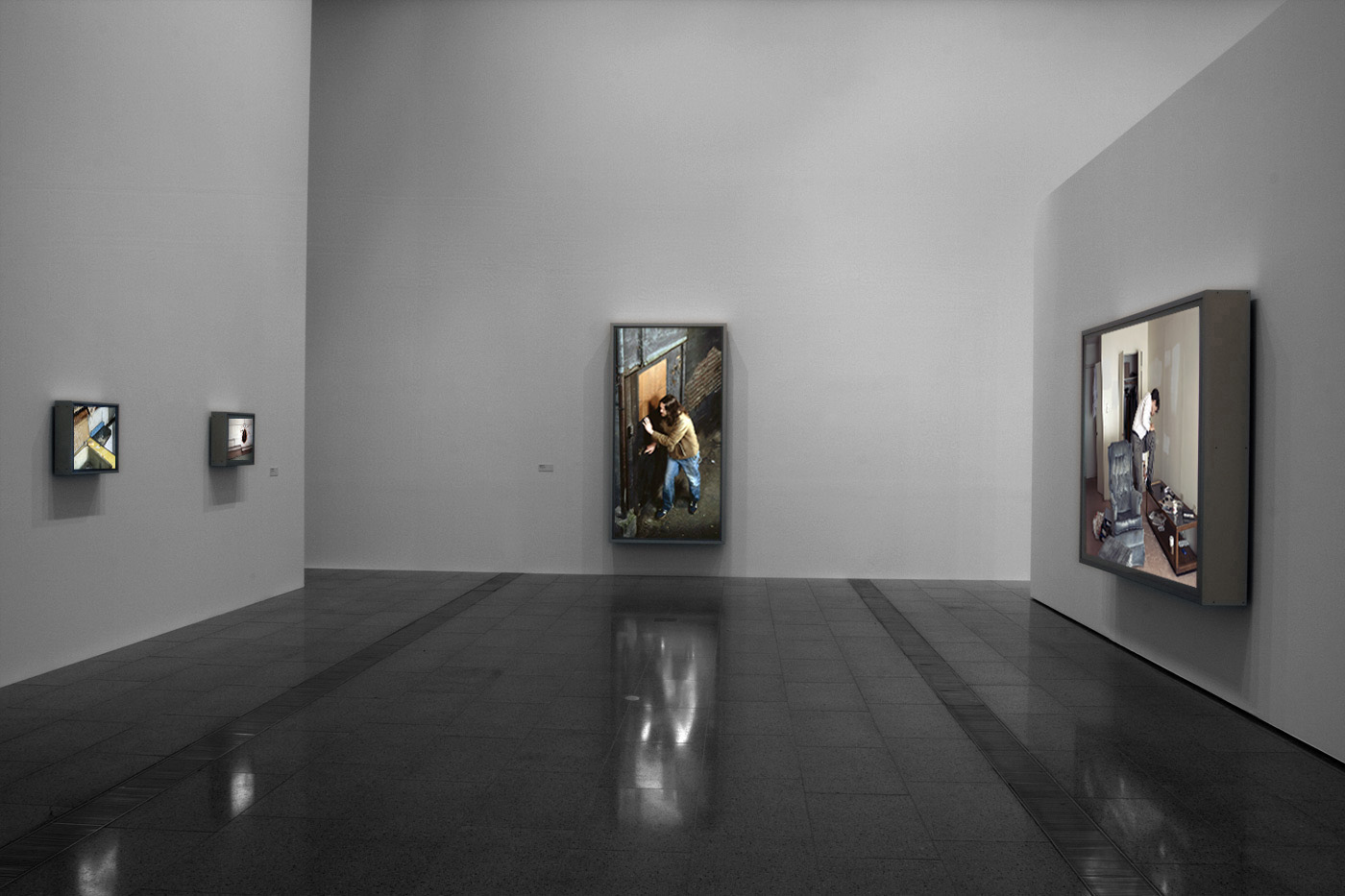
Installation view of 'Jeff Wall Photographs' at NGV Australia showing, at right, 'The Destroyed Room' 1978


Installation view of Jeff Wall Photographs at NGV Australia showing, at right, The Destroyed Room 1978
Photo: Marcus Bunyan


Installation shots of the new Jeff Wall exhibition at NGV Australia. Review to follow in due course.

Many thankx to Jemma Altmeier and all the media team at NGV for all their wonderful help and congratulations to the curators, Susan van Wyk and Dr Isobel Crombie, for their restrained yet contemporary installations and for getting the exhibitions to Melbourne. They look magnificent. Well done!

Dr Marcus Bunyan


Many thankx to the NGV for allowing me to publish the photographs in the posting. Please click on the photographs for a larger version of the image. All photographs © Marcus Bunyan © National Gallery of Victoria. May not be reproduced without permission.


Jeff Wall & Thomas Demand: In Conversation, National Gallery of Victoria


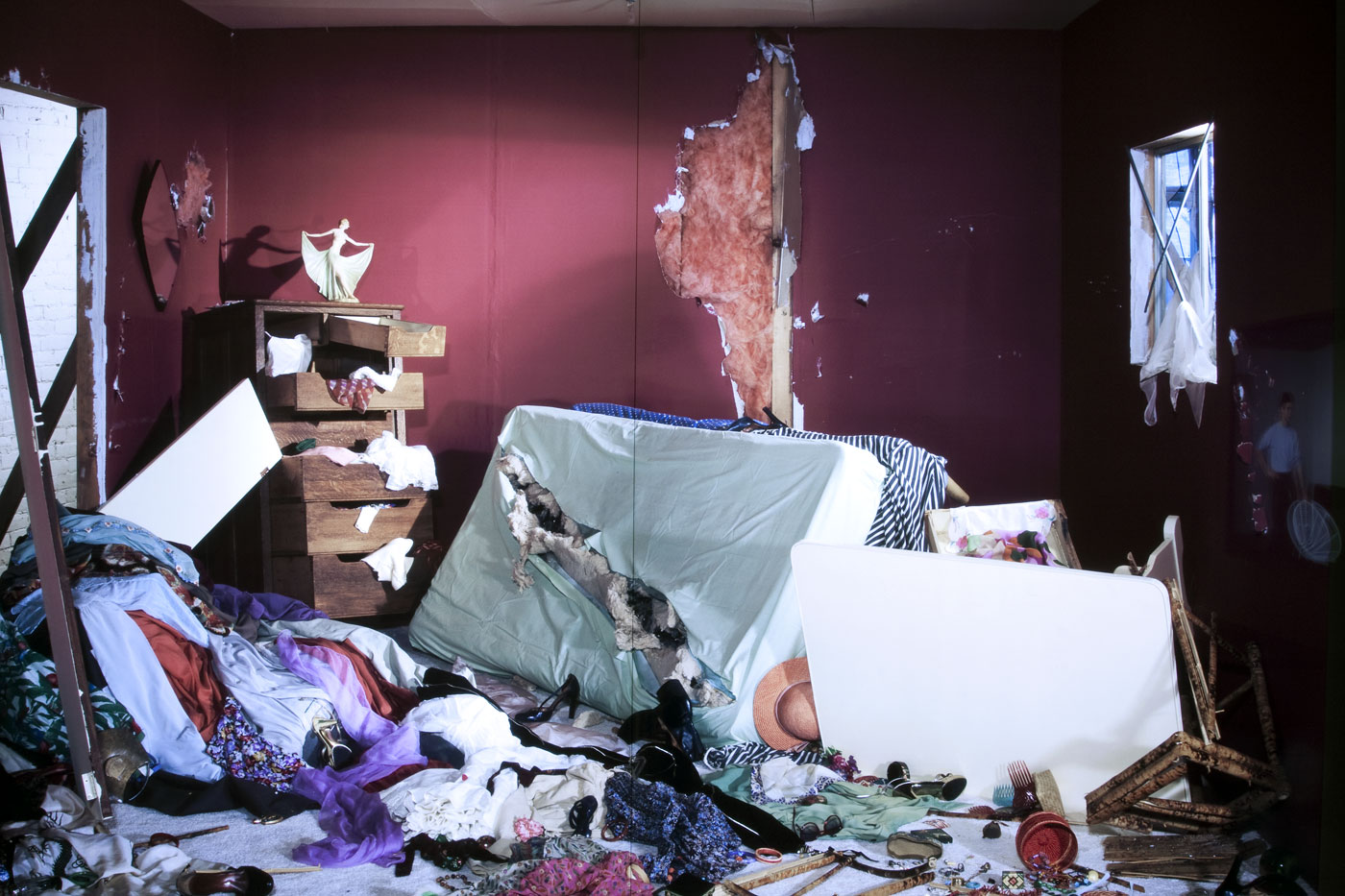
Jeff Wall (Canadian, b. 1946) 'The Destroyed Room' 1978 (detail)


Jeff Wall (Canadian, b. 1946)
The Destroyed Room (detail)
1978
Transparency in light box, AP
159.0 x 234.0cm
Collection of the artist
© Jeff Wall


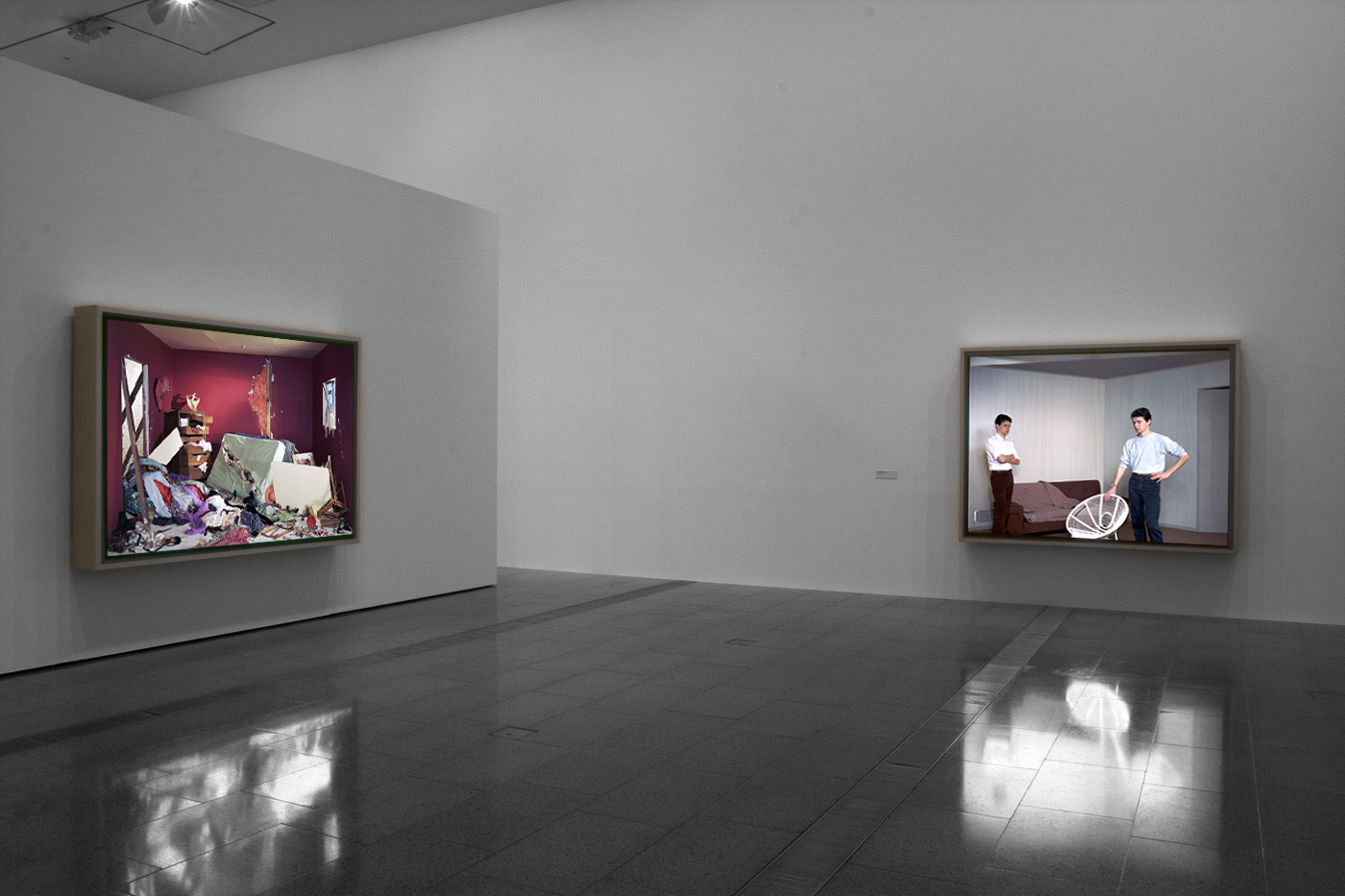
Installation view of 'Jeff Wall Photographs' at NGV Australia showing, at left, 'The Destroyed Room' 1978, and at right, 'Double Self-Portrait' 1979


Installation view of Jeff Wall Photographs at NGV Australia showing, at left, The Destroyed Room 1978, and at right, Double Self-Portrait 1979
Photo: Marcus Bunyan


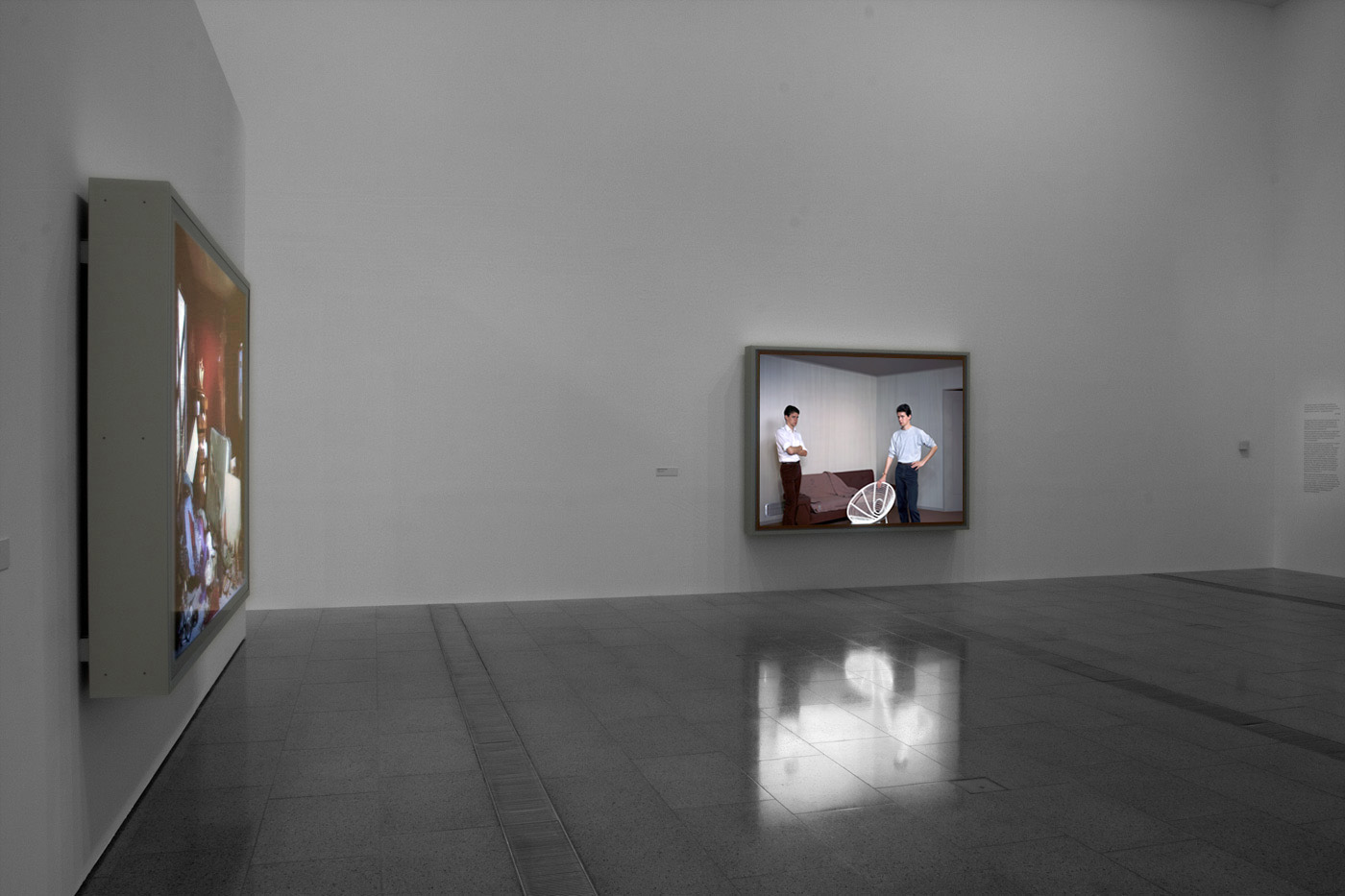
Installation view of 'Jeff Wall Photographs' at NGV Australia showing, at right, 'Double Self-Portrait' 1979


Installation view of Jeff Wall Photographs at NGV Australia showing, at right, Double Self-Portrait 1979
Photo: Marcus Bunyan


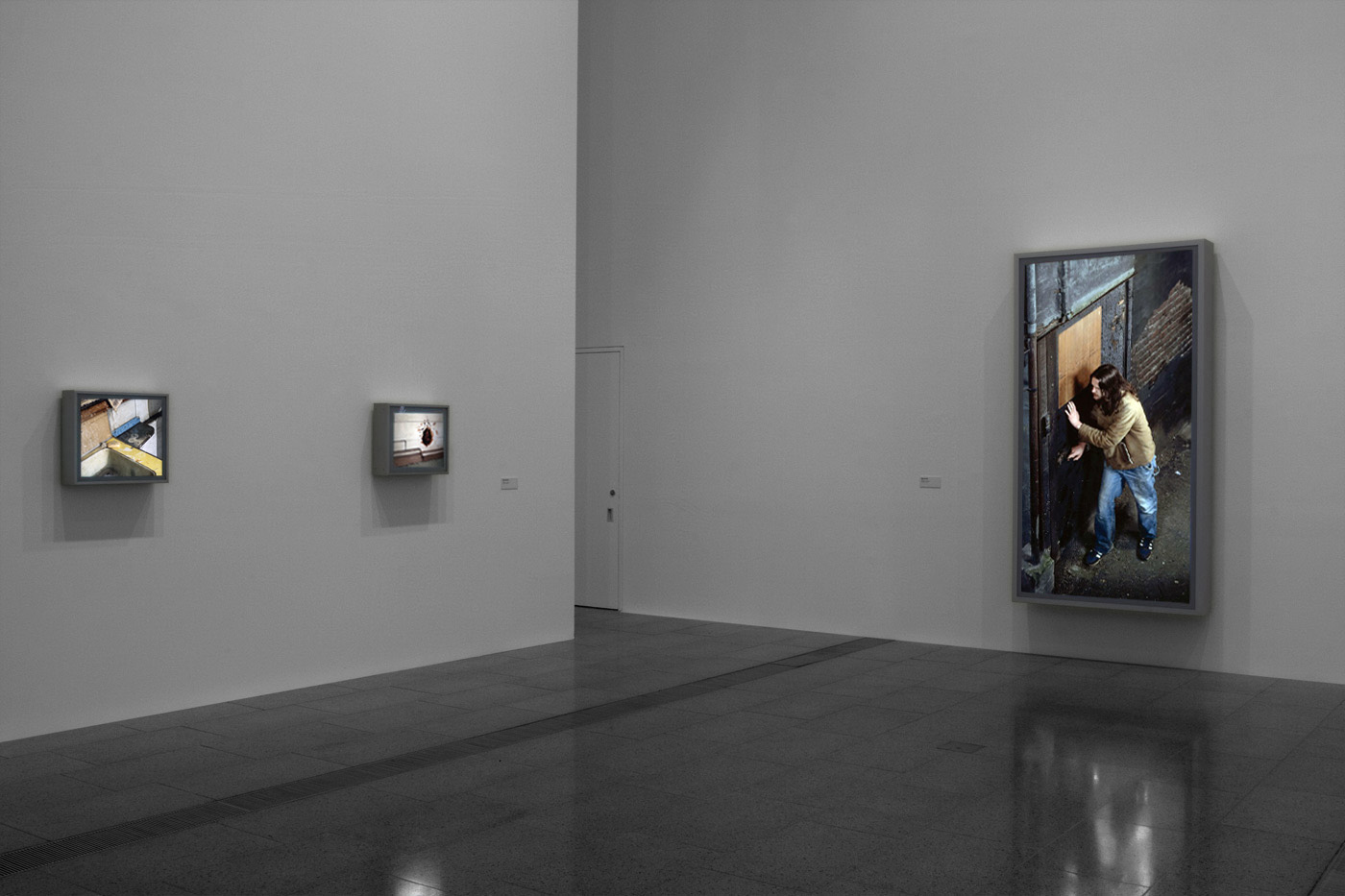
Installation view of 'Jeff Wall Photographs' at NGV Australia showing, at left, 'Doorpusher' 1984, and at right, 'Polishing' 1998


Installation view of Jeff Wall Photographs at NGV Australia showing, at left, Doorpusher 1984, and at right, Polishing 1998
Photo: Marcus Bunyan


Jeff Wall (Canadian, b. 1946) 'Polishing' 1998 (detail)


Jeff Wall (Canadian, b. 1946)
Polishing (detail)
1998
Transparency in light box, 1/2
162.0 x 207.0cm
State Art Collection, Art Gallery of Western Australia
Purchased with assistance from the Art Gallery of Western Australia Foundation, 1999
© Jeff Wall


Jeff Wall (Canadian, b. 1946) 'Doorpusher' 1984 (detail)


Jeff Wall (Canadian, b. 1946)
Doorpusher
(detail)
1984
Transparency in lightbox
249 x 122cm
© Jeff Wall


Installation view of 'Jeff Wall Photographs' at NGV Australia showing, at centre, 'Doorpusher' 1984, and at right, 'Polishing' 1998


Installation view of Jeff Wall Photographs at NGV Australia showing, at centre, Doorpusher 1984, and at right, Polishing 1998
Photo: Marcus Bunyan


Installation view of 'Jeff Wall Photographs' at NGV Australia showing, at left, 'Diagonal Composition' 1993, and at right, 'Doorpusher' 1984


Installation view of Jeff Wall Photographs at NGV Australia showing, at left, Diagonal Composition 1993, and at right, Doorpusher 1984
Photo: Marcus Bunyan


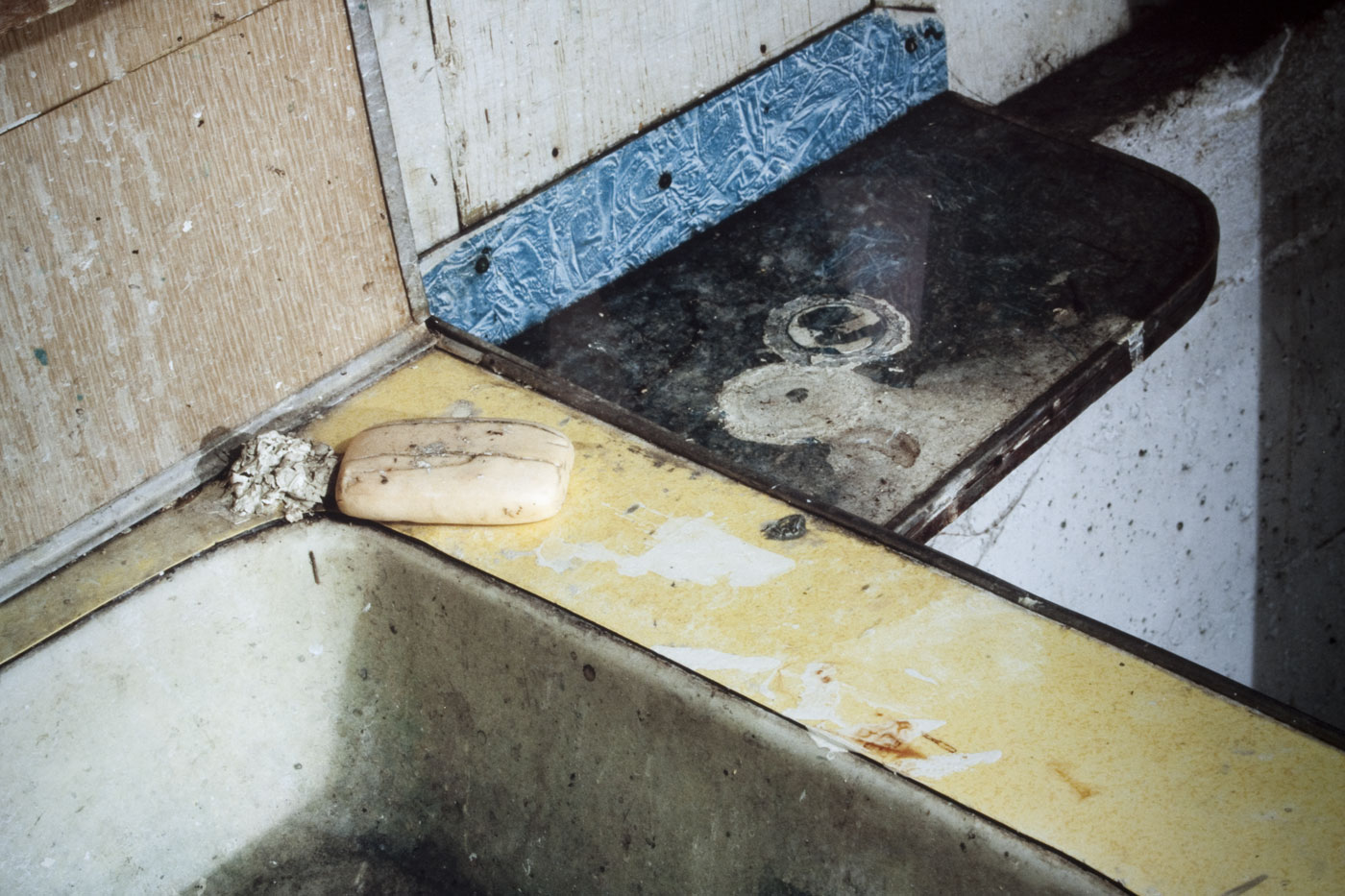
Jeff Wall (Canadian, b. 1946) 'Diagonal Composition' 1993


Jeff Wall (Canadian, b. 1946)
Diagonal Composition
1993
Transparency in light box, AP
40 x 46cm
Collection of the artist
© Jeff Wall


Jeff Wall (Canadian, b. 1946) 'Pipe Opening' 2002 (detail)


Jeff Wall (Canadian, b. 1946)
Pipe Opening (detail)
2002
Transparency in light box, AP
40 x 46cm
Collection of the artist
© Jeff Wall


Installation view of 'Jeff Wall Photographs' at NGV Australia showing, at right, 'A view from an apartment' 2004-2005


Installation view of Jeff Wall Photographs at NGV Australia showing, at right, A view from an apartment 2004-2005
Photo: Marcus Bunyan


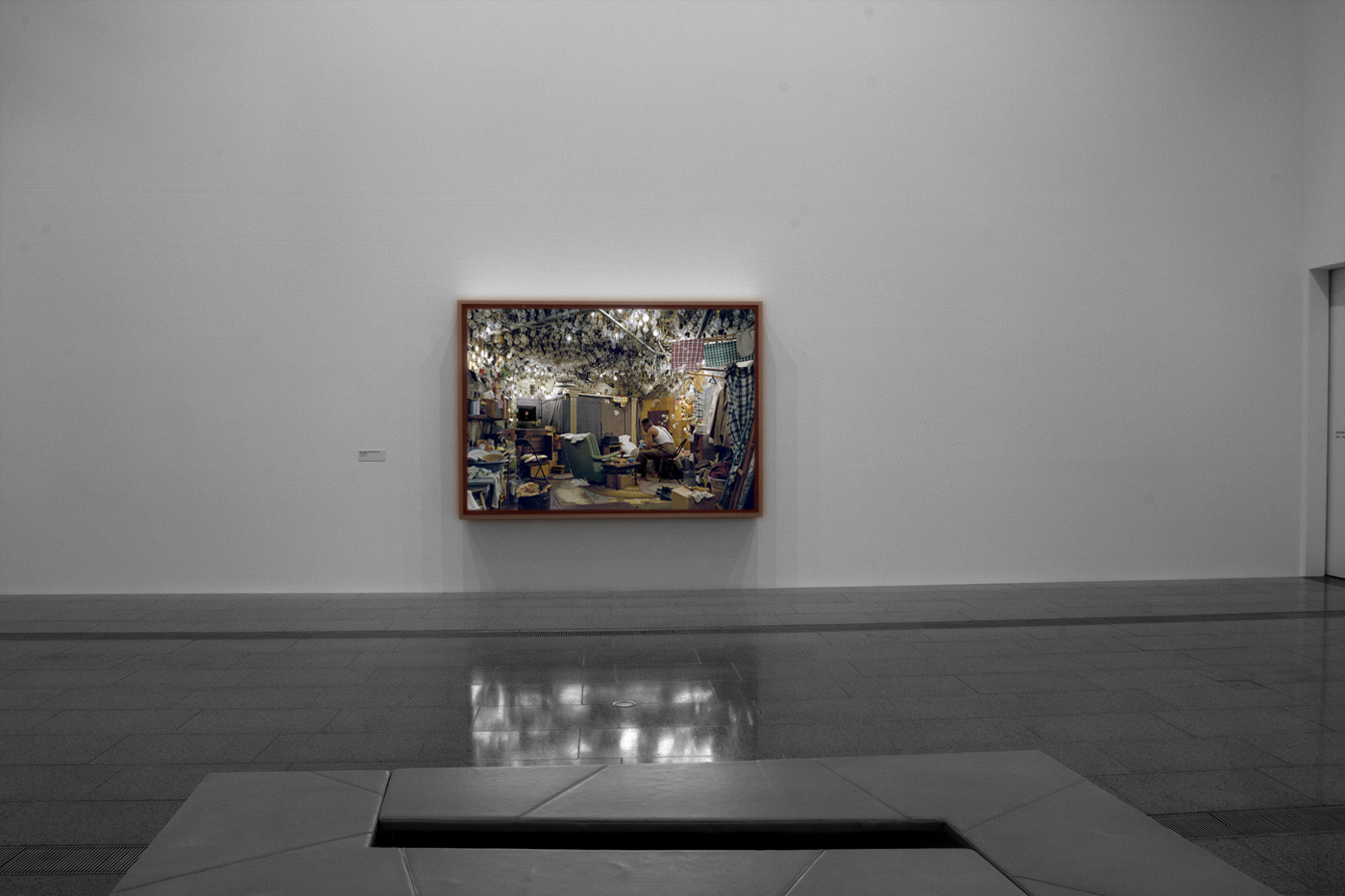
Installation view of 'Jeff Wall Photographs' at NGV Australia showing 'After 'Invisible Man' by Ralph Ellison, the Prologue' 1999-2000


Installation view of Jeff Wall Photographs at NGV Australia showing After ‘Invisible Man’ by Ralph Ellison, the Prologue 1999-2000
Photo: Marcus Bunyan


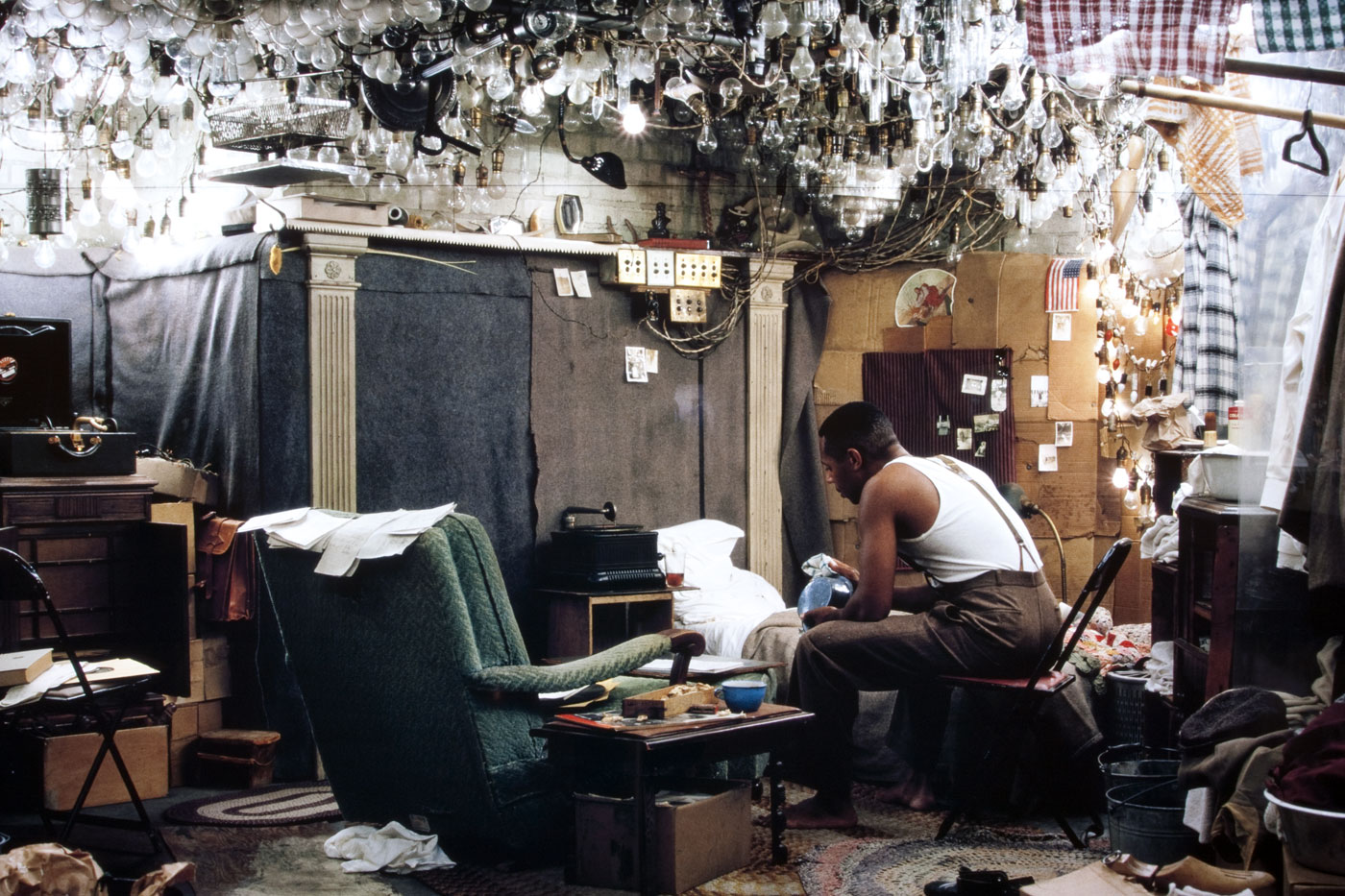
Jeff Wall (Canadian, b. 1946) 'After 'Invisible Man' by Ralph Ellison, the Prologue' 1999-2000 (detail)


Jeff Wall (Canadian, b. 1946)
After ‘Invisible Man’ by Ralph Ellison, the Prologue (detail)
1999-2000
Transparency in light box, AP
174 x 250.5cm
Collection of the artist
© Jeff Wall


Jeff Wall (Canadian, b. 1946) 'A view from an apartment' 2004-05 (detail)


Jeff Wall (Canadian, b. 1946)
A view from an apartment (detail)
2004-2005
Transparency in light box, 1/2
167.0 x 244.0cm
Tate, London
Purchased with assistance from the American Fund for the Tate Gallery and Tate Members, 2006
© Jeff Wall


Installation view of 'Jeff Wall Photographs' at NGV Australia showing 'A sudden gust of wind (after Hokusai)' 1993


Installation view of Jeff Wall Photographs at NGV Australia showing A sudden gust of wind (after Hokusai) 1993
Photo: Marcus Bunyan


The Ian Potter Centre: NGV Australia
Federation Square
Corner of Russell and 
Flinders Streets, Melbourne

Opening hours:
Daily 10am – 5pm

National Gallery of Victoria website

LIKE ART BLART ON FACEBOOK

Back to top

Exhibition: ‘Thomas Demand’ at the National Gallery of Victoria International, Melbourne

Exhibition dates: 30th November 2012 – 17th March 2013


Installation view of 'Thomas Demand' at NGVI showing, at right, 'Lichtung / Clearing' 2003


Installation view of Thomas Demand at NGVI showing, at right, Lichtung / Clearing 2003
Photo: Marcus Bunyan


You saw it here first on Art Blart!

Beautiful installation shots of the new Thomas Demand exhibition at NGVI. Jeff Wall installation photographs to follow in the next posting on Saturday. Reviews to follow in due course.

These are all cardboard models created in Thomas Demand’s studio and then photographed. The models are destroyed afterwards leaving the photographs as artefacts and remembrances, both a performance in their own right, but also a record of another performance, that of the creation of the models. Double self, double performativity, double ritual.

Many thankx to Jemma Altmeier and all the media team at NGV for all their wonderful help and congratulations to the curators, Susan van Wyk and Dr Isobel Crombie, for their restrained yet contemporary installations and for getting the exhibitions to Melbourne. They look magnificent. Well done!

Dr Marcus Bunyan


Many thankx to the NGV for allowing me to publish the photographs in the posting. Please click on the photographs for a larger version of the image. All photographs © Marcus Bunyan © National Gallery of Victoria. May not be reproduced without permission.


Thomas Demand is regarded as one of the world’s leading contemporary artists whose work in photography and, most recently stop-animation films, is at the forefront of contemporary art. Demand initially worked as a sculptor who used photography to document his ephemeral creations. From 1993 his creative practice changed and, from then on, he made sculptures for the sole purpose of photographing them. Demand begins with an image, often taken from media sources and frequently dealing with traumatic or politically important events, and creates a life-size replica of the image using paper and cardboard. The effect of these uncanny reconstructions is to destabilise our understanding of the sites which we ‘know’ so well through reproduction. This exhibition features a selection of photographs and 35mm films as chosen by the artist.


Jeff Wall & Thomas Demand: In Conversation, National Gallery of Victoria


Thomas Demand (German, b. 1964) 'Lichtung' / 'Clearing' 2003


Thomas Demand (German, b. 1964)
Lichtung / Clearing
2003
C-Print / Perspex
Courtesy Taka Ishii Gallery, Sprüth Magers Berlin London, Esther Schipper, Berlin, Matthew Marks Gallery
© Thomas Demand, VG Bild-Kunst, Bonn / VISCOPY, Sydney


Installation view of 'Thomas Demand' at NGVI showing, at left, 'Badezimmer / Bathroom' 1997 and, at right, 'Labor / Laboratory' 2000


Installation view of Thomas Demand at NGVI showing, at left, Badezimmer / Bathroom 1997 and, at right, Labor / Laboratory 2000
Photo: Marcus Bunyan


Thomas Demand (German, b. 1964) 'Laboratory (77-E-217)' 2000


Thomas Demand (German, b. 1964)
Labor / Laboratory
2000
C-Print / Perspex
180 × 268cm
Courtesy Taka Ishii Gallery, Sprüth Magers Berlin London, Esther Schipper, Berlin, Matthew Marks Gallery
© Thomas Demand, VG Bild-Kunst, Bonn / VISCOPY, Sydney


Installation view of 'Thomas Demand' at NGVI showing 'Badezimmer / Bathroom' 1997


Installation view of Thomas Demand. Badezimmer / Bathroom 1997 at NGVI
Photo: Marcus Bunyan


Thomas Demand (German, b. 1964) 'Badezimmer / Bathroom' 1997


Thomas Demand (German, b. 1964)
Badezimmer / Bathroom
1997
C-Print / Perspex
160.0 × 122.0cm
Courtesy Taka Ishii Gallery, Sprüth Magers Berlin London, Esther Schipper, Berlin, Matthew Marks Gallery
© Thomas Demand, VG Bild-Kunst, Bonn / VISCOPY, Sydney


Installation view of 'Thomas Demand' at NGVI showing 'Copyshop' 1999


Installation view of Thomas Demand at NGVI showing Copyshop 1999
Photo: Marcus Bunyan


Thomas Demand (German, b. 1964) 'Copyshop' 1999


Thomas Demand (German, b. 1964)
Copyshop
2009
C-Print / Perspex
Courtesy Taka Ishii Gallery, Sprüth Magers Berlin London, Esther Schipper, Berlin, Matthew Marks Gallery
© Thomas Demand, VG Bild-Kunst, Bonn / VISCOPY, Sydney


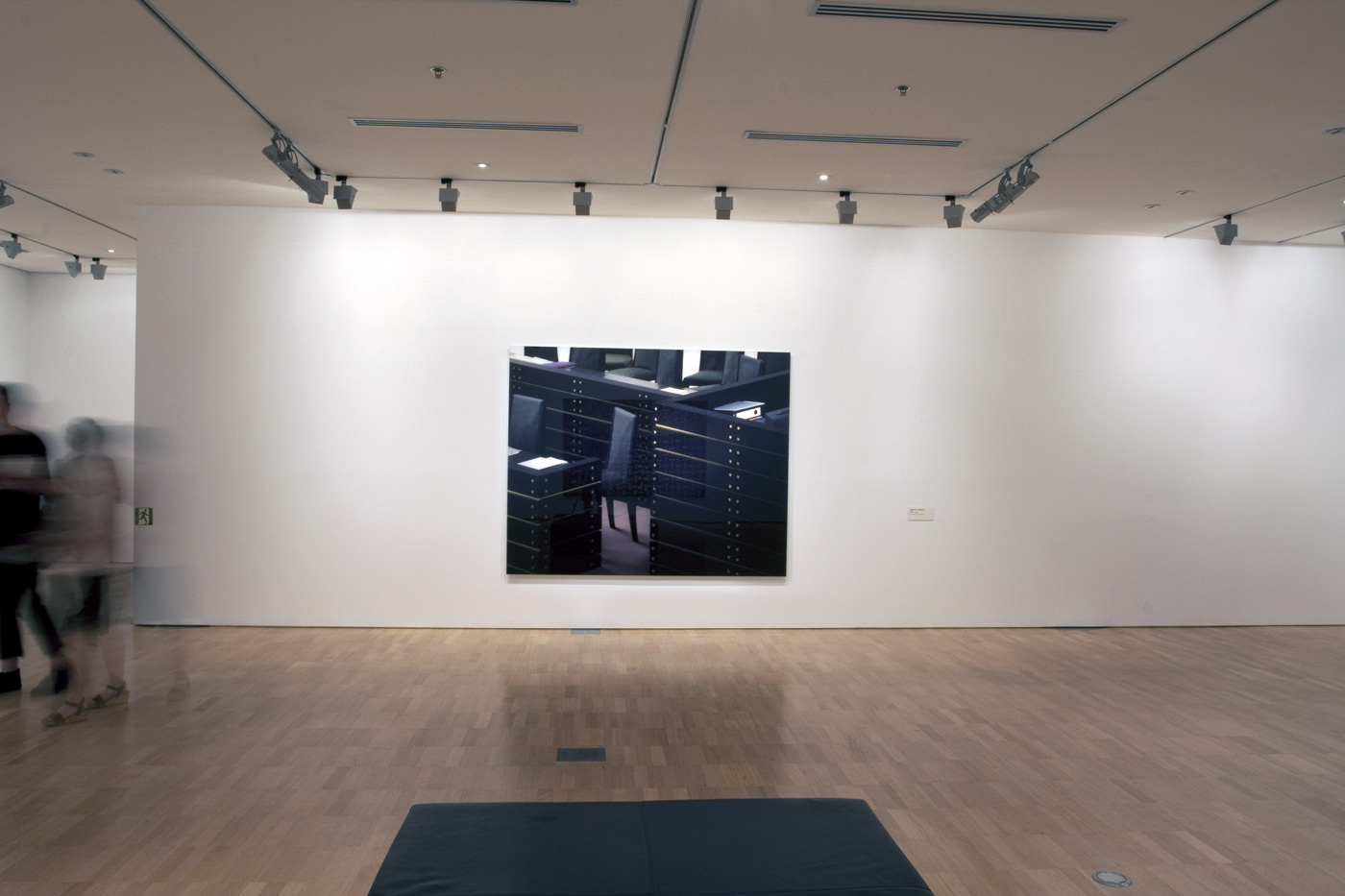
Installation view of 'Thomas Demand' at NGVI showing 'Parlament / Parliament' 2009


Installation view of Thomas Demand at NGVI showing Parlament / Parliament 2009
Photo: Marcus Bunyan


Thomas Demand (German, b. 1964) 'Parlament / Parliament' 2009


Thomas Demand (German, b. 1964)
Parlament / Parliament
2009
C-Print / Perspex
Courtesy Taka Ishii Gallery, Sprüth Magers Berlin London, Esther Schipper, Berlin, Matthew Marks Gallery
© Thomas Demand, VG Bild-Kunst, Bonn / VISCOPY, Sydney


When you step through the door into the Thomas Demand exhibition you enter a realm that was conceived, meticulously planned, and built to his exacting specifications. Demand designed every aspect of this exhibition. Having selected the photographs and films that he wanted to show in Melbourne, he then went on to design the exhibition space itself.

He was quite specific that the secondary walls had to be full height to create a sense of beautiful rooms rather than a space that has been partitioned. Once this was done he began work on the layout of the show. He carefully planned the sequence in which you would encounter each work, setting up an interesting play between the works. How we read these is an entirely individual experience. Recently someone said to me that they thought the placement of Lichtung / Clearing next to Paneel / Pegboard was an interesting comment on forest clearing and the devastating impact that pulp mills can have on the environment. Until then I had never seen those works in that way.

In conversation during the installation, Thomas explained that he was not interested in putting together an exhibition that then toured around the world. The usual practice of curating an exhibition and then ‘fitting’ it into different exhibition spaces in a number of venues holds little interest for him. So each time you see a Thomas Demand exhibition it has been curated, designed and installed for that particular space.

This is perhaps most obvious when you enter the rooms where the films are showing. From the brightly lit first room you can see through the door way into a darkened room lined with floor to ceiling curtains, but not really. What you see is a darkened room hung with wallpaper that the artist made to look like the kind of sweeping curtains that you might find in a cinema or theatre. It’s theatrical and spectacular but once you enter this space the real treat is Demands films.

Susan van Wyk, 6 February 2013 on the NGV website [Online] Cited 05/09/2020


Thomas Demand (German, b. 1964) 'Tribute' 2011


Thomas Demand (German, b. 1964)
Tribute
2011
C-Print / Perspex
166 x 125cm, edition of 6
Courtesy Taka Ishii Gallery, Sprüth Magers Berlin London, Esther Schipper, Berlin, Matthew Marks Gallery
© Thomas Demand, VG Bild-Kunst, Bonn / VISCOPY, Sydney


Installation view of 'Thomas Demand' at NGVI showing, at right, 'Space Simulator' 2003


Installation view of Thomas Demand at NGVI showing, at right, Space Simulator 2003
Photo: Marcus Bunyan


Installation view of 'Thomas Demand' at NGVI showing, at left, 'Grotte / Grotto' 2006 and, at right, 'Space Simulator' 2003


Installation view of Thomas Demand at NGVI showing, at left, Grotte / Grotto 2006 and, at right, Space Simulator 2003
Photo: Marcus Bunyan


Thomas Demand (German, b. 1964) 'Space Simulator' 2003


Thomas Demand (German, b. 1964)
Space Simulator
2003
C-Print / Perspex
300 × 429.4cm
Courtesy Taka Ishii Gallery, Sprüth Magers Berlin London, Esther Schipper, Berlin, Matthew Marks Gallery
© Thomas Demand, VG Bild-Kunst, Bonn / VISCOPY, Sydney


Installation view of 'Thomas Demand' at NGVI showing, at right, 'Grotte / Grotto' 2006


Installation view of Thomas Demand at NGVI showing, at right, Grotte / Grotto 2006
Photo: Marcus Bunyan


Thomas Demand (German, b. 1964) 'Grotte / Grotto' 2006 (detail)


Thomas Demand (German, b. 1964)
Grotte / Grotto (detail)
2006
C-Print / Perspex
Courtesy Taka Ishii Gallery, Sprüth Magers Berlin London, Esther Schipper, Berlin, Matthew Marks Gallery
© Thomas Demand, VG Bild-Kunst, Bonn / VISCOPY, Sydney


One of the world’s most influential contemporary artists, Thomas Demand, will be the subject of a new exhibition announced by the National Gallery of Victoria.

The exhibition will be the first major Australian survey of the artist’s work and will comprise large scale photographs and films never before shown in Australia.

NGV Director, Tony Ellwood said the addition of Thomas Demand to the NGV’s exhibition schedule is part of an exciting and ambitious summer program.

“When the opportunity came up to hold an exhibition of Thomas Demand’s work this summer, it was just too good to miss. Thomas Demand will be part of a great summer program at the NGV and has been timed to coincide with the Jeff Wall Photographs exhibition being held at NGV Australia.

“We are offering a two-for-one ticket for Thomas Demand and Jeff Wall Photographs, so visitors to the NGV can experience the work of two major artists of international contemporary photography for one ticket price,” said Mr Ellwood.

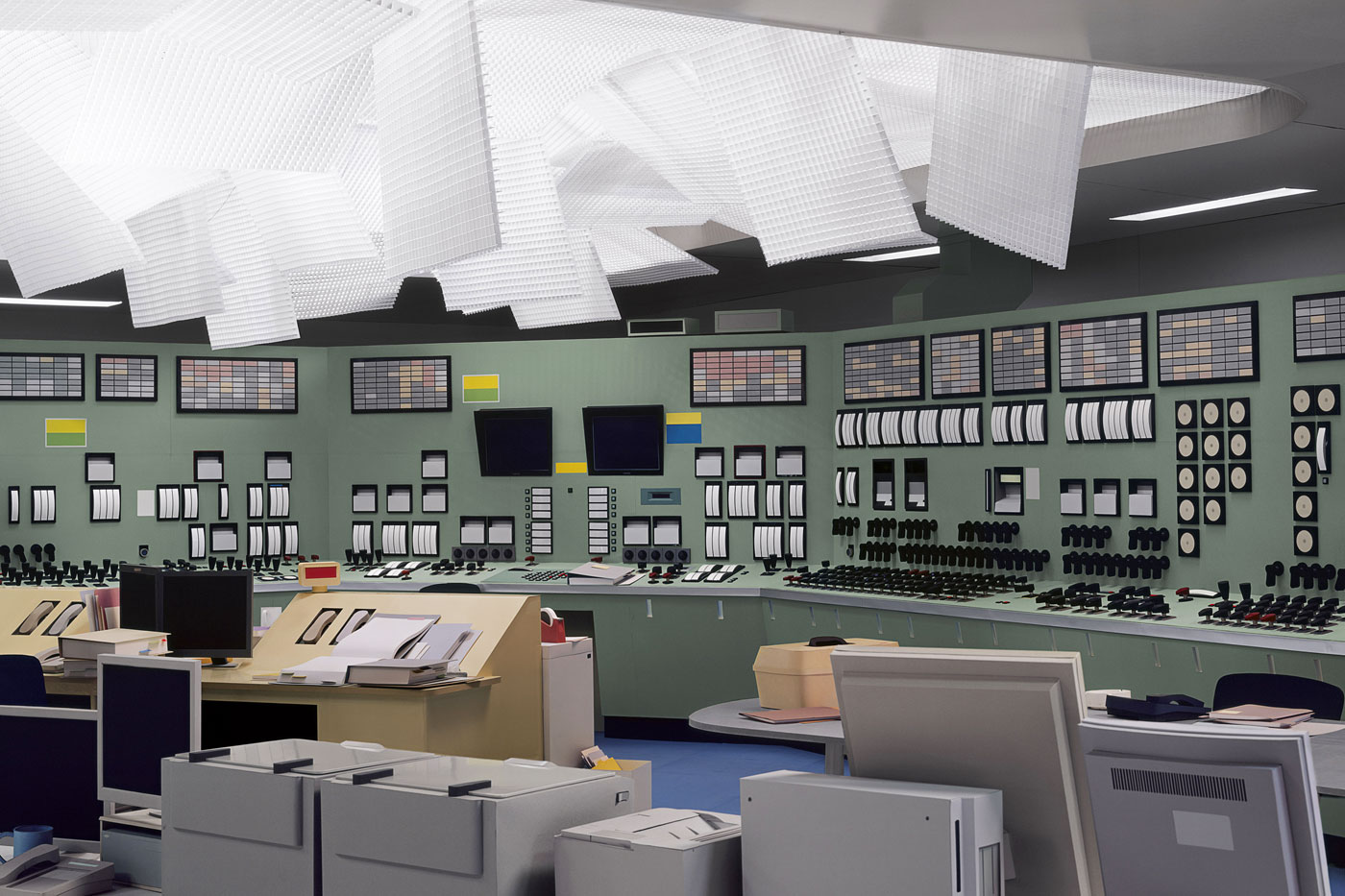
Works in the exhibition will span the artist’s career from 1997 to 2012. Recent works presented in the exhibition include Control Room (pictured below), which depicts the Fukushima Daiichi nuclear power plant and Tribute, a work based on images taken at the site of tragic mass panic at Europe’s biggest rave party.

Susan van Wyk, NGV Curator of Photography said Thomas Demand is widely regarded as one of the world’s leading contemporary artists.

“Thomas has a unique style in which he creates paper models of objects and scenes, often taken from media sources like flickr or newspaper reports. These intricate life size models are then photographed.

“The results are disquieting images that subvert our understanding of reality and fiction and draws attention to how we engage with the media and modern technologies,” said Ms Van Wyk.

Press release from the NGV website


Installation view of 'Thomas Demand' at NGVI showing, at left, 'Vault' 2012 and, at centre, 'Kontrollraum / Control Room' 2011


Installation view of Thomas Demand at NGVI showing, at left, Vault 2012 and, at centre, Kontrollraum / Control Room 2011
Photo: Marcus Bunyan


Thomas Demand (German, b. 1964) 'Kontrollraum / Control Room' 2011


Thomas Demand (German, b. 1964)
Kontrollraum / Control Room
2011
C-Print / Perspex
200 × 300cm
Courtesy Taka Ishii Gallery, Sprüth Magers Berlin London, Esther Schipper, Berlin, Matthew Marks Gallery
© Thomas Demand, VG Bild-Kunst, Bonn / VISCOPY, Sydney


Installation view of 'Thomas Demand' at NGVI showing 'Vault' 2012


Installation view of Thomas Demand at NGVI showing Vault 2012
Photo: Marcus Bunyan


Thomas Demand (German, b. 1964) 'Vault' 2012 (detail)


Thomas Demand (German, b. 1964)
Vault (detail)
2012
C-Print / Perspex
Courtesy Taka Ishii Gallery, Sprüth Magers Berlin London, Esther Schipper, Berlin, Matthew Marks Gallery
© Thomas Demand, VG Bild-Kunst, Bonn / VISCOPY, Sydney


NGV International
180 St Kilda Road

Opening hours:
Open daily 10am – 5pm

National Gallery of Victoria website

LIKE ART BLART ON FACEBOOK

Back to top

Review: ‘Preserved’ by Greg Elms at Edmund Pearce Gallery, Melbourne

Exhibition dates: 7th November – 24th November 2012


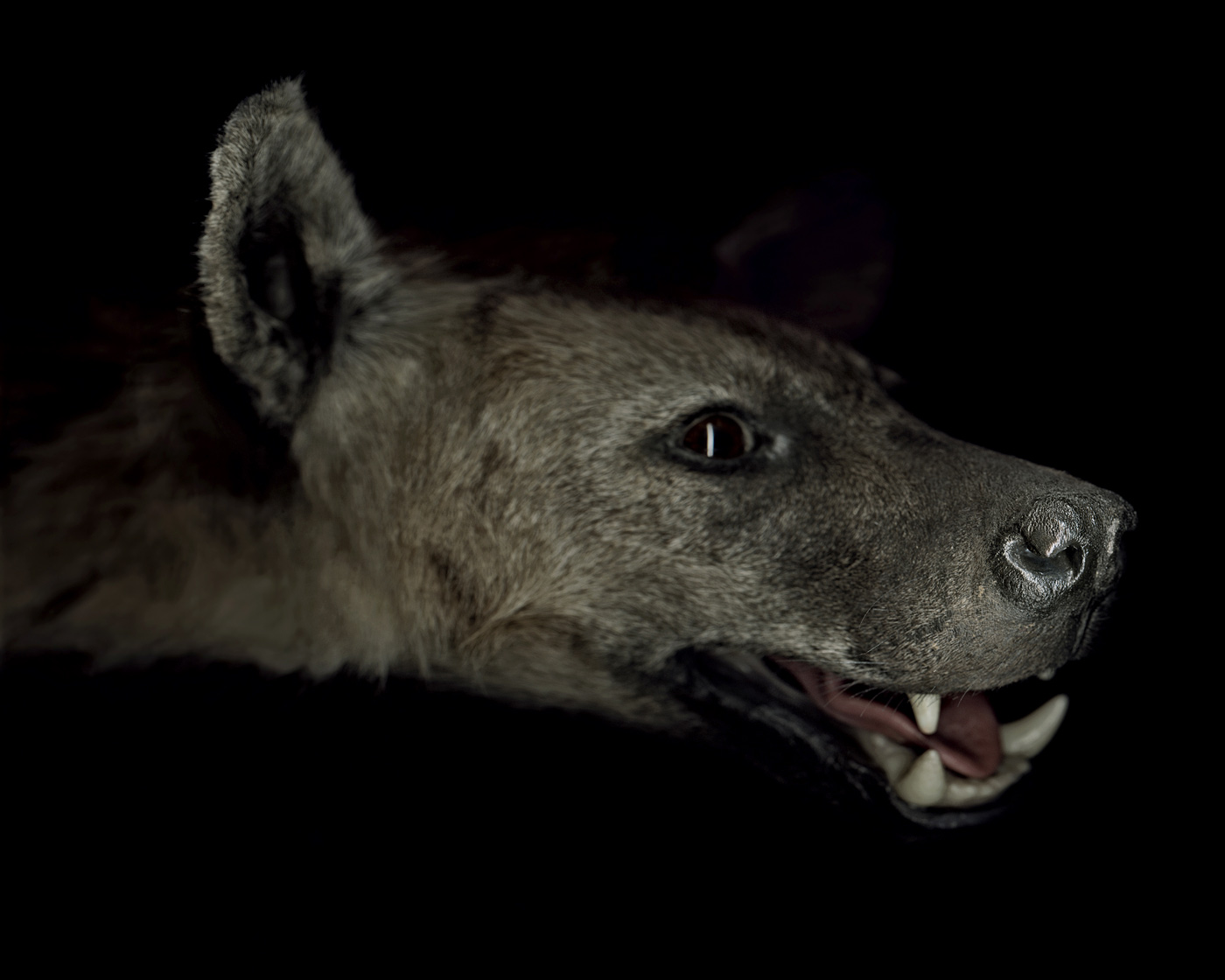
Greg Elms (Australian, b. 1960) 'Spotted Hyaena, Crocuta Crocuta' 2010


Greg Elms (Australian, b. 1960)
Spotted Hyaena, Crocuta Crocuta
2010
Archival Inkjet Print


This is an excellent exhibition by Greg Elms at Edmund Pearce Gallery, Melbourne. The photographs, made using a film scanner re-purposed into a lens-less camera, have great fidelity. Fidelity refers to the degree to which a model or simulation reproduces the state of a real world object and is therefore a measure of the realism of a model or simulation. These photographs have great overall presence – as the artist himself puts it, “Focus of the subject is likewise abnormal, sharp only where features press against the glass platen screen, dissolving into darkness and blur as they recede, implying a sense of entrapment behind the image surface.” This limited depth of field means that the taxidermies loom out of the intimate darkness into the artificial light, the scanners passing recorded as a crescent moon in the eyes of the preserved, the deceased.

Ashely Crawford, in an excellent piece of writing, notes how Elms captures the notion of the animal as ‘other’ while observing that there is much to say about the permeable membrane between human and non-human in postmodern culture. The press release states that, “Preserved raises allusions to the history of zoological inquiry and highlights the sense of loss intrinsic to mortality. Indeed, the works can be read as a series of ecological memento mori.”

These ideas can be further interrogated. Personally, I think it is more than just a singular, momentary death. There is the original death of the animal, its re/animation through the art of preservation, taxidermy, and then a second little death due to the light of the scanner. These photographic animalia may be a reflection on our ecological relationship to the world, caught in a double time-freeze – a postmodern reflection on our memories, histories and interactions with the animal world that are becoming released from the historical contexts on which they are traditionally based, the referent silently split from its once powerful reality. Much as we humans objectify our death through ritual (the dressing of the body, the viewing of the body, the singing of songs, the saying of validations for a life; the coffin, the priest, the burial, the burning) these photographs objectify a simulation of death, as though the death of these animals has been pre-served, like warming up a TV dinner in the microwave and then letting it go cold again. Our relationship to the animals of this world is now mainly about death (live sheep exports, eat your heart out!)

Gothic, nocturnal and now immortal, Elms photographs transcend the animal-human connection and evoke primal emotional responses in the viewer causing us to ask, yet again, what the hell we are doing to this planet.

Dr Marcus Bunyan


Many thankx to Edmund Pearce Gallery for allowing me to publish the text and the photographs in the posting. Please click on the photographs for a larger version of the image. All images © and courtesy of the artist and Edmund Pearce Gallery. Text © Ashely Crawford and Edmund Pearce Gallery.


Greg Elms (Australian, b. 1960) 'Female Red Kangaroo, Macropus Rufus' 2010


Greg Elms (Australian, b. 1960)
Female Red Kangaroo, Macropus Rufus
2010
Archival Inkjet Print


Gregory Elms pursues the rupture of photography’s implicit claim to realism. To this end his current series, Preserved, investigates the staged realism of taxidermy. Both zoological document and faux wildlife imagery, the work oscillates between life and death, veracity and fiction, the horrific and the sublime. It documents the lifelike lifelessness of taxidermy, presenting a zoological menagerie that is both hyper-real and otherworldly. The work was inspired by childhood memories of taxidermy hunting trophies on the walls of the Sportsmans Bar, at his father’s suburban hotel. But it’s also a gothic investigation of our relationship with animals, influenced by the Romantic movement, the Age of Enlightenment, and the tradition of vanitas painting with it’s metaphorical associations to mortality. According to curator Simon Gregg it “erects an invisible barrier between us and the animals; a physical barrier but in many ways and with more consequence to us, a psychological barrier.”

As the artist observes,

“I grew up in a suburban hotel with a public bar festooned in taxidermy hunting trophies. I’d spend ages gazing at them and have remained enthralled by their life-like lifelessness ever since. For me taxidermy is akin to photography: it too presents a frozen moment as a copy of the real thing. On one level, the work explores our primal emotional responses when in close proximity to animals and insects. But it also explores what truth means in photography – is a contrived photograph still real? And doesn’t photography always render the real as contrived? I seek to highlight this conundrum with the further contrivance of taxidermy.

Inspired by gothic and nocturnal precursors in art, and the history of zoology, the fauna are recontextualised into a menagerie of lost lives – some of them, presumably, the celebration of a now forgotten hunting spree. Each one echoes the story of their demise and surrender to human intervention, their poses animated by a taxidermist’s skills of presentation and reality re-enactment. To document the series, I have employed the idiosyncratic image making qualities of a film scanner re-purposed into a lens-less camera, its simplicity reminiscent of a camera obscura. Set in an otherwise unlit studio, the resultant image reveals a constructed twilight that fuels a dark narrative. Focus of the subject is likewise abnormal, sharp only where features press against the glass platen screen, dissolving into darkness and blur as they recede, implying a sense of entrapment behind the image surface.”

Preserved raises allusions to the history of zoological inquiry and highlights the sense of loss intrinsic to mortality. Indeed, the works can be read as a series of ecological memento mori.”

Press release from the Edmund Pearce Gallery website


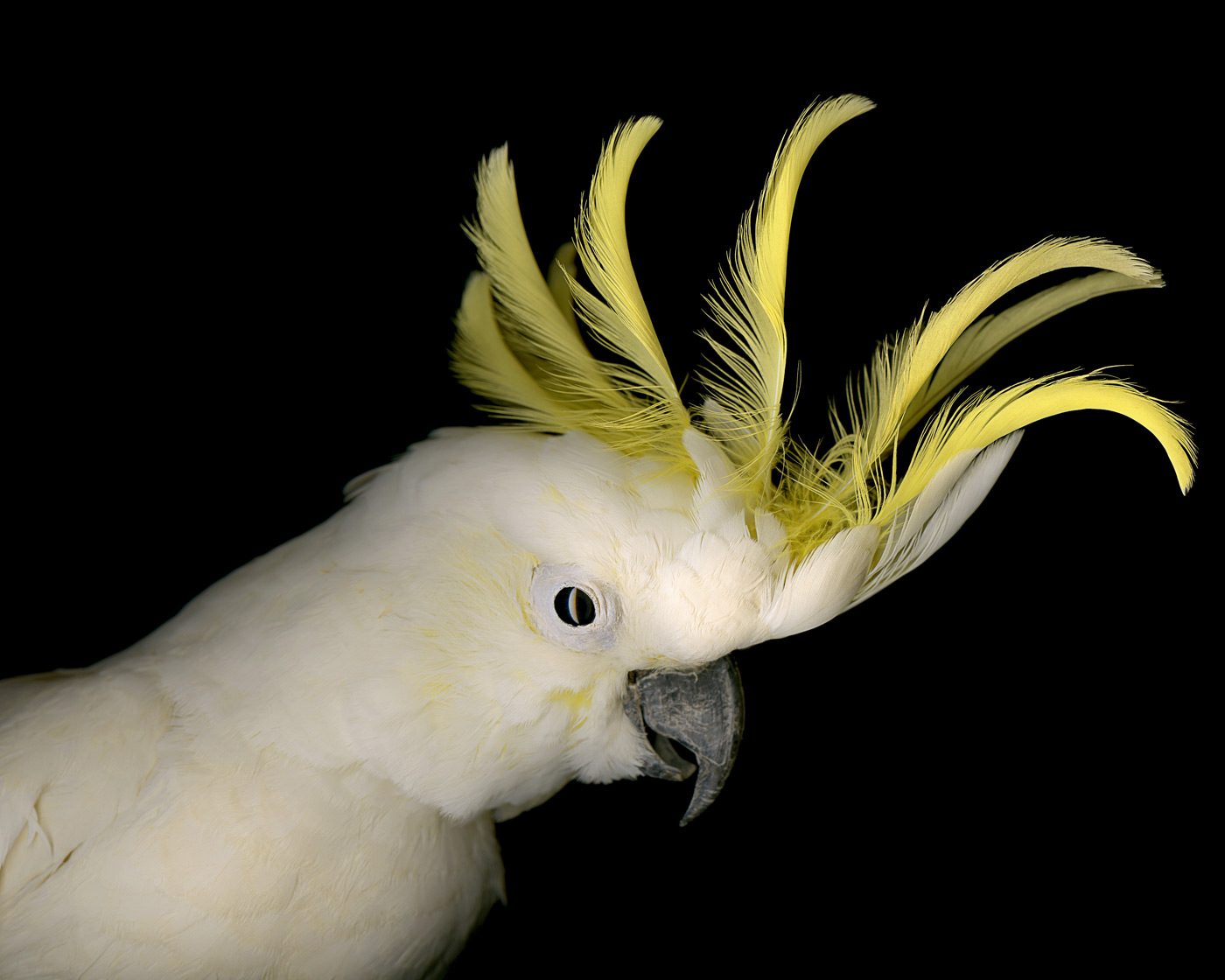
Greg Elms (Australian, b. 1960) 'Sulphur Crested Cockatoo, Cacatua Galerita' 2010


Greg Elms (Australian, b. 1960)
Sulphur Crested Cockatoo, Cacatua Galerita
2010
Archival Inkjet Print


Greg Elms (Australian, b. 1960) 'Red Fox, Vulpes Vulpes' 2010


Greg Elms (Australian, b. 1960)
Red Fox, Vulpes Vulpes
2010
Archival Inkjet Print


The Art of Preservation

Ashley Crawford

In the world of Ridley Scott’s 1982 Science fiction classic Blade Runner one of the most prized possessions is a perfectly replicated owl. The film is based on a 1968 Philip K. Dick novel, Do Androids Dream of Electric Sheep in which social status is most often based on the ‘model’ of animal one can afford – or even better, the ownership of a real animal in a world where most species have been killed by nuclear fallout. This is the background to a more complex story, but it is one that is infused with melancholy and a powerful sense of loss. What is humanity without the context of the animal?

But humanity and the animal and insect kingdoms have long maintained an imbalanced sense of symbiosis. On the one hand we ogle animals in zoos or more regularly via television documentaries. Only the most hardy of tourists today bother venturing into what remains of natural habitats – all too often zones of environmental Armageddon. Very few species are truly ‘domesticated’. Indeed almost all animals remain the ‘other’, psychologically impregnable – some are good for eating, some are pests but they all, in one way or another, remain objects of fascination.

Gregory Elms captures this sense of fascination with unnerving potency. His menagerie of misfits, malcontents and monsters are captured with alluring charm. Elms reveals no prejudice when it comes to selecting his portraits; the pestilent hyena alongside the strangely elegant and impelling Dead Leaf Mantis, the odious Cane Toad against the loyal Jack Russell. Via Elms’ aesthetic each and every one of them carries a peculiar charm, as though they had been groomed for their portraiture session. With his deliberately formalised composition, his animals become indisputably individualistic. They are not generic dogs, toads or birds. They are members of a bestiary noblesse.

Animals have, of course, long been the stuff of artistic inspiration, from Durer’s famous rabbit to Hirst’s infamous shark. In Australia, Elms fits alongside an enduring history of animal as subject, seen contemporaneously in the powerful 2004 exhibition Instinct at the Monash Faculty Gallery, which featured artists as diverse as Emily Floyd, Sharon Goodwin, Irene Hanenbergh, Louise Hearman, Ronnie van Hout, David Noonan and Lisa Roet.

And while Elms may capture the notion of the animal as ‘other’ he also taps into the strange connections we feel toward other species. The animal-human connection is obviously a fertile one. In light of the success of recent works in the firecracker-hot field of comparative ethology, delving into the minds and emotional lives of animals, there is much to say about the permeable membrane between human and non-human in postmodern culture. Animals have also played an intriguing, little-examined role in the emergence of technological modernity, from NASA’s space monkeys to experiments on animal behaviour and intelligence.

But Elms work also hints at the pre-history of animal-human interaction. Throughout art history, animals have been utilised by artists to represent human character traits – a man is a ‘snake’ or a ‘dog’ or a ‘pig’ depending on their personality. Animals have also featured in mythology and the supernatural – the werewolf, the vampire. Elms also turns the gallery into the scientific laboratory, the taxidermists studio and, inevitably, the Hunting Lodge.

Yes, often sadly, (the Cane Toad aside), Elms’ subjects are dead. But they live on with a strange majesty via Elms’ lens.

© Ashley Crawford 2012


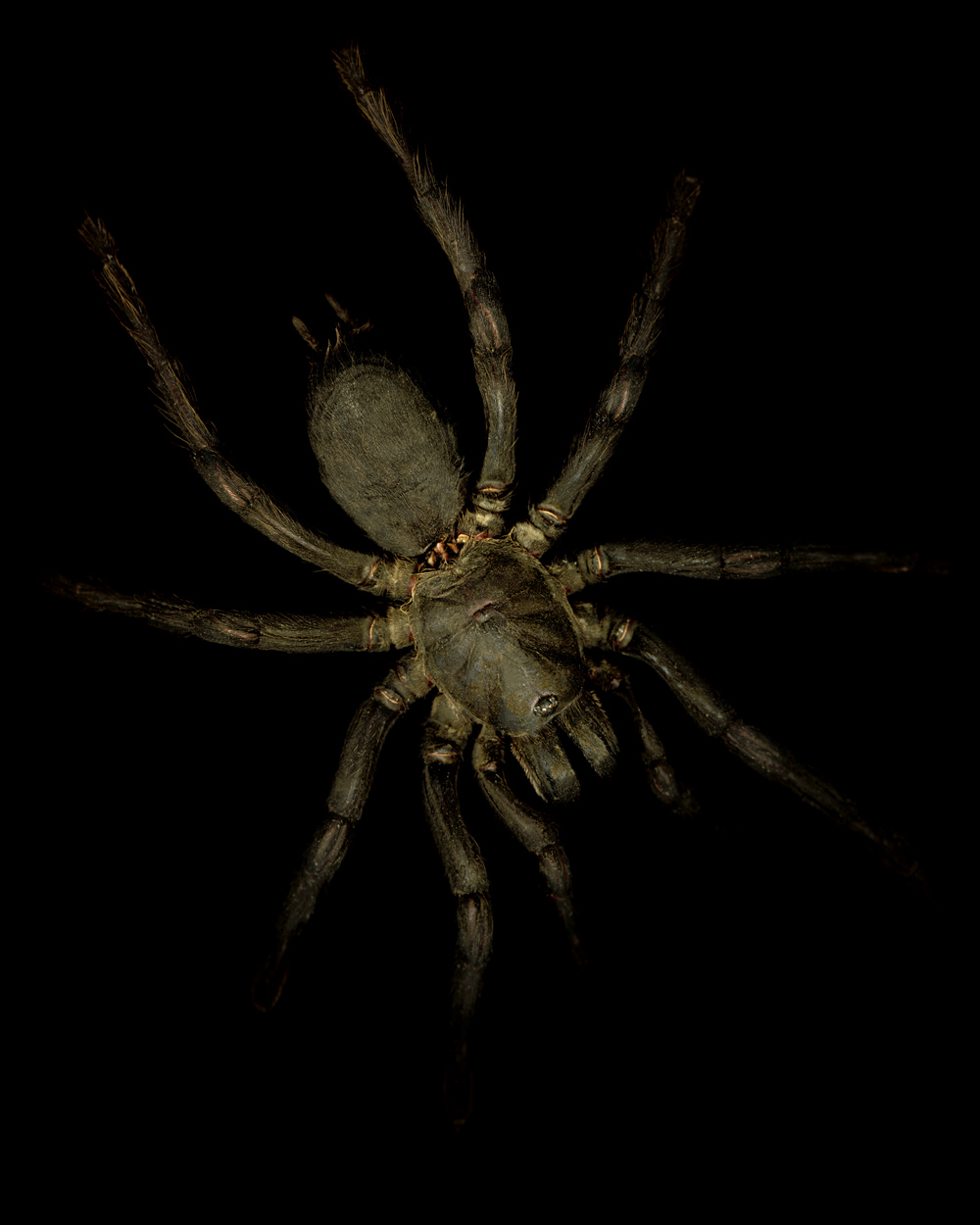
Greg Elms (Australian, b. 1960) 'Thailand tarantula, Haplopelma Albostriatus' 2011


Greg Elms (Australian, b. 1960)
Thailand tarantula, Haplopelma Albostriatus
2011
Archival Inkjet Print


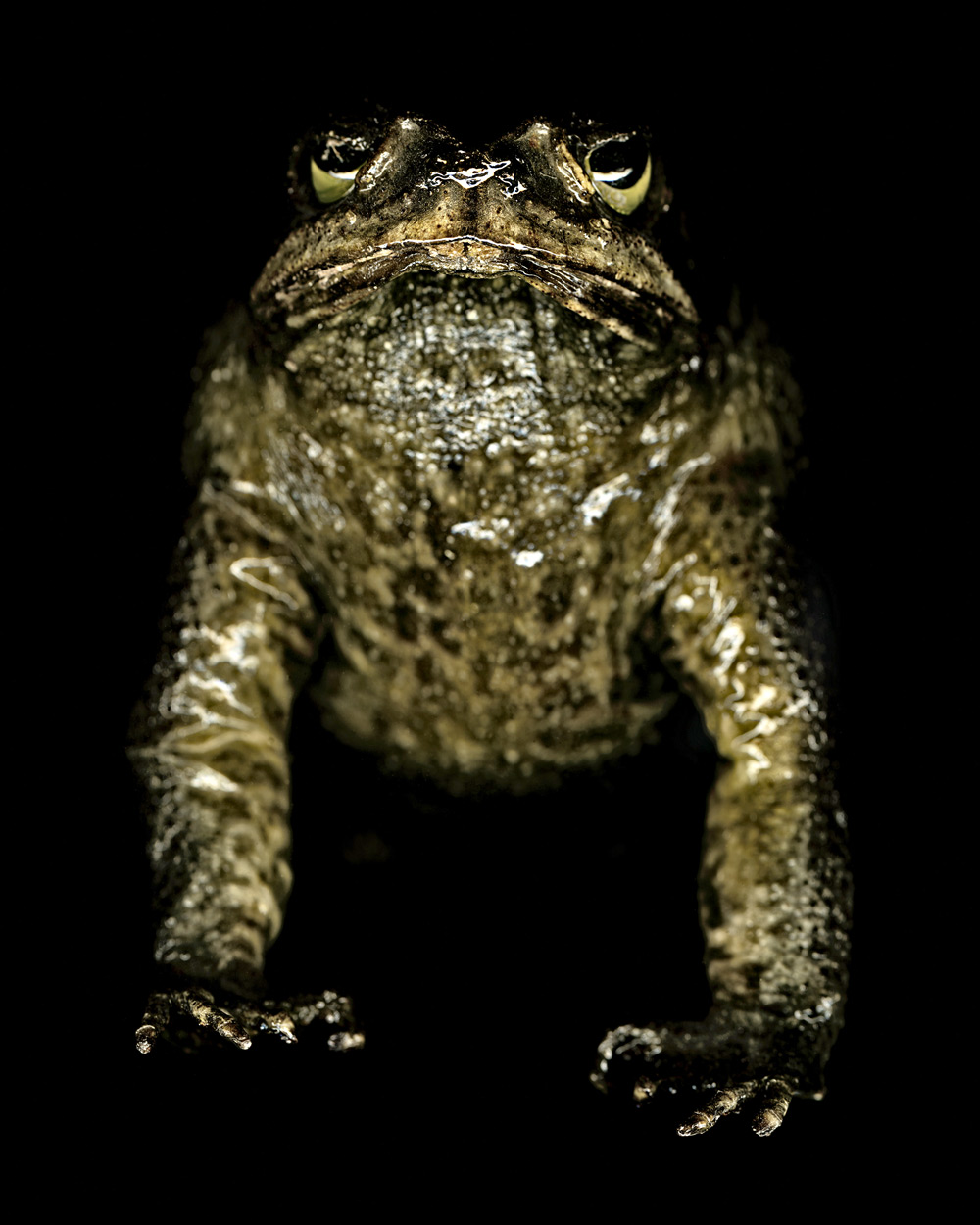
Greg Elms (Australian, b. 1960) 'Cane Toad, Bufo Marinus' 2011


Greg Elms (Australian, b. 1960)
Cane Toad, Bufo Marinus
2011
Archival Inkjet Print


Edmund Pearce Gallery

This gallery is now closed.

LIKE ART BLART ON FACEBOOK

Back to top

Marcus Bunyan black and white archive: ‘Circumnavigation’, 1992-1994

November 2012

*PLEASE NOTE THIS POSTING CONTAINS ART PHOTOGRAPHS OF MALE SEXUAL NUDITY- IF YOU DO NOT LIKE PLEASE DO NOT LOOK, FAIR WARNING HAS BEEN GIVEN*


The titles from this period tend to be poetic, pragmatic or composed, like Japanese haiku. The photographs are a mixture of personal narrative and universal archetype, hence the affinity to Frederick Sommer’s incantation: Circumnavigation of the blood is always Circumnavigation of the world.

I am scanning my negatives made during the years 1991-1997 to preserve them in the form of an online archive as a process of active memory, so that the images are not lost forever. These photographs were images of my life and imagination at the time of their making, the ideas I was thinking about and the people and things that surrounded me.

All images © Marcus Bunyan. Please click the photographs for a larger version of the image; remember these are just straight scans of the negatives!

Photographs are available from this series for purchase. As a guide, a vintage 8″ x 10″ silver gelatin print costs $700 plus tracked and insured shipping. For more information please see my Store web page.


Marcus Bunyan (Australian, b. 1958) 'Doll on chair' 1992-94


Marcus Bunyan (Australian, b. 1958)
Doll on chair
1992-1994
Silver gelatin photograph


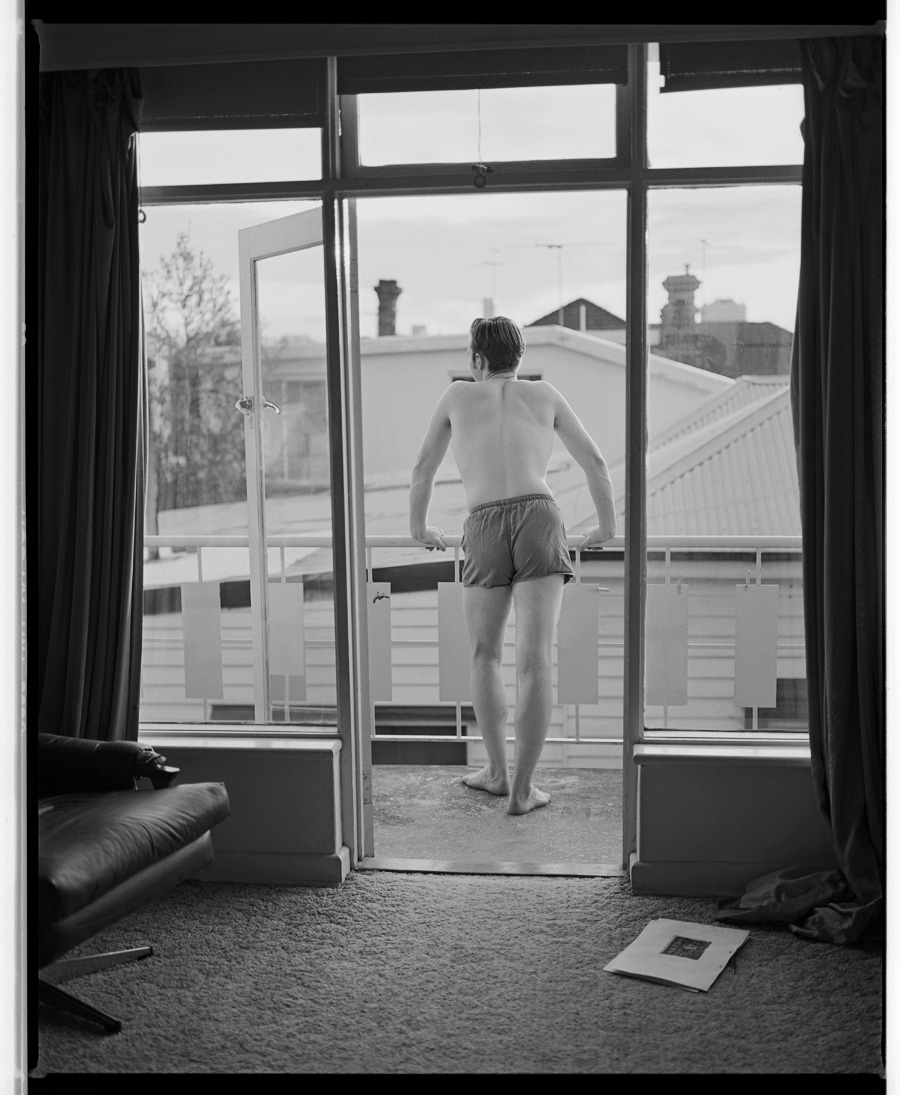
Marcus Bunyan (Australian, b. 1958) 'Paul on the balcony, Mcilwrick Street, Windsor' 1992-94


Marcus Bunyan (Australian, b. 1958)
Paul on the balcony, Mcilwrick Street, Windsor
1992-1994
Silver gelatin photograph


Marcus Bunyan (Australian, b. 1958) 'Paul resting' 1992-94


Marcus Bunyan (Australian, b. 1958)
Paul resting
1992-1994
Silver gelatin photograph


Marcus Bunyan (Australian, b. 1958) 'Marcus holding his cock' 1992-94


Marcus Bunyan (Australian, b. 1958)
Marcus holding his cock
1992-1994
Silver gelatin photograph


Marcus Bunyan (Australian, b. 1958) 'Post with finial, tree' 1992-94


Marcus Bunyan (Australian, b. 1958)
Post with finial, tree
1992-1994
Silver gelatin photograph


Marcus Bunyan (Australian, b. 1958) 'People who live in glass houses shouldn't throw stars' 1992-1994


Marcus Bunyan (Australian, b. 1958)
People who live
in glass houses
shouldn’t throw stars
1992-1994
Silver gelatin photograph


Marcus Bunyan (Australian, b. 1958) 'Paul, Windsor and the city' 1992-1994


Marcus Bunyan (Australian, b. 1958)
Paul, Windsor and the city
1992-1994
Silver gelatin photograph


Marcus Bunyan (Australian, b. 1958) 'Self portrait with punk jacket and flanny' 1992-1994


Marcus Bunyan (Australian, b. 1958)
Self portrait with punk jacket and flanny
1992-1994
Silver gelatin photograph


Marcus Bunyan (Australian, b. 1958) 'Release' 1992-1994


Marcus Bunyan (Australian, b. 1958)
Release
1992-1994
Silver gelatin photograph


Marcus Bunyan (Australian, b. 1958) 'Jesus, Mary and Joseph.' 1992-1994


Marcus Bunyan (Australian, b. 1958)
Jesus, Mary and Joseph.
1992-1994
Silver gelatin photograph


Marcus Bunyan (Australian, b. 1958) 'Circumnavigation of the blood is always Circumnavigation of the world (for Frederick Sommer)' 1992-1994


Marcus Bunyan (Australian, b. 1958)
Circumnavigation of the blood is always Circumnavigation of the world (for Frederick Sommer)
1992-1994
Silver gelatin photograph


Marcus Bunyan (Australian, b. 1958) 'Release (cock, hands, cum)' 1992-1994


Marcus Bunyan (Australian, b. 1958)
Release (cock, hands, cum)
1992-1994
Silver gelatin photograph


Marcus Bunyan (Australian, b. 1958) 'Madonna and child, skull' 1992-94


Marcus Bunyan (Australian, b. 1958)
Madonna and child, skull
1992-1994
Silver gelatin photograph


Marcus Bunyan black and white archive 1991-1997

LIKE ART BLART ON FACEBOOK

Back to top

Review: ‘Gregory Crewdson: In A Lonely Place’ at the Centre for Contemporary Photography (CCP), Fitzroy, Melbourne

Exhibition dates: 28th September – 11th November 2012


Installation photograph of the series 'Beneath the Roses' (2003-2008) from the exhibition 'Gregory Crewdson: In A Lonely Place' at the Centre for Contemporary Photography (CCP), Fitzroy, Melbourne

Installation photograph of the series 'Beneath the Roses' (2003-2008) from the exhibition 'Gregory Crewdson: In A Lonely Place' at the Centre for Contemporary Photography (CCP), Fitzroy, Melbourne


Installation photographs of the series Beneath the Roses (2003-2008) from the exhibition Gregory Crewdson: In A Lonely Place at the Centre for Contemporary Photography (CCP), Fitzroy, Melbourne
Photos: Dr Marcus Bunyan


Downfall of a dream: (n)framing the enigma in Gregory Crewdson’s Beneath the Roses

After the excoriating diatribe by Robert Nelson in The Age newspaper (“Unreal stills, unmoving images” Wednesday October 17 2012) I hope this piece of writing will offer greater insight into the work of this internationally renowned artist. With some reservations, I like Crewsdon’s work, I like it a lot – as do the crowds of people flocking to the Centre for Contemporary Photography, Fitzroy to see the exhibition. Never have I seen so many people at the CCP looking at contemporary photography before and that can only be a good thing.

Let’s get the basics out of the way first. The early series Fireflies are small silver gelatin photographs that capture “the tiny insects’ transient moments of light as they illuminate the summer night.” These are minor works that fail to transcend the ephemeral nature of photography, fail to light the imagination of the viewer when looking at these scenes of dusky desire and discontinuous lives. The series of beautiful photographs titled Sanctuary (2010) evidence the “ruin of the legendary Cinecittà studios, which was founded by Mussolini in the 1930s and is associated with the great Italian film director Federico Fellini.” Wonderful photographs of doorways, temples, dilapidated stage sets with excellent use of soft miasmic light creating an atmosphere of de/generation (as though a half-remembered version of Rome had passed down through the generations) interfaced with contemporary Rome as backdrop. The digital prints show no strong specular highlights, no deep blacks but a series of transmutable grey and mid tones that add to the overall feeling of romantic ruin. It is a pity that these photographs are not printed as silver gelatin photographs, for they would have had much more depth of feeling than they presently possess. They just feel a little “thin” to me to sustain the weight of atmosphere required of them.

But it is the series Beneath the Roses (2003-2008) that has made Crewdson truly famous. Shot using a large format camera, Crewdson makes large-scale photographs of elaborate and meticulously staged tableaux, which have been described as “micro-epics” that probe the dark corners of the psyche. Working in the manner of a film director, he leads a production crew, which includes a director of photography, special effects and lighting teams, casting director and actors. He typically makes several exposures that he later digitally combines to produce the final image. Photographs in the series of “brief encounters” include external dioramas (shot in a down at heel Western Massachusetts town), where Crewdson shuts down streets and lights the whole scene; to interior dialogues where houses are built on sound stages and the artist can control every detail of the production. Influences on these works include, but are not limited to:

David Lynch (Blue Velvet, Twin Peaks), Alfred Hitchcock (Vertigo), Steven Spielberg (Close Encounters), the paintings of Edward Hopper, Diane Arbus (the detritus of her photographic interiors), film noir, psychoanalysis, American suburbia, the American dream, the photographs of Walker Evans, Cindy Sherman and surrealism. Concepts that you could link to the work include loneliness, alienation, apathy, resignation, mystery, contemplation and confusion, identity, desire, memory and imagination.


Now to the nuts and bolts of the matter.

Another major influence that I will add is that of the great Italian director Federico Fellini (La Dolce Vita – The Sweet Life) who shot most of that film on the sets at Cinecittà studios in Rome. It is perhaps no coincidence that Crewdson, on his first overseas film shoot, shot the series Sanctuary at the very same location. Crewdson’s photographs in the series Beneath the Roses are an American form of  “The Sweet Life.” In 1961, the New York Times film critic Bosley Crowther praised Fellini’s “brilliantly graphic estimation of a whole swath of society in sad decay and, eventually, a withering commentary on the tragedy of the over-civilized… Fellini is nothing if not fertile, fierce and urbane in calculating the social scene around him and packing it onto the screen. He has an uncanny eye for finding the offbeat and grotesque incident, the gross and bizarre occurrence that exposes a glaring irony. He has, too, a splendid sense of balance and a deliciously sardonic wit that not only guided his cameras but also affected the writing of the script. In sum, it is an awesome picture, licentious in content but moral and vastly sophisticated in its attitude and what it says.”1 The same could equally be said of the Crewdson and his masterpieces in Beneath the Roses. Crewdson is in love with Fellini’s gesture – of the uplifting of the characters and their simultaneous descent into “sweet” hedonism, debauchery and decadence using the metaphor of downfall (downfall links each scene in La Dolce Vita, that of a “downward spiral that Marcello sets in motion when descending the first of several staircases (including ladders) that open and close each major episode.”)2 Crewdson’s “spectacular apocalypses of social enervation”3 mimic Fellini’s gestural flourishes becoming Crewdson’s theme of America’s downfall, America as a moral wasteland. Crewdson’s is “an aesthetic of disparity” that builds up a cumulative impression on the viewer that finds resolution in an “overpowering sense of the disparity between what life has been or could be, and what it actually is.”4

Crewdson’s cinematic encounters are vast and pin sharp when seen in the flesh. No reproduction on the web can do their physical presence justice; it is the details that delight in these productions. You have to get up close and personal with the work. His dystopic landscapes are not narratives as such, not stills taken from a movie (for that implies an ongoing story) but open-ended constructions that allow the viewer to imagine the story for themselves. They do not so much evoke a narrative as invite the viewer to create one for themselves – they are an “invitation” to a narrative, one that explores the anxiety of the (American) imagination, an invitation to empathise with the dramas at play within contemporary environments. For me, Crewdson’s extra ordinary photographs are a form of enigma (a puzzling or inexplicable occurrence or situation), the picture as master puzzle (where all the pieces fit perfectly together in stillness) that contains a riddle or hidden meaning. Clues to this reading can be found in one of the photographs from the series (Blue Period, see detail image, below) where Crewdson deliberately leaves the door of a bedside cupboard open to reveal a “Perfect PICTURE PUZZLE” box inside. The viewer has to really look into the image and understand the significance of this artefact.

Another reading that I have formulated is of the transience of space and time within Crewdson’s series. In the disquieting, anonymous townscapes people look out from their porches (or the verandas are lit and empty), they abandon their cars or walk down desolate streets hardly ever looking directly out at the viewer. The photographs become sites of mystery and wonder hardly anchored (still precisely anchored?) in time and space. This disparity is emphasised in the interior dialogues. The viewer (exterior) looks at a framed doorway or window (exterior) looking into an scene (interior) where the walls are usually covered with floral wallpaper (interior / exterior) upon which hangs a framed image of a Monet-like landscape (exterior) (see detail image, above). Exterior, exterior, interior, interior / exterior, exterior. The trees of the landscape invade the home but are framed; exterior/framed, interior/mind. There is something mysterious going on here, some reflection of an inner state of mind.

In his visual mosaics Crewdson engages our relationship with time and space to challenge the trace of experience. His tableaux act as a kind of threshold or hinge of experience – between interior and exterior, viewer and photograph. His photographs are a form of monism in which two forces (interior / exterior) try to absorb each other but ultimately lead to a state of equilibrium. It is through this “play” that the context of the photographs and their relationship to each other and the viewer are “framed.” This device emphasises the aesthetic as much as information and encourages the viewer to think about the relationship between the body, the world of which it is part and the dream-reason of time.5 This intertextual (n)framing (n meaning unspecified number in mathematics) encourages the viewer to explore the inbetween spaces in the non-narrative / meta-narrative,”and by leaps (intuitive leaps, poetic leaps, leaps of faith)”6 encourage escapism in the imagination of the viewer. It is up to us as viewers to seek the multiple, disparate significances of what is concealed in each photograph as “felt knowledge” (Walter Benjamin), recalling to mind the sensory data placed before our eyes, something that can be experienced but cannot be explained by man: “the single moment of the present amidst the transience of life and searching for some kind of eternal truth.”7

Finally, in a more adverse reading of the photographs from the series Beneath the Roses, I must acknowledge the physically (not mentally) static nature of the images where every detail of the mise-en-scène is fully articulated and locked down: from the perfect trickle of blood running from the woman’s vagina in Blue Period, to the reflections in mirrors, the detritus of living scattered on the bedroom floor, the dirty telephone, packed suitcases and keys in locks to the desolate looks of the participants that never engage with the viewer. Despite allusions of despair, in their efficacy (their static and certain world order), there is no real chthonic madness here, no real messiness of the capture of death, murder and the wastage of human life (famine, AIDS, cancer or the blood running over the pavement in one of Weegee’s murder scenes for example). This is Fellini’s gross and bizarre LITE. Americurbana “is being addressed with the same reserve and elegance that ensures that the institution – artistic, political, what you will – is upheld and never threatened. It is pre-eminently legible, it elicits guilt but not so much as to cause offence.”8 I must also acknowledge the male-orientated viewpoint of the photographs, where men are seated, clothed, lazy or absent and all too often women are doing the washing or cooking, are naked and vulnerable. In their portrayal of (usually) half dressed or naked females the photographs evidence a particularly male view of the world, one that his little empathy or understanding of how a female actually lives in the world. For me this portrait of the feminine simply does not work. The male photographer maintains control (and power) by remaining resolutely (in)visible.

Overall this is a outstanding exhibition that thoroughly deserves that accolades it is receiving. Sitting in the gallery space for an hour and a half and soaking up the atmosphere of these magnificent works has been for me one of the art experiences of 2012. Make sure that you do not miss these mesmerising prophecies.

Dr Marcus Bunyan


1/ Crowther’s review first published in The New York Times, April 20, 1961. In Fava and Vigano, 105 quoted in Anon. “La Dolce Vita,” on Wikipedia Footnote 30 [Online] Cited 20/10/2012. en.wikipedia.org/wiki/La_Dolce_Vita

2/ Anon. “La Dolce Vita,” on Wikipedia Footnote 30 [Online] Cited 20/10/2012. en.wikipedia.org/wiki/La_Dolce_Vita

3/ Sultanik, Aaron. Film, a Modern Art. Cranbury, N.J: Cornwall Books, 1986, p. 408

4/ Richardson, Robert. “Waste Lands: The Breakdown of Order,” in Bondanella (ed.), Federico Fellini: Essays in Criticism, p. 111 quoted in Anon. “La Dolce Vita,” on Wikipedia Footnote 30 [Online] Cited 20/10/2012. en.wikipedia.org/wiki/La_Dolce_Vita

5/ Bacon, Julie Louise. “Liquid Archive: On Ambivalence,” in Liquid Archive. Melbourne: Monash University Museum of Art (MUMA), 2012, p. 119

6/ Kirshenblatt-Gimblett, Barbara. “The Museum – A Refuge for Utopian Thought,” in Rüsen, Jörn; Fehr Michael, and Ramsbrock, Annelie (eds.). Die Unruhe der Kultur: Potentiale des Utopischen. Velbrück Wissenschaft, 2004. In German.

7/ Kataoka, Mami commenting on the work of Allan Kaprow. “Transient Encounters,” in Broadsheet: Criticism, Theory, Art Vol 41.3, September 2012, p. 174

8/ Geczy, Adam. “A dish served lukewarm,” in Broadsheet: Criticism, Theory, Art Vol 41.3, September 2012, p. 177

Many thankx to the artist, Gagosian Gallery and the Centre for Contemporary Photography for allowing me to publish the photographs in the posting. Special thankx to Director of the CCP Naomi Cass and Ms. James McKee from Gagosian Gallery for facilitating the availability of the media images. Please click on the photographs for a larger version of the image.

All photographs © Gregory Crewdson. Courtesy Gagosian Gallery.

Installation and detail photographs © Dr Marcus Bunyan


Gregory Crewdson (American, b. 1962) 'Untitled (Blue Period)' 2003-2005


Gregory Crewdson (American, b. 1962)
Untitled (Blue Period)
2003-2005
© Gregory Crewdson. Courtesy Gagosian Gallery


Gregory Crewdson (American, b. 1962) 'Untitled (Blue Period)' 2003-2005 (detail)

Gregory Crewdson (American, b. 1962) 'Untitled (Blue Period)' 2003-2005 (detail)

Gregory Crewdson (American, b. 1962) 'Untitled (Blue Period)' 2003-2005 (detail)


Details from Gregory Crewdson’s Untitled (Blue Period) (2003-2005, above) from the series Beneath the Roses (2003-2008)
Photos: Dr Marcus Bunyan


“The American middle-class nightmare: nothing is clean, orderly, idyllic, or romantic. In his perfectly staged, hyperrealistic tableaux, photographer Gregory Crewdson reveals the claustrophobic limbo and abyss of spiritual repression that is the typical suburb. Here, hushed-up violence, alienation, isolation, and emptiness are nothing new or unfamiliar, but rather part of the everyday neighbourhood experience.”

Gregory Crewdson, In a Lonely Place, Abrams Publishing, New York, 2011


“I have always been fascinated by the poetic condition of twilight. By its transformative quality. Its power of turning the ordinary into something magical and otherworldly. My wish is for the narrative in the pictures to work within that circumstance. It is that sense of in-between-ness that interests me.”


Gregory Crewdson


Gregory Crewdson (American, b. 1962) 'Untitled (Maple Street)' 2003-2005


Gregory Crewdson (American, b. 1962)
Untitled (Maple Street)
2003-2005
© Gregory Crewdson. Courtesy Gagosian Gallery


Gregory Crewdson (American, b. 1962) 'Untitled (Shane)' 2006


Gregory Crewdson (American, b. 1962)
Untitled (Shane)
2006
© Gregory Crewdson. Courtesy Gagosian Gallery


Gregory Crewdson (American, b. 1962) 'Untitled (Brief Encounter)' 2006


Gregory Crewdson (American, b. 1962)
Untitled (Brief Encounter)
2006
© Gregory Crewdson. Courtesy Gagosian Gallery


Gregory Crewdson (American, b. 1962) 'Untitled (Railway Children)' 2003-2005


Gregory Crewdson (American, b. 1962)
Untitled (Railway Children)
2003-05
© Gregory Crewdson. Courtesy Gagosian Gallery


In a Lonely Place presents selections from three major series by Gregory Crewdson, Fireflies (1996), Beneath the Roses (2003-2008), Sanctuary (2010) and, presented for the first time, the video Field Notes (2009). The exhibition title comes from Nicholas Ray’s 1950s film noir of the same name, one of many films that inspired Crewdson. In a Lonely Place is evocative of an underlying mood-a quiet feeling of alienation and loneliness that links the three series selected by curators Estelle Af Malmborg, Jens Erdman Rasmussen and Felix Hoffmann. In a Lonely Place presents the first comprehensive exhibition of Crewdson’s work in Australia.

In Beneath the Roses, anonymous townscapes, forest clearings and broad, desolate streets are revealed as sites of mystery and wonder; similarly, ostensibly banal interiors become the staging grounds for strange human scenarios. Crewdson’s scenes are tangibly atmospheric: visually alluring and often deeply disquieting. Never anchored precisely in time or place, these and the other narratives of Beneath the Roses are located in the dystopic landscape of the anxious American imagination. Crewdson explores the American psyche and the dramas at play within quotidian environments.

In his most recent series, Sanctuary (2010), Crewdson has taken a new direction, shooting for the first time outside the US. During a trip to Rome, he visited the legendary Cinecittà studios, which was founded by Mussolini in the 1930s and is associated with the great Italian film director Federico Fellini. Crewdson discovered fragments of a past glory, with occasional unexpected views of the surrounding contemporary Roman suburbia. Cinecittà is a lonely place deserted by the film crews who once used the site to recreate settings of ancient Rome, medieval Italy and nineteenth-century New York.

In the intimate photographs of Fireflies, Crewdson portrays the mating ritual of fireflies at dusk, capturing the tiny insects’ transient moments of light as they illuminate the summer night. Unlike the theatrical scale of the Beneath the Roses and Sanctuary series, Fireflies is a quiet meditation on the nature of light and desire, as the images reflect not only upon the fleeting movements of the insects in their intricate mating ritual, but upon the notion of photography itself, in capturing a single ephemeral moment.

Gregory Crewdson received a BA from the State University of New York, Purchase, New York in 1985 and an MFA in Photography from Yale School of Art, Yale University, New Haven, Connecticut in 1988. He has exhibited widely in the United States and Europe. He is Associate Professor and Director of Graduate Studies in Photography at the Yale School of Art, Yale University. Gregory Crewdson is represented by Gagosian Gallery and White Cube Gallery.

Press release from the Gagosian Gallery website


Installation photograph of the series 'Sanctuary' (2010) from the exhibition 'Gregory Crewdson: In A Lonely Place' at the Centre for Contemporary Photography (CCP), Fitzroy, Melbourne

Installation photograph of the series 'Sanctuary' (2010) from the exhibition 'Gregory Crewdson: In A Lonely Place' at the Centre for Contemporary Photography (CCP), Fitzroy, Melbourne


Installation photographs of the series Sanctuary (2010) from the exhibition Gregory Crewdson: In A Lonely Place at the Centre for Contemporary Photography (CCP), Fitzroy, Melbourne
Photos: Dr Marcus Bunyan


Gregory Crewdson (American, b. 1962) 'Untitled (1)' 2009


Gregory Crewdson (American, b. 1962)
Untitled (1)
2009
© Gregory Crewdson. Courtesy Gagosian Gallery


Gregory Crewdson (American, b. 1962) 'Untitled (17)' 2009


Gregory Crewdson (American, b. 1962)
Untitled (17)
2009
© Gregory Crewdson. Courtesy Gagosian Gallery


Gregory Crewdson (American, b. 1962) 'Untitled (8)' 2009


Gregory Crewdson (American, b. 1962)
Untitled (8)
2009
© Gregory Crewdson. Courtesy Gagosian Gallery


Gregory Crewdson (American, b. 1962) 'Untitled (2)' 2009


Gregory Crewdson (American, b. 1962)
Untitled (2)
2009
© Gregory Crewdson. Courtesy Gagosian Gallery


Gregory Crewdson (American, b. 1962) 'Untitled' 1996


Gregory Crewdson (American, b. 1962)
Untitled
1996
© Gregory Crewdson. Courtesy Gagosian Gallery


Gregory Crewdson – Close Up – Ovation

In this Ovation TV original special, acclaimed photographers Albert Maysles, Sylvia Plachy, Andrew Moore and Timothy Greenfield-Sanders discuss the impact their work has on their lives and on culture as a whole.

Gregory Crewdson is an American photographer who is best known for elaborately staged, surreal scenes of American homes and neighborhoods.

In this interview, acclaimed photographer, Gregory Crewdson shares with us insight into his techniques.


Centre for Contemporary Photography

No permanent exhibition space at the moment

Gagosian Gallery website

Centre for Contemporary Photography website

LIKE ART BLART ON FACEBOOK

Back to top