Exhibition: ‘W. Eugene Smith – Photographs A retrospective’ at Martin-Gropius-Bau, Berlin

Exhibition dates: 27th August – 27th November 2011


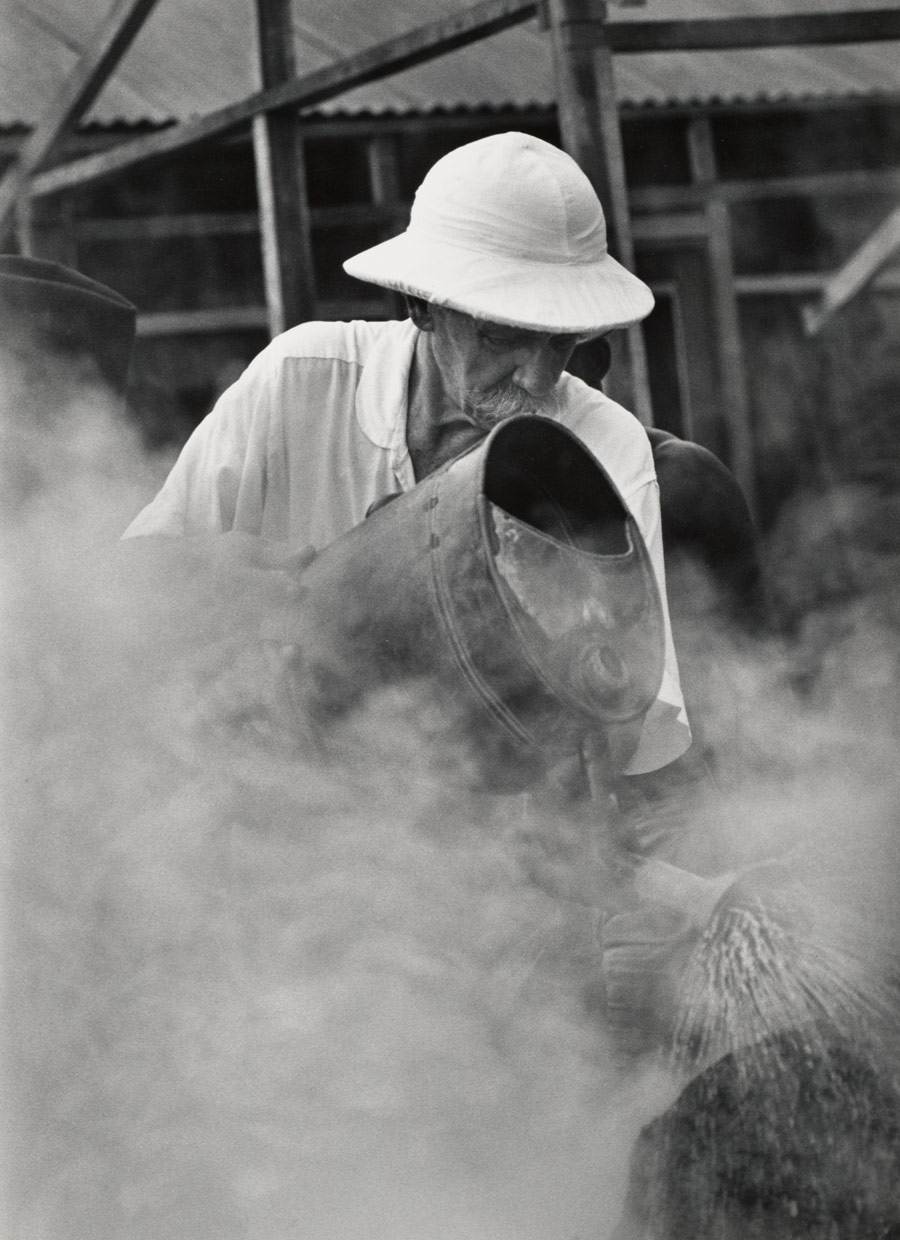
W. Eugene Smith (American, 1918-1978) 'Dance of the Flaming Coke' 1955


W. Eugene Smith (American, 1918-1978)
Dance of the Flaming Coke
1955
Gelatin silver print
20.6 x 33cm
Center for Creative Photography, University of Arizona: W. Eugene Smith Archive / Gift of the artist
© The Heirs of W. Eugene Smith, courtesy Black Star, Inc., New York


This man is legend. He created some of the most memorable and moving photographs in the history of the medium. Once seen, for example his seminal photograph Tomoko Uemura in Her Bath (1972, below), they are never forgotten. Look at the photographs, really look deeply at them. The compositions are flawless, peerless. Smith’s use of chiaroscuro makes his images sing and flow, like a Bach fugue. In spite of everything, “in spite of all the wars and all I had gone through that day, I wanted to sing a sonnet to life and to the courage to go on living it.”

Through that courage he left us a body of work that will live forever as masterpieces of the art of photography. Applause.

Dr Marcus Bunyan


Many thankx to the Martin-Gropius-Bau for allowing me to publish the photographs in the posting. Please click on the photographs for a larger version of the image.


W. Eugene Smith (American, 1918-1978) 'Albert Schweitzer, Aspen, Colorado' 1949


W. Eugene Smith (American, 1918-1978)
Albert Schweitzer, Aspen, Colorado
1949
Gelatin silver print
24.7 x 33.2cm
Center for Creative Photography, University of Arizona: W. Eugene Smith Archive / Gift of the artist
© The Heirs of W. Eugene Smith, courtesy Black Star, Inc., New York


W. Eugene Smith (American, 1918-1978) 'Guardia Civil, Spain' 1950


W. Eugene Smith (American, 1918-1978)
Guardia Civil, Spain
1950
Gelatin silver print
25.1 x 32.1cm
Center for Creative Photography, University of Arizona: W. Eugene Smith Archive / Gift of the artist
© The Heirs of W. Eugene Smith, courtesy Black Star, Inc., New York


W. Eugene Smith (American, 1918-1978) 'The Wake' 1950


W. Eugene Smith (American, 1918-1978)
The Wake
1950
Gelatin silver print
22.2 x 33.1cm
Center for Creative Photography, University of Arizona: W. Eugene Smith Archive / Gift of the artist
© The Heirs of W. Eugene Smith, courtesy Black Star, Inc., New York


W. Eugene Smith (American, 1918-1978) 'Steel Mill Worker, Pittsburgh' 1955


W. Eugene Smith (American, 1918-1978)
Steel Mill Worker, Pittsburgh
1955
Gelatin silver print
15.1 x 21.5cm
Center for Creative Photography, University of Arizona: W. Eugene Smith Archive / Gift of the artist
© The Heirs of W. Eugene Smith, courtesy Black Star, Inc., New York


W. Eugene Smith (American, 1918-1978) 'Untitled' 1954


W. Eugene Smith (American, 1918-1978)
Untitled
1955
Gelatin silver print
22.2 x 34cm
Center for Creative Photography, University of Arizona: W. Eugene Smith Archive / Gift of the artist
© The Heirs of W. Eugene Smith, courtesy Black Star, Inc., New York


W. Eugene Smith (American, 1918-1978) 'Tomoko Uemura in Her Bath' 1972


W. Eugene Smith (American, 1918-1978)
Tomoko Uemura in Her Bath Minamata, Japan
1972
Gelatin silver print
Center for Creative Photography, University of Arizona: W. Eugene Smith Archive / Gift of the artist
© The Heirs of W. Eugene Smith, courtesy Black Star, Inc., New York


One of the most well-known photojournalists in the 20th century, Eugene Smith, with his wife at that time Aileen, took this photograph of Tomoko Uemura bathed by her mother, Ryoko. Tomoko was severally disabled, as a result of mercury poisoning, through her mother who ate fish caught in the nearby bay, contaminated by industrial wastewater from a chemical factory. The Smiths lived in a small fishng village in Southern Japan for four years, and documented the human victims and the natural environments destroyed by industrial pollution.

This photograph was carefully posed and lit by the photographers to create a composition similar to that of Michelangelo’s Pietà, a sculpture in which Mary holds the dead body of her son Jesus. The Smiths created the photograph as a tool to raise the public’s awareness of mercury poisoning and to help the victims’ fight against the polluting corporation and ultimately the Japanese government.

Text from the Minneapolis Institute of Art Collection website


W. Eugene Smith, who was born in 1918 in Wichita, Kansas, and died in 1978 in Tucson, Arizona, first made a name for himself as a politically and socially committed photojournalist in the USA in the 1940s. Many of his photographic reports appeared in Life, the leading picture magazine that had been launched in New York in 1936. Smith saw in photography more than just an illustration to a text and had often asked editors for a greater say in the composition of a photo-essay. His painstakingly researched and emotionally moving features set new standards of photojournalism in the 1940s and 1950s.

Smith had begun to take photographs as a fifteen-year-old, having been inspired by his mother, a keen amateur photographer. In 1936, following the suicide of his father as a result of the Great Crash, Smith initially enrolled at the University of Notre Dame, Indiana. But he dreamed of becoming a photographer and moved to New York, where he attended the New York Institute of Photography. He embarked on his professional career in 1937 as a photo reporter for Newsweek.

A year later he began to work as a freelance for the Black Star Agency, and his pictures appeared in Harper’s Bazaar, Collier’s, Time and Life. With Life he was to have a close association that went on for years.

When the USA found itself at war at the end of 1941 Smith initially took propaganda shots for the magazine Parade to support the American troops. Then, as a correspondent for Flying magazine, he took part in reconnaissance flights, taking photos from the air. In 1944 he was back on the staff of Life – this time as a war correspondent – documenting the battle of Saipan and the American landings on the islands of Iwo Jima and Okinawa. In the course of the fighting the style of his photos changed. Instead of being gung ho they tended to focus on the terrible sufferings of the civilian population and were shot in a way that involved the viewer emotionally. On 22 May 1945 Smith himself was seriously injured, forcing him to submit to a series of operations that went on until 1947.

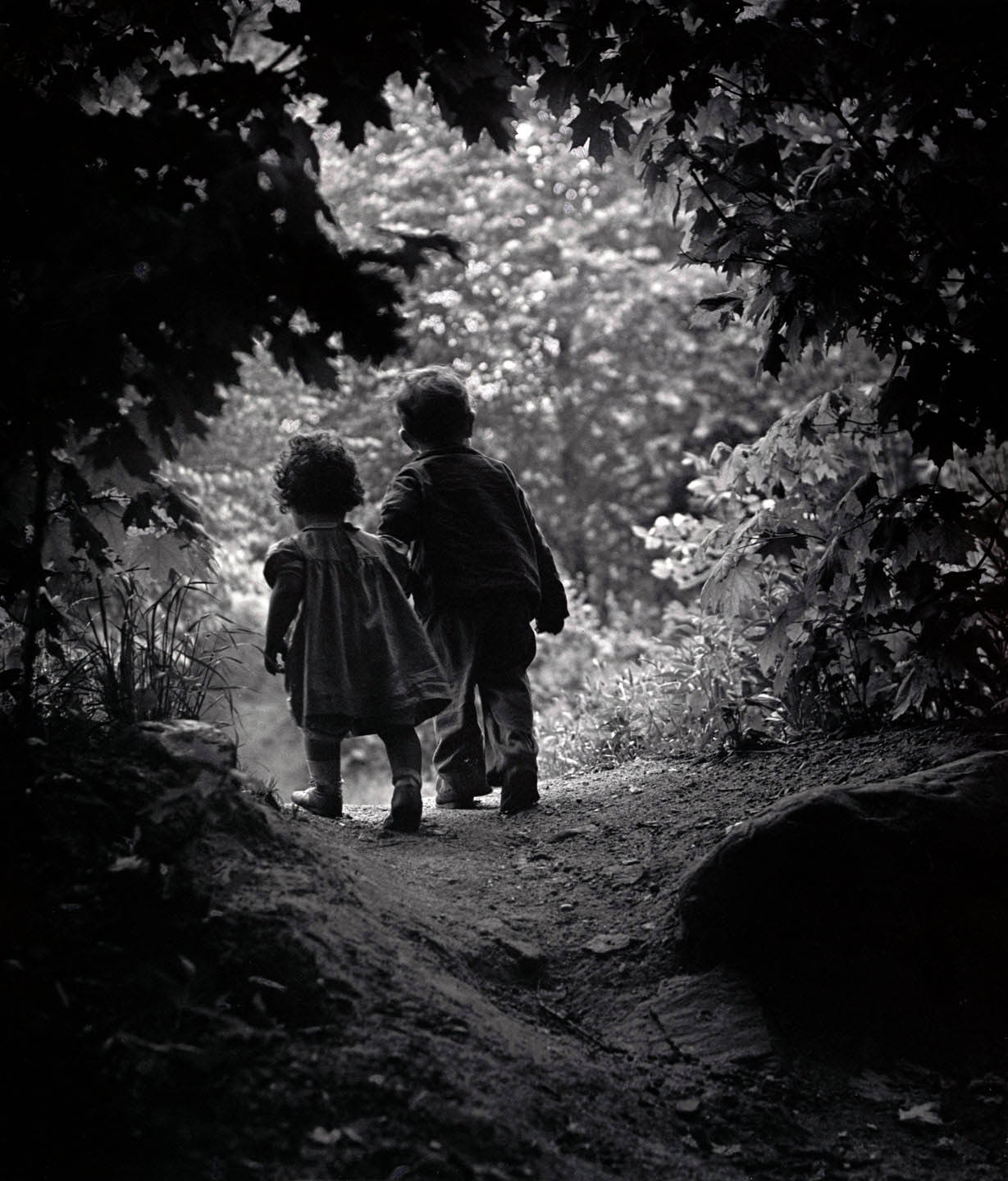
His new lease of life was symbolised by the first photograph he took after his wound. A Walk to Paradise Garden depicts his two youngest children walking towards a sun-bathed clearing. “While I followed my children into the undergrowth and the group of taller trees – how they were delighted at every little discovery! – and observed them, I suddenly realized that at this moment, in spite of everything, in spite of all the wars and all I had gone through that day, I wanted to sing a sonnet to life and to the courage to go on living it.” (1954)

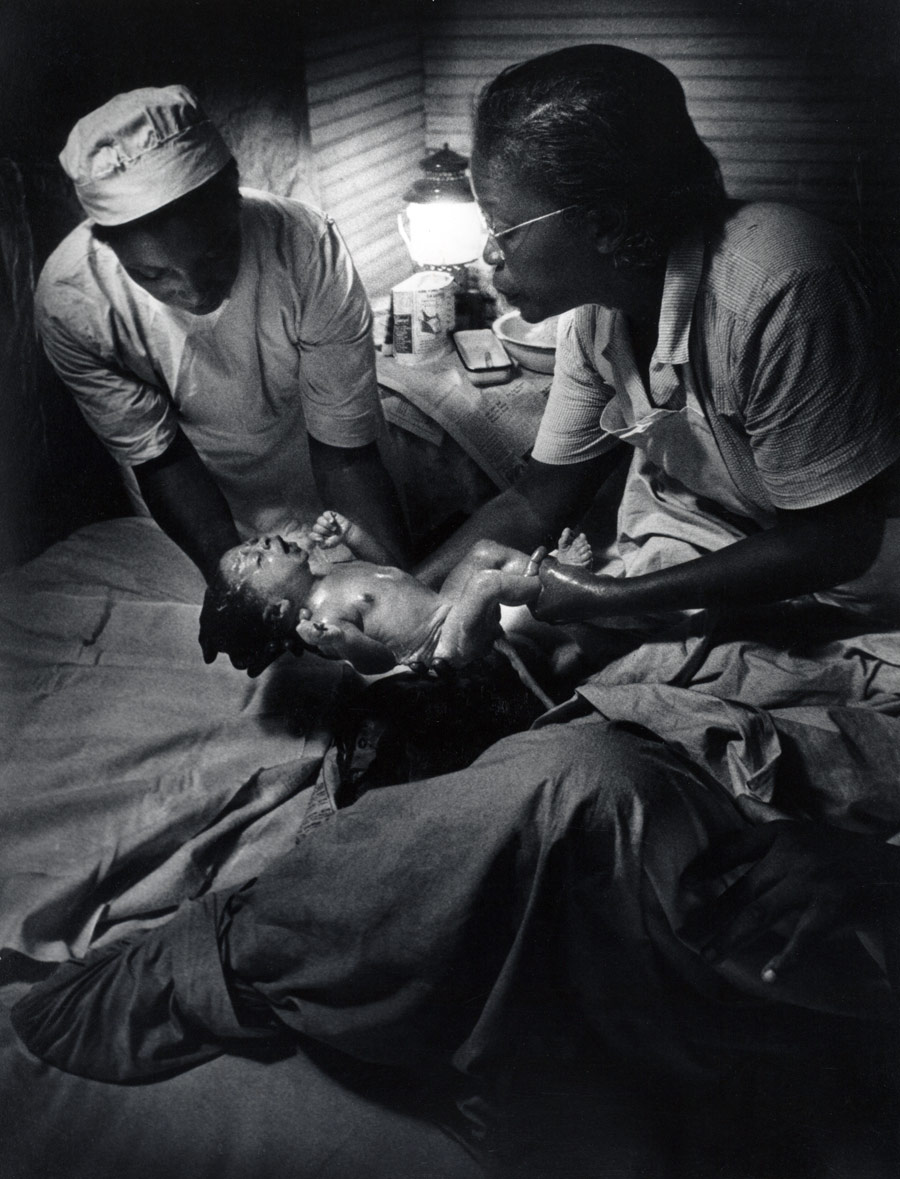
After his recovery he went back to work for Life again. Documentary features showing the dedicated work of ordinary people were particularly popular with readers. In The Country Doctor (1948) he accompanied a young country doctor from the Denver area on his rounds for several weeks. His report Nurse Midwife (1951) on the black midwife Maud Callen was produced against a background of racial discrimination and the brazen activities of the Ku Klux Klan in the Deep South. In developing the prints Smith adjusted the lighting so as to enhance the emotional atmosphere – during a birth, for example – and so arouse sympathy for the selfless efforts of the midwife. His social commitment, however, did not always meet with approval, as in the case of the unpublished report (1950) on the re-election campaign of Clement Attlee, the candidate of the British Labour Party.

Life intended the report to strengthen indirectly the position of the Conservatives by presenting the results of Attlee’s nationalisation policies in a critical light. Smith’s coverage, however, aroused sympathy for Attlee’s programme and the candidate himself. Smith had more success with his Spanish Village feature (1951). He wanted to convey an impression of living conditions under a fascist regime. After obtaining the necessary shooting permission, he spent two months studying the Spanish countryside before finally selecting a remote village in the Estremadura as his subject. Not a few of the photographs, with their chiaroscuro and clearly structured composition, are reminiscent of classical paintings and convey by means of this stylistic device a sense of the hardships but also the beauty of life there.

Smith’s feature on the work of Albert Schweitzer in Lambaréné was to be his last for Life whose refusal to give him a say in the selection and layout of pictures had become unacceptable, and he left the periodical after the appearance of his photo essay Albert Schweitzer – Man of Mercy in November 1955.

A career alternative offered itself in the shape of membership of Magnum, the photographers’ agency founded in 1947. Stefan Lorant commissioned Smith to do an extensive feature on the city of Pittsburgh and its iron foundries, which occupied him for the next few years and nearly exhausted his financial and personal resources. Instead of the 100 prints agreed with Lorant, there arose 13,000 shots out of which he wanted to compose an essay which would be entirely in line with his convictions. In 1958 88 photographs were published in Popular Photography’s Annual Guide, although the essay never appeared in its entirety.

In 1957 Smith, who was known for his excessive devotion to his work, had left his family and moved to 821 Sixth Avenue in New York. The house was visited and used for rehearsals by many well-known jazz musicians, and Smith, who was a passionate music lover, photographed and documented this creative milieu over the next few years, while also keeping an audio record on 1,740 tapes, which were only discovered among his posthumous effects in 1998. At the same time he photographed street scenes from his window while also working on the construction of a psychiatric clinic in Haiti.

In 1961 a commission from the Cosmos PR Agency to photograph the company Hitachi Ltd. took Smith to Japan for a year. This was followed in 1963 by a book which contrasted modern Japan with its deeply rooted traditions. A decade later he again turned to the forced modernisation of Japan and its grave consequences with a shocking series about the Minamata epidemic which had been triggered by the environmental pollution caused by the chemical concern Chisso, which had discharged mercurial waste into the sea near the town of Minamata. The Committee for the Defence of the Victims hired Smith to document the human and ecological dimensions of the catastrophe, and the photographer, who threw himself heart and soul into the project, moved with his second wife, Aileen Mioko Smith, to Minamata. In the course of his researches he was beaten up by company security guards and severely injured. The pictures he took, which appeared in Life and his book Minamata: A Warning to the World largely contributed to publicising the scandal.

By the early 1970s Smith’s photographic work was attracting the attention of museums. His photo A Walk to Paradise Garden had already been selected by Edward Steichen as a symbolic climax to the exhibition The Family of Man (1955), but it was not until 1971 that the first retrospective Let Truth Be the Prejudice was held in the Jewish Museum in New York. In 1977 Smith, by this time seriously ill, moved to Tucson, Arizona, to take up a teaching post at the university there in what was to be the last year of his life.

Text from the Martin-Gropius-Bau website


W. Eugene Smith (American, 1918-1978) 'A Walk to Paradise Garden' 1946


W. Eugene Smith (American, 1918-1978)
A Walk to Paradise Garden
1946
Gelatin silver print
Center for Creative Photography, University of Arizona: W. Eugene Smith Archive / Gift of the artist
© The Heirs of W. Eugene Smith, courtesy Black Star, Inc., New York


W. Eugene Smith (American, 1918-1978) 'Dr. Ernest Ceriani Following the Loss of a Mother and Child During Childbirth' 1948


W. Eugene Smith (American, 1918-1978)
Dr. Ernest Ceriani Following the Loss of a Mother and Child During Childbirth
1948
Gelatin silver print
28 x 20.2cm
Center for Creative Photography, University of Arizona: W. Eugene Smith Archive / Gift of the artist
© The Heirs of W. Eugene Smith, courtesy Black Star, Inc., New York


W. Eugene Smith (American, 1918-1978) 'Untitled' 1954


W. Eugene Smith (American, 1918-1978)
Untitled
1954
Gelatin silver print
33.5 x 23.6cm
Center for Creative Photography, University of Arizona: W. Eugene Smith Archive / Gift of the artist
© The Heirs of W. Eugene Smith, courtesy Black Star, Inc., New York


W. Eugene Smith (American, 1918-1978) 'The Spinner' 1950


W. Eugene Smith (American, 1918-1978)
The Spinner
1950
Gelatin silver print
32.4 x 23cm
Center for Creative Photography, University of Arizona: W. Eugene Smith Archive / Gift of the artist
© The Heirs of W. Eugene Smith, courtesy Black Star, Inc., New York


W. Eugene Smith (American, 1918-1978) 'Maude – Delivery' 1951


W. Eugene Smith (American, 1918-1978)
Maude – Delivery
1951
32.7 x 25cm
Gelatin silver print
Center for Creative Photography, University of Arizona: W. Eugene Smith Archive / Gift of the artist
© The Heirs of W. Eugene Smith, courtesy Black Star, Inc., New York


W. Eugene Smith (American, 1918-1978) 'Untitled' 1954


W. Eugene Smith (American, 1918-1978)
Untitled
1954
Gelatin silver print
34.6 x 25.2cm
Center for Creative Photography, University of Arizona: W. Eugene Smith Archive / Gift of the artist
© The Heirs of W. Eugene Smith, courtesy Black Star, Inc., New York


Martin-Gropius-Bau Berlin
Niederkirchnerstraße 7
Corner Stresemannstr. 110
10963 Berlin
Phone: +49 (0)30 254 86-0

Opening hours:
Wednesday to Monday 10 – 19 hrs
Tuesday closed

Martin-Gropius-Bau website

LIKE ART BLART ON FACEBOOK

Back to top

Exhibition: ‘Rückenfigur’ by David Ashley Kerr at Dear Patti Smith ARI, Fitzroy

Exhibition dates: 17th November – 27th November 2011


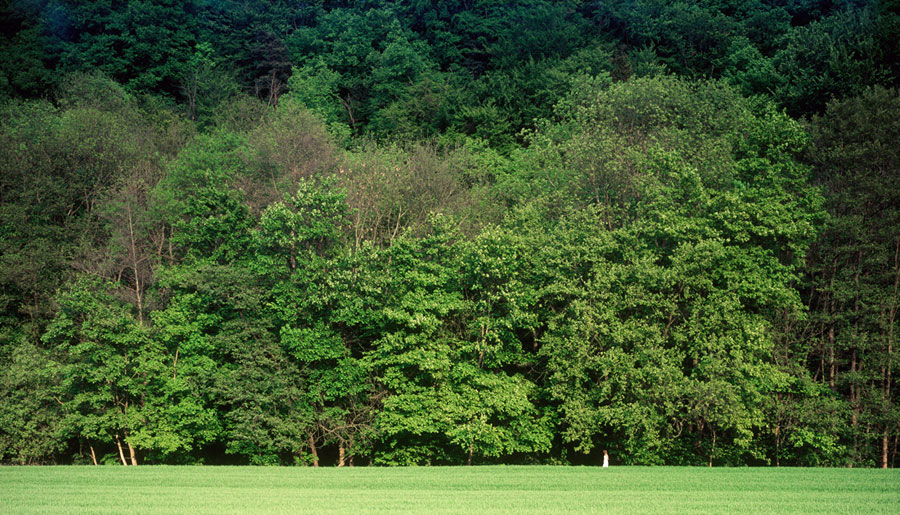
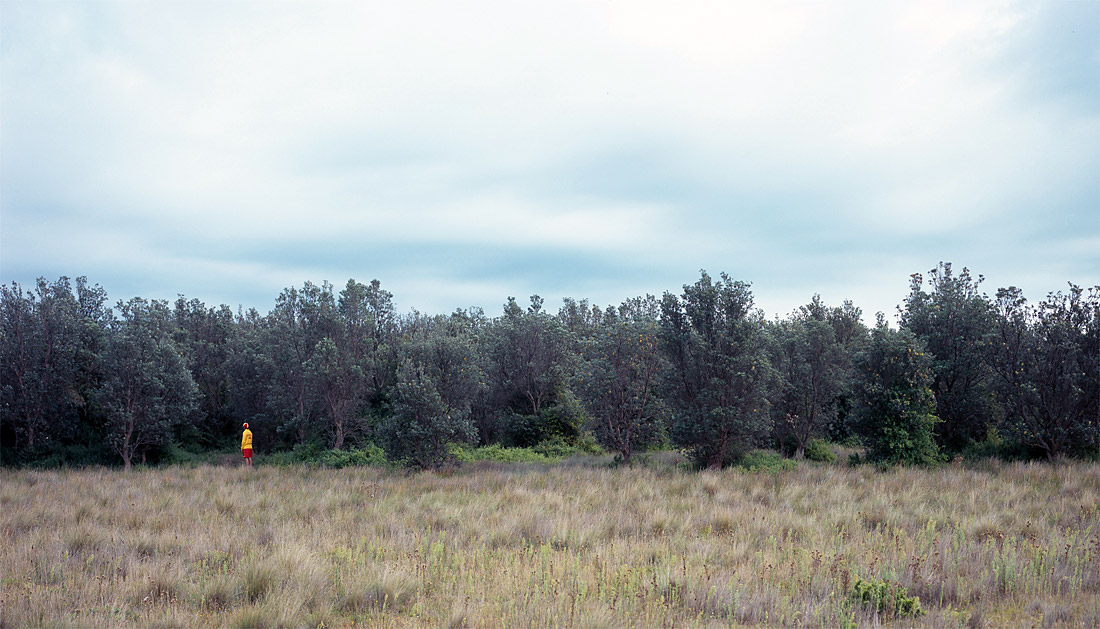
David Ashley Kerr (Australian, b. 1986) 'I hear the River
' 2009


David Ashley Kerr (Australian, b. 1986)
I hear the River

2009
Lightjet photographic print
80 x 140cm


Congratulations to David-Ashley Kerr on his first solo exhibition: the photographs and concept are very interesting.

Marcus


Many thankx to David for allowing me to publish the photographs in the posting. Please click on the photographs to see a larger version of the image.


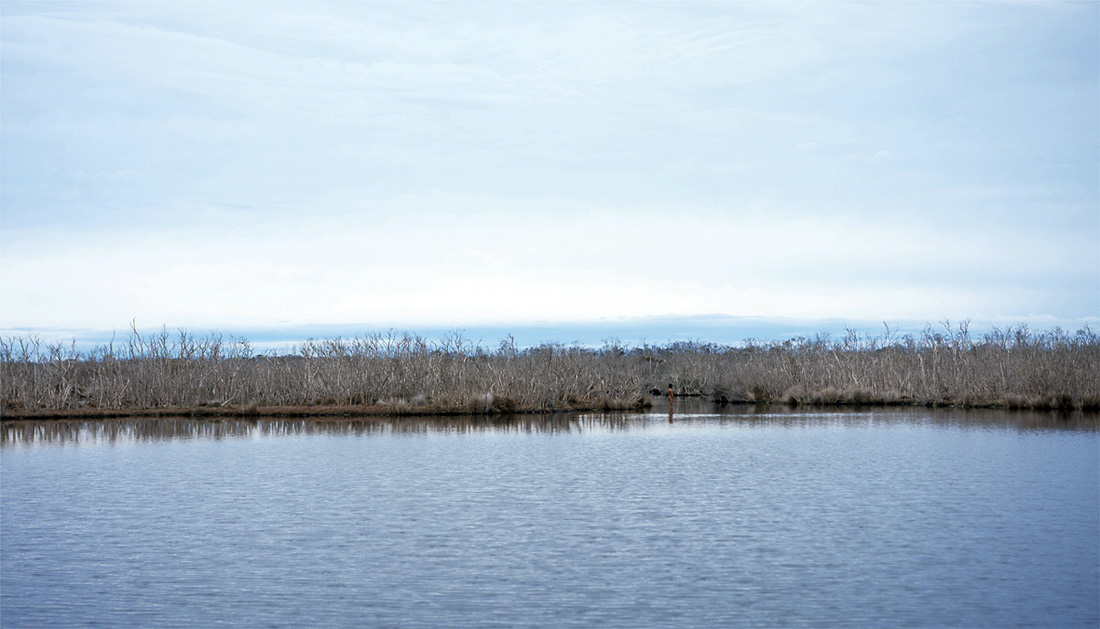
David Ashley Kerr (Australian, b. 1986) 'I hear the Sea' 2010


David Ashley Kerr (Australian, b. 1986)
I hear the Sea
2010
Lightjet photographic print
80 x 140cm


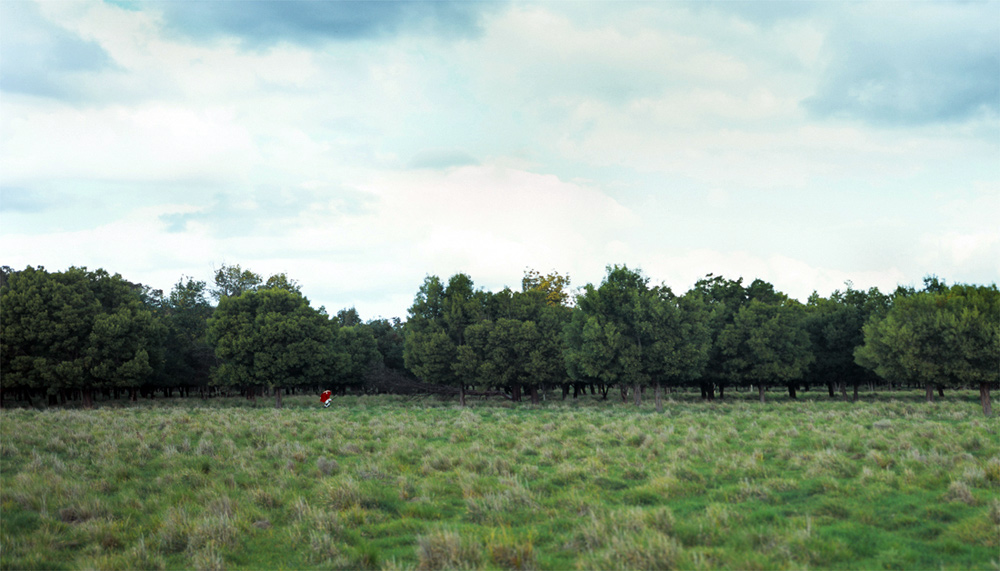
David Ashley Kerr (Australian, b. 1986) 'I hear the Wind' 2010


David Ashley Kerr (Australian, b. 1986)
I hear the Wind
2010
Lightjet photographic print
80 x 140cm


Although rückenfigur is popularly associated with the German romantic painter Caspar David Friedrich, its appearances in art very much pre-date his time. Early forms of it were attributed to Giotto but it became a more substantial style in the 15th century, creeping into the works of painters such as Jan van Eyck and later with Allaert van Everdingen and Jan Luiken.

Often these uses were simply to direct the viewer to behold the landscape in the scene. Friedrich’s approach transfigured this into a different concept, sometimes referred to as “the halted traveller”, where the lonely wanderer has appeared to have been “stopped” by the view of the landscape. This implies to us as a viewer that there is perhaps more to the landscape than we see, but those thoughts may remain unknown to us… privately contained in the mind of the rückenfigur in the scene.

It appears to me that in looking at rückenfigur art, there are two distinct thematic conveyances. The first is the aforementioned “halted traveller” lost in the contemplation of the landscape. In gazing upon the landscape, the rückenfigur is quite separate from the scene being viewed. Although s/he is anonymous and without identity, there is still a distinct identity from that of the landscape.

The second appears, to me at least, to be quite the opposite. Another form of rückenfigur seems to be where the figure(s) are distantly placed deep within the landscape itself. You’ve still got “back figures” in contemplation, but the composition makes them part of the landscape rather than separate. While we still identify with them as a viewer, the identity of the figures are very much subsumed into the grandeur of the landscape, maybe even biblically so.

Text by Christian Were, Melbourne


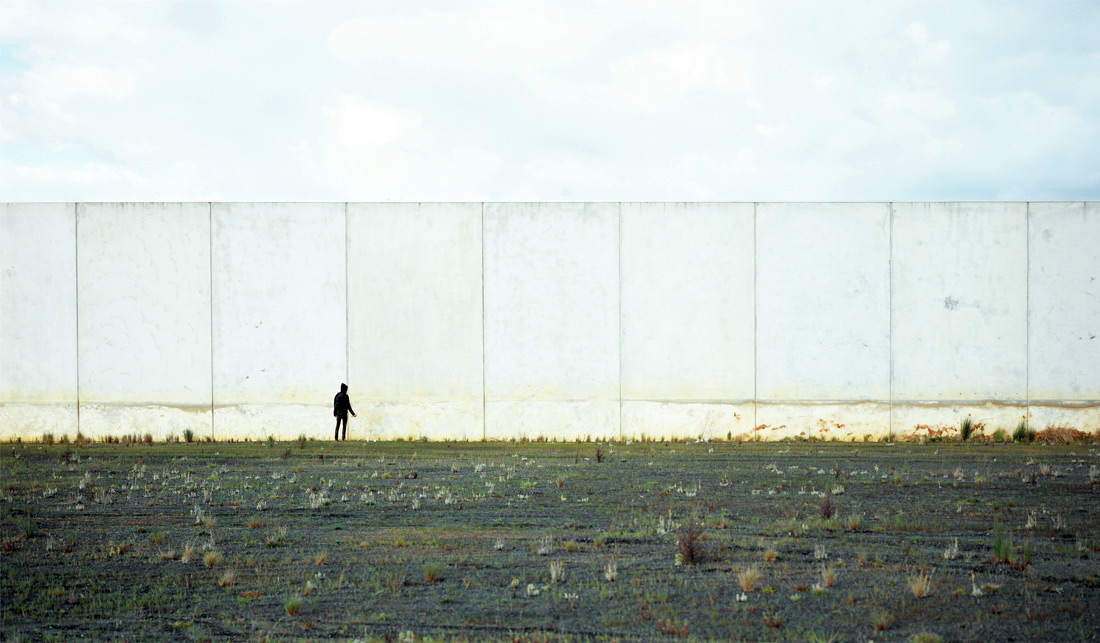
David Ashley Kerr (Australian, b. 1986) 'I hear Them' 2010


David Ashley Kerr (Australian, b. 1986)
I hear Them
2010
Lightjet photographic print
80 x 140cm


David Ashley Kerr (Australian, b. 1986) 'Territory' 2010


David Ashley Kerr (Australian, b. 1986)
Territory
2010
Lightjet photographic print
80 x 140cm


David Ashley Kerr is a Melbourne based visual artist working with large-format photography. This is his first Australian solo show, a selection of landscape studies completed since 2009 that began as a photographic investigation of the Rückenfigur, or back figure. This visual device is commonly associated with German Romantic painter Caspar David Friedrich. It involves depicting a human figure that does not engage the viewer, introspectively contemplating the natural world or landscape before them.

David Ashley Kerr’s photographic practice is a visual inquiry into the relationship between cultural identity and physical environment, site, or place. He currently investigates the use of a staged lone figure in contemporary landscape photography, attempting a symbolic representation of belonging to ‘place’ in a national context, in relation to both indigenous and non-indigenous Australian ownership and connection to land.

David Ashley Kerr completed a Bachelor of Contemporary Art at Deakin University (2009) and a Master of Fine Art at RMIT University (2010). He is currently undertaking a PhD at Monash University on an Australian Postgraduate Award Scholarship, his research inquiring into place theory through photography, investigating the visual relationship between Australian cultural identity and physical environment.

Text from the Dear Patti Smith website


David Ashley Kerr (Australian, b. 1986) 'Ore' 2010


David Ashley Kerr (Australian, b. 1986)
Ore
2010
Lightjet photographic print
80 x 140cm


David Ashley Kerr (Australian, b. 1986) 'Trash' 2010


David Ashley Kerr (Australian, b. 1986)
Trash
2010
Lightjet photographic print
80 x 140cm


David Ashley Kerr (Australian, b. 1986) 'Game' 2009


David Ashley Kerr (Australian, b. 1986)
Game
2009
Lightjet photographic print
80 x 140cm


Dear Patti Smith

This gallery has now closed.

David-Ashley Kerr website

LIKE ART BLART ON FACEBOOK

Back to top
Exhibition: ‘Joel Meyerowitz – Aftermath’ at the Miami Art Museum

Exhibition dates: 19th August – 6th November 2011


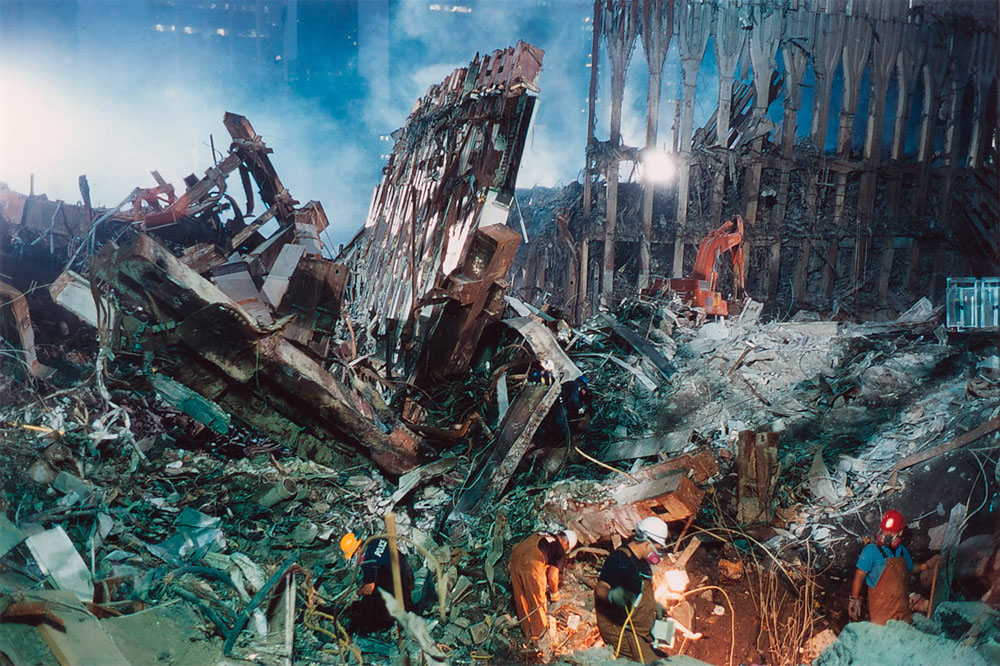
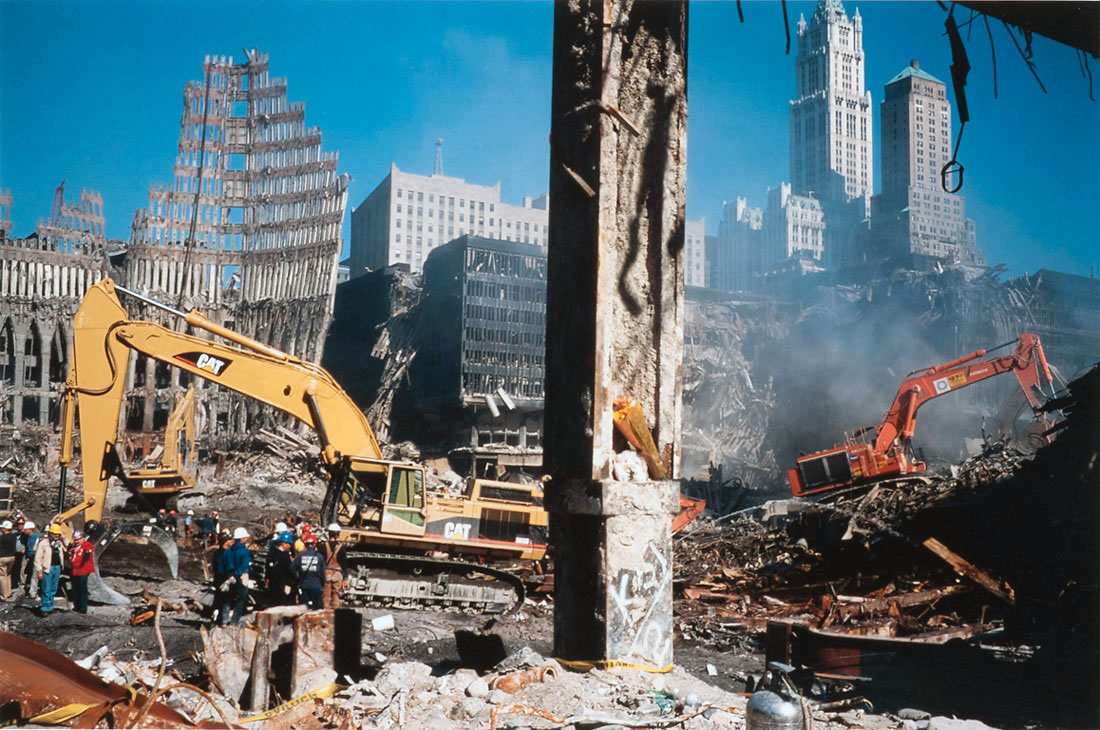
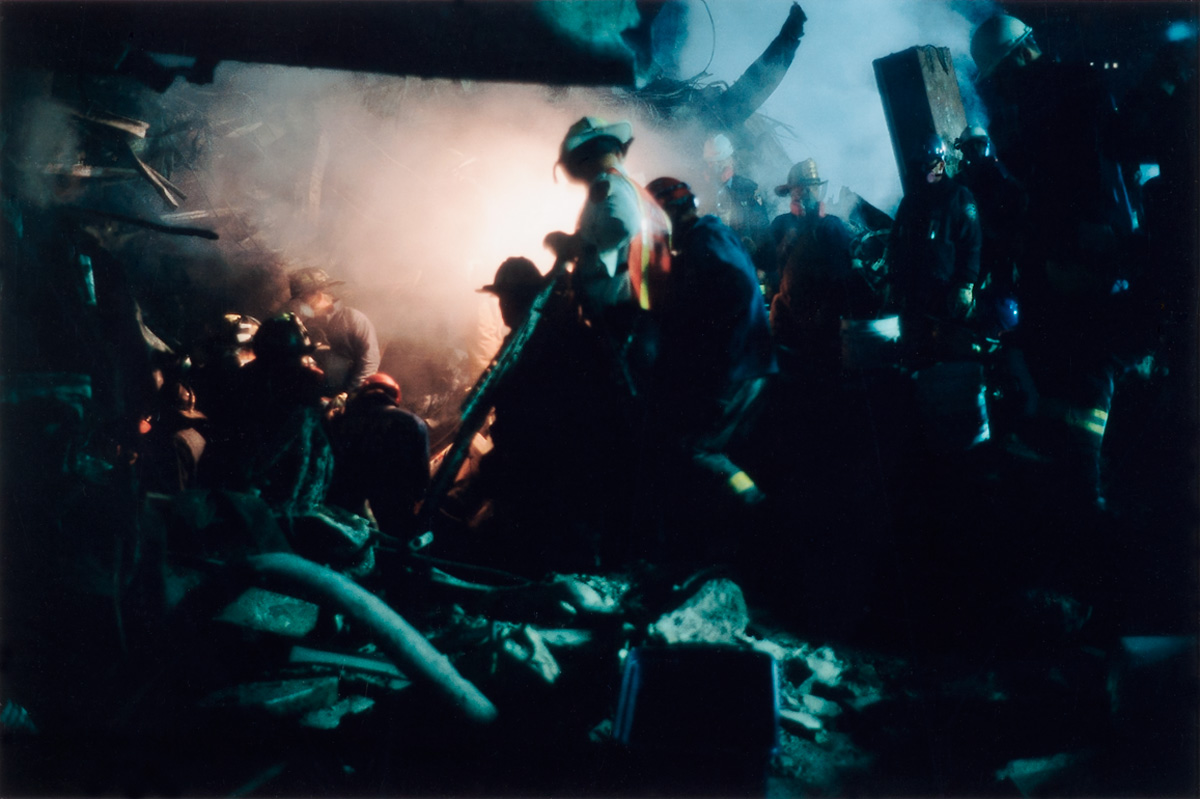
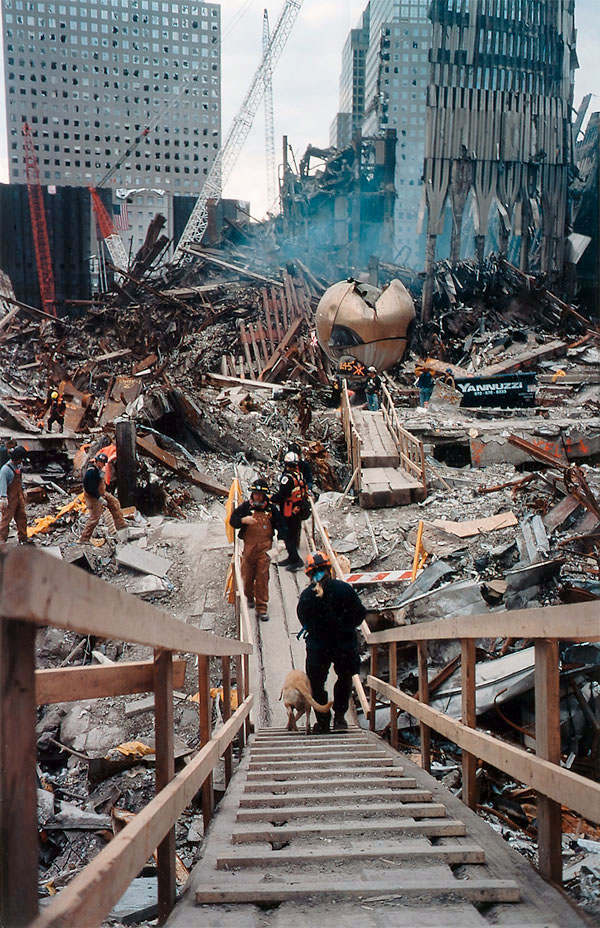
Joel Meyerowitz (American, b. 1938) 'Searchers in Rubble' 2001


Joel Meyerowitz (American, b. 1938)
Searchers in Rubble
2001
Vintage contact print
Collection Miami Art Museum, gift of Steven E. and Phyllis Gross


And do you know what “the world” is to me? Shall I show it to you in my mirror? This world: a monster of energy, without beginning, without end; a firm, iron magnitude of force that does not grow bigger or smaller, that does not expend itself but only transforms itself; as a whole, of unalterable size, a household without expenses or losses, but likewise without increase or income; enclosed by “nothingness” as by a boundary; not something blurry or wasted, not something endlessly extended, but set in a definite space as a definite force, and not a space that might be “empty” here or there, but rather a force throughout, as a play of forces and waves of forces, at the same time one and many, increasing here and at the same time decreasing there …


Frederick Nietzsche, The Will to Power


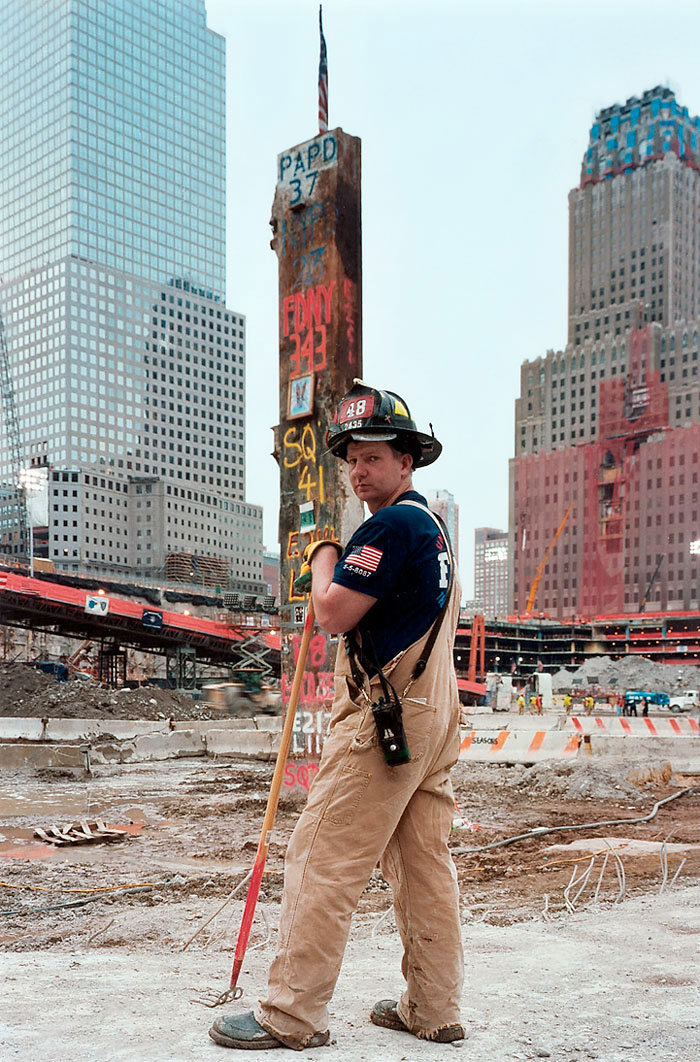
Sadness. And light. Hope. Amidst the inferno. Study the masterpiece Finding More Fireman (below) in the enlarged version and you cannot fail to be moved. It is all there: monumental, intimate, hellish, redemptive – a modern, “disastrous” form of the Rembrandt’s The Night Watch.

Dr Marcus Bunyan


Many thanxk to the Miami Art Museum for allowing me to publish the photographs in the posting. Please click on the photographs for a larger version of the image.


Joel Meyerowitz (American, b. 1938) 'Flower Offering' 2001


Joel Meyerowitz (American, b. 1938)
Flower Offering
2001
Vintage contact print
Collection Miami Art Museum, gift of Steven E. and Phyllis Gross


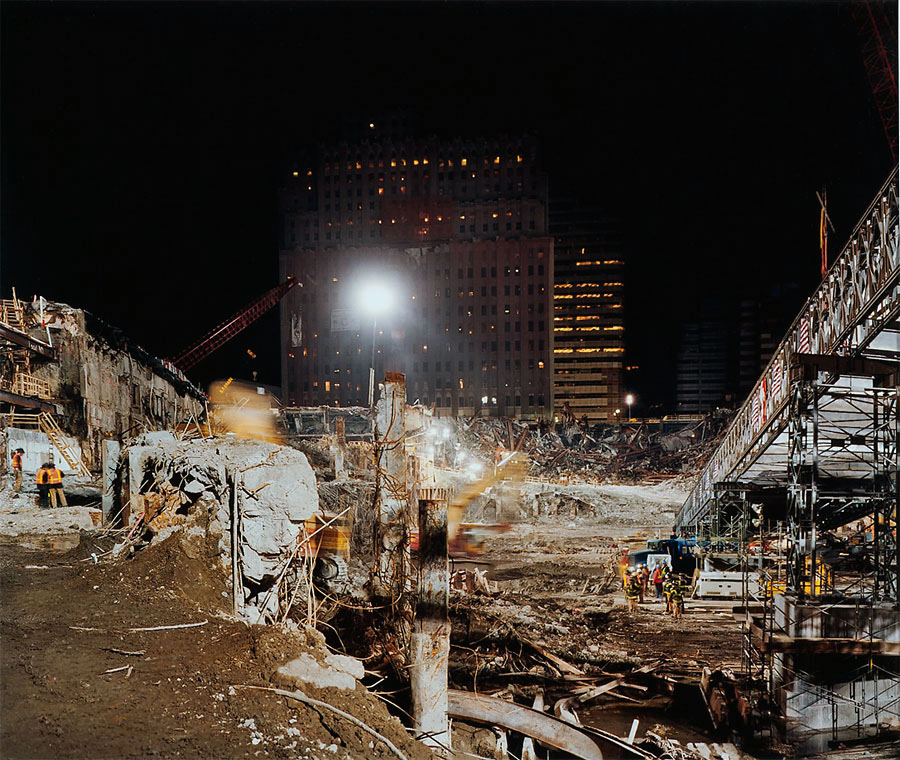
Joel Meyerowitz (American, b. 1938) 'Pit Looking North' 2002


Joel Meyerowitz (American, b. 1938)
Pit Looking North
2002
Vintage contact print
Collection Miami Art Museum, gift of Steven E. and Phyllis Gross


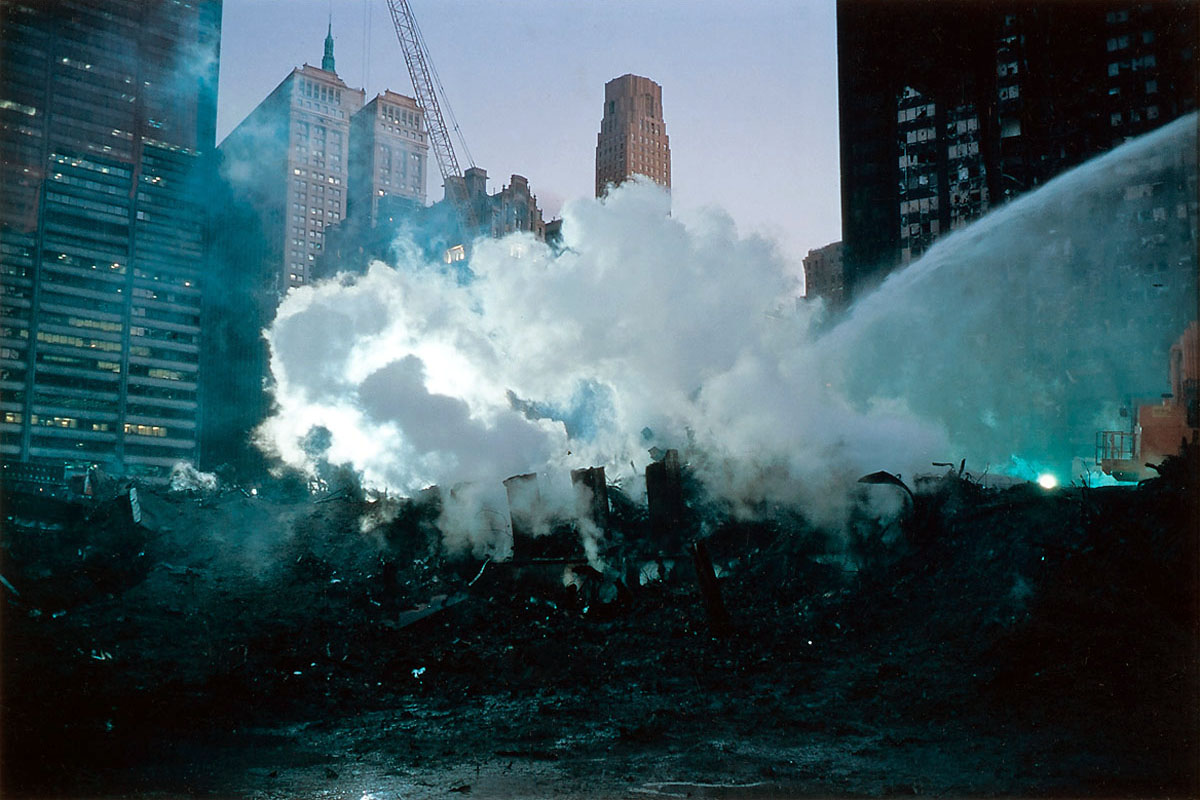
Joel Meyerowitz (American, b. 1938) 'Smoke and Spray' 2001


Joel Meyerowitz (American, b. 1938)
Smoke and Spray
2001
Vintage contact print
Collection Miami Art Museum, gift of Jeffrey Hugh Newman


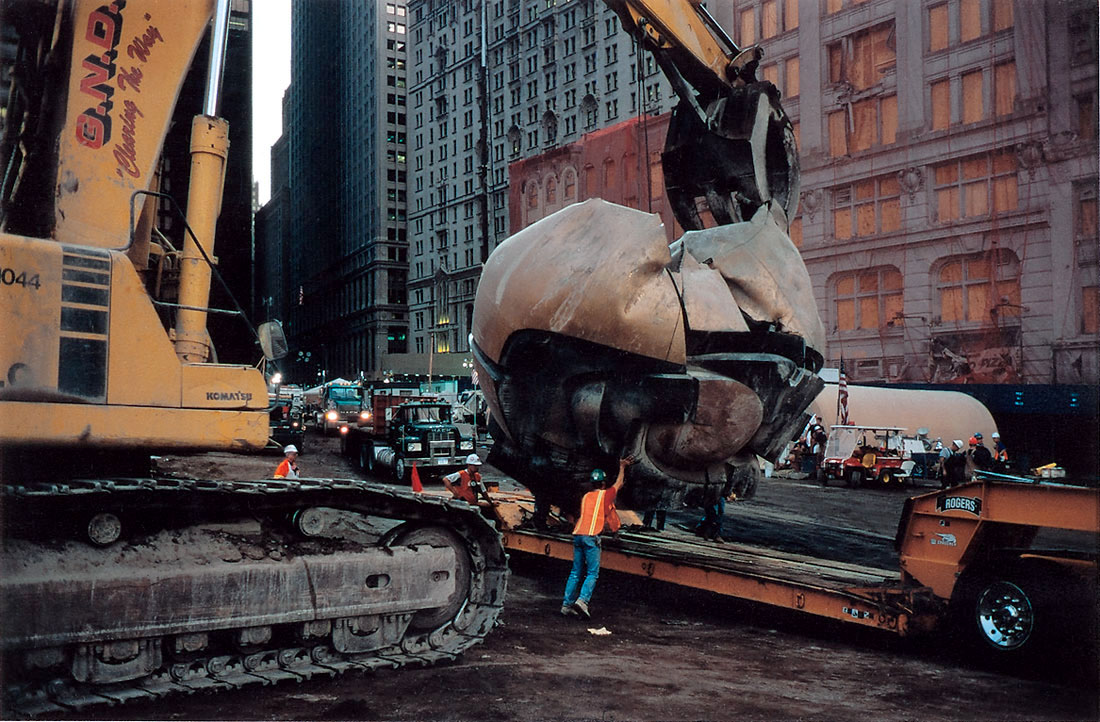
Joel Meyerowitz (American, b. 1938) 'Moving the Monument' 2001


Joel Meyerowitz (American, b. 1938)
Moving the Monument
2001
Vintage contact print
Collection Miami Art Museum, gift of Jeffrey Hugh Newman


Joel Meyerowitz (American, b. 1938) 'Finding More Fireman' 2001


Joel Meyerowitz (American, b. 1938)
Finding More Fireman
2001
Vintage contact print
Collection Miami Art Museum, gift of Charles S. and Elynne B. Zucker


Joel Meyerowitz (American, b. 1938) 'Searchers' 2002


Joel Meyerowitz (American, b. 1938)
Searchers
2002
Vintage contact print
Collection Miami Art Museum, gift of Charles S. and Elynne B. Zucker


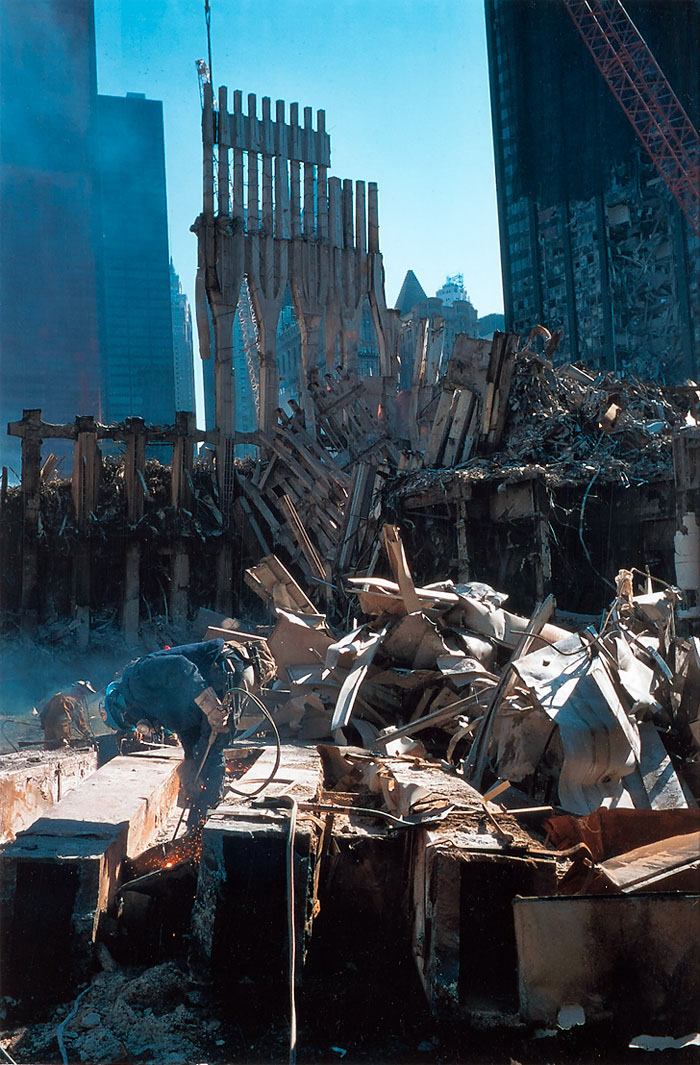
Joel Meyerowitz (American, b. 1938) 'Welders in South Tower' 2001


Joel Meyerowitz (American, b. 1938)
Welders in South Tower
2001
Vintage contact print
Collection Miami Art Museum, gift of Charles S. and Elynne B. Zucker


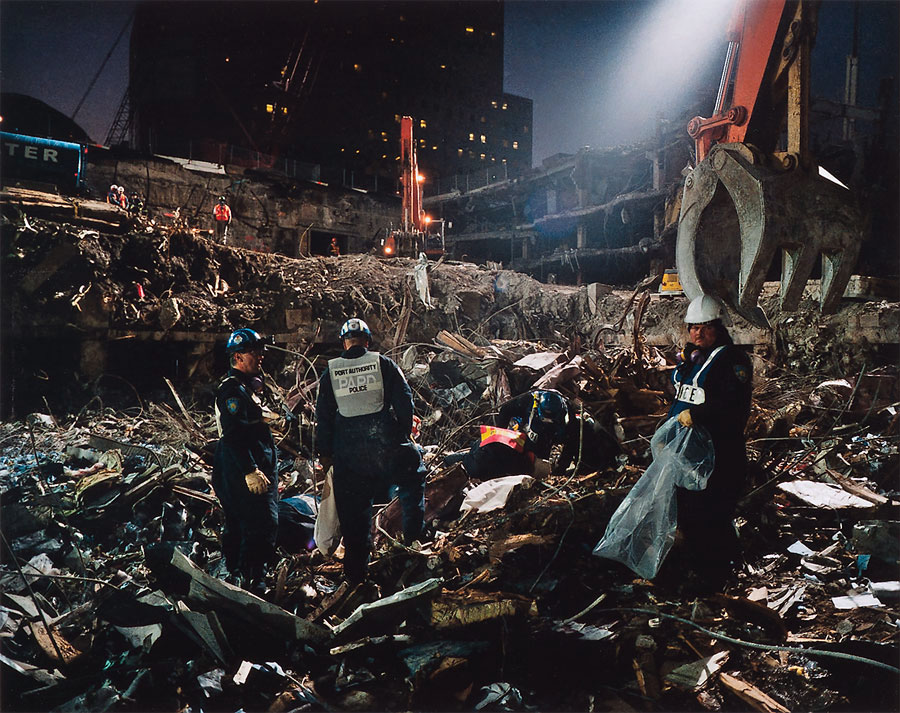
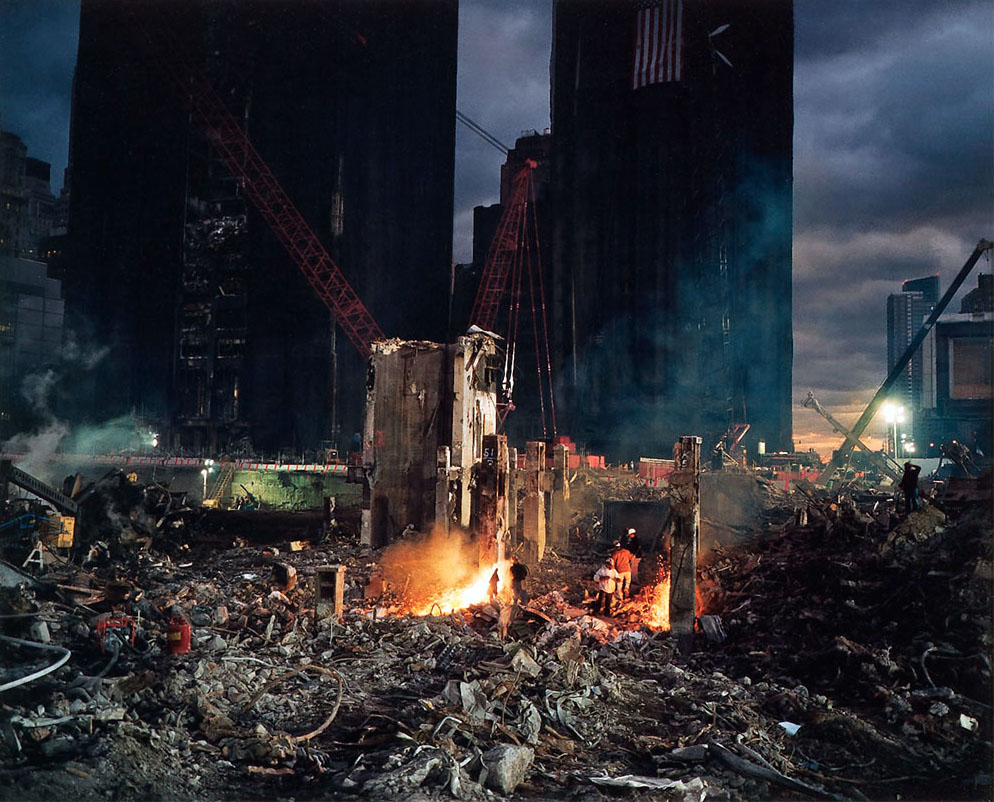
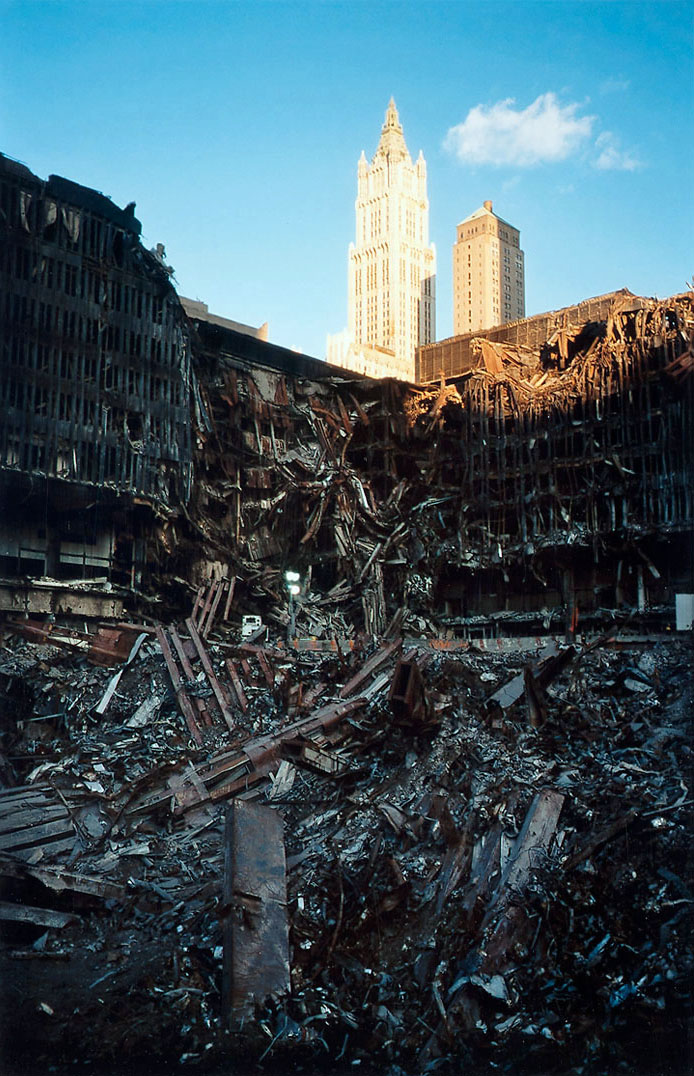
In commemoration of the 10th anniversary of 9/11, Miami Art Museum presents Focus Gallery: Joel Meyerowitz – Aftermath, an exhibition of photographs taken by the only photographer granted right of entry into Ground Zero after the September 11, 2001 attacks on the World Trade Center in New York City. For nine months during the day and night, Meyerowitz photographed “the pile,” as the World Trade Center came to be known, and the over 800 people a day that were working in it. The exhibition consists of 24, recently-donated photographs, presented in the Focus Gallery section of the Museum’s Permanent Collection installation. Admission to Miami Art Museum will be free to all emergency personnel, including police and firefighters, and their guests throughout the exhibition’s run, August 19 – November 6, 2011. A special preview for emergency personnel will be held on Thursday, August 18, 2011, 4-7pm. Author and photography critic Vicki Goldberg will give a lecture entitled “What Remains” on Thursday, September 8, 2011, beginning at 6:30pm.

After September 11, 2001, the Ground Zero site in New York City was classified as a crime scene and only those directly involved in the recovery efforts were allowed inside. The press was prohibited from the site. Influenced by Walker Evans’s and Dorothea Lange’s work for the Farm Security Administration during the Great Depression, Meyerowitz, long recognised as one of the pioneers of colour photography, was convinced that if a photographic record of the unprecedented recovery efforts was not made, “there would be no history.” With the help of sympathetic officials, he managed to become the only photographer granted right of entry into Ground Zero.

“I was making photographs for everyone who didn’t have access to the site,” says Meyerowitz, “I wanted to communicate what it felt like to be in there as well as what it looked like: to show the pile’s incredible intricacy and visceral power. I could provide a window for everyone else who wanted to be there, too, to help, or to grieve, or simply to try to understand what had happened to our city.”

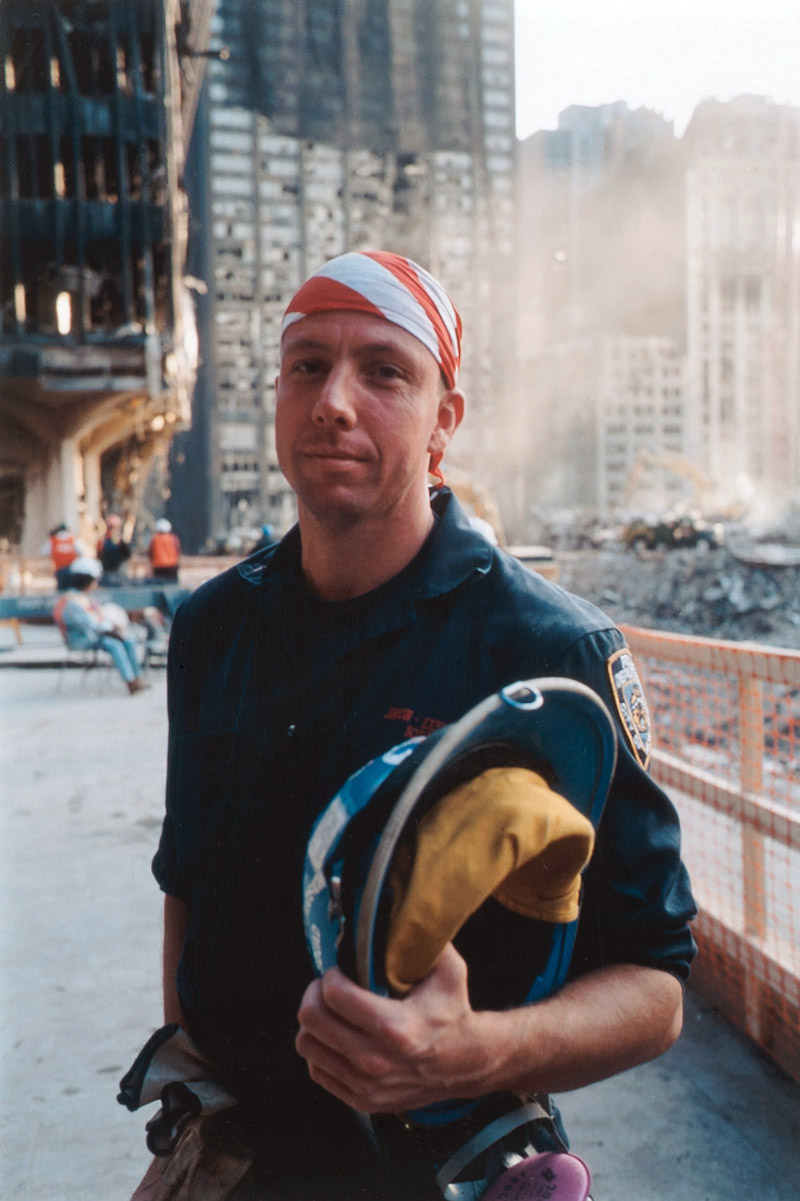
Armed with a large-format wooden camera, Meyerowitz spent nine months photographing the site. In the first few weeks, he was chased off the site repeatedly, but over time, with the help of officials on and off site, the use of forged workers’ passes, and by assuming the “uniform” of hard hat, goggles, respirator, gloves, boots and duct taped pants, Meyerowitz became “woven into the fabric of the site.”

About the experience, Meyerowitz has written, “The nine months I worked at Ground Zero were among the most rewarding of my life. I came in as an outsider, a witness bent on keeping the record, but over time I began to feel a part of the very project I’d been intent on recording… the intense camaraderie I experienced at Ground Zero inspired me, changing both my sense of myself and my sense of responsibility to the world around me. September 11th was a tragedy of almost unfathomable proportions. But living for nine months in the midst of those individuals who faced that tragedy head-on, day after day, and did what they could to set things right, was an immense privilege.”

The photographs in MAM’s collection are from a unique set of contact prints (photographs printed on a 1:1 scale from the negatives) issued by the artist in 2006. As a group, they span the entire nine month period that Meyerowitz was on site, presenting a poignant, condensed view of the clean up effort, including portraits of the workers involved. The set is introduced by a single image of the World Trade Center towers taken by the artist in the 1980s from his apartment window.

The entire set of more than 8,000 photographs taken by Meyerowitz form an archive at the Museum of the City of New York. The Aftermath series was the focus of a 2006 book, Aftermath: World Trade Center Archives published by Phaidon (reissued this year in a special 10th anniversary edition) and an exhibition organised by the US Department of State that traveled worldwide from 2002 to 2005.

Press release from the Miami Art Museum website


Joel Meyerowitz (American, b. 1938) 'Explosion Squad Detective' 2001


Joel Meyerowitz (American, b. 1938)
Explosion Squad Detective
2001
Vintage contact print
Collection Miami Art Museum, gift of Steven E. and Phyllis Gross


Joel Meyerowitz (American, b. 1938) 'Steps Down to Plaza' 2001


Joel Meyerowitz (American, b. 1938)
Steps Down to Plaza
2001
Vintage contact print
Collection Miami Art Museum, gift of Jeffrey Hugh Newman


Joel Meyerowitz (American, b. 1938) 'Fireman at Last Column' 2002


Joel Meyerowitz (American, b. 1938)
Fireman at Last Column
2002
Vintage contact print
Collection Miami Art Museum, gift of Charles S. and Elynne B. Zucker


Joel Meyerowitz (American, b. 1938) 'Building #5 and Woolworth' 2001


Joel Meyerowitz (American, b. 1938)
Building #5 and Woolworth
2001
Vintage contact print
Collection Miami Art Museum, gift of Simon and Bonnie Levin


Joel Meyerowitz (American, b. 1938) 'Welder and Rubble' 2001


Joel Meyerowitz (American, b. 1938)
Welder and Rubble
2001
Vintage contact print
Collection Miami Art Museum, gift of Steven E. and Phyllis Gross


Miami Art Museum
101 W Flagler St., Miami, FL 33130

Opening hours:
Monday 11am – 6pm
Tuesday – Wednesday Closed
Thursday 11am – 9pm
Friday – Sunday 11am – 6pm

Miami Art Museum website

LIKE ART BLART ON FACEBOOK

Back to top

Exhibition: ‘Raphaël Dallaporta: Observation’ at Foam, Amsterdam

Exhibition dates: 2nd September – 26th October 2011

Foam Paul Huf Award 2011


Raphaël Dallaporta (French, b. 1980) 'Fragile, Blood 1' 2010


Raphaël Dallaporta (French, b. 1980)
Fragile, Blood 1
2010
© Raphaël Dallaporta


Antipersonnel. The positive pleasure of inflicting cruelty at an ambiguous physical and ethical distance. Use limited only by the imagination of the user. Detonated remotely using a laptop computer. 10 million times. US$3 each.

Dr Marcus Bunyan


Many thankx to Foam for allowing me to publish the photographs in the posting. Please click on the photographs for a larger version of the image.


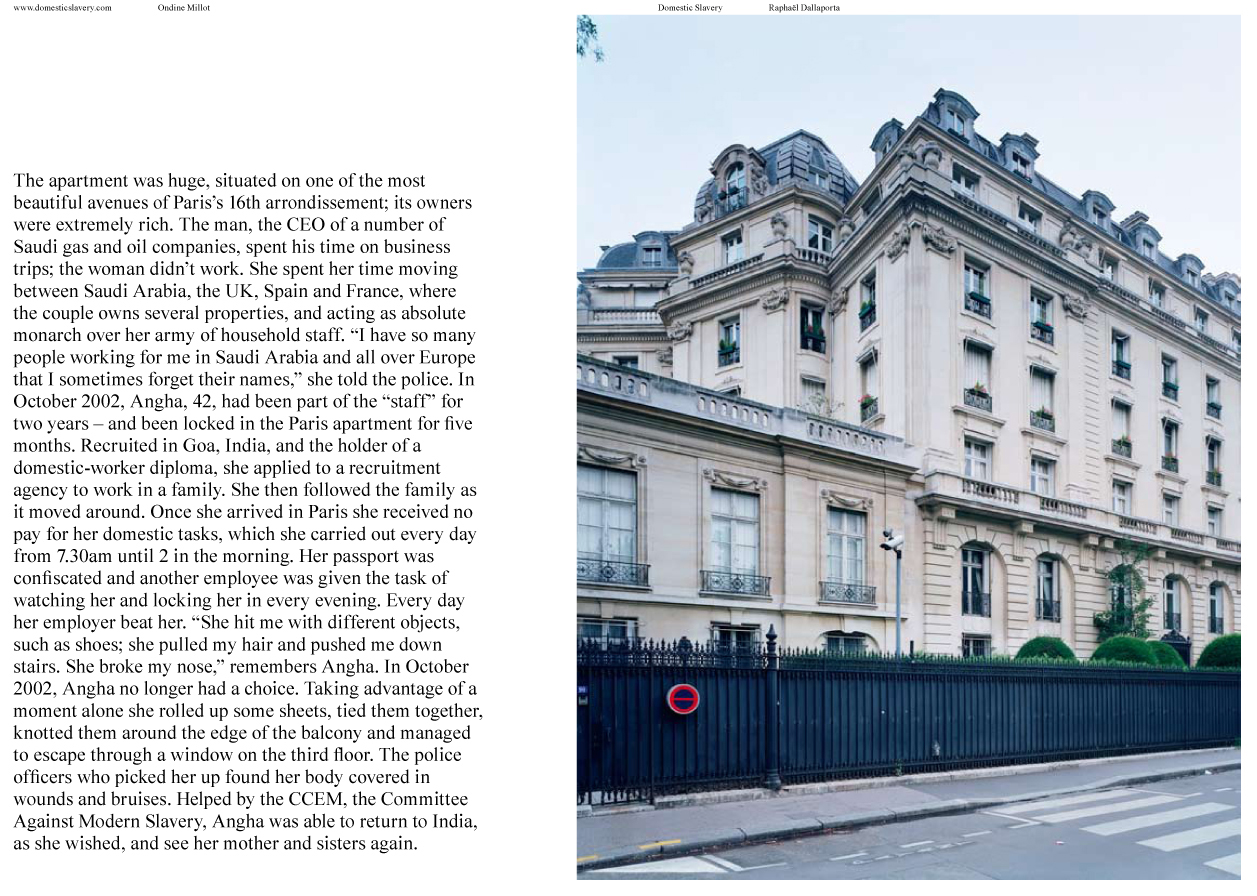
Raphaël Dallaporta (French, b. 1980) 'Domestic Slavery, Angha' 2006


Raphaël Dallaporta (French, b. 1980)
Domestic Slavery, Angha
2006
© Raphaël Dallaporta


Domestic Slavery, 2006

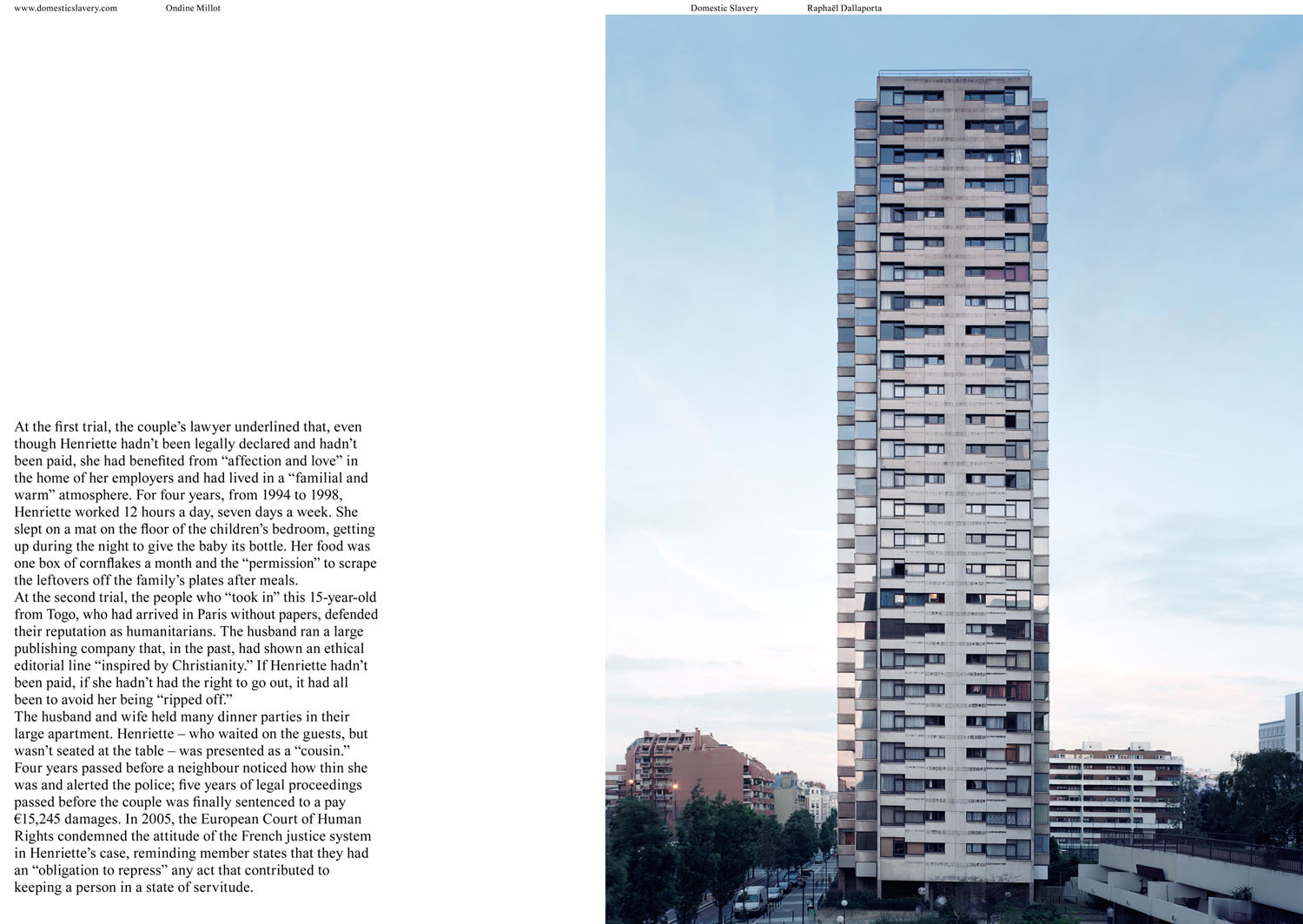
Cold, distant images of building facades are associated with text. The narratives are written by Ondine Millot to describe the events that took place at the exact address of the buildings in the photographs. The spectator comes to understand that the series deals with an often undocumented consequence of human trafficking: modern slavery.

The images force us to come to terms with the upsetting reality that is hidden behind the ordinary facades. Raphaël Dallaporta denounces unbearable situations where one human being reduces another to the status of thing, and gives it depth through the distance of the photographs and his refusal to sensationalise.

Text from the Musée Nicéphore Niépce website [Online] Cited 29/03/2020


Raphaël Dallaporta (French, b. 1980) 'Domestic Slavery, Henriette' 2006


Raphaël Dallaporta (French, b. 1980)
Domestic Slavery, Henriette
2006
© Raphaël Dallaporta


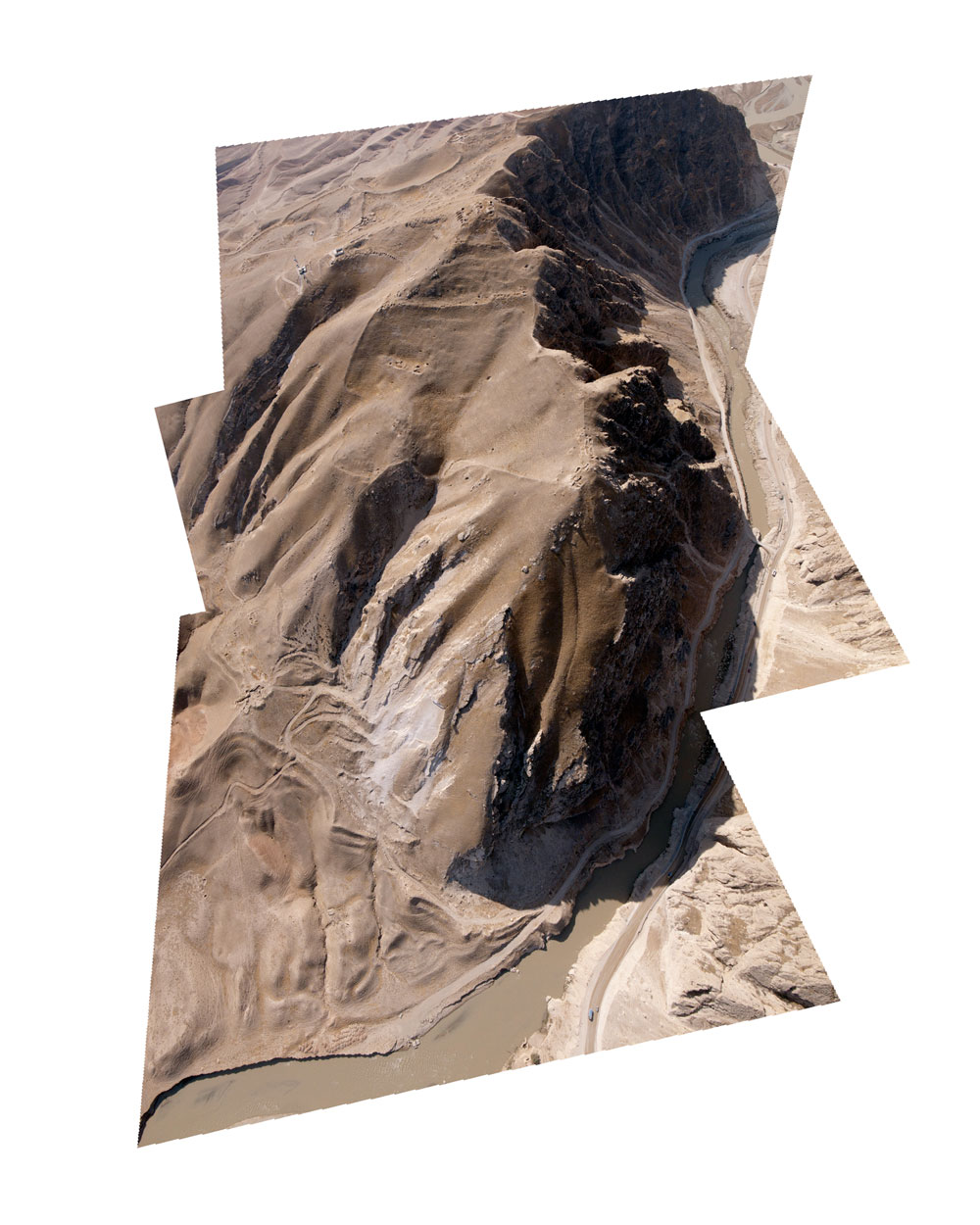
Raphaël Dallaporta (French, b. 1980) 'Ruins (Season 1), The Balkh-AB gorges, Afghanistan' 2011


Raphaël Dallaporta (French, b. 1980)
Ruins (Season 1), The Balkh-AB gorges, Afghanistan
2011
© Raphaël Dallaporta


Ruin, Season 1, 2011

In the autumn of 2010, Raphaël Dallaporta took part in an archaeological mission in the Bactriane region in Afghanistan, scene of Alexander the Great’s mythical conquest. Using a drone he designed himself, he took aerial photographs of endangered or heretofore unknown archaeological sites in a country at war. The remote controlled device was timed to take photos of unrivalled precision every five seconds. The way the images are put together with their voluntarily asymmetrical contours depict these inaccessible monuments and places at their best. The most cutting-edge technology reveals the artist’s themes – destruction, the precariousness of things. It brings to light that which was and is no longer. Is this not the very definition of all photography?

Text from the Musée Nicéphore Niépce website [Online] Cited 29/03/2020


Raphaël Dallaporta (French, b. 1980) 'Fragile, "Four Moods", Black Bile'  2010


Raphaël Dallaporta (French, b. 1980)
Fragile, “Four Moods”, Black Bile 
2010
© Raphaël Dallaporta


Fragile, 2010

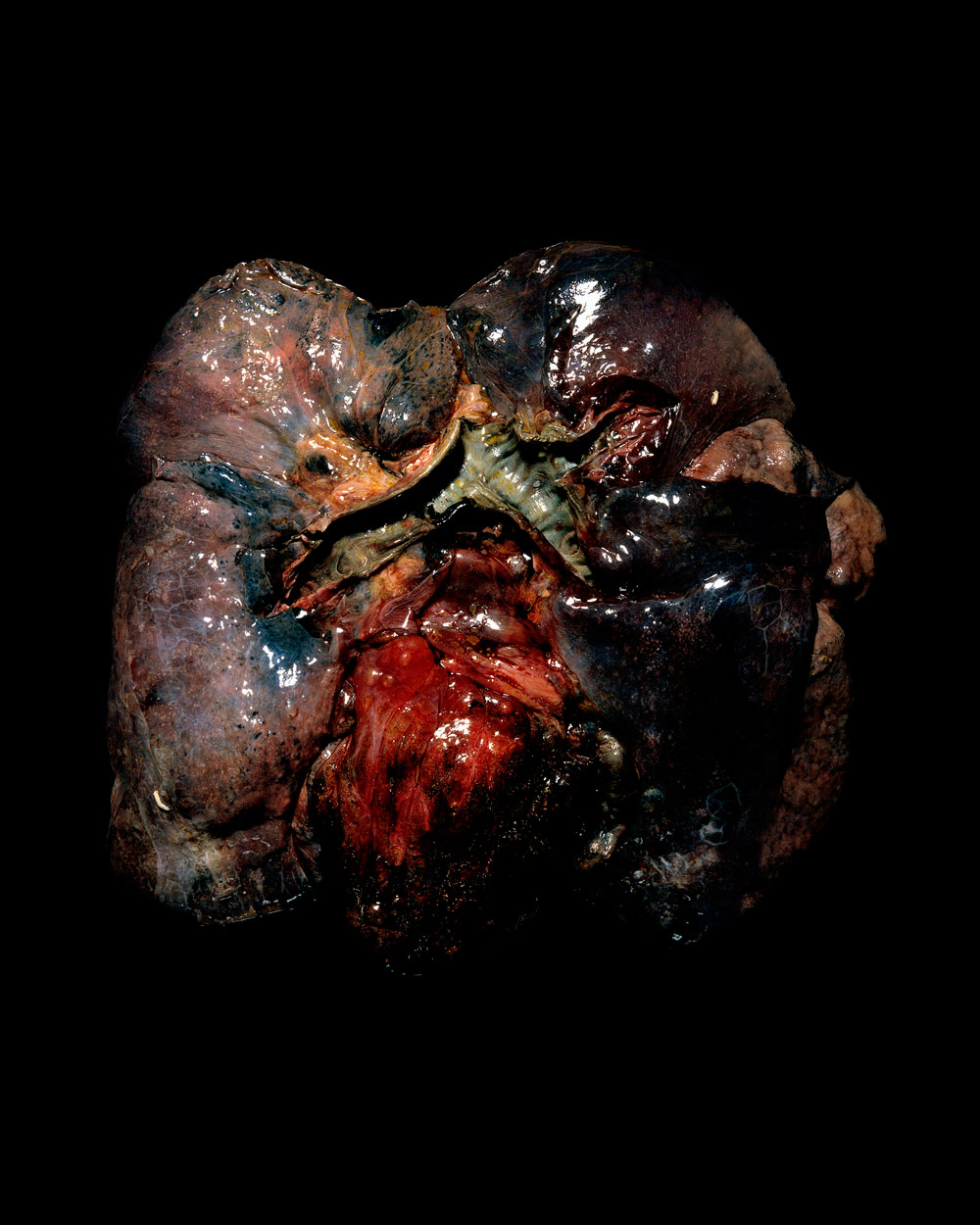
Raphaël Dallaporta photographs organs, like the encyclopaedic colour plates for an anatomy class. The legend, again, explains the origins of these silent images. The organ represented is not the issue; the reason for its presence on the slab is the issue. The apparent neutrality of the shot, according to a strict protocol (frontal shot, on a black background enabling the strong lighting of the “subject”), isolates each fragment of the body as a clue that enables to determine the cause of death. These relics of flesh and bone have a real role to play. But the way they are shot lends them a metaphysical and philosophical dimension that reminds us of life’s ephemeral nature and human vulnerability.

Text from the Musée Nicéphore Niépce website [Online] Cited 29/03/2020


Raphaël Dallaporta (French, b. 1980) 'Fragile, Cardiopulmonary system' 2010


Raphaël Dallaporta (French, b. 1980)
Fragile, Cardiopulmonary system
2010
© Raphaël Dallaporta


Undetermined circumstances

The body of the subject whose presumed identity is …, aged 92, was found in a ditch around 10.05am by a walker whose attention had been attracted by his dog.

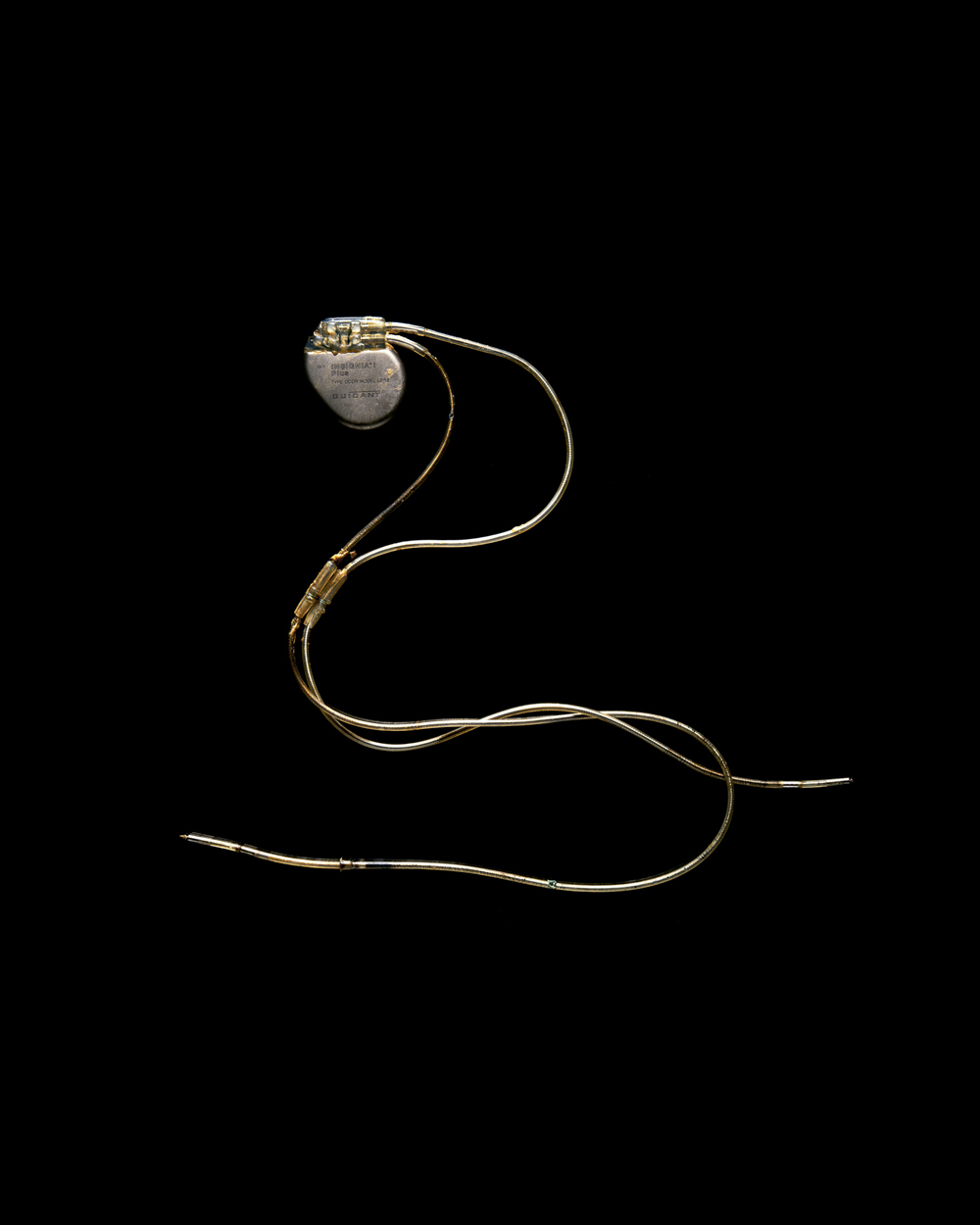
The autopsy that we carried out on the body showed the presence of a state of extremely advanced putrefaction with partial skeletonisation, consistent with a death dating back one month in an outdoor environment; it is not possible to be more precise. There is no immediately detectable cause of death. No lesions suggesting recent detectable violence were observed. As for identification, the deceased is an adult male, wearing a pacemaker and an old surgical scar on the abdominal wall.


Raphaël Dallaporta (French, b. 1980) 'Fragile, Pacemaker' 2010


Raphaël Dallaporta (French, b. 1980)
Fragile, Pacemaker
2010
© Raphaël Dallaporta


French photographer Raphaël Dallaporta (b. 1980) received the Foam Paul Huf Award earlier this year from an international jury. The prize is organised by Foam and is awarded annually to up and coming international photographers below the age of 35. A major aspect of the award is an exhibition. Observation appears at Foam from 2 September to 26 October. Characteristic of the show’s four series is the clinical, perceptive style of photography. Dallaporta’s photos possess an inner tension that stems from the beauty of the object and the serious tone of the subject. The photographer works intensively with specialists in fields relating to his series. Jury chair François Hébel (director of Les Rencontres d’Arles international photography festival) comments on Dallaporta’s work that ‘He combines involvement with a highly analytical approach to social perversities. His uncompromising, conceptual and extremely creative approach mark him as an authentic artist who stands out in the young generation of photographers.’

The landmines in the Antipersonnel series have an exquisite beauty: small, with pleasant colours and an attractive form. Elegantly photographed, simply framed and persuasively presented, their aesthetic quality is what first attracts attention. Until we realise the full purpose of their existence: pure cruelty.

Fragile features frontal and objective shots of organs and limbs taken from corpses. Dallaporta worked with a team of forensic surgeons for this series. While the physicians were looking for causes of death, Dallaporta recorded the body parts they examined and the instruments they used. The power of this work comes from the combination of apparently neutral images and texts relating to human pain.

Dallaporta also worked with experts when making Ruins. He travelled with a team of French archaeologists to Afghanistan. Using a drone – a small remote-controlled helicopter – he took numerous photos of the war-ravaged landscape. In combination, these form a single large aerial picture that also shows traces of ancient civilisations. Past and present come together in this series of almost scientific photos.

In Domestic Slavery, Dallaporta (pictures) and Ondine Millot (text) tackle the tragic reality of this phenomenon: people, many unregistered migrants, held against their will in places where their voice cannot be heard. While their names have been altered, the stories are true. Dallaporta’s clinical, unsentimental pictures of the buildings in which these modern-day slaves are kept testify to the banality of day-to-day inhumanity.

Text from the Foam website


Antipersonnel, 2004

Unknown objects seem to emerge from the darkness. The legend quickly informs us that they are anti-personnel mines. Raphaël Dallaporta deals with the object reproduced to scale and lets us imagine the consequences of its existence. There are no bloody reportage images to illustrate the mutilations caused by these devices. The photographer presents us with contemporary still life that appear inoffensive but that tend to be aestheticised by photographic techniques all the better to erase the actual use of the object.

Text from the Musée Nicéphore Niépce website [Online] Cited 29/03/2020


Raphaël Dallaporta (French, b. 1980) 'Antipersonnel, Blast Mine Type 72B China' 2004


Raphaël Dallaporta (French, b. 1980)
Antipersonnel, Blast Mine Type 72B China
2004
© Raphaël Dallaporta


Type 72 blast mines are said to make up 100 million of China’s 110 million antipersonnel landmine stockpiles (Chinese officials claim this figure is exaggerated). Manufactured by China North Industries Corporation (NORINCO), Type-72s are reportedly priced at US$3 each. The Type-72B includes an anti-handling mechanism that makes it impossible to neutralise – if the mine is moved more than 8º from the horizontal, it will explode, amputating the limb that activated it.


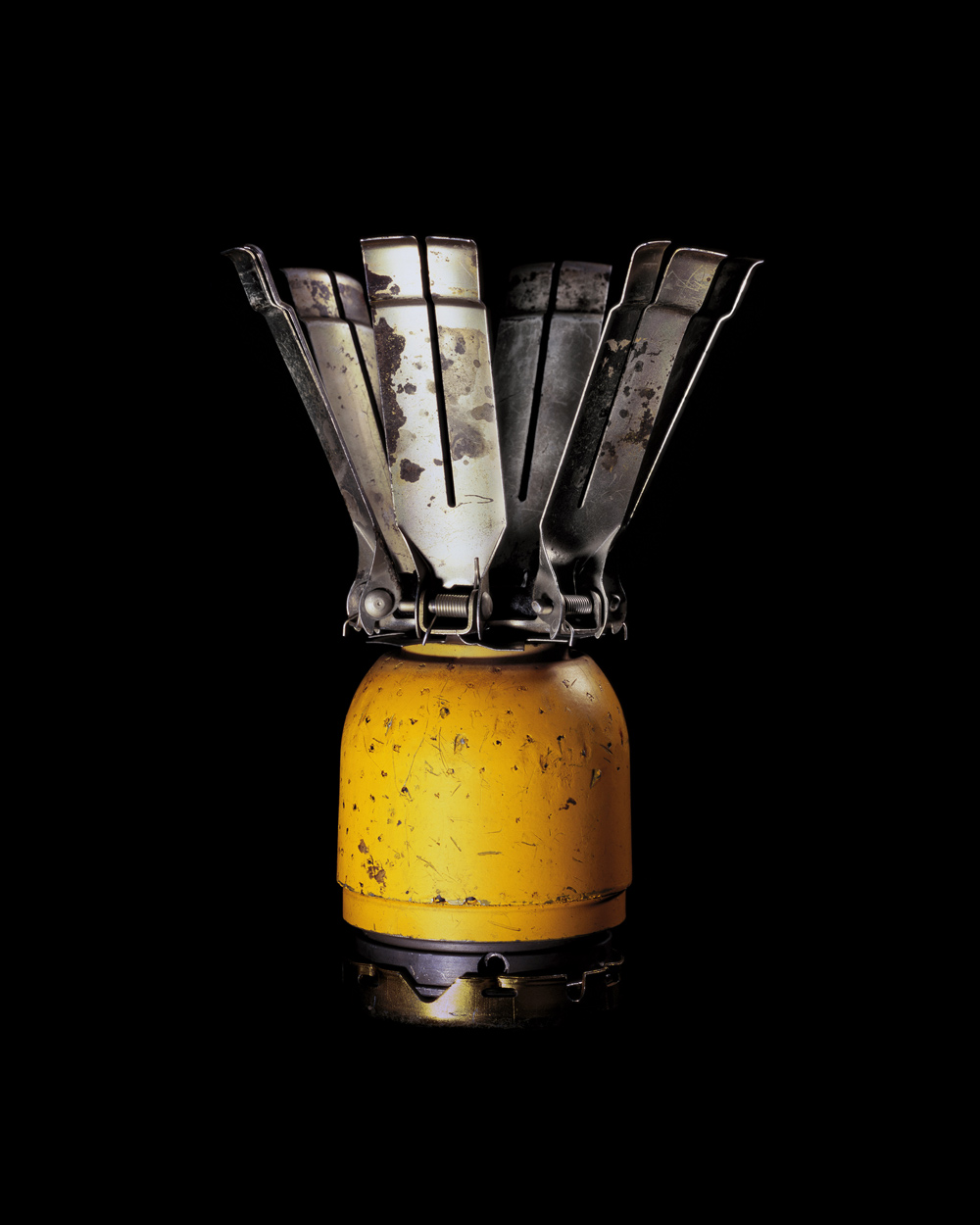
Raphaël Dallaporta (French, b. 1980) 'Antipersonnel, Submunition BLU-­3/B USA' 2004


Raphaël Dallaporta (French, b. 1980)
Antipersonnel, Submunition BLU-­3/B USA
2004
© Raphaël Dallaporta


On release from a CBU-2C.A bomb this 785 g submunition – known as the “Pineapple” – is stabilised and slowed in its descent by six fins. Each CBU-2C/A contains 409 BLU-3/Bs, of which nearly 25 percent do not explode on impact. d: 73mm W: 785g


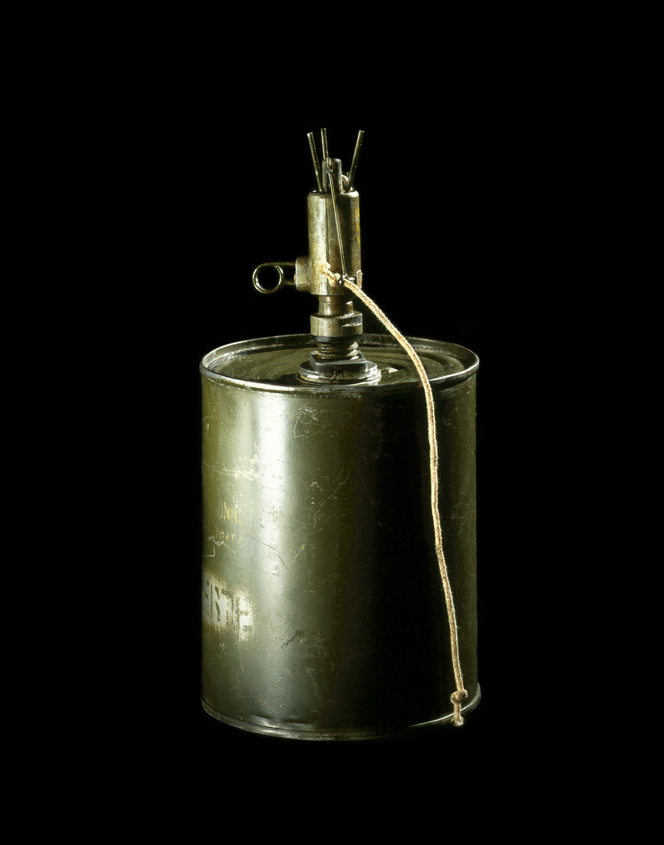
Raphaël Dallaporta (French, b. 1980) 'Antipersonnel, Bounding Fragmentation Mine M-16, USA' 2004


Raphaël Dallaporta (French, b. 1980)
Antipersonnel, Bounding Fragmentation Mine M-16, USA
2004
© Raphaël Dallaporta


When detonated the M-16 antipersonnel bounding fragmentation mine is shot up approximately 1.5m in the air and explodes within 0.5 seconds, creating a lethal radius of 10m. Nicknamed the “Bouncing Betty,” each mine is supplied with four tripwires (two olive-green, two sand-coloured) and a wrench. In September 2002 (the most recent statistics available) the USA had 465,330 M16s in stock.


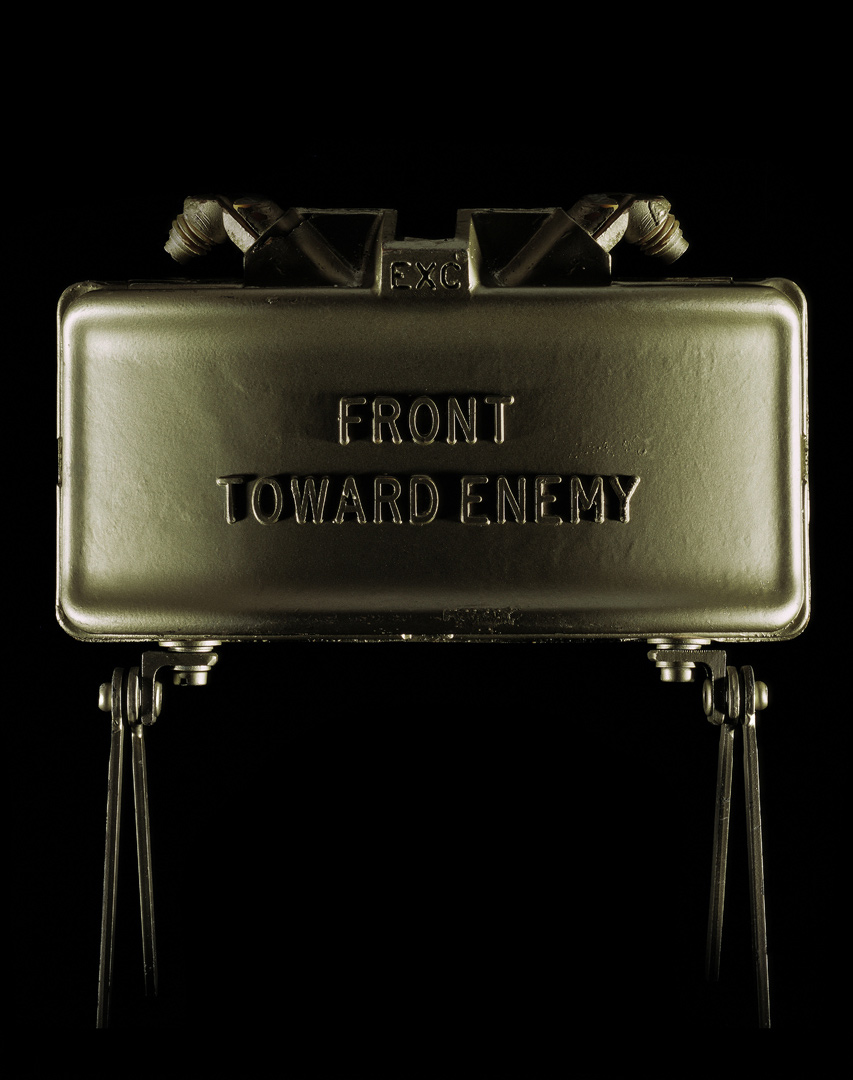
Raphaël Dallaporta (French, b. 1980) 'Antipersonnel, Directional Fragmentation Mine M-18/A1, USA' 2004


Raphaël Dallaporta (French, b. 1980)
Antipersonnel, Directional Fragmentation Mine M-18/A1, USA
2004
© Raphaël Dallaporta


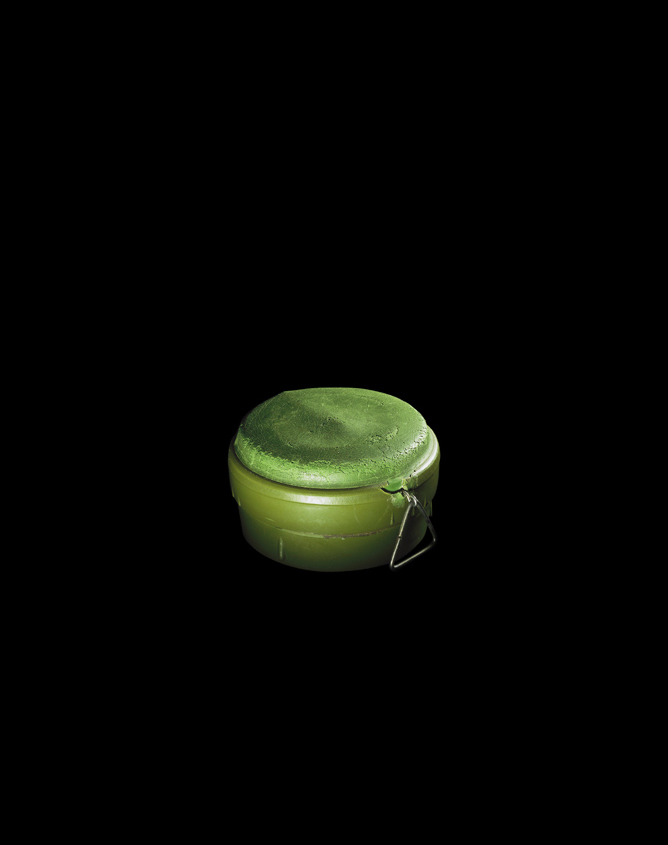
A “Claymore” directional fragmentation mine releases 700 steel balls when detonated by a hand-turned dynamo, a tripwire or, when used with the “Matrix” system, remotely using a laptop computer. (Multiple Claymores can also be linked together using a detonator cord.) A 1996 Department of the Army filed manual states that, “the number of ways in which the Claymore may be employed is limited only by the imagination of the user.” In September 2002 (the most recent available statistics), Claymores made up 403,096 of the 10,404,148 landmines stockpiled by the USA.


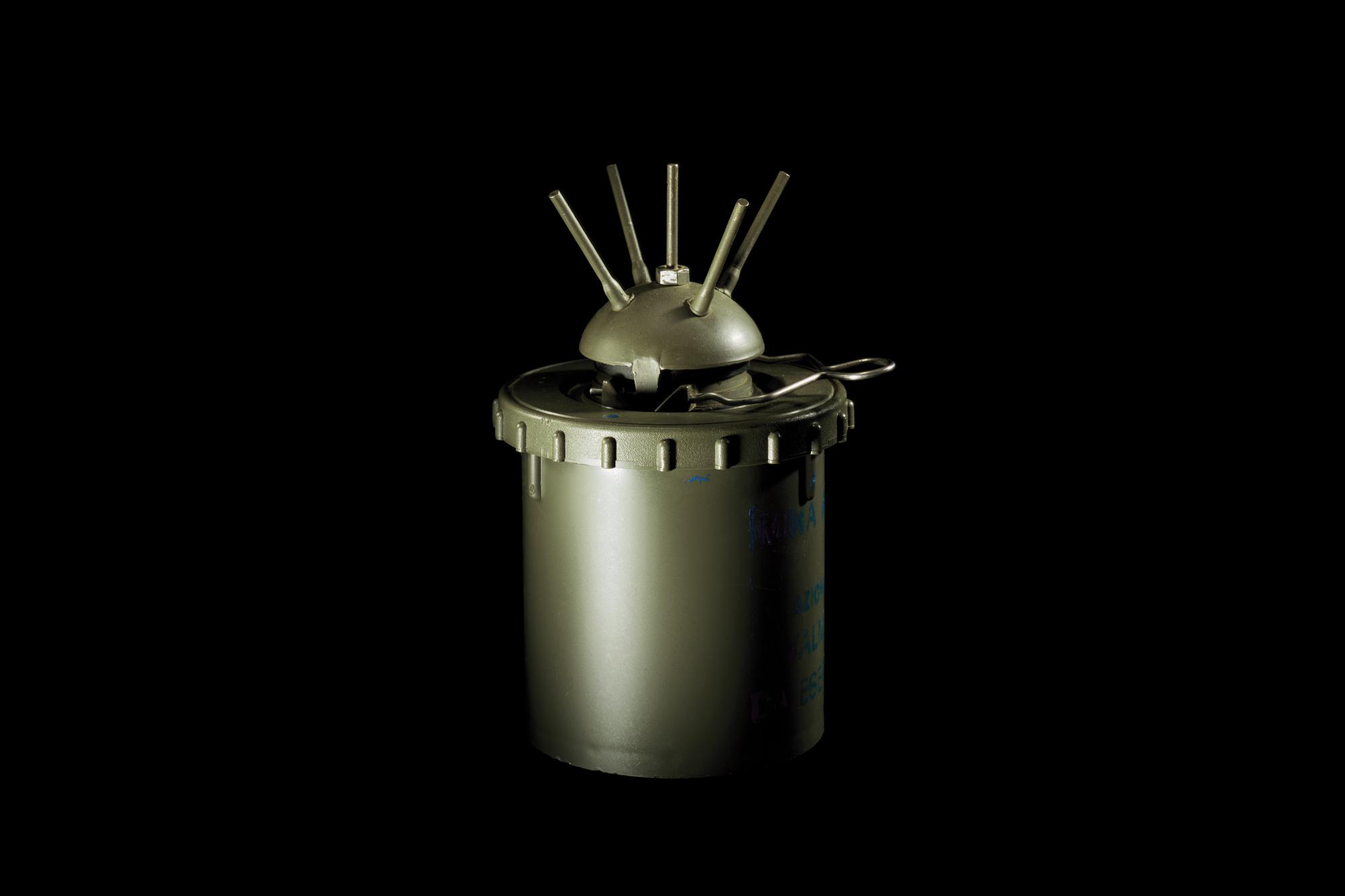
Raphaël Dallaporta (French, b. 1980) 'Antipersonnel Bounding Fragmentation Mine, V-69, Italy' 2004


Raphaël Dallaporta (French, b. 1980)
Antipersonnel Bounding Fragmentation Mine, V-69, Italy
2004
© Raphaël Dallaporta


Antipersonnel Bounding Fragmentation Mine, V-69, Italy. The V-69 can be set off by footfall pressure or through a tripwire. When detonated the fuse sets off propellant gases that fire the mine’s inner body 45cm above the ground. This explodes sending out more than 1,000 pieces of chopped steel. Between 1982 and 1985, its manufacturer Valsella sold around 9 million V-69s to Iraq. The mine was given a nickname by Iraqi minelayers: the “Broom”. 120mm, 3.2kg.


Foam
Keizersgracht 609
1017 DS Amsterdam
The Netherlands
Phone: + 31 20 5516500

Opening hours:
Mon – Wed 10am – 6pm
Thu & Fri 10am – 9pm
Sat & Sun 10am – 6pm

Foam website

LIKE ART BLACK ON FACEBOOK

Back to top

Opening: ‘Movement and Emotion’ and ‘Jodie Noble Solo’ exhibitions at Arts Project Australia, Melbourne

Exhibition dates: 20th October – 26th November 2011

Curator of Movement and Emotion: Paul Hodges

Artists: Steven Ajzenberg, Patrick Francis, Brigid Hanrahan, Paul Hodges, Chris Mason, Cameron Noble, Jodie Noble, Lisa Reid, Anthony Romagnano and Cathy Staughton


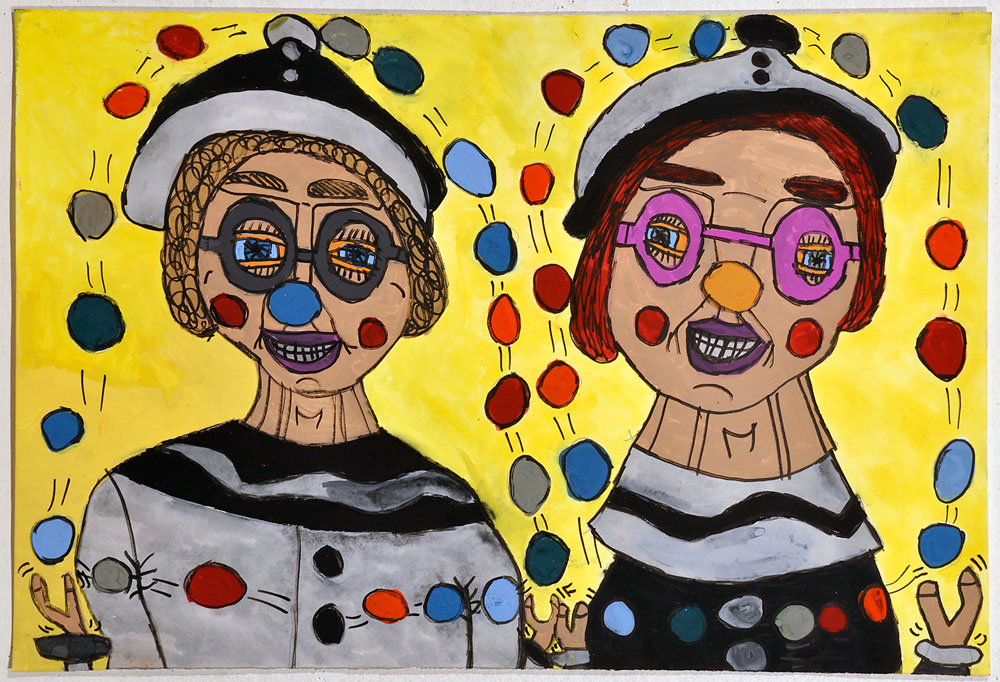
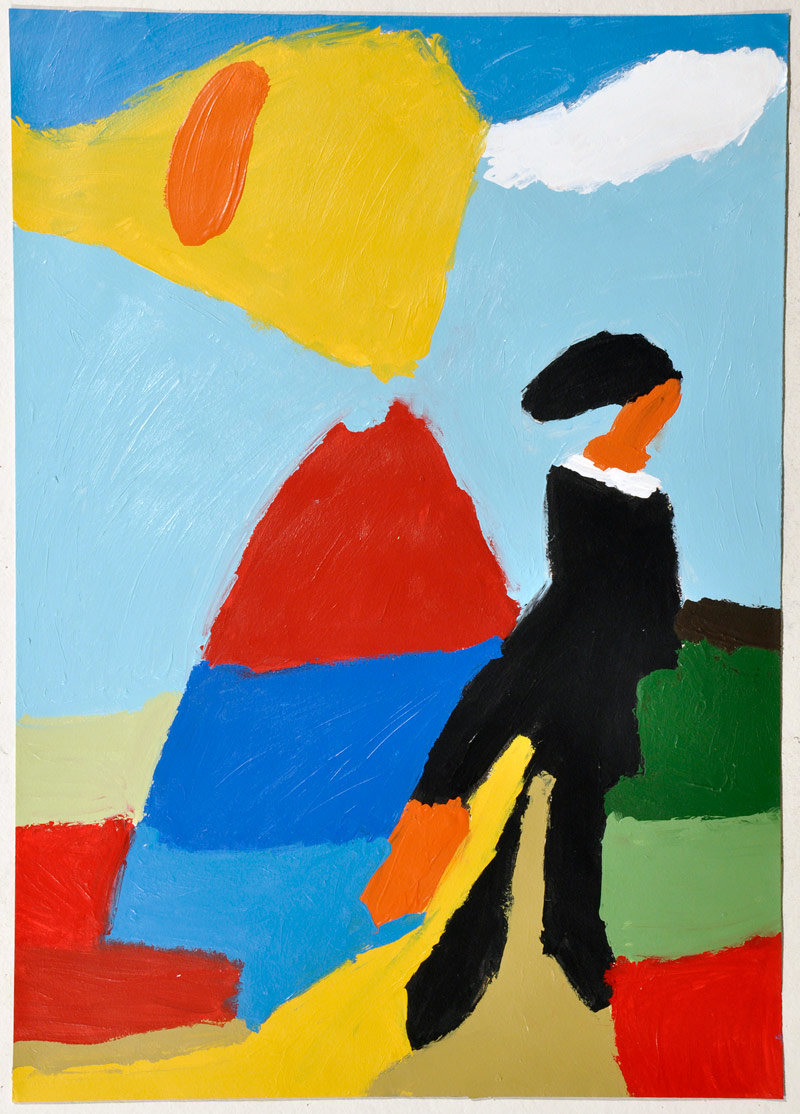
Catherine Staughton (Australian, b. 1968) 'Juggle Ball Hand Jump Roller' 2011


Catherine Staughton (Australian, b. 1968)
Juggle Ball Hand Jump Roller
2011
Gouache and felt pen on paper
38 x 56cm


Opening night speech by Dr Marcus Bunyan

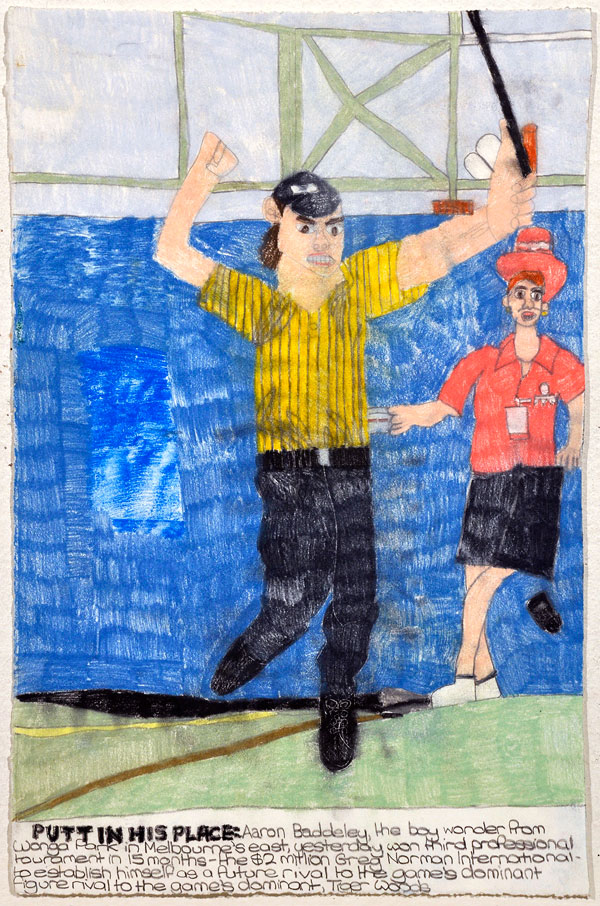
Thank you for your welcome to Arts Project Australia on this auspicious occasion, the first ever exhibition to be curated by an Arts Project artist, Paul Hodges. Together with the Jodie Noble solo exhibition in the front gallery I am sure you will agree that the gallery is full of vibrant work. There are some things that may be said about both bodies of work.

I asked Paul what had been the inspiration behind Movement and Emotion. He said that he often goes to the National Gallery of Victoria and looks at the pictures and imagines the artist painting. He wonders how they were feeling and he visualises the pictures coming to life, especially pictures of dancers in which he has a personal interest. He came back to Arts Project and started thinking about the work in the collection and after much thought made the selection you see here tonight. He used his imagination, his feelings and his understanding of the world to curate the exhibition.

Let’s consider the title Movement and Emotion.

Emotion can be defined as an agitation, a strong feeling, a departure from the normal calm state of an organism. The logos of emotion begins in the experience of ‘being moved’ in some manner. Any emotion holds within its structure some potential for movement, whether it be physical or mental. You can be physically still yet be mentally moved, causing you to have emotion. Some emotions occur over a period of seconds (for example, surprise), whereas others can last years (for example, love). In the word ’emotion’ is the very act of movement, namely motion. Hence e/motion is the root of this wonderful feeling that I get from these artworks. Emotion is movement. Emotion is feeling. Emotion is passion.1

And it is this very act that sustains the work in both exhibitions. The work is personal. It speaks from the heart. It is intimate, transcendent and enigmatic. It moves me like little contemporary art ever does. When I first saw the artwork in the space at the back of the gallery, when they were revealed to me I gasped at their simple, eloquent beauty. Whimsical and playful these works possess an element of the carnivalesque,2 a riot of colour and form that exist on the border of art and life. Mingling depictions of high culture and personal narrative the works have no pretence but a visceral immediacy: a direct connection from the artists imagination of the world, through the eyes to the hand and the paper to depict what is in the world. As Susan Sontag observes, “A work of art is a thing in the world, not just a text or commentary on the world…”3

Some of you may be familiar with the American photographer Walker Evans – his famous US Depression era pictures are a thing in the world, as well as text/commentary on the world. He refers to this working method as ‘transcendent documentary’4: a watchful intelligence that recognises a moment of seeing, a movement of emotion – and then describes it. Yes, a quest for ‘the thing itself’ but more than that, the imagination to describe the substance of our existence, the nature of reality. Objects, people and places are transformed from things seen to things that we known. Intimately. Inherently.

In their unique vision it is the artists relation to self, the nature of what they see and feel around them that creates e/motion. They transcend form while ordering it at the same time. It is both the immediate world, simply described, perceived as it stands with the whole of consciousness coupled with the imagination as always there, between our eyes and the world, for it is the imagination that defines our humanity, declares our consciousness. They imagine, they perceive the simple radiance of what is.

That is what these artists do.

Perceive.

What is.


In Movement and Emotion, and in the portraits of Jodie Noble we see what is and imagine what should be. The photographer Elliott Erwitt in his book Personal Exposures (1988) said, “The work I care about is terribly simple … I observe, I try to entertain, but above all I want pictures that are emotion.”5

Those pictures are here, e/motioning, all around us. I enjoy these pictures tremendously. Congratulations to all the artists for the experience that you have given us.

Dr Marcus Bunyan


Footnotes

1/ See Robbins, Brent Dean. Emotion, Movement & Psychological Space: A Sketching Out of the Emotions in terms of Temporality, Spatiality, Embodiment, Being-with, and Language. Duquesne University, 1999 [Online] Cited 08/10/2011

2/ Bakhtin, Mikhail. Rabelais and His World (trans. Helene Iswolsky). Cambridge: MIT Press, 1968, p. 7

3/ Sontag, Susan. “On Style,” in Against Interpretation and Other Essays. New York: Delta Book, 1966, pp. 21-22

4/ Anon. “”A Revolutionary Project” Brings Cuba to the Getty Museum,” on Cuban Art News [Online] 05/10/2011 Cited 08/10/2011. No longer available online

5/ Erwitt, Elliott. Personal Exposures. W. W. Norton & Company, 1988 quoted on Anon. “Photographer Elliott Erwitt’s Archive to be Housed at Harry Ransom Center,” on Harry Ransom Center: The University of Texas website [Online] 22/09/2011. Cited 08/10/2011. No longer available online


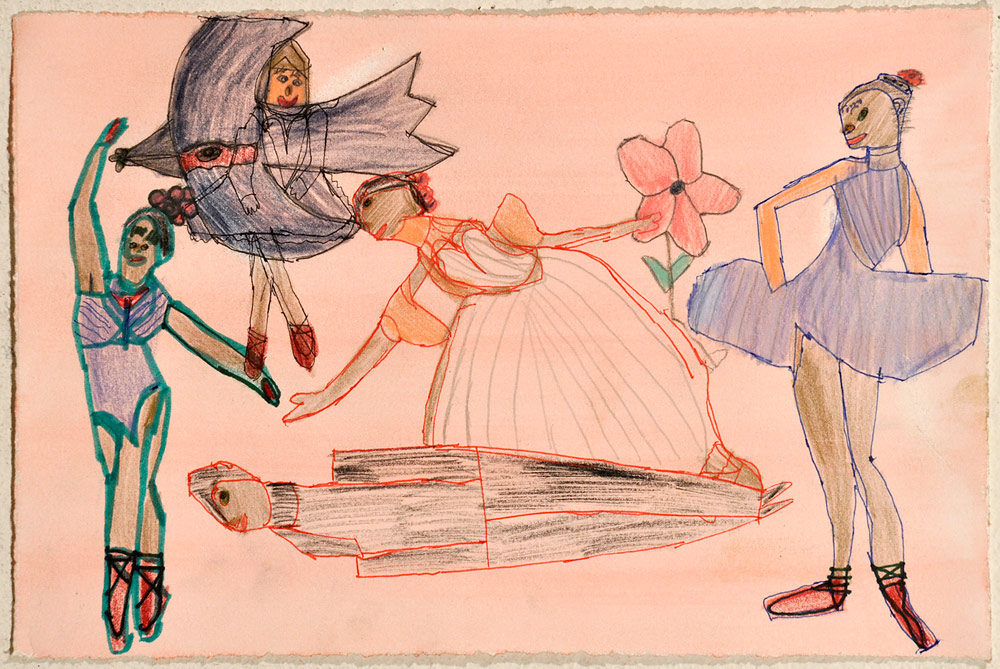
Brigid Hanrahan. 'Not titled (Ballet Dancers)' 2009


Brigid Hanrahan (Australian)
Not titled (Ballet Dancers)
2009
Colour pencil and fineliner on paper
20 x 30cm


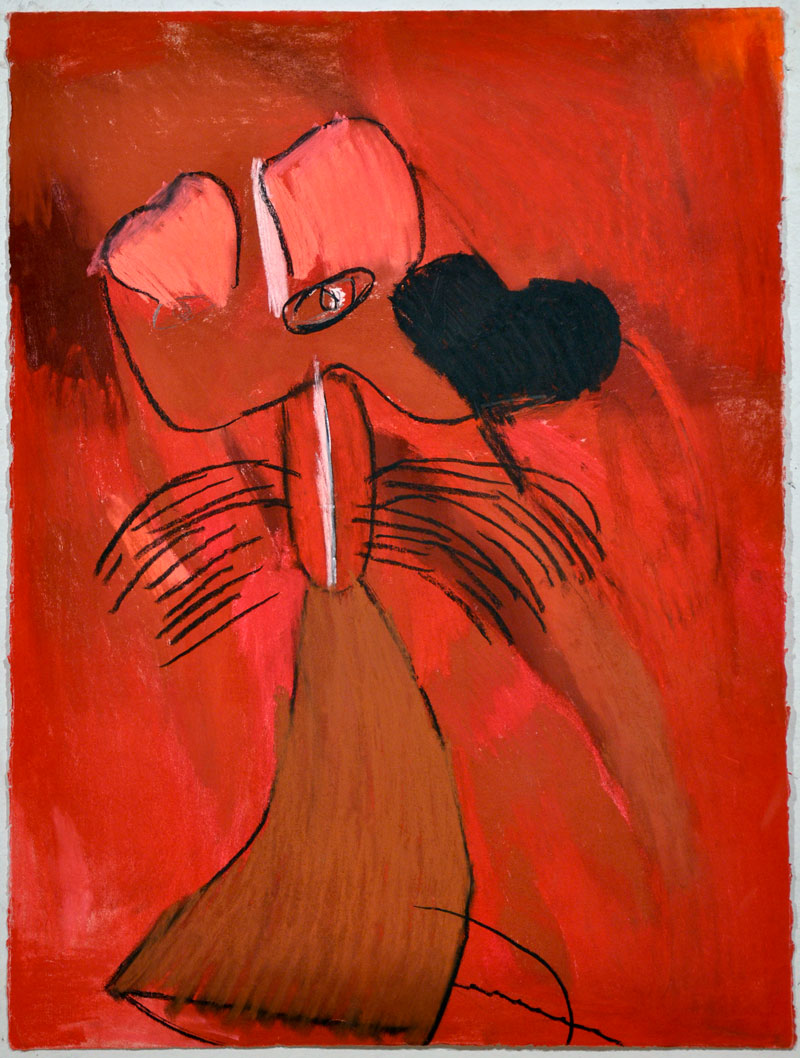
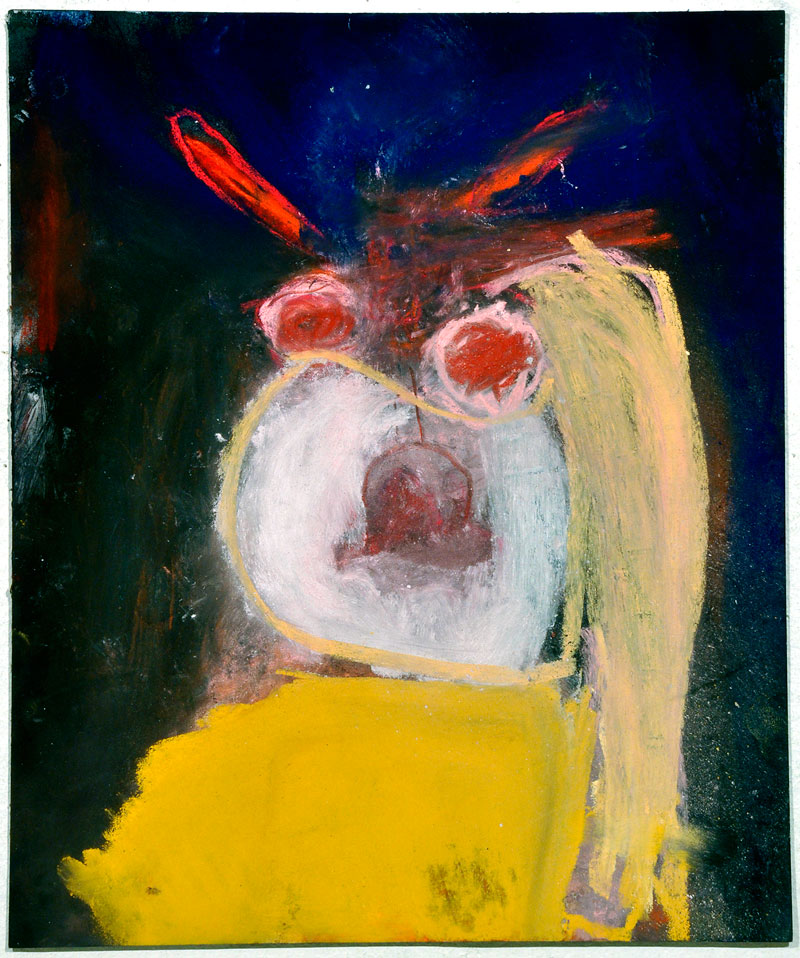
Jodie Noble. 'Not titled (red dog)' 2006


Jodie Noble (Australian)
Not titled (red dog)
2006
Pastel on paper
76 x 57cm


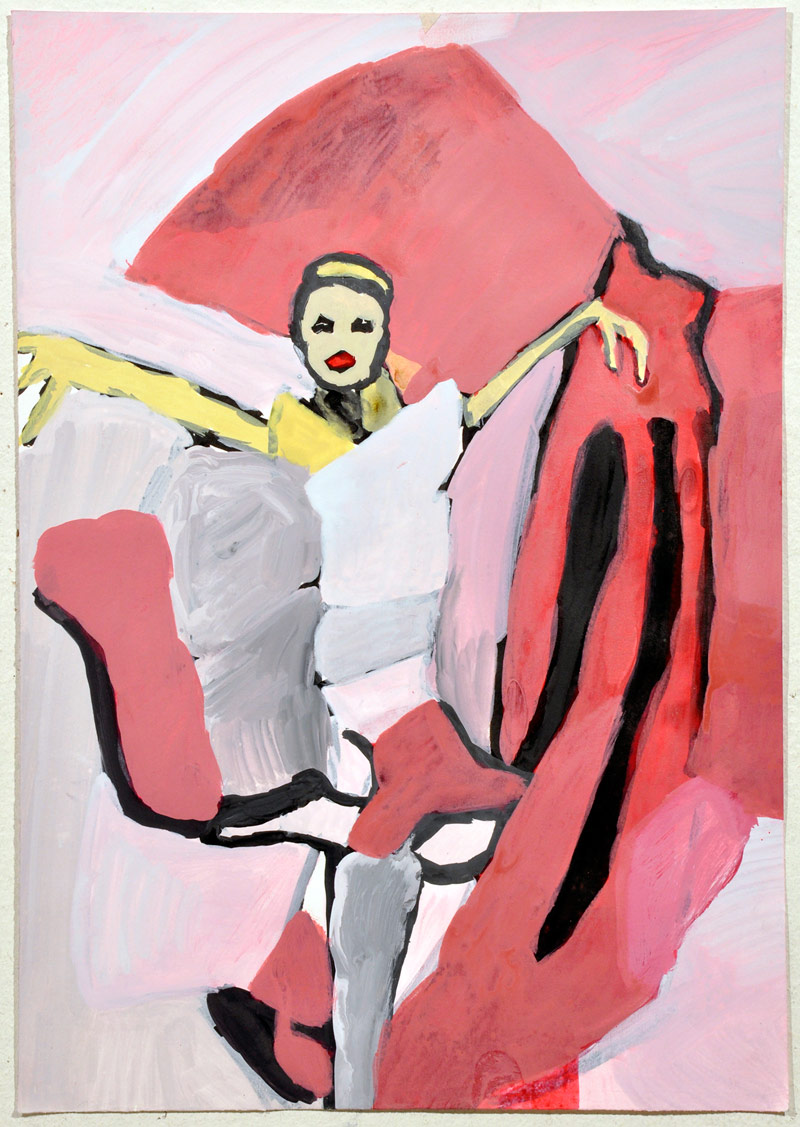
Paul Hodges (Australian, b. 1974) 'Not titled (Pink Dancer)' 2010


Paul Hodges (Australian, b. 1974)
Not titled (Pink Dancer)
2010
Ink on paper
50 x 35cm


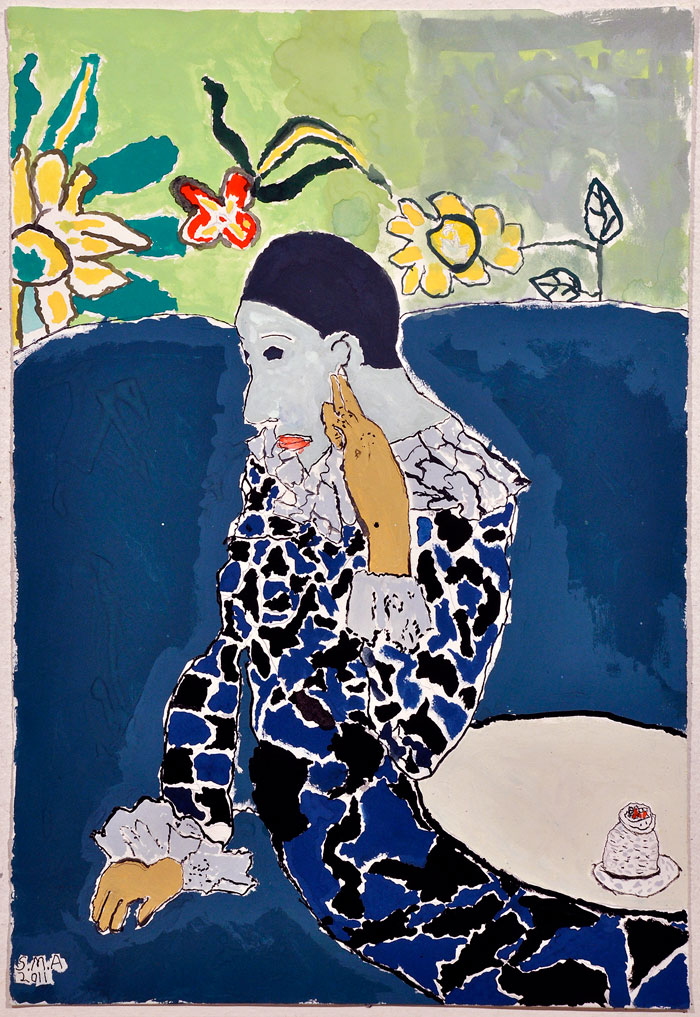
Steven Ajzenberg (Australian, b. 1964) 'Harlequin' 2010


Steven Ajzenberg (Australian, b. 1964)
Harlequin
2010
Gouache on paper
55.5 x 38cm


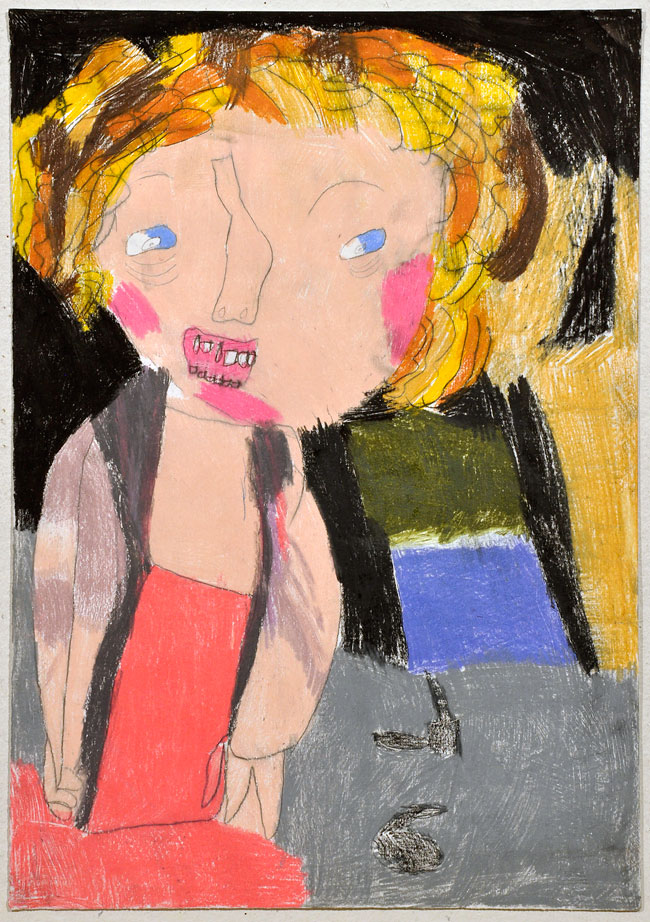
Jodie Noble. 'Not titled (girl wearing pink dress)' 2010


Jodie Noble (Australian)
Not titled (girl wearing pink dress)
2010
Prisma colour pencil on paper
50 x 35cm


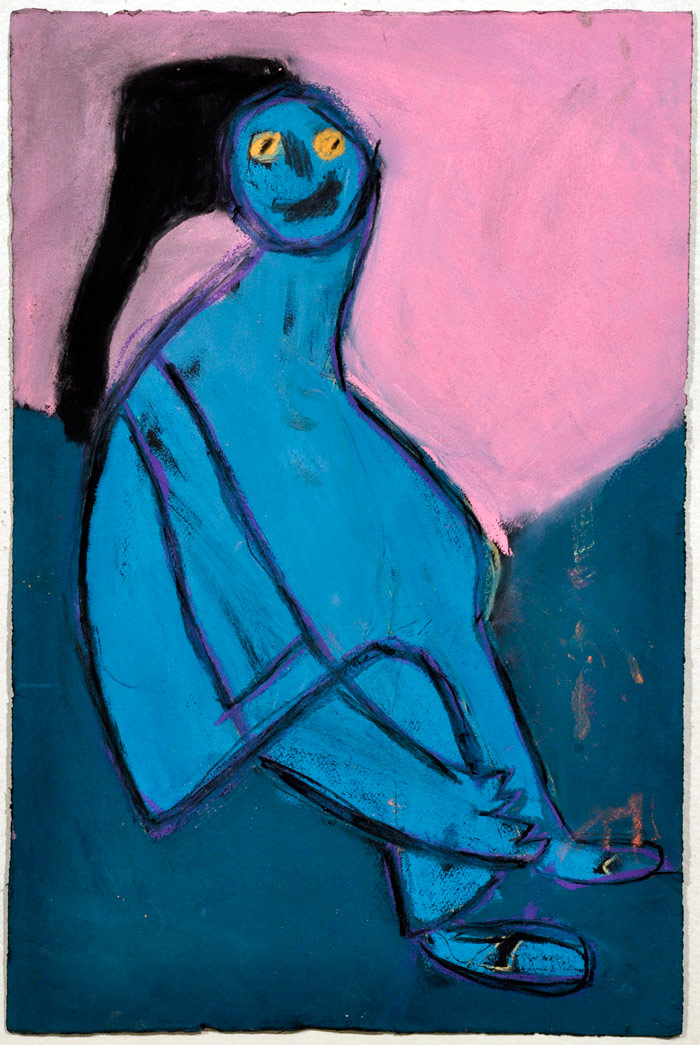
Cameron Noble. 'Not titled (Blue Lady)' 2011


Cameron Noble (Australian)
Not titled (Blue Lady)
2011
Dry pastel on paper
57 x 37.5cm


Jodie Noble. 'Geisha Girl' 2011


Jodie Noble (Australian)
Geisha Girl
2011
Dry pastel on paper
35 x 25cm


Movement and Emotion

This exhibition will explore movement in paintings and the emotions of people in everyday life. These works are vibrant, expressive and each work is unique; they jump out at you. Key themes investigated include carnival, dance and portraits. This is the first exhibition Paul Hodges has curated.

“This is a wonderful show presenting movement and emotion in art by ten artists that I have collected from Arts Project Australia’s studio.”

Paul Hodges, 2011

“When I walk past Jodie Noble’s paintings I can almost feel what she is feeling … Jodie is telling us what she is feeling through her paintings.”

Paul Hodges 2010


Jodie Noble Solo

Jodie Noble’s current work is figurative and often incorporates an autobiographical narrative. While occasionally painting from life, her work also references popular culture. In particular, Noble is inspired by contemporary famous figures, from Frida Kahlo and Francisco Goya to Queen Elizabeth II. Noble’s work is descriptive, expressive and infused with a sense of physicality.

In this exhibition, Noble has selected a series of portraits on paper that are autobiographical and of people she knows in her life. This is Jodie’s second solo exhibition.


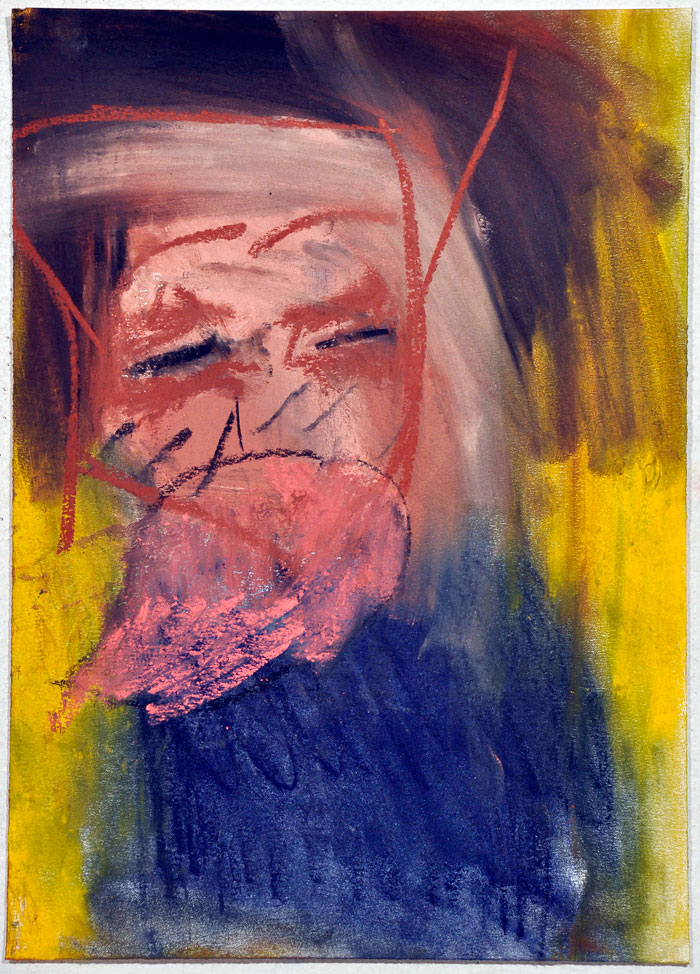
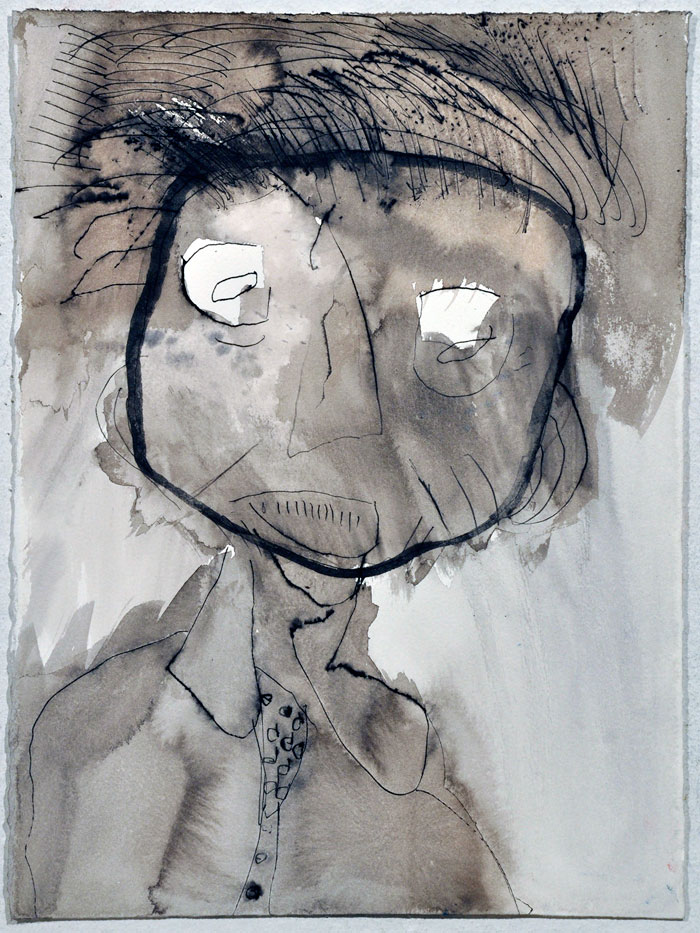
Lisa Reid (Australian, b. 1975) 'Not titled (Adam Baddeley)' 2001


Lisa Reid (Australian, b. 1975)
Not titled (Adam Baddeley)
2001
Pastel and pencil on paper
50 x 33cm


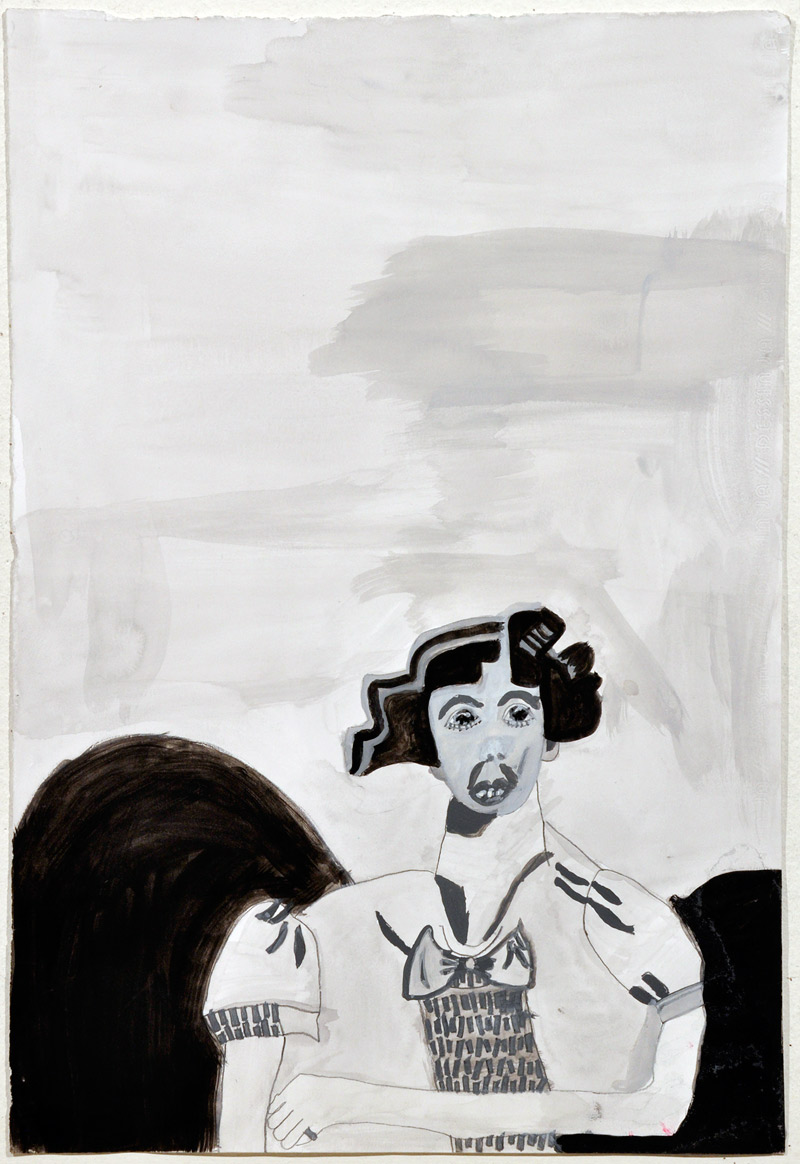
Lisa Reid (Australian, b. 1975) 'Great Aunt Edna' 2003


Lisa Reid (Australian, b. 1975)
Great Aunt Edna
2003
Gouache on paper
55 x 37.5cm


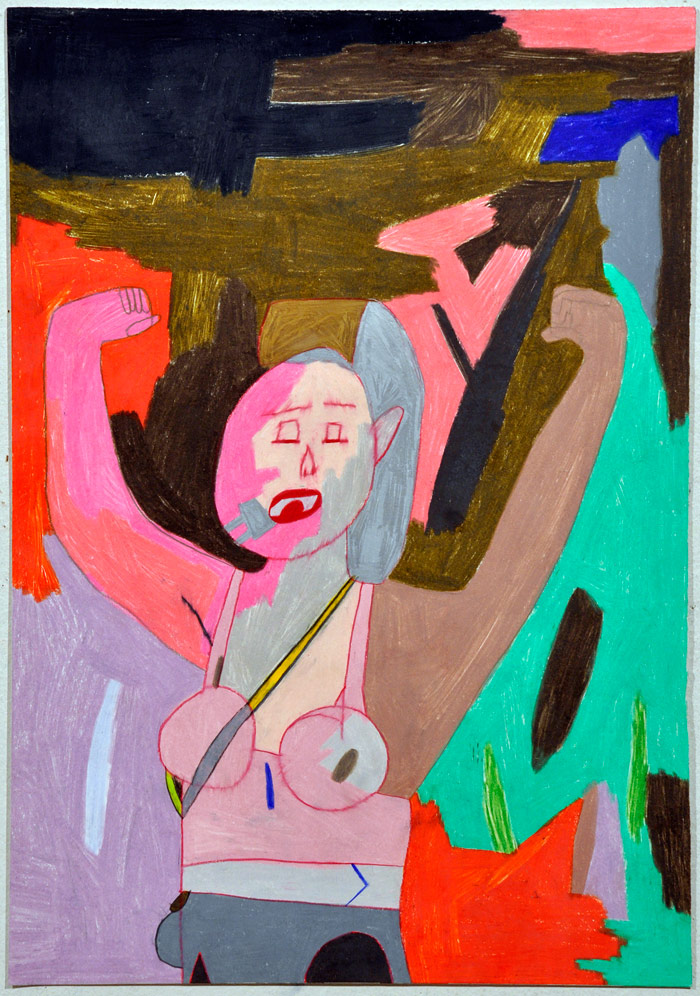
Anthony Romagnano (Australian, b. 1985) 'Madonna' 2010


Anthony Romagnano (Australian, b. 1985)
Madonna
2010
Prisma colour pencil on paper
50 x 35cm


Jodie Noble. 'Not titled' 2010


Jodie Noble (Australian)
Not titled
2010
Ink and fine-liner on paper
38 x 28.5cm


Cameron Noble. 'Not titled' 2011


Cameron Noble (Australian)
Not titled
2011
Dry pastel on paper
38.5 x 32.5cm


Patrick Francis (Australian, b. 1991) 'Not titled' 2011


Patrick Francis (Australian, b. 1991)
Not titled
2011
Acrylic on paper
70 x 50cm


Arts Project Australia
24 High Street
Northcote Victoria 3070
Phone: + 61 3 9482 4484

Gallery location:
Level 1 Perry Street Building,
Collingwood Yards
Enter via 35 Johnson Street
or 30 Perry Street, Collingwood

Opening hours:
Wed – Fri 11am – 5pm
Sat & Sun 12 – 4pm

Arts Project Australia website

LIKE ART BLACK ON FACEBOOK

Back to top

opening: ‘movement and emotion’ and ‘jodie noble solo’ at arts project australia, melbourne

October 2011


I am opening the exhibitions Movement and Emotion and Jodie Noble Solo at Arts Project Australia, Northcote on Wednesday 19th October 2011 from 6 – 8pm. All welcome, would be great to see you there. Details on the flyer!

Dr Marcus Bunyan


Exhibitions: 'Movement and Emotion' and 'Jodie Noble Solo' at Arts Project Australia, Northcote


Arts Project Australia website

LIKE ART BLART ON FACEBOOK

Back to top
Exhibition: ‘2011 Bowness Photography Prize’ at Monash Gallery of Art, Melbourne

Exhibition dates: 15th September 2011 – 16th October 2011

Short-listed artists: Warwick Baker, Kate Bernauer, Magdalena Bors, Chris Budgeon, Elaine Campaner, Michael Corridore, Jagath Dheerasekara, Jackson Eaton, Cherine Fahd, Sean Fennessy, Anne Ferran, Phillip George, Dean Golja, Natalie Grono, David Manley, Olivia Martin-McGuire, Prudence Murphy, Harry Nankin, Catherine Nelson, Matthew Newton, Selina Ou, Max Pam, Polixeni Papapetrou, Geoff Parr, Sonia Payes, Drew Pettifer, Helen Pynor, Jacky Redgate, Simone Rosenbauer, Julie Rrap, Martin Smith, Simon Terrill, Claudia Terstappen, Glenn Walls, Rudi Williams, Alex Wisser, Yiwen Yao.


Elaine Campaner (Australian, b. 1969) 'Australia Day #1 (Ford Falcon XR8)' 2011


Elaine Campaner (Australian, b. 1969)
Australia Day #1 (Ford Falcon XR8)
2011
From the series Citizenship
Pigment ink-jet print
93.3 x 140cm
Courtesy of the artist


Excellent photographs in the Bowness Photography Prize this year. A small selection of the short-listed artists are featured below. The dazzling winner was Light throw (mirrors) #4, 2011 by Jacky Redgate (see below). My particular favourites include David Manley’s sensual Eastern Distributer exhaust stack (2010); Simon Terrill’s textural Rivoli #2 (2010); and Catherine Nelson’s ocular world, Cloverdowns (2010). There are many good photographs. To see more finalists work visit the Bowness Photography Prize Flickr set.

Dr Marcus Bunyan


Simon Terrill (Australian, b. 1969) 'Rivoli #2' 2010


Simon Terrill (Australian, b. 1969)
Rivoli #2
2010
Chromogenic print
120 x 150cm
Courtesy of the artist and Sutton Gallery, Melbourne


Established in 2006 to promote excellence in photography, the annual non-acquisitive William and Winifred Bowness Photography Prize is an initiative of the MGA Foundation. Among Australia’s most important art prizes, the Bowness Photography Prize is the country’s most coveted photography prize. The finalist’s works were selected from approximately 2,000 photographs submitted by 432 entrants. In 2011, photographers competed for the $25,000 first prize.

Text from the MGA website


Alex Wisser (American, b. 1967, arrived Australia 1995) 'Blank canvass 2' 2011


Alex Wisser (American, b. 1967, arrived Australia 1995)
Blank canvass 2
2011
From the series Blank canvass
Pigment ink-jet print
100 x 150cm
Courtesy of the artist


This photograph is from a series called Blank canvass, taken during the course of my work as a real estate photographer for local newspapers. They were taken in houses that have been lived in by a single occupant or family for more than 30 years on the day of their sale by auction. Afterwards, we can only assume that they have been torn down and rebuilt or renovated beyond recognition. Like an anthropologist, I consider these dwellings from a distance, at the moment of their disappearing, wondering at the decisions of taste that are layered decade upon decade to compose or otherwise synthesise the identity of the people who have lived in them.


Jacky Redgate (English b. 1955, arrived Australia 1967) 'Light throw (mirrors) #4' 2011


Jacky Redgate (English b. 1955, arrived Australia 1967)
Light throw (mirrors) #4
2011
From the series Light throw (mirrors) 2009 – 11
Chromogenic print
126 x 158cm
Courtesy of the artist, WILLIAM WRIGHT ARTISTS, Sydney and Arc One Gallery, Melbourne


Sean Fennessey (Australia, b. 1982) 'Father and son' 2010


Sean Fennessey (Australia, b. 1982)
Father and son
2010
From the series Portraits of invisible people
Pigment ink-jet print
95 x 95cm
Courtesy of the artist


David Manley (Australian, b. 1963) 'Eastern Distributer exhaust stack' 2010


David Manley (Australian, b. 1963)
Eastern Distributer exhaust stack
2010
From the series Entropy
Pigment ink-jet print
55 x 55cm
Courtesy of the artist


Olivia Martin-McGuire (Australian, b. 1976) 'Kris and Mier #1' 2011


Olivia Martin-McGuire (Australian, b. 1976)
Kris and Mier #1
2011
From the series Mother
Chromogenic print
85 x 85cm
Courtesy of the artist


Catherine Nelson (Australian, b. 1970) 'Cloverdowns' 2010


Catherine Nelson (Australian, b. 1970)
Cloverdowns
2010
From the series Future memories
Pigment ink-jet print
100 x 100cm
Courtesy of the artist and Gallerysmith, Melbourne


Helen Pynor (Australian, b. 1964) 'Liquid ground 1' 2010


Helen Pynor (Australian, b. 1964)
Liquid ground 1
2010
From the series Liquid ground
Chromogenic print
160 x 110cm
Courtesy of the artist, Dianne Tanzer Gallery + Projects, Melbourne, and Dominik Mersch Gallery, Sydney


Chris Budgeon (Canada b. 1955, arrived Australia 1984) 'Cory' 2011


Chris Budgeon (Canada b. 1955, arrived Australia 1984)
Cory
2011
From the series Are we not men
Pigment ink-jet print
90 x 67.5cm
Courtesy of the artist


Monash Gallery of Art
860 Ferntree Gully Road, Wheelers Hill
Victoria 3150 Australia
Phone: + 61 3 8544 0500

Opening hours:
Tue – Fri: 10am – 5pm
Sat – Sun: 10am – 4pm
Mon/public holidays: closed

Monash Gallery of Art website

LIKE ART BLART ON FACEBOOK

Back to top
Exhibition: ‘Hans-Christian Schink: Photographs 1980 to 2010’ at MKM Küppersmühle Museum of Modern Art, Duisburg

Exhibition dates:  1st July – 3rd October 2011


Many thankx to MKM Küppersmühle Museum of Modern Art for allowing me to publish the photographs in the posting. Please click on the photographs for a larger version of the image.


Hans-Christian Schink (German, b. 1961) 'St Petersburg (3)' 1989


Hans-Christian Schink (German, b. 1961)
St Petersburg (3)
1989
Series St Petersburg
C-print
© Hans-Christian Schink


Hans-Christian Schink (German, b. 1961) 'Seehausen' 1996


Hans-Christian Schink (German, b. 1961)
Seehausen
1996
Series Walls
C-print
© Hans-Christian Schink


Hans-Christian Schink (German, b. 1961) 'Sanitz' 2003


Hans-Christian Schink (German, b. 1961)
Sanitz
2003
Series Walls
C-print
Hans-Christian Schink
MKM Museum Küppersmühle für Moderne Kunst, Sammlung Ströher
© Hans-Christian Schink


Hans-Christian Schink (German, b. 1961) 'Bärwalde' 1997


Hans-Christian Schink (German, b. 1961)
Bärwalde
1997
C-Print
59 x 68 cm
© Hans-Christian Schink


Hans-Christian Schink (German, b. 1961) 'Plötzetal rest area' 1995-2003


Hans-Christian Schink (German, b. 1961)
Plötzetal rest area
1995-2003
Series Traffic Projects for German Unity
C-Print
© Hans-Christian Schink


Hans-Christian Schink (German, b. 1961) 'A20 - Peenebrücke Jarmen' 2002


Hans-Christian Schink (German, b. 1961)
A20 – Peenebrücke Jarmen
2002
Series Traffic Projects for German Unity
C-Print
Privatsammlung Berlin
© Hans-Christian Schink


Hans-Christian Schink (German, b. 1961) 'A2 - Elbebrücke bei Magdeburg' 2003


Hans-Christian Schink (German, b. 1961)
A2 – Elbebrücke bei Magdeburg
2003
Serie Traffic Projects for German Unity
C-Print
Klassik Stiftung Weimar, Neues Museum
© Hans-Christian Schink


Hans-Christian Schink (German, b. 1961) 'LA Night #9' 2003


Hans-Christian Schink (German, b. 1961)
LA Night #9
2003
Series LA Night
C-print
Galerie Rothamel Erfurt/Frankfurt a.M.
© Hans-Christian Schink


Hans-Christian Schink (German, b. 1961) 'LA Night #10' 2003


Hans-Christian Schink (German, b. 1961)
LA Night #10
2003
Series LA Night
C-print
Galerie Rothamel Erfurt/Frankfurt a.M.
© Hans-Christian Schink


The best present of my life was most probably the simple role-film camera I received for my seventh birthday”, recalls Hans-Christian Schink, one of Germany’s leading contemporary photographers. The works by the Erfurt-born photographer, who today lives in Leipzig and who regularly travels the globe to create his photo-series, are represented in public and private collections worldwide. His photographs are also on view in the MKM’s presentation of the Ströher Collection since many years.

The MKM is now showing the most comprehensive exhibition to date of works by Hans-Christian Schink whose oeuvre has wielded a crucial impact on German photography. Approximately 100 large-format works afford an illuminating insight into his output until the present day, and impressively chart the development of his own distinct artistic signature.

Schink began his study of photography at the renowned Academy of Visual Arts in Leipzig where he was a master-class student from 1991 to 1993. From the very outset Schink worked with series. A key thrust of his oeuvre is his exploration of the transition between the urban and the rural, nature and culture and architectural intervention in the landscape. He finds his motifs both in his immediate environs, initially in eastern Germany, and also on his carefully planned journeys across the world, from North Korea, via the USA to the Antarctic. A further pre-occupation is the photographic rendering of light phenomena and moods.

For the first time, the MKM is exhibiting a selection of small-format black-white photos from the early1980s, together with the first colour photographs from the artist’s student days. Schink initially focused both on daily scenes in the cities of Leipzig, Erfurt and Halle, and on the abstract visual quality of architectural detail. During his studies he discovered colour photography and began working with a large-format camera, initially in the series Leipziger Bäder (Leipzig Baths, 1988), whose empty, dilapidated interiors bear poignant witness to a by-gone age. Since this time, people in his pictures exist merely as traces of their intervention in the environment.

The artist first commanded worldwide attention with the series Verkehrsprojekte Deutsche Einheit (Traffic Projects German Unity, 1995-2003). Here he addressed the radical transformation of the landscape through the expansion of the motorway and rail network in eastern Germany.

The series Wände (Walls, 1995-2003) explored the question of how authentic the representation of reality is. Schink took frontal shots of the prefabricated architecture of unpretentious commercial buildings and melded them into almost abstract colour-fields. Merely the narrow borders adumbrate what we are seeing. To find his motifs, the artist embarks on journeys beyond the confines of Europe, taking him to countries such as Brazil, Japan, Cambodia, North Korea, Peru, the USA or Vietnam. His main objective is not the representation of exotic motifs, but the portrayal of the interface and the dialogue between anthropogenic structures and the natural landscape.

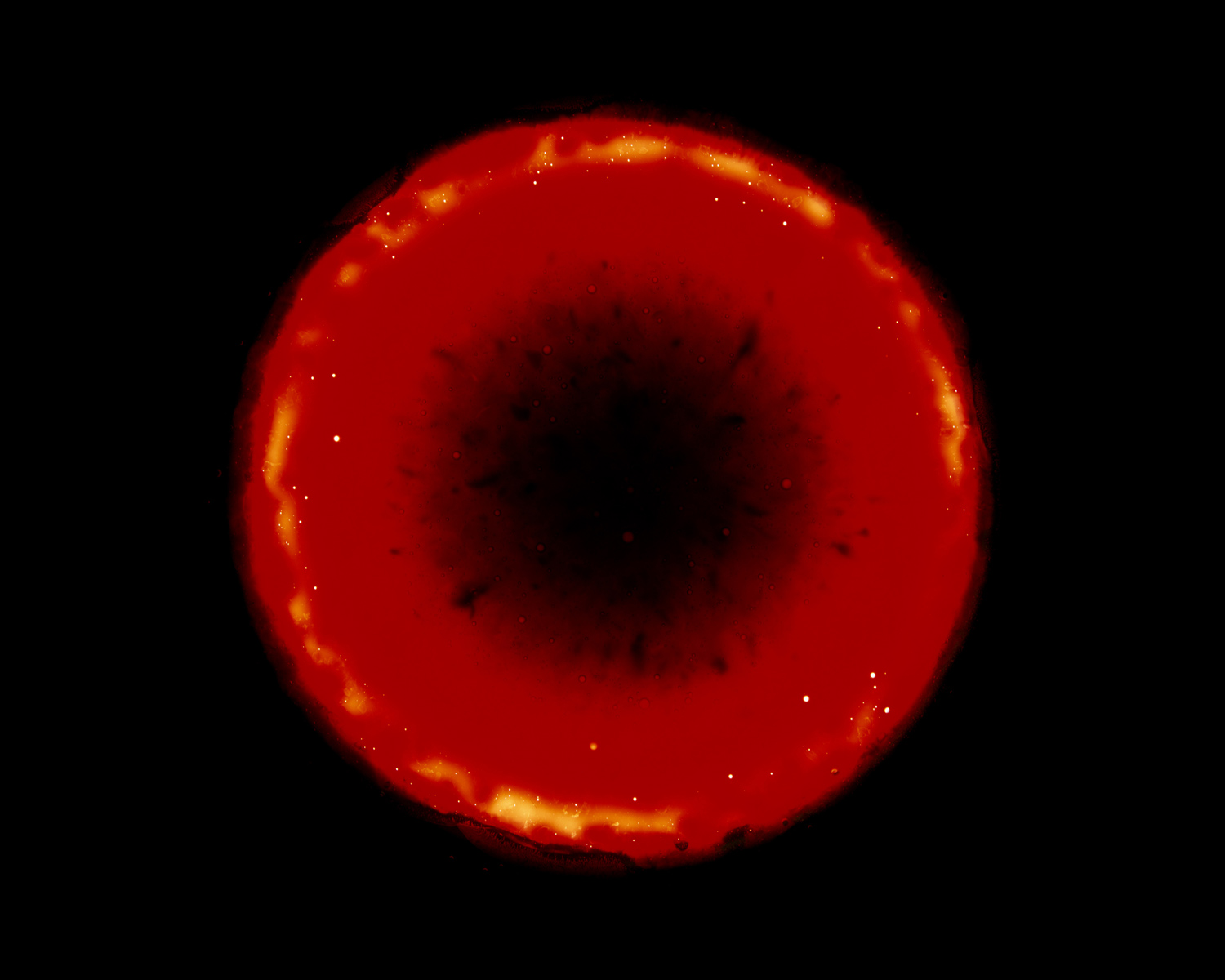
The award-winning series 1h (2002-2010) unites diverse aspects of his oeuvre: the interest in natural phenomena and light situations and his reflection on the possibilities of depicting reality through the medium of photography. Schink photographs the sun at various locations throughout the world, using exposure times of one hour. Together, the over-exposure and light intensity conjure a spectre which cannot be perceived by the human eye and which only becomes visible as a solarisation when captured by analogue photography: a black sunbeam, surrounded by a glowing corona. The resulting images render visible an unreal depiction of reality and confront the viewer with a Nature suspended between imagination and representation.

Press release from the MKM Küppersmühle Museum of Modern Art website


Hans-Christian Schink (German, b. 1961) 'Ba Be (1)' 2005


Hans-Christian Schink (German, b. 1961)
Ba Be (1)
2005
Series Vietnam
C-print
© Hans-Christian Schink


Hans-Christian Schink (German, b. 1961) 'Bach Ma (2A)' 2005


Hans-Christian Schink (German, b. 1961)
Bach Ma (2A)
2005
Series Vietnam
C-print
© Hans-Christian Schink


Hans-Christian Schink (German, b. 1961) 'Ba Be' 2005


Hans-Christian Schink (German, b. 1961)
Ba Be
2005
Series Vietnam
C-print
© Hans-Christian Schink


Hans-Christian Schink (German, b. 1961) '9/17/2006, 8:45 am-9:45 am, N 78°13.370' E 015°40.024' 2006


Hans-Christian Schink (German, b. 1961)
9/17/2006, 8:45 am – 9:45 am, N 78°13.370′ E 015°40.024′
2006
Serie 1h
Gelatin silver print on barite paper
© Hans-Christian Schink
MKM Museum Küppersmühle für Moderne Kunst, Sammlung Ströher


Hans-Christian Schink (German, b. 1961) '4/05/2009, 6:48 am - 7:48 am, S 24°43.399' E 015°28.310'' 2009


Hans-Christian Schink (German, b. 1961)
4/05/2009, 6:48 am – 7:48 am, S 24°43.399′ E 015°28.310′
2009
Serie 1h
Gelatin silver print on barite paper
© Hans-Christian Schink
MKM Museum Küppersmühle für Moderne Kunst, Sammlung Ströher


Hans-Christian Schink (German, b. 1961) '4/10/2009, 4:11 pm - 5:11 pm, S 26°28.034' E 018°16.142'' 2009


Hans-Christian Schink (German, b. 1961)
4/10/2009, 4:11 pm – 5:11 pm, S 26°28.034′ E 018°16.142′
2009
Serie 1h
Gelatin silver print on barite paper
© Hans-Christian Schink
MKM Museum Küppersmühle für Moderne Kunst, Sammlung Ströher


Hans-Christian Schink (German, b. 1961) '2/26/2010, 7:54 am – 8:54 am, S36° 49.622' E 175° 47.340'' 2010


Hans-Christian Schink (German, b. 1961)
2/26/2010, 7:54 am – 8:54 am, S36° 49.622′ E 175° 47.340′
2010
Serie 1h
© Hans-Christian Schink, courtesy Galerie Rothamel Erfurt/Frankfurt a.M. and Kicken Berlin


Hans-Christian Schink (German, b. 1961) 'Antartica 2' 2010


Hans-Christian Schink (German, b. 1961)
Antartica 2
2010
C-print
121 x 145cm


MKM Küppersmühle Museum of Modern Art
Inner Harbour, Duisburg
Philosophenweg 55
D – 47051 Duisburg, Germany

Opening hours:
Wed: 2 – 6pm
Thu – Sun: 11am – 6pm
Public holidays: 11am – 6pm
Mondays and Tuesdays closed

MKM Küppersmühle Museum of Modern Art website

LIKE ART BLART ON FACEBOOK

Back to top
Exhibition: ‘Juan Davila: The Moral Meaning of Wilderness’ at the Monash University Museum of Art (MUMA), Caulfield

Exhibition dates: 4th August – 1st October 2011


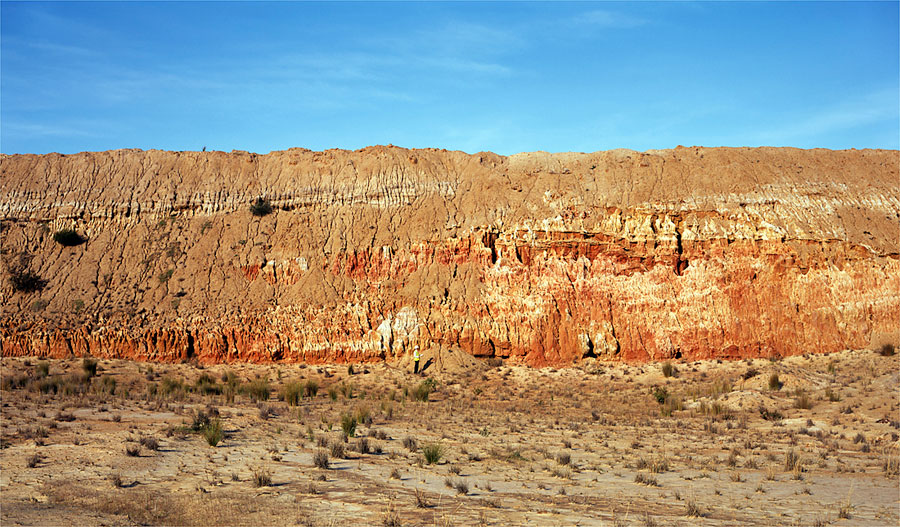
Juan Davila (Chilean b. 1946, emigrated Australia 1974) 'Wilderness' 2010


Juan Davila (Chilean b. 1946, emigrated Australia 1974)
Wilderness
2010
© Juan Davila, Courtesy Kalli Rolfe Contemporary Art


“The ‘Moral Meaning of Wilderness’ exhibition is a tour of the various approaches to the landscape: ‘plein air’ painting, studio landscape work, sublime landscape, historical evocation of landscape, modernity and the landscape, natural disaster, childhood memory of a landscape, woman in the wilderness. The ‘After Image’ works seem to refer to fantasies, inner space, unnameable objects, microcosm and immense space. Within the representation of “the land” one easily forgets that we are dealing with complexity and a field of projections. The political, the sublime, the moral stance, corporate destruction and the future of our environment come to mind.”


Juan Davila 1


“In a state of grace, one sometimes perceives the deep beauty, hitherto unattainable, of another person. And everything acquires a kind of halo which is not imaginary: it comes from the splendour of the almost mathematical light emanating from people and things. One starts to feel that everything in existence – whether people or things – breathes and exhales the subtle light of energy. The world’s truth is impalpable.”


Clarice Lispector 2


Simply put, this is the best exhibition I have seen in Melbourne this year.

Feminine jouissance is critical to an understanding of the work of Juan Davila (see quotation below). It is the jouissance of the Other: ineffable, incapable of being expressed, indescribable, unutterable. Also critical is an understanding of the meaning of ‘wilderness’ and ‘after image’:

Wilderness “is a relative term suggesting the perspective of a visitor or interloper for whom the landscape is wild and Other – for the landscape was neither wild nor foreign to its original inhabitants, at least not until its transformation through colonising, farming and displacement.”3

“An after image … is an optical illusion that refers to an image continuing to appear in one’s vision after the exposure to the original image has ceased.”4


The most powerful works are the Wilderness and After Image paintings. Grouped together in a room at the far end of the gallery, the effect of these paintings is to be physically surrounded by the nebula of the unconscious mind. The feeling is not dissimilar to being consumed by the abstract, elemental quality of Monet’s Nymphéas (Water Lilies) at the Orangerie in Paris. Pair to more earthly landscapes (see images 2 and 3 below) the paintings are the closest experience in approaching the divine that I have felt in a long time. Their visual and noumenal ‘energy’ is superlative.

Robert Nelson observes that, “The after-image is a momentary body-memory – not intellectual but bizarrely willed – perhaps a bit like the recollection of a dream or the instant slip that uncannily reveals the unconscious. In monumentalising this trace, Davila delivers us to another ethereal zone: the breath of libido, buffeted by clouds of repression and misty internalised myths. As portraits of evanescent memory, they are wantonly memorable.”5

Indeed, they are memorable. I had a spiritual experience with this work for the paintings promote in the human a state of grace. The non-material, the unconceptualisable, things which are outside all possibility of time and space are made visible. This happens very rarely but when it does you remember, eternally, the time and space of occurrence. I hope you have the same experience.

Dr Marcus Bunyan


Many thankx to MUMA for allowing me to publish the images in the posting. Please click on the images for a larger version.


“The term jouissance, in French, denotes “pleasure” or “enjoyment.” The term has a sexual connotation (i.e., orgasm) lacking in the English word “enjoyment”, and is therefore left untranslated in English editions of the works of Jacques Lacan. In his Seminar “The Ethics of Psychoanalysis” (1959-1960) Lacan develops his concept of the opposition of jouissance and pleasure. The pleasure principle, according to Lacan, functions as a limit to enjoyment: it is the law that commands the subject to ‘enjoy as little as possible’. At the same time the subject constantly attempts to transgress the prohibitions imposed on his enjoyment, to go beyond the pleasure principle. Yet the result of transgressing the pleasure principle, according to Lacan, is not more pleasure but pain, since there is only a certain amount of pleasure that the subject can bear. Beyond this limit, pleasure becomes pain, and this ‘painful principle’ is what Lacan calls jouissance.

In his Seminar “Encore” (1972-1973) Lacan states that jouissance is essentially phallic. That is, insofar as jouissance is sexual it is phallic, meaning that it does not relate to the Other as such. Lacan admits, however, that there is a specifically feminine jouissance, a supplementary jouissance, which is beyond the phallus, a jouissance of the Other. This feminine jouissance is ineffable, for both women and men may experience it but know nothing about it.”6


Footnotes

1/ Davila, Juan quoted in “After Image: A conversation between Juan Davila and Kate Briggs,” in Juan Davila: The Moral Meaning of Wilderness catalogue. Canberra: ANU Drill Hall Gallery, 2011, p. 53.

2/ Lispector, Clarice. Discovering the World. Manchester: Carcanet Press, 1992, p. 122 quoted in Briggs, Kate. “Painting, an act of faith: Moments in the work of Juan Davila,” in Juan Davila: The Moral Meaning of Wilderness catalogue. Canberra: ANU Drill Hall Gallery, 2011, p. 8.

3/ Delany, Max. Introductory speech for “Contemporary Visions & Critiques of the Landscape.” Video of session. The Festival of Ideas, The Pursuit of Identity: Landscape, History and Genetics. The University of Melbourne [Online] Cited 21/09/2011. No longer available online

4/ Anon. “Afterimage,” on the Wikipedia website [Online] Cited 21/09/2011.

5/ Nelson, Robert. “Exhibition does not take air lightly,” in The Age newspaper. Wednesday, September 21st, 2011, p. 17.

6/ Anon. “Jouissance,” on the Wikipedia website [Online] Cited 21/09/2011.


Juan Davila (Chilean b. 1946, emigrated Australia 1974) 'A Man is Born Without Fear' 2010


Juan Davila (Chilean b. 1946, emigrated Australia 1974)
A Man is Born Without Fear
2010
© Juan Davila, Courtesy Kalli Rolfe Contemporary Art


Juan Davila (Chilean b. 1946, emigrated Australia 1974) 'After Image. A Man is Born Without Fear' 2010


Juan Davila (Chilean b. 1946, emigrated Australia 1974)
After Image. A Man is Born Without Fear
2010
© Juan Davila, Courtesy Kalli Rolfe Contemporary Art


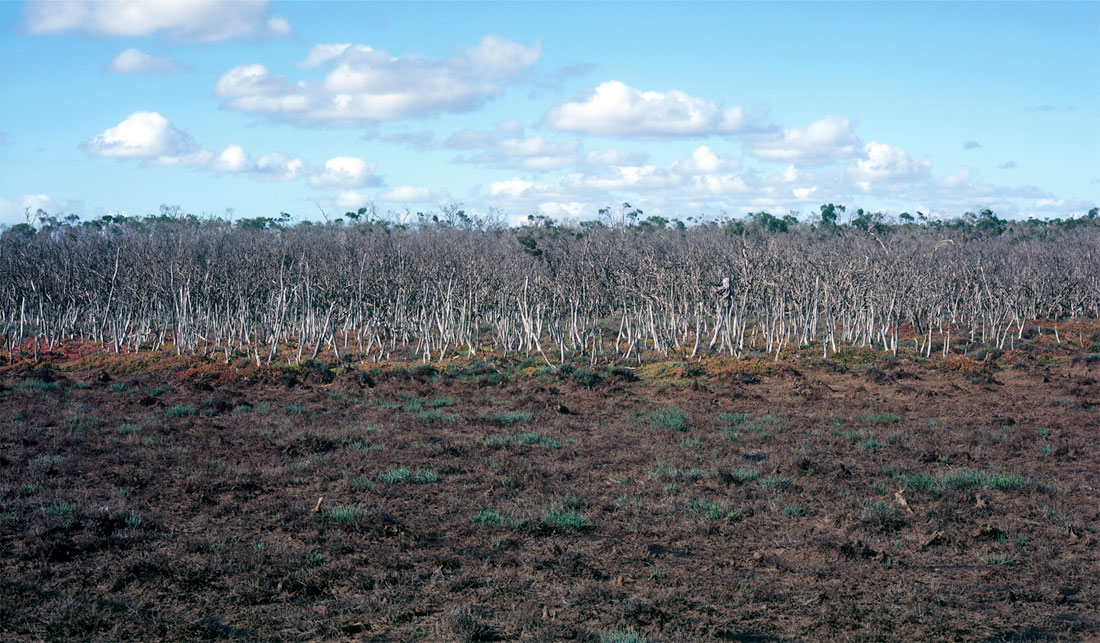
Juan Davila (Chilean b. 1946, emigrated Australia 1974) 'Churchill National Park' 2009


Juan Davila (Chilean b. 1946, emigrated Australia 1974)
Churchill National Park
2009
© Juan Davila, Courtesy Kalli Rolfe Contemporary Art


The Moral Meaning of Wilderness features recent work by Juan Davila, one of Australia’s most distinguished artists. The exhibition sees Davila turn to the genres of landscape and history painting, at a time when the environment is as much a political as a cultural consideration. With technical virtuosity, Davila’s striking representations of nature achieve monumental significance, depicting beauty and emotion while addressing modern society’s ambivalence to nature and increasing consumerism.

The Moral Meaning of Wilderness represents a radical shift in Davila’s practice, whilst continuing to explore art’s relationship to nature, politics, identity and subjectivity in our post-industrial age. Davila pursues his exploration of the role of art as a means of social, cultural and political analysis.

While many contemporary artists turned away from representation of the landscape, due to its perceived allegiance to outmoded forms of national identity and representation, Davila has recently sought to revisit and reconsider our surroundings au natural.

His paintings are, at first view, striking representations of nature. The paintings, created since 2003, are undertaken en plain air, a pre-modern technique based on speed of execution in situ, and the use of large scale canvases characteristic of history painting. He has also employed other techniques such as studio painting and representations of the landscape with reference to the sublime, the historical, memory and modernity.

Text from the MUMA website


Juan Davila (Chilean b. 1946, emigrated Australia 1974) 'The Painter's Studio' 2006


Juan Davila (Chilean b. 1946, emigrated Australia 1974)
The Painter’s Studio
2006
© Juan Davila, Courtesy Kalli Rolfe Contemporary Art


Juan Davila (Chilean b. 1946, emigrated Australia 1974) '761 Wattletree Road' 2008


Juan Davila (Chilean b. 1946, emigrated Australia 1974)
761 Wattletree Road
2008
© Juan Davila, Courtesy Kalli Rolfe Contemporary Art


Juan Davila (Chilean b. 1946, emigrated Australia 1974) 'What About my Desire?' 2009


Juan Davila (Chilean b. 1946, emigrated Australia 1974)
What About my Desire?
2009
© Juan Davila, Courtesy Kalli Rolfe Contemporary Art


Juan Davila (Chilean b. 1946, emigrated Australia 1974) 'Australia: Nuclear Waste Dumping Ground' 2007


Juan Davila (Chilean b. 1946, emigrated Australia 1974)
Australia: Nuclear Waste Dumping Ground
2007
© Juan Davila, Courtesy Kalli Rolfe Contemporary Art


Monash University Museum of Art (MUMA)
Ground Floor, Building F.
Monash University Caulfield campus
900 Dandenong Road
Caulfield East, VIC 3145
Phone: 61 3 9905 4217

Opening hours:
Tuesday – Friday 10am – 5pm
Saturday 12 – 5pm

Monash University Museum of Art (MUMA) website

LIKE ART BLART ON FACEBOOK

Back to top
Exhibition: ‘Twombly and Poussin: Arcadian Painters’ at the Dulwich Picture Gallery, London

Exhibition dates: 29th June – 25th September 2011

Curator: Dr Nicholas Cullinan, Curator of International Modern Art at Tate Modern.


Many thankx to the Dulwich Picture Gallery for allowing me to publish the images in the posting. Please click on them for a larger version of the image.


Robert Rauschenberg (American, 1925-2008) 'Cy and Relics' 1952


Robert Rauschenberg (American, 1925-2008)
Cy and Relics
1952
Photograph
© The Rauschenberg Foundation


Nicolas Poussin (French, 1594-1665) 'The Triumph of Pan' c. 1636


Nicolas Poussin (French, 1594-1665)
The Triumph of Pan
c. 1636
Pen and ink with wash over stylus and black chalk
581 x 410 x 29 mm
Lent by Her Majesty the Queen. The Royal Collection
© 2011 Her Majesty Queen Elizabeth II


Cy Twombly (American, 1928-2011) 'Bacchanalia-Fall (5 Days in November) Blatt 4, InvNr. UAB 457' 1977


Cy Twombly (American, 1928-2011)
Bacchanalia-Fall (5 Days in November) Blatt 4, InvNr. UAB 457
1977
Collage, oil, chalk, gouache, on fabriano paper, graph paper
101.2 x 150.5cm
Bayerische Staatsgemäldesammlungen – Museum Brandhorst, München
Leihgeber: Udo Brandhorst
© Cy Twombly


Cy Twombly (American, 1928-2011) 'Pan' 1975


Cy Twombly (American, 1928-2011)
Pan
1975
148 x 100cm
Private Collection
© Cy Twombly, Courtesy: Cy Twombly Archive


Nicolas Poussin (French, 1594-1665) 'The Triumph of David' 1628-1631


Nicolas Poussin (French, 1594-1665)
The Triumph of David
1628-1631
Oil on canvas
Height: 1,184 mm (46.61 in)
Width: 1,483 mm (58.38 in)
Dulwich Picture Gallery
© By permission of the Trustees of Dulwich Picture Gallery


Cy Twombly (American, 1928-2011) 'Hero and Leandro' 1985


Cy Twombly (American, 1928-2011)
Hero and Leandro
1985
202 x 254cm
Private Collection, Courtesy Thomas Ammann Fine Art AG, Zurich
© Cy Twombly


“I would’ve liked to have been Poussin, if I’d had a choice, in another time.”


Cy Twombly


Dulwich Picture Gallery is proud to announce a revelatory exhibition of the work of Cy Twombly and Nicolas Poussin. Organised to celebrate the Bicentenary of the Gallery, this major show will explore, for the first time, the unexpected yet numerous parallels and affinities between the two artists. The exhibition will draw upon the world-class permanent collection of works at Dulwich Picture Gallery by Nicolas Poussin, alongside other works from major collections around the world by both Poussin and Twombly.

In 1624 and 1957, the two artists, aged around thirty, moved to Rome. Nicolas Poussin and Cy Twombly subsequently spent the majority of their lives in the Eternal City, and went on to become the pre-eminent painters of their day. Rather than recent exhibitions that have sought to compare and contrast old masters with contemporary artists through superficial visual appearances, this groundbreaking show will instead juxtapose works which may seem radically disparate in terms of style, yet ones that share deep and timeless interests. Both Poussin and Twombly were artists of prodigious talent who found in the classical heritage of Rome a life-long subject. Both spent their lives studying, revivifying and making newly relevant for their own eras antiquity, ancient history, classical mythology, Renaissance painting, poetry and the imaginary, idealised realm of Arcadia.
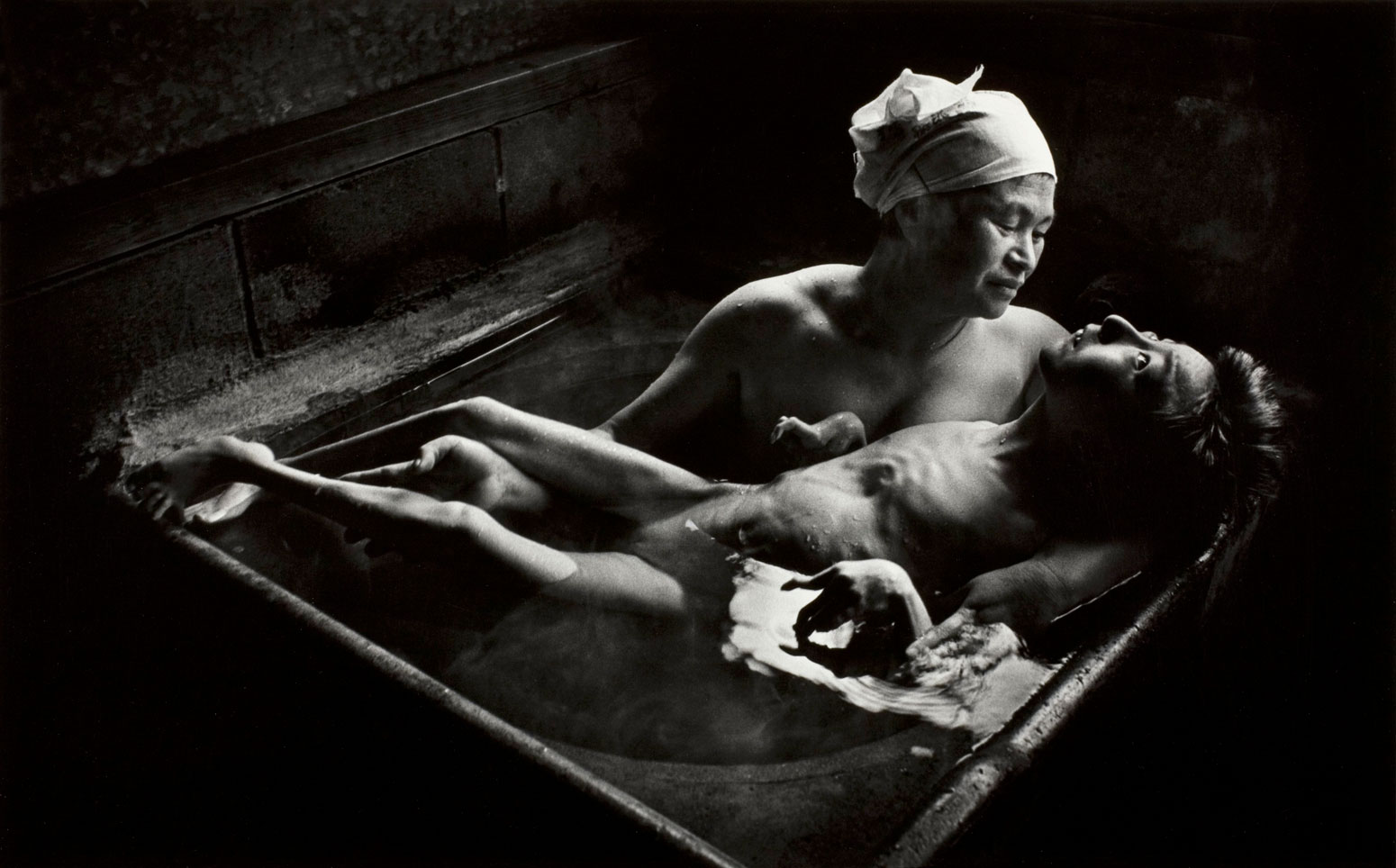
Curated by Dr. Nicholas Cullinan, Curator of International Modern Art at Tate Modern, the exhibition examines how Twombly and Poussin, although separated by three centuries, nonetheless engaged with the same sources and will explore the overlapping subjects that the two artists have shared. It will consist of around thirty carefully-chosen paintings, drawings and sculptures, structured thematically around six sections devoted to key shared themes, from both artists’ early fascinations with Arcadia and the pastoral when they first moved to Rome, Venus and Eros, Anxiety and Theatricality, Apollo, Parnassus and Poetry, Pan and the Bacchanalia, through to the theme of The Four Seasons.

The exhibition will be accompanied by the British premiere of Tacita Dean’s new 16mm film portrait of Cy Twombly, Edwin Parker (2011). The film documents Twombly in his studio in Lexington, Virginia, and follows on from Dean’s series of filmed depictions of subjects such as the choreographer Merce Cunningham, the poet Michael Hamburger and the artist Mario Merz, where the inner life of the sitter is implied through their physical demeanour and surroundings. A series of talks will also accompany the exhibition, including Sir Nicholas Serota, Director of Tate, in conversation with Dr. Nicholas Cullinan on the topic of curating Twombly, and Malcolm Bull (Ruskin School of Drawing, University of Oxford) and T. J. Clark (Professor Emeritus of Modern Art at the University of California, Berkeley; and Visiting Professor, University of York) who will discuss the work of Poussin and Twombly and the themes raised by the exhibition.

Ian Dejardin, Director of Dulwich Picture Gallery explains that the exhibition “fits in with a philosophy I have pursued here – that exhibitions can conduct a dialogue with the permanent collection. In the past Howard Hodgkin, Lucian Freud and Paula Rego have all hung their paintings within the collection, so Poussin and Twombly seemed like a natural extension of those experiments.”

The exhibition has received enthusiastic support and loans from major private and public collections around the world, including The National Gallery and Tate in London; The Royal Collection; The Duke of Devonshire; The Fitzwilliam Museum, Cambridge; Museo del Prado, Madrid; The Brandhorst Museum, Munich and The Art Institute of Chicago. The exhibition has been developed in close collaboration with Cy Twombly himself, and will include works that have never been exhibited before.

Press release from the Dulwich Picture Gallery


Nicolas Poussin (French, 1594-1665) 'Rinaldo and Armida' c. 1630


Nicolas Poussin (French, 1594-1665)
Rinaldo and Armida
c. 1630
Oil on canvas
Height: 822 mm (32.36 in)
Width: 1,092 mm (42.99 in)
Dulwich Picture Gallery
© By permission of the Trustees of Dulwich Picture Gallery


Nicolas Poussin (French, 1594-1665) 'The Nurture of Jupiter' mid 1630s


Nicolas Poussin (French, 1594-1665)
The Nurture of Jupiter
mid 1630s
Oil on canvas
Height: 965 mm (37.99 in)
Width: 1,210 mm (47.63 in)
Dulwich Picture Gallery
© By permission of the Trustees of Dulwich Picture Gallery


Cy Twombly (American, 1928-2011) 'Quattro Stagioni: Primavera' 1993-5


Cy Twombly (American, 1928-2011)
Quattro Stagioni: Primavera
1993-1995
Acrylic, oil, crayon and pencil on canvas
3230 x 1996 x 67 mm
Tate: Purchased with assistance from the American Fund for the Tate Gallery and Tate Members 2002
© Tate, London, 2010, © Cy Twombly


Cy Twombly (American, 1928-2011) 'Quattro Stagioni: Estate' 1993-5


Cy Twombly (American, 1928-2011)
Quattro Stagioni: Estate
1993-1995
Acrylic and pencil on canvas
3241 x 2250 x 67 mm
Tate: Purchased with assistance from the American Fund for the Tate Gallery and Tate Members 2002
© Tate, London, 2010, © Cy Twombly


Nicolas Poussin (French, 1594-1665) 'Venus and Mercury' c. 1627/1629


Nicolas Poussin (French, 1594-1665)
Venus and Mercury
c. 1627/1629
© By permission of the Trustees of Dulwich Picture Gallery


Cy Twombly (American, 1928-2011) 'Quattro Stagioni: Autunno' 1993-5


Cy Twombly (American, 1928-2011)
Quattro Stagioni: Autunno
1993-1995
Acrylic, oil, crayon and pencil on canvas
3230 x 2254 x 67 mm
Tate: Purchased with assistance from the American Fund for the Tate Gallery and Tate Members 2002
© Tate, London, 2010, © Cy Twombly


Cy Twombly (American, 1928-2011) 'Quattro Stagioni: Inverno' 1993-5


Cy Twombly (American, 1928-2011)
Quattro Stagioni: Inverno
1993-1995
Acrylic, oil and pencil on canvas
3229 x 2300 x 67mm
Tate: Purchased with assistance from the American Fund for the Tate Gallery and Tate Members 2002
© Tate, London, 2010, © Cy Twombly


Dulwich Picture Gallery
Gallery Road, London, SE21 7AD

Opening hours:
Tuesday – Sunday, 10am – 5pm
Closed Mondays except Bank Holidays

Dulwich Picture Gallery website

LIKE ART BLART ON FACEBOOK

Back to top