Exhibition: ‘Joel Sternfeld: Colour photographs since 1970’ at Albertina, Vienna

Exhibition dates: 27th June – 7th October 2012


Many thankx to the Albertina for allowing me to publish the photographs in the posting. Please click on the photographs for a larger version of the image.


Joel Sternfeld (American, b. 1944) 'A Railroad Artifact, 30th Street, May 2000' 2000


Joel Sternfeld (American, b. 1944)
A Railroad Artifact, 30th Street, May 2000
2000
© Courtesy of the artist, Luhring Augustine, New York and The Friends of the High Line, New York


Joel Sternfeld (American, b. 1944) 'Ken Robson's Christmas Tree, January 2001' 2001


Joel Sternfeld (American, b. 1944)
Ken Robson’s Christmas Tree, January 2001
2001
© Courtesy of the artist, Luhring Augustine, New York and The Friends of the High Line, New York


Joel Sternfeld (American, b. 1944) 'After A Flash Flood, Rancho Mirage, California 1979' 1979


Joel Sternfeld (American, b. 1944)
After A Flash Flood, Rancho Mirage, California 1979
1979
© Courtesy of the artist and Luhring Augustine, New York, 2012


Joel Sternfeld (American, b. 1944) 'Wet 'n Wild Aquatic Theme Park, Orlando, Florida, September 1980' 1980


Joel Sternfeld (American, b. 1944)
Wet ‘n Wild Aquatic Theme Park, Orlando, Florida, September 1980
1980
© Courtesy of the artist and Luhring Augustine, New York, 2012


Joel Sternfeld (American, b. 1944) 'The Space Shuttle Columbia Lands at Kelly Lackland Air Force Base, San Antonio, Texas, March 1979' 1979


Joel Sternfeld (American, b. 1944)
The Space Shuttle Columbia Lands at Kelly Lackland Air Force Base, San Antonio, Texas, March 1979
1979
© Courtesy Buchmann Galerie Berlin, Luhring Augustine, New York and  the artist


Joel Sternfeld (American, b. 1944) 'McLean, Virginia, December 1978' 1978


Joel Sternfeld (American, b. 1944)
McLean, Virginia, December 1978
1978
© Courtesy of the artist and Luhring Augustine, New York, 2012


This exhibition offers the first survey of the US artist Joel Sternfeld’s work in Austria. The Albertina shows eleven series by the photographer dating from between the early 1970s and 2007. Influenced by William Eggleston, but also by the colour theories of the Bauhaus, Joel Sternfeld, who was born in New York in 1944, began to experiment with colour photography in the 1970s and soon developed his own style. He brought colour to bear on a subject that had a long photographic tradition in the United States: the American social landscape. A critical observer, Sternfeld travelled across the USA for years, capturing the country and its inhabitants in all their peculiarities and contradictions. Most of his pictures explore political and social issues by representing their subjects’ relationship to nature or the landscape around them. Sternfeld’s photographs combine a documentary objective with an artist’s view. Their visual language has its predecessors in Walker Evans and Robert Frank, who were advocates of black-and-white photography, though. Seen against this background, Sternfeld’s photographs are to be understood not only as a chronicle of the last forty years’ American history, but also evidence a development process in the course of which colour came to bring forth an entirely specific visual language.

Nags Head

Next to William Eggleston and Stephen Shore, Joel Sternfeld ranks among the most important representatives of New Color Photography, a quite heterogeneous group of photographers who have relied on colour as a stylistic device for artistic photography since the 1970s. A perfectly natural means of expression today, colour was frowned upon in artistic photography in those days. While colour was used in popular photography, like in the fields of advertising and fashion, traditional artistic photographs were black-and-white. William Eggleston’s exhibition in the Museum of Modern Art New York in 1976, which was regarded as scandalous when it opened, proved to be a landmark event for the recognition of colour photography. Dating from 1975, Joel Sternfeld’s series Nags Head clearly testifies to the role of colour as a means of artistic expression. Precise colour areas are as important for the pictures’ composition as the motifs the photographer encountered on the beach of the town Nags Head in North Carolina.

First Pictures

Next to Nags Head, two series of colour photographs from the 1970s, Happy Anniversary Sweetie Face! and Rush Hour, stand for Joel Sternfeld’s early work. Following in the tradition of street photography, these series explore various scenes of American everyday culture in a humorous vein, capturing them in a seemingly spontaneous and random visual language. Supposed exposure mistakes and blurs as well as angles fragmentising the subjects suggest an intuitive and dynamic view of the world. The instantaneous character of the photographs manifests itself in the Rush Hour series in a particularly striking manner. Using a manual flash lighting up the faces of the passers-by for his compositions, Sternfeld emphasises the fleeting moment a photograph snatches from the continuum of time.

Colour proves to be key for the composition. Rich and full colour areas not only rhythmise and structure the arrangement, but represent pictorial values in their own right, which are not integrated in a homogeneous whole. This kind of photography which connects everyday motifs with the autonomy of colour has been influenced not least by William Eggleston, whom Sternfeld got to know in Harvard in 1976.

American Prospects

Sternfeld shot the series American Prospects while travelling through the United States in a Volkswagen bus for some years. Dating from between 1978 and 1987, the pictures explore people’s relationship to the American landscape as formed and informed by them. The microcosm of often bizarre everyday events that becomes visible here does more than just illustrate man’s problematic use and transformation of the landscape: it also offers a possibility for drawing conclusions on contemporary political and social conditions in the United States.

In American Prospects, Sternfeld frequently renders critical contents by relying on the sovereign use of sublime, vivid colour values and contrasts that seem to contradict the depicted serious circumstances. Colour, format, and static composition are grounded in Sternfeld’s use of a large-format camera. While he photographed his early series with a small-format camera, which allowed flexible movements and, thus, a spontaneous visual language, the more complicated handling of a large-format camera slows down the picture-taking process. Sternfeld selected his motifs very carefully and precisely planned his pictures’ composition in advance. Both the composition and the general motif of people in a landscape were essentially inspired by solutions of traditional painting like Pieter Bruegel the Elder’s and Jacob van Ruisdael’s.

Stranger Passing

Photographed within a period of fourteen years starting in 1987, Joel Sternfeld’s series Stranger Passing makes the human portrait its crucial issue. Depicted in situ, the subjects are characterised through their outward appearance, their clothes and poses, and the environs in which they present themselves. The pictures show a wide variety of social groups and milieus and centre on different life styles. Maintaining a reserved and detached view throughout, Sternfeld keeps a visible distance from his motifs and does not express a judgment – an artistic strategy already pursued by August Sander in his famous photographic project Menschen des 20. Jahrhunderts (People of the 20th Century) in the 1920s. But whereas Sander subsumed his models under their professional functions, Sternfeld focuses on representing the portrayed people’s individuality. Their often bizarre (self-) representation visualises comprehensive social contexts which, in total, offer a manifold and differentiated portrait of American society.

On This Site

Between 1993 and 1996, Joel Sternfeld photographed crime scenes hidden behind apparently everyday places. By depicting such places of destiny, Sternfeld has retrieved suppressed, concealed, or deliberately buried events for the collective memory and thus dismantled patriotic self-presentations of the US. The pictures reveal a conceptual approach to documentary photography. The comparatively neutral and detached shots show “only” the crime scenes and do not offer any details on the sequence of events. The particulars of the crime are to be found in a text which is part of the work. Image and text provide different contents, which the viewer is asked to put together.

Oxbow Archive

In Oxbow Archive (2005-2007), Sternfeld has made the scenery his sole subject by photographing an area near Northampton in Massachusetts through the changing seasons. The work explores the tradition of cultural norms and phenomena of US culture: the representation of landscapes in pictures has always been an essential dimension of American identity and cultural self-understanding. Wilderness and pristine nature are frequently depicted in stunning, idealised views – for which Ansel Adams and Edward Weston may be cited as examples. A famous painting by the American artist Thomas Cole from 1836 renders the region shown in Oxbow Archive as a heroic landscape in dramatic weather conditions seen from an elevated point of view. Sternfeld clearly rejects this visual language: he documents the uniqueness of the seasons’ changes beyond the sublime and picturesque of traditional landscape pictures from a low point of view and confronts the viewer with the clearly visible effects of man’s intervention in nature.

When it changed

After Sternfeld’s early series had already been informed by a socio-critical attitude, the projection When it changed unmistakably shows the photographer to be a documentarist with great political engagement. When it changed comprises fifty-three portraits of participants in a United Nations conference on climate change in Montreal in 2005. A text with prognoses and statements on climate change by scientists from the last twenty years provides a comment on the persons’ often serious and pessimistic faces.

Treading on Kings

For his project Treading on Kings Joel Sternfeld photographed the protests during the G8 summit in Genoa in 2001. During this meeting of the eight most powerful industrial nations in the world, which was accompanied by severe clashes between the demonstrators and the police, numerous protesters were wounded and one of the activists, Carlo Giuliani, was killed. Sternfeld’s thirty-three photographs portray the scenes of the confrontation as well as the protesters themselves. Accompanying texts offer statements by various participants of the demonstrations and explain the reasons for their engagement.

Walking the High Line

Walking the High Line (2000-2001) examines landscape as an indicator of ecologic and social transformations from a new perspective. The High Line is an abandoned railroad track in Manhattan, New York, a little over two kilometres long, which the photographer describes as a motific contrast between apparently untouched nature and urban development. While Sternfeld’s earlier series visualise the colonisation of nature by man, the relationship is reverted here. Nature has reconquered an urban space, the only sporadically visible rails hinting at the once busy traffic. In the case of Walking the High Line, the socio-political dimension characteristic of all of Sternfeld’s works has produced concrete results: the disused track was transformed into a public park in 2009 not least because of Sternfeld’s successful photographs.

Sweet Earth

The series Sweet Earth from 2006 shows Joel Sternfeld pursuing his photographic investigation of the American social landscape. Informed by the atmosphere of the 1990s, of the period immediately following the collapse of the Communist states, the photographs confront us with models of alternative communities. Texts provide us with information on the social experiments and their political, ecological, or religious reasons. By visualising historical and contemporary utopias, the artist offers a historical survey spanning from nineteenth-century communities to the counterculture of the 1960s and today’s new forms of living together. By confronting the viewer with heterogeneous life plans, Sternfeld not only fathoms the different values of present-day American society, but also questions the background and development of social norms and conventions.

Press release from the Albertina website


Joel Sternfeld (American, b. 1944) 'Washington D.C., August 1974' 1974


Joel Sternfeld (American, b. 1944)
Washington D.C., August 1974
1974
© Courtesy of the artist and Luhring Augustine, New York, 2012


Joel Sternfeld (American, b. 1944) 'Summer Interns Having Lunch, Wall Street, New York, August 1987' 1987


Joel Sternfeld (American, b. 1944)
Summer Interns Having Lunch, Wall Street, New York, August 1987
1987
© Courtesy of the artist and Luhring Augustine, New York, 2012


Joel Sternfeld (American, b. 1944) 'New York City (#1)' 1976


Joel Sternfeld (American, b. 1944)
New York City (#1)
1976
© Courtesy of the artist and Luhring Augustine, New York, 2012


Joel Sternfeld (American, b. 1944) 'Young Man Gathering Shopping Carts, Huntington, New York, July 1993' 1993


Joel Sternfeld (American, b. 1944)
Young Man Gathering Shopping Carts, Huntington, New York, July 1993
1993
© Courtesy of the artist and Luhring Augustine, New York, 2012


Joel Sternfeld (American, b. 1944) 'A Woman at Home in Malibu After Exercising, California, August 1988' 1988


Joel Sternfeld (American, b. 1944)
A Woman at Home in Malibu After Exercising, California, August 1988
1988
© Courtesy of the artist and Luhring Augustine, New York, 2012


Joel Sternfeld (American, b. 1944) 'A Woman Out Shopping with Her Pet Rabbit, Santa Monica, California, August 1988' 1988


Joel Sternfeld (American, b. 1944)
A Woman Out Shopping with Her Pet Rabbit, Santa Monica, California, August 1988
1988
© Courtesy of the artist and Luhring Augustine, New York, 2012


Albertina
Albertinaplatz 1
1010 Vienna, Austria
Phone: +43 (0)1 534 83-0

Opening hours:
Daily 10am – 6pm

Albertina website

LIKE ART BLART ON FACEBOOK

Back to top

Exhibition: ‘In Focus: Picturing the Landscape’ at the J. Paul Getty Museum, Los Angeles

Exhibition dates: 22nd May – 7th October 2012

Curator: Brett Abbott


Francis Frith (English, 1822-1898) 'The Pyramids of Dahshoor, From the East' 1857


Francis Frith (English, 1822-1898)
The Pyramids of Dahshoor, From the East
1857
Albumen silver print
11.6 x 16.2cm
The J. Paul Getty Museum, Los Angeles


“Hence the photographer’s most important and likewise most difficult task is not learning to manage his camera, or to develop, or to print. It is learning to see photographically.”


Edward Weston. The Complete Photographer. January 20, 1943


Many thankx to the J. Paul Getty Museum, Los Angeles for allowing me to publish the photographs in the posting. Please click on the photographs for a larger version of the image.


Sir John Frederick William Herschel (British, 1792-1871) 'Valley of the Saltina near Brieg at Entrance of the Simplon' 1821


Sir John Frederick William Herschel (British, 1792-1871)
Valley of the Saltina near Brieg at Entrance of the Simplon
1821
Graphite drawing made with the aid of a camera lucida
19.7 × 29.7cm (7 3/4 × 11 11/16 in.)
Gift of the Graham and Susan Nash Collection
The J. Paul Getty Museum, Los Angeles


Dr Samuel A. Bemis (American, 1793-1881) 'View within Crawford Notch, New Hampshire' c. 1840


Dr Samuel A. Bemis (American, 1793-1881)
View within Crawford Notch, New Hampshire
c. 1840
Daguerreotype
The J. Paul Getty Museum, Los Angeles


Boston dentist Samuel Bemis, one of the first Americans to use a daguerreotype outfit successfully, practiced photography during his summer months in the White Mountains of New Hampshire. His landscape views of the area are the earliest surviving American photographs to depict untamed nature. Here he depicts a scene of rugged beauty.

An innovative amateur, Bemis was not a masterful technician of the complicated daguerreotype process. The dark tone of the sky and the light areas along the slope of the mountain indicate inadequate processing of the daguerreotype plate.


John Beasly Greene
 (American, 1832-1856) 'Thebes, Village of Ghezireh' 1853-1854


John Beasly Greene
 (American, 1832-1856)
Thebes, Village of Ghezireh
1853-1854
Salted paper print from a waxed paper negative
9 1/8 x 12 inches
The J. Paul Getty Museum, Los Angeles


John Greene was an archaeologist, the well-to-do son of a banker from Boston who lived in Paris, and a photographer. By 1853 the twenty-one-year-old Greene had learned to use Le Gray’s waxed-paper process, the technique of choice for traveling Frenchmen. That same year he made the first of two expeditions to Egypt and Nubia, bringing back more than two hundred negatives of monuments and landscapes, some ninety-four of which, printed by Blanquart-Evrard in 1854, comprise the album “Le Nil, monuments, paysages, explorations photographiques par J. B. Greene.” So rare are these albums that we assume that Greene published them at his own expense. On his second trip, in 1854-1855, he not only photographed but also excavated, especially at Medinet-Habou. During an archaeological and photographic expedition to Algeria the following winter, this exceptionally talented young man died of an undisclosed illness.

Greene’s Egyptian landscapes are startlingly barren. Coalescing from large, softly nuanced tonal planes, the views seem to shimmer above the page almost to the point of evaporating, like distant desert mirages. Generally, Greene placed the geological or archeological structure of these pictures at a distance, surrounded by sand and sky. This, the most minimal of his visions, sums up the Egyptian landscape. Stretching between the great river and the endless expanse of sky, and between the great river and the desert, is a thin band of fertile earth – the ligament of life that gave rise to a great civilisation. That the picture functions like a diagram may owe to Greene’s knowledge of hieroglyphics; the Egyptian pictograph for “country” is a flat, floating disk, hardly more than a horizontal line.

Text from the Metropolitan Museum of Art website


Charles Marville (French, 1813-1879) 'Fontainebleau' 1854


Charles Marville (French, 1813-1879)
Fontainebleau
1854
Salted paper print
15.9 × 21.3cm (6 1/4 × 8 3/8 in.)
The J. Paul Getty Museum, Los Angeles


Francis Frith (English, 1822-1898) 'The Pyramids of Dashour' 1856-1857


Francis Frith (English, 1822-1898)
The Pyramids of Dashour
1856-1857
Albumen silver print
6.8 × 6.5cm (2 11/16 × 2 9/16 in.)
The J. Paul Getty Museum, Los Angeles
Gift of Weston J. and Mary M. Naef


Ansel Adams (American, 1902 - 1984) 'Sugar Pine Cones' Negative 1925-1930; print 1931-1932


Ansel Adams (American, 1902-1984)
Sugar Pine Cones
Negative 1925-1930; print 1931-1932
Gelatin silver print
11.6 x 16.2cm
The J. Paul Getty Museum, Los Angeles
© The Ansel Adams Publishing Rights Trust


Edward Weston (American, 1886-1958) 'Kelp on Tide Pool, Point Lobos' 1939


Edward Weston (American, 1886-1958)
Kelp on Tide Pool, Point Lobos
1939
The J. Paul Getty Museum, Los Angeles


Rather than depicting a traditionally picturesque vista or capturing accurate perspective, photographers of the 20th century began to explore the various but particularly photographic ways that the natural world could be seen through the camera lens. Often this led to spatial experimentation. Taken at Point Lobos in California, this image by Edward Weston plays with the perception, and misperception, of space. The photographer cropped his photograph of a tide pool to show kelp puncturing the water’s surface in the foreground, while in the upper register an underwater landscape appears simultaneously near and far.


Harry Callahan (American, 1912-1999) '[Detroit]' 1941


Harry Callahan (American, 1912-1999)
[Detroit]
1941
Gelatin silver print
8.1 × 11.4cm (3 3/16 × 4 1/2 in.)
The J. Paul Getty Museum, Los Angeles
© Estate of Harry Callahan


Callahan referred to this photograph, made shortly after an inspiring encounter with Ansel Adams, as “my first good picture.” Unlike Adams’s dramatic landscapes, Callahan’s composition focuses on an overlooked pedestrian setting in his native Detroit. Raising the horizon line, the artist achieved a delicate, calligraphic interplay among the reeds and telephone poles and their reflections across the surface of a bog.


Wynn Bullock (American, 1902–1975) 'Point Lobos Tide Pool' 1957


Wyn Bullock (American, 1902-1975)
Point Lobos Tide Pool
1957
Gelatin silver print
19.1 × 24.1cm (7 1/2 × 9 1/2 in.)
The J. Paul Getty Museum, Los Angeles
© Bullock Family Photography LLC. All rights reserved


In Focus: Picturing Landscape, at the J. Paul Getty Museum, the Getty Center, May 22 – October 7, 2012, offers a rich trove of landscape photography from some of the most innovative photographers in the genre. Drawn exclusively from the Getty Museum’s permanent collection, the exhibition brings together the work of twenty photographers, spanning the medium from the mid-1800s to the current decade, including Ansel Adams, Robert Adams, Manuel Alvarez Bravo, Imogen Cunningham, William Garnett, John Beasly Greene, Eliot Porter, Clifford Ross, Toshio Shibata and Edward Weston.

“The range of photographs chosen for this exhibition were selected from hundreds of extraordinary landscape works in the Getty Museum’s photography collection with an eye towards the various ways that photographers have responded to the daunting challenge of depicting the natural landscape photographically,” says Karen Hellman, assistant curator, Department of Photographs, the J. Paul Getty Museum, and curator of the exhibition.

Since the invention of the medium, photographers have turned to the landscape as a source of inspiration. Changing artistic movements and continual technical advancements have provided opportunities for camera artists to approach the subject in diverse and imaginative ways. The Getty originally presented In Focus: The Landscape in June 2008, curated by Brett Abbott. Expanding on the first presentation of photographs, this second exhibition on landscape in the Getty Museum’s In Focus series examines how photographers have sought to capture the breadth and perspective of the landscape through a camera lens. The exhibition is organised around three main themes: nineteenth-century technical developments by photographers such as Francis Frith who captured intriguing views of the Egyptian Pyramids in the 1850s; works that show purely photographic approaches such as those by Edward Weston and Harry Callahan; and more recent ways in which photographers have framed the landscape to make environmental and conceptual statements.

One of the earliest works in the exhibition is actually not a photograph but a drawing made by Sir John Frederick Herschel in 1821 with the aid of a camera lucida, an optical device sometimes used as a drawing aid by artists of the period. The exhibition also includes a very early full-plate daguerreotype of a landscape made by Boston dentist Samuel Bemis in 1840. During the first decades of the 20th century, artistic experimentation flourished and tested the boundaries of the genre. Photographers such as Edward Weston and Harry Callahan sought to explore the landscape as abstraction and pure form. In the second half of the 20th century, photographers began to explore the landscape in more socially conscious ways. Eliot Porter devoted himself to publishing work in concert with conservation efforts. Virginia Beahan has delved into the landscape as a site of human history, rather than simply a subject of aesthetic contemplation.

Contemporary artists continue to be inspired by the rich tradition of landscape photography. Also included in the exhibition is a large-scale photograph by Clifford Ross from his 2006 Mountain series, produced from extremely high-resolution digital files in order to make prints that came as close as possible to replicating reality. Several works will be on view for the first time, including a photograph taken in the forest of Fontainebleau, outside of Paris, by Charles Marville in the 1850s, and a photograph from Point Lobos, California, by Wynn Bullock, as well as a work by the Japanese photographer Toshio Shibata acquired with funds from the Getty Museum Photographs Council.

In Focus: Picturing Landscape is the eleventh installation of the ongoing In Focus series of thematic presentations of photographs from the Getty’s permanent collection, and includes twenty-two works by twenty photographers.

Press release from the J. Paul Getty Museum website


William A. Garnett (American, 1916-2006) 'Sandbars, Cape Cod, Massachusetts' 1966


William A. Garnett (American, 1916-2006)
Sandbars, Cape Cod, Massachusetts
1966
Cibachrome print
34.4 x 51cm
The J. Paul Getty Museum, Los Angeles
© Estate of William A. Garnett


Nature and photography have been linked since the inception of the medium. Whether driven by the challenge of capturing the expanse and perspective of a vista or by the myriad possibilities of creating a unique artistic experience, the act of depicting the natural landscape has inspired photographers from the 1800s to the present.

To create this image, photographer William Garnett piloted his plane over sand bars in Cape Cod. In addition to the natural beauty of the ocean, the photographer invites us to explore space and perception in a unique way. The undulating forms of the sandbars play with the boundaries between foreground and background. Changing tones of blue challenge us to know if we look at water, sky, or even a view from outer space.


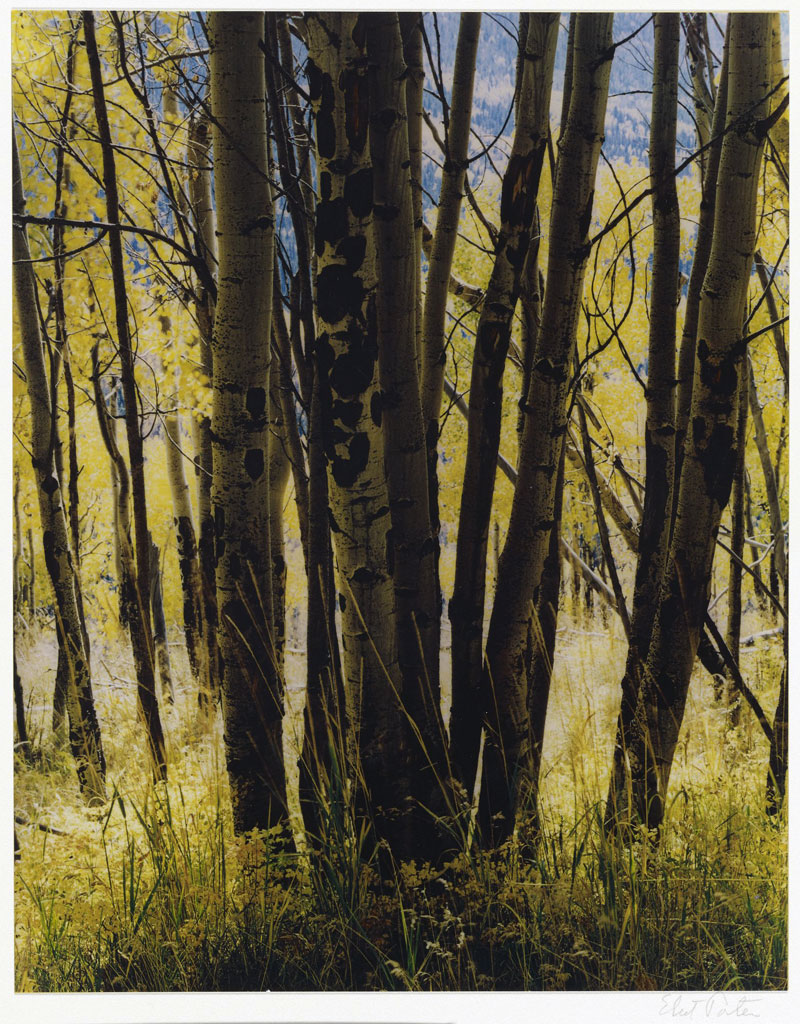
Eliot Porter (American, 1901-1990) 'Aspens and Grass, Elk Mountain Road, New Mexico, October 3, 1972' 1972


Eliot Porter (American, 1901-1990)
Aspens and Grass, Elk Mountain Road, New Mexico, October 3, 1972
1972
Dye transfer print
26.2 x 20.6cm
The J. Paul Getty Museum, Los Angeles
Gift of Daniel Greenberg and Susan Steinhauser
Bequest of the artist
© 1990 Amon Carter Museum of American Art, Fort Worth, Texas


Toshio Shibata (Japanese, b. 1949) 'Tsuru City, Yamanashi Prefecture' 1989


Toshio Shibata (Japanese, b. 1949)
Tsuru City, Yamanashi Prefecture
1989
Gelatin silver print
44.5 × 55.5cm (17 1/2 × 21 7/8 in.)
The J. Paul Getty Museum, Los Angeles
Purchased with funds provided by the Photographs Council
© Toshio Shibata


Virginia Beahan (American, b. 1946) and Laura McPhee (American, b. 1958) 'Apple Orchard, Manzanar Japanese-American Relocation Camp, Owens Valley, California' 1995


Virginia Beahan (American, b. 1946) and Laura McPhee (American, b. 1958)
Apple Orchard, Manzanar Japanese-American Relocation Camp, Owens Valley, California
1995
Chromogenic print
75.3 × 95.3cm (29 5/8 × 37 1/2 in.)
The J. Paul Getty Museum, Los Angeles
Gift of Nancy and Bruce Berman
© Virginia Beahan and Laura McPhee


Here Beahan and McPhee delve into the landscape as a site of human history and conflict. With the High Sierra as a backdrop, rusty remnants of the Manzanar relocation camp, used to detain Japanese Americans during World War II, occupy the foreground. In the middle ground stand the desiccated trunks of an orchard, part of an 1860s settlement that was abandoned after the land’s water was diverted in the 1920s to irrigate Los Angeles. The orchard, in turn, had uprooted a community of Paiute Indians, who had lived there for generations.


Virginia Beahan (American, born 1946) and Laura McPhee (American, born 1958) 'Mount Rainier, Washington' 2000


Virginia Beahan (American, b. 1946) and Laura McPhee (American, b. 1958)
Mount Rainier, Washington
2000
Chromogenic dye coupler print
75.5 x 96.5cm
The J. Paul Getty Museum, Los Angeles
Gift of Nancy Goliger and Bruce Berman
© Virginia Beahan and Laura McPhee


Clifford Ross (American, b. 1952) 'Mountain IV' 2004


Clifford Ross (American, b. 1952)
Mountain IV
2004
Chromogenic colour print
63 x 118 in
The J. Paul Getty Museum, Los Angeles
© Clifford Ross Studio


A persistent aspect of picturing a landscape has been the concept of the ideal. Recent photographers have framed nature not only to emphasise its beauty but also to highlight its unattainability in a modern context.

Photographer Clifford Ross was inspired to create this image of Mount Sopris while on a family holiday. In order to, as the photographer put it, “grab as much of the mountain as [he] possibly could in one shot,” Ross invented a camera, the R1, which exposes 9 x 18 inch aerial film. When processed by hand and scanned, the negatives produce files with a hundred times higher resolution than those made with the average professional digital camera. Yet even though he pursues a near replica of reality, Ross also manipulates the digital file to re-create the landscape as he remembers experiencing it. Viewers have the ability to examine the scene in greater detail than they might even in person.


The J. Paul Getty Museum
1200 Getty Center Drive
Los Angeles, California 90049

Opening hours:
Daily 10am – 5pm

The J. Paul Getty Museum website

LIKE ART BLART ON FACEBOOK

Back to top

Exhibition: ‘Lutz Bacher / MATRIX 242’ at the Berkeley Art Museum and Pacific Film Archive (BAMPFA), University of California, Berkeley, San Francisco

Exhibition dates: 18th July – 7th October 2012


Many thankx to BAM/PFA for allowing me to publish the photographs in the posting. Please click on the photographs for a larger version of the image.


Lutz Bacher (American, 1943-2019) 'Bien Hoa' 2006-2007 (detail)

Lutz Bacher (American, 1943-2019) 'Bien Hoa' 2006-2007 (detail)


Lutz Bacher (American, 1943-2019)
Bien Hoa (detail)
2006-2007
inkjet print mounted on aluminium
24 x 36 in.
Courtesy of Ratio 3, San Francisco


Lutz Bacher (American, 1943-2019) 'Bien Hoa' 2006-2007 (detail)


Lutz Bacher (American, 1943-2019)
Bien Hoa (detail)
2006-2007
inkjet print mounted on aluminium
24 x 36 in.
Courtesy of Ratio 3, San Francisco


Since Lutz Bacher’s first MATRIX exhibition in 1993, the Berkeley-based artist has become a leading figure in contemporary art; she was the subject of a retrospective at MoMA PS1 in 2009 and was included in the 2012 Whitney Biennial. MATRIX 242 presents an important but rarely seen series from 2006-2007 that sheds light on the artist’s often elusive practice.

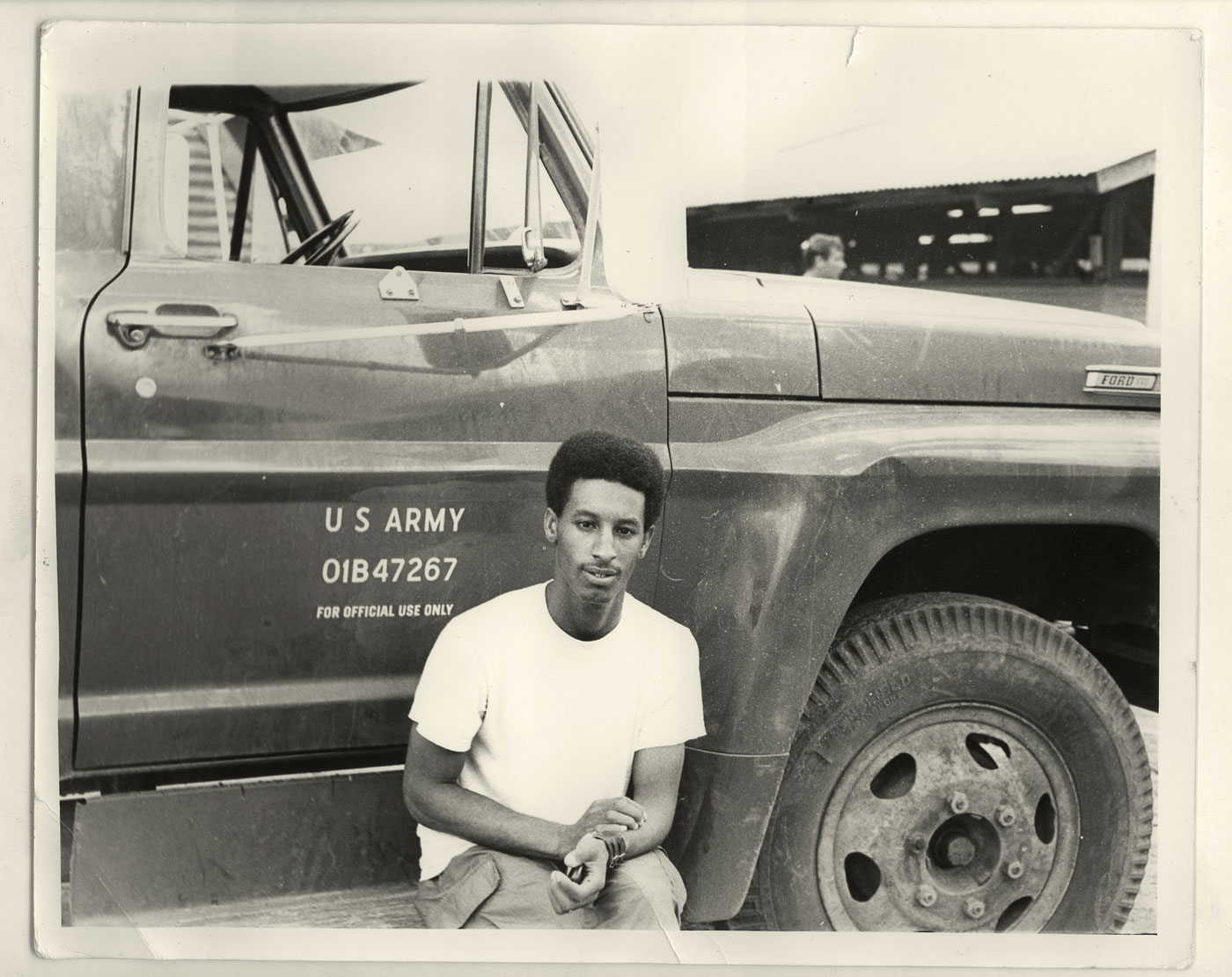
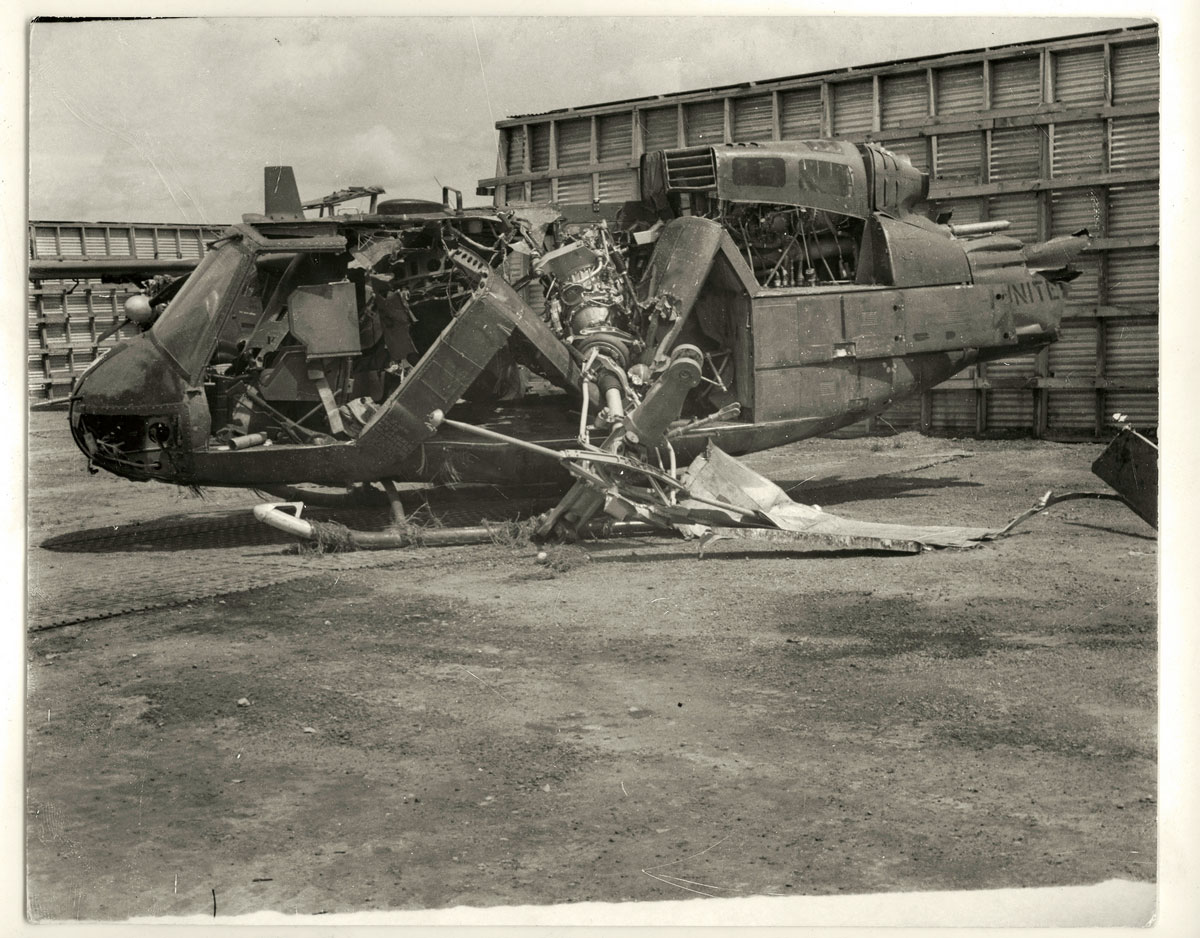
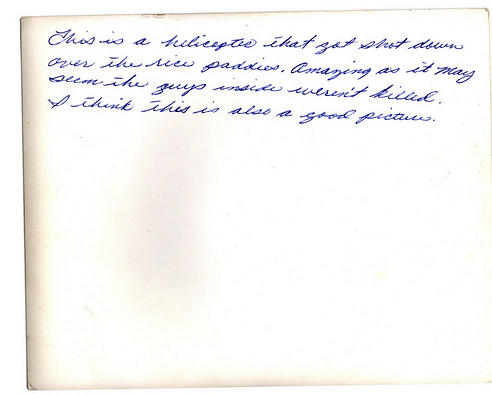
Bien Hoa is is based on a set of ten photographs Bacher discovered at a Berkeley salvage store. All of the photographs were created by an American soldier named Walter, who was stationed at Bien Hoa Air Base during the Vietnam War. Walter inscribed the backs of all but two of the pictures before mailing them home to his partner in Oakland. Bacher has enlarged and reprinted the photographs to hang above the verso of the originals, which disclose Walter’s annotations. These have a surprisingly casual tone, given what must have been the harrowing experience of being a soldier stationed in Vietnam. In some cases, Walter’s inscriptions sound almost like a tourist writing a postcard; in others, he seems to have been more concerned with the composition of the image than with the grisly content of a scene. “This is Bien Hoa looking at it from the Air Base. This is a pretty good picture. Now do you think that’s beautiful? Can you see the wire, keeping the people from attacking the Air Base? That’s what those fences are out there for.”

By strategically juxtaposing these images and texts, and placing them in a museum setting, Bacher reveals the slippery nature of perception. She prompts us to wonder, Why was Walter so concerned with the quality of his images? Why were these photographs discarded? What became of Walter?”

Text from the BAM/PFA website


Lutz Bacher (American, 1943-2019) 'Bien Hoa' 2006-2007 (detail)

Lutz Bacher (American, 1943-2019) 'Bien Hoa' 2006-2007 (detail)


Lutz Bacher (American, 1943-2019)
Bien Hoa (detail)
2006-2007
inkjet print mounted on aluminium
24 x 36 in.
Courtesy of Ratio 3, San Francisco


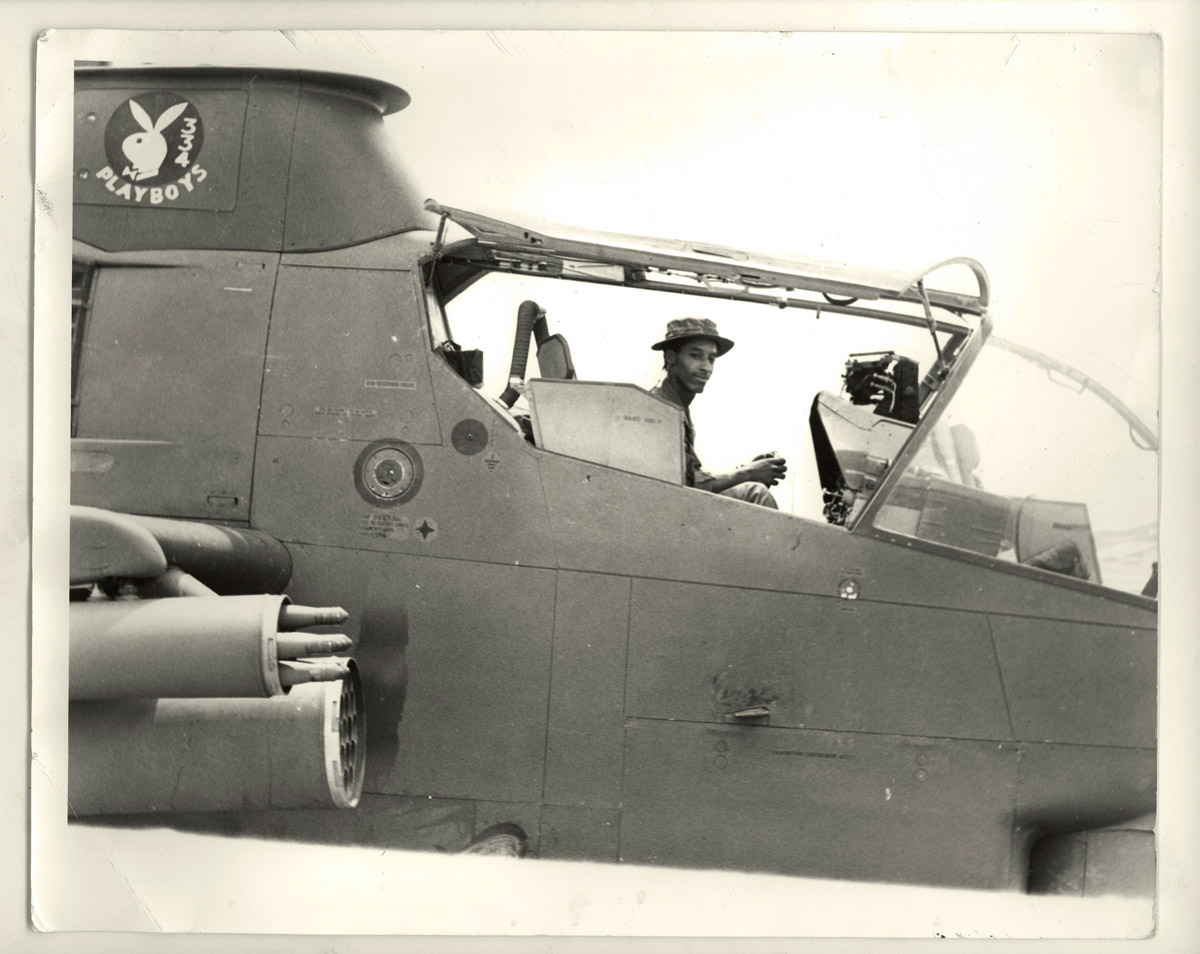
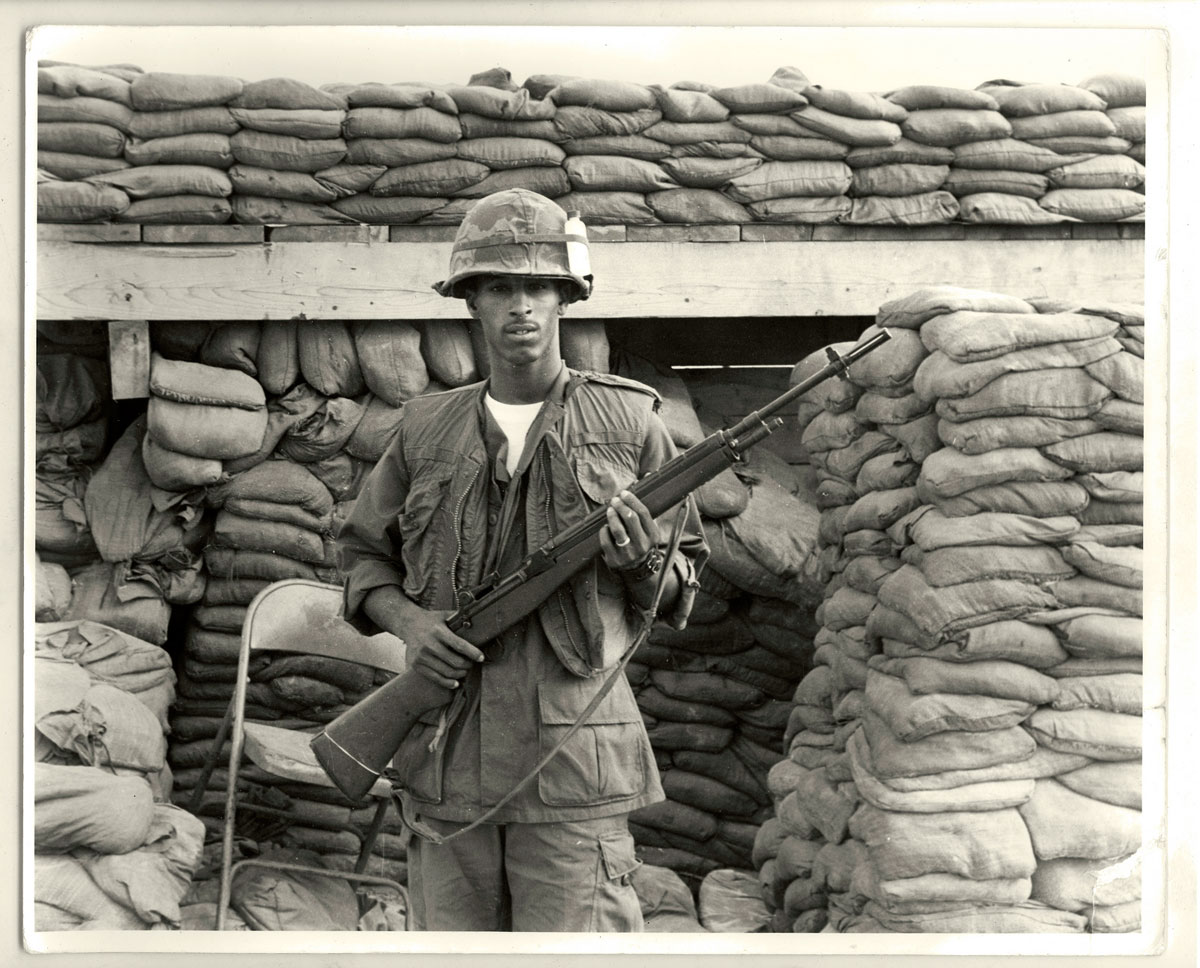
The ten photographic sets that make up Lutz Bacher’s Bien Hoa (2006-2007) are deceptively simple. Large colour inkjet images, reproductions of yellowed black-and-­white photographs, are presented above handwritten notes written on the backs of the original prints. The annotations were made by a man stationed at Vietnam’s Bien Hoa Air Force Base in 1969, identified only as Walter, who is alternately the author and the subject of the images. We see Walter posing at a military desk with his section chief, in an armed helicopter adorned with a playboy bunny, in front of sand ­bagged barracks, and at gunpoint, “surrendering” to a Vietnamese woman. Other photographs depict the bleak situation – burned-out helicopters, fire drills, and fences separating the base from the local town. Bacher found the cache of photographs, which had been mailed from Vietnam, at a Berkeley salvage store. Originally meant for an intimate audience, the photos are displaced by Bacher’s decision to remake them as her art. She channels the voice of an African American man fighting in the Vietnam War, decisively situating that voice, through her own authorship, in a new time and context.

On their own, the images are charged with America’s uneasy history of armed aggression and recall our complex legacy of racism and popular unrest; with Walter’s notes, however, that general discomfort becomes deeply personal. Referring to an image of himself seated inside a helicopter he writes: “This is a Huey Cobra, the badest [sic] Helicopter in Vietnam. Those are rockets on the side of the ship. I wish I could take off and come home. Your Man, Walter.” With his comments, Walter reveals feelings of complicity in the military apparatus of the war, as well as his desire to return home. It is hard not to wonder how Walter wound up in Vietnam and what became of him: was he drafted or enlisted by the many recruiters targeting African American neighbourhoods at the time, promising subsidies? Did he return home safely?

Presented, as they are here, in a museum setting, Walter’s self-conscious commentaries on his photographs take on new relevance. In some cases, Walter’s inscriptions sound almost like a tourist writing a postcard; in others, he seems to have been more concerned with the composition of the image than with the grisly content of a scene: “This is a practice session that the Fire Department has every now and then. They are practicing on a burning helicopter. I messed up on my border at the top of the picture.” Bacher’s enlargements invite us to hone in on these details and scrutinise the photographs aesthetically, as Walter directs: “This is Bien Hoa looking at it from the Air Base. This is a pretty good picture. Now do you think that’s beautiful? Can you see the wire, keeping the people from attacking the Air Base?” Walter’s grim interjections foil our sense of detached aesthetic judgment.

Likewise, Bacher, conspiring with Walter, complicates easy explanations of her work. Curiously, the only two photographs in the series that remain unannotated feature a gun. In the first, Walter poses solemnly in front of sandbagged barracks in full military uniform. In the second, he is dressed in Vietnamese garb, playfully surrendering at gunpoint to a local woman. This reversal, from American soldier to Vietnamese prisoner, illustrates not only the paradox of Walter’s situation, but also Bacher’s. Without captions to describe Walter’s feelings, it is unclear if he fought willingly or if, like many soldiers at that time, he was ambivalent about our presence in Vietnam, or perhaps even sympathised with the local’s desire to enact political change. Faced with these gaps in explanation, viewers are left to wonder about Walter’s intentions in setting up the photographs as he did, with this strange role reversal. The reasons for Bacher’s own reversal, exchanging her voice for Walter’s, is also left ambiguous.

Shifting between Walter, of whom nothing is known, and Bacher, Bien Hoa’s narrative refuses to be fixed in any one time or place. For that reason, the work feels contemporary, alive with the contradictions that make up our present moment. Bacher uses found images, objects, and text to confound easy understandings of authorship, gender, race, violence, and power. Despite being composed of discarded photographs, Bien Hoa resonates as a pivotal description of a fraught moment in United States history, yet this history still feels open to interpretation. Bacher, exhuming the photographs and aligning her voice with Walter’s, inverts any sense of their cohesion.”

Dena Beard
Assistant Curator
Exhibition brochure


Lutz Bacher (American, 1943-2019) 'Bien Hoa' 2006-2007 (detail)


Lutz Bacher (American, 1943-2019)
Bien Hoa (detail)
2006-2007
inkjet print mounted on aluminium
24 x 36 in.
Courtesy of Ratio 3, San Francisco


Lutz Bacher (American, 1943-2019) 'Bien Hoa' 2006-2007 (detail)


Lutz Bacher (American, 1943-2019)
Bien Hoa (detail)
2006-2007
inkjet print mounted on aluminium
24 x 36 in.
Courtesy of Ratio 3, San Francisco


Berkeley Art Museum and Pacific Film Archive

BAMPFA is located at 2155 Center Street
between Oxford Street and Shattuck Avenue, in downtown Berkeley
Phone: (510) 642-0808

Opening hours:
Thursday – Sunday, 11am – 7pm
Closed Mondays and Tuesdays

Berkeley Art Museum and Pacific Film Archive website

LIKE ART BLART ON FACEBOOK

Back to top

Exhibition: ‘Rineke Dijkstra: A Retrospective’ at the Solomon R. Guggenheim Museum, New York

Exhibition dates: 29th June – 3rd October 2012


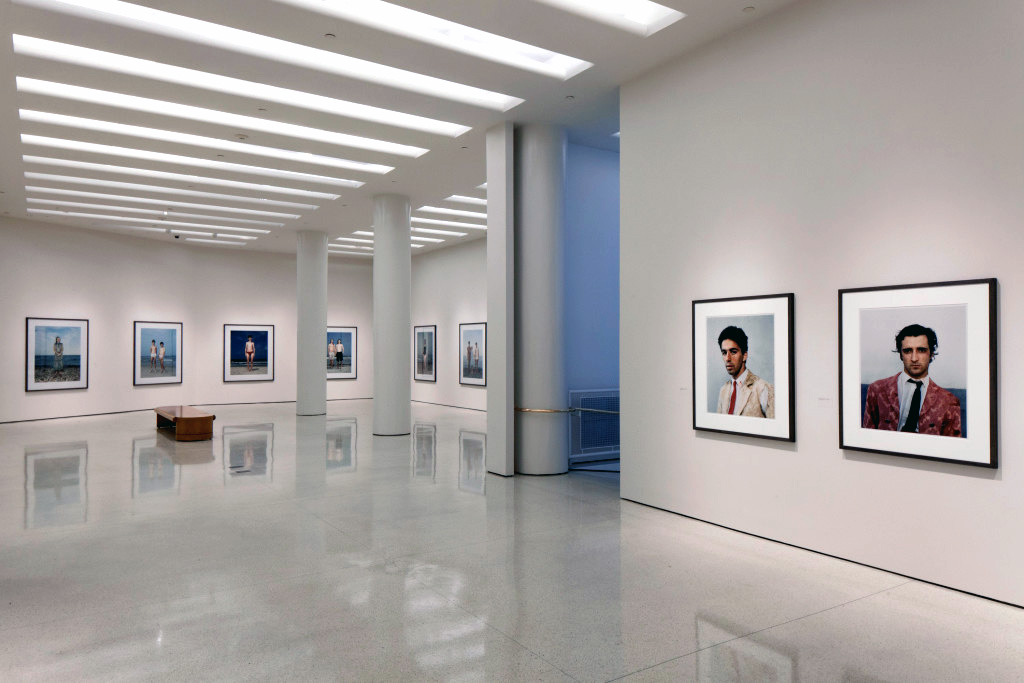
Installation view of the 'Beach Portraits' (1992-2002) series from the exhibition 'Rineke Dijkstra: A Retrospective' at the Solomon R. Guggenheim Museum, New York


Installation view of the Beach Portraits (1992-2002) series from the exhibition Rineke Dijkstra: A Retrospective at the Solomon R. Guggenheim Museum, New York
Photo: David Heald


“For outness is but the feeling of otherness (alterity) rendered intuitive, or alterity visually represented.”


Samuel Taylor Coleridge


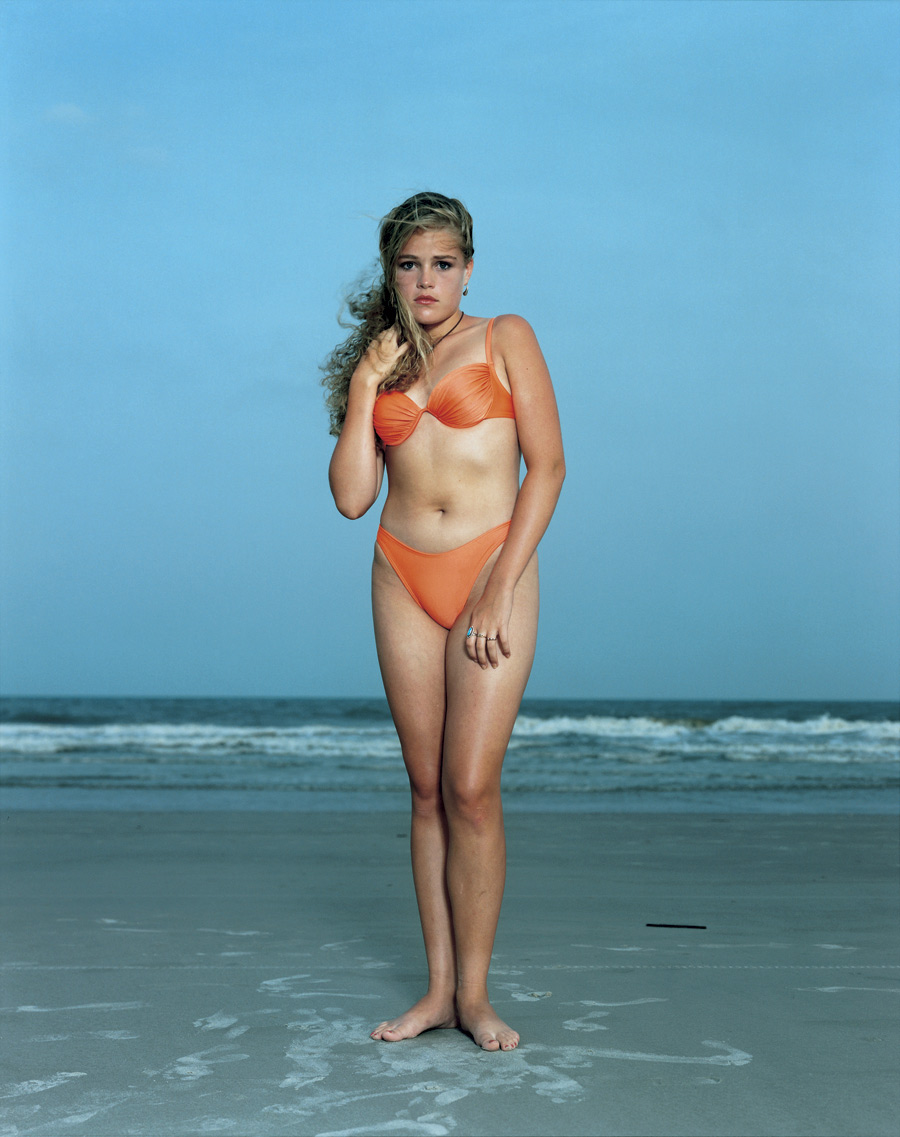
In her most famous series, Beach Portraits (1992-2002), juveniles stare at the camera in a moment passif, caught by the camera between states – youth / adulthood, knowing / unknowing, Self / Other. Shot from a low perspective, lit by fill flash and with little contextual detail, the subjects exhibit – and I use the term advisedly – vulnerability, awkwardness (in the body and self), languidness of pose and bravuro self confidence that belies their beautiful alterity. These adolescents are not at one with themselves they are unsure of their place in the world. Dijkstra documents this uncertainty and enlarges it, blowing the photographs up to huge scale so that the viewer can examine every crevice of the persona in minute detail, their alterity visually represented.

Max Weintraub notes that Dijkstra has produced, “a set of carefully balanced compositions defined by the central, monumental presence of her youthful subjects. The classical simplicity of Dijkstra’s photographs focuses the viewer’s attention on the subtle particulars: the teens’ gawky, angular bodies, ill-fitting swimsuits and awkward postures… Her subjects hover somewhere between the receding past of their childhood and an unknown future. And while the identity of her subjects remain anonymous – each beach photograph is only identified by date and location – when viewed together a collective body emerges, one that stirs restlessly between the last physical and emotional trappings of youth and the social and psychological pressures of pending adulthood. The individuals depicted are so powerfully distinct that the effect of seeing these portraits en mass is symphonic, and the images begin to collectively hum with the sounds of the construction of self – its awkwardness, its uncertainty and above all, its heartbreakingly tender beauty.”

What a great piece of writing.

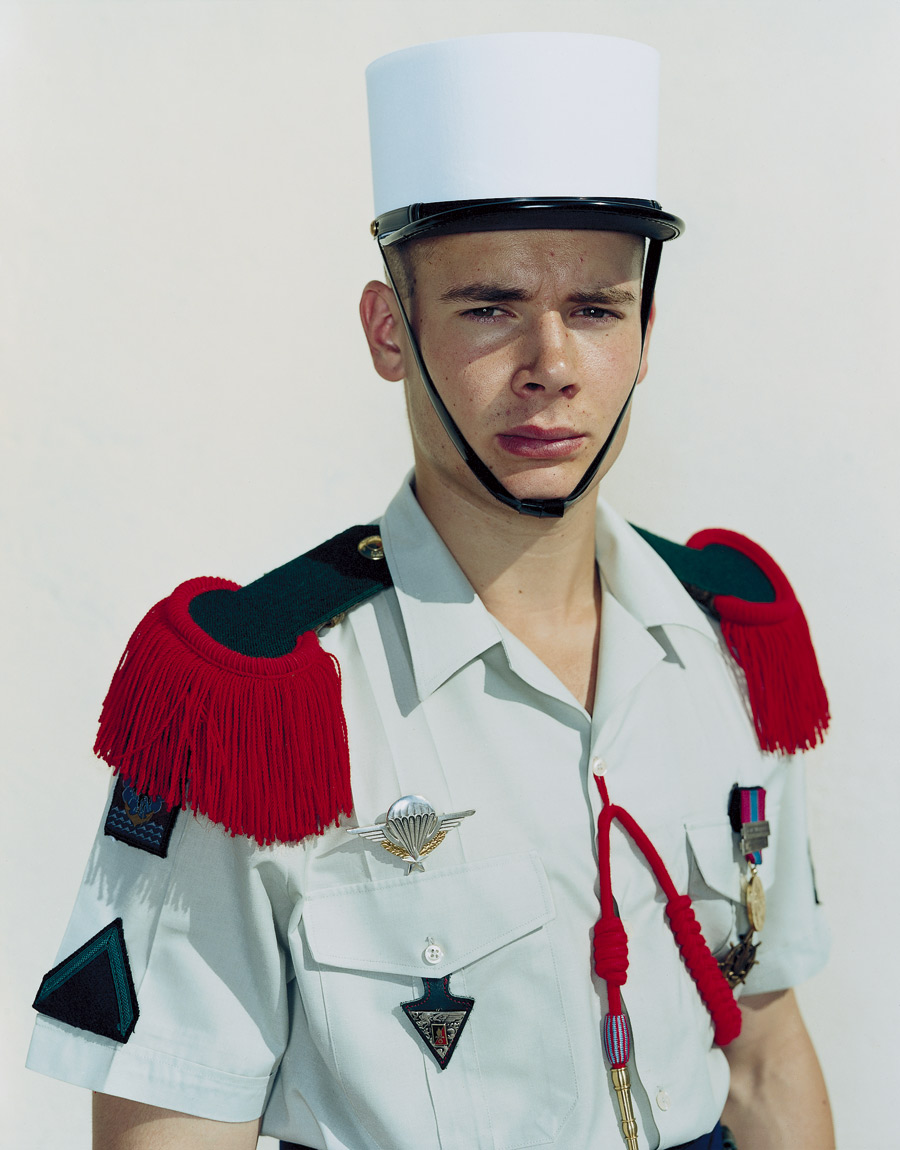
It is also interesting to observe that her own self portrait (Self Portrait, Marnixbad, Amsterdam, Netherlands, June 19, 19911991, below) is only printed at 35 x 28 cm whereas images from the Beach Portraits are printed at 117 x 94 cm. Surrounded by ceiling, floor and wall tiles Dijkstra is enclosed, minute within the frame. The photographer recedes into the background, even more vulnerable and less “visible” than her monumental models of innocence. Other series continue the artist’s investigation into themes of time and change to greater or lesser effect. The Olivier series is a very powerful body of work that documents the loss of youthful innocence and the military socialisation of a young mind, evidenced by the look in Olivier’s eyes and the change in his outward appearance. As the press release states, “the Olivier series (2000-2003) follows a young man from his enlistment with the French Foreign Legion through the years of his service, showing his both physical and psychological development into a soldier.”

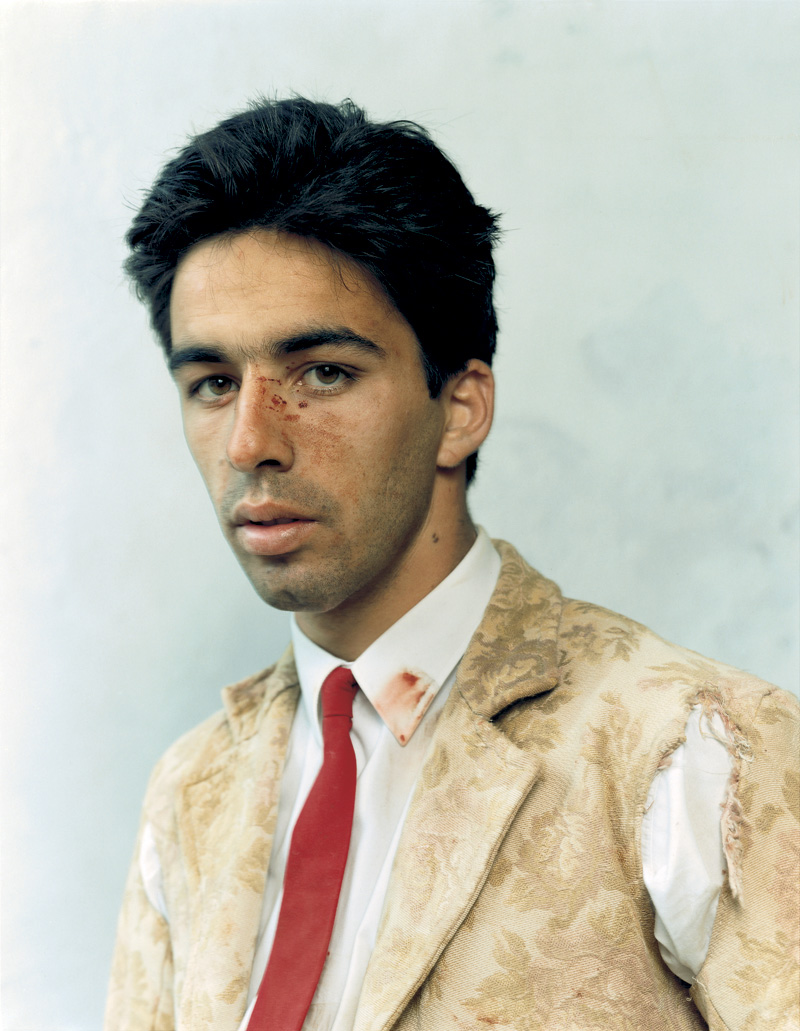
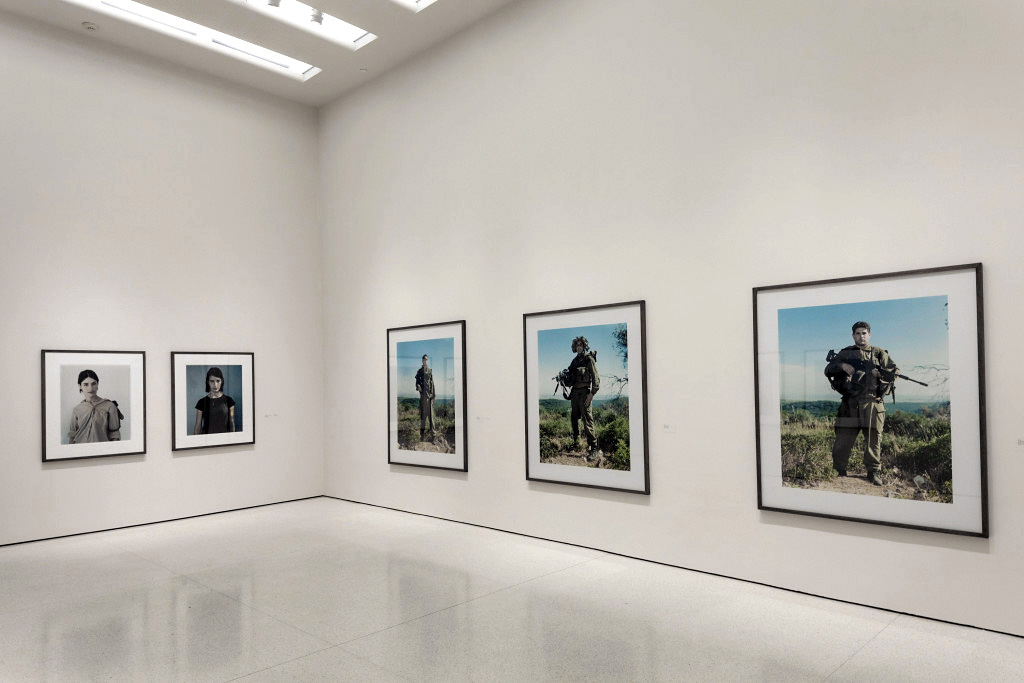
“In contemporaneous works, including portraits of new mothers after giving birth, and photographs of bullfighters immediately after leaving the ring, Dijkstra sought subjects whose physical exhaustion diminished the likelihood of an artificed pose… Later, Dijkstra took portraits of new initiates to the Israeli army, photographing female soldiers in their uniforms after induction and then again in their civilian dress, as well as male soldiers directly after military exercises,” states the Guggenheim website.

Basically, this time line of change is a version of the old before and after shot, used throughout the history of photography – from the documentation of the changes in Dr Barnado’s children in the 1870s to the “scientific” use of photography to document the science of physical fitness and the commodification of the body in the ‘Before and After’ bodybuilding photographs from the 1930s, the 1950s and from the contemporary era.

To conclude, the strongest work is where the artist gives the photographs a greater depth of field and adds a narrative element by adding a background to the images. The work with contextless backgrounds is too derivative of say, Thomas Ruff, who I think does it better, more frontally, more confrontingly than Dijkstra does.

Dr Marcus Bunyan


Many thankx to the Solomon R. Guggenheim Museum for allowing me to publish the photographs in the posting. Please click on the photographs for a larger version of the image.


Rineke Dijkstra: A Retrospective

Jennifer Blessing, Senior Curator, Photography, introduces this mid-career survey of Dutch artist Rineke Dijkstra’s photographic and video work. Dijkstra’s choice of subjects, including adolescents at the edge of the sea, new mothers minutes after giving birth, Portuguese bullfighters exiting the ring, and the photographer herself during rehab after an accident, exhibits her strong interest in transitional states. Dijkstra speaks about her use of a large-format camera and practice of minimising contextual information in order to focus viewer attention on specific details that tell the subject’s story. Dijkstra’s explorations in video complement her photographic practice with the added ability to tell the story of the subject through the unfolding of a sequence of actions. For Blessing, Dijkstra’s photographs elicit a powerful empathic response from viewers.


Rineke Dijkstra (Dutch, b. 1959) 'Hilton Head Island, S.C., USA, June 24, 1992' 1992


Rineke Dijkstra (Dutch, b. 1959)
Hilton Head Island, S.C., USA, June 24, 1992
1992

Chromogenic print
117 cm x 94cm
Courtesy the artist and Marian Goodman Gallery, New York and Paris
© Rineke Dijkstra


Rineke Dijkstra (Dutch, b. 1959) 'Kolobrzeg, Poland, July 26, 1992'
 1992


Rineke Dijkstra (Dutch, b. 1959)
Kolobrzeg, Poland, July 26, 1992
1992
Chromogenic print
117 x 94cm
Courtesy the artist and Marian Goodman Gallery, New York and Paris
© Rineke Dijkstra


“For over two decades, following a serious bicycle accident that led to a hiatus in her early work as a magazine photographer, Dijkstra has focused her camera on the formative period of childhood into young adulthood. This concentration raises the question of what points in such a fluid process warrant memorialisation. In addition to those early portraits of bathers exposing their bodies in the liminal space between land and sea, developmental decisive moments for this artist include teens presenting themselves at the social scene of clubs; young women holding their newborns (sometimes just hours after giving birth); their bloody male counterparts, the young Portuguese forcados (the amateurs who first confront the bull with small picks before the entry of the professional bullfighter); and young men and women in and out of uniform around their periods of military service.”

Sally Stein. “Rineke Dijkstra: A Retrospective,” on the Aperture Archive website Winter 2012 [Online] Cited 21/08/2024


Rineke Dijkstra (Dutch, b. 1959) 'Coney Island, N.Y., USA, June 20, 1993'
 1993


Rineke Dijkstra (Dutch, b. 1959)
Coney Island, N.Y., USA, June 20, 1993

1993
Chromogenic print
117 x 94cm
Courtesy the artist and Marian Goodman Gallery, New York and Paris
© Rineke Dijkstra


Rineke Dijkstra (Dutch, b. 1959) 'Dubrovnik, Croatia, July 13, 1996' 1996


Rineke Dijkstra (Dutch, b. 1959)
Dubrovnik, Croatia, July 13, 1996
1996

Chromogenic print
117 x 94cm
Courtesy the artist and Marian Goodman Gallery, New York and Paris
© Rineke Dijkstra


From June 29 to October 3, 2012, the Guggenheim Museum will present Rineke Dijkstra: A Retrospective, an extensive mid-career survey and the first major exhibition of the artist’s work organised by a North American institution. It is the most comprehensive museum exhibition of the artist’s oeuvre to date. Dijkstra, born in Sittard, the Netherlands, in 1959, has developed an international reputation as one of the most highly regarded photographers of her generation. The exhibition will include representative examples from the most significant bodies of work she has created over the past twenty years.

Since the early 1990s, Rineke Dijkstra has produced a complex body of photographic and video work that offers a contemporary take on the genre of portraiture. Her large-scale colour photographs of young, typically adolescent subjects recall 17th-century Dutch painting in their scale and visual acuity. The minimal contextual details present in her photographs and videos encourage us to focus on the exchange between photographer and subject and the relationship between viewer and viewed.

Dijkstra works in series, creating groups of photographs and videos around a specific typology or theme. In 1992, she started making portraits of adolescents posed on beaches from Hilton Head, South Carolina, to Poland and Ukraine. Shot from a low perspective, the subjects of the Beach Portraits (1992-2002), poised on the brink of adulthood, take on a monumental presence. In contemporaneous works, including portraits of new mothers after giving birth and photographs of bullfighters immediately after leaving the ring, Dijkstra sought subjects whose physical exhaustion diminished the likelihood of an artificial pose.

Dijkstra has also photographed individuals repeatedly over the course of several months or years. Her ongoing Almerisa series began in 1994 with a single photograph of a young Bosnian girl at a Dutch refugee centre for asylum seekers and has grown as Dijkstra continued to photograph her regularly for more than a decade as she became a young woman with a child of her own. The outward signs of her transition into adulthood and her integration into mainstream Dutch culture reveal themselves incrementally over the course of many years. Similarly, the Olivier series (2000-2003) follows a young man from his enlistment with the French Foreign Legion through the years of his service, showing his both physical and psychological development into a soldier. Later, Dijkstra took portraits of new initiates to the Israeli army, photographing female soldiers in their uniforms after induction and then again in their civilian dress, as well as male soldiers directly after military exercises.

For several years beginning in 1998, Dijkstra photographed young people, often in groups, posed in the lush landscapes of public parks. In contrast to the neutral backgrounds against which many of her subjects are pictured, the richness of the park settings lends these works a greater depth of field and adds a narrative element.

More recently, Dijkstra has built upon her revelatory work in video from the mid-1990s. In The Buzz Club, Liverpool, UK/Mystery World, Zaandam, NL (1996-1997) and The Krazyhouse (Megan, Simon, Nicky, Philip, Dee), Liverpool, UK (2009), Dijkstra filmed teenage habituées of local clubs dancing to their favourite music. Presented as multi-channel video installations, these works showcase their subjects’ teen personas and methods of self-expression, revealed in how they style themselves and in the movements of their bodies. Two video works made in 2009 at Tate Liverpool expand the artist’s interest in the empathic exchange between photographer and subject to include the affective response to artworks. In I See a Woman Crying (Weeping Woman) (2009), a group of schoolchildren engage with art, discussing their perceptions of and reactions to a work by Pablo Picasso, while Ruth Drawing Picasso (2009) shows a girl pensively sketching a masterwork.

Press release from the Solomon R. Guggenheim Museum website


Rineke Dijkstra (Dutch, b. 1959) 'Self Portrait, Marnixbad, Amsterdam, Netherlands, June 19, 1991' 1991


Rineke Dijkstra (Dutch, b. 1959)
Self Portrait, Marnixbad, Amsterdam, Netherlands, June 19, 1991
1991

Chromogenic print
35 x 28cm
Courtesy the artist and Marian Goodman Gallery, New York and Paris
© Rineke Dijkstra


Rineke Dijkstra (Dutch, b. 1959) 'Long Island, New York, July 1, 1993' 1993


Rineke Dijkstra (Dutch, b. 1959)
Long Island, New York, July 1, 1993
1993
Chromogenic print
Courtesy the artist and Marian Goodman Gallery, New York and Paris
© Rineke Dijkstra


Installation view of the exhibition 'Rineke Dijkstra: A Retrospective' at the Solomon R. Guggenheim Museum, New York


Installation view of the exhibition Rineke Dijkstra: A Retrospective at the Solomon R. Guggenheim Museum, New York showing at second right, Vila Franca de Xira, Portugal, May 8, 1994 (1994, below)
Photo: David Heald


Rineke Dijkstra (Dutch, b. 1959) 'Vila Franca de Xira, Portugal, May 8, 1994'
 1994


Rineke Dijkstra (Dutch, b. 1959)
Vila Franca de Xira, Portugal, May 8, 1994
1994
Chromogenic print
90 x 72cm
Courtesy the artist and Marian Goodman Gallery, New York and Paris
© Rineke Dijkstra


Rineke Dijkstra (Dutch, b. 1959) 'The Buzz Club, Liverpool, England, March 3, 1995' 1995


Rineke Dijkstra (Dutch, b. 1959)
The Buzz Club, Liverpool, England, March 3, 1995
1995

Chromogenic print
110 x 88.5cm
Courtesy the artist and Marian Goodman Gallery, New York and Paris
© Rineke Dijkstra


Installation view of the exhibition 'Rineke Dijkstra: A Retrospective' at the Solomon R. Guggenheim Museum, New York


Installation view of the exhibition Rineke Dijkstra: A Retrospective at the Solomon R. Guggenheim Museum, New York
Photo: David Heald


Rineke Dijkstra (Dutch, b. 1959) 'Omri, Givatti Brigade, Golan Heights, Israel, March 29, 2000'
 2000


Rineke Dijkstra (Dutch, b. 1959)
Omri, Givatti Brigade, Golan Heights, Israel, March 29, 2000
2000
Chromogenic print, 140 x 112.5cm
Courtesy the artist and Marian Goodman Gallery, New York and Paris
© Rineke Dijkstra


Rineke Dijkstra (Dutch, b. 1959) 'Olivier, The French Foreign Legion, Camp Raffalli, Calvi, Corsica, June 18, 2001' 2001


Rineke Dijkstra (Dutch, b. 1959)
Olivier, The French Foreign Legion, Camp Raffalli, Calvi, Corsica, June 18, 2001
2001

Chromogenic print
90 x 72cm
Courtesy the artist and Marian Goodman Gallery, New York and Paris
© Rineke Dijkstra


Installation view of the series 'Olivier' (2000-2003) from the exhibition 'Rineke Dijkstra: A Retrospective' at the Solomon R. Guggenheim Museum, New York


Installation view of the Olivier (2000-2003) series from the exhibition Rineke Dijkstra: A Retrospective at the Solomon R. Guggenheim Museum, New York
Photo: David Heald


Rineke Dijkstra (Dutch, b. 1959) 'Vondelpark, Amsterdam, June 10, 2005' 2005


Rineke Dijkstra (Dutch, b. 1959)
Vondelpark, Amsterdam, June 10, 2005
2005
Chromogenic print
Courtesy the artist and Marian Goodman Gallery, New York and Paris
© Rineke Dijkstra


Rineke Dijkstra (Dutch, b. 1959) 'Amy, The Krazyhouse, Liverpool, England, December 22, 2008' 2008


Rineke Dijkstra (Dutch, b. 1959)
Amy, The Krazyhouse, Liverpool, England, December 22, 2008
2008

Archival inkjet print
96.5 x 75cm
Courtesy the artist and Marian Goodman Gallery, New York and Paris
© Rineke Dijkstra


Solomon R. Guggenheim Museum
1071 5th Avenue (at 89th Street)
New York

Opening hours:
Monday – Wednesday, Friday 10am – 5.45pm
Saturday 10am – 7.45pm
Thursday closed

Solomon R. Guggenheim Museum website

LIKE ART BLART ON FACEBOOK

Back to top

Review: ‘Photographic abstractions’ at the Monash Gallery of Art (MGA), Melbourne

Exhibition dates: 3rd August – 30th September 2012

Artists: Andrew Browne, John Cato, Jo Daniell, John Delacour, Peter Elliston, Joyce Evans, Chantel Faust, Susan Fereday, Anthony Figallo, George Gittoes, John Gollings, Graeme Hare, Melinda Harper, Paul Knight, Peter Lambropoulos, Bruno Leti, Anne MacDonald, David Moore, Grant Mudford, Harry Nankin, Ewa Narkiewicz, John Nixon, Rose Nolan, Jozef Stanislaw Ostoja-Kotkowski, Robert Owen, Wes Placek, Susan Purdy, Scott Redford, Jacky Redgate, Wolfgang Sievers, David Stephenson, Mark Strizic and Rick Wood.


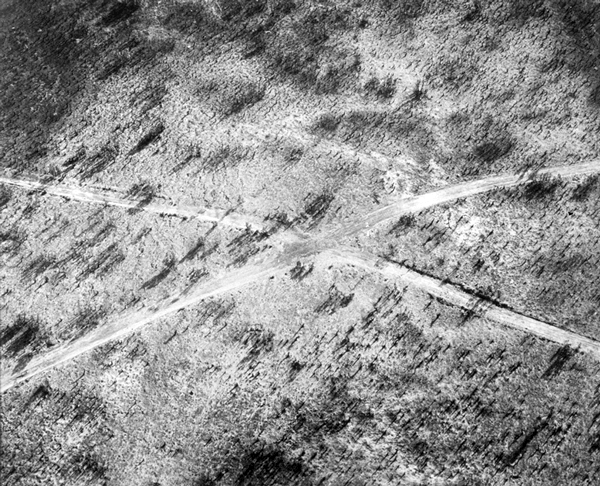
John Gollings (Australia, b. 1944) 'Untitled' 1988 From the series 'Bushfire aerials'


John Gollings (Australia, b. 1944)
Untitled
1988
From the series Bushfire aerials
Gelatin silver print
45.5 x 56.0cm
Monash Gallery of Art, City of Monash Collection
© courtesy of the artist


Dropping the abstract ball

There are some excellent works in this interestingly themed exhibition at the Monash Gallery of Art. Unfortunately the exhibition, the theme and the work are let down by two curatorial decisions. Before I address those issues I will give my insight into some of the work presented:

~ A wonderful print of Sisters of Charity, Washington DC by David Moore (1956) where the starched cornettes of the sisters reminded me of paper doves. The kicker or punctum in this image is the hand of one of the sisters pointing skywards/godwards

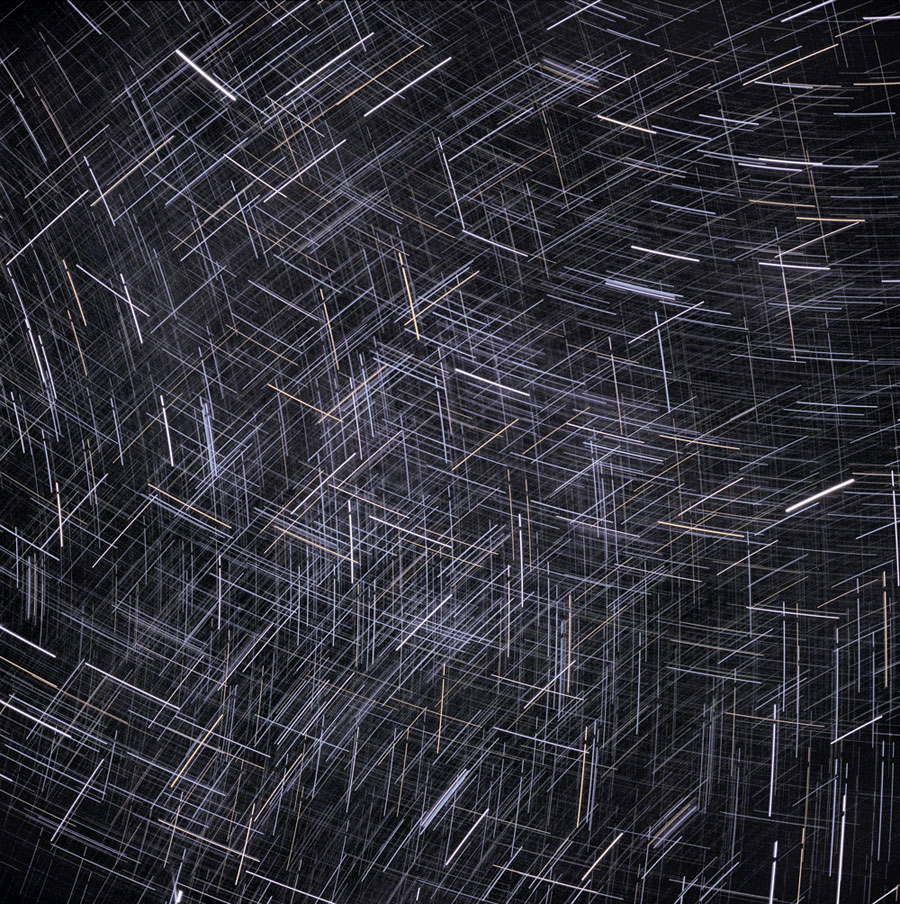
~ Wonderful David Stephenson Star Drawing. I always like photographs from this series. Taken in Central Australia using as many as 72 multiple exposures, Stephenson used a set of rules for each exposure – deciding on the length and amount of exposure and how far he would rotate the camera between each exposure before embarking on the creation of each image. The construction of the image was pre-determined  but because of the movement of the earth and stars over a couple of hours, the result always incorporated an element of chance. Stephenson draws with light that is millions of years old, the source of which may not exist by the time the light falls on Stephenson’s photographic plate (the star might be dead)

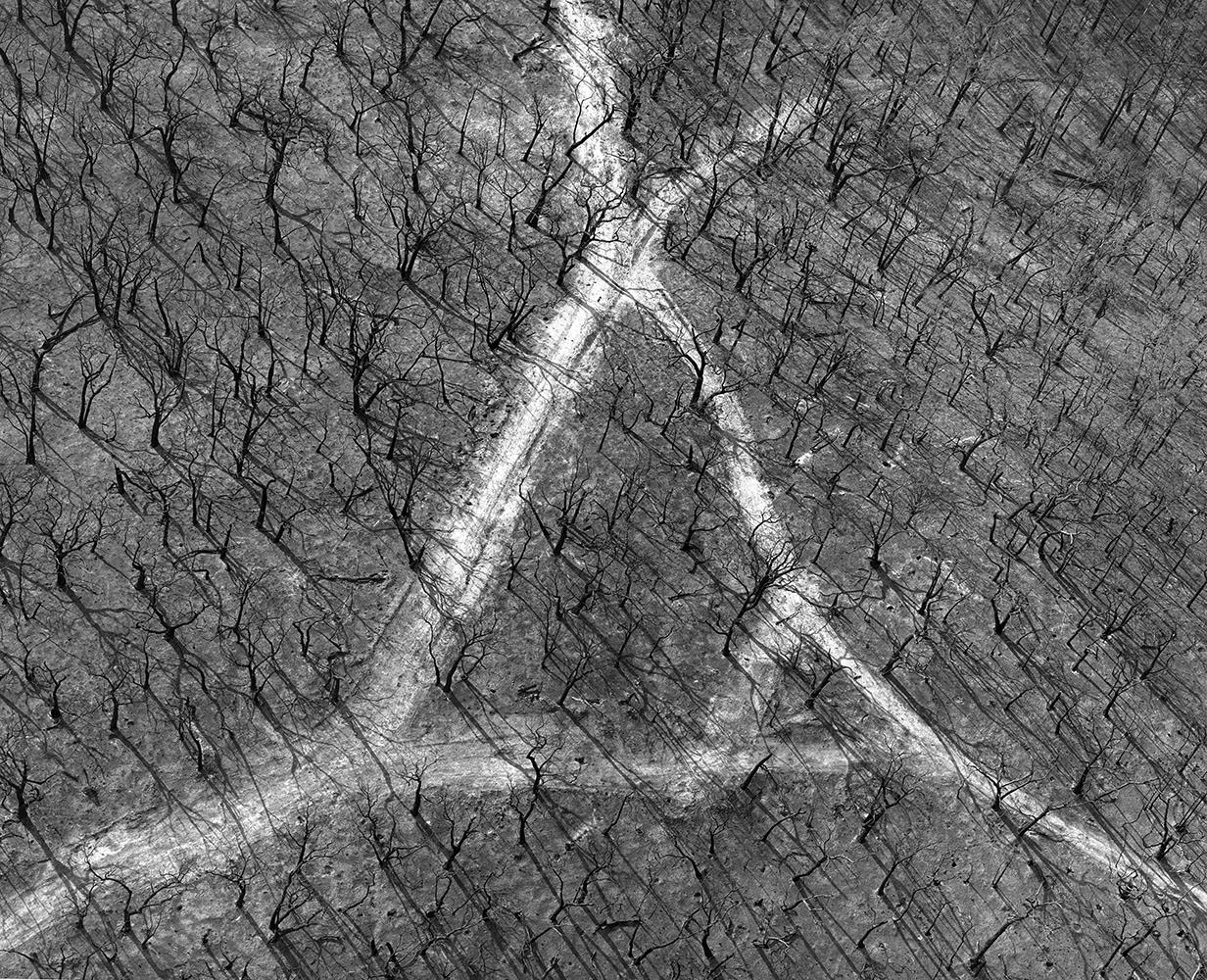
~ John Gollings Untitled from the Bushfire series. Beautiful, luminous black and white silver gelatin prints of tracks in bushfire affected areas. These aerial photographs make the surface of the earth seem like the surface of the skin complete with hairs and wrinkles. In process they reference the New Topographics exhibition of 1975, where the mapping of the landscape is etched into the surface of the photographic print, where the pictorial plane records the environment like the marks on an etching plate. “The pictures were stripped of any artistic frills and reduced to an essentially topographic state, conveying substantial amounts of visual information but eschewing entirely the aspects of beauty, emotion and opinion.”

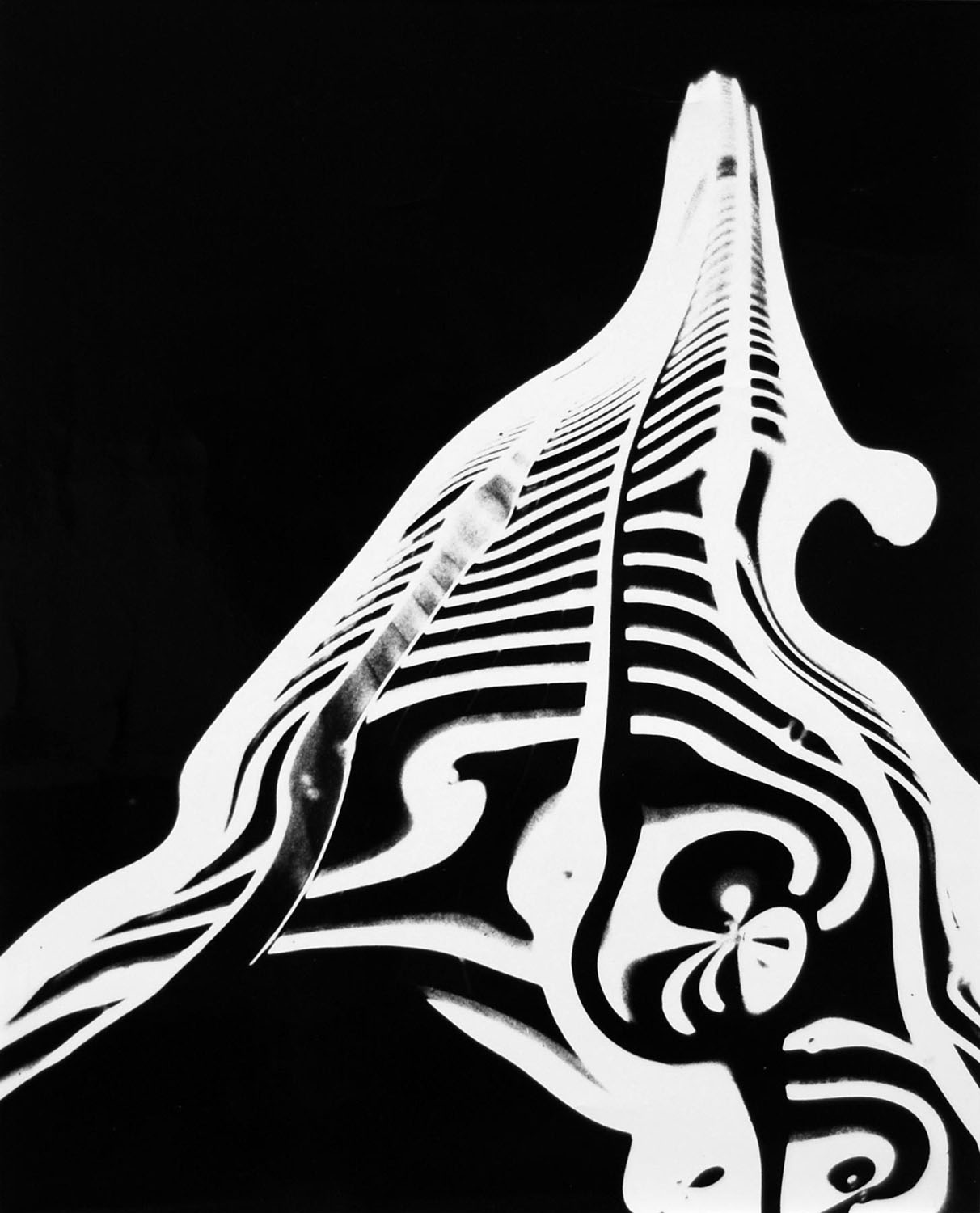
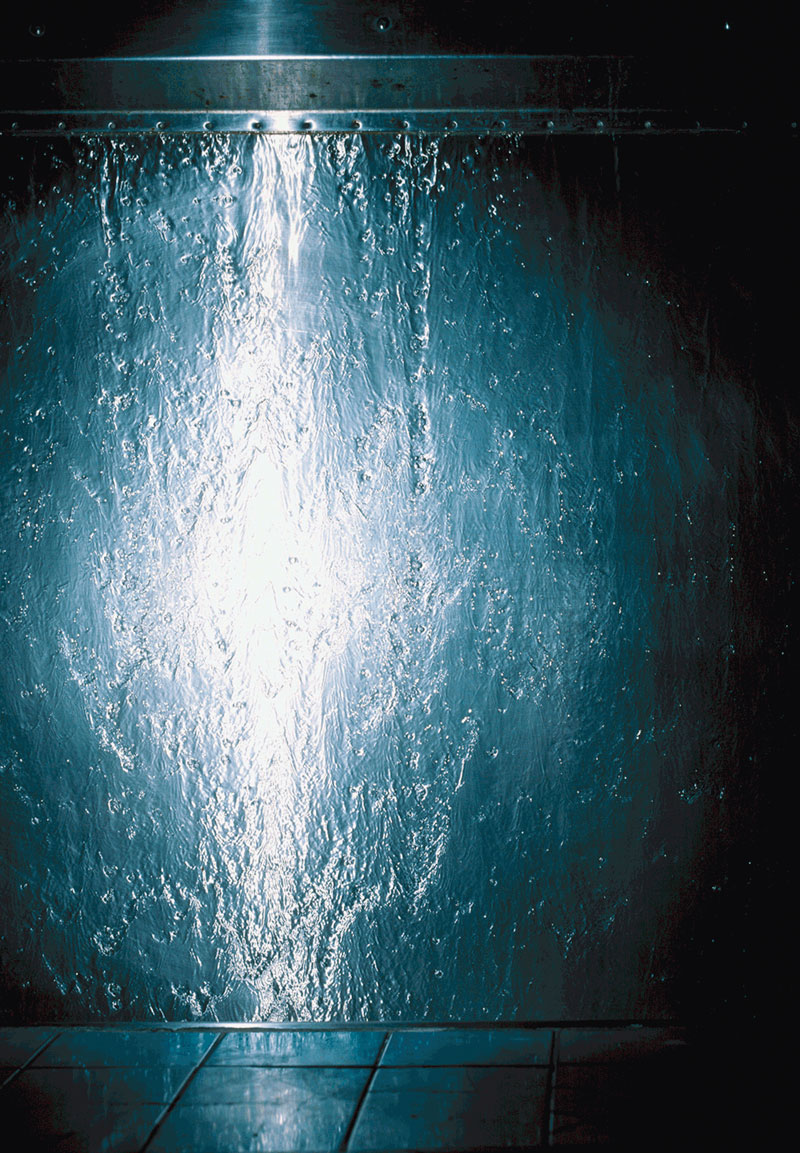
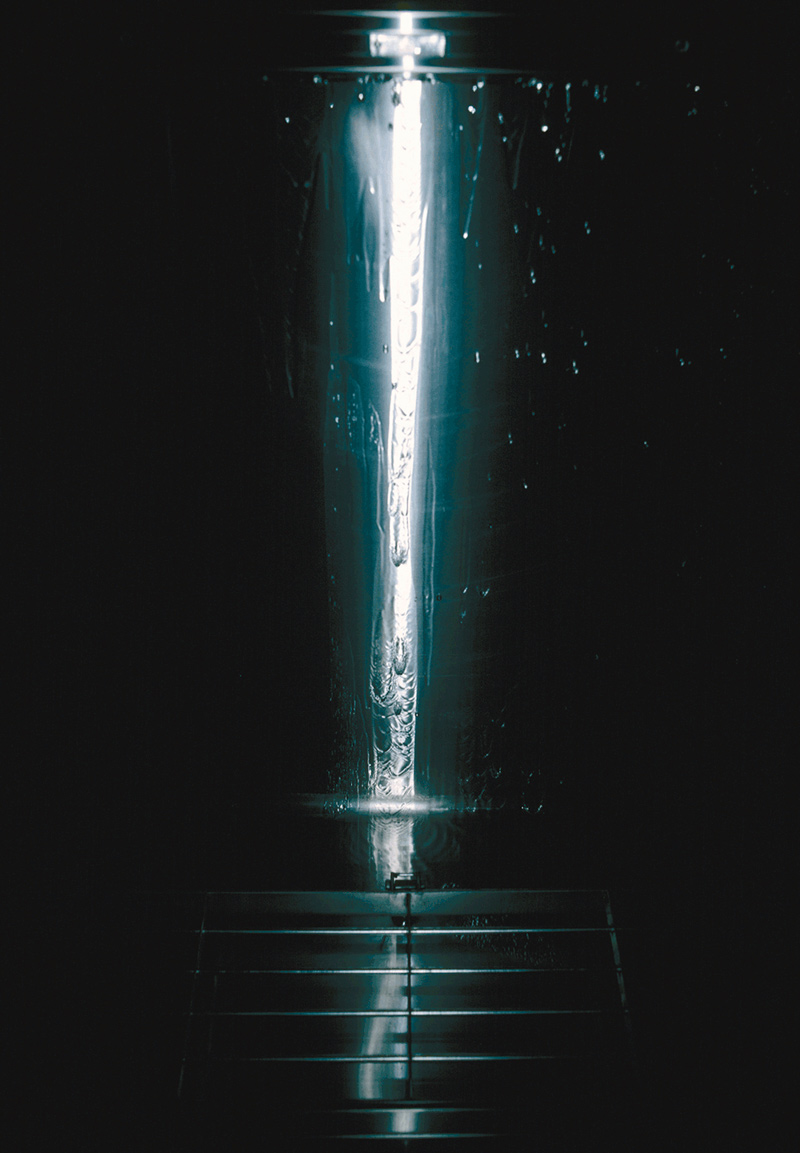
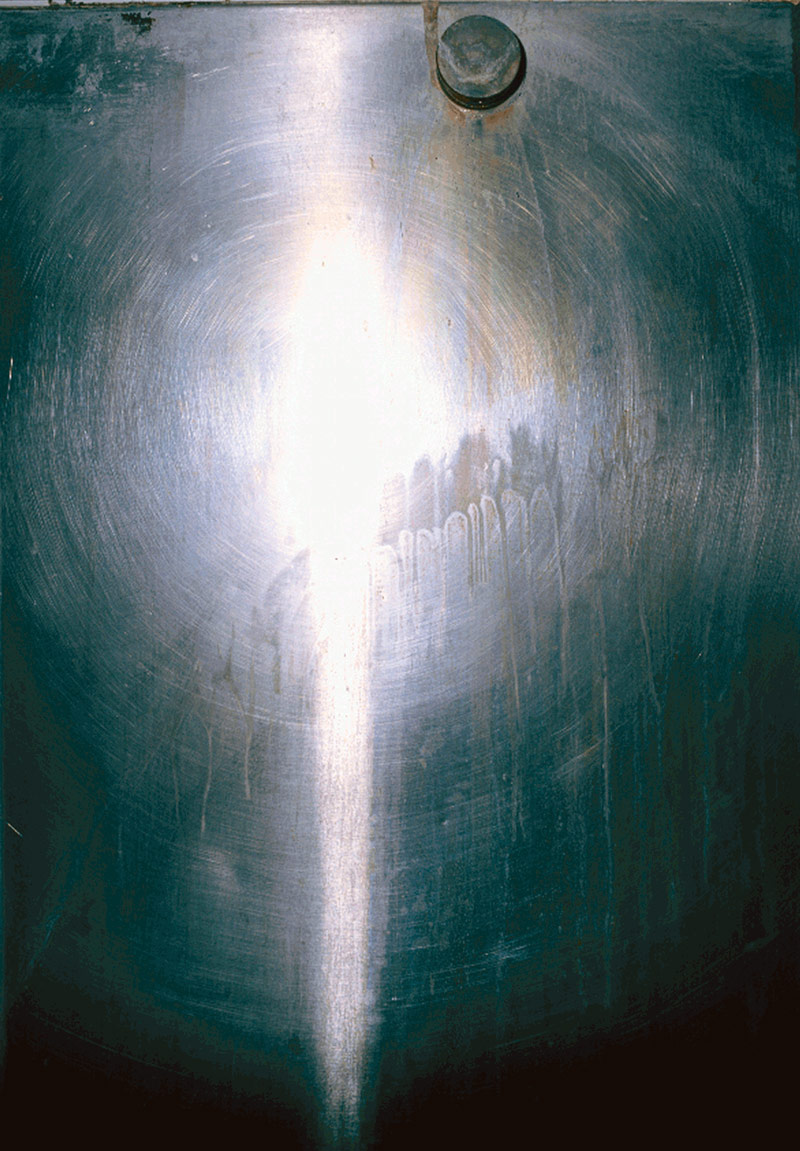
~ The beautiful Scott Redford Urinal photographs where the subject becomes secondary to the abstract visual elements as the flash bounces off the metal surfaces. Tight camera angles and a limited colour palette cause an almost transcendent composition. The swirls and markings and the sword-like quality of the central image (see below) remind me of Excalibur rising from the lake, dripping water.

~ Four photographs by John Cato, one each from Petroglyph 1971-79, Waterway 1971-79, Proteus 1971-79 and Tree – a journey 1971-79. These were incredibly beautiful and moving photographs, abstractions of the natural world. You need to be reminded what an amazing artist John was, one of the very best Australian photographers, his poetic photographs are cosmological in their musicology and composition

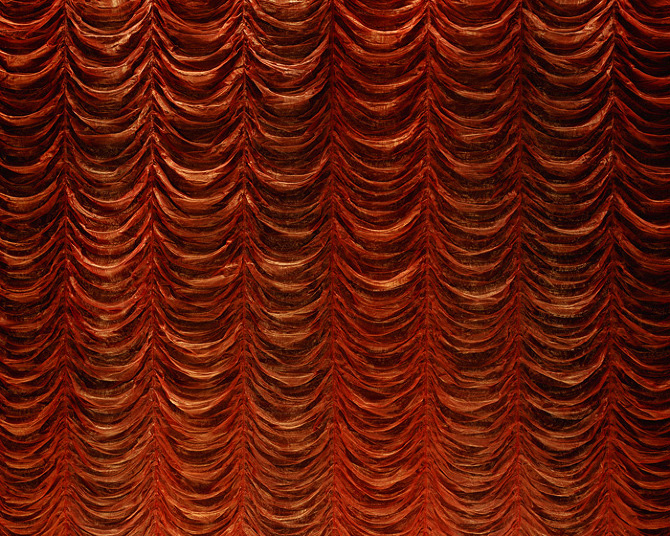
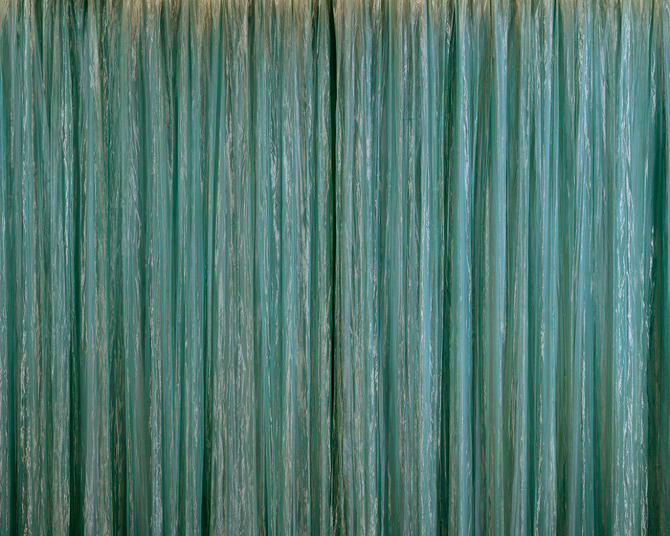
~ Two photographs from Paul Knight’s outstanding Cinema curtain series (below). For me there was a textural, sensory experience here, an intimacy with the subject matter that forced me to focus on the surface of the photograph, the flat plane of the photographic print, itself a highly abstract form. Amazing

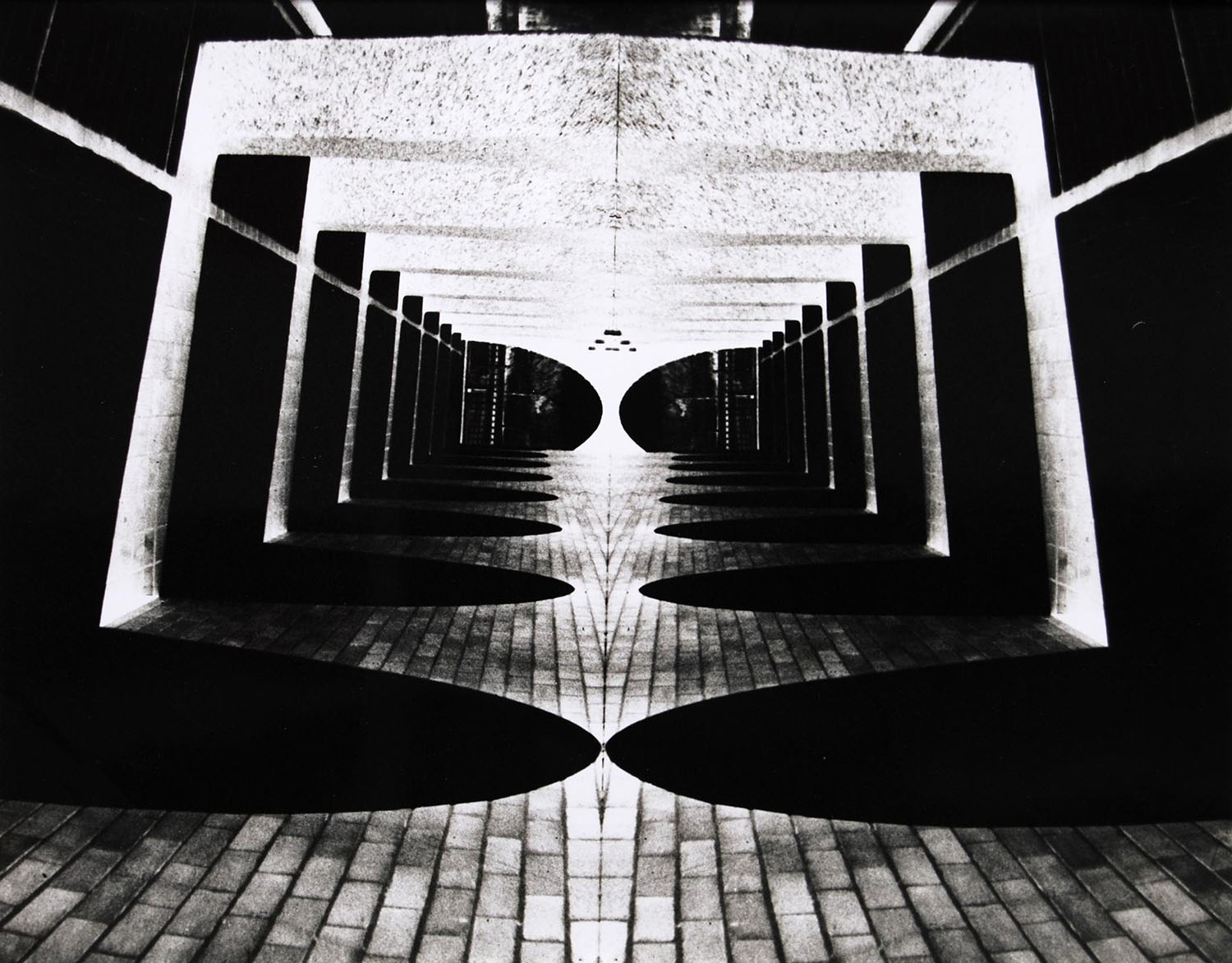
~ My particular favourite in the exhibition were the unknown to me works of the artist Jozef Stanislaw Ostoja-Kotkowski (see the two images directly below). These photographs were the most delightful surprise of the exhibition – landscapes of the mind that had great feeling and focus, felt movement, space, flow of light and energy. This was wonderfully nuanced work that I wanted to see more of


Some excellent work then that was let down by two curatorial decisions. The first was the amount of work in the exhibition by each artist – a couple of prints here, another three small prints there – that really never gave the viewer chance to fully engage with the outcomes that the artist was trying to achieve nor explore the process that the artist was using. I know this was a group exhibition trying to highlight work from the collection but a more useful contribution would have been less artist’s in the exhibition with greater work from each, allowing for a more focused exhibition.

Far more serious, however, was the lack of any text that placed the work in a socio-cultural context. At the beginning of the exhibition there was 5 short paragraphs on a wall as you enter the space with mundane insights such as:

~ Photographic language engages the senses and imagination and challenges the way we “look” at the world
~ Through the use of cropping and obscure angle the familiar is made unfamiliar
~ Colour, shape and form (geometric patterns) are important
~ Some artists’ eliminate the camera altogether through photograms, scanner, collage
~ Use of multiple exposures, distortion, mirroring
~ By drilling down into the substances and processes of photography we can reflect on the very nature of photography itself
~ Exploring geometry and patterns found in nature and the built environment or alluding to more intangible themes such as time, mortality and spirituality


I have précised the five paragraphs but that’s all you get!

The only other information comes from brief wall texts accompanying each artist and these sound bites really don’t give any social and cultural context to the artist, the time they lived in or the social themes that would have influenced the work. For example, who would know from this exhibition that the artist John Cato was one of the first photographers in Australia to create visual tone poems using images of the Australian landscape, one of the first to work in sequences of images and who would go on to be a teacher of great repute, helping other emerging photographic artists at a critical time in the development of Australian art photography. Nobody. Also, I wanted to know more about the “substances” and “processes” of photography in regard to photographic abstraction. There was no serious theoretical enquiry, no educational component offered to the viewer here.

While money might be tight there is really no excuse for this lack of creditable, researched, insightful information. You don’t need a catalogue, all you need is a photo-stated 4-6 page essay to be given to visitors (if they desire to have one, if they want the information). It doesn’t take money it takes will to inform and educate the viewer about this important aspect of Australian photographic history. For a subject so engaging this was most disappointing. In this particular case the curators really did drop the abstract ball.

Dr Marcus Bunyan


Many thankx to the Monash Gallery of Art for allowing me to publish the photographs in the posting. Please click on the photographs for a larger version of the image.


John Gollings (Australia, b. 1944) 'Untitled' 1988 From the series 'Bushfire aerials'


John Gollings (Australia, b. 1944)
Untitled
1988
From the series Bushfire aerials
Gelatin silver print
45.5 x 55.0cm
Monash Gallery of Art, City of Monash Collection
© courtesy of the artist


While John Gollings is best known for his work as an architectural photographer, he has produced a number of works that hone in on the Australian landscape. This aerial photograph looks down onto a landscape that has been scorched by bushfire. Viewed from above, without any horizon line to give a sense of scale or orientation to the terrain, this charred topography takes on the appearance of hairy, stubbled skin. Gollings uses this ambiguity to great effect, making the dirt tracks look like wounds that have scarred the surface of the earth, and the effects of smoke and ash look like bruises. In this respect, the use of aerial photography has allowed the images to be read as abstract ciphers of ecological trauma.

Text from the Monash Gallery of Arts website


David Stephenson (born USA 1955 arrived Australia 1982) 'Star drawing 1996/402' 1996 From the series 'Star drawings' 1995-2006


David Stephenson (born USA 1955 arrived Australia 1982)
Star drawing 1996/402
1996
From the series Star drawings 1995-2006
Chromogenic print, printed 2008
55.8 x 55.8cm
Monash Gallery of Art, City of Monash Collection
© courtesy of the artist, John Buckley Gallery Melbourne, Boutwell Draper Gallery, Sydney and Bett Gallery, Hobart


In a career spanning over 40 years, David Stephenson has consistently used photography to transcend visible reality, photographing built and natural environments to explore abstract, intangible themes such as time, mortality and spirituality. Stephenson made these Star drawings in Central Australia, overlaying as many as 72 different exposures to make one work. For each photograph he used a list of predetermined rules. For instance, he would decide on the length and number of exposures and how far he would rotate his camera between each exposure before embarking on the creation of each image. The images, each of which took a couple of hours to produce, were in this sense pre-planned; however, the amount of variables involved such as the movement of the earth and the stars during each shoot, meant the result always incorporated an element of chance. Interested in the idea that photography is essentially drawing with light, Stephenson’s series of experimental abstract patterns is not so much about documenting the night sky as it is about conceptually exploring the nature of light, time and photography itself.

Text from the Monash Gallery of Arts website


Paul Knight (Australia, b. 1976) 'Cinema curtain #3' 2004


Paul Knight (Australia, b. 1976)
Cinema curtain #3
2004
Chromogenic print
43.5 x 55.0cm
Monash Gallery of Art, City of Monash Collection
© courtesy of the artist


The function of the stage curtain in the cinema was to help suspend the illusion of reality in the moving image of the film. The idea being that the plain white screen behind the curtain was never seen without the moving image on it. So the illusion always existed behind the curtain and was simply masked-off from us by it. This is partly why the image was alway projected onto the curtain for a moment before it was opened, to ensure that we never saw the dead white screen. These works use this function of the cinema stage curtain as a way of engaging with the meta-reality offered by the flat-plane of a photographic print. Utilising the lure of aesthetics and pattern to bring the viewer onto the folded membrane of the curtain and onto the essentially flat plane of the print. Both give way to a potential of volume.

Text from the Paul Knight website [Online] Cited 21/09/2012 no longer available online


Paul Knight (Australia, b. 1976) 'Cinema curtain #4' 2004


Paul Knight (Australia, b. 1976)
Cinema curtain #2
2004
Chromogenic print
43.5 x 55.0cm
Monash Gallery of Art, City of Monash Collection
© courtesy of the artist


Jozef Stanislaw Ostoja-Kotkowski (born Poland 1922 arrived Australia 1949 died 1994) 'Australia Square – Sydney' 1971 From the series 'Inscape 871'


Jozef Stanislaw Ostoja-Kotkowski (born Poland 1922 arrived Australia 1949 died 1994)
Australia Square – Sydney
1971
From the series Inscape 871
Gelatin silver print
29.4 x 24.0cm
Monash Gallery of Art, City of Monash Collection
© courtesy of the artist


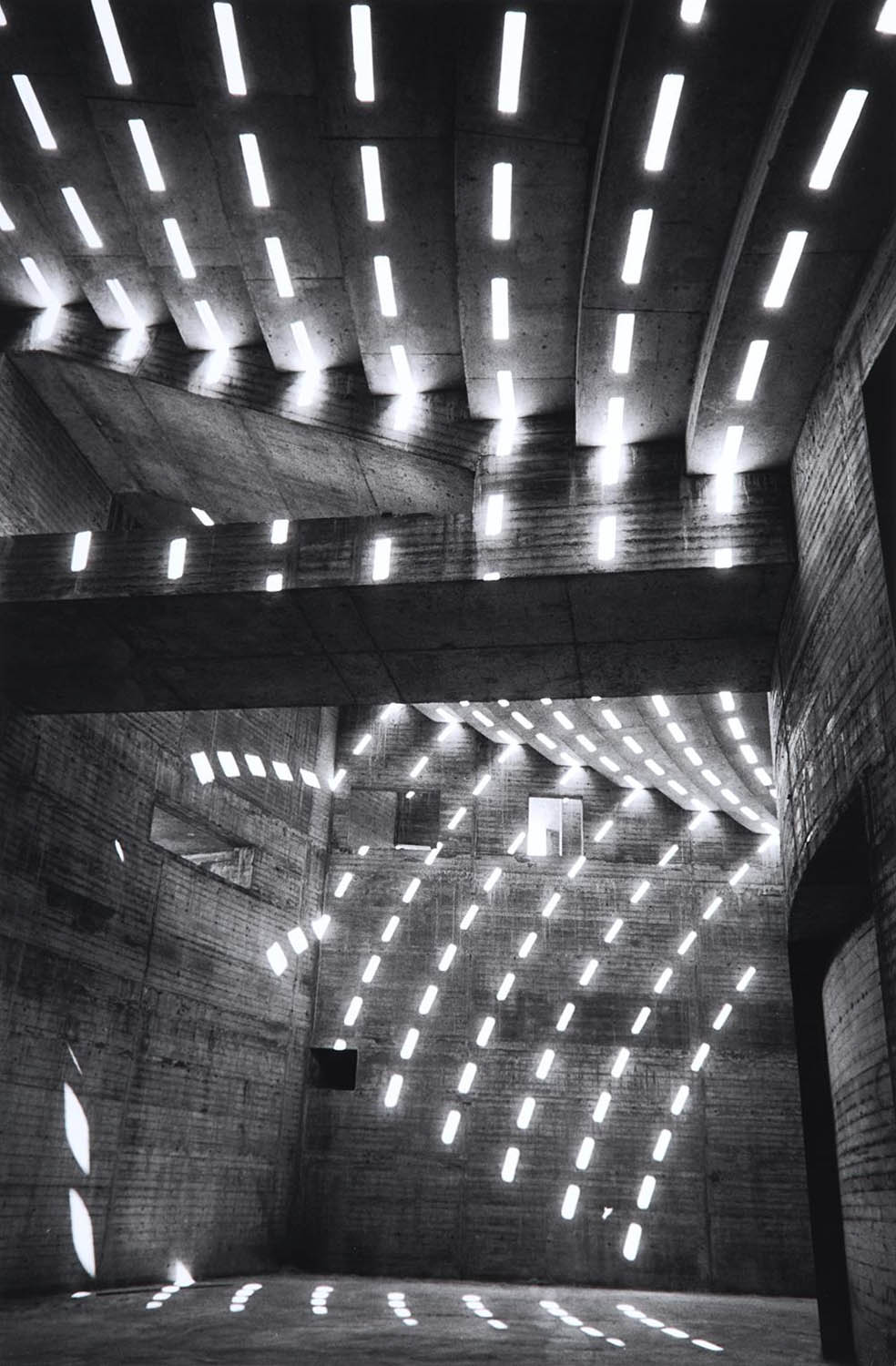
Originally trained as a painter, Jozef Stanislaw Ostoja-Kotkowski was interested in the advancement of art materials and techniques. He worked across a variety of media, including painting, sculpture, photography, electronic sound and light projections. He was also interested in combining different art forms and experimented with blending photography with music and sound.

Ostoja-Kotkowski played a key role in the development of experimental photography as well as electronic art in Australia. While his subjects were taken from the real world, they were photographically distorted and abstracted so that many became unrecognisable. He used this technique to create the series Inscape 871, examples of which are exhibited here. Inscape refers to an inner landscape, or images of the mind, while 871 refers to the month and year the works were completed. This series was included in the National Gallery of Victoria’s exhibition Frontiers (1971), which featured five Australian experimental photographers.

Text from the Monash Gallery of Arts website


Jozef Stanislaw Ostoja-Kotkowski (born Poland 1922 arrived Australia 1949 died 1994) 'Untitled' c. 1971


Jozef Stanislaw Ostoja-Kotkowski (born Poland 1922 arrived Australia 1949 died 1994)
Untitled
c. 1971
Gelatin silver print
29.4 x 24.0cm
Monash Gallery of Art, City of Monash Collection
Donated by Ken Scarlett 2004
© courtesy of the Estate of J S Ostoja-Kotkowski


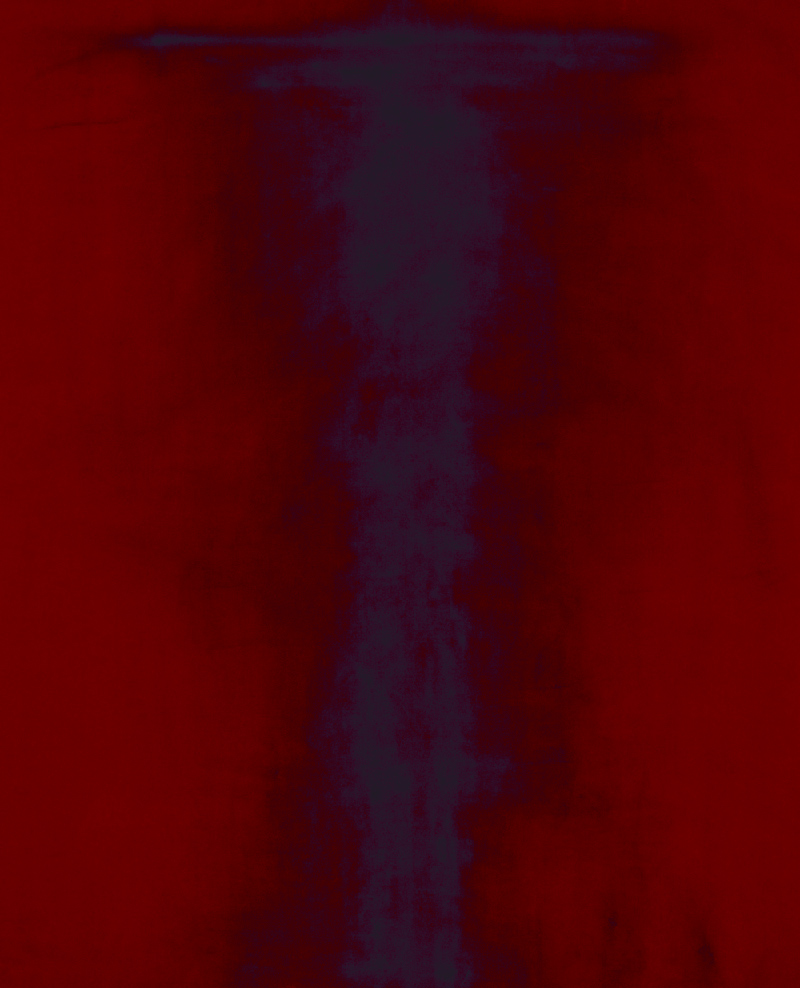
Anne MacDonald (Australia, b. 1960) 'Cloth (red velvet)' 2004


Anne MacDonald (Australia, b. 1960)
Cloth (red velvet)
2004
Ink-jet print
105 x 70cm
Collection of the artist
© courtesy of the artist and Bett Gallery, Hobart


John Cato (Australian, 1926-2011) 'Tree – a journey' 1971-1979


John Cato (Australian, 1926-2011)
Tree – a journey
1971-1979
From the series Essay I
Gelatin silver print
35.5 x 27.5cm
Monash Gallery of Art, City of Monash Collection
© courtesy of the John Cato Estate


Chantal Faust (Australian, b. 1980) 'Waiting' 2007


Chantal Faust (Australian, b. 1980)
Waiting
2007
From the series Milk
Chromogenic print
80.0 x 58.0cm
Collection of the artist
© courtesy of the artist


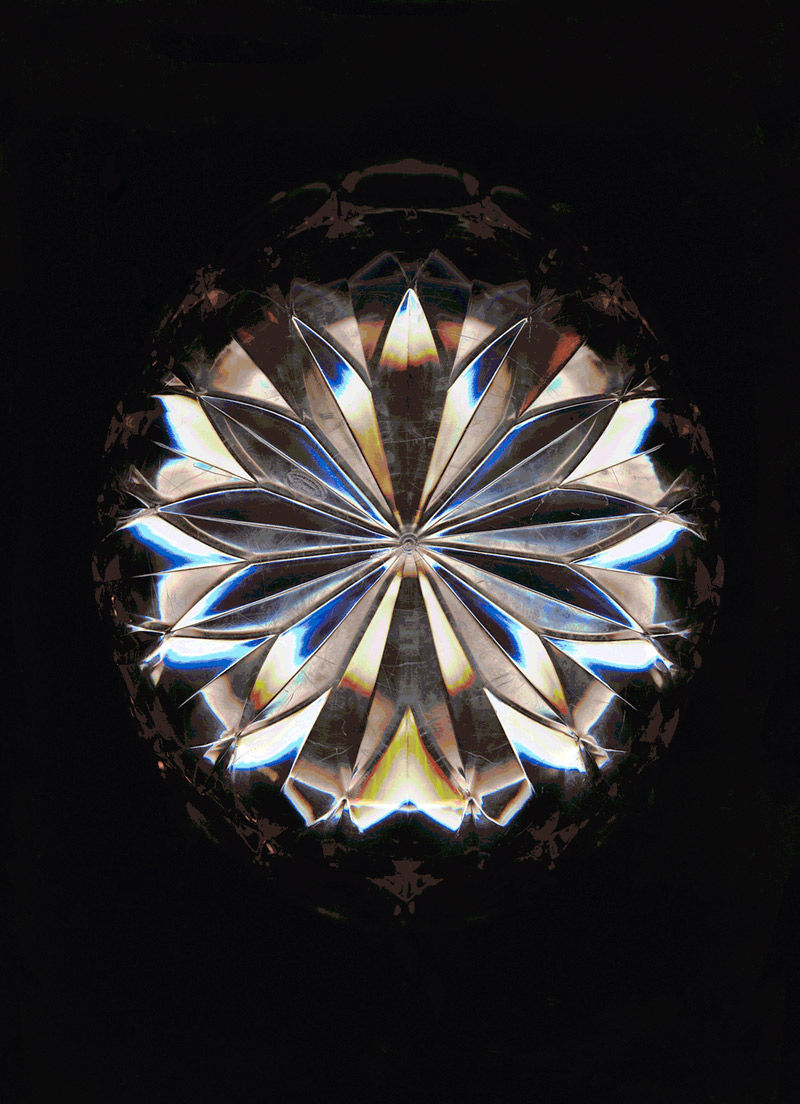
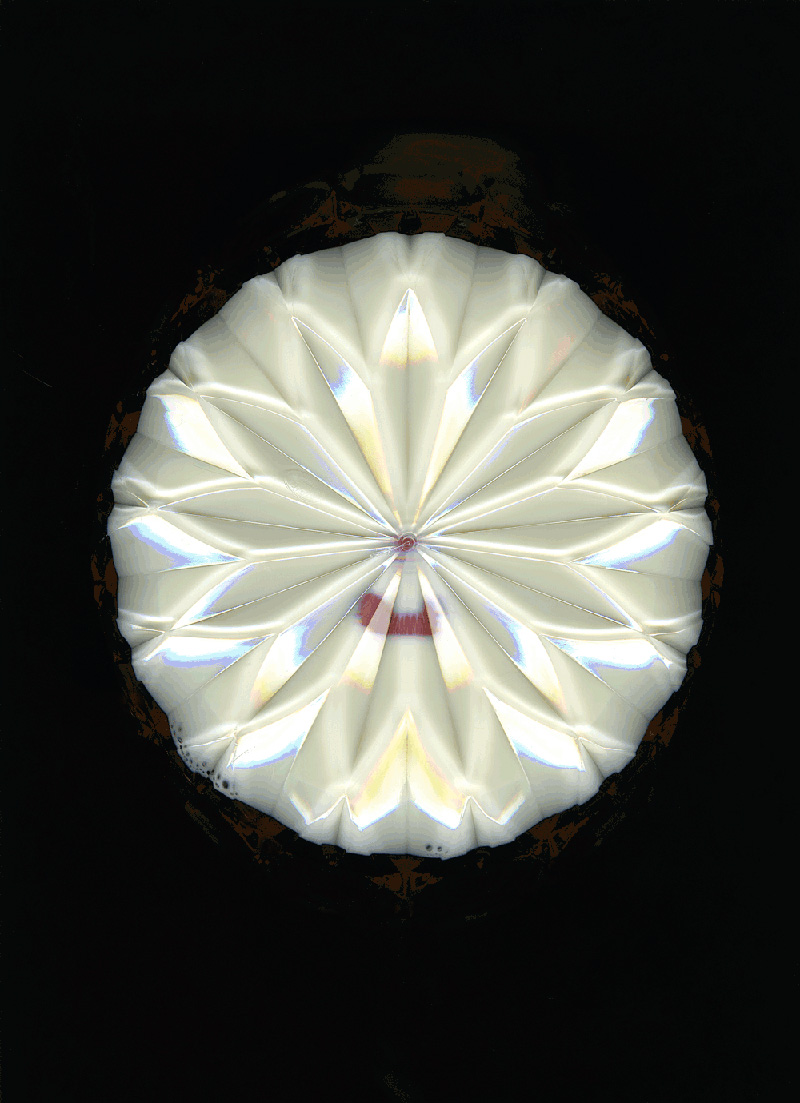
Like much of Chantal Faust’s photographic work, her series Milk was produced using a digital flatbed scanner, a method that allowed her to generate photographs without the use of a camera. The series documents milk being drunk from a bowl and can be linked to the tradition of 1960s and 1970s ‘process art’. During the late 20th century, photography was often employed by artists who wanted to document performance-based art actions and activities. Faust’s ‘action’ of slurping milk from a bowl is a playful extension of this tradition.

Text from the Monash Gallery of Art website


Chantal Faust. 'Lap Milk' 2007


Chantal Faust (Australian, b. 1980)
Lap Milk
2007
From the series Milk
Chromogenic print
80.0 x 58.0cm
Collection of the artist
© courtesy of the artist


Drawing on MGA’s collection of Australian photographs, Photographic abstractions highlights the work of 33 Australian artists who use photography to achieve abstract effects. Ranging from modernist geometric abstraction and the psychedelic experiments and conceptual projects of the 1970s, through to recent explorations of pixelated pictorial space, this exhibition surveys a rich history of abstract Australian art photography. Photography is traditionally recognised for its ability to depict, record and document the world. However, this exhibition sets out to challenge these assumptions. As co-curator of the exhibition and MGA Curator Stephen Zagala states, “The artists in this exhibition are less concerned with documenting the world and more interested in engaging the senses, exciting the imagination and making the ordinary appear extraordinary.”

Some artists have eliminated the camera altogether, preferring the effects that can be achieved with photograms and digital scans. Other artists have experimented with multiple exposures, mirrored images, irregular lenses and the printing of the usually discarded stubs of negatives. Co-curator and MGA Curatorial Assistant Stella Loftus-Hills says, “Photography has always been tied to abstraction. Some of the first photographs ever produced were abstract and subsequent photographers have sought out abstract compositions in their work.”

One highlight of the exhibition is a selection of works by the iconic Australian photographer David Moore, who experimented with abstract photography alongside his more well-known figurative work. In Moore’s Blue collage (1983) the process of cutting bands of colour from existing photographs to create a new composition celebrates the artist’s imagination above and beyond the camera’s ability to capture content.

Artists include Andrew Browne, John Cato, Jo Daniell, John Delacour, Peter Elliston, Joyce Evans, Chantel Faust, Susan Fereday, Anthony Figallo, George Gittoes, John Gollings, Graeme Hare, Melinda Harper, Paul Knight, Peter Lambropoulos, Bruno Leti, Anne MacDonald, David Moore, Grant Mudford, Harry Nankin, Ewa Narkiewicz, John Nixon, Rose Nolan, Jozef Stanislaw Ostoja-Kotkowski, Robert Owen, Wes Placek, Susan Purdy, Scott Redford, Jacky Redgate, Wolfgang Sievers, David Stephenson, Mark Strizic and Rick Wood.

Press release from the MGA website


David Moore (Australian, 1927-2003) 'Sun patterns within the Sydney Opera House' 1962


David Moore (Australian, 1927-2003)
Sun patterns within the Sydney Opera House
1962
Gelatin silver print, printed 2005
37.75 x 25.0cm
Monash Gallery of Art, City of Monash Collection
© courtesy of the Estate of David Moore


David Moore (Australian, 1927-2003) 'Sisters of Charity' 1956


David Moore (Australian, 1927-2003)
Sisters of Charity, Washington DC
1956
Gelatin silver print
30.5 x 19.5cm
Monash Gallery of Art, City of Monash Collection
© courtesy of the Estate of David Moore


Robert Owen (Australian, b. 1937) 'Street, Burano, Italy' 1978


Robert Owen (Australian, b. 1937)
Street, Burano, Italy
1978
Silver dye bleach print
20 x 25cm
Monash Gallery of Art, City of Monash Collection
© courtesy of the artist and Arc One Gallery, Melbourne


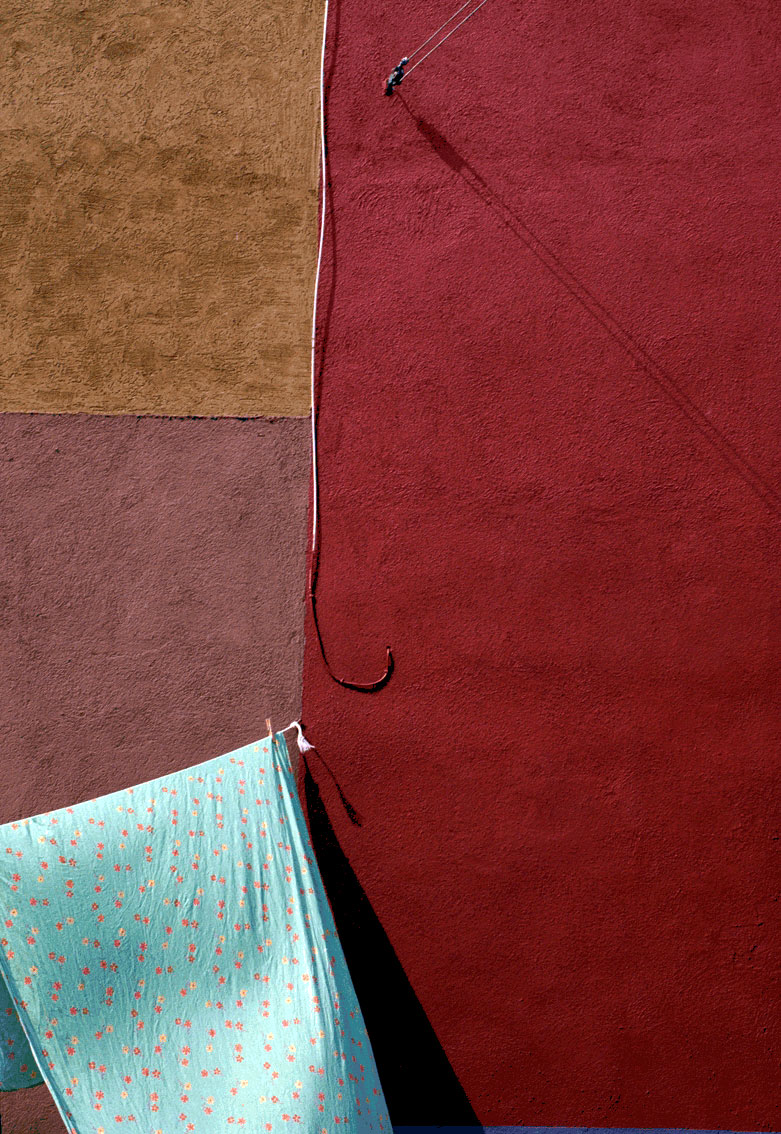
Robert Owen (Australian, b. 1937) 'Green Sheet, Burano, Italy' 1978


Robert Owen (Australian, b. 1937)
Green Sheet, Burano, Italy
1978
Silver dye bleach print
Monash Gallery of Art, City of Monash Collection
© courtesy of the artist and Arc One Gallery, Melbourne


Scott Redford (Australian, b. 1962) 'Urinal (Broadbeach)' 2000-2001


Scott Redford (Australian, b. 1962)
Urinal (Broadbeach)
2000-2001
From the Urinals series 1988-2001
Chromogenic print
Collection of the artist
© courtesy of the artist


Scott Redford (Australian, b. 1962) 'Urinal (Surfer's Paradise)' 2000-2001


Scott Redford (Australian, b. 1962)
Urinal (Surfer’s Paradise)
2000-2001
From the Urinals series 1988-2001
Chromogenic print
Collection of the artist
© courtesy of the artist


Scott Redford (Australian, b. 1962) 'Urinal (Fortitude Valley)' 2000-01


Scott Redford (Australian, b. 1962)
Urinal (Fortitude Valley)
2000-2001
From the Urinals series 1988-2001
Chromogenic print
Collection of the artist
© courtesy of the artist


Redford’s photographs of urinals… dialogue with art historical motifs that precede discourses of minimal art and postmodern understandings of the abject. In representing the site of male urination, they evoke the oxidation paintings of Andy Warhol, who directed young men to piss onto canvases prepared with copper oxide, resulting in compelling abstract imagery… All of that is in Redford’s photographs and at the same time they are completely empty and quiet and contemplative… They are pure sensory experience like rainfall, even transcendent in their purity. They are concerned with beauty, but they are beyond debates about beauty. They are indifferent and in this they are transcendent.

Chapman, Christopher. “Scott Redford’s urinals,” in Redford, Scott et.al. Bricks are Heavy (exhibition catalogue). Brisbane: Institute of Modern Art, pp. 6-7.


Monash Gallery of Art
860 Ferntree Gully Road, Wheelers Hill
Victoria 3150 Australia
Phone: +61 3 8544 0500

Opening hours:
Tuesday – Friday 10am – 5pm
Saturday – Sunday 10am – 4pm
Mon/public holidays: closed

Monash Gallery of Art website

LIKE ART BLART ON FACEBOOK

Back to top

Review: ‘Jenny Reddin: The Art of Catastrophe’ at Anita Traverso Gallery, Richmond

Exhibition dates: 5th September – 29th September 2012


Jenny Reddin (Australian) 'Caught in an Effervescent Breeze' 2012


Jenny Reddin (Australian)
Caught in an Effervescent Breeze
2012
Oil on canvas
122 x 122cm


“Each epoch dreams the one to follow, creates it in dreaming”


Jules Michelet


“Each epoch dreams of itself as annihilated by catastrophes”


Theodor Adorno


A star is born

The origin of the word catastrophe is Greek (kata + strophein) and its literal meaning was “overturn”. According to its definition, it is an event that causes trauma due to its capacity to destroy most of a community. Catastrophes are extreme events that affect a large number of victims in the affected community, and are easily identified as events that cause physical suffering.1 The use of words such as disaster (origin in the Italian word disastro (dis + astro, “bad star”)) and catastrophe create the idea of a “disaster taxonomy,” one which is based on the principle that there are variable emotional responses that depend on the type of disaster, the degree of personal impact, the size of the group affected, and the geographical and temporal range of the event.2 These pure words define the event itself and the havoc they wreak without incorporating the perceptions of the victims; in other words they are an objective reflection on the subjective performativity of the act itself.

Catastrophes fascinate humans as they clearly show them the limits of their own existence. The dystopian catastrophe challenges the temporal linearity of a utopian dreaming in which the darkness of the lived moment is illuminated by the anticipatory daydreams of the “not-yet-conscious” future. What catastrophe codes is a dialectical relation to Utopianism, a rejection of the holistic vision of an anticipatory consciousness of a utopian future. As Matthew Charles observes,

“The catastrophic signifies the dialectical intrusion of the whole of history (including the present in which it is represented) into the construction epoch, and by extension the whole of the epoch into the life of the artist, and the whole life of the artist into a particular work. Benjamin’s messianic account of the experience of truth imposes the theological concepts of the infinite, fulfilled and perfected state of the world into the immanence of finite, particular, existing phenomenon. In this way, the intrusion of the historical Absolute contributes to the catastrophic ruination of the work.”3


As can be seen in the Jenny Reddin’s artist statement, the whole of the artist’s history is bound up in the creation of the work. The infinite possibilities of a subjective understanding of truth are bound together with the immanence of finite, particular, existing phenomenon, that of the art of catastrophe, the objective presentation of ruination, in the art itself. Reddin’s anticipatory daydreams become an anticipatory illumination as an image, a constellation, a configuration tied closely to the idea of the concrete / fluid utopic / dystopic landscapes of the body and the earth. Reddin’s paintings work at both a macro and micro level, a phenomenon that is cross-disciplinary like the phenomenon of catastrophe itself. The work reminds me of cellular structures at the micro level (cross-sections of diseased kidneys, the veins of the heart or scientific slides of blood cells) and of aerial views of the earth at the macro level (alluvial deltas and views of open cast mines). They balance beauty with serendipity, the manipulation of the “flow” of paint (from one point in time to many points) that captures light, the light of the cosmos and of the subconscious. These magnificent works of art have emerged from the artist’s life – much as Immanuel Velikovsky argued that the planet Venus is a former “comet” which was ejected from Jupiter – in an act of catastrophic creation. They are dreaming of the future and yet also dreaming of catastrophe.

Running with these ideas you might argue that these dream images are both an act of emergence and an emergency, a catastrophe. For some thinkers the sociology of emergences aims to identify and enlarge the signs of possible future experiences, under the guise of tendencies and latencies, that are actively ignored by hegemonic rationality and knowledge. For Ernst Bloch the concept of The Not Yet, “is the way in which the future is inscribed in the present. It is not an indeterminate or infinite future, rather a concrete possibility and a capacity that neither exists in a vacuum nor are completely predetermined. Subjectively, the Not Yet is anticipatory consciousness, a form of consciousness that is extremely important in people’s lives. Objectively, the Not Yet is, on the one hand, capacity (potency) and, on the other, possibility (potentiality).”4

Here the field of possibility has a dimension of darkness (disaster) as it originates in the lived moment whilst the sociology of emergences inquires into the alternatives that are contained in the horizon of concrete, utopian possibilities in order to identify therein the tendencies of the future (the Not Yet): the light of the future. Hence these images contain both emergency (of the catastrophe, of the lived moment) and an emergence (into the future). A (bad) star is born. I also believe that in this artist another star has been born, one that will shine strongly in future dreamings.

Dr Marcus Bunyan


1/ Braga, Luciana L., Fiks, Jose P., Mari, Jair J. and Mello, Marcelo F. “The importance of the concepts of disaster, catastrophe, violence, trauma and barbarism in defining posttraumatic stress disorder in clinical practice,” in BMC Psychiatry 2008, 8:68 [Online] Cited 22/09/2012

2/ Ibid.,

3/ Charles, Matthew. “The Future is History: Dreams of Catastrophe in Ernst Bloch and Walter Benjamin,” Proceedings of the No Future conference, Institute of Advanced Studies, Durham University, 25-27 March 2011 [Online] Cited 22/09/2012

4/ Anon. “Sociology of Emergences,” on the P2P Foundation website [Online] Cited 22/09/2012


Many thankx to Anita Traverso Gallery for allowing me to publish the photographs of the paintings in the posting. Please click on the photographs for a larger version of the image.


Jenny Reddin (Australian) 'Ms. Broadhurst’s Poppy' 2012


Jenny Reddin (Australian)
Ms. Broadhurst’s Poppy
2012
Oil on canvas
122 x 122cm


Jenny Reddin (Australian) 'A Shifting Reality' 2012


Jenny Reddin (Australian)
A Shifting Reality
2012
Mixes media on linen
137 x 122cm


At the heart of a catastrophe there is a massive burst of energy. Jenny Reddin’s works seek to capture that energy in an alchemic process that involves the dissolving of pigments in various solutions and pouring the viscous mixes onto prepared structures. Due to the varying specific gravities the pigments drop out at different rates offering alternately dry, textured or smooth, mirror-like fields. This series presents works inspired by the natural phenomenon and the interaction of the human form, capturing the juxtaposition of the beauty of the Australian country with the ongoing cycle of natural catastrophe.

Text from the gallery website


I have been painting for around 14 years. At a time when I should have been at Art School, I was studying for a bachelor of business. When I should have been exhibiting my work, I was running a consulting practice and managing people. It wasn’t until my husband and I adopted a little girl from India that I was able to take the time to explore my creative side. I have been painting ever since.

Catastrophe plays an important role in my life. I am an idea, act, plan person in everything I do. It’s how I live my life and it’s how I paint. I had to make a decision early on in my painting career that I either learned to celebrate the spontaneous nature of catastrophes or go mad trying to paint in a conventional manner. I found also that it was becoming increasingly important for me to find my own style and form of expression. I would cringe when people would compliment me by telling me that a work looked just like a Fred Williams or a John Olsen.

To a large extent, I have had to learn to paint from the subconscious. The more deliberate and planned I am at the commencement of a work, the less spontaneous and evocative the result. I go through what feels like long periods where the works are muddy and unsatisfying and I have to rip off the canvas and start again. I usually find when I take the time to analyse why, I have been trying to force an outcome and then all of a sudden, as my consciousness steps back and my subconscious takes over, they work.

Catastrophe is a piece that was painted early this year. It is a good example of the elements that I am looking for in my work, drama and light. The dramatic effect is created by dissolving pigments in viscous solvent solutions and then pouring them onto prepared canvas supports. I often pour two and three colours together so that they bump into each other creating riverlets and craters as the pigments drop out of solution at different rates. Light is captured by manipulating the flow of paint to trap sections of blank, white canvas which to my eye increase the sense of drama and luminance of the work.

It’s hard to say who inspires my work because I am unaware of anyone else painting in quite the same way. What I take from other artists would be honesty and integrity from artists such as Andy Goldsworthy; simplicity of form from the likes of Anthony Gormley and Antonio Tapies; the love of limited palette from Godwin Bradbeer; the beauty of gesture and rhythm from Yvonne Audette and Susan Rothenburg.

Jenny Reddin’s opening speech at the exhibition The Art of Catastrophe


Jenny Reddin (Australian) 'Space within space within space' 2012


Jenny Reddin
Space within space within space
2012
Oil in linen
122 x 122cm


Jenny Reddin (Australian) 'Amillaria' 2012


Jenny Reddin
Amillaria
2012
Oil on canvas
120 x 100cm


Jenny Reddin (Australian) 'Suspended Journey' 2012


Jenny Reddin
Suspended Journey
2012
Oil on linen
138 x 97cm


Anita Traverso Gallery

PO Box 7001, Hawthorn North 3122
Phone: 0408 534 034

Anita Traverso Gallery website

LIKE ART BLART ON FACEBOOK

Back to top

Exhibition: ‘Eva Besnyö 1910-2003: The Sensuous Image’ at Jeu de Paume, Paris

Exhibition dates: 22nd May – 23rd September 2012


Eva Besnyö (Dutch-Hungarian, 1910-2003) 'Self Portrait' 1932


Eva Besnyö (Dutch-Hungarian, 1910-2003)
Self Portrait
1932
Silver gelatin photograph
Private Collection, Berlin
© Eva Besnyö / Maria Austria Instituut Amsterdam


One of the purposes of this archive is to bring relatively unknown artists into the spotlight. Eva Besnyö is one such artist. Leaving the repressive atmosphere of Hungary in 1930, Besnyö joined László Moholy-Nagy, Martin Munkácsi, György Kepes and Endre Friedmann (Robert Capa) in Berlin before, sensing the danger of National Socialism, she moved to the Netherlands in 1932. After the invasion of the Netherlands by Nazi Germany in 1940 Besnyö survived four long years in hiding before obtaining false papers in 1944 that allowed her to emerge into the open. She was Jewish.

Exploring elements of the New Vision and New Objectivity in her work, Besnyö explored “the different terrains that photography was opening up” through various bodies of work: “ranging from experimental to the photojournalistic, from street scenes to portraits, and from new architecture to the aftermath of the aerial bombardment of Rotterdam.” As John Yau observes in the quote at the top of the posting, “The various bodies of work make it difficult to characterise her… she seems to have no signature body of work, which is one of her abiding strengths. Just when you think you have gotten some sense of her, she slips through your fingers.”

Continuing the conversation from my recent review of the work of Pat Brassington (where I noted that curators and collectors alike try to pigeon hole artists into one particular style, mainly so that they can compartmentalise and order the work that they produce: such and such produces this kind of work – and that the work produced in this style is not necessarily their best), Besnyö can be seen to be a transmogrifying artist, one that experimented and investigated the same themes through different subject matter – hence no signature body of work. One of my friends observed that this kind of art making could be mistaken for a strange form of nihilism (in which nothing in the world has a real existence). It could be argued that the artist keeps changing subject matter, just dabbling really, pleasing herself with the images that she took, without committing to a particular style. Without seeing the 120 vintage prints it is hard to make a judgement.

From the work posted here it would seem that for Besnyö, observation and exploration of the lines of sight of life were the most critical guide to her art. In other words her shifting viewpoints create a multi-dimensional narrative that coalesces in a holistic journey that challenges our point of view in a changing world. As Victor Burgin notes in Thinking Photography, “The structure of presentation – point-of-view and frame – is intimately implicated in the reproduction of ideology (the ‘frame of mind’ of our ‘points-of-view’)” (1982, p. 146). The frame of mind of our points of view… this is what Eva’s work challenges, the reproduction of our own ideology. Her morphology (the philosophical study of forms and structures) challenges the cameras and our own point of view. As Paul Virilio observes,

“In calling his first photographs of his surroundings ‘points of view’, around 1820, their inventor, Nicéphore Nièpce came as close as possible to Littré’s rigorous definition: ‘The point of view is a collection of objects to which the eye is directed and on which it rests within a certain distance.'” (Virilio, Paul. The Vision Machine (trans. Julie Rose). Bloomington: Indiana University Press, 1994, p. 19.)

Besnyö changes the collection of objects to which the eye is directed as she also changes the distance and feeling of the objects upon which the eye rests. Notice how in most of the photographs the human subjects all have their back to the camera or are looking away from the instrument of objectification (or looking down into it). Even in the two self portraits Besnyö – formal in one with bobbed hair and skirt, wild in the other with a shock of tousled hair – she avoids the gaze of the camera. Like most of her subjects she remains hard to pin down. What Besnyö does so well (and why she isn’t just pleasing herself) is to construct a mythology of the city, a mythology of life which resonates through the ages. She creates a visual acoustics (if you like), a vibration of being that is commensurate with an understanding of the vulnerability of existence.

Dr Marcus Bunyan


Many thankx to Jeu de Paume for allowing me to publish the photographs in the posting. Please click on the photographs for a larger version of the image.


“Ranging from the experimental to the photojournalistic, from street scenes to portraits, and from new architecture to the aftermath of the aerial bombardment of Rotterdam, July 1940, Besnyö explored the different terrains that photography was opening up, while at the same time helping to define them. The various bodies of work make it difficult to characterise her… she seems to have no signature body of work, which is one of her abiding strengths. Just when you think you have gotten some sense of her, she slips through your fingers.”


John Yau. “Something Special About Her, Eva Besnyö at the Jeu de Paume” on the Hyperallergic website, July 8th 2012


Eva Besnyö (Dutch-Hungarian, 1910-2003) 'Self Portrait' Nd


Eva Besnyö (Dutch-Hungarian, 1910-2003)
Self Portrait
Nd
Silver gelatin photograph
© Eva Besnyö / Maria Austria Instituut Amsterdam


Eva Besnyö (Dutch-Hungarian, 1910-2003) 'Untitled Untitled [boy with a violoncello, Balaton, Hungary]' 1931


Eva Besnyö (Dutch-Hungarian, 1910-2003)
Untitled [boy with a violoncello, Balaton, Hungary]
1931
Silver gelatin photograph
29.4 x 24.3cm
Rijksmuseum, Amsterdam
© Eva Besnyö / Maria Austria Instituut Amsterdam


Eva Besnyö (Dutch-Hungarian, 1910-2003) 'Gypsies' 1931


Eva Besnyö (Dutch-Hungarian, 1910-2003)
Gypsies
1931
Silver gelatin photograph
© Eva Besnyö / Maria Austria Instituut Amsterdam


Eva Besnyö (Dutch-Hungarian, 1910-2003) 'Der Monteur am Ladenfenster' Berlin, 1931


Eva Besnyö (Dutch-Hungarian, 1910-2003)
Der Monteur am Ladenfenster
Berlin, 1931
Silver gelatin photograph
20.1 x 17.7cm
Collection Iara Brusse, Amsterdam.
© Eva Besnyö / Maria Austria Instituut Amsterdam


Eva Besnyö (Dutch-Hungarian, 1910-2003) 'Starnberger Straße' Berlin, 1931


Eva Besnyö (Dutch-Hungarian, 1910-2003)
Starnberger Straße
Berlin, 1931
Silver gelatin photograph
© Eva Besnyö / Maria Austria Instituut Amsterdam


Renger-Patzsch was associated with the Neue Sachlichkeit (New Objectivity), an attitude towards life and art that many Germans understood as distinctly American: the cult of the objective. Along with Regner-Patzsch, August Sander is another photographer associated with this tendency. (Karl Hubbuch, Otto Dix and Christian Schad are among the painters associated with it). The difference between the two photographers is that the human being is at the center of Sander’s work, while the world of things is at the center of Renger-Patcsch’s. Besnyö situates herself between the two, finding her own way.

The other influence on Besnyö was Låslø Moholy-Nagy’s New Vision, a term he coined to define his belief that photography enabled the viewer to see the world in ways the eyes could not. In 1930, at the age of 20, she moved to Berlin, rather than to Paris, where Hungarian photographers such as Andre Kertesz and Brassaï had gone. According to Besnyö, “The whole German side interested me. Paris was the Romantic, old-fashioned trend. The second reason was Gyørgy Kepes, who was a good friend of mine and had gone to Berlin as an assistant to Moholy.”

It was Gyørgy Kepes who said to Besnyö; “If you want to be a photographer, you must go to Berlin.” It was from this relationship and the circle around Moholy-Nagy that Besnyö learned of Russian Constructivism and began incorporating the diagonal into her photographs.

John Yau. “Something Special About Her, Eva Besnyö at the Jeu de Paume” on the Hyperallergic website, July 8th 2012


Eva Besnyö (Dutch-Hungarian, 1910-2003) 'Untitled [Shadow play]' Hungary 1931


Eva Besnyö (Dutch-Hungarian, 1910-2003)
Untitled [Shadow play]
Hungary 1931
Silver gelatin photograph
© Eva Besnyö / Maria Austria Instituut Amsterdam


Eva Besnyö (Dutch-Hungarian, 1910-2003) 'Untitled [dockers on the Spree]' Berlin, 1931


Eva Besnyö (Dutch-Hungarian, 1910-2003)
Untitled [dockers on the Spree]
Berlin, 1931
Silver gelatin photograph
© Eva Besnyö / Maria Austria Instituut Amsterdam


Eva Besnyö (Dutch-Hungarian, 1910-2003) 'Untitled [Vertigo #3]' Nd


Eva Besnyö (Dutch-Hungarian, 1910-2003)
Untitled [Vertigo #3]
Nd
Silver gelatin photograph
© Eva Besnyö / Maria Austria Instituut Amsterdam


Eva Besnyö (1910-2003) is one of those women who found in photography not just a profession but also a form of liberation, and of those cosmopolitan avant-garde artists who chose Europe as their playing field for both play and work. Immediately after her photographic training in the studio of József Pécsi in Budapest, Eva Besnyö left the repressive, anti-progressive environment of her native Hungary for ever. Then aged 20, she decided, like her compatriots László Moholy-Nagy, Martin Munkácsi, György Kepes and Endre Friedmann (Robert Capa), to go to Berlin. As soon as she arrived in autumn 1930, she discovered there a dynamic photographic scene, open to experimentation and placed under the double sign of the New Vision and the New Objectivity, whose modern language would allow her to develop her personal style.

Of Jewish origins, Eva Besnyö, who foresaw the threat of National Socialism, moved to the Netherlands in 1932 where she met again her companion the film director John Fernhout. There she was welcomed into the circle of international artists around the painter Charley Toorop, and rapidly became known in Amsterdam, where she had her own photographic studio. A solo exhibition at the Kunstzaal van Lier in 1933 gained the attention notably of the Dutch followers of the “Neues Bauen” (New Building), whose architecture she recorded, in a highly personal manner, over a long period. The invasion of the Netherlands by Nazi Germany in 1940 marked a dramatic turning point in Eva Besnyö’s life. If she managed to come out of hiding in 1944, thanks to an invented genealogy, the traces of this experience would remain acute throughout the postwar decades. During the 1950s and 60s, her family life led her to abandon street photography for commissions. Finally, in the twilight of her career, the photographer militated in the Dolle Mina feminist movement, whose street actions she chronicled in the 1970s.

With more than 120 vintage prints, some modern prints and numerous documents, this first French retrospective devoted to Eva Besnyö aims to show the public the different facets of her work, which is situated between New Vision, New Objectivity and social documentary, at the crossroads between poetry and political activism.

With other eyes

In 1929, during her second year of apprenticeship to József Pécsi, portrait and advertising photographer in Budapest, Eva Besnyö received the book of photographs Die Welt ist schön (The World is Beautiful), published a few months earlier in Munich. Its author, Albert Renger-Patzsch, is the precursor of New Objectivity in photography. While pictorialism reigned in Hungary, Eva Besnyö discovered the world with other eyes: from up close and under unexpected angles. With these new models in mind and her Rolleiflex in hand, she strode along the banks of the Danube in search of subjects and daring viewpoints, showing concern for a precise, close-up description of the most diverse objects, as well as a taste for fragmentation and for the repetition of the motif in the frame.

As soon as she finished her studies, Eva Besnyö went to Berlin on the advice of the painter and photographer György Kepes – and against the wishes of her father who would have preferred that she chose Paris. The Berlin years, between 1930 and 1932, were for her those of a political and aesthetic awakening. Besides the influence of the revolutionary aesthetic of Russian cinema, she came under that of the New Vision, which took off with László Moholy-Nagy and his book Painting Photography Film (1925), using a whole stylistic grammar, advocating downward perspectives or low-angle shots, a taste for the isolated object and its repetition, as well as optical manipulations revealing an unknown, but very real, world. The activity of the town or the empty crossroads of Starnberger Straße, portraits and images of summer on the banks of Lake Wannsee count among Besnyö’s most successful compositions.

Worker and social photography

At the Marxist Workers’ School in Berlin, Eva Besnyö schooled her social and political conscience. In her circle of friends gathered around fellow Hungarian György Kepes, she discussed passionately the role of the workers’ movements. In Berlin, as earlier in Budapest, Eva Besnyö took her camera to the principal sites of trade and business, where she photographed labourers hard at work: dockers on the Spree, coalmen in the street, fitters perched on ladders; in the city centre, she followed the workers at Alexanderplatz, in around 1930 the largest construction site in Europe. In Hungary, where she returned from time to time from Berlin, she carried out an extraordinary documentary project on the people of Kiserdö, in the suburbs of Budapest. Blessed with a heightened political awareness, she had already understood by 1932 that, as a Jew, her future was not in this country, and left Berlin for Amsterdam.

New Vision and New Building

In 1933, the solo show devoted by the Kunstzaal van Lier to Eva Besnyö just one year after her arrival in Amsterdam aroused the enthusiasm of numerous architects – her principal clients in the years to come. Mostly members of the group de 8 in Amsterdam and the radical abstract collective Opbouw in Rotterdam, they discerned in her images, which emphasised the functional side of objects, their structure and their texture, a suitable approach for explaining their buildings.

Equipped with a Linhof 9 x 12 cm plate camera acquired especially for the purpose, Eva Besnyö went to building sites and photographed public and private buildings, notably the studios of the Dutch radio station AVRO at Hilversum, the Cineac cinema in Amsterdam and a summer house in Groet, in the north of the country. Become, in the 1930s, the preferred photographer of Dutch New Building, Eva Besnyö made most of her income at the time from architectural photography.

Bergen and Westkapelle

From Amsterdam, where from 1935 to 1939 she shared a studio at Keizersgracht 522 with the photographer Carel Blazer and the architect Alexander Bodon, Eva Besnyö went regularly to Bergen and Westkapelle, two villages where many artists gathered. In Bergen, north of Amsterdam, Charley Toorop, Expressionist painter and mother of the film director John Fernhout, whom Eva had married in 1933, held an artistic salon in the De Vlerken studio. It was at Westkapelle, a centuries-old village built on a polder in Zealand, that the family often spent their holidays. In this landscape shaped by the natural elements, Eva Besnyö returned to a free photographic practice, with views of vast beaches of white sand, of black silhouettes against a background of old windmills and cut-out shadows.

Rotterdam

In July 1940, Eva Besnyö photographed the old town of Rotterdam destroyed by German airforce bombing. Far from classic photo-journalism, these images of ruins and traces of devastation – from which, in retrospect, she distanced herself – are today silent, bare statements of the wounds and scars of history.

Dolle Mina

The Dolle Mina feminist movement gathered both men and women, mainly from the student protest movement. In the 1970s, Eva Besnyö militated actively within it, alongside sympathisers of all ages. In a second phase, she focused on photographic documentation of the movement’s actions and activities, taking responsibility for sending out images daily, like a press agency.

Text by Marion Beckers and Elisabeth Moortgat, curators of the exhibition


Eva Besnyö (Dutch-Hungarian, 1910-2003) 'Untitled' 1934


Eva Besnyö (Dutch-Hungarian, 1910-2003)
Untitled
1934
Collection Iara Brusse, Amsterdam
© Eva Besnyö / Maria Austria Instituut Amsterdam


Eva Besnyö (Dutch-Hungarian, 1910-2003) 'Untitled [Summer house in Groet, North Holland. Architects Merkelbach & Karsten]' 1934


Eva Besnyö (Dutch-Hungarian, 1910-2003)
Untitled [Summer house in Groet, North Holland. Architects Merkelbach & Karsten]
1934
18.2 x 24.2cm
Collection Iara Brusse, Amsterdam
© Eva Besnyö / Maria Austria Instituut Amsterdam


Eva Besnyö (Dutch-Hungarian, 1910-2003) 'Stadion, Berlin, 1931' 1931


Eva Besnyö (Dutch-Hungarian, 1910-2003)
Stadion, Berlin, 1931
1931
16.8 x 23.9cm
Collection Iara Brusse, Amsterdam
© Eva Besnyö / Maria Austria Instituut Amsterdam


Eva Besnyö (Dutch-Hungarian, 1910-2003) 'Untitled [Lieshout, The Netherlands]' 1954


Eva Besnyö (Dutch-Hungarian, 1910-2003)
Untitled [Lieshout, The Netherlands]
1954
Silver gelatin photograph
25.3 x 17.7cm
Collection Iara Brusse, Amsterdam
© Eva Besnyö / Maria Austria Instituut Amsterdam


In 1930, when Eva Besnyö arrived in Berlin at the age of only twenty, a certificate of successful apprenticeship from a recognised Budapest photographic studio in her bag, she had made two momentous decisions already: to turn photography into her profession and to put fascist Hungary behind her forever.

Like her Hungarian colleagues Moholy-Nagy, Kepes and Munkacsi and – a little later – Capa, Besnyö experienced Berlin as a metropolis of deeply satisfying artistic experimentation and democratic ways of life. She had found work with the press photographer Dr. Peter Weller and roamed the city with her camera during the day, searching for motifs on construction sites, by Lake Wannsee, at the zoo or in the sports stadiums, and her photographs were published – albeit, as was customary at the time, under the name of the studio. Besnyö’s best-known photo originates from those years: the gypsy boy with a cello on his back – an image of the homeless tramp that has become familiar all over the world.

Eva Besnyö had a keen political sense, evidenced by the fact that she fled in good time from anti-Semitic, National Socialist persecution, leaving Berlin for Amsterdam in autumn 1932. Supported by the circle surrounding woman painter Charley Toorop, filmmaker Joris Ivens and designer Gerrit Rietveld, Besnyö – meanwhile married to cameraman John Fernhout – soon enjoyed public recognition as a photographer. An individual exhibition in the internationally respected Van Lier art gallery in 1933 made her reputation in the Netherlands practically overnight. Besnyö experienced a further breakthrough with her architectural photography only a few years later: translating the idea of functionalist “New Building” into a “New Seeing.” In the second half of the 30s, Besnyö demonstrated an intense commitment to cultural politics, eg. at the anti-Olympiad exhibition “D-O-O-D” (De Olympiade onder Diktatuur) in 1936; in the following year, 1937, she was curator of the international exhibition “foto ’37” in the Stedelijk Museum Amsterdam.

The invasion of German troops in May 1940 meant that as a Jew, Eva Besnyö was compelled to go into hiding underground. She was attracted to a world view shaped by humanism in the post-war years, and her photographs became stylistically decisive for neo-Realism and immensely suitable for the moralising exhibition, the “Family of Man” (1955). The mother of two children, she had experienced the classic female conflict between bringing up children and a profession career as a crucial and very personal test. Consequentially, Besnyö became an activist in the Dutch women’s movement “Dolle Mina” during the 70s, making a public commitment to equal rights and documenting demonstrations and street protests on camera.

This first retrospective exhibition, showing approximately 120 vintage prints, aims to introduce the public to the life and work of this emigrant and “Berliner by choice”, a convinced cosmopolitan and the “Grande Dame” of Dutch photography. “Like many other talents, that of Eva Besnyö was lost to Germany and its creative art as a direct consequence of the National Socialists’ racial mania.” (Karl Steinorth, DGPh, 1999)

Press release from the Jeu de Paume website


Eva Besnyö (Dutch-Hungarian, 1910-2003) 'Narda, Amsterdam' 1937


Eva Besnyö (Dutch-Hungarian, 1910-2003)
Narda, Amsterdam
1937
Private collection, Berlin
40 x 50cm
© Eva Besnyö / Maria Austria Instituut Amsterdam


Eva Besnyö (Dutch-Hungarian, 1910-2003) 'Untitled' Berlin, 1931


Eva Besnyö (Dutch-Hungarian, 1910-2003)
Untitled
Berlin, 1931
17.4 x 17.4cm
Collection Stedelijk Museum, Amsterdam
© Eva Besnyö / Maria Austria Instituut Amsterdam


Eva Besnyö (Dutch-Hungarian, 1910-2003) 'Berlin' 1931


Eva Besnyö (Dutch-Hungarian, 1910-2003)
Berlin
1931
© Eva Besnyö / Maria Austria Instituut Amsterdam


Eva Besnyö (Dutch-Hungarian, 1910-2003) 'Untitled [John Fernout with Rolleiflex at the Baltic seaside]' 1932


Eva Besnyö (Dutch-Hungarian, 1910-2003)
Untitled [John Fernout with Rolleiflex at the Baltic seaside]
1932
44.2 x 39.5cm
Private collection, Berlin
© Eva Besnyö / Maria Austria Instituut Amsterdam


Eva Besnyö (Dutch-Hungarian, 1910-2003) 'Untitled [Magda, Balaton, Hungary]' 1932


Eva Besnyö (Dutch-Hungarian, 1910-2003)
Untitled [Magda, Balaton, Hungary]
1932
40.5 x 30.6cm
Collection Iara Brusse, Amsterdam
© Eva Besnyö / Maria Austria Instituut Amsterdam


Eva Besnyö (Dutch-Hungarian, 1910-2003) 'Untitled [The shadow of John Fernhout, Westkapelle, Zeeland, Netherlands]' 1933


Eva Besnyö (Dutch-Hungarian, 1910-2003)
Untitled [The shadow of John Fernhout, Westkapelle, Zeeland, Netherlands]
1933
25.3 x 20.4cm
Collection Iara Brusse, Amsterdam
© Eva Besnyö / Maria Austria Instituut Amsterdam


Eva Besnyö (Dutch-Hungarian, 1910-2003) 'Borgerstraat, Amsterdam' 1961


Eva Besnyö (Dutch-Hungarian, 1910-2003)
Borgerstraat, Amsterdam
1961
Gelatin silver print
© Eva Besnyö / Maria Austria Instituut Amsterdam


Jeu de Paume
1, Place de la Concorde
75008 Paris
métro Concorde
Phone: 01 47 03 12 50

Opening hours:
Tuesday – Friday 12 – 8pm
Saturday – Sunday 11am – 7pm
Closed Monday

Jeu de Paume website

LIKE ART BLART ON FACEBOOK

Back to top

Exhibition: ‘Lost Places. Sites of Photography’ at the Hamburger Kunsthalle, Hamburg

Exhibition dates: 8th June – 23rd September 2012


Tobias Zielony (German, b. 1973) 'Dirt Field' 2008


Tobias Zielony (German, b. 1973)
Dirt Field
2008
From the series Trona – Armpit of America
C-Print
56 x 84cm
Sammlung Halke / Courtesy KOW, Berlin
© Tobias Zielony


“Fredric Jameson wrote that in the postmodern world, the subject is not alienated but fragmented. He explained that the notion of alienation presumes a centralized, unitary self who could become lost to himself or herself. But if, as a postmodernist sees it, the self is decentred and multiple, the concept of alienation breaks down. All that is left is an anxiety of identity. The personal computer culture began with small machines that captured a post-1960s utopian vision of transparent understanding. Today, the personal computer culture’s most compelling objects give people a way to think concretely about an identity crisis. In simulation, identity can be fluid and multiple, a signifier no longer points to a thing that is signified, and understanding is less likely to proceed through analysis than by navigation through virtual space.”


Sherry Turkle 1


As we navigate these (virtual) worlds a signifier no longer points to a thing that is signified. In other words there is a split between referent and (un)known reality = a severance of meaning and its object.

“The image has nothing to do with signification, meaning, as implied by the existence of the world, the effort of truth, the law and the brightness of the day. Not only is the image of an object not the meaning of that object and of no help in comprehending it, but it tends to withdraw it from its meaning by maintaining it in the immobility of a resemblance that it has nothing to resemble.”2

Such is the case in these photographs. In their isolation each becomes the simulacra, the restaged models that are Thomas Demand’s photographs. That they do not allow any true reference to reality means that they become the image of memory in the present space. As the press release notes, “What happens to real places if a space loses its usual significance and can be experienced on a virtual plane?”

Kenneth Gergen observes, “The current texts of the self are built upon those of preceding eras, and they in turn upon more distant forms of discourse. In the end we have no way of “getting down to the self as it is.” And thus we edge toward the more unsettling question: On what grounds can we assume that beneath the layers of accumulated understandings there is, in fact, an obdurate “self” to be located? The object of understanding has been absorbed into the world of representations.”3

So we return to the split between referent and reality, a severance of meaning and its object in representation itself. These photographs, our Self and our world are becoming artefacts of hyperreality, of unallocated (un/all/located) space in which a unitary self/world has always been “lost.”

Dr Marcus Bunyan


Many thankx to the Hamburger Kunsthalle for allowing me to publish the photographs in the posting. Please click on the photographs for a larger version of the image.


Jeff Wall (Canadian, b. 1946) 'Insomnia' 1994


Jeff Wall (Canadian, b. 1946)
Insomnia
1994
Cibachrome in Leuchtkasten (Plexiglas, 
Aluminium, Leuchtröhren)
174 x 214cm
Hamburger Kunsthalle
© Jeff Wall


Beate Gütschow (German, b. 1970) 'S#11' 2005


Beate Gütschow (German, b. 1970)
S#11
2005
Light Jet Print
180 x 232cm
Hamburger Kunsthalle
© Beate Gütschow / VG Bild-Kunst, Bonn 2012


Sarah Schönfeld (German, b. 1979) 'Wende-Gelände 01' 2006


Sarah Schönfeld (German, b. 1979)
Wende-Gelände 01
2006
C-Print
122 x 150cm
Privatsammlung / Courtesy Galerie 
Feldbuschwiesner, Berlin
© Sarah Schönfeld


Alexandra Ranner (German, b. 1967) 'Schlafzimmer II' 2008


Alexandra Ranner (German, b. 1967)
Schlafzimmer II (Bedroom II)
2008
Installation, Holz, Teppich, Styrodur, 
Licht, Farbe
H: 240cm, B: 500cm, L: 960cm
© Alexandra Ranner, Galerie Mathias 
Güntner, Hamburg / VG Bild-Kunst, 2012


Guy Tillim (South African, b. 1962) 'Apartment Building, Avenue Bagamoyo, Beira, Mozambique' 2008


Guy Tillim (South African, b. 1962)
Apartment Building, Avenue Bagamoyo, Beira, Mozambique
2008
(aus der Serie Avenue Patrice Lumumba)
Pigmentdruck auf Papier, kaschiert auf Aluminium
91.5 x 131.5cm
Guy Tillim / Courtesy Kuckei + Kuckei, Berlin und Stevenson, Cape Town
© Guy Tillim


In recent years, photography has reached a new peak in artistic media. Starting with the Düsseldorf School, with artists such as Andreas Gursky, Thomas Struth, Thomas Ruff or Candida Höfer, a young generation of artists developed that adopted different approaches by which to present the subject-matter of “space” and “place” in an era of historic change and social crises. With the exhibition Lost Places, the Hamburger Kunsthalle art museum dedicates itself to these new approaches, which document a wide range of different places and living spaces and their increasing isolation through the media of photography, film and installation works.

Joel Sternfeld’s documentary photographs depict places that were crime scenes. Thomas Demand restages real crime scenes, initially as models in order to then photograph them. In turn, in her large-scale photographs, Beate Gütschow constructs cityscapes and landscapes that are reminiscent of well-known places, but that do not allow any true reference. Sarah Schönfeld illustrates “the image of memory in the present space” in her photographs. She visits old places from her GDR childhood and captures these in their present state, whereby both points in time collide. In his fictional video installation Nostalgia, Omer Fast recounts the story of illegal immigrants from three different perspectives.

In his book The collective memory, French philosopher Maurice Halbwachs pointed out the significance of “spatial images” for the memory of social communities. Today the reliable spatial contextualisation of objects and memories (also due to digital photography) is under threat, hence this pretence begins to crumble. What happens to real places if a space loses its usual significance and can be experienced on a virtual plane?

The exhibition comprises about 20 different approaches of contemporary photography and video art with many loans from museums and private collections. The exhibition features the following artists: Thomas Demand (b. 1964), Omer Fast (b. 1972), Beate Gütschow (b. 1970), Andreas Gursky (b. 1955), Candida Höfer (b. 1944), Sabine Hornig (b. 1964), Jan Köchermann (b. 1967), Barbara Probst (b. 1964), Alexandra Ranner (b. 1967), Ben Rivers (b. 1972), Thomas Ruff (b. 1958), Gregor Schneider (b. 1969), Sarah Schönfeld (b. 1979), Joel Sternfeld (b. 1944), Thomas Struth (b. 1954), Guy Tillim (b. 1962), Jörn Vanhöfen (b. 1961), Jeff Wall (b. 1946) and Tobias Zielony (b. 1973).

Press release from the Hamburger Kunsthalle website


Joel Sternfeld (American, b. 1944) 'Mclean, Virginia' 1978


Joel Sternfeld (American, b. 1944)
Mclean, Virginia
1978


Thomas Struth (German, b. 1954) 'Times Square, New York' 2000


Thomas Struth (German, b. 1954)
Times Square, New York
2000
C-Print
140.2 x 176.2cm
Courtesy Thomas Struth, Berlin
© Thomas Struth


Thomas Demand (German, b. 1964) 'Parlament' 2009


Thomas Demand (German, b. 1964)
Parlament
2009
C-Print / Diasec
180 x 223cm
Staatliche Museen zu Berlin, Nationalgalerie 2010 
erworben durch die Stiftung des Vereins der 
Freunde der Nationalgalerie für zeitgenössische Kunst
© Thomas Demand / VG Bild-Kunst, Bonn 2012


Thomas Demand (German, b. 1964) 'Haltestelle' 2009


Thomas Demand (German, b. 1964)
Haltestelle
2009
C-Print / Diasec
240 x 330cm
Thomas Demand, Berlin
© Thomas Demand / VG Bild-Kunst, Bonn 2012


Thomas Demand restages real crime scenes, initially as models, in order to photograph them. Haltestelle (2009) is a large-scale photograph of a life-size paper model resembling a space of significant cultural meaning. It is a non-descript rural German bus stop that happens to be located just outside of Magdeburg, where the pop sensation Tokio Hotel used to wait for their school bus every morning. Much to the residents’ anger, the bus stop became a worshipping ground for die-hard fans. To solve the problem of the influx of teenagers, they auctioned the bus stop online, not thinking about the fact that Tokio Hotel’s fans wouldn’t be able to afford such an expensive souvenir. In a slight alteration of the plan, they sawed the structure apart and sold the constituent parts online, with great success. Like much of Demand’s work, this image tests our reception of visual media and explores its influences on the structures of memory.

Anonymous. “The Narrative of Location,” in Aesthetica magazine August/September 2012, p. 22 online on the Aesthetica magazine website [Online] Cited 23/08/2024


Jörn Vanhöfen (German, b. 1961) 'Asok #797' 2010


Jörn Vanhöfen (German, b. 1961)
Asok #797
2010
C-Print auf Aluminium
122 x 147cm
© Jörn Vanhöfen, courtesy: Kuckei + Kuckei, 
Berlin


Andreas Gursky (German, b. 1955) 'Ohne Titel XIII (Mexico)' 2002


Andreas Gursky (German, b. 1955)
Ohne Titel XIII (Mexico)
2002
Photographie
276 x 206cm
Dauerleihgabe der Stiftung für die 
Hamburger Kunstsammlungen
© SHK/Hamburger Kunsthalle/bpk/ VG 
Bild-Kunst, 2012


Andreas Gursky (German, b. 1955) 'Sáo Paulo Sé' 2002


Andreas Gursky (German, b. 1955)
Sáo Paulo Sé
2002
C-Print, Plexiglas
286 x 206cm
Dauerleihgabe der Stiftung für die 
Hamburger Kunstsammlungen
© SHK/Hamburger Kunsthalle/bpk/ 
VG Bild-Kunst, 2012


Tobias Zielony (German, b. 1973) 'Vela Azzurra' 2010


Tobias Zielony (German, b. 1973)
Vela Azzurra
2010
From the series Vele
C-Print
150 x 120cm
Tobias Zielony / Courtesy und KOW, Berlin und Lia Rumma, Neapel
© Tobias Zielony


Hamburger Kunsthalle
Glockengießerwall 20095
Hamburg
Phone: +49 (0) 40 – 428 131 200

Opening hours:
Tuesdays to Sundays 10am – 6pm
Closed Mondays

Hamburger Kunsthalle website

LIKE ART BLART ON FACEBOOK

Back to top

Review: ‘Pat Brassington: À Rebours’ at the Australian Centre for Contemporary Art (ACCA), Melbourne

Exhibition dates: 11th August – 23rd September 2012


This slideshow requires JavaScript.


Installation photographs of Pat Brassington: À Rebours at the Australian Centre for Contemporary Art (ACCA), Melbourne
Photos: Marcus Bunyan


Life and imagination on the path to alienation

This is a disenchanting exhibition of Pat Brassington’s photographic work at the Australian Centre for Contemporary Art. Despite two outstanding catalogue essays by Juliana Engberg and Edward Colless (whose textual and conceptual pyrotechnics morphs À Rebours – against the grain / against nature – into a “rebus,” an iconographic puzzle, a cryptic device usually of a name made by putting together letters and words; who notes that the work has strong links to the idea of perversion (of nature) and that the artist corrupts the normal taxonomic ordering of the photogenic so that the work becomes alien ‘other’, “an army of invaders from ‘the other side’ of the print, who give away their identities with the flick of reptilian tongue or a vulval opening on the back of the neck”) – despite all of this, the smallish images fail to live in the large gallery spaces of ACCA and fall rather flat, their effect as pail and wane as the limited colour palette of the work itself (which is why, I perceive, some of the gallery walls have been painted a sky blue colour, to add some life to the work).

Unlike most, I have never been convinced of the perceived importance of Brassington’s mature style. The work might have seemed fresh when it was originally produced but it now seems rather dated, the pieces too contrived for the viewer to attain any emotional sustenance from the work. The vulvic openings, the blind steps on a path to nowhere, the libidinal tongues, fallen bodies, slits, effusions, effluxions and fleshy openings (where internal becomes external, where memories, dreams and alienness toward Self become self-evident) are too basic in their use of surrealist, psycho-sexual tropes, too singular in their mono-narrative statements to allow the viewer answers to the questions which the artist poses. In other words the viewer is left hanging.

While it is instructive to see the work collectively because it builds the narrative through a collection of themes of disembodiment the claim (in the video) that sight lines are important in this regard does not stand scrutiny because the work is too small for the viewer to discern at a distance the correlation between different works. Look at the slideshow at the top of the posting and notice how the gallery hang makes the work and the space feel dead: too few pieces hung at too large a distance apart only adds to the isolation, both physically and conceptually, of the work.

For me the revelation of the exhibition was the earlier work. As can be seen from the photographs posted here, the groupings of analogue silver gelatin prints within the gallery spaces have real presence and narrative power because the viewer can construct their own meanings which are not didactic but open ended. These pieces really are amazing. They remind me of the best work of one of my favourite artists David Wojnarowicz and that is a compliment indeed. In the video Brassington rails against the serendipity of working with analogue photography whilst acknowledging that this was one of its strengths because you sometimes never knew what you would get – while working in Photoshop the artist has ultimate control. Perhaps some of that serendipity needs to be injected into the mature work! I get the feeling from the analogue work that something really matters, but you are unsure what whereas the digital work has me fixed like a rabbit in the headlights and leaves no lasting impression or imprint on my memory.

It amazes me in these days of post-photography, post postmodernism where there is no one meta-narrative … how curators and collectors alike try to pigeon hole artists into one particular style, mainly so that they can compartmentalise and order the work that they produce: such and such produces this kind of work. Of course the other reason is that when a person walks into a room and there is a Henson, Arkeley or Brassington on the wall, the kudos and social standing of the person becomes obvious. Oh, you have a Bill Henson, how wonderful! It’s like a signature dish at a restaurant and everybody expects it to be the same, every time you go there. In art this is because the curators have liked the work and the collectors have bought the work so the artist thinks, right, I’ll have some of that and they make more of the same. Does this make this artist’s “style” the best thing that they have done. Sadly no, and many artists get trapped in the honey pot and the work never progresses and changes. Such is the case in this exhibition.

Of course some artists have been more successful at evading this trap than others such as the master Picasso (who constantly reinvented himself in his style but not his themes) and in photography, Robert Mapplethorpe, who went from personal narrative to S & M photographs, to black men, to flowers and portraits as subject matter. What all of these transmogrifying artists do in all their bodies of work, however disparate they may be, is address the same thematic development of the work, ask the same questions of the audience in different forms. It is about time curators and collectors became more aware of this trend in contemporary art making.

In conclusion I would say to the artist – thank you for the strong, evocative work, especially the powerful analogue photographs, but how is the work going to develop further. Let’s see whether the journey has stalled or there is life and imagination yet on the path to alienation.

Dr Marcus Bunyan


Many thankx to the Australian Centre for Contemporary Art for allowing me to publish the photographs and text in the posting. Please click on the photographs for a larger version of the image.

Download The Secret: The Photo Worlds of Pat Brassington by Juliana Engberg as a pdf (100kb pdf)
Download A Rebus by Edward Colless (140kb pdf)


Pat Brassington: Á Rebours, interview at ACCA 2012

Pat Brassington Speaks about her practice, Beauty, her use of source material and colour, and her show Á Rebours at the Australian Centre for Contemporary Art.


Pat Brassington (Australian, b. 1942) Installation view of 'Cumulus Analysis' 1986-1987

Pat Brassington (Australian, b. 1942) Installation view of 'Cumulus Analysis' 1986-1987

Pat Brassington (Australian, b. 1942) Installation view of 'Cumulus Analysis' 1986-1987

Pat Brassington (Australian, b. 1942) Installation and individual photographs from 'Cumulus Analysis' 1986-1987

Pat Brassington (Australian, b. 1942) Installation and individual photographs from 'Cumulus Analysis' 1986-1987

Pat Brassington (Australian, b. 1942) Installation and individual photographs from 'Cumulus Analysis' 1986-1987

Pat Brassington (Australian, b. 1942) Installation and individual photographs from 'Cumulus Analysis' 1986-1987

Pat Brassington (Australian, b. 1942) Installation and individual photographs from 'Cumulus Analysis' 1986-1987

Pat Brassington (Australian, b. 1942) Installation and individual photographs from 'Cumulus Analysis' 1986-1987


Pat Brassington (Australian, b. 1942)
Installation and individual photographs from Cumulus Analysis
1986-1987
18 silver gelatin photographs
Photos: Marcus Bunyan


As part of its Influential Australian Artist series, ACCA will present a survey of works by leading Australian photo-based artist Pat Brassington from August 11. Pat Brassington was one of the first artists to recognise the potential of the digital format, and has used it to create an enormous body of work – images that are hauntingly beautiful, deeply psychological, and sometimes disturbing.

Her works reference the tradition of surrealist photography. Recurring motifs usually include interior and domestic spaces and strange bodily mutations that take place within the human, predominantly female, form. The manipulation of the image is restrained, but the effect often uncanny and dramatic. À Rebours brings together works from Brassington’s exceptional 30 year career, presented over a series of small rooms aimed to emphasise the unsettling domesticity and claustrophobic atmosphere in her images. The exhibition title is inspired by the banned 1884 French novel of the same name, which in English translates as ‘against nature’ or ‘against the grain’.

Brassington was born in 1942 in Tasmania, and studied printmaking and photography at the Tasmanian School of Art in the early eighties She has exhibited in a number of group exhibitions including Feminism never happened, IMA, Brisbane (2010), On Reason and Emotion, Biennale of Sydney (2004) and in solo exhibitions at Art One Gallery, Melbourne, Monash University Museum of Art and Gertrude Contemporary, Melbourne. ACCA’s Influential Australian Artist series celebrates the works of artists who have made a significant contribution to the history of Australian art practice, and the exhibition will be accompanied by a substantial catalogue documenting the artists’ career.”

Press release from ACCA


Installation view of Pat Brassington (Australian, b. 1942) 'Untitled (triptych)' 1989

Pat Brassington (Australian, b. 1942) 'Untitled (triptych)' 1989

Pat Brassington (Australian, b. 1942) 'Untitled (triptych)' 1989 'Untitled (triptych)' 1989

Pat Brassington (Australian, b. 1942) 'Untitled (triptych)' 1989 'Untitled (triptych)' 1989


Pat Brassington (Australian, b. 1942)
Installation and individual photographs from Untitled (triptych)
1989
3 silver gelatin photographs
Photos: Marcus Bunyan


The Secret: The Photo Worlds of Pat Brassington

Juliana Engberg


The photo-based works of Pat Brassington gained significant attention in the mid to late 1980s. Black and white images, sourced from reproductions, were arranged in grid and cluster formations to establish their status as a visual language which signified meaning beyond the apparent information they delivered. Adopting a modus operandi inherited from the montage, frisson-based tactics of surrealism, Brassington’s works seduced the viewer into a psycho-linguistic game of puns, Freudian jokes and visual metaphors by careful juxtaposition of images. Exploiting the license permitted by appropriation, and registering a knowledge of the use of signs and signifiers as part of an engagement with psychoanalysis and visual theory, Brassington’s works can be seen in the historical context of surrealist artists such as Max Ernst, Andre Breton, Brassai, Luis Buñuel and Raoul Ubac, as well as contemporary, post-modern artists, such as Barbara Kruger, Martha Rosler, John Baldessari and Silvia Kolbowski, who used image / linguistic associations and provocations to create meta-narratives.

Brassington’s early works, like The Gift, 1986, with its set of images showing details of the paintings of Christ as the ‘Man of Sorrows’ exposing the slit of wounded flesh, crops of cacti, hyper details of vampire movie stills in which blood gushes from a girl’s eyes, and the face of a man with eyes wide open and mouth agape, develop a disquieting set of associations – wounds, pricks, mouths, blood. These are the stuff of B-Grade horror movies, as well as evangelical ecstasy, and perhaps hint at more sinister rites. Similarly, Cumulus Analysis, 1987/8 with its play of clouds, shattered glass, fish, female body in the throws of a spasm, tensed hands, brail, hat crowns upturned to the sky, praying bodies, and angel statuettes, are a lexicon of signs that signify the female genitalia combined with violations and evangelical obsessions. Right of the grid, a solitary female face is seen, and with this simple exclusion from the ‘system’, Brassington turns the tables on the male gaze and replaces the ‘peephole image’ with a feminine look. Nevertheless in this ensemble, gathering analysis, the use of the female voyeur is an uncomfortable reversal. Instead of being witnesses to an oedipal drama, we are perhaps collusive on-lookers on an unspeakable trauma, along with a maternal watcher.

These earlier works of Brassington play out like story-boards for an inconclusive matrix of events. Like the early surrealists who looked outside ‘art’ towards forensic and medical images for their content, Brassington also borrows images from photographs depicting the research into hysteria conducted by Jean-Martin Charcot at the Salpetriere hospital, Paris: an infamous 19th century asylum for (so-called) insane and incurable women; and from medical photographs of biological abnormalities. As well as their links to surrealism, Brassington’s borrowings from medical archives also acknowledge the feminist revisioning that took place during the 1980s, which saw in these images of women patients used as ‘hysterical’ evidence for the photographic and medical gaze, a female oppression by the patriarchal system. With this evident historical distancing and their clear links to popular culture through the borrowing of images from films, media and art, these mid-1980s works adopt an almost academic detachment from the personal: the open ended narratives become more general and part of a semiotic universality to some extent. For this reason many commentators, then and since, have been comfortable in describing these mid ’80s works as being within the theoretical, psychological-based feminisms of the 1980s.

Before these elegant, crisp and delineated works of the mid 1980s, however, Brassington made a series of small black and white images that carried a heavier, subjective and domestic load. Untitled VI, 1980, shows a young girl bound in rope and in Untitled IV, 1980, a little girl carries a decapitated doll. These small black and white photographs, altered in the development and printing process through over-exposure and intentional fuzziness, seem to burn like afterimages from some other time. Through visual manipulation, innocuous play obtains a macabre, torturous character. These photographs court unsettling ambiguity and suggestiveness. Unlike the more academic photo grids, these works also seem closer to home.

In the series 1+1=3, 1984 a male figure haunts the domestic space, his blurry outline, highlighted from behind to accentuate hirsuteness, seems ominous and domineering, his body is oversized to the frame of the image. In accompanying images from the same series, child like legs protruding from under a table, the skirt and dressed legs of a woman viewed from above, and a dog lying under a cover, all photographed with a kind of forensic clarity, suggest some ‘incident’ and portray hiding, and partial truths. These small, early works establish a precedent in Brassington’s future images in which very often legs are oddly organised, hoisted and disjointed from bodies, peculiar points of view are shown and bodies in partial concealment are all activated to produce mystery and unease.

In the early 1990s, the development of digital-format photography, with its capacity for image building, akin to, but even more potentially malleable then analogue forms of montage and collage, saw Brassington return to the mood of these earlier and enigmatic works with their focus on interiors and curious figures. The digital format provided Brassington with the opportunity to blend, blur, almost shake, and stain the photographic paper to unleash a new subjectivism. Works from the ’90s also see Brassington moving from black and white formats to experimenting with colour, which becomes vivid, livid and adds a kind of visceral saturation and abstraction to images with mute tonality.

In the works of the 1990s and 2000s Brassington enters into an extra-surreal phase, producing images that are cast adrift from reality or popular culture references and built from the imagination. Brassington’s own visual language is developed in these works that manipulate figures, surfaces, textures and odd attachments and visual interventions. As her expertise in image building increases Brassington’s works take on dense, viscous, and sometimes translucent qualities that tamper with natural tactility. Figures become phantasmic and morph-like, at times transparent or artificially bulky. Nostalgic colours are played off against sharper, off-registered hues. Bio-morphs appear liked strange growths attaching themselves to, or coming forth from bodies, especially mouths.

Brassington’s reoccurring symbolism is confirmed in these works in which fish are clutched, wounds appear like stigmata in necks and on dresses, tongues protrude and become uncanny matter, mouths are gagged, hold things or bring forth pearls of blood-red caviar seeds. The use of fabric, stockings and lace add a weird feminine monstrosity to the muted subject – mostly a child. This digital phase of newest works produce beautiful visual qualities in pearlescent colours and shiny surfaces, which make their clandestine, convulsive subjects all the more disconcerting to consider. Brassington lures the viewer into a game of guessing and provokes us to know – to dig deep into our collective unconscious, which innately understands these unnatural things. In these later works there is little, if any academic distancing. The images are compellingly honest and close.

During this time Brassington’s affiliation with surrealism and its deployment of artistic intuition drawn from the unconscious is strongly evident. Equally evident is the deliberation in these images, which is clear and unavoidable given the digital process which cannot provide an ‘accident’ like over-exposure, shaking, mis-framing or those usual happy ‘chance’ things that gave analogue photography its exciting edge for finding the surreal moment in a snap of reality. Brassington consciously works the unconscious. The domestic setting also reasserts itself in these later works in which odd things play out. In the series Cambridge Road, 2007 the atmosphere of reality is used in an almost bland, de-saturated way to give greater emphasis to figures which become smudges, dogs that seem electrified with alertness to some danger outside the frame, strangely framed corners of furniture, beds, and dressing tables that appear as dramatic items in some bizarre theatre of domesticity.

In Cambridge Road coated humans wear animal and portrait masks and adopt roles that are unclear: a wire clothes hanger, leaning on the wall, hung on a hook or discarded in the background takes on a nasty aspect. In these works an over exposed flash adds a spectral, apparitional aspect to the scene, causing it to seem inhabited by a haunting, or ghostly return. In another series Below Stairs, 2009, an x-ray rat and small child emerge from a trap door in the floor of a barren room. In a further work the trap door is vanished and a grown woman stands, with her back to the viewer indicating a closure against these hallucinations.  These works, which have affinities with Max Ernst’s drawing, The Master’s Bedroom, confirm Brassington’s knowing attachment to the idea of the room-box as theatre explored in surrealism by Max Ernst, Rene Magritte, Joseph Cornell and female surrealists such as Dorothea Tanning, Lenora Carrington and Louise Bourgeois.

Around the same time as these picture theatres Brassington has created single figures. A scarlet dressed woman walks, retreating through an imaginary landscape in By the Way, 2010: a bag or pillow slip over her head – still hiding, or not seeing – but escaping – surviving perhaps.  A doll, dressed in a blue frock, Radar 2010, replaces the head with a light bulb stretched from the ceiling – rope like – unsettlingly similar to a noose, which demolishes cuteness. The bulb, standing in for the head, becomes a Cyclops, one-eyed thing, reminding us of the surrealist trope of the single eye ever used by Bataille, Ernst, Dali, Magritte, Man Ray, Buñuel and others, which in the surrealist visual language can so quickly become the mouth, the vagina dentate and object of possible castration. This bright spark of a doll is not all she seems.

These strange personages are like escapees from Brassington’s domestic dramas, new protagonists ready for their own story in the photo and digital world that Brassington has conjured from places we will never know, that are lived and returned in her own mind.  Among these personae Brassington creates an image of a person wrapped head to feet in a shiny eiderdown, a lone hand exposed clutches the cover closed.  The figure stands against the wall where shadow stripes stretch behind. This strangely real image reminds us of the small girl, in Untitled IV, 1980 once bound, who is now unleashed and protected, but still in hiding. In this most recent group Brassington has also delivered the compelling close-up face of a young child whose one eye turns inward towards the other. A torn blue piece of fabric covers the mouth. This image is called The Secret.

Juliana Engberg


Installation view of Pat Brassington (Australian, b. 1942) 'The Gift' 1986

Pat Brassington (Australian, b. 1942) 'The Gift' 1986

Pat Brassington (Australian, b. 1942) 'The Gift' 1986 'The Gift' 1986

Pat Brassington (Australian, b. 1942) 'The Gift' 1986 'The Gift' 1986

Pat Brassington (Australian, b. 1942) 'The Gift' 1986 'The Gift' 1986


Pat Brassington (Australian, b. 1942)
Installation and individual photographs from The Gift
1986
11 silver gelatin photographs
Photos: Marcus Bunyan


An interview with Pat Brassington

What sorts of things have inspired your work?

Ideas. Ideas that come from life’s experiences, from family and friends, the ideas embodied in the vast array of exhibited and published visual artworks. Literature, cinema and music, the natural world and human nature.

Are there any particular artists who have influenced you?

There is a moving feast of artist’s works that passes through one’s consciousness. Here are a few from the past that popped into my head as I write: Goya, Giacometti, Fuseli, Magritte, Ernst, Hoch, Hesse, Bourgeois….

Can you explain the processes and techniques in your work?

They vary but I often recycle a lot of material from my own photographic archive, something I continue to accumulate. As a work develops a specific requirement may arise so I will hunt around, or create the elements to produce a result I’m after. Clarification about the shape of new work emerges during the making process. It’s important to entertain possibilities and not shut them off unexplored: it can be like being in an extended state of uncertainty. But decisions are made.

When you began working digitally and using Photoshop and digital colour printing techniques how did this develop or change the themes in your work?

I didn’t have the opportunity to explore analogue colour photography, but I probably didn’t want to really. I liked working in black and white. My early digital work was monochromatic – the outcome of scanning black and white negatives – but I quickly realised that the potential was there to enhance the expressive qualities of an image by introducing colour.

How did you realise its potential?

It is part of the form of the visual world. Generally I don’t try to feel or deal separately with the components of an image

People comment on the personal nature of your work – what do you think about that?

I’m assuming that you are asking whether my work is autobiographical!  I would certainly attribute or acknowledge that my life experience has influenced how I respond to, or interpret, ‘being in the world’. Some things stick, they become a part of you whether you like it or not. Art endeavours bring strange impressions back to life and create a different past, a new past with new phantoms miming actions and walking through walls.

Was the emergence of feminist theory and film theory guided by semiotics important to you?

Yes. And exposure to key texts was a liberating experience.

What kinds of literature do you enjoy reading?

Fiction mostly, including poetry on occasion. Just wish I could engage more often. The last book I read was Jonathan Franzen’s Freedom and that was at least 12 months. I have bookshelves containing books I have read. A few missing links mind you but those I have managed to keep are a reminder to me of where I have been.

How would your work have developed if the digital process had not become available?

Well there can be an unstable relationship between content and process. Maybe the subject matter may not have been much different in much of the work, but you can find yourself projecting ideas in the mind through process or more specifically in the forms typical of a process. Possibly the demonstrated capacity of computers to store, manipulate and converge images lead the way. Without drama it happened and the chemical playground moved over and the pixel playground dominated my thinking, not about what to do but how to do it.

Does the digital permit a freedom from reality?

Look if you did a count digital manipulation may provide a few more options more easily, but the real struggle for freedom is in the mind.


Installation view of the exhibition 'Pat Brassington: À Rebours' at the Australian Centre for Contemporary Art (ACCA), Melbourne

Installation view of the exhibition 'Pat Brassington: À Rebours' at the Australian Centre for Contemporary Art (ACCA), Melbourne

Installation view of the exhibition 'Pat Brassington: À Rebours' at the Australian Centre for Contemporary Art (ACCA), Melbourne


Installation view of the exhibition Pat Brassington: À Rebours at the Australian Centre for Contemporary Art (ACCA), Melbourne


Pat Brassington (Australian, b. 1942) 'Sensors' 2010


Pat Brassington (Australian, b. 1942)
Sensors
2010


Installation view of the exhibition 'Pat Brassington: À Rebours' at the Australian Centre for Contemporary Art (ACCA), Melbourne showing at centre, Brassington's 'Radar' (2009)


Installation view of the exhibition Pat Brassington: À Rebours at the Australian Centre for Contemporary Art (ACCA), Melbourne showing at centre, Brassington’s Radar (2009, below)


Pat Brassington (Australian, b. 1942) ‘Radar’ 2009


Pat Brassington (Australian, b. 1942)
Radar
2009


Installation view of the exhibition 'Pat Brassington: À Rebours' at the Australian Centre for Contemporary Art (ACCA), Melbourne showing at left, Brassington's 'By the Way' (2010)


Installation view of the exhibition Pat Brassington: À Rebours at the Australian Centre for Contemporary Art (ACCA), Melbourne showing at left, Brassington’s By the Way (2010, below)


Pat Brassington (Australian, b. 1942) 'By the Way' 2010


Pat Brassington (Australian, b. 1942)
By the Way
2010


Australian Centre for Contemporary Art (ACCA)
111 Sturt Street
Southbank
Victoria 3006
Australia

Opening hours:
Tuesday – Friday 10am – 5pm
Saturday – Sunday 11am – 5pm
Monday by appointment
Open all public holidays except Christmas Day and Good Friday

Australian Centre for Contemporary Art website

LIKE ART BLART ON FACEBOOK

Back to top

Exhibition: ‘True Stories: American Photography from the Sammlung Moderne Kunst’ at Pinakothek der Moderne, Munich

Exhibition dates: 2nd March – 20th September 2012


Lewis Baltz (American, 1945-2014) 'Greenbrae' 1968


Lewis Baltz (American, 1945-2014)
Greenbrae
1968
from the series The Prototype Works
Vintage gelatin silver print
13.1 x 21.4cm
Sammlung Moderne Kunst in the Pinakothek der Moderne Munich, Acquired in 2011 by PIN. Freunde der Pinakothek der Moderne e.V.
© Lewis Baltz


You can’t get much better than this to start a posting: Baltz, Friedlander, Winogrand, Nixon, Baldessari, Eggleston and Shore. I recall seeing my first vintage Stephen Shore at the American Dreams exhibition at the Bendigo Art Gallery last year. What a revelation. At the time I said,

“Two Stephen Shore chromogenic colour prints from 1976 where the colours are still true and have not faded. This was incredible – seeing vintage prints from one of the early masters of colour photography; noticing that they are not full of contrast like a lot of today’s colour photographs – more like a subtle Panavision or Technicolor film from the early 1960s. Rich, subtle, beautiful hues.”

You can get an idea of those colours in the image posted here. Like an early Panavision or Technicolor feature film.

Perhaps there is something to this analogue photography that digital will never be able to capture, let alone reproduce…

Dr Marcus Bunyan


Many thankx to Pinakothek der Moderne for allowing me to publish the photographs in the posting. Please click on the photographs for a larger version of the image.


Lee Friedlander (American, b. 1934) 'T.V. in hotel room – Galax, Virginia' 1962


Lee Friedlander (American, b. 1934)
T.V. in hotel room – Galax, Virginia
1962
From the portfolio 15 Photographs
Gelatin silver print
© Lee Friedlander


Lee Friedlander (American, b. 1934) 'Untitled (Self-Portrait Reflected in Window, New Orleans)' c. 1965


Lee Friedlander (American, b. 1934)
Untitled (Self-Portrait Reflected in Window, New Orleans)
c. 1965
Gelatin silver print
© Lee Friedlander


Lee Friedlander (American, b. 1934) 'Flag, New York City' 1965


Lee Friedlander (American, b. 1934)
Flag, New York City
1965
Gelatin silver print
© Lee Friedlander


Lee Friedlander (American, b. 1934) 'New York City' 1966


Lee Friedlander (American, b. 1934)
New York City
1966
Gelatin silver print
Baryt paper (card)
21.9 x 32.8cm
On permanent loan from Siemens AG, Munich, to the Sammlung Moderne Kunst since 2003
© Lee Friedlander


Lee Friedlander (American, b. 1934) 'Provincetown, Massachusetts' 1968


Lee Friedlander (American, b. 1934)
Provincetown, Massachusetts
1968
Gelatin silver print
© Lee Friedlander


Lee Friedlander (American, b. 1934) 'Route 9W, New York' 1969


Lee Friedlander (American, b. 1934)
Route 9W, New York
1969
Gelatin silver print, Baryt paper (card)
20.4 x 30.5cm
On permanent loan from Siemens AG, Munich, to the Sammlung Moderne Kunst since 2003
© Lee Friedlander


Lee Friedlander (American, b. 1934) 'Lee Ave., Butte, Montana' 1970


Lee Friedlander (American, b. 1934)
Lee Ave., Butte, Montana
1970
Gelatin silver print on baryta paper
© Lee Friedlander


Garry Winogrand (American, 1928-1984) 'New York World's Fair' 1964


Garry Winogrand (American, 1928-1984)
New York World’s Fair
1964
Gelatin silver print
© Estate of Garry Winogrand


Garry Winogrand (American, 1928-1984) 'Los Angeles, California' 1969


Garry Winogrand (American, 1928-1984)
Los Angeles, California
1969
Gelatin silver print (pre 1984)
21.8 x 32.8cm
On permanent loan from Siemens AG, Munich, to the Sammlung Moderne Kunst since 2003
© Estate of Garry Winogrand


Garry Winogrand (American, 1928-1984) 'New York City' 1969


Garry Winogrand (American, 1928-1984)
New York City
1969
Gelatin silver print
© Estate of Garry Winogrand


Garry Winogrand (American, 1928-1984) 'Peace Demonstration, Central Park, New York' 1970


Garry Winogrand (American, 1928-1984)
Peace Demonstration, Central Park, New York
1970
Gelatin silver print
© Estate of Garry Winogrand


Nicholas Nixon (American, b. 1947) 'Buildings on Tremont Street, Boston' 1975


Nicholas Nixon (American, b. 1947)
Buildings on Tremont Street, Boston
1975
From the series Boston Views 1974-1976
Gelatin silver print, Baryt paper (card)
© Nicholas Nixon


Nicholas Nixon (American, b. 1947) 'View of Beacon Hill, Boston' 1975


Nicholas Nixon (American, b. 1947)
View of Beacon Hill, Boston
1975
From the series Boston Views 1974-1976
Gelatin silver print, Baryt paper (card)
© Nicholas Nixon


Nicholas Nixon (American, b. 1947) 'View of State Street, Boston' 1976


Nicholas Nixon (American, b. 1947)
View of State Street, Boston
1976
From the series Boston Views 1974-1976
Gelatin silver print, Baryt paper (card)
20.3 x 25.2cm
On permanent loan from Siemens AG, Munich, to the Sammlung Moderne Kunst since 2003
© Nicholas Nixon


Nicholas Nixon (American, b. 1947) 'View of Essex Street and Downtown Entrance to the Massachusetts Turnpike, Boston' 1976


Nicholas Nixon (American, b. 1947)
View of Essex Street and Downtown Entrance to the Massachusetts Turnpike, Boston
1976
From the series Boston Views 1974-1976
Gelatin silver print, Baryt paper (card)
© Nicholas Nixon


John Baldessari (American, 1931-2020) 'Man Running/Men Carrying Box' 1988-1990


John Baldessari (American, 1931-2020)
Man Running/Men Carrying Box
1988-1990
Gelatin silver prints, vinyl paint and shading in oil
Part 1: 121.3 x 118.6cm; Part 2: 121.3 x 146.6cm
On permanent loan from Siemens AG, Munich, to the Sammlung Moderne Kunst since 2003
© John Baldessari


William Eggleston (American, b. 1939) 'Untitled' 1970-1973 From the portfolio 'Troubled Waters'


William Eggleston (American, b. 1939)
Untitled
1970-1973
From the portfolio Troubled Waters 1980
© Eggleston Artistic Trust


William Eggleston (American, b. 1939) 'Untitled' 1980 From the portfolio 'Troubled Waters' 1980


William Eggleston (American, b. 1939)
Untitled
1980
From the portfolio Troubled Waters 1980
© Eggleston Artistic Trust


William Eggleston (American, b. 1939) 'Untitled' 1970-1973 From the portfolio 'Troubled Waters' 1980


William Eggleston (American, b. 1939)
Untitled
1970-1973
From the portfolio Troubled Waters 1980
© Eggleston Artistic Trust


William Eggleston (American, b. 1939) 'Untitled' 1980


William Eggleston (American, b. 1939)
Untitled
1980
The first of 15 works from the portfolio Troubled Waters
Dye transfer print
29 x 44cm
On permanent loan from Siemens AG, Munich, to the Sammlung Moderne Kunst since 2003
© Eggleston Artistic Trust


William Eggleston (American, b. 1939) 'Tennessee (Gulf Sign)' 1971


William Eggleston (American, b. 1939)
Tennessee (Gulf Sign)
1971
Dye transfer print
© Eggleston Artistic Trust


William Eggleston (American, b. 1939) from 'Southern Suite' (10-part series) 1981


William Eggleston (American, b. 1939)
from Southern Suite (10-part series)
1981
Dye transfer print
25.0 x 38.2cm
Sammlung Moderne Kunst in the Pinakothek der Moderne Munich. Acquired in 2006 through PIN. Freunde der Pinakothek der Moderne e.V.
© Eggleston Artistic Trust


American photography forms an extensive and simultaneously top-quality focal point in the collection, of which a selected overview is now being exhibited for the first time. The main interest of young photographers, who have been examining changes in political, social and ecological aspects of everyday American life since the late 1960s, has been the American social landscape. They have developed new pictorial styles that define stylistic devices perceived as genuinely American while at the same time being internationally recognised. Whereas Lee Friedlander, Garry Winogrand, Robert Adams, Lewis Baltz and Larry Clark, who are now considered classical modern photographers, have remained true to black-and-white photography, William Eggleston and Stephen Shore in particular have established colour photography as an artistically independent form of expression. The exhibition brings together around 100 works that, thanks to the Siemens Photography Collection and through acquisitions, bequests and donations, are now part of the museum’s holdings. True stories covers a spectrum from the street photography of the late 1960s to New Topographics and pictures by the New York photographer Zoe Leonard, taken just a few years ago.

“A new generation of photographers has directed the documentary approach toward more personal ends. Their work betrays a sympathy for the imperfection and frailties of society. Their aim has been not to reform life but to know it.” With the exhibition New Documents in spring 1967, John Szarkowski, the influential curator of photography at the Museum of Modern Art in New York, rang in a new era in American photography. Those photographers represented, including Lee Friedlander and Garry Winogrand in addition to Diane Arbus, stood for a change in attitude within documentary photography that was conditioned exclusively by the subjective viewpoint of an individual’s reality. The object of photographic interest lay in the American social landscape and its conditions. It was less concerned with the natural landscape and its increasingly cultural reshaping than with the urban or urbanised space and how people move within it. In so doing, the New Documentarians rejected any obviously explanatory impetus, turning instead to the everyday and commonplace.

The exhibition New Topographics: Photographs of a Man-Altered Landscape that was staged in the mid 1970s at the International Museum of Photography in Rochester, represented a countermovement to this subjective form of expression. Their protagonists, including Robert Adams, Lewis Baltz, Nicholas Nixon and Stephen Shore, also pleaded for a documentary approach and were influenced by figures such as Walker Evans und Robert Frank, but considered themselves rooted in the tradition of 19th-century topographical photography in particular. The prime initiator of this working method, that was expressly not governed by style, is the Los Angeles-based artist Ed Ruscha. Their central aim is a distanced and seemingly analytical depicition, free of judgement; their topic, the landscape altered by mankind. It is the image of the American West in particular, so much conditioned by myths and dreams but long since brought back to reality as a result of commercial and ecological exploitation, that is visible in their works.

The decisive quantum leap to establishing the position of colour photography was made by the Southerner William Eggleston in his exhibition in 1976, also held at the Museum of Modern Art in New York, and the publication of the William Eggleston’s Guide. The harsh public criticism of his pictures was not to do with his use of colour but the fact that Eggleston photographed things and everyday situations – on the spur of the moment and in a seemingly careless manner – that, until then, had not been considered worthy of being photographed turning them into exquisite prints using the expensive and complicated dye-transfer process. In Eggleston’s cosmos of images that is strongly influenced by motifs and the light of the Mississippi Delta, colour constitutes the picture. The “rush of colour” championed by this exhibition led to the comprehensive implementation of colour photography in the field of artistic photography in the years that followed, starting in the USA and then in Europe – and especially in Germany.

An artistic attitude became established at the end of the 1970s that, with recourse to existing picture material from art, film, advertising and the mass media, formulated new pictorial concepts and, in the same breath, opened up traditional artistic and art-historical categories such as authorship, originality, uniqueness, intellectual property and authenticity to discussion. Appropriation Art owes its decisive influences to the artist John Baldessari, who lives and teaches in California. One of its most famous representatives is Richard Prince, who became famous in particular as a result of his artistic adaptation of advertising images. Concept art in the 1960s and ’70s similarly makes use of photography, both as part of an artistic practice using the most varied of materials and as a unique medium for documenting campaigns, happenings and performances. As works by Dan Graham and Zoe Leonard clearly show, the previously precisely delineated boundaries between photography that alludes to its own intrinsically, media-related history and the use of photography as an artistic strategy, have become more fluid.

Press release from the Pinakothek der Moderne website


Robert Adams (American, b. 1937) 'East from Flagstaff Mountain, Boulder County, Colorado' 1975


Robert Adams (American, b. 1937)
East from Flagstaff Mountain, Boulder County, Colorado
1975
Gelatin silver print
Courtesy Fraenkel Gallery, San Francisco
© Robert Adams


Robert Adams (American, b. 1937) 'Missouri River, Clay County, South Dakota' 1977


Robert Adams (American, b. 1937)
Missouri River, Clay County, South Dakota
1977
Gelatin silver print
Courtesy Fraenkel Gallery, San Francisco
© Robert Adams


Robert Adams (American, b. 1937) 'Nebraska State Highway 2, Box Butte County, Nebraska' 1978, printed 1991


Robert Adams (American, b. 1937)
Nebraska State Highway 2, Box Butte County, Nebraska
1978, printed 1991
Gelatin silver print
Courtesy Fraenkel Gallery, San Francisco
© Robert Adams


Dan Graham (American, b. 1942) 'View Interior, New Highway Restaurant, Jersey City, N.J.,' 1967 (detail)


Dan Graham (American, b. 1942)
View Interior, New Highway Restaurant, Jersey City, N.J., (detail)
1967 (printed 1996)
C-prints
Each 50.6 x 76.2cm
On permanent loan from Siemens AG, Munich, to the Sammlung Moderne Kunst since 2003
© Dan Graham


Stephen Shore (American, b. 1947) 'U.S. 1, Arundel, ME.' 1974


Stephen Shore (American, b. 1947)
U.S. 1, Arundel, ME.
1974
Chromogenic print
© Stephen Shore


Stephen Shore (American, b. 1947) 'Wilde Street and Colonization Avenue, Dryden, Ontario' 1974


Stephen Shore (American, b. 1947)
Wilde Street and Colonization Avenue, Dryden, Ontario
1974
Chromogenic print
© Stephen Shore


Stephen Shore (American, b. 1947) 'West 9th Avenue, Amarillo, Texas' 1974


Stephen Shore (American, b. 1947)
West 9th Avenue, Amarillo, Texas
1974
Dye coupler print
© Stephen Shore


Shore was a consummate New York City boy who dropped out of high school when he was 17 and instead spent his time watching and making films and photographing Andy Warhol and his compatriots at his studio, the Factory. But a 1969 trip to Amarillo, Texas, to visit the family of his friend Michael Marsh set him on a new path, spurring a decade of road trips exploring the United States. His itineraries usually included Amarillo, and its people and buildings appear throughout his photographs from the time. “I loved Amarillo, not just what it looked like but the way people hung out – the pace of the life, the car culture, the barbecue joints,” he said. This stark, frontal portrait of the Sunset drive-in conveys the withering Texas heat that has peeled the facade’s paint, as well as a sense of forlornness and neglect that proved prescient when the drive-in closed two years later.
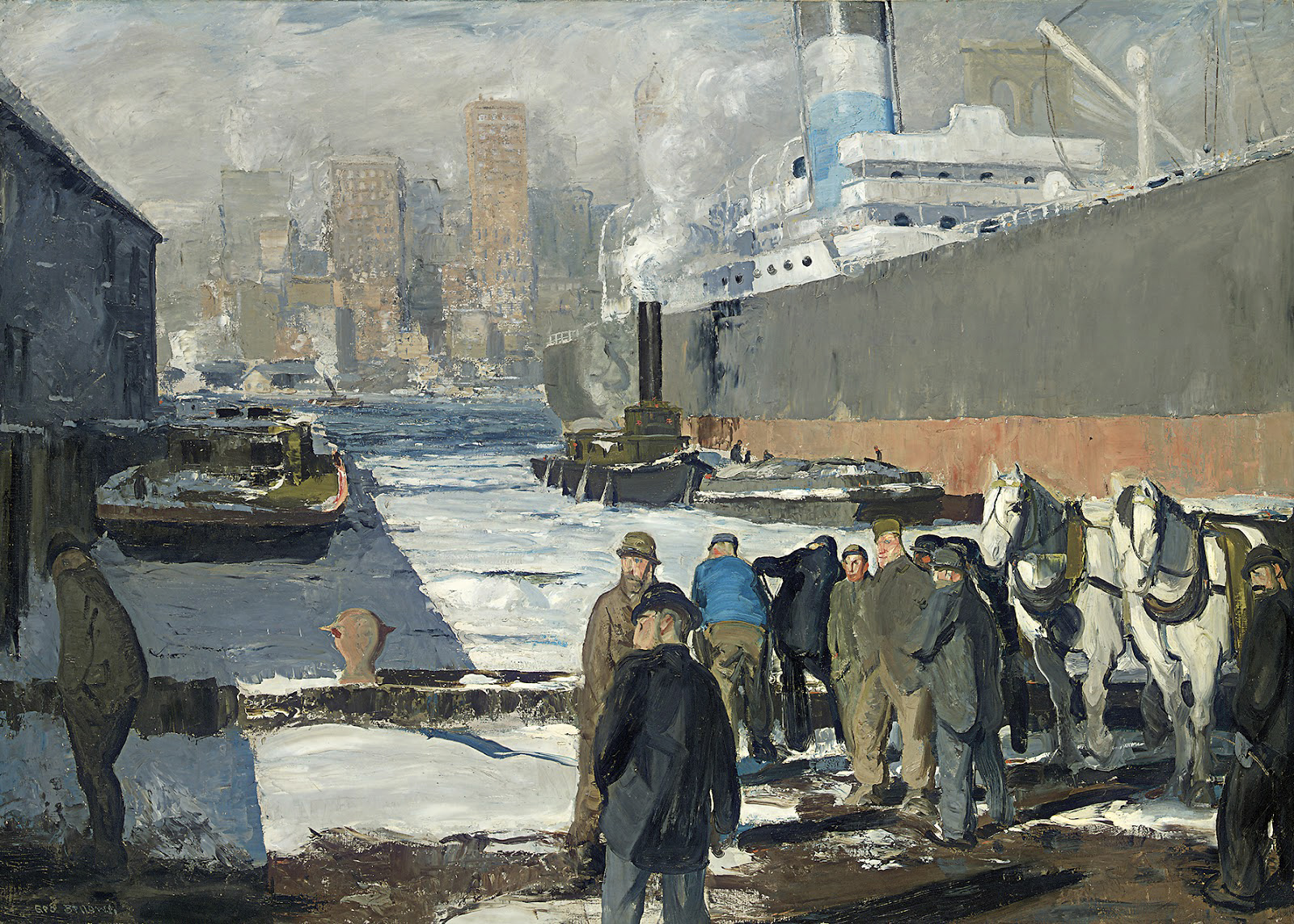
Text taken from the Carter Handbook (2023) on the American Carter Museum of American Art website


Stephen Shore (American, b. 1947) 'La Brea Avenue & Beverly Boulevard, Los Angeles, California' 1975


Stephen Shore (American, b. 1947)
La Brea Avenue & Beverly Boulevard, Los Angeles, California
1975
Chromogenic print, Kodak professional paper (1998)
20.4 x 25.5cm
On permanent loan from Siemens AG, Munich, to the Sammlung Moderne Kunst since 2003
© Stephen Shore


Larry Clark (American, b. 1943) 'Billy Mann Dead 1970' 1968


Larry Clark (American, b. 1943)
Billy Mann Dead 1970
1968
From the series Tulsa
Gelatin silver print
© Larry Clark


Larry Clark (American, b. 1943) 'Tulsa' 1972


Larry Clark (American, b. 1943)
Tulsa
1972
Gelatin silver print
20.3 x 25.4cm (sheet)
Sammlung Moderne Kunst in the Pinakothek der Moderne Munich. Acquired in 2003 by PIN. Freunde der Pinakothek der Moderne
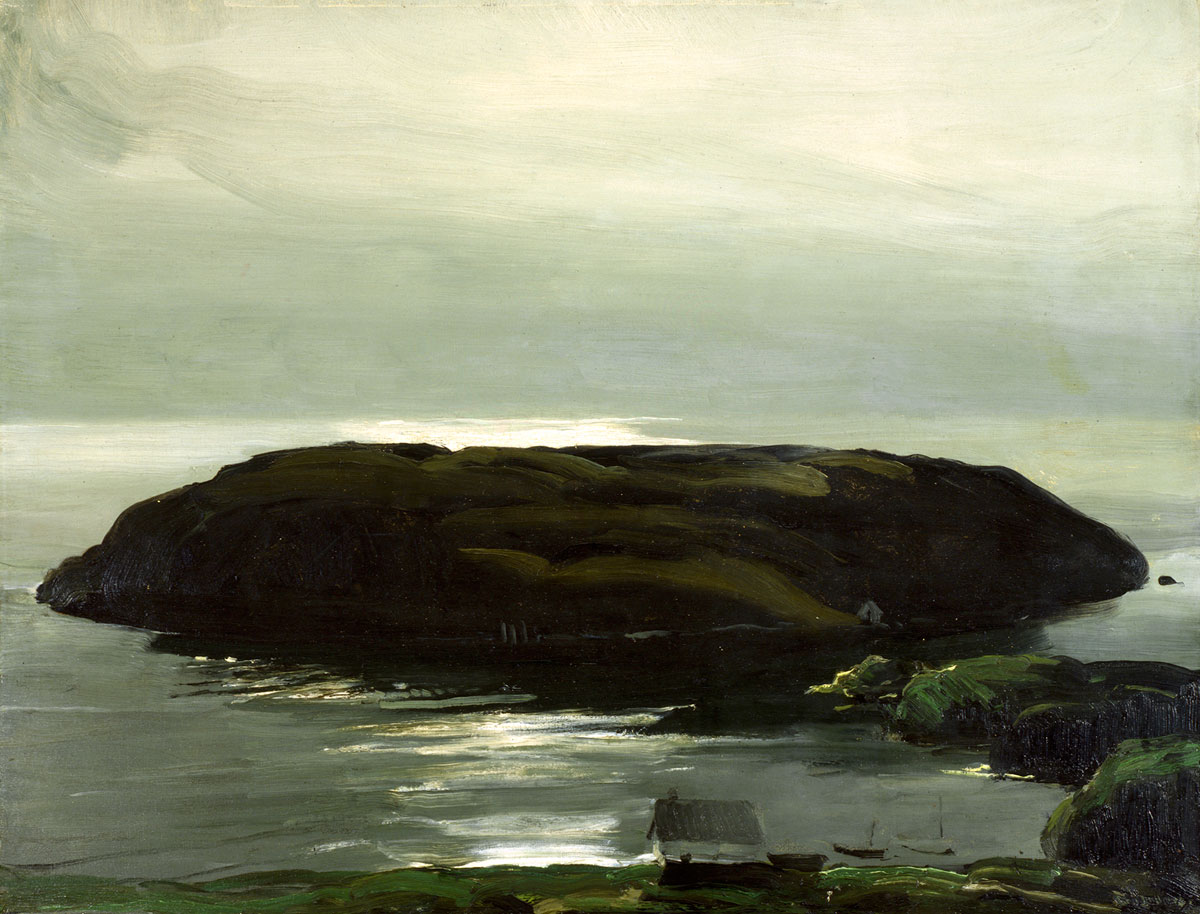
© Larry Clark


Larry Clark (American, b. 1943) 'Accidental Gunshot Wound' 1971


Larry Clark (American, b. 1943)
Accidental Gunshot Wound
1971
Gelatin silver print
© Larry Clark


Judith Joy Ross (American, b. 1946) 'Untitled' 1984 from the series 'Portraits at the Vietnam Veterans Memorial, Washington, D.C.'
 

Judith Joy Ross (American, b. 1946)
Untitled
1984, printed 1996
From the series Portraits at the Vietnam Veterans Memorial, Washington, D.C. 1983-1984
Gelatin silver print on daylight printing-out paper, shading in gold
25.2 x 20.2cm
On permanent loan from Siemens AG, Munich, to the Sammlung Moderne Kunst since 2003
© Judith Joy Ross


Judith Joy Ross (American, b. 1946) 'Untitled' 1984, printed 1996 From the series 'Portraits at the Vietnam Veterans Memorial, Washington, D.C.'


Judith Joy Ross (American, b. 1946)
Untitled
1984, printed 1996
From the series Portraits at the Vietnam Veterans Memorial, Washington, D.C. 1983-1984
Gelatin silver print on daylight printing-out paper
© Judith Joy Ross


Judith Joy Ross (American, b. 1946) 'Untitled' 1984, printed 1996 From the series 'Portraits at the Vietnam Veterans Memorial, Washington, D.C.'


Judith Joy Ross (American, b. 1946)
Untitled
1984, printed 1996
From the series Portraits at the Vietnam Veterans Memorial, Washington, D.C. 1983-1984
Gelatin silver print on daylight printing-out paper
© Judith Joy Ross


John Gossage (American, b. 1946) 'EL NEGRITO' 1997


John Gossage (American, b. 1946)
EL NEGRITO
1997
From the series There and Gone
Gelatin silver print, Baryt paper, screen print on photo mount card
55.4 x 45.0 cm
On permanent loan from Siemens AG, Munich, to the Sammlung Moderne Kunst since 2003
© John Gossage


Pinakothek Der Moderne
Barer Strasse 40
Munich

Opening hours:
Daily except Monday 10am – 6pm
Thursday 10am – 8pm

Pinakothek der Moderne website

LIKE ART BLART ON FACEBOOK

Back to top