Exhibition: ‘Oscar Muñoz: Protographies’ at Jeu de Paume, Paris

Exhibition dates: 3rd June – 21st September, 2014

Curators: by José Roca and María Wills Londoño (adjunct curator)


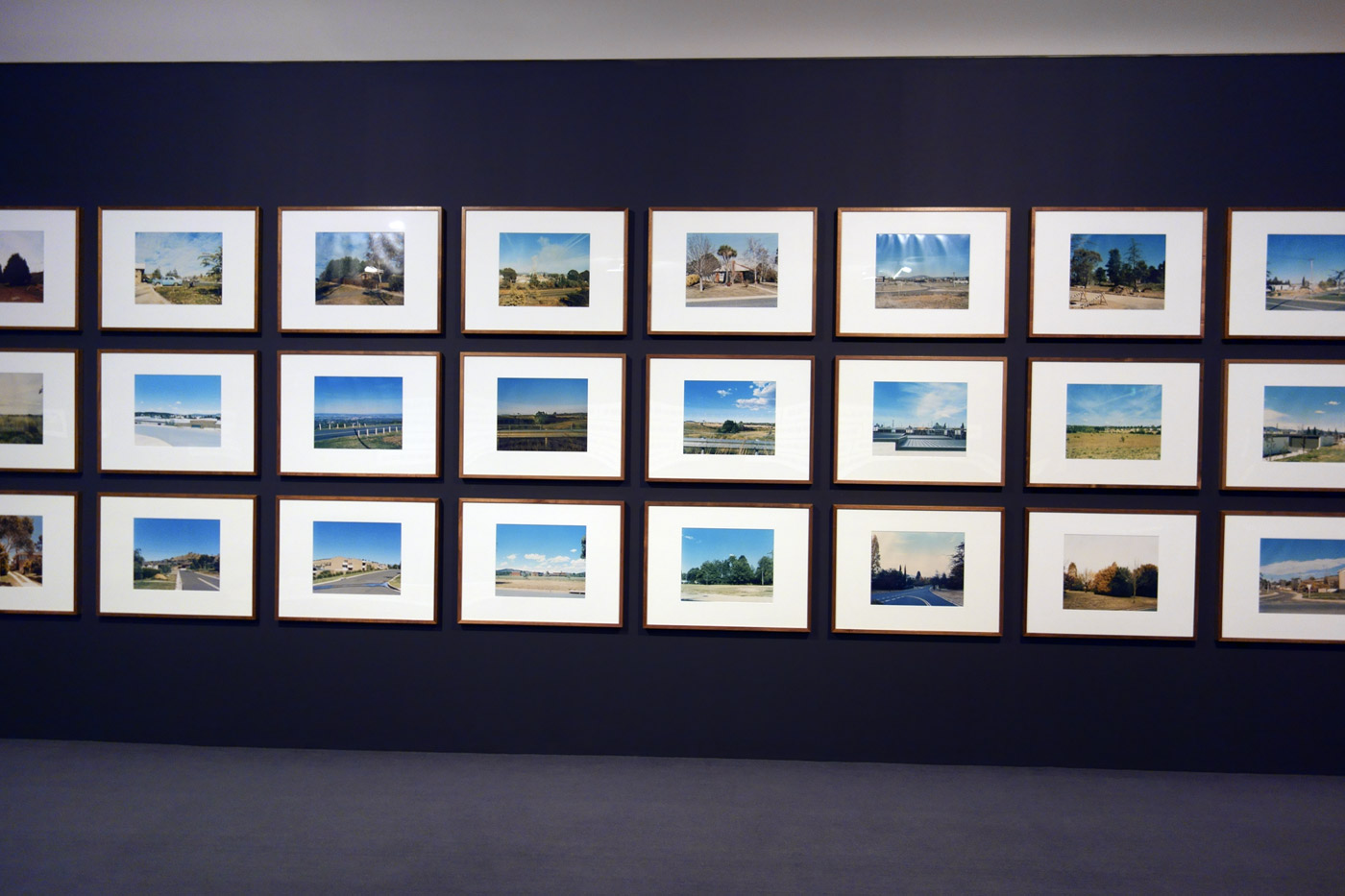
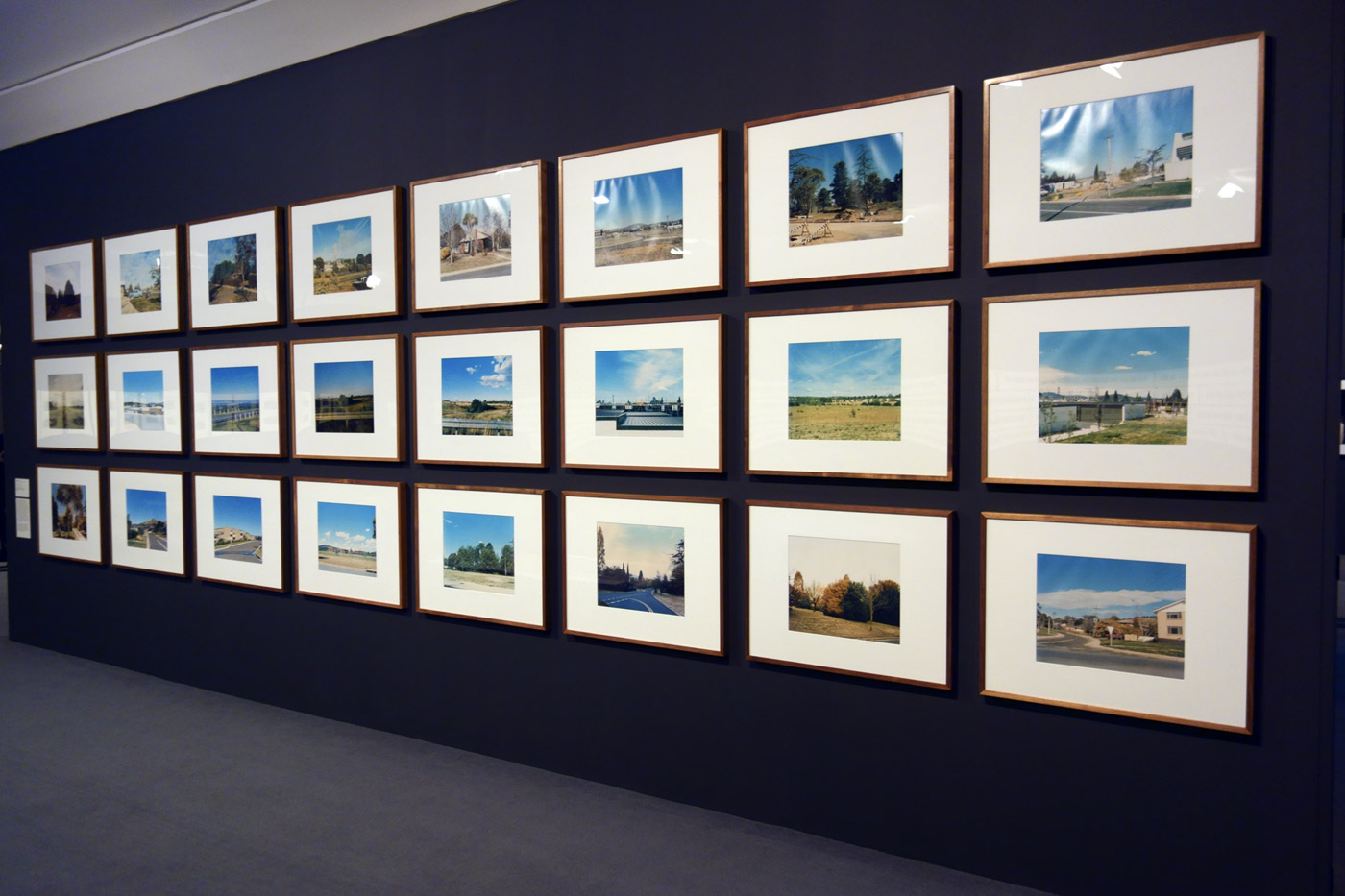
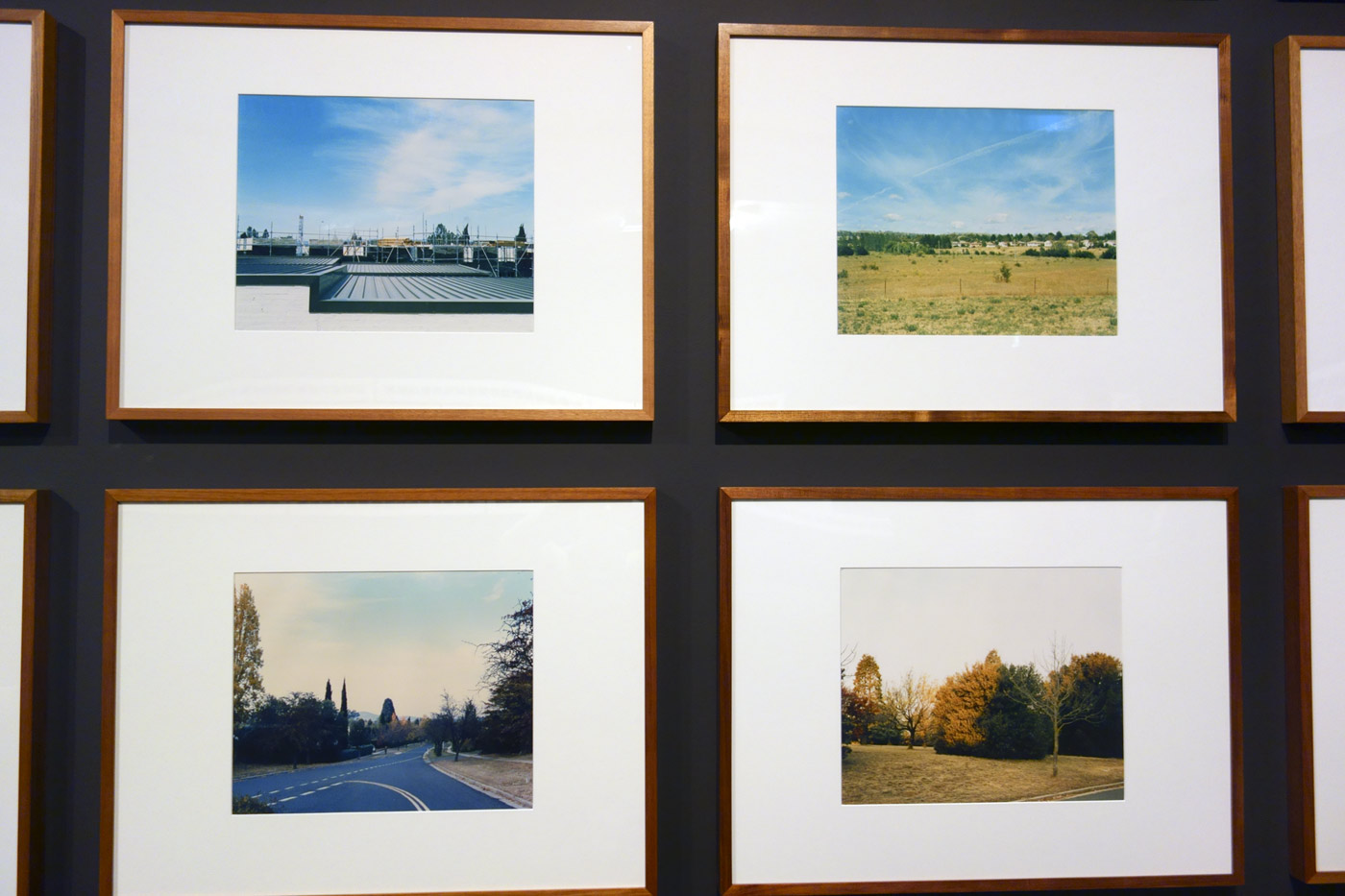
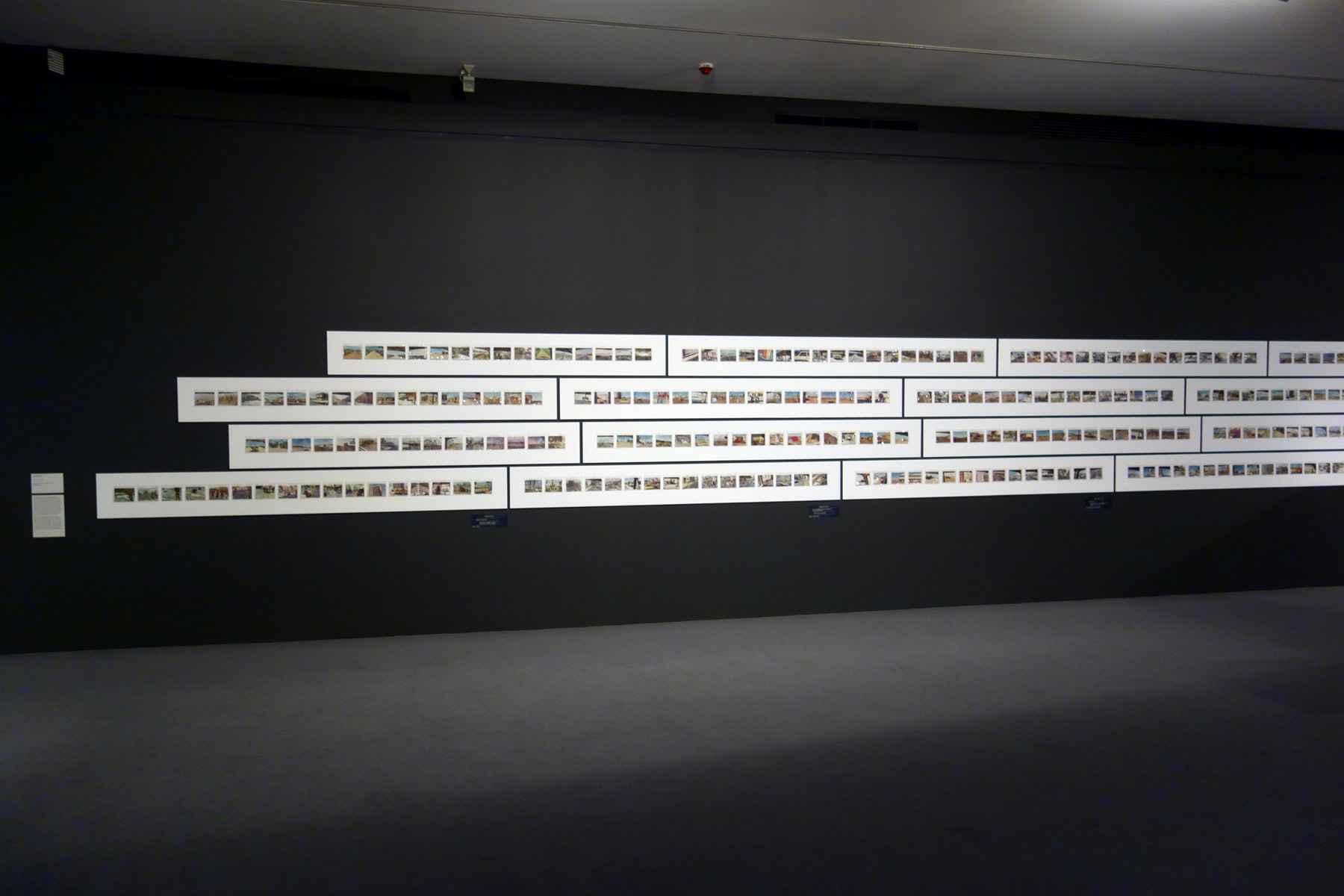
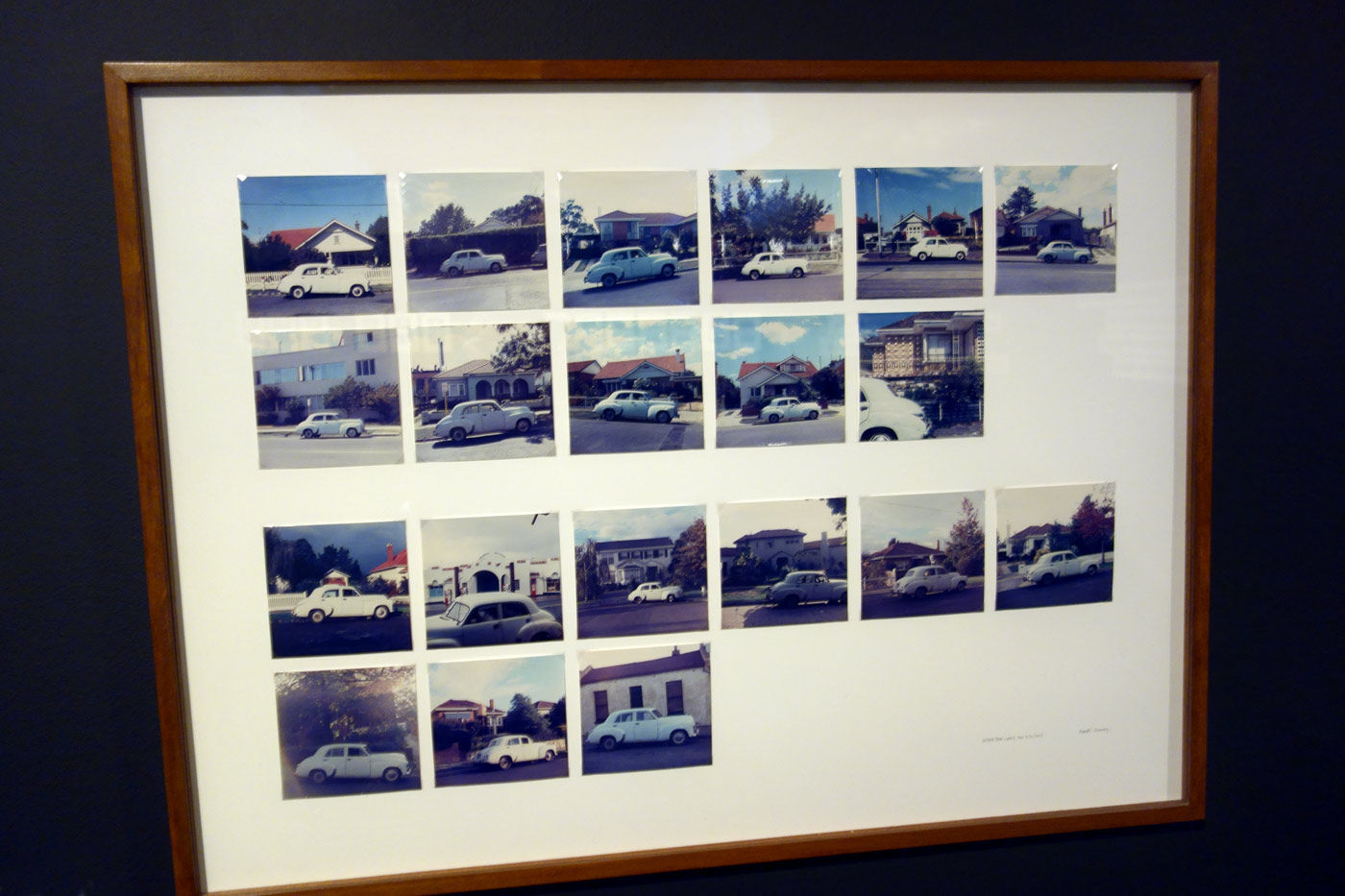
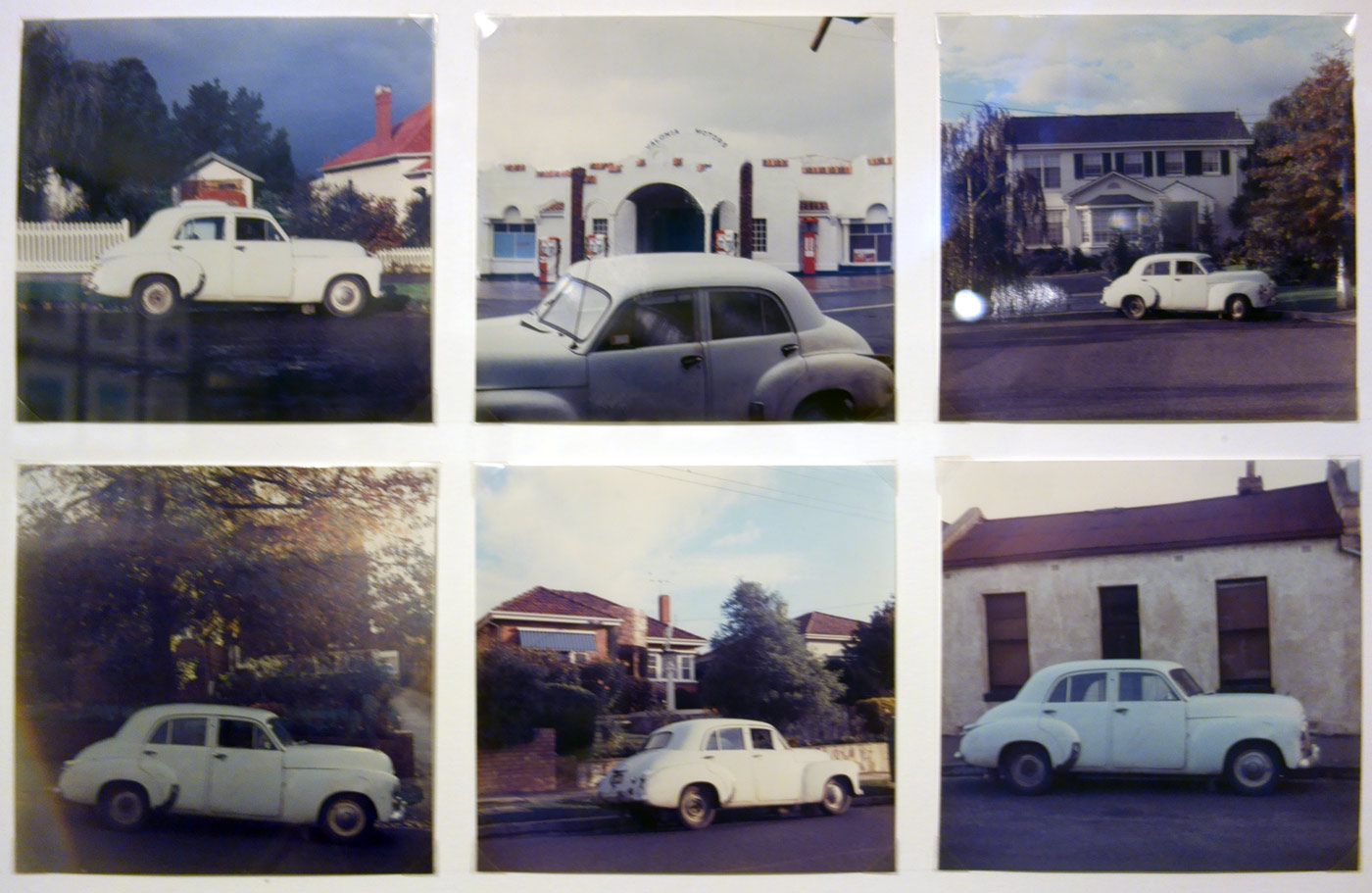
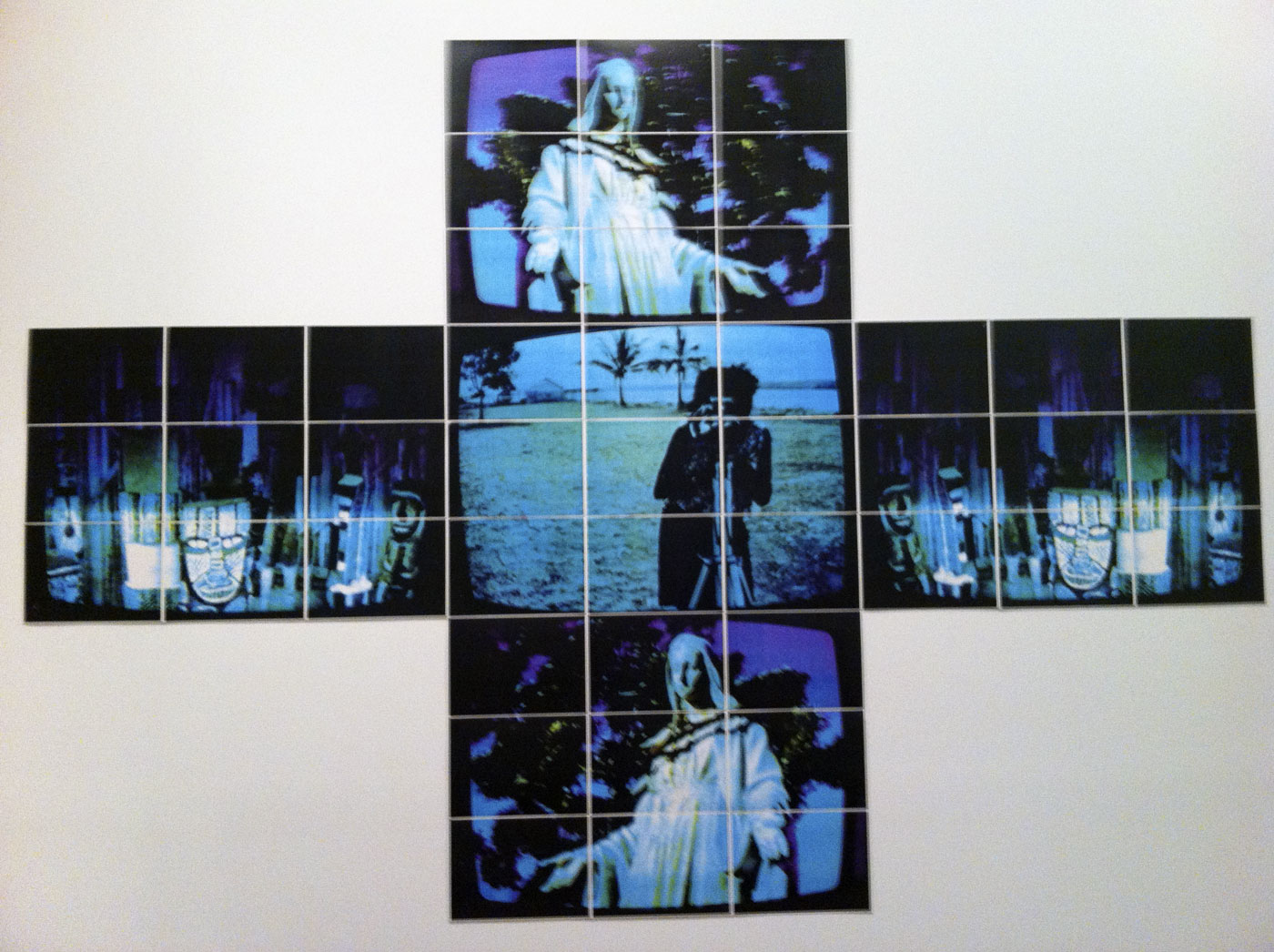
Oscar Muñoz (Colombian, b. 1951) 'El juego de las probabilidades' [The Game of Probabilities] 2007 from the exhibition Exhibition: 'Oscar Muñoz: Protographies' at Jeu de Paume, Paris, June - September, 2014


Oscar Muñoz (Colombian, b. 1951)
El juego de las probabilidades [The Game of Probabilities]
2007
12 colour photographs
47 x 40cm each with frame
Courtesy of the artist and Sicardi Gallery, Houston


Another artist investigating the medium of photography in totally fascinating ways… breaking the glass, deconstructing the support, fragmenting the image, questioning the imprint of photography – in memory, in the photographs physicality, in what leaves an impression, in what remains. The un/stable image, in flux, in sediment, investigated through “work [that] defies systematic classification because he works in so many different media: photography, printmaking, drawing, installations, video and sculpture.”

Such inventiveness over such a long period of time “developing special techniques to produce images that reveal themselves as a kind of counterpoint to photography and the “decisive moment” it once claimed to capture.”

Ephemeral photography that is truly remarkable.

Dr Marcus Bunyan


Many thankx to the Jeu de Paume for allowing me to publish the photographs in the posting. Please click on the photographs for a larger version of the image.


This summer, the Jeu de Paume, which is celebrating 10 years devoted to the image, will be inviting the public to discover Oscar Muñoz (born in 1951), Colombia’s most emblematic artist, who has been producing a body of work for nearly forty years that centres on the capacity of images to preserve memory.

CALI-DOSCOPE: CITY FRAGMENTS


Oscar Muñoz (Colombian, b. 1951) 'Ambulatorio' [Ambulatory] 1994


Oscar Muñoz (Colombian, b. 1951)
Ambulatorio [Ambulatory]
1994
Aerial photograph enclosed in security glass, wood and aluminium, 36 units
100 x 100cm each
Courtesy O.K. Centrum, Linz


Muñoz emerged on the Colombian art scene with his series of large-format hyperrealist drawings in charcoal on paper that revealed his interest in the social implications of empty or deteriorating spaces. This group includes drawings from the series entitled Inquilinatos [Tenement Houses] (1979) and Interiores [Interiors] (1980-1981). Also on display are works referring to Cali’s urban life, such as Ambulatorio [Ambulatory] (1994), El Puente [The Bridge] (2004), Archivo Porcontacto [Bycontact Archive] (2004-2008), which are images of a specific period and specific places in the city, and A través del cristal [Through the Glass] (2008-2009), the latter a way of introducing an absent cultural reference through sound.

Cali recurs in Muñoz’s work as a contextual reference or a support. This is literally the case with Ambulatorio, an aerial photograph of the city blown up to a monumental scale and laid out in a regular grid. Each segment of the photograph is fixed to a piece of security glass, which breaks into pieces when the viewer walks on the work. Each break creates another random mesh of lines over the urban image of a chaotic city in which rational planning and the unstructured coexist in a way typical of all modern South American cities.


THE SUPPORT RECONSIDERED


Oscar Muñoz (Colombian, b. 1951) 'Cortinas de Baño' [Shower curtains] 1985-1986


Oscar Muñoz (Colombian, b. 1951)
Cortinas de Baño [Shower curtains]
1985-1986
Acrylic on plastic, 5 elements
190 x 140 cm and 190 x 70cm each, dimensions variable
Banco de la República collection, Bogotá


Having achieved international renown as an exceptional draughtsman, in the 1980s Muñoz gradually abandoned paper as a support and experimented with new techniques of drawing and printmaking, using unconventional materials and supports such as acrylic applied to damp plastic and charcoal dust on water. This group includes the series Cortinas de Baño [Shower Curtains] (1985-1986), Tiznados [Tainted] (1990), Narcisos secos [Dry Narcissi] (1994-1995) and Simulacros [Simulacra] (1999).

In Cortinas de baño Muñoz experimented for the first time with an unconventional support, in this case an everyday plastic shower curtain, in order to construct an image from a photograph transferred onto a silkscreen mesh. In the printing process, executed with an airbrush through previously prepared silkscreen, the image was transferred onto an unstable surface, with the artist preventing the pigment from being totally fixed by sprinkling water on it.


Oscar Muñoz (Colombian, b. 1951) 'Narcisos (en proceso)' [Narcissi (in process)] 1995-2011


Oscar Muñoz (Colombian, b. 1951)
Narcisos (en proceso)[Narcissi (in process)]
1995-2011
Charcoal dust and paper on water, Plexiglas, 6 elements
10 x 50 x 50cm each
Overall dimensions: 10 x 70 x 400cm
Courtesy of the artist


Narcisos was a key series in the artist’s quest to dematerialise the support of the photographic image. Muñoz developed a new technique unprecedented in the history of art and probably never to be encountered again – that of printing on water. The earliest photographic images emerged from water, from the chemical baths that fixed the silver salts in different gradations of intensity produced by the action of light. The support was an incidental necessity. Muñoz has referred to the three phases in the process of Narcissi as allegories of an individual’s progress through life: creation, at the moment when the charcoal dust touches the surface of the water; the changes that come about during evaporation; and death, at the moment when the dried out dust finally settles at the bottom of the container. The result, which the artist has called Narcisos secos, is both the final image and the death of the process: the remains of a photograph that possessed a life after it was fixed for posterity. In this sense, Dry Narcissi are the record of a double death of the image.


Oscar Muñoz (Colombian, b. 1951) 'Narciso' [Narcissus] 2001


Oscar Muñoz (Colombian, b. 1951)
Narciso [Narcissus]
2001
Single-channel video 4:3, colour, sound, 3 min
Courtesy of the artist


Muñoz’s first work in video was Narciso, in which he dramatically presented the processes developed in his Narcissi of the 1990s (in which the evaporation was invisible to the naked eye) by making the water disappear in a few minutes. As in those earlier works, a self-portrait floats on the surface of the water but the drain in the sink and the sound of running water foretell for the viewer what the image’s final fate will be. In reality, there are two images here: that of the subject and that of its shadow on the white bottom of the basin. The images gradually come closer together, as if to suggest that life is a constant quest for self-understanding. However, at the moment when the two images are about to coincide, it is already too late: they fuse into a single distorted stain that disappears down the drain.


Oscar Muñoz (Colombian, b. 1951) 'Re/trato' [Portrait/I Try Again] 2004


Oscar Muñoz (Colombian, b. 1951)
Re/trato [Portrait/I Try Again]
2004
Single-channel video projection 4:3, colour, no sound, 28 min
Courtesy of the artist


About the exhibition

“Through a multifaceted body of work that moves freely between photography, printmaking, drawing, installation, video and sculpture, eliminating the borderlines between these disciplines through innovative practices, Oscar Muñoz (Popayán, Colombia, 1951) explores the capacity of images to retain memory.

In 1826, for the first time in history the French inventor Nicéphore Niépce succeeded in fixing the elusive image produced by the camera obscura, a device known since antiquity. In contrast to painting or drawing, the camera obscura was able to obtain an image from life without the assistance of the human hand and in real time: what it could not do was freeze it or fix it onto a support in order to extract it from the passing of time. It could thus be said that the essence of the photographic act does not lie in taking the image but in permanently fixing it. What, then, is the status of the image in the instant prior to the moment when it is fixed for posterity?

If the ontology of photography lies in fixing a moving image for all time, extracting it from life, we might say that Oscar Muñoz’s work is located in the temporal space prior (or subsequent) to the true decisive moment when the image is fixed: that proto-moment when the image is finally about to become photography. In that sense, it could be said that Muñoz’s work is protographic.

The exhibition

Born in 1951 in Popayán (Colombia), Oscar Muñoz is regarded as one of the country’s most important contemporary artists, whilst also garnering attention on the international art scene. A graduate of the Escuela de Bellas Artes in Cali, he has built up over a period of four decades a body of work whose images deal with the realm of memory, loss and the precarious nature of human life. Muñoz’s work defies systematic classification because he works in so many different media: photography, printmaking, drawing, installations, video and sculpture.

“Protographs” (a term coined to evoke the instant just before or just after that split-second when the photographic image is captured and frozen for ever) presents his major series grouped by theme. These themes poetically and metaphorically juxtapose Muñoz’s own past and the different material states of the image. For example, he combines the dissolution, deterioration or disintegration of the image with the inherent fragility of memory and the impossibility of making time stand still; or the image’s evaporation and transformation with the tension between rationality and chaos in our urban societies. Finally, in the main part of his work, he creates ephemeral images that, as they disappear, invite the spectator to share in an experience that is simultaneously rational and sensual.

Oscar Muñoz began his career in the 1970s in Cali in a period when a whirlwind of cultural and cross-disciplinary activity saw the emergence of a generation of writers, photographers and filmmakers who today play a leading role in the contemporary art scene (with Carlos Mayolo, Luis Ospina, Fernell Franco and Andrés Caicedo to name but a few). At that time, Muñoz was drawing with charcoal on large-format supports presenting a cast of sad and sometimes sordid characters with a deep emotional charge. The main characteristics of his work emerged at an early stage. These include a profound and tireless interest in social questions, an original approach to materials, the use of photography as an aid to memory and the exploiting of the dramatic possibilities afforded by the play of shadow and light in defining the image. Moreover, the artist developed a phenomenological approach to minimalism by insisting on the relationship between the artwork, the spectator and the surrounding exhibition space.

In the mid-1980s, Oscar Muñoz moved away from traditional artistic methods and began to experiment with innovative processes that created a real interactive exchange with the spectator. This was the time of a radical reassessment of his artistic practices, whether drawing, printmaking, or photography, and a questioning of the relationship between the artwork and its surroundings. He abandoned traditional formats and techniques, whilst preserving something of their roots and wellsprings, to investigate ephemerality, highlighting the very essence of the materials themselves and their poetic associations. His use of the fundamental elements – water, air and fire – refers to the processes, the cycles and the transcendental manifestations of life, our very existence and death itself. “My work attempts to understand why the past and the present are so full of violent acts,” says the artist. By choosing to use a diverse selection of media and to apply innovative and unique processes, Oscar Muñoz blurs the boundaries between artistic disciplines.

The “Protographs” exhibition showcases a career that has lasted nearly forty years. It presents series of works grouped around the artist’s major themes, starting with his works on paper and his series of large format hyperrealist drawings in charcoal (1976-1981) – bearing witness to his deep interest in social context – and the drawings and engravings that he started making in the 1980s, which marked the relinquishing of paper for an exploration of unconventional materials and processes (printing on damp plastic, the use of sugar and coffee, etc.); continuing with his experiments in the 1990s and 2000s on the stability of the image and its relationship to the processes of memory; and including his latest works (2009-2014), characterised by a continual process of appearance and disappearance, including a new work produced specifically for the exhibition.”

Text by José Roca and María Wills Londoño


IMPRINTS

Over the last decade, Muñoz has created a series of works on the indicative relationship between the object and its image, making use of contact printing, a characteristic printmaking process. This was the case with La mirada del Cíclope [The Cyclops’ Gaze] (2001-2002), Intervalos (mientras respiro) [Intervals (While I Breathe)] (2004) and Paístiempo [Countrytime] (2007), as well as series from a number of other periods.


Oscar Muñoz (Colombian, b. 1951) 'Aliento' [Breath] 1995


Oscar Muñoz (Colombian, b. 1951)
Aliento [Breath]

1995
Metal mirrors, screen-printed with grease, 7 mirrors
Diameter: 20 cm each
Courtesy of the artist


The series Aliento comprises portraits printed in photo-silkscreen with grease on small round metal mirrors located at eye level. The mirrors initially seem blank and the printed image only reveals itself when the viewer, having recognised himself / herself, breathes onto the circular mirror. During this brief moment the reflected image is replaced by the printed image (photographs taken from obituaries) of a deceased person who fleetingly returns through the viewer’s breath.


Oscar Muñoz (Colombian, b. 1951) 'La mirada del cíclope' [The Cyclops' Gaze] 2002


Oscar Muñoz (Colombian, b. 1951)
La mirada del cíclope [The Cyclops’ Gaze]
2002
Digital print on paper, 6 photographs
50 x 50 cm each one
Courtesy of the artist


La mirada del cíclope, in which the subject is considered in relation to death, uses one of the oldest techniques of portraiture and printmaking: a mould made by direct contact, in this case of the artist’s own face. This sculptural object (inspired by the ancient Roman tradition of funerary masks) becomes two-dimensional when it is captured by the camera’s single eye (hence the title). Lacking references to volume, the viewer’s eye cannot decide if the object represented is concave or convex, in a play of perceptual opposites: negative / positive, presence / absence, reality or illusions. Quoting Pierre Bourdieu, Muñoz has noted that “the imagines of ancient Rome are exactly equivalent to the social nature of some modern photographs; they play an important role in the tortuous act of mourning: we accept a reality by ‘becoming accustomed to the unreality of its images’.”


Oscar Muñoz (Colombian, b. 1951) 'Horizonte [Horizon]' 2011


Oscar Muñoz (Colombian, b. 1951)
Horizonte [Horizon]
2011
From the series Impresiones débiles [Weak Impressions]
Charcoal dust print on methacrylate
4 elements, 85 x 73.5cm each
Galerie mor. charpentier, Paris


The earliest successful images taken by Niépce were proto-photographs that did not survive intact as images because the light that had created them continued to affect them until they eventually succumbed to darkness in an inexorable fade to black. This is what happens in film photography when a photograph is not properly rinsed and the developing agent continues to act, or when the photographic paper is directly exposed to the action of light. However, the image can also move towards clarity. In Impresiones débiles, Muñoz employs photographs of great historical and political significance for Colombia and subjects them to a process that makes them seem like “washed out” photos in which over-exposure to light has made the image deteriorate to the point of near invisibility. The works that make up this series are in fact prints rather than photographs, given that they are silkscreens made with charcoal dust on acrylic. The variable distance between the silkscreen mesh and the support allows the artist to single out a different element from the original photograph in each print, making it more highly defined than the rest. The “variable focus” in this series questions another of the supposedly essential characteristics of photography, namely the camera’s systematic, technical objectivity in relation to its subjects.

THE IMAGE IN FLUX

In his most recent works, Muñoz depicts images in a process of continual appearance and disappearance. These are subtle impressions with varying emphases on the different parts of the image that are literally in flux and cannot be fixed, such as those produced by a camera obscura. This section includes the video Cíclope [Cyclops] (2011), the installation Editor solitario [Solitary Editor] and the work Sedimentaciones [Sedimentations] (2011), the latter comprising three tables with projections of documents that are constantly created and destroyed. The exhibition ends with the highly personal Fundido al blanco [Fade to White] (2010).


Oscar Muñoz (Colombian, b. 1951) 'Fundido a blanco (dos retratos)' [Fade to White (Two Portraits)] 2010


Oscar Muñoz (Colombian, b. 1951)
Fundido a blanco (dos retratos) [Fade to White (Two Portraits)]
2010
HD Video, colour, sound, 7 min 40 s
Courtesy of the artist


Fundido a blanco (dos retratos) is an autobiographical work: a family portrait with Muñoz behind the camera, constituting the third side of a temporal triangle that includes his mother and father. It is, in other words, a memorial. Rather than making their features more clear, the strong light that bathes the scene makes them imprecise and ethereal. Muñoz has referred to the intense light in Cali at a certain time of day, when people seem to “disintegrate”, and also to the blinding brilliance of the sun when the artist came out after seeing a film at the city’s film club. The central figure in Fundido a blanco momentarily falls asleep now and then, entering into the light. Rather than fixing that figure at a precise moment of its existence, in the manner of a photographic portrait or snapshot, Muñoz creates a portrait that develops in time. Fundido a blanco is one of the artist’s most moving works, an image that touches the viewer. Its power may perhaps lie in the fact that for the first time in his extensive output, we are here seeing a specific subject rather than the generic representation of one.


Oscar Muñoz (Colombian, b. 1951) 'Sedimentaciones' [Sedimentations] 2011


Oscar Muñoz (Colombian, b. 1951)
Sedimentaciones [Sedimentations]
2011
2 HD video projections, colour, sound, 42 min 27 s, 41 min 42 s, on wooden tables
Courtesy of the artist


The strategy of dissolving the image reappears in Sedimentaciones, a photographic development table on which there are numerous photographs arranged in lines, with various blank sheets between them. The photos are extremely varied in nature, ranging from universally known images to others that are very specific to a Colombian context, personal portraits by the artist and anonymous, generic images. There are two developing trays at opposite corners. A hand takes a photograph from the table and puts it in a plastic tray filled with liquid in which the image dissolves. The paper emerges white and is then randomly placed in one of the lines. On the other side of the table another hand takes up one of the empty sheets and slides it into another tray. On taking out the sheet, the image has magically re-formed on it and the hand places it in the line of photographs. The process starts again in the other corner. Through this alternation we thus witness the ceaseless life and death of the image (see video below).


More work


Oscar Muñoz (Colombian, b. 1951) 'Línea del destino' [Line of Destiny] 2006

Oscar Muñoz (Colombian, b. 1951) 'Línea del destino' [Line of Destiny] 2006

Oscar Muñoz (Colombian, b. 1951) 'Línea del destino' [Line of Destiny] 2006


Oscar Muñoz (Colombian, b. 1951)
Línea del destino [Line of Destiny]
2006
Single-channel video 4:3, black and white, no sound,
1 min 54 s
Courtesy of the artist


Oscar Muñoz (Colombian, b. 1951) 'Pixeles' [Pixels] 1999-2000


Oscar Muñoz (Colombian, b. 1951)
Pixeles [Pixels]
1999-2000
Coffee stains on sugar cubes, Plexiglas
9 panels 35 x 35 x 3cm each
Courtesy of the artist and Sicardi Gallery, Houston


OSCAR MUÑOZ: “Protographs” in progress from Jeu de Paume / magazine on Vimeo.


The magazine’s camera has gone behind the scenes of Oscar Muñoz’ exhibition Protographs at the Jeu de Paume. It attempts to show how the artist and his assistant, Juliana Guevara, produce unstable images, using unconventional materials and supports such as water, charcoal dust, grease on metal, the spectator’s breath, and shower curtains. Since the early 80s, Muñoz has been developing special techniques to produce images that reveal themselves as a kind of counterpoint to photography and the “decisive moment” it once claimed to capture.

Narcissi (1995), Breath (1995), Simulacra (1999), The Collector (2014): all these works question the fragile status of images and the way they live - and die – in our memory.


Jeu de Paume
1, Place de la Concorde
75008 Paris
métro Concorde
Phone: 01 47 03 12 50

Opening hours:
Tuesday – Sunday: 11.00am – 7.00pm
Closed Monday

Jeu de Paume website

LIKE ART BLART ON FACEBOOK

Back to top

Exhibition: ‘Max Dupain 
The Paris ‘private’ series and other pictures’ at the Art Gallery of New South Wales (AGNSW), Sydney

Exhibition dates: 24th May – 14th September, 2014


Max Dupain (Australian, 1911-1992) 'Embassy of Australia, Paris, France' 1978 from the exhibition 'Max Dupain 
The Paris 'private' series and other pictures' at the Art Gallery of New South Wales (AGNSW), Sydney, May - Sept, 2014


Max Dupain (Australian, 1911-1992)
Embassy of Australia, Paris, France
1978
Silver gelatin print


A good friend of mine, Joyce Evans (who should know what she is talking about) observed to me that you cannot look at Dupain’s photographs of Paris without first looking at his commissioned photographs of the then new Embassy of Australia in Paris.

Unfortunately, I could only find one photograph online to show to you, Embassy of Australia, Paris, France (1978, above), but you get the idea.

Dupain’s The Paris ‘private’ series were taken during a couple of days off that he had from the commissioned job. Basically they are tourist photographs, a record of things Dupain wanted to see in Paris on one of his few overseas trips. Most of them are disappointing images, serviceable but disappointing.

Having studied Eugène Atget I expected more from Dupain. In these photographs he tends to shoot obliquely into the object of his attention, directing the lead in and vanishing point(s) within the image. For example, in Untitled (the balustrade of Pont Alexandre III) and Untitled (Pont Alexandre III with sculptural balustrade) (both 1978, below), Dupain allows the bridge parapet to lead the eye into the image, while the vanishing point is positioned at far right. Neither are very successful as formal compositions.

The same can be said of Untitled (statue of Maréchal Joffre, Place Joffre, Champ-de-Mars) (1978, below) with the vanishing point this time at the left of the image. More successful is Dupains’s Untitled (staircase to the park, looking toward Bassin des Serruriers, Domaine de Chantilly) (1978, below) with its foreshortened out of focus entrance, geometric planes and multiple exit points – but then he goes and spoils it with the simplistic Untitled (staircase and statue of Anne de Montmorency 1886 by Paul Dubois, Domaine de Chantilly) (1978, below) taken at the same location.

The best image from the series is undoubtedly Untitled (the statue of Christ at the portal of La Sainte-Chapelle) (1978, below) with its restrained and refined aesthetic. A beautiful image and a wondrous space. The photograph of the people at the Eiffel Tower is also a cracker.

As I said at the beginning, these are tourist art photographs of Paris, but they could have been so much more.

Dr Marcus Bunyan


Many thankx to The Art Gallery of New South Wales for allowing me to publish the photographs in the posting. Please click on the photographs for a larger version of the image.


Max Dupain (Australian, 1911-1992) is one of the leading figures of 20th-century Australian photography. The group of 21 photographs in his Paris ‘private’ series was taken when he travelled to Paris in 1978 with architect Harry Seidler to photograph the Australian Embassy, designed by Seidler. The series consists of transcendent photographs of Paris. Dupain had studied the work of Eugène Atget, and there is a similar enigmatic atmosphere to be found in Dupain’s examination of the city. Primarily depicting 18th- to 19th-century landmarks such as the ornate Alexandre III bridge, the Grand Palais and Chantilly, this compilation offers a view of the city and its environs shaped by layers of history, mythology and art.

Given to the Gallery by Penelope Seidler in memory of her husband and the photographer, this portfolio is shown alongside other photographs of made and natural structures by Dupain from the 1930s to the 1980s.


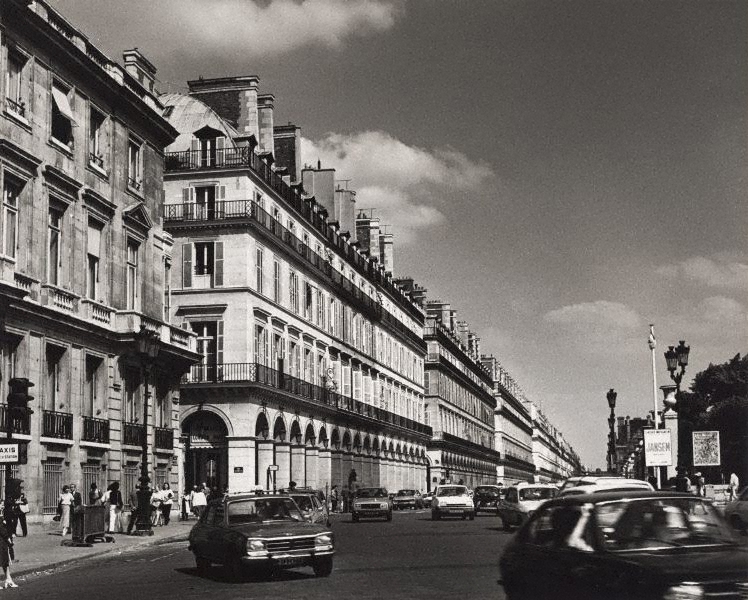
Max Dupain (Australian, 1911-1992) 'Untitled (cars on rue de Rivoli)' from The Paris 'private' series Year 1978


Max Dupain (Australian, 1911-1992)
Untitled (cars on rue de Rivoli)
1978
From The Paris ‘private’ series
Silver gelatin print
Gift of Penelope Seidler AM in honour of Max Dupain AC and Harry Seidler AC 2012. Donated through the Australian Government’s Cultural Gifts Program
© Estate of Max Dupain. Licensed by Viscopy, Sydney


“I like to involve myself in, maybe, a small area geographically and work it out, as simple as that” said Max Dupain in a 1991 interview.1 During his lifetime the photographer visited only three countries outside of Australia. His 1978 trip to Paris was made together with architect Harry Seidler, whose newly built Australian embassy building Dupain was commissioned to document. The long professional association between the architect and the photographer stretched back to the early 1950s, soon after Seidler’s arrival in Australia. Dupain, through his expressive architectural photographs, was closely involved in popularising the modernist aesthetic espoused by Seidler’s starkly functional buildings.

Conversely, the set of 21 photographs of Paris which Dupain compiled and presented to Seidler as a personal gift, does not contain any images of modern architecture. Primarily depicting 18-19th century landmarks such as the ornate Alexandre III bridge, the Grand Palais and Versailles this compilation offers a view of the city and its environs shaped by layers of history, mythology and art. Dupain was nonetheless well read in modern French culture and aware of photographers such as Eugène Atget and Henri Cartier-Bresson.

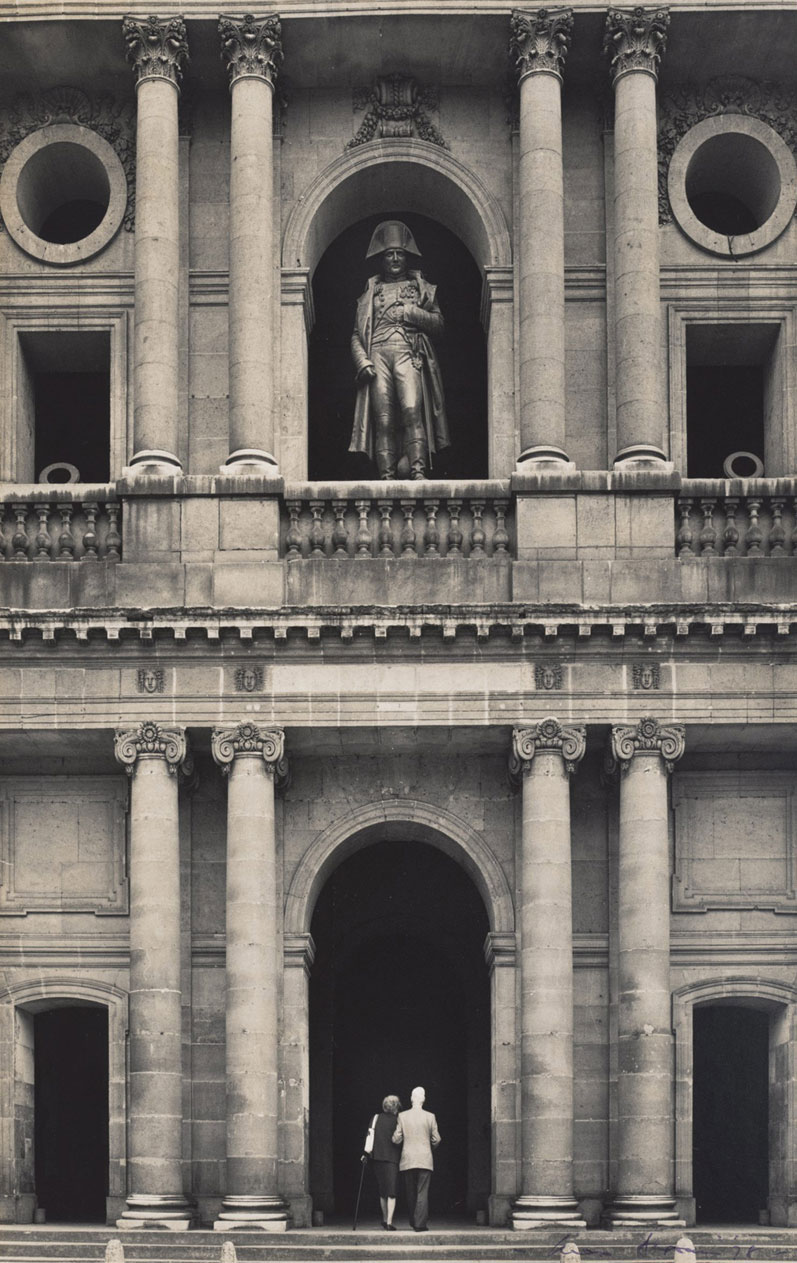
The Parisian images vary from pure architectural studies to compositions with an almost literary scope. They demonstrate Dupain’s signature trait of combining the formal and social aspects of photography. In some of the works, Dupain gives classical architecture the same reductive treatment he brought to modern buildings. Stripped of embellishments, these photographs bring to the fore the essence of order, logic and harmony which lies at the core of classicism. The presence of human figures in photographs such as that of Napoleon’s statue on the balcony of Les Invalides adds a dramatic element to the compositions. Dupain wanted “to extract every ounce of content from any exciting form and I want to give life to the inanimate.”2 Time and the built environment converge in this personal ode to Paris, manifesting the incessant flow of life and the connectedness of past with the present.

1/ Max Dupain interviewed by Helen Ennis in Max Dupain: Photographs, National Gallery of Australia, Canberra, 1991, p. 13
2/ Max Dupain, “Max Dupain – modernist”, exhibition catalogue, State library of NSW, Sydney, 2007, p. 9

Text from the Art Gallery of New South Wales website


Max Dupain (Australia 22 Apr 1911 - 27 Jul 1992) 'Untitled (statue of Maréchal Joffre, Place Joffre, Champ-de-Mars)' 1978 from the exhibition 'Max Dupain 
The Paris 'private' series and other pictures' at the Art Gallery of New South Wales (AGNSW), Sydney, May - Sept, 2014


Max Dupain (Australia 22 Apr 1911 – 27 Jul 1992)
Untitled (statue of Maréchal Joffre, Place Joffre, Champ-de-Mars)
1978
From The Paris ‘private’ series
Gelatin silver photograph
30.0 x 33.7cm image
Gift of Penelope Seidler AM in honour of Max Dupain AC and Harry Seidler AC 2012. Donated through the Australian Government’s Cultural Gifts Program
© Estate of Max Dupain. Licensed by Viscopy, Sydney


Max Dupain (Australia 22 Apr 1911 - 27 Jul 1992) 'Untitled (staircase to the park, looking toward Bassin des Serruriers, Domaine de Chantilly)' 1978 from the exhibition 'Max Dupain 
The Paris 'private' series and other pictures' at the Art Gallery of New South Wales (AGNSW), Sydney, May - Sept, 2014


Max Dupain (Australia 22 Apr 1911 – 27 Jul 1992)
Untitled (staircase to the park, looking toward Bassin des Serruriers, Domaine de Chantilly)
1978
From The Paris ‘private’ series
Gelatin silver photograph
30.5 x 36.7cm image
Gift of Penelope Seidler AM in honour of Max Dupain AC and Harry Seidler AC 2012. Donated through the Australian Government’s Cultural Gifts Program
© Estate of Max Dupain. Licensed by Viscopy, Sydney


Max Dupain (Australia 22 Apr 1911 - 27 Jul 1992) 'Untitled (staircase and statue of Anne de Montmorency 1886 by Paul Dubois, Domaine de Chantilly)' from 'The Paris 'private' series' 1978


Max Dupain (Australia 22 Apr 1911 – 27 Jul 1992)
Untitled (staircase and statue of Anne de Montmorency 1886 by Paul Dubois, Domaine de Chantilly)
1978
From The Paris ‘private’ series
Gelatin silver photograph
31.2 x 30.3 cm image
Gift of Penelope Seidler AM in honour of Max Dupain AC and Harry Seidler AC 2012. Donated through the Australian Government’s Cultural Gifts Program
© Estate of Max Dupain. Licensed by Viscopy, Sydney


Max Dupain (Born Australia 1911, died 1992) 'Untitled (the balustrade of Pont Alexandre III)' 1978


Max Dupain (Born Australia 1911, died 1992)
Untitled (the balustrade of Pont Alexandre III)
1978
From The Paris ‘private’ series
Gelatin silver photograph
Gift of Penelope Seidler AM in honour of Max Dupain AC and Harry Seidler AC 2012. Donated through the Australian Government’s Cultural Gifts Program
© Estate of Max Dupain. Licensed by Viscopy, Sydney


Max Dupain (Born Australia 1911, died 1992) 'Untitled (Pont Alexandre III with sculptural balustrade)' 1978


Max Dupain (Born Australia 1911, died 1992)
Untitled (Pont Alexandre III with sculptural balustrade)
1978
From The Paris ‘private’ series
Gelatin silver photograph
Gift of Penelope Seidler AM in honour of Max Dupain AC and Harry Seidler AC 2012. Donated through the Australian Government’s Cultural Gifts Program
© Estate of Max Dupain. Licensed by Viscopy, Sydney


Max Dupain (Born Australia 1911, died 1992) 'Untitled (the glass dome of Grand Palais)' 1978


Max Dupain (Born Australia 1911, died 1992)
Untitled (the glass dome of Grand Palais)
1978
From The Paris ‘private’ series
Gelatin silver photograph
Gift of Penelope Seidler AM in honour of Max Dupain AC and Harry Seidler AC 2012. Donated through the Australian Government’s Cultural Gifts Program
© Estate of Max Dupain. Licensed by Viscopy, Sydney


Max Dupain (Born Australia 1911, died 1992) 'Untitled (interior staircase and cart wheels)' 1978


Max Dupain (Born Australia 1911, died 1992)
Untitled (interior staircase and cart wheels)
1978
From The Paris ‘private’ series
Gelatin silver photograph
Gift of Penelope Seidler AM in honour of Max Dupain AC and Harry Seidler AC 2012. Donated through the Australian Government’s Cultural Gifts Program
© Estate of Max Dupain. Licensed by Viscopy, Sydney


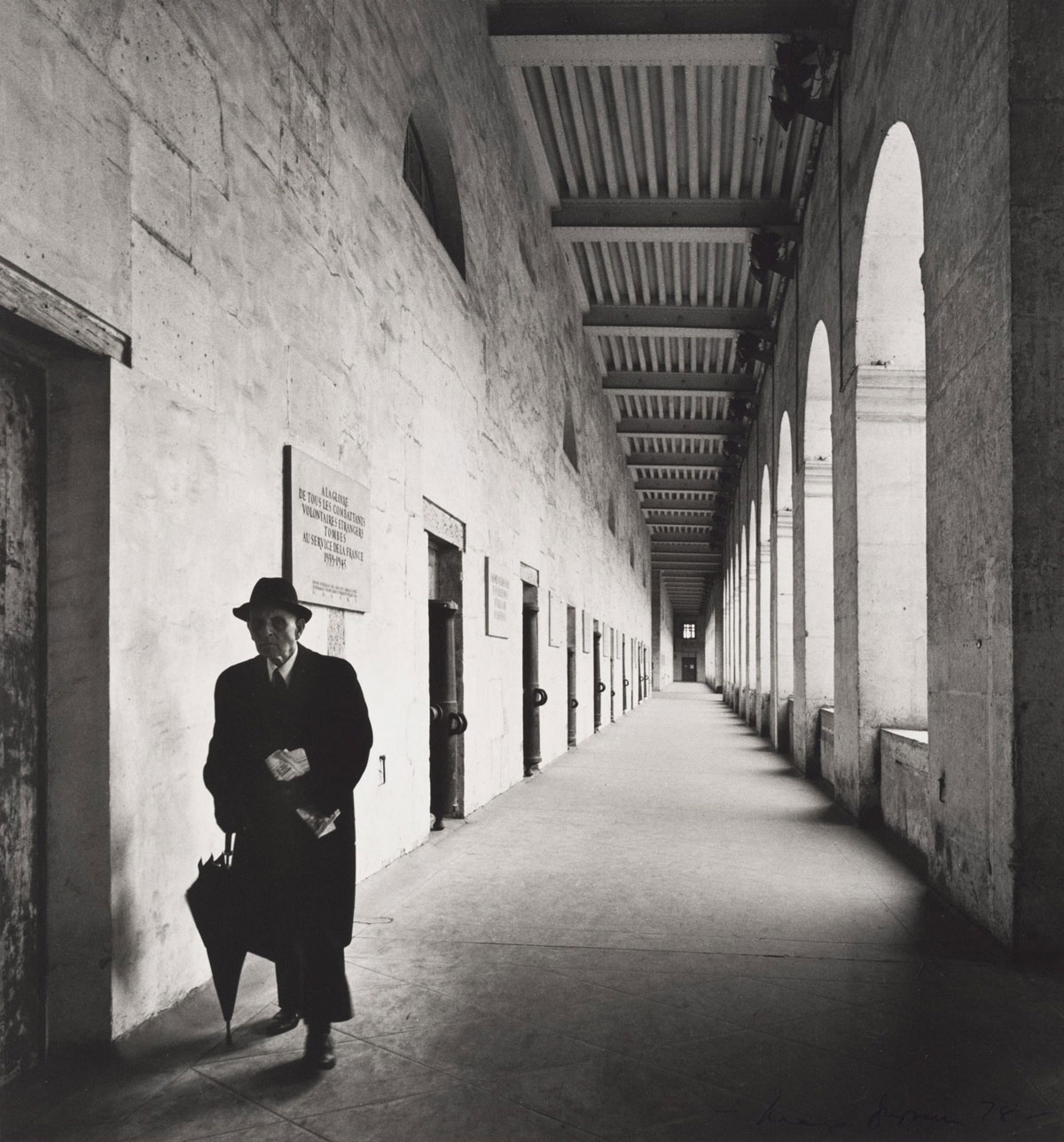
Max Dupain (Born Australia 1911, died 1992) 'Untitled (cannon with a guard standing in a doorway)' 1978


Max Dupain (Born Australia 1911, died 1992)
Untitled (cannon with a guard standing in a doorway)
1978
From The Paris ‘private’ series
Gelatin silver photograph
Gift of Penelope Seidler AM in honour of Max Dupain AC and Harry Seidler AC 2012. Donated through the Australian Government’s Cultural Gifts Program
© Estate of Max Dupain. Licensed by Viscopy, Sydney


Max Dupain (Born Australia 1911, died 1992) 'Untitled (the statue of Christ at the portal of La Sainte-Chapelle)' 1978


Max Dupain (Born Australia 1911, died 1992)
Untitled (the statue of Christ at the portal of La Sainte-Chapelle)
1978
From The Paris ‘private’ series
Gelatin silver photograph
Gift of Penelope Seidler AM in honour of Max Dupain AC and Harry Seidler AC 2012. Donated through the Australian Government’s Cultural Gifts Program
© Estate of Max Dupain. Licensed by Viscopy, Sydney


Max Dupain (Born Australia 1911, died 1992) 'Untitled (Place Vendôme with the column)' 1978


Max Dupain (Born Australia 1911, died 1992)
Untitled (Place Vendôme with the column)
1978
From The Paris ‘private’ series
Gelatin silver photograph
Gift of Penelope Seidler AM in honour of Max Dupain AC and Harry Seidler AC 2012. Donated through the Australian Government’s Cultural Gifts Program
© Estate of Max Dupain. Licensed by Viscopy, Sydney


Max Dupain (Australia 22 Apr 1911 - 27 Jul 1992) 'Untitled (tree on Boulevard de la Tour Maubourg, with Hôtel des Invalides in the distance)' 1978


Max Dupain (Australia 22 Apr 1911 – 27 Jul 1992)
Untitled (tree on Boulevard de la Tour Maubourg, with Hôtel des Invalides in the distance)
1978
From The Paris ‘private’ series
Gelatin silver photograph
35.6 x 30.2cm image
Gift of Penelope Seidler AM in honour of Max Dupain AC and Harry Seidler AC 2012. Donated through the Australian Government’s Cultural Gifts Program
© Estate of Max Dupain. Licensed by Viscopy, Sydney


Max Dupain (Born Australia 1911, died 1992) 'Untitled (mythological sculptural group at the Grand Palais)' 1978


Max Dupain (Born Australia 1911, died 1992)
Untitled (mythological sculptural group at the Grand Palais)
1978
From The Paris ‘private’ series
Gelatin silver photograph
Gift of Penelope Seidler AM in honour of Max Dupain AC and Harry Seidler AC 2012. Donated through the Australian Government’s Cultural Gifts Program
© Estate of Max Dupain. Licensed by Viscopy, Sydney


Max Dupain (Born Australia 1911, died 1992) 'Untitled (woman with pram in Jardin des Tuileries)' 1978


Max Dupain (Born Australia 1911, died 1992)
Untitled (woman with pram in Jardin des Tuileries)
1978
From The Paris ‘private’ series
Gelatin silver photograph
Gift of Penelope Seidler AM in honour of Max Dupain AC and Harry Seidler AC 2012. Donated through the Australian Government’s Cultural Gifts Program
© Estate of Max Dupain. Licensed by Viscopy, Sydney


Max Dupain (Born Australia 1911, died 1992) 'Untitled (group of people near the Eiffel tower)' 1978


Max Dupain (Born Australia 1911, died 1992)
Untitled (group of people near the Eiffel tower)
1978
From The Paris ‘private’ series
Gelatin silver photograph
Gift of Penelope Seidler AM in honour of Max Dupain AC and Harry Seidler AC 2012. Donated through the Australian Government’s Cultural Gifts Program
© Estate of Max Dupain. Licensed by Viscopy, Sydney


Max Dupain (Born Australia 1911, died 1992) 'Untitled (Les Invalides)' 1978


Max Dupain (Born Australia 1911, died 1992)
Untitled (Les Invalides)
1978
From The Paris ‘private’ series
Gelatin silver photograph
Gift of Penelope Seidler AM in honour of Max Dupain AC and Harry Seidler AC 2012. Donated through the Australian Government’s Cultural Gifts Program
© Estate of Max Dupain. Licensed by Viscopy, Sydney


Max Dupain (Born Australia 1911, died 1992) 'Untitled (Napoleon's statue on the balcony of Les Invalides)' 1978


Max Dupain (Born Australia 1911, died 1992)
Untitled (Napoleon’s statue on the balcony of Les Invalides)
1978
From The Paris ‘private’ series
Gelatin silver photograph
Gift of Penelope Seidler AM in honour of Max Dupain AC and Harry Seidler AC 2012. Donated through the Australian Government’s Cultural Gifts Program
© Estate of Max Dupain. Licensed by Viscopy, Sydney


An exhibition of 36 photographs – 21 of which were taken in Paris in 1978 by one of Australia’s most well-known photographers, Max Dupain (1911-92) – will go on display at the Art Gallery of New South Wales. Donated to the Gallery by Penelope Seidler in 2012, this will be the first time the Paris ‘private’ series portfolio will have ever been seen publicly. Max Dupain had gifted these works to renowned architect Harry Seidler and in a handwritten note he wrote:

I owe you so much. For nearly twenty five years I have dwelt on your philosophy of architecture. We register alike about clear thinking, logic of application, poetry of form etc etc. [sic] I have tremendous regard for architecture as a stabilising force in this turbulent society and I think my best work will ultimately show the significance of this by virtue of the photographed form thrown up by architecture and by engineering.

Dupain made the trip to Paris, his second outside Australia and his first to Europe, to accompany his long-time colleague and friend, Harry Seidler (1923-2006). Dupain’s task was to photograph the Australian Embassy there, which Seidler had designed (completed 1977). The pair were not only friends but shared a deep appreciation for form and light, for the modernist curves in space that can be created both architecturally and photographically.

Dupain explored many monuments around Paris. These impressions of a place he was seeing for the first time reveal his exploration of a new city and its sites, varying from formal compositions of photographic space, such as the image of Napoleon’s statue on the balcony of Les Invalides, to more personal or candid moments, as with the group of people captured beneath the Eiffel Tower. Many photographs depict 18th- and 19th-century landmarks such as the ornate Alexandre III bridge, the Grand Palais and Chantilly; the compilation offers a view of Paris and its environs shaped by layers of history, mythology and art.

Despite the diversity of subject matter across the 21 images, Dupain always maintained his signature poise and rigour, appreciation of the way light interacts with the objects it touches, and attention to the composition of photographic space through a play of scale.

In addition to the Paris ‘private’ series, 15 of Dupain’s photographs of architectural and botanical forms will be on display. Almost all are taken in and around Sydney; some of the flowers are from Dupain’s Castlecrag garden and iconic Sydney buildings such as the Opera House are included. These images cover 50 years of the photographer’s practice from 1933 to 1983, and indicate his enduring appreciation for the order, logic and harmony which lie at the core of classicism, the movement that produced many of the iconic Parisian monuments he saw, and for the modernism which Seidler endorsed through his work.

Press release from the AGNSW website


Max Dupain (Born Australia 1911, died 1992) 'Pyrmont silos' 1933, printed later


Max Dupain (Born Australia 1911, died 1992)
Pyrmont silos
1933, printed later
Gelatin silver photograph
Purchased 1976


Pyrmont silos is one of a number of photographs that Dupain took of these constructions in the 1930s. In all cases Dupain examined the silos from a modernist perspective, emphasising their monumentality from low viewpoints under a bright cloudless sky. Additionally, his use of strong shadows to emphasise the forms of the silos and the lack of human figures celebrates the built structure as well as providing no sense of scale. Another photograph by Dupain in the AGNSW collection was taken through a car windscreen so that the machinery of transport merges explicitly with industrialisation into a complex hard-edge image of views and mirror reflections. There were no skyscrapers in Sydney until the late 1930s so the silos, Walter Burley Griffin’s incinerators and the Sydney Harbour Bridge were the major points of reference for those interested in depicting modern expressions of engineering and industrial power.

Dupain was the first Australian photographer to embrace modernism. One of his photographs of the silos was roundly criticised when shown to the New South Wales Photographic Society but Dupain forged on regardless with his reading, thinking and experimentation. Some Australian painting and writing had embraced modernist principles in the 1920s, but as late as 1938 Dupain was writing to the Sydney Morning Herald:

“Great art has always been contemporary in spirit. Today we feel the surge of aesthetic exploration along abstract lines, the social economic order impinging itself on art, the repudiation of the ‘truth to nature criterion’ … We sadly need the creative courage of Man Ray, the original thought of Moholy-Nagy, and the dynamic realism of Edouard [sic] Steichen.”1

1/ Dupain, M 1938, “Letter to the editor,” in Sydney Morning Herald, 30 March
© Art Gallery of New South Wales Photography Collection Handbook, 2007


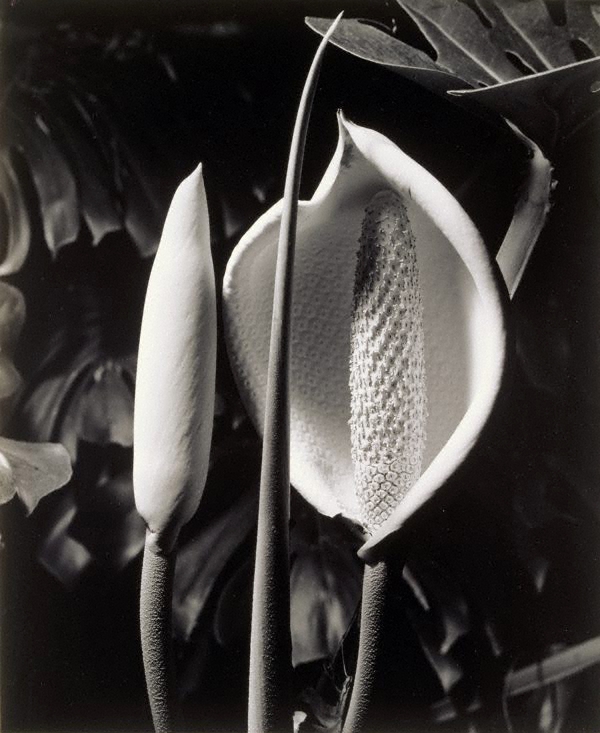
Max Dupain (Born Australia 1911, died 1992) 'Monstera deliciosa' 1970


Max Dupain (Born Australia 1911, died 1992)
Monstera deliciosa
1970
Gelatin silver photograph
Gift of the artist 1981
© Max Dupain, 1970. Licensed by Viscopy, Sydney


Max Dupain (Born Australia 1911, died 1992) 'Nasturtium leaves' 1981


Max Dupain (Born Australia 1911, died 1992)
Nasturtium leaves
1981
Gelatin silver photograph
40 × 50.4cm
Gift of Edron Pty Ltd 1995 through the auspices of Alistair McAlpine
© Estate of Max Dupain, licensed by Viscopy, Sydney


Max Dupain (Born Australia 1911, died 1992) 'Australia Square and Calder sculpture, Sydney' 1968


Max Dupain (Born Australia 1911, died 1992)
Australia Square and Calder sculpture, Sydney
1968
Gelatin silver photograph
Gift of the artist 1981
© Estate of Max Dupain, licensed by Viscopy, Sydney


Max Dupain (Born Australia 1911, died 1992) 'The magnolia' 1983


Max Dupain (Born Australia 1911, died 1992)
The magnolia
1983
Gelatin silver photograph
Gift of the artist 1986
© Max Dupain, 1983. Licensed by Viscopy, Sydney


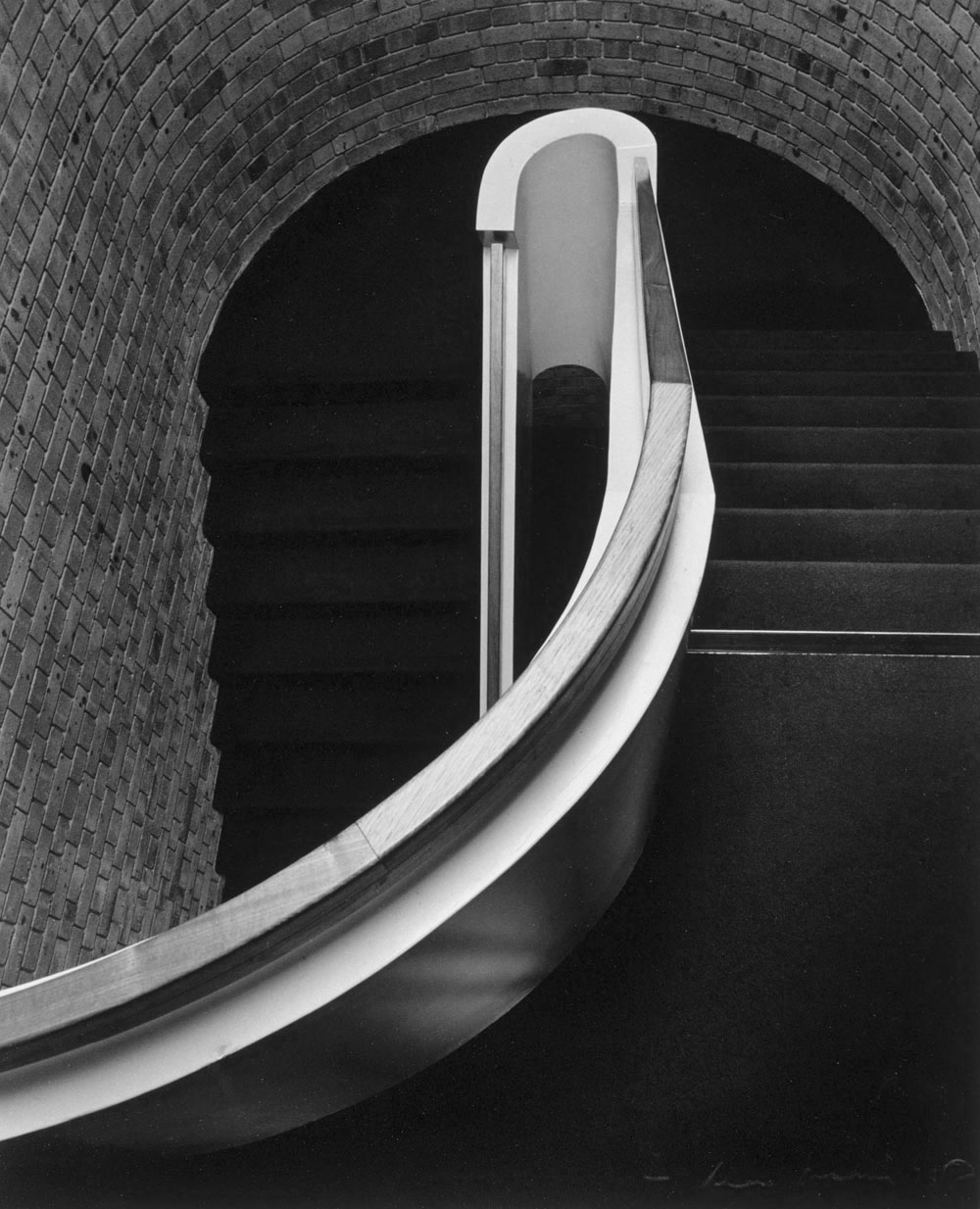
Max Dupain (Born Australia 1911, died 1992) 'Stair rail' 1975


Max Dupain (Born Australia 1911, died 1992)
Stair rail
1975
Gelatin silver photograph
Gift of the artist 1981
© Max Dupain, 1975. Licensed by Viscopy, Sydney


Art Gallery of New South Wales
Art Gallery Road, The Domain
Sydney NSW 2000, Australia

Opening hours:
Open every day 10am – 5pm
except Christmas Day and Good Friday

Art Gallery of New South Wales website

LIKE ART BLART ON FACEBOOK

Back to top

Exhibition: ‘Cecil Beaton at Wilton’ at Wilton House, Wiltshire and ‘Cecil Beaton at Home: Ashcombe & Reddish’, at The Salisbury Museum

Exhibition dates: Cecil Beaton at Wilton: 3rd May – 14th September, 2014
Cecil Beaton at Home: Ashcombe & Reddish: 23rd May – 19th September, 2014

Bright Young Things, Costume Balls And Country House Parties
From The Roaring ’20s To The Swinging ’60s
An Exhibition Of Cecil Beaton Photographs
Designed And Curated By Jasper Conran


'Cecil Beaton at Wilton House' installation view


Cecil Beaton at Wilton installation view
© The Cecil Beaton Studio Archive


What a gay old time!

Frippery and finery taken by that dandy doyen of chic Cecil Beaton, partying in a highly structured class society that is seemingly oblivious to the approaching horrors of the Second World War (which only adds to the photographs air of insouciance). It must have been so much fun.

The thing is, Beaton was a talented artist who captured it all with total aplomb. To go from the haughty, stylish Georgia Sitwell, Renishaw (1930, below) to the Arcadian beauty of Rex Whistler (1927, below); from the formal organisation of The 15th Earl and Countess of Pembroke dressed for the coronation of George VI (1937, below) to the classic beauty of Princess Natasha Paley (1930s, below); or the structure and stillness of Alice von Hofmannsthal (1937, below) to the vivaciousness and movement of Lady Plunket (Dorothé) and Mr Maurice (1937, below) – takes a consistency of vision and an understanding of craft that few photographers possess.

The photograph of Lady Plunket is particularly astonishing… to see this composition in the twinkling of an eye: the movement, the joy, the flower in the hair, the women with the crossed legs in the background, and just the sheer grace of the couple, he suspended on one foot, she flying through the air. Unforgettable.

Dr Marcus Bunyan


Many thankx to Sotheby’s, Wilton House and The Salisbury Museum for allowing me to publish the photographs in the posting. Please click on the photographs for a larger version of the image.


East Front of Wilton House


East Front of Wilton House
© Wilton House Trust


Cecil Beaton (British, 1904-1980) 'Edith Olivier, Mayor of Wilton, as Queen Elizabeth I for a pageant at Wilton' 1932


Cecil Beaton (British, 1904-1980)
Edith Olivier, Mayor of Wilton, as Queen Elizabeth I for a pageant at Wilton
1932
© Cecil Beaton Archive, Sotheby’s


Edith Maud Olivier (English, 1872-1948)

Edith Maud Olivier MBE (31 December 1872 – 10 May 1948) was an English writer, also noted for acting as hostess to a circle of well-known writers, artists, and composers in her native Wiltshire… Olivier had lived with her father and younger sister Mildred, and it was after Mildred died in 1927 that she started to engage a broader social circle. She formed a profound friendship with Rex Whistler and acted as a frequent hostess to an elite, artistic, and largely homosexual, social set which included Cecil Beaton, Siegfried Sassoon, William Walton, and Osbert Sitwell.

Her first novel, The Love Child was published in 1927, and was followed by further novels, biographies, including one of Alexander Cruden, and the autobiographical Without Knowing Mr Walkley.

Text from Wikipedia website


Cecil Beaton (British, 1904-1980) 'Georgia Sitwell, Renishaw' 1930


Cecil Beaton (British, 1904-1980)
Georgia Sitwell, Renishaw
1930
© Cecil Beaton Archive, Sotheby’s


Georgia Doble

Georgia Doble, the Canadian-born wife of Sacheverell Sitwell, was born in 1905 to a banker of Cornish descent. She met Sitwell at a party in 1924 while participating in the social gaiety of the London season. Georgia was familiar with Sitwell’s Southern Baroque Art and enjoyed his company, but she waited almost a year before accepting his marriage proposals. They were married in Paris on October 12, 1925. Their first son, Reresby, was born in 1927 and his younger brother, Francis, in 1935.

Georgia found it difficult to blend in with the Sitwell family, which had more than the usual share of dynamics. She did her best to play the self-assigned role of muse, but Sitwell was not a social man and Georgia missed the busy whirl of London. She attended many social events without him, which led to a great deal of friction between them. They both had affairs over the years, but remained deeply attached to one another throughout their lives. Georgia died in 1980.


Cecil Beaton (British, 1904-1980) 'Lady Plunket (Dorothé) and Mr Maurice' 1937


Cecil Beaton (British, 1904-1980)
Lady Plunket (Dorothé) and Mr Maurice
1937
© Cecil Beaton Archive, Sotheby’s


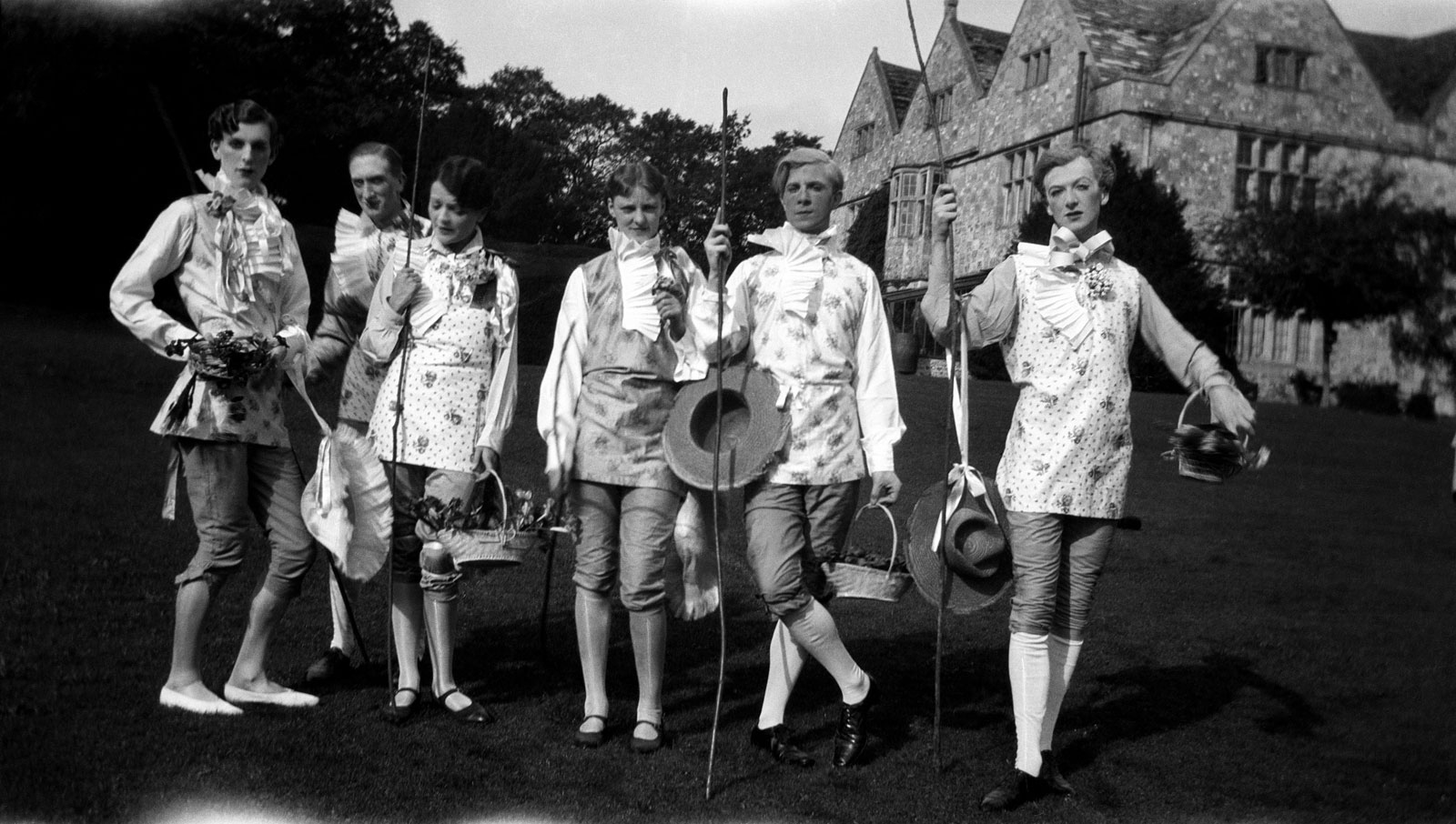
Cecil Beaton (British, 1904-1980) 'Stephen Tennant (1906-1987), William Walton (1902-1983), Georgia Sitwell (1905-1980), Zita Jungman (1903-2006), Rex Whistler (1905-1944) and Cecil Beaton (1904-1980), Wilsford, 1927' 1927


Cecil Beaton (British, 1904-1980)
Stephen Tennant (1906-1987), William Walton (1902-1983), Georgia Sitwell (1905-1980), Zita Jungman (1903-2006), Rex Whistler (1905-1944) and Cecil Beaton (1904-1980), Wilsford, 1927
1927
© Cecil Beaton Archive, Sotheby’s


Stephen James Napier Tennant (21 April 1906 – 28 February 1987) was a British aristocrat known for his decadent lifestyle. During the 20s and 30s, Tennant was an important member – the “Brightest”, it is said – of the “Bright Young People.” His friends included Rex Whistler, Cecil Beaton, the Sitwells, Lady Diana Manners and the Mitford girls. He is widely considered to be the model for Cedric Hampton in Nancy Mitford’s novel Love in a Cold Climate; one of the inspirations for Lord Sebastian Flyte in Evelyn Waugh’s Brideshead Revisited, and a model for Hon. Miles Malpractice in some of his other novels.

Sir William Turner Walton OM (29 March 1902 – 8 March 1983) was an English composer. During a sixty-year career, he wrote music in several classical genres and styles, from film scores to opera. His best-known works include Façade, the cantata Belshazzar’s Feast, the Viola Concerto, and the First Symphony.

Zita Jungman‘s accounts of her fellow bright young things of the 1920s stress their high vocal pitch and decibel level – “shrieking”, “screaming”, “howling with laughter”. So it is significant that when, in 1926, Cecil Beaton met Zita, who has died aged 102, in the Gargoyle Club, Soho, he responded to her quietness and understanding. She was, he wrote, a “thoroughly unflashy” original… The antics of the bright young things were relatively innocent: bottle parties, fancy dress balls and pageants, with cocktails and fast cars. The Jungman girls, along with clever Alannah Harper, Eleanor Smith and Loelia Ponsonby, staged treasure hunts, using their connections to arrange a fake edition of the Evening Standard or Hovis loaves baked to order with clues inside.

Enter aspirant photographer Beaton. He had spotted the sisters at a performance of Edith Sitwell’s Facade, and met Zita again in Venice rehearsing for a ball. Alannah Harper modelled for him; Zita followed. He was financially thrilled. “They certainly would get into the papers … so very saleable.” She spent hours before the lens in the Beaton house: “She loved doing her hair in various exotic ways and looked quite beautiful and quite extraordinarily funny. She is a perfect young lady.”

Beaton described the sisters as “a pair of decadent 18th-century angels made of wax” and wrote of Zita: “With her smooth fringes, and rather flat head, like a silky coconut, like a medieval page, and with her swinging gait, she looks very gallant, very princely. But she can, if she wishes, easily become a snake-like beauty, with a mysterious smile and a cold glint in her upward slanting eyes.” Her reaction to the pictures was to “lay back in a chair looking at them for ages, never speaking, just occasionally grunting a grunt of satisfaction”.

Veronica Horwell. “Zita Jungman,” on the Guardian website Friday 3 March 2006 [Online] Cited 07/11/2022. Used under fair use conditions for the purposes of education and research


Cecil Beaton (British, 1904-1980) 'Rex Whistler' 1927


Cecil Beaton (British, 1904-1980)
Rex Whistler
1927
© Cecil Beaton Archive, Sotheby’s


Reginald John “Rex” Whistler (British, 1905-1944)

Reginald John “Rex” Whistler (24 June 1905 – 18 July 1944) was a British artist, designer and illustrator.

Reginald John Whistler was born in Britain on 24 June 1905, at Eltham, Kent, the son of Harry and Helen Frances Mary Whistler. In May 1919 he was sent to boarding school at Haileybury, where he showed a precocious talent for art, providing set designs for play productions and giving away sketches to prefects in lieu of “dates” (a punishment at Haileybury, similar to “lines” whereby offenders are required to write out set lists of historical dates).

After Haileybury the young Whistler was accepted at the Royal Academy, but disliked the regime there and was “sacked for incompetence”. He then proceeded to study at the Slade School of Art, where he met Stephen Tennant, soon to become one of his best friends and a model for some of the figures in his works. Through Tennant, he later met the poet Siegfried Sassoon and his wife Hester, to both of whom Whistler became close.

Upon leaving the Slade he burst into a dazzling career as a professional artist. His work encompassed all areas of art and design – from the West End theatre to book illustration (including works by Evelyn Waugh and Walter de la Mare, and perhaps most notably, for Gulliver’s Travels) and mural and trompe-l’oeil painting. Paintings at Port Lympne Mansion (within Port Lympne Wild Animal Park), Plas Newydd, Mottisfont Abbey and Dorneywood among others, show his outstanding talent in this genre. During his time at Plas Newydd he may well have become the lover of the daughter of the 6th Marquess of Anglesey, the owner of the house, who had commissioned him to undertake the decorative scheme. Whistler and Lady Caroline Paget are known to have become very close friends and he painted numerous portraits of her, including a startling nude. Whether this painting was actually posed for or whether it was how Whistler imagined her naked is a matter of debate.

His most noted work during the early part of his career was for the café at the Tate Gallery, completed in 1927 when he was only 22. He was commissioned to produce posters and illustrations for Shell Petroleum and the Radio Times. He also created designs for Wedgwood china based on drawings he made of the Devon village of Clovelly. Whistler’s elegance and wit ensured his success as a portrait artist among the fashionable; he painted many members of London society, including Edith Sitwell, Cecil Beaton and other members of the set to which he belonged that became known as the “Bright Young Things”. His murals for Edwina Mountbatten’s 30-room luxury flat in Brook House, Park Lane, London were later installed by the Mountbattens’ son-in-law, decorator David Hicks, in his own houses.

Whistler’s activities also extended to ballet design. He designed the scenery and costumes for Ninette de Valois and Gavin Gordon’s Hogarth-inspired 1935 ballet The Rake’s Progress.

When war broke out, although he was 35, Whistler was eager to join the army. He was commissioned into the Welsh Guards as Lieutenant 131651. His artistic talent, far from being a stumbling block to his military career, was greatly appreciated and he was able to find time to continue some of his work, including a notable self-portrait in uniform now in the National Army Museum. In 1944 he was sent to France following the D-Day landings.

In July he was with the Guards Armoured Division in Normandy as the invasion force was poised to break out of the salient east of Caen. On the hot and stuffy 18 July his tank, after crossing a railway line, drove over some felled telegraph wires beside the railway, which became entangled in its tracks. He and the crew got out to free the tank from the wire when a German machine gunner opened fire on them, preventing them from getting back into their tank. Whistler dashed across an open space of 60 yards to another tank to instruct its commander, a Sergeant Lewis Sherlock, to return the fire. As he climbed down from Sherlock’s tank a mortar bomb exploded beside him and killed him instantly, throwing him into the air. He was the first fatality suffered by the battalion in the Normandy campaign.

Text from the Wikipedia website


Palladian Bridge at Wilton House


Palladian Bridge at Wilton House
© Wilton House Trust


Sotheby’s and Wilton House will pay tribute to the life and work of the photographer, writer and Oscar-winning designer Cecil Beaton (1904-1980) with a new exhibition of photographs from Sotheby’s Cecil Beaton Studio Archive, designed and curated by Jasper Conran. Capturing the spirit of country house parties and costume balls, the exhibition will showcase previously unseen images from one of Britain’s most celebrated photographers, giving a fascinating glimpse into his life and a vivid portrait of a charmed age.

Staged at Wilton House in Wiltshire where Beaton was entertained by his friends the Pembroke family at grand parties and pageants for over 50 years, the exhibition will run between 18th- 21st April and 3rd May – 14th September 2014.

Described as “a worldly Peter Pan” who never aged1, Cecil Beaton – the acclaimed photographer for Vogue and Vanity Fair – was at the forefront of the fashion for costume and pageantry which swept through British society in the 1920s. Immortalised in the Noël Coward song ‘I’ve been to a marvellous party’, “Dear Cecil arrived wearing armour / Some shells and a black feather boa…,” Beaton was renowned for his flair for fancy dress and costumery, later winning Oscars, Academy and Tony awards for his designs. He invited friends from all over the world to legendary parties at his Wiltshire home Ashcombe, where guests arrived “in the knowledge that they were to exchange reality for a complete escape into the realms of fantasy.”2

As fancy dress became a popular feature of country house parties, and costume balls a highlight of the social calendar, Beaton seamlessly integrated his high-society personal life with his professional artistic quest to experiment with photography and fashion. Using the settings of Britain’s grandest country houses as the perfect backdrop, Beaton persuaded his friends to sit for him in their exotic costumes, often designed by him, for these most unconventional of photographs.

This fascinating collection of photographs will be displayed in a new exhibition space, especially renovated for the event at Wilton House. Situated just a few miles from Beaton’s country houses Ashcombe and Reddish, Wilton was the location for costume balls and theatrical events enjoyed and photographed by Beaton for over 50 years. Despite being pushed into a river at the first Ball he attended there in 1927, Beaton later became great friends with the Earls of Pembroke. Over time he photographed and chronicled the lives of three generations of the family in the surroundings of the house which he described as “perhaps the most wonderful piece in all Wiltshire’s heritage of domestic architecture… at every time of year, in all weathers, unfailing in its beauty.”3 On 14th January 1980, just three days before his death, Beaton celebrated his 76th birthday with a lunch party hosted by the family.

The Cecil Beaton Studio Archive

Sotheby’s is the privileged guardian of the Cecil Beaton Studio Archive, a matchless repository of over 100,000 negatives, 9,000 vintage prints and 42 scrapbooks from the celebrated photographer’s personal collection. Cecil Beaton negotiated the transfer of his private archive to Sotheby’s in 1977 in order to preserve its role for future generations. Today, the collection – some of which is still stored in Beaton’s original filing cabinets – is available for use as a picture library, lending images to be reproduced on the printed page and for exhibition worldwide.

Further photographs from the Cecil Beaton Studio Archive will be displayed at Salisbury Museum’s exhibition Cecil Beaton at Home: Ashcombe & Reddish between 23rd May – 19th September 2014. This exhibition will bring together original photographs, artworks and possessions from Cecil Beaton’s two Wiltshire homes, Ashcombe and Reddish which served as retreats, inspirations, and stages for impressive entertaining, to present a fascinating picture of Beaton’s extraordinary life.”

1/ Hugo Vickers, Cecil Beaton: The Authorised Biography, Introduction, p. xxiii
2/ Cecil Beaton, Ashcombe: The Story of a Fifteen-year Lease, p. 33
3/ Cecil Beaton, Ashcombe: The Story of a Fifteen-year Lease, p. 35

Press release from Sotheby’s


Cecil Beaton (British, 1904-1980) 'Cecil Beaton on the Palladian bridge at Wilton House, September 1968' 1968 (detail)


Cecil Beaton (British, 1904-1980)
Cecil Beaton on the Palladian bridge at Wilton House, September 1968 (detail)
1968
© Cecil Beaton Archive, Sotheby’s


Cecil Beaton (British, 1904-1980) 'Alice von Hofmannsthal, Ashcombe, 1937, in her Costume for "The Gardener’s Daughter" for "The Anti Dud Ball" at the Dorchester Hotel, 13 July 1937' 1937


Cecil Beaton (British, 1904-1980)
Alice von Hofmannsthal, Ashcombe, 1937, in her Costume for “The Gardener’s Daughter” for “The Anti Dud Ball” at the Dorchester Hotel, 13 July 1937
1937
© Cecil Beaton Archive, Sotheby’s


Cecil Beaton (British, 1904-1980) 'Princess Natasha Paley' 1930s


Cecil Beaton (British, 1904-1980)
Princess Natasha Paley
1930s
© Cecil Beaton Archive, Sotheby’s


Princess Natalia Pavlovna Paley (Russian, 1905-1981)

Princess Natalia Pavlovna Paley (Наталья Павловна Палей), Countess de Hohenfelsen (December 5, 1905 – December 27, 1981) was a member of the Romanov family. A daughter of Grand Duke Paul Alexandrovich of Russia, she was a first cousin of the last Russian emperor, Nicholas II. After the Russian revolution she emigrated first to France and later to the United States. She became a fashion model, socialite, vendeuse, and briefly pursued a career as a film actress…

Ethereal and glamorous, Princess Natalia would not follow any fashion trend, but would dictate her own. Hats and gloves were her signature. With deep-set gray eyes and pale blond hair, she became a sought after model establishing an image for herself in the Parisian elite becoming a well known socialite. As a model, she appeared in many magazines including Vogue. She was a favourite model for the great photographers of her time: Edward Steichen, Cecil Beaton, Horst P. Horst, Andre Durst and George Hoyningen-Huene.

Text from Wikipedia website


Cecil Beaton (British, 1904-1980) 'The Countess of Pembroke acting in Beaton's musical "Heil Cinderella"' 1939


Cecil Beaton (British, 1904-1980)
The Countess of Pembroke acting in Beaton’s musical “Heil Cinderella”
1939
© Cecil Beaton Archive, Sotheby’s


Cecil Beaton (British, 1904-1980) 'The 15th Earl and Countess of Pembroke dressed for the coronation of George VI' 1937


Cecil Beaton (British, 1904-1980)
The 15th Earl and Countess of Pembroke dressed for the coronation of George VI
1937
© Cecil Beaton Archive, Sotheby’s


Cecil Beaton (British, 1904-1980) 'The Countess of Pembroke in her Robes for the Coronation of George VI' 1937


Cecil Beaton (British, 1904-1980)
The Countess of Pembroke in her Robes for the Coronation of George VI
1937
© Cecil Beaton Archive, Sotheby’s


Cecil Beaton (British, 1904-1980) 'Cecil Beaton in "All the Vogue", Cambridge' 1925


Cecil Beaton (British, 1904-1980)
Cecil Beaton in “All the Vogue”, Cambridge
1925
© Cecil Beaton Archive, Sotheby’s


Beauty, decadence and a damned good party: Cecil Beaton at Salisbury Museum

The not so private world of Cecil Beaton – photographer to the Royals, painter, designer of interiors, stage and costume and secret diarist – seems to have been as opulent as his professional career was varied. If we are to believe his candid diaries, it was a world of decadent parties and languid weekend soirees full of bright young things who caroused at his Wiltshire homes against a backdrop of sumptuous interiors and fabulous gardens.

The first of these private pleasure houses was Ashcombe, which he rented for £50 a year between 1930-1945. It was followed by Reddish, which Beaton purchased in 1945 and lived in until his death in 1980. By all accounts both were splendid residences, and the stream of celebrities and society people who came and went were photographed by Beaton or captured in his notoriously frank scrapbooks and diaries.

And it is these extravagant worlds that can be glimpsed at Salisbury Museum who, with the help of the vast Cecil Beaton Archive at Sotheby’s, are teasing them back to life. A tantalising glimpse into the photographer’s more hidden moments and the celebrity in-crowd of friends and acquaintances he lavishly entertained, the exhibition brings together 183 unique photographs (including 35 vintage prints) exhibited with some of his artworks and personal possessions within recreations of the interiors.

But it’s the cast of players that grabs the attention; bohemian aristocrats, socialites and some of the biggest stars of the stage, screen, fashion and art world form a procession of decadence that stretched across five decades from 1930-1980. Famous faces include Truman Capote, Leslie Caron, David Hockney, Bianca Jagger and Ivor Novello interspersed here with private snaps of his great loves – the Hollywood icon Greta Garbo, with whom he had an affair, and millionaire art collector Peter Watson, with whom (we are told) he didn’t.

But as well as the society faces the exhibition includes images of the photographer’s inspired garden designs at Reddish and his theatrically-styled home interiors at Ashcombe, which he created so he could ‘live in scenery’, inspired by his visit to Hollywood in 1929. Work in progress shots show the making of Beaton’s fantastical ‘Circus Bedroom’ in 1932 with freshly painted murals of a circus clown, a girl on a merry-go-round horse and a jolly fat lady.

The bedroom was apparently created “on a rainy weekend in 1932” by a typically decadent gang of dazzling society types that included artists Rex Whistler, ‘Jack’ von Bismarck, Oliver Messel, Lord Berners, Edith Olivier, Jorg von Reppert Bismarck and of course Beaton himself. Whistler also designed Beaton’s theatrical four-poster ‘carousel’ bed with gilded unicorns, stripey circus-top canopy and barley twist bedposts. Beaton is pictured with Watson amidst this baroque creation. And visitors can experience it for themselves courtesy of a full-scale recreation reconstructed for the very first time since it was broken up in 1945. A fascinating glance into a decadent disappeared world.

Richard Moss. “Beauty, decadence and a damned good party: Cecil Beaton at Salisbury Museum,” on the Culture 24 website 28 May 2014 [Online] Cited 16/06/2021. No longer available online. Used under fair use conditions for the purposes of education and research


Rex Whistler (British, 1905-1944) 'Ashcombe House' 1930s


Rex Whistler (British, 1905-1944)
Ashcombe House
1930s
© Private Collection


Cecil Beaton (British, 1904-1980) 'Frontispiece montage for Cecil Beaton’s Scrapbook, 1937, Ashcombe' 1937


Cecil Beaton (British, 1904-1980)
Frontispiece montage for Cecil Beaton’s Scrapbook, 1937, Ashcombe
1937
© Private Collection


Cecil Beaton (British, 1904-1980) 'Cecil Beaton on the front steps of Reddish House, Broad Chalke, June 1947, Reddish' 1947


Cecil Beaton (British, 1904-1980)
Cecil Beaton on the front steps of Reddish House, Broad Chalke, June 1947, Reddish
1947
© Cecil Beaton Archive, Sotheby’s


Cecil Beaton (British, 1904-1980) 'Cecil Beaton in his first costume of the night for the Fete Champetre, in his Circus bedroom, 10 July 1937, Ashcombe' 1937


Cecil Beaton (British, 1904-1980)
Cecil Beaton in his first costume of the night (the famous ‘Rabbit’ outfit) for the Fete Champetre, in his Circus bedroom, 10 July 1937, Ashcombe
1937
© Getty Images/ Time Life


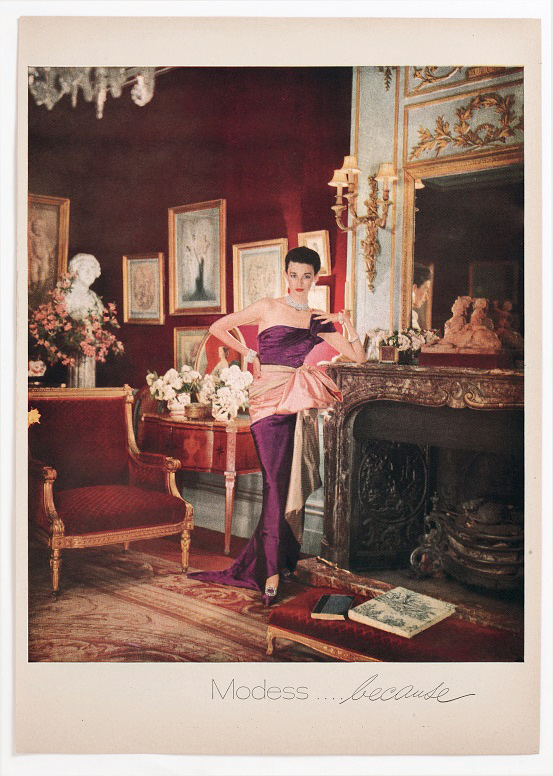
Cecil Beaton (British, 1904-1980) 'Dorian Leigh photographed for 'Modess… because' campaign, Reddish House, Broad Chalke, 1950s, Reddish' 1950s


Cecil Beaton (British, 1904-1980)
Dorian Leigh photographed for ‘Modess… because’ campaign, Reddish House, Broad Chalke, 1950s, Reddish
1950s
© Johnson & Johnson


Dorian Leigh (April 23, 1917 – July 7, 2008), born Dorian Elizabeth Leigh Parker, was an American model and one of the earliest modelling icons of the fashion industry. She is considered one of the first supermodels and was well known in the United States and Europe.


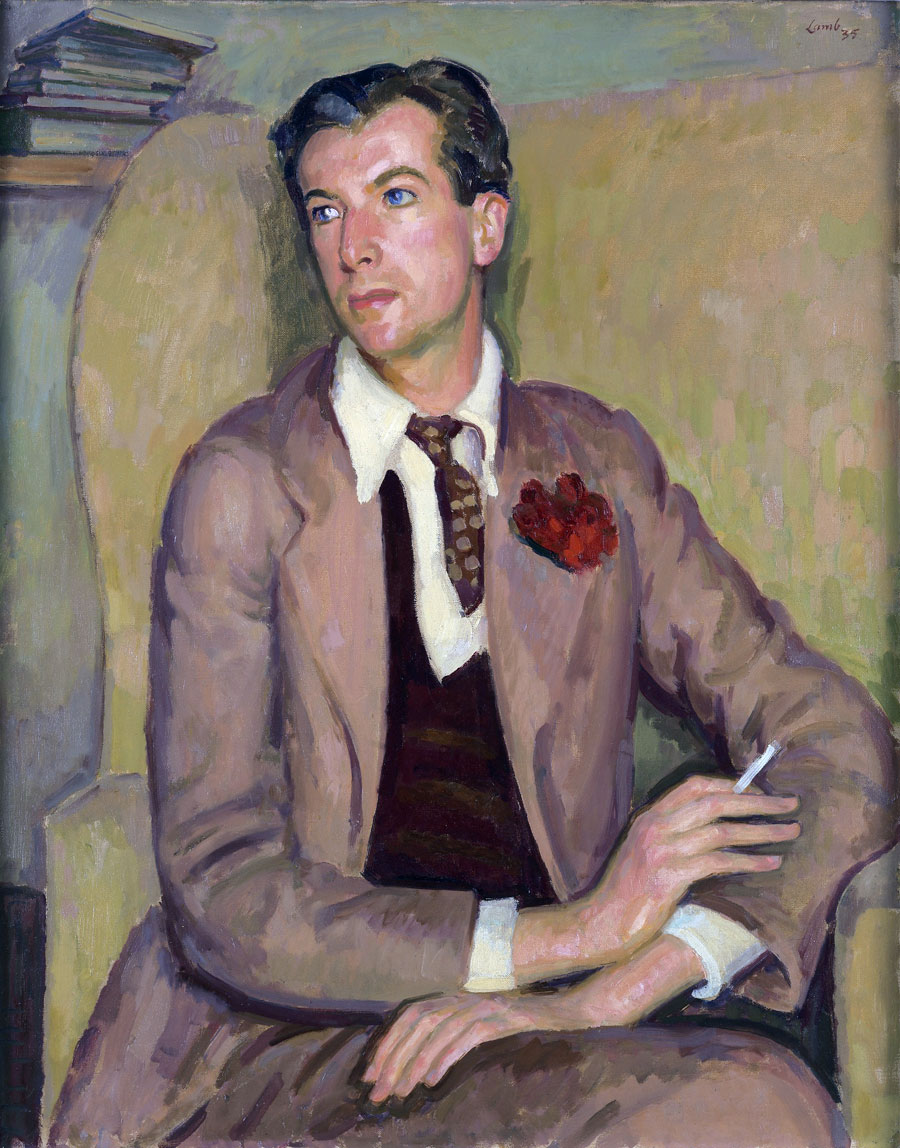
Henry Lamb (British, born Australia 1883-1960) 'Portrait of Cecil Beaton' 1935


Henry Lamb (British, born Australia 1883-1960)
Portrait of Cecil Beaton
1935
© Private Collection


Henry Taylor Lamb (British born Australia, 1883-1960)

Henry Taylor Lamb MC RA (Adelaide 21 June 1883 – 8 October 1960 Salisbury) was an Australian-born British painter. A follower of Augustus John, Lamb was a founder member of the Camden Town Groupin 1911 and of the London Group in 1913.

Lamb is noted for his unusual portraits, as exemplified by his well-known picture of an elongated Lytton Strachey. He was elected an Associate of the Royal Academy in 1940 and was made a full Member in 1949. He was a Trustee of the National Portrait Gallery from 1942 and of the Tate Gallery from 1944 to 1951. His auction record was set at Christie’s in London in June 2006 when his 1910 Breton Boy oil on panel fetched £60,000. As well as the Imperial War Museum, works by Lamb are held in regional museums throughout Britain, in the British Government Art Collection and in the National Gallery of Canada, which received the majority of Lambs portraits of Canadian troops at the end of World War Two.


Wilton House
Wilton, Salisbury
SP2 0BJ, United Kingdom
+44 1722 746714

Opening hours:
Temporarily closed

The Salisbury Museum
The King’s House,
65 The Close, Salisbury
SP1 2EN
Phone: 01722 332151

Opening hours:
Daily 10am – 5pm

Wilton House website

The Salisbury Museum website

LIKE ART BLART ON FACEBOOK

Back to top

Exhibition: ‘Cindy Sherman – Untitled Horrors’ at Kunsthaus Zürich

Exhibition dates: 6th June – 4th September, 2014

Curator: Mirjam Varadinis


Installation view of 'Cindy Sherman – Untitled Horrors' at Kunsthaus Zürich


Installation view of Cindy Sherman – Untitled Horrors at Kunsthaus Zürich
Photo: Lena Huber


Horrors Untitled

I remember some time in the dim distant past when Cindy Sherman’s photographs actually had relevance and were important in and of themselves… but perhaps my memory is playing tricks with me. Memory is a strange thing for we remember only fragments of fragments, like an echo chamber, a distant echo of something (the construction of identity and gender) that was once cutting edge, now overtaken by reality itself – on the red carpet, in the cosmetic surgery offices, in the media mags. Once there may have been an original, an original Cindy Sherman, an original idea, but now there just seems to be pastiche after pastiche of a Sherman nobody is sure ever really existed.

There are certainly some horrors among this posting, images that I wish I had never seen, and never really wish to see again. As the amount of ‘Untitled’ works rises (untitled is such a cop out!) the numbers, and the body count, become irrelevant. The early work, through the 80s to the early 90s, had important things to say but now the artist formally known as Sherman is earth mother goddess to all, and ancestral trickster to many. Enough please!

Dr Marcus Bunyan


Many thankx to the Kunsthaus Zürich for allowing me to publish the photographs in the posting. Please click on the photographs for a larger version of the image.


Cindy Sherman (American, b. 1954) 'Untitled #93' 1981


Cindy Sherman (American, b. 1954)
Untitled #93
1981
Chromogenic colour print
61 × 121.9cm
Astrup Fearnley Collection, Oslo
Courtesy of the artist and Metro Pictures, New York
© Cindy Sherman


Cindy Sherman (American, b. 1954) Untitled #122 1983


Cindy Sherman (American, b. 1954)
Untitled #122
1983
Chromogenic colour print
89.5 × 54cm
Vanmoerkerke Collection, Belgium
Courtesy of the artist and Metro Pictures, New York
© Cindy Sherman


Cindy Sherman (American, b. 1954) 'Untitled #129' 1983


Cindy Sherman (American, b. 1954)
Untitled #129
1983
Chromogenic colour print
89.7 × 59.3cm
Louisiana Museum of Modern Art, Humlebæk, Denmark, Donation: The New Carlsberg Foundation
Courtesy of the artist and Metro Pictures, New York
© Cindy Sherman


Cindy Sherman (American, b. 1954) 'Untitled #146' 1985


Cindy Sherman (American, b. 1954)
Untitled #146
1985
Chromogenic colour print
184.2 × 125.4cm
Skarstedt Gallery, New York
Courtesy of the artist and Metro Pictures, New York
© Cindy Sherman


Cindy Sherman (American, b. 1954) 'Untitled #153' 1985


Cindy Sherman (American, b. 1954)
Untitled #153
1985
Chromogenic colour print
170.8 × 125.7cm
Courtesy of the artist and Metro Pictures, New York
© Cindy Sherman


Cindy Sherman (American, b. 1954) 'Untitled #170' 1987


Cindy Sherman (American, b. 1954)
Untitled #170
1987
Chromogenic colour print
179.1 x 120.7cm
Collection Metro Pictures, New York
Courtesy of the artist and Metro Pictures, New York
© Cindy Sherman


Cindy Sherman (American, b. 1954) 'Untitled #216' 1989


Cindy Sherman (American, b. 1954)
Untitled #216
1989
Chromogenic colour print
221.3 × 142.5cm
Astrup Fearnley Collection, Oslo
Courtesy of the artist and Metro Pictures, New York
© Cindy Sherman


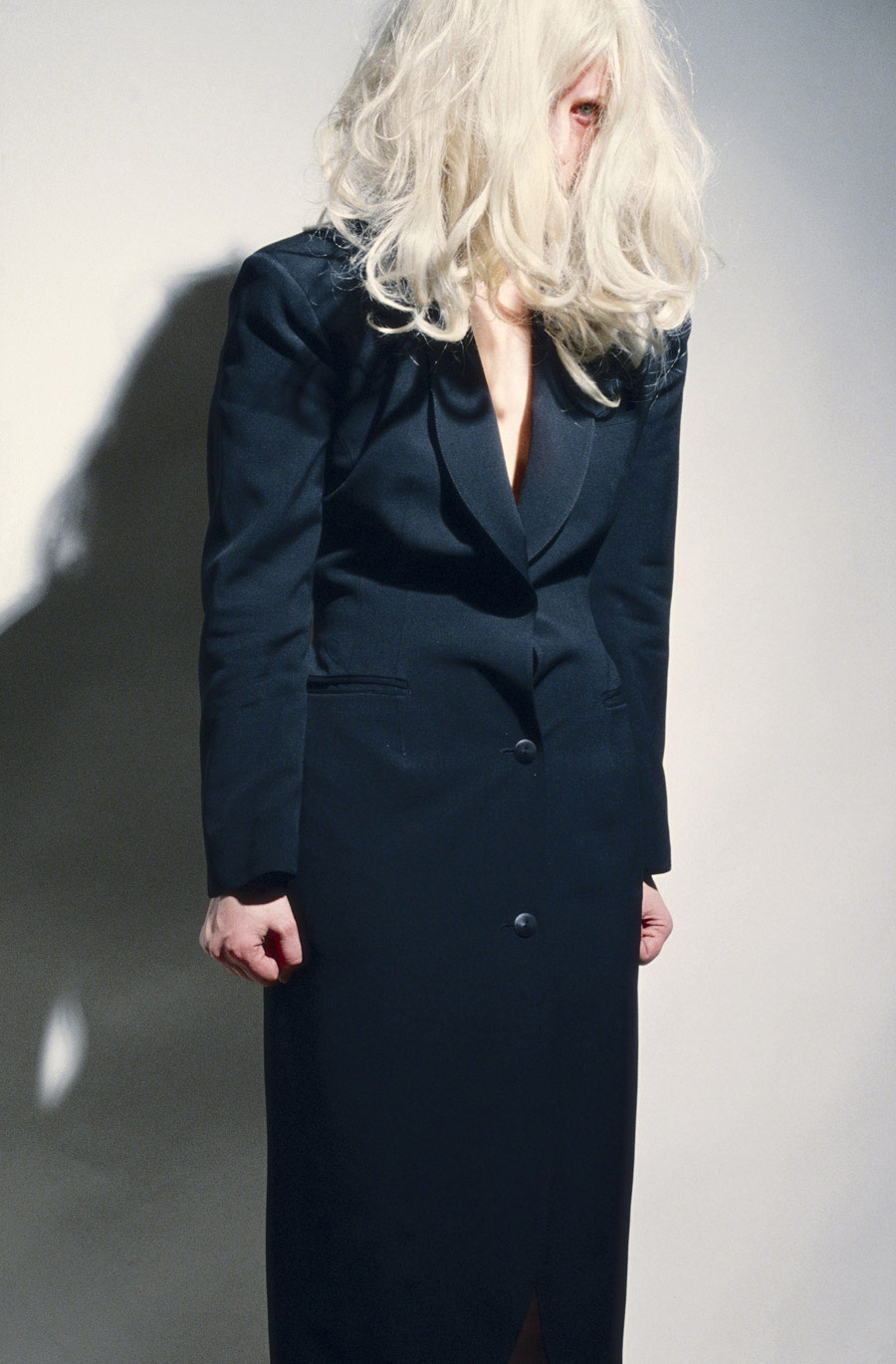
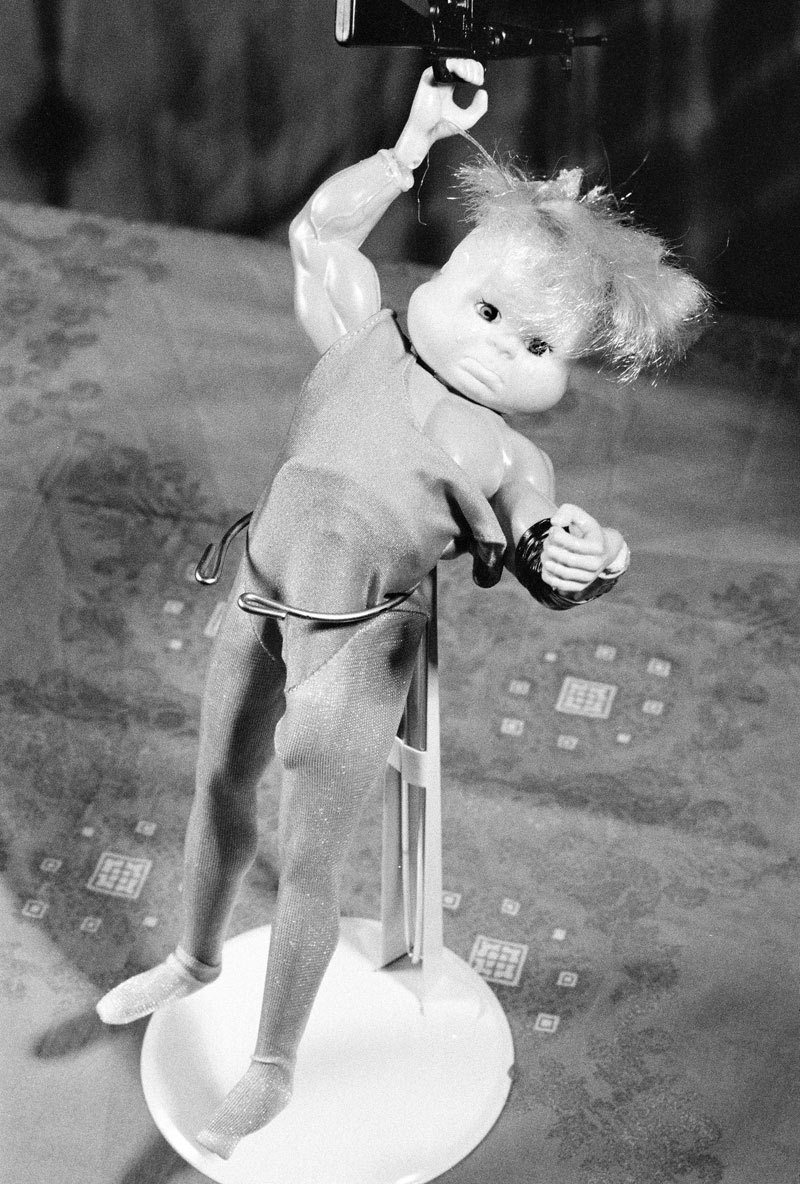
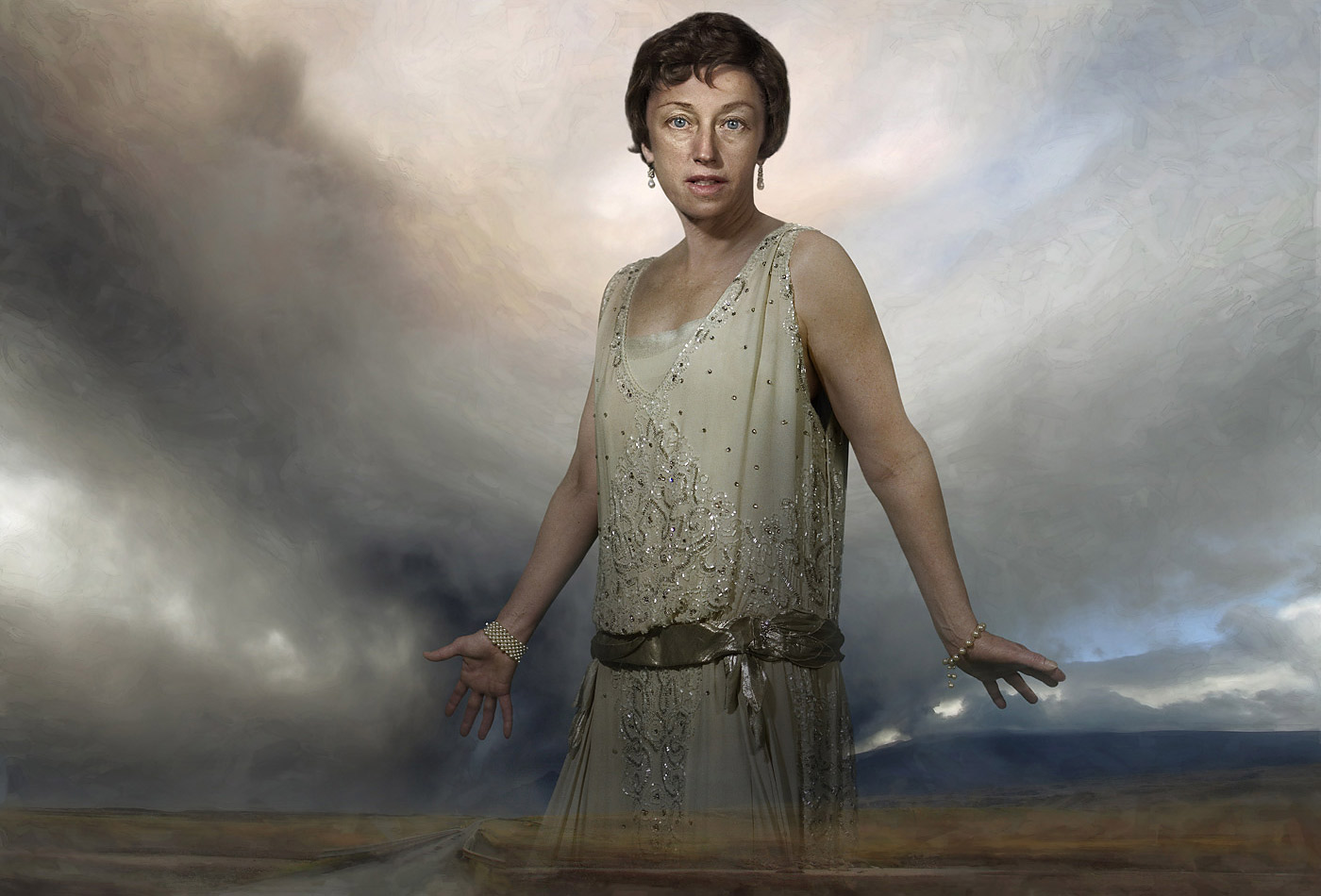
From 6 June to 14 September 2014, the Kunsthaus Zürich plays host to a major retrospective featuring American artist Cindy Sherman (b. 1954). Sherman is one of the leading exponents of staged photography. In her work she deals with issues of identity, (gender) roles and physicality, almost always using herself as the model. Cindy Sherman’s earliest works were created in 1975. Preceding the celebrated Untitled Film Stills (1977-1980), these photographs were produced at home using an external shutter release, yet they were already concerned with the issues of identity and role play that are central to her oeuvre. The exhibition Cindy Sherman – Untitled Horrors includes a selection of these early and rarely shown works as well as her latest pieces, some of them monumental and covering entire walls. Sherman references the techniques and forms of advertising, cinema and classical painting.

THE THREATENING HEART OF UNTITLED HORRORS

The principal focus of the overview, which has been compiled by the Kunsthaus together with the artist, is the threatening and grotesque. The retrospective’s subtitle, Untitled Horrors, is partly a reference to the exhibition’s content, but also a play on the fact that Cindy Sherman invariably labels her photos Untitled. She leaves it to the viewer to read the pictures in their own way, inviting them to develop the stories behind them as they see fit, and come up with their own titles.

110 WORKS IN TOTAL

The presentation includes all the key works from the various phases of Cindy Sherman’s artistic career. Iconic pieces from the early period, such as the famous Untitled Film Stills series, reminiscent of Italian Neo-Realism and American film noir, appear alongside the later photographs of Hollywood / Hampton Types (2000-2002), while the Clowns (2003-2004) encounter the Sex Pictures series from 1992. These juxtapositions reveal the remarkable consistency with which, throughout her long career, the artist has engaged with fundamental issues of human existence and repeatedly explored new avenues of formal expression. Curated by Mirjam Varadinis and created in association with the Astrup Fearnley Museet, Oslo, and the Moderna Museet, Stockholm, the 110-work presentation dispenses with a linear or chronological approach, choosing instead to create unexpected combinations that shed new light on the oeuvre of this important artist and her exploration of the self through film and photography.

Text from the Kunsthaus Zürich website


Cindy Sherman (American, b. 1954) 'Untitled #235' 1987-1991


Cindy Sherman (American, b. 1954)
Untitled #235
1987-1991
Chromogenic colour print
228.6 × 152.4cm
Private collection, courtesy Segalot LP, New York
Courtesy of the artist and Metro Pictures, New York
© Cindy Sherman


Cindy Sherman (American, b. 1954) 'Untitled #304' 1994


Cindy Sherman (American, b. 1954)
Untitled #304
1994
Chromogenic colour print
154.9 × 104.1cm
Courtesy of the artist and Metro Pictures, New York
© Cindy Sherman


Cindy Sherman (American, b. 1954) 'Untitled #324' 1996


Cindy Sherman (American, b. 1954)
Untitled #324
1996
Chromogenic colour print
146.7 × 99.1cm
Collection Metro Pictures & Skarstedt Gallery
Courtesy of the artist and Metro Pictures, New York
© Cindy Sherman


Cindy Sherman (American, b. 1954) 'Untitled #348' 1999


Cindy Sherman (American, b. 1954)
Untitled #348
1999
Gelatin silver print
97.8 × 66cm
Courtesy of the artist and Metro Pictures, New York
© Cindy Sherman


Cindy Sherman (American, b. 1954) 'Untitled #352' 2000


Cindy Sherman (American, b. 1954)
Untitled #352
2000
Chromogenic colour print
68.6 × 45.7cm
Collection Magasin 3 Stockholm Konsthall
Courtesy of the artist and Metro Pictures, New York
© Cindy Sherman


Cindy Sherman (American, b. 1954) 'Untitled #363 (Bus Riders I)' 1976/2000


Cindy Sherman (American, b. 1954)
Untitled #363 (Bus Riders I)
1976/2000
Gelatin silver print
18.9 x 12.7cm
Tate
Purchased with funds provided by the American Fund for the Tate Gallery, 2001
Courtesy of the artist and Metro Pictures, New York
© Cindy Sherman


Cindy Sherman (American, b. 1954) 'Untitled #420' 2004


Cindy Sherman (American, b. 1954)
Untitled #420
2004
Chromogenic colour print (2-teilig)
Each: 182.4 × 115.8cm
Astrup Fearnley Collection, Oslo
Courtesy of the artist and Metro Pictures, New York
© Cindy Sherman


Cindy Sherman (American, b. 1954) 'Untitled #458' 2007-2008


Cindy Sherman (American, b. 1954)
Untitled #458
2007-2008
Chromogenic colour print
195 × 147cm
Astrup Fearnley Collection, Oslo
Courtesy of the artist and Metro Pictures, New York
© Cindy Sherman


Cindy Sherman (American, b. 1954) 'Untitled #544' 2010/2012


Cindy Sherman (American, b. 1954)
Untitled #544
2010 / 2012
Chromogenic colour print
172.7 × 254cm
Astrup Fearnley Collection, Oslo
Courtesy of the artist and Metro Pictures, New York
© Cindy Sherman


Cindy Sherman (American, b. 1954) 'Untitled #549-C' 2010


Cindy Sherman (American, b. 1954)
Untitled #549-C
2010
Pigment / print on PhotoTex, adhesive fabric,
Dimensions variable
Courtesy of the artist and Metro Pictures, New York
© Cindy Sherman


Kunsthaus Zürich
Heimplatz 1
CH-8001 Zurich

Opening hours:
Tuesday, Friday – Sunday 10am – 6pm
Wednesday – Thursday 10am – 8pm
Closed Mondays

Kunsthaus Zürich website

LIKE ART BLART ON FACEBOOK

Back to top

Exhibition: ‘Josef Koudelka: Nationality Doubtful’ at the Art Institute of Chicago

Exhibition dates: 7th June – 14th September, 2014

Curator: Matthew S. Witkovsky, the Richard and Ellen Sandor Chair and Curator of the Department of Photography


Josef Koudelka (Czech-French, b. 1938) 'Czechoslovakia (Kadañ)' 1963, printed 1967 from the exhibition 'Josef Koudelka: Nationality Doubtful' at the Art Institute of Chicago, June - September, 2014


Josef Koudelka (Czech-French, b. 1938)
Czechoslovakia (Kadañ)
1963, printed 1967
From the series Gypsies
Gelatin silver print
The Art Institute of Chicago, restricted gift of Artworkers Retirement Society
© Josef Koudelka/Magnum Photos. Courtesy of Pace/MacGill Gallery, New York


One of the greats – mainly for his series GypsiesInvasion and Exiles.

Powerful images: strong, honest, respectful, beautifully composed but above all gritty, gritty, gritty. There is a dark radiance here, an ether/reality, as though the air was heavy with melancholy, emotion, loss, violence, isolation and, sometimes, love. No wonder he describes his work as a “theater of the real.” Humanism, and photography at its most essential.

Dr Marcus Bunyan


Many thankx to the Art Institute of Chicago for allowing me to publish the photographs in the posting. Please click on the photographs for a larger version of the image.


“I try to be a photographer. I cannot talk. I am not interested in talking. If I have anything to say, it may be found in my images. I am not interested in talking about things, explaining about the whys and the hows. I do not mind showing my images, but not so much my contact sheets. I mainly work from small test prints. I often look at them, sometimes for a long time. I pin them to the wall, I compare them to make up my mind, be sure of my choices. I let others tell me what they mean. [To Robert Delpire] My photographs, you know them. You have published them, you have exhibited them, then you can tell whether they mean something or not.”

“There is still an enormous amount of hostility and racial prejudice towards Roma, especially in Eastern Europe, but not just there. It does not matter on which political spectrum you are, left or right, it is very universal, people are often very discriminatory against them.”


Josef Koudelka


Josef Koudelka (Czech-French, b. 1938) 'Romania' 1968, printed 1980s from the exhibition 'Josef Koudelka: Nationality Doubtful' at the Art Institute of Chicago, June - September, 2014


Josef Koudelka (Czech-French, b. 1938)
Romania
1968, printed 1980s
From the series Gypsies
Gelatin silver print
The Art Institute of Chicago, promised gift of Robin and Sandy Stuart
© Josef Koudelka/Magnum Photos. Courtesy of Pace/MacGill Gallery, New York


Czech-born French artist Josef Koudelka belongs in the firmament of classic photographers working today. Honoured with the French Prix Nadar (1978), the Hasselblad Prize (1992), and the International Center of Photography Infinity Award (2004), Koudelka is also a leading member of the world-renowned photo agency Magnum. This exhibition, his first retrospective in the United States since 1988, is also the first museum show ever to emphasise his original vintage prints, period books, magazines, and significant unpublished materials.

Koudelka became famous in anonymity through the worldwide publication of his daring photographs of the Soviet-led invasion of Prague in August 1968. Just 30 years old at the time, Koudelka had already worked for a decade, principally on Gypsies, for which he visited Roma populations for weeks at a time in his home country and later abroad over the course of years. This ambitious series beautifully combines a sense of modern history with timeless humanism.

Choosing exile to avoid reprisals for his Invasion photographs, Koudelka travelled throughout Europe during the 1970s and 1980s, camping at village festivals from spring through fall and then printing in wintertime. His photographs of those decades became the series Exiles. Since the late 1980s Koudelka has made panoramic landscape photographs in areas massively shaped by industry, territorial conflict, or – in the case of the Mediterranean rim – the persistence of Classical civilisation.

Tracing this long and impressive career, this exhibition draws on Koudelka’s extensive holdings of his own work and on recent major acquisitions by the Art Institute, including the complete surviving contents of the debut presentation of Gypsies in 1967 (22 photographs), as well as ten Invasion images printed by the photographer just weeks after the event. Also on display are early experimental and theatre photographs and some of the photographer’s beautifully produced books – which stretch dozens of feet when unfolded. A fully illustrated catalogue accompanies the exhibition, which after its debut at the Art Institute travels to the J. Paul Getty Museum, Los Angeles, and Fundación MAPFRE, Madrid.

Text from the Art Institute of Chicago website


Gypsies exists as an invaluable documentation of a people during a tumultuous time in their history. From an image of a trio of suited musicians engrossed in their instruments, to stirring portraits of families in cramped living conditions, the photoessay is both a testament to the strength of Roma culture and a stark document of the realities of these people’s lives. Having fully immersed himself in the project, Koudelka’s work presents an unbiased and honest portrait of a community whose nomadic way of life has been contested throughout history.

Anonymous text from the Magnum Photos website [Online] Cited 15/06/2021


Josef Koudelka (Czech-French, b. 1938) 'Festival of gypsy music. Straznice, Czechoslovakia' 1966


Josef Koudelka (Czech-French, b. 1938)
Festival of gypsy music. Straznice, Czechoslovakia
1966
From the series Gypsies
Gelatin silver print


Josef Koudelka (Czech-French, b. 1938) 'Slovakia' 1967


Josef Koudelka (Czech-French, b. 1938)
Slovakia
1967
From the series Gypsies
Gelatin silver print


Josef Koudelka (Czech-French, b. 1938) 'Slovakia' 1967


Josef Koudelka (Czech-French, b. 1938)
Slovakia
1967
From the series Gypsies
Gelatin silver print


Josef Koudelka (Czech-French, b. 1938) 'Reconstruction of a homicide. In the foreground: a young gypsy suspected of being guilty. Jarabina, Czechoslovakia' 1963


Josef Koudelka (Czech-French, b. 1938)
Reconstruction of a homicide. In the foreground: a young gypsy suspected of being guilty. Jarabina, Czechoslovakia
1963
From the series Gypsies
Gelatin silver print


Josef Koudelka (Czech-French, b. 1938) 'Jarabina, Czechoslovakia' 1963. Various images from the series 'Gypsies'


Josef Koudelka (Czech-French, b. 1938)
Jarabina, Czechoslovakia
1963
From the series Gypsies
Gelatin silver print


Josef Koudelka (Czech-French, b. 1938) 'Slovakia' 1963


Josef Koudelka (Czech-French, b. 1938)
Slovakia
1963
From the series Gypsies
Gelatin silver print


Josef Koudelka (Czech-French, b. 1938) 'Velka Lomnica, Slovakia, Czechoslovakia' 1963


Josef Koudelka (Czech-French, b. 1938)
Velka Lomnica, Slovakia, Czechoslovakia
1963
From the series Gypsies
Gelatin silver print


Josef Koudelka (Czech-French, b. 1938) 'Velka Lomnica, Slovakia, Czechoslovakia' 1966


Josef Koudelka (Czech-French, b. 1938)
Velka Lomnica, Slovakia, Czechoslovakia
1966
From the series Gypsies
Gelatin silver print


Josef Koudelka (Czech-French, b. 1938) 'Slovakia. Zehra' 1967


Josef Koudelka (Czech-French, b. 1938)
Slovakia. Zehra
1967
From the series Gypsies
Gelatin silver print


Josef Koudelka (Czech-French, b. 1938) 'Gypsy. Okres Poprad, Slovakia, Czechoslovakia' 1967


Josef Koudelka (Czech-French, b. 1938)
Gypsy. Okres Poprad, Slovakia, Czechoslovakia
1967
From the series Gypsies
Gelatin silver print


Josef Koudelka (Czech-French, b. 1938) Various images from the series 'Gypsies'


Josef Koudelka (Czech-French, b. 1938) Various images from the series 'Gypsies'


Josef Koudelka (Czech-French, b. 1938) Various images from the series 'Gypsies'


Josef Koudelka (Czech-French, b. 1938) Various images from the series 'Gypsies'


Josef Koudelka (Czech-French, b. 1938) Various images from the series 'Gypsies'


Josef Koudelka (Czech-French, b. 1938)
Images from the series Gypsies
Gelatin silver print
Book printed 1975; new Aperture edition 2011


Josef Koudelka (Czech-French, b. 1938) 'Spain' 1971


Josef Koudelka (Czech-French, b. 1938)
Spain
1971
From the series Gypsies
Gelatin silver print


Aperture’s new edition of Koudelka: Gypsies (2011) rekindles the energy and astonishment of this foundational body of work by master photographer Josef Koudelka. Lavishly printed in a unique quadratone mix by artisanal printer Gerhard Steidl, it offers an expanded look at Cikáni (Czech for “gypsies” ) – 109 photographs of Roma society taken between 1962 and 1971 in then-Czechoslovakia (Bohemia, Moravia and Slovakia), Romania, Hungary, France and Spain. The design and edit for this volume revisits the artist’s original intention for the work, and is based on a maquette originally prepared in 1968 by Koudelka and graphic designer Milan Kopriva. Koudelka intended to publish the work in Prague, but was forced to flee Czechoslovakia, landing eventually in Paris. In 1975, Robert Delpire, Aperture and Koudelka collaborated to publish Gitans, la fin du voyage (Gypsies, in the English-language edition), a selection of 60 photographs taken in various Roma settlements around East Slovakia.


Josef Koudelka (Czech-French, b. 1938) 'Spain' 1971 'Slovakia (Rakúsy)' 1966, printed 1967


Josef Koudelka (Czech-French, b. 1938)
Slovakia (Rakúsy)
1966, printed 1967
From the series Gypsies
Gelatin silver print
The Art Institute of Chicago, restricted gift of Sandy and Robin Stuart and Photography Gala Fund
© Josef Koudelka/Magnum Photos. Courtesy of Pace/MacGill Gallery, New York.


The unforgettable photographs of acclaimed Czech-born, French photographer Josef Koudelka (b. 1938), including eyewitness images of the 1968 Soviet-led invasion of Czechoslovakia, have not been shown at a major U.S. museum since 1988. These documentary works as well as extensive selections from the photographer’s work going back to 1958 – including his renowned series Gypsies, Exiles, and a variety of recent panoramic photographs – will feature in the major retrospective exhibition Josef Koudelka: Nationality Doubtful, from June 7 through September 14, 2014. It is the first museum show ever to emphasise Koudelka’s original vintage prints, period publications and unpublished study materials.

Josef Koudelka: Nationality Doubtful, which takes place in the Abbott (182-4) and Bucksbaum (188) galleries on the ground floor of the Modern Wing, draws primarily on Koudelka’s extensive holdings of his own work. For decades, the photographer has exhibited new and recent prints of images that have grown iconic through frequent exhibitions and reproductions, while holding back the earliest, vintage prints – until now. For example, over the years there have been more than one dozen solo exhibitions of Gypsies and numerous reprints of the book of the same name, which has appeared in two editions and six languages. Among the rarities that will be included in Josef Koudelka: Nationality Doubtful is the only surviving maquette for the first book version of Gypsies, which Koudelka had to leave unfinished at his exile from Prague in 1970.

Koudelka’s habit of revisiting past projects while simultaneously advancing into new territory will be squarely on view in Josef Koudelka: Nationality Doubtful. Twenty-two original photographs from the very first show of Gypsies, held in Prague in 1967, will be displayed for the first time since that date. In an adjacent room, a different selection from the series, printed at a different size and in another way, will also be shown. Similarly, extremely rare vintage prints of Invasion, made and circulated anonymously to the press directly following the Soviet invasion of Czechoslovakia, will be shown alongside much larger prints commissioned soon after the fall of the Berlin Wall in 1989, when Koudelka returned from exile and had his first post-Soviet exhibition in Prague.

Also on display will be selections from his early experimental photographs and years of work with Prague theatre companies, made during the flowering of the Czech stage and cinema in the 1960s.

Koudelka was born in a small Moravian town in 1938 and moved to Prague, then the capital of Czechoslovakia, in the 1950s. He studied aeronautical engineering while practicing photography obsessively from 1958; in 1966, he turned full-time to a photographic career. Already in 1961, Koudelka had begun his most ambitious life project, Gypsies, for which he visited Roma populations for weeks at a time, principally in Slovakia. The rigorously humanist pictures became his calling card at home and internationally in the later 1960s after being published in the Swiss magazine Camera and shown to curators and photography representatives around Western Europe and the United States. Meanwhile, Koudelka’s Invasion photographs became famous after they appeared worldwide to commemorate the first anniversary of the events of August 1968. Worried about reprisals even though the images had been published anonymously, Koudelka chose to leave his country in May 1970.

In exile Koudelka adopted a semi-nomadic existence. He followed village festivals, pilgrimages, and Roma gatherings throughout the United Kingdom (his country of asylum in the 1970s), Spain, Italy, and France (his principal residence from 1981, and country of citizenship from 1986), photographing throughout the year and printing largely in wintertime. The world-famous photography agency Magnum, which had stewarded publication of the Invasion photographs, became Koudelka’s home base and as he says his “family.” Koudelka’s photographs of these years were gathered together in 1988 as Exiles, which will also be part of the exhibition.

Since the late 1980s Koudelka has made panoramic landscape photographs in areas massively shaped by industry, territorial conflict, or – in the case of the Mediterranean rim – the persistence of Classical civilisation. The final gallery of Josef Koudelka: Nationality Doubtful will showcase six of these mural-size black-and-white images, as well as three of the impressive accordion-fold books that Koudelka has made of them since 1989, some of which stretch to more than 100 feet long.

Despite his peripatetic life, Koudelka’s moving and stunning photographs have made him one of the most sought-after figures in print and at exhibition. Honoured with the French Prix Nadar (1978), the Hasselblad Prize (1992), and the International Center of Photography Infinity Award (2004), Koudelka remains today a leading member of Magnum.

A fully illustrated catalogue accompanies the exhibition, overseen closely by the artist and designed by the Czech firm Najbrt Studio. Edited by Matthew S. Witkovsky, the Richard and Ellen Sandor Chair and Curator of Photography at the Art Institute, the book provides extensive new information on Koudelka’s formative years in Prague during the thaw of the 1960s, as well as the first complete history of Gypsies, its twists and turns from 1961 through 2011. Amanda Maddox, assistant curator of photographs at the J. Paul Getty Museum, which has co-organised the exhibition, provides fresh knowledge on Koudelka’s underrepresented decade in England and the UK. Stuart Alexander and Gilles Tiberghien, two longtime friends of the photographer, have contributed illuminating essays on Koudelka’s years in France and his fascination for panoramic landscape, respectively.

Press release from the Art Institute of Chicago


Josef Koudelka (Czech-French, b. 1938) 'France' 1987


Josef Koudelka (Czech-French, b. 1938)
France
1987
Gelatin silver print


Josef Koudelka (Czech-French, b. 1938) 'Lisbon, Portugal' 1975


Josef Koudelka (Czech-French, b. 1938)
Lisbon, Portugal
1975
Gelatin silver print


Josef Koudelka (Czech-French, b. 1938) 'Lisbon, Portugal' 1975 'Ireland' 1972, printed 1987/88


Josef Koudelka (Czech-French, b. 1938)
Ireland
1972, printed 1987/88
From the series Exiles
Gelatin silver print
© Josef Koudelka/Magnum Photos. Courtesy of Pace/MacGill Gallery, New York


Josef Koudelka (Czech-French, b. 1938) 'Spain' 1975


Josef Koudelka (Czech-French, b. 1938)
Spain
1975
Gelatin silver print


Josef Koudelka (Czech-French, b. 1938) 'St. Procopius Abbey graveyard, Lisle' Nd


Josef Koudelka (Czech-French, b. 1938)
St. Procopius Abbey graveyard, Lisle
Nd
Gelatin silver print


Josef Koudelka (Czech-French, b. 1938) 'Poland' 1958


Josef Koudelka (Czech-French, b. 1938)
Poland
1958
Gelatin silver print
The Art Institute of Chicago, Photography Gala Fund and restricted gift of John A. Bross
© Josef Koudelka/Magnum Photos. Courtesy of Pace/MacGill Gallery, New York


Drama was an important part of Koudelka’s early career: In a literal sense, because he worked for a theatre magazine in the ’60s, creating fantastically emotive images, but also because theatricality was, and still is, deeply embedded in the photographer’s world view. The week in 1968 when young Czechoslovakians stood up against invading Soviet forces occurred when he was working as a stage photographer, and so it became not only a tragedy but also a drama to be recorded. Likewise, his “Gypsies” series, created in the same period, is described by Koudelka as a “theater of the real.”

Through dynamic composition and juxtaposition, Koudelka’s work challenges us to differentiate between spectacle and reality, and while there is no positive indication that one is valued over the other, this is not at all the same as the disbelief in reality that is characteristic of postmodernism. As he puts it, “You form the world in your viewfinder, but at the same time the world forms you.”

In a sense, Koudelka does not want us to become too comfortable with his works as definitive statements. Instead, he crops bodies in images abruptly; we often see people cut off at the knees or ankles, visually and figuratively separating them from the Earth. In other works, disembodied arms and legs jut into the space of the photograph, making scenes surreal and reminding us that whatever coherency the composition has, we can never see the whole picture of what’s really going on. Even with the more poetic and purposefully aesthetic panorama prints of his later “Chaos” series – monumental testaments to the violence we enact both on the natural world and upon each other – through the pitted insistence of film grain and the lack of bright tones or highlights, we are not permitted redemption through “art” or the creation of “beautiful” objects.

In this respect Koudelka’s work, in its celebration of the imperfect, has more in common with the aesthetics of the haiku poet Basho, or the tea master Sen no Rikyu, than with the luscious highly detailed colour images that largely dominate the world of contemporary art photography.”

John L. Tran. “Josef Koudelka: the theatrics of life” on The Japan Times website 18 December 2013 [Online] Cited 15/06/2021. Used under fair use conditions for the purposes of education and research


Josef Koudelka (Czech-French, b. 1938) 'Untitled (Student on tank, eyes crossed out)' 1968


Josef Koudelka (Czech-French, b. 1938)
Untitled (Student on tank, eyes crossed out)
1968
From the series Invasion
Gelatin silver print
© Josef Koudelka/Magnum Photos. Courtesy of Pace/MacGill Gallery, New York


Josef Koudelka (Czech-French, b. 1938) 'Invasion by Warsaw Pact troops in front of the Radio headquarters. Prague, Czechoslovakia' 1968


Josef Koudelka (Czech-French, b. 1938)
Invasion by Warsaw Pact troops in front of the Radio headquarters. Prague, Czechoslovakia
1968
From the series Invasion
Gelatin silver print
© Josef Koudelka/Magnum Photos. Courtesy of Pace/MacGill Gallery, New York


Josef Koudelka (Czech-French, b. 1938) 'Untitled' Various images from the series 'Invasion'


Josef Koudelka (Czech-French, b. 1938) 'Untitled' Various images from the series 'Invasion'


Josef Koudelka (Czech-French, b. 1938) 'Untitled' Various images from the series 'Invasion'


Josef Koudelka (Czech-French, b. 1938) 'Untitled' Various images from the series 'Invasion'


Josef Koudelka (Czech-French, b. 1938) 'Untitled' Various images from the series 'Invasion'


Josef Koudelka (Czech-French, b. 1938)
Untitled
1968
Images from the series Invasion
Gelatin silver print


The Art Institute of Chicago
111 South Michigan Avenue
Chicago, Illinois 60603-6404
Phone: (312) 443-3600

Opening hours:
Thursday – Monday 10am – 11pm
Closed Tuesday and Wednesday

The Art Institute of Chicago website

LIKE ART BLART ON FACEBOOK

Back to top

Exhibition: ‘Vanessa Winship’ at Fundación Mapfre, Madrid

Exhibition dates: 27th May – 31st August, 2014

Curator: Carlos Martín García


Vanessa Winship (British, b. 1960) 'Untitled' from the series 'Imagined States and Desires. A Balkan Journey' 1999-2002 from the exhibition 'Vanessa Winship' at Fundación Mapfre, Madrid, May - August, 2014


Vanessa Winship (British, b. 1960)
Untitled from the series Imagined States and Desires. A Balkan Journey
1999-2002
© Vanessa Winship


“Young heart, old soul.” And then the vulnerability in those eyes… that burn right through you.

Such sensitivity, such presence. Glorious. All of them!

Dr Marcus Bunyan


Many thankx to Fundación Mapfre for allowing me to publish the photographs in the posting. Please click on the photographs for a larger version of the image.


Vanessa Winship (British, b. 1960) 'Untitled' from the series 'Imagined States and Desires. A Balkan Journey' 1999-2002 rom the exhibition 'Vanessa Winship' at Fundación Mapfre, Madrid, May - August, 2014


Vanessa Winship (British, b. 1960)
Untitled from the series Imagined States and Desires. A Balkan Journey
1999-2002
© Vanessa Winship


Vanessa Winship (British, b. 1960) 'Untitled' from the series 'Imagined States and Desires. A Balkan Journey' 1999-2002


Vanessa Winship (British, b. 1960)
Untitled from the series Imagined States and Desires. A Balkan Journey
1999-2002
© Vanessa Winship


Vanessa Winship (British, b. 1960) 'Untitled' from the series 'Black Sea. Between Chronicle and Fiction' 2002-2010


Vanessa Winship (British, b. 1960)
Untitled from the series Black Sea. Between Chronicle and Fiction
2002-2010
© Vanessa Winship


Vanessa Winship (British, b. 1960) 'Untitled' from the series 'Black Sea. Between Chronicle and Fiction' 2002-2010


Vanessa Winship (British, b. 1960)
Untitled from the series Black Sea. Between Chronicle and Fiction
2002-2010
© Vanessa Winship


Vanessa Winship (British, b. 1960) 'Untitled' from the series 'Black Sea. Between Chronicle and Fiction' 2002-2010


Vanessa Winship (British, b. 1960)
Untitled from the series Black Sea. Between Chronicle and Fiction
2002-2010
© Vanessa Winship


Vanessa Winship (British, b. 1960) 'Untitled' from the series 'she dances on Jackson. United States' 2011-2012


Vanessa Winship (British, b. 1960)
Untitled from the series she dances on Jackson. United States
2011-2012
© Vanessa Winship


Fundación Mapfre opens its new photography gallery at Paseo de Recoletos 27 with the first retrospective exhibition dedicated to the work of British photographer Vanessa Winship. Curated by Carlos Martín García, the show offers visitors a complete overview of Winship’s work, featuring a broad selection of photographs from all of her series, starting with her initial project in the Balkans and ending with her work in Almería this year, produced by Fundación Mapfre and due to receive its first public showing at this exhibition.

Vanessa Winship (Barton-upon-Humber, United Kingdom, 1960) studied at the Polytechnic of Central London during the 1980s at the time when postmodern theory was beginning to permeate the practice of photography and cultural studies. These ideas are reflected in the artist’s deliberate remove of all potential documentary content from her photography in order to concentrate instead on notions more related to identity, vulnerability and the body. Accordingly, since the 1990s Vanessa Winship has worked in regions which, in the collective imaginary, are associated with the instability and darkness of a recent past and with the volatile nature of borders and identities. Her images, in black and white, challenge the perception of photography’s immovable truth. Meanwhile, the formal choice of black and while reflects a deliberate shift from the photograph as narrative and constitutes, in the words of the artist herself, a “marvellous instrument of abstraction that enables us to move between time and memory.”

Vanessa Winship is one of the most renowned photographers on the contemporary international scene. In 2011 she was the first woman to win the prestigious Henri Cartier-Bresson (HCB) award. Her other distinctions include winning first prize in the Stories category of the World Press Photo awards in 1998 and 2008, the Descubrimientos award at PhotoEspaña in 2010, and the Godfrey Argent Prize in 2008, bestowed by the National Portrait Gallery in London.

A tour of the exhibition

“I lived and worked in the region of the Balkans, Turkey and the Caucasus for more than a decade. My work focuses on the junction between chronicle and fiction, exploring ideas around concepts of borders, land, memory, desire, identity and history. I am interested in the telling of history, and in notions around periphery and edge. For me photography is a process of literacy, a journey of understanding.”

Vanessa Winship


The Vanessa Winship exhibition adopts the form of a chronological journey through each of the series that make up her oeuvre, featuring a selection of 188 photographs.

Between 1999 and 2003 Vanessa Winship traveled through the regions of Albania, Serbia, Kosovo and Athens, coinciding with the armed conflict in the former Yugoslavia and resulting in her series Imagined States and Desires. A Balkan Journey. This project was a fundamental step in defining her photographic vision and in her decision to break with contemporary reportage and the traditional concept of the photojournalist. The images that make up this series mostly center on the tragedy of the exodus of Kosovar Albanian refugees from Serbia to neighbouring countries. They are a collection of snapshots that reflect the volatile nature of borders, ethnic groups and creeds while asserting that identity is not bestowed by territory but is ingrained in individuals, wherever they go. The fragmentary nature of the series, its condensation into micro-stories, lays the foundations for her future practice.

In 2002 Vanessa Winship moved to the Black Sea region and over the next eight years traveled through Turkey, Georgia, Russia, Ukraine, Romania and Bulgaria. Her work in this area gave rise to one of her most renowned series, Black Sea: Between Chronicle and Fiction. In this series, she presents her vision of the area and the residents of the regions around the shores of the Black Sea, which she presents as a natural border – challenging all notions of geopolitical or historically established limits – of the vital space of each nation, and even of the distinction between public and private space. Winship’s work therefore focuses on the aspects that endure beyond the action of politics: collective rituals, modes of transportation, recreational spaces, and the movement of human beings up and down the coastlines.

In Black Sea, portraits of Turkish wrestlers and Ukrainian wedding guests allow Winship to elaborate on her reflections and explore the concepts of sexual differentiation governing societies: on one hand, Turkish wrestling, a direct descendant of Greco-Roman wrestling and an icon of masculinity in the country; on the other, participation in a wedding ceremony as a means of self-presentation in society for young Ukrainian women.

In both of these series, the images are accompanied by brief notes written by the artist, either expressing a single thought or a short description, which create a deliberately incomplete narrative. For Winship, these notes are meant to remind us of the power of text to evoke an image.

Sweet Nothings: Schoolgirls of Eastern Anatolia (2007), produced during her travels through Eastern Europe, is a key project in Vanessa Winship’s evolution as a photographer. It is an almost serial collection of portraits of schoolgirls from the rural area of Eastern Anatolia, a region bordering with Georgia, Armenia, Azerbaijan and Iran where the plurality of ethnic groups is silenced by the proliferation of uniforms, of both schoolchildren and military personnel. On a certain level, the school uniforms recall the tools used by states to classify the population, to “mark” their territory and neutralise the plurality of areas, as in Eastern Anatolia where the ethnic and geographic borders are not as clearly defined as they are on maps. This fact – the presence of uniforms – represents a framework for action, a boundary for the project, and allows Winship to further develop her interest in faces, gestures, and the sense of belonging to a group or community.

Georgia, another region on the shores of the Black Sea, is the setting for the series produced by between 2008 and 2010, in which she mostly focuses on portraits. Georgia. Seeds Carried by the Wind is a detailed study of the faces the photographer came across. These are portraits of youths and children, mostly individuals who, when grouped together, appear almost without variation as same-sex pairs. The collection suggests an energetic, survivor country. These images are combined with a series of coloured photographs (the only ones in Winship’s entire output) that accompany tombstones in a cemetery. The two collections establish an interesting dialogue between different generations of Georgians and, simultaneously, between the artist herself and the original anonymous photographer. Meanwhile, the landscapes and stones that complete the series evoke a premature death. By combining landscape and portrait as places where the traces of identity, history and present are imprinted, this series is a key project in Winship’s work as it prompts a debate about her practice and the issues posed by the two genres.

In 2011 Vanessa Winship received the prestigious Henri Cartier-Bresson (HCB) photography award. The project for she won the prize led to the series she Dances on Jackson. United States (2011-2012), produced in the United States, a country which she represents as of great uncertainty, where the weight of the recent past is manifested through public works and constructions which are either underused or have fallen into disuse, and where the faces of anonymous individuals and groups reveal their disillusionment with the promises of the American dream. This series also constitutes Winship’s definitive approach to landscape photography, a genre which has gained increasing prominence in her output. Short texts written by the author replace the gradual disappearance of the portrait, operating as narratives of the missing photographs. In she Dances on Jackson. United States the geographic leap to the other side of the Atlantic defines the characters that people Winship’s earlier photography.

Before embarking on her trip to the United States, Winship worked in her home town on the estuary of the Humber river (2010), for which this series is titled. In this project, we again witness the growing preeminence of landscape in her work. This process culminates masterfully in her most recent series, produced in Almería, which represents the reaffirmation of her work as a landscapist and the total absence of the human figure. In January 2014, for the purposes of this exhibition, the artist moved to Almería, a place marked by rootlessness and its border nature and geological diversity, to carry out her latest project. Winship has focused on photographing the geological formations along the coastline of Cabo de Gata and the devastation of the area following the proliferation of intensive agriculture based on greenhouse production. The land of gold, Spaghetti westerns and marble now appears as a land of plastic and, like all other places Winship has photographed, seems to be located in a place suspended in space and time. All of the images in this section of the show reflect the rapid transformation of the region following the introduction of greenhouses, a radical systemic change and altered coexistence brought about by the arrival of communities of immigrants and their access to consumer society customs. Almería, as Winship’s photographs clearly show, continues to be a fragmented landscape in which urban and rural collide and where the “non-place” that is the greenhouse acts as a metaphor for the area’s instability and vulnerability.

Catalogue

The exhibition will be accompanied by a catalogue featuring all the images on display and specially commissioned essays about the work of Vanessa Winship by Neil Ascherson, Stanley Wolukau-Wanambwa and Carlos Martín García. The catalog will also include two excerpts from Campos de Níjar (Níjar Country) and Coto Vedado (Forbidden Territory) by Juan Goytisolo, as well as a biography-timeline, an updated bibliography, and a selection of the texts the photographer uses to complement her series, in the manner of a “travel diary”. To date there are only two monographs on Winship, one devoted to the Black Sea series and one to Sweet Nothings, which means that this catalog will be the first and most incisive historiographical approximation to her entire oeuvre.”

Press release from Fundación Mapfre


Vanessa Winship (British, b. 1960) 'Untitled' from the series 'Almería. Where Gold Was Found' 2014


Vanessa Winship (British, b. 1960)
Untitled from the series Almería. Where Gold Was Found
2014
© Vanessa Winship


Vanessa Winship (British, b. 1960) 'Untitled' from the series 'Almería. Where Gold Was Found' 2014


Vanessa Winship (British, b. 1960)
Untitled from the series Almería. Where Gold Was Found
2014
© Vanessa Winship


Vanessa Winship (British, b. 1960) 'Untitled' from the series 'Black Sea. Between Chronicle and Fiction' 2002-2010 © Vanessa Winship


Vanessa Winship (British, b. 1960)
Untitled from the series Black Sea. Between Chronicle and Fiction
2002-2010
© Vanessa Winship


Vanessa Winship (British, b. 1960) 'Untitled' from the series 'Georgia. Seeds Carried by the Wind' 2008-2010 © Vanessa Winship


Vanessa Winship (British, b. 1960)
Untitled from the series Georgia. Seeds Carried by the Wind
2008-2010
© Vanessa Winship


Vanessa Winship (British, b. 1960) 'Untitled' from the series 'Sweet Nothings: Schoolgirls of Eastern Anatolia' 2007 © Vanessa Winship


Vanessa Winship (British, b. 1960)
Untitled from the series Sweet Nothings: Schoolgirls of Eastern Anatolia
2007
© Vanessa Winship


Vanessa Winship (British, b. 1960) 'Untitled' from the series 'Humber' 2010-2011 © Vanessa Winship


Vanessa Winship (British, b. 1960)
Untitled from the series Humber
2010-2011
© Vanessa Winship


Vanessa Winship (British, b. 1960) 'Untitled' from the series 'she dances on Jackson. United States' 2011-2012 © Vanessa Winship


Vanessa Winship (British, b. 1960)
Untitled from the series she dances on Jackson. United States
2011-2012
© Vanessa Winship


Vanessa Winship (British, b. 1960) 'Untitled' from the series 'Georgia. Seeds Carried by the Wind' 2008-2010 © Vanessa Winship


Vanessa Winship (British, b. 1960)
Untitled from the series Georgia. Seeds Carried by the Wind
2008-2010
© Vanessa Winship


FUNDACIÓN MAPFRE – Instituto de Cultura
Paseo de Recoletos, 23
28004 Madrid, Spain
Phone: +34 915 81 61 00

Opening hours:
Sunday 11.00am – 7.00pm
Monday 2.00 – 8.00pm
Tuesday 10.00am – 8.00pm
Wednesday 10.00am – 8.00pm
Thursday 10.00am – 8.00pm
Friday 10.00am – 8.00pm
Saturday 10.00am – 8.00pm

Fundación Mapfre website

LIKE ART BLART ON FACEBOOK

Back to top

Exhibition: ‘Italian Futurism, 1909-1944: Reconstructing the Universe’ at the Solomon R. Guggenheim Museum, New York

Exhibition dates: 21st February – 1st September, 2014

Curator: Vivien Greene, Senior Curator of 19th- and Early 20th-Century Art at the Guggenheim


Many thankx to the Solomon R. Guggenheim Museum for allowing me to publish the art work in the posting. Please click on the photographs for a larger version of the art.


Giacomo Balla (Italian, 1871-1958) 'The Hand of the Violinist (The Rhythms of the Bow)' (La mano del violinista [I ritmi dell’archetto]) 1912 from the exhibition 'Italian Futurism, 1909-1944: Reconstructing the Universe' at the Solomon R. Guggenheim Museum, New York, February - September, 2014


Giacomo Balla (Italian, 1871-1958)
The Hand of the Violinist (The Rhythms of the Bow) (La mano del violinista [I ritmi dell’archetto])
1912
Oil on canvas
56 x 78.3cm
Estorick Collection, London
© 2014 Artists Rights Society (ARS), New York / SIAE, Rome


Giacomo Balla (Italian, 1871-1958)

Around 1902, [Balla] taught Divisionist techniques to Umberto Boccioni and Gino Severini. Influenced by Filippo Tommaso Marinetti, Giacomo Balla adopted the Futurism style, creating a pictorial depiction of light, movement and speed. He was a signatory of the Futurist Manifesto in 1910. Typical for his new style of painting is Dynamism of a Dog on a Leash (1912) and his 1914 work Abstract Speed + Sound (Velocità astratta + rumore) (below). In 1914, he began to design Futurist furniture, as well as so-called Futurist “antineutral” clothing. Balla also began working as a sculptor, creating, in 1915, the well-known work titled Boccioni’s Fist, based on ‘lines of force’ (Linee di forza del pugno di Boccioni).

During World War I, Balla’s studio became a meeting place for young artists.

Balla’s most famous works, such as his 1912 Dynamism of a Dog on a Leash where efforts to express movement – and thus the passage of time – through the medium of painting. One of Balla’s main inspirations was the chronophotography of Étienne-Jules Marey. Balla’s 1912 The Hand of the Violinist (above) depicts the frenetic motion of a musician playing, and draws on inspiration from Cubism and the photographic experiments of Marey and Eadweard Muybridge.

In his abstract 1912-1914 series Iridescent Interpenetration, Balla attempts to separate the experience of light from the perception of objects as such. Abstract Speed + Sound (1913-14, below) is a study of speed symbolised by the automobile. Originally, it may have been part of a triptych.

Text from the Wikipedia website


Giacomo Balla (Italian, 1871-1958) 'Abstract Speed + Sound' (Velocità astratta + rumore) 1913-1914 from the exhibition 'Italian Futurism, 1909-1944: Reconstructing the Universe' at the Solomon R. Guggenheim Museum, New York, February - September, 2014


Giacomo Balla (Italian, 1871-1958)
Abstract Speed + Sound (Velocità astratta + rumore)
1913-1914
Oil on unvarnished millboard in artist’s painted frame
54.5 x 76.5cm
The Solomon R. Guggenheim Foundation, Peggy Guggenheim Collection, Venice 76.2553.31
© 2014 Artists Rights Society (ARS), New York / SIAE, Rome
Photo: Courtesy Solomon R. Guggenheim Foundation, New York


Francesco Cangiullo (italian, 1884-1977) 'Large Crowd in the Piazza del Popolo' (Grande folla in Piazza del Popolo) 1914


Francesco Cangiullo (italian, 1884-1977)
Large Crowd in the Piazza del Popolo (Grande folla in Piazza del Popolo)
1914
Watercolour, gouache, and pencil on paper
58 x 74cm
Private collection
© 2014 Artists Rights Society (ARS), New York / SIAE, Rome


Francesco Cangiullo (Italian, 1884-1977)

Neapolitan writer and painter who made an important contribution to Futurism’s experiments in poetry and drama.

The Napolitano artist was born on January 27th, 1884 and was largely self-taught. He joined the Futurist movement in 1910 and took part in the important Futurist exhibition in Rome in 1914, creating art collaboratively with both Filippo Tommaso Marinetti and Giacomo Balla. Cangiullo created his best-known artwork in 1915; in Café-Concert: Unexpected Alphabet he playfully portrays a lively evening at the theatre in his hometown of Naples in which the singers, dancers, acrobats, and comedians are composed of letters, numbers, and mathematical sings. In 1924 he distanced himself form the Futurists, but still continued a friendship with Marinetti. Fondly reminiscing on his experiences with the art movement, Cangiullo published Futurist Evenings recounting his memories with the group.


Filippo Masoero (Italian, 1894-1969) 'Descending over Saint Peter' (Scendendo su San Pietro) c. 1927-1937 (possibly 1930-1933)


Filippo Masoero (Italian, 1894-1969)
Descending over Saint Peter (Scendendo su San Pietro)
c. 1927-1937 (possibly 1930-1933)
Gelatin silver print
24 x 31.5cm
Touring Club Italiano Archive


Ivo Pannaggi (Italian, 1901-1981) 'Speeding Train' (Treno in corsa) 1922


Ivo Pannaggi (Italian, 1901-1981)
Speeding Train (Treno in corsa)
1922
Oil on canvas
100 x 120cm
Fondazione Carima – Museo Palazzo Ricci, Macerata, Italy
Photo: Courtesy Fondazione Cassa di risparmio della Provincia di Macerata


Ivo Pannaggi (Italian, 1901-1981)

Futurism

Pannaggi joined the Futurist movement in 1918, but left soon after because of disagreements with Fillippo Marinetti. In 1922, he and Vinicio Paladini [it] published their “Manifesto of Futurist Mechanical Art.” The manifesto emphasised the importance of machine aesthetics (arte meccanica), which became one of the dominant strands of Futurism in the 1920s. He and Paladini also staged the Mechanical Futurist Ballet (Ballo meccano futurista) at Anton Giulio Bragaglia’s Casa d’Arte.

Around the same time he painted Speeding Train (Treno in corsa), perhaps his most famous work (above). He also created many photomontage works. In Postal Collages (1925), Pannaggi created a series of unfinished photomontages that would be completed through the inevitable addition of stamps and seals by postal workers – an early instance of mail art.

Germany and the Bauhaus

In 1927, Pannaggi traveled to Berlin, where he would live until 1929. He became friends with Kurt Schwitters and Walter Benjamin and published photomontage works in German newspapers. Between 1932 and 1933, Pannaggi attended the Bauhaus, the only Futurist other than Nicolaj Diugheroff to do so.

Text from the Wikipedia website


Bruno Munari (Italian, 1907-1998) and Torido Mazzotti (Italian, 1895-1988) 'Antipasti Service' (Piatti Servizio Antipasti) 1929-1930


Bruno Munari (Italian, 1907-1998) and Torido Mazzotti (Italian, 1895-1988)
Antipasti Service (Piatti Servizio Antipasti)
1929-1930
Glazed earthenware (manufactured by Casa Giuseppe Mazzotti, Albisola Marina)
Six plates: 21.6 x 21.6cm diameter each; one vase: 11.7 x 7.6cm
The Wolfsonian-Florida International University, Miami Beach, The Mitchell Wolfson, Jr. Collection
© Bruno Munari, courtesy Corraini Edizioni
Photo: Lynton Gardiner


From February 21 through September 1, 2014, the Solomon R. Guggenheim Museum presents Italian Futurism, 1909-1944: Reconstructing the Universe, the first comprehensive overview in the United States of one of Europe’s most important 20th-century avant-garde movements. Featuring over 360 works by more than 80 artists, architects, designers, photographers, and writers, this multidisciplinary exhibition examines the full historical breadth of Futurism, from its 1909 inception with the publication of Filippo Tommaso Marinetti’s first Futurist manifesto through its demise at the end of World War II. The exhibition includes many rarely seen works, some of which have never traveled outside of Italy. It encompasses not only painting and sculpture, but also the advertising, architecture, ceramics, design, fashion, film, free-form poetry, photography, performance, publications, music, and theatre of this dynamic and often contentious movement that championed modernity and insurgency.

About Futurism

Futurism was launched in 1909 against a background of growing economic and social upheaval. In Marinetti’s “The Founding and Manifesto of Futurism,” published in Le Figaro, he outlined the movement’s key aims, among them: to abolish the past, to champion modernisation, and to extol aggression. Although it began as a literary movement, Futurism soon embraced the visual arts as well as advertising, fashion, music and theatre, and it spread throughout Italy and beyond. The Futurists rejected stasis and tradition and drew inspiration from the emerging industry, machinery, and speed of the modern metropolis. The first generation of artists created works characterised by dynamic movement and fractured forms, aspiring to break with existing notions of space and time to place the viewer at the centre of the artwork. Extending into many mediums, Futurism was intended to be not just an artistic idiom but an entirely new way of life. Central to the movement was the concept of the opera d’arte totale or “total work of art,” in which the viewer is surrounded by a completely Futurist environment.

More than two thousand individuals were associated with the movement over its duration. In addition to Marinetti, central figures include: artists Giacomo Balla, Benedetta (Benedetta Cappa Marinetti), Umberto Boccioni, Carlo Carrà, Fortunato Depero, and Enrico Prampolini; poets and writers Francesco Cangiullo and Rosa Rosà; architect Antonio Sant’Elia; composer Luigi Russolo; photographers Anton Giulio Bragaglia and Tato (Guglielmo Sansoni); dancer Giannina Censi; and ceramicist Tullio d’Albisola. These figures and other lesser-known ones are represented in the exhibition.

Futurism is commonly understood to have had two phases: “heroic” Futurism, which lasted until around 1916, and a later incarnation that arose after World War I and remained active until the early 1940s. Investigations of “heroic” Futurism have predominated and comparatively few exhibitions have explored the subsequent life of the movement; until now, a comprehensive overview of Italian Futurism had yet to be presented in the U.S. Italian art of the 1920s and ’30s is little known outside of its home country, due in part to a taint from Futurism’s sometime association with Fascism. This association complicates the narrative of this avant-garde and makes it all the more necessary to delve into and clarify its full history.

Exhibition overview

Italian Futurism unfolds chronologically, juxtaposing works in different mediums as it traces the myriad artistic languages the Futurists employed as their practice evolved over a 35-year period. The exhibition begins with an exploration of the manifesto as an art form, and proceeds to the Futurists’ catalytic encounter with Cubism in 1911, their exploration of near-abstract compositions, and their early efforts in photography. Ascending the rotunda levels of the museum, visitors follow the movement’s progression as it expanded to include architecture, clothing, design, dinnerware, experimental poetry, and toys.

Along the way, it gained new practitioners and underwent several stylistic evolutions – shifting from the fractured spaces of the 1910s to the machine aesthetics (or arte meccanica) of the ’20s, and then to the softer, lyrical forms of the ’30s. Aviation’s popularity and nationalist significance in 1930s Italy led to the swirling, often abstracted, aerial imagery of Futurism’s final incarnation, aeropittura. This novel painting approach united the Futurist interest in nationalism, speed, technology, and war with new and dizzying visual perspectives. The fascination with the aerial spread to other mediums, including ceramics, dance, and experimental aerial photography.

The exhibition is enlivened by three films commissioned from documentary filmmaker Jen Sachs, which use archival film footage, documentary photographs, printed matter, writings, recorded declamations, and musical compositions to represent the Futurists’ more ephemeral work and to bring to life their words-in-freedom poems. One film addresses the Futurists’ evening performances and events, called serate, which merged “high” and “low” culture in radical ways and broke down barriers between spectator and performer. Mise-en-scène installations evoke the Futurists’ opera d’arte totale interior ensembles, from those executed for the private sphere to those realized under Fascism.

Italian Futurism concludes with the five monumental canvases that compose the Syntheses of Communications (1933-1934) by Benedetta (Benedetta Cappa Marinetti), which are being shown for the first time outside of their original location. One of few public commissions awarded to a Futurist in the 1930s, the series of paintings was created for the Palazzo delle Poste (Post Office) in Palermo, Sicily. The paintings celebrate multiple modes of communication, many enabled by technological innovations, and correspond with the themes of modernity and the “total work of art” concept that underpinned the Futurist ethos.

Text from the Solomon R. Guggenheim Museum website


Tullio Crali (Italian, 1910-2000) 'Before the Parachute Opens' (Prima che si apra il paracadute) 1939


Tullio Crali (Italian, 1910-2000)
Before the Parachute Opens (Prima che si apra il paracadute)
1939
Oil on panel
141 x 151cm
Casa Cavazzini, Museo d’Arte Moderna e Contemporanea, Udine, Italy
© 2014 Artists Rights Society (ARS), New York/SIAE, Rome
Photo: Claudio Marcon, Udine, Civici Musei e Gallerie di Storia e Arte


Tullio Crali (Italian, 1910-2000)

Aeropittura

In 1928 Crali flew for the first time. His enthusiasm for flying and his experience as a pilot influenced his art. In 1929, through Sofronio Pocarini, he made contact with Marinetti, the founder of Futurism, and joined the movement. In the same year aeropittura was launched in the manifesto, Perspectives of Flight, signed by Benedetta, Depero, Dottori, Fillia, Marinetti, Prampolini, Somenzi and Guglielmo Sansoni (Tato). The manifesto stated that “The changing perspectives of flight constitute an absolutely new reality that has nothing in common with the reality traditionally constituted by a terrestrial perspective” and that “Painting from this new reality requires a profound contempt for detail and a need to synthesise and transfigure everything.”

Despite his relative youth, Crali played a significant part in aeropittura. His earliest aeropitture represent military planes, Aerial Squadron and Aerial Duel (both 1929). In the 1930s, his paintings became realistic, intending to communicate the experience of flight to the viewer. His best-known work, Nose Dive on the City (1939), shows an aerial dive from the pilot’s point of view, the buildings below drawn in dizzying perspective.

Crali exhibited in Trieste and Padua. In 1932 Marinetti invited him to exhibit in Paris in the first aeropittura exhibition there. He participated in the Rome Quadrennial in 1935, 1939 and 1943 and the Venice Biennale of 1940. At that time Crali was researching signs and scenery, leading in 1933 to his participation in the film exhibition Futuristi Scenotecnica in Rome. In 1936 he exhibited with Dottori and Prampolini in the International Exhibition of Sports Art at the Berlin Olympics.

Crali’s declamatory abilities and his friendship with Marinetti led him to organise Futurist evenings at Gorizia, Udine and Trieste, where he read the manifesto Plastic Illusionism of War and Protecting the Earth which he had co-authored with Marinetti. He also published a Manifesto of Musical Words – Alphabet in Freedom.

After the Second World War

Crali lived in Turin after the war, where he continued to promote Futurist events. Despite the ending of the Futurist movement with the death of Marinetti in 1944 and its Fascist reputation, Crali remained attached to its ideals and aesthetic.

Between 1950 and 1958 he lived in Paris, making occasional visits to Britain. He moved to Milan in 1958 where he remained (apart from a five-year period teaching at the Italian Academy of Fine Arts, Cairo) for the rest of his life. In Milan he began to collect and catalogue documents relating to his life and work. He donated his archive and several of his works to the Museo di arte moderna e contemporanea di Trento e Rovereto.

Text from the Wikipedia website


Fortunato Depero (Italian, 1892-1960) 'Little Black and White Devils, Dance of Devils' (Diavoletti neri e bianchi, Danza di diavoli) 1922-1923


Fortunato Depero (Italian, 1892-1960)
Little Black and White Devils, Dance of Devils (Diavoletti neri e bianchi, Danza di diavoli)
1922-1923
Pieced wool on cotton backing
184 x 181cm
MART, Museo di arte moderna e contemporanea di Trento e Rovereto, Italy
© 2014 Artists Rights Society (ARS), New York / SIAE, Rome
Photo: © MART, Archivio fotografico


Gerardo Dottori (Italian, 1884-1977) 'Cimino Home Dining Room Set' (Sala da pranzo di casa Cimino) early 1930s


Gerardo Dottori (Italian, 1884-1977)
Cimino Home Dining Room Set (Sala da pranzo di casa Cimino)
early 1930s
Table, chairs, buffet, lamp, and sideboard; wood, glass, crystal, copper with chrome plating, leather, dimensions variable
Private collection
© 2014 Artists Rights Society (ARS), New York / SIAE, Rome the Peggy Guggenheim Collection, Venice
Photo: Daniele Paparelli, courtesy Archivi Gerardo Dottori, Perugia, Italy


Gerardo Dottori (Italian, 1884-1977)

Gerardo Dottori (11 November 1884 – 13 June 1977) was an Italian Futurist painter. He signed the Futurist Manifesto of Aeropainting in 1929. He was associated with the city of Perugia most of his life, living in Milan for six months as a student and in Rome from 1926-39. Dottori’s’ principal output was the representation of landscapes and visions of Umbria, mostly viewed from a great height. Among the most famous of these are Umbrian Spring and Fire in the City, both from the early 1920s; this last one is now housed in the Museo civico di Palazzo della Penna in Perugia, with many of Dottori’s other works. His work was part of the art competitions at the 1932 Summer Olympics and the 1936 Summer Olympics.

Text from the Wikipedia website


Umberto Boccioni (Italian, 1882-1916) 'Elasticity (Elasticità)' 1912


Umberto Boccioni (Italian, 1882-1916)
Elasticity (Elasticità)
1912
Oil on canvas
100 x 100cm
Museo del Novecento, Milan
© Museo del Novecento, Comune di Milano (all legal rights reserved)
Photo: Luca Carrà


Umberto Boccioni (Italian, 1882-1916)

Umberto Boccioni (19 October 1882 – 17 August 1916) was an influential Italian painter and sculptor. He helped shape the revolutionary aesthetic of the Futurism movement as one of its principal figures. Despite his short life, his approach to the dynamism of form and the deconstruction of solid mass guided artists long after his death. His works are held by many public art museums, and in 1988 the Metropolitan Museum of Art in New York City organised a major retrospective of 100 pieces. …

Boccioni moved to Milan in 1907. There, early in 1908, he met the Divisionist painter Gaetano Previati. In early 1910 he met Filippo Tommaso Marinetti, who had already published his Manifesto del Futurismo (“Manifesto of Futurism”) in the previous year. On 11 February 1910 Boccioni, with Balla, Carlo Carrà, Luigi Russolo and Severini, signed the Manifesto dei pittori futuristi (“Manifesto of Futurist painters”), and on 8 March he read the manifesto at the Politeama Chiarella theatre in Turin.

Boccioni became the main theorist of the artistic movement. “Only when Boccioni, Balla, Severini and a few other Futurists traveled to Paris toward the end of 1911 and saw what Braque and Picasso had been doing did the movement begin to take real shape.” He also decided to be a sculptor after he visited various studios in Paris, in 1912, including those of Georges Braque, Alexander Archipenko, Constantin Brâncuși, Raymond Duchamp-Villon, August Agero and, probably, Medardo Rosso. In 1912 he exhibited some paintings together with other Italian futurists at the Galerie Bernheim-Jeune, and the following year returned to show his sculptures at the Galerie La Boétie: all related to the elaboration of what Boccioni had seen in Paris, where he had visited the studios of Cubist sculptors, including those of Constantin Brâncuși, Raymond Duchamp-Villon and Alexander Archipenko to further his knowledge of avant-garde sculpture.

In 1914 he published Pittura e scultura futuriste (dinamismo plastico) explaining the aesthetics of the group:

“While the impressionists paint a picture to give one particular moment and subordinate the life of the picture to its resemblance to this moment, we synthesise every moment (time, place, form, colour-tone) and thus paint the picture.”

Development of Futurism

Boccioni worked for nearly a year on La città sale or The City Rises, 1910, a huge (2m by 3m) painting, which is considered his turning point into Futurism. “I attempted a great synthesis of labor, light and movement” he wrote to a friend. Upon its exhibition in Milan in May 1911, the painting attracted numerous reviews, mostly admiring. By 1912 it had become a headline painting for the exhibition traveling Europe, the introduction to Futurism. It was sold to the great pianist, Ferruccio Busoni for 4,000 lire that year, and today is frequently on prominent display at the Museum of Modern Art in New York, at the entrance to the paintings department.

La risata (1911, The Laugh) is considered Boccioni’s first truly Futurist work. He had fully parted with Divisionism, and now focused on the sensations derived from his observation of modern life. Its public reception was quite negative, compared unfavourably with Three Women, and it was defaced by a visitor, running his fingers through the still fresh paint. Subsequent criticism became more positive, with some considering the painting a response to Cubism. It was purchased by Albert Borchardt, a German collector who acquired 20 Futurist works exhibited in Berlin, including The Street Enters the House (1911) which depicts a woman on a balcony overlooking a busy street. Today the former also is owned by the Museum of Modern Art, and the latter by the Sprengel Museum in Hanover.

Boccioni spent much of 1911 working on a trilogy of paintings titled “Stati d’animo” (“States of Mind”), which he said expressed departure and arrival at a railroad station – The Farewells, Those Who Go, and Those Who Stay. All three paintings were originally purchased by Marinetti, until Nelson Rockefeller acquired them from his widow and later donated them to the Museum of Modern Art in New York.

Beginning in 1912, with Elasticità or Elasticity (above), depicting the pure energy of a horse, captured with intense chromaticism, he completed a series of Dynamist paintings: Dinamismo di un corpo umano (Human Body), ciclista (Cyclist), Foot-baller, and by 1914 Dinamismo plastico: cavallo + caseggiato (Plastic Dynamism: Horse + Houses). While continuing this focus, he revived his previous interest in portraiture. Beginning with L’antigrazioso (The antigraceful) in 1912 and continuing with I selciatori (The Street Pavers) and Il bevitore (The Drinker) both in 1914.

In 1914 Boccioni published his book, Pittura, scultura futuriste (Futurist Painting and Sculpture), which caused a rift between himself and some of his Futurist comrades. As a result, perhaps, he abandoned his exploration of Dynamism, and instead sought further decomposition of a subject by means of colour. With Horizontal Volumes in 1915 and the Portrait of Ferruccio Busoni in 1916, he completed a full return to figurative painting. Perhaps fittingly, this last painting was a portrait of the maestro who purchased his first Futurist work, The City Rises.

Text from the Wikipedia website


Enrico Prampolini and Maria Ricotti, with cover by Enrico Prampolini. 'Program for the Theater of Futurist Pantomime' (Théâtre de la Pantomine Futuriste) Illustrated leaflet (Paris: M. et J. De Brunn, 1927)


Enrico Prampolini and Maria Ricotti, with cover by Enrico Prampolini
Program for the Theater of Futurist Pantomime (Théâtre de la Pantomine Futuriste)
Illustrated leaflet (Paris: M. et J. De Brunn, 1927)
27.5 x 22.7cm
Fonds Alberto Sartoris, Archives de la Construction Moderne-Ecole polytechnique fédérale de Lausanne (EPFL), Switzerland
By permission of heirs of the artist
Photo: Jean-Daniel Chavan


Carlo Carrà (Italian, 1881-1966) 'Interventionist Demonstration' (Manifestazione Interventista) 1914


Carlo Carrà (Italian, 1881-1966)
Interventionist Demonstration (Manifestazione Interventista)
1914
Tempera, pen, mica powder, paper glued on cardboard
38.5 x 30cm
Gianni Mattioli Collection, on long-term loan to the Peggy Guggenheim Collection, Venice
© 2014 Artists Rights Society (ARS), New York / SIAE, Rome
Photo: Courtesy Solomon R. Guggenheim Foundation, New York


Carlo Carrà (Italian, 1881-1966)

Carlo Carrà (Italian, February 11, 1881 – April 13, 1966) was an Italian painter and a leading figure of the Futurist movement that flourished in Italy during the beginning of the 20th century. In addition to his many paintings, he wrote a number of books concerning art. He taught for many years in the city of Milan.

In 1899-1900, Carrà was in Paris decorating pavilions at the Exposition Universelle, where he became acquainted with contemporary French art. He then spent a few months in London in contact with exiled Italian anarchists, and returned to Milan in 1901. In 1906, he enrolled at Brera Academy (Accademia di Brera) in the city, and studied under Cesare Tallone. In 1910 he signed, along with Umberto Boccioni, Luigi Russolo and Giacomo Balla the Manifesto of Futurist Painters, and began a phase of painting that became his most popular and influential.

Text from the Wikipedia website


Luigi Russolo (Italian, 1885-1947) "The Art of Noises: Futurist Manifesto" ("L'arte dei rumori: Manifesto futurista") Leaflet (Milan: Direzione del Movimento Futurista, 1913)


Luigi Russolo (Italian, 1885-1947)
“The Art of Noises: Futurist Manifesto” (“L’arte dei rumori: Manifesto futurista”)
Leaflet (Milan: Direzione del Movimento Futurista, 1913)
29.2 x 23cm
Wolfsoniana – Fondazione regionale per la Cultura e lo Spettacolo, Genoa
By permission of heirs of the artist
Photo: Courtesy Wolfsoniana – Fondazione regionale per la Cultura e lo Spettacolo, Genoa


Luigi Russolo (Italian, 1885-1947)

Luigi Carlo Filippo Russolo (30 April 1885 – 6 February 1947) was an Italian Futurist painter, composer, builder of experimental musical instruments, and the author of the manifesto The Art of Noises (1913). He is often regarded as one of the first noise music experimental composers with his performances of noise music concerts in 1913–14 and then again after World War I, notably in Paris in 1921. He designed and constructed a number of noise-generating devices called Intonarumori.

Luigi Russolo was perhaps the first noise artist. His 1913 manifesto, L’Arte dei Rumori (The Art of Noises), stated that the industrial revolution had given modern men a greater capacity to appreciate more complex sounds. Russolo found traditional melodic music confining, and he envisioned noise music as its future replacement.

Russolo designed and constructed a number of noise-generating devices called Intonarumori, and assembled a noise orchestra to perform with them. A performance of his Gran Concerto Futuristico (1917) was met with strong disapproval and violence from the audience, as Russolo himself had predicted.

Text from the Wikipedia website


Mino Somenzi, ed., with words-in-freedom image Airplanes (Aeroplani) by Pino Masnata. 'Futurismo 2, no. 32' (Apr. 16, 1933) Journal (Rome, 1933)


Mino Somenzi, ed., with words-in-freedom image Airplanes (Aeroplani) by Pino Masnata
Futurismo 2, no. 32 (Apr. 16, 1933)
Journal (Rome, 1933)
64 x 44cm
Fonds Alberto Sartoris, Archives de la Construction Moderne–Ecole polytechnique fédérale de Lausanne EPFL), Switzerland
Photo: Jean-Daniel Chavan


Fortunato Depero (Italian, 1892-1960) 'Heart Eaters' (Mangiatori di cuori) 1923


Fortunato Depero (Italian, 1892-1960)
Heart Eaters (Mangiatori di cuori)
1923
Painted wood
36.5 x 23 x 10cm
Private collection
© 2014 Artists Rights Society (ARS), New York / SIAE, Rome
Photo: Vittorio Calore


Umberto Boccioni (Italian, 1882-1916) 'Unique Forms of Continuity in Space' (Forme uniche della continuità nello spazio) 1913 (cast 1949)


Umberto Boccioni (Italian, 1882-1916)
Unique Forms of Continuity in Space (Forme uniche della continuità nello spazio)
1913 (cast 1949)
Bronze
121.3 x 88.9 x 40cm
The Metropolitan Museum of Art, New York, Bequest of Lydia Winston Malbin, 1989
© The Metropolitan Museum of Art
Image Source: Art Resource, New York


Benedetta (Cappa Marinetti) (Italian, 1897-1977) 'Synthesis of Aerial Communications' (Sintesi delle comunicazioni aeree) 1933-1934


Benedetta (Cappa Marinetti) (Italian, 1897-1977)
Synthesis of Aerial Communications (Sintesi delle comunicazioni aeree)
1933-1934
Tempera and encaustic on canvas
324.5 x 199cm
Il Palazzo delle Poste di Palermo, Sicily, Poste Italiane
© Benedetta Cappa Marinetti, used by permission of Vittoria Marinetti and Luce Marinetti’s heirs
Photo: AGR/Riccardi/Paoloni


Benedetta Cappa (Italian, 1897-1977)

Benedetta Cappa (14 August 1897 – 15 May 1977) was an Italian futurist artist who has had retrospectives at the Walker Art Center and the Solomon R. Guggenheim Museum. Her work fits within the second phase of Italian Futurism.

Though she was an artist active in Futurist circles, Cappa felt labels were restrictive and initially rejected the designation. In a 1918 correspondence with F.T. Marinetti she writes, “I am too free and rebellious – I do not want to be restricted. I want only to be me.” Despite entering her marriage with such determined independence, the considerable contributions made by Cappa are often overshadowed by the figure of Marinetti and the vociferous manner with which he directed the movement. Cappa’s body of work spanned a range of media that included pen, paper, paint, metal and textiles. She wrote poetry and prose, signed, and spoke as an individual, but only recently has she garnered independent recognition.

In 1919, Cappa published Spicologia di 1 Uomo, a collection of poetry which incorporates “unusual word placement, typographic experimentation, and visual and auditory correspondences.” Subsequently published in 1924, Le Forze Umane: Romanzo Astratto con Sintesi Grafiche (Human Forces: Abstract Novel with Graphic Synthesis), has a similar structure presented in an extrapolated form. Two images from this novel provide an interesting conceptual contrast. The first, Forze Feminile: Spirale di Dolcezza + Serpe di Fascino (Feminine Forces: Spiral of Sweetness + Serpent of Charm) consists simply of three curved lines, one of which provides a central axis for the other two. The linear composition of the second drawing, Forze Maschili: Armi e Piume (Masculine Forces: Weapons and Feathers), has numerous straight lines and arcs arranged in an impenetrable tangle.

Cappa’s publication of Le Forze Umane was one of three books she has written. The release of her book made many futurists question her allegiance with Futurism, for her book seemed to align more with Neo-Plasticism at the time by many male Futurists who have written reviews on Cappa’s book. Cappa collected all of the reviews in her Librone which can be found at the Getty Research Institute. It was a decision made from many reviewers that Cappa’s first book represents the unwillingness from the reviewers to accept a women’s work as part of Futurism.

The action and aesthetic of the machine age is a trope within Futurism that appears frequently in Cappa’s artwork. One early abstract painting, Velocità di Motoscafo, (Velocity of a Motorboat), (1923-24), contains many of the elements that would come to mark Cappa’s painting style. Well defined, curvilinear shapes, painted in gradient tones are compositionally arranged to imply objects in motion: “… the interplay of ‘force lines,’ become the subject.” The artist’s exploration of the machine continued with Luci + Rumori di un Treno Notturno, (Lights + Sounds of a Night Train), (c. 1924) and with Aeropittura (1925). A trip to Latin America in 1926 was followed by a series of abstract paintings done in gouache on paper.

As Cappa developed her artistic practice, her influence within the Futurist Movement expanded. Between the end of World War I and the early 1930s, there was an ideological transformation which led to the period commonly known as Second Wave Futurism. The notably misogynistic tone of the foundation texts was largely muted as the number of female Futurists increased. Several other themes, such as Technology, Speed, and Mechanisation carried over into this new incarnation of Futurism. For this reason, Cappa’s oil painting Il Grande X (1931) is considered the culmination of one era and the prelude to another. In the two decades since F.T. Marinetti’s manifesto, the brash avant-garde movement had largely become the establishment.

It was the Futurists’ affiliation with the state establishment that would lead to one of Cappa’s most recognisable paintings, her mural series for the Conference Room at the Palazzo delle Poste in Palermo, Sicily. The building is an amalgam of works by several Futurist artists. Designed by the Rationalist architect, Angiolo Mazzoni, the Poste Italiane houses tile wall mosaics by Luigi Colombo Filìa and Enrico Prampolini in addition to the murals by Benendetta. The shared themes of synthesis and communication are critical to the aesthetic program of the Futurist structure. Completed between 1933 and 1934, each painting depicts a form of information transfer, including terrestrial, maritime, aerial, radio, telegraphic and telephonic communication. The pale blue and green colour palette, along with the use of tempera and encaustic media, were designed to invoke resonances with Pompeian frescos. The collection represents the idealised speed and efficiency of message delivery in the modern world.

Text from the Wikipedia website


Solomon R. Guggenheim Museum
1071 5th Avenue (at 89th Street)
New York

Opening hours:
Sunday – Monday 11am – 6pm
Wednesday – Friday 11am – 6pm
Saturday 11am – 8pm
Closed Tuesday

Solomon R. Guggenheim Museum website

LIKE ART BLART ON FACEBOOK

Back to top

Review: ‘The road: Photographers on the move 1970-1975’ at the Monash Gallery of Art, Wheelers Hill, Melbourne

Exhibition dates: 13th June – 31st August 2014

Curator: Stephen Zagala

Artists: Micky Allan, Virginia Coventry, Gerrit Fokkema, John Gollings, Tim Handfield, Ian North, Robert Rooney, Wes Stacey


Virginia Coventry (Australian, b. 1942) 'Service road' 1976-1978


Virginia Coventry (Australian, b. 1942)
Service road
1976-1978
1 of 34 gelatin silver prints and two text panels
26.5 x 32.5cm (each)
Collection: Powerhouse Museum, Sydney
Courtesy of the artist and Liverpool Street Gallery (Sydney)


This is another stimulating exhibition at the Monash Gallery of Art, a gallery that consistently puts on some of the best photography exhibitions in Melbourne each year. Kudos to them.

Each of the eight artists in this exhibition present mainly conceptually based work. Each body of work is individually strong but in the context of the exhibition they come together seamlessly to form a kind of giant jigsaw puzzle of images, a series of impressions of Australia and the road: work that responds to the experience of automotive travel in Australia, announcing “the road-trip as the quintessential Australian journey, highlighting the challenges to life and culture that accompanied suburban expansion and the ways that Australians embraced the road during the 1970s and ‘80s.”

It is a pleasure to finally see Ian North’s colour series Canberra suite (1980-1981, below). Having seen but a few images online, to see the whole body of work in the flesh was illuminating. While lacking the formal rigour and structure of some of the other work in the exhibition, I enjoyed the natural simplicity of the photographs, their planned naïveté, which perfectly captures the suburbs of Canberra at that time. I also delighted in the intimacy of the small silver gelatin prints of Micky Allan’s Mock-up for ‘My trip’ 1976 (1976, below) with their pithy aphorisms such as “Need help?” when the car is bogged.

Another great series is Wes Stacey’s spunky The road (1974-1975, below) – small automated chemist shop prints with their 1970s colours and rounded corners all housed in cheap plastic sleeves pinned to board. This series is beautifully resolved which today allows for a sensually self-indulgent nostalgia to form for the time in which they were taken. The cars, the colours, the travel, people and places so evocatively captured on an Instamatic camera form a captivating narrative of “the sense of movement and adventure that underpins a road trip in a relatively cheap and expedient way.” Another strong series of photographs are by Tim Handfield who I have always thought is an excellent photographer with a good eye. As can be seen by the four images in this posting, Handfield is a master at handling form, structure and colour in the image field. In these photographs he almost seems to compress the space inside the photograph so that they have a vaguely threatening presence.

Finally, there is the wonderful Surfers Paradise Boulevard (1973, below) by John Gollings. The artist’s riff on the American artist Ed Ruscha’s book Every building on the Sunset Strip (1966) – which presented composite black and white panoramas of each side of Los Angeles’s Sunset Strip – Gollings vision is in glorious Ektacolour film which highlights the sensuality of what can, at that time, be seen as a sleepy surf coast town. The shock comes on seeing the main strip of the town and envisioning in your mind what a monster it has become today… how human beings almost always despoil the very thing that is beautiful and valuable in a spiritual sense (such as my favourite place in Australia, Byron Bay). This fragmented, Hockney-esque view of the vernacular forms of cultural expression perfectly captures the insouciance of a town that doesn’t yet know what’s going to hit ’em – through an ideal representation of contemporary urban space and the automotive experience of it.

Dr Marcus Bunyan


Many thankx to the Monash Gallery of Art for allowing me to publish the text and photographs in the posting. Please click on the photographs for a larger version of the image. All installation photographs © Marcus Bunyan and Monash Gallery of Art


Installation view of the exhibition 'The road: Photographers on the move 1970-1975' at the Monash Gallery of Art

Installation view of Ian North's series 'Canberra suite' 1980-81 at the exhibition 'The road: Photographers on the move 1970-1975' at the Monash Gallery of Art

Installation view of Ian North's series 'Canberra suite' 1980-81 at the exhibition 'The road: Photographers on the move 1970-1975' at the Monash Gallery of Art

Installation view of Ian North's series 'Canberra suite' 1980-81 at the exhibition 'The road: Photographers on the move 1970-1975' at the Monash Gallery of Art


Installation view of Ian North’s series Canberra suite 1980-1981 at the exhibition The road: Photographers on the move 1970-1975 at the Monash Gallery of Art


Installation view of Wesley Stacey's series 'The road' 1974-75 at the exhibition 'The road: Photographers on the move 1970-1975' at the Monash Gallery of Art

Installation view of Wesley Stacey's series 'The road' 1974-75 at the exhibition 'The road: Photographers on the move 1970-1975' at the Monash Gallery of Art


Installation views of Wesley Stacey’s series The road 1974-1975 at the exhibition The road: Photographers on the move 1970-1975 at the Monash Gallery of Art


This exhibition brings together a range of photographic projects that responded to the experience of automotive travel in Australia during the 1970s and ’80s. The work in this exhibition shows that there was a strong relationship between photography and the road in Australian culture at this time. Photography helped to make sense of the particular experience of movement made possible by faster cars and better roads; at the same time, it helped to demonstrate the challenges to life and culture that accompanied suburban expansion and the rise of the road in Australia.

The road is one of the great subjects in Australian visual culture. In many of our greatest films, books and works of art, the road is a place where personal identity is negotiated, where the national story unfolds, and where culture, technology and nature come together at times in extraordinary ways. MGA’s latest exhibition The road: Photographers on the move 1970-1975 brings together a range of photographic projects that explore the road as experienced by many Australians in the 1970s and ’80s.

Presenting the work of eight prominent Australian artists, The road: Photographers on the move 1970-1975 announces the road-trip as the quintessential Australian journey, highlighting the challenges to life and culture that accompanied suburban expansion and the ways that Australians embraced the road during the 1970s and ‘80s. Using a range of strategies – from Instamatic cameras and chemist-shop printing, to expansive composite panoramas and photographic grids that replicate the experience of the modern city – these photographers helped to make sense of the particular experience of movement and landscape made possible by faster cars and better roads, in a way only photography could.

The exhibition features some of the most significant photographic projects produced by Australian photographers during this period. Wes Stacey’s mythic series of over 300 photographs The road presents an epic travelogue of road trips made by the artist in his Kombi Van during 1973 and 1974. The exhibition also features John Gollings’s monumental, ten-metre long streetscapes of Surfers Paradise Boulevard from 1973, as well as Robert Rooney’s iconic Holden park, featuring the artist’s Holden car parked in 20 different locations across Melbourne. The road also features work by two of Australia’s most important feminist photographers, Micky Allan and Virginia Coventry, who both challenged many of the gendered assumptions about the road, automotive travel and Australian life during the ’70s and ’80s.

As MGA Curator Stephen Zagala notes, “The road has often provided Australian photographers with a means to an end, whether a landscape or a picturesque community in some distant part of the country. But as this important exhibition shows, during the 1970s, the road took on a whole new meaning for Australian photographers. It provided a space for innovation and experimentation, and also a photographic reconsideration of Australian life.”

Gallery Director Shaune Lakin states, “The history of MGA – with its genesis in the late 1970s – is intricately linked to The road, one of our most important exhibitions of the year. Relatively cheap and accessible petrol, increased private car ownership, and a vastly improved network of roads encouraged the suburban expansion of Melbourne, and MGA is one of the many legacies of this expansion. We are proud to present this exhibition, which provides an as-yet untold account of Australian photography and has such a close historical association with our gallery.”

Press release from the MGA website


Installation view of Micky Allan's 'Mock-up for 'My trip' 1976' (1976) at the exhibition 'The road: Photographers on the move 1970-1975' at the Monash Gallery of Art

Installation view of Micky Allan's 'Mock-up for 'My trip' 1976' (1976) at the exhibition 'The road: Photographers on the move 1970-1975' at the Monash Gallery of Art

Installation view of Micky Allan's 'Mock-up for 'My trip' 1976' (1976) at the exhibition 'The road: Photographers on the move 1970-1975' at the Monash Gallery of Art


Installation views of Micky Allan’s Mock-up for ‘My trip’ 1976 (1976) at the exhibition The road: Photographers on the move 1970-1975 at the Monash Gallery of Art


Micky Allan (Australia, b. 1944)

Micky Allan’s My trip is a conceptual art project based on a road trip that she made through country Victoria in 1976. Allan’s conceptual premise was to photograph everyone who spoke to her and then invite these people to use her camera to photograph whatever they chose. Allan also recorded the conversations that transpired in these encounters, and subsequently compiled all these elements as a photographic essay that was printed and distributed as a broadsheet. Like many road trip narratives, Allan’s My trip conceptualises travel as a trajectory of chance encounters that illuminate social differences.

Micky Allan completed a Bachelor of Fine Arts at the University of Melbourne in 1967 and a Diploma of Painting at the National Gallery School in 1968. Allan began taking photographs in 1974 after joining the loosely formed feminist collective at Melbourne’s experimental arts and theatre space the Pram Factory. In this context Allan was part of a vibrant community of feminist artists that included Sue Ford, Ruth Maddison, Ponch Hawkes and Virginia Coventry, who taught her how to take and print photographs. Allan is well-known for reclaiming the antiquated practice of hand-colouring monotone photographs, as a way of investing the photo-mechanical process with subjective qualities. She has often used the theme of travel to embed her practice in a personal journey of discovery.


Installation view of Virginia Coventry's series 'Service road' 1976-78 (detail) at the exhibition 'The road: Photographers on the move 1970-1975' at the Monash Gallery of Art


Installation view of Virginia Coventry’s series Service road 1976-1978 (detail) at the exhibition The road: Photographers on the move 1970-1975 at the Monash Gallery of Art


Virginia Coventry (Australian, b. 1942) 'Service road' 1976-1978


Virginia Coventry (Australian, b. 1942)
Service road
1976-1978
1 of 34 gelatin silver prints and two text panels
26.5 x 32.5cm (each)
Collection: Powerhouse Museum, Sydney
Courtesy of the artist and Liverpool Street Gallery (Sydney)


Virginia Coventry (Australian, b. 1942) 'Service road' 1976-1978


Virginia Coventry (Australian, b. 1942)
Service road
1976-1978
1 of 34 gelatin silver prints and two text panels
26.5 x 32.5cm (each)
Collection: Powerhouse Museum, Sydney
Courtesy of the artist and Liverpool Street Gallery (Sydney)


Virginia Coventry (Australian, b. 1942) 'Service road' 1976-1978


Virginia Coventry (Australian, b. 1942)
Service road
1976-1978
1 of 34 gelatin silver prints and two text panels
26.5 x 32.5cm (each)
Collection: Powerhouse Museum, Sydney
Courtesy of the artist and Liverpool Street Gallery (Sydney)


Virginia Coventry (b. Melb 1942)

Virginia Coventry’s Service road continued the artist’s interest in reflecting social and emotional experiences that differed from dominant, particularly masculine positions and experiences. The series presents two rows of reverse-angle photographs of houses and empty blocks that line a service road near the recently-completed Princes Freeway at Moe, Victoria. The weatherboard houses and the scene no doubt reflect the experience of many Australians living in postwar suburban developments who commuted between home and work, in this case the thousands of men who worked at the nearby Yallourn and Morewell power stations. Coventry photographed these homes and empty blocks as if viewed from a car passing by. Coventry has also included a number of views of the road, seen from inside the homes. The dark interiors take on a particular psychological and emotional countenance, one that contrasts starkly with the brightly lit outside. In this way, the series illuminates the experience of many women for whom the service road was a place of loneliness and dislocation.

Virginia Coventry studied painting at the Royal Melbourne Institute of Technology during the early 1960s, before undertaking postgraduate studies at the Slade School of Fine Art, University College, London. While painting and drawing have remained a constant part of Coventry’s practice, she started taking photographs during the mid-1960s and developed a significant reputation during the 1970s for her photographs and installations. Her photographic work often comprised sequences of images combined with text and other fragments, and examined the relationship of landscape, place and power – particularly in relation to the experience of women. Her photographs were included in a number of key exhibitions of the period, including Three women photographers at George Paton Gallery, the Sydney Biennales of 1976 and 1979, Ten viewpoints (Australian Centre for Photography, 1976), and Self portrait / self image (Victorian College of the Arts, 1980).


Gerrit Fokkema (b. 1954, Papua New Guinea; Australia since 1958)

During the 1970s Gerrit Fokkema used the spacious streetscapes of Canberra to compose surreal photographs of contemporary urban life. In Exit Canberra and Ligertwood Street, the infrastructure of new suburbs has become overgrown with grass while waiting to be populated. The road itself doesn’t appear in these photographs, but its presence is alluded to with street signs and a lamp post. In this way, Fokkema suggests that these places exist at the ‘end of the road’ or on a ‘road to nowhere’. The optimistic skies that feature in these photographs seem to mock the aspirations of Canberra’s town planners.

Gerrit Fokkema studied photography at Canberra Technical College (1974-1977) while working as a press photographer. In 1980 he moved to Sydney to work for the Sydney Morning Herald, and in 1986 he left the paper to pursue a freelance commercial career. Throughout his professional life Fokkema has maintained a personal photographic practice and exhibited his work on numerous occasions. He held his first solo exhibition at the Australian Centre for Photography in 1975, where he exhibited regularly throughout the late 1970s. His photographs are executed in a social-documentary mode, with a particular interest in urban landscapes and situated portraits of ‘everyday’ Australians.


John Gollings (Australian, b. 1944) 'Surfers Paradise Boulevard' 1973 (installation view)

John Gollings (Australian, b. 1944) 'Surfers Paradise Boulevard' 1973 (installation view detail)

John Gollings (Australian, b. 1944) 'Surfers Paradise Boulevard' 1973 (installation view detail)

John Gollings (Australian, b. 1944) 'Surfers Paradise Boulevard' 1973 (installation view detail)


Installation and detail views of John Gollings’ work Surfers Paradise Boulevard 1973 (details) at the exhibition The road: Photographers on the move 1970-1975 at the Monash Gallery of Art


John Gollings (Australian, b. Melb 1944)

John Gollings is best known for his architectural photography, and has over the last four decades photographed most of Australia’s and Asia’s most significant architectural projects. In 1973, Gollings travelled to Surfers Paradise to photograph its buildings, streetscape and signage. He had recently read influential architects Robert Venturi, Denise Scott-Brown and Steven Izenour’s book Learning from Las Vegas (1972), which asked architects to pay closer attention to vernacular forms of cultural expression in favour of heroic or monumental architecture of the past. Gollings was also familiar with the work of the Californian artist Ed Ruscha, notably his book Every building on the Sunset Strip (1966), which presented composite panoramas of each side of Los Angeles’s Sunset Strip. For many urbanists at the time – including the authors of Learning from Las Vegas – Ruscha’s book realised an ideal representation of contemporary urban space and the automotive experience of it.

Gollings undertook a depiction of Surfers Paradise Boulevard that drew on Ruscha’s composite panorama of Sunset Strip. Sitting on the bonnet of a V8 Valiant station wagon, Gollings drove up and down Surfers Paradise Boulevard on a quiet Sunday morning, progressively photographing each side of the strip with his Nikon camera using Ektacolour film. The resulting composite panorama has become a remarkable historical record of an urban setting that has undergone radical transformation in the time since 1973.


Installation view of Tim Handfield's work 'Babinda' 1981 at the exhibition 'The road: Photographers on the move 1970-1975' at the Monash Gallery of Art


Installation view of Tim Handfield’s work Babinda 1981 at the exhibition The road: Photographers on the move 1970-1975 at the Monash Gallery of Art


Installation view of Tim Handfield's work 'Gordonvale' 1981 at the exhibition 'The road: Photographers on the move 1970-1975' at the Monash Gallery of Art


Installation view of Tim Handfield’s work Gordonvale 1981 at the exhibition The road: Photographers on the move 1970-1975 at the Monash Gallery of Art


Tim Handfield (Australian, b. 1952) 'Promenade' 1985


Tim Handfield (Australian, b. 1952)
Promenade
1985
Silver dye bleach print
51 x 67cm
Collection of the artist
Courtesy of the artist and M. 33 (Melbourne)


Tim Handfield (Australian, b. 1952) 'Bayview Heights, Cairns' 1980


Tim Handfield (Australian, b. 1952)
Bayview Heights, Cairns
1980
Silver dye bleach print
51 x 67cm
Collection of the artist
Courtesy of the artist and M. 33 (Melbourne)


Tim Handfield (Australian, b. Melb 1952)

These photographs come from an extended series of pictures taken by Tim Handfield on the road. The series features images of the roadside landscape of places Handfield travelled through and visited along Australia’s eastern seaboard during the 1980s. The photographs relate to a broad body of often diaristic postwar literature, cinema and visual arts that considered the particular experience of the world made possible by the road (at least in the West). In this way, the pictures reflect the dominance of American culture at this time, when earlier assumptions about the road as a place of quest and opportunity were giving way to accounts of the road as a place of boredom, sameness and danger. The series is also about the particular experience of travel and landscape in Australia, at a time when the impending bicentennial of European settlement led many to reconsider the assumptions upon which Australian life was based.

Tim Handfield has been working at the forefront in Australia of new colour photographic processes since the mid-1970s. Spending extended periods of time in the United States during the early to mid-1970s, Handfield became interested in the work of American photographers such as William Eggleston and Stephen Shore, who found deadpan beauty in the banality of American suburban life. After returning to Australia, Handfield sought out non-dramatic urban sites, which he photographed in highly formal ways. These images were ideally served by the Cibachrome printing process, a dye destruction positive-to-positive photographic process noted for the purity of its colour, clarity of image and archival stability.


Ian North (born New Zealand 1945; arrived Australia 1971) 'Canberra suite' 1980-1981


Ian North (Australian born New Zealand, 1945-2024)
Canberra suite
1980-1981
1 of 24 chromogenic prints, printed 1984
37 x 46cm (each)
National Gallery of Victoria, Melbourne
Purchased through the NGV Foundation with the assistance of David Symen & Co. Limited, 2001
Courtesy of the artist


Ian North (born New Zealand 1945; arrived Australia 1971) 'Canberra suite' 1980-1981


Ian North (Australian born New Zealand, 1945-2024)
Canberra suite
1980-1981
1 of 24 chromogenic prints, printed 1984
37 x 46cm (each)
National Gallery of Victoria, Melbourne
Purchased through the NGV Foundation with the assistance of David Symen & Co. Limited, 2001
Courtesy of the artist


Ian North (Australian born New Zealand, 1945-2024)

Ian North developed his Canberra suite while living in Canberra during 1980-1984. The suite reflects North’s experience of the particular suburban interface that is so intrinsic to Walter Burley-Griffin’s vision of Canberra. Having grown up in New Zealand, making artwork about the sublime urban spaces of Wellington, North brought a particularly soulful sensibility to Australia’s suburban capital. Canberra suite also reflects North’s professional experience of the city. He moved to Canberra in 1980 as the first Curator of Photography at the National Gallery of Australia. A key feature of NGA’s collection development at the time was the acquisition of work by contemporary American photographers, including prints by William Eggleston and Stephen Shore and books by Ed Ruscha. After work hours, North made a pastime of wandering the streets of Canberra and taking photographs in a similar vein. Like his American contemporaries, North embraced the roadside as an uncanny threshold between public and private space, systematically documenting the everyday in order to imbue it with a sense of mystery.

Ian North initially studied art history and spent most of his professional life working as a curator and an academic. Alongside his career as a curator, North developed a substantial artistic practice which flourished when he moved away from museum-based work. Working with photography and painting, North’s art practice focuses on the representation of the landscape.


Installation view of Robert Rooney's series 'Holden Park 1 & 2, May 1970' at the exhibition 'The road: Photographers on the move 1970-1975' at the Monash Gallery of Art

Installation view of Robert Rooney's series 'Holden Park 1 & 2, May 1970' (detail) at the exhibition 'The road: Photographers on the move 1970-1975' at the Monash Gallery of Art


Installation views of Robert Rooney’s series Holden Park 1 & 2, May 1970 at the exhibition The road: Photographers on the move 1970-1975 at the Monash Gallery of Art


Robert Rooney (Australian, b. Melb 1937-2017)

Robert Rooney’s Holden Park 1 & 2, May 1970 is one of the key works of postwar Australian photography. The work comprises a grid of photographs depicting Rooney’s Holden car parked at 19 different sites around the artist’s East Hawthorn home, locations which Rooney chose at random from a street directory. Holden Park draws on a range of influences that include the photographic books of American conceptualist Ed Ruscha, the absurd topographies of the Swiss conceptualist Daniel Spoerri, and the American composer John Cage’s interest in chance as a creative principle. However, and while the work is very ‘literate’ in relation to these influences, Holden Park is very much a product of postwar Melbourne. Rooney has always maintained a strong interest in the suburban experience and the way that Melbourne has developed around this experience. While it would be disingenuous to say that Holden Park is a product of social history, it was certainly informed by and reflects the sensation of driving around Melbourne’s suburbs on a Sunday afternoon.

Robert Rooney is one of Australia’s best-known artists. Rooney studied art and design at Swinburne Technical College and quickly developed a significant reputation for his abstract painting and art criticism. Rooney gave up painting during the early 1970s and for over a decade focussed largely on photographic work. Using an Instamatic and later a 35 mm camera, Rooney photographed in great detail his suburban life, organising his pictures according to gridded frameworks that seemed to distil the rigour of European and American conceptualism and performance art, the humour of Pop Art, and the particular countenance of Australian suburban life during the 1970s. Examples include AM/PM of 1974, for which Rooney photographed his bed each morning and night for 107 days, and Garments 1972-1973, for which he photographed the clothes he would wear each day for 107 days.


Installation view of Wesley Stacey's series 'The road' 1974-75 (detail) at the exhibition 'The road: Photographers on the move 1970-1975' at the Monash Gallery of Art

Installation view of Wesley Stacey's series 'The road' 1974-75 (detail) at the exhibition 'The road: Photographers on the move 1970-1975' at the Monash Gallery of Art


Installation views of Wesley Stacey’s series The road 1974-1975 (details) at the exhibition The road: Photographers on the move 1970-1975 at the Monash Gallery of Art


Installation view of Wesley Stacey's series 'The road' 1974-75 (detail) at the exhibition 'The road: Photographers on the move 1970-1975' at the Monash Gallery of Art

Installation view of Wesley Stacey's series 'The road' 1974-75 (detail) at the exhibition 'The road: Photographers on the move 1970-1975' at the Monash Gallery of Art

Installation view of Wesley Stacey's series 'The road' 1974-75 (detail) at the exhibition 'The road: Photographers on the move 1970-1975' at the Monash Gallery of Art

Installation view of Wesley Stacey's series 'The road' 1974-75 (detail) at the exhibition 'The road: Photographers on the move 1970-1975' at the Monash Gallery of Art

Installation view of Wesley Stacey's series 'The road' 1974-75 (detail) at the exhibition 'The road: Photographers on the move 1970-1975' at the Monash Gallery of Art


Wesley Stacey (Australian, 1941-2023)
The road (installation view details)
1974-1975
304 chromogenic prints
9.0 x 12.7cm (each)
Monash Gallery of Art, City of Monash Collection
Courtesy of the artist


Wesley Stacey (Australian, 1941-2023)

Wesley Stacey’s The road is an epic travelogue that documents a series of specific road trips made by the artist in his Kombi Van during 1973 and 1974. This project grew out of Stacey’s interest in Instamatic cameras and automated colour printing, which became readily available during the early 1970s. Remote Australian landscapes are a persistent theme in Stacey’s photography, but these new technologies allowed him to document the sense of movement and adventure that underpins a road trip in a relatively cheap and expedient way. The road was initially exhibited as a series of sequential panels at the Australian Centre for Photography in 1975, and then re-configured as a series of photobooks containing 305 prints. A second version containing 280 photographs was printed for the National Gallery of Australia in 1984.

Wesley Stacey studied drawing and design at East Sydney Technical College (1960-1962) before working as a graphic designer and photographer for the ABC in Sydney and the BBC in London through the 1960s. In the late 1960s he worked as a magazine photographer in Sydney and from 1969-1975 worked as a freelance commercial photographer. In 1973 Stacey helped establish the Australian Centre for Photography and was a member of its inaugural board of management. In 1976 Stacey moved to the Bermagui area of the NSW South Coast, where he purchased land and established a rudimentary bush camp where he continues to live.

Text © Monash Gallery of Art 2014


Monash Gallery of Art
860 Ferntree Gully Road, Wheelers Hill
Victoria 3150 Australia
Phone: + 61 3 8544 0500

Opening hours:
Tue – Fri: 10am – 5pm
Sat – Sun: 10pm – 4pm
Mon/public holidays: closed

Monash Gallery of Art website

LIKE ART BLART ON FACEBOOK

Back to top

Exhibition: ‘People In A River Landscape: August Sander And The Photography Of The Present From The Lothar Schirmer Collection’ at the Pinakothek der Moderne, Munich

Exhibition dates: 2nd April – 24th August, 2014

Curator: Inka Graeve Ingelmann


August Sander (German, 1876-1964) 'Stadtwald [Urban Forest]' c. 1938 from the exhibition 'People In A River Landscape: August Sander And The Photography Of The Present From The Lothar Schirmer Collection' at the Pinakothek der Moderne, Munich, April - August, 2014


August Sander (German, 1876-1964)
Stadtwald [Urban Forest]
c. 1938
Gelatin silver print
23 x 29cm
Lothar Schirmer Collection, Munich
© The Photographic Collection, SK Stiftung Kultur – August Sander Archive, Cologne, VG Bild-Kunst, Bonn 2014


What a fascinating exhibition this looks to be… I wish I could see it!
Quite a few Sander photographs I have never seen before in the posting.
Sander is another photographer that would be near the top of my list.

Dr Marcus Bunyan


Many thankx to the Pinakothek der Moderne for allowing me to publish the photographs in the posting. Please click on the photographs for a larger version of the image.


August Sander (German, 1876-1964) 'Children in the city' 1930 from the exhibition 'People In A River Landscape: August Sander And The Photography Of The Present From The Lothar Schirmer Collection' at the Pinakothek der Moderne, Munich, April - August, 2014


August Sander (German, 1876-1964)
Children in the city
1930
Gelatin silver print
21.3 x 26cm (sheet)
Lothar Schirmer Collection, Munich
© The Photographic Collection, SK Stiftung Kultur – August Sander Archive, Cologne, VG Bild-Kunst, Bonn 2014


August Sander (German, 1876-1964) 'Alter Posthof in Bacharach' 1926


August Sander (German, 1876-1964)
Alter Posthof in Bacharach
1926
Gelatin silver print
15.3 x 21.4cm
Lothar Schirmer Collection, Munich
© The Photographic Collection, SK Stiftung Kultur – August Sander Archive, Cologne, VG Bild-Kunst, Bonn 2014


August Sander (German, 1876-1964) 'Die Familie in der Generation' 1912


August Sander (German, 1876-1964)
Die Familie in der Generation
1912
Gelatin silver print
21.5 x 28.6cm
Lothar Schirmer Collection, Munich
© The Photographic Collection, SK Stiftung Kultur – August Sander Archive, Cologne, VG Bild-Kunst, Bonn 2014


August Sander (German, 1876-1964) 'Deutz Bridge, Rhine in winter' 1937


August Sander (German, 1876-1964)
Deutz Bridge, Rhine in winter
1937
Gelatin silver print
Lothar Schirmer Collection, Munich
© The Photographic Collection, SK Stiftung Kultur – August Sander Archive, Cologne, VG Bild-Kunst, Bonn 2014


August Sander (German, 1876-1964) 'The Rhine near Boppard, Osterspey' 1938


August Sander (German, 1876-1964)
The Rhine near Boppard, Osterspey
1938
Gelatin silver print
22.9 x 29.3cm
Lothar Schirmer Collection, Munich
© The Photographic Collection, SK Stiftung Kultur – August Sander Archive, Cologne, VG Bild-Kunst, Bonn 2014


Andreas Gursky (German, b. 1955) 'The Rhine II' 1999


Andreas Gursky (German, b. 1955)
The Rhine II
1999
Chromogenic print
1564 x 3083 mm


August Sander (German, 1876-1964) 'View from the Mülheim Bridge, Sunrise' 1938


August Sander (German, 1876-1964)
View from the Mülheim Bridge, Sunrise
1938
Gelatin silver print
Lothar Schirmer Collection, Munich
© The Photographic Collection, SK Stiftung Kultur – August Sander Archive, Cologne, VG Bild-Kunst, Bonn 2014


August Sander’s epochal cycle People of the 20th Century is considered one of the most important works in the history of art and photography of the last century.

Sander’s photographic typology of German society did not only fascinate artists, writers and philosophers of that period but, at the same time, formed an important point of reference for the artistic concept contemporary photographers had of themselves. This is also reflected in the Munich publisher Lothar Schirmer’s photographic collection, the starting point of which was a group of some 80 works by Sander comprising not only portraits, but also landscapes and urban pictures, acquired in the early 1970s.

This batch of works, acquired from the artist’s estate back in the 1970s, comprises not only more than 40 originals of Sander’s famous portraits, including masterpieces such as the Stammmappe focussing on farmers in Westerwald, the portrait of the artist Heinrich Hoerle in the austere style of New Objectivity and Handlanger, with its impressive visual directness, but also a rare group of lesser known Rhineland landscapes and vedute of Cologne from the 1930s. Precisely the last two groups of works mentioned are enduring proof that Sander’s vision of an equally authentic and veritable document of the times was not only to be limited to people within their social and societal structure but should also include their immediate surroundings, the landscape and the urban environment – an aspect that, for a long time, was given little attention in analyses of the photographer’s work since his death in April, fifty years ago.

In view of the undisputed importance of Sander’s portraits, it is surprising that a more extensive selection of the photographer’s work is only now to be seen in the exhibition People in a River Landscape – and that in Munich too, although there were in fact a number of links between the artist and the city. Sander’s pioneering photography book, Antlitz der Zeit, was published in 1929 by the Munich-based Kurt Wolff Verlag; one year later, his works were to be seen in the exhibition Das Lichtbild – one of the rare presentations of Sander’s works anywhere before 1933; and in the 1960s and ’70s his extensive estate was stored not far from Munich.

Sander’s photographs from this collection will be exhibited for the first time in their entirety and be displayed in dialogue with works by contemporary artists such as Bernd and Hilla Becher, Andreas Gursky, Thomas Ruff, Cindy Sherman, Thomas Struth and Jeff Wall. The selection will be extended by a rare group of extraordinary photographs taken in Berlin by Heinrich Zille in the late 19th / early 20th century and enlarged by Thomas Struth almost 100 years later.

The exhibition presents a both representative and focussed cross section of Sander’s photographic oeuvre. At the same time it shows the medium of photography in a wider perspective by placing individual groups of works by Sander in dialogue with those of contemporary artists. Starting with a typology by Bernd and Hilla Becher, whose encyclopaedically structured work can be regarded as an immediate successor to Sander’s photographic credo, the selection – supplemented by works from the holdings of the Sammlung Moderne Kunst – includes Andreas Gursky’s Rhine picture, urban views by Thomas Struth and Jeff Wall and portraits by Thomas Ruff and Cindy Sherman, among others. The interplay between the past and the present, between small-format, black-and-white prints and colour images the size of large canvases, between austere documentary works and staged and digitally processed pictures, not only illustrates the immediate relevance of Sander’s concept, far beyond any temporal or formal distinctions, but also how photography has become established as an artistic form of expression in its own right within the context of contemporary art. This topic will be explored in greater depth in the accompanying series of lectures Why Photography Matters, at which the artists Hilla Becher and Thomas Struth, as well as the art historians Wolfgang Kemp and Michael Fried will be speaking. As a modest homage to another historical precursor, the exhibition finishes with a rare group of photographs of Berlin by Heinrich Zille taken at the turn of the century, which Thomas Struth enlarged and reinterpreted in 1985 using the original negatives.

Press release from the Pinakothek der Moderne website


Jeff Wall (Canadian, b. 1946) 'The Thinker' 1986


Jeff Wall (Canadian, b. 1946)
The Thinker
1986
Large-format slides in lightbox
216 x 229 cm
Lothar Schirmer Collection, Munich
Courtesy of the artist
© Jeff Wall


August Sander (German, 1876-1964) 'Handlanger [Odd-job man]' 1928


August Sander (German, 1876-1964)
Handlanger [Odd-job man]
1928
Gelatin silver print
43.0 x 28.5cm
Lothar Schirmer Collection, Munich
© The Photographic Collection, SK Stiftung Kultur – August Sander Archive, Cologne, VG Bild-Kunst, Bonn 2014


Cindy Sherman (American, b. 1954) 'Untitled #127' 1983


Cindy Sherman (American, b. 1954)
Untitled #127
1983
© Cindy Sherman / Courtesy Schirmer/Mosel München


August Sander (German, 1876-1964) 'The Architect [Hans Poelzig]' 1929


August Sander (German, 1876-1964)
The Architect [Hans Poelzig]
1929
Gelatin silver print
40 x 29.8cm
Lothar Schirmer Collection, Munich
© The Photographic Collection, SK Stiftung Kultur – August Sander Archive, Cologne, VG Bild-Kunst, Bonn 2014


Thomas Ruff (German, b. 1958) 'Portrait (T. Ruff)' [Selfportrait] 1987


Thomas Ruff (German, b. 1958)
Portrait (T. Ruff) [Selfportrait]
1987
C-Print/Diasec
210 x 165cm
© VG Bild-Kunst, Bonn 2014


August Sander (German, 1876-1964) 'Der erdgebundene Mensch' [The Earthbound Human] 1910


August Sander (German, 1876-1964)
Der erdgebundene Mensch [The Earthbound Human]
1910
Gelatin silver print
29.2 x 23.1cm
Lothar Schirmer Collection, Munich
© The Photographic Collection, SK Stiftung Kultur – August Sander Archive, Cologne, VG Bild-Kunst, Bonn 2014


August Sander (German, 1876-1964) 'Bauernpaar – Zucht und Harmonie' [Peasant Couple – Breeding and Harmony] 1912


August Sander (German, 1876-1964)
Bauernpaar – Zucht und Harmonie [Peasant Couple – Breeding and Harmony]
1912
Gelatin silver print
29.5 x 23.1cm
Lothar Schirmer Collection, Munich
© The Photographic Collection, SK Stiftung Kultur – August Sander Archive, Cologne, VG Bild-Kunst, Bonn 2014


Thomas Struth (German, b. 1954) 'Alte Pinakothek, Self-portrait, Munich' 2000


Thomas Struth (German, b. 1954)
Alte Pinakothek, Self-portrait, Munich
2000
© Thomas Struth / Courtesy Schirmer/Mosel München


August Sander (German, 1876-1964) 'Painter [Heinrich Hoerle]' 1928


August Sander (German, 1876-1964)
Painter [Heinrich Hoerle]
1928
Gelatin silver print
59.3 x 47.7cm
Lothar Schirmer Collection, Munich
© The Photographic Collection, SK Stiftung Kultur – August Sander Archive, Cologne, VG Bild-Kunst, Bonn 2014


Pinakothek der Moderne
Barer Strasse 40
Munich

Opening hours:
Daily except Monday 10am – 6pm
Thursday 10am – 8pm
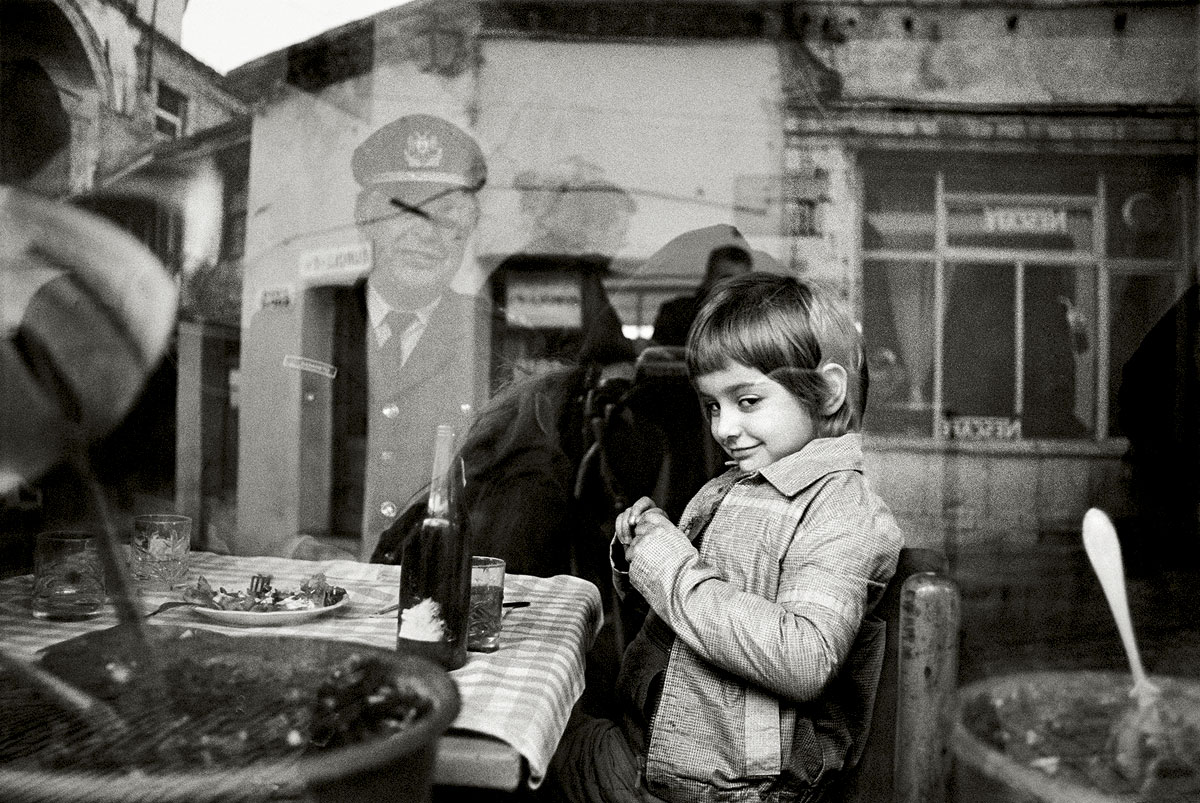
Pinakothek der Moderne website

LIKE ART BLART ON FACEBOOK

Back to top

Review: ‘Sue Ford’ at The Ian Potter Centre: NGV Australia, Melbourne

Exhibition dates: 17th April – 24th August, 2014

Curator: Maggie Finch, Curator of Photography at the NGV


Sue Ford (Australia, 1943-2009) 'Discussions between Bob Hawke and Galarrwuy Yunupingu' 1988, printed 2014 from the exhibition 'Sue Ford' at The Ian Potter Centre: NGV Australia, Melbourne, April - August, 2014


Sue Ford (Australia, 1943-2009)
Discussions between Bob Hawke and Galarrwuy Yunupingu
1988, printed 2014
Gelatin silver photograph
51 x 61cm
Sue Ford Archive, Melbourne
© Sue Ford Archive, Melbourne


This is a hugely disappointing exhibition of the work of Sue Ford at NGV Australia, Melbourne. The artist deserved better.

There is no doubting the importance of Ford’s early black and white photographs. Images of this type had not been seen in Australia before, and looking back now it is hard to appreciate the impact that the Time series (1962-74), Self-portrait with camera (1960-2006) and images of women had on the photographic scene at the time. These muscular, robust photographs, while not possessing great technical skill, are rightly acknowledged as seminal images in the history of photography in Australia. I cannot praise them highly enough.

However, this exhibition and the important series in it have been ruined by a disastrous hang. The first room is spoiled by an ugly, cheap looking round central installation which is covered by pinned images from the much later series Somewhere in France, 1917 (1995, below) inside of which is projected the video Faces 1976-96 (below). This huge installation simply destroys the sensitivity, size and presence of the small silver gelatin works, overpowering them with repetitive images of a much larger scale.

The second room features a haphazard disposition of Ford’s important portraits of women from her book A Sixtieth of a Second: Portraits of Women 1961-1981, the arrangement of which seems to have no rhyme or reason. It’s all downhill from there. It doesn’t help that Ford’s work looses focus after the initial succinct statements as she begins to work with experimental photographic techniques – photograms, multiple exposures and mirroring of negatives – and, starting in the mid-1980s, branches out into research of Indigenous histories which only results in serviceable photographs at best.

What is more disturbing is how later work such as the powerful series Shadow portraits (1994, below) are displayed. I remember seeing this series many years ago at the NGV in St Kilda Road and being bowled over by their size and formal presence; here in a darkened room they are displayed piecemeal and all impact and import is lost. The whole room should have been dedicated to this series, surrounding you with scans of nineteenth-century cartes-de-visite, the empty silhouettes filled with magical photograms of indigenous Australian fauna. That would have been something.

Finally, the exhibition shows 1990s works such as Bima, Brenda and the Madonna (1992-93), Video land (Kakadu river tour) (1994) and Yellowcake (1991) which continue Ford’s interest in social and political issues relating to the Australian landscape. Featuring still images of video shot from a tv screen these fractured, distorted and oversaturated images are printed as colour photocopies and then displayed as fragmented images in a rigid grid system pinned to the wall. These are ugly works. They contain too many elements, the colour, distortion, and bounding box of the tv screen playing badly against the too rigid grid system of the colour photocopies. Ford’s work seems to tail off into something unnatural, a dissolution of identity that really has nothing constructive to say.

Perhaps these works do parallel the physical, ecological and spiritual gulf that Ford felt existed between many non-indigenous urban Australians but I don’t really feel that connection in the work and her investigation doesn’t lead to good art. If you want to see the most excellent use of colour, collage, montage, weaving and layering you only have to go up a level at NGV Australia to look at the David McDairmid exhibition to see how it should be done… it’s like night and day, one artist experimenting for abstraction’s sake, and the other really knowing their medium, what they are doing and what narrative / message they want to communicate.

What we cannot take away from Sue Ford is the utmost importance of those feminist images of strong, independent women and the precious, jewel-like, time travelling portrait works. For Ford the process of taking, looking at and using photographs was implicitly connected to a sense of time, time in flux in which the faces of a doubled past (1962-74, 1976-96) are reanimated in the present allowing for a consideration of the effects of ageing and change. Ultimately, these are conceptual works that have great power and integrity.
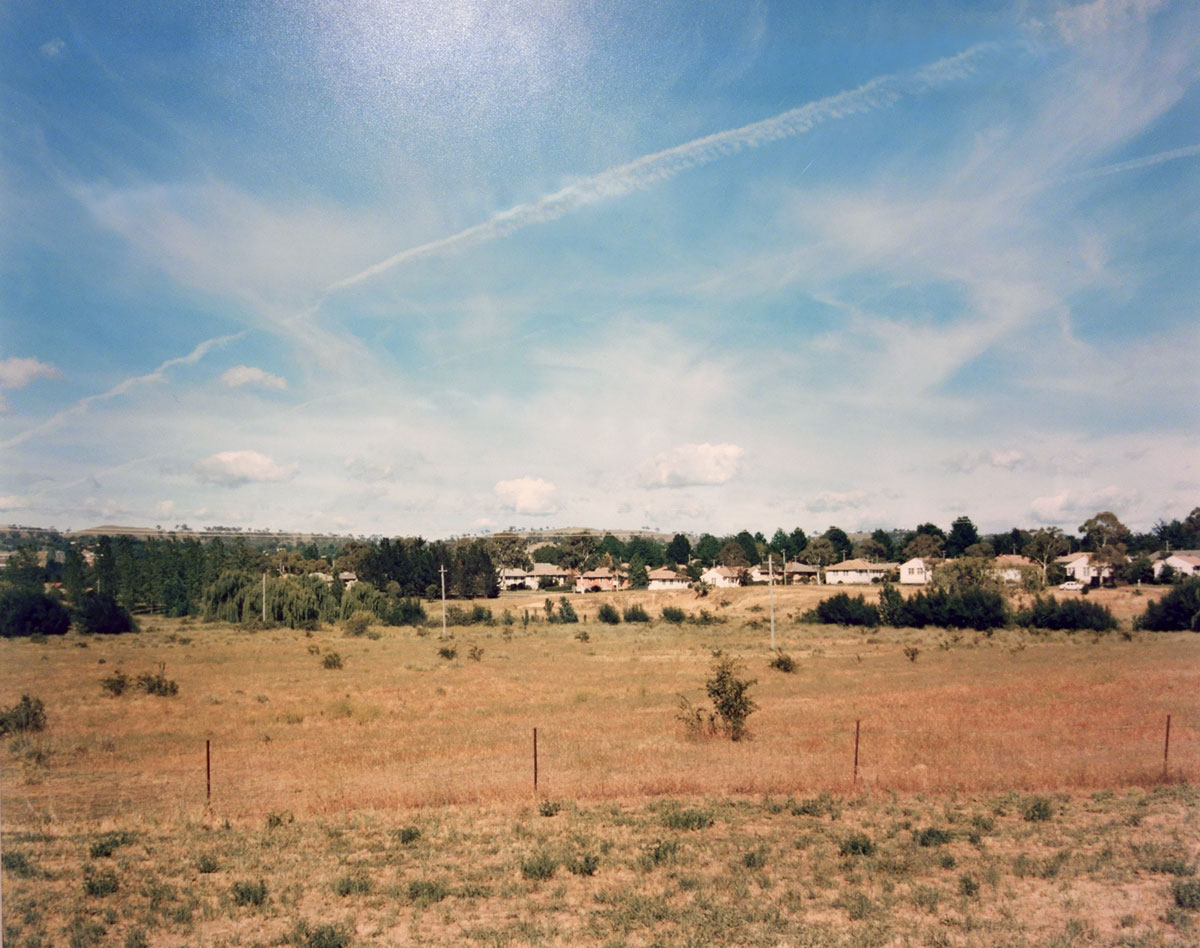
Unfortunately, the itsy bitsy design of this exhibition doesn’t allow any of the work to shine. It is not up to scratch and not worthy of the artist. Did the NGV run out of time, money and inspiration or where there other factors going on behind the scenes, such as access to the work?

I don’t know the answers to these questions, but when you put this exhibition side by side with the 2011 Time Machine: Sue Ford at the Monash Gallery of Art, there is no comparison as to which better conveys the importance of Ford’s work in the history of Australian photography.

Dr Marcus Bunyan


Many thankx to the National Gallery of Victoria for allowing me to publish the photographs in the posting. Please click on the photographs for a larger version of the image.


For some time I have been thinking about the camera itself. Trying to explore its particular UNIQUENESS, coming to terms with the fact that I had been trying to ignore for some years, that the camera is actually a MACHINE. The machine has an enormous power easily abused. Man seems to misuse his machines continuously, with disastrous results for this century. In Time series I tried to use the camera as objectively as possible. It was a time machine. For me it was an amazing experience. It wasn’t until I placed the photograph of the younger face beside the recent photograph that I could fully appreciate the change. The camera showed me with absolute clarity something I could only just perceive with my naked eye.


Sue Ford 1974


Sue Ford (Australia, 1943-2009) 'Ross', 1964; 'Ross', 1974 1964-1974, printed 1974 from the exhibition 'Sue Ford' at The Ian Potter Centre: NGV Australia, Melbourne, April - August, 2014


Sue Ford (Australia 1943-2009)
Ross, 1964; Ross, 1974
1964-1974, printed 1974
From the Time series 1962-1974
Gelatin silver photograph
(a-b) 11.1 x 20.1cm
National Gallery of Victoria, Melbourne
Purchased with the assistance of the Visual Arts Board and the KODAK (Australasia) PTY LTD Fund, 1974 (PH171.a-b-1974)
© Sue Ford Archive, Melbourne


Sue Ford (Australia, 1943-2009) 'Annette', 1962; 'Annette', 1974 1962-1974, printed 1974


Sue Ford (Australia, 1943-2009)
Annette, 1962; Annette, 1974
1962-1974, printed 1974
From the Time series 1962-1974
Gelatin silver photograph
11.1 x 20.1cm
National Gallery of Victoria, Melbourne Purchased with the assistance of the Visual Arts Board and the KODAK (Australasia) Pty Ltd Fund, 1974 (PH170.a-b-1974)
© Sue Ford Archive, Melbourne


Sue Ford (Australia, 1943-2009) 'No title (Photogram of two hands and garden path)' c. 1970


Sue Ford (Australia, 1943-2009)
No title (Photogram of two hands and garden path)
c. 1970
Gelatin silver photogram
27.6 x 34.7cm irreg. (image and sheet)
National Gallery of Victoria, Melbourne
Gerstl Bequest, 2000
© Sue Ford Archive, Melbourne


Sue Ford (Australia, 1943-2009) 'Vietnam: the six o'clock news' c. 1970


Sue Ford (Australia, 1943-2009)
Vietnam: the six o’clock news
c. 1970
Collage of cut gelatin silver photograph on offset-photo lithograph
19.1 x 24.3cm (image and sheet)
Sue Ford Archive, Melbourne
© Sue Ford Archive, Melbourne


Sue Ford (Australia, 1943-2009) 'Lyn and Carol' 1961, printed 1988


Sue Ford (Australia 1943-2009)
Lyn and Carol
1961, printed 1988
Gelatin silver photograph
34.1 x 34.2cm
Art Gallery of New South Wales, Sydney
Purchased 1988 (372.1988)
© Sue Ford Archive, Melbourne


“The ground-breaking work of Australian photographer and filmmaker Sue Ford will be explored in a major retrospective opening at the National Gallery of Victoria on 17 April. One of the most important practitioners to emerge in the wave of 1970s feminist photographers, Ford is recognised for her inventive and unique approaches to the medium and passionate engagement with feminism and gender issues, contemporary politics and the histories of Australia and its Indigenous people.

The exhibition will bring together more than 150 photographs, digital prints, collages and films spanning the five decades of Ford’s career, as well as important archival materials and, poignantly, several unseen works that the artist was working on at the time of her death in 2009.

Tony Ellwood, Director, NGV, said, “Sue Ford has a long and significant history with the National Gallery of Victoria; she was the first Australian photographer to hold a solo exhibition at the Gallery with her renowned Time Series in 1974, and we have been honoured to present her work many times since. It is appropriate, then, that the NGV presents this retrospective exhibition surveying and celebrating her artistic work and life.”

Ford’s Time Series 1962-1974 is regarded as a key moment in Australian photography. In this work, black-and-white double portraits of Ford’s friends and associates were taken around ten years apart and displayed side by side. Some sitters were photographed for a third and even fourth time, producing a remarkable dialogue on the passage of time, identity and personal histories. The entirety of the Time Series will be on display in the exhibition, along with Ford’s long-term project Self-portrait with camera, an extraordinary series of 47 self-portraits taken between 1960 and 2006.

The exhibition will feature Ford’s social documentary and portraiture work; both political and personal, these images reveal intimate depictions of life in inner-city Melbourne along with powerful records of critical political and social milestones including the 1988 Barunga Festival in the Northern Territory. Her prolific output also allows for the exhibition to survey the development of her experimentation with photographic, film, printing and multimedia techniques since the 1960s, such as the photogram, multiple exposures and mirroring of negatives.”

Press release from the NGV website


Sue Ford (Australia, 1943-2009) 'Somewhere in France, 1917' 1999


Sue Ford (Australia, 1943-2009)
Somewhere in France, 1917
1999
Digital plan prints on paper
(1-54) 219.6 x 901.8cm (overall) (installation)
National Gallery of Victoria, Melbourne
Purchased, 1999 (1999.96.1-54)
© Sue Ford Archive, Melbourne


Sue Ford (Australia 1943-2009) 'Shadow portraits' 1994


Sue Ford (Australia 1943-2009)
Shadow portraits
1994
Colour photocopies (a-bbbb)
166.5 x 594.0cm
National Gallery of Victoria, Melbourne
Purchased, 1995 (1995.614.a-bbbb)
© Sue Ford Archive, Melbourne


Sue Ford (Australia 1943-2009) 'Jim', 1964; 'Jim', 1969; 'Jim' 1974; 'Jim' 1979 1964-1979, printed 2014


Sue Ford (Australia 1943-2009)
Jim, 1964; Jim, 1969; Jim 1974; Jim 1979
1964-1979, printed 2014
From the Time series II 1962-1982
Gelatin silver photographs
(a-d) 11.1 x 8.2cm (each)
Sue Ford Archive, Melbourne
© Sue Ford Archive, Melbourne


Sue Ford (Australia 1943-2009) 'Fabian', 1966; 'Fabian', 1974; 'Fabian', 1980 1966-80, printed 1982


Sue Ford (Australia 1943-2009)
Fabian, 1966; Fabian, 1974; Fabian, 1980
1966-1980, printed 1982
From the Time series II 1962-1982
Gelatin silver photographs
(a) 11.0 x 7.6cm, (b) 11.8 x 8.4cm, (c) 11.3 x 8.2cm
Art Gallery of New South Wales, Sydney
Purchased with funds provided by the Art Gallery Society of New South Wales Contempo Group 2013 (265.1996)
© Sue Ford Archive, Melbourne


Sue Ford (Australia 1943-2009) 'Self-portrait 1961' 1961, printed 2011


Sue Ford (Australia 1943-2009)
Self-portrait 1961
1961, printed 2011
Type C photograph
26.0 x 19.9cm
Sue Ford Archive, Melbourne
© Sue Ford Archive, Melbourne


Sue Ford (Australia 1943-2009) 'Self-portrait 1974' 1974, printed 2011


Sue Ford (Australia 1943-2009)
Self-portrait 1974
1974, printed 2011
Selenium-toned gelatin silver photograph
19.9 x 18.0cm
Sue Ford Archive, Melbourne
© Sue Ford Archive, Melbourne


Sue Ford (Australia 1943-2009) 'Self-portrait 1986' 1986


Sue Ford (Australia 1943-2009)
Self-portrait 1986
1986
Gelatin silver photograph
8.4 x 6.5cm
Sue Ford Archive, Melbourne
© Sue Ford Archive, Melbourne


Sue Ford (Australia 1943-2009) 'Dissolution' 2007


Sue Ford (Australia 1943-2009)
Dissolution
2007
From the Last Light series 2007
Colour lightjet print
112 x 142cm
Sue Ford Archive, Melbourne
© Sue Ford Archive, Melbourne


Sue Ford (Australia 1943-2009) 'Bima, Brenda and the Madonna' 1992-1993


Sue Ford (Australia 1943-2009)
Bima, Brenda and the Madonna
1992-1993
Colour laser prints
Sue Ford Archive, Melbourne


Sue Ford (Australia 1943-2009) 'Video land (Kakadu river tour)' 1992-1993 (detail)


Sue Ford (Australia 1943-2009)
Video land (Kakadu river tour) (detail)
1992-1993
Colour laser prints
Sue Ford Archive, Melbourne


The Ian Potter Centre: NGV Australia
Federation Square
Corner of Russell and 
Flinders Streets, Melbourne

Opening hours:
Daily 10am – 5pm

National Gallery of Victoria website

LIKE ART BLART ON FACEBOOK

Back to top