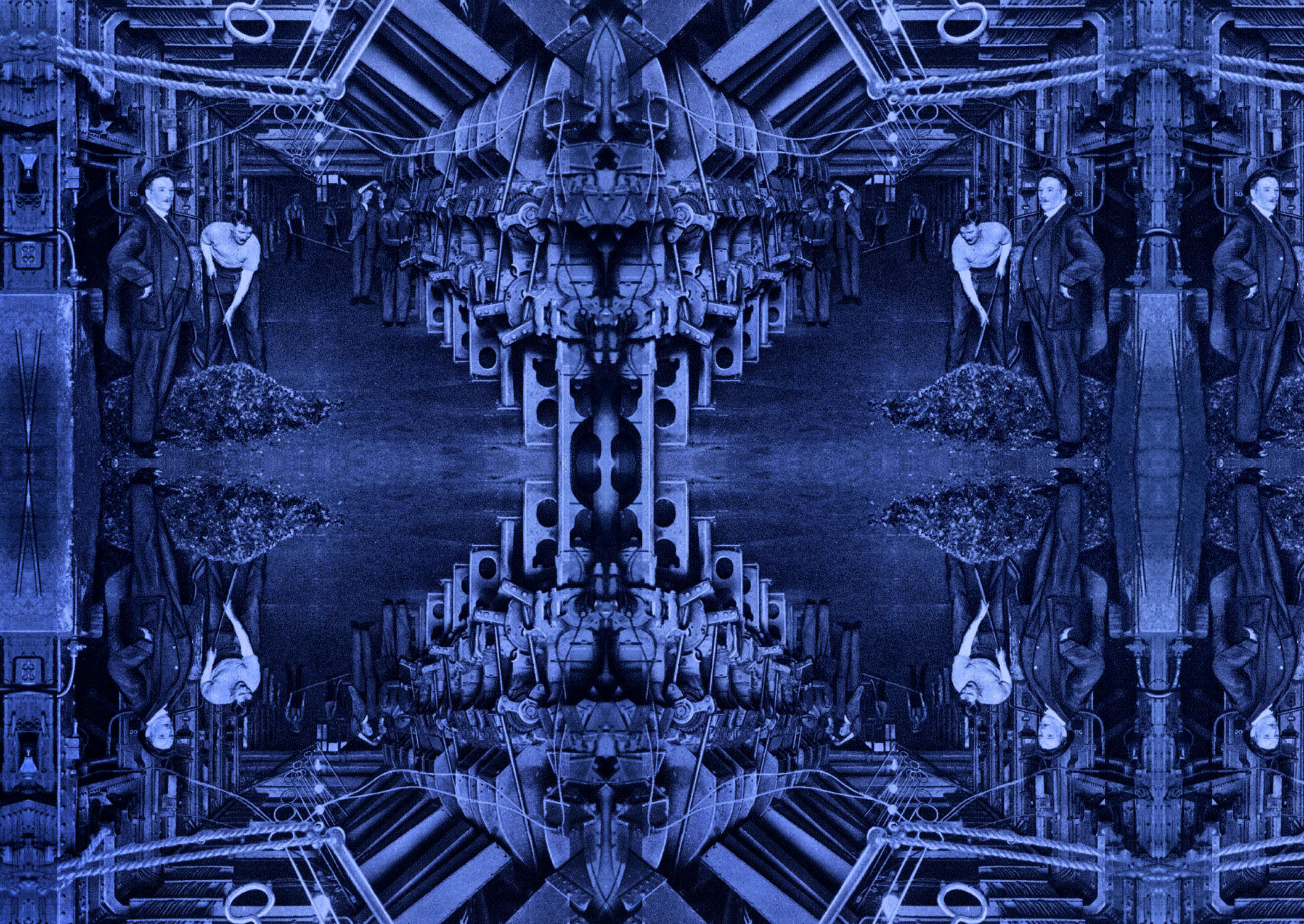
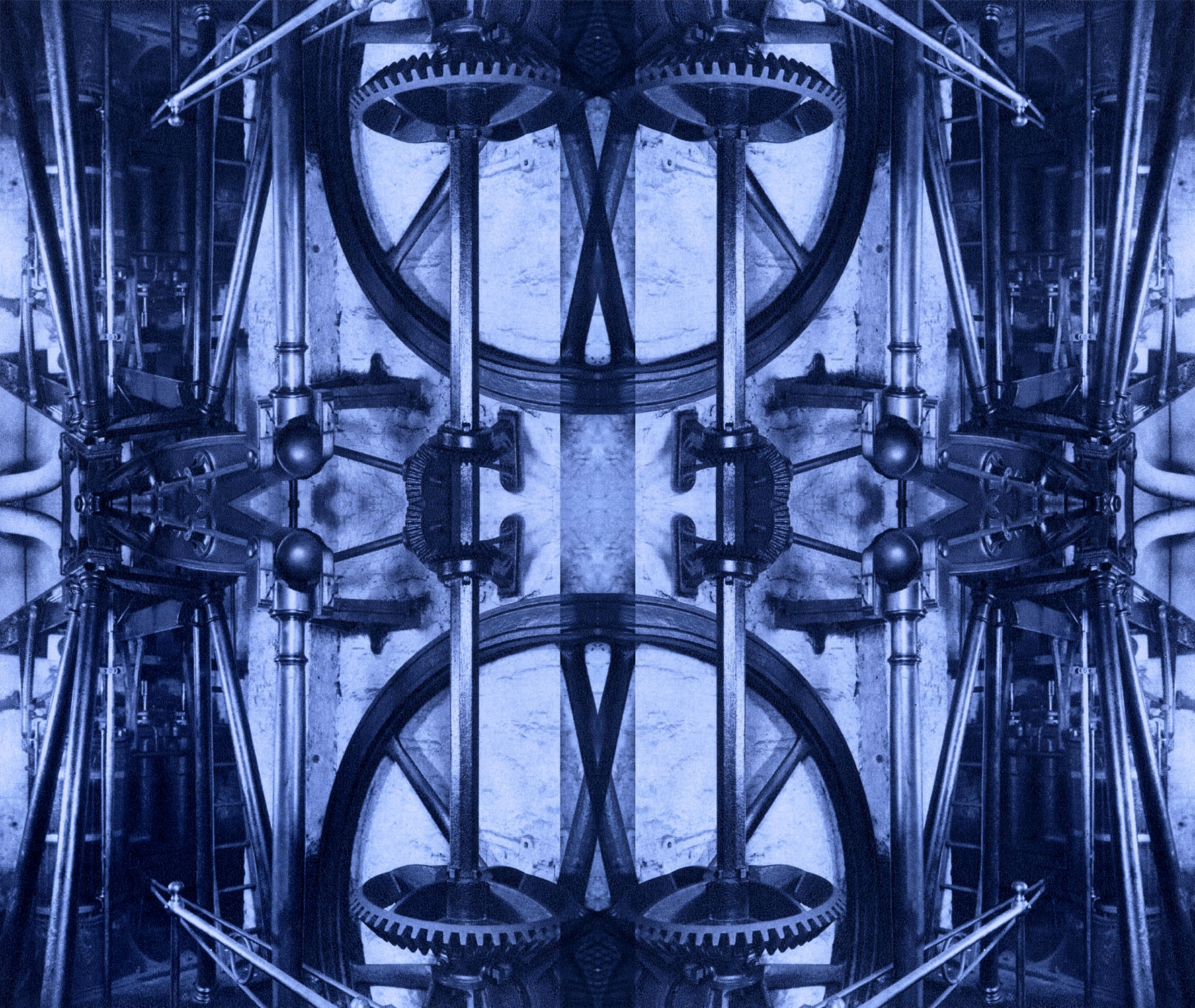
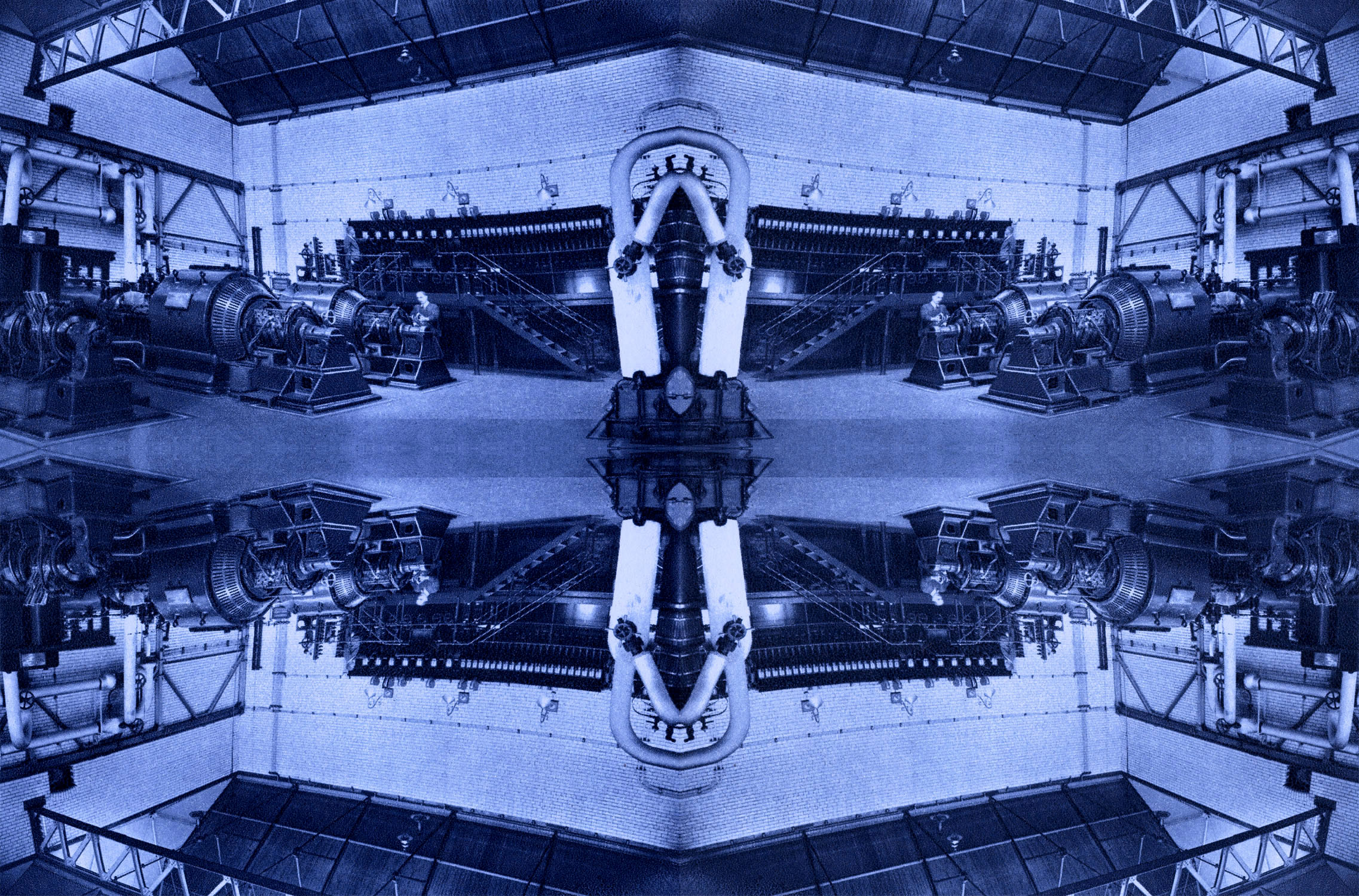
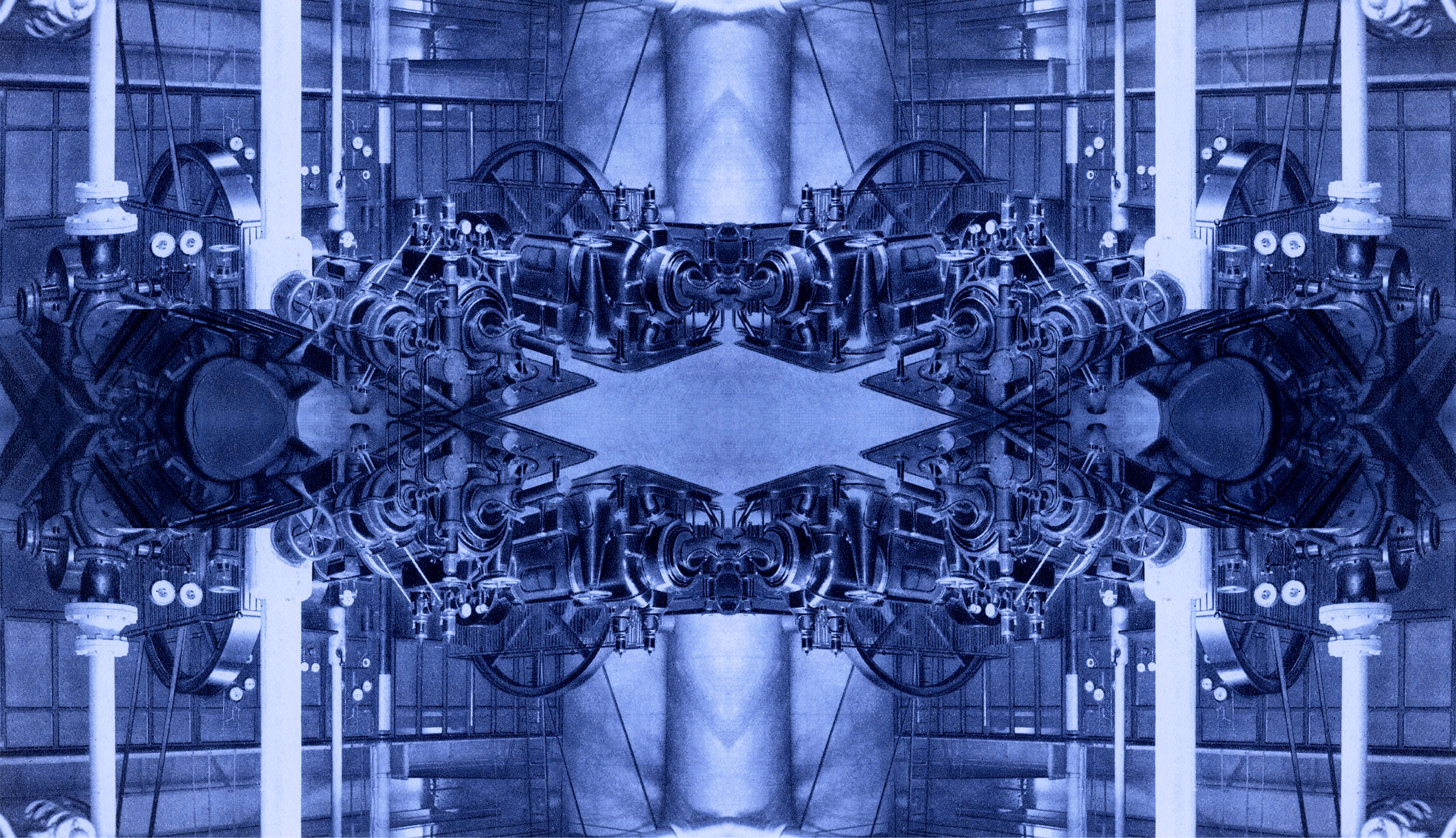
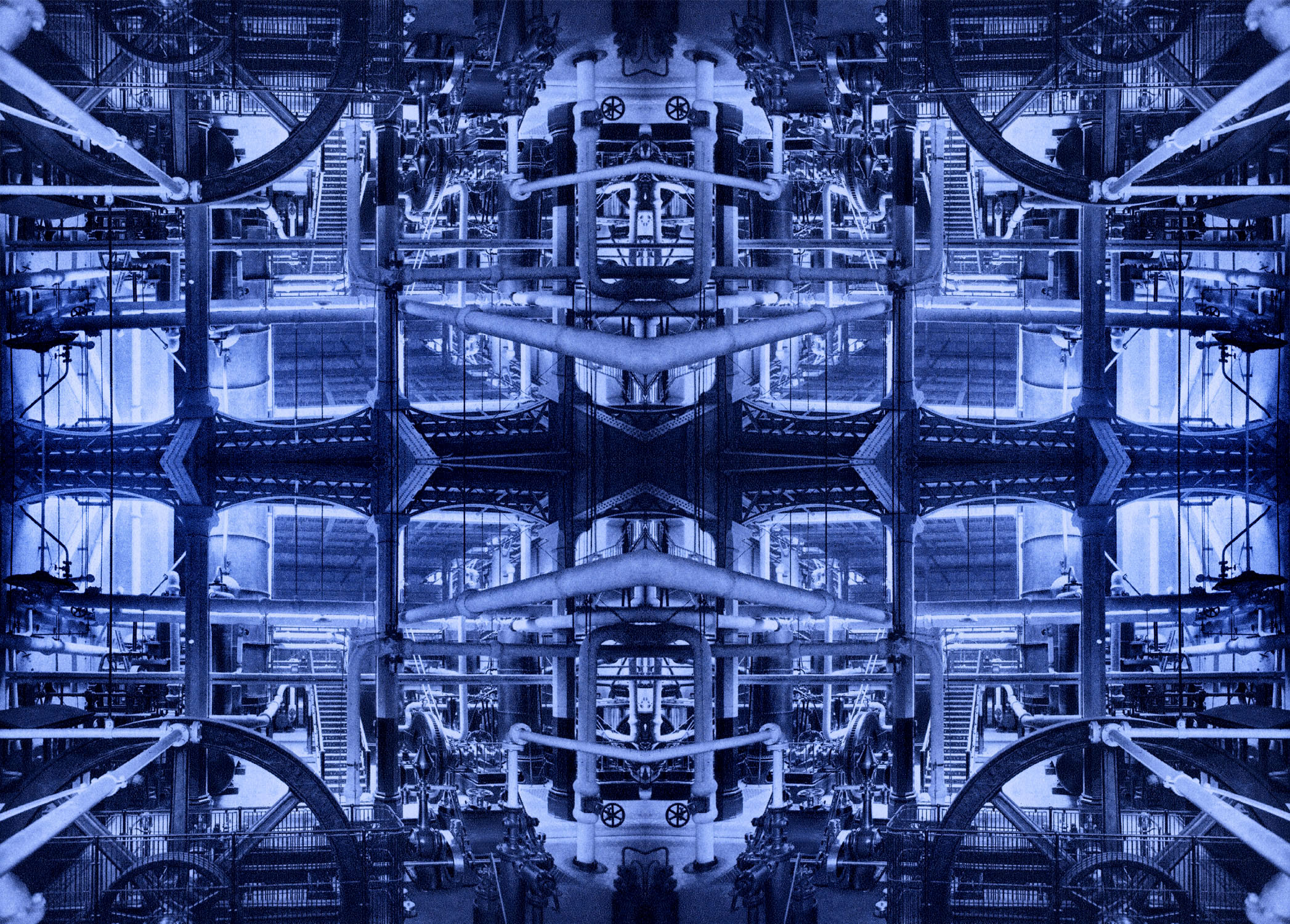
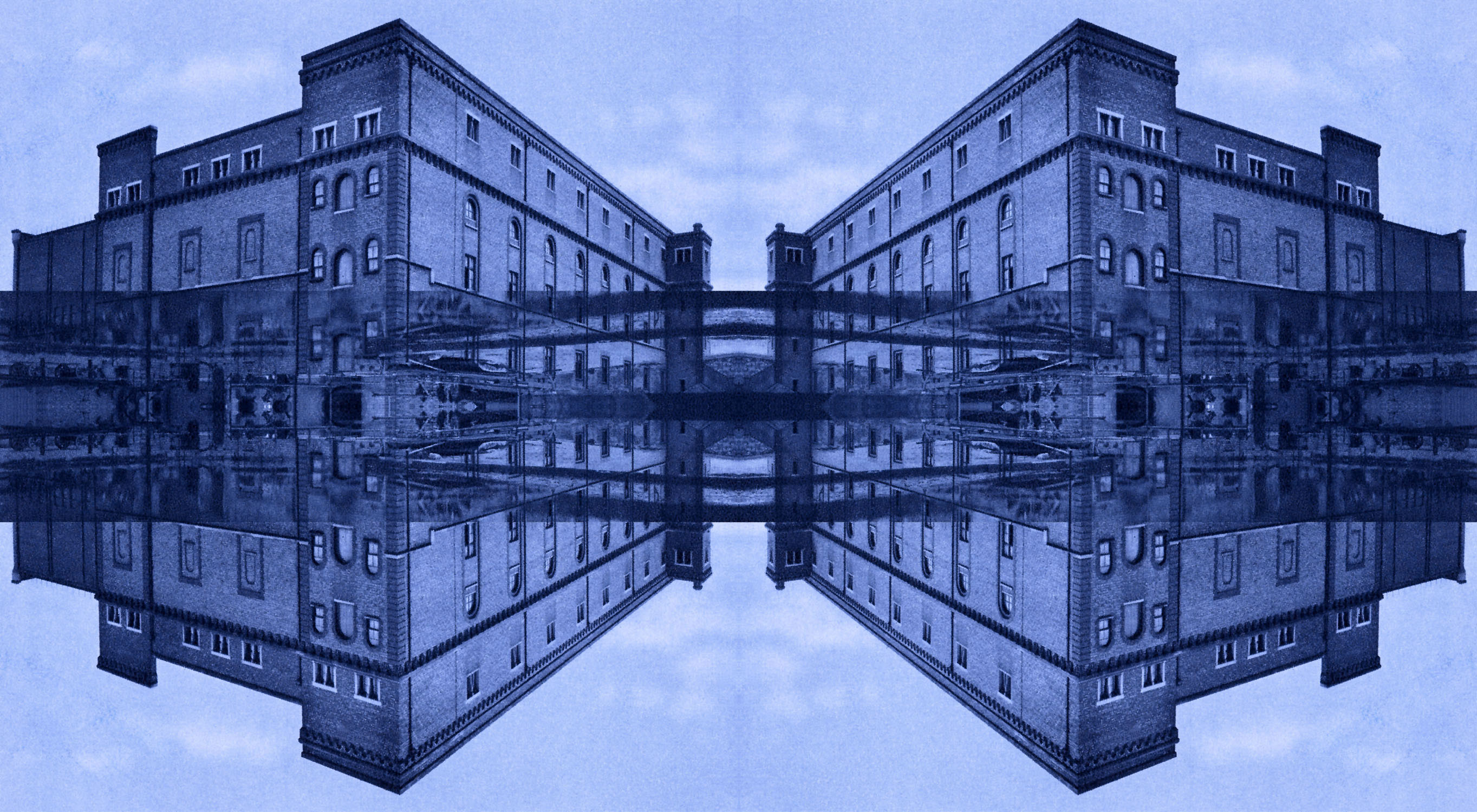
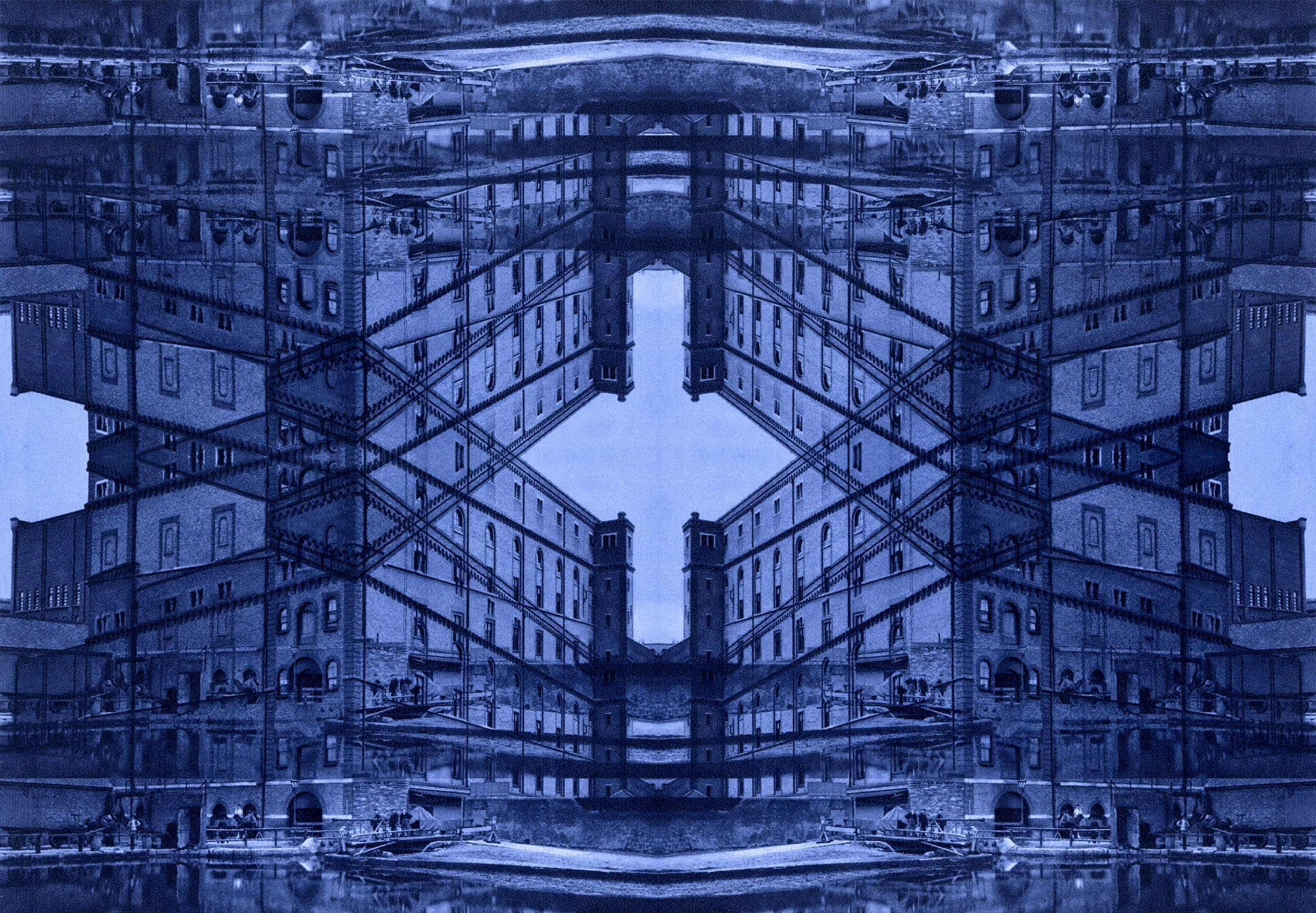
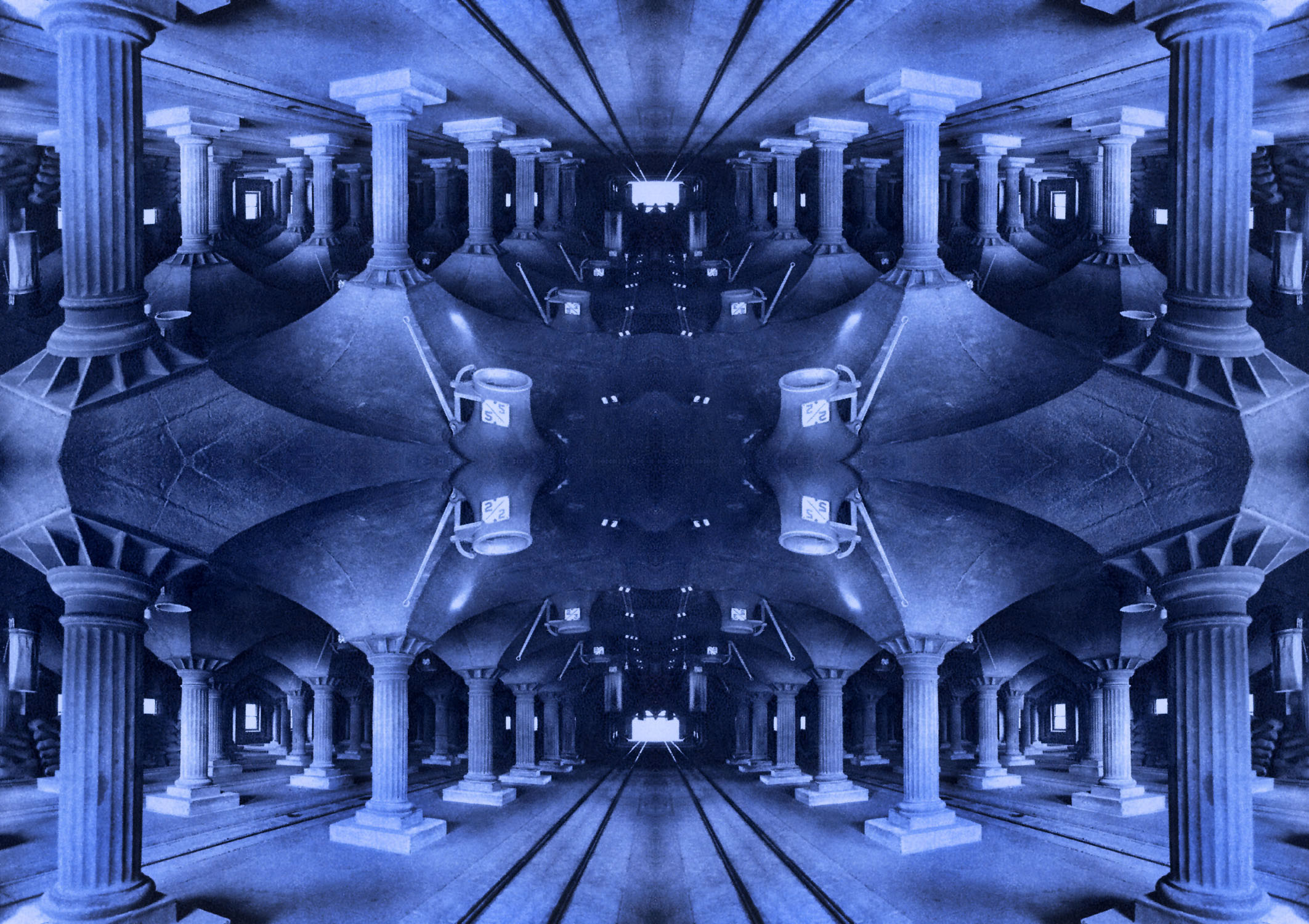
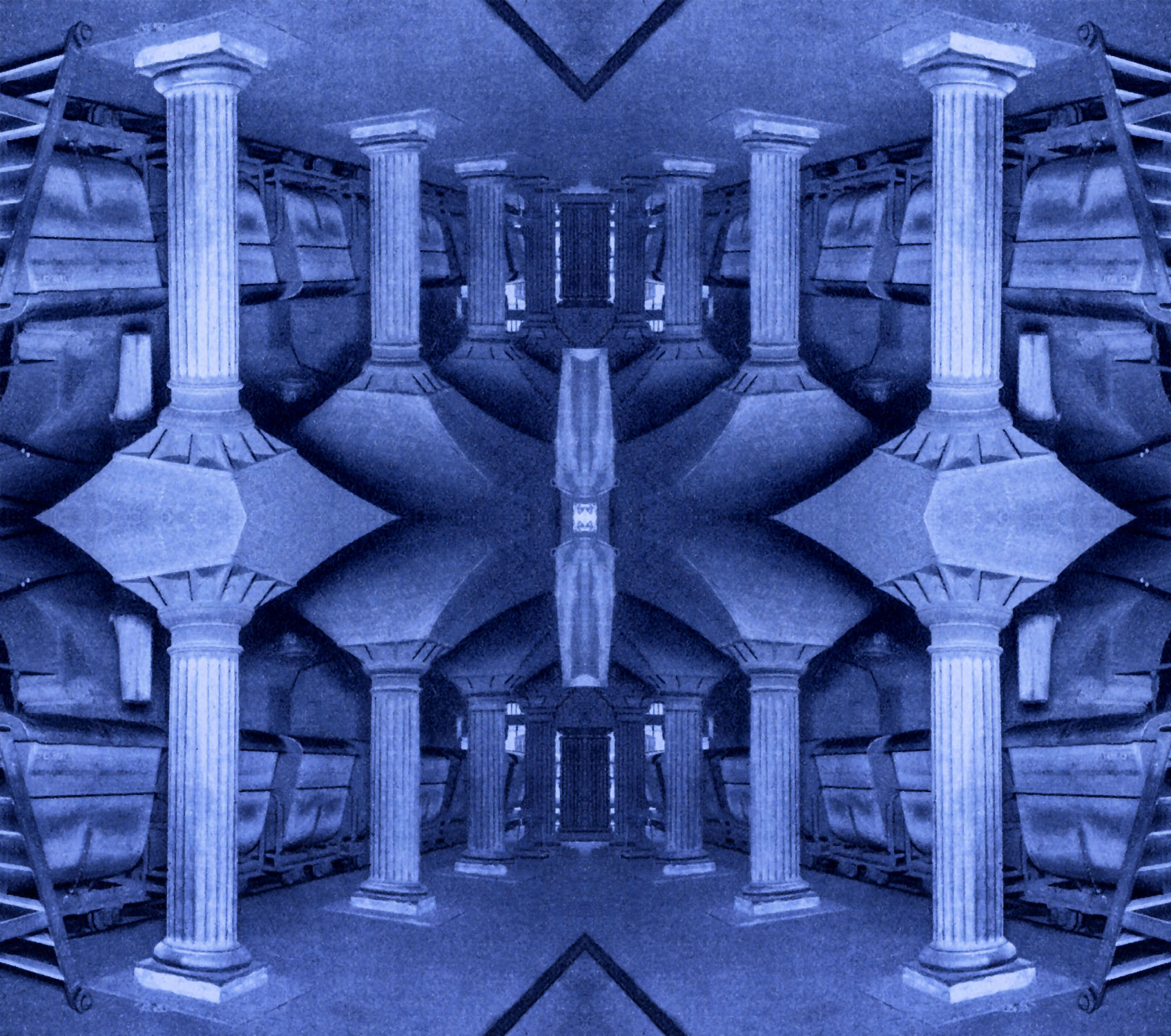
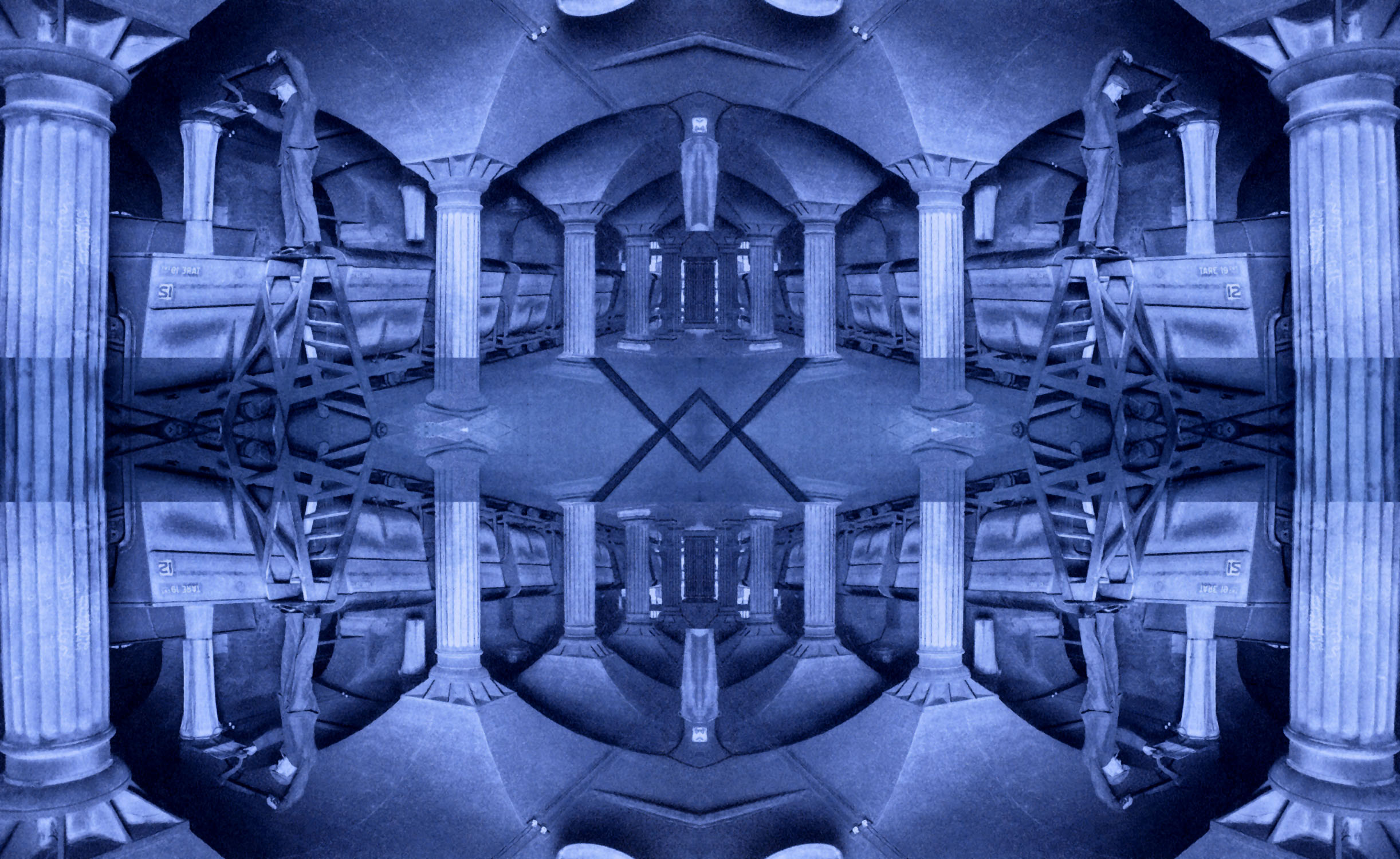
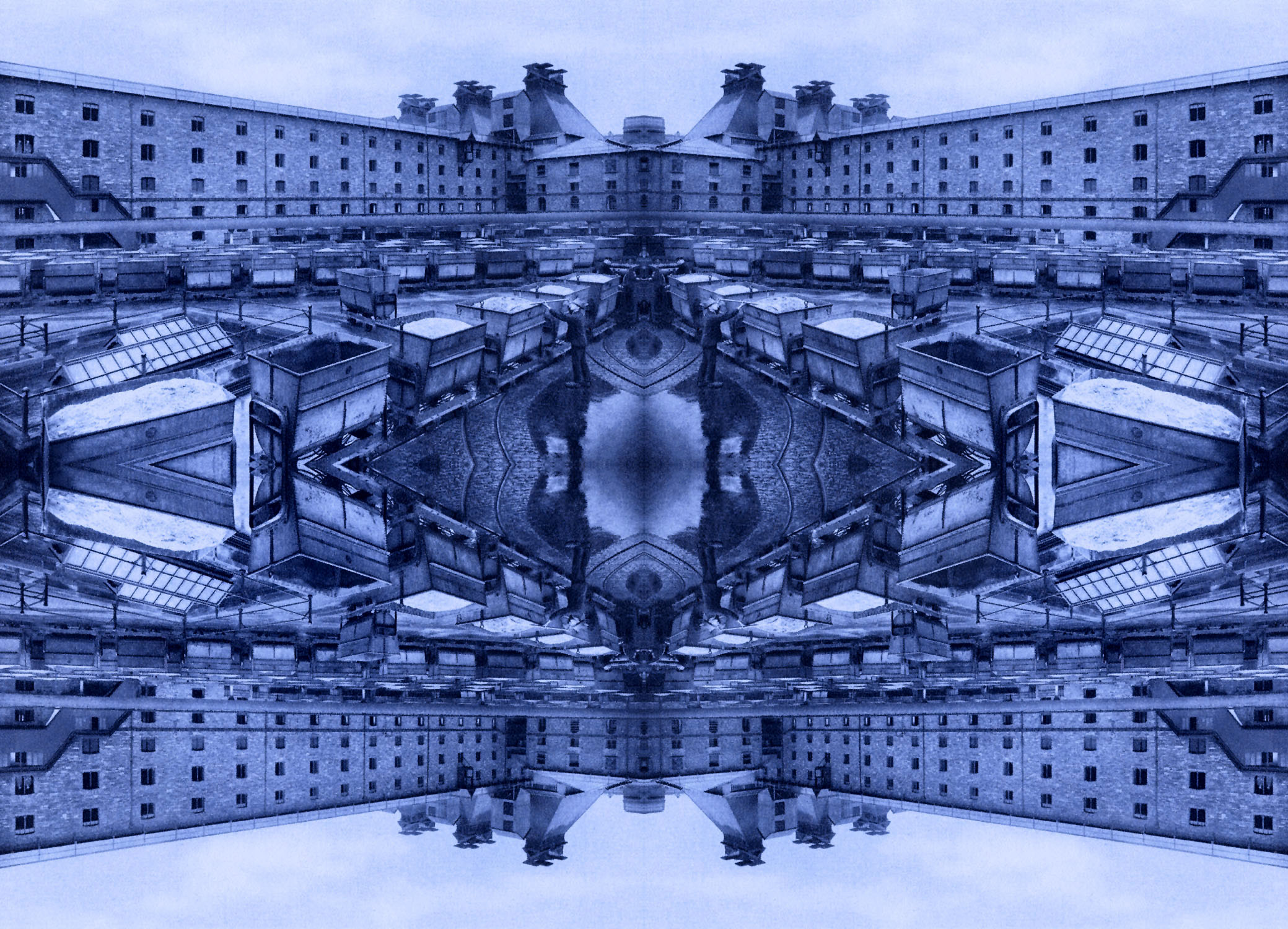
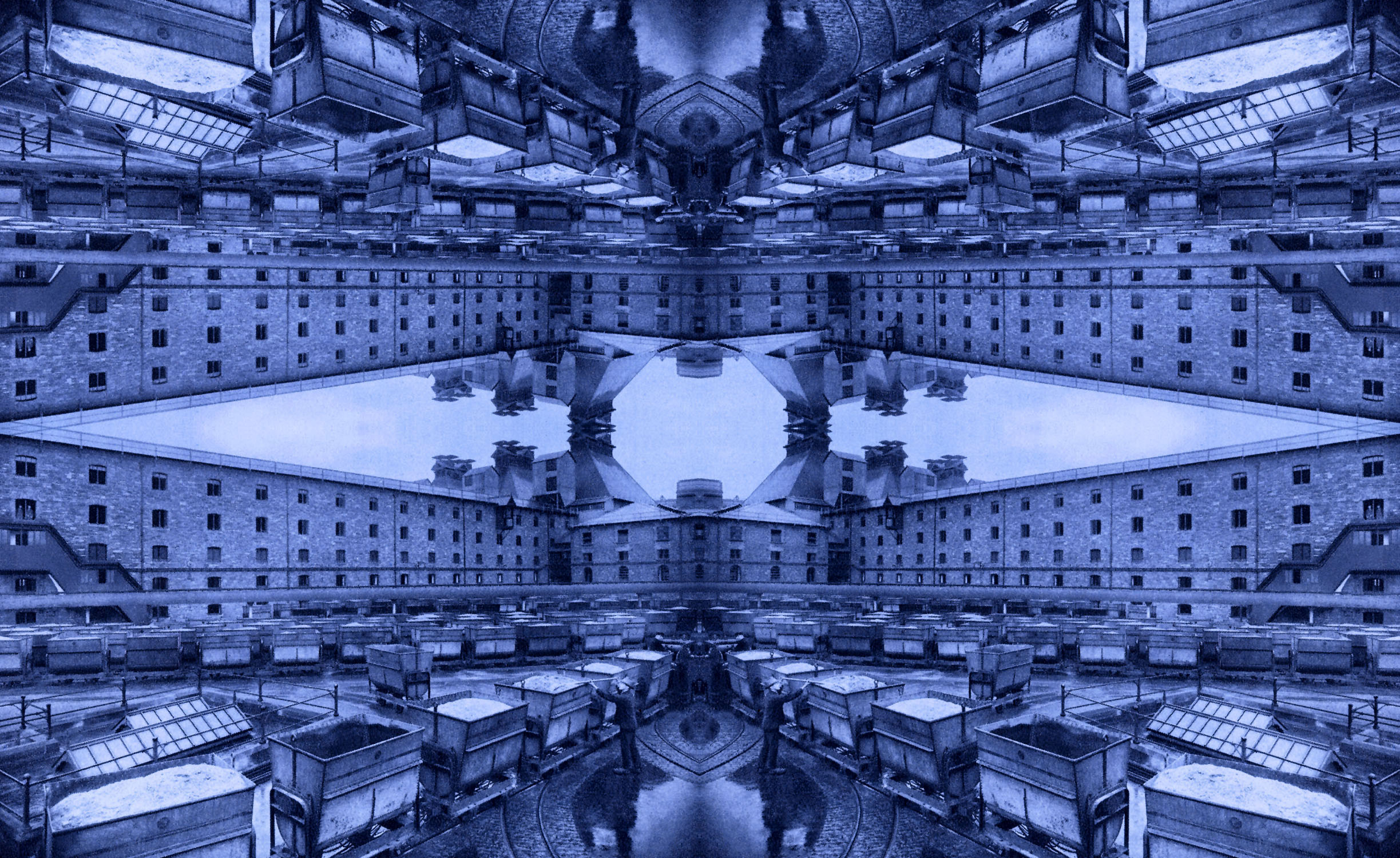
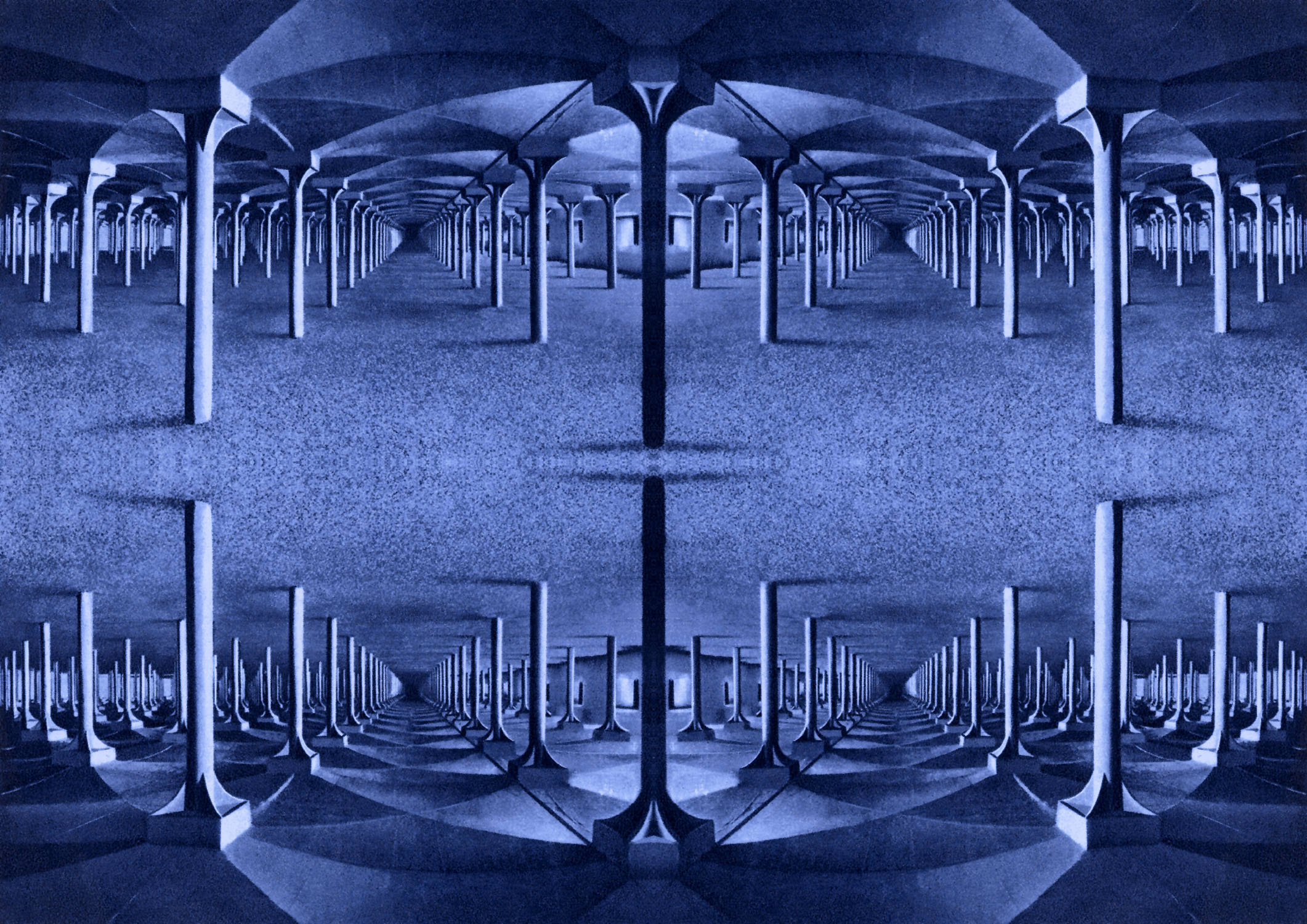
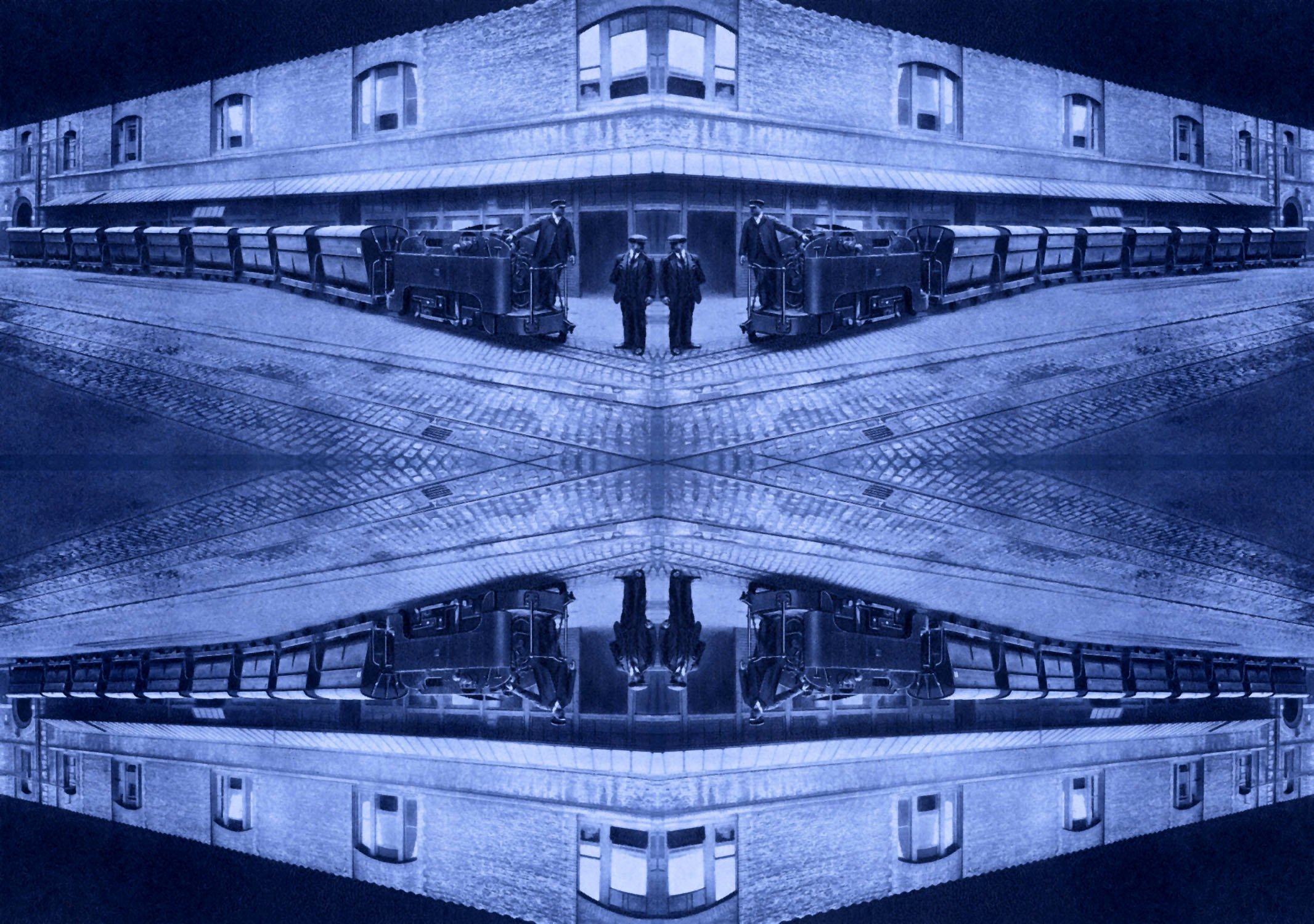
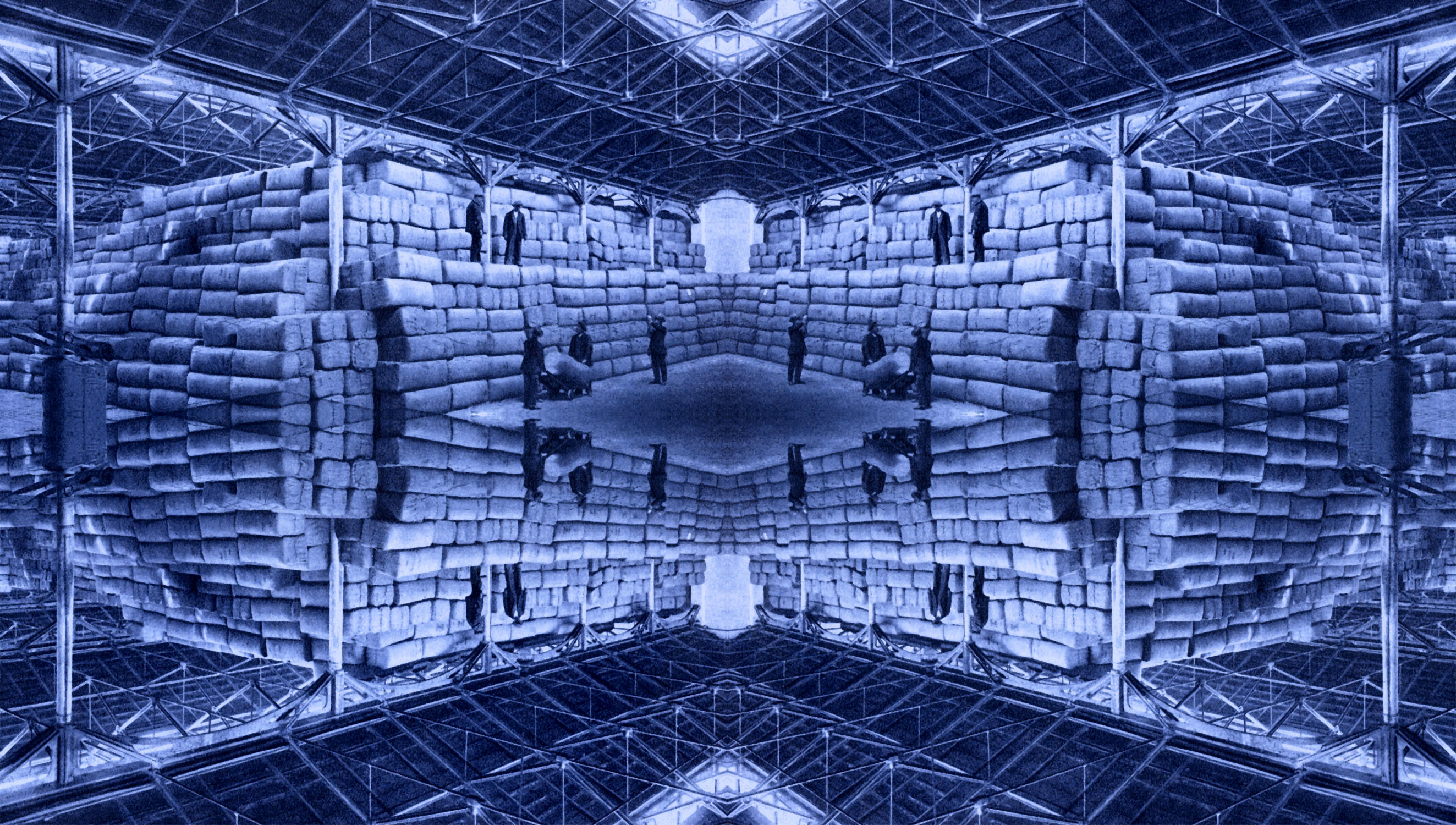
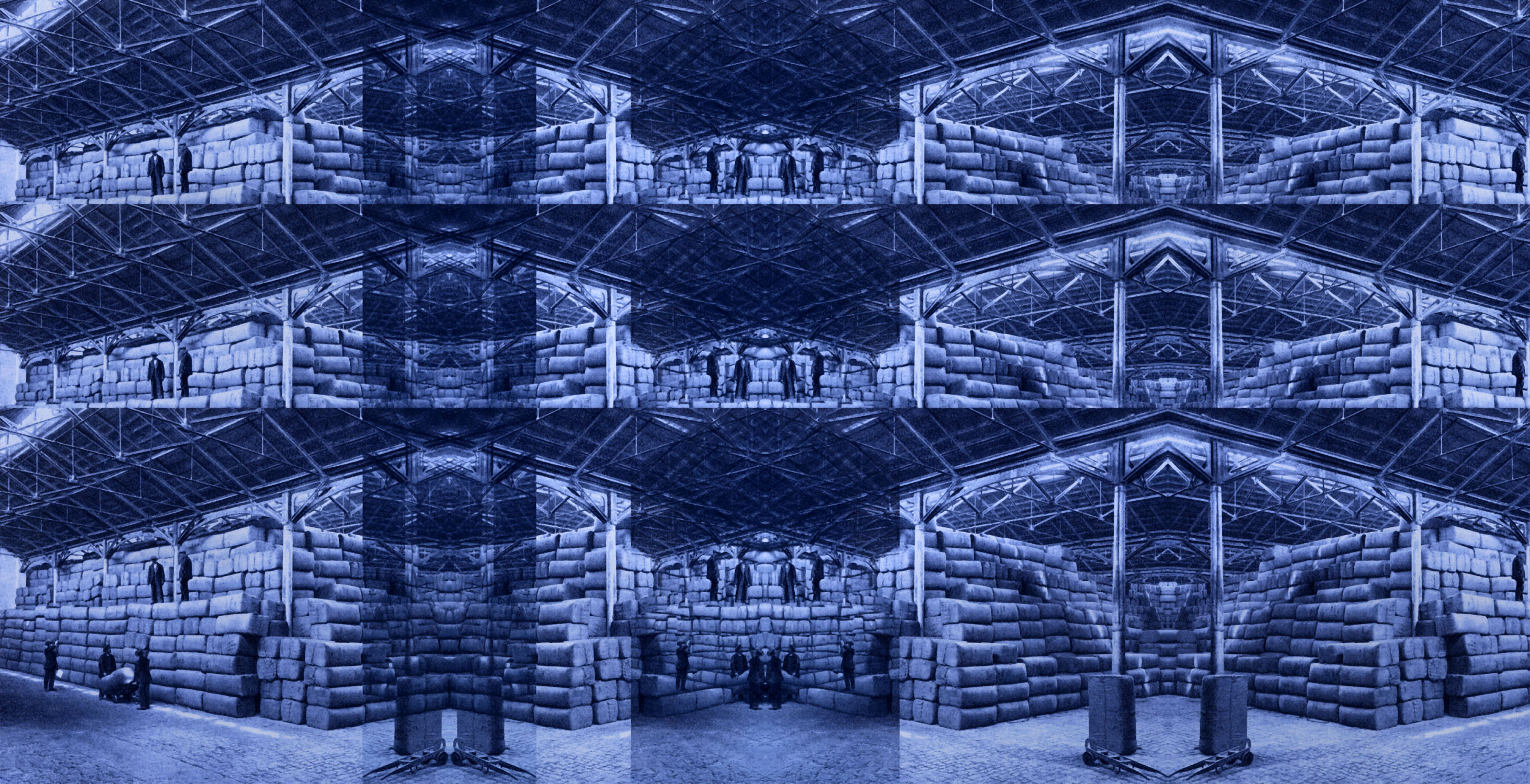
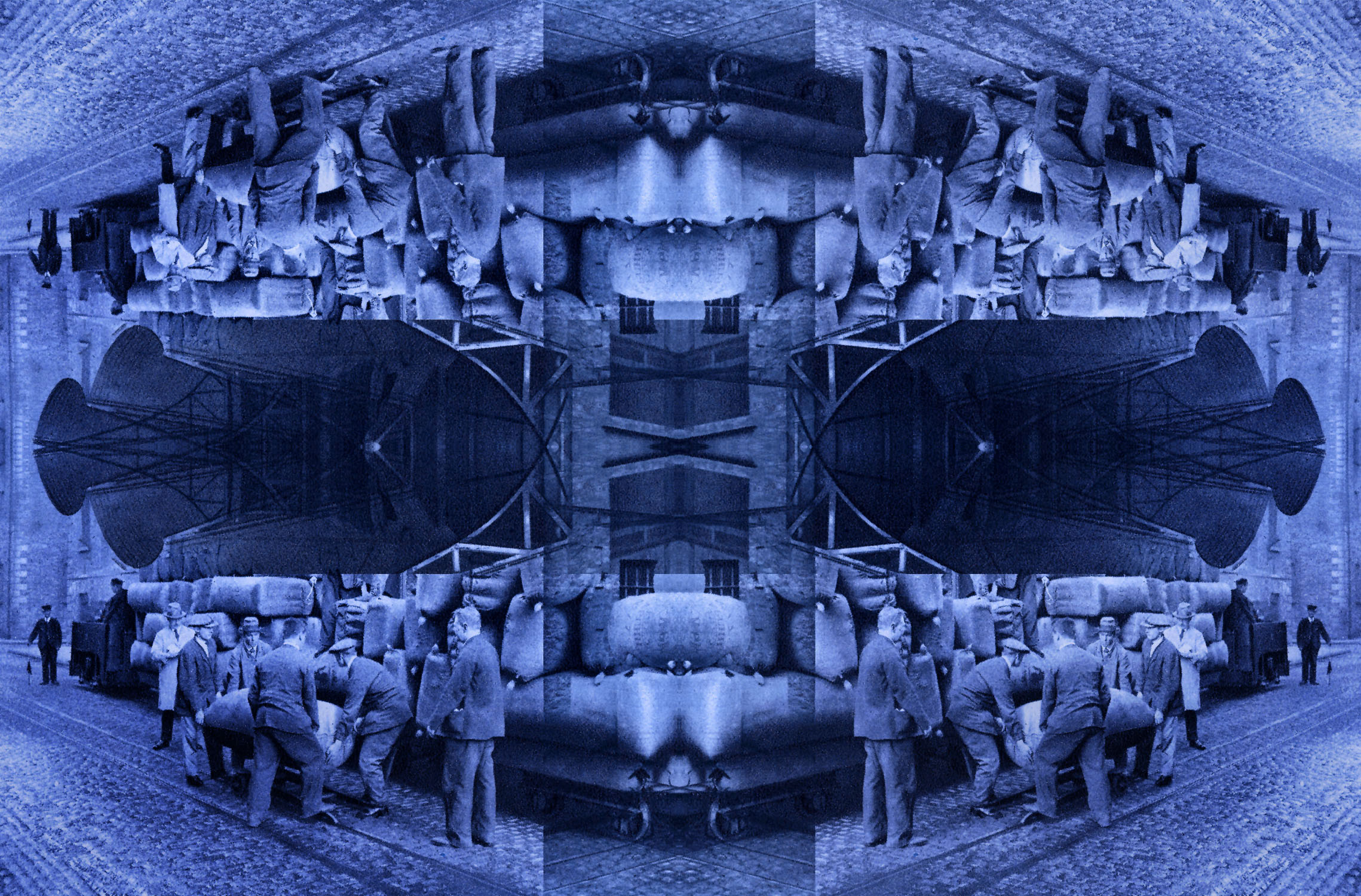
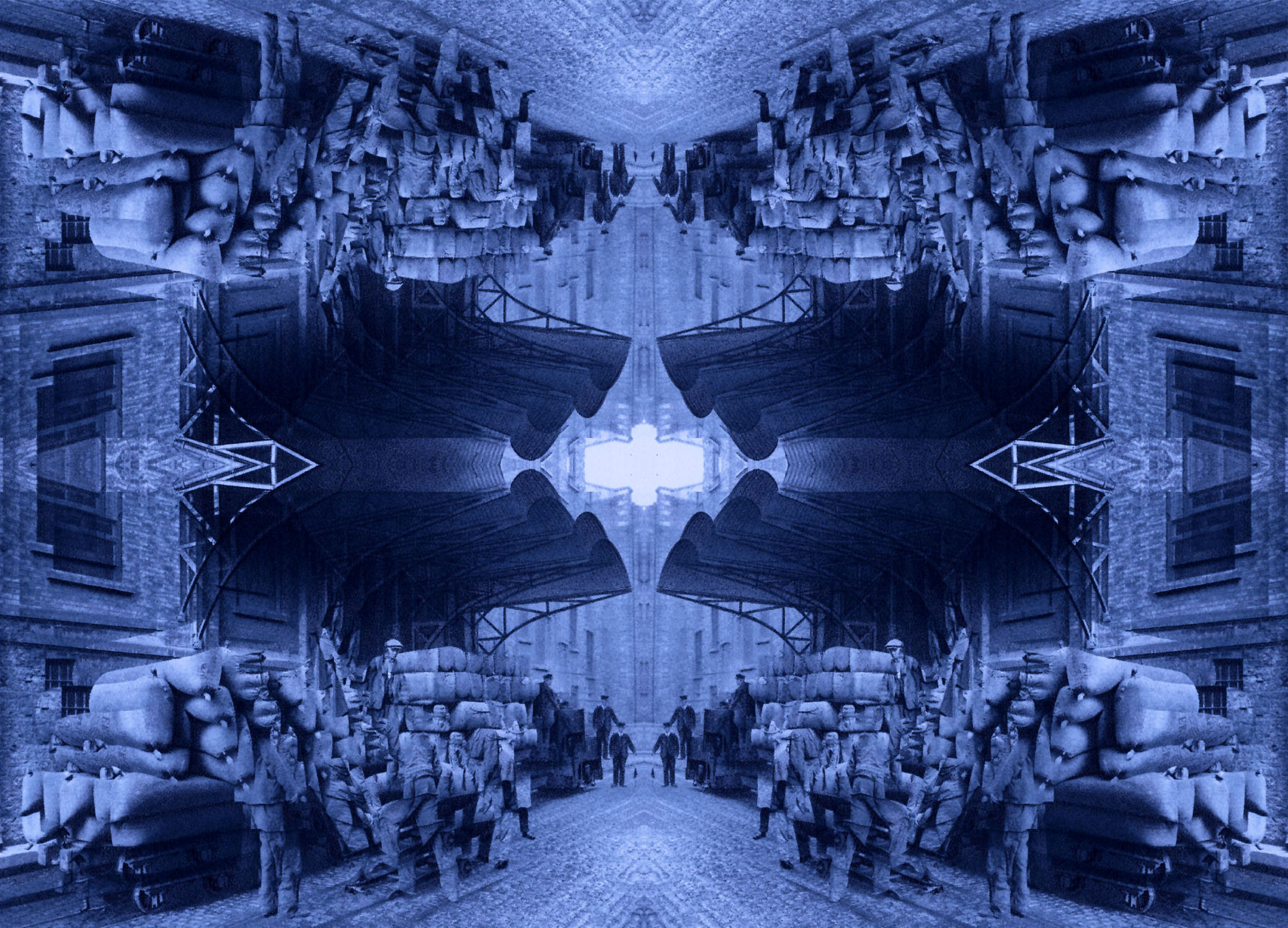
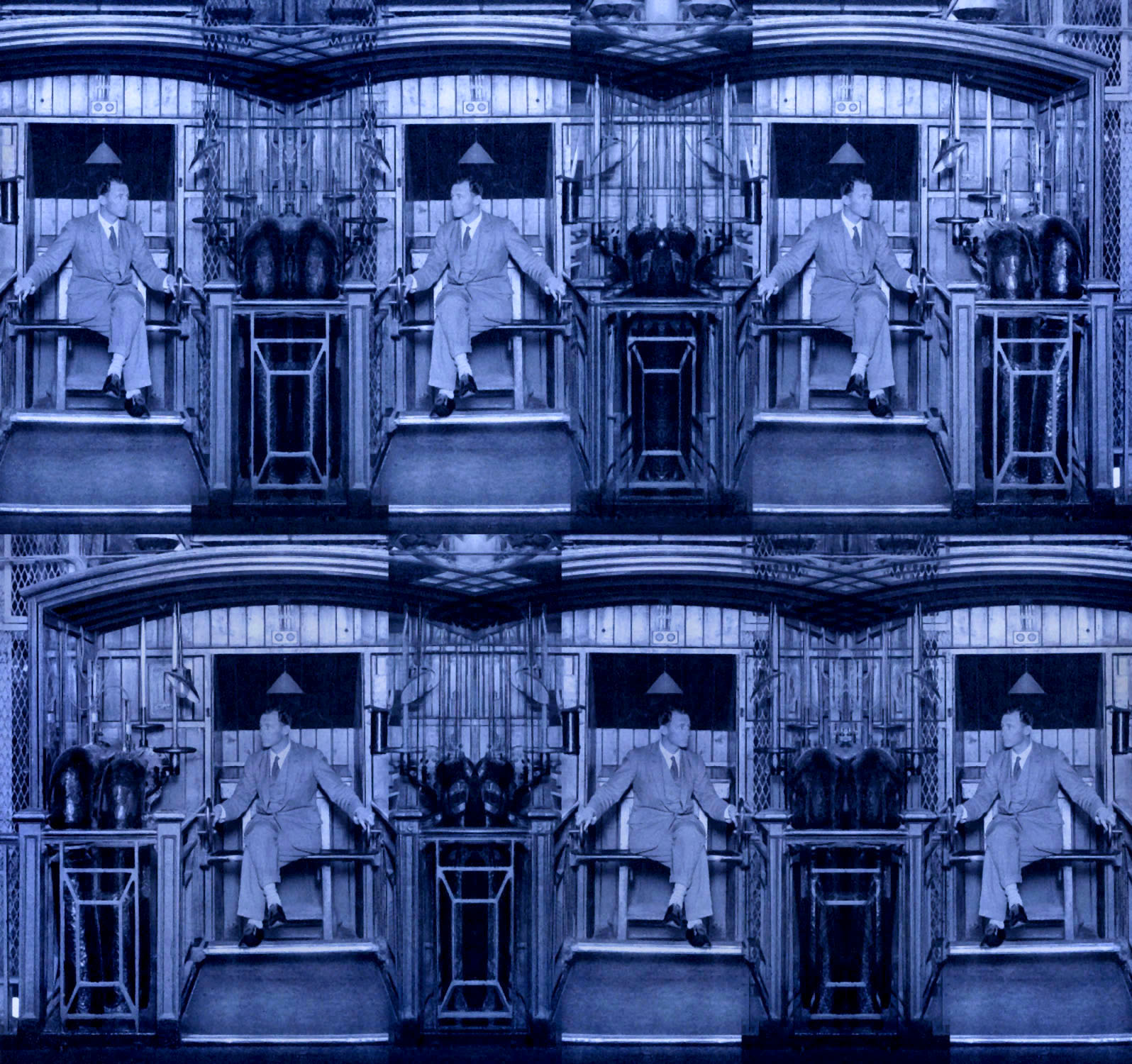
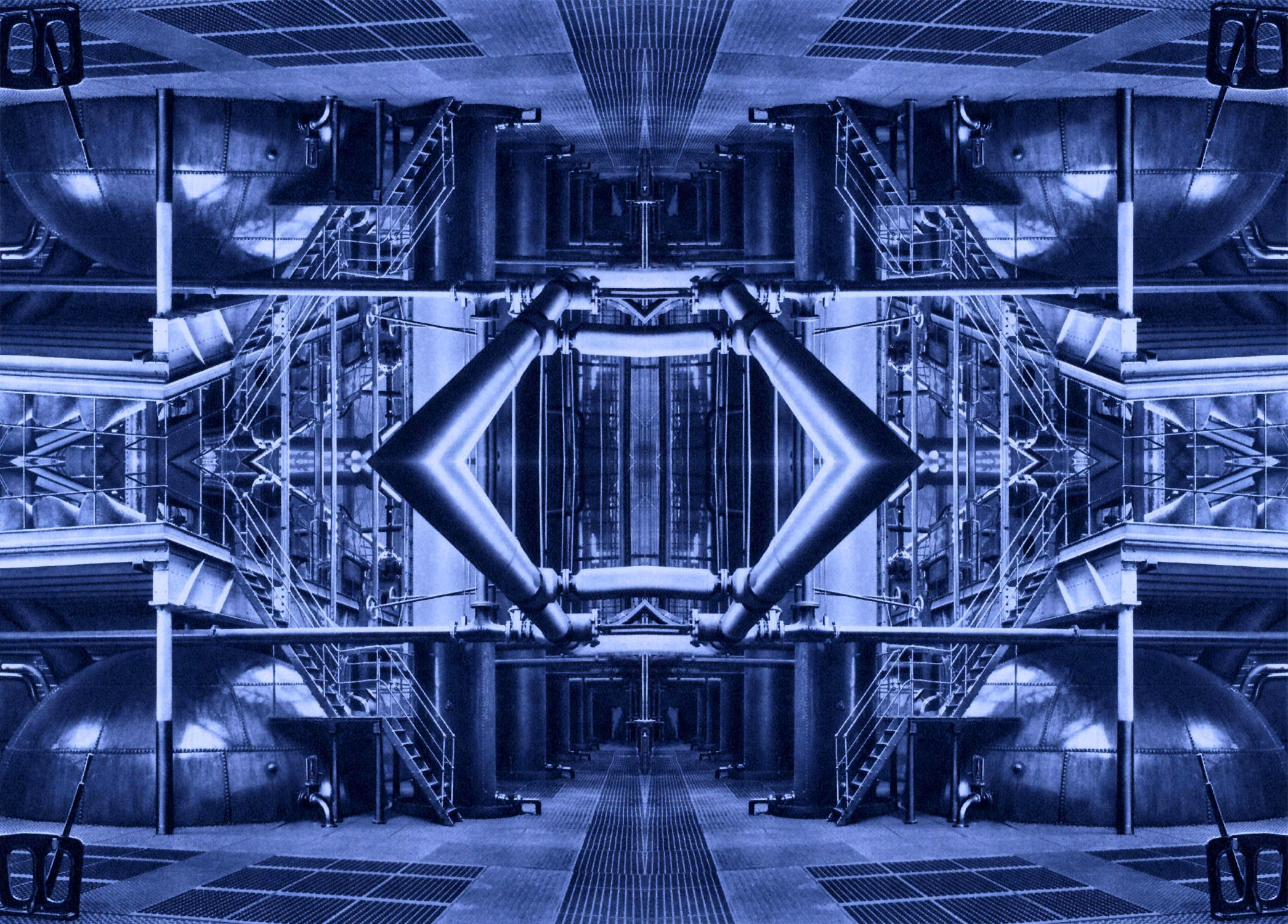
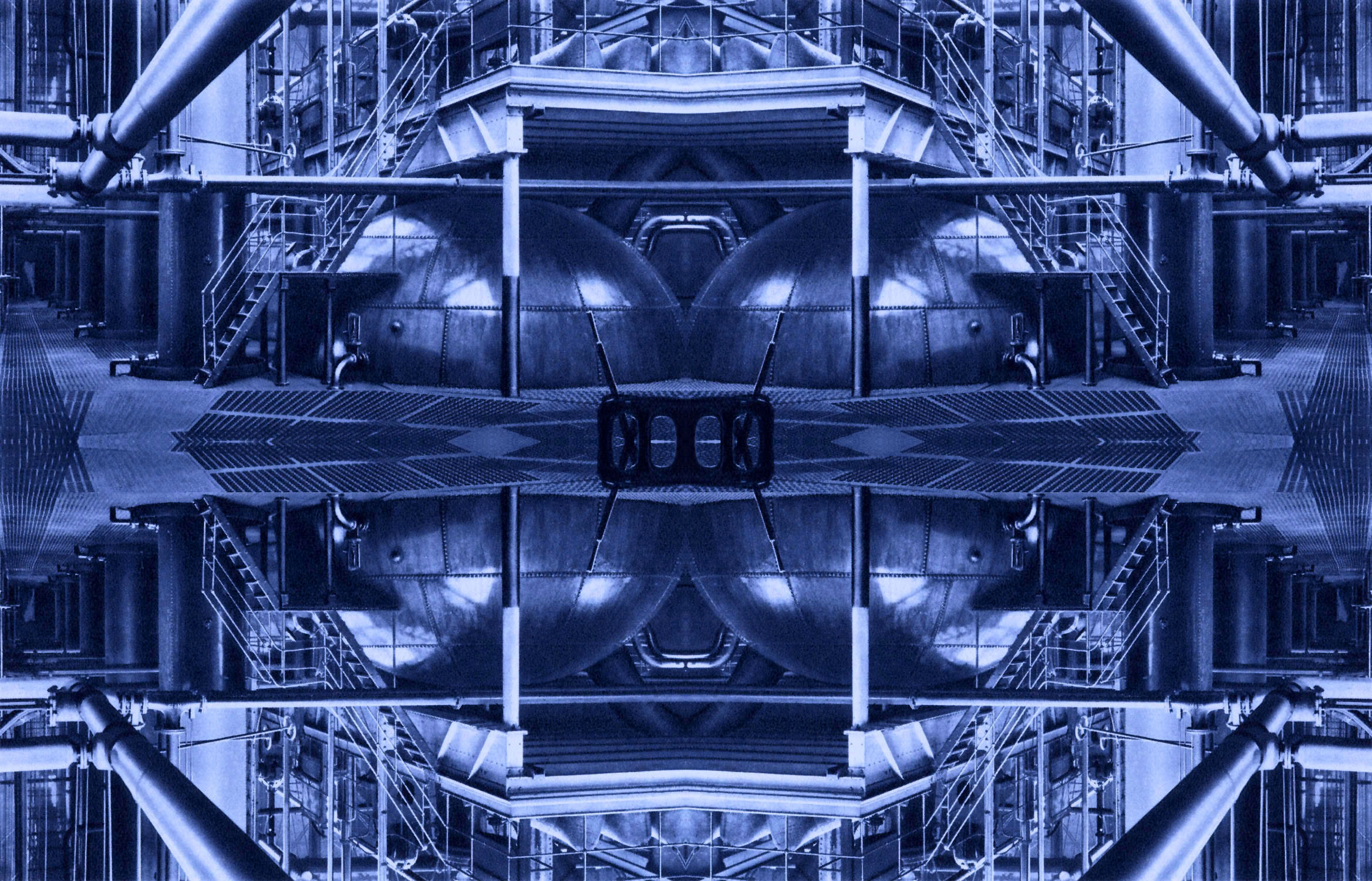
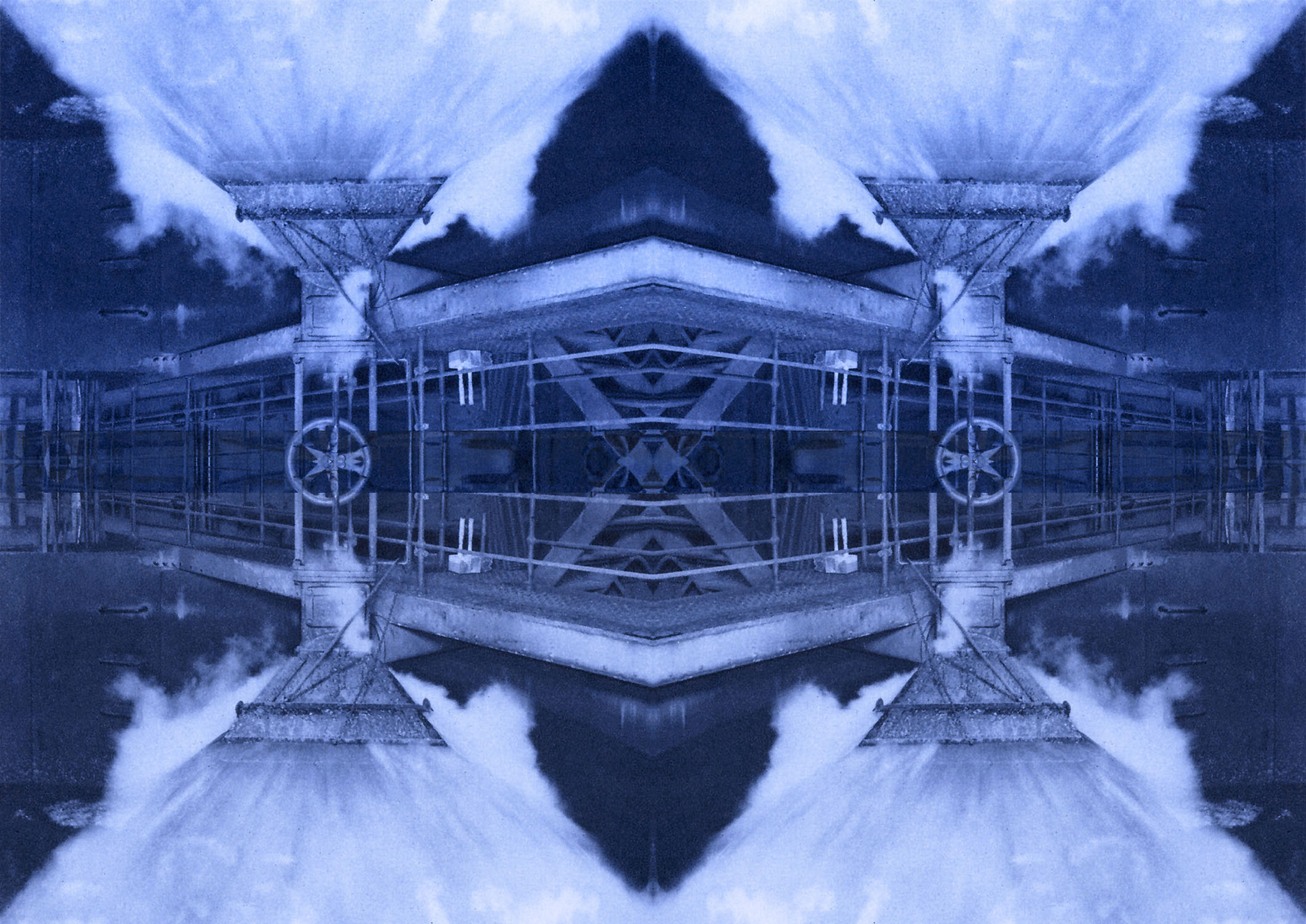
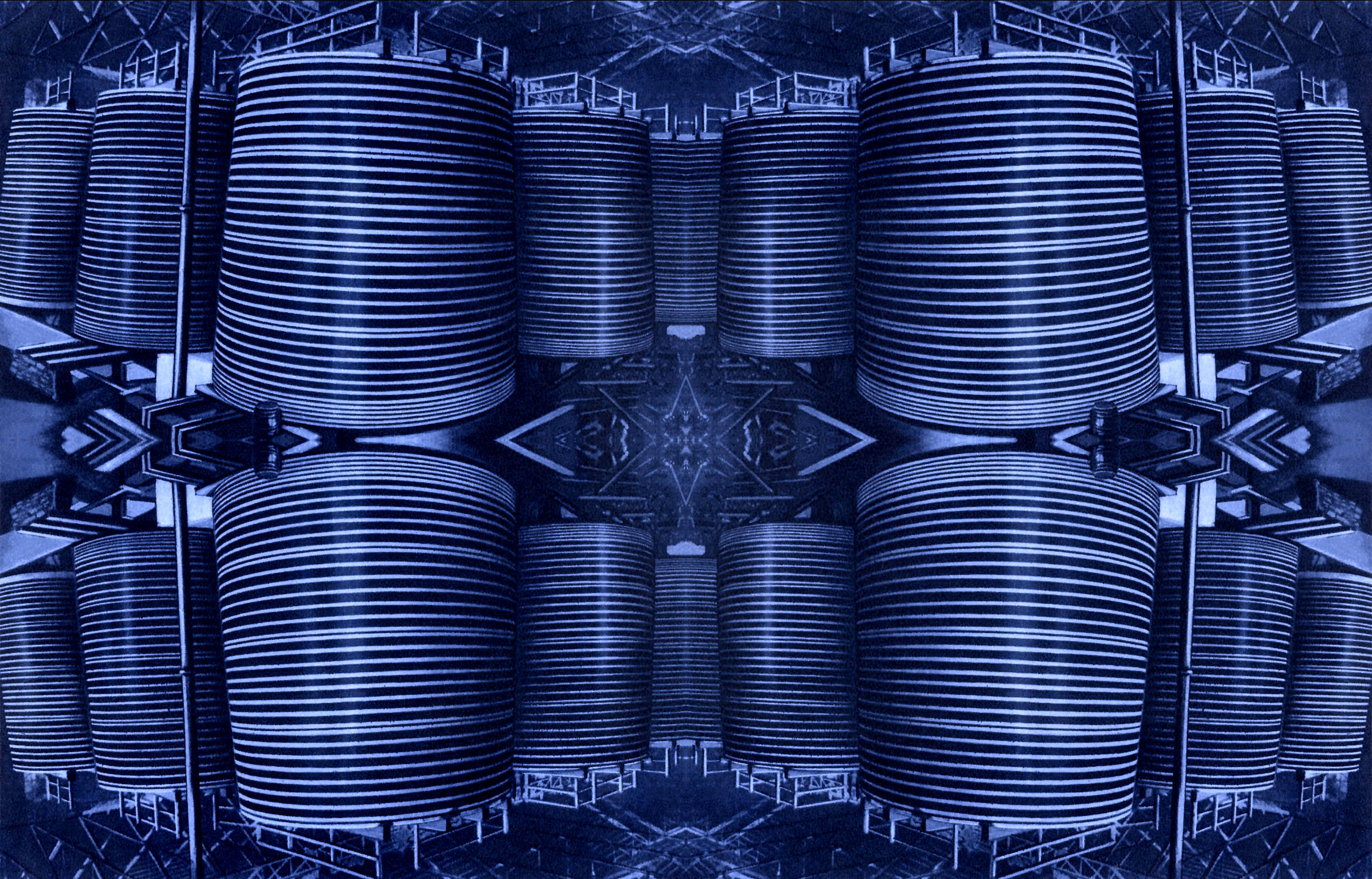
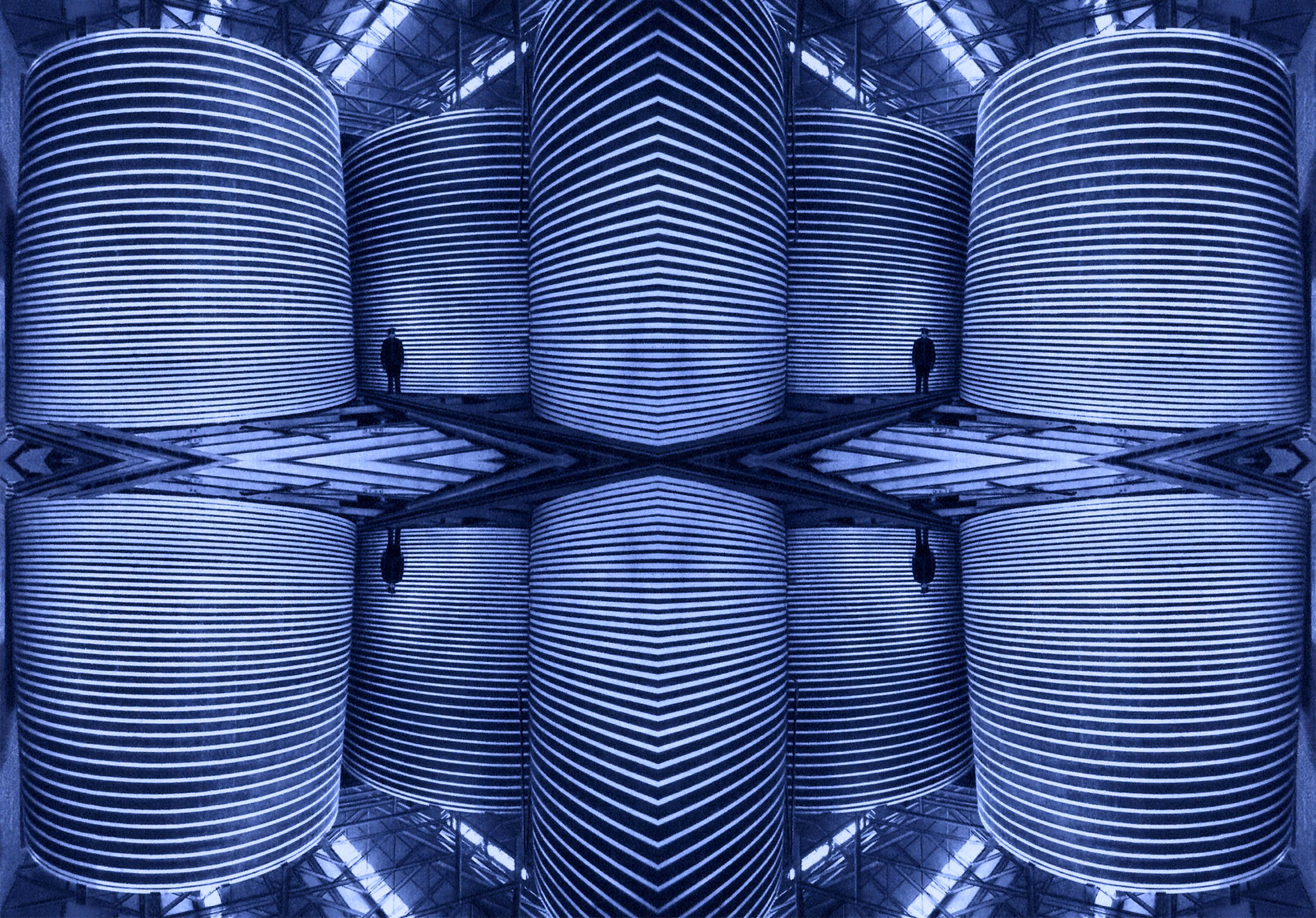
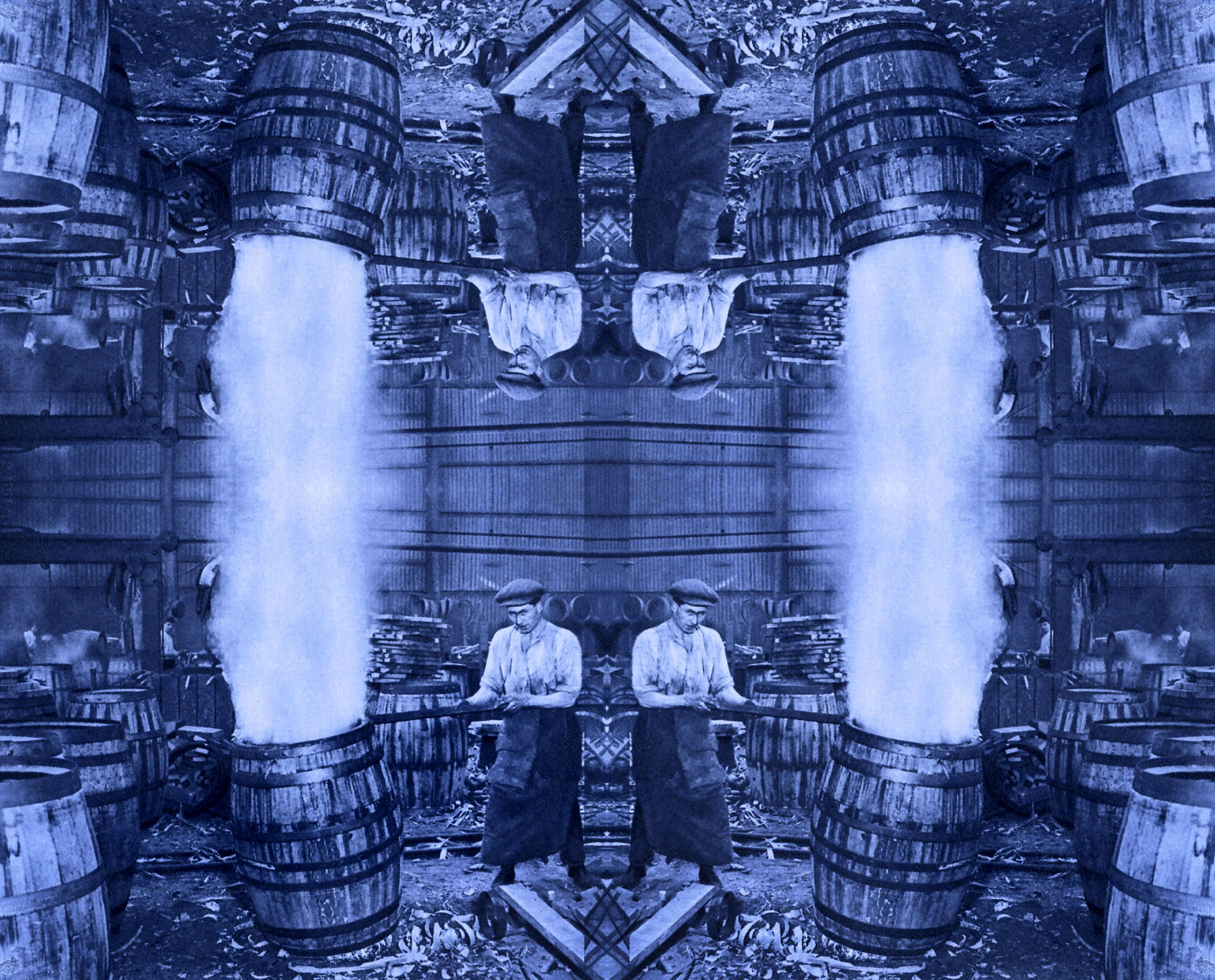
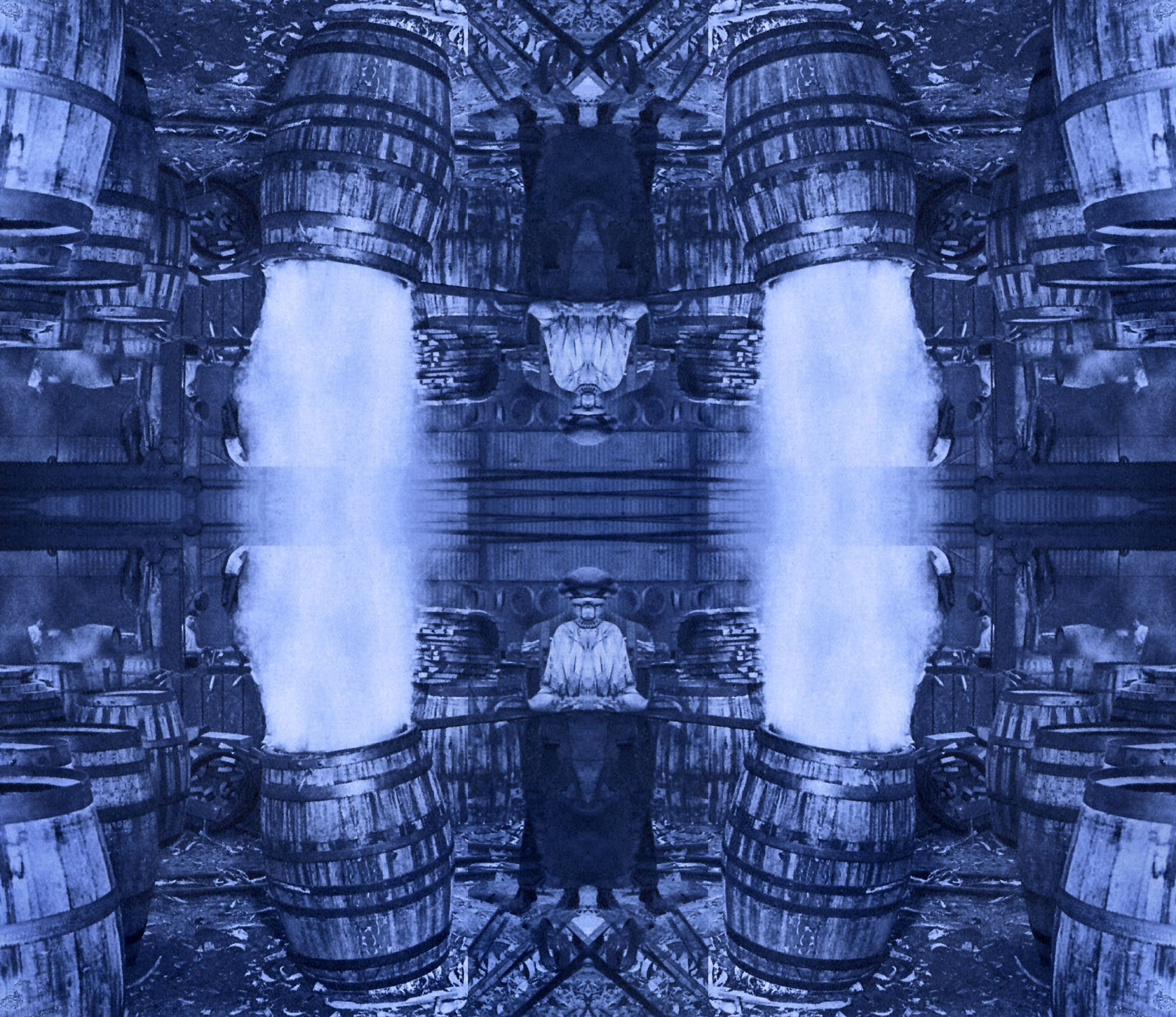
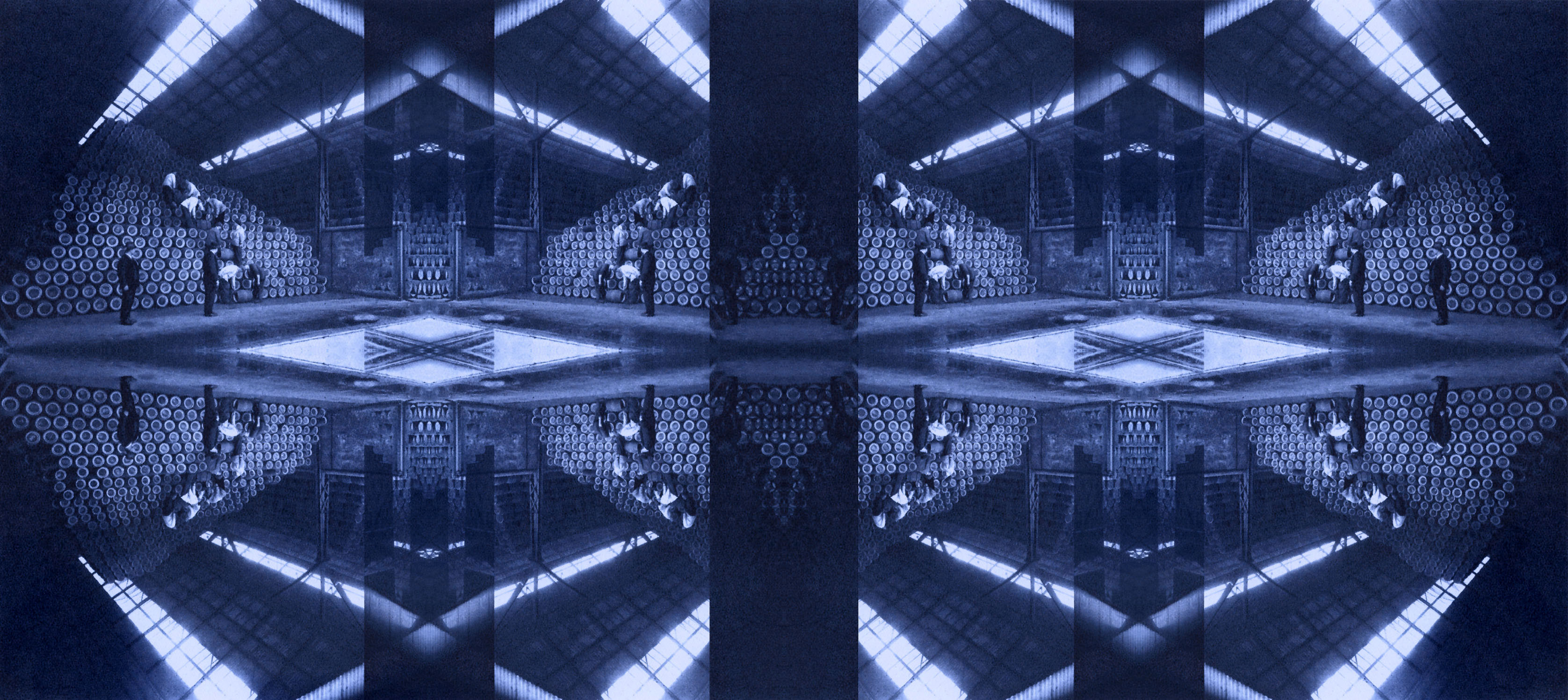
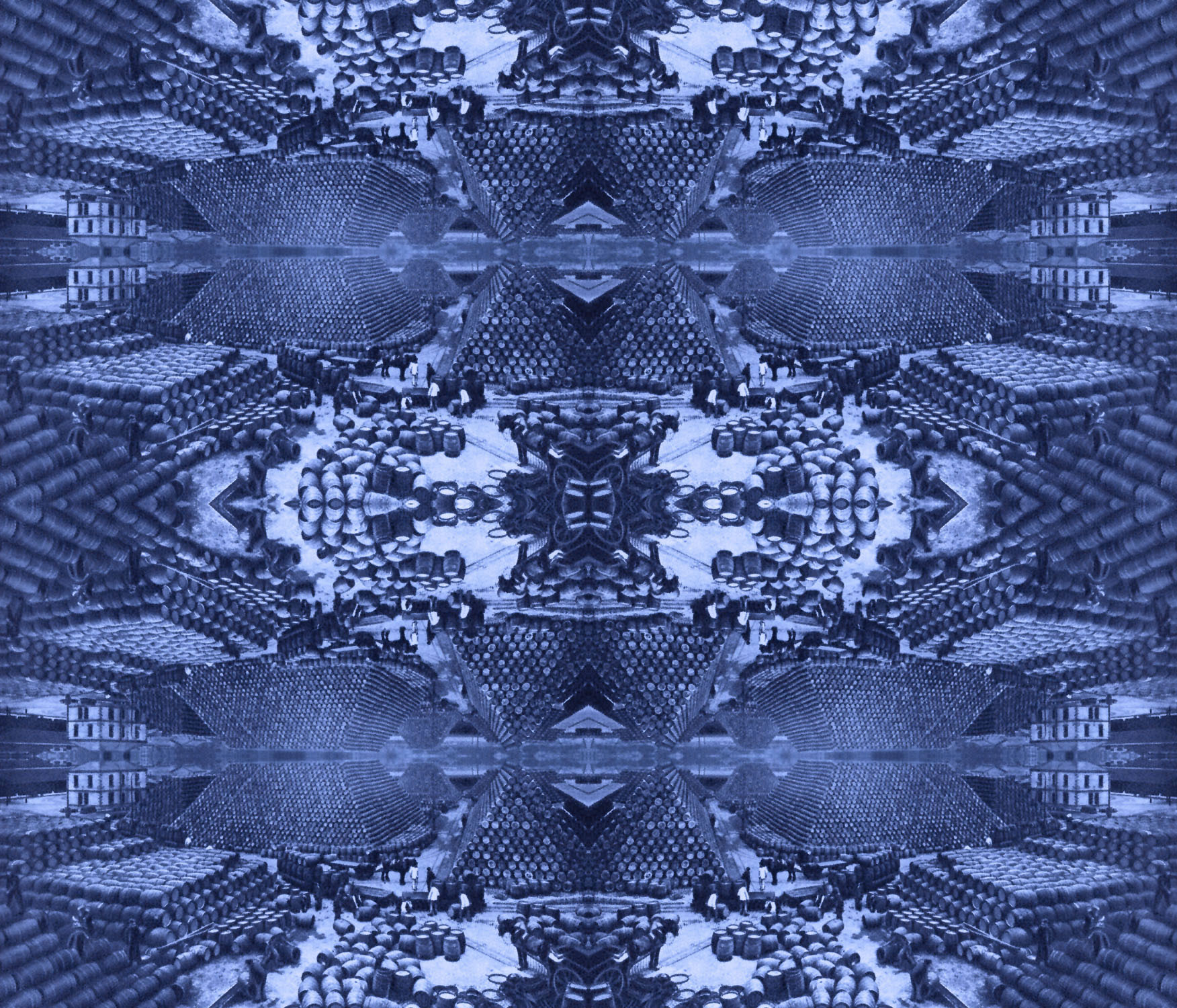
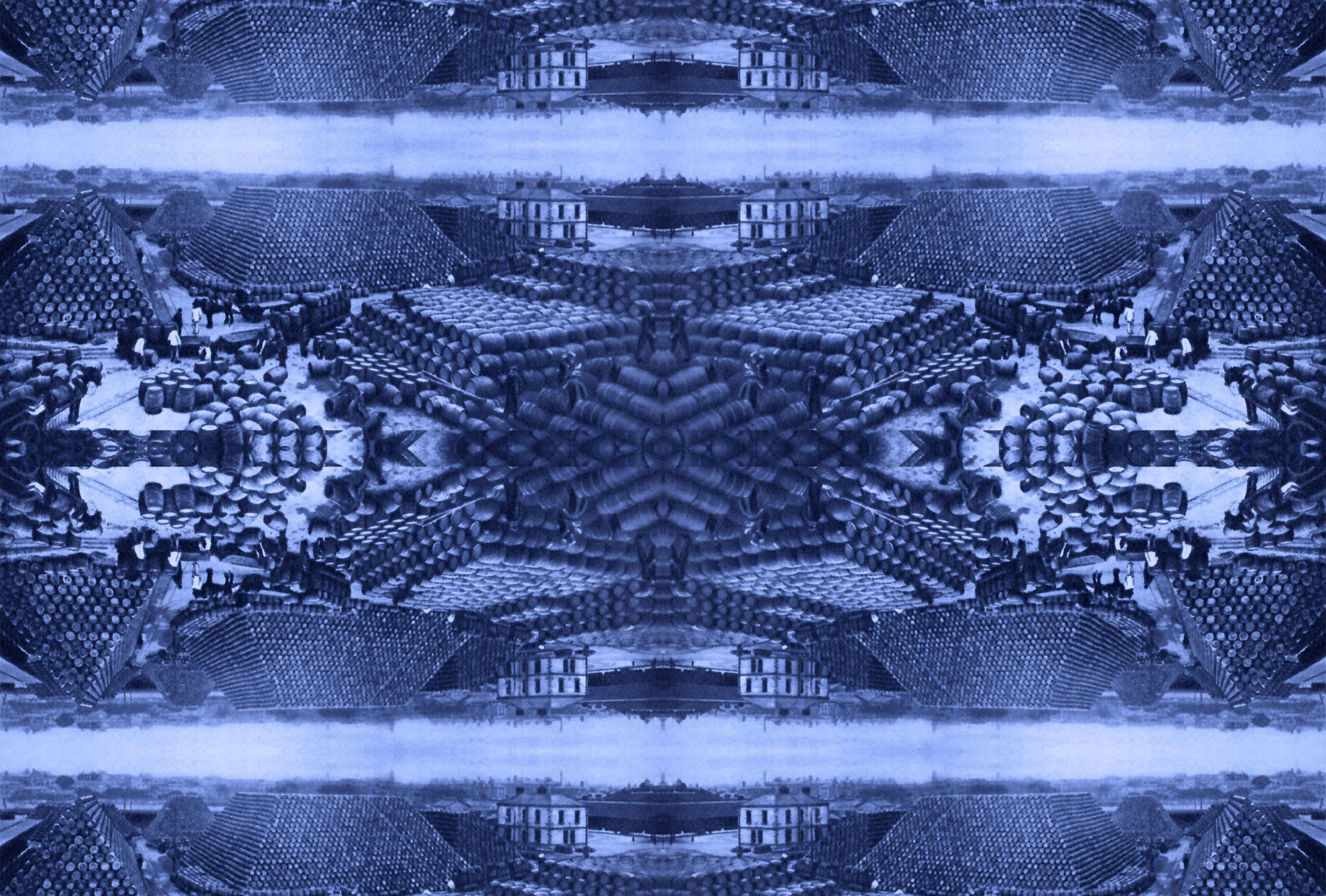
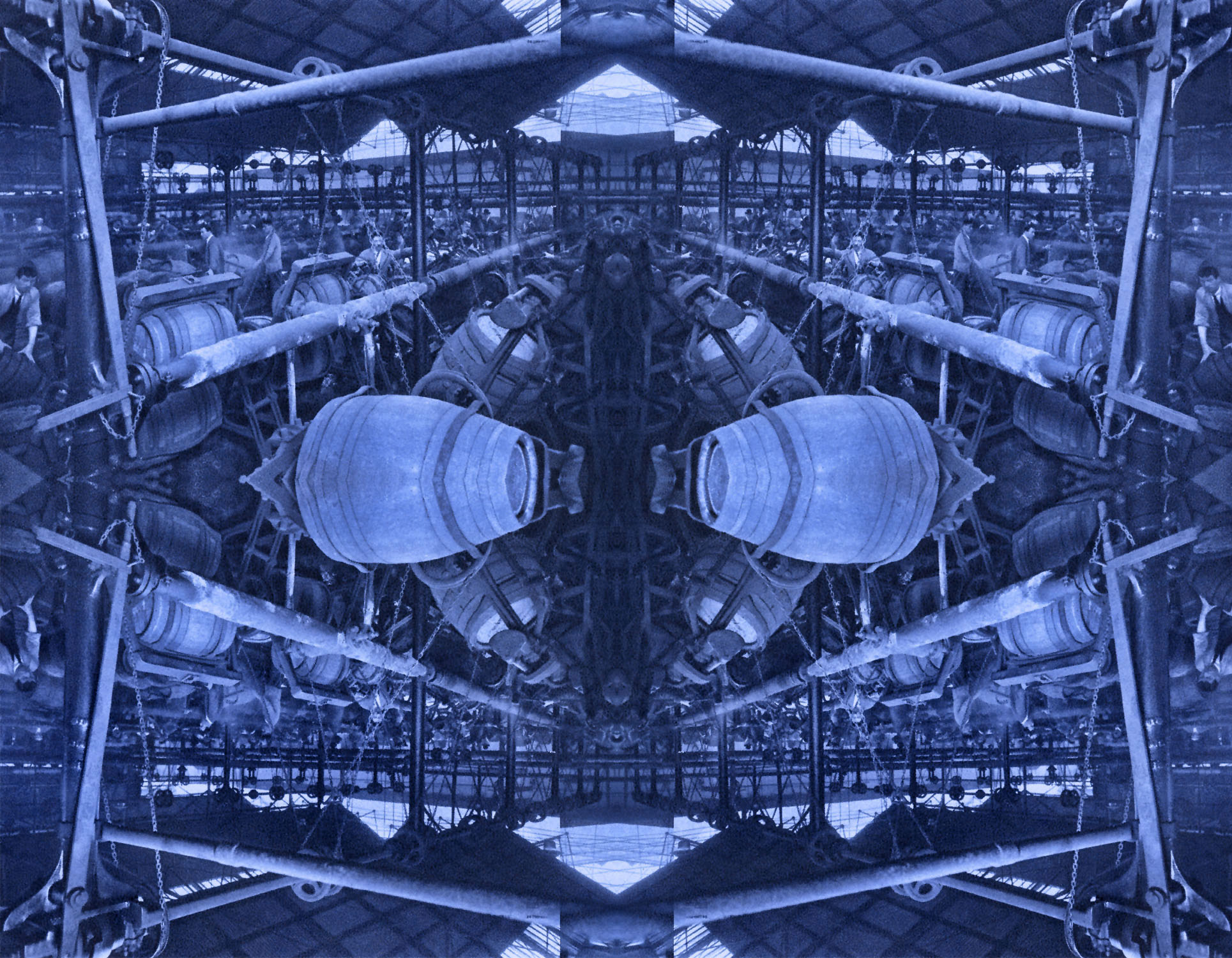
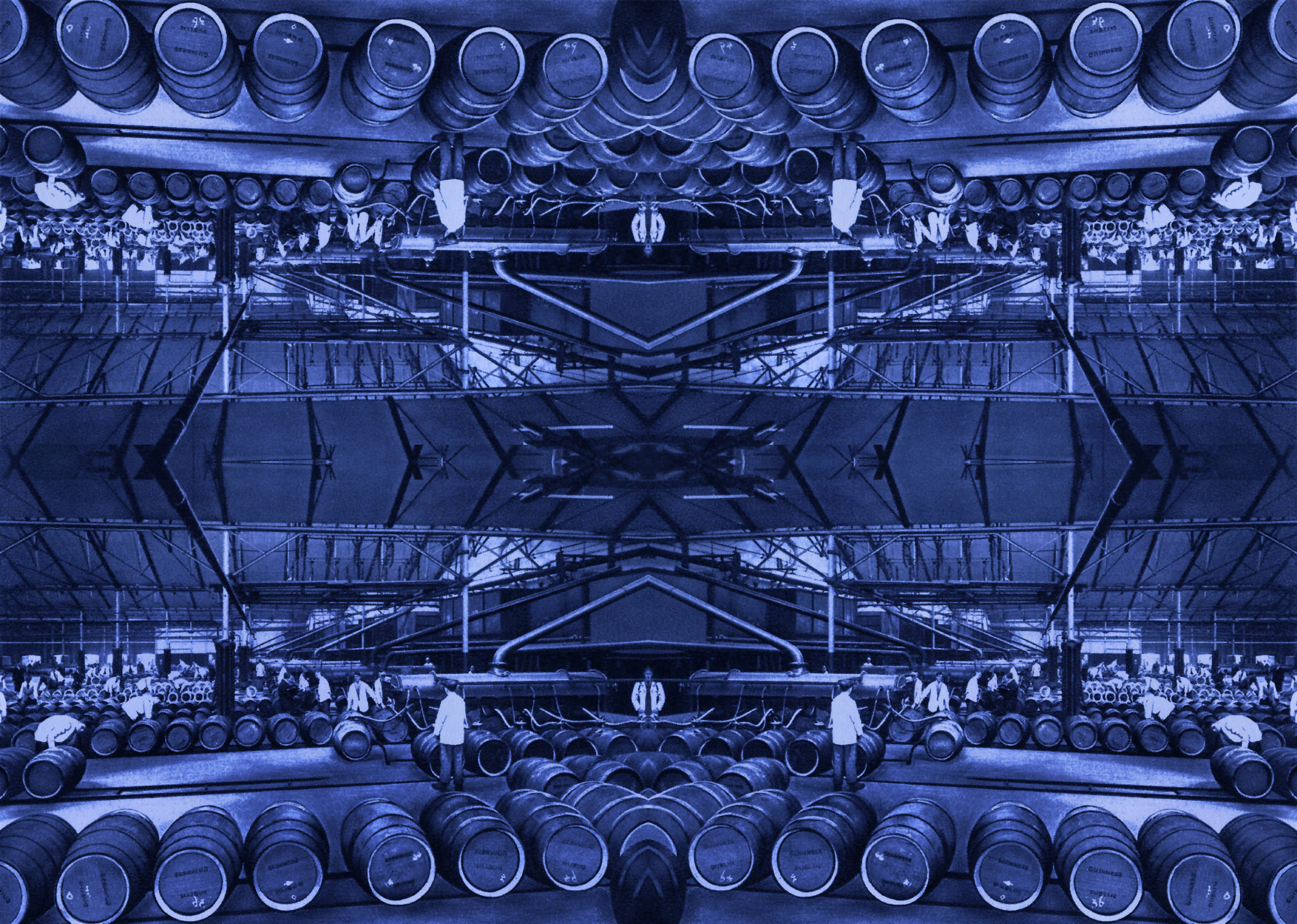
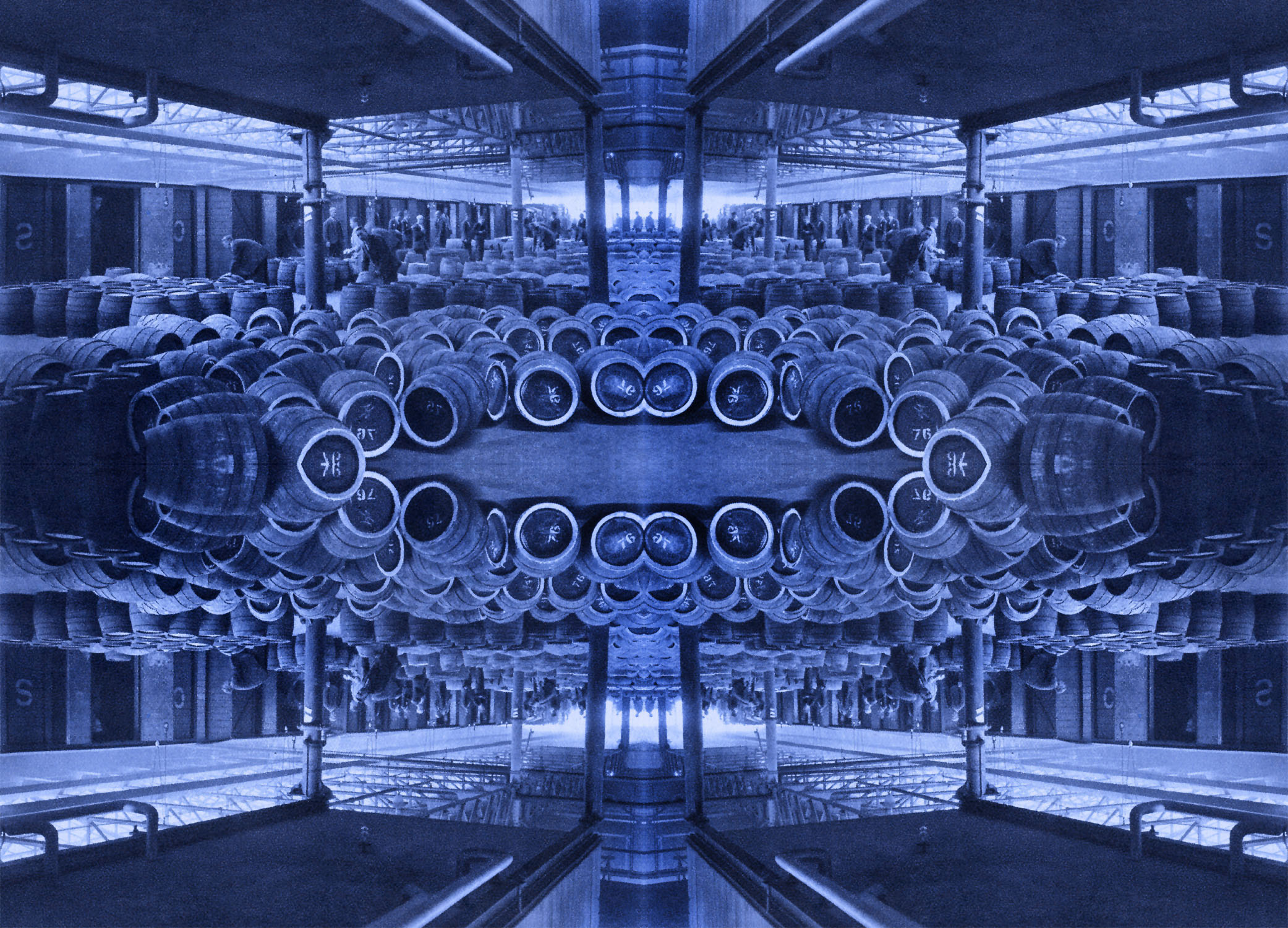
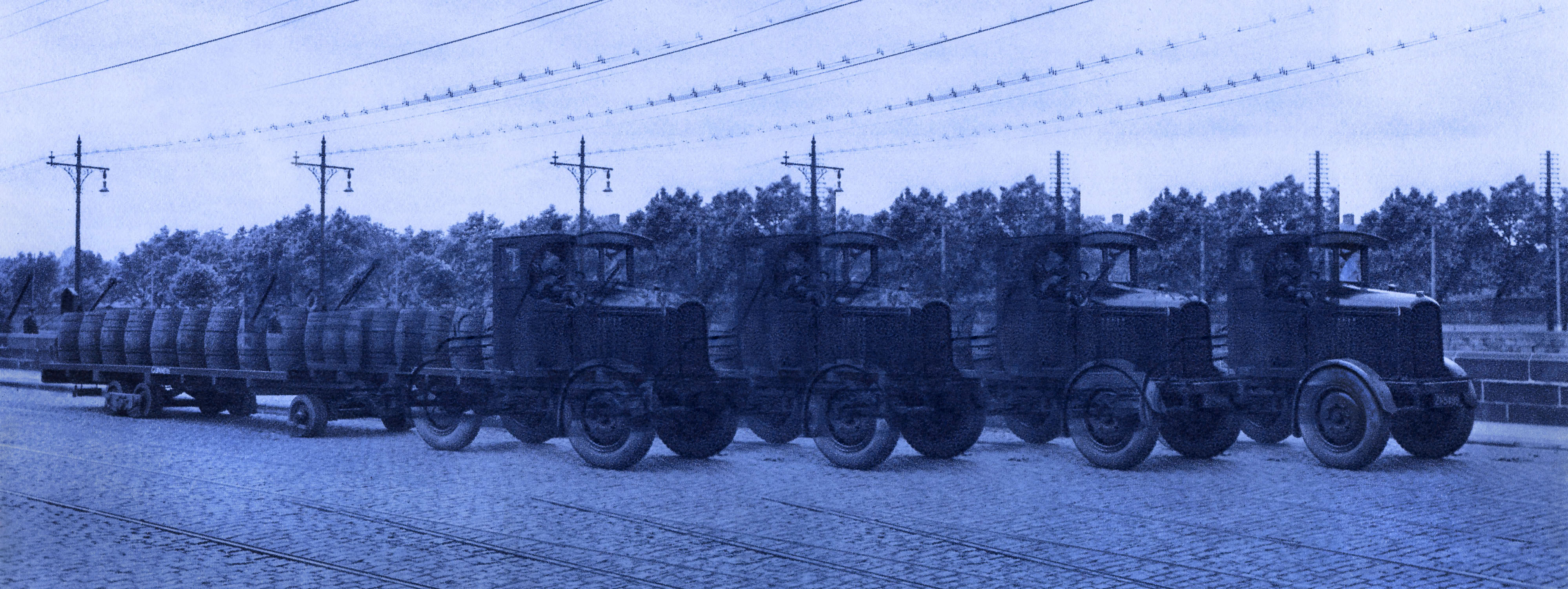
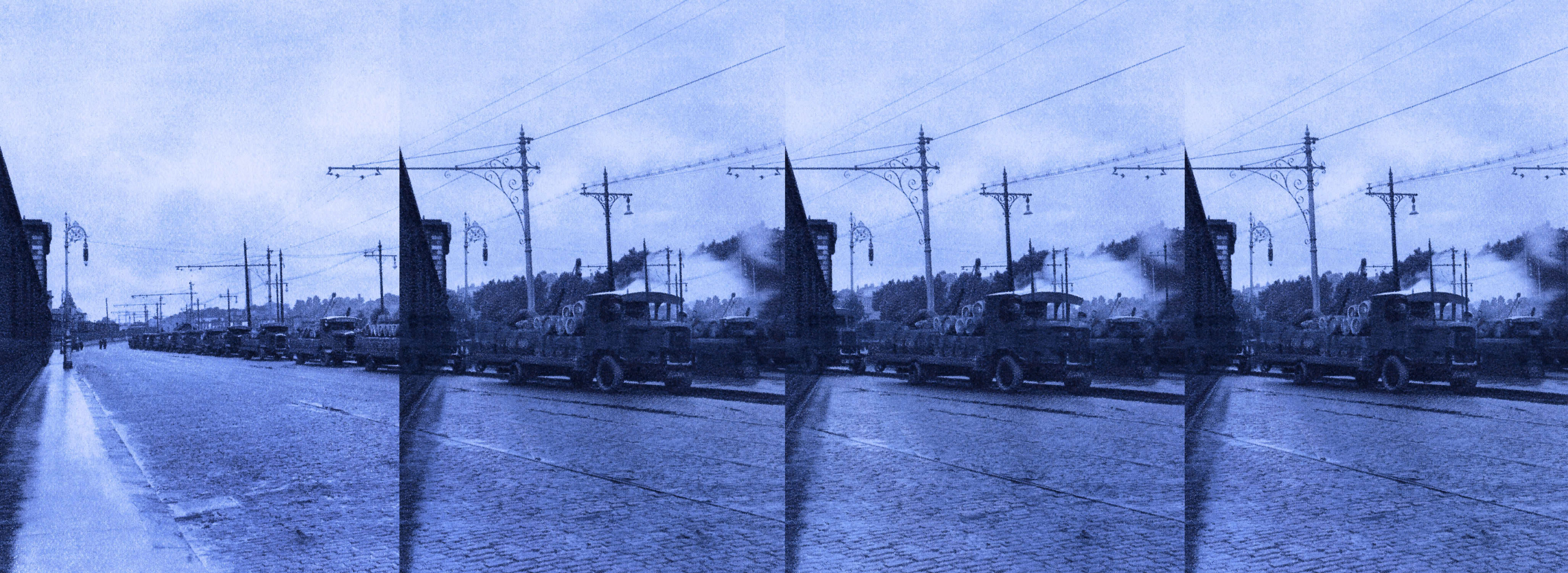
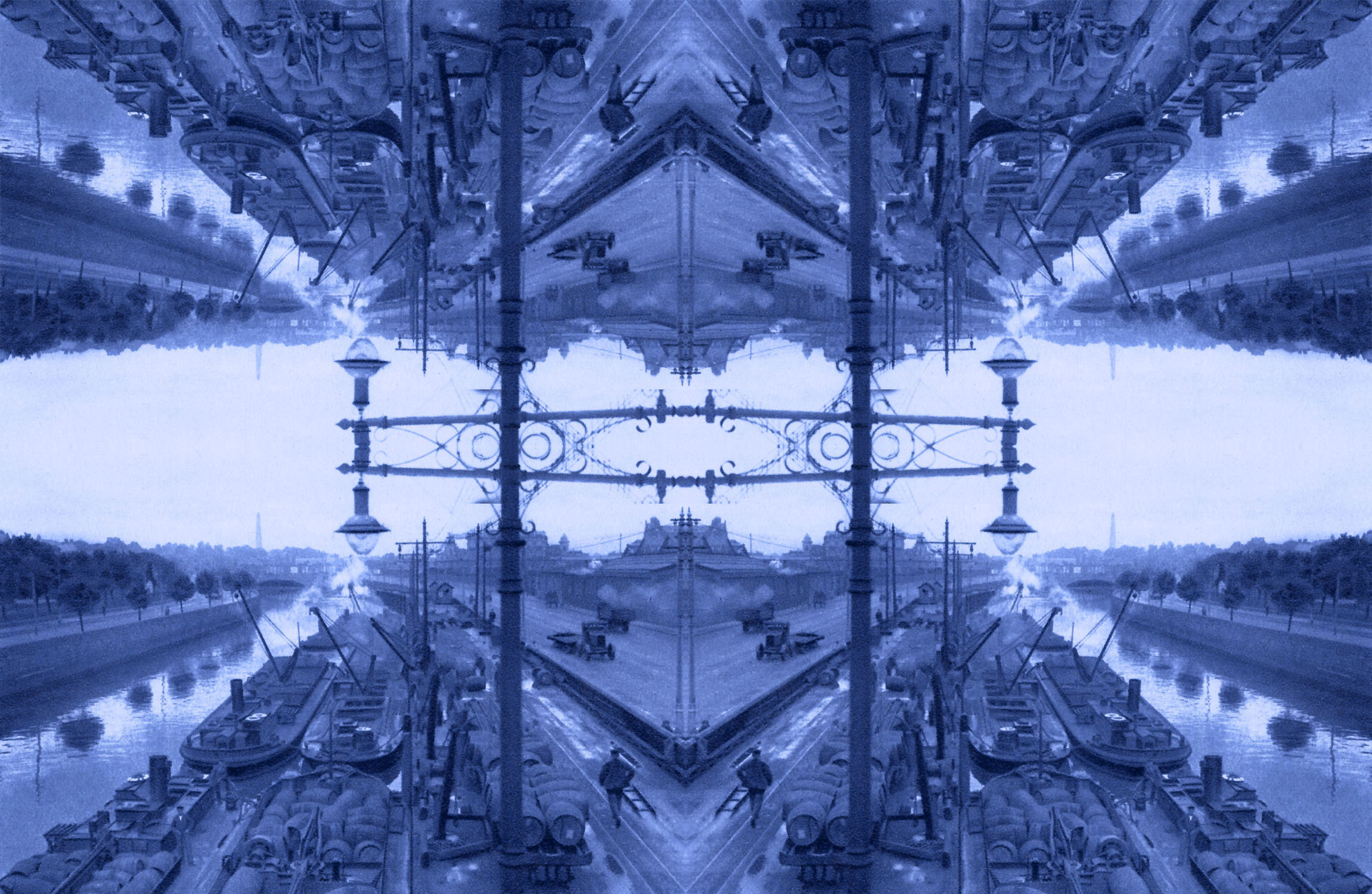
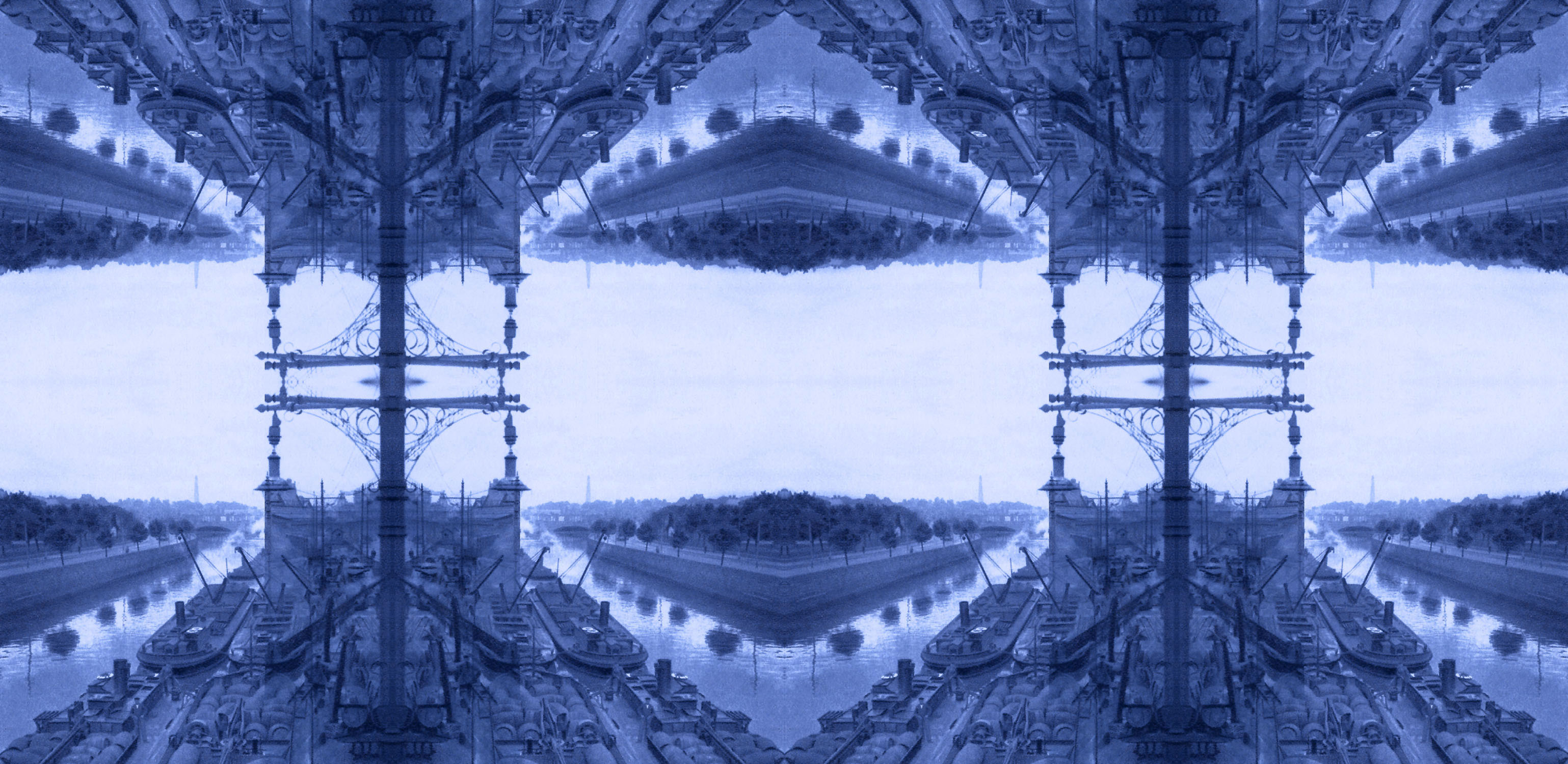
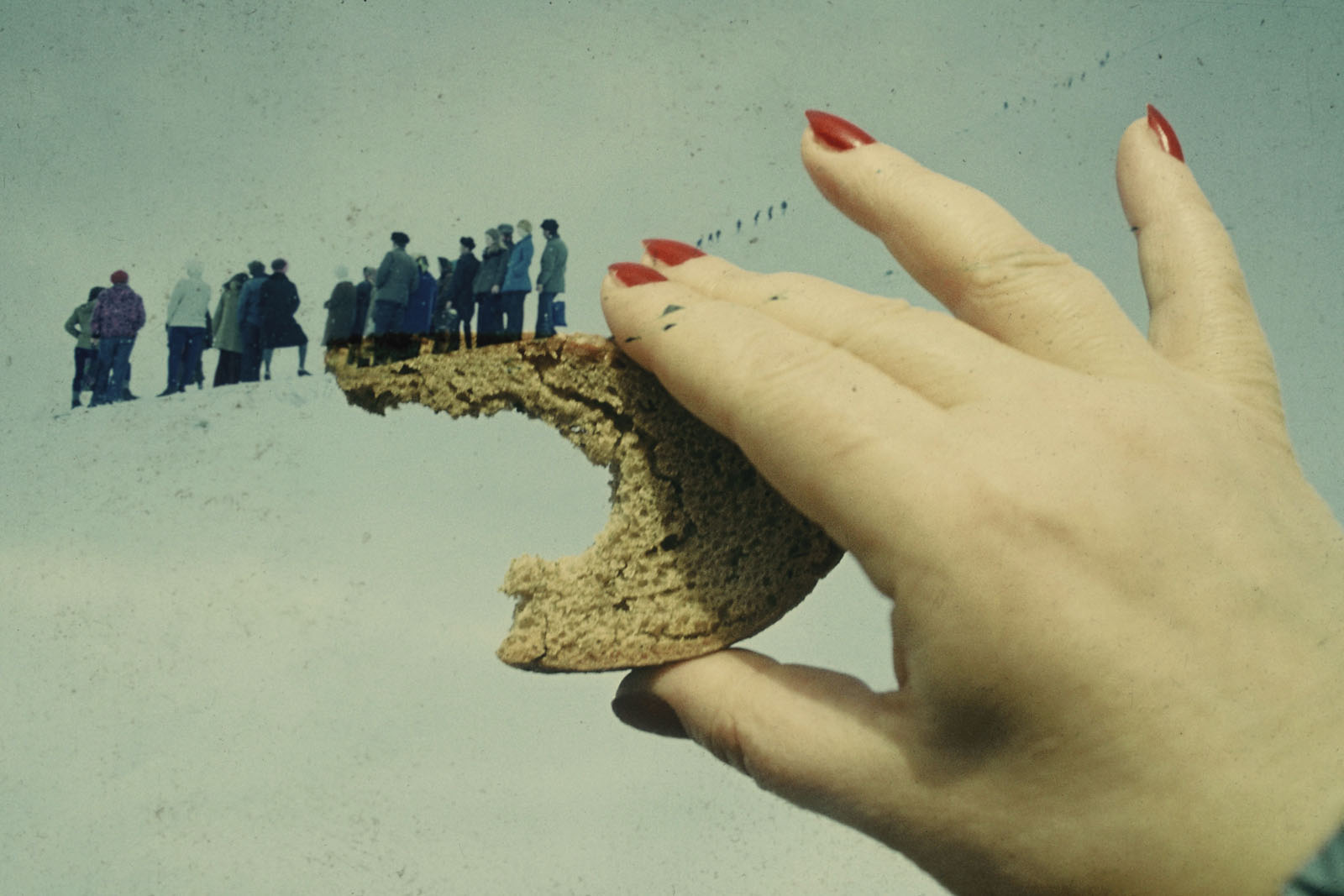
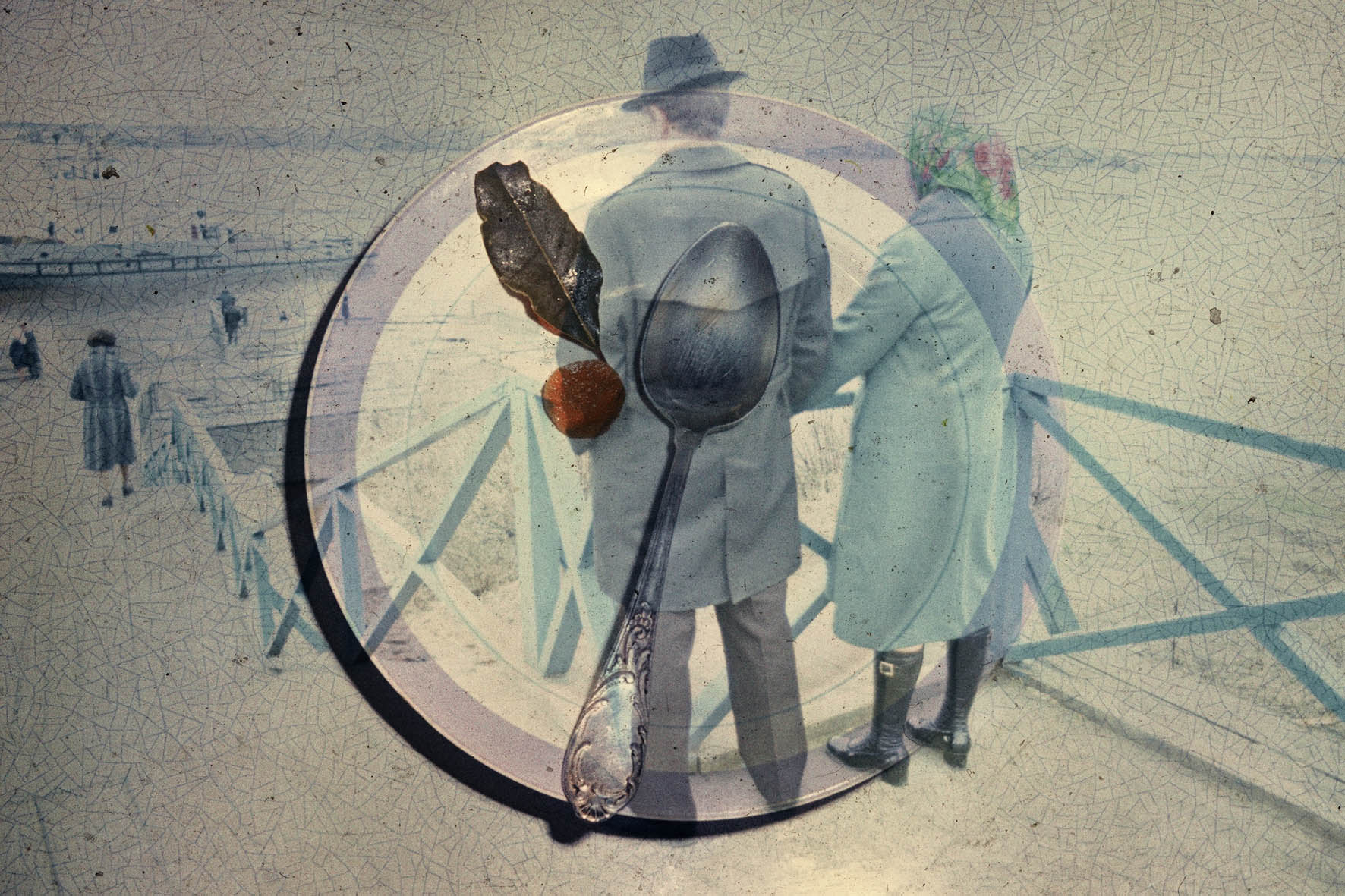
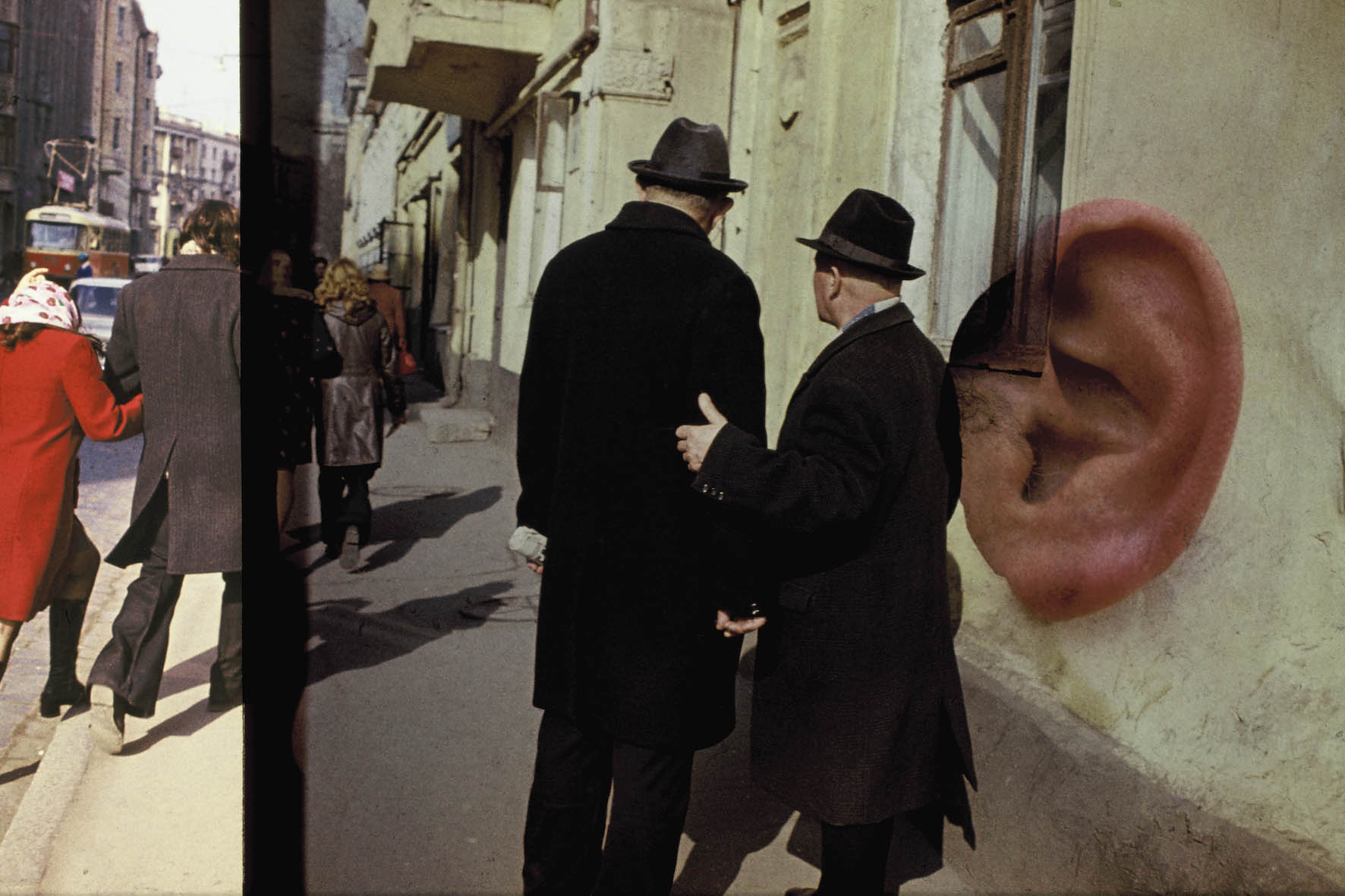
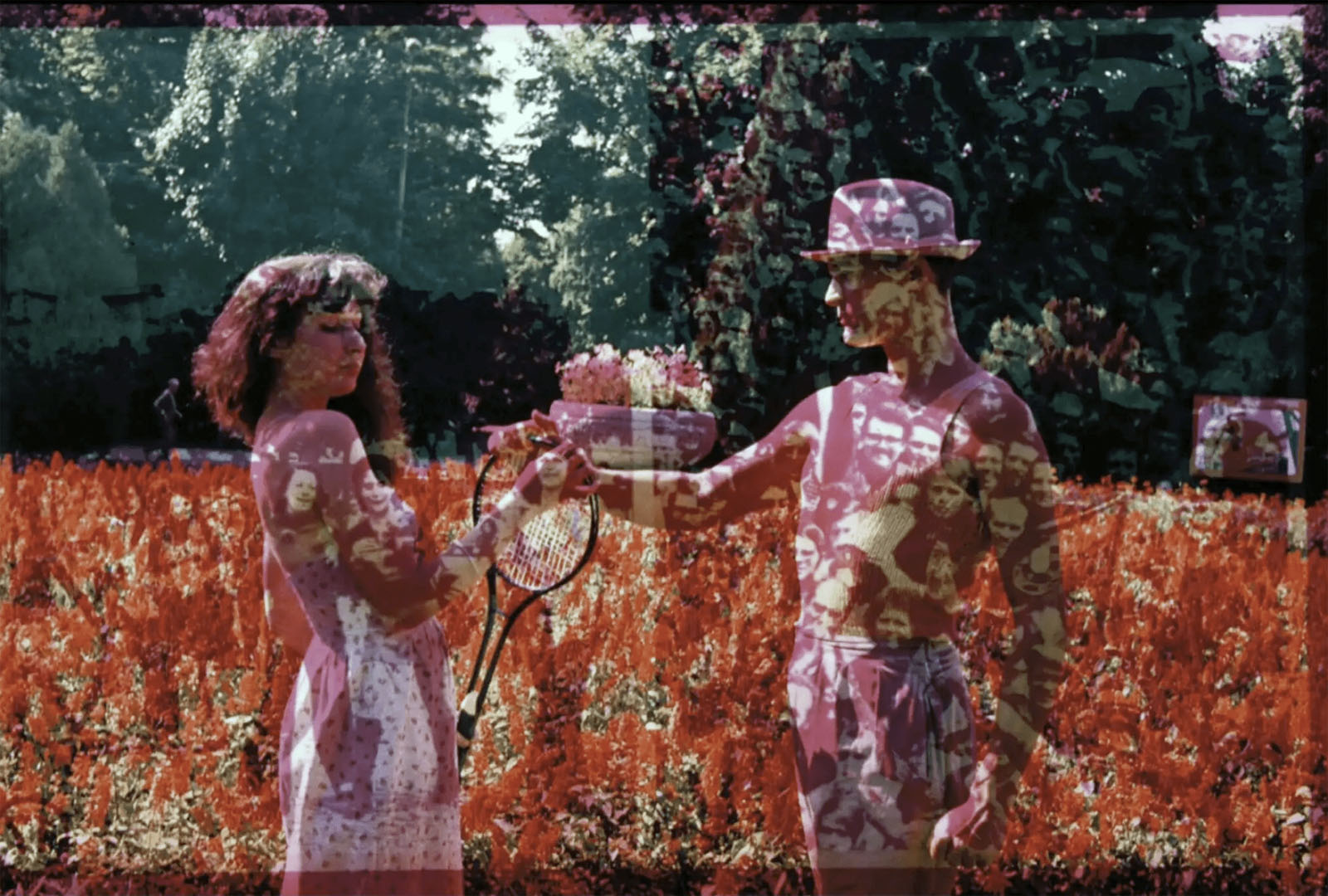
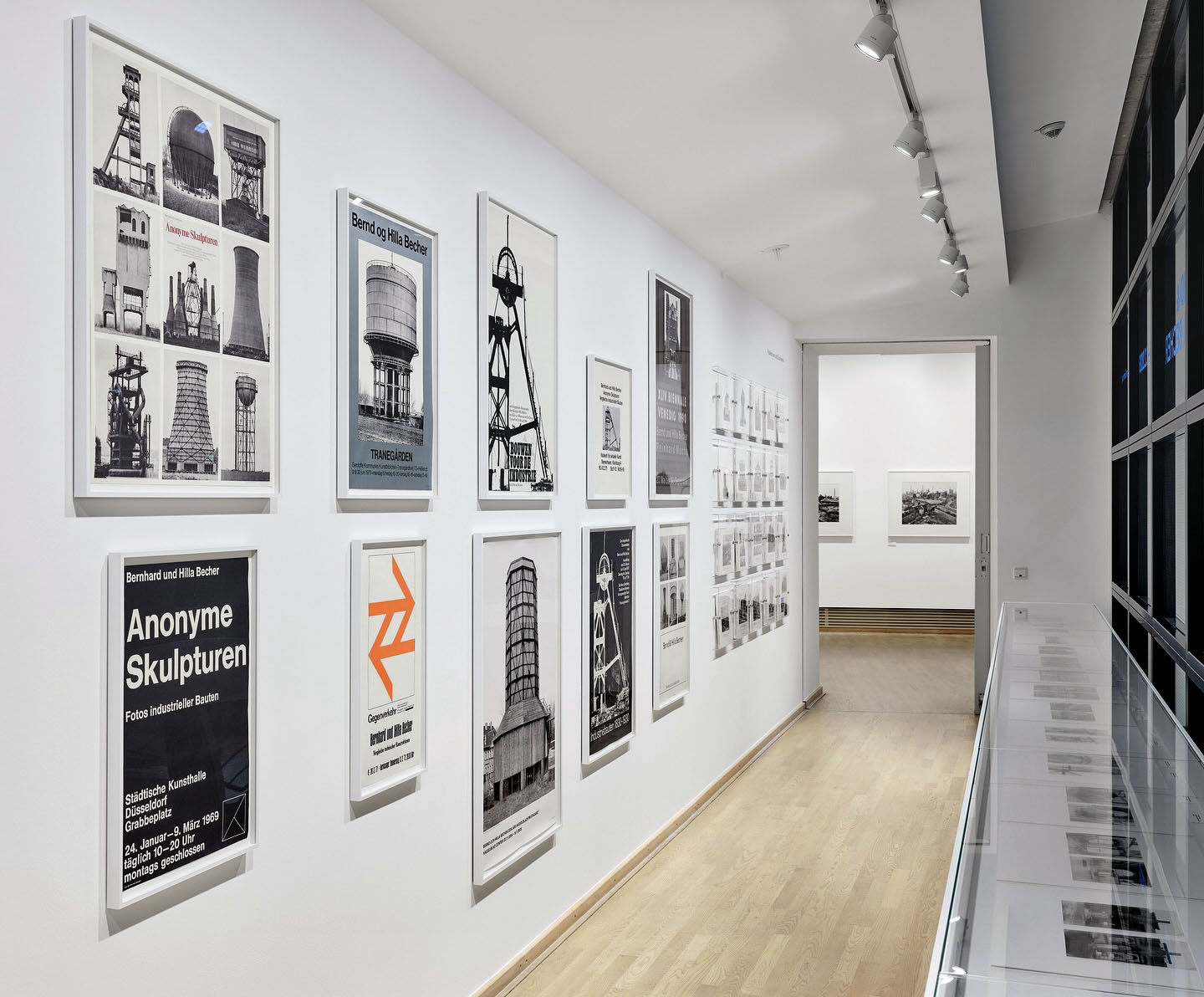
Photographic series: Marcus Bunyan. ‘Metropolis’ 2025-2026

February 2026


Marcus Bunyan (Australian, b. 1958) 'No. 1 Brewery B' 2026 from the series 'Metropolis'


Marcus Bunyan (Australian, b. 1958)
No. 1 Brewery B
2026
from the series Metropolis


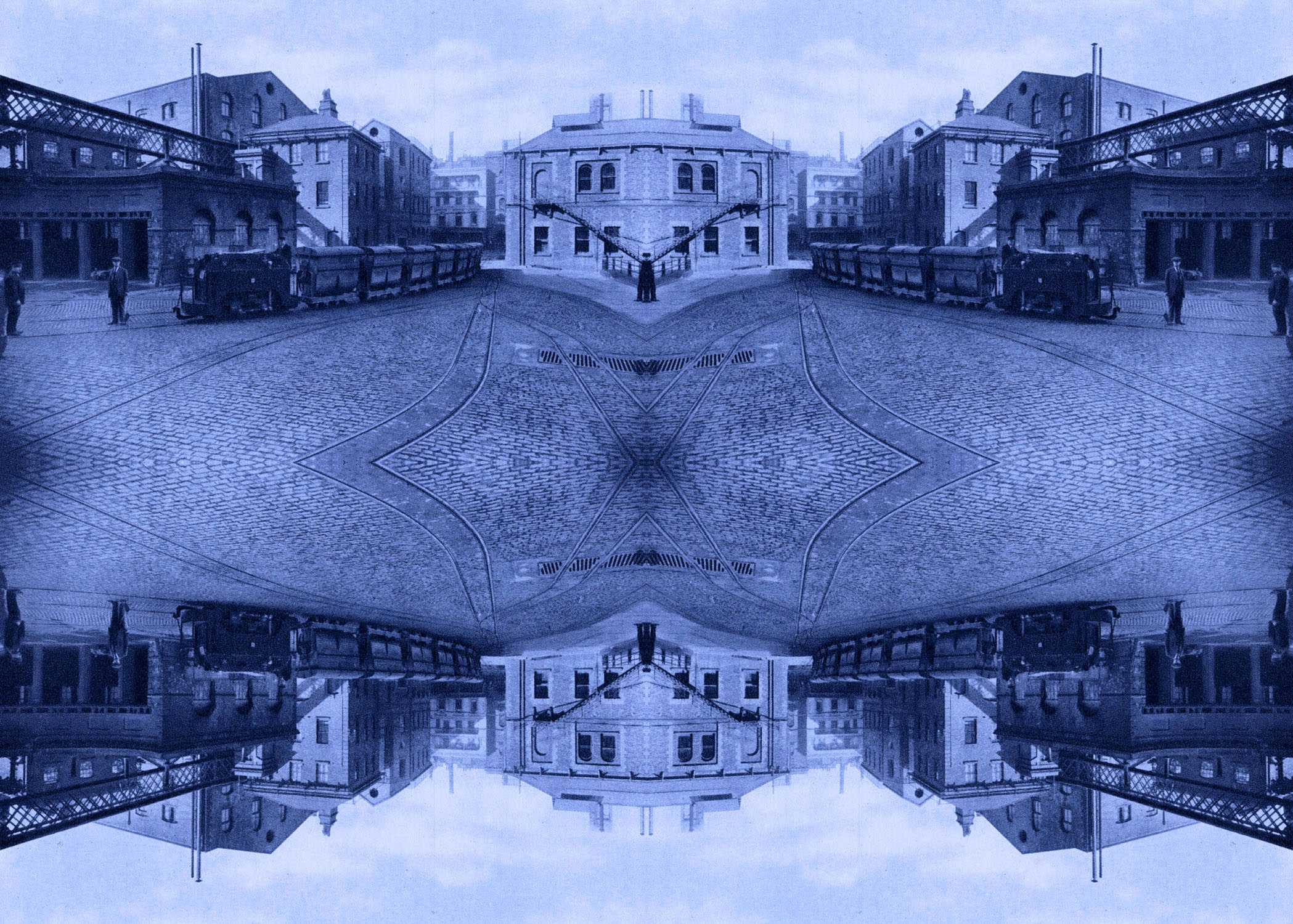
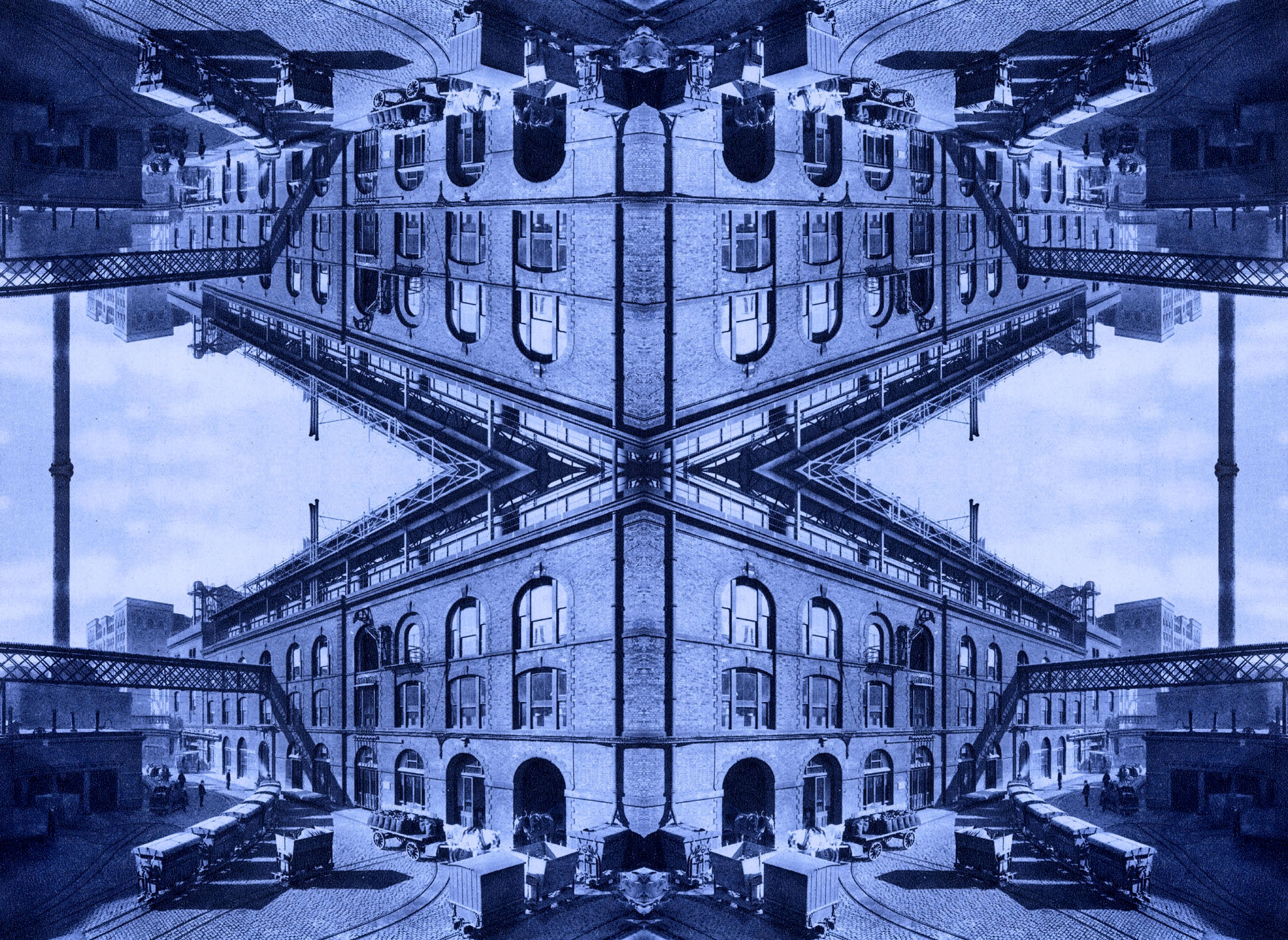
This is a selection of images from the new series. Please see the whole series on my website.

The base images for this series of work come from a book on the history of St. James’s Gate Brewery in Dublin published in 1931. These images have then been reflected, distorted, overlapped and filters have been used to produce the desired feeling. Each image has a different number of variations depending on this feeling. The 75 images in the series are sequenced as in the book.

The influences on the work were the architecture in Fritz Lang’s 1937 film Metropolis; the surrealist photography of Dora Maar notably her image Le Simulateur (The Pretender) 1936; the modernist photographs of factory machines by artists such as Jakob Tuggener and Albert Renger-Patzsch; and the prisons of Piranesi’s etchings published in Carceri d’invenzione, often translated as Imaginary Prisons, c. 1745 to 1750.

© Marcus Bunyan


Please click on the photographs to see a larger version of the image.
Please view the work on a large computer screen if possible.
Please see the whole series on my website.
Many thankx to Elizabeth Gertsakis for her invaluable help.


Marcus Bunyan (Australian, b. 1958) 'No. 2 Brewery' 2026  from the series 'Metropolis'


Marcus Bunyan (Australian, b. 1958)
No. 2 Brewery
2026
from the series Metropolis


Marcus Bunyan (Australian, b. 1958) 'Boiler House B' 2026


Marcus Bunyan (Australian, b. 1958)
Boiler House B
2026
from the series Metropolis


Marcus Bunyan (Australian, b. 1958) 'Old Engine A' 2026


Marcus Bunyan (Australian, b. 1958)
Old Engine A
2026
from the series Metropolis


Marcus Bunyan (Australian, b. 1958)
'Electric Power Station A'
2026


Marcus Bunyan (Australian, b. 1958)
Electric Power Station A-B
2026
from the series Metropolis


Marcus Bunyan (Australian, b. 1958)
'Compressor Machines A' 2026


Marcus Bunyan (Australian, b. 1958)
Compressor Machines A-B
2026
from the series Metropolis


Marcus Bunyan (Australian, b. 1958)
'Refrigerating Plant A' 2026


Marcus Bunyan (Australian, b. 1958)
Refrigerating Plant A
2026
from the series Metropolis


Marcus Bunyan (Australian, b. 1958)
'Robert St. Malt Store – Exterior A' 2026
Marcus Bunyan (Australian, b. 1958) 'Robert St. Malt Store – Exterior B' 2026


Marcus Bunyan (Australian, b. 1958)
Robert St. Malt Store – Exterior A-B
2026
from the series Metropolis


Marcus Bunyan (Australian, b. 1958)
'Robert St. Malt Store – Interior A' 2026


Marcus Bunyan (Australian, b. 1958)
Robert St. Malt Store – Interior A-B
2026
from the series Metropolis


Marcus Bunyan (Australian, b. 1958)
'Loading Malt Wagons B' 2026


Marcus Bunyan (Australian, b. 1958) 'Loading Malt Wagons D' 2026


Marcus Bunyan (Australian, b. 1958)
Loading Malt Wagons B, D
2026
from the series Metropolis


Marcus Bunyan (Australian, b. 1958) 'Cooke's Lane Malt House A' 2026
Marcus Bunyan (Australian, b. 1958) 'Cooke's Lane Malt House C' 2026


Marcus Bunyan (Australian, b. 1958)
Cooke’s Lane Malt House A-C
2026
from the series Metropolis


Marcus Bunyan (Australian, b. 1958)
'Barley in Process of Being Malted' 2026


Marcus Bunyan (Australian, b. 1958)
Barley in Process of Being Malted
2026
from the series Metropolis


Marcus Bunyan (Australian, b. 1958)
'Malt Train Outside No. 2 Brewery B' 2026


Marcus Bunyan (Australian, b. 1958)
Malt Train Outside No. 2 Brewery B
2026
from the series Metropolis


Marcus Bunyan (Australian, b. 1958)
'Hops in Store A' 2026


Marcus Bunyan (Australian, b. 1958) 'Hops in Store C' 2026


Marcus Bunyan (Australian, b. 1958)
Hops in Store A-C
2026
from the series Metropolis


Marcus Bunyan (Australian, b. 1958)
'Loading Hop Wagons A'
2026
Marcus Bunyan (Australian, b. 1958) 'Loading Hop Wagons B' 2026


Marcus Bunyan (Australian, b. 1958)
Loading Hop Wagons A-B
2026
from the series Metropolis


Marcus Bunyan (Australian, b. 1958)
'Regulating Mash Temperatures B' 2026


Marcus Bunyan (Australian, b. 1958)
Regulating Mash Temperatures B
2026
from the series Metropolis


Marcus Bunyan (Australian, b. 1958)
'Copper Stage A' 2026
Marcus Bunyan (Australian, b. 1958)
'Copper Stage B' 2026


Marcus Bunyan (Australian, b. 1958)
Copper Stage A-C
2026
from the series Metropolis


Marcus Bunyan (Australian, b. 1958)
'"Striking Off" a Copper'
2026


Marcus Bunyan (Australian, b. 1958)
“Striking Off” a Copper
2026
from the series Metropolis


Marcus Bunyan (Australian, b. 1958)
'A Corner of No. 11 Vat House A' 2026


Marcus Bunyan (Australian, b. 1958)
A Corner of No. 11 Vat House A
2026
from the series Metropolis


Marcus Bunyan (Australian, b. 1958)
Vat House – Another View B' 2026


Marcus Bunyan (Australian, b. 1958)
Vat House – Another View C' 2026


Marcus Bunyan (Australian, b. 1958)
Vat House – Another View A-C
2026
from the series Metropolis


Marcus Bunyan (Australian, b. 1958)
'Cask Making Shop – Blazing A' 2026
Marcus Bunyan (Australian, b. 1958) 'Cask Making Shop – Blazing B' 2026


Marcus Bunyan (Australian, b. 1958)
Cask Making Shop – Blazing A-C
2026
from the series Metropolis


Marcus Bunyan (Australian, b. 1958)
'Cask Magazine A'
2026 from the series 'Metropolis'


Marcus Bunyan (Australian, b. 1958)
Cask Magazine A-C
2026
from the series Metropolis


Marcus Bunyan (Australian, b. 1958)
'Cooperage Yard – Another View B' 2026


Marcus Bunyan (Australian, b. 1958) 'Cooperage Yard – Another View F' 2026


Marcus Bunyan (Australian, b. 1958)
Cooperage Yard A-B
2026
from the series Metropolis


Marcus Bunyan (Australian, b. 1958)
'Cask Cleansing Shed A'
2026 from the series 'Metropolis'


Marcus Bunyan (Australian, b. 1958)
Cask Cleansing Shed A-D
2026
from the series Metropolis


Marcus Bunyan (Australian, b. 1958)
'Racking Room, Showing Casks being Filled' 2026


Marcus Bunyan (Australian, b. 1958)
Racking Room, Showing Casks being Filled
2026
from the series Metropolis


Marcus Bunyan (Australian, b. 1958)
'Loading Railway Wagons' 2026


Marcus Bunyan (Australian, b. 1958)
Loading Railway Wagons
2026
from the series Metropolis


Marcus Bunyan (Australian, b. 1958)
'Low Platform Vehicle B'
2026


Marcus Bunyan (Australian, b. 1958)
Low Platform Vehicle A-B
2026
from the series Metropolis


Marcus Bunyan (Australian, b. 1958)
'Some of the Delivery Fleet About to Start' 2026


Marcus Bunyan (Australian, b. 1958)
Some of the Delivery Fleet About to Start
2026
from the series Metropolis


Marcus Bunyan (Australian, b. 1958)
'Loading Wharf on River Liffey C' 2026


Marcus Bunyan (Australian, b. 1958) 'Loading Wharf on River Liffey D' 2026


Marcus Bunyan (Australian, b. 1958)
Loading Wharf on River Liffey C-D
2026
from the series Metropolis


Marcus Bunyan website

LIKE ART BLART ON FACEBOOK

Back to top

Exhibition: ‘Boris Mikhailov: Ukrainian Diary’ at The Photographers’ Gallery, London

Exhibition dates: 10th October, 2025 – 22nd February, 2026

Curators: Laurie Hurwitz and Shoair Mavlian in collaboration with Boris and Vita Mikhailov


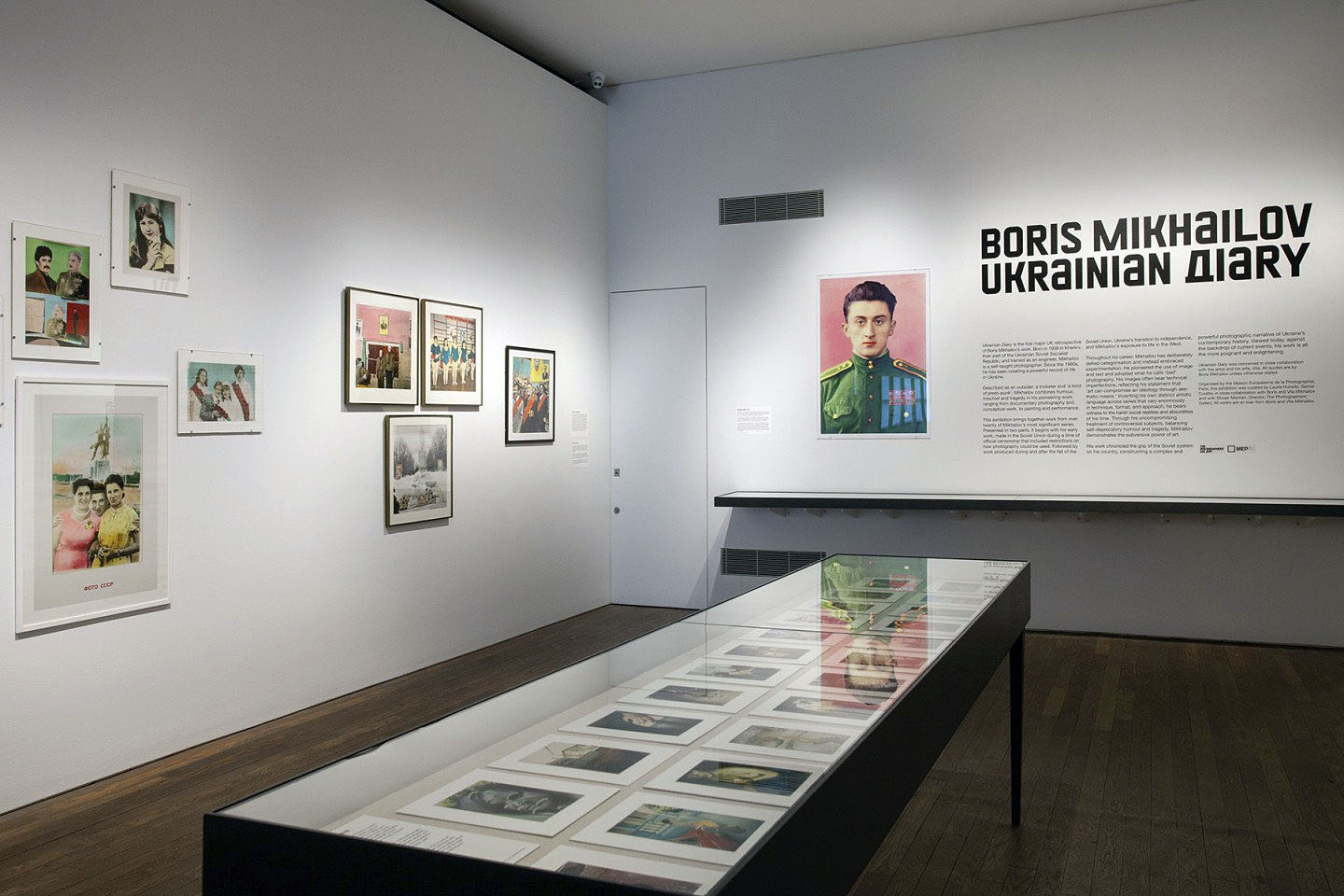
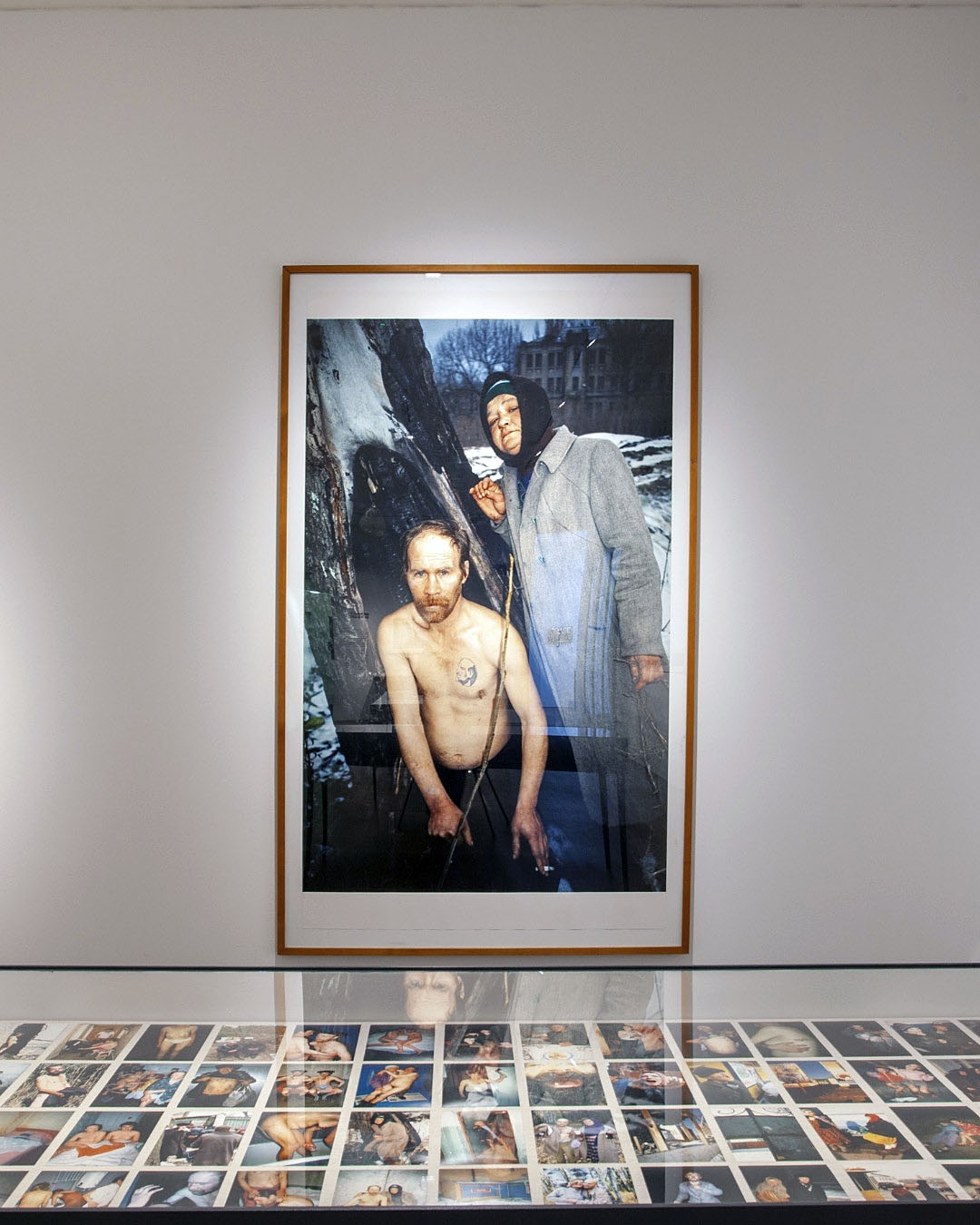
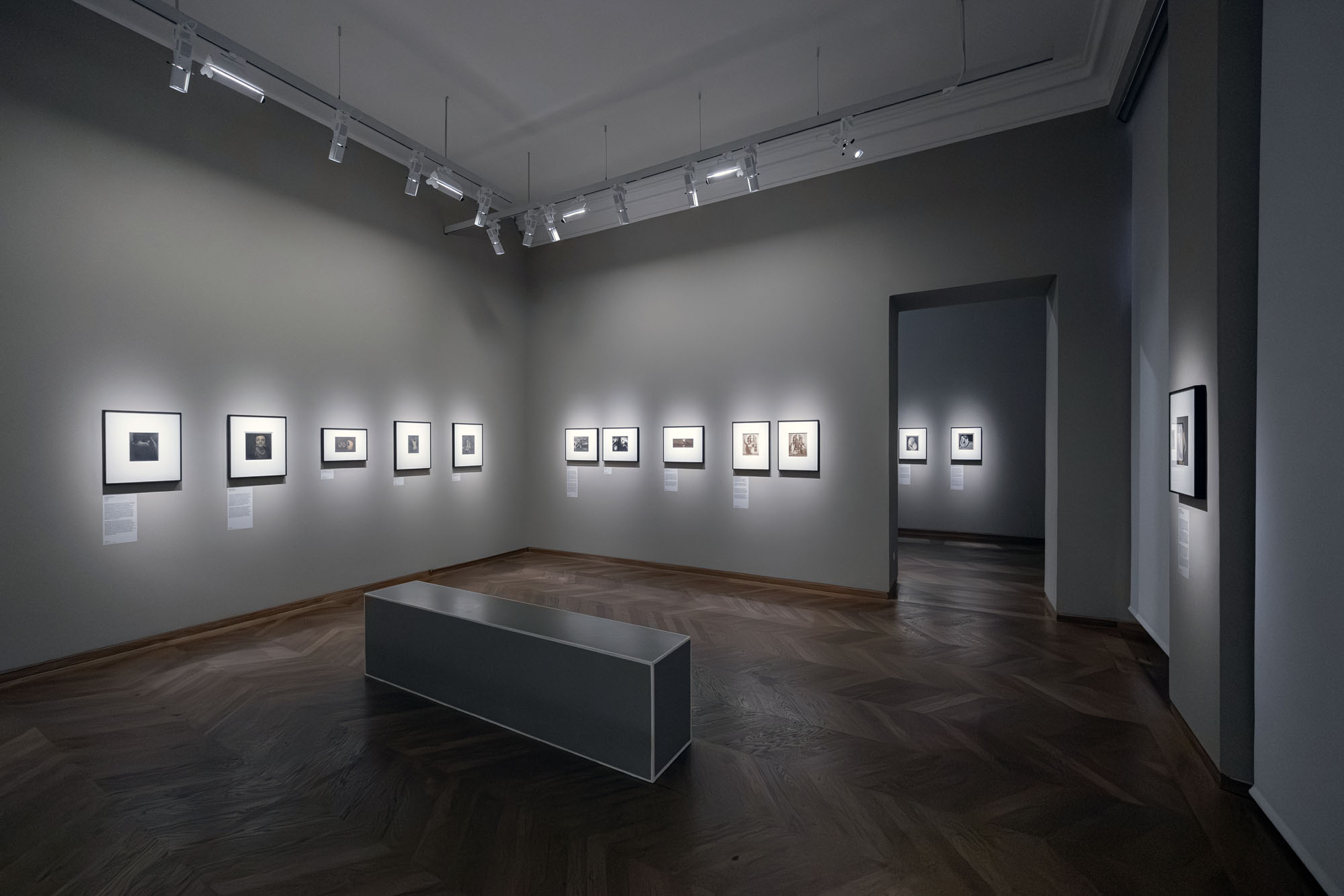
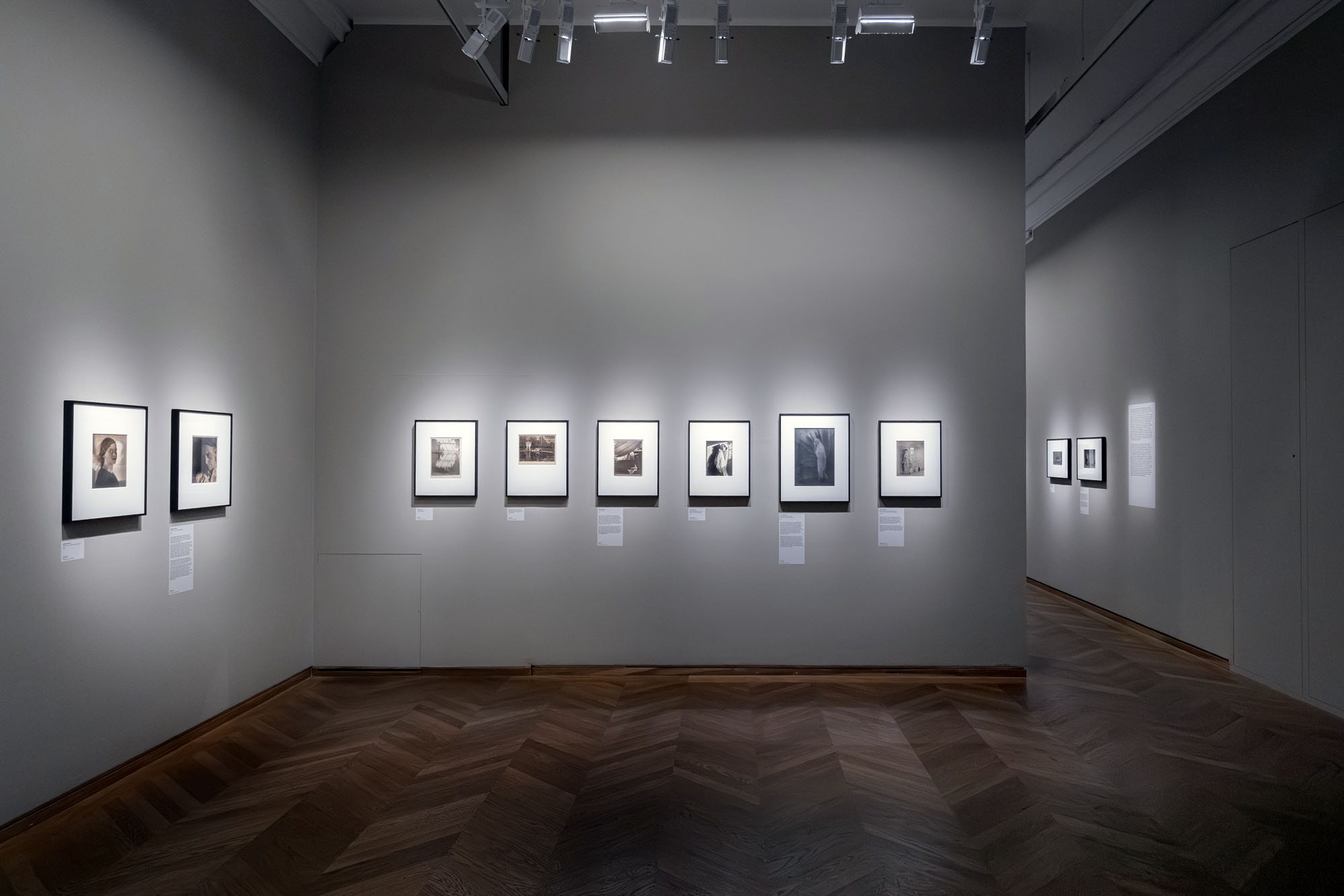
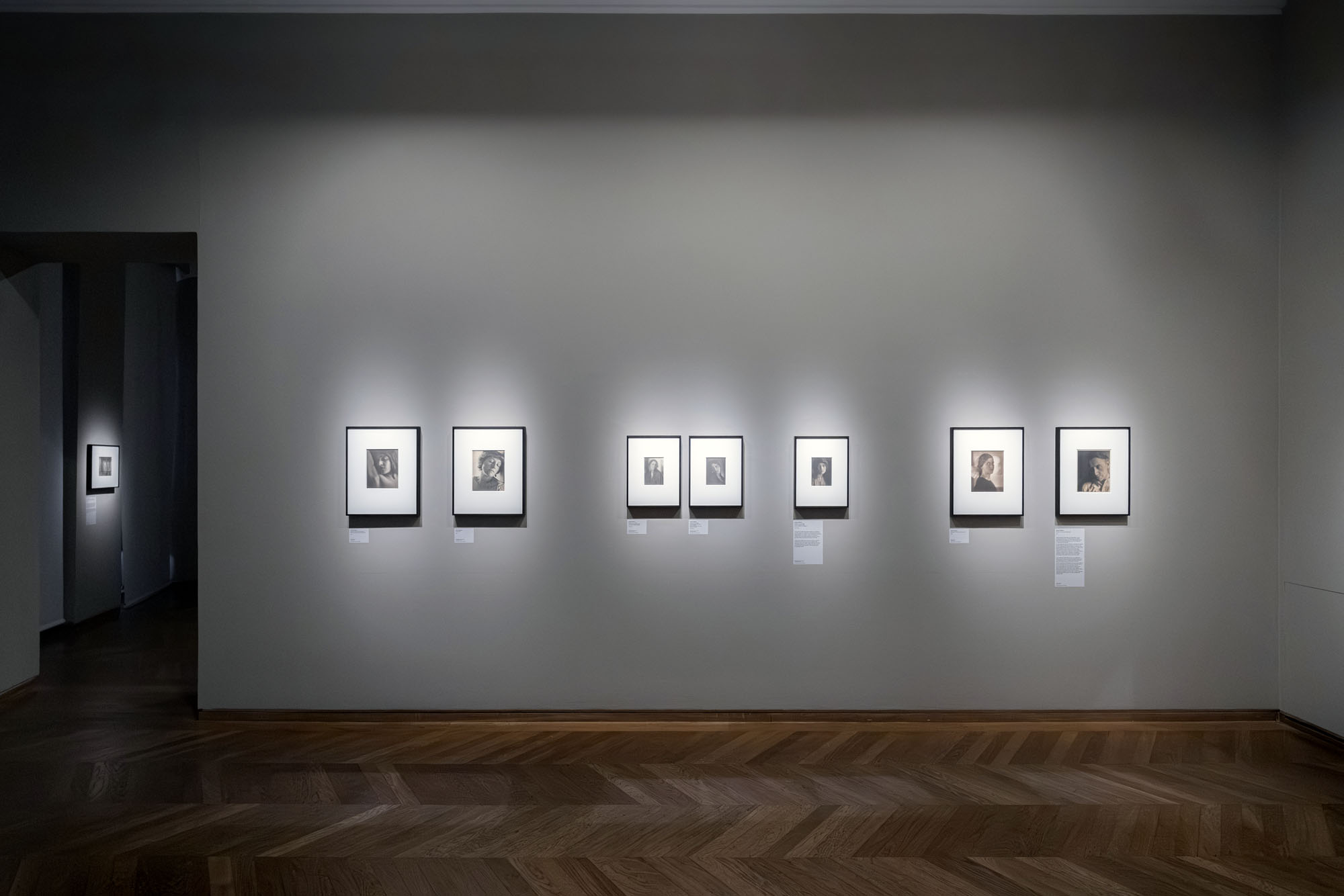
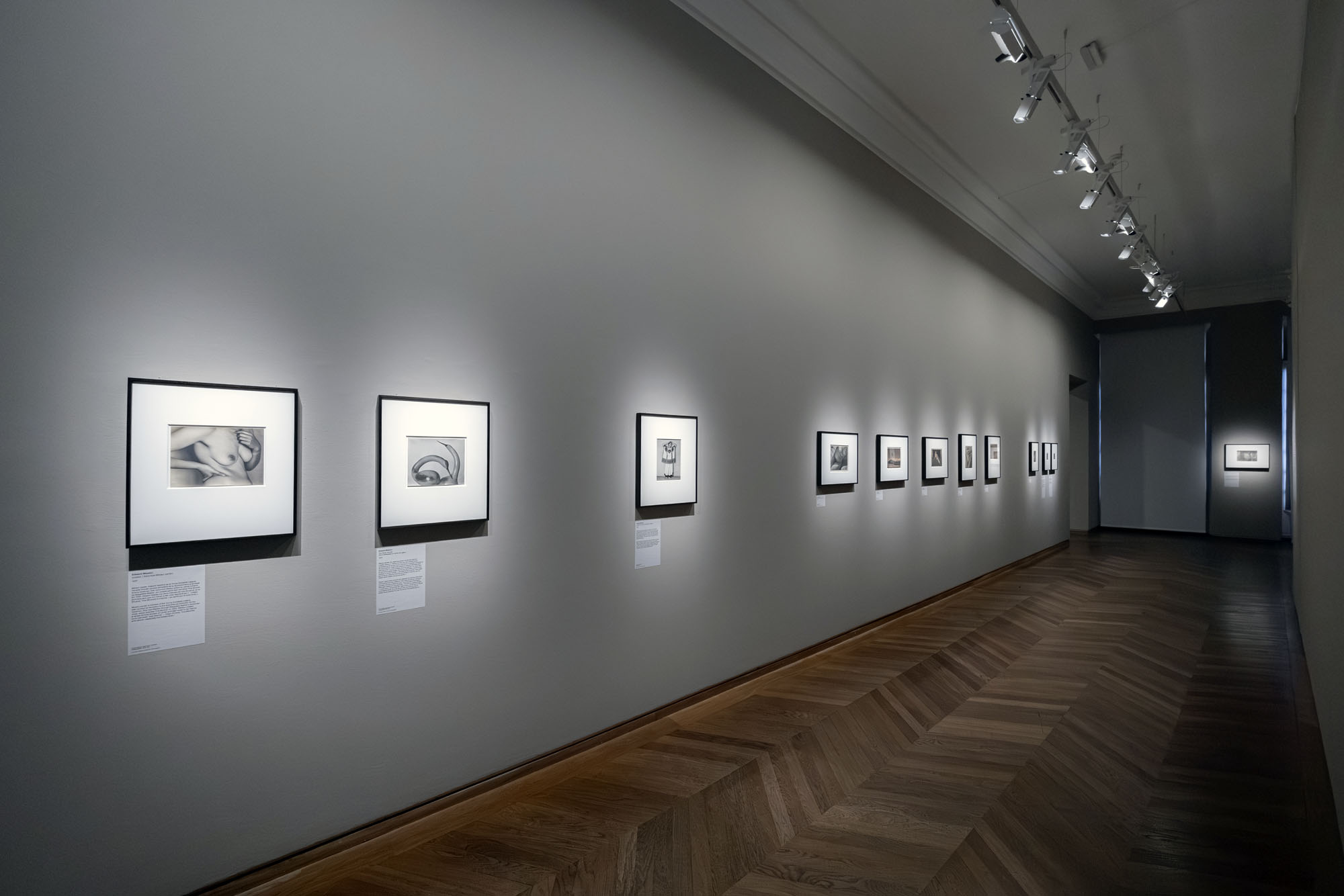
Installation view of the exhibition 'Boris Mikhailov: Ukrainian Diary' at The Photographers' Gallery, London showing at left, photographs from his series 'Luriki' (1971-1985) and 'Sots Art' (c. 1975-1986); and at right, a photograph from the series 'National Hero' (1991)


Installation view of the exhibition Boris Mikhailov: Ukrainian Diary at The Photographers’ Gallery, London showing at left, photographs from his series Luriki (1971-1985, below) and Sots Art (c. 1975-1986, below); and at right, a photograph from the series National Hero (1991, below)


“The world is made up of many worlds. Some are connected and some are not.”

From the film Perfect Days, 2023 directed by Wim Wenders


I love this man’s work. I feel very connected to his worlds. His constructed discontinuities. His ruptures, compressions, ambiguities. His social codifications of rich, poor, haves and have nots, and, as someone said, his portrayal of “the overlooked, the uncomfortable, and the unabashedly human.”

“Mikhailov’s visual pairings deliver unambiguous messages, almost violent in their straightforwardness. Multiple juxtapositions of unconsciously drunk men prostrating under passers-by feet to that of stray dogs, dead or alive, explicitly comment on human’s life disintegration to the state of an animal, its reduction to bare bones – and yes, an animal carcass, a metaphoric sign of abject poverty, is also present in this visual narrative in a scene with two men dragging a piece of spinal vertebrae of a large creature, a cow or, perhaps, a horse. Rotten banana peels sit across the page from infected flaccid limbs and genitalia. A posture of a naked woman reclining on a sullied mattress echoes that of a rubber sex doll staring from the next page. A close-up of a bruised woman’s breast with a crude stitches over a wound parallels gaping cracks of a damaged mail box. Thus the physical body of a homeless person starts speaking about the city as an organism, equally abused and dismembered. Wounds inflected upon flesh are surface manifestations of wounds inflected upon the city and the society at large.”1

“By subverting idealised Soviet imagery, he proposed a raw, ironic, and unremarkable version of reality, always seeking to capture the spirit of his times through the everyday. Or, better yet, to condense that spirit for others, not through words but through a visual semantics of his own making.”2

Experimental, conceptual, staged, performative, his photographs appeal to my subversive nature, prodding as they do at the status quo. His “rebellious visual language” takes us on a journey – his journey, Ukraine’s journey – “a journey through time, loss, and transformation.”

I wrote of his work in an earlier posting on this exhibition when it was at the Maison Européenne de la Photographie (MEP), Paris:

“Mikhailov’s photographs are emotionally powerful, politically astute and uncannily effective conversations with the world… about subjects that should matter to all of us: war, destitution, poverty, oppression, and the power of an authoritarian state to control the thoughts and actions of human beings under its control. They are about the freedom of individual people to live their lives as they choose; and they are about the freedom of a group of people which form a country to not be subjugated under the rule of another country to which they are historically linked.

His photographs are about choice and difference, they are about life.

They perform a task, that is, they bring into consciousness … the ground on which we stand together, against oppression, for freedom. Of course, no country is without its problems, its historical traumas, prejudices and corruption but the alternative is being ruled over without a choice, which is totally unacceptable.

Against the “failed promises of both communism and capitalism” and the “economic history that is written on the flesh” of the poor, Boris Mikhaïlov’s Ukrainian diary documents day after day the dis-ease and fragility, but also resilience, of his subjects and the world in which they live. He uses his art as a visual tool for cultural resistance. And the thing about his images is: you remember them. They are unlike so much bland, conceptual contemporary photography because these are powerful, emotional images. In their being, in their presence, they resonate within you.”

In this earlier posting you will find a longer text that I wrote, descriptions of the each of the artist’s series and more images. I hope you can view the posting.

Dr Marcus Bunyan


 1/ Extract from Olena Chervonik, “Urban Opera of Boris Mikhailov,” on the MOKSOP website, 9th April 2020 [Online] Cited 27/01/2026

2/ Kateryna Filyuk. “Recalcitrant Diarist of the Everyday,” on The Photographers’ Gallery website Nd [Online] Cited 05/02/2026


Many thankx to The Photographers’ Gallery, London for allowing me to publish the photographs in the posting. Please click on the photographs for a larger version of the image.


“I chose to focus on ordinary, everyday scenes and the search for formal solutions to translate this mundaneness into photography.”


Boris Mikhailov, “Everyone has became more circumspect…,” in Tea Coffee Cappuccino. Köln: König, 2011, p. 230


“Central themes – heroism, failure, power, the body, identity, absurdity, ideology – recur throughout, not as definitive conclusions but as open-ended provocations that invite sustained contemplation. In this way, the exhibition operates as both a temporal sequence and a constellation of moments – fragmented yet interconnected – that collectively evoke the complexity, contradictions, and richness of Mikhailov’s visionary practice.”


Laurie Hurwitz curator


“The explicit, dramatic and total power of the absolute monarch had given place to what Michel Foucault has called a diffuse and pervasive ‘microphysics of power’, operating unremarked in the smallest duties and gestures of everyday life. The seat of this capillary power was a new ‘technology’: that constellation of institutions – including the hospital, the asylum, the school, the prison, the police force – whose disciplinary methods and techniques of regulated examination produced, trained and positioned a hierarchy of docile social subjects in the form required by the capitalist division of labour for the orderly conduct of social and economic life.”


John Tagg. The Burden of Representation. Essays on Photographies and Histories. Minneapolis: University of Minnesota Press, 1993


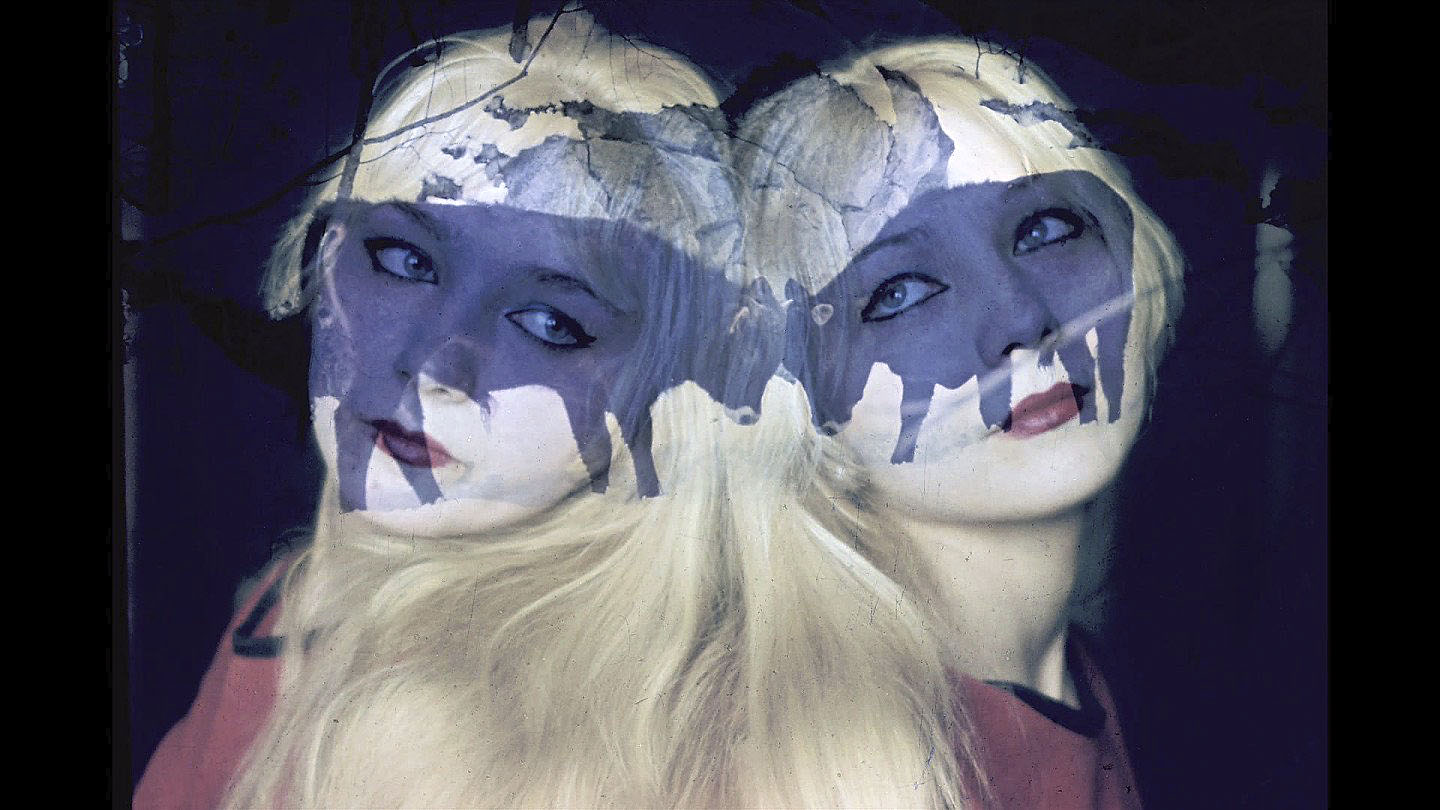
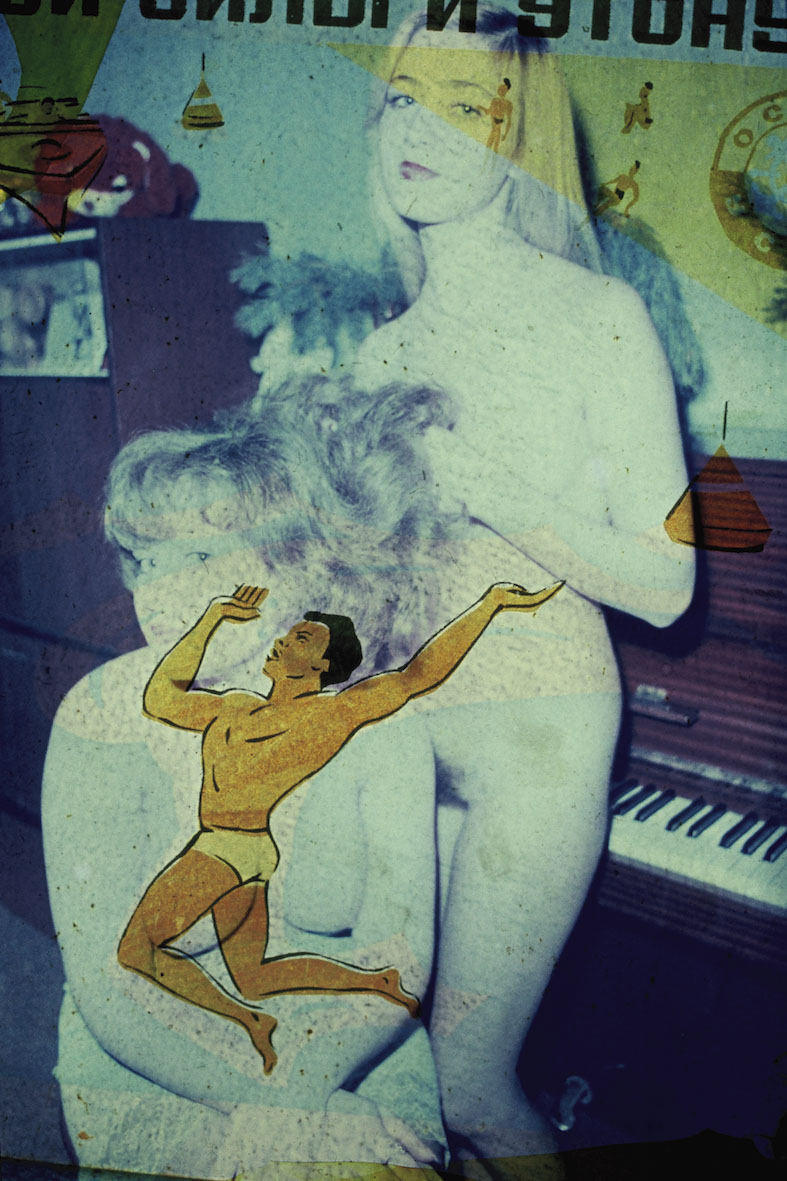
From the beginning, we conceived two video works as conceptual bookends. At the entrance, Yesterday’s Sandwich – a seminal project from the late 1960s – presents a hallucinatory sequence of double exposures set to music by Pink Floyd. These psychedelic, surreal images, rejecting Soviet visual orthodoxy, open up a new, rebellious visual language. At the exit, Temptation of Death (2019) offers a quieter, meditative counterpoint. Combining images from a crematorium in Ukraine with intimate portraits and cityscapes, it evokes the myth of Charon, ferryman of the dead, and a journey through time, loss, and transformation. Together, these two works, created nearly fifty years apart, frame the exhibition with a meditation on mortality, reinvention, and the fragile persistence of life.


Lucile Brizard. “”Where are we now?”: An Exclusive Interview with Photographer Boris Mikhailov on Ukraine’s Past and Present,” on the United 24 Media website, October 29, 2015 [Online] Cited 27/01/2026


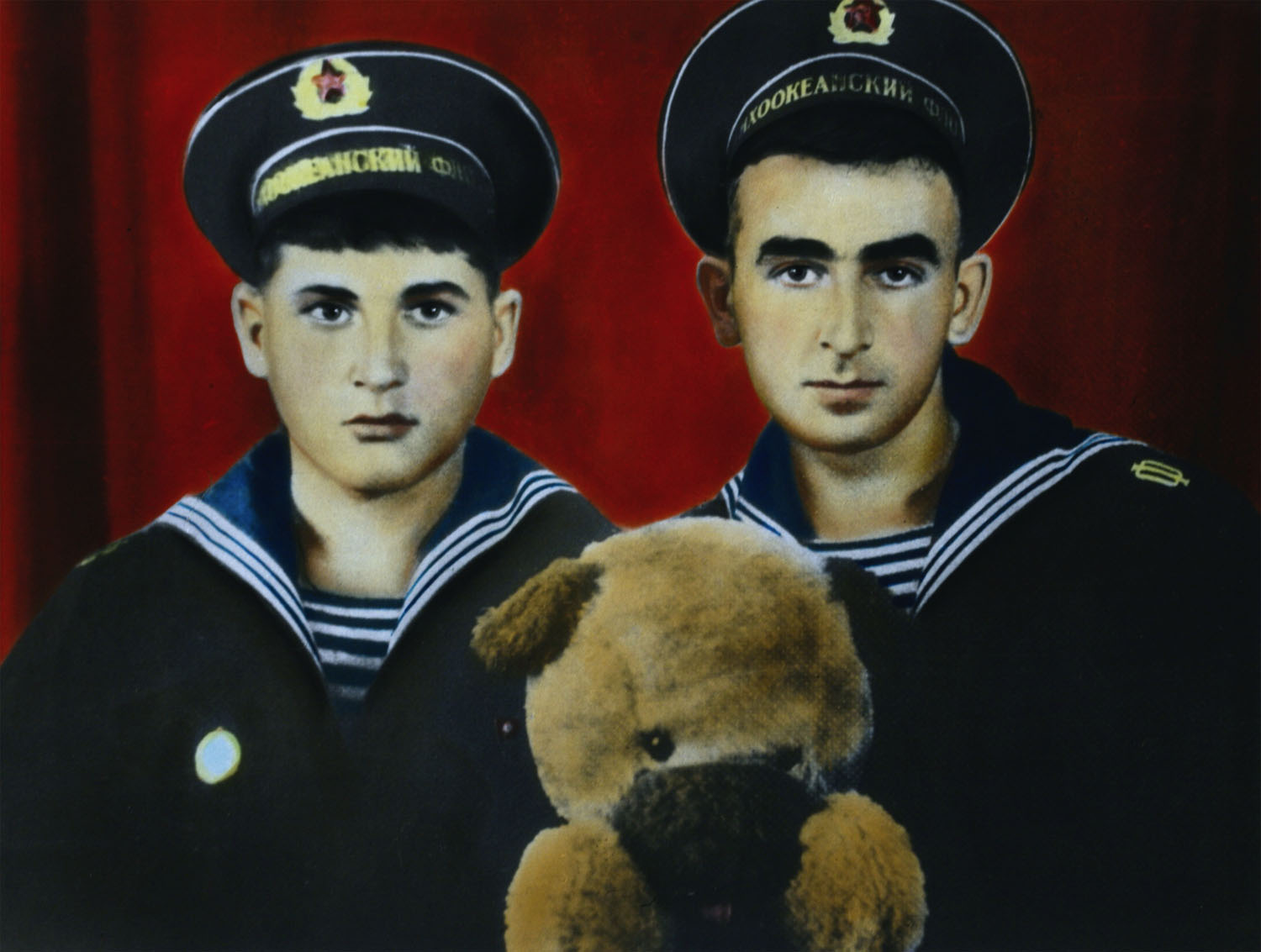
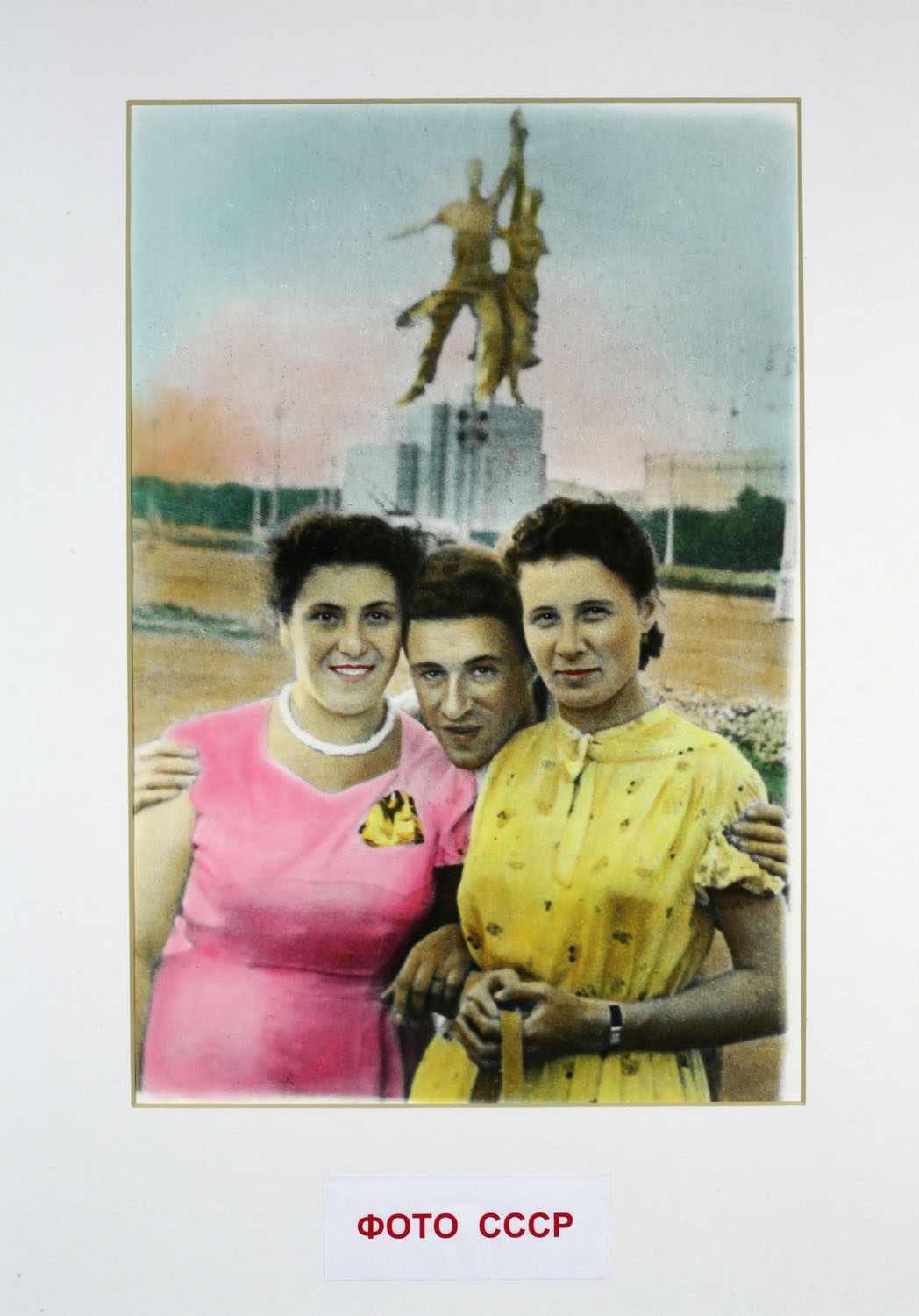
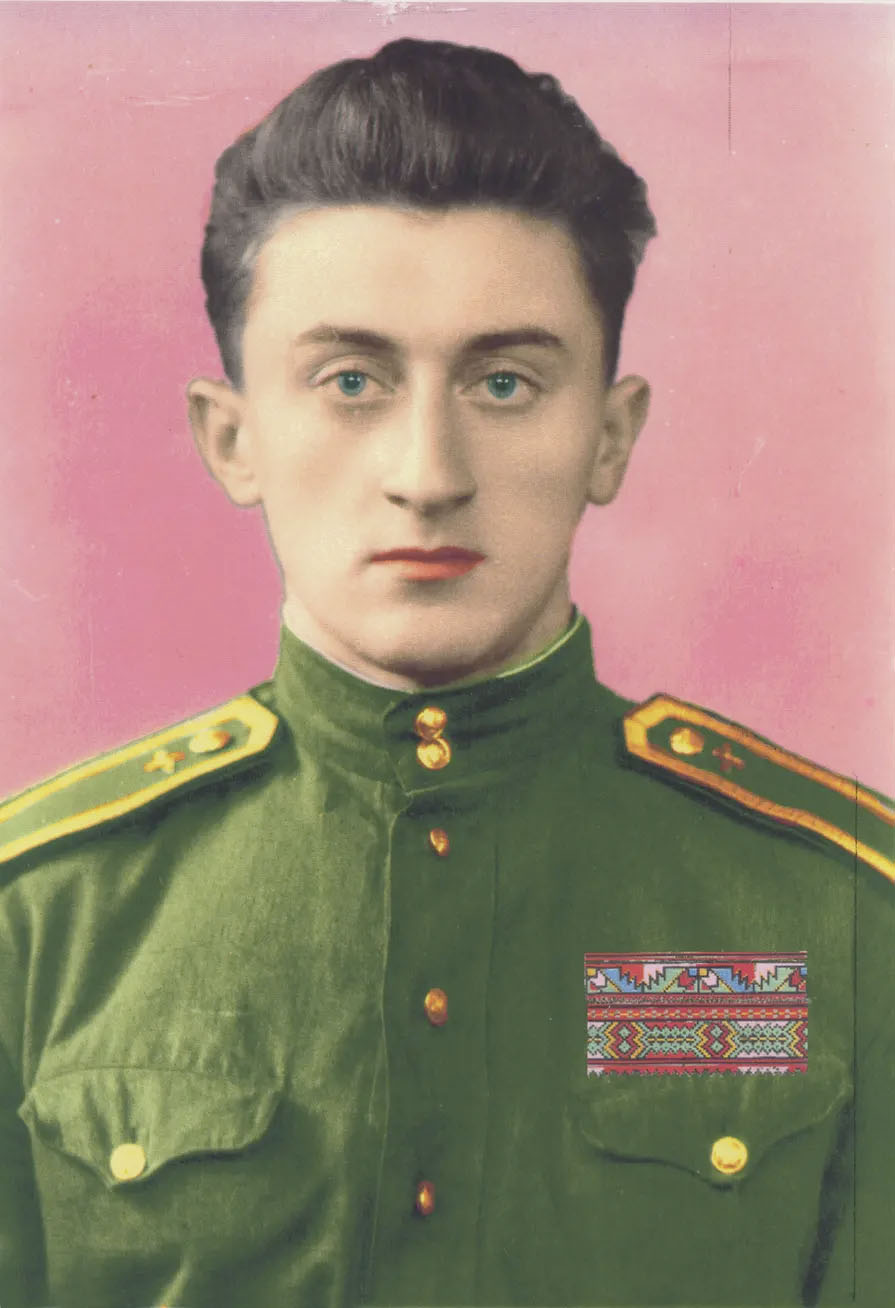
Luriki, 1971-1985

Boris Mikhaïlov (Ukrainian, b. 1938) from the series 'Luriki' (Coloured Soviet Portrait) 1971-1985


Boris Mikhaïlov (Ukrainian, b. 1938)
From the series Luriki (Coloured Soviet Portrait)
1971-1985
Hand-coloured gelatin silver print
© Boris Mikhailov, VG Bild-Kunst, Bonn
Courtesy Boris and Vita Mikhailov


Boris Mikhaïlov (Ukrainian, b. 1938) from the series 'Luriki' (Coloured Soviet Portrait) 1971-1985


Boris Mikhaïlov (Ukrainian, b. 1938)
From the series Luriki (Coloured Soviet Portrait)
1971-1985
Hand-coloured gelatin silver print
© Boris Mikhailov, VG Bild-Kunst, Bonn
Courtesy Boris and Vita Mikhailov


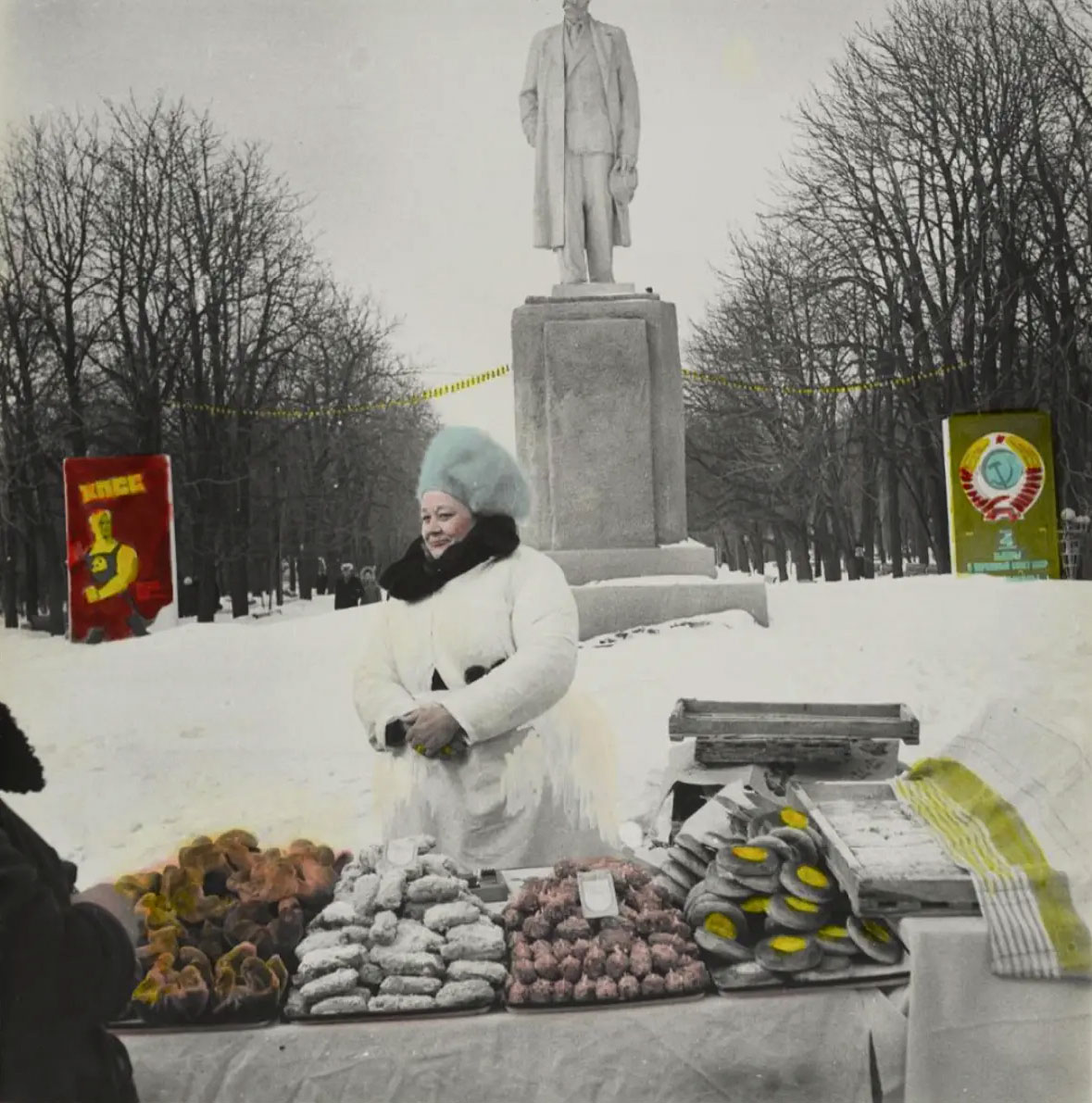
Sots Art, 1975-1986

Boris Mikhaïlov (Ukrainian, b. 1938) from the series 'Sots Art' 1982-1983


Boris Mikhaïlov (Ukrainian, b. 1938)
From the series Sots Art
1982-1983
© Boris Mikhailov, VG Bild-Kunst, Bonn
Courtesy Boris and Vita Mikhailov


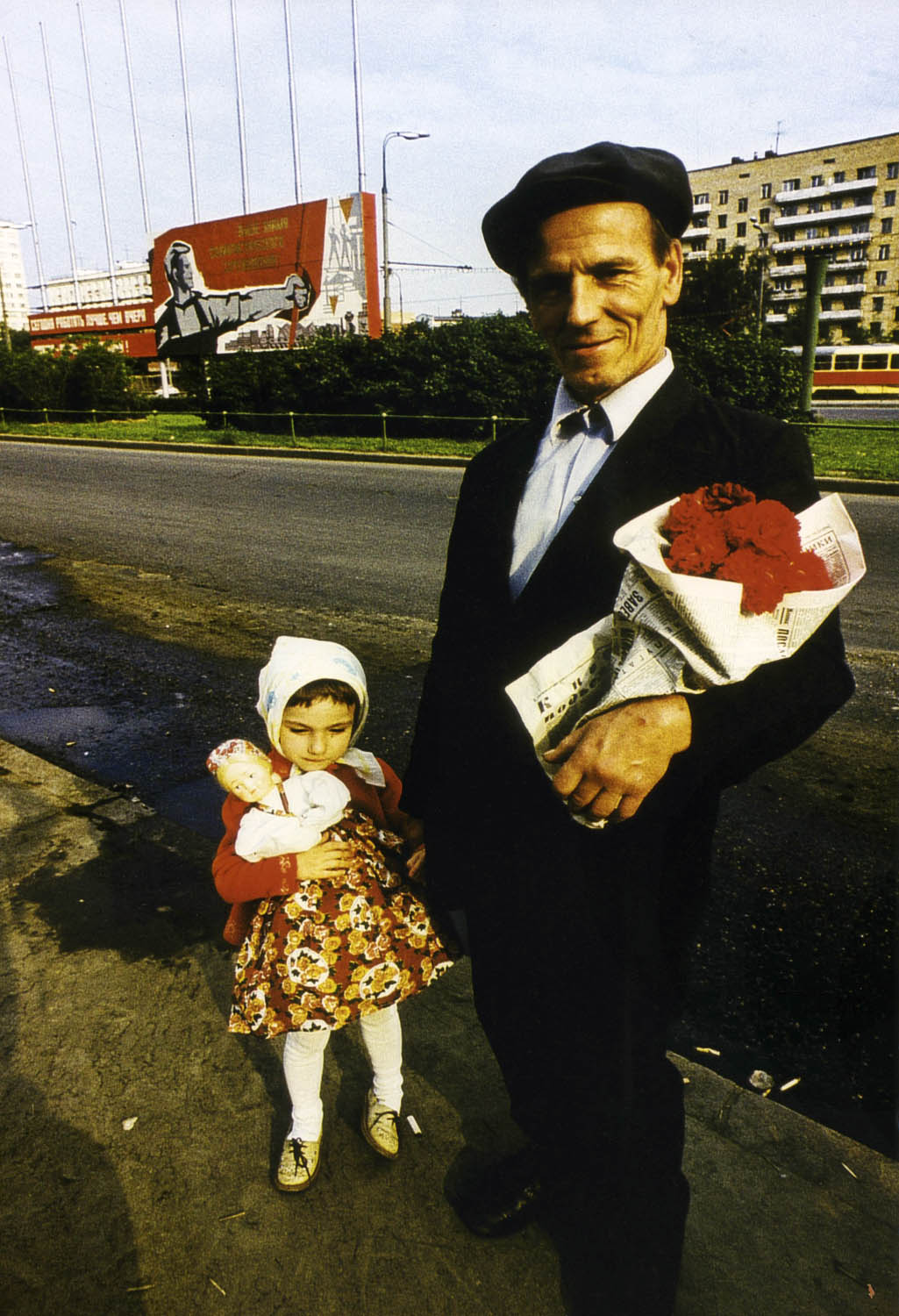
National Hero, 1992

Boris Mikhaïlov (Ukrainian, b. 1938) from the series 'National Hero' 1991


Boris Mikhaïlov (Russian, b. 1938)
From the series National Hero
1991
Chromogenic print
120 x 81cm
© Boris Mikhailov, VG Bild-Kunst, Bonn
Courtesy Boris and Vita Mikhailov


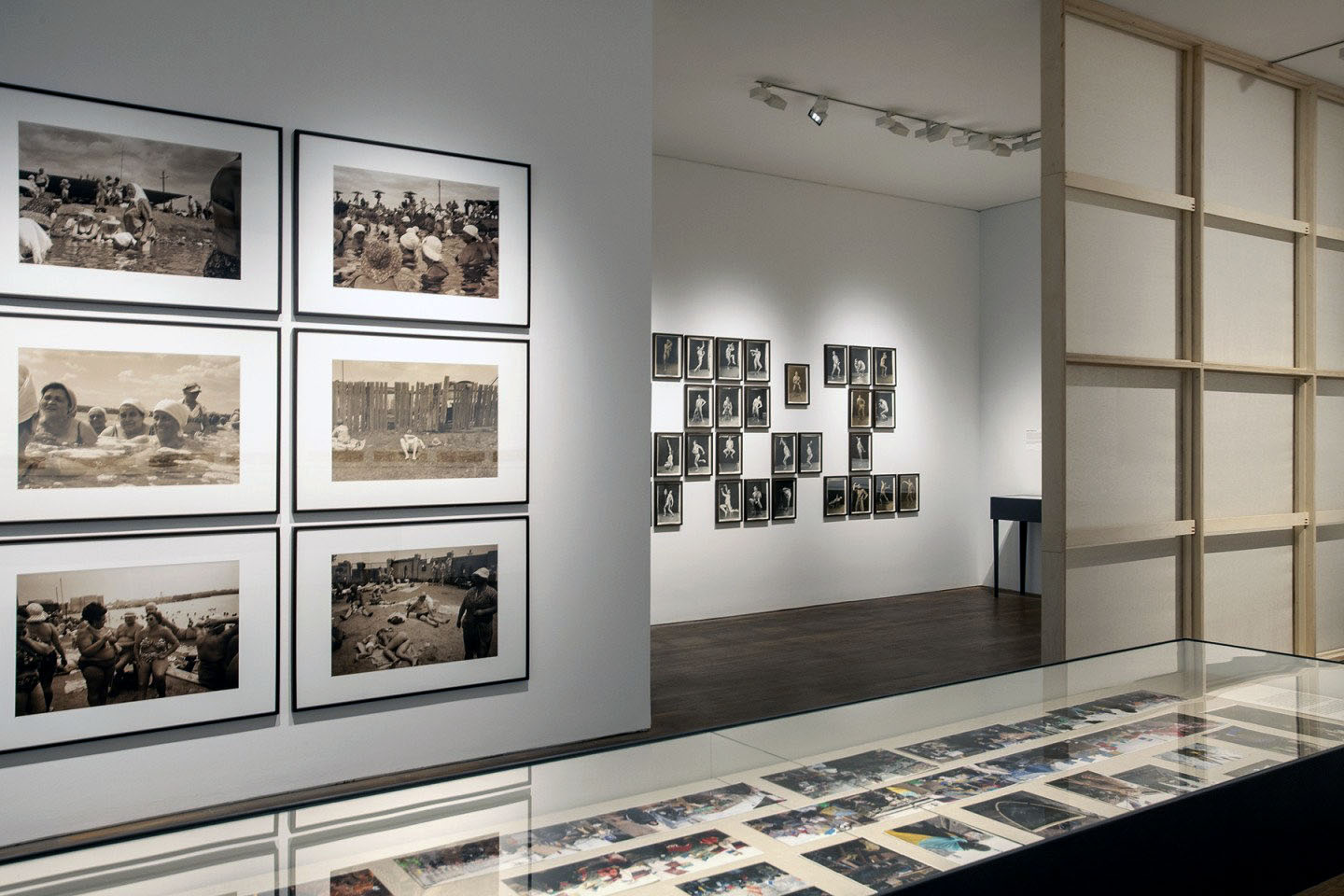
Installation view of the exhibition 'Boris Mikhailov: Ukrainian Diary' at The Photographers' Gallery, London showing at left, photographs from his series 'Salt Lake' (1986); at at right in the background, photographs from his series 'I am not I' (1992)


Installation view of the exhibition Boris Mikhailov: Ukrainian Diary at The Photographers’ Gallery, London showing at left, photographs from his series Salt Lake (1986, below); at at right in the background, photographs from his series I am not I (1992, below)


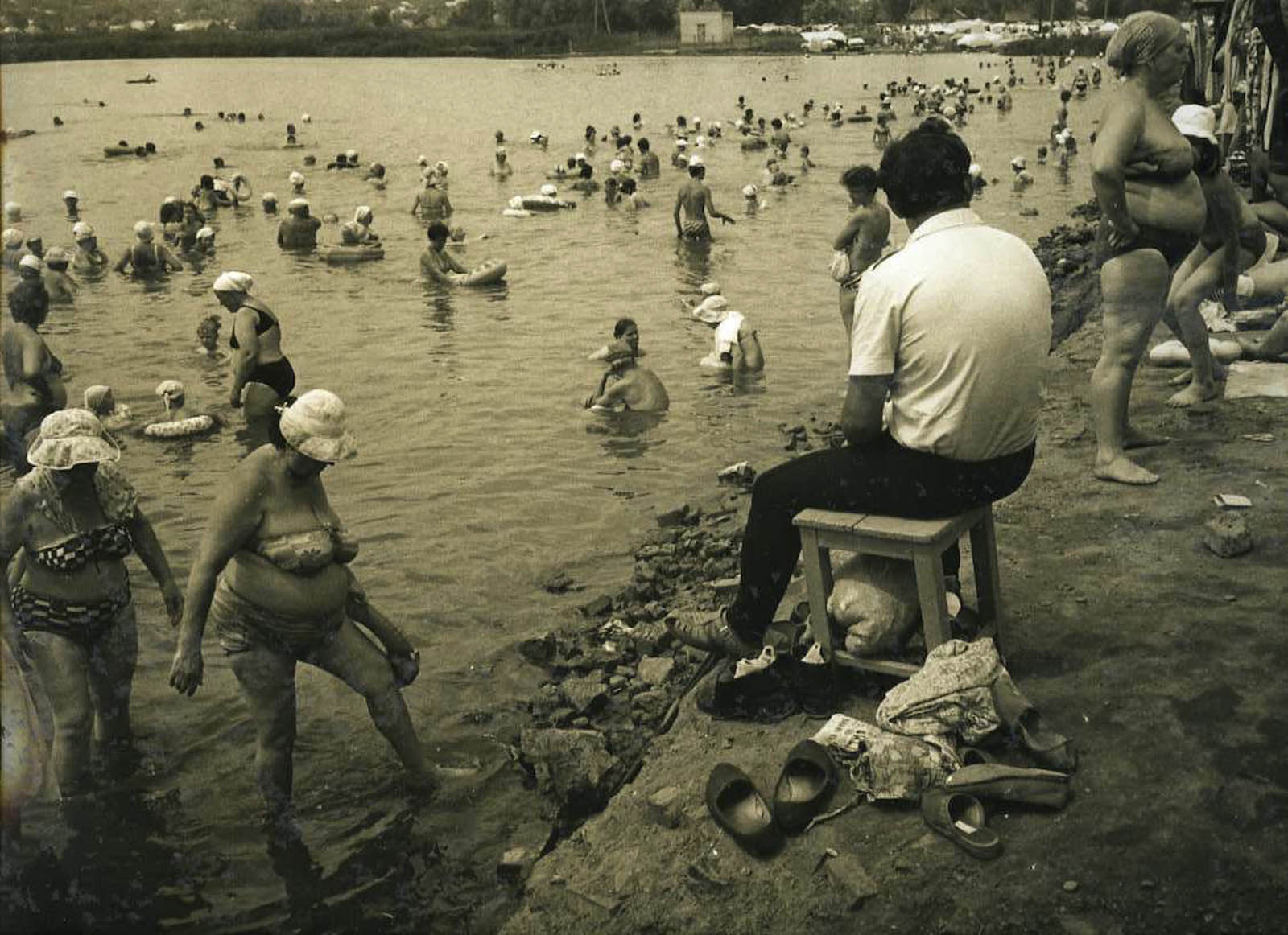
Salt Lake, 1986

Boris Mikhaïlov (Ukrainian, b. 1938) from the series 'Salt Lake' 1986


Boris Mikhaïlov (Russian, b. 1938)
From the series Salt Lake
1986
Chromogenic print toned sepia
75.5 x 104.5cm
© Boris Mikhailov, VG Bild-Kunst, Bonn
Courtesy Boris and Vita Mikhailov


I Am Not I, 1992

Boris Mikhaïlov (Ukrainian, b. 1938) from the series 'I am not I' 1992


Boris Mikhaïlov (Russian, b. 1938)
From the series I am not I
1992
Sepia silver print
30 x 20cm
© Boris Mikhailov, VG Bild-Kunst, Bonn
Courtesy Boris and Vita Mikhailov


A major retrospective of work by influential Ukrainian artist Boris Mikhailov (b. 1938, Kharkiv, Ukraine).

Ukrainian Diary is the first major UK retrospective of work by Boris Mikhailov, one of the most influential contemporary artists from Eastern Europe. Mikhailov has explored social and political subjects for more than fifty years through his experimental photographic work. 

Described as an outsider, a trickster and ‘a kind of proto-punk’, Mikhailov combines humour, mischief and tragedy in his pioneering practice, ranging from documentary photography and conceptual work, to painting and performance. Since the 1960s, he has been creating a powerful record of the tumultuous changes in Ukraine that accompanied the collapse of the Soviet Union. 

Ukrainian Diary brings together work from over twenty of his most important series, up to his more recent projects. Viewed today, against the backdrop of current events and ongoing war in Ukraine, Mikhailov’s work is all the more poignant and enlightening.

Text from The Photographers’ Gallery website


Red, 1965-1978

Boris Mikhaïlov (Ukrainian, b. 1938) from the series 'Red' 1968-1975


Boris Mikhaïlov (Russian, b. 1938)
From the series Red
1968-1975
Digital chromogenic print
© Boris Mikhailov, VG Bild-Kunst, Bonn
Courtesy Boris and Vita Mikhailov


“The word ‘red’ in Russian contains the root of the word for beauty. It also means the Revolution and evokes blood and the red flag. Everyone associates red with Communism. Maybe that’s enough. But few people know that red suffused all our lives, at all levels.”


Boris Mikhailov


Boris Mikhaïlov (Ukrainian, b. 1938) from the series 'Red' 1968-1975


Boris Mikhaïlov (Russian, b. 1938)
From the series Red
1968-1975
Digital chromogenic print
© Boris Mikhailov, VG Bild-Kunst, Bonn
Courtesy Boris and Vita Mikhailov


Boris Mikhaïlov (Ukrainian, b. 1938) from the series 'Red' 1968-1975


Boris Mikhaïlov (Russian, b. 1938)
From the series Red
1968-1975
Digital chromogenic print
© Boris Mikhailov, VG Bild-Kunst, Bonn
Courtesy Boris and Vita Mikhailov


Yesterday’s Sandwich, 1960s-1970s

Boris Mikhaïlov (Ukrainian, b. 1938) from the series 'Yesterday's Sandwich' 1960s-1970s


Boris Mikhaïlov (Ukrainian, b. 1938)
From the series Yesterday’s Sandwich
1960s-1970s
© Boris Mikhailov, VG Bild-Kunst, Bonn
Courtesy Boris and Vita Mikhailov


Boris Mikhaïlov (Ukrainian, b. 1938) from the series 'Yesterday's Sandwich' 1960s-1970s

Boris Mikhaïlov (Ukrainian, b. 1938)
From the series Yesterday’s Sandwich
1966-1968
© Boris Mikhailov, VG Bild-Kunst, Bonn
Courtesy Boris and Vita Mikhailov


Boris Mikhaïlov (Ukrainian, b. 1938) from the series 'Yesterday's Sandwich' 1960s-1970s


Boris Mikhaïlov (Ukrainian, b. 1938)
From the series Yesterday’s Sandwich
1966-1968
© Boris Mikhailov, VG Bild-Kunst, Bonn
Courtesy Boris and Vita Mikhailov


Boris Mikhaïlov (Ukrainian, b. 1938) from the series 'Yesterday's Sandwich' 1966-1968


Boris Mikhaïlov (Ukrainian, b. 1938)
From the series Yesterday’s Sandwich
1966-1968
© Boris Mikhailov, VG Bild-Kunst, Bonn
Courtesy Boris and Vita Mikhailov


Boris Mikhaïlov (Ukrainian, b. 1938) from the series 'Yesterday's Sandwich' 1966-1968


Boris Mikhaïlov (Ukrainian, b. 1938)
From the series Yesterday’s Sandwich
1960s-1970s
© Boris Mikhailov, VG Bild-Kunst, Bonn
Courtesy Boris and Vita Mikhailov


Boris Mikhaïlov (Ukrainian, b. 1938) from the series 'Yesterday's Sandwich' 1960s-1970s


Boris Mikhaïlov (Ukrainian, b. 1938)
From the series Yesterday’s Sandwich
1966-1968
© Boris Mikhailov, VG Bild-Kunst, Bonn
Courtesy Boris and Vita Mikhailov


Ukrainian Diary is the first major UK retrospective of work by Boris Mikhailov (b. 1938, Kharkiv). One of the most influential contemporary artists from Eastern Europe, Mikhailov has explored social and political subjects for more than fifty years through his experimental photographic work.

Described as an outsider, a trickster and ‘a kind of proto-punk’, Mikhailov combines humour, mischief and tragedy in his pioneering work, ranging from documentary photography and conceptual work, to painting and performance. Since the 1960s, he has been creating a powerful record of life in the Ukraine and the tumultuous changes that accompanied the collapse of the Soviet Union.

From early underground works and images of everyday life in Kharkiv, to his self-depreciating self-portraits which mock traditional Soviet masculine stereotypes, Mikhailov creates an ambiguous, fragmented view of a world in constant flux. His photographs contradict the onesideness of Soviet ideology, especially during the time when photography was heavily controlled and censored in the Soviet Union.

Ukrainian Diary brings together work from over twenty of Mikhailov’s most important series, including Yesterday’s Sandwich, I am not I, Salt Lake, Red, Sots Art, Luriki, Case History and Theatre of War.

Self-taught and ‘somewhat careless’ (in his words), Yesterday’s Sandwich (1960s-1970s), one of his most important series, began as an accident when a handful of slides stuck together. He was fascinated by the result and continued to randomly layer slides, creating new combinations which ‘reflected the dualism and contradictions of Soviet Society’.

Mikhailov created ‘bad photography’ as a way to undermine official Soviet aesthetics, as introduced in the series Black Archive (1968-1979). Badly printed, damaged or poor-quality productions were an artistic device that Mikhailov described as ‘lousy photography for a lousy reality’.

The series Red (1965-1978) bridges documentary photography and conceptual art – over 70 images taken in the late 1960s and 1970s highlighting the colour red in everyday objects and scenes. His documenting of red reveals the extent to which communist ideology saturated daily life.

Together his uncompromising, subversive work is a powerful photographic narrative on Ukraine’s contemporary history.

The exhibition is organised in collaboration with the MEP – Maison Européenne de la Photographie, Paris.

About Boris Mikhailov

Born in Kharkiv, Ukraine in 1938, Boris Mikhailov is a self-taught photographer. Having trained as an engineer, he was first introduced to photography when he was given a camera to document the state-owned factory where he worked. With access to a camera, he took advantage of this opportunity to take nude photographs of his first wife – an act forbidden under Soviet norms – which he developed and printed in the factory’s laboratory. He was fired when the photographs were found by KGB agents. From then he pursued photography full time, using it as a subversive tool and operating as part of the underground art scene. His work first gained international exposure in the 1990s with the series Case History, a shockingly direct portrayal of the realities of post-Soviet life in the Ukraine.

Press release from The Photographers’ Gallery


Series of Four, early 1980s

Boris Mikhaïlov (Russian, b. 1938) From the series 'Series of four' 1982-1983


Boris Mikhaïlov (Russian, b. 1938)
From the series Series of four
1982-1983
Silver gelatin print, unique copy
From a 20-part series
Each 18 x 23.80cm
© Boris Mikhailov, VG Bild-Kunst, Bonn
Courtesy Boris and Vita Mikhailov


At Dusk, 1993

Boris Mikhaïlov (Ukrainian, b. 1938) from the series 'At Dusk' 1993


Boris Mikhaïlov (Russian, b. 1938)
From the series At Dusk
1993
Chromogenic print
© Boris Mikhailov, VG Bild-Kunst, Bonn
Courtesy Boris and Vita Mikhailov


Boris Mikhaïlov (Ukrainian, b. 1938) from the series 'At Dusk' 1993


Boris Mikhaïlov (Russian, b. 1938)
From the series At Dusk
1993
Chromogenic print
© Boris Mikhailov, VG Bild-Kunst, Bonn
Courtesy Boris and Vita Mikhailov


Recalcitrant Diarist of the Everyday

Curator and researcher, Kateryna Filyuk, explores the intimate diaristic qualities of Boris Mikhailov’s subversive body of work.

Even before seeing Ukrainian Diary at The Photographers’ Gallery, I found myself thinking about its title. The idea of a diary fits naturally with Mikhailov’s work: instead of creating a grand, official narrative inherent to Soviet photography, he developed an intimate and fragmented way of seeing. The term Ukrainian, however, is less straightforward. Some of his more recent bodies of work that directly address Ukrainian events: Parliament  (2015-17); and Temptation of Death  (2014-19), which adopts the Kyiv Crematorium as its binding motif, are not included in the exhibition.

Mikhailov began challenging Soviet photographic norms as early as the mid-1960s, working with a circle of like-minded friends. At the time, photographing “for no reason” could be equated with spying; showing Soviet life as anything less than ideal was seen as an attack on communist values; and photographing the naked body could result in prison. Mikhailov did all of this and more. He turned his camera toward mundane subjects, mixed genres freely and questioned photography’s claim to present an ultimate truth. By subverting idealised Soviet imagery, he proposed a raw, ironic, and unremarkable version of reality, always seeking to capture the spirit of his times through the everyday. Or, better yet, to condense that spirit for others, not through words but through a visual semantics of his own making.  

Art historian Nadiia Bernard-Kovalchuk reflects on whether Ukrainian is an appropriate label for the Kharkiv School of Photography, of which Mikhailov is a founding figure. She writes that ”the school’s activities stretch between two heterogeneous historical realities: on the one hand, Brezhnev’s ‘stagnation’ and the perestroika fatal to the USSR, and on the other, the economically brutal birth of the Ukrainian state.” [2] This dramatic time span, during which Ukrainians experienced long-awaited yet destabilising transformation, offers a more fitting temporality for understanding Mikhailov’s work in Ukrainian Diary. Geographically, most of his projects take place in what was first Soviet Ukraine and later became independent Ukraine. Temporally, however, they exist within a landscape marked by ruptures, discontinuities, and perpetual new beginnings.

In the preface to one of his most audacious works, Case History  (1997-98), Mikhailov reflects on the lack of a photographic record documenting complex historical shifts in Ukraine: ”I was aware that I was not allowed to let it happen once again that some periods of life would be erased.” [3] After returning to Kharkiv from a year in Berlin, he was struck by the stark divide between the newly rich and the newly poor, a process already in full swing. Yet his aim in photographing the homeless did not follow the classic documentary model, such as the USA Farm Security Administration’s work, which sought to highlight a social problem and prompt state intervention. Instead, by showing the everyday lives of those most affected by the collapse, Mikhailov “directly assaults the onlookers’ sensitivity” [4] and “transgresses the acceptable limits of representation,” [5] His goal was not to provoke pity or shock though.

Rather, Mikhailov asserts something more fundamental: the individual’s right to exist and express themselves beyond convention. Through his unwavering attention to ordinary lives, he bears witness to massive transformations unfolding beyond any single person’s control. Ukrainian Diary, then, is not simply a national label or a chronological record. It is a testament to how one artist has persistently documented a world defined by instability, reinvention, and the fragile, but enduring presence, of everyday life.

Kateryna Filyuk

Kateryna Filyuk is a curator and researcher, who holds PhD from the University of Palermo. In 2017-2021 she served as a chief curator at Izolyatsia., a Platform for cultural initiatives in Kyiv. Before joining Izolyatsia, she was co-curator of the Festival of Young Ukrainian Artists at Mystetskyi Arsenal, Kyiv (2017). The co-founder of the publishing house 89books in Palermo, she has participated in curatorial programmes at Fondazione Sandretto Re Rebaudengo (Turin, 2017), De Appel (Amsterdam, 2015-16), the National Museum of Modern and Contemporary Art (Seoul, 2014) and the Gwangju Biennale (2012). In 2023 Filyuk was a visiting PhD student at the Central European University (Vienna) and in 2024 a visiting researcher at FOTOHOF Archiv (Salzburg) and the Predoctoral Fellow at the Bibliotheca Hertziana (Rome). Currently she develops a two-year scholarly initiative – the Methodology Seminars for Art History in Ukraine in collaboration with the Bibliotheca Hertziana and the Max Weber Foundation’s Research Centre Ukraine.

Footnotes

1/ Boris Mikhailov, “Everyone has became more circumspect…,” in Tea Coffee Cappuccino (Köln: König, 2011), 230.
2/ Nadiia Bernard-Kovalchuk, The Kharkiv School of Photography: Game Against Apparatus. Kharkiv: Museum of Kharkiv School of Photography, 2020, 17.
3/ Boris Mikhailov, Case History (Zurich: Scalo, 1999), 7.
4/ “Symbolic Bodies, Real Pain: Post-Soviet History, Boris Mikhailov and the Impasse of Documentary Photography,” in The Image and the Witness: Trauma, Memory and Visual Culture (London: Wallflower Press, 2007), 58.
5/ Olena Chervonik, “Urban Opera of Boris Mikhailov,” MOKSOP, accessed November 25, 2025

Text from The Photographers’ Gallery website


Installation view of the exhibition 'Boris Mikhailov: Ukrainian Diary' at The Photographers' Gallery, London showing photographs from his series 'Case History' (1997-1998)


Installation view of the exhibition Boris Mikhailov: Ukrainian Diary at The Photographers’ Gallery, London showing photographs from his series Case History (1997-1998, below)


Case History, 1997-1998

Boris Mikhailov (Ukrainian, b. 1938) From the series 'Case History' 1997-1998


Boris Mikhaïlov (Russian, b. 1938)
From the series Case History
1997-1998
Chromogenic print
© Boris Mikhailov, VG Bild-Kunst, Bonn
Courtesy Boris and Vita Mikhailov


Boris Mikhaïlov (Russian, b. 1938) From the series 'Case History' 1997-1998


Boris Mikhaïlov (Russian, b. 1938)
From the series Case History
1997-1998
Chromogenic print
© Boris Mikhailov, VG Bild-Kunst, Bonn
Courtesy Boris and Vita Mikhailov


Boris Mikhaïlov (Ukrainian, b. 1938) from the series 'Case History' 1997-1998


Boris Mikhaïlov (Russian, b. 1938)
From the series Case History
1997-1998
Chromogenic print
© Boris Mikhailov, VG Bild-Kunst, Bonn
Courtesy Boris and Vita Mikhailov


Urban opera of Boris Mikhailov

Olena Chervonik

In the [Case History] book preface, Mikhailov explains that already in 1997 he vividly apprehended the rupture of Ukrainian society into new, burgeoning social strata, when the new rich and the new poor began to acquire features of class identities with their own psychology and behavioural modalities. The new rich were already hard to approach, protecting themselves with bodyguards and other social fences. The new poor, however, specifically the bomzhes (homeless people with no social support) could still allow an outsider in their midst – this was “a chance”, according to Mikhailov, that could only last for a short period of time. Most of the book’s protagonists had only recently lost their homes. Their rapidly deteriorating social position was still uncertain, malleable, and flickering with hope. Yet, the transformation was inevitable, which propelled the artist to act: “For me it was very important that I took their photos when they were still like “normal” people. I made a book about the people who got into trouble but didn’t manage to harden so far.” [2] …

Mikhailov’s visual pairings deliver unambiguous messages, almost violent in their straightforwardness. Multiple juxtapositions of unconsciously drunk men prostrating under passers-by feet to that of stray dogs, dead or alive, explicitly comment on human’s life disintegration to the state of an animal, its reduction to bare bones – and yes, an animal carcass, a metaphoric sign of abject poverty, is also present in this visual narrative in a scene with two men dragging a piece of spinal vertebrae of a large creature, a cow or, perhaps, a horse. Rotten banana peels sit across the page from infected flaccid limbs and genitalia. A posture of a naked woman reclining on a sullied mattress echoes that of a rubber sex doll staring from the next page. A close-up of a bruised woman’s breast with a crude stitches over a wound parallels gaping cracks of a damaged mail box. Thus the physical body of a homeless person starts speaking about the city as an organism, equally abused and dismembered. Wounds inflected upon flesh are surface manifestations of wounds inflected upon the city and the society at large. …

The majority of Mikhailov’s photographs provide no emotional crutches to lean on, no mechanism of ennobling or aestheticising infected abused flesh of the homeless. It is presented “as is”: frontal, looming large with all its detailed naturalistic vividness. If there is a visual code that Mikhailov activates in these images, it comes from a clinical rather than an art discourse, from surveilling patents for medical records. It is a discourse that John Tagg described as a nineteenth century record-keeping practice associated with certain disciplinary institutions such as an asylum or a prison that with the help of photography created a new social body of dependent subjects upon whom power could be exercised due to their newly-minted subaltern position.

Art, following Barthes’ dictum, domesticates and tames photography [21]. It generates the level of “studium”, accepted cultural knowledge that veils the trauma, renders it familiar, therefore trivial, therefore easily dismissed. Mikhailov makes his viewers constantly oscillate between images that give themselves for contemplation and images that confront with their clinical nature that can be scrutinised and observed but certainly not contemplated. Not one or the other type of image, but the switch between the two unsettles the viewing process. Mikhailov orchestrates poses and gestures of his subjects to create this visual roller-coster of plunging in and out of the aesthetic.

2/ Boris Mikhailov, Case History (Zurich: Scalo, 1985)
21/ Matthias Christen, “Symbolic Bodies, Real Pain: Post-Soviet History, Boris Mikhailov and the Impasse of Documentary Photography,” in The Image and the Witness. Trauma, Memory and Visual Culture (London: Wallflower Press, 2007), 52-66

Extract from Olena Chervonik, “Urban Opera of Boris Mikhailov,” on the MOKSOP website, 9th April 2020 [Online] Cited 27/01/2026. Used under fair use conditions for the purposes of education and research
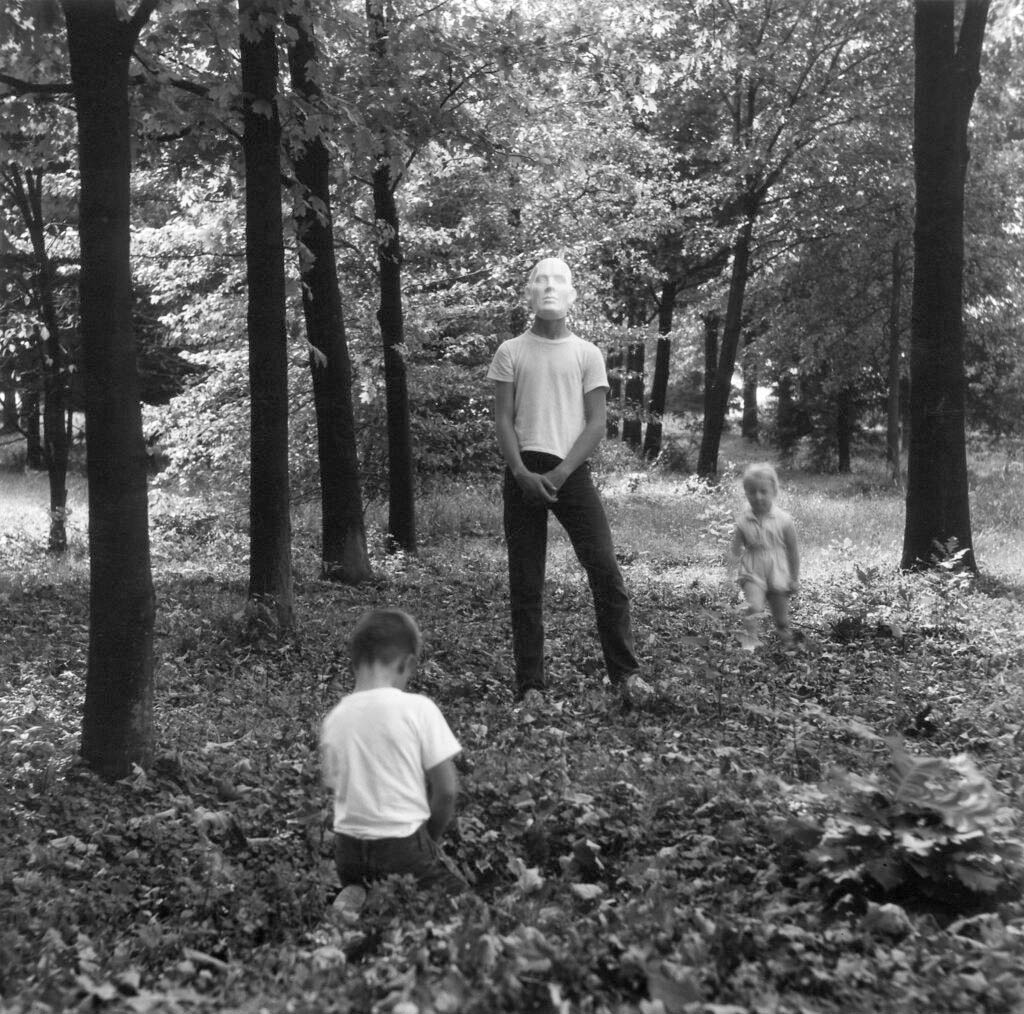
 

Dance, 1978

Boris Mikhaïlov (Ukrainian, b. 1938) from the series 'Dance' 1978


Boris Mikhaïlov (Ukrainian, b. 1938)
From the series Dance
1978
Chromogenic print
© Boris Mikhailov, VG Bild-Kunst, Bonn
Courtesy Boris and Vita Mikhailov


The Theater of War, Second Act, Time Out, 2013

Boris Mikhaïlov (Russian, b. 1938) From the series 'The Theater of War, Second Act, Time Out' 2013


Boris Mikhaïlov (Russian, b. 1938)
From the series The Theater of War, Second Act, Time Out
2013
Chromogenic print
© Boris Mikhailov, VG Bild-Kunst, Bonn. Collection Akademie der Künste, Berlin


The Photographers’ Gallery
16-18 Ramillies Street
London
W1F 7LW

Opening hours:
Mon – Wed: 10.00 – 18.00
Thursday – Friday: 10.00 – 20.00
Saturday: 10.00 – 18.00
Sunday: 11.00 – 18.00

The Photographers’ Gallery website

LIKE ART BLART ON FACEBOOK

Back to top

Exhibition: ‘Gabrielle Hébert: Amour fou à la Villa Médicis’ at the Musée d’Orsay, Paris

Exhibition dates: 28th October, 2025 – 15th February, 2026

Curator: Marie Robert, Chief Curator, photography and cinema Musée d’Orsay


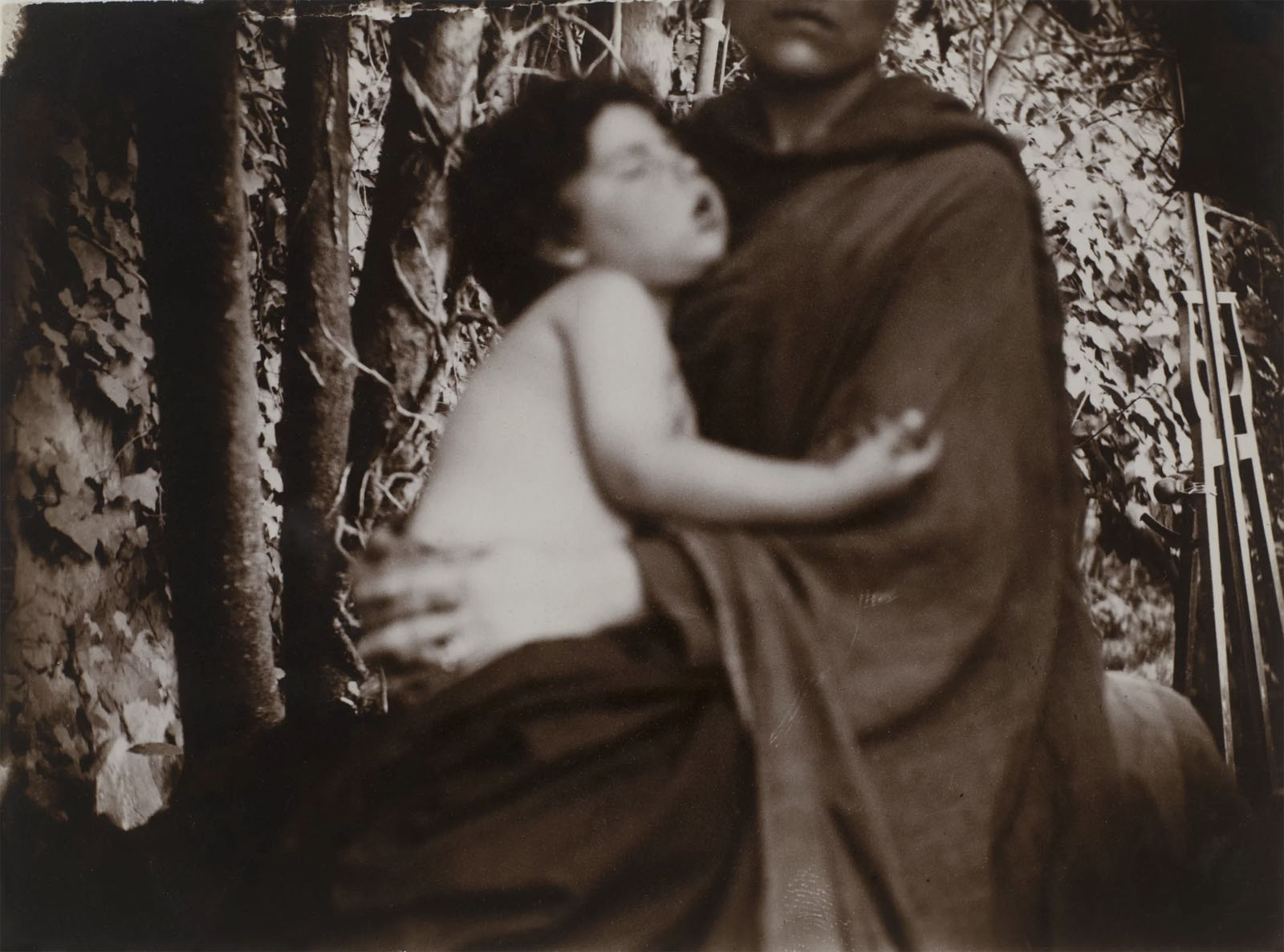
Gabrielle Hébert (French born Germany, 1853-1934) 'Peppino Scossa endormi dans les bras de sa mère, 11 août 1888' (Peppino Scossa asleep in his mother's arms, August 11, 1888) 1888 from the exhibition 'Gabrielle Hébert: Amour fou à la Villa Médicis' at the Musée d'Orsay, Paris, October 2025 -  February 2026


Gabrielle Hébert (French born Germany, 1853-1934)
Peppino Scossa endormi dans les bras de sa mère, 11 août 1888
(Peppino Scossa asleep in his mother’s arms, August 11, 1888)

1888
Aristotype à la gélatine (Gelatin Aristotype)
8.7 x 11.7cm
© Musée National Ernest Hébert, Paris
Photo: Musée d’Orsay, Dist. RMN-Grand Palais / Alexis Brandt


Amour fou, amour tu

This is one of those unheralded exhibitions on a photographer that you may never have heard of that Art Blart likes to promote.

Gabrielle Hébert as she became, married the painter Ernest Hébert in 1880. She was 28, he was 63. From 1888 until his death in 1908 at the age of 91, she documented her husband painting, their surroundings and their affluent, upper class social milieux. And then she stopped, she gave up photography, she lost the amour fou, that incredible passion that had driven her for so many years to take photographs.

While “her photographs provide an intimate look into the artistic life of the time, portraying artists, models, and domestic scenes” they also do something more – they represent the viewpoint of a female artist which challenges the masculine conventions of the day. “Overturning gender stereotypes, she watched him obsessively and was never tired of capturing him on film… Thanks to her images, which she shared and exchanged with her friends and family, she became recognised as an auteur and gained social status in a milieu where artistic creation was the preserve of men.” (Text from the Musée d’Orsay website)

Further, from my point of view, Gabrielle Hébert was not an amateur photographer taking snapshots for her “visual diary” but an artist fully conversant with current trends in photography. While there are the standard documentary photographs of sculptures and Ernest Hébert and friends painting … there is so much more!

Photographs such as the allegorical Peppino Scossa endormi dans les bras de sa mère, 11 août 1888 (Peppino Scossa asleep in his mother’s arms, August 11, 1888) (1888, above) and La duchesse de Mondragone et l’une de ses bellessoeurs posent pour une Annonciation, juin 1890 (The Duchess of Mondragone and one of her sisters-in-law pose for an Annunciation, June 1890) (1890, below) are redolent of the photographer Julia Margaret Cameron (British born India, 1815-1879).

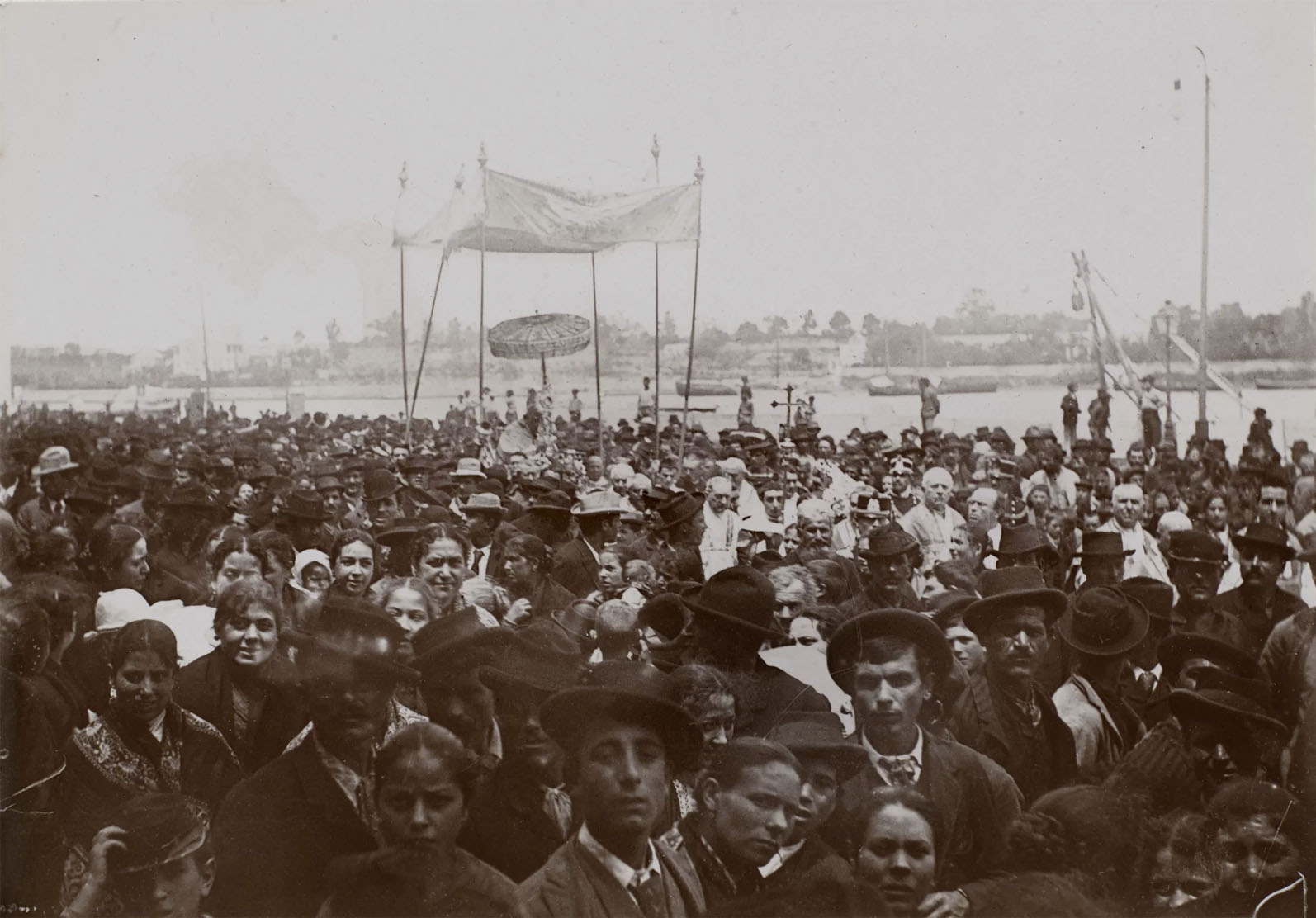
Other photographs such as Lys des parterres, juin 1890 (Flowerbed lilies, June 1890) (1890, below) evidence her consummate skill at capturing the perfume of a place whilst images such as Procession sur le port de Brindisi (Pouilles) (Procession in the port of Brindisi (Apulia)) (1893, below) show her ability to picture the informality of large groups of people and the atmosphere of the scene.

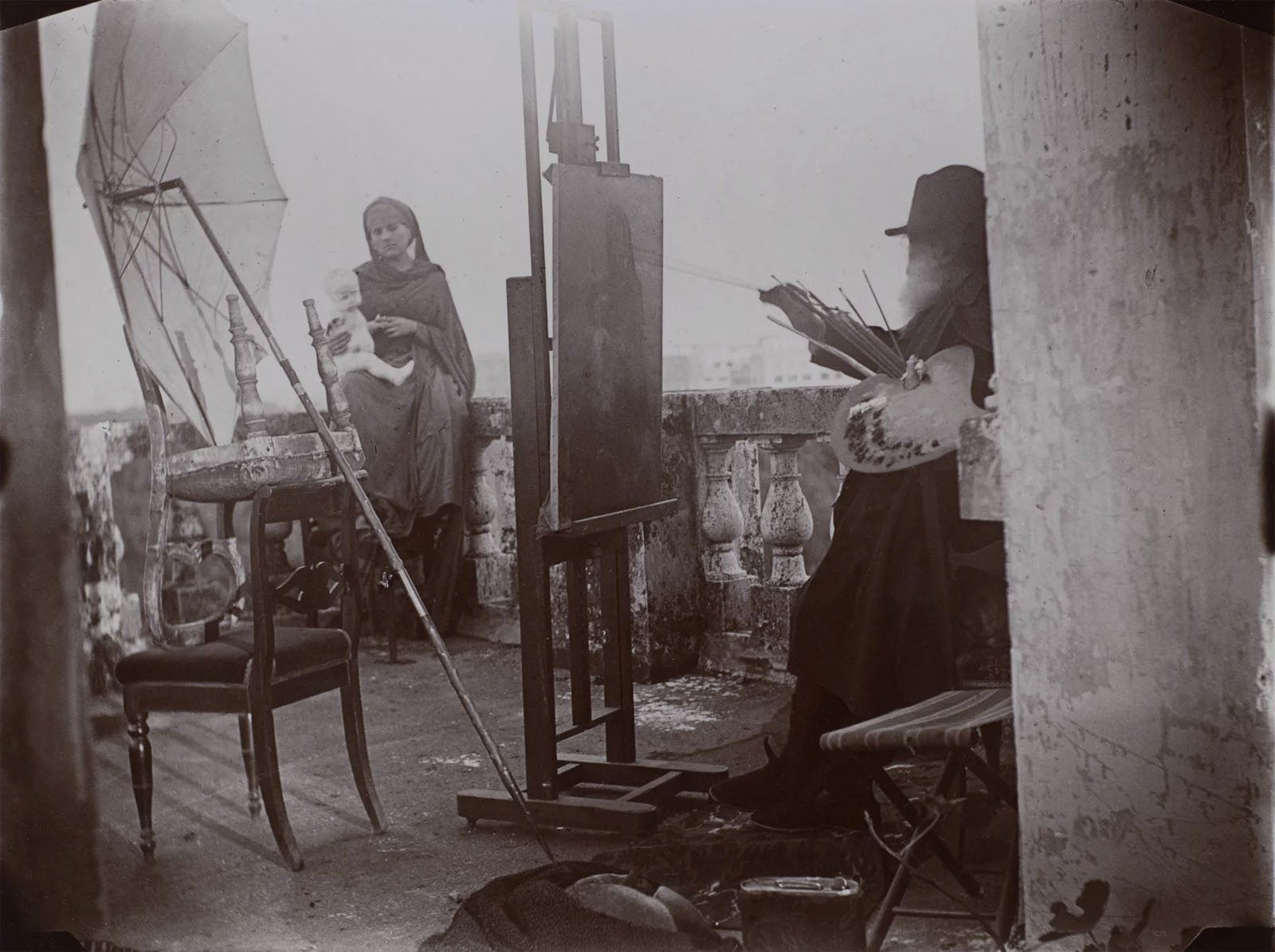
Then there are the joyous highs of a modern woman looking at the world with perceptive eyes. In the photograph Amalia Scossa et Ernest Hébert à sa peinture La Vierge au chardonneret sur la terrasse du campanile (around 1891, below), Gabrielle Hébert was not afraid to dissect the pictorial plane with strong verticals, horizontal and diagonal lines, providing the viewer with the feeling of an almost voyeuristic in-sight into the creative scene, each section of the photograph holding out attention – two chairs, one upturned on the other, supporting the umbrella shielding the painter from the sun; the Virgin and her child filling the distant space; the painting on the easel leading our eye down and then back up into the cloaked, wizened figure of the artist holding his easel; folding stool for him to rest and other accoutrements earthing the foreground; and the massive pillars slightly askew enclosing our furtive view. Magnificent!

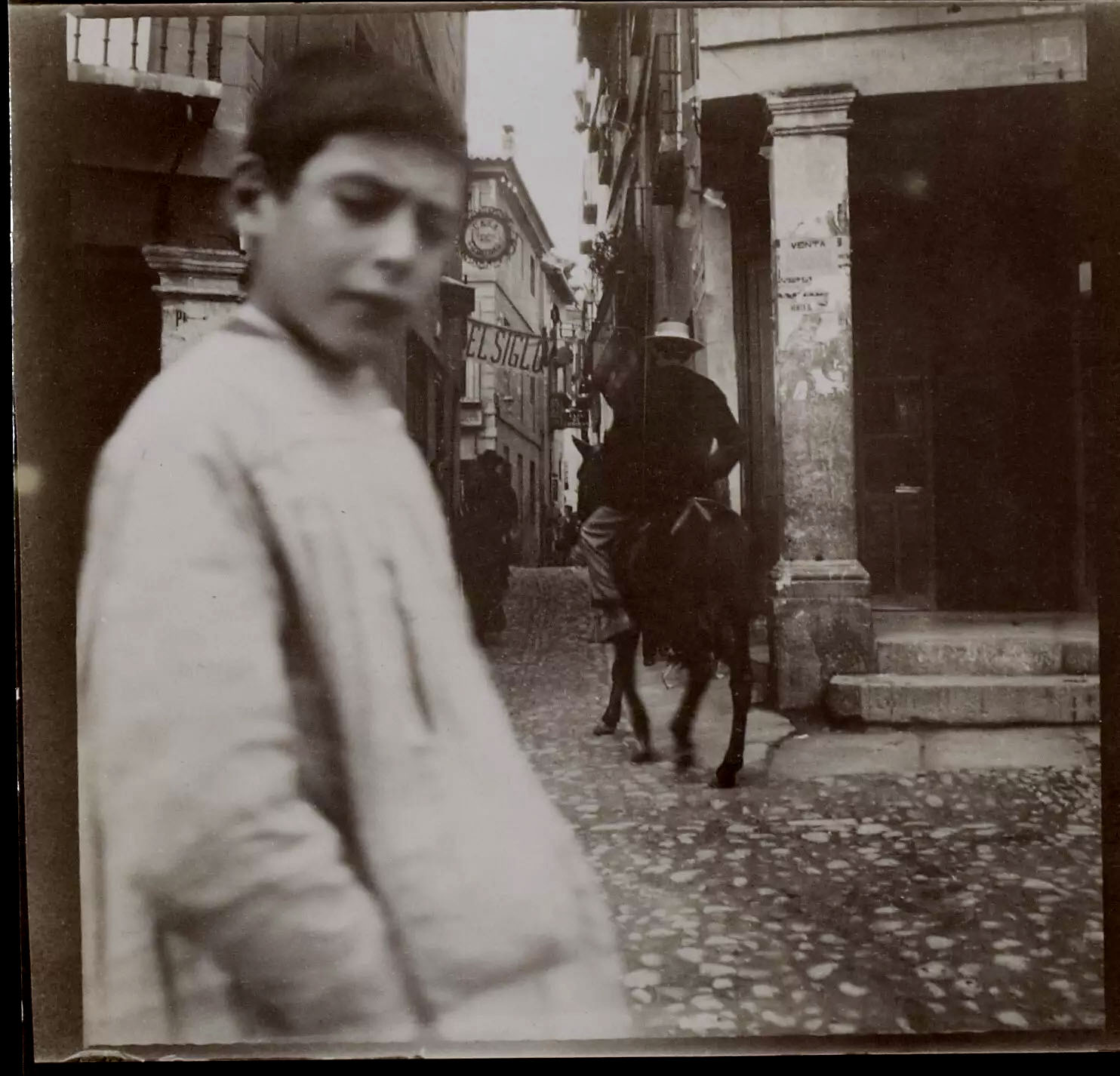
My favourite photograph in the posting is Garçon au coin de la place Zocodover, Tolède, 31 octobre 1898 (Boy on the corner of Zocodover Square, Toledo, October 31, 1898) (1898, below), taken when Hébert had abandoned her large format camera for a more portable Kodak. A wonderful use of depth of field, movement, vanishing point, light, architecture and the ghostly presence of a boy, forever peering at us through eons of time, lend the image an enigmatic, allegorical mystery … as to the passage of time, the journey of life.

How I wish we could have seen more of these later photographs where Hébert proposed “daring viewpoints – notably from a speeding train – a camera in motion, glances towards the camera, the operator’s shadow cast on the ground, motion blur of people and things (smoke, clouds, and waves), truncated figures, and close-ups.” (Marie Robert)

And then there is the crux of the matter. As the text on the Musée d’Orsay website insightfully observes, “… above all, photography revealed her to herself: through capturing a particularly remarkable geography and era, she effectively invented her own mythology.”

Through love and life, through devotion to husband, through devotion to photography, and through devotion to herself, she revealed her to herself and to the world. What crazy, mad love!

Dr Marcus Bunyan

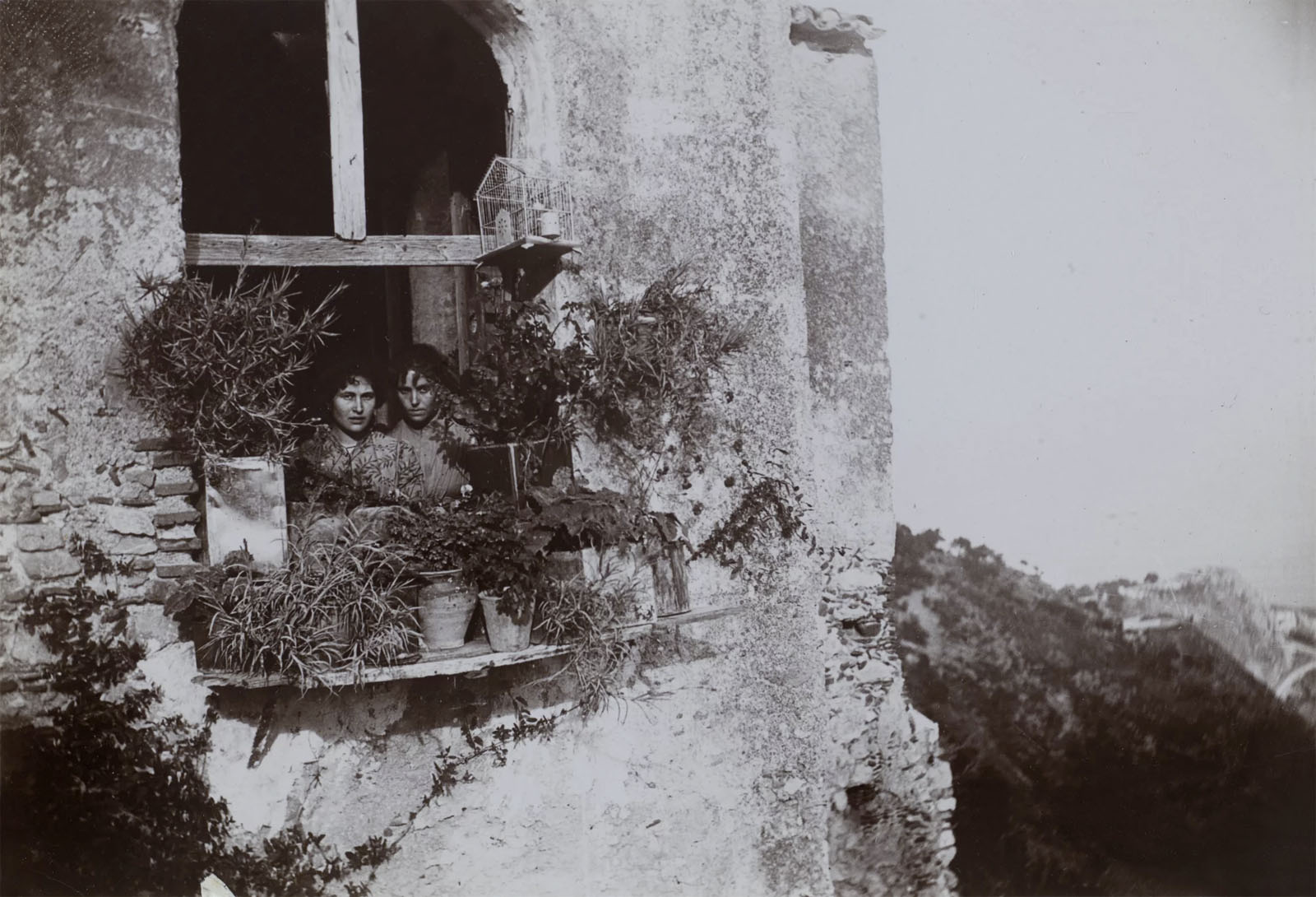
PS. With photographs like Femmes à la fenêtre, Taormine (Sicile), mai 1893 (Women at the window, Taormina (Sicily), May 1893) (1893, below) it is likely Gabrielle Hébert would have met Baron Wilhelm von Gloeden (German, 1856-1931) who lived and worked there between 1878-1931.


Many thankx to the Musée d’Orsay, Paris for allowing me to publish the photographs in the posting. Please click on the photographs for a larger version of the image.


Active between 1888 and 1908, Gabrielle documented daily life at Villa Medici in Rome, where her husband served as director of the French Academy. Her photographs provide an intimate look into the artistic life of the time, portraying artists, models, and domestic scenes.​ The exhibition features original prints, albums, diaries, glass plate negatives, and her cameras, alongside works by Ernest Hébert and personal items that tell their love story. With over 3.500 prints, Gabrielle Hébert is considered a pioneer of female photography, having sensitively and precisely documented an artistic environment predominantly male.​


Veronica Azzari on the Bvlgari Hotel Paris website


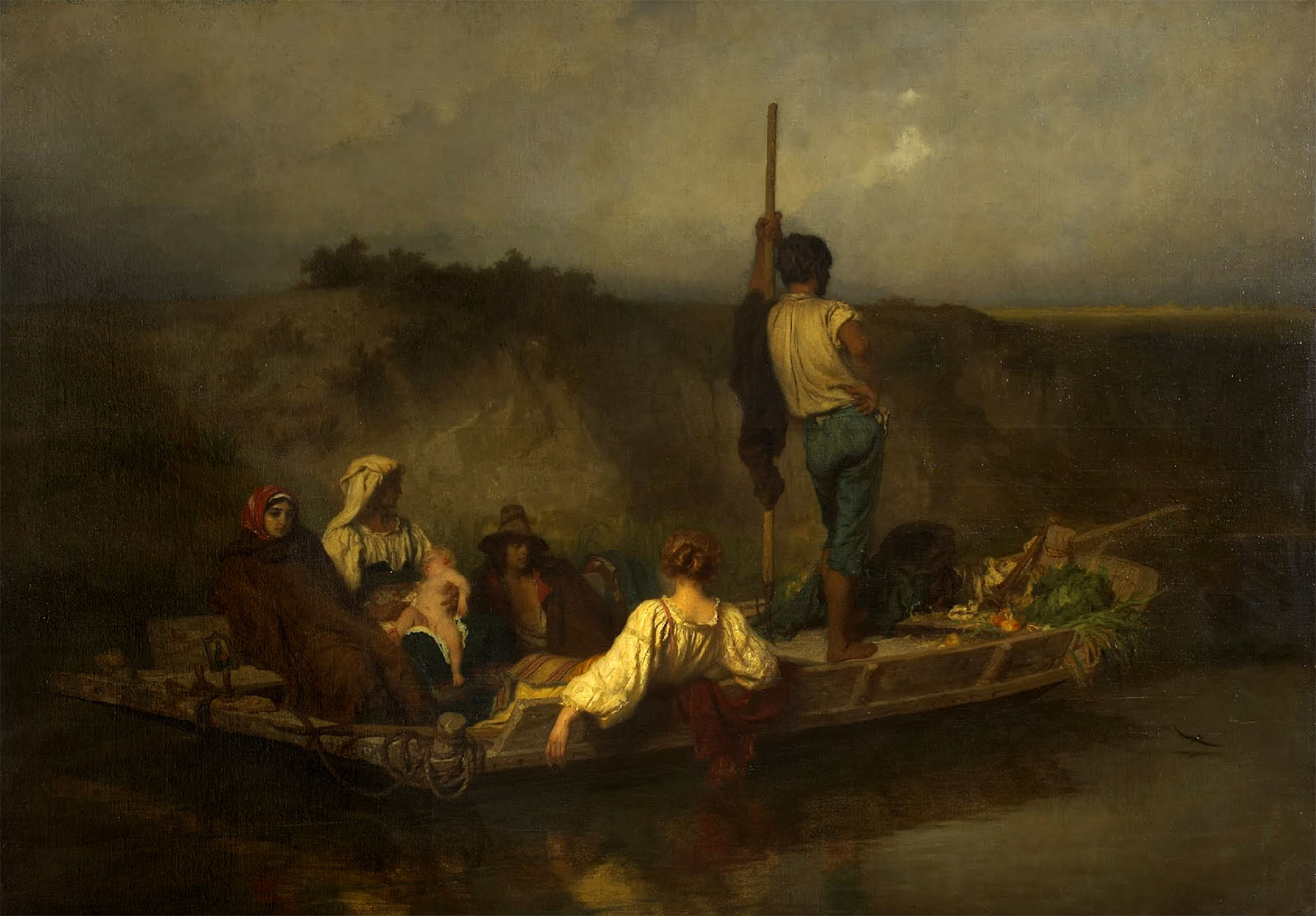
When Gabriele von Uckermann and a friend discovered Ernest Hébert’s painting, La Mal’aria [below], at the Munich International Exhibition of Fine Arts in 1869, the two young women sent a telegram to the artist expressing their admiration. A few months later, the painter agreed to receive Gabriele in his Parisian studio, and their marriage in 1880 sealed their whirlwind romance. He was 63, she was 28. Five years later, Ernest Hébert’s reappointment as director of the French Academy in Rome allowed the young woman to have her own studio. Gabrielle Hébert, who had Gallicized her first name, dates her photographic debut to July 8, 1888. From that day forward, she never stopped photographing her husband. She also dedicated herself to visually documenting their stay at the Villa Medici, as well as their travels in Italy, Sicily, and Spain. …

The exhibition’s subtitle, “Mad Love at the Villa Medici,” while certainly catchy, is somewhat misleading, as the section strictly devoted to photographs related to her stay at the French Academy in Rome represents only a third of the exhibition. However, each period of this prolific output is contextualised using a variety of documents: diary entries, correspondence, camera footage, albums, contact sheets, and more.


Christine Coste. “Gabrielle Hébert, un itinéraire photographique singulier,” on the Le Journal des Arts website, 17th December, 2025 [Online] Cited 02/01/2026. Translated from the French by Google Translate. Used under fair use conditions for the purposes of education and research


Ernest Hébert (French, 1817-1908) 'The Mal'aria' 1848-1849


Ernest Hébert (French, 1817-1908)
The Mal’aria
1848-1849
Oil on canvas
1930 x 1350cm
Musée d’Orsay, dist. RMN / Patrice Schmidt
Bought 1851

Used under fair use conditions for the purposes of education and research


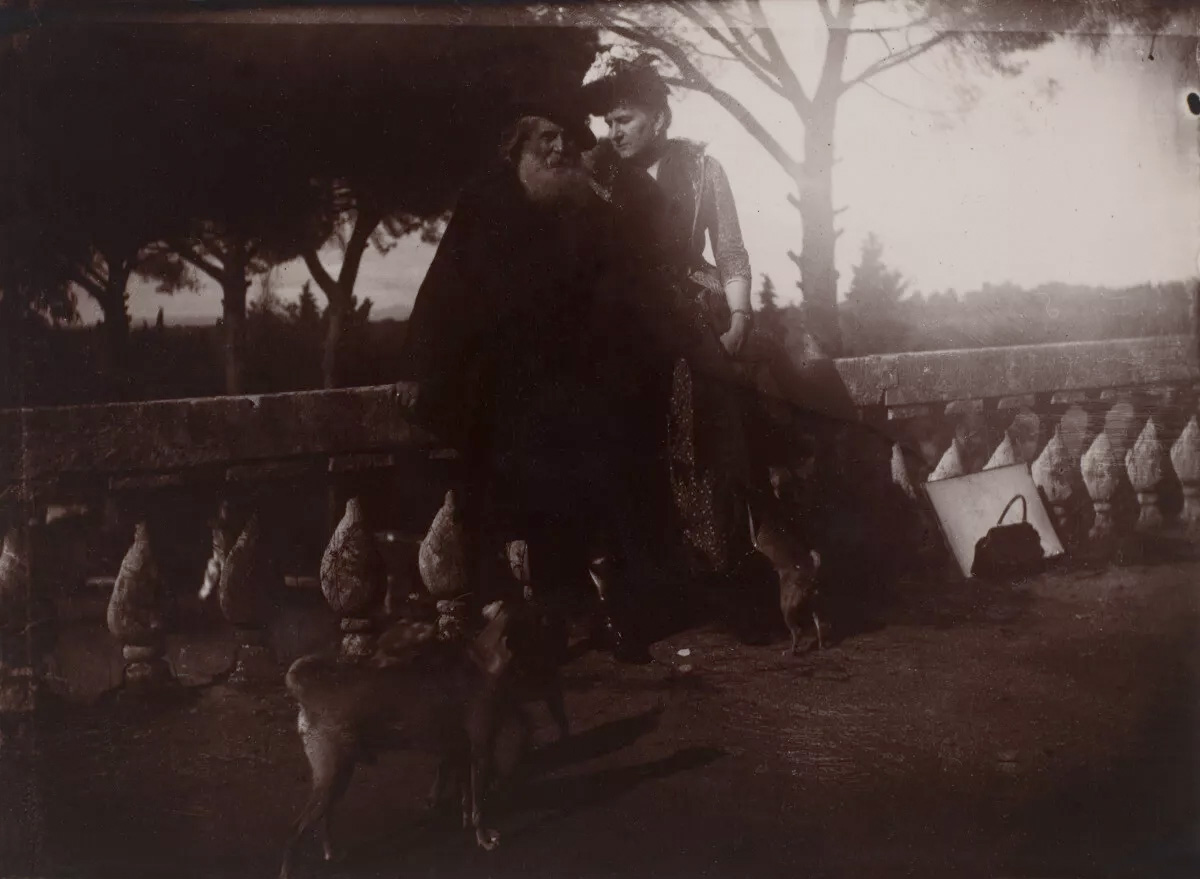
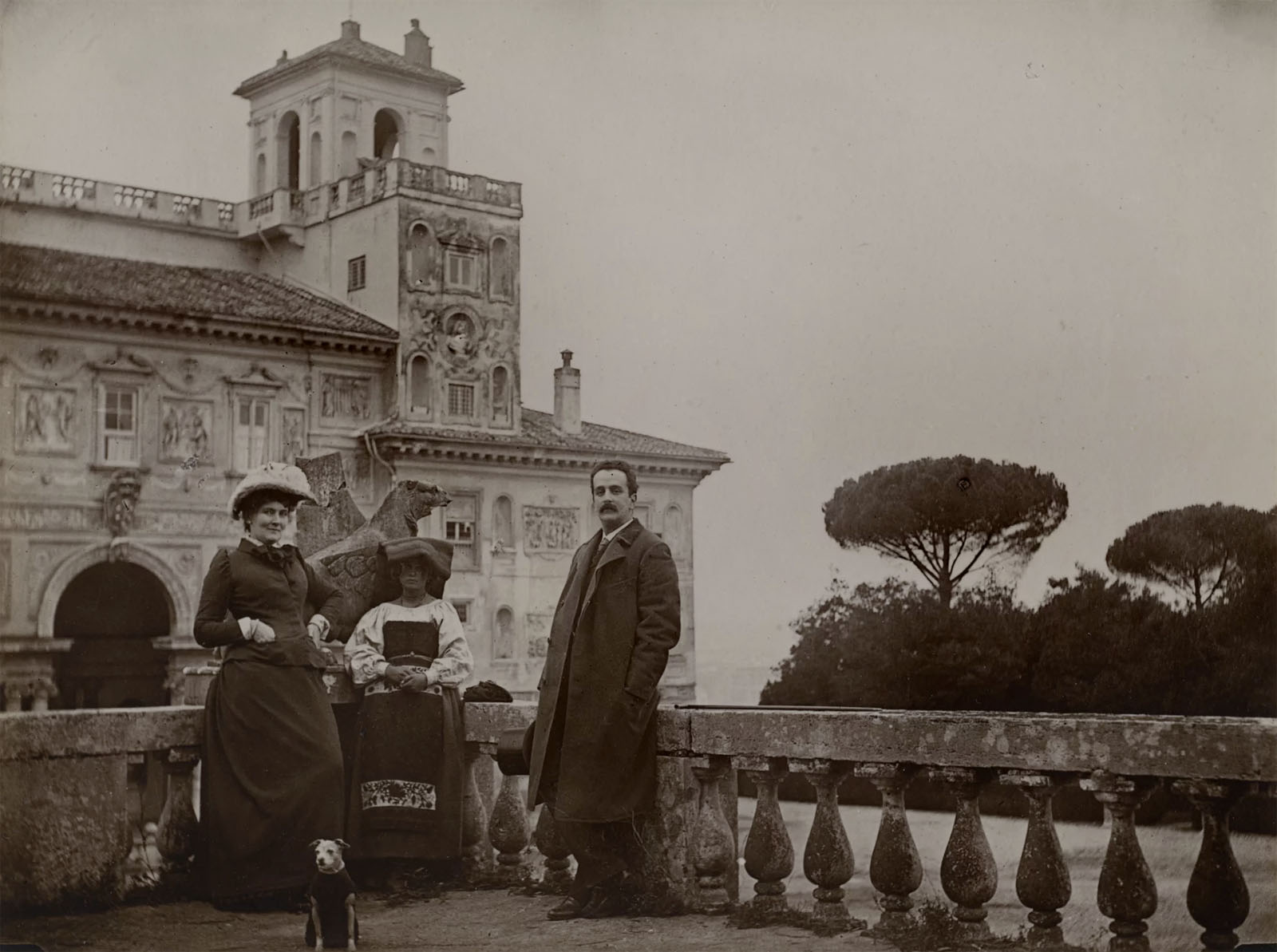
Alexis Axilette (French, 1860-1931) 'Ernest et Gabrielle Hébert et leurs chiens sur la terrasse du bosco' (Ernest and Gabrielle Hébert and their dogs on the terrace of the bosco) Around 1888 from the exhibition 'Gabrielle Hébert: Amour fou à la Villa Médicis' at the Musée d'Orsay, Paris, October 2025 -  February 2026


Alexis Axilette (French, 1860-1931)
Ernest et Gabrielle Hébert et leurs chiens sur la terrasse du bosco
(Ernest and Gabrielle Hébert and their dogs on the terrace of the bosco)

Around 1888
Aristotype à la gélatine (Gelatin Aristotype)
8.7 x 12.2cm
© Musée National Ernest Hébert, Paris
Photo: Musée d’Orsay, Dist. RMN-Grand Palais / Alexis Brandt


Gabrielle Hébert (French born Germany, 1853-1934) 'Ernest Hébert aquarelle l'arc du balcon de la Casa Poscia, Viterbe, août 1888' (Ernest Hébert watercolour the arch of the balcony of the Casa Poscia, Viterbo, August 1888) 1888


Gabrielle Hébert (French born Germany, 1853-1934)
Ernest Hébert aquarelle l’arc du balcon de la Casa Poscia, Viterbe, août 1888
(Ernest Hébert watercolour the arch of the balcony of the Casa Poscia, Viterbo, August 1888)

1888
Aristotype à la gélatine (Gelatin Aristotype)
9 x 12cm environ
© Musée National Ernest Hébert, Paris
Photo: Musée d’Orsay, Dist. RMN-Grand Palais / Alexis Brandt


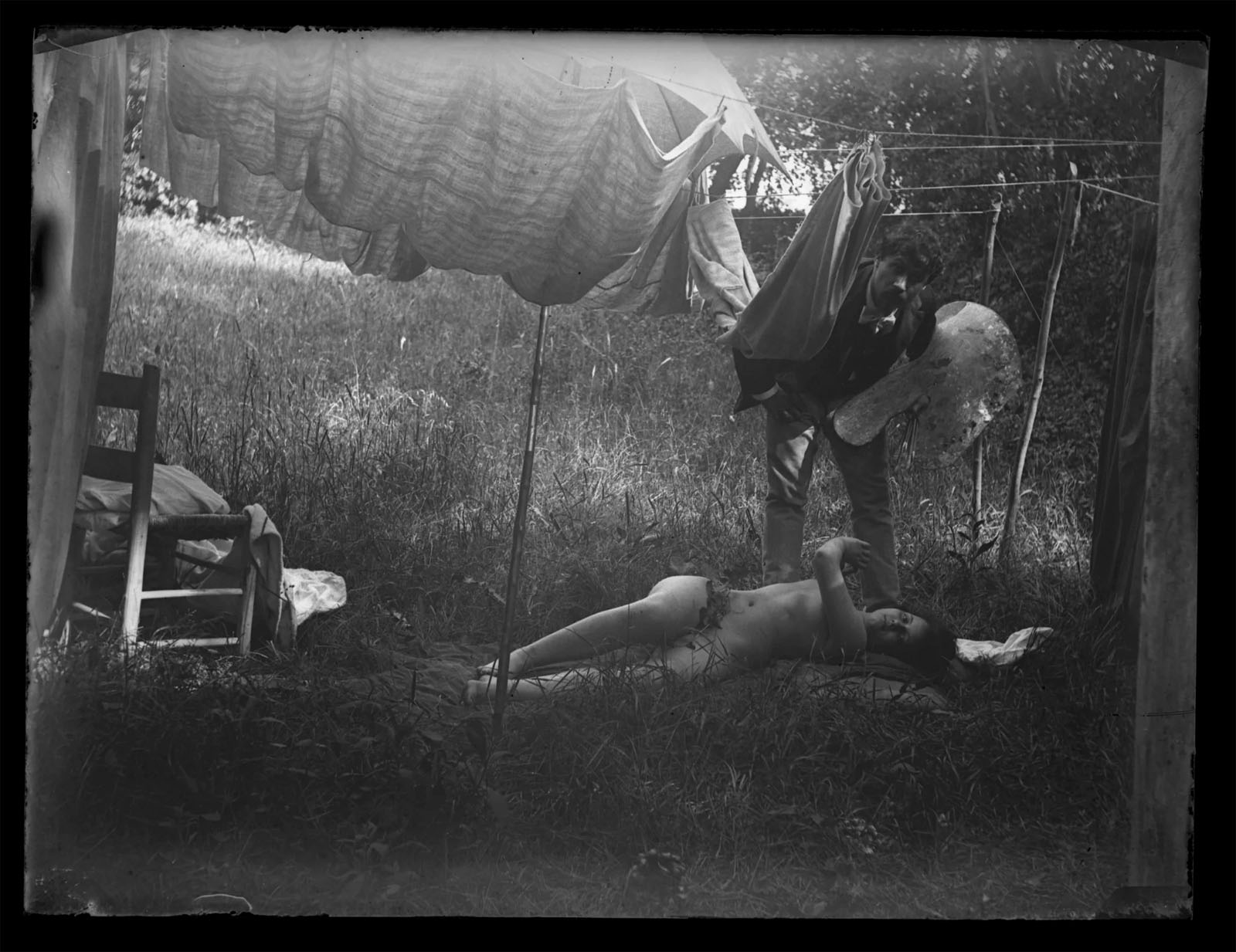
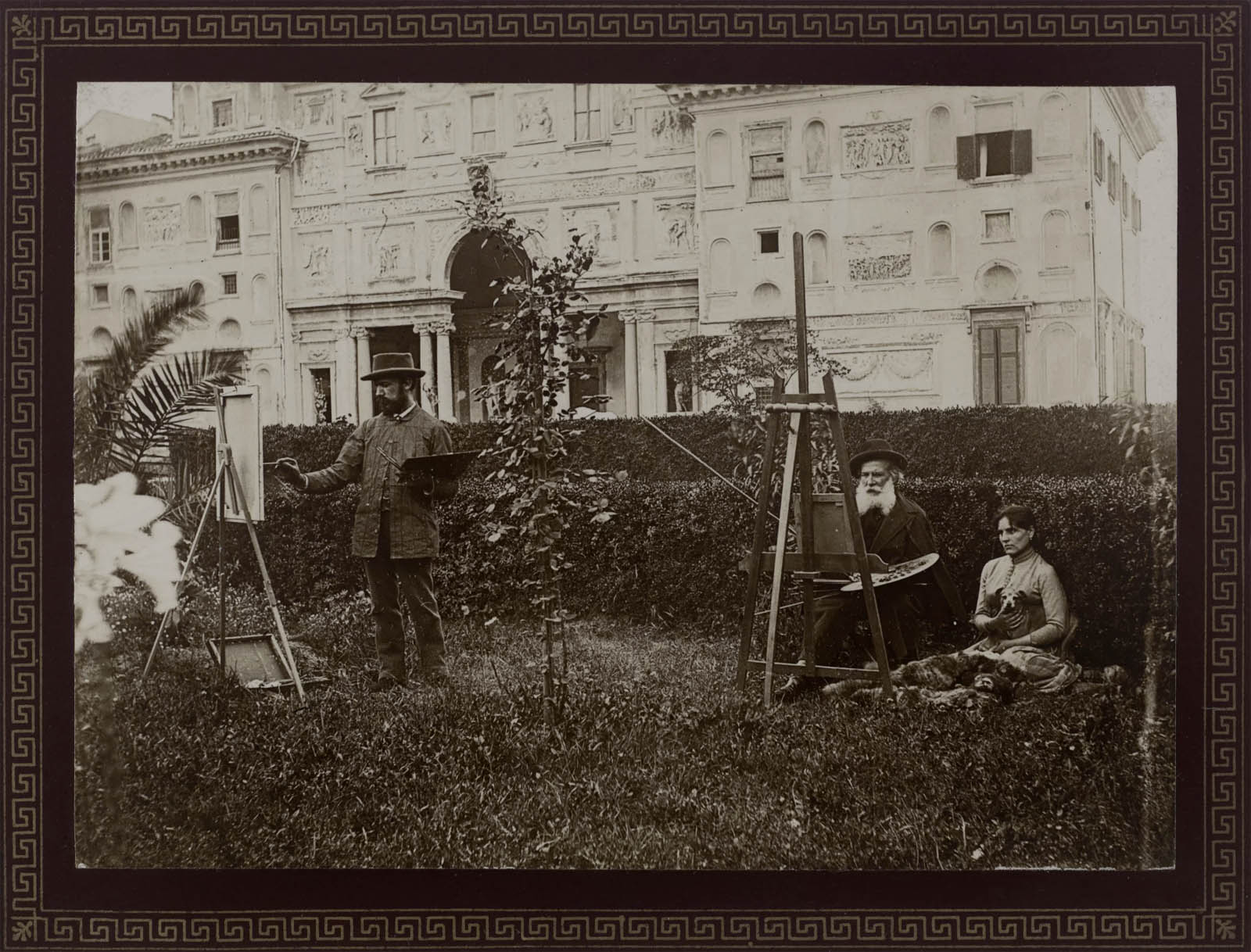
Gabrielle Hébert (French born Germany, 1853-1934) 'Le peintre pensionnaire Alexis Axilette et son modèle Elvira dans le Bosco de la Villa Médicis, Octobre 1888' (Resident painter Alexis Axilette and his model Elvira in the Bosco of the Villa Medici, October 1888) 1888


Gabrielle Hébert (French born Germany, 1853-1934)
Le peintre pensionnaire Alexis Axilette et son modèle Elvira dans le Bosco de la Villa Médicis, Octobre 1888
(Resident painter Alexis Axilette and his model Elvira in the Bosco of the Villa Medici, October 1888)

1888
Négatif au gélatino-bromure d’argent sur plaque de verre (Silver gelatin bromide negative on glass plate)
9 x 12cm
© La Tronche, musée Hébert
Photo: Musée Hébert, Département de l’Isère


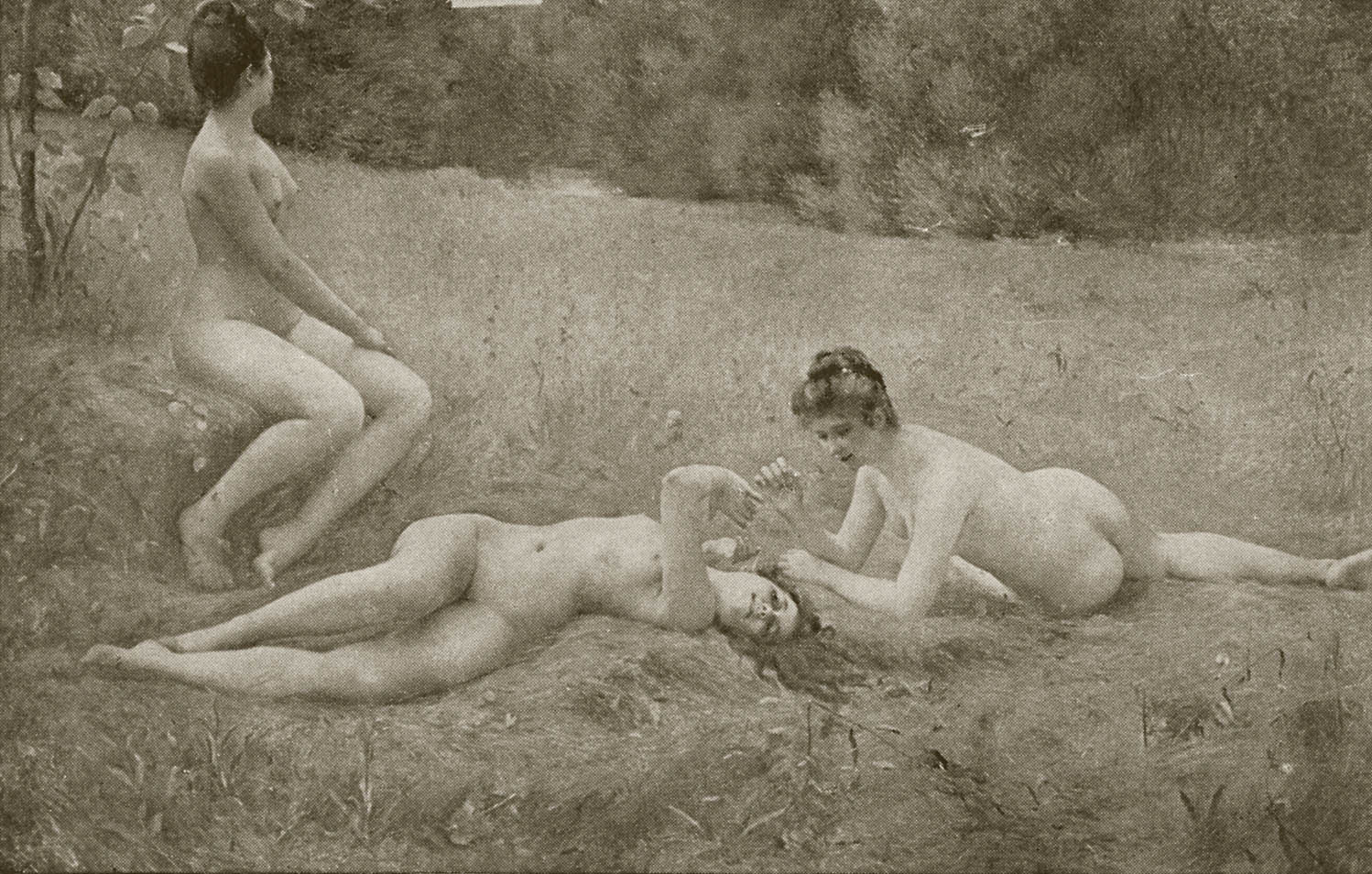
The photograph above shows a nude woman posing for the artist Alexis Axilette for his painting Summertime (c. 1891, below)


Alexis Axilette (French, 1860-1931) 'Summertime' c. 1891


Alexis Axilette (French, 1860-1931)
Summertime
c. 1891

Only a black and white reproduction is available of this work


At the Salon exhibition of 1891, a picture which attracted a marked amount of attention was a vividly painted midsummer landscape, with the figures of three wood-nymphs, basking in the flood of golden sunshine. It was entitled “Summertime.” The painter was A. Axilette, a Parisian artist whose studio was already well known to collectors. The success of “Summertime” in Europe was enormous. It was successively exhibited at various continental exhibitions, and everywhere repeated the hit it had made in France. It was, in fact, one of those works of which it is said that they “make” their authors, and in the sense that it completely established the painter’s reputation, “Summertime” realised this figure of speech.

Mary S. Van Deusen. “Alexis Axilette,” on the Master Paintings of the World website 2007 [Online] Cited 02/01/2026. Used under fair use conditions for the purposes of education and research


Alexis Axilette (French, 1860-1931)

Alexis Axilette was born in 1860 in Durtal, a small town in Maine-et-Loire. From a modest background – his father was a merchant – his future seemed predetermined, far removed from the world of art. His parents, who dreamed of a career as a notary’s clerk for him, were nonetheless surprised to discover his talent for drawing. After encouraging him to prove his abilities, they supported his choice to become an artist, a vocation he embraced with passion and determination. This ambition led him to become one of the most remarkable painters of his time.

A Promising Start

At the age of 16, Alexis Axilette began working as an apprentice in a photography studio, retouching photographs by hand, a modern activity for the time. At the same time, he attended evening classes at the Angers Municipal School of Fine Arts, where he distinguished himself with his talent and won several prizes. Supported by his teachers, he obtained a scholarship to attend the École des Beaux-Arts in Paris. Between 1878 and 1880, he learned Neoclassical principles there under the influence of the renowned painter Jean-Léon Gérôme, teachings that would profoundly shape his artistic approach.

The Rise to Recognition

At 24, Alexis Axilette reached a major turning point in his career by winning the prestigious Premier Grand Prix de Rome with his painting Themistocles Taking Refuge with Admetus (1885), a masterfully executed historical scene. This success, achieved at such a young age only by Fragonard, propelled his career, marked by gold medals, honorary distinctions, and the Legion of Honor. From that moment on, he became a central figure in the artistic and literary life of the Third Republic, frequenting high society and financial circles. An accomplished artist, he traveled throughout Europe and forged an international reputation, becoming a sought-after portraitist with prestigious commissions, notably from the Imperial Court of Russia.

In 1898, he received a major state commission: the creation of a monumental triptych for the ceiling of the Social Museum, entitled Humanity, Fatherland, and Muse. This work, both moral and balanced, perfectly embodies the republican ideals of the time.

Historical and Artistic Context

Under the Third Republic, the arts were seen as a privileged means of promoting national cohesion. Axilette’s academic style, rooted in moral and patriotic values, perfectly aligned with this objective. However, the late 19th and early 20th centuries saw the emergence of new artistic movements such as Impressionism, Symbolism, and Expressionism. Axilette’s attachment to classicism and a rigorous aesthetic set him apart from the avant-garde movements that favored experimentation and creative freedom. Thus, although he perfectly embodied his era, his art gradually came to be perceived as outdated and obsolete.

A Transition to Pastels

In the 1910s, as artistic tastes evolved, Alexis Axilette turned to the use of pastels. This more subtle and delicate medium allowed him to explore a new sensibility while remaining true to his academic style. His works from this period, primarily portraits and landscapes, testify to his desire to renew his approach while remaining rooted in classical tradition. These pastels reveal an undiminished technical mastery and a willingness to adapt to new artistic trends, although his style seems to have been less appreciated at this time.

Posthumous Oblivion

Like many academic artists, Alexis Axilette suffered from the evolution of tastes in the 20th century. Classical art, once revered, lost ground to the avant-garde, relegating its works to museum storage. Furthermore, his image as a society artist, associated with the establishment of the Third Republic, did not help his legacy. While artists like Gauguin symbolized rebellion and innovation, Axilette remains perceived as a representative of a bygone academicism.

A body of work to be rediscovered

Alexis Axilette died on July 3, 1931, in Durtal, his birthplace. Today, his legacy lives on through his works held in private and public collections: academic drawings, nude sketches, portrait studies, landscapes, and historical paintings. These paintings bear witness to his exceptional talent and his dedication to his art. Although he was a major figure of his time, he remains relatively unknown today. He embodies the fate of many artists: celebrated in their lifetime, but gradually forgotten by history.

Anonymous. “Alexis Axilette,” on the French Wikipedia website, translated by Google Translate


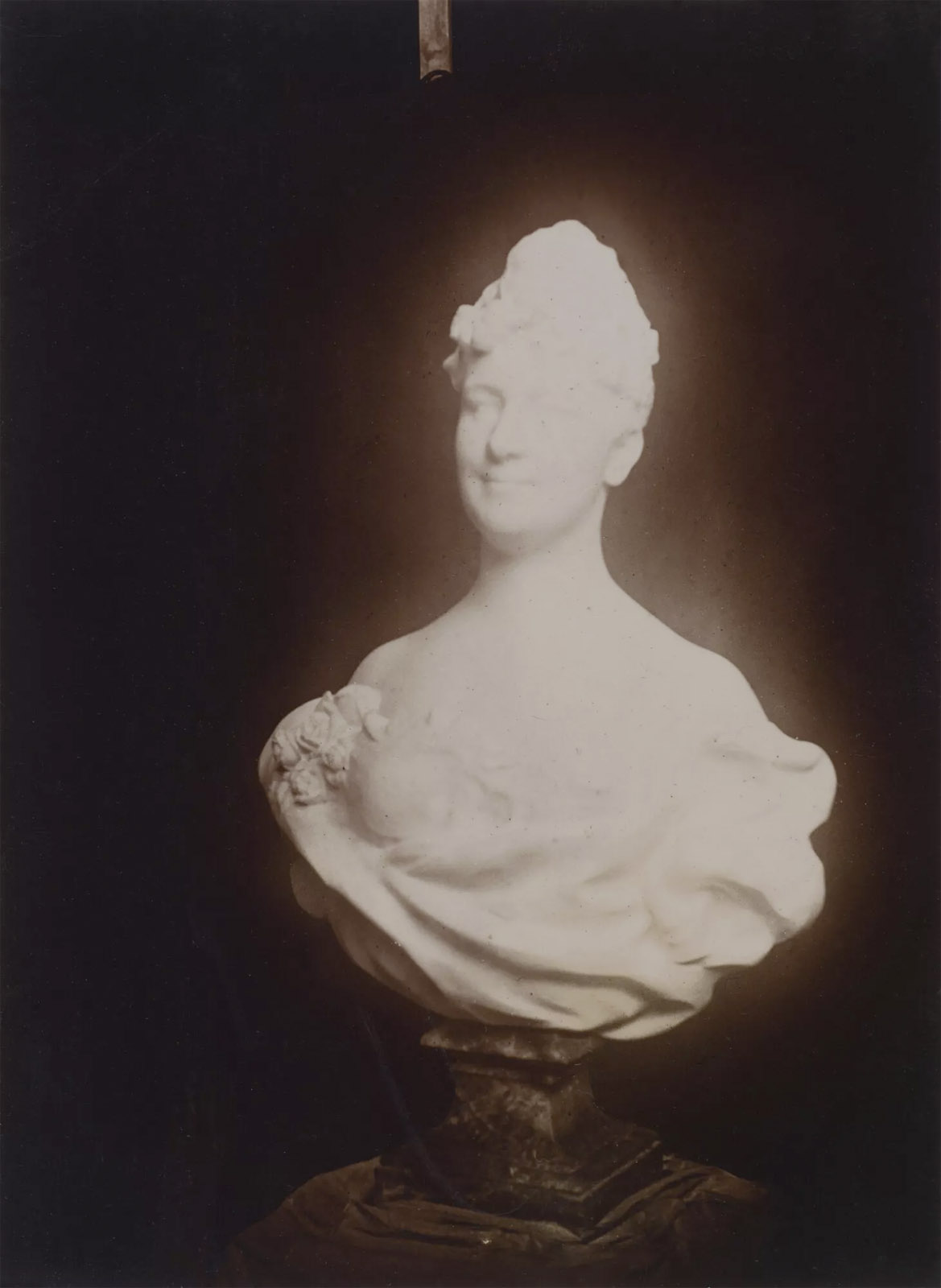
Gabrielle Hébert (French born Germany, 1853-1934) 'Le temps est sublime. Je photographie Lily et Farfalette, mon buste, Puech, Charpentier et Gardet, 20 novembre 1888' (The weather is sublime. I photograph Lily and Farfalette, my bust, Puech, Charpentier and Gardet, November 20, 1888) 1888


Gabrielle Hébert (French born Germany, 1853-1934)
Le temps est sublime. Je photographie Lily et Farfalette, mon buste, Puech, Charpentier et Gardet, 20 novembre 1888
(The weather is sublime. I photograph Lily and Farfalette, my bust, Puech, Charpentier and Gardet, November 20, 1888)

1888
Aristotype à la gélatine, papier (Gelatin Aristotype, paper)
11 x 8cm
© Musée National Ernest Hébert, Paris
Photo: Musée d’Orsay, Dist. RMN-Grand Palais / Alexis Brandt


Designed in partnership with the Musée Départemental Ernest Hébert in La Tronche (Isère), where it will be hosted in spring 2026, the exhibition will also be presented at the French Academy in Rome – Villa Medici in autumn 2026, where the exhibition’s curator Marie Robert spent a year in the context of a Villa Medici/ Musée d’Orsay cross-residency.

The exhibition Who’s Afraid of Women Photographers? (1839-1945) presented at the Musée d’Orsay and the Musée de l’Orangerie in 2015 was a milestone for recognition of women artists in France. One of the many photographers featured was Gabrielle Hébert (1853, Dresden, Germany – 1934, La Tronche, France). Born Gabrielle von Uckermann, she was an amateur painter before marrying Ernest Hébert in 1880, an academic artist twice appointed Director of the French Academy in Rome. She went on to develop an intensive, extremely prolific photography practice, begun at Villa Medici in 1888 and ending twenty years later in La Tronche (near Grenoble) following the death of the man she had idolised, her elder by almost forty years, and whose place in history she largely ensured by supporting the creation of two monographic museums.

In the late 19th century, between France and Italy, like many artists and writers (including Henri Rivière, Pierre Bonnard, Maurice Denis and Émile Zola) who equipped themselves with a camera to record their and their families’ daily lives, Gabrielle Hébert pursued a private, sentimental photography practice, helped along by the technical and aesthetic revolution brought about by the invention of snapshot photography. At Villa Medici, as the wife of its director, she organised receptions and received elite visitors. She was not long in escaping her assigned duties, however, and acquired a camera. She took a few lessons with a Roman professional and, along with a resident of her own age, set up a darkroom to develop and print her negatives and retouch the results. It was the beginning of an extremely voluminous output of photos, which she consigned to her diaries. Hardly a day passed without her taking a snapshot, interspersing them with remarks that tell us how she set about taking pictures: “Je photo…. Je photographie…”.

Although Gabrielle Hébert shared her taste for society portraits and tableaux vivants with Luigi and Giuseppe Primoli, Princess Mathilde Bonaparte’s nephews and pioneers of snapshot photography in Italy, she explored all photographic genres on her own at Villa Medici, including nudes, reproductions of artworks, landscapes, still lifes and “photographic recreations” … Providing us with the viewpoint of a permanent resident who is dazzled by the palace, the site and its inhabitants (artists in residence, employees, models, dogs and cats) as seen from the inside and in all seasons, her output reveals a completely unknown aspect of life in that artistic phalanstery. Her “diary in images” is the first photo-report on daily life in the institution, a centre for residencies, training and creation by winners of the Grand Prix de Rome (many of whose works are now conserved by the Musée d’Orsay) as well as a laboratory for the new political relationship between France and Italy, which had just been “unified” (1861) and of which Rome became the capital in 1871. It also constitutes a unique testimony on one of the first couples of creators at Villa Medici. Although Gabrielle assisted Ernest with his activities as an artist, posing for him, preparing his canvases, retouching his paintings and even copying them, it was Ernest himself who was the photographer’s real focus. Overturning gender stereotypes, she watched him obsessively and was never tired of capturing him on film. Posing sessions with sitters, progress made in his paintings, moments of conviviality with visitors and interactions with residents, along with walks in the Roman countryside, bathing in the sea and alone in his office: all these aspects of artist, director and husband Ernest Hébert’s life were scrutinised and documented. When she returned permanently to France with him, Gabrielle stopped cultivating her passion for photography, a passion born in Italy and in exile, but nevertheless continued to photograph Hébert until the very end of his life, determined to immortalise him through images. Before that, though, in 1898, she escaped the closed quarters formed by the Renaissance Palace and its eccentric occupants and performed her photographic swansong during a trip to Spain, which she photographed with a resolutely modern eye influenced by the early days of cinema.
This chrono-thematic exhibition, from Gabrielle Hébert’s photographic beginnings (1888) to her last images (1908), will seek to present what she made of photography and what photography made of her. Thanks to her images, which she shared and exchanged with her friends and family, she became recognised as an auteur and gained social status in a milieu where artistic creation was the preserve of men. But above all, photography revealed her to herself: through capturing a particularly remarkable geography and era, she effectively invented her own mythology. By doing so, she was Villa Medici’s first photographic chronicler and made a place for herself in the medium’s history.

Most of the works on exhibition are original prints (in 9 x 12 cm format), along with photograph albums created by Gabrielle Hébert, her diaries, boxes of glass plates and cameras she used. Enlargements created from negatives she never printed will add further life to the presentation. The itinerary will be rounded out by drawings and paintings by Ernest Hébert, as well as sentimental relics (palette, medallion and letters), testimony to a story of love for a man and a country.

Text from the Musée d’Orsay website


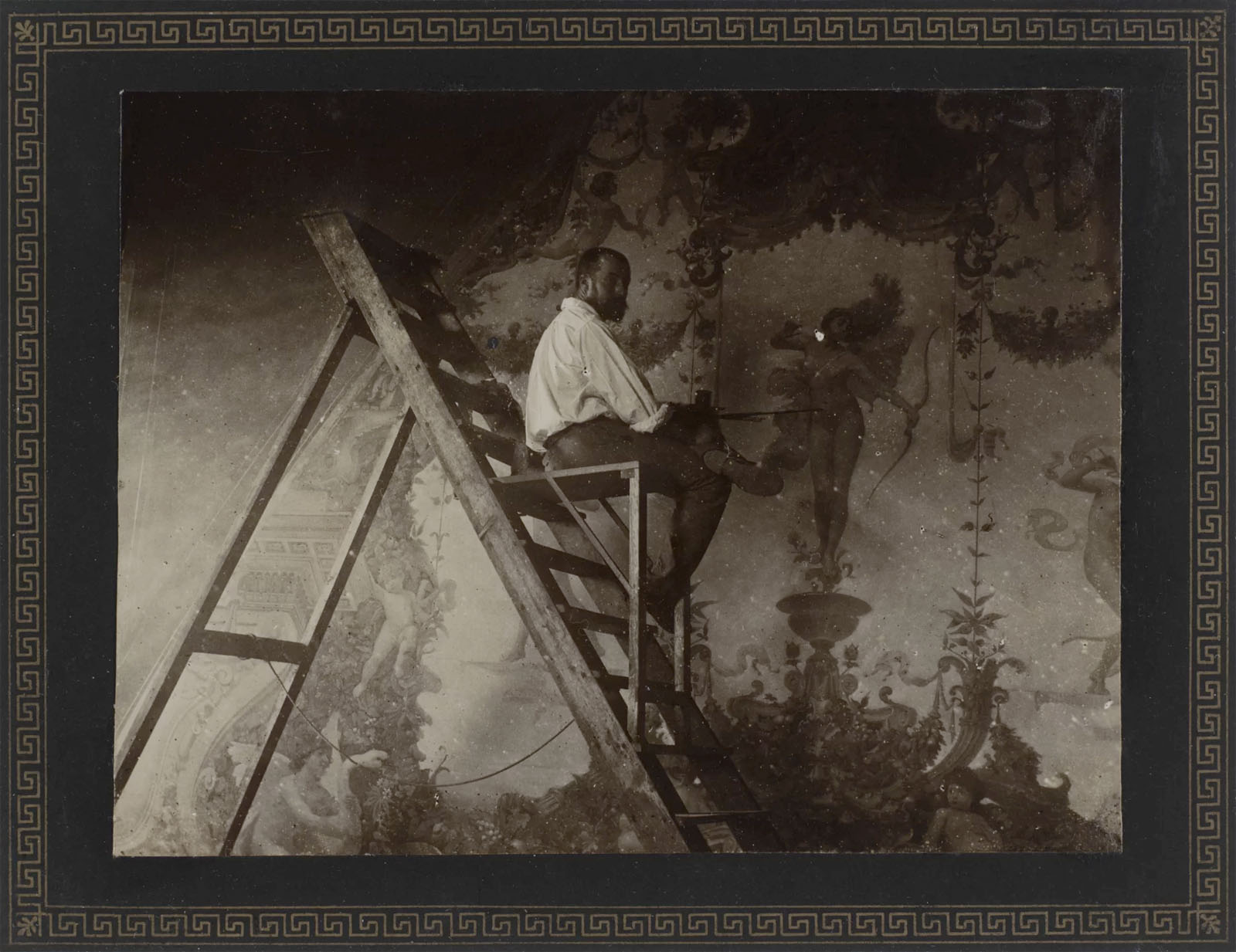
Gabrielle Hébert (French born Germany, 1853-1934) 'L'architecte Hector d'Espouy devant son Projet de plafond pour la décoration de la Villa Médicis' (The architect Hector d'Espouy in front of his ceiling design for the decoration of the Villa Medici) 1889


Gabrielle Hébert (French born Germany, 1853-1934)
L’architecte Hector d’Espouy devant son Projet de plafond pour la décoration de la Villa Médicis
(The architect Hector d’Espouy in front of his ceiling design for the decoration of the Villa Medici)

1889
Aristotype à la gélatine (Gelatin Aristotype)
8 x 10.5cm
© Musée National Ernest Hébert, Paris
Photo: Musée d’Orsay, Dist. RMN-Grand Palais / Alexis Brandt


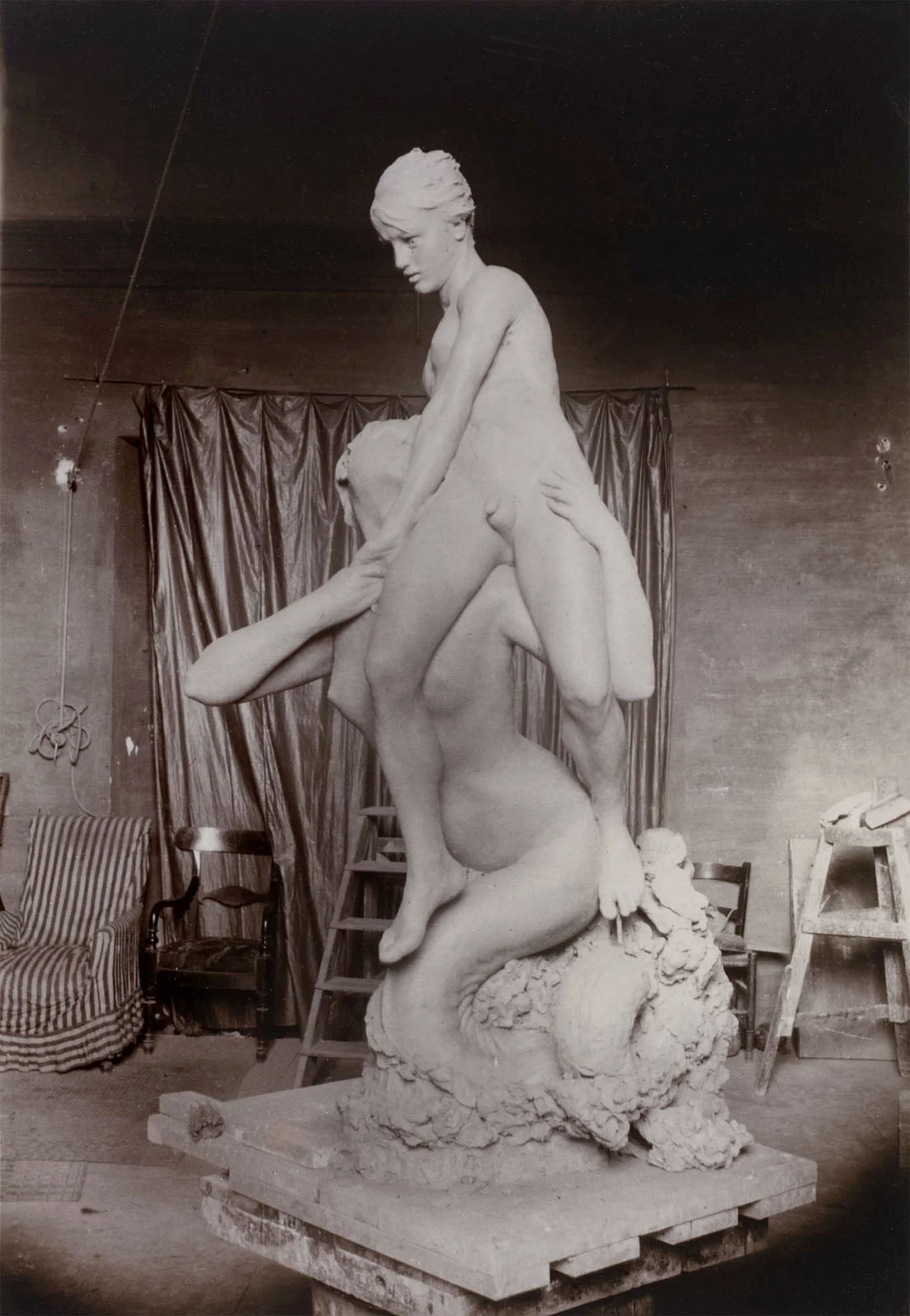
Gabrielle Hébert (French born Germany, 1853-1934) 'Esquisse de La Sirène de Denys Puech dans son atelier (envoi règlementaire de quatrième année)' (Sketch of The Mermaid by Denys Puech in his studio (required submission for fourth year)) 1889


Gabrielle Hébert (French born Germany, 1853-1934)
Esquisse de La Sirène de Denys Puech dans son atelier (envoi règlementaire de quatrième année)
(Sketch of The Mermaid by Denys Puech in his studio (required submission for fourth year))

1889
Aristotype à la gélatine, papier
11.5 x 5.8cm
© Musée National Ernest Hébert, Paris
Photo: Musée d’Orsay, Dist. RMN-Grand Palais / Alexis Brandt


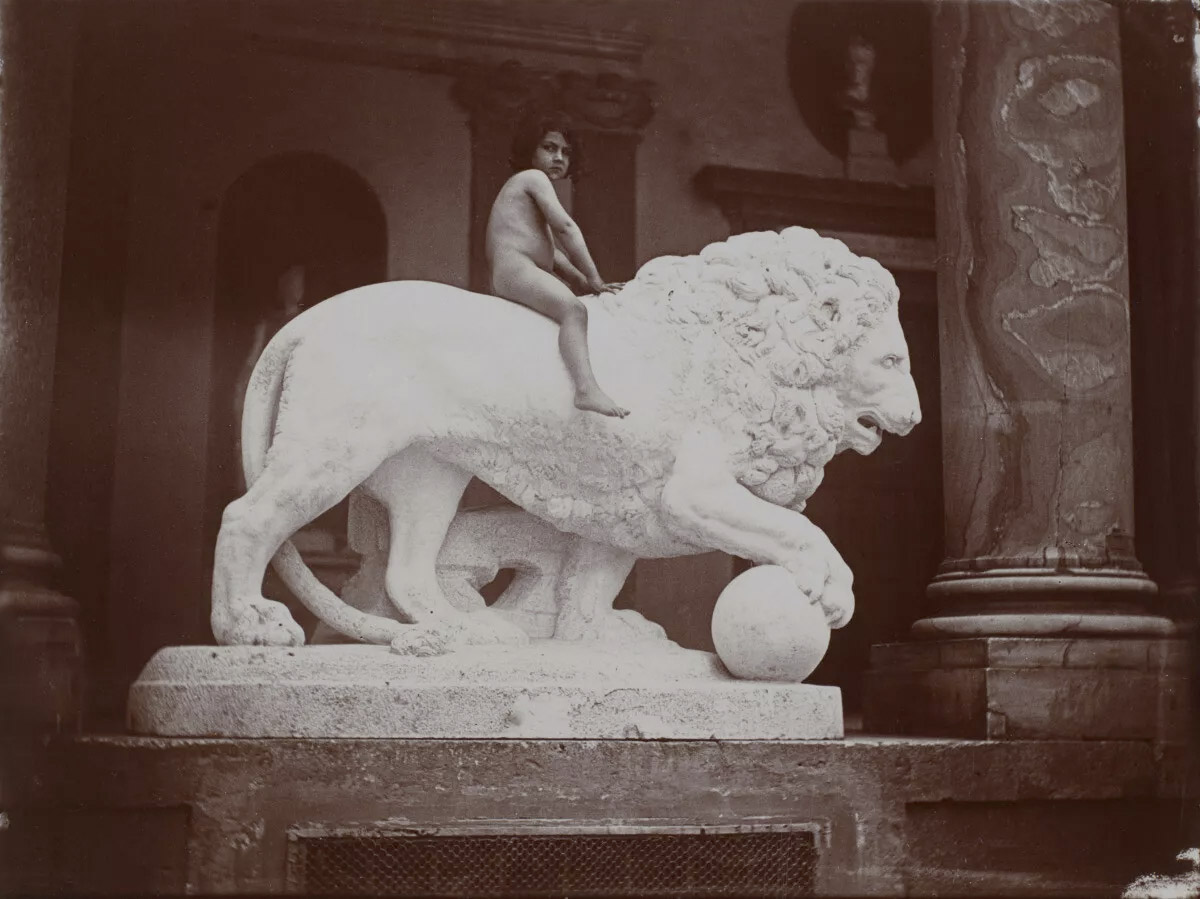
Gabrielle Hébert (French born Germany, 1853-1934) 'Le jeune modèle Peppino sur l'un des lions de la loggia, 18 juin 1890' (The young model Peppino on one of the lions of the loggia, June 18, 1890) 1890


Gabrielle Hébert (French born Germany, 1853-1934)
Le jeune modèle Peppino sur l’un des lions de la loggia, 18 juin 1890
(The young model Peppino on one of the lions of the loggia, June 18, 1890)

1890
Aristotype à la gélatine, papier (Gelatin Aristotype, paper)
© Musée National Ernest Hébert, Paris
Photo: Musée d’Orsay, Dist. RMN-Grand Palais / Alexis Brandt


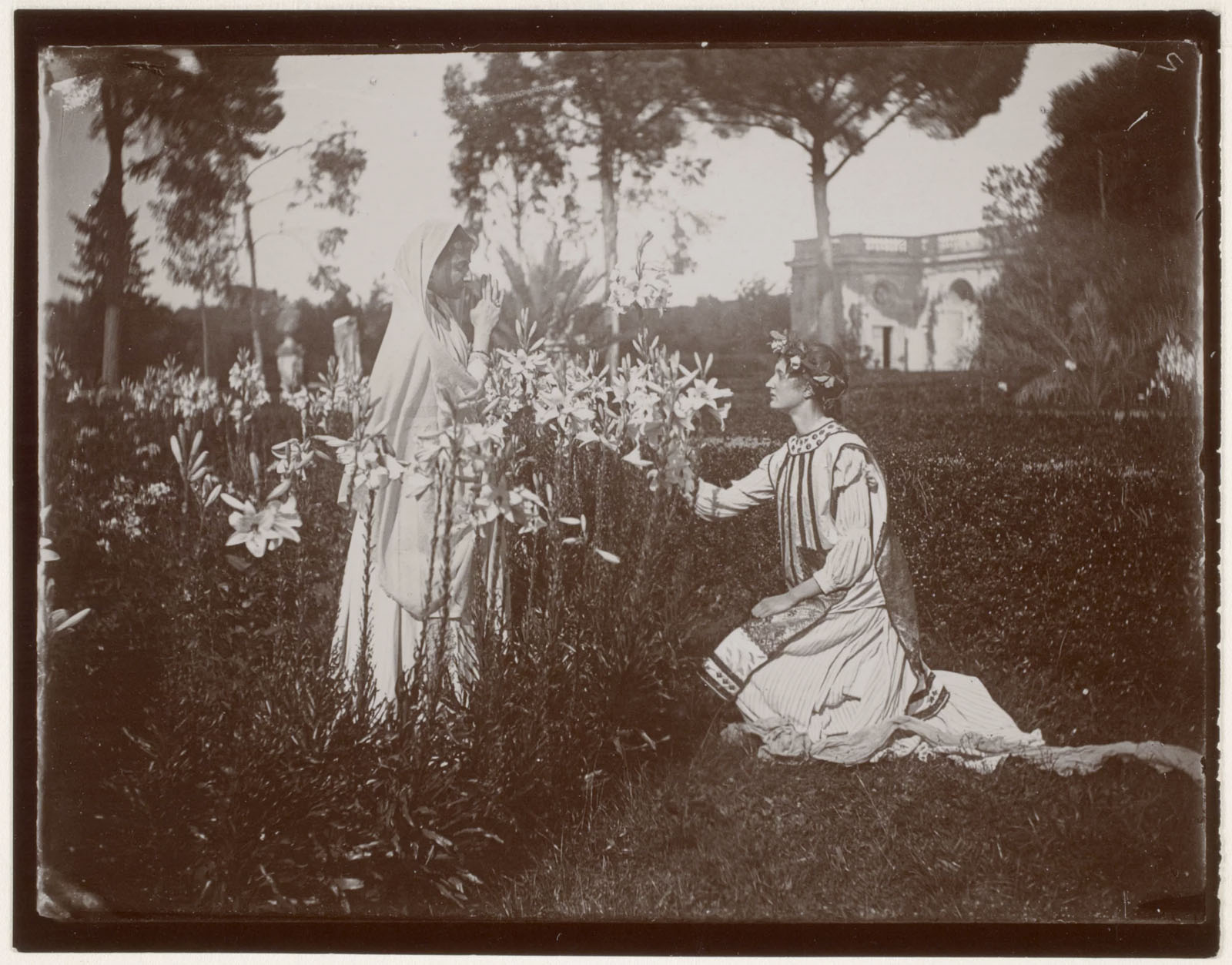
Gabrielle Hébert (French born Germany, 1853-1934) 'La duchesse de Mondragone et l'une de ses bellessoeurs posent pour une Annonciation, juin 1890' (The Duchess of Mondragone and one of her sisters-in-law pose for an Annunciation, June 1890) 1890


Gabrielle Hébert (French born Germany, 1853-1934)
La duchesse de Mondragone et l’une de ses bellessoeurs posent pour une Annonciation, juin 1890
(The Duchess of Mondragone and one of her sisters-in-law pose for an Annunciation, June 1890)

1890
Négatif au gélatino-bromure d’argent sur plaque de verre (Silver gelatin bromide negative on glass plate)
8.4 x 11.6cm
© Musée National Ernest Hébert, Paris
Photo: Musée d’Orsay, Dist. RMN-Grand Palais / Alexis Brandt


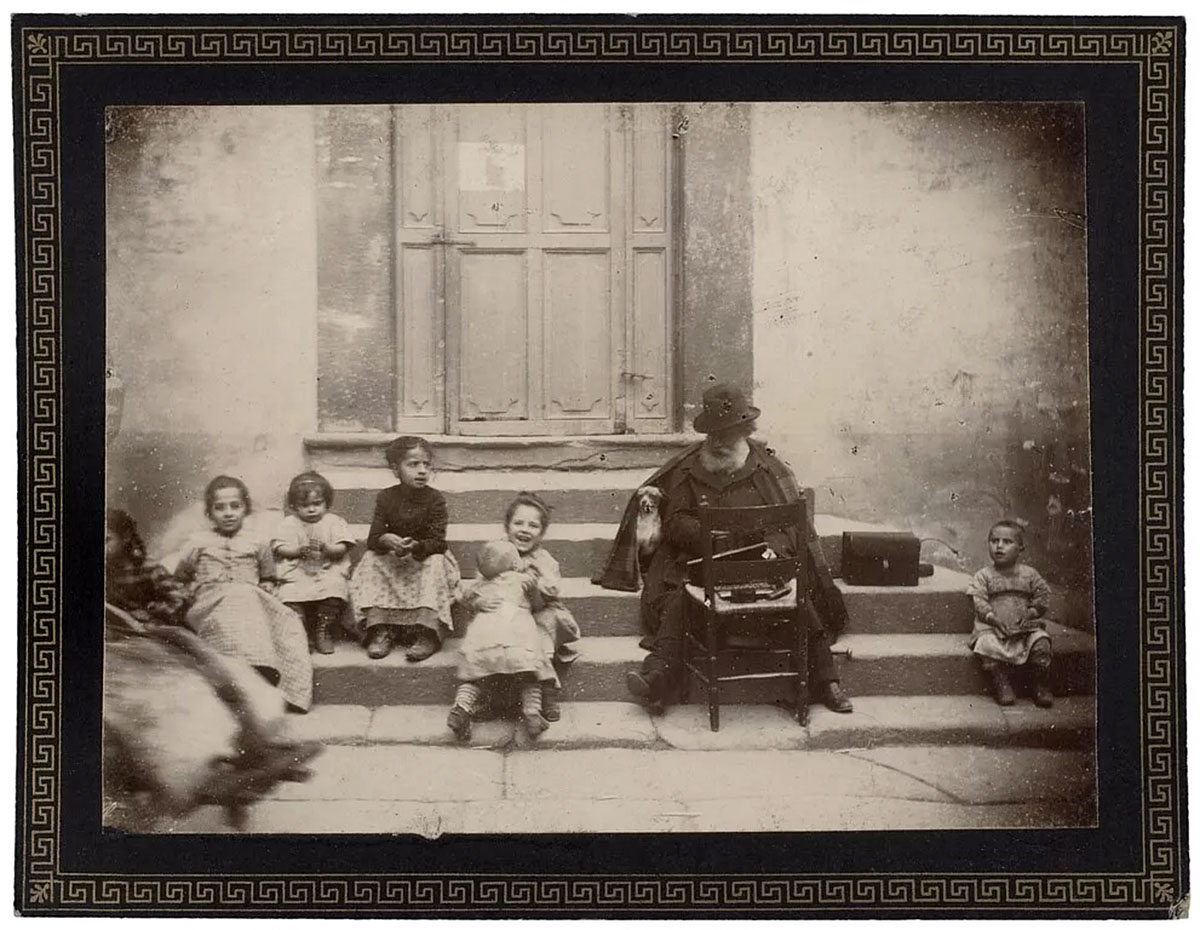
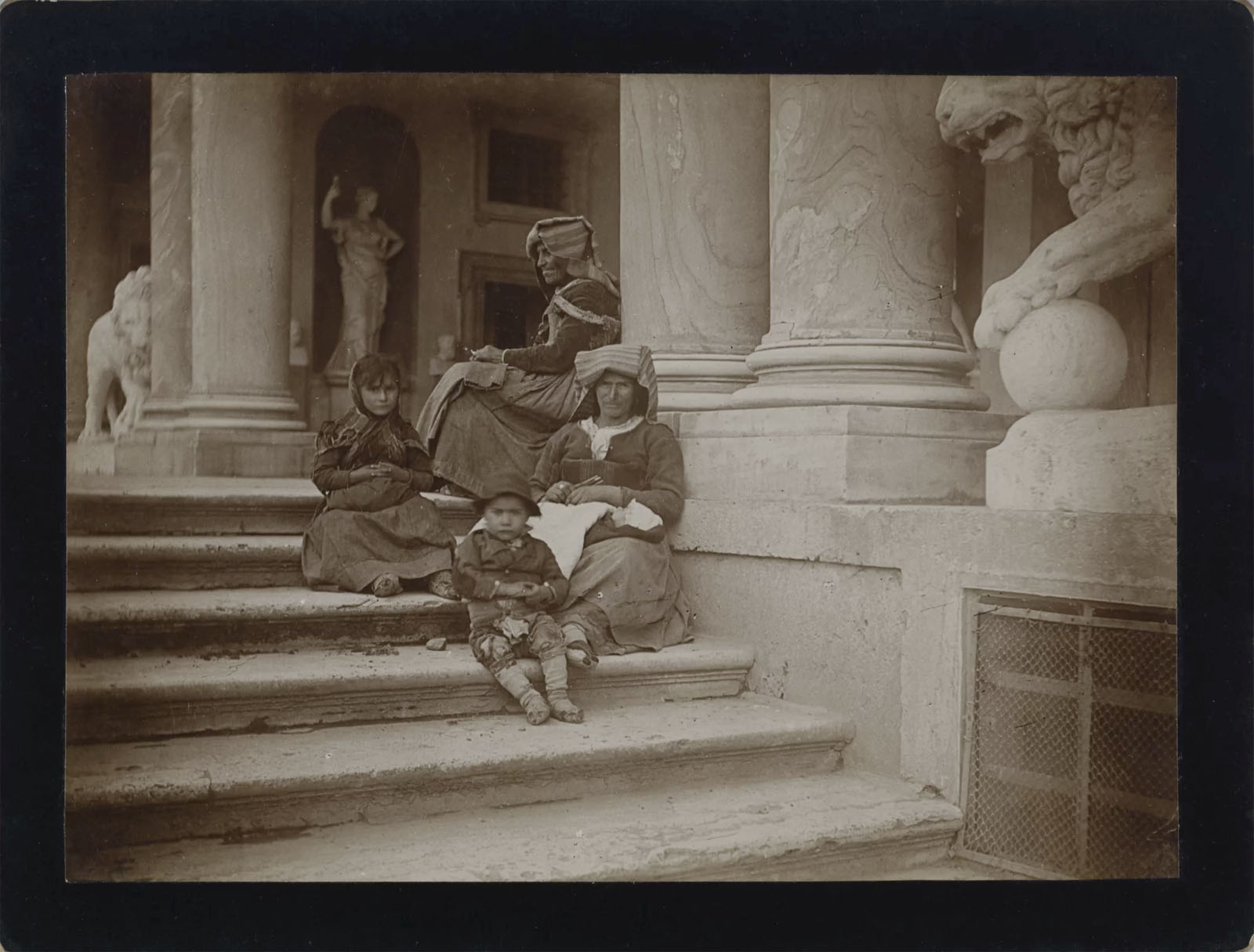
Gabrielle Hébert (French born Germany, 1853-1934) 'Modèles ciociare sur les marches de la loggia' (Ciociare models on the steps of the loggia) Around 1890


Gabrielle Hébert (French born Germany, 1853-1934)
Modèles ciociare sur les marches de la loggia (Ciociare models on the steps of the loggia)
Around 1890
Aristotype à la gélatine, contrecollé sur carton (Gelatin Aristotype, mounted on cardboard)
8.3 x 11.3cm
© Musée National Ernest Hébert, Paris
Photo: Musée d’Orsay, Dist. RMN-Grand Palais / Alexis Brandt


“Ciociaria” refers to a historic, rustic region southeast of Rome in Italy, and “ciociara” (singular) or “ciociare” (plural/feminine) describes people, especially women, from that area, known for their traditional leather sandals (ciocie), embodying a simple, rural Italian identity, famously portrayed in the film La Ciociara (Two Women). The term evokes a strong connection to the land, traditional life, and the unique culture of this central Italian territory.

Google AI


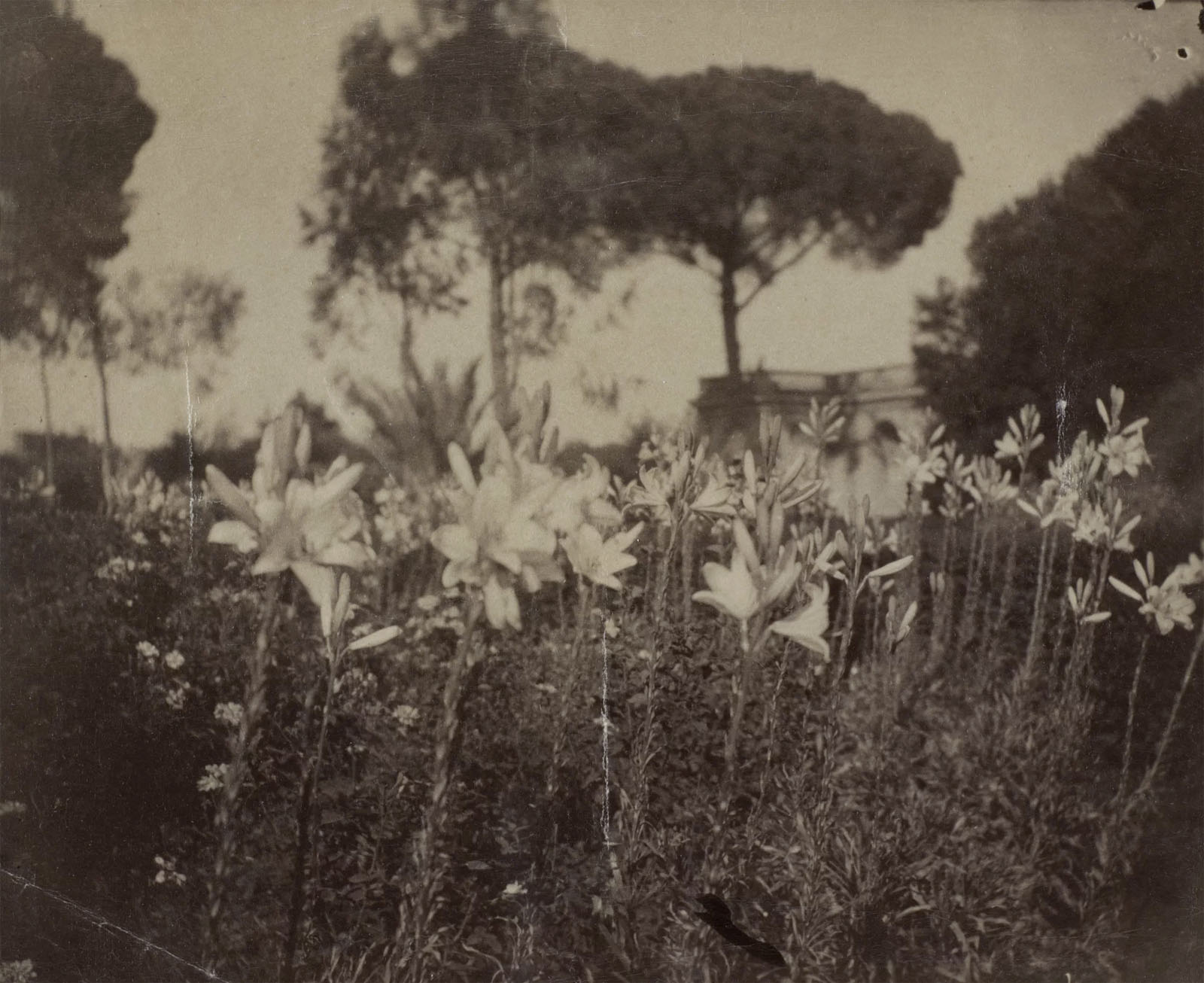
Gabrielle Hébert (French born Germany, 1853-1934) 'Lys des parterres, juin 1890' (Flowerbed lilies, June 1890) 1890


Gabrielle Hébert (French born Germany, 1853-1934)
Lys des parterres, juin 1890 (Flowerbed lilies, June 1890)
1890
Aristotype à la gélatine (Gelatin Aristotype)
10.5 x 12.7cm
© Musée National Ernest Hébert, Paris
Photo: Musée d’Orsay, Dist. RMN-Grand Palais / Alexis Brandt


Gabrielle Hébert (French born Germany, 1853-1934)
'La duchesse de Mondragone, des photographies de Gabrielle Hébert sur les genoux'
(The Duchess of Mondragone, with photographs of Gabrielle Hébert on her lap)
1890


Gabrielle Hébert (French born Germany, 1853-1934)
La duchesse de Mondragone, des photographies de Gabrielle Hébert sur les genoux
(The Duchess of Mondragone, with photographs of Gabrielle Hébert on her lap)

1890
Aristotype à la gélatine (Gelatin Aristotype)
8.4 x 11.3cm
© Musée National Ernest Hébert, Paris
Photo: Musée d’Orsay, Dist. RMN-Grand Palais / Alexis Brandt


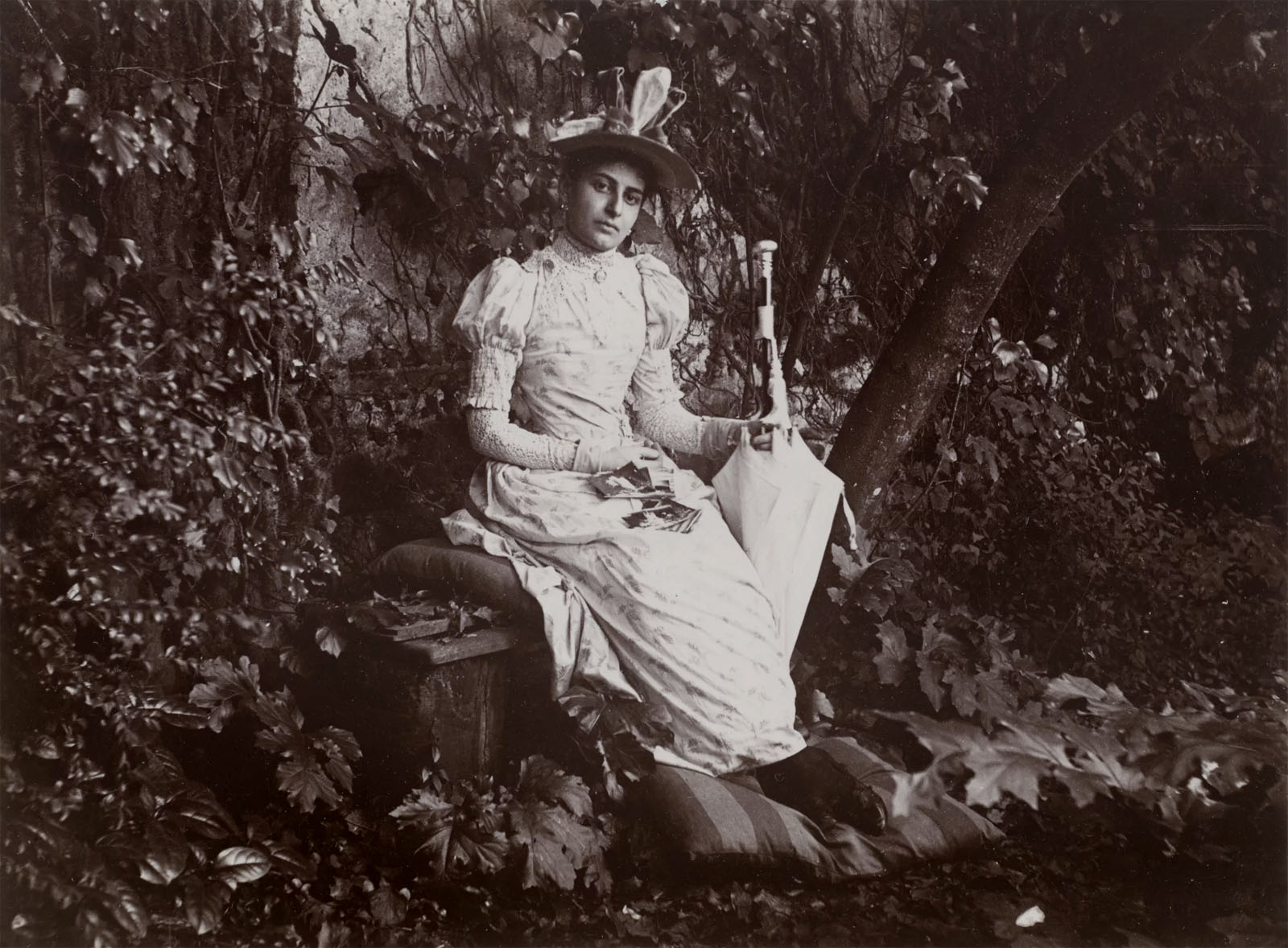
Gabrielle Hébert (French born Germany, 1853-1934) 'Étude de lys dans les jardins par le pensionnaire Ernest Laurent et Ernest Hébert, en compagnie du modèle Amalia Scossa, 7 juin 1890' (Study of lilies in the gardens by boarder Ernest Laurent and Ernest Hébert, in the company of model Amalia Scossa, June 7, 1890) 1890


Gabrielle Hébert (French born Germany, 1853-1934)
Étude de lys dans les jardins par le pensionnaire Ernest Laurent et Ernest Hébert, en compagnie du modèle Amalia Scossa, 7 juin 1890
(Study of lilies in the gardens by boarder Ernest Laurent and Ernest Hébert, in the company of model Amalia Scossa, June 7, 1890)

1890
Aristotype à la gélatine, contrecollé sur carton (Gelatin Aristotype, mounted on cardboard)
8.1 x 11.4cm
© Musée National Ernest Hébert, Paris
Photo: Musée d’Orsay, Dist. RMN-Grand Palais / Alexis Brandt


Adaptation of the texts from the exhibition in large print

Introduction

An amateur painter and wife of the artist Ernest Hébert, director of the French Academy in Rome, Gabrielle Hébert began photography intensively and passionately at the Villa Medici in 1888. She abruptly stopped twenty years later in La Tronche (near Grenoble), upon the death of the man she idolised and who was forty years her senior. She will ensure her legacy through the creation of
two monographic museums.

Like Henri Rivière, Maurice Denis, or Émile Zola, who at the end of the 19th century seized upon a camera to record family life, Gabrielle developed a private and sentimental practice, fostered by the technical and aesthetic revolution of the snapshot. As the entries “I take photos” or “I photograph” in her diary show, not a day went by without her taking pictures. Securing her place as an author through these images in a milieu where artistic creation was reserved for men, she discovered herself.

Through the chronicle of her chosen land and happy days, she creates a work of memory and inscribes herself in History.

A Woman Under the Influence

On July 21, 1888, Gabrielle “went out to buy things necessary for photography.” This marked the beginning of an obsessive production of two thousand photographs, mostly taken at the Villa Medici where, as First Lady of a prestigious cultural institution, she organised receptions and received visiting high society. Gabrielle quickly escaped the constraints of her duties: she acquired a camera, took lessons from Cesare Vasari, a Roman professional, and, together with fellow resident Alexis Axilette, set up a darkroom to develop her negatives, print, and retouch her photographs.

She already had an eye for it thanks to her artistic background and her practice of painting and drawing. But it was with the Franco-Italian counts Giuseppe and Luigi Primoli that Gabrielle explored the potential of the instantaneous, becoming the subject of a creative and existential experience: photography.

An art of joy

Gabrielle chronicles the Villa Medici, at once an architectural masterpiece overlooking the Eternal City, a residence for the winners of the Grand Prix de Rome, and a laboratory for a new relationship between France and Italy, newly unified. She focuses her gaze on its inhabitants: artists and models, foreign visitors on holiday, Italian employees at work, flowers, and animals. She enjoys working alongside the “button-pushers” in her circle, as amateurs equipped with handheld cameras are known.

She also observes professionals capturing perspectives of the palace with their imposing camera. “Magnificent weather. I’m photographing the residents”: Gabrielle often associates the day’s weather with an urgent need to act. Present in the world, joyful in her being, she then presses the shutter. Taking the picture is an epiphany. “I photograph, therefore I exist,” she seems to be saying.

Mein Alles (My Everything)

Gabrielle focuses her attention on her husband, around whom she circles and whose activities she seems to observe when he is painting or showing guests around the premises. The tender and sensitive portrait she paints of him is that of a director, an artist entirely devoted to his work at his workplaces, or sketching en plein air on excursions. She also captures him in his nakedness, as an elderly man bathing in the sea. She is concerned about his state of health; she notes how he slept or the time he got up.

The couple’s asymmetry, commonplace at that time and in that social circle, is also expressed in their writings: while he uses the informal “tu” with her, she uses the formal “vous” and addresses him with the superlative phrase “Mein Alles”: My Everything.

Travels in Italy

During their eleven-year stay in Italy, Ernest and Gabrielle travelled all over the country.

The artist enjoys returning to favorite places painted during her youth. They take with them a boarder or student, Amelia Scossa, Ernest’s beloved model, or a few friends; the dogs are always present. In 1893, they travel to Sicily, to the Duke of Aumale’s estate, and then explore the ancient sites of Selinunte and Agrigento, and the Greek theaters of Syracuse and Taormina. By escaping the confines of the Villa Medici and its eccentric inhabitants, Gabrielle literally leaves her social milieu.

With an attention full of empathy for popular and regional culture, she manages to get groups of strangers, women
and men, to pose in front of her lens, no doubt placed on a tripod, whom she brings together in an amusing jumble around a fountain or on the steps of a building, arousing in return a certain curiosity.

In Spain, a cinematic perspective

In 1896, the couple left Italy with great regret and sorrow, returning to Paris and La Tronche where they continued to lead an intense social life. Two years later, Gabrielle completed her photographic swan song during a final journey, this time to Spain, which took them both from Burgos to Granada via Madrid, El Escorial, Toledo, Granada, and Seville.

Abandoning her large-format camera for a Kodak, she amplified in nearly three hundred photographs what she had already experimented with: daring viewpoints – notably from a speeding train – a camera in motion, glances towards the camera, the operator’s shadow cast on the ground, motion blur of people and things (smoke, clouds, and waves), truncated figures, and close-ups.

The nascent cinematograph had passed by. She no longer poses her subjects; she captures them on the fly. She seizes fleeting gestures, radiant moments, the stroll of passersby, the burst of laughter. This journey is an enchanted interlude that allows the couple to get back on their feet, one last time.

The tomb of an artist

Upon returning from Spain, Gabrielle ceased to cultivate her passion, born under the Italian sky. Her output diminished significantly, ceasing altogether in 1908, with Ernest’s death.

During his final months, she recorded his last visits and outings in the sun, his walks, and setting up his easel outdoors. She portrayed him as a draftsman and painter to the very end, then staged his posthumous portrait, for eternity. Containing the seeds of anticipation of the end, the photographs of moments lived, places visited, and people met, were in reality intended to be viewed by others besides their sole author.

With her thousands of images, Gabrielle composed a tomb, in the poetic sense of the word, erected in memory of her husband and their love. In the museum she created in Isère, in La Tronche, in honour of Ernest, it would take until the beginning of the 21st century for her photographic work to be discovered by a happy accident.

Marie Robert, Chief Curator, Photography and Cinema at the Musée d’Orsay, Paris, translated from the French by Google Translate


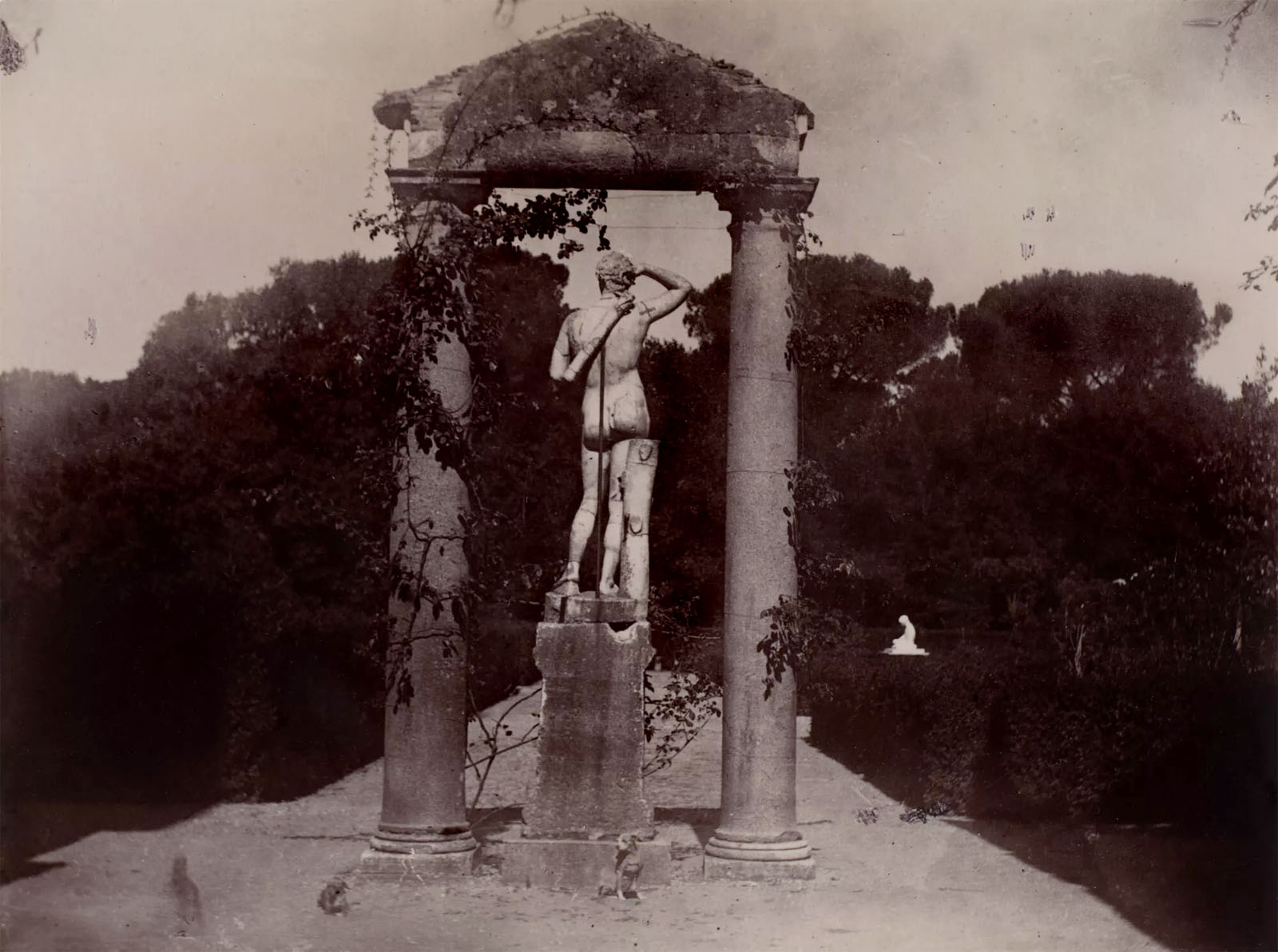
Gabrielle Hébert (French born Germany, 1853-1934) 'Arrière de la statue d'Apollon vainqueur du monstre Python, 13 mai 1891' (Back of the statue of Apollo victorious over the Python monster, May 13, 1891) 1891


Gabrielle Hébert (French born Germany, 1853-1934)
Arrière de la statue d’Apollon vainqueur du monstre Python, 13 mai 1891
(Back of the statue of Apollo victorious over the Python monster, May 13, 1891)

1891
Aristotype à la gélatine (Gelatin Aristotype)
8.2 x 10.9cm
© Musée National Ernest Hébert, Paris
Photo: Musée d’Orsay, Dist. RMN-Grand Palais / Alexis Brandt


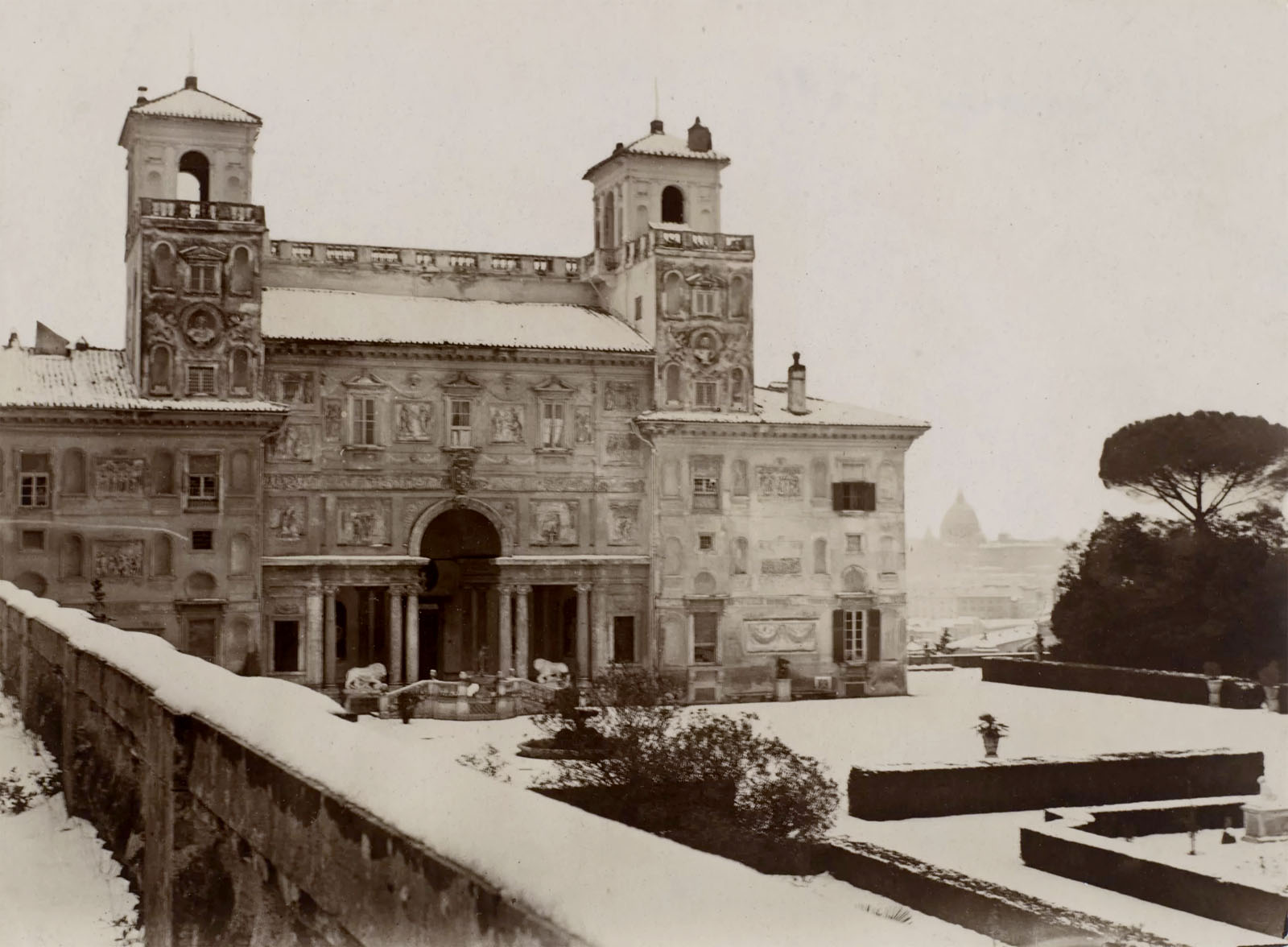
Gabrielle Hébert (French born Germany, 1853-1934) 'La façade du palais sous la neige, 16 janvier 1891' (The palace façade under the snow, January 16, 1891) 1891


Gabrielle Hébert (French born Germany, 1853-1934)
La façade du palais sous la neige, 16 janvier 1891 (The palace façade under the snow, January 16, 1891)
1891
Aristotype à la gélatine (Gelatin Aristotype)
8.2 x 11.2cm
© Musée National Ernest Hébert, Paris
Photo: Musée d’Orsay, Dist. RMN-Grand Palais / Alexis Brandt


Gabrielle Hébert (French born Germany, 1853-1934) 'Éléonore d'Uckermann, le modèle Natalina, le prince Abamelek-Lazarev et le chien Farfaletta sur la terrasse du bosco, 5 janvier 1891' (Eleanor d'Uckermann, the model Natalina, Prince Abamelek-Lazarev and the dog Farfaletta on the terrace of the bosco, January 5, 1891) 1891


Gabrielle Hébert (French born Germany, 1853-1934)
Éléonore d’Uckermann, le modèle Natalina, le prince Abamelek-Lazarev et le chien Farfaletta sur la terrasse du bosco, 5 janvier 1891
(Eleanor d’Uckermann, the model Natalina, Prince Abamelek-Lazarev and the dog Farfaletta on the terrace of the bosco, January 5, 1891)

1891
Aristotype à la gélatine (Gelatin Aristotype)
8 x 10.8cm
© Musée National Ernest Hébert, Paris
Photo: Musée d’Orsay, Dist. RMN-Grand Palais / Alexis Brandt


Prince Semyon Semyonovich Abamelek-Lazarev (also Abamelik-Lazaryan; Russian: Семён Семёнович Абамелек-Лазарев; 24 November 1857 in Moscow – 2 October 1916 in Kislovodsk) was a Russian millionaire of Armenian ethnicity noted for his contributions to archaeology and geology.


Gabrielle Hébert (French born Germany, 1853-1934) 'Amalia Scossa et Ernest Hébert à sa peinture La Vierge au chardonneret sur la terrasse du campanile' (Amalia Scossa and Ernest Hébert at his painting The Virgin with the Goldfinch on the bell tower terrace) Around 1891


Gabrielle Hébert (French born Germany, 1853-1934)
Amalia Scossa et Ernest Hébert à sa peinture La Vierge au chardonneret sur la terrasse du campanile
(Amalia Scossa and Ernest Hébert at his painting The Virgin with the Goldfinch on the bell tower terrace)

Around 1891
Aristotype à la gélatine (Gelatin Aristotype)
9.6 x 12.3cm
© Musée National Ernest Hébert, Paris
Photo: Musée d’Orsay, Dist. RMN-Grand Palais / Alexis Brandt


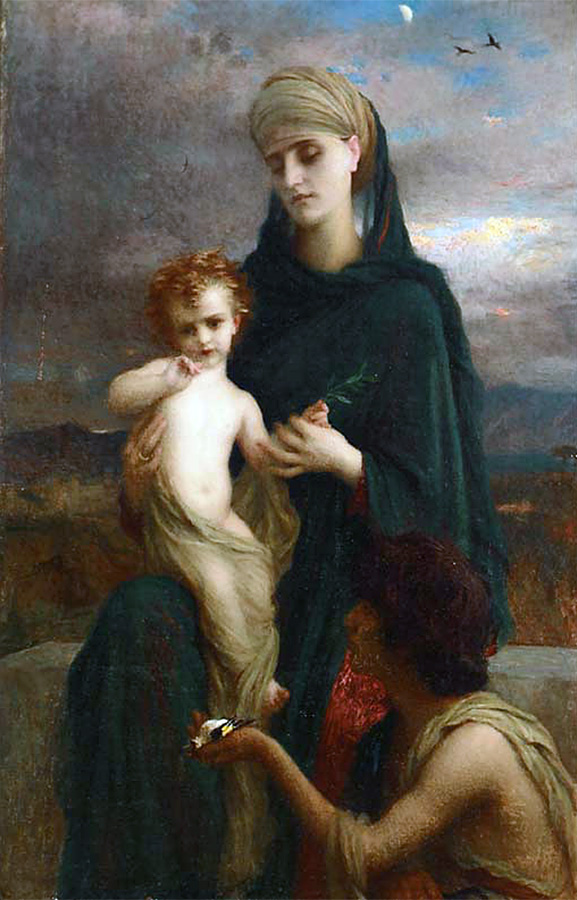
The painting in the photograph is probably La Vierge de Chausseur by Ernest Hébert (c. 1891, below)


Ernest Hébert (French, 1817-1908) 'La Vierge de Chausseur' c. 1891


Ernest Hébert (French, 1817-1908)
La Vierge de Chausseur
c. 1891
Oil on canvas
73cm (28.7 in); width: 47cm (18.5 in)
Public domain


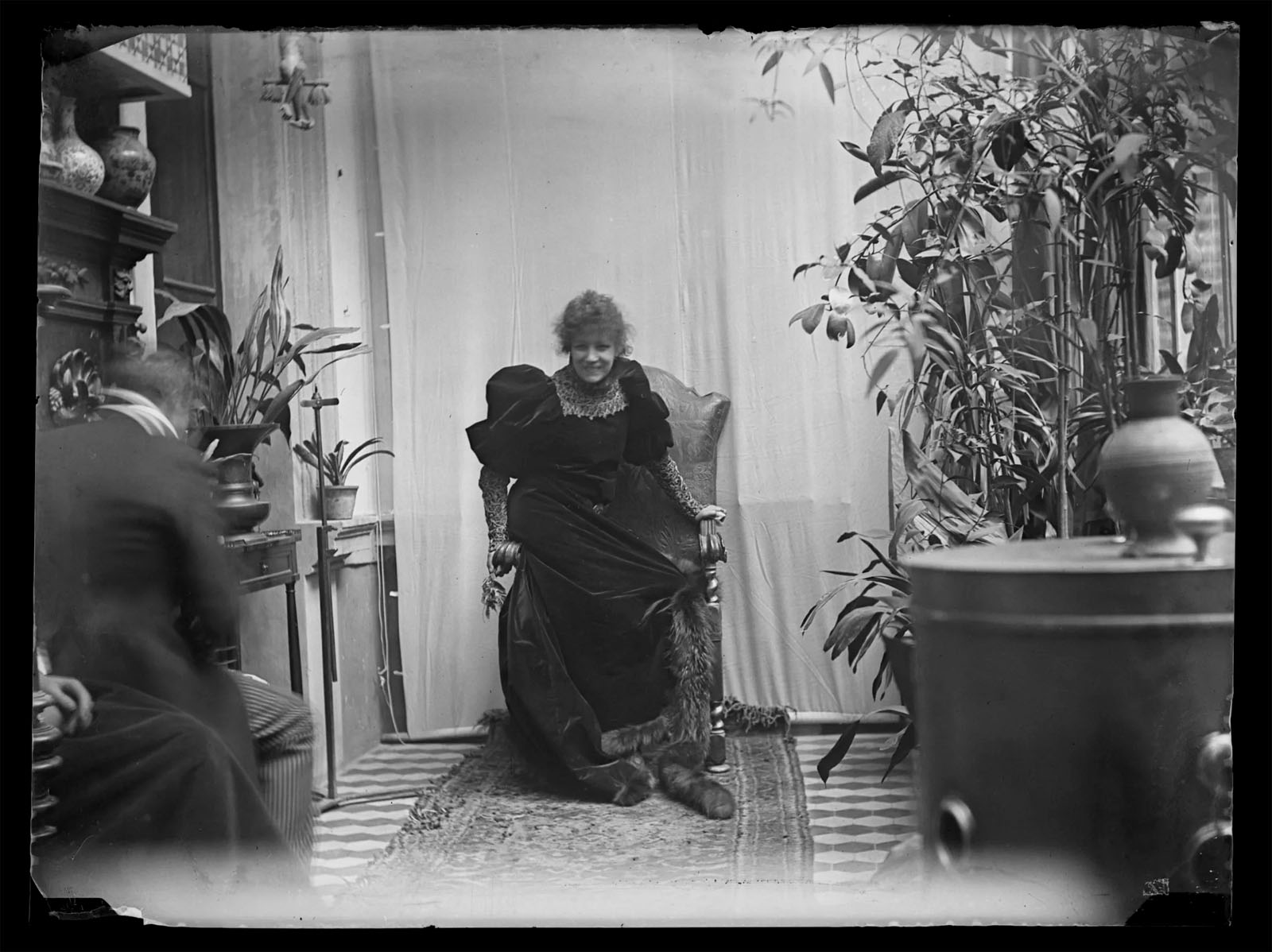
Gabrielle Hébert (French born Germany, 1853-1934) 'Sarah Bernhardt dans le studio aménagé de Giuseppe Primoli, Rome, février 1893' (Sarah Bernhardt in Giuseppe Primoli's furnished studio, Rome, February 1893) 1893


Gabrielle Hébert (French born Germany, 1853-1934)
Sarah Bernhardt dans le studio aménagé de Giuseppe Primoli, Rome, février 1893
(Sarah Bernhardt in Giuseppe Primoli’s furnished studio, Rome, February 1893)

1893
Négatif sur plaque de verre au gélatinobromure d’argent (Gelatin silver bromide glass plate negative)
9 x 12cm
© La Tronche, musée Hébert
Photo: Musée Hébert, Département de l’Isère


Giuseppe Primoli (Italian, 1851-1927)

Count Giuseppe Napoleone Primoli (in French, Joseph Napoléon Primoli; 2 May 1851 in Rome – 13 June 1927 in Rome) was an Italian nobleman, collector and photographer. …

Giuseppe Primoli lived in Paris from 1853 to 1870. He befriended writers and artists both in Italy and France, and was host to Guy de Maupassant, Paul Bourget, Alexandre Dumas fils, Sarah Bernhardt and others in Palazzo Primoli in Rome. In 1901 he became the sole owner of the palazzo, which he enlarged and modernised between 1904 and 1911.

Primoli was a bibliophile and collector, who assembled a large collection of books and prints. He amassed a collection of books by Stendhal as well as many from the writer’s library.

During the last decades of the nineteenth century, Primoli, an avid photographer, produced over 10,000 photographs.

Text from the Wikipedia website


Anonymous photographer. 'Giuseppe Primoli in his palace in Rome' c. 1911-1912


Anonymous photographer
Giuseppe Primoli in his palace in Rome
c. 1911-1912
Primoli Foundation, Rome


Gabrielle Hébert (French born Germany, 1853-1934) 'Femmes à la fenêtre, Taormine (Sicile), mai 1893' (Women at the window, Taormina (Sicily), May 1893) 1893


Gabrielle Hébert (French born Germany, 1853-1934)
Femmes à la fenêtre, Taormine (Sicile), mai 1893 (Women at the window, Taormina (Sicily), May 1893)
1893
Aristotype à la gélatine, papier (Gelatin Aristotype, paper)
7.8 x 11.4cm
© Musée National Ernest Hébert, Paris
Photo: Musée d’Orsay, Dist. RMN-Grand Palais / Alexis Brandt


With photographs like the one above, taken at Taormina, it is likely Gabrielle Hébert would have met Baron Wilhelm von Gloeden (German, 1856-1931) who lived and worked there between 1878-1931.


Gabrielle Hébert (French born Germany, 1853-1934) 'Paysans avec leurs chèvres, Sicile, mai 1893' (Peasants with their goats, Sicily, May 1893) 1893


Gabrielle Hébert (French born Germany, 1853-1934)
Paysans avec leurs chèvres, Sicile, mai 1893 (Peasants with their goats, Sicily, May 1893)
1893
Aristotype à la gélatine, papier (Gelatin Aristotype, paper)
7.9 x 10.9cm
La Tronche, Musée Hebert
© Musée Hébert, Département de l’Isère


Gabrielle Hébert (French born Germany, 1853-1934) 'Procession sur le port de Brindisi (Pouilles)' (Procession in the port of Brindisi (Apulia)) 1893


Gabrielle Hébert (French born Germany, 1853-1934)
Procession sur le port de Brindisi (Pouilles) (Procession in the port of Brindisi (Apulia))
1893
Aristotype à la gélatine, papier (Gelatin Aristotype, paper)
8.0 x 11.4cm
© Musée National Ernest Hébert, Paris
Photo: Musée d’Orsay, Dist. RMN-Grand Palais / Alexis Brandt


Gabrielle Hébert (French born Germany, 1853-1934) 'Garçon au coin de la place Zocodover, Tolède, 31 octobre 1898' (Boy on the corner of Zocodover Square, Toledo, October 31, 1898) 1898


Gabrielle Hébert (French born Germany, 1853-1934)
Garçon au coin de la place Zocodover, Tolède, 31 octobre 1898
(Boy on the corner of Zocodover Square, Toledo, October 31, 1898)

1898
Aristotype à la gélatine (Gelatin Aristotype)
10 x 10cm
La Tronche, musée Hebert
© Musée Hébert, Département de l’Isère


Gabrielle Hébert (French born Germany, 1853-1934) 'Ernest Hébert sur son lit de mort, novembre 1908' (Ernest Hébert on his deathbed, November 1908) 1908


Gabrielle Hébert (French born Germany, 1853-1934)
Ernest Hébert sur son lit de mort, novembre 1908 (Ernest Hébert on his deathbed, November 1908)
1908
Aristotype à la gélatine (Gelatin Aristotype)
9.5 x 9.8cm
© Musée National Ernest Hébert, Paris
Photo: Musée d’Orsay, Dist. RMN-Grand Palais / Alexis Brandt


Musée d’Orsay
62, rue de Lille
75343 Paris Cedex 07
France

Opening hours:
Tuesday – Sunday 9.30am – 5pm
Closed on Mondays

Musée d’Orsay website

LIKE ART BLART ON FACEBOOK

Back to top

Exhibition: ‘Edward Weston: Becoming Modern’ at Maison Européenne de la Photographie (MEP), Paris

Exhibition dates: 15th October, 2015 – 25th January, 2026

Curators: Simon Baker & Laurie Hurwitz, MEP and Polly Fleury & Hope Kingsley, Wilson Centre for Photography


Installation view of the exhibition 'Edward Weston: Becoming Modern' at Maison Européenne de la Photographie (MEP), Paris, 15th October, 2015 - 25th January, 2026


Installation view of the exhibition Edward Weston: Becoming Modern at Maison Européenne de la Photographie (MEP), Paris, 15th October, 2015 – 25th January, 2026 showing at left, Edward Weston’s ‘M’ on the Black Horsehair Sofa, 1921 (below); and at right, Tina Modotti (Nude in Studio), 1922 (below)


Shadow man

You can always learn from the great artists now matter how many times you have seen their work, especially when the photographs are simply, effectively hung ‘on the line’ in a beautiful space.

Here are photographs by Edward Weston I have never seen before: Pictorialist photographs of suffused and intimate beauty. An exhibition of Weston’s Pictorialist work would be magnificent to behold.

And then Weston’s Peppers (1929, below).

I don’t know why I have never seen this photograph before, why his Pepper (1930, below) is more famous, for this is a monstrous image of dark, writhing, semi-abstract figurative forms, just as valid an artistic statement (in a completely different way) than the more famous image.

Can you imagine holding a vintage print of this photograph in your hands!

Gloria virtutem tanquam umbra sequitur

Dr Marcus Bunyan


Many thankx to Maison Européenne de la Photographie (MEP) for allowing me to publish the photographs in the posting. Please click on the photographs for a larger version of the image.


“Only rhythm, form and perfect detail to consider – first conceptions coming straight through unadulterated.”

“What I seek now is simplicity – the form reduced to its essence.”


Edward Weston. Daybooks II: California (1930-1945). Aperture, 1961


“The camera should be used for a recording of life, for rendering the very substance and quintessence of the thing itself.”

“To see the Thing Itself is essential: the Quintessence revealed direct without the fog of impressionism.”


Edward Weston. The Daybooks of Edward Weston, from Edward Weston: The Flame of Recognition. Aperture, 1965


Edward Weston (American, 1886-1958) ''M' on the Black Horsehair Sofa' 1921


Edward Weston (American, 1886-1958)
‘M’ on the Black Horsehair Sofa
1921
© Center for Creative Photography, Arizona Board of Regents / Edward Weston, Adagp, Paris, 2025
Courtesy Gregg Wilson


Edward Weston (American, 1886-1958) 'Tina Modotti (Nude in Studio)' 1922


Edward Weston (American, 1886-1958)
Tina Modotti (Nude in Studio)
1922
© Center for Creative Photography, Arizona Board of Regents / Edward Weston, Adagp, Paris, 2025
Courtesy Gregg Wilson


Installation view of the exhibition 'Edward Weston: Becoming Modern' at Maison Européenne de la Photographie (MEP), Paris, 15th October, 2015 - 25th January, 2026


Installation view of the exhibition Edward Weston: Becoming Modern at Maison Européenne de la Photographie (MEP), Paris, 15th October, 2015 – 25th January, 2026 showing at left, Edward Weston’s Shell 1927 (below); and right, Santa Monica (Nude in Doorway) 1936 (below)


Edward Weston (American, 1886-1958) 'Shell' 1927

Edward Weston (American, 1886-1958)
Shell
1927
Gelatin silver print
© Center for Creative Photography, Arizona Board of Regents / Edward Weston, Adagp, Paris, 2025
Courtesy Gregg Wilson


Edward Weston (American, 1886-1958) 'Santa Monica (Nude in Doorway)' 1936


Edward Weston (American, 1886-1958)
Charis, Santa Monica (Nude in Doorway)
1936
Gelatin silver print
© Center for Creative Photography, Arizona Board of Regents / Edward Weston, Adagp, Paris, 2025
Courtesy Wilson Centre for Photography


Installation view of the exhibition 'Edward Weston: Becoming Modern' at Maison Européenne de la Photographie (MEP), Paris, 15th October, 2015 - 25th January, 2026


Installation views of the exhibition Edward Weston: Becoming Modern at Maison Européenne de la Photographie (MEP), Paris, 15th October, 2015 – 25th January, 2026


The exhibition

The MEP presents Edward Weston: Becoming Modern, the most significant exhibition dedicated to Edward Weston in Paris in nearly thirty years. A pioneering figure of photographic modernism, Weston helped forge a new visual language – marked by clarity, formal rigour, and a profound engagement with the essential qualities of the photographic medium.

Originating from an idea by Michael Wilson – founder of the Wilson Centre
for Photography in London and one of the world’s foremost collectors –
Becoming Modern brings together a rare selection of vintage prints from his
collection, many of which have never been exhibited in France. These works
offer an exceptional insight into Weston’s evolving practice and the emergence
of a distinctly photographic modernism.

Spanning more than three decades, from 1908 to 1945, the exhibition traces
Weston’s artistic trajectory. His early pictorialist photographs, created in
California during the 1910s and early 1920s, draw upon 19th-century artistic
traditions, employing soft focus, carefully staged settings, and symbolic imagery. Over time, his vision transformed: his images became sharper, compositions more austere, with an increasing emphasis on form, surface, and structure. By the 1920s, many of his photographs approached geometric abstraction – though Weston was never confined to a single style. This transformation unfolded gradually, as motifs intertwined and techniques evolved in a subtle, ongoing dialogue, revealing an artist continuously refining and deepening his vision.

Highlights include works from Weston’s time in Mexico, where, in close
collaboration with Tina Modotti – an artist, political activist, and his lover –
he created portraits and nudes imbued with a newfound freedom and
radicalism These are complemented by evocative landscapes of the dramatic
California coastline near Point Lobos and Carmel. At the heart of the
exhibition are his most iconic series: sensuous close-up studies of natural
forms – peppers, shells, fruits, and vegetables – captured with an almost
obsessive intensity; dune and rock landscapes from Point Lobos and Death
Valley; and luminous nudes of his muse, Charis Wilson. Throughout, Weston
reveals the universal beauty of everyday subjects, transforming them into
pure, sculptural forms. Recurring themes – portraiture, the nude, still life,
and nature – are placed in dialogue, uncovering deeper connections across
his oeuvre. His work displays remarkable strength and variety, with many natural forms taking on subtle anthropomorphic qualities.

Becoming Modern invites audiences to rediscover a bold innovator whose
visionary approach helped shape the course of photographic history.
The exhibition also includes a selection of rare works by leading Pictorialist
photographers, offering a broader context for Weston’s early influences and
the artistic milieu from which his modernism emerged.

Edward Weston biography

Widely regarded as one of the masters of 20th-century photography, Edward Henry Weston (March 24, 1886 – January 1, 1958) reshaped the medium through a vision rooted in clarity, form, and a profound sensitivity to the physical world. Over a career spanning more than forty years, he forged a style that was both radically modern and deeply grounded in the landscapes and materials of the American West.

Born in Highland Park, Illinois, Weston spent his early years in the Chicago
area, where his fascination with photography first took hold. By 1903,
as a teenager, he was already exhibiting his early works. At sixteen, he
received his first camera – a gift from his father that marked the beginning
of a lifelong creative journey. He studied at the Illinois College of Photography
from 1908 to 1911 before relocating to California, where, at age 25, he opened a portrait studio in Tropico, operating from 1911 to 1922. In his early career, Weston worked within the Pictorialist tradition – a popular style of the early 20th century characterised by soft focus and romantic, painterly effects. His portraits from this period brought him recognition from the art community. Yet by the early 1920s, he began to move away from this approach, embracing a sharper, more precise, and abstract visual language that emphasised form and detail.

A turning point in Weston’s artistic journey occurred in 1922 on a trip to New York, where he met influential modernist photographers such as Alfred Stieglitz, Paul Strand, and Charles Sheeler. They recognised the originality of his work and encouraged him to fully embrace this new direction, which soon included close studies of fruits, vegetables, shells, and stones, rendered with astonishing clarity and sculptural intensity. Through close observation and meticulous composition, he revealed the inherent beauty of form, transforming the ordinary into the iconic.

In the mid-1920s, Weston travelled to Mexico with the photographer and political activist Tina Modotti, with whom he shared a studio and a deep creative partnership. Immersed in the vibrant cultural life of Mexico City, he engaged with a dynamic community of artists and thinkers whose ideas further catalysed his break from tradition.

Returning to California in 1928, Weston found new inspiration in the rugged coastal terrain of Point Lobos. The region’s intricate rock formations, windswept trees, and tide pools became a central focus of his work, offering endless opportunities for visual exploration and formal innovation. In 1932, Weston co-founded Group f/64 – a collective of West Coast photographers dedicated to “straight” photography, emphasising sharp focus, rich tonality, and the use of large-format cameras. The group championed an unmanipulated approach to the medium. Weston’s contributions during this period, especially his landscapes, remain among the most enduring images in American photography.

Text from MEP


Edward Weston (American, 1886-1958) 'Chicago River Harbor' 1908


Edward Weston (American, 1886-1958)
Chicago River Harbor
1908
© Center for Creative Photography, Arizona Board of Regents / Edward Weston, Adagp, Paris, 2025
Courtesy Wilson Centre for Photography


Edward Weston (American, 1886-1958) 'Portrait of Enrique (Enrica, Wearing a Black Cross, Looking Sideways)' 1916-1919


Edward Weston (American, 1886-1958)
Portrait of Enrique (Enrica, Wearing a Black Cross, Looking Sideways)
1916-1919
© Center for Creative Photography, Arizona Board of Regents / Edward Weston, Adagp, Paris, 2025
Courtesy Wilson Centre for Photography


Edward Weston (American, 1886-1958) 'Daughter of John Cotton No. II' 1920


Edward Weston (American, 1886-1958)
Daughter of John Cotton No. II
1920
© Center for Creative Photography, Arizona Board of Regents / Edward Weston, Adagp, Paris, 2025
Courtesy Wilson Centre
for Photography


Edward Weston (American, 1886-1958) 'Tina Reciting (Tina Modotti)' 1924


Edward Weston (American, 1886-1958)
Tina Reciting (Tina Modotti)
1924
© Center for Creative Photography, Arizona Board of Regents / Edward Weston, Adagp, Paris, 2025
Courtesy Gregg Wilson


Edward Weston (American, 1886-1958) 'Heaped Black Ollas' 1926


Edward Weston (American, 1886-1958)
Heaped Black Ollas
1926
Gelatin silver print
© Center for Creative Photography, Arizona Board of Regents / Edward Weston, Adagp, Paris, 2025
Courtesy Wilson Centre for Photography


Edward Weston (American, 1886-1958) 'Excusado (Toilet)' 1926


Edward Weston (American, 1886-1958)
Excusado (Toilet)
1926
© Center for Creative Photography, Arizona Board of Regents / Edward Weston, Adagp, Paris, 2025
Courtesy Wilson Centre for Photography


Exhibition overview

Becoming Modern traces Edward Weston’s evolution from the soft pictorialism
of his early years to the clarity and precision that came to define modern
photography. Spanning nearly three decades, the exhibition presents more
than 100 rare vintage prints from the Wilson Centre for Photography. It invites
viewers to rediscover one of photography’s most visionary pioneers through
an extraordinary body of work.

The exhibition opens with two emblematic photographs that frame its central
theme, reflecting a curatorial concept developed by Michael Wilson to highlight
Weston’s extraordinary range and experimentation. On one side hangs
M on the Black Horsehair Sofa (1921, above), a quintessential example of the
Pictorialist style: a languid pose, softly diffused light, and a painterly atmosphere enriched by symbolic elements – a floral bouquet, a circular mirror. Opposite it, Tina Modotti (Nude in Studio) (1922, above) marks a striking departure. The figure sits upright, smoking, in a bare studio – captured with crisp focus and a stark, modern sensibility. Though created just a year apart, these works embody the transformative arc at the heart of Weston’s career: a restless search for new ways of seeing. From these beginnings, Weston’s exploratory approach soon dissolved strict categories, embracing a practice defined by an ongoing dialogue between subjects and forms.

From here, the exhibition situates Weston’s early work within the broader
context of the Pictorialist movement. His prints are shown alongside key images by photographers who shaped or anticipated his early style – Edward Steichen, George Seeley, Anne Brigman, Dorothea Lange, Margrethe Mather, and Alfred Stieglitz. A tireless advocate for photography as a fine art, Stieglitz helped define the medium’s possibilities through his publications Camera Work and 291, and through his influential New York gallery of the same name. Weston’s own early prints – including a striking self-portrait – are exhibited alongside these historic works. These are placed in conversation with later photographs that capture Weston and his creative circle in 1920s California, evoking a distinct artistic atmosphere. Rooted in the landscape and rhythms of the West Coast, Weston’s early vision subtly diverged from that of his East Coast contemporaries.

The exhibition then turns to the pivotal decade of the 1920s, a period of
remarkable transformation and experimentation in Weston’s practice. Rather
than unfolding in a linear progression, this section reveals how Weston moved
fluidly between subjects and styles – returning repeatedly to certain motifs
while continually refining his formal vocabulary.

This section opens with works from Weston’s extended stays in Mexico
from 1923 to 1926 with photographer and political activist Tina Modotti – his
muse, lover, and collaborator – where he encountered a vibrant avant-garde
community. Immersed in the artistic and political ferment of 1920s Mexico,
Weston developed a bold new visual language focused on form, contrast, and
a sense of immediate presence. A striking portrait of Modotti, presented in both
gelatin silver and palladium prints, showcases Weston’s ongoing technical
experimentation alongside his deepening sensitivity to tonal nuance. Modotti
encouraged Weston toward an even more radical vision, challenging him to
see the world anew through his camera.

His Mexican experience deepened Weston’s experimental impulse, introducing
sharper contrasts and new formal rigor that reverberated through his portraits
and nudes. His obsession with natural forms intensified. He photographed
them repeatedly, seeking the perfect composition and meticulously refining
his prints to reveal the interplay of light, shadow, and volume.

These subjects interact and reflect one another through Weston’s lens.
The sinuous curves of a shell echo the lines of a nude; the gleaming porcelain
of Excusado (Toilet) (1926) takes on the quiet sensuality of the human body.
Shell (1927, above), one of Weston’s most iconic images, exemplifies his singular ability to elevate everyday objects into studies of luminous purity, rendering form, texture, and light with a precision so distilled that they verge on abstraction – not simply photographs of things, but meditations on form itself. During this period, his treatment of the nude also evolved dramatically: the body becomes fragmented and abstracted, its anatomy transformed into sculptural rhythm. This exploration reaches its pinnacle in Charis, Santa Monica (Nude in Doorway) (1936, above), one of Weston’s most celebrated images.

At the heart of the exhibition are many of Weston’s most exceptional works
from the late 1920s and 1930s, in which he famously transformed the ordinary
into something sensuous and unexpected. In his iconic studies of vegetables –
particularly peppers – their curves and folds evoke the flesh and contours
of the human torso, recalling both modernist sculpture and the body. Using
the camera to express, in his words, “the very substance and the quintessence
of the thing itself,” Weston also photographed in close-up what he saw around
him: an egg-slicer, the plank from a barley sifter, a gnarled tree.

His portraits from this period grew sharper in focus and more daring
in composition, echoing the dynamic perspectives emerging in European
Modernist photography. By the late 1920s, after returning to California,
his work had begun to appear in major exhibitions linked to the New Objectivity
movement, which championed photographic clarity and rejected painterly
effects. This evolution is also evident in his treatment of the nude: the body
is fragmented and abstracted, its forms studied as sculptural elements.

Weston’s practice moved fluidly between subjects, embracing both the human
body and the natural world, constantly refining his vision through intense study and formal innovation. Close-up studies of nature – sand patterns, rocks,
and wood – verge on abstraction, including Rock Erosion and Sandstone
Erosion (Point Lobos) – photographs made along the dramatic California
coastline that Weston returned to repeatedly. Jagged rock formations, knotted
seaweed, wind-twisted cypress trees, and bleached driftwood became recurring
motifs, offering endless opportunities for formal exploration. These works also
include a group of powerful portraits, from images of his future wife, Charis Wilson, and her brother Leon, to Weston’s son Brett and daughter-in-law Elinore Stone.

Text from MEP


Edward Weston (American, 1886-1958) 'Peppers' 1929


Edward Weston (American, 1886-1958)
Peppers
1929
Gelatin silver print
© Center for Creative Photography, Arizona Board of Regents /
Edward Weston, Adagp, Paris, 2025
Courtesy Wilson Centre for Photography


Edward Weston (American, 1886-1958) 'Pepper' 1930


Edward Weston (American, 1886-1958)
Pepper
1930
Gelatin silver print
© Center for Creative Photography, Arizona Board of Regents / Edward Weston, Adagp, Paris, 2025
Courtesy Gregg Wilson


Edward Weston (American, 1886-1958) 'Eggs and Slicer' 1930


Edward Weston (American, 1886-1958)
Eggs and Slicer
1930
Gelatin silver print
© Center for Creative Photography, Arizona Board of Regents / Edward Weston, Adagp, Paris, 2025
Courtesy Wilson Centre for Photography


Edward Weston (American, 1886-1958) 'Shell and Rock Arrangement' 1931


Edward Weston (American, 1886-1958)
Shell and Rock Arrangement
1931
Gelatin silver print
© Center for Creative Photography, Arizona Board of Regents / Edward Weston, Adagp, Paris, 2025
Courtesy Wilson Centre for Photography


Edward Weston (American, 1886-1958) 'Nude (Dorris)' 1933


Edward Weston (American, 1886-1958)
Nude (Dorris)
1933
Gelatin silver print
© Center for Creative Photography, Arizona Board of Regents /
Edward Weston, Adagp, Paris, 2025. Courtesy Wilson Centre
for Photography


Edward Weston (American, 1886-1958) 'Nude on Sand, Oceano' 1936


Edward Weston (American, 1886-1958)
Nude on Sand, Oceano
1936
Gelatin silver print
© Center for Creative Photography, Arizona Board of Regents / Edward Weston, Adagp, Paris, 2025
Courtesy Wilson Centre for Photography


Edward Weston (American, 1886-1958) 'Nude on Sand, Oceano' 1936


Edward Weston (American, 1886-1958)
Nude on Sand, Oceano
1936
Gelatin silver print
© Center for Creative Photography, Arizona Board of Regents / Edward Weston, Adagp, Paris, 2025
Courtesy Wilson Centre for Photography


Edward Weston (American, 1886-1958) 'Clouds, Santa Monica' 1936


Edward Weston (American, 1886-1958)
Santa Monica
1936
Gelatin silver print
© Center for Creative Photography, Arizona Board of Regents / Edward Weston, Adagp, Paris, 2025
Courtesy Wilson Centre for Photography


Edward Weston (American, 1886-1958)'Tomato Field, Big Sur' 1937


Edward Weston (American, 1886-1958)
Tomato Field, Big Sur
1937
Gelatin silver print
© Center for Creative Photography, Arizona Board of Regents / Edward Weston, Adagp, Paris, 2025
Courtesy Wilson Centre for Photography


Edward Weston (American, 1886-1958) 'Sandstone Erosion, Point Lobos' 1942


Edward Weston (American, 1886-1958)
Sandstone Erosion, Point Lobos
1942
Gelatin silver print
© Center for Creative Photography, Arizona Board of Regents / Edward Weston, Adagp, Paris, 2025
Courtesy Wilson Centre for Photography


Edward Weston (American, 1886-1958) 'Exposition of Dynamic Symmetry' 1943


Edward Weston (American, 1886-1958)
Exposition of Dynamic Symmetry
1943
Gelatin silver print
© Center for Creative Photography, Arizona Board of Regents / Edward Weston, Adagp, Paris, 2025
Courtesy Wilson Centre for Photography


Maison Européenne de la Photographie (MEP)
5/7 rue de Fourcy
75004 Paris
Phone: +33 (0)1 44 78 75 00

Opening hours:
Wednesday and Friday 11am – 8pm
Thursday 11am – 10pm
Weekend 10am – 8pm (Only for MEP members on Sunday 10 am – 11 am)
Closed Mondays and Tuesdays

Maison Européenne de la Photographie (MEP) website

LIKE ART BLART ON FACEBOOK

Back to top


The best of Art Blart in 2025

December 2025


Around the world, 2025 hasn’t been a great year for photography exhibitions. As a friend of mine said on Facebook it has been a dreary year and I would tend to agree with him.

Curatorially, everything was pretty cut and dried, relying on the usual one artist show or group exhibition on a theme with nobody prepared to take a risk on anything creative, inventive even.

I found little to inspire me in terms of idiosyncratic but illuminating pairings of photographers or unusual insights into the conditions and conceptualisation of photographic production and presentation – other than a few of the exhibitions noted below: costume, gesture and expression – yes! the development of colour photography pre the ubiquitous American artists – yes! and the life in self-portraits of a photobooth operator in Melbourne, part magician, part artist – YES!

Out of the 60 postings on Art Blart in 2025 I’ve picked what I think are the 11 best exhibitions, plus a couple of honourable mentions.

I hope you enjoy the selection and a Happy New Year to you all!

Dr Marcus Bunyan


1/ Marcus Bunyan. “Past present,” on the exhibition Still Performing: Costume, Gesture, and Expression in 19th Century European Photography at the Nelson-Atkins Museum of Art, Kansas City, August 2024 – January 2025


Victor Plumier (Belgian, 1820-1878) 'Lady in Costume' About 1850


Victor Plumier (Belgian, 1820-1878)
Lady in Costume
About 1850
Daguerreotype, half plate
5 1/2 × 4 1/2 inches
The Nelson-Atkins Museum of Art
Gift of the Hall Family Foundation


“The emotions and the sentiments, the gestures and the expressions.
The actor and the stage, the photographer and the sitter.
The staged photograph and the tableaux vivant.
The Self and the Other.” ~ MB

VIEW THE POSTING


2/ A Long Arc: Photography and the American South since 1845 at the Virginia Museum of Fine Arts, Richmond, October 2024 – January 2025


Andrew Joseph Russell (American, 1829-1902) 'Slave Pen, Alexandria, Virginia' 1863


Andrew Joseph Russell (American, 1829-1902)
Slave Pen, Alexandria, Virginia
1863
Albumen silver print
High Museum of Art
Purchased with funds Lucinda Weill Bunnen Fund and the Donald and Marilyn Keogh Family


“Photographs are containers of, fragments of, memories of, histories of, events – remembrances of events – brought from past into present, informing the future, showing only snippets of the stories of both past and present lives. Parallel to the usual thought that photographs are about death, they are also memory containers for (still) living people.” ~ MB

VIEW THE POSTING


3/ Marcus Bunyan. “Out in the midday sun,” on the exhibition Martin Parr. Early Works at Fotografie Forum Frankfurt (FFF), September 2024 – February 2025


Martin Parr (British, 1952-2025) 'Mayor of Todmorden's inaugural banquet, Todmorden, West Yorkshire, England, 1977' 1977


Martin Parr (British, 1952-2025)
Mayor of Todmorden’s inaugural banquet, Todmorden, West Yorkshire, England, 1977
1977
Gelatin silver print
© Martin Parr | Magnum Photos


“I am always fascinated with the early work of an artist. In essence, the photographs tell you what are the primary concerns for the artist and these themes usually remain with them for the rest of their career. These early black and white photographs provide a window into that ongoing investigation, that golden path. They are more subtle in their modulation of British life than in the later colour work – it’s as though the artist had to change gears with the use of colour developing a more ironic way of seeing British life through a different spatial relationship to his subjects – but in these photographs there is still that deprecating humour that is often missing in the work of his contemporaries…” ~ MB

VIEW THE POSTING


4/ Saul Leiter – An Unfinished World at Foam, Amsterdam, January – April, 2025


Saul Leiter (American, 1923-2013) 'Pull' c. 1960


Saul Leiter (American, 1923-2013)
Pull
c. 1960
Chromogenic print
© Saul Leiter Foundation


“There are the things that are out in the open, and there are the things that are hidden, and life has more to do, the real world has more to do with what is hidden.” ~ Saul Leiter

VIEW THE POSTING


5/ True Colors: Color in Photography from 1849 to 1955 at Albertina Modern, Vienna, January – April, 2025


Léon Vidal (French, 1833-1906) 'Oriental Onyx Sardonyx Cup (16th century)' 1876


Léon Vidal (French, 1833-1906)
Oriental Onyx Sardonyx Cup (16th century)
1876
Photomechanical proof (photochromy using the Léon Vidal process) mounted on cardboard
H. 20.8 ; L. 26.2 cm.
Don Fondation Kodak-Pathé, 1983


“What a wonderful exhibition. It’s so exciting to see the history and development of colour photography pre the ubiquitous, American artists William Eggleston and Stephen Shore, much as I like both artists.” ~ MB

VIEW THE POSTING


6/ The basement: photography from Prahran College (1968-1981) at the Museum of Australian Photography, Wheelers Hill, Melbourne, March – May 2025


Julie Millowick (Australian, b. 1948) 'Mother and child from 46 Blanche Street, St Kilda' 1977


Julie Millowick (Australian, b. 1948)
Mother and child from 46 Blanche Street, St Kilda
1977
Gelatin silver print
15.9 x 23.7cm
Museum of Australian Photography, City of Monash Collection donated by Julie Millowick 2024


“Prahran College itself played a critical role in the legitimisation of photography as an art form within Australia. It spearheaded the integration of art photography into tertiary education curricula, fostering an environment where young artists … could experiment formally and conceptually.”

James McArdle. “Epoch,” on the On This Date in Photography website, 25th April, 2025 [Online] Cited 28/04/2025

VIEW THE POSTING


7/ Peter Mitchell: Nothing Lasts Forever at The Photographers’ Gallery, London, March – June 2025


Peter Mitchell (British, b. 1943) 'Opticians, London, 1975' 1975


Peter Mitchell (British, b. 1943)
Opticians, London, 1975
1975
C-print
© Peter Mitchell


“The wit, the humour (pigeons sitting outside the racing pigeon shop), the stiff upper lip, the carry on regardless, the working class pantomime of life and death – the public commission flats where people formed caring communities that were destroyed through redevelopment – the integrity of an existence that has largely come and gone pictured with warmth and empathy.” ~ MB

VIEW THE POSTING


8/ Auto-Photo: A Life in Portraits at RMIT Gallery, Melbourne, June – August 2025


Installation view of the exhibition 'Auto-Photo: A Life in Portraits' at RMIT Gallery, Melbourne, June - August, 2025


Installation view of the exhibition Auto-Photo: A Life in Portraits at RMIT Gallery, Melbourne, June – August, 2025
Photo: Marcus Bunyan


“Through the strip self-portraits Adler took while servicing and then testing the photobooths that he operated in Melbourne, Australia we become immersed in an archive of his world, the exhibition becoming a joyous ode to a man who devoted his life to photography (not in the traditional sense): in turns humorous and historical, a travelogue, his travelogue, through time and space.’ ~ MB

VIEW THE POSTING


9/ Street Photography. Lee Friedlander, Joseph Rodríguez, Garry Winogrand at Museum Ludwig, Cologne, Germany, May – October 2025


Joseph Rodriguez (American, b. 1952) '220 West Houston Street, NY' 1984


Joseph Rodríguez (American, b. 1952)
220 West Houston Street, New York
1984
Gelatin silver paper, print after 1988
25.3 x 37.2cm
© Joseph Rodríguez, Courtesy Galerie Bene Taschen
Repro: Historisches Archiv mit Rheinischem Bildarchiv


“Rodríguez’s moody, high contrast photographs of humanity and street scenes pictured from behind the wheel of his taxi in New York proffer an intuitive, empathetic and subjective view of the city and its people at a time of great economic and social upheaval…

Uncertain times, uncertain angles and perspectives, uncertain light give rise to a powerful body of work made certain by the talent of an impressive photographer. Glorious work.” ~ MB

VIEW THE POSTING


10/ Marcus Bunyan. “Myths of the American West,” on the exhibition Richard Avedon ‘In the American West’ 1979-1984 at the Fondation Henri Cartier-Bresson, Paris, April – October 2025


Richard Avedon (American, 1923-2004) 'Sandra Bennett, twelve year old, Rocky Ford, Colorado, August 23, 1980' 1980


Richard Avedon (American, 1923-2004)
Sandra Bennett, twelve year old, Rocky Ford, Colorado, August 23, 1980
1980
Gelatin silver print
© The Richard Avedon Foundation


“Avedon, while undercutting the myth of the American West through his storytelling, doesn’t seek to document, exploit or misrepresent his subjects, but to subjectively present them as on a theatrical set devoid of scenery – where their very appearance becomes scene / seen. As he himself said, “My concern is… the human predicament; only what I consider the human predicament may simply be my own.”” ~ MB

VIEW THE POSTING


11/ Bernd & Hilla Becher – History of a Method at Die Photographische Sammlung/SK Stiftung Kultur, Cologne, September 2025 – February 2026


Bernd and Hilla Becher (German, 1931-2007/1934-2015) 'Wassertürme, USA' (Water towers, USA) 1974-1983


Bernd and Hilla Becher (German, 1931-2007/1934-2015)
Wassertürme, USA (Water towers, USA)
1974-1983
Gelatin silver prints
© Estate Bernd & Hilla Becher, vertreten durch Max Becher
Courtesy Die Photographische Sammlung/SK Stiftung Kultur – Bernd und Hilla Becher Archiv, Köln, 2025


“The Bechers’ typologies and grids, their topographic state, their same same photographs and perspectives of industrial sculptures and landscapes are anything but objective. Their pictorial grammar, underlaid by a conceptual approach to subject matter, continuously reflected in the systematics of capture and display (the juxtaposition of works together), is constantly undermined by the ghost in the machine – those viral codes of mutation and difference which cannot be controlled.” ~ MB

 VIEW THE POSTING


Honourable mentions


Typologien: Photography in 20th-century Germany at Fondazione Prada, Milan, April – July, 2025


Heinrich Riebesehl (German, 1938-2010) 'Menschen Im Fahrstuhl, 20.11.1969' [People in the Elevator, 20.11.1969] 1969


Heinrich Riebesehl (German, 1938-2010)
Menschen Im Fahrstuhl, 20.11.1969 [People in the Elevator, 20.11.1969]
1969
Gelatin silver print, printed 2007
Kicken Berlin
© Heinrich Riebesehl, by SIAE 2025


Objective / subjective
Pattern / randomness
Isolation / extinction
Morphology / mutation
Specific / anonymous
Repetition / difference
Same / other
Structure / creativity
Orientation / disorientation
Universal / individual
Reality / imagination
Documentation / disruption
Omnipresent / unique
Exact / imprecise
Composed / emotional
Staged / snapshot
Concept / feeling
Formal / intuitive
Ritual / subversion
Collaboration / resistance

Et cetera, et cetera…

Inherent in one is the other.

Every photo within a Becher grid contains its own difference. ~ MB

VIEW THE POSTING


Carrie Mae Weems: The Heart of the Matter at Gallerie d’Italia, Turin, April – September, 2025


Carrie Mae Weems (American, b. 1953) 'Welcome Home' 1978-1984 From the series 'Family Pictures and Stories'


Carrie Mae Weems (American, b. 1953)
Welcome Home
1978-1984
From the series Family Pictures and Stories 1978-1984
© Carrie Mae Weems and reproduced courtesy of the artist and Gladstone Gallery, New York, Fraenkel Gallery, San Francisco, and Galerie Barbara Thumm, Berlin


“Weems blends the poetic and conceptual in photographs and bodies of work which investigate history, identity, racism, executive and patriarchal power from the perspectives of female / Black American.

What a fabulous artist, a guide into circumstances seldom seen, now revealed.” ~ MB

 VIEW THE POSTING


LIKE ART BLART ON FACEBOOK

Back to top

Vale Martin Parr (English, 1952-2025)

December 2025


Martin Parr (British, 1952-2025) 'New Brighton, England' 1983-1985 from the series 'The Last Resort'


Martin Parr (British, 1952-2025)
New Brighton, England
From the series The Last Resort
1983-1985
Pigment print


From life, the absurd, the (un)familiar

The death of the English photographer Martin Parr is very sad news 😦

I feel like I have known his intimate photographs from life for a very long time. Through his beautifully observed and humorous photographs Martin Parr became a national treasure.

Incisive and insightful, his best photographs shone a light on the British class system, British rituals and everyday conversations – “candid and often humorous depictions of everyday life” – captured with visual deftness and containing a wry sense of humour mirroring the British character.

“Parr’s work was at its best when he concentrated on the volume of space within the image plane and the details that emerge from such a concentrated visualisation – whether it be the tension points within the image, assemblage of colour, incongruity of dress, messiness of childhood or philistine nature of luxury.” (MB, 2102)

His photographs have a wonderful frisson about them, a genuine love of and resonance with the things he was imaging. The dirt under the fingernails of the child eating a doughnut, the lurid colours of the popsicle and jacket of the kid with dribble on his face, all fantastic. Images full of incongruity, humour, and pathos. The absurd and the (un)familiar.

And so it goes… we loose another great photographer.

Vale Martin Parr and thank you!

Dr Marcus Bunyan


Please click on the photographs for a larger version of the image.

Read my text “Out in the midday sun” on the exhibition Martin Parr. Early Works at Fotografie Forum Frankfurt (FFF), September 2024 – February 2025


“Photography is the simplest thing in the world, but it is incredibly complicated to make it really work.”


“I think the mindset you require is stamina, discipline, and just sheer hard work. There are basically very few shortcuts. You’ve either got that ability to apply yourself to a given situation or a given idea and explore it and resolve it, or you haven’t. Most people are just lazy. The danger with photography is that it looks very easy but in fact, it’s a very difficult medium to really excel well in because basically, people don’t work hard enough – they’re lazy. Don’t be lazy!”


Martin Parr


Martin Parr (British, 1952-2025) 'New Brighton, England' 1983-1985 From the series 'The Last Resort'


Martin Parr (British, 1952-2025)
New Brighton, England
From the series Last Resort
1983-1985
Pigment print


Martin Parr (British, 1952-2025) 'New Brighton, England' 1983-1985 from the series 'The Last Resort'


Martin Parr (British, 1952-2025)
New Brighton, England
From the series The Last Resort
1983-1985
Pigment print


Martin Parr (British, 1952-2025) 'New Brighton, England' 1983-1985 from the series 'The Last Resort'


Martin Parr (British, 1952-2025)
New Brighton, England
From the series The Last Resort
1983-1985
Pigment print


Martin Parr (British, 1952-2025)
New Brighton, England
From the series The Last Resort
1983-1985
Pigment print


Martin Parr (British, 1952-2025) 'New Brighton, Merseyside' 1984


Martin Parr (British, 1952-2025)
New Brighton, Merseyside, England
1984
From the series The Last Resort
Pigment print


Martin Parr (British, 1952-2025) 'England. Bristol. Car boot sale. 1995' 1994-1995 from the series 'British Food'


Martin Parr (British, b. 1952)
England. Bristol. Car boot sale. 1995
From the series British Food
1994-1995
Traditional C-type print


Martin Parr (British, b. 1952) From 'A to B. Tales of Modern Motoring' series 1994


Martin Parr (British, b. 1952)
From A to B. Tales of Modern Motoring series
1994
Pigment print


LIKE ART BLART ON FACEBOOK

Back to top

Exhibition: ‘Bernd & Hilla Becher – History of a Method’ at Die Photographische Sammlung/SK Stiftung Kultur, Cologne

Exhibition dates: 5th September, 2025 – 1st February, 2026

An exhibition by Die Photographische Sammlung/SK Stiftung Kultur in cooperation with the Bernd & Hilla Becher Studio, Düsseldorf


'Anonyme Skulpturen. Eine Typologie technischer Bauten, Düsseldorf: Art-Press' (Anonymous Sculptures: A Typology of Technical Buildings) Düsseldorf: Art-Press 1970 (Buchcover)


Anonyme Skulpturen. Eine Typologie technischer Bauten, Düsseldorf: Art-Press
Anonymous Sculptures: A Typology of Technical Buildings, Düsseldorf: Art-Press
1970 (Buchcover)
Courtesy Die Photographische Sammlung/SK Stiftung Kultur, Köln


When we think about the most influential photographers of the first five decades of the 20th century we conjure up names such as Eugène Atget, Alfred Stieglitz, Paul Strand, Walker Evans, László Moholy-Nagy, Dorothea Lange, and Berenice Abbott, to name just a few – and by influential, I mean those photographers that altered the intensification of the medium – the conceptualisation, creation, veracity, meaning and reception of the image.

In the last 50 years of the 20th century there are less of these medium-shifting artists that have really made a difference. Diane Arbus and Lee Friedlander are the two that readily spring to mind. And then there are the Bechers, Bernd & Hilla Becher. These German photographers changed the course of contemporary photographic practice, their conceptual art / objective photographic raison d’être still embedded at the heart of fine art photography today.

But, as I have argued elsewhere, their typologies and grids, their topographic state, their same same photographs and perspectives of industrial sculptures and landscapes are anything but objective. Their pictorial grammar, underlaid by a conceptual approach to subject matter, continuously reflected in the systematics of capture and display (the juxtaposition of works together), is constantly undermined by the ghost in the machine – those viral codes of mutation and difference which cannot be controlled.

While they professed to “eschew entirely entirely the aspects of beauty, emotion and opinion,” every photograph they took involves a subjective point of view, an element of uniqueness and beauty that can never be repeated.

“Despite protestations to the contrary (appeals to the objectivity of the image, eschewing entirely the aspects of beauty, emotion and opinion; the rigorous frontality of the individual images giving them the simplicity of diagrams, while their density of detail offers encyclopaedic richness) these are subjective images for all their objective desire. The paradox is the more a photographer strives for objectivity, the more ego drops away, the more the work becomes their own: subjective, beautiful, emotive.

Even though the Bechers’ demonstrate great photographic restraint with regard to documenting the object, the documentary gaze is always corrupted / mutated / distorted by personal interpretation: where to position the camera, what to include or exclude, how to interpret the context of place, how to crop or print the image, and how to display the image, in grids, sequences or singularly. In other words there are always multiple (con)texts to which artists conform or transgress. What makes great photographers, such as Eugène Atget, Walker Evans, August Sander and the Bechers, is the idiosyncratic “nature” of their vision: how Atget places his large view camera – at that particular height and angle to the subject – leaves an indelible feeling that only he could have made that image, to reveal the magic of that space in a photograph. It is their personal, unique thumbprint, recognisable in an instant. So it is with the Bechers.”1

For a deeper dive into the work of the Bechers, please see my text “Ghosts in the machine,” on the exhibition Bernd and Hilla Becher at the Metropolitan Museum of Art, New York, July – November, 2022.

Dr Marcus Bunyan


1/ Marcus Bunyan text on the exhibition Bernd and Hilla Becher: Mines and Mills – Industrial Landscapes at Fotomuseum Winterthur, Zurich, November 2011 – February 2012 [Online] Cited 05/12/2025


Many thankx to Die Photographische Sammlung/SK Stiftung Kultur, Cologne for allowing me to publish the photographs in the posting. Please click on the photographs for a larger version of the image.


Installation view of the exhibition 'Bernd & Hilla Becher – History of a Method' at Die Photographische Sammlung/SK Stiftung Kultur, Cologne September, 2025 – February, 2026


Installation view of the exhibition Bernd & Hilla Becher – History of a Method at Die Photographische Sammlung/SK Stiftung Kultur, Cologne


Installation view of the exhibition 'Bernd & Hilla Becher – History of a Method' at Die Photographische Sammlung/SK Stiftung Kultur, Cologne September, 2025 – February, 2026


Installation view of the exhibition Bernd & Hilla Becher – History of a Method at Die Photographische Sammlung/SK Stiftung Kultur, Cologne


Bernd Becher (German, 1931-2007) 'Mudersbach' 1950s


Bernd Becher (German, 1931-2007)
Mudersbach
1950s
Watercolour
35.5 x 59.9cm
© Estate Bernd & Hilla Becher, vertreten durch Max Becher
Courtesy Die Photographische Sammlung/SK Stiftung Kultur – Bernd und Hilla Becher Archiv, Köln


Installation view of the exhibition 'Bernd & Hilla Becher – History of a Method' at Die Photographische Sammlung/SK Stiftung Kultur, Cologne September, 2025 – February, 2026 showing Bernd Becher's 'Calatayud' 1956


Installation view of the exhibition Bernd & Hilla Becher – History of a Method at Die Photographische Sammlung/SK Stiftung Kultur, Cologne showing Bernd Becher’s Calatayud 1956 (below)


Bernd Becher (German, 1931-2007) 'Calatayud' 1956 from the exhibition 'Bernd & Hilla Becher – History of a Method' at Die Photographische Sammlung/SK Stiftung Kultur, Cologne, September 2025 - February 2026


Bernd Becher (German, 1931-2007)
Calatayud
1956
Aquatint on laid paper
20.8 x 44.0cm
© Estate Bernd & Hilla Becher, vertreten durch Max Becher
Courtesy Die Photographische Sammlung/SK Stiftung Kultur – Bernd und Hilla Becher Archiv, Köln


Bernd Becher (German, 1931-2007) 'Grube Eisernhardter Tiefbau, Eisern, D' (Eisernhardter Tiefbau mine, Eisern, Germany) 1955/56 from the exhibition 'Bernd & Hilla Becher – History of a Method' at Die Photographische Sammlung/SK Stiftung Kultur, Cologne, September 2025 - February 2026


Bernd Becher (German, 1931-2007)
Grube Eisernhardter Tiefbau, Eisern, D (Eisernhardter Tiefbau mine, Eisern, Germany)
1955/56
Pencil on paper
42.0 x 56.5cm
© Estate Bernd & Hilla Becher, vertreten durch Max Becher
Courtesy Die Photographische Sammlung/SK Stiftung Kultur – Bernd und Hilla Becher Archiv, Köln


Installation view of the exhibition 'Bernd & Hilla Becher – History of a Method' at Die Photographische Sammlung/SK Stiftung Kultur, Cologne September, 2025 – February, 2026


Installation view of the exhibition Bernd & Hilla Becher – History of a Method at Die Photographische Sammlung/SK Stiftung Kultur, Cologne


Installation view of the exhibition 'Bernd & Hilla Becher – History of a Method' at Die Photographische Sammlung/SK Stiftung Kultur, Cologne September, 2025 – February, 2026 showing Hilla Becher's 'Untitled (Makroaufnahme von Schaum)' (Macro shot of foam) c. 1960


Installation view of the exhibition Bernd & Hilla Becher – History of a Method at Die Photographische Sammlung/SK Stiftung Kultur, Cologne showing Hilla Becher’s Untitled (Makroaufnahme von Schaum) (Macro shot of foam) c. 1960


Hilla Becher (German, 1934-2015) 'Untitled (Makroaufnahme von Schaum)' (Macro shot of foam) c. 1960


Hilla Becher (German, 1934-2015)
Untitled (Makroaufnahme von Schaum) (Macro shot of foam)
c. 1960
Gelatin silver print
38.9 x 19.4cm
© Estate Bernd & Hilla Becher, vertreten durch Max Becher
Courtesy Die Photographische Sammlung/SK Stiftung Kultur – Bernd und Hilla Becher Archiv, Köln


Hilla Becher (née Wobeser) discovered photography as a teenager. Her mother had trained as a photographer at the Lette Verein in Berlin and supported her daughter’s interest. Accordingly, from 1951 to 1953, Hilla completed an apprenticeship as a photographer at the Walter Eichgrün studio in her hometown of Potsdam. In 1953, the family fled East Germany, and Hilla continued her career in West Germany. For example, in 1957 she worked at the Troost advertising agency in Düsseldorf, where she also met Bernd Becher.

The photograph shown above belongs to a series of surface and structural studies from around 1960. Nothing is known about the exact context of the photographs; however, their stylistic affinity to the “Subjective Photography” movement, which gained influence from the early 1950s onward, is interesting. Distortion techniques were an important tool in “Subjective Photography,” and Hilla Becher’s macro photographs utilise extreme proximity to the subject as a means of creating a sense of alienation.

Text from the SK Stiftung Kultur Die Photographische Sammlung Instagram page


Hilla Becher (German, 1934-2015) 'Meeresschnecke (Venuskamm)' (Sea snail (Venus comb)) 1960s


Hilla Becher (German, 1934-2015)
Meeresschnecke (Venuskamm) (Sea snail (Venus comb))
1960s
Gelatin silver print
39.6 x 30cm
© Estate Bernd & Hilla Becher, vertreten durch Max Becher
Courtesy Die Photographische Sammlung/SK Stiftung Kultur – Bernd und Hilla Becher Archiv, Köln


Hilla Becher (German, 1934-2015) 'Pflanzenstudie, Photogramme' (Plant study, photograms) 1960s


Hilla Becher (German, 1934-2015)
Pflanzenstudie, Photogramme (Plant study, photograms)
1960s
© Estate Bernd & Hilla Becher, vertreten durch Max Becher
Courtesy Die Photographische Sammlung/SK Stiftung Kultur – Bernd und Hilla Becher Archiv, Köln


Hilla Becher (German, 1934-2015) 'Pflanzenstudie, Photogramme' (Plant study, photograms) 1960s


Hilla Becher (German, 1934-2015)
Pflanzenstudie, Photogramme (Plant study, photograms)
1960s
© Estate Bernd & Hilla Becher, vertreten durch Max Becher
Courtesy Die Photographische Sammlung/SK Stiftung Kultur – Bernd und Hilla Becher Archiv, Köln


An exhibition of Die Photographische Sammlung/SK Stiftung Kultur in cooperation with the Bernd & Hilla Becher Studio, Düsseldorf

The artist couple Bernd and Hilla Becher (1931-2007/1934-2015) has written photographic history. With their joint work, which they developed from 1959 until the 2000s on the basis of an almost uninterrupted photographic activity in the industrial regions of Germany, the Benelux countries, Great Britain, France, Italy, the USA and Canada, they created a new artistically motivated documentary style.

For the first time in Europe, this exhibition will present the methodological and thematic range of their oeuvre in great detail with over 300 original black and white photographs and other exhibits by the artist couple. In the individual sections, almost all of Becher’s found subjects can be located in a compilation and sequencing largely determined by themselves. Photographs of landscapes, winding towers, blast furnaces, cooling towers, gas tanks or even views of entire collieries etc. are considered her trademark. The juxtaposition of the groups of works authentically conveys the pictorial grammar developed by Bernd and Hilla Becher and their continuously reflected systematics and conceptual approach.

The exhibits come from the Bernd and Hilla Becher Archive in Die Photographische Sammlung/SK Stiftung Kultur and the Bernd & Hilla Becher Studio, Düsseldorf, in collaboration with Max Becher under the supervision of the Bernd & Hilla Becher Estate. There are also loans from Sprüth Magers and the LVR-Landesmuseum Bonn.

The publication accompanying the exhibition will be published by Schirmer / Mosel Verlag, with texts by Max Becher, Gabriele Conrath-Scholl, Marianne Kapfer and Urs Stahel.

Text from the Die Photographische Sammlung/SK Stiftung Kultur, Cologne website


Installation view of the exhibition 'Bernd & Hilla Becher – History of a Method' at Die Photographische Sammlung/SK Stiftung Kultur, Cologne September, 2025 – February, 2026 showing Bernd and Hilla Becher's photograph 'Kühlturm (Cooling tower) 1962, "Mont-Cenis" mine, Herne, Ruhr area' 1965


Installation view of the exhibition Bernd & Hilla Becher – History of a Method at Die Photographische Sammlung/SK Stiftung Kultur, Cologne showing Bernd and Hilla Becher’s photograph Kühlturm (Cooling tower) 1962, “Mont-Cenis” mine, Herne, Ruhr area 1965 (below)


Bernd and Hilla Becher (German, 1931-2007/1934-2015) 'Kühlturm (Cooling tower) 1962, "Mont-Cenis" mine, Herne, Ruhr area' 1965


Bernd and Hilla Becher (German, 1931-2007/1934-2015)
Kühlturm (Cooling tower) 1962, “Mont-Cenis” mine, Herne, Ruhr area
1965
Gelatin silver print
40.3 x 31.5cm
© Estate Bernd & Hilla Becher, vertreten durch Max Becher
Courtesy Die Photographische Sammlung/SK Stiftung Kultur – Bernd und Hilla Becher Archiv, Köln


We have dedicated an entire room of our current exhibition to the group of “Anonymous Sculptures.” With this series of images, Bernd and Hilla Becher defined the building types that were important to them, such as cooling towers. The fundamental principle of the comparability of the motifs was introduced, and the work on publications, so crucial to Bernd and Hilla Becher’s artistic output, was also initiated.

You can trace the artists’ approach using 41 photographs that exemplify the building types presented in seven chapters of the 1970 publication “Anonymous Sculptures: A Typology of Technical Structures.” An exhibition at the Düsseldorf Municipal Art Gallery preceded the book in 1969 [see the book cover at the top of the posting].

The term “Anonymous Sculptures” establishes a link to conceptual art. This connection between Bernd and Hilla Becher’s work and the visual arts was important for their subsequent work and its presentation in museums and galleries.

Text from the SK Stiftung Kultur Die Photographische Sammlung Instagram page


Bernd and Hilla Becher (German, 1931-2007/1934-2015) 'Seven Sisters Pit, South Wales, GB' 1966


Bernd and Hilla Becher (German, 1931-2007/1934-2015)
Seven Sisters Pit, South Wales, GB
1966
Gelatin silver print
© Estate Bernd & Hilla Becher, vertreten durch Max Becher
Courtesy Die Photographische Sammlung/SK Stiftung Kultur – Bernd und Hilla Becher Archiv, Köln, 2025


Bernd and Hilla Becher (German, 1931-2007/1934-2015) 'Gasbehälter (Gas container) 1886 Tyldesley near Manchester, UK' 1966


Bernd and Hilla Becher (German, 1931-2007/1934-2015)
Gasbehälter (Gas container) 1886 Tyldesley near Manchester, UK
1966
Gelatin silver print
30.4 x 41.5cm
© Estate Bernd & Hilla Becher, vertreten durch Max Becher
Courtesy Die Photographische Sammlung/SK Stiftung Kultur – Bernd und Hilla Becher Archiv, Köln


Bernd and Hilla Becher (German, 1931-2007/1934-2015) 'Förderturm (Conveyor tower) 1958 "Graf Bismarck" mine, Gelsenkirchen, Ruhr area' 1967


Bernd and Hilla Becher (German, 1931-2007/1934-2015)
Förderturm (Conveyor tower) 1958 “Graf Bismarck” mine, Gelsenkirchen, Ruhr area
1967
Gelatin silver print
40.3 x 31.1cm
© Estate Bernd & Hilla Becher, vertreten durch Max Becher
Courtesy Die Photographische Sammlung/SK Stiftung Kultur – Bernd und Hilla Becher Archiv, Köln


Bernd and Hilla Becher (German, 1931-2007/1934-2015) 'Hochofen (Blast furnace) c. 1930, Blast furnace plant, Esch, Luxembourg' 1969


Bernd and Hilla Becher (German, 1931-2007/1934-2015)
Hochofen (Blast furnace) c. 1930, Blast furnace plant, Esch, Luxembourg
1969
Gelatin silver print
40.4 x 31.5 cm
© Estate Bernd & Hilla Becher, vertreten durch Max Becher
Courtesy Die Photographische Sammlung/SK Stiftung Kultur – Bernd und Hilla Becher Archiv, Köln


Bernd and Hilla Becher (German, 1931-2007/1934-2015) 'Hochspannungsmast, Düsseldorf, D' (High-voltage pylon, Düsseldorf, Germany) 1969


Bernd and Hilla Becher (German, 1931-2007/1934-2015)
Hochspannungsmast, Düsseldorf, D (High-voltage pylon, Düsseldorf, Germany)
1969
4 gelatin silver prints
Each approx. 41.3 x 30.4cm
© Estate Bernd & Hilla Becher, vertreten durch Max Becher
Courtesy Die Photographische Sammlung/SK Stiftung Kultur – Bernd und Hilla Becher Archiv, Köln


Bernd and Hilla Becher (German, 1931-2007/1934-2015) 'Giebelseiten Fachwerk, Siegerland D' (Gable sides half-timbered, Siegerland D) 1959-1973


Bernd and Hilla Becher (German, 1931-2007/1934-2015)
Giebelseiten Fachwerk, Siegerland D (Gable sides half-timbered, Siegerland D)
1959-1973
15 gelatin silver prints
Each approx. 40 x 31cm
© Estate Bernd & Hilla Becher, vertreten durch Max Becher
Courtesy Museum für Gegenwartskunst Siegen und Die Photographische Sammlung/SK Stiftung Kultur, Köln

The first subjects Bernd and Hilla Becher photographed on their nearly fifty-year journey to documenting industrial buildings were half-timbered houses in the Siegerland region. For Bernd Becher, it was natural to photograph these “poor people’s houses,” as Hilla called them, from his childhood and youth. For the film “The Photographers Bernd and Hilla Becher,” we attempted to identify the Bechers’ subjects using the book “Siegerland Half-Timbered Houses” by Schirmer/Mosel. We asked locals and showed them the book. Although the Bechers provided the exact address of each house, they were often unrecognisable. Many, being drafty and cold, had been clad with asbestos cement, thus obscuring their exposed timber framing. Their original appearance is preserved only in the Bechers’ photographs.

Text from the Text from the SK Stiftung Kultur Facebook page


Bernd and Hilla Becher (German, 1931-2007/1934-2015) 'Bottrop, D' 1976


Bernd and Hilla Becher (German, 1931-2007/1934-2015)
Bottrop, D
1976
© Estate Bernd & Hilla Becher, vertreten durch Max Becher
Courtesy Die Photographische Sammlung/SK Stiftung Kultur – Bernd und Hilla Becher Archiv, Köln, 2025


Bernd and Hilla Becher (German, 1931-2007/1934-2015) 'Fördertürme' (Winding towers) 1966-1979


Bernd and Hilla Becher (German, 1931-2007/1934-2015)
Fördertürme (Winding towers)
1966-1979
12 gelatin silver print
Each approx. 41 x 31cm
© Estate Bernd & Hilla Becher, vertreten durch Max Becher
Courtesy Die Photographische Sammlung/SK Stiftung Kultur – Bernd und Hilla Becher Archiv, Köln


Bernd and Hilla Becher (German, 1931-2007/1934-2015) 'auf der Grube Ensdorf, Saarland' (at the Ensdorf mine, Saarland) 1979


Bernd and Hilla Becher (German, 1931-2007/1934-2015)
auf der Grube Ensdorf, Saarland (at the Ensdorf mine, Saarland)
1979
Gelatin silver print
12 x 14.1cm
© Estate Bernd & Hilla Becher, vertreten durch Max Becher
Courtesy Die Photographische Sammlung/SK Stiftung Kultur – Bernd und Hilla Becher Archiv, Köln


The artist couple Bernd and Hilla Becher (1931-2007/1934-2015) set a benchmark in the history of photography with their work. Beginning in 1959, they collaborated almost continuously for decades on a joint oeuvre, developed across Germany, the Benelux countries, the United Kingdom, France, Italy, the United States, and Canada. Their artistic style, characterised by a precise, documentary visual language and methodical systematisation, resonated significantly with movements such as Minimal Art and Conceptual Art. Against the backdrop of New Objectivity and inspired by 19th-century documentary photography, they created a visual grammar whose influence remains palpable in contemporary photography.

For the first time in Europe, Die Photographische Sammlung/SK Stiftung Kultur presents an extensive retrospective featuring over 300 original black-and-white photographs and complementary exhibits, showcasing the formal and thematic breadth and depth of Bernd and Hilla Becher’s work. The exhibition centers on the themes and methods developed by the Bechers: consistent methodical approaches to the photographic motif that evolved and were variably applied over decades. The exhibition explores how these methods emerged, how they developed, and how they reflected the Bechers’ perspective on the different shapes, functions, and integration of industrial buildings into the landscape.

Rare early works from both artists – created between the 1950s and 1970s – are on view, many for the first time. These pieces provide insight into the evolution of their shared aesthetic.

Room 2 is dedicated to the book Anonyme Skulpturen. Eine Typologie technischer Bauten (Anonymous Sculptures. A Typology of Technical Constructions), 1970, considered the foundation of their work. This publication systematically catalogued industrial structures and remains a key reference point. Quoted texts on the function of the objects and original prints illuminate its significance within their oeuvre.

Industrial Landscapes and photographs of entire sites form another focus and demonstrate that the Bechers did not merely document isolated buildings, but also functional and spatial relationships. Featured works include views of the Zollern 2 coal mine in Dortmund (published 1977) and the Ewald Fortsetzung mine in Recklinghausen (1982-1985).

The exhibition also includes “portraits” of residential and settlement houses from the Ruhr region – especially from the post-war era – reflecting the everyday life and environment of industrial workers. A framework house from the Siegerland region is used to show how a single subject can take on different meanings depending on presentation and context.

“Sequences” or “unfoldings” are illustrated using various building groups, presenting structures from multiple perspectives, so that a sculptural image of the motifs is created.

Lastly, the exhibition presents typologies – photographic series of coal bunkers, grain silos, winding and water towers, blast furnaces, and cooling towers. These highlight how the Bechers used specific representational strategies, systematic arrangement, and variation to achieve artistic expression. Created between the 1960s and early 2000s across different countries, the works powerfully demonstrate the visual grammar developed by the Bechers.

A kind of “cinematic epilogue” is provided by a video created by Max Becher, who accompanied his parents on a work trip to Ohio in 1987, offering an evocative glimpse into their working process.

The works are drawn from the Bernd and Hilla Becher Archive at Die Photographische Sammlung/SK Stiftung Kultur and the Bernd & Hilla Becher Studio in Düsseldorf, directed by Max Becher. Additional loans are provided by Sprüth Magers and the LVR-Landesmuseum Bonn.

A catalogue will accompany the exhibition, published by Schirmer/Mosel Verlag, Munich, with texts by Max Becher, Gabriele Conrath-Scholl, Marianne Kapfer, and Urs Stahel. (Will be released in early November.)

Press release from Die Photographische Sammlung/SK Stiftung Kultur


Bernd and Hilla Becher (German, 1931-2007/1934-2015) 'Essen-Schönebeck, D' 1981


Bernd and Hilla Becher (German, 1931-2007/1934-2015)
Essen-Schönebeck, D
1981
© Estate Bernd & Hilla Becher, vertreten durch Max Becher
Courtesy Die Photographische Sammlung/SK Stiftung Kultur – Bernd und Hilla Becher Archiv, Köln


Bernd and Hilla Becher (German, 1931-2007/1934-2015) 'Wassertürme, USA' (Water towers, USA) 1974-1983


Bernd and Hilla Becher (German, 1931-2007/1934-2015)
Wassertürme, USA (Water towers, USA)
1974-1983
Gelatin silver prints
© Estate Bernd & Hilla Becher, vertreten durch Max Becher
Courtesy Die Photographische Sammlung/SK Stiftung Kultur – Bernd und Hilla Becher Archiv, Köln, 2025


Bernd Becher (German, 1931-2007) 'Untitled (Water tower, Béziers, Hérault, F)' c. 1984


Bernd Becher (German, 1931-2007)
Untitled (Water tower, Béziers, Hérault, F)
c. 1984
Ink on paper
9 x 5.1cm
© Estate Bernd & Hilla Becher, vertreten durch Max Becher
Courtesy Die Photographische Sammlung/SK Stiftung Kultur – Bernd und Hilla Becher Archiv, Köln, 20255


Bernd and Hilla Becher (German, 1931-2007/1934-2015) 'Wassertürme' (Water tower) 1960s-1980s


Bernd and Hilla Becher (German, 1931-2007/1934-2015)
Wassertürme (Water tower)
1960s-1980s
Drawings with felt-tip pen, pencil, ballpoint pen on cardboard, paper, index cards
Various sizes around 10.5 x 8.5cm
© Estate Bernd & Hilla Becher, vertreten durch Max Becher
Courtesy Die Photographische Sammlung/SK Stiftung Kultur – Bernd und Hilla Becher Archiv, Köln


Walker Evans (United States of America 1903 - 1975) 'Graveyard and steel mill, Bethlehem, Pennsylvania' 1935


Walker Evans (United States of America 1903-1975)
Graveyard and steel mill, Bethlehem, Pennsylvania
1935
Gelatin silver print


Installation view of the exhibition 'Bernd & Hilla Becher – History of a Method' at Die Photographische Sammlung/SK Stiftung Kultur, Cologne September, 2025 – February, 2026 showing at left Bernd and Hilla Becher's photograph 'Bethlehem, Pennsylvania, USA' 1986


Installation view of the exhibition Bernd & Hilla Becher – History of a Method at Die Photographische Sammlung/SK Stiftung Kultur, Cologne showing at left Bernd and Hilla Becher’s photograph Bethlehem, Pennsylvania, USA 1986 (below)


Installation view of the exhibition 'Bernd & Hilla Becher – History of a Method' at Die Photographische Sammlung/SK Stiftung Kultur, Cologne September, 2025 – February, 2026 showing Bernd and Hilla Becher's photograph 'Bethlehem, Pennsylvania, USA' 1986


Installation view of the exhibition Bernd & Hilla Becher – History of a Method at Die Photographische Sammlung/SK Stiftung Kultur, Cologne showing Bernd and Hilla Becher’s photograph Bethlehem, Pennsylvania, USA 1986 (below)


Bernd and Hilla Becher (German, 1931-2007/1934-2015) 'Bethlehem, Pennsylvania, USA' 1986


Bernd and Hilla Becher (German, 1931-2007/1934-2015)
Bethlehem, Pennsylvania, USA
1986
Gelatin silver print
46.7 x 60cm
© Estate Bernd & Hilla Becher, vertreten durch Max Becher
Courtesy Die Photographische Sammlung/SK Stiftung Kultur – Bernd und Hilla Becher Archiv, Köln


With their blast furnaces, chimneys, pipes, and conveyor belts, steelworks are less buildings than gigantic machines. They are among the most imposing industrial structures that Bernd and Hilla Becher have photographed since the late 1950s. Anatomically speaking, blast furnaces are like a body without skin, the artist couple wrote in 1990: excessively high temperatures, too much pressure, too many gases make cladding the steel shell impossible; they are nothing but function. In Bethlehem, Pennsylvania, the enormous work practically hangs over the town. Photographed from an elevated vantage point (similar to the one Walker Evans had chosen in 1935), the blast furnaces, houses, and the cemetery – work, life, death – are compressed into an inescapable proximity. Space compressed, time compressed.

Dr. Maria Müller-Schareck, art historian and member of the PS/SK management team

Text from the SK Stiftung Kultur Die Photographische Sammlung Instagram page


Bernd and Hilla Becher (German, 1931-2007/1934-2015) 'Förderturm, Schacht 2' (Winding tower, shaft 2) 1982


Bernd and Hilla Becher (German, 1931-2007/1934-2015)
Förderturm, Schacht 2 (Winding tower, shaft 2)
1982
6 gelatin silver prints,
Each approx. 40 x 31cm
© Estate Bernd & Hilla Becher, vertreten durch Max Becher
Courtesy Die Photographische Sammlung/SK Stiftung Kultur – Bernd und Hilla Becher Archiv, Köln


Installation view of the exhibition 'Bernd & Hilla Becher – History of a Method' at Die Photographische Sammlung/SK Stiftung Kultur, Cologne September, 2025 – February, 2026 showing Bernd and Hilla Becher's 'Zeche Ewald Fortsetzung, Kühlturm/-türme' (Ewald mine continuation, cooling tower(s)) 1985


Installation views of the exhibition Bernd & Hilla Becher – History of a Method at Die Photographische Sammlung/SK Stiftung Kultur, Cologne showing Bernd and Hilla Becher’s Zeche Ewald Fortsetzung, Kühlturm/-türme (Ewald mine continuation, cooling tower(s)) 1985 (below)


Bernd and Hilla Becher (German, 1931-2007/1934-2015) 'Zeche Ewald Fortsetzung, Kühlturm/-türme' (Ewald mine continuation, cooling tower(s)) 1985


Bernd and Hilla Becher (German, 1931-2007/1934-2015)
Zeche Ewald Fortsetzung, Kühlturm/-türme (Ewald mine continuation, cooling tower(s))
1985
5 gelatin silver prints
Each approx. 40.0 x 31.0cm
© Estate Bernd & Hilla Becher, vertreten durch Max Becher
Courtesy Die Photographische Sammlung/SK Stiftung Kultur – Bernd und Hilla Becher Archiv, Köln


Over the course of their artistic career, Bernd and Hilla Becher documented approximately 200 industrial sites, including the Ewald Fortsetzung coal mine in Recklinghausen, which we are featuring in our exhibition.

These documentations are based on systematic walks through the industrial sites and surrounding areas. A panoramic photograph, often central to each site, provides an overview of the grounds and allows the individual buildings to be located and understood in relation to one another.

The subsequent photographs portray the individual building types, in this case, two cooling towers. The five images in this group clearly demonstrate how Bernd and Hilla Becher approach their subject, photographing the building from different sides and perspectives, and highlighting a specific detail. The aim of this approach was to depict the industrial buildings in a way that is both technically clear and aesthetically pleasing.

Text from the SK Stiftung Kultur Die Photographische Sammlung Instagram page


Bernd and Hilla Becher (German, 1931-2007/1934-2015) 'Kühltürme' (Cooling towers) 1964-1993


Bernd and Hilla Becher (German, 1931-2007/1934-2015)
Kühltürme (Cooling towers)
1964-1993
9 gelatin silver prints
Each approx. 41 x 31cm
© Estate Bernd & Hilla Becher, vertreten durch Max Becher
Courtesy Die Photographische Sammlung/SK Stiftung Kultur – Bernd und Hilla Becher Archiv, Köln


Bernd and Hilla Becher (German, 1931-2007/1934-2015) 'Kies- und Schotterwerk, Oberbüren/St. Gallen, CH' (Gravel and crushed stone works, Oberbüren/St. Gallen, CH) 2001


Bernd and Hilla Becher (German, 1931-2007/1934-2015)
Kies- und Schotterwerk, Oberbüren/St. Gallen, CH (Gravel and crushed stone works, Oberbüren/St. Gallen, CH)
2001
3 gelatin silver print
Each approx. 30 x 40cm
© Estate Bernd & Hilla Becher, vertreten durch Max Becher
Courtesy Sprüth Magers


Installation view of the exhibition 'Bernd & Hilla Becher – History of a Method' at Die Photographische Sammlung/SK Stiftung Kultur, Cologne September, 2025 – February, 2026


Installation view of the exhibition Bernd & Hilla Becher – History of a Method at Die Photographische Sammlung/SK Stiftung Kultur, Cologne September, 2025 – February, 2026


'Bernd & Hilla Becher – History of a Method' book cover


Bernd & Hilla Becher – History of a Method book cover


Die Photographische Sammlung/SK Stiftung Kultur
Im Mediapark 7, 50670 Cologne
Phone: +49 221/888 95 300

Opening hours: Daily (except Wednesdays): 2pm – 7pm

Die Photographische Sammlung/SK Stiftung Kultur website

LIKE ART BLART ON FACEBOOK

Back to top

Exhibition: ‘Berlin Courtyards: Between Everyday Life, Work, and Encounters’ at the Museum Ephraim-Palais, Berlin

Exhibition dates: 18th July, 2025 – 18th January, 2026

Curators: Duygu Örs and Sinthujan Varatharajah, featuring contributions from junior curators of the Refik Veseli School


André Kirchner (German, b. 1958) 'Stralauer Straße, Ecke Waisenstraße' from the series 'Nachtrag Berlin' 1990-1992 ('Stralauer Straße, corner of Waisenstraße' from the series 'Addendum Berlin') from the exhbition 'Berlin Courtyards: Between Everyday Life, Work, and Encounters' at the Museum Ephraim-Palais, Berlin, July 2025 - January 2026


André Kirchner (German, b. 1958)
Stralauer Straße, Ecke Waisenstraße
From the series Nachtrag Berlin 1990-1992
Silver bromide baryta paper
34cm x 46cm
Collection of the Berlin City Museum Foundation
© André Kirchner
Reproduction: Dorin Alexandru Ionita, Berlin


This is one of those wonderful, idiosyncratic exhibitions that Art Blart has always liked to promote: small, occluded histories that have great importance to local people; spaces and histories that deserve to be acknowledged in a wider sphere; microcosms of everyday life, work and encounters expanded into the macrocosm of the universe, making us aware of the importance of the seemingly in/consequential in this dance of death we call life.

“This exhibition delves into how these spaces have fostered social and cultural exchange since the 19th century, becoming living capsules of history and community. They reflect the complexities of urban life, showcasing how people shape their surroundings and creating a unique atmosphere that has long inspired artists.” (Press release)

Dr Marcus Bunyan


Many thankx to the Museum Ephraim-Palais for allowing me to publish the photographs in the posting. Please click on the photographs for a larger version of the image.


Hans Baluschek (German, 1870-1935) 'Fleisch am Knochen' (Meat on the Bone) 1924 from the exhbition 'Berlin Courtyards: Between Everyday Life, Work, and Encounters' at the Museum Ephraim-Palais, Berlin, July 2025 - January 2026


Hans Baluschek (German, 1870-1935)
Fleisch am Knochen (Meat on the Bone)
Berlin, 1924
Pen and black ink on paper
27.7cm x 35.2cm
Collection of the Berlin City Museum Foundation
Reproduction: Michael Setzpfandt, Berlin


Heinrich Zille (German, 1858-1929) "Eine kleine Freundin hat doch jedermann, eine kleine Freundin braucht man dann und wann…" ("Everyone has a little friend, and one needs a little friend now and then...") 1924


Heinrich Zille (German, 1858-1929)
“Eine kleine Freundin hat doch jedermann, eine kleine Freundin braucht man dann und wann…” (“Everyone has a little friend, and one needs a little friend now and then…”)
Berlin, 1924
Lithograph on laid paper
45.5cm x 36.8cm
Collection of the Berlin City Museum Foundation


Mathèos Florakis (Greek, b. 1935) 'Naunynstraße, Hinterhof' 1979


Mathèos Florakis (Greek, b. 1935)
Naunynstraße, Hinterhof
1979
Coloured lithograph on paper
59cm x 42cm
© MathËos Florakis – Stiftung Stadtmuseum Berlin
Reproduction: Michael Setzpfandt Berlin


Manfred Butzmann (German, b. 1942) 'Giebelwand (Chausseestraße 16)' (Gable wall (Chausseestraße 16)) 1988


Manfred Butzmann (German, b. 1942)
Giebelwand (Chausseestraße 16) (Gable wall (Chausseestraße 16))
1988
Watercolour on laid paper
49.8cm x 34cm
© VG Bild-Kunst, Bonn
Reproduction: Michael Setzpfandt, Berlin


Doris Leue (German, b. 1954) 'Hirschhof' 1999


Doris Leue (German, b. 1954)
Hirschhof
Berlin, 1999
Pen and ink on paper
29.5cm x 42cm
Purchased with funds from the German Class Lottery Berlin by the Cultural Administration of the Berlin Senate, 2024
© Doris Leue
Reproduction: Michael Setzpfandt, Berlin


Ever wondered about the secret lives tucked away behind Berlin’s bustling streets?

The Museum Ephraim-Palais is inviting you on a captivating journey with its new exhibition, “Berlin Courtyards: Between Everyday Life, Work, and Encounters,” running from July 18, 2025, to January 18, 2026.

From cozy residential nooks to bustling commercial hubs and serene artist retreats, Berlin’s courtyards tell the vibrant story of a city constantly evolving. This exhibition delves into how these spaces have fostered social and cultural exchange since the 19th century, becoming living capsules of history and community. They reflect the complexities of urban life, showcasing how people shape their surroundings and creating a unique atmosphere that has long inspired artists.

“Berlin Courtyards” brings together nearly 100 striking photographs and graphics from the vast collection of the Stadtmuseum Berlin. Visitors will discover gems from legendary artists like Heinrich Zille, Hans Baluschek, and Manfred Hamm, alongside contemporary perspectives from photographers like André Kirchner and Günther Steffen.

Adding a fresh layer to the historical narrative are new artistic works by urban researchers Duygu Örs and Sinthujan Varatharajah, specially commissioned for the show. Their multi-sensory exploration of Wedding’s backyards, using texts, photos, videos, and sound, offers an intimate look at these overlooked spaces.

What’s more, the exhibition features a dynamic display of modern-day Berlin courtyards, crowdsourced through the Stadtmuseum Berlin’s “Berlin now!” photo campaign. You’ll see 40 framed photos on the walls, plus 50 smaller photo cards that visitors can rearrange, literally co-creating the exhibition experience. Due to overwhelming interest, the “Berlin now!” photo call has been extended until September 18, giving photography enthusiasts more time to submit their own unique views of Berlin’s courtyards. Selected photos will even be rotated into the framed display in October!

Adding another exciting dimension, junior curators from the Refik-Veseli School in Kreuzberg, mentored by Yella Hoepfner, will share their own “courtyard stories” across five dedicated areas within the Museum Ephraim-Palais, including spaces within the “BerlinZEIT” permanent exhibition. Their personal narratives will engage in a dialogue with objects from the Stadtmuseum Berlin’s collection, offering fresh, youthful insights.

Don’t miss this chance to experience Berlin from a new perspective, delving into the hidden heart of its neighborhoods through the eyes of both historical and contemporary artists.

Press release from Museum Ephraim-Palais


Rudolf Dührkoop (German, 1848-1918) From the portfolio 'Das malerische Berlin, Band 1' (Picturesque Berlin, Volume 1) 1911


Rudolf Dührkoop (German, 1848-1918)
From the portfolio Das malerische Berlin, Band 1 (Picturesque Berlin, Volume 1)
1911


Ludwig Binder (German born Serbia, 1928-1980) 'Hofeinfahrt Kottbusser Straße 6' (Courtyard entrance at Kottbusser Straße 6) c. 1976


Ludwig Binder (German born Serbia, 1928-1980)
Hofeinfahrt Kottbusser Straße 6 (Courtyard entrance at Kottbusser Straße 6)
c. 1976
Ludwig Binder’s Photographic Estate – Positives – 43 images titled Ausländer-Läden-Kino
Photograph
24cm x 18.2cm
© Stiftung Stadtmuseum Berlin, Ludwig Binder


Manfred Hamm (German, b. 1944) 'Goerz'sche Höfe, Rheinstraße' 1978


Manfred Hamm (German, b. 1944)
Goerz’sche Höfe, Rheinstraße
Berlin, 1978
Photograph, baryta paper
22cm x 28.1cm
© Stiftung Stadtmuseum Berlin


Reinhard Münch (German, b. 1951) From the series 'Das Haus Dunckerstr. 16 in Berlin 1058' (The House at Dunckerstrasse 16 in Berlin, 1058) 1985


Reinhard Münch (German, b. 1951)
From the series Das Haus Dunckerstr. 16 in Berlin 1058 (The House at Dunckerstrasse 16 in Berlin, 1058)
1985
Baryta paper, silver gelatin
24.9cm x 24.9cm
© Reinhard Münch


Ergun Çağatay (Turkish, 1937-2018) From the report: "Türken in Deutschland. Die zweite Generation" ("Turks in Germany. The Second Generation") 1989/90


Ergun Çağatay (Turkish, 1937-2018)
From the report: “Türken in Deutschland. Die zweite Generation” (“Turks in Germany. The Second Generation”)
1989/90


Werner Brunner (German, b. 1941) From the series 'Berliner Wandbilder' (Berlin Murals) 1974-1990 (Berlin-Prenzlauer Berg, Esmarchstraße 26, I. Hinterhof)


Werner Brunner (German, b. 1941)
Berlin-Prenzlauer Berg, Esmarchstraße 26, I. Hinterhof
From the series Berliner Wandbilder (Berlin Murals) 1974-1990
Hahnemühle Digital Fine Art, inkjet printing
30cm x 20cm
© Werner Brunner
Reproduction: Dorin Alexandru Ionita, Berlin


Dr. Barbara Hansen. '"Motive aus dem Osten Berlins 1993-1998. Höfe", Hof in Ostberlin' um 1995 ('"Motives from East Berlin 1993-1998. Courtyards" Courtyard in East Berlin' around 1995)


Dr. Barbara Hansen
“Motive aus dem Osten Berlins 1993-1998. Höfe”, Hof in Ostberlin
(“Motives from East Berlin 1993-1998. Courtyards” Courtyard in East Berlin)

Berlin, around 1995
Colour photograph on PE paper
Approx. 10 x 15cm (HF and QF)
© Stiftung Stadtmuseum Berlin


Unknown photographer. 'Hoffest in der Falckensteinstraße 27' (Garden festival at Falckensteinstraße 27) 1920


Unknown photographer
Hoffest in der Falckensteinstraße 27 (Garden festival at Falckensteinstraße 27)
1920
Postcard
From the collection of Eberhard Müller


Installation view of the exhibition 'Berlin Courtyards: Between Everyday Life, Work, and Encounters' at the Museum Ephraim-Palais, Berlin, July 2025 - January 2026


Installation views of the exhibition Berlin Courtyards: Between Everyday Life, Work, and Encounters at the Museum Ephraim-Palais, Berlin, July 2025 – January 2026
Photos: Alexander Rentsch


Yella Hoepfner. 'Junior Curator at Refik-Veseli-Schule' 2025


Yella Hoepfner
Junior Curator of the Refik Veseli School
2025
© Yella Hoepfner


Berlin backyards have a lot to tell. Since the industrial revolution in the 19th century at the latest, Berlin has been a center of attraction for people from other regions of Germany and from other countries. The history of the city has therefore always been a history of migration.

Due to enormous population growth, spatial expansion and structural densification, Berlin is characterised by backyards like no other city. They are used for residential, educational, commercial, artistic, culinaric and many other purposes. Their history is diverse, just like the people who live there. With the special exhibition “Berliner Höfe” (Berlin Backyards) on the 3rd floor of the Museum Ephraim-Palais, the Stadtmuseum Berlin invites you to explore these urban spaces between past and present.

The backyards are exemplary of urban coexistence with all its contradictions. They show how people shape space. And they encourage us to take a closer look: What can backyards tell us about Berlin? What about ourselves? In short: What is going on there?

Graphics, photography and history

The special atmosphere of the Berlin backyards has repeatedly inspired graphic artists, draughtsmen and photographers to create images. In the exhibition, highlights from the museum collection meet the artistic works of urban researchers Duygu Örs and Sinthujan Varatharajah, which were created especially for “Berliner Höfe”. Using sounds and light, they deal with different sensory impressions from backyards that Örs and Varatharajah encountered in Wedding.

In addition, the junior curators from the Refik Veseli School in Kreuzberg and their mentor Yella Hoepfner present their own spaces in the permanent exhibition “BerlinZEIT” on the first and second floors of the museum. Their individual stories interact with objects from the collection.

Biographical data

Duygu Örs is a researcher, art educator and curator specialising in cultural and urban research. Since 2019 she has headed the education and mediation work of the Berlin Biennale for Contemporary Art, since 2025 with Jas Wenzel. At the Institute for Sociology and Cultural Organisation (ISKO) at Leuphana University Lüneburg, she is working on the role of the museum in the ‘Right to the City’ movement.‍ She is also a co-founder of the curatorial research collective Curating through Conflict with Care (CCC). Translated with DeepL.com (free version)

Sinthujan Varatarajah (சிந்துஜன் வரதராஜா) writes and researches in Berlin. As a political geographer, Varatarajah focuses on issues of statelessness, im-/mobility and displacement from the perspective of infrastructure, logistics and building culture. Varatarajah has published several books since 2022. Varatarajah’s next book, ‘Where Time Stands Still’, will be published by Carl Hanser Verlag in spring 2026.

Text from the Museum Ephraim-Palais website


Lotti Nass (German, b. 1950) 'Hof mit Baum' (Courtyard with Tree) 2010


Lotti Nass (German, b. 1950)
Hof mit Baum (Courtyard with Tree)
2010
© Lotti Nass


Andreas Metz. 'In der Sandkiste' (In the Sandbox) 2020


Andreas Metz
In der Sandkiste (In the Sandbox)
2020


Birgit Hantke. 'Waldstraße, Moabit' 2021


Birgit Hantke (German)
Waldstraße, Moabit
2021
© Birgit Hantke


Andrea Steiner. 'Doch die Toscana?' (But Tuscany?) 2025


Andrea Steiner
Doch die Toscana? (But Tuscany?)
2025
© Andrea Steiner


Duygu Örs and Sinthujan Varatharajah. 'Untitled' 2025


Duygu Örs and Sinthujan Varatharajah
Untitled
2025


Museum Ephraim-Palais
Poststraße 16
10178 Berlin

Opening hours:
Tue – Sun 10am – 6pm (also on public holidays)
Mon closed
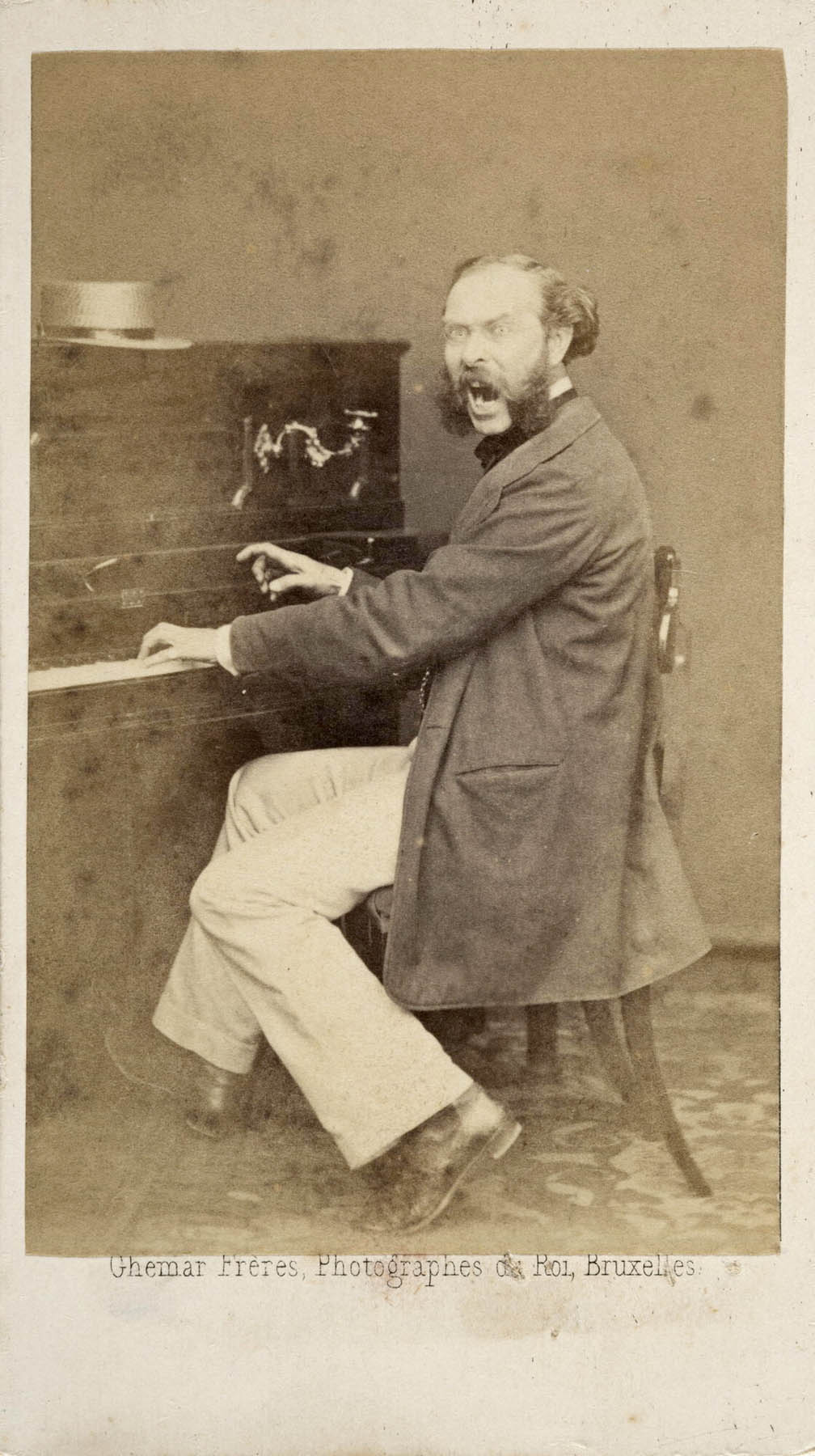
Museum Ephraim-Palais website

LIKE ART BLART ON FACEBOOK

Back to top

Online exhibition: ‘Stephen Salmieri: Coney Island’ from Joseph Bellows Gallery, La Jolla, California

September 2025


Stephen Salmieri (American, b. 1945) 'Coney Island' 1968 from the exhibition 'Stephen Salmieri: Coney Island' from Joseph Bellows Gallery, La Jolla, California, September 2025


Stephen Salmieri (American, b. 1945)
Coney Island
1968
Vintage gelatin silver print


I love these photographs!

What’s not to like… generously sympathetic photographs that exhibit no pretension, containing interesting backgrounds and wonderful characters. The incongruity of a muscle man in leopard skin bathers in a snowy landscape at Coney Island … no worries!

“In the images, storefront booths, midway games, carnival architecture, and the shoreline provide the backdrop to Salmieri’s descriptive and engaging portraits.”

I particularly like the wonderful photograph of the large gentleman with tattoos in a white singlet sitting at a table surrounded by a halo of light bulbs. I also like how Salmieri gives some of his portraits context by including background information in his photographs.

The artist joins a rite of passage for many American photographers in taking photographs at Coney Island – that is, to capture the magic and mystique of this theatrical, carnivalesque place – one full of history, ceremony, community, tradition, fun, drama, people, sun and sand.1

Luminaries to have photographed there include Diane Arbus, Robert Frank, Weegee, Garry Winogrand, Bruce Davidson, Lisette Model, Walker Evans, Leon Levinstein, Arlene Gottfried, Harold Feinstein and Edward J. Kelty to name just a few.

Stephen Salmieri’s charismatic photographs are strong enough to join this pantheon of stars and the “vaunted tradition” of picturing Coney Island.

Dr Marcus Bunyan


1/ Bakhtin’s idea of the carnivalesque and the carnival paradigm accords to certain patterns of play where “the social hierarchies of everyday life… are profaned and overturned by normally suppressed voices and energies.”
“The carnival offers the chance to have a new outlook on the world, to realise the relative nature of all that exists, and to enter a completely new order of things.”

Bakhtin, Mikhail. Rabelais and his World (trans. Hélène Iswolsky). Bloomington: Indiana University Press, 1984, p. 34.


Many thankx to the Joseph Bellows Gallery for allowing me to publish the photographs in the posting. Please click on the photographs for a larger version of the image.

For more information on the history and photography of Coney Island please see the exhibition posting Coney Island: Visions of an American Dreamland, 1861-2008 and Forever Coney: Photographs from the Brooklyn Museum Collection at the Brooklyn Museum, New York, November 2015 – March 2016


“These spare and emotional first images of a forgotten community, now lost in time, allowed me to forge a vision at a pivotal moment in my young life.”

Stephen Salmieri


Stephen Salmieri (American, b. 1945) 'Coney Island' 1968


Stephen Salmieri (American, b. 1945)
Coney Island
1968
Vintage gelatin silver print


Stephen Salmieri (American, b. 1945) 'Coney Island' 1971


Stephen Salmieri (American, b. 1945)
Coney Island
1971
Vintage gelatin silver print


Stephen Salmieri (American, b. 1945) 'Coney Island' 1968


Stephen Salmieri (American, b. 1945)
Coney Island
1968
Vintage gelatin silver print


Stephen Salmieri (American, b. 1945) 'Coney Island' 1969


Stephen Salmieri (American, b. 1945)
Coney Island
1969
Vintage gelatin silver print


Stephen Salmieri (American, b. 1945) 'Coney Island' 1969


Stephen Salmieri (American, b. 1945)
Coney Island
1969
Vintage gelatin silver print


Stephen Salmieri (American, b. 1945) 'Coney Island' 1969


Stephen Salmieri (American, b. 1945)
Coney Island
1969
Vintage gelatin silver print


Stephen Salmieri (American, b. 1945) 'Coney Island' 1969


Stephen Salmieri (American, b. 1945)
Coney Island
1969
Vintage gelatin silver print


Stephen Salmieri (American, b. 1945) 'Coney Island' 1969


Stephen Salmieri (American, b. 1945)
Coney Island
1969
Vintage gelatin silver print


Stephen Salmieri (American, b. 1945) 'Coney Island' 1969


Stephen Salmieri (American, b. 1945)
Coney Island
1969
Vintage gelatin silver print


Stephen Salmieri (American, b. 1945) 'Coney Island' 1969 from the exhibition 'Stephen Salmieri: Coney Island' from Joseph Bellows Gallery, La Jolla, California, September 2025


Stephen Salmieri (American, b. 1945)
Coney Island
1969
Vintage gelatin silver print


Joseph Bellows Gallery is pleased to present an online exhibition of Stephen Salmieri’s photographs of Coney Island. Made between 1967 and 1972 with an array of cameras and black and white film, these images portray a cast of beachgoers and amusement park locals within the surrounding environment of one of America’s earliest and most illustrious seashore amusement parks.
The exhibition showcases Salmieri’s finely crafted vintage black and white prints. In the images, storefront booths, midway games, carnival architecture, and the shoreline provide the backdrop to Salmieri’s descriptive and engaging portraits. In a published statement on the photographs, the artist explains his process and motivation:
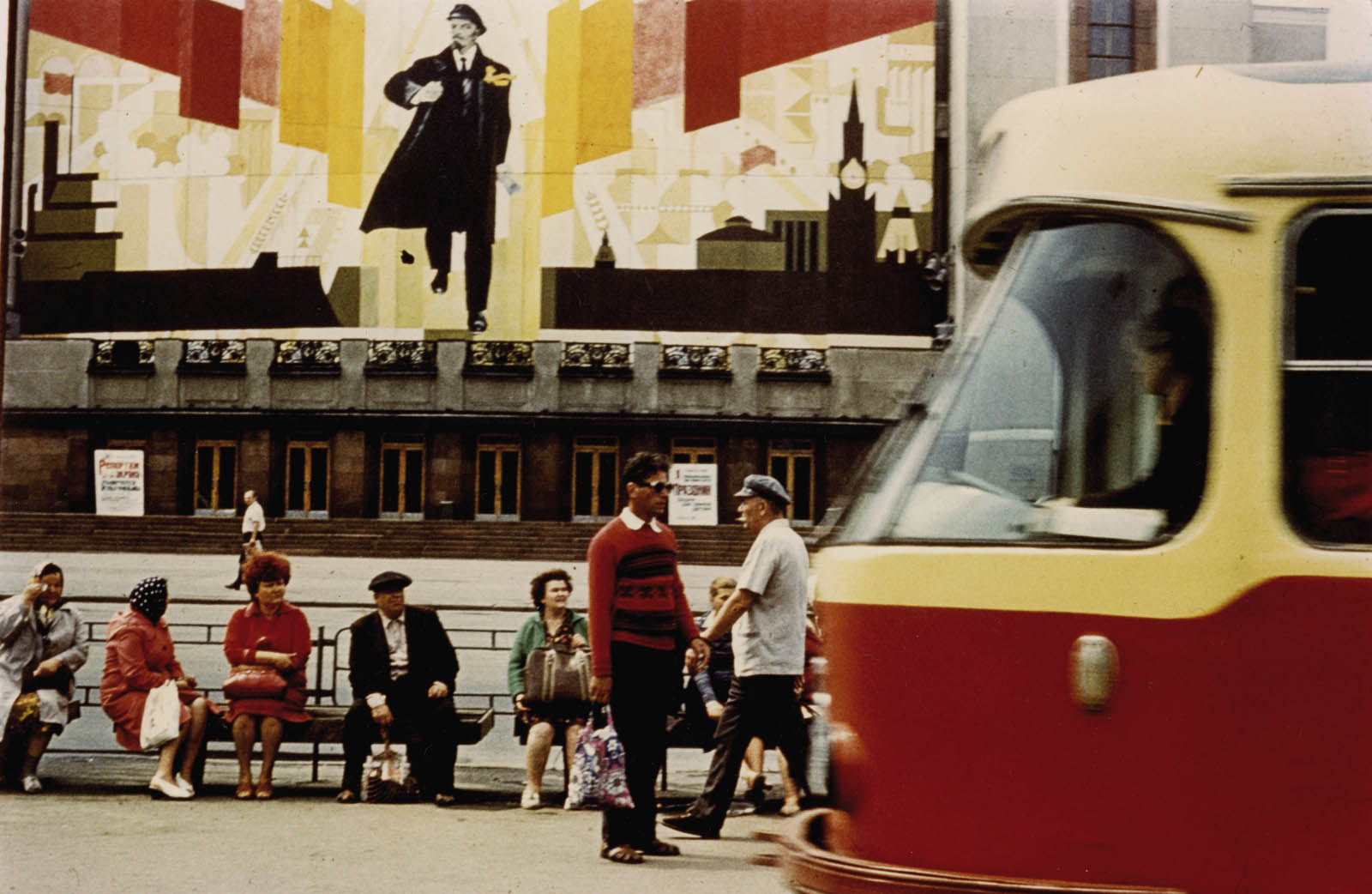
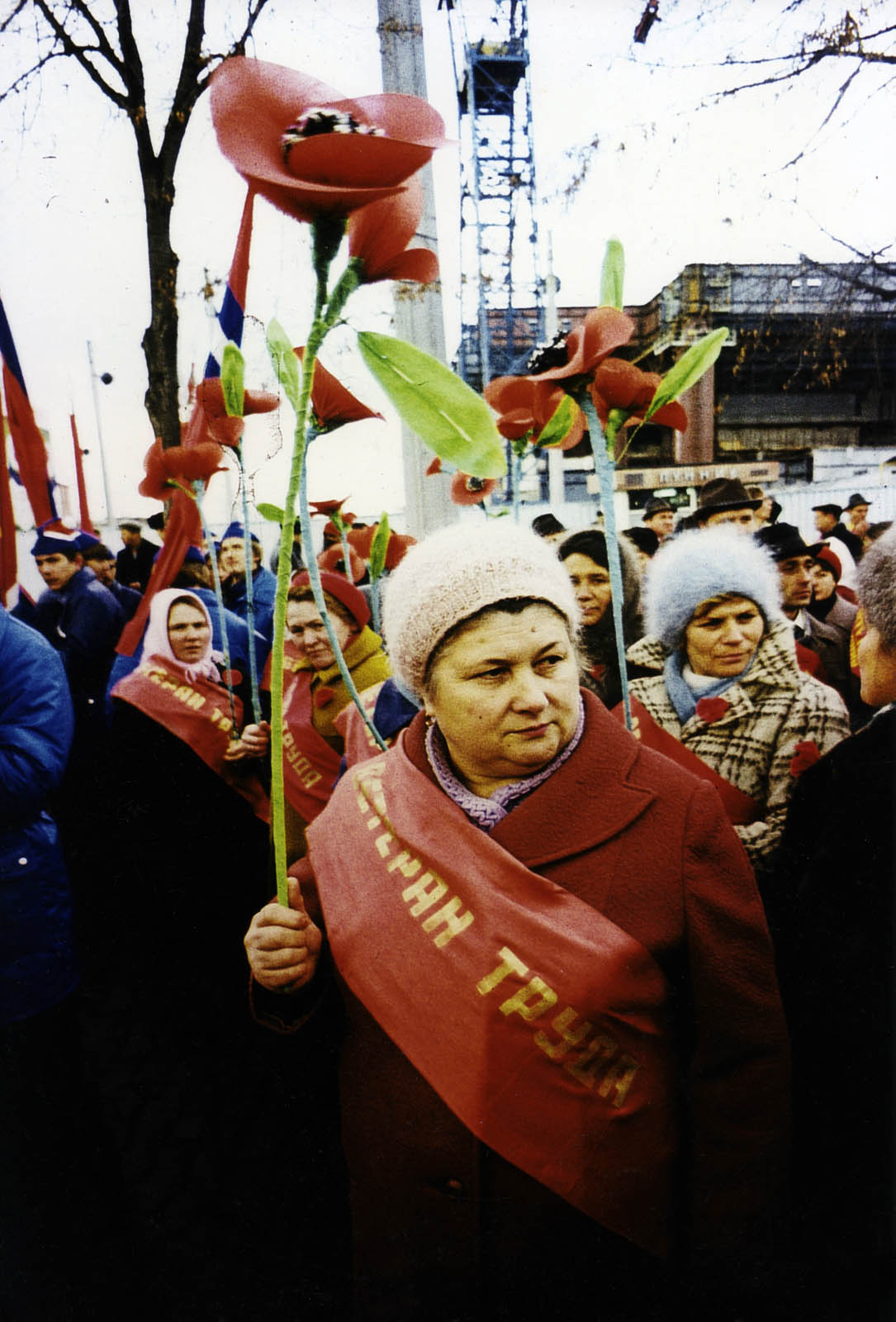
“The world of Coney Island has changed dramatically since I made these photographs. It was my first self-assigned project at twenty years of age, having just graduated from the School of Visual Arts. In choosing my subject I gravitated naturally to the familiar destination of my adolescent bike adventures.

I made the hour ride to Coney Island with all my cameras in tow all year round. I carried a 4 x 5 field camera, a 6 x 6 cm and a 35 mm format, and lots of Tri-X film.

In 1969, CAMERA magazine approached me at my first exhibition at the Underground Gallery. In my naivety, I did not realise that Coney Island was also the choice territory for such luminaries as Robert Frank, Lisette Model, Leon Levinstein, and Weegee. It wasn’t until the magazine published these photographs as part of their seminal Coney Island issue in 1971 that I realised I had become part of a vaunted tradition.

These spare and emotional first images of a forgotten community, now lost in time, allowed me to forge a vision at a pivotal moment in my young life.”


Salmieri’s photographs from this body of work were also featured in the exhibition Forever Coney: Photographs from the Brooklyn Museum Collection.

Salmieri’s work is included in the collections of the Museum of Modern Art, New York, Brooklyn Museum, New York, Smithsonian Institute, Washington D.C., Cooper-Hewitt National Design Museum, New York, Flint Institute, Michigan, the Museum of the City of New York, the Nelson-Atkins Museum, and the J. Paul Getty Museum. Publications include “American Grilles” (1978, Hartcourt-Brace) and “Cadillac: An American Icon” (1985, Rizzoli).
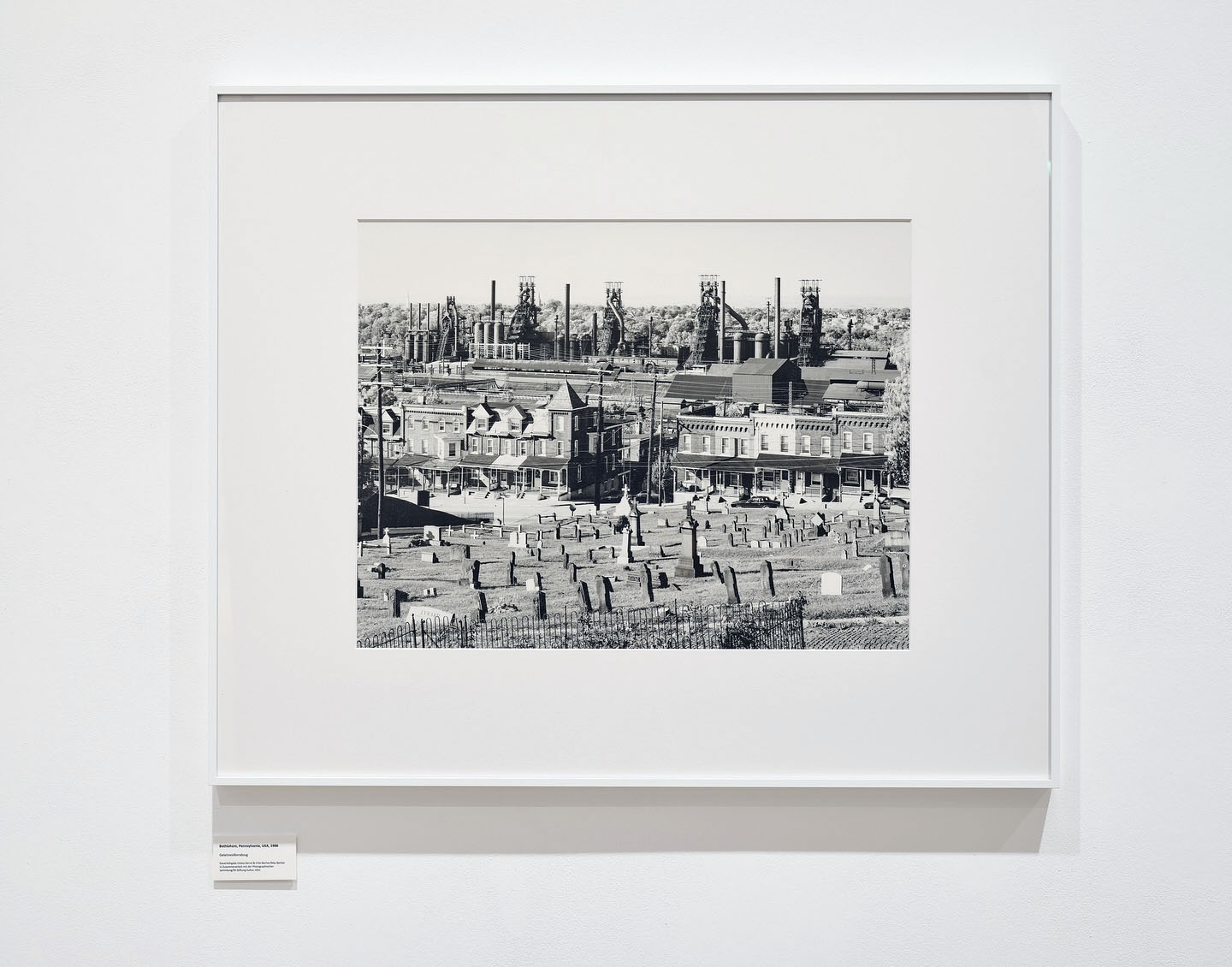
Text from the Joseph Bellows Gallery website


Stephen Salmieri (American, b. 1945) 'Coney Island' 1970


Stephen Salmieri (American, b. 1945)
Coney Island
1970
Vintage gelatin silver print


Stephen Salmieri (American, b. 1945) 'Coney Island' 1971


Stephen Salmieri (American, b. 1945)
Coney Island
1971
Vintage gelatin silver print


Stephen Salmieri (American, b. 1945) 'Coney Island' 1971


Stephen Salmieri (American, b. 1945)
Coney Island
1971
Vintage gelatin silver print


Stephen Salmieri (American, b. 1945) 'Coney Island' 1972


Stephen Salmieri (American, b. 1945)
Coney Island
1972
Vintage gelatin silver print


Stephen Salmieri (American, b. 1945) 'Coney Island' 1967-1972


Stephen Salmieri (American, b. 1945)
Coney Island
1967-1972
Vintage gelatin silver print


Robert Frank (American, 1924-2019) 'Coney Island' 4th of July, 1958


Robert Frank (American, 1924-2019)
Coney Island
4th of July, 1958
Gelatin silver print


Edward J. Kelty (American, 1888-1967) 'Harlem Black Birds, Coney Island' 1930


Edward J. Kelty (American, 1888-1967)
Harlem Black Birds, Coney Island
1930


Walker Evans (American, 1903-1975)
'Couple at Coney Island, New York'
1928


Walker Evans (American, 1903-1975)
Couple at Coney Island, New York
1928
Gelatin silver print


Weegee (American, 1899-1968) 'Afternoon Crowd at Coney Island, Brooklyn' 1940


Weegee (Arthur Fellig) (American born Ukraine, 1899-1968)
Afternoon Crowd at Coney Island
July 21st 1940


Garry Winogrand (American, 1928-1984) 'Coney Island, New York City, N.Y.' 1952


Garry Winogrand (American, 1928-1984)
Coney Island, New York City, N.Y.
1952
Gelatin silver print


Leon Levinstein (American, 1910-1988) 'Coney Island' 1955


Leon Levinstein (American, 1910-1988)
Coney Island
1955
Gelatin silver print


Diane Arbus (American, 1923-1971) 'Man in hat, trunks, socks and shoes, Coney Island, N.Y. 1960' 1960


Diane Arbus (American, 1923-1971)
Man in hat, trunks, socks and shoes, Coney Island, N.Y. 1960
1960
Gelatin silver print


Bruce Davidson (American, b. 1933)
'Two Youths, Coney Island' 1958
From the series 'Brooklyn Gang'


Bruce Davidson (American, b. 1933)
Two Youths, Coney Island
1958
From the series Brooklyn Gang


Joseph Bellows Gallery
7661 Girrard Avenue
La Jolla, California
Phone: 858 456 5620

Opening hours:
Tuesday – Saturday 11am – 5pm and by appointment

Joseph Bellows Gallery website

LIKE ART BLART ON FACEBOOK

Back to top

Exhibition: ‘The Underground Camera’ at Foam, Amsterdam

Exhibition dates: 2nd May – 1st September, 2025

Co-curators: Hripsimé Visser, former curator at Stedelijk Museum, Foam curator Claartje van Dijk, and exhibition designer Jeroen de Vries, in collaboration with NIOD Institute


Marius Meijboom (Dutch, 1911-1998) 'Hunger Winter' February 1945


Marius Meijboom (Dutch, 1911-1998)
Hunger Winter
February 1945
Marius Meijboom / Niod


Iconic photo of Henkie Holvast from the Jordaan, 9 years old


Resist!

The photograph of Henkie Holvast (February 1945, above) is an example of the famine the Nazis inflicted on the general population of the Netherlands during the last year of the Second World War.

I’ll leave you to make the correlation between these historical events and what is happening in Gaza today … and to understand the hypocrisy and evil of contemporary acts.

Like the photojournalists that are being targeted and killed for reporting the truth of the situation in Gaza, so these photographers would have been killed by the Nazis for photographing the occupation of the Netherlands if they had been caught.

“Verzet! Verzet!” (Resist! Resist!)

Dr Marcus Bunyan


Many thankx to Foam, Amsterdam for allowing me to publish the photographs in the posting. Please click on the photographs for a larger version of the image.


“The exhibition The Underground Camera captures the hunger and hardship in Amsterdam during the final year of World War II, but also sheds light on the untold stories behind the images, offering fresh perspectives.”


De Volkskrant


Cas Oorthuys (Dutch, 1908-1975) 'Resistance slogans on a bomb shelter at Kwakersplein, Amsterdam' 1944-1945 from the exhibition 'The Underground Camera' at Foam, Amsterdam, May - Sept, 2025


Cas Oorthuys (Dutch, 1908-1975)
Resistance slogans on a bomb shelter at Kwakersplein, Amsterdam
1944-1945
© Cas Oorthuys / Netherlands Photo Museum


“Verzet! Verzet!” (Resist! Resist!) is spray painted boldly on a public wall, confronting the public in Cas Oorthuys’s Verzetsleuzen op een schuilbunker Kwakersplein (Resistance slogans on a bunker at Kwakersplein), taken in Amsterdam between 1944-1945. In many ways this image serves as a visual manifesto for The Underground Camera, the new exhibition at Foam Amsterdam, articulating the collective’s commitment to resistance, subversion, and the political potential of the photographic image.

The Underground Camera, a group of Amsterdam based photographers, made the life-threatening and courageous decision to photograph the Nazi occupation of Holland, specifically the famine of 1944-45 in Amsterdam as a result of the Nazis blocking food transport. The photographers, recruited by members of the Dutch resistance, were tasked with making the unseen visible. The intention was to inform the Dutch government working in exile in London to advocate for food drops on their behalf while also documenting the conditions of the occupation, creating evidence in the event the Nazis would be held accountable. A general ban on photography was implemented in 1944 by the occupation, so The Underground Camera followed through with illegal acts carried out discreetly, often hiding the cameras under their garments.

Not only was participating in illegal acts under the Nazi occupation dangerous, but being associated with the resistance otten carried dire consequences. By highlighting the potential fatality of the mission, its dangerous conditions, and the equipment that was difficult to obtain at the time and often poor quality, Foam’s exhibit allows the audience to witness a quiet rebellion. A rebellion that is often overlooked not only in the history of photography, but in history as a whole.

With this exhibit, the courageous and inspiring group finally gets their time of recognition.

The Underground Camera, initially known as the more unassuming ‘Nederland Archief’ (Netherlands Archive), significantly contributed to the retelling of history regarding Germany’s occupation during the war, viewing the camera as both a witness and a weapon. The idea of the camera as a weapon is underscored by many academic discourses surrounding documentary war photography. A camera has the potential to become a tool of war whose target is completely dependent on the intention of the one shooting, but in this case of the camera has actively deconstructed propaganda while also holding the occupiers accountable.

There are many unknowns when it comes to this group. Who were the participating photographers, were any were caught, how were they organised, how did they operate, etc. This exhibition is giving them deserved institutional and academic recognition and advocates for their story to be told. The Underground Camera is an incredible show not only because it offers rare glimpses into the realities of war, but because the photographs are a product of courageous resilience.

Georgina Laube. “Apr 24: The Underground Camera | Foam,” on the Musee magazine website, April 2th, 2025 [Online] Cited 09/05/2025


Cas Oorthuys (Dutch, 1908-1975) 'A man collects materials from a demolished building, Zwanenburgstraat' 1944 from the exhibition 'The Underground Camera' at Foam, Amsterdam, May - Sept, 2025


Cas Oorthuys (Dutch, 1908-1975)
A man collects materials from a demolished building, Zwanenburgstraat
1944
© Cas Oorthuys/Nederlands Fotomuseum


Cas Oorthuys (Dutch, 1908-1975) 'Two women returning from a hunger march' Early 1945


Cas Oorthuys (Dutch, 1908-1975)
Two women returning from a hunger march
Early 1945
Courtesy of Foam
© Cas Oorthuys / Nederlands Fotomuseum


Foam presents The Underground Camera, an exhibition that features work from Dutch photographers who captured the consequences of the German occupation during the 1944-45 ‘famine winter’ in Amsterdam.

The exhibition The Underground Camera is inspired by the celebrations of Amsterdam’s 750th anniversary and 80 years of liberation.

With their photographs, The Underground Camera group made a significant contribution to the image of the Second World War. The photographers were recruited by members of the resistance, with the aim of informing the Dutch government in London. They worked independently and under the dangerous conditions of an occupied city, with hard-to-obtain, often poor-quality equipment. The exhibition provides an impressive picture of the consequences of hunger and cold in the dismantled Amsterdam at the end of the war.

The group of photographers included Cas Oorthuys, Emmy Andriesse, Charles Breijer, Kryn Taconis, and Ad Windig, among others.

Text from the Foam website


Charles Breijer (Dutch, 1914-2011) 'Closure of the Jewish Quarter near the Waag, Nieuwmarkt, Amsterdam' 1941


Charles Breijer (Dutch, 1914-2011)
Closure of the Jewish Quarter near the Waag, Nieuwmarkt, Amsterdam
1941
© Charles Breijer / Netherlands Photo Museum


Charles Breijer (Dutch, 1914-2011) 'Charles Breijer photographs a German-requisitioned building near Vondelpark from his bicycle bag. He inadvertently captures his own shadow' Spring 1945


Charles Breijer (Dutch, 1914-2011)
Charles Breijer photographs a German-requisitioned building near Vondelpark from his bicycle bag. He inadvertently captures his own shadow
Spring 1945
Charles Breijer / Netherlands Photo Museum (NFM)


German guard post in front of the Kriegsmarine building at Emmaplein in Amsterdam. Visible in the foreground is the shadow of photographer Charles Breijer, operating his Rolleiflex camera from his pannier.


Charles Breijer (Dutch, 1914-2011) 'Andrea Domburg distracts bystanders while Margreet Meijboom-Van Konijnenburg takes the photo from her bag' Nd


Charles Breijer (Dutch, 1914-2011)
Andrea Domburg distracts bystanders while Margreet Meijboom-Van Konijnenburg takes the photo from her bag
Nd
Charles Breijer / Netherlands Photo Museum


Charles Breijer (Dutch, 1914-2011) 'Margreet Meijboom-van Konijnenbrug (right) demonstrates photographing from a shopping bag. Andrea Domburg, in a nurse's uniform, accompanies her to keep an eye on the surroundings' Nd


Charles Breijer (Dutch, 1914-2011)
Margreet Meijboom-van Konijnenbrug (right) demonstrates photographing from a shopping bag. Andrea Domburg, in a nurse’s uniform, accompanies her to keep an eye on the surroundings
Nd
Charles Breijer / Netherlands Photo Museum


Charles Breijer (Dutch, 1914-2011) 'Joop Kuijt, a refugee, crawls into a hiding place at Oranje Nassaulaan 15, Amsterdam' 1945


Charles Breijer (Dutch, 1914-2011)
Joop Kuijt, a refugee, crawls into a hiding place at Oranje Nassaulaan 15, Amsterdam
1945
© Charles Breijer/Netherlands Photo Museum


Charles Breijer (Dutch, 1914-2011) 'Shortly after the liberation, Cas Oorthuys demonstrates how he took illegal photographs during the occupation' 1945


Charles Breijer (Dutch, 1914-2011)
Shortly after the liberation, Cas Oorthuys demonstrates how he took illegal photographs during the occupation
1945
© Charles Breijer / Nederlands Fotomuseum


In honour of Amsterdam’s 750th jubilee and the 80th remembrance of the Netherlands’ liberation, Foam presents The Underground Camera (De Ondergedoken Camera). The exhibition showcases images captured by the group of photographers who came to be known by the same name. They photographed the harsh realities of Amsterdam during the ‘Hunger Winter’ of 1944-1945, offering a rare glimpse into the courageous missions of the resistance group and their role in documenting the Nazi occupation. The exhibition features work by renowned Dutch photographers such as Cas Oorthuys, Charles Breijer and Emmy Andriesse.

The resistance group was led by Fritz Kahlenberg and Tonny van Renterghem. In November 1944, when the German administration banned public photography, they – alongside a network of fourteen photographers – worked in secrecy to document the occupation and the resistance. Their efforts, carried out at great personal risk, preserved a crucial visual record of this era. Kahlenberg, a German Jewish filmmaker who had migrated to Amsterdam in 1933, was involved in the forgery of identity cards for the resistance. Van Renterghem had a military background and was also actively involved in resistance work. Although he was not a photographer himself, he played a crucial role in the coordination between The Underground Camera and other resistance groups. The images taken by the photographers of The Underground Camera were intended to be smuggled to London to convince the Dutch government in exile of the need for Allied food droppings in the Netherlands. Today, the photos provide a realistic perspective of daily life in Amsterdam during the last months of the German occupation.

The historical material of the group was stored in various Dutch collections in the form of negatives, original photo prints, albums and picture books. The exhibition sheds light on topics such as the Hunger Winter, the resistance, the illegal press, instances of sabotage, the transport of weapons and the liberation by the Allied Forces.

The Underground Camera is the result of a close collaboration with the NIOD Institute for War, Holocaust and Genocide Studies. A publication by the same name, written by NIOD-researchers René Kok and Erik Somers, will be released in March 2025. The exhibition has been co-curated by Hripsimé Visser, former curator of photography at Stedelijk Museum Amsterdam, in collaboration with exhibition designer Jeroen de Vries.

The Mayor of Amsterdam, Femke Halsema, will open the exhibition at Foam.

The exhibition The Underground Camera is part of a research trajectory within Foam’s artistic programme, launched in early 2024 under the title The Camera as a Weapon, which included a pop-up exhibition of the same name and a symposium. In a time marked by conflict, Foam poses the question: what can photography do? Through this research line – which also includes the exhibition Sakir Khader – Yawm al-Firak – the museum responds to current events by presenting artistic practices in which the camera is used as a weapon.
In light of the national observance of Remembrance Day on 4 May and the national celebration of Liberation Day on 5 May, het Amsterdams 4 en 5 mei comité, in collaboration with Foam en NIOD, will also present an exhibition. This public exhibition will be shown from 29th of April until the 6th of May on the Museumplein.

About The Underground Camera

Kahlenberg and Van Renterghem, the driving forces behind the operation, instructed a group of photographers from their main location at the Michelangelostraat 36 in Amsterdam South from where they oversaw their resistance activities. Many of the The Underground Camera photographers would later become internationally renowned. They concealed their cameras in handbags and jackets in order for them to take the pictures unnoticed. Many used Rolleiflex cameras which had a viewfinder on top, making it easier to take pictures from hip height. Given the danger of being involved in organised resistance, the photographers did not know who else was part of the collective and worked under neutral names such as ‘Netherlands Archive’ (‘Nederlands Archief’) and ‘Central Imagery Archive’ (‘Centraal Beeldarchief’). Just a few weeks after the liberation, in early June 1945, a selection of work was showcased in the exhibition The Underground Camera located in the studio of the photographer Marius Meijboom at the Keizersgracht in Amsterdam. The exhibition brought national recognition for The Underground Camera’s work, leading the group to officially adopt this name. Now, 80 years later, their legacy returns in a new exhibition along the same canal.

UNESCO included The Underground Camera in its Dutch Memory of the World Register, making it the first photographic legacy ever to receive this prestigious distinction.

The Underground Camera consisted of Tonny van Renterghem (1919-2009), Fritz Kahlenberg (1916-1996), Emmy Andriesse (1914-1953), Carel Blazer (1911-1980), Charles Breijer (1914-2011), Cornelis Holtzapffel (1916-1984), Ingeborg Kahlenberg-Wallheimer (1920-1996), Boris Kowadlo (1912-1959), Frits Lemaire (1921-2005), Marius Meijboom (1911-1998), Margreet Meijboom-van Konijnenburg (1910-onbekend), Cas Oorthuys (1908-1975), Hans Sibbelee (1915-2003), Ben Steenkamp (1917-1967), Ad Windig (1912-1996) and Krijn Taconis (1918-1979). Taconis was the first Dutch person to become a member of renowned international photography collective Magnum.

Press release from Foam


Margaretha van Konijnenburg (1910 - d.) 'Bicycle raid on the Weteringplantsoen in Amsterdam' Autumn 1944


Margaretha van Konijnenburg (1910 – d.)
Bicycle raid on the Weteringplantsoen in Amsterdam
Autumn 1944


Photographed from a shopping bag


Marius Meijboom (Dutch, 1911-1998) 'Hungry' Nd


Marius Meijboom (Dutch, 1911-1998)
Hungry
Nd
© Marius Meijboom, NIOD


Hans Sibbelee (Dutch, 1915-2003) 'Children on Sarphatistraat remove the impregnated wooden blocks from between the tram rails, for the stove' March 1945


Hans Sibbelee (Dutch, 1915-2003)
Children on Sarphatistraat remove the impregnated wooden blocks from between the tram rails, for the stove
March 1945


The photographer took the photo from under his jacket


Krijn Taconis (Dutch, 1918-1979) 'Police officers guarding food supplies in the Amsterdam harbour to prevent looting will receive an extra meal' Nd


Krijn Taconis (Dutch, 1918-1979)
Police officers guarding food supplies in the Amsterdam harbour to prevent looting will receive an extra meal
Nd
Krijn Taconis / Niod


Emmy Andriesse (Dutch, 1914-1953) 'On the way to the soup kitchen' Nd


Emmy Andriesse (Dutch, 1914-1953)
On the way to the soup kitchen
Nd
BBWO2 / Leiden University Library


Emmy Andriesse (Dutch, 1914-1953) 'A man and a woman find some coal remains at the Weesperpoort station in Amsterdam' Spring 1945


Emmy Andriesse (Dutch, 1914-1953)
A man and a woman find some coal remains at the Weesperpoort station in Amsterdam
Spring 1945


Emmy Andriesse (Dutch, 1914-1953) 'A boy eats a meal from a soup kitchen' Nd


Emmy Andriesse (Dutch, 1914-1953)
A boy eats a meal from a soup kitchen
Nd


H.R. Kettner (Dutch, 1916 - d.) 'The distribution of groceries became increasingly difficult, resulting in long lines in front of, among other places, the Wijnbergh & Co. store on Middenweg' Nd


H.R. Kettner (Dutch, 1916 – d.)
The distribution of groceries became increasingly difficult, resulting in long lines in front of, among other places, the Wijnbergh & Co. store on Middenweg
Nd


Other photographs by The Underground Camera photographers


Emmy Andriesse (Dutch, 1914-1953) 'Amsterdam tijdens de hongerwinter' (Amsterdam during the hunger winter) [1944-1945] book published 1947


Emmy Andriesse (Dutch, 1914-1953)
Amsterdam tijdens de hongerwinter (Amsterdam during the hunger winter) [1944-1945]
Published 1947
Bound volume
Closed:
29.21 x 22.86cm (11 1/2 x 9 in.)
Open: 29.21 x 44.45cm (11 1/2 x 17 1/2 in.)
National Gallery of Art Library, David K.E. Bruce Fund


Emmy Andriesse (Dutch, 1914-1953)

Emmy Eugenie Andriesse (Dutch, 1914-1953) was a Dutch photographer best known for her work with the Underground Camera group (De Ondergedoken Camera [nl]) during World War II. …

War years and the ‘Underground Camera’

In June 1941 Andriesse married graphic designer and visual artist Dick Elffers (a gentile with whom she had two sons, one who died young), but as a Jew during the Nazi occupation Andriesse was no longer able to publish and she was forced into hiding. At the end of 1944, with the assistance of the anthropologist Arie de Froe [nl] she forged an identity card and re-engaged in everyday life, joining a group of photographers, including Cas Oorthuys and Charles Breijer, working clandestinely as De Ondergedoken Camera. The photos that Andriesse made under very difficult conditions of famine in Amsterdam, include Boy with pan, The Gravedigger and Kattenburg Children are documents of hunger, poverty and misery during the occupation in the “winter of hunger” of 1944-1945.

Post-war

After the war, she became a fashion photographer and was an associate and mentor of Ed van der Elsken. She participated in the group show Photo ’48 and in 1952, together with Carel Blazer [nl], Eva Besnyö and Cas Oorthuys, the exhibition Photographie, both in Amsterdam’s Stedelijk Museum. Edward Steichen chose her 1947 portrait of a staid and elderly Dutch couple for the section ‘we two form a multitude’ in the Museum of Modern Art world-touring The Family of Man that was seen by an audience of 9 million. More recently (October 2006 – January 2007) she was included in a display of Twentieth Century European photography at the Barbican Art Gallery, London.

Andriesse’s last commission, the book The World of Van Gogh – published posthumously in 1953 – was not yet complete when she became ill and after a long battle with cancer, died at the age of 39.

Text from the Wikipedia website


Emmy Andriesse (Dutch, 1914-1953) 'Amsterdam tijdens de hongerwinter' (Amsterdam during the hunger winter) [1944-1945] book published 1947 (detail)


Emmy Andriesse (Dutch, 1914-1953)
Amsterdam tijdens de hongerwinter (Amsterdam during the hunger winter) (detail)
1947
Bound volume
Closed:
29.21 x 22.86cm (11 1/2 x 9 in.)
Open: 29.21 x 44.45cm (11 1/2 x 17 1/2 in.)
National Gallery of Art Library, David K.E. Bruce Fund


Steeds grauwer werd het beeld de steden. Schoeisel en kleding raakten totaal versleten.

The image of the cities became increasingly grey. Footwear and clothing became totally worn out.


Emmy Andriesse (Dutch, 1914-1953) 'Amsterdam tijdens de hongerwinter' (Amsterdam during the hunger winter) [1944-1945] book published 1947 (detail)


Emmy Andriesse (Dutch, 1914-1953)
Amsterdam tijdens de hongerwinter (Amsterdam during the hunger winter) (detail)
1947
Bound volume
Closed:
29.21 x 22.86cm (11 1/2 x 9 in.)
Open: 29.21 x 44.45cm (11 1/2 x 17 1/2 in.)
National Gallery of Art Library, David K.E. Bruce Fund


De etalages waren leeg of toonden alleen vervangingsmiddelen.

The shop windows were empty or only showed substitutes.


Foam
Keizersgracht 609
1017 DS Amsterdam
The Netherlands
Phone: 31 (0)20 5516500

Opening hours:
Monday – Wednesday 10am – 6pm
Thursday – Friday 10am – 9pm
Sat – Sun 10am – 6pm

Foam website

LIKE ART BLART ON FACEBOOK

Back to top