Exhibition dates: 6th October – 31st October, 2009
Carlier Makigawa (Australian, b. 1952) Brooch 2009 Silver, paint
Jewellery as art; is art
Brooches, objects
Robust/delicate
Holistic body of work
Affirmation of line and form
Simplicity/complexity of shapes
Span ______ (meta)physical
[Interior] exterior!
elemental | articulation
Volume ((( ))) form
&
arch-itecture
SPACE
√
beauty
……………………….
Dr Marcus Bunyan
Many thankx to Gallery Funaki for allowing me to publish the photographs in the posting. Please click on the photographs for a larger version of the image.
Carlier Makigawa (Australian, b. 1952) Brooch 2009 Silver
Carlier Makigawa (Australian, b. 1952) Brooch 2009 Silver
Carlier Makigawa (Australian, b. 1952) Brooch 2009 Silver
“A spiritual and private space. Ritual object, jewellery. Linear structures appear fragile and monumental to cradle the internal spirit. They appear to float in space, hovering, penetrating, a temporary existence. Nature is the reference, and the geometry of nature and architecture inform this world.”
Carlier Makigawa
Carlier Makigawa explores the parameters of small spaces in her new exhibition October 2009. Her spare, exacting constructions in silver wire have a monumentality that defies their scale and delicacy. Her new work consists of brooches and objects which move beyond the botanical inspiration of her earlier work to engage with more abstract notions of movement, compression and spatial manipulation.
Text from the Gallery Funaki website [Online] Cited 01/05/2019 no longer available online
Carlier Makigawa (Australian, b. 1952) Object 2009 Silver
Carlier Makigawa (Australian, b. 1952) Object 2009 Silver
Carlier Makigawa (Australian, b. 1952) Brooch 2009 Silver
Carlier Makigawa (Australian, b. 1952) Neckpiece 2009 Silver
Exhibition dates: 2nd September – 26th September, 2009
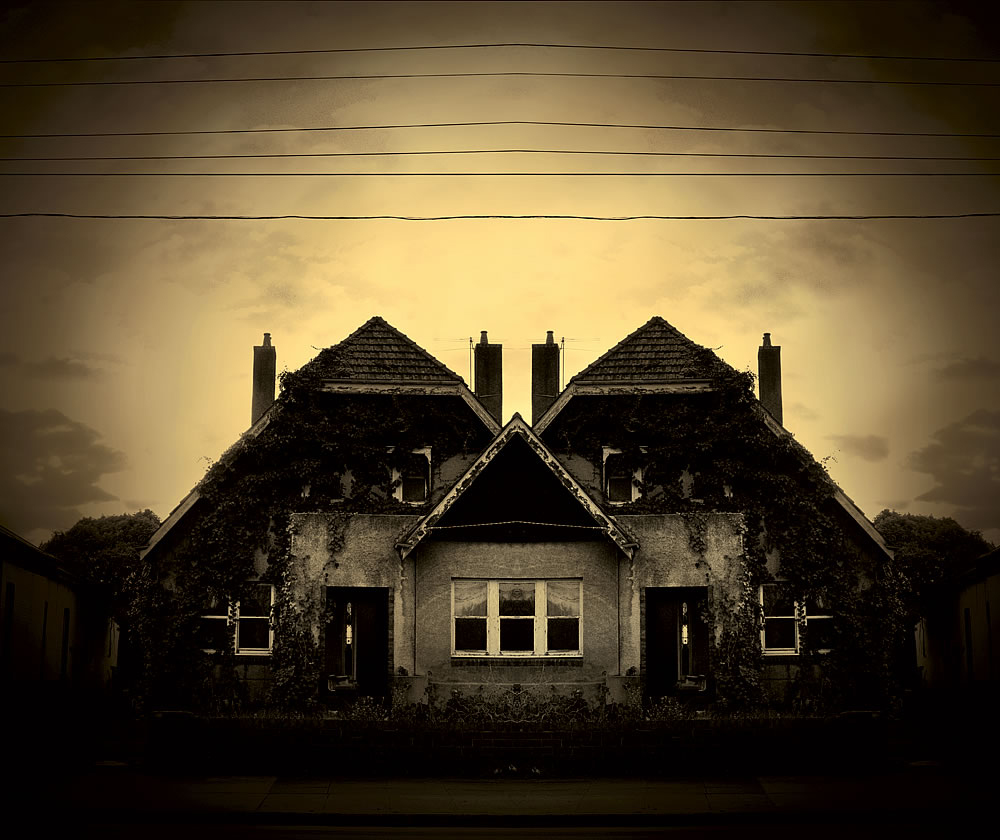
Jane Burton (Australian, b. 1966) Ivy #1 2009 Pigment print 89 x 75cm
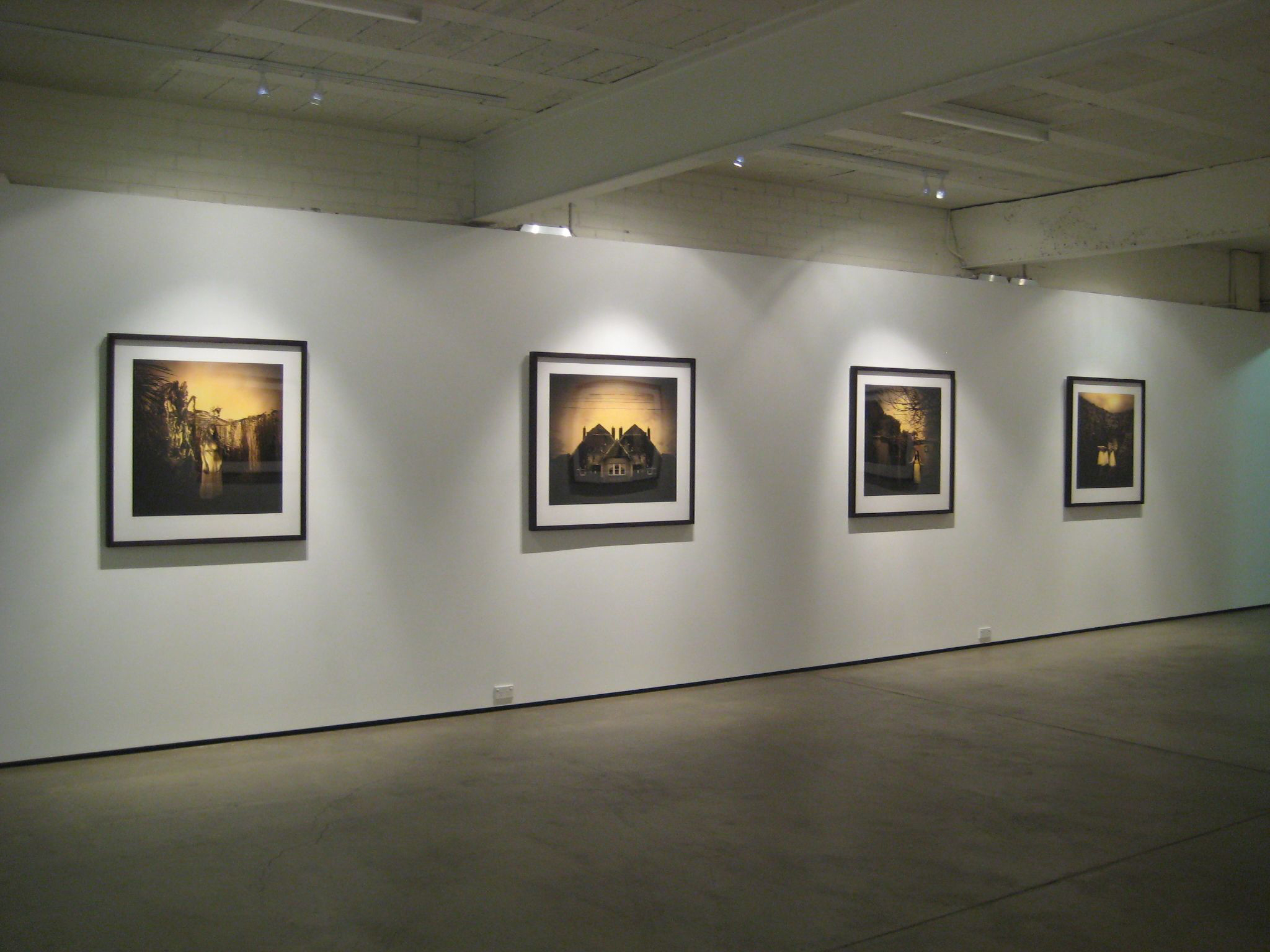
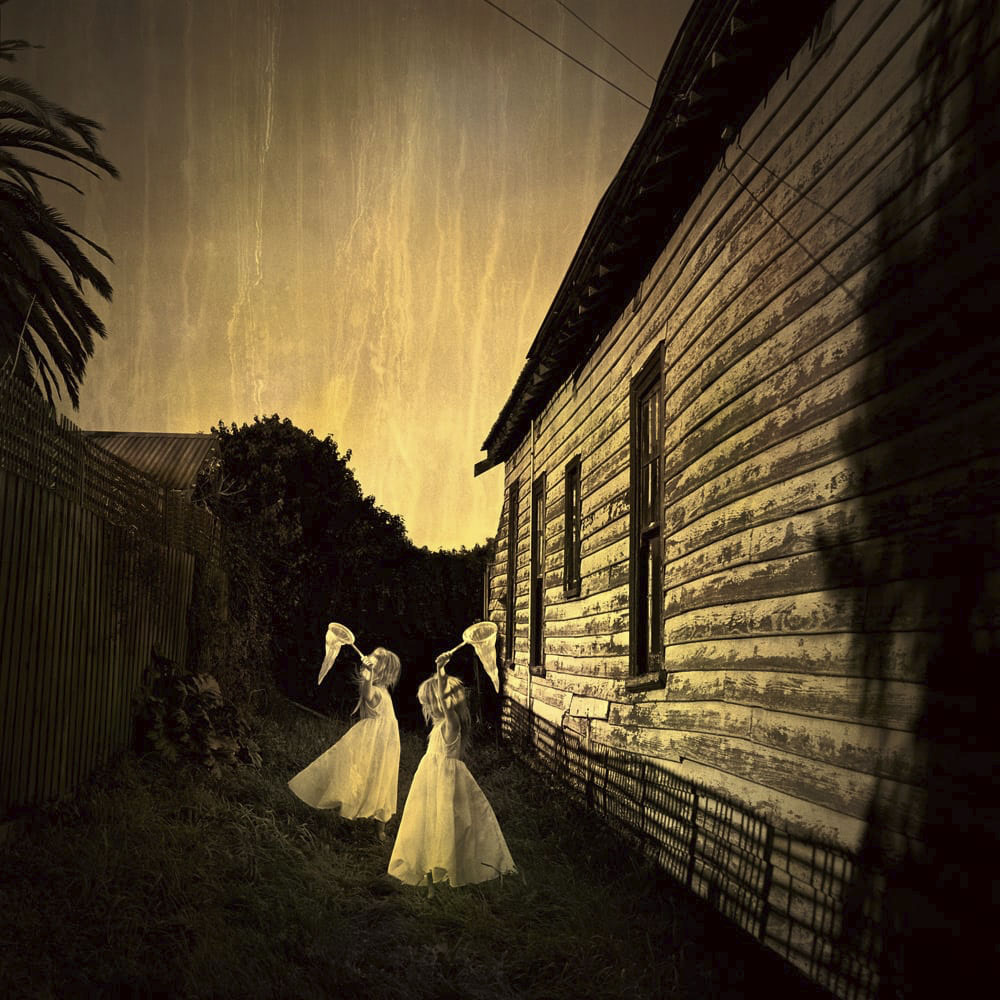
This is another outstanding body of photographic work on display in Melbourne. Featuring 10 large and 2 small sepia toned, vignetted pigment prints Burton’s work creates dark enchanted worlds of faceless female figures placed in the built environment that balance (meta)physical light and shade creating ambiguous narratives of innocence tinged with a darker edge.
The eponymous photograph Ivy #1 (above) is the seminal image of the series: a dark brooding house, hunched down positioned low in the photographic space, covered in ivy with black windows and dark eves has an ominous almost impenetrable presence and sets the tone for the rest of the work.
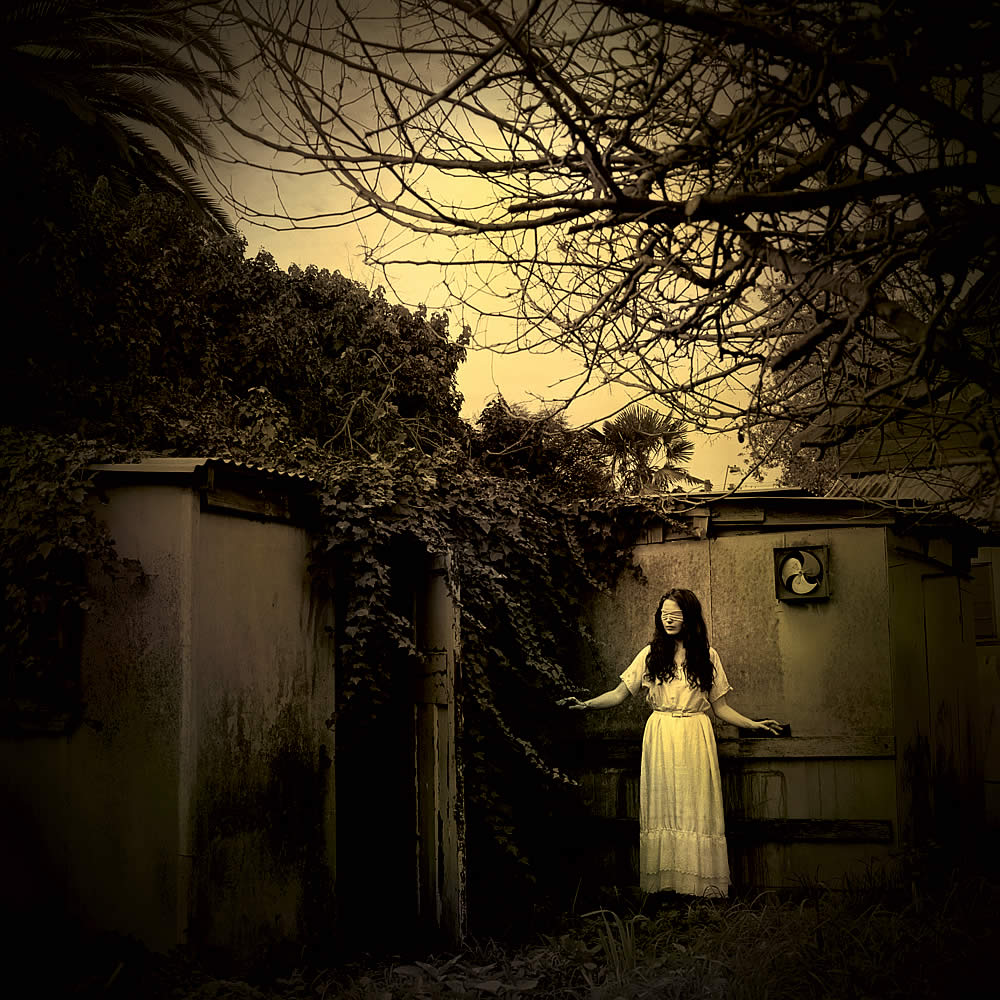
There are wonderful references to the history of photography if one cares to look (not simply generic references to Victorian daguerreotypes, postcards and family photographs). Ivy #2 (below) is a powerful photograph where the female figure is blindfolded, unable to see the encroaching tumescence of vegetation that surrounds and is about to engulf her. The placement of the hands is exquisite – unsure, reaching out, doubting her surroundings – with the 3-bladed fan hovering behind ready to devour the unwary. This photograph has resonances of the magical photographs of the garden by the Czech photographer Josef Sudek.
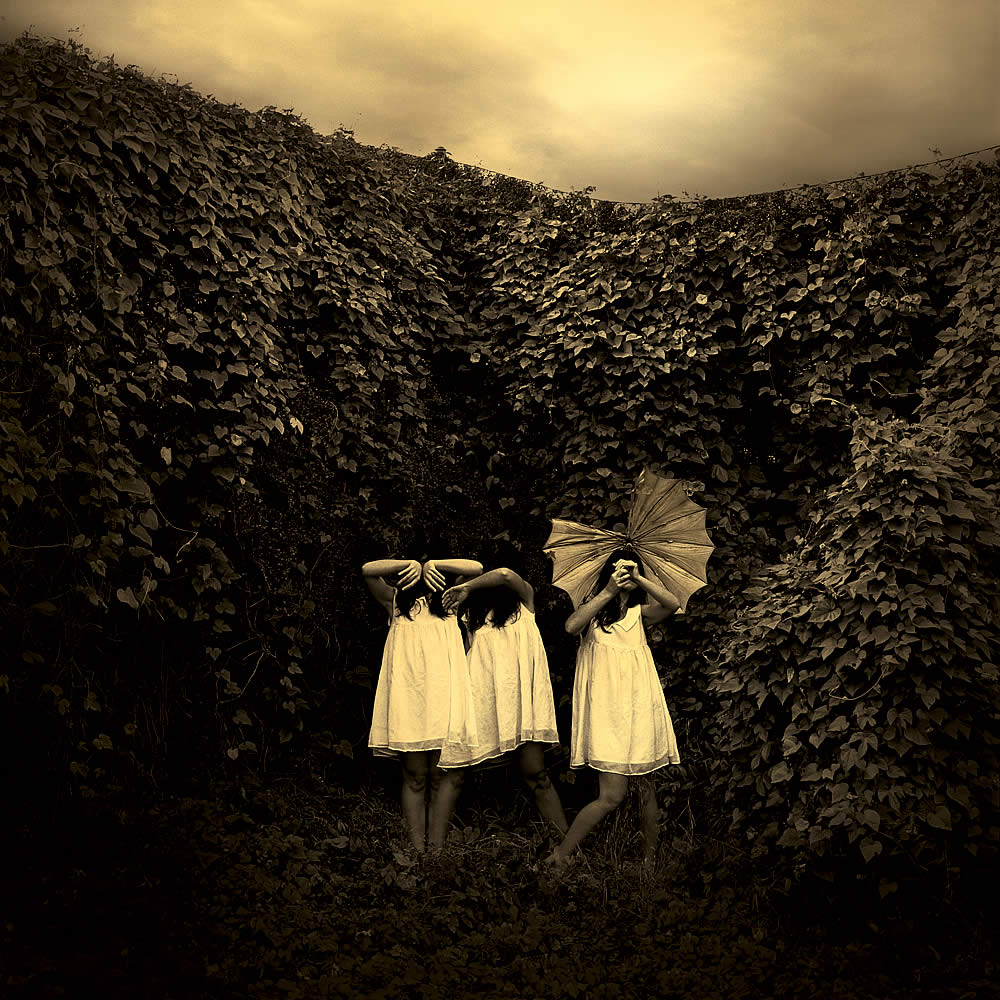
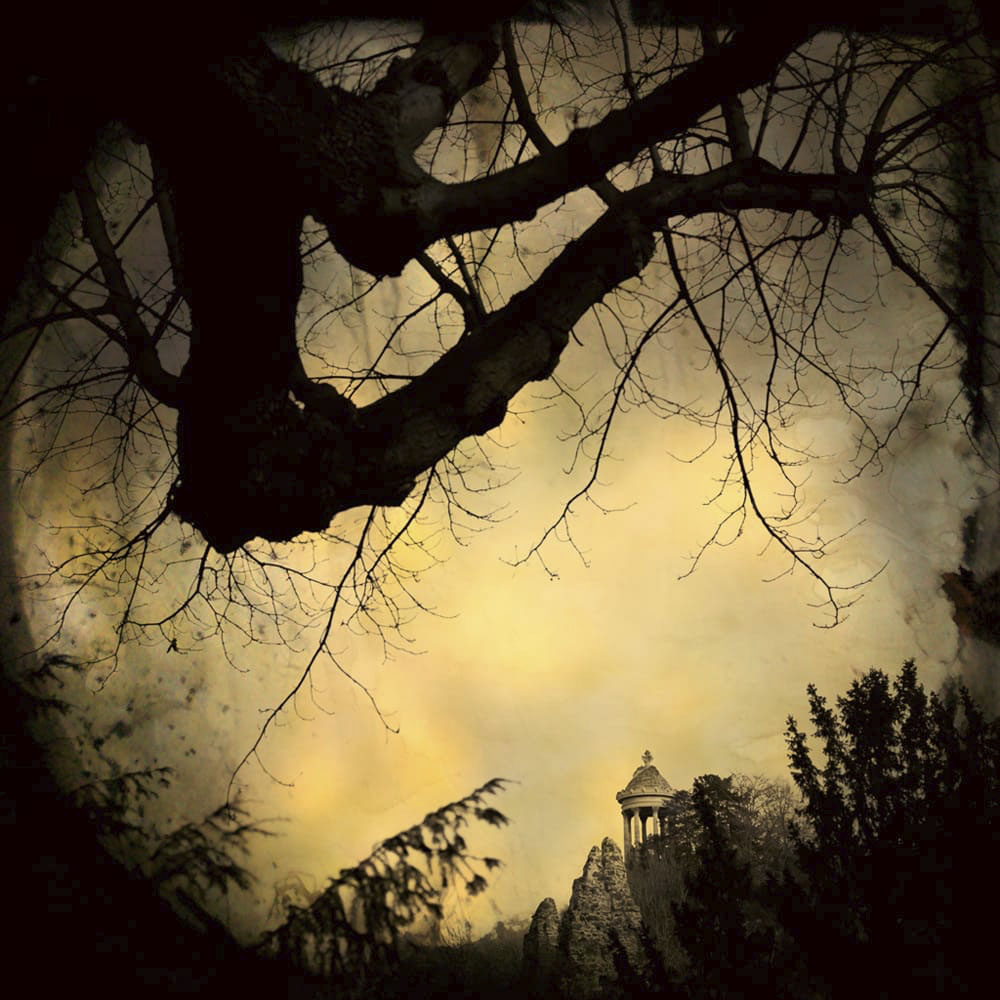
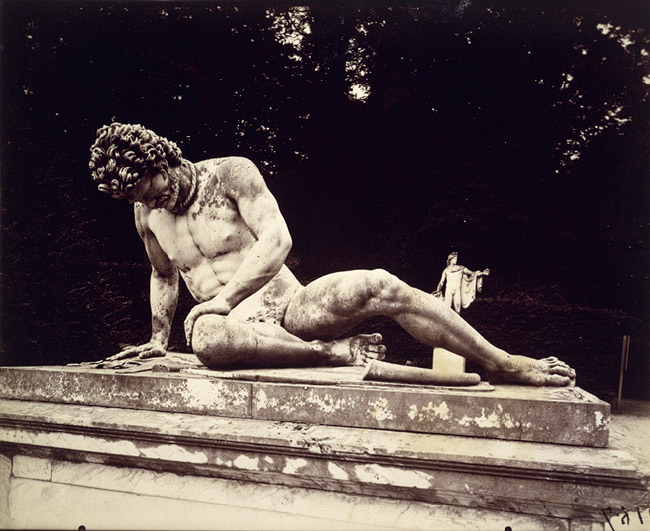
Ivy #3 (below) has echoes of the work of the American photographer Ralph Eugene Meatyard and his placement of masked people within built environments. In Burton’s photograph the broken umbrella becomes like insect wings, the faceless whiteness of the three-legged and three-armed creature cocooned among the overhanging predatory ivy, the luminescent sky offering the possibility of redemption. Other photographs such as Ivy #6 (below) and Ivy #7 with their wonderful colours, depth of field, heavy shadows and elegiac romantic feel have references to Eugene Atget and his photographs of the parks of Versailles (see photograph below).
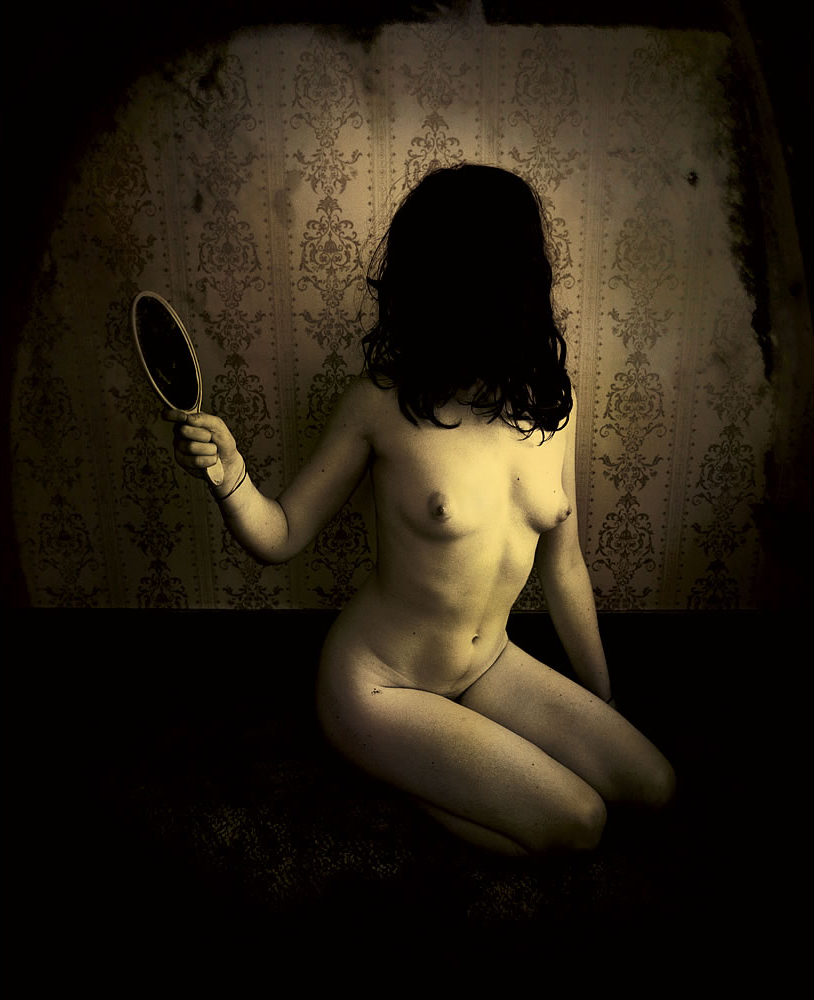
Still further references to the history of photography can be found in the photographs Ivy #9 and Ivy #10 (below). In Ivy #9 the intersection of the two female bodies through double exposure forms a slippage in (photographic) reality and the disappearance of original identity in the layering of the photographs and into the empty non-reflection of the mirror. This non-reflection is confirmed in Ivy #10 where the faceless nude woman holds a mirror with no reflection. These photographs remind me of the photographs of New Orleans prostitutes in the early years of the 20th century by the photographer Bellocq with their masked faces and the ornamentation of the wallpaper behind the figures (see below).
I feel that in these photographs with their facelessness and the non-reflection of the mirror investigate notions of ‘Theoria’ – a Greek emphasis on the vision or contemplation of God where theoria is the lifting up of the individual out of time and space and created being and through contemplative prayer into the presence of God.1 In fact the whole series of photographs can be understood through this conceptualisation – not just remembrances of past time, not a blind contemplation on existence but a lifting up out of time and space into the an’other’ dark but enlightening presence.
The greatest wonder of this series is that the photographs magically reveal themselves again and again over time. Despite (or because of) the references to other artists, the beauty of Burton’s work is that she has made it her own. The photographs have her signature, her voice as an artist and it is an informed voice; this just makes the resonances, the vibrations of energy within the work all the more potent and absorbing. I loved them.
Dr Marcus Bunyan
Many thankx to Karen Woodbury Gallery for allowing me to publish the photographs in the posting. Please click on the photographs for a larger version of the image.
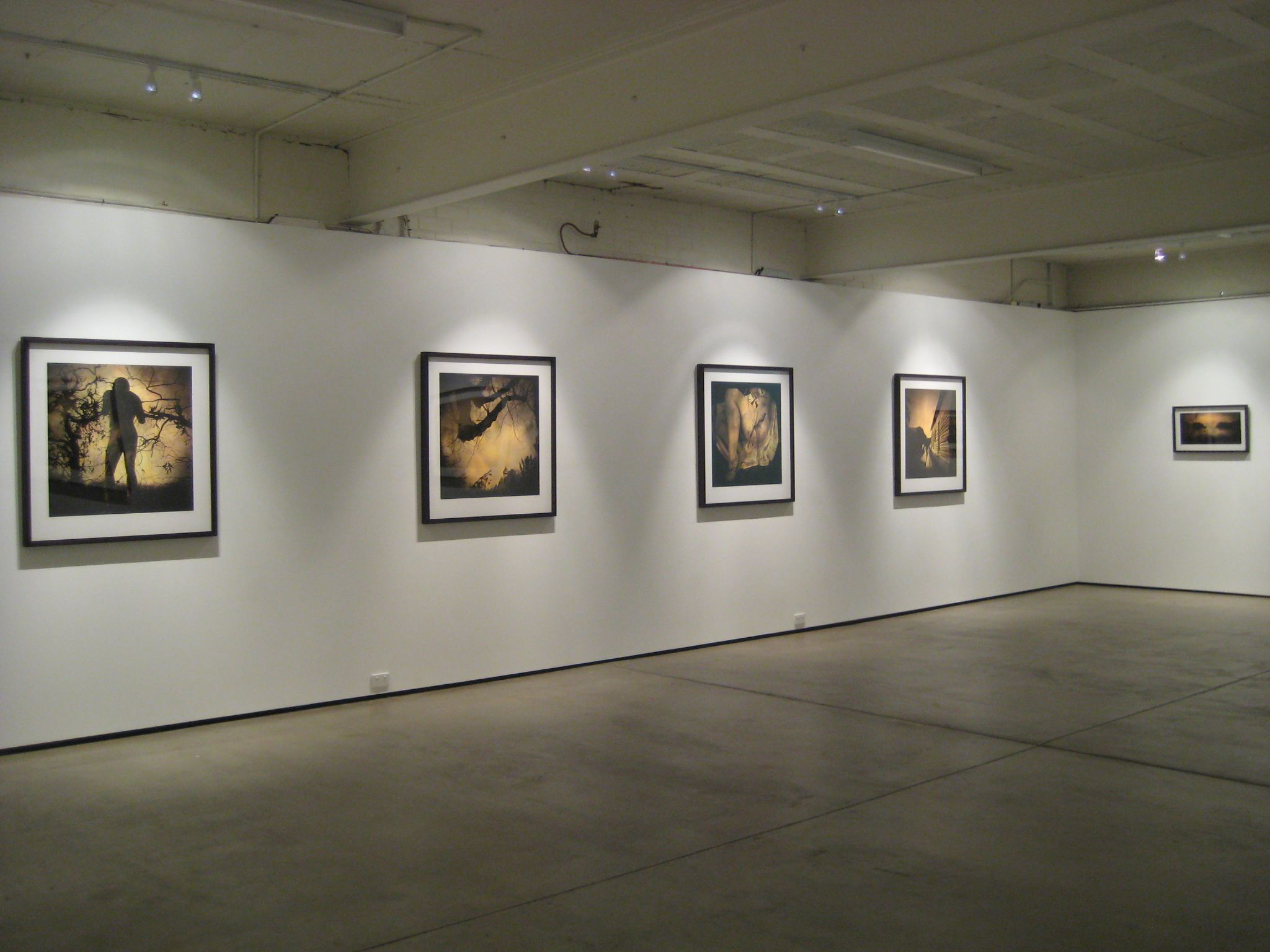
Installation views of Ivy by Jane Burton at Karen Woodbury Gallery, Melbourne Photos: Marcus Bunyan
Jane Burton (Australian, b. 1966) Ivy #2 2009 Pigment print 75 x 75cm
Jane Burton (Australian, b. 1966) Ivy #3 2009 Pigment print 75 x 75cm
Jane Burton (Australian, b. 1966) Ivy #5 2009 Pigment print 75 x 75cm
Jane Burton (Australian, b. 1966) Ivy #7 2009 Pigment print 75 x 75cm
Jane Burton’s exhibition, Ivy comprises a series of photographs captured in black and white. The final prints are rendered with a sepia, peach-champagne tone, with many displaying a mottled hand-coloured effect in faded pastels of pink and green. These works hope to suggest an era past, perhaps Victorian. The imagery is evocative of old picture postcards from Europe and old photographs from the pages of family albums.
Central to the series is an image of a house covered with ivy. Depicted as dark and malevolent, the house is ‘haunted’ by the traces and stains of family history, habitation, and the buried secrets of all that occurred within.
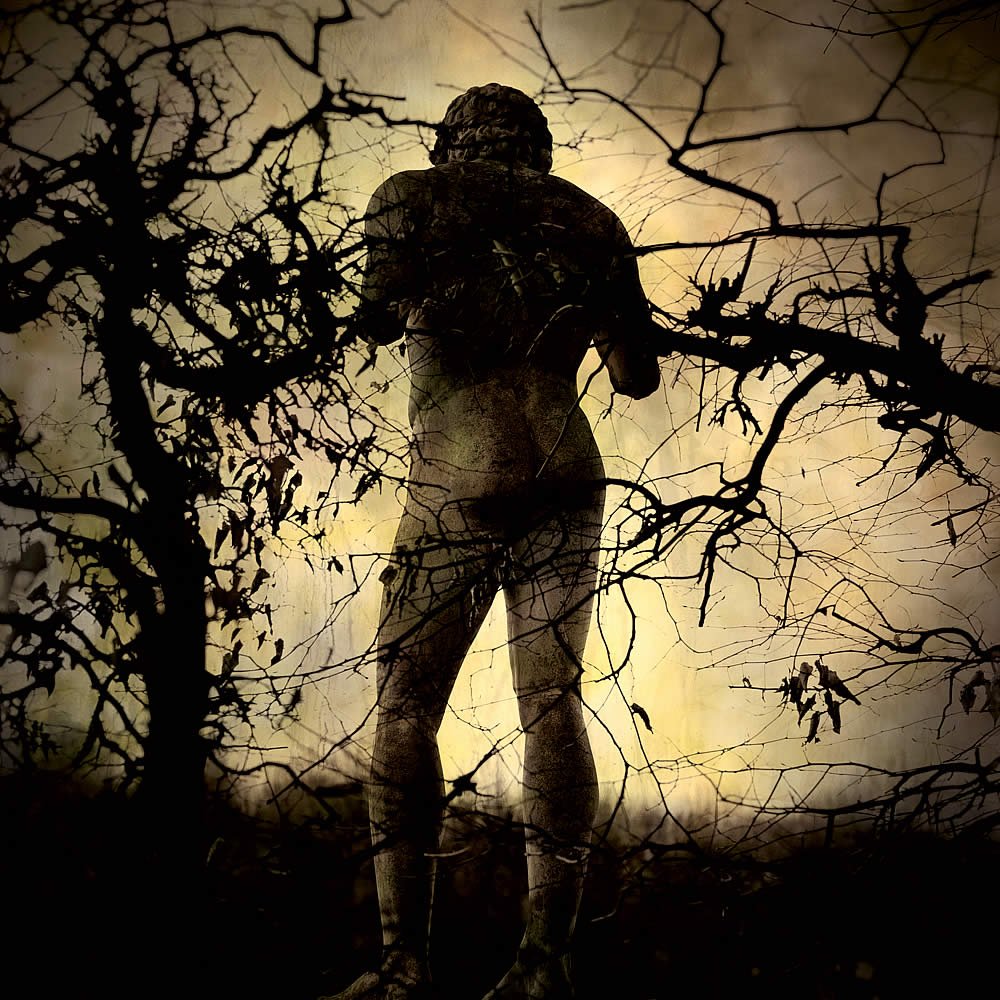
Anonymous female figures are seen in garden settings where the foliage is rampant and encroaching and the shadows deep. There is an air of enchantment perceived with unspecified darker edge. The figures are innocent and playful. The viewer is asked to question if the and girls aware of the camera capturing their activity? Are the poses staged or caught spontaneously. In another photograph, a dilapidated male statue stands broken and armless, the texture of stone worn, and bruised with dark lichen and moss.
In the interior photographs, several nudes are depicted in the style of 19th century French daguerreotype photographs. These vignetted images display women against wall-papered backdrops with theatrical props reminiscent of earlier works by Burton such as the series ‘The other side’ (2003). Posed suggestively for the camera and the viewer’s gaze, the subjects themselves are faceless, their own gaze and features hidden behind dark hair. The surface and texture of these particular works suggests the patina of decay and the damage and wear of time.
Text from the Karen Woodbury Gallery website [Online] Cited 20/09/2009. No longer available online
E. J. Bellocq (American, 1873-1949) Untitled [prostitute of Storyville, New Orleans] 1912
Jane Burton (Australian, b. 1966) Ivy #10 2009 Pigment print
Eugene Atget (French, 1857-1927) Versailles, France 1923 Albumen print
Jane Burton (Australian, b. 1966) Ivy #6 2009 Pigment print 75 x 75cm
Exhibition dates: 7th August – 27th September, 2009
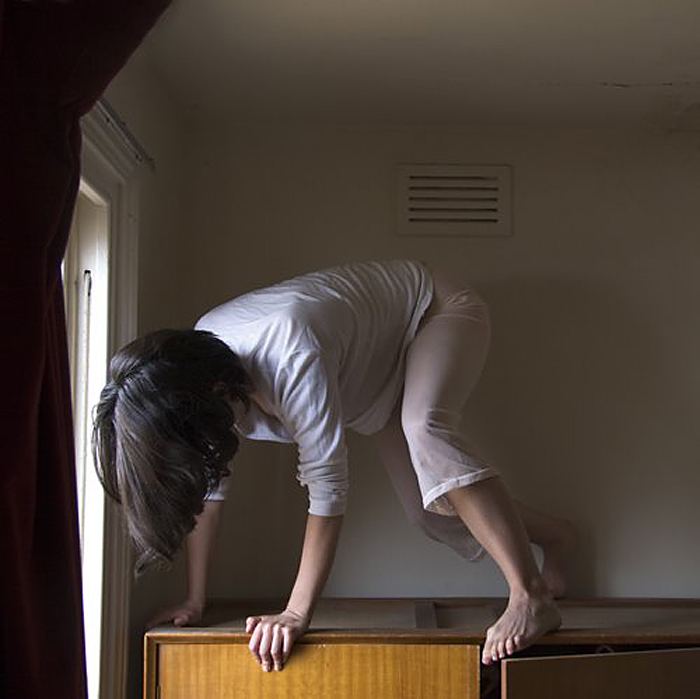
Clare Rae (Australian, b. 1981) Untitled 2009 From the series Climbing the Walls and Other Actions Pigment print on Museo Crane Silver Rag 50 x 50cm
“To withdraw into one’s corner is undoubtedly a meager expression. But despite its meagerness, it has numerous images, some, perhaps, of great antiquity, images that are psychologically primitive. At times, the simpler the image, the vaster the dreams.”
Gaston Bachelard.1
Usually I am not a great fan of ‘faceless’ photography as I call it but this series of work, Climbing the Walls and Other Actions (2009) by the artist Clare Rae is even better than the series by Tracey Moffatt in the previous review.
Exploring activities of the female body in closed domestic spaces these psychologically intense photographs push the physical boundaries of play through the navigation of space. As a child has little awareness about the inherent dangers of a seemingly benign environment so Rae’s self-portraits turn the lens on her conceptualisation of the inner child at play and the activating of the body in and through space. As the artist herself says, “the way children negotiate their surroundings and respond with an unharnessed spatial awareness, which I find really interesting when applied to the adult body.”2
Continuing the themes from the last review, that of spaces of intimacy and reverberation, these photographs offer us fragmentary dialectics that subvert the unity of the archetype, the unity of the body in space. Here the (in)action of the photographic freeze balances the tenuous positions of the body: a re-balancing of both interior and exterior space.
As Noel Arnaud writes, “Je suis l’espace ou je suis” (I am the space where I am). Further, Bachelard notes “… by changing space, by leaving the space of one’s usual sensibilities, one enters into communication with a space that is psychically innovating.”3
In these photographs action is opposed with stillness, danger opposed with suspension; the boundaries of space, both of the body and the environment, the interior and the exterior, memory and dream, are changed.
Space seems to open up and grow with these actions to become poetic space – and the simplicity of the images aids and abets the vastness of our dreams. This change of concrete space does not change our place, but our nature. Here the mapping of self in space, our existence, our exist-stance (to have being in a specified place whether material or spiritual), is challenged in the most beautiful way by these walls and actions, by these creatures, ambiguities, photographs.
Henri Lefebvre insightfully observes, “… each living body is space and has space: it produces itself in space and it also produces that space.”4
I am the (sublime) space where I am, that surrounds me with countless presences.
Dr Marcus Bunyan
1/ Bachelard, Gaston. The Poetics of Space. Boston: Beacon Press, 1969, p. 137
2/ Email from the artist 7th September, 2009
3/ Bachelard, Gaston. The Poetics of Space. Boston: Beacon Press, 1969, p. 206
4/ Lefebvre, Henri. The Production of Space. Oxford: Basil Blackwell, 1974, p. 170
All images by Clare Rae from the series Climbing the Walls and Other Actions 2009. Many thankx to Clare for allowing me to publish them.
Clare Rae (Australian, b. 1981) Untitled 2009 From the series Climbing the Walls and Other Actions Pigment print on Museo Crane Silver Rag 50 x 50cm
Clare Rae (Australian, b. 1981) Untitled 2009 From the series Climbing the Walls and Other Actions Pigment print on Museo Crane Silver Rag 50 x 50cm
Clare Rae (Australian, b. 1981) Untitled 2009 From the series Climbing the Walls and Other Actions Pigment print on Museo Crane Silver Rag 50 x 50cm
Climbing the Walls and Other Actions is primarily concerned with visually representing my experience of femininity, whilst also exploring aspects of representation that relate to feminism. The project considers the relationship between the body and space by including formal elements within each frame such as windows and corners. Through a sequence of precarious poses I explore my relationship with femininity, an approach born of frustration. I use the body to promote ideas of discomfort and awkwardness, resisting the passivity inherent in traditional representations of femininity. The images attempt to de-stabilise the figure, drawing tension from the potential dangers the body faces in these positions. Whilst the actions taking place are not in themselves particularly dangerous, the work demonstrates a gentle testing of physical boundaries and limitations via a child-like exploration of the physical environment.
Text from the Centre for Contemporary Photography website [Online] Cited 15/09/2009. No longer available online
Clare Rae (Australian, b. 1981) Untitled 2009 From the series Climbing the Walls and Other Actions Pigment print on Museo Crane Silver Rag 50 x 50cm
Clare Rae (Australian, b. 1981) Untitled 2009 From the series Climbing the Walls and Other Actions Pigment print on Museo Crane Silver Rag 50 x 50cm
Centre for Contemporary Photography Level 2, Perry St Building Collingwood Yards, Collingwood Victoria 3066
Hill & Adamson (Scottish, active 1843-1848) [Lane and Peddie as Afghans] 1843 Salted paper print from a paper negative 20.6 × 14.3cm (8 1/8 × 5 5/8 in.) The J. Paul Getty Museum
The team of Hill and Adamson initially began making dramatic portrait photographs as studies for one of Hill’s composite paintings. They also produced costume studies, including this scene in which Arabic scholar Mr. Lane and Mr. (Peddie) Redding appear in foreign garb.
What a fabulous selection of photographs to illustrate a fascinating “scene”. I love staged, theatrical, constructed, conceptual, collaged, surreal, imaginary, narrative photography.
Dr Marcus Bunyan
Many thankx to the J. Paul Getty Museum for allowing me to publish the photographs in the posting. Please click on the photographs for a larger version of the image.
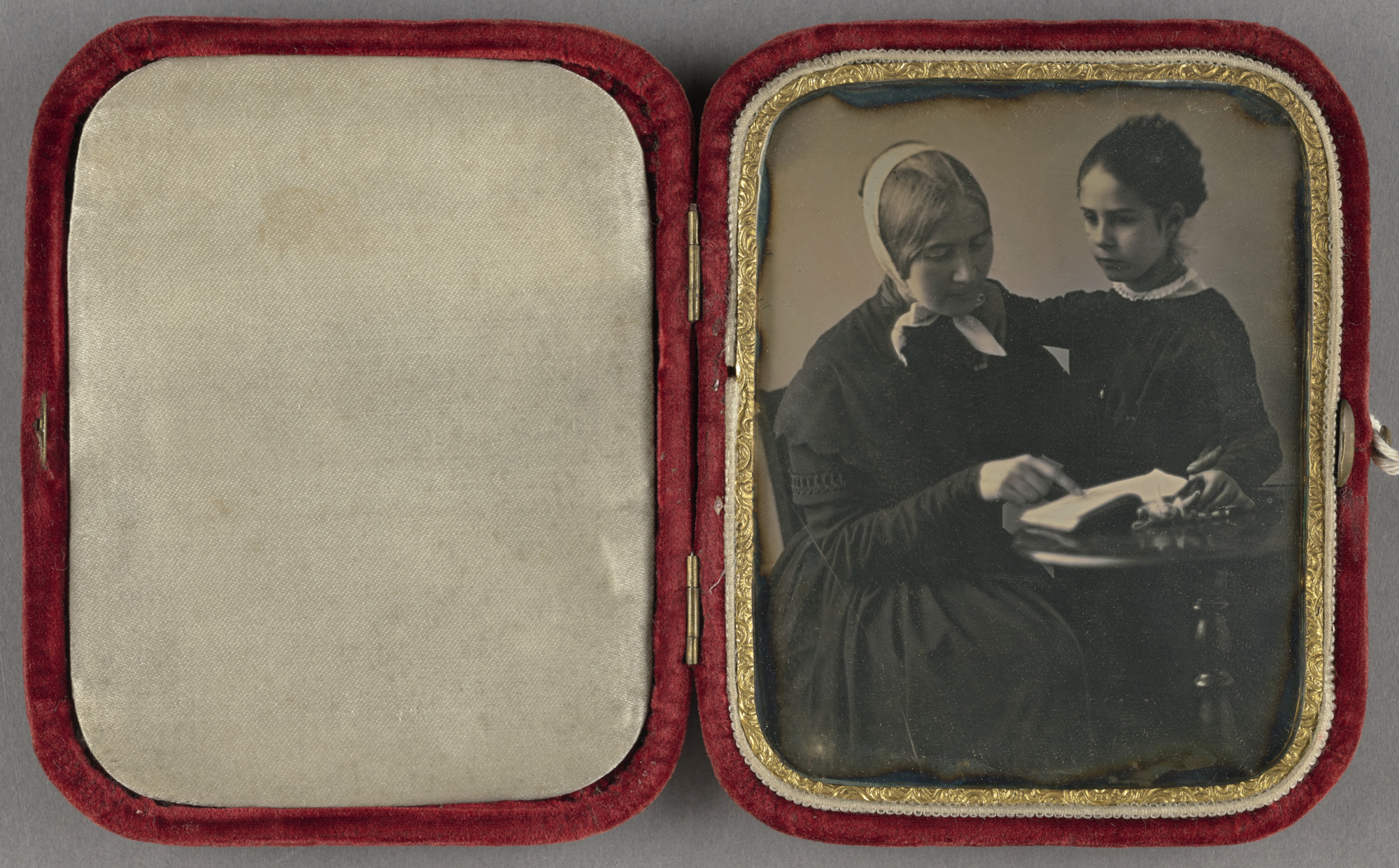
Unknown maker, French Woman Reading to a Girl c. 1845 Daguerreotype 9.1 × 7.1cm (3 9/16 × 2 13/16 in.) The J. Paul Getty Museum
Through a skilful manipulation, the light coming from above and behind the figures casts the faces of mother and child in a softly modulated half-shadow. Their close grouping and familiar, intimate gestures evoke tenderness. The reflected light on the woman’s pointing finger and on the glowing white pages of the open book forms a strong visual triangle, drawing the viewer’s eye and serving to integrate and balance the composition.
Oscar Gustave Rejlander (British born Sweden, 1813-1875) The Infant Photography Giving the Painter an Additional Brush c. 1856 Albumen silver print 6 × 7.1cm (2 3/8 × 2 13/16 in.) The J. Paul Getty Museum
Oscar Rejlander’s photograph could be read as a metaphor of his own career. The additional “brush” or image-making tool provided by photography to painters was evident from the beginnings of the medium. Many early practitioners arrived at photography from painting, as did Rejlander. Photographs were often thought of and used as sketching tools for painters. Although photographs never managed to signal the death of painting as initially predicted, they did frequently assume the function that drawing had traditionally held in relation to painting.
Compositionally, this is an unusual photograph. Rejlander employs a narrative device from painting: the use of figures, or parts of figures, as allegorical representations for ideas. A very young child represents the infant medium of photography. The Painter appears only as a hand extending into the frame at the upper left, although the traditional arts are also represented by the sculpture reproduction in the lower left corner. The Infant Photography, identified by the camera on which the child supports himself, faces away from the camera, his features totally obscured. The mirror behind the child gives a clear reflection of Rejlander at his camera, making this image.
Roger Fenton (English, 1819-1869) Contemplative Odalisque 1858 Albumen silver print 35.9 × 43.8cm (14 1/8 × 17 1/4 in.) The J. Paul Getty Museum Gift of Professors Joseph and Elaine Monsen
Three years after traveling in the Crimea, Roger Fenton made a series of Orientalist photographs in his London studio using props gathered during his travels and non-Eastern models. Orientalism refers to just such romanticised depictions of imagined scenes of Muslim culture in the Ottoman Empire and its territories in the Near East and North Africa.
Orientalist scenes were more often fiction than fact. Cultural biases and misunderstandings were laid down on paper or canvas and frequently became the only source of information on the subjects depicted. When a group of these Orientalist photographs was exhibited in 1858, one reviewer described them as “truly representing some phases in the life of this interesting people.”
But not everyone so easily accepted Fenton’s images at face value; a more astute critic called for “the necessity of having real national types as models.” The same model shown here also appears as “Nubian” and “Egyptian” in other photographs by Fenton. This photograph may have originally been exhibited with the title The Reverie. The odalisque, meaning a slave or concubine in a harem, poses upon her sofa. Barefoot, blouse open, her surroundings convey a sensual disarray that conforms to an Orientalising fantasy of the available woman.
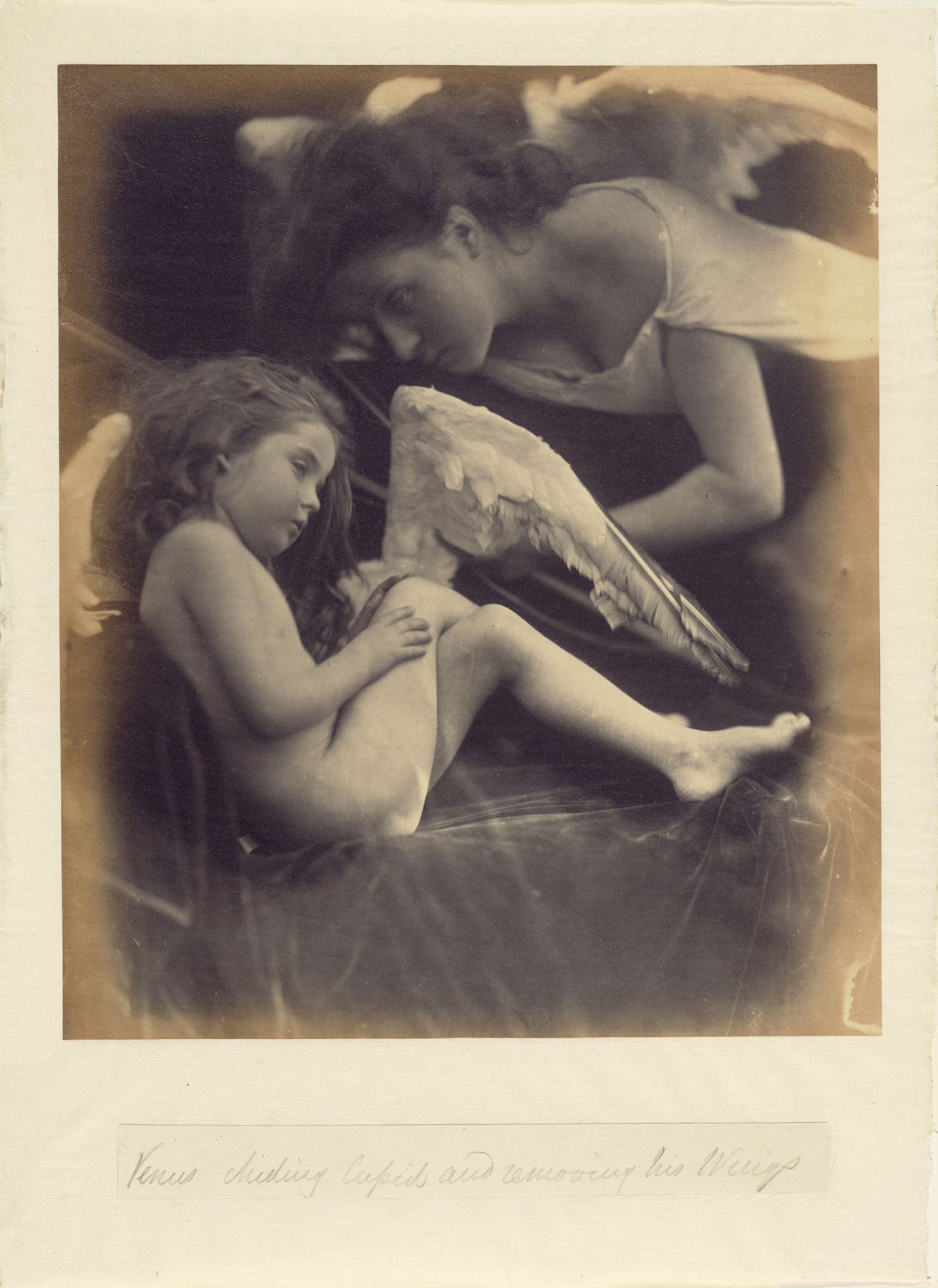
Julia Margaret Cameron (British, born India, 1815-1879) The Rosebud Garden of Girls June 1868 Album silver print 29.4 × 26.7cm (11 9/16 × 10 1/2 in.) The J. Paul Getty Museum
As evolutionary science and increasing secularism transformed the way Victorians understood the world, Cameron remained a devout Christian. She photographed influential public figures of her day as well as the women of her household, casting them in allegories of literary and religious subjects. Like her artistic contemporaries, the Pre-Raphaelite painters, who modelled their work on medieval religious and mythological art, Cameron intended her photographs to evince a connection between the spiritual and the natural realms.
Julia Margaret Cameron (British, born India, 1815-1879) Venus Chiding Cupid and Removing His Wings 1872 Album silver print 32.4 × 27.3cm (12 3/4 × 10 3/4 in.) The J. Paul Getty Museum
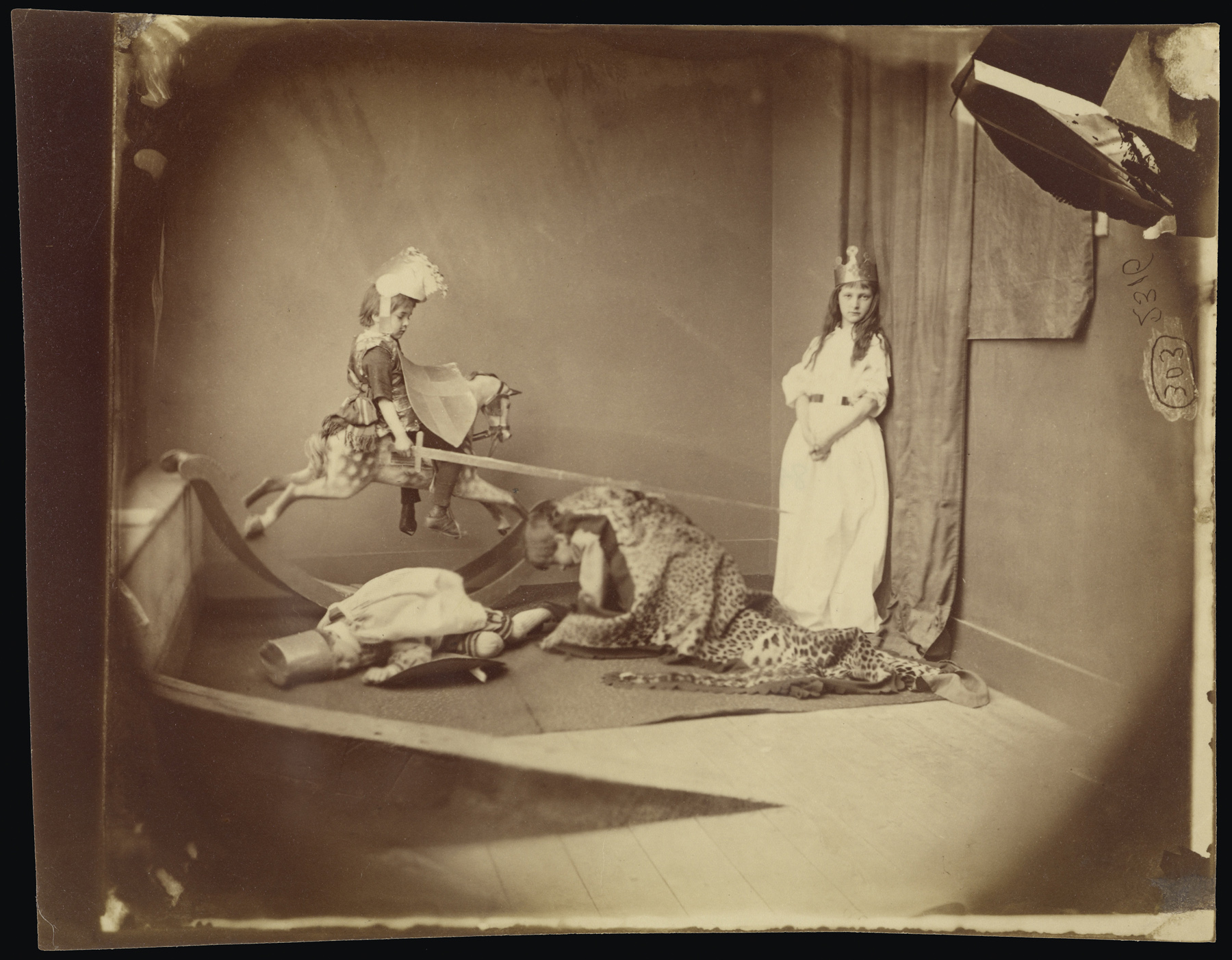
Lewis Carroll (British, 1832-1898) Saint George and the Dragon June 26, 1875 Albumen silver print 12.2 × 16.2cm (4 13/16 × 6 3/8 in.) The J. Paul Getty Museum
Like Alice’s Adventures in Wonderland and his other books, Carroll’s photographs are fantasies starring the children of his friends. In this production, the Kitchin siblings enacted the romantic legend of Saint George, the patron saint of England, who slayed a child-eating dragon before it devoured a princess. George later married the rescued princess and converted her pagan town to Christianity. Using crude stagecraft to reference key plot points, Carroll condensed the entire legend into a single scene in which the princess appears as both damsel in distress and bride.
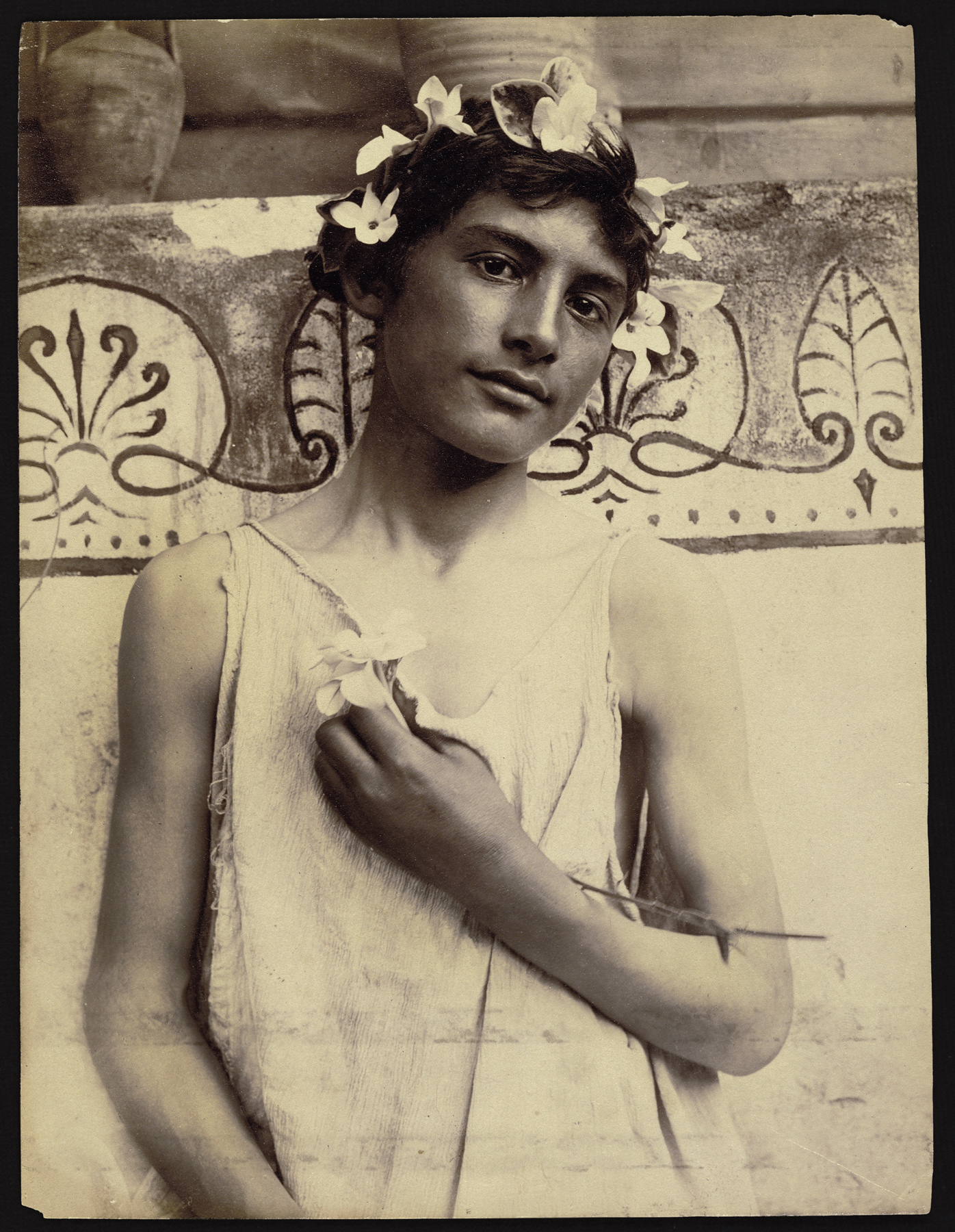
Baron Wilhelm von Gloeden (German, 1856-1931) Untitled [Two Male Youths Holding Palm Fronds] c. 1885-1905 Albumen silver print 23.3 × 17.5cm (9 3/16 × 6 7/8 in.) The J. Paul Getty Museum
Baron Wilhelm von Gloeden (German, 1856-1931) L’Offerta (The Offering) 1902 Albumen silver print 22.4 × 16.8cm (8 13/16 × 6 5/8 in.) The J. Paul Getty Museum
Von Gloeden left Germany and settled in a coastal town in Sicily, where he took up photography. His subjects were young native boys, whom he often photographed nude in classical compositions. Rather than reenact specific historical or literary scenes, von Gloeden mused nostalgically on the ancient Greek and Roman ancestry of his attractive models.
Guido Rey (Italian, 1861-1935) [The Letter] 1908 Platinum print 21.9 × 17cm (8 5/8 × 6 11/16 in.) The J. Paul Getty Museum
A deliberate homage to an earlier artistic style that Guido Rey admired, the composition derives from a painting made by Dutch artist Jan Vermeer in the 1600s. In this posed scene, a young suitor bearing flowers approaches a woman seated at her writing desk, with her pen poised in mid-air as she turns to greet him. A leaded glass window opens into her room, providing a natural light source for the photograph’s illumination. The mounted corner clock, decorative jar on the desk, and painting on the wall were Rey’s everyday household items or objects borrowed from friends, carefully chosen for period accuracy. Likewise, a seamstress who lived in the attic of Rey’s home in Turin created the costumes to his specifications.
Photography, although commonly associated with truthfulness, has been used to produce fiction since its introduction in 1839. The acceptance of staging, and the degree of its application, has varied greatly depending on the genre and the historical moment, but it has persisted as an artistic approach. The photographs in this exhibition, drawn exclusively from the J. Paul Getty Museum’s collection, make no pretence about presenting the world as it exists; instead, they are the productions of directors and actors who rely on stagecraft and occasional darkroom trickery to tell stories. Spanning photography’s history and expressing a range of sentiments, the images in this exhibition are inspired by art history, literature, religion, and mainstream media.
Like Alice’s Adventures in Wonderland and his other books, Lewis Carroll’s photographs are fantasies starring his friends’ children. In the image below, children enact the mythological story of Saint George, the patron saint of England, slaying a child-eating dragon before it could devour a princess.
Life Imitating Art
Well-represented in this exhibition are tableaux vivants (living pictures), inspired by the popular Victorian parlour game in which costumed participants posed to resemble famous works of art or literary scenes. The genre paintings of 17th-century Dutch masters Johannes Vermeer and Pieter de Hooch fascinated Guido Rey. Not self-conscious about being slavish to the past, he carefully studied the paintings and then arranged similar tableaux for his camera. His photographs captured equally serene domestic scenes and mimicked the minute architectural details of 17th-century interiors, such as the leaded-glass windowpanes and the checkerboard floor.
Playing Dress Up
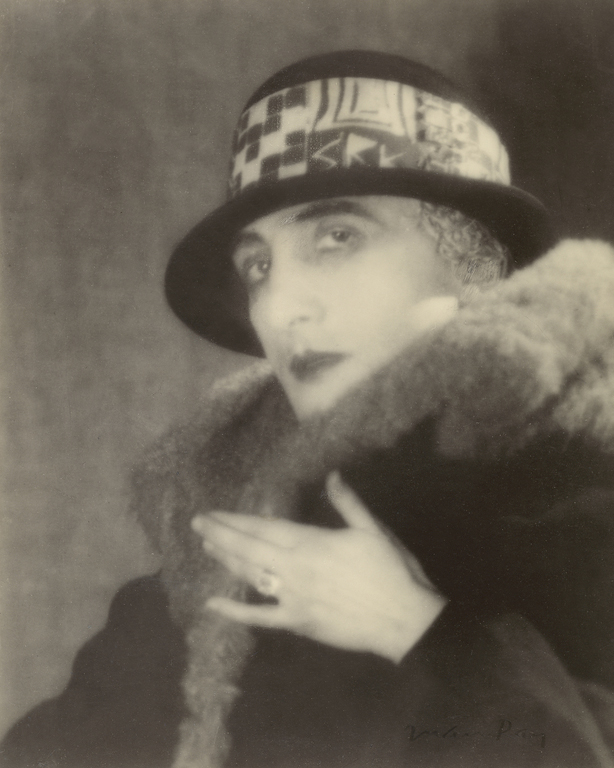
The exhibition also includes costume studies of people posing as literary characters and self-portraits of artists pretending to be other people. American painter and photographer Man Ray and the French artist Marcel Duchamp met in New York in 1915, and they began a playful, iconoclastic collaboration that resulted in the photograph (above), among others. Influenced by Dadaism, a cultural movement that rejected reason and logic in favour of anarchy and the absurd, their work embraced games of chance, performance, and wordplay. Here an irreverent Duchamp appears in women’s clothing as his alter ego, Rrose Sélavy, a pun on the French pronunciation “Eros, c’est la vie” (Sex, that’s life).
Imaginary Subjects
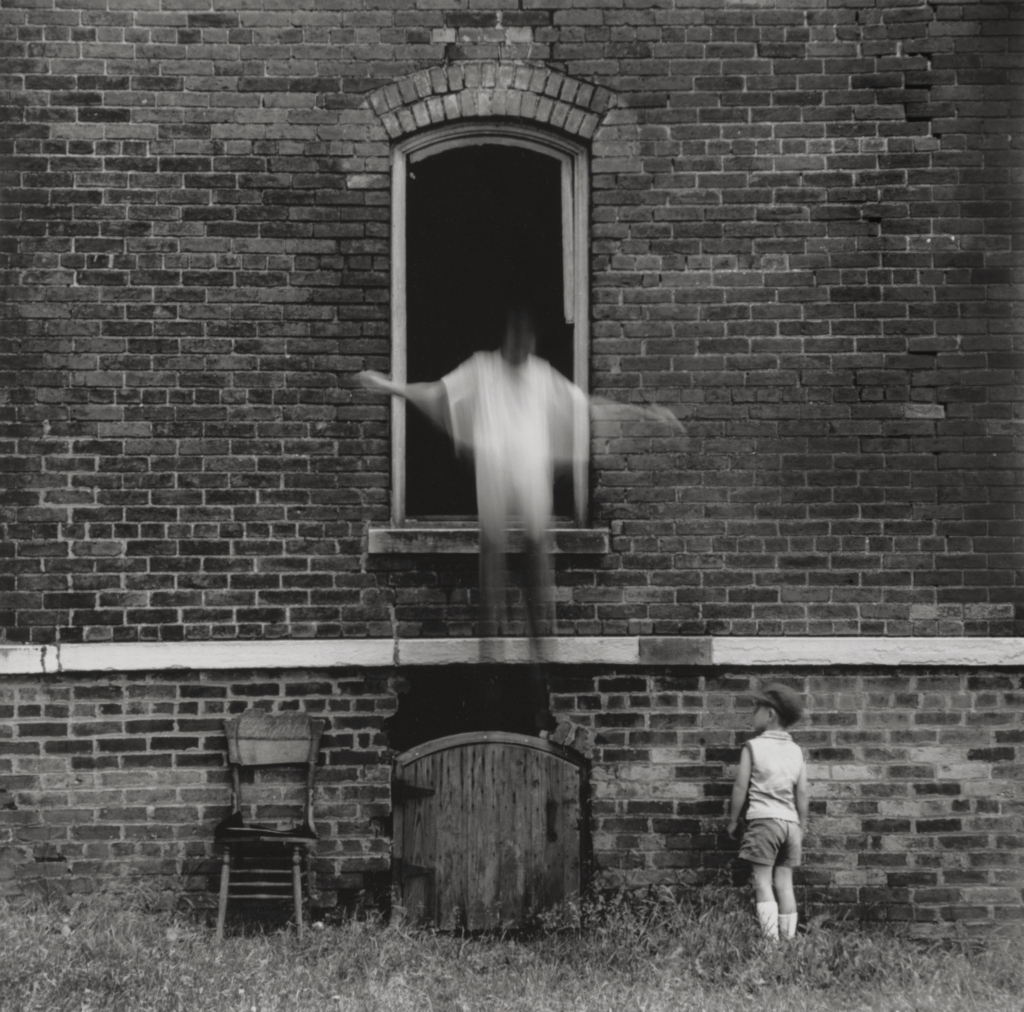
A number of photographs in the exhibition explore the medium’s capacity to visualise subjects of the imagination by using darkroom trickery to manipulate prints. An optician and family man, Ralph Eugene Meatyard photographed his children, friends, and neighbours enacting dramas in suburban backyards and abandoned buildings near his Lexington, Kentucky, home. He often used experimental techniques, such as multiple exposures and blurred motion. Uncanny details imbue Meatyard’s otherwise ordinary vernacular scenes with the qualities of a dream or supernatural vision.
Theatricality as a Critical Strategy
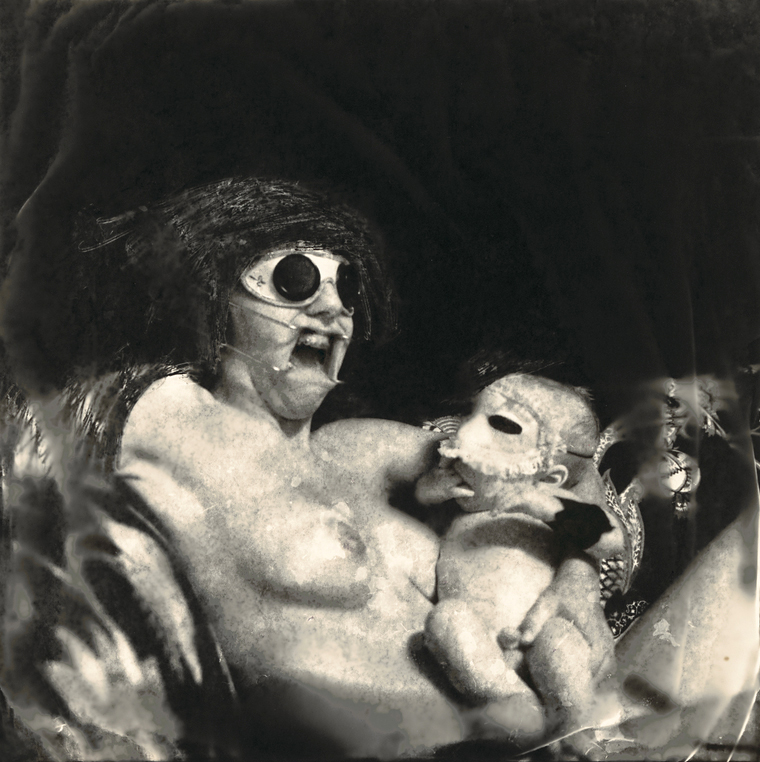
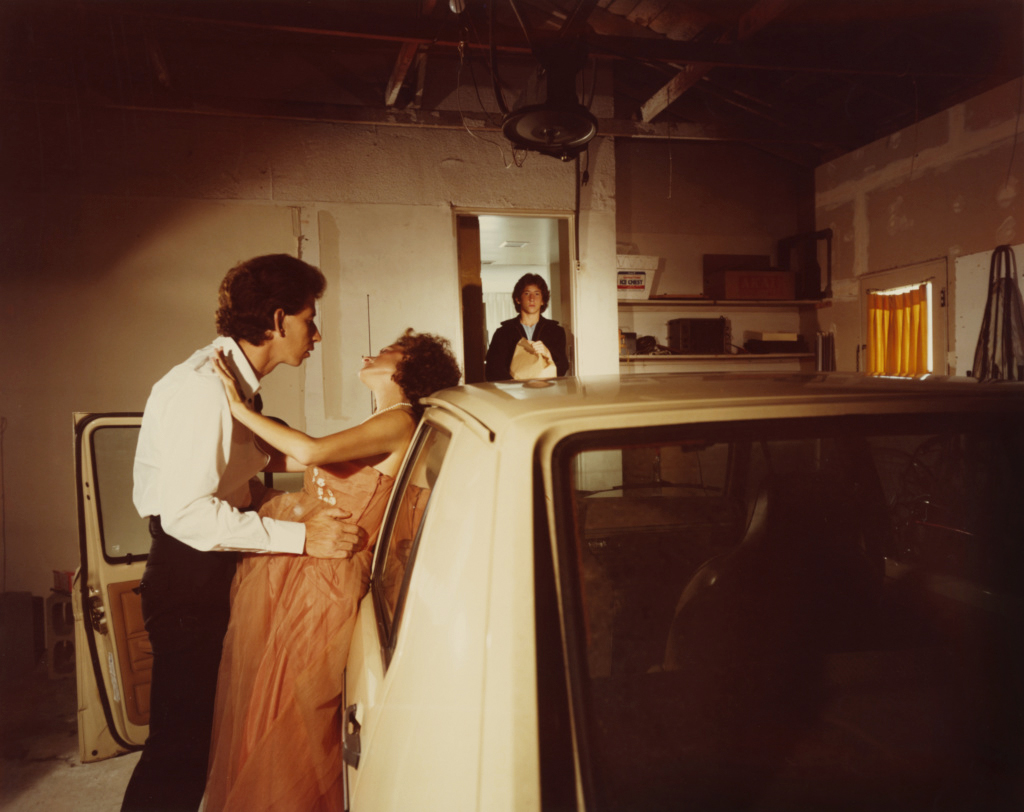
In recent decades there has been renewed interest in theatricality among contemporary photographers whose highly artificial scenes critique mainstream media and representation. In her series Family Docudrama Eileen Cowin blurs the boundaries between truth and fiction, and private behaviour and public performance. Drawing equally from family snapshots and soap operas, Cowin presents staged domestic scenes in which she and members of her family, including her identical twin sister, perform as actors. In these ambiguous, open-ended narratives, dramatic moments are exaggerated, and the camera’s glare is ever present.”
When Man Ray moved to Paris, he was greeted by his friend and artistic compatriot Marcel Duchamp, who introduced him to members of the Dada circle of writers and artists. The two men had collaborated in a number of creative endeavours in New York, including the creation of a female alter-ego for Duchamp named Rrose Sélavy (a pun on the French pronunciation Eros, c’est la vie “Sex, that’s life”). Man Ray photographed Duchamp several times as Rrose Sélavy.
Judging from his inclusion of this image in other photographic compositions, Man Ray must have considered Tears one of his most successful photographs. A cropped version of it with a single eye also appears as the first plate in a 1934 book of his photographs.
Like the emotive expression of a silent screen star in a film still, the woman’s plaintive upward glance and mascara-encrusted lashes seem intended to invoke wonder at the cause of her distress. The face belongs to a fashion model who cries tears of glistening, round glass beads; the effect is to aestheticise the sentiment her tears would normally express. Man Ray made this photograph in Paris around the time of his breakup with his lover Lee Miller, and the woman’s false tears may relate to that event in the artist’s life.
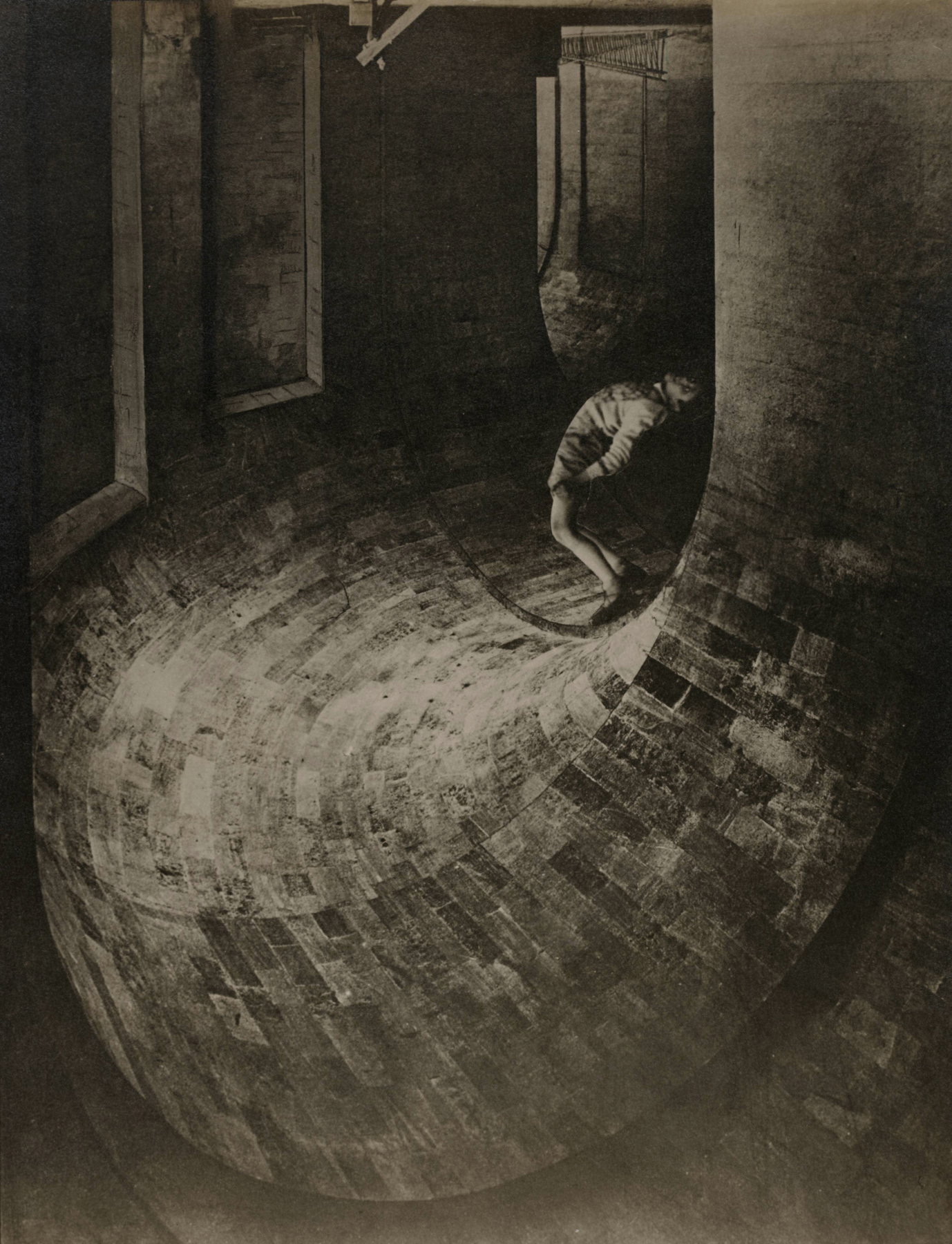
In this picture Dora Maar constructed her own reality by joining together several images and rephotographing them. The seamlessness of the photographic surface makes this construction believable and leaves the viewer wondering about the strange world the figure inhabits. On closer examination, the viewer may notice that the floor is an upside-down ceiling vault, that the bricked-in windows are drawn in by hand, and that the figure was added separately. Despite these discoveries, the picture resists logical interpretation.
An optician and family man, Meatyard photographed his children, friends, and neighbours enacting dramas in the suburban backyards and abandoned buildings of Lexington, Kentucky. He often used experimental techniques, such as multiple exposures and blurred motion. Uncanny details imbue Meatyard’s otherwise ordinary vernacular scenes with the qualities of a dream or supernatural vision.
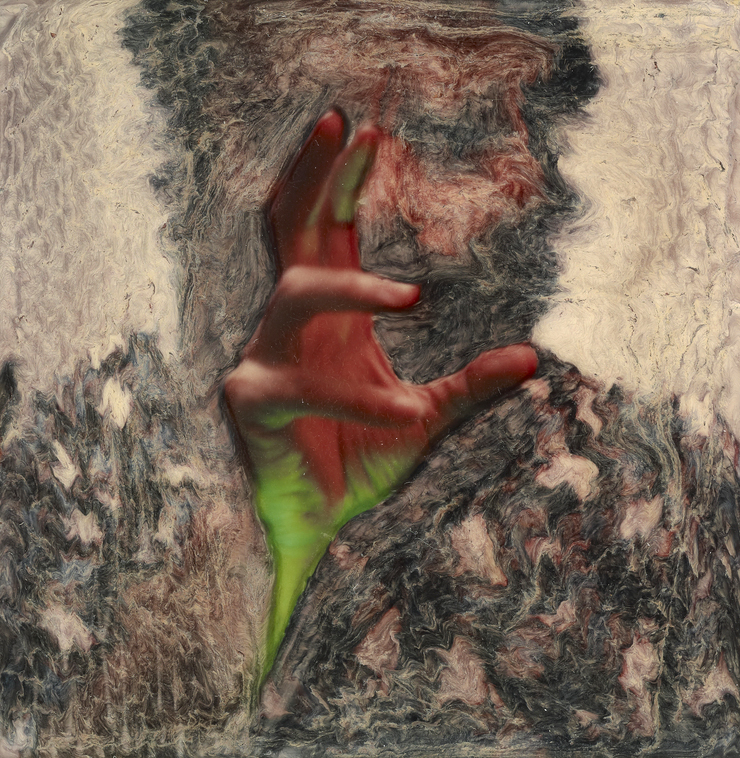
In this self-portrait, Lucas Samaras reaches out as if trapped in the photograph. In sharp contrast to the indistinct background of his upper body, his crisply defined fingers curl forward, as if he is searching for a way to transcend a two-dimensional world of his own creation. An overriding sense of claustrophobia defines this image, underscored by the small scale of the Polaroid print. Samaras, a hermit-like person, made many Polaroid self-portraits like this in the 1970s as a means of observing himself. The images are open to a wide range of interpretation. Here, Samaras may have tried to convey the sense of isolation he experiences as a reclusive person.
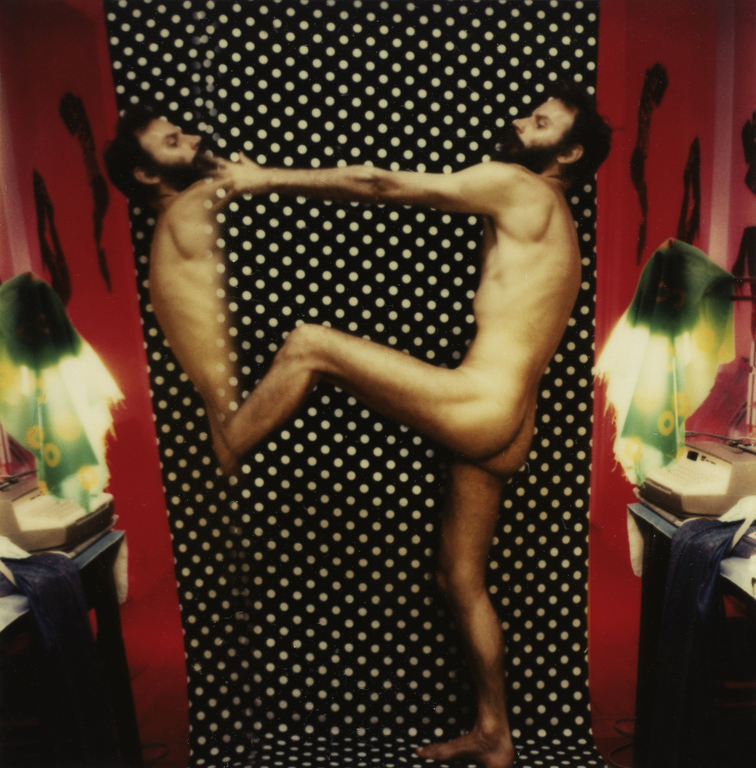
As if engaging in a tug-of-war with himself, Lucas Samaras confronts and struggles with his own reflection in this self-portrait. The leg-less reflection is incomplete, however, giving the impression of a deformed adversary. A monochromatic polka-dot background and a vibrant green and red border act as a stage for this dramatic struggle.
Samaras’s Photo-Transformations, which he made in the 1970s as a means to examine various facets of himself, could be understood as visual manifestations of internal conflict. They are complex psychological investigations that, according to at least one critic, illustrate one person’s efforts toward spiritual healing.
Submerged in narcissism, nothing remains… but “me and myself, I am my own audience, the other, contemplating my existence.”
Made in the 1970s as a means of studying himself, Lucas Samaras’s photographs illustrate the internal struggle that can occur between conflicting aspects of one personality. Bent over a captain’s chair, Samaras rests his head as if he is at the guillotine. Another blurry form hovers above, about to violently attack the submissive figure.
Samaras made his Photo-Transformations, a series of self-portraits, with SX-70 Polaroid film. Still wet, the film’s emulsions could be manipulated to alter the finished image. He used straight pins, rubber erasers, and other simple tools to “draw” into the developing surface. For this portrait, he created a diamond pattern over and around the dominant figure that underscores the frenzy of motion.
In her series Family Docudrama Cowin blurs the boundaries between truth and fiction, and private behaviour and public performance. Drawing equally from family snapshots and soap operas, she presents staged domestic scenes in which she and members of her family, including her identical twin sister, perform as actors. In these ambiguous, open-ended narratives, dramatic moments are exaggerated and the camera’s glare is ever present.
The J. Paul Getty Museum 1200 Getty Center Drive Los Angeles, California 90049
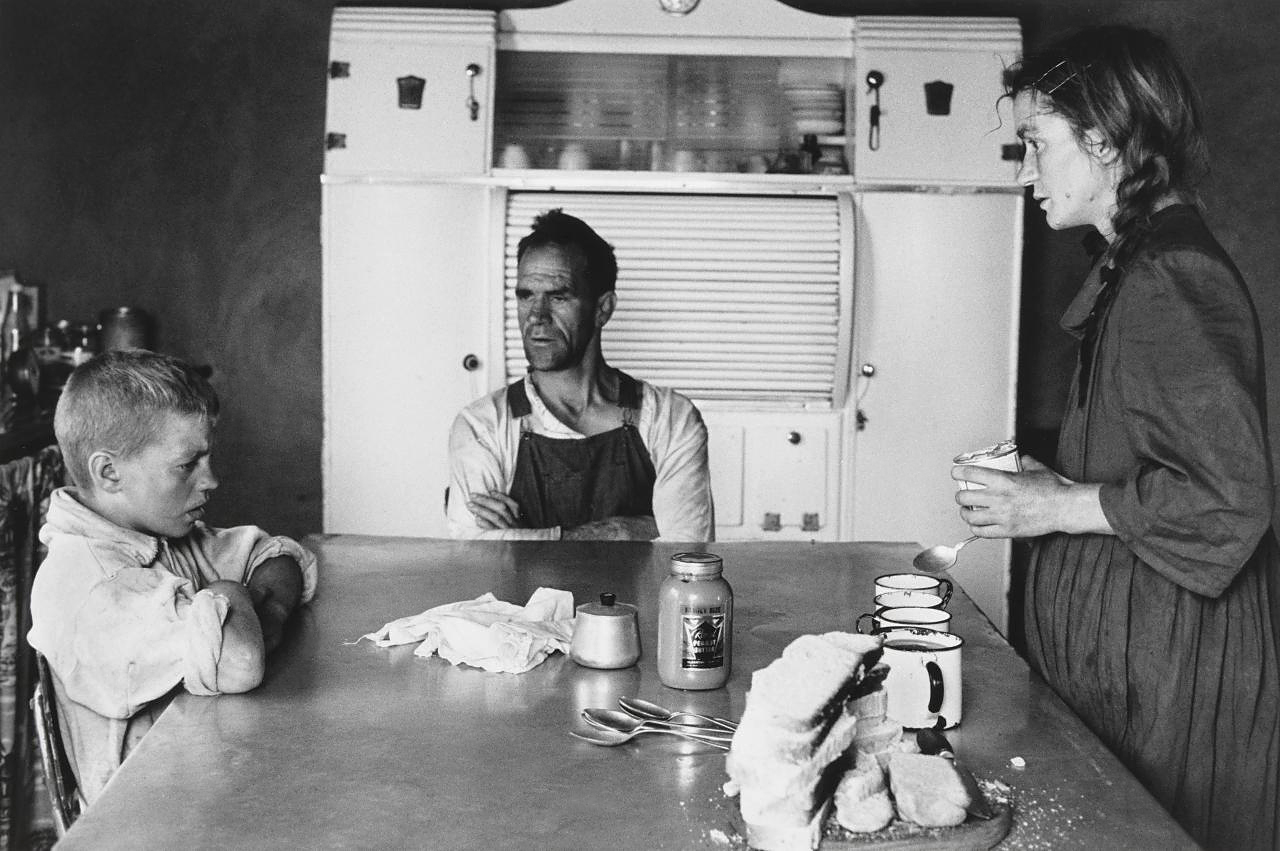
David Goldblatt (South African, 1930-2018) Family at Lunch, Wheatlands Plots, Randfontein, September 1962 1962 Gelatin silver print
One of the greats.
Marcus
Many thankx to the New Museum for allowing me to publish the photographs in the posting. Please click on the photographs for a larger version of the image.
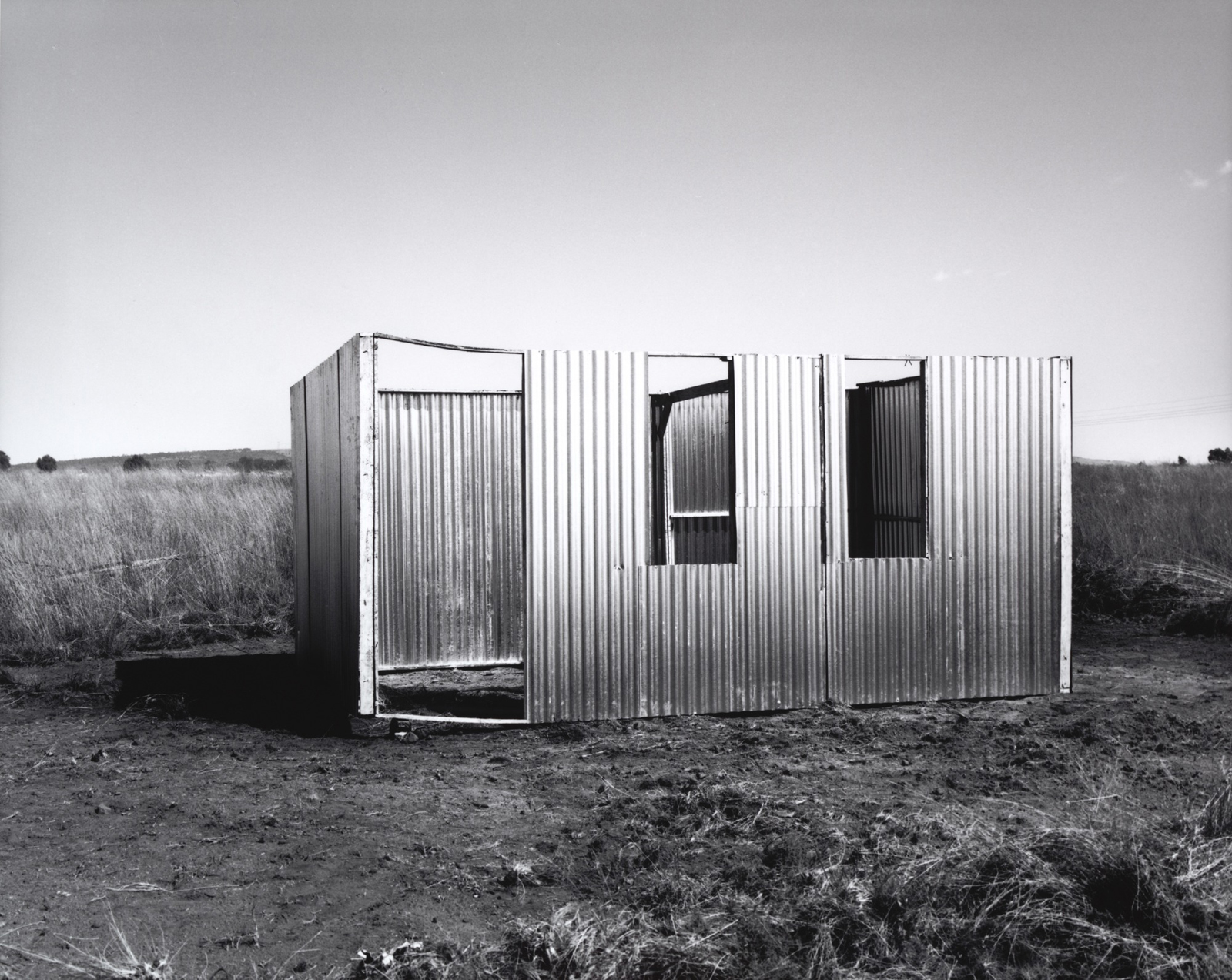
David Goldblatt (South African, 1930-2018) A new shack under construction, Lenasia Extension 9, Gauteng 1990 Gelatin silver print
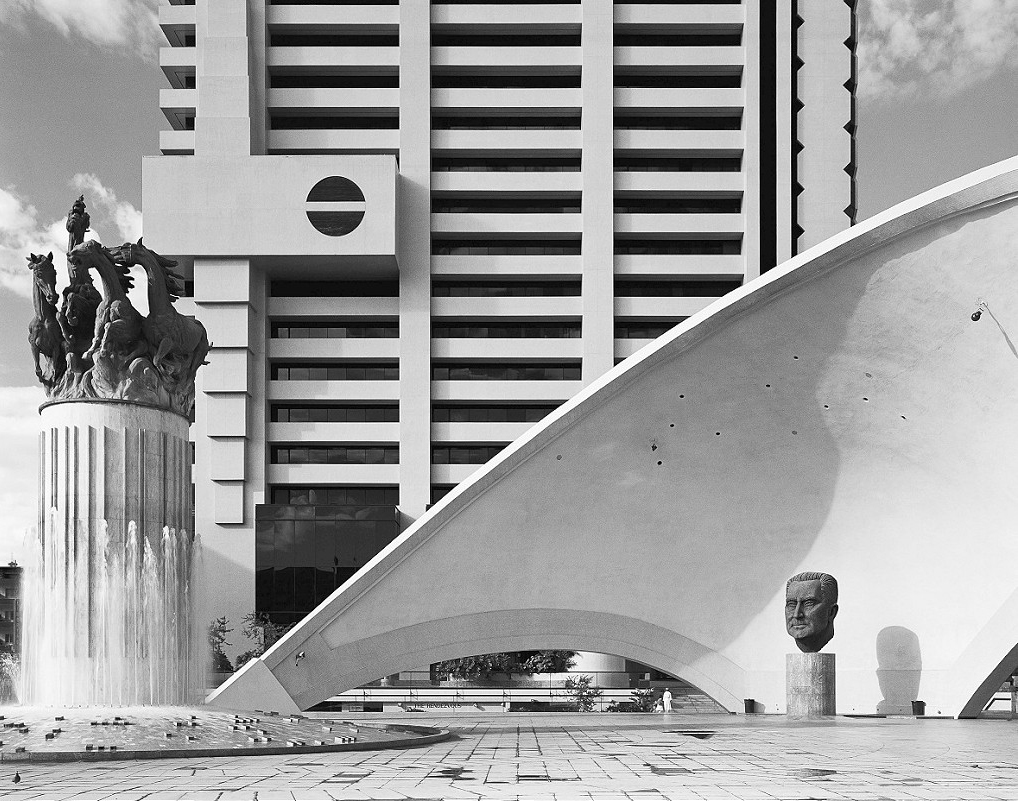
David Goldblatt (South African, 1930-2018) Monuments celebrating the Republic of South Africa (left and JG Strijdom, former prime minister (right), with the headquarters of Volkskas Bank, Pretoria. 25 April 1982 1982 Black and while photograph on matte paper Courtesy the artist and Goodman Gallery, Johannesburg
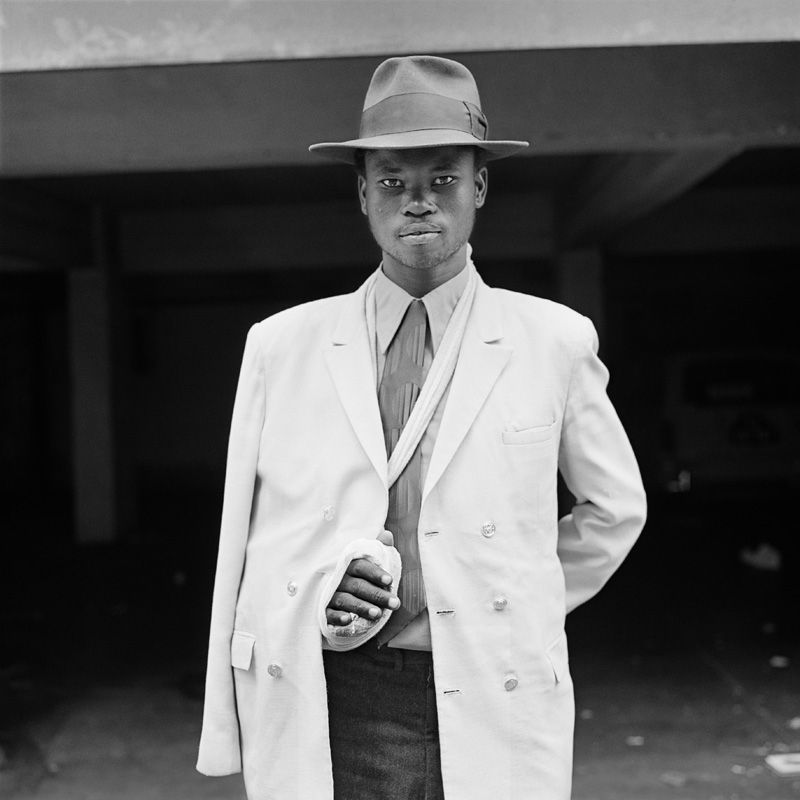
David Goldblatt (South African, 1930-2018) Man with an injured arm. Hillbrow, Johannesburg, June, 1972 1972 Black and while photograph on matte paper Courtesy the artist and Goodman Gallery, Johannesburg
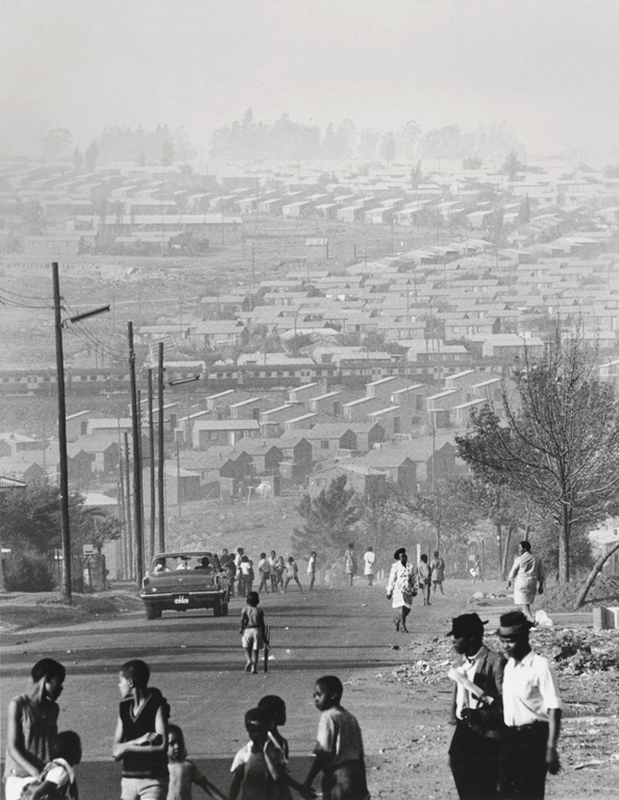
David Goldblatt (South African, 1930-2018) Mofolo South, Soweto, September 1972 1972 Gelatin silver print
Over the last fifty years, David Goldblatt has documented the complexities and contradictions of South African society. His photographs capture the social and moral value systems that governed the tumultuous history of his country’s segregationist policies and continue to influence its changing political landscape. Goldblatt began photographing professionally in the early 1960s, focusing on the effects of the National Party’s legislation of apartheid. The son of Jewish Lithuanian parents who fled to South Africa to escape religious persecution, Goldblatt was forced into a peculiar situation, being at once a white man in a racially segregated society and a member of a religious minority with a sense of otherness. He used the camera to capture the true face of apartheid as his way of coping with horrifying realities and making his voice heard. Goldblatt did not try to capture iconic images, nor did he use the camera as a tool to entice revolution through propaganda. Instead, he reveals a much more complex portrait, including the intricacies and banalities of daily life in all aspects of society. Whether showing the plight of black communities, the culture of the Afrikaner nationalists, the comfort of white suburbanites, or the architectural landscape, Goldblatt’s photographs are an intimate portrayal of a culture plagued by injustice.
In Goldblatt’s images we can see a universal sense of people’s aspirations, making do with their abnormal situation in as normal a way as possible. People go about their daily lives, trying to preserve a sense of decency amid terrible hardship. Goldblatt points out a connection between people (including himself) and the environment, and how the environment reflects the ideologies that built it. His photographs convey a sense of vulnerability as well as dignity. Goldblatt is very much a part of the culture that he is analysing. Unlike the tradition of many documentary photographers who capture the “decisive moment,” Goldblatt’s interest lies in the routine existence of a particular time in history.
Goldblatt continues to explore the consciousness of South African society today. He looks at the condition of race relations after the end of apartheid while also tackling other contemporary issues, such as the influence of the AIDS epidemic and the excesses of consumption. For his “Intersections Intersected” series, Goldblatt looks at the relationship between the past and present by pairing his older black-and-white images with his more recent colour work. Here we may notice photography’s unique association with time: how things were, how things are, and also that the effects of apartheid run deep. It will take much more time to heal the wounds of a society that was divided for so long. Yet, there is a possibility for hope, recognition of how much has changed politically in the time between the two images, and a potential optimism for the future. Goldblatt’s work is a dynamic and multilayered view of life in South Africa, and he continues to reveal that society’s progress and incongruities.”
Joseph Gergel, Curatorial Fellow
Text from the New Museum website [Online] Cited 15/08/2009. No longer available online
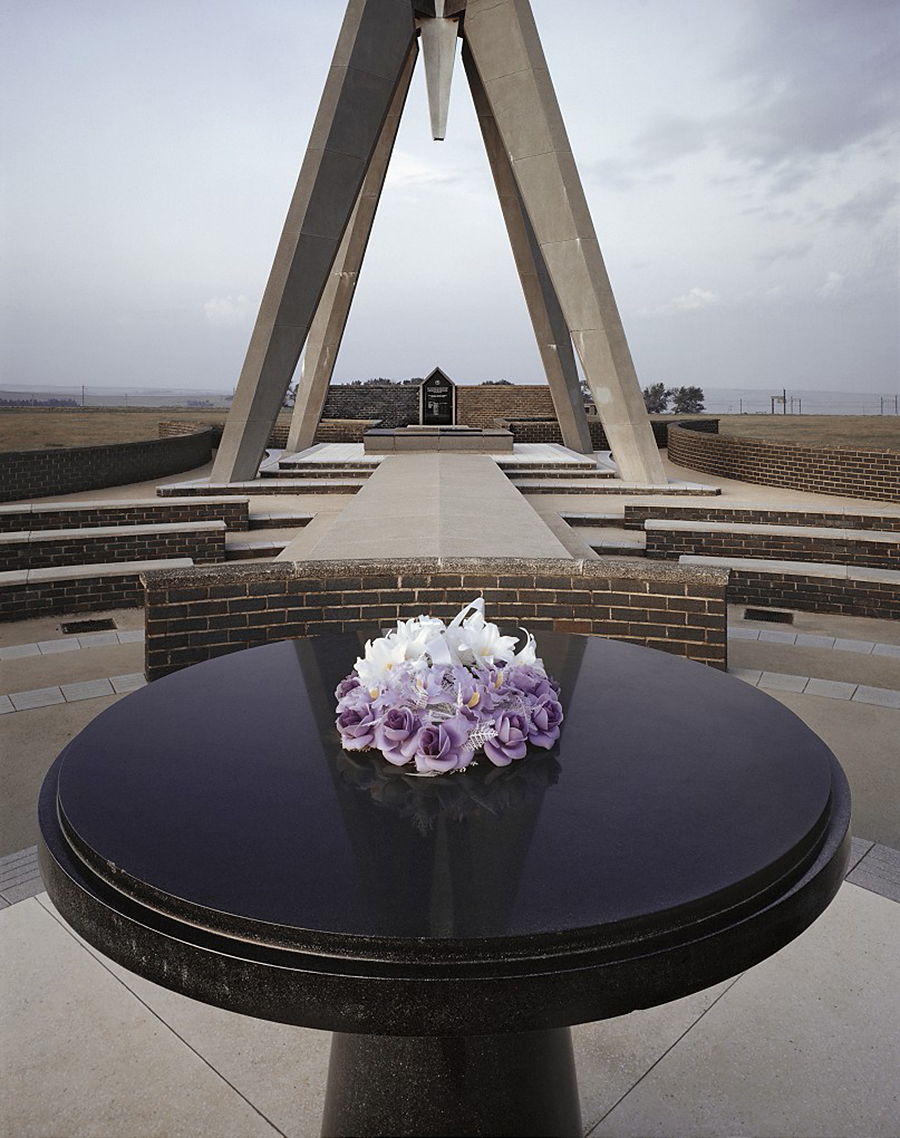
David Goldblatt (South African, 1930-2018) Wreath at the Berg-en-Dal Monument which commemorates the courage – and the sarcophagus which holds the bones – of 60 men of the South African Republic Police, who died here 27 August 1900 in a critical battle of the Anglo-Boer War. Dalmanutha, Mpumalanga. December 1983. 1983 Courtesy the artist and Goodman Gallery, Johannesburg
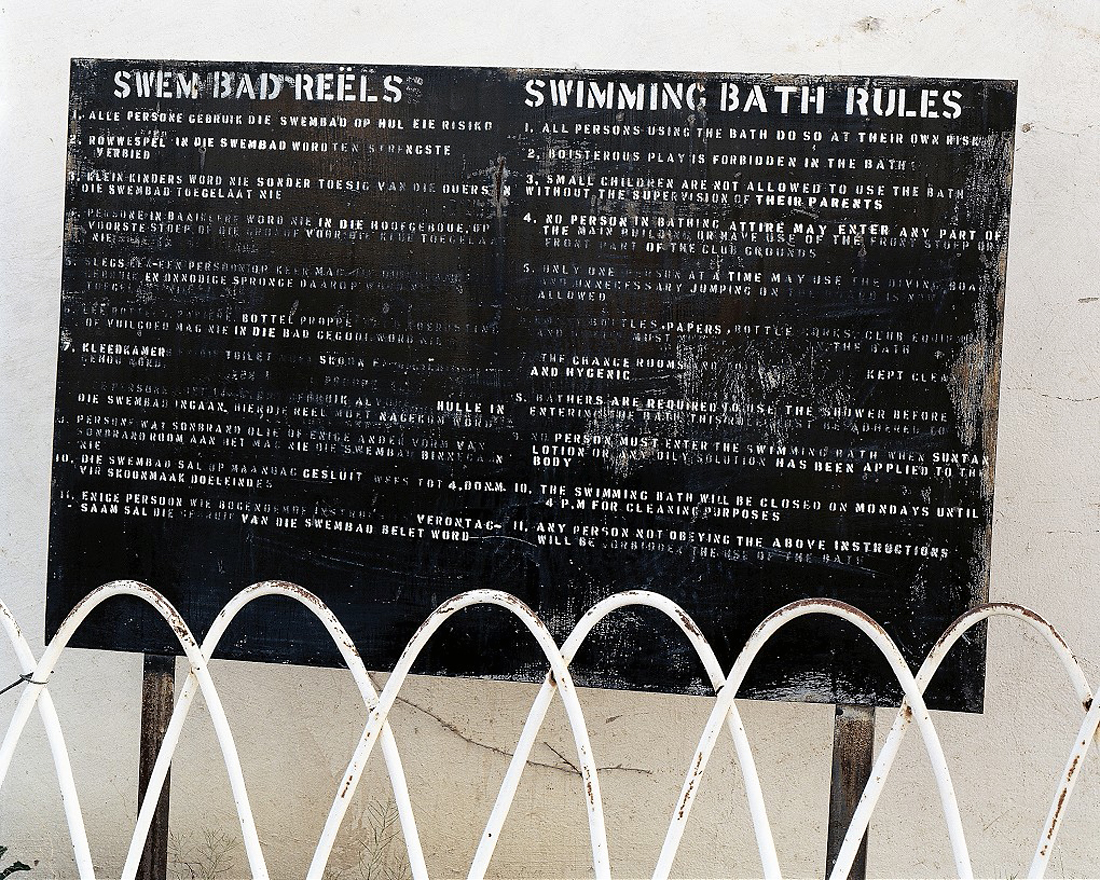
David Goldblatt (South African, 1930-2018) The swimming bath rules at the rec, Cape Blue Asbestos Mine, Koegas, Northern Cape 2002
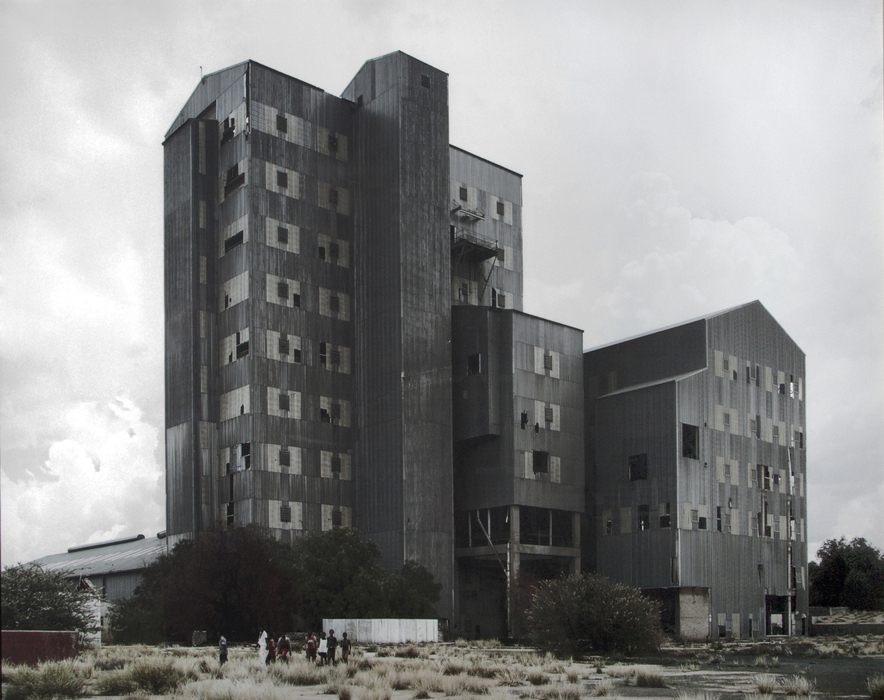
David Goldblatt (South African, 1930-2018) The mill, Pomfret Asbestos Mine, Pomfret, North-West Province, 20 December 2002 2002
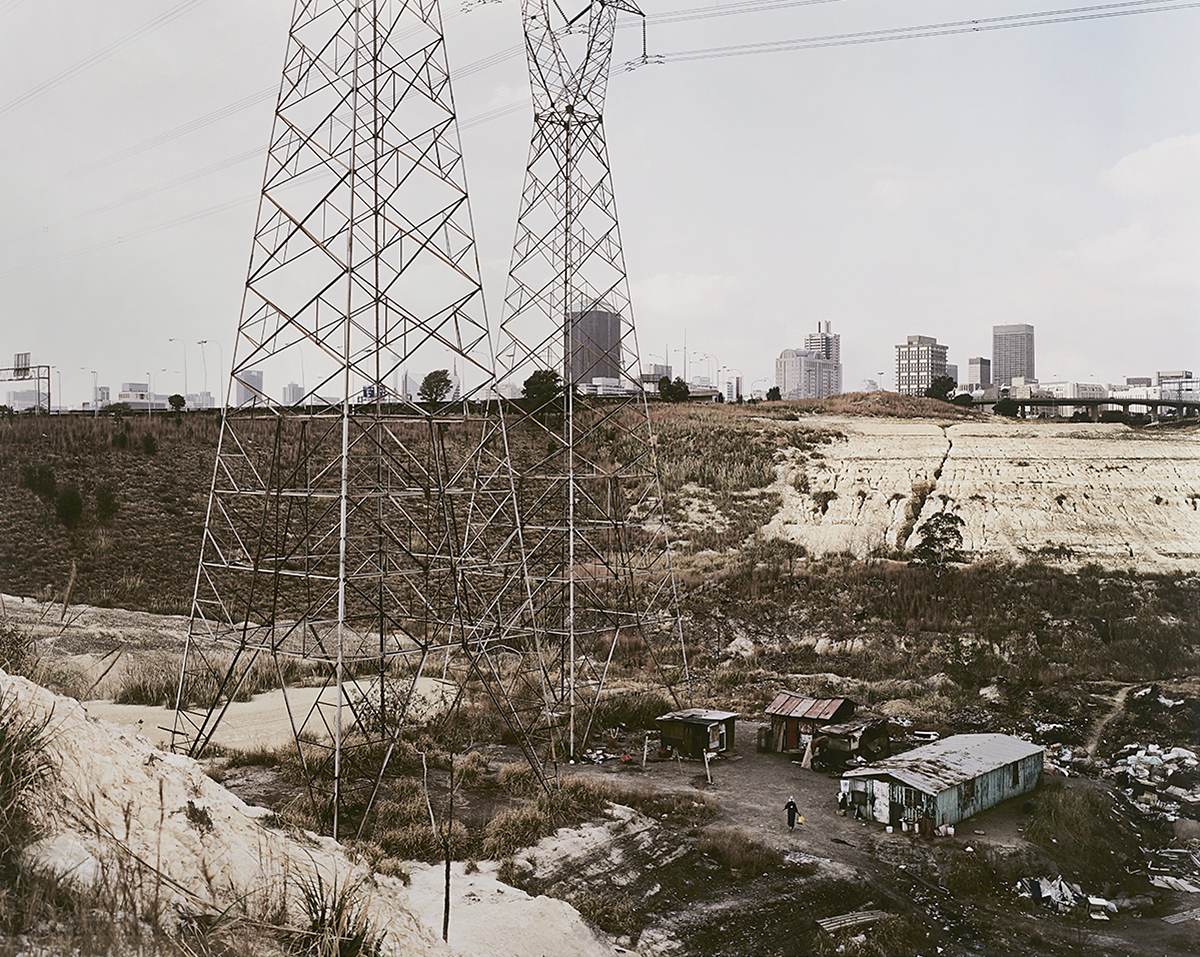
David Goldblatt (South African, 1930-2018) Johannesburg from the Southwest 2003
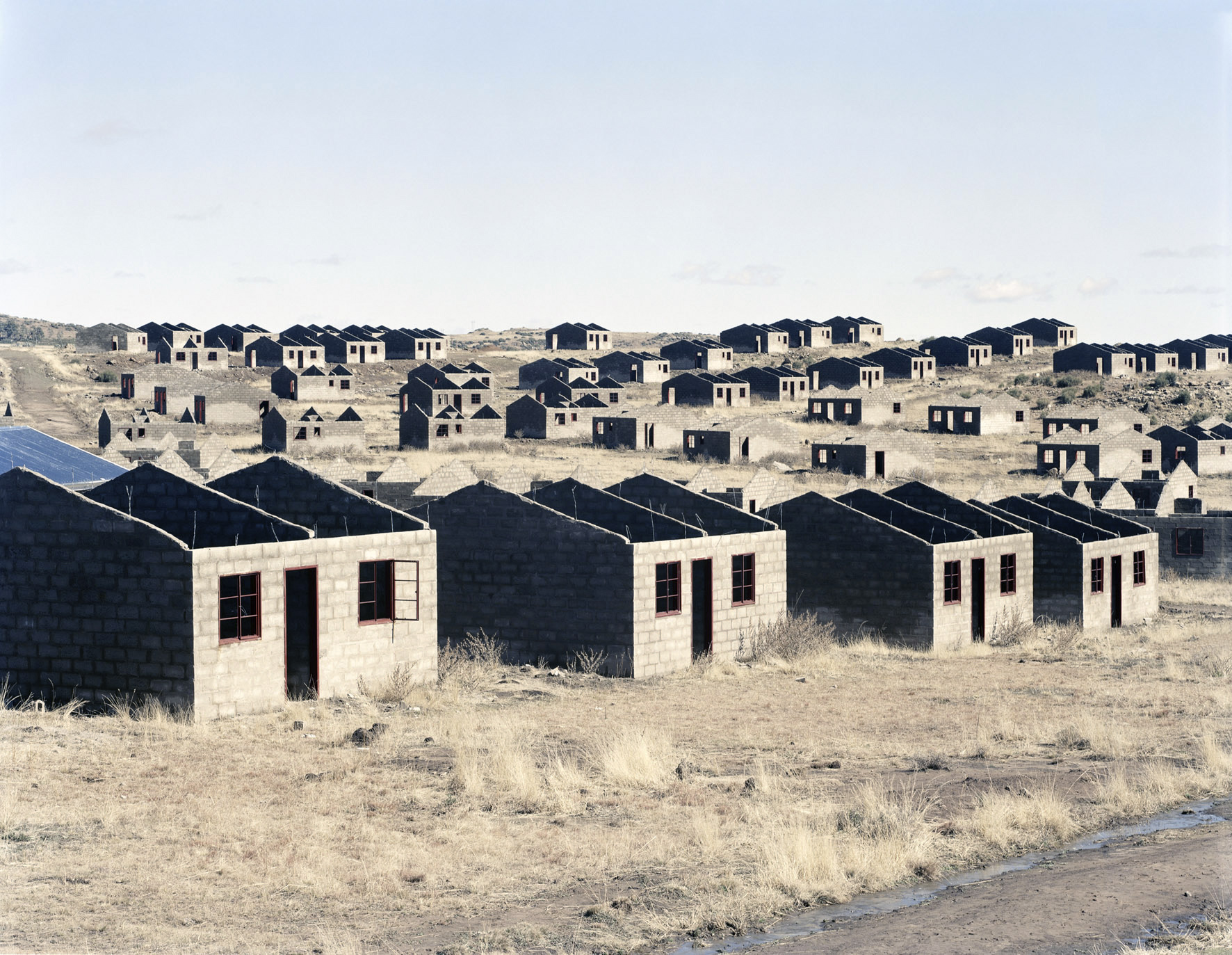
David Goldblatt (South African, 1930-2018) Incomplete houses, part of a stalled municipal development of 1000 houses. Lady Grey, Eastern Cape, 5 August 2006 2006
New Museum 235 Bowery New York, NY 10002 212.219.1222
Julia deVille (New Zealand, b. 1982) Ruby Heart Starling 2008 Starling, sterling silver, black rhodium & gold plate, rubies, antique frame 30 x 35 x 18cm
This is an itsy-bitsy show by Julia deVille at Sophie Gannon Gallery in Richmond, Melbourne. Offering a menagerie of macabre stuffed animals and conceptual ideas the exhibition fails to coalesce into a satisfying vision. It features many ideas that are not fully investigated and incorporated into the corporeal body of the work.
We have, variously, The Funerary Urn/Cinerarium, The Ossuary, Skeletons, Black, Victorian Funerary Customs, Feathers, Taxidermy, Time, Eggs and Religion. We also have stuffed animals, cigar boxes, lace and silver, pelts and columns, jet necklaces and Victorian glass domes, glass eyes and ruby hearts to name but a few. The viewer is overwhelmed by ideas and materials.
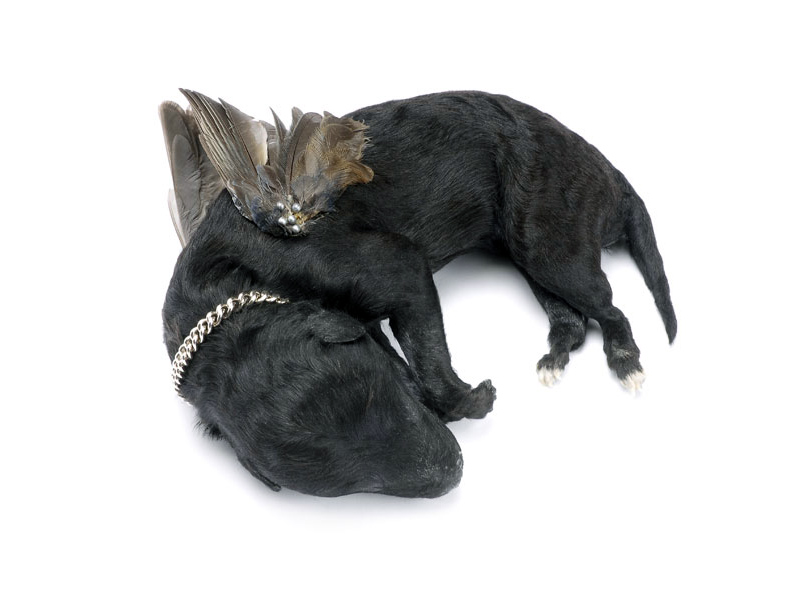
When individual pieces excel the work is magical: the delicate and disturbing Stillborn Angel (2009, below) curled in a foetal position with appended sparrows wings is a knockout. The large suspended raven of Night’s Plutonian Shore (2009, above) effectively evinces the feeling of the shores of the underworld that the title, taken from an Edgar Allan Poe poem, reflects on.
Other pieces only half succeed. Piglet (2009, below) is a nice idea with its lace snout and beaded wings sitting on a bed of feathers awaiting judgement but somehow the elements don’t click into place. Further work are just one shot ideas that really lead nowhere. For example Cat Rug (2008, below) features black crystals in the mouth of a taxidermied cat that lies splayed on a plinth on the gallery floor. And, so … Silver Rook (2008, below) is a rook whose bones have been cast in silver, with another ruby heart, suspended in mid-air in the gallery space. Again an interesting idea that really doesn’t translate into any dialogue that is substantial or interesting.
Another problem with the work is the technical proficiency of some of the pieces. The cast silver front legs and ribs of The Anatomy of a Rabbit (2008, below) are of poor quality and detract from what should have been the delicacy of the skeletal bones of the work. The bronze lion cartouche on the egg shaped Lion Urn (2009) fails to fit the curved shape of the egg – it is just attached at the top most point and sits proud of the egg shape beneath. Surely someone with an eye for detail and a sense of context, perfection and pride in the work they make would know that the cartouche should have been made to fit the shape underneath.
Despite its fashionable position hovering between craft, jewellery and installation this is ‘art’ in need of a good reappraisal. My suggestion would be to take one idea, only one, and investigate it fully in a range of work that is thematically linked and beautifully made. Instead of multiplying the ideas and materials that are used, simplify the conceptual theme and at the same time layer the work so it has more complexity, so that it reveals itself over time. You only have to look at the work of Mari Funaki in the previous post or the simple but conceptually complex photographs of Matthias Koch in the German photography review to understand that LESS IS MORE!
There are positive signs here and I look forward to seeing the development of the artist over the next few years.
Dr Marcus Bunyan
Many thankx to Sophie Gannon Gallery for allowing me to publish the photographs in the posting. Please click on the photographs for a larger version of the image.
Julia deVille (New Zealand, b. 1982) Night’s Plutonian Shore 2009 Tasmanian Forest Raven, black garnets, cotton, sterling silver, amethyst
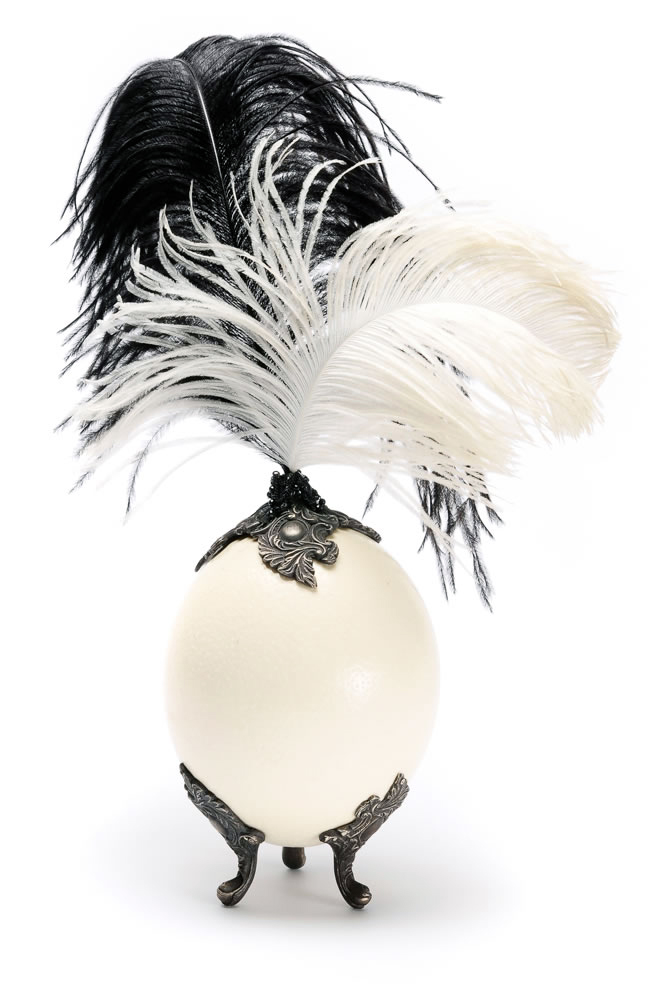
Julia deVille (New Zealand, b. 1982) L’enfant (Infant Funerary Urn) 2009 Ostrich egg, sterling silver, ostrich plumes and black garnet 35 x 12 x 12cm
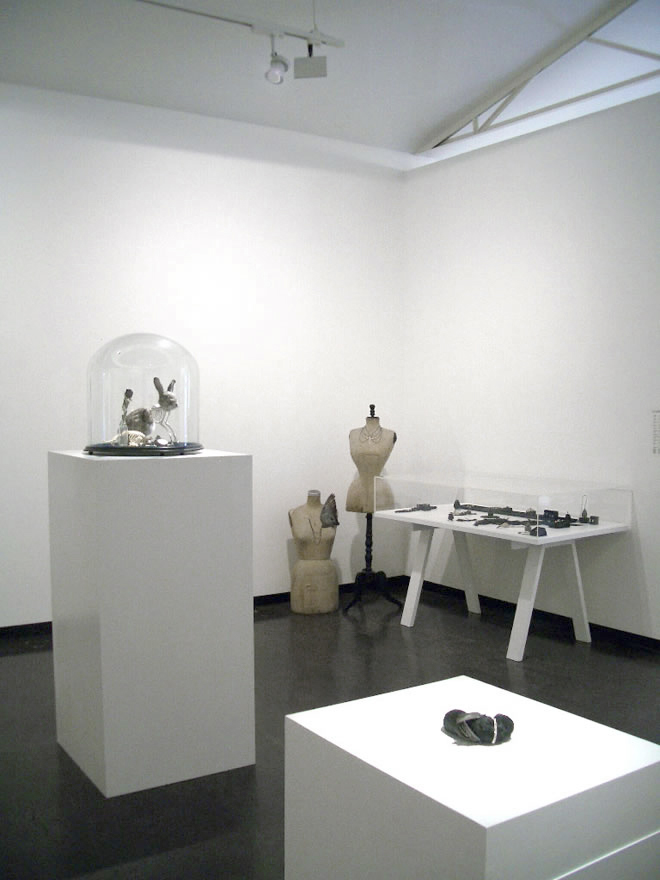
Julia deVille Cineraria installation views at Sophie Gannon Gallery, Melbourne Photos: Marcus Bunyan
Julia deVille (New Zealand, b. 1982) Piglet 2009 Piglet, antique lace, pins and feathers 25 x 23 x 13cm
Julia deVille (New Zealand, b. 1982) Cat Rug 2008 Cat, glitter and fibreglass 100 x 60 x 8cm
Julia deVille (New Zealand, b. 1982) Sympathy 2008
Julia deVille (New Zealand, b. 1982) Silver Rook 2008 Sterling silver, rubies 30 x 25 x 35cm
Cinerarium
n. pl. Cineraria A place for keeping the ashes of a cremated body.
Cineraria n. any of several horticultural varieties of a composite plant, Senecio hybridus, of the Canary Islands, having clusters of flowers with white, blue, purple, red, or variegated rays.
Origin: 1590-1600; < NL, fem. of cinerarius ashen, equiv. to L ciner- (s. of cinis ashes) + -rius -ary; so named from ash-coloured down on leaves.
CINERARIA is a study of the ritual and sentiment behind funerary customs from various cultures and eras.
Notes on inspirations
The Funerary Urn/Cinerarium: Funerary Urns have been used since the times of the ancient Greeks and are still used today. After death, the body is cremated and the ashes are collected in the urn.
The Ossuary: An ossuary is a chest, building, well, or site made to serve as the final resting place of human skeletal remains. They are frequently used where burial space is scarce. A body is first buried in a temporary grave, then after some years the skeletal remains are removed and placed in an ossuary. The greatly reduced space taken up by an ossuary means that it is possible to store the remains of many more people in a single tomb than if the original coffins were left as is. This was a common practice in post plague Europe in the 14th-16th Centuries.
Skeletons: Human skeletons and sometimes non-human animal skeletons and skulls are often used as blunt images of death. The skull and crossbones (Death’s Head) motif has been used among Europeans as a symbol of piracy, poison and most commonly, human mortality.
Black: In the West, the colour used for death and mourning is black. Black is associated with the underworld and evil. Kali, the Hindu god of destruction, is depicted as black.
Victorian Funerary Customs:
~ A wreath of laurel, yew or boxwood tied with crape or black ribbons would be hung on the front door to alert passers by that a death had occurred
~ The use of flowers and candles helped to mask unpleasant odours in the room before embalming became common
~ White was a popular colour for the funeral of a child. White gloves, ostrich plumes and a white coffin were the standard
Feathers: In Egyptian culture a recently deceased persons soul had to be as light as a feather to pass the judgment of Ma’at. Ma’at (Maet, Mayet) is the Egyptian goddess of truth, justice and the underworld. She is often portrayed as wearing a feather, a symbol of truth, on her head. She passed judgment over the souls of the dead in the Judgment Hall of Osiris. She also weighted up the soul against a feather. The “Law of Ma’at” was the basis of civil laws in ancient Egypt. If it failed, the soul was sent into the underworld. Ma’at’s symbol, an ostrich feather, stands for order and truth.
Taxidermy: Taxidermy to me is a modern form of preservation, a way for life to continue on after death, in a symbolic visual form.
The Raven: In many cultures for thousands of years, the Raven has been seen symbol of death. This is largely due to the Raven feeding on carrion. Edgar Allan Poe has used this symbolism in his poem, “The Raven”.
Time: Less blunt symbols of death frequently allude to the passage of time and the fragility of life. Clocks, hourglasses, sundials, and other timepieces call to mind that time is passing. Similarly, a candle both marks the passage of time, and bears witness that it will eventually burn itself out. These sorts of symbols were often incorporated into vanitas paintings, a variety of early still life.
Eggs: The egg has been a symbol of the start of new life for over 2,500 years, dating back to the ancient Persians. I have chosen egg shapes and even one Ostrich egg to represent the cycle of life, the beginning and the end.
Religion: Religion has played a large part in many funerary customs and beliefs. I am particularly interested in the Memento Mori period of the 16th-18th centuries. In a Calvinistic Europe, when the plague was a not too distant memory, a constant preoccupation with death became a fashionable devotional trend.
Julia deVille
Julia deVille (New Zealand, b. 1982) Stillborn Angel 2009 Stillborn puppy, sparrow wings and sterling silver 13 x 10 x 5cm
Julia deVille (New Zealand, b. 1982) The Anatomy of a Rabbit 2008 Rabbit, sterling silver, rubies, glitter and mahogany 30 x 30 x 30cm
Julia deVille Cineraria installation view at Sophie Gannon Gallery, Melbourne Photo: Marcus Bunyan
Sophie Gannon Gallery 2, Albert Street, Richmond, Melbourne
Many thankx to Modernism for allowing me to publish the photographs in the posting. Please click on the photographs for a larger version of the image.
Dr Marcus Bunyan
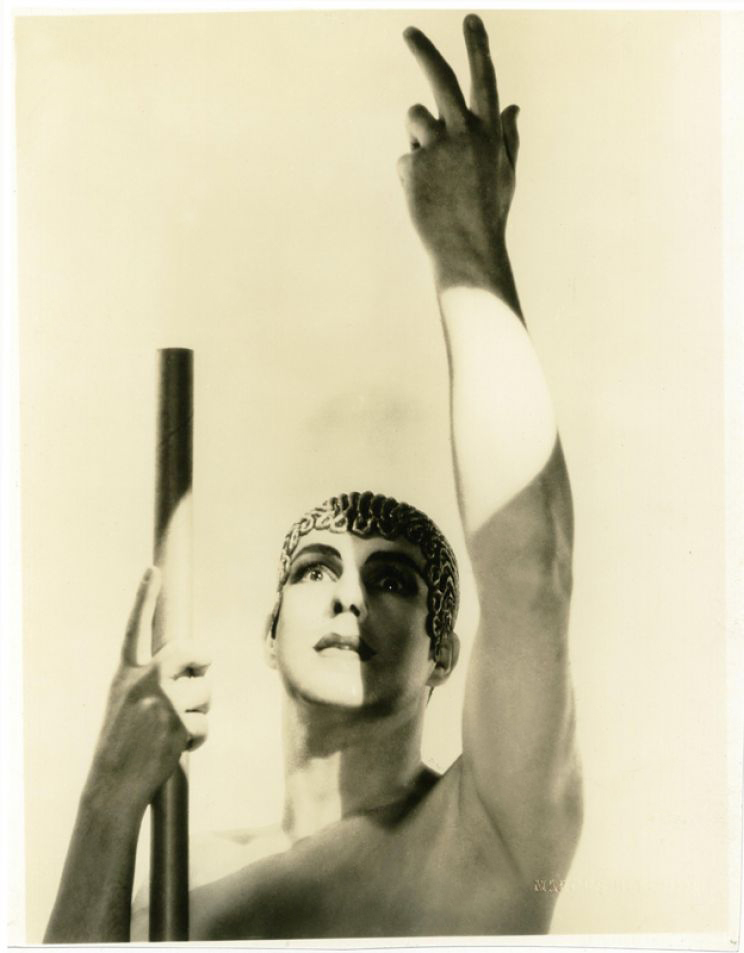
Anonymous photographer The Dancer, Ted Shawn, Boston Dance Theater 1929 Vintage gelatin silver print 9 5/8 x 7 1/4″
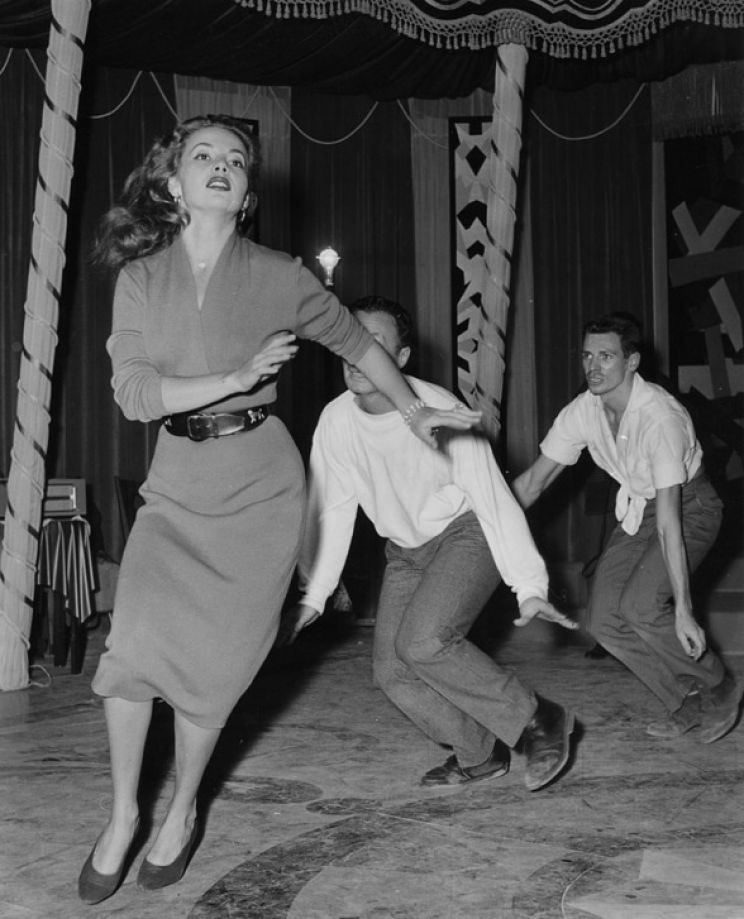
Gérard Decaux Abbe Lane Rome, c. 1955 Vintage gelatin silver print 10 1/4 x 8 1/2″
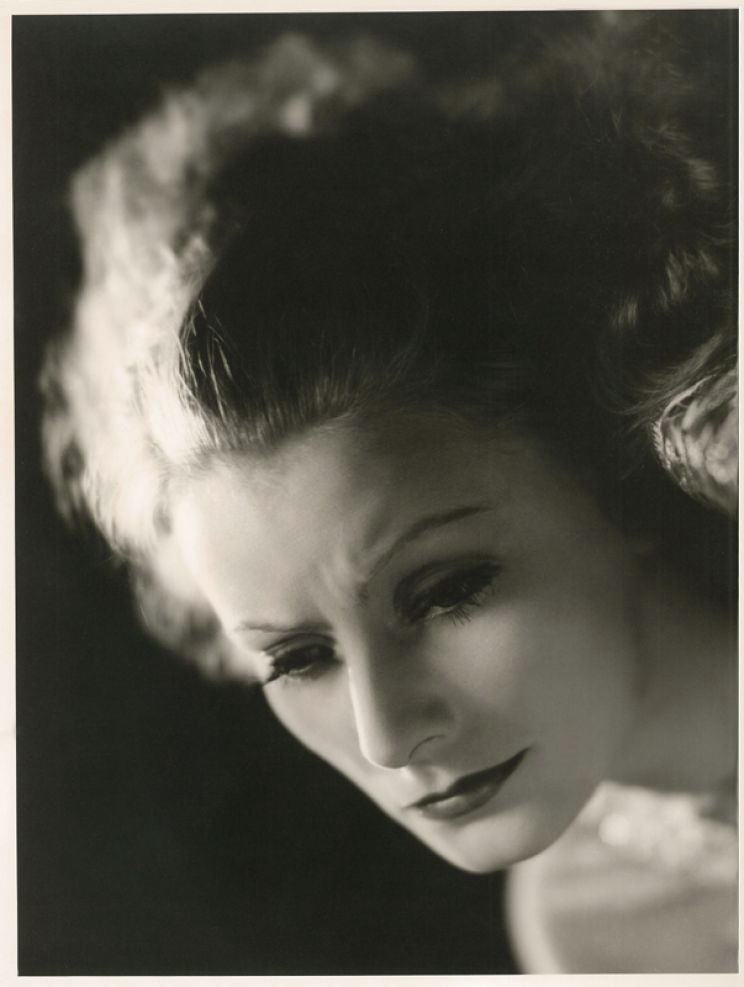
Clarence Sinclair Bull (American, 1896-1979) Greta Garbo c. 1935 Gelatin silver print, printed later 14 x 11″
Clarence Sinclair Bull was born in Sun River, Montana in 1896. His career began when Samuel Goldwyn hired him in the 1920 to photograph publicity stills of the MGM stars. He is most famous for his photographs of Greta Garbo taken during the years of 1926-1941. Bull’s first portrait of Garbo was a costume study for the Flesh and the Devil, in September 1926.
Bull was able to study with the great Western painter, Charles Marion Russell. He also served as an assistant cameraman in 1918. Bull was skilled in the areas of lighting, retouching, and printing. He was most commonly credited as “C.S. Bull.” Bull died on June 8, 1979 in Los Angeles, California, aged 83.
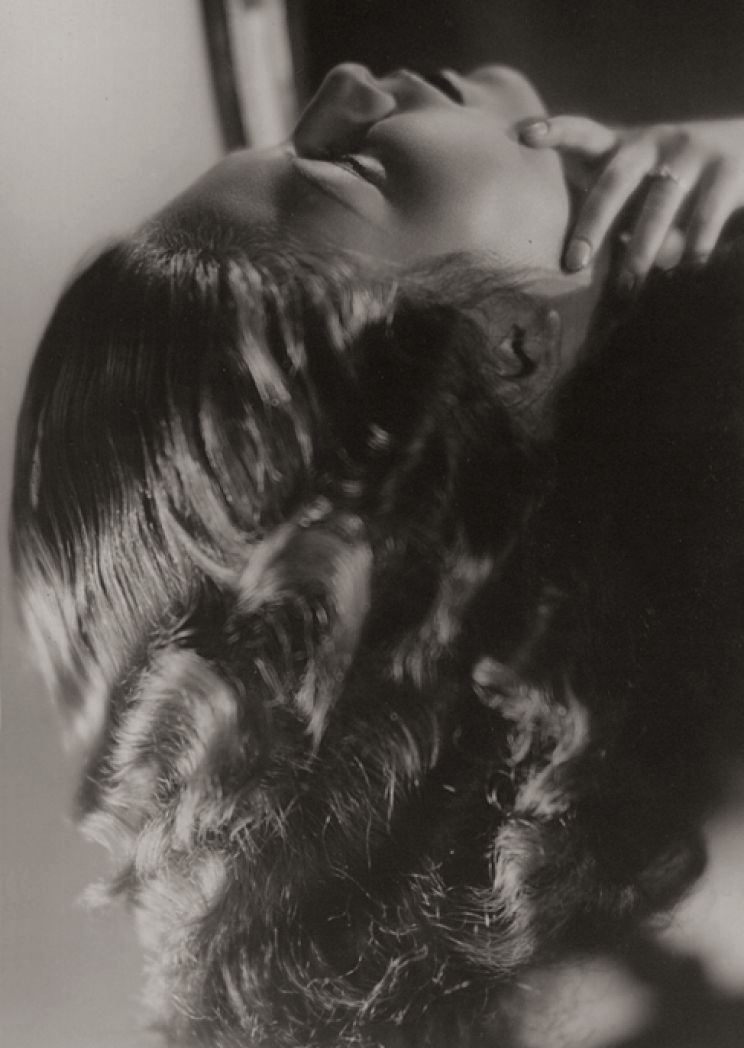
Laure Albin Guillot (French, 1879-1962) La Flamme (Woman’s Head) c. 1935 Vintage gelatin silver print 6 3/8 x 4 3/8″
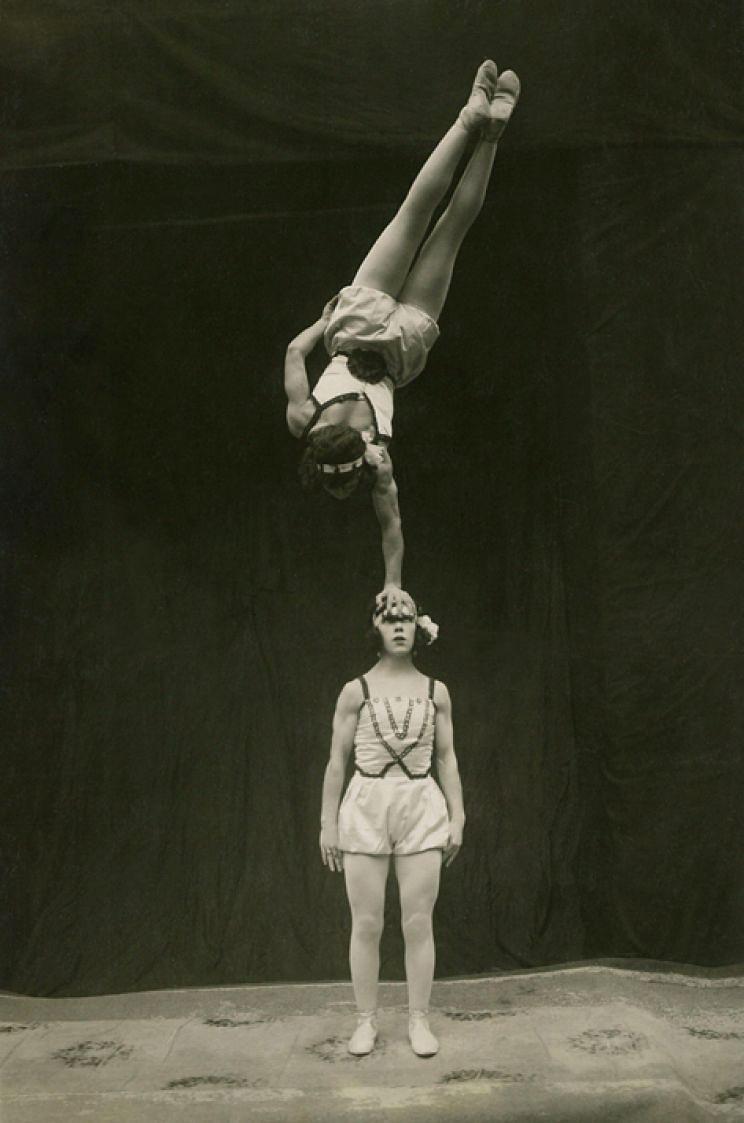
Anonymous photographer Acrobats c. 1920 Vintage gelatin silver print 8 5/8 x 5 5/8″
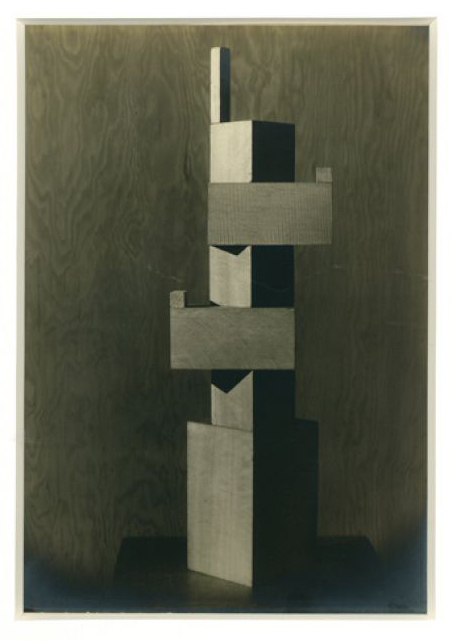
Pierre Nobel Still Life c. 1935 Vintage gelatin silver print mounted on paper 9 1/4 x 6 3/4″
Charles Jones (English, 1866-1959) Plum, Laxton Early Red c. 1910 Vintage gelatin silver print from a glass plate negative 6 x 4 1/4″
Modernism presents a wonderful and intriguing selection of photographs from the private collection of Robert Flynn Johnson. Robert Flynn Johnson is emeritus faculty in the Printmaking department. He is the curator in charge of the Achenbach Foundation for Graphic Arts at the Fine Arts Museums of San Francisco, a position he has held since 1975.
This exhibition coincides with the publication of his second book on vernacular photography, The Face in the Lens: Anonymous Photographs (University of California Press).
“When I am asked what it takes to become an accomplished collector, it is not the qualities of knowledge, judgment or that elusive term “taste” that comes to mind. Instead, it is the ability to be curious that is the crucial element in the makeup of a true collector – the ability to ask questions, to learn, and to get answers regarding works of art that catch your eye and move your emotions,” Robert Flynn Johnson said.
He added, “For more than thirty-five years I have followed my curiosity in passionately seeking out photographs that have stirred my imagination. Some of them have been by great artistic masters of the medium, while others have been anonymous photographic orphans that have nothing going for them but the image itself. Both types of photographs are included in this exhibition.”
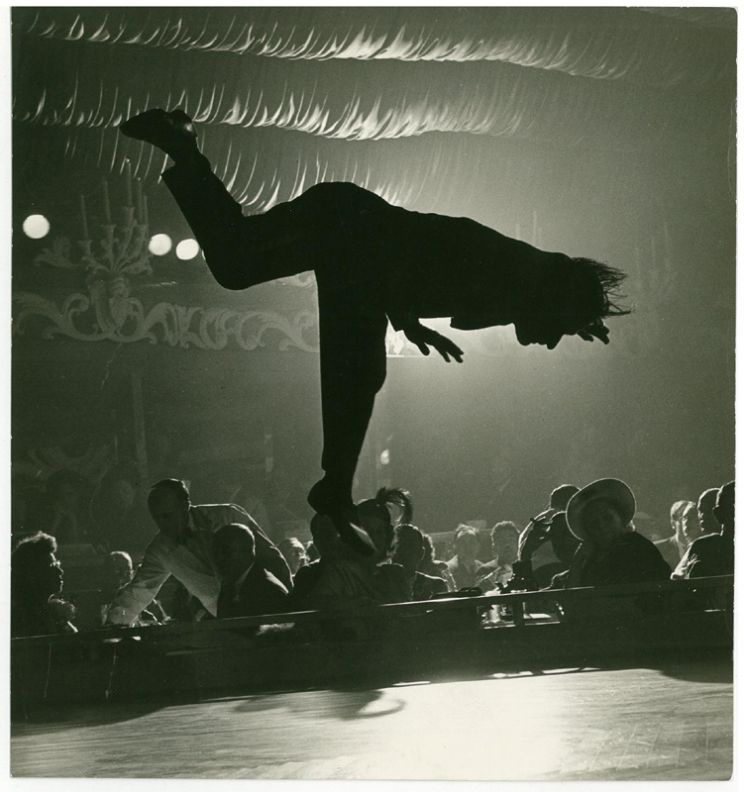
“I have made a varied, and some may say eccentric, selection of images. From a heart-stopping snapshot of acrobats posed in a three-man handstand perched on the ledge of the 108th floor of the Empire State building, to a tender portrait of Marilyn Monroe and Joe DiMaggio that captures the instant before their lips meet in their first kiss as a married couple, They these pictures are a true reflection of my collecting philosophy that is attracted to profound, beautiful, humorous, and absurd aspects of life and art.”
“Nevertheless, I hope they these works convey some of the visual surprise and delight to you that I felt when I first saw each and every one of them.”
Oscar Wilde once said that the only person that liked all art equally was an auctioneer! I do not expect viewers to appreciate all the photographs in this exhibition, but through my visual curiosity in collecting them over time, I did, and that is why they are here together today.
Text from Artdaily.org website
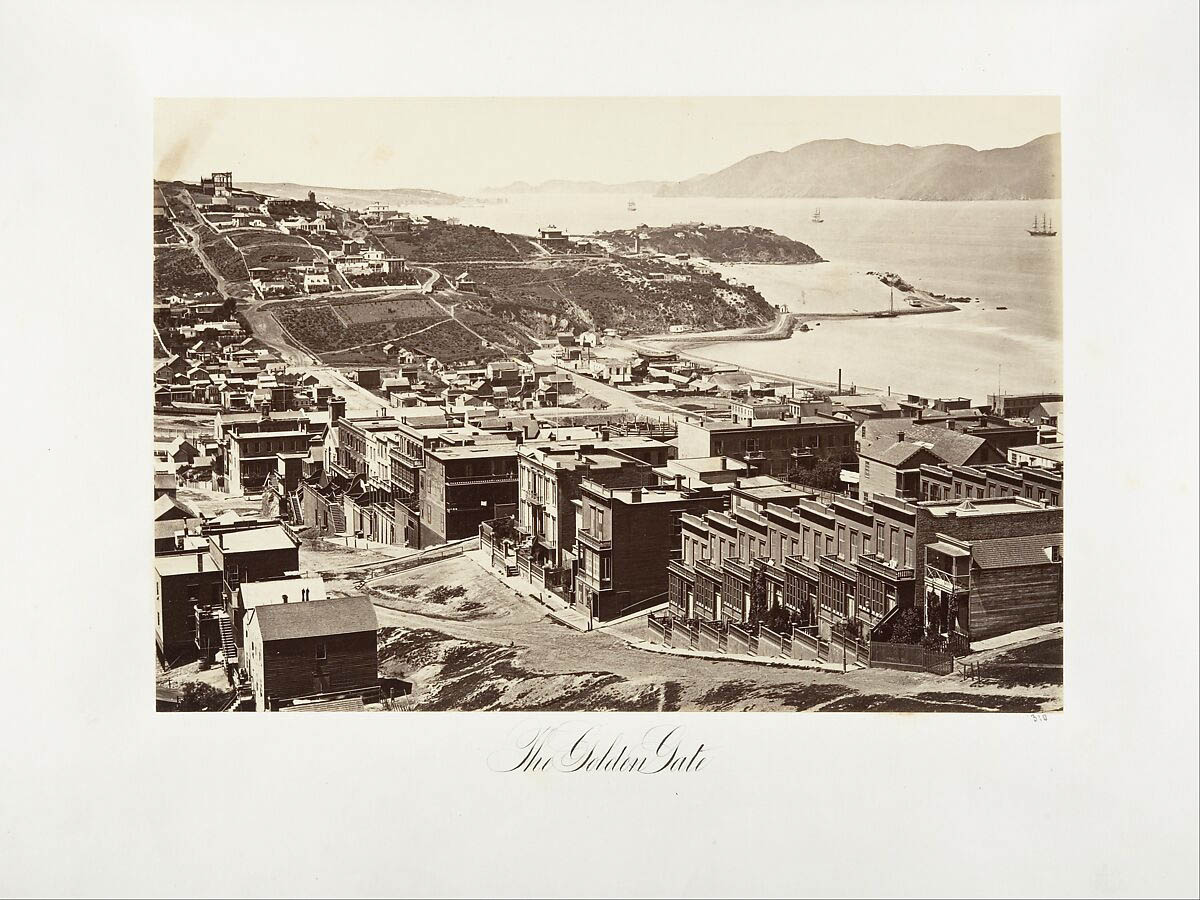
Carelton Watkins (American, 1829-1916) San Francisco c. 1868 Vintage albumen print 8 x 12 1/8″
Mammoth-plate photograph of San Francisco taken from the top of Telegraph Hill showing the Golden Gate in the background.
Eugène Atget (French, 1857-1927) Landscape, Environs of Paris (Étang, Ville-d’Avray) 1917 vintage albumen print 7 x 9 1/4″
Anonymous photographer (Czechoslovakia) Train c. 1930 Vintage gelatin silver print 9 1/4 x 11 5/8″
Anonymous photographer (United Kingdom) Train c. 1930 Vintage gelatin silver print 9 1/2 x 11 1/2″
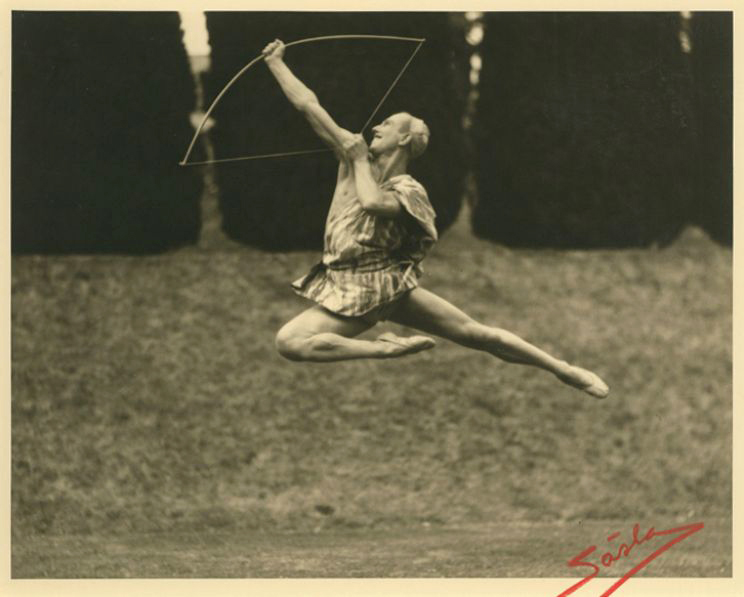
Sasha Archer Leaping Through the Air c. 1930 Vintage gelatin silver print 7 3/8 x 9 3/8″
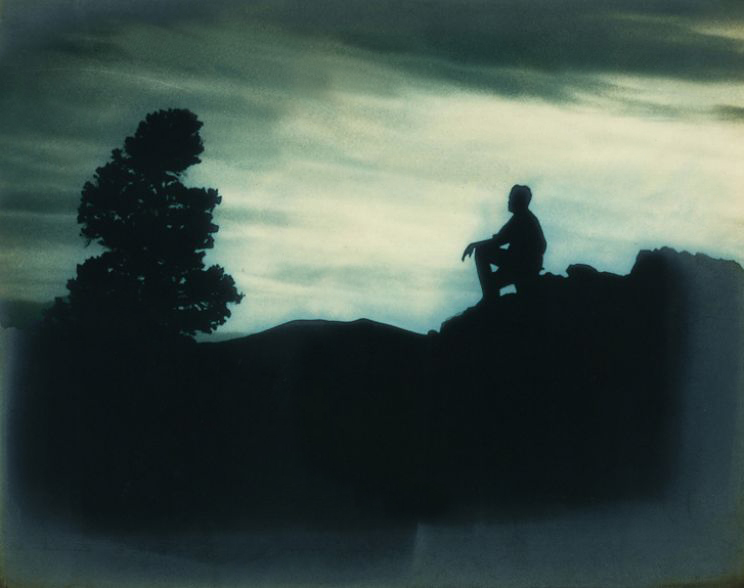
Leopold Hugo (American born Poland, 1866-1933) Craters of the Moon, Idaho 1920 Tinted vintage gelatin silver print 7 3/8 x 9 3/8″
Anonymous photographer Acrobat Piroska at the Latin Quarter (Published in ‘Life Magazine’) c. 1945 Vintage gelatin silver print 9 5/8 x 9″
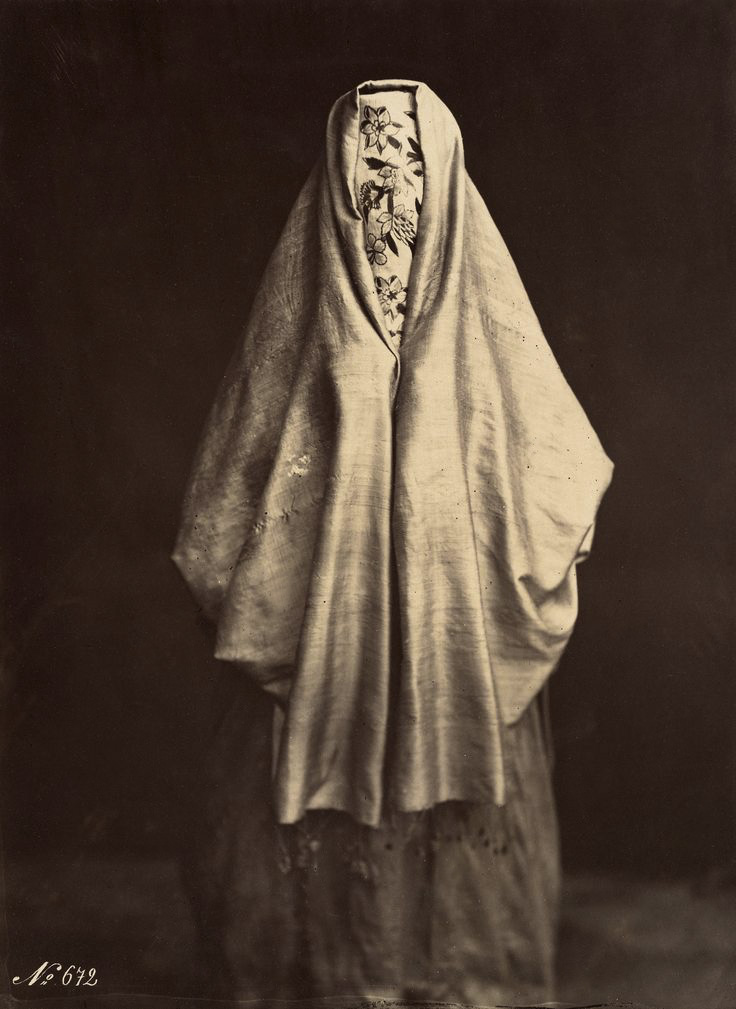
Felix Bonfils (French, 1831-1885) Woman in Burka c. 1870 vintage albumen print 8 3/4 x 6 5/8″
Modernism 724 Ellis Street San Francisco, CA 94109
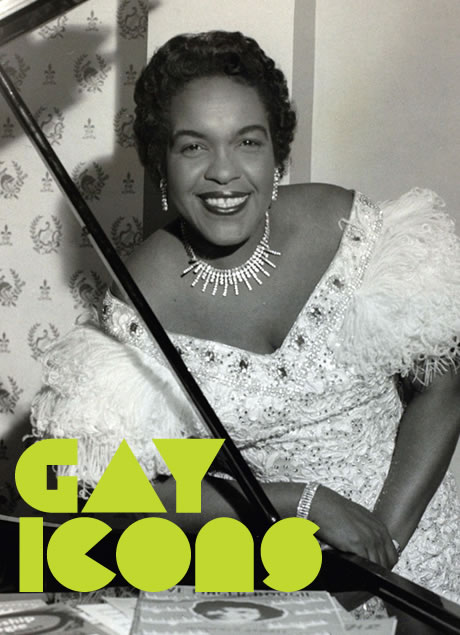
“How I wish this selection had been available to me when I was young and trying to make sense of my reactions to the world. How inspirational to have had portraits of the great and the good staring out at me telling me that I was not by any measure on my own.”
“… it is her [K.D. Lang’s] androgynous good looks and tendency to strut on the stage which warms many lesbian hearts.”
~ Sandi Toksvig
Many thankx to the National Portrait Gallery for allowing me to publish the photographs in the posting. Please click on the photographs for a larger version of the image.
The first portrait exhibition to celebrate the contribution of gay people and gay icons to history and culture. 60 photographs selected by Waheed Alli, Alan Hollinghurst, Elton John, Jackie Kay, Billie Jean King, Ian McKellen, Chris Smith, Ben Summerskill, Sandi Toksvig and Sarah Waters.
An important photography exhibition, Gay Icons, at the National Portrait Gallery (2 July – 18 October 2009) will celebrate the contribution of gay people – and the significance of the gay icon – to history and culture. Ten selectors have worked with the Gallery to make their own personal choices of six individuals, their ‘icons’. Not only does this exhibition include many well-known icons, who may or may not be gay themselves, it also reveals some surprises and will encourage a wide audience to think about familiar faces in new ways.
The Gay Icons shown in the exhibition will include those people, living or dead, whatever their sexual orientation or interests, who the ten individual selectors regard as inspirational, or as a personal icon. Gay Icons brings together portraits of those people who are regarded as especially significant to each of the selectors, alongside those of the selectors themselves, all prominent gay figures in contemporary culture and society.
Coinciding with the fortieth anniversary of the Stonewall Riots in New York, this exhibition focuses on portraits of both historical and modern figures. The choices provide a fascinating range of inspiring figures – some very famous, some heroic, others relatively unknown. Each icon is presented with information about their personal, and sometimes public, significance, some of it relating to the sitter but much of it linked to the selectors who have been prepared to share their experiences and feelings in their own exhibition texts.
Themes running through the exhibition include inspiration and how the ‘icons’ have inspired each selector in an extremely personal sense to realise their full potential, human rights, stemming from the specific consideration of sexuality, and how this might lead us to consider parallels between the struggles of different minority groups, re-discovery, or rescuing the reputations of figures who might otherwise have been forgotten or, worse, actively disregarded and surprise at some of the perhaps unexpected choices.
The project was developed from an initial proposal made by Bernard Horrocks, Copyright Officer, at the Gallery. The concept quickly evolved to include invitations to ten gay people – each distinguished in different fields – to act as selectors. They were chosen in consultation with their Chair, Sandi Toksvig.
Each selector could freely choose six ‘icons’, although the Gallery decided to limit the choices to photographic portraits, and therefore to subjects who had lived, more or less, within the last 150 years. This also seemed appropriate because within this same period homosexuality was gradually accepted and made legitimate in Britain.
The selectors are Lord Waheed Alli, Alan Hollinghurst, Sir Elton John, Jackie Kay, Billie Jean King, Sir Ian McKellen, Lord Chris Smith, Ben Summerskill, Sandi Toksvig and Sarah Waters.
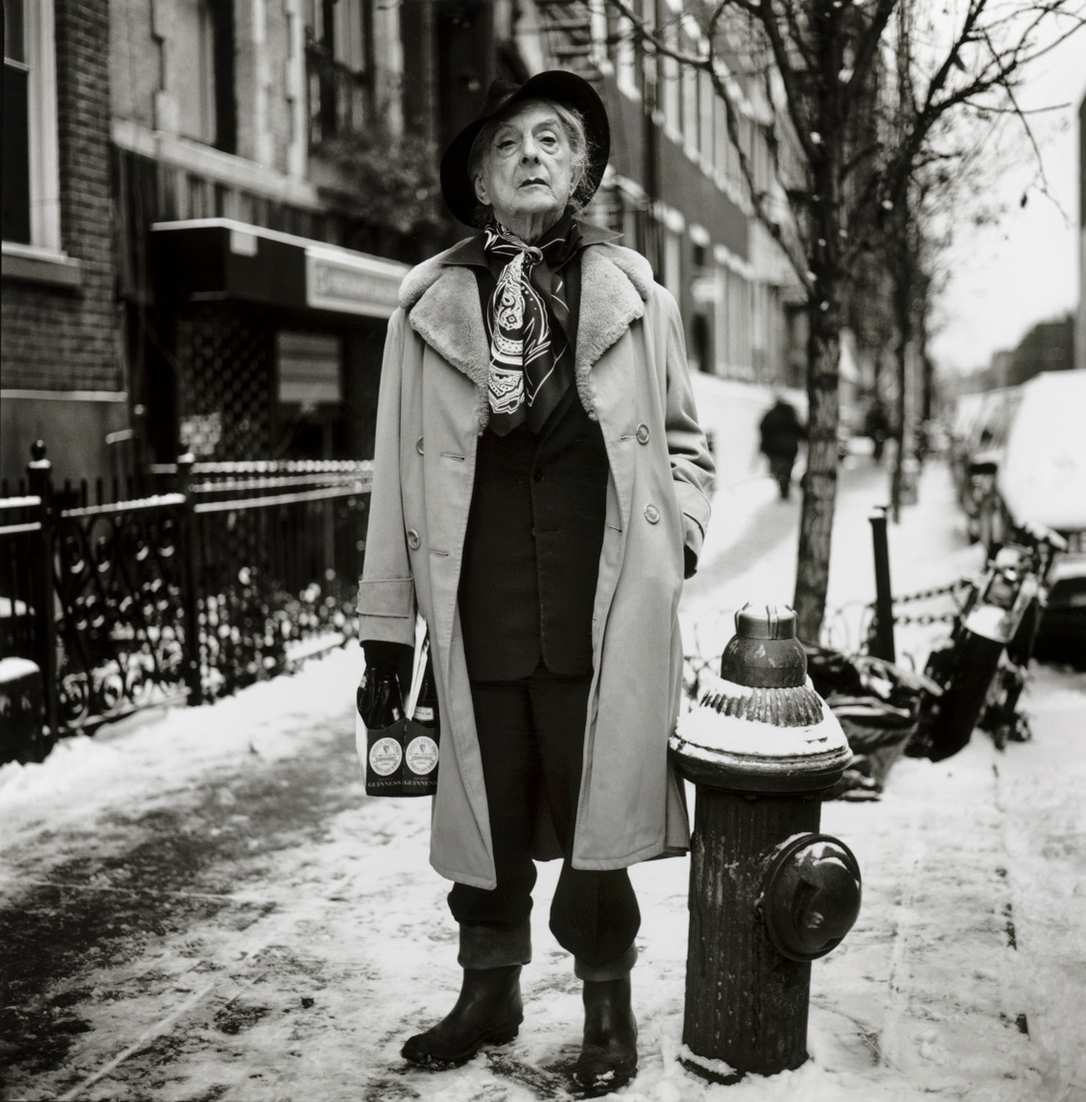
Sitters include artists Francis Bacon and David Hockney, civil rights campaigner Harvey Milk, writers Quentin Crisp, Joe Orton, Dame Daphne Du Maurier, Patricia Highsmith and Walt Whitman, composer Pyotr Tchaikovsky, musicians k.d. lang, Will Young and Village People, entertainers Ellen DeGeneres, Kenneth Williams and Lily Savage, and Nelson Mandela and Diana, Princess of Wales. Their fascinating stories will be illustrated by sixty photographic portraits including works by Andy Warhol, Linda McCartney, Snowdon, Polly Borland, Fergus Greer, Terry O’Neill and Cecil Beaton.
Sandy Nairne, Director of the National Portrait Gallery, London, says: “Gay Icons is an exhibition in which inspiring stories – both private and public – are shared. These are stories of brave lives and significant achievements, told through iconic photographic images chosen by selectors who are themselves icons.
Text from the National Portrait Gallery website [Online] Cited 10/07/2009. No longer available online
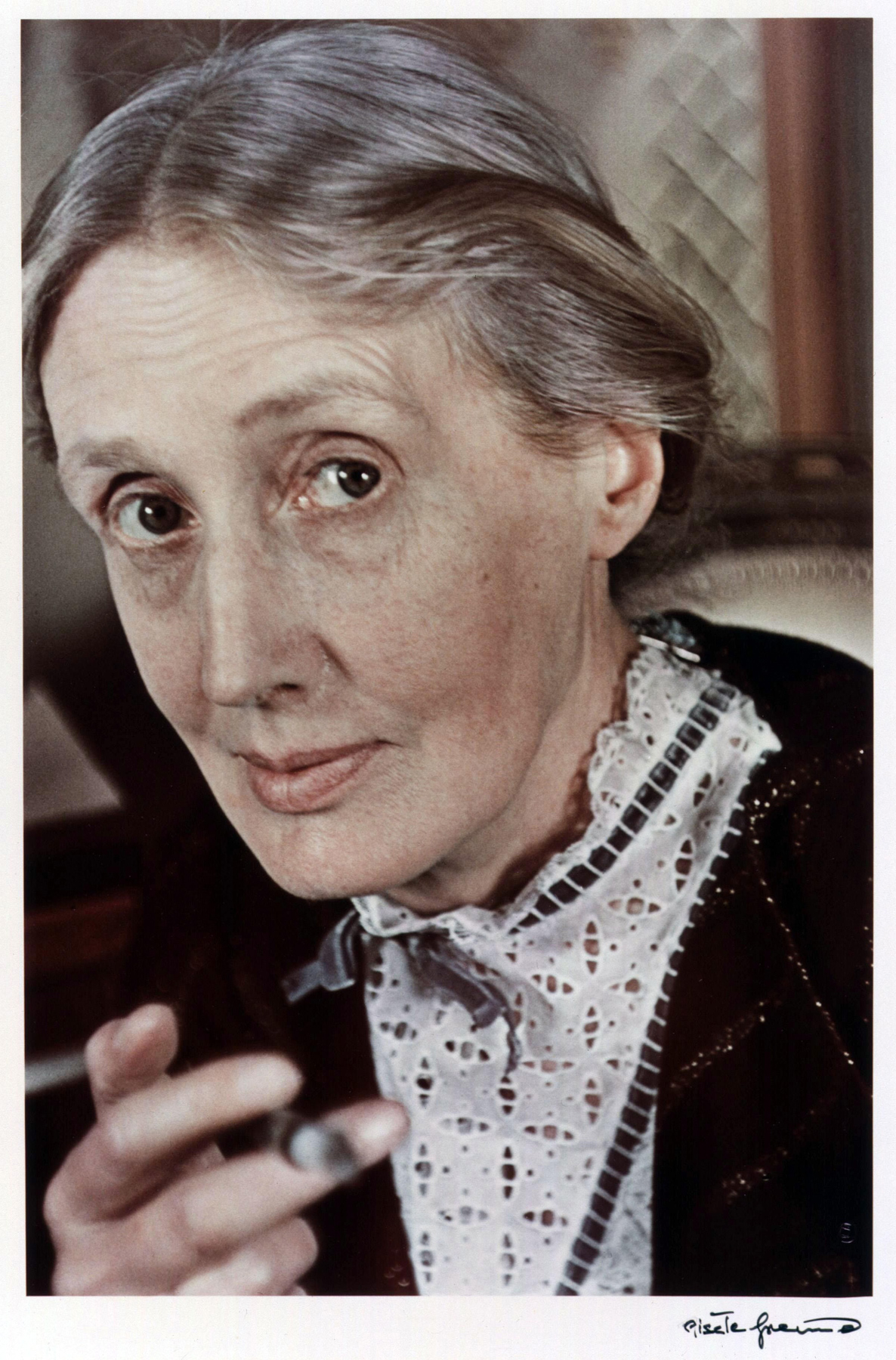
Gisèle Freund (born Gisela Freund; December 19, 1908 in Schöneberg District, Berlin – March 31, 2000 in Paris) was a German-born French photographer and photojournalist, famous for her documentary photography and portraits of writers and artists. Her best-known book, Photographie et société (1974), is about the uses and abuses of the photographic medium in the age of technological reproduction. In 1977, she became President of the French Association of Photographers, and in 1981, she took the official portrait of French President François Mitterrand.
She was made Officier des Arts et Lettres in 1982 and Chevalier de la Légion d’honneur, the highest decoration in France, in 1983. In 1991, she became the first photographer to be honoured with a retrospective at the Musée National d’art Moderne in Paris (Centre Georges Pompidou).
Freund’s major contributions to photography include using the Leica Camera (with its 36 frames) for documentary reportage and her early experimentation with Kodachrome and 35 mm Agfacolor, which allowed her to develop a “uniquely candid portraiture style” that distinguishes her in 20th century photography.
She is buried at the Montparnasse Cemetery in Paris, France near her home and studio at 12 rue Lalande.
“… is a significant writer by any standard, but she deserves honouring as a lesbian and gay icon on the strength of one novel alone, The Price of Salt, a wonderfully complex and upbeat representation of lesbian love.”
~ Sarah Waters
Patricia Highsmith (January 19, 1921 – February 4, 1995) was an American novelist and short story writer best known for her psychological thrillers, including her series of five novels featuring the character Tom Ripley. She wrote 22 novels and numerous short stories throughout her career spanning nearly five decades, and her work has led to more than two dozen film adaptations. Her writing derived influence from existentialist literature, and questioned notions of identity and popular morality. She was dubbed “the poet of apprehension” by novelist Graham Greene.
Her first novel, Strangers on a Train, has been adapted for stage and screen numerous times, notably by Alfred Hitchcock in 1951. Her 1955 novel The Talented Mr. Ripley has been adapted numerous times for film, theatre, and radio. Writing under the pseudonym “Claire Morgan,” Highsmith published the first lesbian novel with a happy ending, The Price of Salt, in 1952, republished 38 years later as Carol under her own name and later adapted into a 2015 film.
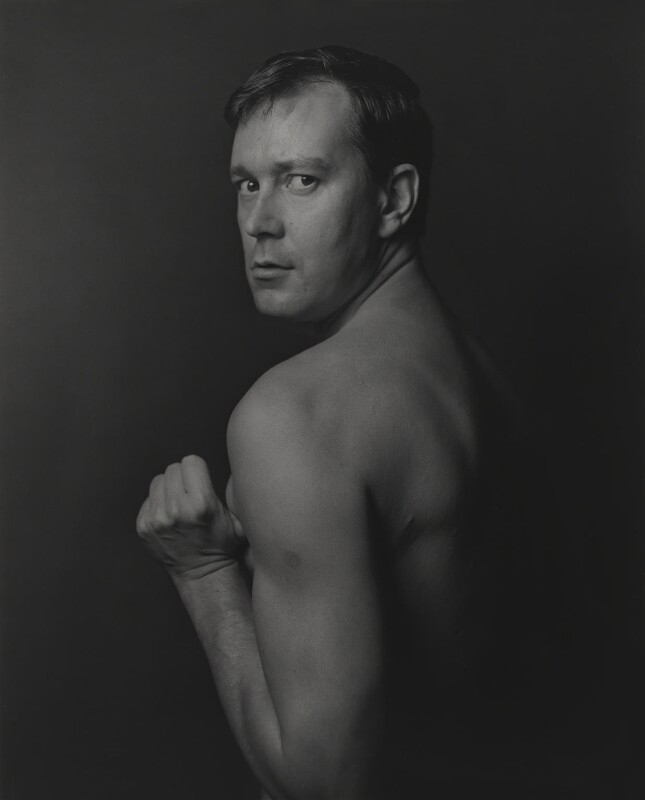
Joseph Angelo D’Allesandro III (born December 31, 1948), better known as Joe Dallesandro, is an American actor and Warhol superstar. Having also crossed over into mainstream roles like mobster Lucky Luciano in The Cotton Club, Dallesandro is generally considered to be the most famous male sex symbol of American underground films of the 20th century, as well as a sex symbol of gay subculture.
Dallesandro starred in the 1968 film produced by Andy Warhol, Flesh, as a teenage street hustler. Rolling Stone magazine in 1970 declared his second starring vehicle, Trash, the “Best Film of the Year”, making him a star of the youth culture, sexual revolution and subcultural New York City art collective of the 1970s. Dallesandro also starred in 1972’s Heat, another Warhol film that was conceived as a parody of Sunset Boulevard. …
Underground film career
Dallesandro met Andy Warhol and Paul Morrissey in 1967 while they were shooting Four Stars, and they cast him in the film on the spot. Warhol would later comment “In my movies, everyone’s in love with Joe Dallesandro.”
Dallesandro played a hustler in his third Warhol film, Flesh (1968), where he had several nude scenes. Flesh became a crossover hit with mainstream audiences, and Dallesandro became the most popular of the Warhol stars. New York Times film critic Vincent Canby wrote of him: “His physique is so magnificently shaped that men as well as women become disconnected at the sight of him”
As Dallesandro’s underground fame began to cross over into the popular culture, he appeared on the cover of Rolling Stone in April 1971. He was also photographed by some of the top celebrity photographers of the time: Francesco Scavullo, Annie Leibovitz, Richard Avedon.
Dallesandro appeared in Lonesome Cowboys (1968), Trash (1970), Heat (1972), Andy Warhol’s Frankenstein, and Andy Warhol’s Dracula (both 1974), also directed by Morrissey. These last two films were shot in Europe. After filming was complete, he chose not to return to the U.S. He appeared in Serge Gainsbourg’s Je t’aime moi non plus (France, 1976), which starred Gainsbourg’s wife, British actress Jane Birkin.
Gay Icons explores gay social and cultural history through the unique personal insights of ten high profile gay figures, who have selected their historical and modern icons.
The chosen icons, who may or may not be gay themselves, have all been important to each selector, having influenced their gay sensibilities or contributed to making them who they are today. They include artists Francis Bacon and David Hockney; writers Daphne du Maurier and Quentin Crisp; composers Pyotr Tchaikovsky and Benjamin Britten; musicians k.d. lang, the Village People and Will Young; entertainers Ellen DeGeneres, Lily Savage and Kenneth Williams; sports stars Martina Navratilova and Ian Roberts and political activists Harvey Milk and Angela Mason.
Their fascinating and inspirational stories will be illustrated by over sixty photographic portraits including works by Andy Warhol, Snowdon and Cecil Beaton together with specially commissioned portraits of the selectors by Mary McCartney. McCartney. All are set in a striking exhibition design conceived by renowned theatre designer, Robert Jones …
This exhibition brings together ten selectors, chaired by Sandi Toksvig, each of whom is a prominent gay figure in contemporary culture and society. Each selector was asked to name six people, who may or may not be gay, whom they personally regard as inspirational, or an icon for them.
Their choices provide a fascinating range of figures – some heroic, some very famous, others less well known. In the exhibition the selectors write about their choices and share their own convictions, experiences and feelings. The display also features specially commissioned portraits of the selectors by Mary McCartney.
Anonymous text. “Gay Icons,” on the National Portrait Gallery website [Online] Cited 18/06/2022. No longer available online
“He has touched my heart, just as he has influenced the hearts and minds of people all over the world.”
~ Billie Jean King
“The great single picture is emotionally satisfying, whereas getting a good journalistic story is more about being a professional”
~ Ian Berry
Ian Berry was born in Lancashire, England. He made his reputation in South Africa, where he worked for the Daily Mail and later for Drum magazine. He was the only photographer to document the massacre at Sharpeville in 1960, and his photographs were used in the trial to prove the victims’ innocence.
Henri Cartier-Bresson invited Ian Berry to join Magnum in 1962 when he was based in Paris. He moved to London in 1964 to become the first contract photographer for the Observer Magazine. Since then assignments have taken him around the world: he has documented Russia’s invasion of Czechoslovakia; conflicts in Israel, Ireland, Vietnam and the Congo; famine in Ethiopia; apartheid in South Africa. The major body of work produced in South Africa is represented in two of his books: Black and Whites: L’Afrique du Sud (with a foreword by the then French president François Mitterrand), and Living Apart (1996). During the last year, projects have included child slavery in Ghana and the Spanish fishing industry.
Important editorial assignments have included work for National Geographic, Fortune, Stern, Geo, national Sunday magazines, Esquire, Paris-Match and LIFE. Ian Berry has also reported on the political and social transformations in China and the former USSR.
Anonymous text. “Ian Berry,” on the Magnum website [Online] Cited 16/03/2019
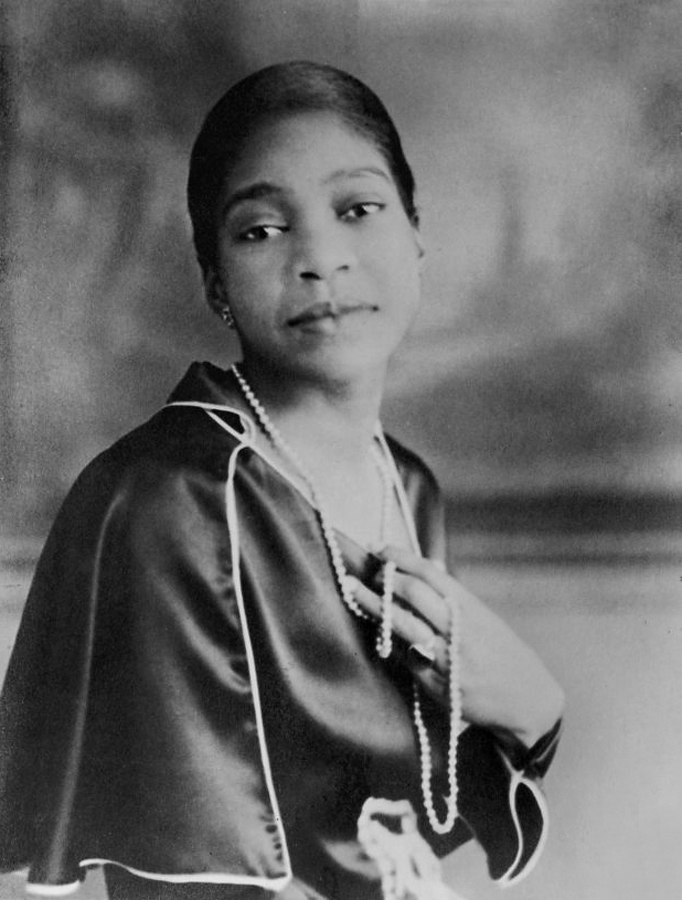
“A feisty woman who always stood up for herself… She was bisexual and practically an alcoholic – the perfect icon.”
~ Jackie Kay
Bessie Smith (April 15, 1894 – September 26, 1937) was an American blues singer. Nicknamed the Empress of the Blues, she was the most popular female blues singer of the 1920s and 1930s. She is often regarded as one of the greatest singers of her era and was a major influence on fellow blues singers, as well as jazz vocalists.
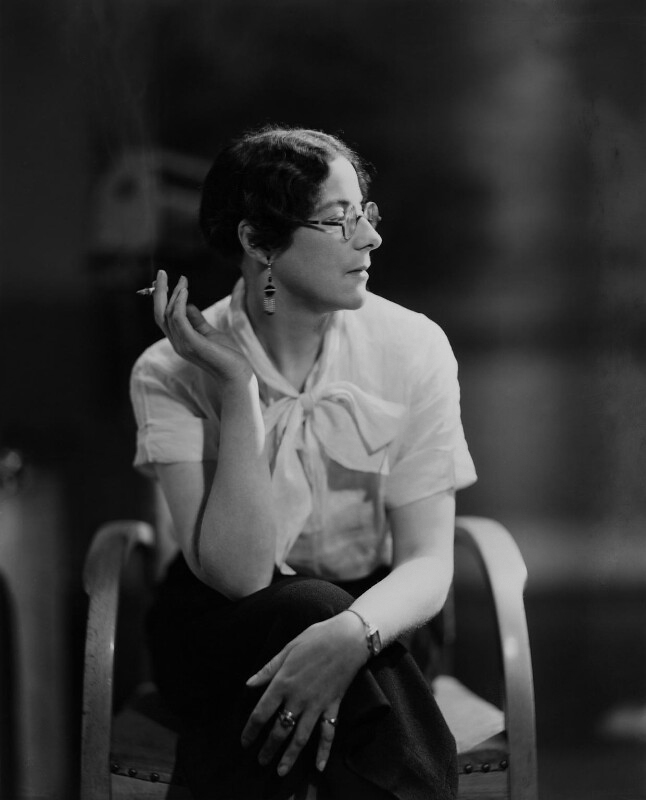
Sylvia Townsend Warner (6 December 1893 – 1 May 1978) was an English novelist and poet. She also made a contribution to musicology as a young woman.
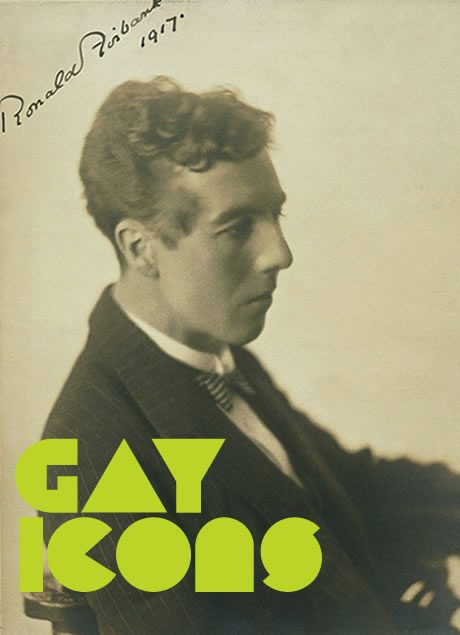
Bertram Park (British, 1883-1972) Ronald Firbank (detail) 1917
“He [Ronald Firbank] is celebrated as a master of high camp, but he was also a radical technician and radical homosexualiser of the novel.”
~ Alan Hollinghurst
Bertram Park (British, 1883-1972) Ronald Firbank 1917
Bertram Charles Percival Park, OBE, (1883-1972) was a portrait photographer whose work included British and European royalty. Engravings of his photographs were widely used on British and British Commonwealth postage stamps, currency, and other official documents in the 1930s. His theatrical portraits were the source for two paintings by Walter Sickert. With his wife Yvonne Gregory, he also produced a number of photographic books of the female nude. He was an expert in the cultivation of the rose and the editor of The Rose Annual.
Arthur Annesley Ronald Firbank (17 January 1886 – 21 May 1926) was an innovative English novelist. His eight short novels, partly inspired by the London aesthetes of the 1890s, especially Oscar Wilde, consist largely of dialogue, with references to religion, social-climbing, and sexuality.
Unknown photographer Winifred Atwell (detail) c. 1950s Courtesy of Getty Images
“Winifred Atwell’s piano performances were simply captivating. She showed me what was possible and was a total inspiration.”
~ Elton John
Una Winifred Atwell (27 February or 27 April 1910 or 1914 – 28 February 1983) was a Trinidadian pianist who enjoyed great popularity in Britain and Australia from the 1950s with a series of boogie-woogie and ragtime hits, selling over 20 million records. She was the first black person to have a number-one hit in the UK Singles Chart and is still the only female instrumentalist to do so.
Read the full entry about this amazing women on the Wikipedia website
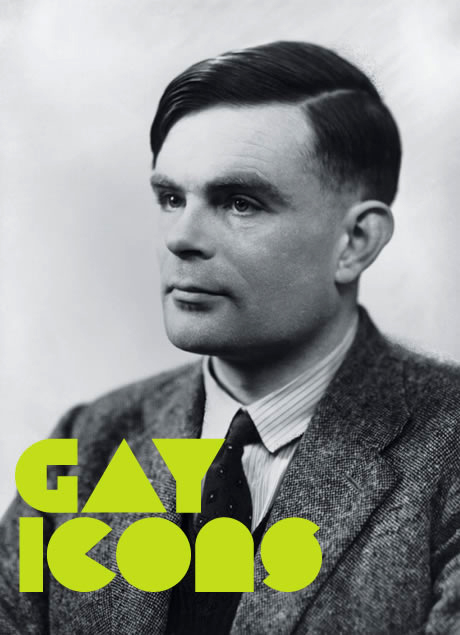
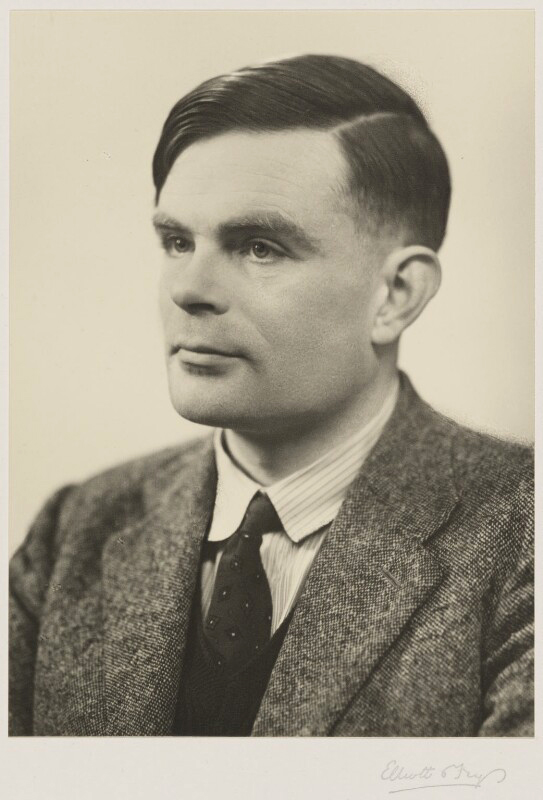
Elliott & Fry was a Victorian photography studio founded in 1863 by Joseph John Elliott (14 October 1835 – 30 March 1903) and Clarence Edmund Fry (1840 – 12 April 1897). For a century the firm’s core business was taking and publishing photographs of the Victorian public and social, artistic, scientific and political luminaries. In the 1880s the company operated three studios and four large storage facilities for negatives, with a printing works at Barnet.
The firm’s first address was 55 & 56 Baker Street in London, premises they occupied until 1919. The studio employed a number of photographers, including Francis Henry Hart and Alfred James Philpott in the Edwardian era, Herbert Lambert and Walter Benington in the 1920s and 1930s and subsequently William Flowers. During World War II the studio was bombed and most of the early negatives were lost, the National Portrait Gallery holding all the surviving negatives. With the firm’s centenary in 1963 it was taken over by Bassano & Vandyk.
“Turing was one of the most brilliant men of the first half of the twentieth century, but the refusal of post-war society to accept his sexuality drove him to commit suicide… We can and should honour him now.”
~ Chris Smith
National Portrait Gallery St Martin’s Place London WC2H 0HE
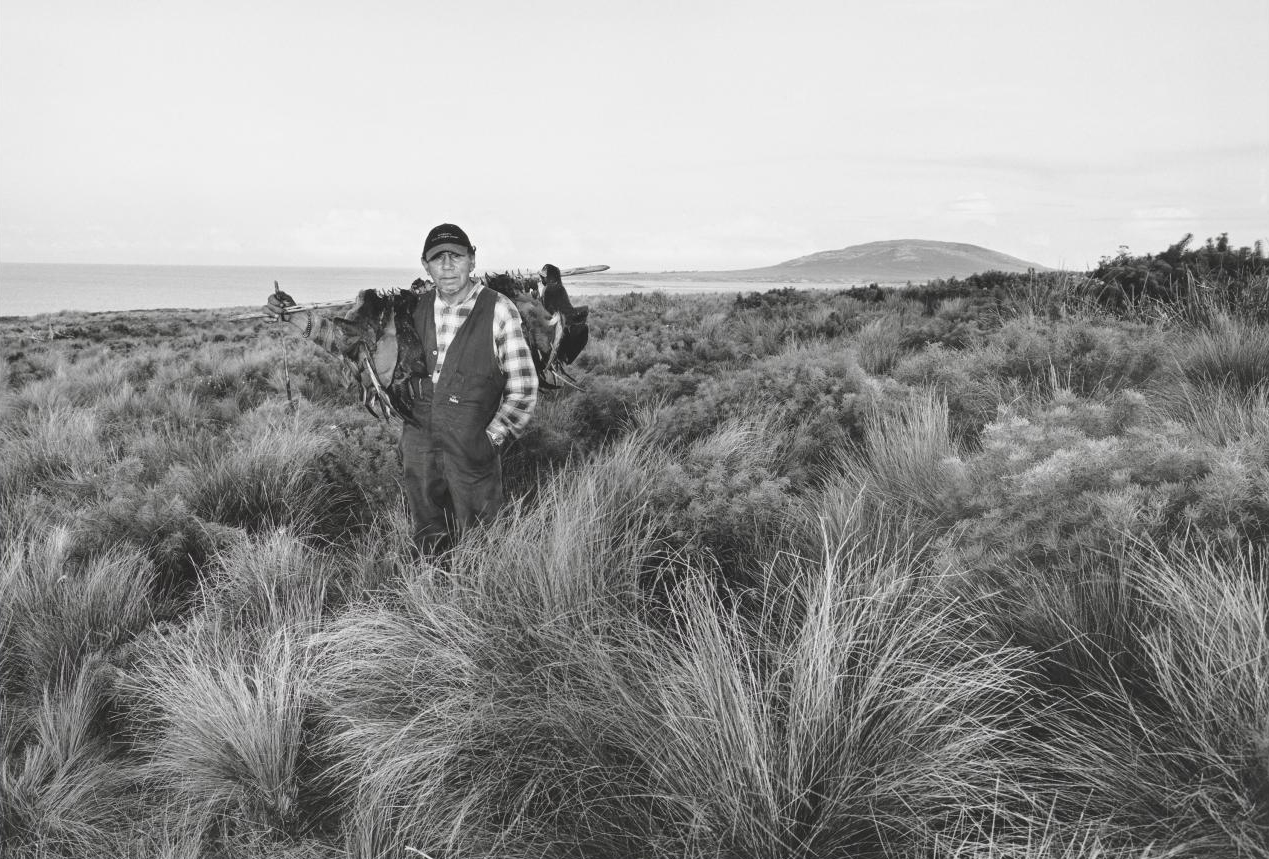
I can remember coming here as a boy in old wooden boats to be taught by my grandparents and my parents. I’ll be 57 this year and I have missed only one year when my daughter Leanne was born. Mutton birding is my life. To me it’s a gathering of our fellas where we sit and yarn, we remember and we honour all of those birders who have gone before us. Sometimes I just stand and look out across these beautiful islands remembering my people and I know I’m home. It makes me proud to be a strong Tasmanian black man. This is something that they can never take away from me.
This winter the Museum of Contemporary Art presents a major survey of photographic works by documentary photographer Ricky Maynard, encompassing more than two decades of the artist’s practice.
Portrait of a Distant Land features more than 60 evocative and captivating photographic works, drawn from six bodies of work, which document the lives and culture of Maynard’s people, the Ben Lomond and Cape Portland peoples of Tasmania.
The exhibition is curated by MCA Aboriginal and Torres Strait Islander Programs Keith Munro and is presented at the MCA from 4 June until 23 August 2009. Born in Launceston, Tasmania in 1953 Maynard is a self taught documentary photographer now based on Flinders Island in the Bass Strait between Tasmania and mainland Australia.
Maynard first came to prominence in the late 1980s with a photographic essay about Aboriginal mutton bird farmers and he has continued to document physical and social landscapes which form a visual record and representation of Aboriginal and Torres Strait Islander people in Australia.
“For me, photographs have always been personal and I hope to convey the intimacy of a diary. Photography has the ability to tell stories about the world and how the photograph has power to frame a culture,” said Maynard, describing his practice.
The works presented in Portrait of a Distant Land survey a broad range of themes and issues facing Aboriginal and Torres Strait Islander people today. It includes photographs which document sites significant to Maynard’s people: ranging from serenely beautiful landscapes which follow the song lines, tribal movements and historical displacement routes of his ancestors, to the confrontational and emotionally-charged images of Indigenous people incarcerated in the South Australian prison system.
The six photographic series by Maynard which are featured in the exhibition are The Moonbird People (1985-1988), No More Than What You See (1993), Urban Diary (1997), In The Footsteps of Others (2003), Returning To Places That Name Us (2000) and Portrait of a Distant Land (2005- ). Together these works create a form of visual diary of multiple landscapes derived from collective oral histories of Maynard’s people.”
Press release from the MCA website [Online] Cited 05/07/2009. No longer available online
The owner of an enviable collection of antique cameras, Maynard is a lifelong student of the history of photography, particularly of the great American social reformers Jacob Riis, Lewis Hines, Dorothea Lange and Walker Evans. He is interested in the power of the uninflected image – of sheer veracity – as an agent of record and change. Maynard’s images cut through the layers of rhetoric and ideology that inevitably couch black history (particularly Tasmanian history) to present images of experience itself. ‘To know the meaning of a culture you must recognise the limits and meaning of your own,’ the artist explains. ‘You can see its facts but not its meaning. We share meaning by living it.’ Maynard’s photographs are, he says, about ‘leaving proof’ – about ‘… life in passing and in complicated times’.
The word ‘Wik’ has come to denote a historic decision of the High Court of Australia rather than the name of the Indigenous peoples from the western Cape York Peninsula in northern Queensland. In his intimate portraits of elders from these communities, Maynard aims to unpick this abstraction. Etched on each face is the complexity of an unspoken life story, delineated, one imagines, by hardship, perseverance and the burden – and wealth – of an extraordinary living memory. As he wrote in his artist’s statement for the exhibition Returning to Places that Name Us in 2001, ‘… I wanted a presence and portraits that spoke, and through this process to present an idea, rather than preach messages’. In this series, Maynard achieves his aim of capturing meanings that no other medium could convey.
Hannah Fink in ‘Tradition today: Indigenous art in Australia’, Art Gallery of New South Wales, Sydney, 2004
Maynard is a lifelong student of the history of photography, particularly of the great American social reformers Jacob Riis, Lewis Hines, Dorothea Lange and Walker Evans. Maynard’s images cut through the layers of rhetoric and ideology that inevitably couch black history (particularly Tasmanian history) to present images of experience itself. His visual histories question ownership; he claims that ‘the contest remains over who will image and own this history… we must define history, define whose history it is, and define its purpose as well as the tools used for the telling it’.
In Portrait of a distant land Maynard addresses the emotional connection between history and place. He uses documentary style landscapes to illustrate group portraits of Aboriginal peoples’ experiences throughout Tasmania. Each work combines several specific historical events, creating a narrative of shared experience – for example The Mission relies on historical records of a small boy whom Europeans christened after both his parents died in the Risdon massacre. This work highlights the disparity between written, oral and visual histories, as Maynard attempts to create ‘a combination of a very specific oral history as well as an attempt to show a different way of looking at history in general’.
Text from the Art Gallery of New South Wales website [Online] Cited 14/03/2019
Museum of Contemporary Art (MCA) 140 George Street The Rocks, Sydney, Australia
Exhibition dates: 16th June – 18th September, 2009
Artist duo George (left) and Gilbert (right) pose in front of their work “The Church of England” in Berlin, Germany
That pair of agent provocateurs are at it again!
Marcus
Many thankx to Arndt & Partner for allowing me to publish the photographs in the posting. Please click on the photographs for a larger version of the image.
Gilbert & George (Gilbert Prousch, English born Italy, b. 1943) (George Passmore, English, b. 1942) DATING 2008 Mixed media
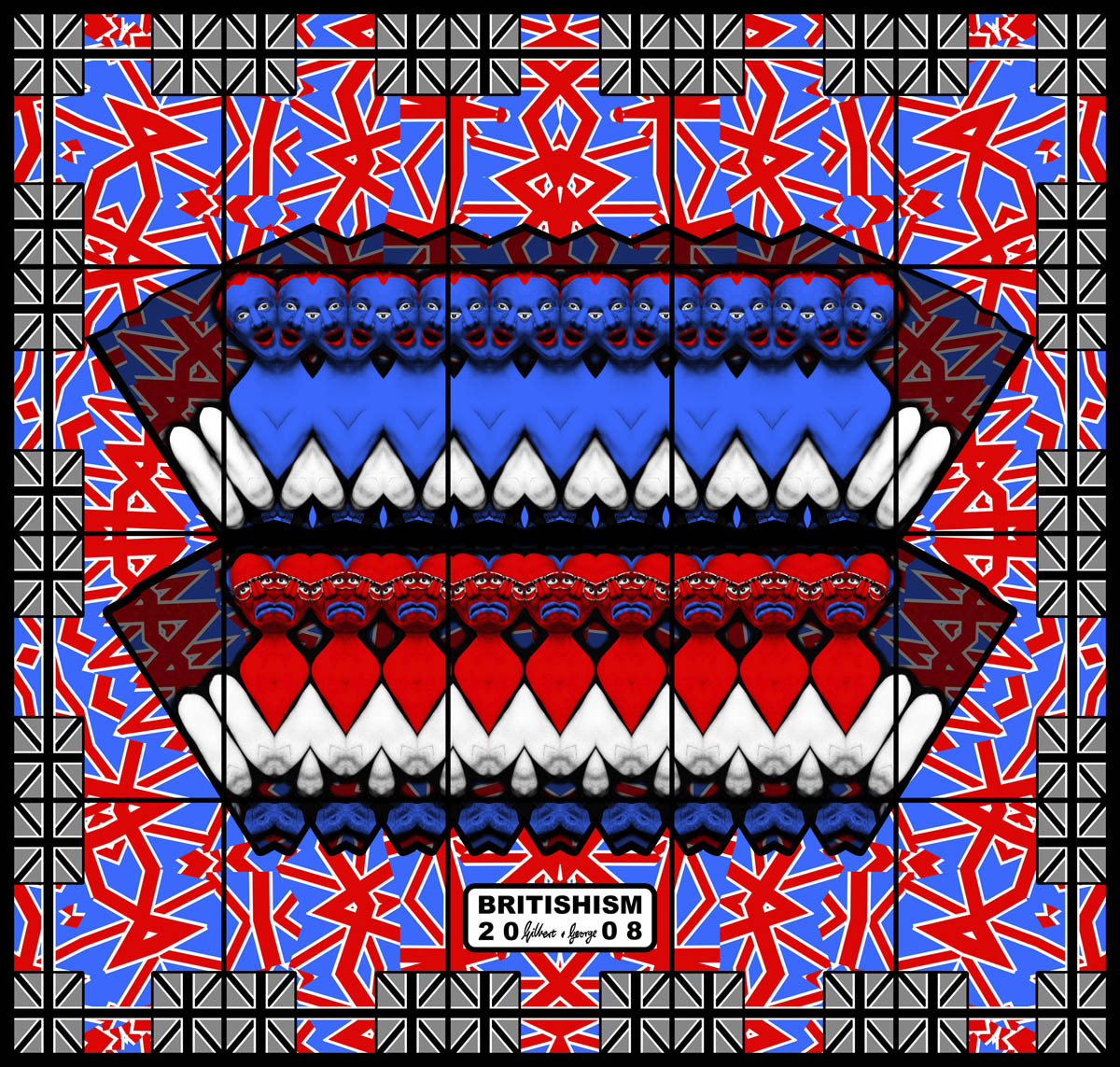
Gilbert & George (Gilbert Prousch, English born Italy, b. 1943) (George Passmore, English, b. 1942) BRITISHISM 2008 Mixed media
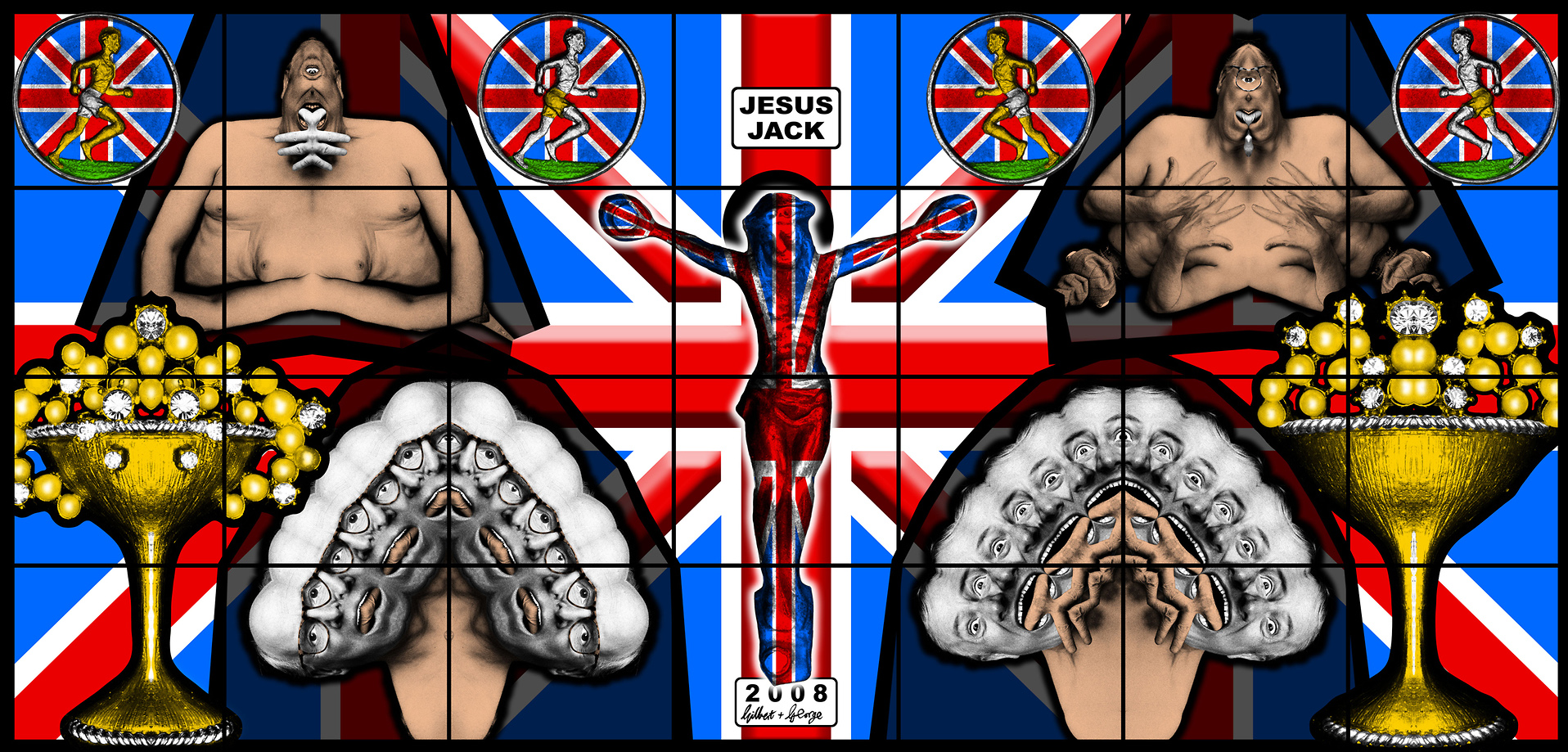
Gilbert & George (Gilbert Prousch, English born Italy, b. 1943) (George Passmore, English, b. 1942) JESUS JACK 2008 Mixed media
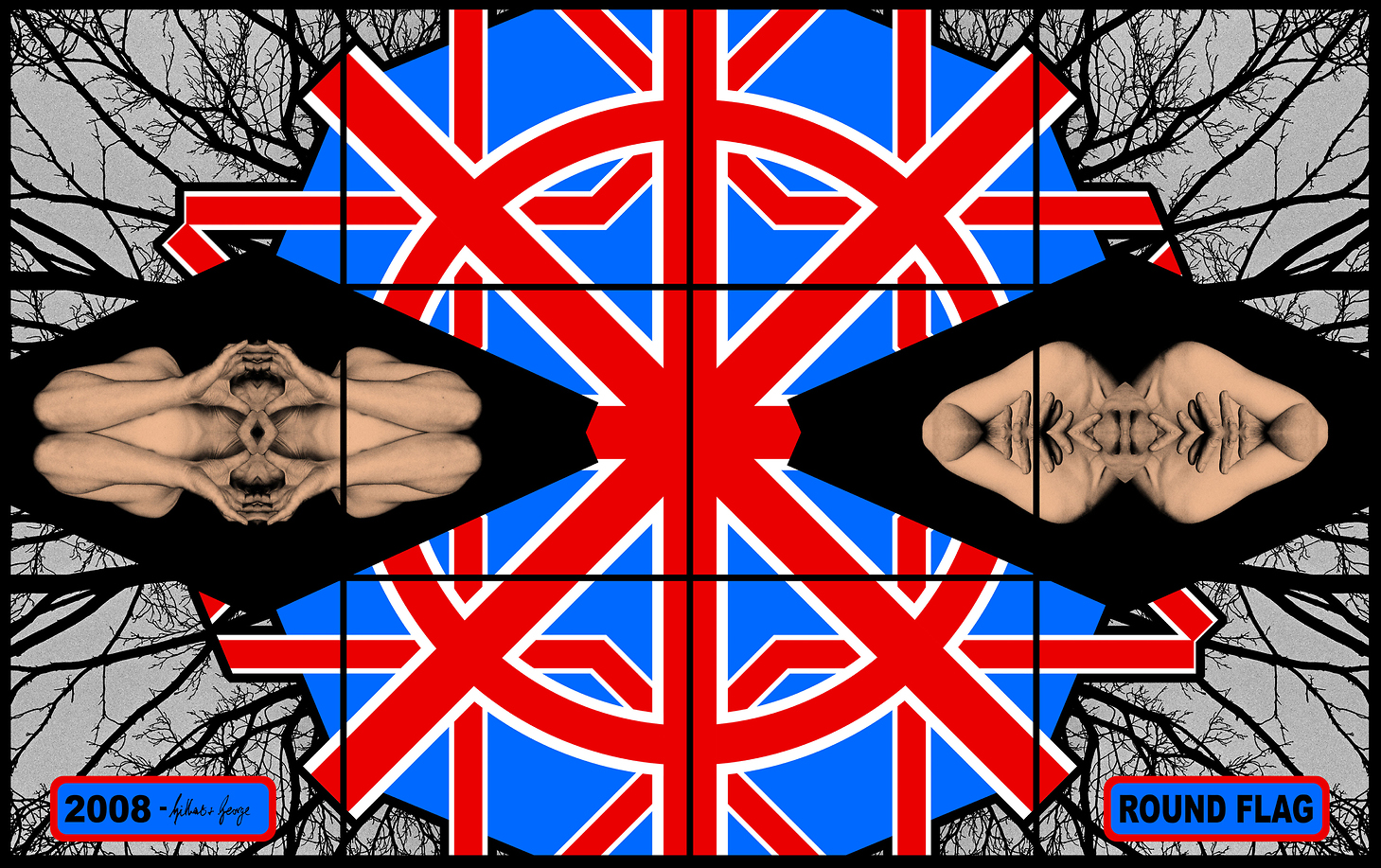
Gilbert & George (Gilbert Prousch, English born Italy, b. 1943) (George Passmore, English, b. 1942) ROUND FLAG 2008 Mixed media
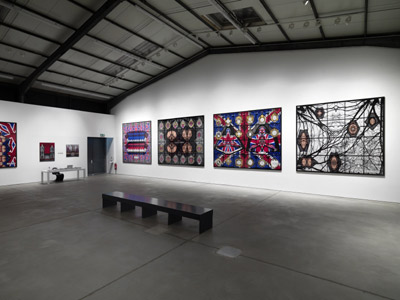
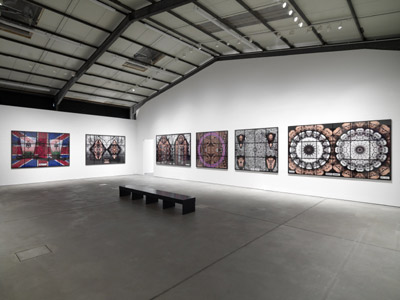
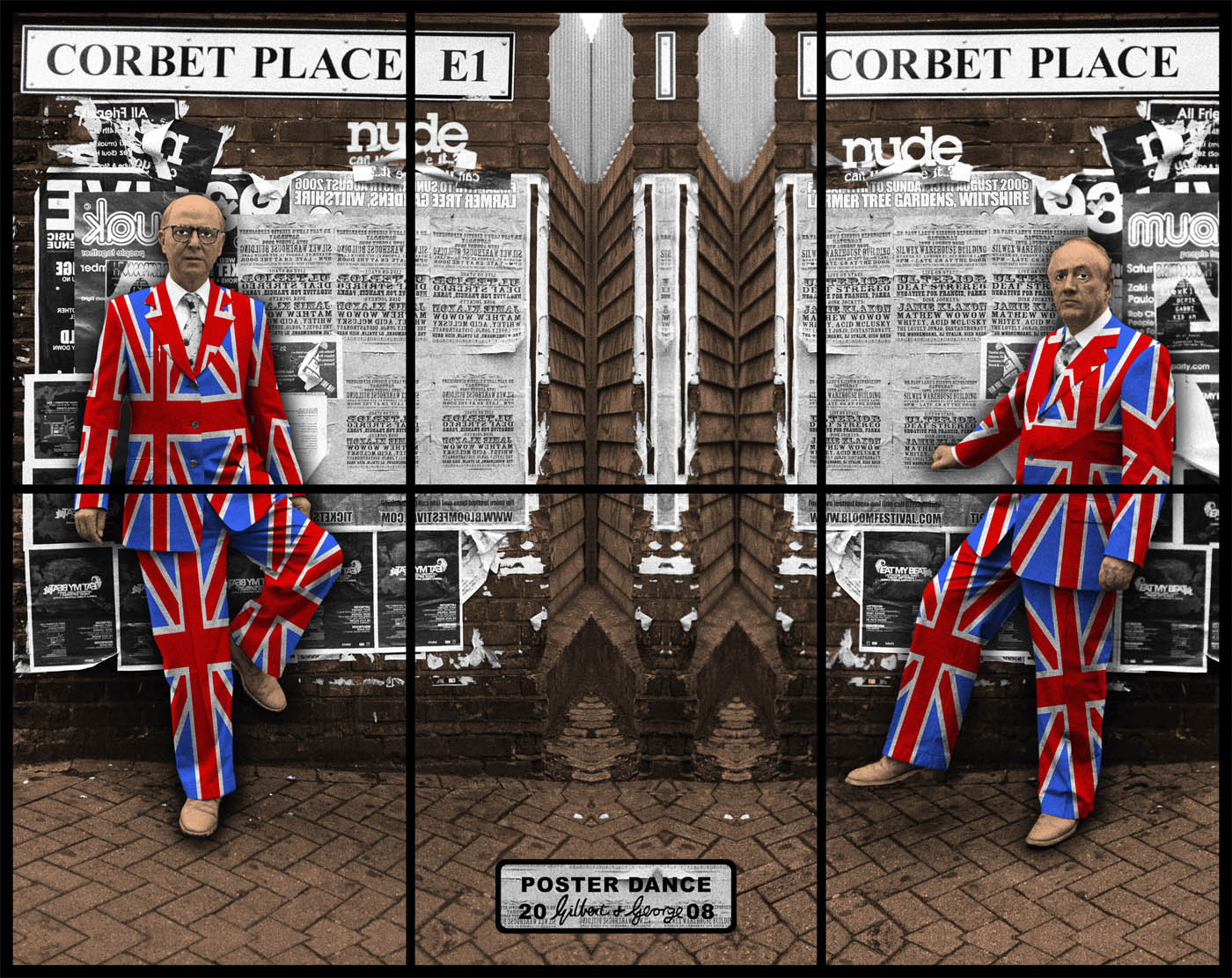
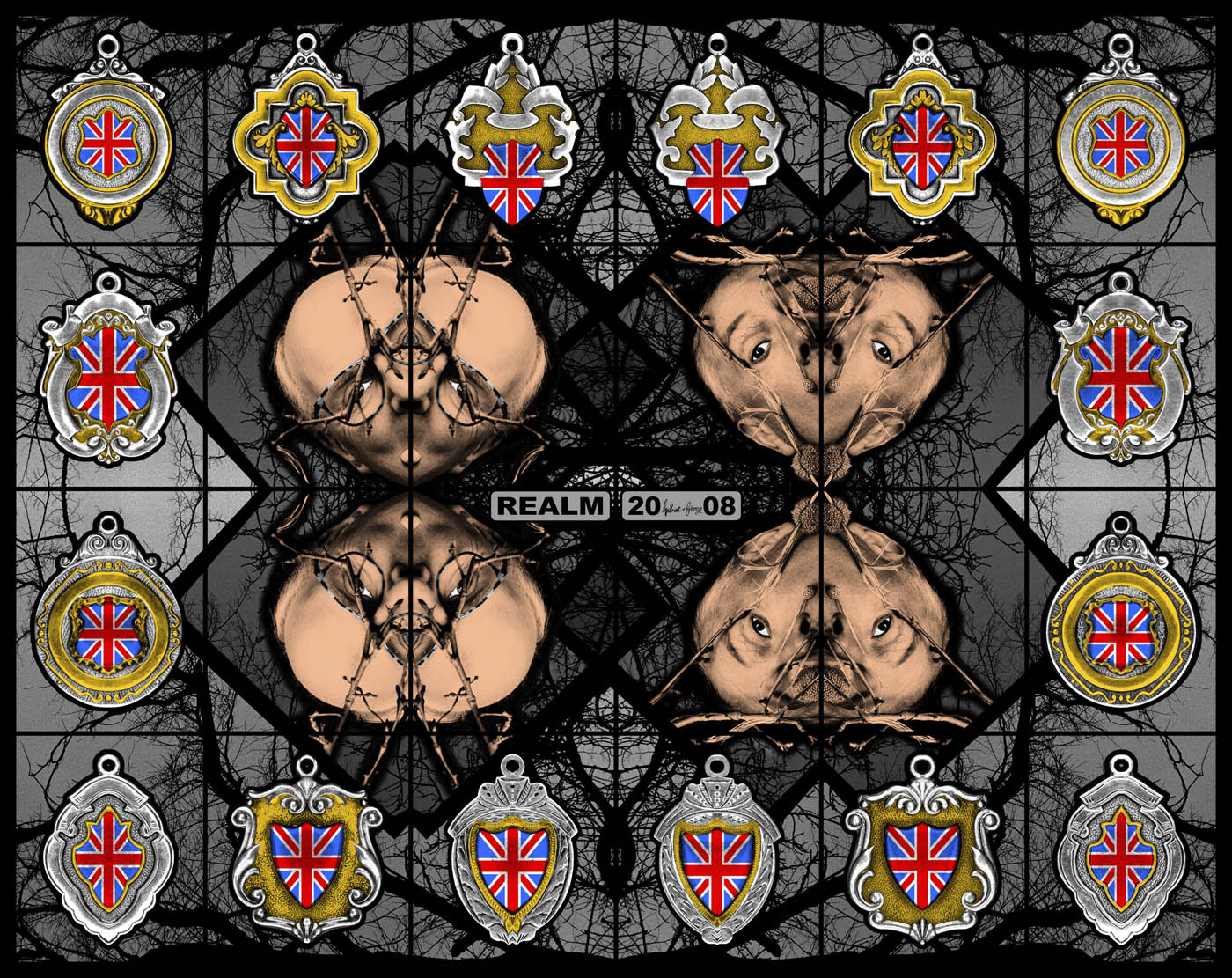
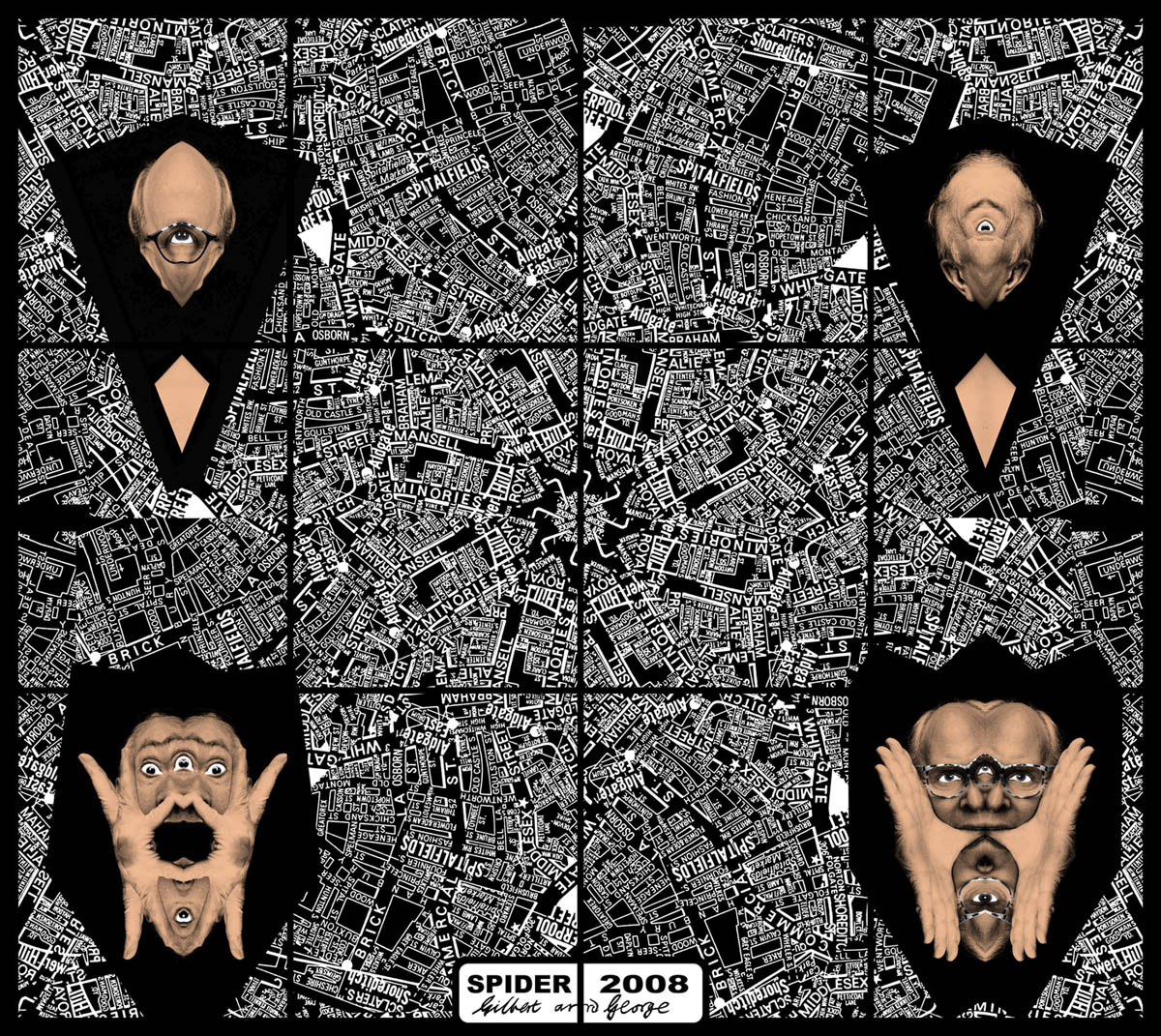
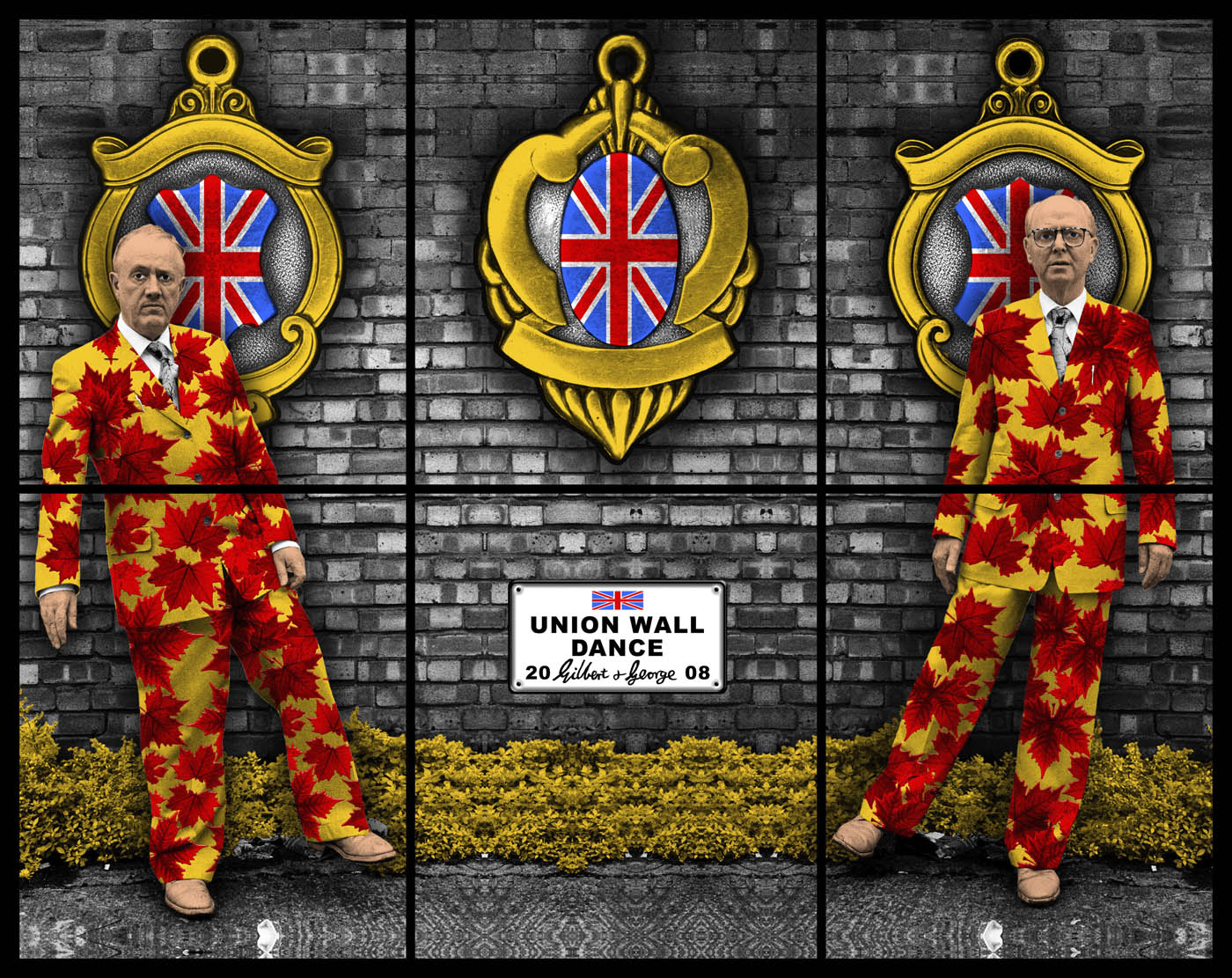
As the international tour of the last Gilbert & George retrospective (2007-2009) did not include Berlin, Arndt & Partner are now presenting a solo exhibition of the celebrity artist duo in its gallery rooms behind the Hamburger Bahnhof. It is the first Gilbert & George solo show in Berlin for 14 years. The exhibition features a selection of 20 large-scale pieces from the Jack Freak Pictures, the largest Gilbert & George group of pictures to date. The thrust of the content is given by the colours and shapes of the Union Jack flag that dominate the bulk of the pictures as well as the recurring motive of medals, emblems and trees. In the Jack Freak Pictures the artist duo explores aspects of nationhood and of the sentient individual in the nets of society. In his essay published in the catalogue accompanying the exhibition the British writer Michael Bracewell describes these pictures as “the most iconic, philosophically astute and visually violent works that Gilbert & George have ever created …”
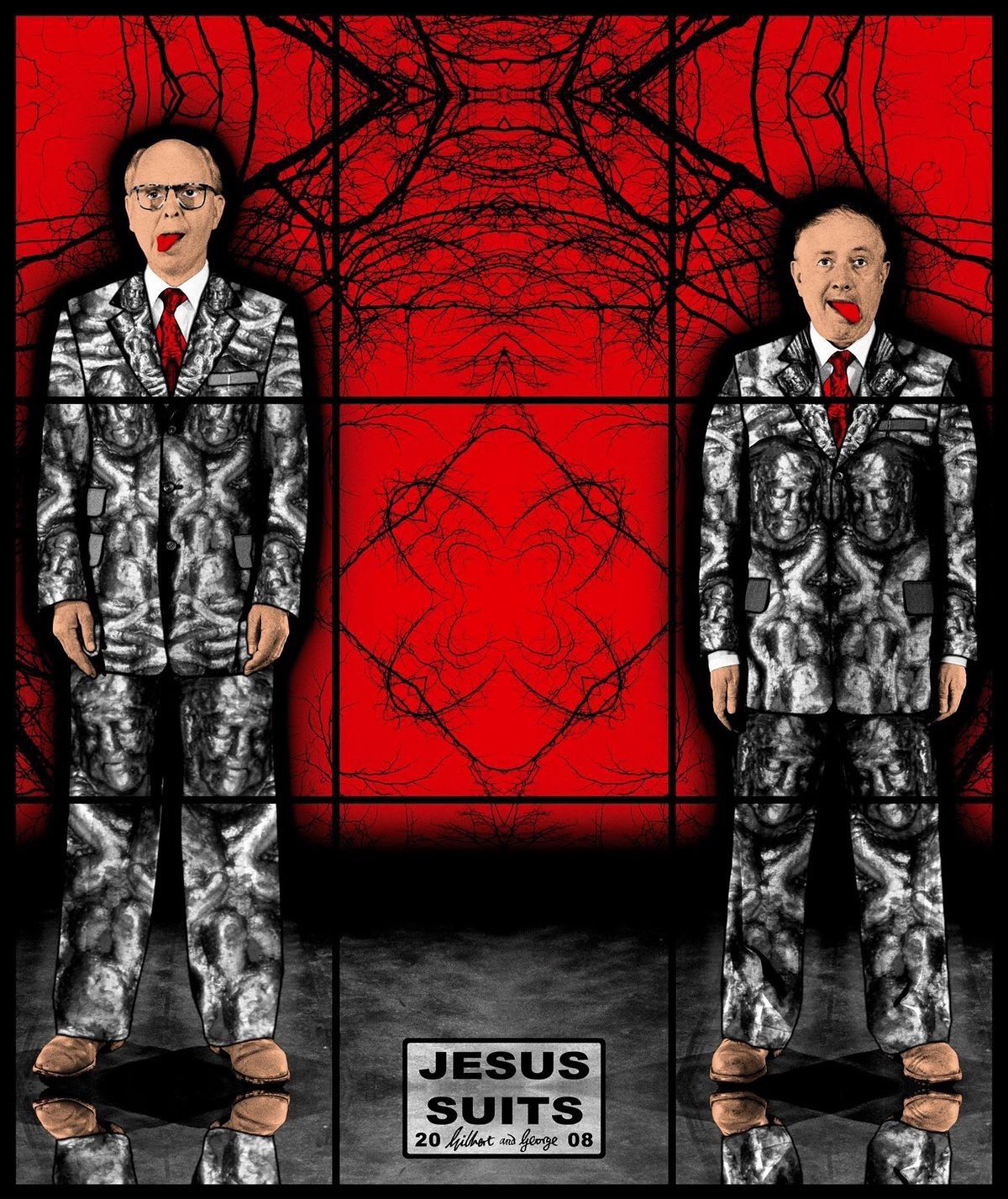
Gilbert & George, who met as students of sculpture at St. Martin’s School of Art in London 42 years ago, embarked on a joint artistic career that was to encompass a wide range of media from drawing to video and their trademark pictures. Further, the pair revolutionised the concept of sculpture by presenting themselves as “living sculptures” dressed in the quintessentially British tailored suit, shirt and tie. But it was their monumental trademark pictures composed of a grid like array of smaller images which they began to create in the early 70s that first brought them international fame. Figures, cityscapes, symbols, plants, bodily fluids, excrements and text interlock in pictorial messages as visually powerful as their content is provocative. The pictures, which started out in black and white and later assumed increasingly luminous, bold colours, generally also depict portraits of the artists themselves and seize on taboo subjects like sexuality, race, religion and national identity with a brash and fearless candour.
The Jack Freak Pictures again feature the bodies and/or faces of the artists. In these compositions, their bodies function as stylised representatives of the individual in society, whose relationship to social norms and categories, to national, religious and sexual identification processes is relentlessly explored and commented upon. Departing from their earlier oeuvre, some of their new pictures split the raw images into much smaller fragments before merging them into new forms. The result is a fascinating kaleidoscopic mix of the monstrously grotesque with an intricate ornamental structure reminiscent of sacred art. In ever new variations, Gilbert & George order the signs and fragments of social life they find in their neighbourhood – the multicultural East End of London – where solidarity and friendship are as visible as intolerance and marginalisation.
Press release from the Arndt & Partner website [Online] Cited 04/07/2009. No longer available online
Gilbert & George installation photographs of their exhibition Jack Freak Pictures at Arndt & Partner, Berlin
Gilbert & George (Gilbert Prousch, English born Italy, b. 1943) (George Passmore, English, b. 1942) JESUS SUITS 2008 Mixed media
Gilbert & George (Gilbert Prousch, English born Italy, b. 1943) (George Passmore, English, b. 1942) CHURCH OF ENGLAND 2008 Mixed media
Gilbert & George (Gilbert Prousch, English born Italy, b. 1943) (George Passmore, English, b. 1942) POSTER DANCE 2008 Mixed media
Gilbert & George (Gilbert Prousch, English born Italy, b. 1943) (George Passmore, English, b. 1942) REALM 2008 Mixed media
Gilbert & George (Gilbert Prousch, English born Italy, b. 1943) (George Passmore, English, b. 1942) SPIDER 2008 Mixed media
Gilbert & George (Gilbert Prousch, English born Italy, b. 1943) (George Passmore, English, b. 1942) UNION WALL DANCE 2008 Mixed media



![E. J. Bellocq (American, 1873-1949) 'Untitled [prostitute of Storyville, New Orleans]' 1912](https://artblart.com/wp-content/uploads/2009/09/bellocq_1912_g.jpg "E. J. Bellocq (American, 1873-1949) 'Untitled [prostitute of Storyville, New Orleans]' 1912")




![Hill & Adamson (Scottish, active 1843-1848) '[Lane and Peddie as Afghans]' 1843 from the exhibition 'In Focus: Making A Scene' at The J. Paul Getty Museum, Los Angeles, June - Oct, 2009](https://artblart.com/wp-content/uploads/2009/09/hill-and-adamson-lane-and-peddie-as-afghans-web.jpg "Hill & Adamson (Scottish, active 1843-1848) '[Lane and Peddie as Afghans]' 1843 from the exhibition 'In Focus: Making A Scene' at The J. Paul Getty Museum, Los Angeles, June - Oct, 2009")


![Baron Wilhelm von Gloeden (German, 1856-1931) 'Untitled [Two Male Youths Holding Palm Fronds]' c. 1885 - 1905](https://artblart.com/wp-content/uploads/2009/09/gloeden-two-male-youths-holding-palm-fronds-web.jpg "Baron Wilhelm von Gloeden (German, 1856-1931) 'Untitled [Two Male Youths Holding Palm Fronds]' c. 1885 - 1905")
![Guido Rey (Italian, 1861-1935) '[The Letter]' 1908](https://artblart.com/wp-content/uploads/2009/09/guido-rey-the-letter-1908-web.jpg "Guido Rey (Italian, 1861-1935) '[The Letter]' 1908")
























 Art Blart _ art and cultural memory archive
You must be logged in to post a comment.