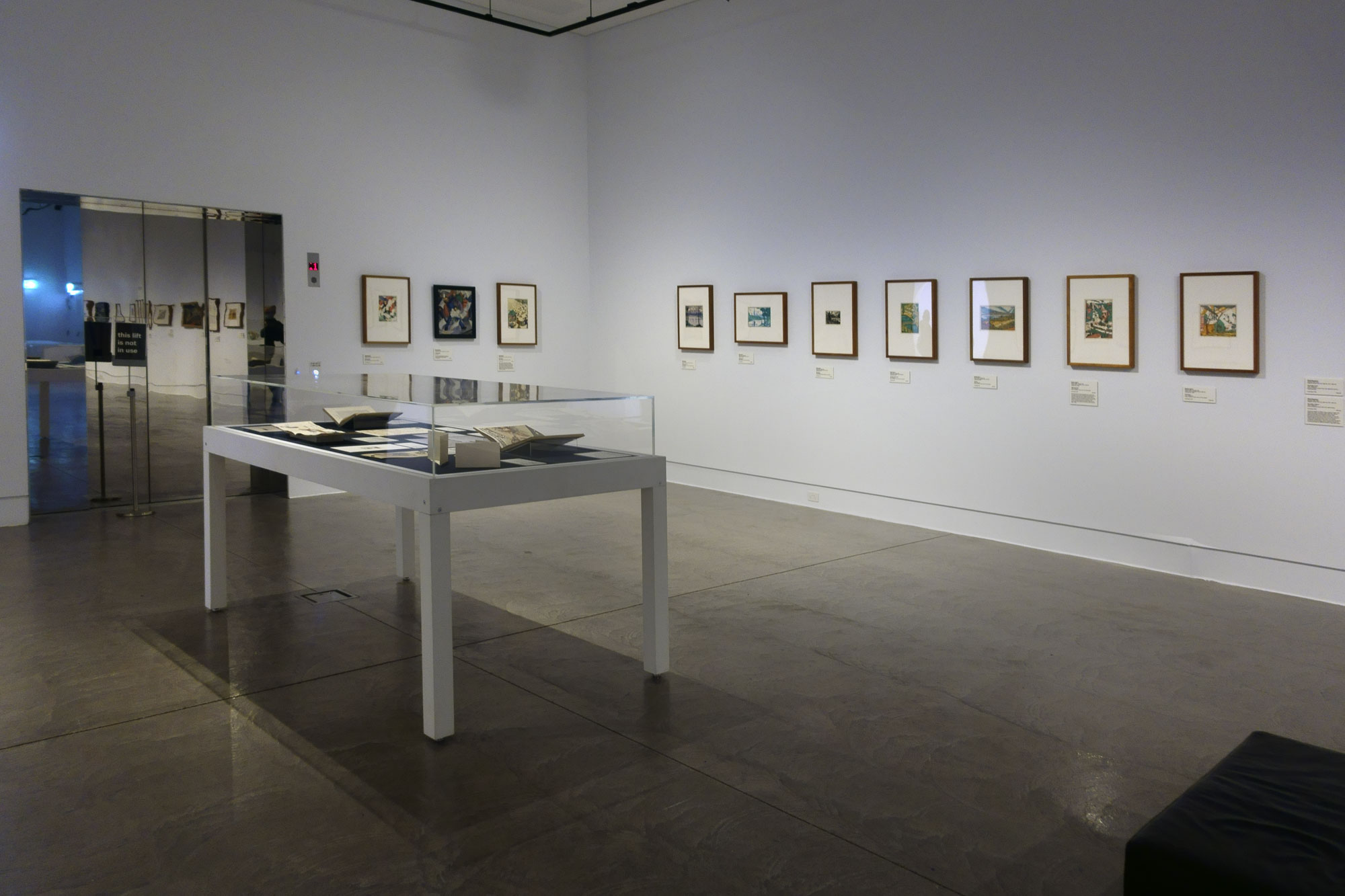
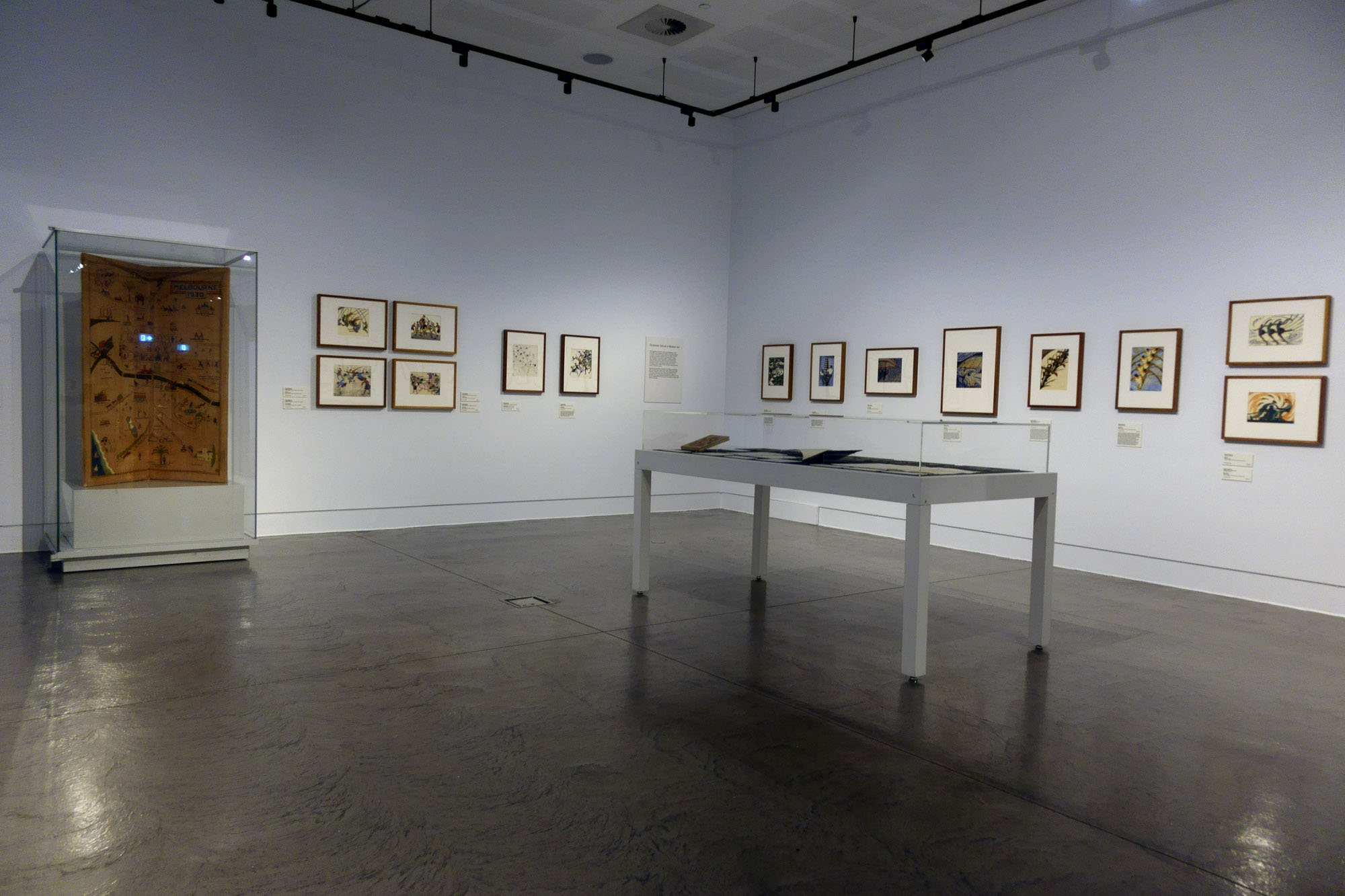
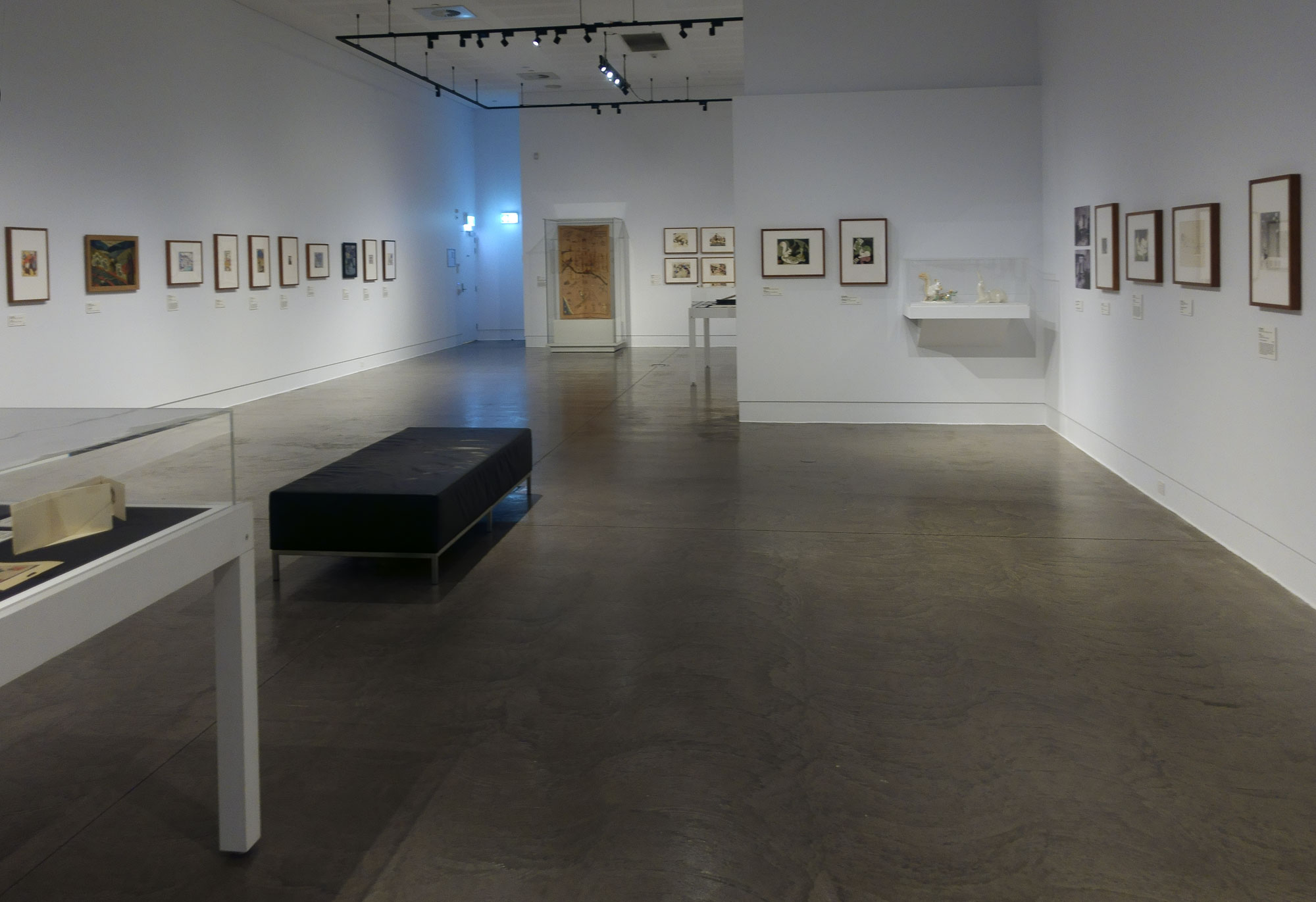
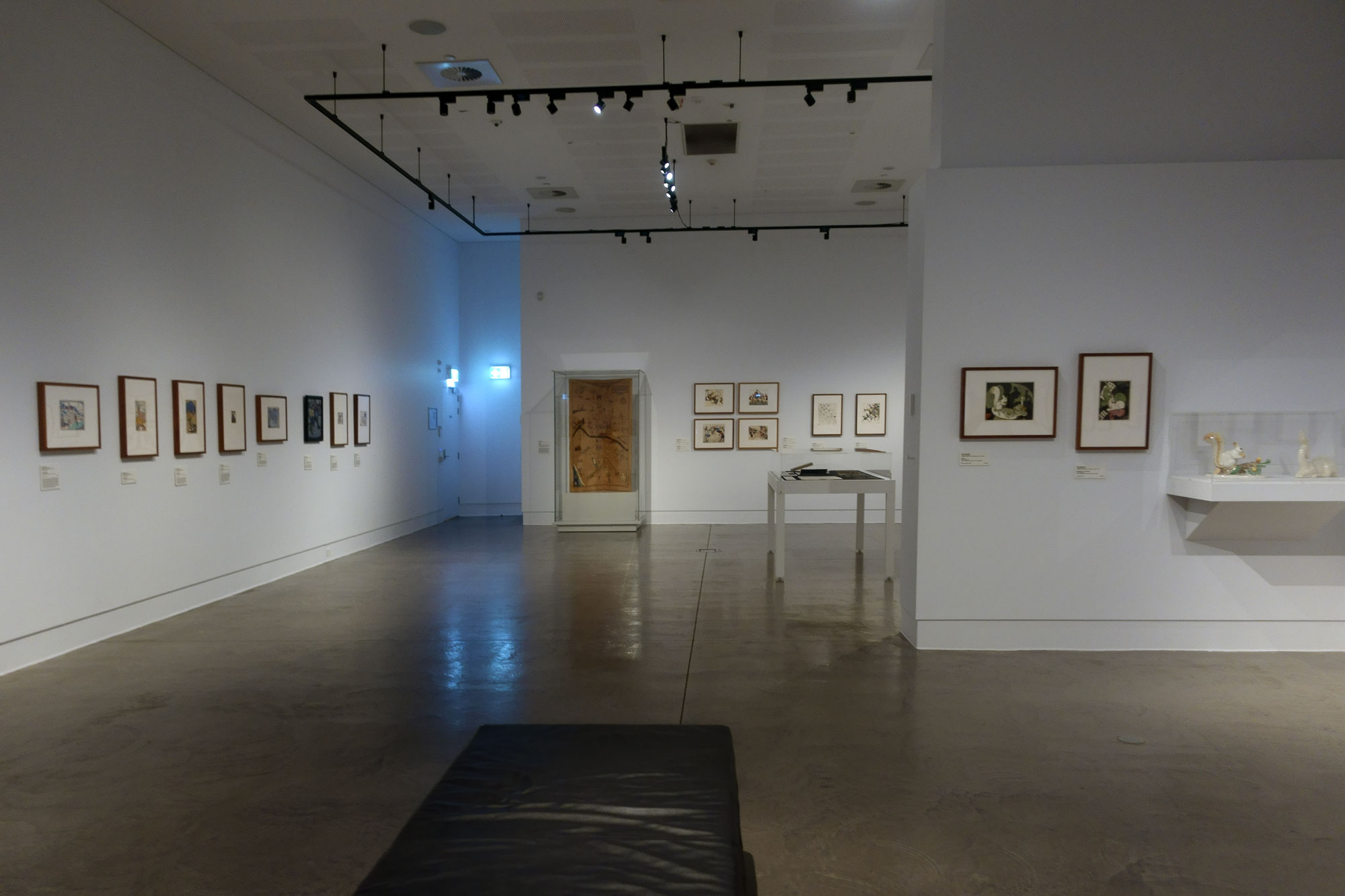
Exhibition: ‘Peter Booth’ at TarraWarra Museum of Art, Healesville

Exhibition dates: 26th November, 2022 – 13th March, 2023

Curator: Anthony Fitzpatrick
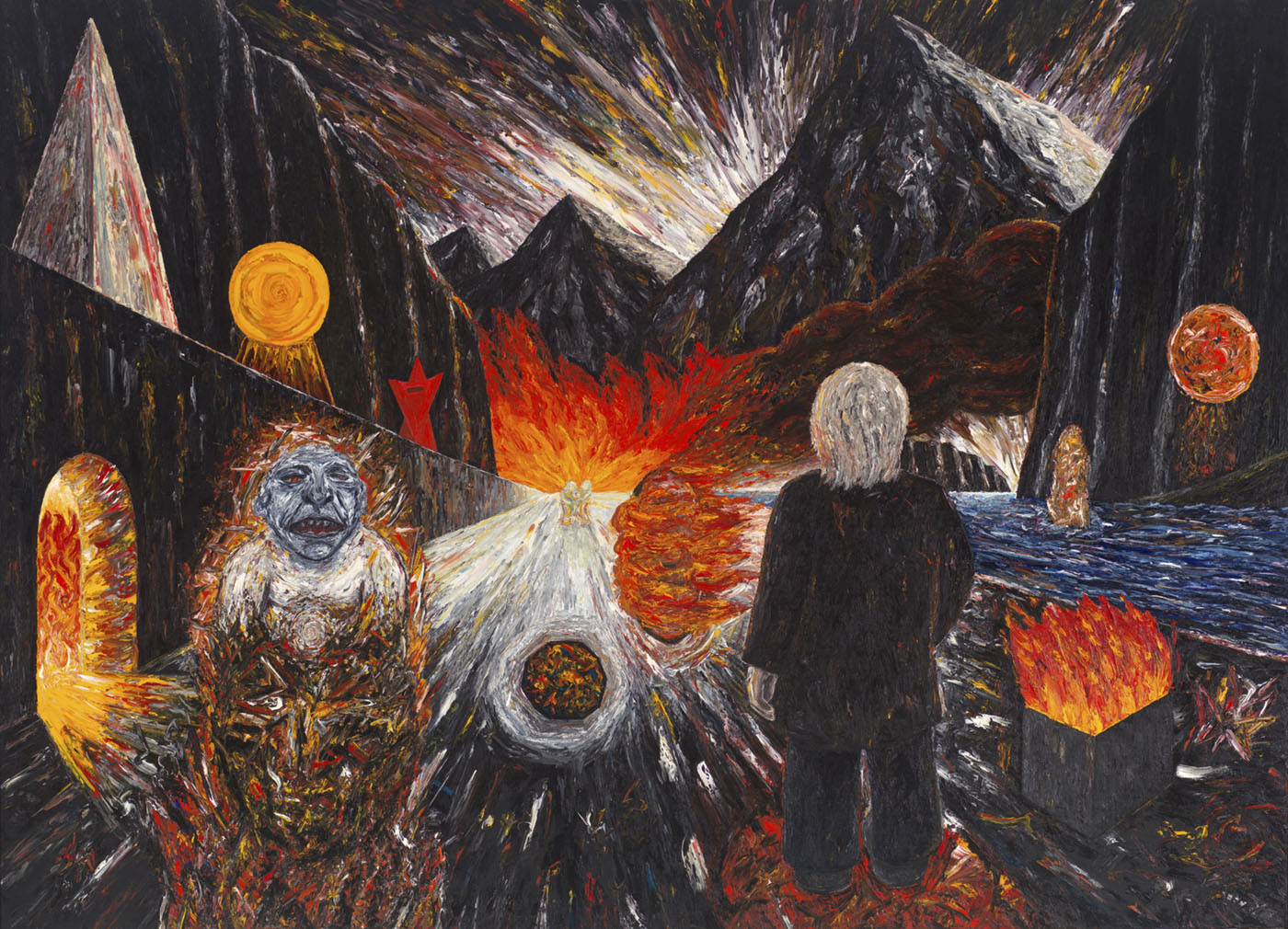
 

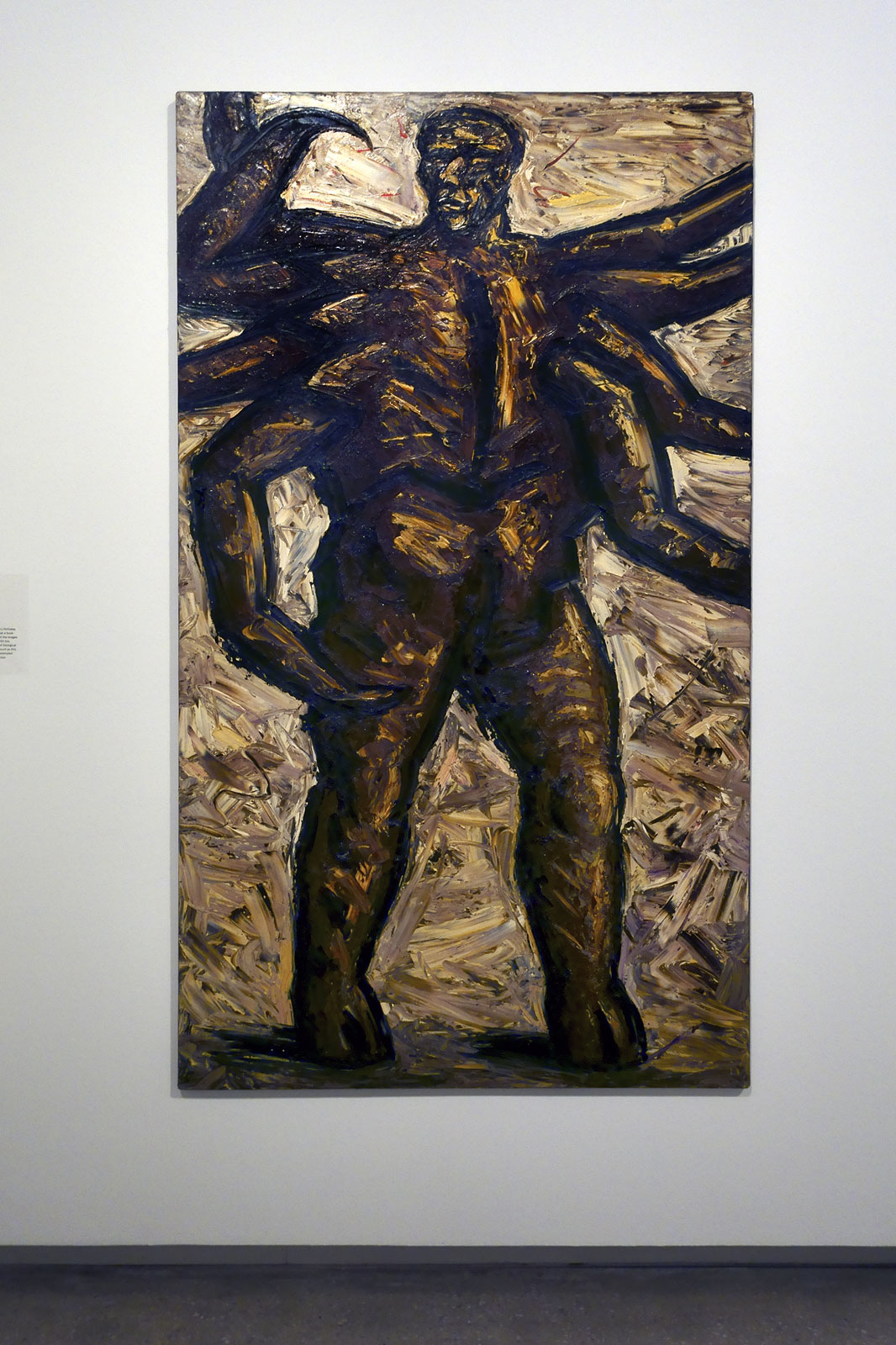
Peter Booth (Australian born England, b. 1940, Australia from 1958) 'Painting' 1978 from the exhibition 'Peter Booth' at TarraWarra Museum of Art, Healesville, Nov 2022 - March 2023


Peter Booth (Australian born England, b. 1940, Australia from 1958)
Painting
1978
Oil on canvas
© Peter Booth


Anima


tongue, long flickering tongue
drenched in blood
scours inside the cup
rapacious for more
blood thirsty luck
sucks souls of men
thorn and star
spirit of insect
bizarre–unique
cannibal


Dr Marcus Bunyan


Many thankx to the TarraWarra Museum of Art for allowing me to publish the media images in the posting. All other installation photographs as noted © Marcus Bunyan, the artist and TarraWarra Museum of Art. Please click on the photographs for a larger version of the image.


“A lot of humans forget we are organic entities, the same as every other creature on the planet, and we’ve only been here for a short time. I am very pessimistic about the plight of beings. We don’t learn much, I mean, we’ve been wreaking havoc as they did in the Middle Ages. We also have bigger weapons. One thing I am not pessimistic about is the ability of nature to heal itself.”


Peter Booth quoted in Ashley Crawford View from the Booth blog 29 November 2003


PETER BOOTH at TarraWarra Museum of Art
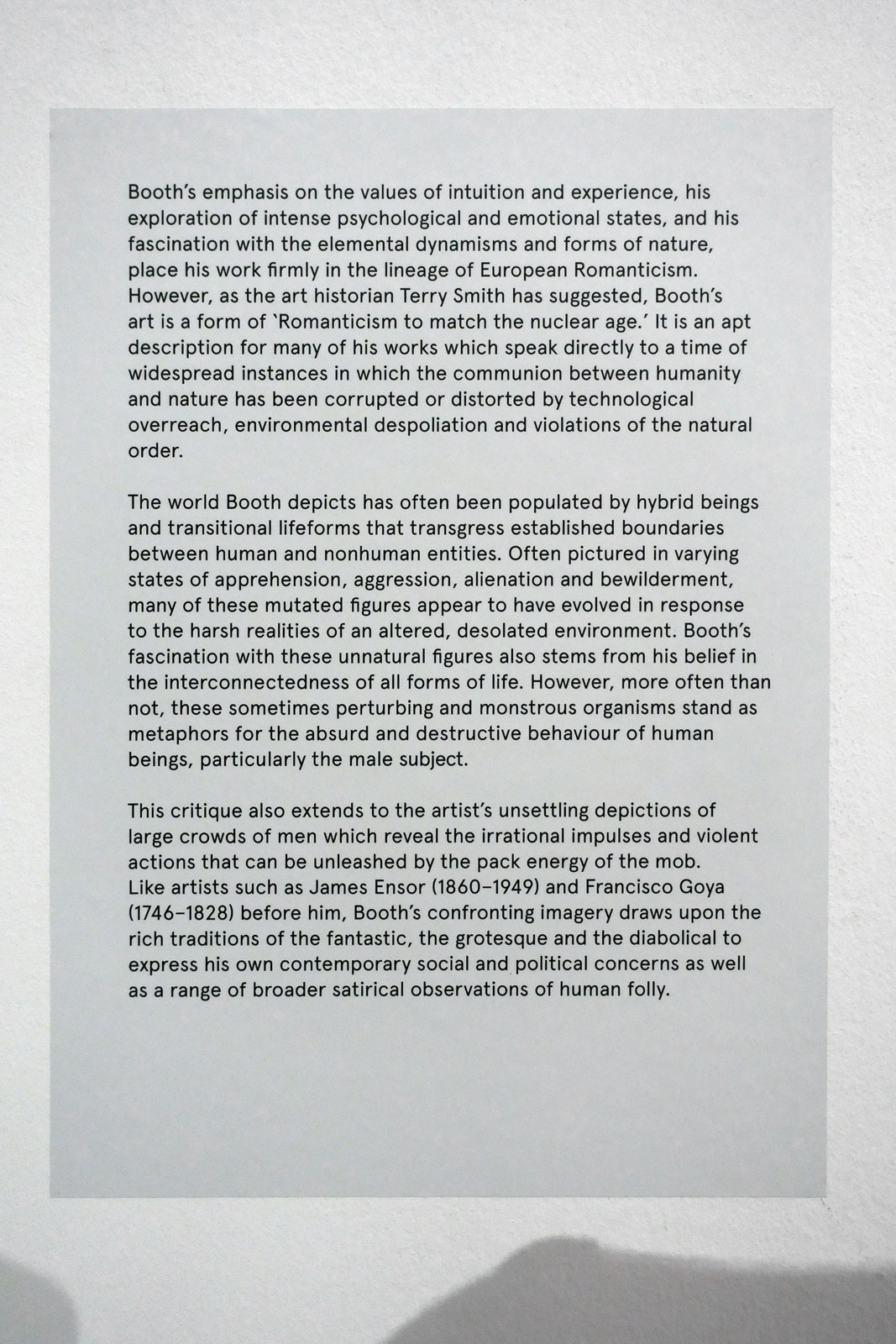
 

Introductory wall text from the exhibition 'Peter Booth' at the TarraWarra Museum of Art
 

Introductory wall text from the exhibition


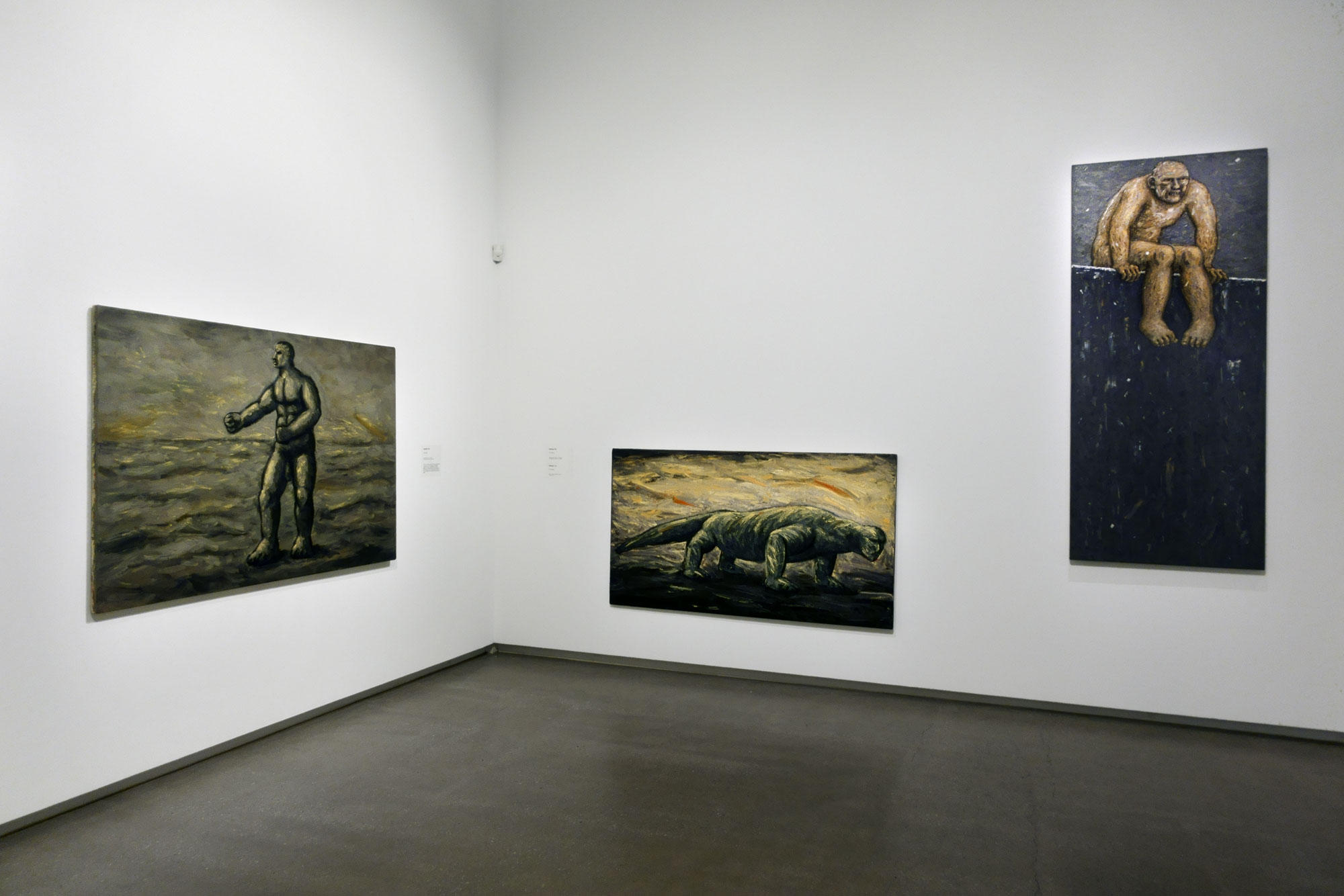
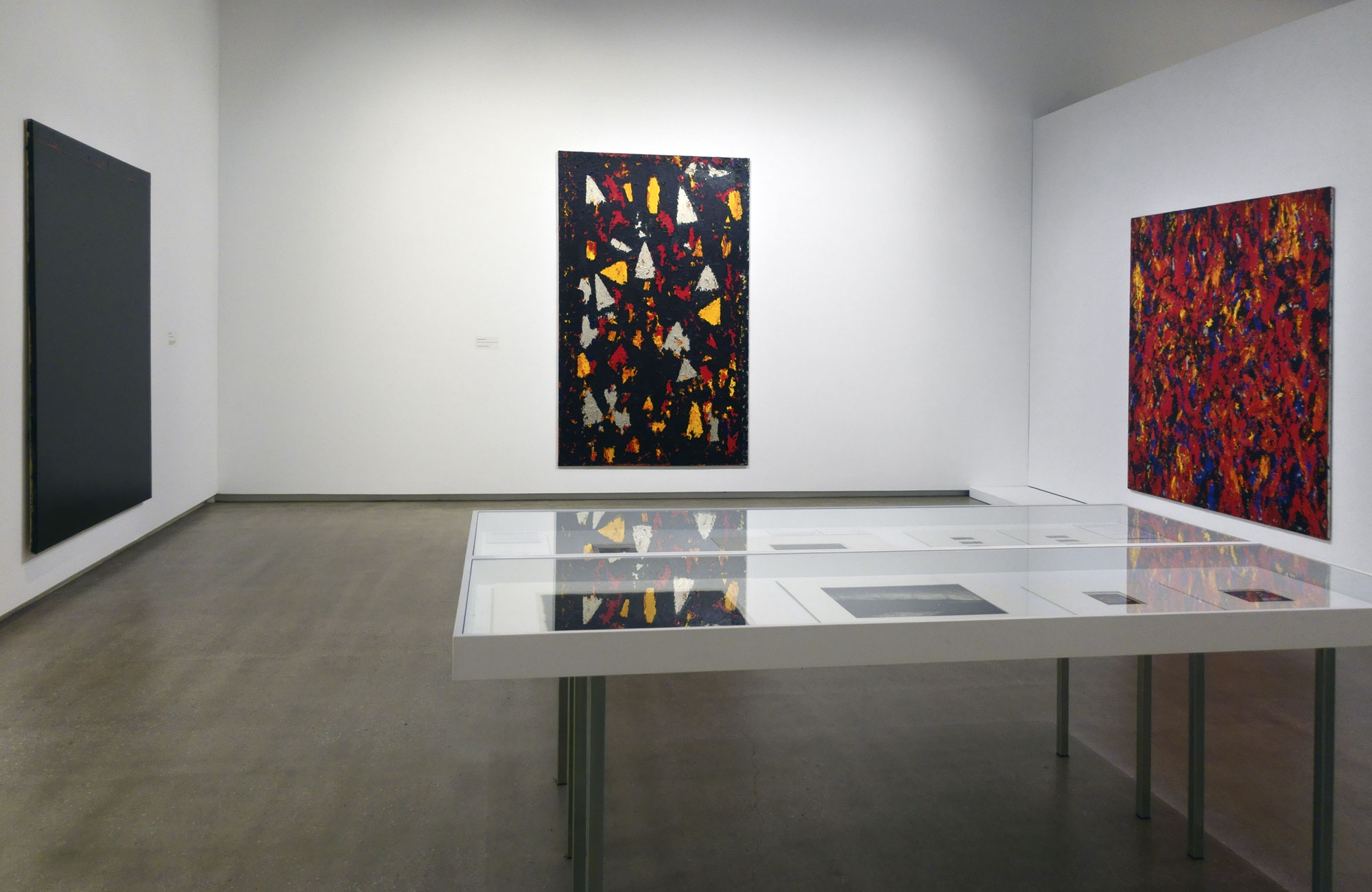
Installation view of the exhibition 'Peter Booth' at TarraWarra Museum of Art showing at left 'Painting' 1974, and at centre 'Painting 1975' 1975


Installation view of the exhibition Peter Booth at TarraWarra Museum of Art showing at left Painting 1974, and at centre Painting 1975 1975
Photo: Marcus Bunyan


While the TarraWarra survey features a collection of Booth’s works from the 1970s to the 2000s, it opens with a work in the ‘Doorway’ series: Painting, 1974. It’s a canvas covered with shades of black. As the curator says, “Just near the top, there’s this very thin horizon line of red, and it feels like there’s this massive magma just behind the surface that’s starting to seep through.” I’m told that written on the back of some ‘Doorway’ paintings is an instruction: “Never hang more than six inches from the floor.” As Fitzpatrick explains, “If you hang the work a little lower for the viewer … it becomes more immersive, and this painting is the opening work in the exhibition with the idea of the doorway as a threshold.”

This minimalism is compelling. “The ‘Doorway’ series could be about nothingness, or it could be a void,” says Fitzpatrick, “but voids are also where things are generated from – so they could be about an idea of fullness … you could almost see them as a kind of dark mirror.” In a rare interview with Australian artist, writer and curator Peter Hill, Booth humbly discusses how the ‘Doorway’ series was “influenced by what was going on in the art world at the time, in reduction, minimalism and colour field painting”.

Autumn Royal. “Once seen, Peter Booth is never forgotten,” on the Art Guide website 15 January 2023 [Online] Cited 02/02/2023
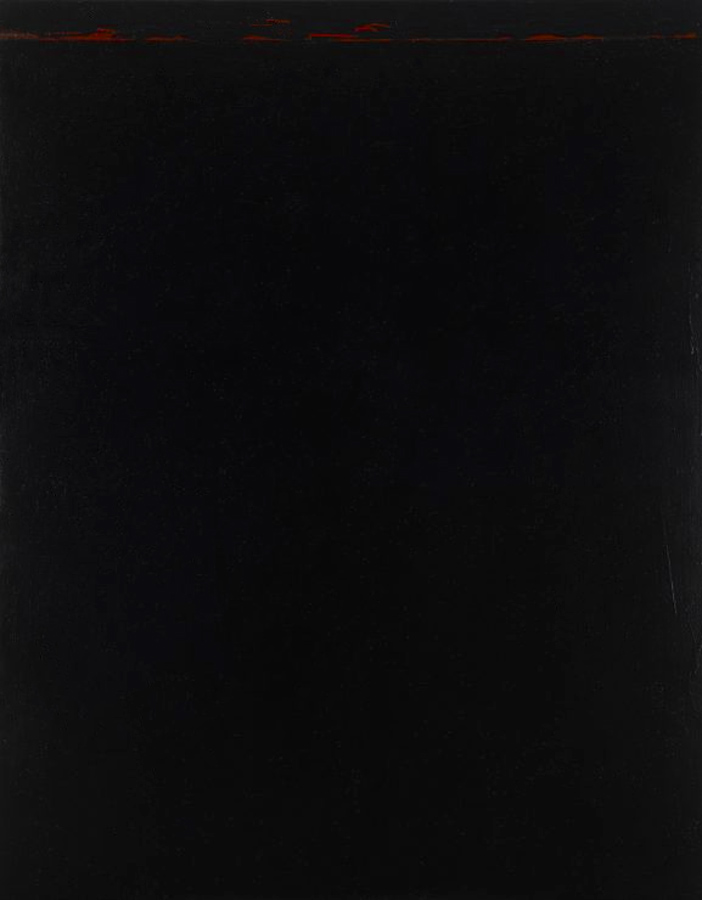
 

Peter Booth (Australian born England, b. 1940, Australia from 1958) 'Painting' 1974 from the exhibition 'Peter Booth' at TarraWarra Museum of Art, Healesville, Nov 2022 - March 2023


Peter Booth (Australian born England, b. 1940, Australia from 1958)
Painting
1974
Synthetic polymer paint on canvas
213 x 167.5cm
Queensland Art Gallery, Gallery of Modern Art, Brisbane
Purchased 2006 with funds from the Estate of Lawrence F. King in memory of the late Mr and Mrs S.W. King through the Queensland Art Gallery Foundation. Photograph: Natasha Harth, QAGOMA
© Peter Booth
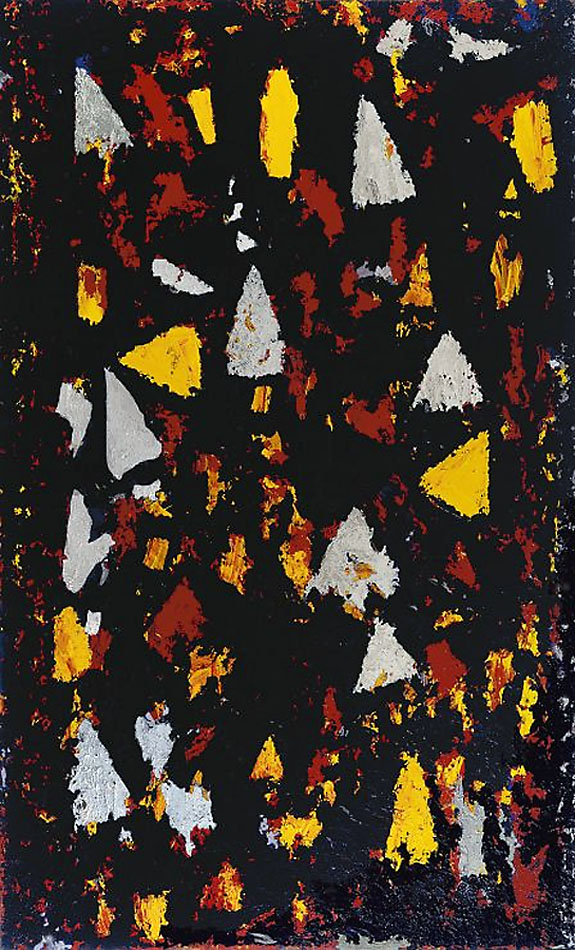
 

Peter Booth (Australian born England, b. 1940, Australia from 1958) 'Painting 1975' 1975 from the exhibition 'Peter Booth' at TarraWarra Museum of Art, Healesville, Nov 2022 - March 2023


Peter Booth (Australian born England, b. 1940, Australia from 1958)
Painting 1975
1975
Synthetic polymer paint and glass on canvas
274.2 x 167.2cm
TarraWarra Museum of Art collection
Gift of Eva Besen and Marc Besen AO, 2001
© Peter Booth
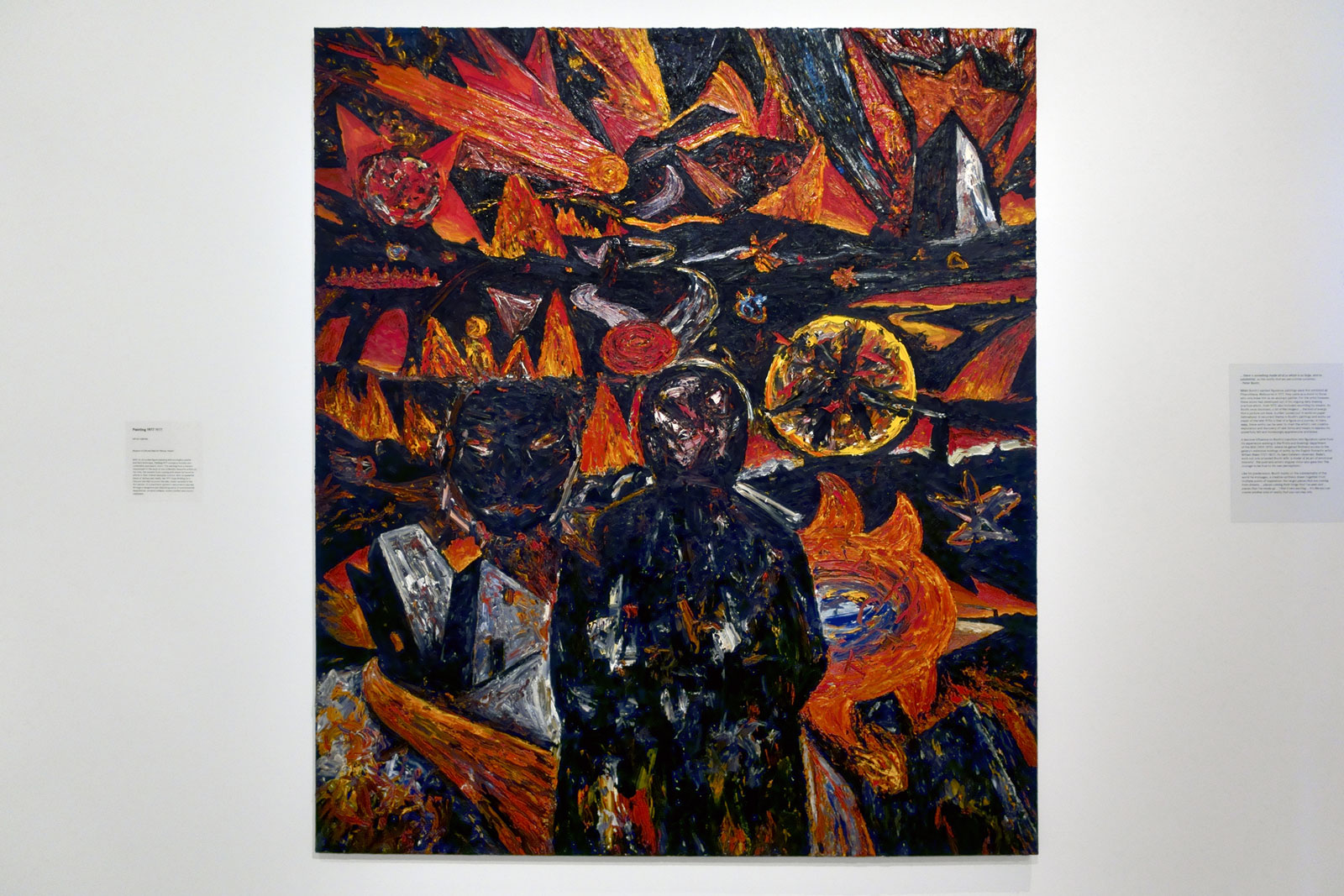
 

Peter Booth (Australian born England, b. 1940, Australia from 1958) 'Painting' 1977 (installation view)


Peter Booth (Australian born England, b. 1940, Australia from 1958)
Painting (installation view)
1977
Oil on canvas
Museum of Old and New Art (Mona), Hobart
© Peter Booth
Photo: Marcus Bunyan


With its shrouded figure standing before a highly volatile and fiery landscape, Painting 1977 conveys a forceful and undeniably apocalyptic vision. The painting finds a literary counterpart in the work of one of Booth’s favourite writers at the time, the novelist Doris Lessing with whom he found an affinity in their shared dystopian outlook. With its powerful blend of fantasy and reality, her 1971 novel Briefing for a Descent into Hell recounts the tale, vividly narrated in the first person, of a psychiatric patient’s hallucinatory journey through a dangerous and disturbing world of environmental despoliation, societal collapse, violent conflict and cosmic cataclysm.

Wall text from the exhibition
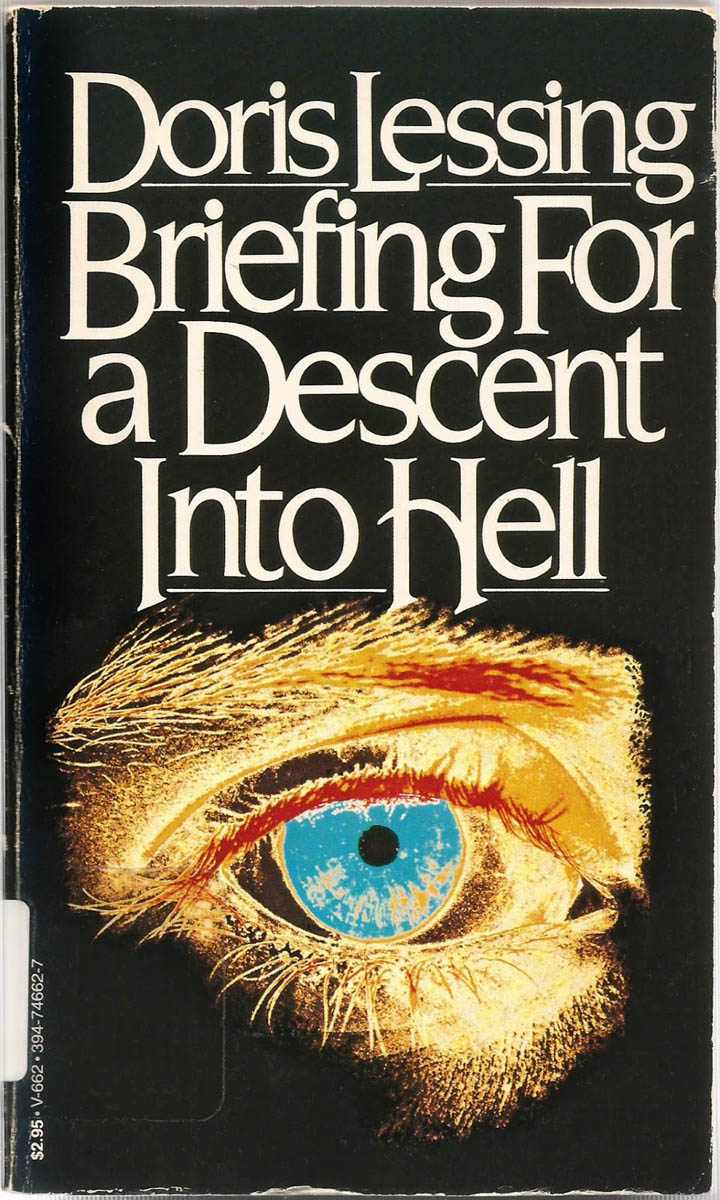
 

Doris Lessing. 'Briefing for a Descent into Hell Briefing for a descent into hell' book cover


Doris Lessing (British-Zimbabwean born Iran, 1919-2013)
Briefing for a Descent into Hell
1971
Vintage book cover published 1981
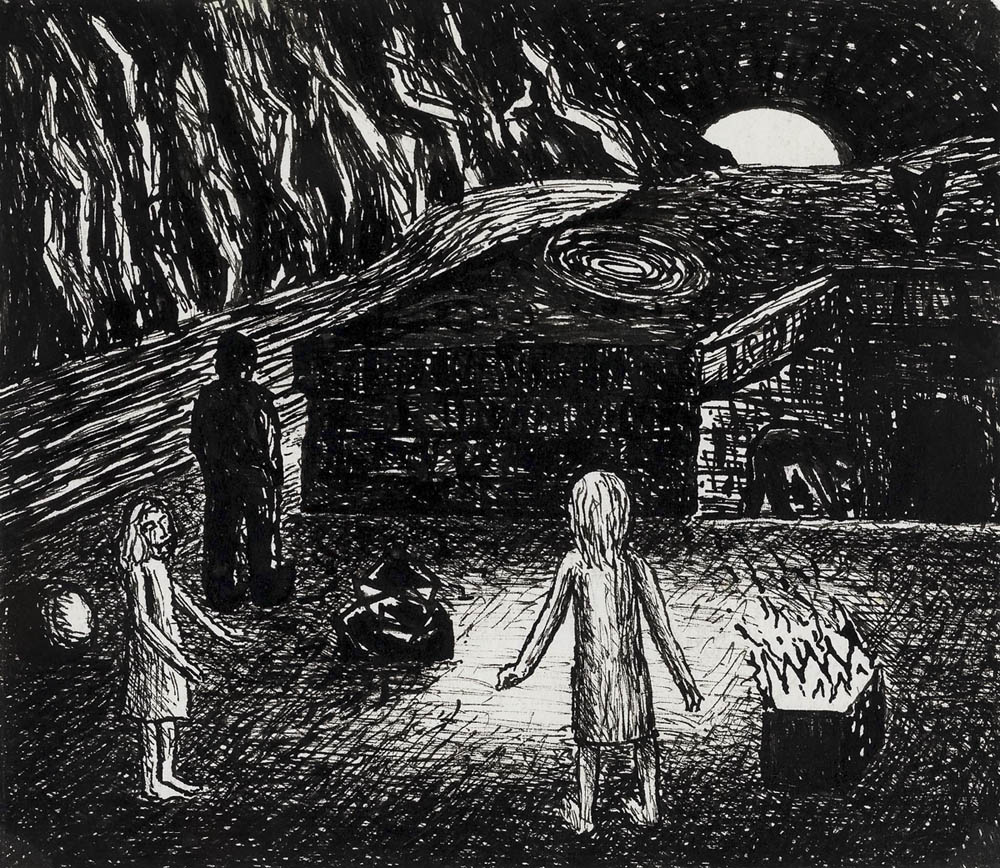
 

Peter Booth (Australian born England, b. 1940, Australia from 1958) 'Untitled (Daughters)' c. 1976 from the exhibition 'Peter Booth' at TarraWarra Museum of Art, Healesville, Nov 2022 - March 2023


Peter Booth (Australian born England, b. 1940, Australia from 1958)
Untitled (Daughters)
c. 1976
Ink on paper
11 x 12.5cm
Private collection


Untitled (Daughters), c. 1976, is a composition which originated in Booth’s visits to an inner-city park in Melbourne where he would take his young daughters to play. Here, through the intense rhythms of his lifework and cross hatching in black ink, and the introduction of symbolic forms such as a whirlpool and arrowhead, this everyday scene is imaginatively transformed into a mysterious, nocturnal realm. While his daughters play in the foreground, the artist has turned to face a rising moon on the horizon and there is a sense that he is being magnetically compelled to embark on the path which leads in its direction.

Text from the TarraWarra Museum of Art Facebook page
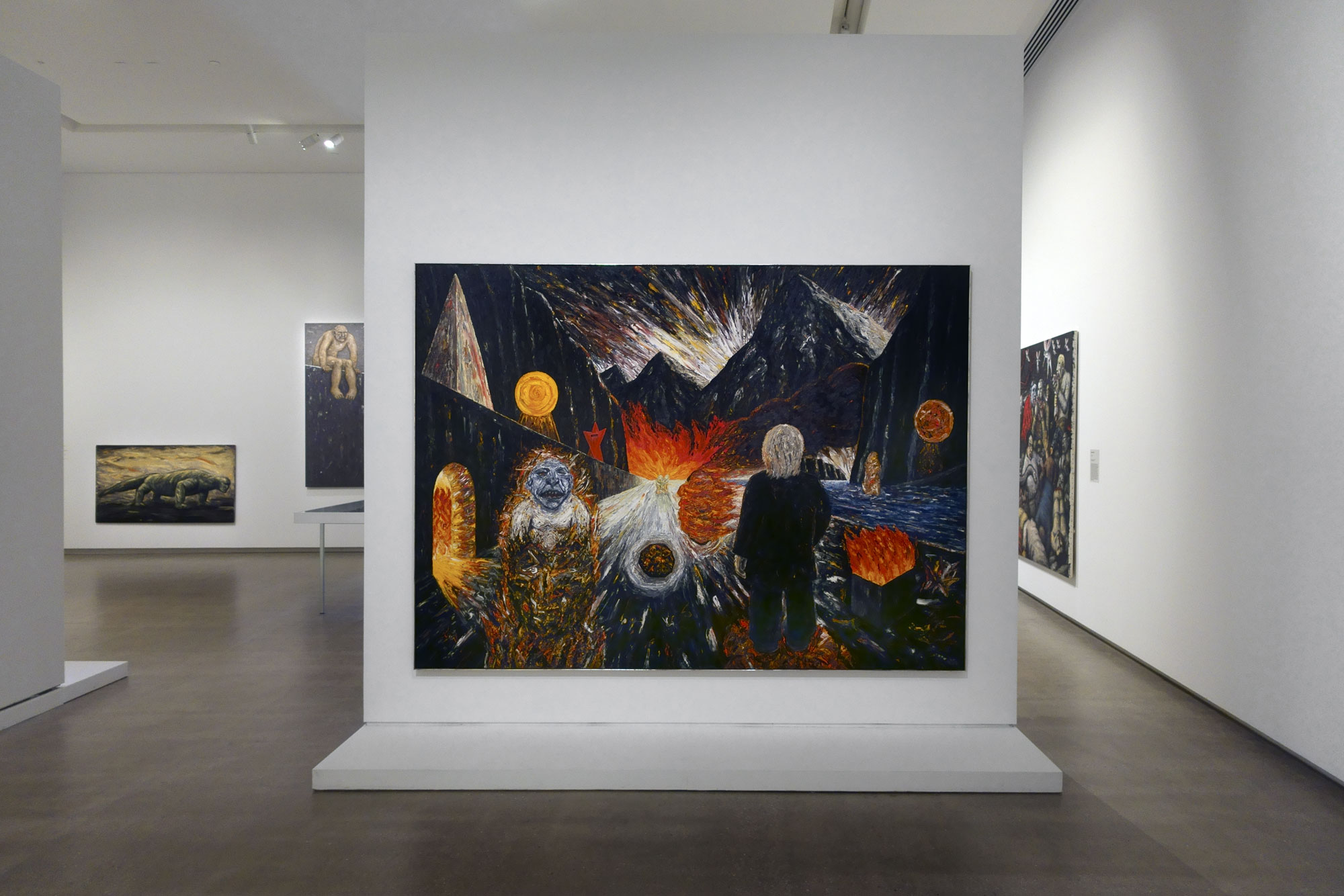
 

Installation view of the exhibition 'Peter Booth' at TarraWarra Museum of Art showing at centre, 'Painting' 1978


Installation view of the exhibition Peter Booth at TarraWarra Museum of Art showing at centre, Painting 1978
Photo: Marcus Bunyan
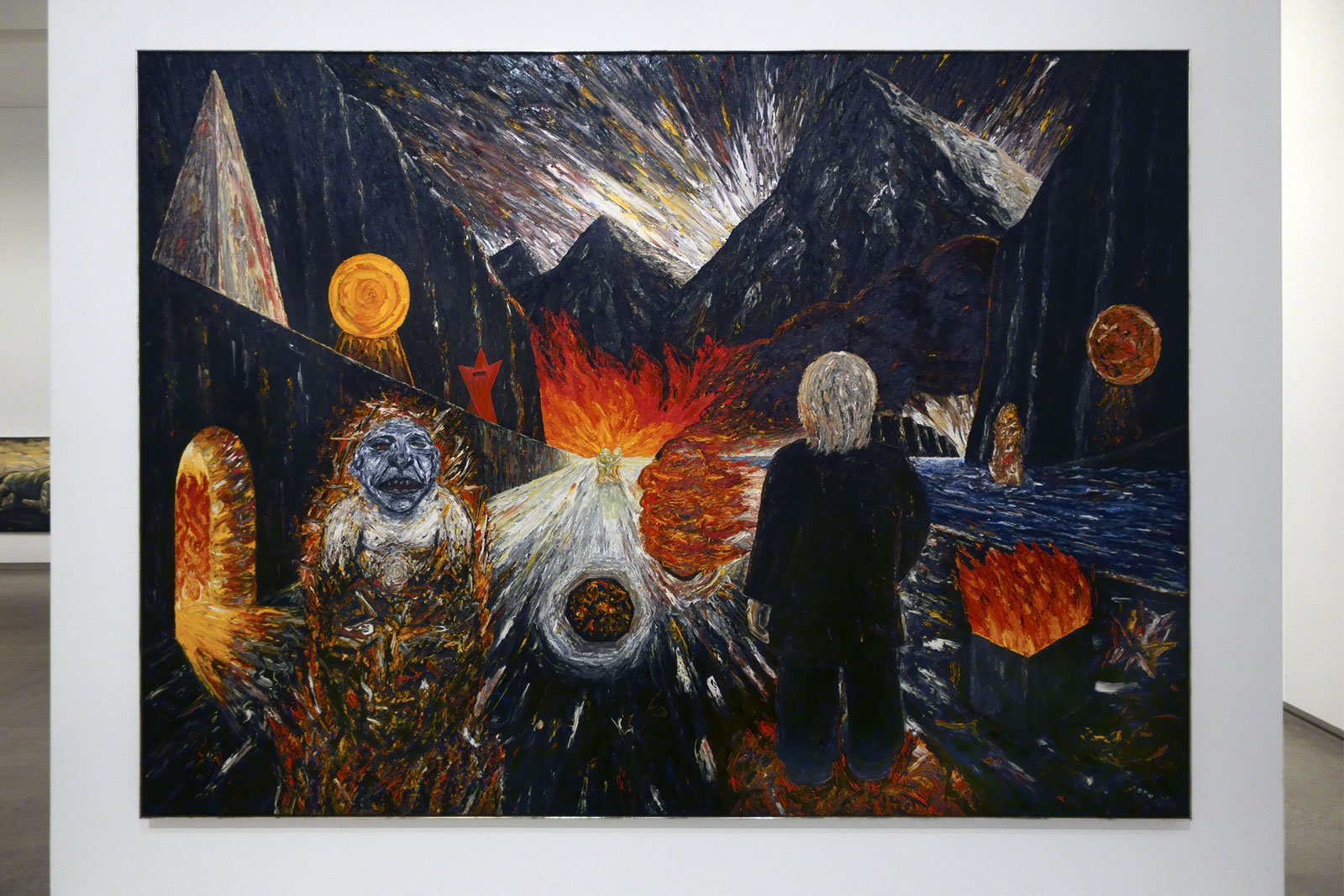
 

Peter Booth (Australian born England, b. 1940, Australia from 1958) 'Painting' 1978 (installation view)


Installation view of Peter Booth Painting 1978 from the exhibition Peter Booth at TarraWarra Museum of Art
Photo: Marcus Bunyan


Peter Booth became known for his black, minimal ‘doorway’ paintings of 1970-74. Yet by 1977 he had given up this style and begun to record the world of his dreams and nightmares in a series of apocalyptic, visionary landscapes. Booth’s paintings suggest that we are on the edge of another dark age. His paintings are brutal representations of his bleak dreams and fantasies. In an age of nuclear threat Booth’s work has a monumentality which is evocative of the final conflagration mentioned in The Book of Revelations. Painting 1978, challenges and disturbs the viewer by the artist’s choice of colour and method of painting. The dramatic black and red, yellow and white composition suggests both an industrial and a natural wasteland. The heavy impasto paint texture describes, with vigour and intensity, flames, explosions, and unidentified nightmarish images. Contradictory forces pull us into the central inferno below the glacial mountain peaks, and showers of rock explode towards us. Is it the artist himself who stands with his back to us, mesmerised by the scene, while grotesque metamorphosing figures stare out at us?

Text © National Gallery of Australia, Canberra


Booth’s subject matter largely concerns the Australian landscape, both urban and rural, and the relationship between environment and individual, as well as the individual’s capacity to create and destroy. And also what the world will be like in the future, humans as mutants.

Booth’s landscapes are charged with emotion and symbolic meaning. Memories of his childhood in the blackened industrial landscape of Sheffield seem to infuse the work, especially his well-known apocalyptic figurative paintings, which look like images of the end of the world; illustrations for The Book of Revelation. These images contain an intense image of anxiety, evoking the aftermath of some terrible destruction, vividly pictured with menacing forms and agitated, heavily applied brushstrokes.

An example is Painting 1978 which has been described as challenging and disturbing the viewer by the artist’s choice of colour and method of painting. “The dramatic black and red, yellow and white composition suggests both an industrial and a natural wasteland”. The heavy impasto paint texture describes, with vigour and intensity, flames, explosions, and unidentified nightmarish images. Contradictory forces pull us into the central inferno below the glacial mountain peaks, and showers of rock explode towards us.

Is it the artist himself who stands with his back to us, mesmerised by the scene, while grotesque metamorphosing figures stare out at us?” Peter Booth has centred many of his paintings around his childhood in Sheffield England where he grew up during the war years and their aftermath.

Anonymous. “Peter Booth,” on the Art History Essay website Nd [Online] Cited 07/02/2023
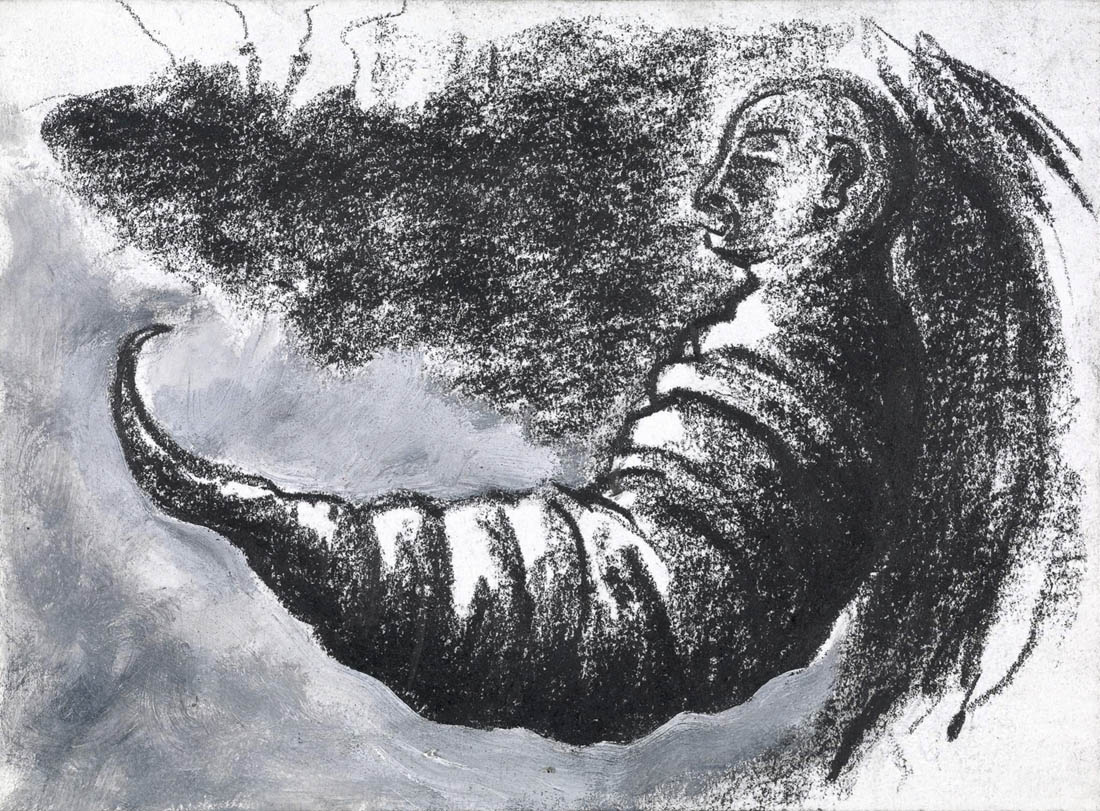
 

Peter Booth (Australian born England, b. 1940, Australia from 1958) 'Drawing (Figure with Insect Tail)' 1982


Peter Booth (Australian born England, b. 1940, Australia from 1958)
Drawing (Figure with Insect Tail)
1982
Pastel and casein on paper
17.3 x 12.5cm
National Gallery of Victoria, Melbourne
Purchase, Victorian Foundation of Living Australian Artists, 2010


More than just figures of fantasy, Booth’s curious amalgams and mutated figures often express his personal insights into the interrelatedness of all living beings. With his closed eyes and restful expression, the metamorphic figure in Drawing (Figure with Insect Tail) appears contented with his hybrid condition, affirming the artist’s belief that humans “share something with these creatures … we are part of the same thing.”

Text from the TarraWarra Museum of Art Facebook page
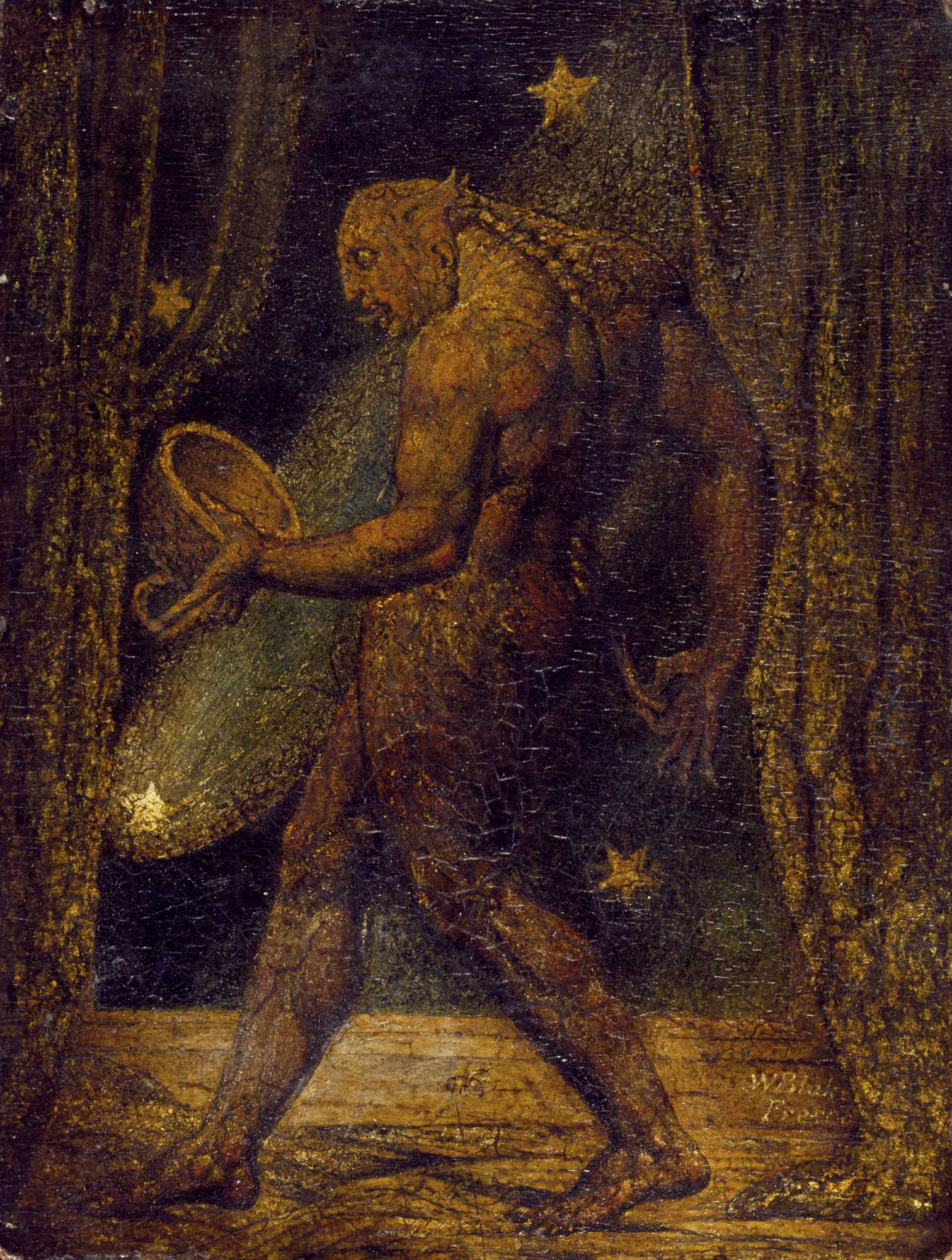
 

William Blake (British, 1757-1827) 'The Ghost of a Flea' c. 1819


William Blake (British, 1757-1827)
The Ghost of a Flea
c. 1819
Tempera heightened with gold on mahogany
214 x 162 mm
Tate
Bequeathed by W. Graham Robertson 1949


Another physiognomic “vision” – “the stuff of delirium and nightmare, [which] taps into the unconscious, internalised sublime” – was the painting The Ghost of a Flea (c. 1819) used to illustrate John Varley’s Treatise on Zodiacal Physiognomy (1828). In studying the work of Blake for this posting, I found it instructive to look at Blake’s preparatory sketches for his works which can be found online. They give you a good idea of the spontaneity of the drawing and the ideas that arise, transformed into the finished work. Here in the graphite on paper drawing of The Ghost of a Flea we can see Blake’s initial vision, a more static, pensive figure with serrated wings which morphs into a muscular, blood sucking monster set on a cosmic stage, of life framed by curtains and a shooting star. As the vision appeared to Blake he is said to have cried out: ‘There he comes! his eager tongue whisking out of his mouth, a cup in his hand to hold blood, and covered with a scaly skin of gold and green.’

Marcus Bunyan. “Visions of divine damnation” on the exhibition William Blake at Tate Britain, London Part 2, February 2020 on the Art Blart website [Online] Cited 09/02/2023


William Blake (British, 1757-1827) 'The Ghost of a Flea' c. 1819 (installation view)


William Blake (British, 1757-1827)
The Ghost of a Flea
c. 1819
Graphite on paper
Private collection
Photo: © Marcus Bunyan and Tate


Artist and astrologer John Varley encouraged Blake to sketch the figures, called ‘visionary heads’, who populated his visions. This image is the best known. While sketching the flea, Blake claimed it told him that fleas were inhabited by the souls of bloodthirsty men, confined to the bodies of insects because, if they were the size of horses, they would literally drain the population. Their bloodthirsty nature is shown by the eager tongue flicking at the ‘blood’ cup it carries. This intense disorientating image, the stuff of delirium and nightmare, taps into the unconscious, internalised sublime.

William Blake, “The Ghost of a Flea c. 1819-20,” in Nigel Llewellyn and Christine Riding (eds.), The Art of the Sublime, Tate Research Publication, January 2013
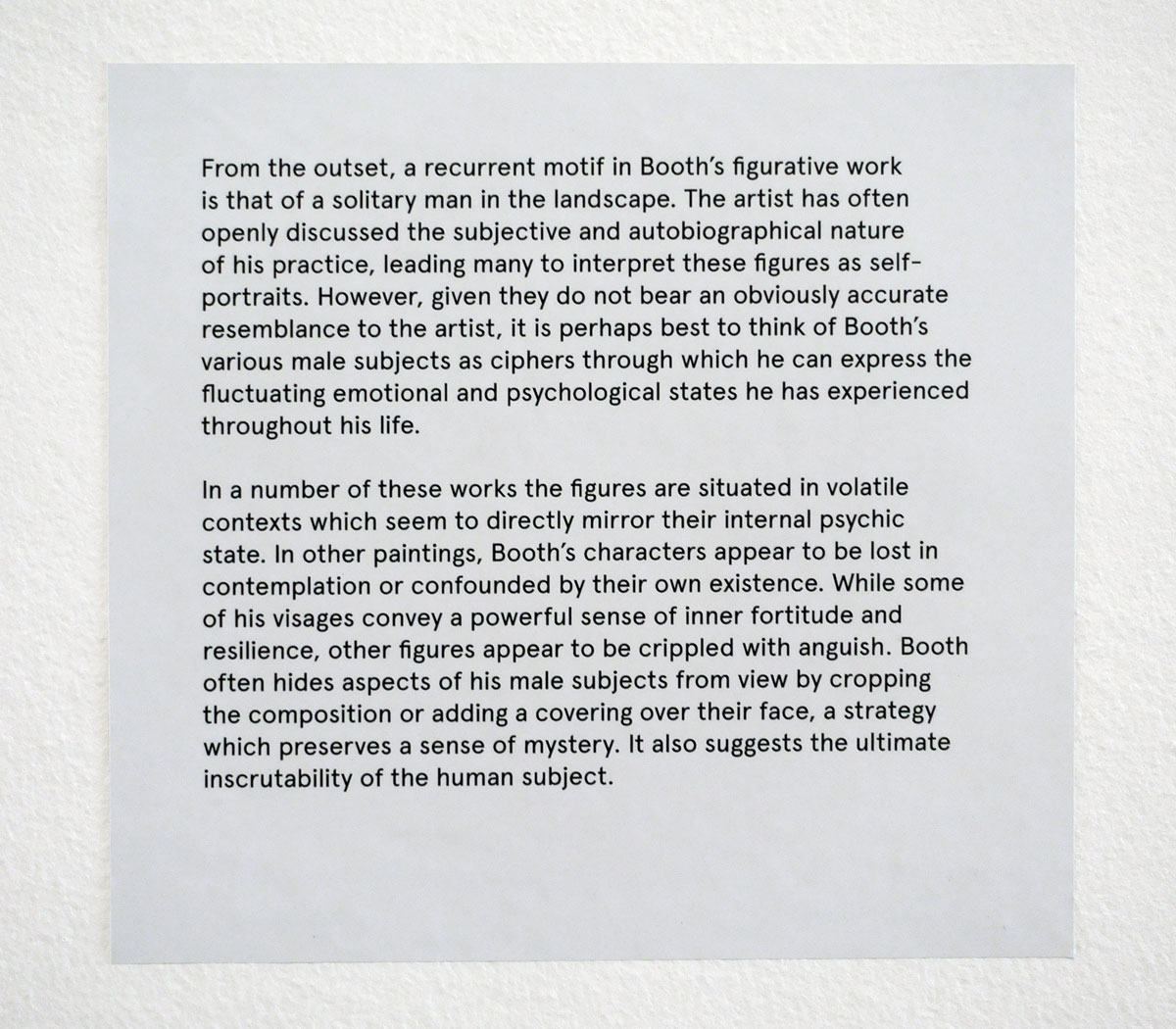
 

Wall text from the exhibition 'Peter Booth' at TarraWarra Museum of Art
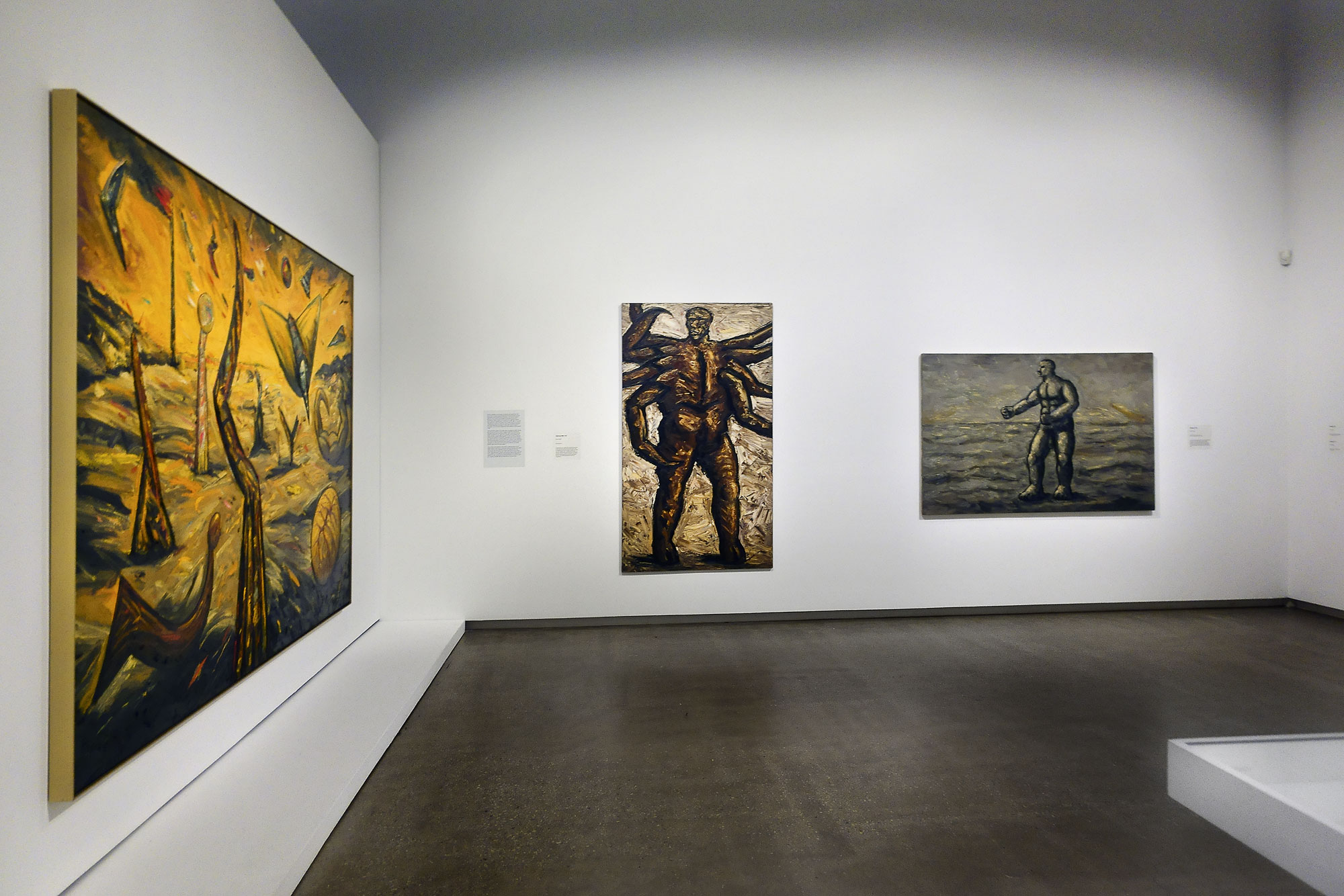
 

Wall text from the exhibition


Installation view of the exhibition 'Peter Booth' at TarraWarra Museum of Art showing from left to right, 'Painting Two' 1984, 'Painting' 1984 and 'Leadman' 1986


Installation view of the exhibition Peter Booth at TarraWarra Museum of Art showing from left to right, Painting Two 1984, Painting 1984 and Leadman 1986
Photo: Marcus Bunyan
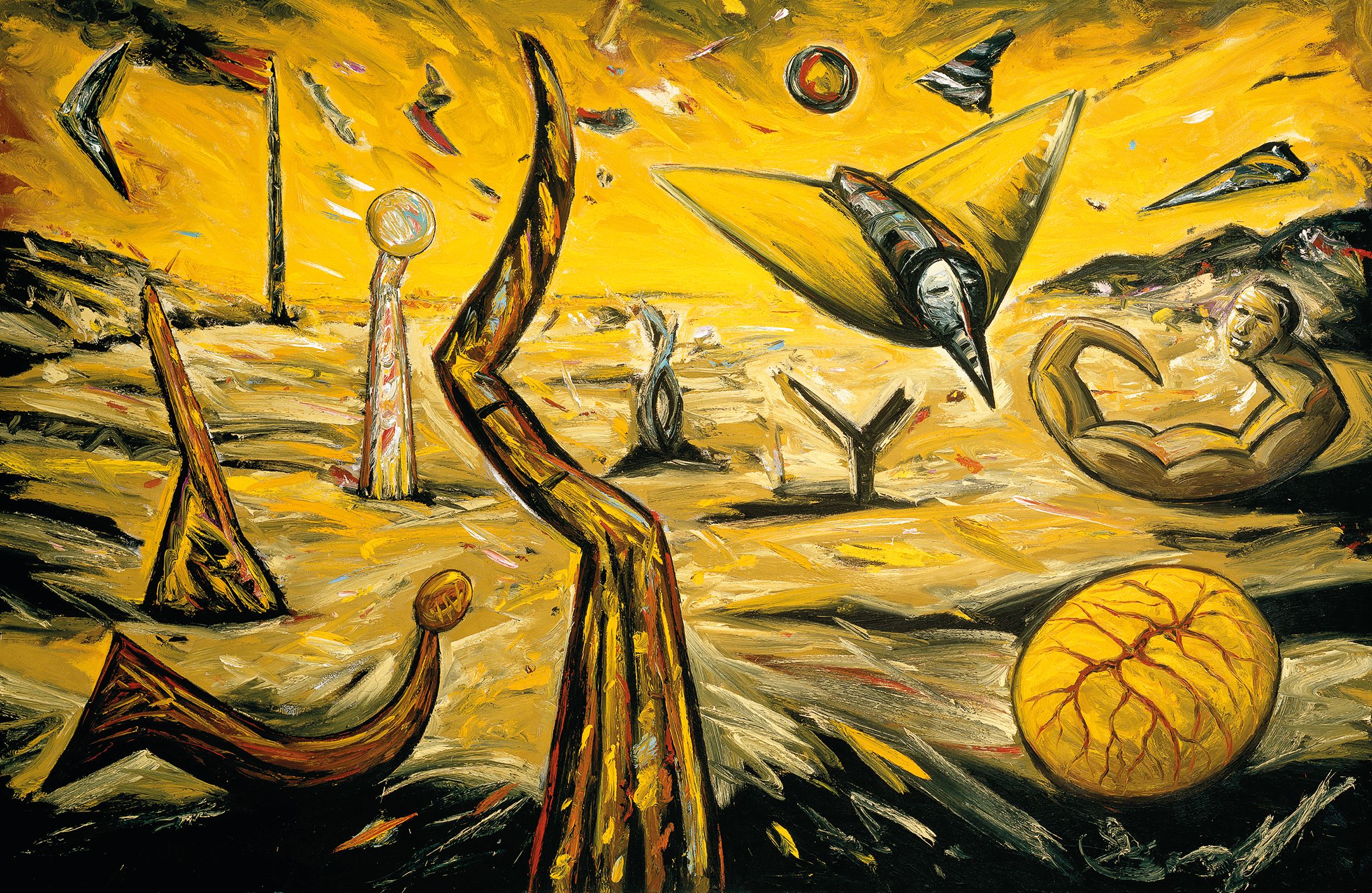
 

Peter Booth (Australian born England, b. 1940, Australia from 1958) 'Painting Two' 1984


Peter Booth (Australian born England, b. 1940, Australia from 1958)
Painting Two
1984
Oil on canvas
198 x 305cm
National Gallery of Victoria, Melbourne
Purchased 1985
© Peter Booth


In the blasted landscape of Painting Two we are presented with a vision of a volatile world in the process of unnatural mutation. As an artist who has always been keenly attuned to what’s happening environmentally and politically, this painting forcefully conveys the fallout of a colossal act of destruction, reflecting widespread concerns in the 1980s over the dramatic escalation of the nuclear arms race between the United States and the Soviet Union and the threat of atomic warfare.

Wall text from the exhibition
 

Peter Booth (Australian born England, b. 1940, Australia from 1958) 'Painting' 1984 (installation view)


Peter Booth (Australian born England, b. 1940, Australia from 1958)
Painting (installation view)
1984
Oil on canvas
© Peter Booth
Photo: Marcus Bunyan
 

Peter Booth (Australian born England, b. 1940, Australia from 1958) 'Leadman' 1986 (installation view)


Peter Booth (Australian born England, b. 1940, Australia from 1958)
Leadman (installation view)
1986
Oil on canvas
TarraWarra Museum of Art collection
Gift of Eva Besen and Marc Besen AO 2001
© Peter Booth
Photo: Marcus Bunyan


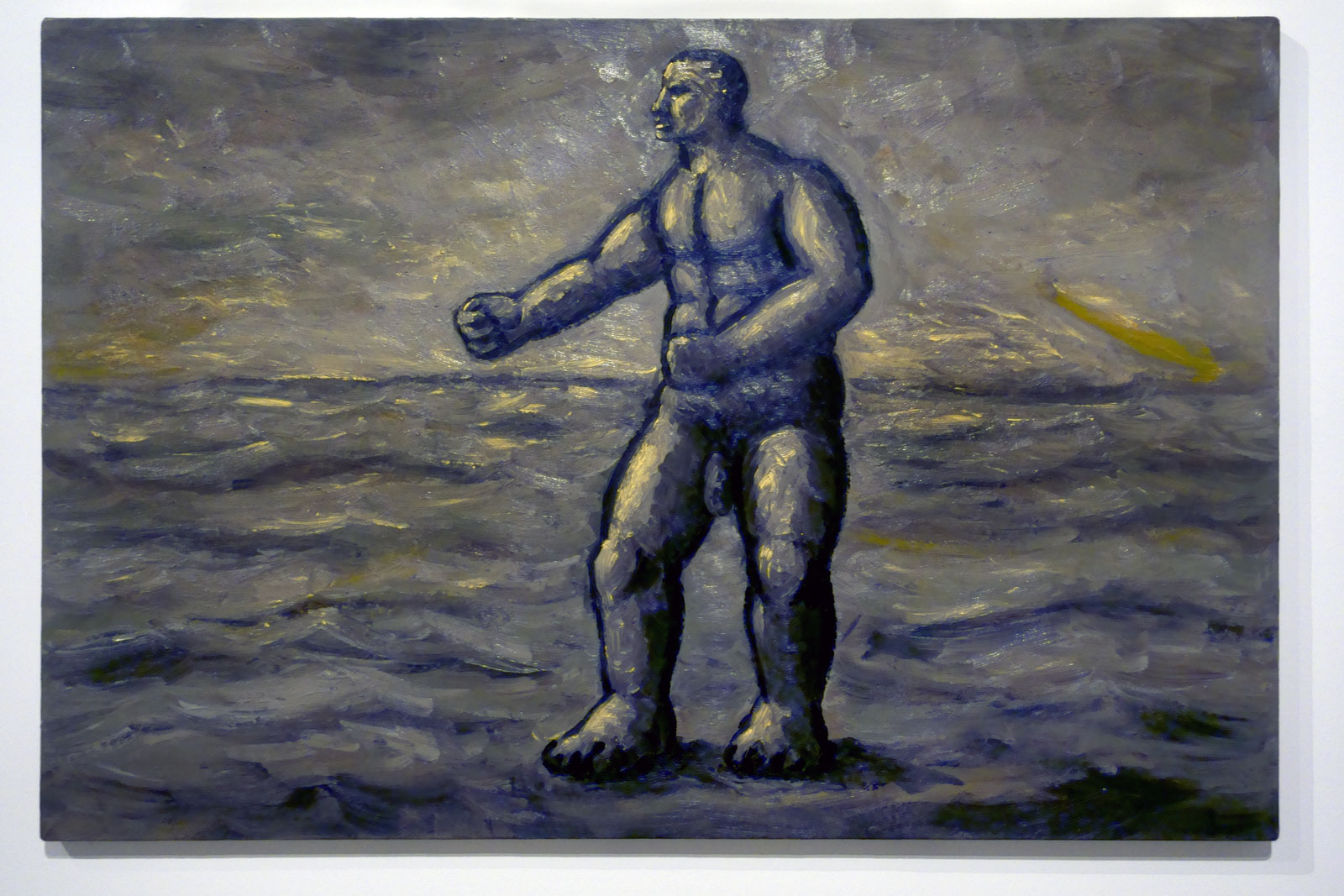
In this work a hulking grey figure, with his fierce determination and body braced for battle, appears to be biologically adapted for survival in a desolated terrain. As the title suggests, this unrelentingly bleak and polluted atmosphere has eventuated from the unbridled destructive ambitions of the toxic Leadman who has transformed the world in his own image.

Wall text from the exhibition
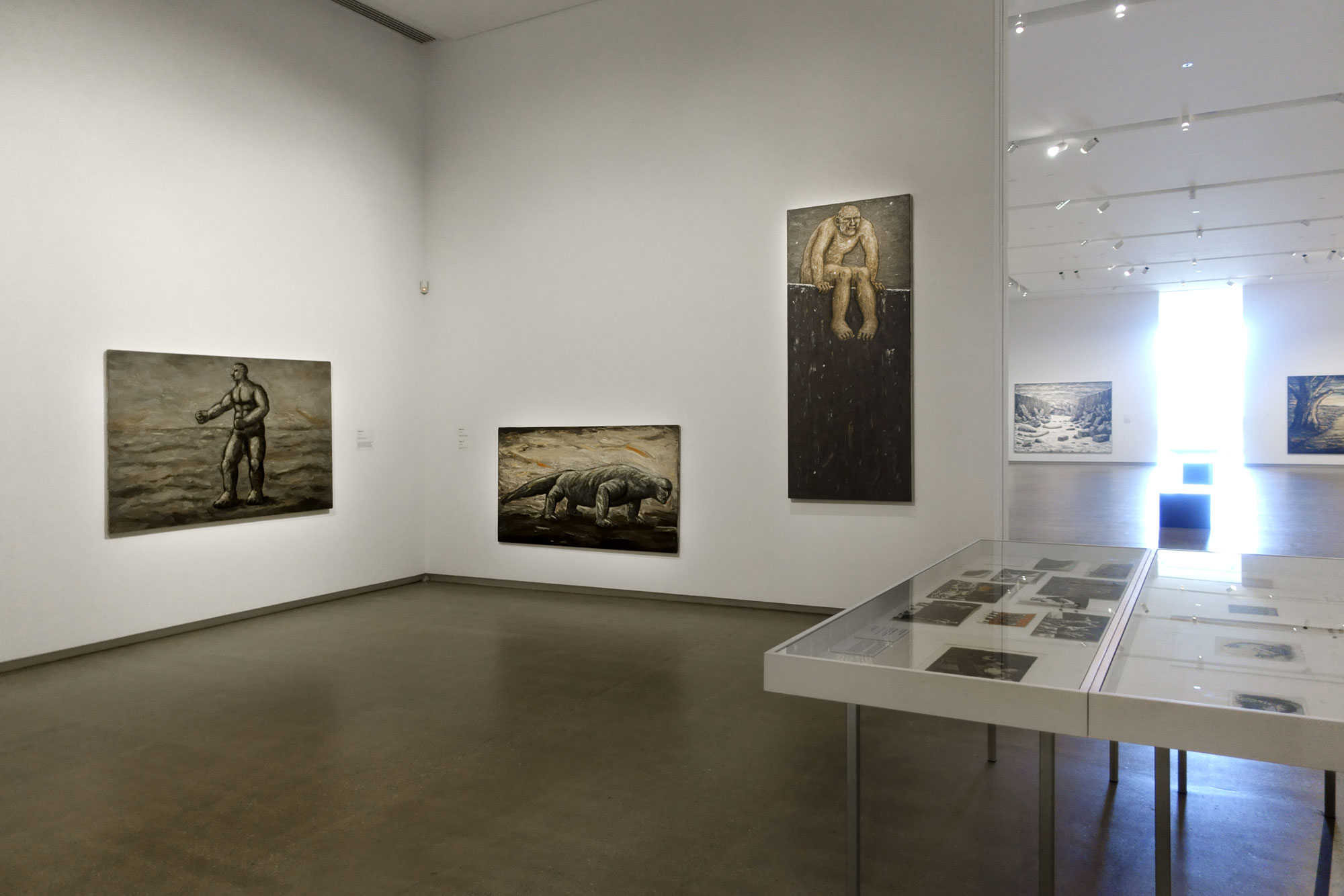
 

Installation view of the exhibition 'Peter Booth' at TarraWarra Museum of Art showing from left to right, 'Leadman' 1986, 'Painting' 1984 and 'Painting' 2012

Installation view of the exhibition 'Peter Booth' at TarraWarra Museum of Art showing from left to right, 'Leadman' 1986, 'Painting' 1984 and 'Painting' 2012


Installation view of the exhibition Peter Booth at TarraWarra Museum of Art showing from left to right, Leadman 1986, Painting 1984 and Painting 2012
Photos: Marcus Bunyan
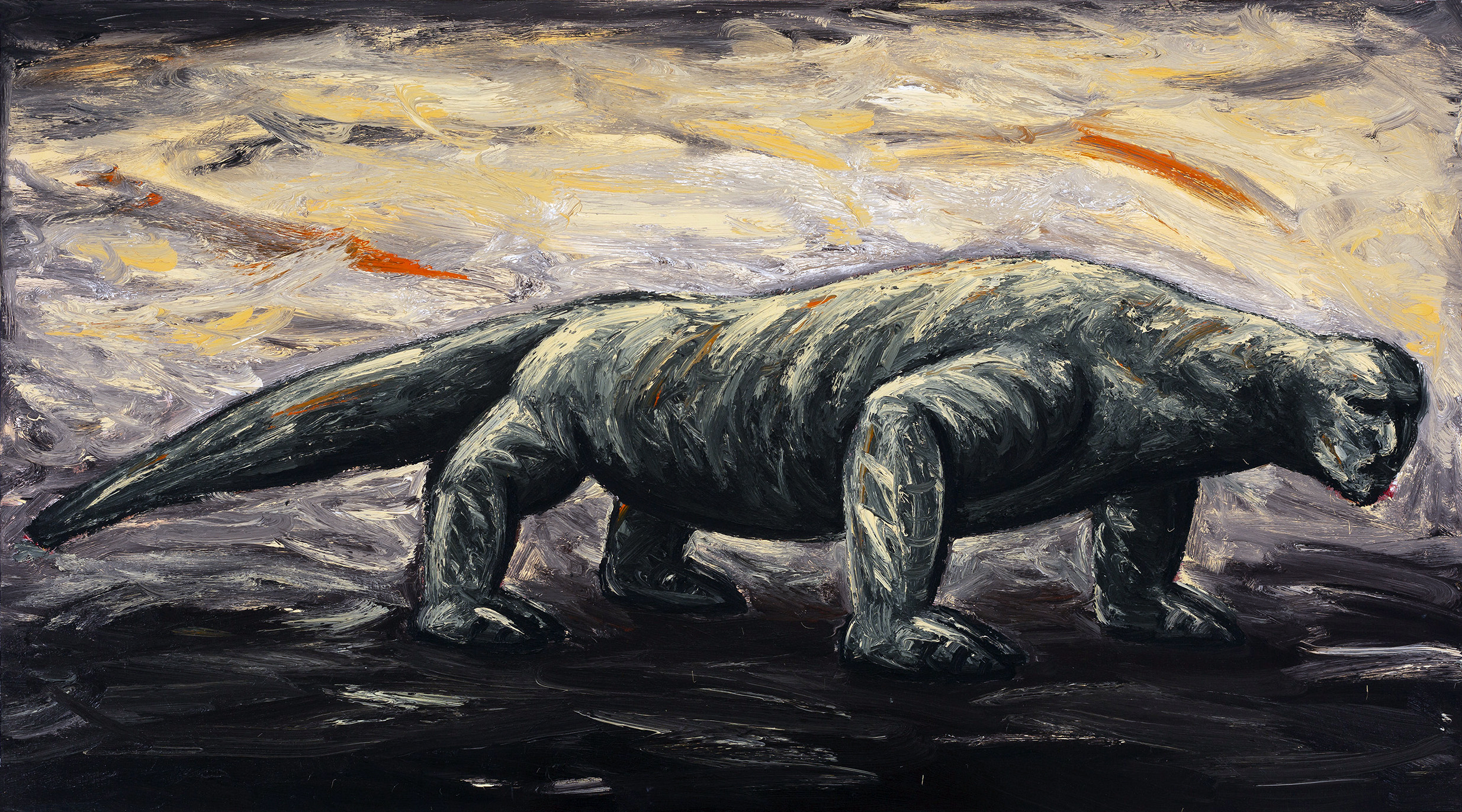
 

Peter Booth (Australian, b. 1940) 'Painting' 1984


Peter Booth (Australian, b. 1940)
Painting
1984
Oil on canvas
101 x 183cm
Heide Museum of Modern Art
The Baillieu Myer Collection of the ’80s
© Peter Booth
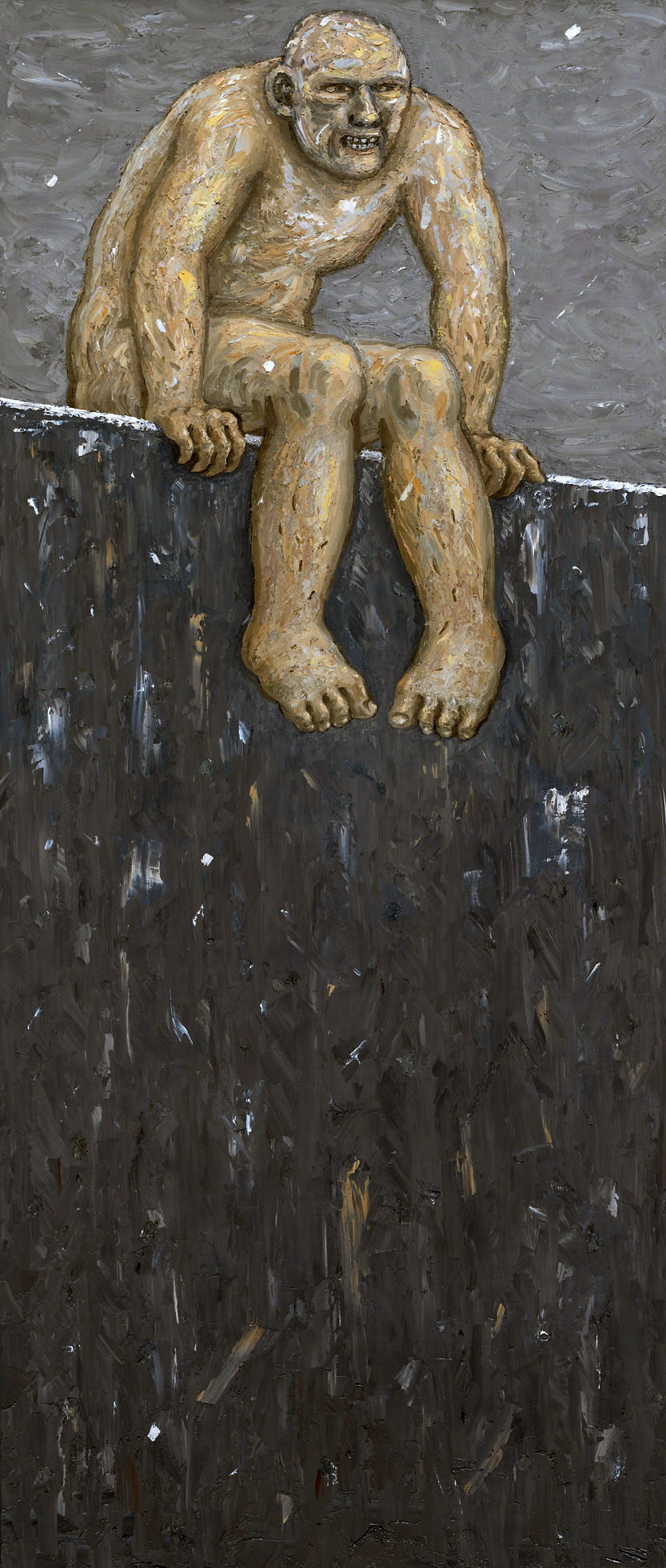
 

Peter Booth (Australian, b. 1940) 'Painting' 2012


Peter Booth (Australian, b. 1940)
Painting
2012
Oil on canvas
213.5 x 91cm
National Gallery of Australia, Canberra
© Peter Booth
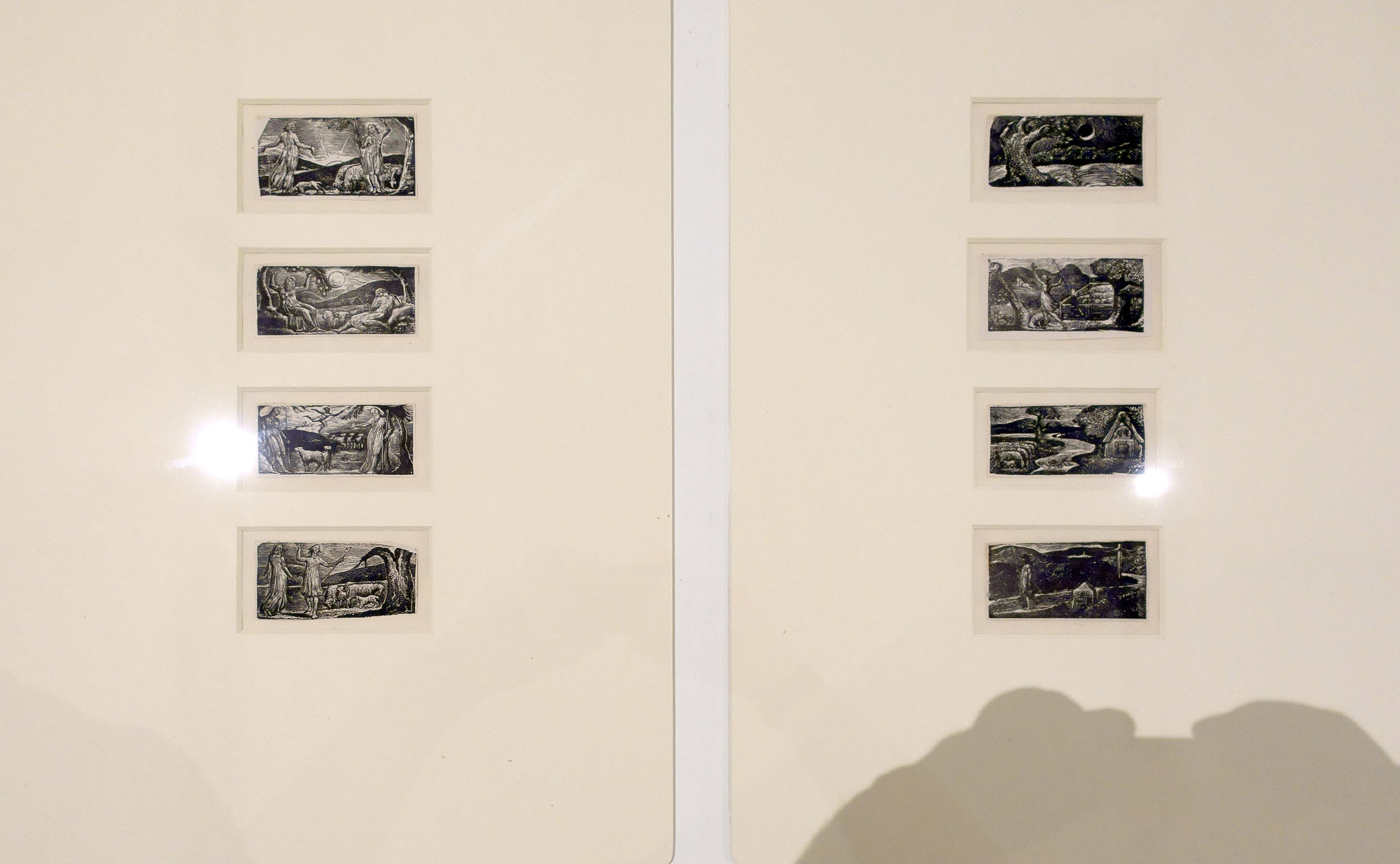
 

William Blake (English, 1757-1827) From 'The Pastorals of Virgil' 1821


William Blake (English, 1757-1827)
Thenot Remonstrates with Colinet
Thenot Under a Fruit Tree
Thenot Remonstrates with Colinet, Lightfoot in the Distance
Colinet Departs in Sorrow, a Thunder-Scarred Tree on the Right
Blasted Tree and Blighted Crops
The Good Shepherd Chases Away the Wolf
Sabrina’s Silvery Flood
Colinet’s Fond Desire Strange Lands to Know
1821
From The Pastorals of Virgil adapted by R.J. Thornton, 3rd edition. F.C. & J. Rivington et al., London 1921
Wood engravings on thin, white handmade wove paper
National Gallery of Victoria, Melbourne
Purchased 1960
Photo: Marcus Bunyan
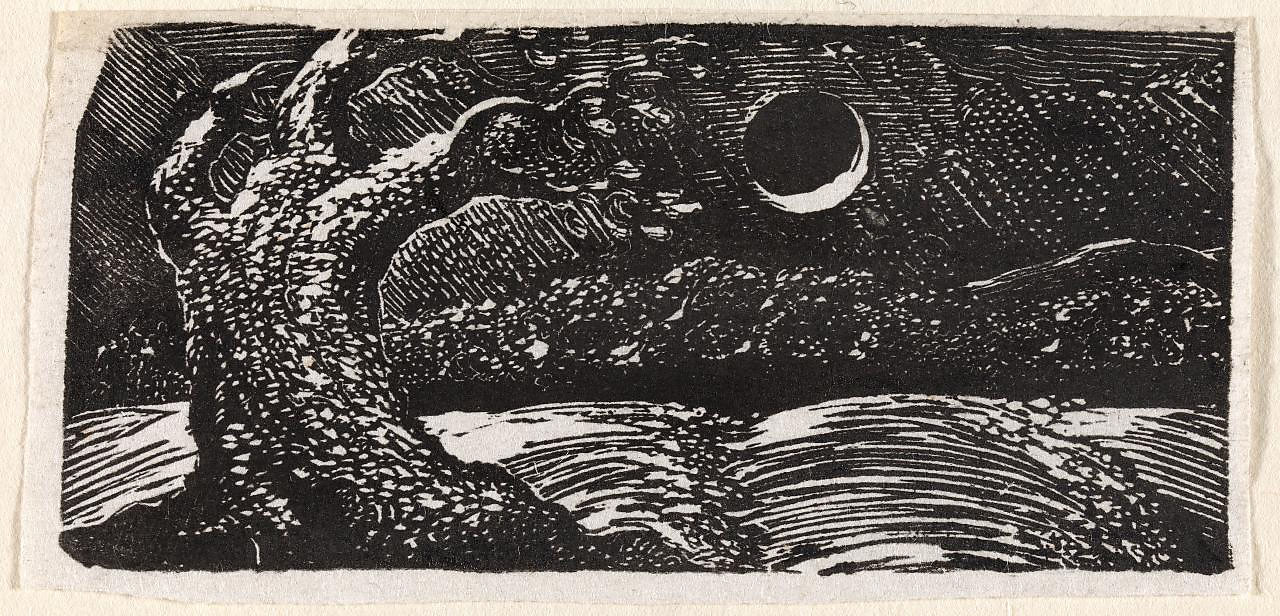
 

William Blake (English, 1757-1827) 'Blasted tree and blighted crops' 1821


William Blake (English, 1757-1827)
Blasted tree and blighted crops
1821
From The Pastorals of Virgil adapted by R.J. Thornton, 3rd edition. F.C. & J. Rivington et al., London 1921
Wood engraving on thin, white handmade wove paper
National Gallery of Victoria, Melbourne
Purchased 1960
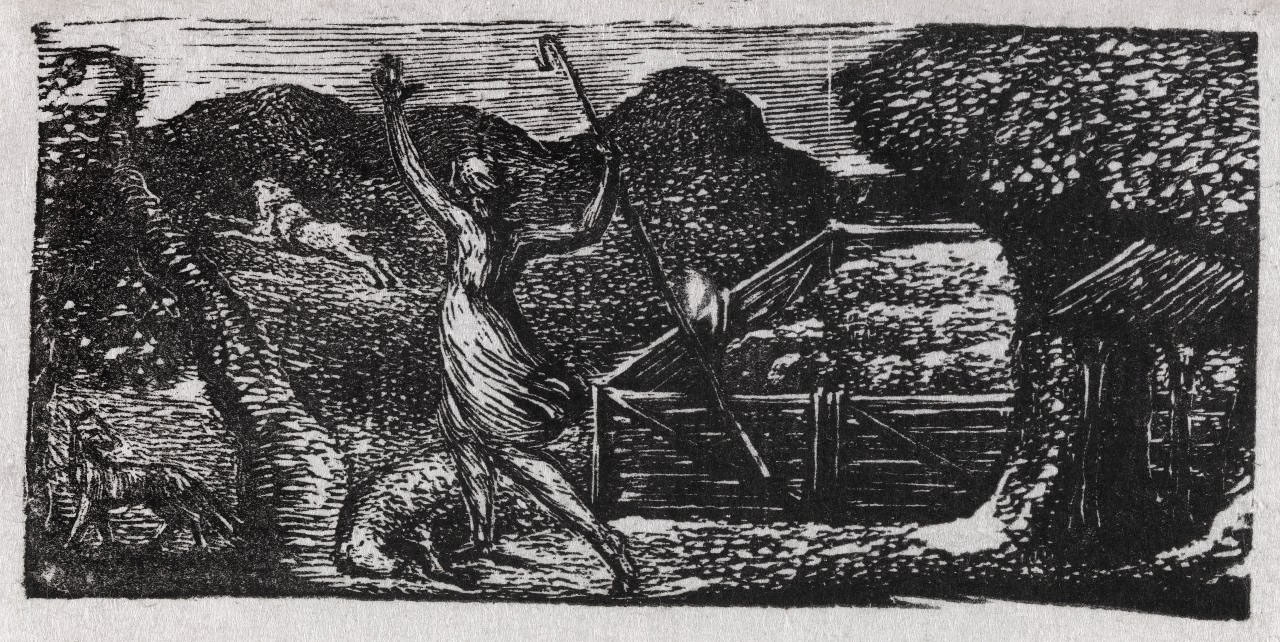
 

William Blake (English, 1757-1827) 'The Good Shepherd Chases Away the Wolf' 1821


William Blake (English, 1757-1827)
The Good Shepherd Chases Away the Wolf
1821
From The Pastorals of Virgil adapted by R.J. Thornton, 3rd edition. F.C. & J. Rivington et al., London 1921
Wood engraving on thin, white handmade wove paper
National Gallery of Victoria, Melbourne
Purchased 1960
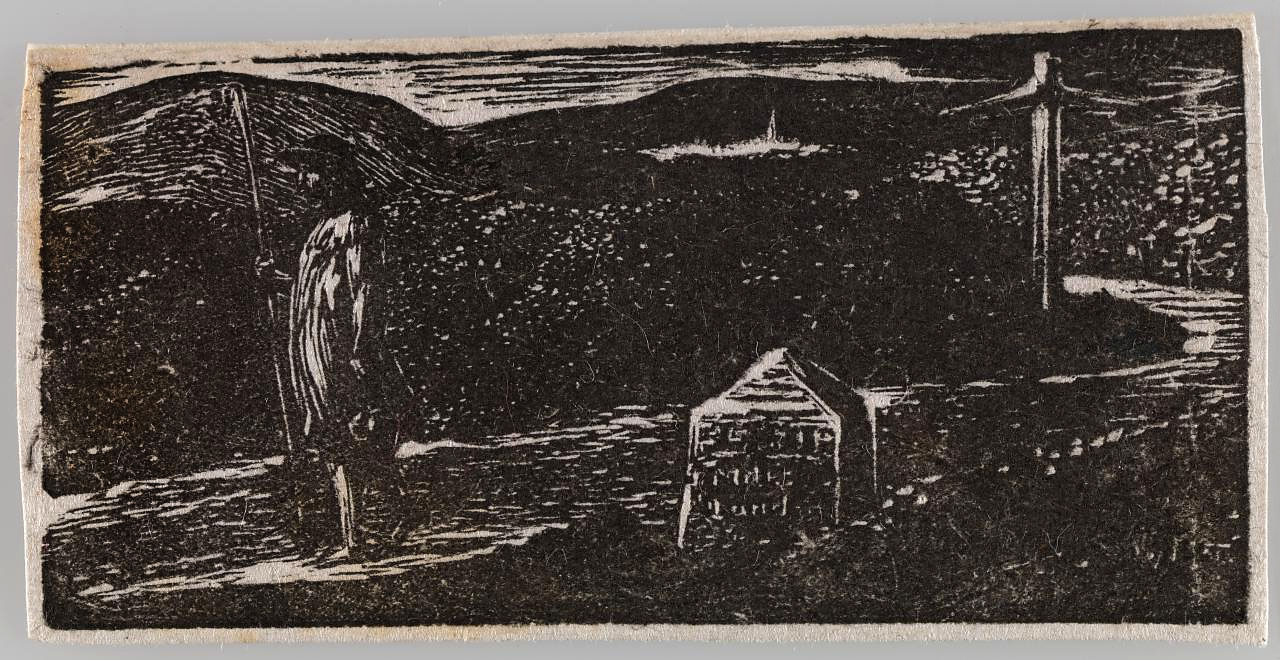
 

William Blake (English, 1757-1827) 'Colinet's Fond Desire Strange Lands to Know' 1821


William Blake (English, 1757-1827)
Colinet’s Fond Desire Strange Lands to Know
1821
From The Pastorals of Virgil adapted by R.J. Thornton, 3rd edition. F.C. & J. Rivington et al., London 1921
Wood engraving on thin, white handmade wove paper
National Gallery of Victoria, Melbourne
Purchased 1960
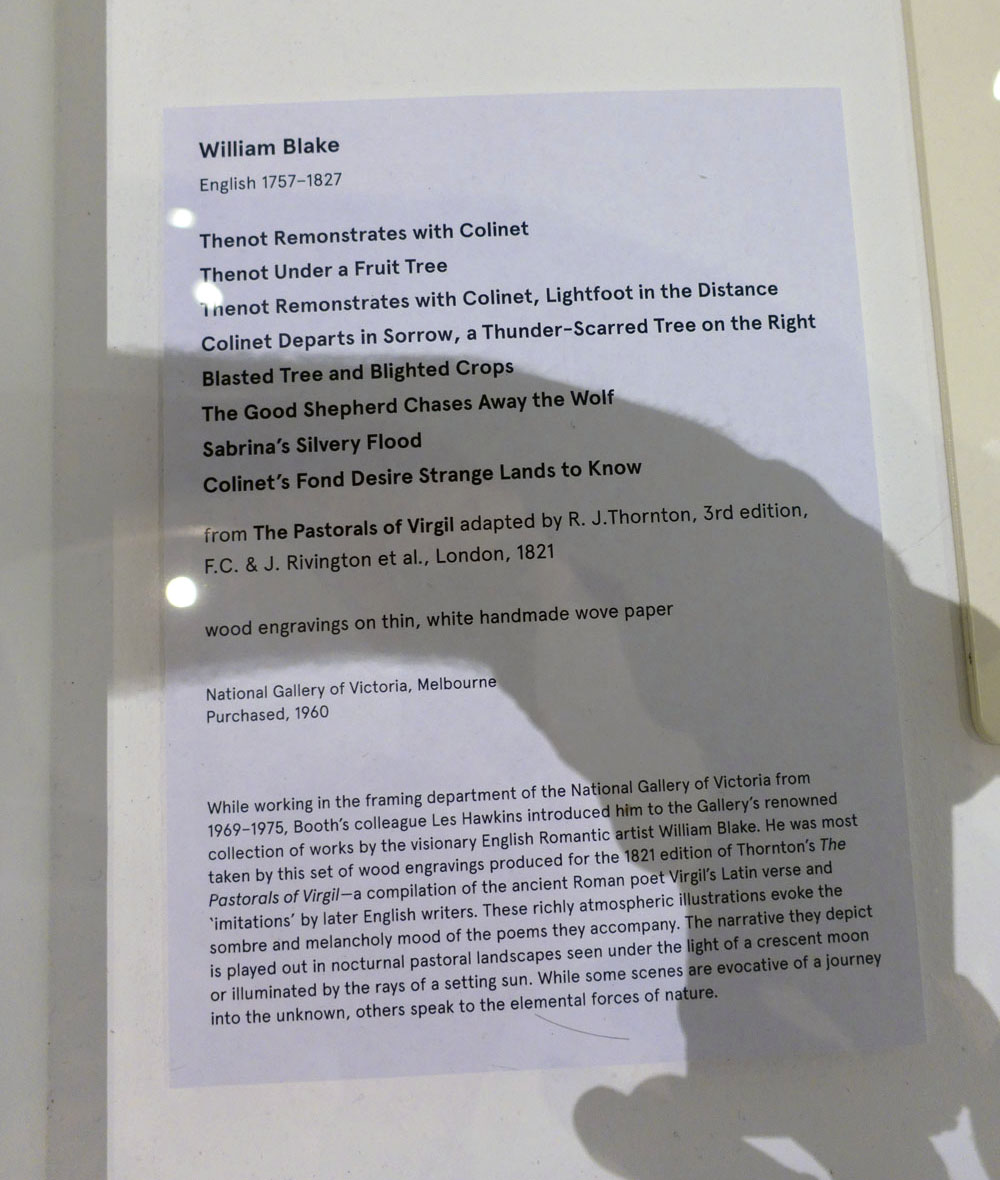
 

Cabinet text from the exhibition 'Peter Booth'


Cabinet text from the exhibition
Photo: Marcus Bunyan


A survey exhibition of the work of the renowned Australian artist Peter Booth 

With a remarkable career spanning several decades, Melbourne-based Booth is a unique voice in Australian art. This new survey of paintings and works on paper is the first major public gallery exhibition of Peter Booth’s work since the NGV retrospective in 2003 and features a number of the artist’s most significant works from the 1970s to 1990s, alongside important recent works from the past two decades.

The exhibition is presented thematically, honing in on and highlighting particular motifs, subjects and moods which have become hallmarks of Booth’s expansive oeuvre: stillness and turbulence, alterity and alienation, mutation and hybridity, the absurd and the grotesque, the road and the ruin, and the despoliation and the resilience of nature.

A small group of abstract paintings from the mid-1970s at the start of the exhibition provide a prelude to an important series of gestural paintings which mark the beginning of the artist’s journey into the highly expressive landscape and figure subjects which have characterised his practice since that time.

The exhibition progresses through Booth’s vivid imaginings of an apocalyptic world characterised by grotesque, unsettling, and at times absurd scenes of human and hybrid figures in varying states of apprehension, aggression and conflict. These works will be accompanied by a small selection of prints by William Blake, James Ensor, Francisco Goya, and Samuel Palmer, visionary artists who have been important touchstones for Booth and with whom he shares a number of affinities.

This survey also brings together important works from the past three decades to convey humanity’s often fraught and ambiguous relationship to the natural world, revealing Booth’s extraordinary capacity to transmute his intensely personal perceptions of the mysteries and forces of nature and the folly and hubris of human endeavours, into exceptional and deeply compelling paintings and drawings.

PETER BOOTH, curated by Anthony Fitzpatrick, is generously supported by The Balnaves Foundation.

Text from the TarraWarra Museum of Art website
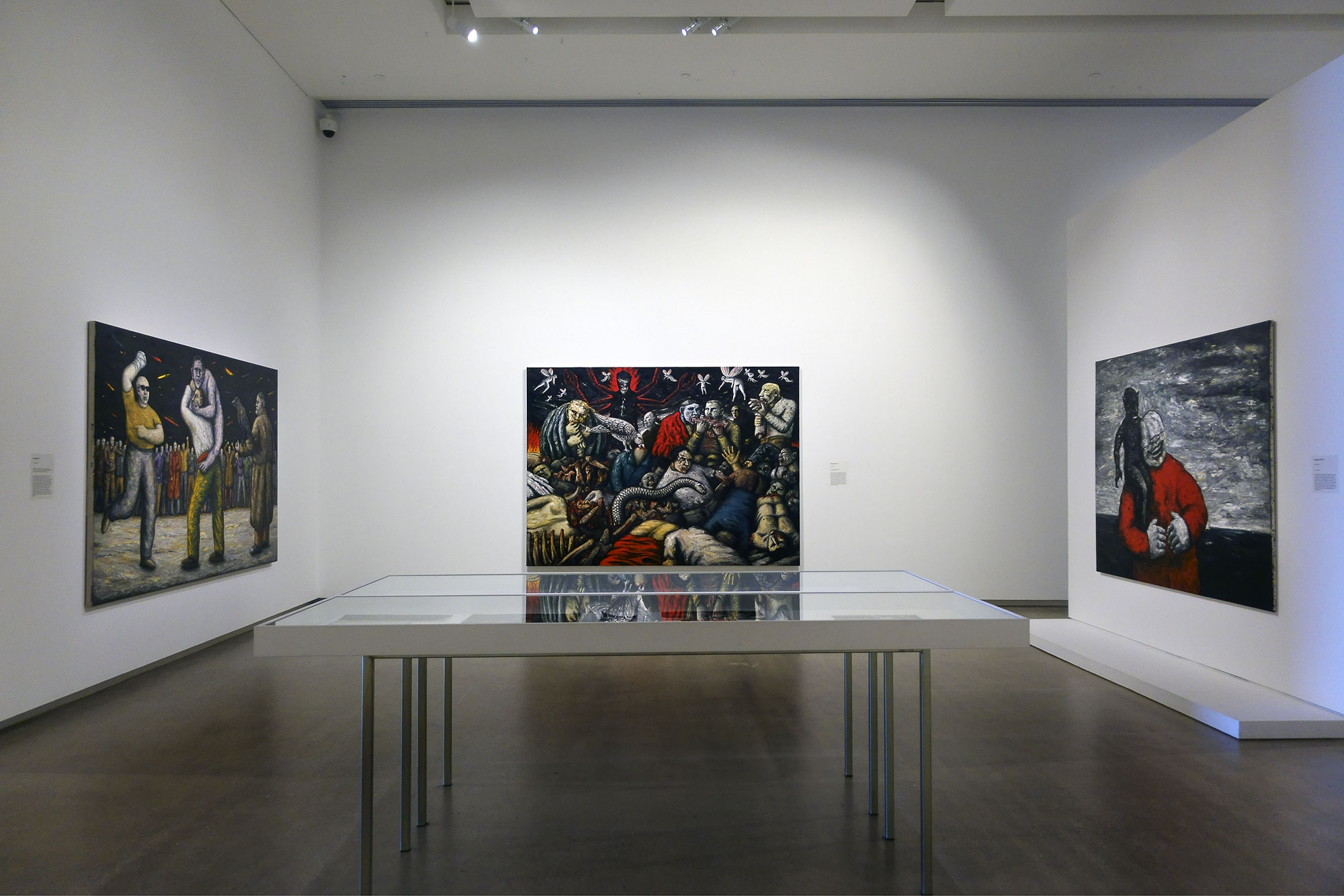
 

Installation view of the exhibition 'Peter Booth' at TarraWarra Museum of Art showing from left to right, 'Untitled' 1997, 'Painting' 1982 and 'Painting' 1981


Installation view of the exhibition Peter Booth at TarraWarra Museum of Art showing from left to right, Untitled 1997, Painting 1982 and Painting 1981
Photo: Marcus Bunyan
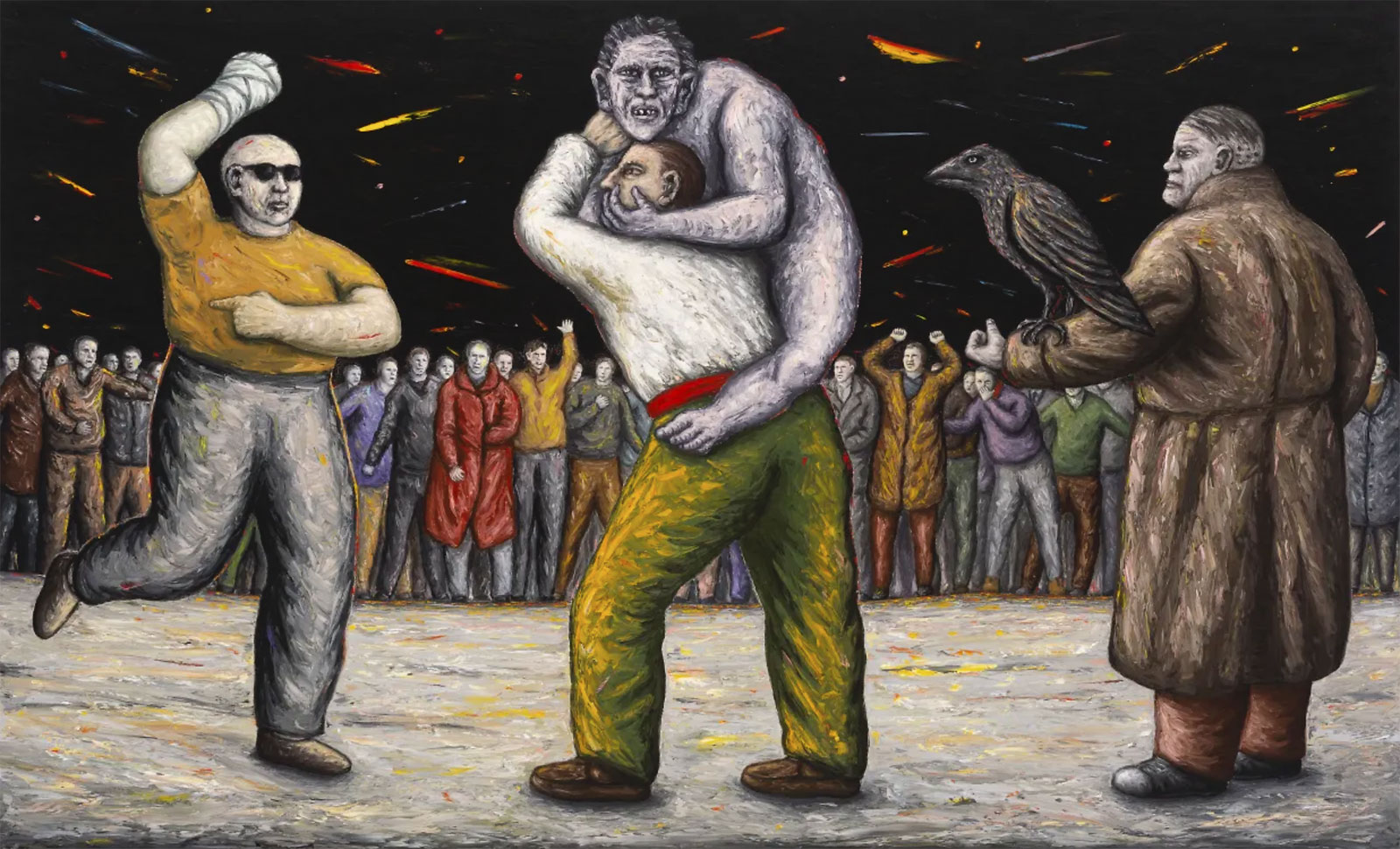
 

Peter Booth (Australian, b. 1940) 'Untitled' 1997


Peter Booth (Australian, b. 1940)
Untitled
1997
Oil on canvas
The University of Melbourne Art Collection, Michael Buxton Collection
Donated through the Australia Government’s Cultural Gifts Program by Michael and Janet Buxton 2018
© Peter Booth


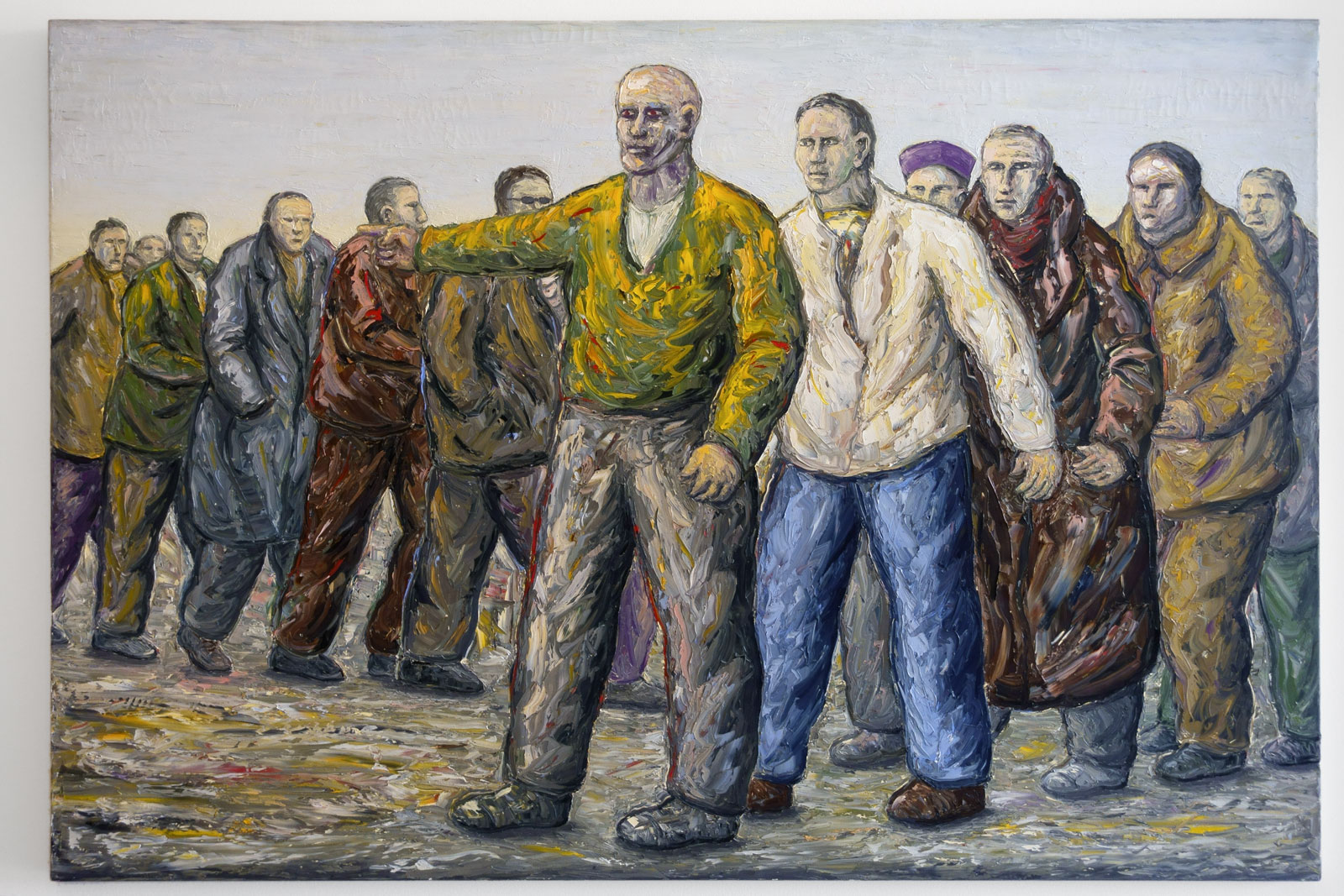
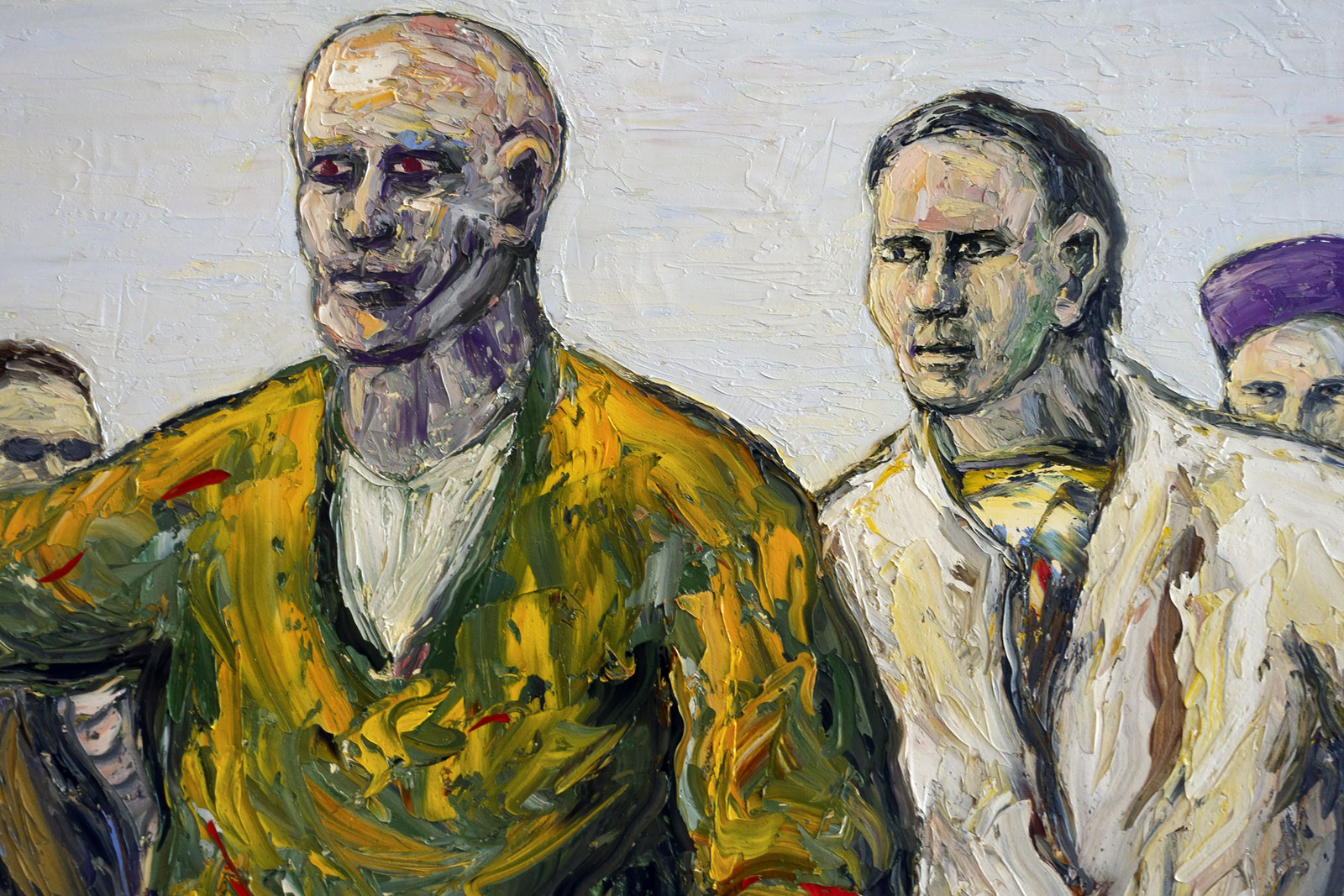
In Doris Lessing’s 1974 novel, The Memoirs of a Survivor, in the aftermath of an unspecified disaster, civilisation gradually disintegrates into anarchy as hordes of people form ad hoc tribes in the city streets to increase their chances of survival. In this dystopian narrative, Lessing describes the irrational and aggressive behaviour that can be unleashed within the safety and obscurity of a large group. This same sense of apprehension is one that Booth shares in many of his depictions of crowds. In Untitled, 1997, a large throng of men forms a single, impenetrable wall, gathered together to cheer on the spectacle of a violent struggle. Disturbing and absurd in equal measure, this work graphically portrays the violent actions that can be incited by a mob.

Wall text from the exhibition
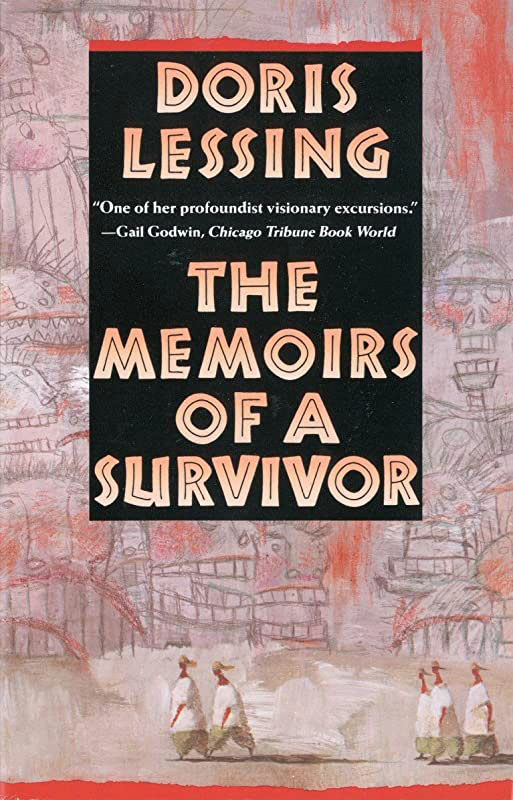
 

Doris Lessing. 'The Memoirs of a Survivor' book cover


Doris Lessing (British-Zimbabwean born Iran, 1919-2013)
The Memoirs of a Survivor
1974
Penguin Random House book cover published 1988
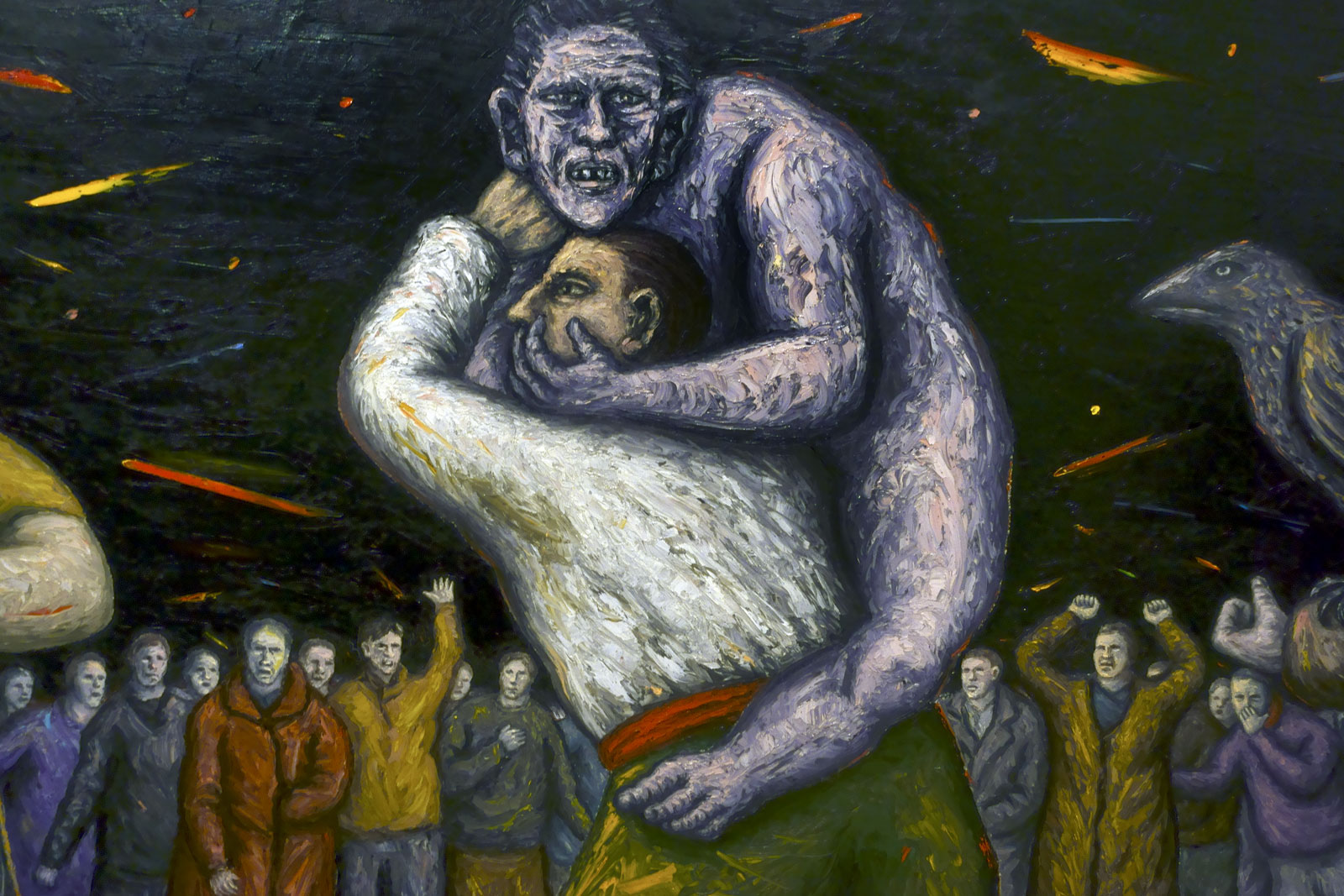
 

Peter Booth (Australian, b. 1940) 'Untitled' 1997 (installation view detail)


Peter Booth (Australian, b. 1940)
Untitled (installation view detail)
1997
Oil on canvas
The University of Melbourne Art Collection, Michael Buxton Collection
Donated through the Australia Government’s Cultural Gifts Program by Michael and Janet Buxton 2018
© Peter Booth
Photo: Marcus Bunyan
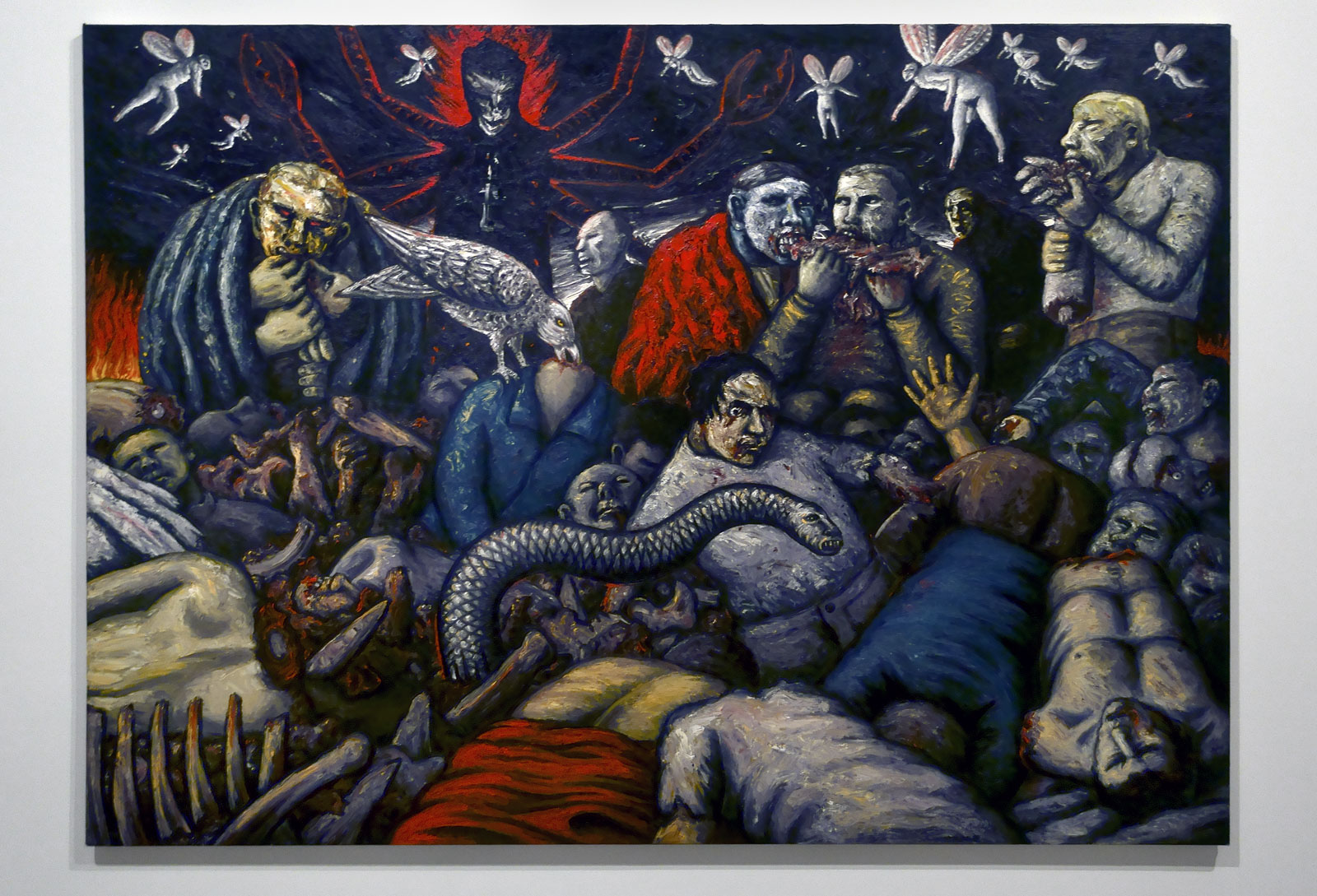
 

Peter Booth (Australian, b. 1940) 'Painting 1982' 1982 (installation view)


Peter Booth (Australian, b. 1940)
Painting 1982 (installation view)
1982
Oil on canvas
Art Gallery of South Australia, Adelaide
A.M. Ragless Bequest Fund
© Peter Booth
Photo: Marcus Bunyan


Another scene of demonic possession enacted under the spell of a fiendish presence, Painting 1982, confronts the viewer with a deeply disturbing vision of human cannibalism. With its visceral imagery of mutilation and dismemberment, parallels have been drawn to the atrocities depicted in Goya’s series of etchings The Disasters of War1810-1815, while the highly theatrical quality of the painting suggests a more recent connection to George A. Romero’s cult zombie film Night of the Living Dead, 1968. When the work was first exhibited critics responded to what the painting conveyed about the current state of western mass culture, finding in its brutal imagery a powerful metaphor for greed and material consumption. Whichever way one choses to interpret this work, one thing remains clear, whenever a large group of men get together in Booth’s painting, there is always the potential for danger.

Wall text from the exhibition
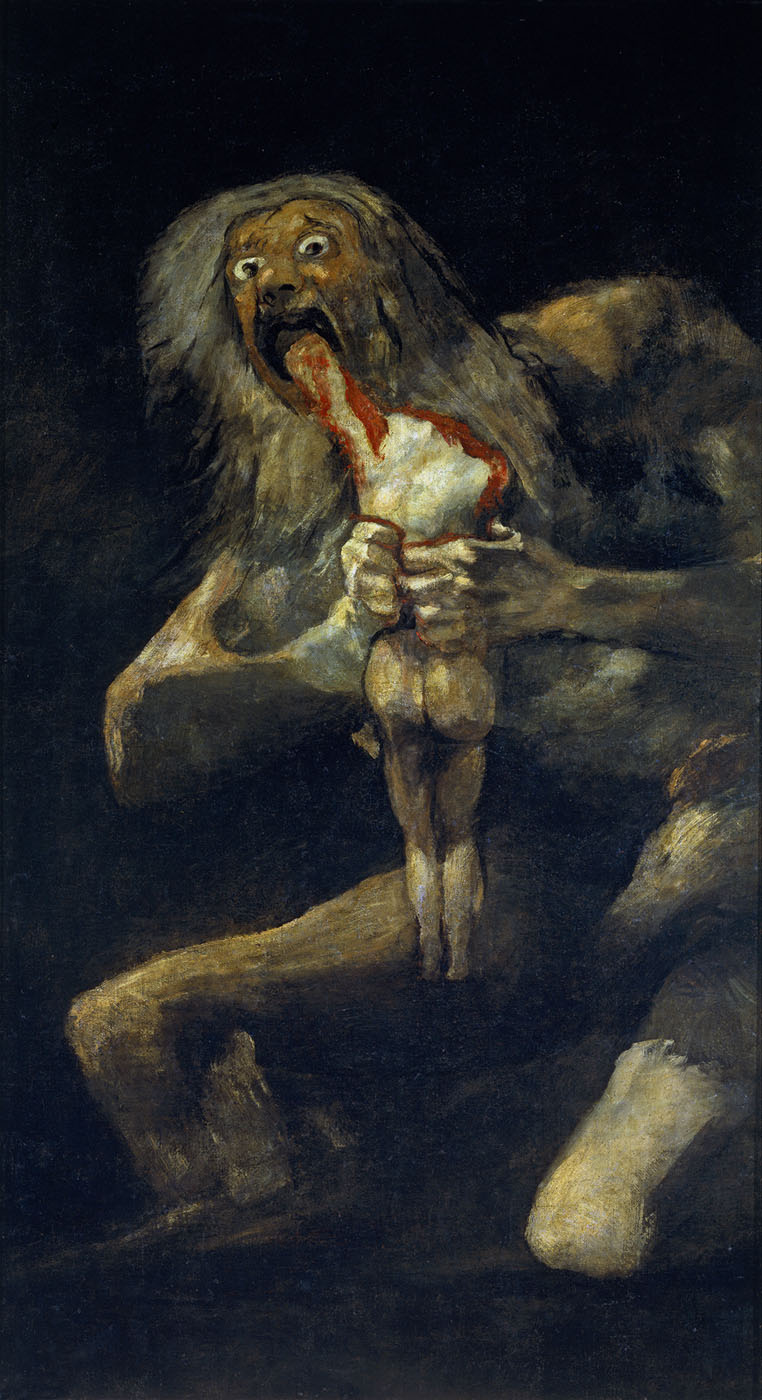
 

Francisco Goya (Spanish, 1746-1828) 'Saturn Devouring His Son' c. 1819-1823


Francisco Goya (Spanish, 1746-1828)
Saturn Devouring His Son
c. 1819-1823
Mixed media mural transferred to canvas
143.5 cm × 81.4cm (56.5 in × 32.0 in)
Museo del Prado, Madrid


Saturn Devouring His Son is a painting by Spanish artist Francisco Goya. It is traditionally interpreted as a depiction of the Greek myth of the Titan Cronus (known as Saturn in Roman mythology) eating one of his offspring. Fearing a prophecy foretold by Gaea that predicted he would be overthrown by one of his children, Saturn ate each one upon their birth. The work is one of the 14 so-called Black Paintings that Goya painted directly on the walls of his house sometime between 1819 and 1823. It was transferred to canvas after Goya’s death and is now in the Museo del Prado in Madrid. …

Various interpretations of the meaning of the picture have been offered: the conflict between youth and old age, time as the devourer of all things, the wrath of God and an allegory of the situation in Spain, where the fatherland consumed its own children in wars and revolution. There have been explanations rooted in Goya’s relationships with his own son, Xavier, the only of his six children to survive to adulthood, or with his live-in housekeeper and possible mistress, Leocadia Weiss; the sex of the body being consumed cannot be determined with certainty. If Goya made any notes on the picture, they have not survived, as he never intended the picture for public exhibition.

Text from the Wikipedia website
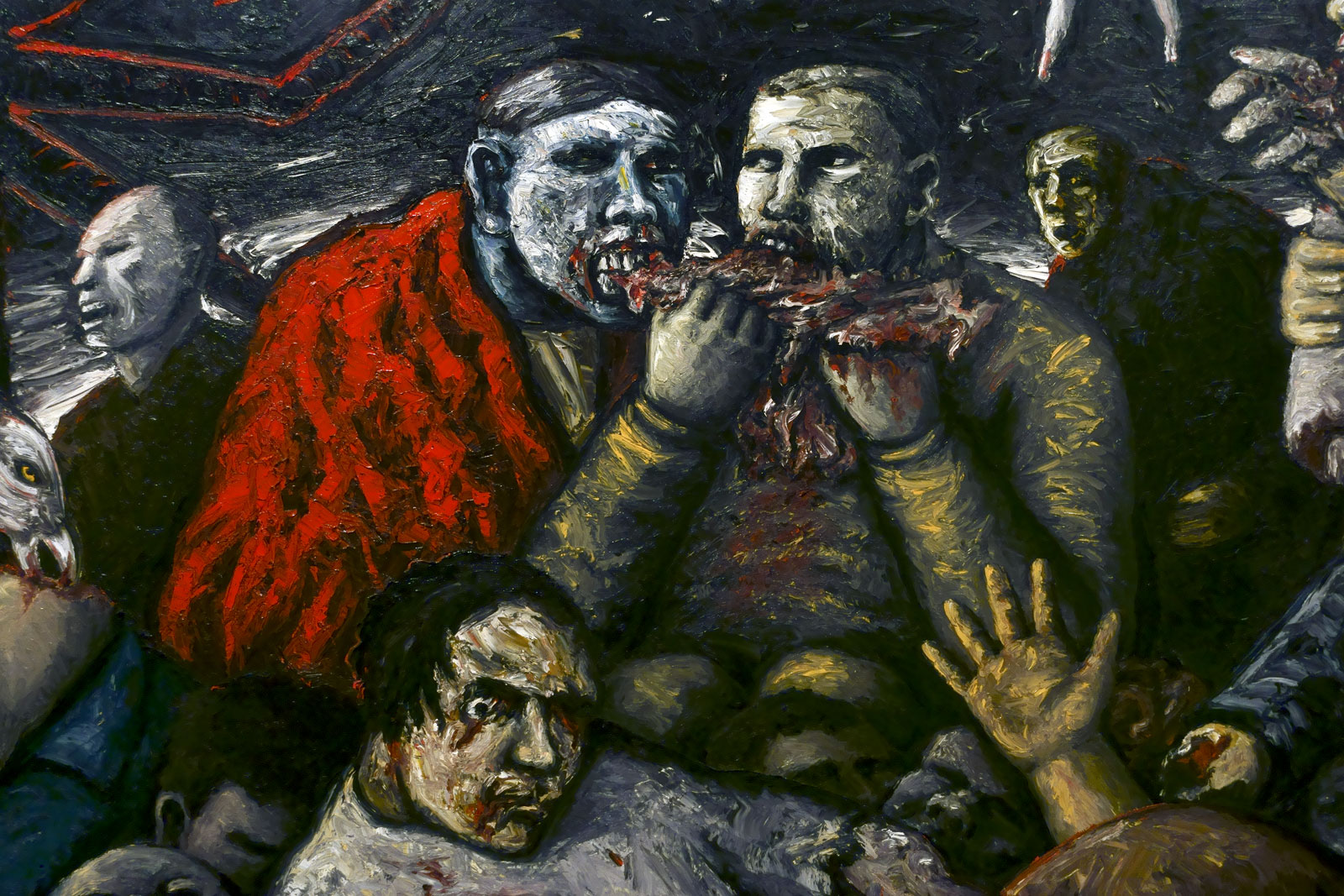
 

Peter Booth (Australian, b. 1940) 'Painting 1982' 1982 (installation view detail)


Peter Booth (Australian, b. 1940)
Painting 1982 (installation view detail)
1982
Oil on canvas
Art Gallery of South Australia, Adelaide
A.M. Ragless Bequest Fund
© Peter Booth
Photo: Marcus Bunyan
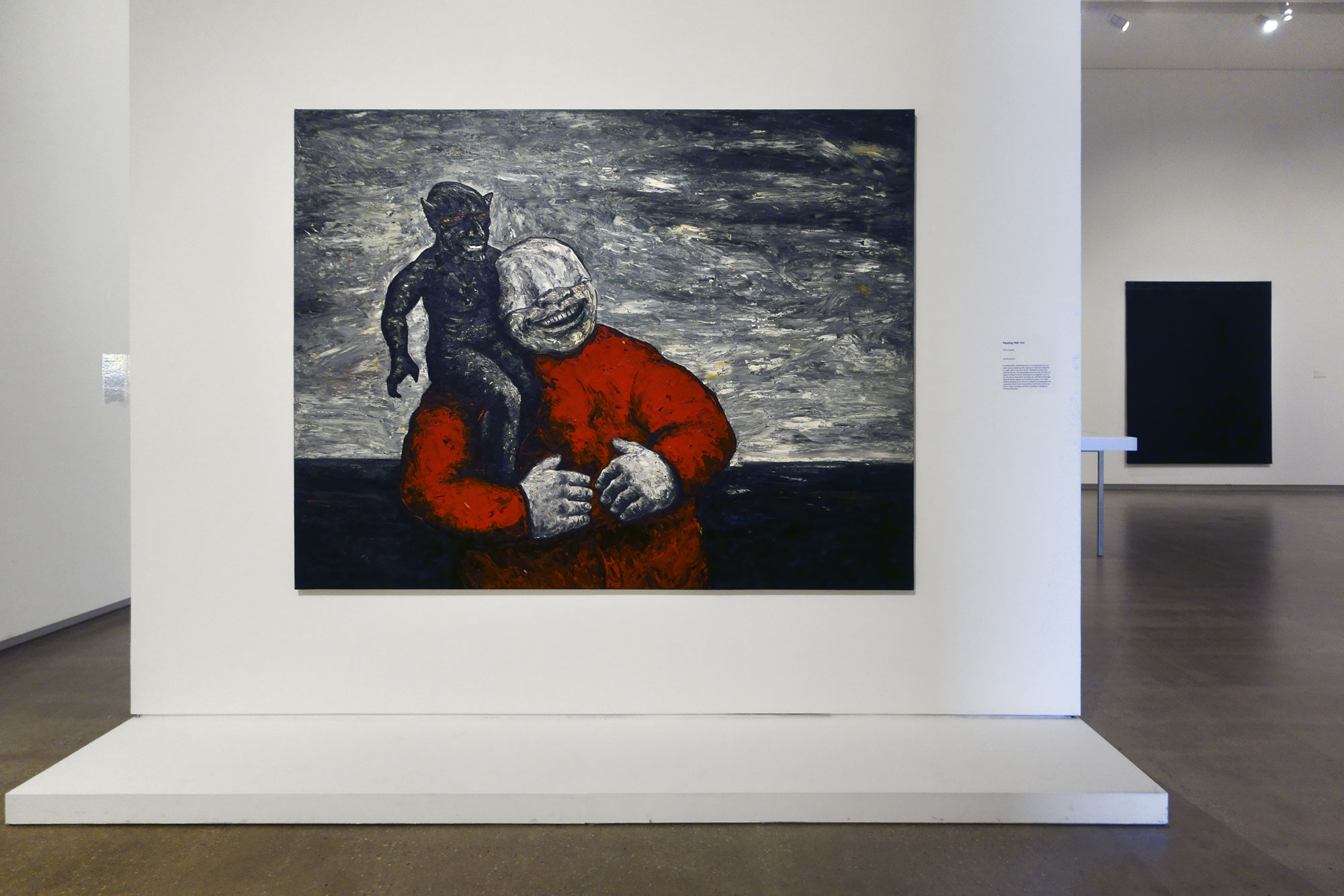
 

Peter Booth (Australian, b. 1940) 'Painting' 1981 (installation view)


Peter Booth (Australian, b. 1940)
Painting (installation view)
1981
Oil on canvas
Private collection
© Peter Booth
Photo: Marcus Bunyan


In Painting 1981 a blindfolded boor is accompanied by a red-eyed, pointy-eared imp who appears to have just whispered a cosmic joke or secret in his ear. Situated in a bleak and desolate terrain, this disquieting scenario recalls the German legend of Faust in which, following the protagonist’s pact to sell his soul to the Devil in exchange for unlimited knowledge, Mephistopheles appears as his demonic guide. In this light, Booth’s painting can be seen as a powerful reimagining of this cautionary tale of how blind ambition and human hubris can lead to inner corruption and the unleashing of dangerous, irrational impulses.

Wall text from the exhibition
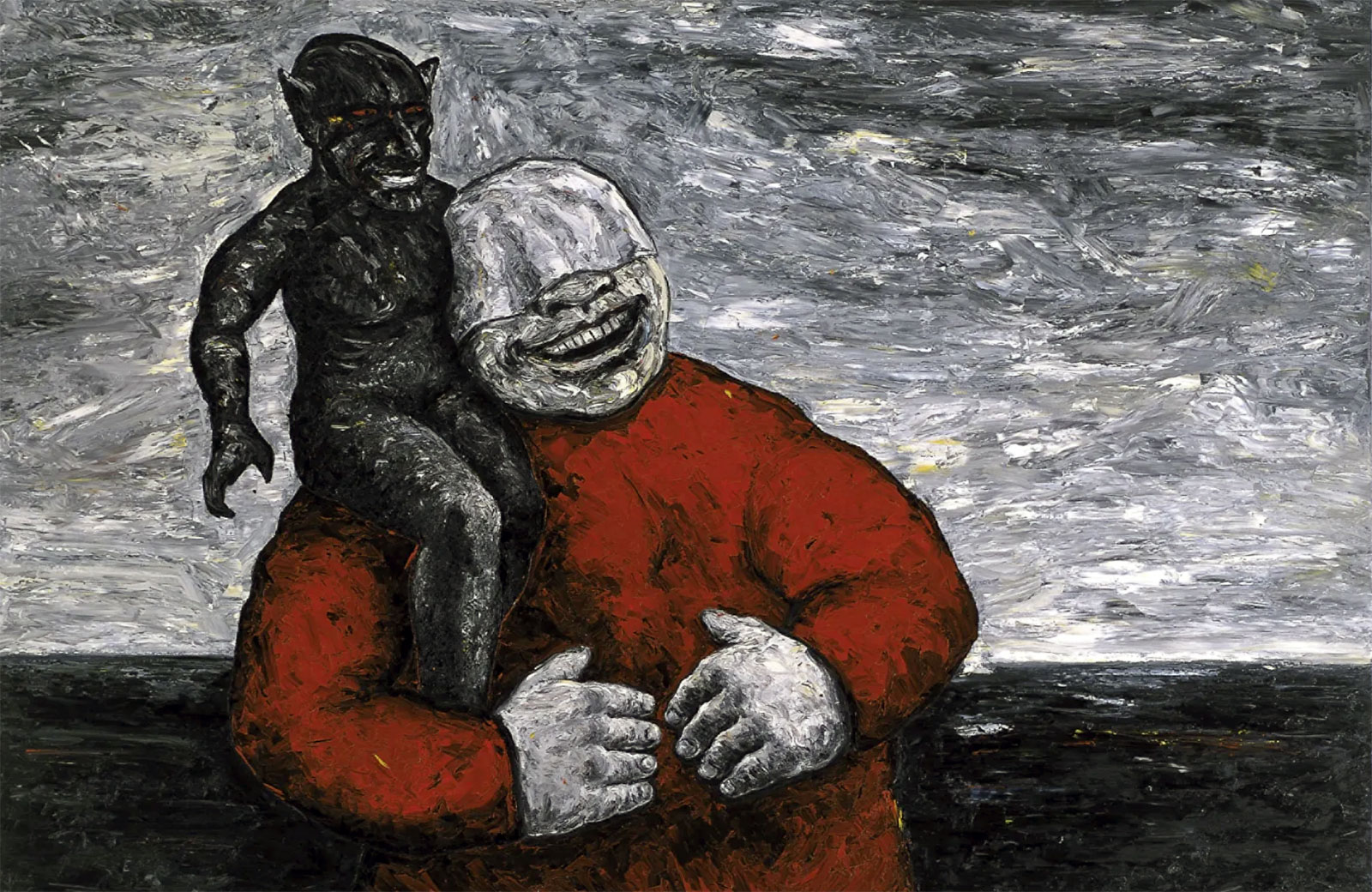
 

Peter Booth (Australian, b. 1940) 'Painting' 1981 (detail)


Peter Booth (Australian, b. 1940)
Painting (detail)
1981
Oil on canvas
Private collection
© Peter Booth


A survey exhibition of the work of major Australian artist Peter Booth will be held at TarraWarra Museum of Art, 26 November 2022 – 13 March 2023.

With a remarkable career spanning several decades, Melbourne-based Booth is a unique voice in Australian painting and is considered by many to be one of the most significant contemporary artists working in Australia today.

This new survey of paintings and works on paper will be the first major public gallery exhibition of Peter Booth’s work since the NGV retrospective in 2003 and will feature a number of the artist’s most significant works from the 1970s to 1990s, alongside important recent works from the past two decades.

Curated by TarraWarra’s Anthony Fitzpatrick, the exhibition will be presented thematically, honing in on and highlighting particular motifs, subjects and moods which have become hallmarks of Booth’s expansive oeuvre: stillness and turbulence; alterity and alienation; mutation and hybridity; the absurd and the grotesque; the road and the ruin; and the despoilation and the resilience of nature.

“This exhibition will reveal Booth’s extraordinary capacity to transmute his intensely personal perceptions of the mysteries and forces of nature, and the folly and hubris of human endeavours, into exceptional and deeply-compelling paintings and drawings,” Mr Fitzpatrick said.

A small group of abstract paintings from the mid-1970s at the start of the exhibition provide a prelude to an important series of gestural paintings which mark the beginning of the artist’s journey into a neo-expressionist figurative style.

The exhibition progresses through Booth’s vivid imaginings of an apocalyptic world characterised by grotesque, unsettling, and at times absurd scenes of human and hybrid figures in varying states of apprehension, aggression and conflict.

These works will be accompanied by a small selection of prints by William Blake, James Ensor, Francisco Goya, and Samuel Palmer, visionary artists who have been important touchstones for Booth and with whom he shares a number of affinities.

This survey will also bring together important works from the past three decades to convey humanity’s often fraught and ambiguous relationship to the natural world.

“Initially Booth’s highly visceral paintings of fiery, turbulent environments were the stage for confronting and, at times, violent human encounters. Since the 1990s, many of the scenes he has painted have become increasingly depopulated, implicating the viewer who is called to contemplate and navigate their own subjective relationship to these vivid landscapes.

“Most recently, the artist has returned to the apocalyptic imagery that characterised his first forays into figuration, with large-scale paintings of desolate and devastated scenes of a world in a cataclysmic state of collapse. This is art for a time of ecological and existential crisis in which anthropogenic impacts have driven the planet, and its intricate web of ecosystems, to the brink of utter catastrophe,” Mr Fitzpatrick said.

Press release from the TarraWarra Museum of Art
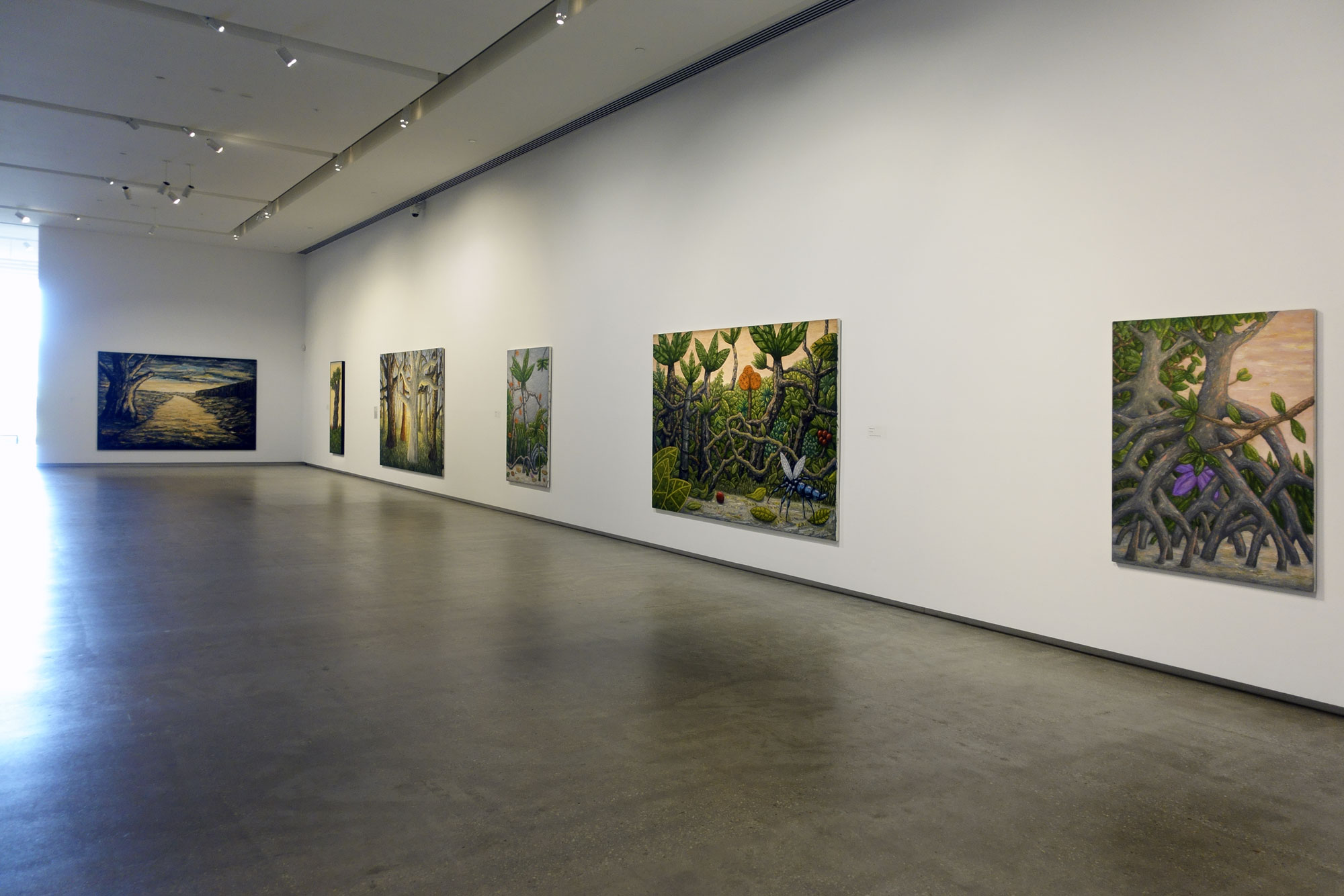
 

Installation view of the exhibition 'Peter Booth' at TarraWarra Museum of Art showing at second right, 'Painting' 2022


Installation view of the exhibition Peter Booth at TarraWarra Museum of Art showing at second right, Painting 2022 (below)
Photo: Marcus Bunyan
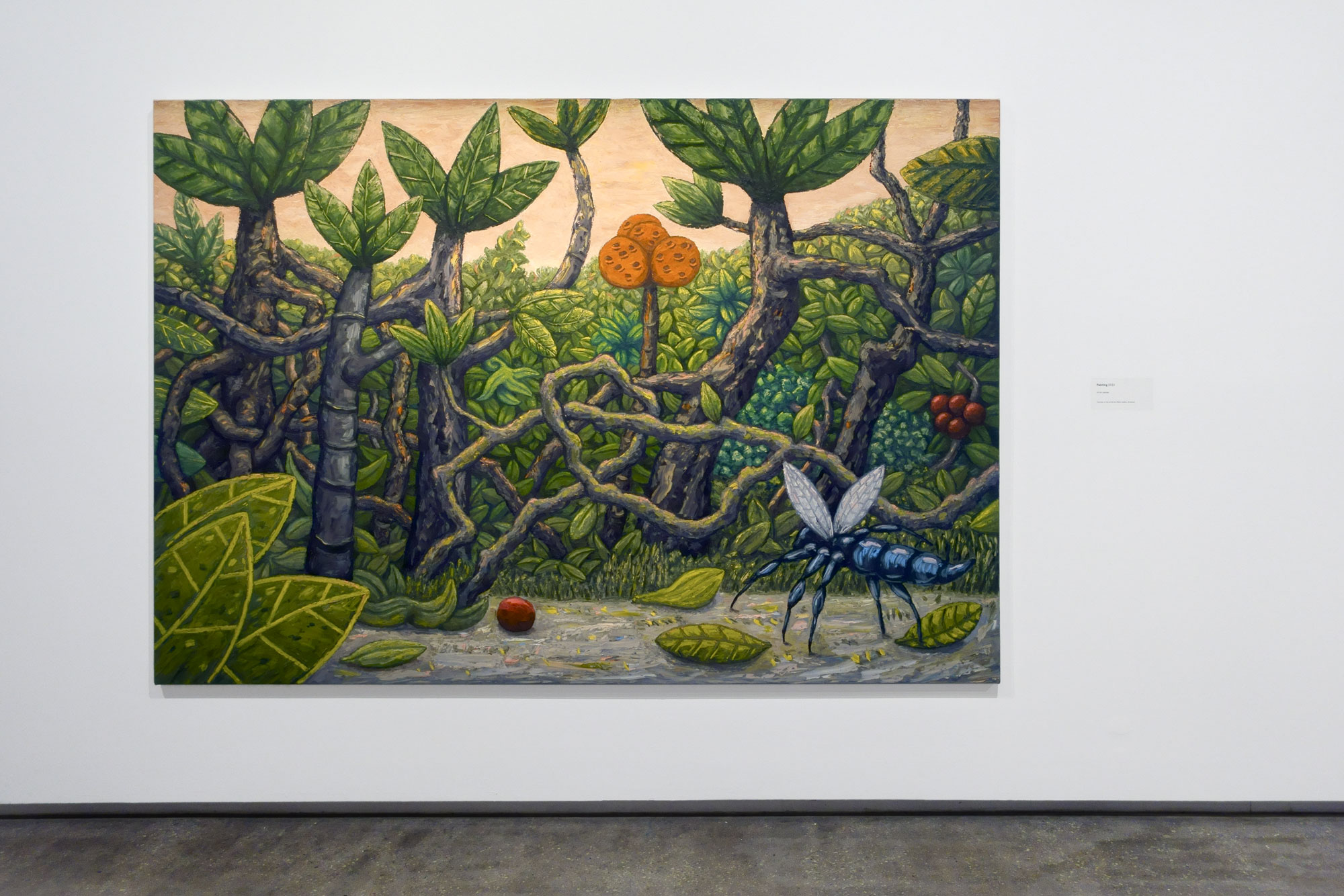
 

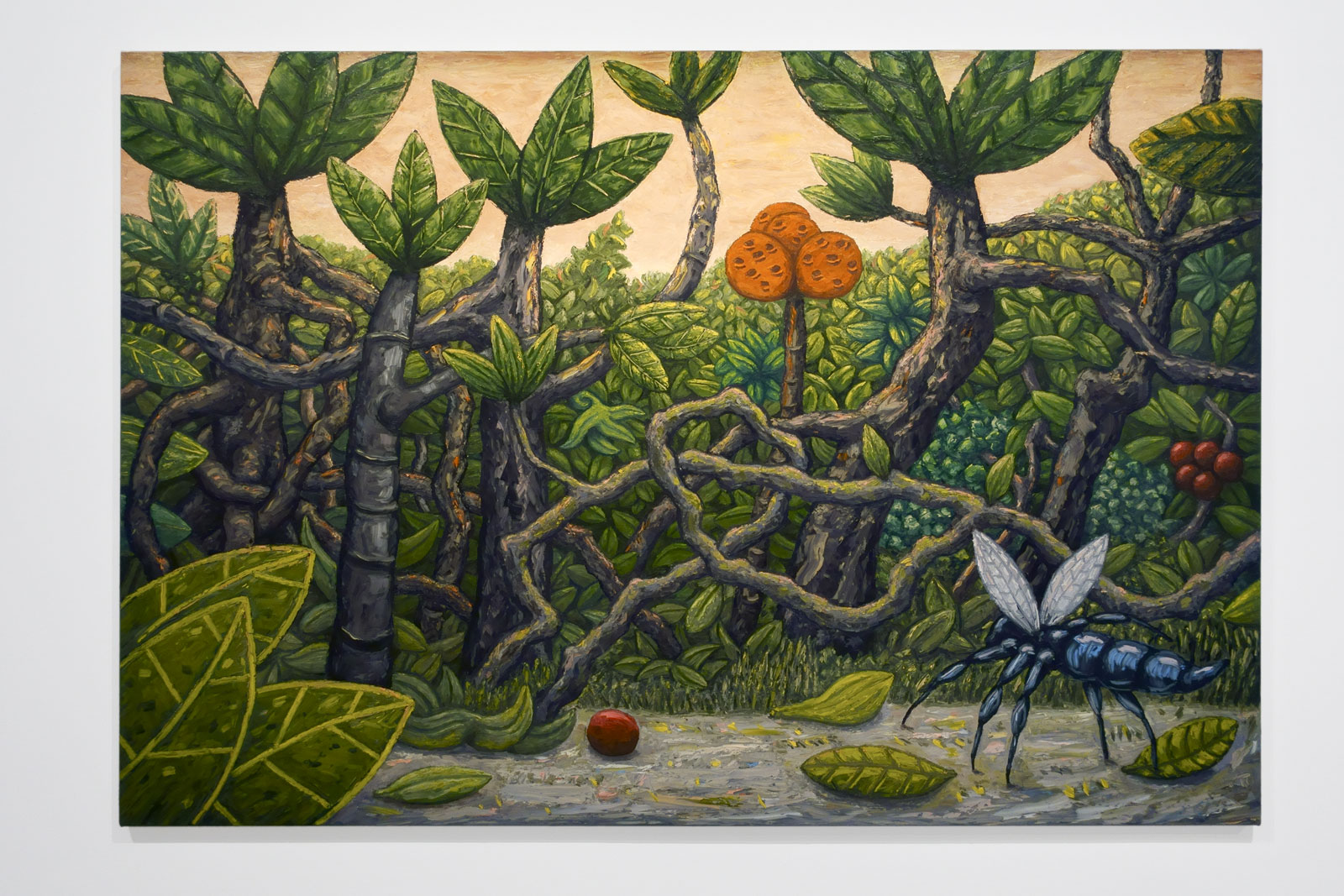
Peter Booth (Australian, b. 1940) 'Painting' 2022 (installation view)


Peter Booth (Australian, b. 1940)
Painting (installation view)
2022
Oil on canvas
214.0 x 137.5cm
Courtesy the artist and Milani Gallery
© Peter Booth
Photo: Marcus Bunyan
 

Peter Booth (Australian, b. 1940) 'Painting' 2022 (installation view)


Peter Booth (Australian, b. 1940)
Painting (installation view)
2022
Oil on canvas
214.0 x 137.5cm
Courtesy the artist and Milani Gallery
© Peter Booth
Photo: Marcus Bunyan
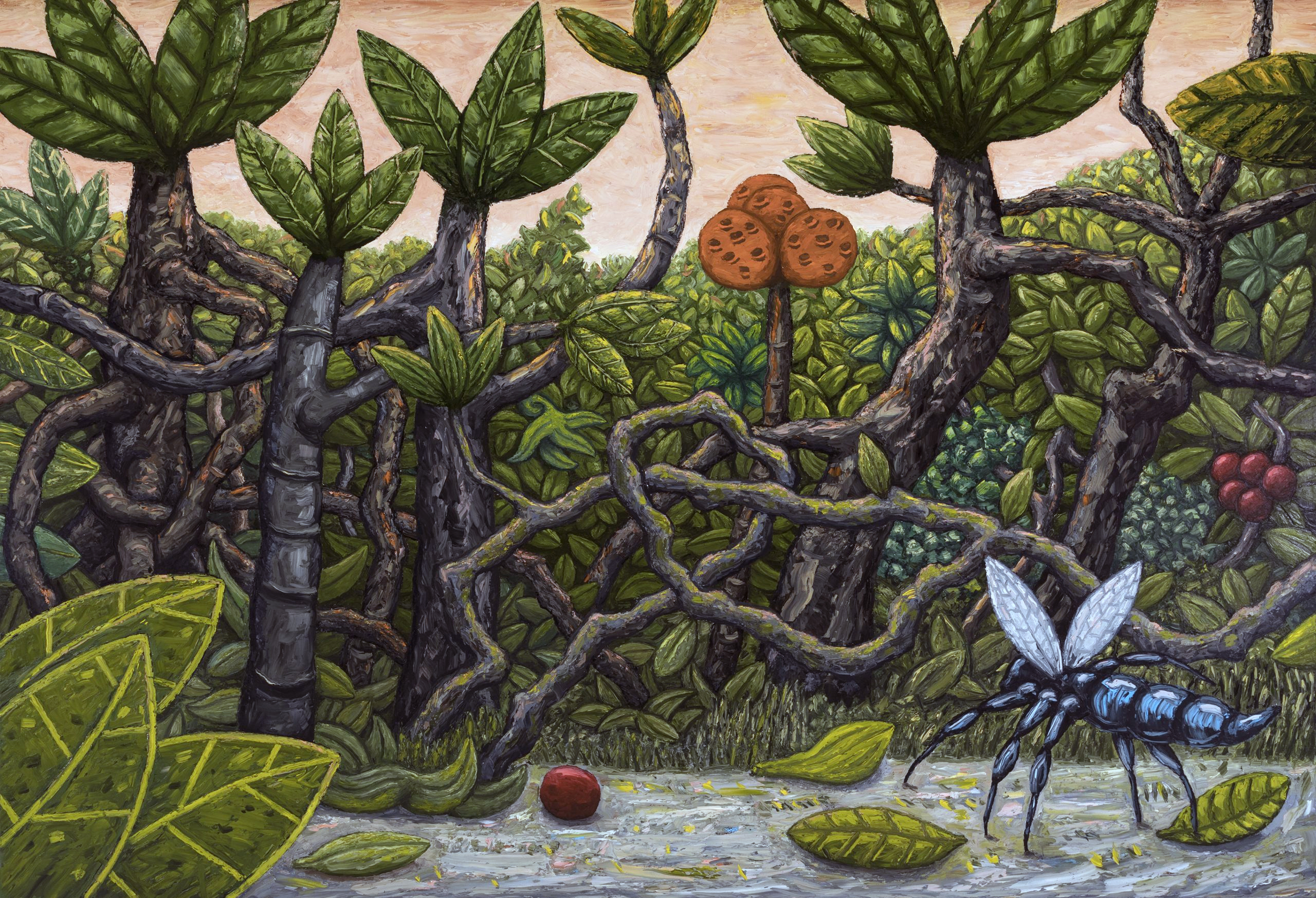
 

Peter Booth (Australian, b. 1940) 'Painting' 2022


Peter Booth (Australian, b. 1940)
Painting
2022
Oil on canvas
214.0 x 137.5cm
Courtesy the artist and Milani Gallery
© Peter Booth
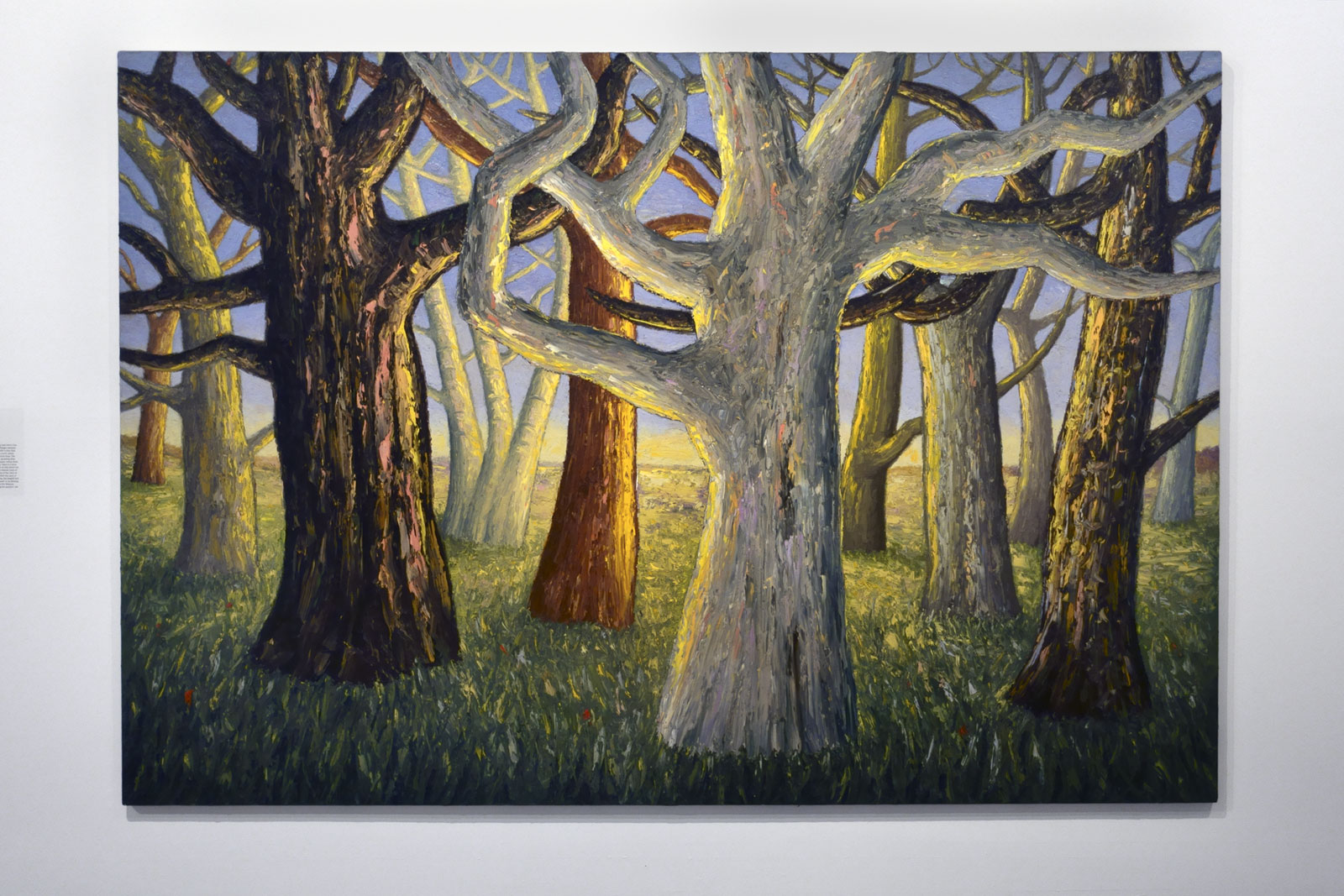
 

Peter Booth (Australian born England, b. 1940, Australia from 1958) 'Acheron Way' 1993 (installation view)


Peter Booth (Australian born England, b. 1940, Australia from 1958)
Acheron Way (installation view)
1993
Oil on canvas
208 x 304.8cm
Private collection
© Peter Booth
Photo: Marcus Bunyan
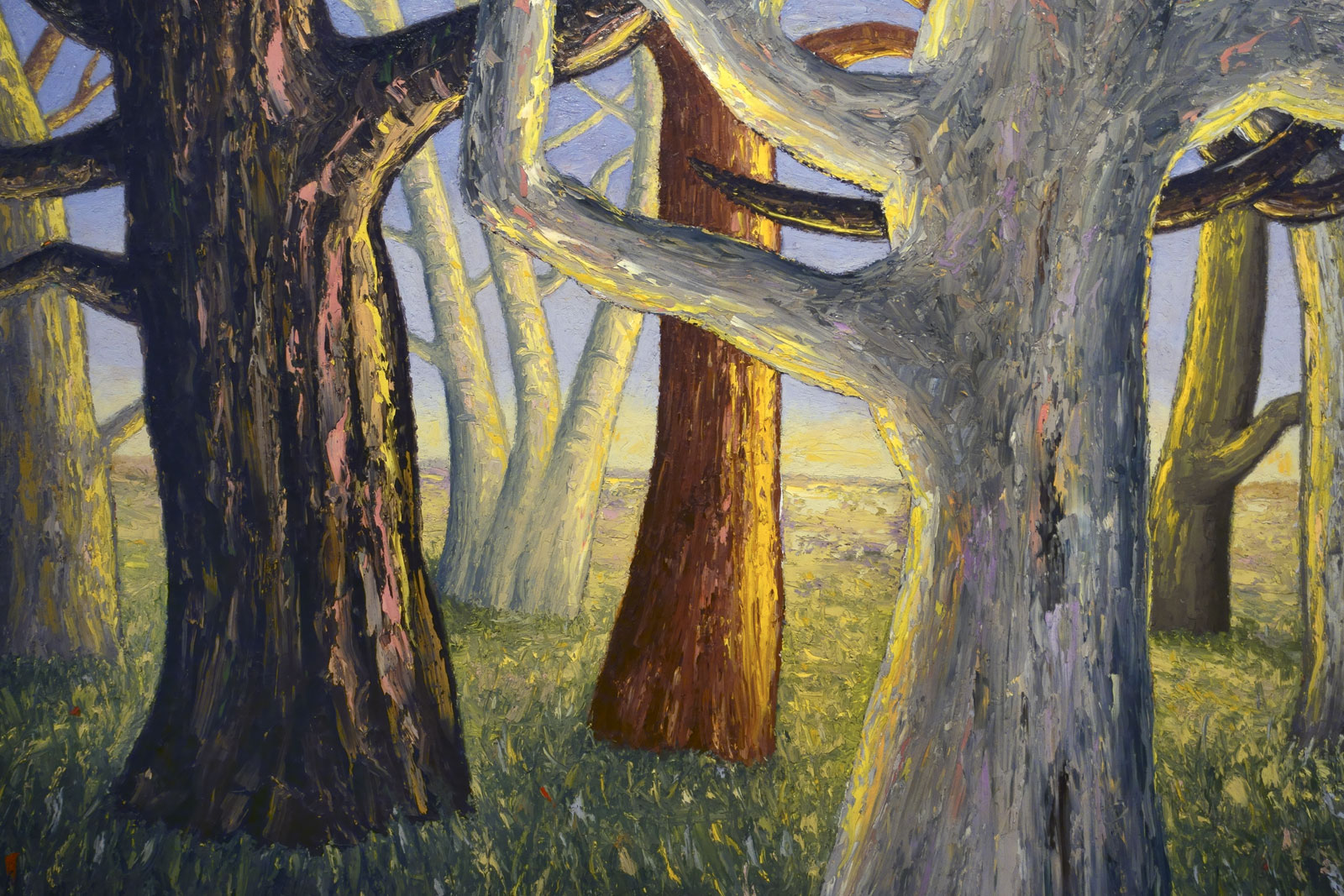
 

Peter Booth (Australian born England, b. 1940, Australia from 1958) 'Acheron Way' 1993 (installation view detail)


Peter Booth (Australian born England, b. 1940, Australia from 1958)
Acheron Way (installation view detail)
1993
Oil on canvas
208 x 304.8cm
Private collection
© Peter Booth
Photo: Marcus Bunyan


Acheron Way is named after a long snaking road which rises steeply through the rainforest of the Yarra Ranges between Narbethong and Warburton. Pictured beneath a clear blue sky, this scene of animated trees backlit by a soft, yellow light evokes a sense of energy, growth and even hope. The swaying trunks and tentacular forms of the sprawling limbs of the trees painted in thick swathes of impasto, imbue them with a powerful emotional charge. However, there is a more ambiguous aspect to this work alluded to in its title which not only refers to a real location, but also to an infernal realm of the imagination: Acheron (‘river of pain’) one of the rivers of the Underworld in Greek mythology over which the souls of the dead were ferried. From this perspective, the tangled and twisted forms of these sentinel-like trees seem to be denying us access to the light suffused landscape in the distance, forcing us to linger in their shadow, begging the question: are we in the realm of the living or the dead?

Wall text from the exhibition
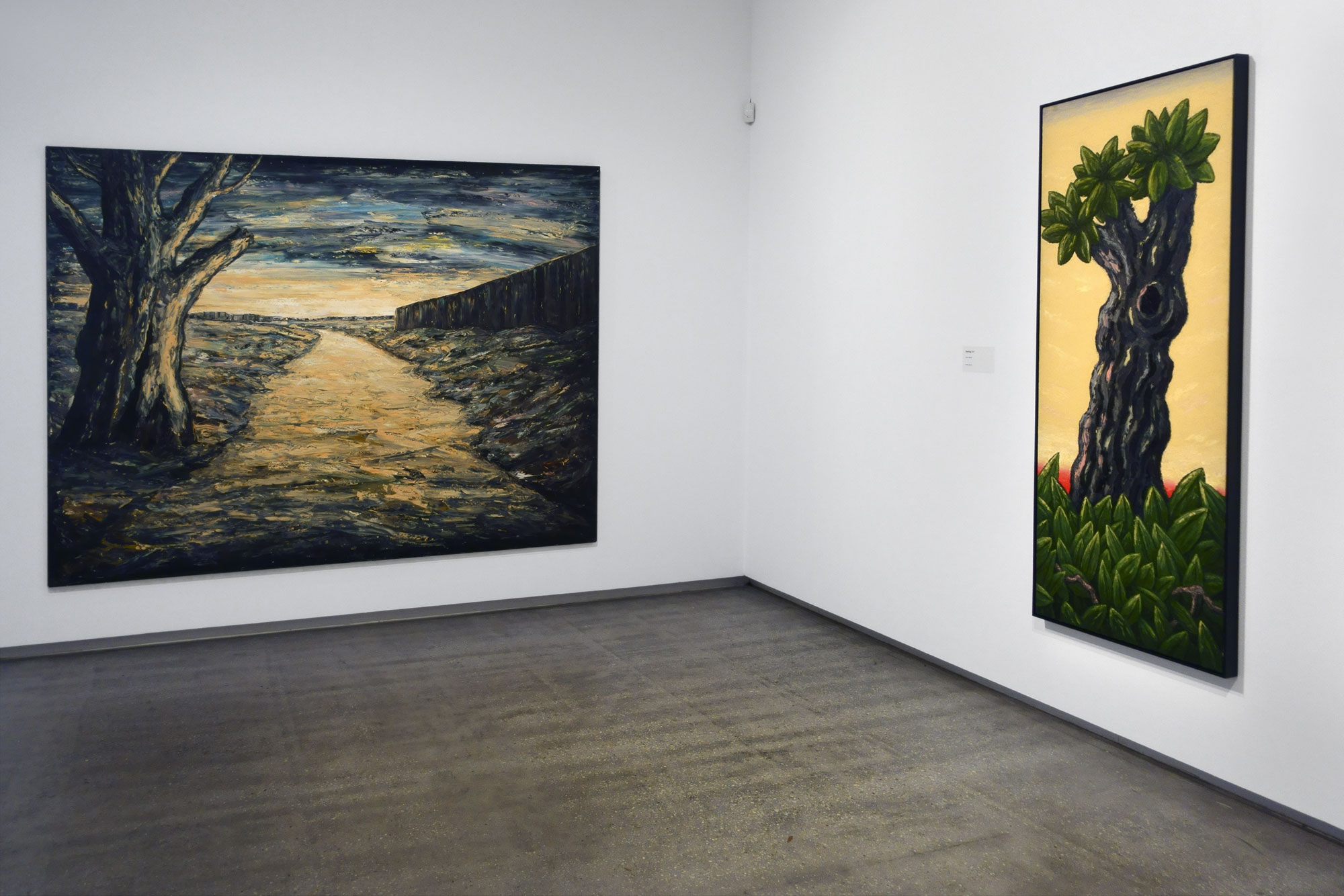
 

Installation view of the exhibition 'Peter Booth' at TarraWarra Museum of Art showing at left 'Untitled' 1998, and at right 'Painting' 2017


Installation view of the exhibition Peter Booth at TarraWarra Museum of Art showing at left Untitled 1998 (below), and at right Painting 2017 (below)
Photo: Marcus Bunyan
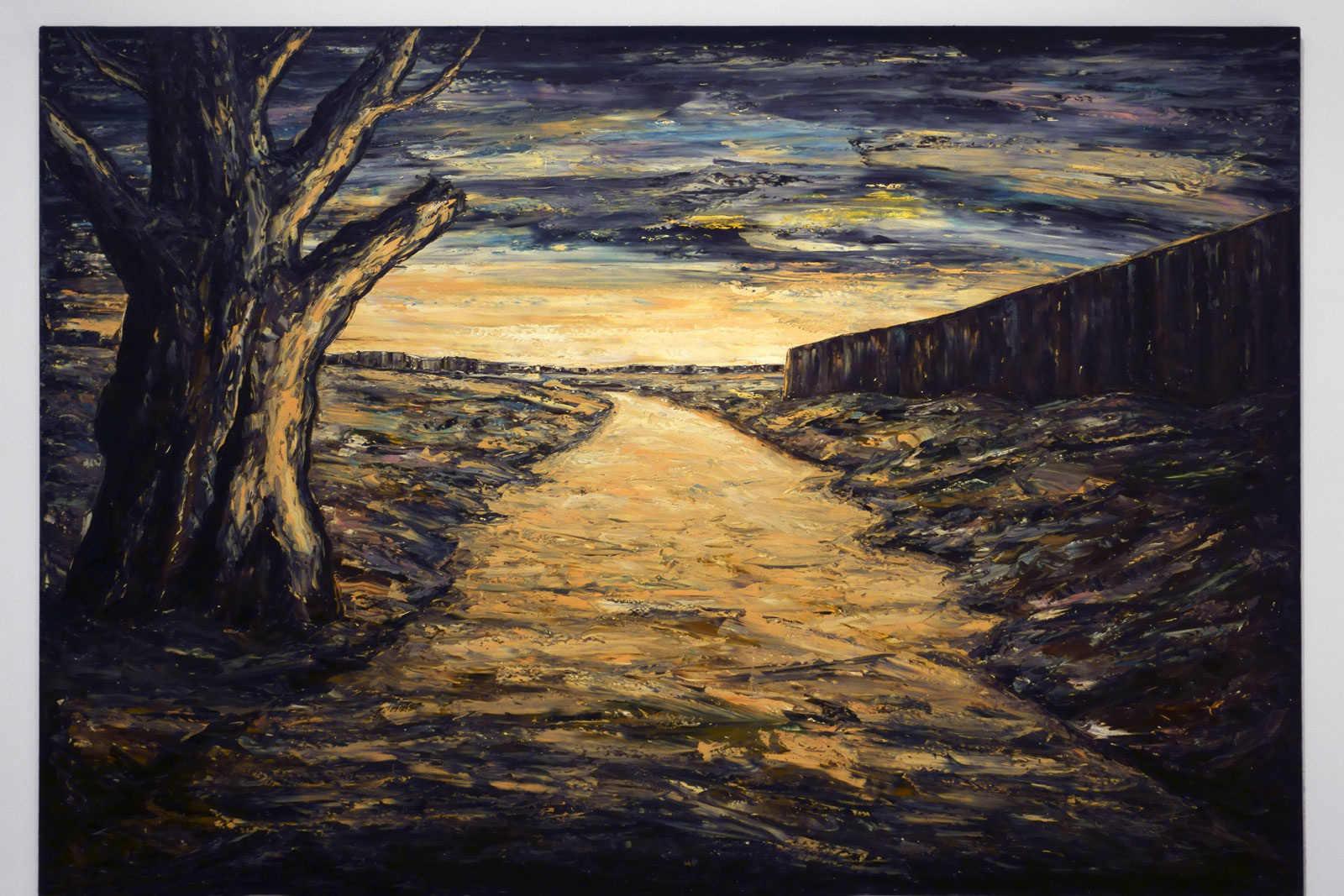
 

Peter Booth (Australian born England, b. 1940, Australia from 1958) 'Untitled' 1998


Peter Booth (Australian born England, b. 1940, Australia from 1958)
Untitled
1998
Oil on canvas
Private collection
© Peter Booth
Photo: Marcus Bunyan
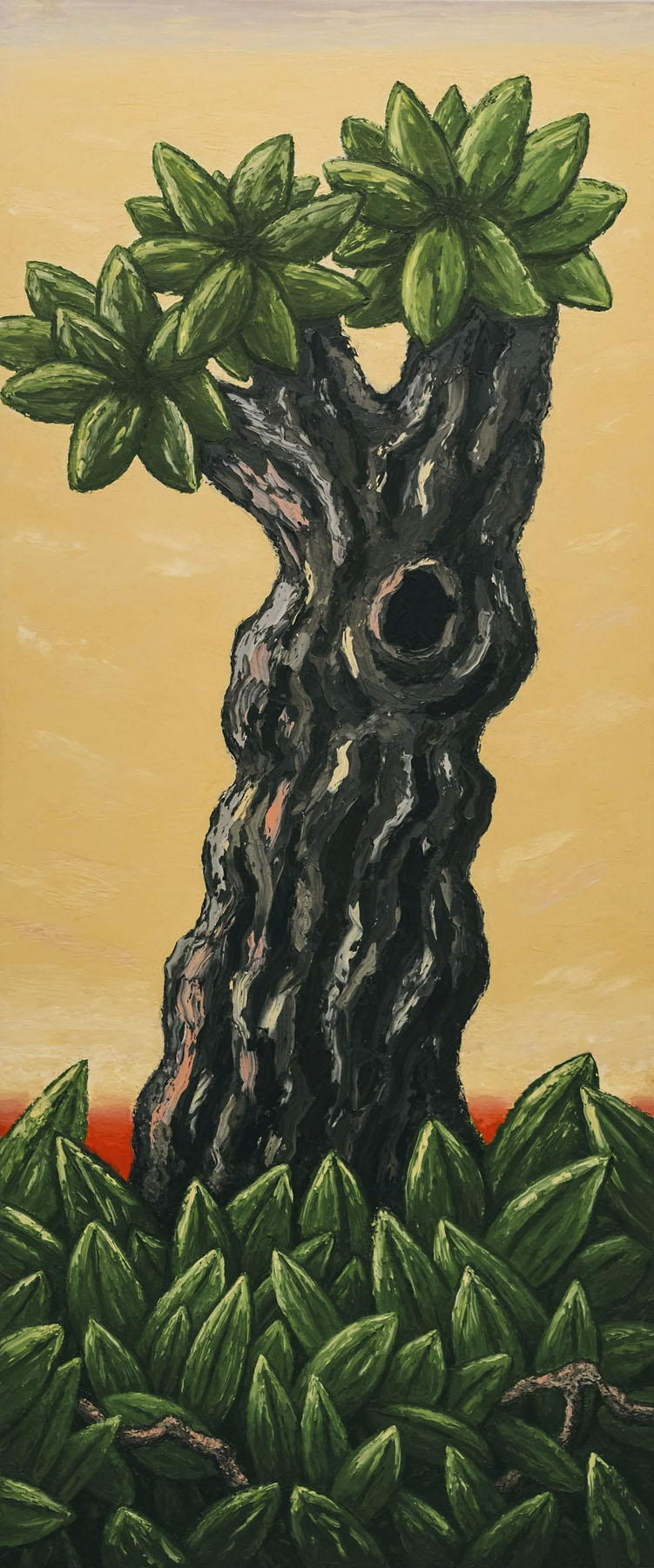
 

Peter Booth (Australian born England, b. 1940, Australia from 1958) 'Painting' 2017


Peter Booth (Australian born England, b. 1940, Australia from 1958)
Painting
2017
Oil on canvas
193.4 x 81.3cm
Courtesy of the artist and Milani Gallery, Brisbane


In Painting 2017, as the sun begins to rise over the horizon, new epicormic growth spouts from the pruned limbs of a tree; a potent symbol of resilience and renewal. Peter Booth’s ‘Garden of Eden’ paintings vividly convey his feeling for the elemental and generative qualities found in nature and his fervent empathy for other nonhuman lifeforms. ‘Everything is connected. All life comes from the same source.’

Text from the TarraWarra Museum of Art Facebook page
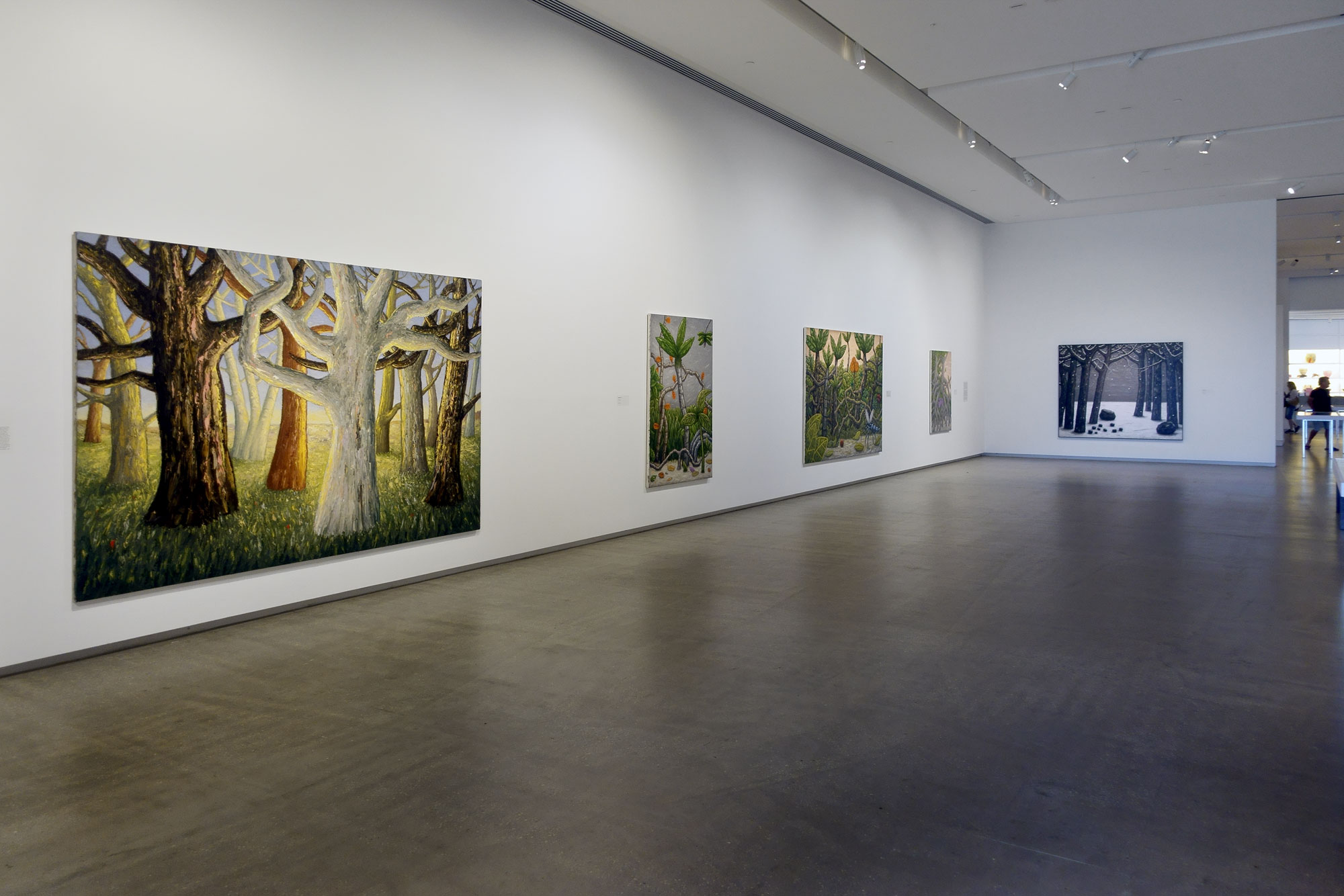
 

Installation view of the exhibition 'Peter Booth' at TarraWarra Museum of Art showing at left 'Acheron Way' 1993, at third right 'Painting' 2022, and at right 'Painting' 2014


Installation view of the exhibition Peter Booth at TarraWarra Museum of Art showing at left Acheron Way 1993, at third right Painting 2022, and at right Painting 2014 (below)
Photo: Marcus Bunyan
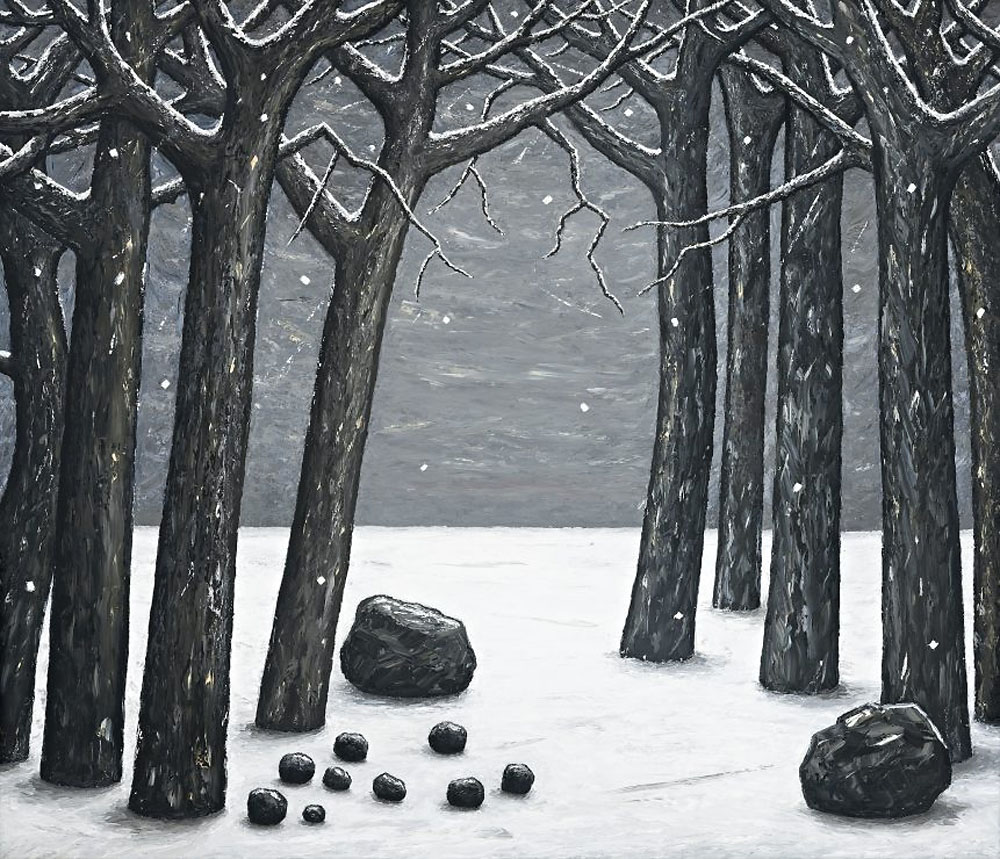
 

Peter Booth (Australian born England, b. 1940, Australia from 1958) 'Painting' 2014


Peter Booth (Australian born England, b. 1940, Australia from 1958)
Painting
2014
Oil on canvas
188 x 219cm
Private collection
© Peter Booth
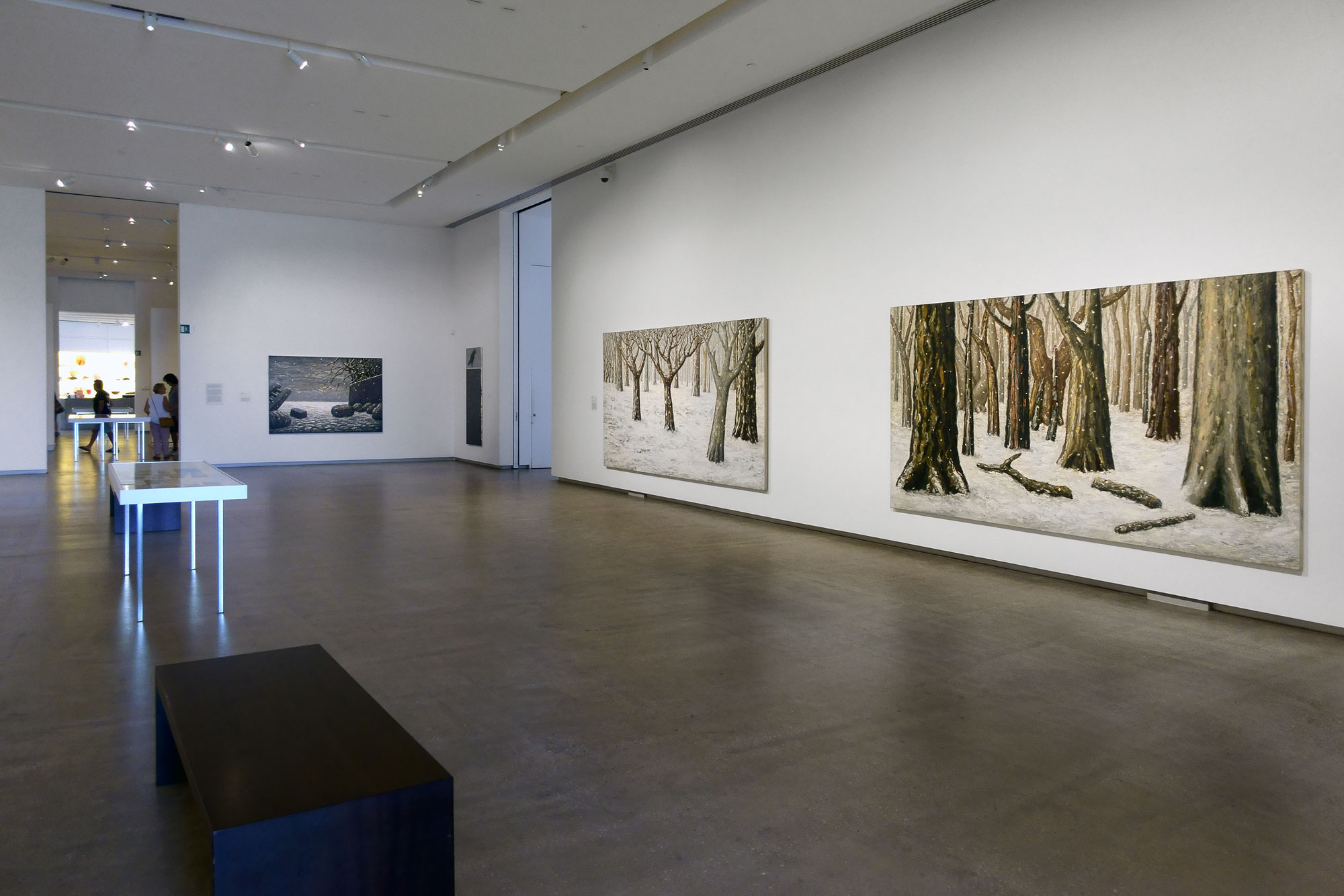
 

Installation view of the exhibition 'Peter Booth' at TarraWarra Museum of Art showing at second left 'Winter' 1993, and at right 'Mount Donna Buang' 1991


Installation view of the exhibition Peter Booth at TarraWarra Museum of Art showing at second left Winter 1993 (below), and at right Mount Donna Buang 1991 (below)
Photo: Marcus Bunyan
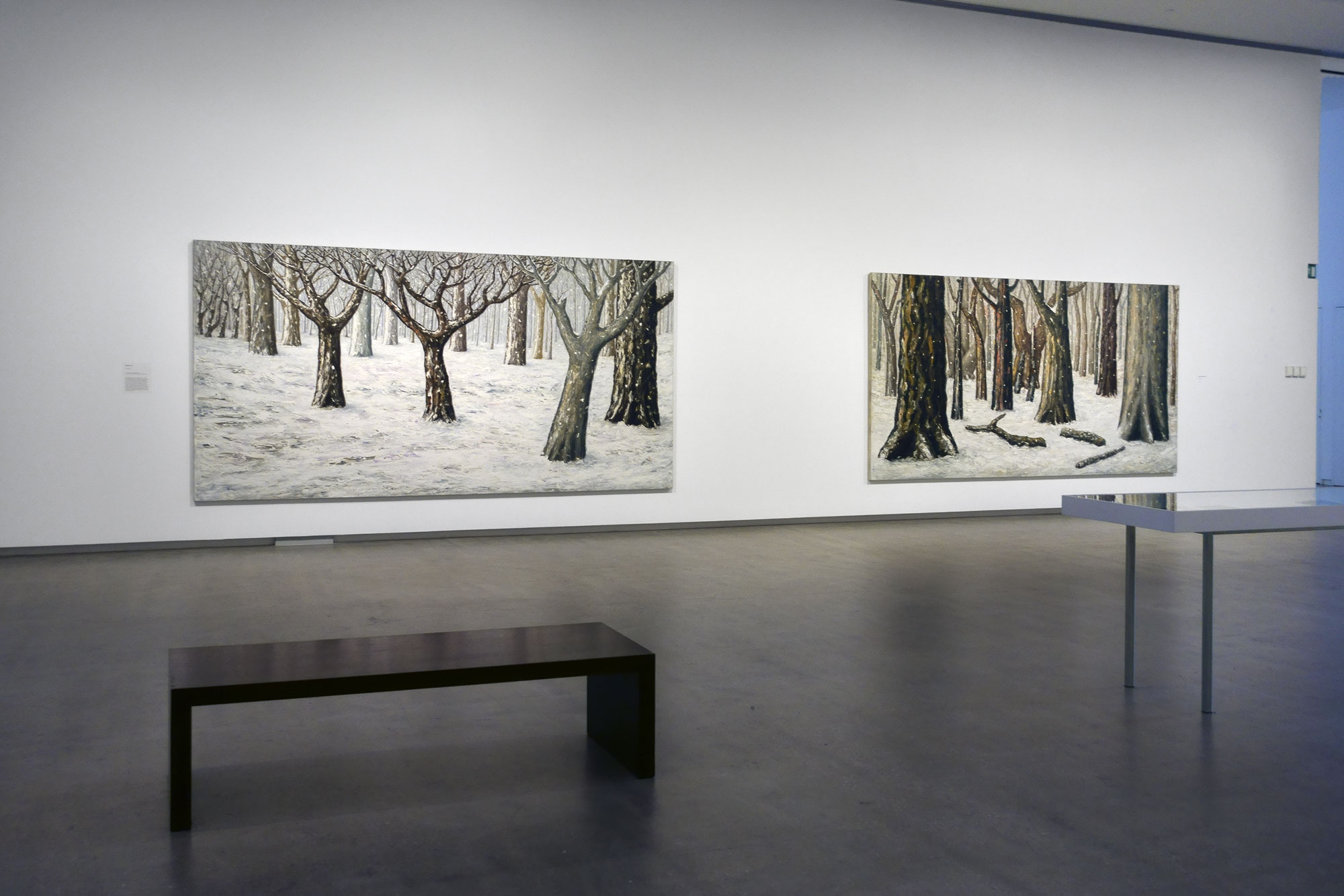
 

Installation view of the exhibition 'Peter Booth' at TarraWarra Museum of Art showing at left 'Winter' 1993, and at right 'Mount Donna Buang' 1991


Installation view of the exhibition Peter Booth at TarraWarra Museum of Art showing at left Winter 1993 (below), and at right Mount Donna Buang 1991 (below)
Photo: Marcus Bunyan
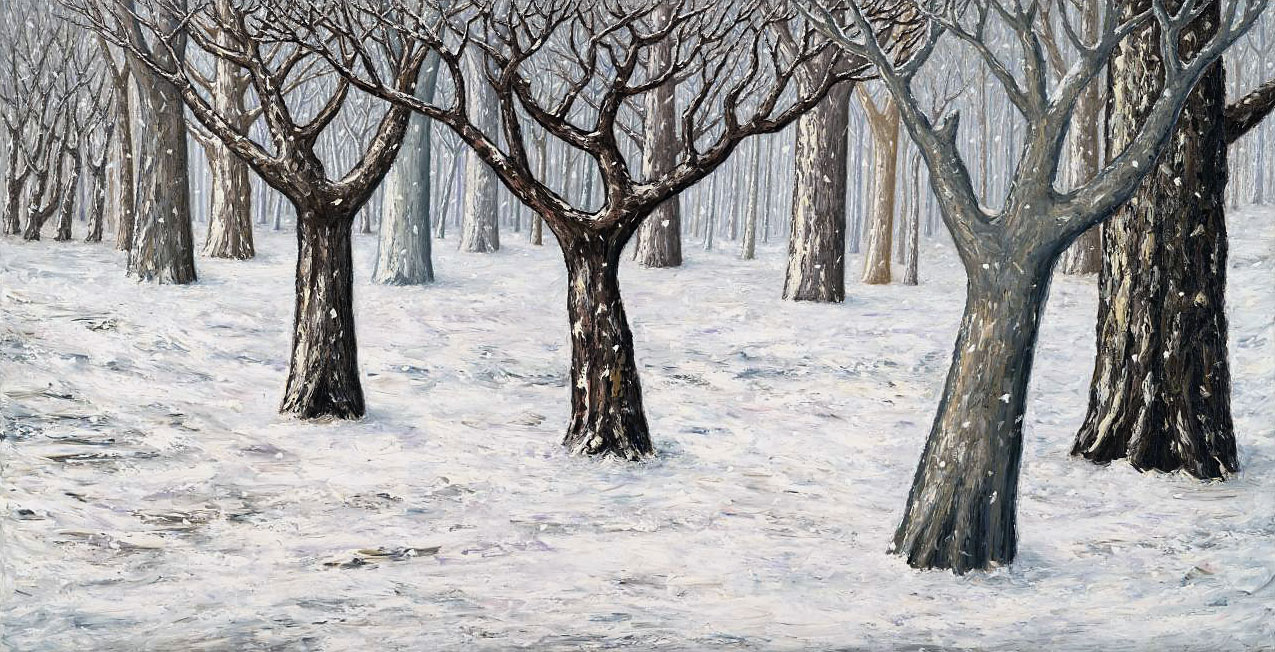
 

Peter Booth (Australian born England, b. 1940, Australia from 1958) 'Winter' 1993


Peter Booth (Australian born England, b. 1940, Australia from 1958)
Winter
1993
oil on canvas
203.4 × 396.5cm
National Gallery of Victoria, Melbourne
Presented by the National Gallery Women’s Association, 2002
© Peter Booth


In discussing Winter when it was first exhibited in 1994, Booth revealed: it’s about my childhood, about taking walks with my brothers in the woods in Yorkshire. Triggered by a recent return to Sheffield, this memory is transformed into a richly textured landscape of open forest which has been stilled and silenced by a thick blanket of snow. As the artist later revealed, his younger twin brothers died in tragic circumstances adding particular poignancy to this painting and suggesting that the two very similar trees which occupy the centre of the work, could be seen as symbolic representations of his siblings. In this light, Winter becomes a powerful and deeply personal expression of remembrance and cathartic release.

Wall text from the exhibition
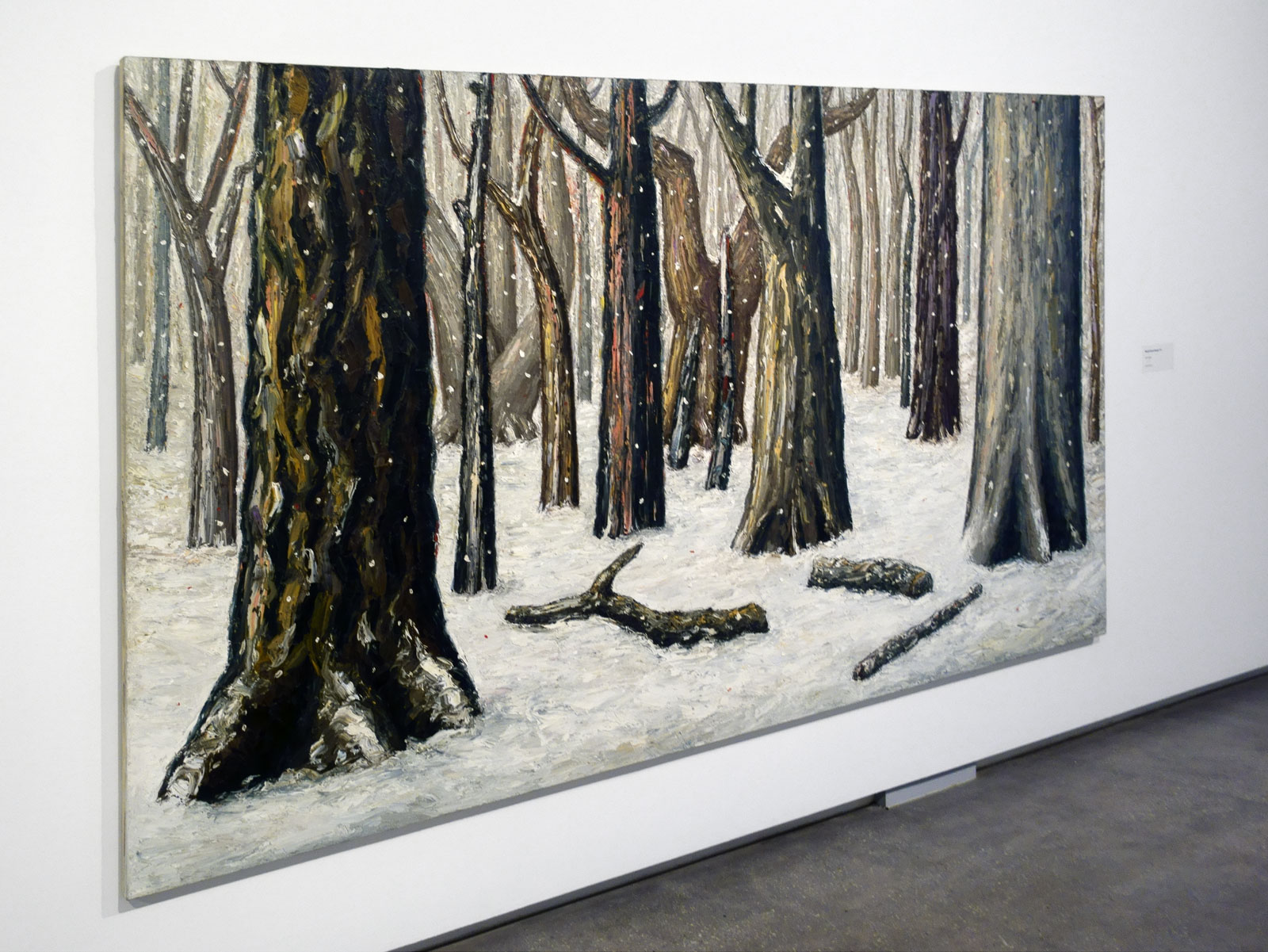
 

Peter Booth (Australian born England, b. 1940, Australia from 1958) 'Mount Donna Buang' 1991 (installation view)


Peter Booth (Australian born England, b. 1940, Australia from 1958)
Mount Donna Buang (installation view)
1991
Oil on canvas
Private collection
© Peter Booth
Photo: Marcus Bunyan
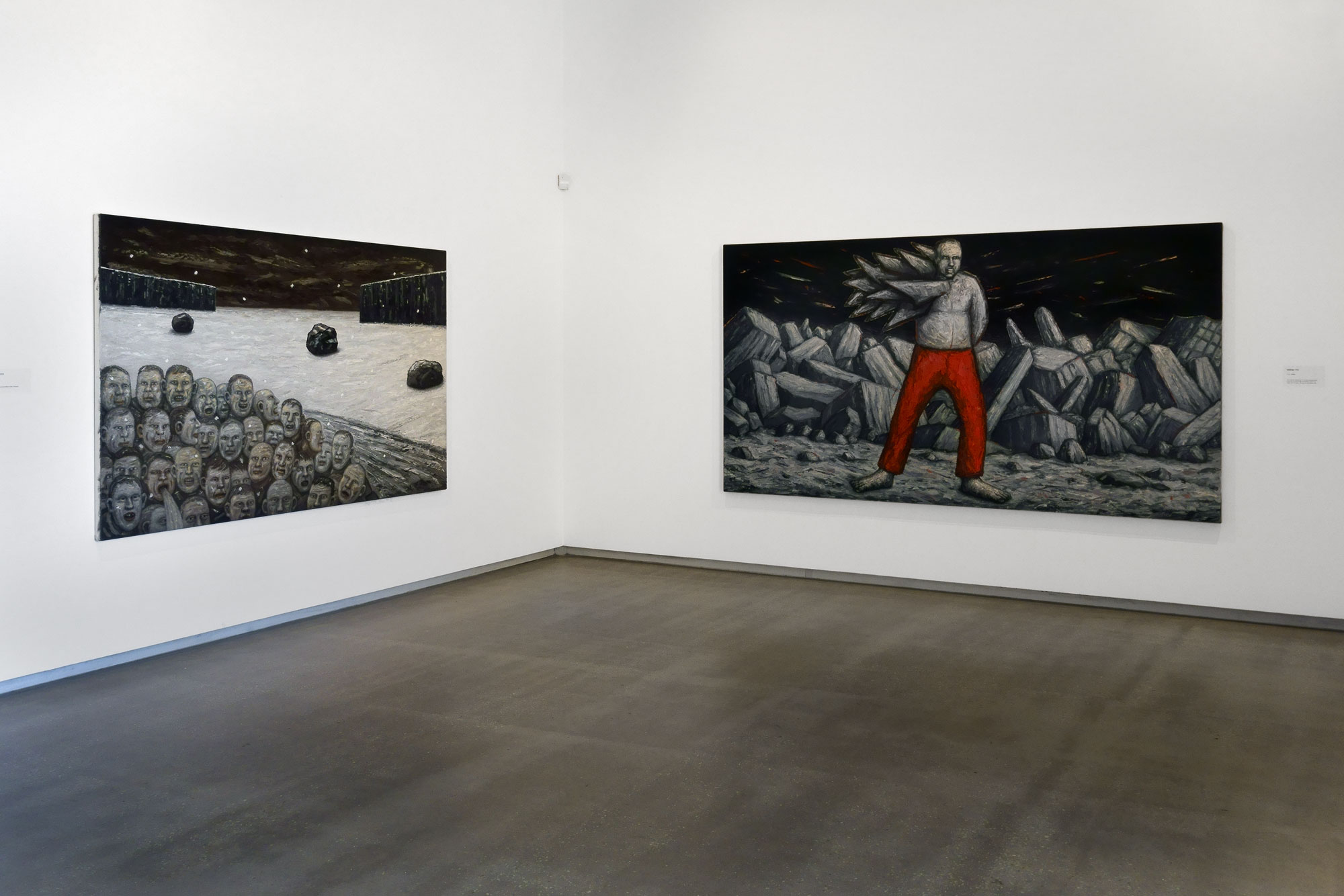
 

Installation view of the exhibition 'Peter Booth' at TarraWarra Museum of Art showing at left 'Painting' 2018, and at right 'Untitled' 1995


Installation view of the exhibition Peter Booth at TarraWarra Museum of Art showing at left Painting 2018 (below), and at right Untitled 1995 (below)
Photo: Marcus Bunyan
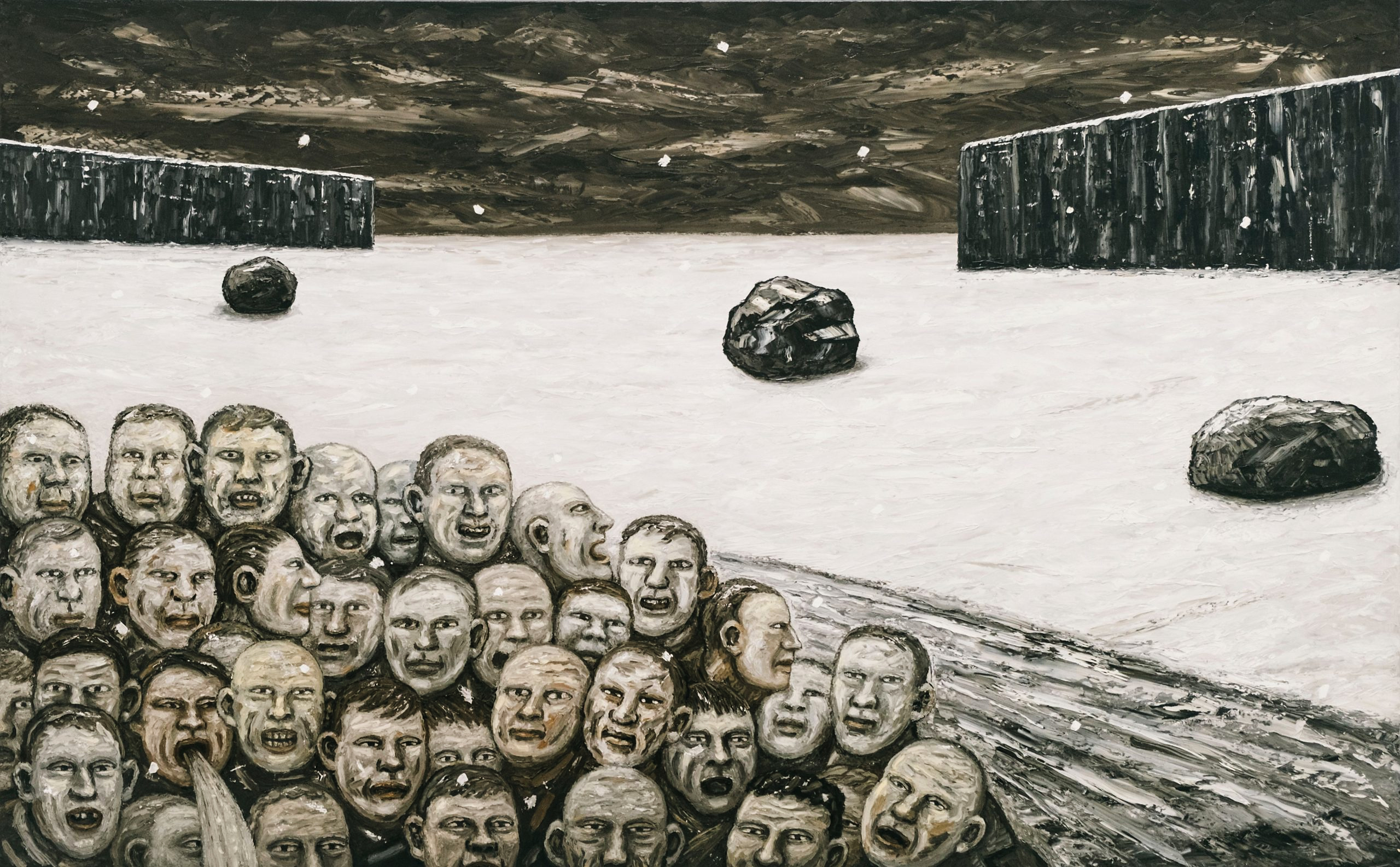
 

Peter Booth (Australian, b. 1940) 'Painting' 2018


Peter Booth (Australian, b. 1940)
Painting
2018
Oil on canvas
152.5 x 243.8cm
Courtesy of the artist and Milani Gallery, Brisbane
© Peter Booth
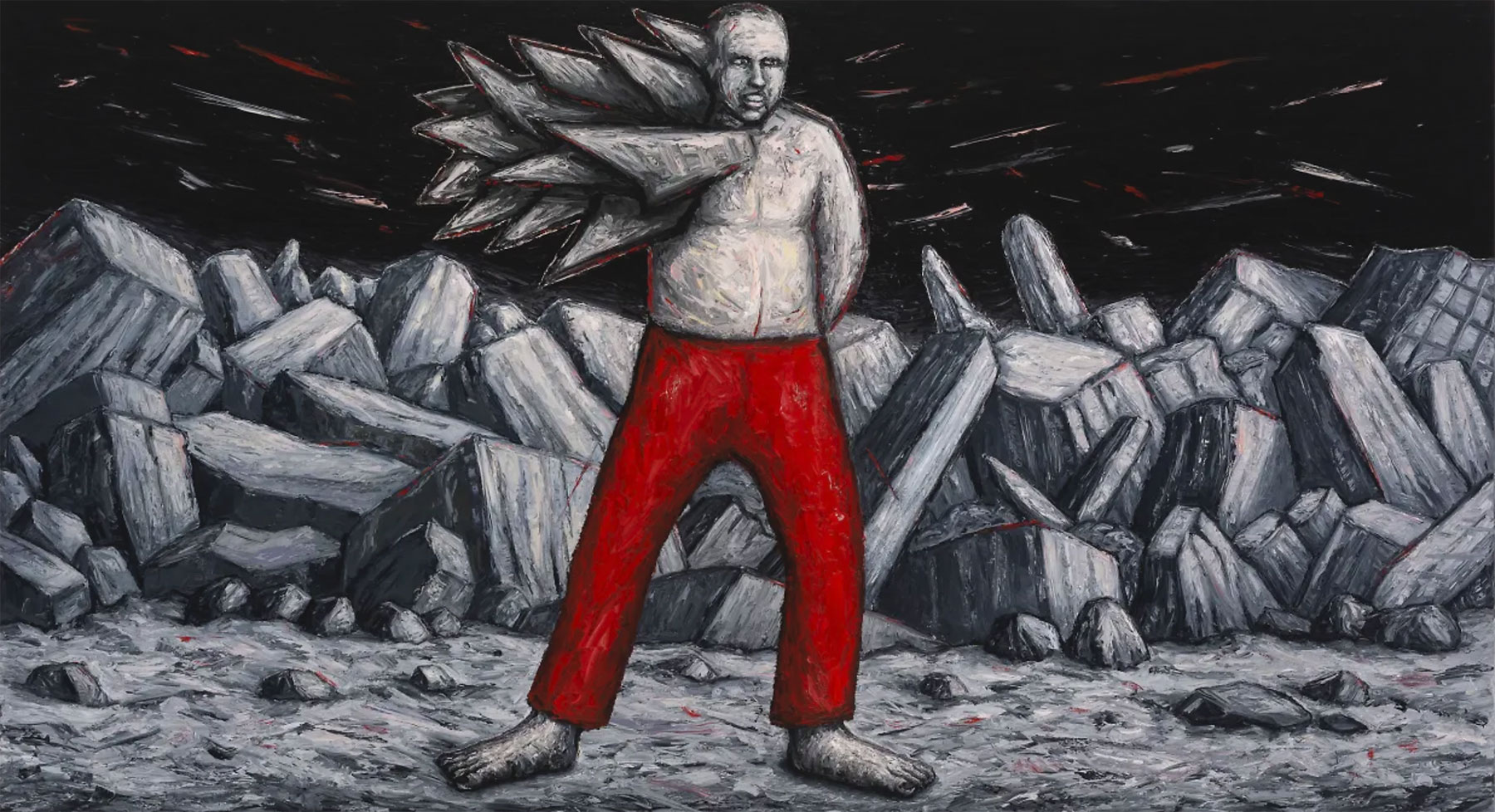
 

Peter Booth (Australian, b. 1940) 'Untitled' 1995


Peter Booth (Australian, b. 1940)
Untitled
1995
Oil on canvas
167.5 x 305cm
The University of Melbourne Art Collection, Michael Buxton Collection
© Peter Booth
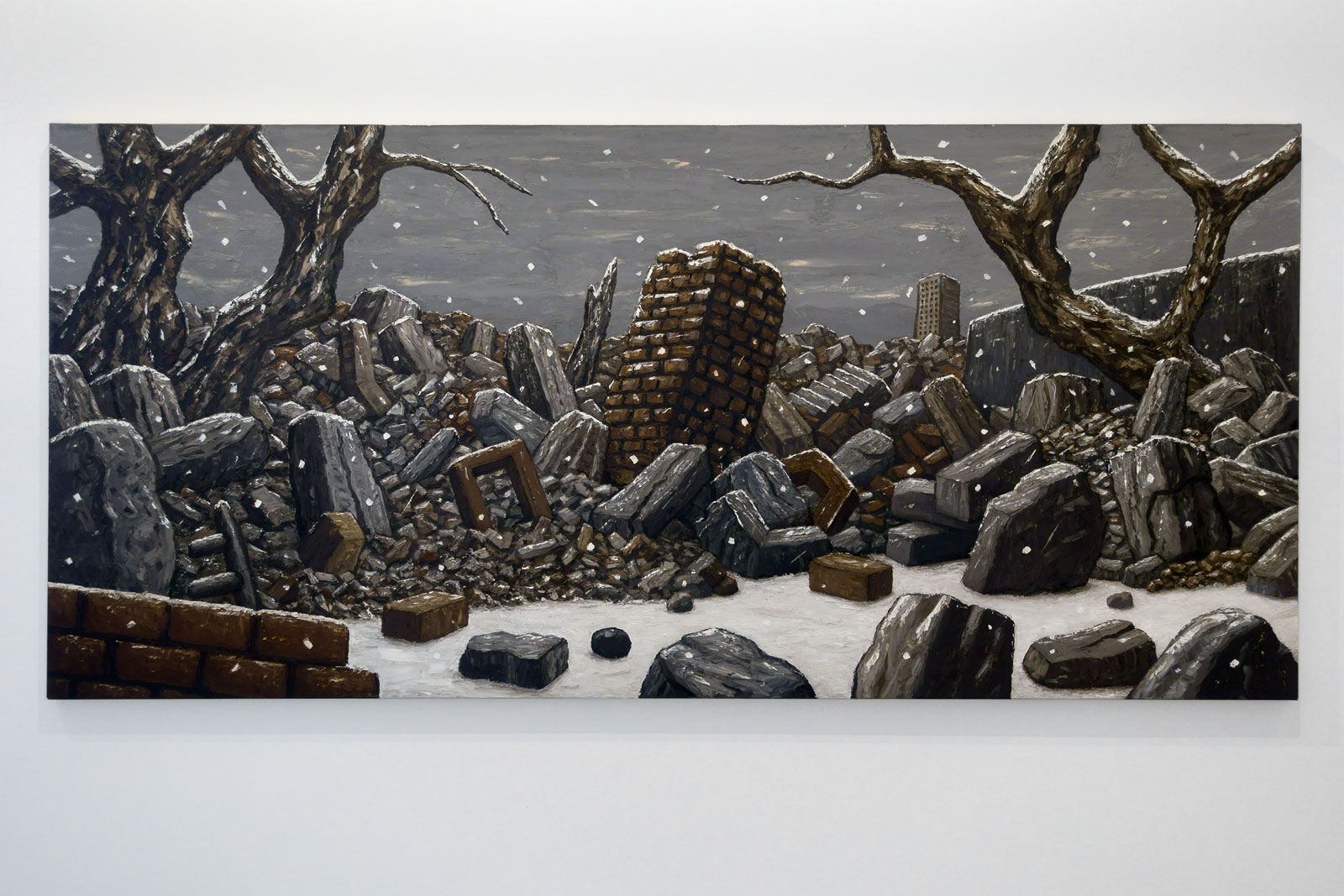
 

Peter Booth (Australian, b. 1940) 'Painting' 2020 (installation view)


Peter Booth (Australian born England, b. 1940, Australia from 1958)
Painting (installation view)
2020
Oil on canvas
Courtesy of the artist and Milani Gallery, Brisbane
© Peter Booth
Photo: Marcus Bunyan
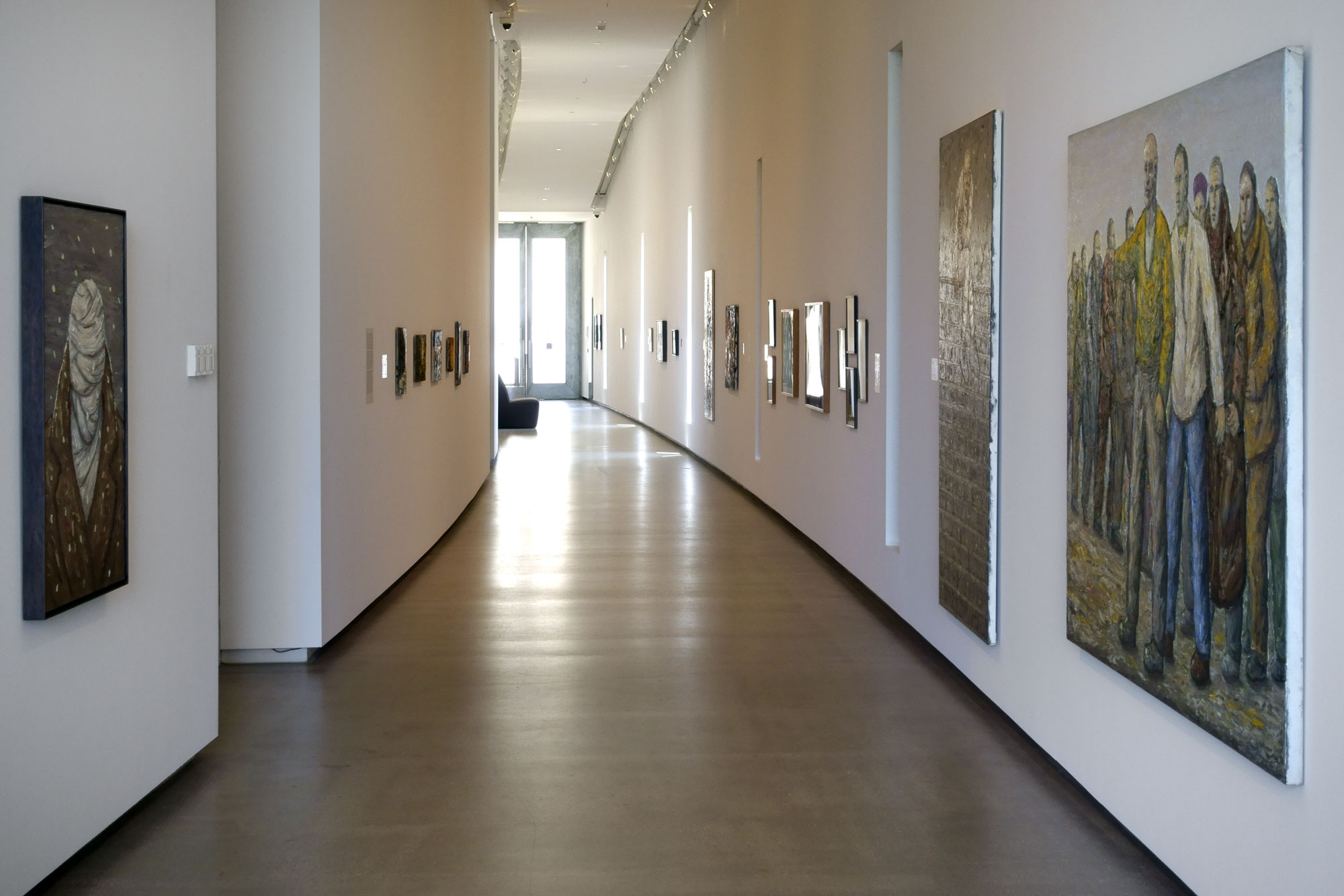
 

Installation view of the exhibition 'Peter Booth' at TarraWarra Museum of Art showing at left 'Painting (Figure with bandaged head)' 2004, and at right 'Painting' 1998


Installation view of the exhibition Peter Booth at TarraWarra Museum of Art showing at left Painting (Figure with bandaged head) 2004 (below), and at right Painting 1998 (below)
Photo: Marcus Bunyan
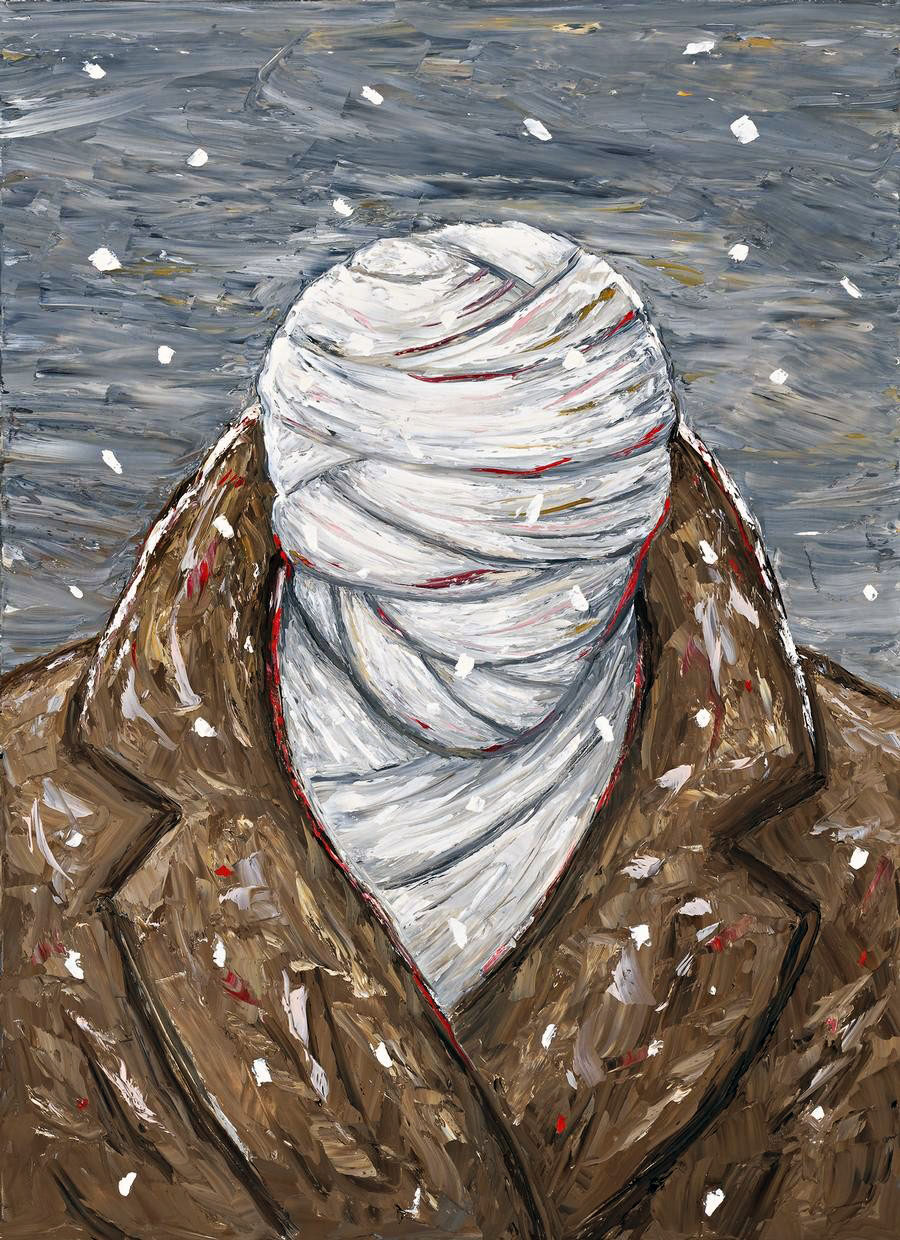
 

Peter Booth (Australian born England, b. 1940, Australia from 1958) 'Painting (Figure with bandaged head)' 2004


Peter Booth (Australian born England, b. 1940, Australia from 1958)
Painting (Figure with bandaged head)
2004
Oil on canvas
© Peter Booth


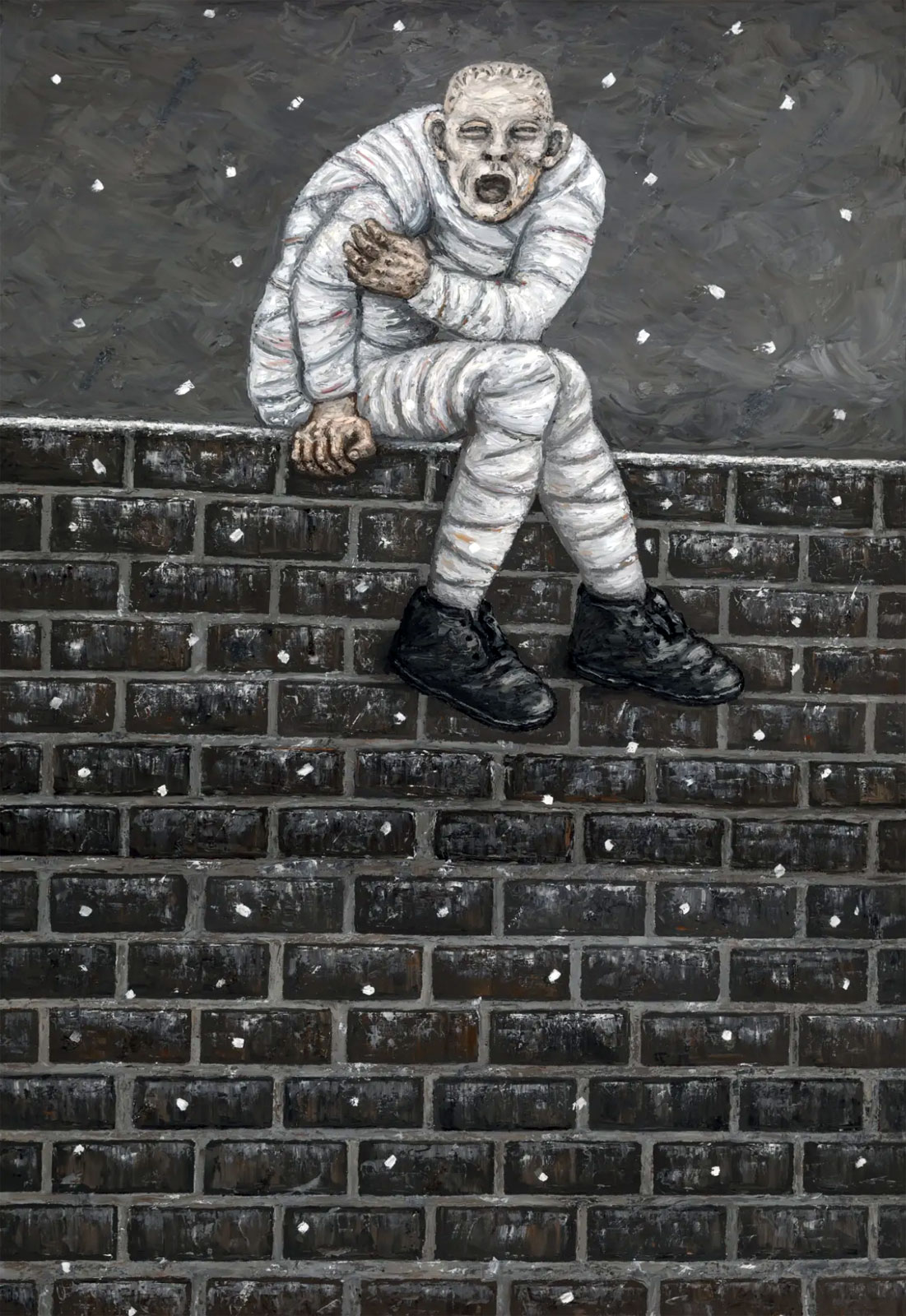
The strength and power of Painting (Man with Bandaged Head), 2004 … is palpable. But like so many of Booth’s images, formulated over years of development, the strength lies not so much in the initial ‘shock’, but with the ensuing waves of other possible readings it evokes…

The tension between our first confrontation with the bandaged figure and the subsequent sensations of pathos for, even some recognition of sensitivity within, the character makes this such a successful work. And as we look upon the painting, venturing into the space behind the bandages, the focus of the work internalises: in reading the mind of the figure we are offered a portal to see within ourselves.

This notion of the mirror to one’s soul, with themes of the nature of power and frailty, desire and control, so deftly captured within Painting (Man with Bandaged Head), 2004 adds a further dimension to the history of this particular painting.

Damian Hackett. “Important Australian + International Fine Art catalogue text,” on the Deutsche and Hackett website 25 November 2009 [Online] Cited 02/02/2023
 

Peter Booth (Australian, b. 1940) 'Painting' 1998 (installation view)


Peter Booth (Australian, b. 1940)
Painting (installation view)
1998
Oil on canvas
Private collection
Courtesy of Smith & Singer Fine Art
© Peter Booth
Photo: Marcus Bunyan
 

Peter Booth (Australian, b. 1940) 'Painting' 1998 (installation view detail)


Peter Booth (Australian, b. 1940)
Painting (installation view detail)
1998
Oil on canvas
Private collection
Courtesy of Smith & Singer Fine Art
© Peter Booth
Photo: Marcus Bunyan
 

Peter Booth (Australian, b. 1940) 'Painting' 2022


Peter Booth (Australian, b. 1940)
Painting
2022
Oil on canvas
Courtesy of the artist and Milani Gallery, Brisbane
© Peter Booth
 

Peter Booth (Australian, b. 1940) 'Painting' 1989


Peter Booth (Australian, b. 1940)
Painting
1989
Oil on canvas
167.4 x 95.9cm
Collection of Jeff Hall and Sharon Grey
© Peter Booth
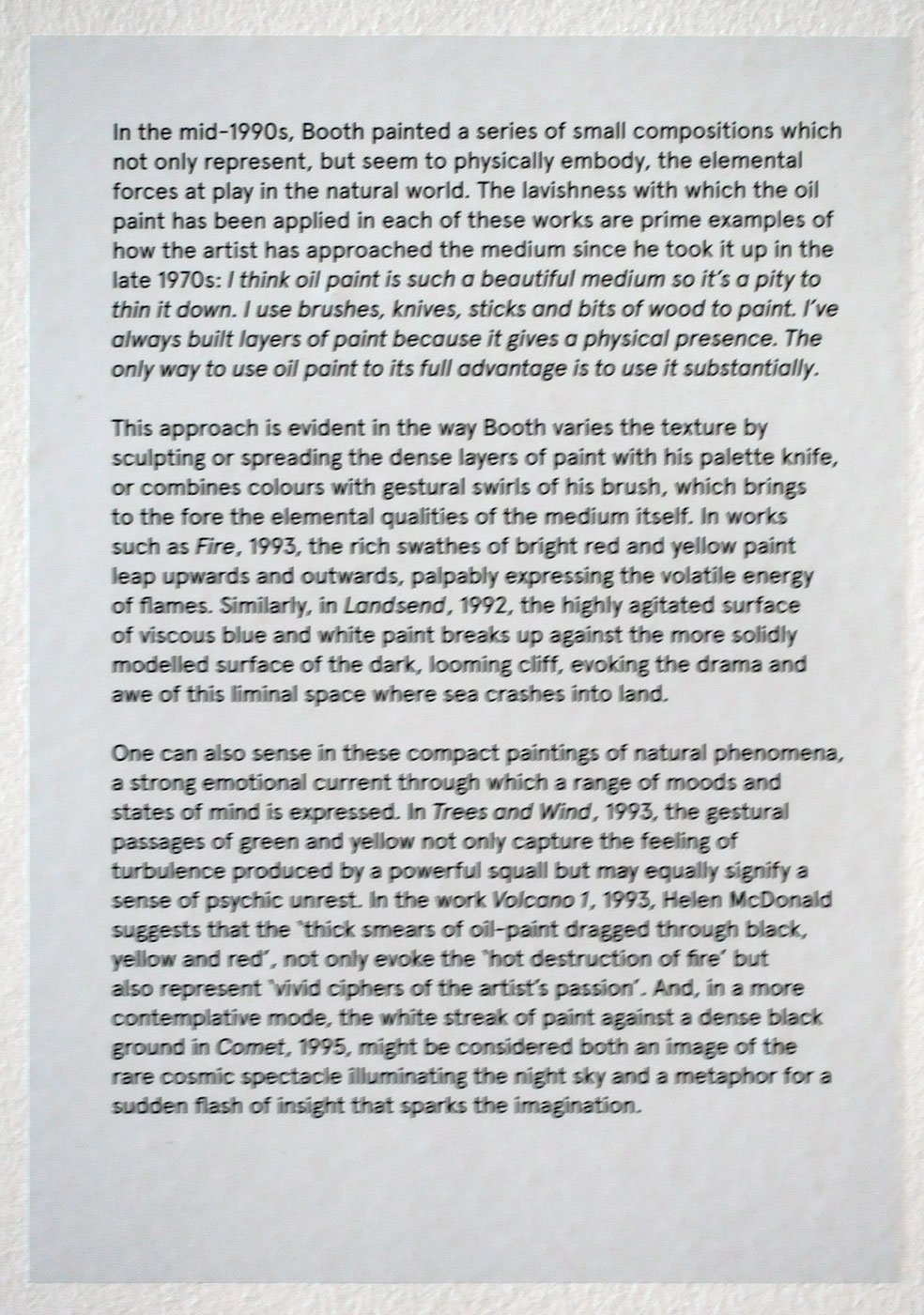
 

Wall text from the exhibition 'Peter Booth' at TarraWarra Museum of Art
 

Wall text from the exhibition


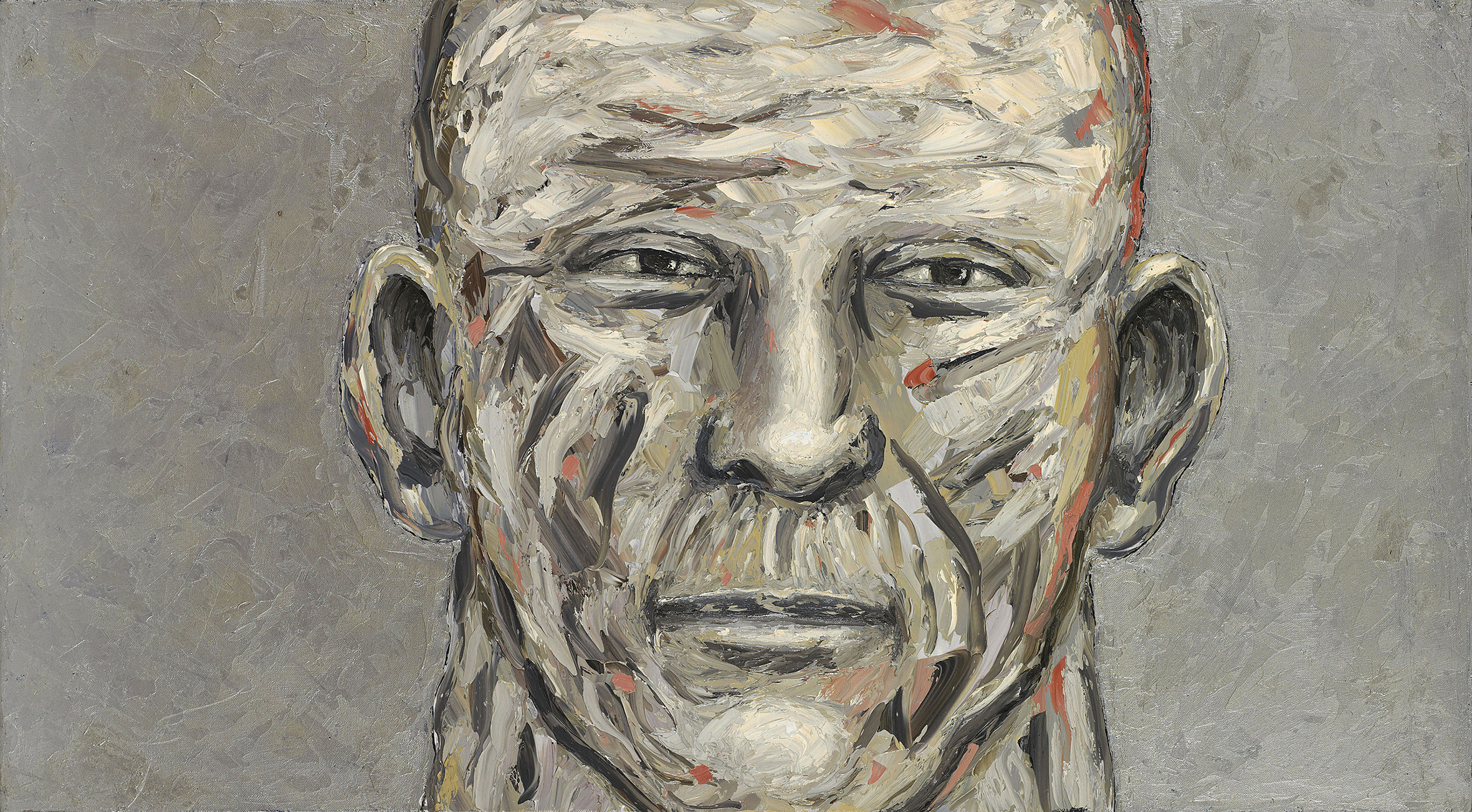
Peter Booth (Australian, b. 1940) 'Untitled' 2007


Peter Booth (Australian, b. 1940)
Untitled
2007
Oil on canvas
56.5 x 111cm
Private collection
Image courtesy of Bonhams Australia
© Peter Booth


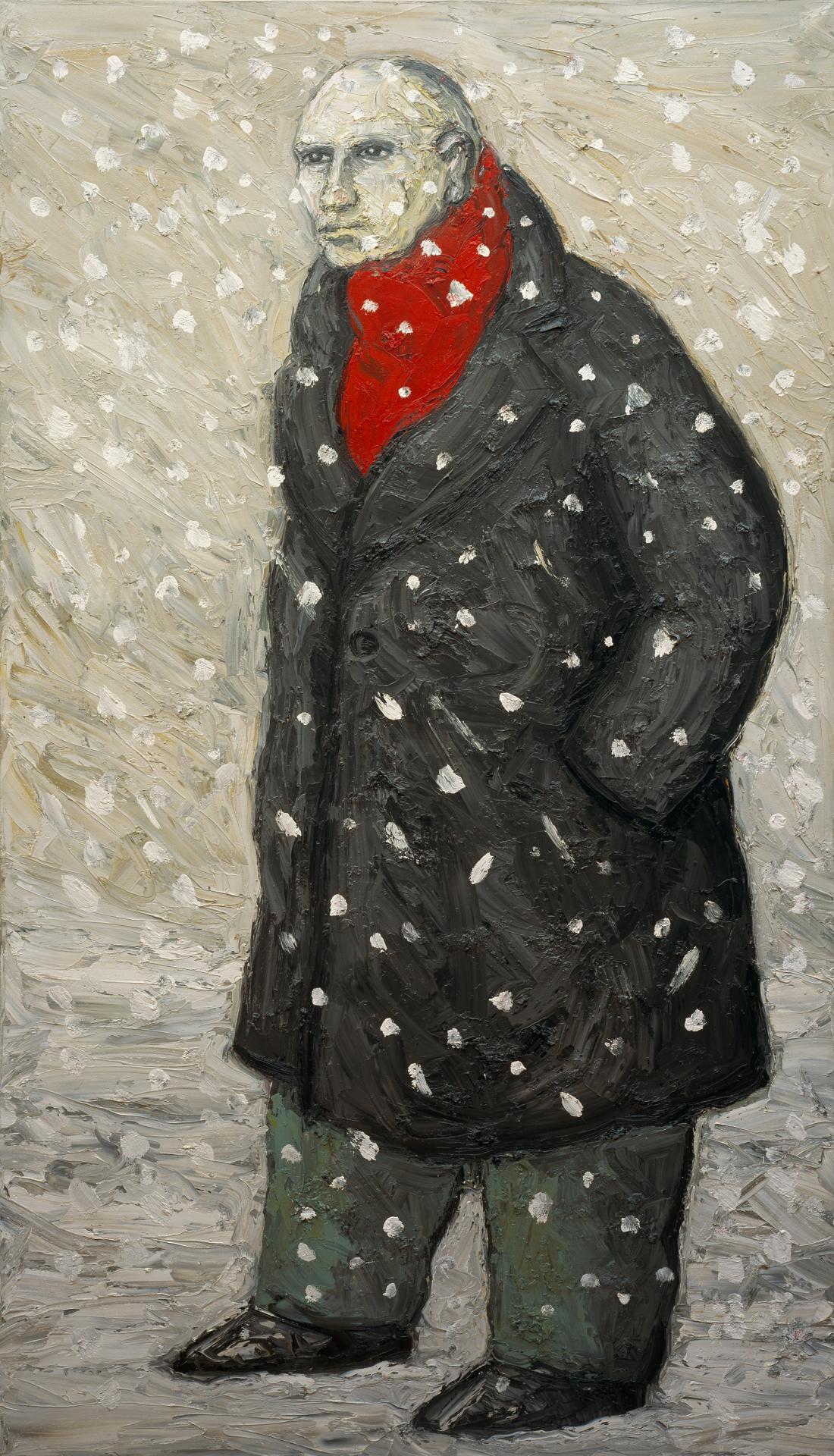
The figure in Untitled, 2007 has averted eyes and stoically sealed lips, suggesting that he has endured great hardship. This feeling is amplified by the rich tonal contrasts and paint texture built with swathes of impasto which transform his wizened face into a blustery landscape. Having taken the troubles and turmoil of the world into himself, this austere figure is imbued with a powerful sense of inner fortitude and resilience.

Text from the TarraWarra Museum of Art Facebook page
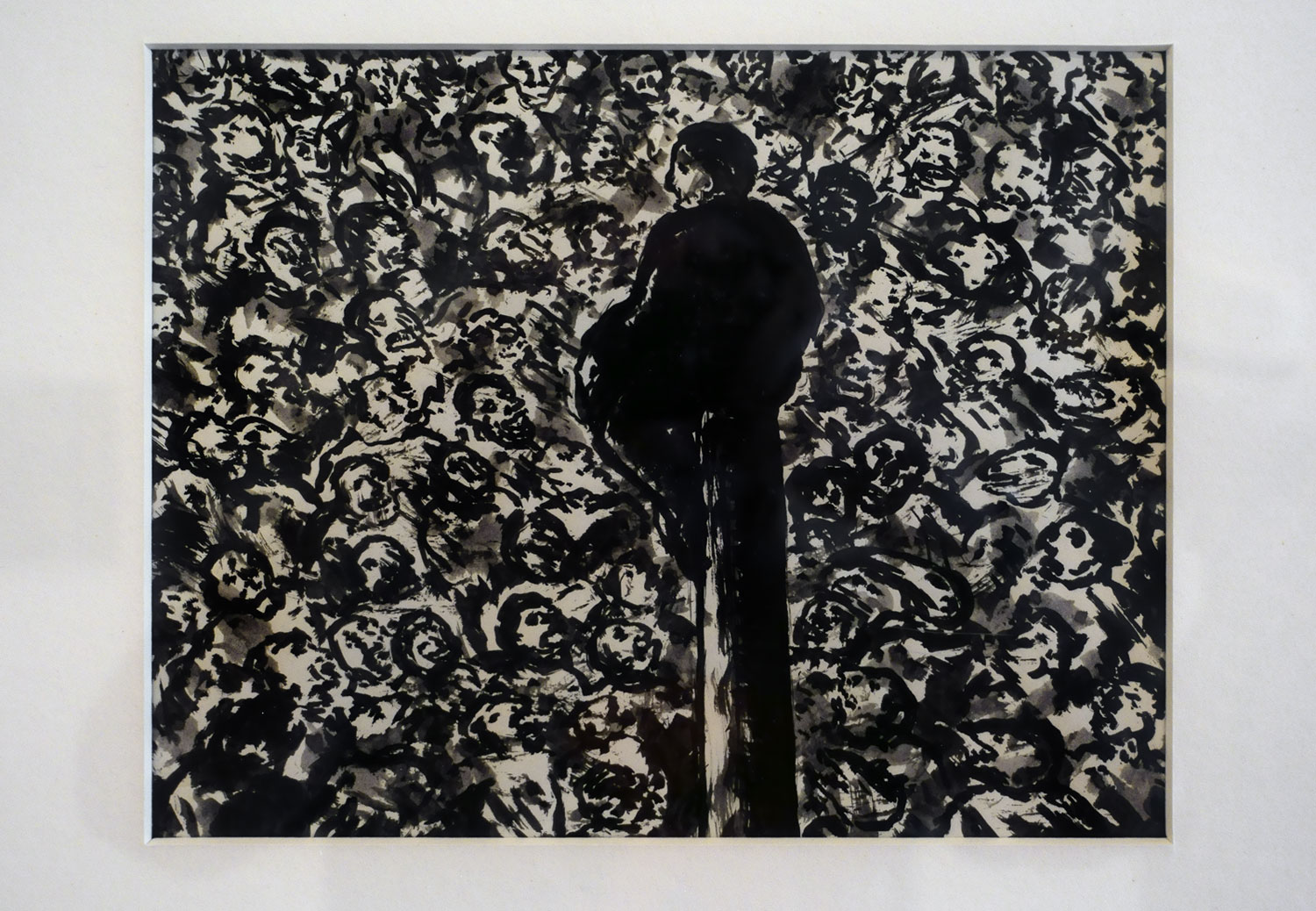
 

Peter Booth (Australian, b. 1940) 'Drawing (Pole Sitter Before a Crowd)' 1981 (installation view)


Peter Booth (Australian, b. 1940)
Drawing (Pole Sitter Before a Crowd) (installation view)
1981
Brush and ink and ink wash on paper
Private Collection
© Peter Booth
Photo: Marcus Bunyan


TarraWarra Museum of Art
Wurundjeri Country
313 Healesville-Yarra Glen Road
Healesville VIC 3777 Australia
Phone: +61 3 5957 3100

Opening hours:
Tues – Sun 11am – 5pm
Open all public holidays except Christmas Day
TarraWarra Museum of Art website

LIKE ART BLART ON FACEBOOK

Back to top

Exhibition: ‘Jan Groover. Laboratory of Forms’ at the Fondation Henri Cartier-Bresson, Paris

Exhibition dates: 8th November 2022 – 12th February 2023

Exhibition curators: Tatyana Franck, President of the French Institute Alliance Française in New York, former director of Photo Elysée Emilie and Delcambre Hirsch Agnès Sire, Artistic director, for the Paris version


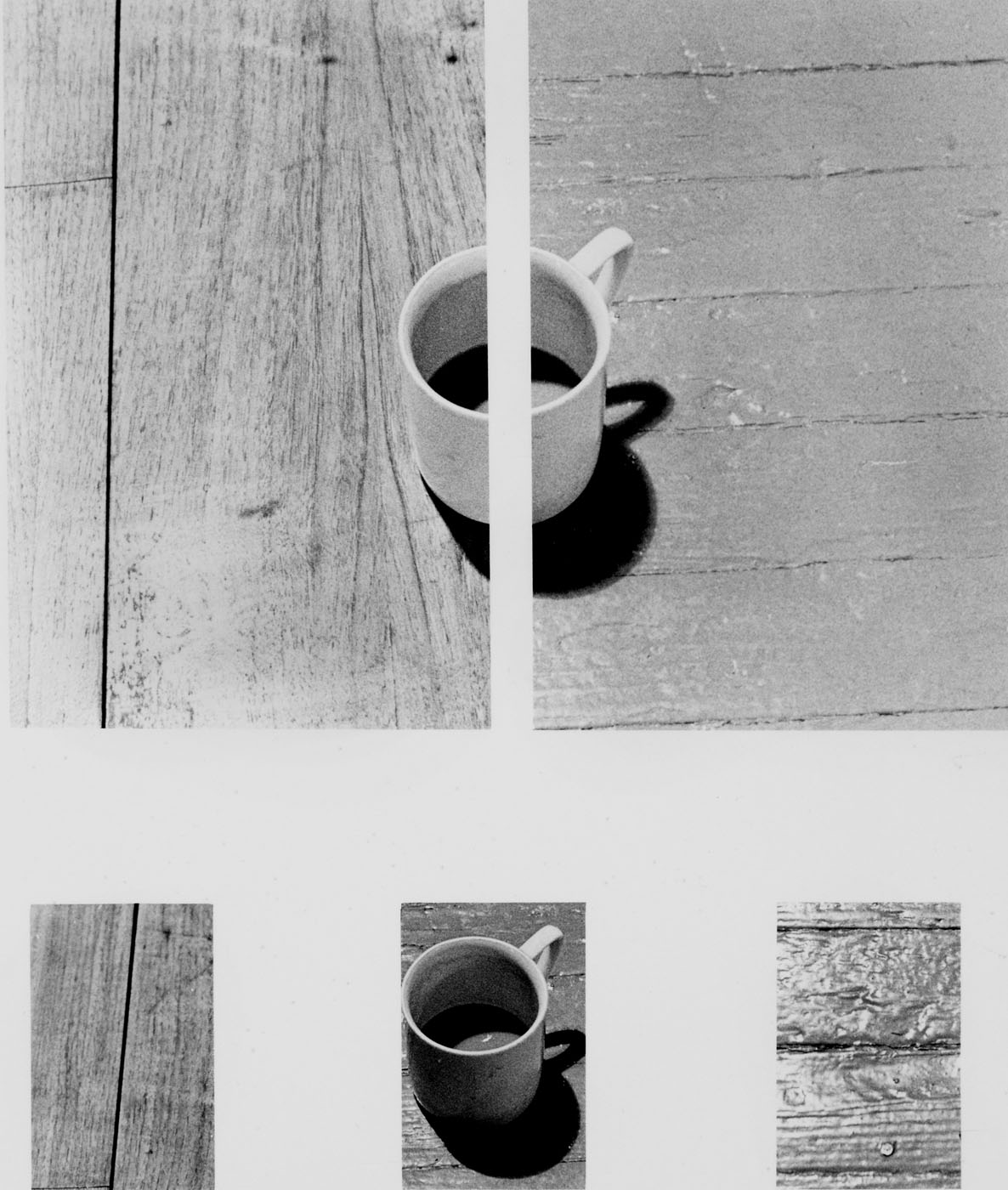
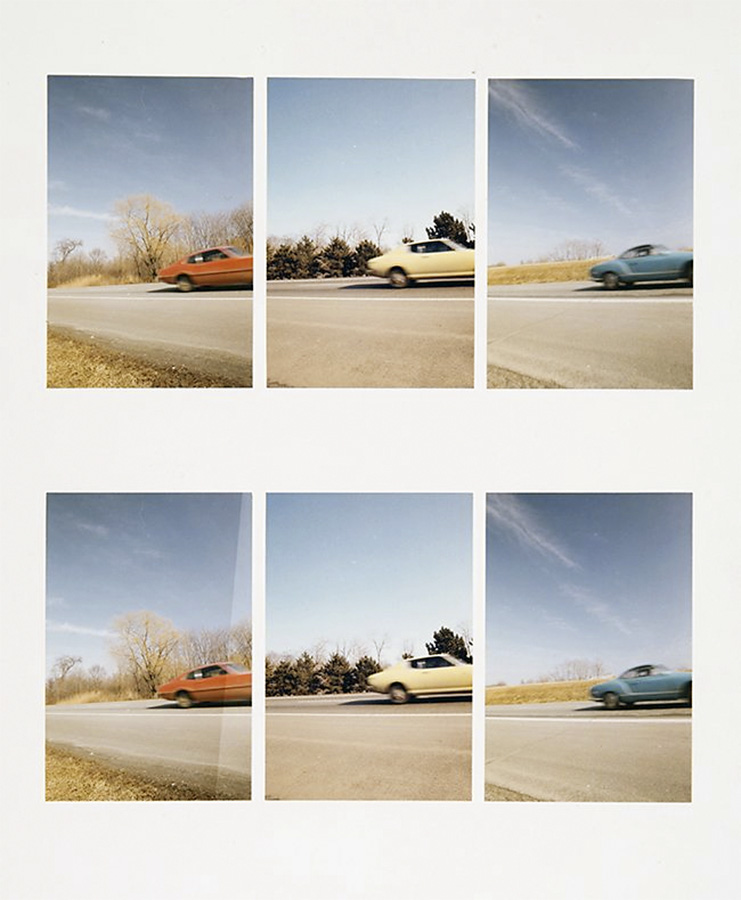
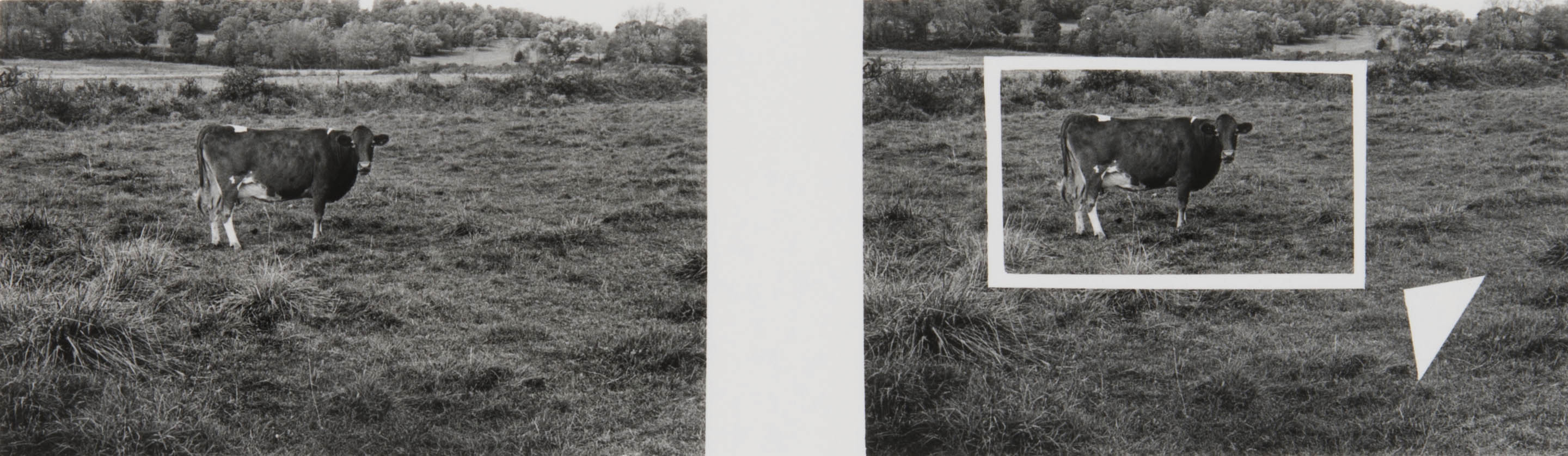
Jan Groover (American, 1943-2012) 'Untitled' c. 1971 from the exhibition 'Jan Groover. Laboratory of Forms' at the Fondation Henri Cartier-Bresson, Paris, Nov 2022 - Feb 2023


Jan Groover (American, 1943-2012)
Untitled
c. 1971
Diptych
© Photo Elysée – Fonds Jan Groove


Formalism is everything

Well no. No it isn’t. Groover is not one of my favourite photographers but I acknowledge how she broadened the definition of what a photograph can be. But her photographs are too clinical for my taste. They leave me cold. I like a little serendipity and spirit in my photography…

A painter before she became a photographer.

All images are constructions.

She composed her photographs as artists compose their paintings.

She wanted to “reinvent everything”.

Still life were influenced by Edward Weston, Paul Outerbridge and Alfred Stieglitz.

The reality is in the detail.

Nothing was left to chance. Every photograph had a plan:

“Spotlight on the house sink: who would have thought that so much beauty was nestled there? Reflection of a fork, transparency of a glass, sliding of water, damaged enamel, burning of coffee: under its tight framing, effects and materials are intertwined. Nothing is left to chance, each arrangement is first sketched out in pencil, tested with Polaroid.”1


concept [of] space

elements [of] reality

perception [of] image

photographs [of] objects


Dr Marcus Bunyan


1/ Emmanuelle Lequeux. “Jan Groover, l’abstraction du réel,” on the Le Monde website 18 September 2019 [Online] Cited 10/01/2022. Translated from the French by Google Translate


Many thankx to the Fondation Henri Cartier-Bresson for allowing me to publish the photographs in the posting. Please click on the photographs for a larger version of the image.


“And then one day I had the thought that I didn’t want to have to make everything up, so I quit painting. Then I found out that you have to make everything up anyway.”


Jan Groover, in Pure invention: The Tabletop Still Life, 1990


“I had some wild concept that you could change space – which you can… If the thing doesn’t look like the way I want it to look, I’ll try something else.”


Jan Groover, 1994


Interview with Tatyana Franck around the Jan Groover. Laboratory of Forms exhibition

A singular artist, Jan Groover (1943-2012), of American origin, had a considerable impact on the recognition of colour photography. This exhibition, the first retrospective to be dedicated to her since her death in 2012, shows the evolution of her work, from her original polyptychs to the still lifes that she would produce throughout her life. Thanks to the donation of Jan Groover’s archives to Photo Elysée (Lausanne) in 2017, this exhibition, presented in 2019 in Lausanne, pays tribute to an artist who has constantly renewed herself, thus becoming part of the history of photography.


Jan Groover (American, 1943-2012) 'Untitled' c. 1971 from the exhibition 'Jan Groover. Laboratory of Forms' at the Fondation Henri Cartier-Bresson, Paris, Nov 2022 - Feb 2023


Jan Groover (American, 1943-2012)
Untitled
c. 1971
© Photo Elysée – Fonds Jan Groover


Jan Groover (American, 1943-2012) 'Untitled' c. 1975 from the exhibition 'Jan Groover. Laboratory of Forms' at the Fondation Henri Cartier-Bresson, Paris, Nov 2022 - Feb 2023


Jan Groover (American, 1943-2012)
Untitled
c. 1975
© Photo Elysée – Fonds Jan Groover


Jan Groover (American, 1943-2012) 'Untitled' c. 1975


Jan Groover (American, 1943-2012)
Untitled
c. 1975
© Photo Elysée – Fonds Jan Groover


Jan Groover (American, 1943-2012) 'Untitled' c. 1975


Jan Groover (American, 1943-2012)
Untitled
c. 1975
© Photo Elysée – Fonds Jan Groover


Exhibition

Born in the United States, singular artist Jan Groover (1943-2012) played a significant role in the appreciation of colour photography. In the first retrospective since her death in 2012, the exhibition shows the development of Groover’s work, from original polyptychs to still lifes she produced throughout her career. Thanks to a donation from the Jan Groover archives at Photo Elysée (Lausanne) in 2017, the exhibition, shown in Lausanne in 2019, pays tribute to an artist who constantly reinvented herself, thus leaving her mark on the history of photography.

Jan Groover took up photography as a sort of challenge. Noting that “photography wasn’t taken seriously” in the United States in the 1960s, she distanced herself from abstract painting, which she’d previously studied. In 1967, Groover bought her first camera in what she described as her “first adult decision.” Her fondness for abstraction and the pictorial can already be seen in her first series of polyptychs, where the subject is multiplied, divided, or hidden behind opaque forms to the point of negation.

Starting in the late 1970s, Groover turned to the still life, a traditional genre in pictorial art, experimenting with it until the end of her life through impressively diverse subjects, formats and techniques. At a time when documentary photography was at the forefront in magazines like LIFE, Groover applied her background in painting to photography, giving abstract photography due credit by creating images for the sake of form, far from signification and statement. On top of her still lifes, Groover also produced series on freeways, portraits, and Body Parts.

As an actor in rendering the photographic medium more versatile – a property then attributed to painting and drawing – Groover explored different creative techniques, as in the use of platinum and palladium prints for her urban series and portraits of close friends (John Coplans or Janet Borden, with whom she was in constant intellectual dialogue).

In Jan Groover. Laboratory of Forms, colour and black-and-white vintage prints are presented, along with the artist’s work materials (polaroids, notebooks, etc.). The exhibition explores Groover’s artistic process and gives us insight into the experimental nature of her work and her influence on modern photography.

Biography

Born on April 24, 1943, in Plainfield, New Jersey, Jan Groover first studied abstract painting at the Pratt Institute in New York before taking up photography, with the purchase of her first camera in the early 1970s. This marked the beginning of a diverse career made of polyptychs, series of shots of the same location, portraits and still lifes (a recurring theme of her art). In 1970, she earned a Master’s in Art Education from Ohio State University, Columbus. She then moved to New York with her partner, painter and art critic Bruce Boice.

In New York, a center of contemporary art, she gradually gained recognition on the art scene and experimented with other techniques in photography, like platinum/palladium prints.

In 1974, the Light Gallery put on her first solo exhibition, and in 1978 she received a grant from the federal agency National Endowment for the Arts. As a respected teacher at Purchase College, she taught photographers Gregory Crewdson, Laurie Simmons and Philip-Lorca diCorcia, for a few.

In 1987, the New York Museum of Modern Art (MoMA) held a retrospective on Groover’s work.

The Groover-Boice couple turned in this way on the New York art scene until 1991, the year they settled in the Dordogne region of France. Groover continued her series of still lifes despite falling ill in 1998. The couple gained French nationality in 2005. Jan Groover passed away a few years later, on January 1st, 2012.

Thanks to Bruce Boice’s donation, Photo Elysée in Lausanne was able to expand its collection with the archive of Jan Groover, including a great majority of her work as well as unpublished archival material from her studio. The museum ensures the conservation, study and distribution of the archive.

Text from the Fondation Henri Cartier-Bresson website


Jan Groover (American, 1943-2012) 'Untitled' Nd


Jan Groover (American, 1943-2012)
Untitled
Nd
© Photo Elysée – Fonds Jan Groover


Jan Groover (American, 1943-2012) 'Untitled' c. 1978


Jan Groover (American, 1943-2012)
Untitled
c. 1978
© Photo Elysée – Fonds Jan Groover


Jan Groover (American, 1943-2012) 'Untitled' c. 1978


Jan Groover (American, 1943-2012)
Untitled
c. 1978
© Photo Elysée – Fonds Jan Groover


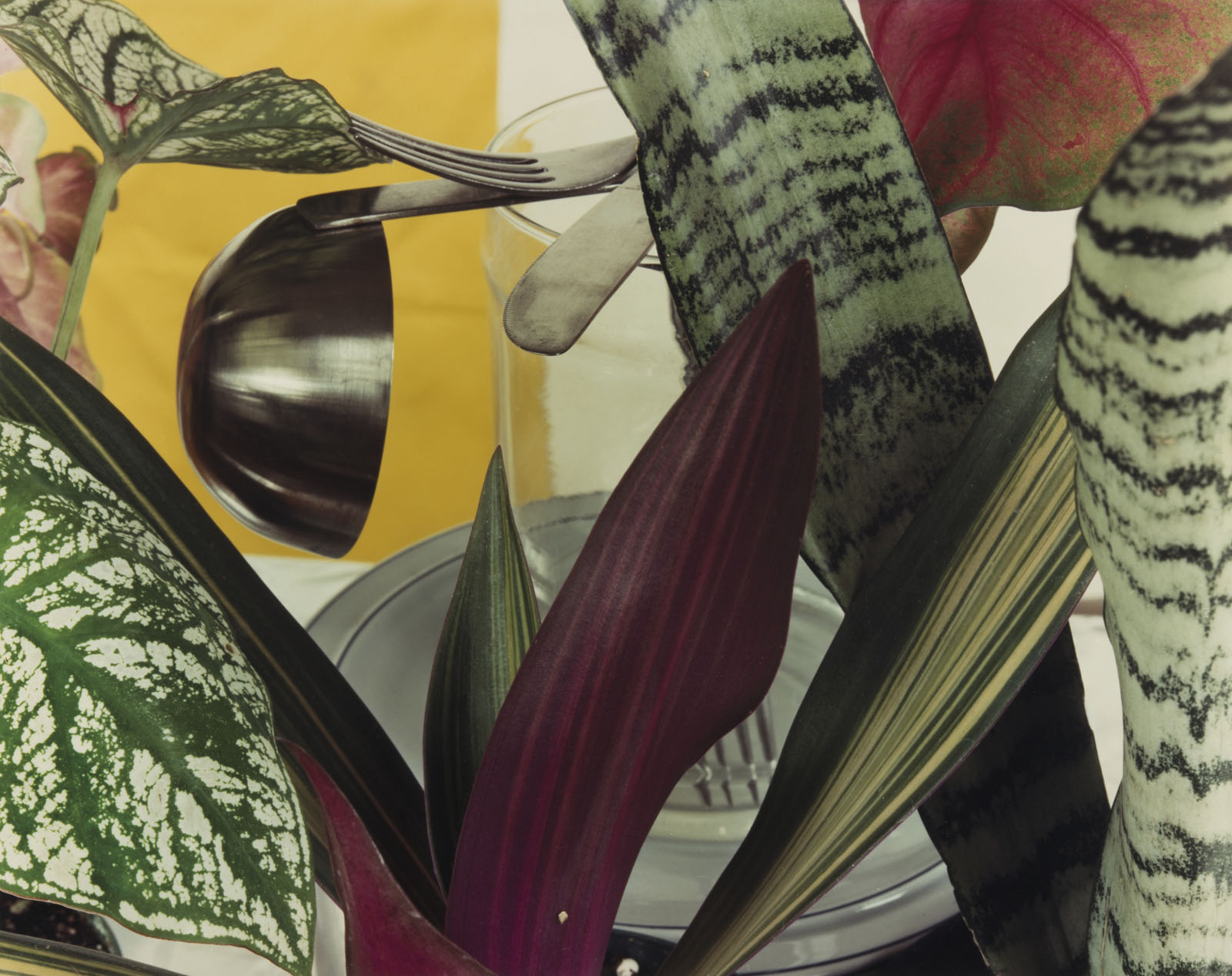
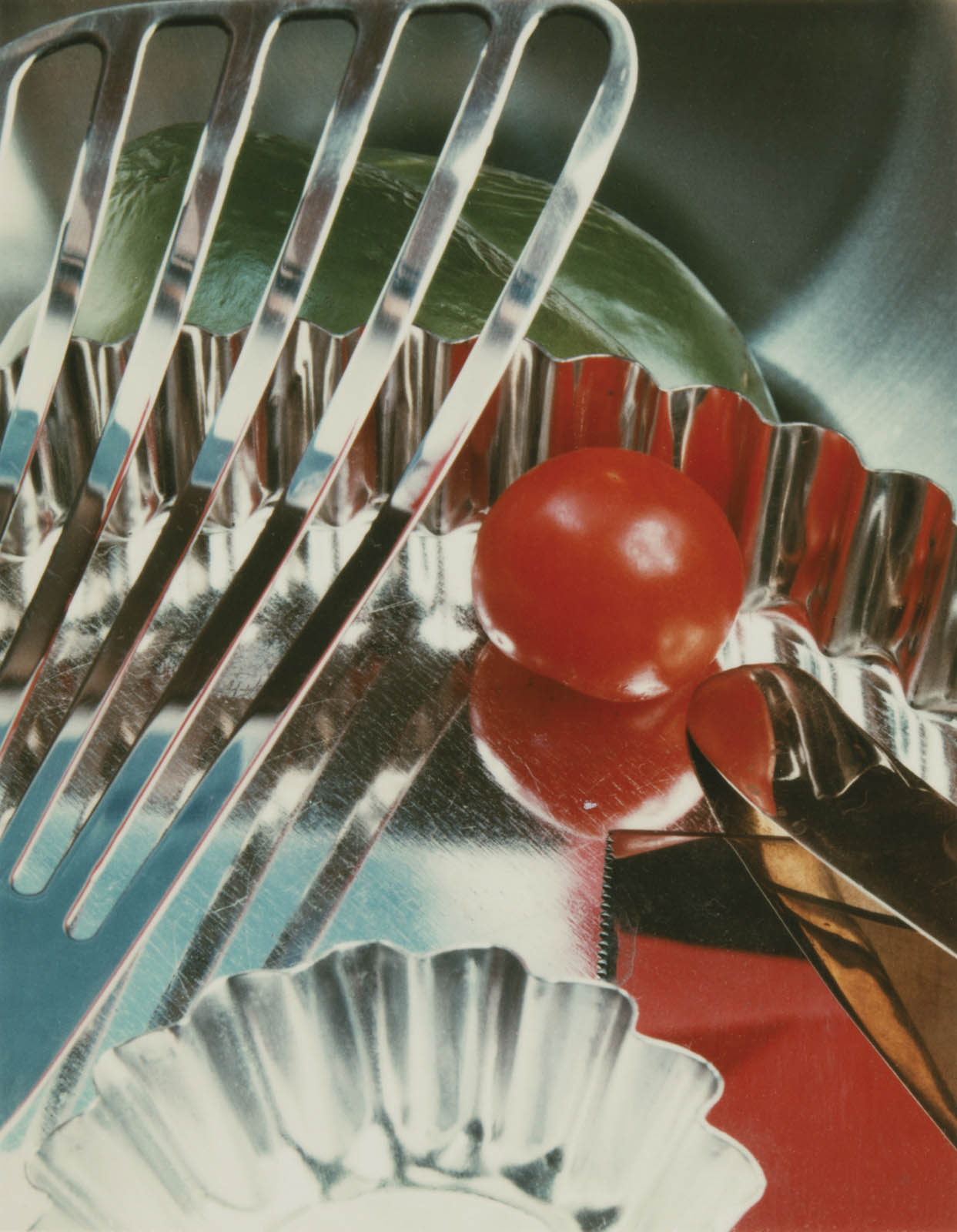
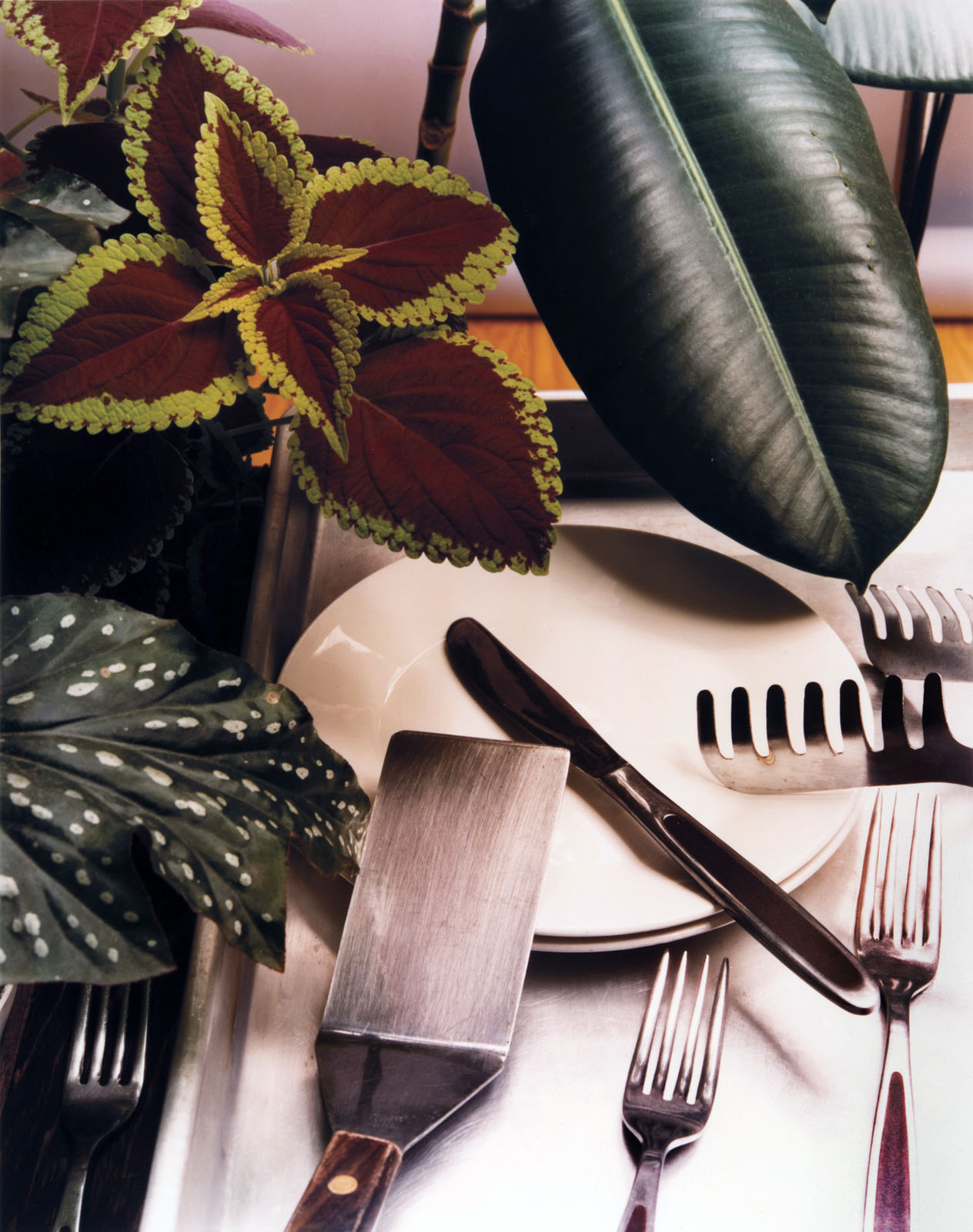
In 1978, another radical turning point. Jan Groover focuses all her efforts on still life. Spotlight on the house sink: who would have thought that so much beauty was nestled there? Reflection of a fork, transparency of a glass, sliding of water, damaged enamel, burnt coffee: under its tight framing, effects and materials are intertwined. Nothing is left to chance, each arrangement is first sketched out in pencil, tested with Polaroid. In fact, she has never stopped painting: she simply does it with the elements of reality. Her challenge, “that the entire surface of the photo have the same magnetism and the same importance,” summarises the painter Bruce Boice, her husband.

Resounding success: her Kitchen Still Lifes establish her as an immense visual artist. In the eyes of Susan Kismaric, curator in the photography department at MoMA in New York, she invented “nothing less than a resplendent new way of seeing”. An “anomaly of the photographic world”? Some call it that. But of those who have a sacred heritage: initiated by Jan Groover, photographers Gregory Crewdson and Philip-Lorca diCorcia bring her composition lessons to incandescence.

Emmanuelle Lequeux. “Jan Groover, l’abstraction du réel,” on the Le Monde website 18 September 2019 [Online] Cited 10/01/2022. Translated from the French by Google Translate


Jan Groover (American, 1943-2012) 'Untitled' c. 1978


Jan Groover (American, 1943-2012)
Untitled
c. 1978
© Photo Elysée – Fonds Jan Groover


Jan Groover (American, 1943-2012) 'Untitled' c. 1978


Jan Groover (American, 1943-2012)
Untitled
c. 1978
© Photo Elysée – Fonds Jan Groover


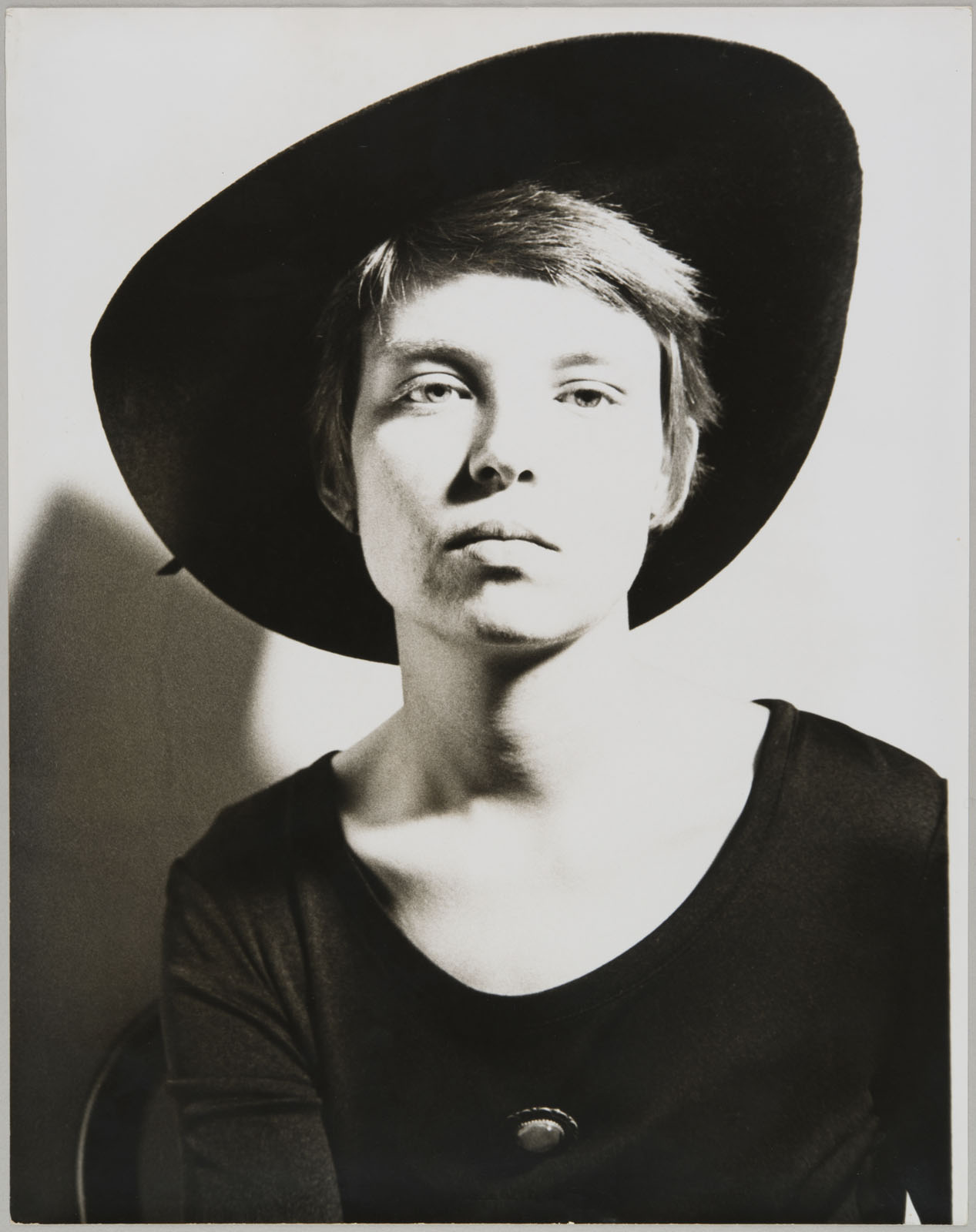
Jan Groover (American, 1943-2012) 'Untitled (Ealan Wingate)' c. 1980


Jan Groover (American, 1943-2012)
Untitled (Ealan Wingate)
c. 1980
© Photo Elysée – Fonds Jan Groover


A summary inventory of Groover’s archive tallied a total of 11,663 negatives, 525 slides, and 9,485 paper prints, along with unpublished drawings and all of her camera equipment. “Jan Groover was not only interested in beautiful prints, but she was very much interested in techniques, and the artisanal way of making images,” says Franck. “We were very lucky to have been able to find a complete laboratory with all of her prints, negatives, everything was kept in her house.”

Marigold Warner. “Jan Groover: Laboratory of Forms,” on the British Journal of Photography website 8th November 2019 [Online] Cited 10/01/2022.


Jan Groover (American, 1943-2012) 'Untitled (Mel Bochner)' 1980


Jan Groover (American, 1943-2012)
Untitled (Mel Bochner)
1980
© Photo Elysée – Fonds Jan Groover


Jan Groover (American, 1943-2012) 'Untitled' 1983


Jan Groover (American, 1943-2012)
Untitled
1983
© Photo Elysée – Fonds Jan Groover


Jan Groover (American, 1943-2012) 'Untitled' c. 1981


Jan Groover (American, 1943-2012)
Untitled
c. 1981
© Photo Elysée – Fonds Jan Groover


Jan Groover (American, 1943-2012) 'Untitled' c. 1983


Jan Groover (American, 1943-2012)
Untitled
c. 1983
© Photo Elysée – Fonds Jan Groover


An unpublished exhibition, from the artist’s archive

This exhibition looks back over the life’s work of Jan Groover (1943- 2012), the American photographer whose personal collection was added to the Musée de l’Elysée’s collections in 2017. Based on a selection of archives from her personal collections, the exhibition evokes not only the artist’s years in New York but also her years in France – a less known part of her career. With the will to enrich research on Jan Groover, the exhibition displays the first results of the considerable work on the collection conducted by the museum – from the perspective both of conservation as well as historical documentation.

Formalism is everything

Taking Jan Groover’s statement as a guiding principle, the exhibition highlights the eminently plastic design pursued by the photographer throughout her career. Conducted in a spirit of endless experimentation, this research and the creative process it involves are emphasised not only by the presentation of early tests and experiments but also by the inclusion of unique documents, notes and preparatory notebooks.

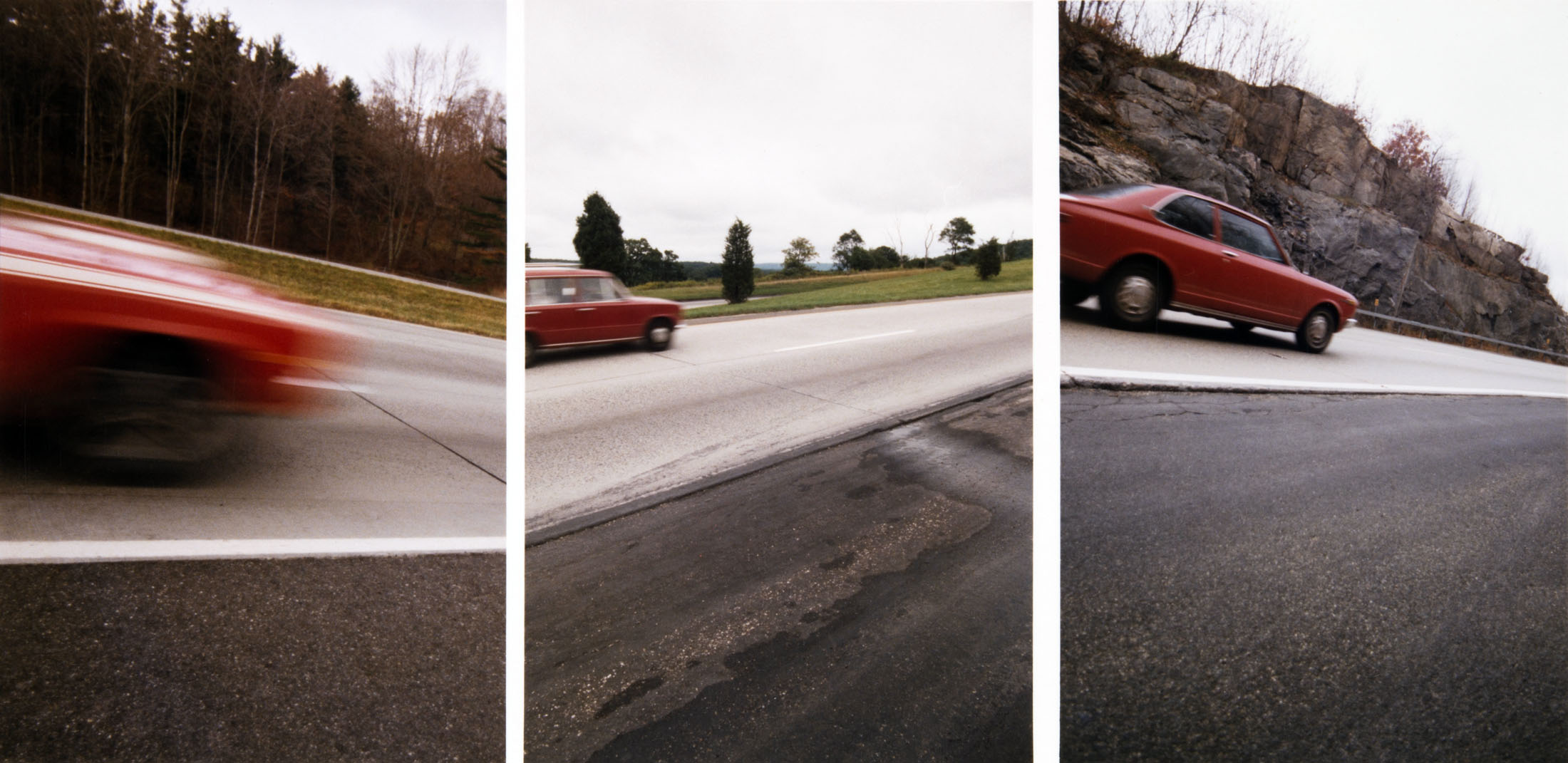
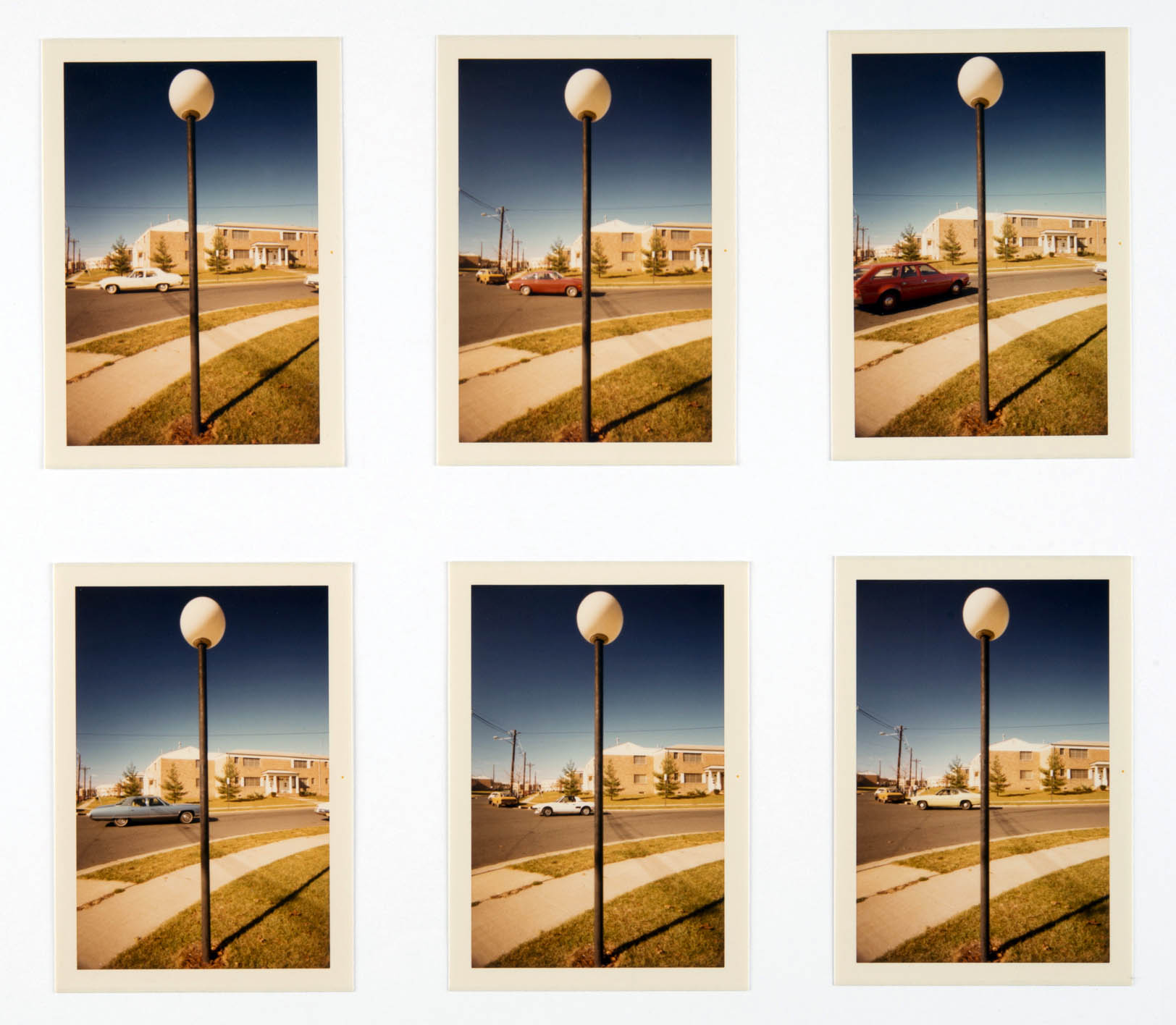
In the early 1970s, abandoning her earlier vocation as a painter, Jan Groover began to attract attention with her photographic polyptychs constructed around the motifs of the road, cars and the urban environment. As the early stages of her formal and aesthetic explorations, they offer an opportunity to re-examine the reflections initiated at the time by the conceptual trend (especially with regard to notions of seriality and sequence).

By 1978, Jan Groover had radically changed subject, turning to still life. She embarked on pictures that were to form the main body of her work and thanks to which she remains to this day one of the eminent figures of the genre. Mostly created in her studio, her compositions use a variety of processes. In the 1980s, they actively contributed to the recognition of colour photography. Despite the indisputable pre-eminence of her photographs of objects, Jan Groover’s work is also studded with landscapes, bodies and portraits, often in monochrome. She developed a keen interest in the technique of platinum and palladium, which she studied in greater depth when she arrived in France, with several series in a very specific elongated format (banquet camera) concluding the exhibition.

Text from the Musée de l’Elysée website


Jan Groover (American, 1943-2012) 'Untitled' c. 1985


Jan Groover (American, 1943-2012)
Untitled
c. 1985
© Photo Elysée – Fonds Jan Groover


Jan Groover (American, 1943-2012) 'Untitled' c. 1989


Jan Groover (American, 1943-2012)
Untitled
c. 1989
© Photo Elysée – Fonds Jan Groover


Bruce Boice (American, b. 1941) 'Jan Groover' c. 1968


Bruce Boice (American, b. 1941)
Jan Groover
c. 1968
© Photo Elysée – Fonds Jan Groover


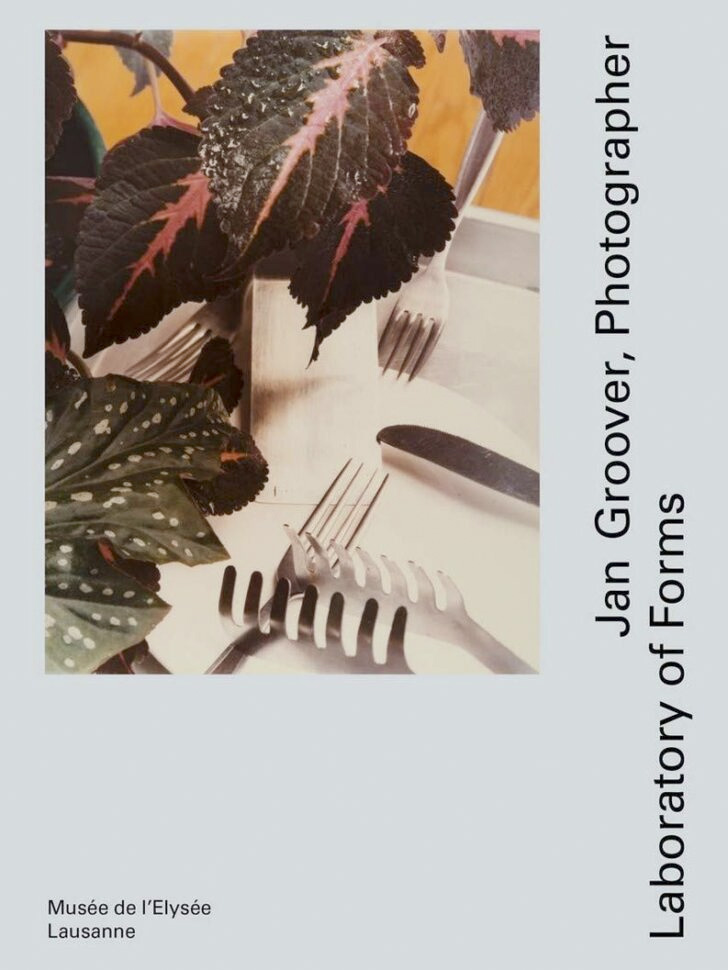
Tatyana Franck (author). 'Jan Groover. Laboratory of Forms' book cover 2019


Tatyana Franck (author)
Photo Elysée & Scheidegger and Spiess (publisher)
February, 2020 (date of publication)
ISBN 978-3858818386
192 pages
48 euros


This book accompanies the eponymous exhibition presented at Photo Elysée from September 18, 2019 to January 5, 2020, then at the Fondation Henri Cartier-Bresson from November 8, 2022 to February 12, 2023.

“Formalism is everything”: Jan Groover’s statement alone sums up the plastic ambition of a work that today embodies one of the key moments in the history of photography and the genre of still life.

Conducted through constant and varied experimentation, her research focused on forms and their ability to transform the perception of the image. In the early 1970s, the photographer was noticed by the New York art scene for her polyptychs based on the motifs of the car and the urban environment. Around 1978, Jan Groover radically changed the subject to still life, which would form the main part of his later work. Produced in the studio, her compositions use a variety of techniques; in the 1970s and 1980s, they actively contributed to the institutional and artistic recognition of colour photography. She then developed a great interest in a late 19th century process, the platinum-palladium.

Defending the historical and technical importance of her work, the publication thus puts Jan Groover’s work in perspective with the analysis of the archival finds given by her husband, Bruce Boice, to Photo Elysée.

Edited by Tatyana Franck

With contributions from Bruce Boice, Emilie Delcambre Hirsch, Paul Frèches, Tatyana Franck, Sarah Hermanson Meister, and Pau Maynés Tolosa

21 x 27 cm.
Texts in English


Fondation Henri Cartier-Bresson
79 rue des Archives
75003 Paris

Opening hours:
Tuesday – Sunday
11am – 7pm
Closed on Mondays

Fondation Henri Cartier-Bresson website

LIKE ART BLART ON FACEBOOK

Back to top

Exhibition: ‘Spowers & Syme’ at the Geelong Art Gallery, Victoria

Exhibition dates: 16th July – 16th October, 2022

A National Gallery Touring Exhibition

Curator: Dr Sarina Noordhuis-Fairfax, Curator of Australian Prints and Drawings at the National Gallery of Australia, Kamberri/Canberra


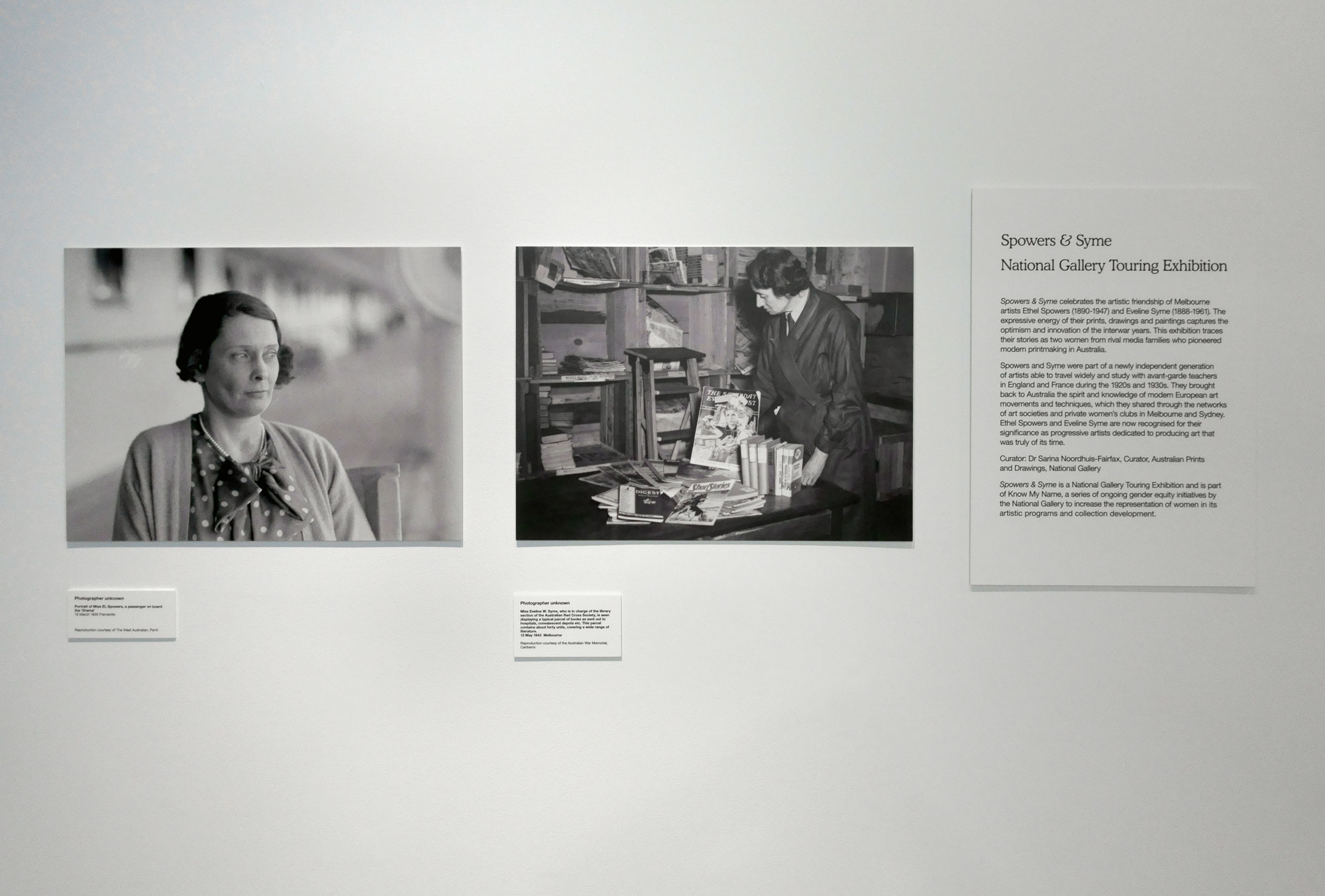
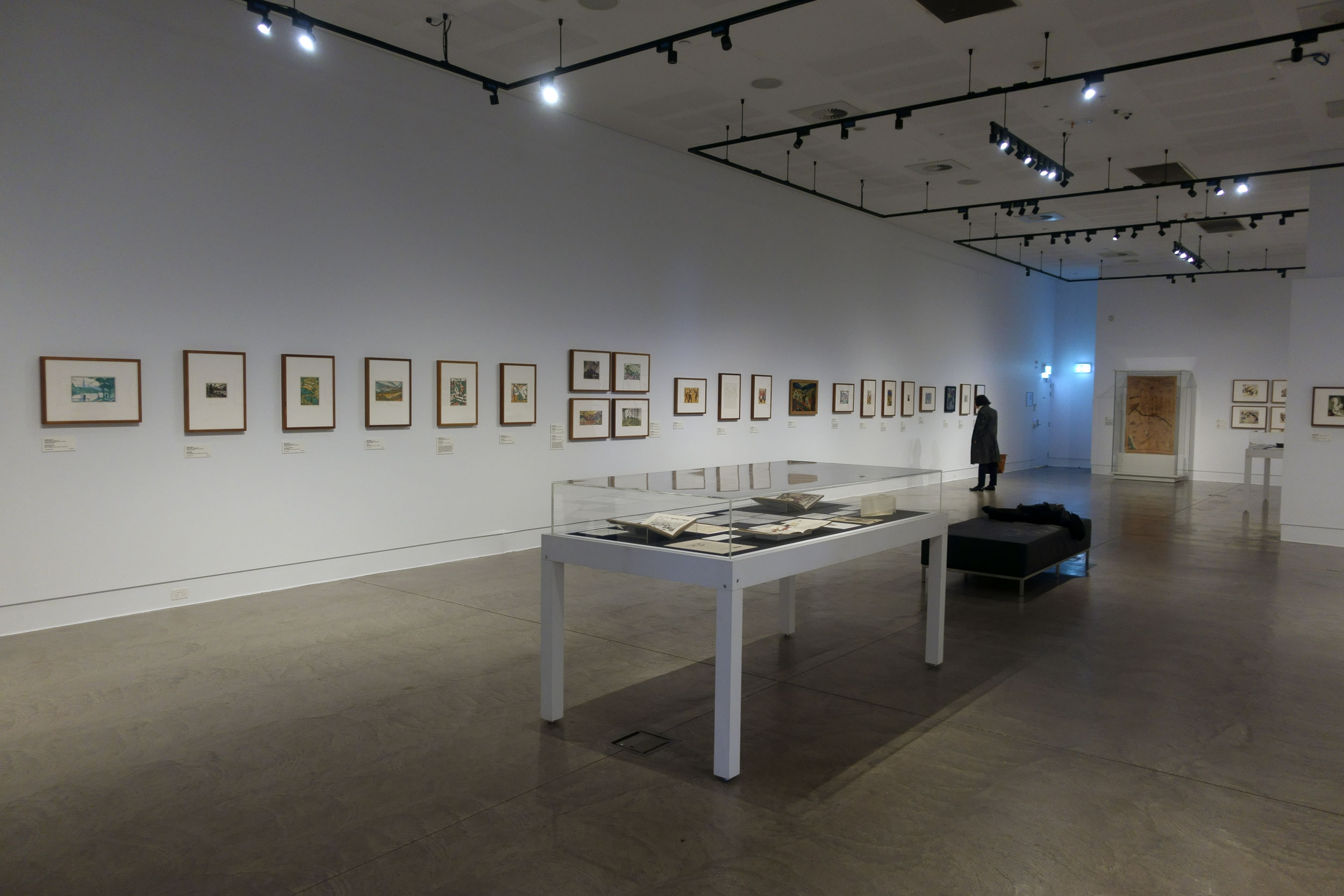
Installation view of the exhibition 'Spowers & Syme' at the Geelong Art Gallery showing photographs of both Ethel Spowers and Eveline Syme


Installation view of the exhibition Spowers & Syme at the Geelong Art Gallery showing photographs of both Ethel Spowers and Eveline Syme (below)
Photo: Marcus Bunyan


My friend and I travelled down the highway from Melbourne to Geelong especially to see this National Gallery of Australia touring exhibition – and my god, was it worth the journey!

I have always loved woodcuts and the Art Deco era so it was a great pleasure to see the work of two very talented artists from this period, who were “enthusiastic exponents of modern art in Melbourne during the 1930s and ’40s.” Modern art that would have challenged the conservative (male) art conventions of the day, much as modernist photographs by Max Dupain challenged the ongoing power of Pictorialist photography in 1930s Australia.

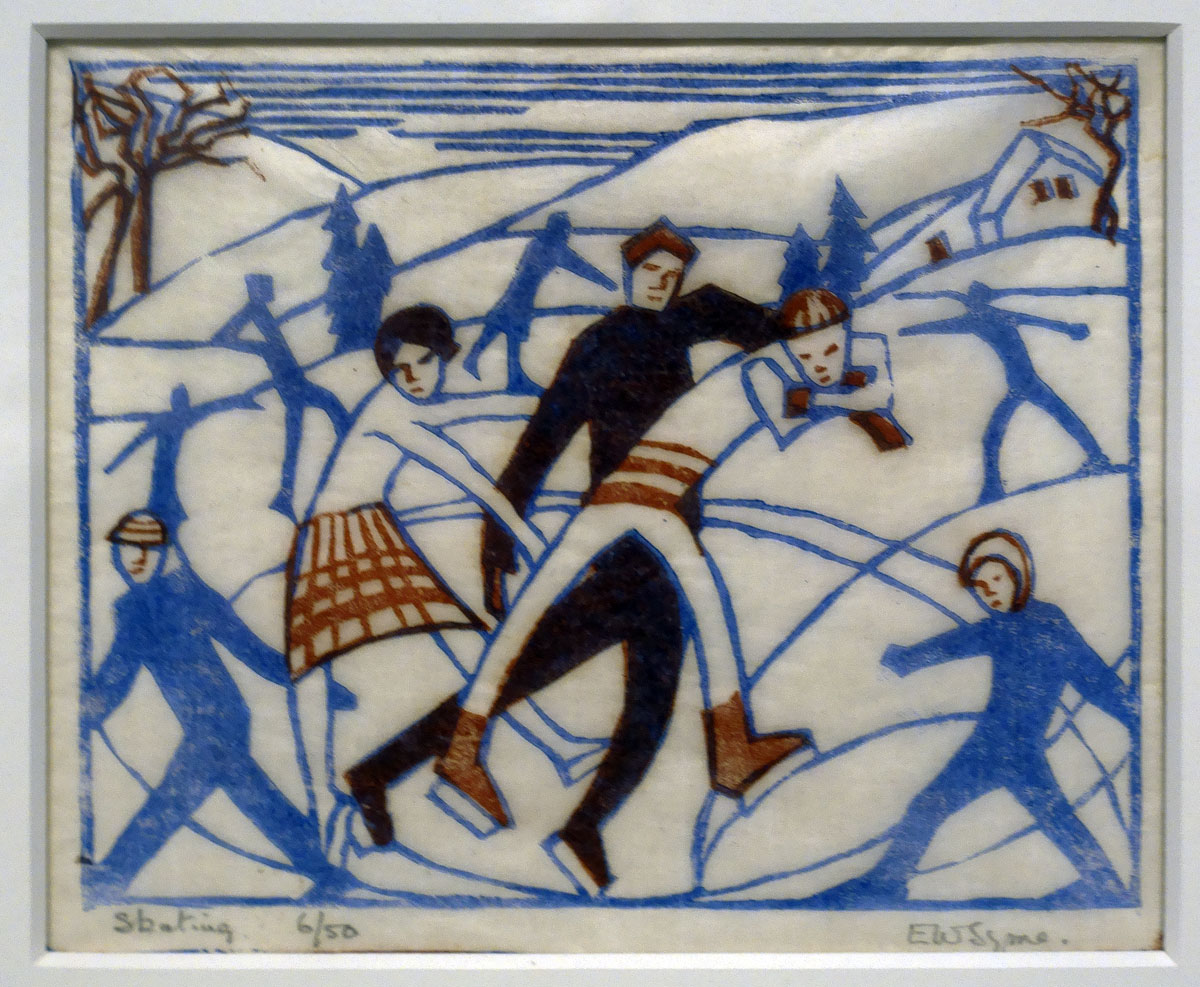
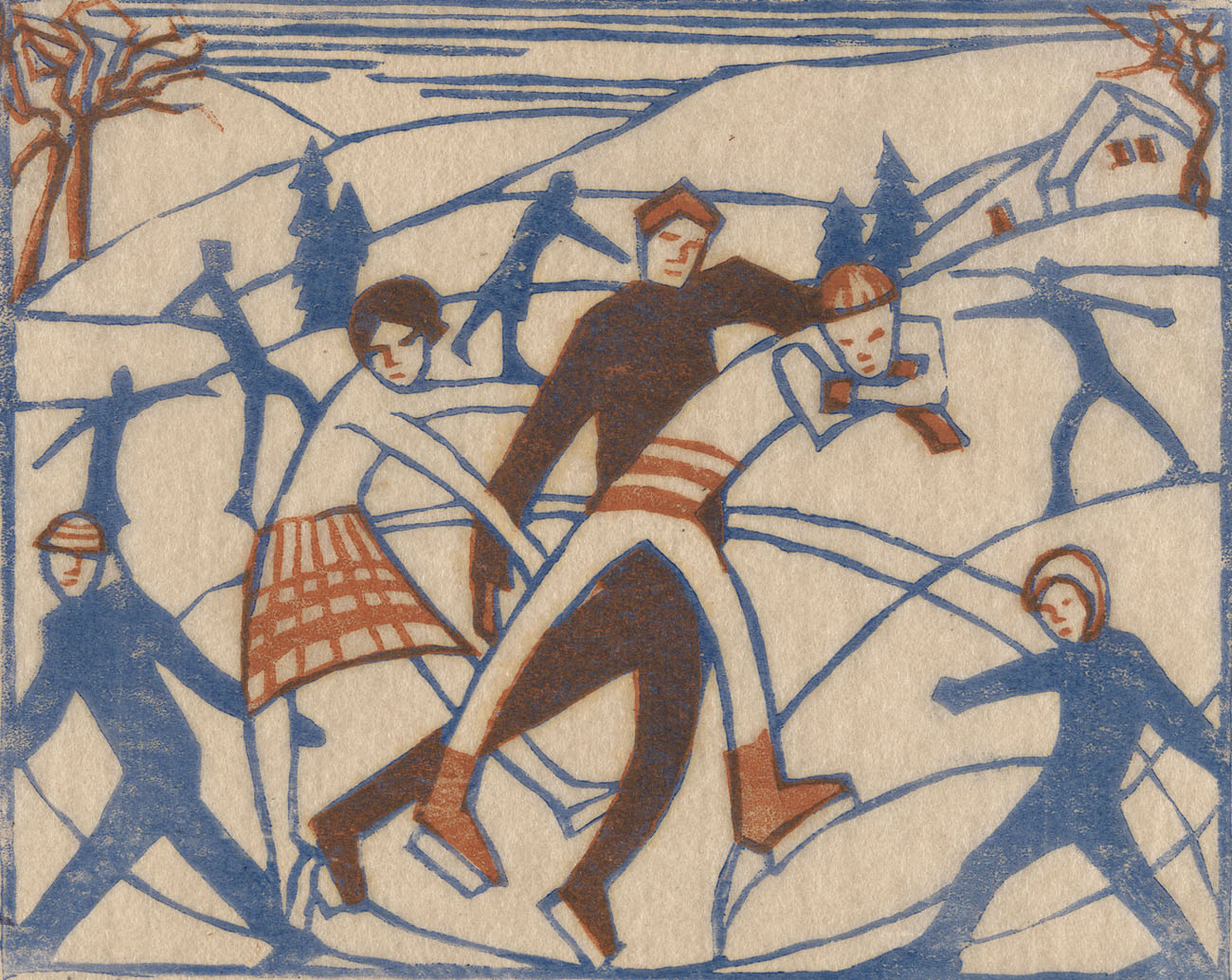
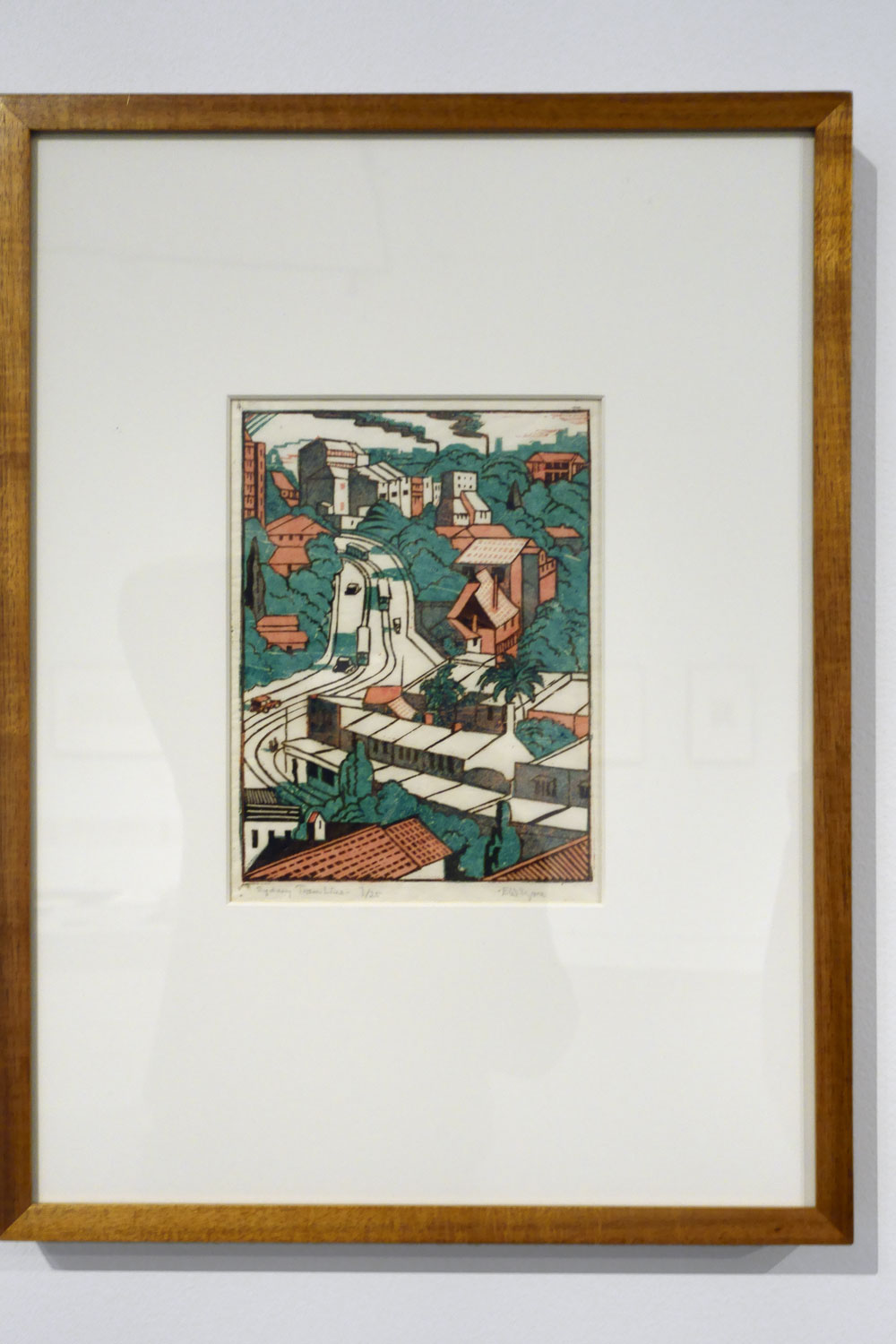
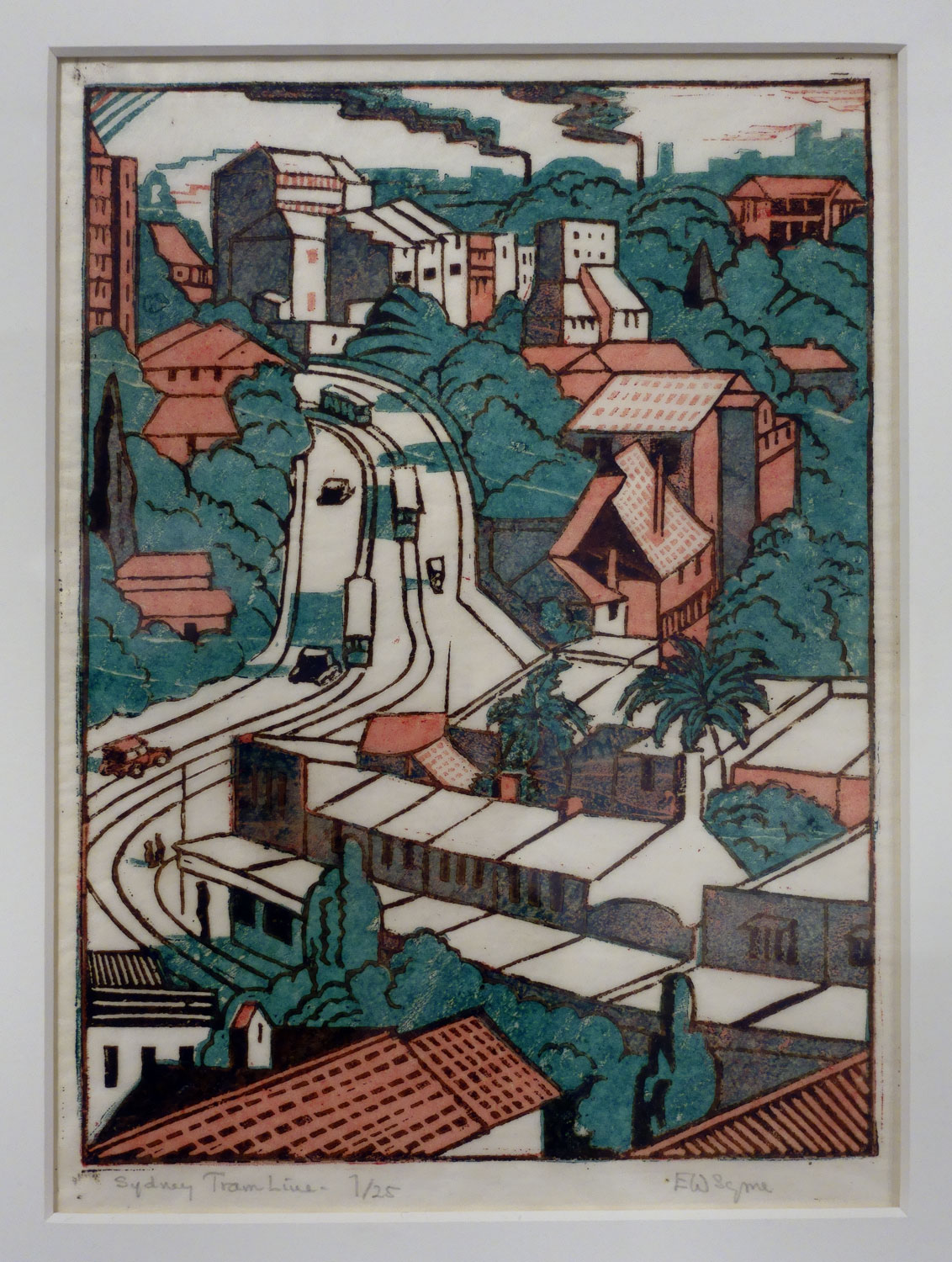
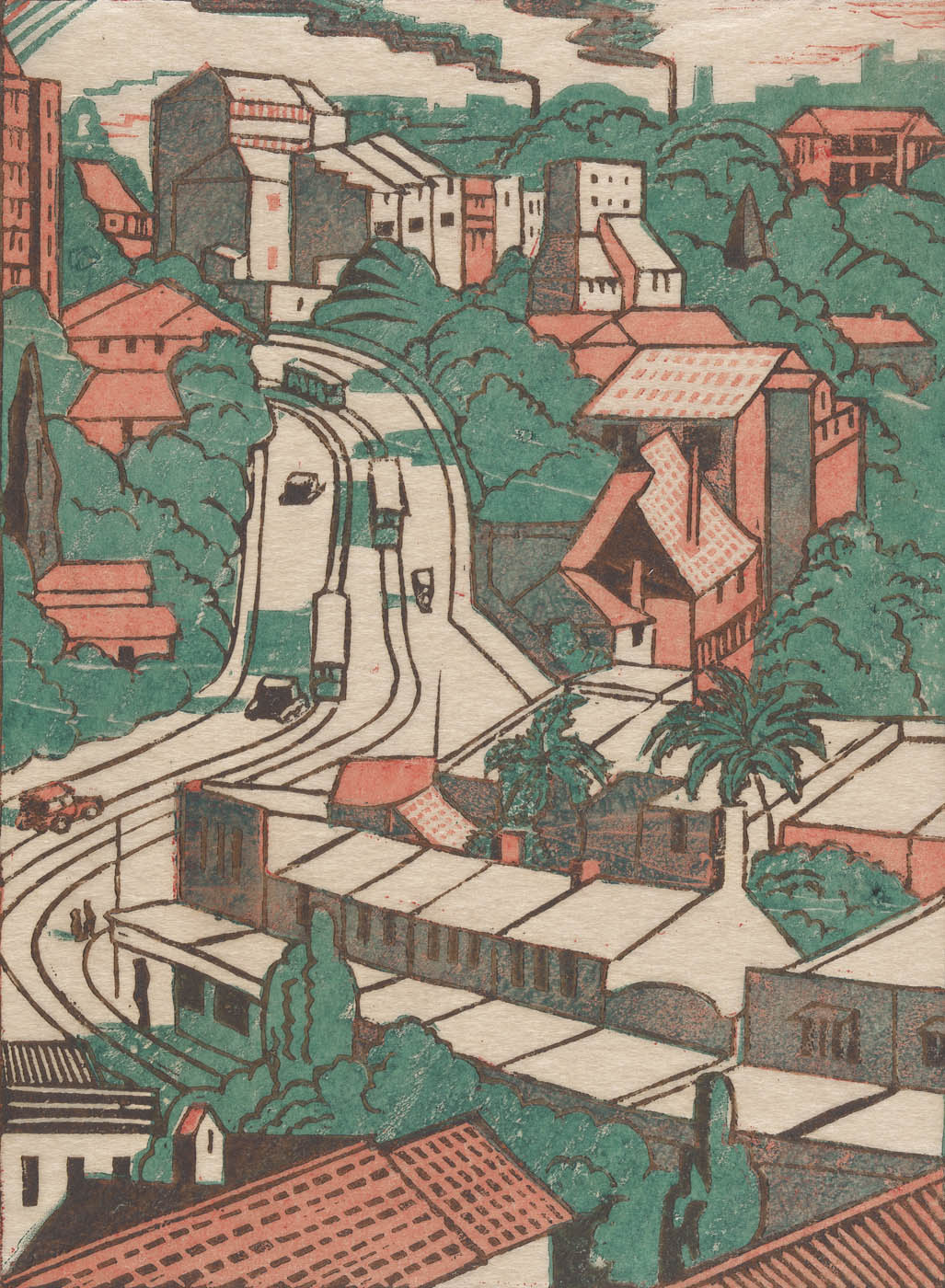
From viewing the exhibition it would seem to me that Eveline Syme has the sparer, more ascetic aesthetic. Her forms are more graphic, her lines more severe, her spaces more “blocky” (if I can use that word – in other words, more positive and negative space), her colour palette more restrained than in the work of Ethel Spowers. But her work possesses its own charm: a wonderful Japanese inspired landscape such as The factory (1933, below), with its mix of modernism and naturalism; silhouetted blue figures full of dynamism, movement in a swirling circular motif in Skating (1929, below); or the flattened perspective and 3 colour palette of Sydney tram line (1936, below) – all offer their own delicious enjoyment of the urban landscape.

But the star of the show is the work of the astonishing Ethel Spowers. Her work is luminous… containing such romanticism, fun, humour, movement, play, intricate design, bold colours, lyrical graphics… and emotion – that I literally went weak at the knees when viewing these stunningly beautiful art works. There is somethings so joyful about Spowers designs that instantly draws you in, that makes you smile, that made me cry! They really touched my heart…

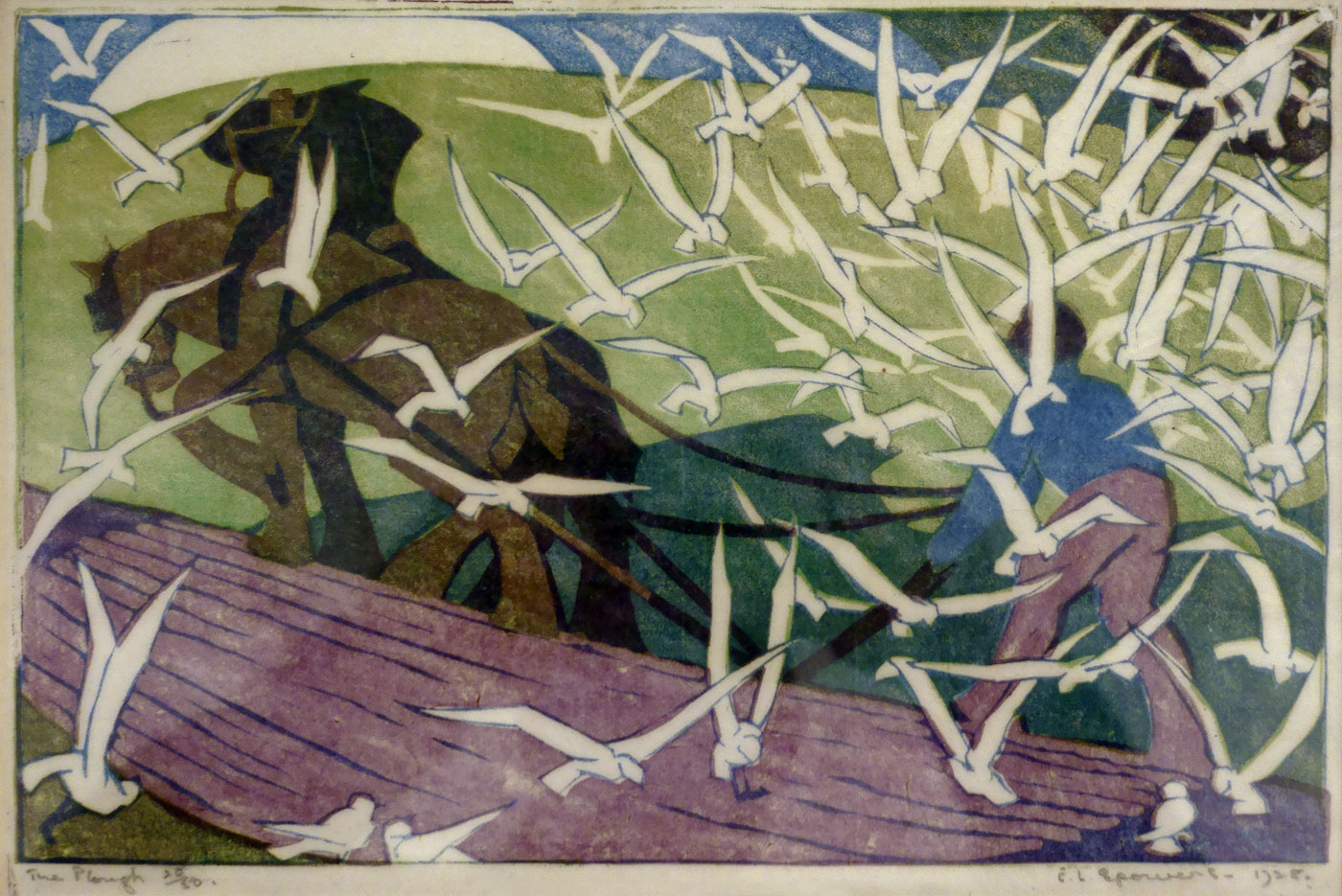
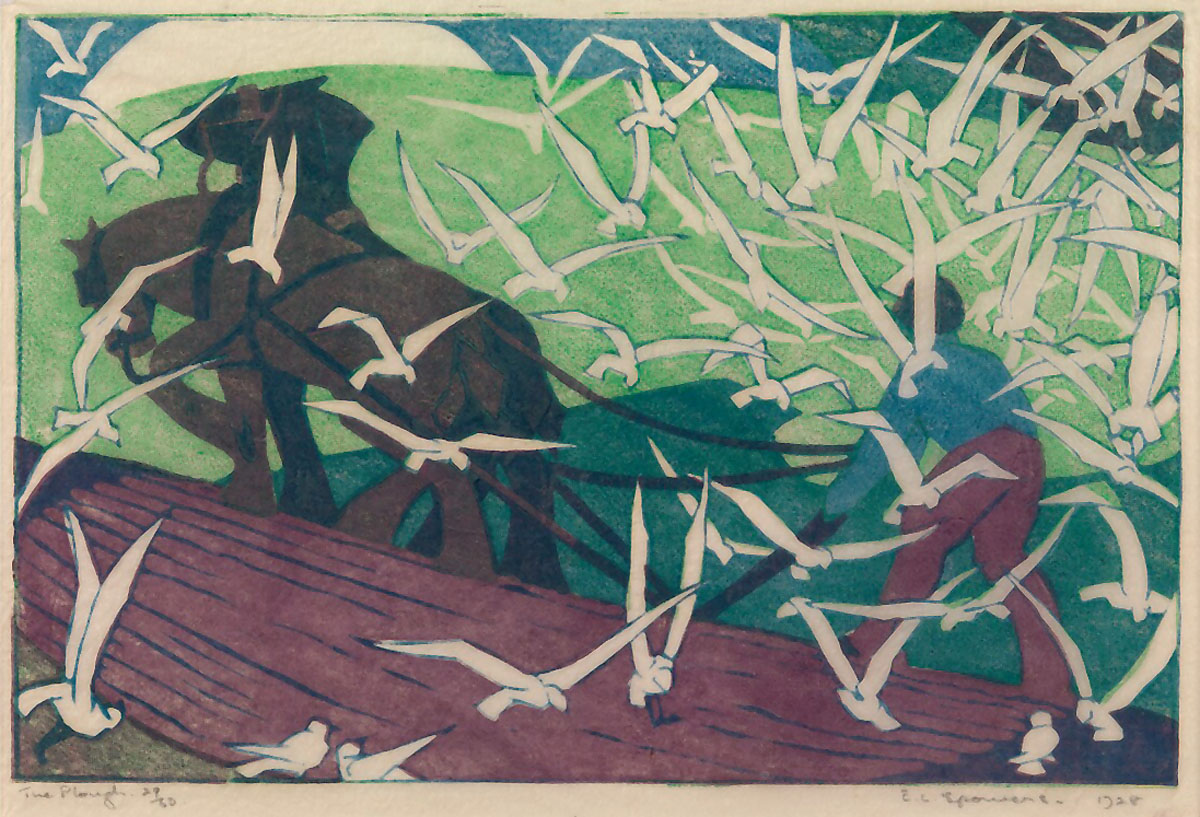
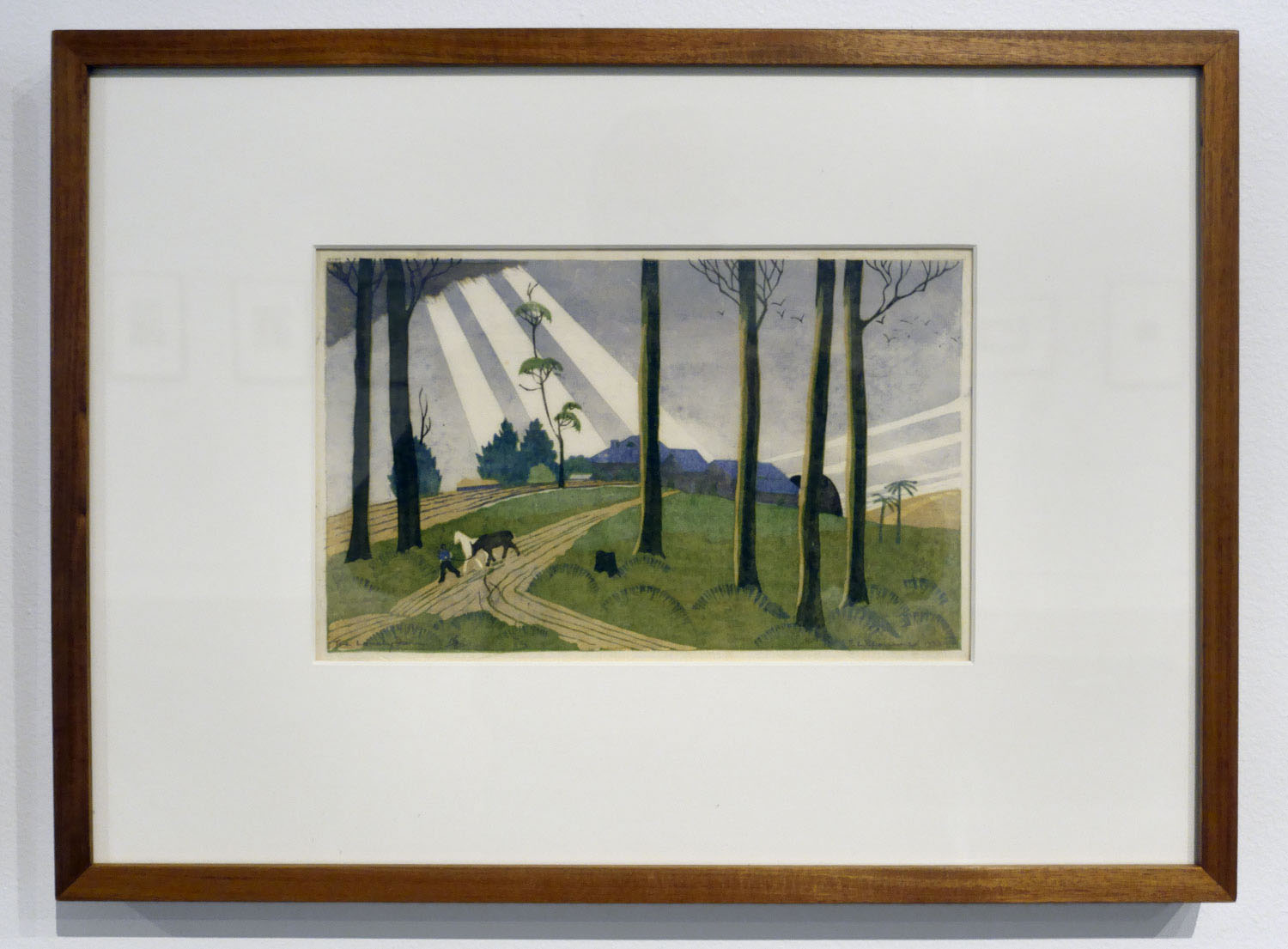
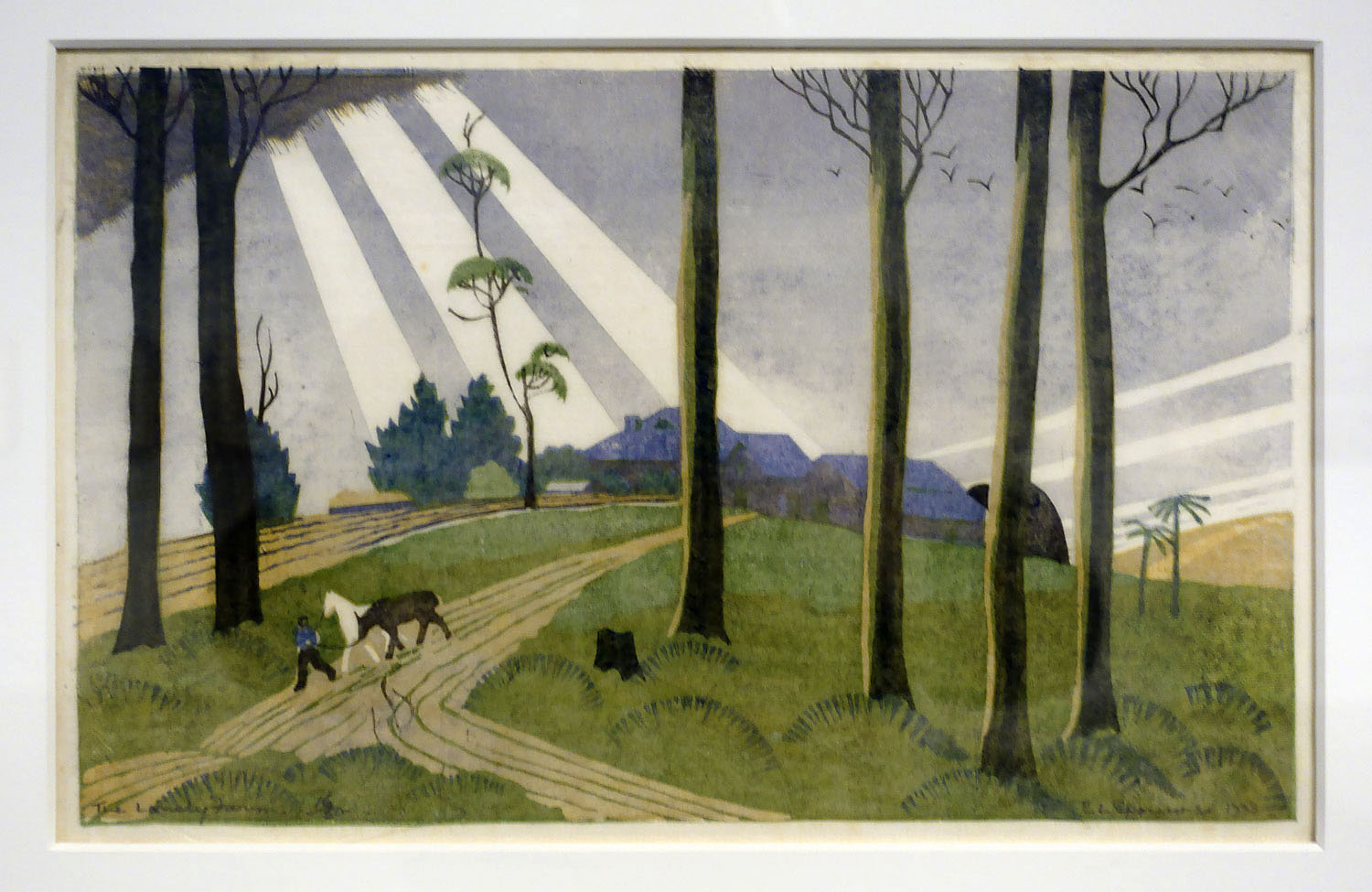
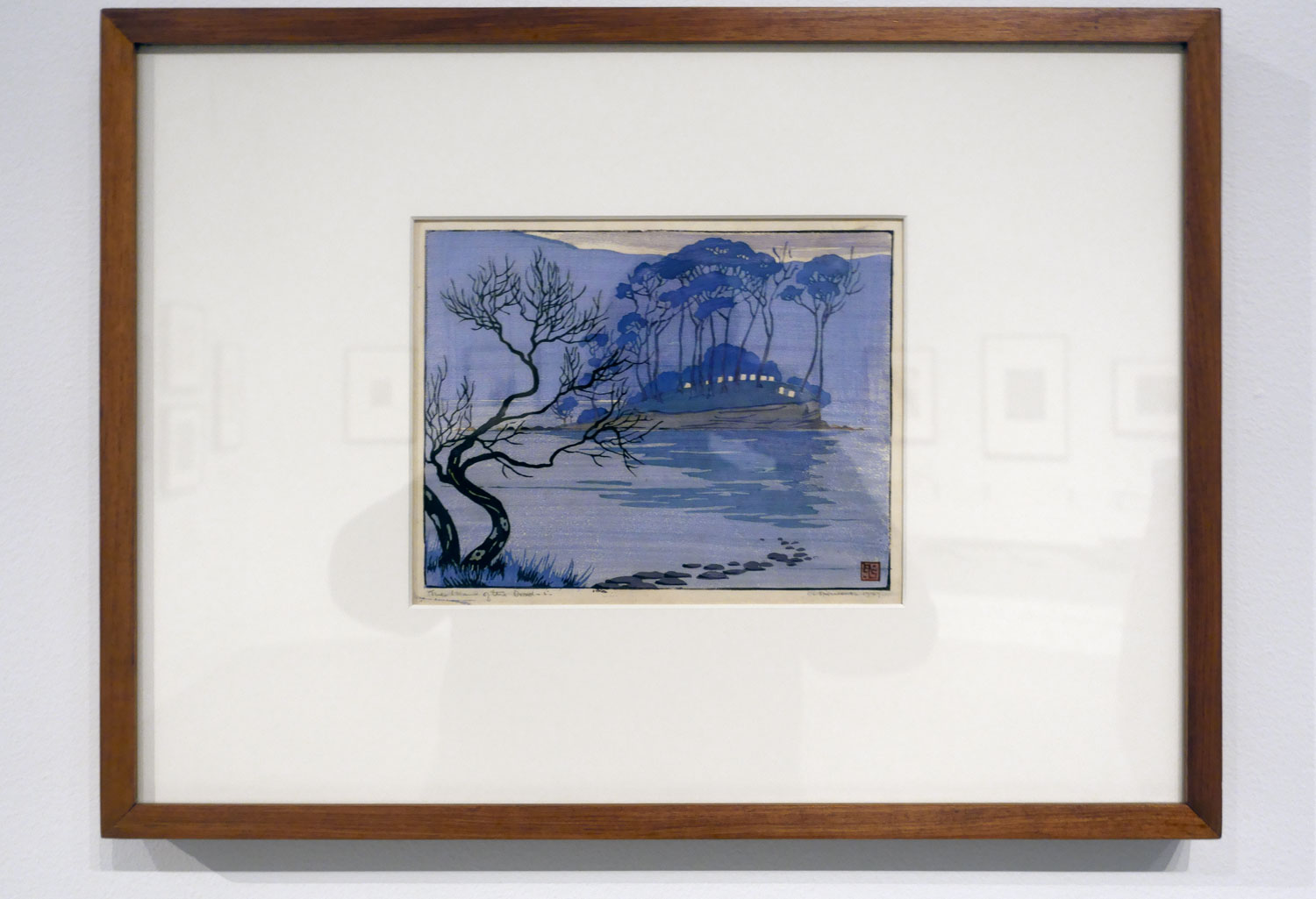
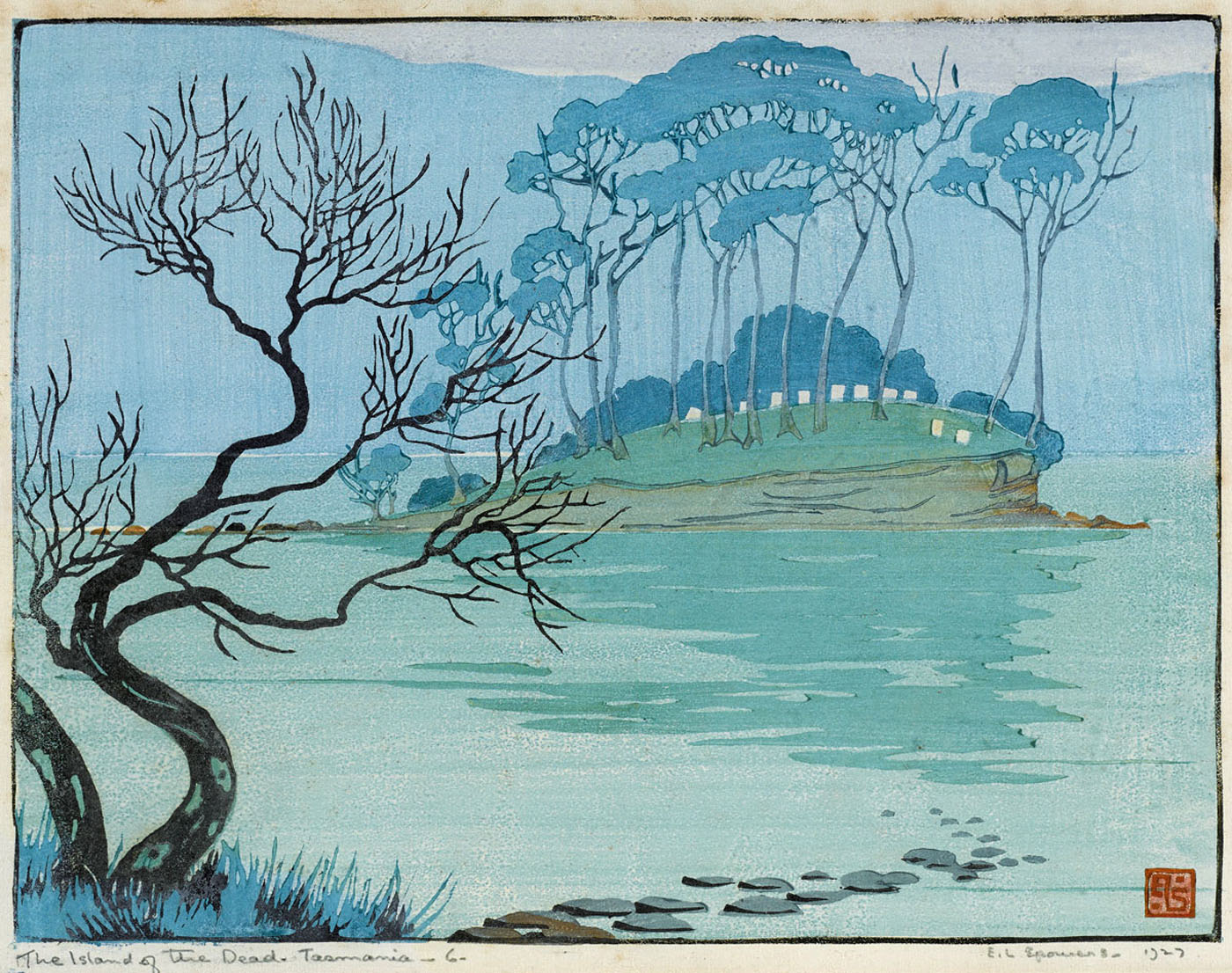
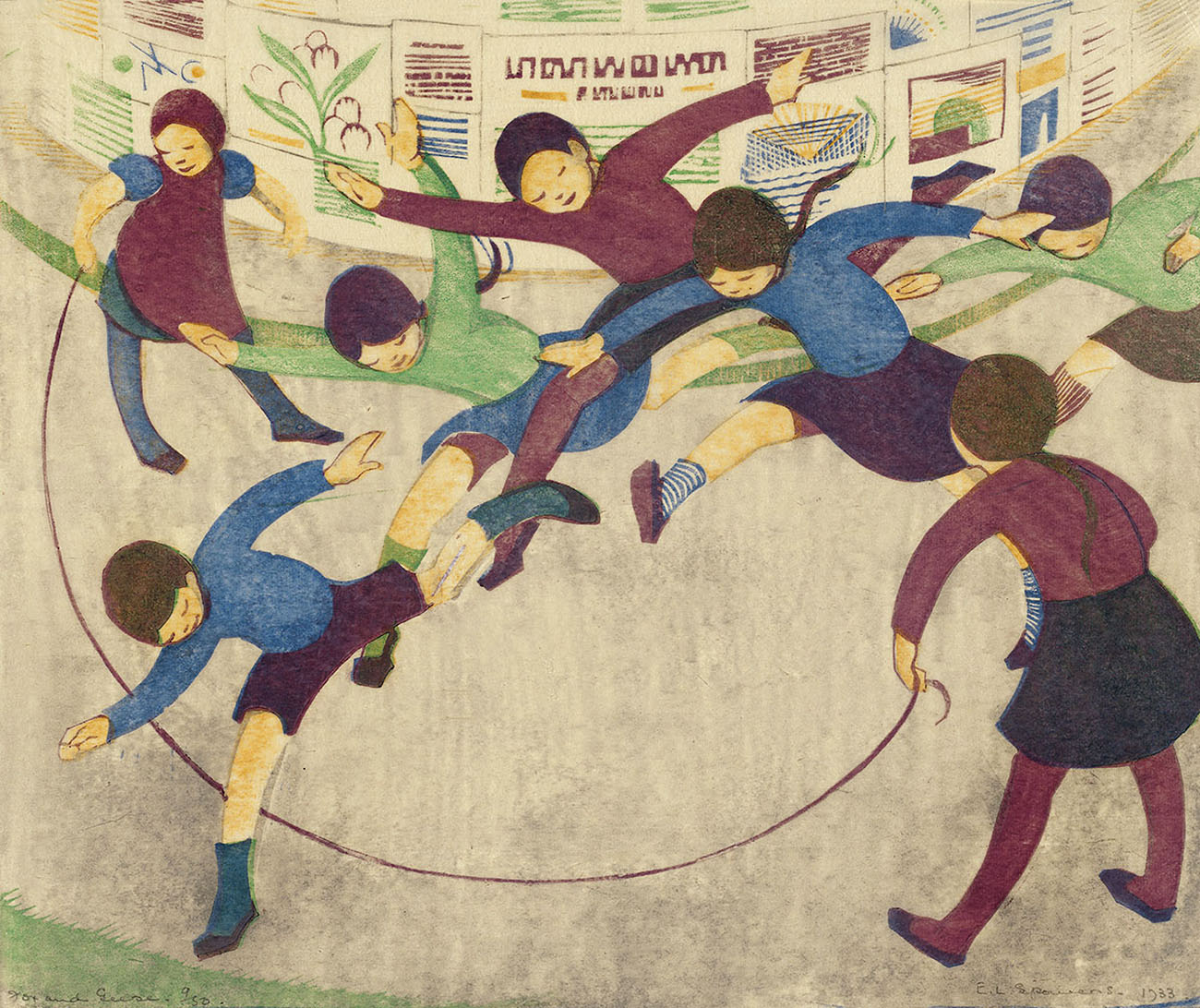
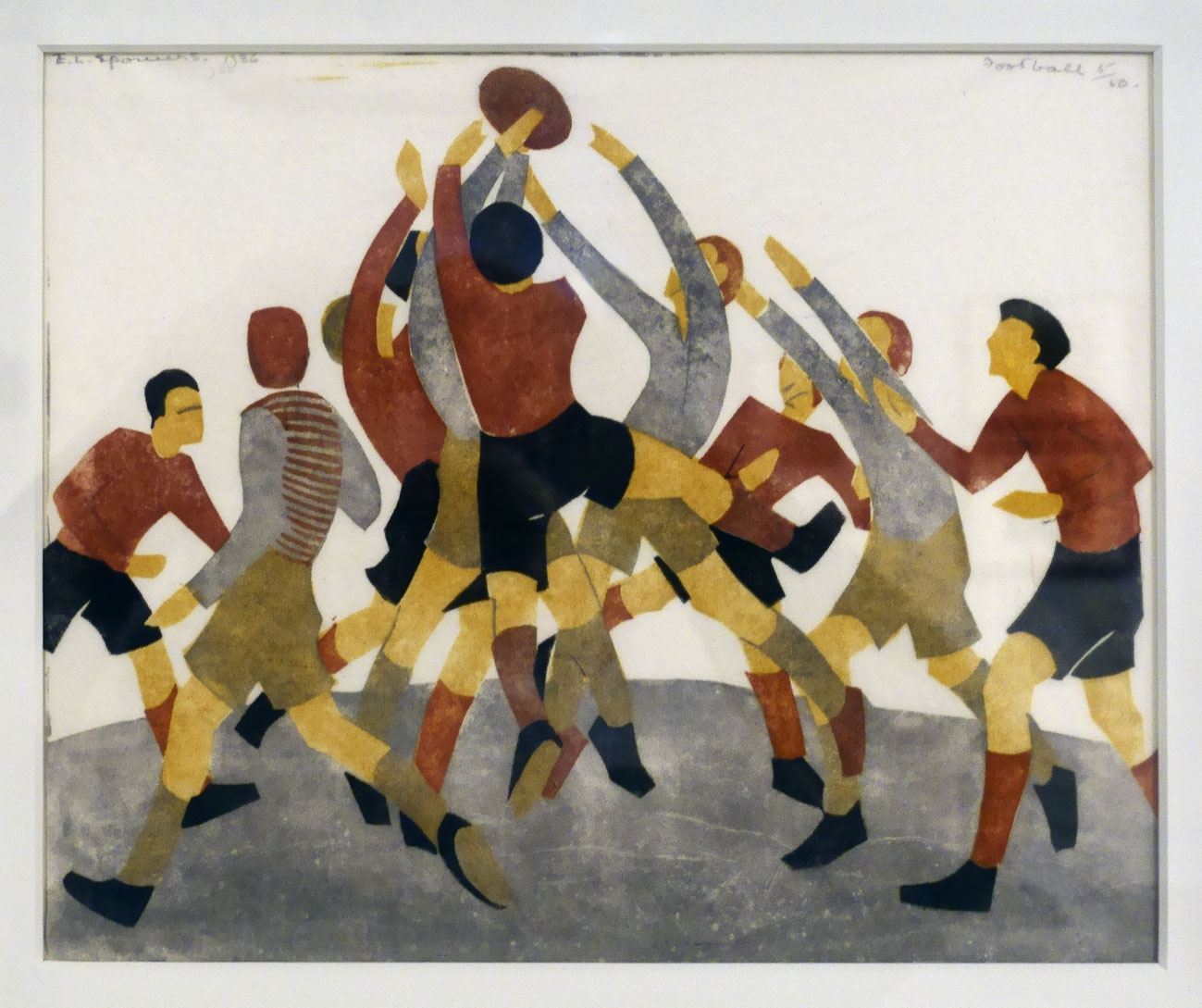
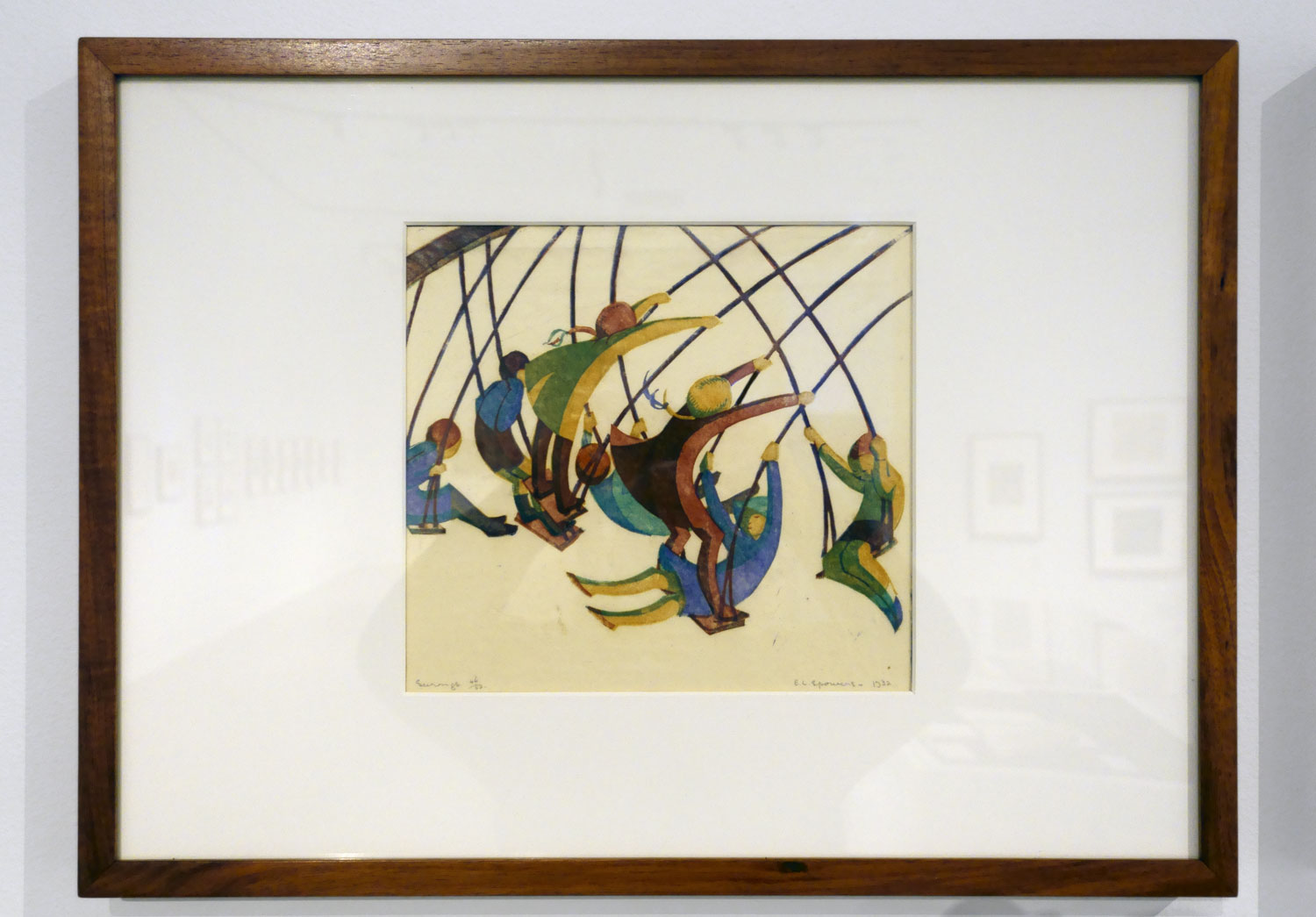
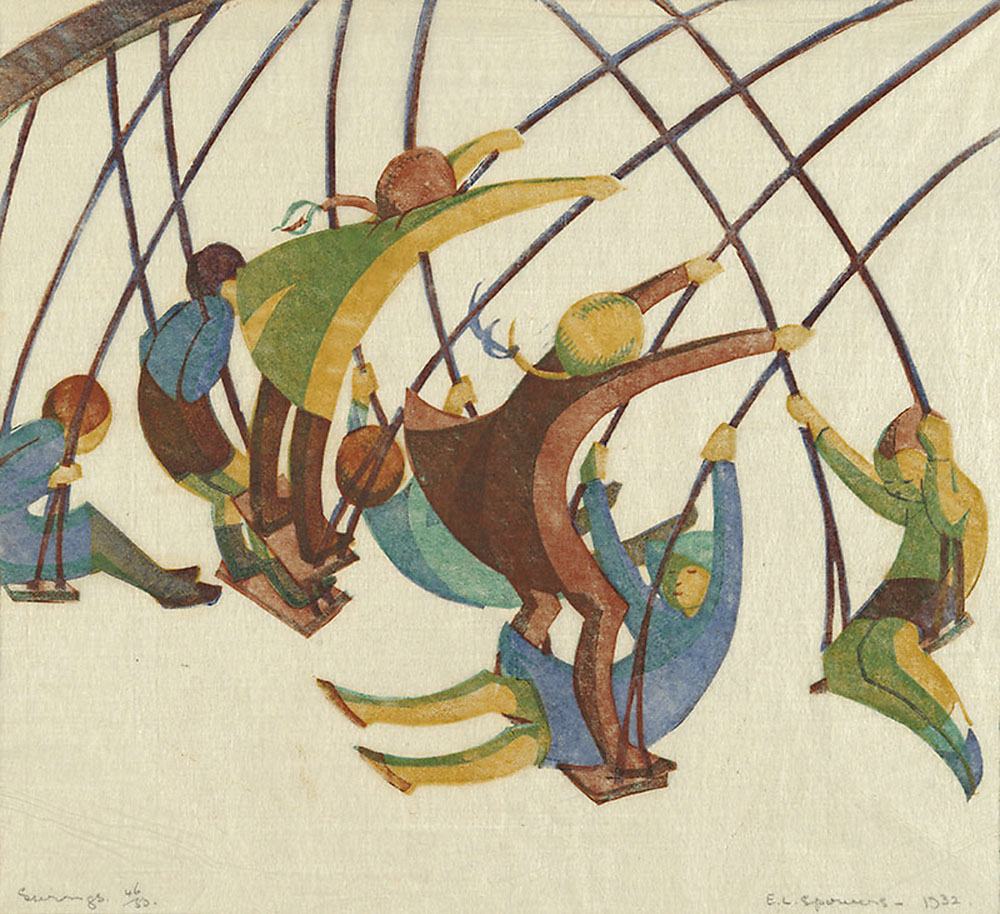
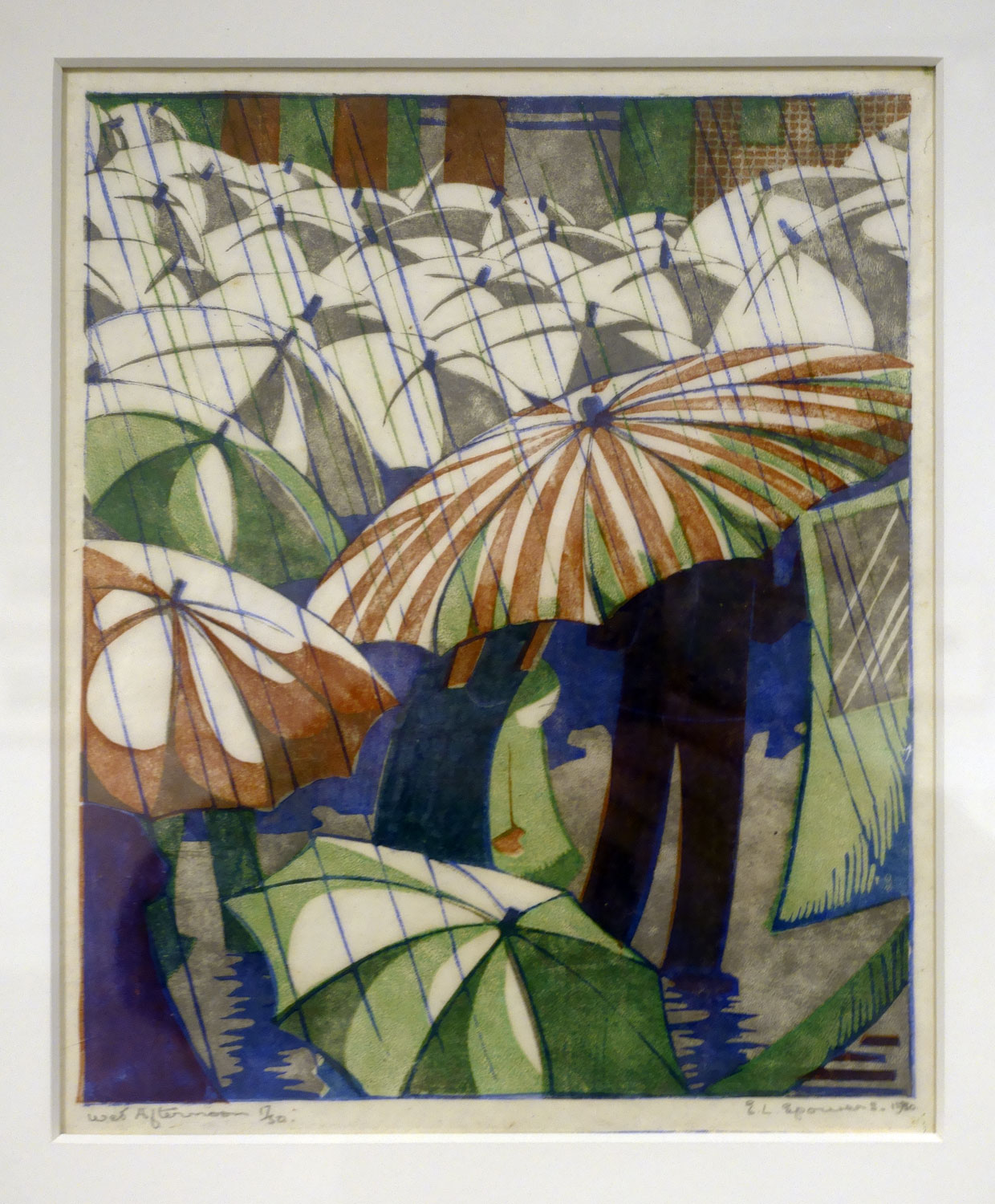
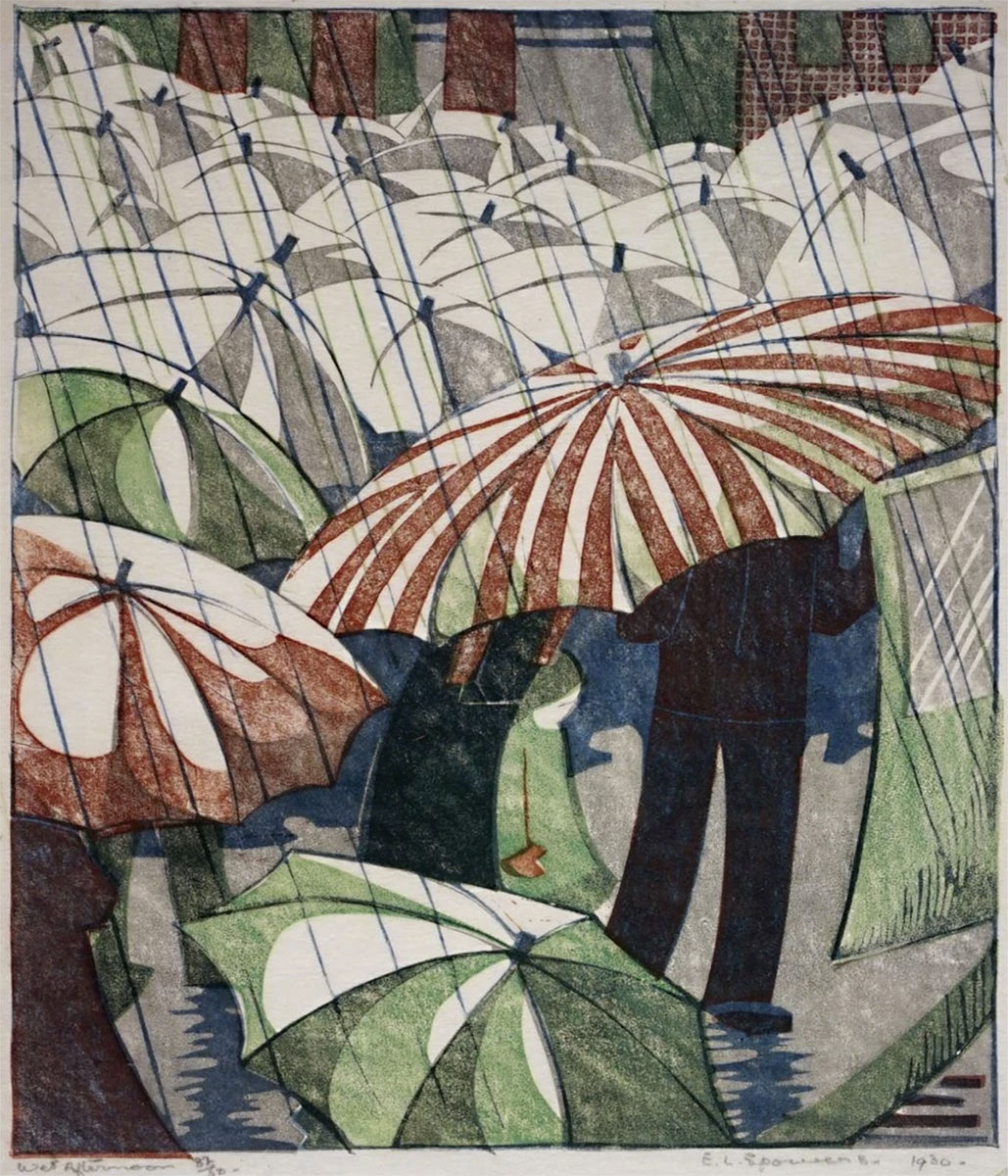
Even now writing about them, they seem to me like stills from a dream, scenes out of a fairy tale: the pattern of the white gulls obscuring the plough; the rays of sunlight striking the ground behind The lonely farm; the mysterious stillness of The island of the dead; the arching leap over the rope in Fox and geese; the pyramid construction of Football; the delicacy of movement and line in Swings; and the butterfly-like canopies in Wet afternoon. I could go on and on about the joy these works brought me when looking at them, their vivaciousness, their intense, effervescent spirit. If you get a chance before the exhibition closes next weekend in Geelong please go to see them.

As you may have gathered I am totally in love with the work of Ethel Spowers. Thank you, thank you to the artist for making them, and thank you to the energy of the cosmos for allowing me to see them in person!

Dr Marcus Bunyan


Many thankx to Geelong Art Gallery for allowing me to publish the photographs in the posting. Please click on the photographs for a larger version of the image. All installation images © Marcus Bunyan, Geelong Art Gallery and the National Gallery of Australia.


“Is it too great a truism to repeat that the best art is always the child of its own age?”


Eveline Syme


Celebrating the artistic friendship of Melbourne artists Ethel Spowers and Eveline Syme, the National Gallery Touring Exhibition Spowers and Syme will present the changing face of interwar Australia through the perspective of two pioneering modern women artists.

The exhibition offers rare insight into the unlikely collaboration between the daughters of rival media families. Studying together in Paris and later with avant-garde printmaker Claude Flight in London, Ethel Spowers and Eveline Syme returned to the conservative art world of Australia – where they became enthusiastic exponents of modern art in Melbourne during the 1930s and ’40s.

Much-loved for their innovative approach to lino and woodcut techniques, Spowers and Syme showcases their dynamic approach through prints and drawings whose rhythmic patterns reflect the fast pace of the modern world through everyday observations of childhood themes, overseas travel and urban life.

Text from the Geelong Gallery website


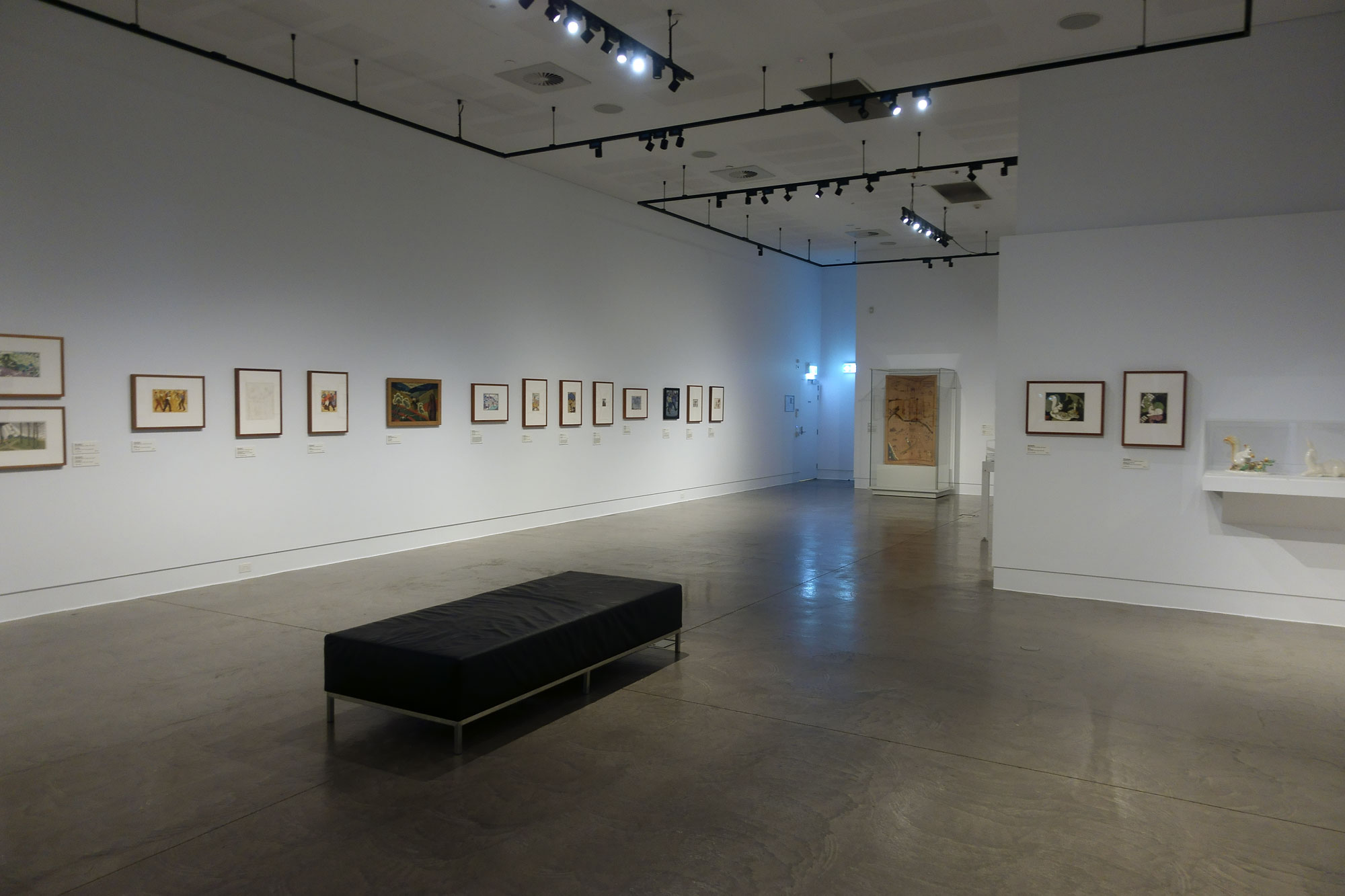
Installation view of the exhibition 'Spowers & Syme' at the Geelong Art Gallery

Installation view of the exhibition 'Spowers & Syme' at the Geelong Art Gallery

Installation view of the exhibition 'Spowers & Syme' at the Geelong Art Gallery

Installation view of the exhibition 'Spowers & Syme' at the Geelong Art Gallery

Installation view of the exhibition 'Spowers & Syme' at the Geelong Art Gallery

Installation view of the exhibition 'Spowers & Syme' at the Geelong Art Gallery


Installation views of the exhibition Spowers & Syme at the Geelong Art Gallery
Photos: Marcus Bunyan


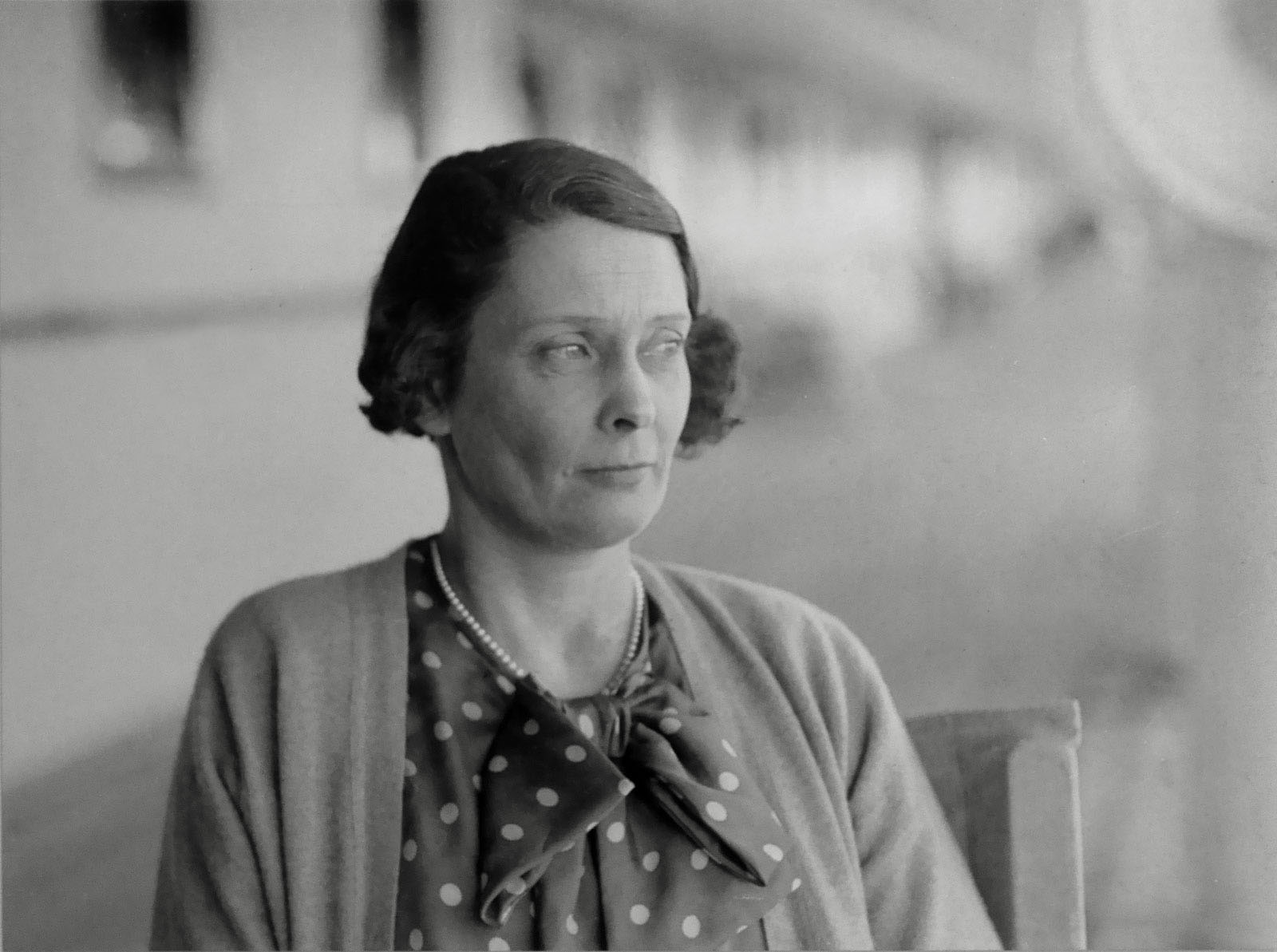
Photographer unknown. 'Portrait of Miss EL Spowers, a passenger on board the 'Orama'' 19 March 1935 (installation view)


Photographer unknown
Portrait of Miss EL Spowers, a passenger on board the ‘Orama’ (installation view)
19 March 1935
Fremantle
Reproduction courtesy of The West Australian, Perth
Photo: Marcus Bunyan


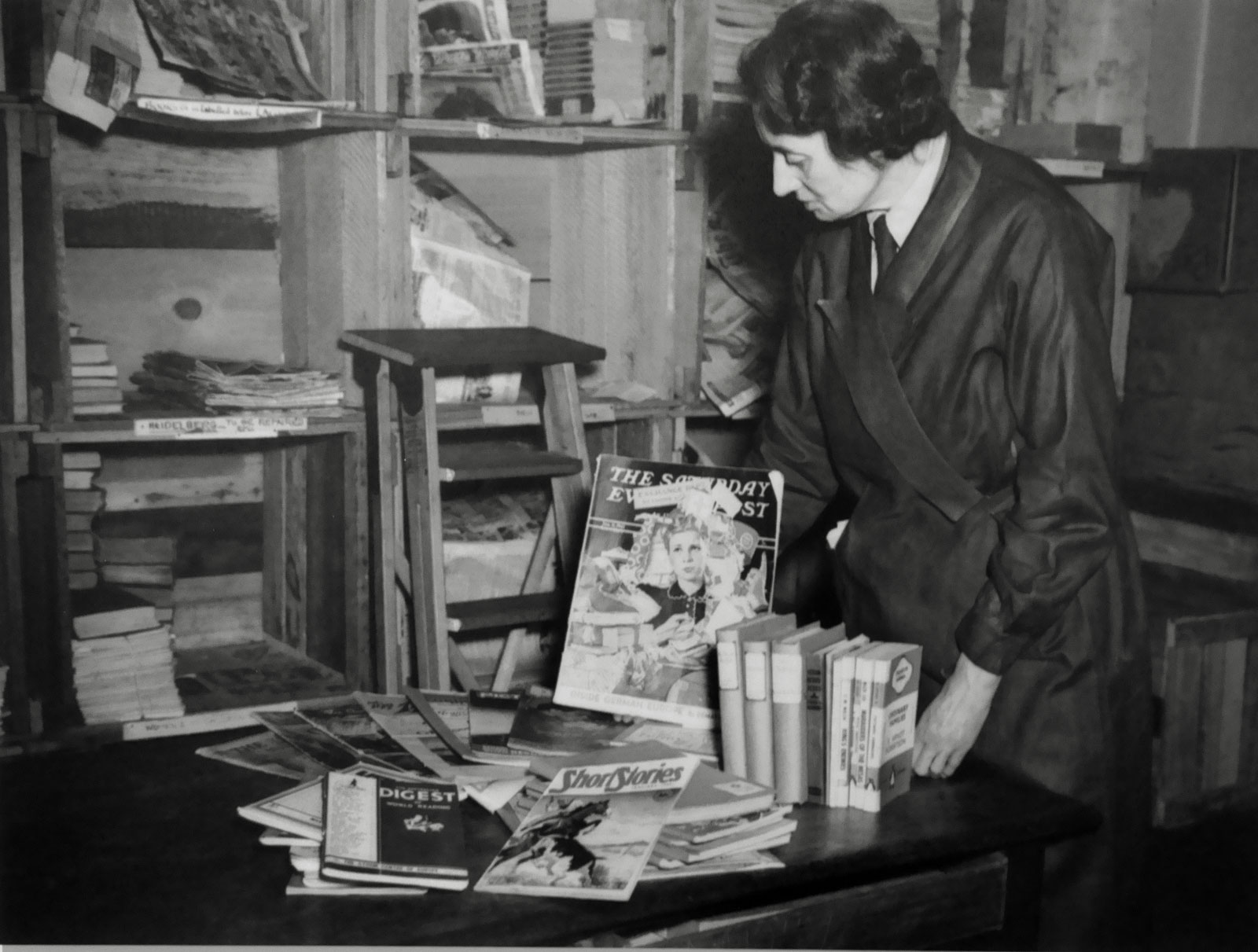
Photographer unknown. 'Miss Eveline W. Syme, who is in charge of the library section of the Australian Red Cross Society, is seen displaying a typical parcel of books as sent out to hospitals, convalescent depots etc. This parcel contains about forty units, covering a wide range of literature' 13 May 1943 (installation view)


Photographer unknown
Miss Eveline W. Syme, who is in charge of the library section of the Australian Red Cross Society, is seen displaying a typical parcel of books as sent out to hospitals, convalescent depots etc. This parcel contains about forty units, covering a wide range of literature (installation view)
13 May 1943
Melbourne
Reproduction courtesy of the Australian War Memorial, Canberra
Photo: Marcus Bunyan


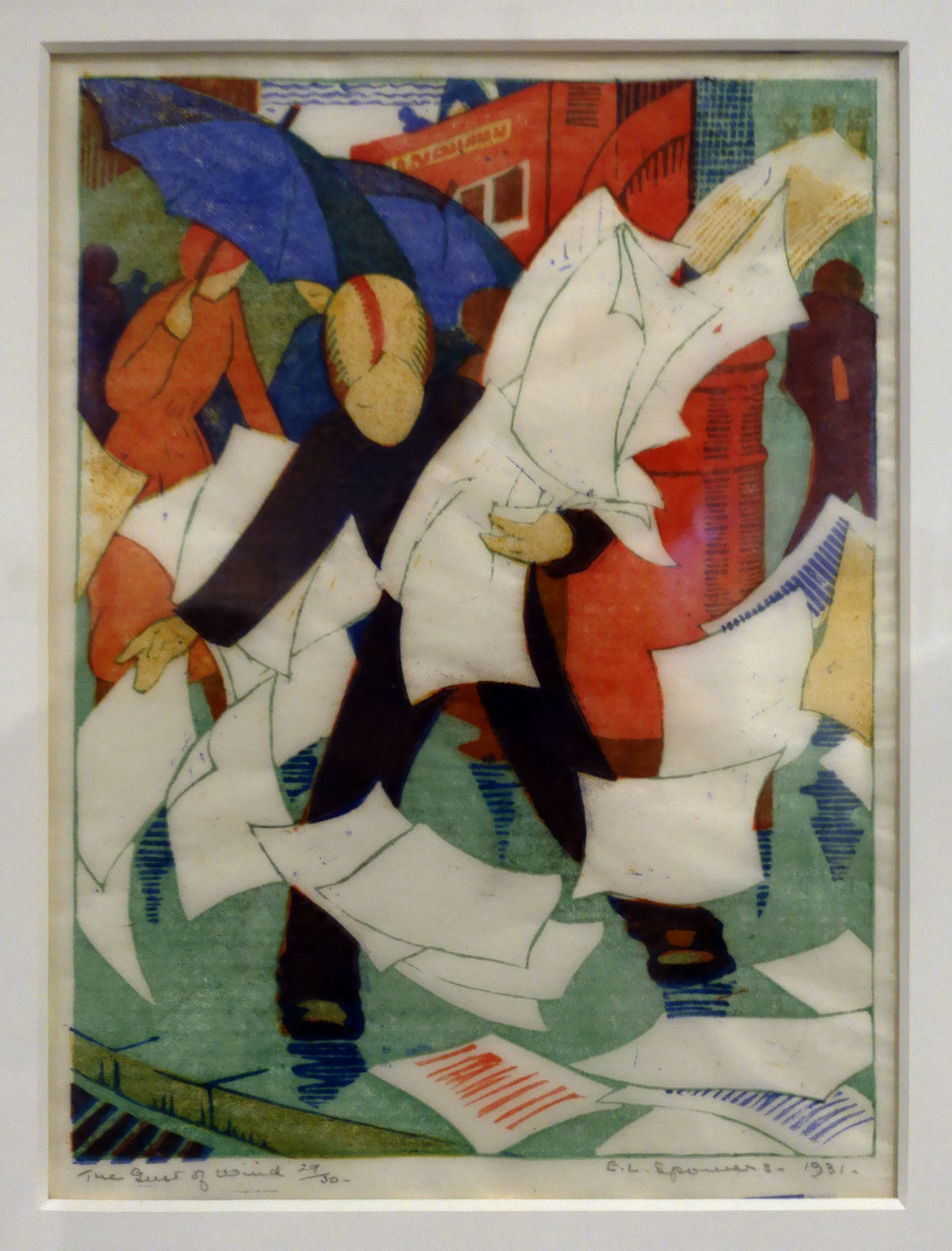
Ethel Spowers (Australian, 1890-1947) 'The gust of wind' 1931 (installation view)


Ethel Spowers (Australian, 1890-1947)
The gust of wind (installation view)
1931
Melbourne
Linocut, printed in colour inks, from four blocks
National Gallery of Australia, Kamberri/Canberra
Purchased 1976
Photo: Marcus Bunyan


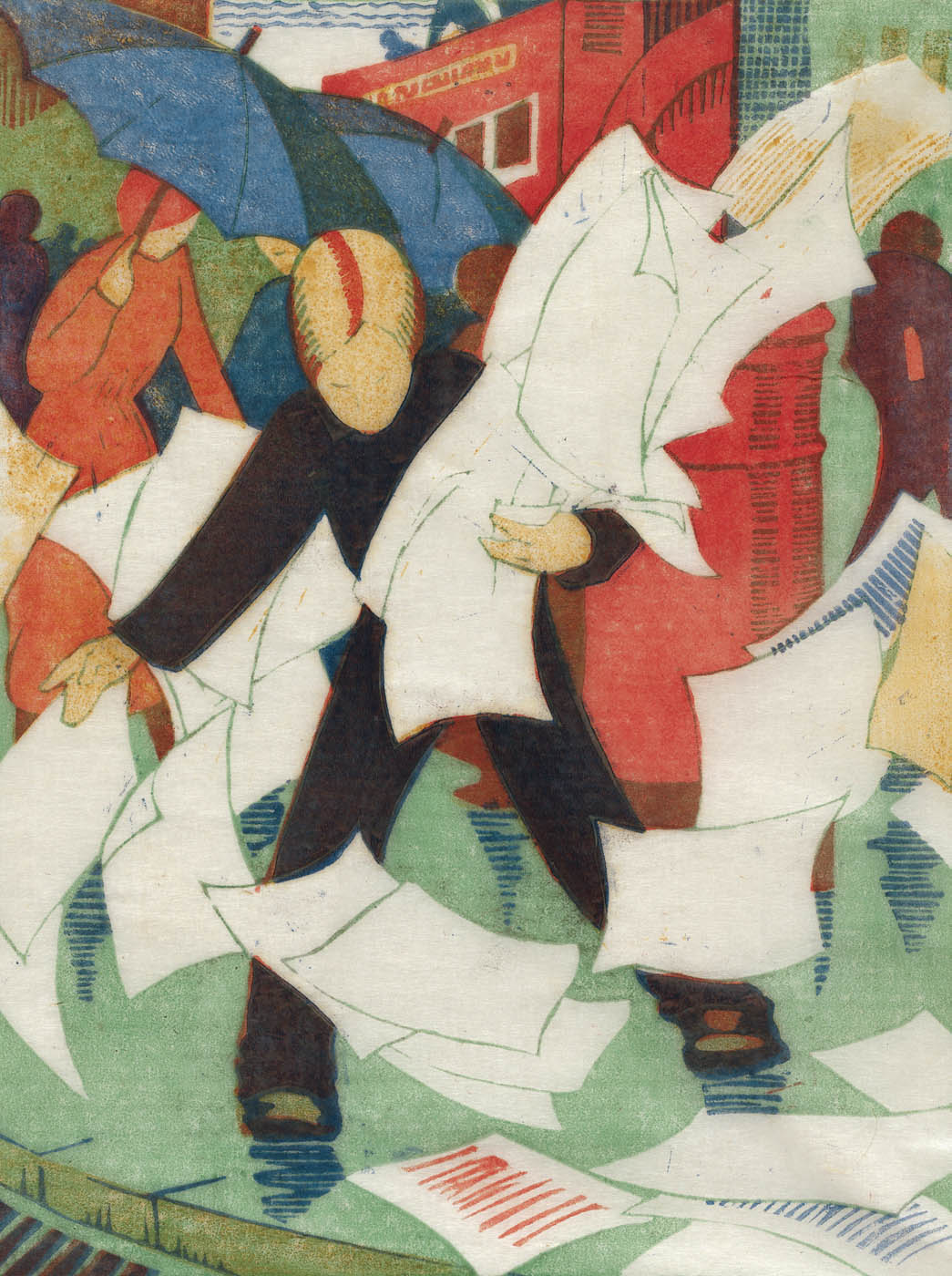
Ethel Spowers (Australian, 1890-1947) 'The gust of wind' 1931 from the exhibition 'Spowers & Syme' at the Geelong Art Gallery, Victoria, July - Oct, 2022


Ethel Spowers (Australian, 1890-1947)
The gust of wind
1931
National Gallery of Australia, Kamberri/Canberra
Purchased 1976


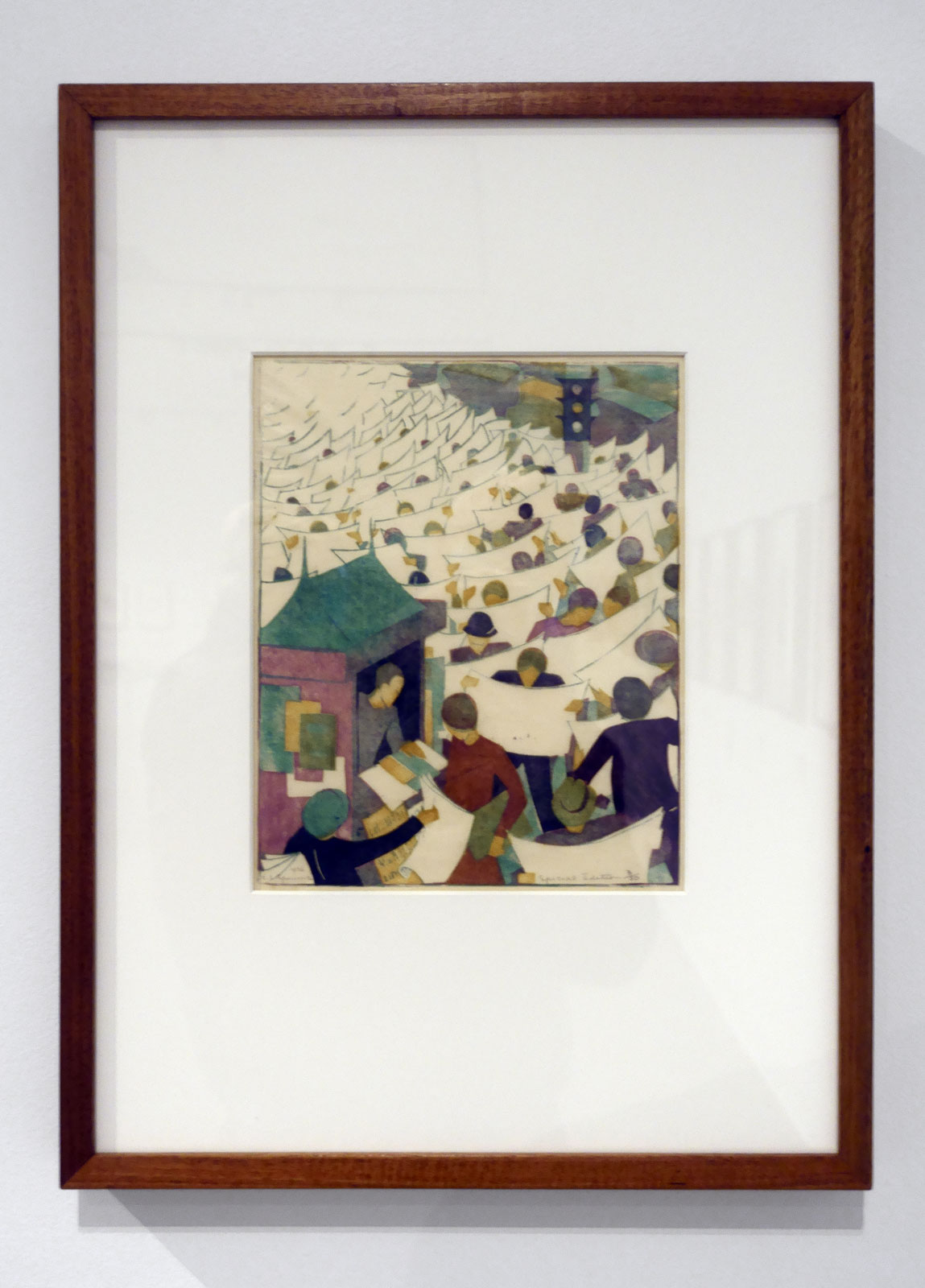
Ethel Spowers (Australian, 1890-1947) 'Special edition' 1936 (installation view)


Ethel Spowers (Australian, 1890-1947)
Special edition (installation view)
1936
Melbourne
Linocut, printed in colour inks, from four blocks
National Gallery of Australia, Kamberri/Canberra
Purchased 1976
Photo: Marcus Bunyan


Raised in Toorak society, Ethel Spowers was the second daughter of William Spewers, an Aotearoa New Zealand-born journalist and proprietor of The Argus and The Australasian newspapers. The Spowers family lived at Toorak House in St Georges Road. Eveline Syme was the first-born daughter of company director and pastoralist Joseph Syme, who was a partner in competing newspaper The Age until 1891. The Syme family lived at Rotherfield (now Sherwood Hall) in St Kilda. Eveline moved to Toorak in around 1927.

Wall text


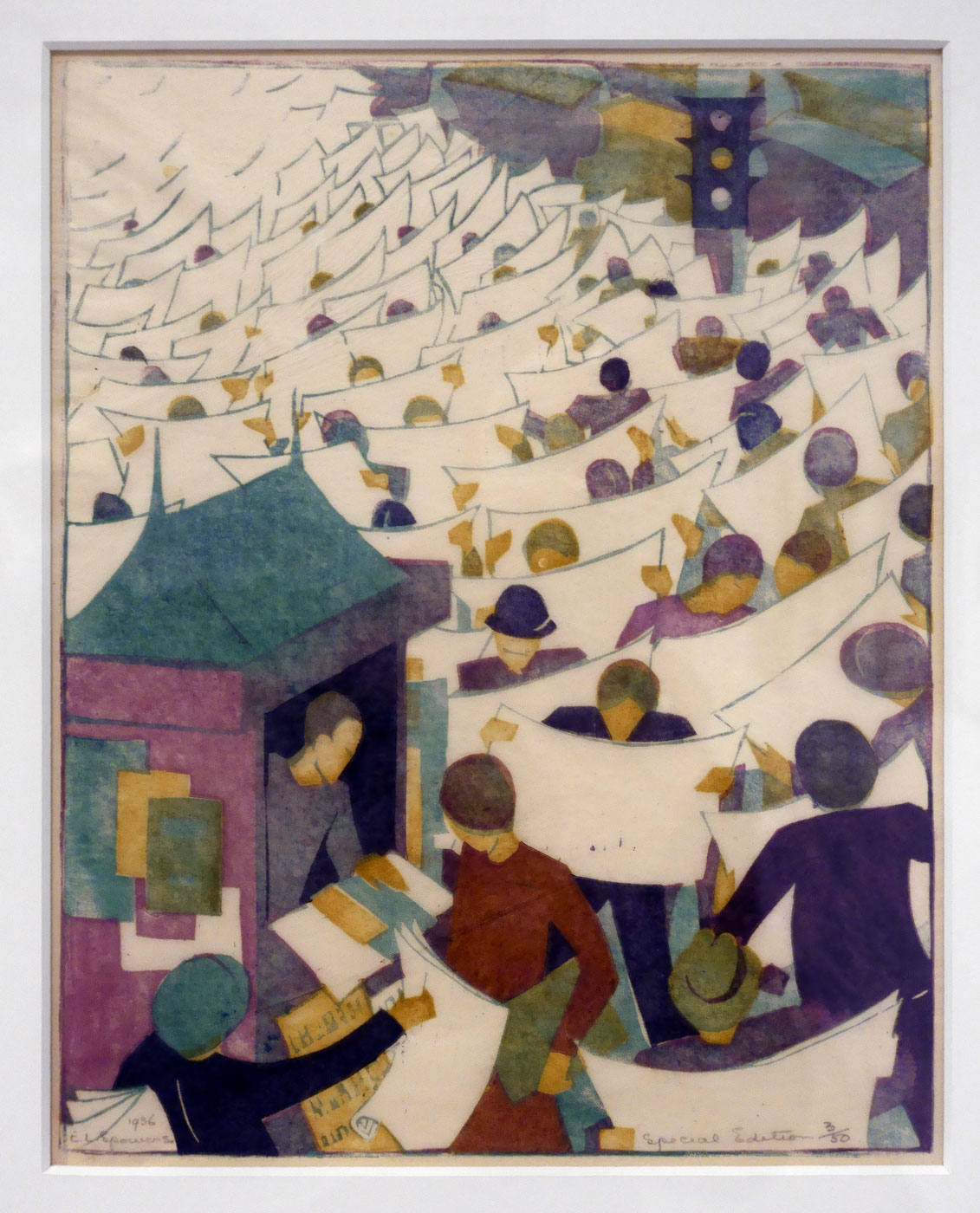
Ethel Spowers (Australian, 1890-1947) 'Special edition' 1936 (installation view)


Ethel Spowers (Australian, 1890-1947)
Special edition (installation view)
1936
Melbourne
Linocut, printed in colour inks, from four blocks
National Gallery of Australia, Kamberri/Canberra
Purchased 1976
Photo: Marcus Bunyan


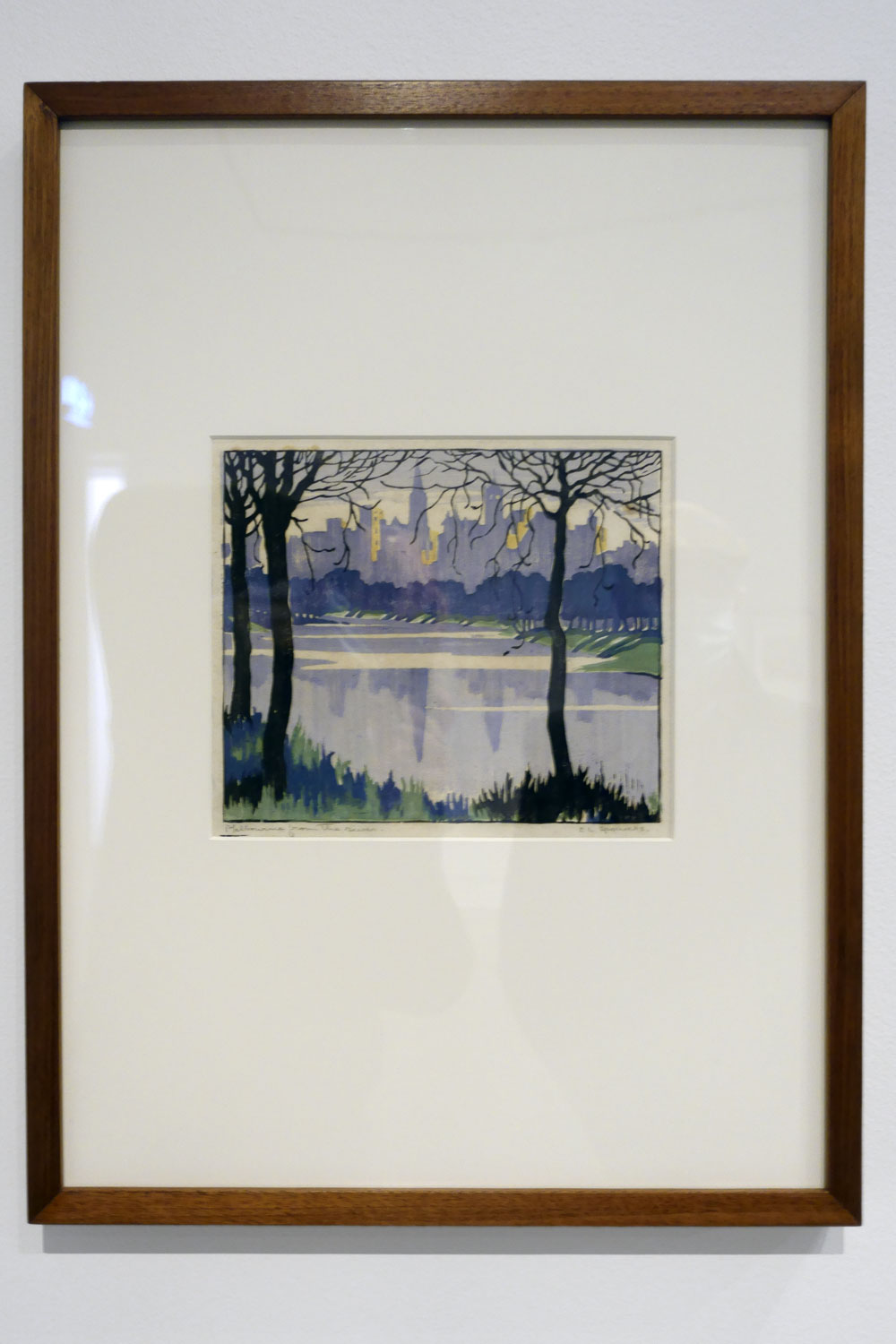
Ethel Spowers (Australian, 1890-1947) 'Melbourne from the river' c. 1924 (installation view)


Ethel Spowers (Australian, 1890-1947)
Melbourne from the river (installation view)
c. 1924
Melbourne
Woodcut, printed in colour inks in the Japanese manner, from five blocks
National Gallery of Australia, Kamberri/Canberra
Purchased 1976
Photo: Marcus Bunyan


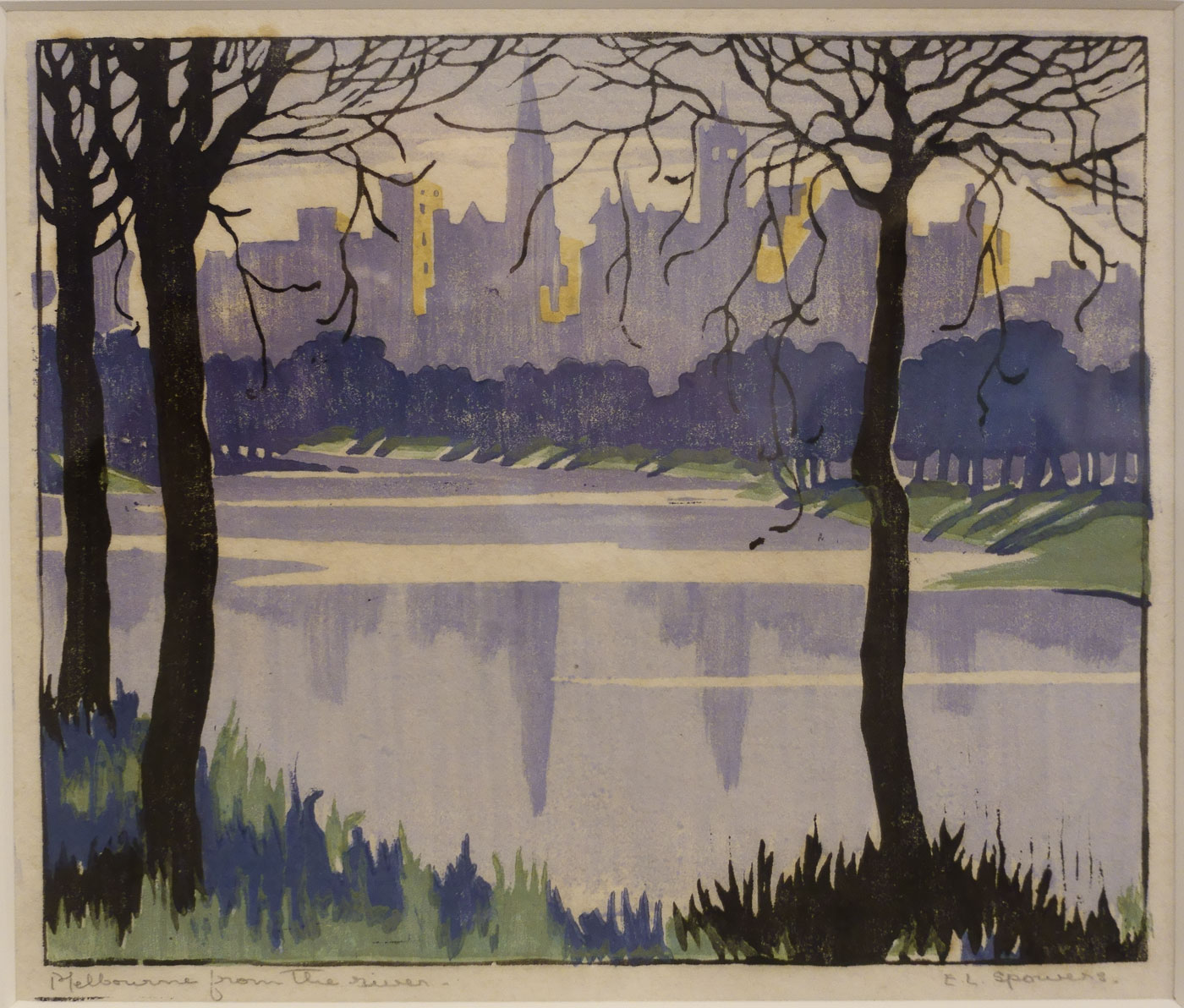
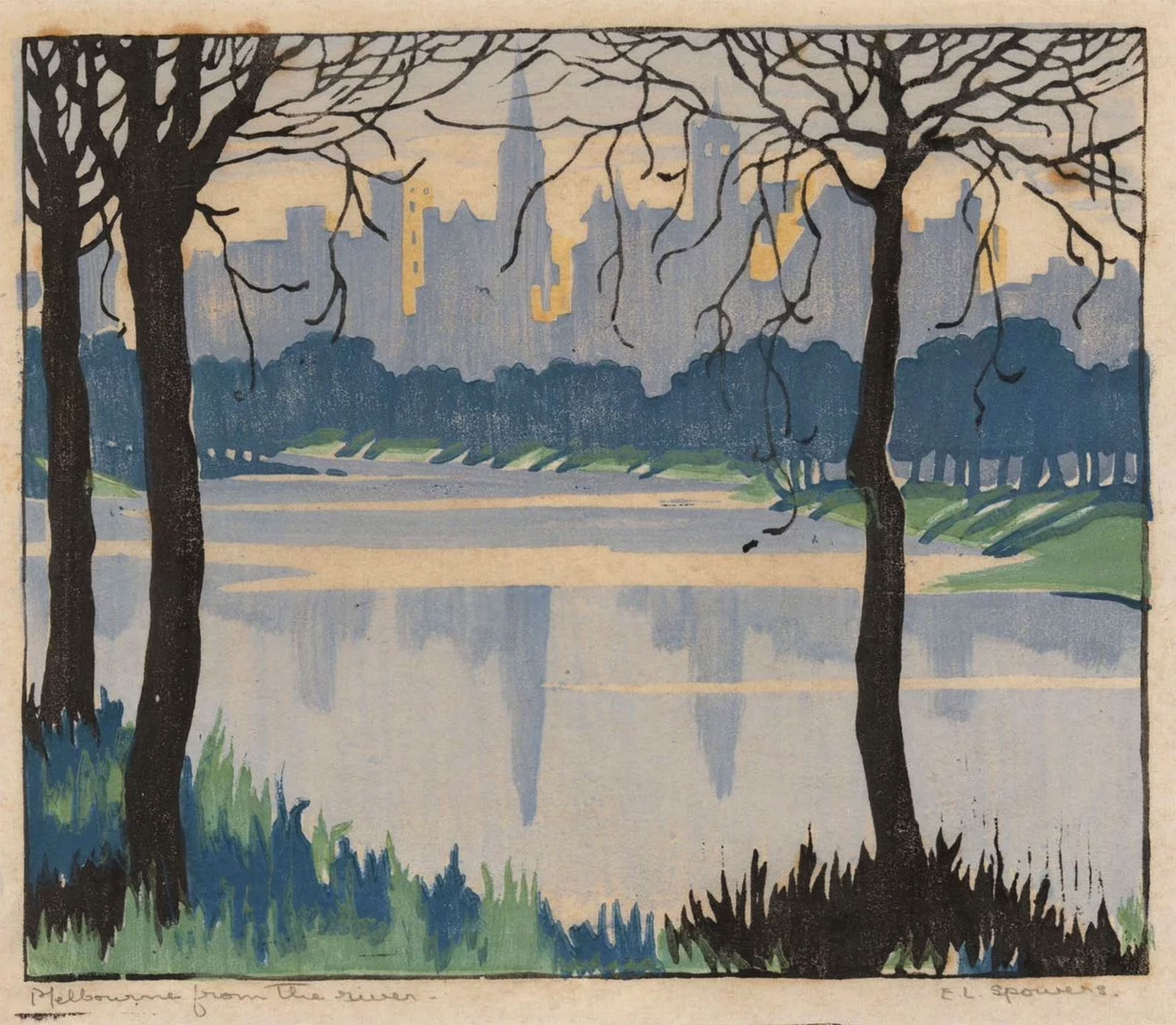
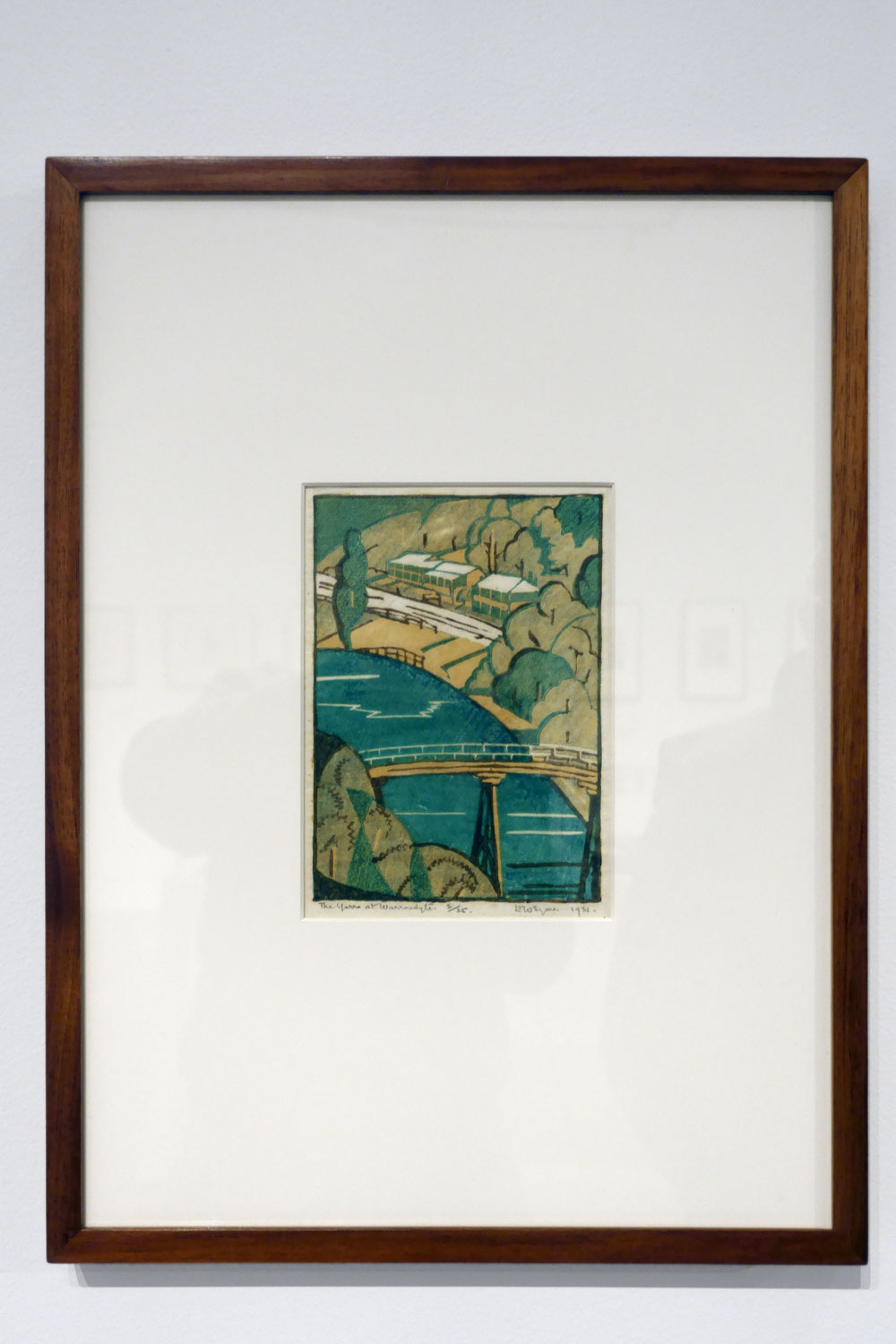
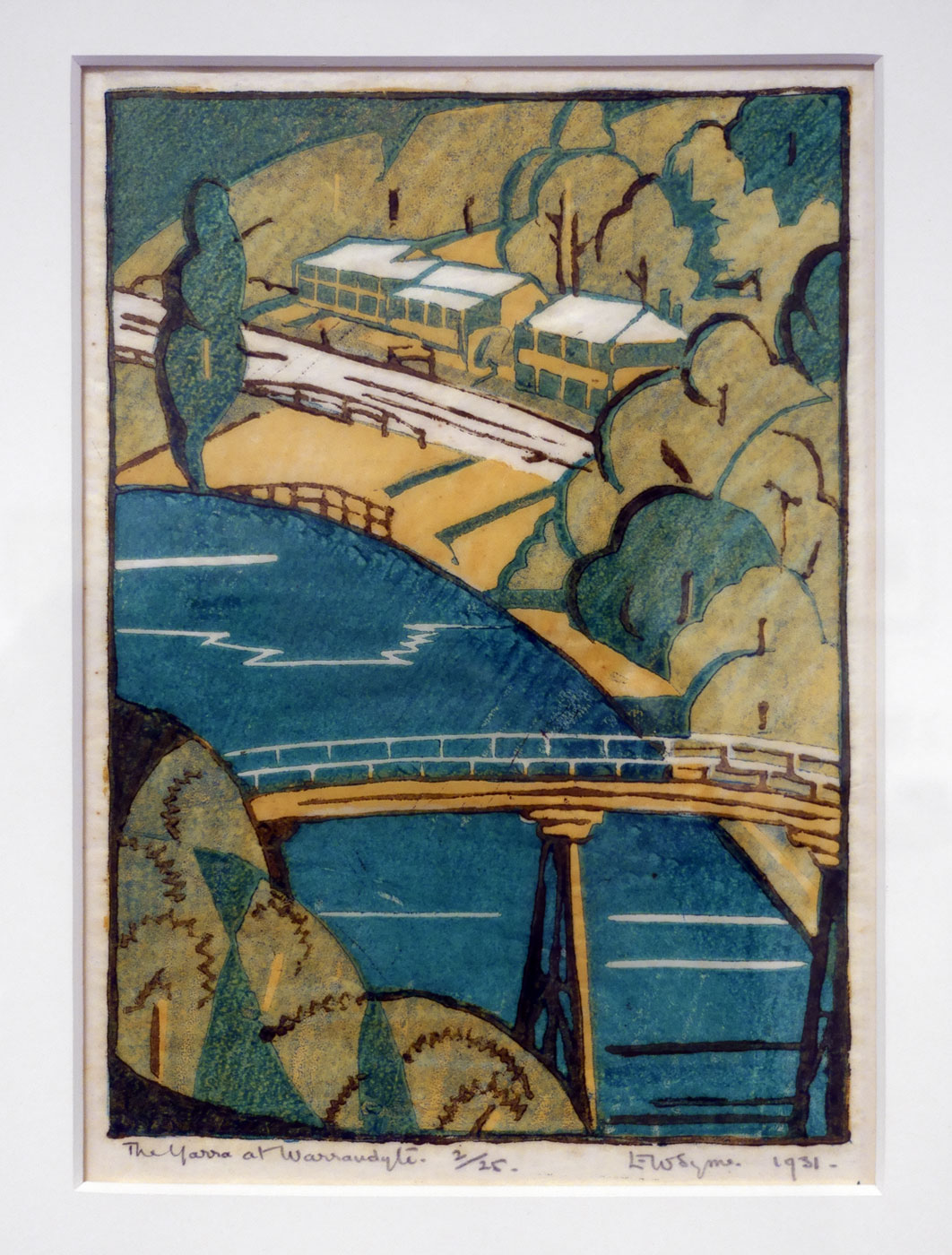
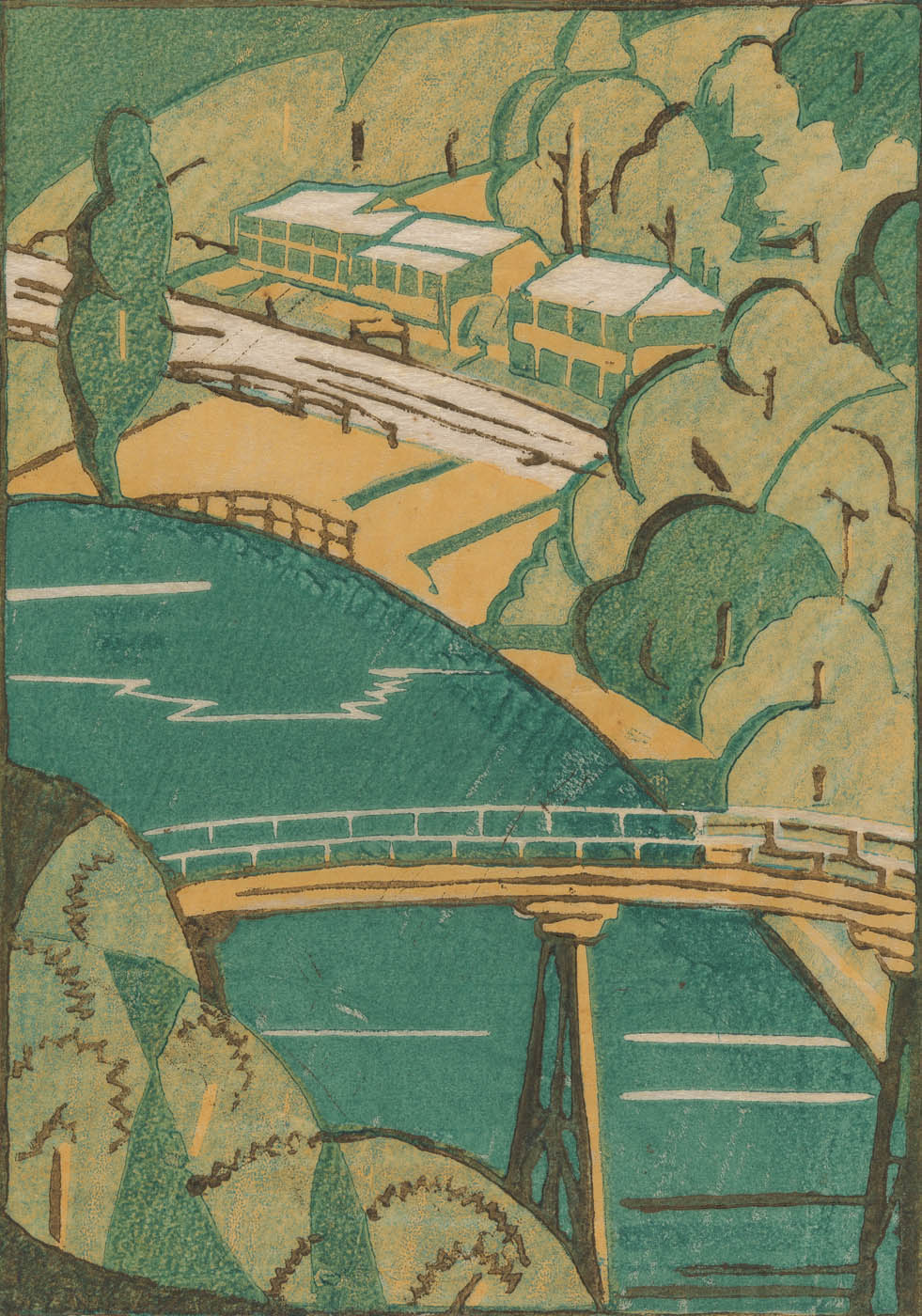
A sense of place is important to all of us. For Spowers and Syme, Melbourne (Naarm) was their home and held a special place in their hearts. In the 1920s, Melbourne was an important city. Lively and busy, it was also very accessible to the river and beautiful landmarks. The Yarra River (Birrarung) winding gently through the city and the industrial landscape at Yallourn were worthy subjects to focus on. Spowers’ earlier work Melbourne from the river c 1924 (below) was created looking at the river and is framed by spindly trees.

Text from the National Gallery of Australia website


Ethel Spowers (Australian, 1890-1947) 'Melbourne from the river' c. 1924 (installation view)


Ethel Spowers (Australian, 1890-1947)
Melbourne from the river (installation view)
c. 1924
Melbourne
Woodcut, printed in colour inks in the Japanese manner, from five blocks
National Gallery of Australia, Kamberri/Canberra
Purchased 1976
Photo: Marcus Bunyan


Ethel Spowers (Australian, 1890-1947) 'Melbourne from the river' c. 1924 from the exhibition 'Spowers & Syme' at the Geelong Art Gallery, Victoria, July - Oct, 2022


Ethel Spowers (Australian, 1890-1947)
Melbourne from the river
c. 1924
Melbourne
Woodcut, printed in colour inks in the Japanese manner, from five blocks
National Gallery of Australia, Kamberri/Canberra
Purchased 1976


Eveline Syme (Australian, 1888-1961) 'Banks of the Yarra' 1935 (installation view)


Eveline Syme (Australian, 1888-1961)
Banks of the Yarra (installation view)
1935
Melbourne
Linocut, printed in colour inks, from three blocks
National Gallery of Australia, Kamberri/Canberra
Photo: Marcus Bunyan


Eveline Syme (Australian, 1888-1961) 'Banks of the Yarra' 1935


Eveline Syme (Australian, 1888-1961)
Banks of the Yarra
1935
Melbourne
Linocut, printed in colour inks, from three blocks
National Gallery of Australia, Kamberri/Canberra


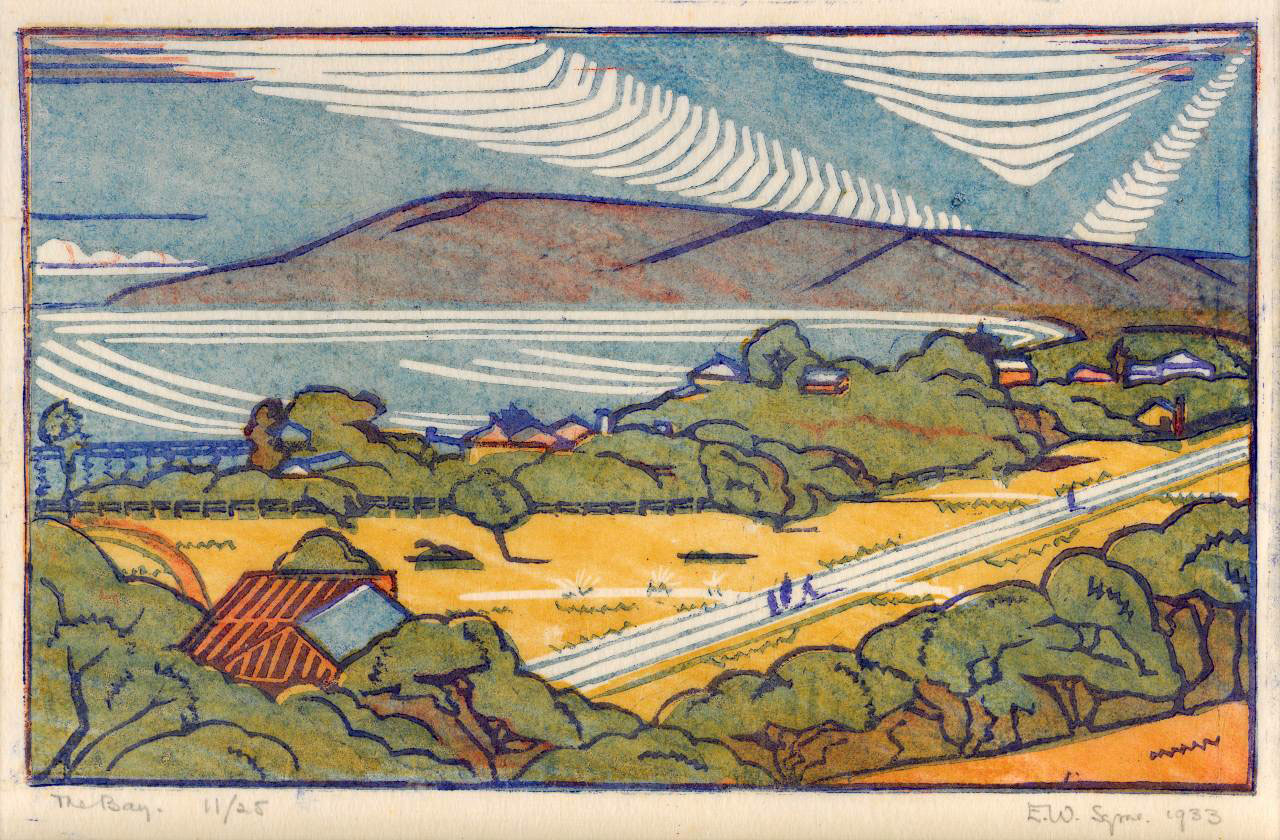
Eveline Syme (Australian, 1888-1961) 'The bay' 1932 (installation view)

Eveline Syme (Australian, 1888-1961) 'The bay' 1932 (installation view)


Eveline Syme (Australian, 1888-1961)
The bay (installation views)
1932
Melbourne
Linocut, printed in colour inks, from four blocks
National Gallery of Australia, Kamberri/Canberra
Purchased 1977
Photos: Marcus Bunyan


Eveline Syme (Australian, 1888-1961) 'The bay' 1932 from the exhibition 'Spowers & Syme' at the Geelong Art Gallery, Victoria, July - Oct, 2022


Eveline Syme (Australian, 1888-1961)
The bay
1932
Melbourne
Linocut, printed in colour inks, from four blocks
National Gallery of Australia, Kamberri/Canberra
Purchased 1977


Geelong Gallery is delighted to present National Gallery of Australia Touring Exhibition, Spowers & Syme opening on Saturday 16 July 2022.

Celebrating the artistic friendship of Melbourne artists Ethel Spowers and Eveline Syme, the Know My Name touring exhibition presents the changing
face of interwar Australia through the perspective of two pioneering women artists.

The National Gallery’s Curator of Australian Prints and Drawings, Dr Sarina Noordhuis-Fairfax hopes that Geelong and Victorian audiences will add the
names Spowers and Syme to their knowledge of ground-breaking women artists from the era including Margaret Preston, Thea Proctor, Dorrit Black and Grace Cossington Smith.

‘Spowers and Syme are often overlooked in Australian art history, yet during the 1930s they were recognised by peers as being among the most progressive artists working in Melbourne.’

‘Exhibiting in Australia and England, they championed key ideas from European modernism such as contemporary art reflecting the pace and vitality of life,’ said Noordhuis-Fairfax.

Much-loved for their dynamic approach to lino and woodcut prints, Spowers & Syme offers rare insights into the creative alliance between the daughters of rival media families from Melbourne-based newspapers The Argus and The Age. After studying art together in Paris and London, Spowers and Syme returned to the conservative art world of Australia where they became enthusiastic exponents of modern art during the 1930s and 1940s.

Geelong Galley Director & CEO, Jason Smith says ‘We look forward to sharing the important works of Spowers and Syme and exploring their contributions further through a number of public and education programs. Spowers & Syme will be further contextualised by modernist works by women artists in our Geelong permanent collection including a major survey of printmaker, Barbara Brash.

Press release from the Geelong Art Gallery


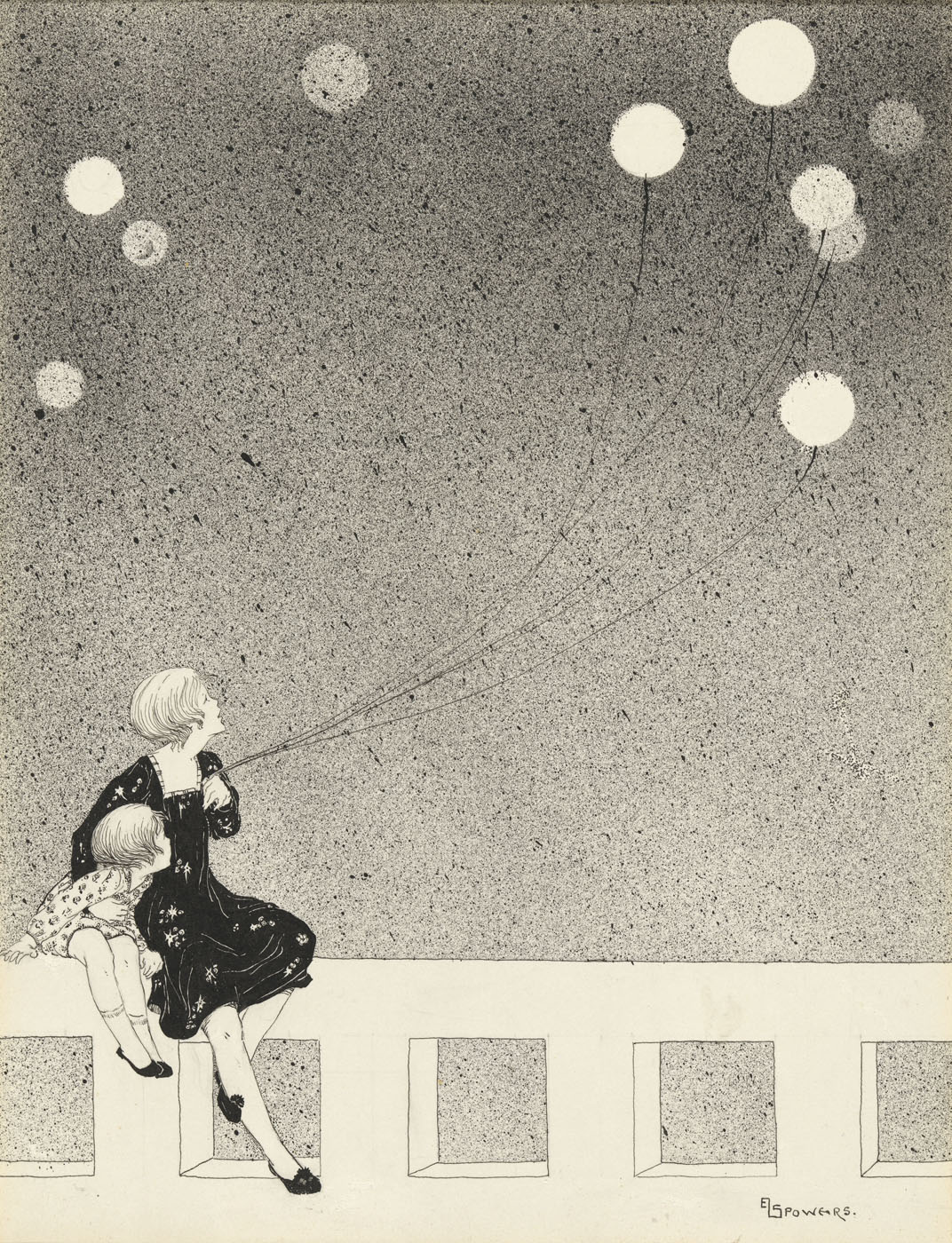
Ethel Spowers (Australian, 1890-1947) 'Balloons' c. 1920


Ethel Spowers (Australian, 1890-1947)
Balloons
c. 1920
National Gallery of Australia, Kamberri/Canberra
Gift of Chris Montgomery 1993


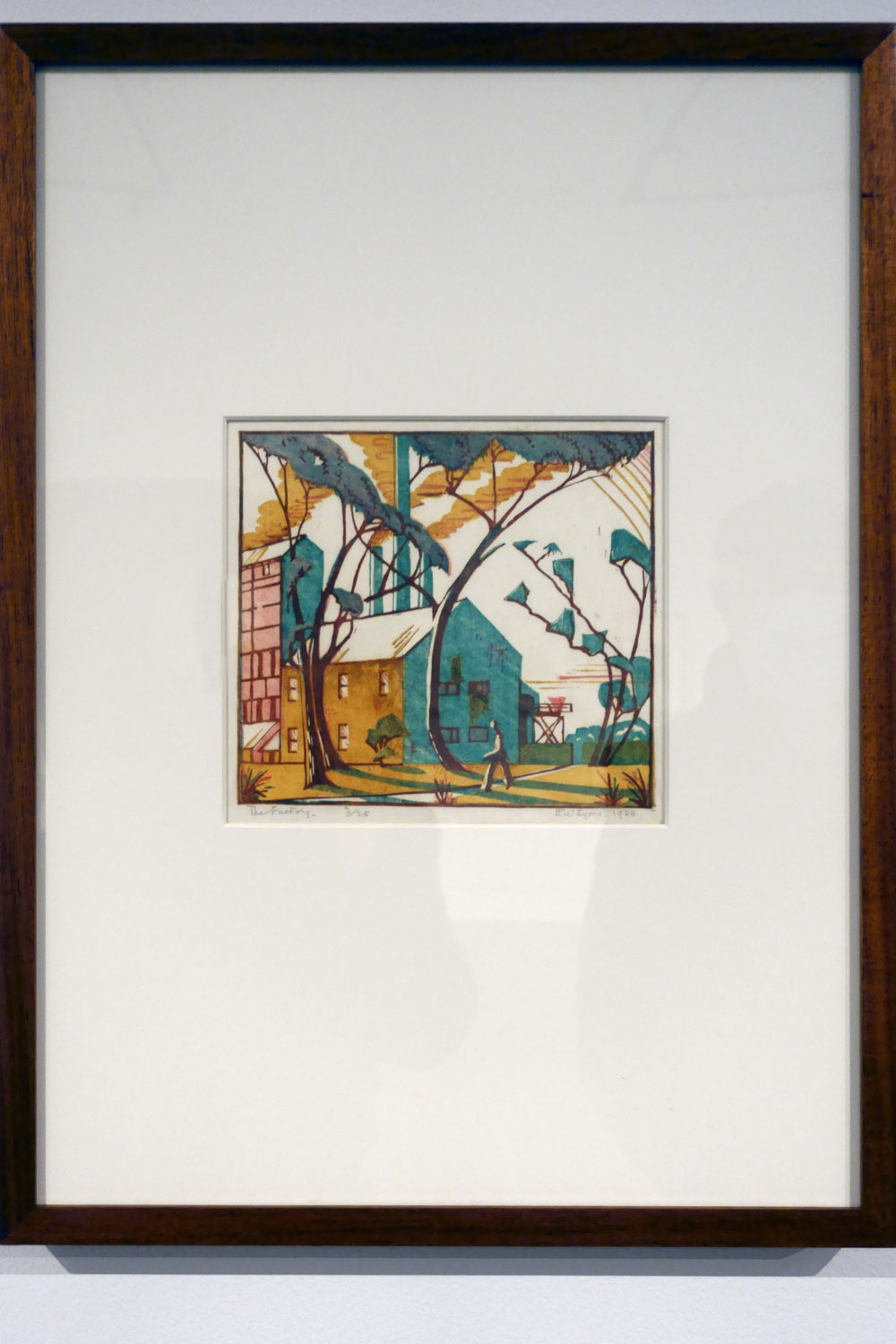
Eveline Syme (Australian, 1888-1961) 'The factory' 1933 (installation view)


Eveline Syme (Australian, 1888-1961)
The factory (installation view)
1933
Melbourne
Linocut, printed in colour inks, from four blocks
National Gallery of Australia, Kamberri/Canberra
Purchased 1979
Photo: Marcus Bunyan


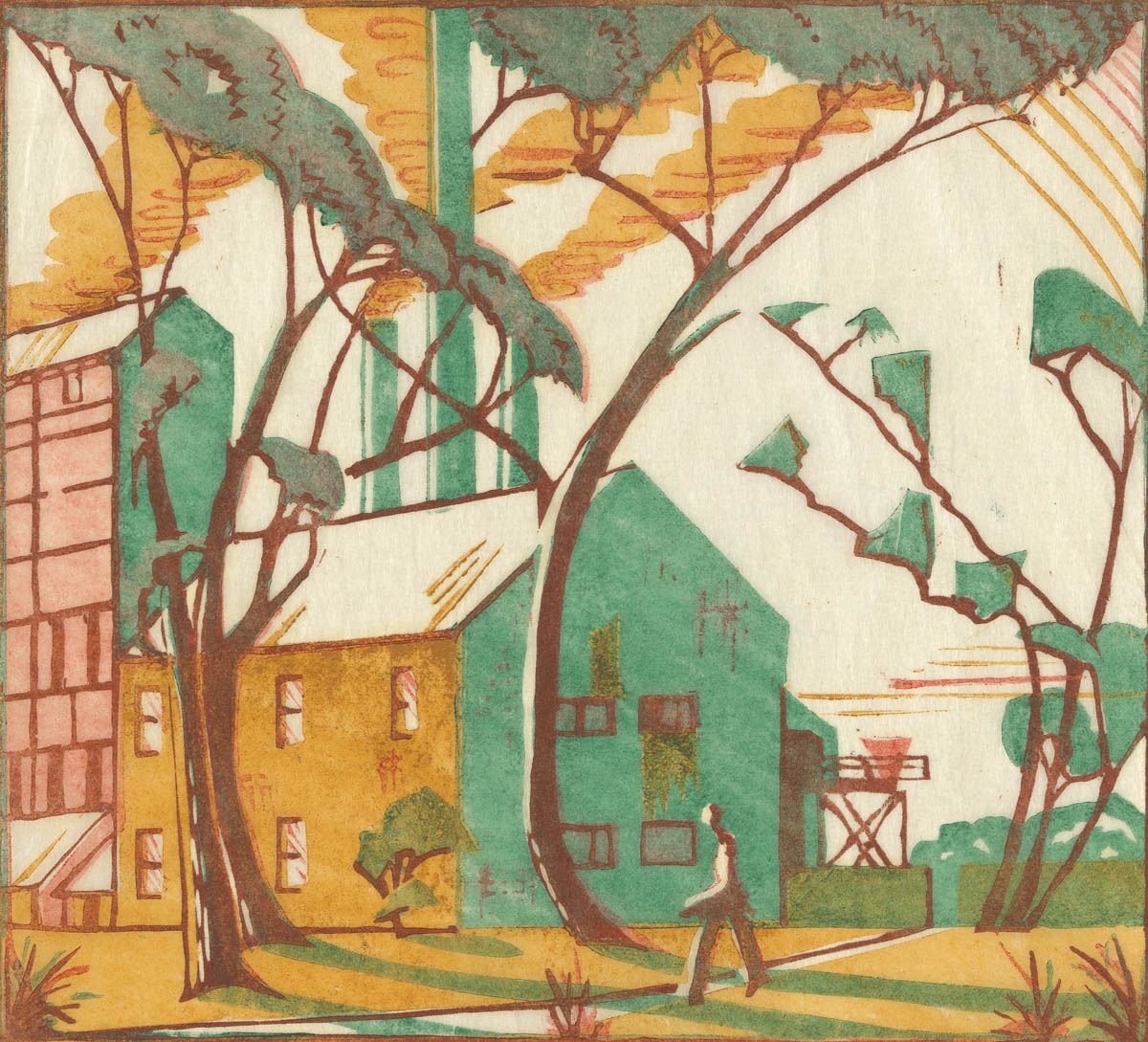
Eveline Syme (Australian, 1888-1961) 'The factory' 1933


Eveline Syme (Australian, 1888-1961)
The factory
1933
National Gallery of Australia, Kamberri/Canberra
Purchased 1979


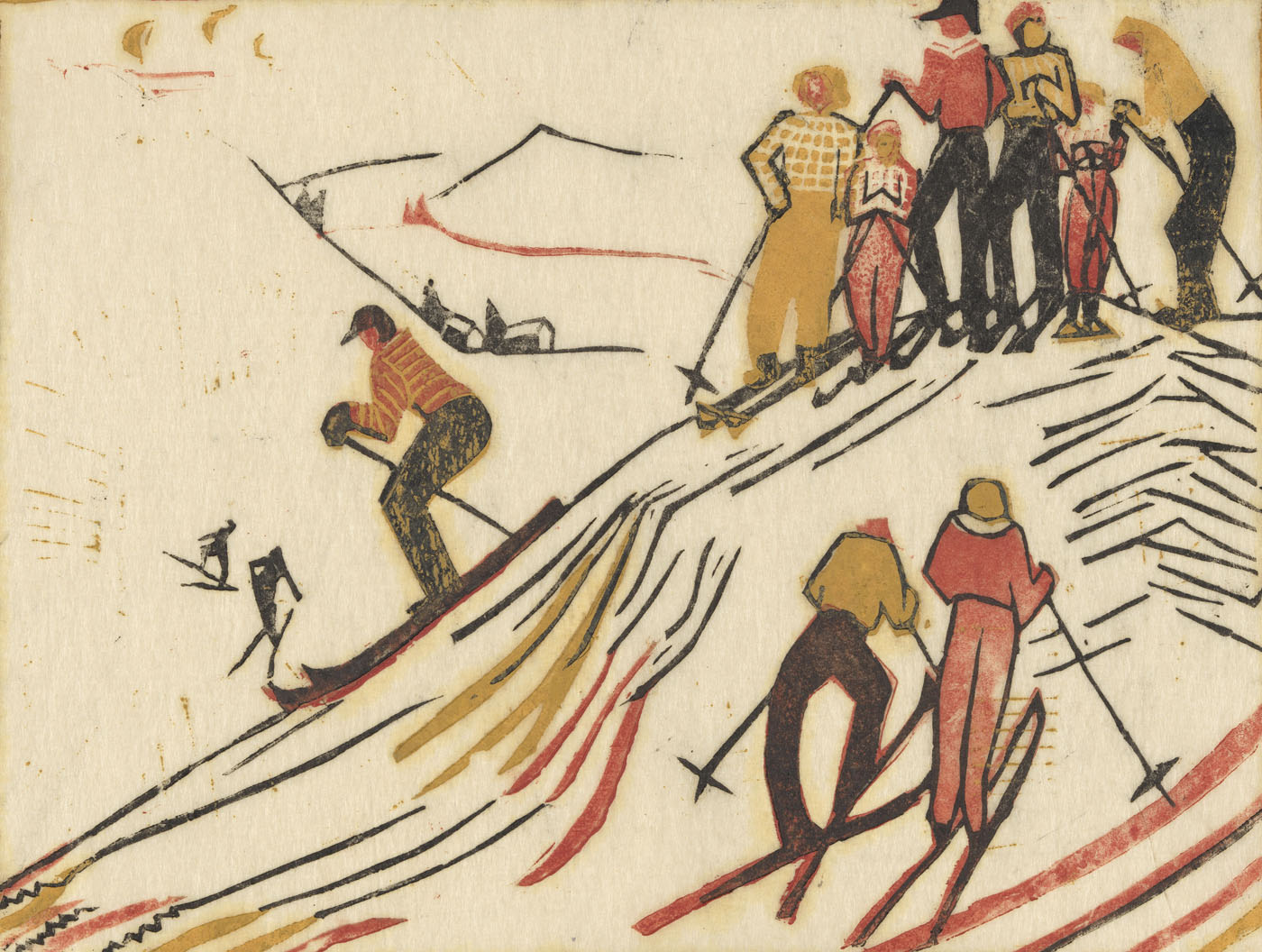
Eveline Syme (Australian, 1888-1961) 'Beginners' class' 1956


Eveline Syme (Australian, 1888-1961)
Beginners’ class
1956
National Gallery of Australia, Kamberri/Canberra
Purchased 1992


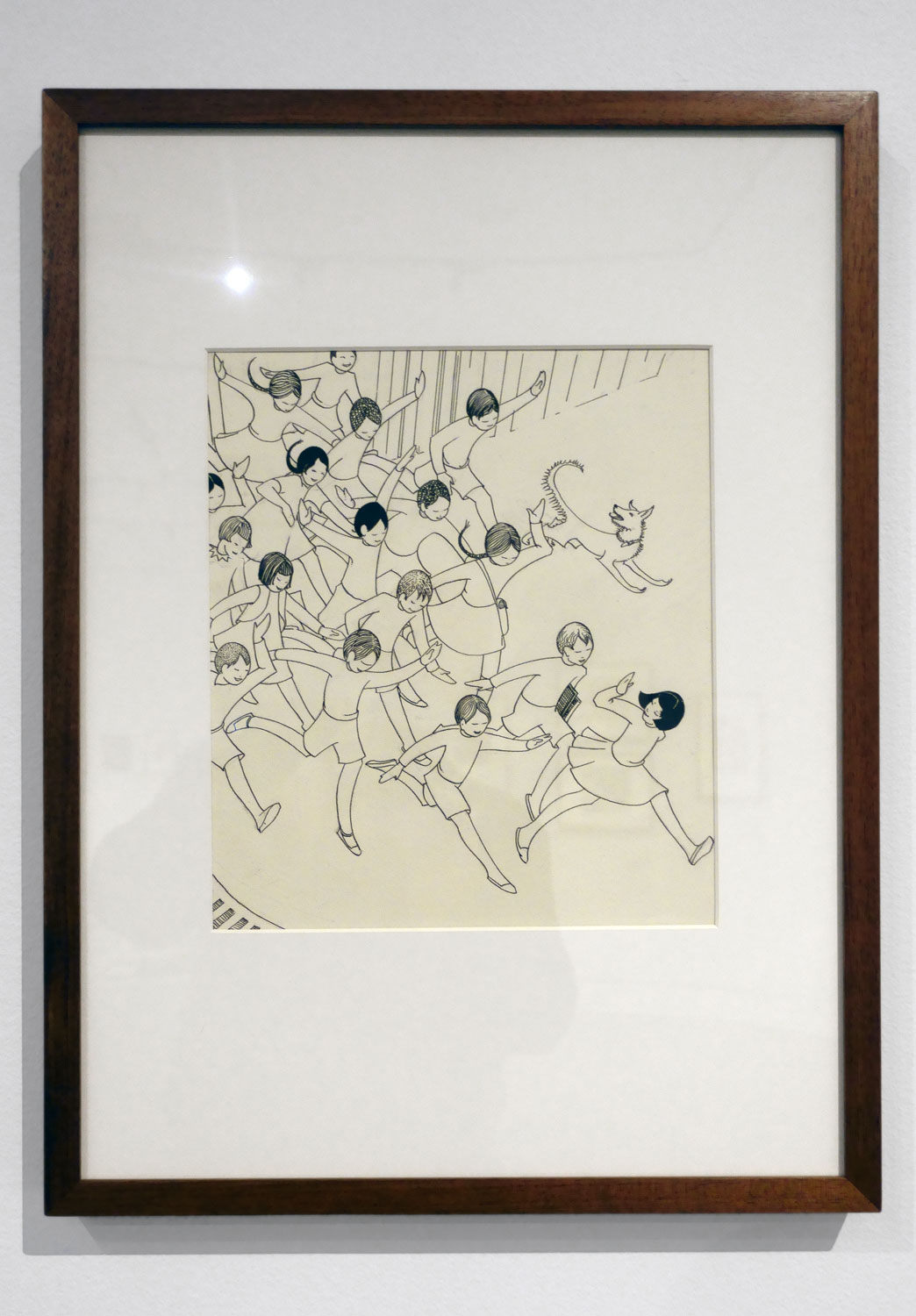
Ethel Spowers (Australian, 1890-1947) 'Drawing for the linocut 'School is out'' 1936 (installation view)


Ethel Spowers (Australian, 1890-1947)
Drawing for the linocut ‘School is out’ (installation view)
1936
Melbourne
Drawing in pen and black ink over pencil
National Gallery of Australia, Kamberri/Canberra
Gift of Chris Montgomery 1993
Photo: Marcus Bunyan


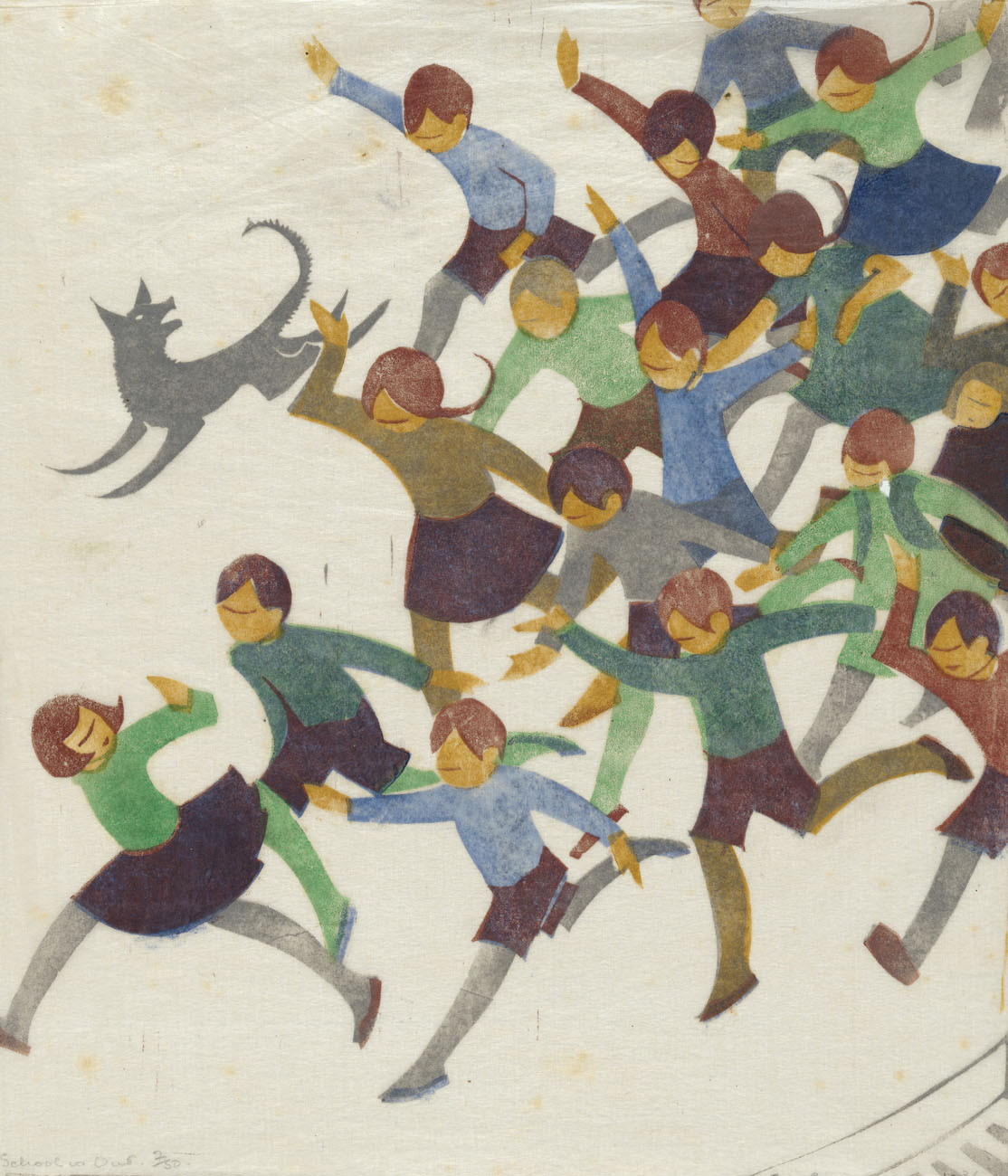
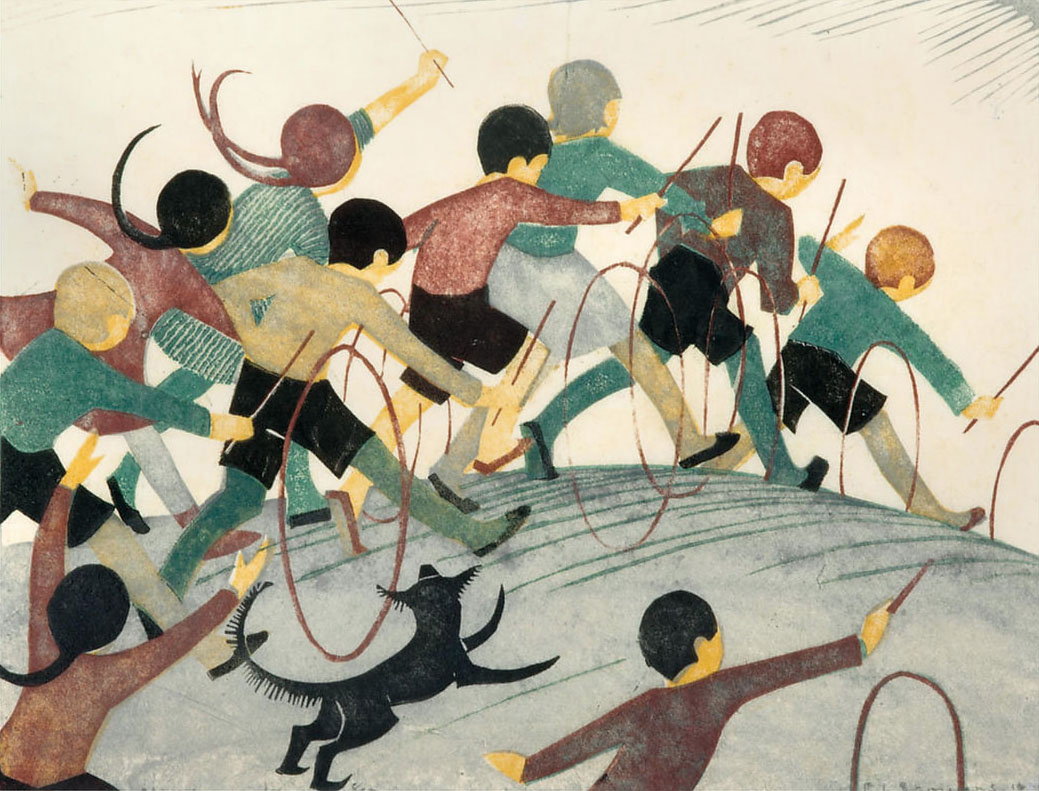
At the end of 1936 Spowers held her sixth and final solo exhibition. It was a survey of old favourites and new works, spanning a decade of imagination and experimentation. Among the twenty prints and six watercolours shown at Grosvenor Galleries in Sydney were five fresh linocuts: Kites, Football, School is out, Children’s hoops and Special edition. These works were a return to her most treasured themes: children and family.

Wall text


Ethel Spowers (Australian, 1890-1947) 'School is out' 1936


Ethel Spowers (Australian, 1890-1947)
School is out
1936
National Gallery of Australia, Kamberri/Canberra
Purchased 1976


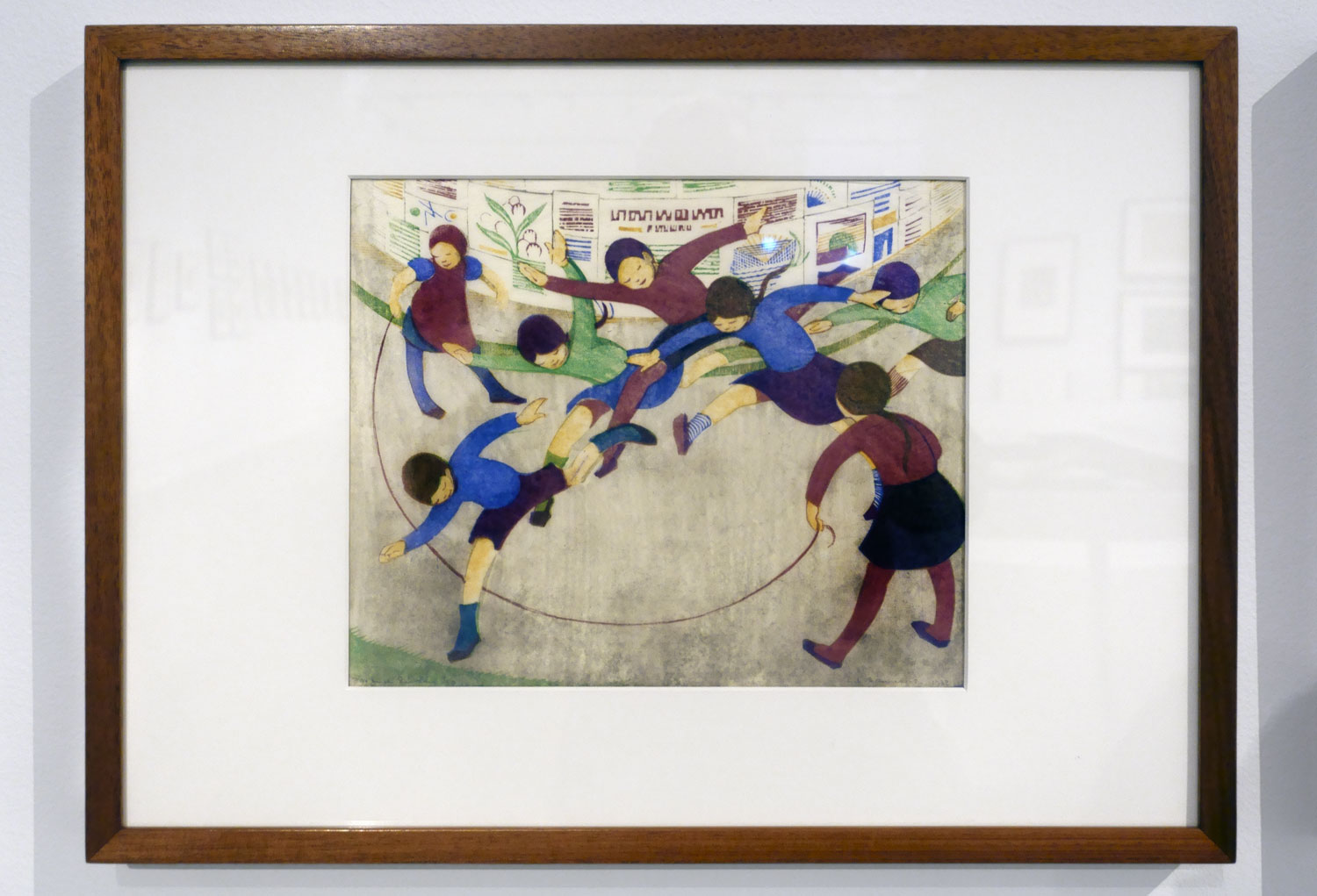
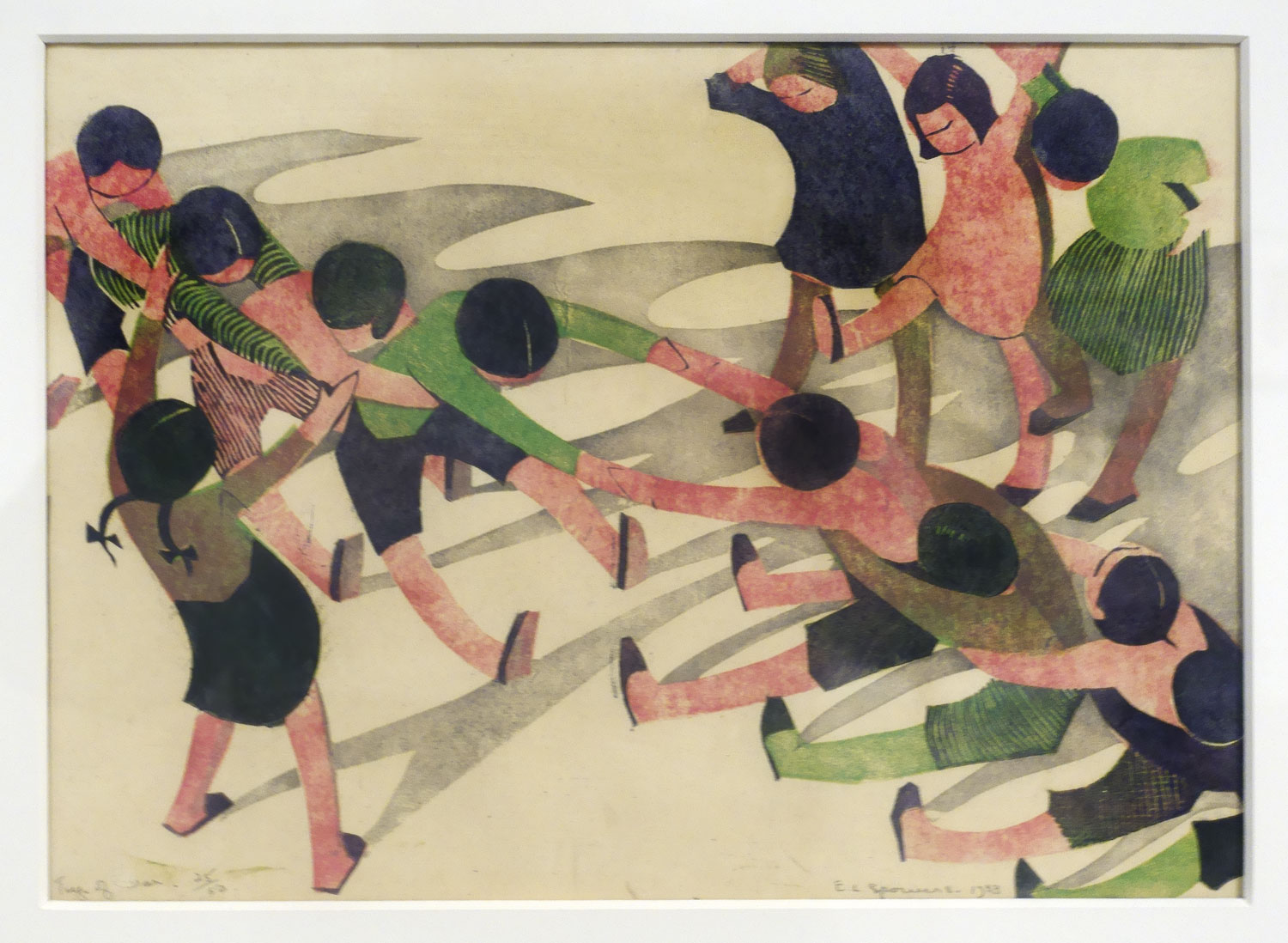
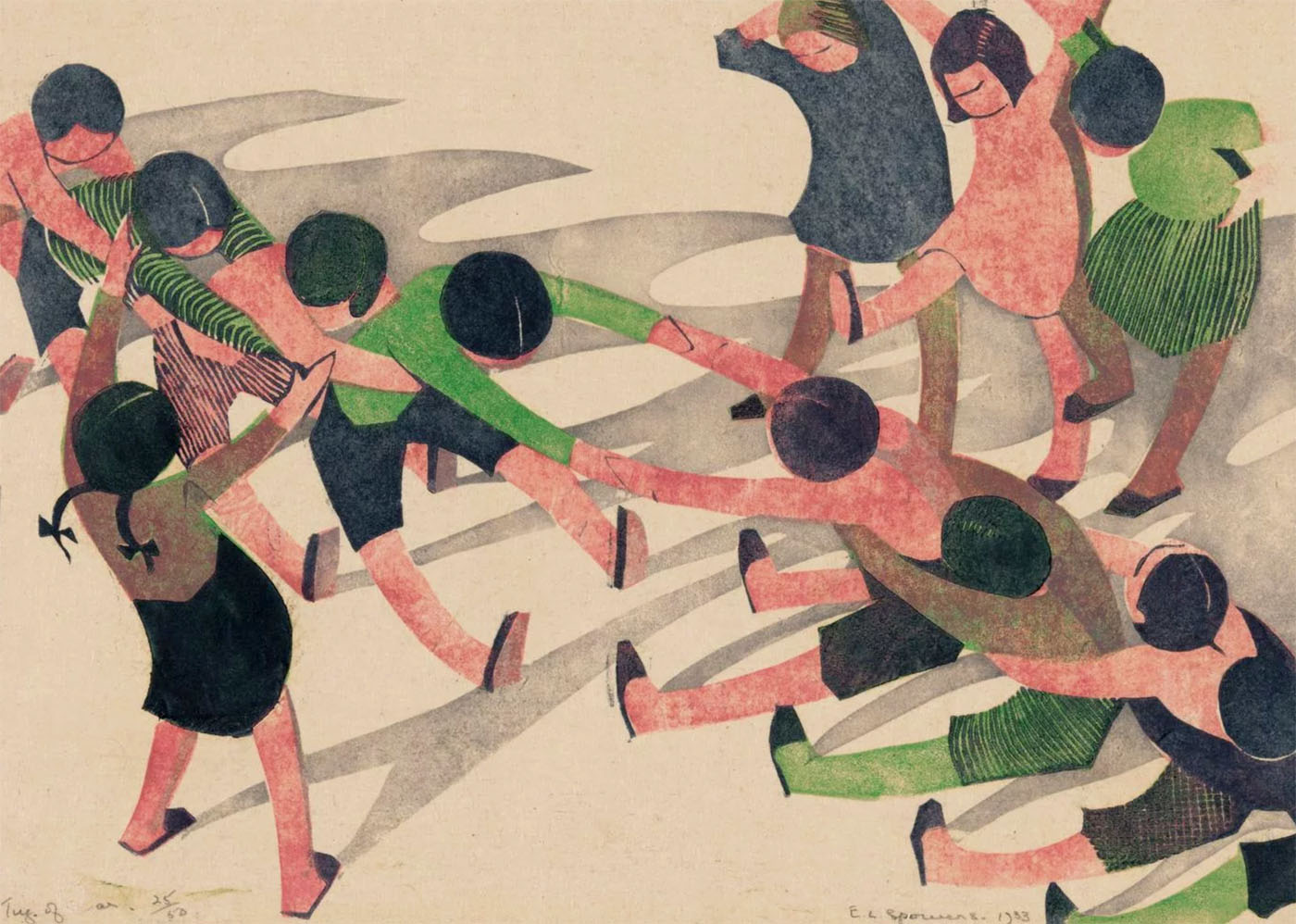
Ethel Spowers and Eveline Syme captured the joy and dynamism of movement in sport and play. Through colour, pattern and intersecting lines we see the speed and energy of children skipping, running, reaching to catch a ball and the pace of skaters circling the rink in the icy coldness. Who could forget the wonderful feeling of swinging as high as possible, looking down at the world?

Spowers’ images of children playing are reminiscent of her own childhood and have a whimsical charm about them. They capture the sense of wonder and curiosity seen in young children.

Linoleum (lino) was a floor covering that was invented in 1860. Imaginative artists discovered how effective it was for creating prints. With the right tools, it was easy to carve an image into it and make prints using coloured inks on the exposed surface.

Anonymous text. “Play and Games – Spowers & Syme: Primary School Learning Resource,” on the National Gallery of Australia website Nd [Online] Cited 29/08/2022


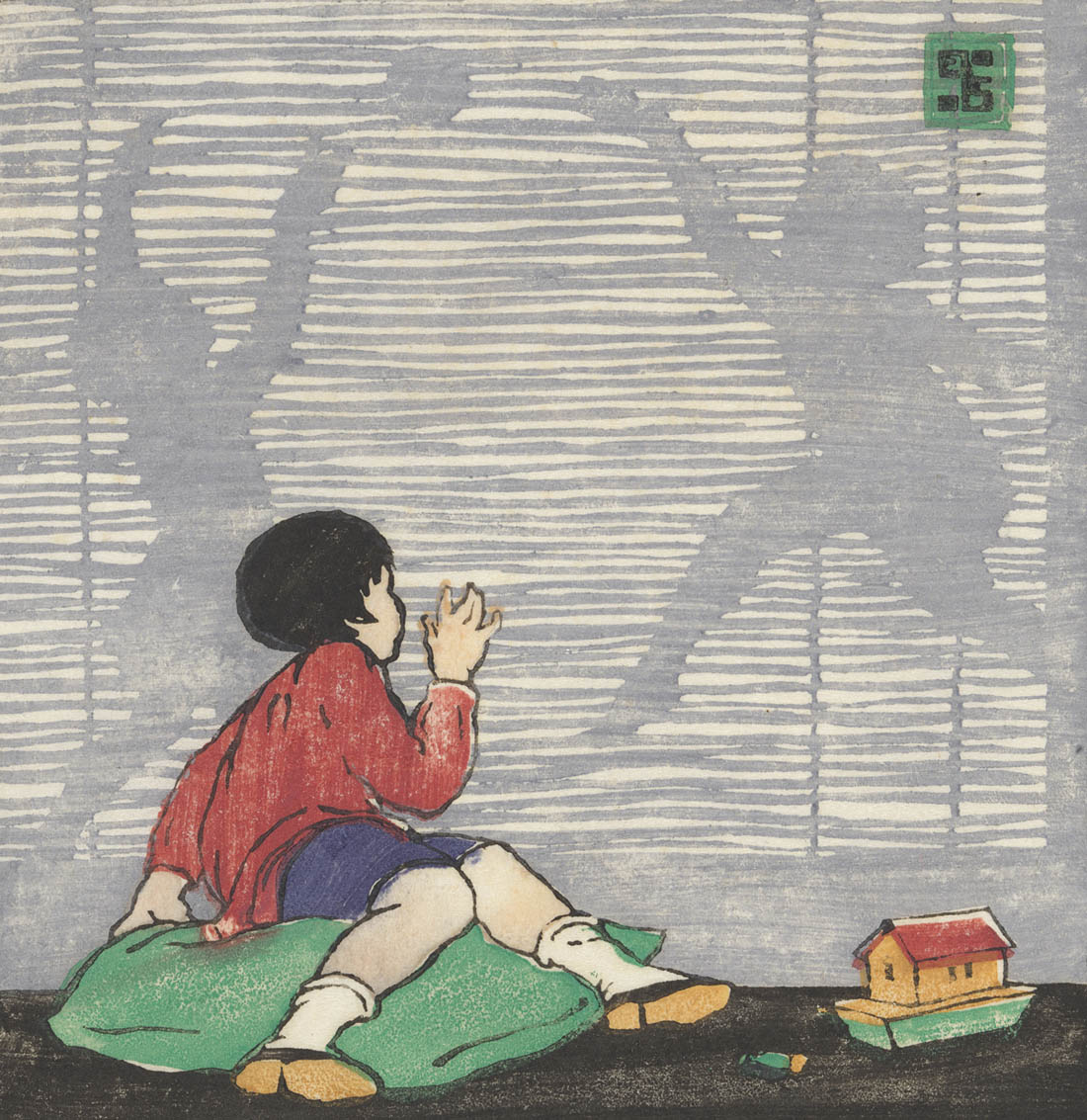
Ethel Spowers (Australian, 1890-1947) 'The bamboo blind' 1926


Ethel Spowers (Australian, 1890-1947)
The bamboo blind
1926
National Gallery of Australia, Kamberri/Canberra
Purchased 1976


Ethel Louise Spowers (1890-1947), painter and printmaker, was born on 11 July 1890 at South Yarra, Melbourne, second of six children of William George Lucas Spowers, a newspaper proprietor from New Zealand, and his London-born wife Annie Christina, née Westgarth. Allan Spowers was her only brother. She was educated at the Church of England Girls’ Grammar School, Melbourne, and was a prefect in 1908. Wealthy and cultured, her family owned a mansion in St Georges Road, Toorak. Ethel continued to live there as an adult and maintained a studio above the stables.

After briefly attending art school in Paris, Miss Spowers undertook (1911-1917) the full course in drawing and painting at Melbourne’s National Gallery schools. Her first solo exhibition, held in 1920 at the Decoration Galleries in the city, showed fairy-tale drawings influenced by the work of Ida Outhwaite. In 1921-1924 Spowers worked and studied abroad, at the Regent Street Polytechnic, London, and the Académie Ranson, Paris. She exhibited (1921) with fellow Australian artist Mary Reynolds at the Macrae Gallery, London. Two further solo shows (1925 and 1927) at the New Gallery, Melbourne, confirmed her reputation as an illustrator of fairy tales, though by then she was also producing woodcuts and linocuts inspired by Japanese art and covering a broader range of subjects.

A dramatic change in Spowers’ style occurred in 1929 when she studied under Claude Flight (the leading exponent of the modernist linocut) at the Grosvenor School of Modern Art, London. Her close friend Eveline Syme joined her there. Following further classes in 1931, during which Spowers absorbed modernist ideas of rhythmic design and composition from the principal Iain Macnab, she published an account of the Grosvenor School in the Recorder (Melbourne, 1932). In the 1930s her linocuts attracted critical attention for their bold, simplified forms, rhythmic sense of movement, distinctive use of colour and humorous observation of everyday life, particularly the world of children. They were regularly shown at the Redfern Gallery, London. The British Museum and the Victoria and Albert Museum purchased a number of her linocuts.

Stimulated by Flight’s proselytising zeal for the medium, Spowers organised in 1930 an exhibition of linocuts by Australian artists, among them Syme and Dorrit Black, at Everyman’s Library and Bookshop, Melbourne. A founding member (1932-1938) of George Bell‘s Contemporary Group, Spowers defended the modernist movement against its detractors. In an article in the Australasian on 26 April 1930 she called on ‘all lovers of art to be tolerant to new ideas, and not to condemn without understanding’.

Frances Derham remembered Spowers as being ‘tall, slender and graceful’, with ‘a small head, dark hair and grey eyes’. A rare photograph of Spowers, published in the Bulletin (3 September 1925), revealed her fashionable appearance and reflective character. In the late 1930s she stopped practising as an artist due to ill health, but continued her voluntary work at the Children’s Hospital. She died of cancer on 5 May 1947 in East Melbourne and was buried with Anglican rites in Fawkner cemetery. Although she had destroyed many of her paintings in a bonfire, a memorial exhibition of her watercolours, line-drawings, wood-engravings and colour linocuts was held at George’s Gallery, Melbourne, in 1948. Her prints are held by the National Gallery of Australia, Canberra, State galleries in Melbourne and Sydney, and the Ballarat Fine Art Gallery, Victoria.

Stephen Coppel. “Spowers, Ethel Louise (1890-1947),” in the Australian Dictionary of Biography, Volume 16 , 2002, online in 2006 [Online] Cited 26/08/2022


Eveline Syme (Australian, 1888-1961) 'The Yarra at Warrandyte' 1931 (installation view)

Eveline Syme (Australian, 1888-1961) 'The Yarra at Warrandyte' 1931 (installation view)


Eveline Syme (Australian, 1888-1961)
The Yarra at Warrandyte (installation views)
1931
National Gallery of Australia, Kamberri/Canberra
Purchased 1977
Photos: Marcus Bunyan


Eveline Syme (Australian, 1888-1961) 'The Yarra at Warrandyte' 1931


Eveline Syme (Australian, 1888-1961)
The Yarra at Warrandyte
1931
Melbourne
Linocut, printed in colour inks, from four blocks
National Gallery of Australia, Kamberri/Canberra
Purchased 1977


Eveline Winifred Syme (1888-1961), painter and printmaker, was born on 26 October 1888 at Thames Ditton, Surrey, England, daughter of Joseph Cowen Syme, newspaper proprietor, and his wife Laura, née Blair. Ebenezer Syme was her grandfather. Eveline was raised in the family mansion at St Kilda, Melbourne. After leaving the Church of England Girls’ Grammar School, Melbourne, she voyaged to England and studied classics in 1907-1910 at Newnham College, Cambridge (B.A., M.A., 1930). Because the University of Cambridge did not then award degrees to women, she applied to the University of Melbourne for accreditation, but was only granted admission to third-year classics. She chose instead to complete a diploma of education (1914).

Syme’s artistic career was enhanced by her close friendship with Ethel Spowers. She studied painting at art schools in Paris in the early 1920s, notably under Maurice Denis and André Lhote, and held a solo exhibition, mainly of watercolours, at Queen’s Hall, Melbourne, in 1925. Her one-woman shows, at the Athenaeum Gallery (1928) and Everyman’s Library and Bookshop (1931), included linocuts and wood-engravings. While many of her watercolours and prints drew on her travels through England, Provence, France, and Tuscany, Italy, she also responded to the Australian landscape, particularly the countryside around Melbourne and Sydney, and at Port Arthur, Tasmania. Syme’s chance discovery of Claude Flight’s textbook, Lino-Cuts (London, 1927), inspired her to enrol (with Spowers) in his classes at the Grosvenor School of Modern Art, London, in January 1929. In keeping with Flight’s modernist conception of the linocut, she began to produce prints incorporating bold colour and rhythmic design.

Returning to Melbourne in 1929 with an exhibition of contemporary wood-engravings from the Redfern Gallery, London, Syme became a cautious advocate of modern art. She published a perceptive account of Flight and his teaching in the Recorder (1929) and spoke on the radio about wood-engraving; she also wrote a pioneering essay on women artists in Victoria from 1857, which was published in the Centenary Gift Book (1934), edited by Frances Fraser and Nettie Palmer. Syme was a founding member (1932-1938) of George Bell‘s Contemporary Group. She regularly exhibited with the Melbourne Society of Women Painters and Sculptors and with the Independent Group of Artists. Her linocuts, perhaps her most significant achievement, owed much to her collaboration with Spowers.

During the mid-1930s Syme was prominent in moves to establish a women’s residential college at the University of Melbourne. In 1936, as vice-president of the appeal committee, she donated the proceeds of her print retrospective (held at the gallery of the Arts and Crafts Society of Victoria) to the building fund. A foundation member (1936-1961) of the council of University Women’s College, she served as its president (1940-1947) and as a member of its finance committee. She was appointed to the first council of the National Gallery Society of Victoria in 1947 and sat on its executive-committee in 1948-1953. In addition, she was a member (1919) and president (1950-1951) of the Lyceum Club.

A tall, elegant and reserved woman, Syme had a ‘crisp, quick voice’ and a ‘rather abrupt manner’. She died on 6 June 1961 at Richmond and was buried with Presbyterian forms in Brighton cemetery. In her will she left her books and £5000 to University Women’s College. Edith Alsop’s portrait (1932) of Syme is held by University College. Syme’s work is represented in the National Gallery of Australia, Canberra, State galleries in Melbourne, Sydney and Adelaide, and the Ballarat Fine Art Gallery, Victoria.

Stephen Coppel. “Syme, Eveline Winifred (1888-1961),” in the Australian Dictionary of Biography, Volume 16 , 2002, online in 2006 [Online] Cited 26/08/2022


Installation view of the exhibition 'Spowers & Syme' at the Geelong Art Gallery


Installation view of the exhibition Spowers & Syme at the Geelong Art Gallery showing at top left, Spowers The timber crane (1926, below); at top right, Spowers The plough (1928, below); at bottom left, Spowers The works, Yallourn (1933, below); and at bottom right, Spowers The lonely farm (1933, below)
Photo: Marcus Bunyan


Ethel Spowers (Australian, 1890-1947) 'The timber crane' 1926 (installation view)


Ethel Spowers (Australian, 1890-1947)
The timber crane (installation view)
1926
Melbourne
Linocut, printed in colour inks in the Japanese manner, from five blocks
National Gallery of Australia, Kamberri/Canberra
Purchased 1976
Photo: Marcus Bunyan


Ethel Spowers (Australian, 1890-1947) 'The plough' 1928 (installation view)


Ethel Spowers (Australian, 1890-1947)
The plough (installation view)
1928
London
Linocut, printed in colour inks, from three blocks
National Gallery of Australia, Kamberri/Canberra
Purchased 1978
Photo: Marcus Bunyan


Ethel Spowers (Australian, 1890-1947) 'The plough' 1928


Ethel Spowers (Australian, 1890-1947)
The plough
1928
London
Linocut, printed in colour inks, from three blocks
National Gallery of Australia, Kamberri/Canberra
Purchased 1978


Ethel Spowers (Australian, 1890-1947) 'The works, Yallourn' 1933


Ethel Spowers (Australian, 1890-1947)
The works, Yallourn
1933
Linocut
15.7 x 34.8cm (printed image)
National Gallery of Australia, Kamberri/Canberra
Purchased 1976


Eveline Syme (Australian, 1888-1961) 'Bulla Bridge' 1934


Eveline Syme (Australian, 1888-1961)
Bulla Bridge
1934
Wood engraving
10.1 x 14.7cm (printed image)
National Gallery of Australia, Kamberri/Canberra
Purchased 1977


Ethel Spowers (Australian, 1890-1947) 'The lonely farm' 1933 (installation view)

Ethel Spowers (Australian, 1890-1947) 'The lonely farm' 1933 (installation view)


Ethel Spowers (Australian, 1890-1947)
The lonely farm (installation views)
1933
Melbourne
Linocut, printed in colour inks, from five blocks
National Gallery of Australia, Kamberri/Canberra
Purchased 1976
Photos: Marcus Bunyan


Ethel Spowers (Australian, 1890-1947) 'Harvest' 1932 (installation view)


Ethel Spowers (Australian, 1890-1947)
Harvest (installation view)
1932
Melbourne
Linocut, printed in colour inks, from five blocks
National Gallery of Australia, Kamberri/Canberra
Purchased 1976
Photo: Marcus Bunyan


Ethel Spowers (Australian, 1890-1947) 'Harvest' 1932


Ethel Spowers (Australian, 1890-1947)
Harvest
1932
Melbourne
Linocut, printed in colour inks, from five blocks
National Gallery of Australia, Kamberri/Canberra
Purchased 1976


Ethel Spowers (Australian, 1890-1947) 'The joke' 1932 (installation view)

Ethel Spowers (Australian, 1890-1947) 'The joke' 1932 (installation view)


Ethel Spowers (Australian, 1890-1947)
The joke (installation views)
1932
Melbourne
Linocut, printed in colour inks, from four blocks
National Gallery of Australia, Kamberri/Canberra
Purchased 1976
Photos: Marcus Bunyan


Ethel Spowers (Australian, 1890-1947) 'The joke' 1932


Ethel Spowers (Australian, 1890-1947)
The joke
1932
Melbourne
Linocut, printed in colour inks, from four blocks
National Gallery of Australia, Kamberri/Canberra
Purchased 1976


Ethel Spowers (Australian, 1890-1947) 'The island of the dead' 1927 (installation view)


Ethel Spowers (Australian, 1890-1947)
The island of the dead (installation view)
1927
Melbourne
Linocut, printed in colour inks in the Japanese manner, from seven blocks
National Gallery of Australia, Kamberri/Canberra
Purchased 1995
Photo: Marcus Bunyan


In January 1927 Spowers and Syme holidayed in Iutruwita / Tasmania. After they visited the penal settlement at Port Arthur, Spowers produced this view of the nearby cemetery of Point Puer. Following this trip, Syme made a monochrome wood-engraving, The ruins, Port Arthur c. 1927

Wall text


Ethel Spowers (Australian, 1890-1947) 'The island of the dead' 1927


Ethel Spowers (Australian, 1890-1947)
The island of the dead
1927
Melbourne
Linocut, printed in colour inks in the Japanese manner, from seven blocks
National Gallery of Australia, Kamberri/Canberra
Purchased 1995


Eveline Syme (Australian, 1888-1961) 'Skating' 1929 (installation view)


Eveline Syme (Australian, 1888-1961)
Skating (installation view)
1929
London
Linocut, printed in colour inks, from two blocks
National Gallery of Australia, Kamberri/Canberra
Purchased 1979
Photo: Marcus Bunyan


When Syme joined Spowers at the Grosvenor School of Modern Art in January 1929 she made the two-block linocut Skating, which summarises Claude Flight’s teachings on how a composition ‘builds into a geometrical pattern of opposing rhythms’. Her design is simplified, using the repetition of intersecting lines and curves to suggest action. Although the skaters are frozen mid-turn, the print is filled with light and movement, with Syme’s humorous suggestion of novice efforts captured in awkwardly angled arms and legs.

Wall text


Eveline Syme (Australian, 1888-1961) 'Skating' 1929


Eveline Syme (Australian, 1888-1961)
Skating
1929
London
Linocut, printed in colour inks, from two blocks
National Gallery of Australia, Kamberri/Canberra
Purchased 1979


Ethel Spowers (Australian, 1890-1947) 'Fox and geese' 1933 (installation view)


Ethel Spowers (Australian, 1890-1947)
Fox and geese (installation view)
1933
Melbourne
Linocut, printed in colour inks, from five blocks
National Gallery of Australia, Kamberri/Canberra
Purchased 1978
Photo: Marcus Bunyan


Ethel Spowers (Australian, 1890-1947) 'Fox and geese' 1933


Ethel Spowers (Australian, 1890-1947)
Fox and geese
1933
Melbourne
Linocut, printed in colour inks, from five blocks
National Gallery of Australia, Kamberri/Canberra
Purchased 1978


Ethel Spowers (Australian, 1890-1947) 'Football' 1936 (installation view)


Ethel Spowers (Australian, 1890-1947)
Football (installation view)
1936
Melbourne
Linocut, printed in colour inks, from four blocks
National Gallery of Australia, Kamberri/Canberra
Purchased 1982
Photo: Marcus Bunyan


Ethel Spowers (Australian, 1890-1947) 'Tug of war' 1933 (installation view)


Ethel Spowers (Australian, 1890-1947)
Tug of war (installation view)
1933
Melbourne
Linocut, printed in colour inks, from four blocks
National Gallery of Australia, Kamberri/Canberra
Purchased 1976
Photo: Marcus Bunyan


Ethel Spowers (Australian, 1890-1947) 'Tug of war' 1933


Ethel Spowers (Australian, 1890-1947)
Tug of war
1933
Melbourne
Linocut, printed in colour inks, from four blocks
National Gallery of Australia, Kamberri/Canberra
Purchased 1976


Ethel Spowers and Eveline Syme were lifelong friends who inspired and encouraged each another in their artistic pursuits. They were pioneers in printmaking and modern art and their careers reflected the changing circumstances of women after World War 1. Spowers and Syme were among a core group of progressive Australian artists who travelled widely and studied with avant-garde artists. They were at the forefront of Modernism in Australia.

Both women grew up in Melbourne in very comfortable circumstances. Their fathers ran rival newspapers, so their families had many common interests. Spowers’ father was involved with The Argus and The Australasian, while Syme’s father helped run The Age. Both families were dedicated to many causes and generous in their efforts to help others. They also supported war efforts and the Red Cross.

Spowers was the second child of six siblings and her home life was filled with rich and varied creative experiences. Her family lived in a large home in inner Melbourne called Toorak House, a graceful mansion with large gardens to play in and explore. Syme was also one of six siblings and lived nearby in a large house in St Kilda called Rotherfield.

Spowers and Syme studied and travelled together in Australia and overseas. Both were inspired by the artist Claude Flight who taught them at the Grosvenor School in London. He encouraged his students to capture the joy of movement through colour and rhythmic line and the new method of colour linocut printing. Spowers and Syme became strong supporters of being brave as artists, prepared to experiment and promote new ways of doing and seeing.

Throughout their lives the two friends advocated for important causes. Spowers’ focus was always on the welfare of children through her involvement in kindergarten education and volunteering at the local children’s hospital. Syme was particularly dedicated to the advancement of women’s university education.

Anonymous text. “About the Artists – Spowers & Syme: Primary School Learning Resource,” on the National Gallery of Australia website Nd [Online] Cited 29/09/2022


Eveline Syme (Australian, 1888-1961) 'San Domenico, Siena' 1931 (installation view)

Eveline Syme (Australian, 1888-1961) 'San Domenico, Siena' 1931 (installation view)


Eveline Syme (Australian, 1888-1961)
San Domenico, Siena (installation view)
1931
Melbourne
Linocut, printed in colour inks, from four blocks
National Gallery of Australia, Kamberri/Canberra
Purchased 1977
Photos: Marcus Bunyan


An inveterate traveller, Syme produced drawings and watercolours of landscape views from her trips around Victoria, her voyages to England via Colombo, and her travels through Europe, Japan, Hong Kong and the United States of America. In addition to exhibiting her watercolours, Syme often used these compositions as the basis for subsequent prints and oil paintings.

Wall text


Eveline Syme (Australian, 1888-1961) 'Hong Kong harbour' 1934 (installation view)

Eveline Syme (Australian, 1888-1961) 'Hong Kong harbour' 1934 (installation view)


Eveline Syme (Australian, 1888-1961)
Hong Kong harbour (installation views)
1934
Melbourne
Linocut, printed in colour inks, from four blocks
National Gallery of Australia, Kamberri/Canberra
Purchased 1976
Photos: Marcus Bunyan


Ethel Spowers (Australian, 1890-1947) 'Swings' 1932 (installation view)


Ethel Spowers (Australian, 1890-1947)
Swings (installation view)
1932
Melbourne
Linocut, printed in colour inks, from four blocks
National Gallery of Australia, Kamberri/Canberra
Purchased 1976
Photo: Marcus Bunyan


Ethel Spowers (Australian, 1890-1947) 'Swings' 1932


Ethel Spowers (Australian, 1890-1947)
Swings
1932
Melbourne
Linocut, printed in colour inks, from four blocks
National Gallery of Australia, Kamberri/Canberra
Purchased 1976


Eveline Syme (Australian, 1888-1961) 'Sydney tram line' 1936 (installation view)

Eveline Syme (Australian, 1888-1961) 'Sydney tram line' 1936 (installation view)


Eveline Syme (Australian, 1888-1961)
Sydney tram line (installation views)
1936
Melbourne
Linocut, printed in colour inks, from three blocks
National Gallery of Australia, Kamberri/Canberra
Purchased 1979
Photos: Marcus Bunyan


Powers and Syme were associated with numerous art and social group, which established intersecting circles of connection and opportunity in Melbourne and Sydney. During the 1930s they both exhibited in Sydney with other progressive artists at Dorrit Black’s Modern Art Centre and with the Contemporary Group co-founded by Thea Proctor. This print is based on an earlier watercolour by Syme, drawn after staying with Spowers’ sister at Double Bay in 1932.

Wall text


Eveline Syme (Australian, 1888-1961) 'Sydney tram line' 1936


Eveline Syme (Australian, 1888-1961)
Sydney tram line
1936
National Gallery of Australia, Kamberri/Canberra
Purchased 1979
© Estate of Eveline Syme


Ethel Spowers (Australian, 1890-1947) 'Still life' 1925 (installation view)


Ethel Spowers (Australian, 1890-1947)
Still life (installation view)
1925
Melbourne
Wood-engraving, printed in black ink, from one block
National Gallery of Australia, Kamberri/Canberra
Purchased 1981
Photo: Marcus Bunyan


Ethel Spowers (Australian, 1890-1947) 'The noisy parrot' 1926 (installation view)


Ethel Spowers (Australian, 1890-1947)
The noisy parrot (installation view)
1926
Melbourne
Woodcut, printed in colour inks in the Japanese manner, from five blocks
National Gallery of Australia, Kamberri/Canberra
Purchased 2015
Photo: Marcus Bunyan


Ethel Spowers (Australian, 1890-1947) 'The noisy parrot' 1926


Ethel Spowers (Australian, 1890-1947)
The noisy parrot
1926
Melbourne
Woodcut, printed in colour inks in the Japanese manner, from five blocks
National Gallery of Australia, Kamberri/Canberra
Purchased 2015


Ethel Spowers (Australian, 1890-1947) 'Wet afternoon' 1930 (installation view)


Ethel Spowers (Australian, 1890-1947)
Wet afternoon (installation view)
1930
Melbourne
Linocut, printed in colour inks, from four blocks
National Gallery of Australia, Kamberri/Canberra
Purchased 1983
Photo: Marcus Bunyan


In July 1930 Claude Flight included this print in British lino-cuts, the second annual exhibition held at the Redfern Gallery in London. Impressions were acquired by the Victoria & Albert museum and the British Museum. Wet afternoon was exhibited again in September at the annual exhibition of the Arts and Crafts Society of Victoria at Melbourne Town Hall and in the first exhibition of linocuts in Australia held in December at Everyman’s Lending Library in the centre of avant-garde Melbourne.

Wall text


Ethel Spowers (Australian, 1890-1947) 'Wet afternoon' 1930


Ethel Spowers (Australian, 1890-1947)
Wet afternoon
1930
Melbourne
Linocut, printed in colour inks, from four blocks
National Gallery of Australia, Kamberri/Canberra
Purchased 1983


Prints, pigments & poison

The vibrant works by Ethel Spowers and Eveline Syme, printed on smooth Japanese gampi papers from 1927 to 1950, demanded special consideration during conservation preparation from the Spowers & Syme exhibition. Andrea Wise, Senior Conservator, Paper, explains the process and details the green pigment with the toxic backstory. …

The typical palette in Spowers & Syme works feature carbon black, yellow and brown ochres, ultramarine, cobalt and cerulean blues, emerald green and two organic lake pigments – alizarin crimson and a distinct lilac. Lake pigments are made by attaching a dye to a base material such as alumina, making a dyestuff into a workable particulate pigment. This process can also extend more expensive dyestuffs, making them cheaper to use. Bound with oil to create printer’s inks, this limited palette was then overprinted to achieve a wider range of colours.

Emerald green commonly recurs throughout the works. A highly toxic vivid green, invented in the 19th century, it was still commercially available until the early 1960s. Many historical pigments are toxic, based on arsenic, mercury and lead.

Today we are increasingly aware of the health and safety issues related to work of art, but this was not always the case. Emerald green belongs to a group of copper acetoarsenate pigments that were extensively used for many household goods including furniture and wallpapers. A similar pigment, Scheele’s green, was used on the wallpaper in Napoleon’s apartments on St Helena and has been suggested as the cause of his death. Large amounts of arsenic (100 times that of a living person) were found on Napoleon’s hair and scalp after he had died. While poisoning theories still abound, it has been confirmed through other medical cases from the period that arsenic dust and fumes would be circulated in damp Victorian rooms sealed tight against the drafts that were thought to promote ill health.

Anonymous text. “Prints, pigments & poison,” on the National Gallery of Australia website Nov 18, 2021 [Online] Cited 30/08/2022


Ethel Spowers (Australian, 1890-1947) 'Children's Hoops' 1935


Ethel Spowers (Australian, 1890-1947)
Children’s Hoops
1935
Melbourne
Linocut, printed in colour inks, from five blocks
National Gallery of Australia, Kamberri/Canberra


Ethel Spowers (Australian, 1890-1947) 'Bank holiday' 1935 (installation view)


Ethel Spowers (Australian, 1890-1947)
Bank holiday (installation view)
1935
Melbourne
Linocut, printed in colour inks, from six blocks
National Gallery of Australia, Kamberri/Canberra
Purchased 1976
Photo: Marcus Bunyan


Ethel Spowers (Australian, 1890-1947) 'Bank holiday' 1935


Ethel Spowers (Australian, 1890-1947)
Bank holiday
1935
National Gallery of Australia, Kamberri/Canberra
Purchased 1976


Ethel Spowers (Australian, 1890-1947) 'The Junior Red Cross works in every land' 1941 (installation view)


Ethel Spowers (Australian, 1890-1947)
The Junior Red Cross works in every land (installation view)
Linocut, printed in colour, from six blocks
Reproduced in Joan and Daryl Lindsay
The story of the Red Cross Melbourne, 1941
National Gallery of Australia Research Library
Photo: Marcus Bunyan


Powers made one final linocut print around 1941 for inclusion in a published history of the Australian Red Cross Society compiled by Joan and Daryl Lindsay. The Spowers family had a long philanthropic connection with this cause, and Eveline Syme became the first chairperson of the Red Cross Society Picture Library. Reproduced as a lithographic illustration, the long narrow composition is based on the picnicking families in Spowers’ earlier linocut Bank holiday 1935 (see above).

Wall text


Ethel Spowers (Australian, 1890-1947) 'Cuthbert and the dogs' c. 1947 (installation view)


Ethel Spowers (Australian, 1890-1947)
Cuthbert and the dogs (installation view)
c. 1947
Digest Juvenile Productions, Melbourne
National Gallery of Australia Research Library
Photo: Marcus Bunyan


After being diagnosed with breast cancer in the mid-1930s, Spowers stopped printmaking and began a series of short stories for children. During the last decade of her life, she wrote and illustrated at least seven books. Their charm drew on stories the Spowers siblings wrote together as children, yet these were cautionary tales in which youthful characters were often reformed by the results of their actions. Of these, only Cuthbert and the dogs was published.

Wall text


Grosvenor School of Modern Art

This progressive private school was established in 1925 by Scottish wood-engraver Iain Macnab at 33 Warwick Square in Pimlico. Formerly the London studio and house of Scottish portraitist James Rannie Swinton, the ground-floor interior was repurposed into studios for tuition in drawing, painting and composition, with the basement set up for lithography, etching and block printing. With no entrance examinations or fixed terms, students could attend classes at any time by purchasing a book of fifteen tickets, with each ticket permitting entry to a two-hour session.

Merchant hand-selected a small team of similarly anti-academic staff, including Claude Flight. For five years Flight taught weekly afternoon classes on colour linocuts. He emphasised that art must capture the vitality of the machine age and taught his students a new way of seeing that analysed the activities of urban life and condensed these into dynamic compositions bursting with rhythm and energy.


Frank Weitzel (New Zealand, 1905 - England 1932) 'Slum street' c. 1929 (installation view)


Frank Weitzel (New Zealand, 1905 – England 1932)
Slum street (installation view)
c. 1929
Sydney
Linocut, printed in black ink, from one block
National Gallery of Australia, Kamberri/Canberra
Purchased 1993
Photo: Marcus Bunyan


The son of German immigrants, Weitzel has a volatile upbringing in Aotearoa New Zealand where his father interned as an enemy alien. At the age of 16, Wentzel emigrated with his mother to the united States of America, where he studied sculpture in California. After travels through Europe, he relocated to Sydney in 1928 were he produced a series of linocuts in response to the city and was invited by Dorrit Black to exhibit with the Group of Seven. Black arranged for Wentzel to meet Claude Flight in London in 1930; Flight included his prints in the annual linocut exhibitions at Redfern Gallery in 1930 and 1931.

Wall text


Frank Weitzel was known mainly as a sculptor but in his studio over Grubb’s butcher shop at Circular Quay, he worked in the tradition of the artist-craftsman, producing linocut batik shawls and wall-hangings, lamp shades, book-ends etc. He also played violin in the Conservatorium Orchestra and designed a modern room (with Henry Pynor) at the Burdekin House Exhibition in 1929. In 1931, looking for work in London he sought out David Garnett, a publisher and member of the Bloomsbury Group of artist-craftsman. While Garnett was not interested in Weitzel’s drawings for publication, he became an admirer of his sculpture and invited Weitzel to care-take his property ‘Hilton Hall’ and commissioned him to do heads of children. Weitzel came to be praised also by Jacob Epstein, Roger Fry, Paul Nash and Duncan Grant. Garnett describes Weitzel in his autobiography as “small, thin, with frizzy hair which stood piled up on his head, blue-eyed, with a beaky nose. I guessed he was not eating enough… He was proletarian, rather helpless, very eager about art and also about communism”. At around this time Weitzel wrote to Colin Simpson back in Australia, “Now I am working on a show of my own which is being arranged for me by some terrific money bags”. The exhibition was never held. Weitzel contracted tetanus apparently from minerals which got under his finger nails while digging for clay for his sculptures. He died on the 22 February 1932 at the age of 26. A posthumous exhibition was organised by Dorrit Black at the Modern Art Centre, 56 Margaret Street, Sydney, on the 7 June 1933- opened by another supporter of modernism, the artist John D. Moore. The works had been brought back to Sydney by Weitzel’s sister Mary, who had travelled to England to collect them. This small show (41 works) included illustrations to a poem by Weitzel, poster designs for the Empire Marketing Board, Underground Railways, Shell Motor Spirit, Barclay’s Lager and the Predential Insurance Company, as well as sculpture, drawings and linocuts which had been exhibited with Grosvenor School artists in London.

Anonymous text. “Frank Weitzel (1905-1932),” on the Christie’s website Nd [Online] Cited 28/08/2022


Lill Tschudi (Swiss, 1911-2004) 'Fixing the wires' 1932 (installation view)


Lill Tschudi (Swiss, 1911-2004)
Fixing the wires (installation view)
1932
London
Linocut, printed in colour inks, from two blocks
National Gallery of Australia, Kamberri/Canberra
Gift of the artist 1990
Photo: Marcus Bunyan


In December 1929, at the age of 18, Tschudi enrolled at the Grosvenor School of Modern Art where she studied under Claude Flight for six months. She also studied in Paris with progressive teachers including André Lhote. Flight was a lifelong supporter of Tschudi and using Fixing the wires as an empale in his 1934 textbook on linocut techniques nothing that ‘the most important point to consider … is the arrangement whereby each colour block is considered as a space-filling whole, as well as part of the final composition made up of the superimposition of all the colour harmonies’.

Wall text


Lill Tschudi (Swiss, 1911-2004) 'Fixing the wires' 1932


Lill Tschudi (Swiss, 1911-2004)
Fixing the wires
1932
London
Linocut, printed in colour inks, from two blocks
National Gallery of Australia, Kamberri/Canberra
Gift of the artist 1990


Claude Flight (English, 1881-1955) 'Brooklands' c. 1929 (installation view)


Claude Flight (English, 1881-1955)
Brooklands (installation view)
c. 1929
London
Linocut, printed in colour inks, from four blocks
National Gallery of Australia, Kamberri/Canberra
Purchased 1978
Photo: Marcus Bunyan


At the Grosvenor School of Modern Art in London, Claude Flight taught his students the art of the modern colour linocut. He emphasised the importance of composition, building his images of urban life out of simplified form and pattern. Flight’s own practice drew on an exciting mix of avant-garde ideas: from the abstraction of British Vorticism to the dynamism of Italian Futurism to the bold geometric energy of Art Deco and the Arts and Crafts Movement’s emphasis on the handmade.

Wall text


Claude Flight (English, 1881-1955) 'Brooklands' c. 1929


Claude Flight (English, 1881-1955)
Brooklands
c. 1929
London
Linocut, printed in colour inks, from four blocks
National Gallery of Australia, Kamberri/Canberra
Purchased 1978


Sybil Andrews (English-Canadian, 1898-1992) 'Speedway' 1934 (installation view)


Sybil Andrews (English-Canadian, 1898-1992)
Speedway (installation view)
1934
London
Linocut, printed in colour inks, from four blocks
National Gallery of Australia, Kamberri/Canberra
Purchased 1978
Photo: Marcus Bunyan


Andrews first studied art by correspondence while working as a welder at an airbase in bristol during the First World War. After meeting her mentor Cyril Power in Bury St Edmonds, they moved to London to study art before Andrews joined the Grosvenor School of Modern Art as a school secretary. Like Flight, Andrews and Power believed that art should reflect the spirit of the time. Andrews showed her work in joint exhibitions with Power at Redfern Gallery, and often explored the them of manual about. She left London in 1938 and emigrated to Canada with her husband Walter Morgan in 1947, where she eventually established a practice as artist and teacher.

Wall text


Sybil Andrews (English-Canadian, 1898-1992) 'Speedway' 1934


Sybil Andrews (English-Canadian, 1898-1992)
Speedway
1934
London
Linocut, printed in colour inks, from four blocks
National Gallery of Australia, Kamberri/Canberra
Purchased 1978


Cyril E Power (English, 1872-1951) 'Skaters' c. 1932 and Sybil Andrews (English-Canadian, 1898-1992) 'The winch' 1930 (installation view)


Cyril E Power (English, 1872-1951)
Skaters (installation view)
c. 1932
London
Linocut, printed in colour inks, from three blocks
National Gallery of Australia, Kamberri/Canberra
Purchased 1978

Sybil Andrews (English-Canadian, 1898-1992)
The winch (installation view)
1930
London
Linocut, printed in colour inks, from three blocks
National Gallery of Australia, Kamberri/Canberra
Purchased 1978
Photo: Marcus Bunyan


Sybil Andrews (English-Canadian, 1898-1992) 'The winch' 1930 (installation view)


Sybil Andrews (English-Canadian, 1898-1992)
The winch (installation view)
1930
London
Linocut, printed in colour inks, from three blocks
National Gallery of Australia, Kamberri/Canberra
Purchased 1978
Photo: Marcus Bunyan


Sybil Andrews (English-Canadian, 1898-1992) 'The winch' 1930


Sybil Andrews (English-Canadian, 1898-1992)
The winch
1930
London
Linocut, printed in colour inks, from three blocks
National Gallery of Australia, Kamberri/Canberra
Purchased 1978


George Bell (Australian, 1876-1966) 'The departure' 1931 (installation view)


George Bell (Australian, 1876-1966)
The departure (installation view)
1931
Melbourne
Linocut, printed in colour inks, from three blocks
National Gallery of Australia, Kamberri/Canberra
Gift of Mrs B Niven 1988
Photo: Marcus Bunyan


Geelong Art Gallery
Little Malop Street
Geelong, Victoria
Australia 3220
Phone: +61 3 5229 3645

Opening hours:
Daily 10am – 5pm

Geelong Art Gallery website

LIKE ART BLART ON FACEBOOK

Back to top

Exhibition: ‘PLEASE SEND TO REAL LIFE: Ray Johnson Photographs’ at the Morgan Library & Museum, New York

Exhibition dates: 17th June – 2nd October, 2022


Ray Johnson (American, 1927-1995) 'Untitled (Eight photo booth self-portraits)' Nd from the exhibition 'PLEASE SEND TO REAL LIFE: Ray Johnson Photographs' at the Morgan Library & Museum, New York, June - Oct, 2022


Ray Johnson (American, 1927-1995)
Untitled (Eight photo booth self-portraits)
Nd
Gelatin silver prints on whiteboard
Sheet: 8 × 9 1/2 in. (20.32 × 24.13 cm)
Courtesy of the Ray Johnson Estate


Ray Johnson was an American artist “known primarily as a collagist and correspondence artist, he was a seminal figure in the history of Neo-Dada and early Pop art…” He absorbed from his teachers Josef Albers, Alvin Lustig, and Robert Motherwell and “entered into Zen kinship with two teachers, John Cage and Merce Cunningham, and into romantic partnership with another, the sculptor Richard Lippold.” And then he burnt all the early paintings in his possession and took the path less trodden. He developed his own artistic language “through the creation of slight, irregular-shaped, frame-resistant (but mailable) collages he called “moticos”.” (The name was an anagram of the word “osmotic”)

After moving from New York to Locust Valley, Long Island in 1968, Johnson continued to make art but only had two more solo exhibitions, the last one in 1991. “Johnson was forever constructing miniature sets for his own delirious theatre of the absurd: puzzles within puzzles. The sensibility is not unlike Joseph Cornell’s [whose work was a major influence], minus the romance and period nostalgia. Johnson worked in another sort of outsider vernacular – at once banal, vulgar, campy, and deeply sophisticated.”1 The curator Joel Smith refers to “the low-key but constant thrum of odd motivation” behind all of the artist’s work.

Towards the end of his life Johnson took up photography and became a master of the throwaway camera, using the machine to create intimate, staged actions “which served the artist as a form of citation: as a way to “reference,” rather than “represent,” his subjects. The hands-off nature of the medium gave Johnson a way to bring topics up yet keep his viewer (his recipient, his reader) focused on something he cared about more: the messaging process itself.”

Each person, each artist has a different reason to communicate. But what are they communicating? In Johnson’s case I think he was expressing his inner alternate reality, a different point of view of the world communicated through a new and fantastical visual language. Inhabited by bunnies and pop stars, Johnson’s work was a collage of the unclassifiable, bizarre, wired, wonderful, pop, performance, licked, action, nothings, dreams, concept, sexual, stamped, eccentric and enigmatic moticos… osmotic and fluidly subversive observational images, staged interventions, obsessive, witty and weird constructions. As Loring Knoblauch observes, “these pictures find new pathways of physical intervention, creating staged installations that combine Johnson’s restless collage combinations and the quirks of photographic vision into something cleverly unexpected.”2

Revelling in his insider-outsider status, Johnson was a naive draftsman / Navy draftsman (he loved a good play on words). There is a “distinctive wit – and the evident delight of discovery – that runs through these photographs.” But it is a dark witticism, as dark one of my favourite movies, Donnie Darko (full of bunnies). His is art as performance… of nothings, of everything, moving everything, setting everything in motion. We follow his in/actions whether it be documenting a flopped stranger wearing a bunny cutout, six Movie Stars in the back of a car, or his prescient undated Eight photo booth self-portraits (above) in which he acts out and obscures different personas.

In his last performance this creative man of nothing (real life) “was seen jumping from a bridge in Sag Harbor… [and] appeared to be doing a backstroke toward the open Atlantic.” He could not swim. As he said of one of his early performances, it (he) “went off into the void in some marvellous fashion…”

Dr Marcus Bunyan


1/ Vince Aletti. “A Trove of Snapshots from a Sly Master of Collage,” on The New Yorker website July 22, 2022 [Online] Cited 26/09/2022

2/ Loring Knoblauch. “PLEASE SEND TO REAL LIFE: Ray Johnson Photographs @Morgan Library,” on the Collector Daily website September 7, 2022 [Online] Cited 26/09/2022


Many thankx to the Morgan Library & Museum for allowing me to publish the photographs in the posting. Please click on the photographs for a larger version of the image.


Johnson, however, was a prankster. Like the bunny head he adopted as his trademark – a cartoonish line drawing that appeared in much of his work, often bearing the name of a key figure in 20th-century art – he hopped lightly, merrily across this playing field. Revelling in puns and irreverence (an untitled 1973 collage known as “Jackson Pollock Fillets” includes cut-out recipes for Pollock Fillets Amandine and Barbecued Pollock Burgers), conducting his life as a nonstop performance, he revived the Dada tradition embodied by his hero Marcel Duchamp. In contrast to the grandiosity of Minimal art, land art, Pop Art and other macho midcentury movements, he offered something much humbler: collages or drawings of portable size and wry wit. … Johnson created some of the earliest works of Pop Art and was an early influence on conceptual art. …

The contents of Johnson’s pictures fall into several categories. At times, he chopped up the photos and used them to form a collage. Usually, though, and more interestingly, he found or created a collage-like pattern within the photographic frame. He made corrugated cardboard pieces that he called movie stars, and carried them to places where he could photograph them. Sometimes they incorporated images of celebrities: Marilyn Monroe, Jack Kerouac, Johns. Often they were renditions of his signature creation, a bunny with long, erect ears and a pendulous nose that, like a “Kilroy was here” graffiti drawing from World War II, feels both childlike and sexualized. He would inscribe a bunny with a name, thereby transforming it into a standardized personal portrait. And then he would drive his movie stars to a picturesque setting and shoot them with his camera.


Arthur Lubow. “An Elusive Artist’s Trove of Never-Before-Seen Images,” on The New York Times website March 23, 2021 [Online] Cited 26/09/2022


As a body of work, these photographs by Johnson absolutely feel unfinished, in an open-ended and unwieldy way, as though he was grasping for new ways to communicate. Seen together, there is both dogged teach-yourself inventiveness and a hint of loneliness on display, with a nostalgia for stars of the past and his own younger face percolating through his iterative reworkings. At their best, these pictures find new pathways of physical intervention, creating staged installations that combine Johnson’s restless collage combinations and the quirks of photographic vision into something cleverly unexpected. At the end of his life, Johnson was actually becoming an interesting photographer, and these unearthed leavings provide tantalizing glimpses of what might have been.


Loring Knoblauch. “PLEASE SEND TO REAL LIFE: Ray Johnson Photographs @Morgan Library,” on the Collector Daily website September 7, 2022 [Online] Cited 26/09/2022


Overview

Dubbed “New York’s most famous unknown artist” by the New York Times, Ray Johnson (1927-1995) was a widely connected downtown figure, Pop art innovator, and pioneer of collage and mail art. After moving from Manhattan to suburban Long Island in 1968, Johnson selectively distanced himself from the mainstream art world, holding only two exhibitions after 1978. Yet even after his last show, in 1991, he remained a prolific and unpredictable artist.

Johnson used photographs in his work for decades, but it was only with his purchase of a single-use, point-and-shoot camera in January 1992 that he embarked on his own “career as a photographer.” By the end of December 1994 he had used 137 disposable cameras. His most frequent subjects were what he called his Movie Stars: meter-high collages on cardboard, often featuring the bunny head that served as his artistic signature. They became ensemble players in the curious tableaux he staged in everyday locales near his Locust Valley home.

At his death by suicide in January 1995, Johnson left a vast archive of art in boxes stacked throughout his house, including over five thousand colour photographs, still in the envelopes from the developer’s shop. This body of work, virtually unseen until now, comprised his final major art project, the last act in a romance with photography that had begun some forty years earlier.


PLEASE SEND TO REAL LIFE: Ray Johnson Photographs

A widely connected pioneer of Pop and mail art, Ray Johnson (1927-1995) was described as “New York’s most famous unknown artist.” Best known for his multimedia collages, he stopped exhibiting in 1991, but his output did not diminish. In 1992-1994, he used 137 disposable cameras to create a large body of work that is coming to light only now. Staging his collages in settings near his home in Locust Valley, Long Island – parking lots, sidewalks, beaches, cemeteries – he made photographs that pull the world of everyday “real life” into his art. In his “new career as a photographer,” Johnson began making collages in a new, larger format that made them more effective players in his camera tableaux. The vast archive he left behind at his death included over three thousand of the late photographs. Now, his final project makes its debut alongside earlier photo-based collages and works of mail art: fruits of a romance with the camera that spans the four decades of the artist’s career.


Hazel Larsen Archer (American, 1921-2001) 'Ray Johnson at Black Mountain College' 1948 from the exhibition 'PLEASE SEND TO REAL LIFE: Ray Johnson Photographs' at the Morgan Library & Museum, New York, June - Oct, 2022


Hazel Larsen Archer (American, 1921-2001)
Ray Johnson at Black Mountain College
1948
Gelatin silver print
13 3/4 × 9 7/8 inches
The Morgan Library & Museum
Purchased as the gift of David Dechman and Michel Mercure
© Estate of Hazel Larsen Archer


As a student at North Carolina’s Black Mountain College from 1945 to 1948, Johnson thrived under the rigorous tutelage of his foundation-course teacher Josef Albers (1888-1976). Johnson also modelled for Archer, a fellow student who would go on to teach photography at the school. This portrait – lush, faceless, and sexually ambiguous – foreshadows the complexity of Johnson’s use of photography throughout his career. Though attracted by the camera’s peerless ability to bestow glamour, he often tried to undercut its role as a transparent conveyor of facts.


Ray Johnson (American, 1927-1995) 'RJ silhouette and wood, Stehli Beach' Autumn 1992 from the exhibition 'PLEASE SEND TO REAL LIFE: Ray Johnson Photographs' at the Morgan Library & Museum, New York, June - Oct, 2022


Ray Johnson (American, 1927-1995)
RJ silhouette and wood, Stehli Beach
Autumn 1992
Commercially processed chromogenic print
4 × 6 inches
The Morgan Library & Museum
Gift of the Ray Johnson Estate, courtesy of Frances Beatty
© Ray Johnson / Artists Rights Society (ARS), New York


As an artist, Johnson was a master hunter-recycler, constantly revisiting and reinterpreting images from his past. On a visit to the beach at nearby Oyster Bay in 1992, he brought along a camera and a cardboard cutout of his head. Propping the board against a piece of driftwood log, he created a visual pun: the log’s central rings evoke the swirl of hair that Hazel Archer had once photographed on his (now long-bald) head.


Ray Johnson (American, 1927-1995) 'Untitled (Moticos with KAFKAYLLA)' c. 1953-1954


Ray Johnson (American, 1927-1995)
Untitled (Moticos with KAFKAYLLA)
c. 1953-1954
Collage on illustration board
13 × 5 in. (33.02 × 12.7cm)
The Ray Johnson Estate
© Ray Johnson / Artists Rights Society (ARS), New York


Johnson applied one all-purpose noun, “moticos” (both singular and plural), to his short writings, his collages, and the glyph-like shapes he drew. He and his friend Norman Solomon coined the term by reshuffling the word “osmotic,” chosen out of the dictionary. On this moticos made from a flattened box, Johnson paired a photograph of a pigeon with its strange twin: a sort of photo-bird, composed of cookie cutters and a checkerboard. Johnson proposes a second unlikely duo by combining the names of the author Franz Kafka (1883-1924) and the photographer Ylla (Camilla Koffler, 1911-1955), known for her images of animals.


Moticos

In the autumn of 1955, artist Ray Johnson walked through the streets of New York City with a slip of paper, asking strangers if they could define the word he’d written on it: “motico.” People gamely racked their brains: “‘Gee, I wish to hell I knew,’ said one. A nun asked, ‘Isn’t it a kind of colour?'” Johnson recalled these encounters in a story that ran that year in the very first issue of The Village Voice, when he was 27 years old and living in Manhattan, and working primarily in painting and collage.

The word was one Johnson had invented. An anagram of osmotic (a word allegedly chosen at random from a book), “moticos” could refer to several different things. Johnson called the small collage panels he made “moticos” but he also used the word to refer to textual representations too. Johnson would paint and transform the cardboard pieces that came with his laundry into parts of his collages, transforming them into silhouettes and then glyphs, new moticos.

Rebecca Bengal. “Photo Dump: Digging into the 5,000 Photographs Ray Johnson Left Behind,” on the Elephant Art website 20 Jul 2022 [Online] Cited 25/09/2022


Ray Johnson (American, 1927-1995) 'Untitled (James Dean in the Rain)' c. 1953-1959


Ray Johnson (American, 1927-1995)
Untitled (James Dean in the Rain)
c. 1953-1959
Collage on illustration board
15 1/2 × 11 3/4 in. (39.37 × 29.85cm)
The Ray Johnson Estate
© Ray Johnson / Artists Rights Society (ARS), New York


From the early 1950s, Johnson embraced photocollage as a way to inject Hollywood glamour into the cloistered world of avant-garde art. He was appropriating mass-media imagery years before Andy Warhol began populating monumental canvases with celebrity portraits. Here Johnson worked directly upon Dennis Stock’s iconic Life magazine photograph of James Dean walking alone through Times Square, which was published a few months before Dean died in a 1955 car crash. Whether Johnson made this work before or after Dean’s death is unknown. In the 1990s, he would again incorporate the actor’s silhouette in collages and photographs.


Elisabeth Novick. 'Untitled (Moticos on floor)' c. 1955


Elisabeth Novick
Untitled (Moticos on floor)
c. 1955
Gelatin silver print
8 3/4 × 13 1/4 inches
The Morgan Library & Museum
Gift of the Ray Johnson Estate, courtesy of Frances Beatty
Elisabeth Loewenstein / ArenaPAL
© Elisabeth Loewenstein


For a short feature in the first issue of the Village Voice (26 October 1955), a reporter walked with Johnson as he approached strangers in Grand Central Terminal and asked them whether they knew what a “moticos” was. As seen here, Johnson also literally took moticos to the streets, staging crowds of them for the camera in disused spaces in downtown Manhattan. Few early moticos have survived intact: over the next several decades, in a practice he called Chop art, Johnson continually disassembled his work and used the fragments to create new pieces.


Elisabeth Novick. 'Untitled (Ray Johnson and Suzi Gablik)' 1955

Ray Johnson (American, 1927-1995) '1955 moticos photographs from ladder' January 1992


Elisabeth Novick
Untitled (Ray Johnson and Suzi Gablik)
1955
Gelatin silver print
11 × 14 inches
The Morgan Library & Museum
Gift of the Ray Johnson Estate, courtesy of Frances Beatty
Elisabeth Loewenstein / ArenaPAL
© Elisabeth Loewenstein

Ray Johnson (American, 1927-1995)
1955 moticos photographs from ladder
January 1992
Commercially processed chromogenic print
4 × 6 inches
The Morgan Library & Museum
Gift of the Ray Johnson Estate, courtesy of Frances Beatty
© Ray Johnson / Artists Rights Society (ARS), New York


In 1955 Johnson asked his friend Elisabeth Loewenstein (later Novick) to bring a camera along on a walk with their mutual friend Suzi Gablik (1934-2022). Novick’s photographs record the impromptu performance that ensued, in which Johnson draped moticos on Gablik’s face and body. A fellow Black Mountain College alum, Gablik would become an influential critic; in her 1969 book on Pop art, she described improvised actions such as this one as the first “informal happenings” – ephemeral events conceived as works of art – in the postwar era.

Johnson preserved the photographs Novick made that day. Nearly forty years later, in one of his earliest experiments with a “throwaway camera,” he laid out the prints in a grid on his driveway and photographed them from atop a ladder.


Ray Johnson (American, 1927-1995) 'Correspondence to Frances X. Profumo' Undated


Ray Johnson (American, 1927-1995)
Correspondence to Frances X. Profumo
Undated
Typewritten text on paper, newspaper clippings
The Ray Johnson Estate
© Ray Johnson / Artists Rights Society (ARS), New York


In the mid-1950s, Johnson simultaneously shifted from oil painting to small-scale collage and from gallery exhibitions to the mail as a way of putting his art before an individual viewer. An envelope from Johnson often contained enigmatic clippings from books and magazines, including photographic illustrations drawn from the same stockpile that fuelled his collages. These are items Johnson sent in the 1950s to Frances X. Profumo, whom he befriended when he was a student and she an employee at Black Mountain College. The many visual and textual Xs invoke both Profumo’s distinctive middle initial and the convention of signing a fond letter “with kisses” (XXX).


Ray Johnson (American, 1927-1995) 'Untitled (Nothing with Brancusi)' Undated

Ray Johnson (American, 1927-1995) 'Untitled (Mapplethorpe with moticos)' Undated

Ray Johnson (American, 1927-1995) 'Untitled (book page with umbrella as splint)' Undated


Ray Johnson (American, 1927-1995)
Untitled (Nothing with Brancusi)
Undated
Ink on book page
9 1/2 × 7 1/2 in. (24.13 × 19.05cm)
The Ray Johnson Estate
© Ray Johnson / Artists Rights Society (ARS), New York

Ray Johnson (American, 1927-1995)
Untitled (Mapplethorpe with moticos)
Undated
Ink on magazine page
Image: 7 × 7 in. (17.78 × 17.78cm)
The Ray Johnson Estate
The Morgan Library & Museum. Gift of the Ray Johnson Estate, courtesy of Frances Beatty.

Ray Johnson (American, 1927-1995)
Untitled (book page with umbrella as splint)
Undated
Ink on paper
Image: 9 1/2 × 7 in. (24.13 × 17.78cm)
The Ray Johnson Estate
© Ray Johnson / Artists Rights Society (ARS), New York


Over the years, Johnson inducted hundreds or thousands of recipients into what he called the New York Correspondence School by mailing them oblique yet personalised messages. These altered book and magazine pages were among the unmailed works found in his house after his death.


Ray Johnson (American, 1927-1995) 'Offset printing plate (Ara Ignatius portrait)' c. 1964

Ray Johnson (American, 1927-1995) 'Untitled (Ara Ignatius portrait with a photograph of lips)' Undated

Ray Johnson (American, 1927-1995) 'Untitled (Ara Ignatius portrait with bunnyheads)' Undated


Ray Johnson (American, 1927-1995)
Offset printing plate (Ara Ignatius portrait)
c. 1964
Metal
Image: 15 1/2 × 10 in. (39.37 × 25.4cm)
The Ray Johnson Estate
© Ray Johnson / Artists Rights Society (ARS), New York

Ray Johnson (American, 1927-1995)
Untitled (Ara Ignatius portrait with a photograph of lips)
Undated
Cut paper on paper
Image: 11 × 8 1/2 in. (27.94 × 21.59cm)
The Ray Johnson Estate
© Ray Johnson / Artists Rights Society (ARS), New York

Ray Johnson (American, 1927-1995)
Untitled (Ara Ignatius portrait with bunnyheads)
Undated
Ink on paper
Image: 11 × 8 1/2 in. (27.94 × 21.59cm)
The Ray Johnson Estate
© Ray Johnson / Artists Rights Society (ARS), New York


Johnson favoured likenesses that masked as much about him as they revealed. He repeatedly used a headshot that his friend Ara Ignatius made around 1963. It is an unnerving image, lacking the conceit of intimacy that characterises most formal portraits; instead it “stands for” Johnson, in the artless manner of a government-issued ID.

Many pieces of mail art that look like photocopies are in fact products of offset printing – a means of transferring photographs and other images to the page from reusable metal plates. The medium allowed Johnson to return to an image repeatedly, imposing variations that reflected his ever-changing purposes.


Ray Johnson (American, 1927-1995) 'Untitled ("I shot an arrow into the air..." with Shirley Temple and Vikki Dougan)' c. 1970-1972


Ray Johnson (American, 1927-1995)
Untitled (“I shot an arrow into the air…” with Shirley Temple and Vikki Dougan)
c. 1970-1972
Ink, wash, collage, vintage photograph on illustration board
18 × 15 in. (45.72 × 38.1cm)
The Ray Johnson Estate
© Ray Johnson / Artists Rights Society (ARS), New York


In this photocollage, two movie actors meet: Vikki Dougan (b. 1929), who became a sex symbol in the 1950s by publicly appearing in backless dresses, and the quintessentially innocent child star Shirley Temple (1928-2014). Temple’s rendering as a blacked-out, moticos-like figure may allude to her adult married name, Shirley Temple Black. Across the bottom of the image, a line from Henry Wadsworth Longfellow’s 1845 poem “The Arrow and the Song” is altered to refer to Johnson’s forerunner in collage and assemblage art, Joseph Cornell (1903-1972), who lived in Flushing, Queens.


Ray Johnson (American, 1927-1995) 'David Hockney's Mother's Potato Masher' 1972-80-88-94


Ray Johnson (American, 1927-1995)
David Hockney’s Mother’s Potato Masher
1972-80-88-94
Collage on cardboard panel
20 3/8 × 15 1/4 in. (51.75 × 38.74cm)
The Morgan Library & Museum
Gift of Frances Beatty, Alexander Adler, and the Ray Johnson Estate
© Ray Johnson / Artists Rights Society (ARS), New York


The title of each collage in the Potato Masher series begins with a notable artist’s or celebrity’s name. The titles then take an abrupt turn away from stardom by alluding first to the famed figure’s mother, and then to her potato masher. Here, Johnson included his own likeness in the form of a headshot, made around 1963 by the photographer Ara Ignatius. His face is covered by black moticos and cut-up fragments of his earlier artworks. Johnson created his collages over a span of weeks, months, or even years, dating each element in pencil as it joined the composition.


The Morgan Library & Museum presents PLEASE SEND TO REAL LIFE: Ray Johnson Photographs, opening June 17 and running through October 2, 2022. This exhibition explores the previously unknown camera work of the widely connected downtown New York figure, Pop art innovator, and pioneer of collage and mail art. At his death on 13 January 1995, Ray Johnson (1927-1995) left behind a vast archive of art in his house, including over five thousand colour photographs made in his last three years. Small prints, neatly stored in their envelopes from the developer’s shop, the photographs remained virtually unexamined for three decades. Now they can be seen as the last act in a romance with photography that had begun in Johnson’s art some forty years earlier. After retracing the story of Johnson’s use of photography throughout his career, PLEASE SEND TO REAL LIFE offers an in-depth look at the late work the artist called “my career in photography.”

After moving from Manhattan to suburban Long Island in 1968, Johnson selectively distanced himself from the mainstream art world, holding only two exhibitions after 1978. Yet even after his last show, in 1991, he remained a prolific and unpredictable artist. With his purchase of a single-use, point-and-shoot camera in January 1992, he embarked on an entirely fresh creative enterprise. By the end of December 1994, he had used 137 disposable cameras. His most frequent subjects were what he referred to as his Movie Stars: meter-high collages on cardboard, often featuring the bunny head that served as his artistic signature. They became ensemble players in the curious tableaux he staged in everyday locales near his Locust Valley home.

As an artist, Johnson was a master hunter-recycler, constantly revisiting and reinterpreting images from his past. He appears to have first used a disposable camera for a practical purpose: documenting his enormous backlog of unused collage fragments. He performed that work in his driveway and on the back steps of his house, but soon he was carrying a pocket-size camera on daily outings to nearby beaches, parks, and cemeteries. Johnson’s photographs exhibit a collagist’s instinct for insertion, layering, and surprise: most of them are centred on objects that he placed between himself and a scene as he found it. In his photographs as in his pun-filled writing and his densely worked collages, Johnson used juxtaposition to suggest that everything finds correspondence in something else. The point-and-shoot habit gave him a way to create an image almost as quickly as he could think of it. As curator Joel Smith writes in the book that accompanies the exhibition, “Nowhere in Johnson’s art does he look more intensely engaged by the present tense, more thrilled to be immersed in real life, than in the inventions of his throwaway camera.”

PLEASE SEND TO REAL LIFE offers a rare chance to examine photographs taken by Ray Johnson, an artist known primarily for his brilliant work in collage,” said Colin B. Bailey, Director of the Morgan Library & Museum. “The images, most of which have gone unexplored until now, are truly innovative and ahead of their time. The exhibition also celebrates a significant gift of Johnson’s work, generously made by Ray Johnson estate, courtesy of Frances Beatty.”

“These photographs show that in his last years, Ray Johnson remained irrepressibly, explosively creative,” said Smith, the Richard L. Menschel Curator of Photography at the Morgan. “It’s his last great body of work, and its very casualness is prophetic: ten years later, smart phones and social media turned daily life into a constant exchange of personal photographs and commentary. Johnson was still making collages right up to the end – but now he made them in a camera, and the ‘real life’ all around him was his medium.”

PLEASE SEND TO REAL LIFE: Ray Johnson Photographs is accompanied by a book with the same title published by Mack Books, which includes an essay by the exhibition’s curator, Joel Smith.

Press release from the Morgan Library & Museum


Ray Johnson (American, 1927-1995) 'Untitled (Photo Booth Collage)' 1972


Ray Johnson (American, 1927-1995)
Untitled (Photo Booth Collage)
1972
Collage on illustration board
12 7/8 × 19 in. (32.7 × 48.26cm)
The Morgan Library & Museum
Gift of Frances Beatty, Alexander Adler, and the Ray Johnson Estate
© Ray Johnson / Artists Rights Society (ARS), New York


Here, Johnson (visible at top left) employs a booth as an affordable studio for documenting works from his Potato Masher series. Sitting in the photo booth, he simply held up one collage after another for the automatic camera. The resulting sequence of vertical photo strips combines the qualities of a crude performance document and an art gallery’s inventory sheet. David Hockney’s Mother’s Potato Masher appears, not yet finished, fourth from the left in the bottom row.


Ray Johnson (American, 1927-1995) 'Untitled (Tab Hunter William Burroughs)' c. 1976-1981

Ray Johnson (American, 1927-1995) 'William S. Burroughs silhouette and kingfisher' Winter 1992


Ray Johnson (American, 1927-1995)
William S. Burroughs silhouette and kingfisher
Winter 1992
Commercially processed chromogenic print
4 × 6 in.
The Morgan Library & Museum
Gifts of the Ray Johnson Estate, courtesy of Frances Beatty
© Ray Johnson / Artists Rights Society (ARS), New York

Ray Johnson (American, 1927-1995)
Untitled (Tab Hunter William Burroughs)
c. 1976-1981
Collage on cardboard panel
12 × 12 1/2 in. (30.48 × 31.75cm)
The Morgan Library & Museum
Gift of Frances Beatty, Allen Adler, Alexander Adler, and the Ray Johnson Estate
© Ray Johnson / Artists Rights Society (ARS), New York


In 1976 Johnson began asking friends, art-world figures, and celebrities to sit and have their silhouettes traced onto paper. He thus built a library of nearly three hundred profile templates he could use and reuse. As a portrait form, the silhouette reduces its subject to a graphic shape, identifiable but resistant to psychological interpretation. In this example, Johnson overlapped the profiles of 1950s movie heartthrob Tab Hunter (1931-2018) and avant-garde writer William S. Burroughs (1914-1997).

In the 1990s Johnson photographed one of his stock props, a stuffed kingfisher, in combination with Burroughs’s silhouette. The beak of the bird extends the author’s prominent nose: a bill replacing the bill of a Bill.


Even when Johnson avoided direct self-portraiture, his quirky fixations were always evident. (In an essay for the exhibition catalogue, the curator Joel Smith refers to “the low-key but constant thrum of odd motivation” behind all of the artist’s work.) In one of the collages on display, William Burroughs’s profile nearly eclipses that of the nineteen-fifties movie star turned gay icon Tab Hunter, and both are all but obscured by a swarm of pebble-like fragments and bits of collage. Johnson was forever constructing miniature sets for his own delirious theatre of the absurd: puzzles within puzzles. The sensibility is not unlike Joseph Cornell’s, minus the romance and period nostalgia. Johnson worked in another sort of outsider vernacular – at once banal, vulgar, campy, and deeply sophisticated. Like John Baldessari, he favored artless lettering and crisp graphic design. The cardboard slats, especially, might be mistaken for portable Baldessaris.

Vince Aletti. “A Trove of Snapshots from a Sly Master of Collage,” on The New Yorker website July 22, 2022 [Online] Cited 26/09/2022


Ray Johnson (American, 1927-1995) 'Untitled (Elvis with Bunny Ears)' 1987


Ray Johnson (American, 1927-1995)
Untitled (Elvis with Bunny Ears)
1987
Collage with acrylic and ink on canvasboard
16 × 8 in. (40.64 × 20.32cm)
The Morgan Library & Museum
Gift of the Ray Johnson Estate, courtesy of Frances Beatty.
© Ray Johnson / Artists Rights Society (ARS), New York


Beginning in the 1950s, Johnson made artistic use of photographs of the twentieth-century cultural icon Elvis Presley (1935-1977). Johnson’s most emblematic motif, a stylised bunny face, first appeared beside the artist’s name in 1964. Bunny ears would serve both as a kind of trademark and as a way of turning anyone – Elvis, in this case – into a Ray Johnson character. The enlarged halftone dots that compose Elvis’s image confirm its status as a mass-market photographic reproduction.


Ray Johnson (American, 1927-1995) 'Rubble and photo credit' Summer 1992

Ray Johnson (American, 1927-1995) 'Andy Warhol life dates on flowers' July 1992

Ray Johnson (American, 1927-1995) 'Shadow and manhole' Spring 1992


Ray Johnson (American, 1927-1995)
Rubble and photo credit
Summer 1992
Commercially processed chromogenic print
4 × 6 in.
The Morgan Library & Museum
Gift of the Ray Johnson Estate, courtesy of Frances Beatty
© Ray Johnson / Artists Rights Society (ARS), New York

Ray Johnson (American, 1927-1995)
Andy Warhol life dates on flowers
July 1992
Commercially processed chromogenic print
4 × 6 in.
The Morgan Library & Museum
Gift of the Ray Johnson Estate, courtesy of Frances Beatty
© Ray Johnson / Artists Rights Society (ARS), New York

Ray Johnson (American, 1927-1995)
Shadow and manhole
Spring 1992
Commercially processed chromogenic print
4 × 6 in.
The Morgan Library & Museum
Gift of the Ray Johnson Estate, courtesy of Frances Beatty
© Ray Johnson / Artists Rights Society (ARS), New York


Johnson appears to have first used a disposable camera for a practical purpose: documenting his backlog of unused collage fragments. But in January 1992, he told curator Clive Phillpot, “I’m pursuing my career as a photographer,” and in March he added, “I’m having fun with my throw-away camera.” Always faithful to the rapidity of his own thinking, Johnson found in the “throwaway” Fuji Quicksnap a way to give graphic form to ideas as they occurred to him.


Ray Johnson (American, 1927-1995) 'Path of headshots and back steps' Spring 1992

Ray Johnson (American, 1927-1995) 'Joseph Cornell silhouette and payphone' Spring 1992

Ray Johnson (American, 1927-1995) 'Bills, Stehli Beach' Summer 1992


Ray Johnson (American, 1927-1995)
Path of headshots and back steps
Spring 1992
Commercially processed chromogenic print
4 × 6 in.
The Morgan Library & Museum
Gift of the Ray Johnson Estate, courtesy of Frances Beatty
© Ray Johnson / Artists Rights Society (ARS), New York

Ray Johnson (American, 1927-1995)
Joseph Cornell silhouette and payphone
Spring 1992
Commercially processed chromogenic print
4 × 6 in.
The Morgan Library & Museum
Gift of the Ray Johnson Estate, courtesy of Frances Beatty
© Ray Johnson / Artists Rights Society (ARS), New York

Ray Johnson (American, 1927-1995)
Bills, Stehli Beach
Summer 1992
Commercially processed chromogenic print
4 × 6
The Morgan Library & Museum. Gift of the Ray Johnson Estate, courtesy of Frances Beatty; 2022.2:11
© Ray Johnson / Artists Rights Society (ARS), New York


Johnson’s first photography studios were the driveway and back steps of his house, but soon he was carrying a pocket-size camera on his daily outings to nearby beaches, parks, and cemeteries. In spring 1992, he threaded a cutout silhouette of Joseph Cornell over the cord of a payphone, then photographed it with one hand while holding the receiver with the other – acting as operator of a hotline to the collage-art pioneer.


Ray Johnson (American, 1927-1995) 'One-legged figure beside back steps' Spring 1992


Ray Johnson (American, 1927-1995)
One-legged figure beside back steps
Spring 1992
Commercially processed chromogenic print
4 × 6 in.
The Morgan Library & Museum
Gift of the Ray Johnson Estate, courtesy of Frances Beatty
© Ray Johnson / Artists Rights Society (ARS), New York


Ray Johnson (American, 1927-1995) 'Mondrian's grave and playing card, Mount Lebanon Cemetery, Queens' spring 1992

Ray Johnson (American, 1927-1995) 'Billboard' Summer 1992


Ray Johnson (American, 1927-1995)
Mondrian’s grave and playing card, Mount Lebanon Cemetery, Queens
spring 1992
Commercially processed chromogenic print
4 × 6 in.
The Morgan Library & Museum
Gift of the Ray Johnson Estate, courtesy of Frances Beatty
© Ray Johnson / Artists Rights Society (ARS), New York

Ray Johnson (American, 1927-1995)
Billboard
Summer 1992
Commercially processed chromogenic print
4 × 6 in.
The Morgan Library & Museum
Gift of the Ray Johnson Estate, courtesy of Frances Beatty
© Ray Johnson / Artists Rights Society (ARS), New York


Even in his photography, Johnson exhibits a collagist’s instinct for insertion and layering. Most of his photographs are centred on objects that he placed between himself and a scene as he found it. On occasion, though, he used the camera in a conventional way, simply collecting views of sights that drew his interest, such as a billboard advertising nothing or the word HELP on the underside of a boat. Photographs such as these are the field notes of a minutely attentive observer.


PLEASE SEND TO REAL LIFE

Joel Smith

In January 1992, a few weeks after his last lifetime exhibition closed at Moore College in Philadelphia, the artist Ray Johnson began photographing in and around his house in Locust Valley, Long Island, using what he called “my throwaway camera”: a single-use point-and-shoot, preloaded with daylight color film. Thirty-five months and 137 throwaways later, he photographed views through the storefront window of an even-more-final exhibition called Ray Johnson: Nothing. It was up during the Christmas week lull of 1994 in a gallery on the main street of Sea Cliff, a few minutes’ drive from Johnson’s house, and around the corner from that of his friend and frequent mail-art partner, Sheila Sporer. Then, one Friday a couple of weeks into 1995, a man was seen jumping from a bridge in Sag Harbor, an hour and a half’s drive east. Witnesses reported that Johnson – the body, when recovered, proved to be his – appeared to be doing a backstroke toward the open Atlantic. (He could not swim.) Johnson’s presumed suicide is often described as the final work of a career in which art and life had long been inseparable.

In his last three years Johnson made and mailed art incessantly, went out for a drive most days, and ran through about one camera a week. When he finished a twenty-four-frame roll, he would drop off the camera – he used a couple of Kodaks at first and then, consistently, Fujicolor Quicksnaps – at Living Color, a shop in Glen Cove, for developing and printing. After turning sixty-five in October 1992, he often took advantage of a senior discount and ordered duplicate prints. For some forty years his art practice had consisted mainly of collage, relief assemblages, and correspondence art. Though photographs had figured in all three channels of work, they were not photographs made by Johnson himself, but portraits of him by others, or images he cut out of books or magazines. Now, in what he called his new “career as a photographer,” Johnson incorporated a few of his own photographs in modest little collages. He also mailed his photographs to correspondents, usually in the form of photocopies. But in the season after his death, among the dozens of boxes of art and effects Johnson left packed up in every room of his house, over five thousand of the color photos were found, still filed with their negatives and receipts in Living Color envelopes. To say the photographs were found needs qualifying: their existence was recorded, but years would pass before photography registered as a central creative pursuit of his final years.

It is not surprising that this work evaded scrutiny. Physically, these are plain, consumer-grade four-by-six-inch color snapshots, indistinguishable from those anyone would take home from the processor’s – whereas Johnson’s art more often took the form of distinctly, peculiarly altered public imagery. After the rise and canonization of Pop art in the 1960s, his work of a few years earlier, notably his addition of dripping red tears to a fan-magazine photo of Elvis Presley (1956-1957), looked prescient. Johnson, like Andy Warhol and Roy Lichtenstein, took mass-market imagery for his muse – but, instead of enlarging it to grandiose scale, his instinct was to bestow the status of an artistic “original” upon ordinary, available-to-everyone printed matter itself. His collages, in that sense, define an antipode to Pop painting’s monumentalised appropriations. His prototype, you could say, was the sardonic teenager he had been not long before, scribbling mustaches onto Marilyns in magazines.

Spend time with the color photographs, and Johnson’s playful, punky persona becomes evident – not in anything he did to the pictures, but in their contents. The straight-men in these images are the streets, beachfronts, and parking lots of bucolic, smalltown northern Long Island: Locust Valley, Sea Cliff, Roslyn, Lattingtown, Glen Cove, Bayville. The scribbled mustaches are the dramatis personae Johnson introduces to those spaces. Within a few months of starting his photo-work, he began making, and photographing, collages on what were, for him, large (thirty-two-by-eight-inch) pieces of corrugated cardboard (62). (The cardboard often bears Fuji brand info; it, too, comes from the camera shop, or out of its dumpster.) In a letter to art critic David Bourdon in summer 1993, Johnson introduces ninety-three of these collages by name (Bobby Short, Greta Garbo …) and calls them his Movie Stars (or Move Stars). Indeed, despite their rectilinear format, they read as figures: paper-doll play-actors for his photo-tableaux. They have faces – most frequently Johnson’s signature pop-eyed, schlong-nosed bunny, inscribed with a name or phrase. (Many of those are rendered in mirror letters, correctly sequenced but laterally FLOPPED, as if in a misbegotten effort to address a reader on the other side of a steamy window.) As he did with his collages generally, Johnson would glue new elements onto these figures over time, dating each newly added bit in pencil. As the weeks of photo-shoots roll by, you can watch as a figure that starts as mostly naked cardboard fills up with information. I picture Johnson exiting his little grey house (he described its color as “grey with an e,” but named it The Pink House) with a freshly worked batch of Movie Stars under his arm, loading them into the back of his Volkswagen Golf, and taking them out on a drive, camera in pocket.

About a decade after these photographs were made, smart phones came into use, and everyone began having a camera on their person all the time. In 1992, making a photograph still required deciding and preparing to do so, and not simply asking oneself (or not even asking), “Why don’t I?” Buying the camera, noting how close to frame zero it was getting, dropping it off, returning to pick up the prints: making these pictures called for effort, on a par with the effort of crafting the Movie Stars. The whole enterprise reflects the low-key but constant thrum of odd motivation that drives all of Johnson’s work. The art he made was irreducibly personal, if gnomic, and he went to lengths to maintain control over how his collages, punning defacements, paradoxes, and near-nothings would make their way into the world. Johnson’s New York Correspondence School – the vast network he invented for circulating mail art – existed mainly in his head, but this, from his angle, made it no less real than the art world.

In the art-historical fairy tale of postwar New York City, young Ray Johnson must have looked, for a few years, like an avant-garde heir apparent. Born in 1927, the only child of loving working-class parents, he grew up in Detroit and, from 1945 to 1948, attended North Carolina’s Black Mountain College, crucible of every far-seeing artistic impulse of that moment. He was shy and hard-working and he devoured all he could from instructors who included Josef Albers, Alvin Lustig, and Robert Motherwell. He left BMC having entered into Zen kinship with two teachers, John Cage and Merce Cunningham, and into romantic partnership with another, the sculptor Richard Lippold. The four of them took up residence in a building in the deep reaches of downtown Manhattan. Johnson earned money working in Ad Reinhardt’s studio and at the Orientalia bookstore. He showed his Albers-sized, minutely rendered geometric paintings as a member of the American Abstract Artists group. In short, he seemed destined for middling highbrow success.

Instead, he became Ray Johnson. Between 1954 and 1956, he ditched his qualifications by burning all the early paintings still in his possession and redirecting his creative effort onto the slight, irregular-shaped, frame-resistant (but mailable) collages he called “moticos.” His move to print-media-based figural collage came at an historical moment far too late to boast a Dada-Surrealist pedigree and too early to get swept neatly up into Pop. The concerted wrongness of this switch makes it, in retrospect, quietly brilliant, and it points to the singularity that doomed Johnson’s crown-prince prospects. (Two of his successors and friends at BMC, Jasper Johns and Robert Rauschenberg, picked up those prospects and put them to good use.)

Johnson hung onto a number of photographs that documented his fateful conversion. At age sixty-four he arranged twenty of them in a grid on the drive behind his house, then scaled a ladder to re-photograph them (26). In most of these old photographs, moticos in profusion can be seen arrayed in two real-world sites, a pallet on a sidewalk and a large industrial interior. In others – which were made in the street by a friend of Ray’s, the future fashion photographer Elisabeth Novick (then Loewenstein) – you can see Johnson draping moticos all over another friend (and fellow BMC alum), Suzi Gablik. These are, in effect, performance records; Gablik even came to describe Johnson’s moticos-stagings as perhaps the first Happenings in art—a notion that arguably proceeds from their having been photographed. Interviewed in 2015, Novick emphasized how casually this came about. Not long before, she had been given her first camera, and one day, Ray simply asked her to bring it along on a walk. “Suzi just sat there,” Novick said, “and he just threw the things on top of her.” She explains: “He was a very lighthearted sort of whimsical person. […] He wasn’t intense. It was the opposite of intense. If I could look up the opposite word of intense, I would say that was him.”

The “opposite-of-intense” mode of hardly-work Johnson was auditioning that day led him to an art based on play, exchange, and movement; on remaining light-footed enough to follow any association that came to mind, be it ever so slight, silly, or hermetic. Perhaps for just that reason, Johnson’s art found its ideal helpmate in the camera, with its knack for lending graphic form to the ephemeral. In any event, the 1955 documents turn up repeatedly in his color photographs of forty years later (44, 102).

Even more prevalent in these images is the infinitely malleable bunny head (64) that Johnson described as “a sort of self-portrait.” Its partner, equally ever-present, is a headshot of Johnson made by Ara Ignatius around 1963. (Johnson kept on hand an offset plate of this image, from which he could order new printings by the hundreds whenever he needed them.) In one early-1992 photograph, nineteen headshots are laid down in a path leading to Johnson’s backdoor stairs, where he would be staging many more photographs (20). In the summer of 1993, four headshots stare in through the windshield of his car, like a posse of avid fans (126). The headshot rides shotgun with Elvis (108) and, reduced to a pair of eyes, lends consciousness to a mob of moticos on camelback (98).

Johnson’s longtime collector, advocate, and chief interpreter, William Wilson, observed that photographs served the artist as a form of citation: as a way to “reference,” rather than “represent,” his subjects. The hands-off nature of the medium gave Johnson a way to bring topics up yet keep his viewer (his recipient, his reader) focused on something he cared about more: the messaging process itself. Using another photography adjacent tool, the silhouette, Johnson could convert the people he knew into references-to-themselves. Starting in 1976, he used pencil and paper to trace the profile shadows of some 284 sitters. He filed these in two big template binders, ready for use in the studio. Most of his profile subjects were writers, artists, and actors, whose shared characteristic is their publicly traded names.

Some of the silhouettes appear in the colour photographs, as do various celebrity portraits – but many more people show up as bunny faces inscribed with their names. Johnson wrote to Bourdon that seventy-two of his Movie Stars were going to appear in a “RAY JOHNSON OUTDOOR MOVIE SHOW” (see 110, 122, and 124 for variant stagings) that would stand “45 feet in length if ever actually placed next to each other and the wind didn’t blow them down.” In the meantime, he posed individual Movie Stars in the company of obliging strangers (54) or leaned them against the occasional dog (222).

The photographs include some one-offs, such as the shadow cast by Johnson’s mailbox (2) and a tar seam in a parking lot (176). Many of the subjects, though, are ones he revisited dozens of times, such as local beaches, cemeteries, and storefronts, a bathtub he found in a field (106, 107), and himself as a shadow, encountering a manhole cover (4).

Most of the photographs work in a collage-like way: they record Johnson’s alteration of a real-world setting through the addition of some flat thing he has made or chosen, such as one of his grimly cartoony black-on-white graphic characters, hiding amid spiky succulents (18), or an ace of clubs, leaning against Piet Mondrian’s grave marker (42).

At other times he works like a conventional photographer, observing but not intervening, as when he captures the horizon across Long Island Sound (230), a faceless billboard (41), the snapped arrow of a rooftop weathervane (16), or a palm frond splayed on beach sand (92).

Still other images define a mode between these two options, as Johnson finds some noteworthy thing to photograph (dragon’s teeth icicles [6], a mortuary angel [8]), then props up beside it a sign that emblazons the view like a maker’s logo or a graffitist’s tag: “PHOTO BY RAY JOHNSON”; “RAY JOHNSON THE PARIS CORRESPONDENCE SCHOOL.”

Here are a few of the subjects that kept Johnson and his 137 cameras coming back most often:

Inside. When Johnson photographed inside his house, the daylight-exposure film in his pre-loaded cameras restricted his work area to patches of direct sunlight. In late afternoon, the window in his front door cast a scalloped picture frame, or spotlight, around whatever he photographed on the floor (132, 168). The window’s shape in turn became a player, alone or in tandem with its mirror image (45).

Telephones. Johnson was as tireless a phone-caller as he was a mailer. Once, while at home, he held the phone for a bunny labeled EAR MUFS, posing between a 1955 photo and a clutch of moticos glyphs (28). Out driving around, he staged momentary installations in payphone boxes (65, 232). He unhooked one phone’s receiver and threaded over its cord a cardboard cutout silhouette of the artist Joseph Cornell, whom he used to visit in Flushing, Queens (12). The cutout void of Cornell’s head frames the telephone’s number-pad, turning Johnson into the operator of a Cornell-box hotline: camera in one hand, receiver in the other, plugged into the head of the master collagist.

Doubles. In Johnson’s universe, doubleness – correspondence – is the norm. No surprise, then, that he should photograph twins, replicas (48, 50), and those spellbinding autocopies, twin-initialed celebrities (Marilyn Monroe, Mickey Mouse [160]). He gives dualism a distinctly photographic turn by pairing things with their reflections or shadows. When photographed, these light-borne modes of doubling assume a concrete presence: they make reality look Johnsonian. A reflection echoes its original, but the two are non-identical. The reflection – being laterally flopped, like Johnson’s mirror letters – is the original’s opposite (52, 172). As for the shadow, it is a flat, graphic version of its original (70), an incorporeal counterpart to reality (136).

Recycling. A collagist traffics in the reincarnation of materials and images. The beginnings of Johnson’s photographs look like an effort to document his vast inventory of “chop art” – his term for the densely-reworked chunks of assemblage he had been building up and cutting apart again for decades (30-33). He abandoned this cataloguing, but his photographs remain as full of junk (130, 131) as his house (228); “WHAT A DUMP.” His movie-reel memory encompassed everything from Bette Davis films to a porn video made famous in the confirmation hearings of Supreme Court nominee Clarence Thomas [150]). He created a deadpan cardboard memorial to his old associate, arch-recycler Andy Warhol, and laid it atop a raked pile of cemetery flowers (142), and, two years later, atop a scattering of donated clothes (144).

Bills. Scavenged out of those clothing drops, most likely, were the many baseball cap visors Johnson photographed. He held them up before the camera, always in C formation, with deep spaces behind them: the sky, or receding railway tracks (34, 78). He arrayed them on Stehli Beach like a school of migrating horseshoe crabs (94). He cut the bill’s crescent-moon shape out of his headshot (33). If they stand for a name, “Bill,” perhaps he is William Wilson. Or the writer William S. Burroughs, who sat for his silhouette in 1976. Johnson laid a cutout of Burroughs down on cardboard, then extended Bill’s prominent nose with the bill of a kingfisher (96).

Photographers. The photographs feature many images drawn from photography’s historical canon, making Johnson-collaborators of, among others, Walker Evans (via Sherrie Levine) (136), Dennis Stock (158), and Félix González-Torres (186). Some Movie Star bunnies are given the names of photographers, including Horst, Duane Michals (154, 170), and Lord Snowdon (snowed-in / snowed-N [236]). The crane in Bill Brandt’s famous photograph of Kew Gardens provides the top half of an awkward composite figure (159, 174). Johnson perched Michals’s book of portraits on the front bumper of his car, making a third headlight of its cyclopean eye (138). He turned Richard Avedon’s An Autobiography face-down to reveal its author photo and dressed the portraitist in a hat (163) that channels Marianne Moore, who is portrayed in that book wearing her signature tricorn (a moticos-like garment that fascinated Johnson). Late one dusk, Johnson photographed the legs of his shadow spanning a copy of Lee Friedlander’s book Like a One-Eyed Cat, laid down open to its frontispiece, one of Friedlander’s many self-portraits in shadow (80).

Please Send. Between July and December 1994, over twenty wrapped packages appear in Johnson’s photographs. They are addressed to or from his mail-art correspondents, most frequently his local friend Sheila Sporer (158, 242). (The ones Sheila opened – those not marked “DO NOT OPEN” – turned out to be stuffed with plain craft paper.) Often the packages are pictured in the midst of what look like obscure rituals. One stands in Johnson’s driveway, tethered to a helium bunny balloon, ready to begin its physically impossible ascent (206). Others he positioned inside the gallery show-window of his late December 1994 un-show, Ray Johnson: Nothing, and then photographed them from out on the sidewalk (169). (He never ventured inside.) A few days later, he posed two packages, tourist-like, at the end of a pier at sunset (214); distressingly, one of them is next seen drifting in the water below (216).

In late December 1994, Johnson photographed himself in a shop window mirror, holding up a bunny inscribed PLEASE SEND TO REAL LIFE (246). (On the collage, this bunny bears the date December 21; below it, on December 30, Johnson added ONLY YOU [244].) REAL LIFE refers, at one level, to the New York-based art magazine REALLIFE (1979-1994): since late November, Johnson had been urging Sporer to pitch its editor, Thomas Lawson, an article about their three years of collaborative correspondence art.

But the message can mean something else, too – something like: “Here, Life, take this thing I’ve made; I’m going to the other place.” For decades death had been a resolute presence in Johnson’s work, taking such forms as Nothing, pitch-black humor, and a fixation on life dates. Is death palpably present in the photographs of his last three years? It would be silly to deny that it is. And yet it would be trivial to hunt through this large, complex, often comical, always personal body of work for nothing more than a rebus suicide note. Ray Johnson never made himself that easily readable. And nowhere in his art does he look more intensely engaged by the present tense, more thrilled to be immersed in Real Life, than in the inventions of his throwaway camera.

Joel Smith. “PLEASE SEND TO REAL LIFE,” in PLEASE SEND TO REAL LIFE: Ray Johnson Photographs. Mack Books, 2022, pp. 188-195


Ray Johnson (American, 1927-1995) 'Outdoor Movie Show on RJ's car' February 1993

Ray Johnson (American, 1927-1995) 'Outdoor Movie Show in RJ's backyard' 1 June 1993


Ray Johnson (American, 1927-1995)
Outdoor Movie Show on RJ’s car
February 1993
Commercially processed chromogenic print
4 × 6 in.
The Morgan Library & Museum
Gift of the Ray Johnson Estate, courtesy of Frances Beatty
© Ray Johnson / Artists Rights Society (ARS), New York

Ray Johnson (American, 1927-1995)
Outdoor Movie Show in RJ’s backyard
1 June 1993
Commercially processed chromogenic print
4 × 6 in.
The Morgan Library & Museum
Gift of the Ray Johnson Estate, courtesy of Frances Beatty
© Ray Johnson / Artists Rights Society (ARS), New York


The photographs Johnson made between January 1992 and December 1994 feature several dozen collages in a large, vertical format he had never used before. He referred to these works as Movie Stars (or Move Stars), writing that “if the wind didn’t knock them down,” he planned to cast them in a “Ray Johnson Outdoor Movie Show,” lined up like dancers in a musical revue. In the end, still photography was the nearest he came to filmmaking.


In the same way that Johnson burned his early paintings, renouncing the most reliable route to a successful art career in mid-20th-century New York, he exited the fray of Manhattan. In 1968 he moved to Locust Valley, Long Island, and after 1978 he had only two solo exhibitions – the last one in 1991. He continued to make art, though, and looked to artists like Joseph Cornell, famous for his box assemblages, who lived on Utopia Parkway in Queens. Many of Johnson’s works take Cornell’s idea of the display box filled with quirky objects and expands it to tableaus staged for the camera, using the suburban environment, the woods or the seashore as found theatrical sets. …

Johnson’s presence in many of the photos could be called self-portraiture – but the photos also feel very much like ancestors to the ubiquitous cellphone selfie. The photo “RJ with Please Send to Real Life and camera in mirror” (1994) is an obvious selfie precursor. It includes a number of conceptual twists, however: Johnson appears in a mirror, holding a disposable camera and one of his cardboard signs with an alter-ego bunny and the words “Please Send to Real Life” partially printed in reverse – a reminder of how the camera doesn’t merely document reality, but shapes and potentially distorts it. (This photo might also be a reference to his mail-art practice or the New York art magazine Real Life, published from 1979 to 1994.) …

What is art? What is real? Does the image document reality or create it? “Please Send to Real Life” raises some of these questions and shows how Johnson predicted the growing fuzziness between the realms of photography and IRL (in real life) – from snapshots to social media – suggesting that the relationship between them is porous but also ripe for creative intervention.

Anonymous. “Ray Johnson’s Camera Was Disposable. The Photos Are Unforgettable,” on The New York Times website 24th August 2022 [Online] Cited 28/08/2022


Ray Johnson (American, 1927-1995) 'Untitled (JOSEF ALBERS with cat)' 1993


Ray Johnson (American, 1927-1995) 'Untitled (six blue Rays in Rolls)' Undated


Ray Johnson (American, 1927-1995)
Untitled (yellow DUANE MICHALS bunny)
1993
Collage on corrugated cardboard
13 3/4 × 4 1/2 in. (34.93 × 11.43cm)
The Morgan Library & Museum
Gift of the Ray Johnson Estate, courtesy of Frances Beatty
© Ray Johnson / Artists Rights Society (ARS), New York

Ray Johnson (American, 1927-1995)
Untitled (JOSEF ALBERS with cat)
1993
Collage on corrugated cardboard
17 3/8 × 7 1/2 in. (44.13 × 19.05cm)
© Ray Johnson / Artists Rights Society (ARS), New York

Ray Johnson (American, 1927-1995)
Untitled (six blue Rays in Rolls)
Undated
Collage on corrugated cardboard
21 × 8 1/2 in. (53.34 × 21.59cm)
© Ray Johnson / Artists Rights Society (ARS), New York


Movie Stars

Overhead are some of the several dozen collages that appear in photographs Johnson made between January 1992 and December 1994. He referred to these large, vertical pieces as Movie Stars (or Move Stars), writing that “if the wind didn’t knock them down,” he planned to cast them in a “Ray Johnson Outdoor Movie Show,” lined up like dancers in a musical revue. In the end, still photography was the nearest he came to filmmaking. Were the Movie Stars made to be photographed? Or are the photographs mere documents of the Movie Stars? Perhaps the two bodies of work are best understood as complementary parts of a continuous creative cycle. Many of the Movie Stars are made on cardboard that bears photographic product information, suggesting that it was scavenged from the dumpster of the shop where Johnson bought his cameras and turned them in for developing.


Ray Johnson (American, 1927-1995) 'Cage and Satie with Orpheus and Eurydice, Planting Fields Arboretum' February 1993

Ray Johnson (American, 1927-1995) 'Jasper John' February 1993

Ray Johnson (American, 1927-1995) 'WIGART grave and Movie Star of RJ between David Bs' April 1993


Ray Johnson (American, 1927-1995)
Cage and Satie with Orpheus and Eurydice, Planting Fields Arboretum
February 1993
Commercially processed chromogenic print
4 × 6 in.
The Morgan Library & Museum
Gift of the Ray Johnson Estate, courtesy of Frances Beatty
© Ray Johnson / Artists Rights Society (ARS), New York

Ray Johnson (American, 1927-1995)
Jasper John
February 1993
Commercially processed chromogenic print
4 × 6 in.
The Morgan Library & Museum
Gift of the Ray Johnson Estate, courtesy of Frances Beatty
© Ray Johnson / Artists Rights Society (ARS), New York

Ray Johnson (American, 1927-1995)
WIGART grave and Movie Star of RJ between David Bs
April 1993
Commercially processed chromogenic print
4 × 6 in.
The Morgan Library & Museum
Gift of the Ray Johnson Estate, courtesy of Frances Beatty
© Ray Johnson / Artists Rights Society (ARS), New York


The Movie Stars feature a roll call of celebrity faces and names that is, in composite, unique to Johnson’s imagination. By photographing the collages, Johnson animated his personal pantheon in the familiar settings of his daily life. Composers Erik Satie and John Cage rest in the arms of a statue of Orpheus, the prophetic music-maker of Greek myth. Artist Jasper Johns punningly marks the door of an outhouse-like wooden structure. Johnson himself rides shotgun in his Volkswagen Golf while Elvis takes the wheel. And art critic David Bourdon and rock star David Bowie (embodiments, in different ways, of Pop’s legacy) join Johnson at the grave of “Wig art.” Once Johnson even photographed the Movie Stars in their staging area at home, ready to be loaded into the car and taken out for a day’s work.


Ray Johnson (American, 1927-1995) 'Headshot and Elvises in RJ's car' February 1993

Ray Johnson (American, 1927-1995) 'Outdoor Movie Show on dumpster' 18 May 1993

Ray Johnson (American, 1927-1995) 'Four Movie Stars, Locust Valley Cemetery' 31 March 1993


Ray Johnson (American, 1927-1995)
Headshot and Elvises in RJ’s car
February 1993
Commercially processed chromogenic print
4 × 6 in.
The Morgan Library & Museum
Gift of the Ray Johnson Estate, courtesy of Frances Beatty
© Ray Johnson / Artists Rights Society (ARS), New York

Ray Johnson (American, 1927-1995)
Outdoor Movie Show on dumpster
18 May 1993
Commercially processed chromogenic print
4 × 6 in.
The Morgan Library & Museum
Gift of the Ray Johnson Estate, courtesy of Frances Beatty
© Ray Johnson / Artists Rights Society (ARS), New York

Ray Johnson (American, 1927-1995)
Four Movie Stars, Locust Valley Cemetery
31 March 1993
Commercially processed chromogenic print
4 × 6 in.
The Morgan Library & Museum
Gift of the Ray Johnson Estate, courtesy of Frances Beatty
© Ray Johnson / Artists Rights Society (ARS), New York


Ray Johnson (American, 1927-1995) 'Silhouette version of RJ portrait by Joan Harrison, Lattingtown Beach' Autumn 1992


Ray Johnson (American, 1927-1995)
Silhouette version of RJ portrait by Joan Harrison, Lattingtown Beach
Autumn 1992
Commercially processed chromogenic print
4 × 6 in.
The Morgan Library & Museum
Gift of the Ray Johnson Estate, courtesy of Frances Beatty
© Ray Johnson / Artists Rights Society (ARS), New York


To create this picture-within-a-picture, Johnson returned to the site of a much-reproduced portrait of him that photographer Joan Harrison made in the early 1980s. In the spot where he once sat, knees raised and arms outstretched, Johnson leaned a card that features a black silhouette of his symmetrical pose. As so often occurs in his photographs, Johnson here strikes an unsettling balance between absence and presence, erasure and memorialisation.


Ray Johnson (American, 1927-1995) 'Untitled (Bill and Railroad Tracks)' Spring 1992)

Ray Johnson (American, 1927-1995) 'Bill and Long Island Sound' Winter 1992


Ray Johnson (American, 1927-1995)
Untitled (Bill and Railroad Tracks)
Spring 1992)
Commercially processed chromogenic print
4 × 6 in.
The Morgan Library & Museum
Gift of the Ray Johnson Estate, courtesy of Frances Beatty
© Ray Johnson / Artists Rights Society (ARS), New York

Ray Johnson (American, 1927-1995)
Bill and Long Island Sound
Winter 1992
Commercially processed chromogenic print
4 × 6 in.
The Morgan Library & Museum
Gift of the Ray Johnson Estate, courtesy of Frances Beatty
© Ray Johnson / Artists Rights Society (ARS), New York


Johnson held up the sky-blue bill of a baseball cap over a railroad crossing and photographed it. When he holds it over the ocean in another image, it resembles a crescent moon. With his “throwaway” camera he photographed arrangements of photographs and photobooks by Walker Evans, Lord Snowden, Richard Avedon, Bill Brandt, and Lee Friedlander. Friedlander-like, Johnson photographed his own shadow, interacting with the places of his solitary visits.

He photographed his own works in infinite arrangements and continuous correspondence: two bunnyheads sitting up conversationally in tall chairs. He photographed his headshot, affixed to the passenger seat of a car, next to a double photo of Elvis, in the driver’s seat. He photographed a blank billboard in a field; he photographed a pier; he photographed the ocean. He photographed a picture of himself in his shadow cast across a mailbox, a bunny head peeking out. The unearthed photographs become the last note sent.

Rrebecca Bengal. “Photo Dump: Digging into the 5,000 Photographs Ray Johnson Left Behind,” on the Elephant Art website 20 Jul 2022 [Online] Cited 25/09/2022


Ray Johnson (American, 1927-1995) 'RJ reflected in ice truck and split Duane Michals Movie Star' 11 May 1993

Ray Johnson (American, 1927-1995) 'Back steps and moticos' Spring 1992


Ray Johnson (American, 1927-1995)
RJ reflected in ice truck and split Duane Michals Movie Star
11 May 1993
Commercially processed chromogenic print
4 × 6 in.
The Morgan Library & Museum
Gift of the Ray Johnson Estate, courtesy of Frances Beatty
© Ray Johnson / Artists Rights Society (ARS), New York

Ray Johnson (American, 1927-1995)
Back steps and moticos
Spring 1992
Commercially processed chromogenic print
4 × 6 in.
The Morgan Library & Museum
Gift of the Ray Johnson Estate, courtesy of Frances Beatty
© Ray Johnson / Artists Rights Society (ARS), New York


Twins

In his writing and visual art, Johnson used juxtapositions and puns to suggest that nothing stands alone: everything finds correspondence in something else. Photography’s optical literalness gave him new ways to explore reality’s doubleness. Twins – and photocopied photographs – are nearly alike yet insistently distinct. Mirrors give back a faithful, yet laterally reversed, image of nature. The shadow of a thing echoes its original, but (like a moticos) it is flat and empty of internal detail.


Ray Johnson (American, 1927-1995) 'Bunny drawn on Felix Gonzalez-Torres's "Untitled"' 2 January 1994

Ray Johnson (American, 1927-1995) 'Long Dong Silver, Lattingtown Beach' 16 November 1993

Ray Johnson (American, 1927-1995) 'Six Movie Stars in RJ's car' April 1993


Ray Johnson (American, 1927-1995)
Bunny drawn on Felix Gonzalez-Torres’s “Untitled”
2 January 1994
Commercially processed chromogenic print
4 × 6 in.
The Morgan Library & Museum
Gift of the Ray Johnson Estate, courtesy of Frances Beatty
© Ray Johnson / Artists Rights Society (ARS), New York

Ray Johnson (American, 1927-1995)
Long Dong Silver, Lattingtown Beach
16 November 1993
Commercially processed chromogenic print
4 × 6 in.
The Morgan Library & Museum
Gift of the Ray Johnson Estate, courtesy of Frances Beatty
© Ray Johnson / Artists Rights Society (ARS), New York

Ray Johnson (American, 1927-1995)
Six Movie Stars in RJ’s car
April 1993
Commercially processed chromogenic print
4 × 6 in.
The Morgan Library & Museum
Gift of the Ray Johnson Estate, courtesy of Frances Beatty
© Ray Johnson / Artists Rights Society (ARS), New York


Bunnies

A round-eyed, long-nosed bunny head functioned as Johnson’s signature and, as he said, “a kind of self-portrait.” Despite the bunny’s blank expression, context can render it comical, hapless, sinister, or obscene. Johnson altered Felix Gonzalez-Torres’s photograph of a rumpled empty bed – an iconic image of gay mourning during the AIDS crisis – by resting a lone bunny’s head on one of the two pillows. Johnson cut a face-sized hole out of one bunny, then photographed the view outside his front window through the gap. He gave the same bunny to passersby to wear and, once, laid it suggestively atop his toilet bowl. When a large old tree next door was being chainsawed apart, Johnson found in its branching form a gaunt, eyeless bunny’s face.


Ray Johnson (American, 1927-1995) 'Harpo Marx bunny, headshot, and payphone' February 1994

Ray Johnson (American, 1927-1995) 'Bunny tree in backyard' 17 April 1993

Ray Johnson (American, 1927-1995) 'Untitled (red bunny NOTHING)' 1993

Ray Johnson (American, 1927-1995) 'Untitled (Ad Rein Hardt Bunny)' 1993

Ray Johnson (American, 1927-1995) 'Flopped stranger wearing cutout bunny' Spring 1992


Ray Johnson (American, 1927-1995)
Harpo Marx bunny, headshot, and payphone
February 1994
Commercially processed chromogenic print
The Morgan Library & Museum
Gift of the Ray Johnson Estate, courtesy of Frances Beatty
© Ray Johnson / Artists Rights Society (ARS), New York

Ray Johnson (American, 1927-1995)
Bunny tree in backyard
17 April 1993
Commercially processed chromogenic print
The Morgan Library & Museum
Gift of the Ray Johnson Estate, courtesy of Frances Beatty
© Ray Johnson / Artists Rights Society (ARS), New York

Ray Johnson (American, 1927-1995)
Untitled (red bunny NOTHING)
1993
Collage on corrugated cardboard
12 1/2 × 7 1/2 in. (31.75 × 19.05cm)
The Morgan Library & Museum
Gift of the Ray Johnson Estate, courtesy of Frances Beatty
© Ray Johnson / Artists Rights Society (ARS), New York

Ray Johnson (American, 1927-1995)
Untitled (Ad Rein Hardt Bunny)
1993
Collage on corrugated cardboard
12 1/2 × 7 5/8 in. (31.75 × 19.37cm)
The Morgan Library & Museum
Gift of the Ray Johnson Estate, courtesy of Frances Beatty
© Ray Johnson / Artists Rights Society (ARS), New York

Ray Johnson (American, 1927-1995)
Flopped stranger wearing cutout bunny
Spring 1992
The Morgan Library & Museum
Gift of the Ray Johnson Estate, courtesy of Frances Beatty
© Ray Johnson / Artists Rights Society (ARS), New York


What did Johnson intend to do with the thousands of photographs he made between 1992 and 1994? There are few solid indications. He mailed some to correspondents, either in the form of original prints or as photocopies. He also incorporated a handful of his photographs into collages that differ markedly in scale and sensibility from the larger, contemporaneous Movie Stars. In one collage, a photograph of five Movie Stars – arranged like sequential ads beside a road – is punningly combined with a bunny head bearing the name of abstract painter Ad Reinhardt (1913-1967), a friend and employer of Johnson’s in his early New York years.


Ray Johnson (American, 1927-1995) 'Shadow of RJ's mailbox' March 1994

Ray Johnson (American, 1927-1995) 'RJ with PLEASE SEND TO REAL LIFE and camera in mirror' 23 December 1994


Ray Johnson (American, 1927-1995)
Shadow of RJ’s mailbox
March 1994
Commercially processed chromogenic print
The Morgan Library & Museum
Gift of the Ray Johnson Estate, courtesy of Frances Beatty
© Ray Johnson / Artists Rights Society (ARS), New York

Ray Johnson (American, 1927-1995)
RJ with PLEASE SEND TO REAL LIFE and camera in mirror
23 December 1994
Commercially processed chromogenic print
4 × 6 in.
The Morgan Library & Museum
Gift of the Ray Johnson Estate, courtesy of Frances Beatty
© Ray Johnson / Artists Rights Society (ARS), New York


This self-portrait appears on a roll of film Johnson turned in for developing about three weeks before his suicide by drowning on 13 January 1995. The flopped lettering on the Movie Star in his hand undergoes a further reversal in the mirror. On a literal level, the words “REAL LIFE” refer to the New York-based art magazine REALLIFE (1979-1994), which Johnson hoped would soon publish an article about his years-long collaboration with a friend, Sheila Sporer. But the message unmistakably announces, too, that the artist was soon to venture beyond the reach of “real life.”


The Morgan Library & Museum
225 Madison Avenue at 36th Street, New York, NY
Phone: (212) 685-0008

Opening hours:
Tuesday – Thursday, Saturday – Sunday: 10.30am – 5pm
Friday: 10.30am – 7pm
Closed Mondays

The Morgan Library & Museum website

LIKE ART BLART ON FACEBOOK

Back to top

Exhibition: ‘Notorious RBG: The Life and Times of Ruth Bader Ginsburg’ at the New-York Historical Society, New York

Exhibition dates: 1st October, 2021 – 23rd January, 2022


Unknown photographer. 'Ruth Bader as a child' 1935 from the exhibition 'Notorious RBG: The Life and Times of Ruth Bader Ginsburg' at the New-York Historical Society, New York, Oct 2021 - Jan 2022


Unknown photographer
Ruth Bader as a child
August 2, 1935
Collection of the Supreme Court of the United States


The future Justice Ginsburg was born Joan Ruth Bader on March 15, 1933. Nicknamed “Kiki,” she grew up in Flatbush, a working-class neighbourhood in Brooklyn, New York. Her parents, Celia and Nathan Bader, rented a small first-floor apartment in a grey stucco row house. Many of her neighbours were immigrants or first- and second-generation Americans whose families had come from Ireland, Italy, and Eastern Europe in search of a better life.


Hero

The courage of her love, intelligence and convictions.

Dr Marcus Bunyan


Many thankx to the New-York Historical Society for allowing me to publish the art work in the posting. Please click on the art work for a larger version of the image.


The New-York Historical Society honours the late Ruth Bader Ginsburg (RBG) – the trailblazing Supreme Court justice and cultural icon – with a special exhibition. Notorious RBG: The Life and Times of Ruth Bader Ginsburg is based on the popular Tumblr and bestselling book of the same name. A traveling exhibition organised by the Skirball Cultural Center in Los Angeles, the show takes an expansive and engaging look at the justice’s life and work, highlighting her ceaseless efforts to protect civil rights and foster equal opportunity for all Americans. Notorious RBG features archival photographs and documents, historical artefacts, contemporary art, media stations, and gallery interactives spanning RBG’s varied roles.


On what makes a meaningful life:

“If you want to be a true professional, you will do something outside yourself. Something to repair tears in your community. Something to make life a little better for people less fortunate than you. That’s what I think a meaningful life is – living not for oneself, but for one’s community.”

On social change:

“Real change, enduring change, happens one step at a time.”

On being an advocate:

“Fight for the things that you care about, but do it in a way that will lead others to join you.”

On relationships:

“Marty was most unusual. He was the first boy I ever met who cared that I had a brain. And he always thought I was better than I thought I really was.”

On speaking out:

“The number of women who have come forward as a result of the #MeToo movement has been astonishing. My hope is not just that it is here to stay, but that it is as effective for the woman who works as a maid in a hotel as it is for Hollywood stars.”


~ Ruth Bader Ginsburg


Justice Ruth Bader Ginsburg rare interview: ‘It’s not the best of times’ – BBC Newsnight

In a rare interview, US Supreme Court Justice Ruth Bader Ginsburg says the US is “not experiencing the best of times” – but the “pendulum” will swing back. For Newsnight, she spoke to filmmaker Olly Lambert at the final dress rehearsal of Dead Man Walking at the Kennedy Center in Washington, DC.


Stanford Rathbun Lecture 2017 – Ruth Bader Ginsburg

Rathbun Visiting Fellow 2017, Ruth Bader Ginsburg, Associate Justice of the Supreme Court of the United States, shares her vision for a meaning life while in conversation with The Rev. Professor Jane Shaw, Dean for Religious Life, on February 6, 2017 in Stanford Memorial Church. The Rathbun Lecture on a Meaningful Life honours the late Stanford Law School Professor Harry Rathbun.


Ruth Bader Ginsburg on Same-Sex Marriage, Women’s Rights, Health

U.S. Supreme Court Justice Ruth Bader Ginsburg talks about efforts to improve women’s rights and the outlook for legalising same-sex marriage. Ginsburg, speaking with Bloomberg’s Greg Stohr and Matthew Winkler in Washington on Wednesday, also discusses the her career, health and relationship with President Barack Obama.


Unknown photographer. 'The Alpha Epsilon Phi sorority at Cornell University in 1953, featuring Ruth Bader, class of 1954, pictured third from right standing in front of the porch' Published in 'The Cornellian' 1953 from the exhibition 'Notorious RBG: The Life and Times of Ruth Bader Ginsburg' at the New-York Historical Society, New York, Oct 2021 - Jan 2022


Unknown photographer
The Alpha Epsilon Phi sorority at Cornell University in 1953, featuring Ruth Bader, class of 1954, pictured third from right standing in front of the porch
Published in The Cornellian, 1953
Division of Rare and Manuscript Collections, Cornell University Library


“I got the idea that being a lawyer was a pretty good thing because in addition to practicing a profession, you could do something good for your society.” RBG began at Cornell University on a full scholarship in the fall of 1950. There, she began to view lawyers as vanguards against injustice.


Unknown photographer. 'Ruth as a bride' June 1954


Unknown photographer
Ruth as a bride
June 1954
Courtesy of Justice Ginsburg’s Personal Collection


Ruth Bader married Martin “Marty” D. Ginsburg (1932-2010) in 1954. Their marriage defied gender expectations of the period and embodied her belief that “men, women, and families are better when both partners share their lives and goals on equal footing.” For nearly 60 years, RBG and her husband worked as equals raising a family and practicing law. Marty was a passionate supporter of his life partner’s legal career and shared in child-rearing and household responsibilities long before men were expected to do so.


Unknown photographer. 'RBG and Marty with their daughter, Jane' 1958


Unknown photographer
RBG and Marty with their daughter, Jane
1958
Collection of the Supreme Court of the United States


In 1957, Marty was diagnosed with testicular cancer. The doctor prescribed radical surgery and radiation for six weeks. The prognosis was grim. RBG poured her heart into making sure he remained on track with his studies, staying up all night to type his papers and class notes. When Marty fell asleep around 2 am, RBG would begin her own work. Her hours with their daughter Jane before bed helped leaven the library time.


The New-York Historical Society honours the late Ruth Bader Ginsburg (RBG) – the trailblazing Supreme Court justice and cultural icon – with a special exhibition this fall. On view October 1, 2021 – January 23, 2022, Notorious RBG: The Life and Times of Ruth Bader Ginsburg is based on the popular Tumblr and bestselling book of the same name. A traveling exhibition organised by the Skirball Cultural Center in Los Angeles, the show takes an expansive and engaging look at the justice’s life and work, highlighting her ceaseless efforts to protect civil rights and foster equal opportunity for all Americans.

“It is a great honour that we celebrate Ruth Bader Ginsburg, a native New Yorker whose impact on the lives of contemporary Americans has been extraordinary,” said Dr. Louise Mirrer, president and CEO of New-York Historical. “Justice Ginsburg fought hard to achieve justice and equality for all, inspiring us with her courage and tenacity in upholding our fundamental American ideals. A special friend to New-York Historical, in 2018 she presided over a naturalisation ceremony in our auditorium. The exhibition is a memorial tribute to her achievements and legacy.”

Notorious RBG features archival photographs and documents, historical artefacts, contemporary art, media stations, and gallery interactives spanning RBG’s varied roles as student, wife to Martin “Marty” Ginsburg, mother, lawyer, judge, women’s rights pioneer, and internet phenomenon. Highlights include a robe and jabot from RBG’s Supreme Court wardrobe; the official portraits of RBG and Sandra Day O’Connor – the first two women to serve on the Supreme Court – on loan from the National Portrait Gallery; and QR-code listening stations where visitors can hear RBG’s delivery of oral arguments, majority opinions, and forceful dissents in landmark Supreme Court cases on their own devices.
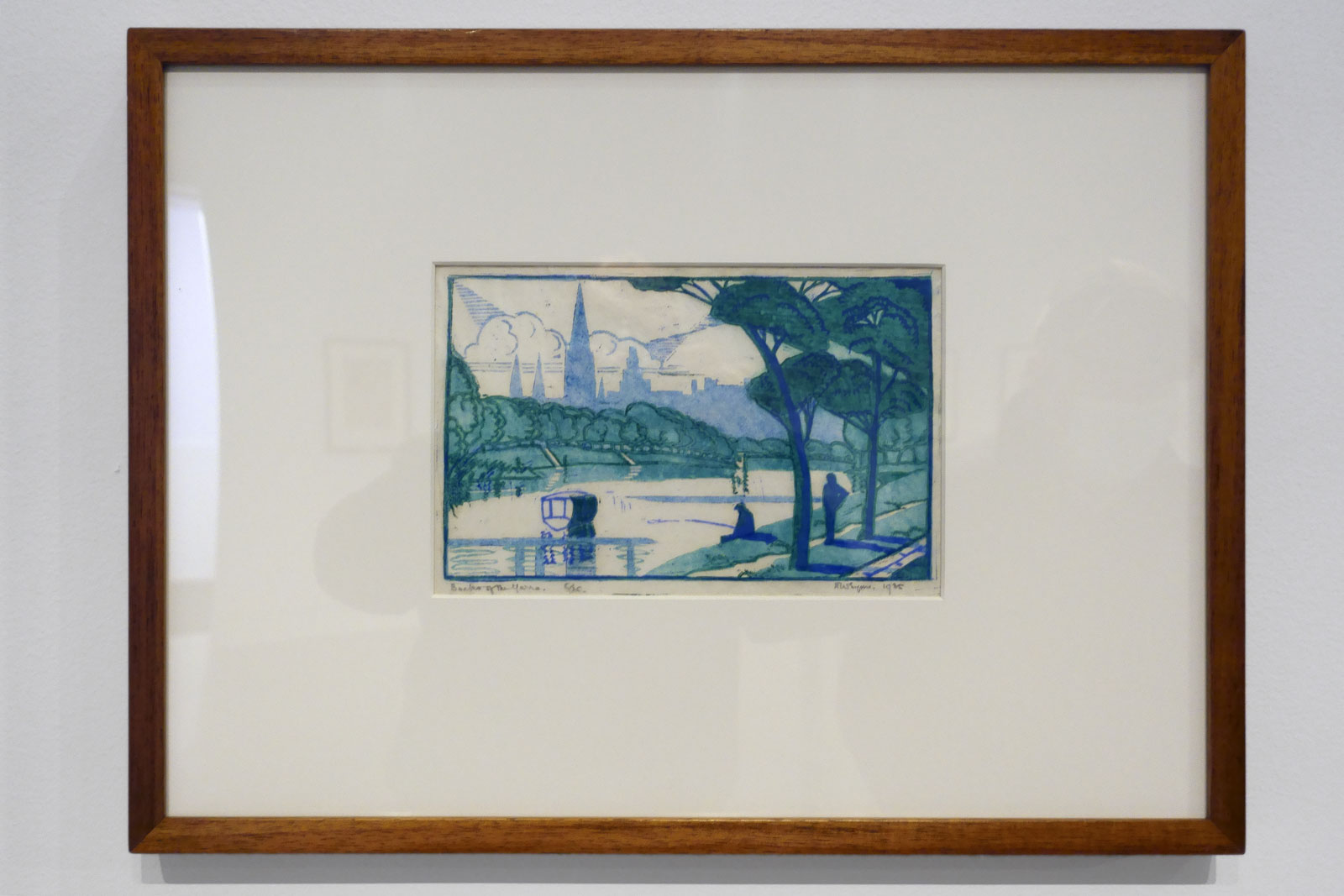
The exhibition also displays 3D re-imaginations of key places in RBG’s life – such as her childhood Brooklyn apartment; the kitchen in RBG and Marty’s home, with some of Marty’s favourite recipes and cooking utensils; and the Supreme Court bench and the desk in her chambers.

Personal materials range from home movies of RBG with Marty on their honeymoon and in the early years of their marriage to yearbooks from RBG’s academic life – from her Brooklyn high school to Harvard, Columbia, and Rutgers Universities – to a paper that she wrote as an eighth grader exploring the relationship between the Ten Commandments, the Magna Carta, the Bill of Rights, the Declaration of Independence, and the recently formed United Nations Charter.

Special to New-York Historical’s presentation are remembrances from RBG’s visit to the Museum in 2018 to officiate a naturalisation ceremony of new citizens after she learned about New-York Historical’s Citizenship Project which teaches U.S. history and civics to green card holders, a video featuring a map and photographs of key places in her life as a New Yorker, and an overview of the memorials that cropped up around her hometown in the wake of her passing. As part of New-York Historical’s upcoming public program series, on December 8, Supreme Court expert Linda Greenhouse looks at where the courts stand following Justice Ginsburg’s death. Families can explore the exhibition with a specially created family guide, and themed story times will take place throughout the exhibition’s run.

After debuting at the Skirball Cultural Center in 2018, Notorious RBG: The Life and Times of Ruth Bader Ginsburg has toured the country. After its New York run, the exhibition will travel to the Holocaust Museum Houston in Houston (March 2022) and the Capital Jewish Museum in Washington, D.C. (September 2022).

Notorious RBG: The Life and Times of Ruth Bader Ginsburg has been coordinated at New-York Historical by Valerie Paley, senior vice president and Sue Ann Weinberg Director, Patricia D. Klingenstein Library; Laura Mogulescu, curator of women’s history collections; and Anna Danziger Halperin, Andrew W. Mellon Postdoctoral Fellow in Women’s History and Public History, Center for Women’s History.

Press release from the New-York Historical Society


About Ruth Bader Ginsberg

Ruth Bader Ginsburg was born in Brooklyn, New York, on March 15, 1933.

Ginsburg was born in 1933 in Flatbush, and her stoicism was forged in a childhood spent in a house that, she said, bore “the smell of death.” When she was 2, her only sister died of meningitis; one day short of her high-school graduation, her mother died of cervical cancer. Celia Bader, who had once broken her nose reading while walking down the street but whose sweatshop wages had gone to her brother’s education, left behind secret college savings for her daughter and a will to accomplish what Celia had been denied.

She received her BA from Cornell University, attended Harvard Law School, and received her LLB from Columbia Law School. Ginsburg served as a law clerk to Judge Edmund L. Palmieri of the United States District Court for the Southern District of New York from 1959 to 1961. She then became associate director of the comparative law project sponsored by Columbia University, where she studied the Swedish legal system and produced the first official English language book on the subject. In 1963 Ginsburg joined the faculty of Rutgers Law School in Newark, New Jersey. In 1972 she was hired by Columbia Law School, where she taught until 1980. Ginsburg served as a fellow at the Center for Advance Study in the Behavioral Sciences in Stanford, California, from 1977 to 1978. In the 1970s Ginsburg litigated sex discrimination cases from the American Civil Liberties Union (ACLU) and was instrumental in launching its Women’s Rights Project in 1973. She served as general counsel of the ACLU from 1973 to 1980 and on the National Board of Directors from 1974 to 1980. President Jimmy Carter appointed Ginsburg to the United States Court of Appeals from the District of Colombia Circuit in 1980. On June 14, 1993, Ginsburg accepted President Bill Clinton’s nomination to the Supreme Court and took her seat on August 10, 1993.


Unknown photographer. 'Ruth Bader Ginsburg teaching at Columbia Law School' 1972


Unknown photographer
Ruth Bader Ginsburg teaching at Columbia Law School
1972
Courtesy of Columbia Law School


Ruth Bader Ginsburg ’59 is appointed the first female member of the Columbia Law School faculty in 1972. She had taught previously at Columbia in International Civil Procedure with Prof. Hans Smit ’58 LL.B. in 1961. She is the first female candidate to earn tenure at Columbia Law School.

In 1972, RBG become Columbia Law School’s first tenured female professor, which she juggled with her responsibilities at the Women’s Rights Project. Almost immediately, the women at Columbia began contacting RBG for help. Did RBG know that Columbia employees didn’t have pregnancy coverage and that women got lower pension benefits and lower pay? Now that she did, RBG helped file a class-action lawsuit.


Unknown photographer. 'Ruth Bader Ginsburg, detail from 1972 Harvard Law School Yearbook' 1972


Unknown photographer
Ruth Bader Ginsburg, detail from 1972 Harvard Law School Yearbook
1972
© Harvard Law School Yearbook Association, Courtesy of Harvard Law School Library, Historical and Special Collections


RBG strongly preferred the prefix “Ms.” to “Mrs.” However, there is no information about how she felt when this 1972 Harvard Law School yearbook misidentified her as “Mr. Ginsburg.”


Unknown photographer. 'RBG and Marty taking a break from work' 1972


Unknown photographer
RBG and Marty taking a break from work
1972
Collection of the Supreme Court of the United States


With the same fondly amused grin he usually wore, Marty (1932-2010) would portray himself as the lucky guy who came along for the ride of a lifetime, who moved to Washington when his wife got a “good job.” In fact, Marty was a superstar in his own right, whose tax law chops earned him clients like Ross Perot, the adulation of his peers, and millions of dollars. But he was proudest of the accomplishments of his wife, saying, “I think that the most important thing I have done is enable Ruth to do what she has done.”


Unknown photographer. 'RBG as a federal appeals court judge' 1980


Unknown photographer
RBG as a federal appeals court judge
1980
Collection of the Supreme Court of the United States


President Jimmy Carter nominated Ruth Bader Ginsburg to the United States Court of Appeals for the District of Columbia Circuit on April 14, 1980. RBG saw the role of an appeals court judge as fundamentally different than her old job at the ACLU; she was to follow precedent, not try to change it. As a judge, she looked for consensus.


Unknown photographer. 'RBG and Marty travel to Paris' 1988


Unknown photographer
RBG and Marty travel to Paris
1988
Courtesy of Justice Ginsburg’s Personal Collection


Unknown photographer. 'Justice Antonin Scalia and RBG riding an elephant' 1994


Unknown photographer
Justice Antonin Scalia and RBG riding an elephant
February 1994
Collection of the Supreme Court of the United States


Some liberals found the Scalia-Ginsburg friendship hard to grapple with. Even their clerks were mystified by the relationship. But clerks work at the court for only a year. Justices work there for life. Whatever their disagreements, they stuck together. The two shared a love of opera, and RBG liked people who could make her laugh.


Everett Raymond Kinstler (American, 1926-2019) 'Ruth Bader Ginsburg' 1996


Everett Raymond Kinstler (American, 1926-2019)
Ruth Bader Ginsburg
1996
Oil on canvas
National Portrait Gallery, Smithsonian Institution
Gift of Everett Raymond Kinstler
© 1996 Everett Raymond Kinstler


RBG wasn’t President Bill Clinton’s first choice for the Supreme Court in 1993 – he came close to offering the position to several men. But RBG had the backing of key women in the administration and a tireless lobbying campaign by her husband in her favour. Above all, she dazzled the president in their first meeting. “She got the actual human impact of these decisions,” Clinton later recalled.


Frank Chi and Aminatou Sow. 'Can't Spell Truth Without Ruth' 2013


Frank Chi and Aminatou Sow
Can’t Spell Truth Without Ruth
2013
Poster


In July 2013, after a flurry of important SCOTUS decisions, along with dissents authored by Justice Ginsburg, Chi and his friend Aminatou Sow created a poster, “Can’t Spell Truth Without Ruth,” celebrating Ginsburg. They shared it online, where Shana Knizhnik – who created the blog “The Notorious RBG” (and who would go on to coauthor a New York Times best-selling book of the same title) – saw the poster and wrote about it, and then the internet did its thing. The three artists, who became friends, gifted a print of the poster to Justice Ginsburg in December 2014, when she invited them to the Supreme Court. “The internet brought it together into this meme, initially, and then into something that became a phenomenon,” said Chi. “And, Justice Ginsburg embraced it. If she hadn’t, ‘Notorious RBG’ would’ve been something that was cool on the internet for a few months. That’s what I think is amazing – she had such a long, celebrated career, and she finally got to be the presence she was obviously comfortable being, and the internet allowed that to happen.”

Anonymous text. “More than a Meme,” on the Bowdoin Magazine website, November 17, 2020 [Online] Cited 29/10/2021


Art Lien. 'Courtroom sketch of Justice Ginsburg's dissent in Shelby County v. Holder' June 25, 2013


Art Lien
Courtroom sketch of Justice Ginsburg’s dissent in Shelby County v. Holder
June 25, 2013


In Shelby County v. Holder, the Supreme Court voted 5-4 to strike down a portion of the Voting Rights Act. In his majority opinion, Chief Justice John Roberts said the provision was no longer needed. “Any racial discrimination in voting is too much, but our country has changed in the last 50 years,” he declared. In her dissent, which inspired the nickname Notorious RBG, RBG compared getting rid of the provision to “throwing away your umbrella in a rainstorm because you’re not getting wet.”


In 2013 RBG wrote a fiery response (officially known as a dissent) disagreeing with the Supreme Court’s decision in Shelby County v. Holder. This bold dissent (and a few others made around the same time) earned her the nickname “Notorious RBG” in reference to the Brooklyn-born rapper Christopher Wallace, also known as “The Notorious B.I.G.” and “Biggie Smalls.”

With Shelby County v. Holder, the Supreme Court decided to end part of the Voting Rights Act of 1965. This Act prohibited states from having laws that made it harder for Black Americans to vote. The Voting Rights Act also made it harder for states with a history of racial discrimination to make future changes to their voting laws–but Shelby County v. Holder reversed that.

RBG felt strongly that this ruling could lead to more restrictions in voting, negatively impacting Black and minority communities.

In her ringing dissent, RBG compared getting rid of pre-clearance to “throwing away your umbrella in a rain storm because you’re not getting wet.” She quoted Martin Luther King Jr.’s famous dictum, “The arc of the moral universe is long, but it bends toward justice,” and added, “if there is a steadfast commitment to see the task through to completion. That commitment has been disturbed by today’s decision.” We have seen the destructive swath strewn across our electoral process in almost every election since, which of course was the intent of the decision. Yes, there is election fraud in this country, and it comes directly from the highest court in the land!

Erica A. Gordon. “The glorious, notorious Ruth Bader Ginsburg in a traveling exhibition,” on the Peoplesworld Social Media website, Oct 30, 2018 [Online] Cited 28/10/2021


Steve Petteway (American) 'Official portrait of United States Supreme Court Justice Ruth Joan Bader Ginsburg' 2013


Steve Petteway (American)
Official portrait of United States Supreme Court Justice Ruth Joan Bader Ginsburg
2013
Courtesy Steve Petteway
Collection of the Supreme Court of the United States


At the age of 80, Supreme Court Associate Justice Ruth Bader Ginsburg was reborn as the “Notorious RBG.” She earned the admiring, tongue-in-cheek nickname after a series of fiery, record-breaking dissents she gave from the Supreme Court bench in 2013 on voting rights, affirmative action, and workplace discrimination. Behind the nickname was a woman with a lifelong commitment to equality, justice, and the ideals of American law.


Adam Johnson (American) (illustrator) 'Notorious RBG' book cover illustration 2015


Adam Johnson (American) (illustrator)
‘Notorious RBG’ book cover illustration
2015
Courtesy of HarperCollins
Photos: Crown © by Hurst Photo/Shutterstock; Ruth Bader Ginsburg, Collection of the Supreme Court of the United States


RBG became an icon to millions of people around the globe. All this is – to use the court’s language – without precedent, especially in a society that tends to dismiss the contributions of women as they age. Bestselling books about RBG for all age groups – including the 2015 book Notorious RBG: The Life and Times of Ruth Bader Ginsburg that inspired the exhibition – could fill a bookshelf.


Roxana Alfer Geffen (American) 'Dissent Collar #9' 2016


Roxana Alfer Geffen (American)
Dissent Collar #9
2016
Courtesy of the artist


The signature dissent collar, a glinty Banana Republic affair she got in a Glamour Women of the Year gift bag, came in 2012. She broke the record for dissenting from the bench – the once rare act of making everyone at the opinion announcements listen to your protest – and a thousand memes were born.

Moved by her anger over the 2016 presidential election, Roxana Alger Geffen created a series of imaginative jabots in honour of RBG. Geffen was inspired by RBG’s choice to wear her famous dissent collar the day after the election.


Roxana Alfer Geffen (American) 'Dissent Collar #13' 2016


Roxana Alfer Geffen (American)
Dissent Collar #13
2016
Courtesy of the artist


Washington National Opera: The Daughter of the Regiment – Ruth Bader Ginsburg’s first appearance

RBG was known to be a major opera fan. In 2016 the Washington National Opera surprised its audience by featuring her in a cameo appearance as the Duchess of Krakenthorp in Gaetano Donizetti’s The Daughter of the Regiment at the Kennedy Center.

At the top of Act 2, the Duchess of Krakenthorp meets with the Marquise of Berkenfield to arrange the marriage of the opera’s heroine Marie with the Duke of Krakenthorp. Ruth Bader Ginsburg plays the non-singing role of the Duchess, and mezzo-soprano Deborah Nansteel is the Marquise.


Ari Richter (American, b. 1983) 'RBG Tattoo II' 2018


Ari Richter (American, b. 1983)
RBG Tattoo II
2018
Pigmented human skin on glass
Courtesy of the artist


RBG’s life and work have inspired unending creativity, including literally thousands of examples of fan-created RBG memorabilia. You can find RBG’s likeness on T-shirts, nail decals, and even as tattoos.


Nelson Shanks (American, 1937-2015) 'The Four Justices' 2012


Nelson Shanks (American, 1937-2015)
The Four Justices
2012
Oil on canvas
216.0 x 169.2cm
Ian and Annette Cumming Collection, on loan to the Smithsonian’s National Portrait Gallery


Counterclockwise from bottom left: Sandra Day O’Connor born 1930; Ruth Bader Ginsburg born 1933; Elena Kagan born 1960; and Sonia Sotomayor born 1954
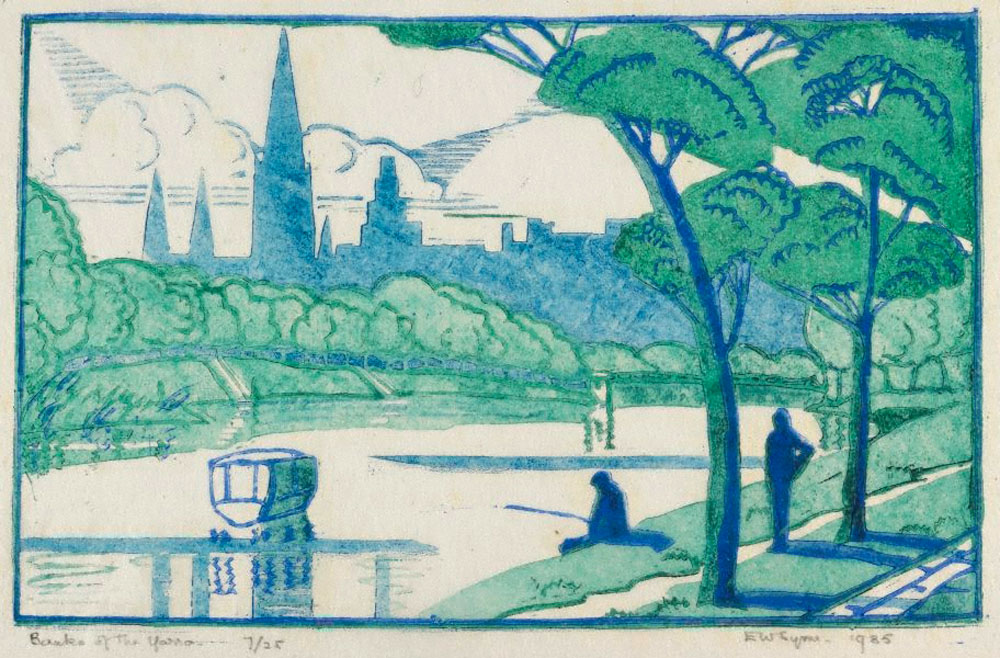
In 1880, Belva Lockwood became the first woman to argue before the Supreme Court. Distinguished jurist Florence Allen was considered for the Supreme Court in the 1940s, but opposition, including from the sitting justices, precluded her nomination. It was not until 1981 that Sandra Day O’Connor became the first woman to serve as a Supreme Court justice. Over ten years later, in 1993, Ruth Bader Ginsburg was nominated by President Clinton. Today, Ginsburg serves alongside Sonia Sotomayor and Elena Kagan, who were nominated to the Supreme Court in 2009 and 2010, respectively.
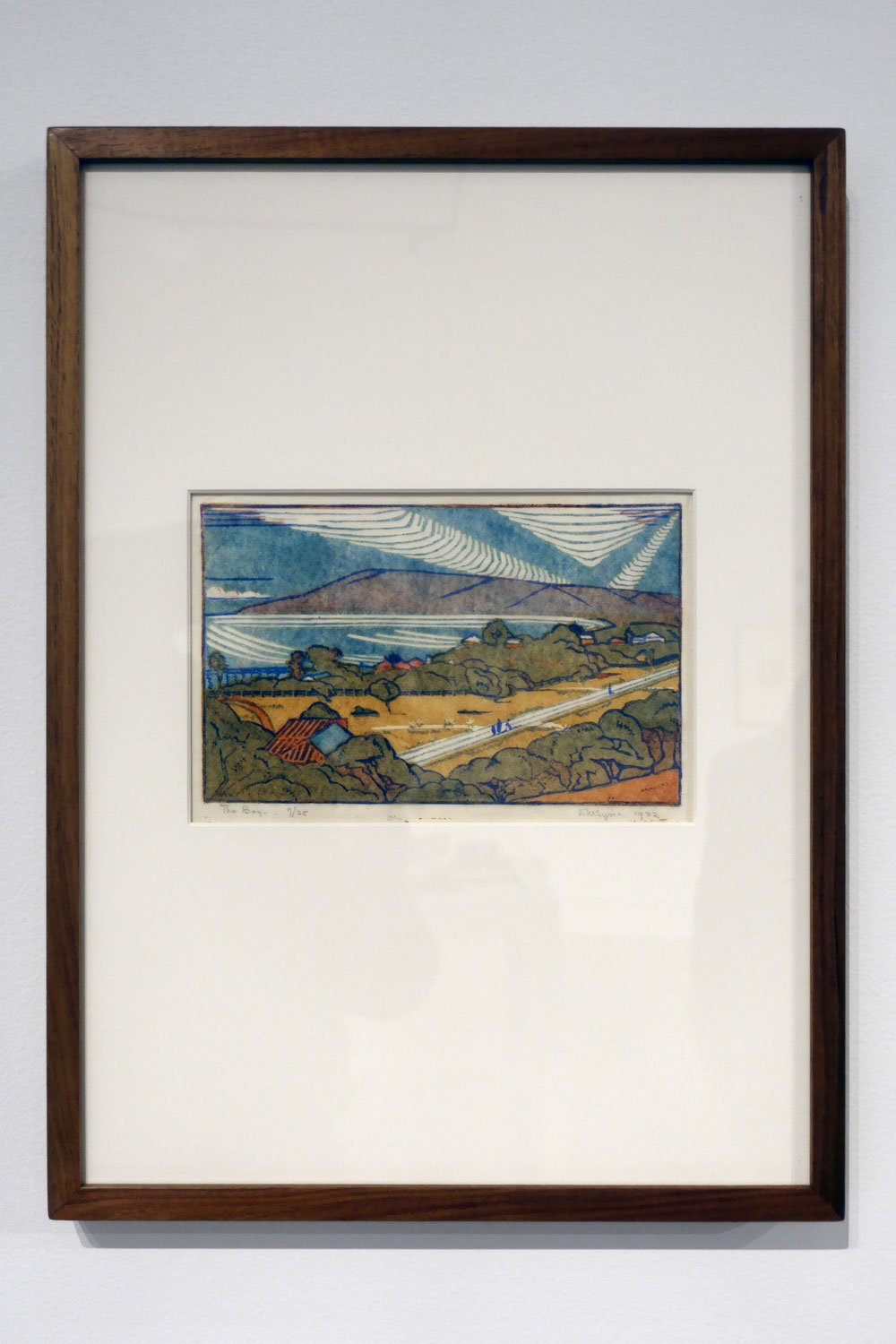
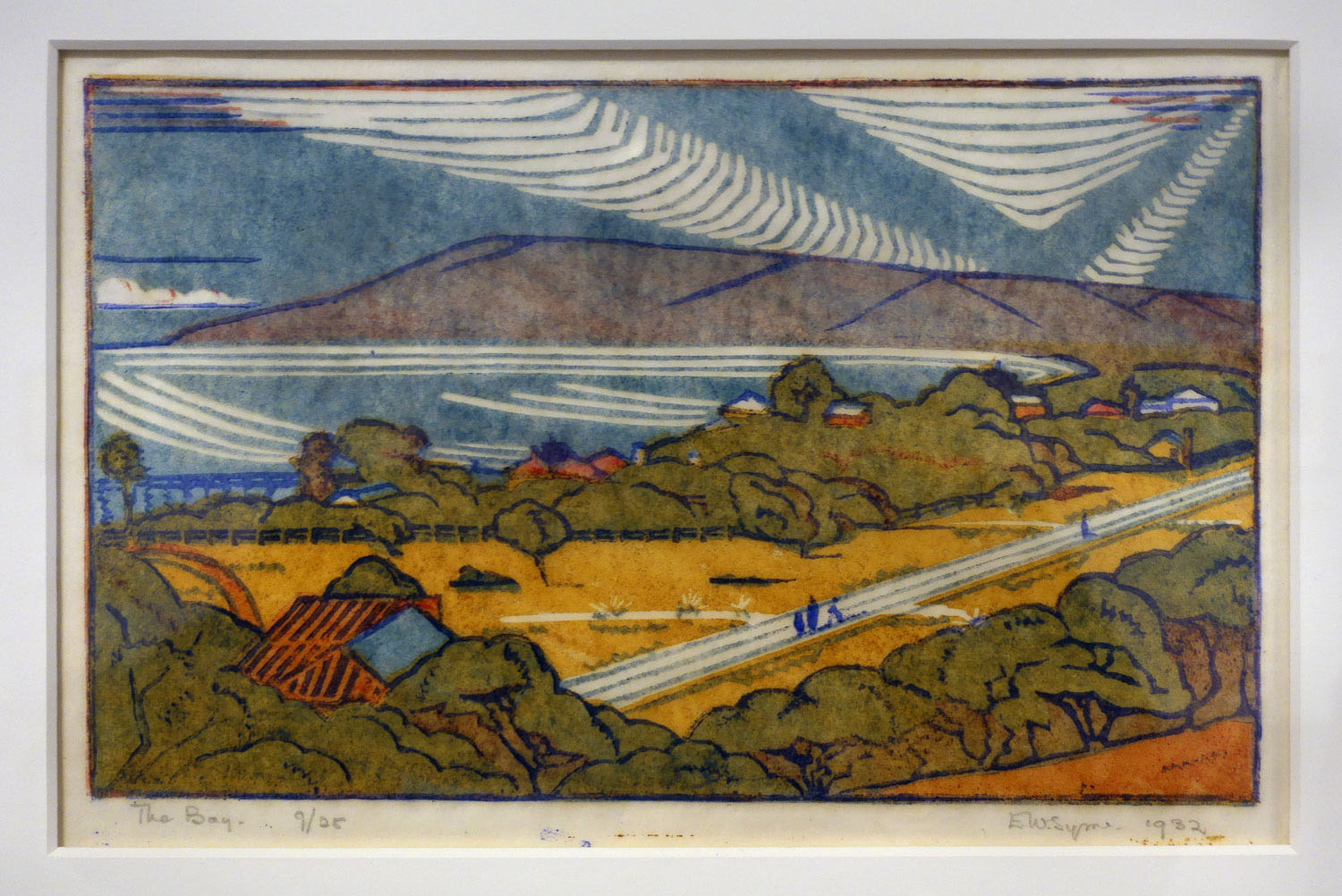
The Cummings commissioned this portrait to recognise the accomplishments of all four justices. Justice O’Connor’s office arranged their busy schedules so that they could pose at the same time for Nelson Shanks and his camera. The artist drew on the traditions of Dutch group portraiture, and the setting is based on interiors and a courtyard within the Supreme Court Building in Washington, D.C.


Installation view of Nelson Shanks' 'The Four Justices' (2012)


Installation view of Nelson Shanks’ The Four Justices (2012)


A major step in women’s struggle for equality came on March 3, 1879, when Belva Lockwood became the first woman to argue before the Supreme Court. In the 1940s, distinguished jurist Florence Allen was considered for the Court, but opposition, including from the sitting justices, precluded her nomination.

In 1981 Sandra Day O’Connor (born 1930) became the first woman to serve on the Court. O’Connor, a graduate of Stanford Law School, was serving on the Arizona Court of Appeals when President Ronald Reagan nominated her as an associate justice. O’Connor retired from the Court in 2006.
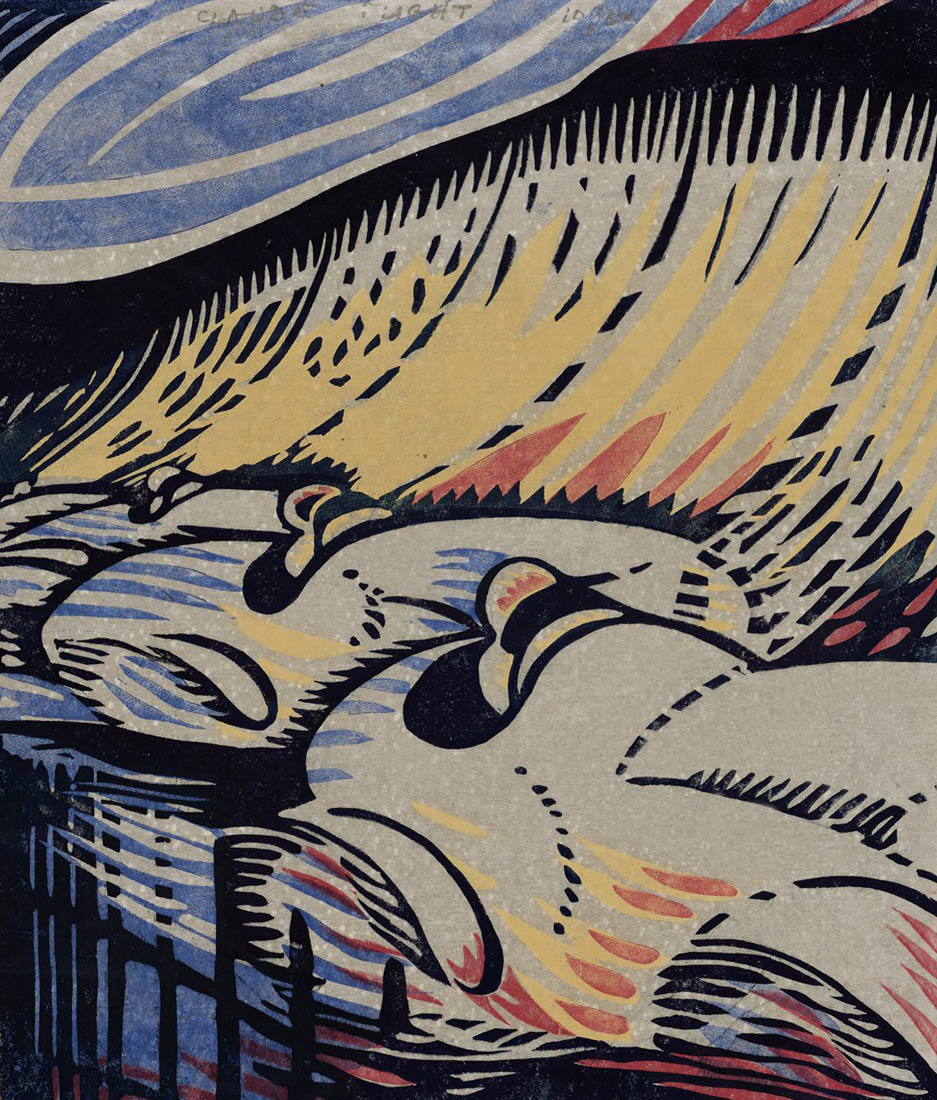
Ruth Bader Ginsburg (born 1933) graduated from Columbia Law School. She was serving on the U.S. Court of Appeals for the District of Columbia when President Bill Clinton nominated her as an associate justice of the Supreme Court in 1993.

Sonia Sotomayor (born 1954) received her J.D. from Yale Law School. She was serving on the United States Court of Appeals, Second Circuit, when President Barack Obama nominated her as an associate justice in 2009. She became the first Latino to sit on the Supreme Court.

Elena Kagan (born 1960) graduated from Harvard Law School. She was President Obama’s solicitor general when the president nominated her as an associate justice of the Supreme Court in 2010.

Nelson Shanks was commissioned to create this portrait to recognise the accomplishments of all four justices. He has drawn on the traditions of Dutch group portraiture for his composition, and the setting is based on interiors and a courtyard within the Supreme Court Building in Washington.


“Sandra Day O’Connor and Ruth Bader Ginsburg paved the way for me and so many other women in my generation. Their pioneering lives have created boundless possibilities for women in the law. I thank them for their inspiration and also for the personal kindnesses they have shown me.”
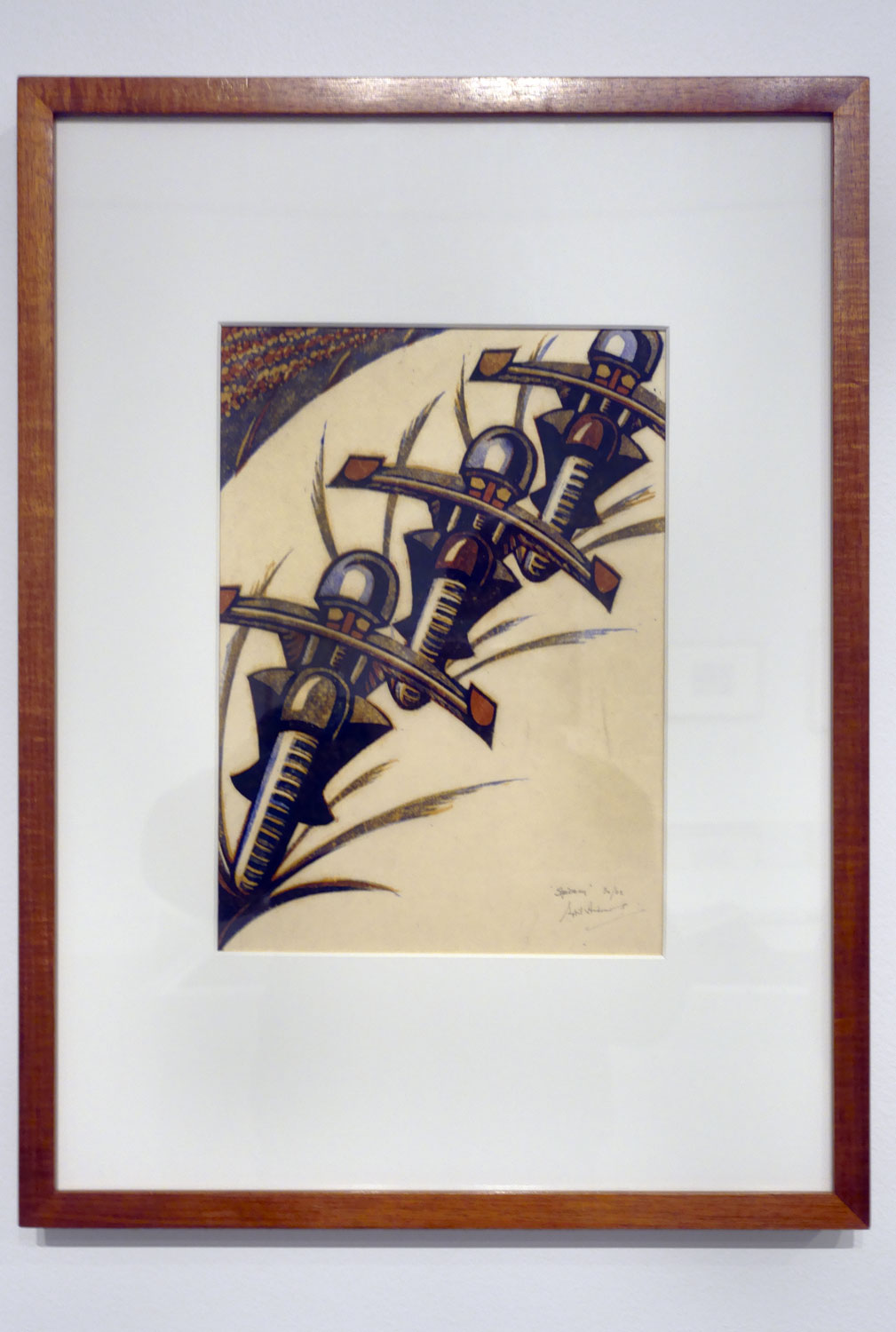
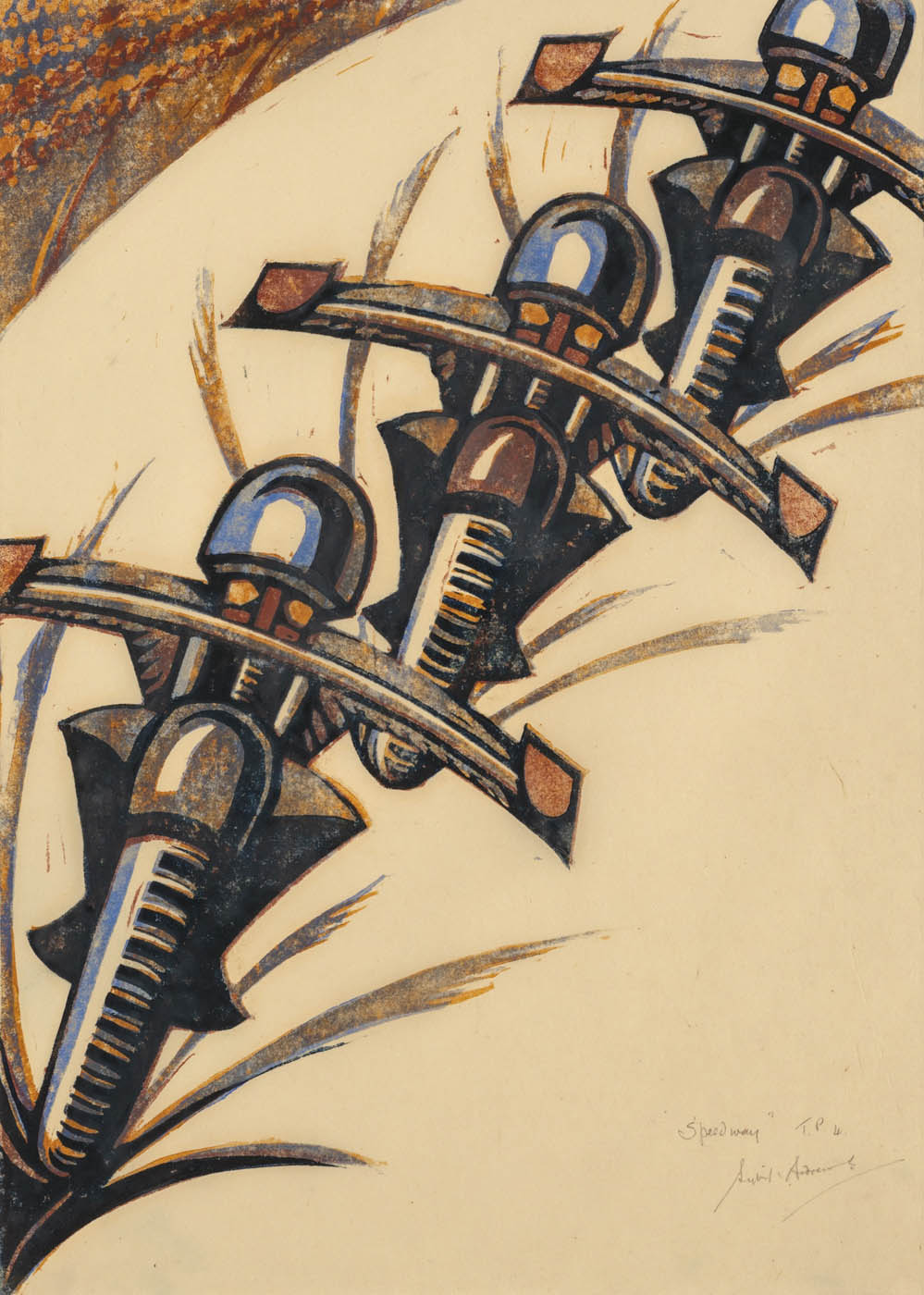
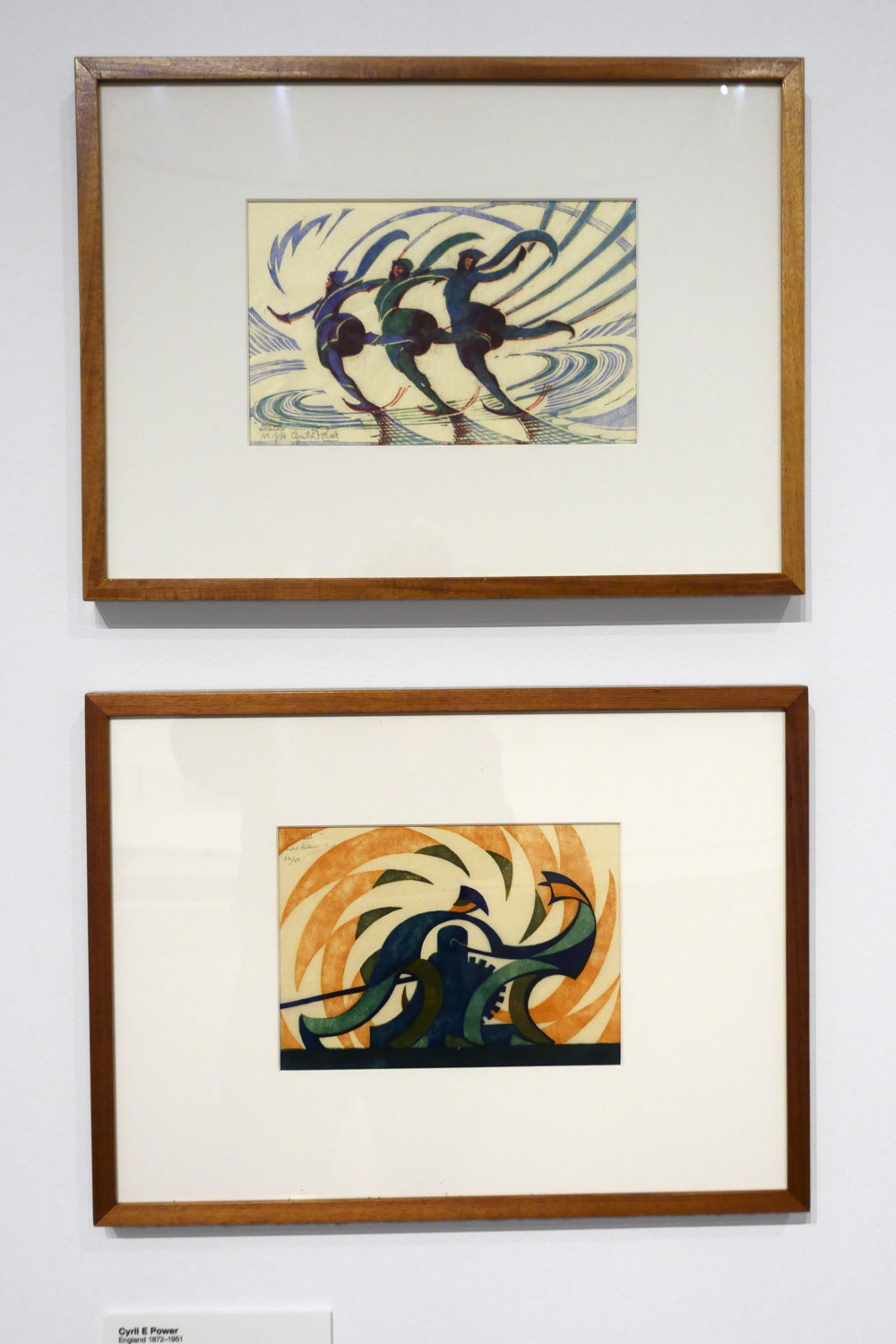
~ Elana Kagan, June 28, 2010, in her opening statement at her confirmation hearing


The Four Justices: Justice Ruth Bader Ginsburg

Justice Ruth Bader Ginsburg was interviewed by Jan Smith, for the Smithsonian’s National Portrait Gallery. Justice Ginsburg is depicted in the “The Four Justices” painting by artist Nelson Shanks, along with Justices Sandra Day O’Connor, Sonia Sotomayor and Elena Kagan.

On October 28, 2013, the National Portrait Gallery celebrated the arrival of Nelson Shanks’s “The Four Justices,” a tribute to the four female justices who have served on the U.S. Supreme Court. The work is monumental; it measures approximately seven feet by five-and-a-half feet (in its custom-made frame it is almost nine-and-a-half feet by eight feet) and holds the west wall of the National Historic Landmark Building’s second-floor rotunda. Of the work, NPG Chief Curator Brandon Fortune noted, “The National Portrait Gallery is honoured to have such an ambitious group portrait on loan to the museum.”

The work is based on sittings the justices had with Shanks; the two senior justices are seated and the recent appointees standing. Although the logistics of bringing three active and one retired justice into his studio was challenging, Shanks prefers to draw from life, which he feels brings each sitter’s distinct presence into his work. “If you can imagine a painting – no matter how facile – that doesn’t show character, something is missing,” Shanks noted in an interview with NPG. “Representation of character is really what counts to me.”

Only men had sat on the bench of the Supreme Court until President Ronald Reagan appointed Sandra Day O’Connor in 1981. After O’Connor, the next woman to receive an appointment was Ruth Bader Ginsburg, a nominee of President Bill Clinton in 1993. President Barack Obama appointed Justices Sonia Sotomayor and Elena Kagan. Ginsburg, Sotomayor, and Kagan are still on the bench; O’Connor retired in 2006.


REUTERS/Andrew Kelly. 'RBG image projected onto New York State Civil Supreme Court building in Manhattan' September 19, 2020


REUTERS/Andrew Kelly
RBG image projected onto New York State Civil Supreme Court building in Manhattan
September 19, 2020
Courtesy Reuters/Andrew Kelly/Alamy Photo


An image of Associate Justice of the Supreme Court of the United States Ruth Bader Ginsburg is projected onto the New York State Civil Supreme Court building in Manhattan, New York City, U.S. after she passed away September 18, 2020. REUTERS/Andrew Kelly

Supreme Court Justice Ruth Bader Ginsburg wasn’t just a titan whose life and career revealed many of the legal and historical developments of the 20th century. She also was a New Yorker. Her hometown viscerally felt her loss upon her death in September 2020.


Adrian Wilson and Matt Duncan. '50th Street subway stop altered in tribute to RBG' 2020


Adrian Wilson and Matt Duncan
50th Street subway stop altered in tribute to RBG
2020
Courtesy Adrian Wilson and Matt Duncan


The 50th Street ACE subway station sign in Manhattan was famously altered with a tribute sticker by Adrian Wilson and Matt Duncan on the day RBG passed.


Jennifer M. Mason (American) 'Fearless Girl with jabot' September 22, 2020


Jennifer M. Mason (American)
Fearless Girl with jabot
September 22, 2020
Courtesy Jennifer M. Mason / Shutterstock.com


The memory of the justice’s life and work fuelled activism during the ensuing presidential election season across the city and beyond. The ‘Fearless Girl’ statue by Kristen Visbal in front of the New York Stock Exchange wearing a lace collar in tribute to Justice Ruth Bader Ginsburg.


Cristian Petru Panaite (American) 'RBG memorial outside Columbia University' 2020


Cristian Petru Panaite (American)
RBG memorial outside Columbia University
2020
Courtesy of Cristian Petru Panaite


Memorials sprung up spontaneously and organically across the city.


New-York Historical Society
170 Central Park West
at Richard Gilder Way (77th Street)
New York, NY 10024
Phone: (212) 873-3400

Opening hours:
Monday CLOSED
Tuesday – Thursday 11am – 5pm
Friday 11am – 8pm
Saturday – Sunday 11am – 5pm

New-York Historical Society website

LIKE ART BLART ON FACEBOOK

Back to top

Exhibition: ‘Barbara Hepworth: Art & Life’ at the Hepworth Wakefield, Wakefield, West Yorkshire

Exhibition dates: 21st May 2021 – 27th February, 2022

 Curator: Eleanor Clayton


Barbara Hepworth (English, 1903-1975) 'Pierced Hemisphere' 1937 from the exhibition 'Barbara Hepworth: Art & Life' at the Hepworth Wakefield, Wakefield, West Yorkshire, May 2021 - Feb 2022


Barbara Hepworth (English, 1903-1975)
Pierced Hemisphere
1937
White marble
The Hepworth Wakefield (Wakefield Permanent Art Collection)
Barbara Hepworth © Bowness
Photo: Norman Taylor


As a bit of a break from photography, something very special this weekend especially for me. I adore this artist’s work.

Solid / voids
space / forms
still / movements
pierced / circles
memory / landscapes
music / curves
Spirit / leaps!


Dr Marcus Bunyan


Many thankx to the Hepworth Wakefield for allowing me to publish the photographs in the posting. Please click on the photographs for a larger version of the image.


“The relationship between humans and landscape played a key role in Hepworth’s creative development. In 1949, she settled down in St Ives, Cornwall, where she stayed until her death. The harmony of the sea, earth and rocks in this remote part of England had a significant impact on her.”


“Barbara Hepworth is one of the most important artists of the 20th century, with a unique artistic vision that demands to be looked at in-depth. This exhibition will shine a light on Hepworth’s wide-ranging interests and how they infused her art practice. Deeply spiritual and passionately engaged with political, social and technological debates in the 20th century, Hepworth was obsessed with how the physical encounter with sculpture could impact the viewer and alter their perception of the world.”


Eleanor Clayton, Curator


“Hole turned out to be spelt with a W as well as an H. Holes were not gaps, they were connections. Hepworth made the hole into a connection between different expressions of form, and she made space into his own form.”


Jeannette Winterson


“I rarely draw what I see –
I draw what I feel in my body”


Barbara Hepworth


Installation image of 'Barbara Hepworth: Art & Life' at the Hepworth Wakefield

Installation image of 'Barbara Hepworth: Art & Life' at the Hepworth Wakefield showing in the bottom image at right Single Form (September) (BH 312) in figured walnut, and a photograph at left of Single Form (1964) displayed near the pool in front of the United Nations Secretariat Building


Installation images of Barbara Hepworth: Art & Life at the Hepworth Wakefield showing in the bottom image at right Single Form (September) (BH 312) in figured walnut, and a photograph at left of Single Form (1964) displayed near the pool in front of the United Nations Secretariat Building.
Photos: Nick Singleton


Barbara Hepworth (English, 1903-1975) 'Single Form (Chun Quoit)' 1961 from the exhibition 'Barbara Hepworth: Art & Life' at the Hepworth Wakefield, Wakefield, West Yorkshire, May 2021 - Feb 2022


Barbara Hepworth (English, 1903-1975)
Single Form (Chun Quoit)
1961
Plaster, painted brown
© Bowness, Hepworth Estate
Photo: Mark Heathcote


Barbara Hepworth working on the armature of 'Single Form' in the Palais de Danse, St Ives 1961


Barbara Hepworth working on the armature of Single Form in the Palais de Danse, St Ives
1961
© Bowness
Photo: Studio St Ives


Barbara Hepworth with the plaster prototype for the United Nations 'Single Form' at the Morris Singer foundry, London May 1963


Barbara Hepworth with the plaster prototype for the United Nations Single Form at the Morris Singer foundry, London
May 1963
Photo: Morgan-Wells
Barbara Hepworth © Bowness


'Barbara Hepworth: Art & Life' poster


Barbara Hepworth: Art & Life poster


Installation image of 'Barbara Hepworth: Art & Life' at the Hepworth Wakefield

Installation image of 'Barbara Hepworth: Art & Life' at the Hepworth Wakefield

Installation image of 'Barbara Hepworth: Art & Life' at the Hepworth Wakefield

Installation image of 'Barbara Hepworth: Art & Life' at the Hepworth Wakefield


Installation images of Barbara Hepworth: Art & Life at the Hepworth Wakefield.
Photos: Nick Singleton


Barbara Hepworth (English, 1903-1975) 'Kneeling Figure' 1932


Barbara Hepworth (English, 1903-1975)
Kneeling Figure
1932
Rosewood
Purchased with aid from the Wakefield Permanent Art Fund (Friends of Wakefield Art Galleries and Museums), V&A Purchase Grant Fund and Wakefield Girls’ High School, 1944
© Bowness, Hepworth Estate
Photo: Jerry Hardman-Jones


Installation image of 'Barbara Hepworth: Art & Life' at the Hepworth Wakefield

Installation image of 'Barbara Hepworth: Art & Life' at the Hepworth Wakefield

Installation image of 'Barbara Hepworth: Art & Life' at the Hepworth Wakefield showing in the image at centre, 'Spring' (1966)


Installation images of Barbara Hepworth: Art & Life at the Hepworth Wakefield showing in the bottom image at centre, Spring (1966)
Photos: Nick Singleton


Barbara Hepworth (English, 1903-1975) 'Spring' 1966


Barbara Hepworth (English, 1903-1975)
Spring
1966
© Bowness, Hepworth Estate
Photo: Jerry Hardman


Installation image of 'Barbara Hepworth: Art & Life' at the Hepworth Wakefield showing at second left 'Winged Figure' (1961-62), and second right 'Rock Form (Porthcurno)' (1964)


Installation images of Barbara Hepworth: Art & Life at the Hepworth Wakefield showing at second left Winged Figure (1961-62 below), and second right Rock Form (Porthcurno) (1964, below)


Barbara Hepworth (English, 1903-1975) 'Winged Figure' 1961-1962


Barbara Hepworth (English, 1903-1975)
Winged Figure
1961-1962
© Bowness, Hepworth Estate
Photo: Jonty Wilde


Barbara Hepworth (English, 1903-1975) 'Rock Form (Porthcurno)' 1964


Barbara Hepworth (English, 1903-1975)
Rock Form (Porthcurno)
1964
Plaster, painted green on the outside and blue/grey on the interior
© Bowness, Hepworth Estate
Photo: Jonty Wilde


To mark The Hepworth Wakefield‘s 10th anniversary, the Yorkshire-based gallery opened the most expansive exhibition of Barbara Hepworth’s work in the UK since the artist’s death in 1975.

The exhibition presents an in-depth view of the Wakefield-born artist’s life, interests, work and legacy. It displays some of Hepworth’s most celebrated sculptures including the modern abstract carving that launched her career in the 1920s and 1930s, her iconic strung sculptures of the 1940s and 1950s, and large scale bronze and carved sculptures from later in her career. Key loans from national public collections are being shown alongside works from private collections that have not been on public display since the 1970s, as well as rarely seen drawings, paintings and fabric designs. It reveals how Hepworth’s wide sphere of interests comprising music, dance, science, space exploration, politics and religion, as well as events in her personal life, influenced her work.

Contemporary artists Tacita Dean and Veronica Ryan have been commissioned to create new works which are being presented within the exhibition. Each artist explores themes and ideas that interested Hepworth and that continue to resonate with their own work. Artworks by Bridget Riley from the 1960s are also being presented in dialogue with Hepworth’s work from the same period.

To coincide with the exhibition, The Hepworth Wakefield’s curator Eleanor Clayton has written a major new biography on the artist, published by Thames & Hudson. Eleanor Clayton said: ‘Barbara Hepworth is one of the most important artists of the 20th century, with a unique artistic vision that demands to be looked at in depth. This exhibition will shine a light on Hepworth’s wide-ranging interests and how they infused her art practice. Deeply spiritual and passionately engaged with political, social and technological debates in the 20th century, Hepworth was obsessed with how the physical encounter with sculpture could impact the viewer and alter their perception of the world.’

Simon Wallis, Director of The Hepworth Wakefield, said: ‘Lockdown continues to be an ongoing challenge for us all, so I’m delighted we’ll be celebrating, post-lockdown, our 10th anniversary with an in-depth exploration of the art and life of Barbara Hepworth, Wakefield’s most famous daughter. With this major exhibition and new book, we’ll continue to build on the legacy and influence of a key pioneer of modern sculpture. Hepworth is a daily inspiration for us at the gallery and we look forward to sharing some of her greatest work with a wide new audience.’

The exhibition in detail

The exhibition opens with an introduction to Barbara Hepworth’s work, showing the three sculptural forms she returned to repeatedly throughout her career using a variety of different materials. A detailed look at Hepworth’s childhood in Yorkshire through archive material and photographs includes some of the artist’s earliest- known paintings, carvings and life drawings as she began to explore movement and the human form. A proponent of direct carving, Hepworth combined an acute sensitivity to the organic materials of wood and stone with the development of a radical new abstract language of form.

Hepworth’s determination to break free from accepted tradition was enhanced by travelling to Paris in 1932 where she visited the studios of many of the leading European avant-garde artists including Jean Arp, Constantin Brancusi and Pablo Picasso. A large section looks at Hepworth’s development of abstraction in the 1930s including Three Forms (1935) created shortly after she gave birth to triplets, an event she felt invigorated her work towards a bolder language of geometric form. One of the few examples in existence of Hepworth’s first coloured stringed sculptures in plaster, made during World War Two, is being shown alongside the many drawings she created during this period when sculptural materials were scarce. She described these drawings as ‘my sculptures born in the disguise of two dimensions.’

The exhibition reveals the artist’s creative process, drawing on new research from the recently established Hepworth Research Network (HRN), in collaboration with the Universities of York and Huddersfield, into the ways material factors shaped Hepworth’s sculptures and how they related to her broader conceptual and aesthetic concerns. This includes how starting bronze casting in the 1950s enabled Hepworth to create new forms and how, later in life, she experimented with new materials such as lead crystal and aluminium. On display is The Hepworth Wakefield’s unique collection of 44 surviving prototypes in plaster, aluminium and wood, many of which show the marks of Hepworth’s own hand and tools. These are being shown with a specially commissioned intervention by artist Veronica Ryan, the first artist to undertake a residency in Hepworth’s old studio in St Ives, where the prototypes once stood.

Hepworth’s broader interests – such as music, dance, theatre, politics, Greek mythology, and science – influenced her sculptures throughout her life. In the immediate post-war period she became fascinated with the interaction between figures – both in groups in her studio and observed around her, and also in a series of ‘Hospital drawings’, capturing surgeons at work in the early days of the National Health Service. These paintings and drawings capture her belief in the importance of unifying mental and physical existence – the ‘proper coordination between hand and spirit in our daily life’, to create a productive and positive society.

In 1951 Hepworth met composer Priaulx Rainier, and subsequently made several works inspired by the parallels between musical form and abstract sculpture. This coincided with her first theatrical design, for the 1951 production of Electra at The Old Vic. Archive photographs are being displayed together with Apollo (1951), a metal sculpture that formed part of the stage set, along with costume and set designs for the 1955 opera by Michael Tippett, A Midsummer Marriage, staged in 1955 at the Royal Opera House. This section of the exhibition also explores Hepworth’s passion for dance, and how she captured movement with gestural paintings and sculptures such as Forms in Movement (Galliard) (1956) and Curved Form (Pavan) (1956).

During the 1960s, Hepworth was a key cultural figure. She staged major exhibitions, presented work in experimental ways, made large-scale sculptures and explored colour in the patination of bronzes or painted surfaces of her carving. She played an active role in both local and international politics, campaigned for nuclear disarmament and supported pacifist causes. Her political values were encapsulated in the monumental Single Form, commissioned for the United Nations in 1964, of which she declared, ‘The United Nations is our conscience. If it succeeds it is our success. If it fails it is our failure.’ Rare footage of Hepworth’s speaking at the unveiling of this work as been included in the exhibition.

A group of works have been brought together to reveal the influence of the decade of space exploration on Hepworth, from Disc with Strings (Moon) (1969), made the year Neil Armstrong landed on the moon, to Four Hemispheres, inspired by the Telstar satellite. Hepworth noted at the end of the decade, ‘Man’s discovery of flight has radically altered the shape of our sculpture, just as it has altered our thinking.’

The final section of the exhibition looks at Hepworth’s last years, featuring her experiments with new materials and techniques, which incorporate bold colours and luminescent surfaces, while consistently seeking to use abstract form to express universal human experiences.

Barbara Hepworth is one of the most important artists of the twentieth century, and her organic sculptures have come to exemplify three-dimensional modernist art. Published at a time of increasing interest in her work, this biography moves beyond the traditional narratives of modernism to provide comprehensive insight into Hepworth’s remarkable life, work, and legacy.

Press release from the Hepworth Wakefield website


'Barbara Hepworth growing up' c. 1919


Barbara Hepworth growing up
c. 1919
Courtesy Bowness


Barbara Hepworth (English, 1903-1975) 'Mother and Child' 1934


Barbara Hepworth (English, 1903-1975)
Mother and Child
1934
Pink Ancaster stone
Purchased by Wakefield Corporation in 1951
Barbara Hepworth © Bowness


Barbara Hepworth (English, 1903-1975) 'Three Forms' 1935


Barbara Hepworth (English, 1903-1975)
Three Forms
1935
Serravezza marble on marble base
210 × 532 × 343mm, 23 kg
Tate. Presented by Mr and Mrs J.R. Marcus Brumwell 1964
On loan to The Hepworth Wakefield
Barbara Hepworth © Bowness


In 1934 Barbara Hepworth’s abstraction based on the human figure gave way to an art of pure form. With such works as Three Forms she reduced her sculpture to the most simple shapes and eradicated almost all colour. She said later that she was ‘absorbed in the relationships in space, in size and texture and weight, as well as the tensions between forms’. While the three elements are slightly imperfect in shape, their sizes and the spaces between them are precisely proportional to each other. This reflects her concern with the craft of hand-carving and with harmonious arrangement of form.

Gallery label, September 2004

Text from the Tate website


Barbara Hepworth (English, 1903-1975) 'Reconstruction' 1947


Barbara Hepworth (English, 1903-1975)
Reconstruction
1947
© Bowness, Hepworth Estate / Arts Council Collection, Southbank Centre, London
Courtesy of the Hepworth Wakefield


Barbara Hepworth at work on 'Contrapuntal Forms' by floodlight 25 October 1950


Barbara Hepworth at work on Contrapuntal Forms by floodlight
25 October 1950
Official Festival photograph
National Archives © Bowness


Barbara Hepworth. 'Turning Forms' at the Festival of Britain 1951


Barbara Hepworth – Turning Forms at the Festival of Britain
1951
© Bowness
Photo: Anthony Panting


A richly illustrated biography on the life and work of Barbara Hepworth, one of the twentieth century’s most inspiring artists and a pioneer of modernist sculpture.

Barbara Hepworth is one of the most important artists of the twentieth century, and her organic sculptures have come to exemplify three-dimensional modernist art. Published at a time of increasing interest in her work, this biography moves beyond the traditional narratives of modernism to provide comprehensive insight into Hepworth’s remarkable life, work, and legacy.

In her lifetime, Hepworth was reproached for single-mindedness, with critics and commentators framing her work and demeanour as “cool and restrained.” Moreover, most exhibitions of her work in the twentieth century focused on Hepworth’s modernist abstract sculpture of the 1930s and its relation to her male contemporaries, leaving vast swathes of work overlooked, such as her largest and most significant public commission, the sculpture outside the UN building in New York.

This fully illustrated biography reflects Hepworth’s multifaceted and interdisciplinary approach, shedding new light on her interests in music, dance, poetry, contemporary politics, science, and technology. Author Eleanor Clayton uncovers Hepworth’s engagement with these fields through friends and networks and examines how they show up in Hepworth’s artistic practice, and how the artist synthesised seemingly conflicting disciplines and ideas into one coherent and inspirational philosophy of art and life.


Installation view of Barbara Hepworth, 'Orpheus' 1956


Installation view of Barbara Hepworth, Orpheus
1956
Photographed at The Hepworth Wakefield, March 2020
Photo: Lewis Ronald


Barbara Hepworth (English, 1903-1975) 'Forms In Movement (Galliard)' 1956


Barbara Hepworth (English, 1903-1975)
Forms In Movement (Galliard)
1956
Copper
89cm


Barbara Hepworth (English, 1903-1975) 'Curved Forms (Pavan)' 1956


Barbara Hepworth (English, 1903-1975)
Curved Forms (Pavan)
1956
Impregnated plaster, painted, on an aluminium armature
52 x 80 x 48.5cm
Presented by the artist’s daughters, Rachel Kidd and Sarah Bowness, through the Trustees of the Barbara Hepworth Estate and the Art Fund
Barbara Hepworth © Bowness
Photo: Mark Heathcote


Barbara Hepworth (English, 1903-1975) 'Totem' 1960-1962


Barbara Hepworth (English, 1903-1975)
Totem
1960-1962
Wakefield Permanent Art Collection
Barbara Hepworth © Bowness
Photo: Jerry Hardman-Jones


Val Wilmer. 'Barbara Hepworth in the Palais de la Danse studio, St Ives, at work on the wood carving 'Hollow Form with White Interior'' 1963


Val Wilmer
Barbara Hepworth in the Palais de la Danse studio, St Ives, at work on the wood carving ‘Hollow Form with White Interior’
1963
© Bowness, Hepworth Estate


Barbara Hepworth at work on the plaster for 'Oval Form (Trezion)' 1963


Barbara Hepworth at work on the plaster for Oval Form (Trezion)
1963
© Bowness
Photo: Val Wilmer Barbara Hepworth


Barbara Hepworth with the Gift plaster of 'Figure for Landscape' and a bronze cast of 'Figure (Archaean)' November 1964


Barbara Hepworth with the Gift plaster of Figure for Landscape and a bronze cast of Figure (Archaean)
November 1964
Barbara Hepworth © Bowness
Photo: Lucien Myers


Barbara Hepworth (English, 1903-1975) 'Genesis III' 1966


Barbara Hepworth (English, 1903-1975)
Genesis III
1966
Barbara Hepworth © Bowness
Photo: Jerry Hardman-Jones


Barbara Hepworth (English, 1903-1975) 'Disc with Strings (Moon)' 1969


Barbara Hepworth (English, 1903-1975)
Disc with Strings (Moon)
1969


Fifteen years before Hepworth (1903-1975) made Disc with Strings (Moon), the author William Golding wrote these words:

“Somewhere over the darkened curve of the world the sun and moon were pulling; and the film of water on the earth planet was held, bulging slightly on one side while the solid core turned. The great wave of the tide moved further along the island and the water lifted.”


Though Golding was not writing about the British Isles, his words suggest the kind of large-scale, god-like perspective of earth which mid-century artists like himself and Hepworth were capable of. Disc with Strings (Moon) carries an undertow of planet-sized thinking, and the work is concerned not with reference to human life but, rather, with the fluid, open-ended life of the universe. …

When Disc with Strings (Moon) is viewed from the front, the two halves of the concave disc have subtly different colour values. Though the brushed aluminium surface is uniform all over the work, a viewer perceives two different values because the two halves of the sculpture reflect light differently. While the forward-facing half of the disc reflects the light directly into the viewer’s eye, the other canted half reflects light away and therefore appears comparatively darker. When viewed from the other side, the colour values of the two halves are reversed.

The introduction of string into the sculpture contributes further to this subtle interplay of visual effects. Speaking to the critic Herbert Read in 1952, Hepworth said that “[t]he strings were the tension I felt between myself and the sea, the wind or the hills.” In short, they were a metaphor for her deeply personal response to the elements of nature. In Disc with Strings (Moon), they also seem to register the rippling of waves, passing over the surface of the moon when it appears reflected in the sea.

Anonymous. “InSight No. XII,” on the Piano Nobile website May 13, 2020 [Online] Cited 12/07/2021.


Barbara Hepworth (English, 1903-1975) 'Four Hemispheres' 1970


Barbara Hepworth (English, 1903-1975)
Four Hemispheres
1970
Glass lead crystal


Barbara Hepworth (English, 1903-1975) 'Sun Setting, The Aegean Suite' 1971


Barbara Hepworth (English, 1903-1975)
Sun Setting, The Aegean Suite
1971
Lithograph on paper
The Hepworth Wakefield (Wakefield Permanent Art Collection)
Barbara Hepworth © Bowness


Barbara Hepworth (English, 1903-1975) 'Cone and Sphere' 1973


Barbara Hepworth (English, 1903-1975)
Cone and Sphere
1973
White marble
Hepworth Estate, on long loan to The Hepworth Wakefield (Wakefield Permanent Art Collection)
Barbara Hepworth © Bowness
Photo: Mark Heathcote


'Barbara Hepworth: Art & Life' catalogue cover


Barbara Hepworth: Art & Life catalogue cover


The Hepworth Wakefield
Gallery Walk, Wakefield
West Yorkshire, WF1 5AW
Phone: +44 (0)1924 247360

Opening hours:
Tuesday – Sunday 10am – 5pm

The Hepworth Wakefield website

LIKE ART BLART ON FACEBOOK

Back to top

Exhibition: ‘Unearthed: Photography’s Roots’ at the Dulwich Picture Gallery, London

Exhibition dates: 8th December 2020 – 9th May 2021

Curator: Alexander Moore

The exhibition will include work by the following 41 artists (in alphabetical order):

Nobuyoshi Araki, Anna Atkins, Alois Auer, Cecil Beaton, Karl Blossfeldt, Adolphe Braun, Jan Brueghel the Elder, Mat Collishaw, Imogen Cunningham, Roger Fenton, Adam Fuss, Ori Gersht, Cecilia Glaisher, Joy Gregory, William Henry Fox Talbot, Sir John Herschel, Gyula Holics, Jan van Huysum, Henry Irving, Charles Jones, Sarah Jones, André Kertész, Nick Knight, Lou Landauer, Richard Learoyd, Pradip Malde, Robert Mapplethorpe, John Moffat, Sarah Moon, James Mudd, Kazumasa Ogawa, T Enami, Dr Albert G Richards, Scowen & Co., Scheltens & Abbenes, Helen Sear, Edward Steichen, Josef Sudek, Lorenzo Vitturi, Edward Weston, Walter Woodbury.


Charles Jones (British, 1866-1959) 'Broccoli Leamington' c. 1895-1910 from the exhibition 'Unearthed: Photography's Roots' at the Dulwich Picture Gallery, London, Dec 2020 - May 2021


Charles Jones (British, 1866-1959)
Broccoli Leamington
c. 1895-1910
© Sean Sexton
Photo copyright Dulwich Picture Gallery


A difficult thing said simply

What a wonderful selection of photographs to start the year 2021.

As Laura Cumming observes, there is a profound connection between photography and photosynthesis – both created through light, both constructed and political. For the photograph is ALWAYS the choice of the photographer, and the landscape has ALWAYS been shaped and constructed since human beings emerged on this earth. Nothing in the natural world is ever “natural” but always mediated by time, space, context, power and desire. Desire to control the direction of a river, desire for food and shelter, desire for Lebensraum or living space as a practice of settler colonialism, desire to celebrate the “natural” world, desire to procreate, desire to propagate the (genetically modified) vegetable. A desire to desire.

Photography’s symbiotic relationship with the natural world is the relationship of photography and transmutation (the action of changing or the state of being changed into another form), photography and transmogrification (the act or process of changing or being changed completely). The natural world, through an action (that of being photographed), changes its state (flux) and, further, changes its state to a completely different form (fixed in liquid fixer; fixed, saved, but fluid, in the digital pixel). Flowers and vegetables are alive then wither and die, only to remain “the same” in the freeze frame of the death-defying photograph.

Photography’s fluidity and fixity – of movement, time, space, context, representation – allows “the infinite possibility of experimentation” not, as Cumming argues, “without the interference of humanity, accident, sound or movement” but through their very agency. It is the human hand that arranges these pyramidal broccoli, the accident of light in the photogram that allows us to pierce a clump of Bory’s Spleenwort root structure. It is human imagination, the movement of the human mind, that allows the artist Charles Jones to darken the Bean Longpod cases so that these become seared in the mind’s eye, fixed in all time and space as iconic image: the “transformation of an earthy root vegetable into an abstracted object worthy of adulation.”

While the process of photographing flower and vegetable may well be due to the interference of humanity, accident, sound or movement, contemplation or decisive moment, the final outcome of the image – the representation of the natural in the physicality of the print – usually attempts to hide these processes in images that are frozen in time, images that play on the notion of memento mori and the transient nature of life. In the presence of a triple death (ie. the death of the plant or flower, the time freeze or death moment of the photograph, and our knowledge that these plants and flowers in the photograph have already died), it is the abstraction of the death reality in images of flowers, plants and vegetables that allows for a touch of the soul. These photographs “provide a glimpse into the terrain of the unseen, or what German philosopher and cultural critic Walter Benjamin coined the “optical unconsciousness”.”1 Here, photography allows us to capture the realm of the unseen and also allows us to glimpse the expansive terrain of the human imaginary. The camera reveals aspects of reality that register in our senses but never quite get processed consciously. (Is there anything “real” about Cunningham’s Two Callas 1929 other than a vibration of the energy of the cosmos?)

Still, still, still we are (unconsciously) aware of all that is embedded within a photograph for photography makes us feel, makes us remember “that which lies beyond the frame, or what photographs compel us to remember and forget, what they enable us to uncover and repress…”. Like any great work of art, when we look at a great photograph it is not what we BELIEVE that matters when we look, but how the art work makes us FEEL, how it touches the depths of our soul. These are the roots of photography, un/earthed, in the languages of image – (sub)conscious stories of the human imagination which seek to make sense of our roots in Earth.

Dr Marcus Bunyan


Footnotes

1/ A different nature presents itself to the movie camera than to the naked eye. Instead of being something we enter into unconsciously or vaguely, in film we enter nature analytically. While a painter lovely caresses the surfaces of nature, the cameraman chucks a piece of dynamite at it, then reassembles the pieces:

“Our taverns and our metropolitan streets, our offices and furnished rooms, our railroad stations and our factories appeared to have us locked up hopelessly. Then came the film and burst this prison-world asunder by the dynamite of the tenth of a second, so that now, in the midst of its far-clung ruins and debris, we calmly and adventurously go travelling.”

A movie camera can be mounted on a speeding locomotive, dropped down a sewer, or secreted in a valise and carried surreptitiously around a city. The camera reveals aspects of reality that register in our senses but never quite get processed consciously. Film changed how we view the least significant minutiae of reality just as surely as Freud’s Psychopathology of Everyday Life changed how we look at incidental phenomenon like slips of the tongue. In other words, film serves as an optical unconscious. Benjamin asserts the film camera “introduces us to unconscious optics as does psychoanalysis to unconscious impulses.

“Richard Prouty. “The optical unconsciousness,” on the One-Way Street website Oct 16, 2009 [Online] Cited 03/01/2021


Many thankx to the Dulwich Picture Gallery for allowing me to publish the artwork in the posting. Please click on the photographs for a larger version of the image.


“The Dulwich show amounts to a political history of photography by other means. Should it aspire to nothing more than the fictions of painting? Should it be a catalogue, a document, a celebration of the natural life? Where Glaisher records the precise difference between two varieties of fern, Jones observes the Sputnik-like eccentricity of a plucked turnip. Where Imogen Cunningham sees the perfect abstraction of a calla lily, Edward Weston anthropomorphises a pepper, so that it momentarily resembles the torso of a body-builder. …

Perhaps the desire to photograph the vegetable world brings its own peace, as well as the infinite possibility of experimentation without the interference of humanity, accident, sound or movement. But perhaps it also has something to do with the profound connection between photography and photosynthesis. The very light that gives life to a rose, before its petals drop, is the same light that preserves it in a death-defying photograph.”


Laura Cumming. “Unearthed: Photography’s Roots review – cauliflowers saying cheese…” on the Guardian website Sun 29 Nov 2020 [Online] Cited 23/12/2020


Anna Atkins (English, 1799-1871) 'Ceylon' c. 1850 from the exhibition 'Unearthed: Photography's Roots' at the Dulwich Picture Gallery, London, Dec 2020 - May 2021


Anna Atkins (English, 1799-1871)
Ceylon [examples of ferns]
c. 1850
Cyanotype


After publishing her own book of cyanotype photograms of British algae in the 1840s, Atkins collaborated with her childhood friend and fellow scholar Anna Dixon on a second book of photograms. The book, Cyanotypes of British and Foreign Ferns, was published in 1853 and now resides in the J. Paul Getty Museum in Los Angeles.

This particular image [above] is a selection from Cyanotypes of British and Foreign Ferns. A collection of four distinct ferns, it’s simply captioned “Ceylon”. At the time these cyanotypes were being made, the island of Ceylon – modern day Sri Lanka – was under British rule. It would be nearly another century before the island declared independence from Atkins’ home country. Despite the abundant difficulties of travel in the 1850s, Atkins’s many scientific and business connections no doubt helped her obtain several foreign specimens for this book of fern cyanotypes.

Anonymous text on the 20 x 200 website [Online] Cited 24/12/2020


This unique camera-less photograph was part of an extensive project to document plants from Great Britain and British colonies like Ceylon (now Sri Lanka), and illustrates an early example of how important photography would become in our attempts to learn about and protect the natural world. Anna Atkins (British, 1799-1871) was a trained botanist who adopted photographic processes in order to describe, analyse, and, in a manner of speaking, preserve plant specimens from around the world. She is widely considered the first person to use photographs to illustrate a book, her British Algae: Cyanotype Impressions published in 1843. This particular photograph was produced with Anna Dixon for a later compilation: Cyanotypes of British and Foreign Flowering Plants and Ferns in 1854. With these and other projects, Atkins helped establish photography as an important tool in scientific and ecological observation. …

Atkins made all of her cyanotypes in England, often receiving specimens through imperial trade. This image, therefore, was produced over 5,000 miles away from where the plant originated

Brian Piper. “Object Lesson: Ceylon cyanotype by Anna Atkins,” on the New Orleans Museum of Art website March 23, 2020 [Online] Cited 24/12/2020.


Anna Atkins (English, 1799-1871) 'Plate 55 – Dictyota dichotoma, in the young state and in fruit' 1853


Anna Atkins (English, 1799-1871)
Plate 55 – Dictyota dichotoma, in the young state and in fruit
1853
From Photographs of British Algae: Cyanotype Impressions Volume 1 (Part 1)
Cyanotype
Photo copyright Horniman Museum and Gardens


Cecilia Glaisher (British, 1828-1892) 'Bory's Spleenwort (Asplenium onopteris)' c. 1853-1856


Cecilia Glaisher (British, 1828-1892)
Bory’s Spleenwort (Asplenium onopteris)
c. 1853-1856
Salted paper print


Cecilia Glaisher (British, 1828-1892)

Cecilia Glaisher (20 April 1828 – 28 December 1892) was an English amateur photographer, artist, illustrator and print-maker, working in the 1850s world of Victorian science and natural history. …

The British Ferns – Photographed from Nature by Mrs Glaisher was planned as an illustrated guide to identifying ferns, with the entomologist Edward Newman (1801-1876), a fern expert and publisher. Made using William Henry Fox Talbot’s photogenic drawing process during what has come to be known as the Victorian fern craze, it was to be published in a number of parts and intended to appeal to the growing number of fern collectors whose enthusiasm was fuelled by increasingly informative and magnificently illustrated fern publications. The use of photography, according to the printed handbill produced by Newman to promote the work, would allow fern specimens to be “displayed with incomparable exactness, producing absolute facsimiles of the objects, perfect in artistic effect and structural details”. A portfolio of ten prints, in mounts embossed with Newman’s publishing details, was presented by him to the Linnean Society in London in December 1855. However, perhaps due to an inability to raise sufficient subscriptions, or difficulties in producing prints in consistent quantities, the project appears to have been abandoned by 1856.

Text from the Wikipedia website


Roger Fenton (British, 1819-1869) 'Fruit and Flowers' 1860


Roger Fenton (British, 1819-1869)
Fruit and Flowers
1860
Albumen print from a collodion negative
Victoria & Albert Museum


In tackling still lifes, Roger Fenton gave form to his ardent belief that no subject was off limits to photography, even one intimately linked to the history of painting and seemingly so dependent on colour. Faced with terrible weather in 1860 that curtailed his ability to photograph landscapes, Fenton drew upon the skills he had perfected earlier in the decade while photographing the collection of the British Museum and trained his lens on carefully balanced still-life arrangements. Cleverly massing and juxtaposing forms and tonal values, and brazenly taking advantage of photography’s ability to convey detail, Fenton quickly produced a series of unprecedented vivaciousness that convincingly demonstrated why photography should be counted as an art. Fruit and Flowers is among the last images this towering figure in the history of photography made before quitting photography for good at age 41.

Fruit and Flowers is an ebullient, in-your-face celebration of summer’s bounty. Shot head on and close up, the densely packed arrangement seems ready to tumble from the large, glossy 14- by nearly 17-inch albumen print made from a collodion negative. Dozens of juicy, sensuous grapes flank a tall, centred vase decorated with a tendril pattern; the vase holds pansies at its top while plums nestle at the base. At right, a few grapes dangle over the edge of a marble tabletop, falling into the viewer’s space, as does a striped, tasseled cloth at left. Star-shaped hoyas are reflected in a chased silver goblet, and two immense lilies, their stems obscured, appear to hover untethered above. The lilies are balanced compositionally by a large rose that faces the viewer, while a second rose, near the bottom, separates the grapes and a nude figurine. Ferns and lily of the valley complete the floral medley.

The prominent roses and lilies may allude to the sacred, as both are associated with the Virgin Mary, but myriad wine references, such as the grapes, the chalice decorated with grape vines, and especially the impish figurine, whose physical attributes link him to bacchanalian Roman festivals, point decidedly to the profane. At the same time, the withering rose, drooping leaves, and tired-looking plums remind the viewer that such pleasures are ephemeral.

Anonymous. “Fruit and Flowers: Roger Fenton,” on the National Gallery of Art website [Online] Cited 24/12/2020.


Charles Jones (British, 1866-1959) 'Bean Longpod' c. 1895-1910


Charles Jones (British, 1866-1959)
Bean Longpod
c. 1895-1910
© Sean Sexton
Photo copyright Dulwich Picture Gallery


In Bean Longpod (1895-1910), now on view in “Unearthed,” the titular plant cuts through the centre of the composition, leaving little room for anything else. Other works play with their subjects’ placement: Broccoli Leamington (1895-1910), for instance, finds large broccoli heads sitting atop one another in a pyramid-like formation. The overall effect of this unusual treatment, notes the Michael Hoppen Gallery, is the “transformation of an earthy root vegetable into an abstracted” object worthy of adulation. …

According to the Michael Hoppen Gallery, which hosted a 2015 exhibition on Jones, “[t]he extraordinary beauty of each Charles Jones print rests in the intensity of focus on the subject and the almost portrait-like respect with which each specimen is treated.”


Ogawa Kazumasa (Japanese, 1860-1929) 'Iris Kaempferi' c. 1894


Ogawa Kazumasa (Japanese, 1860-1929)
Iris Kaempferi
c. 1894
From Some Japanese Flowers
Chromo-collotype
Hand-coloured photograph
Photo copyright Dulwich Picture Gallery


Ogawa Kazumasa (Japanese, 1860-1929) 'Japanese Lilies' c. 1894


Ogawa Kazumasa (Japanese, 1860-1929)
Japanese Lilies
c. 1894
From Some Japanese Flowers
Chromo-collotype
Hand-coloured photograph
Photo copyright Dulwich Picture Gallery


Ogawa Kazumasa lived from the 1860s to almost the 1930s, surely one of the most fascinating 70-year stretches in Japanese history. Ogawa’s homeland “opened” to the world when he was a boy, and for the rest of his life he bore witness to the sometimes beautiful, sometimes strange, sometimes exhilarating results of a once-isolated culture assimilating seemingly everything foreign – art, technology, customs – all at once. Naturally he picked up a camera to document it all, and history now remembers him as a pioneer of his art. During the 1890s he published Some Japanese Flowers, a book containing his pictures of just that.

The following year, Ogawa’s hand-coloured photographs of Japanese flowers also appeared in the American books Japan, Described and Illustrated by the Japanese, edited by the renowned Anglo-Irish expatriate Japanese culture scholar Francis Brinkley and published in Boston, the city where Ogawa had spent a couple of years studying portrait photography and processing.

Ogawa’s varied life in Japan included working as an editor at Shashin Shinpō (写真新報), the only photography journal in the country at the time, as well as at the flower magazine Kokka (国華), which would certainly have given him the experience he needed to produce photographic specimens such as these. Though Ogawa invested a great deal in learning and employing the highest photographic technologies, they were the highest photographic technologies of the 1890s, when colour photography necessitated adding colours – of particular importance in the case of flowers – after the fact.

… Even as everything changed so rapidly all around him, as he mastered the just-as-rapidly developing tools of his craft, Ogawa nevertheless kept his eye for the natural and cultural aspects of his homeland that seemed never to have changed at all.

Colin Marshall. “Beautiful Hand-Colored Japanese Flowers Created by the Pioneering Photographer Ogawa Kazumasa (1896),” on the Open Culture website March 22nd, 2019 [Online] Cited 24/12/2020.


The stunning floral images … are the work of Ogawa Kazumasa, a Japanese photographer, printer, and publisher known for his pioneering work in photomechanical printing and photography in the Meiji era. Studying photography from the age of fifteen, Ogawa moved to Tokyo aged twenty to further his study and develop his English skills which he believed necessary to deepen his technical knowledge. After opening his own photography studio and working as an English interpreter for the Yokohama Police Department, Ogawa decided to travel to the United States to learn first hand the advance photographic techniques of the time. Having little money, Ogawa managed to get hired as a sailor on the USS Swatara and six months later landed in Washington. For the next two years, in Boston and Philadelphia, Ogawa studied printing techniques including the complicated collotype process with which he’d make his name on returning to Japan.

In 1884, Ogawa opened a photographic studio in Tokyo and in 1888 established a dry plate manufacturing company, and the following year, Japan’s first collotype business, the “K. Ogawa printing factory”. He also worked as an editor for various photography magazines, which he printed using the collotype printing process, and was a founding member of the Japan Photographic Society.

Anonymous. “Ogawa Kazumasa’s Hand-Coloured Photographs of Flowers (1896),” on The Public Domain Review website [Online] Cited 24/12/2020.


Ogawa Kazumasa (Japanese, 1860-1929) 'Chrysanthemum' c. 1894


Ogawa Kazumasa (Japanese, 1860-1929)
Chrysanthemum
c. 1894
From Some Japanese Flowers
Chromo-collotype
Hand-coloured photograph
Photo copyright Dulwich Picture Gallery


Ogawa Kazumasa (Japanese, 1860-1929) 'Morning Glory' c. 1894


Ogawa Kazumasa (Japanese, 1860-1929)
Morning Glory
c. 1894
From Some Japanese Flowers
Chromo-collotype
Hand-coloured photograph
Photo copyright Dulwich Picture Gallery


A central focus for the show and a truly rare opportunity for visitors will be a display of 11 works by the inventor and pioneer, Kazumasa Ogawa, whose effectively coloured photographs were created 30 years before colour film was invented. Ogawa combined printmaking and traditions in Japan to create truly original and pioneering photographs. By developing up to 16 different colour plates per image from expertly hand coloured prints he made Japan the world’s leading producer of coloured photographs, the display of which is hoped to be a revelation for many.


Imogen Cunningham (American, 1883-1976) 'Agave Design I' 1920s


Imogen Cunningham (American, 1883-1976)
Agave Design I
1920s
Gelatin silver print


Edward Steichen (American, 1879-1973) 'Magnolia Blossoms, Voulangis, France' c. 1921


Edward Steichen (American, 1879-1973)
Magnolia Blossoms, Voulangis, France
c. 1921
Gelatin silver print
19.4 x 23.8cm


Edward Steichen (American, 1879-1973) 'Foxgloves, France' 1925


Edward Steichen (American, 1879-1973)
Foxgloves, France
1925
Gelatin silver print


Karl Blossfeldt (German, 1865-1932) 'Adiantum pedatum. Maidenhair Fern' before 1926


Karl Blossfeldt (German, 1865-1932)
Adiantum pedatum. Maidenhair Fern
before 1926
Private Collection, Derbyshire


Karl Blossfeldt (German, 1865-1932) 'Impatiens Glandulifera' 1928


Karl Blossfeldt (1865-1932)
Impatiens Glandulifera
1928
Gelatin silver print
27 x 20.5cm


Imogen Cunningham (American, 1883-1976) 'Two Callas' 1929


Imogen Cunningham (American, 1883-1976)
Two Callas
1929
Gelatin silver print


Edward Weston (American, 1886-1958) 'Pepper No. 30' 1930


Edward Weston (American, 1886-1958)
Pepper No. 30
1930
Gelatin silver print contact print
24.1 × 19.2cm


A year later, during a four-day period from August 2-6, 1930, Weston took at least thirty more negatives of peppers. He first tried again with plain muslin or a piece of white cardboard as the backdrop, but for these images he thought the contrast between the backdrop and the pepper was too stark. On August 3 he found a large tin funnel, and, placing it on its side, he set a pepper just inside the large open end. He wrote:

It was a bright idea, a perfect relief for the pepper and adding reflecting light to important contours. I still had the pepper which caused me a week’s work, I had decided I could go no further with it, yet something kept me from taking it to the kitchen, the end of all good peppers. I placed it in the funnel, focused with the Zeiss, and knowing just the viewpoint, recognizing a perfect light, made an exposure of six minutes, with but a few moments’ preliminary work, the real preliminary was on in hours passed. I have a great negative, – by far the best!

It is a classic, completely satisfying, – a pepper – but more than a pepper; abstract, in that it is completely outside subject matter. It has no psychological attributes, no human emotions are aroused: this new pepper takes one beyond the world we know in the conscious mind.

To be sure, much of my work has this quality… but this one, and in fact all of the new ones, take one into an inner reality, – the absolute, – with a clear understanding, a mystic revealment. This is the “significant presentation” that I mean, the presentation through one’s intuitive self, seeing “through one’s eyes, not with them”: the visionary.”

By placing the pepper in the opening of the funnel, Weston was able to light it in a way that portrays the pepper in three dimensions, rather than as a flat image. It is this light that gives the image much of its extraordinary quality.

Edward Weston (1961). Nancy Newhall (ed.,). The Day-books of Edward Weston, Volume II. NY: Horizon Press. p. 180 quoted on the Wikipedia website.


Edward Steichen (American, 1879-1973) 'Delphiniums' 1940


Edward Steichen (American, 1879-1973)
Delphiniums
1940
Dye imbibition print
Digital image courtesy of the George Eastman Museum
© 2019 The Estate of Edward Steichen/Artists Rights Society (ARS), New York


Gyula Holics (Hungarian, 1919-1989) 'Peas' 1950s


Gyula Holics (Hungarian, 1919-1989)
Peas
1950s
Gelatin silver print
23.8 x 18.1cm


Robert Mapplethorpe (American, 1946-1989) 'Tulip' 1984


Robert Mapplethorpe (American, 1946-1989)
Tulip
1984
© Robert Mapplethorpe Foundation
Used by permission


Robert Mapplethorpe (American, 1946-1989) 'Orchid' 1985


Robert Mapplethorpe (American, 1946-1989)
Orchid
1985
© Robert Mapplethorpe Foundation
Used by permission


Trace the history of photography from the 1840s to present day, as seen through depictions of nature. In Summer 2020, we present our first major photography exhibition, tracing the rich history of the medium told through depictions of nature, bringing together over 100 works by 25 leading international photographers.

This autumn, Dulwich Picture Gallery will present the first exhibition to trace the history of photography as told through depictions of nature, revealing how the subject led to key advancements in the medium, from its very beginnings in 1840 to present day. Unearthed: Photography’s Roots will be the first major photography show at Dulwich Picture Gallery, bringing together over 100 works by 35 leading international photographers, many never seen before.

Presenting just one of the many possible histories of photography, this exhibition follows the lasting legacy of the great pioneers who made some of the world’s first photographs of nature, examining key moments in the medium’s history and the influences of sociological change, artistic movements and technological developments, including Pictorialism through to Modernism, experiments with colour and contemporary photography and new technologies.

Arranged chronologically and with a focus on botany and science throughout, the exhibition will highlight the innovations of some of the medium’s key figures, including William Henry Fox Talbot (1800-1877), Imogen Cunningham (1883-1976) and Robert Mapplethorpe (1946-1989) as well as several overlooked photographers including Japanese artist, Kazumasa Ogawa (1860-1929) and the English gardener, Charles Jones (1866-1959). It will be the first show to publicly exhibit work by Jones, whose striking modernist photographs of plants remained unknown until 20 years after his death, when they were discovered in a trunk at Bermondsey Market in 1981.

Questioning the true age of photography, the exhibition will open with some of the first known Victorian images by William Henry Fox Talbot, positioning his experimentation with paper negatives as the very beginning of photography. It will also introduce a key selection of cyanotypes by one of the first women photographers, Anna Atkins (1799-1871), who created camera-less photograms of the algae specimens found along the south coast of England. Displayed publicly for the first time, these works highlight the ground-breaking accuracy of Atkins’ approach, and the remarkably contemporary appearance of her work which has inspired many artists and designers.

The exhibition will also foreground the artists who produced unprecedented photographic art in the twentieth century without artistic intention. The medium allowed for quick documentation of nature’s infinite specimens, making it an important tool for scientists and botanists such as the German photographer and teacher Karl Blossfeldt (1865-1932) who captured close-up views of plant specimens in order to study and share an understanding of nature’s ‘architecture’. A selection of Blossfeldt’s ‘study aids’ will be displayed alongside work by the proud gardener Charles Jones, who used a glass plate camera to keep a meticulously illustrated record of his finest crops. Seen together for the first time, the two artists will be examined for their pragmatic approach that set them apart from the romanticised style of their time.

A central focus for the show and a truly rare opportunity for visitors will be a display of 11 works by the inventor and pioneer, Kazumasa Ogawa, whose effectively coloured photographs were created 30 years before colour film was invented. Ogawa combined printmaking and traditions in Japan to create truly original and pioneering photographs. By developing up to 16 different colour plates per image from expertly hand coloured prints, he made Japan the world’s leading producer of coloured photographs, the display of which is hoped to be a revelation for many.

Unearthed: Photography’s Roots will aim to highlight how nature photography has remained consistently radical, inventive and influential over the past two centuries with the final rooms in the exhibition dedicated to more recent advancements in the medium. A selection of work by the renowned symbolist photographers Imogen Cunningham and Robert Mapplethorpe will highlight the coded language of nature in photography. Both artists used nature to tackle the oppression experienced in their lives by channelling the strength and the sexuality of the natural subjects they photographed. This powerful symbolism, in works such as Mapplethorpe’s Tulips (1984) and Cunningham’s Agave Design I (1920s), allowed both artists to express themselves at a time when homosexuality was criminalised and women artists fought for recognition.

The final room culminates with contemporary works that reveal the enduring influence of early forms of photography and still life, with a spotlight on the artists today who are re-shaping the definition of these mediums through digital processes. Mat Collishaw’s (b.1966) Auto-Immolation (2010) combines new technology and ancient religious ideals, whilst Richard Learoyd’s (b.1966) camera-obscura photographs present a new dimension in the traditional still life genre pioneered by the artists of the Dutch Golden Age. The Gallery’s Mausoleum will host On Reflection (2014), by renowned Israeli video artist, Ori Gersht (b.1967), displayed publicly for the first time in the UK. An homage to the work of Flemish still-life painter Jan Brueghel the Elder, this ambitious work uses modern technolgy to capture the dynamic explosion of mirrored glass reflecting meticulously detailed floral arrangements by the Old Master. Brueghel’s Still Life A Stoneware Vase of Flowers, 1607-08, will also be included in the exhibition, on loan from St John’s College, Oxford for the first time in 300 years.

Unearthed: Photography’s Roots is curated by Alexander Moore, Creative Producer at Dulwich Picture Gallery, and former Head of Exhibitions for Mario Testino. He said:

“I am thrilled to present this extensive survey of photography which celebrates botany in its various guises – from Robert Mapplethorpe’s beautifully shot tulips, to Anna Atkins’ algae specimens. There is beauty to be found in all of the works in the exhibition, which includes some new discoveries. More than anything though, this exhibition reveals nature as the gift that keeps on giving – a conduit for the development of photography, it is also a force for hope and well-being that we have come to depend on so much in recent months. I hope the energy of this timely exhibition provides visitors with a new perspective on the power of the natural world – and perhaps the encouragement to take some pictures themselves!”


The exhibition will include a number of major loans from public and private collections, many never displayed publicly before. Lenders include The Horniman Museum, the Museum of Domestic Design and Architecture, Michael Hoppen Gallery and Blain Southern. A catalogue will accompany featuring essays by Alexander Moore and art historian and 17th-century still life painting specialist, Dr Fred Meijer.

Press release from the Dulwich Picture Gallery


Mat Collishaw (English, b. 1966) 'Auto Immolation 002' 2010 (still)


Mat Collishaw (English, b. 1966)
Auto Immolation 002 (still)
2010
Hard Drive, LCD Screen, Steel, Surveillance Mirror, Wood
300 x 113.5 x 52cm


Lorenzo Vitturi (Italian, b. 1980) 'Yellow and Red Bokkom Mix #2' 2013


Lorenzo Vitturi (Italian, b. 1980)
Yellow and Red Bokkom Mix #2
2013
Giclee print on Hahnemuhle bamboo paper
29.5 x 44cm
Edition of 7
© Lorenzo Vitturi
Courtesy of Flowers Gallery


Ori Gersht (Israeli, b. 1967) 'On Reflection' 2014


Ori Gersht (Israeli, b. 1967)
On Reflection
2014
© the Artist


Ori Gersht explores the binary oppositions of attraction and repulsion by capturing the moment when “destruction in the exploding mirrors becomes… the moment of creation.”

In the adjacent exhibition rooms, viewers are faced with ten enlarged video stills from the film presented as archival pigment prints. The images somewhat reverse the symbolic value of still-life paintings, or the idea that they are meant to immortalise the experience of nature. Frozen in time, images of the explosion also plays on the notion of memento mori and the transient nature of life. Thanatotic [the name chosen by Freud to represent a universal death instinct] undertones are also seen in the fine network of cracks in the mirrors, which are especially noticeable in On Reflection, Material E01 and On Reflection, Material B02 (both 2014). Gersht’s works provide a glimpse into the terrain of the unseen, or what German philosopher and cultural critic Walter Benjamin coined the “optical unconsciousness.” The outcome is a powerful reminder of the fragility of existence.

Crystal Tong. “On Reflection: Ori Gersht,” on the ArtAsiaPacific website [Online] Cited 24/12/2020.


Ori Gersht (Israeli, b. 1967) 'On Reflection' 2014 (detail)


Ori Gersht (Israeli, b. 1967)
On Reflection (detail)
2014
© the Artist


Ori Gersht (Israeli, b. 1967) 'On Reflection' 2014 (detail)


Ori Gersht (Israeli, b. 1967)
On Reflection (detail)
2014
© the Artist


Richard Learoyd (British, b. 1966) 'Large Poppies' 2019


Richard Learoyd (British, b. 1966)
Large Poppies
2019
© the Artist
Image courtesy of Michael Hoppen Gallery


Dulwich Picture Gallery
Gallery Road, London
SE21 7AD
Phone: 020 8693 5254

Opening hours:
Tuesday – Sunday 10am – 5pm
Closed Mondays (except Bank Holiday Mondays)

Dulwich Picture Gallery website

LIKE ART BLART ON FACEBOOK

Back to top

European art research tour exhibition: ‘Alberto Giacometti’ at the Trade Fair Palace, National Gallery Prague

Exhibition dates: 18th July – 1st December 2019, posted December 2020

Curators: Julia Tatiana Bailey (NGP), Catherine Grenier (Fondation Giacometti), Serena Bucalo-Mussely (Fondation Giacometti)


Installation view of the entrance to the exhibition 'Alberto Giacometti' at the Trade Fair Palace, National Gallery Prague


Installation view of the entrance to the exhibition Alberto Giacometti at the Trade Fair Palace, National Gallery Prague
Photo: Marcus Bunyan


The last posting for this year. What an excellent way to finish off what has been an incredibly long, stressful and tragic time. I am thinking of all my readers and sending them good energies for the year ahead. I saw this exhibition during my European sojourn last September… it seems a long time ago now.

The revelations

The beauty, darkness and intensity of Giacometti’s paintings. Most unexpected.

The fecundity, malleability and darkness of his busts of men.

The highlight

The large Walking Man I (1960)

The disappointment

That there was only one Walking Man in the exhibition (Giacometti cast six numbered editions plus four artist proofs). I wanted to see a whole forest of them!

What a privilege to see this exhibition.

Dr Marcus Bunyan


All iPhone images © Marcus Bunyan. Please click on the photographs for a larger version of the image.


“In my finished work I find transformed and relocated images, impressions, events that deeply affected me (often without me realising it), forms that are very close to me, even if I am often not able to name them, which makes them even more mysterious.”


Alberto Giacometti


The retrospective presents the works by one of the major 20th-century artists, sculptor and painter Alberto Giacometti (1901⁠-1966) for the first time in the Czech milieu.

His main theme was the human figure. He became well-known for compelling elongated figures done after World War II, but no less important are his artworks from the interwar period, when he was a key member of the Paris avant-garde. The National Gallery Prague prepares this exhibition in cooperation with the Paris-based Fondation Giacometti, which administers the estate of Annette and Alberto Giacometti. The selection of the exhibits from its collections, which is shown in the Trade Fair Palace, includes more than one hundred sculptures (including rare originals of plaster), paintings and drawings from all Giacometti’s creative periods, from the 1920s to 1960s.


Installation view of the entrance to the exhibition 'Alberto Giacometti' at the Trade Fair Palace, National Gallery Prague

Installation view of the entrance to the exhibition 'Alberto Giacometti' at the Trade Fair Palace, National Gallery Prague

Installation view of the entrance to the exhibition 'Alberto Giacometti' at the Trade Fair Palace, National Gallery Prague


Installation views of the opening of the exhibition Alberto Giacometti at the Trade Fair Palace, National Gallery Prague
Photos: Marcus Bunyan


A family of artists


Installation view of the exhibition 'Alberto Giacometti' at the Trade Fair Palace, National Gallery Prague

Installation view of the exhibition 'Alberto Giacometti' at the Trade Fair Palace, National Gallery Prague

Installation view of the exhibition 'Alberto Giacometti' at the Trade Fair Palace, National Gallery Prague

Installation view of the exhibition 'Alberto Giacometti' at the Trade Fair Palace, National Gallery Prague


Installation views of the exhibition Alberto Giacometti at the Trade Fair Palace, National Gallery Prague
Photos: Marcus Bunyan


Alberto Giacometti (Swiss, 1901-1966) 'Large Head of Mother' 1925 (installation view)


Alberto Giacometti (Swiss, 1901-1966)
Large Head of Mother (installation view)
1925
Plaster
Fondation Giacometti, Paris
Photo: Marcus Bunyan


Alberto Giacometti (Swiss, 1901-1966) 'Head of Father (Round II)' 1927-1930 (installation view)


Alberto Giacometti (Swiss, 1901-1966)
Head of Father (Round II) (installation view)
1927-1930
Plaster
Fondation Giacometti, Paris
Photo: Marcus Bunyan


For the very first time in the Czech Republic, the National Gallery Prague presents the work of one of the most important, influential and beloved artists of the 20th century, the sculptor and painter Alberto Giacometti (1901-1966).

This extensive retrospective exhibition maps Giacometti’s artistic development across five decades. It follows its course from the artist’s early years in the Swiss town of Stampa, through his avant-garde experiments in inter-war Paris and up to its culmination in the unique manner of figural representation for which the artist is known best. His impressive elongated figures, which Giacometti created after World War II and which carry a sense of existential urgency, reflect his sense for the fragility and vulnerability of the human being.

Thanks to a joint collaboration with the Fondation Giacometti in Paris, who administers the estate of Annette and Alberto Giacometti, we are able to present over one hundred sculptures, including a series of valuable plaster statuettes, to the Czech audience. The exhibition will also feature several of Giacometti’s key paintings and drawings that testify to the breadth of his technical ability and thematic ambit,” says Julia Bailey, the exhibition’s curator from the NGP’s Collection of Modern and Contemporary Art. The exhibition at the Trade Fair Palace will feature such notable examples of Giacometti’s works as Walking Man, Standing Woman or his Women of Venice, which intrigued audiences at the famous Italian Biennale in 1956, as well as several other of his iconic works such as Spoon Woman, Woman with Chariot, Nose and valuable miniature plaster sculptures, intimate portraits of the artist’s family and friends who have been Giacometti’s favourite models all life long.

Giacometti, whom Jean-Paul Sartre described as one of the most important existential artists, refused strictly realistic representation because he perceived an insurmountable abyss between reality and art. “The originality of Giacometti’s work lies in the fact that it is situated on the very edge of this chasm. He internalised his earlier struggle with representation to such an extent that it became a motive force for his art,” explains Catherine Grenier, director of the Fondation Giacometti, President of the Giacometti Institute, and co-curator of the show.

The exhibition Alberto Giacometti, prepared by the National Gallery in collaboration with the Fondation Giacometti in Paris, will open on 18 July 2019 on the first floor of the Trade Fair Palace and run until 1 December 2019. It will be complemented by a rich accompanying programme as well as a companion volume.

Press release from the National Gallery Prague


Installation view of the exhibition 'Alberto Giacometti' at the Trade Fair Palace, National Gallery Prague


Installation view of the exhibition Alberto Giacometti at the Trade Fair Palace, National Gallery Prague
Photo: Marcus Bunyan


Alberto Giacometti (Swiss, 1901-1966) 'Gazing Head' 1929 (installation view)


Alberto Giacometti (Swiss, 1901-1966)
Gazing Head (installation view)
1929
Plaster
Fondation Giacometti, Paris
Photo: Marcus Bunyan


Installation view of the exhibition 'Alberto Giacometti' at the Trade Fair Palace, National Gallery Prague showing at centre, 'Suspended Ball' 1930-1931


Installation view of the exhibition Alberto Giacometti at the Trade Fair Palace, National Gallery Prague showing at centre, Suspended Ball 1930-1931
Photo: Marcus Bunyan


Alberto Giacometti (Swiss, 1901-1966) 'Suspended Ball' 1930-1931 (installation view)


Alberto Giacometti (Swiss, 1901-1966)
Suspended Ball (installation view)
1930-1931
Plaster, metal and string
Fondation Giacometti, Paris
Photo: Marcus Bunyan


In the magazine Le Surréalisme au service de la Révolution, Salvador Dalí presented this work as the prototype “object with a symbolic function”. The potential swinging of the ball on the crescent simultaneously suggests the softness of a caress and the violence of an incision. The erotic dimension is obvious, reinforced by the idea of movement. It is the first example of Giacometti’s “cage” works.


Installation view of the exhibition 'Alberto Giacometti' at the Trade Fair Palace, National Gallery Prague

Installation view of the exhibition 'Alberto Giacometti' at the Trade Fair Palace, National Gallery Prague

Installation view of the exhibition 'Alberto Giacometti' at the Trade Fair Palace, National Gallery Prague showing at left in the top photograph, 'Cubist figures / couples', and at right in the bottom photograph, 'Pocket-Tray' 1930-1931


Installation view of the exhibition Alberto Giacometti at the Trade Fair Palace, National Gallery Prague showing at left in the top photograph, Cubist figures / couples, and at right in the bottom photograph, Pocket-Tray 1930-1931
Photo: Marcus Bunyan


Alberto Giacometti (Swiss, 1901-1966) 'Pocket-Tray' 1930-1931 (installation view)


Alberto Giacometti (Swiss, 1901-1966)
Pocket-Tray (installation view)
1930-1931
Painted plaster
Fondation Giacometti, Paris
Photo: Marcus Bunyan


Alberto Giacometti (Swiss, 1901-1966) 'Cubist Figure I' c. 1926 (left) and 'The Couple' 1926 (right) (installation view)


Left

Alberto Giacometti (Swiss, 1901-1966)
Cubist Figure I (installation view)
c. 1926
Plaster
Fondation Giacometti, Paris

Right

Alberto Giacometti (Swiss, 1901-1966)
The Couple (installation view)
1926
Plaster
Fondation Giacometti, Paris
Photo: Marcus Bunyan


Alberto Giacometti (Swiss, 1901-1966) 'Composition (known as Cubist I, Couple)' and 'Composition (known as Cubist II, Couple)' 1926-1927 (installation view)


Left

Alberto Giacometti (Swiss, 1901-1966)
Composition (known as Cubist I, Couple) (installation view)
1926-1927
Plaster
Fondation Giacometti, Paris

Right

Alberto Giacometti (Swiss, 1901-1966)
Composition (known as Cubist II, Couple) (installation view)
c. 1927
Plaster
Fondation Giacometti, Paris
Photo: Marcus Bunyan


For the first time in history the Trade Fair Palace presented to Czech visitors the work of one of the most important, most influential and also most popular 20th century artists. Alberto Giacometti was not only a sculptor, but also a painter. The exhibition offered a new interpretation of Giacometti’s work focused on the human figure. The works, which had not yet been exhibited or are not exhibited often, included iconic pieces from each period of his career. More than 170 statues, pictures and graphics were on display. The retrospective exhibition was divided into nine chronological, topical units. They mapped Giacometti’s journey through the decades, from growing up in Stampa, Switzerland, to avant-garde experiments in interwar Paris and the climax in his unique displaying of the body. It is the impressive, existential figures that he created during the Second World War and that reflect the author’s feeling for the fragility and vulnerability of a human being that made the artist most famous. The individual groups included a whole number of large photographs with Giacometti, the exhibition also contained a video in which the artist spoke of his work and an interactive studio. The cherry on top was, at the end of the exhibition, the bronze Walking Man from 1960. The statue was placed against a white background, so the dark silhouette stood out, and illuminated so that it cast several shadows. This gave rise to a multiform image of one item.

Anonymous text from the Lexxus Norton website 20th September 2019 [Online] Cited 19/12/2020


Installation view of the exhibition 'Alberto Giacometti' at the Trade Fair Palace, National Gallery Prague

Installation view of the exhibition 'Alberto Giacometti' at the Trade Fair Palace, National Gallery Prague showing at left 'Very Small Figurine' (1937-1939), and at right 'Woman with Chariot' (1943-1945) (installation view)


Installation view of the exhibition Alberto Giacometti at the Trade Fair Palace, National Gallery Prague showing at left Very Small Figurine (1937-1939), and at right Woman with Chariot (1943-1945)
Photo: Marcus Bunyan


Tiny sculptures

During the war, Giacometti left for Geneva and produced tiny works in a hotel room that he transformed into his studio. Those motifs in miniature were placed on pedestals integrated into the sculpture, for which he experimented with variations in form and size.

He worked from memory on figures seen from afar, in an attempt to sculpt “the distance”. The Very Small Figurine in plaster [at left in the above photograph] was made from memory of Isabel Delmer in the distance on a Parisian boulevard. It barely measures a few centimetres but it is as monumental as Woman with Chariot, the only piece Giacometti sculpted in a large dimension during the war [at right in the above photograph].


Alberto Giacometti (Swiss, 1901-1966) 'Woman with Chariot' 1943-1945 (installation view detail)


Alberto Giacometti (Swiss, 1901-1966)
Woman with Chariot (installation view detail)
1943-1945
Plaster and wood
Fondation Giacometti, Paris
Photo: Marcus Bunyan


Alberto Giacometti (Swiss, 1901-1966) 'Tall Woman Seated' 1958 (installation view)


Alberto Giacometti (Swiss, 1901-1966)
Tall Woman Seated (installation view)
1958
Bronze
Fondation Giacometti, Paris
Photo: Marcus Bunyan


Alberto Giacometti (Swiss, 1901-1966) 'Bust of Annette X' 1965 (left) and 'Bust of Annette, Venice' 1962 (right) (installation view)


Left

Alberto Giacometti (Swiss, 1901-1966)
Bust of Annette X (installation view)
1965
Plaster
Fondation Giacometti, Paris

Right

Alberto Giacometti (Swiss, 1901-1966)
Bust of Annette, Venice (installation view)
1962
Plaster
Fondation Giacometti, Paris
Photo: Marcus Bunyan


Annette Arm met Giacometti in Genova in 1943, and became his wife in 1949. She was to be one of Alberto’s favourite models. The representations of Annette evolved throughout the years and transformed in line with the artist’s state of mind and according to his vision of the moment. Annette’s attitude is often solemn, her eyes fixed in front of her. For Giacometti the gaze was the absolute sign of life: “When I manage to capture the expression in the eyes, everything else follows.”


Installation view of the exhibition 'Alberto Giacometti' at the Trade Fair Palace, National Gallery Prague


Installation view of the exhibition Alberto Giacometti at the Trade Fair Palace, National Gallery Prague
Photo: Marcus Bunyan


Alberto Giacometti (Swiss, 1901-1966) 'Bust of a Man (known as New York I)' 1965 (installation view)


Alberto Giacometti (Swiss, 1901-1966)
Bust of a Man (known as New York I) (installation view)
1965
Bronze
Fondation Giacometti, Paris
Photo: Marcus Bunyan


Alberto Giacometti (Swiss, 1901-1966) 'Bust of a Man (known as New York II)' 1965 (installation view)


Alberto Giacometti (Swiss, 1901-1966)
Bust of a Man (known as New York II) (installation view)
1965
Bronze
Fondation Giacometti, Paris
Photo: Marcus Bunyan


Alberto Giacometti (Swiss, 1901-1966) 'Bust of Diego' 1962 (installation view)


Alberto Giacometti (Swiss, 1901-1966)
Bust of Diego (installation view)
1962
Bronze
Fondation Giacometti, Paris
Photo: Marcus Bunyan


Alberto Giacometti (Swiss, 1901-1966) 'Bust of a Man' 1956 (installation view)


Alberto Giacometti (Swiss, 1901-1966)
Bust of a Man (installation view)
1956
Bronze
Fondation Giacometti, Paris
Photo: Marcus Bunyan


Installation view of the exhibition 'Alberto Giacometti' at the Trade Fair Palace, National Gallery Prague showing 'Tall Thin Head' 1954


Installation view of the exhibition Alberto Giacometti at the Trade Fair Palace, National Gallery Prague showing Tall Thin Head 1954
Photo: Marcus Bunyan


Alberto Giacometti (Swiss, 1901-1966) 'Tall Thin Head' 1954 (installation view)

Alberto Giacometti (Swiss, 1901-1966) 'Tall Thin Head' 1954 (installation view)


Alberto Giacometti (Swiss, 1901-1966)
Tall Thin Head (installation views)
1954
Bronze
Fondation Giacometti, Paris
Photos: Marcus Bunyan


This bust of Diego gathers two very different views into a single one. Worked with the “blade of a knife”, the facial features are aligned according to a slightly askew axis, with the extreme narrowness provoking the sensation of disappearing into space. Seen in profile, the compact form defines the craggy contours of the nose, the half open mouth and the chin, all dominated by a skull stretched upwards.


Installation view of the exhibition 'Alberto Giacometti' at the Trade Fair Palace, National Gallery Prague showing some of his paintings


Installation view of the exhibition Alberto Giacometti at the Trade Fair Palace, National Gallery Prague showing some of his paintings
Photo: Marcus Bunyan


Installation view of the exhibition 'Alberto Giacometti' at the Trade Fair Palace, National Gallery Prague showing at right centre, 'The Cage' 1950-1951 (bronze, Fondation Giacometti, Paris)


Installation view of the exhibition Alberto Giacometti at the Trade Fair Palace, National Gallery Prague showing at right centre, The Cage 1950-1951 (bronze, Fondation Giacometti, Paris)
Photo: Marcus Bunyan


The Cage, 1950-1951

Between 1949 and 1951, Giacometti went back to the device of the cage invented for Suspended Ball. The legs raise to a certain height the table on which the figures are presented: two characters, arranged on a board, a spindly woman, and a male character, reduced to a bust directly placed on the floor. The cage is used to define the space and frame the scene.


Installation view of the exhibition 'Alberto Giacometti' at the Trade Fair Palace, National Gallery Prague showing at centre left, 'Four Women on a Base' 1950 (bronze, Fondation Giacometti, Paris)


Installation view of the exhibition Alberto Giacometti at the Trade Fair Palace, National Gallery Prague showing at centre left, Four Women on a Base 1950 (bronze, Fondation Giacometti, Paris)
Photo: Marcus Bunyan


Alberto Giacometti (Swiss, 1901-1966) 'Four Women on a Base' 1950 (installation view)


Alberto Giacometti (Swiss, 1901-1966)
Four Women on a Base (installation view)
1950
Bronze
Fondation Giacometti, Paris
Photo: Marcus Bunyan


Installation view of the exhibition 'Alberto Giacometti' at the Trade Fair Palace, National Gallery Prague showing 'Women of Venice' 1956 (plaster and painted plaster, Fondation Giacometti, Paris)

Installation view of the exhibition 'Alberto Giacometti' at the Trade Fair Palace, National Gallery Prague showing 'Women of Venice' 1956 (plaster and painted plaster, Fondation Giacometti, Paris)

Installation view of the exhibition 'Alberto Giacometti' at the Trade Fair Palace, National Gallery Prague showing 'Women of Venice' 1956 (plaster and painted plaster, Fondation Giacometti, Paris)

Alberto Giacometti (Swiss, 1901-1966) 'Women of Venice' 1956 (installation view detail)

Alberto Giacometti (Swiss, 1901-1966) 'Women of Venice' 1956 (installation view detail)


Installation views of the exhibition Alberto Giacometti at the Trade Fair Palace, National Gallery Prague showing Women of Venice 1956 (plaster and painted plaster, Fondation Giacometti, Paris)
Photos: Marcus Bunyan


Women of Venice, 1956

The Women of Venice owe their name to the Venice Biennale, where six plaster sculptures from the series were exhibited in 1956. Giacometti made nudes in clay, which were cast by his brother Diego as he proceeded. The plaster pieces were then reworked with a knife and enhanced with paint. The aspect of the women owes a lot to the use of soft clay imprinted with the marks of the artist’s fingers.


Installation view of the exhibition 'Alberto Giacometti' at the Trade Fair Palace, National Gallery Prague with 'The Glade' 1950 in the foreground with 'Women of Venice' 1956 in the background


Installation view of the exhibition Alberto Giacometti at the Trade Fair Palace, National Gallery Prague with The Glade 1950 in the foreground with Women of Venice 1956 in the background
Photo: Marcus Bunyan


Alberto Giacometti (Swiss, 1901-1966) 'The Glade' 1950 (installation view)


Alberto Giacometti (Swiss, 1901-1966)
The Glade (installation view)
1950
Bronze
Fondation Giacometti, Paris
Photo: Marcus Bunyan


Alberto Giacometti (Swiss, 1901-1966) 'The Forest' 1950 (installation view)


Alberto Giacometti (Swiss, 1901-1966)
The Forest (installation view)
1950
Bronze
Fondation Giacometti, Paris
Photo: Marcus Bunyan


The Forest, 1950

Giacometti said that one day he place some figures on the floor of the studio to make room on his worktable. Chance organised them in positions that he kept and then rear-arranged in two separate works, The Glade and The Forest. This sculpture reminded him of a place in the forest visited during childhood, where trees made him think of characters talking to one another, immobilised in the act of walking.


Making a portrait


'Making a portrait' wall text from the exhibition 'Alberto Giacometti' at the Trade Fair Palace, National Gallery Prague

Installation view of the exhibition 'Alberto Giacometti' at the Trade Fair Palace, National Gallery Prague

Installation views of the exhibition 'Alberto Giacometti' at the Trade Fair Palace, National Gallery Prague showing at second left 'Isaku Yanaihara' 1956-1957, and at right 'Yanaihara in Profile' 1956


Installation views of the exhibition Alberto Giacometti at the Trade Fair Palace, National Gallery Prague showing in the bottom image at second left Isaku Yanaihara 1956-1957, and at right Yanaihara in Profile 1956
Photos: Marcus Bunyan


Alberto Giacometti (Swiss, 1901-1966) 'Isaku Yanaihara' 1956-1957 (installation view)


Alberto Giacometti (Swiss, 1901-1966)
Isaku Yanaihara (installation view)
1956-1957
Oil on canvas
Fondation Giacometti, Paris
Photo: Marcus Bunyan


Professor of Philosophy at the University of Osaka in Japan, Isaku Yanaihara met Giacometti in 1955 at an interview. Fascinated by his face, the artist made him one of his main models. The philosophy returned almost every summer between 1956 and 1961 to sit for two sculpted busts, twenty or so painted portraits and numerous drawn portraits.


Alberto Giacometti (Swiss, 1901-1966) 'Yanaihara in Profile' 1956 (installation view)


Alberto Giacometti (Swiss, 1901-1966)
Yanaihara in Profile (installation view)
1956
Oil on canvas
Fondation Giacometti, Paris
Photo: Marcus Bunyan


Alberto Giacometti (Swiss, 1901-1966)

Alberto Giacometti (10 October 1901 – 11 January 1966) was a Swiss sculptor, painter, draftsman and printmaker. Beginning in 1922, he lived and worked mainly in Paris but regularly visited his hometown Borgonovo to see his family and work on his art.

Giacometti was one of the most important sculptors of the 20th century. His work was particularly influenced by artistic styles such as Cubism and Surrealism. Philosophical questions about the human condition, as well as existential and phenomenological debates played a significant role in his work. Around 1935 he gave up on his Surrealistic influences in order to pursue a more deepened analysis of figurative compositions. Giacometti wrote texts for periodicals and exhibition catalogues and recorded his thoughts and memories in notebooks and diaries. His self-critical nature led to great doubts about his work and his ability to do justice to his own artistic ideas but acted as a great motivating force.

Between 1938 and 1944 Giacometti’s sculptures had a maximum height of seven centimetres (2.75 inches). Their small size reflected the actual distance between the artist’s position and his model. In this context he self-critically stated: “But wanting to create from memory what I had seen, to my terror the sculptures became smaller and smaller”. After World War II, Giacometti created his most famous sculptures: his extremely tall and slender figurines. These sculptures were subject to his individual viewing experience – between an imaginary yet real, a tangible yet inaccessible space.

In Giacometti’s whole body of work, his painting constitutes only a small part. After 1957, however, his figurative paintings were equally as present as his sculptures. His almost monochromatic paintings of his late work do not refer to any other artistic styles of modernity.

Text from the Wikipedia website


Installation view of the exhibition 'Alberto Giacometti' at the Trade Fair Palace, National Gallery Prague

Alberto Giacometti. 'Stele III' 1958 (installation view at left)


Installation views of the exhibition Alberto Giacometti at the Trade Fair Palace, National Gallery Prague showing at left in the bottom photograph, Stele III 1958
Photos: Marcus Bunyan


Alberto Giacometti (Swiss, 1901-1966) 'Stele III' 1958 (installation view detail)


Alberto Giacometti (Swiss, 1901-1966)
Stele III (installation view detail)
1958
Plaster
Fondation Giacometti, Paris
Photo: Marcus Bunyan


Alberto Giacometti (Swiss, 1901-1966) 'The Nose' 1947 (installation view)


Alberto Giacometti (Swiss, 1901-1966)
The Nose (installation view)
1947
Bronze, painted metal and cotton string
Fondation Giacometti, Paris
Photo: Marcus Bunyan


This extraordinary head suspended in a void is the representation of a nightmare that deeply upset the artist following a traumatic experience in 1921. After witnessing the death of Pieter van Meurs, whom he had met while travelling, Giacometti became fascinated by the nose that appeared to be growing continually even after life had left his body. [See also the gaping mouth of the sculpture Head on a Rod 1947]

1921: At the beginning of the summer he travels yet again to Italy, and on the train he meets a mysterious man, an old Dutchman named Peter van Meurs, who would later contact Giacometti with an invitation to become his travel companion. Giacometti, hungry for adventure and wanting to avoid wasting time in school, which he resented, he was finally given permission by his parents, reluctantly, to embark on the adventure. He was only 19, years of age. However, as fate would have it, the adventure was cut short by the unexpected death of the old Dutchman.


The Death of van Meurs

The following story is told by James Lord in his excellent book: Giacometti, A Biography:

“Van Meurs was not handsome. He had thick fleshy features … If he was a homosexual there is no reason to assume he was an active or even conscious one. … The travellers set  out on September 3, 1921 … they went to the Grand Hotel ds Alpes, built on the ruins of an ancient monastery.

The following day was Sunday. Rain was falling on the mountainsides, on the forest, and on the fields around the hotel. It was cold. Van Meurs awoke unwell and in sever pain.  He suffered from kidney stones … The hotel luckily had a doctor attached to the staff. He was called, examined van Meurs, and gave him an injection to ease the pain.

Alberto remained by the bedside of the elderly Dutchman. Having brought with him a copy of Flaubert’s Bouvard et Pecuchet, he began to read the introductory essay by Guy de Maupassant. In it there is a passage which may have seemed striking to the impressionable young artist as he sat by the bed of this sick man whom he barley knew.

Speaking of Flaubert, Maupassant says:

“Those people who are altogether happy, strong and healthy: are they adequately prepared to understand, to penetrate, and to express this life we live, so tormented, so short? Are they made, the exuberant and outgoing, for the discovery of all those afflictions and all those sufferings which beset us, for the knowledge that death strikes without surcease, every day and everywhere, ferocious, blind, fatal? So it is possible, it is probable, that the first seizure of epilepsy made a deep mark of melancholy and fear upon the mind of this robust youth. It is probable that thereafter a kind of apprehension toward life remained with him, a manner somewhat more somber of considering things, a suspicion of outward events, a mistrust of apparent happiness.”

Outside the window, rain continued to fall … but [van Meurs] showed no sign of improving. On the contrary. His cheeks had become sunken, and he was barely breathing through his open mouth.

Alberto took paper and pencil and began to draw the sick man “to see him more clearly, to try to grasp and hold the sight before his eyes, to understand it, to make something permanent of the experience of the moment.” He drew the sunken cheeks, the open mouth, and the fleshy nose which even as he watched seemed bizarrely to be growing longer and longer. Then it suddenly occurred to him that van Meurs was going to die. All alone in that remote hotel, with rain pouring on the rocky mountaintops outside, Alberto was seized by blind fear.

Toward the end of the afternoon, the doctor returned  and examined the sick man again. Taking Alberto aside, he said, “Its finished. The heart’s failing. Tonight he’ll be dead.”

Nightfall came.  Hours passed.  Peter van Meurs died.

In that instant everything changed for Alberto Giacometti forever. He said so, and never ceased saying so. The subsequent testimony of his lifetime showed that it was the truth.  Till then he had had no idea, no inkling of what death was. He had never seen it. He had thought of life as possessing a force, a persistence, a permanence of its own, and of death as a fateful occurrence which might somehow enhance the solemnity, and even the value, of life. Now he had seen death. It had been present for an instant before his eyes with a power which reduced life to nothingness. He had witnessed the transition from being to non-being. Where there had formerly been a man, now there remained only refuse. What had once seemed valuable and solemn was now visibly absurd and trivial. He had seen that life is frail, uncertain, transitory.

In that instant, everything seemed as vulnerable as van Meurs. Everything was threatened in the essence of its being. From the most infinitesimal speck of matter to the great galaxies and the whole universe itself, everything was precious, perishable. Human survival above all appeared haphazard and preposterous.

James Lord then quotes Giacometti’s own words: … “For me it was an abominable trap. In a few hours van Meurs had become an object, nothing. Then death became possible at every moment for me, for everyone. It was like a warning. So much had come about by chance: the meeting, the train, the advertisement [placed by van Meurs in the newspaper]. As if everything had been prepared to make me witness this wretched end. My whole life certainly shifted in one stroke on that day. Everything became fragile for me.”

Alberto did not rest well that night. He did not dare go to sleep for fear he might never wake. He was so afraid of the dark, as if the extinction of light were the extinction of life, as if the loss of sight were the loss of everything. All night, he kept the light burning. [and every night of his life thereafter]. He shook himself repeatedly to try to stay awake. … Then suddenly it seemed to him in his half-sleep that his mouth was hanging open like the mouth of the dying man, and he started awake in terror.”

James Lord quoted in Steven D. Foster. “Homage to Giacometti Part 5: Regarding His Fear of Death,” on the Steven D. Foster – Photographs: The Departing Landscape website September 10, 2017 [Online] Cited 20/12/2020.


Alberto Giacometti (Swiss, 1901-1966) 'Head on a Rod' 1947 (installation view)


Alberto Giacometti (Swiss, 1901-1966)
Head on a Rod (installation view)
1947
Painted plaster and metal
Fondation Giacometti, Paris
Photo: Marcus Bunyan


Standing Figures


'Standing figures' wall text from the exhibition 'Alberto Giacometti' at the Trade Fair Palace, National Gallery Prague

Installation view of the exhibition 'Alberto Giacometti' at the Trade Fair Palace, National Gallery Prague

Installation view of the exhibition 'Alberto Giacometti' at the Trade Fair Palace, National Gallery Prague

Alberto Giacometti. 'Woman Leoni' 1947-1958 (installation view at left)


Installation views of the exhibition Alberto Giacometti at the Trade Fair Palace, National Gallery Prague showing in the bottom photograph at left, Woman Leoni 1947-1958
Photos: Marcus Bunyan


Alberto Giacometti (Swiss, 1901-1966) 'Woman Leoni' 1947-1958 (installation view detail)


Alberto Giacometti (Swiss, 1901-1966)
Woman Leoni (installation view detail)
1947-1958
Painted plaster
Fondation Giacometti, Paris
Photo: Marcus Bunyan


Alberto Giacometti (Swiss, 1901-1966) 'Standing Nude on a Cubic Base' 1953 (installation view)


Alberto Giacometti (Swiss, 1901-1966)
Standing Nude on a Cubic Base (installation view)
1953
Painted plaster
Fondation Giacometti, Paris
Photo: Marcus Bunyan


Installation view of the exhibition 'Alberto Giacometti' at the Trade Fair Palace, National Gallery Prague showing 'Walking Man I' 1960

Installation view of the exhibition 'Alberto Giacometti' at the Trade Fair Palace, National Gallery Prague showing 'Walking Man I' 1960

Installation view of the exhibition 'Alberto Giacometti' at the Trade Fair Palace, National Gallery Prague showing 'Walking Man I' 1960


Installation views of the exhibition Alberto Giacometti at the Trade Fair Palace, National Gallery Prague showing Walking Man I 1960
Photos: Marcus Bunyan


Alberto Giacometti (Swiss, 1901-1966) 'Walking Man I' 1960 (installation view)


Alberto Giacometti (Swiss, 1901-1966)
Walking Man I (installation view)
1960
Bronze
Fondation Giacometti, Paris
Photo: Marcus Bunyan


THE LAST ART WORK IN THE EXHIBITION

In 1959, the architect Gordon Bunshaft commissioned a monumental sculpture for the plaza of the Chase Manhattan Bank in New York. Giacometti chose three figures that sum up his work in a definitive manner: a standing woman, a head and a walking man. Unsatisfied with the result he decided to abandon the project. However, the work gave life to several sculptures that the artist had cast in bronze from 1960, including two versions of Walking Man.


Installation view of the exhibition 'Alberto Giacometti' at the Trade Fair Palace, National Gallery Prague

Installation view of the exhibition 'Alberto Giacometti' at the Trade Fair Palace, National Gallery Prague


Installation view of the exhibition Alberto Giacometti at the Trade Fair Palace, National Gallery Prague showing
Photos: Marcus Bunyan


National Gallery Prague
Trade Fair Palace
Dukelských hrdinů 47, 170 00 Prague 7

Opening hours:
Tue, Thu, Fri, Sat, Sun: 10.00 – 18.00
Wed: 10.00 – 20.00

National Gallery Prague website

LIKE ART BLART ON FACEBOOK

Back to top

European art research tour exhibition: ‘Cy Twombly: Sculpture’ at Gagosian, Grosvenor Hill, London

Exhibition dates: 30th September – 21st December, 2019, posted December 2020


Installation view of the exhibition 'Cy Twombly: Sculpture' at Gagosian, London


Installation view of the exhibition Cy Twombly: Sculpture at Gagosian, London
Photo: Marcus Bunyan


Recovered time

For my friend and mentor Ian Lobb, who is a Twombly aficionado. I posted him back three Twombly posters from the pop up shop…

“Twombly made his sculptures from found materials such as plaster, wood, and iron, as well as objects that he habitually used and handled in the studio. Often modest in scale, they embody his artistic language of handwritten glyphs and symbols, evoking narratives from antiquity and fragments of literature and poetry.”

“This thought, that within each piece there is an underlying poetry, an underlying history, to be uncovered, elucidates the potential within each sculpture.”

A Time To Remain, A Time To Go Away.

Marcus


All iPhone images © Marcus Bunyan. Please click on the photographs for a larger version of the image.


“I would like to think in the sculptures there is a tendency towards the fundamental principle in Homer’s world. That poetry belongs to the defeated and to the dead.”

“White paint is my marble.”


Cy Twombly


Installation view of the exhibition 'Cy Twombly: Sculpture' at Gagosian, London

Installation view of the exhibition 'Cy Twombly: Sculpture' at Gagosian, London

Installation view of the exhibition 'Cy Twombly: Sculpture' at Gagosian, London

Installation view of the exhibition 'Cy Twombly: Sculpture' at Gagosian, London


Installation views of the exhibition Cy Twombly: Sculpture at Gagosian, London
Photos: Marcus Bunyan


Gagosian is pleased to present an exhibition of Cy Twombly’s sculptures, in association with the Cy Twombly Foundation. The exhibition marks the publication of the second volume of the catalogue raisonné of sculptures, edited by Nicola Del Roscio, President of the Cy Twombly Foundation, and published by Schirmer/Mosel.

Twombly made his sculptures from found materials such as plaster, wood, and iron, as well as objects that he habitually used and handled in the studio. From 1946 onward, he created many assemblages, though they were rarely exhibited before the 1997 publication of the first volume of his catalogue raisonné. Often modest in scale, they embody his artistic language of handwritten glyphs and symbols, evoking narratives from antiquity and fragments of literature and poetry.

Many of Twombly’s sculptures are coated in white paint, which unifies and neutralises the assembled materials and renders the newly formed object into a coherent whole. In referring to white paint as his “marble,” Twombly recalls traditions of Egyptian, Greek, and Roman sculpture while also subverting marble’s classical connotation of perfection through his roughly painted surfaces. The intimate scale of these works, together with their textural coats of paint, underscores their fundamentally haptic nature.

Some of Twombly’s sculptures allude to architecture, geometry, and Egyptian and Mesopotamian statuary, as in the rectangular pedestals and circular structures of Untitled (1977) and Chariot of Triumph (1990-98). Untitled (In Memory of Álvaro de Campos) (2002) comprises a rounded wooden trough stacked with a rectangular box, an elongated mound, and a vertical wooden board – all accumulating into a form that resembles a headstone or cenotaph. Thickly daubed in white, the sculpture bears the titular inscription scrawled in the graffiti-like hand so typical of Twombly’s drawings and paintings, and below it, the words “to feel all things in all ways.” Drawn from a poem by Álvaro de Campos (one of Portuguese poet Fernando Pessoa’s pseudonyms), the inscription suggests the legibility of the sculpture itself, and positions the three-dimensional object as a surface to be worked on.

In 1979, Twombly began casting some of his assemblages in bronze. The first iteration of Untitled (2002), on view in this exhibition, was made in 1955, soon after his return to New York from Europe and North Africa. Like other works from this period, this sculpture makes reference to the ancient artefacts the artist encountered in his travels. Consisting of bundled sticks, it evokes an object of private devotion or fetish. By casting this work in bronze in 2002, Twombly literally and figuratively substantiated the small sculpture into something like an archeological treasure recovered from the past.

A fully illustrated catalogue will accompany this exhibition.

Press release from the Gagosian website [Online] Cited 08/11/2020


Twombly made his sculptures from found materials such as plaster, wood, and iron, as well as objects that he habitually used and handled in the studio. Often modest in scale, they embody his artistic language of handwritten glyphs and symbols, evoking narratives from antiquity and fragments of literature and poetry.


Cy Twombly (American, 1928-2011) 'Untitled (To Apollinaire)' 2009 (installation view)


Cy Twombly (American, 1928-2011)
Untitled (To Apollinaire) (installation view)
2009
Painted bronze
Photo: Marcus Bunyan


Cy Twombly (American, 1928-2011) 'Untitled (To Apollinaire)' 2009 (installation view)


Cy Twombly (American, 1928-2011)
Untitled (To Apollinaire) (installation view)
2009
Painted bronze
Photo: Marcus Bunyan


Cy Twombly (American, 1928-2011) 'Humul' 1986 (installation view) from the exhibition 'Cy Twombly: Sculpture' at Gagosian, Grosvenor Hill, London, Sept - Dec, 2019


Cy Twombly (American, 1928-2011)
Humul (installation view)
1986
Painted bronze
Photo: Marcus Bunyan


Cy Twombly (American, 1928-2011) 'Untitled' 2004 (installation view) from the exhibition 'Cy Twombly: Sculpture' at Gagosian, Grosvenor Hill, London, Sept - Dec, 2019


Cy Twombly (American, 1928-2011)
Untitled (installation view)
2004
Bronze, edition 4/6
31 7/8 × 15 1/4 × 11 5/8 inches (81 × 38.5 × 29.5cm)
Photo: Marcus Bunyan


Cy Twombly (American, 1928-2011) 'Untitled (In Memory Of Babur)' 2009 (installation view)


Cy Twombly (American, 1928-2011)
Untitled (In Memory Of Babur) (installation view)
2009
Bronze
Photo: Marcus Bunyan


Babur (14 February 1483 – 26 December 1530), born Zahīr ud-Dīn Muhammad, was the founder of the Mughal Empire and first Emperor of the Mughal dynasty (r. 1526-1530) in the Indian subcontinent. He was a descendant of Timur and Genghis Khan through his father and mother respectively.


Cy Twombly (American, 1928-2011) 'Turkish Delight' 2000 (installation view)


Cy Twombly (American, 1928-2011)
Turkish Delight (installation view)
2000
Wood, plaster, acrylic, and brass
45 1/2 × 18 × 16 1/2 inches (115.6 × 45.7 × 41.9cm)
Photo: Marcus Bunyan


Installation view of the exhibition 'Cy Twombly: Sculpture' at Gagosian, London


Installation view of the exhibition Cy Twombly: Sculpture at Gagosian, London showing from left to right, Herat (1998) and Batrachomyomachia (1998)
Photo: Marcus Bunyan


Cy Twombly (American, 1928-2011) 'Herat' 1998


Cy Twombly (American, 1928-2011)
Herat (installation view)
1998
Painted bronze
Photo: Marcus Bunyan


Herāt is the third-largest city of Afghanistan.


Cy Twombly (American, 1928-2011) 'Batrachomyomachia' 1998 (installation view)


Cy Twombly (American, 1928-2011)
Batrachomyomachia (installation view)
1998
Painted bronze
Photo: Marcus Bunyan


The Batrachomyomachia or Battle of the Frogs and Mice is a comic epic, or a parody of the Iliad, commonly attributed to Homer, although other authors have been proposed.


Cy Twombly (American, 1928-2011) 'Untitled' 1998 (installation view)


Cy Twombly (American, 1928-2011)
Untitled (installation view)
1998
Painted bronze
Photo: Marcus Bunyan


Cy Twombly (American, 1928-2011) 'A Time To Remain, A Time To Go Away' 1998-2001


Cy Twombly (American, 1928-2011)
A Time To Remain, A Time To Go Away (installation view)
1998-2001
Painted bronze
Photo: Marcus Bunyan


Cy Twombly (American, 1928-2011) 'A Time To Remain, A Time To Go Away' 1998-2001 (installation view detail)


Cy Twombly (American, 1928-2011)
A Time To Remain, A Time To Go Away (installation view detail)
1998-2001
Painted bronze
Photo: Marcus Bunyan


Cy Twombly (American, 1928-2011) 'Untitled (AOEDE)' Nd (installation view)


Cy Twombly (American, 1928-2011)
Untitled (AOEDE) (installation view)
Nd
Photo: Marcus Bunyan


Cy Twombly (American, 1928-2011) 'Untitled (AOEDE)' Nd (installation view detail)


Cy Twombly (American, 1928-2011)
Untitled (AOEDE) (installation view detail)
Nd
Photo: Marcus Bunyan


Aoede

In Greek mythology, Aoede was one of the three original Boeotian muses, which later grew to five before the Nine Olympian Muses were named. Her sisters were Melete and Mneme. She was the muse of voice and song. According to Greek mythology, she is the daughter of Zeus, the King of the Gods, and Mnemosyne, the goddess of memory.

She lends her name to the moon Jupiter XLI, also called Aoede, which orbits the planet Jupiter.

Text from the Wikipedia website


Installation view of the exhibition 'Cy Twombly: Sculpture' at Gagosian, London


Installation view of the exhibition Cy Twombly: Sculpture at Gagosian, London
Photo: Marcus Bunyan


Cy Twombly (American, 1928-2011) 'Chariot of Triumph' 1990-98 (installation view)


Cy Twombly (American, 1928-2011)
Chariot of Triumph (installation view)
1990-98
Wood, paint, cloth, and nails
42 1/2 × 20 7/8 × 74 3/8 inches (108 × 53 × 189cm)
Photo: Marcus Bunyan


Cy Twombly (American, 1928-2011) 'Untitled' 2005 (installation view)


Cy Twombly (American, 1928-2011)
Untitled (installation view)
2005
Photo: Marcus Bunyan


Cy Twombly (American, 1928-2011) 'Untitled' 2005 (installation view)


Cy Twombly (American, 1928-2011)
Untitled (installation view)
2005
Photo: Marcus Bunyan


Cy Twombly (American, 1928-2011) 'Untitled' 2009 (installation view)


Cy Twombly (American, 1928-2011)
Untitled
2009
Bronze, edition 2/3
94 3/4 × 15 7/8 × 12 3/8 inches (240.4 × 40.3 × 31.5cm)
Photo: Marcus Bunyan


Cy Twombly (American, 1928-2011) 'Untitled' 2009 (installation view detail)


Cy Twombly (American, 1928-2011)
Untitled (installation view detail)
2009
Bronze, edition 2/3
94 3/4 × 15 7/8 × 12 3/8 inches (240.4 × 40.3 × 31.5cm)
Photo: Marcus Bunyan


Cy Twombly Shop

Gagosian is pleased to announce a pop-up shop devoted to Cy Twombly at Gagosian, Davies Street, London, to open on the occasion of the exhibition Cy Twombly: Sculpture at Gagosian, Grosvenor Hill, London.

The shop will celebrate the newly published Cy Twombly: Catalogue Raisonne of the Sculpture, vol. 2, 1998-2011, and Cy Twombly: Homes & Studios, both from Schirmer / Mosel, and will feature an extensive selection of historically important reference books on the artist. Rare ephemera from many of Twombly’s exhibitions in Italy from the 1960s will also be included, alongside vintage and contemporary posters and a selection of prints and photographs by the artist.

Text from the Gagosian website [Online] Cited 08/11/2020


Cy Twombly shop


Cy Twombly Shop
Photo: Marcus Bunyan


Cy Twombly shop


Cy Twombly Shop
Photo: Marcus Bunyan


Cy Twombly Shop interior showing posters

Cy Twombly Shop interior showing posters


Cy Twombly Shop interior showing posters
Photo: Marcus Bunyan


Heiner Bastian (ed.,). 'Cy Twombly: The Printed Graphic Work Catalogue Raisonné' 2017 book cover (installation view)


Heiner Bastian (ed.,). Cy Twombly: The Printed Graphic Work Catalogue Raisonné 2017 book cover

Along with his celebrated drawings, paintings, sculptures, and photographs, Cy Twombly has left an imposing body of graphic work as well. As early as 1984, the Berlin-based art writer and Twombly expert, Heiner Bastian, compiled the first catalogue raisonné of the artist’s printed graphics which has been out of print for 18 years. Now back in print for the first time, this new edition of the catalogue raisonné has been updated and includes the graphic works Twombly created since 1984 until his death in 2011.

Cy Twombly’s graphic oeuvre is characterised by a variety of graphic and printing techniques. Along with monotypes, etchings, lithographs, and silkscreens, the artist tested his expertise using offset lithographs and the combination of various print and reproduction techniques.


Cy Twombly: Camino Real 2010 catalogue front cover (installation view)


Cy Twombly: Camino Real 2010 catalogue front cover

Published in 2010, on the occasion of the exhibition “Cy Twombly: Camino Real” at Gagosian Gallery Paris
Text by Marie-Laure Bernadac
10 7/8 x 13 1/2 inches (27.6 x 34.3cm); 32 pages; Fully illustrated
Designed by Graphic Thought Facility, London; Printed by Shapco Printing, Minneapolis, MN


Carlos Basualdo. 'Cy Twombly: Fifty Days at Iliam' 2018 book cover (installation view)


Carlos Basualdo. Cy Twombly: Fifty Days at Iliam, 2018 book cover.

This revelatory publication provides a comprehensive and multifaceted account of Cy Twombly’s masterpiece Fifty Days at Iliam (1978), a series of ten paintings based on Alexander Pope’s 18th-century translation of Homer’s Iliad. Essays by a team of both art historians and scholars of Greco-Roman studies explore topics including the paintings’ literary and cultural references to antiquity and Twombly’s broader engagement with the theme of the Trojan War, which first appeared in his work in the early 1960s and was a subject to which he would return throughout his career. Firsthand accounts of the artist at work complement the essays. Images of the canvases and related drawings and sculptures are joined by previously unpublished photographs showing Fifty Days at Iliam in the artist’s studio at the time of their completion.


Eva Keller and Heiner Bastian. 'Audible Silence: Cy Twombly at Daros' 2002 (installation view)

Eva Keller and Heiner Bastian. 'Audible Silence: Cy Twombly at Daros' 2002 (installation view)

Eva Keller and Heiner Bastian. 'Audible Silence: Cy Twombly at Daros' 2002 (installation view)

Eva Keller and Heiner Bastian. 'Audible Silence: Cy Twombly at Daros' 2002 (installation view)

Eva Keller and Heiner Bastian. 'Audible Silence: Cy Twombly at Daros' 2002 (installation view)

Eva Keller and Heiner Bastian. 'Audible Silence: Cy Twombly at Daros' 2002 (installation view)


Eva Keller and Heiner Bastian. Audible Silence: Cy Twombly at Daros 2002


Cy Twombly. 'Gaeta Sets' 1987 (installation view)

Cy Twombly. 'Gaeta Sets' 1987 (installation view)

Cy Twombly. 'Gaeta Sets' 1987 (installation view)


Cy Twombly
Gaeta Sets
1987
Hine Editions
28.2 x 23.8cm (11.1 x 9.4 in.)


Colour photolithographs throughout. (4to) original cream wrappers, slipcase. One of 1500 copies


Installation view of the exhibition 'Cy Twombly: Sculpture' at Gagosian, London

Installation view of the exhibition 'Cy Twombly: Sculpture' at Gagosian, London

Installation view of the exhibition 'Cy Twombly: Sculpture' at Gagosian, London

Installation view of the exhibition 'Cy Twombly: Sculpture' at Gagosian, London


Installation views of the Cy Twombly Shop at Gagosian, London
Photos: Marcus Bunyan


Edmund De Waal. 'Cy Twombly – Photographs. Gagosian Gallery' 2012 and Mary Jacobus. 'Cy Twombly – Photographs Volume II' Gagosian Gallery, 2015 (installation view)


Edmund De Waal. Cy Twombly – Photographs. Gagosian Gallery, 2012 and Mary Jacobus. Cy Twombly – Photographs Volume II. Gagosian Gallery, 2015 book covers


Cy Twombly. 'Fotografie di Gaeta'. Published by Fondazione Nicola Del Roscio, 2014; Vincent Katz. 'Cy Twombly: Photographs 1951-1999'. Schirmer Mosel, 2004; and Laszlo Glozer. 'Cy Twombly: Photographs 1951-2007'. Schirmer Mosel, 2008 book covers (installation view)


Cy Twombly. Fotografie di Gaeta. Published by Fondazione Nicola Del Roscio, 2014.

Published on the occasion of the exhibition Cy Twombly. Fotografie di Gaeta on view at the Museo Diocesano, Gaeta (July 5 – September 28, 2014)

Vincent Katz. Cy Twombly: Photographs 1951-1999. Schirmer Mosel, 2004.

This world premiere is an aesthetic sensation. Since his student days in the early 50s, American painter and sculptor Cy Twombly, one of the greatest artists alive today, has concerned himself with photography. In this volume, he presents his photographic work of 50 years to the public for the first time ever. Taking up 19th-century Pictorialist traditions, Twombly’s photographs are, just like his paintings, drawings and sculptures, documents of a profound personal poetry. Studio shots, details of his own statuary, sculptures from his collection, romantic landscapes, flowers, and portraits of friends constitute the cosmos of his photographic oeuvre. Printed with matte colours on matte paper, a special “dryprint” process lends these images a velvety, porous, almost grainy quality. On the stage of today’s art, they touch long-lost chords. Resonant of the concepts of fin de siècle art they are, yet, thoroughly contemporary in their minimalism, creating an aesthetic vision by the commonest means.

Laszlo Glozer. Cy Twombly: Photographs 1951-2007. Schirmer Mosel, 2008.

Ever since his student days, Cy Twombly has concerned himself with photography, but only in recent years has he turned it into a unique artistic concept – and an aesthetic sensation. Twombly’s photographic pieces are documents of a fascinatingly enigmatic and personal poetry. His studios in Lexington and Gaeta, details of his own sculptures and collected sculptural items, landscape motifs, fruits and flowers appear in a mysteriously transformed manner on these delicate sheets. Printed in matte colours on matte paper using a dry-print process that imbues them with velvet and an almost grainy hue, the images are vaguely reminiscent of the pictorialist tradition in fin de siecle photography. In their minimalist way, however, generating aesthetic visions by the simplest of means, they are utterly contemporary. Photographs 1951-2007 presents Twombly’s photographic works of over fifty years- full of surprises and breathtaking beauty.


Hubertus von Amelunxen. 'Cy Twombly: Photographs 1951-2010'. Schirmer Mosel, 2011 and Achim Hochdörfer. 'Cy Twombly Vol. IV: Unpublished Photographs 1951-2011'. Schirmer Mosel, 2013 book covers (installation view)


Hubertus von Amelunxen. Cy Twombly: Photographs 1951-2010. Schirmer Mosel, 2011.

Cy Twombly’s photographs are a late revelation. The painter, world-famous for his scribbled abstract paintings and his nervous drawings, has been a prolific photographer from his early student days. In this late stage of his career, he unveils his poetic treasures step by step. The new volume Photographs III brings together early works and combines them with flower studies and studio interiors. Most interesting are Twombly’s photographic studies on his own paintings and sculptures, casting a special light on the interpretation of these works. The book features some 130 hitherto unpublished photographs. It accompanies an exhibition that starts off in Munich in 2011 and will then travel through Europe. With an essay by art and photo historian Hubertus Von Amelunxen.

Achim Hochdörfer. Cy Twombly Vol. IV: Unpublished Photographs 1951-2011. Schirmer Mosel, 2013.

As his final creative surprise, Cy Twombly, one of the greatest 20th-century artists, has given to the world a huge body of photographic works emphasising his unique artistic vision. Contrary to his sharp and teeming drawings his photographs are not sharp at all. They are colourful, soft, and warm and generate a painterly impression. Their colouring is as unique as their fine sense of composition. The photographs reveal the artist’s vision embedded both in the world of objects and the nature that surrounds him. His own artistic creations and collection of art objects in his various homes are a favourite subject of his photographic studies. Twombly’s photographic work offers a new dimension for understanding the artist’s paintings, drawings, and sculptures. The new book features some 120 photographic prints from the Cy Twombly Estate in Gaeta, most of them previously unpublished.


Nicholas Cullinan et al. 'Le Temps Retrouvé: Cy Twombly photographe & artistes invites'. Collection Lambert en Avignon musée d'art contemporain. Actes Sud, 2012 book cover (installation view)


Nicholas Cullinan et al. Le Temps Retrouvé: Cy Twombly photographe & artistes invites. Collection Lambert en Avignon musée d’art contemporain. Actes Sud, 2012.

Although world-famous for his paintings and sculptures, Cy Twombly (1928-2011) was also a photographer, and his practice of photographing interiors, the sea and still lifes, as well as his paintings and sculptures, spanned the duration of his 60-year career. This massive two-volume catalogue gathers this lesser-known aspect of the artist’s output, contextualising it through an exhibition that Twombly himself curated at the Collection Lambert in Avignon. His selection of works was both original and revealing: Jacques Henri Lartigue’s albums, the marine horizons of Hiroshi Sugimoto, the serial photographs of Ed Ruscha and Sol Lewitt, and the portraits of Diane Arbus and his close friend Sally Mann. With this publication, Twombly also draws a direct lineage between himself and earlier photographer-artists such as Édouard Vuillard and Edgar Degas (a lineage that provides this catalogue’s Proustian subtitle). The two volumes are held together with a blue printed ribbon.


Gagosian
20 Grosvenor Hill
London w1k 3qd
Phone: +44 20 7495 1500

Opening hours:
Tuesday – Saturday 10am – 6pm by appointment only

Gagosian website

LIKE ART BLART ON FACEBOOK

Back to top

European art research tour exhibition: ‘László Moholy-Nagy and New Typography: A Reconstruction of a Berlin Exhibition from 1929’ at the Staatliche Museen zu Berlin

Exhibition dates: 29th August, 2019 – 15th September, 2019 posted November, 2020

Kunstbibliothek


Installation view of the exhibition 'László Moholy-Nagy and New Typography: A Reconstruction of a Berlin Exhibition from 1929' at the Staatliche Museen zu Berlin


Installation view of the exhibition László Moholy-Nagy and New Typography: A Reconstruction of a Berlin Exhibition from 1929 at the Staatliche Museen zu Berlin
Photo: Marcus Bunyan


A small, tight, focused exhibition which was stimulating for anyone interested in graphic design, photography, and typography – Neue Typografie.

Highlights included Covers for the Bauhaus books, 1925-1930, travel posters by A. M. Cassandre, plates from Moholy-Nagy’s 1929 Wohin geht die typographische Entwicklung? (Where is typography headed?) and a poster for the 1929 exhibition film und foto.

The inventiveness and creativity with colour, collage and the use of negative and positive space was peerless, elemental.

Dr Marcus Bunyan


All iPhone photographs © Marcus Bunyan. Many thankx for all other photographs to the Staatliche Museen zu Berlin. Please click on the photographs for a larger version of the image.


Installation view of the exhibition 'László Moholy-Nagy and New Typography: A Reconstruction of a Berlin Exhibition from 1929' at the Staatliche Museen zu Berlin

Installation view of the exhibition 'László Moholy-Nagy and New Typography: A Reconstruction of a Berlin Exhibition from 1929' at the Staatliche Museen zu Berlin

Installation view of the exhibition 'László Moholy-Nagy and New Typography: A Reconstruction of a Berlin Exhibition from 1929' at the Staatliche Museen zu Berlin

Installation view of the exhibition 'László Moholy-Nagy and New Typography: A Reconstruction of a Berlin Exhibition from 1929' at the Staatliche Museen zu Berlin

Installation view of the exhibition 'László Moholy-Nagy and New Typography: A Reconstruction of a Berlin Exhibition from 1929' at the Staatliche Museen zu Berlin

Installation view of the exhibition 'László Moholy-Nagy and New Typography: A Reconstruction of a Berlin Exhibition from 1929' at the Staatliche Museen zu Berlin

Installation view of the exhibition 'László Moholy-Nagy and New Typography: A Reconstruction of a Berlin Exhibition from 1929' at the Staatliche Museen zu Berlin


Wohin geht die typographische Entwicklung?
Where is typography headed?

Installation views of the exhibition László Moholy-Nagy and New Typography: A Reconstruction of a Berlin Exhibition from 1929 at the Staatliche Museen zu Berlin
Photos: Marcus Bunyan


The best chair models of today's production exhibition 'the Chair' 1929 (installation view)


die besten stuhl modelle der heutigen produktion
The best models of today’s production

ausstellung
exhibition

der Stuhl (installation view)
1929
Poster
kunstgewerbemuseum
Arts and Crafts Museum
Kunstbibliothek der Staatlichen Museen zu Berlin
Photo: Marcus Bunyan


Installation view of the exhibition 'László Moholy-Nagy and New Typography: A Reconstruction of a Berlin Exhibition from 1929' at the Staatliche Museen zu Berlin


Installation view of the exhibition László Moholy-Nagy and New Typography: A Reconstruction of a Berlin Exhibition from 1929 at the Staatliche Museen zu Berlin
Photo: Staatliche Museen zu Berlin


Installation view of the exhibition 'László Moholy-Nagy and New Typography: A Reconstruction of a Berlin Exhibition from 1929' at the Staatliche Museen zu Berlin showing at left, 'Ausstellung Europäisches Kunstgewerbe' (Exhibition of European applied arts) 1927; in the centre, 'Der Stuhl. Neue Typografie' (New typography) 1929; and at right, 'Umschläge zu den Bauhausbüchern, 1925-1930' (Covers for the Bauhaus books, 1925-1930) 1925-1930


Installation view of the exhibition László Moholy-Nagy and New Typography: A Reconstruction of a Berlin Exhibition from 1929 at the Staatliche Museen zu Berlin showing at left, Ausstellung Europäisches Kunstgewerbe (Exhibition of European applied arts) 1927; in the centre, Der Stuhl. Neue Typografie (New typography) 1929; and at right, Umschläge zu den Bauhausbüchern, 1925-1930 (Covers for the Bauhaus books, 1925-1930) 1925-1930
Photo: Marcus Bunyan


Herbert Bayer (1900-1985) 'Ausstellung Europäisches Kunstgewerbe' (Exhibition of European applied arts) 1927 (installation view)


Herbert Bayer (1900-1985)
Ausstellung Europäisches Kunstgewerbe (Exhibition of European applied arts) (installation view)
1927
Poster
Druckerei Ernst Hedrich Nachfolger, Leipzig Buchdruck
Ernst Hedrich printer, Leipzig Letterpress
Lithograph
Kunstbibliothek der Staatlichen Museen zu Berlin
Photo: Marcus Bunyan


Herbert Bayer (1900-1985) 'Ausstellung Europäisches Kunstgewerbe' (Exhibition of European applied arts) 1927 from the exhibition 'László Moholy-Nagy and New Typography: A Reconstruction of a Berlin Exhibition from 1929' at the Staatliche Museen zu Berlin, Aug - Sept, 2019


Herbert Bayer (1900-1985)
Ausstellung Europäisches Kunstgewerbe (Exhibition of European applied arts)
1927
Poster
Druckerei Ernst Hedrich Nachfolger, Leipzig Buchdruck
Ernst Hedrich printer, Leipzig Letterpress
Lithograph
35 1/4 x 23 3/4″ (89.5 x 60.3cm)
Kunstbibliothek der Staatlichen Museen zu Berlin


László Moholy-Nagy (Hungarian, 1895-1946) 'Der Stuhl. Neue Typografie' (New typography) 1929 (installation view)


László Moholy-Nagy (Hungarian, 1895-1946)
Der Stuhl. Neue Typografie (New typography) (installation view)
1929
Poster
Entwerfer Berek-Druck (Nachweiszeit: 1928-1940), Drucker
Designer Berek-Druck (record time: 1928-1940), printer
Printed in Berlin
Printing ink (black) & paper
Linocut
61.0 x 43.5cm
Kunstbibliothek der Staatlichen Museen zu Berlin
Photo: Marcus Bunyan


László Moholy-Nagy (Hungarian, 1895-1946) 'Umschläge zu den Bauhausbüchern, 1925-1930' (Covers for the Bauhaus books, 1925-1930) 1925-30 (installation view)


László Moholy-Nagy (Hungarian, 1895-1946)
Umschläge zu den Bauhausbüchern, 1925-1930 (Covers for the Bauhaus books, 1925-1930) (installation view)
1925-1930
Book covers
Druckerei Hesse & Becker, Leipzig
Hesse & Becker printing company, Leipzig
Druckerei Ohlenroth, Erfurt Klischees von Dr. von Löbbeke u. Co., Erfurt Buchdruck
Ohlenroth printing company, Erfurt Letterpress
Kunstbibliothek der Staatlichen Museen zu Berlin
Photo: Marcus Bunyan


László Moholy-Nagy (Hungarian, 1895-1946) 'Bauhausbücher 8, L. Moholy-Nagy: Malerei, Fotografie, Film' 1925


László Moholy-Nagy (Hungarian, 1895-1946)
Bauhausbücher 8, L. Moholy-Nagy: Malerei, Fotografie, Film
1925
Albert Langen Verlag Herstellung, Entwerfer, Mitarbeit, Verleger
Albert Langen Verlag, Manufacture, designer, collaboration, publisher
Offset printing on paper and letterpress
Art Library / Collection of graphic design
Kunstbibliothek der Staatlichen Museen zu Berlin
Photo: Marcus Bunyan


Installation view of the exhibition 'László Moholy-Nagy and New Typography: A Reconstruction of a Berlin Exhibition from 1929' at the Staatliche Museen zu Berlin


Installation view of the exhibition László Moholy-Nagy and New Typography: A Reconstruction of a Berlin Exhibition from 1929 at the Staatliche Museen zu Berlin showing at left, Etoile du Nord 1927 (below); and at second left, Chemin de Fer du Nord. Vitesse-Luxe-Confort 1929 (below)
Photo: Marcus Bunyan


A. M. Cassandre (French, 1901-1968) 'Etoile du Nord' (North Star) 1927 from the exhibition 'László Moholy-Nagy and New Typography: A Reconstruction of a Berlin Exhibition from 1929' at the Staatliche Museen zu Berlin, Aug - Sept, 2019


A. M. Cassandre (French, 1901-1968)
Etoile du Nord (North Star)
1927
Poster
Druckerei Hachard et Cie., Paris
Hachard et Cie. Printing house, Paris
Lithograph


A. M. Cassandre (French, 1901-1968)

Cassandre, pseudonym of Adolphe Jean-Marie Mouron (24 January 1901 – 17 June 1968) was a French painter, commercial poster artist, and typeface designer.

He was born Adolphe Jean-Marie Mouron in Kharkiv, Ukraine, to French parents. As a young man, Cassandre moved to Paris, where he studied at the École des Beaux-Arts and at the Académie Julian. The popularity of posters as advertising afforded him an opportunity to work for a Parisian printing house. Inspired by cubism as well as surrealism, he earned a reputation with works such as Bûcheron (Woodcutter), a poster created for a cabinetmaker that won first prize at the 1925 Exposition Internationale des Arts Décoratifs et Industriels Modernes.

Cassandre became successful enough that with the help of partners he was able to set up his own advertising agency called Alliance Graphique, serving a wide variety of clients during the 1930s. He is perhaps best known for his posters advertising travel, for clients such as the Compagnie Internationale des Wagons-Lits. He was a pioneer on airbrush arts.

His creations for the Dubonnet wine company were among the first posters designed in a manner that allowed them to be seen by occupants in moving vehicles. His posters are memorable for their innovative graphic solutions and their frequent denotations to such painters as Max Ernst and Pablo Picasso. In addition, he taught graphic design at the École des Arts Décoratifs and then at the École d’Art Graphique.

With typography an important part of poster design, the company created several new typeface styles. Cassandre developed Bifur in 1929, the sans serif Acier Noir in 1935, and in 1937 an all-purpose font called Peignot. In 1936, his works were exhibited at the Museum of Modern Art in New York City which led to commissions from Harper’s Bazaar to do cover designs.

Text from the Wikipedia website


A. M. Cassandre (French, 1901-1968) 'Chemin de Fer du Nord. Vitesse-Luxe-Comfort' (Northern Railway. Speed-Luxury-Comfort) 1929


A. M. Cassandre (French, 1901-1968)
Chemin de Fer du Nord. Vitesse-Luxe-Comfort (Northern Railway. Speed-Luxury-Comfort)
1929
Poster
Druckerei L. Danel, Lille
L. Danel printing house, Lille
Lithograph


Max Burchartz (1887-1961) 'Posters' 1927


Max Burchartz (1887-1961)
Schubertfeier der Städtischen Bühnen Essen (Schubert celebration of the municipal theatres of Essen) (installation view)
1927
Poster
Druckerei F.W. Rohden Essen Buchdruck
F.W. Rohden Essen printing house
Letterpress

Max Burchartz (1887-1961)
Kölner Kammerorchester. Konzert aum Besten des Essener Blindenfürsorge-Vereins (Cologne Chamber Orchestra. Concert for the benefit of the Essen Blind Welfare Association) (installation view)
1927
Poster
Druckerei C.W. Haafeld, Essen Buchdruck
C.W. Haafeld, Essen printing house
Letterpress
Photo: Marcus Bunyan


Max Burchartz (1887-1961) 'Schubertfeier der Städtischen Bühnen Essen' (Schubert celebration of the municipal theatres of Essen) 1927


Max Burchartz (1887-1961)
Schubertfeier der Städtischen Bühnen Essen (Schubert celebration of the municipal theatres of Essen)
1927
Poster
Druckerei F.W. Rohden Essen Buchdruck
F.W. Rohden Essen printing house
Letterpress


Installation view of the exhibition 'László Moholy-Nagy and New Typography: A Reconstruction of a Berlin Exhibition from 1929' at the Staatliche Museen zu Berlin

Installation view of the exhibition 'László Moholy-Nagy and New Typography: A Reconstruction of a Berlin Exhibition from 1929' at the Staatliche Museen zu Berlin showing American advertisement 1925 from 'The Saturday Evening Post'


Installation view of the exhibition László Moholy-Nagy and New Typography: A Reconstruction of a Berlin Exhibition from 1929 at the Staatliche Museen zu Berlin showing American advertisement 1925 from The Saturday Evening Post
Photos: Marcus Bunyan


Installation view of the exhibition 'László Moholy-Nagy and New Typography: A Reconstruction of a Berlin Exhibition from 1929' at the Staatliche Museen zu Berlin showing at left, Otto Baumberger's 'Marque PKZ' 1923


Installation view of the exhibition László Moholy-Nagy and New Typography: A Reconstruction of a Berlin Exhibition from 1929 at the Staatliche Museen zu Berlin showing at left, Otto Baumberger’s Marque PKZ (1923, below)
Photo: Marcus Bunyan


Otto Baumberger (1889-1961) 'Marque PKZ' 1923 (installation view)


Otto Baumberger (1889-1961)
Marque PKZ (installation view)
1923
Steindruckerei Wolfensberg, Zürich
Wolfensberg lithography, Zurich
Lithograph
Photo: Marcus Bunyan


Otto Baumberger (1889-1961) 'Marque PKZ' 1923


Otto Baumberger (1889-1961)
Marque PKZ
1923
Steindruckerei Wolfensberg, Zürich
Wolfensberg lithography, Zurich
Lithograph


Otto Baumberger (21 May 1889 Altstetten, Zurich – 26 December 1961 Weiningen), was a noted Swiss painter and poster artist. Baumberger produced some 200 posters of great quality and style. His realistic rendering of a herringbone tweed coat became a classic of Swiss poster, an example of a Sachplakat (object poster).


Installation view of the exhibition 'László Moholy-Nagy and New Typography: A Reconstruction of a Berlin Exhibition from 1929' at the Staatliche Museen zu Berlin


Installation view of the exhibition László Moholy-Nagy and New Typography: A Reconstruction of a Berlin Exhibition from 1929 at the Staatliche Museen zu Berlin
Photo: Marcus Bunyan


American advertisement. 'Mallory Straws' 1926


American advertisement
Mallory Straws (installation view)
1926
Chicago Sunday Tribune
Photo: Marcus Bunyan


"Boxweltmeister Tunneys Memoiren (Boxing World Champion Tunney's Memoir)" 1927 (installation view)


Das Illustrierte Blatt (The Illustrated Sheet) Nr. 35, Page 895
“Boxweltmeister Tunneys Memoiren” (Boxing World Champion Tunney’s Memoir)
1927
First German publication

in

László Moholy-Nagy (Hungarian, 1895-1946)
Wohin geht die typographische Entwicklung? Tafel 55 (installation view)
Where is typography headed? Chart 55
1929
Collage
© Kunstbibliothek, Staatliche Museen zu Berlin, Herbert Bayer, VG Bild-Kunst, Bonn 2019
Photo: Marcus Bunyan


László Moholy-Nagy (Hungarian, 1895-1946) 'Where is typography headed? Chart 58' 1929 (installation view)


Herbert Bayer 1928

in

László Moholy-Nagy (Hungarian, 1895-1946)
Wohin geht die typographische Entwicklung?, Tafel 58 (installation view)
Where is typography headed? Chart 58
1929
Collage
© Kunstbibliothek, Staatliche Museen zu Berlin, Herbert Bayer, VG Bild-Kunst, Bonn 2019
Photo: Marcus Bunyan


Jan Tschichold (1902-1974) 'Die Hose' (The pants) 1927 (installation view)


Jan Tschichold (1902-1974)
Die Hose (The pants) (installation view)
1927
F. Bruckmann printing house, Munich
Letterpress
Photo: Marcus Bunyan


Jan Tschichold (1902-1974) 'Die Hose' (The pants) 1927


Jan Tschichold (1902-1974)
Die Hose (The pants)
1927
F. Bruckmann printing house, Munich
Letterpress


Jan Tschichold (1902-1974) 'Die Frau ohne Namen' (The woman without a name) 1927 (installation view)


Jan Tschichold (German, 1902-1974)
Die Frau ohne Namen (The woman without a name) (installation view)
1927
Lithographische Anstalt Gebr. Obpacher AG, Munich
Lithographic Institute Gebr. Obpacher AG, Munich
Letterpress
Photo: Marcus Bunyan


Jan Tschichold (German, 1902-1974)

Jan Tschichold (born Johannes Tzschichhold, also known as Iwan Tschichold, or Ivan Tschichold; 2 April 1902 – 11 August 1974) was a calligrapher, typographer and book designer. He played a significant role in the development of graphic design in the 20th century – first, by developing and promoting principles of typographic modernism, and subsequently (and ironically) idealising conservative typographic structures. His direction of the visual identity of Penguin Books in the decade following World War II served as a model for the burgeoning design practice of planning corporate identity programs. He also designed the much-admired typeface Sabon. …

This artisan background and calligraphic training set him apart from almost all other noted typographers of the time, since they had inevitably trained in architecture or the fine arts. It also may help explain why he never worked with handmade papers and custom fonts as many typographers did, preferring instead to use stock fonts on a careful choice from commercial paper stocks.

Although, up to this moment, he had only worked with historical and traditional typography, he radically changed his approach after his first visit to the Bauhaus exhibition at Weimar. After being introduced to important artists such as László Moholy-Nagy, El Lissitzky, Kurt Schwitters and others who were carrying out radical experiments to break the rigid schemes of conventional typography. He became sympathetic to this attempt to find new ways of expression and to reach a much more experimental way of working, but at the same time, felt it was important to find a simple and practical approach.

He became one of the most important representatives of the “new typography” and in a famous special issue of ‘typographic communications’ in 1925 with the title of “Elemental Typography”, he put together the new approaches in the form of a thesis.

After the election of Hitler in Germany, all designers had to register with the Ministry of Culture, and all teaching posts were threatened for anyone who was sympathetic to communism. Soon after Tschichold had taken up a teaching post in Munich at the behest of Paul Renner, they both were denounced as “cultural Bolshevists”. Ten days after the Nazis surged to power in March 1933, Tschichold and his wife were arrested. During the arrest, Soviet posters were found in his flat, casting him under suspicion of collaboration with communists. All copies of Tschichold’s books were seized by the Gestapo “for the protection of the German people”. After six weeks a policeman somehow found him tickets for Switzerland, and he and his family managed to escape Nazi Germany in August 1933.

Text from the Wikipedia website


Jan Tschichold (German, 1902-1974) 'Die Frau ohne Namen' (The woman without a name) 1927


Jan Tschichold (1902-1974)
Die Frau ohne Namen (The woman without a name)
1927
Lithographische Anstalt Gebr. Obpacher AG, Munich
Lithographic Institute Gebr. Obpacher AG, Munich
Letterpress


As part of the bauhauswoche berlin 2019 (Bauhaus week Berlin 2019) the Kunstbibliothek is showing an historical exhibition room by the Bauhaus artist László Moholy-Nagy.

This pioneering exhibition room, entitled Wohin geht die typographische Entwicklung? (Where is typography headed?), was first shown in May 1929 in the Martin-Gropius-Bau as part of the exhibition Neue Typographie (“New Typography”), organised by the Staatliche Kunstbibliothek. Moholy-Nagy had been invited to design a room presenting the future of typography. He came up with 78 wall charts with photos, texts and pictures, all of which have been preserved. The exhibition room can therefore be shown again, complemented by additional posters, letterheads, and other specimens of New Typography from the Kunstbibliothek collection.

Moreover, well-known posters and advertisements from the Kunstbibliothek collection in the style known as New Typography augment the Moholy-Nagy exhibition. The selection includes works by Willi Baumeister, A. M. Cassandre, Walter Dexel, Johannes Molzahn, Kurt Schwitters and Jan Tschichold. The functional graphic design of New Typography, a style of advertising designed by artists that gained wide acceptance in the 1920s, broke with a long design tradition in the printing trade. Its aim was to create a contemporary design: first by propagating a standardisation of fonts and the industrial DIN norms, and second, by promoting ideals of readability, clarity and directness in keeping with the principles of Constructivist Art.

The exhibition focuses on this large-scale presentation with which artist Moholy-Nagy summed up years of his own teaching work at the Bauhaus and the ideas and visions of New Typography, ranging from Jan Tschichold and Willi Baumeister to Herbert Bayer. The exhibition programme includes evening discussions evaluating Moholy-Nagy’s ideas from a contemporary standpoint. An important part of the programme will be the launch of a new publication on Moholy-Nagy’s historical exhibition, edited in collaboration with Gutenberg Design Lab at Mainz University of Applied Sciences.

Text from the Staatliche Museen zu Berlin website


Installation view of the exhibition 'László Moholy-Nagy and New Typography: A Reconstruction of a Berlin Exhibition from 1929' at the Staatliche Museen zu Berlin showing at right, Paul Schuitema's '13 Tentoonstelling van Schilderijen en Beeldhouw' 1927


Installation view of the exhibition László Moholy-Nagy and New Typography: A Reconstruction of a Berlin Exhibition from 1929 at the Staatliche Museen zu Berlin showing at right, Paul Schuitema’s 13 Tentoonstelling van Schilderijen en Beeldhouw 1927
Photo: Marcus Bunyan


Paul Schuitema (1897-1973) '13 Tentoonstelling van Schilderijen en Beeldhouw' (13 Exhibition of Paintings and Sculptures) 1927 (installation view)


Paul Schuitema (1897-1973)
13 Tentoonstelling van Schilderijen en Beeldhouw (13 Exhibition of Paintings and Sculptures) (installation view)
1927
Kühn & Zoon printing house, Rotterdam
Lithograph
Photo: Marcus Bunyan


Paul Schuitema (1897-1973) '13 Tentoonstelling van Schilderijen en Beeldhouw' (13 Exhibition of Paintings and Sculptures) 1927


Paul Schuitema (Dutch, 1897-1973)
13 Tentoonstelling van Schilderijen en Beeldhouw (13 Exhibition of Paintings and Sculptures)
1927
Kühn & Zoon printing house, Rotterdam
Lithograph


Paul Schuitema (Dutch, 1897-1973)

Geert Paul Hendrikus Schuitema (February 27, 1897 in Groningen – October 25, 1973 in Wassenaar) was a Dutch graphic artist. He also designed furniture and expositions and worked as photographer, film director, painter and teacher for publicity design at the Royal Academy of Art in The Hague.

Industrial design

Schuitema studied at the Academie voor Beeldende Kunsten in Rotterdam. In the 1920s, he began to work on graphic design, applying the principles of De Stijl and constructivism to commercial advertising. Along with Gerard Kiljan and his famous colleague Piet Zwart, he followed ideas pioneered in the Soviet Union by El Lissitzky and Rodchenko, in Poland by Henryk Berlewi and in Germany by Kurt Schwitters.

During his employment at the NV Maatschappij Van Berkel Patent scale company in Rotterdam, Schuitema gained recognition for his original designs of stationery and publicity material, often using only the colours black, red and white and bold sans serif fonts. From 1926 on, he started working with photomontages, becoming one of the pioneers of this technique in the field of industrial design.

Even though he was a convinced socialist and often designed leftist publications directed at industrial workers, Schuitema also worked for major companies, such as Philips.

Text from the Wikipedia website


László Moholy-Nagy (Hungarian, 1895-1946) 'Where is typography headed? Chart 1' 1929


László Moholy-Nagy (Hungarian, 1895-1946)
Wohin geht die typographische Entwicklung?, Tafel 1
Where is typography headed? Chart 1

1929
Photograph on card
© Staatliche Museen zu Berlin, Kunstbibliothek


László Moholy-Nagy (Hungarian, 1895-1946) 'Where is typography headed? Chart 12' 1929


László Moholy-Nagy (Hungarian, 1895-1946)
Wohin geht die typographische Entwicklung?, Tafel 12
Where is typography headed? Chart 12

1929
Photograph on card
© Staatliche Museen zu Berlin, Kunstbibliothek


László Moholy-Nagy (Hungarian, 1895-1946) 'Where is typography headed? Chart 22' 1929


László Moholy-Nagy (Hungarian, 1895-1946)
Wohin geht die typographische Entwicklung?, Tafel 22
Where is typography headed? Chart 22

1929
Photograph on card
© Staatliche Museen zu Berlin, Kunstbibliothek


László Moholy-Nagy (Hungarian, 1895-1946) 'Where is typography headed? Chart 34' 1929


László Moholy-Nagy (Hungarian, 1895-1946)
Wohin geht die typographische Entwicklung?, Tafel 34
Where is typography headed? Chart 34

1929
Photograph on card
© Staatliche Museen zu Berlin, Kunstbibliothek


László Moholy-Nagy (Hungarian, 1895-1946) 'Where is typography headed? Chart 44' 1929


László Moholy-Nagy (Hungarian, 1895-1946)
Wohin geht die typographische Entwicklung?, Tafel 44
Where is typography headed? Chart 44

1929
Photograph on card
© Staatliche Museen zu Berlin, Kunstbibliothek


Kurt Schwitters (German, 1887-1948) 'Merz 11 Pelikan Nummer, Zeitschrift' 1924


Kurt Schwitters (German, 1887-1948)
Merz 11 Pelikan Nummer, Zeitschrift (Merz 11 Pelikan number, magazine)
1924
© Kunstbibliothek, Staatliche Museen zu Berlin


Kurt Schwitters (German, 1887-1948)

Kurt Hermann Eduard Karl Julius Schwitters (20 June 1887 – 8 January 1948) was a German artist who was born in Hanover, Germany. Schwitters worked in several genres and media, including dadaism, constructivism, surrealism, poetry, sound, painting, sculpture, graphic design, typography, and what came to be known as installation art. He is most famous for his collages, called Merz Pictures.

Internationalism, 1922-1937

Merz (periodical)

As the political climate in Germany became more liberal and stable, Schwitters’ work became less influenced by Cubism and Expressionism. He started to organise and participate in lecture tours with other members of the international avant-garde, such as Hans Arp, Raoul Hausmann and Tristan Tzara, touring Czechoslovakia, the Netherlands, and Germany with provocative evening recitals and lectures.

Schwitters published a periodical, also called Merz, between 1923 and 1932, in which each issue was devoted to a central theme. Merz 5 1923, for instance, was a portfolio of prints by Hans Arp, Merz 8/9, 1924, was edited and typeset by El Lissitsky, Merz 14/15, 1925, was a typographical children’s story entitled The Scarecrow by Schwitters, Kätte Steinitz and Theo van Doesburg. The last edition, Merz 24, 1932, was a complete transcription of the final draft of the Ursonate, with typography by Jan Tschichold.

His work in this period became increasingly Modernist in spirit, with far less overtly political context and a cleaner style, in keeping with contemporary work by Hans Arp and Piet Mondrian. His friendship around this time with El Lissitzky proved particularly influential, and Merz pictures in this period show the direct influence of Constructivism.

Thanks to Schwitters’ lifelong patron and friend Katherine Dreier, his work was exhibited regularly in the US from 1920 onwards. In the late 1920s he became a well-known typographer; his best-known work was the catalogue for the Dammerstocksiedlung in Karlsruhe. After the demise of Der Sturm Gallery in 1924 he ran an advertising agency called Merzwerbe, which held the accounts for Pelikan inks and Bahlsen biscuits, amongst others, and became the official typographer for Hanover town council between 1929 and 1934. Many of these designs, as well as test prints and proof sheets, were to crop up in contemporary Merz pictures. In a manner similar to the typographic experimentation by Herbert Bayer at the Bauhaus, and Jan Tschichold’s Die neue Typographie, Schwitters experimented with the creation of a new more phonetic alphabet in 1927. Some of his types were cast and used in his work. In the late 1920s Schwitters joined the Deutscher Werkbund (German Work Federation).

Exile, 1937-1948

Norway

As the political situation in Germany under the Nazis continued to deteriorate throughout the 1930s, Schwitters’ work began to be included in the Entartete Kunst (Degenerate Art) touring exhibition organised by the Nazi party from 1933. He lost his contract with Hanover City Council in 1934 and examples of his work in German museums were confiscated and publicly ridiculed in 1935. By the time his close friends Christof and Luise Spengemann and their son Walter were arrested by the Gestapo in August 1936 the situation had clearly become perilous.

On 2 January 1937 Schwitters, wanted for an “interview” with the Gestapo, fled to Norway to join his son Ernst, who had already left Germany on 26 December 1936. His wife Helma decided to remain in Hanover, to manage their four properties. In the same year, his Merz pictures were included in the Entartete Kunst exhibition titled in Munich, making his return impossible.

Text from the Wikipedia website


Egon Juda (German, b. 1895) 'Einladung zur Ausstellung "Neue Typographie"' (Invitation to the exhibition "New Typography") Berlin 1929


Egon Juda (German, b. 1895)
Einladung zur Ausstellung “Neue Typographie” (Invitation to the exhibition “New Typography”)
Berlin 1929
© Kunstbibliothek, Staatliche Museen zu Berlin


Installation view of the exhibition 'László Moholy-Nagy and New Typography: A Reconstruction of a Berlin Exhibition from 1929' at the Staatliche Museen zu Berlin

Installation view of the exhibition 'László Moholy-Nagy and New Typography: A Reconstruction of a Berlin Exhibition from 1929' at the Staatliche Museen zu Berlin

Installation view of the exhibition 'László Moholy-Nagy and New Typography: A Reconstruction of a Berlin Exhibition from 1929' at the Staatliche Museen zu Berlin

Installation view of the exhibition 'László Moholy-Nagy and New Typography: A Reconstruction of a Berlin Exhibition from 1929' at the Staatliche Museen zu Berlin

Installation view of the exhibition 'László Moholy-Nagy and New Typography: A Reconstruction of a Berlin Exhibition from 1929' at the Staatliche Museen zu Berlin


Installation views of the exhibition László Moholy-Nagy and New Typography: A Reconstruction of a Berlin Exhibition from 1929 at the Staatliche Museen zu Berlin showing at right,
Photos: Staatliche Museen zu Berlin


László Moholy-Nagy (Hungarian, 1895-1946) 'Prospekttitelblatt' (Prospectus title page) 1928 and 'film und foto' 1929 (installation view)


László Moholy-Nagy (Hungarian, 1895-1946)
Prospekttitelblatt (Prospectus title page) (installation view)
1928
film und foto
1929

in

László Moholy-Nagy (Hungarian, 1895-1946)
Wohin geht die typographische Entwicklung?
Where is typography headed?

1929
Photograph on card
© Staatliche Museen zu Berlin, Kunstbibliothek
Photo: Marcus Bunyan


László Moholy-Nagy (Hungarian, 1895-1946) '14 Bauhausbücher' 1928


László Moholy-Nagy (Hungarian, 1895-1946)
14 Bauhausbücher
1928
Letterpress
5 7/8 x 8 1/4″ (14.9 x 21cm)


Johannes Molzahn (German, 1892-1965) 'Wohung und Werkraum, Werkbundausstellung in Breslau' (Apartment and workshop, Werkbund exhibition in Breslau) 1929 (installation view)


Johannes Molzahn (German, 1892-1965)
Wohung und Werkraum, Werkbundausstellung in Breslau (Apartment and workshop, Werkbund exhibition in Breslau) (installation view)
1929
Schenkalowsky, Breslau (Wroclaw) printing house
Lithograph
Photo: Marcus Bunyan


Johannes Molzahn (German, 1892-1965)

Johannes Ernst Ludwig Molzahn was born 21 May 1892 in Duisburg. He learned drawing and photography, but later concentrated on painting. 1908-1914 he stayed in Switzerland. Molzahn became acquainted with Herwarth Walden, Walter Gropius, Theo van Doesburg and El Lissitzky. He was a member of the Arbeitsrat für Kunst. After World War I he worked as a graphic designer and through intervention of Bruno Taut became a graphics teacher in Magdeburg. He was forbidden to work by the Nazis in 1933 and fired.Eight of his works were shown in the exhibition of entartete Kunst in 1937.

He emigrated to the United States in 1938 and returned to Germany 1959, settling in Munich. He died there 31 December 1965.

Text from the Wikipedia website


Johannes Molzahn (German, 1892-1965) 'Wohung und Werkraum, Werkbundausstellung in Breslau' (Apartment and workshop, Werkbund exhibition in Breslau) 1929


Johannes Molzahn (German, 1892-1965)
Wohung und Werkraum, Werkbundausstellung in Breslau (Apartment and workshop, Werkbund exhibition in Breslau)
1929
Schenkalowsky, Breslau (Wroclaw) printing house
Lithograph


Installation view of the exhibition 'László Moholy-Nagy and New Typography: A Reconstruction of a Berlin Exhibition from 1929' at the Staatliche Museen zu Berlin


1929 (installation view)
Photo: Marcus Bunyan


Kunstbibliothek
Matthäikirchplatz
10785 Berlin

Opening hours:
Sunday 10.00 – 18.00
Monday closed
Tuesday 10.00 – 18.00
Wednesday 10.00 – 18.00
Thursday 10.00 – 18.00
Friday 10.00 – 18.00
Saturday 10.00 – 18.00

Staatliche Museen zu Berlin website

LIKE ART BLART ON FACEBOOK

Back to top