Exhibition: ‘Intersections Intersected: The Photography of David Goldblatt’ at the New Museum, New York

Exhibition dates: 15th July – 11th October, 2009


David Goldblatt (South African, 1930-2018) 'Family at Lunch, Wheatlands Plots, Randfontein, September 1962' 1962 from the exhibition 'Intersections Intersected: The Photography of David Goldblatt' at the New Museum, New York, July - Oct, 2009


David Goldblatt (South African, 1930-2018)
Family at Lunch, Wheatlands Plots, Randfontein, September 1962
1962
Gelatin silver print


One of the greats.

Marcus


Many thankx to the New Museum for allowing me to publish the photographs in the posting. Please click on the photographs for a larger version of the image.


David Goldblatt (South African, 1930-2018) 'A new shack under construction, Lenasia Extension 9, Gauteng' 1990 from the exhibition 'Intersections Intersected: The Photography of David Goldblatt' at the New Museum, New York, July - Oct, 2009


David Goldblatt (South African, 1930-2018)
A new shack under construction, Lenasia Extension 9, Gauteng
1990
Gelatin silver print


David Goldblatt (South African, 1930-2018) 'Monuments celebrating the Republic of South Africa (left and JG Strijdom, former prime minister (right), with the headquarters of Volkskas Bank, Pretoria. 25 April 1982' 1982


David Goldblatt (South African, 1930-2018)
Monuments celebrating the Republic of South Africa (left and JG Strijdom, former prime minister (right), with the headquarters of Volkskas Bank, Pretoria. 25 April 1982
1982
Black and while photograph on matte paper
Courtesy the artist and Goodman Gallery, Johannesburg


David Goldblatt (South African, 1930-2018) 'Man with an injured arm. Hillbrow, Johannesburg, June, 1972' 1972


David Goldblatt (South African, 1930-2018)
Man with an injured arm. Hillbrow, Johannesburg, June, 1972
1972
Black and while photograph on matte paper
Courtesy the artist and Goodman Gallery, Johannesburg


David Goldblatt (South African, 1930-2018) 'Mofolo South, Soweto, September 1972' 1972


David Goldblatt (South African, 1930-2018)
Mofolo South, Soweto, September 1972
1972
Gelatin silver print


Over the last fifty years, David Goldblatt has documented the complexities and contradictions of South African society. His photographs capture the social and moral value systems that governed the tumultuous history of his country’s segregationist policies and continue to influence its changing political landscape. Goldblatt began photographing professionally in the early 1960s, focusing on the effects of the National Party’s legislation of apartheid. The son of Jewish Lithuanian parents who fled to South Africa to escape religious persecution, Goldblatt was forced into a peculiar situation, being at once a white man in a racially segregated society and a member of a religious minority with a sense of otherness. He used the camera to capture the true face of apartheid as his way of coping with horrifying realities and making his voice heard. Goldblatt did not try to capture iconic images, nor did he use the camera as a tool to entice revolution through propaganda. Instead, he reveals a much more complex portrait, including the intricacies and banalities of daily life in all aspects of society. Whether showing the plight of black communities, the culture of the Afrikaner nationalists, the comfort of white suburbanites, or the architectural landscape, Goldblatt’s photographs are an intimate portrayal of a culture plagued by injustice.

In Goldblatt’s images we can see a universal sense of people’s aspirations, making do with their abnormal situation in as normal a way as possible. People go about their daily lives, trying to preserve a sense of decency amid terrible hardship. Goldblatt points out a connection between people (including himself) and the environment, and how the environment reflects the ideologies that built it. His photographs convey a sense of vulnerability as well as dignity. Goldblatt is very much a part of the culture that he is analysing. Unlike the tradition of many documentary photographers who capture the “decisive moment,” Goldblatt’s interest lies in the routine existence of a particular time in history.

Goldblatt continues to explore the consciousness of South African society today. He looks at the condition of race relations after the end of apartheid while also tackling other contemporary issues, such as the influence of the AIDS epidemic and the excesses of consumption. For his “Intersections Intersected” series, Goldblatt looks at the relationship between the past and present by pairing his older black-and-white images with his more recent colour work. Here we may notice photography’s unique association with time: how things were, how things are, and also that the effects of apartheid run deep. It will take much more time to heal the wounds of a society that was divided for so long. Yet, there is a possibility for hope, recognition of how much has changed politically in the time between the two images, and a potential optimism for the future. Goldblatt’s work is a dynamic and multilayered view of life in South Africa, and he continues to reveal that society’s progress and incongruities.”

Joseph Gergel, Curatorial Fellow

Text from the New Museum website [Online] Cited 15/08/2009. No longer available online


David Goldblatt (South African, 1930-2018) 'Wreath at the Berg-en-Dal Monument' 1983


David Goldblatt (South African, 1930-2018)
Wreath at the Berg-en-Dal Monument which commemorates the courage – and the sarcophagus which holds the bones – of 60 men of the South African Republic Police, who died here 27 August 1900 in a critical battle of the Anglo-Boer War. Dalmanutha, Mpumalanga. December 1983.
1983
Courtesy the artist and Goodman Gallery, Johannesburg


David Goldblatt (South African, 1930-2018) 'The swimming bath rules at the rec, Cape Blue Asbestos Mine, Koegas, Northern Cape' 2002


David Goldblatt (South African, 1930-2018)
The swimming bath rules at the rec, Cape Blue Asbestos Mine, Koegas, Northern Cape
2002


David Goldblatt (South African, 1930-2018) 'The mill, Pomfret Asbestos Mine, Pomfret, North-West Province, 20 December 2002' 2002


David Goldblatt (South African, 1930-2018)
The mill, Pomfret Asbestos Mine, Pomfret, North-West Province, 20 December 2002
2002


David Goldblatt (South African, 1930-2018) 'Johannesburg from the Southwest' 2003


David Goldblatt (South African, 1930-2018)
Johannesburg from the Southwest
2003


David Goldblatt (South African, 1930-2018) 'Incomplete houses, part of a stalled municipal development of 1000 houses. Lady Grey, Eastern Cape, 5 August 2006' 2006


David Goldblatt (South African, 1930-2018)
Incomplete houses, part of a stalled municipal development of 1000 houses. Lady Grey, Eastern Cape, 5 August 2006
2006


New Museum
235 Bowery
New York, NY 10002
212.219.1222

Opening hours:
Tuesday – Sunday 11am – 6pm

New Museum website

LIKE ART BLART ON FACEBOOK

Back to top

Review: ‘presentation/representation: photography from Germany’ at the Monash Gallery of Art, Wheelers Hill, Melbourne

Exhibition dates: 3rd July – 30th August, 2009

Curator: Thomas Weski

Artists: Laurenz Berges, Albrecht Fuchs, Karin Geiger, Claus Goedicke, Uschi Huber, Matthias Koch, Wiebke Loeper, Nicola Meitzner, Peter Piller, Heidi Specker.

An exhibition of the Institut für Auslandsbeziehungen e. V. (ifa/Institute for Foreign Cultural Relations), Stuttgart, Germany and presented in cooperation with the Goethe-Institut Australien.


Matthias Koch (German, b. 1967) 'Submarine Laboe near Kiel, built 1944' 2006 from the exhibition 'presentation/representation: photography from Germany' at the Monash Gallery of Art, Melbourne, July - August, 2009


Matthias Koch (German, b. 1967)
Submarine Laboe near Kiel, built 1944
2006
© Matthias Koch


I was looking forward to this exhibition and so on a cold and very windy winter’s day I ventured out on the drive to the Monash Gallery of Art in Wheelers Hill expecting to be challenged by a new generation of German photographers. I was to be sorely disappointed. This show, with the exception of excellent work by Andreas Koch and good work by Laurenz Berges, epitomises all that I find woeful about contemporary photography.

There is a lack of life and vigour to the work, no sense of enjoyment in taking photographs of the world. The narratives are shallow and vacuous inducing a deep somnambulism in the viewer that is compounded by the silent, deeply carpeted gallery making the experience one of entering a mausoleum (this is a great space that needs to be a contemporary space!). How many times have I seen photographs of empty spaces that supposedly impart some deep inner meaning? See how a great artist like Tacita Dean achieves the same end to startling effect with her film Darmstädter Werkblock (2007). How many times do I need to see ‘dead pan’ portrait photographs that are again supposed to impart rich psychological meaning? I have seen too many already.

Conceptually the work is barren. Technically the proficiency of some of the work is almost non-existent. If this standard of work was put up for assessment in a university course it would fail miserably. For example in Nicola Meitzner’s work Forward Motion (2006), vertical portraits (of the same person in different poses) and streetscapes of Tokyo are poor quality prints mounted in unattractive silver aluminium frames. They are forgettable. If an artist were to study the work of, say, Manuel Alvarez Bravo, then one might gain some insight into how to photograph the city and the people that live in it in a way that elicits a response from the viewer to the photo-poetry that is placed before them.

Uschi Huber’s photographs of boarded up shop fronts, while a nice conceptual idea, are again lacking in technical proficiency and are nothing we haven’t seen many times before while Peter Piller’s ten print-media type pigment prints of girls at a shooting range with rifles do not bare comment on both a conceptual and technical level. Similarly, Wiebke Loeper’s colour photographs of the city of Wismar – houses, roads, water, oat fields, people peering into shop windows – sent to friends living in Melbourne to show them the desolation and rebuilding of the city are seriously year 12 work.

The two redeeming artists are Laurenz Berges and Andreas Koch.

Berges four large type C colour photographs of an empty house and the surrounds as seen through a window are intimately detailed visions of human absence from the built environment: the huts, piles of wood chips, barren trees, the feathers on the floor of one print, the cigarette butts on the floor of another, the marks on the wall in blue and red add to a sense of abandonment and alienation from the environment – traces of human experience, identity and memory etched into the photographic medium.

As the text on the Institut für Auslandsbeziehungen (IFA) website observes,

“Laurenz Berges is a chronicler of absence. His minimalist photographs point to the earlier use of spaces, only fragments of which are shown, whose inhabitants have put them to other, new uses. Berges depicts the traces of this change in austere images that, due to their reduction, tell their stories indirectly and almost involuntarily. These are stories about the existential significance certain spaces have for our identity, and also about their transitoriness and their loss.”1


The star of the show was the work of Matthias Koch. His five large aqua-mounted type C prints from the series Sites of German History (2006) are both technically and conceptually superb, full of delicious ironies and humour. Using an aerial aesthetic (apparently by climbing the ladder of a fire engine that he owns) Koch looks down on the landscape and through his images formulates new ways of seeing national symbols (even though many of them are not in Germany). His re-presentation of spatial inter-relations and objects embedded in their rural and urban surroundings are both simple yet layered and complex.

Unfortunately I have only two photographs (above and below) to show you of his work. None other was available but the images gives you an idea of his raison d’être. The specimen of U-995, built in Kiel in 1944, is presented as a trapped and mounted animal, preserved for our delectation and inspection with gangways and stairs to view the innards. Little hobby craft lie on a beach behind while people paddle in the shallows, a ship barely seen in the distance out at sea. The fact that this U-boat was once used to destroy such a ship, the irony of the proposition, is not lost on the viewer.

Other images in the series include a photograph of the derelict runway of the Heinkel factory as seen from above, the overgrown concrete slabs cracked and lifting, the edges filled with grass, the distant view dissolving into mist and nothingness. The photograph Harbour, Allied landing near Normandy, 1944 (2006, below) shows an American jeep and half-track of the period on the beach of the Allied landing in Normandy, tyre tracks swirling in the sand while in the distance the concrete block remains of the Mulberry harbour used in 1944 still litter the coastline. How many men, both German and American, died on this beach all those years ago? In another tour de force Atlantic Defence Wall near Cherbourg. Bunker construction built 1940 (2006) concrete bunkers dot the landscape with the beach and sea beyond as people sunbathe on the grass amongst the ruined bunkers, probably oblivious to the context of their surroundings. Koch is a master of the re-presentation of the context of memory, history and place.

Overall this exhibition is a great disappointment. I find it hard to believe that the exhibition has been curated by the same man who curated the recent Andreas Gursky exhibition at the National Gallery of Victoria. The choice of work and the presentation of technically poor prints is not up to standard. I also find it difficult to reconcile some of the reviews I have read of this exhibition with the actual work itself. Thank goodness for the photographs of Matthias Koch for he alone made the journey into outer Melbourne a worthwhile journey into the memory of the soul.

Dr Marcus Bunyan


1/ Anonymous. “Presentation/representation: Laurenz Berges,” on the Institut für Auslandsbeziehungen (IFA) website [Online] Cited 08/08/2009 no longer available online


    Many thankx to Monash Gallery of Art for allowing me to publish the photographs in the posting. Please click on the photographs for a larger version of the image.


    Matthias Koch (German, b. 1967) 'Harbour, Allied landing near Normandy, 1944' 2006 from the exhibition 'presentation/representation: photography from Germany' at the Monash Gallery of Art, Melbourne, July - August, 2009


    Matthias Koch (German, b. 1967)
    Harbour, Allied landing near Normandy, 1944
    2006
    © Matthias Koch


    Laurenz Berges (German, b. 1966) 'Garzweiler' [surface mine] 2003 from the exhibition 'presentation/representation: photography from Germany' at the Monash Gallery of Art, Melbourne, July - August, 2009


    Laurenz Berges (German, b. 1966)
    Garzweiler [surface mine]
    2003
    C print
    130 x 171cm (51.2 x 67.3 in.)
    © Courtesy Galerie Wilma Tolksdorf, Frankfurt/Berlin


    This international touring exhibition was developed by the Institut für Auslandsbeziehungen (ifa) in Germany and is presented in cooperation with the Goethe-Institut Australien.

    MGA is hosting the important international exhibition ‘presentation / representation: photography from Germany’, which brings to Melbourne the work of ten of Germany’s best contemporary photographers.

    presentation/representation is curated by Thomas Weski (curator of Andreas Gursky recently seen at the National Gallery of Victoria), and covers the work of the generation of German photographers that has followed the now-legendary Kunstakademie Düsseldorf generation of Gursky, Thomas Ruff, Thomas Struth and Candida Höfer. For the artists in presentation/representation, including Matthias Koch, Laurenz Berges and Heidi Specker, photography is a medium that has its own language and characteristics, and their work collectively explores the limits of the medium.

    Shaune Lakin, Director of the MGA states “MGA is thrilled to present ‘presentation / representation’ and to bring to the people of Melbourne such an important survey of contemporary German photography. As well as providing a comprehensive survey of German practice, the exhibition will complement the experience of those who saw Weski’s wonderful Gursky exhibition at NGV. We are also delighted to host participating artist Matthias Koch.”

    Koch will be presenting a series of public programs including an artist talk, student tutorial and a field trip exploring the industrial suburban sites close to the gallery. “With his critical interest in landscape, architecture and history, Koch will provide some wonderful insights into our local landscape for participants in these programs,” notes Dr Lakin.

    MGA’s Education and public programs coordinator Stephanie Richter says: “This is a great opportunity for students and Melbourne audiences to meet one of Germany’s most celebrated contemporary photographers and to participate in the busy schedule of talks, tutorials and field trips with Matthias.”

    Press release from Monash Gallery of Art website [Online] Cited 05/08/2019 no longer available online


    Heidi Specker (German, b. 1962) 'D'Elsi - Elsi' 12007


    Heidi Specker (German, b. 1962)
    D’Elsi – Elsi 1
    2007
    Digital Fine Art Print
    Courtesy Fiedler Contemporary, Köln
    Galerie Barbara Thumm, Berlin
    © VG Bild-Kunst, Bonn, Germany, 2007


    Claus Goedicke (German, b. 1966) 'Trip to the Moon' 2006


    Claus Goedicke (German, b. 1966)
    Trip to the Moon
    2006
    Pigment print on wallpaper
    © Claus Goedicke


    Nicola Meitzner (German, b. 1969) 'Forward motion' 2006


    Nicola Meitzner (German, b. 1969)
    Forward motion
    2006
    From the tableau Forward motion
    Pigment print
    © Nicola Meitzner


    Wiebke Loeper (German, b. 1972) 'To the sisters of Carl Möglin' 2005


    Wiebke Loeper (German, b. 1972)
    To the sisters of Carl Möglin
    2005
    From the series To the sisters of Carl Möglin
    © VG Bild-Kunst, Bonn, Germany, 2007


    Uschi Huber (German, b. 1966) 'Fronten' 2006


    Uschi Huber (German, b. 1966)
    Fronten
    2006
    From the series Fronten 2006
    © Uschi Huber


    Albrecht Fuchs (German, b. 1964) 'Daniel Richter, Berlin' 2004


    Albrecht Fuchs (German, b. 1964)
    Daniel Richter, Berlin
    2004
    C print
    © Courtesy Frehking Wiesehöfer, Köln


    Monash Gallery of Art
    860 Ferntree Gully Road
    Wheelers Hill, Victoria 3150

    Opening hours:
    Tuesday – Friday: 10am – 5pm
    Saturday – Sunday: 10pm – 4pm
    Monday and Public Holidays: closed

    Monash Gallery of Art website

    LIKE ART BLART ON FACEBOOK

    Back to top

    Exhibition: ‘Cecil Beaton: Portraits’ at the Walker Art Gallery, Liverpool

    Exhibition dates: 26th June – 31st August, 2009


    Cecil Beaton (British, 1904-1980)
'Greta Garbo, Plaza Hotel, New York, April 1946' 1946 from the exhibition 'Cecil Beaton: Portraits' at the Walker Art Gallery, Liverpool, June - August, 2009


    Cecil Beaton (British, 1904-1980)
    Greta Garbo, Plaza Hotel, New York, April 1946
    1946
    Gelatin silver print
    © The Cecil Beaton Studio Archive


    Until you are reminded by the photographs you sometimes forget what a fantastic auteur Cecil Beaton was.

    Marcus


    Many thankx to the Walker Art Gallery for allowing me to publish the photographs in the posting. Please click on the photographs for a larger version of the image.


    Cecil Beaton (British, 1904-1980) 'Greta Garbo, Plaza Hotel, New York, April 1946' 1946 from the exhibition 'Cecil Beaton: Portraits' at the Walker Art Gallery, Liverpool, June - August, 2009


    Cecil Beaton (British, 1904-1980)
    Greta Garbo, Plaza Hotel, New York, April 1946
    1946
    Gelatin silver print
    © The Cecil Beaton Studio Archive


    Cecil Beaton (British, (1904-1980) 'Greta Garbo' 1946


    Cecil Beaton (British, 1904-1980)
    Greta Garbo
    1946
    Gelatin silver print
    © The Cecil Beaton Studio Archive


    Cecil Beaton (British, (1904-1980) 'Audrey Hepburn' 1960


    Cecil Beaton (British, 1904-1980)
    Audrey Hepburn
    1960
    Gelatin silver print
    © The Cecil Beaton Studio Archive


    Cecil Beaton (British, 1904-1980) 'Barbara Hutton in Tangier, Morocco' 1961


    Cecil Beaton (British, 1904-1980)
    Barbara Hutton in Tangier, Morocco
    1961
    Gelatin silver print
    © The Cecil Beaton Studio Archive


    Cecil Beaton (British, 1904-1980) 'Charles James Gowns by Cecil Beaton, Vogue, June 1948' 1948


    Cecil Beaton (British, 1904-1980)
    Charles James Gowns by Cecil Beaton, Vogue, June 1948
    1948
    © The Cecil Beaton Studio Archive


    A stunning exhibition of nearly 50 portraits by Cecil Beaton, one of the most famous photographers of the 20th century, captures the glamour and excitement of some of the world’s greatest celebrities.

    Cecil Beaton: Portraits 26 June – 31 August 2009 brilliantly reflects the astonishing talents of the photographer who was also a writer, artist, designer, actor, caricaturist, illustrator and diarist.

    He photographed a dazzling array of superstars and leading personalities ranging from the Queen to Mick Jagger, Marilyn Monroe to Audrey Hepburn and Winston Churchill to Lucian Freud.

    Beaton (1904-1980) was himself a charismatic character who could charm and cajole, amuse and flirt, electrify and calm. He was known for his elegant sartorial style which exactly matched and reflected the circles he moved in.
His long career covered an era of great change from the Roaring Twenties to the dawn of the New Romantics.

    Jessica Feather, Walker curator, says:

    “Cecil Beaton had a remarkable gift of bringing out the personalities and flair of his sitters so that he created some of the great iconic images of the age. The portraits still cast a spell with their timeless appeal, giving deep insights into the extraordinary people who came before his camera.”

    Beaton’s career as a photographer began with his earliest portraits of his sister Baba taken in 1922, when he was a teenager.

    After Cambridge, his early photographs were published in society magazines The Sketch, Tatler and Eve from 1925 onwards. In 1927, 23-year-old Beaton secured a contract with Vogue to provide portraits, caricatures and social commentary. His career – with the exception of two short breaks – continued with Vogue for the rest of his life.

    In the 1930s he published books packed with glamorous portraits and artwork and photographed the wedding of the Prince of Wales to Wallis Simpson. Beaton also took a striking series of romantic studies of Queen Elizabeth (later the Queen Mother).

    His work took on a grittier aspect during the war and post-war years when he worked for the Ministry of Information and as an official war photographer.

    Beaton reached the height of his powers in the 1950s and 60s when he became a household name. As well as creating great portraits of a new generation of film actresses such as Audrey Hepburn and Marilyn Monroe, he won Oscars for his design work in the blockbuster films Gigi and My Fair Lady.

    Knighted in 1972, Beaton had a stroke in 1974 but returned to photography three years later. Among his subjects in his final years were fashion designers and international celebrities.

    Press release from the Walker Art Gallery website [Online] Cited 05/08/2009. No longer available online


    Cecil Beaton (British, 1904-1980) 'Francis Bacon' 1951


    Cecil Beaton (British, 1904-1980)
    Francis Bacon
    1951
    Bromide print on white card mount
    © The Cecil Beaton Studio Archive


    Cecil Beaton (British, 1904-1980) 'Marilyn Monroe, New York, February 22, 1956' 1956


    Cecil Beaton (British, 1904-1980)
    Marilyn Monroe, New York, February 22, 1956
    1956
    Gelatin silver print
    © The Cecil Beaton Studio Archive


    Cecil Beaton (British, 1904-1980) 'Maria Callas' 1957


    Cecil Beaton (British, 1904-1980)
    Maria Callas
    1957
    Gelatin silver print
    © The Cecil Beaton Studio Archive


    Cecil Beaton (British, 1904-1980) 'Kyra Nijinsky' 1935


    Cecil Beaton (British, 1904-1980)
    Kyra Nijinsky
    1935
    Gelatin silver print
    © The Cecil Beaton Studio Archive


    Kyra Vaslavovna Nijinsky (19 June 1913 – 1 September 1998), was a ballet dancer of Polish and Hungarian ancestry, with a Russian dance and cultural heritage. She was the daughter of Vaslav Nijinsky and the niece of Bronislava Nijinska. In the 1930s she appeared in ballets mounted by Ida Rubinstein, Max Reinhardt, Marie Rambert, Frederick Ashton, Antony Tudor.

    Her father Vaslav (1889-1950) was a truly world-famous dancer with Ballets Russes in Paris. Her aunt Bronia (1891-1972) also excelled in dance and was a leading choreographer, initially with Ballets Russes. Her mother Romola de Pulszky was a socialite and author. Romola’s mother, Kyra’s grandmother, was Emilia Márkus, a popular Hungarian actress. …

    “We also met Nijinsky’s daughter, Kyra, who is fascinating. Sturdily built and full of exuberance, she has the most engaging smile and what must be her father’s eyes, of an unusual grey-green, or is it green-brown? She is an artist and uses bright colours. Her father is a frequent subject, but I noticed all her paintings show him in ballet roles, never as himself. When she was describing a Russian dance she made a momentary gesture of her right arm across her brow, and I could see Nijinsky exactly. There was something in her movement and her face that expressed all there is to say about dancing in that one instant, and I can never forget it.”

    Dame Margot Fonteyn on meeting Kyra in San Franciso in 1951

    Text from the Wikipedia website


    Cecil Beaton (British, 1904-1980) 'Marilyn Monroe' 1956


    Cecil Beaton (British, 1904-1980)
    Marilyn Monroe
    1956
    Gelatin silver print
    © The Cecil Beaton Studio Archive


    Cecil Beaton (British, 1904-1980) 'Mick Jagger, Marrakesh' 1967


    Cecil Beaton (British, 1904-1980)
    Mick Jagger, Marrakesh
    1967
    Gelatin silver print
    © The Cecil Beaton Studio Archive


    This major retrospective exhibition brings together captivating images from Cecil Beaton, one of the most celebrated photographers of the 20th century. Renowned for his images of elegance, glamour and style, Beaton’s work has inspired many famous photographers including David Bailey and Mario Testino.

    The exhibition reflects the astonishing talents of the photographer who was also a writer, artist, designer, actor, caricaturist, illustrator and diarist. There are four sections in the exhibition covering Beaton’s career and capturing 50 years of fashion, art and celebrity:

    The Early Years: London to Hollywood, 1920s and 1930s

    Photographs of Hollywood stars such as Marlene Dietrich and Fred Astaire and artists including John (Rex) Whistler, Pablo Picasso and Salvador Dali.

    The Years Between: The War and Post-War Arts, 1940s

    Featuring Greta Garbo, Vivian Leigh and Laurence Olivier as well as Princess Elizabeth and Sir Winston Churchill.

    The Strenuous Years: Picturing the Arts, 1950s

    Portraits of Queen Elizabeth II, Francis Bacon, Jackie Kennedy Onassis, Lucian Freud and Marilyn Monroe.

    Partying and the Partying Years: Apotheosis and Retrospection, 1960s and 1970s

    Includes images of Audrey Hepburn, Prince Charles, Harold Pinter, Katherine Hepburn, Mick Jagger, Barbara Streisand
and Elizabeth Taylor.”

    Text from the Walker Art Gallery website [Online] Cited 23/03/2019 no longer available online


    Cecil Beaton (British, (1904-1980) 'Miss Nancy Beaton as a Shooting Star' 1928


    Cecil Beaton (British, 1904-1980)
    Miss Nancy Beaton as a Shooting Star
    1928
    Gelatin silver print
    49 x 38.8cm
    © The Cecil Beaton Studio Archive


    Cecil Beaton (British, (1904-1980) 'Fred and Adele Astaire at a piano' 1930


    Cecil Beaton (British, 1904-1980)
    Fred and Adele Astaire at a piano
    1930
    Gelatin silver print
    © The Cecil Beaton Studio Archive


    Cecil Beaton (British, (1904-1980) 'Gary Cooper' 1931


    Cecil Beaton (British, 1904-1980)
    Gary Cooper
    1931
    Gelatin silver print
    © The Cecil Beaton Studio Archive


    Cecil Beaton (British, (1904-1980) 'Gwili Andre' 1932


    Cecil Beaton (British, 1904-1980)
    Gwili Andre
    1932
    Gelatin silver print
    © The Cecil Beaton Studio Archive


    Gwili Andre (born Gurli Andresen, 4 February 1908 – 5 February 1959) was a Danish model and actress who had a brief career in Hollywood films.


    Cecil Beaton (British, (1904-1980) 'Salvador Dali and Gala' 1936


    Cecil Beaton (British, 1904-1980)
    Salvador Dali and Gala
    1936
    Gelatin silver print
    © The Cecil Beaton Studio Archive


    Cecil Beaton (British, (1904-1980) 'Cecil Day-Lewis' 1942


    Cecil Beaton (British, 1904-1980)
    Cecil Day-Lewis
    1942
    Gelatin silver print
    © The Cecil Beaton Studio Archive


    Cecil Day-Lewis (or Day LewisCBE (27 April 1904 – 22 May 1972), often writing as C. Day-Lewis, was an Anglo-Irish poet and the Poet Laureate of the United Kingdom from 1968 until his death in 1972. He also wrote mystery stories under the pseudonym of Nicholas Blake.

    During World War II, Day-Lewis worked as a publications editor in the Ministry of Information for the UK government, and also served in the Musbury branch of the British Home Guard. He is the father of Sir Daniel Day-Lewis, a noted actor, and Tamasin Day-Lewis, a documentary filmmaker and television chef.

    Text from the Wikipedia website


    Cecil Beaton (British, (1904-1980) 'Orson Welles resting on a sculpture' 1942


    Cecil Beaton (British, 1904-1980)
    Orson Welles resting on a sculpture
    1942
    Gelatin silver print
    © The Cecil Beaton Studio Archive


    Cecil Beaton (British, (1904-1980) 'Marlon Brando' 1954


    Cecil Beaton (British, 1904-1980)
    Marlon Brando
    1954
    Gelatin silver print
    © The Cecil Beaton Studio Archive


    Walker Art Gallery
    William Brown Street
    Liverpool L3 8EL

    Opening hours:
    Tuesday – Sunday 10am – 6pm

    Walker Art Gallery website

    LIKE ART BLART ON FACEBOOK

    Back to top

    Exhibition: ‘Edward Burtynsky: Australian Minescapes’ at the Australian Centre for Photography, Sydney

    Exhibition dates: 17th July – 22nd August, 2009


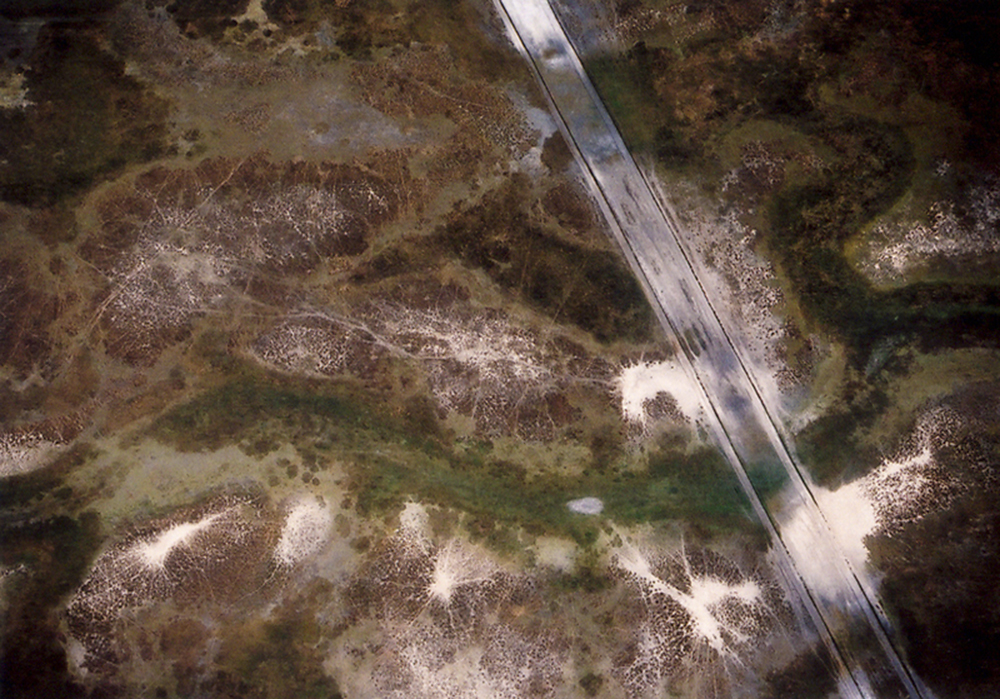
    Edward Burtynsky (Canadian, b. 1955) 'Jubilee Operations #1, Kalgoorlie, Western Australia' 2007 from the exhibition Exhibition: 'Edward Burtynsky: Australian Minescapes' at the Australian Centre for Photography, Sydney, July - August, 2009


    Edward Burtynsky (Canadian, b. 1955)
    Jubilee Operations #1, Kalgoorlie, Western Australia
    2007
    Digital chromogenic colour photographic print
    1560mm x 1260mm
    Western Australian Museum


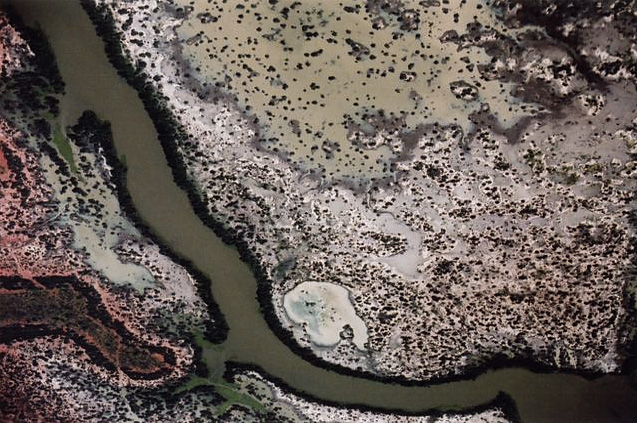
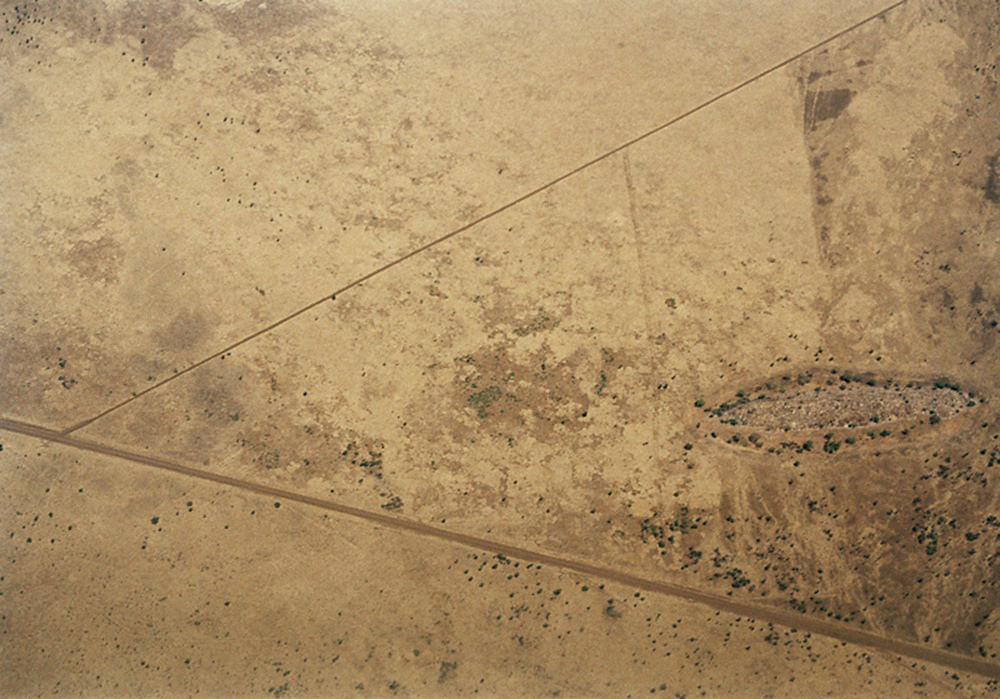
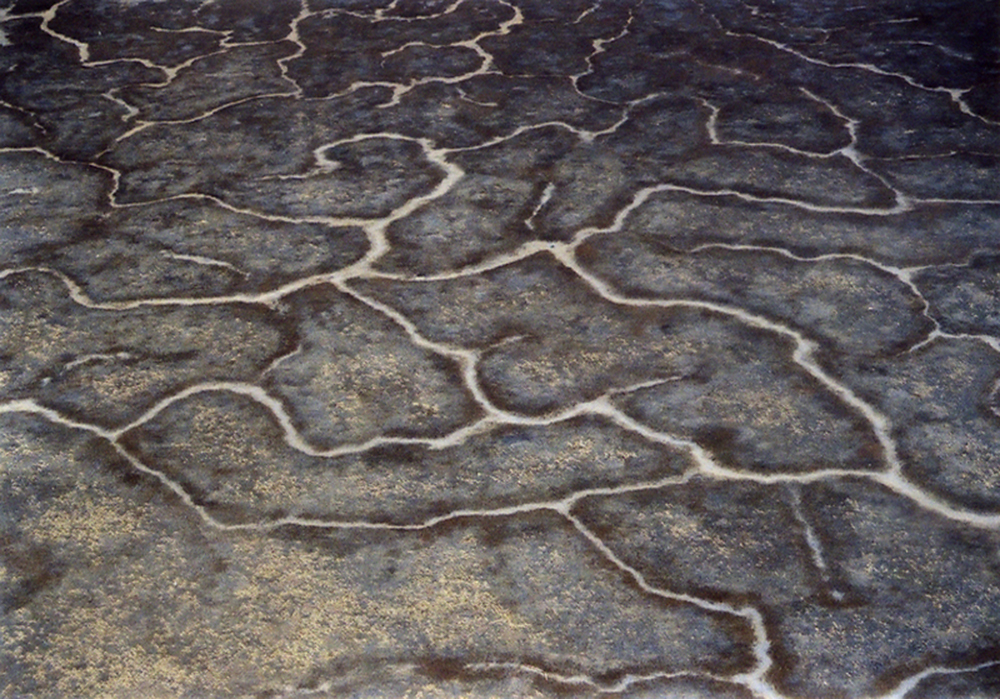
    All of these incredible, environmental aerial photographs – beauty, texture, pattern, fabric, scars, desecration, destruction, de / construction – are works in the exhibition. The effects of the Anthropocene era in full swing. I will be glad when I am not here to see the fateful outcome of all of this: the death of most of the animals, and the sickness of the planet.

    A travelling exhibition from the Western Australian Museum.

    Dr Marcus Bunyan


    Many thankx to the Australian Centre for Photography for allowing me to publish the photographs in the posting. Please click on the photographs for a larger version of the image.


    Edward Burtynsky (Canadian, b. 1955) 'Otter Juan Coronet Mine #1 Kalgoorlie, Western Australia' 2007 from the exhibition Exhibition: 'Edward Burtynsky: Australian Minescapes' at the Australian Centre for Photography, Sydney, July - August, 2009


    Edward Burtynsky (Canadian, b. 1955)
    Otter Juan Coronet Mine #1, Kalgoorlie, Western Australia
    2007
    Digital chromogenic colour photographic print
    1560mm x 1260mm
    Western Australian Museum


    Edward Burtynsky (Canadian, b. 1955) 'Silver Lake Operations #1, Lake Lefroy, Western Australia' 2007 from the exhibition Exhibition: 'Edward Burtynsky: Australian Minescapes' at the Australian Centre for Photography, Sydney, July - August, 2009


    Edward Burtynsky (Canadian, b. 1955)
    Silver Lake Operations #1, Lake Lefroy, Western Australia
    2007
    Digital chromogenic colour photographic print
    1560mm x 1260mm
    Western Australian Museum


    Edward Burtynsky (Canadian, b. 1955) 'Silver Lake Operations #2, Lake Lefroy, Western Australia' 2007


    Edward Burtynsky (Canadian, b. 1955)
    Silver Lake Operations #2, Lake Lefroy, Western Australia
    2007
    Digital chromogenic colour photographic print
    1560mm x 1260mm
    Western Australian Museum


    Edward Burtynsky (Canadian, b. 1955) 'Silver Lake Operations #3, Lake Lefroy, Western Australia' 2007


    Edward Burtynsky (Canadian, b. 1955)
    Silver Lake Operations #3, Lake Lefroy, Western Australia
    2007
    Digital chromogenic colour photographic print
    1560mm x 1260mm
    Western Australian Museum


    Edward Burtynsky (Canadian, b. 1955) 'Silver Lake Operations #5, Lake Lefroy, Western Australia' 2007


    Edward Burtynsky (Canadian, b. 1955)
    Silver Lake Operations #5, Lake Lefroy, Western Australia
    2007
    Digital chromogenic colour photographic print
    1560mm x 1260mm
    Western Australian Museum


    Edward Burtynsky (Canadian, b. 1955) 'Silver Lake Operations #11, Lake Lefroy, Western Australia' 2007


    Edward Burtynsky (Canadian, b. 1955)
    Silver Lake Operations #11, Lake Lefroy, Western Australia
    2007
    Digital chromogenic colour photographic print
    1560mm x 1260mm
    Western Australian Museum


    Edward Burtynsky (Canadian, b. 1955) 'Silver Lake Operations #12, Lake Lefroy, Western Australia' 2007


    Edward Burtynsky (Canadian, b. 1955)
    Silver Lake Operations #12, Lake Lefroy, Western Australia
    2007
    Digital chromogenic colour photographic print
    1560mm x 1260mm
    Western Australian Museum


    Edward Burtynsky (Canadian, b. 1955) 'Silver Lake Operations #14, Lake Lefroy, Western Australia' 2007


    Edward Burtynsky (Canadian, b. 1955)
    Silver Lake Operations #14, Lake Lefroy, Western Australia
    2007
    Digital chromogenic colour photographic print
    1560mm x 1260mm
    Western Australian Museum


    Edward Burtynsky (Canadian, b. 1955) 'Silver Lake Operations #15 Lake Lefroy, Western Australia' 2007


    Edward Burtynsky (Canadian, b. 1955)
    Silver Lake Operations #15, Lake Lefroy, Western Australia
    2007
    Digital chromogenic colour photographic print
    1560mm x 1260mm
    Western Australian Museum


    Edward Burtynsky (Canadian, b. 1955) 'Silver Lake Operations #16, Lake Lefroy, Western Australia' 2007


    Edward Burtynsky (Canadian, b. 1955)
    Silver Lake Operations #16, Lake Lefroy, Western Australia
    2007
    Digital chromogenic colour photographic print
    1560mm x 1260mm
    Western Australian Museum


    Edward Burtynsky is one of the world’s leading contemporary landscape photographers. His ‘manufactured landscapes’ have included stark images of recycling yards, mine tailings, quarries and refineries. This series of images, taken in the eastern goldfields and the Pilbara of Western Australia, continues Edward Burtynsky’s examination of natural landscapes modified by mankind in the pursuit of the raw materials required for our modern society.

    “Our dependence on nature to provide the materials for our consumption and our concern for the health of our planet sets us into an uneasy contradiction. For me, these images function as reflecting pools of our times.” ~ Edward Burtynsky

    Australian Minescapes is a new body of work by Burtynsky, commissioned for the FotoFreo 2008 Festival. For this exhibition a selection of images from his Shipyard images from China and Ship Breaking images from Bangladesh will be presented alongside his Australian Minescapes images.

    Text from the Australian Centre for Photography website [Online] Cited 01/08/2009. No longer available online


    Edward Burtynsky (Canadian, b. 1955) 'Super Pit #1, Kalgoorlie, Western Australia' 2007


    Edward Burtynsky (Canadian, b. 1955)
    Super Pit #1, Kalgoorlie, Western Australia
    2007
    Digital chromogenic colour photographic print
    1560mm x 1260mm
    Western Australian Museum


    Edward Burtynsky (Canadian, b. 1955) 'Super Pit #4 Kalgoorlie, Western Australia' 2007


    Edward Burtynsky (Canadian, b. 1955)
    Super Pit #4, Kalgoorlie, Western Australia
    2007
    Digital chromogenic colour photographic print
    1560mm x 1260mm
    Western Australian Museum


    Edward Burtynsky (Canadian, b. 1955) 'Tailings #1 Kalgoorlie, Western Australia' 2007


    Edward Burtynsky (Canadian, b. 1955)
    Tailings #1 Kalgoorlie, Western Australia
    2007
    Digital chromogenic colour photographic print
    1560mm x 1260mm
    Western Australian Museum


    Australian Centre for Photography

    This gallery has now closed.

    Edward Burtynsky website

    LIKE ART BLART ON FACEBOOK

    Back to top

    Exhibition: ‘Focus on Color: The Photography of Jeannette Klute’ at the Bruce Museum, Greenwich, Connecticut

    Exhibition dates: 21st June – 27th September, 2009


    Many thankx to the Bruce Museum and Mike Horyczun (Director of Public Relations) for allowing me to publish the wonderful photographs below.

    Marcus


    Jeannette Klute (American, 1918-2009) 'Cardinal Flower' Nd (early-mid 1950s)


    Jeannette Klute (American, 1918-2009)
    Cardinal Flower
    Nd (early-mid 1950s)
    Dye transfer photograph
    20 1/4 x 16 1/4 in.
    Bruce Museum collection
    Gift of George Stephanopoulos


    Jeannette Klute (American, 1918-2009) 'Misty Willow' Nd (early-mid 1950s)


    Jeannette Klute (American, 1918-2009)
    Misty Willow
    Nd (early-mid 1950s)
    Dye transfer photograph
    20 1/4 x 16 1/4 in.
    Bruce Museum collection
    Gift of George Stephanopoulos


    Jeannette Klute (American, 1918-2009) 'Miterwort' Nd (early-mid 1950s)


    Jeannette Klute (American, 1918-2009)
    Miterwort
    Nd (early-mid 1950s)
    Dye transfer photograph
    14 1/8 x 11 1/4 in.
    Bruce Museum collection
    Gift of George and Alexandra Stephanopoulos


    Jeannette Klute (American, 1918-2009) 'Beech Fern' Nd (early-mid 1950s)


    Jeannette Klute (American, 1918-2009)
    Beech Fern
    Nd (early-mid 1950s)
    Dye transfer photograph
    20 1/4 x 16 1/4 in.
    Bruce Museum collection
    Gift of George Stephanopoulos


    Jeannette Klute (American, 1918-2009) 'Jewel Weed' Nd (early-mid 1950s)


    Jeannette Klute (American, 1918-2009)
    Jewel Weed
    Nd (early-mid 1950s)
    Dye transfer photograph
    20 1/4 x 16 1/4 in.
    Bruce Museum collection
    Gift of George Stephanopoulos


    Jeannette Klute (American, 1918-2009) 'Christmas Fern' Nd (early-mid 1950s)


    Jeannette Klute (American, 1918-2009)
    Christmas Fern
    Nd (early-mid 1950s)
    Dye transfer photograph
    12 1/2 x 9 1/2 in.
    Bruce Museum collection
    Gift of George Thomsen


    Jeannette Klute (American, 1918-2009) 'Jack in the Pulpit (Arisaema triphyllum)' Nd (early-mid 1950s)


    Jeannette Klute (American, 1918-2009)
    Jack in the Pulpit (Arisaema triphyllum)
    Nd (early-mid 1950s)
    Dye transfer photograph
    20 1/4 x 16 1/4 in.
    Bruce Museum collection
    Gift of George and Alexandra Stephanopoulos


    Jeannette Klute (American, 1918-2009) 'Green Grasses - blue' Nd (early-mid 1950s)


    Jeannette Klute (American, 1918-2009)
    Green Grasses – blue
    Nd (early-mid 1950s)
    Dye transfer photograph
    20 1/4 x 16 1/4 in.
    Bruce Museum collection
    Gift of Richard and Elena Pollack


    The exhibition features 24 colour photographs by Jeannette Klute (1918-2009) drawn from more than fifty of her prints held in the Bruce Museum’s permanent collection. Ranging from landscapes to intimate “woodland portraits” of orchids, ferns, and trees, Jeannette Klute’s photographs of New England are vibrant compositions produced through the labour intensive dye transfer process.

    Trained at the Rochester Institute of Technology through the Works Progress Administration during the Depression, Jeanette Klute worked extensively on perfecting the dye transfer process, a laborious photographic technique that allowed for rich colours in exceptionally permanent prints. Klute tested and refined this process at the Eastman Kodak Company in Rochester, NY, beginning her career as photographic illustrator to physicist Ralph M. Evans and ascending to research photographer in charge of the Visual Research Studio of the Color Control Division.

    Klute’s photography merged environmental consciousness with cutting edge technology. Using only natural light and leaving a minimal impact on the environment, she spent many years investigating colour and demonstrating the capabilities of dye transfer by photographing nature. Her work resulted in some of the finest examples of colour printing and all of its capabilities.

    “My purpose has been to somehow express the feeling one experiences being out of doors,” Ms. Klute wrote for her Woodland Portraits exhibition. “I am concerned with the delight to the senses as much as with the intellectual. The woods are mystical and enchanting to me as well as spiritual.”

    Jeanette Klute’s work was featured in Edward Steichen’s 1950 exhibition All Color Photography at the Museum of Modern Art, and her large one-woman shows were circulated internationally by the Smithsonian Institution and Kodak International. She was also invited to submit work for the San Francisco Museum of Art’s landmark exhibition Women of Photography: An Historical Survey in 1975.

    Text from the Bruce Museum website


    Jeannette Klute (American, 1918-2009) 'Maple Tree - red leaves' Nd (early-mid 1950s)


    Jeannette Klute (American, 1918-2009)
    Maple Tree – red leaves
    Nd (early-mid 1950s)
    Dye transfer photograph
    20 1/4 x 16 1/4 in.
    Bruce Museum collection
    Gift of LeGrand Belnap


    Jeannette Klute (American, 1918-2009) 'Frosted Tree' Nd (early-mid 1950s)


    Jeannette Klute (American, 1918-2009)
    Frosted Tree
    Nd (early-mid 1950s)
    Dye transfer photograph
    20 1/4 x 16 1/4 in.
    Bruce Museum collection
    Gift of Richard and Elena Pollack


    Jeannette Klute (American, 1918-2009) 'Yellow Lady's Slipper' Nd (early-mid 1950s)


    Jeannette Klute (American, 1918-2009)
    Yellow Lady’s Slipper
    Nd (early-mid 1950s)
    Dye transfer photograph
    20 1/4 x 16 1/4 in.
    Bruce Museum collection
    Gift of LeGrand Belnap


    “The first month they were sending people out for job interviews, but not me,” she recalled in a speech at the Rochester Institute of Technology in 1984. “I asked how come? The head of the department said, ‘Oh, there are no jobs for women in photography.’ My world fell apart.”

    Ms. Klute took it upon herself to go out for interviews, and every week on her day off, she walked to the offices of Eastman Kodak Co. to ask for a job. For a long time, she never made it past the personnel office. Then, one day, in the pouring rain, decked in her finest navy blue suit, she stalked to the offices and was sent straight to the sixth floor for an interview.

    “The man took a look at me with the rain dripping off my hat and said, ‘If you want a job that bad, you’ve got it,'” she recalled. “There was a celebration in the neighbourhood that night.” …

    “She was really like my college education,” said Barbara Erbland, who assisted Ms. Klute in the lab at Kodak for many years. “She taught me everything – about light, colour, about people … how to live well.” … “Her lab consisted of all women,” she said. “I think it was by intention. She believed women had brains. We worked very well together.” …

    Lugging a 4-by-5 Graflex single-lens reflex camera wherever they went, Erbland ventured into swamps and tide pools… “She taught me you don’t make do, you make things happen,” said Erbland. “You’re not a victim.”

    Back in Rochester, the two sought out swamps and woodland for Ms. Klute to take her photographs – or, as she put it, to “make pictures.”

    PHOTO GALLERY: In memory of Jeannette Klute, a ‘Renaissance woman’, by Philip Anselmo, August 2009


    Jeannette Klute. 'Grape Leaves' nd


    Jeannette Klute (American, 1918-2009)
    Grape Leaves
    Nd (early-mid 1950s)
    Dye transfer photograph
    20 1/4 x 16 1/4 in.
    Bruce Museum collection
    Gift of George Stephanopoulos


    Bruce Museum
    One Museum Drive
    Greenwich, CT 06830

    Opening hours:
    Tuesday – Sunday 10am – 5pm
    Last admission 4.30pm
    Closed Monday and major holidays

    Bruce Museum website

    LIKE ART BLART ON FACEBOOK

    Back to top

    Exhibition: ‘Gay Icons’ at the National Portrait Gallery, London

    Exhibition dates: 2nd July – 18th October 2009


    Jill Furmanovsky (British, b. 1953) 'K.D. Lang, Le Meridien Hotel, London' 1992


    Jill Furmanovsky (British, b. 1953)
    K.D. Lang, Le Meridien Hotel, London
    1992
    Gelatin silver print
    © Jill Furmanovsky


    “How I wish this selection had been available to me when I was young and trying to make sense of my reactions to the world. How inspirational to have had portraits of the great and the good staring out at me telling me that I was not by any measure on my own.”

    “… it is her [K.D. Lang’s] androgynous good looks and tendency to strut on the stage which warms many lesbian hearts.”

    ~ Sandi Toksvig


    Many thankx to the National Portrait Gallery for allowing me to publish the photographs in the posting. Please click on the photographs for a larger version of the image.


    Fergus Greer (English, b. 1961) 'Quentin Crisp' 1989


    Fergus Greer (English, b. 1961)
    Quentin Crisp
    1989
    Bromide fibre print
    10 1/2 in. x 10 3/8 in. (267 mm x 264 mm)
    Given by Fergus Greer, 2006
    © National Portrait Gallery, London
    © Fergus Greer


    The first portrait exhibition to celebrate the contribution of gay people and gay icons to history and culture. 60 photographs selected by Waheed Alli, Alan Hollinghurst, Elton John, Jackie Kay, Billie Jean King, Ian McKellen, Chris Smith, Ben Summerskill, Sandi Toksvig and Sarah Waters.

    An important photography exhibition, Gay Icons, at the National Portrait Gallery (2 July – 18 October 2009) will celebrate the contribution of gay people – and the significance of the gay icon – to history and culture. Ten selectors have worked with the Gallery to make their own personal choices of six individuals, their ‘icons’. Not only does this exhibition include many well-known icons, who may or may not be gay themselves, it also reveals some surprises and will encourage a wide audience to think about familiar faces in new ways.

    The Gay Icons shown in the exhibition will include those people, living or dead, whatever their sexual orientation or interests, who the ten individual selectors regard as inspirational, or as a personal icon. Gay Icons brings together portraits of those people who are regarded as especially significant to each of the selectors, alongside those of the selectors themselves, all prominent gay figures in contemporary culture and society.

    Coinciding with the fortieth anniversary of the Stonewall Riots in New York, this exhibition focuses on portraits of both historical and modern figures. The choices provide a fascinating range of inspiring figures – some very famous, some heroic, others relatively unknown. Each icon is presented with information about their personal, and sometimes public, significance, some of it relating to the sitter but much of it linked to the selectors who have been prepared to share their experiences and feelings in their own exhibition texts.

    Themes running through the exhibition include inspiration and how the ‘icons’ have inspired each selector in an extremely personal sense to realise their full potential, human rights, stemming from the specific consideration of sexuality, and how this might lead us to consider parallels between the struggles of different minority groups, re-discovery, or rescuing the reputations of figures who might otherwise have been forgotten or, worse, actively disregarded and surprise at some of the perhaps unexpected choices.

    The project was developed from an initial proposal made by Bernard Horrocks, Copyright Officer, at the Gallery. The concept quickly evolved to include invitations to ten gay people – each distinguished in different fields – to act as selectors. They were chosen in consultation with their Chair, Sandi Toksvig.

    Each selector could freely choose six ‘icons’, although the Gallery decided to limit the choices to photographic portraits, and therefore to subjects who had lived, more or less, within the last 150 years. This also seemed appropriate because within this same period homosexuality was gradually accepted and made legitimate in Britain.

    The selectors are Lord Waheed Alli, Alan Hollinghurst, Sir Elton John, Jackie Kay, Billie Jean King, Sir Ian McKellen, Lord Chris Smith, Ben Summerskill, Sandi Toksvig and Sarah Waters.

    Sitters include artists Francis Bacon and David Hockney, civil rights campaigner Harvey Milk, writers Quentin Crisp, Joe Orton, Dame Daphne Du Maurier, Patricia Highsmith and Walt Whitman, composer Pyotr Tchaikovsky, musicians k.d. lang, Will Young and Village People, entertainers Ellen DeGeneres, Kenneth Williams and Lily Savage, and Nelson Mandela and Diana, Princess of Wales. Their fascinating stories will be illustrated by sixty photographic portraits including works by Andy Warhol, Linda McCartney, Snowdon, Polly Borland, Fergus Greer, Terry O’Neill and Cecil Beaton.

    Sandy Nairne, Director of the National Portrait Gallery, London, says: “Gay Icons is an exhibition in which inspiring stories – both private and public – are shared. These are stories of brave lives and significant achievements, told through iconic photographic images chosen by selectors who are themselves icons.

    Text from the National Portrait Gallery website [Online] Cited 10/07/2009. No longer available online


    Gisèle Freund (French born Germany, 1908-2000) 'Virginia Woolf' 1939


    Gisèle Freund (French born Germany, 1908-2000)
    Virginia Woolf
    1939
    © Gisèle Freund


    Gisèle Freund (born Gisela Freund; December 19, 1908 in Schöneberg District, Berlin – March 31, 2000 in Paris) was a German-born French photographer and photojournalist, famous for her documentary photography and portraits of writers and artists. Her best-known book, Photographie et société (1974), is about the uses and abuses of the photographic medium in the age of technological reproduction. In 1977, she became President of the French Association of Photographers, and in 1981, she took the official portrait of French President François Mitterrand.

    She was made Officier des Arts et Lettres in 1982 and Chevalier de la Légion d’honneur, the highest decoration in France, in 1983. In 1991, she became the first photographer to be honoured with a retrospective at the Musée National d’art Moderne in Paris (Centre Georges Pompidou).

    Freund’s major contributions to photography include using the Leica Camera (with its 36 frames) for documentary reportage and her early experimentation with Kodachrome and 35 mm Agfacolor, which allowed her to develop a “uniquely candid portraiture style” that distinguishes her in 20th century photography.

    She is buried at the Montparnasse Cemetery in Paris, France near her home and studio at 12 rue Lalande.

    See her full entry on the Wikipedia website


    Harper & Brothers. 'Patricia Highsmith' 1942 


    Harper & Brothers
    Patricia Highsmith
    1942
    Gelatin silver print
    © Patricia Highsmith Collection, Swiss National Library / Swiss Literary Archives, Bern


    “… is a significant writer by any standard, but she deserves honouring as a lesbian and gay icon on the strength of one novel alone, The Price of Salt, a wonderfully complex and upbeat representation of lesbian love.”

    ~ Sarah Waters


    Patricia Highsmith (January 19, 1921 – February 4, 1995) was an American novelist and short story writer best known for her psychological thrillers, including her series of five novels featuring the character Tom Ripley. She wrote 22 novels and numerous short stories throughout her career spanning nearly five decades, and her work has led to more than two dozen film adaptations. Her writing derived influence from existentialist literature, and questioned notions of identity and popular morality. She was dubbed “the poet of apprehension” by novelist Graham Greene.

    Her first novel, Strangers on a Train, has been adapted for stage and screen numerous times, notably by Alfred Hitchcock in 1951. Her 1955 novel The Talented Mr. Ripley has been adapted numerous times for film, theatre, and radio. Writing under the pseudonym “Claire Morgan,” Highsmith published the first lesbian novel with a happy ending, The Price of Salt, in 1952, republished 38 years later as Carol under her own name and later adapted into a 2015 film.

    Text from the Wikipedia website


    Paul Morrissey (American, 1938-2024) 'Joe Dallesandro' 1968


    Paul Morrissey (American, 1938-2024)
    Joe Dallesandro
    1968
    Gelatin silver print
    © Paul Morrissey, 1968


    Joseph Angelo D’Allesandro III (born December 31, 1948), better known as Joe Dallesandro, is an American actor and Warhol superstar. Having also crossed over into mainstream roles like mobster Lucky Luciano in The Cotton Club, Dallesandro is generally considered to be the most famous male sex symbol of American underground films of the 20th century, as well as a sex symbol of gay subculture.

    Dallesandro starred in the 1968 film produced by Andy Warhol, Flesh, as a teenage street hustler. Rolling Stone magazine in 1970 declared his second starring vehicle, Trash, the “Best Film of the Year”, making him a star of the youth culture, sexual revolution and subcultural New York City art collective of the 1970s. Dallesandro also starred in 1972’s Heat, another Warhol film that was conceived as a parody of Sunset Boulevard. …

    Underground film career

    Dallesandro met Andy Warhol and Paul Morrissey in 1967 while they were shooting Four Stars, and they cast him in the film on the spot. Warhol would later comment “In my movies, everyone’s in love with Joe Dallesandro.”

    Dallesandro played a hustler in his third Warhol film, Flesh (1968), where he had several nude scenes. Flesh became a crossover hit with mainstream audiences, and Dallesandro became the most popular of the Warhol stars. New York Times film critic Vincent Canby wrote of him: “His physique is so magnificently shaped that men as well as women become disconnected at the sight of him”

    As Dallesandro’s underground fame began to cross over into the popular culture, he appeared on the cover of Rolling Stone in April 1971. He was also photographed by some of the top celebrity photographers of the time: Francesco Scavullo, Annie Leibovitz, Richard Avedon.

    Dallesandro appeared in Lonesome Cowboys (1968), Trash (1970), Heat (1972), Andy Warhol’s Frankenstein, and Andy Warhol’s Dracula (both 1974), also directed by Morrissey. These last two films were shot in Europe. After filming was complete, he chose not to return to the U.S. He appeared in Serge Gainsbourg’s Je t’aime moi non plus (France, 1976), which starred Gainsbourg’s wife, British actress Jane Birkin.

    Text from the Wikipedia website


    Lewis Morley (Australian born Hong Kong, 1925-2013) 'Joe Orton' 1965


    Lewis Morley (Australian born Hong Kong, 1925-2013)
    Joe Orton
    1965
    Bromide print
    20 in. x 16 1/8 in. (508 mm x 410 mm)
    Given by the photographer, Lewis Morley, 1992
    © Lewis Morley Archive/National Portrait Gallery, London


    Gay Icons explores gay social and cultural history through the unique personal insights of ten high profile gay figures, who have selected their historical and modern icons.

    The chosen icons, who may or may not be gay themselves, have all been important to each selector, having influenced their gay sensibilities or contributed to making them who they are today. They include artists Francis Bacon and David Hockney; writers Daphne du Maurier and Quentin Crisp; composers Pyotr Tchaikovsky and Benjamin Britten; musicians k.d. lang, the Village People and Will Young; entertainers Ellen DeGeneres, Lily Savage and Kenneth Williams; sports stars Martina Navratilova and Ian Roberts and political activists Harvey Milk and Angela Mason.

    Their fascinating and inspirational stories will be illustrated by over sixty photographic portraits including works by Andy Warhol, Snowdon and Cecil Beaton together with specially commissioned portraits of the selectors by Mary McCartney. McCartney. All are set in a striking exhibition design conceived by renowned theatre designer, Robert Jones …

    This exhibition brings together ten selectors, chaired by Sandi Toksvig, each of whom is a prominent gay figure in contemporary culture and society. Each selector was asked to name six people, who may or may not be gay, whom they personally regard as inspirational, or an icon for them.

    Their choices provide a fascinating range of figures – some heroic, some very famous, others less well known. In the exhibition the selectors write about their choices and share their own convictions, experiences and feelings. The display also features specially commissioned portraits of the selectors by Mary McCartney.

    Anonymous text. “Gay Icons,” on the National Portrait Gallery website [Online] Cited 18/06/2022. No longer available online


    Ian Berry (English, b. 1934) 'Nelson Mandela' 1994


    Ian Berry (English, b. 1934)
    Nelson Mandela
    1994
    Gelatin silver print
    © Ian Berry/Magnum Photos


    “He has touched my heart, just as he has influenced the hearts and minds of people all over the world.”

    ~ Billie Jean King

    “The great single picture is emotionally satisfying, whereas getting a good journalistic story is more about being a professional”

    ~ Ian Berry


    Ian Berry was born in Lancashire, England. He made his reputation in South Africa, where he worked for the Daily Mail and later for Drum magazine. He was the only photographer to document the massacre at Sharpeville in 1960, and his photographs were used in the trial to prove the victims’ innocence.

    Henri Cartier-Bresson invited Ian Berry to join Magnum in 1962 when he was based in Paris. He moved to London in 1964 to become the first contract photographer for the Observer Magazine. Since then assignments have taken him around the world: he has documented Russia’s invasion of Czechoslovakia; conflicts in Israel, Ireland, Vietnam and the Congo; famine in Ethiopia; apartheid in South Africa. The major body of work produced in South Africa is represented in two of his books: Black and Whites: L’Afrique du Sud (with a foreword by the then French president François Mitterrand), and Living Apart (1996). During the last year, projects have included child slavery in Ghana and the Spanish fishing industry.

    Important editorial assignments have included work for National GeographicFortuneSternGeo, national Sunday magazines, EsquireParis-Match and LIFE. Ian Berry has also reported on the political and social transformations in China and the former USSR.

    Anonymous text. “Ian Berry,” on the Magnum website [Online] Cited 16/03/2019


    Unknown photographer. 'Bessie Smith' c. 1920s


    Unknown photographer
    Bessie Smith
    c. 1920s
    Gelatin silver print
    Frank Driggs Collection/Getty Images
    © 1925 Getty Images


    “A feisty woman who always stood up for herself… She was bisexual and practically an alcoholic – the perfect icon.”

    ~ Jackie Kay


    Bessie Smith (April 15, 1894 – September 26, 1937) was an American blues singer. Nicknamed the Empress of the Blues, she was the most popular female blues singer of the 1920s and 1930s. She is often regarded as one of the greatest singers of her era and was a major influence on fellow blues singers, as well as jazz vocalists.

    Read her full entry on the Wikipedia website


    Howard Coster (British, 1885-1959) 'Sylvia Townsend Warner' 1934


    Howard Coster (British, 1885-1959)
    Sylvia Townsend Warner
    1934
    Half-plate film negative
    Transferred from Central Office of Information, 1974
    © National Portrait Gallery, London


    Sylvia Townsend Warner (6 December 1893 – 1 May 1978) was an English novelist and poet. She also made a contribution to musicology as a young woman.


    Bertram Park (British, 1883-1972) 'Ronald Firbank' 1917 (detail)


    Bertram Park (British, 1883-1972)
    Ronald Firbank (detail)
    1917


    “He [Ronald Firbank] is celebrated as a master of high camp, but he was also a radical technician and radical homosexualiser of the novel.”

    ~ Alan Hollinghurst


    Bertram Park (British, 1883-1972) 'Ronald Firbank' 1917


    Bertram Park (British, 1883-1972)
    Ronald Firbank
    1917


    Bertram Charles Percival Park, OBE, (1883-1972) was a portrait photographer whose work included British and European royalty. Engravings of his photographs were widely used on British and British Commonwealth postage stamps, currency, and other official documents in the 1930s. His theatrical portraits were the source for two paintings by Walter Sickert. With his wife Yvonne Gregory, he also produced a number of photographic books of the female nude. He was an expert in the cultivation of the rose and the editor of The Rose Annual.

    Text from the Wikipedia website


    Arthur Annesley Ronald Firbank (17 January 1886 – 21 May 1926) was an innovative English novelist. His eight short novels, partly inspired by the London aesthetes of the 1890s, especially Oscar Wilde, consist largely of dialogue, with references to religion, social-climbing, and sexuality.


    Unknown Photographer. 'Winifred Atwell' c. 1950s (detail)


    Unknown photographer
    Winifred Atwell (detail)
    c. 1950s
    Courtesy of Getty Images


    “Winifred Atwell’s piano performances were simply captivating. She showed me what was possible and was a total inspiration.”

    ~ Elton John


    Una Winifred Atwell (27 February or 27 April 1910 or 1914 – 28 February 1983) was a Trinidadian pianist who enjoyed great popularity in Britain and Australia from the 1950s with a series of boogie-woogie and ragtime hits, selling over 20 million records. She was the first black person to have a number-one hit in the UK Singles Chart and is still the only female instrumentalist to do so.

    Read the full entry about this amazing women on the Wikipedia website


    Elliott and Fry. 'Alan Turing' 1951 (detail)


    Elliott and Fry
    Alan Turing (detail)
    29 March 1951
    © National Portrait Gallery, London


    Elliott & Fry was a Victorian photography studio founded in 1863 by Joseph John Elliott (14 October 1835 – 30 March 1903) and Clarence Edmund Fry (1840 – 12 April 1897). For a century the firm’s core business was taking and publishing photographs of the Victorian public and social, artistic, scientific and political luminaries. In the 1880s the company operated three studios and four large storage facilities for negatives, with a printing works at Barnet.

    The firm’s first address was 55 & 56 Baker Street in London, premises they occupied until 1919. The studio employed a number of photographers, including Francis Henry Hart and Alfred James Philpott in the Edwardian era, Herbert Lambert and Walter Benington in the 1920s and 1930s and subsequently William Flowers. During World War II the studio was bombed and most of the early negatives were lost, the National Portrait Gallery holding all the surviving negatives. With the firm’s centenary in 1963 it was taken over by Bassano & Vandyk.

    Text from the Wikipedia website


    Elliott and Fry. 'Alan Turing' 29 March 1951


    Elliott and Fry
    Alan Turing
    29 March 1951
    Vintage bromide print on photographer’s mount
    6 3/8 x 4 5/8 in. (162 mm x 117 mm)
    Given by the sitter’s mother, Ethel Sara Turing (née Stoney), 1956
    © National Portrait Gallery, London


    “Turing was one of the most brilliant men of the first half of the twentieth century, but the refusal of post-war society to accept his sexuality drove him to commit suicide… We can and should honour him now.”

    ~ Chris Smith


    National Portrait Gallery
    St Martin’s Place
    London WC2H 0HE

    Opening hours:
    Closed until 2023

    National Portrait Gallery website

    LIKE ART BLART ON FACEBOOK

    Back to top

    Exhibition: ‘Gilbert & George: Jack Freak Pictures’ at Arndt & Partner, Berlin

    Exhibition dates: 16th June – 18th September, 2009


    Artist duo George (left) and Gilbert (right) pose in front of their work "The Church of England" in Berlin, Germany


    Artist duo George (left) and Gilbert (right) pose in front of their work “The Church of England” in Berlin, Germany


    That pair of agent provocateurs are at it again!

    Marcus


    Many thankx to Arndt & Partner for allowing me to publish the photographs in the posting. Please click on the photographs for a larger version of the image.


    Gilbert & George (Gilbert Prousch, English born Italy, b. 1943) (George Passmore, English, b. 1942) 'Dating' 2008


    Gilbert & George (Gilbert Prousch, English born Italy, b. 1943) (George Passmore, English, b. 1942)
    DATING
    2008
    Mixed media


    Gilbert & George (Gilbert Prousch, English born Italy, b. 1943) (George Passmore, English, b. 1942) 'BRITISHISM' 2008


    Gilbert & George (Gilbert Prousch, English born Italy, b. 1943) (George Passmore, English, b. 1942)
    BRITISHISM
    2008
    Mixed media


    Gilbert & George (Gilbert Prousch, English born Italy, b. 1943) (George Passmore, English, b. 1942) 'JESUS JACK' 2008


    Gilbert & George (Gilbert Prousch, English born Italy, b. 1943) (George Passmore, English, b. 1942)
    JESUS JACK
    2008
    Mixed media


    Gilbert & George. 'ROUND FLAG' 2008


    Gilbert & George (Gilbert Prousch, English born Italy, b. 1943) (George Passmore, English, b. 1942)
    ROUND FLAG
    2008
    Mixed media


    As the international tour of the last Gilbert & George retrospective (2007-2009) did not include Berlin, Arndt & Partner are now presenting a solo exhibition of the celebrity artist duo in its gallery rooms behind the Hamburger Bahnhof. It is the first Gilbert & George solo show in Berlin for 14 years. The exhibition features a selection of 20 large-scale pieces from the Jack Freak Pictures, the largest Gilbert & George group of pictures to date. The thrust of the content is given by the colours and shapes of the Union Jack flag that dominate the bulk of the pictures as well as the recurring motive of medals, emblems and trees. In the Jack Freak Pictures the artist duo explores aspects of nationhood and of the sentient individual in the nets of society. In his essay published in the catalogue accompanying the exhibition the British writer Michael Bracewell describes these pictures as “the most iconic, philosophically astute and visually violent works that Gilbert & George have ever created …”

    Gilbert & George, who met as students of sculpture at St. Martin’s School of Art in London 42 years ago, embarked on a joint artistic career that was to encompass a wide range of media from drawing to video and their trademark pictures. Further, the pair revolutionised the concept of sculpture by presenting themselves as “living sculptures” dressed in the quintessentially British tailored suit, shirt and tie. But it was their monumental trademark pictures composed of a grid like array of smaller images which they began to create in the early 70s that first brought them international fame. Figures, cityscapes, symbols, plants, bodily fluids, excrements and text interlock in pictorial messages as visually powerful as their content is provocative. The pictures, which started out in black and white and later assumed increasingly luminous, bold colours, generally also depict portraits of the artists themselves and seize on taboo subjects like sexuality, race, religion and national identity with a brash and fearless candour.

    The Jack Freak Pictures again feature the bodies and/or faces of the artists. In these compositions, their bodies function as stylised representatives of the individual in society, whose relationship to social norms and categories, to national, religious and sexual identification processes is relentlessly explored and commented upon. Departing from their earlier oeuvre, some of their new pictures split the raw images into much smaller fragments before merging them into new forms. The result is a fascinating kaleidoscopic mix of the monstrously grotesque with an intricate ornamental structure reminiscent of sacred art. In ever new variations, Gilbert & George order the signs and fragments of social life they find in their neighbourhood – the multicultural East End of London – where solidarity and friendship are as visible as intolerance and marginalisation.

    Press release from the Arndt & Partner website [Online] Cited 04/07/2009. No longer available online


    Gilbert & George installation photograph of their exhibition 'Jack Freak Pictures' at Arndt & Partner, Berlin

    Gilbert & George installation photograph of their exhibition 'Jack Freak Pictures' at Arndt & Partner, Berlin

    Gilbert & George installation photograph of their exhibition 'Jack Freak Pictures' at Arndt & Partner, Berlin

    Gilbert & George installation photograph of their exhibition 'Jack Freak Pictures' at Arndt & Partner, Berlin


    Gilbert & George installation photographs of their exhibition Jack Freak Pictures at Arndt & Partner, Berlin


    Gilbert & George (Gilbert Prousch, English born Italy, b. 1943) (George Passmore, English, b. 1942) 'JESUS SUITS' 2008


    Gilbert & George (Gilbert Prousch, English born Italy, b. 1943) (George Passmore, English, b. 1942)
    JESUS SUITS
    2008
    Mixed media


    Gilbert & George (Gilbert Prousch, English born Italy, b. 1943) (George Passmore, English, b. 1942) 'CHURCH OF ENGLAND' 2008


    Gilbert & George (Gilbert Prousch, English born Italy, b. 1943) (George Passmore, English, b. 1942)
    CHURCH OF ENGLAND
    2008
    Mixed media


    Gilbert & George (Gilbert Prousch, English born Italy, b. 1943) (George Passmore, English, b. 1942) 'POSTER DANCE' 2008


    Gilbert & George (Gilbert Prousch, English born Italy, b. 1943) (George Passmore, English, b. 1942)
    POSTER DANCE
    2008
    Mixed media


    Gilbert & George (Gilbert Prousch, English born Italy, b. 1943) (George Passmore, English, b. 1942) 'REALM' 2008


    Gilbert & George (Gilbert Prousch, English born Italy, b. 1943) (George Passmore, English, b. 1942)
    REALM
    2008
    Mixed media


    Gilbert & George (Gilbert Prousch, English born Italy, b. 1943) (George Passmore, English, b. 1942) 'SPIDER' 2008


    Gilbert & George (Gilbert Prousch, English born Italy, b. 1943) (George Passmore, English, b. 1942)
    SPIDER
    2008
    Mixed media


    Gilbert & George (Gilbert Prousch, English born Italy, b. 1943) (George Passmore, English, b. 1942) 'UNION WALL DANCE' 2008


    Gilbert & George (Gilbert Prousch, English born Italy, b. 1943) (George Passmore, English, b. 1942)
    UNION WALL DANCE
    2008
    Mixed media


    Arndt Fine Art

    This gallery has now closed.

    Arndt website

    LIKE ART BLART ON FACEBOOK

    Back to top

    Review: ‘Apocrypha’ photographs by Julie Davis and Alex Rizkalla at Place Gallery, Richmond

    Exhibition dates: 17th June – 11th July 2009


    Apocrypha (from the Greek word ἀπόκρυφα, meaning “those having been hidden away”) are texts of uncertain authenticity, or writings where the authorship is questioned.

    Definition from the Wikipedia website


    Julie Davis (Australian, b. 1959) and Alex Rizkalla (Australian, b. 1950) 'Apocrypha #1' (left) and 'Apocrypha #4' (right) 2008


    Julie Davis (Australian, b. 1959) and Alex Rizkalla (Australian, b. 1950)
    Apocrypha #1 (left) and Apocrypha #4 (right)
    2008


    “Intuitively we know the definition of the output from this process lies hidden within each object, seemingly carved into the underside of their skin, although we cannot see it. But actually it is not carved, it is the three-dimensional tracing of the original. The original becomes a throw-away. It is obsolete. The point of origin lies no longer within an object but at the heart of the creative impulse.”


    Vanessa Mooney


    Apocrypha is an interesting, if slight, exhibition of eleven photographs by Julie Davis and Alex Rizkalla at Place Gallery in Richmond. Conceptually the work is resolved if not pushed to any great depth, the small photographs of sarcophagi like casements and moulds addressing issues surrounding the absence / presence of the original object and the subsequent loss of identity. In their masking, the objects photographed hide an inner identity that has gone missing; the headless figures, like faceless mummies, protect something that has existed since early man – the inner spiritual machinations of belief – that are embedded within the existential nature of our being. Identity has been rubbed out and spirit is splitting apart the moulds trying to escape the confines of mortality, only held in check by the wooden pegs and ropes.

    Like the sutures of the human skull, the marks on the casements (see below right image) try to align form across space and time but these objects are grounded in a contextless backgrounds, seemingly floating free of earthly constraints. Here we have a double tracing – that of the tracing of the original object that has been thrown away (see Vanessa Mooney quotation above) and the tracing of the indexicality of the object by the photograph – the re-presentation of an original that no longer exists. There is a double loss through this re-retracing that fits perfectly with the title Apocrypha – as the photographs become texts of uncertain authenticity.

    Where the exhibition is less successful is in the physical presence of the photographs and their aesthetic qualities. While Vanessa Mooney asserts that the photographs are “meticulous in their detail and exact in their depth and texture” this assertion is untrue. From a technical point of view the photographs are soft in focus and lack depth of field. The ropes are fuzzy and the lack of depth of field in the focus plane from front to back adds to a lack of presence that the photographs needed to counterbalance the conceptual idea of apocrypha. I am also unsure about the scale of the photographs – there seems something in-between about the size of the images, neither here nor there. Aesthetically they needed either more presence (through being bigger), or more intensity through a jewel like nature in being smaller, again to counterbalance the conceptual themes. Finally, being surrounded by these eleven photographs in the gallery gives you the feeling of a ‘one shot’ idea that needed further investigation and refinement, an idea that needed to be pushed further. While the actual ideas themselves are interesting the work itself is too simple, too slight to hold the attention and reveal layers of meaning over time.

    Dr Marcus Bunyan


    Many thankx to Place Gallery for allowing me to publish the photographs in the posting.


    Julie Davis (Australian, b. 1959) and Alex Rizkalla (Australian, b. 1950) 'Apocrypha #5' (left) and 'Apocrypha #7' (right) 2008


    Julie Davis (Australian, b. 1959) and Alex Rizkalla (Australian, b. 1950)
    Apocrypha #5 (left) and Apocrypha #7 (right)
    2008


    The Father, The Son And Apocrypha

    We all have faith that we must lodge somewhere: you; the microscope, me; the earth, and the artist? There are two stories present. The first is Apocrypha, a series of works by Davies and Rizkalla and the second is something you cannot see but will soon know.

    Davies and Rizkalla present to us Apocrypha; a series of photographs that are meticulous in their detail and exact in their depth and texture. It is an evocative title and encapsulates the resonance of the objects. What we can see is clear – plaster moulds used by someone, somewhere for casting objects. The clarity of the details of rope, wedges of wood and the depth of the seam tell us of the real working nature of them. The inversion here from background process to foreground subject matter is not for irony’s sake but to evoke the simultaneous banality and sacredness of the transformative creative process. It is documented honestly before the viewer, and yet, the mystery remains. Intuitively we know the definition of the output from this process lies hidden within each object, seemingly carved into the underside of their skin, although we cannot see it. But actually it is not carved, it is the three-dimensional tracing of the original. The original becomes a throw-away. It is obsolete. The point of origin lies no longer within an object but at the heart of the creative impulse.

    Tony Scalzo, my father-in-law, was drawn to this process. While the creation of a religious icon amused his communist leanings the irresistible pull of the transformation from dust and water to artefact must have, I feel, fulfilled a greater need to live through making. Countless times he would present to us his recent army of saints or holy persons (Padre Pio was a boom time) to be sold through his community, and would scoff and laugh at how he could make an object that to others was an icon. He would point to the shed, the latex, the plaster dust as if to dispel the mystery, and yet the mystery remained.

    Perhaps the final mystery is the process, the collaboration that has come about since Tony passed away and his son Stefano came into possession of the simple and unusual collection. Stefano like his father is drawn to the creative process. So innately aware of the artist, his father, he approached Julie and Alex with these as gifts that are, in a way, not his to give. As a custodian might he passed on the objects and communicated his intuitive knowledge of their meaning. One plus one equals three. The result, Apocrypha, is like a window that was obscured and now has been opened. We can see with clarity what was unseen, but known, before. Apocrypha silently demonstrates the entwining of faith and mystery in the creative life of all.”

    Vanessa Mooney

    Text from the Place Gallery website [Online] Cited 09/03/2019. No longer available online


    Julie Davis (Australian, b 1959) and Alex Rizkalla (Australian, b. 1950) 'Apocrypha #8' (left) and 'Apocrypha #9' (right) 2008


    Julie Davis (Australian, b 1959) and Alex Rizkalla (Australian, b. 1950)
    Apocrypha #8 (left) and Apocrypha #9 (right)
    2008


    Place Gallery
    20, Tennyson Street, Richmond

    Openng hours:
    Wednesday – Saturday 11.00am – 5.00pm
    Closed Sundays

    Place Gallery website

    LIKE ART BLART ON FACEBOOK

    Back to top

    Exhibition: ‘LE MONDE v. DER MOND’ by Matthew Hale at The Narrows, Melbourne

    Exhibition dates: 18th June – 11th July, 2009


    Matthew Hale. Installation view of DER MOND v LE MONDE at The Narrows, Melbourne


    Installation view of LE MONDE v. DER MOND by Matthew Hale at The Narrows, Melbourne with n.n. (2008) centre bottom, and Page 93 of MIRIAM DIVORCEE (2008) centre right


    Below is the only text I could find on the work – some of which was displayed in London earlier this year.

    Many thankx to Warren from The Narrows for allowing me to publish the photographs in the posting. Please click on the photographs for a larger version of the image. Photographs 1, 4 and 6 are © Tobias Titz 2009.

    Dr Marcus Bunyan


    DER MOND v LE MONDE is Mathew Hale’s first solo exhibition in London for five years. It consists of five works: one two-projector and one three-projector slide piece; a constructed painting (that could equally be described as a wall-mounted sculpture); and two large collage works …

    Hale’s work has many possible points of departure: a found photograph, a scrap of paper, a page torn from an instructive and obscure book, a bit of out-moded pornography, some anachronistic advertising from the 1970s or 1980s and so forth. Once plucked from a huge collection of such material amassed in his domestic studio space, the work evolves like an unplanned journey – both moving away and turning back on itself … The path of discovery in Hale’s work is the subject of his work, providing it with narrative and process.

    With its roots in the collage traditions of political photomontage, dadaist assemblage and free associative surrealism, Hale’s work prioritises process over methodology or style. It activates a complex web of references that takes in history, politics, literature, and philosophy, as much as it does sex, religion, art, architecture and popular culture. To engage with the work is to become carried along by clues that lead to other clues and then circuitously lead somewhere else unexpected yet somehow familiar. Sometimes the clues are visual, sometimes they are language based, often they are both. Even when the work is finished and exhibited it is in a state of flux, the meaning is not fixed. Hale likes slippage of meaning and this constant state of ambiguity and openness for (mis)interpretation or confusion. He explains the title of the show as follows: ‘[in German] … and strikingly weirdly, “der Mond” means “The Moon” and, as we all know, “Le Monde” means “The Earth”. How can a word flip so totally by crossing a border? I am making a work for the show which hinges on their being apparently identical (almost) and yet meaning precisely the opposite – I wonder how it happened.’

    Text from the London exhibition of this work (note with title reversed!), on the Peer website [Online] Cited 23/06/2009. No longer available online


    Matthew Hale (British, b. 1962) 'Page 93 of MIRIAM DIVORCEE' 2008


    Matthew Hale (British, b. 1962)
    Page 93 of MIRIAM DIVORCEE
    2008
    Paper collage
    69 x 103cm


    Matthew Hale (British, b. 1962) 'Page 150 of MIRIAM DIVORCEE' 2008 (detail)


    Matthew Hale (British, b. 1962)
    Page 150 of MIRIAM DIVORCEE (detail)
    2008
    Paper collage


    Matthew Hale (British, b. 1962) 'n.n.' 2008


    Matthew Hale (British, b. 1962)
    n.n.
    2008
    Rifle, paper collage
    69 x 153cm


    Matthew Hale (British, b. 1962) 'Page 145 of MRS. GILLRAY' 2009


    Matthew Hale (British, b. 1962)
    Page 145 of MRS. GILLRAY
    2009
    Paper collage


    Matthew Hale (British, b. 1962) 'Page 48 of DIE NEUE MIRIAM' 2008


    Matthew Hale (British, b. 1962)
    Page 48 of DIE NEUE MIRIAM
    2008
    Paper collage


    Review in Art Monthly, June 2009


    Review in Art Monthly, June 2009 from the Peer website [Online] Cited 23/06/2009. No longer available online


    The Narrows

    This gallery has now closed

    The Narrows website

    LIKE ART BLART ON FACEBOOK

    Back to top

    Exhibition: ‘Fourteen Places to Eat: A Narrative Photographing Rural Culture in the Midwest’ by photographer Kay Westhues at the Snite Museum of Art, Notre Dame, Indiana

    Exhibition dates: 31st May – 19th July, 2009


    Kay Westhues (American) 'CSX railroad building, Walkerton' 2005


    Kay Westhues (American)
    CSX railroad building, Walkerton
    2005


    I really like this work. An insightful eye, sensitive, tapped into the community that the artist is documenting. Attuned to its inflections and incongruities, the isolation and loneliness of a particular culture in time and place. There are further strong photographs from the series on the Kay Westhues website. It’s well worth your time looking through these excellent photographs. And observing the wonderful light!

    There is an interview with Kay Westhues on the Daily Yonder website.

    Dr Marcus Bunyan


    All photographs © Kay Westhues with permission and thanks, used under Creative Commons 2.5 License with proper attribution. Please click on the photographs for a larger version of the image.


    Kay Westhues (American) 'Man with patriotic cast, Original Famous Fish of Stroh' 2005


    Kay Westhues (American)
    Man with patriotic cast, Original Famous Fish of Stroh
    2005


    Kay Westhues (American) 'Knox laundromat' 2005


    Kay Westhues (American)
    Knox laundromat
    2005


    The Snite Museum of Art announces the opening of the exhibition: Fourteen Places to Eat: a Narrative: Photographing Rural Culture in the Midwest, opening on Sunday, May 31,2009.

    Kay Westhues is a photographer who is interested in documenting the ways in which rural tradition and history are interpreted and transformed in the present day. Kay shares her intention for this series of work:

    “For the past five years I have been working on a series of photographs depicting rural culture in Indiana and the Midwest. This project was inspired by my memories of growing up on a farm in Walkerton, Indiana, and observing first hand the shifting cultural identity that has occurred over time and through changing economic development. I moved back to Walkerton in order to help care for my ageing parents in 2001.

    These photos mirror my personal history, but I am also capturing a people’s history grounded in a sense of place. My intention is to celebrate rural life, without idealising it.

    The overall theme since the project’s inception is the effect of the demise of local economies that have historically sustained rural communities. Many of my images contain the remains of an earlier time, when locally owned stores and family farms were the norm. Today chain stores and agribusiness are prevalent in rural communities. These communities are struggling to thrive in the global economy, and my images reflect that reality.

    Most recently I have focused on the complex relationship between farmers and domesticated animals. I make many of my images at Animal Swap Meets and sale barns, places where animals are bought and sold. Family farms are quickly being replaced by large-scale food production, and these events still draw smaller farmers and the local people who support them.”

    Why fourteen places to eat?

    “One of my biggest complaints after moving to Walkerton was that there were not enough places to eat out. Or, rather, practically no places to eat out. So I was happy when news arrived that a new restaurant was opening there. Imagine my surprise when I read a letter to the editor in the local paper against the new restaurant. The letter stated we already had enough places to eat in this town. The writer counted a total of fourteen places to eat, which included four restaurants, three gas stations, four bars, a truck stop, a convenience mart, and a bowling alley.”

    Ms. Westhues studied photography at Rhode Island School of Design and Indiana University, Bloomington. She has a BS degree in Photography and Ethnocentrism from the Indiana University Individualised Major Program (1994), and an MS in Instructional Systems Technology at Indiana University (1998). She currently lives in Elkhart, Indiana, and is completing a five-year project photographing rural culture in the Midwest. This series is a visual exploration of the ways rural identity is defined in contemporary society.

    Press release from the Snite Museum of Art Cited 20/06/2009. No longer available online


    Kay Westhues (American) 'Chicken bingo, Francesville Fall Festival' 2005


    Kay Westhues (American)
    Chicken bingo, Francesville Fall Festival
    2005


    Kay Westhues (American) 'Patriotic hammers ($3.00)' 2005


    Kay Westhues (American)
    Patriotic hammers ($3.00)
    2005


    Kay Westhues (American) 'Parked trailer, Ligonier' 2006


    Kay Westhues (American)
    Parked trailer, Ligonier
    2006


    Kay Westhues (American) 'Lunch at the Crockpot, Walkerton (The Young and the Restless)' 2007


    Kay Westhues (American)
    Lunch at the Crockpot, Walkerton (The Young and the Restless)
    2007


    Kay Westhues (American) 'Momence Speed Wash, Momence IL' 2007


    Kay Westhues (American)
    Momence Speed Wash, Momence IL
    2007


    Kay Westhues (American) 'Mary Ann Rubio, Family Cafe, Knox' 2007


    Kay Westhues (American)
    Mary Ann Rubio, Family Cafe, Knox
    2007


    The Snite Museum of Art
    at University of Notre Dame, Notre Dame, Indiana

    Opening hours:
    Tuesday – Friday 10.00am – 5pm
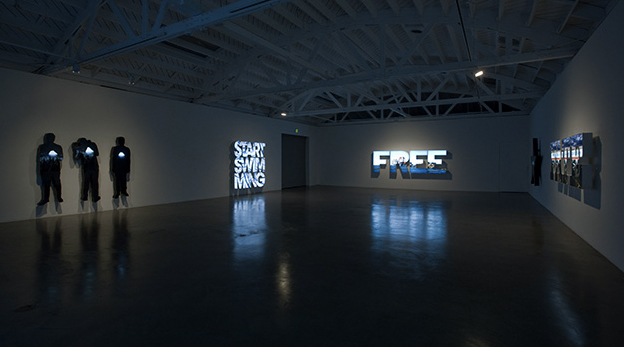
    Saturday 12.00 – 5.00pm
    Closed Sundays and Mondays

    The Snite Museum of Art website
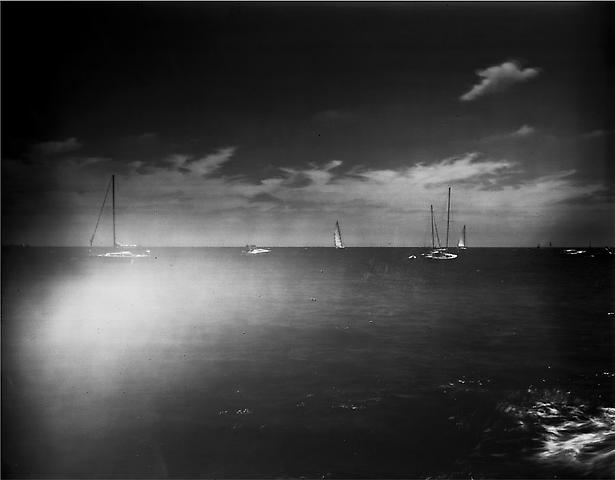
    Kay Westhues website

    LIKE ART BLART ON FACEBOOK

    Back to top