Many thankx to the Cantor Arts Center for allowing me to publish the photographs in the posting. Please click on the photographs for a larger version of the image.
“This desire of Frank’s to hold the shape of his feelings in what he made is an ambition found in all Romantic art, one that his style brilliantly encompasses and describes. There is a wonderful illusion of speed trapped in his photographs, a sense of rapidity usually created not by the movement of Frank’s subjects, but by the gesture that he made as he framed his pictures. To photographers who have followed Frank, this autographic gesture incorporates a mystery, one that is distorted, and certainly not explained, by saying that he “shot on the run” or “from the hip.” For the beauty of this gesture is that, caught by such speed, his subjects remain clear, fully recognised, as if the photographer had only glanced at what he wanted to show, but was able to seize it at the moment it unhesitantly revealed itself.”
Tod Papageorge. “Walker Evans And Robert Frank: An Essay On Influence.”
Robert Frank (American born Switzerland, 1924-2019) Detroit
1955
Gelatin silver print
Cantor Arts Center Collection, Gift of Bowen H. McCoy
Robert Frank (American born Switzerland, 1924-2019) Miami
1955
Gelatin silver print
Cantor Arts Center Collection, Gift of Raymond B. Gary
Robert Frank (American born Switzerland, 1924-2019) New York City
1950-1951
Gelatin silver print
Cantor Arts Center Collection, Gift of Raymond B. Gary
Robert Frank (American born Switzerland, 1924-2019) Hollywood
1958
Gelatin silver print
Cantor Arts Center Collection, Gift of Bowen H. McCoy
“Frank’s photos highlight everything from prosperity to poverty, multitudes to desolation, new life to finality of death, and happiness to sorrow which all occur during our lifetimes making his photos easy for the viewers to understand and relate…
Furthermore, Frank was able to emphasise some of the issues of his era, especially segregation, patriotism, and generational gaps. For example, the New Orleans photo on the cover shows a trolley car obviously segregated with white riders in the front and black riders in the back. However, Frank also shows blacks and whites working side by side in an assembly line photo taken in Detroit as well as a black nurse holding a white baby in Charleston, South Carolina with undertones of hope for equality further highlighted by the photo taken in Detroit bar of Presidents Lincoln and Washington bookending an American flag…
American patriotism seems to be a universal theme throughout Frank’s photos as well. Many of the photos in the book contain an American flag which shows the high level of patriotism felt by Americans in the era after defeating Germany and Japan in the Second World War and at the beginning of the Cold War with the rising Soviet Union as a communist superpower. Flags are hung on an apartment building during a parade in Hoboken, on the wall in a Navy Recruiting Station in Butte, Montana, hanging outdoors during a Fourth of July celebration in Jay, New York, on the wall in the Detroit bar, hanging from the building in a political rally in Chicago, and there are star lights in the background of a club car headed to Washington DC.
The most important theme within Frank’s photos is that of “Americans.” Frank photographed people from different cultures, including blacks, Hispanics, Jews, and whites; celebrating different religious and civil ceremonies from funerals to weddings. He included biker groups, prostitutes, celebrities, high-class socialites, rural farmlands, cowboys, soldiers, teenagers, politicians, families, senior citizens, children, gamblers, and travellers among others within the photos. This variety of people from different backgrounds living and socialising in different settings is truly American in that it is a blend of all different types of people living together as one nation.”
Cindy Coffey. “The Americans: An Analysis of the Photography of Robert Frank,” on the History thru Hollywood blog Saturday, May 11, 2013 [Online] No longer available online. Used under fair use conditions for the purposes of education and research
Bill Brandt (British, 1904-1983) Parlourmaid at the Window, Kensington 1935 (printed later) Silver gelatin print
“The first critics of The Americans condemned its content; recent critics have attacked it by attempting to describe Frank’s photographic style. Possibly reacting to the variations in cropping that appear in the later editions of the book, or, more probably, looking for the “snapshot aesthetic” under any available stone, they have assumed this style to be haphazard and contemptuously casual. One writer, for example, has said that Frank “produced pictures that look as if a kid had taken them while eating a Popsicle and then had them developed and printed at the corner drugstore.”
The things in Frank’s pictures which have bothered these critics – occasional blur, obvious grain, the use of available light, the cutting off of objects by the frame – are all, however, characteristic of picture journalism, and, arguably, of the entire history of hand-camera photography: Erich Salomon’s work, for example, done for the most part in the twenties, could be discussed in similar terms. The form of Frank’s work, then, is not radical in the true sense of the word: it does not strike to the root of the tradition it serves. The stylistic exaggerations which occur in his pictures serve only to retain that sense of resident wildness we recognise in great lyric poetry – they are present to call attention not to themselves, but to the emotional world of Frank’s subjects, and to his response to those subjects. When, in the statement he wrote shortly before The Americans was published, Frank said: “It is important to see what is invisible to others. Perhaps the look of hope or the look of sadness. Also it is always the instantaneous reaction to oneself that produces a photograph,” he was expressing his belief that both his perceptions (it is significant that he does not mention an intervening camera in these sentences) and the photographs which result from them are essentially unmediated and true.
This desire of Frank’s to hold the shape of his feelings in what he made is an ambition found in all Romantic art, one that his style brilliantly encompasses and describes. There is a wonderful illusion of speed trapped in his photographs, a sense of rapidity usually created not by the movement of Frank’s subjects, but by the gesture that he made as he framed his pictures. To photographers who have followed Frank, this autographic gesture incorporates a mystery, one that is distorted, and certainly not explained, by saying that he “shot on the run” or “from the hip.” For the beauty of this gesture is that, caught by such speed, his subjects remain clear, fully recognised, as if the photographer had only glanced at what he wanted to show, but was able to seize it at the moment it unhesitantly revealed itself.
Despite the grace of this notational style (or perhaps because of it), Frank seems to have felt that movement within the frames of his photographs would only disturb their sense, and, with a few exceptions, ignored the use of dramatic gesture and motion in The Americans (a fact which again suggests his feeling about Cartier-Bresson’s work). In two of his pictures of convention delegates, and in one of a woman in a gambling casino, he shows emphatic hand gestures. In another photograph, he looks down onto a man striding forward under a neon arrow, and, in yet another, describes two girls skipping away from his camera. Otherwise, his subjects move, if at all, toward, and, in a single memorable case, by him – studies in physiognomy, rather than disclosures of a gathering beauty.
The characteristic gestures in his pictures are the slight, telling motions of the head and upper body: a glance, a stare, a hand brought to the face, an arched neck, pursed lips. They suggest that Frank, like Evans, believed significance in a photograph might be consonant with the repose of the things it described. His pictures, of course, are not acts of contemplation – they virtually catalogue the guises of anxiety – but they are stilled, and their meanings found not in broad rhythms of gesture and form, but in the constellations traced by the figures or objects they show, and the short, charged distances between them.
One of the unacknowledged achievements of The Americans is the series of group portraits – odd assemblages of heads, usually seen in profile, that gather in quick, serried cadences and push at the cutting edges of their frames. In the soft muted light that illuminates them, these heads are drawn with the sculptural brevity of those found on worn coins. But, even in this diminishment, as they cluster and fill the shallow space of Frank’s pictures, they assume the unfurling, cursive shapes of great Romantic art.
As this book shows, these photographs beautifully elaborate Evans’ hand-camera pictures, pictures which are not as judgmental as Frank’s, but also not as formally complex and moving. Although Frank’s most literal recastings of American Photographs occur when he is remembering Evans’ view camera pictures – for example, a gas station, a parked car, a statue – these extravagant translations of the older photographer’s bluntest work eloquently reveal one aspect of Frank’s extraordinary gifts as a photographer.”
Tod Papageorge. “Walker Evans And Robert Frank: An Essay On Influence.”
Robert Frank (American born Switzerland, 1924-2019) En route from New York to Washington, Club Car 1954 Gelatin silver print Cantor Arts Center Collection, Gift of Raymond B. Gary
Robert Frank (1924-2019) is one of the most important photographic artists of the twentieth century. He was born in Switzerland but he emigrated to American in 1947. He soon gained a job as a fashion photographer for Harper’s Bazaar. He honed his craft as a photographer in England where he took formal, classical images of British life during a trip to Europe and South America in 1947.
He became friends with Edward Steichen and Walker Evans, and it was Evans who supported him in his Guggenheim Fellowship application in 1955 which enabled him “to travel across the United States and photograph all strata of its society. Cities he visited included Detroit and Dearborn, Michigan; Savannah, Georgia; Miami Beach and St. Petersburg, Florida; New Orleans, Louisiana; Houston, Texas; Los Angeles, California; Reno, Nevada; Salt Lake City, Utah; Butte, Montana; and Chicago, Illinois.He took his family along with him for part of his series of road trips over the next two years, during which time he took 28,000 shots. 83 of these were selected by him for publication in The Americans.“1
In The Americans, Frank documents, “the tensions between the optimism of the 1950s and the realities of class and racial differences. The irony that Frank found in the gloss of American culture and wealth over this tension gave his photographs a clear contrast to those of most contemporary American photojournalists, as did his use of unusual focus, low lighting and cropping that deviated from accepted photographic techniques.2
Originally published as Les Américains in 1958 by Robert Delpire in Paris, and finally in 1959 in the United States by Grove Press, reaction in America was initially hostile. The American critics did not like Frank’s shoot from the hip style of photography, nor the mirror that was being held up to their society, especially by a Jewish foreigner. Over time The Americans came to be seen as a seminal work of American photography and social history. Like many artists, Frank only took photographs for a relatively short period of time, before moving on to become a filmmaker.
One cannot forget the era in which Frank took these photographs – that of McCarthyism and “the Second Red Scare, lasting roughly from 1950 to 1956 and characterised by heightened political repression against communists, as well as a campaign spreading fear of their influence on American institutions and of espionage by Soviet agents.”3 Americans were suspicious of foreigners, especially ones with cameras, and this was still the era of racial segregation pre the civil rights movement of the 1960s.
With regard to the structure of the photographs, their origin is based in classicism. This was Frank’s training. It was his skill as an artist, his intuitive and prescient vision of America – how he saw America like no one else before him had – that enabled him to ramp up the intensity, shoot from weird angles, low lighting, cropping, depth of field, unusual focus – and focus on the iconography of America as never seen before: jukeboxes, American flags, cars, highways, death, racial segregation – that was so revolutionary. But he could not have done that without his formal training. You only have to look at the comparison between the photographs of Robert Frank and Walker Evans. Formal and elegant in Evans Church Organ and Pews (1936) and Downtown street, New Orleans (December 1935) with lines vertical and clean… and then Frank, with hardly a straight line or neat angle to be seen. But the one does inform the other, otherwise Frank’s photographs would just become snapshots, vernacular photographs with very little meaning. Which they are not.
This is one of the most powerful, lyrical, humanist photo essays of a country that has ever been taken. Critic Sean O’Hagan, writing in The Guardian in 2014, said The Americans “changed the nature of photography, what it could say and how it could say it. […] it remains perhaps the most influential photography book of the 20th century.”4 As an artist, Frank became the great connector for he is the critical link in the chain that stretches from Lewis Hine through Walker Evans… and on to Lee Friedlander, Garry Winogrand and Joel Meyerowitz.
As an artist you marvel at his intuition and inspiration, to look at the world as no one else had done before, to push the boundaries of medium and message. To photograph people, alone and in groups; politics; religion; race; automobiles and the road; and the media and thrust them into the white, bright, happy world of 1950s consumerist America saying: this is what this country is really like, this is my “impression” of you in all your fleeting madness, “America as an often bleak and lonely place.” You only have to look at the “eye” in U.S. 91, leaving Blackfoot, Idaho (1956, below) or look at the photograph of the grave by the side of the road to know that you are in Blue Velvet territory (David Lynch, director 1986, the title is taken from The Clovers’ 1955 song of the same name).
I am not sure yet how one world pierces the other but believe me they surely do.
Many thankx to the Cantor Arts Center for allowing me to publish the photographs in the posting. Please click on the photographs for a larger version of the image.
“It was the vision that emanated from the book that lead not only me, but my whole generation of photographers out into the American landscape, in a sense, the lunatic sublime of America.”
Joel Meyerowitz
“Like a boxer trains for a fight, a photographer by walking the streets, and watching and taking pictures, and coming home and going out the next day, the same thing again, taking pictures. It doesn’t matter how many he takes, or if he takes any at all, it gets you prepared to know what you should take pictures of, or what is the right thing to do and when.”
Robert Frank
Walker Evans (American, 1903-1975) Main St., Ossining, New York 1932 Gelatin silver print
Robert Frank (American born Switzerland, 1924-2019) Detroit 1955 Gelatin silver print Cantor Arts Center Collection, Gift of Raymond B. Gary
In 1955 and 1956, Swiss-born photographer Robert Frank (b. 1924) traveled throughout the United States on a Guggenheim Fellowship, photographing ordinary people in their everyday lives. His book The Americans – 83 photographs, mostly from those travels, published in 1959 – repudiated the bland good cheer of the magazines with an image of the country that was starkly at odds with the official optimism of postwar prosperity. The book became a landmark of photographic history; but Frank soon turned to filmmaking, and the rest of his early photographic career was largely forgotten. An important group of unknown or unfamiliar photographs in the Cantor Arts Center’s collection provides the core of the exhibition Robert Frank in America, which sheds new light on the making of The Americans and presents, for the first time, Frank’s American photographs from the 1950s as a coherent body of work.
“We are delighted that the Cantor’s collection has provided the basis for a fresh look at one of the great achievements of 20-century photography,” said Connie Wolf, John and Jill Freidenrich Director of the Cantor Arts Center. “We are also deeply grateful to Robert Frank, who has generously contributed to the project.”
The exhibition Robert Frank in America, on view September 10, 2014 through January 5, 2015, features 130 photographs drawn primarily from the Cantor’s collection as well as from other public and private collections and from Frank himself. Peter Galassi, former chief curator of photography at the Museum of Modern Art, New York, is the exhibition’s guest curator and author of the accompanying publication.
The Exhibition’s Development from the Cantor’s Collection
In the summer of 2012, Wolf invited Galassi to offer his thoughts on one of the museum’s hidden treasures: more than 150 photographs by Robert Frank given to the Cantor in the mid-1980s by Stanford alumnus Bowen H. McCoy and his colleague Raymond B. Gary. This remarkable collection spans the full range of Frank’s photographic career before he turned to filmmaking in the early 1960s. It is especially rich in Frank’s American work of the 1950s, including scores of photographs that are unknown or unfamiliar even to scholars. Wolf and Galassi saw an opportunity to share this work with Stanford students, faculty, scholars at large and the general public.
Research began at the National Gallery of Art, Washington, where more than two decades ago the artist established the archive of his photographic career prior to 1970. Studying more than 1,000 contact sheets enabled Galassi to determine the locations and dates of dozens of previously unidentified photographs in the Cantor collection. He then selected works for the exhibition so as to identify Frank’s major themes and artistic strategies. The compelling sequence of The Americans poetically weaves diverse images into a seamless whole, but Robert Frank in America groups related pictures to explore the pictorial strategies that Frank developed as he worked, and also to highlight important subjects – people, alone and in groups; politics; religion; race; automobiles and the road; and the media.
Frank repeatedly photographed isolated figures so that they seemed trapped by pictorial forces, for example. This powerful metaphor for Frank’s vision of lonely individuals imprisoned by social circumstances is announced in the first picture, The Americans, where the flag obliterates a spectator’s face (Parade – Hoboken, New Jersey, 1955). In Robert Frank in America, that photograph is juxtaposed with another that uses the identical pictorial scheme but a different subject; the interior of a bar (New York City, 1955).
“Although The Americans is famous – partly because it is famous – Robert Frank’s American work of the 1950s has never been considered as a whole,” said Galassi. “The full range of the work shows just how Frank turned the vocabulary of magazine photojournalism on its head and used it to speak in a personal, poetic voice.”
Inviting Galassi to organise the exhibition was part of the museum’s renewed commitment to collecting, studying and presenting photography, Wolf says. The Cantor has been adding to its already strong holdings, presenting innovative exhibitions of work by distinguished artists and providing a valuable opportunity for Stanford students and faculty to work directly with photographs. Leland Stanford’s commission more than a century ago for Eadweard Muybridge’s pioneering work on animal locomotion serves as a foundation for the museum’s extensive collection today.
Exhibition catalogue
The major catalogue accompanying this exhibition is published by the Cantor Arts Center in association with international publisher Steidl, with whom Frank has worked closely on most of his books. All 130 photographs in the exhibition are reproduced as full-page tritone plates. Galassi’s extensive essay traces the evolution of Frank’s work from his arrival in the United States in 1947 until he abandoned his first photographic career in the early 1960s. The text provides a thorough outline of the photographic context in which Frank at first sought success as a magazine photojournalist as well as a detailed analysis of the methods and strategies that lie behind The Americans. The essay features 24 illustrations, including an unprecedented map of Frank’s 1955-56 Guggenheim travels, which locates the sites of nearly all of the photographs in The Americans and in Robert Frank in America. The 200-page book, with a foreword by Connie Wolf, is designed by Katy Homans, New York.
Robert Frank
Robert Frank was born in 1924 in Zürich, Switzerland. The conclusion of World War II ended his vulnerability (his father was a German-born Jew) and enabled him to escape what he regarded as a narrow, antiquated culture. Soon after reaching New York in March 1947, he was hired by Harper’s Bazaar, but his distaste for photographing fashion led him to quit after six months. Over the next five or six years, in Europe and the United States, Frank aimed to establish himself as a freelance photojournalist, with limited success. A Guggenheim Fellowship, awarded in March 1955 and renewed a year later, freed him to pursue his work independently, and he soon began to travel in hopes of making a book. Les Américains was published by Robert Delpire in Paris in 1958 and, as The Americans, by Grove Press in New York in 1959. The latter included an introduction by Jack Kerouac, author of On the Road.
Film and video have formed a central aspect of Frank’s work since 1959, when he collaborated with Allen Ginsberg, Jack Kerouac and Alfred Leslie on Pull My Daisy. In 1972, however, he resumed making photographs, often using Polaroid positive-negative materials and incorporating text and multiple images. That same year he published the first of several editions of The Lines of My Hand, a book that surveyed his career in all mediums and initiated reconsiderations of his early photographic career. The first full-scale retrospective of his photographs was organised at the Museum of Fine Arts, Houston, in 1986. In 1990, a major gift by Frank established the Robert Frank Collection at the National Gallery of Art, Washington, which has since presented two major exhibitions, each accompanied by an important book: Robert Frank: Moving Out(1994) and Looking In: Robert Frank’s “The Americans”(2009).
Press release from the Cantor Arts Center
Robert Frank (American born Switzerland, 1924-2019) Beaufort, South Carolina 1955 Gelatin silver print Cantor Arts Center Collection, Gift of Raymond B. Gary
Guggenheim proposal summary
“To photograph freely throughout the United States, using the miniature camera exclusively. The making of a broad, voluminous picture record of things American, past and present. This project is essentially the visual study of a civilization and will include caption notes; but it is only partly documentary in nature: one of its aims is more artistic than the word documentary implies.”
The full statement
“I am applying for a Fellowship with a very simple intention: I wish to continue, develop and widen the kind of work I already do, and have been doing for some ten years, and apply it to the American nation in general. I am submitting work that will be seen to be documentation - most broadly speaking. Work of this kind is, I believe, to be found carrying its own visual impact without much work explanation. The project I have in mind is one that will shape itself as it proceeds, and is essentially elastic. The material is there: the practice will be in the photographer’s hand, the vision in his mind. One says this with some embarrassment but one cannot do less than claim vision if one is to ask for consideration.
“The photographing of America” is a large order - read at all literally, the phrase would be an absurdity. What I have in mind, then, is observation and record of what one naturalized American finds to see in the United States that signifies the kind of civilization born here and spreading elsewhere. Incidentally, it is fair to assume that when an observant American travels abroad his eye will see freshly; and that the reverse may be true when a European eye looks at the United States. I speak of the things that are there, anywhere and everywhere - easily found, not easily selected and interpreted. A small catalog comes to the mind’s eye: a town at night, a parking lot, a supermarket, a highway, the man who owns three cars and the man who owns none, the farmer and his children, a new house and a warped clapboard house, the dictation of taste, the dream of grandeur, advertising, neon lights, the faces of the leaders and the faces of the followers, gas tanks and post offices and backyards.
The uses of my project would be sociological, historical and aesthetic. My total production will be voluminous, as is usually the case when the photographer works with miniature film. I intend to classify and annotate my work on the spot, as I proceed. Ultimately the file I shall make should be deposited in a collection such as the one in the Library of Congress. A more immediate use I have in mind is both book and magazine publication.”
Robert Frank (American born Switzerland, 1924-2019) Florida 1958 Gelatin silver print Cantor Arts Center Collection, Gift of Raymond B. Gary
“I am grateful to the Guggenheim Foundation for their confidence and the provisions they made for me to work freely in my medium over a protracted period. When I applied for the Guggenheim Fellowship, I wrote: “To produce an authentic contemporary document, the visual impact should be such as will nullify explanation.”
With these photographs, I have attempted to show a cross-section of the American population. My effort was to express it simply and without confusion. The view is personal and, therefore, various facets of American life and society have been ignored. The photographs were taken during 1955 and 1956; for the most part in large cities such as Detroit, Chicago, Los Angeles, New York and in many other places during my Journey across the country. My book, containing these photographs, will be published in Paris by Robert Delpire, 1958.
I have been frequently accused of deliberately twisting subject matter to my point of view. Above all, I know that life for a photographer cannot be a matter of indifference. Opinion often consists of a kind of criticism. But criticism can come out of love. It is important to see what is invisible to others – perhaps the look of hope or the look of sadness. Also, it is always the instantaneous reaction to oneself that produces a photograph.
My photographs are not planned or composed in advance and I do not anticipate that the on-looker will share my viewpoint. However, I feel that if my photograph leaves an image on his mind – something has been accomplished.
It is a different state of affairs for me to be working on assignment for a magazine. It suggests to me the feeling of a hack writer or a commercial illustrator. Since I sense that my ideas, my mind and my eye are not creating the picture but that the editors’ minds and eyes will finally determine which of my pictures will be reproduced to suit the magazines’ purposes.
I have a genuine distrust and “mefiance” toward all group activities. Mass production of uninspired photojournalism and photography without thought becomes anonymous merchandise. The air becomes infected with the “smell” of photography. If the photographer wants to be an artist, his thoughts cannot be developed overnight at the corner drugstore.
I am not a pessimist, but looking at a contemporary picture magazine makes it difficult for me to speak about the advancement of photography, since photography today is accepted without question, and is also presumed to be understood by all – even children. I feel that only the integrity of the individual photographer can raise its level.
The work of two contemporary photographers, Bill Brandt of England and the American, Walker Evans, have influenced me. When I first looked at Walker Evans’ photographs, I thought of something Malraux wrote: “To transform destiny into awareness.” One is embarrassed to want so much for oneself. But, how else are you going to justify your failure and your effort?”
Robert Frank, U.S. Camera Annual, 1958, p. 115
Robert Frank (American born Switzerland, 1924-2019) Lusk, Wyoming 1956 Gelatin silver print Cantor Arts Center Collection, Gift of Raymond B. Gary
Robert Frank (American born Switzerland, 1924-2019) Main Street – Savannah, Georgia 1955 Gelatin silver print Cantor Arts Center Collection, Gift of Raymond B. Gary
Walker Evans (American, 1903-1975) Downtown street, New Orleans December 1935 Gelatin silver print
Robert Frank (American born Switzerland, 1924-2019) New York City 1949 Gelatin silver print Lent by Peter Steil
Robert Frank (American born Switzerland, 1924-2019) New York City early 1950s Gelatin silver print Cantor Arts Center Collection, Gift of Bowen H. McCoy
Cantor Arts Center at Stanford University 328 Lomita Drive at Museum Way Stanford, CA 94305-5060 Phone: 650-723-4177
Exhibition dates: 27th May, 2014 – 5th January, 2015
Curator: Horacio Fernández
Artists: Francesc Català-Roca, Colita (Isabel Steva Hernández), Joan Colom, Salvador Costa, Ramón Masats, Xavier Miserachs, Francisco Ontañón, José Ortiz Echagüe Puertas, Leopoldo Pomés, Alfonso Sánchez Portela
Installation photograph of the exhibition photobooks. Spain 1905-1977 at the Museo Nacional Centro de Art Renia Sofia
This is one of those eclectic exhibitions that this archive likes to promote. What a fascinating subject, something that I knew nothing about.
The posting is especially for my colleague Professor Martinez Alfredo-Exposito, Head of the School of Languages and Linguistics at the University of Melbourne.
Dr Marcus Bunyan
Many thankx to the Museo Nacional Centro de Art Renia Sofia for allowing me to publish the photographs in the posting. Please click on the photographs for a larger version of the image.
Installation photographs of the exhibition photobooks. Spain 1905-1977 at the Museo Nacional Centro de Art Renia Sofia
Álvaro Bartolomé (poems) and Joaquín del Palacio (Spanish, 1905-1989) (photographer) Momentos 1944 Madrid: edición del autor
Joaquín del Palacio (Kindel) was a Spanish photographer who was born in Madrid in 1905 and died in Madrid in 1989. He changed his name to Kindel to adapt to the foreign names that were starting to work in Spain and so look modern too: KIN came from Joaquín and DEL was for the beginning of his last name.
He did most of his work between 1940 and 1970. He started in 1939, taking pictures of devastated regions of Spain after the Spanish Civil War had finished. Those pictures were social and dramatic scenes according to that period of time.
Later, he began to travel around Spain working for the “Dirección General de Turismo” (General Tourism Office). He took pictures of people and landscapes of Spain in the 1950s. This was a kinder image of the reality.
He was a master of photography that was able to capture the correct natural light for each image.
Enrique Palazuelo Sans Titre. Nuevas escenas matritenses c. 1957 / posthumous print, 2013 Copia de exposición
Francesc Català-Roca (Valls, Tarragona, Spain, 1922 – Barcelona, Spain, 1998) Llegada a Barcelona (Arriving at Barcelona) 1950 (circa) / posthumous print, 2003 Selenium-toned gelatin silver print on paper 34.8 x 47.5cm
Francesc Català Roca (Spain, 1922-1998)
Son of Pere Català i Pic, a pioneer of avant-garde photography in Catalonia, Francesc Català Roca is considered the master of Catalan documentary photography. Learning his trade within the family, he opened his own studio in 1947 and began making street photography for editorial assignments. Thereafter, he worked continuously producing photographs for publications such as Destino, Gaceta Ilustrada and La Vanguardia. This was to be accompanied by studio work, illustrating artists’ books in collaboration with renowned architects, sculptors and painters such as Josep M. Sert, Eduardo Chillida and Joan Miró, books about the history of Catalan art and documentary photography on the real Spain. As a neo-realist photographer, Català Roca’s took risks, looking for unusual and unconventional viewpoints, playing with the plastic strength of shadows and contrasts, and always focusing on the human element. His technical skill was matched by a great ability to relate to the people he portrayed. His photography acts as a witness to a time when the country had one foot in the hardest era of the Franco regime and the other in what is known as the period of ‘developmentalism’. Following his first solo exhibition in 1953 at Sala Caralt, Barcelona, Català Roca exhibited extensively in parallel with his activity as a book illustrator, publishing numerous titles. Retrospective exhibitions of his work include those held at the Fundació Joan Miró (2000), La Pedrera, Barcelona (2012) and the Círculo de Bellas Artes, Madrid (2013).
Anonymous. “Francesc Català Roca,” on the MACBA Museu d’Art Contemporani de Barcelona website Nd [Online] Cited 23/12/2014. Used under fair use conditions for the purposes of education and research
Francesc Català-Roca (Valls, Tarragona, Spain, 1922 – Barcelona, Spain, 1998) La Vía Layetana entre las calles Junqueras y Condal (The Vía Layetana between Junqueras and Condal streets) 1950 / posthumous print, 2003 Selenium-toned gelatin silver print on paper 36.9 x 45.3cm
Francesc Català-Roca (Valls, Tarragona, Spain, 1922 – Barcelona, Spain, 1998) La Vía Layetana, Barcelona (The Via Layetana, Barcelona) 1950 (circa) / posthumous print, 2003 Selenium-toned gelatin silver print on paper
Francesc Català-Roca (Valls, Tarragona, Spain, 1922 – Barcelona, Spain, 1998) Monumento a Colón (Columbus Monument) 1949 / posthumous print, 2003 Selenium-toned gelatin silver print on paper With frame: 114 x 88cm
Francesc Català-Roca (Valls, Tarragona, Spain, 1922 – Barcelona, Spain, 1998) Calle Muntaner (Muntaner Street) 1950 (circa) / Posthumous print, 2003 Selenium-toned gelatin silver print on paper 47.5 x 32.8cm
Francesc Català-Roca (Valls, Tarragona, Spain, 1922 – Barcelona, Spain, 1998) Las Ramblas con lluvia (The Ramblas in the Rain) 1950 (circa) / posthumous print, 2003 Selenium-toned gelatin silver print on paper 47.7 x 37.5cm
Francesc Català-Roca (Valls, Tarragona, Spain, 1922 – Barcelona, Spain, 1998) Vestíbulo de la tienda, Barcelona (Shop Vestibule, Barcelona) 1950 (circa) / posthumous print, 2003
Francesc Català-Roca (Valls, Tarragona, Spain, 1922 – Barcelona, Spain, 1998) El hombre del saco (The Bogeyman) 1950 (circa) / posthumous print, 2003 Selenium-toned gelatin silver print on paper 47.8 x 35.7cm
The exhibition photobooks. Spain 1905-1977 presents a journey through the history of the photobook in Spain, setting off at the beginning of the 20th century and ending in the mid seventies, via a selection from the Museo Reina Sofía Collection, contextualised and accompanied by an assortment of complementary material.
For a long time the aesthetic consideration of photography has been limited to individual images that are able to work in a similar way to paintings or etchings, a blueprint developed by historians and museum curators alike to assemble a canon of ‘masterpieces’ for studios or exhibitions. Yet this model is not the only one, and many photographers cannot synthesise their work in a single image, devising it instead in a series. Both models give rise to two coherent histories of photography: one comprised of photos to hang on walls, with a limited number of copies and on sale at art galleries; the other in book form, possibly with a reissue, available in bookstores. By and large, photographers prefer the last option: “pictures on walls and photos in books” (Cartier-Bresson).
A photobook is a publication made up of photographs ordered as a set of images, with plots and complex meanings, and the medium used by some of the most pre-eminent photographers to produce their greatest work; a tried-and-tested model to present, communicate and read photos. Photobooks are becoming more widely recognised as the best medium for presenting series of photographs.
As far as Spain is concerned, the history of photo books is determined by the avatars of its own national history, for instance the Civil War and the transition to democracy, the focus of some of the finest work produced. In addition to propaganda, changes to the image and social role of peasants and, above all, women, are also prominent issues that are explored. The relationship between literature and photography is another characteristic of Spanish photobooks, which also include works in closer proximity to the international history of the format, such as publications on urban matters.
The study of photobooks is leading to a reinterpretation of the history of photography in diverse countries, as well as in Spain. Along with well-known photographers (the likes of José Ortiz Echagüe, Alfonso, Francesc Català-Roca, Ramón Masats, Xavier Miserachs, Francisco Ontañón and Colita), the exhibition features a considerable number of practically unknown frontline artists who in their day actually published first-rate photography collections, as is the case with photographers like Antonio Cánovas, the collective work of Misiones Pedagógicas (Teaching Missions), José Compte, Enrique Palazuelo, Luis Acosta Moro and Salvador Costa.
Curated by Horacio Fernández, the exhibition photobooks. Spain 1905-1977 is in collaboration with Acción Cultural Española (AC/E) to present part of the line of investigation and acquisition carried out by the Museo Reina Sofía concerning photobooks. The exhibition, which coincides with the PHE2014 festival, is concluded with the publication of a catalogue raisonné, jointly published by the Museo Reina Sofía, AC/E and RM.
Text from the Museo Reina Sofía website
Enrique Palazuelo (photographs) and Camilo José Cela (text) Nuevas escenas matritenses Madrid, Alfaguara 1965-1966
Colita (Spanish, 1940-2023) (photographs) and Maria Aurèlia Capmany (Spanish, 1918-1991) (text) Antifémina (Antifemale) Madrid, Editorial Nacional 1977
Maria Aurelia Capmany i Farnés (3 August 1918, in Barcelona – 2 October 1991) was a Catalan novelist, playwright and essayist. She was also a prominent feminist cultural and anti-Franco activist.
Isabel Steva i Hernández (24 August 1940 – 31 December 2023), whose pseudonym was Colita, was a Spanish photographer. She trained with Xavier Miserachs i Ribalta, and began her professional career in 1961 as a laboratory technician and stylist for Miserachs.
Initially, she demonstrated great interest in dance photography – almost always flamenco music – and later she also specialised in portraits and journalistic photography. She had numerous exhibitions with photographs of Catalan artists and singers from the Nova Cançó era to the present. She published many books. …
Colita’s work in the press was published in magazines such as Siglo XX, Destino, Fotogramas, Interviú, Boccaccio, Primera Plana and Mundo Diario.
Throughout her career, Colita put on more than forty exhibitions and published some fifty books of photographs. Stylistically, she was closer to the ideas of the Barcelona School, although she was considered an all-purpose photographer. Her work is part of the collections of the Museu Nacional d’Art de Catalunya.
Colita (Isabel Steva Hernández) (Spanish, 1940-2023) Novios gitanos. Barcelona (Gypsy Couple. Barcelona) 1962 / later print, 2011 Gold-toned chlorobromide print on paper 17.9 x 18cm
Joan Colom (Spanish, 1921-2017) Raval 1958 (circa) / vintage print Gelatin silver print on paper 23.5 x 11cm
Joan Colom published his series on Barcelona’s Chinatown in the magazine AFAL (1962) with an autobiography: “Age: 40. Profession: Accountant. Hobbies: Apart from photography, obviously, none.” Of his method, Colom said: “I have decided to only work with subjects that I have predetermined.” Oriol Maspons adds the technical details: “Everything was taken using a Leica M2, shot from the hip without framing or focusing. A real photographer’s work. More than a year on the same subject.” The series had been exhibited with some success (and controversy) at the Sala Aixelá in Barcelona the previous year, under the title El carrer (The Street). In 1964 it was finally published by Lumen in one of the finest photo-books in their Palabra e Imagen collection, “Izas, rabizas y colipoterras”, designed by Oscar Tusquets and Cristian Cirici. Camilo José Cela contributed a text based around Colom’s (surreptitious but captionless) photos that was full of broad, cruel humour, pitilessly mocking the women, photographed by Colom and judged by Cela. Somewhat ahead of her time, one of the women actually sued the photographer, the only result of which was the photo-book’s withdrawal from bookshops, and Colom’s retirement from photography for years. From the 1980s onwards public obscurity became public recognition, which has continued to grow.
Horacio Fernández
Joan Colóm (Spain, 1921-2017)
Joan Colóm was born in Barcelona in 1921. Following his military service, he became accountant in a firm where he stayed until his retirement in 1986. At the age of 36 he developed a passion for photography, joined the Photographic Association of Catalonia where he learnt very fast the technical skills that helped him in his atypical career: “I discovered the Barrio Chino in 1958, I understood that it was my world. I was fascinated by its diversity and its social richness… I literally got sucked in by the human quality of these characters…”
Every week end, for more than two years, Joan Colóm explored the “Raval”* neighbourhood, the “bas-fonds” of Barcelona; by photographing without aiming the camera, he was concerned about staying discreet and breaking with the aesthetised tradition of his elders. He was very aware of what he was doing “images that touch me,” he was an impassioned witness of a social theatre. It is whilst printing that he exactly framed the image, with a constant search for truth.
Today, the “imaginaire” of urban life of the Barrio Chino is rooted in Colóm’s images… His work was praised early on by personalities such as Ramon Massats and Josep Maria Casademont who wrote in 1961: “with Joan Colóm, we are entering a new phase of our history of photography.” In these images the modernist avant garde of the fifties is interwined with the “dark” and pessimist tradition of Spain during the Franco era.
In 1964 part of his work on the Barrio Chino – the prostitutes – was published in a book that is now legendary “Izas, rabizas y colipoterras” published by Lumen in Barcelona with a text by Camilo José Cela, who received the Nobel prize for literature in 1989. The book was a great success but also the subject of a scandal: in this repressive era dominated by Franco’s regime, it was obvious that this zone of unrestrained freedom was not appreciated. In addition one of the women photographed wanted to sue Colóm, this event disgusted him and led him to give up the pursuit of his project: “these women had all my respect and there was nothing exotic about them, they were part of whole, that tried to present a neighbourhood with authenticity.”
His work has been compared to Walker Evans’s New York Subway project: the strait crude vision, the rejection of the Pictorialist aesthetic. This work for sure is close to a search for pure realist photography, comparable to Brassai in its content.
Joan Colóm returned to photography when he retired in 1986: every day he roamed the streets in pursuit of his motto: “Yo hago la calle”– “Je fais le trottoir”– a play on words that Henri Cartier-Bresson liked to use often also. Some memorable images by HCB of the Barrio Chino in the 30’s are present in everyone’s memory. Joan Colóm didn’t know these photographs when he began his project, different but animated with this same desire to show life as it is.
*The “Raval” is the real name for this district of Barcelona which is known today as the “Barrio Chino”.
Anonymous. “Joan Colóm: Les Gens du Raval,” on the Fondation Henri-Cartier Bresson website April 2006 [Online] Cited 01/06/2024. Used under fair use conditions for the purposes of education and research
Joan Colom (Spanish, 1921-2017) No Title 1958 / vintage print From the series El carrer (The Street) Gelatin silver print on paper 27 x 21cm
Joan Colom (Spanish, 1921-2017) No Title 1958 / vintage print From the series El carrer (The Street) Gelatin silver print on paper 23.2 x 16.2cm
Joan Colom (Barcelona, Spain, 1921) No Title 1958 / vintage print From the series El carrer (The Street) Gelatin silver print on paper 23.2 x 16.2cm
photobooks. Spain 1905-1977 is a history of Spanish photography through a selection of its best photobooks, many of them little known. The exhibition, organised by the Museo Nacional Centro de Arte Reina Sofía and Acción Cultural Española (AC/E), is the result of a line of acquisitions and research undertaken by the Museum’s Department of Collections with the collaboration of Horacio Fernández, curator of the exhibition.
This exhibition offers a new perspective on Spanish photography during its most important period through the work of photographers like Luis Acosta Moro, Alfonso, Jalón Ángel, Antonio Cánovas, Robert Capa, Francesc Català-Roca, Colita, Joan Colom, José Compte, Salvador Costa, Ramón Masats, Xavier Miserachs, Misiones Pedagógicas, Fernando Nuño, Francisco Ontañón, José Ortiz Echagüe, Joaquín del Palacio, Enrique Palazuelo and Leopoldo Pomés.
photobooks. Spain 1905-1977 shows works published in Spain between 1905 and 1977 – in different styles, in limited or mass editions, printed using refined techniques or on inexpensive paper, for all audiences or for minorities. They are about people, things, behaviours, and ideas. Photobooks were few and far between at the start of the twentieth century, increased in number during the war, and reached their height of development in the sixties. They subsequently grew scarce, only to make a triumphal comeback in the new century, represented in the Museum’s Library in the show Books that are Photos, Photos that are Books. Together they make up a specialised collection that is unique in its kind and embodies the Museo Reina Sofia’s commitment to all aspects of photographic images.
The works on display, most of which are little known, provide a fresh insight into Spanish photography. photobooks probes the broad and suggestive relationships between photography, publishing, design and literature, popular art and culture, history and politics, and public and private life. In the pages of these works is a plural history of the profound transformation of Spanish society. Thanks to the collective work of photographers, publishers, designers and writers, the themes presented in photobooks include the image of woman, seen from perspectives as different as the submission to patriarchal culture in the works of Cánovas and Compte and the militant feminism of Colita. Another major topic is the representation of the Spanish Civil War from both sides, with books like Madrid, which deals with the victims of the bombings during the siege of the capital, contrasting with Jalón Ángel’s portraits of soldiers on the side of the uprising. The war is followed by the sadness and harshness of the dictatorship, shown in photobooks by Joaquín del Palacio and Alfonso.
The relationship between photography and literature emerges throughout the exhibition, starting with the book by Cánovas mentioned above. From the period of the Civil War, special attention is merited by the photobooks of Antonio Machado, Miguel Hernández and Arturo Barea. In the sixties, the Lumen publishing house brought out the Palabra e Imagen (Word and Image) collection, designed by Oscar Tusquets, with extraordinary contributions by writers like Aldecoa, Cela, Delibes, Vargas Llosa and Caballero Bonald, and photographers like Masats, Maspons, Miserachs and Colita. One outstanding work in this section is Nuevas escenas matritenses (New Scenes of Madrid), with photos by Enrique Palazuelo.
Urban culture is also present in the photobooks of Alfonso, Català-Roca, Miserachs and Ontañón. Mention should be made too of the books on the end of the dictatorship by Nuño and the Diorama and Foto FAD teams, which show the gradual disappearance of the old identifying features of Spanish society under the influence of tourism and the global economy.
Apart from displaying some photographs autonomously, the show also features systems that allow visitors to view the plural content of each work exhibited, since it is in the work as a whole, as a coherent sequence of images, that the true entity of the photobook resides.
The first Spanish photobooks
“What a history painter would have painted I photographed,” wrote Antonio Cánovas of ¡Quién supiera escribir!… (If Only I Knew How to Write!…), his adaptation of a poem by Ramón de Campoamor about women’s dependence in a patriarchal world. Using actors and sets, Cánovas recreated a group of tableaux vivants or living pictures subtitled like films, which were as novel as photobooks in 1905. The photographic poem came out in two editions: one in postcards, which was a great commercial success; and a limited edition printed using the technique of the finest twentieth-century photobooks, photogravure.
José Ortiz Echagüe’s photobook Spanische Köpfe, later published as España, tipos y trajes (Spain: Types and Costumes), is the first instalment of an extensive photographic project to document folk culture by seeking out tradition. His aim was to preserve ways of life that were dying out; to show situations from the past: “In wandering through the little villages, I talk to the people, select models one by one, start the difficult task of dressing them in the typical garb.” The result was photographs that were chiefly aesthetic, close to the paintings of Sorolla or Zuloaga, but also political, as they visualised concepts (people, race, collective identity…) used by different ideologies.
With the Misiones Pedagógicas (Educational Missions), the Second Republic set out to bring urban life closer to the rural world through culture. The ‘missionaries’ were university students who took the theatre, music, art, and the cinema to villages. Some of them, such as José Val del Omar and Guillermo Fernández, photographed the audiences, capturing shots that are devoid of local character. Instead of seeking references to the past, they hint at a better future represented by the people’s curious gazes: the photographs chosen for the photobook Patronato de Misiones Pedagógicas (Educational Missions Trust) are intended to disseminate democratic values and confidence in progress.
Both sides of the Spanish Civil War
The Spanish Civil War was photogenic. Dozens of photographers engaged in documenting it. Media all over the world published images of the war, which were used by the both sides to convey their own virtues and the atrocities committed by their opponents.
The collective photobook Madrid is a visual account of the consequences of a siege: destruction, homeless people, the exodus of refugees. The effects of the bombings on the civilian population are captured in montages and photographs by Luis Lladó, Robert Capa, Hans Namuth, Chim, and Margaret Michaelis, among others. The faces of the child victims should be stressed – some appalling forensic photographs that were widely used in Republican propaganda and have been mentioned by Arturo Barea, Virginia Woolf, and Susan Sontag, among other writers.
A type of cultural propaganda characteristic of the Republican side was the publication of books combining words and pictures. Several came out during the war, among them Madrid baluarte de nuestra guerra de independencia (Madrid Bulwark of Our War of Independence), with texts by Antonio Machado; Miguel Hernández’s book of poems Viento del pueblo (Winds of the People); and Arturo Barea’s collection of stories titled Valor y miedo (Courage and Fear). All three feature photographs whose authorship is not credited, though we now know that they were taken by photographers such as Walter Reuter or designers such as Mauricio Amster.
The cult of personality was a salient feature of the Nationalist side’s propaganda. In 1939 the rebel military were presented as serious and efficient technicians in Jalón Ángel’s Forjadores de imperio (Empire Builders), a triumphal parade by no means epically portrayed and much less generous with the defeated. This collection of portraits of the men who had won a war was published in a luxury version designed to hang in public offices and in a popular version in postcard form for mass distribution.
The conservative values of the new fascist regime were conveyed in photographs. In Mujeres de la Falange (Women of the Falange, a collection of photographs by José Compte published in luxury magazines and as humble postcards) woman as mother, subordinate to man and an outsider to society and employment, was a compulsory role model, the only exception being that dictated by war itself, which required her to perform “heavy work with feminine grace for when the men return…”
The postwar years
The hardship of the postwar years is conveyed in a few photobooks that managed to slip past the censors. Literature with photos continued to be published in books such as Momentos (Moments), whose poems would be less sad without the ruins, deserted villages, and bare trees found in the photographs of Joaquín del Palacio (Kindel). Rincones del Viejo Madrid (Corners of Old Madrid), a collection of night shots by Alfonso, is an expressionist photobook printed in the opaque tones of the finest photogravure work. Alfonso portrays the capital as yet another victim – a frozen and sinister backdrop as dead as its missing inhabitants.
The book of poems titled Les fenêtres (The Windows) features many closed windows that also resemble abstract paintings in Leopoldo Pomés’s photos, which bring to mind a confined, stifling place. But in spite of everything, life carries on, as shown by the photos in Barcelona, the city of Francesc Català-Roca, who believed that “what words describe photography places on view”: images found in the street, as alive as the people in the photos, in a pleasant urban photobook.
The 60’s: the golden decade of Spanish photography
Palabra e Imagen (Word and Image) was the creation of publisher Esther Tusquets and designer Oscar Tusquets. It was advertised by the Lumen publishing house as “a collection that is different from everything that has been done so far.” Its books “are not art books, they are not photography books, they are not literary works,” but “a new concept.” They all have a theme “and the writers, the photographer and those who plan and produce the book work on it as a team.” The aim was to present “an idea” using different means: “not just words but also the photography, the composition, the type of lettering, and the colour of the paper can be used to express it.”
Palabra e Imagen was Spain’s main contribution to the history of photobooks. For fifteen years it was a laboratory for experimenting with different ways of publishing a collective work produced by writers, designers, photographers, and editors that attached equal importance to visual and textual readings – word and image.
The photographs are by Jaime Buesa, F. Català-Roca, Colita, Joan Colom, Julio Cortázar, Dick Frisell, Antonio Gálvez, Paolo Gasparini, Sergio Larrain, César Malet, Ramón Masats, Oriol Maspons, Xavier Miserachs, Francisco Ontañón, and Julio Ubiña. Prominent among the graphic designers, in addition to the collection’s creator Oscar Tusquets, are Mariona Aguirre, José Bonet, Lluís Clotet, Toni Miserachs, and Enric Satué. Finally, the authors of the texts include writers such as Rafael Alberti, Ignacio Aldecoa, Carlos Barral, Juan Benet, José María Caballero Bonald, Alejo Carpentier, Cavafis, Camilo José Cela, Julio Cortázar, Miguel Delibes, Federico García Lorca, Alfonso Grosso, Ana María Matute, Pablo Neruda, Octavio Paz, Julián Ríos, and Mario Vargas Llosa.
Important photo-essays were published in the sixties, such as Los Sanfermines (The San Fermín Festivities) by Ramón Masats and Barcelona blanc i negre (Barcelona Black and White) by Xavier Miserachs, both of them masters of documentary photography. The first book was hailed as “the most personal photographic work that has been produced in Spain.” It is a “story told in pictures” that shows the expressive possibilities of the photobook and to what extent “a still photograph is not sufficient for a photographer who pursues a narration.” The second is a stroll through the streets of Barcelona in search of its inhabitants, and is more interested in life than in history. It is a “book to look at” that attempts a difficult combination of the subjective humanist photography of the previous decade and the new international urban photography based on the model established by William Klein, a “highly original way of hinting at cities” without succumbing to commonplaces or picturesqueness.
Also by Miserachs is Costa Brava Show, a photobook based on the mass phenomenon of tourism and featuring black-and-white photos on subjects such as young people enjoying themselves, sexual liberation, and the consequences of economic progress: chaotic town planning, corruption, and loss of authenticity. An equally critical intention underlies the photobook Vivir en Madrid (Living in Madrid), which is documentary in content and experimental in form – both the text and the pictures. Francisco Ontañón’s distant, stark photographs are kind to the common folk and critical of the privileged classes, but always humorous.
Nuevas escenas matritenses (New Scenes of Madrid) is a collection of 63 urban tales written by Camilo José Cela based on street photographs by Enrique Palazuelo that show an “incredible Madrid, where time stood still, oblivious and forgotten.” Published in several formats (from low to high culture: popular weekly and literary review; in normal and bibliophile editions), it tells stories invented from documentary photographs – a literary procedure that has been dubbed the ‘Celian picture-story.’ The photos make possible “hearing with new ears, seeing with different eyes what we believed to have been seen and heard forever.”
Luis Acosta Moro believed that the book of the future would be “a poem of short words and great pictures” of the kind embodied by his photobook Cabeza de muñeca (Doll’s Head), a symbolic work that alludes, among other themes, to the Civil War and the image of women. The publisher regarded it as a new type of book, a “film-novel-artistic essay.” The main subject is the model featured in all the pictures, sometimes dancing (or wrestling) with the photobook’s absolute author, who was responsible for everything: photographs, design, and text.
The 70’s: the last auteur photobooks
Los últimos días de Franco (The Last Days of Franco) is a photobook that is unique in both form and content: the funeral rites of the dictator. Live history is fleeting and the propaganda chiefs needed an official history capable of preserving “the living warmth of memories.” To achieve this, Fernando Nuño photographed videos. The result was a photobook consisting of television images that were second-hand but equally or more documentary than the original reports. “As they have been reproduced from video, [the photos] have the quality of a living document,” explains the book, a visual account that is completed with a second volume titled Los primeros días del Rey (The First Days of the King).
The second half of the seventies witnessed the transition to democracy, a highly politicised period in Spain. Two photobooks, Pintadas del referendum (Graffiti on the Referendum) and Pintades Pintadas (Graffiti), compile the propaganda of the day, in this case in the form of street graffiti – a subject also dealt with in French and Portuguese publications. The aim is to preserve the graffiti “as a necessary testament to and document of the vicissitudes of a people in pursuit of their future.” The authors are two short-lived groups of photographers, Equipo Diorama of Madrid and the Barcelona based Foto Fad.
The photobook Punk is pioneering in its portrayal of an international popular culture phenomenon. In Salvador Costa’s photographs taken from “close up and above the subject,” the scene is less important than the audience featured in the shots of ultramodern people, clothing, and rituals captured by the photographer, who was lucky enough to find a publisher capable of discovering more than just another short-lived fad in his photos.
Photographer Colita and writer Maria Aurèlia Capmany, collaborators on the Vindicación feminista magazine, are the authors of Antifémina (Antifemale), a photobook that set out to portray a type of woman “no one wants to look at” but who “is genuine and real, who is not twenty years old, who is not pretty.” To achieve this, Colita selected photos from her archives on themes such as old age, marriage, work, religion, prostitution, the body, marginalisation, advertising, fashion, and the practice of making flirtatious remarks at women. Antifémina is a visual and political essay, a manifesto in favour of women but against ‘femininity,’ which is always “related to the passive role of women.”
Catalogue
A catalogue on this exhibition has been published by the Museo Reina Sofía, Acción Cultural Española (AC/E) and RM. This books includes a text written by the curator and Javier Ortiz-Echagüe, photographies of all the artworks shown and complete and individual information about each photobook by different specialized authors (Horacio Fernández, Javier Ortiz-Echagüe, Concha Calvo, Rocío Robles, Mafalda Rodríguez, Angélica Soleiman and Laura Terré).
Press release from the Museo Nacional Centro de Art Renia Sofia website
José Ortiz Echagüe Puertas (Guadalajara, Spain, 1886 – Madrid, Spain, 1980) Sermón en la aldea (Village Sermon) 1903 Carbondir on laid paper 40.5 x 38.7cm
One of José Ortiz Echagüe’s objectives is to achieve “the strange feeling of travelling to a different time.” He comes very close in one of his earliest photographs, Sermón en la aldea (Village Sermon), taken at the parish church of Viguera, a village in La Rioja, using a Photosphere 9 x 12 camera. With artistic photographs, what really matters is the quality of the copies, which in this case are numerous and have varying dates. Ortiz Echagüe made them himself in a laboratory using a personal variant on the technique known as direct carbon, developed under the name of “Carbondir”: a fine pigment print method which is complicated, slow and absolutely artisanal, that results in velvety blacks and clouds of pointillist faded half-colours. The specifics of the carbon direct method mean that Ortiz Echagüe’s prints approach the quality of chalcography, one of the aspirations of less imaginative artistic photography. However, these prints get further from photography the closer they get to engravings. As early as 1923 a review was criticising the disappearance of “what there originally may have been of photography” in his prints, and the artist’s excesses as he “scraped, eliminated, rubbed, smudged, lightened and darkened it.”
Horacio Fernández
José Ortiz-Echagüe (Spain, 1886-1980)
José Ortiz-Echagüe (2 August 1886 in Guadalajara – 7 September 1980 in Madrid) was a Spanish entrepreneur, industrial and military engineer, pilot and photographer…
Photographic work
Ortiz-Echagüe believed strongly on the one hand that Spain must modernise itself in accordance with the spirit of the times – inter alia by founding industrial companies – but on the other hand was well aware that a broad modernisation could lead to disappearance of traditional clothing, a change in the villages and even a transformation of the landscape. He wanted at least to capture with his camera and hold this cultural heritage, before the change occurred.
Aesthetics
In the field of artistic photography, he is perhaps the most popular photographer in Spain and one of the most well known abroad. In 1935 the magazine ‘American Photography’ named him one of the top three photographers in the world, while some critics have also considered him to be one of the best Spanish photographers to date. This recognition becomes even more meritorious when it is considered that photography was a hobby to which he only devoted his spare time, especially during weekends and his various trips.
From an artistic point of view one might consider him as a representative of the generation of ’98 in photography, but he is also often included within the photographic movement of Pictorialism, being in fact the best known representative of the Spanish photographic Pictorialism, even though this late definition was never liked by Ortiz-Echagüe. His photographic work focuses on portraying the most defining characteristics of a people, their customs and their traditional costumes as well as locations. He managed to project through his pictures a personal expression which is closer to painting, often using effects during photo processing. Echagüe remained faithful throughout his life to the aesthetics and techniques of Pictorialism, including using gum bichromate and coal.
Working technique
Since 1898 when he got his first camera, he took thousands of photographs entirely in black-and-white. He exposed his negatives using a special technique similar to the carbon printing one (‘carbón fresson’) which was the mainstream practice during his youth. Soon its use would become outdated, however he followed that technique throughout his art, giving a special hue and a greater contrast result to his positives, which now makes his work easily recognisable.
Both paper-making as well as the procedure of obtaining photographs required a lot of patience, an extraordinary ability and a perfect management of that particular technique. Therefore, over the years and as photographic processes would become more simplified and automated, the few photographers still using this technique would tend to abandon it.
The sheet had a thin layer of gelatin onto which was added a black pigment and it was sensitised to light. The photographer obtained his copies under a process based on the principle that in the parts of the image receiving less light the gelatin would remain soft whereas in the parts of the image receiving more light the gelatin would become hardened. The treatment of the copy – bathing in water and sawdust – dissolved the unhardened gelatin together with the pigment onto it revealing a white zone underneath, while the hardened gelatin resisted the bathing process, trapping the pigment inside and subsequently producing black areas. In this way the image on paper was exposed. But furthermore this printed image with the paper still wet, could be retouched using brushes and cotton swabs or scrapers, giving a lot of freedom for creativity.
The ability to intervene in the outcome of a photograph, the greater richness of tones given from the pigment and its stability were the main reasons that Jose Ortiz-Echagüe used this technique. Nevertheless, this archaic method is not considered to be the strongest component in his images. Without an intriguing subject, a good composition, well directed lights on models and the correct layout of the scene, the procedure of coal placed directly to Fresson paper would give a vulgar result.
José Ortiz Echagüe Puertas (Guadalajara, Spain, 1886 – Madrid, Spain, 1980) Puertas Lagarteranas (Women of Lagartera) 1920-1923 (circa) Carbondir on laid paper 49.8 x 33.1cm
In 1929 José Ortiz Echagüe’s first photo-book came out in Berlin, Spanische Köpfe (Spanish Heads), published in Madrid in 1930 as Tipos y Trajes de España (Characters and Costumes of Spain), a title which, by 1971, would reach twelve editions. The photos needed to be set up, as the author wrote in 1925: “As I walk around the little villages, I talk to the people, I choose the models and then, one by one, I start the job of dressing them in traditional costumes. Having overcome the models’ objections to dressing up in their ancestors’ clothes, I get them together in a setting that I have chosen beforehand, which might be a typical square, the little church or a nearby hillside, from which one can see the village with its majestic castle which is included to create a wonderful backdrop. The sun has just come out, or is about to go down: its rays light the characters perfectly.” Ortiz Echagüe’s references are paintings by Ignacio Zuloaga and Joaquín Sorolla, particularly the Visión de España (Vision of Spain) series from New York’s Hispanic Society of America. Sorolla’s aim was to observe “without symbolisms or literature, the psychology of every region.” Ortiz Echagüe, on the other hand, is content to “perpetuate in graphic documents unalterable by time’s passage, all that Spanish attire has been and continues to be.” Lagartera, a village in the province of Toledo famous for its crafts, was one of his favourite places for photography, particularly with its unusual festival clothing, which the philosopher José Ortega y Gasset does not believe to be native. In the prologue to Tipos y trajes, he writes: “Lagartera attire is common to almost all Europe: with slight differences, it can be found across the whole of the central and Northern part of the continent.”
Horacio Fernández
José Ortiz Echagüe Puertas (Guadalajara, Spain, 1886 – Madrid, Spain, 1980) Lagarteranas en misa (Women of Lagartera at Mass) 1920-1923 (circa) Carbondir on laid paper 46.9 x 33.4cm
Xavier Miserachs (Barcelona, Spain, 1937 – Badalona, Barcelona, Spain, 1998) No Title 1964 (circa) / vintage print From the seriesCosta Brava Show Gelatin silver print on paper 21.4 x 30.3cm
Costa Brava Show (1966) is a photo-book by the photographer Xavier Miserachs, also the author of Barcelona. Blanc i negre (1964), another urban photo-book that travels paths opened up by William Klein. Miserachs claims that in Costa Brava Show “the incorporation of Pop Art elements is obvious, because this is an aesthetic movement that absolutely fascinated me.” And it is true that the subject matter really could not be more perfect for Pop Art: firstly, there is what Manuel Vázquez Montalbán describes as “the paradise of leisure”, secondly “the party (that) is the most baroque display of that leisure time” and finally a “peculiar eroticism”, noted by Josep Pla, who wrote introduction and claims that the photographs are “the best ever taken of what is known as the Costa Brava.” Basically, this is mass tourism as experienced and presented by Miserachs with excellent humour in 155 colour and black and white photographs, covering all the clichés and presaging the globalisation awaiting us all.
Horacio Fernández
Xavier Miserachs (Barcelona, Spain, 1937 – Badalona, Barcelona, Spain, 1998) No Title 1965 (circa) / vintage print From the seriesCosta Brava Show Gelatin silver print on paper
Xavier Miserachs i Ribalta (Spain, 1937-1998)
Xavier Miserachs i Ribalta (July 12, 1937 – August 14, 1998) was a Spanish photographer. He studied medicine at the University of Barcelona, but left school to be a photographer. He exhibited his work in Barcelona from 1956. His work is reminiscent of neorealism and is representative of the years of Spanish economic recovery, 1950-1960. His photographs show him as a creator of a new image of the city and its people.
Miserachs was born in Barcelona on July 12, 1937, in the middle of the Spanish Civil War. He was the son of a hematologist and a librarian, Manuel Miserachs and Montserrat Ribalta. He discovered photography at the Technical Institute of Santa Eulàlia, in Barcelona, where he met Ramon Fabregat and his brother Antonio. He studied four courses of a career in medicine, but left shortly before the end to embark on a career as a professional photographer.
In 1952, he became a member of the Photographic Association of Catalonia (Agrupació Fotogràfica de Catalunya), where he became friends with Oriol Maspons. He first exhibited at the headquarters of the Photographic Association of Catalonia in 1957, along with Ricard Terré and Ramon Masats. In 1959 they presented work together again in the Sala Aixelà of Barcelona. He began his professional career in 1959, when Xavier Busquets commissioned him to guide Picasso in his drawings of the facade of the College of Architects of Catalonia.
In 1961, after returning from military service, Miserachs wanted independence, and set up his first studio in Casa David at Carrer Tuset in Barcelona. He began photographing on request and for book authors with his work appearing in books such as Barcelona Blanc i Negre (with 400 photographs recounting the war in Barcelona) and Costa Brava Show.
During the 1960s he also served as a news reporter for Spanish magazines. In 1968 he signed an exclusive contract with the Revista Triunfo. He also published several articles in La Vanguardia, Gaceta Ilustrada, Interviú, Bazaar and Magazin. He was thus able to witness such historic events as May 68, Swinging London and Prague Spring. Miserachs engaged mainly in editorial photography but also did work doing reports.
In January 1967 he co-founded the Escola Eina, where he was one of the first professors of photography. He occasionally frequented Boccaccio’s, then the meeting place par excellence of the gauche divine [a movement of left-wing intellectuals, professionals and artists that emerged in Barcelona during the sixties and early seventies]. In 1997 he published his memoir, contact sheets, which won a Gaziel prize.
Xavier Miserachs (Barcelona, Spain, 1937 – Badalona, Barcelona, Spain, 1998) No Title 1964 (circa) / vintage print From the seriesCosta Brava Show Gelatin silver print on paper 17.9 x 21.4cm
Francisco Ontañón (Barcelona, Spain, 1930 – Madrid, Spain, 2008) La actual M-30 (Madrid) (The M-30 Ring Road Today [Madrid]) 1963 (May) / posthumous print, 2013 From the series Vivir en Madrid (Living in Madrid) Selenium-toned chlorobromide print on fibre-based paper 24.7 x 37.1cm
“It has been several years since I discovered photography; Today it is a physiological necessity for me. It was what I intended; It took me a lot to prove to myself that it was an open path, with an indefinite horizon; and without these conditions I would surely have abandoned […] with my work I have discovered everything that I imagined existed in the world; and little by little I have been penetrating into life and its things […] I think I am a little in the middle of it all as a simple spectator; As a photographer I am in a privileged place. […] In addition to all this, I am also one of those who think, with modesty, that I am contributing something to life and history. Having reached this conclusion, it should be added that it is also necessary to say something; that this testimony alone as such is not enough […] photography is also a utilitarian art.”
~ Francisco Ontañón, translated from the Spanish by Google Translate
Francisco Ontañón (Barcelona, Spain, 1930 – Madrid, Spain, 2008) Sans Titre (Madrid) (No Title [Madrid]) 1963 (May) / posthumous print, 2013 Selenium-toned chlorobromide print on fibre-based paper 25.6 x 38.4cm
Francisco Ontañón (Barcelona, Spain, 1930 – Madrid, Spain, 2008) Sans Titre (Madrid) (No Title [Madrid]) 1964-65 / posthumous print, 2013 From the series Vivir en Madrid (Living in Madrid) Selenium-toned chlorobromide print on fibre-based paper 25.4 x 38.2cm
Francisco Ontañón (Barcelona, Spain, 1930 – Madrid, Spain, 2008) Sans Titre (Madrid) (No Title [Madrid]) 1964-65 / posthumous print, 2013 From the series Vivir en Madrid (Living in Madrid) Selenium-toned chlorobromide print on fibre-based paper 25.7 x 38.4cm
Francisco Ontañón (Barcelona, Spain, 1930 – Madrid, Spain, 2008) Sans Titre (Madrid) (No Title [Madrid]) 1964 / posthumous print, 2013 From the series Vivir en Madrid (Living in Madrid) Selenium-toned chlorobromide print on fibre-based paper 25.6 x 38.5cm
Francisco Ontañón (Barcelona, Spain, 1930 – Madrid, Spain, 2008) 600 en Casa de Campo con familia (Madrid) (Outing to Casa de Campo in the 600, with Family [Madrid]) 1964-65 / posthumous print, 2013 From the series Vivir en Madrid (Living in Madrid) Selenium-toned chlorobromide print on fibre-based paper 25.5 x 37.7cm
Francisco Ontañón (Barcelona, Spain, 1930 – Madrid, Spain, 2008) Parque Sindical (Madrid) (Parque Sindical Sports Area [Madrid]) 1964 / posthumous print, 2013 From the series Vivir en Madrid (Living in Madrid) Selenium-toned chlorobromide print on fibre-based paper 25.5 x 38.1cm
Francisco Ontañón (Barcelona, Spain, 1930 – Madrid, Spain, 2008) Entierro (Madrid) (Burial [Madrid]) 1967 / posthumous print, 2013 From the series Vivir en Madrid (Living in Madrid) Selenium-toned chlorobromide print on fibre-based paper 25.5 x 38.1cm
VV.AA. Madrid Barcelona, Industries Graphiques Seix i Barral 1937
“Ramón Masats’ work dovetails with the end of the autarchy of the Franco regime and new policy of openness, which the photographer captured with a dynamic, unflinching language.”
“Masats, a man of few words, phlegmatic and stubborn in his convictions, coherent in his eye-heart connection, created a photographic legacy that is essential to understanding the development of graphic reporting in Spain.”
~ Chema Conesa
Mario Vargas Llosa (Peruvian, b. 1936) (text),Xavier Miserachs (Spanish, 1937-1988) (photographs) Los cachorros 1967 Barcelona: Lumen, colección Palabra e Imagen
Xavier Miserachs (Spain, 1937-1998)
Xavier Miserachs (Barcelona, 1937-1998) was one of Catalonia’s leading photographers. His career began when he joined the Agrupació Fotogràfica de Catalunya as a teenager in 1952. It was there that he met Oriol Maspons and began what would become a lifelong friendship. In 1954, aged seventeen, he won the 1st Luis Navarro Trophy at the 2nd National Salon of Modern Photography organised by the Agrupació Fotogràfica de Catalunya. That same year, he began studying medicine, although he dropped out in the last year of his studies in order to concentrate fully on photography. The first of the two now-classic exhibitions with photographs by Xavier Miserachs, Ricard Terré and Ramón Masats was held in 1957 at the Agrupació Fotogràfica de Catalunya in Barcelona, at AFAL in Almeria, and at the Real Sociedad Fotográfica in Madrid. Two years later, in 1959, the second Terré-Miserachs-Masats show was held at Sala Aixelà in Barcelona.
From then on, Miserachs became one of the driving forces behind the renewal of documentary photography in Catalonia, which picked up the thread of a tradition that had been cut short by the Spanish Civil War. Miserachs published books that have, for decades, shaped the imaginary of Barcelona and the Costa Brava. Barcelona. Blanc i negre (Avmà, 1964), Costa Brava Show (Kairós, 1966) and Los cachorros (Lumen, 1967) are two key works from the photographic avant-garde of the time. Miserachs was strongly influenced by the work of the photographer William Klein and his books on cities, particularly the first one dealing with New York, which was published in 1955. The 1955 exhibition The Family of Man also left a deep impression on Miserachs and his contemporaries, and helped to shape the neutralist poetics that showed the working classes moving towards the new urban environment. From the late sixties onwards, Miserachs expanded his professional activities to include advertising, photojournalism and editorial photography. In 1966, be began travelling around the world as correspondent for La Actualidad Española, Gaceta Ilustrada, La Vanguardia, Interviú and Triunfo. In 1969 he co-founded Eina art school and became its first photography teacher, and in 1970 he began his occasional experiments with film: he was producer and director of photography for two underground films directed by Enrique Vila-Matas and Emma Cohen, and directed and produced the short film Amén, historieta muda. In the final years of his life, Miserachs became interested in writing as a way of leaving a written record of his way of conceiving photography, and he wrote books such as Fulls de contactes. Memòries (Edicions 62, 1998) and Criterio fotográfico (Omega, 1998). His photographs are part of some of the most important collections of the photography of the period, including Fotocolectania and MACBA.
Anonymous. “Xavier Miserachs,” on the MACBA Museu d’Art Contemporani de Barcelona website Nd [Online] Cited 23/12/2014. Used under fair use conditions for the purposes of education and research
Salvador Costa (Spanish, 1948-2008) and Jordi Valls (Spanish) Sans Titre 1977 From the series Punk
Salvador Costa (Spain, 1948-2008)
Salvador Costa (Barcelona, 1948-2008), photographer and author of one of the seminal photo-books on the international punk phenomenon. In the spring of 1977, called by his cousin Jordi Valls, he was a direct witness to its emergence in London, attending in the span of just a few days numerous concerts held in the British capital in venues such as the Roxy, where he documented with his camera not only the performances of Cherry Vanilla, The Cortinas, Generation X, The Jam, Johnny Mopped, The Lurkers, Models, The Polices, XTC, and The Strangles, but also the audience who became the undisputed protagonists of his shots, including Johnny Rotten of the Sex Pistols as well just hanging out.
Back from his London foray, Costa presented the work to Juan José Fernández, who published it that same year under his label Producciones Editoriales label with the title Punk (below), the eighth publication of his Especial Star Books collection, in which there are only two dedicated to photography (the other, Disparos, bears witness to the hippie movement of the sixties).
Anonymous. “Salvador Costa,” on the Archivo Lafuente website Nd [Online] Cited 23/12/2014. Used under fair use conditions for the purposes of education and research
Salvador Costa (Spanish, 1948-2008) and Jordi Valls (Spanish) Punk Barcelona: Producciones Editoriales, colección Especial Star Book 1977
Museo Nacional Centro de Art Renia Sofia Calle Santa Isabel, 52 28012 Madrid
Curator: Roger Taylor (Professor Emeritus of Photographic History, De Montfort University). Conceived and organised in collaboration with Sarah Greenough (Senior Curator and Head of the Department of Photographs, National Gallery of Art) and Malcolm Daniel (then at the Museum of Fine Arts, Houston).
Linnaeus Tripe (British, 1822-1902) Royacottah: View from the Top of the Hill, Looking North-Northwest and by North, December 1857 – January 1858 c. 1857-1858 26 x 35.6cm (10 1/4 x 14 in.) Collection of Charles Isaacs and Carol Nigro
Part two of this wonderful posting, including Tripe’s most famous photograph: Elephant Rock, End View, January – February 1858 (below).
Many thankx to the National Gallery of Art for allowing me to publish the photographs in the posting. Please click on the photographs for a larger version of the image. Most of the text underneath the images is from the British Library website.
Captain Linnaeus Tripe (English, 1822-1902)
From an upper-middle-class family in Devonport, England, Tripe joined the British East India Company in 1839 and was assigned to the 12th Madras Native Infantry. After several years of deployment in India, he returned to England in 1851 and began to explore an interest in photography. In 1853 he joined the Photographic Society of London.
Reflecting his military training as an officer in the British army, Tripe had great technical success in India and Burma, even though the tropical heat and humidity affected photographic chemistry. Yet Tripe’s destiny as a photographer was linked to the fate of the British Empire in India. Despite his professional achievements and technical innovations, rebellions in the late 1850s prompted a new era of oversight and regulations for the recently nationalized East India Company, and the British government took over the administration and rule of India, making it a crown colony. Tripe was forced to close his studio in 1860 because of cost-cutting measures, and he almost completely abandoned photography as a result.
Photograph by Linnaeus Tripe, from a portfolio of 120 prints, with a close view of the wood-carving at the corner of a kyaung (monastery) near where the British delegation was housed at Amarapura in Burma (Myanmar). Tripe wrote of this kyaung, ‘This small monastery, near the Residency, attracted much attention from the richness of its carving and the beauty of its situation’. The Burmese are highly skilled at wood-carving, creating designs of great beauty, intricacy and fluidity.
Photograph by Linnaeus Tripe, from a portfolio of 120 prints, with a close-up detail of the wood-carved balcony of a kyaung (monastery) at Amarapura in Burma (Myanmar). Wood-carving is a living tradition in Burma, its artisans are supremely skilled in carving a rich repertoire of motifs from myths and legends and floral patterns into different types of woods. Tripe wrote of this scene, ‘This is open scroll-work, and very beautiful’.
Linnaeus Tripe (British, 1822-1902) Rangoon: Near View of the Shwe Dagon Pagoda, November 1855 1855 34.5 × 27.2cm (13 5/8 × 10 3/4 in.) National Gallery of Art, Washington, Edward J. Lenkin Fund
The Shwedagon Pagoda, officially named Shwedagon Zedi Daw and also known in English as the Great Dagon Pagoda and the Golden Pagoda, is a gilded pagoda and stupa 99 metres (325 ft) in height[citation needed] that is located in Yangon, Burma. The pagoda lies to the west of Kandawgyi Lake, on Singuttara Hill, thus dominating the skyline of the city. It is the most sacred Buddhist pagoda for the Burmese people. According to legend, the Shwedagon Pagoda has existed for more than 2,600 years, making it the oldest historical pagoda in Burma and the world. According to some historians and archaeologists, however, the pagoda was built by the Mon people between the 6th and 10th centuries AD.
Photograph by Linnaeus Tripe, from a portfolio of 120 prints, with a view of the hinthas or hamsas (mythical birds) atop sacred flagstaffs or dagun-daings of the Shwe Dagon Pagoda at Rangoon (Yangon) in Burma (Myanmar). Linnaeus Tripe wrote, ‘These, painted in bright colours diapered with gold and silver (traces of which still remain) must have had a very gay appearance. Henza [hintha] staves are attached to all pagodas’. The hintha bird (or hamsa in Sanskrit) features in many Jataka tales: the stories which narrate details of the Buddha’s previous lives.
Linnaeus Tripe (British, 1822-1902) Rangoon: Signal Pagoda, November 1855 1855 26 × 34.6cm (10 1/4 × 13 5/8 in.) Private Collection, Courtesy Hans P. Kraus Jr.
Photograph by Linnaeus Tripe, from a portfolio of 120 prints, showing the Signal Pagoda at Rangoon (Yangon) in Burma (Myanmar). In this view of the pagoda the chinthes or leogryphs (Burmese temple guardian figures) can be glimpsed facing the roadway at the entrance. The circular object hanging from a yard at the top of the pagoda is presumably a time ball. Tripe wrote, ‘From this a very extended view of the town and river can be had. It is used as a signal station because of the distance at which a ship coming up the river can be descried. It is also known as Sale’s Pagoda’. The Sale referred to is Sir Robert Henry Sale, who was stationed on the site with a picket during the First Anglo-Burmese War (1824-1826). Sale (1782-1845) was an army officer who had served in India, and then played an active role in the capture of Rangoon as commander of the 13th. At the time of the mission’s visit the administration of the rapidly growing port was not well-developed. The pilot system did not work well, there was no pilot service and pilotage was left to private initiative, there were rival bands of pilots with their own pilot-brigs. They later combined to form the Pilot Club and this club fixed the rate of pilotage by agreement with the owners and captains of the vessels. The signalling station was at the Sale Barracks where the pagoda known as Sale’s Pagoda was used for the purpose and thenceforth began to be called the Signal Pagoda of Rangoon.
Linnaeus Tripe (British, 1822-1902) Beekinpully: Permaul’s Swing at Mariammah Covil, December 1857 – January 1858 c. 1857-1858 26 × 35.6cm (10 1/4 × 14 in.) Collection of Charles Isaacs and Carol Nigro
Linnaeus Tripe (British, 1822-1902) Between Chittumputty and Teramboor: Elephant Rock, End View, January – February 1858 1858 23.8 × 36.8cm (9 3/8 × 14 1/2 in.) The British Library, London
This photograph of the Elephant Rock near Madurai in Tamilnadu, is part of a collection entitled Photographic Views in Madurai (Madras, 1858) and was taken by Linnaeus Tripe in 1858. It shows a general view of ‘an enormous mass of granite or sienite situated to the north of the town of Madura, altogether isolated from the neighbouring hills, and when viewed from the S.E. or S.W. bearing a strong resemblance to a couchant elephant, with its trunk extended in front… The rock is about 11/4 miles long; and 250 feet high, measuring to the top of the elephant’s head.’
Linnaeus Tripe (British, 1822-1902) Madura: The Vygay River, with Causeway, across to Madura, January – February 1858 1858 23.1 x 35.4cm (9 1/8 x 14 in.) National Gallery of Art, Washington The Carolyn Brody Fund and Horace W. Goldsmith Foundation through Robert and Joyce Menschel
Linnaeus Tripe (British, 1822-1902) Madura: Pillars in the Recessed Portico in the Raya Gopurum, with the Base of One of the Four Sculpted Monoliths, January – February 1858 1858 35.6 × 28.1cm (14 × 11 in.) The British Library, London
This photograph of an architectural detail from the Meenakshi Sundareshvara temple, Madurai, Tamilnadu, is part of a collection entitled ‘Photographic Views in Madurai’ (Madras, 1858) and was taken by Linnaeus Tripe in 1858. The Meenakshi Sundareshvara Temple is dedicated to Shiva and his consort Meenakshi, an ancient local divinity. The construction of this imposing temple-town was made possible by the magnificence of Tirumala Nayak (1623-1659). The rectangular precinct covers 6 hectares and has 11 huge towers and 4 entrance gopurams. Inside this enclosure there are columned mandapas, tanks, shrines and the two temples of Shiva and Meenakshi. East of the temple Tirumala Nayak began the construction of a new gopuram which was never completed. The most remarkable feature are 4 monolithic pillars. This view shows the base of one of the monoliths together with the elaborately carved pillars in the recessed north portico of the Raja Gopuram.
Linnaeus Tripe (British, 1822-1902) Madura: The Blackburn Testimonial, January – February 1858 1858 25.3 × 35.1cm (10 × 13 7/8 in.) The British Library, London
This photograph of the temple jewels of the Meenakshi Sundareshvara temple, Madurai, Tamilnadu, is part of a collection entitled Photographic Views in Madurai (Madras, 1858) and was taken by Linnaeus Tripe in 1858. The Meenakshi Sundareshvara Temple is dedicated to Shiva and his consort Meenakshi, the fish-eyed goddess Parvati. The construction of this imposing temple-town was made possible by the magnificence of Tirumala Nayak (1623-1659). The rectangular precinct covers 6 hectares and has 11 huge towers and 4 entrance gopurams. Inside this enclosure there are columned mandapas, tanks, shrines and the two temples of Shiva and Meenakshi. This is a collection of jewels and ornaments for use on festival occasions, including crowns, necklaces, gold and pearl pieces and naga images.
Linnaeus Tripe (British, 1822-1902) Tanjore: Wrought-Iron Gun on a Cavalier in the Fort, March – April 1858 1858 26.1 × 36.1 cm (10 1/4 × 14 1/4 in.) The British Library, London
The term Cavalier has been adopted from the French as a term in fortification for a work of great height constructed in the interior of a fort, bastion or other defence, so as to fire over the main parapet without interfering with the fire of the latter. A greater volume of fire can thus be obtained, but the great height of the cavalier makes it an easy target for a besieger’s guns.
The Amaravati Sculptures, Amaravati Marbles or the Elliot Marbles are a series of monumental sculptures and inscriptions that once furnished the religious mound known as the Great Stupa at Amaravati. While some artefacts remain in situ, many are scattered in various museums across the world, with the two principal collections held at the Government Museum in Chennai and the British Museum in London.
The figurative sculptures are nearly all in relief, with many of the most crowded scenes illustrating some of the Jataka tales, a large body of literature with complicated and fanciful accounts of the previous lives of the Buddha. The collection in the museum in Chennai (formerly Madras) has a large number of sculptures in relief, which they have classified by four periods of activity starting in the second century BC and stretching to the second century AD. The first period covers the 100 years between 200 and 100 BC, the second period covers 200 years from 100 BC to AD 100, the third covers AD 100 to 150, and the fourth covers 150 to 200. Early interest in the stupa and its sculptures was in part because it was wrongly thought to contain early evidence of Christianity in India.
In 1845, Sir Walter Elliot of the Madras Civil Service explored the area around the stupa and excavated near the west gate of the railing, removing many sculptures to Madras (now Chennai). They were kept outside the local college before being transported to the Madras Museum. At this time India was run by the East India Company and it was to that company that the curator of the museum appealed. The curator Dr Edward Balfour was concerned that the artefacts were deteriorating so in 1853 he started to raise a case for them to be moved. By 1855 he had arranged for both photographs and drawings to be made of the artefacts now called the Elliot Marbles. 75 photographs taken by Captain Linnaeus Tripe are now in the British Library.
“The photographs are of variable quality, and the volume contains a short preface explaining the reasons for this: ‘These photographs were taken by Captain tripe in the months of May and June, after a wearying tour through the Trichinopoly, Madura, and Tanjore Districts, during the preceding four months and a half. Many of the subjects being heavy masses, and therefore not easily to be transported into the open air, were taken as they were lying, in the rooms of the Museum. To enable him to attempt them at all he was obliged to use a dry collodion process, with which he had only recently made acquaintance. He would point to both these circumstances to account for the unsatisfactory pictures he has made of some of the Sculptures. In printing from the above mentioned negatives, their density, though apparently in their favor, increased the liability to yellowness in the lights, so much complained of in toning a print on albumenised paper with gold…'”
Linnaeus Tripe, Photographs of the Elliot Marbles; and other subjects; in the Central Museum Madras (Madras, 1858-59)
National Gallery of Art National Mall between 3rd and 7th Streets Constitution Avenue NW, Washington
Never the objective camera, always a mixture of spirit and emotion
Minor White and Eugène Atget. Eugène Atget and Minor White. These two photographers were my heroes when I first started studying photography in the early 1990s. They remain so today. Nothing anyone can say can take away from the sheer simple pleasure of really looking at photographs by these two icons of the art form.
I have waited six years to do a posting on the work of Minor White, and this exhibition is the first major retrospective of White’s work since 1989. This posting contains thirty seven images, one of the biggest collections of his photographs available on the web.
What drew me to his work all those years ago? I think it was his clarity of vision that so enthralled me, that showed me what is possible – with previsualisation, clear seeing, feeling and thinking – when exposing a photograph. And that exposing is really an exposing of the Self.
Developing the concept of Steiglitz’s ‘equivalents’ (where a photograph can stand for an/other state of being), White “sought to access, and have connection to, fundamental truths… Studying Zen Buddhism, Gurdjieff and astrology, White believed in the photographs’ connection to the subject he was photographing and the subject’s connection back via the camera to the photographer forming a holistic circle. When, in meditation, this connection was open he would then expose the negative in the camera hopeful of a “revelation” of spirit in the subsequent photograph.” (MB) The capturing of these liminal moments in the flux of time and space is such a rare occurrence that one must be patient for the sublime to reveal itself, if only for a fraction of a second.
Although I cannot view this exhibition, I have seen the checklist of all the works in the exhibition. The selection is solid enough covering all the major periods in White’s long career. The book is also solid enough BUT BOTH EXHIBITION AND BOOK ARE NOT WHAT WE REALLY WANT TO SEE!
At first, Minor White photographed for the individual image – and then when he had a body of work together he would form a sequence. He seemed to be able to switch off the sequence idea until he felt “a storm was brewing” and his finished prints could be placed in another context. It was only with the later sequences that he photographed with a sequence in mind (of course there is also the glorious fold-out in The Eye That Shapes that is the Totemic sequence that is more a short session that became a sequence). In his maturity Minor White composed in sequences of images, like music, with the rise and fall of tonality and range, the juxtaposition of one image next to another, the juxtaposition of twenty or more images together to form compound meanings within a body of work. This is what we really need to see and are waiting to see: an exhibition and book titled: THE SEQUENCES OF MINOR WHITE. I hope in my lifetime! **
How can you really judge his work without understanding the very form that he wanted the work to be seen in? We can access individual images and seek to understand and feel them, but in MW their meaning remains contingent upon their relationship to the images that surround them, the ice/fire frisson of that space between images that guides the tensions and relations to each other. Using my knowledge as an artist and musician, I have sequenced the first seven images in this posting just to give you an idea of what a sequence of associations may look like using the photographs of Minor White. I hope he would be happy with my selection. I hope I have made them sing.
Other than a superb range of tones (for example, in Pavilion, New York 1957 between the flowers in shadow and sun – like an elegy to Edward Weston and the nautilus shell / pepper in thetin) the size, contrast, lighter/darker – warmer/cooler elements of MW’s photographs are all superb. These are the first things we look at whenwe technically critique prints from these simple criteria, and there aren’t many that pass. But these are all well made images by MW. He was never Diogenes with a camera, never the objective camera, he was always involved… and his images were printed with a mixture of spirit and emotion. Now, try and FEEL your response to the first seven images that I have put together. Don’t be too analytical, just try, with clear, peaceful mind and still body, to enter into the space of those images, to let them take you away to a place that we rarely allow ourselves to visit, a place that is is out of our normal realm of existence. It is possible, everything is possible. If photography becomes something else -then it does -then it does.
Finally, I want to address the review of the book by Blake Andrews on the photo-eye blog website (Blake Andrews. “Book Review: Manifestations of the Spirit,” on the photo-eye blog website October 6, 2014 [Online] Cited 26/06/2021). The opening statement opines: “Is photography in crisis again? Well then, it must be time for another Minor White retrospective.” What a thrown away line. As can be seen from the extract of an interview with MW (published 1977, below), White didn’t care what direction photography took because he could do nothing about it. He just accepted it for what it is and moved with it. He was not distressed at the direction of contemporary photography because it was all grist to the mill. To say that when photography is in crisis (it’s always in crisis!) you wheel out the work of Minor White to bring it back into line is just ridiculous… photography is -what it is, -what it is.
Blake continues, “Minor White was a jack-of-all-styles in the photo world, trying his hand at just about everything at one time or another. The plates in the book give a flavour of his shifting – some might say dilettantish – photo styles.” Obviously he agrees with this assessment otherwise he would not have put it in. I do not. Almost every artist in the world goes on a journey of discovery to find their voice, their metier, and that early experimentation is part of the overall journey, the personal and universal narrative that an artist pictures. Look at the early paintings of Jackson Pollock or Mark Rothko in their representational ease, or the early photographs of Aaron Siskind and how they progress from social documentary to abstract expressionism. The same with MW. In this sense every artist is a dilettante. Every photograph is part of his journey as an artist and has value in an of itself.
And I don’t believe that his mature voice was “internalised, messy, and deliberately obtuse,” – it is only so to those that do not understand what he sought to achieve through his images, those who don’t really understand his work.
Blake comments, “Twenty-five years later White’s star is rising again. One could speculate the reasons for the timing, that photography is in crisis, or at least adrift, and in need of a guru. But the truth is photography has been on the therapist’s couch since day one, going through this or that level of doubt or identity crisis. Is it an art? Science? Documentation? Can it be trusted? When Minor White came along none of these questions had been resolved, and they never will. But every quarter century or so it sure feels good to hang your philosopher’s hat on something solid. Or at least someone self-assured.”
Every quarter of a century, hang your philosophers hat on something solid? Or at least someone self-assured? The last thing that you would say about MW was that the was self-assured (his battles with depression, homosexuality, God, and the aftermath of his experiences during the Second World War); and the last thing that you would say about the philosophy and photographs of MW is that they are something solid and immovable.
For me, the man and his images are always moving, always in a constant state of flux, as avant-garde (in the sense of their accessing of the eternal) and as challenging and essential as they ever were. Through his work and writings Minor White – facilitator, enabler – allowed the viewer to become an active participant in an aesthetic experience that alters reality, creating an über reality (if you like), one whose aesthetics promotes an interrogation of both ourselves and the world in which we live.
“There are plays written on the simplest themes which in themselves are not interesting. But they are permeated by the eternal and he who feels this quality in them perceives that they are written for all eternity.” ~ Constantin Stanislavsky, (1863-1938) / My Life in Art.
Dr Marcus Bunyan
**The Minor White Archive at Princeton University Museum of Art has a project called The Minor White Archive proof cards: “The ultimate goal of this project is a stand-alone website dedicated to the Minor White Archive, and the completely scanned proof cards represent significant progress to this end. The website will be an authoritative source for the titles and dates of White’s photographs. All of the scanned proof cards will be available on the website so that users can search the primary source information as well as major published titles. Additionally, the website will include White’s major published sequences, with additional sequences uploaded gradually until the complete set is online. Eventually, the hope is to have subject-term browsing available, adding another access point to the Archive.”
Many thankx to the J. Paul Getty Museum for allowing me to publish the photographs in the posting. Please click on the photographs for a larger version of the image.
“Self-discovery through a camera? I am scared to look for fear of discovering how shallow my Self is! I will persist however … because the camera has its eye on the exterior world. Camera will lead my constant introspection back into the world. So camerawork will save my life.”
“When you try to photograph something for what it is, you have to go out of yourself, out of your way, to understand the object, its facts and essence. When you photograph things for what ‘Else’ they are, the object goes out of its way to understand you.”
Minor White
When Paul Martineau, an associate curator at the J. Paul Getty Museum, in Los Angeles, was collecting photographs for a new retrospective of Minor White’s photography, he discovered an album called The Temptation of Saint Anthony Is Mirrors. Only two copies of the volume were produced, each containing thirty-two images of Tom Murphy, Minor’s student and model. “It’s a visual love letter: he only created two, one given to Tom and one for him,” Martineau told me.
Martineau’s show, Minor White: Manifestations of the Spirit, is the first major retrospective of White’s work since 1989. White was born in Minneapolis, in 1908, took photographs for the Works Progress Administration during the nineteen-thirties, and served in the Army during the Second World War. He kept company with Ansel Adams, Alfred Steiglitz, and Edward Steichen, and, in 1952, he helped found the influential photography magazine Aperture. Martineau said that, while the Getty retrospective “comes at a time when life is rife with visual imagery, most of it designed to capture our attention momentarily and communicate a simple message,” White aimed to more durably express “our relationships with one another, with the natural world, with the infinite.” White believed that all of his photographs were self-portraits; as Martineau put it, “he pushed himself to live what he called a life in photography.”
Controversial, misunderstood, and sometimes overlooked, Minor White (American 1908-1976) pursued a life in photography with great energy and ultimately extended the expressive possibilities of the medium. A tireless worker, White’s long career as a photographer, teacher, editor, curator, and critic was highly influential and remains central to understanding the history of photographic modernism. Minor White: Manifestations of the Spirit, on view July 8 – October 19, 2014 at the J. Paul Getty Museum, Getty Center is the first major retrospective of his work since 1989.
The exhibition includes never-before-seen photographs from the artist’s archive at Princeton University, recent Getty Museum acquisitions, a significant group of loans from the collection of Daniel Greenberg and Susan Steinhauser, alongside loans from the Museum of Modern Art, New York, the Portland Art Museum, and the Los Angeles County Museum of Art. Also featured is White’s masterly photographic sequence Sound of One Hand (1965).
“Minor White had a profound impact on his many students, colleagues, and the photographers who considered him a true innovator, making this retrospective of his work long overdue” says Timothy Potts, director of the J. Paul Getty Museum. “The exhibition brings together a number of loans from private and public collections, and offers a rare opportunity to see some of his greatest work alongside unseen photographs from his extensive archive.”
One of White’s goals was to photograph objects not only for what they are but also for what they may suggest, and his pictures teem with symbolic and metaphorical allusions. White was a closeted homosexual, and his sexual desire for men was a source of turmoil and frustration. He confided his feelings in the journal he kept throughout his life and sought comfort in a variety of Western and Eastern religious practices. This search for spiritual transcendence continually influenced his artistic philosophy.
Early Career, 1937-1945
In 1937, White relocated from Minneapolis, where he was born and educated, to Portland, Oregon. Determined to become a photographer, he read all the photography books he could get his hands on and joined the Oregon Camera Club to gain access to their darkroom. Within five years, he was offered his first solo exhibition at the Portland Art Museum (1942). White’s early work exhibits his nascent spiritual awakening while exploring the natural magnificence of Oregon. His Cabbage Hill, Oregon (Grande Ronde Valley) (1941) uses a split-rail fence and a coil of barbed wire to demonstrate the hard physical labor required to live off the land as well as the redemption of humankind through Christ’s sacrifice on the cross.
During World War II, White served in Army Intelligence in the South Pacific. Upon discharge, rather than return to Oregon, he spent the winter in New York City. There, he studied art history with Meyer Shapiro at Columbia University, museum work with Beaumont Newhall at the Museum of Modern Art, and creative thought in photography with photographer, gallerist, and critic Alfred Stieglitz (American, 1864-1946).
Midcareer, 1946-1964
In 1946, famed photographer Ansel Adams (American, 1902-1984) invited White to teach photography at the California School of Fine Arts (CSFA) in San Francisco. The following year, White established himself as head of the program and developed new methods for training students. His own work during this period began to shift toward the metaphorical with the creation of images charged with symbolism and a critical aspect known as “equivalence,” meaning an image may serve as an idea or emotional state beyond the subject pictured. In 1952, White co-founded the seminal photography journal Aperture and was its editor until 1975.
In 1953, White accepted a job as an assistant curator at the George Eastman House (GEH) in Rochester, New York, where he organised exhibitions and edited GEH’s magazine Image. Coinciding with his move east was an intensification of his study of Christian mysticism, Zen Buddhism, and the I Ching. In 1955, he began teaching a class in photojournalism at the Rochester Institute of Technology and shortly after began to accept one or two live-in students to work on a variety of projects that were alternately practical and spiritually enriching. During the late 1950s and continuing until the mid-1960s, White traveled the United States during the summers, making his own photographs and organising photographic workshops in various cities across the country.
By the late 1950s, at the height of his career, White pushed himself to do the impossible – to make the invisible world of the spirit visible through photography. White’s masterpiece – and the summation of his persistent search for a way to communicate ecstasy – is the sequence Sound of One Hand, so named after the Zen koan which asks “What is the sound of one hand clapping?”
“White’s sequences are meant to be viewed from left to right, preferably in a state of relaxation and heightened awareness,” says Paul Martineau, associate curator of photographs at the J. Paul Getty Museum and curator of the exhibition. “White called on the viewer to be an active participant in experiencing the varied moods and associations that come from moving from one photograph to the next.”
Late Career, 1965-1976
In 1965, White was appointed professor of creative photography at the Massachusetts Institute of Technology (MIT), where he developed an ambitious program in photographic education. As he aged, he became increasingly concerned with his legacy, and began working on his first monograph, Mirrors Messages Manifestations, which was published by Aperture in 1969. The following year, White was awarded a Guggenheim Foundation Fellowship, and he was the subject of a major traveling retrospective organised by the Philadelphia Museum of Art in 1971.
Beginning in the late 1960s and continuing until the early 1970s, White organised a series of groundbreaking thematic exhibitions at MIT – the first of which served as a springboard for forming the university’s photographs collection. In 1976, White died of heart failure and bequeathed his home to the Aperture Foundation and his photographic archive of more than fifteen thousand objects to Princeton University. The exhibition also includes work by two of White’s students, each celebrated photographers in their own right, Paul Caponigro (American, 1932-2024) and Carl Chiarenza (American, born 1935).
“An important aspect of Minor White’s legacy was his influence on the next generation of photographers,” says Martineau. “Over the course of a career that lasted nearly four decades, he managed to maintain personal and professional connections with hundreds of young photographers – an impressive feat for a man dedicated to the continued exploration of photography’s possibilities.
Press release from the J. Paul Getty Museum website
A. It makes absolutely no difference what I want it to do. It’s going to do what it’s going to do. All I can do is stand back and observe it.
Q. What don’t you want it to do?
A. That doesn’t make any difference either, It’ll do that whether I want it to or not!
Q. Surely, you’ve got to have some feelings?
A. In one sense I don’t care what photography does at all. I can just watch it do it. I can control my photography, I can do what I want with it – a little. If I can get into contact with something much wiser than myself , and it says get out of photography, maybe I would. I hesitate to say this because I know its going to be misunderstood. I’ll put I this way – I’m trying to be in contact with my Creator when I photograph. I know perfectly well its not possible to do this all the time, but there can be moments.
Q. Do you see anything in contemporary photography that distresses you?
A. What ever they do is fine.
Q. Is there any work that you are particularly interested in?
A. What ever my students are doing.
Q. There seems to be a passing on of certain sets of ideas and understandings. Do you feel yourself to be an inheritor of a set of ideas or ideals?
A. Naturally. After all I have two parents, so I inherited some thing. I’ve had many spiritual fathers for example. The photographers who I have been influenced by for example. There have been many other external influences. Students have had an influence. In a sense that’s an inheritance. After a while we work with material that comes to us and it becomes ours, we digest it. It becomes energy and food for us, its ours. And then I can pass it on to somebody else with a sense of responsibility and validity. I am quoting it in my words, it has become mine and that person will take it from me – just as I have taken it from people who have influenced me. Take what you can use, digest it, make it yours, and then transmit it to your children or your students.
Q. It’s a cycle?
A. No, it’s a continuous line. Not a cycle at all.
Interview by Paul Hill and Thomas Cooper of Minor White, published in 3 parts in the January, February and March editions of Camera 1977.
Controversial, eccentric, and sometimes overlooked, Minor White (1908-1976) is one of the great photographers of the twentieth century, whose ideas and philosophies about the medium of photography have exerted a powerful influence on a generation of practitioners and still resonate today. Born and raised in Minneapolis, his photographic career began in 1938 in Portland, Oregon with assignments as a “creative photographer” for the Oregon Art Project, an outgrowth of the Works Progress Administration (WPA).
After serving in World War II as a military intelligence officer, White studied art history at Columbia University in New York. It was during this period that White’s focus started to shift toward the metaphorical. He began to create images charged with symbolism and a critical aspect called “equivalency,” which referred to the invisible spiritual energy present in a photograph made visible to the viewer and was inspired by the work of Alfred Stieglitz. White’s belief in the spiritual and metaphysical qualities in photography, and in the camera as a tool for self-discovery, was crucial to his oeuvre.
Minor White: Manifestations of the Spirit (Getty Publications, 2014) gathers together for the first time a diverse selection of more than 160 images made by Minor White over five decades, including some never published before. Accompanying the photographs is an in-depth critical essay by Paul Martineau entitled “‘My Heart Laid Bare’: Photography, Transformation, and Transcendence,” which includes particularly insightful quotations from his journals, which he kept for more than forty years.
The result is an engaging narrative that weaves through the main threads of White’s work and life – his growth and tireless experimentation as an artist; his intense mentorship of his students; his relationships with Edward Weston, Alfred Stieglitz, and Ansel Adams, who had a profound influence on his work; and his labor of love as cofounder and editor of Aperture magazine from 1952 until 1976. The book also addresses White’s life-long spiritual search and ongoing struggle with his own sexuality and self-doubt, in response to which he sought comfort in a variety of religious practices that influenced his continually metamorphosing artistic philosophy.
Published here in its entirety for the first time is White’s stunning series The Temptation of Anthony Is Mirrors, consisting of 32 photographs of White’s student and model Tom Murphy made in 1947 and 1948 in San Francisco. White’s photographs of Murphy’s hands and feet are interspersed within a larger group of portraits and nude figure studies. White kept the series secret for years as at the time he made the photographs it was illegal to publish or show images with male frontal nudity. Anyone making such images would be assumed to be homosexual and outed at a time when this invariably meant losing gainful employment.
Other works shown in this rich collection are White’s early images of the city of Portland that depict his experimentations with different styles and nascent spiritual awakening; his photographs of the urban streets of San Francisco where he lived for a time; his elegant images of rocks, sandy beaches and tidal pools in Point Lobos State Park in Northern California that are an homage to Edward Weston; and the series The Sound of One Hand made in the vicinity of Rochester, New York where he also taught classes at the Rochester Institute of Technology (RIT) and curated shows at the George Eastman House (GEH). Paul Martineau describes this iconic series as “White’s chef d’oeuvre, the work that is the summation of his persistent search or a way to communicate ecstasy.” Among the eleven images in the Getty collection are Windowsill Daydreaming, Rochester, Night Icicle, 72 N. Union Street, Rochester, and Pavilion, New York.
Minor White (American, 1908-1976) Dodd Building, Portland, Oregon c. 1939 Gelatin silver print 34.3 x 26.7cm (13 1/2 x 10 1/2 in.) Fine Arts Program, Public Buildings Service, U.S. General Services Administration
Minor White (American, 1908-1976) Lily Pads and Pike, Portland, Oregon c. 1939 Gelatin silver print 34 x 26.8cm (13 3/8 x 10 9/16 in.) Fine Arts Program, Public Buildings Service, U.S. General Services
Minor White (American, 1908-1976) Design (Cable and Chain), Portland, Oregon c. 1940 Gelatin silver print 33.8 x 25.8cm (13 5/16 x 10 3/16 in.) Fine Arts Program, Public Buildings Service, U.S. General Services Administration
Exhibition dates: 15th March – 7th September, 2014
Curators: Eva Respini, Curator, with Drew Sawyer, Beaumont and Nancy Newhall Curatorial Fellow, Department of Photography, The Museum of Modern Art
*PLEASE NOTE THIS POSTING CONTAINS ART PHOTOGRAPHS OF FEMALE NUDITY – IF YOU DO NOT LIKE PLEASE DO NOT LOOK, FAIR WARNING HAS BEEN GIVEN*
Robert Heinecken (American, 1931-2006) Figure Horizon #1 1971 Ten canvas panels with photographic emulsion Each 11 13/16 x 11 13/16″ (30 x 30cm) The Museum of Modern Art, New York Gift of Shirley C. Burden, by exchange
A bumper posting on probably the most important photo-media artist who has ever lived. This is how to successfully make conceptual photo-art.
A revolutionary artist, this para-photographer’s photo puzzles are just amazing!
Dr Marcus Bunyan
Many thank to MoMA for allowing me to publish the photographs in the posting. Please click on the photographs for a larger version of the image.
Robert Heinecken (American, 1931-2006) Le Voyeur / Robbe-Grillet #2 1972 Three canvas panels with bleached photographic emulsion and pastel chalk 14 x 40″ (35.6 x 101.6cm) George Eastman House, Rochester, New York Museum purchase with National Endowment for the Arts support
Robert Heinecken (American, 1931-2006) Child Guidance Toys 1965 Black-and-white film transparency 5 x 18 1/16″ (12.7 x 45.8cm) The Art Institute of Chicago Gift of Boardroom, Inc.
Robert Heinecken (American, 1931-2006) Lessons in Posing Subjects / Matching Facial Expressions 1981 Fifteen internal dye diffusion transfer prints (SX-70 Polaroid) and lithographic text on Rives BFK paper 15 x 20″ (38.1 x 50.8cm) Collection UCLA Grunwald Center for Graphic Art, Hammer Museum, Los Angeles Gift of Dean Valentine and Amy Adelson
Robert Heinecken (American, 1931-2006) Kodak Safety Film / Taos Church 1972 Black-and-white film transparency 40 x 56″ (101.6 x 142.2cm) The Museum of Modern Art, New York Committee on Photography Fund
Robert Heinecken (American, 1931-2006) As Long As Your Up 1965 Black-and-white film transparency 15 1/2 x 19 5/8″ (39.4 x 49.8cm) The Robert Heinecken Trust, Chicago Courtesy Petzel Gallery, New York
Robert Heinecken (American, 1931-2006) Periodical #5 1971 Offset lithography on found magazine 12 1/4 x 9″ (31.1 x 22.9cm) Collection Philip Aarons and Shelley Fox Aarons, New York
Robert Heinecken (American, 1931-2006) Six Figures/Mixed 1968 Layered Plexiglas and black-and-white film transparencies 5.75 x 9.75 x 1.5″ (14.61 x 24.77 x 3.81cm) Collection Darryl Curran, Los Angeles
Robert Heinecken (American, 1931-2006) Figure / Foliage #2 1969 Layered Plexiglas and black-and-white film transparencies 5 x 5 x 1 1/4″ (12.7 x 12.7 x 3.2cm) Collection Anton D. Segerstrom, Corona del Mar, California
Robert Heinecken (American, 1931-2006) Kaleidoscopic Hexagon #2 1965 Six gelatin silver prints on wood Diameter: 14″ (35.6cm) Black Dog Collection Promised gift to San Francisco Museum of Modern Art
Robert Heinecken (American, 1931-2006) 24 Figure Blocks 1966 Twelve gelatin silver prints on wood blocks, and twelve additional wood blocks 14 1/16 x 14 1/16 x 13/16″ (35.7 x 35.7 x 2.1cm) Whitney Museum of American Art, New York Gift of Jeanne and Richard S. Press
Robert Heinecken (American, 1931-2006) Multiple Solution Puzzle 1965 Sixteen gelatin silver prints on wood 11 1/4 x 11 1/4 x 1″ (28.6 x 28.6 x 2.5cm) Collection Maja Hoffmann/LUMA Foundation
The Museum of Modern Art presents Robert Heinecken: Object Matter, the first retrospective of the work of Robert Heinecken since his death in 2006 and the first exhibition on the East Coast to cover four decades of the artist’s unique practice, from the early 1960s through the late 1990s, on view from March 15 to September 7, 2014. Describing himself as a “para-photographer,” because his work stood “beside” or “beyond” traditional ideas associated with photography, Heinecken worked across multiple mediums, including photography, sculpture, printmaking, and collage. Culling images from newspapers, magazines, pornography, and television, he recontextualized them through collage and assemblage, photograms, darkroom experimentation, and rephotography. His works explore themes of commercialism, Americana, kitsch, sex, the body, and gender. In doing so, the works in this exhibition expose his obsession with popular culture and its effects on society, and with the relationship between the original and the copy. Robert Heinecken: Object Matter is organised by Eva Respini, Curator, with Drew Sawyer, Beaumont and Nancy Newhall Curatorial Fellow, Department of Photography, The Museum of Modern Art. The exhibition will travel to the Hammer Museum, and will be on view there from October 5, 2014 through January 17, 2015.
Heinecken dedicated his life to making art and teaching, establishing the photography program at UCLA in 1964, where he taught until 1991. He began making photographs in the early 1960s. The antithesis of the fine-print tradition exemplified by West Coast photographers Ansel Adams and Edward Weston, who photographed landscapes and objects in sharp focus and with objective clarity, Heinecken’s early work is marked by high contrast, blur, and under- or overexposure, as seen in Shadow Figure (1962) and Strip of Light (1964). In the mid-1960s he began combining and sequencing disparate pictures, as in Visual Poem/About the Sexual Education of a Young Girl (1965), which comprises seven black-and-white photographs of dolls with a portrait of his then-five-year-old daughter Karol at the centre.
The female nude is a recurring motif, featured in Refractive Hexagon (1965), one of several “photopuzzles” composed of photographs of female body parts mounted onto 24 individual “puzzle” pieces. Other three-dimensional sculptures – geometric volumes ranging in height from five to 22 inches – consist of photographs mounted onto individual blocks, which rotate independently around a central axis. In Fractured Figure Sections (1967), as in Refractive Hexagon, the female figure is never resolved as a single image – the body is always truncated, never contiguous. In contrast, a complete female figure can be reconstituted in his largest photo-object, Transitional Figure Sculpture (1965), a towering 26-layer octagon composed from photographs of a nude that have been altered using various printing techniques. At the time, viewer engagement was key to creating random configurations and relationships in the work; any number of possibilities may exist, only to be altered with the next manipulation. Today, due to the fragility of the works, these objects are displayed in Plexiglas-covered vitrines. However, the number of sculptures and puzzles gathered here offer the viewer a sense of this diversity.
Heinecken’s groundbreaking suite Are You Rea (1964-1968) is a series of 25 photograms made directly from magazine pages. Representative of a culture that was increasingly commercialised, technologically mediated, and suspicious of established truths, Are You Rea cemented Heinecken’s interest in the multiplicity of meanings inherent in existing images and situations. Culled from more than 2000 magazine pages, the work includes pictures from publications such as Life, Time, and Woman’s Day, contact-printed so that both sides are superimposed in a single image. Heinecken’s choice of pages and imagery are calculated to reveal specific relationships and meanings – ads for Coppertone juxtaposed with ads for spaghetti dinners and an article about John F. Kennedy superimposed on an ad for Wessex carpets – the portfolio’s narrative moves from relatively commonplace and alluring images of women to representations of violence and the male body.
Heinecken began altering magazines in 1969 with a series of 120 periodicals titled MANSMAG: Homage to Werkman and Cavalcade. He used the erotic men’s magazine Cavalcade as source material, making plates of every page, and randomly printing them on pages that were then reassembled into a magazine, now scrambled. In the same year, he disassembled numerous Time magazines, imprinting pornographic images taken from Cavalcade on every page, and reassembled them with the original Time covers. He circulated these reconstituted magazines by leaving them in waiting rooms or slipping them onto newsstands, allowing the work to come full circle – the source material returning to its point of origin after modification. He reprised this technique in 1989 with an altered issue of Time titled 150 Years of Photojournalism, a greatest hits of historical events seen through the lens of photography.
Robert Heinecken (American, 1931-2006) Breast / Bomb #5 1967 Gelatin silver prints, cut and reassembled 38 1/2 x 38 1/4″ (97.8 x 97.2cm) Denver Art Museum Funds From 1992 Alliance For Contemporary Art Auction
Robert Heinecken (American, 1931-2006) Then People Forget You 1965 Gelatin silver print 10 3/8 x 12 15/16″ (26.3 x 32.8cm) The Art Institute of Chicago Gift of Boardroom, Inc.
Robert Heinecken (American, 1931-2006) Cliche Vary / Autoeroticism 1974 Eleven canvas panels with photographic emulsion and pastel chalk 39 1/2 x 39 1/2 in. (100.3 x 100.3cm) Collection Susan and Peter MacGill, New York
Transparent film is also used in many of Heinecken’s works to explore different kinds of juxtapositions. In Kodak Safety Film / Christmas Mistake (1971), pornographic images are superimposed on a Christmas snapshot of Heinecken’s children with the suggestion in the title that somehow two rolls of film were mixed up at the photo lab. Kodak Safety Film / Taos Church (1972) takes photography itself as a subject, picturing an adobe church in New Mexico that was famously photographed by Ansel Adams and Paul Strand, and painted by Georgia O’Keeffe and John Marin. Presented as a negative, Heinecken’s version transforms an icon of modernism into a murky structure flanked by a pickup truck, telephone wires, and other modern-day debris.
Heinecken’s hybrid photographic paintings, created by applying photographic emulsion on canvas, are well represented in the exhibition. In Figure Horizon #1 (1971), Heinecken reprised the cut-and-reassemble techniques from his puzzles and photo-sculptures, sequencing images of sections of the nude female body, to create impossible undulating landscapes. Cliché Vary, a pun on the 19th-century cliché verre process, is comprised of three large-scale modular works, all from 1974: Autoeroticism, Fetishism, and Lesbianism. The works are comprised of separately stretched canvas panels with considerable hand-applied colour on the photographic image, invoking clichés associated with autoeroticism, fetishism, and lesbianism. Reminiscent of his cut-and-reassembled pieces, each panel features disjointed views of bodies and fetish objects that never make a whole, and increase in complexity, culminating with Lesbianism, which is made with seven or eight different negatives.
In the mid-1970s, Heinecken experimented with new materials introduced by Polaroid – specifically the SX-70 camera (which required no darkroom or technical know-how) – to produce the series He/She (1975-1980) and, later, Lessons in Posing Subjects (1981-82). Heinecken experimented with different types of instant prints, including the impressive two-panel S.S. Copyright Project: “On Photography” (1978), made the year after the publication of Susan Sontag’s collection of essays On Photography (1977). The S.S. Copyright Project consists of a magnified and doubled picture of Sontag, derived from the book’s dustcover portrait (taken by Jill Krementz). The work equates legibility with physical proximity – from afar, the portraits appear to be grainy enlargements from a negative (or, to contemporary eyes, pixilated low-resolution images), but at close range, it is apparent that the panels are composed of hundreds of small photographic scraps stapled together. The portrait on the left is composed of photographs of Sontag’s text; the right features random images taken around Heinecken’s studio by his assistant.
Heinecken’s first large-scale sculptural installation, TV/Time Environment (1970), is the earliest in a series of works that address the increasingly dominant presence of television in American culture. In the installation, a positive film transparency of a female nude is placed in front of a functioning television set in an environment that evokes a living room, complete with recliner chair, plastic plant, and rug. Continuing his work with television, Heinecken created videograms – direct captures from the television that were produced by pressing Cibachrome paper onto the screen to expose the sensitized paper. Inaugural Excerpt Videograms (1981) features a composite from the live television broadcast of Ronald Reagan’s inauguration speech and the surrounding celebrations. The work, originally in 27 parts, now in 24, includes randomly chosen excerpts of the oration and news reports of it. Surrealism on TV (1986) explores the idea of transparency and layering using found media images to produce new readings. It features a slide show comprised of more than 200 images loaded into three slide projectors and projected in random order. The images generally fit into broad categories, which include newscasters, animals, TV evangelists, aerobics, and explosions.
Text from the MoMA press release
Robert Heinecken (American, 1931-2006) Figure Cube 1965 Gelatin silver prints on Masonite 5 7/8 x 5 7/8″ (15 x 15cm) The Robert Heinecken Trust Courtesy Center for Creative Photography, University of Arizona, Tucson
Robert Heinecken (American, 1931-2006) Figure in Six Sections 1965 Gelatin silver prints on wood blocks 8 1/2 x 3 x 3″ (21.6 x 7.6 x 7.6cm) Collection Kathe Heinecken Courtesy The Robert Heinecken Trust, Chicago
Robert Heinecken (American, 1931-2006) Fractured Figure Sections 1967 Gelatin silver prints on wood blocks 8 1/4 x 3 x 3″ (21 x 7.6 x 7.6cm) The Museum of Modern Art, New York The Photography Council Fund and Committee on Photography Fund
Robert Heinecken (American, 1931-2006) The S.S. Copyright Project: “On Photography” (Part 1 of 2) 1978 Collage of black and white instant prints attached to composite board with staples 47 13/16 x 47 13/16″ (121.5 x 121.5cm) The Museum of Modern Art, New York Purchased as the partial gift of Celeste Bartos
Robert Heinecken (American, 1931-2006) Recto/Verso #2 1988 Silver dye bleach print 8 5/8 x 7 7/8″ (21.9 x 20cm) The Museum of Modern Art, New York Mr. and Mrs. Clark Winter Fund
Robert Heinecken (American, 1931-2006) Figure Parts / Hair 1967 Black-and-whtie film transparencies over magazine-page collage 16 x 12″ (40.6 x 30.5cm) Collection Karol Heinecken Mora, Los Angeles
Robert Heinecken (American, 1931-2006) V.N. Pin Up 1968 Black-and-white film transparency over magazine-page collage 12 1/2 x 10″ (31.8 x 25.4cm) Museum of Contemporary Art, Chicago Gift of Daryl Gerber Stokols
Robert Heinecken (American, 1931-2006) Typographic Nude 1965 Gelatin silver print 14 1/2 x 7″ (36.8 x 17.8cm) Collection Geofrey and and Laura Wyatt, Santa Barbara, California
Robert Heinecken (American, 1931-2006) Are You Rea #1 1968 Twenty-five gelatin silver prints Various dimensions Collection Jeffrey Leifer, San Francisco
Robert Heinecken (American, 1931-2006) Are You Rea #25 1968 Twenty-five gelatin silver prints Various dimensions Collection Jeffrey Leifer, San Francisco
Robert Heinecken (American, 1931–2006) Cybill Shepherd / Phone Sex 1992 Silver dye bleach print on foamcore 63 x 17″ (160 x 43.2cm) The Robert Heinecken Trust Courtesy of Petzel Gallery, New York
Robert Heinecken (American, 1931-2006) MANSMAG: Homage to Werkman and Cavalcade 1969 Offset lithography on bound paper 8 3/4 x 6 5/8″ (22.2 x 16.8cm) The Robert Heinecken Trust, Chicago
The Museum of Modern Art 11 West 53 Street New York, NY 10019 Phone: (212) 708-9400
As Minor White’s artist bookThe Temptation of St. Anthony is Mirrors (1948) is a visual love poem to Tom Murphy, so my artist book The Songs of Eternity (1994) is a visual love poem to my then long-time partner Paul. Both are exceedingly rare books: there are two copies of White’s book and there is one copy of mine.
The prints are even more beautiful in the flesh (so to speak).
Marcus
I am scanning my negatives made during the years 1991-1997 to preserve them in the form of an online archive as a process of active memory, so that the images are not lost forever. These photographs were images of my life and imagination at the time of their making, the ideas I was thinking about and the people and things that surrounded me.
Photographs are available from this series for purchase. As a guide, a vintage 8″ x 10″ silver gelatin print costs $700 plus tracked and insured shipping. For more information please see my store web page.
*PLEASE NOTE THIS POSTING CONTAINS ART PHOTOGRAPHS OF MALE NUDITY – IF YOU DO NOT LIKE PLEASE DO NOT LOOK, FAIR WARNING HAS BEEN GIVEN*
The Songs of Eternity
Images and poetry by M. Bunyan 1994
I stood at the edge of the precipice / and peered in as William Blake would say
The timepiece of eternity / swung hands through all the hours
so how naive I’ve been / not to see its powers
Did I deceive / or was I led
What a rude awakening / throughout my head
Many fabulous things were said /
many a doubt was in silence bled …
Nothing is certainty but the change – I was must be strong to attain
Depth, spirit, integrity and the rest
This affirmation I will confirm – not in conformity but in my own special way
Not this way nor that but my own path / that one day will whisper gently in my ear
Be strong, for we have much to say / when the sea becomes the sky.
Strong in your arms I become your scent
Lying in my bed the sheets of flowers enfold me
Trusting in my heart I know
Today Yesterday Tomorrow
Marcus Bunyan (Australian, b. 1958) Shroud
1994
From the series The Songs of Eternity
Silver gelatin photograph
The Songs of Eternity
Marcus Bunyan (Australian, b. 1958) Paul, shadows 1994
From the series The Songs of Eternity
Silver gelatin photograph
I stood at the edge of the precipice / and peered in as William Blake would say
Marcus Bunyan (Australian, b. 1958) Eternal timepiece 1994
From the series The Songs of Eternity
Silver gelatin photograph
The timepiece of eternity / swung hands through all the hours
Marcus Bunyan (Australian, b. 1958) Paul, head covered 1994
From the series The Songs of Eternity
Silver gelatin photograph
so how naive I’ve been / not to see its powers
Marcus Bunyan (Australian, b. 1958) Pendent #1 1994
From the series The Songs of Eternity
Silver gelatin photograph
Did I deceive / or was I led
Marcus Bunyan (Australian, b. 1958) Untitled 1994
From the series The Songs of Eternity
Silver gelatin photograph
What a rude awakening / throughout my head
Marcus Bunyan (Australian, b. 1958) Untitled 1994
From the series The Songs of Eternity
Silver gelatin photograph
Many fabulous things were said /
Marcus Bunyan (Australian, b. 1958) Suspension #1 1994
From the series The Songs of Eternity
Silver gelatin photograph
many a doubt was in silence bled …
Marcus Bunyan (Australian, b. 1958) Chrysalis 1994
From the series The Songs of Eternity
Silver gelatin photograph
Nothing is certainty but the change – I was must be strong to attain
Marcus Bunyan (Australian, b. 1958) Décolleté 1994
From the series The Songs of Eternity
Silver gelatin photograph
Depth, spirit, integrity and the rest
Marcus Bunyan (Australian, b. 1958) Paul, doorway (for Georgia O’Keeffe) 1994
From the series The Songs of Eternity
Silver gelatin photograph
This affirmation I will confirm – not in conformity but in my own special way
Marcus Bunyan (Australian, b. 1958) Pendent #2
1994
From the series The Songs of Eternity
Silver gelatin photograph
Not this way nor that but my own path / that one day will whisper gently in my ear
Marcus Bunyan (Australian, b. 1958) Shadow, wreath 1994
From the series The Songs of Eternity
Silver gelatin photograph
Be strong, for we have much to say / when the sea becomes the sky.
Marcus Bunyan (Australian, b. 1958) Madonna, male 1994
From the series The Songs of Eternity
Silver gelatin photograph
Strong in your arms I become your scent
Marcus Bunyan (Australian, b. 1958) Suspension #2 1994
From the series The Songs of Eternity
Silver gelatin photograph
Lying in my bed the sheets of flowers enfold me
Marcus Bunyan (Australian, b. 1958) Paul, wreath and hands 1994
From the series The Songs of Eternity
Silver gelatin photograph
Trusting in my heart I know
Marcus Bunyan (Australian, b. 1958) Untitled 1994
From the series The Songs of Eternity
Silver gelatin photograph
Many thankx to Martin-Gropius-Bau, Berlin for allowing me to publish the art work in the posting. Please click on the photographs for a larger version of the image.
Marcus
“One can also pursue politics with art.
Everything that intervenes in the processes of life, and transforms them, is politics.”
Hans Richter
The oeuvre of Hans Richter (1888-1976) spanned nearly seven decades. Born in Berlin, he was one of the most significant champions of modernism. Berlin, Paris, Munich, Zurich, Moscow and New York were the major stations of his life. He was a painter and draughtsman, a Dadaist and a Constructivist, a film maker and a theoretician, as well as a great teacher. His great scroll collages remain icons of art history to this day. His work is characterised by a virtually unparalleled interpenetration of different artistic disciplines. The link between film and art was his major theme. Many of the most famous artists of the first half of the twentieth century were among his friends.
Hans Richter Ghosts Before Breakfast – 1929 German DaDa silent film
Hans Richter created the film Ghosts Before Breakfast (Vormittagsspuk) in 1928. This was a silent experimental avant-garde film and it was the fifth film that he had made. The film is considered to be one of the first surrealist films ever made. Richter’s interest in Dadaism is shown directly in this work as he challenges the art standards of the time by presenting a theme of obscurity and fantasy. Clocks, legs, ladders, hats, and people undergo total irrational happenings in unusual settings. Men have beards magically appear and disappear before the viewer’s eyes. All strange manner of things are brought together by associative logic. The flying hats perform this function by continually reappearing in the sequence of shots to tie the film together. Richter tries to increase the viewer’s knowledge of reality of showing them surrealist fantasy. He accomplished this through his use of rhythm, and his use of the camera.
Rhythm is a very important element in all of Richter’s works. In this film rhythm is shown in the use of movement in the characters. All of the characters seem to move at the same space distance from one another and at the same speed. This clarifies a sense of rhythm and intensifies a sense of stability within the frame. The same number of characters or items also seems to preserve rhythm… if there are three hats then in the next shot there are three men. The numbers do fluctuate, but a number would remain constant throughout a couple of shots. Shapes in the film also preserve rhythm. This can be seen in Richter’s bulls-eye scene, where the circles of the bulls-eye fill the screen and are spaced equally apart from one another. The target then breaks up and the circles the spread out in the frame to relocate in different areas continuing the rhythm.
The original score, attributed to Paul Hindemith, was destroyed in the Nazi purge of ‘degenerate art’.
Dreams That Money Can Buy (1947) by Hans Richter, Clip: [Case Number 1: Desire] – Mr A
Dreams That Money Can Buy excerpt – John Cage dream sequence
Joe/Narcissus (Jack Bittner) is an ordinary man who has recently signed a complicated lease on a room. As he wonders how to pay the rent, he discovers that he can see the contents of his mind unfolding whilst looking into his eyes in the mirror. He realises that he can apply his gift to others (“If you can look inside yourself, you can look inside anyone!”), and sets up a business in his room, selling tailor-made dreams to a variety of frustrated and neurotic clients. Each of the seven surreal dream sequences in the diegesis is in fact the creation of a contemporary avant-garde and / or surrealist artist (such as Marcel Duchamp, Alexander Calder, Max Ernst et al). Joe’s waiting room is full within minutes of his first day of operation, “the first instalment of the 2 billion clients” according to the male narrator in voiceover, whose voice is the only one we hear in the non-dream sequences.
Hans Richter (1888-1976) life’s work spans nearly 70 years. Born in Berlin, he is one of the most important protagonists of modernity. Berlin, Paris, Munich, Zurich, Moscow and New York are stages of his life. He was a painter and draftsman, Dadaist and Constructivist, filmmakers and theorists, and also a great teacher. His great scroll collages remain icons of art history to this day. His work is characterised by a virtually unparalleled interpenetration of different artistic disciplines. The link between film and art was his major theme. Many of the most famous artists of the first half of the 20th Century were his friends.
Hans Richter: Encounters from Dada to the Present is the title of one of his books, published in the 1970s. By that time in the West in postwar Germany there had been a rediscovery of this important artist, outlawed by the Nazis, whose work was shown in 1937 in the infamous exhibition “Degenerate Art”. For the first time since the 1980s, this big Berlin artist has a dedicated exhibition in his home town, with over 140 works, including his important films and about 50 works of those artists who were influenced by Hans Richter. Hans Richter worked with multimedia in an era when this term hadn’t even been invented. The movie he saw as part of Modern Art: “Film absolutely opens your eyes to what the camera is and what it can and wants to do.”
The Los Angeles County Museum of Art has developed the exhibition with the Martin-Gropius-Bau and the Centre Pompidou Metz. Timothy Benson has curated it. The program explains how Richter understood his cross-disciplinary work and what effect his work had on the art of the 20th century. In ten chapters, the exhibition describes the extensive work of the artist: Early Portraits / War and Revolution / Dada / Richter and Eggeling / Magazine “G” / Malevich and Richter / Film and Photo (FIFO) / Painting / Series / Confronting the Object. Important works of the avant-garde as well as films, photographs, and extensive documentary material make this exhibition an important artistic event.
Hans Richter was active in the broad field of the European avant-garde beginning in the 1910s. Not only art, but also the new medium of film interested him from the very start of his artistic career. In 1908 Hans Richter began his studies at the School of Fine Arts in Berlin. He switched to Weimar the following year. In 1910 he studied at the Académie Julian in Paris. Starting in 1913 he was associated with Herwarth Walden’s gallery Der Sturm and became acquainted with the artists of the “Brücke” and the “Blauer Reiter”. He distributed Marinetti’s “Futurist Manifesto” to hackney drivers in Berlin. In 1914 he also drew for Franz Pfemfert’s magazine Die Aktion and was called up to military service in the summer of that year. In 1916, having suffered severe wounds, he travelled to Zurich (“an island in a sea of fire, steel and blood”) where, together with Tristan Tzara, Hugo Ball and others, he founded the Dada movement, about which he would one day write: ” … it was a storm that broke over the art of that time just as the war broke over the peoples.”
In 1918 he met Viking Eggeling, with whom he conducted his first film experiments as precursors of “abstract film”. Both dreamt of discovering a universal language within film which could promote peace among human beings. In 1919 Richter served as chairman of the “Action Committee for Revolutionary Artists” in the Munich Soviet Republic. He was arrested shortly after the entry of Reichswehr troops. His mother Ida secured his release.
Richter’s first film, Rythmus 21 in 1921 [see below], was a scandal – the audience attempted to beat up the pianist. Moholy-Nagy regarded it as “an approach to the visual realisation of a light-space-continuum in the movement thesis”. The film, which is now recognised as a classic, also attracted the attention of Theo van Doesburg, who invited Richter to work on his magazine De Stijl. In 1922 Richter attended two famous congresses where many of the most significant avant-gardists of the era assembled: The Congress of International Progressive Artists in Düsseldorf and the International Congress of Constructivists and Dadaists – the Dada movement was dismissed on this occasion. In 1923 Richter and other artists founded the short-lived but celebrated Magazine G: Material zur Elementaren Gestaltung (G: Materials for Elemental Form-Creation) (G for “Gestaltung”, i.e. design), which sought to build a bridge between Dadaism and Constructivism. Prominent contributors included Arp, Malevich, El Lissitzky, Mies van der Rohe, Schwitters and van Doesburg.
In 1927 Richter worked with Malevich, who was then visiting Berlin for his first large exhibition, on a – naturally, “suprematist” – film, which, however, was never completed due to the political situation.
Rhythmus 21 is a film from 1921 by the German artist Hans Richter. It is the first experiment of Abstract Cinema. It is a non-narrative-based film, the first of Richter’s “Rhythm” series, developed through the placing of abstract images in a specific order. The film is conceived as a piece of music composed of images instead of sounds.
Hans Richter’s first truly surrealist film was Rhythmus 21. Richter broke from conventions of the time when rather than attempting to visually orchestrate formal patterns, he focused instead on the temporality of the cinematic viewing experience. He emphasised movement and the shifting relationship of form elements in time. His major creative breakthrough, in other words, was the discovery of cinematic rhythm…
For Richter, rhythm, “as the essence of emotional expression”, was connected to a Bergsonian life force:
Rhythm expresses something different from thought. The meaning of both is incommensurable. Rhythm cannot be explained completely by thought nor can thought be put in terms of rhythm, or converted or reproduced. They both find their connection and identity in common and universal human life, the life principle, from which they spring and upon which they can build further. (Richter, Hans. “Rhythm,” in Little Review, Winter 1926, p. 21)
Completed by using stop motion and forward and backward printing in addition to an animation table, the film consists of a continuous flow of rectangular and square shapes that “move” forward, backward, vertically, and horizontally across the screen (Gideon Bachmann and Jonas Mekas. “From Interviews With Hans Richter during the Last Ten Years,” in Film Culture, No. 31, Winter 1963-1964, p. 29). Syncopated by an uneven rhythm, forms grow, break apart and are fused together in a variety of configurations for just over three minutes (at silent speed). The constantly shifting forms render the spatial situation of the film ambivalent, an idea that is reinforced when Richter reverses the figure-background relationship by switching, on two occasions, from positive to negative film. In so doing, Richter draws attention to the flat rectangular surface of the screen, destroying the perspectival spatial illusion assumed to be integral to film’s photographic base, and emphasising instead the kinetic play of contrasts of position, proportion and light distribution. By restricting himself to the use of square shapes and thus simplifying his compositions, Richter was able to concentrate on the arrangement of the essential elements of cinema: movement, time and light. Disavowing the beauty of “form” for its own sake, Rhythmus ’21 instead expresses emotional content through the mutual interaction of forms moving in contrast and relation to one another. Nowhere is this more evident than in the final “crescendo” of the film, in which all of the disparate shapes of the film briefly coalesce into a Mondrian-like spatial grid before decomposing into a field of pure light.
Suchenski, Richard. “Hans Richter” on the Senses of Cinema website [Online] Cited 19/06/2014.
“Influenced by cubism and its search for structure, but not satisfied with what it offered, I found myself between 1913-1918 increasingly faced with the conflict of suppressing spontaneous expression in order to gain an objective understanding of a fundamental principle with which I could control the ‘heap of fragments’ inherited from the cubists. Thus I gradually lost interest in the subject – in any subject – and focused instead on the positive-negative (white-black) opposition, which at least gave me a working hypothesis whereby I could organise the relationship of one part of a painting to the other.”
Richter, Hans. “Easel-Scroll-Film,” in Magazine of Art, No. 45 (February 1952), p. 82.
In 1929 Richter curated the film section of the famous FiFo exhibition (Film und Foto), a milestone in the history of the cinematic and photographic arts. More than 1,000 photos were presented – curated by, among others, Edward Weston and Edward Steichen for the USA and El Lissitzky for the USSR. More than sixty silent films were shown, including works by Duchamp, Egeling, Léger, Man Ray and Chaplin. This important exhibition, initiated by the German Werkbund (which was founded in 1907), was also shown in the Martin-Gropius-Bau, which in those days was called “the former Museum of Applied Arts” – a fact that is rarely mentioned in current photographic histories. On this occasion, Richter published his first film book: Film Enemies of Today, Film Friends of Tomorrow.
That same year, the first Congress of Independent Film was held in the remote Swiss castle of “La Sarraz”: Hans Richter was invited along with Sergei Eisenstein, Bela Balazs, Walter Ruttmann and others. He made a film with Eisenstein, which has since been lost. The Congress is still regarded as the first festival dedicated solely to film. Back then, the still young art of film-making had to struggle for recognition. Also in 1929 the SA (“Sturmabteilung” or Nazi “Brown Shirts”) declares him the first time a “Kulturbolschewisten” – a “cultural Bolshevik”.
In 1930 he travelled to Moscow to make the film Metal. But objections by the Soviet government prevented its completion. In 1933, when the Nazis seized power and Richter was living in Moscow, storm troopers sacked his Berlin flat and made off with his art collection. Fearing for his life, he was soon forced to flee Moscow without a penny to his name. In the Netherlands he made advertising films for Philips. He also worked for a number of chemical companies that were eager to invest in film as an advertising medium. He sought permanent residency in France and Switzerland. In Switzerland, he and Anna Seghers cooperated on a script, and in 1939 Jean Renoir arranged for him to create a major film project in Paris. But the outbreak of war prevented this film as well.
When the Swiss Foreign Police ask him to leave the country he succeeds in 1941, with emigration to the United States. Hilla Rebay, artist and once a member of Ricther’s famous Berlin “November Group” is at this time advisor to the New York art patron Solomon Guggenheim. With his help they can implement their idea of a “Temple of Non-Objectivity” – the Museum of Non-Objective Painting (1939), later the Guggenheim. The museum provided Richter with the necessary invitation and a Jewish support fund for refugees sponsored his long journey. In 1942 Richter became a teacher for film – and later director – at the Institute of Film Techniques at the College of the City of New York. Until 1956 he trained students who were later counted among the great figures of American independent film, including Stan Brackhage, Shirley Clarke, Maya Deren and Jonas Mekas.
In 1940s America, after a fifteen-year pause, Richter began painting again. In 1943/44 he created his great scroll paintings and collages about the war: Stalingrad, Invasion and Liberation of Paris. After the war he made the episodic film Dreams That Money Can Buy, working alongside five of the most famous artists of the twentieth century: Léger, Ernst, Calder, Ray and Duchamp. In 1946 he presented his first great American art exhibition in Peggy Guggenheim’s Art of This Century gallery.
In the 1950s, Richter returned to Europe for the first time following his emigration to deliver lectures. Portions of his art collection, which he had left behind in Germany following his move to Moscow, were returned to him. Numerous exhibitions led to the rediscovery of Hans Richter’s works in Western Europe as well. He worked in Connecticut during the summers and spent his winters in Ascona near his artist friends. Richter experienced an extraordinarily prolific creative phase during which – after he set aside his painting utensils in the late 1960s – many works appeared using special collage techniques. In 1971 he became a member of the Berlin Academy of the Arts. By the time of his death in Switzerland in 1976, his work was shown and appreciated in many exhibitions in Western Europe. Now, for the first time in over thirty years, Hans Richter can be rediscovered in an exhibition from Los Angeles.
Richard Mosse (Ireland, b. 1980) Man-size, North Kivu, eastern Congo
2012
Digital C print
72 x 90 inches
Men are bastards. War is bastardry.
Bastardry: the unpleasant behaviour of a bastard (objectionable person).
“Beauty is effective, the sharpest tool in the box. If you can seduce the viewer and you can make them feel aesthetic pleasure regarding a landscape in which human rights violations happen all the time, then you can put them into a very problematic place for themselves – they feel ethically compromised and they feel angry with themselves and the photographer for making them feel that. That moment of self awareness is a very powerful thing.”
Richard Mosse
Richard Mosse, winner of the Deutsche Börse Photography Prize 2014 for his exhibition The Enclave at the Venice Biennale Irish Pavillion.
Mosse documents a haunting landscape touched by appalling human tragedy in eastern Democratic Republic of Congo (DRC), where 5.4 million people have died of war related causes since 1998. Shot on discontinued military surveillance film, the resulting imagery registers an invisible spectrum of infrared light, and renders the jungle warzone in disorienting psychedelic hues. At the project’s heart are the points of failure of documentary photography, and its inability to adequately communicate this complex and horrific cycle of violence, “through six monumental double-sided screens ‘forcing’ the viewer to interact from an array of different viewpoints.”
Biennale Arte 2013 – Ireland
This desperate situation echoes the barbarity of the Belgian occupation of the Congo that provided the backdrop for Joseph Conrad’s Heart of Darkness (1899) … Mosse had Conrad’s allusiveness in mind when he chose to employ a type of infrared film called Aerochrome, developed during the Cold War by Kodak in consultation with the United States government…
Mosse renders the viewer’s point-of-view identical with that of the camera, immersing us in these scenes, while Frost’s score leaves a buzzing, ringing sound in our ears. Occasionally we stumble across a body lying on the ground in a village, or by the side of a road like a dead animal. It would be gruesome, perhaps unbearable, if it weren’t for the views of the tropical landscape and the ubiquitous pink that gives the action such an unearthly touch.
Even as we feel the looming violence of this place the pink backdrop transforms each segment into a stage set, in a deliberate refusal of the ‘realism’ claimed by conventional photojournalism. Instead of the black-and-white certainties of a world in which good and evil are easily identified, we are plunged into a bright pink nightmare, our every move fraught with danger.
Mosse is seeking to engage the senses, not simply the intellect, but that flood of pink sends mixed messages. It’s an ingratiating colour – a colour that tries too hard, lapsing into camp and kitsch. Such impressions are difficult to reconcile with the subject matter of this installation but Mosse makes no attempt to ease our disorientation. The work is his response to a bewildering, intractable conflict that doesn’t recognise anybody’s rules.”
Jonh Kelly meet Richard Mosse, an artist whose beautiful, provocative film installations and photographs are challenging the accepted norms of war photography.
Richard Mosse (Ireland, b. 1980) Safe From Harm, North Kivu, Eastern Congo
2012
Digital C print
48 x 60 inches
The uniqueness of the military film stock is its register of an invisible spectrum of infrared light, turning green landscape into an array of glaring colours… The result is that Mosse’s landscapes appear cancerous, we notice that life is extinct, that something deadly has swept through an otherwise idyllic world…
The Congolese National Army, rebel militia, and warring tribes fight over ownership of the land, their violence extending to rape of women, murdering civilian populations, all in the interests of staking a claim to the land. A struggle that is never actually seen in Mosse’s photographs is nevertheless made undeniable by the aesthetic struggle of unnatural colours in what might otherwise be an untouched world. These hills are blanketed in violence and corruption…
Mosse’s images visually penetrate and make manifest the insidious spread of disease, war and violence, all of which is begun by greed.”
Frances Guerin. “Richard Moss, The Enclave,” on the Fx Reflects blog Wednesday, June 18, 2014 [Online] Cited 05/04/2021.
Richard Mosse (Ireland, b. 1980) Platon, North Kivu, Eastern Congo 2012
Digital C print
Richard Mosse (Ireland, b. 1980) Men of Good Fortune, North Kivu, Eastern Congo 2011
Digital C print
Richard Mosse (Ireland, b. 1980) Nowhere To Run, South Kivu, Eastern Congo
2010
Digital C print
The photograph I was initially drawn to in the exhibition, Men of Good Fortune (2011), is a picturesque composition of gentle grassy slopes, pastoral figures and trees that might have been artfully placed by a Capability Brown. These hills were originally inhabited by Congolese tribes who grew crops and hunted for bush meat, until they were driven out by pastoralists who cut down the forest for grazing. Richard Mosse’s camera renders this landscape’s history of intimidation and human rights abuses in shocking pink, like superficially healthy teeth subjected to a plaque disclosing tablet. Nowhere to Run (2010) shows another vista of unearthly pink hills, which seem to have undergone the kind of transformation J. G. Ballard described in The Crystal World. This rose quartz-coloured terrain is, according to the caption, ‘rich in rare earth minerals like gold, cassiterite and coltan, which are extracted by artisanal miners who must pay taxes to the rebels.’
Of course one question these photographs raise is whether the aesthetic pleasure they provide is a distraction from what is really happening in The Enclave.
Andrew Ray. “The Enclave” on the Some Landscapes blog Tuesday June 17, 2014 [Online] Cited 05/04/2021.
Richard Mosse (Ireland, b. 1980) Ruby Tuesday, North Kivu, Eastern Congo
2011
Digital C print
Richard Mosse (Ireland, b. 1980) Of Lillies and Remains
2012
Digital C print
Richard Mosse (Ireland, b. 1980) Suspicious Minds
2012
Digital C print
Richard Mosse (Ireland, b. 1980) A Dream That Can Last
2012
Digital C print
Richard Mosse (Ireland, b. 1980) We Hate It When Our Friends Become Successful, North Kivu, Eastern Congo
2010
Digital C print
Richard Mosse (Ireland, b. 1980) Even Better Than The Real Thing, North Kivu, Eastern Congo
2011
Digital C print
Richard Mosse (Ireland, b. 1980) Only Love Can Break Your Heart
2012
Digital C print
Richard Mosse (Ireland, b. 1980) Madonna and Child, North Kivu, Eastern Congo
2012
Digital C print
35 x 28 inches
The Photographers’ Gallery
16-18 Ramillies Street
London
W1F 7LW
Woodbury & Page (established Jakarta 1857-1900) Batavia roadstead c. 1865
Albumen silver photograph
19.4 x 24.5cm
Collection National Gallery of Australia
Dutch East Indies and Indonesian photography, and more broadly Asia-Pacific photography, has been a burgeoning area of interest, research and collecting for some time now. Although this is far from my area of expertise, with the quality of the work shown in this posting, you can understand why. Since 2005, “the National Gallery of Australia’s Asian photographs collection has grown to nearly 8000 and in excess of 6500 prints are from Indonesia.”
Absolutely beautiful tonality to the prints. They seem to have a wonderful stillness to them as well.
On a personal note, Gael Newton, Senior Curator, Photography at the National Gallery of Australia is retiring. I would like to thank her for promoting, researching and writing about all forms of photography over the years and to congratulate her on significantly extending the NGA’s photography collection. A job well done.
Dr Marcus Bunyan
Many thankx to Gael Newton and the National Gallery of Australia for allowing me to publish the photographs in the posting. Please click on the photographs for a larger version of the image.
Dirk Huppe (Indonesia, 1867-1931) O Kurkdjian & Co (Established Surabaya, Java 1903-1935) Mature canes, fertilized with artificial guano, Java Fertilizer Co.,
Semarang 1914
Carbon print photograph
74.6 x 99.6cm
Collection National Gallery of Australia
Atelier O Kurkdjian & Co (Established Surabaya, Java 1903-1935) Bromo eruption of December
1915
Gelatin silver photograph
17.7 x 24cm
Collection National Gallery of Australia
Purchased 2007
S. Satake (Japanese, working Indonesia 1902 – c. 1937) Eruption
Java c. 1930
Gelatin silver photograph
16.2 x 21.8cm
Collection National Gallery of Australia
While Indonesia might be the second most popular destination for outbound Aussies, the history of the Indonesian archipelago’s diverse peoples and the colonial era Dutch East Indies, remains unfamiliar. In particular the rich heritage of photographic images made by the nearly 500 listed photographers at work across the archipelago in the mid 19th – mid 20th century, is poorly known, both in the region and internationally.
The Gallery began building its Indonesian photographic collection in 2006. It is unique in the region: the largest and most comprehensive collection excluding the archives of the Dutch East Indies in the Netherlands. It was not until the late 1850s with the arrival of photographs printed on paper from a master glass negative, that images of Indonesia – the origin of nutmeg, pepper and cloves, much desired in the West – began circulating worldwide.
Australia had a minor role in the history of photography in Indonesia. A pair of young British photographers, Walter Woodbury and James Page (operators of the Woodbury & Page studios located in the Victorian goldfields and Melbourne) arrived in Jakarta in 1857. From around 1900 a trend toward more picturesque views and sympathetic portrayals of indigenous people appeared. Old images were given new life as souvenir prints and sold through hotels and resorts or used for cruise ship brochures.
A particular feature of Garden of the East is the display of family albums. Both amateur and professional images in the Indies were bound in distinctive Japanese or Batik-patterned cloth boards as records of a colonial lifestyle. Hundreds of these once-treasured narratives of now lost people ended up in the Netherlands in the 1970s and 80s in estate sales of former Dutch colonial and Indo (mixed race) family members who had returned or immigrated after the establishment of the Republic of Indonesia in 1945.
Text from the National Gallery of Australia website
S. Satake (Japanese, working Indonesia 1902 – c. 1937) Women on road to Buleleng Bali c. 1928
Gelatin silver photograph
16.2 x 22.0cm
Collection National Gallery of Australia
Woodbury & Page (established Jakarta 1857-1900) Gusti Ngurah Ketut Jelantik, Prince of Buleleng with his entourage in Jakarta in 1864 on the visit of Governor-General LAJW Sloet van de Beele 1864
Albumen silver photograph
Collection National Gallery of Australia
Garden of the East: Photography in Indonesia 1850s-1940s is the first major survey in the southern hemisphere of the photographic art from the period spanning the last century of colonial rule until just prior to the establishment of the Republic of Indonesia in 1945. The exhibition provides the opportunity to view over two hundred and fifty photographs, albums and illustrated books of the photography of this era and provides a unique insight into the people, life and culture of Indonesia. The exhibition and accompanying catalogue reveals much new research and information regarding the rich photographic history of Indonesia. Garden of the East is on display in Canberra only.
The exhibition is comprised of images created by more than one hundred photographers and the majority have never been exhibited publicly before. The works were captured by photographers of all races, making images of the beauty, bounty, antiquities and elaborate cultures of the diverse lands and peoples of the former Dutch East Indies. Among these photographers is the Javanese artist Kassian Céphas, whose genius as a photographer is not widely known at this time, a situation which the National Gallery of Australia hopes to address by growing the collection of holdings from this period and by continuing to stage focused exhibitions such as Garden of the East.
As was the case in other Southeast Asian ports, the most prominent professional photographers at work in colonial Indonesia came from a wide range of European backgrounds until the 1890s, when Chinese photography studios began to dominate. The exhibition focuses on the leading foreign studios of the time, in particular Walter B Woodbury, one of the earliest photographers at work in Australia in the 1850s as well as the Dutch East Indies. However Garden of the East also includes images created by lesser known figures whose work embraced the new art photography styles of the early twentieth century including: George Lewis, the British chief photographer at the Surabaya studio founded by Armenian Ohannes Kurkdjian, the remarkable German amateur photographer Dr Gregor Krause; American adventurer and filmmaker André Roosevelt; and the only woman professional known to have worked in the period, Thilly Weissenborn, whose works were intertwined with the tourist promotion of Java and Bali in the 1930s. Chinese studios are well-represented, although little is known of their founders and many employed foreign photographers.
Frank Hurley is the sole Australian photographer represented in the exhibition. Hurley is noted as the only Australian known to have worked in Indonesia before the Second World War and toured Java in mid-1913, on commission to promote tourist cruises from Australia to the Indies for the Royal Packet Navigation Company.
“We are delighted to host this exhibition and believe that Australia’s geographic, political and cultural position in the Asia-Pacific region makes it very appropriate that the National Gallery of Australia should celebrate the rich and diverse arts of our region,” said Ron Radford AM, Director, National Gallery of Australia. “A dedicated Asia-Pacific focused policy has been long-held by the Gallery, but it was not until 2005 that we focused on early photographic art of the region. Progress, however, has been rapid and all the photographs in Garden of the East have been recently acquired for the National Gallery’s permanent collection,” he said.
“From a small holding in 2005 of less than two hundred photographs from anywhere in Asia, of which only half a dozen were by any Asian-born photographers, the National Gallery of Australia’s Asian photographs collection has grown to nearly 8000 and in excess of 6500 prints are from Indonesia,” Ron Radford said.
“Garden of the East presents images, both historic and homely and is a ‘time travel’ opportunity to visit the Indies through more than two hundred and fifty works on show, made by both professional and amateur family photographers. Images as diverse as the Indonesian archipelago itself, which was once described by nineteenth century travel writers as the Garden of the East,” said Gael Newton, Senior Curator of Photography, National Gallery of Australia and exhibition Curator.
Garden of the East: Photography in Indonesia 1850s-1940s follows the large 2008 survey exhibition Picture Paradise: Asia-Pacific photography 1840s-1940s. This was the first of the new Asia-Pacific collection focus exhibitions. In 2010, the Gallery staged an early photographic portrait exhibition to coincide with a conference hosted in partnership with the Australian National University entitled Facing Asia. A number of other small Asian collection shows have also been held since 2011.
The National Gallery of Australia is delighted to stage this exhibition to coincide with the Focus Country Program, an initiative organised by the Australian Government’s key cultural diplomacy body, the Australia International Cultural Council. The AICC has chosen Indonesia as its Focus Country for 2014 and will organise a series of events across the Indonesian archipelago to promote Australian arts and culture, as well as our credentials in sport, science, education and industry. This exhibition will also mark the 40th anniversary of dialogue relations between Australia and the Association of South East Asian Nations. The National Gallery of Australia is proud to be presenting an exhibition of Indonesian photography in celebration of Australia’s close cultural relations with Indonesia and the Asia-Pacific region.
Press release from the National Gallery of Australia website
Kassian Céphas (Javanese, 1845-1912) Man climbing the front entrance to Borobudur
Central Java 1872
Albumen silver photograph
22.2 x 16.1cm
Collection National Gallery of Australia
Kassian Cephas or Kassian Céphas was a Javanese photographer of the court of the Yogyakarta Sultanate. He was the first indigenous person from Indonesia to become a professional photographer and was trained at the request of Sultan Hamengkubuwana VI. After becoming a court photographer in as early 1871, he began working on portrait photography for members of the royal family, as well as documentary work for the Dutch Archaeological Union. Cephas was recognised for his contributions to preserving Java’s cultural heritage through membership in the Royal Netherlands Institute of Southeast Asian and Caribbean Studies and an honorary gold medal of the Order of Orange-Nassau. Cephas and his wife Dina Rakijah raised four children. Their eldest son Sem Cephas continued the family’s photography business until his own death in 1918.
Kassian Céphas (Javanese, 1845-1912) Young Javanese woman c. 1885
Albumen silver photograph
13.7 x 9.8cm
Collection National Gallery of Australia
Garden of the East: photography in Indonesia 1850s-1940s offers the chance to see images from the last century of colonial rule in the former Dutch East Indies. It includes over two hundred photographs, albums and illustrated books from the Gallery’s extensive collection of photographic art from our nearest Asian neighbour.
Most of the daguerreotype images from the 1840s, the first decade of photography in Indonesia, are lost and can only be glimpsed in reproductions in books and magazines of the mid nineteenth century. It was not until the late 1850s that photographic images of Indonesia – famed origin of exotic spices much desired in the West – began circulating worldwide. British photographers Walter Woodbury and James Page, who arrived in Batavia (Jakarta) from Australia in 1857, established the first studio to disseminate large numbers of views of the country’s lush tropical landscapes and fruits, bustling port cities, indigenous people, exotic dancers, sultans and the then still poorly known Buddhist and Hindu Javanese antiquities of Central Java.
The studios established in the 1870s tended to offer a similar inventory of products, mostly for the resident Europeans, tourists and international markets. The only Javanese photographer of note was Kassian Céphas who began work for the Sultan in Yogyakarta in the early 1870s. In late life, Céphas was widely honoured for his record of Javanese antiquities and Kraton performances, and his full genius can be seen in Garden of the East.
Most of the best known studios at the turn of the century, including those of Armenian O Kurkdjian and German CJ Kleingrothe, were owned and run by Europeans. Chinese-run studios appeared in the 1890s but concentrated on portraiture. Curiously, relatively few photographers in Indonesia were Dutch. From the 1890s onward, the largest studios increasingly served corporate customers in documenting the massive scale of agribusiness, particularly in the golden economic years of the Indies in the early to mid twentieth century. From around 1900, a trend toward more picturesque views and sympathetic portrayals of indigenous people appeared. This was intimately linked to a government sponsored tourist bureau and to styles of Pictorialist art photography that had just emerged as an international movement in Europe and America. As photographic studios passed from owner to owner, old images were given new life as souvenir prints sold at hotels and resorts and as reproductions in cruise-ship brochures.
Amateur camera clubs and Pictorialist photography salons common in Western countries by the 1920s were slower to develop in Asia and largely date to the postwar era. Locals, however, took up elements of art photography. Professionals George Lewis and Thilly Weissenborn (the only woman known from the period) and amateurs Dr Gregor Krause and Arthur de Carvalho put their names on their prints and employed the moody effects and storytelling scenarios of Pictorialist photography. Krause was one of the most influential photographers. He extensively published his 1912 Bali and Borneo images in magazines and in two books in the 1920s and 1930s, inspiring interest in the indigenous life and landscape as well as the sensuous physical beauty of the Balinese people.
Postwar artists and celebrities – including American André Roosevelt, who used smaller handheld cameras – flocked to the country to capture spontaneity and daily life around them, to affirm their view of Bali as a ‘last paradise’ , where art and life were one. In 1941, Gotthard Schuh published Inseln der Götter (Islands of the gods), the first modern large-format photo-essay on Indonesia. While romantic, the collage of images and text in Schuh’s book presented a vital image of the diverse islands, peoples and cultures that were to be united under the flag of the Republic of Indonesia in 1949.
A particular feature of Garden of the East is a selection of family albums bound in distinctive Japanese or Batik patterned cloth boards as records of a colonial lifestyle (for the affluent) in the Indies. Hundreds of these once treasured narratives of now lost people ended up in the Netherlands in the 1970s and 1980s in estate sales of former Dutch colonial and Indo (mixed race) family members who had returned or immigrated after the establishment of the Republic of Indonesia.
Gael Newton. “Princes, Portraits and Panoramas,” in the National Gallery of Australia Artonview 76 Summer 2013, pp. 20-22 [Online] Cited 12/06/2014
Sem Céphas (Indonesia, 1870-1918) Portrait of a Javanese woman
c. 1900
Gelatin silver photograph, colour pigment hand painted photograph image
38.5 x 23.8cm
Purchased 2007
National Gallery of Australia, Canberra
Gotthard Schuh (Swiss, 1897-1969) Inseln der Götter (Islands of the gods) [book cover]
1941 Hardcover w/dust jacket
154pp, text in German
Plates in photogravure 28.5 x 22.5cm
Gotthard Schuh (December 22, 1897 in Schöneberg near Berlin – December 29, 1969 in Küsnacht, Zurich) was a Swiss photographer, painter and graphic artist.
Photographer
In 1931 his first photos were published in a Zurich magazine and in 1932 he held a photography exhibition in Paris, where he met Picasso, Léger and Braque.
From 1932 he joined the Zürcher Illustrierte under Arnold Kübler, working with Hans Staub and Paul Senn, and until 1937 Schuh also worked freelance for Berliner Illustrirte Zeitung, Paris Match and Life. His assignments during 1938/1939 took him all over Europe and to Indonesia. He and Marga divorced in 1939.
After about ten years as a reporter he became the first picture editor for the Neue Zürcher Zeitung. He and Edwin Arnet created the NZZ supplement Das Wochenende, which showcased Swiss and international photography in addition to his own reportage.
From this period a significant part of his own photographic work illustrated books, of which the most successful was Inseln der Götter published in 1941, the result of his almost 11-month journey through Singapore, Java, Sumatra and Bali, undertaken just before the war. It was a mixture of reportage and self-reflection, with a poetic quality that, though individual images may be read either way, Schuh sometimes valued over documentary authenticity:
“Everyone just depicts what he sees, and everyone just sees what corresponds to his being.”
This is evident in the book Begegnungen which Schuh published in 1956, in which he combined older and more recent images in free association, in accord with the objectives of the ‘Kollegium Schweizerischer Photographen’, the Academy of Swiss Photographers which he founded together with Paul Senn, Walter Läubli, Werner Bischof and Jakob Tuggener, a loose group that promoted an ‘auteur’ emphasis. Their first exhibition in 1951 marked a renewal of photography in Switzerland after the conservatism and nationalism of the war years. Critic Edwin Arnet identified the ethos of the group:
“Their photography has abandoned the sphere of technical experimentation … , the abstract and the avant-garde. It has become more wholesome, concentrating again more on the poetry of real things.”
In 1955 Edward Steichen selected two of Schuh’s photographs for the world-touring Museum of Modern Art exhibition The Family of Man seen by an audience of 9 million. One, taken in Italy, is a stolen image of lovers resting beside their discarded bicycles amongst long summer grass in an olive grove, while the other, taken in Java, shows a boy stretching balletically across the pavement as he plays marbles.
Thilly Weissenborn (Javanese / Indonesian, 1883-1964)
Indonesia 1902 – Netherlands 1964 A dancing-girl of Bali, resting c. 1925
Photogravure
21.1 x 15.9cm
Collection National Gallery of Australia
Thilly Weissenborn (1883-1964) was the first professional woman photographer of the former Dutch East Indies and one of the few photographers working in the early 20th century in the area who were Indonesian born. Her works were widely used to expand the newly developed tourism industry of the East Indies.
Early life
Margarethe Mathilde Weissenborn was born on 22 March 1883 or 1889, to Cornelia Emma Angely Lina da Paula (née Roessner) and Hermann Theodor Weissenborn in either Surabaya, or Kediri, on East Java of the Dutch East Indies (now Indonesia). Her parents were German-born, naturalized Dutch citizens and operated a coffee plantation in Kediri. In 1892, her mother returned with Thilly and her siblings to the Netherlands and took up residence in The Hague. They were joined by their father the following year. After five years, the oldest son and the father left for Tanganyika in German East Africa to become planters there. Else, one of Thilly’s older sisters, who had studied photography in Paris, opened a photographic studio in The Hague in 1903, where Thilly began working. In 1912, she left the Netherlands and returned to Java, in the company of her brother Theo to join their brother Oscar, who was living in Bandung.
Career
In 1913, Weissenborn found employment in a prestigious photographic studio in Surabaya which was founded by Onnes Kurkdjian, an Armenian, called Atelier Kurkdjian. The studio was the only agent for Kodak in East Java. Kurkdjian had died by the time Weissenborn arrived and the studio, which employed thirty photographers, was managed by an Englishman, GP Lewis. Weissenborn honed her craft under Lewis’ tutelage learning both photographic and retouching techniques. In 1917, she moved to Garut in West Java and managed a photographic studio GAH Lux in the Garoetsche Apotheek en Handelsvereeniging Company, a pharmacy owned by Denis G. Mulder. Mulder moved to Bandung in 1920 and turned over his property to Weissenborn, who changed the firm name to Foto Lux. In 1930, she established Lux Fotograaf Atelier NV, which she operated for a decade in Garut.
Weissenborn became the first significant woman photographer in Indonesia and was one of the few photographers working in the era who were Indonesian-born. Her works were marked by a lyrical quality and her attempt to capture the idyllic nature of the landscape. She is most known for her photographs of architectural interiors, landscapes, and portraits, which were produced for the burgeoning tourist industry. Some of her works were featured in Dutch tourism guide published in 1922, as Come to Java. Her photographs also made up the majority of the images in Louis Couperus’ work Oostwaarts (Eastward, 1923). Weissenborn travelled throughout the East Indies, and particularly worked in Bali, trying to capture the exotic nature of the islands, while at the same time, retaining the dignity of locals she photographed. Ironically, her images were at times appropriated and used in prurient manners, such as a photograph of two women on a road carrying water, one who has a pot on her head, which was used for a French novel titled L’Île des seins nus (Island of Bare Breasts). In time, her portrait images changed from partially-clad images to the more artistic images of dancing girls. These were featured in such magazines as Inter-Ocean, Sluyter’s Monthly and Tropical Netherlands, which marketed a more civilised Bali to international tourists.
Later life
During World War II, the 16th Army of Japan landed in West Java at the end of February, 1942. After subduing the population, around 30,000 American, Australian, British, Dutch, and Indo-European civilians were transported to civilian internment camps. In 1943, Weissenborn was interned in the Japanese prisoner of war camp Kareës in Bandung. Women and children were kept in the camp until 1945. The town of Garut was destroyed by fire and then in the aftermath of the Indonesian National Revolution, Weissenborn’s studio was completely destroyed and all of her glass negatives were lost in 1947. That same year, she married Nico Wijnmalen and the couple moved to Bandung.
In 1956, the Indonesian government repudiated the remaining terms of the Hague Round Table Conference forcing Weissenborn and Wijnmalen to return to Holland. Weissenborn died 28 October 1964 at Baarn, in Utrecht Province, The Netherlands and is buried in the Baarn New General Cemetery.
Thilly Weissenborn (Javanese / Indonesian, 1883-1964) (attributed to) I Goesti Agoeng Bagoes Djelantik, Anakagoeng Agoeng Negara, Karang Asem
1931
Gelatin silver photgraph
14 x 9.7cm
Collection National Gallery of Australia
Purchased 2006
Unknown photographer
Working Bali 1930s I Goesti Agoeng Bagoes Djelantik, Anakagoeng Agoeng Negara, Karang Asem Bali 1931
Gelatin silver photograph
14.0 x 9.7cm
Collection National Gallery of Australia
National Gallery of Australia Parkes Place, Canberra
Australian Capital Territory 2600 Phone: (02) 6240 6411
Opening hours: Open daily 10.00 am – 5.00 pm
(closed Christmas day)



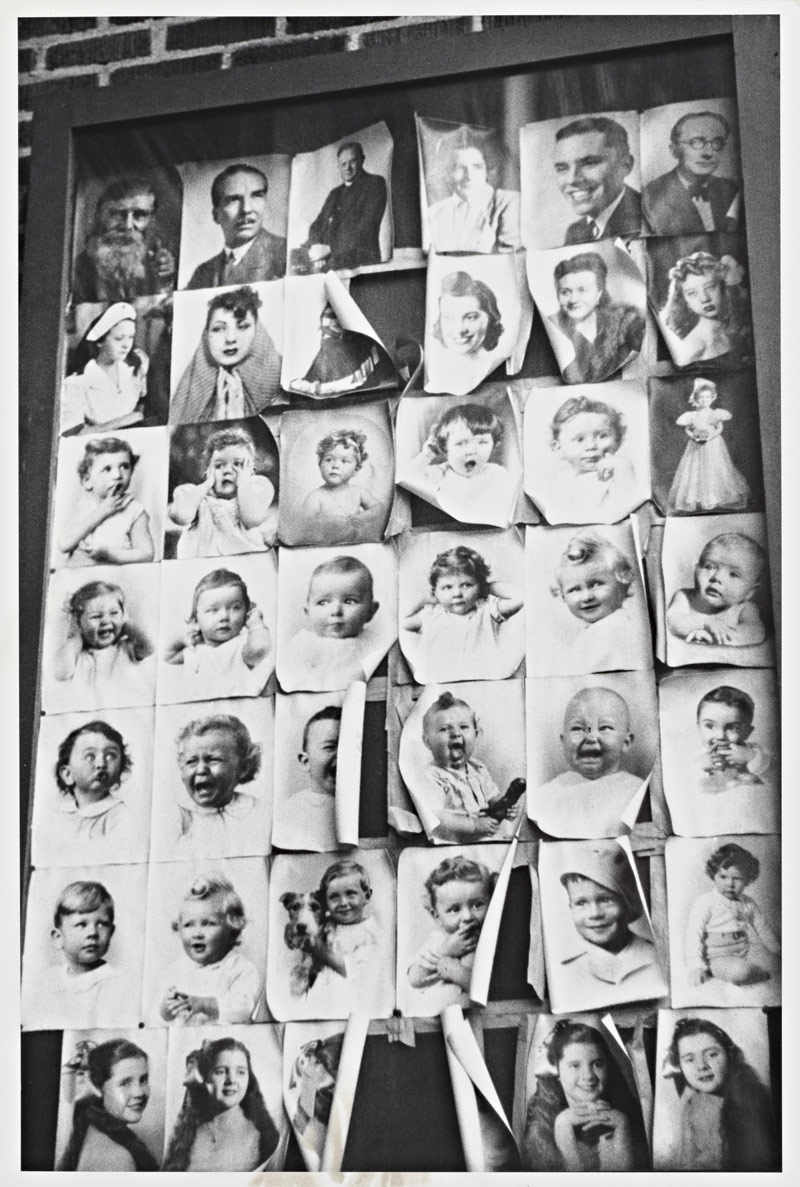

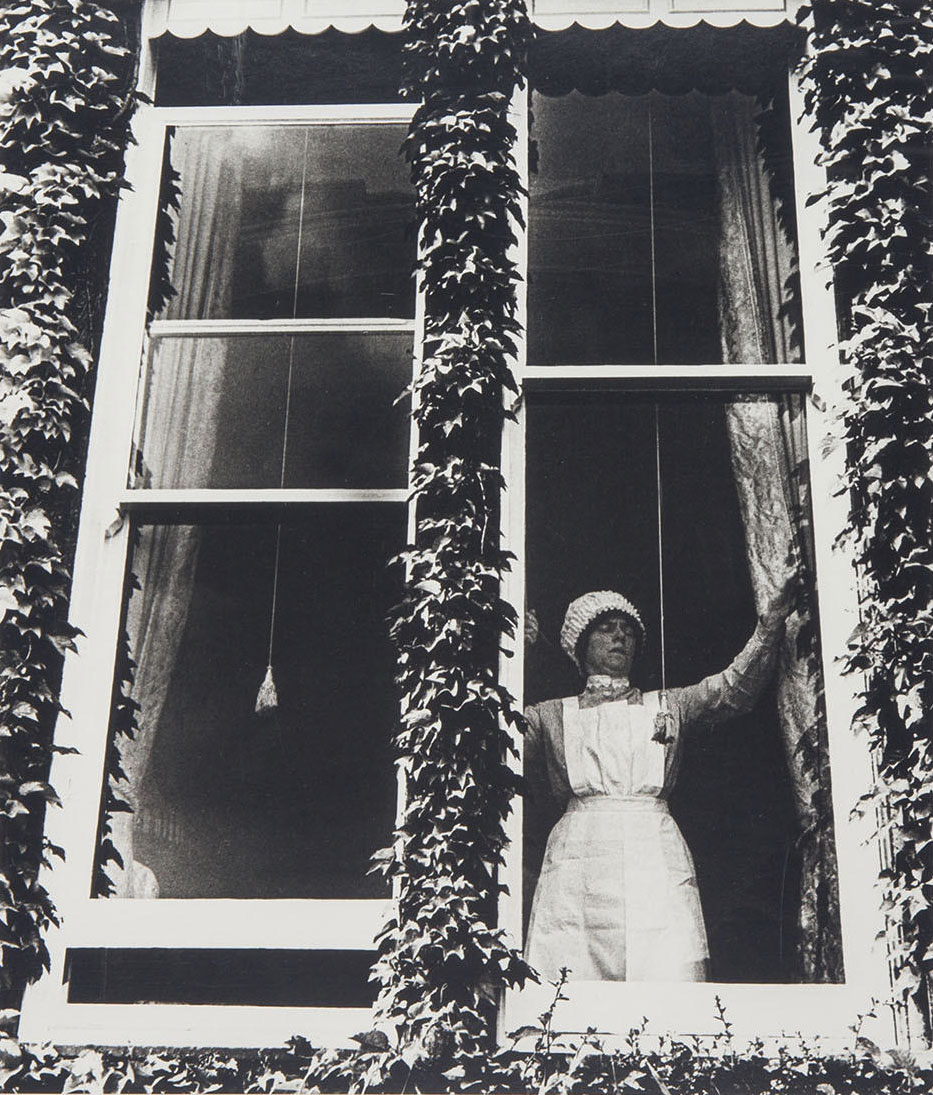

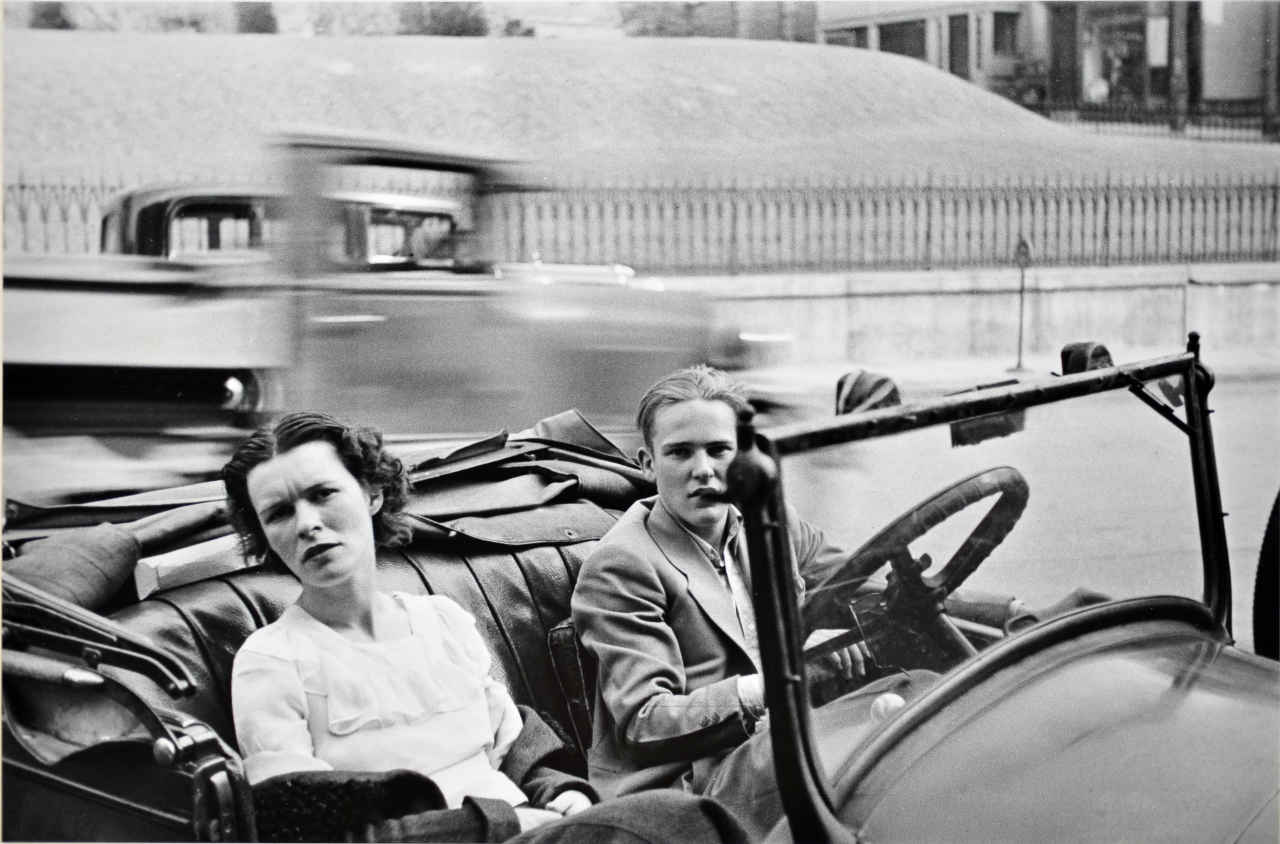


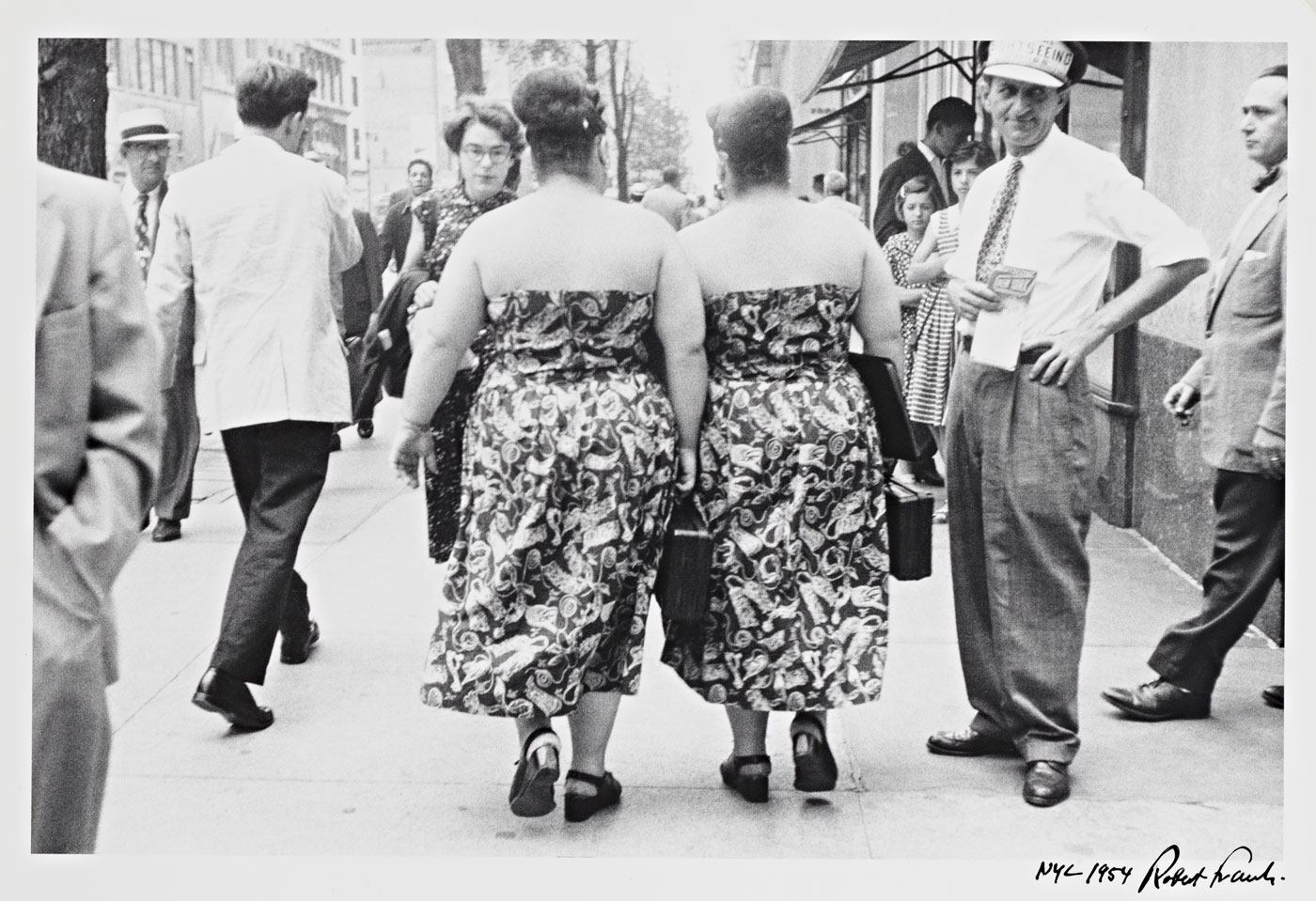


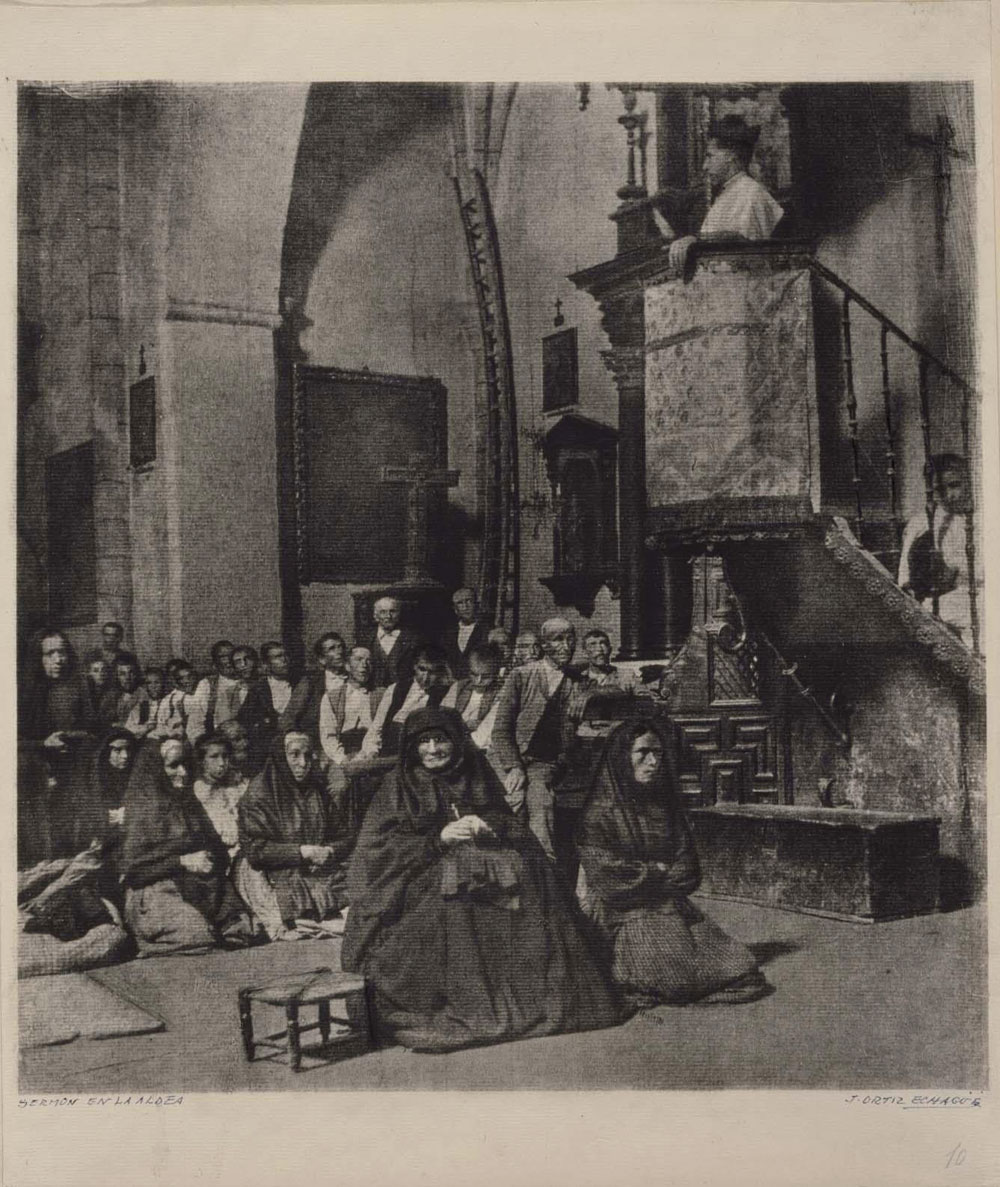


![Francisco Ontañón (Barcelona, Spain, 1930 - Madrid, Spain, 2008) 'La actual M-30 (Madrid)' (The M-30 Ring Road Today [Madrid]) 1963 (May) / posthumous print, 2013](https://artblart.com/wp-content/uploads/2014/12/francisco-ontac3b1c3b3n-la-actual-m-30-madrid-web.jpg "Francisco Ontañón (Barcelona, Spain, 1930 - Madrid, Spain, 2008) 'La actual M-30 (Madrid)' (The M-30 Ring Road Today [Madrid]) 1963 (May) / posthumous print, 2013")
![Francisco Ontañón (Barcelona, Spain, 1930 - Madrid, Spain, 2008) 'Sans Titre (Madrid)' (No Title [Madrid]) 1963 (May) / posthumous print, 2013](https://artblart.com/wp-content/uploads/2014/12/francisco-ontac3b1c3b3n-s_t-madrid-web.jpg "Francisco Ontañón (Barcelona, Spain, 1930 - Madrid, Spain, 2008) 'Sans Titre (Madrid)' (No Title [Madrid]) 1963 (May) / posthumous print, 2013")
![Francisco Ontañón (Barcelona, Spain, 1930 - Madrid, Spain, 2008) 'Sans Titre (Madrid)' (No Title [Madrid]) 1964-65 / posthumous print, 2013](https://artblart.com/wp-content/uploads/2014/12/francisco-ontac3b1c3b3n-s_t-madrid-b-web.jpg "Francisco Ontañón (Barcelona, Spain, 1930 - Madrid, Spain, 2008) 'Sans Titre (Madrid)' (No Title [Madrid]) 1964-65 / posthumous print, 2013")
![Francisco Ontañón (Barcelona, Spain, 1930 - Madrid, Spain, 2008) 'Sans Titre (Madrid)' (No Title [Madrid]) 1964-65 / posthumous print, 2013](https://artblart.com/wp-content/uploads/2014/12/francisco-ontac3b1c3b3n-s_t-madrid-c-web.jpg "Francisco Ontañón (Barcelona, Spain, 1930 - Madrid, Spain, 2008) 'Sans Titre (Madrid)' (No Title [Madrid]) 1964-65 / posthumous print, 2013")
![Francisco Ontañón (Barcelona, Spain, 1930 - Madrid, Spain, 2008) 'Sans Titre (Madrid)' (No Title [Madrid]) 1964 / posthumous print, 2013](https://artblart.com/wp-content/uploads/2014/12/francisco-ontac3b1c3b3n-s_t-madrid-d-web.jpg "Francisco Ontañón (Barcelona, Spain, 1930 - Madrid, Spain, 2008) 'Sans Titre (Madrid)' (No Title [Madrid]) 1964 / posthumous print, 2013")
![Francisco Ontañón (Barcelona, Spain, 1930 - Madrid, Spain, 2008) '600 en Casa de Campo con familia (Madrid)' (Outing to Casa de Campo in the 600, with Family [Madrid]) 1963 (May) / posthumous print, 2013](https://artblart.com/wp-content/uploads/2014/12/francisco-ontac3b1c3b3n-600-en-casa-de-campo-web.jpg "Francisco Ontañón (Barcelona, Spain, 1930 - Madrid, Spain, 2008) '600 en Casa de Campo con familia (Madrid)' (Outing to Casa de Campo in the 600, with Family [Madrid]) 1963 (May) / posthumous print, 2013")
![Francisco Ontañón (Barcelona, Spain, 1930 - Madrid, Spain, 2008) 'Parque Sindical (Madrid)' (Parque Sindical Sports Area [Madrid]) 1964 / posthumous print, 2013](https://artblart.com/wp-content/uploads/2014/12/francisco-ontac3b1c3b3n-parque-sindical-madrid-web.jpg "Francisco Ontañón (Barcelona, Spain, 1930 - Madrid, Spain, 2008) 'Parque Sindical (Madrid)' (Parque Sindical Sports Area [Madrid]) 1964 / posthumous print, 2013")
![Francisco Ontañón (Barcelona, Spain, 1930 - Madrid, Spain, 2008) 'Entierro (Madrid)' (Burial [Madrid]) 1967 / posthumous print, 2013](https://artblart.com/wp-content/uploads/2014/12/francisco-ontac3b1c3b3n-entierro-madrid-web.jpg "Francisco Ontañón (Barcelona, Spain, 1930 - Madrid, Spain, 2008) 'Entierro (Madrid)' (Burial [Madrid]) 1967 / posthumous print, 2013")
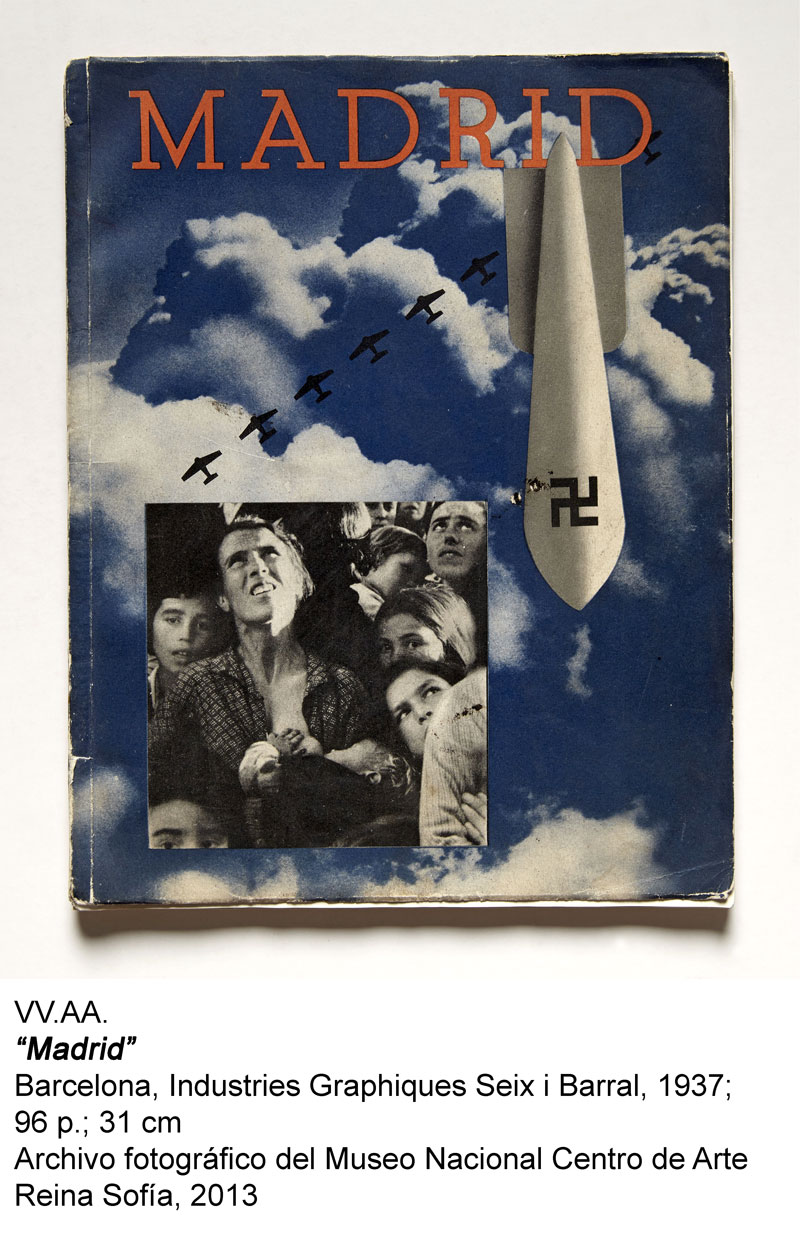


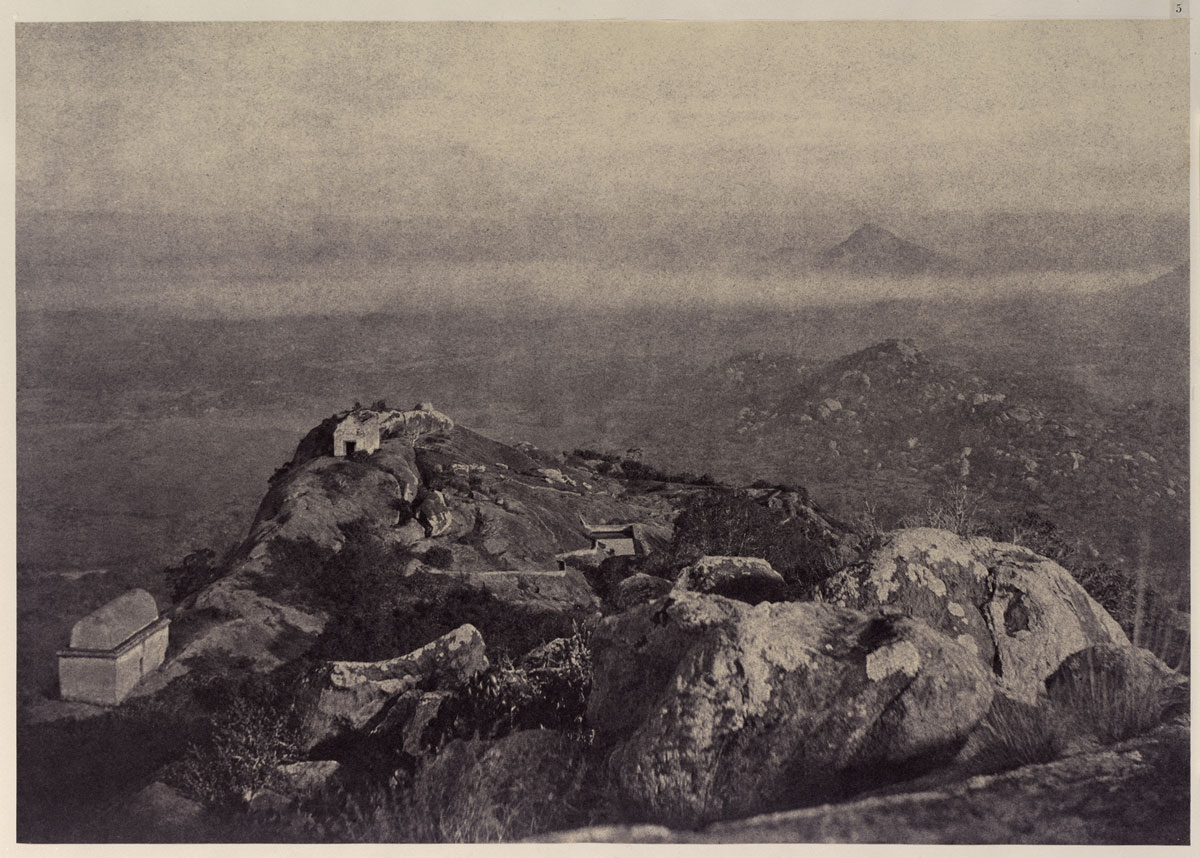
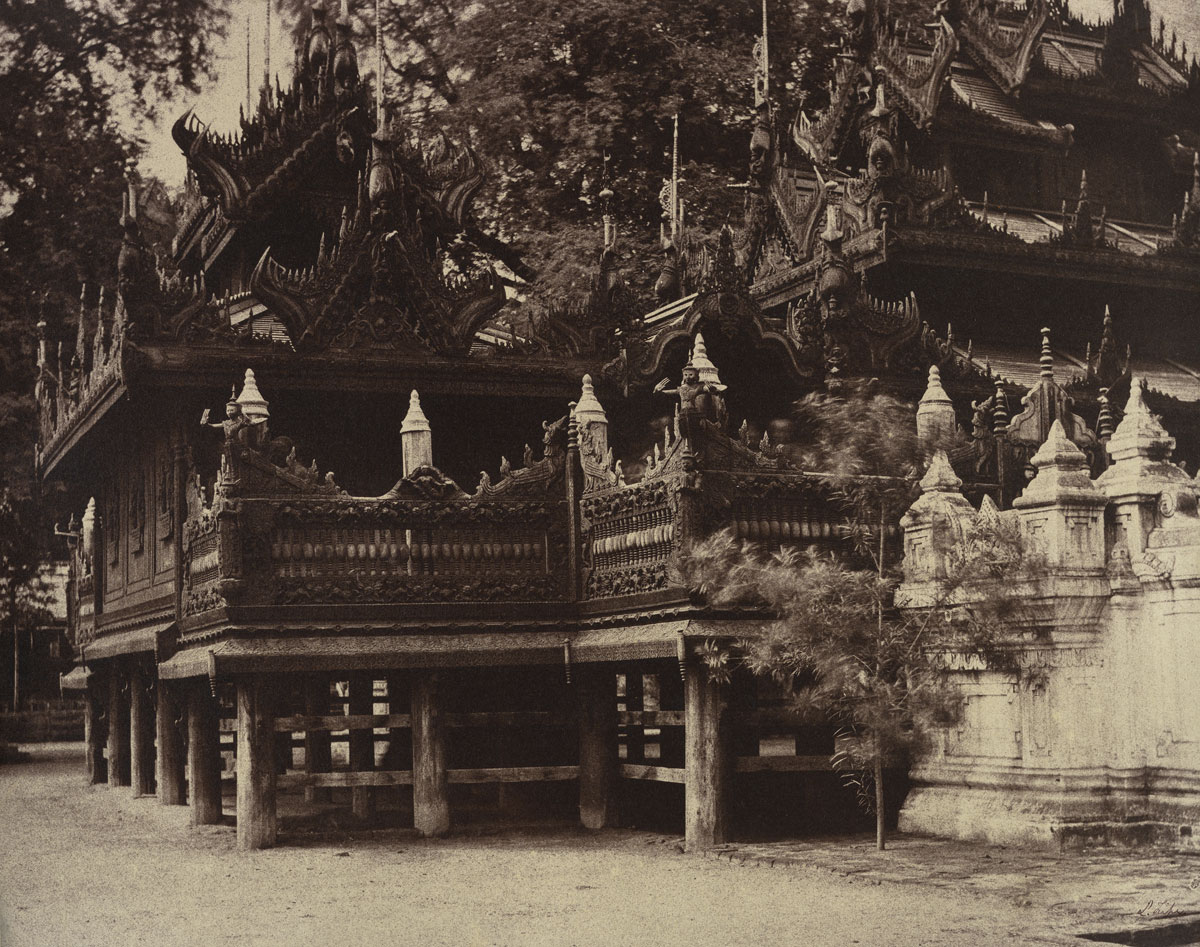


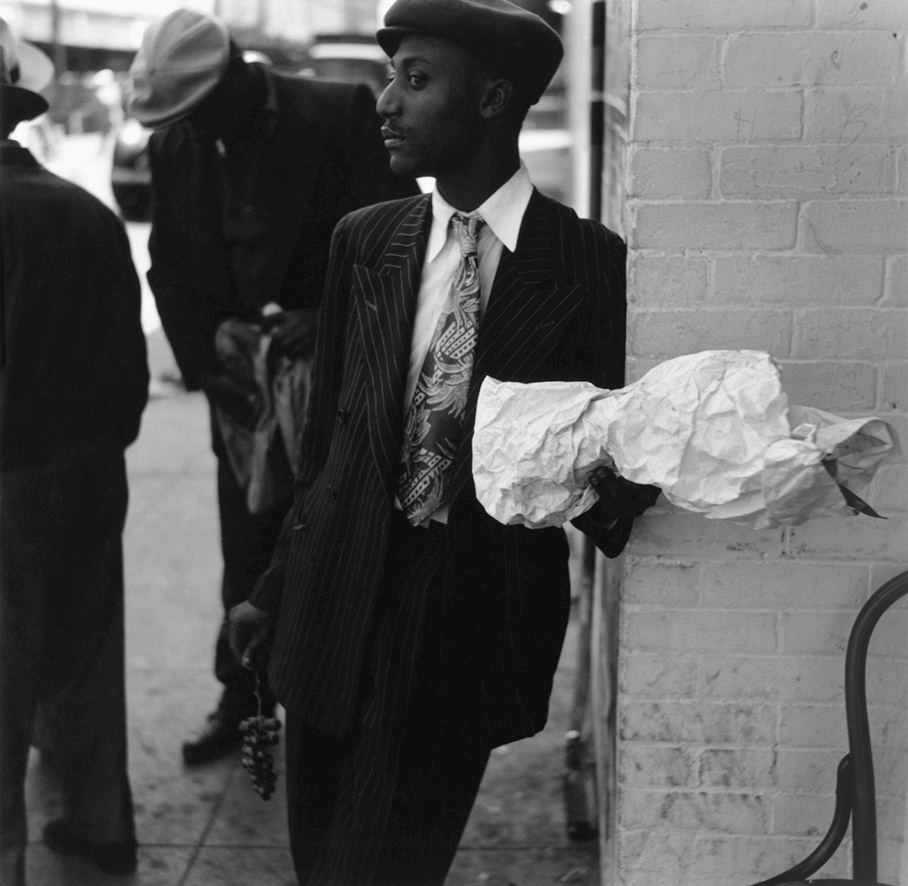
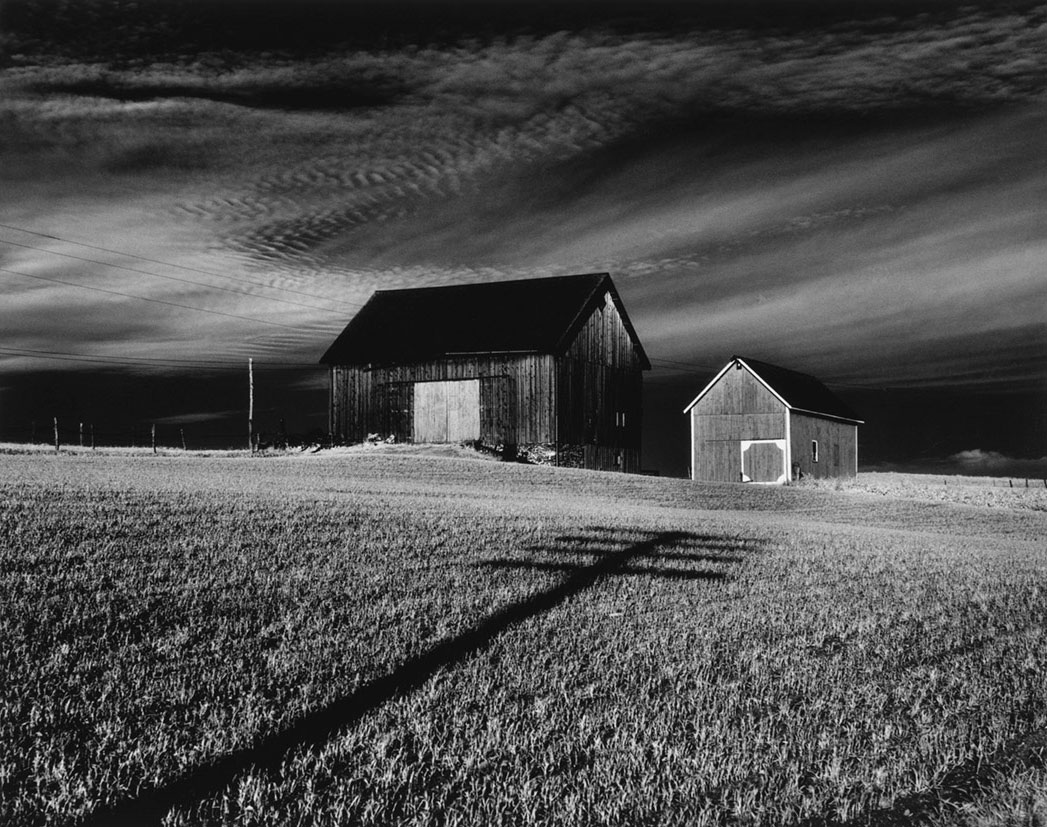
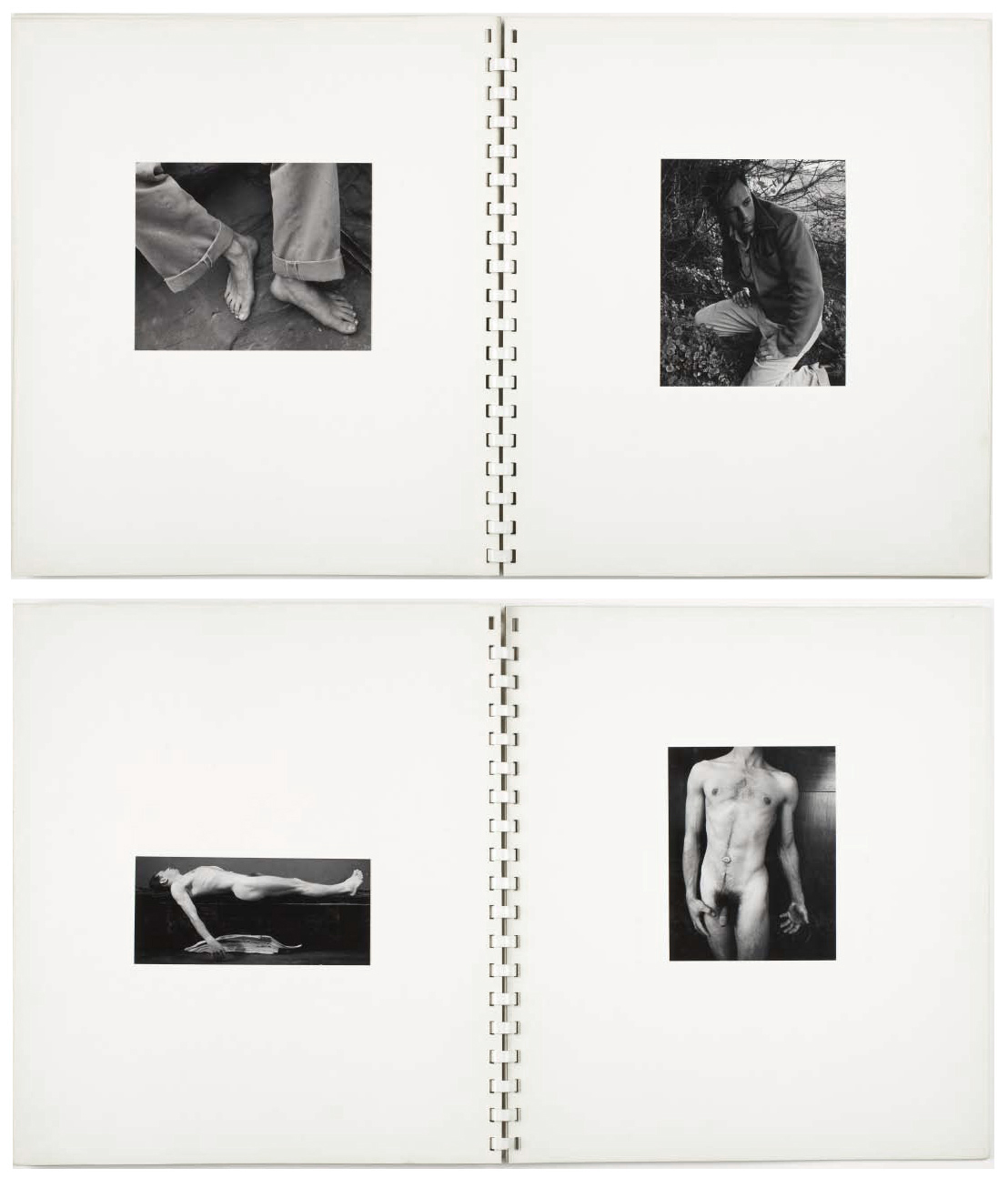
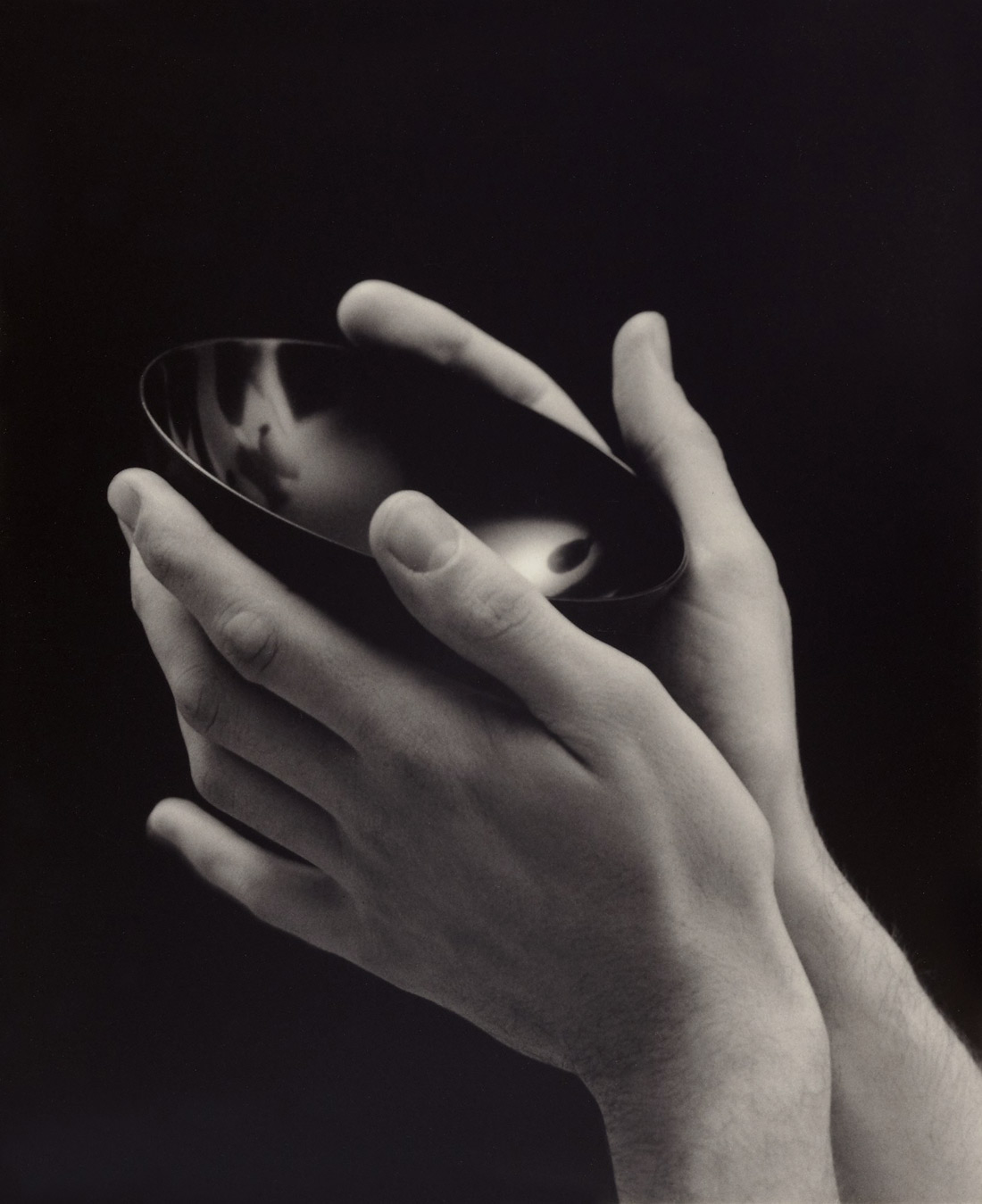
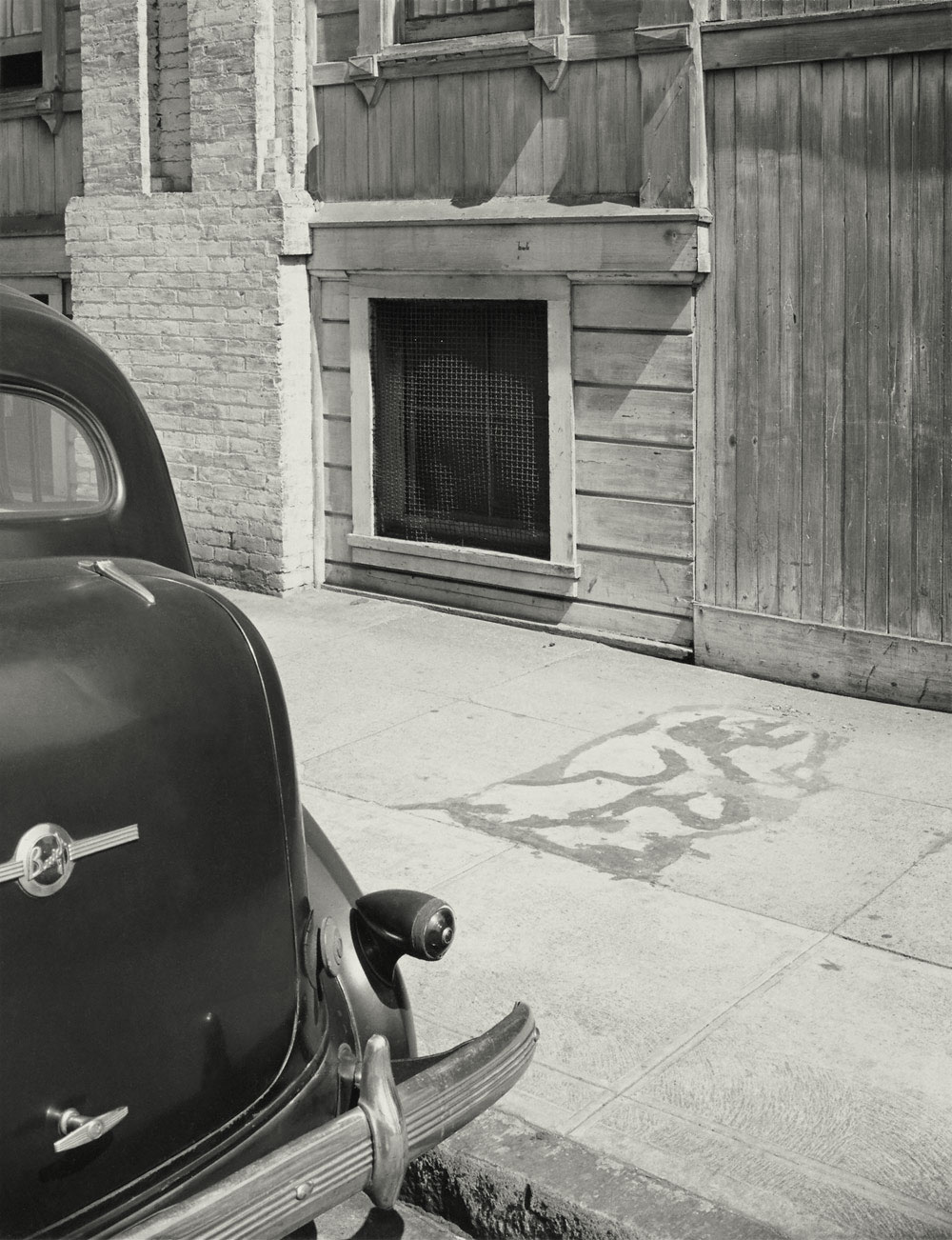
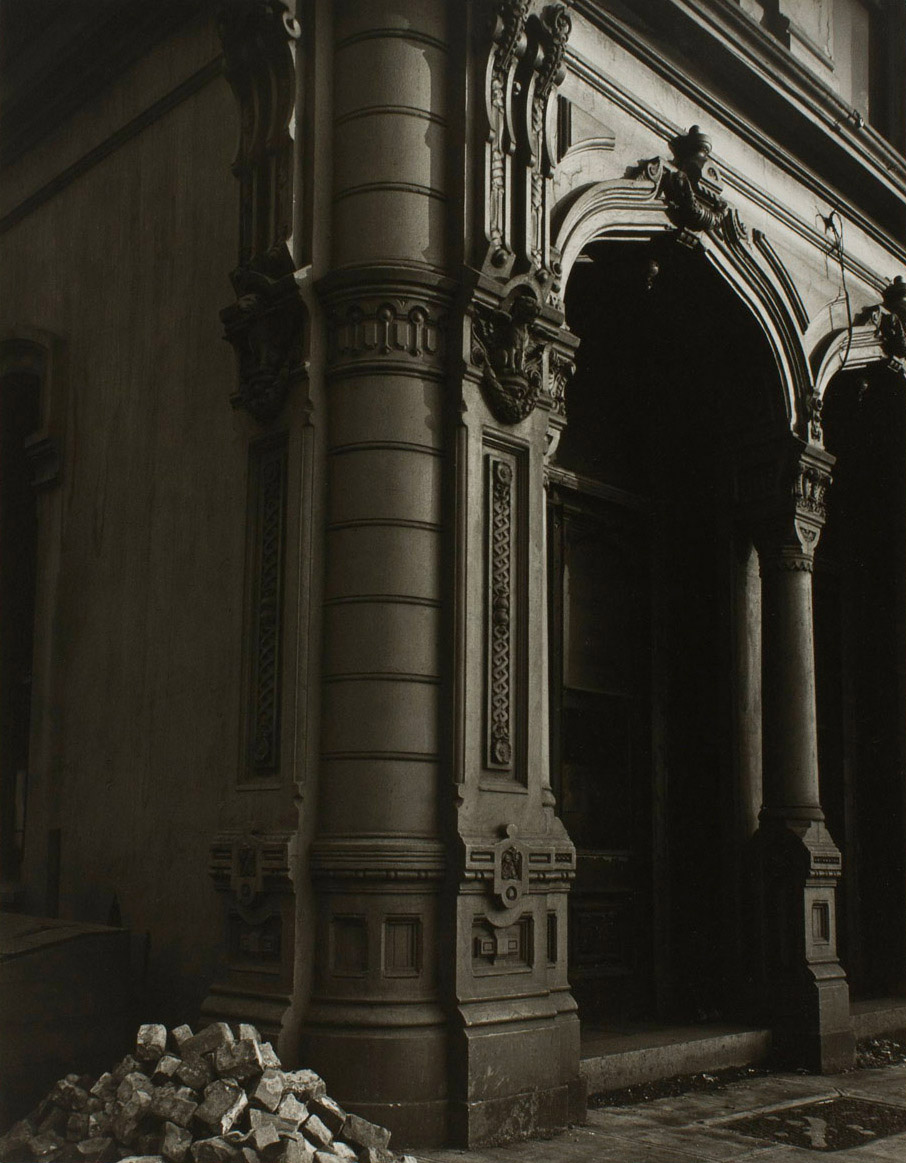
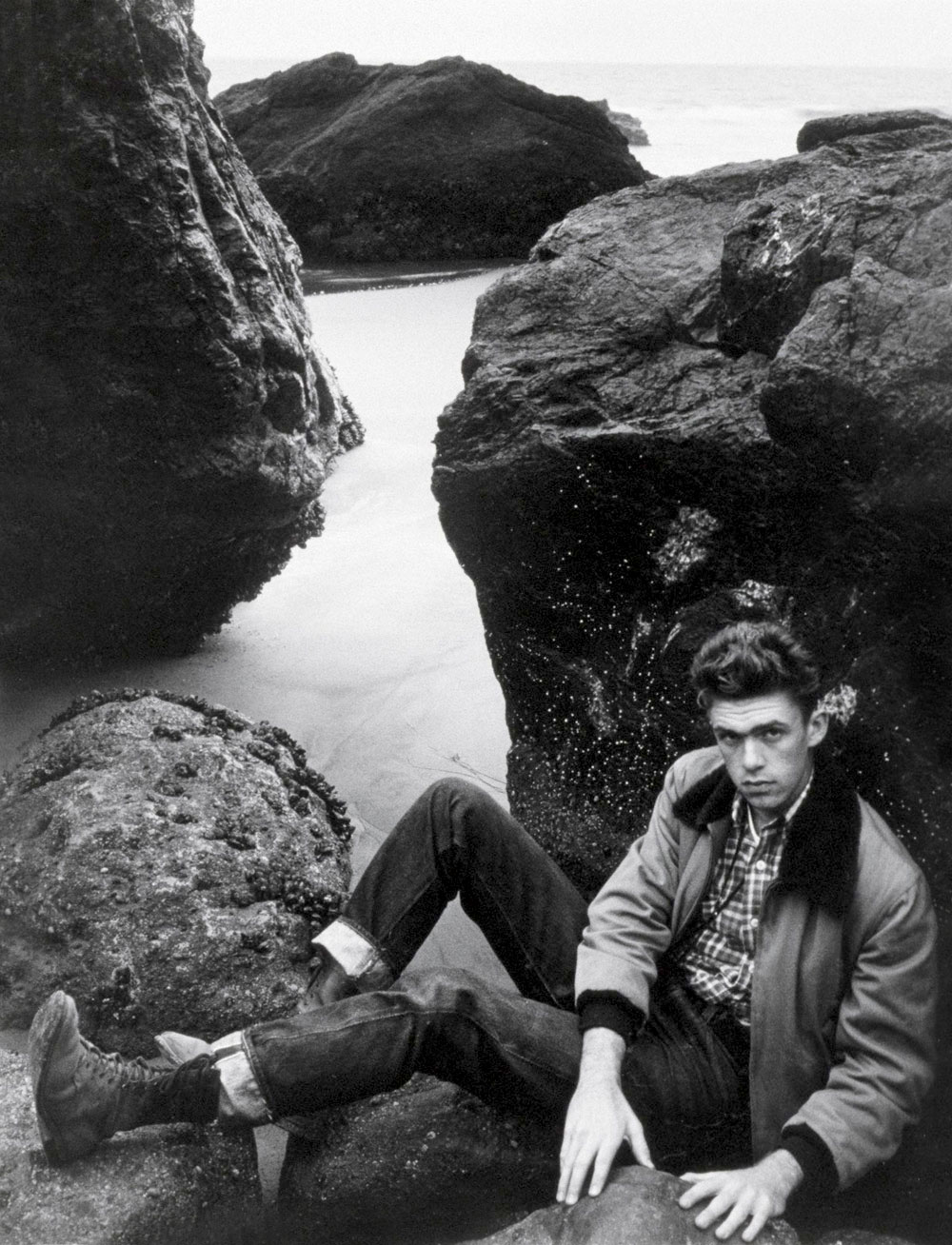
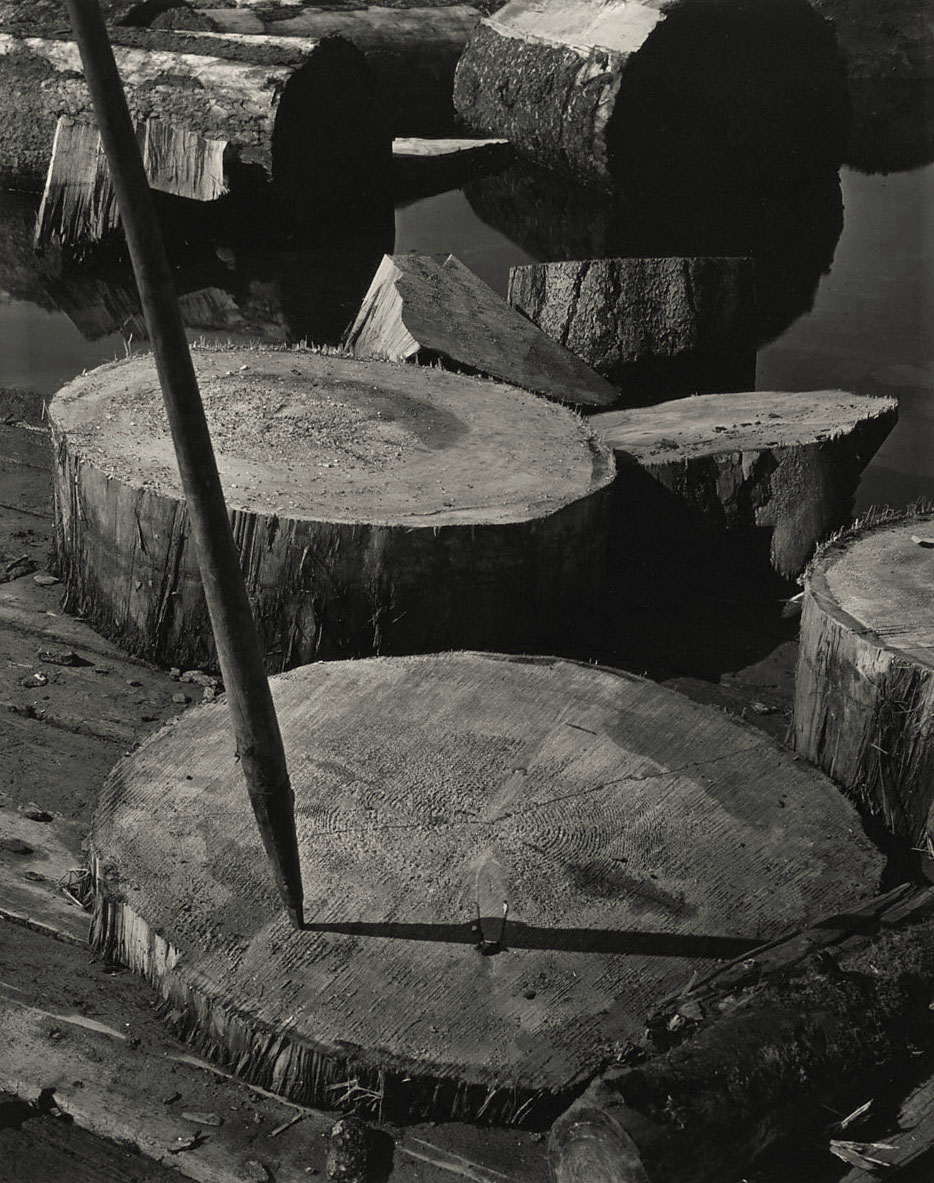
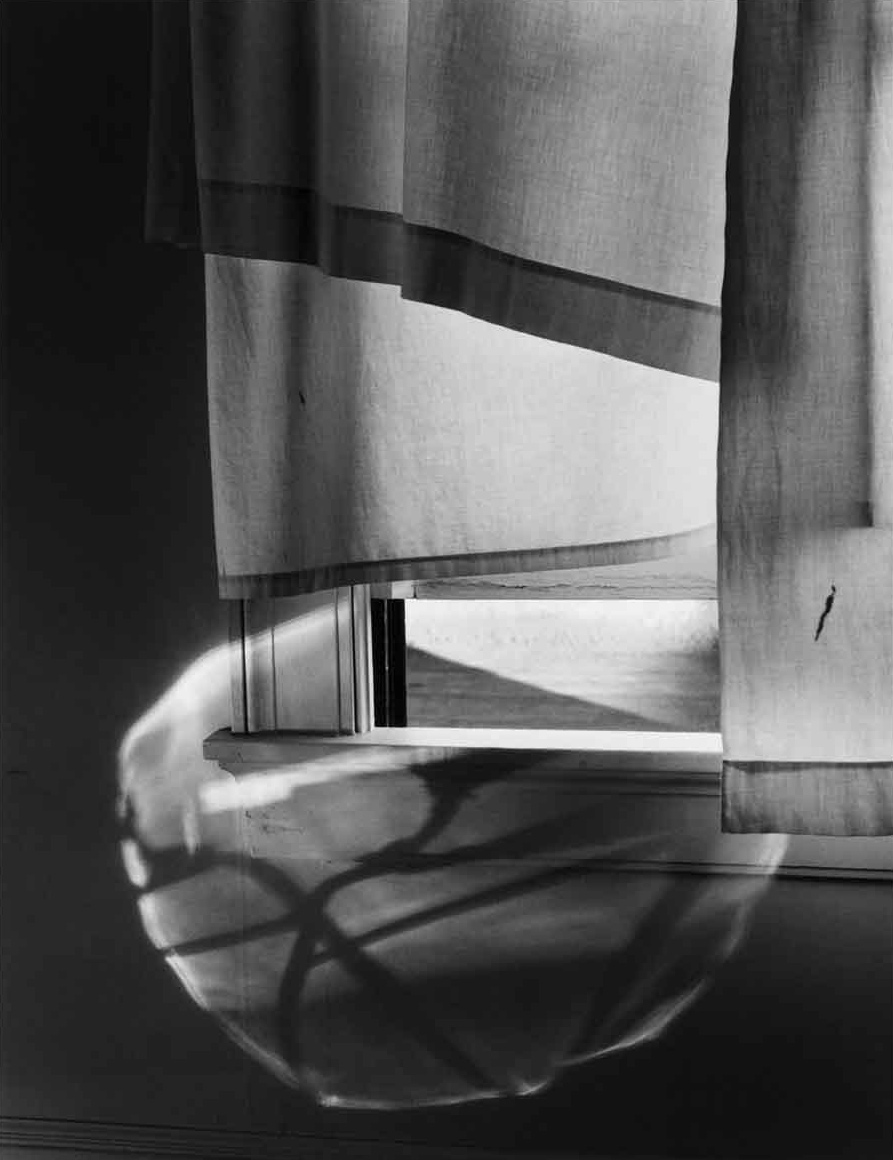
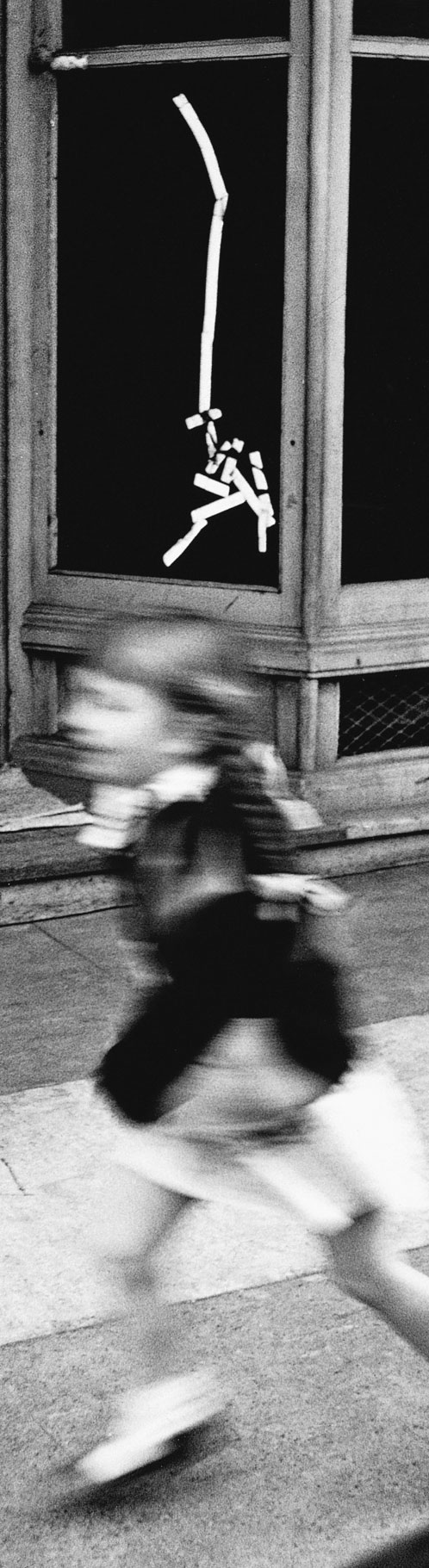

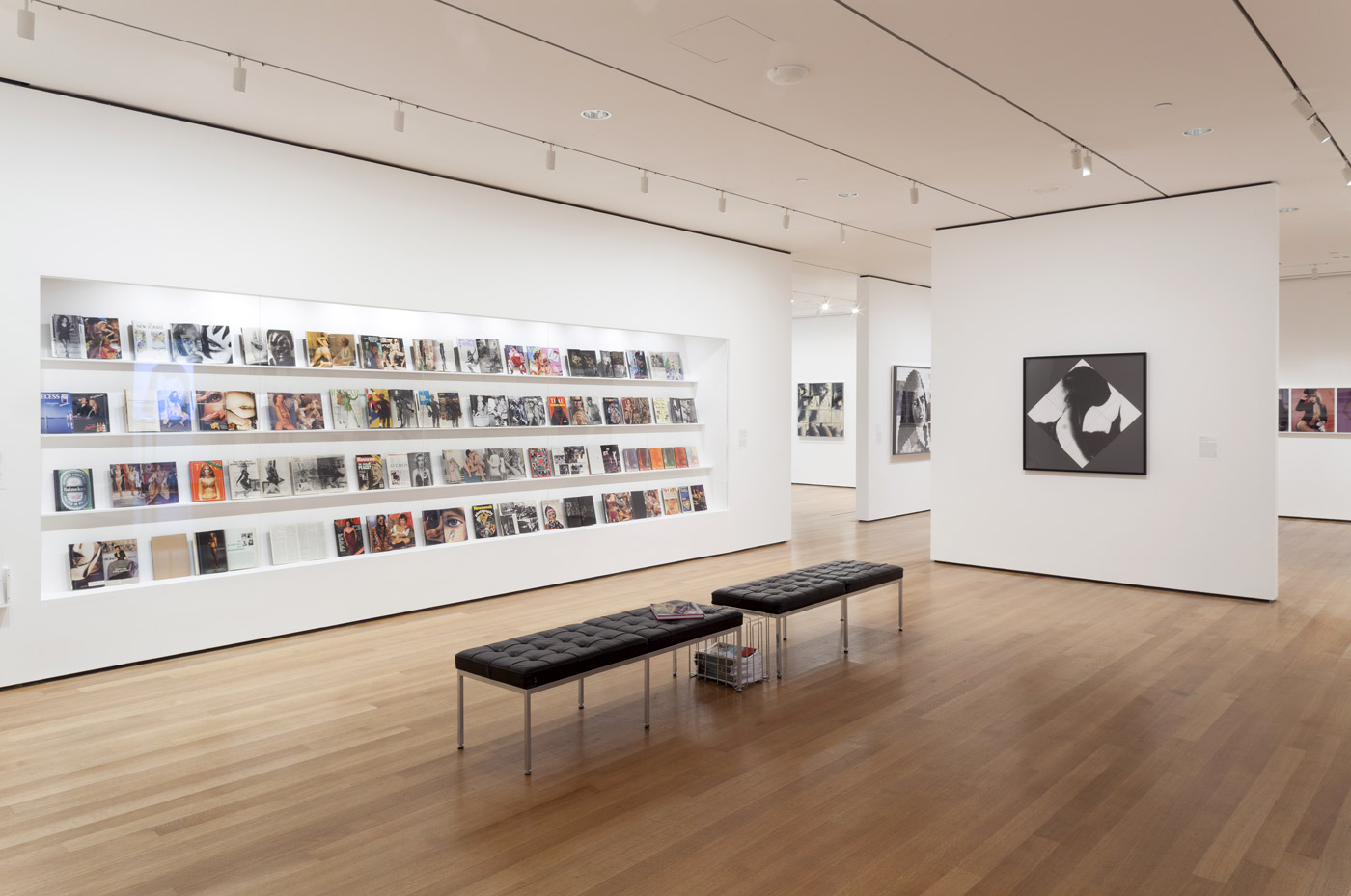
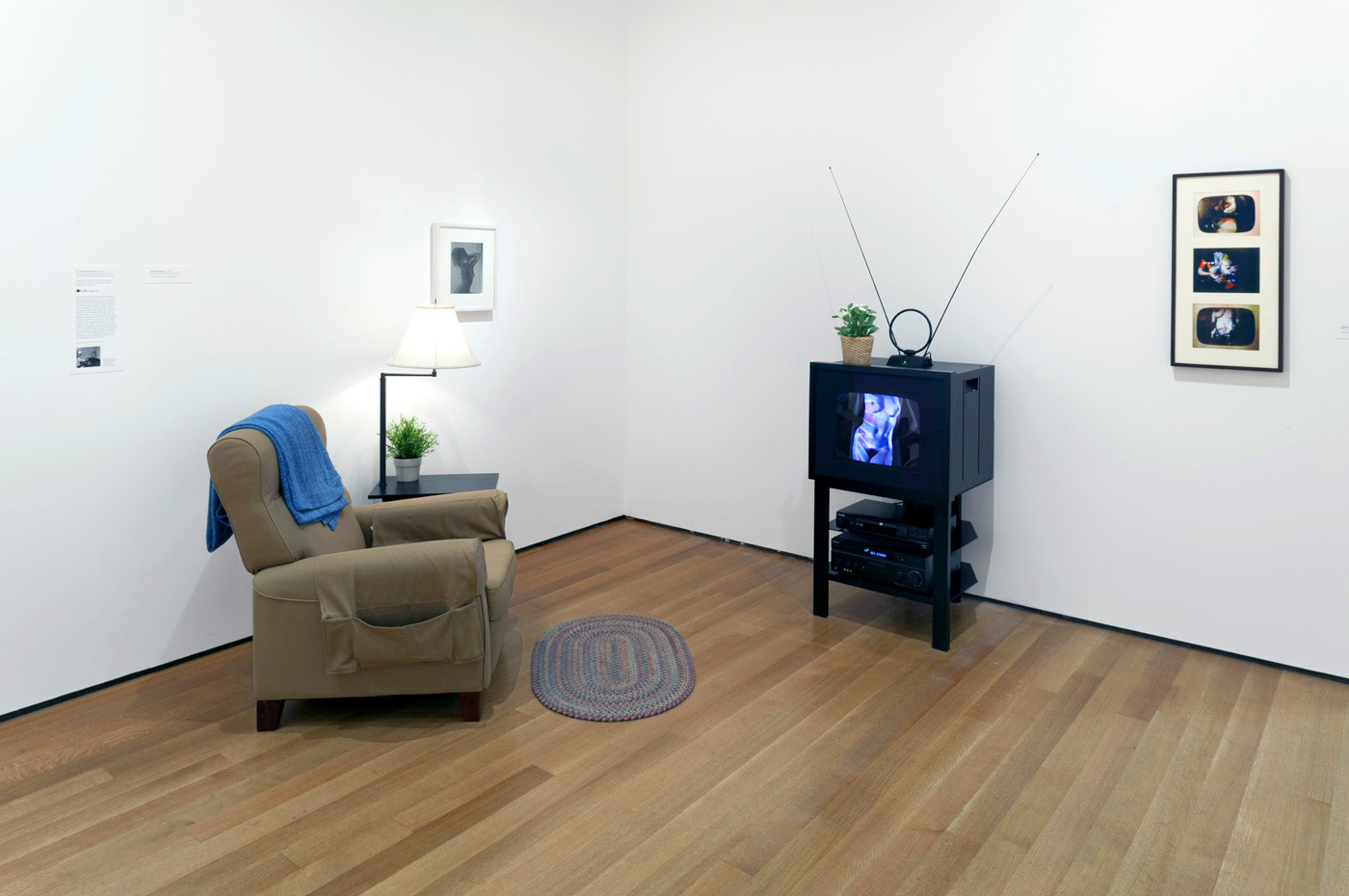
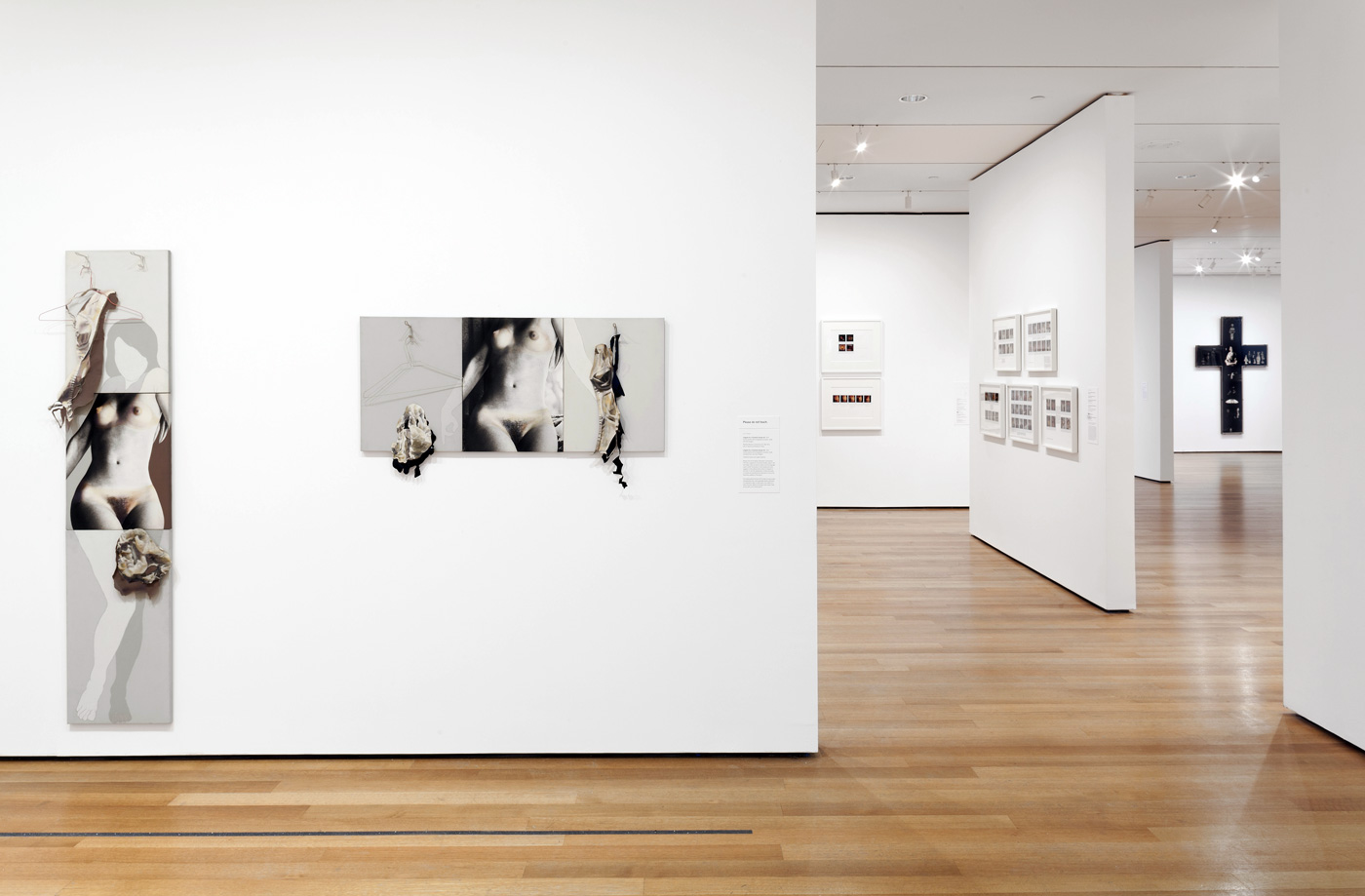
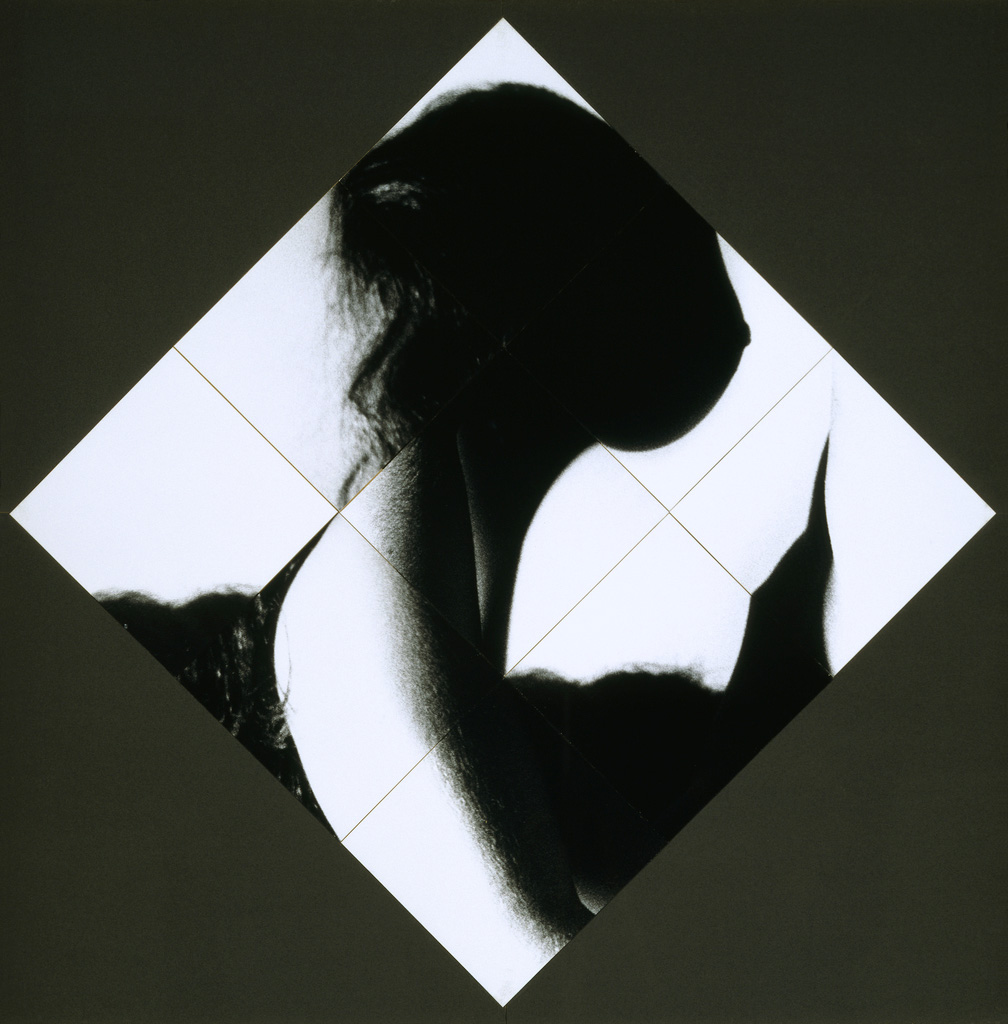






![Gotthard Schuh (Swiss, 1897-1969) 'Inseln der Götter' (Islands of the gods) [book cover] 1941](https://artblart.com/wp-content/uploads/2014/06/insel-de-gotter.jpg "Gotthard Schuh (Swiss, 1897-1969) 'Inseln der Götter' (Islands of the gods) [book cover] 1941")

 Art Blart _ art and cultural memory archive
You must be logged in to post a comment.