Exhibition: ‘The New Woman Behind the Camera’ at the National Gallery of Art, Washington Part 1

Exhibition dates: 31st October, 2021 – 30th January, 2022

Curator: The exhibition is curated by Andrea Nelson, associate curator in the department of photographs, National Gallery of Art, Washington.


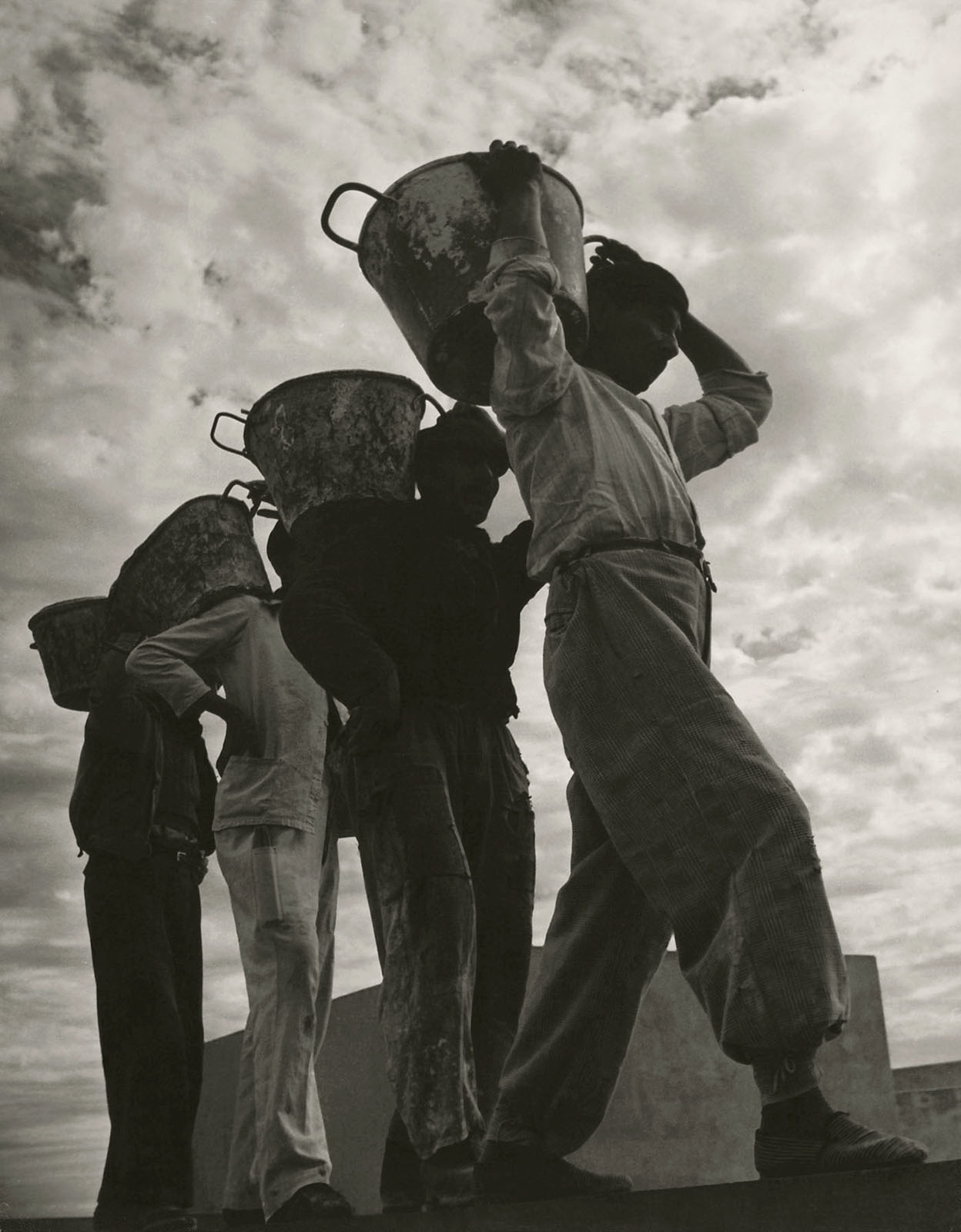
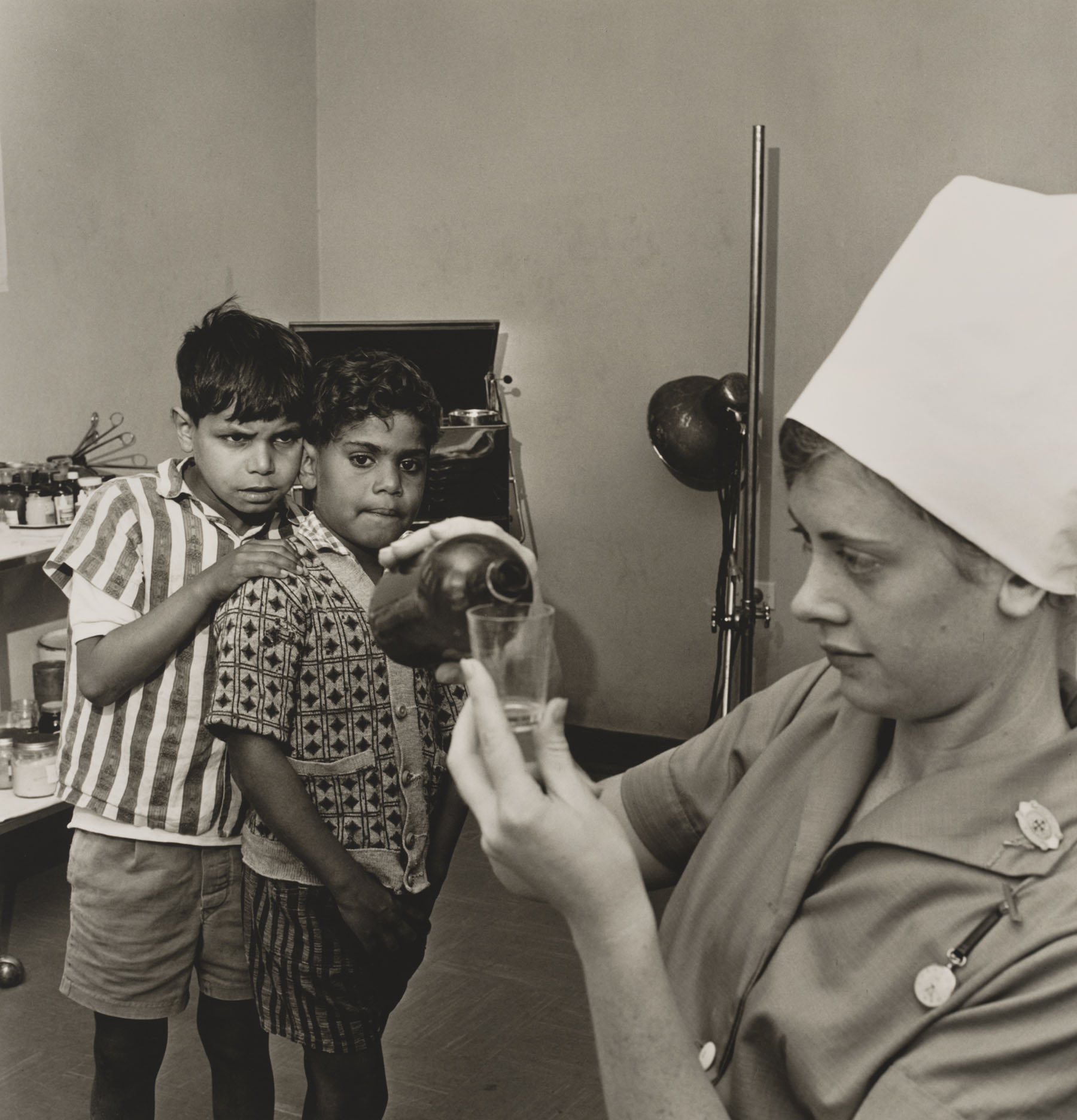
Marvin Breckinridge Patterson (American, 1905-2002) 'Frontier Nursing Service, Kentucky' 1937 from the exhibition 'The New Woman Behind the Camera' at the National Gallery of Art, Washington, Oct 2021 - Jan 2022


Marvin Breckinridge Patterson (American, 1905-2002)
Frontier Nursing Service, Kentucky
1937
Gelatin silver print
Sheet (trimmed to image): 24.2 x 18.8cm (9 1/2 x 7 3/8 in.)
Frame: 50.8 x 40.64cm (20 x 16 in.)
Frame (outer): 53.34 x 43.18cm (21 x 17 in.)
National Gallery of Art, Washington, Gift of Marvin Breckinridge Patterson


The first of a humungous three-part posting on this archaeological exhibition.

Combined with the posting I did on this exhibition when it was on view at The Metropolitan Museum of Art, this three-part posting will include over 160 new images from the exhibition… meaning a combined total over the four postings of over 200 images with biographical information.

This has been a mammoth effort to construct these postings but so worthwhile!

See Part 2 of the posting. I will make comment on the exhibition in part 3 of the posting.

Dr Marcus Bunyan


Many thankx to the National Gallery of Art for allowing me to publish the photographs in the posting. Please click on the photographs for a larger version of the image.


Helen Levitt (American, 1913-2009) 'New York' c. 1942 from the exhibition 'The New Woman Behind the Camera' at the National Gallery of Art, Washington, Oct 2021 - Jan 2022


Helen Levitt (American, 1913-2009)
New York
c. 1942
Gelatin silver print
Sheet (trimmed to image): 18.6 x 24.8cm (7 5/16 x 9 3/4 in.)
Frame: 35.56 x 45.72cm (14 x 18 in.)
Frame (outer): 38.1 x 48.26cm (15 x 19 in.)
National Gallery of Art, Washington, Gift of William H. Levitt
© Helen Levitt Film Documents LLC. All rights reserved
Courtesy of Thomas Zander Gallery


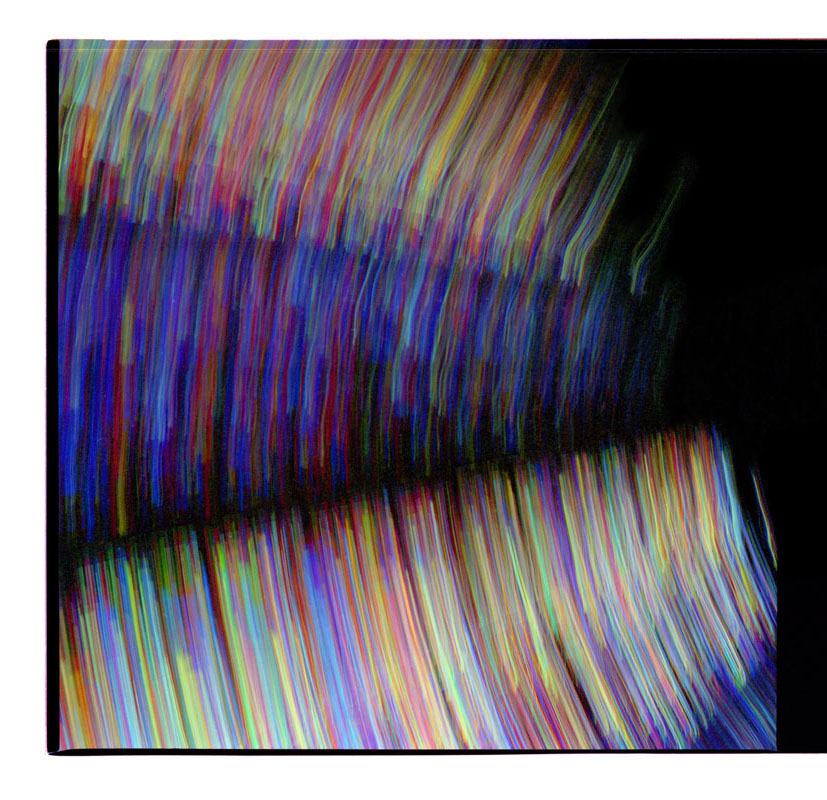
Renata Bracksieck (German, 1900-1992) 'Karnevalslichter' (Carnival Lights) 1920s-1930s from the exhibition 'The New Woman Behind the Camera' at the National Gallery of Art, Washington, Oct 2021 - Jan 2022


Renata Bracksieck (German, 1900-1992)
Karnevalslichter (Carnival Lights)
1920s-1930s
Gelatin silver print sheet (trimmed to image): 23.8 x 17.8cm (9 3/8 x 7 in.)
Frame: 50.8 x 40.64cm (20 x 16 in.)
Frame (outer): 55.25 x 45.09cm (21 3/4 x 17 3/4 in.)
National Gallery of Art, Washington, Patrons’ Permanent Fund


Renata Bracksieck (German, 1900-1992) was trained as a fashion designer at Christoph Drecoll’s in Berlin, and afterwards ran her own successful fashion studio in Bremen. She started taking photographs in 1929, but had been experimenting with and assisting her close friend and future husband Werner Rohde before. Her photographs were featured in the international exhibition Das Lichtbild in Munich in 1930. In 1937 she married Werner Rohde and subsequently was called Renata Bracksieck-Rohde. After he returned from a POW camp in 1945, they moved to the artist colony Worpswede near the city of Bremen, where they continued to live until their deaths.

Text from the Kicken Berlin website


Lotte Jacobi (American, 1896-1990) 'Lieselotte Felger, die Wespentaille in dem Tanz, der Kreisel, Berlin' (Lieselotte Felger as "Die Wespentaille" in the Dance "Der Kreisel," Berlin) 1931


Lotte Jacobi (American, 1896-1990)
Lieselotte Felger, die Wespentaille in dem Tanz, der Kreisel, Berlin (Lieselotte Felger as “Die Wespentaille” in the Dance “Der Kreisel,” Berlin)
1931
Gelatin silver print sheet (trimmed to image): 25.2 x 20.2cm (9 15/16 x 7 15/16 in.)
Frame: 50.8 x 40.64cm (20 x 16 in.)
Frame (outer): 53.34 x 43.18cm (21 x 17 in.)
National Gallery of Art, Washington, Patrons’ Permanent Fund


Lotte Jacobi (August 17, 1896 – May 6, 1990) was a leading American portrait photographer and photojournalist, known for her high-contrast black-and-white portrait photography, characterised by intimate, sometimes dramatic, sometimes idiosyncratic and often definitive humanist depictions of both ordinary people in the United States and Europe and some of the most important artists, thinkers and activists of the 20th century.

Read a fuller biography on the Wikipedia website
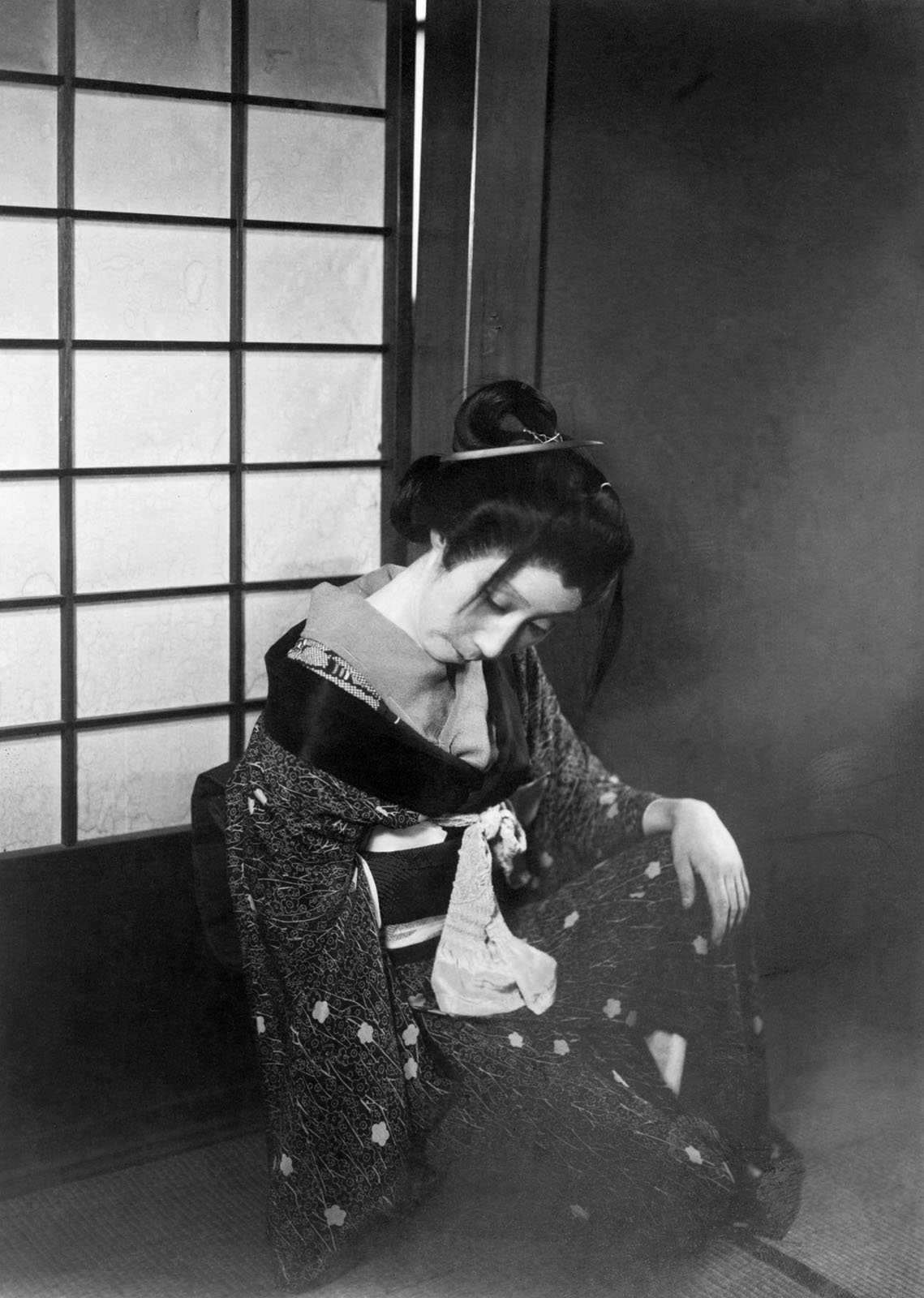
 

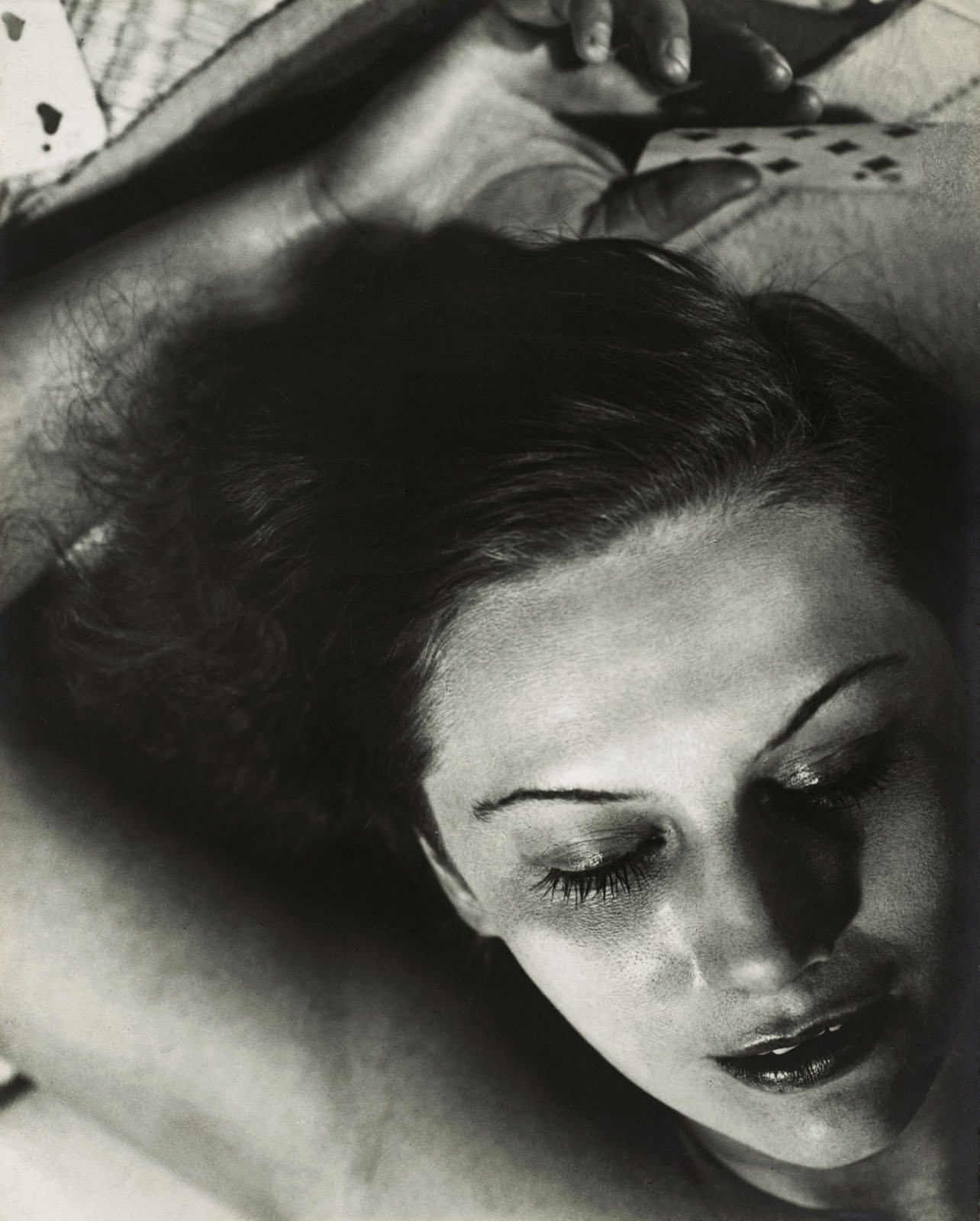
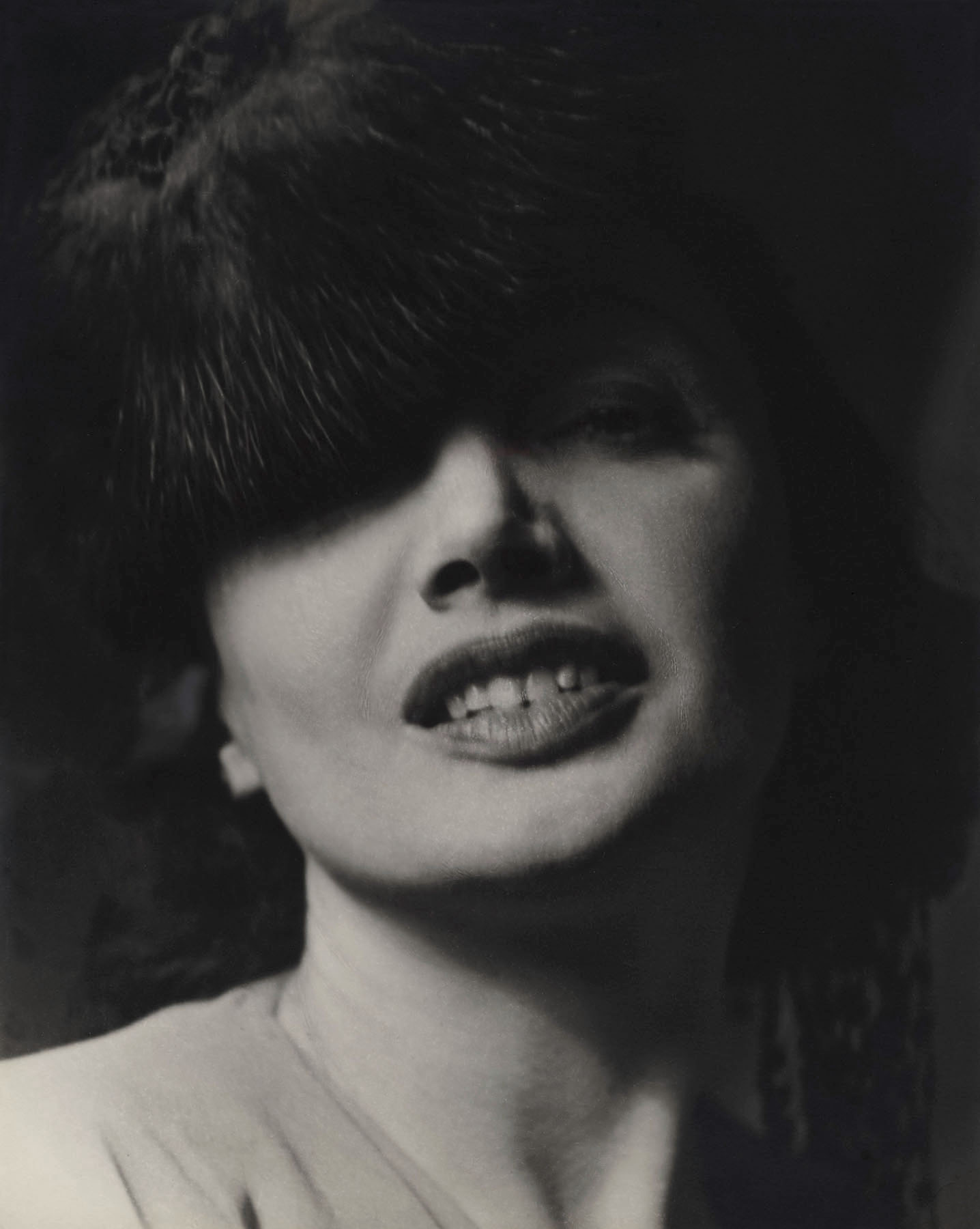
Yva (Else Ernestine Neuländer-Simon) (German, 1900-1944) 'Ohne Titel (Schmuck)' (Untitled (Jewellery)) c. 1930


Yva (Else Ernestine Neuländer-Simon) (German, 1900-1944)
Ohne Titel (Schmuck) (Untitled (Jewellery))
c. 1930
Gelatin silver print
Image/sheet: 22.7 x 16.2 cm (8 15/16 x 6 3/8 in.)
Frame: 45.72 x 35.56 cm (18 x 14 in.)
Frame (outer): 50.17 x 40.01 cm (19 3/4 x 15 3/4 in.)
National Gallery of Art, Washington, Patrons’ Permanent Fund


Yva (26 January 1900 – 31 December 1944) was the professional pseudonym of Else Ernestine Neuländer-Simon who was a German Jewish photographer renowned for her dreamlike, multiple exposed images. She became a leading photographer in Berlin during the Weimar Republic.

When the Nazi Party came to power, she was forced into working as a radiographer. She was deported by the Gestapo in 1942 and murdered, probably in the Majdanek concentration camp during World War II.

Read a fuller biography on the Wikipedia website
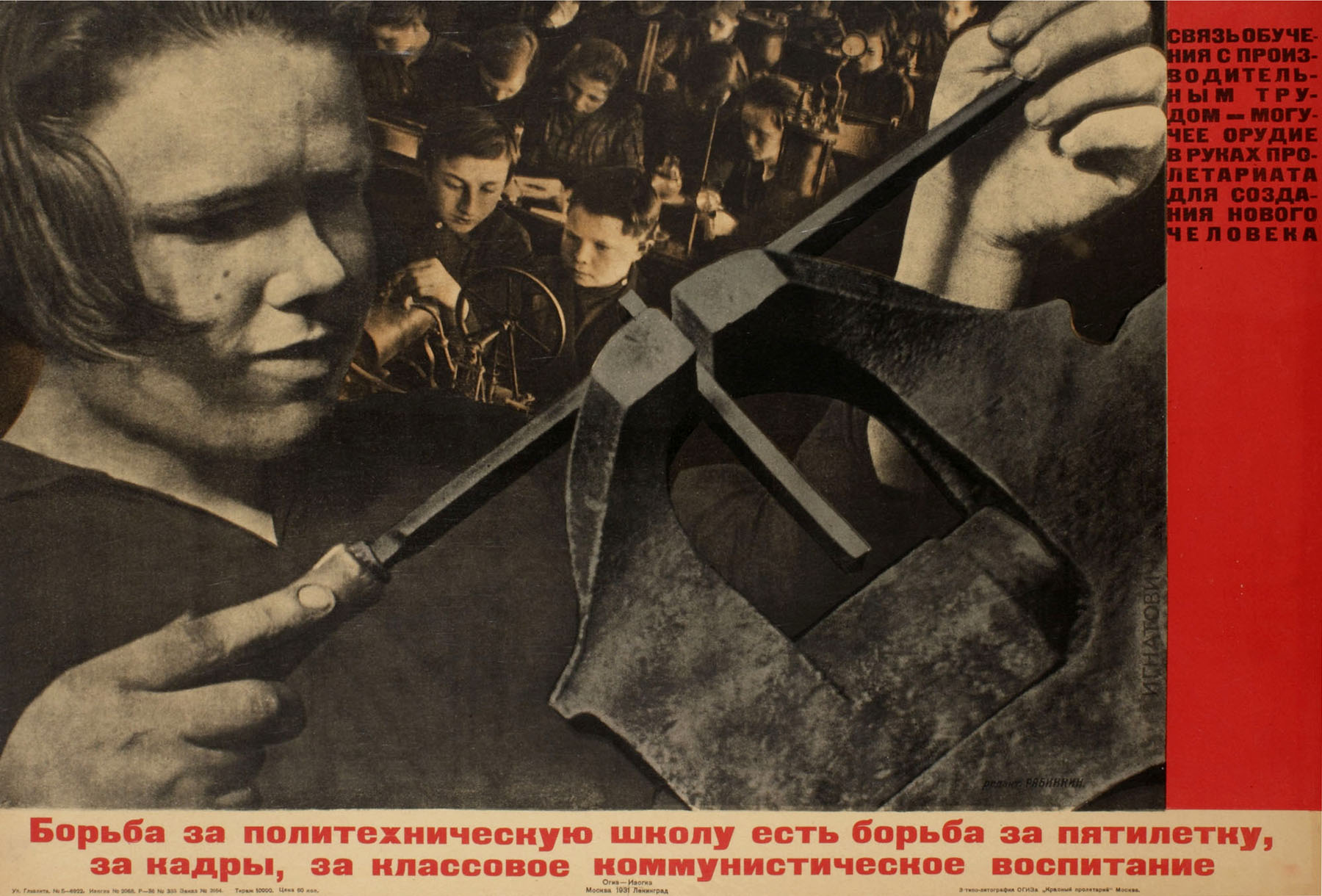
 

Yva (Else Ernestine Neuländer-Simon) (German, 1900-1944) 'Ohne Titel (Schmuck)' (Untitled (Jewellery)) c. 1930


Yva (Else Ernestine Neuländer-Simon) (German, 1900-1944)
Ohne Titel (Schmuck) (Untitled (Jewellery))
c. 1930
Gelatin silver print
Image: 19.05 x 15.24cm (7 1/2 x 6 in.)
Frame: 45.72 x 35.56cm (18 x 14 in.)
Frame (outer): 50.17 x 40.01cm (19 3/4 x 15 3/4 in.)
National Gallery of Art, Washington, Corcoran Collection
Gift of the Women’s Committee of the Corcoran Gallery of Art, Brenda and Robert Edelson Collection


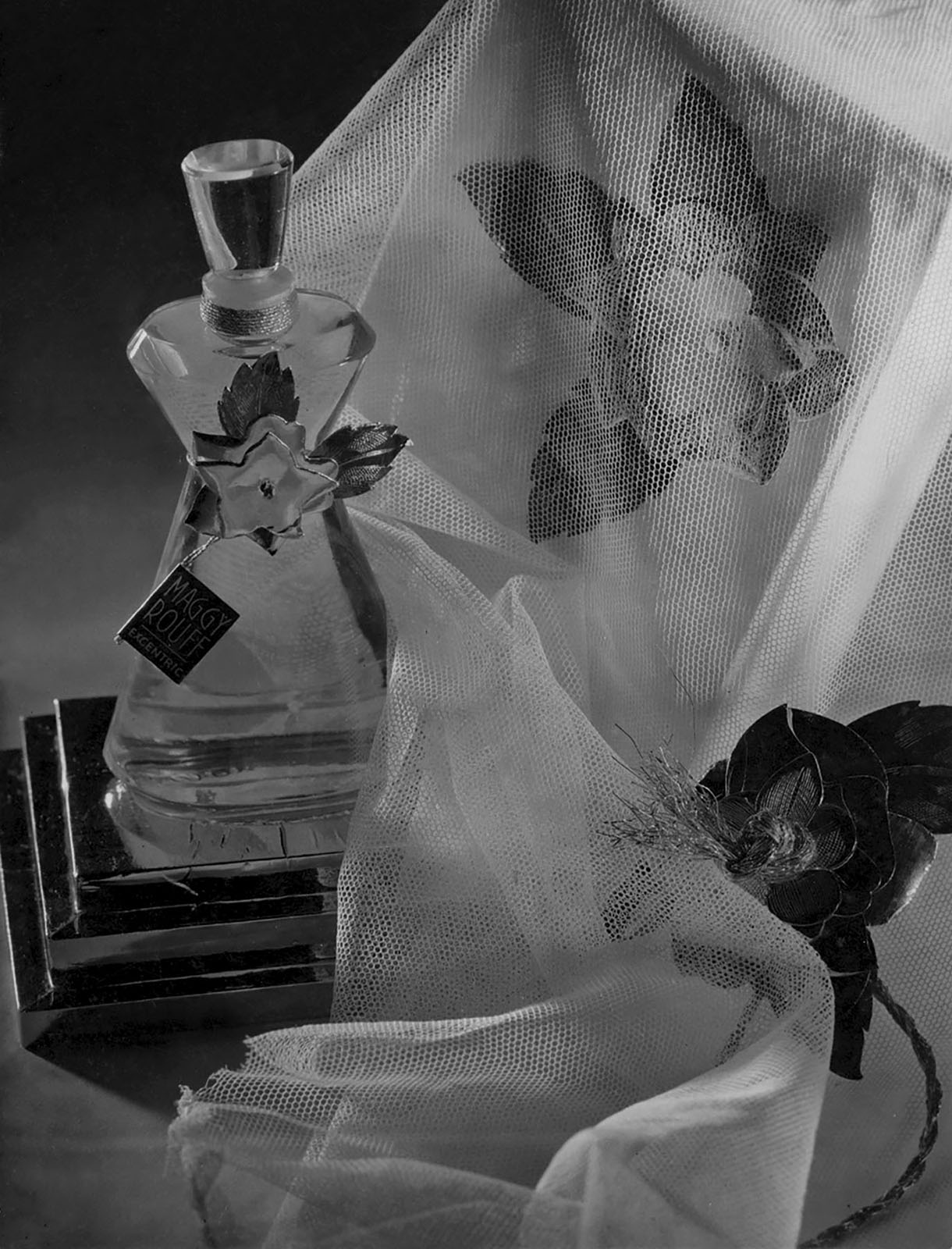
Ilse Bing (German, 1899-1998) 'Study for "Salut de Schiaparelli" (Lily Perfume), Paris' 1934


Ilse Bing (German, 1899-1998)
Study for “Salut de Schiaparelli” (Lily Perfume), Paris
1934
Gelatin silver print
Overall: 28.2 x 22.3cm (11 1/8 x 8 3/4 in.)
Frame: 50.8 x 40.64cm (20 x 16 in.)
Frame (outer): 53.34 x 43.18cm (21 x 17 in.)
National Gallery of Art, Washington, Gift of Ilse Bing Wolff


During the 1920s, the iconic New Woman was splashed across the pages of magazines and projected on the silver screen. As a global phenomenon, she embodied an ideal of female empowerment based on real women making revolutionary changes in life and art. Featuring more than 120 photographers from over 20 countries, the groundbreaking exhibition, The New Woman Behind the Camera, explores the diverse “new” women who embraced photography as a mode of professional and personal expression from the 1920s to the 1950s. The first exhibition to take an international approach to the subject, it examines how women brought their own perspectives to artistic experimentation, studio portraiture, fashion and advertising work, scenes of urban life, ethnography, and photojournalism, profoundly shaping the medium during a time of tremendous social and political change. Accompanied by a fully illustrated catalogue, this landmark exhibition will be on view from October 31, 2021 through January 30, 2022, in the West Building of the National Gallery of Art, Washington. It was previously on view at The Metropolitan Museum of Art, New York, from July 2 through October 3, 2021.

In an era when traditional definitions of womanhood were being questioned, women’s lives were a mix of emancipating and confining experiences that varied by country. Many women around the world found the camera to be a means of independence as they sought to redefine their positions in society and expand their rights. This exhibition presents a geographically, culturally, and artistically diverse range of practitioners to advance new conversations about the history of modern photography and the continual struggle of women to gain creative agency and self-representation.

“This innovative exhibition reevaluates the history of modern photography through the lens of the New Woman, a feminist ideal that emerged at the end of the 19th century and spread globally during the first half of the 20th century,” said Kaywin Feldman, director, National Gallery of Art. “The transnational realities of modernism visualised in photography by women such as Lola Álvarez Bravo, Berenice Abbott, Claude Cahun, Germaine Krull, Dorothea Lange, Niu Weiyu, Tsuneko Sasamoto, and Homai Vyarawalla offer us an opportunity to better understand the present by becoming more fully informed of the past.”

About the exhibition

This landmark exhibition critically examines the extraordinary impact women had on the practice of photography worldwide from the 1920s to the 1950s. It presents the work of over 120 international photographers who took part in a dramatic expansion of the medium propelled by artistic creativity, technological innovation, and the rise of the printed press. Photographers such as Berenice Abbott, Ilse Bing, Lola Álvarez Bravo, Madame d’Ora, Florence Henri, Elizaveta Ignatovich, Germaine Krull, Dorothea Lange, Dora Maar, Niu Weiyu, Eslanda Goode Robeson, Tsuneko Sasamoto, Gerda Taro, and Homai Vyarawalla, among many others, emerged at a tumultuous moment in history that was profoundly shaped by two world wars, a global economic depression, struggles for decolonisation, and the rise of fascism and communism. Against the odds, these women were at the forefront of experimentation with the camera and produced invaluable visual testimony that reflects both their personal experiences and the extraordinary social and political transformations of the era.

Organised thematically in eight galleries, The New Woman Behind the Camera illustrates women’s groundbreaking work in modern photography, exploring their innovations in the fields of social documentary, avant-garde experimentation, commercial studio practice, photojournalism, ethnography, and the recording of sports, dance, and fashion. By evoking the global phenomenon of the New Woman, the exhibition seeks to reevaluate the history of photography and advance new and more inclusive conversations on the contributions of female photographers.

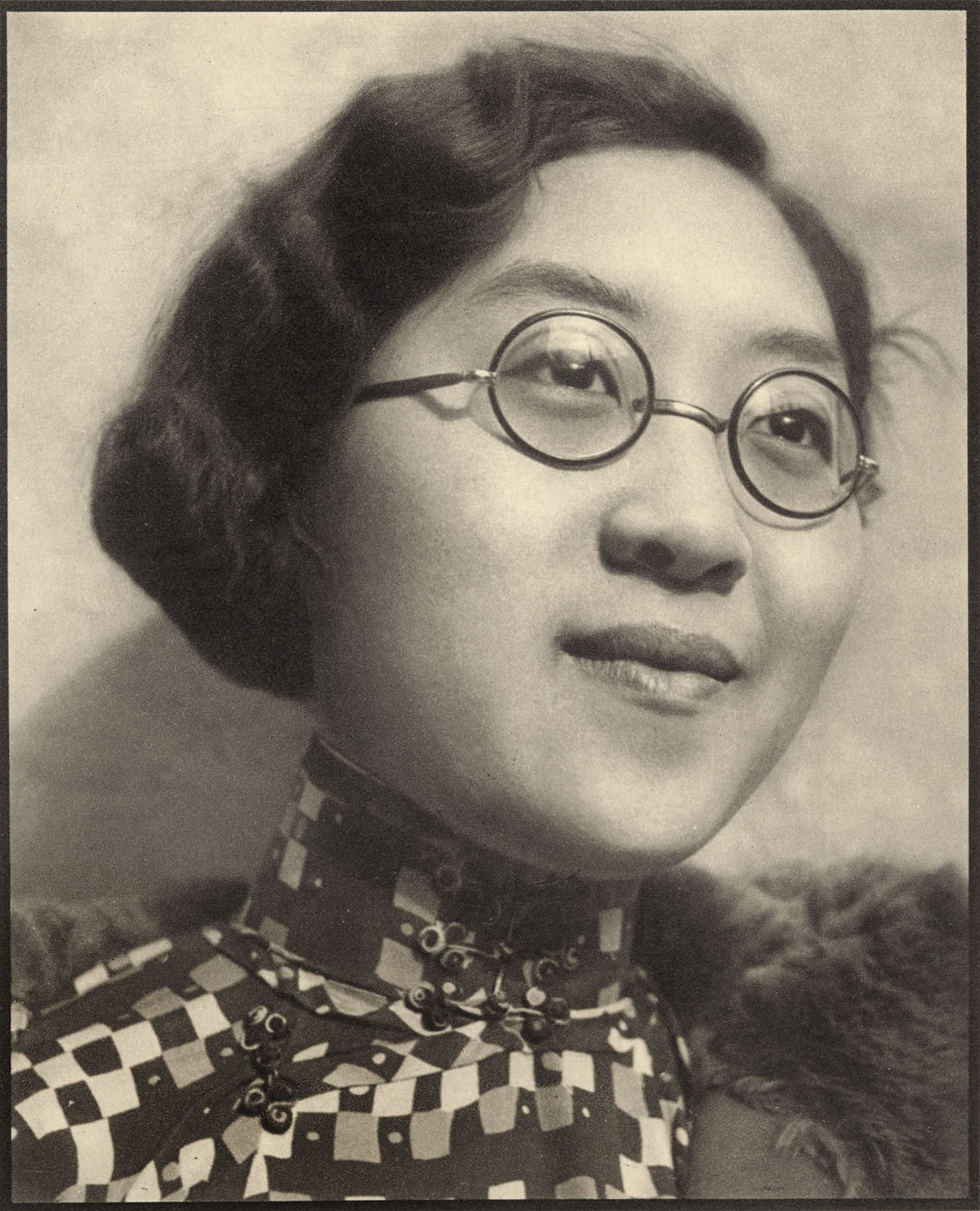
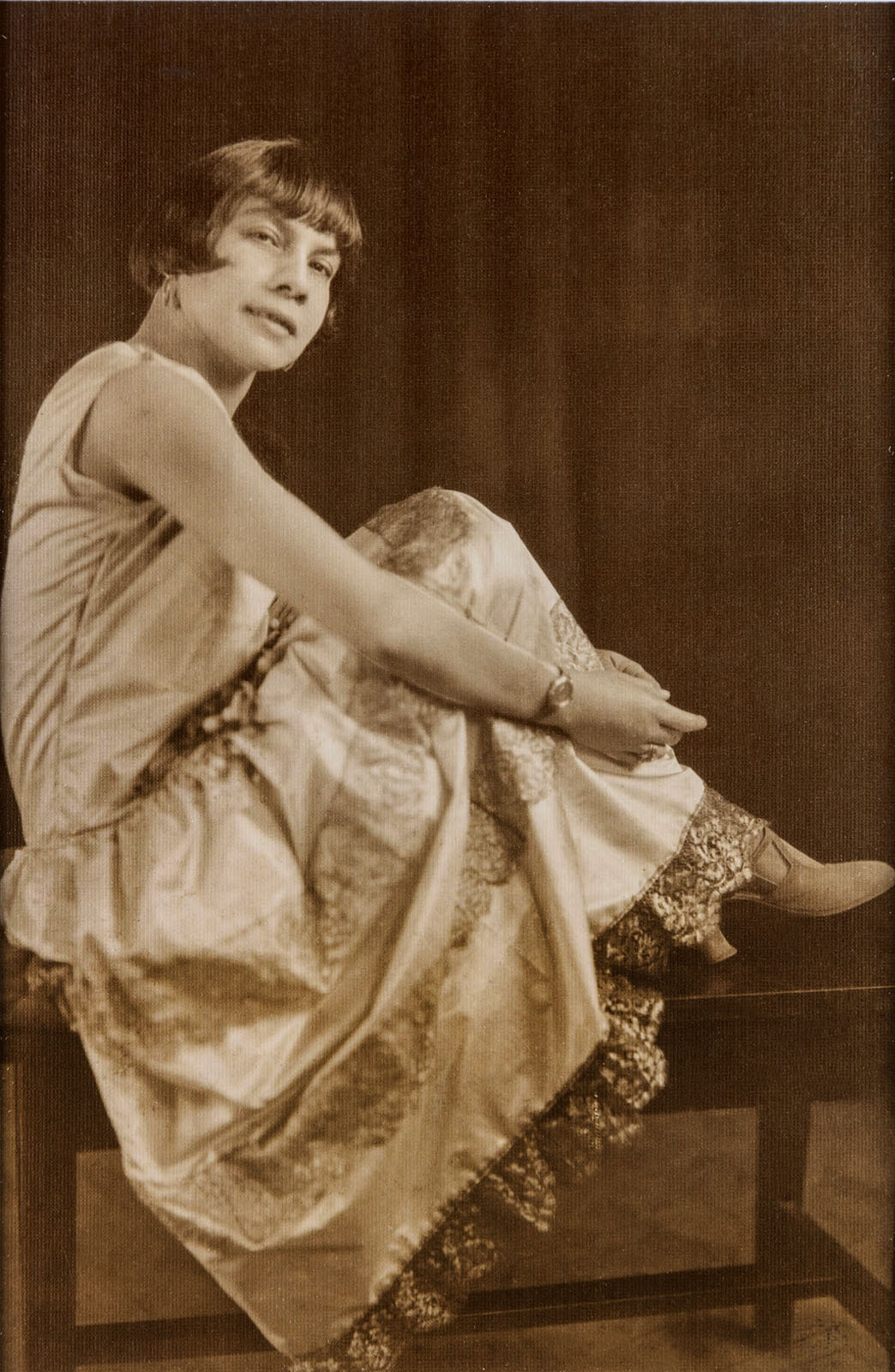
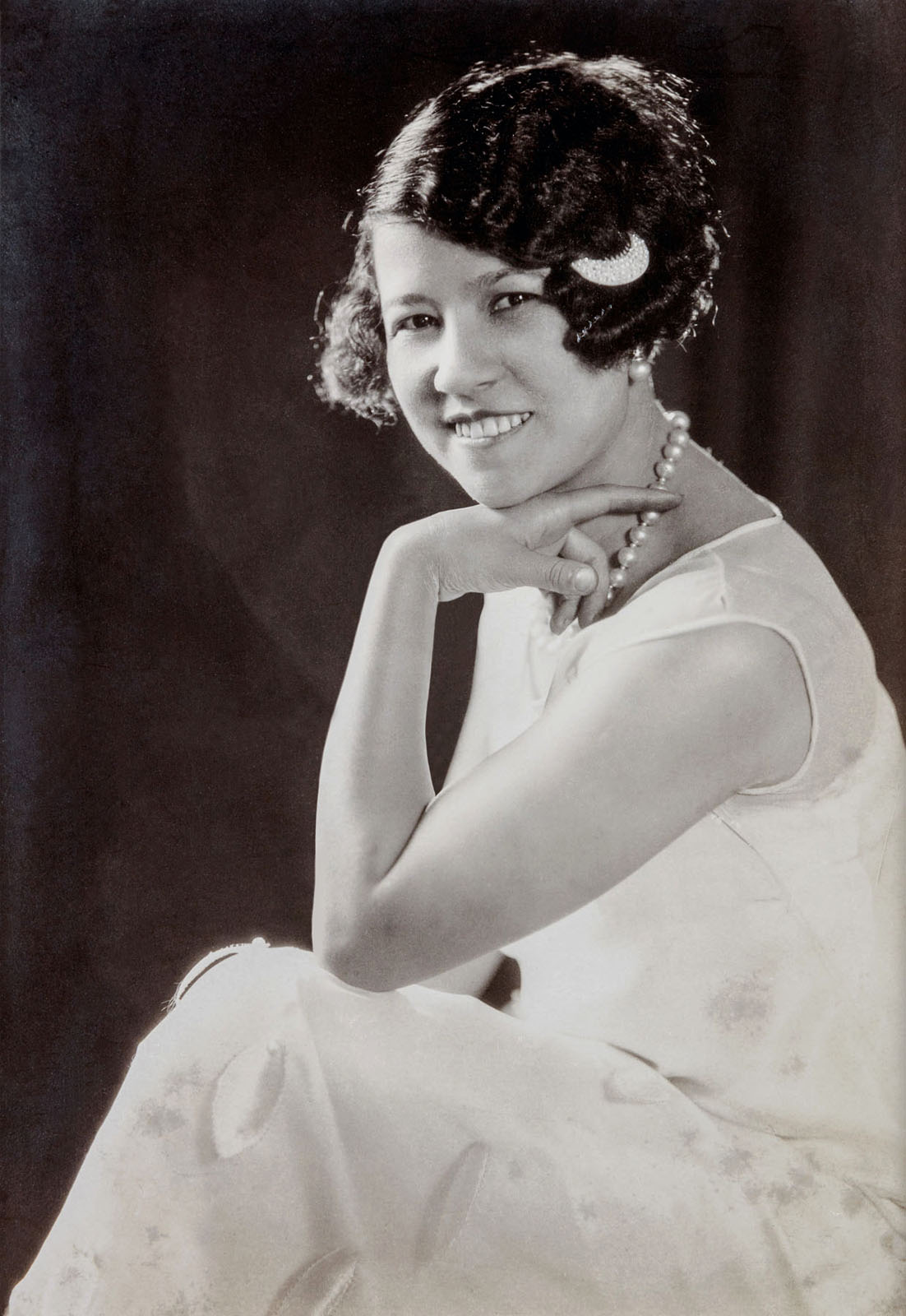
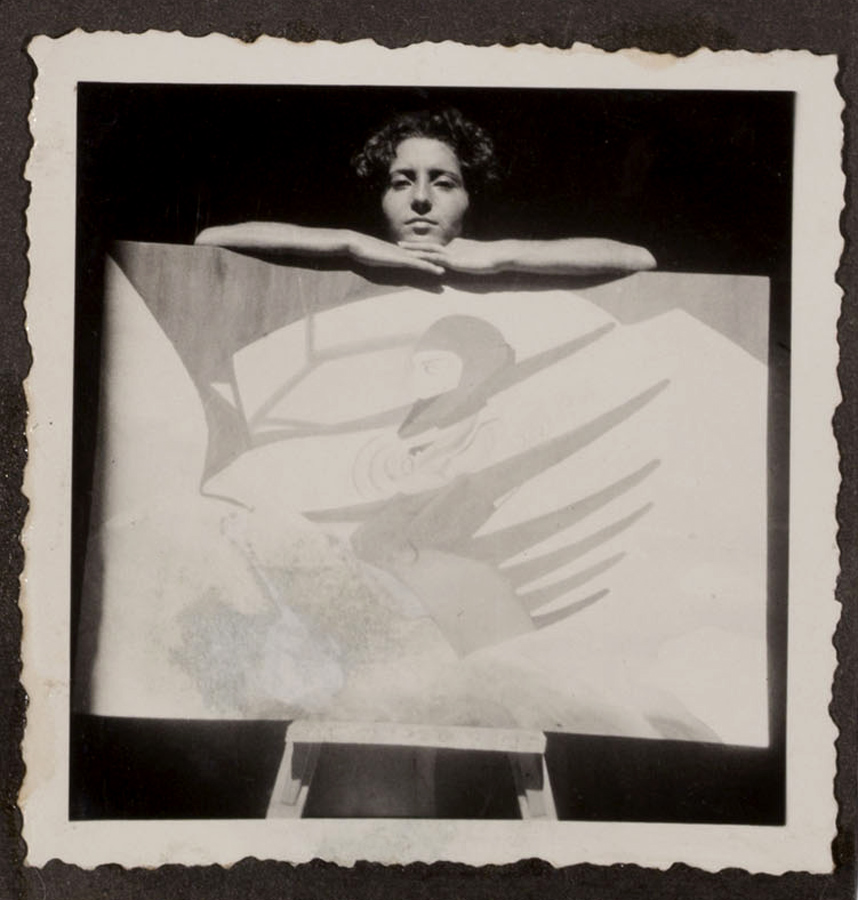
Known by different names, from nouvelle femme and neue Frau to modan gāru and xin nüxing, the New Woman was easy to recognise but hard to define. Fashionably dressed with her hair bobbed, the self-assured cosmopolitan New Woman was arguably more than a marketable image. She was a contested symbol of liberation from traditional gender roles. Revealing how women photographers from around the world gave rise to and embodied the quintessential New Woman even as they critiqued the popular construction of the role, the exhibition opens with a group of compelling portraits and self-portraits. In these works, women defined their positions as professionals and artists during a time when they were seeking greater personal rights and freedoms.

For many women, the camera became an effective tool for self-determination as well as a source of income. With better access to education and a newfound independence, female photographers emerged as a major force in studio photography. From running successful businesses in Berlin, Buenos Aires, London, and Vienna, to earning recognition as one of the first professional female photographers in their home country, women around the world, including Karimeh Abbud, Steffi Brandl, Trude Fleischmann, Annemarie Heinrich, Eiko Yamazawa, and Madame Yevonde, reinvigorated studio practice. A collaborative space where both sitters and photographers negotiated gender, race, and cultural difference, the portrait studio was also vitally important to African American communities which sought to represent and define themselves within a society that continued to be plagued by racism. Photography studios run by Black women, such as Florestine Perrault Collins and Winifred Hall Allen, thrived throughout the United States, and not only preserved likenesses and memories, but also constructed a counter narrative to the stereotyping images that circulated in the mass media.

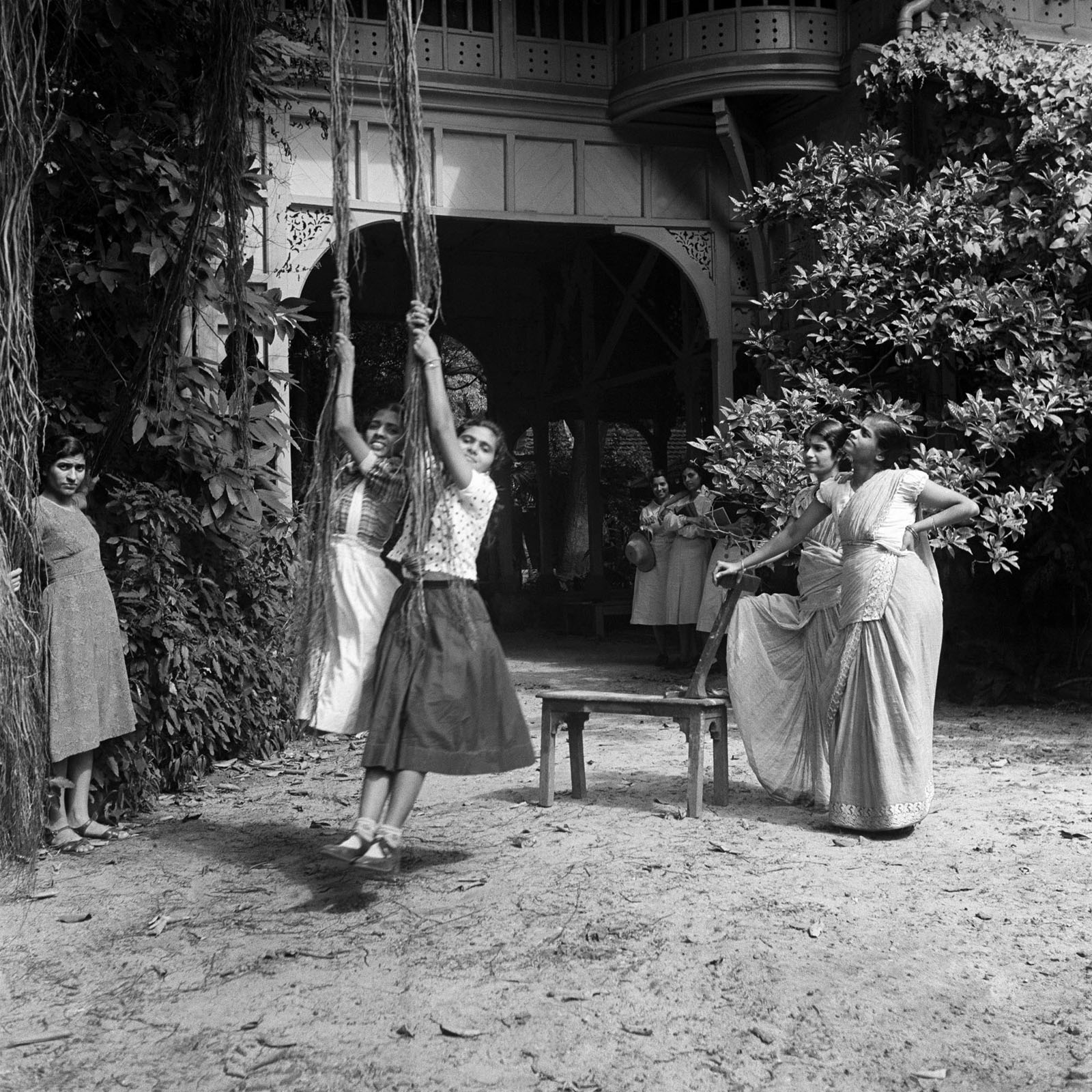
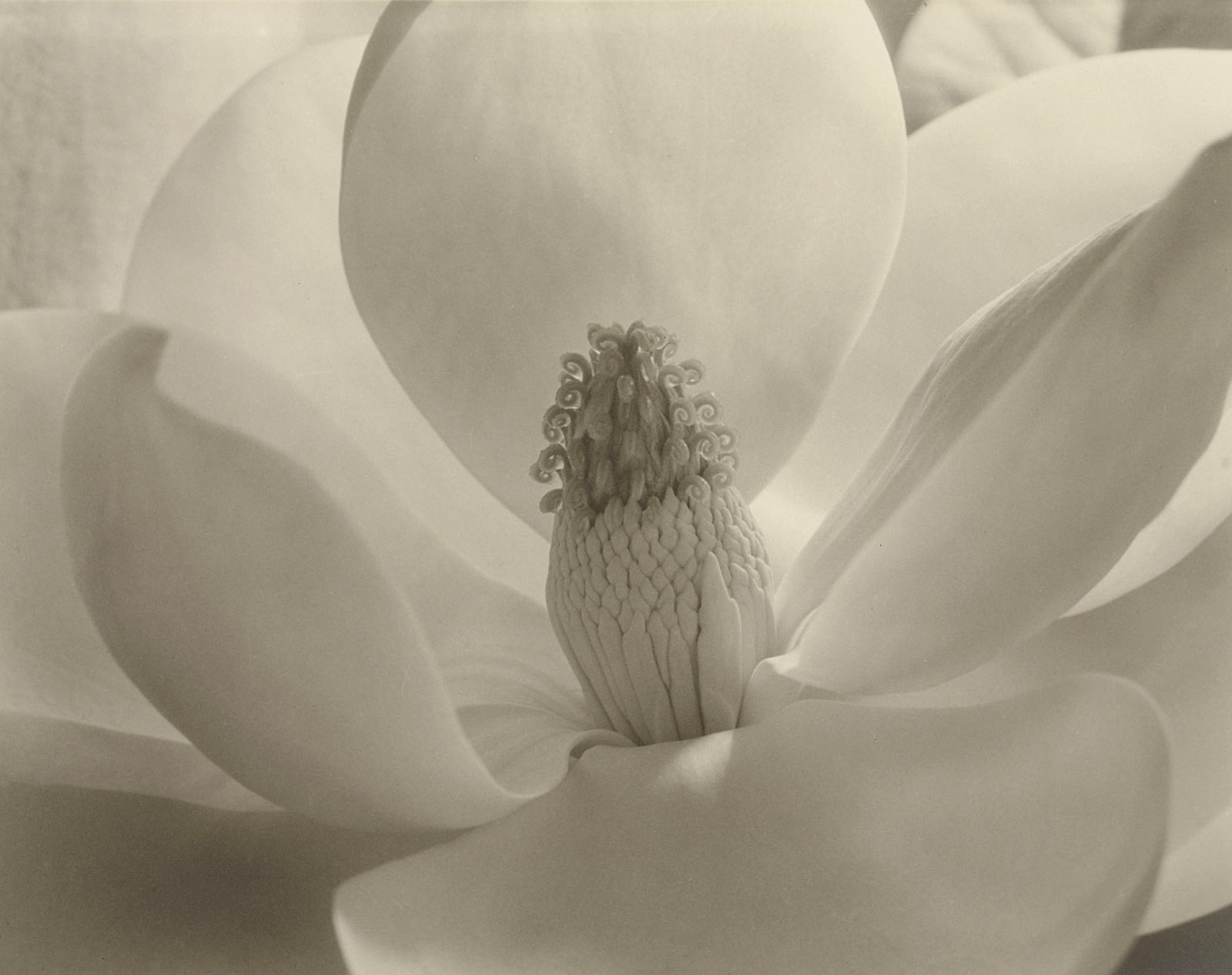
With the invention of smaller lightweight cameras, a growing number of women photographers found that the camera’s portability created new avenues of discovery outside the studio. In stunning photographs of the city, photographers such as Alice Brill, Rebecca Lepkoff, Helen Levitt, Lisette Model, Genevieve Naylor, and Tazue Satō Matsunaga used their artistic vision to capture the exhilarating modern world around them. They depicted everyday life, spontaneous encounters on the street, and soaring architectural views in places like Bombay (now Mumbai), New York, Paris, São Paulo, and Tokyo, revealing the multiplicity of urban experience. Many incorporated the newest photographic techniques to convey the energy of the city, and the exhibition continues with a gallery focused on those radical formal approaches that came to define modern photography. Through techniques like photomontage, photograms, sharp contrasts of light and shadow, extreme cropping, and dizzying camera angles, women including Aenne Biermann, Imogen Cunningham, Dora Maar, Tina Modotti, Lucia Moholy, and Cami Stone pushed the boundaries of the medium.

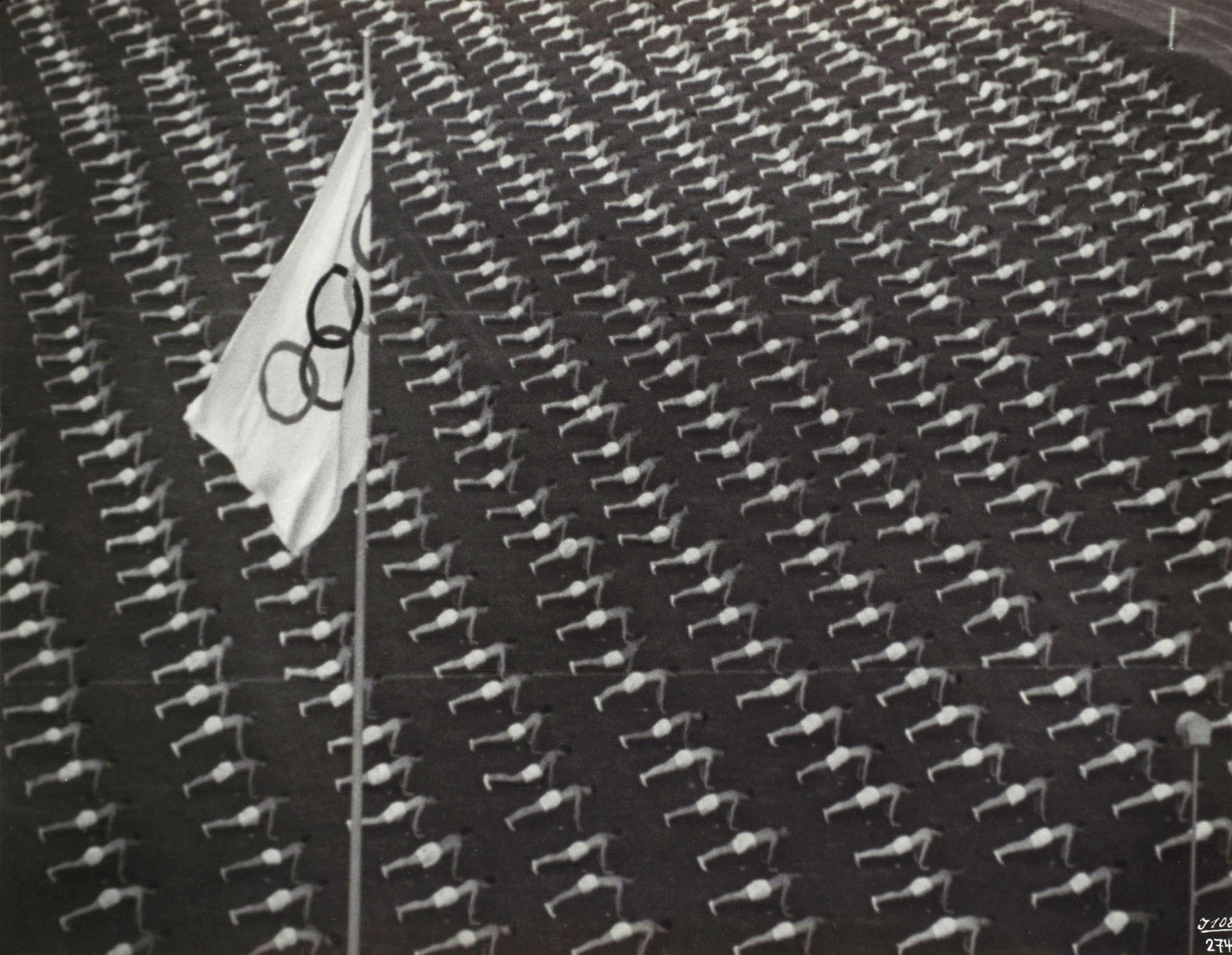
Women also produced dynamic pictures of the modern body, including innovative nude studies as well as sport and dance photography. Around the world, participation in spectator and team sports increased along with membership in fitness and hygiene reform movements. New concepts concerning health and sexuality along with new attitudes in movement and dress emphasised the body as a central site of experiencing modernity. On view are luminous works by photographers Laure Albin Guillot, Yvonne Chevalier, Florence Henri, and Jeanne Mandello who reimagined the traditional genre of the nude. Photographs by Irene Bayer-Hecht and Liselotte Grschebina highlight joyous play and gymnastic exercise, while Charlotte Rudolph, Ilse Bing, Trude Fleischmann, and Lotte Jacobi made breathtaking images of dancers in motion, revealing the body as artistic medium.

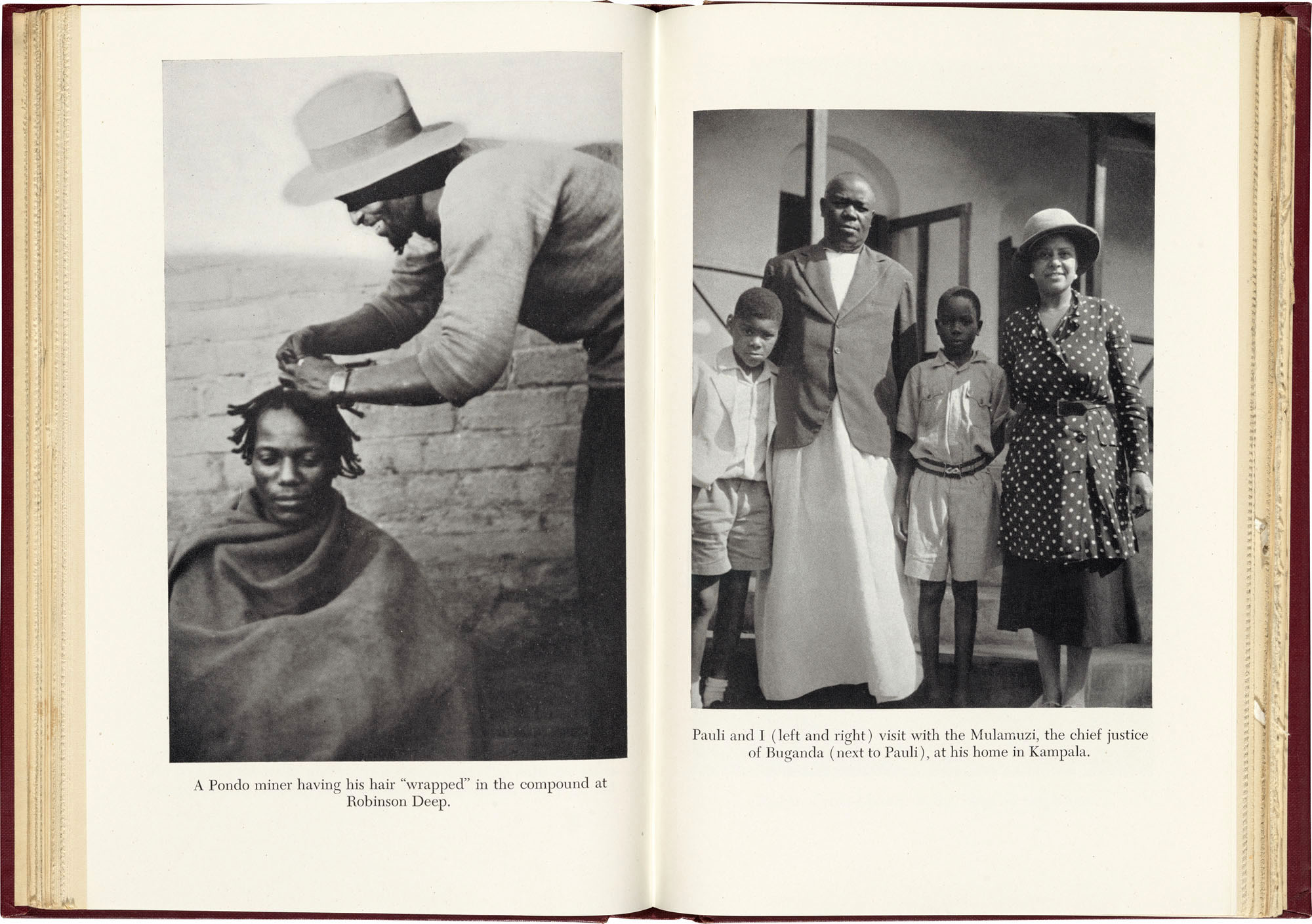
During the modern period, a growing number of women pursued professional photographic careers and traveled widely for the first time. Many took photographs that documented their experiences abroad and interactions with other cultures as they engaged in formal and informal ethnographic projects. The exhibition continues with a selection of photographs and photobooks by women, mainly from Europe and the United States, that reveal a diversity of perspectives and approaches. Gender provided some of these photographers with unusual access and the drive to challenge discriminatory practices, while others were not exempt from portraying stereotypical views. Publications by Jette Bang, Hélène Hoppenot, Ella Maillart, Anna Riwkin, Eslanda Goode Robeson, and Ellen Thorbecke exemplify how photographically illustrated books and magazines were an influential form of communication about travel and ethnography during the modern period. Other works on display include those by Denise Bellon and Ré Soupault, who traveled to foreign countries on assignment for magazines and photo agencies seeking ethnographic and newsworthy photographs, and those by Marjorie Content and Laura Gilpin, who worked on their own in the southwestern United States.

The New Woman – both as a mass-circulating image and as a social phenomenon – was confirmed by the explosion of photographs found in popular fashion and lifestyle magazines. Fashion and advertising photography allowed many women to gain unprecedented access to the public sphere, establish relative economic independence, and attain autonomous professional success. Producing a rich visual language where events and ideas were expressed directly in pictures, illustrated fashion magazines such as Die DameHarper’s Bazaar, and Vogue became an important venue for photographic experimentation by women for a female readership. Photographers producing original views of women’s modernity include Lillian Bassman, Ilse Bing, Louise Dahl-Wolfe, Toni Frissell, Toni von Horn, Frances McLaughlin-Gill, ringl + pit, Margaret Watkins, Caroline Whiting Fellows, and Yva.

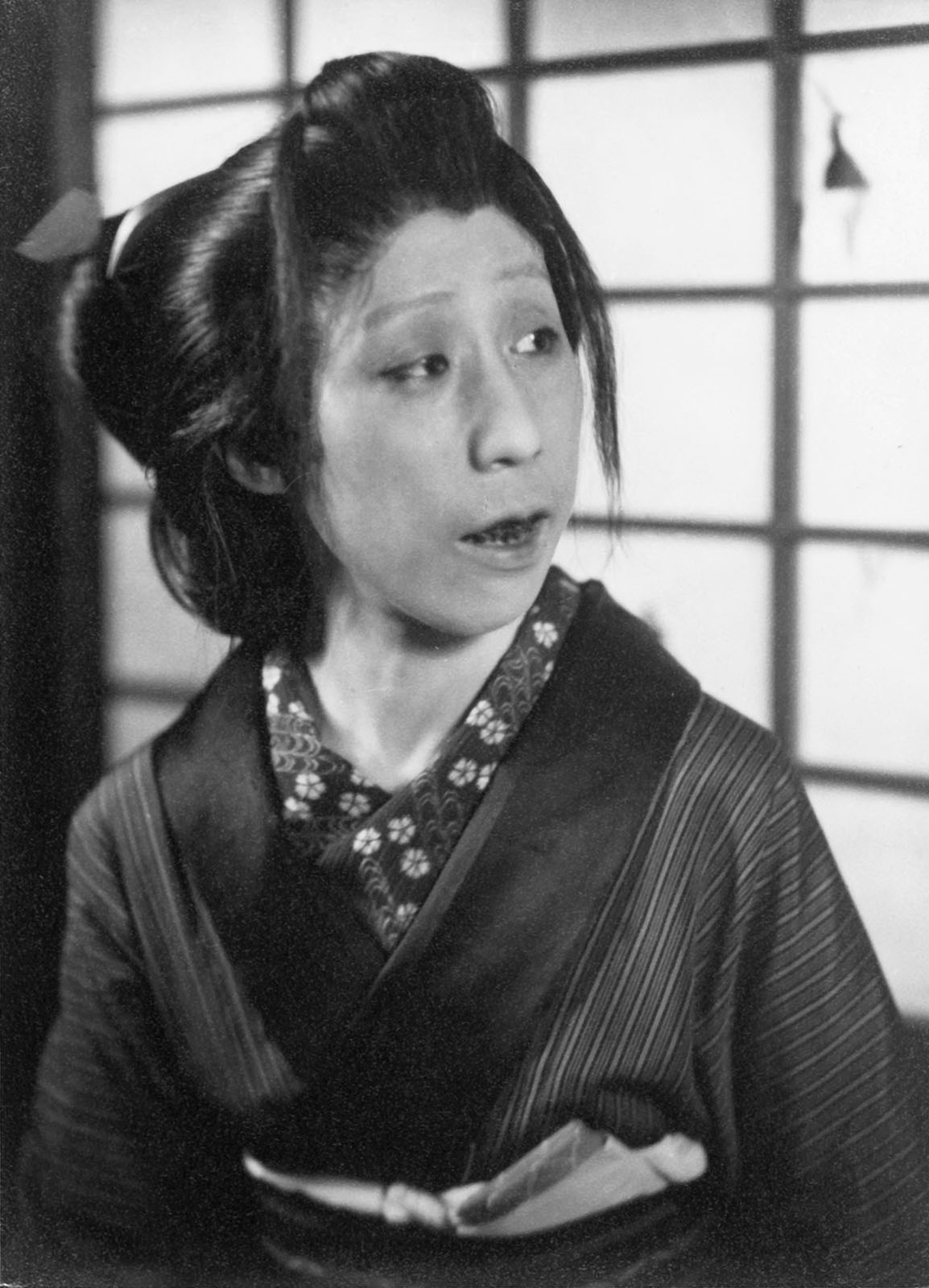
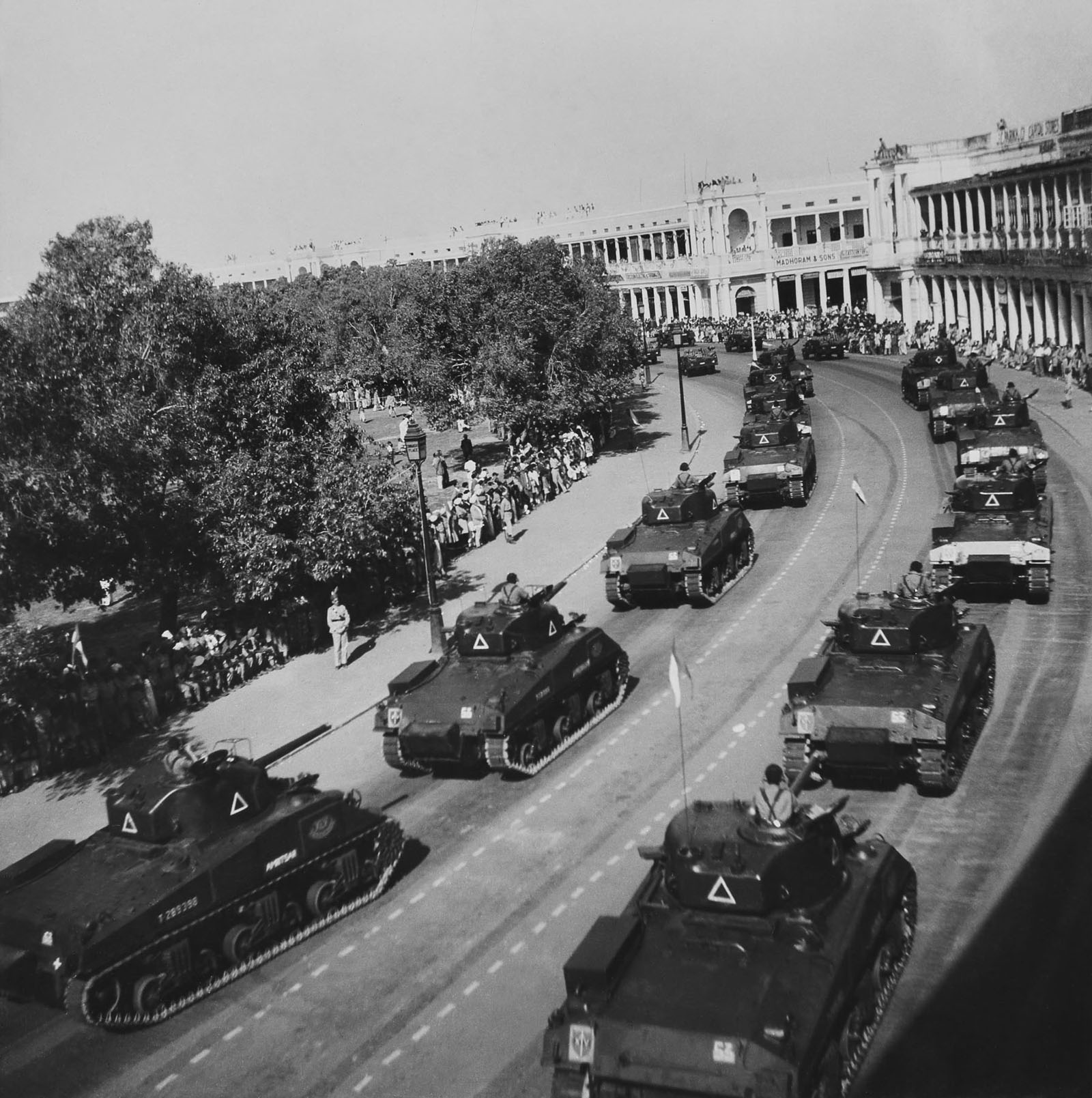
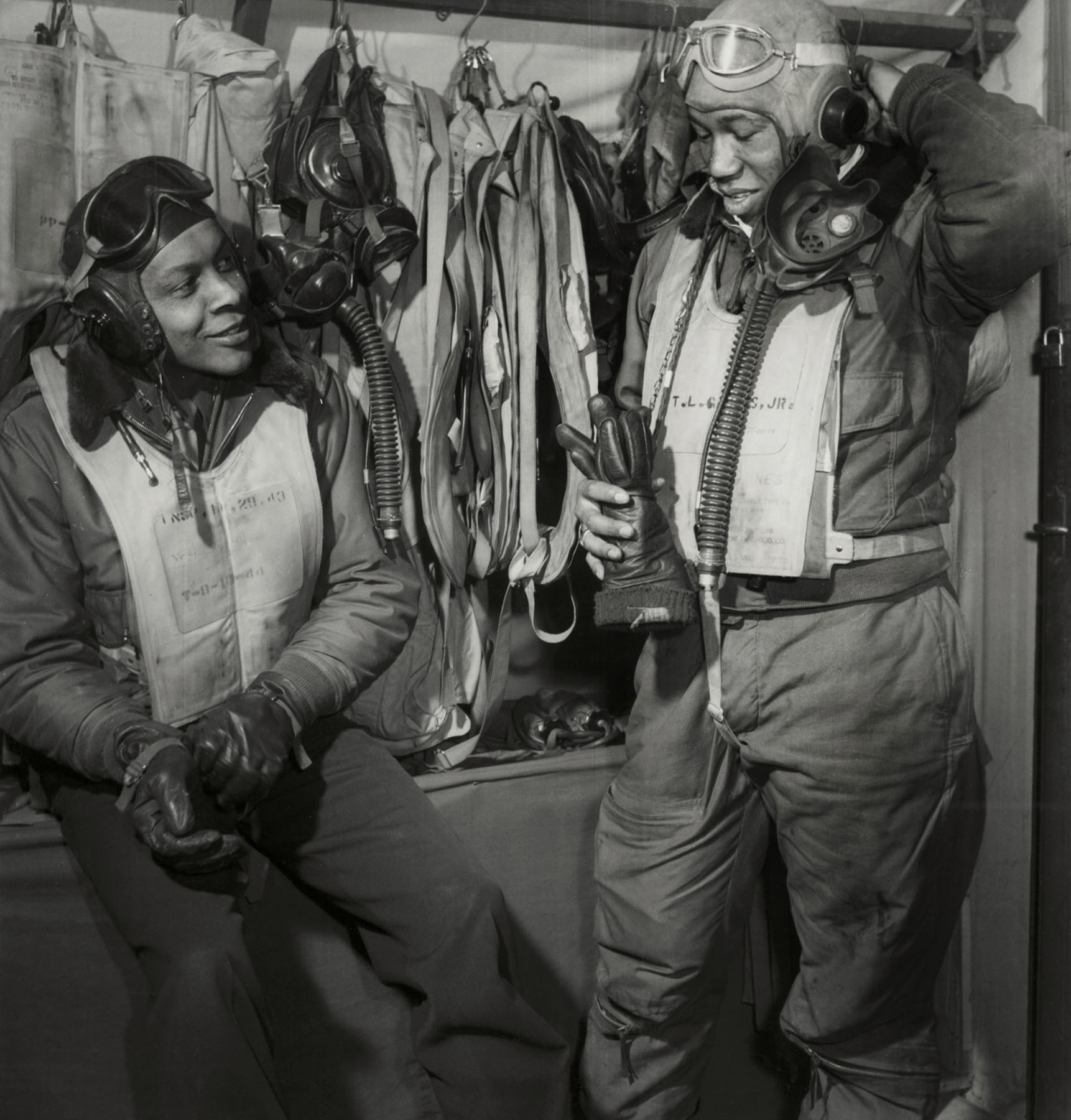
The rise of the picture press also established photojournalism and social documentary as dominant forms of visual expression during the modern period. Ignited by the effects of a global economic crisis and growing political and social unrest, numerous women photographers including Lucy Ashjian, Margaret Bourke-White, Kati Horna, Elizaveta Ignatovich, Kata Kálmán, Dorothea Lange, and Hansel Mieth engaged a wide public with gripping images. So-called soft topics such as “women and children,” “the family,” and “the home front” were more often assigned to female photojournalists than to their male counterparts. The exhibition asks viewers to question the effect of having women behind the camera in these settings. Pictures produced during the war, from combat photography by Galina Sanko and Gerda Taro to images of the Blitz in London by Thérèse Bonney and the Tuskegee airmen by Toni Frissell, are also featured. At the war’s end, haunting images by Lee Miller of the opening of Nazi concentration camps and celebratory images of the victory parade of Allied Forces in New Delhi by Homai Vyarawalla made way for the transition to the complexities of the postwar era, including images of daily life in US-occupied Japan by Tsuneko Sasamoto and the newly formed People’s Republic of China by Hou Bo and Niu Weiyu.

The New Woman Behind the Camera acknowledges that women are a diverse group whose identities are defined not exclusively by gender but rather by a host of variable factors. It contends that gender is an important aspect in understanding their lives and work and provides a useful framework for analysis to reveal how photography by women has powerfully shaped our understanding of modern life.

Exhibition catalog

Published by the National Gallery of Art, Washington and distributed by DelMonico Books | D.A.P., this groundbreaking, richly illustrated 288-page catalog examines the diverse women whose work profoundly marked the medium of photography from the 1920s to the 1950s. The book – featuring over 120 international photographers, including Lola Álvarez Bravo, Elizaveta Ignatovich, Germaine Krull, Dorothea Lange, Tsuneko Sasamoto, and Homai Vyarawalla – reevaluates the history of modern photography through the lens of the iconic New Woman. Inclusive scholarly essays introduce readers to these important photographers and question the past assumptions about gender in the history of photography. Contributors include Andrea Nelson, associate curator in the department of photographs, National Gallery of Art; Elizabeth Cronin, assistant curator of photography in the Miriam and Ira D. Wallach Division of Art, Prints, and Photographs, New York Public Library; Mia Fineman, curator in the department of photographs, Metropolitan Museum of Art; Mila Ganeva, professor of German in the department of German, Russian, Asian, and Middle Eastern languages and cultures, Miami University, Ohio; Kristen Gresh, Estrellita and Yousuf Karsh Senior Curator of Photographs, Museum of Fine Arts, Boston; Elizabeth Otto, professor of modern and  contemporary art history, University at Buffalo (The State University of New York); and Kim Sichel, associate professor in the department of the history of art and architecture at Boston University; biographies of the photographers by Kara Felt, Andrew W. Mellon postdoctoral fellow in the department of photographs, National Gallery of Art.

Press release from the National Gallery of Art


Olga Máté (Hungarian, 1878-1961) 'Horgász-stég' (Fisherman's Dock) c. 1930


Olga Máté (Hungarian, 1878-1961)
Horgász-stég (Fisherman’s Dock)
c. 1930
Gelatin silver print
Overall: 22.38 x 17.46cm (8 13/16 x 6 7/8 in.)
Frame: 45.72 x 35.56cm (18 x 14 in.)
Frame (outer): 48.26 x 38.1cm (19 x 15 in.)
National Gallery of Art, Washington, Patrons’ Permanent Fund


Olga Máté (1878-1961) was one of the first women Hungarian photographers, most known for her portraits. She was known for her lighting techniques and used lighted backgrounds to enhance her portraits and still life compositions. In 1912 she won a gold medal in Stuttgart at an international photography exhibit. Perhaps her best-known images are portraits she took of Mihály Babits and Margit Kaffka. She was also an early suffragist in Hungary and during the Hungarian White Terror assisted several intellectuals in their escapes.

Read a fuller biography on the Wikipedia website


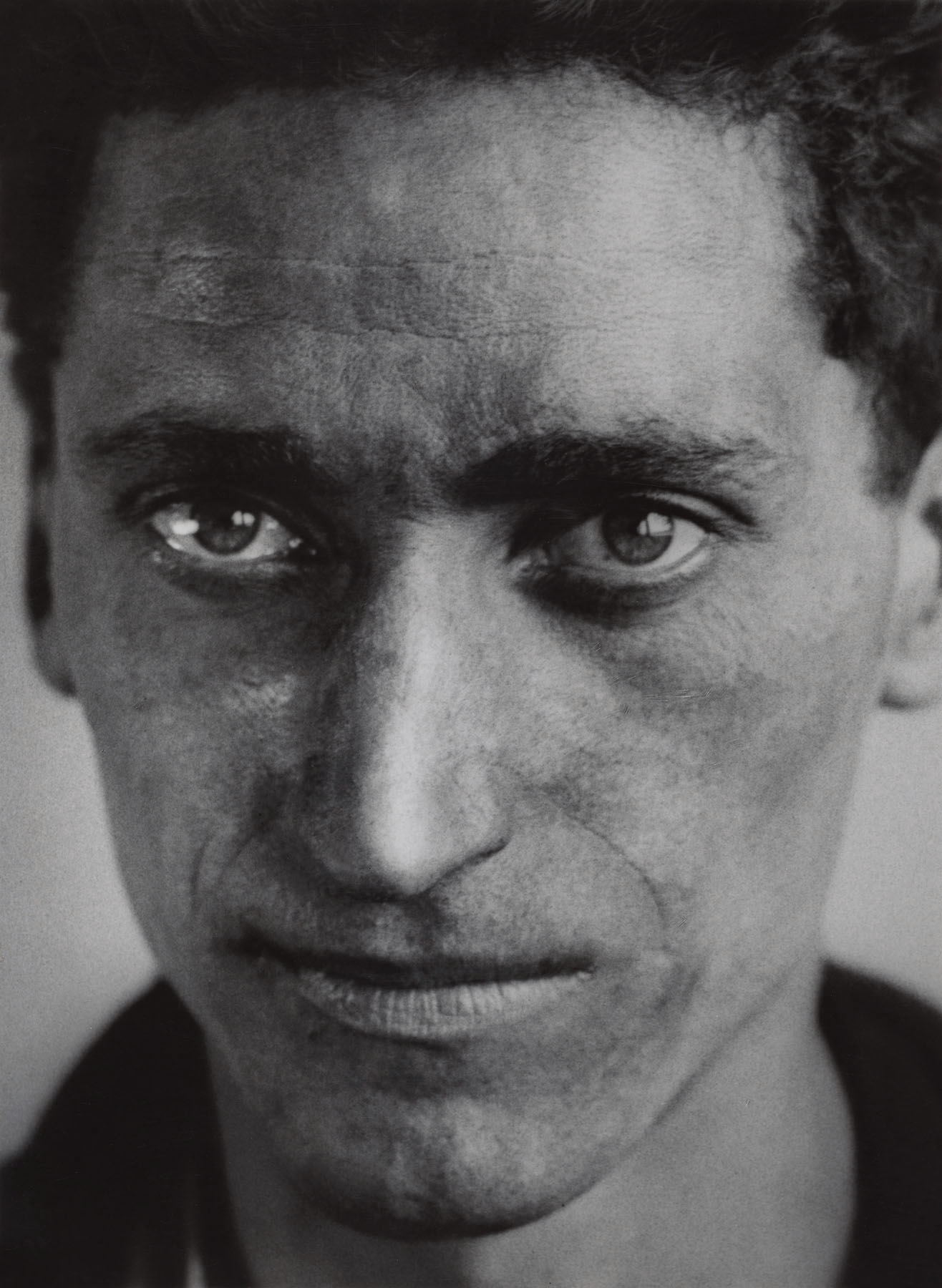
Kata Kálmán (Hungarian, 1909-1978) 'Weisz Ernö 23 éves gyári munkás, Budapest' (Ernö Weisz, 23-Year-Old Factory Worker, Budapest) 1932, printed before 1955


Kata Kálmán (Hungarian, 1909-1978)
Weisz Ernö 23 éves gyári munkás, Budapest (Ernö Weisz, 23-Year-Old Factory Worker, Budapest)
1932, printed before 1955
Gelatin silver print image: 24.2 x 17.6cm (9 1/2 x 6 15/16 in.)
Frame: 45.72 x 35.56cm (18 x 14 in.)
Frame (outer): 48.26 x 38.1cm (19 x 15 in.)
National Gallery of Art, Washington, Patrons’ Permanent Fund


Marianne Brandt (German, 1893-1983) 'Ohne Titel' (Untitled) 1930


Marianne Brandt (German, 1893-1983)
Ohne Titel (Untitled)
1930
Photomontage on paper
Overall: 65 x 50.1cm (25 9/16 x 19 3/4 in.)
Frame: 89.22 x 73.98 x 4.13cm (35 1/8 x 29 1/8 x 1 5/8 in.)
National Gallery of Art, Washington, Gift of Pepita Milmore Memorial Fund, R. K. Mellon Family Foundation, and Thomas Walther


Marianne Brandt (1 October 1893 – 18 June 1983) was a German painter, sculptor, photographer, metalsmith, and designer who studied at the Bauhaus art school in Weimar and later became head of the Bauhaus Metall-Werkstatt (Metal Workshop) in Dessau in 1927. Today, Brandt’s designs for household objects such as lamps, ashtrays and teapots are considered timeless examples of modern industrial design. She also created photomontages. …

Brandt is also remembered as a pioneering photographer. She created experimental still-life compositions, but it is her series of self-portraits which are particularly striking. These often represent her as a strong and independent New Woman of the Bauhaus; other examples show her face and body distorted across the curved and mirrored surfaces of metal balls, creating a blended image of herself and her primary medium at the Bauhaus. Brandt was one of few women at Bauhaus who distanced herself from the fields considered more feminine at the time such as weaving or pottery.

Read a fuller biography on the Wikipedia website


Rosalie Gwathmey (American, 1908-2001) 'Tobacco Picker, Rocky Mount, North Carolina' 1943


Rosalie Gwathmey (American, 1908-2001)
Tobacco Picker, Rocky Mount, North Carolina
1943
Gelatin silver print
Image: 25.56 x 34.13cm (10 1/16 x 13 7/16 in.)
Frame: 40.64 x 50.8cm (16 x 20 in.)
Frame (outer): 43.18 x 53.34cm (17 x 21 in.)
National Gallery of Art, Washington, Gift of Mary and Dan Solomon and Patrons’ Permanent Fund


Rosalie Gwathmey or Rosalie Hook (September 15, 1908 – February 12, 2001) was an American painter and photographer known for her photos of black southern communities around her hometown of Charlotte, North Carolina. …

Her photography was known for capturing the lives of residents of Southern African American communities. She focused on black life in her home of Charlotte and Rocky Mount, North Carolina. She photographed many of the black sharecroppers and southern townscapes that became the basis of her husband’s paintings. While Rosalie’s social documentary photographs offer no stylistic revolution, her life and art reflect significant issues relating to politics and race relations in the United States during the 1940s. While in the Photo League, she worked with many radical photographers of the era: Paul Strand, Aaron Siskind, Sid Grossman, Dorothea Lange, Bernice Abbott, Lizette Modell, Walter Rosenblum, Dan Weiner, and Lou Stettner.

Text from the Wikipedia website


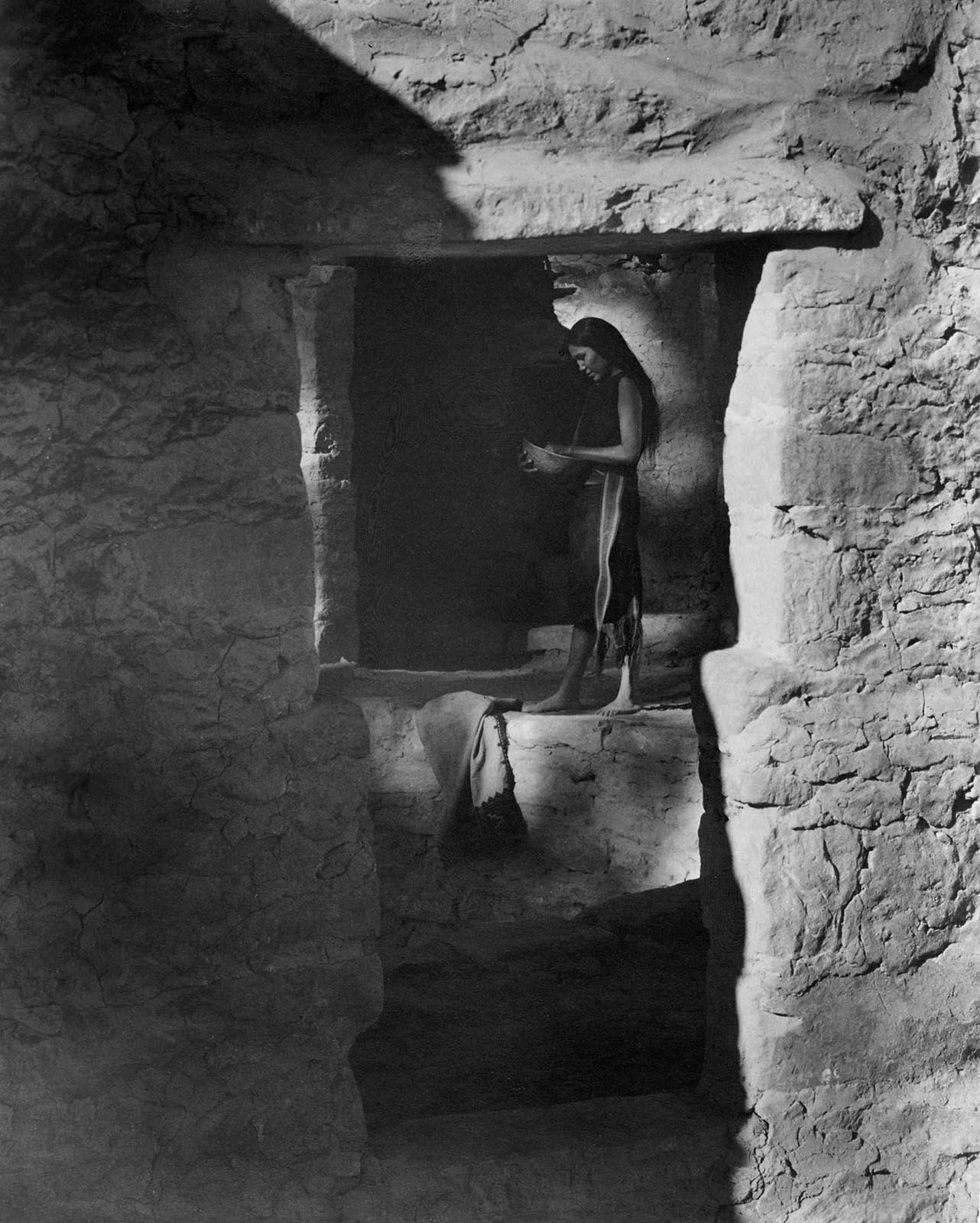
Marjorie Content (American, 1895-1984) 'Adam Trujillo and His Son Pat, Taos' Summer 1933


Marjorie Content (American, 1895-1984)
Adam Trujillo and His Son Pat, Taos
Summer 1933
Gelatin silver print
Image: 11.5 x 14.2cm (4 1/2 x 5 9/16 in.)
Frame: 35.56 x 45.72cm (14 x 18 in.)
Frame (outer): 38.1 x 48.26cm (15 x 19 in.)
National Gallery of Art, Washington, Purchased as the Gift of the Gallery Girls
© Estate of Marjorie Content


Marjorie Content (American, 1895-1984)

Marjorie Content (1895-1984) was an American photographer from New York City active in modernist social and artistic circles. Her photographs were rarely published and never exhibited in her lifetime. Since the late 20th century, collectors and art historians have taken renewed interest in her work. Her photographs have been collected by the Metropolitan Museum of Art and the Chrysler Museum of Art; her work has been the subject of several solo exhibitions.

She was married several times, including for a short period to Harold Loeb, a writer and the editor of the avant-garde journal, Broom. Her marriage to writer Jean Toomer in 1934 lasted more than 30 years, to his death. …

Photographic years (1926-1935)

Content began serious photography while married to her second husband, the painter Michael Carr. She used a 3+1⁄4 × 4+1⁄4 inch Graflex, and, after 1932, a 5×7 inch Graflex as well. Despite reports that Stieglitz taught her developing techniques, some scholars believe it was her friend Consuelo Kanaga. Content sometimes worked in Kanaga’s darkroom.

Her travels in the West and Southwest with painter Gordon Grant influenced her style toward a more formalist aesthetic. She briefly worked for the Bureau of Indian Affairs photographing rural Native American life. She married a third time, to Leon Fleischman.

In the 1930s Content was also close to painter Georgia O’Keeffe. In 1933 she traveled with her to Bermuda to nurse her through a depression. The following year, she drove with her to New Mexico, where O’Keefe had settled. Other close friends of this period included Stieglitz, Ridge, Sherwood Anderson, Paul Rosenfeld, and Margaret Naumburg, at whose Walden School in New York City both of her children were educated.

Read a fuller biography on the Wikipedia website


Madame d'Ora (Austrian, 1881-1963) 'Mariette Pachhofer (later Mariette Lydis)' 1921


Madame d’Ora (Austrian, 1881-1963)
Mariette Pachhofer (later Mariette Lydis)
1921
Gelatin silver print image: 21.9 x 13.9cm (8 5/8 x 5 1/2 in.)
Mount: 38.7 x 26.4cm (15 1/4 x 10 3/8 in.)
Frame: 40.64 x 50.8cm (16 x 20 in.)
Frame (outer): 44.45 x 54.61cm (17 1/2 x 21 1/2 in.)
National Gallery of Art, Washington, Robert B. Menschel and the Vital Projects Fund and the R. K. Mellon Family Foundation


Madame d’Ora (Austrian, 1881-1963)

Dora Philippine Kallmus (20 March 1881 – 28 October 1963), also known as Madame D’Ora or Madame d’Ora, was an Austrian fashion and portrait photographer.

Dora Philippine Kallmus was born in Vienna, Austria, in 1881 to a Jewish family. Her father was a lawyer. Her sister, Anna, was born in 1878 and deported in 1941 during the Holocaust. Although her mother, Malvine (née Sonnenberg), died when she was young, her family remained an important source of emotional and financial support throughout her career.

She became interested in the photography field while assisting the son of the painter Hans Makart, and in 1905 she was the first woman to be admitted to theory courses at the Graphische Lehr- und Versuchsanstalt (Graphic Training Institute). That same year she became a member of the Association of Austrian photographers. At that time she was also the first woman allowed to study theory at the Graphischen Lehr- und Versuchsanstalt, which in 1908 granted women access to other courses in photography.

In 1907, she established her own studio with Arthur Benda in Vienna called the Atelier d’Ora or Madame D’Ora-Benda. The name was based on the pseudonym “Madame d’Ora”, which she used professionally. D’ora and Benda operated a summer studio from 1921 to 1926 in Karlsbad, Germany, and opened another gallery in Paris in 1925. She was represented by Schostal Photo Agency (Agentur Schostal) and it was her intervention that saved the agency’s owner after his arrest by the Nazis, enabling him to flee to Paris from Vienna.

Her subjects included Josephine Baker, Coco Chanel, Tamara de Lempicka, Alban Berg, Maurice Chevalier, Colette, and other dancers, actors, painters, and writers.

Text from the Wikipedia website


Alma Lavenson (American, 1897-1989) 'Self-Portrait' 1932


Alma Lavenson (American, 1897-1989)
Self-Portrait
1932
Gelatin silver print
Image: 17.9 x 24.5cm (7 1/16 x 9 5/8 in.)
Frame: 40.64 x 50.8cm (16 x 20 in.)
Frame (outer): 43.18 x 53.34cm (17 x 21 in.)
National Gallery of Art, Washington, Robert B. Menschel and the Vital Projects Fund, Diana and Mallory Walker Fund, New Century Fund, and the Eugene L. and Marie-Louise Garbáty Fund
© Alma Lavenson Archives, All Rights Reserved, 2020
Courtesy Susan Ehrens


Alma Ruth Lavenson (May 20, 1897, in San Francisco – September 19, 1989 in Piedmont, California) was an American photographer of the early 20th century. She worked with and was a close friend of Ansel Adams, Imogen Cunningham, Edward Weston and other photographic masters of the period.


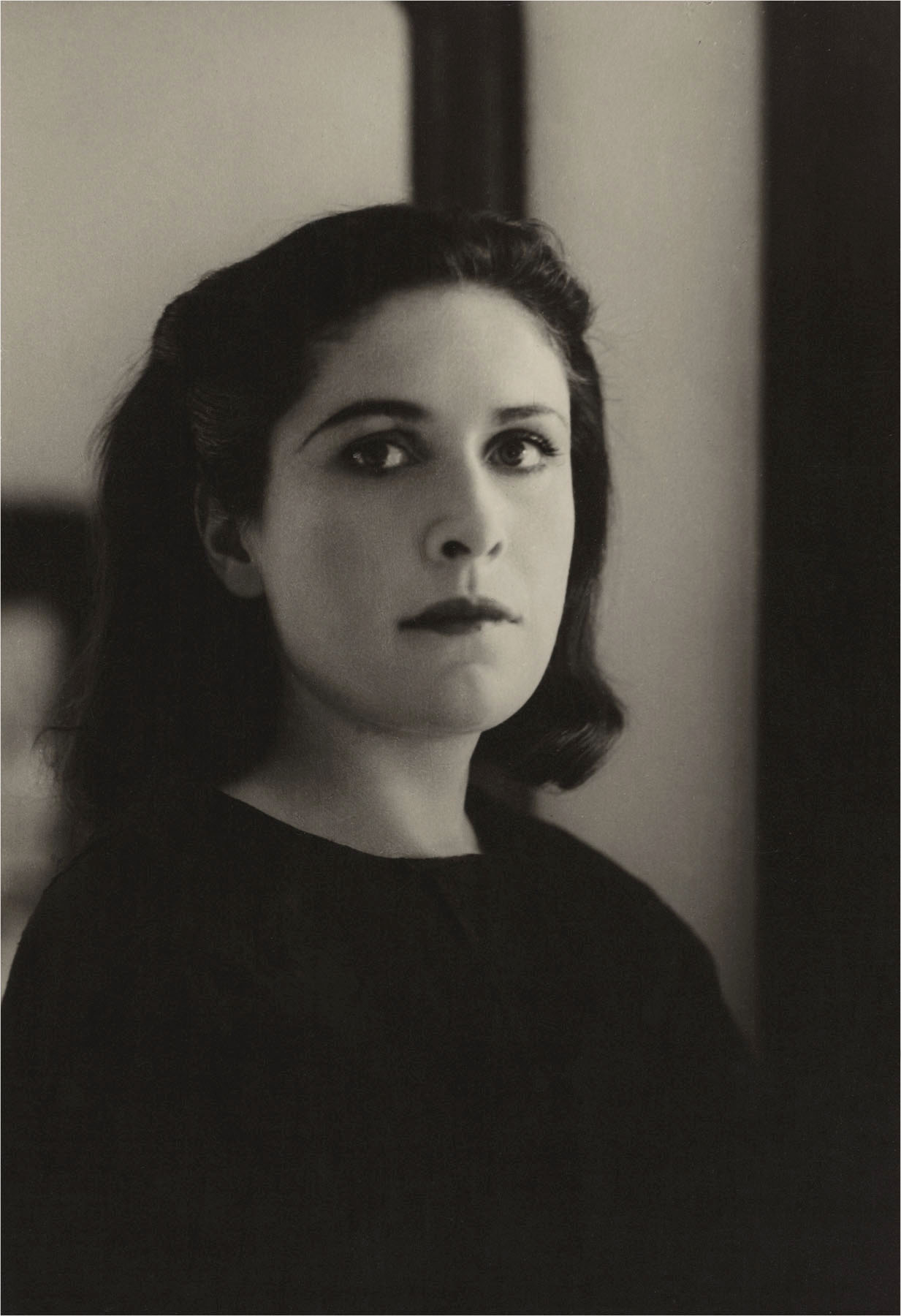
Rogi André (French born Hungary, 1900-1970) 'Dora Maar' 1941


Rogi André (French born Hungary, 1900-1970)
Dora Maar
1941
Gelatin silver print
Image: 17 x 11.9cm (6 11/16 x 4 11/16 in.)
Mount: 28 x 20cm (11 x 7 7/8 in.)
Frame: 45.72 x 35.56cm (18 x 14 in.)
rame (outer): 49.53 x 39.37cm (19 1/2 x 15 1/2 in.)
National Gallery of Art, Washington, Robert B. Menschel and the Vital Projects Fund


Rogi André (born Rozsa Klein, 10 August 1900, Budapest – 11 April 1970, Paris) was a Hungarian-born French photographer and artist. She was the first wife of André Kertész. …

In 1935, the photographer and theoretician of photography Emmanuel Sougez, writing in the journal Arts et Métiers Graphique compared the photography of Rogi André and that of Laure Albin Guillot, and criticised the former for posing her subjects in their environment. Some critics have noted in her portraits an influence of Cubism, for example in the portrait of Dora Maar (c. 1940) in which she creates a geometric composition using the play of shadows and lights.

What a life she had!

Read a fuller biography on the Wikipedia website


Anna Barna (Hungarian, 1901-1964) 'Leskelodo' (Onlooker) 1930s


Anna Barna (Hungarian, 1901-1964)
Leskelodo (Onlooker)
1930s
Gelatin silver print
Image: 22.6 x 16.9cm (8 7/8 x 6 5/8 in.)
Frame: 45.72 x 35.56cm (18 x 14 in.)
Frame (outer): 48.26 x 38.1cm (19 x 15 in.)
National Gallery of Art, Washington, Robert B. Menschel and the Vital Projects Fund


Behind the Camera

Women actively participated in the development of photography soon after its inception in the 19th century. Yet it was in the 1920s, after the seismic disruptions of World War I, that women entered the field of photography in force. Aided by advances in technology and mass communications, along with growing access to training and acceptance of their presence in the workplace, women around the world made an indelible mark on the growth and diversification of the medium. They brought innovation to a range of photographic disciplines, from avant-garde experimentation and commercial studio practice to social documentary, photojournalism, ethnography, and the recording of sports, dance, and fashion.

The New Woman

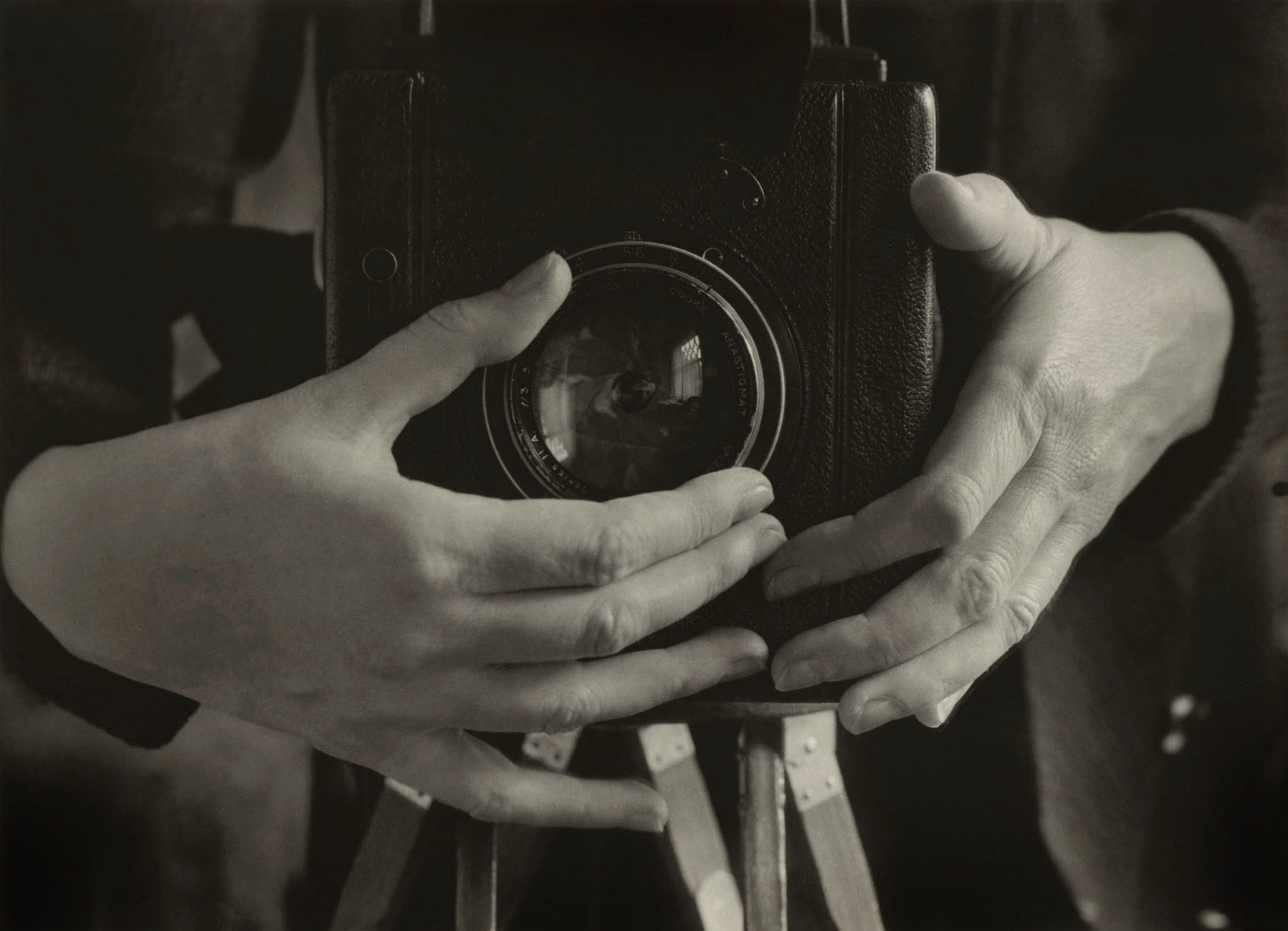
A global phenomenon, the New Woman of the 1920s embodied an ideal of female empowerment based on real women making revolutionary changes in life and art. Her image – a woman with bobbed hair, stylish dress, and a confident stride – was a staple of newspapers and magazines first in Europe and the United States and soon in China, Japan, India, Australia, and elsewhere. A symbol of the pursuit of liberation from traditional gender roles, the New Woman in her many guises represented women who faced a mix of opportunities and obstacles that varied from country to country. The camera became a powerful means for female photographers to assert their self-determination and redefine their position in society. Producing compelling portraits, including self-portraits featuring the artist with her camera, they established their roles as professionals and artists.

The Studio

Commercial studio photography was an important pathway for many women to forge a professional career and to earn their own income. Running successful businesses in small towns and major cities from Buenos Aires to Berlin and Istanbul, women reinvigorated the genre of portraiture. In the studio, both sitters and photographers navigated gender, race, and cultural difference; those run by women presented a different dynamic. For example, Black women operated studios in Chicago, New Orleans, and elsewhere in the United States, where they not only preserved likenesses and memories, but also constructed a counter narrative to racist images then circulating in the mass media.

The City

The availability of smaller, lightweight cameras and the increasing freedom to move about cities on their own spurred a number of women photographers to explore the diversity of the urban experience beyond the studio walls. Using their creative vision to capture the vibrant modern world around them, women living and working in Bombay (now Mumbai), London, New York, Paris, São Paulo, Tokyo, and beyond photographed soaring architecture and spontaneous encounters on the street.

Avant-Garde Experiments

Creative formal approaches – photomontage, photograms, sharp contrasts of light and shadow, unconventional cropping, extreme close-ups, and dizzying camera angles – came to define photography during this period. Women incorporated these cutting-edge techniques to produce works that conveyed the movement and energy of modern life. Although often overshadowed by their male partners and colleagues, women photographers were integral in shaping an avant-garde visual language that promoted new ways of seeing and experiencing the world.

Modern Bodies

Beginning in the 1920s, new concepts concerning health and sexuality, along with changing attitudes about movement and dress, emphasised the human body as a central site of experiencing modernity. Women photographers produced incisive visions of liberated modern bodies, from pioneering photographs of the nude to exuberant pictures of sport and dance. Photographs of joyous play and gymnastic exercise, as well as images of dancers in motion, celebrate the body as artistic medium.

Ethnographic Approaches

During this modern period, numerous women pursued professional photographic careers and traveled extensively for the first time. Many took photographs that documented their experiences abroad in Africa, China, Afghanistan, and elsewhere, while others engaged in more formal ethnographic projects. Some women with access to domains that were off limits to their male counterparts produced intimate portraits of female subjects. While gender may have afforded these photographers special connections to certain communities, it did not exempt some, especially those from Europe and the United States, from producing stereotypical views that reinforced hierarchical concepts of race and ethnocentrism.

Fashion and Advertising

Images splashed across the pages of popular fashion and lifestyle magazines vividly defined the New Woman. The unprecedented demand for fashion and advertising photographs between the world wars provided exceptional employment opportunities for fashion reporters, models, and photographers alike, allowing women to emerge as active agents in the profession. Cultivating the tastes of newly empowered female consumers, fashion and advertising photography provided a space where women could experiment with pictures intended for a predominantly female readership.

Social Documentary

Galvanised by the effects of a global economic crisis and the growing political and social unrest that began in the 1930s, numerous women photographers produced arresting images of the human condition. Whether working for government agencies or independently, women contributed to the visual record of the Depression and the events leading up to World War II. From images of breadlines and worker demonstrations to forced migration and internment, women photographers helped to expose dire conditions and shaped what would become known as social documentary photography.

Reportage

The rise of the picture press established photojournalism as a dominant form of visual expression during a period shaped by two world wars. Women photographers conveyed an inclusive view of worldwide economic depression, struggles for decolonisation in Africa, and the rise of fascism and communism in Europe and the Soviet Union. They often received the “soft assignments” of photographing women and children, families, and the home front, but some women risked their lives close to the front lines. Images of concentration camps and victory parades made way for the complexities of the postwar era, as seen in pictures of daily life in US-occupied Japan and the newly formed People’s Republic of China.

The photographers whose works are in The New Woman Behind the Camera represent just some of the many women around the world who were at the forefront of experimenting with the camera. They produced invaluable visual testimony that reflected both their personal experiences and the extraordinary social and political transformations of the early 20th century. Together, they changed the history of modern photography.

Text from the National Gallery of Art website


Constance Stuart Larrabee (English, 1914-2000) 'Johannesburg Social Center, South Africa' 1948, printed later


Constance Stuart Larrabee (English, 1914-2000)
Johannesburg Social Center, South Africa
1948, printed later
Gelatin silver print
Sheet: 50.8 x 40.48cm (20 x 15 15/16 in.)
Image: 43.18 x 37.94cm (17 x 14 15/16 in.)
Frame: 60.96 x 50.8cm (24 x 20 in.)
Frame (outer): 62.23 x 52.07cm (24 1/2 x 20 1/2 in.)
National Gallery of Art, Washington, Corcoran Collection (Museum Purchase)


Constance Stuart Larrabee (English, 1914-2000)

Constance Stuart Larrabee (7 August 1914 – 27 July 2000) was an English photographer best known for her images of South Africa and her photo-journalism on Europe during World War II. She was South Africa’s first female war correspondent. …

Career

On her return to South Africa in 1936 she established the Constance Stuart Portrait Studio in Pretoria. She became a renowned portraitist, and photographed many of the leading statesmen, generals, artists, writers, society and theatrical personalities of that period. In 1946 she opened a second studio in Johannesburg.

Between 1937 and 1949 Stuart developed her lifelong interest in recording and exhibiting the vanishing ethnic cultures of South Africa: the Ndebele, Bushmen, Lobedu, Zulu, Swazi, Sotho and Transkei peoples. Some of them she took during the visit of the British Royals to South Africa in 1947. Stuart was the official photographer of the royal tour, and while traveling throughout Basutoland (Lesotho), Swaziland and Bechuanaland (Botswana), which were at the time the three British protectorates in South Africa. She photographed tribal people dressed up for the occasion in their native costumes. She exhibited these photographs, and many like them in Preotria, Johannesburg and Cape Town, which led to her appointment as South Africa’s first woman war correspondent for Libertas magazine. Between 1945 and 1955 she served in Egypt, Italy, France and England, attached to the American 7th Army and the South African 6th Division in the Italian Apennines. Although she had only been hired to photograph the South African troops in the army, Stuart went well beyond her assignment. She photographed the American, French, British and Canadian troops as well as her South African countrymen. She also photographed the civilians the soldiers met on the way to Germany, and she photographed the devastated villages, towns and cities in their path. As a female war correspondent Stuart was often held back from the front for days, and as she was billeted separately from her male co-workers the facilities available to her were often uncomfortable. She took all the difficulties in stride, accepting them as part of the war, and quickly gained the respect of the people around her. One co-worker wrote: ‘Constance Stuart… has made a fine art of getting around the fronts. She has seen more of war than any other woman I have met.’

Although she was not permitted to keep a diary on the front, she compiled her photographic notes and letters into a memoir named Jeep Trek, published in 1946.

When she returned to South Africa in 1945 she travelled throughout the country exhibiting many of these photographs, as well as her depictions of South African tribal people. In 1948, the National Party came to power in South Africa and instituted a policy of strict racial segregation. The following year, Stuart left South Africa for America.

Text from the Wikipedia website


Constance Stuart Larrabee (English, 1914-2000) 'Untitled (Collaborators, St. Tropez, France)' 1944


Constance Stuart Larrabee (English, 1914-2000)
Untitled (Collaborators, St. Tropez, France)
1944
Gelatin silver print, printed later
Image: 39.53 x 38.1cm (15 9/16 x 15 in.)
Sheet: 50.32 x 40.48cm (19 13/16 x 15 15/16 in.)
Frame: 60.96 x 50.8 cm (24 x 20 in.)
Frame (outer): 62.23 x 52.07cm (24 1/2 x 20 1/2 in.)
National Gallery of Art, Washington, Corcoran Collection
Gift of the Artist, Constance Stuart Larrabee WWII Collection


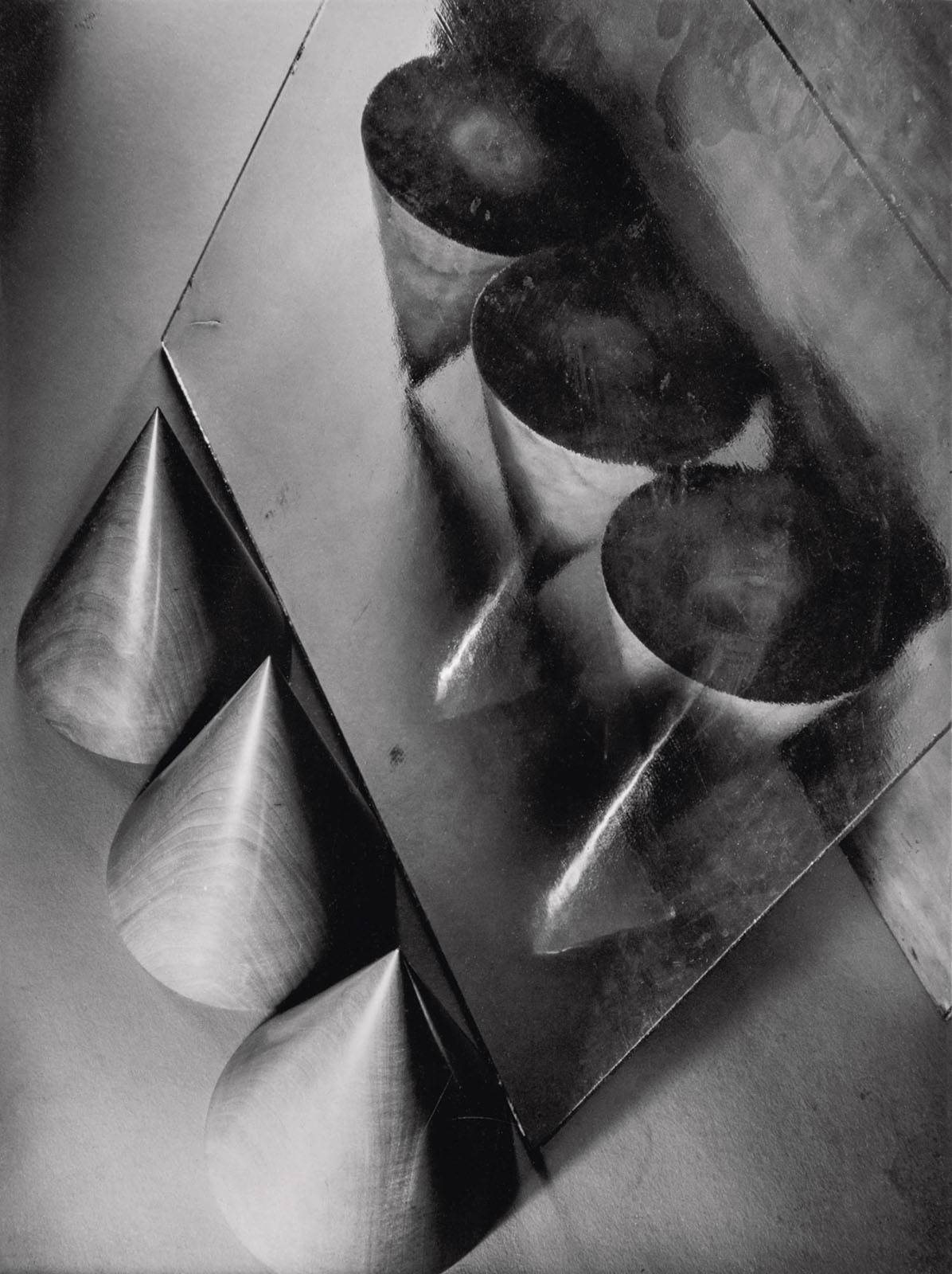
Margaret De Patta (American, 1903-1964) 'Untitled' 1939


Margaret De Patta (American, 1903-1964)
Untitled
1939
Gelatin silver print
Image: 17.8 x 21.9cm (7 x 8 5/8 in.)
Frame: 40.64 x 50.8cm (16 x 20 in.)
Frame (outer): 53.34 x 43.18cm (21 x 17 in.)
National Gallery of Art, Washington, Alfred H. Moses and Fern M. Schad Fund


“I find work problems as set for myself fall into these main directions: space articulation, movement to a purpose, visual explorations with transparencies, reflective surfaces, negative positive relationships, structures and new materials. A single piece may incorporate one or many of these ideas. Problems common to sculpture and architecture are inherent in jewellery design, i.e. – space, form, tension, organic structure, scale, texture, interpenetration, superimposition and economy of means – each necessary element playing its role in a unified entity.”

~ Margaret De Patta (Design Quarterly #33)


Cami Stone (Belgian, 1892-1975) 'Ohne Titel (Nachtaufnahme, Berlin)' (Untitled (Night shot, Berlin)) c. 1929


Cami Stone (Belgian, 1892-1975)
Ohne Titel (Nachtaufnahme, Berlin) (Untitled (Night shot, Berlin))
c. 1929
Gelatin silver print
Image: 9.5 x 14cm (3 3/4 x 5 1/2 in.)
Frame: 30.48 x 40.64cm (12 x 16 in.)
Frame (outer): 33.02 x 43.18cm (13 x 17 in.)
National Gallery of Art, Washington, Alfred H. Moses and Fern M. Schad Fund


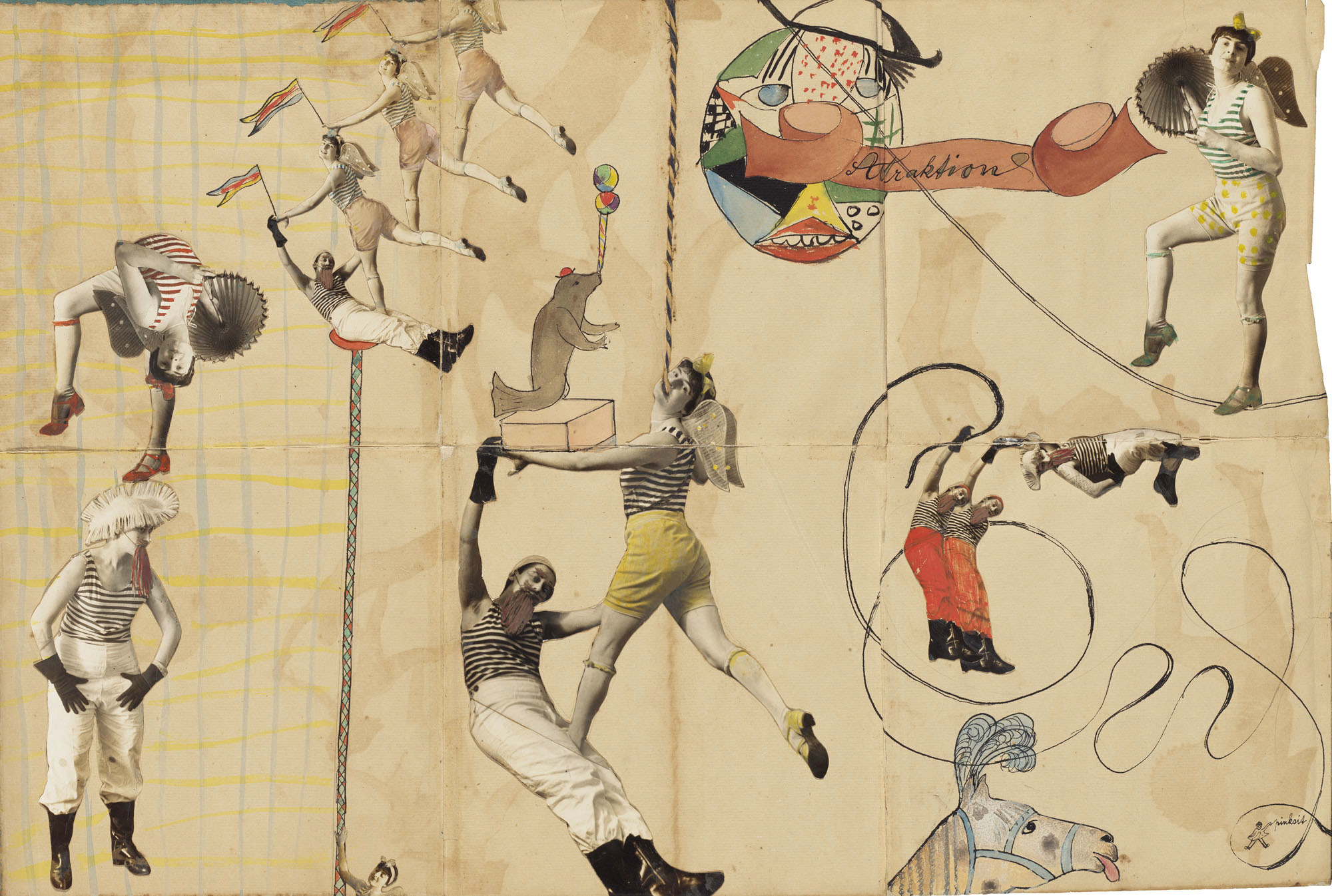
ringl + pit (Grete Stern German-Argentine, 1904-1999, Ellen Auerbach American born Germany, 1906-2004) 'Die Ringlpitis' 1931


ringl + pit (Grete Stern German-Argentine, 1904-1999, Ellen Auerbach American born Germany, 1906-2004)
Die Ringlpitis
1931
Bound volume of 6 photographs, 12 collages, 8 watercolours, 6 texts, and 1 drawing
Open: 20.32 x 38.1cm (8 x 15 in.)
Closed: 20.32 x 20.32cm (8 x 8 in.)
Fold-out page: 37.5 x 57.2cm (14 3/4 x 22 1/2 in)
Sits: 20.3cm (8 in.)
Tall; plus pop-out element: 10.2cm (4 in.)
Cradle: 10.8 x 39.37 x 20.32cm (4 1/4 x 15 1/2 x 8 in.)
National Gallery of Art, Washington, Alfred H. Moses and Fern M. Schad Fund
© ringl + pit, courtesy Robert Mann Gallery, New York


Ringl and Pit were the childhood nicknames of Grete Stern (Ringl) and Ellen Auerbach (Pit). Together, they established a photography studio in 1930 in Berlin. Both studied privately with Walter Peterhans, a photography instructor at the Bauhaus, whose promulgation of a highly rationalized style of advertising photography – one that signified “machine made” in its emphasis on sleek form and graphic design – was proposed as a solution to the question of art’s role in industrial society. …

In their representation of the “modern woman,” a new social type emerging out of the political upheaval of the Weimar Republic, the duo employed visual strategies subversive to traditional conceptions of woman. Often using mannequins, wigs, and other symbols of femininity, Stern and Auerbach worked to question the artifice and masquerade of feminine identity.

Text from The Metropolitan Museum of Art website


Ellen Auerbach and Grete Stern met as private students of Bauhaus professor Walter Peterhans. Stern took over Peterhans’s studio in 1929, and the following year Stern and Auerbach formed the studio foto ringl + pit. “Ringl” and “Pit” were their respective childhood nicknames.

“I frivoled and she was serious,” Auerbach recalled of their personalities in the partnership. ringl + pit specialised in advertising photography, and their photographs redefined the image of women in advertising. Their work came to define the “new women” that emerged in the 1910s and 20s, as women gained the right to vote and entered the work force in increasing numbers. Their partnership ended when they both emigrated in 1933.

Text from the J. Paul Getty website


Márta Aczél (Hungarian, 1909-1997) 'Cím nélkül (Tál)' (Untitled (Bowl)) 1935


Márta Aczél (Hungarian, 1909-1997)
Cím nélkül (Tál) (Untitled (Bowl))
1935
Gelatin silver print
Image: 23.3 x 17.2cm (9 3/16 x 6 3/4 in.)
Sheet: 23.8 x 17.5cm (9 3/8 x 6 7/8 in.)
Frame: 45.72 x 35.56cm (18 x 14 in.)
Frame (outer): 48.26 x 38.1 cm (19 x 15 in.)
National Gallery of Art, Washington, Alfred H. Moses and Fern M. Schad Fund


Born in Budapest in 1909. Educated in a private school Receives a degree in history of arts and German literature at the University of Frankfurt. Returns to Hungary in 1935. Jzsef Pcsi invites her to his private school. Although she did photography prior to that time, Pcsi’s school is a turning point in her life. Not only does the famous photographer teach her the technique but also influences her intellectually. At that time a substantial part of her advertising work and object photographs are made; she also she starts to exhibit her photographs. In 1936 she meets her future husband, György Kreilisheim. Magazines publish articles about their travels illustrated with her photos. After an apprenticeship exam Márta Aczél works for two years as an assistant to Elemérn Marsovszky (Fot Ada). She passes her master exam at Angelo’s. In 1950 starts working for Iparterv, and subsequently deals with industrial photography. At that time she travels widely across the whole country.

Anonymous text from the Luminous-Lint website [Online] Cited 25/11/2021


Margaret Watkins (Canadian, 1884-1969) 'Domestic Symphony' 1919


Margaret Watkins (Canadian, 1884-1969)
Domestic Symphony
1919
Gelatin silver print, printed 1920s
Image: 21.59 x 16.51cm (8 1/2 x 6 1/2 in.)
Mount: 35.56 x 27.94cm (14 x 11 in.)
Frame: 50.8 x 40.64cm (20 x 16 in.)
Frame (outer): 54.61 x 44.45cm (21 1/2 x 17 1/2 in.)
National Gallery of Art, Washington, Alfred H. Moses and Fern M. Schad Fund
© The Estate of Margaret Watkins, Courtesy Robert Mann Gallery


Margaret Watkins (Canadian, 1884-1969)

Margaret Watkins (1884-1969) was a Canadian photographer who is remembered for her innovative contributions to advertising photography. She lived a life of rebellion, rejection of tradition, and individual heroism; she never married, she was a successful career woman in a time when women stayed at home, and she exhibited eroticism and feminism in her art and writing.

Career

Watkins opened a studio in Greenwich Village, New York City, and in 1920 became editor of the annual publication Pictorial Photography in America. She worked successfully as an advertising photographer for Macy’s and the J. Walter Thompson Company and Fairfax, becoming one of the first women photographers to contribute to advertising agencies. She also produced landscapes, portraits, nudes and still lifes. While teaching at the Clarence White school from 1916 to 1928, her students included Margaret Bourke-White, Laura Gilpin, Paul Outerbridge, Ralph Steiner and Doris Ulmann.

One of the earliest art photographers in advertising, her images of everyday objects set new standards of acceptability. From 1928, when she was based in Glasgow, she embarked on street photography in Russia, Germany and France, specialising in store fronts and displays.

Watkins died in Glasgow, Scotland in 1969, largely forgotten as a photographer.

Legacy

Watkins legacy exists in her exemplary work left behind, but also her example as an independent, successful woman. The Queen’s Quarterly suggests her life is an inspiration for single women, who are fulfilled by their careers, rather than the traditional gender roles women face of fulfilment through marrying and having children.

Text from the Wikipedia website


Margaret Watkins (Canadian, 1884-1969) 'Woodbury Soap' 1924


Margaret Watkins (Canadian, 1884-1969)
Woodbury Soap
1924
Palladium print
Image: 15.4 x 20.4cm (6 1/16 x 8 1/16 in.)
Mount: 24 x 31.2cm (9 7/16 x 12 5/16 in.)
Frame: 40.64 x 50.8cm (16 x 20 in.)
Frame (outer): 44.45 x 54.61 cm (17 1/2 x 21 1/2 in.)
National Gallery of Art, Washington, Alfred H. Moses and Fern M. Schad Fund
© The Estate of Margaret Watkins, Courtesy Robert Mann Gallery


Aenne Biermann (German, 1898-1933) 'Ohne Titel (Anthurium)' (Untitled (Anthurium)) 1927


Aenne Biermann (German, 1898-1933)
Ohne Titel (Anthurium) (Untitled (Anthurium))
1927
Gelatin silver print
Image: 37.7 x 48.6cm (14 13/16 x 19 1/8 in.)
Frame: 55.88 x 66.04cm (22 x 26 in.)
Frame (outer): 60.33 x 70.49cm (23 3/4 x 27 3/4 in.)
National Gallery of Art, Washington, Alfred H. Moses and Fern M. Schad Fund


Aenne Biermann (German, 1898-1933)

Aenne Biermann (March 8, 1898 – January 14, 1933), born Anna Sibilla Sternfeld, was a German photographer of Ashkenazi origin. She was one of the major proponents of New Objectivity, a significant art movement that developed in Germany in the 1920s.

Career

Biermann was a self-taught photographer. Her first subjects were her two children, Helga and Gershon. The majority of Biermann’s photographs were shot between 1925 and 1933. Gradually she became one of the major proponents of New Objectivity, an important art movement in the Weimar Republic. Her work became internationally known in the late 1920s, when it was part of every major exhibition of German photography.

Major exhibitions of her work include the Munich Kunstkabinett, the Deutscher Werkbund and the exhibition of Folkwang Museum in 1929. Other important exhibitions include the exhibition entitled Das Lichtbild held in Munich in 1930 and the 1931 exhibition at the Palace of Fine Arts (French: Palais des Beaux Arts) in Brussels. Since 1992 the Museum of Gera has held an annual contest for the Aenne Biermann Prize for Contemporary German Photography, which is one of the most important events of its kind in Germany.

Text from the Wikipedia website


Louise Dahl-Wolfe (American, 1895-1989) 'Model outside the Rose Pauson House' 1942


Louise Dahl-Wolfe (American, 1895-1989)
Model outside the Rose Pauson House
1942
Gelatin silver print
Image: 22.25 x 19.7cm (8 3/4 x 7 3/4 in.)
Frame: 50.8 x 40.64cm (20 x 16 in.)
Frame (outer): 53.34 x 43.18cm (21 x 17 in.)
National Gallery of Art, Washington, Alfred H. Moses and Fern M. Schad Fund
© Center for Creative Photography, Arizona Board of Regents


Louise Dahl-Wolfe (American, 1895-1989)

Louise Dahl-Wolfe (November 19, 1895 – December 11, 1989) was an American photographer. She is known primarily for her work for Harper’s Bazaar, in association with fashion editor Diana Vreeland. …

Style

Among the celebrated fashion photographers of the 20th century, Louise Dahl-Wolfe was an innovator and influencer who significantly contributed to the fashion world. She was most widely known for her work with Harper’s Bazaar. Dahl-Wolfe was considered a pioneer of the ‘female gaze’ in the fashion industry. Dahl-Wolfe created the new image of American women during the World War II. They were strong and independent. Dahl-Wolfe often shot on location and outdoors, bringing her models out of the studio and to exotic locales such as Tunisia, Cuba and South America. Her models pose candidly, almost as if Dahl-Wolfe had just walked in on them. Dahl-Wolf innovatively used colour in photography and mainly concerned with the qualities of natural lighting, composition, and balance. Her methodology in using natural sunlight and shooting outdoors became the industry standard even now. …

“She is the most important woman, fashion photographer of the first half of the 20th century,” according to photographic expert Terrence Pepper and for Valerie Steele, the vitality and dynamism in Dahl-Wolfe’s work “were a big part of the rise of the American look.”

Read a fuller biography on the Wikipedia website


Genevieve Naylor (American, 1915-1989) 'Models wearing suits by Carolyn Schnurer' 1945-1946


Genevieve Naylor (American, 1915-1989)
Models wearing suits by Carolyn Schnurer
1945-1946
Gelatin silver print
Image: 27.4 x 25.2cm (10 13/16 x 9 15/16 in.)
Mount: 50.5 x 25.2cm (19 7/8 x 9 15/16 in.)
Frame: 55.88 x 40.64cm (22 x 16 in.)
Frame (outer): 58.42 x 43.18cm (23 x 17 in.)
National Gallery of Art, Washington, Gift of Peter Rezniko


Genevieve Naylor (American, 1915-1989)

Genevieve Naylor (February 2, 1915 – July 21, 1989) was an American photographer and photojournalist, best known for her photographs of Brazil and as Eleanor Roosevelt’s personal photographer.

Career

At the age of 22, in 1937, Naylor was chosen by Holger Cahill of the Works Progress Administration (WPA) as a photographer for the Harlem Arts Center. She also worked for the WPA in New Hampshire, Pennsylvania, Washington D.C., and New York. She then worked for the Associated press and was one of the first women photojournalists to be hired by any American news wire services.

In 1940, Genevieve Naylor was assigned by the U.S. State department as part of a team to travel to Brazil. In an effort to further and strengthen the anti-Nazi relationship between the United States and Brazil and to promote mutual cultural awareness, the U.S. Office of Inter-American Affairs, under the leadership of Nelson Rockefeller, created a team of notable Americans that included Orson Welles, Errol Flynn, and Walt Disney. Genevieve Naylor and her partner (and later husband) Misha Reznikoff arrived in Brazil in October, 1940, where he showed his paintings while Miss Naylor took photographs. Naylor’s assignment was to document Brazil’s progress toward becoming a modern nation, capture images that would boost war-time morale, foster cultural interchange, and promote the Allied cause. But Naylor, with her energetic and outgoing personality, soon ventured into other milieus, taking photographs of Brazilian workers jammed into trams, school children, religious and street festivals, and various aspects of everyday lives. Because it was war time, film was rationed, and Naylor’s equipment was modest. She had neither flash nor studio lights and had to carefully choose her shots, balancing spontaneity with careful composition. Of her work, nearly 1,350 photos survived and were preserved. After her return to the states in 1943, Naylor become only the second woman photographer to be given a one-woman show when her work was exhibited by New York’s Museum of Modern Art.

Naylor later spent 15 years as a photographer with Harper’s Bazaar and from 1944 to 1980 was a freelance photographer for Vogue, McCall’s, Town and Country, Life, Look, Saturday Evening Post, Women’s Home Companion, Cosmopolitan, Fortune, Collier’s, Glamour, Good Housekeeping, Vanity Fair, Elle, Ladies’ Home Journal, Redbook, House Beautiful, Holiday, Mademoiselle, American Home, Seventeen, Better Homes and Gardens, Charm, Bride’s, amongst others. She was a war time photographer, covering parts of the Korean War for Look magazine.

Naylor’s work has been included in numerous group exhibitions in the United States, the UK, and Europe. The most recent, The New Women Behind the Camera 2021-2022, opened at The Metropolitan Museum of Art, in the summer of 2021, and will continue into 2022 at The National Gallery of Art in Washington, D.C. Her historic alliance with Brazil continues in 2022 with the SESC 24 de Maio, Sao Paulo, exhibition, Raio-Que-O-Parta: Modern Fictions in Brazil.

Text from the Wikipedia website


Olive Cotton (Australian, 1911-2003) 'Teacup Ballet' 1935


Olive Cotton (Australian, 1911-2003)
Teacup Ballet
1935
Gelatin silver print
Image: 40.64 x 30.48cm (16 x 12 in.)
Frame (outer): 53.34 x 45.72 x 4.45cm (21 x 18 x 1 3/4 in.)
The Sir Elton John Photography Collection


Olive Cotton (Australian, 1911-2003)

Olive Cotton (11 July 1911 – 27 September 2003) was a pioneering Australian modernist female photographer of the 1930s and 1940s working in Sydney. Cotton became a national “name” with a retrospective and touring exhibition 50 years later in 1985. A book of her life and work, published by the National Library of Australia, came out in 1995. Cotton captured her childhood friend Max Dupain from the sidelines at photoshoots, e.g. “Fashion shot, Cronulla Sandhills, circa 1937” and made several portraits of him. Dupain was Cotton’s first husband. …

Style

During the 1930s Cotton developed mastery using the ‘Pictorial’ style of photography popular at the time and also incorporated a very modern style approach. Cotton’s photography was personal in feeling with an appreciation of certain qualities of light in the surroundings. From mid-1934 until 1940 she worked as Max Dupain’s assistant in his largely commercial studio in Bond Street, Sydney, where she developed a very personal approach which concentrated on capturing the play of light on inanimate objects and in nature. She would often use her Rolleiflex camera to secure unposed reactions while Max set up the lighting for a portrait. Her style soon became distinguishable from that of other modernist photographers’ of her time.

Signature photographs

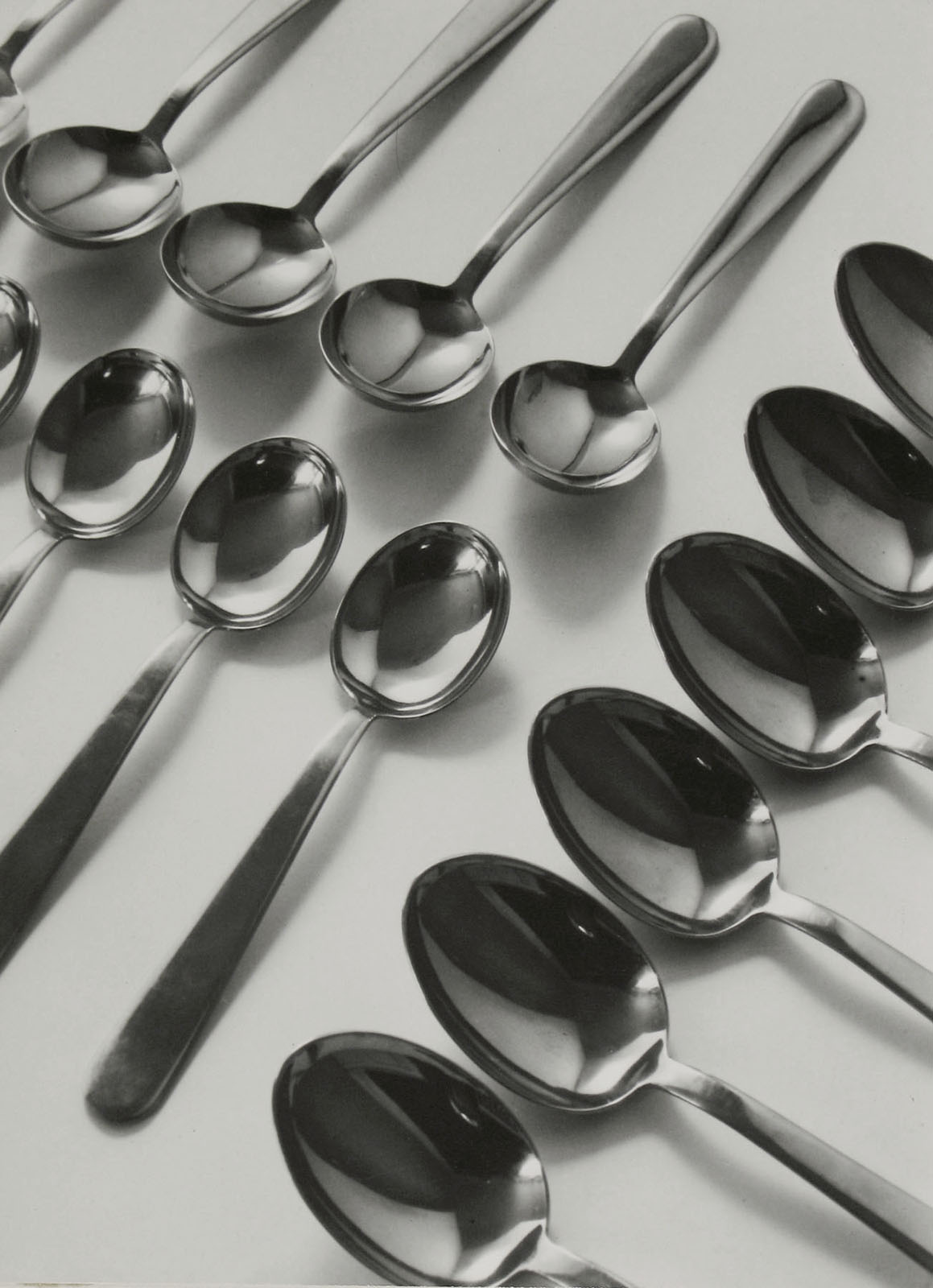
Tea cup ballet (1935) was photographed in the studio after Cotton had bought some inexpensive china from Woolworth’s to replace the old chipped studio crockery. In it she used a technique of back of the lighting to cast bold shadows towards the viewer to express a dance theme between the shapes of the tea cups, their saucers and their shadows. It was exhibited locally at the time and in the London Salon of Photography in 1935. It has become Cotton’s signature image and was acknowledged on a stamp commemorating 150 years of photography in Australia in 1991. Tea cup ballet features on the cover of the book Olive Cotton: Photographer published by the National Library of Australia in 1995.

Text from the Wikipedia website


Caroline Whiting Fellows (American, 1905-1989) 'Untitled (Vermouth and rye)' 1930s


Caroline Whiting Fellows (American, 1905-1989)
Untitled (Vermouth and rye)
1930s
Dye imbibition print
Image: 21.6 x 17cm (8 1/2 x 6 11/16 in.)
Mount: 27 x 22.2cm (10 5/8 x 8 3/4 in.)
Frame: 45.72 x 35.56cm (18 x 14 in.)
Frame (outer): 48.26 x 38.1cm (19 x 15 in.)
National Gallery of Art, Washington, Gift of Isabell VanMerlin


Trude Fleischmann (American born Austria, 1895-1990) 'Toni Birkmeyer-Ballett in "Cancan," Wien' (Toni Birkmeyer Ballet Company in "Cancan," Vienna) c. 1930


Trude Fleischmann (American born Austria, 1895-1990)
Toni Birkmeyer-Ballett in “Cancan,” Wien (Toni Birkmeyer Ballet Company in “Cancan,” Vienna)
c. 1930
Gelatin silver print
Image: 19.05 x 17.46cm (7 1/2 x 6 7/8 in.)
Mat: 45.72 x 35.56cm (18 x 14 in.)
Frame: 45.72 x 35.56cm (18 x 14 in.)
Frame (outer): 48.26 x 38.1cm (19 x 15 in.)
Michael Mattis and Judith Hochberg


Trude Fleischmann (American born Austria, 1895-1990)

Trude Fleischmann (22 December 1895 – 21 January 1990) was an Austrian-born American photographer. After becoming a notable society photographer in Vienna in the 1920s, she re-established her business in New York in 1940. …

Early life

Born in Vienna in December 1895, Fleischmann was the second of three children in a well-to-do Jewish family. After matriculating from high school, she spent a semester studying art history in Paris followed by three years of photography at the Lehr- und Versuchsanstalt für Photographie und Reproduktionsverfahren in Vienna. She then worked for a short period as an apprentice in Dora Kallmus’ fashionable Atelier d’Ora and for a longer period for photographer Hermann Schieberth. In 1919, she joined the Photographische Gesellschaft in Wien (Vienna Photographic Society).

Career

In 1920, at the age of 25, Fleischmann opened her own studio close to Vienna’s city hall. Her glass plates benefitted from her careful use of diffuse artificial light. Photographing music and theatre celebrities, her work was published in journals such as Die Bühne, Moderne Welt, ‘Welt und Mode and Uhu. She was represented by Schostal Photo Agency (Agentur Schostal). In addition to portraits of Karl Kraus and Adolf Loos, in 1925 she took a nude series of the dancer Claire Bauroff which the police confiscated when the images were displayed at a Berlin theatre, bringing her international fame. Fleischmann also did much to encourage other women to become professional photographers.

With the Anschluss in 1938, Fleischmann was forced to leave the country. She moved first to Paris, then to London and finally, together with her former student and companion Helen Post, in April 1939 to New York. In 1940, she opened a studio on West 56th Street next to Carnegie Hall which she ran with Frank Elmer who had also emigrated from Vienna. In addition to scenes of New York City, she photographed celebrities and notable immigrants including Albert Einstein, Eleanor Roosevelt, Oskar Kokoschka, Lotte Lehmann, Otto von Habsburg, Count Richard von Coudenhove-Kalergi and Arturo Toscanini. She also worked as a fashion photographer, contributing to magazines such as Vogue. She established a close friendship with the photographer Lisette Model.

Text from the Wikipedia website


Trude Fleischmann (American born Austria, 1895-1990) 'Katharine Cornell' 1939


Trude Fleischmann (American born Austria, 1895-1990)
Katharine Cornell
1939
Gelatin silver print
Image: 31.43 x 25.4cm (12 3/8 x 10 in.)
Mat: 33.5 x 35.56cm (13 3/16 x 14 in.)
Mount: 31.4 x 25.4cm (12 3/8 x 10 in.)
Frame (outer): 52.7 x 42.4 cm (20 3/4 x 16 11/16 in.)
The Metropolitan Museum of Art, Gift of Herbert F. and Teruko S. Neuwalder, 1991
Image © The Metropolitan Museum of Art. Image source: Art Resource, NY


Wynn Richards (American, 1888-1960) 'Preparing Yarn for Weaving' 1948


Wynn Richards (American, 1888-1960)
Preparing Yarn for Weaving
1948
Collage of gelatin silver prints
Sheet: 24 x 20.9cm (9 7/16 x 8 1/4 in.)
Mount: 34.8 x 25.7cm (13 11/16 x 10 1/8 in.)
Frame: 45.72 x 35.88cm (18 x 14 1/8 in.)
Frame (outer): 48.26 x 38.74cm (19 x 15 1/8 in.)
Prints and Photographs Division, Library of Congress, Washington, D.C.


Richards trained as a Pictorialist in 1918 and 1919 at the Clarence White School of Photography in New York City, and then operated a portrait studio in her hometown of Greenville, Mississippi. After centuries of looking to Europe for cultural leadership, America was developing its own forms of creative expression and New York City was emerging as the centre of that movement. In 1922 Richards relocated there and soon found work at Vogue magazine.

After World War I, people showed little interest in the quality of illusion characteristic of the Pictorialist aesthetic. Sharp-focus and artificial lighting were replacing the soft-focus, available-light style she learned initially. With course work in advertising photography at the White School in 1924, Richards broke ground as one of the very first women in a newly emerging area of fashion photography. Richards not only successfully bridged the Pictorialist and Modernist movements but rose to the top of her field and remained there for more than 25 years. …

Richards’s established a career when few professional photography opportunities existed for women. She entered her profession just as formal education and institutional frameworks for fashion photographers began to operate in New York. Even so, she felt forced to choose between being a wife, mother, and social leader or a woman with a career. Richards made a lifelong commitment to photography – not just as a career, but as an art form.

Through her work with schools and professional organisations, Richards helped advance the concept of careers for women. Although she dropped from popular view in the last quarter of the twentieth century, Richards’ photographs are being rediscovered through exhibitions and the art photography market.

Beverly W. Brannan, Curator of Photography, Prints & Photographs Division. “Wynn Richards (1888-1960),” on the Library of Congress website 2013 updated 2015 [Online] Cited 26/11/2021


Frances McLaughlin-Gill (American, 1919-2014) 'Untitled' 1940s


Frances McLaughlin-Gill (American, 1919-2014)
Untitled
1940s
Gelatin silver print
Image: 24 x 19.5cm (9 7/16 x 7 11/16 in.)
Mount: 38.2 x 29.5cm (15 1/16 x 11 5/8 in.)
Frame: 50.8 x 40.64cm (20 x 16 in.)
Frame (outer): 53.34 x 43.18cm (21 x 17 in.)
National Gallery of Art, Washington, R. K. Mellon Family Foundation
© The Estate of Frances McLaughlin-Gill, 2018


Frances McLaughlin-Gill (1919-2014) was an American photographer and the first female fashion photographer under contract with Vogue. After two decades in the fashion industry, she worked as an independent film producer for a decade making commercials and films. One of her films won the Gold Medal at the 1969 International Films and TV Festival of New York. In her later career, she published several collections both with her sister and in collaboration with other authors.

Read a fuller biography on the Wikipedia website


Frances McLaughlin-Gill (American, 1919-2014) 'Untitled' 1946


Frances McLaughlin-Gill (American, 1919-2014)
Untitled
1946
Gelatin silver print
Image/sheet: 25.4 x 26.67cm (10 x 10 1/2 in.)
Frame: 50.8 x 40.64cm (20 x 16 in.)
Frame (outer): 53.34 x 43.18cm (21 x 17 in.)
National Gallery of Art, Washington, R. K. Mellon Family Foundation
© The Estate of Frances McLaughlin-Gill, 2018


Frances McLaughlin-Gill (American, 1919-2014) 'Untitled (Toni Frissell photographing three models at a fashion shoot with her husband and daughter in the foreground)' c. 1940


Frances McLaughlin-Gill (American, 1919-2014)
Untitled (Toni Frissell photographing three models at a fashion shoot with her husband and daughter in the foreground)
c. 1940
Gelatin silver print
Sheet: 27.3 x 26cm (10 3/4 x 10 1/4 in.)
Mat: 50.8 x 40.64cm (20 x 16 in.)
Frame: 50.8 x 40.64cm (20 x 16 in.)
Frame (outer): 53.34 x 43.18cm (21 x 17 in.)
Toni Frissell Collection, Prints and Photographs Division, Library of Congress, Washington, D.C.


Anna Riwkin (Swedish born Russia, 1908-1970) 'Nomads of the North' 1950


Anna Riwkin (Swedish born Russia, 1908-1970)
Nomads of the North
1950
Bound volume
Open:
27.94 x 44.45cm (11 x 17 1/2 in.)
Mount: 3.02 x 43.82 x 28.26cm (1 3/16 x 17 1/4 x 11 1/8 in.)
National Gallery of Art Library, Gift of the Department of Photographs


Anna Riwkin (Swedish born Russia, 1908-1970)

Anna Riwkin-Brick or just Anna Riwkin (Surazh, Chernigov Governorate, Russia 23 June [O.S. 10 June] 1908 – Tel Aviv 19 December 1970) was a Russian-born Swedish photographer. …

Riwkin-Brick contributed significantly to the growing use of photographs in children’s picture-books, a genre that developed in the second half of the century.

In 1950, with the aim of promoting tolerance by introducing children from different countries to each other’s lives, and international understanding through children’s literature that would also be read by adults, Riwkin-Brick was commissioned by the UNESCO to make a photo book about the Sami people. She persuaded Elly Jannes, a journalist for the journal Vi, to write the text for Vandrande by (‘Wandering Village’, also released as ‘Nomads of the North’), published in 1950. Anna Riwkin-Brick took many photos of a Sami family’s little girl Elle Kari that were not included in the Vandrande by edition, and Elly Jannes suggested they make another photo book about Elle Kari and to aim it at a child audience which was published in 1951.

It was the first Swedish picturebook with photos of everyday life of a child in a continuous story, and the first of many such books that the photographer was to make. It was a success. Translated into eighteen languages in editions with high print runs; 25,000 copies were printed for the first edition released in Germany, the United Kingdom, and the United States.

Text from the Wikipedia website


Annelise Kretschmer (German, 1903-1987) 'Junges Mädchen' (Young Woman) 1928


Annelise Kretschmer (German, 1903-1987)
Junges Mädchen (Young Woman)
1928
Gelatin silver print
Image: 46.7 x 39.8cm (18 3/8 x 15 11/16 in.)
Frame: 65 x 50cm (25 9/16 x 19 11/16 in.)
Frame (outer): 67 x 52 x 3cm (26 3/8 x 20 1/2 x 1 3/16 in.)
Museum Folkwang, Essen
© Christiane von Königslöw
Photo © Museum Folkwang Essen – ARTOTHEK


Annelise Kretschmer (1903-1987) was a German portrait photographer. Kretschmer is best known for her depictions of women in Germany in the early 20th century and is credited with helping construct the ‘Neue Frau’ or New Woman image of modern femininity.


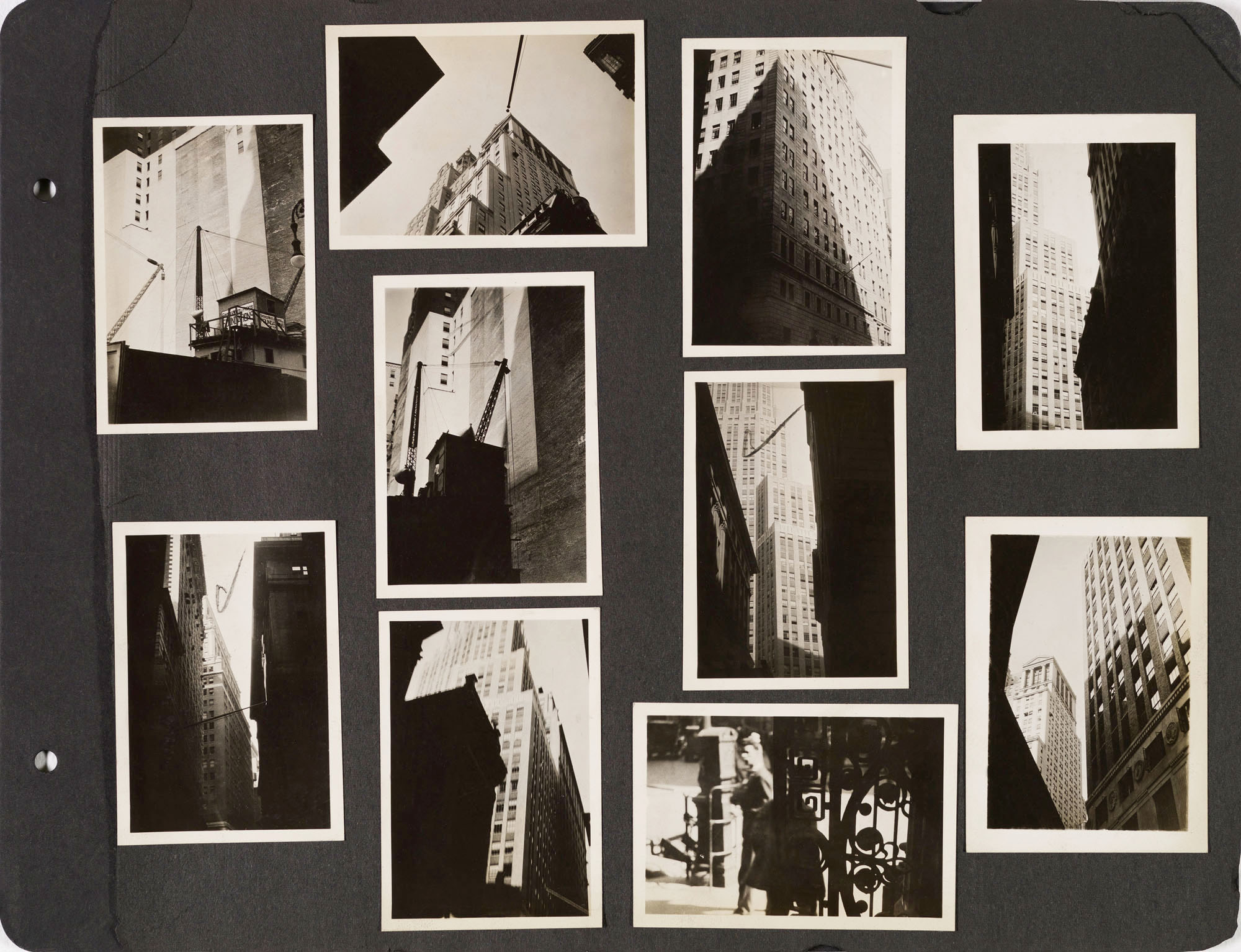
Berenice Abbott (American, 1898-1991) 'Page from New York Album' 1929-1930


Berenice Abbott (American, 1898-1991)
Page from New York Album
1929-1930
Ten gelatin silver prints
Mat: 40.6 x 50.8cm (16 x 20 in.)
Mount: 37.1 x 35.7cm (14 5/8 x 14 1/16 in.)
Images: each 5.6 x 8.2cm (2 1/4 x 3 1/4 in.) or 8.2 x 5.6 cm (3 1/4 x 2 1/4 in.)
Reverse album page size: 25.4 x 33.02cm (10 x 13 in.)
Frame (outer): 42.6 x 51.4cm (16 3/4 x 20 1/4 in.)
The Metropolitan Museum of Art, Gift of Emanuel Gerard, 1984
Berenice Abbott / Masters Collection / Getty Images
Image © The Metropolitan Museum of Art; Art Resource, NY


Berenice Abbott (American, 1898-1991) 'Page from New York Album' 1929-1930 (detail)

Berenice Abbott (American, 1898-1991) 'Page from New York Album' 1929-1930 (detail)

Berenice Abbott (American, 1898-1991) 'Page from New York Album' 1929-1930 (detail)

Berenice Abbott (American, 1898-1991) 'Page from New York Album' 1929-1930 (detail)

Berenice Abbott (American, 1898-1991) 'Page from New York Album' 1929-1930 (detail)


Berenice Abbott (American, 1898-1991)
Page from New York Album (details)
1929-1930
Ten gelatin silver prints
Mat: 40.6 x 50.8cm (16 x 20 in.)
Mount: 37.1 x 35.7cm (14 5/8 x 14 1/16 in.)
Images: each 5.6 x 8.2cm (2 1/4 x 3 1/4 in.) or 8.2 x 5.6 cm (3 1/4 x 2 1/4 in.)
Reverse album page size: 25.4 x 33.02cm (10 x 13 in.)
Frame (outer): 42.6 x 51.4cm (16 3/4 x 20 1/4 in.)
The Metropolitan Museum of Art, Gift of Emanuel Gerard, 1984
Berenice Abbott / Masters Collection / Getty Images
Image © The Metropolitan Museum of Art; Art Resource, NY


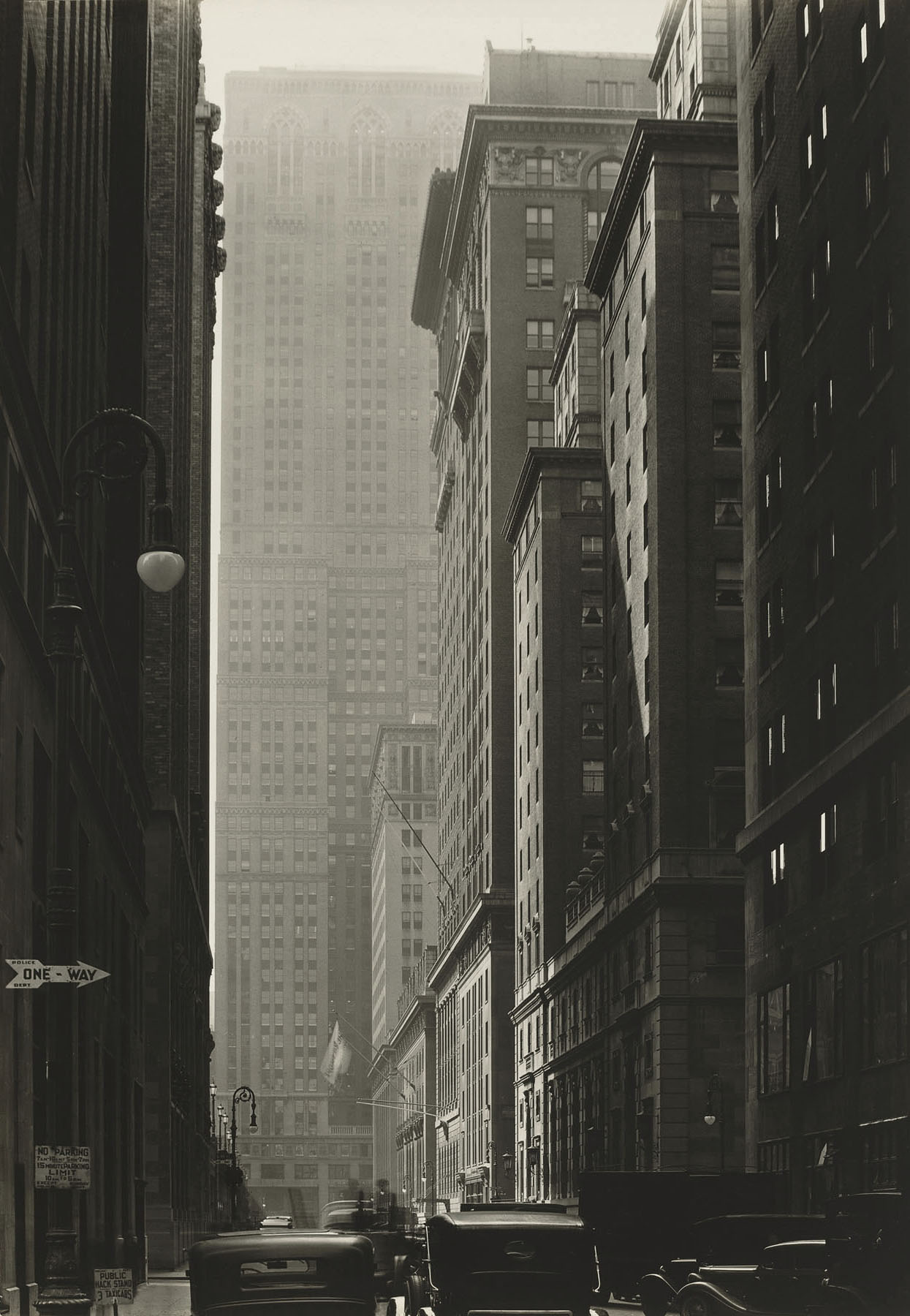
Berenice Abbott (American, 1898-1991) 'Vanderbilt Avenue from East 46th Street' October 9, 1935


Berenice Abbott (American, 1898-1991)
Vanderbilt Avenue from East 46th Street
October 9, 1935
Gelatin silver print
Overall: 23.7 x 16.5cm (9 5/16 x 6 1/2 in.)
Frame: 50.8 x 40.64cm (20 x 16 in.)
Frame (outer): 53.34 x 43.18cm (21 x 17 in.)
National Gallery of Art, Washington, The Marvin Breckinridge Patterson Fund and Robert B. Menschel Fund


Berenice Abbott (American, 1898-1991) 'Janet Flanner' 1927


Berenice Abbott (American, 1898-1991)
Janet Flanner
1927
Gelatin silver print
Sheet: 22.6 x 17.2cm (8 7/8 x 6 3/4 in.)
Mat: 45.72 x 35.56cm (18 x 14 in.)
Frame: 45.72 x 35.56cm (18 x 14 in.)
Frame (outer): 49.53 x 39.37cm (19 1/2 x 15 1/2 in.)
Prints and Photographs Division, Library of Congress, Washington, D.C.
Berenice Abbott / Masters Collection / Getty Images


Louise Barbour Davis (American, 1905-1955) 'Abstraction' 1953


Louise Barbour Davis (American, 1905-1955)
Abstraction
1953
Gelatin silver print
Image: 34.29 x 27.31cm (13 1/2 x 10 3/4 in.)
Mount: 36.83 x 29.85cm (14 1/2 x 11 3/4 in.)
Frame: 55.88 x 45.72cm (22 x 18 in.)
Frame (outer): 60.33 x 50.17cm (23 3/4 x 19 3/4 in.)
From the estate of Louise Barbour Davis
© Louise Barbour Davis


Emmy Andriesse (Dutch, 1914-1953) 'Amsterdam tijdens de hongerwinter' (Amsterdam during the hunger winter) [1944-1945] book published 1947


Emmy Andriesse (Dutch, 1914-1953)
Amsterdam tijdens de hongerwinter (Amsterdam during the hunger winter) [1944-1945]
Published 1947
Bound volume
Closed:
29.21 x 22.86cm (11 1/2 x 9 in.)
Open: 29.21 x 44.45cm (11 1/2 x 17 1/2 in.)
National Gallery of Art Library, David K.E. Bruce Fund
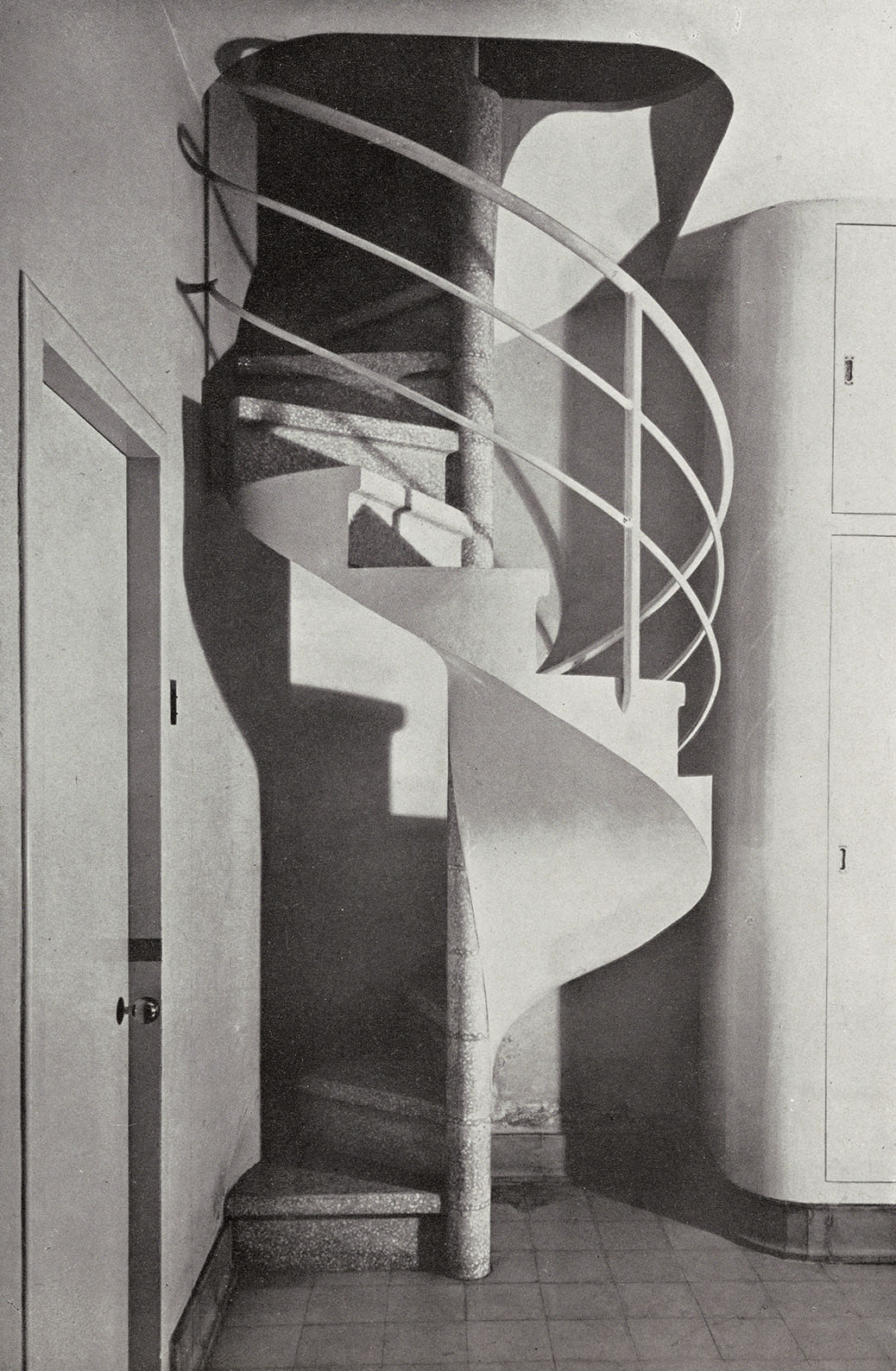
 

Emmy Andriesse (Dutch, 1914-1953)

Emmy Eugenie Andriesse (Dutch, 1914-1953) was a Dutch photographer best known for her work with the Underground Camera group (De Ondergedoken Camera [nl]) during World War II. …

War years and the ‘Underground Camera’

In June 1941 Andriesse married graphic designer and visual artist Dick Elffers (a gentile with whom she had two sons, one who died young), but as a Jew during the Nazi occupation Andriesse was no longer able to publish and she was forced into hiding. At the end of 1944, with the assistance of the anthropologist Arie de Froe [nl] she forged an identity card and re-engaged in everyday life, joining a group of photographers, including Cas Oorthuys and Charles Breijer, working clandestinely as De Ondergedoken Camera. The photos that Andriesse made under very difficult conditions of famine in Amsterdam, include Boy with pan, The Gravedigger and Kattenburg Children are documents of hunger, poverty and misery during the occupation in the “winter of hunger” of 1944-1945.

Post-war

After the war, she became a fashion photographer and was an associate and mentor of Ed van der Elsken. She participated in the group show Photo ’48 and in 1952, together with Carel Blazer [nl], Eva Besnyö and Cas Oorthuys, the exhibition Photographie, both in Amsterdam’s Stedelijk Museum. Edward Steichen chose her 1947 portrait of a staid and elderly Dutch couple for the section ‘we two form a multitude’ in the Museum of Modern Art world-touring The Family of Man that was seen by an audience of 9 million. More recently (October 2006 – January 2007) she was included in a display of Twentieth Century European photography at the Barbican Art Gallery, London.

Andriesse’s last commission, the book The World of Van Gogh – published posthumously in 1953 – was not yet complete when she became ill and after a long battle with cancer, died at the age of 39.

Text from the Wikipedia website


Emmy Andriesse (Dutch, 1914-1953) 'Amsterdam tijdens de hongerwinter' (Amsterdam during the hunger winter) [1944-1945] book published 1947 (detail)


Emmy Andriesse (Dutch, 1914-1953)
Amsterdam tijdens de hongerwinter (Amsterdam during the hunger winter) (detail)
1947
Bound volume
Closed:
29.21 x 22.86cm (11 1/2 x 9 in.)
Open: 29.21 x 44.45cm (11 1/2 x 17 1/2 in.)
National Gallery of Art Library, David K.E. Bruce Fund


Steeds grauwer werd het beeld de steden. Schoeisel en kleding raakten totaal versleten.

The image of the cities became increasingly grey. Footwear and clothing became totally worn out.


Emmy Andriesse (Dutch, 1914-1953) 'Amsterdam tijdens de hongerwinter' (Amsterdam during the hunger winter) [1944-1945] book published 1947 (detail)


Emmy Andriesse (Dutch, 1914-1953)
Amsterdam tijdens de hongerwinter (Amsterdam during the hunger winter) (detail)
1947
Bound volume
Closed:
29.21 x 22.86cm (11 1/2 x 9 in.)
Open: 29.21 x 44.45cm (11 1/2 x 17 1/2 in.)
National Gallery of Art Library, David K.E. Bruce Fund


De etalages waren leeg of toonden alleen vervangingsmiddelen.

The shop windows were empty or only showed substitutes.


National Gallery of Art
National Mall between 3rd and 7th Streets
Constitution Avenue NW, Washington

Opening hours:
Daily 10am – 5pm

National Gallery of Art website

LIKE ART BLART ON FACEBOOK

Back to top

New website: Marcus Bunyan – celebrating 30 years of art practice in 2021

November 2021

Celebration!

Recent work


Marcus Bunyan (Australian, b. 1958) 'Untitled' from the series 'Resonance' 2021


Marcus Bunyan (Australian, b. 1958)
Untitled
2021
From the series Resonance


In 2021, I celebrate 30 years of art practice with the creation of a new website, the first to contain all my bodies of work since 1991 (note: more bodies of work still have to be added between 1996-1999).

My first solo exhibition was in a hair dressing salon in High Street, Prahran, Melbourne in 1991, during my second year of a Bachelor of Arts (Fine Art Photography) at RMIT University (formerly Phillip Institute out in Bundoora). Titled Of Magic, Music and Myth it featured black and white medium format photographs of the derelict Regent Theatre and the old Victorian Railway’s Newport Workshops.

The concerns that I had at the time in my art making have remained with me to this day: that is, an investigation into the boundaries between identity, space and environment. Music and “spirit” have always been an abiding influence – the intrinsic music of the world and the spirit of objects, nature, people and the cosmos … in a continuing exploration of spaces and places, using found images and digital and film cameras to record glances, meditations and movement through different environments.

30 years after I started I hope I have learnt a lot about image making … and a lot about myself. I also hope the early bodies of my work are still as valid now as they were when I made them. In the 30 years since I became an artist my concerns have remained constant but as well, my sense of exploration and joy at being creative remains undimmed and an abiding passion.

Now, with ego integrated and the marching of the years I just make art for myself, yes, but the best reason to make art is … for love and for the cosmos. For I believe any energy that we give out to the great beyond is recognised by spirit. Success is fleeting but making art gives energy to creation. We all return to the great beyond, eventually.

Dr Marcus Bunyan


Unknown photographer. 'Opening of Marcus Bunyan's exhibition 'The Naked Man Fears No Pickpockets' at The Photographers' Gallery and Workshop, Melbourne, 1993 showing at left (behind the crowd) the photograph 'Richmond Steps' 1993' 1993


Unknown photographer
Opening of Marcus Bunyan’s exhibition The Naked Man Fears No Pickpockets at The Photographers’ Gallery and Workshop, Melbourne, 1993 showing at left (behind the crowd) the photograph Richmond Steps 1993
1993
Polaroid


Ian Lobb (Australian, b. 1948) 'Marcus 31/8/92 Taken by Ian Lobb at Phillip [Institute]' 1992


Ian Lobb (Australian, b. 1948)
Marcus 31/8/92 Taken by Ian Lobb at Phillip [Institute]
1992
Polaroid


Jeff Whitehead (Australian) 'Marcus in his Fred Perry and Doc Martens with his Mamiya RZ67 on tripod with Pelican case on Jeff's car, Studley Park, Melbourne' 1991-1992


Jeff Whitehead (Australian)
Marcus in his Fred Perry and Doc Martens with his Mamiya RZ67 on tripod with Pelican case on Jeff’s car, Studley Park, Melbourne
1991-1992
Colour photograph


The only photograph of me with my camera 30 years ago!


Each photograph from a body of work in this posting (below) links to the body of work on my new website. Please click on the photographs to see the work.


Marcus Bunyan (Australian, b. 1958) 'Untitled' from the series 'Stones, Vaults, Flowers: Père Lachaise' 2017-2020


Marcus Bunyan (Australian, b. 1958)
Untitled
2017-2020
From the series Stones, Vaults, Flowers: Père Lachaise


Marcus Bunyan (Australian, b. 1958). 'Untitled' from the series 'A Day in the Tiergarten' 2019-2020


Marcus Bunyan (Australian, b. 1958)
Untitled
2019-2020
From the series A Day in the Tiergarten


Marcus Bunyan (Australian, b. 1958) ‘Untitled’ from the series ‘The Night Journey’ 2019


Marcus Bunyan (Australian, b. 1958)
Untitled
2019
From the series The Night Journey


Marcus Bunyan (English-Australian, b. 1958) 'Untitled' 2019 From the series 'Oblique'


Marcus Bunyan (Australian, b. 1958)
Untitled
2019
From the series Oblique


Marcus Bunyan (Australian, b. 1958) 'Parc de Sceaux' from the series 'Paris in film' 2018


Marcus Bunyan (Australian, b. 1958)
Parc de Sceaux
2018
From the series Paris in film


War dreams 2007-2017


Marcus Bunyan (Australian, b. 1958) 'Untitled' from the series 'The Shape of Dreams' 2013-2017


Marcus Bunyan (Australian, b. 1958)
Untitled
2013-2017
From the series The Shape of Dreams


Marcus Bunyan (Australian, b. 1958) 'Too Much of the Air' 2015


Marcus Bunyan (Australian, b. 1958)
Untitled
2015
From the series Too Much of the Air


Marcus Bunyan (Australian, b. 1958) 'Untitled' from the series 'upside down' 2013


Marcus Bunyan (Australian, b. 1958)
Untitled
2013
From the series upside down


Marcus Bunyan (Australian, b. 1958) 'Untitled' from the series 'Vertical' 2011


Marcus Bunyan (Australian, b. 1958)
Untitled
2011
From the series Vertical


Marcus Bunyan (Australian, b. 1958) 'Untitled' from the series 'The Symbolic Order (cartes de visite)' 2011


Marcus Bunyan (Australian, b. 1958)
Untitled
2011
From the series The Symbolic Order (cartes de visite)


Marcus Bunyan (Australian, b. 1958) 'Untitled' from the series 'Missing in Action (red kenosis)' 2010


Marcus Bunyan (Australian, b. 1958)
Untitled
2010
From the series Missing in Action (red kenosis)


Marcus Bunyan (Australian, b. 1958) 'Missing in Action (dark kenosis) No. 68' 2010


Marcus Bunyan (Australian, b. 1958)
Untitled
2010
From the series Missing in Action (dark kenosis)


Marcus Bunyan (Australian, b. 1958) 'Missing in Action (horizontal kenosis) No. 17' 2010


Marcus Bunyan (Australian, b. 1958)
Untitled
2010
From the series Missing in Action (horizontal kenosis)


Marcus Bunyan (Australian, b. 1958) 'Untitled' from the series 'There But For The Grace of You Go I' 2009


Marcus Bunyan (Australian, b. 1958)
Untitled
2009
From the series There but for the Grace of You Go I


Marcus Bunyan (Australian, b. 1958) 'Untitled' from the series 'The Shape of Dreams' 2009


Marcus Bunyan (Australian, b. 1958)
Untitled
2009
From the series The Shape of Dreams


Marcus Bunyan (Australian, b. 1958) 'Untitled' from the series 'Momentum' 2009


Marcus Bunyan (Australian, b. 1958)
Untitled
2009
From the series Momentum


Marcus Bunyan (Australian, b. 1958) 'Untitled' from the series 'Cut and Thrust' 2008


Marcus Bunyan (Australian, b. 1958)
Untitled
2008
From the series Cut and Thrust


Marcus Bunyan (Australian, b. 1958) 'Untitled' from the series 'Drone' 2007


Marcus Bunyan (Australian, b. 1958)
Untitled
2007
From the series Drone


Marcus Bunyan (Australian, b. 1958) 'Untitled' from the series 'Nebula' 2007


Marcus Bunyan (Australian, b. 1958)
Untitled
2007
From the series Nebula


Transformations 1996-2008


Marcus Bunyan (Australian, b. 1958) 'Untitled' from the series 'Discarded Views' 2008


Marcus Bunyan (Australian, b. 1958)
Untitled
2008
From the series Discarded Views


Marcus Bunyan (Australian, b. 1958) 'Untitled' from the series 'Last Stand' 2008


Marcus Bunyan (Australian, b. 1958)
Untitled
2008
From the series Last Stand


Marcus Bunyan (Australian, b. 1958) 'Untitled' from the series 'Wonders Never Cease' 2007


Marcus Bunyan (Australian, b. 1958)
Untitled
2007
From the series Wonders Never Cease


Marcus Bunyan (Australian, b. 1958) 'Untitled' from the series 'Unearth' 2007


Marcus Bunyan (Australian, b. 1958)
Untitled
2007
From the series Unearth


Marcus Bunyan (Australian, b. 1958) 'Untitled' from the series 'Aporia' 2006


Marcus Bunyan (Australian, b. 1958)
Untitled
2006
From the series Aporia


Marcus Bunyan (Australian, b. 1958) 'Untitled' from the series 'Photos My Mother Sent Me' 2005


Marcus Bunyan (Australian, b. 1958)
Untitled
2005
From the series Photos My Mother Sent Me


Marcus Bunyan (Australian, b. 1958) 'Untitled' from the series 'No Man's Land' 2005


Marcus Bunyan (Australian, b. 1958)
Untitled
2005
From the series No Man’s Land


Marcus Bunyan (Australian, b. 1958) 'Untitled' from the series 'Tokern' 2005


Marcus Bunyan (Australian, b. 1958)
Untitled
2005
From the series Tokern


Marcus Bunyan (Australian, b. 1958) 'Untitled' from the series 'Inurtia' 2005


Marcus Bunyan (Australian, b. 1958)
Untitled
2005
From the series Inurtia


Marcus Bunyan (Australian, b. 1958) 'VV – 09GI and NV – 17EP during a thunderstorm, Albury' from the series 'Enclosure' 2005


Marcus Bunyan (Australian, b. 1958)
VV – 09GI and NV – 17EP during a thunderstorm, Albury
2005
From the series Enclosure


Marcus Bunyan (Australian, b. 1958) 'Bedtime' from the series 'Neo_mort' 2004


Marcus Bunyan (Australian, b. 1958)
Bedtime
2004
From the series Neo_mort


Marcus Bunyan (Australian, b. 1958) 'Untitled' from the series 'Desideratum' 2003


Marcus Bunyan (Australian, b. 1958)
Untitled
2003
From the series Desideratum


Marcus Bunyan (Australian, b. 1958) 'Untitled' from the series 'Last Days at Karngara' 2002


Marcus Bunyan (Australian, b. 1958)
Untitled
2002
From the series Last Days at Karngara


Marcus Bunyan (Australian, b. 1958) 'Untitled' from the series 'The Wrestlers' 2001


Marcus Bunyan (Australian, b. 1958)
Untitled
2001
From the series The Wrestlers


Marcus Bunyan (Australian, b. 1958)
Button 2B
2001
From the series D O < R >


Marcus Bunyan (Australian, b. 1958) 'Plane 6' from the series 'Throw High and Hard' 2001


Marcus Bunyan (Australian, b. 1958)
Plane 6
2001
From the series Throw High and Hard


Marcus Bunyan (Australian, b. 1958) 'Untitled' 2000 From the series 'Thirdspace'


Marcus Bunyan (Australian, b. 1958)
Untitled
2000
From the series Thirdspace


Black and white archive 1991-1997

PLEASE VIEW THE BLACK AND WHITE ARCHIVE POSTINGS


Marcus Bunyan black and white archive 1991-1997

PLEASE VIEW THE BLACK AND WHITE ARCHIVE POSTINGS


Marcus Bunyan website

LIKE ART BLART ON FACEBOOK

Back to top

Photographs: Marcus Bunyan. ‘Resonance’ 2021

October 2021


Marcus Bunyan (Australian, b. 1958) 'Untitled' from the series 'Resonance' 2021


Resonance noun: the power to bring images, feelings, etc. into the mind of the person reading or listening; the images, etc. produced in this way…


A body of work for 2021. Very proud of this sequence…

Taken in heavy overcast conditions with slight rain after a thunderstorm had passed through on my Mamiya RZ67 medium format film camera, at Eagle’s Nest, Bunurong Marine and Coastal Park, Victoria, Australia.

A period of intense seeing and previsualisation.

No cropping, all full frame photographs. The colours are as the camera saw them.

See the layout of the series on my website.

Dr Marcus Bunyan

48 images
© Marcus Bunyan

Please click on the photographs for a larger version of the image.

Photographs are available from this series for purchase. As a guide, a digital colour 16″ x 20″ print costs $1,000 plus tracked and insured shipping. For more information please see the Store web page.


Marcus Bunyan (Australian, b. 1958) 'Untitled' from the series 'Resonance' 2021


Marcus Bunyan (Australian, b. 1958) 'Untitled' from the series 'Resonance' 2021


Marcus Bunyan (Australian, b. 1958) 'Untitled' from the series 'Resonance' 2021


Marcus Bunyan (Australian, b. 1958) 'Untitled' from the series 'Resonance' 2021


Marcus Bunyan (Australian, b. 1958) 'Untitled' from the series 'Resonance' 2021


Marcus Bunyan (Australian, b. 1958) 'Untitled' from the series 'Resonance' 2021

Marcus Bunyan (Australian, b. 1958) 'Untitled' from the series 'Resonance' 2021


Marcus Bunyan (Australian, b. 1958) 'Untitled' from the series 'Resonance' 2021


Marcus Bunyan (Australian, b. 1958) 'Untitled' from the series 'Resonance' 2021

Marcus Bunyan (Australian, b. 1958) 'Untitled' from the series 'Resonance' 2021

Marcus Bunyan (Australian, b. 1958) 'Untitled' from the series 'Resonance' 2021

Marcus Bunyan (Australian, b. 1958) 'Untitled' from the series 'Resonance' 2021


Marcus Bunyan (Australian, b. 1958) 'Untitled' from the series 'Resonance' 2021


Marcus Bunyan (Australian, b. 1958) 'Untitled' from the series 'Resonance' 2021


Marcus Bunyan (Australian, b. 1958) 'Untitled' from the series 'Resonance' 2021

Marcus Bunyan (Australian, b. 1958) 'Untitled' from the series 'Resonance' 2021


Marcus Bunyan (Australian, b. 1958) 'Untitled' from the series 'Resonance' 2021

Marcus Bunyan (Australian, b. 1958) 'Untitled' from the series 'Resonance' 2021


Marcus Bunyan (Australian, b. 1958) 'Untitled' from the series 'Resonance' 2021


Marcus Bunyan (Australian, b. 1958) 'Untitled' from the series 'Resonance' 2021

Marcus Bunyan (Australian, b. 1958) 'Untitled' from the series 'Resonance' 2021


Marcus Bunyan (Australian, b. 1958) 'Untitled' from the series 'Resonance' 2021


Marcus Bunyan (Australian, b. 1958) 'Untitled' from the series 'Resonance' 2021


Marcus Bunyan (Australian, b. 1958) 'Untitled' from the series 'Resonance' 2021


Marcus Bunyan (Australian, b. 1958) 'Untitled' from the series 'Resonance' 2021


Marcus Bunyan (Australian, b. 1958) 'Untitled' from the series 'Resonance' 2021


Marcus Bunyan (Australian, b. 1958) 'Untitled' from the series 'Resonance' 2021


Marcus Bunyan (Australian, b. 1958) 'Untitled' from the series 'Resonance' 2021


Marcus Bunyan (Australian, b. 1958) 'Untitled' from the series 'Resonance' 2021


Marcus Bunyan (Australian, b. 1958) 'Untitled' from the series 'Resonance' 2021


Marcus Bunyan (Australian, b. 1958) 'Untitled' from the series 'Resonance' 2021

Marcus Bunyan (Australian, b. 1958) 'Untitled' from the series 'Resonance' 2021


Marcus Bunyan (Australian, b. 1958) 'Untitled' from the series 'Resonance' 2021


Marcus Bunyan (Australian, b. 1958) 'Untitled' from the series 'Resonance' 2021


Marcus Bunyan (Australian, b. 1958) 'Untitled' from the series 'Resonance' 2021

Marcus Bunyan (Australian, b. 1958) 'Untitled' from the series 'Resonance' 2021


Marcus Bunyan (Australian, b. 1958) 'Untitled' from the series 'Resonance' 2021


Marcus Bunyan (Australian, b. 1958) 'Untitled' from the series 'Resonance' 2021


Marcus Bunyan (Australian, b. 1958) 'Untitled' from the series 'Resonance' 2021


Marcus Bunyan (Australian, b. 1958) 'Untitled' from the series 'Resonance' 2021


Marcus Bunyan (Australian, b. 1958) 'Untitled' from the series 'Resonance' 2021


Marcus Bunyan (Australian, b. 1958) 'Untitled' from the series 'Resonance' 2021


Marcus Bunyan (Australian, b. 1958) 'Untitled' from the series 'Resonance' 2021


Marcus Bunyan website

LIKE ART BLART ON FACEBOOK

Back to top

Text/Exhibition: ‘Mervyn Bishop: Australian Photojournalist’ at the National Film and Sound Archive of Australia, Acton, Canberra ACT

Exhibition dates: 5th March – 4th October, 2021

Warning: Aboriginal and Torres Strait Islander readers should be aware that this posting contains images and names of people who may have since passed away.


Mervyn Bishop (Australian, b. 1945) 'Girl pours tea, Burnt Bridge' 1988 from the exhibition 'Mervyn Bishop: Australian Photojournalist' at the National Film and Sound Archive of Australia, Acton, Canberra ACT, march - Oct, 2021


Mervyn Bishop (Australian, b. 1945)
Girl pours tea, Burnt Bridge
1988
Gelatin silver photograph
30.1 x 40.4cm
Art Gallery of New South Wales
Hallmark Cards Australian Photography Collection Fund 1991
© Mervyn Bishop
Photo: AGNSW


In our sight, in our mind

Can you imagine, please, being the first person to step foot on the moon. Or the first person to discover radium. Now imagine being the first Indigenous Australian photojournalist, for the very first time taking photographs of your culture from the inside, photographs that picture the ongoing suffering of Indigenous people but also, as importantly, their strength and joy. Such was the calling of that legend of Australian photography, Mervyn Bishop.

Bishop was the first in a long line of Indigenous photographers who unearth, investigate, picture and honour their community, although interestingly none of the later photographers are photojournalists. Artists such as Tracey Moffatt, Michael Riley, Ricky Maynard, Lisa Bellear, R e a (rea saunders), Michael Cook, Brook Andrew, Bindi Cole and Christian Thompson) follow in his footsteps. Indeed in this posting, there is a photograph by Bishop presumably of the father of the photographer Ricky Maynard, Eric Maynard cleaning a mutton bird, Great Dog Island, Tasmania (1975, below), followed by a photograph by Maynard himself of muttonbirding on Dog Island from his series Portrait of a Distant Land. The songlines of place and ancestors are strong in Aboriginal culture, and “show the connectedness between places and the Creation events and ceremonies associated with those places. People born in that country are forever tied to the creation history of their birthplace and have custodial obligations to that place.”

The stories Bishop shares through his images are different from the colonial ones of yesteryear because they come from within the spirit and soul of the communities he is photographing. Less than 20 years before Bishop’s first photographs things were very different. The Australian journalist and writer Stan Grant observes that, “…there are images in our history, of Aboriginal people in chains. Aboriginal people tied together, with armed police standing either side of them.” In an article on The Guardian website we learn that “Neck chains were still being used on Aboriginal people in Western Australia in 1958. Witnesses at Halls Creek in the Kimberley reported seeing Aboriginal prisoners chained to a veranda post of the police station for weeks at a time… At peak periods, from the 1880s to the 1940s, hundreds of Aboriginal people were chained for alleged cattle theft, and marched out of their country, some for up to 400km. Each neck piece weighed 2.4kg.”1 Even in Dawn – A Magazine for the Aboriginal People of N.S.W. created by the New South Wales Aboriginal Welfare Board and aimed at Aboriginal Australians (running monthly from January 1952 until December 1968) – in which there was an article in February 1965 on a young Mervyn Bishop training to become a photographer (see below) – the forces of colonial assimilation were hard at work, as can be seen on the back cover of the Dawn October 1965 issue, where Leslie Ryan makes his debut at a “Deb” Ball for kindergarten children, where he “seems to be getting a better deal out of life now that he has love and attention.” Now that he has love and attention. Just let that sink in. Today, the dripping irony and sadness of this photograph in relation to what is now known as “The Stolen Generation”2 is apparent, the two young children taken from their families, taken from their culture, dressed to the nines in formal Western attire at such a young age. Remember, this is less than 60 years ago.

As much as Eugène Atget (French, 1857-1927) was a working photographer making “Documents pour artistes,” declaring his modest ambition to create images for other artists to use as source material, so Bishop was a working photographer who created “Documents for people” at the Department of Aboriginal Affairs in Canberra from 1974 onwards, where he covered the major developments in Aboriginal communities throughout Australia. As Mervyn himself says, “Photography has been my life, my passion for 60 years: the art and technique, the stories I’ve witnessed and captured. I’m glad to be able to share my life’s work with the public.” There it is in a nutshell… an intimate understanding of the the art and technique of photography (the construction the image plane, lighting, point of view, scale, printing, etc… ) and the stories he wanted to tell. And he tells those stories straight down the line, with no bullshit. When asked in an audio recording in this posting about why his award winning photograph Life and death dash (1971, below) was misunderstood, he says “it has nothing to do with blackfellas, put it that way… people say it’s a nun running away with a little black kid, the Stolen Generation – nothing to do with it! Not a bloody thing! … people interpret their own way. Who would know that I was black? People still go on about it but people are talking through their … whatever… so, you don’t know what your talking about.” There you have it.

Like his personality, Bishop’s wonderful photographs are strong and direct, informed and understanding of the work of Walker Evans or Dorothea Lange. In Girl pours tea, Burnt Bridge (1988, above), an Aboriginal mother sits at a kitchen table in a corrugated iron shack and pours tea from a large battered teapot into enamel mugs, one for herself and one presumably for the photographer. Light pours through a hole in the roof. The table is covered in a floral probably plastic table cloth. There are plastic flowers set upon it. The chairs are vinyl. Behind her is an old kitchen unit from the 1950s with a wire screen at eye level, used to keep flies out. To the right are boxes and detritus while to the left a plastic bucket sits on the battered sink. Her child plays next to her oblivious of the camera flash while she stares directly at the camera. Much as Lange’s Migrant Mother, this women possesses her own inner dignity which Bishop captures so well: an unexpected intimacy with the subject in which we confront uncomfortable truths.

Other photographs, such as Children playing in river, Mumeka (1975, below) capture the pure joy of Aboriginal life, or the resoluteness of a people having to survive the trauma of cultures and societies and their complex histories (Couple on veranda, Coffs Harbour 1988, below). But let us be clear… this is not a vanishing race, nor an assimilated race but a proud, creative and intelligent race now picturing its own history and future. As Ricky Maynard states, “The contest remains over who will image and own this history. We must define history, define whose history it is, and define its purpose, as well as the tools used for the telling of this.” Bishop was at the very beginning of this imaging and ownership of Aboriginal history, not by colonial photographers of the past, but from within the community itself, in the present. His photographs are about speaking up about injustice and making sure that Indigenous perspectives were heard and not railroaded by non-indigenous people – Bishop was at the beginning of this – and about how the image speaks truth to power (a non-violent political tactic, employed by dissidents against the received wisdom or propaganda of governments they regard as oppressive, authoritarian or an ideocracy),

Towards the end of the documentary “The Bowraville Murders”, Stan Grant observes that Aboriginal people are kicked every day… [and this remains] out of sight, out of mind. He reminds us that between 1991 and 2021 there have been more than 470 Aboriginal deaths in custody… and not a single conviction. Out of sight, out of mind. Indeed, “fluidity of memory and a capacity to forget is perhaps the most haunting trait of our species. As history confirms, it allows us to come to terms with any degree of social, moral, or environmental degradation.”3 And this is what we all do. That is, until a photographer and artist like Mervyn Bishop comes along and reminds us through his photographs of the integrity, vitality and presence of Aboriginal people, spirit that stretches back thousands of years – despite our capacity to forget the trauma that Indigenous Australians have endured. This is the purpose of Bishop’s photographs … they bring to the forefront of our knowledge and imagination an understanding of the history and future of Aboriginal people. They remain, in our sight, in our mind.

Dr Marcus Bunyan


Footnotes

1/ Chris Owen. “How Western Australia’s ‘unofficial’ use of neck chains on Indigenous people lasted 80 years,” on The Guardian website Sun 7 March 2201 [Online] Cited 03/10/2021.

2/ The Stolen Generations refers to a period in Australia’s history where Aboriginal children were removed from their families through government policies. This happened from the mid-1800s to the 1970s.In the 1860s, Victoria became the first state to pass laws authorising Aboriginal children to be removed from their parents. Similar policies were later adopted by other states and territories – and by the federal government when it was established in the 1900s. For about a century, thousands of Aboriginal children were systematically taken from their families, communities and culture, many never to be returned. These children are known as the Stolen Generations survivors, or Stolen Children.These children were taken by the police; from their homes; on their way to or from school. They were placed in over 480 institutions, adopted or fostered by non-Indigenous people and often subjected to abuse. The children were denied all access to their culture, they were not allowed to speak their language and they were punished if they did. The impacts of this are still being felt today.There are currently more than 17,000 Stolen Generations survivors in Australia. Over one third of all Aboriginal and Torres Strait Islander people are their descendants. In Western Australia almost half of the population have Stolen Generation links.
Anonymous. “Who are the Stolen Generations?” on the Healing Foundation website [Online] Cited 03/10/2021.

3/ Wade Davis. “The Unraveling of America,” on the Rolling Stone website August 6, 2020 [Online] Cited 03/10/2021.


Many thankx to the National Film and Sound Archive of Australia for allowing me to publish the photographs in the posting. Please click on the photographs for a larger version of the image.


“The contest remains over who will image and own this history. We must define history, define whose history it is, and define its purpose, as well as the tools used for the telling of this.”


Ricky Maynard, 2007


“Australia in many ways is a crime scene. And the first crime is Captain Cook ordering his men to shoot at Aboriginal people. That’s the shot that we still hear all around Australia. And of course, there are images in our history, of Aboriginal people in chains. Aboriginal people tied together, with armed police standing either side of them. This is what has happened in our country, so it isn’t a great step to go from frontier attitudes of violence to deaths of three children in Bowraville. Because for us, it’s the same thing. It’s a killing that never stops.”


Stan Grant quoted in the documentary “The Bowraville Murders” directed by Allan Clarke on SBS on Demand, Australia, 2021


The National Film and Sound Archive of Australia will celebrates Mervyn Bishop, one of Australia’s most prolific and influential photographers, with a new exhibition 5 March – 4 October 2021.

Mr Bishop’s images of culture, politics and people have significantly influenced our collective understanding of Australia’s history. This exhibition is drawn from the Art Gallery of New South Wales collection, the artist’s private archive, and enriched by sound and moving image from the NFSA.

Mervyn Bishop features iconic photographs that derive from his career as a photojournalist, alongside personal images of family and friends and intimate portraits of members of the Aboriginal community. Spanning the past 60 years, the exhibition provides a fascinating insight into Bishop’s life and work.

In 1963 Mervyn Bishop left his hometown of Brewarrina, venturing to Sydney, where he successfully applied for a cadetship at The Sydney Morning Herald. He became Australia’s first Aboriginal press photographer and in 1971 won the News Photographer of the Year Award with his front-page photograph Life and Death Dash, 1971.

Bishop went on to work at the Department of Aboriginal Affairs in Canberra in 1974 where he covered the major developments in Aboriginal communities throughout Australia. This included his iconic image from 1975 when the (then) Prime Minister, Gough Whitlam, poured a handful of earth back into the hand of Vincent Lingiari, Gurindji elder and traditional landowner.


Unknown photographer. 'Untitled [Australian Aborigines in chains]' Nd


Unknown photographer
Untitled [Australian Aborigines in chains]
Nd


Indigenous Australians in neck chains


Indigenous Australians in neck chains. Historical records say they had been chained after killing an animal. Neck chains were used by police across Western Australia from the 1880s to the late 1950s. Photograph: State Library of Western Australia


Mervyn Bishop (Australian, b. 1945) 'Prime Minister Gough Whitlam pours soil into the hands of traditional land owner Vincent Lingiari, Northern Territory' 1975, printed 1999 from the exhibition 'Mervyn Bishop: Australian Photojournalist' at the National Film and Sound Archive of Australia, Acton, Canberra ACT, march - Oct, 2021


Mervyn Bishop (Australian, b. 1945)
Prime Minister Gough Whitlam pours soil into the hands of traditional land owner Vincent Lingiari, Northern Territory
1975, printed 1999
Type R3 photograph
30.5 x 30.5cm
Art Gallery of New South Wales
Hallmark Cards Australian Photography Collection Fund 1991
© Mervyn Bishop/ Department of the Prime Minister and Cabinet
Photo: AGNSW


Gurindji strike (or Wave Hill Walk-Off) led by Vincent Lingiari

On 23 August 1966 200 Gurindji stockmen, domestic workers and their families walked off Wave Hill station in the Northern Territory and refused to keep working for the station owners. The disagreement over wages and land ownership lasted for seven years. In 1974 some of the Gurindji people’s homelands were returned to them. This influenced the first legislation, passed in 1976, that allowed Aboriginal people to claim land title. In September 2020 the Gurindji claim for native title to Wave Hill station was granted, 54 years after the walk-off that helped to spark Australia’s Indigenous land rights movement.

Why did the Gurindji people strike?

In the 1960s Wave Hill station was owned by an international company called Vestey Brothers. Vestey Brothers paid the Gurindji people working on the station very low wages. On 23 August 1966 the Gurindji people stopped working and walked off Wave Hill station in protest. They were led by elder Vincent Lingiari.

In 1967 the Gurindji set up a camp at Daguragu (also known as Wattie Creek). It soon became clear that the Gurindji did not simply want fair wages. More importantly they wanted the government to return some of their land. For seven years the Gurindji stayed at Daguragu and sent letters and petitions to the Northern Territory Government and the Australian Government asking that their land be returned to them.

How was the dispute resolved?

In 1972 the Labor Party led by Gough Whitlam came to power. The Whitlam government was interested in establishing Aboriginal land rights. Around the same time, Vestey Brothers finally agreed to hand over a small section of Wave Hill station around Daguragu to the Gurindji people.

In 1975 Prime Minister Whitlam visited Daguragu and in a ceremony he returned the land to the Gurindji people. Whitlam famously poured a handful of soil through Vincent Lingiari’s hand and said, ‘Vincent Lingiari, I solemnly hand to you these deeds as proof, in Australian law, that these lands belong to the Gurindji people’. …

The Gurindji strike helped to make the Australian public aware of Aboriginal land ownership claims. It also influenced the first legislation in Australia that allowed Aboriginal people to apply for ownership of their traditional lands, the Aboriginal Land Rights (Northern Territory) Act 1976.

Text from the National Museum of Australia website [Online] Cited 14/09/2021


“I bin thinkin’ this bin Gurindji country. We bin here longa time before them Vestey mob.”


Vincent Lingiari, 1966


“We originally took the picture under the shade of a bough shed and it didn’t have a nice look about it.”


Mervyn Bishop


What’s the backstory to your famous land rights photograph?


Conversation between Guardian Australia picture editor Jonny Weeks and the photographer Mervyn Bishop in the article by Jonny Weeks and Miles Martignoni. “Great Australian photographs: Mervyn Bishop’s symbolic shot – an audio essay,” on the Guardian Australia website Mon 5 Jun 2017 [Online] Cited 14/9/2021.


An historic handful of dirt: Whitlam and the legacy of the Wave Hill Walk-Off

On the prime ministerial jet that morning, public servant turned Aboriginal affairs adviser H.C. ‘Nugget’ Coombs urged Whitlam to keep his speech short and invest the day with a sense of ceremony.

Coombs recounted a story told by anthropologist Bill Stanner: how Wurundjeri elders had formalised their people’s 1835 land treaty with encroaching settlers at Port Phillip by placing soil into the hand of explorer John Batman. Hearing Coombs’ suggestion that the PM might reverse the gesture with Lingiari, Whitlam revised his performance plan for Daguragu on the spot.

When it came to his turn to speak, Whitlam congratulated the Gurindji and their supporters on their victory after a nine-year “fight for justice”. Promising that the Australian government would “help you in your plans to use this land fruitfully”, his speech concluded with the words:

Vincent Lingiari, I solemnly hand to you these deeds as proof, in Australian law, that these lands belong to the Gurindji people, and I put into your hands this piece of the earth itself as a sign that we restore them to you and your children forever.

In finishing, Whitlam handed Lingiari the new deeds to the Gurindji’s land, now officially dubbed NT Pastoral Lease 805. Then, to the joy of assembled photographers, he stooped down, grabbed a handful of red earth, and poured it into Lingiari’s open palm. …

Lingiari – who according to one reporter was struck with a case of nerves – responded to Whitlam and the crowd in his own language:

The important white men are giving us this land ceremonially… It belonged to the whites, but today it is in the hands of us Aboriginals all around here. Let us live happily as mates, let us not make it hard for each other… They will give us cattle, they will give us horses, and we will be happy… These important white men have come here to our ceremonial ground and they are welcome…

You (Gurindji) must keep this land safe for yourselves, it does not belong to any different Welfare man. They took our country away from us, now they have bought it back ceremonially.

After Whitlam gave the old man even more dirt for the benefit of the press, photographer Mervyn Bishop’s images of the “handover” became some of the most recognised in Australian political history. The power of the photos rested in the symbolism of Whitlam’s gesture, made on behalf of millions concerned by Aboriginal dispossession.

The handover implicitly acknowledged the moral rightfuness of the Gurindji’s stand, and the historical injustices done to them by the Europeans on their country. It was by dint of the Gurindji’s hard slog at Wattie Creek that they had successfully brought all this to the nation’s attention. The handover day was the old Gurindji men’s finest hour, and their victory.

Charlie Ward. “An historic handful of dirt: Whitlam and the legacy of the Wave Hill Walk-Off,” on The Conversation website August 21, 2016 [Online] Cited 14/09/2021


Mervyn Bishop: pioneer, artist, and source of inspiration

Hear from National Film and Sound Archive of Australia curator Tara Marynowsky as she describes the ‘insider’s knowledge’ visitors to the Mervyn Bishop exhibition will receive, and how his story brings together those of the famous faces he captured.


In this excerpt from ABC series art+soul curator Hetti Perkins talks with artist photographer Mervyn Bishop


Mervyn Bishop exhibition at the National Film and Sound Archive of Australia (NFSA), Canberra


Mervyn Bishop exhibition at the National Film and Sound Archive of Australia (NFSA), Canberra
Courtesy NFSA


Mervyn Bishop exhibition at the National Film and Sound Archive of Australia (NFSA), Canberra


Mervyn Bishop exhibition at the National Film and Sound Archive of Australia (NFSA), Canberra
Photo by Madeleine Stevens, Courtesy NFSA


Mervyn Bishop exhibition entrance


Mervyn Bishop exhibition entrance
Courtesy NFSA


Mervyn Bishop at NFSA


Mervyn Bishop at NFSA
Photo by Madeleine Stevens, Courtesy NFSA


Mervyn Bishop exhibition at the NFSA

Mervyn Bishop exhibition at the NFSA


Mervyn Bishop exhibition at the NFSA, featuring images and footage of boxer Lionel Rose. See Bishop’s photograph Lionel Rose at his press conference (1968, below)
Photographs by Grace Costa


Mervyn Bishop (Australian, b. 1945) 'Lionel Rose at his press conference' 1968


Mervyn Bishop (Australian, b. 1945)
Lionel Rose at his press conference
1968
Gelatin silver photograph
30.1 x 30.1cm
Art Gallery of New South Wales
Hallmark Cards Australian Photography Collection Fund 1991
© Mervyn Bishop
Photo: AGNSW


Mervyn Bishop exhibition at the NFSA

Mervyn Bishop cameras


Mervyn Bishop exhibition at the NFSA showing some of his cameras
Courtesy NFSA


Mervyn Bishop with camera


Mervyn Bishop with camera
Courtesy NFSA


Teenage Mervyn had already in a sense begun his career in the mid 1950s. He started to take documentary family snaps on his mother’s Kodak 620, followed by a more expensive fifteen pound Japanese 35mm of his own in 1957. He was encouraged by with the help of a Church of England Bush Brother [priest] Brother Richard and Vic King a local photographer who had a dark room that Merv frequented. He then began to hold backyard slide nights of his family and neighbourhood snaps.

By the beginning of the 1960s the search for the exotic authentic had shifted from the south-east to northern Australia. Although Australian painters such as Russell Drysdale and Arthur Boyd had created images from their trips to western NSW post WWII, photographer Axel Poignant and US Life magazine photographer Fritz Gorro both visited Arnhem Land in the 1950s to document and ‘compose’ their subject matter. …

‘Merv Bishop Graduates from Photographers’ Course’, Dawn magazine’s headline said. After leaving Dubbo High in 1962 he spent a year as a clerk with the ABC before starting as a cadet photographer at the Sydney Morning Herald in 1963, (the first Aboriginal photographer ever hired by the paper) and entered the first photographic course at the Sydney Technical College, Broadway Sydney, graduating in 1966, Next year was the important year of the referendum concerning Aboriginal people and ‘the state’…

Djon Mundine. “Brewarrina Boy,” on the Australian Museum website 12/07/2021 [Online] Cited 14/09/2021


Mervyn Bishop media call 4 March 2021 - Curator Coby Edgar and Mervyn Bishop


Mervyn Bishop media call 4 March 2021 – Curator Coby Edgar and Mervyn Bishop
Courtesy NFSA


Mervyn Bishop in a recreation of his darkroom at the exhibition media call


Mervyn Bishop in a recreation of his darkroom at the exhibition media call
Courtesy NFSA


Mervyn Bishop at NFSA


Mervyn Bishop at NFSA
Photo by Madeleine Stevens, Courtesy NFSA


Mervyn Bishop exhibition at the NFSA showing at left, 'Pool game, Burnt Bridge' (1988); at second left, 'Save the children pre-school, Nambucca Heads' (1974); at centre 'Woman standing near electric power cord in water, Burnt Bridge' (1988); and at right, 'Couple on veranda, Coffs Harbour' (1988)


Mervyn Bishop exhibition at the NFSA showing at left, Pool game, Burnt Bridge (1988, below); at second left, Save the children pre-school, Nambucca Heads (1974, below); at centre Woman standing near electric power cord in water, Burnt Bridge (1988, below); and at right, Couple on veranda, Coffs Harbour (1988, below)
Courtesy NFSA


Mervyn Bishop (Australian, b. 1945) 'Pool game, Burnt Bridge' 1988


Mervyn Bishop (Australian, b. 1945)
Pool game, Burnt Bridge
1988
Gelatin silver photograph
40 x 30cm
Art Gallery of New South Wales
Purchased under the terms of the Florence Turner Blake Bequest 2008
© Mervyn Bishop
Photo: AGNSW


Mervyn Bishop (Australian, b. 1945) 'Save the children pre-school, Nambucca Heads' 1974


Mervyn Bishop (Australian, b. 1945)
Save the children pre-school, Nambucca Heads
1974
Gelatin silver photograph
40 x 30cm
Art Gallery of New South Wales
Purchased under the terms of the Florence Turner Blake Bequest 2008
© Mervyn Bishop
Photo: AGNSW


“I don’t think there were even Indigenous journos in those days. As my friend said: ‘You were the lone ranger'”


Mervyn Bishop


How diverse was your photographic subject matter?


Conversation between Guardian Australia picture editor Jonny Weeks and the photographer Mervyn Bishop in the article by Jonny Weeks and Miles Martignoni. “Great Australian photographs: Mervyn Bishop’s symbolic shot – an audio essay,” on the Guardian Australia website Mon 5 Jun 2017 [Online] Cited 14/9/2021.


Mervyn Bishop (Australian, b. 1945) 'Woman standing near electric power cord in water, Burnt Bridge' 1988, printed 2008


Mervyn Bishop (Australian, b. 1945)
Woman standing near electric power cord in water, Burnt Bridge
1988, printed 2008
Gelatin silver print
40.0 x 30.0cm
Art Gallery of New South Wales
Purchased under the terms of the Florence Turner Blake Bequest 2008
© Mervyn Bishop
Photo: AGNSW


Mervyn Bishop (Australian, b. 1945) 'Couple on veranda, Coffs Harbour' 1988


Mervyn Bishop (Australian, b. 1945)
Couple on veranda, Coffs Harbour
1988
Gelatin silver photograph
40 x 30cm
Art Gallery of New South Wales
Purchased under the terms of the Florence Turner Blake Bequest 2008
© Mervyn Bishop
Photo: AGNSW


Mervyn Bishop exhibition at the NFSA showing at middle, 'Elders, Amata' (1977); and at right, ''Bob's catch' Shoalhaven Heads' (1974)


Mervyn Bishop exhibition at the NFSA showing at middle, Elders, Amata (1977, below); and at right, ‘Bob’s catch’ Shoalhaven Heads (1974, below)
Courtesy NFSA


Mervyn Bishop (Australian, b. 1945) 'Elders, Amata' 1977, printed 1991


Mervyn Bishop (Australian, b. 1945)
Elders, Amata
1977, printed 1991
Gelatin silver print
29.9 x 40.5cm
Art Gallery of New South Wales
Hallmark Cards Australian Photography Collection Fund 1991
© Mervyn Bishop
Photo: AGNSW


Mervyn Bishop (Australian, b. 1945) ''Bob's catch' Shoalhaven Heads' 1974, printed 1991


Mervyn Bishop (Australian, b. 1945)
‘Bob’s catch’ Shoalhaven Heads
1974, printed 1991
Gelatin silver print
30.2 x 30.1cm
Art Gallery of New South Wales
Hallmark Cards Australian Photography Collection Fund 1991
© Mervyn Bishop
Photo: AGNSW


Installation view of Mervyn Bishop's photograph 'Life and death dash' 1971


Mervyn Bishop exhibition at the NFSA showing his photograph, Life and death dash (1971, below)
Courtesy NFSA


“People say it’s about the stolen generations, but it’s got nothing to do with that – not a bloody thing.”


Mervyn Bishop


Why is ‘Life-and-death dash’ misunderstood?


Conversation between Guardian Australia picture editor Jonny Weeks and the photographer Mervyn Bishop in the article by Jonny Weeks and Miles Martignoni. “Great Australian photographs: Mervyn Bishop’s symbolic shot – an audio essay,” on the Guardian Australia website Mon 5 Jun 2017 [Online] Cited 14/9/2021.


Mervyn Bishop (Australian, b. 1945) 'Life and death dash' 1971


Mervyn Bishop (Australian, b. 1945)
Life and death dash
1971
Gelatin silver photograph
40.4 x 30.1cm
Art Gallery of New South Wales
Hallmark Cards Australian Photography Collection Fund 1991
© Mervyn Bishop
Photo: AGNSW


Mervyn Bishop (Australian, b. 1945) 'Far West Children's health clinic, Manly' 1968


Mervyn Bishop (Australian, b. 1945)
Far West Children’s health clinic, Manly
1968
Gelatin silver photograph
40 x 30cm
Art Gallery of New South Wales
Purchased under the terms of the Florence Turner Blake Bequest 2008
© Mervyn Bishop
Photo: AGNSW


Mervyn Bishop (Australian, b. 1945) 'Alan Judd, ABC trainee radio announcer, Sydney' 1968


Mervyn Bishop (Australian, b. 1945)
Alan Judd, ABC trainee radio announcer, Sydney
1968
Gelatin silver photograph
40 x 30cm
Art Gallery of New South Wales
Purchased under the terms of the Florence Turner Blake Bequest 2008
© Mervyn Bishop
Photo: AGNSW


Mervyn Bishop (Australian, b. 1945) 'Lois O'Donoghue CBA, AM, and Oodgeroo Noonuccal' 1974


Mervyn Bishop (Australian, b. 1945)
Lois O’Donoghue CBA, AM, and Oodgeroo Noonuccal
1974
Gelatin silver photograph
30 x 30.4cm
Art Gallery of New South Wales
Purchased under the terms of the Florence Turner Blake Bequest 2008
© Mervyn Bishop
Photo: AGNSW


Lowitja Lois O’Donoghue Smart, AC, CBE, DSG (born Lois O’Donoghue; 1 August 1932) is an Aboriginal Australian retired public administrator. In 1990-1996 she was the inaugural chairperson of the Aboriginal and Torres Strait Islander Commission (ATSIC) (dismantled in 2004). She is patron of the Lowitja Institute, a research institute for Aboriginal & Torres Strait Islander health and wellbeing.

Oodgeroo Noonuccal (/ˈʊdɡəruː ˈnuːnəkəl/ UUD-gə-roo NOO-nə-kəl; born Kathleen Jean Mary Ruska, later Kath Walker (3 November 1920 – 16 September 1993) was an Aboriginal Australian political activist, artist and educator, who campaigned for Aboriginal rights. Noonuccal was best known for her poetry, and was the first Aboriginal Australian to publish a book of verse.


Mervyn Bishop (Australian, b. 1945) 'Photography cadets with model, Sydney Morning Herald' 1967


Mervyn Bishop (Australian, b. 1945)
Photography cadets with model, Sydney Morning Herald
1967
Gelatin silver photograph
29.8 x 40.4cm
Art Gallery of New South Wales
Hallmark Cards Australian Photography Collection Fund 1991
© Mervyn Bishop
Photo: AGNSW


Mervyn Bishop (Australian, b. 1945) 'Cousins, Ralph and Jim, Brewarrina' 1966


Mervyn Bishop (Australian, b. 1945)
Cousins, Ralph and Jim, Brewarrina
1966
Gelatin silver photograph
30 x 40cm
Art Gallery of New South Wales
Purchased under the terms of the Florence Turner Blake Bequest 2008
© Mervyn Bishop
Photo: AGNSW


Mervyn Bishop (Australian, b. 1945) 'Roslyn Watson' 1973


Mervyn Bishop (Australian, b. 1945)
Roslyn Watson
1973
Gelatin silver photograph
40 x 30cm
Art Gallery of New South Wales
Purchased under the terms of the Florence Turner Blake Bequest 2008
© Mervyn Bishop
Photo: AGNSW


Mervyn Bishop (Australian, b. 1945) 'Children playing in river, Mumeka' 1975


Mervyn Bishop (Australian, b. 1945)
Children playing in river, Mumeka
1975
Gelatin silver photograph
30.1 x 29.9cm
Art Gallery of New South Wales
Hallmark Cards Australian Photography Collection Fund 1991
© Mervyn Bishop
Photo: AGNSW


Mervyn Bishop (Australian, b. 1945) 'Children playing in river, Mumeka' 1975 (detail)


Mervyn Bishop (Australian, b. 1945)
Children playing in river, Mumeka (detail)
1975
Gelatin silver photograph
30.1 x 29.9cm
Art Gallery of New South Wales
Hallmark Cards Australian Photography Collection Fund 1991
© Mervyn Bishop
Photo: AGNSW


Mervyn Bishop (Australian, b. 1945) 'Untitled. 2 Boys posing, Tony Mundine's gym, Redfern' Nd


Mervyn Bishop (Australian, b. 1945)
Untitled. 2 Boys posing, Tony Mundine’s gym, Redfern
Nd
35mm black and white slide
2.5 x 3.5cm
Mervyn Bishop Archive, Art Gallery of New South Wales Archive
© Mervyn Bishop
Photo: AGNSW


Mervyn Bishop (Australian, b. 1945) 'H Thomas, C Dixon, K Smith ACT' 1976


Mervyn Bishop (Australian, b. 1945)
H Thomas, C Dixon, K Smith ACT
1976
35mm colour slide
2.5 x 3.5cm
Mervyn Bishop Archive, Art Gallery of New South Wales Archive
© Mervyn Bishop
Photo: AGNSW


Mervyn Bishop (Australian, b. 1945) 'Murray Island' 1977


Mervyn Bishop (Australian, b. 1945)
Murray Island
1977
35mm colour slide
3.5 x 2.5cm
Mervyn Bishop archive, Art Gallery of New South Wales Archive
© Mervyn Bishop
Photo: AGNSW


Exhibition dedicated to photographer Mervyn Bishop opens in Canberra

National Film and Sound Archive of Australia (NFSA) to showcase work of award-winning artist from 5 March – 1 August 2021.

The National Film and Sound Archive of Australia (NFSA) is celebrating Mervyn Bishop, one of Australia’s most prolific and influential photographers, with a new exhibition opening in Canberra tomorrow Friday 5 March. Mr Bishop himself will present a floor talk on opening day, at 12pm.

Mr Bishop’s images of culture, politics and people have significantly influenced our collective understanding of Australia’s history. This exhibition is drawn from the Art Gallery of New South Wales (AGNSW) collection, the artist’s private archive, and enriched by sound and moving image from the NFSA.

Mervyn Bishop features iconic photographs that derive from his career as a photojournalist, alongside personal images of family and friends and intimate portraits of members of the Aboriginal community. Spanning the past 60 years, the exhibition provides a fascinating insight into Bishop’s life and work.

NFSA Acting CEO Nancy Eyers said: ‘We are pleased to bring the work of Mervyn Bishop to Canberra and share his story with our audiences. Mr Bishop’s photographs present us with a wonderful combination of history, artistic excellence, and self-representation. In addition to the striking prints from the AGNSW, the NFSA’s audiovisual collection will bring a new dimension to the exhibition.’

‘This comprehensive exhibition was developed by the Art Gallery of New South Wales (AGNSW), but there are new additions from the NFSA collection for Canberra audiences. It’s been fantastic working with them; there are not many exhibitions that combine photography with mixed media, and I think visitors will be amazed by this combination.’

AGNSW Curator Coby Edgar added: ‘Working with Mervyn Bishop and the NFSA to build this show has been a truly collaborative process with the aim to present Australia through Mervyn’s eyes. He has captured many of our country’s most pivotal moments politically and socially, and this exhibition is a celebration of his life and practice and the Australian peoples and cultures that he has documented.’

In 1963 Mervyn Bishop left his hometown of Brewarrina, venturing to Sydney, where he successfully applied for a cadetship at The Sydney Morning Herald. He became Australia’s first Aboriginal press photographer and in 1971 won the News Photographer of the Year Award with his front-page photograph Life and Death Dash 1971. Bishop went on to work at the Department of Aboriginal Affairs in Canberra in 1974 where he covered the major developments in Aboriginal communities throughout Australia. This included his iconic image from 1975 when the (then) Prime Minister, Gough Whitlam, poured a handful of earth back into the hand of Vincent Lingiari, Gurindji elder and traditional landowner. Bishop’s childhood, his life experiences and career will be explored by former Reuters journalist Tim Dobbyn in an upcoming biography tentatively titled A Handful of Sand.

Mervyn Bishop said: ‘Photography has been my life, my passion for 60 years: the art and technique, the stories I’ve witnessed and captured. I’m glad to be able to share my life’s work with the public.’

An AGNSW touring exhibition, presented in collaboration with NFSA.


About Mervyn Bishop

Born and raised in Brewarrina, New South Wales, Mervyn Bishop was encouraged by his mother to take his first photograph. After witnessing the ‘magic’ of the developing process, he became passionate about photography. In 1963 he successfully applied for a four-year cadetship at The Sydney Morning Herald and completed a Photography Certificate Course at Sydney Technical College during these years. Bishop continued to work for The Sydney Morning Herald and was Australia’s first Aboriginal press photographer. In 1971 he won the News Photographer of the Year Award with his front-page photograph, Life and Death Dash, 1971.

Bishop started work at the Department of Aboriginal Affairs in Canberra in 1974, in the early years of an important era in Indigenous self-determination. Here he covered the major developments in Aboriginal communities throughout Australia, including the historical moment in 1975 when the (then) Prime Minister, Gough Whitlam, poured a handful of earth back into the hand of Vincent Lingiari, Gurindji elder and traditional landowner. This image – representing the Australian government’s recognition of Aboriginal land rights – became an icon of the land rights movement and Australian photography. In 1989 Bishop received his Associate Diploma in Adult Education at Sydney College of Advanced Education and went on to teach photography at Tranby Aboriginal College in Glebe, Sydney and the Eora Centre TAFE (Technical and Further Education) in Redfern, Sydney.

Bishop’s diverse career, combining journalistic and art photography, was celebrated in 1991 in his solo exhibition and accompanying monograph, ‘In Dreams: Mervyn Bishop Thirty Years of Photography 1960-1990’. This important exhibition was curated by Tracey Moffatt and opened at the Australian Centre for Photography, Sydney, before touring nationally and internationally. The timely and intimate photographs celebrate Bishop’s contribution to Australian art and photojournalism. In 2000, Bishop was presented with the Red Ochre Award from the Aboriginal and Torres Strait Islander Board of the Australia Council, in recognition of his pioneering work and ongoing influence.

Biography by Jonathan Jones, first published in ‘Tradition today: Indigenous art in Australia’, Art Gallery of New South Wales, Sydney, 2014.


Mervyn Bishop’s journey to be one of Australia’s best-known photographers is paved with triumphs, setbacks and tragedy. Bishop left Canberra in 1979 to return to The Sydney Morning Herald in a career choice that ended with his departure in 1986. While looking for work he was befriended by people from the Sydney arts scene, leading to his first solo exhibition in 1991, the In Dreams show. But this victory is forever linked to the death of his wife Elizabeth on the same day as the exhibition’s opening. His later work is dominated by portraiture that demonstrates his ability to put people at ease and a sympathetic appreciation for the human condition.

Synopsis from the upcoming biography A Handful of Sand, by author Tim Dobbyn.

Press release from the NFSA


Mervyn Bishop (Australian, b. 1945) 'Fisherman Charlie Ardler, Wreck Bay' 1975, printed 2008


Mervyn Bishop (Australian, b. 1945)
Fisherman Charlie Ardler, Wreck Bay
1975, printed 2008
Gelatin silver print
30.0 x 30.4cm
Art Gallery of New South Wales
Purchased under the terms of the Florence Turner Blake Bequest 2008
© Mervyn Bishop
Photo: AGNSW


Mervyn Bishop (Australian, b. 1945) 'Womenfolk, Bowraville' 1974, printed 2008


Mervyn Bishop (Australian, b. 1945)
Womenfolk, Bowraville
1974, printed 2008
Gelatin silver print
30.0 x 30.4cm
Art Gallery of New South Wales
Purchased under the terms of the Florence Turner Blake Bequest 2008
© Mervyn Bishop
Photo: AGNSW


What is your legacy? And whose work do you admire?


Conversation between Guardian Australia picture editor Jonny Weeks and the photographer Mervyn Bishop in the article by Jonny Weeks and Miles Martignoni. “Great Australian photographs: Mervyn Bishop’s symbolic shot – an audio essay,” on the Guardian Australia website Mon 5 Jun 2017 [Online] Cited 14/9/2021.


Additional images not in exhibition


Aboriginal Protection Board (1952-1969) (publisher) "Aborigine Trains as News Photographer," 'Dawn' magazine, February 1965

Aboriginal Protection Board (1952-1969) (publisher) "Aborigine Trains as News Photographer," 'Dawn' magazine, February 1965


Aboriginal Protection Board (1952-1969) (publisher)
Department of Child Welfare and Social Welfare (1970-1975)
Aborigine Trains as News Photographer
Dawn magazine, February 1965


Aboriginal Protection Board (1952-1969) (publisher) "Your Career – Photography," 'Dawn' magazine, October 1965


Aboriginal Protection Board (1952-1969) (publisher)
Department of Child Welfare and Social Welfare (1970-1975)
Your Career – Photography
Dawn magazine, October 1965


Aboriginal Protection Board (1952-1969) (publisher) Department of Child Welfare and Social Welfare (1970-1975) "Untitled [Deb Ball]" Dawn magazine, October 1965 back cover


Aboriginal Protection Board (1952-1969) (publisher)
Department of Child Welfare and Social Welfare (1970-1975)
Untitled [Deb Ball]
Dawn magazine, October 1965 back cover


Dawn – A Magazine for the Aboriginal People of N.S.W.

Dawn was an Australian magazine created by the New South Wales Aboriginal Welfare Board and aimed at Aboriginal Australians. It ran monthly from January 1952 until December 1968. Two issues were published in 1969 before the disbanding of the Aboriginal Welfare Board led to the publication ceasing. The magazine was relaunched in April 1970 under the title New Dawn, published by the New South Wales Department of Child Welfare and Social Welfare. It continued to be produced on a monthly basis; production slowed in 1974 and a final issue was published in July 1975.

Text from the Wikipedia website


Mervyn Bishop (Australian, b. 1945) 'Aboriginal children, cousin Helen Bishop, Gibbs children, Brewarrina, New South Wales' 1965, printed 2014


Mervyn Bishop (Australian, b. 1945)
Aboriginal children, cousin Helen Bishop, Gibbs children, Brewarrina, New South Wales
1965, reproduction 2014
Gelatin silver print
27 x 40cm
National Library of Australia
© Mervyn Bishop


Mervyn Bishop (Australian, b. 1945) 'Bishop Town picnic, Brewarrina' 1966, printed 2008


Mervyn Bishop (Australian, b. 1945)
Bishop Town picnic, Brewarrina
1966, printed 2008
Gelatin silver print
30.0 x 40.0cm
Art Gallery of New South Wales
Purchased under the terms of the Florence Turner Blake Bequest 2008
© Mervyn Bishop
Photo: AGNSW


Mervyn Bishop (Australian, b. 1945) 'Lil and Larry Cargill at the rocks, Brewarrina, New South Wales' 1967, reproduction 2014


Mervyn Bishop (Australian, b. 1945)
Lil and Larry Cargill at the rocks, Brewarrina, New South Wales
1967, reproduction 2014
Gelatin silver print
27 x 40cm
National Library of Australia
© Mervyn Bishop


Mervyn Bishop (Australian, b. 1945) 'A woman drinks a pint of beer in a Glebe pub on the eve of its closing' 1967


Mervyn Bishop (Australian, b. 1945)
A woman drinks a pint of beer in a Glebe pub on the eve of its closing
1967
Gelatin silver print
30.2 x 30.3cm
National Library of Australia
© Mervyn Bishop


Mervyn Bishop (Australian, b. 1945) 'Patrons drinking at a pub on the eve of its closure, Glebe, New South Wales' 1967, reproduction 2014


Mervyn Bishop (Australian, b. 1945)
Patrons drinking at a pub on the eve of its closure, Glebe, New South Wales
1967, reproduction 2014
Gelatin silver print
30.2 x 30.3cm
National Library of Australia
© Mervyn Bishop


''YES' for Aborigines pamphlet' 1967


‘YES’ for Aborigines pamphlet
1967
Donated by Janelle Marshall, the child pictured on the pamphlet
National Museum of Australia


It is 1967.

Aboriginal and Torres Strait Islander people are citizens, can vote and are as entitled to government pensions as all other Australians.

But they are not formally counted in census returns, and the Australian Government does not have the power to make laws for their benefit.

Aboriginal and Torres Strait Islander Australians are subject to individual state controls and laws, rather than uniform national ones, and in several cases the states are not legislating for the benefit of their Aboriginal and Torres Strait Islander inhabitants.

To change this situation there needs to be a change to the Constitution, by a referendum, a national vote.

Text from the National Museum of Australia website


Mervyn Bishop (Australian, b. 1945) 'The Murai tree at the Rocks, Brewarrina, New South Wales' 1969, reproduction 2014


Mervyn Bishop (Australian, b. 1945)
The Murai tree at the Rocks, Brewarrina, New South Wales
1969, reproduction 2014
Gelatin silver print
30.3 x 30.3cm
National Library of Australia
© Mervyn Bishop


Mervyn Bishop (Australian, b. 1945) 'Guests at Lorraine Taylor's wedding at Terrigal, New South Wales' 1973, reproduction 2014


Mervyn Bishop (Australian, b. 1945)
Guests at Lorraine Taylor’s wedding at Terrigal, New South Wales
1973, reproduction 2014
Gelatin silver print
27 x 40cm
National Library of Australia
© Mervyn Bishop


Mervyn Bishop (Australian, b. 1945) 'Warning sign 30 kilometres from Maningrida, Arnhem Land, Northern Territory' 1974, reproduction 2014


Mervyn Bishop (Australian, b. 1945)
Warning sign 30 kilometres from Maningrida, Arnhem Land, Northern Territory
1974, reproduction 2014
Gelatin silver print
27.3 x 40.2cm
National Library of Australia
© Mervyn Bishop


“Do not take picture with camer. If someone take it? The law said, please, when coming in here, take only the park painting, no money, but someone else body is ten dollars and countrie is eleven dollars. This is going all over the world to white men and blacks.”


Mervyn Bishop (Australian, b. 1945) 'School bus, Yarrabah' 1974, printed 2008


Mervyn Bishop (Australian, b. 1945)
School bus, Yarrabah
1974, printed 2008
Gelatin silver print
30.0 x 40.0cm
Art Gallery of New South Wales
Purchased under the terms of the Florence Turner Blake Bequest 2008
© Mervyn Bishop
Photo: AGNSW


Mervyn Bishop (Australian, b. 1945) 'The bus stop, Yalambie Reserve, Mt Isa' 1974, printed 2008


Mervyn Bishop (Australian, b. 1945)
The bus stop, Yalambie Reserve, Mt Isa
1974, printed 2008
Gelatin silver print
30.0 x 40.0cm
Art Gallery of New South Wales
Purchased under the terms of the Florence Turner Blake Bequest 2008
© Mervyn Bishop
Photo: AGNSW


Mervyn Bishop (Australian, b. 1945) 'Sawmill workers, Cherbourg' 1974


Mervyn Bishop (Australian, b. 1945)
Sawmill workers, Cherbourg
1974, reproduction 2014
Gelatin silver print
27 x 40cm
National Library of Australia
© Mervyn Bishop


Mervyn Bishop (Australian, b. 1945) 'Pay day, Hooker Creek, Northern Territory' 1974, reproduction 2014


Mervyn Bishop (Australian, b. 1945)
Pay day, Hooker Creek, Northern Territory
1974, reproduction 2014
Gelatin silver print
27.3 x 40.2cm
National Library of Australia
© Mervyn Bishop


Mervyn Bishop (Australian, b. 1945) 'Pay day, Hooker Creek, Northern Territory' 1974, reproduction 2014


Mervyn Bishop (Australian, b. 1945)
Pay day, Hooker Creek, Northern Territory
1974, reproduction 2014
Gelatin silver print
27.3 x 40.2cm
National Library of Australia
© Mervyn Bishop


Mervyn Bishop (Australian, b. 1945) 'Aboriginal man beside humpy, Yuendumu, Northern Territory' 1974, reproduction 2014


Mervyn Bishop (Australian, b. 1945)
Aboriginal man beside humpy, Yuendumu, Northern Territory
1974, reproduction 2014
Gelatin silver print
27 x 40cm
National Library of Australia
© Mervyn Bishop


Mervyn Bishop (Australian, b. 1945) 'Woman attend home management course at Yuendumu' 1974, printed 2008


Mervyn Bishop (Australian, b. 1945)
Woman attend home management course at Yuendumu
1974, printed 2008
Gelatin silver print
30.0 x 40.0cm
Art Gallery of New South Wales
Purchased under the terms of the Florence Turner Blake Bequest 2008
© Mervyn Bishop
Photo: AGNSW


Yuendumu is a town in the Northern Territory of Australia, 293 kilometres northwest of Alice Springs on the Tanami Road, within the Central Desert Region local government area. It ranks as one of the larger remote communities in central Australia, and has a thriving community of Aboriginal artists.


Mervyn Bishop (Australian, b. 1945) 'Melba Saunders surrounded by stuffed koalas at an Aboriginal craft shop, Brisbane' 1974, reproduction 2014


Mervyn Bishop (Australian, b. 1945)
Melba Saunders surrounded by stuffed koalas at an Aboriginal craft shop, Brisbane
1974, reproduction 2014
Gelatin silver print
40.2 x 27cm
National Library of Australia
© Mervyn Bishop


Mervyn Bishop (Australian, b. 1945) 'John Nykamula treating patient Gurrumuru Mala, Arnhemland, Northern Territory' 1975, reproduction 2014


Mervyn Bishop (Australian, b. 1945)
John Nykamula treating patient Gurrumuru Mala, Arnhemland, Northern Territory
1975, reproduction 2014
Gelatin silver print
40.2 x 30cm
National Library of Australia
© Mervyn Bishop


Mervyn Bishop (Australian, b. 1945) 'Bishop and Gurindji men outside the Murramulla Social Club' 1975


Mervyn Bishop (Australian, b. 1945)
Bishop and Gurindji men outside the Murramulla Social Club
1975, reproduction 2014
Gelatin silver print
National Library of Australia
© Mervyn Bishop


Mervyn Bishop (Australian, b. 1945) 'An Aboriginal school teacher and two children, Maningrida community, Arnhem Land, Northern Territory' 1975, reproduction 2014


Mervyn Bishop (Australian, b. 1945)
An Aboriginal school teacher and two children, Maningrida community, Arnhem Land, Northern Territory
1975, reproduction 2014
Gelatin silver print
30 x 29.8cm
National Library of Australia
© Mervyn Bishop


Mervyn Bishop (Australian, b. 1945) 'Eric Maynard cleaning a mutton bird, Great Dog Island, Tasmania' 1975, reproduction 2014


Mervyn Bishop (Australian, b. 1945)
Eric Maynard cleaning a mutton bird, Great Dog Island, Tasmania
1975, reproduction 2014
Gelatin silver print
30.2 x 30cm
National Library of Australia
© Mervyn Bishop


Ricky Maynard (Australian, b. 1953; Trawlwoolway) 'Coming Home' 2005


Ricky Maynard (Australian, b. 1953; Trawlwoolway)
Coming Home
2005
From the series Portrait of a Distant Land
Gelatin silver print
33.8 x 52.0cm
© Ricky Maynard


Shearwaters, a type of muttonbird, also called yolla or moonbird, are harvested for food (the meat tastes like mutton), feathers for mattress fill, and the omega-3 rich oil, which is squeezed out of the birds’ guts, for medicinal use. Harvesting is a confronting job to outsiders: chicks are pulled from their burrows and their necks are quickly snapped. …

Indigenous people have been catching muttonbirds for thousands of years. “Millennia,” Maynard emphasises. “It’s just evolved. Our old fellas used to go to the rookeries, and get these birds when they were there because they were a great food source; a seasonal tucker.”

Dog Island, where the muttonbirds are harvested in Maynard’s play, is named for Great Dog or Big Dog Island: a 354-hectare granite isle filled with tussock grassland, off the south coast of Flinders Island in Bass Strait, where commercial birding operations have existed for more than 200 years. Maynard’s father didn’t take him muttonbirding on Big Dog, his family’s “spiritual home”, until he was 15, because birding season, which runs late March through late April, clashed with the school term. Maynard, though, takes his eight-year-old son each year.

Maynard is a Trawlwoolway man and descendant of Mannalargenna, a leader of the north-east Tasmanian Indigenous peoples, who led resistance against British soldiers in the early 19th century.

In 1995 the Tasmanian government handed back several sites, including Great Dog and Babel islands, to Indigenous people in an acknowledgement of Aboriginal dispossession.

Steve Dow. “‘I wanted something to celebrate’: Indigenous playwright tackles tradition in ‘The Season’,” on The Guardian website Wed 14 Dec 2016 [Online] Cited 14/09/2021


Mervyn Bishop (Australian, b. 1945) 'Three Aboriginal women holding cakes, Mungundi, New South Wales' 1976, reproduction 2014


Mervyn Bishop (Australian, b. 1945)
Three Aboriginal women holding cakes, Mungundi, New South Wales
1976, reproduction 2014
Gelatin silver print
30 x 30cm
National Library of Australia
© Mervyn Bishop


Mervyn Bishop (Australian, b. 1945) 'Charles Perkins shaking hands with members of the National Aboriginal Congress, Canberra' 1978, reproduction 2014


Mervyn Bishop (Australian, b. 1945)
Charles Perkins shaking hands with members of the National Aboriginal Congress, Canberra
1978, reproduction 2014
Gelatin silver print
30 x 30cm
National Library of Australia
© Mervyn Bishop


Charles Perkins (Australian, 1936-2000; Arrernte; Kalkadoon)

Charles Nelson Perkins AO, commonly known as Charlie Perkins (16 June 1936 – 19 October 2000), was an Australian Aboriginal activist, soccer player and administrator. He was the first Indigenous Australian man to graduate tertiary education, and is known for his instigation and organisation of the 1965 Freedom Ride and his key role in advocating for a “yes” vote in the Australian referendum, 1967 (Aboriginals). He had a long career as a public servant.


Mervyn Bishop (Australian, b. 1945) 'Untitled (Bellbrook NSW, man leaning on fence)' 4 May 1988


Mervyn Bishop (Australian, b. 1945)
Untitled (Bellbrook NSW, man leaning on fence)
4 May 1988
Art Gallery of New South Wales
© Mervyn Bishop
Photo: AGNSW


Mervyn Bishop (Australian, b. 1945) 'Children floating on board, Yirrkala, Northern Territory' 1989, reproduction 2014


Mervyn Bishop (Australian, b. 1945)
Children floating on board, Yirrkala, Northern Territory
1989, reproduction 2014
Gelatin silver print
27 x 40cm
National Library of Australia
© Mervyn Bishop


Mervyn Bishop (Australian, b. 1945) 'Aboriginal Australian Gerard Rice at the Rally, Sydney' 1989, reproduction 2014


Mervyn Bishop (Australian, b. 1945)
Aboriginal Australian Gerard Rice at the Rally, Sydney
1989, reproduction 2014
Gelatin silver print
40 x 27cm
National Library of Australia
© Mervyn Bishop


National Film and Sound Archive of Australia
McCoy Circuit, Acton ACT 2601

Opening hours:
Daily 10am – 4pm

National Film and Sound Archive of Australia website

LIKE ART BLART ON FACEBOOK

Back to top

Review: ‘William Yang: Seeing and Being Seen’ at the Queensland Art Gallery | Gallery of Modern Art (GOMA), Brisbane

Exhibition dates: 27th March – 22nd August, 2021

Curator: Rosie Hays, Associate Curator, Australian Cinémathèque, QAGOMA


William Yang (Australia b. 1943) 'Golden Summer' 1987/2016 from the exhibition 'William Yang: Seeing and Being Seen' at the Queensland Art Gallery | Gallery of Modern Art (GOMA), Brisbane, March - August, 2021


William Yang (Australia b. 1943)
Golden Summer
1987/2016
Inkjet print, gold leaf on Innova Softex paper
40 x 30cm
© William Yang
Courtesy: The artist


William Yang (Australia b. 1943) ''Allan' from the monologue 'Sadness'' 1992 from the exhibition 'William Yang: Seeing and Being Seen' at the Queensland Art Gallery | Gallery of Modern Art (GOMA), Brisbane, March - August, 2021


William Yang (Australia b. 1943)
‘Allan’ from the monologue ‘Sadness’
1992
© William Yang
Courtesy: The artist


The Family of Yang

Let me tell you a story… a story made up of many smaller tales, told to me by a chronicler, diarist, writer, performance artist and filmmaker; socio-documentary photographer and historian; master of oral history and storytelling – Chinese-Australian artist William Yang.

Voluminous amounts of text have been written about Yang’s art practice and for this reason I only offer here a brief precis of his fifty year career as an artist. Indeed, it is impossible to cover such an expansive career in performance, film, text and photographs in one posting. After the precis I offer some thoughts and insights into Yang’s work.

Yang was born in 1943 into a family of Chinese immigrants in Far North Queensland. After moving to Brisbane in the mid-1960s to study architecture, he journeyed to Sydney in 1969 where he helped produce plays. Yang picked up a camera and started taking photographs of his friends, celebrities, parties and the gay scene in Sydney, Australia in the early-mid 1970s. His first exhibition Sydneyphiles at the Australian Centre for Contemporary Photography in 1977 set him on his way. Personal reflections were written directly on the mounts around his photographs something that he was to adapt further, inscribing his stories directly on the photographs in later bodies of work (“an oral tradition of storytelling transferred to the physical medium of the photograph”). In 1989, Yang began performing monologues with slide projections in theatres, integrating his skills as a writer and a visual artist.

As can be heard in the exhibition curator Rosie Hays’ video talk below, Yang’s first period was as a social life photographer / commercial photographer, earning a living selling his photographs to gay newspapers; his second period encompassed investigations into marginalised communities: queer community, Australian-Chinese community, Indigenous communities and telling alternative histories of Australia including the history of his Chinese-Australian heritage; and in the third period, Yang’s work has become more reflective, interested in ordinary things, interested in the life of the human embodied in the landscape.

.
As a documentary photographer and performance artist, Yang’s work has examined numerous linked themes. The artist investigates the intimate connections between dystopian and utopian worlds – for example, between the body racked by AIDS and the body beautiful (see above), or between the racism of his childhood and the acceptance of his Chinese heritage – as he probes the paradoxes of existence, those parallels streams of life and death, where one person looks death in the eye and the other doesn’t even know it exists… in that moment. And then proposes a reconciliation between past and present, personal and private, between the margins and the centre. Through his personal stories he exposes himself in the act of making his art, transcending his life in art. Ego drops away and he becomes entirely his own person, entirely himself, when he performs in his inimitable, self-deprecating style.

I have a suspicion, and I could be entirely wrong here, that at heart the young Yang was a very shy and insecure person. From personal experience I know that many introverts hide their shyness through extrovert behaviour, wanting to belong, wanting to be in with the in crowd, to be the life of the party. Yang was always there at any event opening or party, never without a camera, always ready to capture what life put before him because he wanted to belong. Then, to his great credit, instead of getting caught in a rut as many artists do repeating the same thing over and over again, he had the intelligence, will and creativity to push himself further, to take those next steps in his development as an artist and human being… to take those steps that descend, in metaphor, to the centre of the earth, to the centre of his existence. He was on that golden path of self discovery, another step in the evolution of himself. He wanted to know how he, and others, fitted into the great scheme of life. As a chronicler of moments, a chronicler of history, he speaks aloud the thoughts of his own becoming.

While photography is about capturing a moment and being a vehicle for storytelling, it is so much more than that. It can be about the relationship between the photographer and the subject and how that relationship evolves from a personal engagement to a universal engagement. It is the artist’s view of the world through the camera lens turned from a personal story into a universal story to which any human being can relate. Here we have empathy and humanity, diversity and racism, voyeurism and performance, public and private, bigotry and poofdom, decadence and death. The artist tells those stories, where personal is universal.

Yang is an national treasure, a living legend. People relate to William Yang. They reveal themselves to him because they feel comfortable in his presence, comfortable in his spirit and energy. He draws people to him, he is a sage – from the Latin sapere ‘be wise’ – who loves documenting people and their interactions with each other and with himself. He draws people into his orbit… and creates magical stories and intimate photographs about human existence. There is an undeniable virtu to the person and his work. All the subjects of his art are his family. Whether a celebration of life, an investigation into community, in joy and in sadness, we are all, always, part of the Family of Yang.

Dr Marcus Bunyan

Many thankx to the Queensland Art Gallery | Gallery of Modern Art (GOMA) for allowing me to publish the photographs in the posting. Please click on the photographs for a larger version of the image.


Queensland-born, Sydney-based photographer William Yang’s significant contribution to Australian photography spans five decades. Known for his reflective and joyous depictions of Australia’s LGBTIQ+ scene in the late 70s and 80s through to the present. Yang’s photography is informed by the cultural and political pressures of growing up as a gay man from a Chinese immigrant family in north Queensland.

This exhibition is a major survey of Yang’s work, which traces his career from documentary photography through to explorations of cultural and sexual identities and his depictions of landscape. Yang integrates a photographic practice with writing, video and performance. The exhibition includes Yang’s prolific social portraiture which features prominent creative identities from theatre, film, art and literature such as Patrick White, Brett Whiteley and Cate Blanchett, his revelatory insights into the LGBTIQ+ community, and insightful images of the Australian landscape.

Seeing and Being Seen also includes early social photographs of Sydney’s arts scene as well as the artist’s long exploration of his family and childhood experience in North Queensland which interrogate and celebrate his Chinese-Australian identity, Yang’s identity as a Chinese-Australian, a gay man and artist informs his marginalised experience.

While the stories and images included in the exhibition are quite specific to Yang’s life, the emotions underpinning them are instantly recognisable and acutely relatable. There is confession and courage in his storytelling – his most well-known works are often deeply personal and represent the means by which he reckons with his past, his relationships, and his experience outside the mainstream.

Text from the QAGOMA website


“Yang’s generation is not life as reported in the newspapers but ‘as I saw it’: a personal account summed up as a litany of parties, of innocence lost and worldliness gained, a continuum of his search for contact and meaning. Like his contemporaries Rennie Ellis or Michael Rosen, William Yang is a social photographer, a recorder of life. His strength lies in creating a living testament, and his medium’s strength is that it is necessarily shared. He offers no moral tale, nor any notion of karma to underscore the events: just the three basic but vital stories – birth, love and death.”


Michael Desmond, Senior Curator, National Portrait Gallery, Canberra


“For me, seeing William’s images of men, swaddled in their desire, affection and easy love for one another, continues to disentangle something that’s been knotted up inside me for as long as I can remember. Asian men occupy a very specific idea in the Australian imagination – of being non-sexual, and therefore, undesirable – that we all inevitably internalise. The raw, unashamed sensuality of William’s imagery – of his unabashed desire for the men he captures, and the framing of Asian male beauty itself – is such a potent corrective. His images remind us that desire isn’t anything to be ashamed of, and that Asian men are desirable too.”


Benjamin Law. ‘Bearing witness in the church of William Yang’ 2021


“I was a photographer, which means that I was a voyeur.”


William Yang


“It was difficult to make ends meet as a playwright, so I became a photographer as a way of making money. I was attracted to the glamorous world. I wanted to be a part of it. One way of doing this, I thought, was to be a fashion photographer but i was terrible at it – I couldn’t cover up the flaws. I was better at covering parties and events.”


William Yang, 1993


Installation view of the exhibition 'William Yang: Seeing and Being Seen' at the Queensland Art Gallery | Gallery of Modern Art (GOMA) showing at left, 'Stand Palm Beach' (1981); at middle, 'The Pool at Bondi #3' (1987); and at right, 'Golden Summer' (1987/2016)


Installation view of the exhibition William Yang: Seeing and Being Seen at the Queensland Art Gallery | Gallery of Modern Art (GOMA) showing at left, Stand Palm Beach (1981); at middle, The Pool at Bondi #3 (1987); and at right, Golden Summer (1987/2016, above)


William Yang (Australia b. 1943) 'Tamarama Lifesavers' 1981


William Yang (Australia b. 1943)
Tamarama Lifesavers
1981
Inkjet print on Hahnemühle Fine Art Pearl
39 x 70cm
© William Yang
Courtesy: The artist


William Yang: Seeing and Being Seen / Exhibition walk-through


William Yang (Australia b. 1943) 'Life Lines #3 – Self portrait #2 (1947)' 1947/2008


William Yang (Australia b. 1943)
Life Lines #3 – Self portrait #2 (1947)
1947/2008
Photographer: Unknown
Inkjet print on Innova Softex paper, ed. 2/30
100 x 70cm
Collection of The University of Queensland, purchased 2010
Photo: Carl Warner Reproduced courtesy of the artist and Andrew Baker Art Dealer, Brisbane


William Yang (Australia b. 1943) 'Alter ego' 2001


William Yang (Australia b. 1943)
Alter ego
2001
Digital inkjet print on rag paper
68 x 88cm
© William Yang
Courtesy: The artist


Installation view of the exhibition 'William Yang: Seeing and Being Seen' at the Queensland Art Gallery | Gallery of Modern Art (GOMA)


Installation view of the exhibition William Yang: Seeing and Being Seen at the Queensland Art Gallery | Gallery of Modern Art (GOMA) showing the artist standing in front of his photograph Life Lines #11 – William in scholar’s costume (1984) (1984/2009, below)


William Yang (Australia b. 1943) 'Life Lines #11 – William in scholar's costume (1984)' 1984/2009


William Yang (Australia b. 1943)
Life Lines #11 – William in scholar’s costume (1984)
1984/2009
Inkjet print on Innova Softex paper, ed. 1/20
94.6 x 61.6cm
Collection of The University of Queensland, purchased 2010
Photo: Carl Warner Reproduced courtesy of the artist and Andrew Baker Art Dealer, Brisbane


William Yang (Australia b. 1943) 'Self Portrait #5' 2008


William Yang (Australia b. 1943)
Self Portrait #5
2008
Inkjet print on Innova Softex paper
42 x 65cm
© William Yang
Courtesy: The artist


An exhibition of more than 250 works by Australian photographer and performance artist William Yang opens at the Queensland Art Gallery from tomorrow until 22 August, 2021. William Yang: Seeing and Being Seen spans the artist’s five-decade career and is the first major survey of his work to be presented by an Australian state gallery.

Queensland Art Gallery | Gallery of Modern Art Director Chris Saines said Seeing and Being Seen referred to the artist’s view of the world through the camera lens. ‘Yang captures people across all walks of life, including celebrity artists, alongside photographic explorations that throw light onto subcultures and marginalised groups, and he does not turn away from unsettling narratives or uncomfortable truths,’ Mr Saines said. ‘We are thrilled to be presenting this major exhibition encompassing every aspect of Yang’s practice and highlighting his life-long fascination with people and storytelling. We are also premiering his major new performance ‘In Search of Home’ at GOMA.’

Minister for the Arts Leeanne Enoch said QAGOMA continued to take a leading role in showcasing Queensland-born artists, such as William Yang.

‘William Yang is a noted writer, performer and visual artist with an international profile and this exhibition is an important survey of his work, celebrating inclusivity and diversity,’ Minister Enoch said. ‘The Queensland Government’s support for QAGOMA helps ensure the Gallery will continue its legacy of celebrating Queensland artists and sharing works that tell our stories.’

The exhibition includes Yang’s prolific social portraiture which features prominent creative identities from theatre, film, art and literature such as Patrick White, Brett Whiteley and Cate Blanchett, his revelatory insights into the LGBTIQ+ community, and insightful images of the Australian landscape. Seeing and Being Seen also includes early social photographs of Sydney’s arts scene as well as the artist’s long exploration of his family and childhood experience in North Queensland which interrogate and celebrate his Chinese-Australian identity.

Rosie Hays, Associate Curator, Australian Cinémathèque, QAGOMA and curator of Seeing and Being Seen said Yang’s identity as a Chinese-Australian, a gay man and artist informs his marginalised experience.

‘While the stories and images included in the exhibition are quite specific to William’s life, the emotions underpinning them are instantly recognisable and acutely relatable,’ Ms Hays said. ‘There is confession and courage in William’s storytelling. His most well-known works are often deeply personal and represent the means by which he reckons with his past, his relationships, and his experience outside the mainstream.’

Born in North Queensland in 1943, Yang grew up with little knowledge of his Chinese heritage. Even though his parents were second-generation Chinese-Australian, Cantonese was not spoken at home. After coming to Brisbane in the mid-1960s to study architecture at the University of Queensland, he moved to Sydney in 1969, and has lived and worked there ever since.

A major hard-cover publication accompanying the exhibition features essays by William Yang, curator Rosie Hays, Professor Susan Best and Benjamin Law.

Press release from the GOMA website


William Yang: Seeing and Being Seen / Illustrated Curator’s Talk

Exhibition curator Rosie Hays (Associate Curator, Australian Cinémathèque, QAGOMA) traces William Yang’s reflective and joyous career, delving deeper into the artworks and themes addressed in Seeing and Being Seen.


Artist William Yang’s slideshow performance with stories and eyewitness images from Sydney’s thrilling and turbulent gay scene from the 1970s until now.

Yang is one of Australia’s greatest storytellers, a prolific photographer and a performer of monologues with slide projections. His stories describe the experience of coming to terms with his identity as a gay Chinese Australian. Yang’s work presents a rich and celebratory visual record of this journey, from Gay Liberation in the seventies, to the emergence of the Mardi Gras and a gay subculture in the eighties, to AIDS in the nineties.


William Yang. Families and Fictions: Contemporary Photography from the Collection: Artist Talk, Queensland Art Gallery, 2005


William Yang (Australia b. 1943) '"Mother Standing" Brisbane' 1981


William Yang (Australia b. 1943)
“Mother Standing” Brisbane
1981
Gelatin silver photographs, ed. 2/10
51.3 x 61.1cm
Queensland Art Gallery Foundation Grant purchased 2004
Collection: Queensland Art Gallery | Gallery of Modern Art
© William Yang


William Yang (Australia b. 1943) '"Mother Standing" Brisbane' 1981


William Yang (Australia b. 1943)
“Mother Standing” Brisbane (detail)
1981
Gelatin silver photographs, ed. 2/10
51.3 x 61.1cm
Queensland Art Gallery Foundation Grant purchased 2004
Collection: Queensland Art Gallery | Gallery of Modern Art
© William Yang


Installation view of the exhibition 'William Yang: Seeing and Being Seen' at the Queensland Art Gallery | Gallery of Modern Art (GOMA) showing photographs for Yang's 'About my mother' portfolio


Installation view of the exhibition William Yang: Seeing and Being Seen at the Queensland Art Gallery | Gallery of Modern Art (GOMA) showing photographs for Yang’s ‘About my mother’ portfolio


William Yang (Australia b. 1943) 'Mother. Graceville. 1989' 1989


William Yang (Australia b. 1943)
Mother. Graceville. 1989
1989
From ‘About my mother’ portfolio 2003
Gelatin silver photograph ed. 2/10
51.3 x 61.1cm
Queensland Art Gallery Foundation Grant purchased 2004
Collection: Queensland Art Gallery│Gallery of Modern Art
© William Yang


Installation view of the exhibition 'William Yang: Seeing and Being Seen' at the Queensland Art Gallery | Gallery of Modern Art (GOMA) showing 'Dawn, Central Australia #3'

Installation view of the exhibition 'William Yang: Seeing and Being Seen' at the Queensland Art Gallery | Gallery of Modern Art (GOMA)

Installation view of the exhibition 'William Yang: Seeing and Being Seen' at the Queensland Art Gallery | Gallery of Modern Art (GOMA) showing at centre top, Doris Fish (1988)


Installation views of the exhibition William Yang: Seeing and Being Seen at the Queensland Art Gallery | Gallery of Modern Art (GOMA) showing in the top image, Dawn, Central Australia #3; and in the bottom image at centre top, Doris Fish (1988, below)


William Yang. 'Doris Fish' 1988


William Yang (Australia b. 1943)
Doris Fish
1988
© William Yang
Courtesy: The artist


William Yang (Australia b. 1943) 'The morning after' 1976


William Yang (Australia b. 1943)
The morning after
1976
Gelatin silver print
© William Yang
Courtesy: The artist


Morning sun raking through a window gently lights William Yang’s photograph of sleeping bodies and cast-off clothing, portraying ‘the morning after’ with the intimacy of the dawn. Yang photographed Sydney’s social scene of the 1970s and 80s, capturing wild times at discos, nightclubs and parties. Yang also captured the revellers at rest, photographing the supine forms of his naked lovers, night-clubbers passed out on city pavements and benches, and friends sharing makeshift beds on lounge-room floors.

Yang’s first solo exhibition in 1977, Sydneyphiles, was a frank depiction of the Sydney party scene and the emerging gay community. In their unposed realism, his photographs avoid any air of glamour, focusing instead on the unguarded moment and the spontaneous interactions between friends. The scrupulous honesty of his black-and-white documentary style is offset by his poignant and affectionate portrayals of those people and places familiar to him. His photographs are taken from the position of a participant in the worlds they depict, collectively describing the experience of coming to terms with his identity as a gay Chinese Australian. Yang’s visual stories are infused with a gently wry tone, mixing self-deprecating humour with insightful reflections on cultural identity. Here Yang has created images of the aftermath of intimate encounters, apparent in crumpled sheets and the shapes of sleeping bodies.

Text from the Museum of Contemporary Art, Sydney website


William Yang. 'Synthetic Diamonds at Paddington Town Hall' 1977


William Yang (Australia b. 1943)
Synthetic Diamonds at Paddington Town Hall
1977
© William Yang
Courtesy: The artist


William Yang (Australia b. 1943) 'Alpha' late 1960s


William Yang (Australia b. 1943)
Alpha
late 1960s
Gelatin silver photograph with fibre-tipped pen on fibre-based paper, ed. 6/10
26.7 x 40.2cm
Collection: The University of Queensland purchased 2001
© William Yang


William Yang (Australia b. 1943) 'Ben Law. Arncliffe' 2016/2020


William Yang (Australia b. 1943)
Ben Law. Arncliffe
2016/2020
Inkjet print on Ilford Galerie Smooth Cotton Rag
30 x 50cm
© William Yang
Courtesy: The artist


William Yang (Australia b. 1943) 'The Story of Joe' 1979/2020


William Yang (Australia b. 1943)
The Story of Joe
1979/2020
Inkjet print on Ilford Galerie Smooth Cotton Rag; single-channel video
Print: 40 x 60cm
Video: 16:9, 3:50 minutes, colour, sound; installed dimensions variable
Writer/Performer: William Yang; Director/Producer: Ben Latham Jones
Co-Director/ Co-Producer: Sophie Georgiou
Camera Operator/Editor: Dean Lever; Auslan
Consultant: Sue Jo Wright
Technical Assistant: Jack Okeby
© William Yang
Courtesy: The artist


William Yang. 'Bondi Beach' 1970s


William Yang (Australia b. 1943)
Bondi Beach
1970s
© William Yang
Courtesy: The artist


William Yang. 'Splashproof #1' 1994


William Yang (Australia b. 1943)
Splashproof #1
1994
© William Yang
Courtesy: The artist


William Yang, like many of his fellow Australian photographers, cannot help but be fascinated with the beach. In 1969, Yang left Brisbane for the bright lights of Sydney, and he fell in love with the city. At a distance from his family and Queensland’s conservatism, Sydney provided an opportunity for reinvention.

It was here that he combined his two photographic passions – landscape and people. Yang embraced the bleached allure of the city’s eastern beaches and took many iconic photographs of Bondi, Tamarama and Clovelly. …

Yang’s beach images present a refreshingly different framing of the typical Australian beach scene. The usual shots of bronzed female bodies or recreational pursuits take a backseat. Instead, Yang takes immense joy in the male figure, and his works represent a desirous male gaze on desirable male bodies.

The beach captured Yang’s eye from early in his career. At the time he started exploring the beach in his new Sydney home, Yang was also a jobbing social photographer, capturing celebrities and the ‘beautiful people’ behind the scenes at A-list parties for magazines. His approach to this work was in the photo-journalist style of capturing the unguarded moment.

Of his passion for taking images of the beach, Yang is a romantic at heart and has said:

“There’s an impulse in me that makes me go for the runny make-up, the unguarded moment, the Freudian slip. I mean I could photograph the plastic bags in the water, the rolls of fat, but the beach brings out the romantic in me. I’m overwhelmed by the beauty of it – the space, the surf, the sand and all that flesh. I’ve never gotten beyond the obvious.”

Rosie Hays. “William Yang: The Beach,” on the QAGOMA website 17 June, 2021 [Online] Cited 10/08/2021


William Yang (Australia b. 1943) 'Great Wave off Clovelly' 2005/2016


William Yang (Australia b. 1943)
Great Wave off Clovelly
2005/2016
Inkjet print on Hahnemühle Fine Art Pearl
40 x 40cm
© William Yang
Courtesy: The artist


William Yang. 'Lifesaver Double' 1987/2017


William Yang (Born 1943, Mareeba, Qld Lives and works Sydney, NSW)
Lifesaver Double
1987/2017
Digital print
© William Yang
Courtesy: The artist


William Yang (Australia b. 1943) 'Lifesavers #3' 1987


William Yang (Australia b. 1943)
Lifesavers #3
1987
Inkjet print on Hahnemühle Fie Art Metallic Pearl
32 x 49.5cm
© William Yang
Courtesy: The artist


“A prolific documentary photographer, storyteller and performer, William Yang creates works that tell an intimate, autobiographical story. Yang draws on his extensive archive of images, memories and sensual experiences, showing the unique atmosphere of freedom that prevailed on Sydney beaches in the 70s, 80s and 90s. Taken around Bondi and Tamarama, Yang has captured the joy of an era and the beauty of the elements with humour and generosity. More than reminiscence or exposé, Yang’s images reveal sensitive connections and insightful reflections about cultural identity.”


Text from the ‘Under The Sun’ exhibition 2017


William Yang 'Checking Out Bondi' 1981/2017


William Yang (Australia b. 1943)
Checking Out Bondi
1981/2017
Digital print
© William Yang
Courtesy: The artist


The Power of Being Seen

William Yang’s work, intimate and considered, draws on the artist’s own lived experience. Yang’s personal stories inform his spoken-word performances and photography, and he often scribes these stories directly onto his photographic prints. Drawn to people, Yang’s work reveals unsettling narratives in his own life, in the lives of his subjects, and in society. Adept at uncovering the unvarnished beauty and hidden foibles of our lives, storytelling is intrinsic to his practice. The artist spoke with exhibition curator Rosie Hays.

Rosie Hays: Are there stories you feel must be told? What draws you to the stories you tell from your own life?

William Yang: I [was] brought up as an assimilated Australian. Neither my brother, Alan, or my sister, Frances, or I learned to speak Chinese. Partly because my father’s clan was the Hakka, so he spoke Hakka, whereas my mother’s clan was the See Yap, and she spoke Cantonese, so English was their common language and that was what we spoke at home. My mother could have taught us Cantonese as it was generally left up to her to do that sort of thing, but she never did. She thought being Chinese was a complete liability and wanted us to be more Australian than the Australians. So, the Chinese part of me was completely denied and unacknowledged until I was in my mid-30s and I became Taoist. It was through my engagement with Chinese philosophy that I embraced my Chinese heritage. People at the time called me Born Again Chinese, and that’s not a bad description as there was a certain zealousness to the process, but now I see it as a liberation from racial suppression, and I prefer to say I came out as a Chinese.


William Yang (Australia b. 1943) 'Chinese New Year Party Year of the Rabbit' 1999


William Yang (Australia b. 1943)
Chinese New Year Party Year of the Rabbit
1999
Gelatin silver print
51 x 61.5cm
© William Yang
Courtesy: The artist


My first big success was my show ‘Sydneyphiles’ at the Australian Centre for Photography in 1977. It was mainly about my social life in Sydney, with portraits of people I had met. Besides my own set of artistic types (I knew Brett Whiteley, Martin Sharp, Jenny Kee and Linda Jackson), I brushed with celebrities on the social rounds working for magazines. The exhibition caused a sensation. I knew then that people were my subject. I found that they wanted to see themselves on the gallery walls, they wanted representation. A compromising photo might cause annoyance, but it was better than being left out. There has always been an appetite for celebrities, well, that was to be expected. A vicarious interest in celebrity life still fuels the media. But I showed many photos of the emerging gay community as well. Australian photos of this type had not been shown in institutions before and it got a mixed reaction. Some said that these works shouldn’t be shown at a public institution, but mostly the pictures were accepted, especially by the gay community. A few were angry with me for outing them, but mostly I was hailed as a hero and was metaphorically given the keys to Oxford Street. I sensed that the mood of the gay community at the time was this: throughout history our community has been invisible. These photos may not be pretty, but we recognise them, and we accept them. We want our stories told.


William Yang (Australia b. 1943) 'Four film directors' 1981


William Yang (Australia b. 1943)
Four film directors
1981
Inkjet print on solid substrate Kapaplast
53 x 80cm
© William Yang
Courtesy: The artist


William Yang (Australia b. 1943) 'Brett Whiteley, Martin Sharp, Wirian' 1982


William Yang (Australia b. 1943)
Brett Whiteley, Martin Sharp, Wirian
1982
Inkjet print on solid substrate Kapaplast
© William Yang
Courtesy: The artist


William Yang (Australia b. 1943) 'Party at the Whiteleys', Lavender Bay' 1982


William Yang (Australia b. 1943)
Party at the Whiteleys’, Lavender Bay
1982
Inkjet print on solid substrate Kapaplast
65 x 110cm
© William Yang
Courtesy: The artist


Installation view of the exhibition 'William Yang: Seeing and Being Seen' at the Queensland Art Gallery | Gallery of Modern Art (GOMA) showing at centre right, 'Brett Whiteley, Lavender Bay, Sydney' (1975); and directly below this, 'Cate Blanchett: The star in her dressing room. After "Hedda Gabler." Wharf Theatre. Sydney' (2004)


Installation view of the exhibition William Yang: Seeing and Being Seen at the Queensland Art Gallery | Gallery of Modern Art (GOMA) showing at centre right, Brett Whiteley, Lavender Bay, Sydney (1975, below); and directly below this, Cate Blanchett: The star in her dressing room. After “Hedda Gabler.” Wharf Theatre. Sydney (2004, below)


William Yang (Australia b. 1943) 'Brett Whiteley, Lavender Bay, Sydney' 1975


William Yang (Australia b. 1943)
Brett Whiteley, Lavender Bay, Sydney
1975
© William Yang
Courtesy: The artist


William Yang (Australia b. 1943) 'Cate Blanchett: The star in her dressing room. After "Hedda Gabler." Wharf Theatre. Sydney' 2004


William Yang (Australia b. 1943)
Cate Blanchett: The star in her dressing room. After “Hedda Gabler.” Wharf Theatre. Sydney
2004
Inkjet print on solid substrate Kapaplast
54 x 80cm
© William Yang
Courtesy: The artist


These days I don’t take as many photographs. I’m sorting through my collection, trying to get it into some sort of order, and trying to digitise the negatives and the colour transparencies […]. I don’t want to be a photographer who dies leaving a pile of mouldy negatives for someone else to sort out […]. Every time I look through my collection, I am surprised because I have largely forgotten what happened in the past. Photography is a major aid to memory and the photographer a witness to the past. A photograph captures a moment in time. You don’t have to do anything special for this to happen, just press the shutter. There is something in the nature of the camera to freeze these moments in time, and there is something in the nature of the world to change and move on, so these moments never occur again.

In the early 1980s I started to do slide projection. It started off as a way to show my colour photography. At the time the colour printing process, Cibachrome, was expensive, and projection was a cheaper way showing my colour images. In 1980 in Adelaide, I met Ian de Gruchy, who did slide projection as his main art form. I was interested in his dissolve unit – a device using two projectors where the projected images dissolved into each other. Music was used, usually minimal music, and the result was known as an audio-visual. When one projects slides, as in a living room slide show, there is a tendency to talk with the slides, explaining them, and I started to do that. I worked with audio-visuals for seven years during the 80s until I had nine photographic essays, or short stories, to string together into a one man show. It was called ‘The Face of Buddha’ and I presented it at the Downstairs Belvoir Street Theatre in 1989. I lost money on that show, but still consider it a success. Everyone liked the form, story-telling with images and music.


William Yang (Australia b. 1943) "William Yang performing Sadness" Sydney 1992


William Yang (Australia b. 1943)
“William Yang performing Sadness”
Sydney 1992
Photo: Peter Elfes (from ‘About my mother’ portfolio 2003)
Gelatin silver photograph, ed. 2/10 / 51.3 x 61.1cm
Purchased 2004
Queensland Art Gallery Foundation Grant
Collection: Queensland Art Gallery | Gallery of Modern Art
© William Yang


William Yang (Australia b. 1943) 'Production still from Sadness' 1999


William Yang (Australia b. 1943)
Production still from Sadness
1999
Director: Tony Ayres
Image courtesy: National Film and Sound Archive, Australia and William Yang


William Yang (Australia b. 1943) ''Allan' from the monologue 'Sadness'' 1992


William Yang (Australia b. 1943)
‘Allan’ from the monologue ‘Sadness’
1992
© William Yang
Courtesy: The artist


“Allan was a landmark for Yang and for Australian documentary photography. The combination of simple, unadorned portrait photos and diaristic, handwritten commentary made each viewer feel intimately acquainted with the subject. The step-by-step progress towards death puts us on the alert for every passing emotion in Allan’s face – he is sad, stoical, cheerful, grim, frivolous and heroic by turns. At the end of his life he has become an empty husk. It’s a devastating slice of reality smuggled into an art gallery, a piece that stops viewers in their tracks every time it’s shown.”


Extract from John McDonald. “Devastating and intimate: the landmark photos that stop viewers in their tracks,” on the Sydney Morning Herald website April 1, 2021 [Online] Cited 09/08/2021


William Yang (Australia b. 1943) ''Allan' from the monologue 'Sadness'' 1992


William Yang (Australia b. 1943)
‘Allan’ from the monologue ‘Sadness’
1992
© William Yang
Courtesy: The artist


The most popular story was called ‘About My Mother’. I told the story about my mother’s family, how they came to Australia in the 1880s from Guang Dong province in China. My mother’s sister, my Aunt Bessie, married a rich landowner, William Fang Yuen, who was murdered by the white manager on his cane farm at Marilyan in north Queensland in 1922. I got an Australia Council grant to do my third performance piece, ‘Sadness’, in 1992. There were two themes: the first involved the AIDS pandemic in Sydney where many gay men, some of them my friends, were dying; and the second was a trip I took to north Queensland to talk to my relatives about William Fang Yuen’s murder. The two themes formed a powerful story about death and legacy. It was an immediate hit and toured Australia and the world. International entrepreneurs wanted my performance pieces, which they considered unique, not my exhibitions, so I kept doing more performance pieces and they became my main artistic expression.


William Yang (Australia b. 1943) 'William in Cane Fields' 2008


William Yang (Australia b. 1943)
William in Cane Fields
2008
From ‘My uncle’s murder’ portfolio 2008
Inkjet print on Innova Softex paper
59 x 91cm
© William Yang
Photograph: Jenni Carter
Courtesy: The artist


William Yang (Australia b. 1943) 'Self Portrait, Listening' 2017


William Yang (Australia b. 1943)
Self Portrait, Listening
2017
Inkjet print on Ilford Galerie Smooth Cotton Rag
38 x 60cm
© William Yang
Courtesy: The artist


The performance pieces changed my photographic practice. Before the 1990s, I made my living from freelance work. I would do whatever jobs people would pay me money to do. Then I found I could make a living doing my performance pieces, so I didn’t have to work for other people. I was able to channel all my energy into my own work and I became more productive. My performance pieces were about stories and I realised that many of my photos had stories behind them. I started writing the text directly onto the photo with a pen. My first series was about men with whom I had had encounters. All those photos had good stories. I have continued to do written works, as I call them, and the pictures with my handwriting have become the signifier of my work. Now I often choose images because they have a story.

Rosie Hays: Do you ever feel you’re telling other people’s stories, or are they your stories that happen to intersect with other people?

William Yang: When I ran out of my own stories, I wanted to tell an Aboriginal story because I felt the Chinese and the Aboriginal people had something in common: both had suffered under British colonialism. In my commissioned piece ‘Shadows’, I tried to tell an Aboriginal story about a community in Enngonia in north-western New South Wales, and it was successful in that I made myself part of the story, but I felt a little uncomfortable telling their story. Later I found someone, Noeline Briggs-Smith, who could tell her own story, and we did a story-telling duet on stage [called] ‘Meeting at Moree’, where we told alternating chapters of our stories on stage. She […] had a much stronger story than me. She had suffered more and worse injustices than I had, but there were interesting intersections in our stories.

Rosie Hays: Something we highlight in the exhibition is your connection to landscape. How would you describe your relationship to nature / the landscape, and has it changed over time?

William Yang: Most photographers have a go at nature. Everyone has photographed a sunset. I had my first serious encounter with photographing nature when I was recovering from a bad case of hepatitis at Frogs Hollow, Maleny, in 1979. I felt fragile from the illness and taking photos made me feel I could still do things. Looking at the photos now, the pictures are a beginner’s view. That’s the thing about nature: it’s been done a billion times before, and it’s difficult [to] escape cliché, but I had to start somewhere and I got a few good ones.

When I became Taoist, I took on a whole new philosophy. I came to appreciate nature, in the form of landscape, as a source and a driving force behind everything that exists. It was constantly changing and renewing itself. Everything about nature was beautiful because it was essentially always itself. I found I could apply a concept of beauty to nature, at least compared to the human nature I was photographing at the time. Later I began to see nature as a titanic struggle for survival […].

I came to realise that the landscape which moved me the most was the country around Dimbulah in north Queensland (on the Atherton Tableland), where I had grown up. It was part of my identity, part of my idea of home. I had absorbed it, it had imprinted itself upon me, and, although I did not realise it at the time – this was before I had articulated an artistic consciousness – it was there in my consciousness and I could draw upon it. So, in the early 90s, I made several trips up to Dimbulah, checking out the country that I remembered from my childhood. Nothing quite fitted my memories, but perhaps that’s a thing about childhood and memory. Nevertheless, I photographed a series on a medium format camera, trying to recapture memories. Now I enjoy returning to Dimbulah and seeing the landscape. It still triggers off emotions, but I feel they have become more distant. This text is from my print William at Thornborough, 2006:

“I have left these places and I have changed. These places still hold me but I move around these hills like a ghost. It is the motherland which formed and nourished me, from where I came, but to which I can never return.”


William Yang (Australia b. 1943) 'Climbing Huang Shan' 2005


William Yang (Australia b. 1943)
Climbing Huang Shan
2005
Inkjet print on Innova Softex paper
41 x 48cm
© William Yang
Courtesy: The artist


Installation view of the exhibition 'William Yang: Seeing and Being Seen' at the Queensland Art Gallery | Gallery of Modern Art (GOMA) showing 'Return to the place of childhood. Dimbulah' (2016)


Installation view of the exhibition William Yang: Seeing and Being Seen at the Queensland Art Gallery | Gallery of Modern Art (GOMA) showing Return to the place of childhood. Dimbulah (2016, below)


William Yang (Australia b. 1943) 'Boranup Karri Forest #1' 2018


William Yang (Australia b. 1943)
Boranup Karri Forest #1
2018
Inkjet print on Ilford Galerie Smooth Cotton Rag
50 x 150cm
© William Yang
Courtesy: The artist


William Yang (Australia b. 1943) 'Return to the place of childhood. Dimbulah' 2016


William Yang (Australia b. 1943)
Return to the place of childhood. Dimbulah
2016
Inkjet print on Ilford Galerie Smooth Cotton Rag
50 x 150cm
© William Yang
Courtesy: The artist


Installation view of the exhibition 'William Yang: Seeing and Being Seen' at the Queensland Art Gallery | Gallery of Modern Art (GOMA)

Installation view of the exhibition 'William Yang: Seeing and Being Seen' at the Queensland Art Gallery | Gallery of Modern Art (GOMA) showing at lower left, 'Boranup Karri Forest #1' (2018)


Installation views of the exhibition William Yang: Seeing and Being Seen at the Queensland Art Gallery | Gallery of Modern Art (GOMA) showing at lower left, Boranup Karri Forest #1 (2018, above)


William Yang (Australia b. 1943) 'Earth Below, Heaven Above' 2020 (still)


William Yang (Australia b. 1943)
Earth Below, Heaven Above (still)
2020
Two-channel video, 16:9, 5:36 minutes, colour, sound
Editor: Jack Okeby
© William Yang
Courtesy: The artist


Rosie Hays: What are your aspirations as an artist? What is the aim for your work in the larger sense?

William Yang: Two of my most important realisations were, firstly, that I was not white but Chinese, and secondly, that I was not straight, but gay. I probably realised these at an early age, but it took me a long time to articulate the condition and to come to terms with it. Personally, I suffered more pain being a closeted gay than being Chinese. These are both big themes in my work. When I started including gay work in my exhibitions, some photographers told me it [was] a phase I was going through and I’d be better off dealing with universal issues. They were right, in a way, because by continuing to deal with marginalised issues, my audience base is much smaller. I would probably have made more money sticking with celebrity lives and continuing the status quo, but it is important for me to talk about being gay and to talk about racial difference, even if they are commercially unpopular subjects. Nowadays, there is more acceptance of being gay here in Australia, and likewise, there is more awareness of racial difference, but in the wider world this is not always the case. It is a cause worth pursuing, and documentary photography with a personal story thrown in is a good way of doing it. I want to acknowledge the activists around the world that have made social change happen.

I want my work to embrace my life. I’ve managed to live to a mature age – I was fortunate not to die young as many of my colleagues did during the AIDS pandemic. One lives a life, and I am not the same person as I was when I was younger. Then I had more energy, had more opinions, some of them obnoxious – in short, I had many of the traits of a young person that old people like to complain about. But one learns from life, and I have lived to this age and can see there is a shape to one’s life. It has to do with the things you believe in and the choices you make (I always knew being an artist would be a hard road), it is shaped by external forces beyond your control, and it is also shaped by luck. Still, I consider my life a fortunate one.

I think I like stories because they are about people and the world. They somehow embrace humanity. I would like my art to convey feelings, emotions, what it is like to be a sentient human: experiencing joy, laughter and sadness, to realise we are vulnerable, that we have our failings, we do bad things, but we are capable of forgiveness, kindness and love.

Rosie Hays is Associate Curator, Australian Cinémathèque, QAGOMA She spoke with the artist in 2020.

This is an edited excerpt of the original interview, which appears in the exhibition publication William Yang: Seeing and Being Seen, available at the QAGOMA Store


William Yang. 'Deposition. Innisfail Court House. 1922' 1990


William Yang (Australia b. 1943)
Deposition. Innisfail Court House. 1922
1990
From ‘About my mother’ portfolio 2003
Gelatin silver photograph on paper
51.3 x 61.1cm (comp.)
Queensland Art Gallery Foundation Grant
Collection: Queensland Art Gallery | Gallery of Modern Art purchased 2004
© William Yang


William Yang (Australia b. 1943) 'Self portrait #1' 1992, printed 2013


William Yang (Australia b. 1943)
Self portrait #1
1992, printed 2013
Inkjet print on paper
87 x 119cm (comp.)
Gallery of Modern Art Foundation Grant
Collection: Queensland Art Gallery | Gallery of Modern Art purchase 2013
© William Yang


William Yang Self portrait #1 / A Director’s Perspective

Join QAGOMA Director Chris Saines CNZM as he discusses William Yang’s Self portrait #1 1992 (printed 2013)


William Yang’s work, intimate and considered, draws on the artist’s own lived experience. Yang’s personal stories inform his spoken-word performances and photography, and he often scribes these stories directly onto his photographic prints. Drawn to people, Yang’s work reveals unsettling narratives in his own life, in the lives of his subjects, and in society. Adept at uncovering the unvarnished beauty and hidden foibles of our lives, storytelling is intrinsic to his practice.


Self Portrait #1

Yang’s unflinching photographic gaze draws from the documentary tradition. Since the 1980s, Yang has displayed an unyielding persistence in unearthing stories that society, or even his subjects, might prefer to remain hidden. His instinct and passion is to present the whole, flawed story, not just the glossy surface.

With stories such as his uncle’s murder, Yang courts his family’s disapproval by airing hidden family stories, balancing potential indiscretions with the importance of telling real stories that reveal experiences or communities often left out of public discourse.

In the mid 1980s, Yang met Yensoon Tsai, a young Taiwanese woman who would become a close friend. Tsai taught Yang the tenets of the Chinese philosophy of Taoism, which led him to explore his Chinese-Australian identity.

Throughout the late 1980s and 90s in Australia, multicultural stories emerged across various art forms. Yang was part of this wave of artists rejecting a suppression of their cultural histories, and who instead wanted to highlight and celebrate diversity. Yang travelled throughout regional and urban Australia documenting the lives of Chinese-Australians, and the landscapes reflecting the legacy of the Chinese in Australia, such as religious shrines and mining sites.

Self Portrait #1 is a landscape work (in the way Yang talks about landscape which is often rooted in people and place and memory) as much as it a portrait work. Capturing the landscape is part of Yang’s somewhat diaristic approach to processing his social and physical environment.

When Yang returns to the Queensland landscape from his childhood, he characterises it as a site to escape from. He needed to escape from racist school bullying, constrictive family expectations, and the dread that his sexuality may be met with disapproval. Yang revisits his childhood home regularly, and some of his most potent performances and photographs come from connecting family and place. The series ‘My Uncle’s Murder’ – and its recounting of an injustice borne of racism dating from 1922 – resulted from such a trip. In his later works, he makes an uneasy peace with these past experiences that are embedded in the landscape of his youth.

Rosie Hays. “William Yang’s work reveals unsettling narratives in his own life,” on the QAGOMA website 4 October, 2020 [Online] Cited 10/08/2021


William Yang (Australia b. 1943) 'Waiting for the Parade to Start' 2019


William Yang (Australia b. 1943)
Waiting for the Parade to Start
2019
Inkjet print on solid substrate Kapaplast
56.5 x 85cm
© William Yang
Courtesy: The artist


William Yang (Australia b. 1943) 'Jac Vidgen and Akira Isogawa, Sweatbox Party' 1989


William Yang (Australia b. 1943)
Jac Vidgen and Akira Isogawa, Sweatbox Party
1989
Inkjet print on solid substrate Kapaplast
© William Yang
Courtesy: The artist


William Yang (Australia b. 1943) 'Patrick White #1, living room, Martin Road' 1988


William Yang (Australia b. 1943)
Patrick White #1, living room, Martin Road
1988
Gelatin silver photograph, ed. 2/10
45.6 x 36.4cm
Queensland Art Gallery Foundation Grant purchased 1998
Collection: Queensland Art Gallery | Gallery of Modern Art


William Yang (Australia b. 1943) 'My Generation (Brett Whiteley)' 1975 (detail)


William Yang (Australia b. 1943)
My Generation (Brett Whiteley) (detail)
1975
© William Yang
Courtesy: The artist


My Generation

Queensland-born, Sydney-based artist William Yang describes a moment in Sydney when a number of creative groups came together to generate an artistic wave that swept across Australian society.

The intersections of the tight literary circle of Nobel award winner Patrick White and his partner, Manoly Lascaris, with the theatrical circle, their friends Jim Sharman and actress Kate Fitzpatrick. Fitzpatrick, in turn, models frocks in the exuberant fashion parades organised by designers Linda Jackson and Jenny Kee, while artists Peter Tully and David McDiarmid extend the tongue-in-cheek Australiana of the two fashionistas’ outfits with witty accessories. Their parades and parties at retail outlet Flamingo Park, a magnet for influential people in business, politics and the arts, determined the look of the 1970s and early 1980s. Tully and McDiarmid used their bravura visuals to jump start the Gay and Lesbian Mardi Gras, giving the event its unique and unforgettable style. The pair lived out a parallel lifestyle that might epitomise the Australian story of gay liberation, with its heady rush unfolding into aching tragedy.

Golden couple Brett and Wendy Whiteley enjoyed the creative atmosphere of the swinging ’60s and the plunge into a riotous world of sex, drugs and rock’n’roll. Yang shows Brett painting, smoking and partying with the beautiful people, and his eventual deterioration as heroin took a fearful hold. The early death of their beautiful daughter, Arkie, was another aspect of this fated family history. Linda Jackson and Jenny Kee eventually split; Kee takes Danton Hughes, the son of Robert Hughes, as a lover; Danton suicides; Kee takes up Buddhism. Yang portrays lives that unfold, flower or wither: lives lived.

Yang’s generation is not life as reported in the newspapers but ‘as I saw it’: a personal account summed up as a litany of parties, of innocence lost and worldliness gained, a continuum of his search for contact and meaning. Like his contemporaries Rennie Ellis or Michael Rosen, William Yang is a social photographer, a recorder of life. His strength lies in creating a living testament, and his medium’s strength is that it is necessarily shared. He offers no moral tale, nor any notion of karma to underscore the events: just the three basic but vital stories – birth, love and death.

Extract from Michael Desmond. “William Yang: My Generation,” in Artlines 1-2009 in “William Yang: Portraits,” on the QAGOMA website 22 September, 2017 [Online] Cited 10/08/2021.


William Yang (Australia b. 1943) 'David Gulpilil' 1978


William Yang (Australia b. 1943)
David Gulpilil
1978
Inkjet print on solid substrate Kapaplast
© William Yang
Courtesy: The artist


William Yang (Australia b. 1943) 'Linda Jackson and Jenny Kee' 1979


William Yang (Australia b. 1943)
Linda Jackson and Jenny Kee
1979
Inkjet print on solid substrate Kapaplast
© William Yang
Courtesy: The artist


William Yang (Australia b. 1943) 'Richard Neville and Bob Geldof at Wirian' 1980


William Yang (Australia b. 1943)
Richard Neville and Bob Geldof at Wirian
1980
Inkjet print on solid substrate Kapaplast
© William Yang
Courtesy: The artist


In order to make a living as a photographer, Yang began his career taking candid shots of ‘beautiful people’ at parties and events for the social pages of newspapers and magazines. Yang rubbed shoulders with celebrities, artists and performers, and discovered that the camera was an entry pass to an exclusive backstage world populated by kindred spirits, with whom he formed close bonds.

Yang’s prolific social portraiture includes some of the most prominent people in Australian theatre, film, art and literature, with more than a few international cameos. A much-loved and trusted figure who is embedded into Sydney’s social fabric, Yang’s images are taken with the razzle-dazzle of celebrity, but little of its conceit.

Within the show is a salon hang ‘social wall’ which long predates Instagram. The selection of faces is reflective of Yang’s friendships and his abiding passion for the arts – they embody both the glamour of celebrity and provide behind-the-scenes insights into the lives of artists from a range of backgrounds. With a camera around his neck, Yang came to understand that he could ask his subjects a series of personal questions, and they would reveal more of themselves than they would during the course of casual conversation.

Representing only a fraction of Yang’s social photography, these images capture the almost compulsive nature of his passion for recording people and places. His gift for eliciting the essence of his subjects through portraiture – whether candid or posed – has been apparent his entire career.

Rosie Hays. “William Yang: Celebrity and Portraiture,” on the QAGOMA website 7 May, 2021 [Online] Cited 10/08/2021.


William Yang (Australia b. 1943) 'Rainbow Angel Wings' 2003


William Yang (Australia b. 1943)
Rainbow Angel Wings
2003
Inkjet print on solid substrate Kapaplast
27 x 40cm
© William Yang
Courtesy: The artist


William Yang (Australia b. 1943) 'Marriage Equality, Mardi Gras' 2013


William Yang (Australia b. 1943)
Marriage Equality, Mardi Gras
2013
© William Yang
Courtesy: The artist


Queensland Art Gallery | Gallery of Modern Art (GOMA)
Stanley Place, South Brisbane
Queensland 4101, Australia
Phone: +61 (0)7 3840 7303

Opening hours:
Daily 10.00am – 5.00pm

Queensland Art Gallery | Gallery of Modern Art (GOMA) website

LIKE ART BLART ON FACEBOOK

Back to top

Review: ‘Do Brumbies Dream in Red? – Tom Goldner’ at the Meat Market Stables, Melbourne

Exhibition dates: 5th February – 27th February, 2021

Photography & Curation/Art Direction – Tom Goldner
Moving Image – Angus Scott
Sound – Sean Kenihan
Poetry – Dr Judith Crispin (publication)
Colourist – CJ Dobson (moving image)
Audio Visual – Toto Creative
Cover Art – Katherina Rodrigues (publication)


Tom Goldner (Australian, b. 1984) 'Untitled' from the series 'Do Brumbies Dream In Red?' 2020 from the exhibition 'Do Brumbies Dream in Red? – Tom Goldner' at the Meat Market Stables, Melbourne, February 2021


Tom Goldner (Australian, b. 1984)
Untitled from the series Do Brumbies Dream In Red?
2020


Strange Beauty

Bloated prostrate tentacles

wither into our idea of dying

overlapping human, shit

feeding foulest vegetables,

regenerating sourly

Kingdoms of foulest water

regorging sourly

Bloated brumbies, winged coal

rejigs

Strange Beauty

Floating in our mind

In grey greasy horror water

Full of surprises –

like a holocaust holding pond

At your peril


Skull twisted,

Served on corrugated soot

Land, once precious

disguised, drained

black, gold – split

burnt to reburn

charred brumbies, flying coal

rem/embers,

Millions of worst worst

Strange Beauty

lost as sources

Boiling, bubbling – like a holocaust

At your peril


Belching wishes to reassemble

Hexing new forms

Bottom of our nightmare

Bottom of our innings

Animals worst worst

Plants unredeemable

Satan not lucifer

Sky a trap

Wings a trap

Escape a trap

Strange Beauty

beside the dead and ugly

like a holocaust

Do you want to …

(At your peril)

… Remember ?


Marcus Bunyan and Ian Lobb, May 2021


Contested Ground

I saw this darkly mysterious, immersive exhibition by the artist Tom Goldner just after Melbourne suffered its mini-five day COVID lock down in February 2021, but I have been awaiting the installation photographs and video of the event to publish this posting.

This stimulating exhibition, with its wonderfully atmospheric sound track, was an overlapping animation of conceptual, documentary photographs that appear in Goldner’s book Do Brumbies Dream in Red? – and placed “the audience within the Snowy Mountains and Victorian Alpine regions during the period of 2019-2020 referred to as the Black Summer“, the project (both multimedia exhibition and book) considering “the systems which position the Snowy Mountain brumby and the catastrophic 2019-2020 Australian bushfires within a time of ecological uncertainty.” The starting point into Goldner’s investigation was that of the Snowy Mountain brumby, an Australian feral wild-roaming horse, an invasive, non-native species introduced during colonisation. The brumbies cannot see in red, and the artist wondered how the world must have appeared to them illuminated by the strange light of the raging bushfires. He uses this idea as a metonym throughout the project which acts as an entry point into both the human and nonhuman world, to begin to understand the human perception of this catastrophic event and the anthropogenic changes that are happening in the Australian landscape.

The research which underpins Goldner’s project is guided “by the work of English professor Timothy Morton and his theories on ‘ecological awareness’ in Dark Ecology (2016), which examine the intersection of places, scales and nonhuman interrelations. Running parallel to these ideas are those of American professor Donna Haraway’s most recent book, Staying with the Trouble (2016). Particularly her concept of the ‘Chthulucene’ that strives to capture a future in which all things in the world are connected, coexist and, in many cases, ‘collaborate’, and through this, we learn to ‘live and die well together’ and achieve a kind of ‘ongoingness’.” The artist seeks to flatten the hierarchy between human and nonhuman life by allowing us to recognise ourselves within the violence we inflict on the natural world during this human-assisted ecological disaster.


While the project professes to challenge the notion of clear and tidy boundaries in a time of ecological uncertainty, in reality it offers a particularly one-eyed perspective on the subject of anthropogenic changes to the landscape. I don’t mind this perspective at all, in fact I applaud it, for the ultimate goal of the photographs is to open our eyes to the destruction that human actions are inflicting on our environment. Through beautifully modulated photographs of great sensitivity Goldner pictures these spaces of destruction and re/generation. But is there ever an “original” landscape to which we must return?

In humans, a reduced sensitivity to red light due to missing or defective L-cones (or long wave cones) is known as protanopia or protanomaly. The derivation of the word protanopia is from the early 20th century: from proto- ‘original’ (red being regarded as the first component of colour vision) + an- ‘lacking’ + ‘opia’- (denoting a visual disorder). Protanomaly makes red look more green and less bright while protanopia makes you unable to tell the difference between red and green at all. People with protanopia are more likely to confuse black with many shades of red; dark brown with dark green, dark orange and dark red; some blues with some reds, purples and dark pinks; and mid-greens with some oranges (see image below).

When the first component of colour vision (red) is lacking we have a visual disorder. How, then, can we see the intersection of the human and non-human world clearly if we have a visual disorder? To what are we to return, to an untouched paradisiacal landscape pre-colonisation, pre-human inhabitation – to an “original” we can no longer see – or do we acknowledge the paradoxical “nature” of our contemporary existence on this earth in a more balanced way. Nothing is ever black and white, or in this case colour(–).1

For many generations humans have lived in the Snowy Mountains and Victorian Alpine regions, singing pastorals to the gods, seeking guidance to live on the land: the mountain ranges are thought to have had Aboriginal occupation for 20,000 years and after the areas were first explored by Europeans from the 1830s-1850s, high country stockmen followed using the mountains for grazing during the summer months (Wikipedia). Over the last few years, people of Victoria’s high country and animal lovers have rallied against the proposed culling of feral brumbies in the state’s national parks. They cite that brumbies hold “heritage value, they are part of our cultural and social history. Brumbies have lived in our Heritage National Parks for two centuries; are descendants of remounts that were sent to War with our soldiers… Brumbies were immortalised by Banjo Patterson, feature in paintings by Sydney Nolan and written about in the Silvery Brumby novels by Ellyne Mitchell. Brumbies are part of the fabric of our Australian society. It is undeniable that extremist elements must not be allowed to dictate on cultural and social values.”2 Goldner states that, “Brumbies are a symbol of national consciousness. While they may be labelled as a ‘feral species’ and a threat to native ecosystems by environmentalists, they are also valued as an important part of Australia’s history as a symbol of national spirit.”

Contested ground indeed, and perhaps one that needed to be more fully investigated in Goldner’s project.

While the second sentence in the above paragraph is true I would argue that the opposite of the first sentence is at least possible – that brumbies are an anti-symbol of national consciousness, for the animals hardly ever impinge on the collective consciousness of most Australians when they think about the Australian landscape. How often would the vast bulk of the city-dwelling Australian population think about the brumby as a symbol of national consciousness? Hardly ever would be my answer. It is not an original thought about the landscape that they would have.


Walking through the darkened spaces of the exhibition, I let the phenomena of superb images and sounds wash over me. The experience was particularly moving given the strange beauty of the limited colour palette images and the atmospheric vibrations of the music. For me, the key image of the exhibition was not that of the bloated brumby lying prostrate on the blackened earth, but that of an isolated grave standing erect in the scorched landscape. With no context to allow the viewer to anchor this grave to a historical past, all we are left with are questions and metaphors. What is this grave doing seemingly in the middle of nowhere? Who is the person buried there? The metaphors are rich indeed: the erect whiteness of the white man’s grave stone isolated against the black ness of the landscape, a landscape not their own, and perhaps not of their own making. The anonymous writing on the grave stone standing as a metaphor for any human who has ever lived. The iron fence that segregates the human from the land even as they buried in it… as though they are a part of this earth but apart from it. A masterful image if ever I saw one.

In the overlapping, interstitial, spatio-temporal dimensions of the gallery I placed myself into the existence of these works, into their networks of existence. As the artist wanted, I recognised “the violence we inflict on the natural world during this human-assisted ecological disaster” but not, I insist, through the flattening of the hierarchy between human and nonhuman life but through it’s very opposite – through an acknowledgement of the multiple, fragmented, lexias of existence,2 networks that live in multiple levels of intersectionality, like a spiders web created in the dimensions of extended space. Into this geometry of space, into the spatio-temporal ‘nature’ of photography – death, power, transcendence, timelines, delay, exposure, territorialisations, assemblage, bricolage, rhizomic structures and the author – “seeing is no longer framed or presupposed through relations of distance or perspective. Rather, the eye and the visible are embodied as they struggle with positionality, in the physical, mental, and emotional conflicts that result when you have to take responsibility for what you see, instead of conferring that responsibility on an-other.”4

Goldner’s vision embodies this ongoing thickness, this ongoing responsibility.

Dr Marcus Bunyan


Footnotes

1/ “Conceptually, wholes are divided up or taken apart, dis-integrated into component pieces. They may be reintegrated, but in a way that reflects the understanding of those pieces at the time of their disassembly; the way the functions of individual parts of a whole are seen depends on the way the whole is divided into parts. Different visions result in different views of the whole.”
Wolf, Mark. Abstracting Reality: Art, Communication, and Cognition in the Digital Age. Lanham: University Press of America, 2000, p. 196.

2/ Anonymous author. “Melbourne rally “Stop the bullets”,” media release on the Australian Brumby Alliance website May 1, 2021 [Online] Cited 09/05/2021.

3/ Lexia is perhaps the most widely applicable term for describing the linked pieces of information within a hypertext, referred to in various contexts as nodes, pages, frames and workspaces.

4/ Burnett, Ron. Cultures of Vision: Images, Media, & the Imaginary. Bloomington: Indiana University Press, 1995, pp. 137-138.


Many thankx to Tom Goldner for allowing me to publish the photographs and video in the posting. Please click on the photographs for a larger version of the image. The Do Brumbies Dream in Red? – Photo Book is available from Tom Goldner’s website.


protanopia vision


Protanopia vision


Photography & Curation/Art Direction – Tom Goldner
Moving Image – Angus Scott


Photography & Curation/Art Direction – Tom Goldner
Moving Image – Angus Scott


“A large portion of the project was made in the Snowy Mountain region of New South Wales.

During the first tip to the fire grounds in early January 2020 we came across a wild horse… It had died of a lung bleed while trying to escape the bushfires. I used the brumby as an entry point into Australia’s colonial history, proposing that the brumby is a manifestation of our collective actions.

I later learn that horses only see in blues and greens, and I wondered how the world must have appeared to them illuminated by that strange red light.

The project asks, can we too see the world differently?”


Tom Goldner on the Blackriver website [Online] Cited 05/04/2021


Do Brumbies Dream in Red? is a research-driven project which explores anthropogenic changes in the Australian landscape through the use of conceptual documentary photography. Presented as an immersive experience this collaborative project utilises large-scale projection to place the audience within the Snowy Mountains and Victorian Alpine regions during the period of 2019-2020 referred to as the Black Summer.

Do Brumbies Dream in Red? negotiates the human perception of this catastrophic event. This exhibition and publication reveals the bushfires and resulting damage through the eyes of another human-assisted ecological disaster, one of an invasive species: the Snowy Mountain Brumby.

The project considers the systems which position the Snowy Mountain brumby and the catastrophic 2019-2020 Australian bushfires within a time of ecological uncertainty. The Snowy Mountain brumby, an Australian feral wild-roaming horse, appears as a metonym throughout the project and acts as an entry point into both the human and nonhuman world.


Installation view of the exhibition 'Do Brumbies Dream In Red? – Tom Goldner' 2021

Installation view of the exhibition 'Do Brumbies Dream In Red? – Tom Goldner' 2021

Installation view of the exhibition 'Do Brumbies Dream In Red? – Tom Goldner' 2021

Installation view of the exhibition 'Do Brumbies Dream In Red? – Tom Goldner' 2021

Installation view of the exhibition 'Do Brumbies Dream In Red? – Tom Goldner' 2021

Installation view of the exhibition 'Do Brumbies Dream In Red? – Tom Goldner' 2021

Installation view of the exhibition 'Do Brumbies Dream In Red? – Tom Goldner' 2021

Installation view of the exhibition 'Do Brumbies Dream In Red? – Tom Goldner' 2021

Installation view of the exhibition 'Do Brumbies Dream In Red? – Tom Goldner' 2021

Installation view of the exhibition 'Do Brumbies Dream In Red? – Tom Goldner' 2021

Installation view of the exhibition 'Do Brumbies Dream In Red? – Tom Goldner' 2021


Installation views of the exhibition Do Brumbies Dream In Red? – Tom Goldner 2021 at the Meat Market Stables, Melbourne


“Mixed-up times are overflowing with both pain and joy – with vastly unjust patterns of pain and joy, with unnecessary killing of ongoingness but also with necessary resurgence. The task is to make kin in lines of inventive connection as a practice of learning to live and die well with each other in a thick present. Our task is to make trouble, to stir up potent response to devastating events, as well as to settle troubled waters and rebuild quiet places.”


Donna Haraway, 2016


Do Brumbies Dream in Red? is a project driven by research which explores anthropogenic changes in the Australian landscape through the use of conceptual documentary photography, video and audio recordings.

The project considers the systems which position the Snowy Mountain brumby and the catastrophic 2019-2020 Australian bushfires within a time of ecological uncertainty. The Snowy Mountain brumby, an Australian feral wild-roaming horse, appears as a metonym throughout the project and acts as an entry point into both the human and nonhuman world.

Brumbies are a symbol of national consciousness. While they may be labelled as a ‘feral species’ and a threat to native ecosystems by environmentalists, they are also valued as an important part of Australia’s history as a symbol of national spirit. Brumbies represent wildness and the way we relate to, and attempt to control, nature.

The project challenges the notion of clear and tidy boundaries in a time of ecological uncertainty. The research is underpinned by the work of English professor Timothy Morton and his theories on ‘ecological awareness’ in Dark Ecology (2016), which examine the intersection of places, scales and nonhuman interrelations. Running parallel to these ideas are those of American professor Donna Haraway’s most recent book, Staying with the Trouble (2016). Particularly her concept of the ‘Chthulucene’ that strives to capture a future in which all things in the world are connected, coexist and, in many cases, ‘collaborate’, and through this, we learn to ‘live and die well together’ and achieve a kind of ‘ongoingness’.

Do Brumbies Dream in Red? seeks to flatten the hierarchy between human and nonhuman life by allowing us to recognise ourselves within the violence we inflict on the natural world. The visual outcomes that navigate these ideas are intertwined and are driven by a series of photographs, moving images and audio recordings. The project culminates in a photobook with an accompanying poem by Australian artist and academic Dr Judith Nangala Crispin. The publication was produced to be presented alongside a mixed-media exhibition, comprising of large-format projected still and moving imagery and a soundscape.

Text from the Tom Goldner website [Online] Cited 05/04/2021


Tom Goldner (Australian, b. 1984) 'Untitled' from the series 'Do Brumbies Dream In Red?' 2020


Tom Goldner (Australian, b. 1984)
Untitled from the series Do Brumbies Dream In Red?
2020


Tom Goldner (Australian, b. 1984) 'Untitled' from the series 'Do Brumbies Dream In Red?' 2020


Tom Goldner (Australian, b. 1984)
Untitled from the series Do Brumbies Dream In Red?
2020


Tom Goldner. 'Untitled' from the series 'Do Brumbies Dream In Red?' 2020


Tom Goldner (Australian, b. 1984)
Untitled from the series Do Brumbies Dream In Red?
2020


Tom Goldner (Australian, b. 1984) 'Untitled' from the series 'Do Brumbies Dream In Red?' 2020


Tom Goldner (Australian, b. 1984)
Untitled from the series Do Brumbies Dream In Red?
2020


Tom Goldner (Australian, b. 1984) 'Untitled' from the series 'Do Brumbies Dream In Red?' 2020


Tom Goldner (Australian, b. 1984)
Untitled from the series Do Brumbies Dream In Red?
2020


Tom Goldner (Australian, b. 1984) 'Untitled' from the series 'Do Brumbies Dream In Red?' 2020


Tom Goldner (Australian, b. 1984)
Untitled from the series Do Brumbies Dream In Red?
2020


Tom Goldner (Australian, b. 1984) 'Untitled' from the series 'Do Brumbies Dream In Red?' 2020


Tom Goldner (Australian, b. 1984)
Untitled from the series Do Brumbies Dream In Red?
2020


Tom Goldner (Australian, b. 1984) 'Untitled' from the series 'Do Brumbies Dream In Red?' 2020


Tom Goldner (Australian, b. 1984)
Untitled from the series Do Brumbies Dream In Red?
2020


Tom Goldner (Australian, b. 1984) 'Untitled' from the series 'Do Brumbies Dream In Red?' 2020


Tom Goldner (Australian, b. 1984)
Untitled from the series Do Brumbies Dream In Red?
2020


Tom Goldner (Australian, b. 1984) 'Untitled' from the series 'Do Brumbies Dream In Red?' 2020


Tom Goldner (Australian, b. 1984)
Untitled from the series Do Brumbies Dream In Red?
2020


Tom Goldner (Australian, b. 1984) 'Untitled' from the series 'Do Brumbies Dream In Red?' 2020


Tom Goldner (Australian, b. 1984)
Untitled from the series Do Brumbies Dream In Red?
2020


Tom Goldner (Australian, b. 1984) 'Untitled' from the series 'Do Brumbies Dream In Red?' 2020


Tom Goldner (Australian, b. 1984)
Untitled from the series Do Brumbies Dream In Red?
2020


Tom Goldner (Australian, b. 1984) 'Untitled' from the series 'Do Brumbies Dream In Red?' 2020


Tom Goldner (Australian, b. 1984)
Untitled from the series Do Brumbies Dream In Red?
2020


Tom Goldner (Australian, b. 1984) 'Untitled' from the series 'Do Brumbies Dream In Red?' 2020


Tom Goldner (Australian, b. 1984)
Untitled from the series Do Brumbies Dream In Red?
2020


Tom Goldner (Australian, b. 1984) 'Untitled' from the series 'Do Brumbies Dream In Red?' 2020


Tom Goldner (Australian, b. 1984)
Untitled from the series Do Brumbies Dream In Red?
2020


Tom Goldner (Australian, b. 1984) 'Untitled' from the series 'Do Brumbies Dream In Red?' 2020


Tom Goldner (Australian, b. 1984)
Untitled from the series Do Brumbies Dream In Red?
2020


Tom Goldner (Australian, b. 1984) 'Untitled' from the series 'Do Brumbies Dream In Red?' 2020


Tom Goldner (Australian, b. 1984)
Untitled from the series Do Brumbies Dream In Red?
2020


'Do Brumbies Dream in Red? – Photo Book'


Do Brumbies Dream in Red? – Photo Book


Meat Market Stables
2 Wreckyn St, North Melbourne

Meat Market Stables website

Tom Goldner website

LIKE ART BLART ON FACEBOOK

Back to top

Review: ‘Ruth Maddison: It was the best of times, it was the worst of times’ at the Centre for Contemporary Photography, Melbourne

Exhibition dates: 26th February  –  18th April, 2021

Curators: a collaboration of Adam Harding CCP Director, Jack Willet CCP Curator, Ruth Maddison and independent Curator Olivia Poloni, with inceptive curatorial work from Linsey Gosper and Madé Spencer-Castle.


Ruth Maddison (Australian, b. 1945) 'Equal pay demo, Bourke Street Melbourne' 1985 from the exhibition 'Ruth Maddison: It was the best of times, it was the worst of times' at the Centre for Contemporary Photography, Melbourne, Feb - April, 2021


Ruth Maddison (Australian, b. 1945)
Equal pay demo, Bourke Street Melbourne
1985
Pigment print from scanned negative
39 x 58cm (image size)
Courtesy of the artist and the Centre for Contemporary Photography


“One can also pursue politics with art.
Everything that intervenes in the processes of life, and transforms them, is politics.”


Hans Richter


“I always wanted to document people’s lives – their work, their family, their relationships, their leisure – their pain and pleasure.

“To me, every individual’s life is more wondrous than any fantasy could ever be.”


Ruth Maddison


The Art of a Fellow Traveller

Since the 1970s Australia has been blessed with many talented women photographers… Sue Ford, Carol Jerrems, Joyce Evans, Ponch Hawkes, Micky Allan, Ruth Maddison, Rosemary Laing, Hoda Afshar, Anne Ferran, Katrin Koenning, Robyn Stacey, Janina Green, Bindi Cole, Tracey Moffatt, Polixeni Papapetrou, Pat Brassington, Claire Rae, Claudia Terstappen, Jacqui Stockdale, Siri Hayes, Petrina Hicks, Kim Lawler, Carolyn Lewens, Nicola Loder, Jill Orr, Kim Percy, Patricia Piccinini, Elizabeth Gertsakis, Jane Brown, to name just a few…

 ** Thinking. Australia. For such a small (in population) and isolated (geographically) country, rarely in the history of photography can there have been such an accumulated wealth of talent within the space of 60 years or so. I have suggested to a major public gallery in Melbourne a group exhibition of these artists but it went nowhere. Why? This is world class talent! **


Which brings me to the exhibition Ruth Maddison: It was the best of times, it was the worst of times which occupies all galleries at the Centre for Contemporary Photography, Melbourne.

What a delight it is to see this artist in full flight in this exceptionally strong exhibition. As pictured in the flow of images, Maddison has carved her name as a social documentary and feminist photographer, her holistic body of work providing a “significant contribution to the documentation of Australian life and society from the 1970s to the present – from her earliest iconic hand-coloured works, the working life of women, Melbourne’s social and cultural life of the 1980s, and Maddison’s documentation of the people and industries of her adopted home of Eden.”

Through direct, frontal mainly black and white / hand coloured photographs, Maddison builds compelling stories in her work, stories which explore the cultures and sub-cultures of Australia: the political upheavals, alternative lifestyles and counter culture, the women’s movement, gay liberation, Vietnam, union, nuclear, anti-fascist and other protests; the fight for equality and equal pay, the fight against discrimination and other actions that fight for fairness, acceptance and respect for all, within Australian society. With compassion and understanding Maddison pictures youth and exuberance, old age and protest, life on the land and sea, and life leaving it for the cities. Her photographs serve a testificatory function – related to BOTH a person who has witnessed these events (the artist) AND an object used as evidence (the photograph).

Maddison’s testimony to such events creates a polyperspectivity – not so much in terms of what the camera sees in individual images, but in what it sees directed by the artist over an entire career, comprising more than 40 years. Of looking, of being present, of being ethical. In her work, “the shadows already become immortal while still alive.”1

This is the crux of the matter. Since the very day that Maddison picked up a camera being ethical when representing the world around her has been a gut reaction. “Ethics is concerned with what is good for individuals and society and is also described as moral philosophy. The term is derived from the Greek word ethos which can mean custom, habit, character or disposition.” Her presentation of the world reflects her character and disposition. Her ethos is embedded in her being and psyche – the human soul, mind AND spirit. You can’t make this stuff up, you either have it or you don’t.

Maddison has this generosity of spirit in spades. The belief in balance, fairness, and equality for all. Yes, her photographs document people’s pleasure and pain, their lives, their existence but only through her own presence and vision. Her photographs are a reflection of her inner being, her spirit. What she believes the world can be, should be. It is this force of nature, her own being, that propels the investigation forwards. Never more so than now, in the midst of a pandemic, the world needs such ethical artists. To remind us for what we fight for.

For example, Netflix have recently announced a new “docu-soap” series “Byron Baes” (babes) to be filmed in the northern NSW beachside town of Byron Bay, which will reveal “hot Instagrammers, living their best lives, being their best selves,” with a cast of “celebrity-adjacent-adjacent influencers.” Who cares about these egotistical non-entities, when in the town drug use is rampant, housing is unaffordable and people cannot get a job! That is the real story, one which an artist such as Maddison would recognise and document with empathy and insight.

Maddison is a fellow traveller2 and I travel with her. She doesn’t follow “the running dog of capitalism” – or as people used to call them, “running dogs”3 – nipping at your heels, constantly harassing you, but these days not even that… just lackadaisical multinational corporations who don’t even care to hide their disdain for the working class, or their ecological disdain for the health of the world. All that matters is money and keeping the shareholders happy. She follows her own path and long may that continue. Looking and documenting is always both personal and political and this is Maddison’s story: “Everything that intervenes in the processes of life, and transforms them, is politics.” Blessings to her.

Dr Marcus Bunyan


1/ Joseph Roth, quoted, in translation, from Ulrich Raulff. “Umbrische Figuren,” in Floris M. Neusüss. Fotogramme – die lichtreichen Schatten. Kassel 1983, p. 16.

2/ A person who travels with another; a person who is not a member of a particular group or political party … but who sympathises with the group’s aims and policies.

3/ A servile follower, especially of a political system.

Many thankx to the Centre for Contemporary Photography for allowing me to publish the installation photographs at the bottom of the posting. All other iPhone photographs © Marcus Bunyan and the artist. Please click on the photographs to view a larger version of the image.


Gallery One


Text from the exhibition 'Ruth Maddison It was the best of times, it was the worst of times' at the Centre for Contemporary Photography, Melbourne

Text from the exhibition 'Ruth Maddison It was the best of times, it was the worst of times' at the Centre for Contemporary Photography, Melbourne


Ruth Maddison (Australian, b. 1945) 'First roll of film' 1976 (installation view) from the exhibition 'Ruth Maddison: It was the best of times, it was the worst of times' at the Centre for Contemporary Photography, Melbourne, Feb - April, 2021


Ruth Maddison (Australian, b. 1945)
From First roll of film (installation view)
1976
Photo: Marcus Bunyan


Ruth Maddison (Australian, b. 1945) 'First roll of film' 1976 (installation view)


Ruth Maddison (Australian, b. 1945)
From First roll of film (installation view)
1976
Photo: Marcus Bunyan


Ruth Maddison (Australian, b. 1945) 'First roll of film' 1976


Ruth Maddison (Australian, b. 1945)
From First roll of film (installation view)
1976
Photo: Marcus Bunyan


Installation view of the exhibition 'Ruth Maddison It was the best of times, it was the worst of times' at the Centre for Contemporary Photography, Melbourne showing at left the series 'Christmas Holidays with Bob's Family, Mermaid Beach, Queensland' (1979)


Installation view of the exhibition Ruth Maddison It was the best of times, it was the worst of times at the Centre for Contemporary Photography, Melbourne showing at left the series Christmas Holidays with Bob’s Family, Mermaid Beach, Queensland (1979)
Photo: Marcus Bunyan


Installation view of the exhibition 'Ruth Maddison It was the best of times, it was the worst of times' at the Centre for Contemporary Photography, Melbourne


Installation view of the exhibition 'Ruth Maddison It was the best of times, it was the worst of times' at the Centre for Contemporary Photography, Melbourne Installation view of the exhibition 'Ruth Maddison It was the best of times, it was the worst of times' at the Centre for Contemporary Photography, Melbourne showing the series 'Christmas Holidays with Bob's Family, Mermaid Beach, Queensland' (1979)

Installation view of the exhibition 'Ruth Maddison It was the best of times, it was the worst of times' at the Centre for Contemporary Photography, Melbourne Installation view of the exhibition 'Ruth Maddison It was the best of times, it was the worst of times' at the Centre for Contemporary Photography, Melbourne showing the series 'Christmas Holidays with Bob's Family, Mermaid Beach, Queensland' (1979)


Installation views of the exhibition Ruth Maddison It was the best of times, it was the worst of times at the Centre for Contemporary Photography, Melbourne showing the series Christmas Holidays with Bob’s Family, Mermaid Beach, Queensland (1979)
Photos: Marcus Bunyan


Ruth Maddison (born Australia 1945) 'No title (Woman collecting a Christmas present from the car)' 1977-1978


Ruth Maddison (Australia, b. 1945)
No title (Woman collecting a Christmas present from the car)
1977-1978
From the series Christmas Holidays with Bob’s Family, Mermaid Beach, Queensland 1979


Ruth Maddison. 'Christmas holiday with Bob's family, Mermaid Beach, Queensland' 1977/78


Ruth Maddison (Australia, b. 1945)
From Christmas Holidays with Bob’s family, Mermaid Beach, Queensland
1979


Ruth Maddison (Australia, b. 1945) 'Christmas Holidays with Bob's family, Mermaid Beach, Queensland' 1979


Ruth Maddison (Australia, b. 1945)
From Christmas Holidays with Bob’s family, Mermaid Beach, Queensland
1979


Installation view of the series 'Christmas Holidays with Bob's family, Mermaid Beach, Queensland' (1979) from the exhibition 'Ruth Maddison It was the best of times, it was the worst of times' at the Centre for Contemporary Photography, Melbourne

Installation view of the series 'Christmas Holidays with Bob's family, Mermaid Beach, Queensland' (1979) from the exhibition 'Ruth Maddison It was the best of times, it was the worst of times' at the Centre for Contemporary Photography, Melbourne

Installation view of the series 'Christmas Holidays with Bob's family, Mermaid Beach, Queensland' (1979) from the exhibition 'Ruth Maddison It was the best of times, it was the worst of times' at the Centre for Contemporary Photography, Melbourne


Installation views of the series Christmas Holidays with Bob’s family, Mermaid Beach, Queensland (1979) from the exhibition Ruth Maddison It was the best of times, it was the worst of times at the Centre for Contemporary Photography, Melbourne
Photos: Marcus Bunyan


Ruth Maddison (Australian, b. 1945) 'Untitled #18' 1979


Ruth Maddison (Australian, b. 1945)
Untitled #18
1979
From the series Christmas holidays with Bob’s family. Mermaid Beach, Queensland 1979
Pigment print from scan, edition 1/1
10.5 x 16.2cm
Courtesy of the artist and the Centre for Contemporary Photography


Text from the exhibition 'Ruth Maddison It was the best of times, it was the worst of times' at the Centre for Contemporary Photography, Melbourne


Installation view of the exhibition 'Ruth Maddison It was the best of times, it was the worst of times' at the Centre for Contemporary Photography, Melbourne showing photographs of women workers and single mothers (various dates and series, see above)


Installation view of the exhibition Ruth Maddison It was the best of times, it was the worst of times at the Centre for Contemporary Photography, Melbourne showing photographs of women workers and single mothers (various dates and series, see above)
Photo: Marcus Bunyan


Installation views of the exhibition 'Ruth Maddison It was the best of times, it was the worst of times' at the Centre for Contemporary Photography, Melbourne showing images from the series 'And so we joined the Union' (1985)

Installation views of the exhibition 'Ruth Maddison It was the best of times, it was the worst of times' at the Centre for Contemporary Photography, Melbourne showing images from the series 'And so we joined the Union' (1985)

Installation views of the exhibition 'Ruth Maddison It was the best of times, it was the worst of times' at the Centre for Contemporary Photography, Melbourne showing images from the series 'And so we joined the Union' (1985)

Installation views of the exhibition 'Ruth Maddison It was the best of times, it was the worst of times' at the Centre for Contemporary Photography, Melbourne showing images from the series 'And so we joined the Union' (1985)

Installation views of the exhibition 'Ruth Maddison It was the best of times, it was the worst of times' at the Centre for Contemporary Photography, Melbourne showing images from the series 'And so we joined the Union' (1985)

Installation views of the exhibition 'Ruth Maddison It was the best of times, it was the worst of times' at the Centre for Contemporary Photography, Melbourne showing images from the series 'And so we joined the Union' (1985)


Installation views of the exhibition Ruth Maddison It was the best of times, it was the worst of times at the Centre for Contemporary Photography, Melbourne showing images from the series And so we joined the Union (1985)
Photos: Marcus Bunyan


Ruth Maddison (Australian, b. 1945) 'Prison Officers, Pentridge' 1985


Ruth Maddison (Australian, b. 1945)
Prison Officers, Pentridge
1985
Pigment print from scanned negative (Print by Les Walkling)
50 x 50cm (image size)
Courtesy of the artist and the Centre for Contemporary Photography


Ruth Maddison (Australian, b. 1945) From the series 'Let's Dance' 1979 (installation view)

Ruth Maddison (Australian, b. 1945) From the series 'Let's Dance' 1979 (installation view)


Ruth Maddison (Australian, b. 1945)
From the series Let’s Dance (installation views)
1979
Photos: Marcus Bunyan


Ruth Maddison photographed the social spaces that had been important to activist communities but which were in the process of passing away. These were mainly commissioned projects for labour and social movements, otherwise these histories would have been lost.

Dancing and entertainment were features of Ruth Maddison’s work throughout the 1980s. These photographs reflected Maddison’s own social life, which often revolved around Melbourne’s pubs and nightclubs. But there was also a classical documentary function to her photographs of trade union dances and the annual women’s dance at St Kilda Town Hall. These pictures reflected social spaces that had been important to activist communities, but which by the mid-1980s were in the process of passing away; as women’s groups began to fragment, and as the membership of labour organisations changed. The photograph shown here of the Vehicle Builders’ Union Ball at Collingwood Town Hall were part of a commission. Like many photographers in this exhibition (including Helen Grace, Sandy Edwards and Ponch Hawkes), political affiliation and professional practice often came together in commissioned projects for labour and social movements.

Text from the Monash Gallery of Art website


Ruth Maddison. 'Vehicle Builders' Union Ball, Collingwood Town Hall, Melbourne' 1979


Ruth Maddison (Australian, b. 1945)
Vehicle Builders’ Union Ball, Collingwood Town Hall, Melbourne
1979
Gelatin silver print


Ruth Maddison (Australian, b. 1945) 'Single Mothers and their Children' 1994 (installation view)


Installation view of a work from Ruth Maddison’s series Single Mothers and their Children 1994
Photo: Marcus Bunyan


Ruth Maddison (Australian, b. 1945) 'Mmaskepe Sejoe and her daughter Nthabelong. Botswana - Melbourne' 1997 (installation view)


Ruth Maddison (Australian, b. 1945)
Mmaskepe Sejoe and her daughter Nthabelong. Botswana – Melbourne (installation view)
1997
From the series Australian Women
Photo: Marcus Bunyan


Ruth Maddison (Australian, b. 1945) 'Mary Marcoftsis. Macedonia – Melbourne' 1997 (installation view)


Ruth Maddison (Australian, b. 1945)
Mary Marcoftsis. Macedonia – Melbourne (installation view)
1997
From the series Australian Women
Photo: Marcus Bunyan


Ruth Maddison (Australian, b. 1945) 'Nada Jankovic. Serbia – Buli, NSW' 1997 (installation view)


Ruth Maddison (Australian, b. 1945)
Nada Jankovic. Serbia – Buli, NSW (installation view)
1997
From the series Australian Women
Photo: Marcus Bunyan


Ruth Maddison (Australian, b. 1945) 'Lia Tata Ruga, Devi Hamid, Anna Dartania and Ita Sulis. Indonesia – Sydney' 1997 (installation view)


Ruth Maddison (Australian, b. 1945)
Lia Tata Ruga, Devi Hamid, Anna Dartania and Ita Sulis. Indonesia – Sydney (installation view)
1997
From the series Australian Women
Photo: Marcus Bunyan


Ruth Maddison (Australian, b. 1945) 'Trade workshop for girls, Preston TAFE' 1984 (installation view)


Ruth Maddison (Australian, b. 1945)
Trade workshop for girls, Preston TAFE (installation view)
1984, printed 2020
Pigment print from scanned negative
18.6 x 28cm
Photo: Marcus Bunyan


Ruth Maddison (Australian, b. 1945) 'Trade workshop for girls, Preston TAFE' 1984 (installation view)


Ruth Maddison (Australian, b. 1945)
Trade workshop for girls, Preston TAFE (installation view)
1984, printed 2020
Pigment print from scanned negative
18.6 x 28cm
Photo: Marcus Bunyan


Ruth Maddison (Australian, b. 1945) 'Women's Dance, St Kilda Hall' 1985, printed 2014 (installation view)


Ruth Maddison (Australian, b. 1945)
Women’s Dance, St Kilda Hall (installation view)
1985, printed 2014
Gelatin silver prints


Text from the exhibition 'Ruth Maddison It was the best of times, it was the worst of times' at the Centre for Contemporary Photography, Melbourne


Installation view of the exhibition 'Ruth Maddison It was the best of times, it was the worst of times' at the Centre for Contemporary Photography, Melbourne

Installation view of the exhibition 'Ruth Maddison It was the best of times, it was the worst of times' at the Centre for Contemporary Photography, Melbourne

Installation view of the exhibition 'Ruth Maddison It was the best of times, it was the worst of times' at the Centre for Contemporary Photography, Melbourne


Installation views of the exhibition Ruth Maddison It was the best of times, it was the worst of times at the Centre for Contemporary Photography, Melbourne
Photos: Marcus Bunyan


Ruth Maddison (Australian, b. 1945) 'Ponch Hawkes, Helen and Alice Garner' 1978-2018


Ruth Maddison (Australian, b. 1945)
Ponch Hawkes, Helen and Alice Garner
1978-2018
Pigment print from scanned negative
Image: 22.6 x 15cm
Courtesy of the artist and the Centre for Contemporary Photography


Ruth Maddison (Australian, b. 1945) 'Jane Clifton and Helen Garner' 1976-2013 (installation view)

Ruth Maddison (Australian, b. 1945) 'Jane Clifton and Helen Garner' 1976-2013 (installation view)


Ruth Maddison (Australian, b. 1945)
Jane Clifton and Helen Garner (installation views)
1976-2013
Photos: Marcus Bunyan


Text from the exhibition 'Ruth Maddison It was the best of times, it was the worst of times' at the Centre for Contemporary Photography, Melbourne


Installation view of the exhibition 'Ruth Maddison It was the best of times, it was the worst of times' at the Centre for Contemporary Photography, Melbourne


Installation view in gallery one of the exhibition Ruth Maddison It was the best of times, it was the worst of times at the Centre for Contemporary Photography, Melbourne
Photo: Marcus Bunyan


Installation view of the exhibition 'Ruth Maddison It was the best of times, it was the worst of times' at the Centre for Contemporary Photography, Melbourne showing at second top left, 'Keith Haring' (1985-2014)


Installation view of the exhibition Ruth Maddison It was the best of times, it was the worst of times at the Centre for Contemporary Photography, Melbourne showing at second top left, Keith Haring (1985-2014)
Photo: Marcus Bunyan


Ruth Maddison (Australian, b. 1945) 'Keith Haring' 1985-2014


Ruth Maddison (Australian, b. 1945)
Keith Haring
1985-2014
Pigment print from scanned negative, hand-coloured and digitally enhanced
40 x 40cm
Courtesy of the artist and the Centre for Contemporary Photography


Ruth Maddison (Australian, b. 1945) 'Monika Behrem, Rochelle Haley and their baby Indigo' 2017 (installation view)


Ruth Maddison (Australian, b. 1945)
Monika Behrem, Rochelle Haley and their baby Indigo (installation view)
2017
Photo: Marcus Bunyan


Installation view of the exhibition 'Ruth Maddison It was the best of times, it was the worst of times' at the Centre for Contemporary Photography, Melbourne

Installation view of the exhibition 'Ruth Maddison It was the best of times, it was the worst of times' at the Centre for Contemporary Photography, Melbourne

Installation view of the exhibition 'Ruth Maddison It was the best of times, it was the worst of times' at the Centre for Contemporary Photography, Melbourne

Installation view of the exhibition 'Ruth Maddison It was the best of times, it was the worst of times' at the Centre for Contemporary Photography, Melbourne


Installation views of the exhibition Ruth Maddison It was the best of times, it was the worst of times at the Centre for Contemporary Photography, Melbourne
Photos: Marcus Bunyan


Ruth Maddison (Australian, b. 1945) 'Equal pay demo, Bourke Street Melbourne' 1985 (installation view)


Ruth Maddison (Australian, b. 1945)
Equal pay demo, Bourke Street Melbourne (installation view)
1985
Photo: Marcus Bunyan


Installation view of the exhibition 'Ruth Maddison It was the best of times, it was the worst of times' at the Centre for Contemporary Photography, Melbourne

Installation view of the exhibition 'Ruth Maddison It was the best of times, it was the worst of times' at the Centre for Contemporary Photography, Melbourne

Installation view of the exhibition 'Ruth Maddison It was the best of times, it was the worst of times' at the Centre for Contemporary Photography, Melbourne

Installation view of the exhibition 'Ruth Maddison It was the best of times, it was the worst of times' at the Centre for Contemporary Photography, Melbourne

Installation view of the exhibition 'Ruth Maddison It was the best of times, it was the worst of times' at the Centre for Contemporary Photography, Melbourne

Installation view of the exhibition 'Ruth Maddison It was the best of times, it was the worst of times' at the Centre for Contemporary Photography, Melbourne


Installation view of the exhibition Ruth Maddison It was the best of times, it was the worst of times at the Centre for Contemporary Photography, Melbourne
Photos: Marcus Bunyan


Gallery two


Text from the exhibition 'Ruth Maddison It was the best of times, it was the worst of times' at the Centre for Contemporary Photography, Melbourne


Installation view of the exhibition 'Ruth Maddison It was the best of times, it was the worst of times' at the Centre for Contemporary Photography, Melbourne

Installation view of the exhibition 'Ruth Maddison It was the best of times, it was the worst of times' at the Centre for Contemporary Photography, Melbourne


Installation views in gallery two of the exhibition Ruth Maddison It was the best of times, it was the worst of times at the Centre for Contemporary Photography, Melbourne
Photos: Marcus Bunyan


Installation view of the exhibition 'Ruth Maddison It was the best of times, it was the worst of times' at the Centre for Contemporary Photography, Melbourne

Installation view of the exhibition 'Ruth Maddison It was the best of times, it was the worst of times' at the Centre for Contemporary Photography, Melbourne

Installation view of the exhibition 'Ruth Maddison It was the best of times, it was the worst of times' at the Centre for Contemporary Photography, Melbourne

Installation view of the exhibition 'Ruth Maddison It was the best of times, it was the worst of times' at the Centre for Contemporary Photography, Melbourne

Installation view of the exhibition 'Ruth Maddison It was the best of times, it was the worst of times' at the Centre for Contemporary Photography, Melbourne

Installation view of the exhibition 'Ruth Maddison It was the best of times, it was the worst of times' at the Centre for Contemporary Photography, Melbourne

Installation view of the exhibition 'Ruth Maddison It was the best of times, it was the worst of times' at the Centre for Contemporary Photography, Melbourne


Installation views of the exhibition Ruth Maddison It was the best of times, it was the worst of times at the Centre for Contemporary Photography, Melbourne
Photos: Marcus Bunyan


Text from the exhibition 'Ruth Maddison It was the best of times, it was the worst of times' at the Centre for Contemporary Photography, Melbourne


Ruth Maddison (Australian, b. 1945) 'Highway 23' 2009 (installation view)


Ruth Maddison (Australian, b. 1945)
Highway 23 (installation view)
2009
Type C print from digital file
Photo: Marcus Bunyan


Installation view showing work from the series 'Crossing the Monaro' (2009) in the exhibition 'Ruth Maddison It was the best of times, it was the worst of times' at the Centre for Contemporary Photography, Melbourne

Installation view showing work from the series 'Crossing the Monaro' (2009) in the exhibition 'Ruth Maddison It was the best of times, it was the worst of times' at the Centre for Contemporary Photography, Melbourne

Installation view showing work from the series 'Crossing the Monaro' (2009) in the exhibition 'Ruth Maddison It was the best of times, it was the worst of times' at the Centre for Contemporary Photography, Melbourne


Installation views showing work from the series Crossing the Monaro (2009) in the exhibition Ruth Maddison It was the best of times, it was the worst of times at the Centre for Contemporary Photography, Melbourne
Photos: Marcus Bunyan


In Ruth Maddison’s regular trips across the Monaro she stopped frequently to take photographs. She is drawn to the expansiveness of this unencumbered landscape, the way it opens up and seems to encourage something similar in ourselves.

“I drive across the Monaro and look at the sweep of the land and think about what was there and what has gone – time and time again. Stopping at small cemeteries scattered across the Monaro, passing through the dying towns, collecting bird and animal bones scattered all along the way, watching grass seeds blowing across the road. I am conscious of layers of history held beneath the surface of the land. …

History is writ large on this route. Small towns attest to times of brief plenty: the promise of gold, the economy of fleece. They are established at distances determined in an era when horses paced the daily work. Where rail provided a short-lived reprise. They are now towns that compete for use to “Stop Revive Survive” or to which some retire…

This new body of work is a departure from the people-focused documentary / portrait based work that has informed my public practice for 30 years. This departure is the outcome of my social and professional isolation [in Eden], which I sought and have embraced. Yet I consider this work a documentary piece – I am documenting the passage of my life through a place and a time via photography and the problem solving processes it presents to me. I am documenting what it is that makes me want to go on and on with the work.”

Ruth Maddison artist statements 2008-09 quoted in Merryn Gates. “There is a time,” (catalogue essay) from the exhibition There is a time at the Huw Davies Gallery, September 2009 [Online] Cited 05/04/2021


Text from the exhibition 'Ruth Maddison It was the best of times, it was the worst of times' at the Centre for Contemporary Photography, Melbourne


Installation view of the exhibition 'Ruth Maddison It was the best of times, it was the worst of times' at the Centre for Contemporary Photography, Melbourne


Installation view in gallery two of the exhibition Ruth Maddison It was the best of times, it was the worst of times at the Centre for Contemporary Photography, Melbourne
Photo: Marcus Bunyan


Ruth Maddison (Australian, b. 1945) 'Millsy (Jason Mills)' 2000-2002 (installation view)


Ruth Maddison (Australian, b. 1945)
Millsy (Jason Mills) (installation view)
2000-2002
From the series Now a river went out of Eden
Photo: Marcus Bunyan


Ruth Maddison (Australian, b. 1945) 'Bounge (Gregory Curtis) and Apple (John McCrory)' 2000-2002 (installation view)


Ruth Maddison (Australian, b. 1945)
Bounge (Gregory Curtis) and Apple (John McCrory) (installation view)
2000-2002
From the series Now a river went out of Eden
Photo: Marcus Bunyan


Ruth Maddison (Australian, b. 1945) 'Norm Joiner' 2000-2002 (installation view)


Ruth Maddison (Australian, b. 1945)
Norm Joiner (installation view)
2000-2002
From the series Now a river went out of Eden
Photo: Marcus Bunyan


Ruth Maddison (Australian, b. 1945) 'Imlay Street, Eden 1.44 pm 31 December 2019' and 'Walking towards Aslings Beach 7.14 am 31 December 2019' 2019 (installation view)


Ruth Maddison (Australian, b. 1945)
Imlay Street, Eden 1.44 pm 31 December 2019 (installation view)
Walking towards Aslings Beach 7.14 am 31 December 2019
2019
From the series When No Birds Sing 2020
Photo: Marcus Bunyan


Ruth Maddison (Australian, b. 1945) 'Volunteers sorting. At the Fishermen's Co-op, Eden. 3.06 pm 18 January 2020' 2020 (installation view)


Ruth Maddison (Australian, b. 1945)
Volunteers sorting. At the Fishermen’s Co-op, Eden. 3.06 pm 18 January 2020 (installation view)
2020
From the series When No Birds Sing 2020
Photo: Marcus Bunyan


Ruth Maddison (Australian, b. 1945) 'Julie Ristanovic, canteen supervisor. Chip mill' Nd (installation view)


Ruth Maddison (Australian, b. 1945)
Julie Ristanovic, canteen supervisor. Chip mill (installation view)
Nd
Photo: Marcus Bunyan


Gallery three


Text from the exhibition 'Ruth Maddison It was the best of times, it was the worst of times' at the Centre for Contemporary Photography, Melbourne

Fifty-one selected posters, from the Samuel Goldbloom Collection, Melbourne University Archives, pigment prints

Fifty-one selected posters, from the Samuel Goldbloom Collection, Melbourne University Archives, pigment prints

Fifty-one selected posters, from the Samuel Goldbloom Collection, Melbourne University Archives, pigment prints

Fifty-one selected posters, from the Samuel Goldbloom Collection, Melbourne University Archives, pigment prints

Fifty-one selected posters, from the Samuel Goldbloom Collection, Melbourne University Archives, pigment prints

Fifty-one selected posters, from the Samuel Goldbloom Collection, Melbourne University Archives, pigment prints

Fifty-one selected posters, from the Samuel Goldbloom Collection, Melbourne University Archives, pigment prints


Fifty-one selected posters, from the Samuel Goldbloom Collection, Melbourne University Archives, pigment prints
Photos: Marcus Bunyan


Installation view of the exhibition 'Ruth Maddison It was the best of times, it was the worst of times' at the Centre for Contemporary Photography, Melbourne

Installation view of the exhibition 'Ruth Maddison It was the best of times, it was the worst of times' at the Centre for Contemporary Photography, Melbourne showing on the television 'The Dustbins of History' (1950s/2020), edited from ASIO footage sourced from the National Archives of Australia


Installation views in gallery three of the exhibition Ruth Maddison It was the best of times, it was the worst of times at the Centre for Contemporary Photography, Melbourne showing on the television The Dustbins of History (1950s / 2020), edited from ASIO footage sourced from the National Archives of Australia
Photos: Marcus Bunyan


'The Dustbins of History' (1950s), edited from Asio footage sourced from the National Archives of Australia.


Still from The Dustbins of History (1950s / 2020), edited from ASIO footage sourced from the National Archives of Australia


She [Maddison] also discovered reels of surveillance film documenting suspected members of the Communist party as they arrived at a secret meeting in one of Melbourne’s laneways in the 50s. This footage appears in the exhibition as The Dustbins of History, a short film that is comedic in its ambiguity and monotony. All that’s missing is the Keystone Cops.

Alison Stieven-Taylor. “The communist who raised me: photographer Ruth Maddison interrogates her father’s Asio file,” on the Guardian website Thurs 25 February 2021 [Online] Cited 05/04/2021


Installation view of the exhibition 'Ruth Maddison It was the best of times, it was the worst of times' at the Centre for Contemporary Photography, Melbourne

Installation view of the exhibition 'Ruth Maddison It was the best of times, it was the worst of times' at the Centre for Contemporary Photography, Melbourne

Installation view of the exhibition 'Ruth Maddison It was the best of times, it was the worst of times' at the Centre for Contemporary Photography, Melbourne


Installation views in gallery three of the exhibition Ruth Maddison It was the best of times, it was the worst of times at the Centre for Contemporary Photography, Melbourne
Photos: Marcus Bunyan


Installation view of the exhibition 'Ruth Maddison It was the best of times, it was the worst of times' at the Centre for Contemporary Photography, Melbourne showing works from the series 'My father's footsteps' (1942-2020)

Installation view of the exhibition 'Ruth Maddison It was the best of times, it was the worst of times' at the Centre for Contemporary Photography, Melbourne showing works from the series 'My father's footsteps' (1942-2020)

Installation view of the exhibition 'Ruth Maddison It was the best of times, it was the worst of times' at the Centre for Contemporary Photography, Melbourne showing works from the series 'My father's footsteps' (1942-2020)

Installation view of the exhibition 'Ruth Maddison It was the best of times, it was the worst of times' at the Centre for Contemporary Photography, Melbourne showing works from the series 'My father's footsteps' (1942-2020)

Installation view of the exhibition 'Ruth Maddison It was the best of times, it was the worst of times' at the Centre for Contemporary Photography, Melbourne showing works from the series 'My father's footsteps' (1942-2020)

Installation view of the exhibition 'Ruth Maddison It was the best of times, it was the worst of times' at the Centre for Contemporary Photography, Melbourne showing works from the series 'My father's footsteps' (1942-2020)

Installation view of the exhibition 'Ruth Maddison It was the best of times, it was the worst of times' at the Centre for Contemporary Photography, Melbourne showing works from the series 'My father's footsteps' (1942-2020)

Installation view of the exhibition 'Ruth Maddison It was the best of times, it was the worst of times' at the Centre for Contemporary Photography, Melbourne showing works from the series 'My father's footsteps' (1942-2020)

Installation view of the exhibition 'Ruth Maddison It was the best of times, it was the worst of times' at the Centre for Contemporary Photography, Melbourne showing works from the series 'My father's footsteps' (1942-2020)

Installation view in gallery three of the exhibition 'Ruth Maddison It was the best of times, it was the worst of times' at the Centre for Contemporary Photography, Melbourne showing works from the series 'My father's footsteps' (1942-2020)

Installation view in gallery three of the exhibition 'Ruth Maddison It was the best of times, it was the worst of times' at the Centre for Contemporary Photography, Melbourne showing works from the series 'My father's footsteps' (1942-2020)


Installation views in gallery three of the exhibition Ruth Maddison It was the best of times, it was the worst of times at the Centre for Contemporary Photography, Melbourne showing works from the series My father’s footsteps (1942-2020)
Photos: Marcus Bunyan


Ruth Maddison (Australian, b. 1945) 'To everything there is a turn, turn, turn' 2020


Ruth Maddison (Australian, b. 1945)
To everything there is a turn, turn, turn
2020
From the series My father’s footsteps (1942-2020)
Diptych
Pigment print from ASIO files


After decades of being denigrated in the press and parliament, in 1990 Goldbloom was awarded an OAM for his service as an activist for peace. Later, a street was named after him in Canberra. Maddison has paired an ASIO image of her father at a peace rally in 1965 with the Goldbloom street sign, evidence she says of “history doing the wheel again”.

Alison Stieven-Taylor. “The communist who raised me: photographer Ruth Maddison interrogates her father’s Asio file,” on the Guardian website Thurs 25 February 2021 [Online] Cited 05/04/2021


Installation view of the exhibition 'Ruth Maddison It was the best of times, it was the worst of times' at the Centre for Contemporary Photography, Melbourne


Installation view in gallery three of the exhibition Ruth Maddison It was the best of times, it was the worst of times at the Centre for Contemporary Photography, Melbourne
Photo: Marcus Bunyan


Ruth Maddison (Australian, b. 1945) 'Hiroshima Day, Melbourne' 1981/2020 (installation view)

Ruth Maddison (Australian, b. 1945) 'Hiroshima Day, Melbourne' 1981/2020 (installation view detail)

Ruth Maddison (Australian, b. 1945) 'Hiroshima Day, Melbourne' 1981/2020 (installation view detail)


Ruth Maddison (Australian, b. 1945)
Hiroshima Day, Melbourne (installation views)
1981/2020
Pigment print from scanned black and white negative. Hand coloured and digitally enhanced
Photos: Marcus Bunyan


Herta and Jill Koppel


I just met the most wonderful lady at the Ruth Maddison exhibition at the Centre for Contemporary Photography, Melbourne.

100 year old Herta Koppel (pictured with her daughter Jill) was as bright as a button. She escaped the Nazis from Vienna with her two sisters in 1939, a few weeks before the war, leaving behind her parents who did not make it.

In the gallery the family were reminiscing on the people they knew in Ruth’s photographs while ‘The Internationale’ played in the background. How fitting.

Marcus

Photo: Marcus Bunyan


Samuel Goldbloom. Four photographs by ASIO 1957/1965/1968/1970 archival pigments prints 2020 (installation view)

Samuel Goldbloom. Four photographs by ASIO 1957/1965/1968/1970 archival pigments prints 2020 (installation view)


Samuel Goldbloom. Four photographs by ASIO 1957/1965/1968/1970 archival pigments prints 2020 (installation view)
Photos: Marcus Bunyan


Ruth Maddison (Australian, b. 1945) Sam self-portrait, self-redacted Nd (installation view)


Ruth Maddison (Australian, b. 1945)
Sam self-portrait, self-redacted (installation view)
Nd
Pigment print from scanned negative
Photo: Marcus Bunyan


Ruth Maddison (Australian, b. 1945) 'Sam self-portrait, self-redacted' Nd (installation view detail)


Ruth Maddison (Australian, b. 1945)
Sam self-portrait, self-redacted (installation view detail)
Nd
Pigment print from scanned negative
Photo: Marcus Bunyan


Installation view of the exhibition 'Ruth Maddison It was the best of times, it was the worst of times' at the Centre for Contemporary Photography, Melbourne

Installation view of the exhibition 'Ruth Maddison It was the best of times, it was the worst of times' at the Centre for Contemporary Photography, Melbourne

Installation view of the exhibition 'Ruth Maddison It was the best of times, it was the worst of times' at the Centre for Contemporary Photography, Melbourne


Installation views in gallery three of the exhibition Ruth Maddison It was the best of times, it was the worst of times at the Centre for Contemporary Photography, Melbourne
Photos: Marcus Bunyan


Ruth Maddison (Australian, b. 1945) 'Maddison's parents' Nd (installation view)


Ruth Maddison (Australian, b. 1945)
Maddison’s parents (installation view)
Nd
Pigment print from scanned black and white negative
Photo: Marcus Bunyan


Ruth Maddison (Australian, b. 1945) 'Last night I had the strangest dream (#1)' 2020 (installation view)


Ruth Maddison (Australian, b. 1945)
Last night I had the strangest dream (#1) (installation view)
2020
Pigment print, hand coloured and digitally enhanced
64 x 70cm
Photo: Marcus Bunyan


From an early age, Ruth Maddison knew her father, Sam Goldbloom, was being watched. “He used to tell us not to worry about the men sitting in the car in front of the house … we were aware the clicks on the phone meant ‘they’ were listening too,” the award-winning Melbourne-born photographer says.

“They” were the Australian Security Intelligence Organisation. In the 1940s, Goldbloom’s anti-fascist ideals drew ASIO’s attention. He later joined the Communist party before becoming a major player in the World Peace Council. These associations made him a person of interest for more than 30 years. …

While the spy agency’s prolonged surveillance of her father was not news, Maddison says that when her mother, Rosa, died in 2008, she discovered a much more layered history. As she and her two sisters packed up the family home, Maddison was tasked with clearing out her father’s shed. He had died in 1999 but until then no one had gone through “Sam’s stuff”.

There she found packs of slides, video footage from Goldbloom’s numerous peace missions to communist regimes including the USSR, East Germany and Cuba, as well as home movies, correspondence and other paraphernalia related to his activist work. This discovery became the entry point to The Fellow Traveller, the centrepiece for the first major survey of Maddison’s work, “It was the best of times, it was the worst of times”.

She [Maddison] uses her camera to explore the influence of politics on everyday life, often focusing on the personal. In The Fellow Traveller she exposes the social and political climate of the postwar years through a very intimate and at times painful lens.

“For my father, politics was number one,” she says. “To see it all laid out in the ASIO files, you know, night after night after night Sam was at meetings, and then this year he’s overseas for one month, and then another year for two months, then three. While I was looking at all of that I realised family wasn’t number one for him.”

While Maddison was not witness to her father’s interactions with world leaders, she imagined him meeting men like Mao and Khrushchev. In a series, “Last night I had the strangest dream” Maddison has inserted Goldbloom into pictures with his political heroes [see Last night I had the strangest dream (#1) below].

“It’s not about reinterpreting history, I am playing with him and his life, and wondering if he ever daydreamed these images like I am now.” These hand-coloured photographs are also visual evidence of the fiction ASIO pursued.

Maddison describes her treatment of the archival materials as “part real, part desire and part imaginary”, which parallels the narrative in the ASIO files. In the endless reams of observational notes, innocuous photographs and informers’ statements lies the hope that Goldbloom was up to something.

After decades of being denigrated in the press and parliament, in 1990 Goldbloom was awarded an OAM for his service as an activist for peace. Later, a street was named after him in Canberra. Maddison has paired an ASIO image of her father at a peace rally in 1965 with the Goldbloom street sign, evidence she says of “history doing the wheel again”. [See the diptych To everything there is a turn, turn, turn 2020 above]

Alison Stieven-Taylor. “The communist who raised me: photographer Ruth Maddison interrogates her father’s Asio file,” on the Guardian website Thurs 25 February 2021 [Online] Cited 05/04/2021


Ruth Maddison (Australian, b. 1945) 'Last night I had the strangest dream (#1)' 2020


Ruth Maddison (Australian, b. 1945)
Last night I had the strangest dream (#1)
2020
Pigment print, hand coloured and digitally enhanced
64 x 70cm
Courtesy of the artist and the Centre for Contemporary Photography


Gallery four


Text from the exhibition 'Ruth Maddison It was the best of times, it was the worst of times' at the Centre for Contemporary Photography, Melbourne


Installation view of the exhibition 'Ruth Maddison It was the best of times, it was the worst of times' at the Centre for Contemporary Photography, Melbourne

Installation view of the exhibition 'Ruth Maddison It was the best of times, it was the worst of times' at the Centre for Contemporary Photography, Melbourne

Installation view of the exhibition 'Ruth Maddison It was the best of times, it was the worst of times' at the Centre for Contemporary Photography, Melbourne

Installation view of the exhibition 'Ruth Maddison It was the best of times, it was the worst of times' at the Centre for Contemporary Photography, Melbourne

Installation view of the exhibition 'Ruth Maddison It was the best of times, it was the worst of times' at the Centre for Contemporary Photography, Melbourne

Installation view of the exhibition 'Ruth Maddison It was the best of times, it was the worst of times' at the Centre for Contemporary Photography, Melbourne

Installation view of the exhibition 'Ruth Maddison It was the best of times, it was the worst of times' at the Centre for Contemporary Photography, Melbourne

Installation view of the exhibition 'Ruth Maddison It was the best of times, it was the worst of times' at the Centre for Contemporary Photography, Melbourne

Installation view of the exhibition 'Ruth Maddison It was the best of times, it was the worst of times' at the Centre for Contemporary Photography, Melbourne

Installation view of the exhibition 'Ruth Maddison It was the best of times, it was the worst of times' at the Centre for Contemporary Photography, Melbourne


Installation views in gallery four of the exhibition Ruth Maddison It was the best of times, it was the worst of times at the Centre for Contemporary Photography, Melbourne
Photos: Marcus Bunyan


Ruth Maddison: It was the best of times, it was the worst of times is a significant survey exhibition focusing on Maddison’s social documentary practice from 1976 to the current day. Bringing together key historical works with a major new commission, this exhibition is a timely and focused look at one of Australia’s leading feminist photographers.

The exhibition features several key series, from Maddison’s earliest hand-coloured works Miss Universe (1979); her iconic Christmas Holidays with Bob’s Family, Mermaid Beach, Queensland (1979); a selection of series focusing on women in the workforce (from 1979); The Beginning of Absence (1996) documenting her father’s mortality; photojournalistic works documenting political rallies and activism in Australia (1975-2015); to Maddison’s more recent projects documenting the people and industries of Eden, NSW (2002-2014).

These works are presented alongside Maddison’s documentation of the cultural milieu of Melbourne with a focus on the late 1970s and 1980s. Her portraits of Melbourne’s leading writers, artists, theatre makers and musicians include Helen Garner, Tracey Moffatt, Steven Cummings, Jenny Watson, Mickey Allen, Ponch Hawkes and the founders of Melbourne’s Circus Oz amongst others.

Maddison’s more recent projects documenting Eden’s people and industries illustrate the changing face of regional Australia and the societal pressures that have come to bear. The Eden teens captured in Maddison’s 2002 series have now splintered, with half leaving town for new opportunities and the other remaining. The two industries – fishing and timber – that have underpinned Eden’s economy for decades have been dramatically reduced. While the 2019 bushfires, followed by the COVID-19 pandemic have further economically ravaged a community trying to rebuild itself.

The newly commissioned work The Fellow Traveller (2020) is an immersive photographic installation exploring Maddison’s father’s radical political activities in Australia and overseas from the 1950s-1980s, which were under ASIO scrutiny. Combining archival material, footage and hand-coloured photographs among a sea of revealing and curious images, The Fellow Traveller presents the shifting nature of long held personal and historical truths at a time of increasing social and political urgency.

Delivered through the collaboration of Adam Harding CCP Director, Jack Willet CCP Curator, Ruth Maddison and independent Curator Olivia Poloni, with inceptive curatorial work from Linsey Gosper and Madé Spencer-Castle.

Biography

Ruth Maddison (b. Melbourne, 1945, lives and works in Eden) is one of Australia’s foremost senior feminist photographers. Best known for her hand-coloured series, Christmas Holidays with Bob’s Family, Mermaid Beach, Queensland (1977-78), for over 40 years Maddison has been exploring ideas surrounding relationships, working lives, and communities through portraiture and social documentary photography.

An entirely self-taught practitioner, Maddison shot her first roll of film in 1976 under the encouragement of longtime friend Ponch Hawkes, and has hardly put down a camera since. Maddison’s work is represented in major public collections, including the National Gallery of Australia, National Gallery of Victoria, the Museum of Contemporary Art, the National Library and the State Libraries of Victoria and New South Wales.

Text from the CCP website [Online] Cited 28/03/2021


Gallery one

Documentation photography J Forsyth


’Ruth Maddison: It was the best of times, it was the worst of times’, installation view Centre for Contemporary Photography, 2021. Documentation photography J Forsyth.

’Ruth Maddison: It was the best of times, it was the worst of times’, installation view Centre for Contemporary Photography, 2021. Documentation photography J Forsyth.

’Ruth Maddison: It was the best of times, it was the worst of times’, installation view Centre for Contemporary Photography, 2021. Documentation photography J Forsyth.

’Ruth Maddison: It was the best of times, it was the worst of times’, installation view Centre for Contemporary Photography, 2021. Documentation photography J Forsyth.

’Ruth Maddison: It was the best of times, it was the worst of times’, installation view Centre for Contemporary Photography, 2021. Documentation photography J Forsyth.

’Ruth Maddison: It was the best of times, it was the worst of times’, installation view Centre for Contemporary Photography, 2021. Documentation photography J Forsyth.

’Ruth Maddison: It was the best of times, it was the worst of times’, installation view Centre for Contemporary Photography, 2021. Documentation photography J Forsyth.

’Ruth Maddison: It was the best of times, it was the worst of times’, installation view Centre for Contemporary Photography, 2021. Documentation photography J Forsyth.

’Ruth Maddison: It was the best of times, it was the worst of times’, installation view Centre for Contemporary Photography, 2021. Documentation photography J Forsyth.


Gallery two


’Ruth Maddison: It was the best of times, it was the worst of times’, installation view Centre for Contemporary Photography, 2021. Documentation photography J Forsyth.

’Ruth Maddison: It was the best of times, it was the worst of times’, installation view Centre for Contemporary Photography, 2021. Documentation photography J Forsyth.

’Ruth Maddison: It was the best of times, it was the worst of times’, installation view Centre for Contemporary Photography, 2021. Documentation photography J Forsyth.


Gallery three


’Ruth Maddison: It was the best of times, it was the worst of times’, installation view Centre for Contemporary Photography, 2021. Documentation photography J Forsyth.

’Ruth Maddison: It was the best of times, it was the worst of times’, installation view Centre for Contemporary Photography, 2021. Documentation photography J Forsyth.

’Ruth Maddison: It was the best of times, it was the worst of times’, installation view Centre for Contemporary Photography, 2021. Documentation photography J Forsyth.


Gallery four


’Ruth Maddison: It was the best of times, it was the worst of times’, installation view Centre for Contemporary Photography, 2021. Documentation photography J Forsyth.

’Ruth Maddison: It was the best of times, it was the worst of times’, installation view Centre for Contemporary Photography, 2021. Documentation photography J Forsyth.


Ruth Maddison: It was the best of times, it was the worst of times, installation views Centre for Contemporary Photography, 2021.
Documentation photography J Forsyth


Centre for Contemporary Photography

No permanent exhibition space at the moment

Centre for Contemporary Photography website

LIKE ART BLART ON FACEBOOK

Back to top

Marcus Bunyan black and white archive: ‘Orphans and small groups’ 1994-1996 Part 2

April 2021


Marcus Bunyan (Australian, b. 1958) 'Ma mère' 1994


Marcus Bunyan (Australian, b. 1958)
Ma mère
1994
Gelatin silver print


Earlier in my life I believed that identity was always fluid, always in flux. These photographs reflect that belief.

Now as I get older, this belief has changed.

Identity is always steady – at a certain level – and that the old adage to know ones-self is still the greatest challenge. And that this knowledge brings a core that is consistent.

The fluidity of self-knowledge disappears when attention is sharpened.


Marcus Bunyan 2021


I am scanning my medium format Mamiya RZ67 negatives made during the years 1991-1997 to preserve them in the form of an online archive as a process of active memory, so that the images are not lost forever. These photographs were images of my life and imagination at the time of their making, the ideas I was thinking about and the people and things that surrounded me.

All images © Marcus Bunyan. Please click the photographs for a larger version of the image. Please remember these are straight scans of the prints, all full frame, no cropping !

Dr Marcus Bunyan

*PLEASE NOTE THIS POSTING CONTAINS ART PHOTOGRAPHS OF MALE NUDITY – IF YOU DO NOT LIKE PLEASE DO NOT LOOK, FAIR WARNING HAS BEEN GIVEN*

Photographs are available from this series for purchase. As a guide, a vintage 8″ x 10″ silver gelatin print costs $700 plus tracked and insured shipping. For more information please see my Store web page.


Marcus Bunyan (Australian, b. 1958) 'Untitled (Rembrandt thinking)' 1996


Marcus Bunyan (Australian, b. 1958)
Untitled (Rembrandt thinking)
1996
Gelatin silver print


Marcus Bunyan (Australian, b. 1958) 'The conversation' 1996


Marcus Bunyan (Australian, b. 1958)
The conversation
1996
Gelatin silver print


Marcus Bunyan (Australian, b. 1958) 'Untitled (Pope folded)' 1996


Marcus Bunyan (Australian, b. 1958)
Untitled (Pope folded)
1996
Gelatin silver print


Marcus Bunyan (Australian, b. 1958) 'Untitled (Pope unfolded)' 1996


Marcus Bunyan (Australian, b. 1958)
Untitled (Pope unfolded)
1996
Gelatin silver print


Marcus Bunyan. 'The Angelus, New R, 1892' 1996


Marcus Bunyan (Australian, b. 1958)
The Angelus, New R, 1892
1996
Gelatin silver print


Marcus Bunyan (Australian, b. 1958) 'Thy Kingdom Come' 1996


Marcus Bunyan (Australian, b. 1958)
Thy Kingdom Come
1996
Gelatin silver print


Marcus Bunyan (Australian, b. 1958) 'Purity' 1996


Marcus Bunyan (Australian, b. 1958)
Purity
1996
Gelatin silver print


Marcus Bunyan (Australian, b. 1958) 'Whistler's mother (looking out to sea)' 1996


Marcus Bunyan (Australian, b. 1958)
Whistler’s mother (looking out to sea)
1996
Gelatin silver print


Marcus Bunyan (Australian, b. 1958) 'Holbein's Happiness' 1996


Marcus Bunyan (Australian, b. 1958)
Holbein’s Happiness
1996
Gelatin silver print


Marcus Bunyan. 'Untitled (Sweet heart with leaves)' 1996


Marcus Bunyan (Australian, b. 1958)
Untitled (Sweet heart with leaves)
1996
Gelatin silver print


Marcus Bunyan (Australian, b. 1958) 'Windows at 63aa' 1995


Marcus Bunyan (Australian, b. 1958)
Windows at 63aa
1995
Gelatin silver print


Marcus Bunyan (Australian, b. 1958) 'Untitled' 1995


Marcus Bunyan (Australian, b. 1958)
Untitled
1995
Gelatin silver print


Marcus Bunyan. 'Urban abstraction (for Max)' 1995


Marcus Bunyan (Australian, b. 1958)
Urban abstraction (for Max)
1995
Gelatin silver print


Marcus Bunyan. 'Untitled' 1995


Marcus Bunyan (Australian, b. 1958)
Untitled
1995
Gelatin silver print


Marcus Bunyan. 'Between the breath and the silence' 1995


Marcus Bunyan (Australian, b. 1958)
Between the breath and the silence
1995
Gelatin silver print


Marcus Bunyan (Australian, b. 1958) 'Shame Fraser' 1995


Marcus Bunyan (Australian, b. 1958)
Shame Fraser
1995
Gelatin silver print


Marcus Bunyan (Australian, b. 1958) 'Port Melbourne to Port of Melbourne' 1995


Marcus Bunyan (Australian, b. 1958)
Port Melbourne to Port of Melbourne
1995
Gelatin silver print


Marcus Bunyan (Australian, b. 1958) 'Out back' 1995


Marcus Bunyan (Australian, b. 1958)
Out back
1995
Gelatin silver print


Marcus Bunyan (Australian, b. 1958) 'Untitled (pear on black)' 1994


Marcus Bunyan (Australian, b. 1958)
Untitled (pear on black)
1994
Gelatin silver print


Marcus Bunyan (Australian, b. 1958) 'Pear I' 1994


Marcus Bunyan (Australian, b. 1958)
Pear I
1994
Gelatin silver print


Marcus Bunyan (Australian, b. 1958) 'Pear II' 1994


Marcus Bunyan (Australian, b. 1958)
Pear II
1994
Gelatin silver print


Marcus Bunyan (Australian, b. 1958) 'Abstract I' 1995


Marcus Bunyan (Australian, b. 1958)
Abstract I
1995
Gelatin silver print


Marcus Bunyan (Australian, b. 1958) 'Abstract II' 1995


Marcus Bunyan (Australian, b. 1958)
Abstract II
1995
Gelatin silver print


Marcus Bunyan (Australian, b. 1958) 'Nude in sunlight' 1995


Marcus Bunyan (Australian, b. 1958)
Nude in sunlight
1995
Gelatin silver print


Marcus Bunyan (Australian, b. 1958) 'Abstract III' 1995


Marcus Bunyan (Australian, b. 1958)
Abstract III
1995
Gelatin silver print


Marcus Bunyan (Australian, b. 1958) 'Abstract IIII' 1995


Marcus Bunyan (Australian, b. 1958)
Abstract IIII
1995
Gelatin silver print


Marcus Bunyan (Australian, b. 1958) 'Abstract V' 1995


Marcus Bunyan (Australian, b. 1958)
Abstract V
1995
Gelatin silver print


Marcus Bunyan (Australian, b. 1958) 'Abstract VI' 1995


Marcus Bunyan (Australian, b. 1958)
Abstract VI
1995
Gelatin silver print


Marcus Bunyan (Australian, b. 1958) 'Question  mark' 1995


Marcus Bunyan (Australian, b. 1958)
Question    mark
1995
Gelatin silver print


Marcus Bunyan (Australian, b. 1958) 'Four lines and two trestles' 1995


Marcus Bunyan (Australian, b. 1958)
Four lines and two trestles
1995
Gelatin silver print


Marcus Bunyan (Australian, b. 1958) 'Four tyres' 1995


Marcus Bunyan (Australian, b. 1958)
Four tyres
1995
Gelatin silver print


Marcus Bunyan (Australian, b. 1958) 'Untitled (two cracks)' 1995


Marcus Bunyan (Australian, b. 1958)
Untitled (two cracks)
1995
Gelatin silver print


Marcus Bunyan (Australian, b. 1958) 'Untitled' 1995


Marcus Bunyan (Australian, b. 1958)
Untitled
1995
Gelatin silver print


Marcus Bunyan (Australian, b. 1958) 'Untitled (plank)' 1995


Marcus Bunyan (Australian, b. 1958)
Untitled (plank)
1995
Gelatin silver print


Marcus Bunyan (Australian, b. 1958) 'Untitled (creature)' 1996


Marcus Bunyan (Australian, b. 1958)
Untitled (creature)
1996
Gelatin silver print


Marcus Bunyan (Australian, b. 1958) 'Untitled (creature)' 1996


Marcus Bunyan (Australian, b. 1958)
Untitled (creature)
1996
Gelatin silver print


Marcus Bunyan (Australian, b. 1958) 'Untitled (creature)' 1996


Marcus Bunyan (Australian, b. 1958)
Untitled (creature)
1996
Gelatin silver print


Marcus Bunyan (Australian, b. 1958) 'Untitled (creature)' 1996


Marcus Bunyan (Australian, b. 1958)
Untitled (creature)
1996
Gelatin silver print


Marcus Bunyan (Australian, b. 1958) 'Untitled (creatures)' 1996


Marcus Bunyan (Australian, b. 1958)
Untitled (creatures)
1996
Gelatin silver print


Marcus Bunyan (Australian, b. 1958) 'Untitled (creatures)' 1996


Marcus Bunyan (Australian, b. 1958)
Untitled (creatures)
1996
Gelatin silver print


Marcus Bunyan (Australian, b. 1958) 'Roundel I' 1996


Marcus Bunyan (Australian, b. 1958)
Roundel I
1996
Gelatin silver print


Marcus Bunyan (Australian, b. 1958) 'Roundel II' 1996


Marcus Bunyan (Australian, b. 1958)
Roundel II
1996
Gelatin silver print


Marcus Bunyan (Australian, b. 1958) 'Roundel III' 1996


Marcus Bunyan (Australian, b. 1958)
Roundel III
1996
Gelatin silver print


Marcus Bunyan (Australian, b. 1958) 'Roundel IIII' 1996


Marcus Bunyan (Australian, b. 1958)
Roundel IIII
1996
Gelatin silver print


Marcus Bunyan (Australian, b. 1958) 'The structure and fabric of existence 1' 1995


Marcus Bunyan (Australian, b. 1958)
The structure and fabric of existence 1
1995
Gelatin silver print


Marcus Bunyan (Australian, b. 1958) 'Passionfruit²' 1995


Marcus Bunyan (Australian, b. 1958)
Passionfruit²
1995
Gelatin silver print


Marcus Bunyan (Australian, b. 1958) 'Passionfruit²' 1995


Marcus Bunyan (Australian, b. 1958)
Passionfruit²
1995
Gelatin silver print


Marcus Bunyan (Australian, b. 1958) 'The structure and fabric of existence 2' 1995


Marcus Bunyan (Australian, b. 1958)
The structure and fabric of existence 2
1995
Gelatin silver print


Marcus Bunyan (Australian, b. 1958) 'Untitled' 1995


Marcus Bunyan (Australian, b. 1958)
Untitled
1995
Gelatin silver print


Marcus Bunyan (Australian, b. 1958) 'Williamstown 1' 1995


Marcus Bunyan (Australian, b. 1958)
Williamstown 1
1995
Gelatin silver print


Marcus Bunyan (Australian, b. 1958) 'Williamstown 2' 1995


Marcus Bunyan (Australian, b. 1958)
Williamstown 2
1995
Gelatin silver print


Marcus Bunyan (Australian, b. 1958) 'Williamstown 3' 1995


Marcus Bunyan (Australian, b. 1958)
Williamstown 3
1995
Gelatin silver print


Marcus Bunyan (Australian, b. 1958) 'Case Tractor – 1925 –' 1996


Marcus Bunyan (Australian, b. 1958)
Case Tractor – 1925 –
1996
Gelatin silver print


Marcus Bunyan (Australian, b. 1958) 'Fordson Tractor 1922' 1995


Marcus Bunyan (Australian, b. 1958)
Fordson Tractor 1922
1995
Gelatin silver print


Marcus Bunyan (Australian, b. 1958) 'Hart Parr' 1995


Marcus Bunyan (Australian, b. 1958)
Hart Parr
1995
Gelatin silver print


Marcus Bunyan (Australian, b. 1958) 'John Deere Tractor c. 1925' 1995


Marcus Bunyan (Australian, b. 1958)
John Deere Tractor c. 1925
1995
Gelatin silver print


Marcus Bunyan (Australian, b. 1958) 'Lanz Bulldog Tractor 1930' 1995


Marcus Bunyan (Australian, b. 1958)
Lanz Bulldog Tractor 1930
1995
Gelatin silver print


Marcus Bunyan (Australian, b. 1958) 'McCormick Deering Tractor c. 1928' 1995


Marcus Bunyan (Australian, b. 1958)
McCormick Deering Tractor c. 1928
1995
Gelatin silver print


Marcus Bunyan (Australian, b. 1958) 'Fighter 1' 1994-1996


Marcus Bunyan (Australian, b. 1958)
Fighter 1
1994-96
Gelatin silver print


Marcus Bunyan (Australian, b. 1958) 'Fighter 2' 1994-1996


Marcus Bunyan (Australian, b. 1958)
Fighter 2
1994-96
Gelatin silver print

Marcus Bunyan (Australian, b. 1958) '"Boomerang Way" Tocumwal Wishing Well' 1995


Marcus Bunyan (Australian, b. 1958)
“Boomerang Way” Tocumwal Wishing Well
1995
Gelatin silver print


Marcus Bunyan (Australian, b. 1958) '"Boomerang Way" Tocumwal Wishing Well' 1995


Marcus Bunyan (Australian, b. 1958)
“Boomerang Way” Tocumwal Wishing Well
1995
Gelatin silver print


Marcus Bunyan (Australian, b. 1958) '"Boomerang Way" Tocumwal Wishing Well' 1995


Marcus Bunyan (Australian, b. 1958)
“Boomerang Way” Tocumwal Wishing Well
1995
Gelatin silver print


Marcus Bunyan (Australian, b. 1958) 'Australian landscape' 1995


Marcus Bunyan (Australian, b. 1958)
Australian landscape
1995
Gelatin silver print


Marcus Bunyan (Australian, b. 1958) 'Australian landscape' 1995


Marcus Bunyan (Australian, b. 1958)
Australian landscape
1995
Gelatin silver print


Marcus Bunyan (Australian, b. 1958) 'Australian landscape' 1995


Marcus Bunyan (Australian, b. 1958)
Australian landscape
1995
Gelatin silver print


Marcus Bunyan (Australian, b. 1958) 'A twist of the mind' 1995


Marcus Bunyan (Australian, b. 1958)
A twist of the mind
1995
Gelatin silver print


Marcus Bunyan (Australian, b. 1958) 'A twist of the mind' 1995


Marcus Bunyan (Australian, b. 1958)
A twist of the mind
1995
Gelatin silver print


Marcus Bunyan (Australian, b. 1958) 'A twist of the mind' 1995


Marcus Bunyan (Australian, b. 1958)
A twist of the mind
1995
Gelatin silver print


Marcus Bunyan (Australian, b. 1958) 'Australian landscape' 1995


Marcus Bunyan (Australian, b. 1958)
Australian landscape
1995
Gelatin silver print


Marcus Bunyan (Australian, b. 1958) 'Australian landscape' 1995


Marcus Bunyan (Australian, b. 1958)
Australian landscape
1995
Gelatin silver print


Marcus Bunyan (Australian, b. 1958) 'Australian landscape' 1995


Marcus Bunyan (Australian, b. 1958)
Australian landscape
1995
Gelatin silver print


Marcus Bunyan (Australian, b. 1958) 'Australian landscape' 1995


Marcus Bunyan (Australian, b. 1958)
Australian landscape
1995
Gelatin silver print


Marcus Bunyan. 'Untitled' 1996


Marcus Bunyan (Australian, b. 1958)
Untitled
1995
Gelatin silver print


Marcus Bunyan. 'Untitled' 1996


Marcus Bunyan (Australian, b. 1958)
Untitled
1995
Gelatin silver print


Marcus Bunyan. 'Untitled' 1996


Marcus Bunyan (Australian, b. 1958)
Untitled
1995
Gelatin silver print


Marcus Bunyan. 'Untitled' 1996


Marcus Bunyan (Australian, b. 1958)
Untitled
1995
Gelatin silver print


Marcus Bunyan. 'Untitled' 1996


Marcus Bunyan (Australian, b. 1958)
Untitled
1995
Gelatin silver print


Marcus Bunyan. 'Untitled' 1996


Marcus Bunyan (Australian, b. 1958)
Untitled
1995
Gelatin silver print


Marcus Bunyan. 'Two men and a ute' 1994-1995


Marcus Bunyan (Australian, b. 1958)
Two men and a ute
1994-95
Gelatin silver print


Marcus Bunyan (Australian, b. 1958) 'Plume (X marks the spot)' 1995


Marcus Bunyan (Australian, b. 1958)
Plume (X marks the spot)
1995
Gelatin silver print


Marcus Bunyan (Australian, b. 1958) 'Lumbe, Blacksmith, Undertaker' 1995


Marcus Bunyan (Australian, b. 1958)
Lumbe, Blacksmith, Undertaker
1995
Gelatin silver print


Marcus Bunyan website

Marcus Bunyan black and white archive 1991-1997

LIKE ART BLART ON FACEBOOK

Back to top

Text / Exhibition: ‘Clarice Beckett: The present moment’ at the Art Gallery of South Australia, Adelaide

Exhibition dates: 27th February – 16th May, 2021

Curator: AGSA Curator of Australian Art and Exhibition Curator Tracey Lock


Clarice Beckett (Australia, 1887-1935) 'Solitude' c. 1932 from the exhibition 'Clarice Beckett: The present moment' at the Art Gallery of South Australia, Adelaide, Feb - May, 2021


Clarice Beckett (Australia, 1887-1935)
Solitude
c. 1932
Melbourne
Oil on board
Gift of Alastair Hunter OAM and the late Tom Hunter in memory of Elizabeth through the Art Gallery of South Australia Foundation 2019
Art Gallery of South Australia, Adelaide


Realist structuralist illusionist

The only four words that you really need to know are this: I bought the catalogue.

Beckett’s story of tragedy and redemption is briefly told. Trained as a painter under Max Meldrum in the modernist Australian tonalist school (which she far surpassed). Painted the hazy, misty suburbs of Melbourne en plein air in all weather conditions, usually in the early morning or at dusk. Worked incredibly hard at her art but, as with a lot of artists, had little recognition during her brief career despite numerous solo exhibitions. Died at a young age of double pneumonia after an outdoor painting session. Work lost to the mists of time until the art historian Rosalind Hollinrake salvaged a mere 369 paintings – 1,600 were beyond repair – from an open sided barn in country Victoria. Sadness at the loss of a young life cut short, of so many paintings lost to the elements and possums, but a deep gratitude that we still have what remains of her reality, as seen through her paintings. Now become, in my humble opinion, one of the greatest Australian painters of all time.

In her review of the exhibition Catherine Speck observes that Beckett’s works are a “study in transience”; another commentary has her as the “master of the half-light”; curator Tracey Lock has said her work is “luminous, ethereal, and very gentle… producing some of the most radically minimalist landscapes of the period … atmospheric abstractions of the commonplace.” All true.

Beckett had studied theosophy – a belief in divine wisdom via mysticism – and had read Madame Blavatsky’s book The Voice of Silence. Blavatsky urged her followers to seek spiritual knowledge beyond sensory experience – a sense of “limitless” and expanse. As John MacDonald observes, Beckett “explored the spiritual dimension of modernism” but only in so far “as a function of the open-minded, open-hearted way she approached the subject of a painting.” Again, all true.

But I find there is something more grounded in Beckett’s work than just smoke and mirrors.

While Beckett’s work can be seen as both radically minimalist landscapes and “atmospheric abstractions”, if you really look at these paintings – seemingly just daubs of paint over layers of thin background washes – there is an incredible draughtsmanship and structure to all of her paintings. The underpinning of these transient paintings are anything but random tones applied to the canvas. A foundation built on sand cannot last, cannot sustain such a penetrating inquiry.

In many ways I see Beckett as much a structuralist as a modernist or tonalist. Following Meldrum’s ideas about the rational analytic observation of subtle visual patterns of tones and accents, we can say that Beckett worked to uncover the structures that underlie all the things that humans do, think, perceive, and feel in the immediacy of her painting, in her painting outdoors, in her inner vision of a reality that she felt and saw. In the phenomena of her life she envisaged, intimately, her interrelations with the world, and understood that below the surface phenomena there are constant laws of abstract structure.

How she evinces that structure in the solitude of a man in a boat, or passing trams, the warmth of the setting sun, or motor car lights in rain shows her “characteristic ability to catch the spontaneity of a lived moment.” As with a legion of great artists – van Gogh’s bedroom, Cezanne’s still life, Hooper’s diner at night – it is her ability to make the ordinary extraordinary that sets her apart from the rest. “She found a distinctive beauty in the ordinary objects such as telegraph poles, strips of road, trams, cars, buses and the daily activity taking place in the street.”

In paintings such as The Red Bus (Nd), Morning Ride (Nd), Out Walking (c. 1928-1929), The Bus Stop (1930), Evening light, Beaumaris (c. 1925), Beach Road after the rain (Street scene) (c. 1927), Walking home (1931) and Dusk (Nd) it is the spatial distance between objects, not just physically but mentally – that leap of faith that the viewer must make into the space of the painting – that draws you in, that immerses you into that time and space that Beckett observed so truthfully. Poetic and lyrical yes, but also grounded and spatial, opening out this vista in front of you … humans as colourful accretions of paint (in)distinct in their existence, placed in fleeting moments, caught on the wind.

MacDonald notes, “If this show were being staged at Tate Modern or the Museum of Modern Art, Beckett would be hailed as a figure of world renown.” I heartily concur. Much as the Swedish artist Hilma af Klint (1862-1944) – whose lyrical abstract canvases were hidden for 20 years after her death – has recently had blockbuster exhibitions at Moderna Museet Malmö, Solomon R. Guggenheim Museum, New York and coming to the Art Gallery of New South Wales Sydney later in 2021, so I believe that Clarice Beckett will be recognised as an important world artist.

You really can’t pick out a bad painting by Beckett. Each has its own personality and seduction. I am ravished by them all.

Dr Marcus Bunyan


Many thankx to the Art Gallery of South Australia for allowing me to publish the photographs in the posting. Please click on the photographs for a larger version of the image.


“To give a sincere and truthful representation of a portion of the beauty of Nature, and to show the charm of light and shade, which I try to give forth in correct tones so as to give as nearly as possible an exact illusion of reality.”


Clarice Beckett


“It sometimes sounds as though [Max] Meldrum actually invented the idea of tone, but artists had understood this quality since the days of Leonardo da Vinci and Velasquez. In brief, it refers to the lightness or darkness of colours and the way they relate to each other in a composition. Meldrum’s innovation was to make tone the defining feature of painting – the inflexible standard to which every other aspect of a work must conform.”


John MacDonald. “Misty Moderns,” on the Sydney Morning Herald website, November 21, 2009 [Online] Cited 19/03/2021


“The facts of Beckett’s life may be told in short order. She was born in 1887 into a well-heeled, middle-class family. She had a passion for art and literature and would go on to study drawing under Fred McCubbin at the National Gallery School, then spend nine months attending the independent art school run by the outspoken Max Meldrum. It was an experience that would help mould her technique and views on art, although not so much as many have presumed. Although Beckett had admirers, she turned down several offers of marriage and would end her life living at home in the bayside suburb of Beaumaris, having spent years looking after her invalid mother.

In 1935, shortly after her mother’s death, Beckett caught double pneumonia and passed away at the age of 48. What happened next is just as tragic, as her father burnt paintings that he didn’t consider finished or good enough. Her sister, Hilda, would store the remaining 2000 canvases in an open-sided shed in the countryside near Benalla. When Hollinrake tracked them down in 1970, only 369 were salvageable. The weather and the possums had laid waste to the rest.

The loss of so many works ranks as one of the great disasters of Australian art history. We may all be thankful that Hollinrake saved what she could.”


John MacDonald. “This exhibition is so phenomenal I saw it three days in row,” on the Sydney Morning Herald website, March 25, 2021 [Online] Cited 29/03/2021


“Modern science maintains that all colours in the universe are founded in three elements: hue (colour), saturation (chroma) and tone (value). Hue refers to the spectral colours such as red, green, blue, and so on, that are visibly distinct from each other…

Saturation represents the intensity, or quantity, of colour… The best way to understand this is if you take a can of blue paint and gradually stir in some white, rather than getting a new colour, the result is a lighter blue. An exception to this rule is that by adding white to red, we make pink. Red is a highly saturated pink; they are of the same hue but the quantity of red colour is less in pink.

Tone refers to how light or dark a colour is. On a scale of 0 to 10, 0 is colourless (or white), 5 is a medium grey [think Zone V in the black and white zone system] and 10 is black. So, as the tone increases, it intensifies the darkness [of the colour]. Tone begins to impact the saturation … once it reaches a percentage high enough to overpower it. This percentage varies with each colour, just as the saturation range varies with hues. For example, saturation in a yellow … may reach as high as ninety percent, whilst in a blue … it may only reach three percent, with the result that a small percentage increase in tone on a blue … would have a far greater impact on the blue, resulting in the grey becoming more noticeable. [Colours] with a higher saturation, such as yellow, would require correspondingly higher levels of tone for the brown to be observed. When the percentage of tone exceeds the saturation, the brown or grey will actually become the body (primary) colour and the hue the modifier, for example bluish-grey.”


Hamish Sharma. “Colour: How we see diamonds and gemstones,” in the Leonard magazine, Issue 90, February – March 2021 Cited 19/03/2021.


Tracey Lock – Clarice Beckett from Art Gallery of South Australia.


 Clarice Beckett: The present moment TVC from Art Gallery of South Australia.


Clarice Beckett: The present moment – walking Tour with Rosalind Holinrake and Tracey Lock (no captions) from Art Gallery of South Australia.


Featuring the artist’s luscious and distinctive soft focus, the Art Gallery of South Australia’s newly opened Clarice Beckett exhibition, curated by Tracey Lock, presents her paintings as a sensorium – with colour, music and video to enhance the experience.

Each room in the gallery’s exhibition space is dedicated to her paintings of specific times of the day, from sunrise, to early morning, then midday and sunset, concluding with the nocturnes. She was fascinated with temporal change. The exhibition is very much an experiential journey. Viewers enter through an elliptical portal to an immersive rounded space filled with magnified projections of her paintings, and music from Simone Slattery’s specially commissioned soundscape.

Beckett was musical too. The transcendence to another realm has begun. The mood changes with each room in the exhibition.

A sad loss but precious works remain

The poignant Clarice Beckett story is known by many. She died from pneumonia in 1935 at 48 years of age, and left behind a large cache of work. It was stored for a number of years in an open-side shed in rural Victoria, only to be discovered in the late 1960s, in a poor state of repair, by art historian Rosalind Hollinrake. She salvaged a mere 369 paintings – 1,600 were beyond repair.

Hollinrake guided the artist’s rediscovery at a time when numerous women artists were reinserted into the canon. The impetus for this exhibition is the generous donation by Alastair Hunter of a large collection of Beckett’s work previously held by Hollinrake.

Mysticism meets science

Theosophy – a belief in divine wisdom via mysticism – was a major influence on her approach to painting. Like others around the world, Beckett came under the popular esoteric movement’s spell in the early years of the 20th century. She owned a well-thumbed copy of Madame Blavatsky’s seminal occult text The Voice of Silence, attended spiritualist meetings and moved in artistic circles where post-dinner seances were often held.

But Beckett also took on board painter Max Meldrum’s quasi-scientific ideas about rational analytic observation of subtle visual patterns of tones and accents. She studied with him for nine months, although it is widely accepted she surpassed him with her brilliant tonal landscapes. This is the hybrid intellectual and artistic milieu she moved in, supplemented by an interest in Eastern philosophy and Freud.

For Beckett, painting was as much about performing her spiritual beliefs as it was about portraying that which was observable. Her friends in the Melbourne Society of Women Painters and Sculptors, to which she belonged, recall she loved talking about theories behind her work.

What emerges in the exhibition is her finely honed and daring visual language.

Artist without a studio

A curatorial coup is achieved with the installation of a domestic kitchen in the exhibition space. Her father had declined her request for a studio to work in. He suggested she use the kitchen table instead.

While most of her paintings were completed outdoors, she did paint still life and portraits, and finish off larger en plein air works at home. This work was indeed done on the kitchen table, which is so tellingly included in the exhibition, surrounded by her still life paintings including Marigolds (1925).

Catherine Speck. “Clarice Beckett exhibition is a sensory appreciation of her magical moments in time,” on The Conversation website March 1, 2021 [Online] Cited 06/03/2021.


Clarice Beckett (Australia, 1887-1935) 'Passing trams' c. 1931 from the exhibition 'Clarice Beckett: The present moment' at the Art Gallery of South Australia, Adelaide, Feb - May, 2021


Clarice Beckett (Australia, 1887-1935)
Passing trams
c. 1931
Oil on board
48.60 mm (1.91 in); Width: 44.20 mm (1.74 in)
Art Gallery of South Australia
Public domain, Google Art Project


Clarice Beckett (Australia, 1887-1935) 'Summer fields' 1926


Clarice Beckett (Australia, 1887-1935)
Summer fields
1926
Naringal, Western District, Victoria
Oil on board
Gift of Alastair Hunter OAM and the late Tom Hunter in memory of Elizabeth through the Art Gallery of South Australia Foundation 2019
Art Gallery of South Australia, Adelaide


Clarice Beckett (Australia, 1887-1935) 'The plains' 1926


Clarice Beckett (Australia, 1887-1935)
The plains
1926
Naringal, Western District, Victoria
Oil on board; Gift of Alastair Hunter OAM and the late Tom Hunter in memory of Elizabeth through the Art Gallery of South Australia Foundation 2019
Art Gallery of South Australia, Adelaide


Clarice Beckett (Australia, 1887-1935) 'Wet sand, Anglesea' 1929


Clarice Beckett (Australia, 1887-1935)
Wet sand, Anglesea
1929
Victoria
Oil on board
Gift of Alastair Hunter OAM and the late Tom Hunter in memory of Elizabeth through the Art Gallery of South Australia Foundation 2019
Art Gallery of South Australia, Adelaide


Clarice Beckett (Australia, 1887-1935) 'The boatshed' 1929


Clarice Beckett (Australia, 1887-1935)
The boatshed
1929
Melbourne
Oil on board
Gift of Alastair Hunter OAM and the late Tom Hunter in memory of Elizabeth through the Art Gallery of South Australia Foundation 2019
Art Gallery of South Australia, Adelaide


Clarice Beckett (Australia, 1887-1935) 'October morning' c. 1927


Clarice Beckett (Australia, 1887-1935)
October morning
c. 1927
Melbourne
Oil on board
Gift of Alastair Hunter OAM and the late Tom Hunter in memory of Elizabeth through the Art Gallery of South Australia Foundation 2019
Art Gallery of South Australia, Adelaide


Clarice Beckett (Australia, 1887-1935) 'Walking home' c. 1931


Clarice Beckett (Australia, 1887-1935)
Walking home
c. 1931
Oil on board
Gift of Alastair Hunter OAM and the late Tom Hunter in memory of Elizabeth through the Art Gallery of South Australia Foundation 2019
Art Gallery of South Australia, Adelaide


The Art Gallery of South Australia is presenting the most comprehensive retrospective ever staged of Clarice Beckett, one of Australia’s most enigmatic and admired modernist painters. Clarice Beckett: The present moment, sees nearly 130 works by the artist on display as part of the 2021 Adelaide Festival in February 2021.

Associated with a legendary story of rediscovery, Clarice Beckett is today celebrated for her ethereal, atmospheric landscape paintings that capture the commonplace. In 1935 Clarice Beckett died at the age of forty-eight, and for the next thirty-five years her work vanished from art history before being rescued by Dr Rosalind Hollinrake. Hollinrake salvaged 369 of the artist’s neglected canvases from a remote, open-sided shed in rural Victoria. Hollinrake’s extensive research and promotion led to Beckett’s recognition as a major force in Australian modernism.

The present moment includes many of the salvaged paintings, as well as her master works drawn from national public collections as well as private collections including Russell Crowe and Ben Quilty. Misunderstood in her lifetime, The present moment presents Beckett as a visionary mystic who saw nature as all powerful and as an artist driven by spiritual impulses rather than worldly success.

Her timeless and incidental everyday scenes have been curated to chart the chronology of one single day. The present moment exhibition will take visitors on a sensory journey from the first breath of sunrise, through to the hush of sunset and finally a return into the enveloping mists of nightfall.

AGSA Curator of Australian Art and Exhibition Curator Tracey Lock says, ‘Audiences experience an affinity with the art of Clarice Beckett. On one level Beckett represents the triumph of the spirit over adversity and certainly the ideal of an artist driven by something beyond worldly success. On a deeper level they sense a profound humanity, something that has united the world in such adversity over the past year.

‘There is a certain magnetism to her paintings: an experiential quality of sound, sight or feeling that transcends language. Enveloped in diffused light and exuding peacefulness, her paintings invite a sense of stillness that points to a healing, spiritual quality.’

AGSA Director Rhana Devenport ONZM says, ‘The Art Gallery of South Australia is thrilled to stage this important exhibition which was initiated following the significant acquisition of 21 paintings by Clarice Beckett early in 2020, made possible thanks to the extraordinary generosity of Alastair Hunter OAM.’

Press release from the Art Gallery of South Australia


Clarice Beckett (Australia, 1887-1935) 'Sandringham Beach' c. 1933


Clarice Beckett (Australia, 1887-1935)
Sandringham Beach
c. 1933
Oil on canvas
55.8 x 50.9cm
National Gallery of Australia


Centre painting in the second installation image below.


Clarice Beckett’s Sandringham Beach is a dynamic and modern composition of sand, bathing boxes and beach walkers. Beckett depicted the scene from an unusual perspective – from a cliff looking down onto the beach. Captured in the glare of a summer day, the smooth body of sand appears to shimmer with ‘white heat’. Backing onto scruffy vegetation, the brightly coloured striped roofs of the bathing boxes are the most solid aspects of the composition.

The ocean occupies a small portion of Beckett’s view, with beachgoers strolling along the water’s edge and a game of beach cricket taking place. The bright modern swimsuits and exposed skin of the walkers have been brushed onto the canvas with soft dabs of colour. The playful atmosphere of Sandringham Beach encapsulates Australian’s love of the beach as a key site of recreation and relaxation.

Beckett first studied in Ballarat, and then from 1914 to 1916 with Frederick McCubbin at the National Gallery School. In 1917 she attended Max Meldrum’s public lecture on tonal painting at Melbourne’s Athenaeum Theatre and, impressed by his theories, enrolled in his classes. While Beckett was considered a ‘Meldrumite’ – a devotee of her teacher’s theories of tonal values as the best means of depicting nature – she adapted his ideas to create her own lyrical vision of the Australian landscape.

Text © National Gallery of Australia, Canberra 2014
From: Collection highlights: National Gallery of Australia, National Gallery of Australia, Canberra, 2014.


Clarice Beckett (Australia, 1887-1935) 'Beach Scene' 1932


Clarice Beckett (Australia, 1887-1935)
Beach Scene
1932
Oil on canvas
52.1 x 62.0cm
Cbus art collection


Second left painting in the second installation image below.


Installation view of the exhibition 'Clarice Beckett: The present moment', Art Gallery of South Australia, Adelaide, 2021

Installation view of the exhibition 'Clarice Beckett: The present moment', Art Gallery of South Australia, Adelaide, 2021

Installation view of the exhibition 'Clarice Beckett: The present moment', Art Gallery of South Australia, Adelaide, 2021

Installation view of the exhibition 'Clarice Beckett: The present moment', Art Gallery of South Australia, Adelaide, 2021

Installation view of the exhibition 'Clarice Beckett: The present moment', Art Gallery of South Australia, Adelaide, 2021


Installation view of the exhibition Clarice Beckett: The present moment, Art Gallery of South Australia, Adelaide, 2021
Photos: Saul Steed


It may be that a dash of Meldrum had a beneficial effect on artists who took only what they wanted and never became followers. By contrast, those who bought the full package seem to belong to a single family, sharing the same DNA. The true Meldrumites in this show are Colin Colahan, Clarice Beckett, Percy Leason, A.D.Colquhoun, Hayward Veal, Justus Jorgensen, A.E.Newbury, John Farmer and Polly Hurry. Most took part in the first group exhibitions of the Meldrum School held in 1919, 1920 and 1921, in which paintings were exhibited in uniform black frames and identified only by numbers. A photograph in the catalogue shows pictures crammed together like items on a supermarket shelf.

This was not simply a way of submerging the ego of the student into that of the great God, Meldrum, it was intended to demonstrate the futility of any personal, subjective approach. For Meldrum, learning to paint was largely synonymous with learning to look. In his first major public lecture, given in 1917, he argued:  “The art of painting is a pure science – the science of optical analysis.”

Needless to say there were numerous techniques to master, all of them expounded at great length in an anthology of 1950, titled The Science of Appearances – which has been freshly issued in a new (but expensive) paperback edition. The Meldrumite palette was restricted to only five tones, with outlines being strictly forbidden. This was one of the master’s articles of faith from his earliest days. …

Meldrum’s famous method required a lot of squinting and stepping back from the canvas to compare one’s impression with the true tones of the motif. Some students wore sunglasses to get the appropriate frisson, some put their palettes on trolleys that could be wheeled back and forth. They cared so little for the subject that detractors thought the School motto should be: “Anything’ll do.”

The paintings that resulted were remarkably similar in their blurred edges and smudgy, atmospheric surfaces. Looking at a large number of these works side by side one begins to see the world as a dim, misty, melancholy place. Even though Meldrum despised the word, this penchant for gloom seems to have been a temperamental preference among his students. They liked to paint on rainy, overcast days, which may explain why Melbourne remained the heartland of the movement.

Despite the self-imposed bondage of Meldrum’s method many of these artists were exceptionally talented. Painting in a doctrinaire style that eschewed individuality, squinting at the most ordinary scenery in the rain, they still managed to produce beautiful and poetic pictures.

Following her rediscovery in recent decades, Clarice Beckett is firmly established as a significant figure in Australian modern art. By almost universal assent she is now considered the greatest of the Meldrumites; her previous obscurity being caused by her early death at the age of forty-eight in 1935 and the misfortune of having many of her works in storage eaten by possums.

John MacDonald. “Misty Moderns,” on the Sydney Morning Herald website, November 21, 2009 [Online] Cited 19/03/2021.


Installation view of the exhibition 'Clarice Beckett: The present moment', Art Gallery of South Australia, Adelaide, 2021 featuring 'Tea Gardens' by Clarice Beckett, c. 1933, Gift of Sir Edward Hayward 1980, Art Gallery of South Australia, Adelaide, 2021


Installation view of the exhibition Clarice Beckett: The present moment featuring Tea Gardens by Clarice Beckett, c. 1933, Gift of Sir Edward Hayward 1980, Art Gallery of South Australia, Adelaide, 2021
Photos: Saul Steed


Clarice Beckett (Australia, 1887-1935) 'Hawthorn Tea Gardens' 1933


Clarice Beckett (Australia, 1887-1935)
Hawthorn Tea Gardens
1933
Oil on canvas laid on pulpboard
51.0 x 43.7cm
Gift of Sir Edward Hayward 1980
Art Gallery of South Australia


Installation view of the exhibition 'Clarice Beckett: The present moment', Art Gallery of South Australia, Adelaide, 2021 featuring 'Zinnias (Flower piece)' by Clarice Beckett, 1927, Private collection, Art Gallery of South Australia, Adelaide, 2021


Installation view of the exhibition Clarice Beckett: The present moment featuring Zinnias (Flower piece) by Clarice Beckett, 1927, Private collection, Art Gallery of South Australia, Adelaide, 2021
Photos: Saul Steed


Australian tonalism

Australian tonalism was an art movement that emerged in Melbourne during the 1910s. Known at the time as tonal realism or Meldrumism, the movement was founded by artist and art teacher Max Meldrum, who developed a unique theory of painting, the “Scientific Order of Impressions”. He argued that painting was a pure science of optical analysis, and believed that a painter should aim to create an exact illusion of spatial depth by carefully observing in nature tone and tonal relationships (shades of light and dark) and spontaneously recording them in the order that they had been received by the eye.

Meldrum’s followers – among the most notable being Clarice BeckettColin Colahan and William Frater – began staging group exhibitions at the Melbourne Athenaeum in 1919. They favoured painting in adverse weather conditions, and often went out together in the morning or towards evening in search of fog and wintry wet surfaces, which provided increased spatial effects. Their subtle, “misty” depictions of Melbourne’s beaches and parks, as well as its everyday, unadorned suburbia, show an interest in the interplay between softness and structure, nature and modernity.

The movement peaked during the interwar period, and its lingering influence can be seen in experimental works by other Australian artists, such as Lloyd Rees and Roland Wakelin. Although dismissed by many of their art world contemporaries, today the Australian tonalists are well-represented in Australia’s major public art galleries. The minimum of means they used to distil the essence of their subjects has drawn comparisons to the haiku form of poetry, and the movement has been described as prefiguring the late modernist style minimalism. [Tonalism opposed Post-Impressionism and Modernism and is now regarded as a precursor to Minimalism and Conceptualism.]

Text from the Wikipedia website


Clarice Beckett (Australia, 1887-1935) 'Evening, after Whistler' c. 1931


Clarice Beckett (Australia, 1887-1935)
Evening, after Whistler
c. 1931
Melbourne
Oil on board
Gift of Alastair Hunter OAM and the late Tom Hunter in memory of Elizabeth through the Art Gallery of South Australia Foundation 2019
Art Gallery of South Australia, Adelaide


Clarice Beckett (Australia, 1887-1935) 'Motor lights' 1929


Clarice Beckett (Australia, 1887-1935)
Motor lights
1929
Melbourne
Oil on board
Gift of Alastair Hunter OAM and the late Tom Hunter in memory of Elizabeth through the Art Gallery of South Australia Foundation 2019
Art Gallery of South Australia, Adelaide


Clarice Beckett (Australia, 1887-1935) 'Tranquility' c. 1933


Clarice Beckett (Australia, 1887-1935)
Tranquility
c. 1933
Melbourne
Oil on board
Gift of Alastair Hunter OAM and the late Tom Hunter in memory of Elizabeth through the Art Gallery of South Australia Foundation 2019
Art Gallery of South Australia, Adelaide


Clarice Beckett (Australia, 1887-1935) 'Sea Drift' c. 1930


Clarice Beckett (Australia, 1887-1935)
Sea Drift
c. 1930
Melbourne
Oil on canvas on board
Gift of Alastair Hunter OAM and the late Tom Hunter in memory of Elizabeth through the Art Gallery of South Australia Foundation 2019
Art Gallery of South Australia, Adelaide


Clarice Beckett

Clarice Marjoribanks Beckett (21 March 1887 – 7 July 1935) was an Australian artist and a key member of the Australian tonalist movement. Her works are featured in the collections of Australia’s major public galleries, including the National Gallery of Australia, National Gallery of Victoria and the Art Gallery of South Australia. …

Work

Beckett is recognised as one of Australia’s most important modernist artists, though some have classified her as a ‘daughter of Monet’. In his review of the first of two exhibitions held at the Rosalind Humphrey Gallery in 1971 and 1972, Patrick McCaughey described Beckett as a remarkable Modernist, because of the ‘flatness of the surface in her painting’. Despite a talent for portraiture and a keen public appreciation for her still lifes, the subject matter favoured by her teacher Meldrum, Beckett preferred the solo, outdoor process of painting landscapes. She persistently and diligently painted sea and beachscapes, rural and suburban scenes, often enveloped in the atmospheric effects of early mornings or evening. Candice Bruce describes “a sense of an ever-present melancholy: a vulnerability mixed with a calm that, even if one were in total ignorance of the details of the artist’s life, would still be felt.” Her subjects were often drawn from the Beaumaris area, where she lived for the latter part of her life. She was one of the first of her group to use a painting trolley, or mobile easel to make it easier to paint outdoors in different locations.

Formal qualities and reception

In her mid-thirties, Beckett elucidated her artistic aims in the catalogue accompanying the sixth annual exhibition of the Twenty Melbourne Painters in 1924:

To give a sincere and truthful representation of a portion of the beauty of Nature, and to show the charm of light and shade, which I try to give forth in correct tones so as to give as nearly as possible an exact illusion of reality.

By 1931, however, Percy Leason, writing a long review in Table Talk, draws comparison with Rembrandt, Whistler and Corot to say;

Miss Beckett’s work has so much in common with them: there is a like success in achieving the first essential, a convincing illusion of actual space and air and light; the same refinement and delicacy of true colour; the same regard for true form and character; and the same complete indifference to conventions and the mere clever handling of paint for the sake of it. (Leason in the next issue of Table Talk reiterated his praise, calling the show “one of the best exhibitions of the year.”)

However, like her female contemporaries, Beckett faced considerable prejudice from conservative male artists. Meldrum, commenting as late as 1939 on Nora Heyson’s receiving the Archibald Prize, expressed his opinion on women’s capacity to be great artists; “Men and women are differently constituted. Women are more closely attached to the physical things of life, and to expect them to do some things equally as well as men is sheer lunacy […] A great artist has to tread a lonely road. He becomes great only by exerting himself to the limit of his strength the whole time. I believe that such a life is unnatural and impossible for a women,” an attitude he qualified in relation to his favourite pupil Beckett, announcing in the event of her death that “Beckett had done work of which any nation should be proud.”

During her lifetime no Beckett work was purchased for a public collection, though now almost every major Australian gallery holds examples. By 2001 her paintings had achieved six figures at auction.

Australian Tonalism

Tonalism opposed Post-Impressionism and Modernism, but is now regarded as a precursor to Minimalism. The whole movement had been under fierce controversy and they were unpopular amongst other artists and derided as “Meldrumites”. Influential Melbourne artist and teacher George Bell described Australian Tonalism as a “cult which muffles everything in a pall of opaque density”.

Meldrum blamed social decadence for artists’ exaggerated interest in colour over tone and proportion. Beckett’s painting however represents a departure from Meldrum’s strict principles which dictated that tone should take precedence over colour, as commented upon in a newspaper critique of her 1931 solo exhibition. A reviewer of her 1932 Atheneum show expressed her particular version of this as “an adaptation of art to nature, which belongs neither to the realm of the orthodox normalist or the avowed modern, but is a purely individual expression of certain sensations in light, form and colour…” Rosalind Hollinrake, who was largely responsible for Beckett’s revival, notes a use colour to reinforce form, and more daring design, in the later years of the artist’s short life.

Text from the Wikipedia website


Clarice Beckett (Australia, 1887-1935) 'Luna Park' 1919


Clarice Beckett (Australia, 1887-1935)
Luna Park
1919
Melbourne
Oil on board
Gift of Alastair Hunter OAM and the late Tom Hunter in memory of Elizabeth through the Art Gallery of South Australia Foundation 2019
Art Gallery of South Australia, Adelaide


Clarice Beckett (Australia, 1887-1935) 'Bathing boxes, Brighton' 1933


Clarice Beckett (Australia, 1887-1935)
Bathing boxes, Brighton
1933
Melbourne
Oil on board
Gift of Alastair Hunter OAM and the late Tom Hunter in memory of Elizabeth through the Art Gallery of South Australia Foundation 2019
Art Gallery of South Australia, Adelaide


Clarice Beckett (Australia, 1887-1935) 'The red sunshade' 1932


Clarice Beckett (Australia, 1887-1935)
The red sunshade
1932
Melbourne
Oil on board
Gift of Alastair Hunter OAM and the late Tom Hunter in memory of Elizabeth through the Art Gallery of South Australia Foundation 2019
Art Gallery of South Australia, Adelaide


Clarice Beckett (Australia, 1887-1935) 'Wet day, Brighton' c. 1928


Clarice Beckett (Australia, 1887-1935)
Wet day, Brighton
c. 1928
Melbourne
Oil on board
Gift of Alastair Hunter OAM and the late Tom Hunter in memory of Elizabeth through the Art Gallery of South Australia Foundation 2019
Art Gallery of South Australia, Adelaide


Clarice Beckett (Australia, 1887-1935) 'Bathing boxes in the storm' 1934


Clarice Beckett (Australia, 1887-1935)
Bathing boxes in the storm
1934
Melbourne
Oil on board
Gift of Alastair Hunter OAM and the late Tom Hunter in memory of Elizabeth through the Art Gallery of South Australia Foundation 2019
Art Gallery of South Australia, Adelaide


Clarice Beckett (Australia, 1887-1935) 'Bathing boxes after the storm' 1934


Clarice Beckett (Australia, 1887-1935)
Bathing boxes after the storm
1934
Melbourne
Oil on board
Gift of Alastair Hunter OAM and the late Tom Hunter in memory of Elizabeth through the Art Gallery of South Australia Foundation 2019
Art Gallery of South Australia, Adelaide


During the 1920s and 1930s Clarice Beckett surrendered to the sensory impressions of her everyday world with such intensity that the force of her painted observations created an entirely new visual language. The extreme economy of her painting tested her Australian audiences, and yet distinguished her as working at the avant-garde of international modernism. Drawn from national public and private collections, highlights include the artist’s famed ethereal images of commonplace motifs such as lone figures, waves, trams and cars.

Driven by spiritual impulses beyond worldly success, she was a visionary mystic that saw nature as all powerful. Through veils of natural light she captured the eternal in the temporal. Accordingly, the 130 paintings in The present moment will be thematically displayed around shifts in time that chart the chronology of one single day. The exhibition will take visitors on a sensory journey from the first breath of sunrise, through to the hush of sunset and finally a return into the enveloping mists of nightfall.

The Art Gallery of South Australia is renowned for collecting, displaying and publishing the work of modern Australian women artists. Clarice Beckett: The present moment showcases Alastair Hunter OAM’s recent support of the acquisition of 21 Clarice Beckett paintings and proudly announces the AGSA’s ongoing commitment to the promotion and celebration of the work of great Australian women artists.

Text from the Art Gallery of South Australia website [Online] Cited 19/03/2021


Clarice Beckett (Australia, 1887-1935) 'Pavlova, the dying swan' 1929


Clarice Beckett (Australia, 1887-1935)
Pavlova, the dying swan
1929
Melbourne
Oil on board
Gift of Alastair Hunter OAM and the late Tom Hunter in memory of Elizabeth through the Art Gallery of South Australia Foundation 2019
Art Gallery of South Australia, Adelaide


Clarice Beckett (Australia, 1887-1935) 'Pavlova, the dying swan' 1929


Clarice Beckett (Australia, 1887-1935)
Pavlova, the dying swan
1929
Melbourne
Oil on board
Gift of Alastair Hunter OAM and the late Tom Hunter in memory of Elizabeth through the Art Gallery of South Australia Foundation 2019
Art Gallery of South Australia, Adelaide


Clarice Beckett (Australia, 1887-1935) 'The cottage San Remo' c. 1931


Clarice Beckett (Australia, 1887-1935)
The cottage San Remo
c. 1931
Melbourne
Oil on board
Gift of Alastair Hunter OAM and the late Tom Hunter in memory of Elizabeth through the Art Gallery of South Australia Foundation 2019
Art Gallery of South Australia, Adelaide


Clarice Beckett (Australia, 1887-1935) 'Sunset' Nd


Clarice Beckett (Australia, 1887-1935)
Sunset
Nd
Melbourne
Oil on card
Gift of Alastair Hunter OAM and the late Tom Hunter in memory of Elizabeth through the Art Gallery of South Australia Foundation 2019
Art Gallery of South Australia, Adelaide


Clarice Beckett (Australia, 1887-1935) 'Across the Yarra' c. 1931


Clarice Beckett (Australia, 1887-1935)
Across the Yarra
c. 1931
Oil on cardboard
32.5 × 45.9cm
National Gallery of Victoria, Melbourne
Purchased through The Art Foundation of Victoria with the assistance of the Marjorie Webster Memorial, Governor, 1985


Clarice Beckett (Australia, 1887-1935) 'Marigolds' c. 1925


Clarice Beckett (Australia, 1887-1935)
Marigolds
c. 1925
Oil on board
40.5 x 30.5cm


Unknown photographer. 'Portrait of Clarice Beckett' Nd


Unknown photographer
Portrait of Clarice Beckett
Nd
Art Gallery of South Australia


Further works by Clarice Beckett


Clarice Beckett (Australia, 1887-1935) '(Phillip Island from San Remo)' c. 1930-1933


Clarice Beckett (Australia, 1887-1935)
(Phillip Island from San Remo)
c. 1930-1933
Oil on cardboard
18.6 × 23.7cm
National Gallery of Victoria, Melbourne
Gift of Jennifer Rogers in memory of her father, Ron Lilburne, 2008


Clarice Beckett (Australia 1887-1935) 'Taxi rank' c. 1931


Clarice Beckett (Australia, 1887-1935)
Taxi rank
c. 1931
Oil on canvas on board
58.5 x 51.0cm
National Gallery of Australia


Clarice Beckett. 'The Red Bus' Nd


Clarice Beckett (Australia, 1887-1935)
The Red Bus
Nd
Oil on canvas on composition board
36.5 x 44cm


The Red Bus is an excellent example of one of Clarice Beckett’s outer Melbourne suburban street scenes. It expresses her characteristic ability to catch the spontaneity of a lived moment, in an intensely lyrical and poetic manner. She found a distinctive beauty in the ordinary objects such as telegraph poles, strips of road, trams, cars, buses and the daily activity taking place in the street.

In this painting the everyday scene is made extraordinary by an atmospheric dreamlike slice of landscape which in turn is contrasted with the subtle feeling of action. This comes from the sensation of the motion of the bus travelling uphill in opposition to the gently felt abstract figures moving away downhill. Beckett’s use of the enveloping haze does not detract from the effect of the fresh atmosphere of a bright sunny morning in this painting, but serves to unify the scene and evoke a sense of quiet calm.

Beckett achieves this with her famed use of soft dissolving edges, a difficult technical feat employed to create an atmospheric reality of emotional content, a characteristic of her modernist style. The lumbering red bus moves towards the viewer and alerts our attention with its bright colour and dark windows which eerily suggest no visible driver. This creates an eerie feeling of uncertainty and mystery which is reminiscent of the paintings of Edward Hopper who worked at a similar time to Beckett although half a world away. Beckett’s modernism lies in her minimalist aesthetic and her ability to arouse an emotional response with her images.

She was hailed for making the tarred road artistically acceptable and as the critic Mervyn Skipper wrote in The Bulletin 29 October 1930: “She has become the most original painter. She has merely abandoned conventions which earlier artists brought from Europe, has in fact done quite quietly and as if by accident what Australian poets and writers are only just beginning to do.”

Beckett was an innovative and extremely important figure in Australia’s art history during the 1920’s and early 30’s. Her work is seldom found in auction rooms or galleries, and The Red Bus is a part of the first private collection to have ever come up for sale. Her influence and inspiration has been wide in contemporary Australian art beginning fifty years after her death. Her original label of artist’s artist continues to be vindicated, although a more receptive public now are beginning to appreciate the beauty and allure of her ability to capture transient moments of life and the calming effect of her beautiful meditative images.


Clarice Beckett. 'Winter Morning, Beaumaris' c. 1927-1931


Clarice Beckett (Australia, 1887-1935)
Winter Morning, Beaumaris
c. 1927-1931
Oil on canvas
39.3 x 55cm


Beckett was renowned for her innovative compositions, her remarkable poetic lyricism and the dramatic intensity she was able to create. This work shows the essence of the atmospheric moment as well as creating an illusion of the actual temperature and a sense of atmospheric space all characteristic traits of the artist.

Winter Morning Beaumaris has a typically Melbourne winter mood and is a very strong image due to the compositional choice where the image is dramatically strengthened by a stark tree trunk which contrasts with Zen-like meditative softness of shifting fog shrouding the headland and flora. Subtle in its poetic style, it holds the wonderful sense of the mysterious unknown that sea fog brings to the landscape. Another characteristic of Beckett’s work was her ability to create a sense of place and a sense of the actual temperature of the subject. This was due to her ability to mix the finest degrees of tonal range that the landscape before her held and her ability to run her soft edges into each other to form a unified and genuine sense of airy atmosphere. This is even difficult to achieve in a studio environment.

This large size work is a rare example of a limited number (approx. 10) paintings on canvas and stretcher that survived the destruction of at least 60 works of this size and even larger which were burnt straight after her death. The challenge of painting an impression of nature en plein air on this size canvas is immense. Fleeting sunsets, sunrises and gathering dusk and moving sea fogs last for only minutes and the image and tones in a landscape changes constantly. The painter must work with enormous speed and a great knowledge of tones, being able to know what colours to mix to achieve the perfect reflection of what is being painted. Incredible skill with handling the paint and keeping a freedom of the impression is evident in this image. Beckett was greatly admired for achieving all those requirements of painting to achieve a sense of living breathing elusive reality.

This work was painted from Beckett’s favourite haunts on the cliff tops along the foreshore looking out to Port Phillip Bay. It shows her classic poetic lyricism and a contemporary daring with her sparing use of paint and her paring back of form.

Rosalind Hollinrake on the Lauraine Diggins Fine Art website [Online] Cited 08/03/2021.


Clarice Beckett (Australia, 1887-1935) 'Out Walking' c. 1928-1929


Clarice Beckett (Australia, 1887-1935)
Out Walking
c. 1928-1929
Oil on canvas on board
29 x 34.5cm


Out Walking, c. 1928-29, depicts a view close to Clarice Beckett’s home in the Melbourne bay-side suburb of Beaumaris. Beckett moved there from Casterton, near Bendigo, in 1919 with her parents whose health was failing; and the suburb is aptly named, being a truncation of the French ‘beau marais’, meaning ‘beautiful marsh’. Following Melbourne’s European settlement, Beaumaris became a popular holiday destination noted for its winding coastal trails, atmospheric tangles of ti-tree and capacious views over Port Phillip Bay. At the base of the weathered sandstone cliffs lie secluded beaches and rock ledges full of fossils. Beckett would return to these familiar sites many times throughout her career – and in all weathers – to such an extent that it is impossible to walk the same territory today and not see it through her eyes.

The family lived at ‘St. Enoch’s’ in Dalgetty Road, and Out Walking shows that street’s intersection with Beach Road, with the shimmering blue of the bay beyond. Beckett would already have been a familiar sight to locals, as she walked the paths with her hand-built painting trolley. Her painting technique was aligned to the group of artists called the ‘tonalists’ who gathered around Max Meldrum; and the trolley, in fact, had a particular use beyond mere transport. ‘Tonalist works were created to be viewed, when complete, from a distance of about six metres (approximately twenty feet). The painting process required much to-ing and fro-ing between the subject and the observation point by both the painter and the painting … Consequently to assist with this process, many of the artists constructed custom-built wheeled easels or painting trolleys. Clarice Beckett was one of the first to adopt a trolley.’1 This description of the dedicated process involved in constructing such images belies the spontaneous sensation given by Out Walking, that of a snapshot briefly glimpsed before being captured in a hurried application of paint. As noted by the curator Ted Gott, ‘Beckett’s compositions have an elusive, phantasmic mystique. [By comparison] everything in our world today is sharp, crystal clear, hard and fast.’2 Not surprisingly, critics often attached the term ‘Whistler-ian’ to her work.

Judging by the long coats, Out Walking was painted on an early Spring morning, with the overcast sky punctured at points by sunshine which illuminates patches of the sandy road and grassed verge. To the left, a carer in a blue coat watches a red-caped girl as she rushes towards the intersection. Two older ladies in grey hats and coats walk the other way, deep in conversation; and, crunching the unsealed road between them, the hand-propelled cart in the middle-centre. The rows of telegraph poles create a frame within the frame, anchored horizontally by the white fence line indicating the cliff path. To the left, a flash of muted red indicates an emergency box, a tiny detail of colour which links visually to the girl’s cape and the man’s cart. Like the companion work with the same title,3 Beckett’s paintings of pedestrians are predominantly solo studies, making this version of Out Walking one of the rarer compositions to include small groups of people.

We are grateful to Rosalind Hollinrake for her assistance with this catalogue entry.

Andrew Gaynor. “Clarice Beckett, Out Walking, c. 1928-29,” on the Invaluable website [Online] Cited 08/03/2021.

1/ Lock-Weir, T. Misty Moderns: Australian tonalists 1915-1950, Art Gallery of South Australia, Adelaide, 2008, p. 46

2/ Gott, T. ‘Foreword’, Clarice Beckett: 1887-1935, Niagara Galleries, Melbourne, 29 February – 1 April 2000, p. 5

3/ Rosalind Hollinrake describes this alternate version as being of Beckett’s young niece Patricia walking along the cliff top path


Clarice Beckett (Australia, 1887-1935) 'Silent Approach' c. 1924


Clarice Beckett (Australia, 1887-1935)
Silent Approach
c. 1924
Oil on board
48.0 x 58.0cm
National Gallery of Australia


Clarice Beckett, like the visual arts equivalent of a haiku master, was able to distil the essence of her subjects with a minimum of means. Silent approach is a particularly fine example of the strength and delicacy of Beckett’s approach in which no mark is wasted. While the painting exudes a pervasive stillness, the green vegetation in the foreground appears to have a vitality of its own, extending out to the shadowy figure. This fluid organic form is balanced by the vertical power pole (with echoes of the form receding into the distance), a classic Beckett subject indicating modernity. The interplay between structure and softness gives way on the left to the foggy atmosphere in which space itself is the dominant aspect.

A magical aspect of Silent approach is that, for all the restraint of Beckett’s palette, subtle tonalities and subject matter, it is full of presence and imbued with an inner life. In 1919, Beckett moved with her parents to the bayside suburb of Beaumaris, an environment that provided her with evocative inspiration. Despite many challenges, she was driven to paint every day and in all weathers. She also exhibited regularly. While each work is self-sufficient, she felt considerable pleasure in seeing the cumulative effects of her paintings shown together – each illuminating the other.

Beckett’s interest in a tonal approach was informed by Max Meldrum, an influential teacher in Melbourne who espoused a theory of Tonalism. Meldrum considered her his star pupil and, before long, her independent vision shone through – a fact that he acknowledged in a tribute to her at a memorial exhibition at the Athenaeum Gallery in 1936. Tragically, she died far too early, at the age of forty-seven, from pneumonia after catching a chill while painting in inclement weather.

After Beckett’s death, a large number of her paintings were left to deteriorate in a barn and were unsalvageable. Thanks to the great generosity of a number of donors, the Gallery has been able to add Silent approach, one of her most accomplished remaining works, to the national collection.

Deborah Hart, Senior Curator of Australian Painting and Sculpture post 1920 in artonview, issue 80, Summer 2014.


Clarice Beckett (Australia, 1887-1935) 'Princes Bridge Station' c. 1928


Clarice Beckett (Australia, 1887-1935)
Princes Bridge Station
c. 1928
Oil on board
25.0 x 35.0cm
Private collection


Clarice Beckett (Australia, 1887-1935) 'Chestnut Avenue, Ballarat Gardens' c. 1927


Clarice Beckett (Australia, 1887-1935)
Chestnut Avenue, Ballarat Gardens
c. 1927
Oil on canvas board
30.5 x 40.5cm
Private collection


Clarice Beckett’s connection with Ballarat was more than that of a happy visit to its beautiful lakeside gardens in 1927. Born in Casterton, she attended school in Ballarat at Queen’s College and also studied charcoal drawing under a Miss Eva Hopkins, before her family moved to Melbourne in 1904. Some years later, in 1914 she returned to art, studying drawing under Frederick McCubbin at the National Gallery School, and then painting with Max Meldrum from 1917. While she became Meldrum’s ‘star’ pupil, the poetic and philosophical inclination of her art was, no doubt, encouraged by McCubbin, whose philosophising had led to him being dubbed ‘The Proff’ by his friends. From 1919, when her parents retired to the Melbourne suburb of Beaumaris, its beach sides and surrounds became a major inspiration for her paintings. Captured early and late in the day, in different seasons, and focused on the everyday of unglamorous roads and telegraph poles, or bathing boxes, through her art the ordinary was metamorphosed into paintings of profound beauty. Evening Light, Beaumaris, c.1925, in the collection of the National Gallery of Victoria, Melbourne, and Sandringham Beach, c. 1933, in the National Gallery of Australia, Canberra are captivating examples of the prosaic transformed into the poetic. In Melbourne city she painted light-filled streets on wet nights and tranquil views across the Yarra River, often embraced by the spans of its most handsome bridges. One such major work, Princes Bridge, 1930, was sold by Deutscher and Hackett in Melbourne on 29 April 2009, lot 100.

Paintings of foggy mornings, dreamy sunsets, Collins Street, the Dandenongs and Olinda were among the sixty works that made up Beckett’s 1927 exhibition, which included Chestnut Walk, Avenue Gardens, c. 1927. There were only two other Ballarat subjects in the show – Ballarat Gardens and Ash Tree, Ballarat Gardens, clearly rare examples in her oeuvre. Ballarat Botanical Gardens would have appealed to Beckett both through recollections from childhood and in their own right as highly significant cool climate gardens. Established in 1858, they are noted for their many mature trees, the avenue of Horse Chestnuts being one of the four main axes running north south through the gardens.1 Beckett captures the quiet, natural grandeur of the avenue in Chestnut Walk, Avenue Gardens, greens contrasted with terracottas, verticals with horizontals, classic in balance. The shadows are as substantial as the trees that cast them, adding a sense of drama within the harmony of forms and colours wrapped in stillness. According to Beckett scholar and curator, Rosalind Hollinrake, one of the most striking features of Beckett’s art is her sense of place, which ‘… became heightened by the growing intimacy she developed for certain locations’.2 While this has been noted in her Beaumaris works, Chestnut Walk, Avenue Gardens captures perfectly the stately feel and calm of the place. Its sense of time past is touched by the universal through a seemingly disarming simplicity that invites contemplation of its profundity. Of art, Beckett said her aim was: ‘To give a sincere and truthful representation of a portion of the beauty of Nature, and to show the charm of light and shade, which I try to set forth in correct tones so as to give as nearly as possible an exact illusion of reality’.3

David Thomas on the Invaluable website [Online] Cited 13/03/2021

1/ Since 1940 this avenue has also accommodated the avenue of Prime Ministers’ bronze busts. The Botanical Gardens are rich in earlier sculptures, especially Italian marble figures donated by Thomas Stoddart in 1884 and the later Flight from Pompeii and others in the Statuary Pavilion of 1887

2/ Hollinrake, R., Clarice Beckett: Politically Incorrect, The Ian Potter Museum of Art, The University of Melbourne, Melbourne, 1999, p. 21

3/ Clarice Beckett, Twenty Melbourne Painters, 6th Annual Exhibition Catalogue, Melbourne, 1924


Clarice Beckett (Australia, 1887-1935) 'Beaumaris Foreshore' Nd


Clarice Beckett (Australia, 1887-1935)
Beaumaris Foreshore
Nd
Oil on board
37 x 29cm


Clarice Beckett (Australia, 1887-1935) 'Evening landscape' c. 1925


Clarice Beckett (Australia, 1887-1935)
Evening landscape
c. 1925
Oil on cardboard
35.5 x 40.7cm
Purchased 1974
National Gallery of Australia


Clarice Beckett (Australia, 1887-1935) 'From the Boatshed Roof' Nd


Clarice Beckett (Australia, 1887-1935)
From the Boatshed Roof
Nd


Clarice Beckett (Australia, 1887-1935) 'The Bus Stop' 1930


Clarice Beckett (Australia, 1887-1935)
The Bus Stop
1930
Oil on canvas
41 x 34cm


Clarice Beckett (Australia, 1887-1935) 'Early Morning (The Fishermen)' c. 1930


Clarice Beckett (Australia, 1887-1935)
Early Morning (The Fishermen)
c. 1930
Oil on canvas on board
45.5 x 38cm


Clarice Beckett (Australia, 1887-1935) 'Evening light, Beaumaris' c. 1925


Clarice Beckett (Australia, 1887-1935)
Evening light, Beaumaris
c. 1925
Oil on canvas on cardboard
0.3 × 40.2cm
National Gallery of Victoria, Melbourne
Presented by the National Gallery Society of Victoria to mark the retirement of Paton Forster, General Secretary of the Society (1968-1989), 1989


‘For an artist of her time, and especially a woman artist, it must have been a leap of faith on her part to paint four ‘ordinary’ poles as revered and exalted lyrical subject matter. This was not only innovative, it was nothing short of daring.’

Painting ordinary elements of modern suburban life which included wet roads, telegraph poles, motor vehicles, bathing boxes and petrol bowsers was unique for its time. In contrast to the popular idealised views of rural landscapes often painted in panoramic scale, Beckett showed a sensitivity to beauty in the everyday in her modestly scaled paintings. In Evening light Beaumaris (c. 1925), seen above, she has taken a humble telegraph pole and turned it into something worthy of contemplation.

Hollinrake, Rosalind. ‘Clarice Beckett’, The Ordinary Instant, The Gallery at Bayside Arts and Cultural Centre: Melbourne, 2016, p. 11 quoted in Anonymous. “Her Own Path: Clarice Beckett,” in the Bayside City Council website [Online] Cited 08/03/2021.


Clarice Beckett (Australia, 1887-1935) 'Evening on the Yarra from Alexandra Avenue' Nd


Clarice Beckett (Australia, 1887-1935)
Evening on the Yarra from Alexandra Avenue
Nd
Oil on pulpboard
29 x 39.5cm


Clarice Beckett (Australia, 1887-1935) 'Dusk' Nd


Clarice Beckett (Australia, 1887-1935)
Dusk
Nd
Oil on canvas on pulpboard
24.5 x 34.5cm


Clarice Beckett (Australia, 1887-1935) 'Anglesea' 1929


Clarice Beckett (Australia, 1887-1935)
Anglesea
1929
Oil on pulpboard
24.5 x 34.5cm


An uncharacteristically sun-drenched work, this scene depicts Beckett’s companions on the foreshore in front of what is now the Anglesea Caravan Park. A land of rich resources for the Wathaurong people, the area had been popular with campers from Geelong since the 1860s. Like all of Beckett’s outdoor images, it was painted in one plein air session, capturing her friends on a perfect summer’s day without a cloud in the sky, and only a single distant yacht sharing the experience. Beckett has utilised broad, simplified bands of colour – caramel and blue highlighted by white – with the only pronounced brush stokes representing the waves rolling to the shore and the casual poses of the figures. Anglesea, is also an environmental record of the time for the foreshore has been much changed by ninety years of storms and erosion. The beach remains but the ochre-coloured limestone cliffs have crumbled leaving the shore strewn with large boulders. Beckett included a group of Anglesea paintings in her solo exhibition at the Athenaeum Gallery in October 1930.

Andrew Gaynor. “Anglesea, 1929,” on the Invaluable website [Online] Cited 08/03/2021


Clarice Beckett (Australia, 1887-1935) 'Beach Road after the rain (Street scene)' c. 1927


Clarice Beckett (Australia, 1887-1935)
Beach Road after the rain (Street scene)
c. 1927
Oil on cardboard
35.7 × 25.5cm
National Gallery of Victoria, Melbourne
Bequest of Harriet Minnie Rosebud Salier, 1984


Clarice Beckett (Australia, 1887-1935) 'Sunset across Beaumaris Bay' c. 1930-1931


Clarice Beckett (Australia, 1887-1935)
Sunset across Beaumaris Bay
c. 1930-1931
Oil on composition board
Bayside City Council Art and Heritage Collection
Purchased 2014


In 1919, her father retired due to ill health and the Beckett family moved to the Bayside suburb of Beaumaris, living in a newly built weatherboard house on the corner of Beach Road and Tramway Parade. Built without any consideration for Clarice’s painting practice, the new house had no space for an art studio, however she cleverly constructed a small cart which would hold her easel and painting equipment which she could transport to the sites she was to paint around the area. She had a relentless work ethic, painting most days of her life and became a known character in Beaumaris, wearing her dowdy art clothes as she painted the foreshore and suburban streets, occasionally selling a work to a local passer-by.

Aside from a brief stint teaching art at a girl’s school in Mount Macedon in 1927 and yearly painting trips to San Remo with fellow Meldrumites, Beckett was to remain in Beaumaris for the rest of her life and many of her paintings are synonymous with the area.

Anonymous. “Her Own Path: Clarice Beckett,” in the Bayside City Council website [Online] Cited 08/03/2021.


Clarice Beckett (Australia, 1887-1935) 'Cliff path' c. 1929


Clarice Beckett (Australia, 1887-1935)
Cliff path
c. 1929
Oil on composition board
Bayside City Council Art and Heritage Collection
Purchased 2000


Clarice Beckett (Australia, 1887-1935) 'Ship at sea or Warship on the Bay' c. 1925


Clarice Beckett (Australia, 1887-1935)
Ship at sea or Warship on the Bay
c. 1925
Oil on canvas on board
30 x 41.2cm
Courtesy Cruthers Collection of Women’s Art, The University of Western Australia


Clarice Beckett (Australia, 1887-1935) 'Reflected Lights, Beaumaris Bay' c. 1930-1931


Clarice Beckett (Australia, 1887-1935)
Reflected Lights, Beaumaris Bay
c. 1930-1931
Oil on composition board
Bayside City Council Art and Heritage Collection
Purchased 2014


Max Meldrum believed that the tonal values (areas of dark and light) of a subject were of utmost importance and privileged them over detailed draughtsmanship or the use of colour. Despite being criticised for it, Beckett embraced Meldrum’s theories and her work shows his influence in their limited colour and handling of tone.

In Reflected lights, Beaumaris Bay (c. 1930-1931), seen above, through an economy of brushstrokes and paint, Beckett has captured the hazy quality of her nocturnal coastal scene. Here Beckett records the atmosphere and unique evocation of the reflected lights rather than focusing on details.

Anonymous. “Her Own Path: Clarice Beckett,” in the Bayside City Council website [Online] Cited 08/03/2021.


Clarice Beckett (Australia, 1887-1935) '(Summer Day, Beaumaris)' c. 1933


Clarice Beckett (Australia, 1887-1935)
(Summer Day, Beaumaris)
c. 1933
Oil on canvas on board
55 x 45cm


Writing in the catalogue of the sixth annual exhibition of the Twenty Melbourne Painters in 1924, Clarice Beckett defined her artistic aim as being ‘To give a sincere and truthful representation of a portion of the beauty of Nature, and to show the charm of light and shade, which I try to give forth in correct tones so as to give as nearly as possible an exact illusion of reality’.1 A student of the Melbourne tonal realist painter Max Meldrum, whose theory and teaching of art as a science based on optical analysis upset conservative art circles and presented a direct challenge to the strict academic approach of the National Gallery School, Beckett absorbed his methods but developed a personal style and distinctive range of subject matter that made her work unique within early twentieth century Australian art. As curator Rosalind Hollinrake has noted, ‘She saw in soft focus and there were no edges in her work. She was concerned with achieving an harmonic atmospheric unity … While many paintings were completed in situ, many others were worked upon indoors, taken from colour notations, sketches and memory with later imaginative touches.’2

Beckett and her family moved to Beaumaris in 1919, the Melbourne bayside suburb where they had previously spent many summer holidays. The streets and surrounding coastal landscape of this and other nearby areas including Black Rock, Sandringham and Brighton soon became favourite subjects for her painting. In a vivid expression of her determination to succeed as a professional artist, Beckett responded to her father’s refusal to build a dedicated studio by constructing a small cart to house her painting materials which she wheeled around as she worked, using the lid of her painting box as a mobile easel.3 Her first solo exhibition was held at the Athenaeum Gallery, Melbourne in 1923 and in another measure of her drive and commitment, Beckett continued to exhibit there annually throughout the next decade before her premature death from pneumonia in 1935. During these years she reportedly painted almost every day, six hours in the morning and another six in the evening when, like so many other female artists, she worked at the kitchen table.

A gift from the artist to a friend which is still housed in its original Thallon frame, (Summer Day, Beaumaris), c. 1933 is classic Clarice Beckett. Tall gnarled trees shaped by their coastal environment and a row of bathing boxes – a familiar feature of Melbourne’s bayside beaches that appears frequently in her work – provide the backdrop for a trio of figures walking along the beach. The heat is palpable, glimpses of the pale bleached blue sky appear as part of a scene that has been recorded quickly and viewed through the haze of a hot summer afternoon. Her mature colour sense comes to the fore in this work, the muted tones of the trees enlivened by the subtle play of the pinks, brown and ochres of the bathing boxes and the brilliant flashes of blue and yellow that attract the eye to the movement of the foreground figures. Beckett found a seemingly endless array of inspiration in her immediate surrounds and when asked why she didn’t travel overseas replied, ‘Why would I wish to go somewhere else … I’ve only just got the hang of painting Beaumaris.’4

Kirsty Grant on the Invaluable website [Online] Cited 13/03/2021

1/ Beckett, C., Twenty Melbourne Painters 6th Annual Exhibition Catalogue, 1924 quoted in Hollinrake, R., Clarice Beckett: Politically Incorrect, exhibition catalogue, The Ian Potter Museum of Art, Melbourne, 1999, p. 19

2/ Hollinrake, R., ibid., p. 17

3/ Op. cit., pp. 14-15

4/ Mundy, A., quoted in interview with Hollinrake, R., op. cit., p. 24.


Clarice Beckett (Australia, 1887-1935) '(At Rickett's Point, Beaumaris)' Nd


Clarice Beckett (Australia, 1887-1935)
(At Rickett’s Point, Beaumaris)
Nd
Oil on canvas on composition board
35.5 x 45.5cm


Clarice Beckett (Australia, 1887-1935) 'Rose and Grey' c. 1928-1929


Clarice Beckett (Australia, 1887-1935)
Rose and Grey
c. 1928-1929
Oil on pulpboard
27.5 x 37.5cm


Clarice Beckett (Australia, 1887-1935) 'After Sunset' c. 1929


Clarice Beckett (Australia, 1887-1935)
After Sunset
c. 1929
Oil on canvas on board
26 x 29cm


Clarice Beckett (Australia, 1887-1935) 'Evening on the Yarra' Nd


Clarice Beckett (Australia, 1887-1935)
Evening on the Yarra
Nd
Oil on board
35 x 39.5cm


Clarice Beckett (Australia, 1887-1935) 'Evening Calm' c. 1928


Clarice Beckett (Australia, 1887-1935)
Evening Calm
c. 1928
Oil on board
40.5 x 30.5cm


Clarice Beckett (Australia, 1887-1935) 'Saturday' Nd


Clarice Beckett (Australia, 1887-1935)
Saturday
Nd
Oil on pulpboard
30.5 x 23.7cm


Clarice Beckett (Australia, 1887-1935) 'Collins Street' Nd


Clarice Beckett (Australia, 1887-1935)
Collins Street
Nd
Oil on board
39.5 x 29.5cm


Time has been Clarice Beckett’s friend both in terms of her art and her reputation. Largely overlooked during her lifetime, her posthumous recognition as one of Australia’s leading modernists has now far surpassed her initial cool reception at the hands of critics. Beckett’s interest in the everyday features of modern life were long captured through the poetic and ephemeral half-light of dusk and dawn or the soft darkness of the evening light.

To great effect, Beckett employs a rose-gold ambient light in City Street, Melbourne c. 1925 to reveal the dual realities of her hometown where cars share the road with a horse-led delivery cart and a pedestrian in transit – not an uncommon sight, but perhaps also the artist’s subtle signifier of transition as Melbourne transforms itself into the metropolis we know it as today.


Clarice Beckett (Australia, 1887-1935) 'The Yarra, Sunset' c. 1930


Clarice Beckett (Australia, 1887-1935)
The Yarra, Sunset
c. 1930
Oil on board
30.5 x 35.5cm


‘When we look back at the 20th century from a vantage point in the next, certain Australian artists stand out, not just for the aesthetic quality of their work, but also for their significant contribution to our understanding of what constitutes the Australian identity. Clarice Beckett is one such artist. Her works capture the essence of Australian city life, in particular that of Melbourne and more specifically that of the bayside suburbs, at a time between the World Wars when the advent of the modern age was signified by the motor car and the ubiquitous telegraph pole’.1

Although enjoying universal admiration and acclaim today, Clarice Beckett’s highly evocative works that celebrated modernity and the quiet beauty of suburbia were nevertheless challenging for her time. Not only was the momentous task of expressing Australian values in landscape painting a distinctly male prerogative, with flower pieces and indoor scenes the only subject matter deemed suitable for women artists. Moreover, the ridicule and critical denigration she frequently encountered in reviews of her paintings was the direct result of her association with her teacher, tonal realist painter Max Meldrum a ferociously argumentative man whose theory and teaching of art as a science based upon exact optical analysis upset conservative art circles and undermined the strict academic approach endorsed by the National Gallery School. Indeed, that Beckett never compromised her unique vision, continuing to paint ‘against all odds’ and that today her legacy endures despite near obscurity at the time of her death in 1935 and the vast destruction of her works subsequently poignantly highlights the compelling and inspirational nature of her achievements.

Recalling Whistler’s lyrical nocturnes, The Yarra, Sunset, c. 1930 offers one of the most exquisite elaborations of the artist’s signature motif the city enveloped in a rosy toned, transparent veil of luminosity evoking the last moments of twilight. Painted on the Richmond side of the Yarra River, from a position near the Chapel Street bridge, the composition features the railway bridge still present today (although altered in appearance) that carries busy suburban trains to and from the city, with the tall gothic spires of the city churches, Scots and the Independent, just perceptible in the palest silhouette of the background. Although conveying a very definite sense of time and place Melbourne of the 1930s paradoxically the work also bears an unmistakable sense of the universal, of silence within its stillness. Rich in lyricism and beauty, it encapsulates the artist’s preference for early evening subjects which, importantly, was not simply to enhance poetic effect. Rather, Beckett delighted in the technical challenge of capturing the essence of her subject within the fleeting moment of observing the transient, atmospheric effects of light to develop delicate tonal nuances that blurred the boundaries between reality and illusion. As the artist herself aptly elucidated in the catalogue accompanying the sixth annual exhibition of the Twenty Melbourne painters in 1924, her artistic aim was always ‘To give a sincere and truthful representation of a portion of the beauty of Nature, and to show the charm of light and shade, which I try to give forth in correct tones so as to give as nearly as possible an exact illusion’.

No author. Text from the Invaluable website [Online] Cited 13/03/2021


Clarice Beckett (Australia, 1887-1935) 'Yacht at Sunset' c. 1928


Clarice Beckett (Australia, 1887-1935)
Yacht at Sunset
c. 1928
Oil on board
38 x 32cm


Clarice Beckett (Australia, 1887-1935) 'The Old Model T Ford' Nd


Clarice Beckett (Australia, 1887-1935)
The Old Model T Ford
Nd
Oil on board
43 x 52cm


Clarice Beckett (Australia, 1887-1935) 'Sunset Glow' 1928


Clarice Beckett (Australia, 1887-1935)
Sunset Glow
1928
Oil on pulpboard
24.5 x 34.5cm


Clarice Beckett (Australia, 1887-1935) 'Path to the Beach' Nd


Clarice Beckett (Australia, 1887-1935)
Path to the Beach
Nd
Oil on board
49 x 43.5cm


Clarice Beckett (Australia, 1887-1935) 'Morning Ride' Nd


Clarice Beckett (Australia, 1887-1935)
Morning Ride
Nd
Oil on canvas on composition board
31 x 36cm


Clarice Beckett (Australia, 1887-1935) 'Dusk' Nd


Clarice Beckett (Australia, 1887-1935)
Dusk
Nd
Oil on board
28 x 41cm


Clarice Beckett (Australia, 1887-1935) 'Evening, St Kilda Road' c. 1930


Clarice Beckett (Australia, 1887-1935)
Evening, St Kilda Road
c. 1930
Oil on board
35.5 x 40.5cm


Times of transience and soft-focus realism unite in the art of Clarice Beckett, suited ideally to sunrises and sunsets, foggy days and heat haze. Evening, St Kilda Road, c. 1930 provides the perfect moment as Beckett cloaks the city scene in a diaphanous veil, highlighted by lights and anchored in the darker forms of cars and trams. Its aesthetic appeal is enormous. But there is twofold pleasure in the reminiscence of a scene well known to Melburnians from a time less crowded than today. The absence of narrative allows for the better presentation of beauty, like music, free from the demands of verisimilitude. As Beckett once said, ‘My pictures like music should speak for themselves.’1 The likeness was appreciated in her own time, as witness The Bulletin art critic, who said, when reviewing her solo exhibition at the Athenaeum Hall in 1930, ‘Her counterpoint is so simple in its elements that the intrusion of the slightest false accent would destroy the harmony.’2 Therein lies a happy paradox. The stillness which envelops her paintings, allies itself to silence, leitmotifs wherein comes so much of the magic of her art. In painting, as in music, there is harmony, rhythm, and colour. Painting gives you its pleasures in a moment, its realms of silence are unique. The seeming simplicity with which Beckett creates profoundly moving visual statements is disarming. While her subjects are the everyday, her creativity transforms the pedestrian into poetic vision.

While Beckett painted many scenes of Melbourne’s bayside beaches – Silver Morning (Near Beaumaris), c. 1931 or Sandringham Beach, c. 1933 (National Gallery of Australia, Canberra) – she found the city of Melbourne rich in subject matter, especially the River Yarra and its bridges. City street scenes include Collins Street, Evening, 1931 (National Gallery of Australia) and Taxi Rank, c. 1931. The latter, with its lights reflecting on wet roads, is so free and painterly that it might pass for a work of lyric abstraction. As in Evening, St Kilda Road, the illusion of depth is halted either by reflection or string of lights, with paint thin, and sky and ground similar in tone to maintain a flatness of the picture plane. Beckett seeks no illusion of reality, preferring the beauty of creativity and its inner harmonies. St Kilda Road and the suburb of St Kilda itself featured often as a sources of inspiration, as in St Kilda Road, Wet Night, and from her 1923 exhibition Sand Pump, Foreshore, St Kilda and Grey Morning, St Kilda. The mellifluous luminosity and handling of tone in Evening, St Kilda Road recalls the lyricism of Whistler in a nocturne, mellow of poesy, and dreamily romantic.

David Thomas on the Invaluable website [Online] Cited 13/03/2021

1/ Beckett, quoted in R. Hollinrake, Clarice Beckett: Politically Incorrect, Ian Potter Museum of Art, University of Melbourne, 1999, p. 19

2/ The Bulletin, Sydney, 29 October 1930, p. 33


Clarice Beckett (Australia, 1887-1935) 'Warm Shallows' c. 1930


Clarice Beckett (Australia, 1887-1935)
Warm Shallows
c. 1930
Oil on card
21 x 25cm


Clarice Beckett (Australia, 1887-1935) 'Summer Morning, Beaumaris' Nd


Clarice Beckett (Australia, 1887-1935)
Summer Morning, Beaumaris
Nd
Oil on pulpboard
22 x 31cm


Clarice Beckett (Australia, 1887-1935) 'Moonrise Beaumaris, Sunset and Trees' Nd


Clarice Beckett (Australia, 1887-1935)
Moonrise Beaumaris, Sunset and Trees
Nd
Oil on pulpboard
17.5 x 19.5cm


Clarice Beckett (Australia, 1887-1935) 'Wet Evening' c. 1927


Clarice Beckett (Australia, 1887-1935)
Wet Evening
c. 1927
25.7 x 30.4cm
Oil on cardboard
Castlemaine Art Museum, Maud Rowe Bequest, acq. 1937


Clarice Beckett (Australia, 1887-1935) 'Boatshed, Beaumaris' c. 1928


Clarice Beckett (Australia, 1887-1935)
Boatshed, Beaumaris
c. 1928
Oil on cardboard
30.5 x 36.0cm
Castlemaine Art Museum, Maud Rowe Bequest, acq. 1937


Art Gallery of South Australia
North Terrace Adelaide
Public information: 08 8207 7000

Opening hours:
Daily 10am – 5pm (last admissions 4.30pm)

Art Gallery of New South Wales website

LIKE ART BLART ON FACEBOOK

Back to top

Marcus Bunyan black and white archive: ‘Orphans and small groups’ 1994-1996 Part 1

February 2021


Marcus Bunyan (Australian, b. 1958) 'Bamboo' 1994-1996


Marcus Bunyan (Australian, b. 1958)
Tall Bamboo
1994-1996
Gelatin silver print


I am scanning my negatives made during the years 1991-1997 to preserve them in the form of an online archive as a process of active memory, so that the images are not lost forever. These photographs were images of my life and imagination at the time of their making, the ideas I was thinking about and the people and things that surrounded me.

All images © Marcus Bunyan. Please click the photographs for a larger version of the image. Please remember these are just straight scans of the prints, all full frame, no cropping !

Marcus

Photographs are available from this series for purchase. As a guide, a vintage 8″ x 10″ silver gelatin print costs $700 plus tracked and insured shipping. For more information please see my Store web page.


Marcus Bunyan (Australian, b. 1958) 'Baby, Oslo' 1994-1996
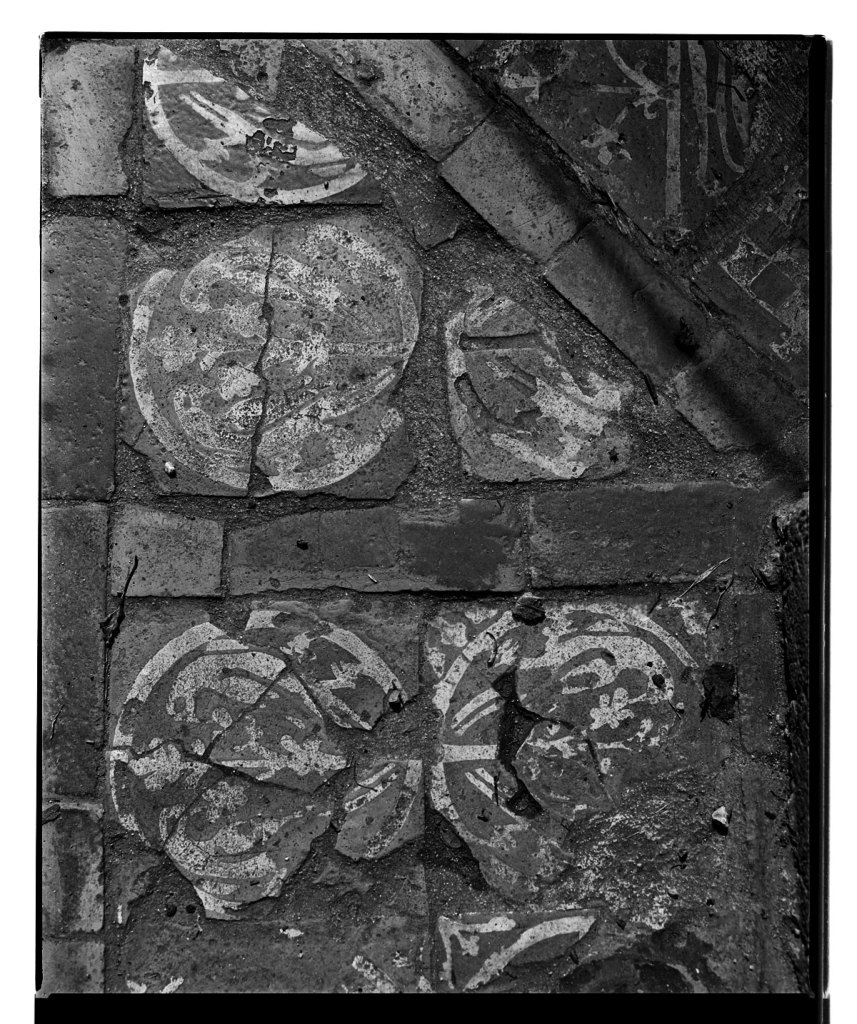
 

Marcus Bunyan (Australian, b. 1958)
Baby, Oslo
1994-1996
Gelatin silver print


Marcus Bunyan (Australian, b. 1958) 'Baby, Oslo' 1994-1996
 

Marcus Bunyan (Australian, b. 1958)
Baby, Oslo
1994-1996
Gelatin silver print


Marcus Bunyan (Australian, b. 1958) 'Baby, Oslo' 1994-1996
 

Marcus Bunyan (Australian, b. 1958)
Baby, Oslo
1994-1996
Gelatin silver print


Marcus Bunyan (Australian, b. 1958) 'Baby, Oslo' 1994-1996


Marcus Bunyan (Australian, b. 1958)
Baby, Oslo
1994-1996
Gelatin silver print


Marcus Bunyan (Australian, b. 1958) 'Barrows' 1994-1996


Marcus Bunyan (Australian, b. 1958)
Barrows
1994-1996
Gelatin silver print


Marcus Bunyan (Australian, b. 1958) 'Barrows' 1994-1996


Marcus Bunyan (Australian, b. 1958)
Barrows
1994-1996
Gelatin silver print


Marcus Bunyan (Australian, b. 1958) 'Bellows' 1994-1996


Marcus Bunyan (Australian, b. 1958)
Bellows
1994-1996
Gelatin silver print


Marcus Bunyan (Australian, b. 1958) 'Bonsai' 1994-1996


Marcus Bunyan (Australian, b. 1958)
Bonsai
1994-1996
Gelatin silver print


Marcus Bunyan (Australian, b. 1958) 'Bricks and cups' 1994-1996


Marcus Bunyan (Australian, b. 1958)
Bricks and cups
1994-1996
Gelatin silver print


Marcus Bunyan (Australian, b. 1958) 'Cabbage' 1994-1996


Marcus Bunyan (Australian, b. 1958)
Cabbage
1994-1996
Gelatin silver print


Children and flowers


Marcus Bunyan (Australian, b. 1958) 'Children and flowers I' 1994-1996


Marcus Bunyan (Australian, b. 1958)
Children and flowers I
1994-1996
Gelatin silver print


Marcus Bunyan (Australian, b. 1958) 'Children and flowers II' 1994-1996


Marcus Bunyan (Australian, b. 1958)
Children and flowers II
1994-1996
Gelatin silver print


Marcus Bunyan (Australian, b. 1958) 'Children and flowers III' 1994-1996


Marcus Bunyan (Australian, b. 1958)
Children and flowers III
1994-1996
Gelatin silver print


Marcus Bunyan (Australian, b. 1958) 'Children and flowers IV' 1994-1996


Marcus Bunyan (Australian, b. 1958)
Children and flowers IV
1994-1996
Gelatin silver print

______________________________


Marcus Bunyan (Australian, b. 1958) 'Corrugations I' 1994-1996


Marcus Bunyan (Australian, b. 1958)
Corrugations I
1994-1996
Gelatin silver print


Marcus Bunyan (Australian, b. 1958) 'Corrugations II' 1994-1996


Marcus Bunyan (Australian, b. 1958)
Corrugations II
1994-1996
Gelatin silver print


Marcus Bunyan (Australian, b. 1958) 'Corrugations III' 1994-1996


Marcus Bunyan (Australian, b. 1958)
Corrugations III
1994-1996
Gelatin silver print


Marcus Bunyan (Australian, b. 1958) 'Corrugations IV' 1994-1996


Marcus Bunyan (Australian, b. 1958)
Corrugations IV
1994-1996
Gelatin silver print


Marcus Bunyan (Australian, b. 1958) 'Crazy paving' 1994-1996


Marcus Bunyan (Australian, b. 1958)
Crazy paving
1994-1996
Gelatin silver print


Marcus Bunyan (Australian, b. 1958) 'Marguerite Daisy I' 1994-1996


Marcus Bunyan (Australian, b. 1958)
Marguerite Daisy I
1994-1996
Gelatin silver print


Marcus Bunyan (Australian, b. 1958) 'Marguerite Daisy II' 1994-1996


Marcus Bunyan (Australian, b. 1958)
Marguerite Daisy II
1994-1996
Gelatin silver print

______________________________


Marcus Bunyan (Australian, b. 1958) 'Doll face I' 1994-1996


Marcus Bunyan (Australian, b. 1958)
Doll face I
1994-1996
Gelatin silver print


Marcus Bunyan (Australian, b. 1958) 'Doll face II' 1994-1996


Marcus Bunyan (Australian, b. 1958)
Doll face II
1994-1996
Gelatin silver print


Marcus Bunyan (Australian, b. 1958) 'Drainpipe I' 1994-1996


Marcus Bunyan (Australian, b. 1958)
Drainpipe I
1994-1996
Gelatin silver print


Marcus Bunyan (Australian, b. 1958) 'Drainpipe II' 1994-1996


Marcus Bunyan (Australian, b. 1958)
Drainpipe II
1994-1996
Gelatin silver print


Marcus Bunyan (Australian, b. 1958) 'Face I (William Klein)' 1994-1996


Marcus Bunyan (Australian, b. 1958)
Face I (William Klein)
1994-1996
Gelatin silver print


Marcus Bunyan (Australian, b. 1958) 'Face II (William Klein)' 1994-1996


Marcus Bunyan (Australian, b. 1958)
Face II (William Klein)
1994-1996
Gelatin silver print


Marcus Bunyan (Australian, b. 1958) 'Gate I' 1994-1996


Marcus Bunyan (Australian, b. 1958)
Gate I
1994-1996
Gelatin silver print


Marcus Bunyan (Australian, b. 1958) 'Gate II' 1994-1996


Marcus Bunyan (Australian, b. 1958)
Gate II
1994-1996
Gelatin silver print


Marcus Bunyan (Australian, b. 1958) 'Chalice I' 1994-1996


Marcus Bunyan (Australian, b. 1958)
Chalice I
1994-1996
Gelatin silver print


Marcus Bunyan (Australian, b. 1958) 'Chalice II' 1994-1996


Marcus Bunyan (Australian, b. 1958)
Chalice II
1994-1996
Gelatin silver print


Marcus Bunyan (Australian, b. 1958) 'Chalice III' 1994-1996


Marcus Bunyan (Australian, b. 1958)
Chalice III
1994-1996
Gelatin silver print


Marcus Bunyan (Australian, b. 1958) 'Cracked' 1994-1996


Marcus Bunyan (Australian, b. 1958)
Cracked
1994-1996
Gelatin silver print


Marcus Bunyan (Australian, b. 1958) 'Gumnuts' 1994-1996


Marcus Bunyan (Australian, b. 1958)
Gumnuts
1994-1996
Gelatin silver print


Marcus Bunyan (Australian, b. 1958) 'Hat I' 1994-1996


Marcus Bunyan (Australian, b. 1958)
Hat I
1994-1996
Gelatin silver print


Marcus Bunyan (Australian, b. 1958) 'Hat II' 1994-1996


Marcus Bunyan (Australian, b. 1958)
Hat II
1994-1996
Gelatin silver print


Marcus Bunyan (Australian, b. 1958) 'Helicopter, flag pole and sun' 1994-1996


Marcus Bunyan (Australian, b. 1958)
Helicopter, flag pole and sun
1994-96
Gelatin silver print


Marcus Bunyan (Australian, b. 1958) 'If?' 1994-1996


Marcus Bunyan (Australian, b. 1958)
If?
1994-1996
Gelatin silver print


Marcus Bunyan (Australian, b. 1958) 'Jubilee Street, Melbourne' 1994-1996


Marcus Bunyan (Australian, b. 1958)
Jubilee Street, Melbourne
1994-1996
Gelatin silver print


Marcus Bunyan (Australian, b. 1958) 'Kids horse I' 1994-1996


Marcus Bunyan (Australian, b. 1958)
Kids horse I
1994-1996
Gelatin silver print


Marcus Bunyan (Australian, b. 1958) 'Kids horse II' 1994-1996


Marcus Bunyan (Australian, b. 1958)
Kids horse II
1994-1996
Gelatin silver print


Marcus Bunyan (Australian, b. 1958) 'Monster' 1994-1996


Marcus Bunyan (Australian, b. 1958)
Monster
1994-1996
Gelatin silver print


Marcus Bunyan (Australian, b. 1958) 'Marquetry' 1994-1996


Marcus Bunyan (Australian, b. 1958)
Marquetry
1994-1996
Gelatin silver print


Marcus Bunyan (Australian, b. 1958) 'Saint Gregory I' 1994-1996


Marcus Bunyan (Australian, b. 1958)
Saint Gregory I
1994-1996
Gelatin silver print


Marcus Bunyan (Australian, b. 1958) 'Saint Gregory II' 1994-1996


Marcus Bunyan (Australian, b. 1958)
Saint Gregory II
1994-1996
Gelatin silver print


Marcus Bunyan (Australian, b. 1958) 'Saint Gregory III' 1994-1996


Marcus Bunyan (Australian, b. 1958)
Saint Gregory III
1994-96
Gelatin silver print


Melbourne gay pride 1994


Marcus Bunyan (Australian, b. 1958) 'Melbourne gay pride' 1994


Marcus Bunyan (Australian, b. 1958)
Melbourne gay pride
1994
Gelatin silver print


Marcus Bunyan (Australian, b. 1958) 'Body painting, Melbourne gay pride' 1994


Marcus Bunyan (Australian, b. 1958)
Body painting, Melbourne gay pride
1994
Gelatin silver print


Marcus Bunyan (Australian, b. 1958) 'Body painting, Melbourne gay pride' 1994


Marcus Bunyan (Australian, b. 1958)
Body painting, Melbourne gay pride
1994
Gelatin silver print


Marcus Bunyan (Australian, b. 1958) 'Body painting, Melbourne gay pride' 1994


Marcus Bunyan (Australian, b. 1958)
Body painting, Melbourne gay pride
1994
Gelatin silver print


Marcus Bunyan (Australian, b. 1958) 'Body painting, Melbourne gay pride' 1994


Marcus Bunyan (Australian, b. 1958)
Body painting, Melbourne gay pride
1994
Gelatin silver print


Marcus Bunyan (Australian, b. 1958) 'James Dean, Melbourne gay pride' 1994


Marcus Bunyan (Australian, b. 1958)
James Dean, Melbourne gay pride
1994
Gelatin silver print


Marcus Bunyan (Australian, b. 1958) 'Banquet table, Melbourne gay pride' 1994


Marcus Bunyan (Australian, b. 1958)
Banquet table, Melbourne gay pride
1994
Gelatin silver print


Marcus Bunyan (Australian, b. 1958) 'Eagle brand, Melbourne gay pride' 1994


Marcus Bunyan (Australian, b. 1958)
Eagle brand, Melbourne gay pride
1994
Gelatin silver print


Marcus Bunyan (Australian, b. 1958) 'Pentagram, Melbourne gay pride' 1994


Marcus Bunyan (Australian, b. 1958)
Pentagram, Melbourne gay pride
1994
Gelatin silver print


Marcus Bunyan (Australian, b. 1958) 'Love, Melbourne gay pride' 1994


Marcus Bunyan (Australian, b. 1958)
Love, Melbourne gay pride
1994
Gelatin silver print


Marcus Bunyan (Australian, b. 1958) 'Dragons wing, Melbourne gay pride' 1994


Marcus Bunyan (Australian, b. 1958)
Dragons wing, Melbourne gay pride
1994
Gelatin silver print


Marcus Bunyan (Australian, b. 1958) 'Rose Kennedy, Melbourne gay pride' 1994


Marcus Bunyan (Australian, b. 1958)
Rose Kennedy, Melbourne gay pride
1994
Gelatin silver print


Marcus Bunyan (Australian, b. 1958) 'Om, Melbourne gay pride' 1994


Marcus Bunyan (Australian, b. 1958)
Om, Melbourne gay pride
1994
Gelatin silver print


Marcus Bunyan website

Marcus Bunyan black and white archive 1991-1997

LIKE ART BLART ON FACEBOOK

Back to top