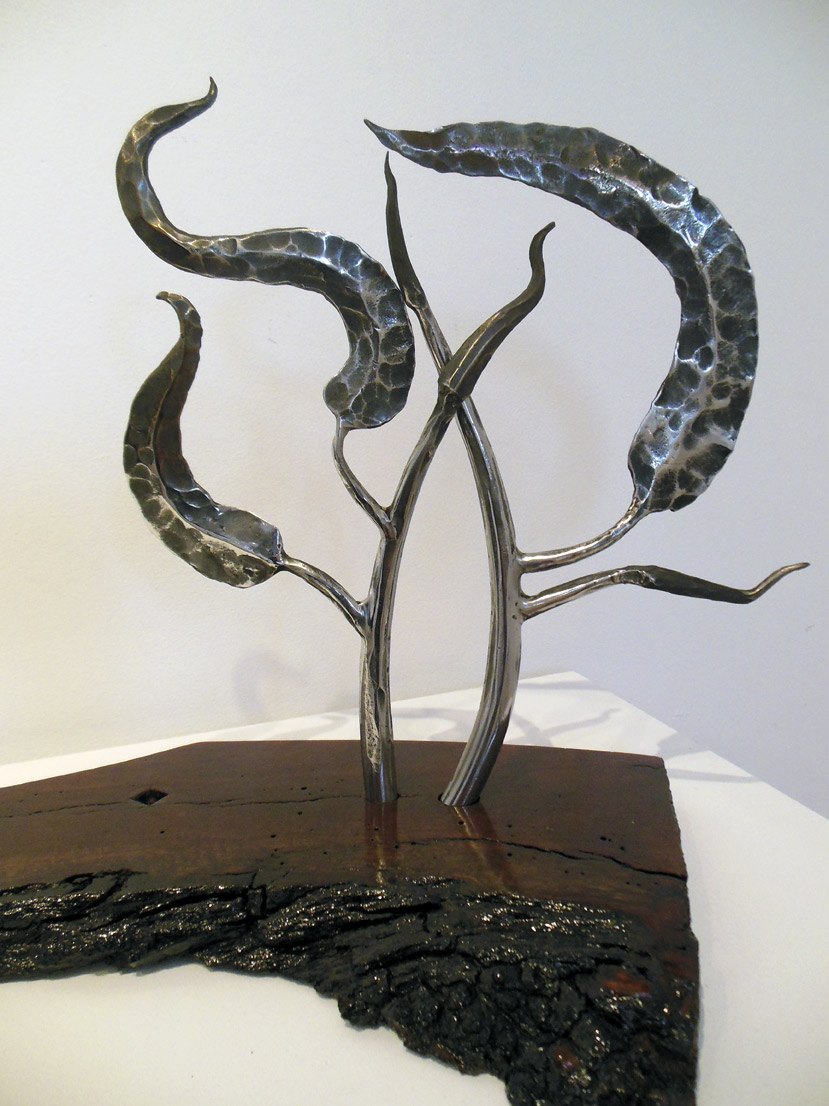
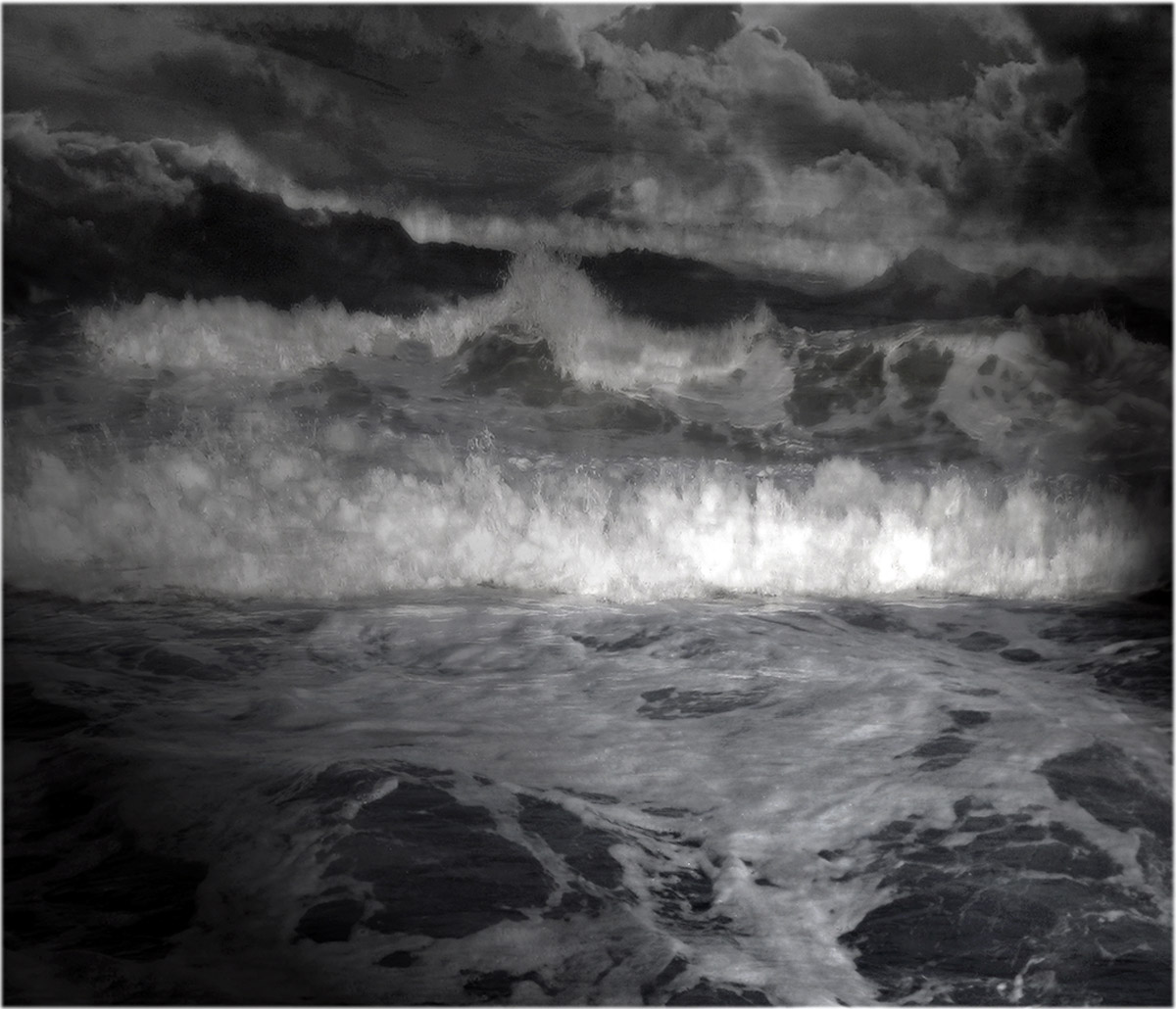
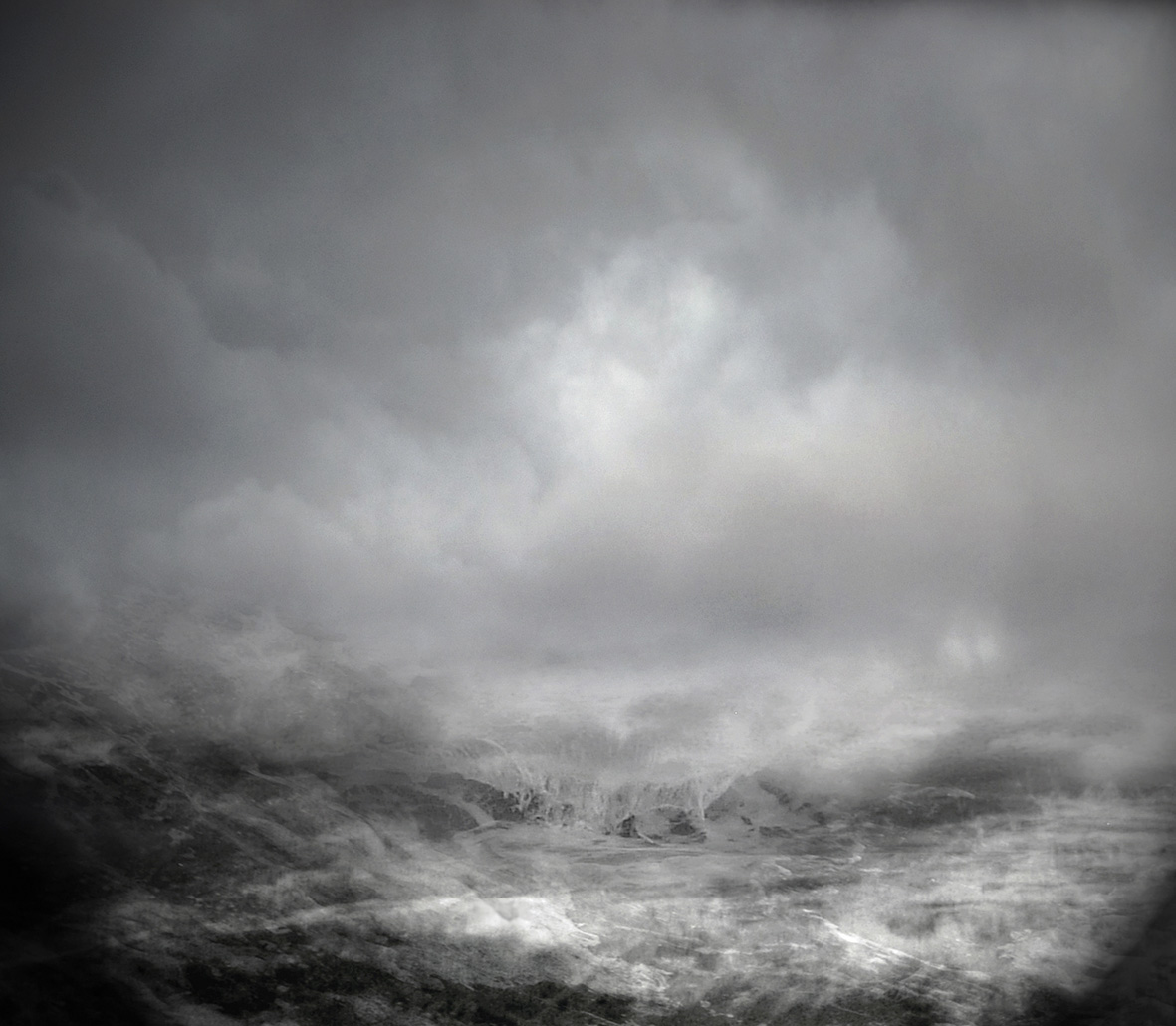
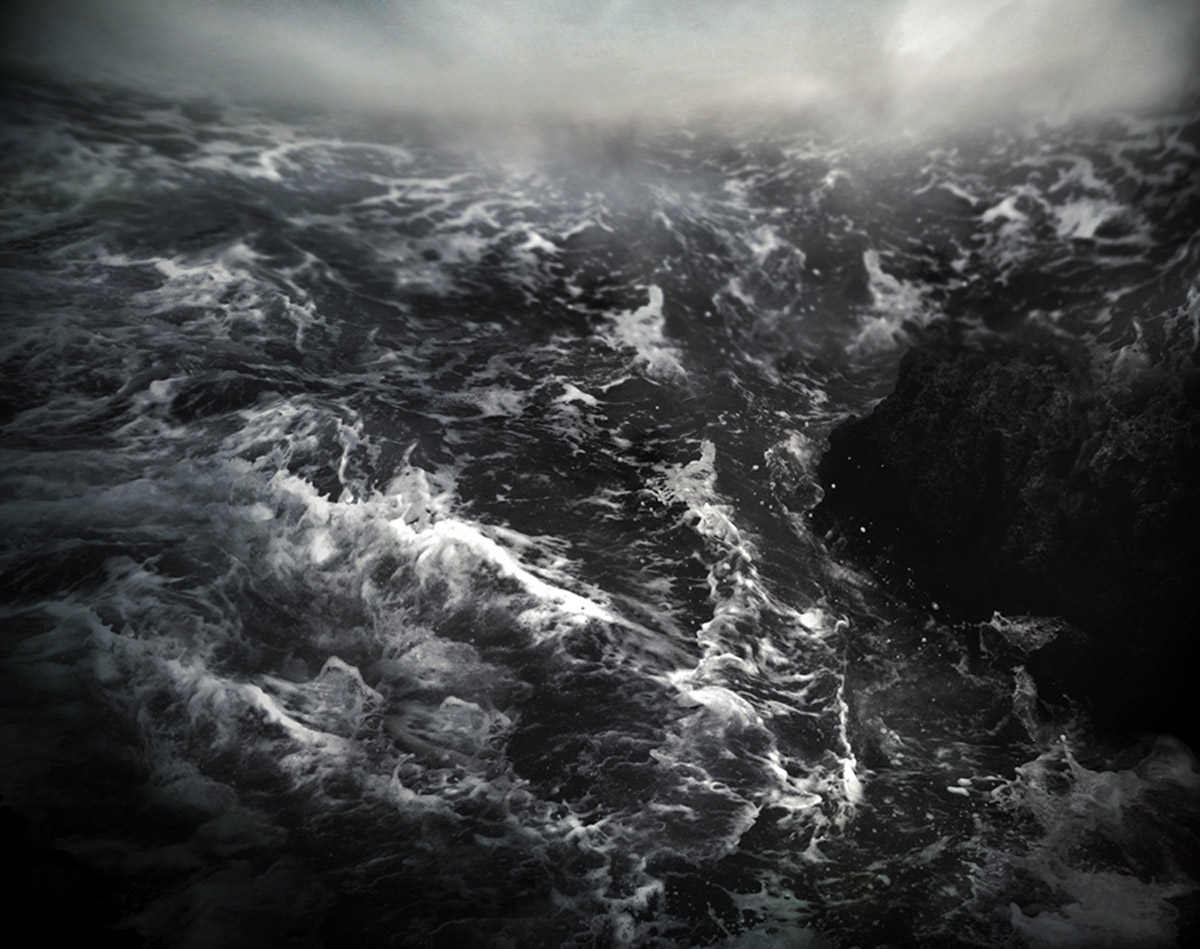
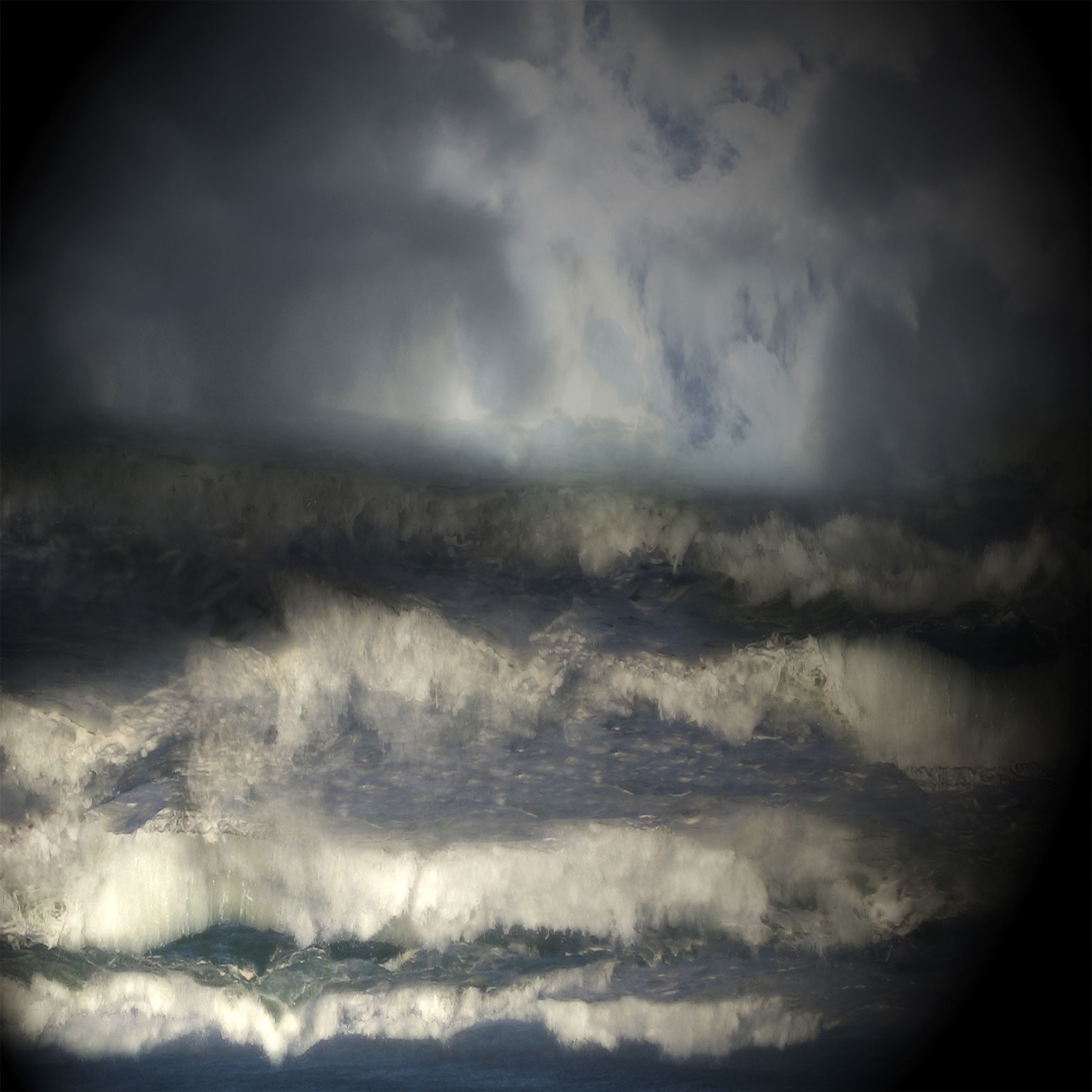
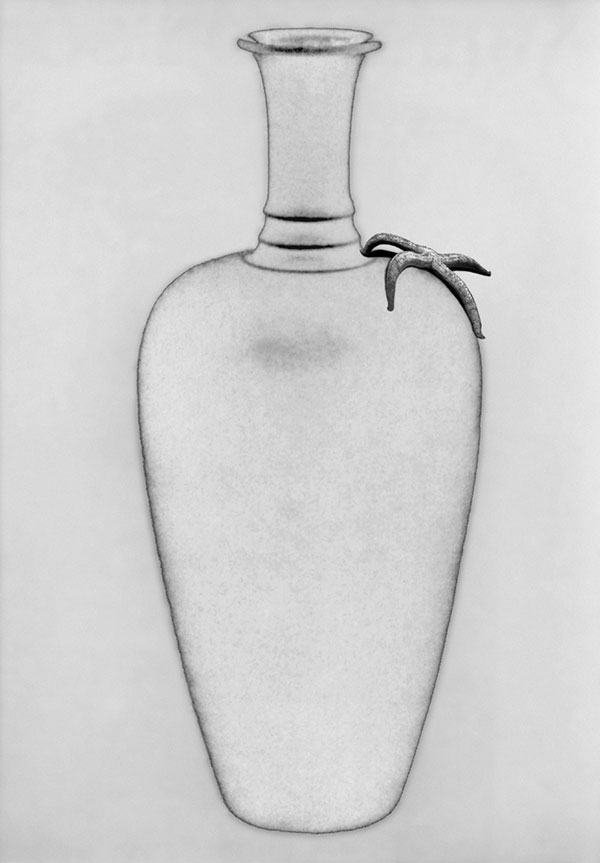
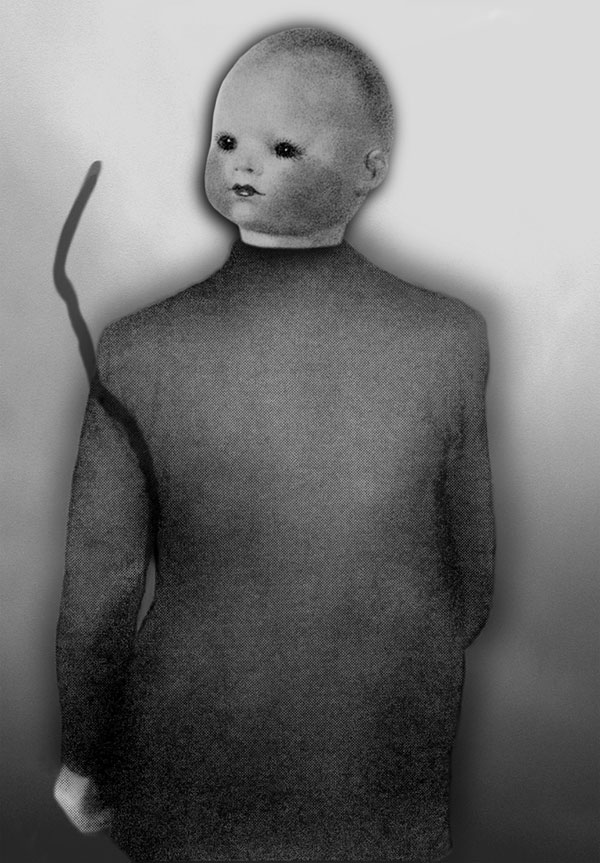
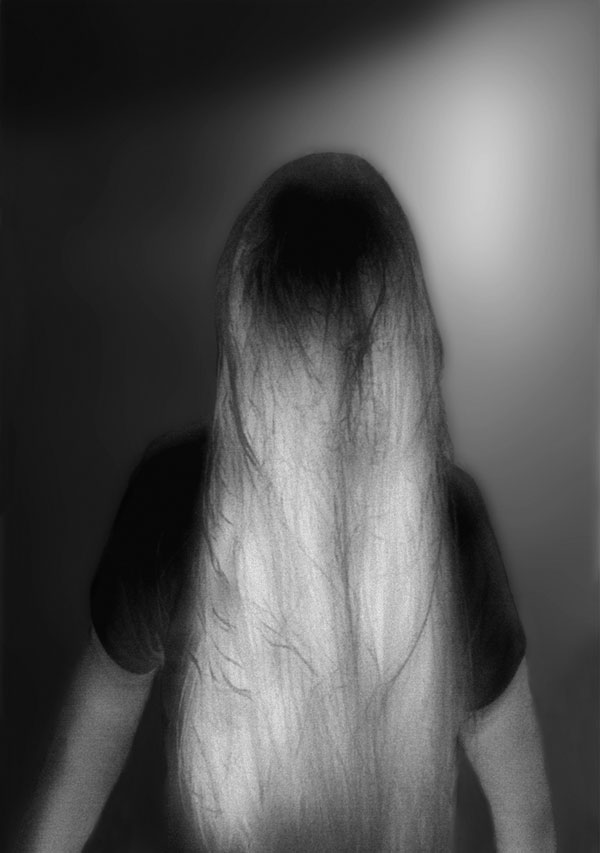
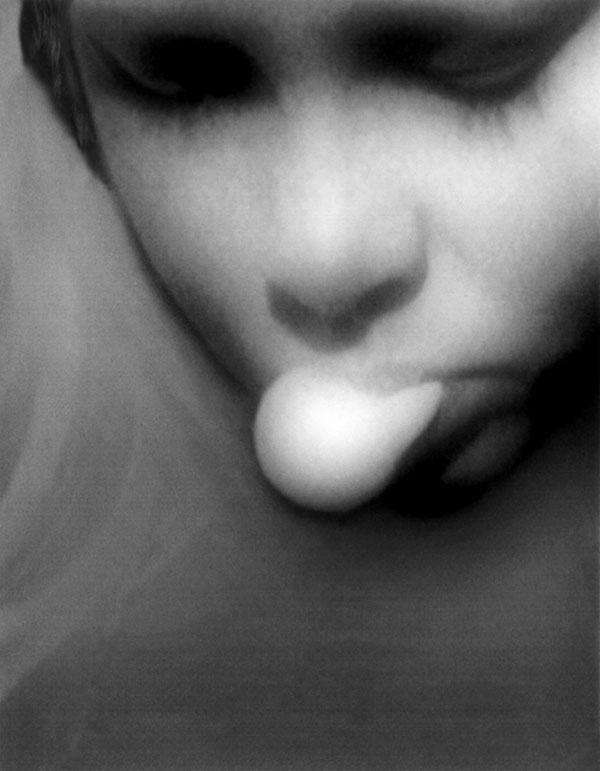
Exhibition: ‘Troy Ruffels: Cinder’ at James Makin Gallery, Collingwood, Melbourne

Exhibition dates: 13th June – 6th July, 2013


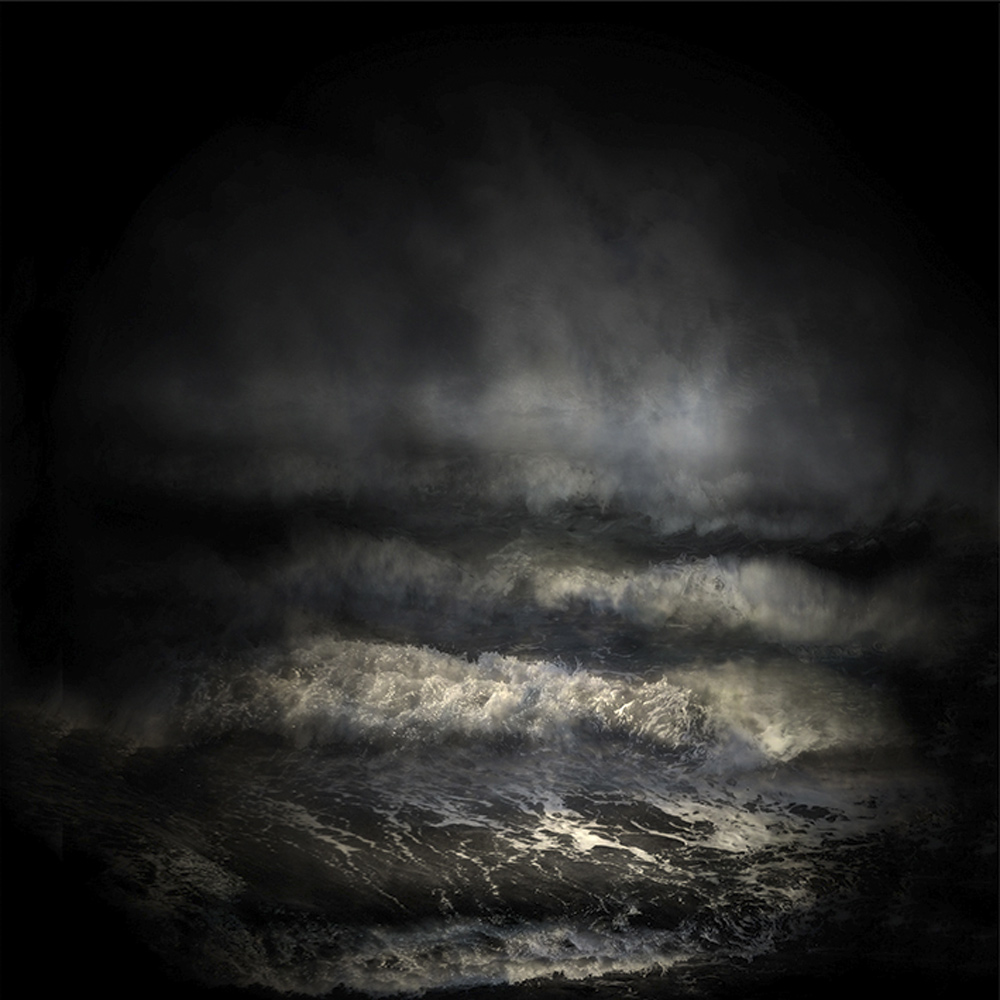
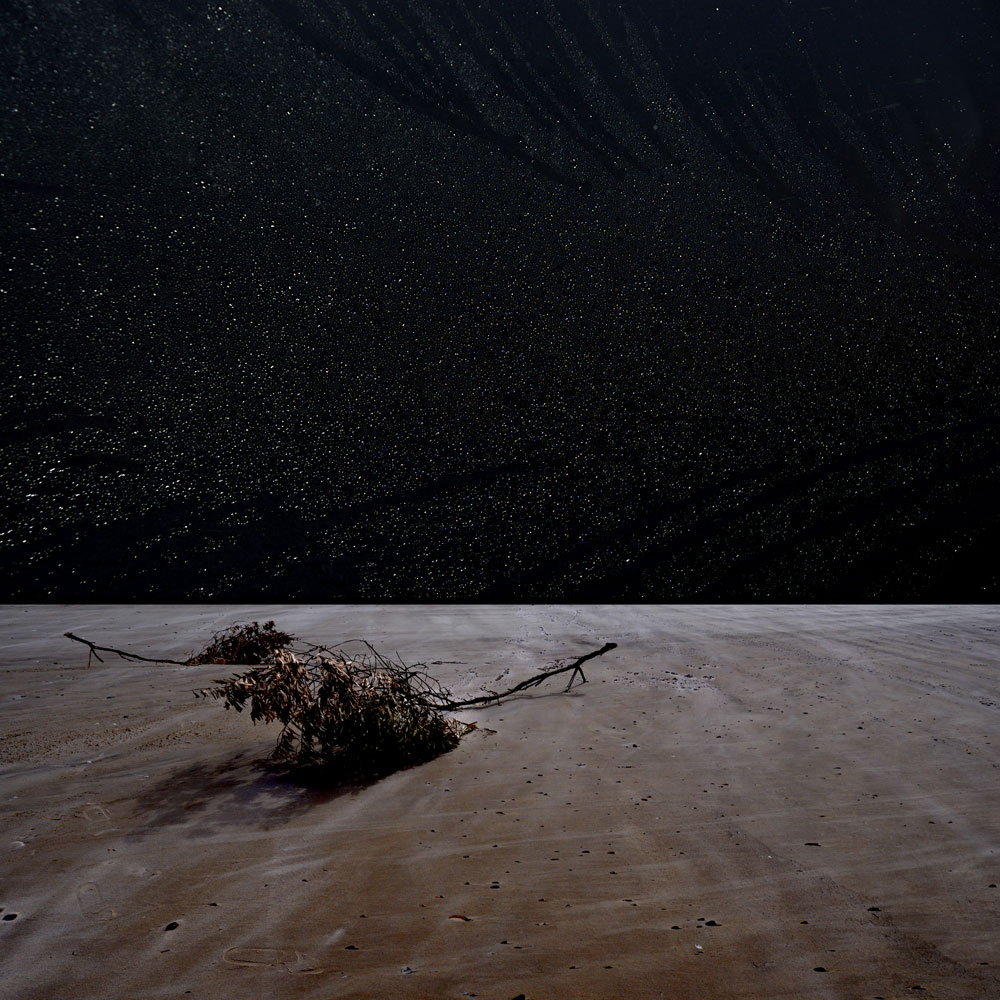
Troy Ruffels (Australian, b. 1972) 'Cicada' 2013 from the exhibition 'Troy Ruffels: Cinder' at James Makin Gallery, Collingwood, Melbourne, June - July, 2013


Troy Ruffels (Australian, b. 1972)
Cicada
2013
Archival solvent based inkjet print on composite aluminium
120 cm x 240cm
Edition of 3


This scratching away at reality. Abstractness of becoming.


Tension. Music. Light. Undertow.

1/ A current below the surface of the sea moving in the opposite direction to the surface current.

2/ An implicit quality, emotion, or influence underlying the surface aspects of something and leaving a particular impression.


Imagined, chthonian (of or relating to the underworld, from Greek khthonios, of the earth) landscape.

(Dis)possession of the land, as though the land is rebelling against subjective gaze of the viewer.

Prosaic titles (Bracken, Cinder, Rift) with a poetic zest (remains of the day).

Spaces of isolation / human marking (thumbprints on work) / absence / presence.


Manifestations of the mind.

The landscape as Other.


Dr Marcus Bunyan


Many thankx to James Makin Gallery for allowing me to publish the photographs in the posting. Please click on the photographs for a larger version of the image.


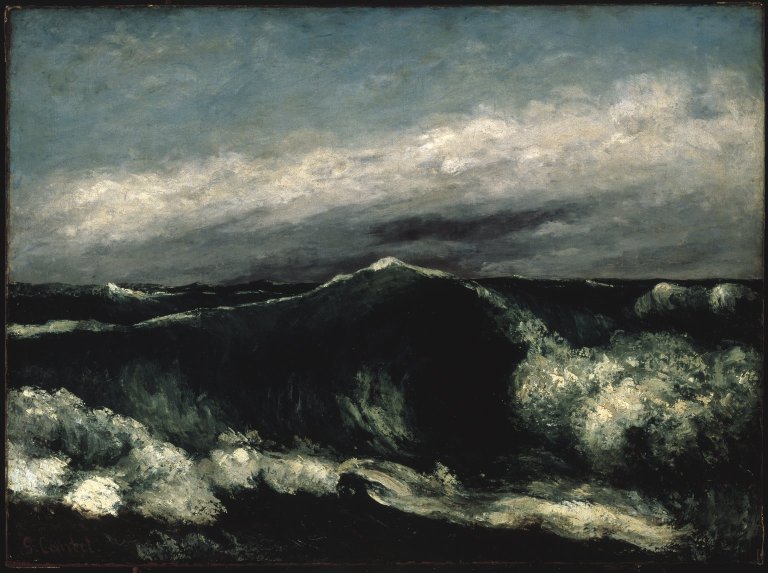
Gustave Courbet (French, 1819-1877) 'The Wave' c. 1869


Gustave Courbet (French, 1819-1877)
The Wave
c. 1869


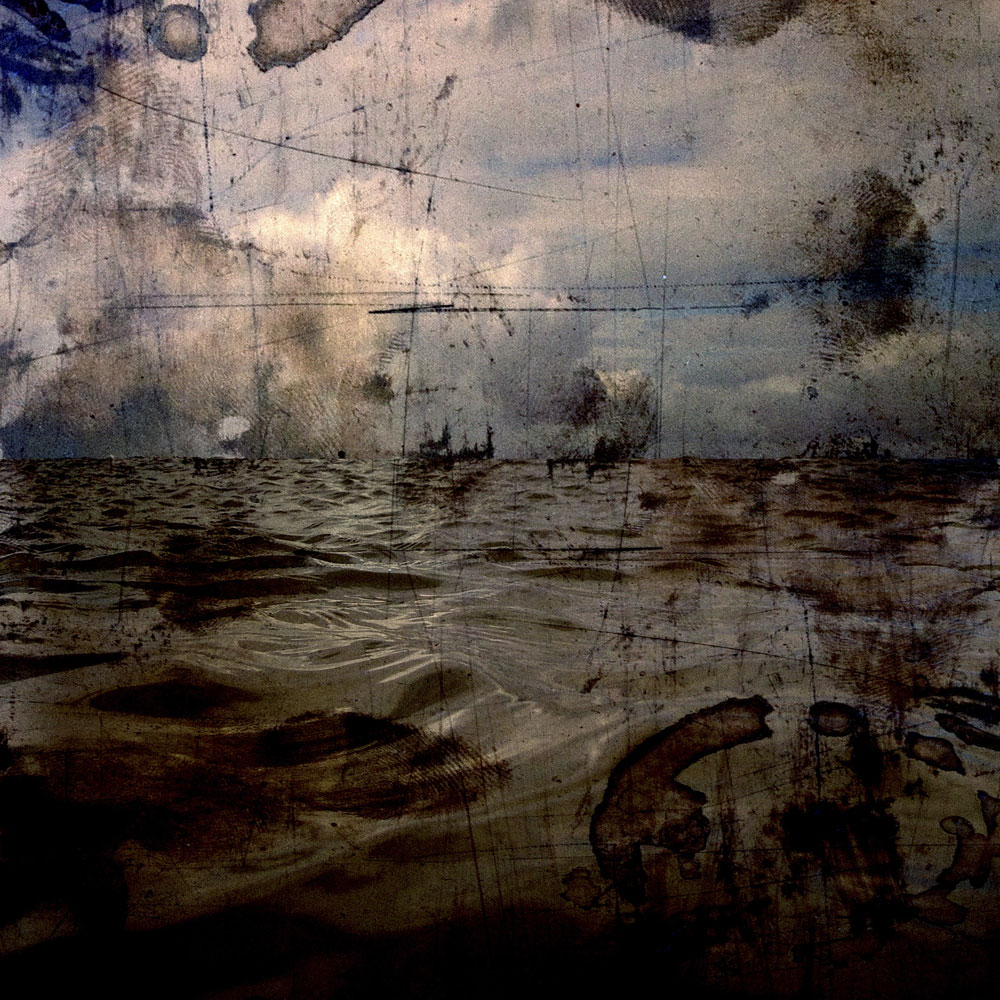
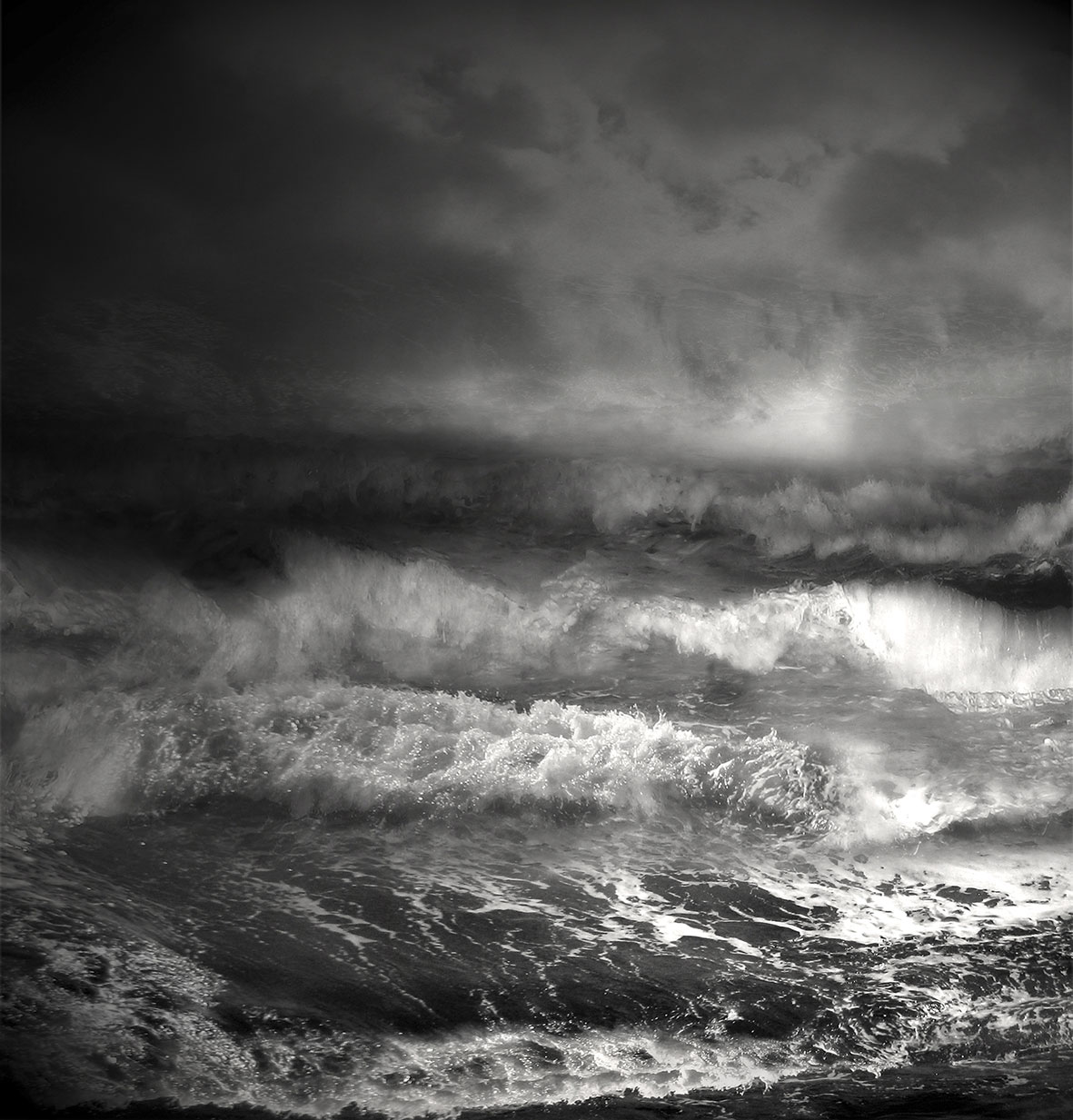
Troy Ruffels (Australian, b. 1972) 'Sea #3 (remains of the day)' 2013 from the exhibition 'Troy Ruffels: Cinder' at James Makin Gallery, Collingwood, Melbourne, June - July, 2013


Troy Ruffels (Australian, b. 1972)
Sea #3 (remains of the day)
2013
Archival solvent based inkjet print on composite aluminium
107 cm x 107cm
Edition of 12


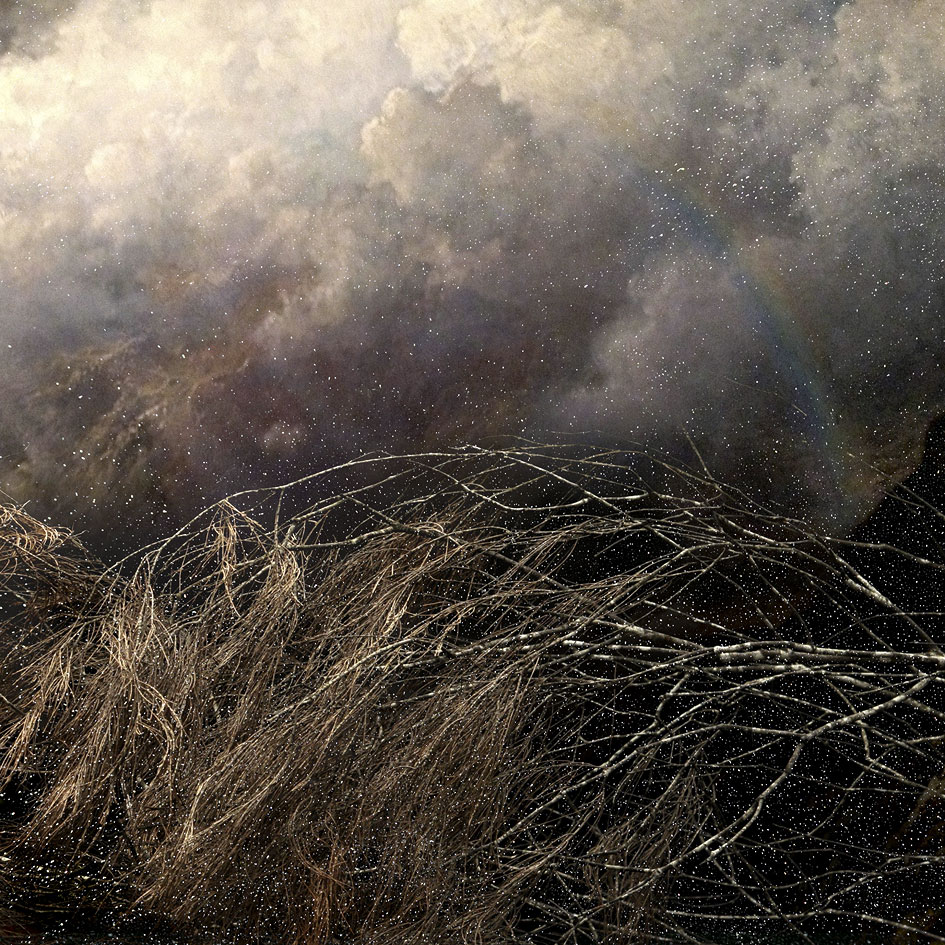
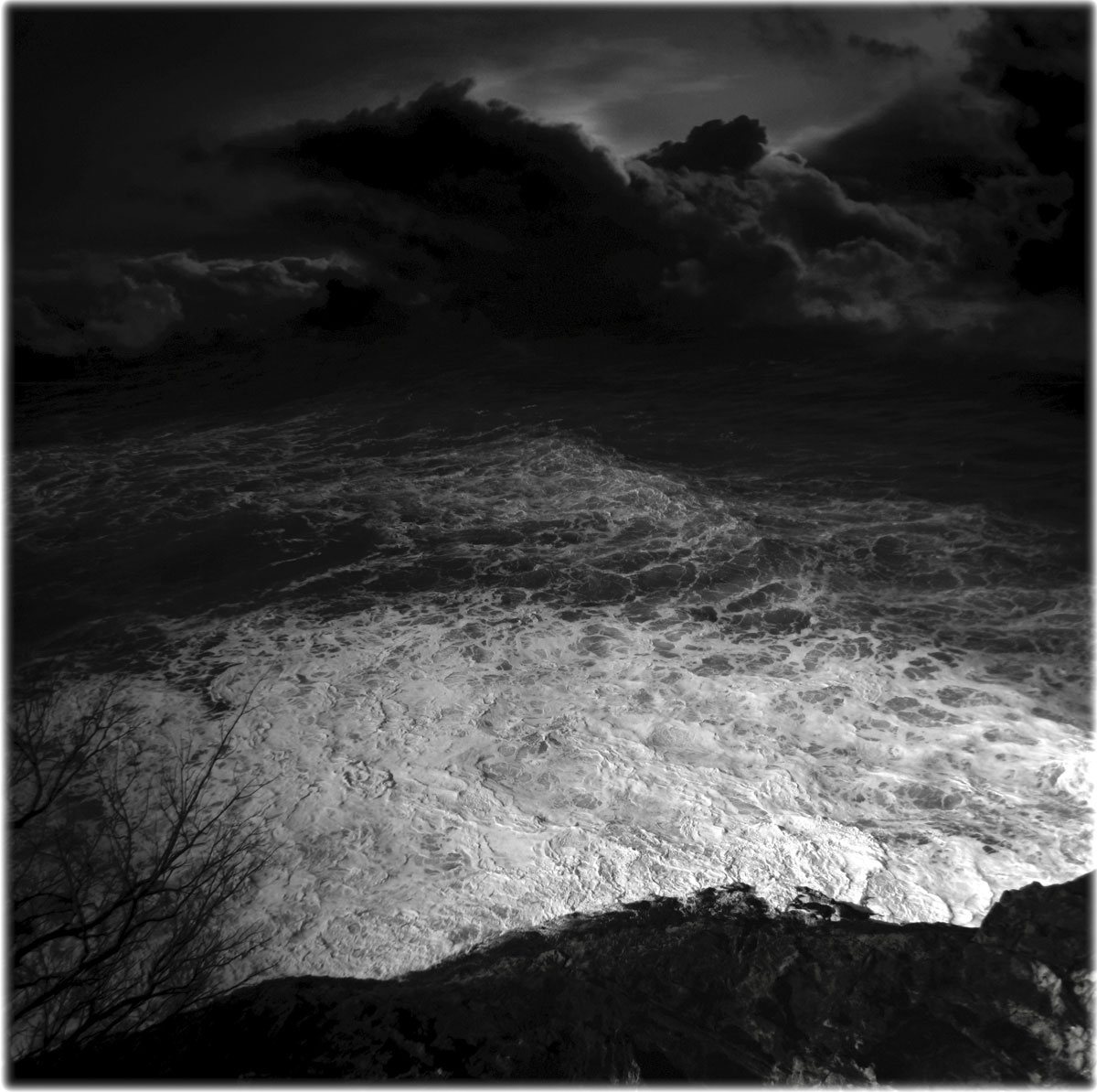
Troy Ruffels (Australian, b. 1972) 'Bracken' 2013


Troy Ruffels (Australian, b. 1972)
Bracken
2013
Archival solvent based inkjet print on composite aluminium
107 cm x 107cm
Edition of 12


Troy Ruffels (Australian, b. 1972) 'Cinder' 2013


Troy Ruffels (Australian, b. 1972)
Cinder
2013
Archival solvent based inkjet print on composite aluminium
107 cm x 107cm
Edition of 12


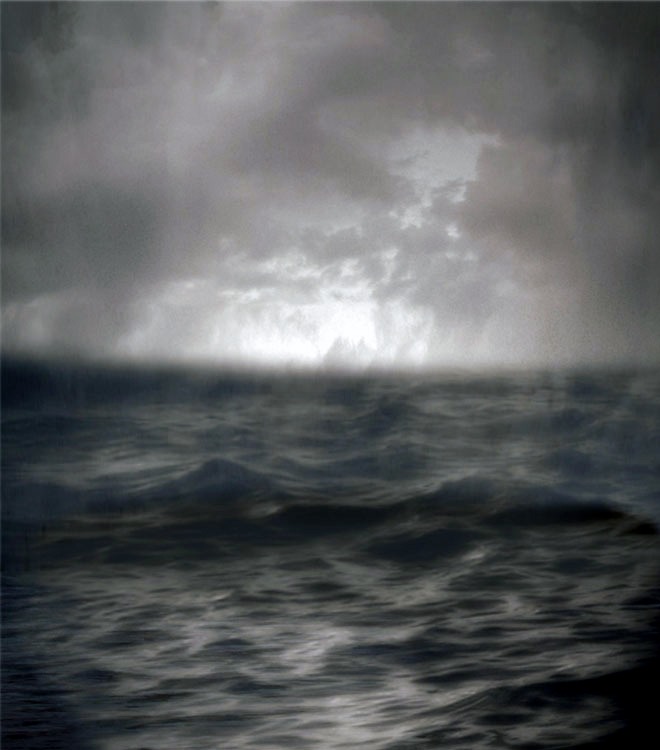
Troy Ruffels (Australian, b. 1972) 'Sea #4 (Second Winter)' 2013


Troy Ruffels (Australian, b. 1972)
Sea #4 (Second Winter)
2013
Archival solvent based inkjet print on composite aluminium
107 cm x 107cm
Edition of 12


This exhibition sees photo media artist Troy Ruffels employ innovative techniques to create his evocative imagery, which is heavily informed by the natural world. Ruffels has developed a unique process of drawing from multiple photographic source images to create each final work, which is subsequently printed using solvent based inks onto composite aluminium sheets, as opposed to standard archival papers. By utilising the reflective qualities of the aluminium Ruffels illuminates his intriguing landscape imagery with shifting light effects.

“Photo-media artist Troy Ruffels extends the boundaries of traditional photography towards a realm of limitless creative possibilities. Observing and recording sites within the Tasmanian wilderness and beyond, Ruffels draws from multiple source images to arrive at his final works. In doing so the artist weaves a highly personal and emotive response to various locations within the natural world that have remained lodged in his imagination. His process allows for a range of atmospheres and moods to be evoked, from a dreamlike softness, to a densely weighted gravity.

Overall the works in Cinder reflect a highly personal response to place, as in the process of revealing nature’s secrets the artist reveals a part of himself. Ruffels displays his impressive technical and creative prowess in transfiguring and reassembling the elements, blending fact with fiction to tell the understory of the night.” (Marguerite Brown, Cat. Essay JMG Journal, 2013)

Press release from the James Makin Gallery website


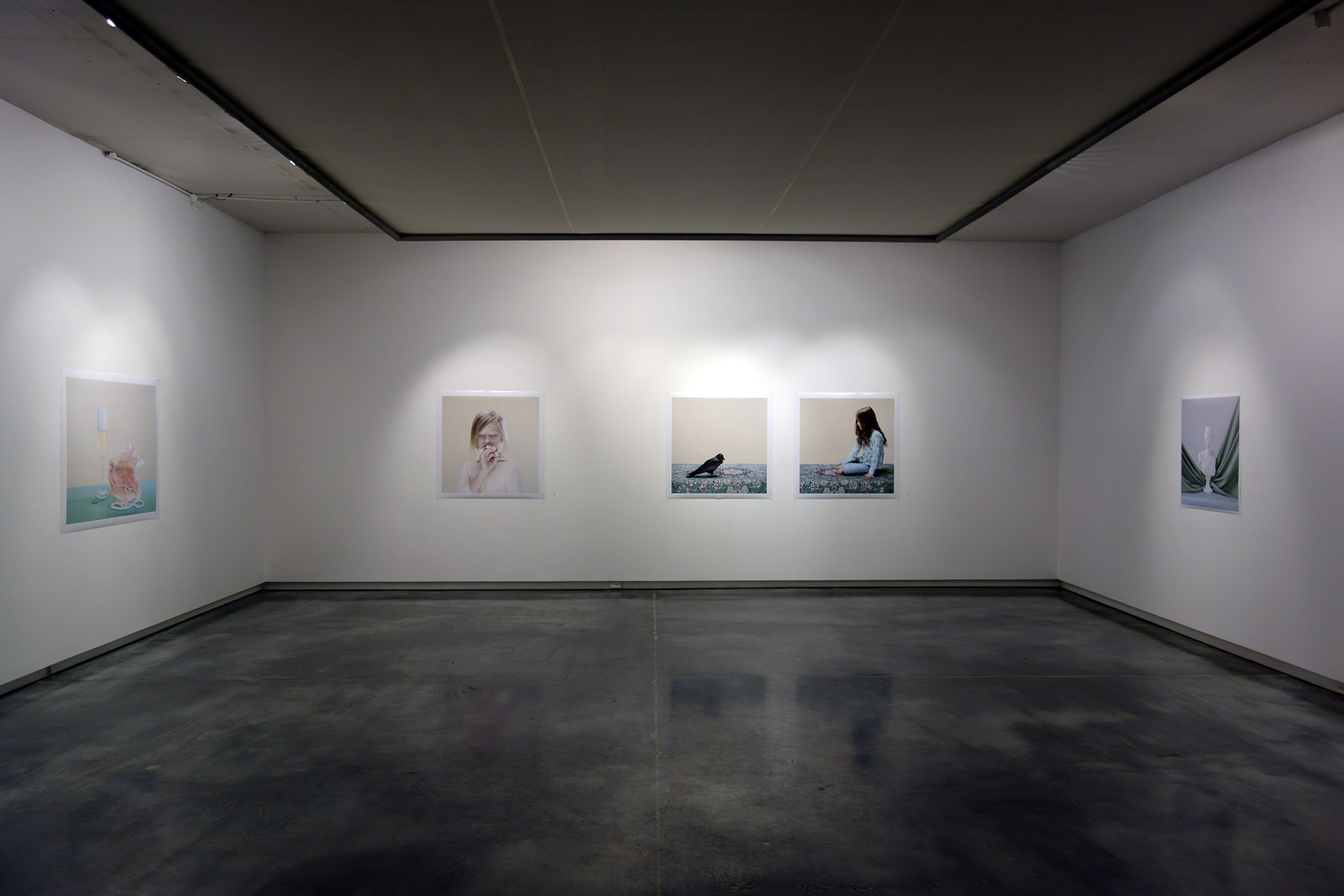
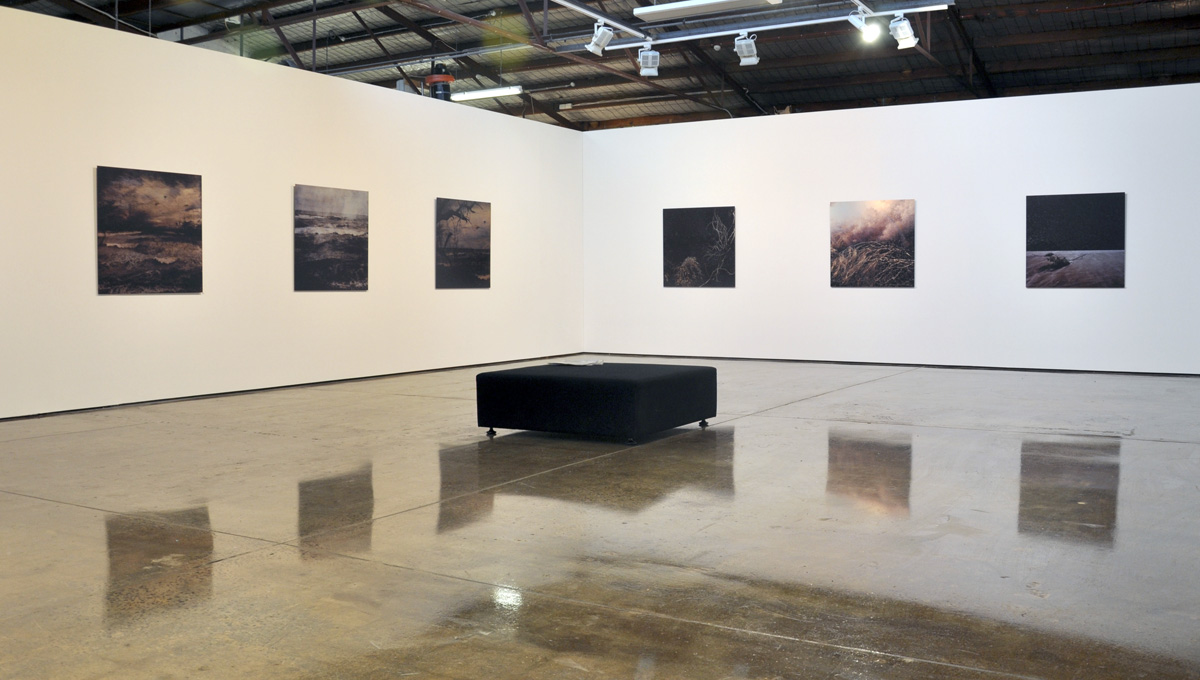
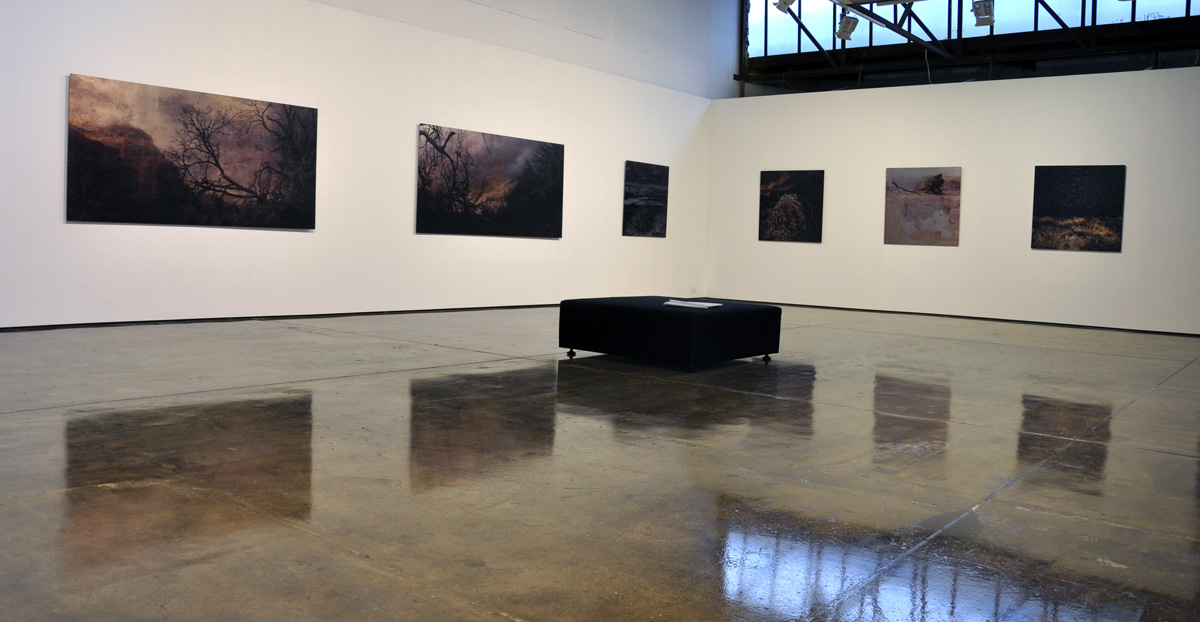
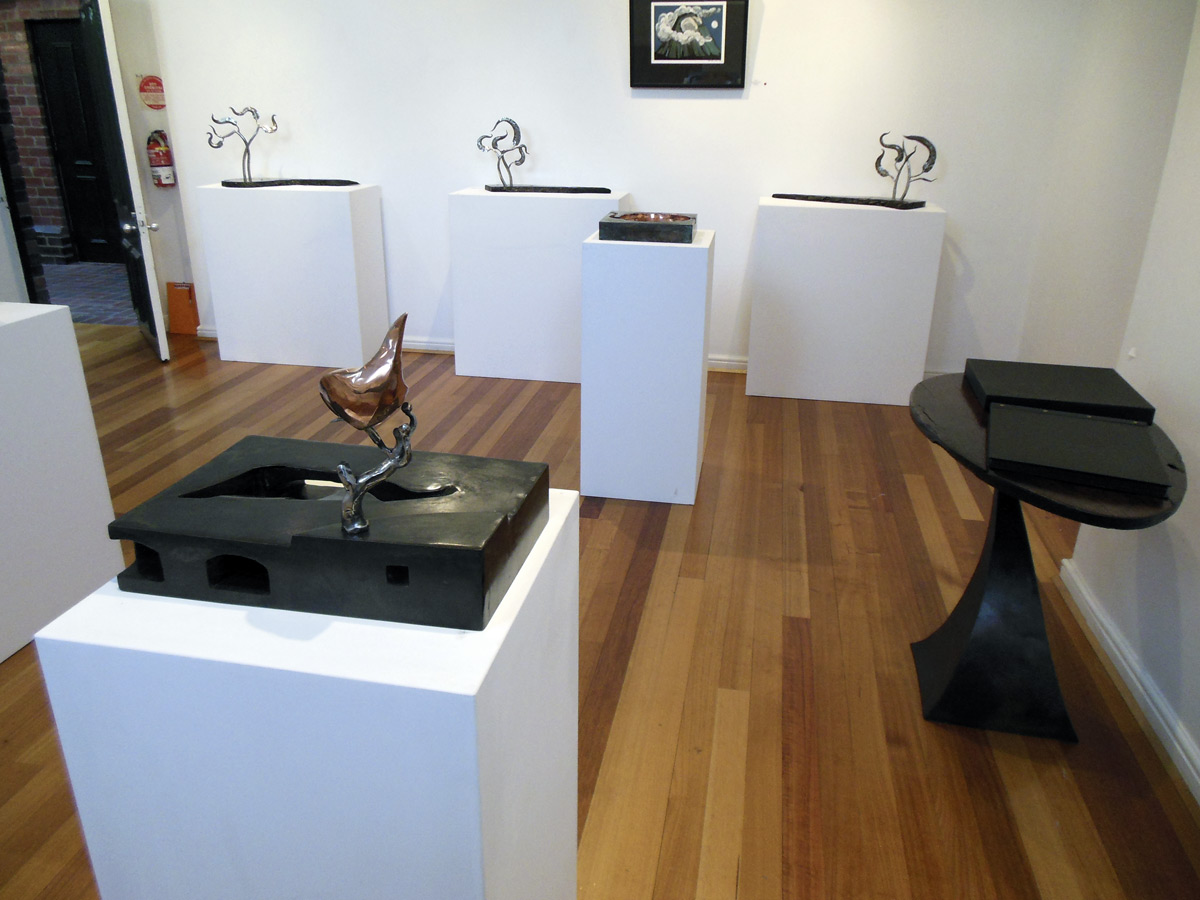
Installation view of 'Troy Ruffels: Cinder' at James Makin Gallery

Installation views of 'Troy Ruffels: Cinder' at James Makin Gallery

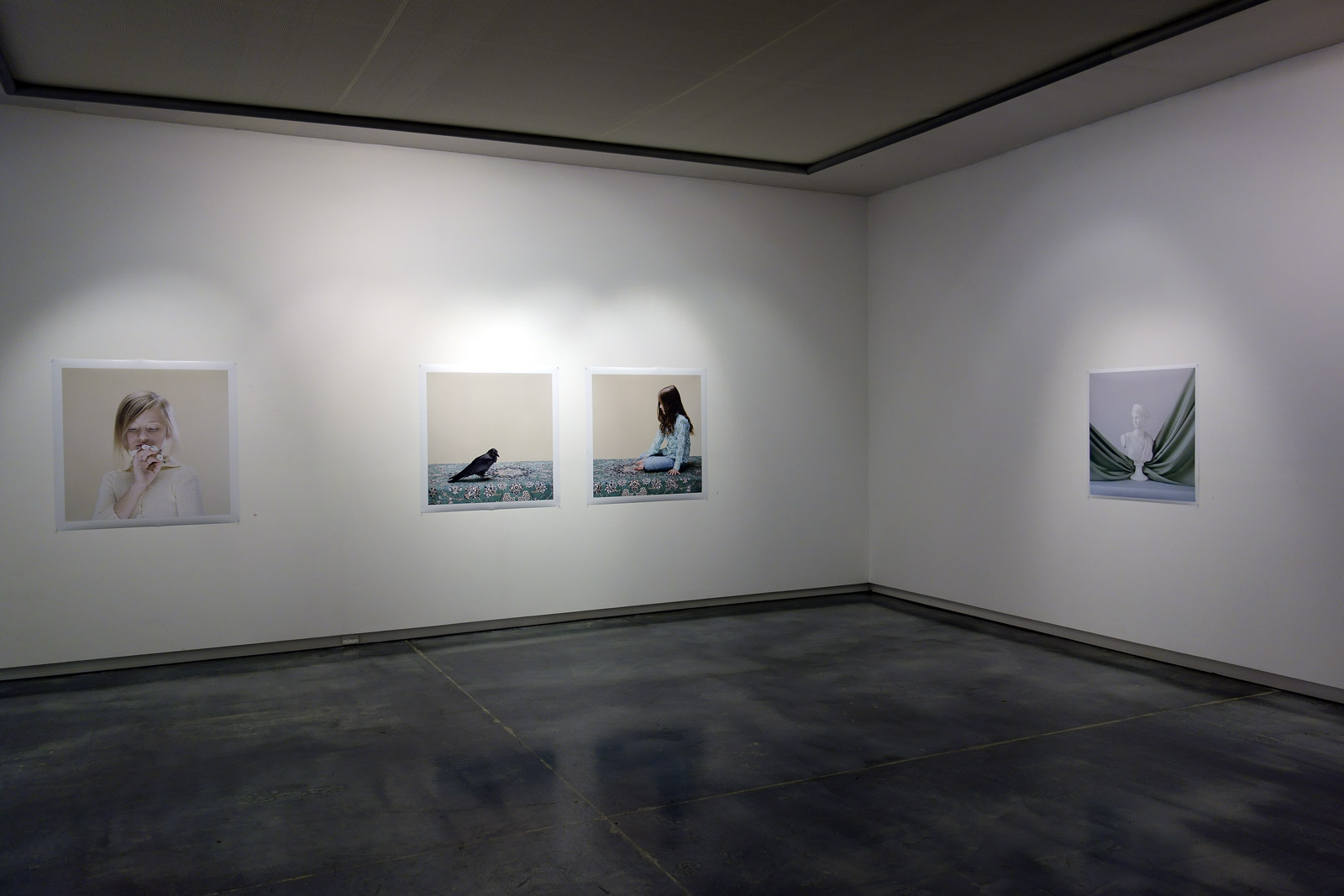
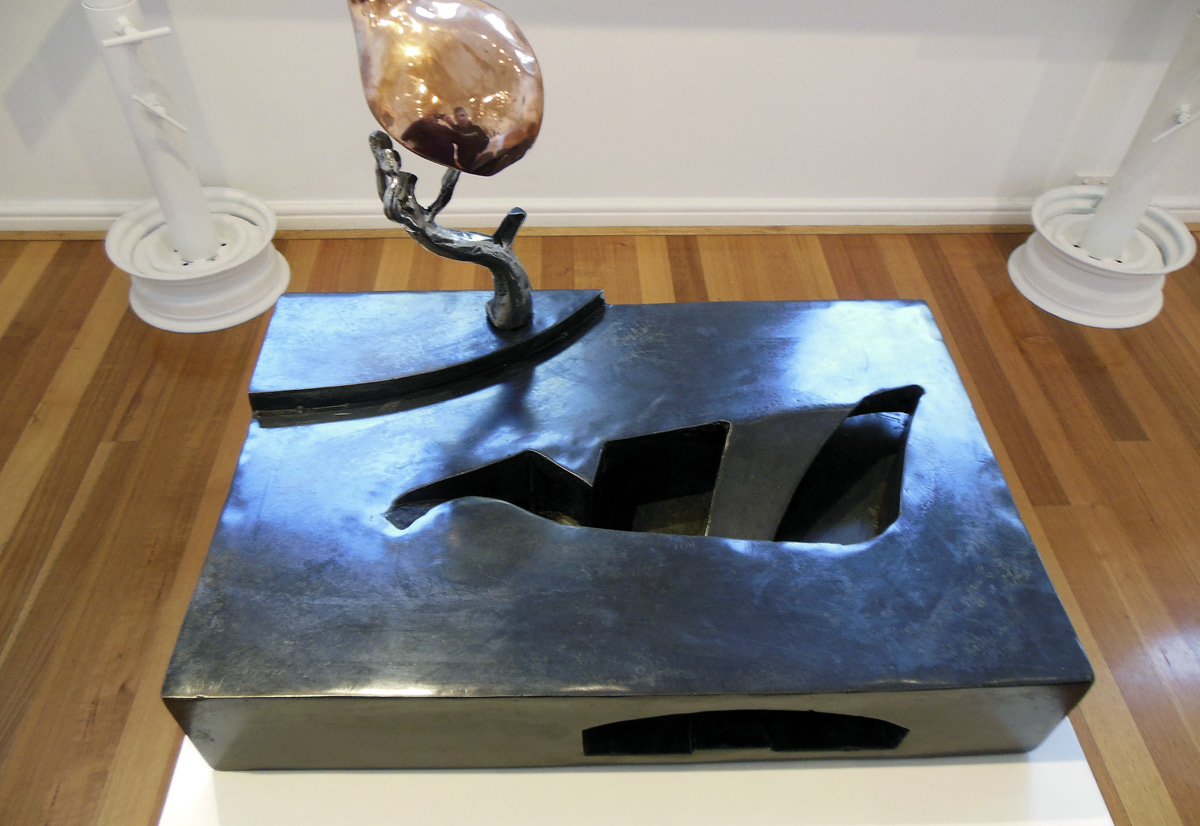
Installation view of 'Troy Ruffels: Cinder' at James Makin Gallery


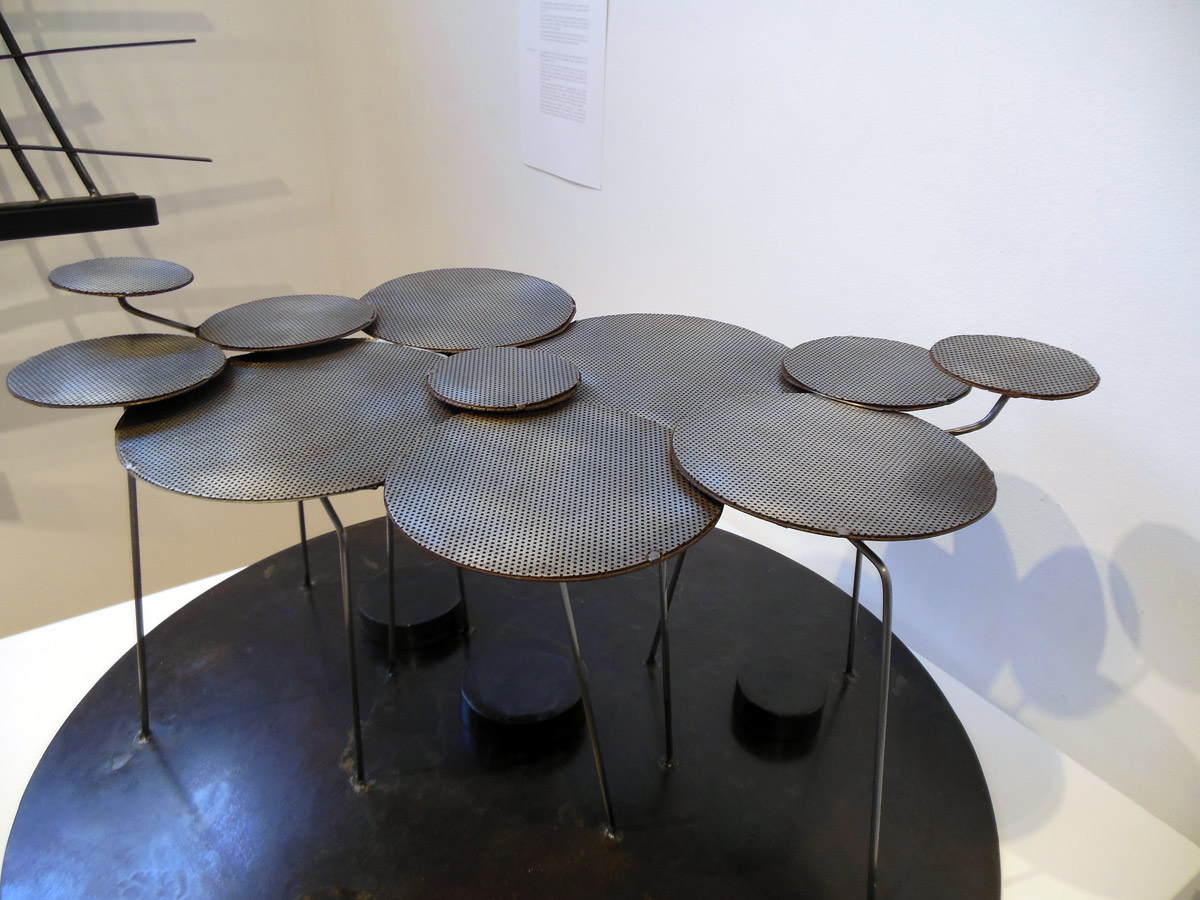
Installation views of Troy Ruffels: Cinder at James Makin Gallery
Photos: Marcus Bunyan


Troy Ruffels (Australian, b. 1972) 'Etude No.9' 2013


Troy Ruffels (Australian, b. 1972)
Etude No.9
2013
Archival solvent based inkjet print on composite aluminium
107 cm x 107cm
Edition of 12


Troy Ruffels (Australian, b. 1972) 'Rift' 2013


Troy Ruffels (Australian, b. 1972)
Rift
2013
Archival solvent based inkjet print on composite aluminium
107 cm x 107cm
Edition of 12


Troy Ruffels (Australian, b. 1972) 'Understory' 2013


Troy Ruffels (Australian, b. 1972)
Understory
2013
Archival solvent based inkjet print on composite aluminium
107 cm x 107cm
Edition of 12


Troy Ruffels (Australian, b. 1972) 'Sea #1 (Arc)' 2013


Troy Ruffels (Australian, b. 1972)
Sea #1 (Arc)
2013
Archival solvent based inkjet print on composite aluminium
107 cm x 107cm
Edition of 12


James Makin Gallery

This gallery has now closed.
LIKE ART BLART ON FACEBOOK

Back to top

Exhibition: ‘Joan Ross: Touching Other People’s Shopping’ at Bett Gallery, Hobart

Exhibition dates: 7th June – 28th June 2013


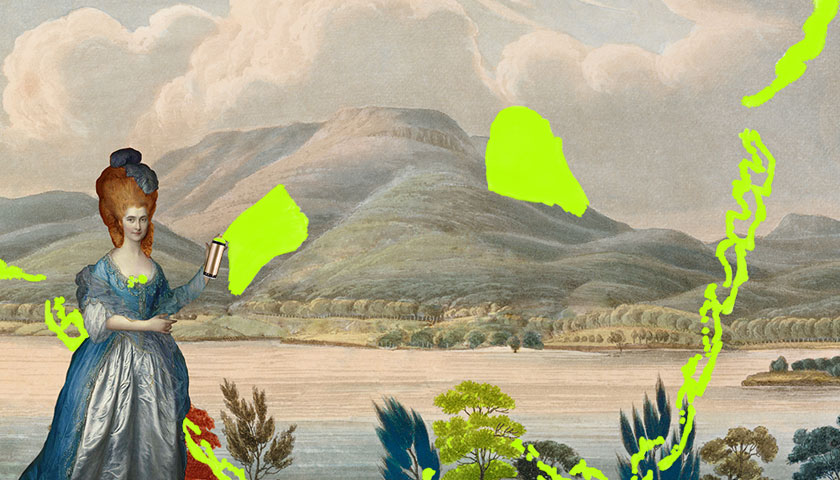
Joan Ross (Australian, b. 1961) 'Mine' 2013


Joan Ross (Australian, b. 1961)
Mine
2013
hand painted pigment print on cotton rag paper
40 x 60cm
edition of 3


The claiming of things
The touching of things
The digging of land
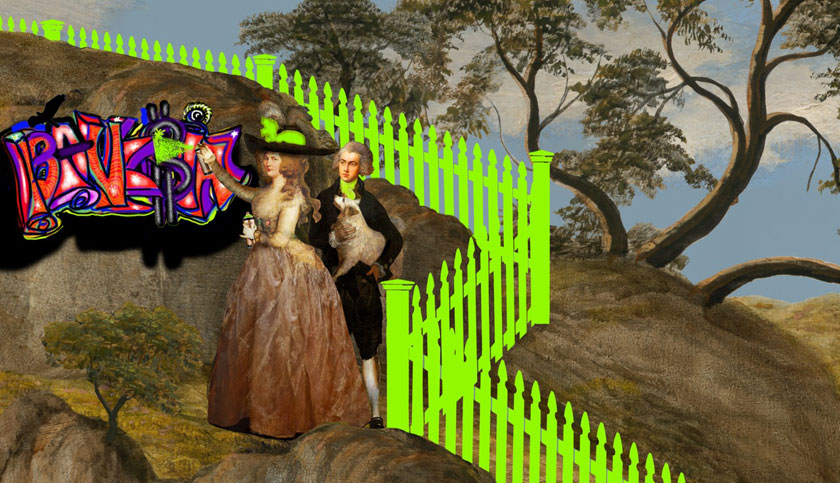
The tagging of place
The taking over of the world

Tag and capture.
Tag and capture.
Shop, dig, spray, destroy.


An ironic critique of the pastoral, neo/colonial world, tagged and captured in the 21st century.

Excellent work. The construction, sensibility and humour of the videos is outstanding. I also responded to the two works Tag and capture and Shopping for butterfly (both 2013, below).

Dr Marcus Bunyan


Many thankx to Bett Gallery for allowing me to publish the photographs and videos in the posting. Please click on the photographs for a larger version of the image.


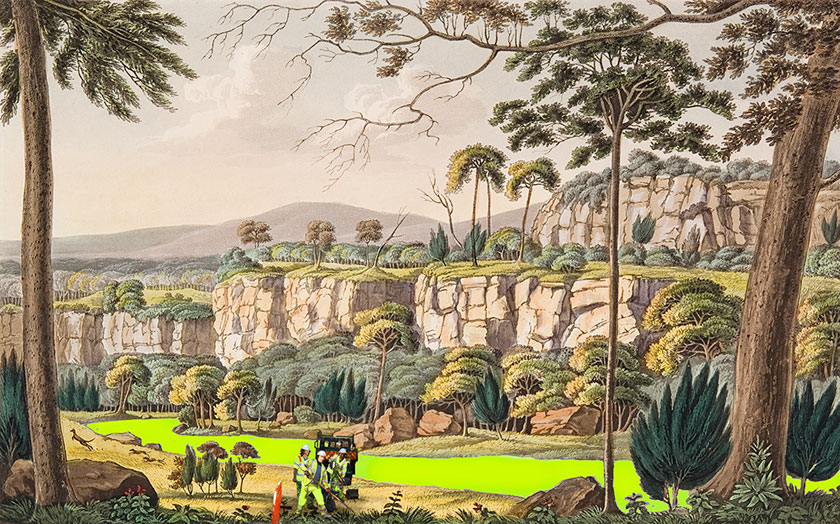
Joan Ross (Australian, b. 1961) 'I dig your land' 2013


Joan Ross (Australian, b. 1961)
I dig your land
2013
hand painted pigment print on cotton rag paper
31 x 50cm
Edition of 3


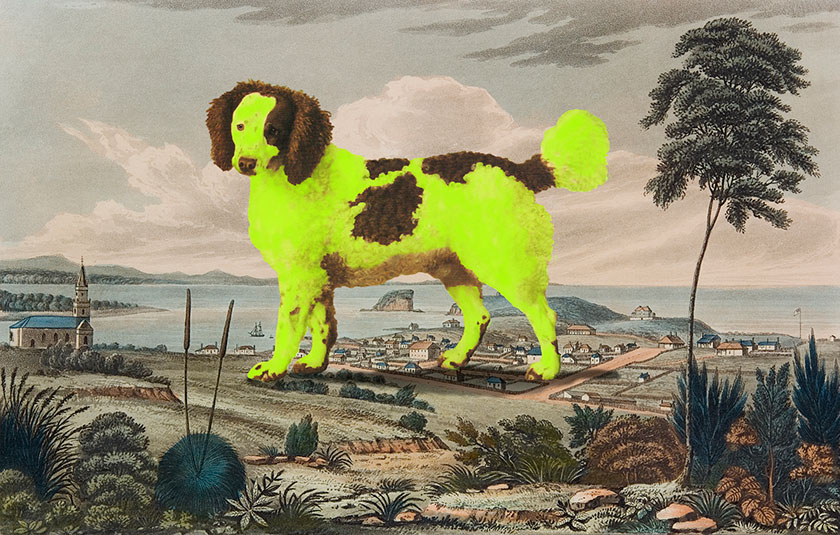
Joan Ross (Australian, b. 1961) 'Lassie come home' 2013


Joan Ross (Australian, b. 1961)
Lassie come home
2013
hand painted pigment print on cotton rag paper
32 x 50cm
Edition of 3


Joan Ross (Australian, b. 1961) 'Tagging' 2013


Joan Ross (Australian, b. 1961)
Tagging
2013
hand painted pigment print on cotton rag paper
33.5 x 60cm
Edition of 3


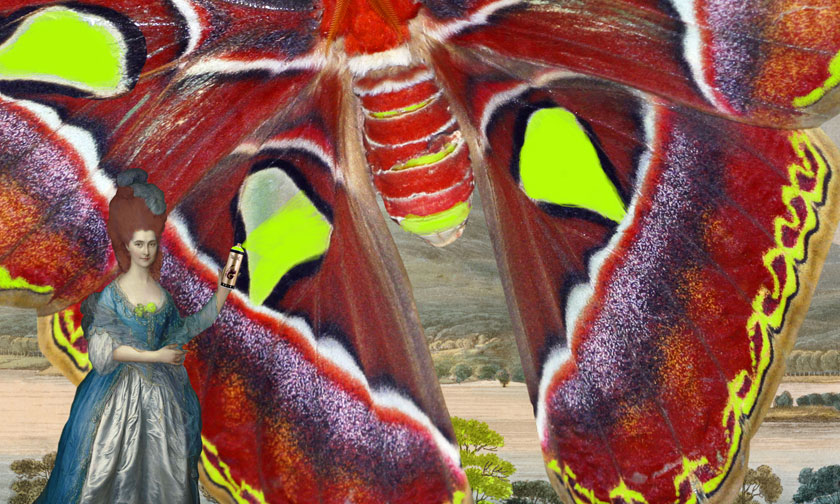
Joan Ross (Australian, b. 1961) 'Shopping for butterfly' 2013


Joan Ross (Australian, b. 1961)
Shopping for butterfly
2013
hand painted pigment print on cotton rag paper
51.5 x 50cm
Edition of 3


Joan Ross (Australian, b. 1961) 'Tag and capture' 2013


Joan Ross (Australian, b. 1961)
Tag and capture
2013
hand painted pigment print on cotton rag paper
50 x 47cm
Edition of 3


Joan Ross (Australian, b. 1961) 'The naming of things' 2013


Joan Ross (Australian, b. 1961)
The naming of things
2013
hand painted pigment print on cotton rag paper
40 x 70cm
Edition of 3


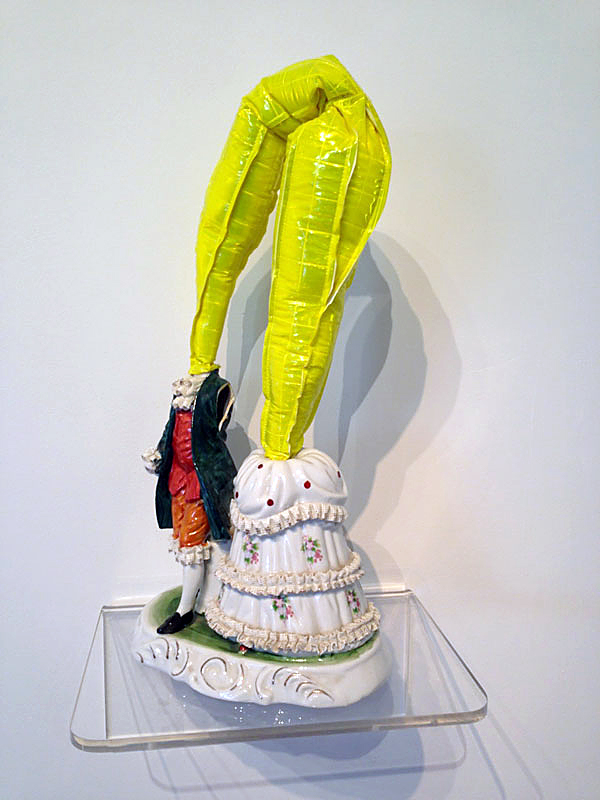
Joan Ross (Australian, b. 1961) 'Together we can take over the world' 2012


Joan Ross (Australian, b. 1961)
Together we can take over the world
2012
found ceramic and fluorescent reflector tape
50 x 24 x 20cm


Bett Galllery
369 Elizabeth Street
North Hobart Tasmania 7000
Australia
Phone: +61 (0) 3 6231 6511

Opening hours:
Monday – Friday 10am – 5.30pm
Saturday 10am – 4pm
Closed Sundays & public holidays

Bett Gallery website

LIKE ART BLART ON FACEBOOK

Back to top

Marcus Bunyan black and white archive: South Yarra and surrounds, 1994

June 2013

PLEASE NOTE: THIS POSTING CONTAINS ART PHOTOGRAPHS OF MALE NUDITY – IF YOU DO NOT LIKE PLEASE DO NOT LOOK, FAIR WARNING HAS BEEN GIVEN


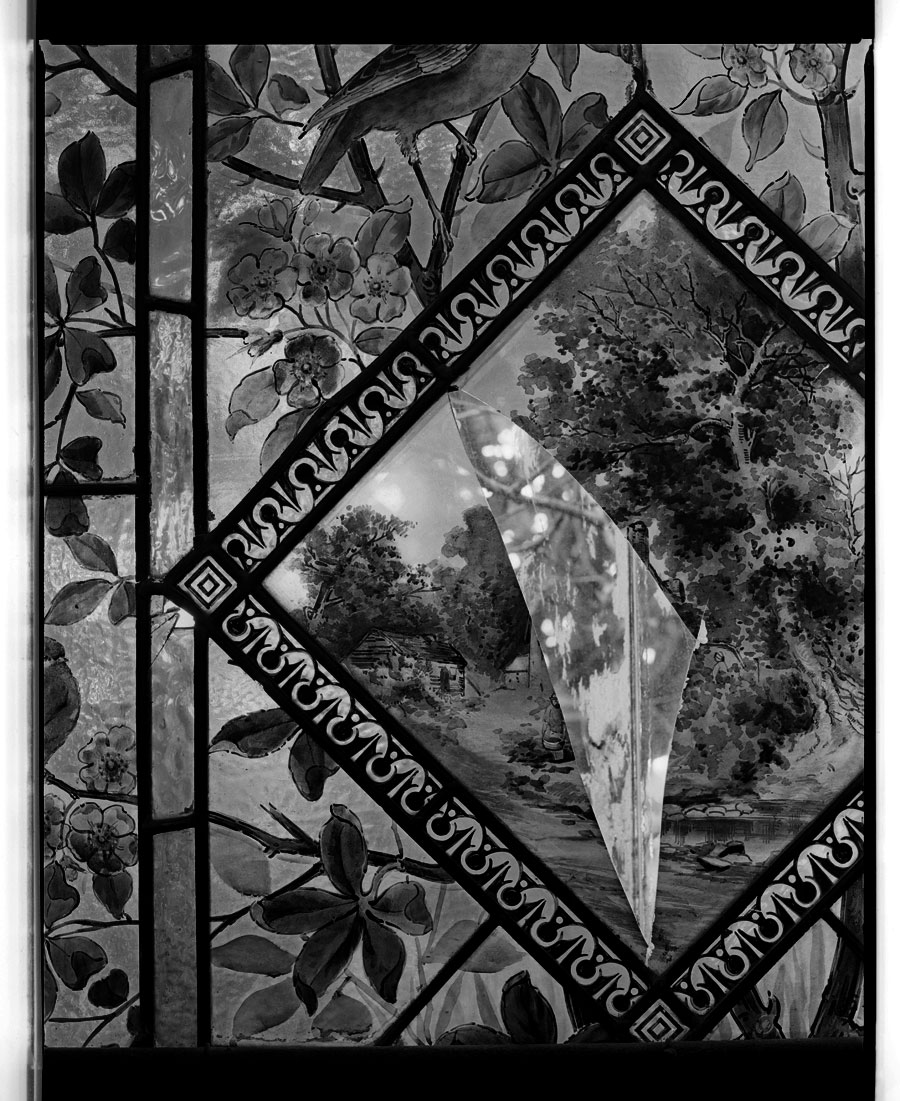
Marcus Bunyan (Australian, b. 1958) 'Stained glass, cracked' 1994


Marcus Bunyan (Australian, b. 1958)
Stained glass, cracked
1994
Silver gelatin photograph


I am scanning my negatives made during the years 1991-1997 to preserve them in the form of an online archive as a process of active memory, so that the images are not lost forever. These photographs were images of my life and imagination at the time of their making, the ideas I was thinking about and the people and things that surrounded me.

All images © Marcus Bunyan. Please click the photographs for a larger version of the image; remember these are just straight scans of the negatives !

Photographs are available from this series for purchase. As a guide, a vintage 8″ x 10″ silver gelatin print costs $700 plus tracked and insured shipping. For more information please see my Store web page.


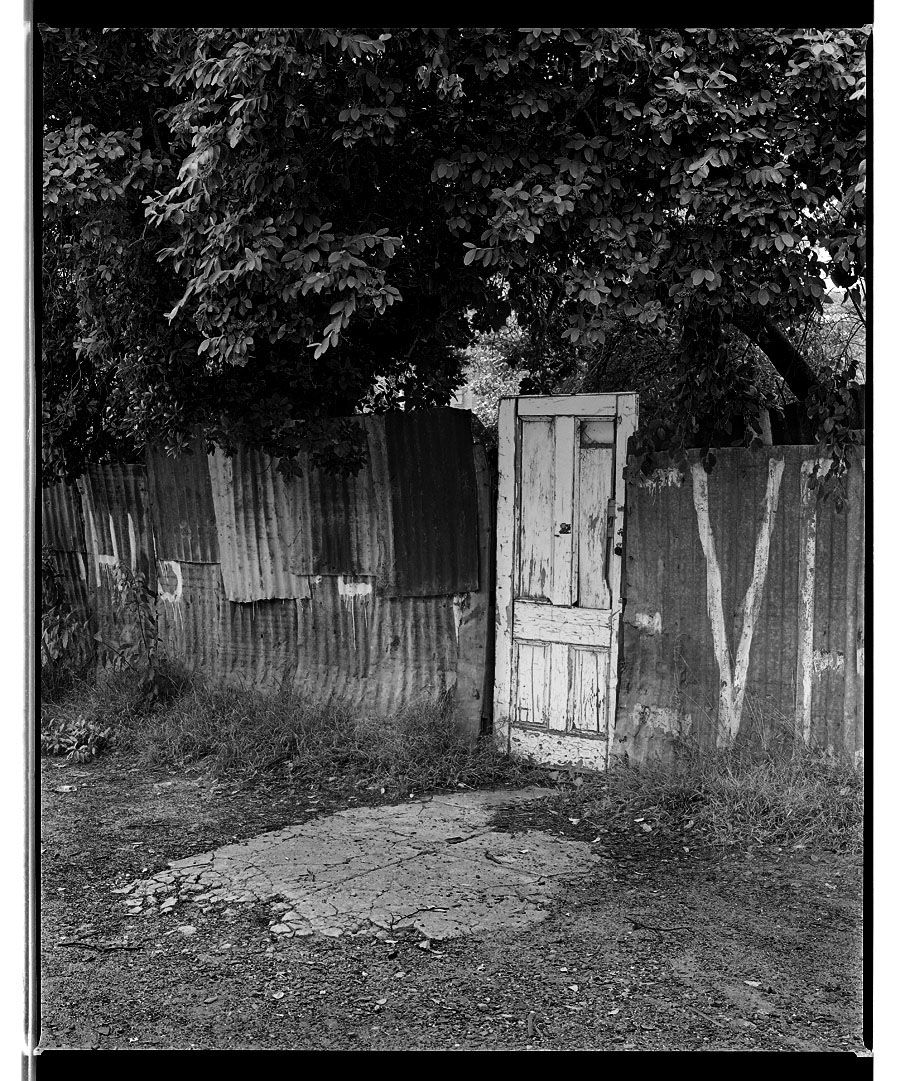
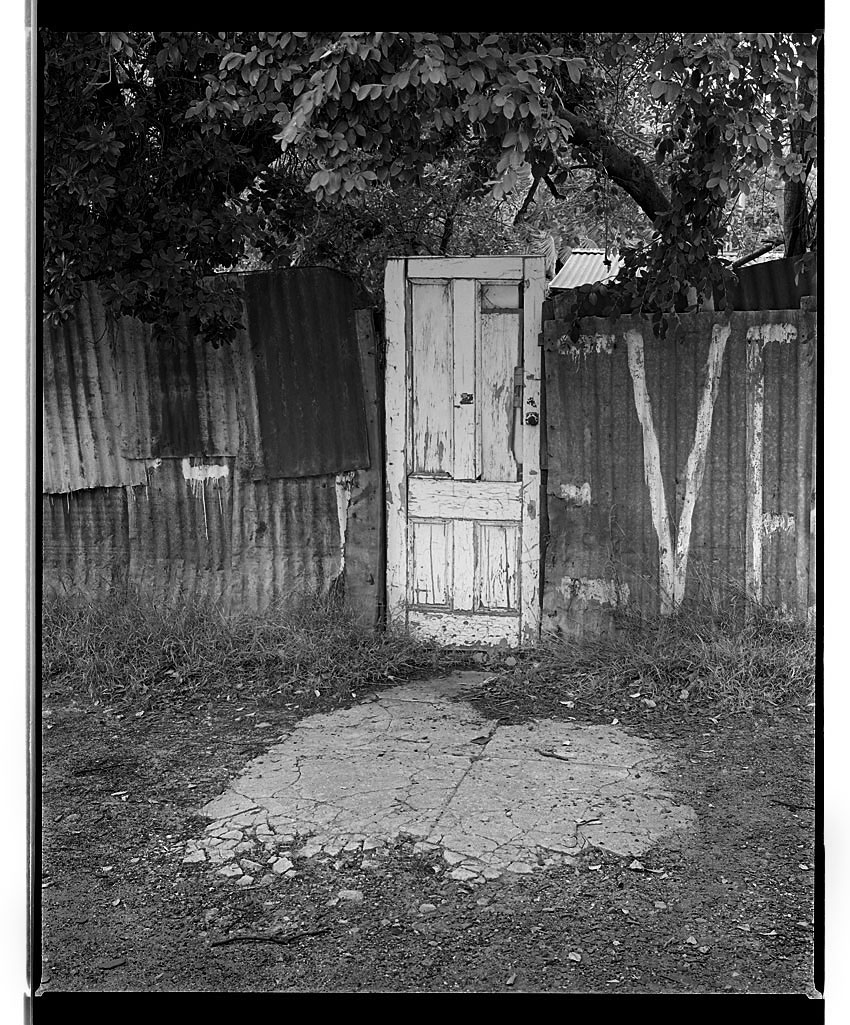
Marcus Bunyan (Australian, b. 1958) 'White door 1' 1994


Marcus Bunyan (Australian, b. 1958)
White door 1
1994
Silver gelatin photograph


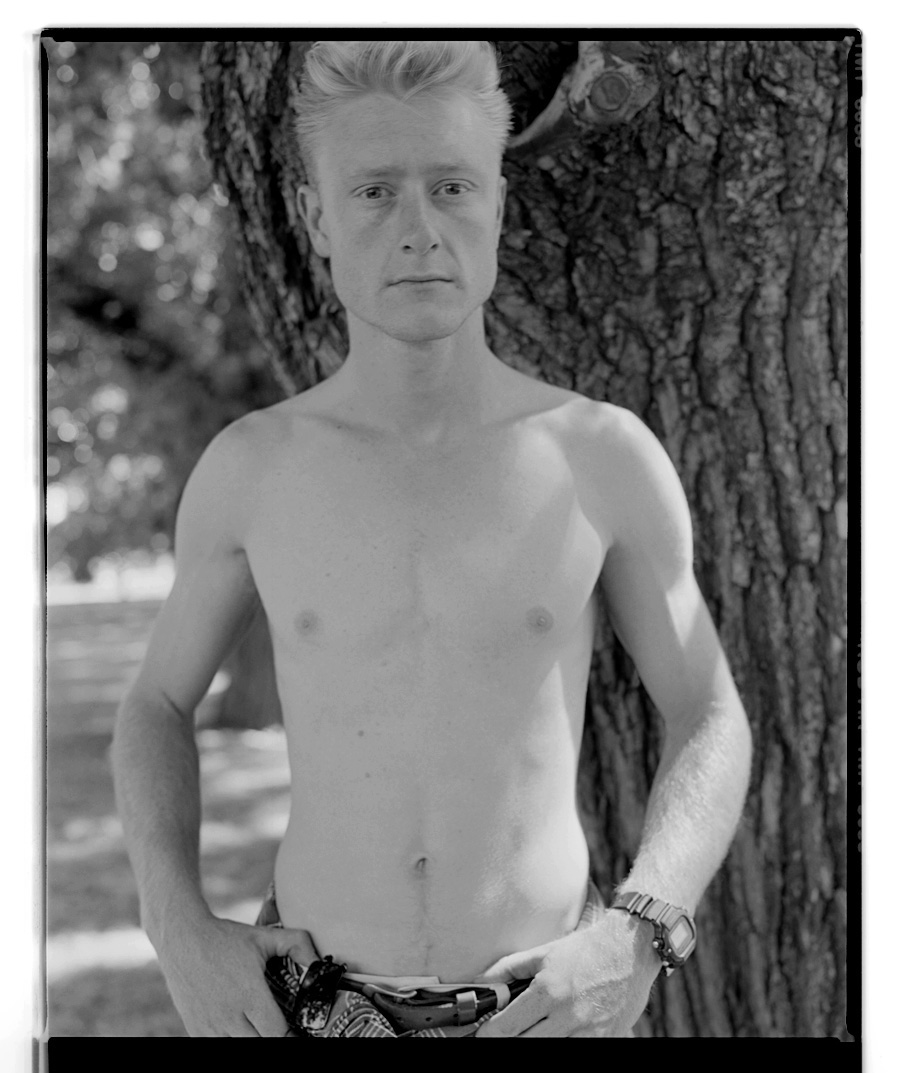
Marcus Bunyan (Australian, b. 1958) 'Damien, 1994' 1994


Marcus Bunyan (Australian, b. 1958)
Damien, 1994
1994
Silver gelatin photograph


Marcus Bunyan (Australian, b. 1958) 'Night repair' 1994


Marcus Bunyan (Australian, b. 1958)
Night repair
1994
Silver gelatin photograph


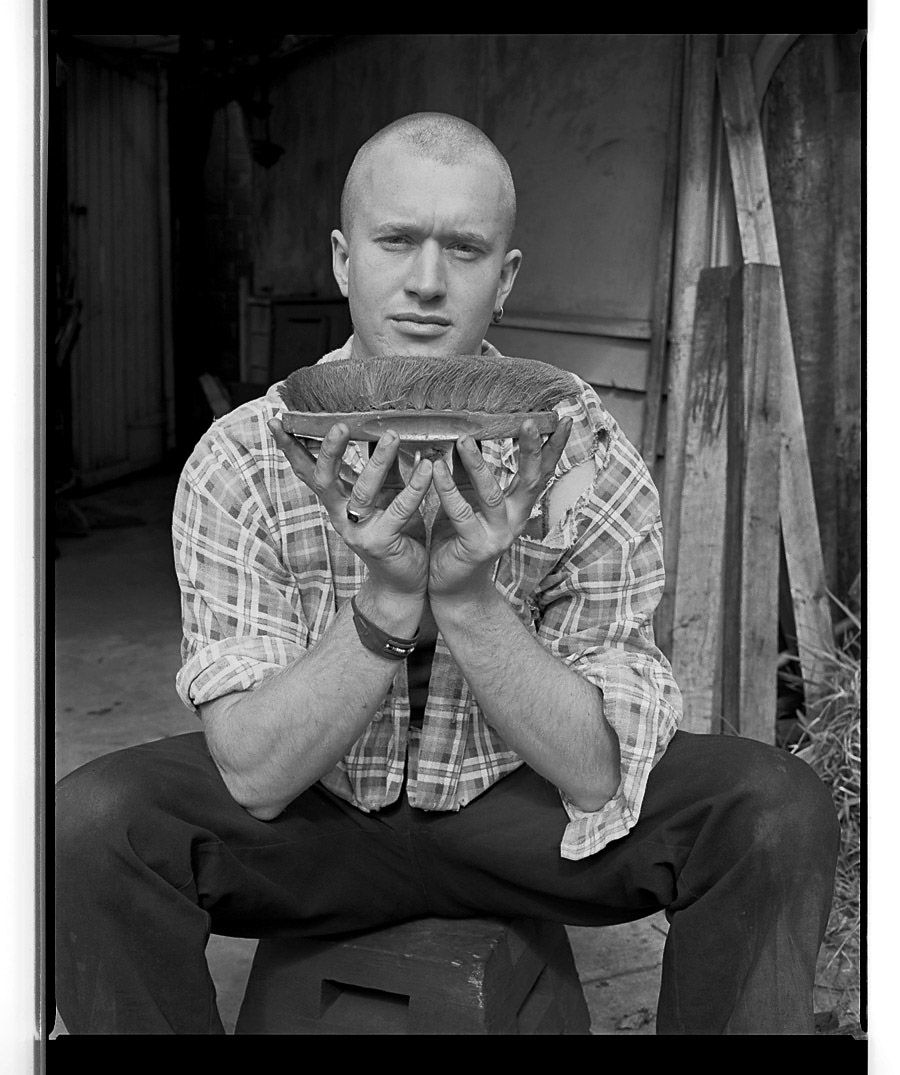
Marcus Bunyan (Australian, b. 1958) 'Jerry holding a brush, South Yarra' 1994


Marcus Bunyan (Australian, b. 1958)
Jerry holding a brush, South Yarra
1994
Silver gelatin photograph


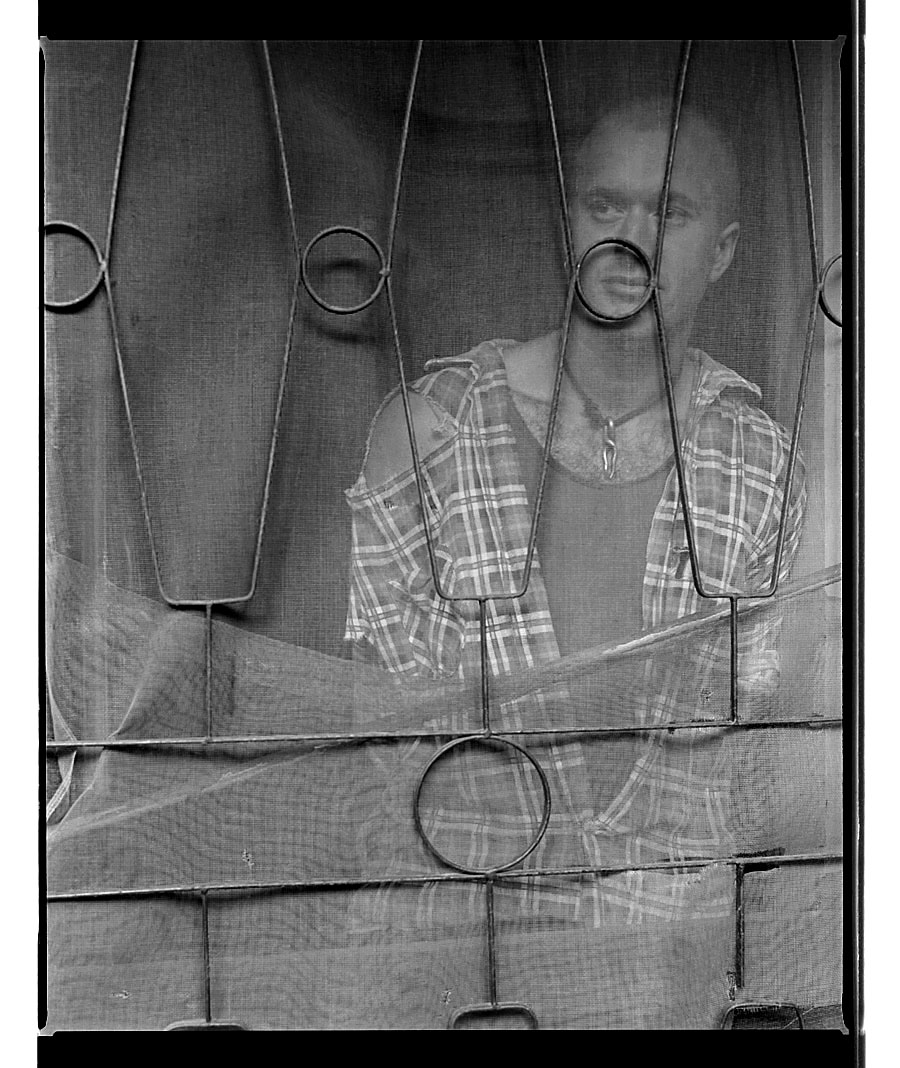
Marcus Bunyan (Australian, b. 1958) 'Jerry behind safety screen, Punt Road, South Yarra' 1994


Marcus Bunyan (Australian, b. 1958)
Jerry behind safety screen, Punt Road, South Yarra
1994
Silver gelatin photograph


Marcus Bunyan (Australian, b. 1958) 'Presence' 1994


Marcus Bunyan (Australian, b. 1958)
Presence
1994
Silver gelatin photograph


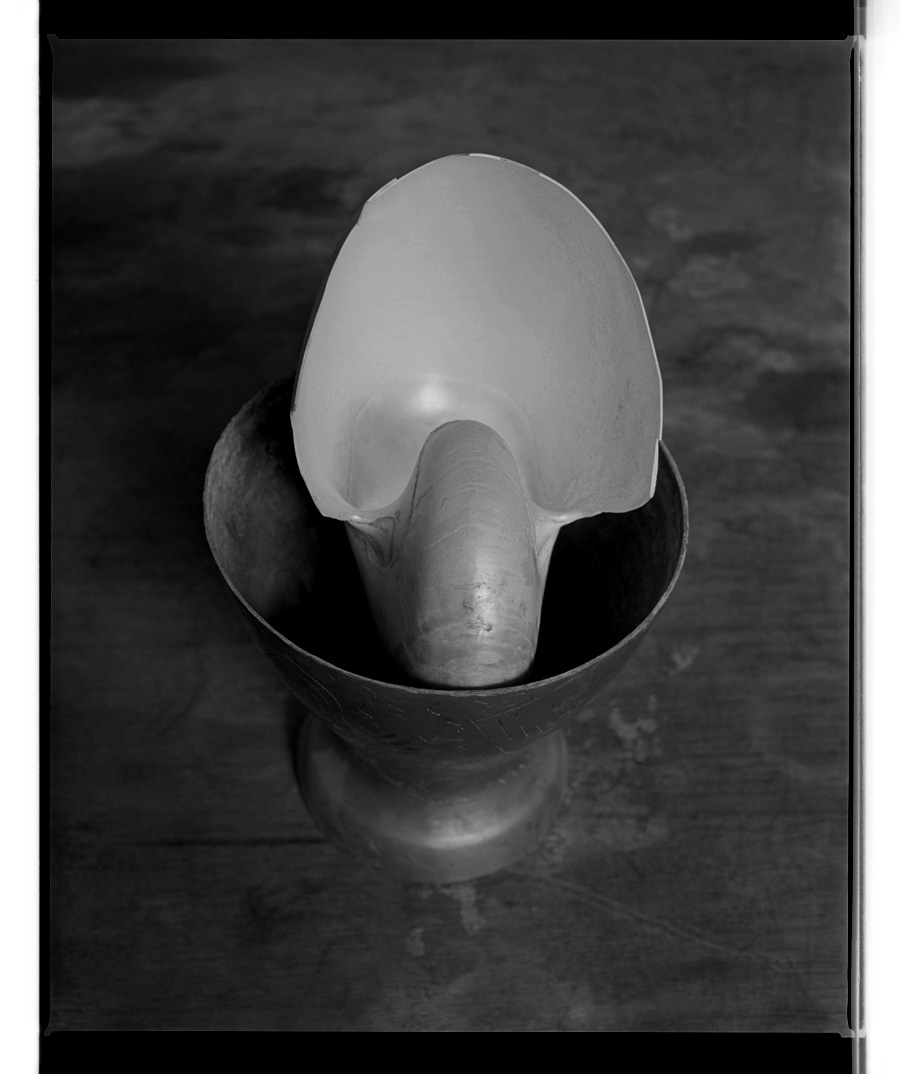
Marcus Bunyan (Australian, b. 1958) 'Nautilus shell in cup' 1994


Marcus Bunyan (Australian, b. 1958)
Nautilus shell in cup
1994
Silver gelatin photograph


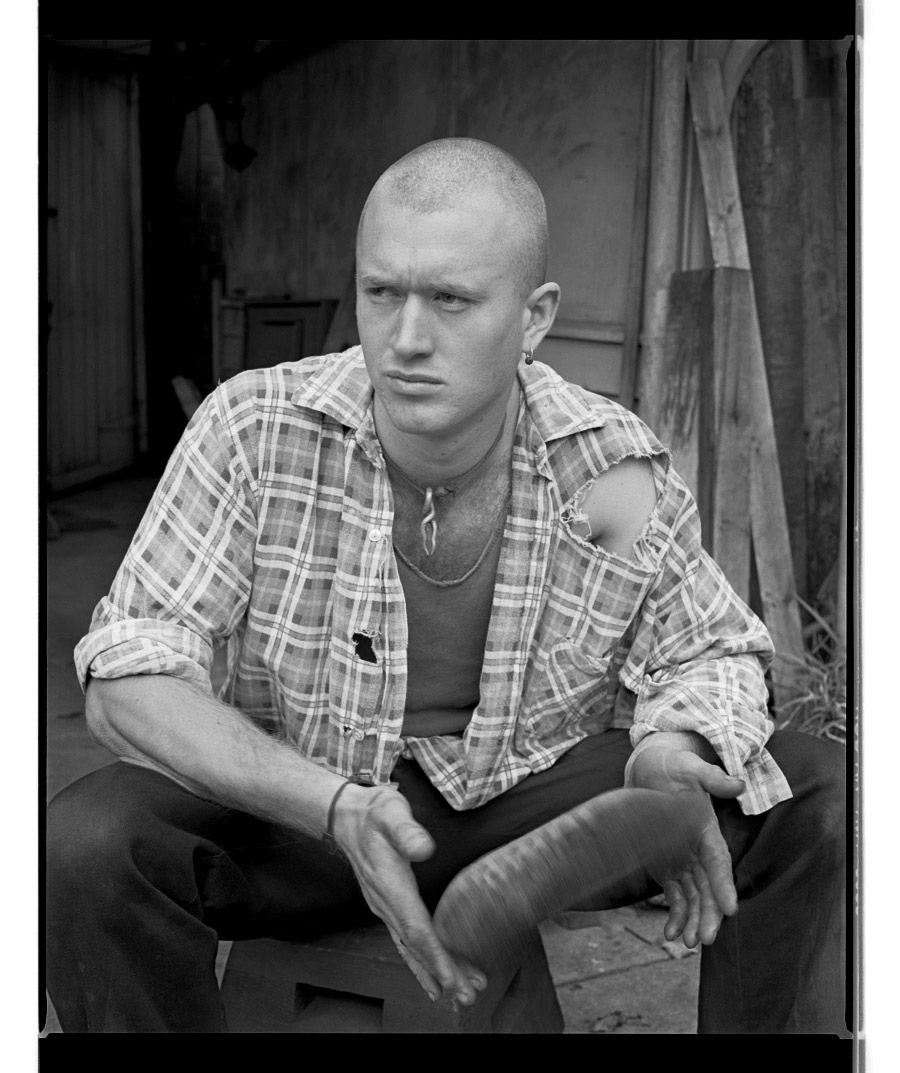
Marcus Bunyan (Australian, b. 1958) 'Jerry with shaved head' 1994


Marcus Bunyan (Australian, b. 1958)
Jerry with shaved head
1994
Silver gelatin photograph


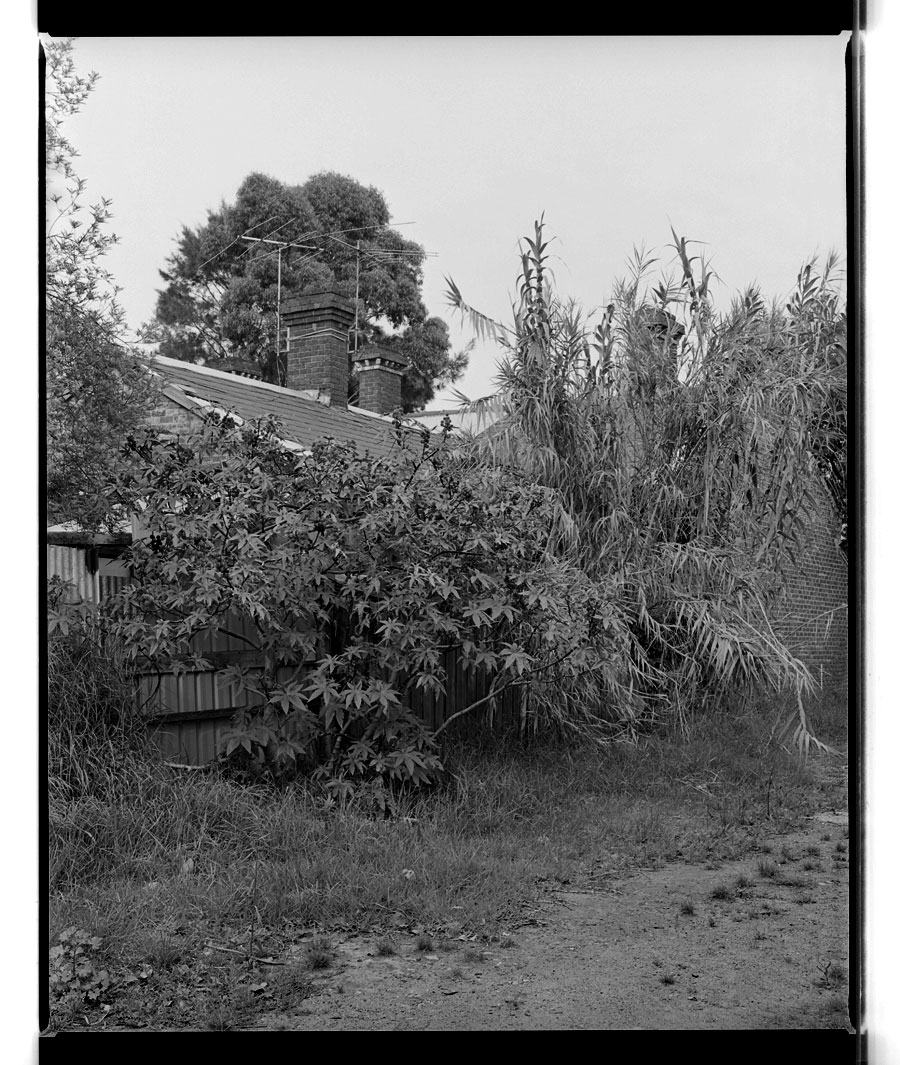
Marcus Bunyan (Australian, b. 1958) 'Undergrowth' 1994


Marcus Bunyan (Australian, b. 1958)
Undergrowth
1994
Silver gelatin photograph


Marcus Bunyan (Australian, b. 1958) 'White door 2' 1994


Marcus Bunyan (Australian, b. 1958)
White door 2
1994
Silver gelatin photograph


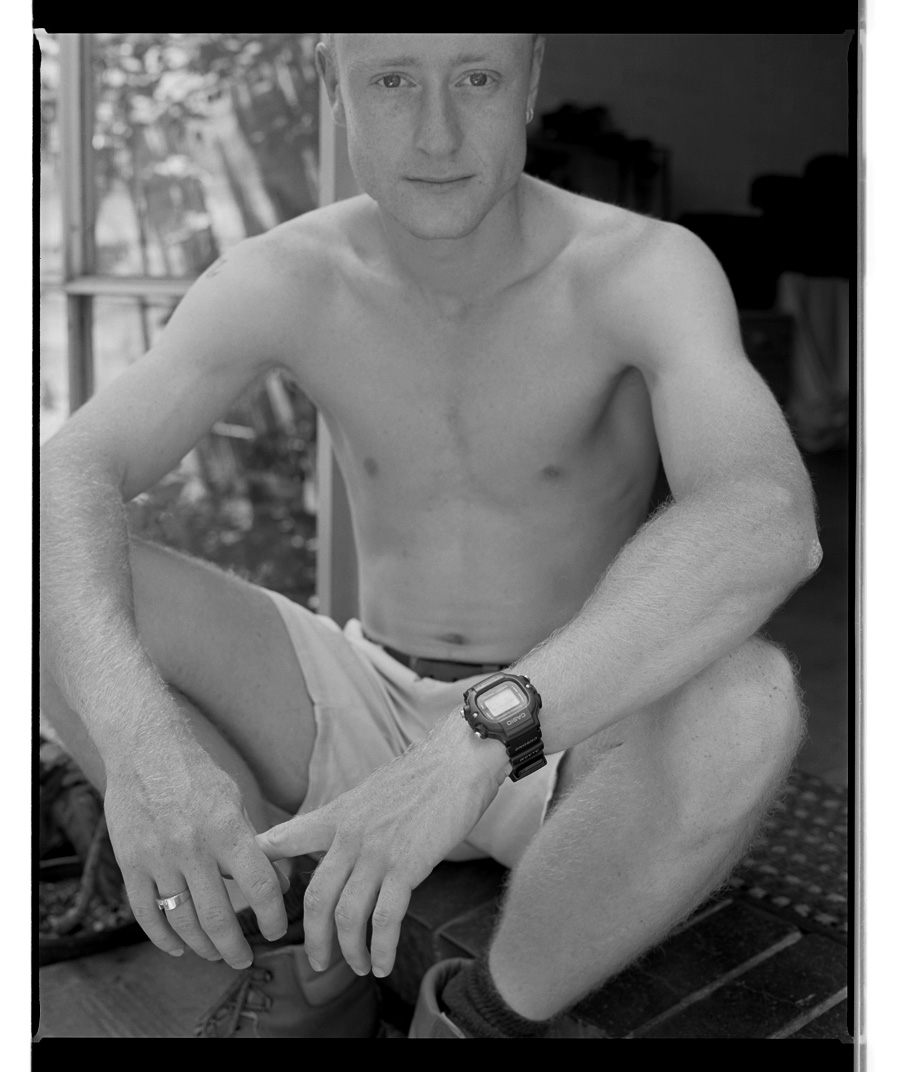
Marcus Bunyan (Australian, b. 1958) 'Damien sitting outside his flat, South Yarra, 1994' 1994


Marcus Bunyan (Australian, b. 1958)
Damien sitting outside his flat, South Yarra, 1994
1994
Silver gelatin photograph


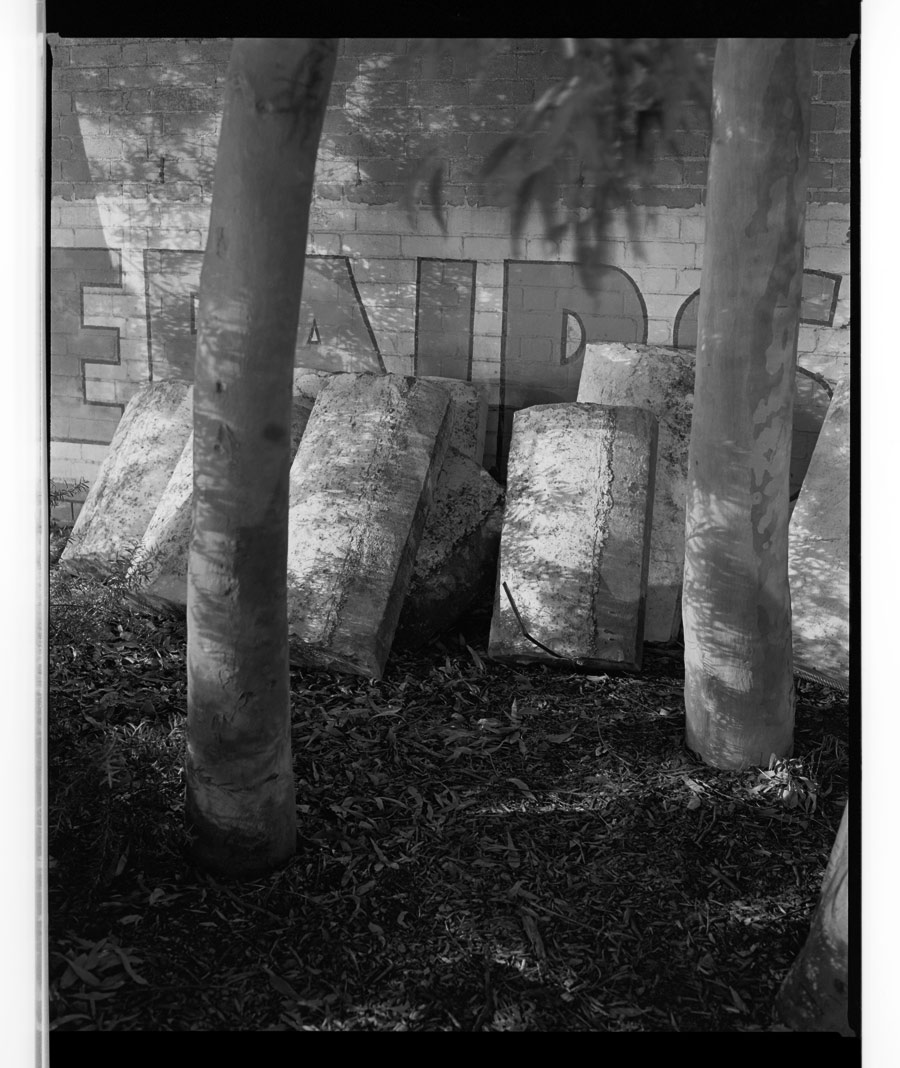
Marcus Bunyan (Australian, b. 1958) 'Trees, capstone, shadows' 1994


Marcus Bunyan (Australian, b. 1958)
Trees, capstone, shadows
1994
Silver gelatin photograph


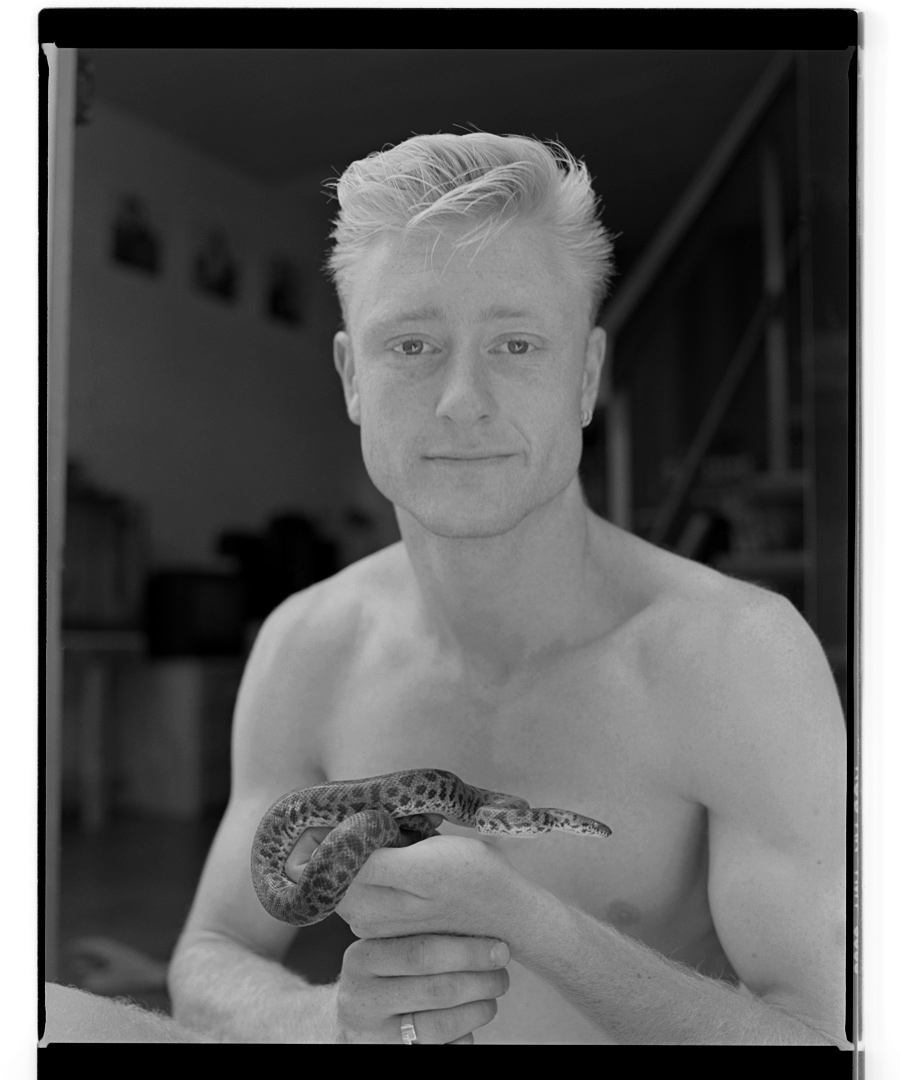
Marcus Bunyan (Australian, b. 1958) 'Damien with snake' 1994


Marcus Bunyan (Australian, b. 1958)
Damien with snake
1994
Silver gelatin photograph


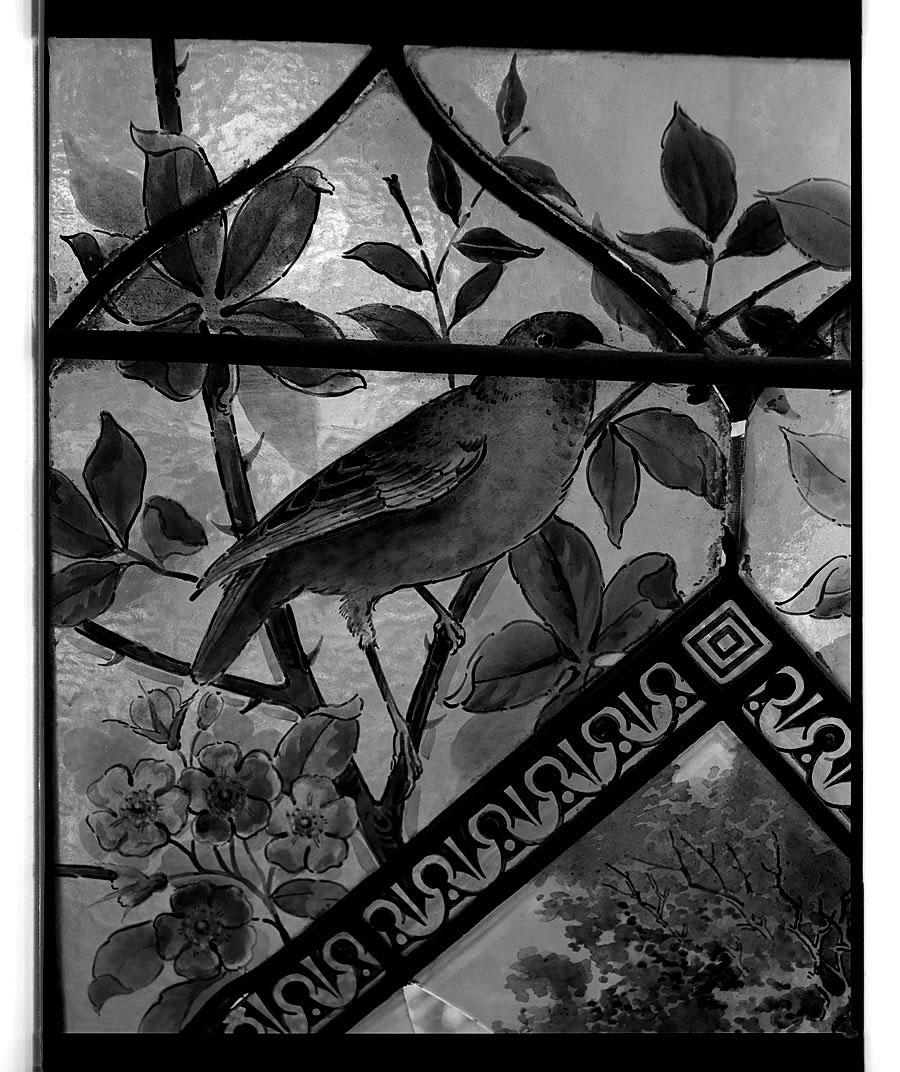
Marcus Bunyan (Australian, b. 1958) 'Glass bird, Punt Road, South Yarra' 1994


Marcus Bunyan (Australian, b. 1958)
Glass bird, Punt Road, South Yarra
1994
Silver gelatin photograph


Marcus Bunyan (Australian, b. 1958) 'Easter Sunday' 1994


Marcus Bunyan (Australian, b. 1958)
Easter Sunday
1994
Silver gelatin photograph


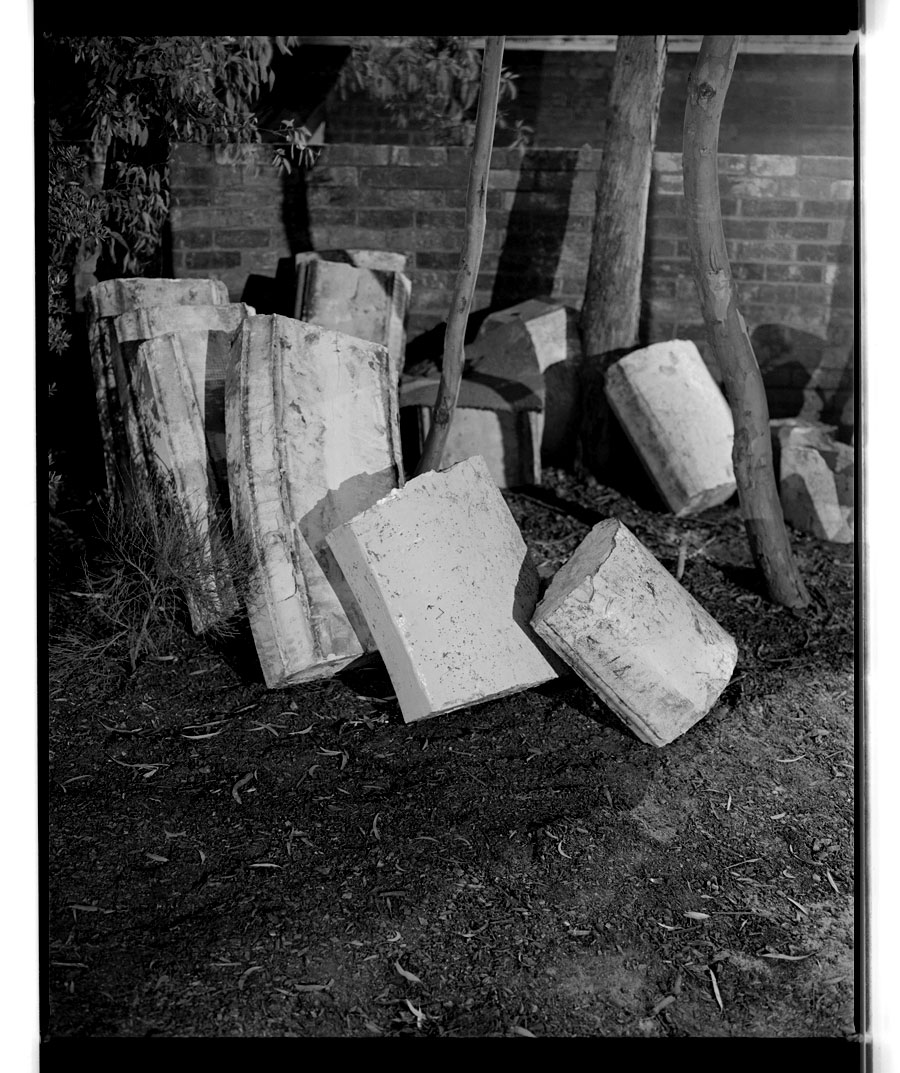
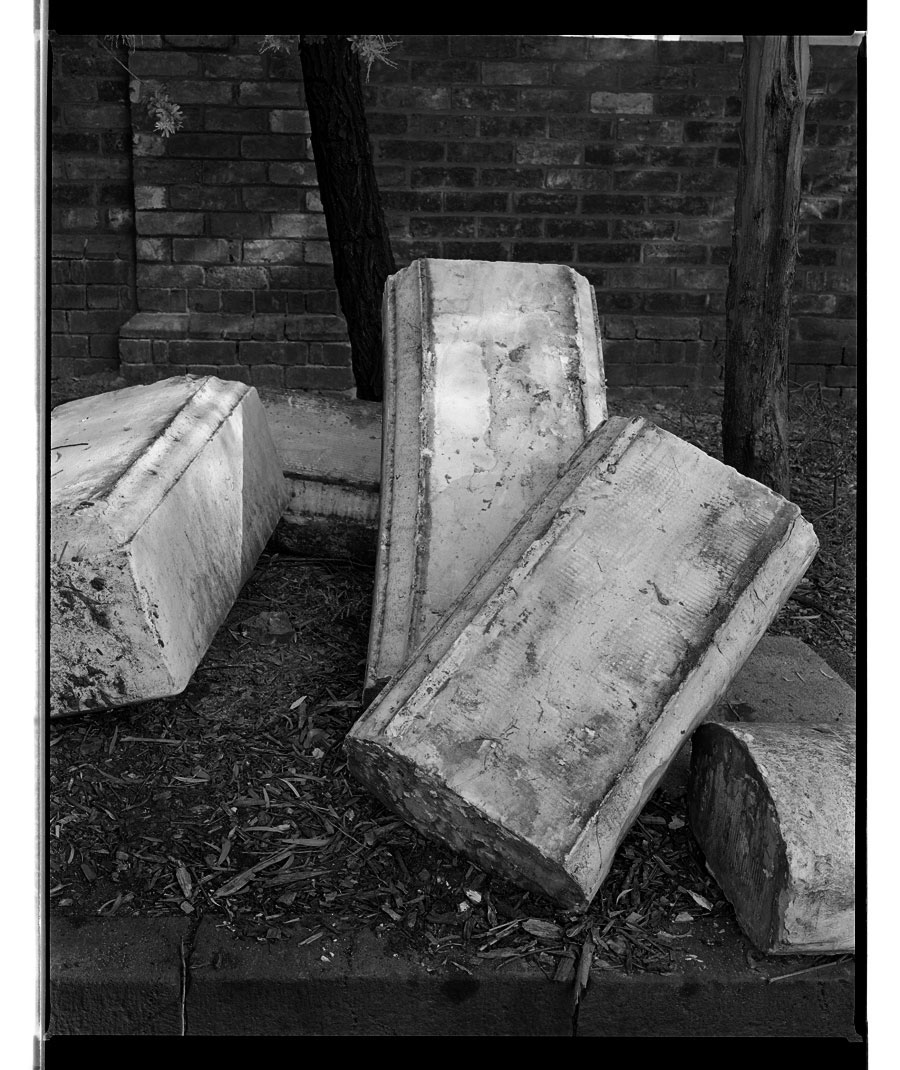
Marcus Bunyan (Australian, b. 1958) 'Capstone, night, Windsor train station' 1994


Marcus Bunyan (Australian, b. 1958)
Capstone, night, Windsor train station
1994
Silver gelatin photograph


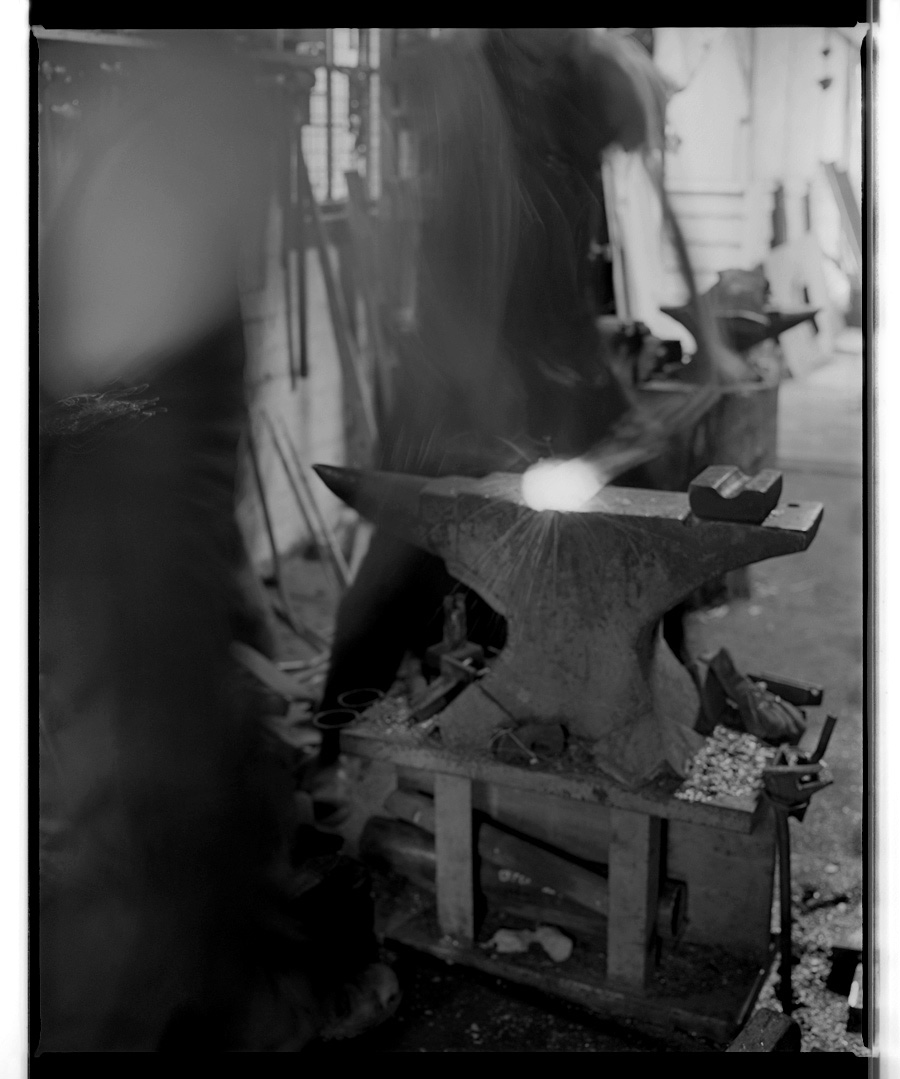
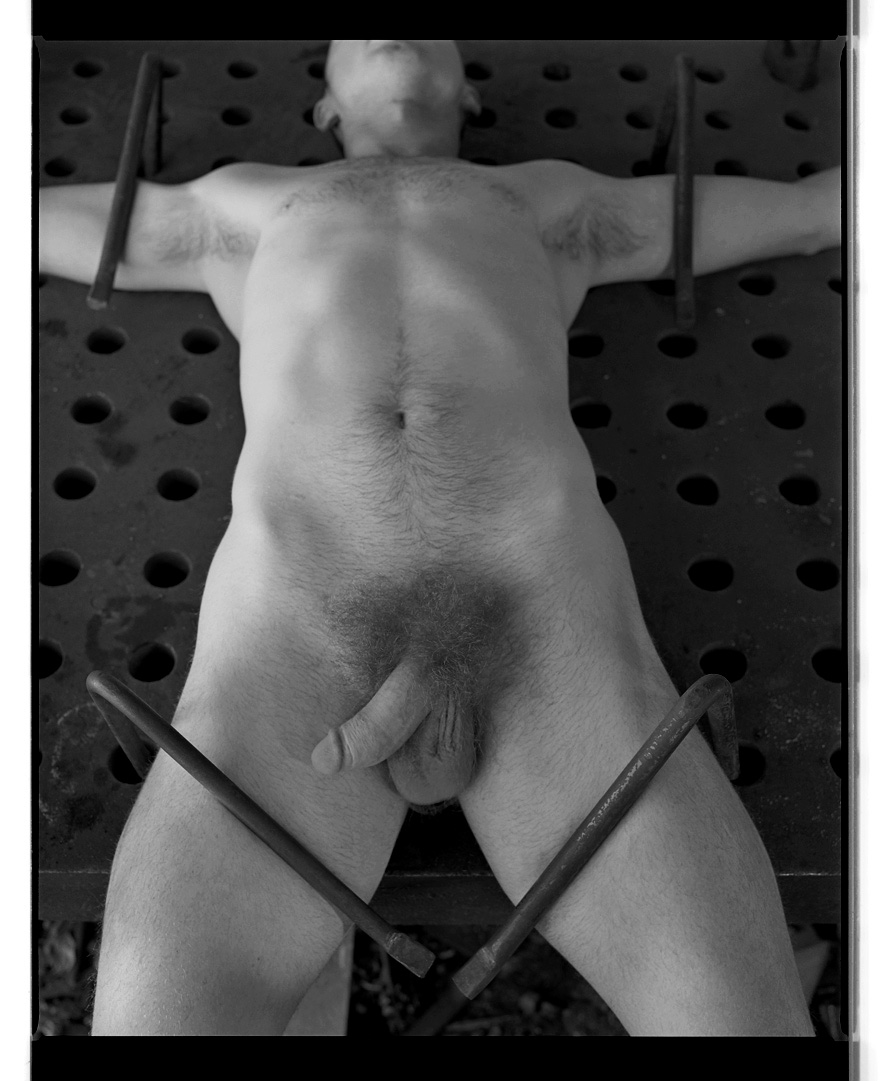
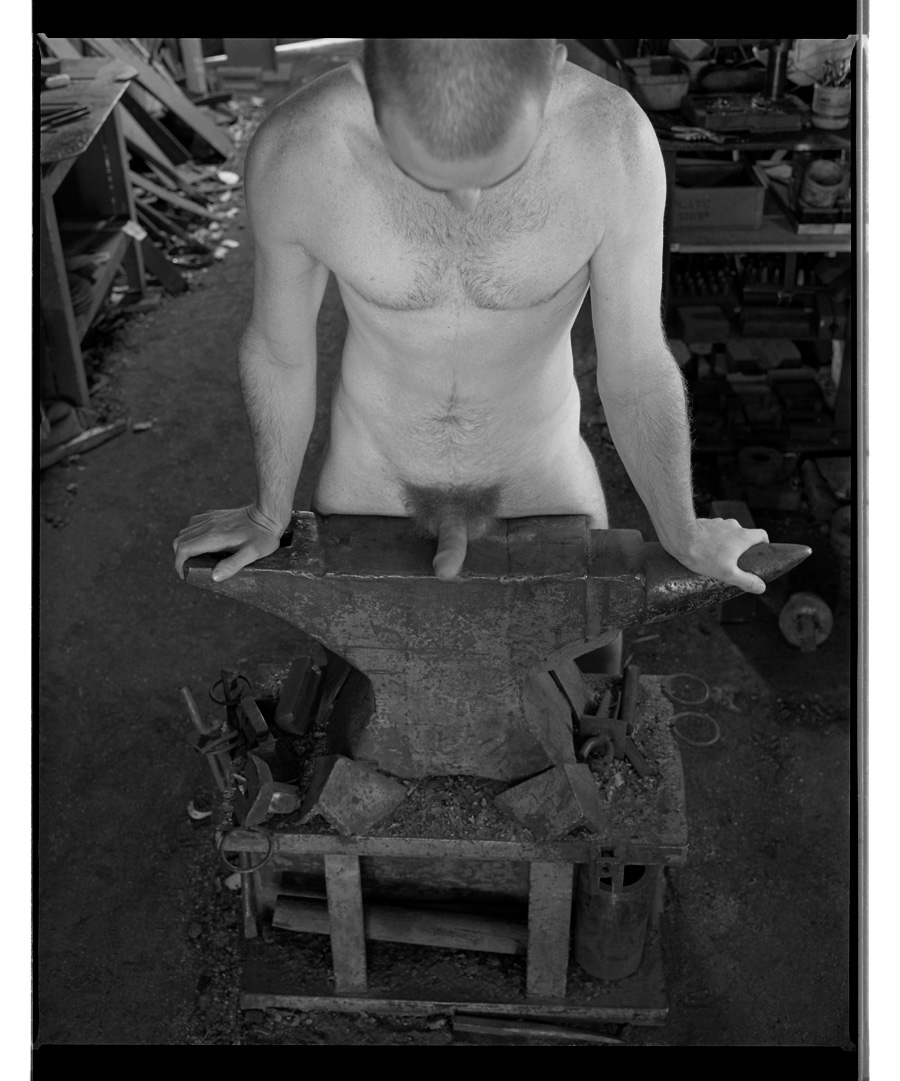
Marcus Bunyan (Australian, b. 1958) 'Paul, cock on anvil' 1994


Marcus Bunyan (Australian, b. 1958)
Paul, cock on anvil
1994
Silver gelatin photograph


Marcus Bunyan black and white archive 1991-1997

LIKE ART BLART ON FACEBOOK

Back to top

Review: ‘Lee Grant / Belco Pride’ at Edmund Pearce Gallery, Melbourne

Exhibition dates: 5th June – 22nd June 2013


Lee Grant (Australian, b. 1973) 'Belco Pride' 2008


Lee Grant (Australian, b. 1973)
Belco Pride
2008
Archival pigment print
60 x 60cm
Edition of 8 + 2 AP


In Belco Pride, the photographer Lee Grant comes as close as you are ever likely to come to an Australian version of the American photographer Alec Soth (Sleeping by the Mississippi, Niagara). That is a great compliment indeed.

This is an intelligent, cohesive exhibition which features 5 large colour photographs and a grid of 3 x 9 smaller colour photographs that form a topographical map of a suburb in Canberra called Belconnen. The body of work investigates how humans inhabit a specific place and how that place in turn influences the formation of identity and a sense of belonging and community. These themes are set in the context of a shifting, migratory, multicultural Australian suburb. The photographs are beautifully shot and individually well resolved; these square photographs then go on to form a holistic body that gives the viewer a wonderful sense of the people and place being photographed.

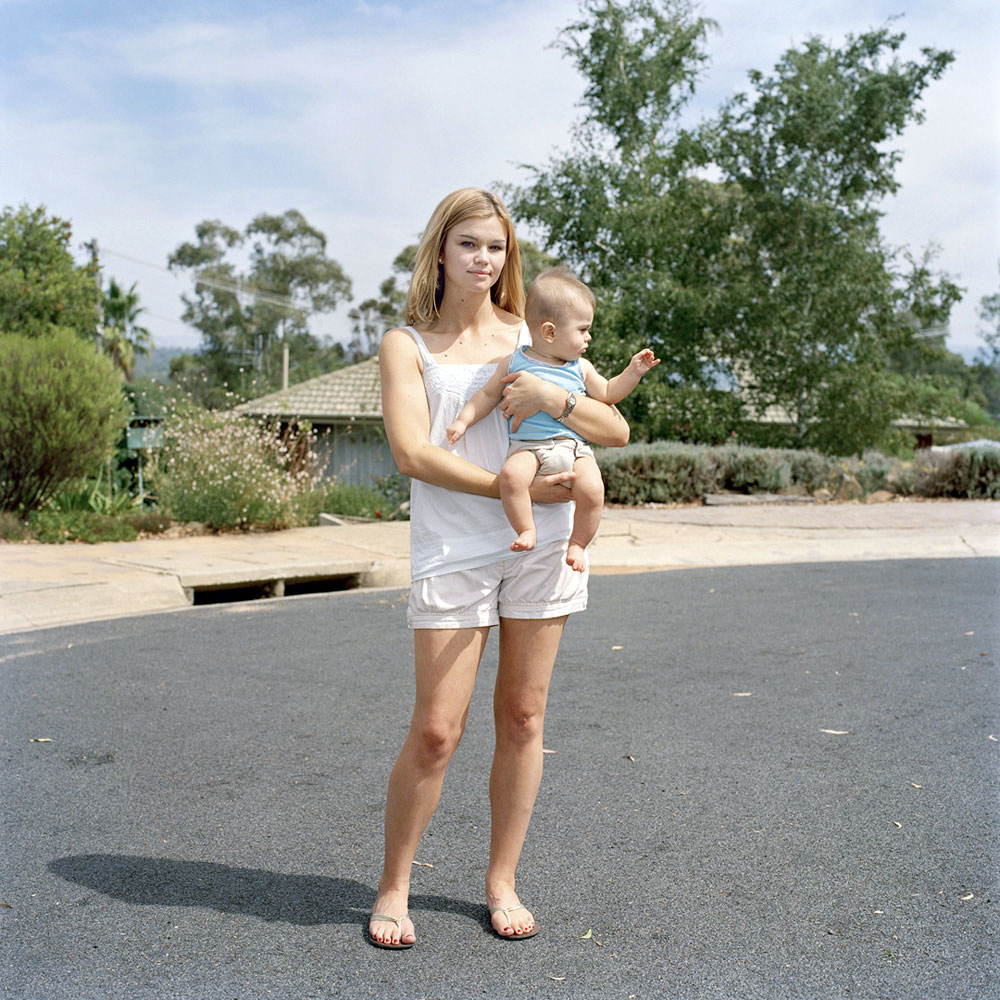
Grant likes to shoot formally and frontally, but that does not mean that there is not subtly and humour present in these photographs. Technically she likes to vary depth of field to emphasise the context of place: in some images, for example Ashleigh in her Formal Dress (2008, below), depth of field is minimal in order to bring focus onto Ashleigh and the texture of her formal dress. The artist also likes to change light conditions from bright sunlight (Alisha and baby Saul, 2009 below), to overcast (Belco Pride, 2008 above) to gathering gloom (George with his model aeroplane, 2008 below); she also likes to push and pull figures and objects within the pictorial frame, from close up to mid-distance to infinity (the rendering of houses for example). This shading of space and tonality adds a beautiful luminosity to the series.

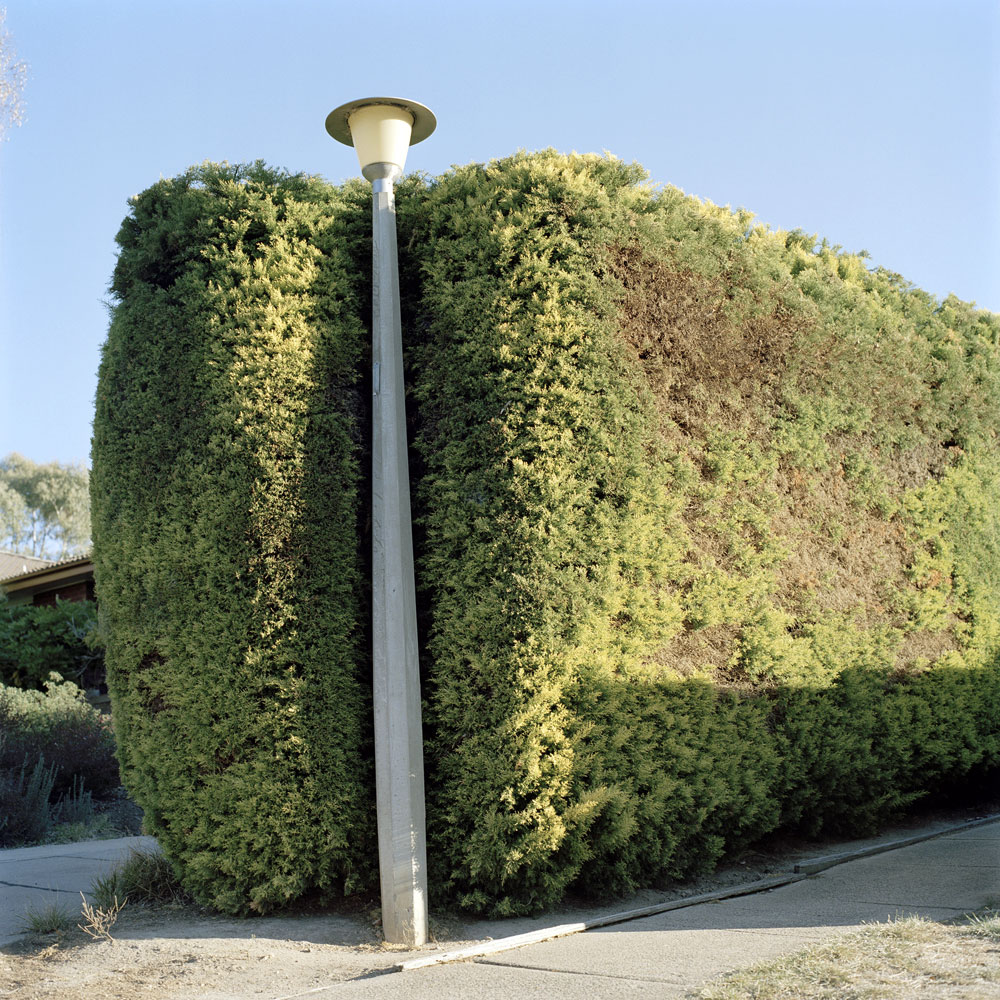
The humour and detail present is also fun: the suits of the sons two sizes too big in The Duot Family (2009, below); the barbed wire looming ominously above the white graffiti  ‘Belco Pride’; the off kilter lamp post in Suburban Hedge (2008, below) being swallowed by the hedge; and the delicious way that the lead from Kiki travels down and trails along the ground to Chucky the dog. There is a real affection and affinity for this place and people that is expressed in these photographs. They are unusually contemplative for this type of photography and that is perhaps a reflection on Grant’s Korean-Australian heritage.

Other work on her website is a mixed bag: the Sudanese Portraits are very successful, reminding me of the work of Mali photographer Malick Sidibé, while Window on the Orient is interesting but the photographs are a little ‘flat’ due to their subject matter. The Road to Kuvera and Welcome to Vietnam lack the same connection and insight into the human condition that Belco Pride possesses, and this body of work seems to be her strongest so far in terms of an enunciation of her inner vision. I await new work with interest.

Dr Marcus Bunyan


Many thankx to Edmund Pearce for allowing me to publish the photographs in the posting. Please click on the photographs for a larger version of the image.


Lee Grant (Australian, b. 1973) 'The Duot Family' 2009


Lee Grant (Australian, b. 1973)
The Duot Family
2009
Archival pigment print
110 x 110cm
Edition of 4 + 2 AP


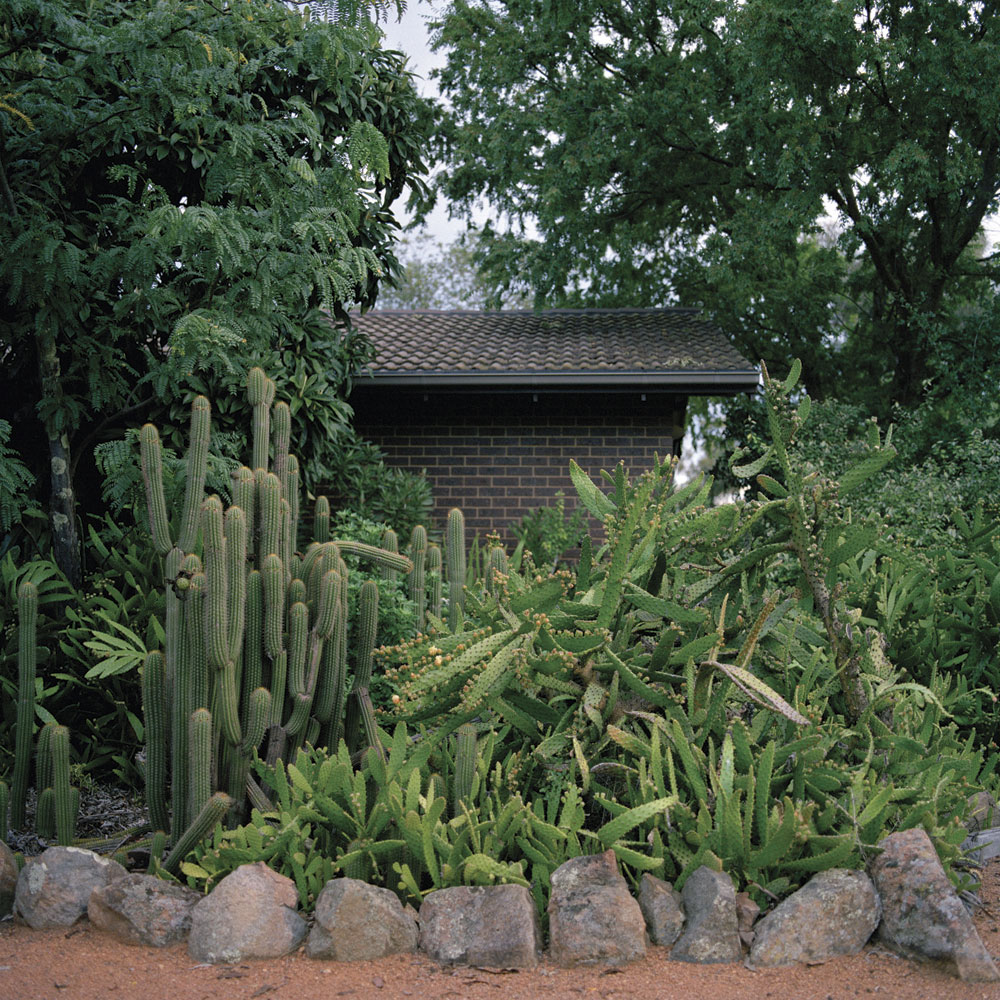
Lee Grant (Australian, b. 1973) 'Cactus Garden' 2012


Lee Grant (Australian, b. 1973)
Cactus Garden
2012
Archival pigment print
110 x 110cm
Edition of 4 + 2 AP


Lee Grant (Australian, b. 1973) 'Ashleigh in her Formal Dress' 2008


Lee Grant (Australian, b. 1973)
Ashleigh in her Formal Dress
2008
Archival pigment print
110 x 110cm
Edition of 4 + 2 AP


Lee Grant (Australian, b. 1973) 'Suburban Hedge' 2008


Lee Grant (Australian, b. 1973)
Suburban Hedge
2008
Archival pigment print
110 x 110cm
Edition of 4 + 2 AP


Lee Grant (Australian, b. 1973) 'Graffheads' 2009


Lee Grant (Australian, b. 1973)
Graffheads
2009
Archival pigment print
60 x 60cm
Edition of 8 + 2 AP


Lee Grant (Australian, b. 1973) 'Roxy and Jess' 2008


Lee Grant (Australian, b. 1973)
Roxy and Jess
2008
Archival pigment print
60 x 60cm
Edition of 8 + 2 AP


Belco’s a hole… but it’s our hole.

I’ve been told that you never truly leave behind the place you grew up. That it remains deep within your experience of the world. Feeling conflicted about one’s place of origin is certainly not unique, but for me, the process of returning ‘home’ and reconciling my perception of place with its banal and vernacular reality was a surprising yet cathartic experience. The photographs in this series express the idea that belonging, connection and identity is deeply rooted in the specifics of one’s inhabited landscape. The landscape depicted here being the 25 northernmost suburbs of Canberra known as Belconnen, or to us locals, as ‘Belco’.

As a photographer, I am interested in the way migrant communities adapt to new environments, particularly in western cultures and much of my work explores themes of identity, belonging and community set often in the context of the Australian suburbs.

Lee Grant


“I always believed it was the things you don’t choose that makes you who you are. Your city, your neighbourhood, your family. People here take pride in these things, like it was something they’d accomplished. The bodies around their souls, the cities wrapped around those. I lived on this block my whole life; most of these people have.”

Dennis Lehane


Lee Grant’s latest exhibition at Edmund Pearce, Belco Pride, explores how belonging, connection and identity is deeply rooted in the specifics of one’s inhabited landscape. The landscape depicted here being the 25 northernmost suburbs of Canberra known as Belconnen, or to the locals, as ‘Belco’.

Lee is a documentary photographer who lives and works in Canberra. She holds a degree in Anthropology and in 2010 completed a Master of Philosophy at the ANU School of Art. Lee has exhibited at the Australian Centre for Photography, the Monash Gallery of Art and the National Portrait Gallery amongst others. She has been a finalist in the National Photographic Portrait Prize, the Head On Alternative Portrait Prize, the Josephine Ulrick and Win Schubert Prize and the Olive Cotton Award. Lee was also the winner of the prestigious Bowness Photography Prize in 2010. Her work is held in the National Library, the Canberra Museum and Art Gallery as well as numerous private collections.


Lee Grant (Australian, b. 1973) 'Kiki and Chucky' 2008


Lee Grant (Australian, b. 1973)
Kiki and Chucky
2008
Archival pigment print
60 x 60cm
Edition of 8 + 2 AP


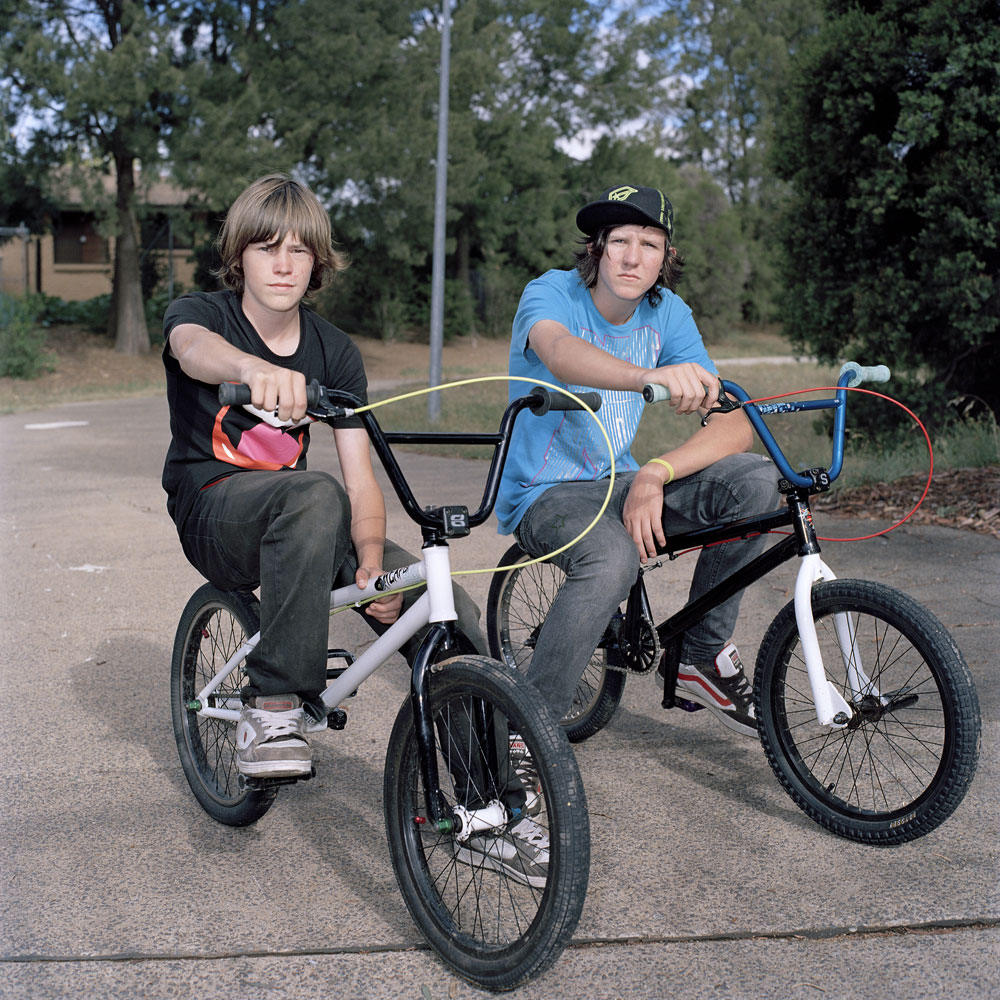
Lee Grant (Australian, b. 1973) 'Nathan & Mac, BMX bros' 2009


Lee Grant (Australian, b. 1973)
Nathan & Mac, BMX bros
2009
Archival pigment print
60 x 60cm
Edition of 8 + 2 AP


Lee Grant (Australian, b. 1973) 'A View of Suburbia' 2009


Lee Grant (Australian, b. 1973)
A View of Suburbia
2009
Archival pigment print
60 x 60cm
Edition of 8 + 2 AP


Lee Grant (Australian, b. 1973) 'Alisha and baby Saul' 2009


Lee Grant (Australian, b. 1973)
Alisha and baby Saul
2009
Archival pigment print
60 x 60cm
Edition of 8 + 2 AP


Lee Grant (Australian, b. 1973) 'George with his model aeroplane' 2008


Lee Grant (Australian, b. 1973)
George with his model aeroplane
2008
Archival pigment print
60 x 60cm
Edition of 8 + 2 AP


Lee Grant (Australian, b. 1973) 'Ginninderra Creek on a Winter's morning' 2008


Lee Grant (Australian, b. 1973)
Ginninderra Creek on a Winter’s morning
2008
Archival pigment print
60 x 60cm
Edition of 8 + 2 AP


Lee Grant (Australian, b. 1973) 'The Beehive' 2008


Lee Grant (Australian, b. 1973)
The Beehive
2008
Archival pigment print
60 x 60cm
Edition of 8 + 2 AP


Lee Grant (Australian, b. 1973) 'Lee' 2010


Lee Grant (Australian, b. 1973)
Lee
2010
Archival pigment print
60 x 60cm
Edition of 8 + 2 AP


Edmund Pearce Gallery

This gallery is now closed.
LIKE ART BLART ON FACEBOOK

Back to top

Exhibition: ‘Sentinels’ by David Wood at Gasworks Arts Park, Albert Park

Exhibition dates: 29th May – 16th June 2013


David Wood (Australian) 'Ghost Gum Three' 2013


David Wood (Australian)
Ghost Gum Three
2013
Stainless steel and red gum
76 x 310 x 44cm
Photo: Marcus Bunyan


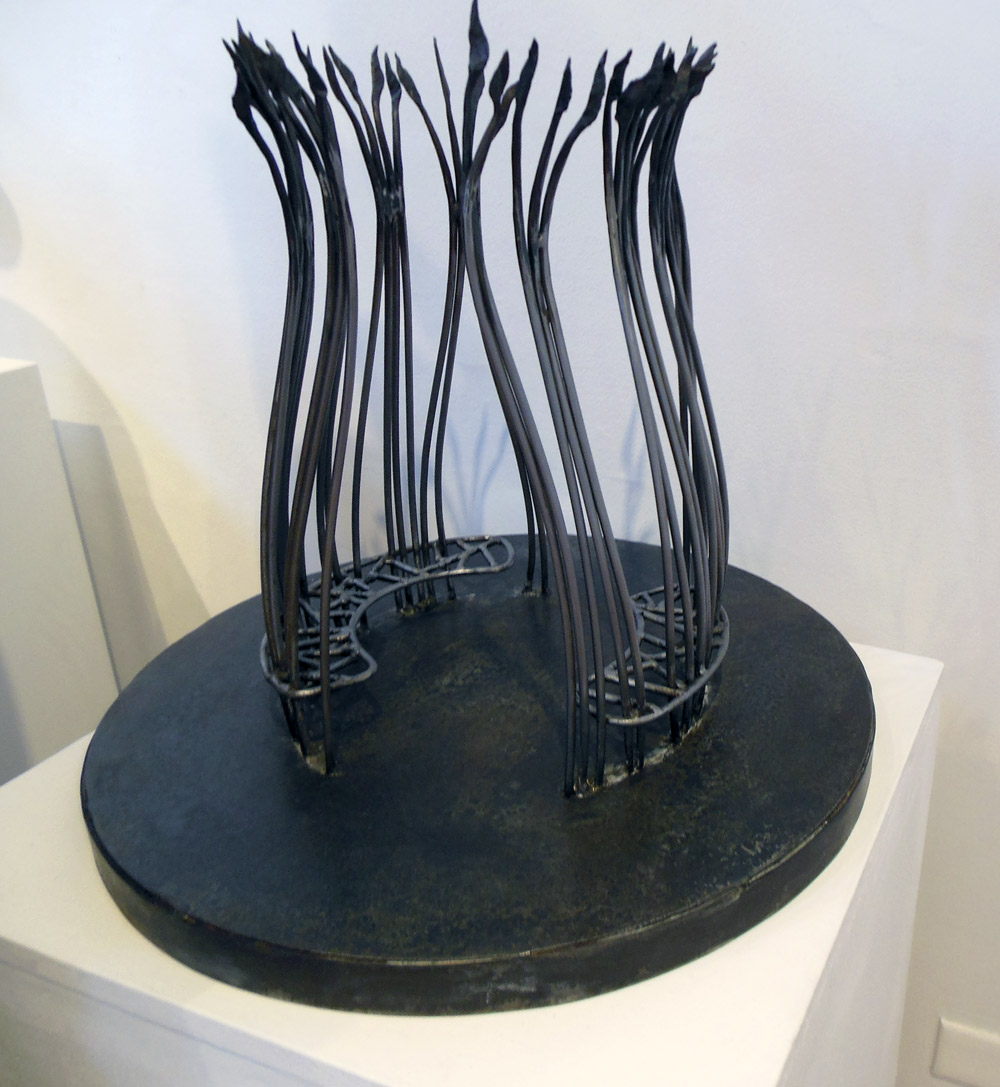
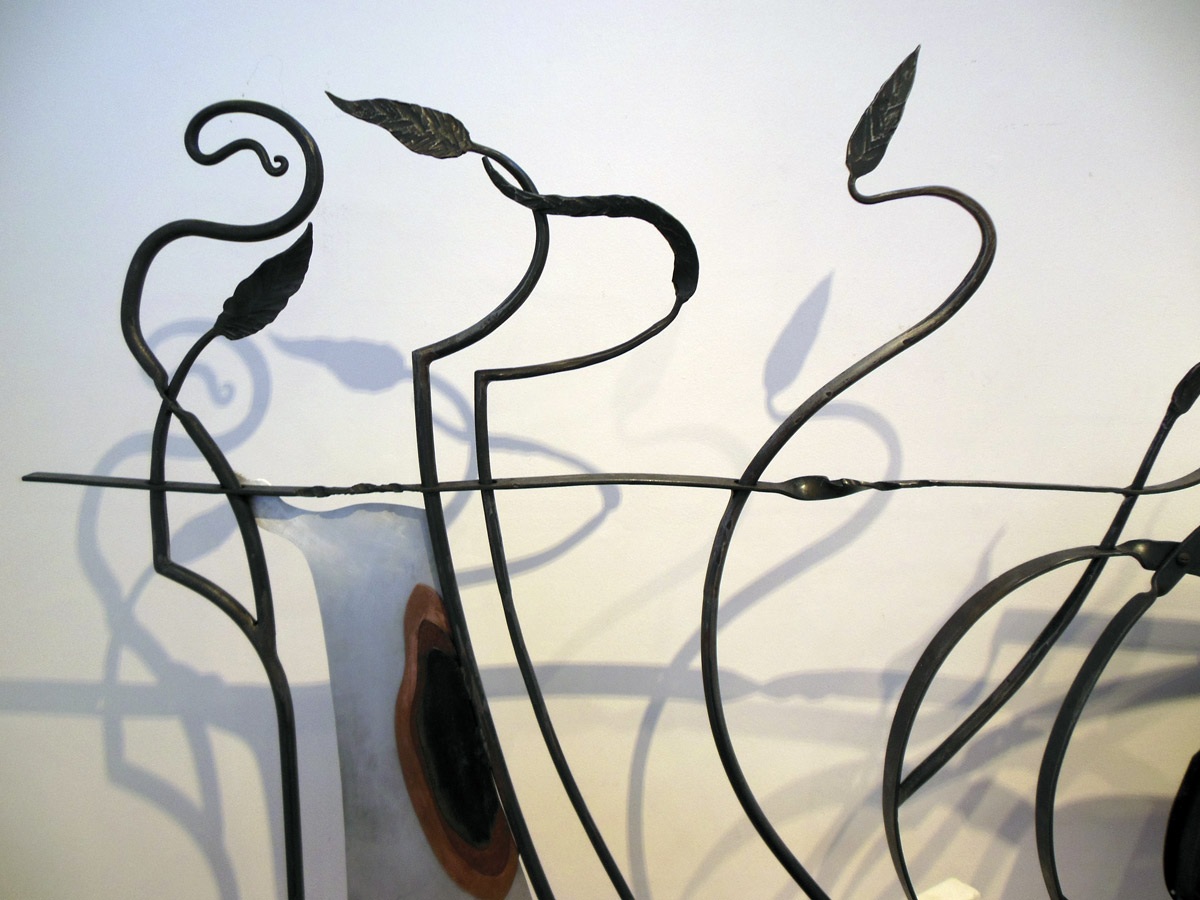
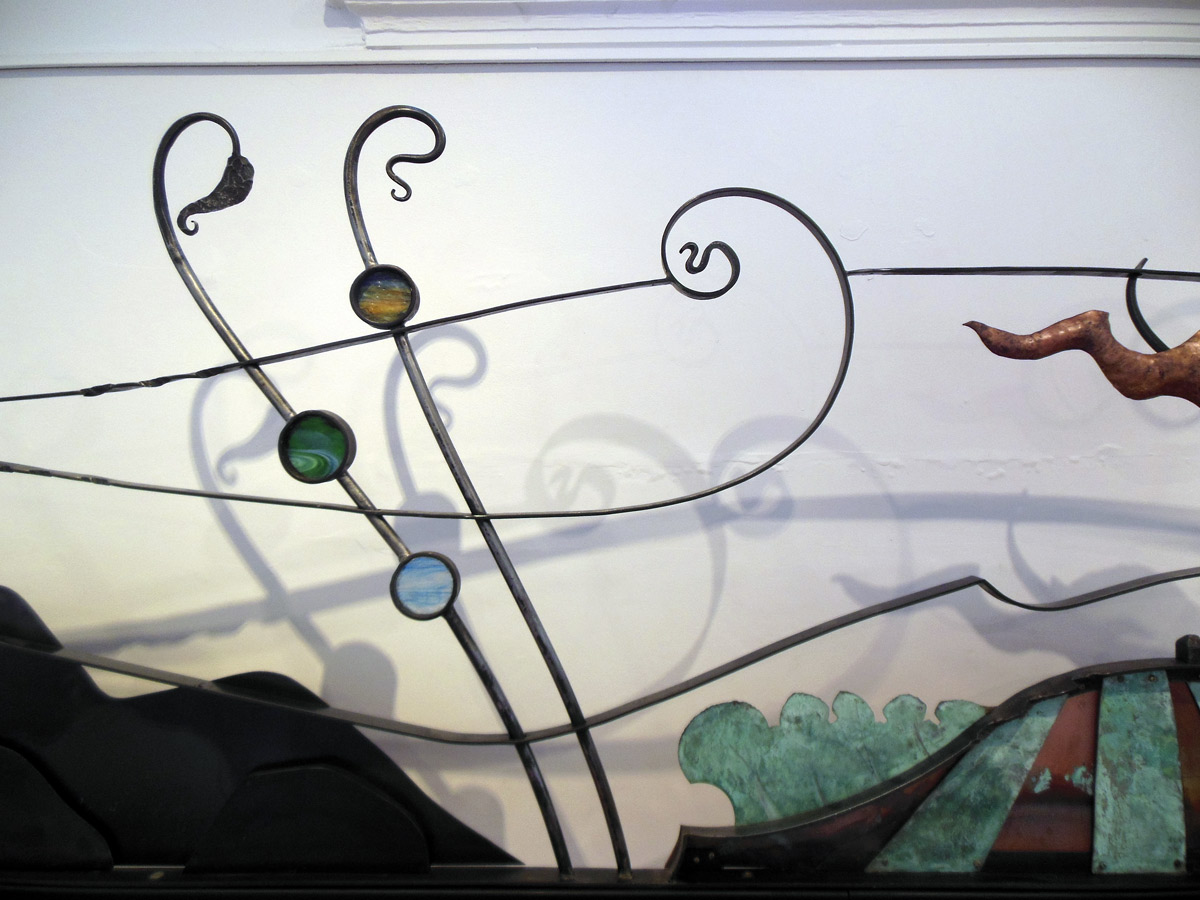
A solid first solo exhibition from my friend David Wood at Gasworks Arts Park. Conceptually the show needed a little tightening but technically the work is outstanding (as you would expect from the owner of Bent Metal and one of Melbourne’s best blacksmiths) and aesthetically pleasing. I particularly liked the topographic remapping of both Port Phillip Bay and St Kilda Junction.

Anyone who knows Melbourne intimately would recognise the ramps and walkways that bisect the interior of the junction even in their abstract form, especially the tram ramp ascending from Dandenong Road to St Kilda Road. I also admired the Nardoo sentinels, which are to be made at full size for a public park in Berwick later in the year.

Dr Marcus Bunyan


Many thankx to Woody for allowing me to publish the photographs in the posting. Please click on the photographs for a larger version of the image.


David Wood (Australian) 'Ghost Gum One' 2013


David Wood (Australian)
Ghost Gum One
2013
Stainless steel and red gum
72 x 170 x 39cm
Photo: Marcus Bunyan


David Wood (Australian) 'Ghost Gum Two' 2013


David Wood (Australian)
Ghost Gum Two
2013
Stainless steel and red gum
78 x 24 x 36cm
Photo: Marcus Bunyan


Installation view of the exhibition 'Sentinels' by David Wood at Gasworks Art Park


Installation view of the exhibition Sentinels by David Wood at Gasworks Art Park
Photo: Marcus Bunyan


My work has two main driving forces – a desire to explore and continue a blacksmithing inheritance and investigating place and how we interact with the physical world. I am interested in how landmarks within landscape can shape, reflect and define our Nation’s ethos and their place as sentinels within our history.

I use traditional forging techniques and prefer to leave hammer marks and traces of process exposed, as testament, on the finished sculpture. The medium itself represents an industry crucial to our economy but detrimental to our landscape.

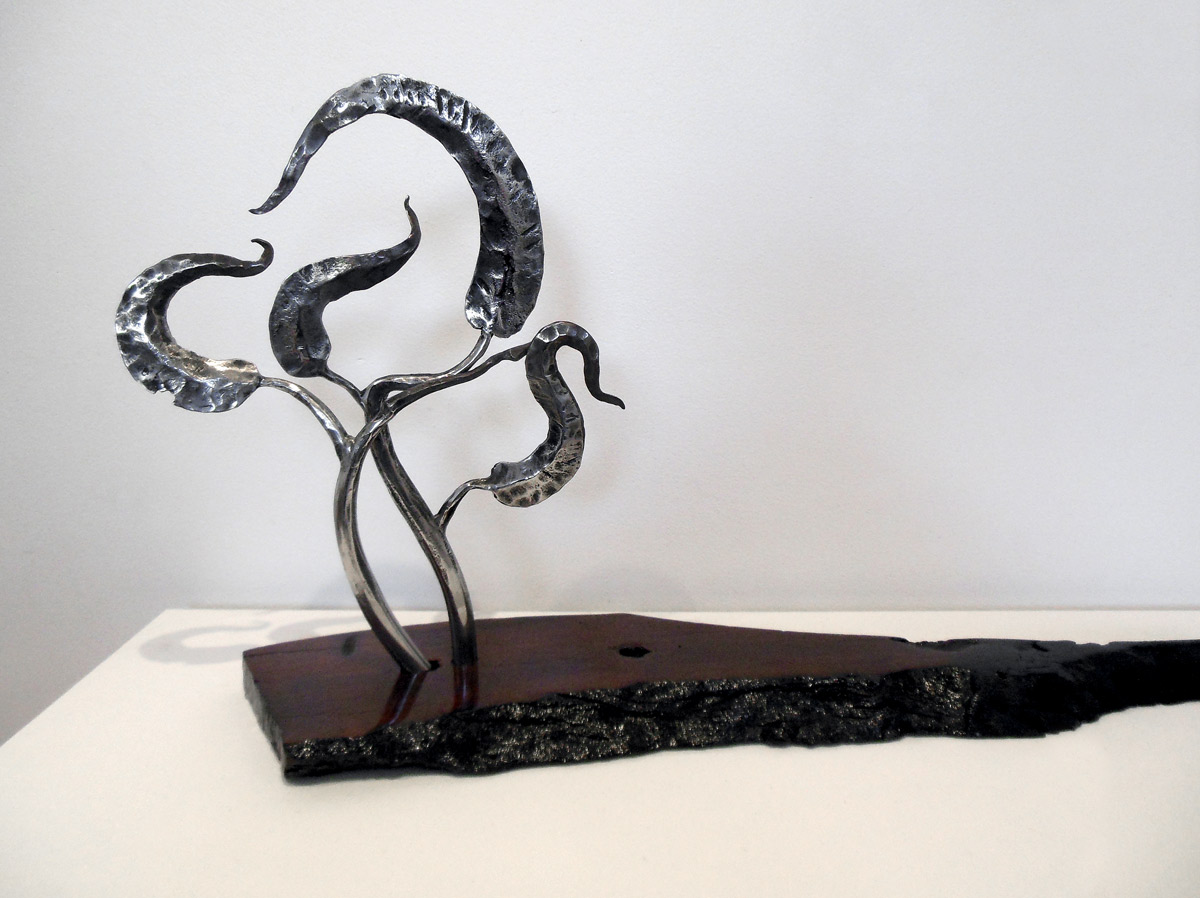
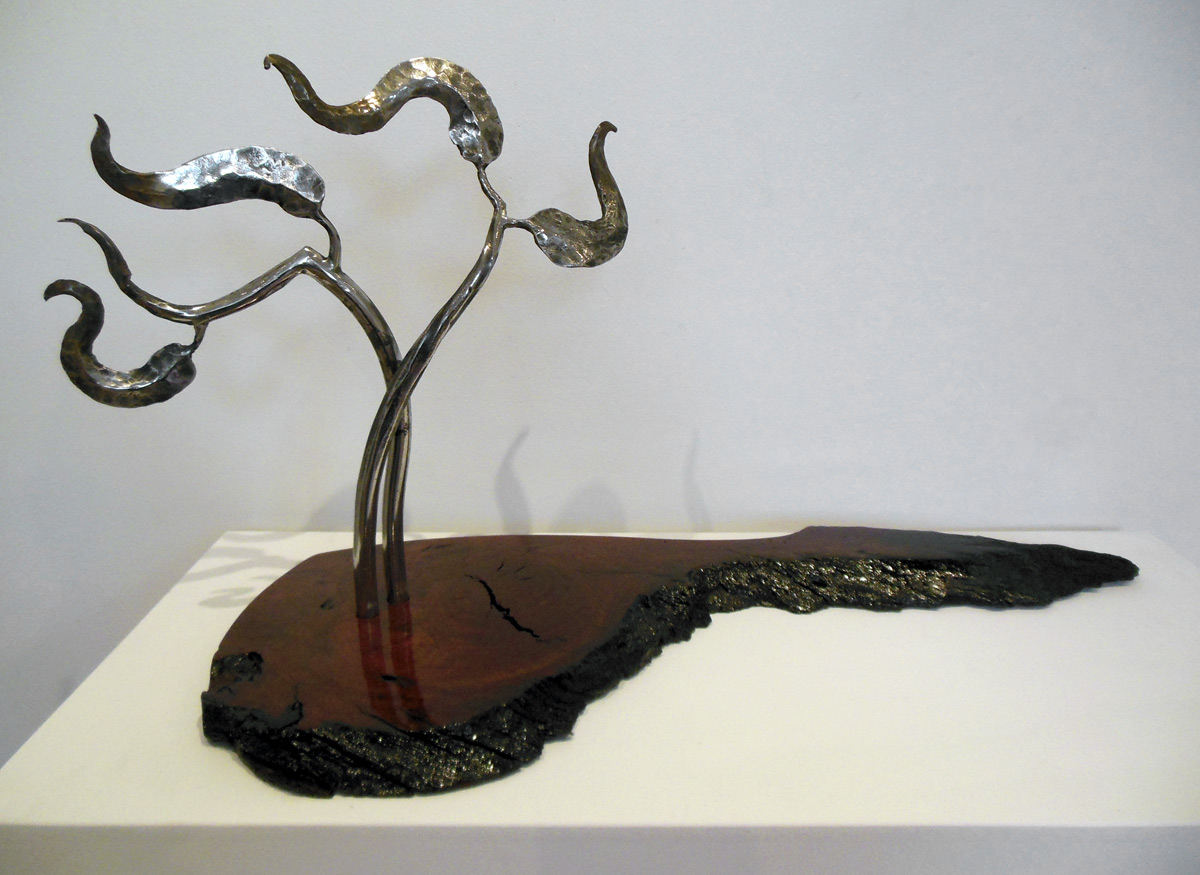
This current group of work, inspired by the burning of two ghost gums in the Northern Territory is a personal muse on Australian culture. The burning of the ghost gums made famous by Albert Namatjira was a terrible act of vandalism. Small silvery ghostly gum trees stand upon burnt timber bases intended to evoke images of landscape and cultural practice, both ancient and current. Forged vessels take inspiration from the ghost gums’ colour and form.

The pieces are abstract representations in metals and timber of trees, mountain ranges and land formations. Mountain ranges are used to survey our cities and towns. They collect our water and are harvested for their riches. Once they were homes to spiritual beings.

I was born at the base of mount Baw Baw and have created homage. This mountain for me is a keeper of secrets. As an adult I live upon the shores of Port Phillip Bay, a quiet sleeping giant. St Kilda junction is a lyrical gesture to paths crossing and the corroboree tree that still watches over this site.

Bought together, the sculptures encapsulate a personal sense of belonging to a place. They also endeavour to explore greater cultural notions of ownership.

Artist statement by David Wood


David Wood (Australian) 'Port Phillip Bay' 2013


David Wood (Australian)
Port Phillip Bay
2013
Copper
33 x 33 x 70cm
Photo: Marcus Bunyan


David Wood (Australian) 'St Kilda Junction' 2013


David Wood (Australian)
St Kilda Junction
2013
Stainless steel, mild steel and copper
27 x 40 x 32cm
Photo: Marcus Bunyan


David Wood (Australian) 'St Kilda Junction' 2013 (detail)


David Wood (Australian)
St Kilda Junction (detail)
2013
Stainless steel, mild steel and copper
27 x 40 x 32cm
Photo: Marcus Bunyan


David Wood (Australian) 'Nardoo sentinels' 2013 (detail)

David Wood (Australian) 'Nardoo sentinels' 2013 (detail)


David Wood (Australian)
Nardoo sentinels (detail)
2013
Mild steel
Photos: Marcus Bunyan


Nardoo sentinels

Inspired by classical structures within great gardens, in particular the Temple of the Winds in the Royal Melbourne Botanic Gardens, this functional sculpture reflects the transparency of our native landscape, significant in shaping our cultural ethos. Mirroring a cluster of trees with their canopy hovering above, it defines its space and surrounds. This group of sentinels stand together to offer protection from the elements.

The singular motif takes the form of nardoo, a native water and food plant. Its finishes mimicking its natural colours and hues. Intended to be a water collector, the shelter is engineered to allow rainwater to drain through its canopy and channel down its stems. Visibility of water flow adds a kinetic dimension to the sculpture. Commissioned exclusively by Pask Development Group, via Tract Landscape Architects, this rotunda is a central feature for a public park. It will stand proud later this year.


David Wood (Australian) 'Nardoo sentinels' (left) and 'Reed Rotunda' (right) 2013


David Wood (Australian)
Nardoo sentinels (left) and Reed Rotunda (right)
2013
Mild steel
Photo: Marcus Bunyan


David Wood (Australian) 'Reed rotunda' 2013


David Wood (Australian)
Reed rotunda
2013
Mild steel
70 x 70 x 46cm
Photo: Marcus Bunyan


Reed rotunda

The design derives a motif from the natural growth of the Phragmite Australis reeds, a wetland plant indigenous to our continent home.

The common reed is known to everyone and surrounds us. It plays an integral role in conservation as habitat and a guardian for wildlife. A natural purifier, removing toxins from our creeks and wetlands. A reed standing alone may be insignificant, but when congregating on mass, it becomes a formidable force in both structure and function. An organic organism that frames and protects the landscape, moves and changes colour with the seasons, rides the wind and plays with light and shade.

Often overlooked as a feature of landscape or viewed as slightly raggedy, this piece invites visitors to celebrate these reeds as something beautiful and to use them as a metaphor for community, refuge and purification of the spirit and soul.


David Wood (Australian) 'Baw Baw wall feature' 2013 (detail)

David Wood (Australian) 'Baw Baw wall feature' 2013 (detail)


David Wood (Australian)
Baw Baw wall feature (detail)
2013
Mild steel, stainless steel, copper, brass, aluminium and glass
6200 x 500 x 70cm
Photos: Marcus Bunyan


Gasworks Arts Park
21 Graham Street
Albert Park VIC 3206
Phone: (03) 8606 4200

Gallery hours: 10am – 4pm each day

Gasworks Arts Park website

LIKE ART BLART ON FACEBOOK

Back to top

Exhibition: ‘Sophia Szilagyi: water studies’ at Beaver Galleries, Canberra

Exhibition dates: 23rd May – 11th June 2013


Sophia Szilagyi (Australian, b. 1973) 'night waves I' 2013


Sophia Szilagyi (Australian, b. 1973)
night waves I
2013
Pigment print on archival rag paper
Edition 2 of 15
29 x 29cm


“It is intangible, incalculable, a thing to be felt, not comprehended – a music of the eyes, a melody of the heart…”


John Ruskin, art critic


“Once, Turner had himself lashed to the mast of a ship for several hours, during a furious storm, so that he could later paint the storm. Obviously, it was not the storm itself that Turner intended to paint. What he intended to paint was a representation of the storm. One’s language is frequently imprecise in that manner, I have discovered.”

David Markson, Wittgenstein’s Mistress


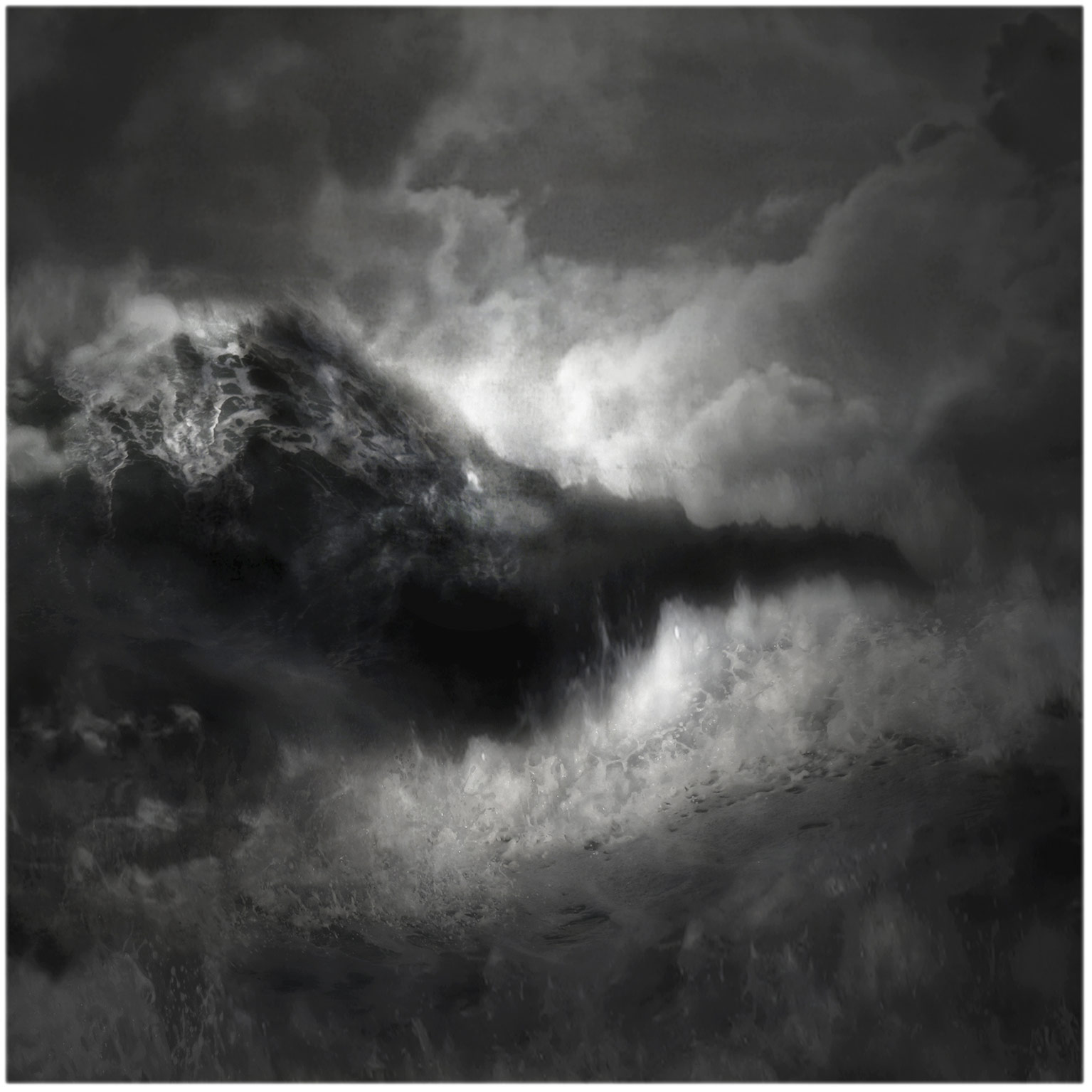
How appropriate that these stunning water studies by artist Sophia Szilagyi should be exhibited in Canberra as the blockbuster J. M. W. Turner exhibition Turner from the Tate: The Making of a Master opens at the National Gallery of Australia.

I love everything thing about these works: the compacted and layered sense of space (the eye of the printmaker brought to bare in the construction of the images rather than the eye of the photographer), the lack of a traditional vanishing point that allows the viewer to be immersed in the prints, the tonality, the texture and immediacy of the images. Szilagyi pushes the work to the limits and, amid the swirling masses of light and colour, a powerful mood is evoked.1 These towering, raging canvases portray the gathering force of the sea, its immediacy and energy; its danger, wonder and sublime beauty. They are as much landscapes of the mind and the imagination as of the sea. Turner, lashed to  a mast during a furious storm so that he could later paint a representation of the storm, would surely have been proud of these meditations upon nature/life. Bravura. Bravo.

Dr Marcus Bunyan


1/ See Grishin, Sasha. “Genius shows his true colours,” in The Age newspaper, Saturday, June 1, 2013, p. 2.


Many thankx to Beaver Galleries for allowing me to publish the photographs in the posting. Please click on the photographs for a larger version of the image.


“Light shimmers, darkness settles, the sea opens its arms to swallow up the sky. Sophia Szilagyi’s imagery evokes the natural world and imbues it with an emotional resonance through the artist’s skilful manipulation of diametrically opposed elements. Light abuts dark, the dense almost claustrophobic space in some works contrast with open seas and vast skies that imply the infinite in others. Imagery is constructed through digital printmaking techniques, layered to create textural complexities, while capturing the oscillations in mood and atmosphere that mirror the ebb and flow of human emotions. Fear, wonder, and danger exist in these images that capture the beauty and grandeur found in the physical world, while also charting an internal topography.”


Marguerite Brown


Sophia Szilagyi (Australian, b. 1973) 'stormy seas (after Courbet)' 2013


Sophia Szilagyi (Australian, b. 1973)
stormy seas (after Courbet)
2013
Pigment print on archival rag paper
Edition 2 of 15
30 x 35cm


Sophia Szilagyi (Australian, b. 1973) 'wave' 2013


Sophia Szilagyi (Australian, b. 1973)
wave
2013
Pigment print on archival rag paper
Edition 9 of 20
49.5 x 57cm


Sophia Szilagyi (Australian, b. 1973) 'breaking' 2013


Sophia Szilagyi (Australian, b. 1973)
breaking
2013
Pigment print on archival rag paper
Edition 4 of 10
96 x 122cm


Sophia Szilagyi is a printmaker who uses digital printmaking to create scenes of re-interpreted memory and experience. In her multi-layered compositions, Sophia explores the relationship between fiction and non-fiction, challenging our perceptions of reality and the effects of physical sensation and emotional response on memory. Sophia’s artistic process begins with an impression of a certain painting, personal photograph or experience. Images from a variety of sources are combined and overlapped so that the general interpretation of her work is a patchwork of real and imagined experiences. Sophia achieves this seamless layering by using digital technology, giving her the freedom to manipulate the imagery to create the desired mood and expression. The completed works are printed on archival rag paper as this highly absorbent surface enhances the softness and dreamlike quality of her imagery. In this current exhibition, Sophia draws her inspiration from the sea and coast, exploring the dualities of intersections between light and dark, earth and ocean. Through her prints, Sophia seeks to capture a sense of wonder, fear, beauty and, sometimes, danger that exists in both nature and the imagination.

Sophia Szilagyi graduated with First Class Honours from the School of Art and Culture at RMIT in 2000. Since graduating, Sophia has held a number of solo shows as well as participating in many group exhibitions across Australia. Her work has been selected in numerous print awards including the Fremantle Print Prize (2007) and the Banyule Award for Works on Paper (2011, 2009 and 2007). In 2005, Sophia was commissioned to complete a work for the Print Council of Australia and her work is represented in collections including the Burnie Regional Art Museum, La Trobe Regional Art Gallery, Wagga Wagga Art Gallery, Queensland University of Technology and State Library of Victoria.

Press release from Beaver Galleries


Sophia Szilagyi (Australian, b. 1973) 'light sea' 2013


Sophia Szilagyi (Australian, b. 1973)
light sea
2013
Pigment print on archival rag paper
Edition 1 of 15


Sophia Szilagyi (Australian, b. 1973) 'dark sea' 2013


Sophia Szilagyi (Australian, b. 1973)
dark sea
2013
Pigment print on archival rag paper
Edition 1 of 15
22 x 22 cm


Sophia Szilagyi (Australian, b. 1973) 'ocean view I' 2013


Sophia Szilagyi (Australian, b. 1973)
ocean view I
2013
Pigment print on archival rag paper
Edition 1 of 5
76 x 77cm


Sophia Szilagyi (Australian, b. 1973) 'ocean view II' 2013


Sophia Szilagyi (Australian, b. 1973)
ocean view II
2013
Pigment print on archival rag paper
Edition 4 of 5
78 x 74cm


Sophia Szilagyi (Australian, b. 1973) 'settling' 2013


Sophia Szilagyi (Australian, b. 1973)
settling
2013
Pigment print on archival rag paper
Edition 2 of 10
80 x 70cm


Beaver Galleries
81 Denison Street
Deakin, Canberra
ACT 2600, Australia
Phone: 02 6282 5294

Opening hours
Tuesday – Saturday 10am – 5pm

Beaver Galleries website

LIKE ART BLART ON FACEBOOK

Back to top

Exhibition: ‘Alan Constable: Ten Cameras’ at South Willard, Los Angeles

Exhibition dates: 4th May – 2nd June 2013

Curator: Ricky Swallow


Wow it really happened! Congratulations to Alan Constable, Sim Lutin and Melissa Petty from Arts Project Australia and to Ricky Swallow for curating.


Alan Constable (Australian, b. 1956) 'Red NEK SLR' 2011


Alan Constable (Australian, b. 1956)
Red NEK SLR
2011
Ceramic
5.5 x 12.25 x 4.75 inches
© Alan Constable


“How would a comb that cannot untangle hair look? You can make the object dangerous, humorous, useless, sinister.”


Christina Ramberg


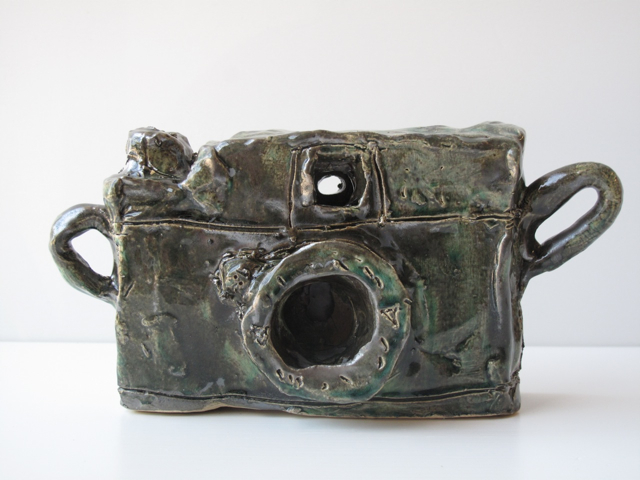
Alan Constable’s cameras are real ‘things’; they command constant attention from their audience and from their lucky owners. The resemblance of these sculptures to cameras is a starting point more than an end point, in the same way a swelling foot as painted by Phillip Guston behaves unlike any sensible foot, or a collage of a doorway by James Castle exceeds the expectation its structural simplicity presents.

Constable’s sculpture makes malleable mischief of both the form and function of the camera. In his hands it becomes an anthropomorphic character with endless variations and possibility. Specific types are modelled in clay from magazine advertisements with apt abbreviation and gesture, then glazed and fired in solid, sometimes soupy colours that further activate their surfaces and transform their sober dispositions.

The glazed surfaces are embellished with details so specific and beautiful they necessitate a tactile engagement with the object. As ‘things’ they still buzz with the handling and energy Constable employs in their making. Dials formed separately and thumbed into position, viewfinder windows cut directly through surfaces together with an oversized scale give Constable’s cameras the feeling of buildings or vessels. Scribed lines articulate both panels and seams, skewed inscriptions indicate model and make: all this information registers with efficiency to produce compelling objects.

The basic slab built walls forming the camera’s body also conceal one of the most interesting elements about these sculptures – internal chambers and walls have been built during the early stages of the works. Such entombed detail points towards Constable’s dedication to conceive and map a complete object, a total exploration of his subject based on unique invention and interpretation.”

Ricky Swallow, April 2013


South Willard is pleased to present Alan Constable: Ten Cameras as its next Shop Exhibit. Curated by Ricky Swallow in collaboration with Arts Project Australia, this is the first solo presentation of Constable’s ceramic sculptures in the United States. Now in his late 50’s, Constable has been producing his art at Arts Project studio’s in Melbourne since 1987, and has exhibited his camera sculptures in both gallery and institutional exhibitions to critical praise over the past 7 years.

Constable is also participating in Outsiderism curated by Alex Baker at Fleisher Ollman gallery in Philadelphia this month.

Ricky wishes to thank Alex Baker for his introduction to Alan’s work, and Sim Luttin and Melissa Petty at Arts Project Australia for their generous assistance.


Alan Constable (Australian, b. 1956) 'Orange AKI SLR' 2011


Alan Constable (Australian, b. 1956)
Orange AKI SLR
2011
Ceramic
6 x 10 x 4 inches
© Alan Constable


Alan Constable (Australian, b. 1956) 'Green SLR' 2011


Alan Constable (Australian, b. 1956)
Green SLR
2011
Ceramic
7.75 x 9 x 3 inches
© Alan Constable


South Willard

Arts Project Australia website

LIKE ART BLART ON FACEBOOK

Back to top

Exhibition: ‘Pat Brassington: Quill’ at Bett Gallery, Hobart

Exhibition dates: 10 May – 31 May 2013


Pat Brassington (Australian, b. 1942) 'Blink' 2013


Pat Brassington (Australian, b. 1942)
Blink
2013
Pigment print
72 x 50cm (paper size)
edition of 8


Always enigmatic but slightly more accessible new work from Australia’s master of ambiguity Pat Brassington. Not that I would say that any of these images are really memorable in their own right but collectively they speak to the alienation of everyday life – alienation from Self, shadow and surroundings.

Marcus


Many thankx to Bett Gallery for allowing me to publish the photographs in the posting. Please click on the photographs for a larger version of the image.


Pat Brassington (Australian, b. 1942) 'Candie' 2013


Pat Brassington (Australian, b. 1942)
Candie
2013
Pigment print
60 x 44cm (paper size)
edition of 8


Pat Brassington (Australian, b. 1942) 'Deuce' 2013


Pat Brassington (Australian, b. 1942)
Deuce
2013
Pigment print
72 x 50cm (paper size)
edition of 8


Pat Brassington (Australian, b. 1942) 'Fathoms Deep' 2013


Pat Brassington (Australian, b. 1942)
Fathoms Deep
2013
Pigment print
72 x 50cm (paper size)
edition of 8


Pat Brassington (Australian, b. 1942) 'Masterclass' 2013


Pat Brassington (Australian, b. 1942)
Masterclass
2013
Pigment print
72 x 50cm (paper size)
edition of 8


Pat Brassington (Australian, b. 1942) 'Matinee' 2013


Pat Brassington (Australian, b. 1942)
Matinee
2013
Pigment print
72 x 50cm (paper size)
edition of 8


Pat Brassington (Australian, b. 1942) 'Mind Game' 2013


Pat Brassington (Australian, b. 1942)
Mind Game
2013
Pigment print
60 x 46cm (paper size)
edition of 8


Pat Brassington (Australian, b. 1942) 'Quicksilver' 2013


Pat Brassington (Australian, b. 1942)
Quicksilver
2013
Pigment print
60 x 50cm (paper size)
edition of 8


Pat Brassington (Australian, b. 1942) 'Shadow Boxer' 2013


Pat Brassington (Australian, b. 1942)
Shadow Boxer
2013
Pigment print
72 x 50cm (paper size)
edition of 8


Pat Brassington (Australian, b. 1942) 'The Guest' 2013


Pat Brassington (Australian, b. 1942)
The Guest
2013
Pigment print
60 x 44cm (paper size)
edition of 8


Pat Brassington (Australian, b. 1942) 'Untitled' 2013


Pat Brassington (Australian, b. 1942)
Untitled
2013
Pigment print, unframed
90 x 65cm (paper size)
edition of 8


Bett Galllery
65 Murray Street
Hobart Tas 7000
Australia
Phone: +61 (0) 3 6231 6511

Opening hours:
Monday – Friday 10am – 5.30pm
Saturday 10am – 4pm
Closed Sundays

Bett Gallery website

LIKE ART BLART ON FACEBOOK

Back to top

Exhibition and Art Award: ‘Art For Kids’ Sake’ Ballarat

Opening: May 4th, 2013


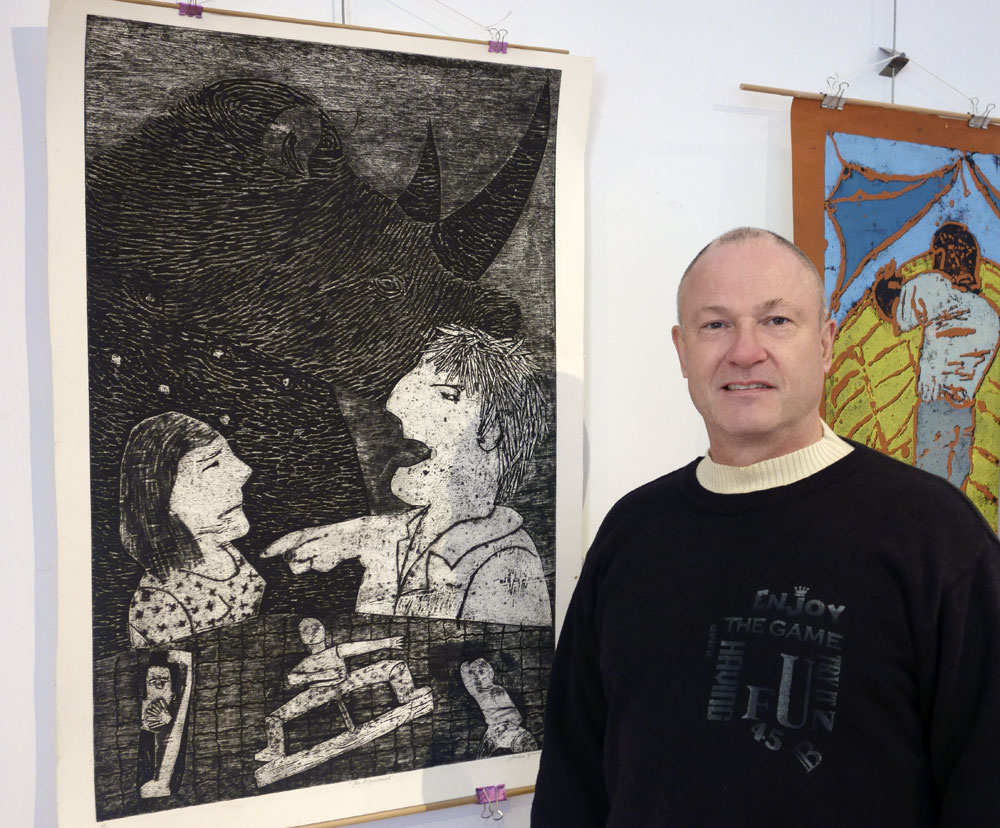
Dr Marcus Bunyan with 'The Argument' by Jackie Gorring


Dr Marcus Bunyan with The Argument by Jackie Gorring


I journeyed up to Ballarat with my friend and fellow photographer Andrew Follows and his guide dog Eamon to judge the Arts for Kids’ Sake art award today. Art For Kids’ Sake is an inclusive art exhibition and art award to raise funds and awareness for the Daylesford Dharma School. As the first school in Australia to offer an education on Buddhist principles, the school provides an alternative academic curriculum informed by mindfulness, care for the environment and conflict resolution.

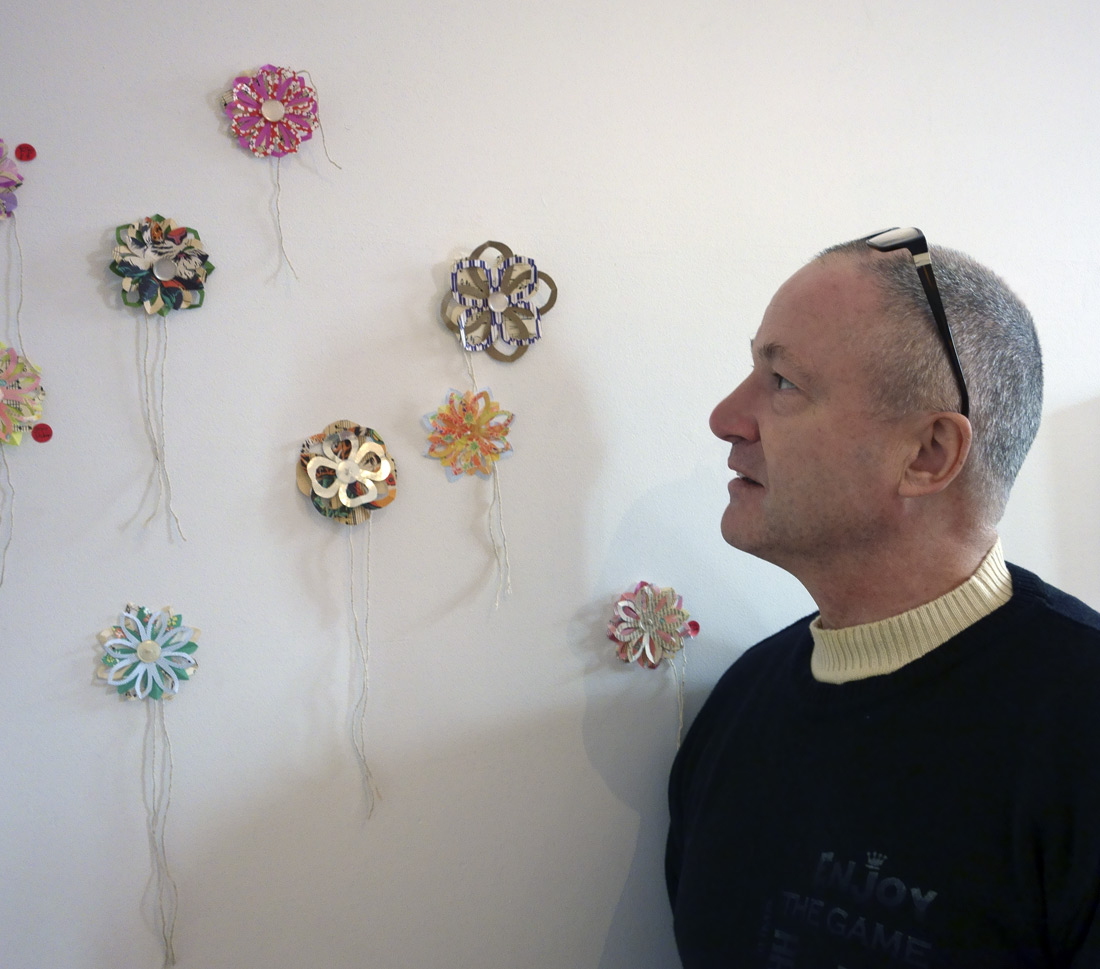
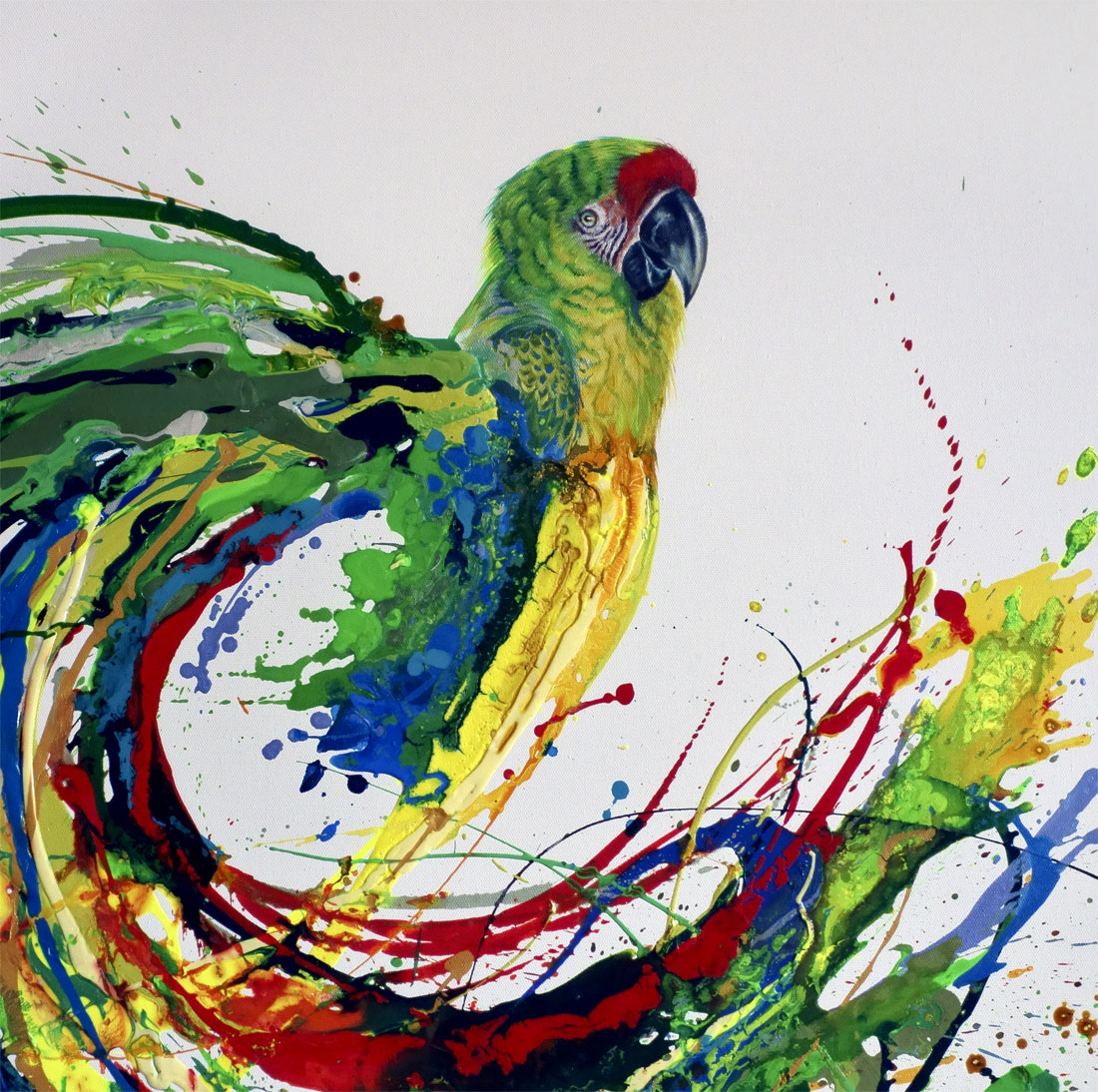
We had a great time with Kim Percy from Ballarat based graphic design firm designscope who were offering the major prize of $2,500 dollars worth of design services for web or print. I went to University with Kim many years ago studying at RMIT for my Bachelor of Arts and she was our wonderful guide and host for the day. Below are the three winners in the sections ‘Most resolved’ (major prize), ‘Most spiritual’ and ‘Best environmental’. The work The Argument, an etching by artist Jackie Gorring was complex, mysterious, beautifully executed and resolved and touched close to home, coming as I do from a dysfunctional family where violence was never far from the surface. Let’s hope with the prize of design work by Kim’s company she can finally get a website to display her work online. Flowers by Amanda Holloway were made while sitting in front of the television. Three layers of hand cut, recycled paper with buttons at the centre were exquisitely executed. The time and patience to do this work – and they were selling in the exhibition for $2 each! Just beautiful. Finally the painting Macaw by Gav Barbey was visually arresting in how the intricately painted face of the macaw dissolved into this wondrous flight of fancy that was its plumage – totally enlightening.
A great day was had by all – thank you Kim for inviting Andrew and I to come up. Next time in Ballarat I will be opening the John Cato exhibition at the Ballarat International Foto Biennale and meeting Colombian artist Erika Diettes for whose exhibition Shrouds (Sudarios) I am writing the catalogue essay.

Dr Marcus Bunyan


Dr Marcus Bunyan looking at 'Flowers' by Amanda Holloway


Dr Marcus Bunyan looking at Flowers by Amanda Holloway


Gav Barbey. 'Macaw' Nd (detail)


Gav Barbey
Macaw (detail)
Nd


B1 Ballarat Art
14 Camp St, Ballarat

LIKE ART BLART ON FACEBOOK

Back to top

Exhibition: ‘The Greatest Wonder of the World’ at the State Library of New South Wales, Sydney

Exhibition dates: 23rd February – 12th May 2013


American & Australasian Photographic Company. '[Merlin's photographic cart ?] and Mitchell's London Hotel, Railway Place, Sandridge [Port Melbourne]' 1870-1875


American & Australasian Photographic Company
[Merlin’s photographic cart?] and Mitchell’s London Hotel, Railway Place, Sandridge [Port Melbourne]
1870-1875


Another fascinating posting, this time featuring Australian colonial photography. In 1951, a hoard of 3,500 glass plate negatives from the nineteenth century was discovered in a garden shed in Chatswood. In time, the find proved to be the most important photographic documentation of goldfields life in Australia. All negatives have now been scanned at high resolution and for the first time in 140 years, it is possible to see what Merlin and Bayliss (from the American & Australasian Photographic Company) photographed, with astonishing clarity and fidelity. “Many of the images in the Holtermann collection were created for an ambitious 1870s publicity campaign to sell the wonders of the Australian colonies to the world.”
What I find particularly interesting is the familiarity of all photographs of goldfields from around the world, whether it be Californian or Victorian – the working class men, the pictures of diggings, etc… but also the particular Australian vernacular that these photographs possess. The photographs could be taken no where else but Australia. Observe the abject poverty of some of the shopkeepers – draper, blacksmith, bootmaker and undertaker (who also acted as carpenter, joiner, builder and cabinet maker) – the timber clad facade of their buildings failing to conceal the bark structure behind (see Holmes, bootmaker, and Spiro Bennett’s store, Gulgong, 1872 below). And yet in their poverty they still thought it important to spend money on advertising with wonderful examples of distinctive typography that I have highlighted in detail – on the photographers, bakers and tent makers shops, on the undertakers facade replete with horses and funeral carriage, and on the painters and sign writers bark clad establishment. Contemporary typographers could have a field day studying these photographs for new typefaces!

Notice in the detail wonderful things:

~ The roughness of a man’s hand as they stand in front of their loot, the gold specimens;

~ The incongruous sight of toy dogs among the rough-and-ready types that inhabited a frontier gold town;

~ The riding crop tucked under the arm of one of the detectives;

~ The flour that covers the bakers shoes;

~ The decorative wallpaper hanging outside the painter and signwriters shack, the word ‘Sacred’ on top of the mirror, and his name ‘J.H. Osborne Painter No.2′ emblazoned on the side of his ladder.


Of particular poignancy is the way the undertaker William Lewis leans in the entrance of his establishment. Propped up against the door (to stop himself from moving during the exposure), his hands stiffly by his side, his eyes stare straight ahead as though he is in a trance. In the photograph he has almost become the corpse that it is his business to bury. We must also acknowledge the temporary nature of these gold field towns, their unsubstantial character and the transitory life of the people that lived and died in them. Bootmaker William Holmes’ wife passed away a few months after the photograph of her family was taken. It was a tough life living on a frontier town. We can also note how desolate the major cities seem, as can be seen in photographs of Sandridge [Port Melbourne] and Pall Mall, Bendigo, with the odd carriage on the street and a single man standing on a street corner.

This is such a rich photographic collection and to have all the negatives digitised and available online is such a pleasure, such a treasure for Australian photographers, historians, researchers and the general public who, with an inquiring mind, can begin to understand the colonisation and conquest of this never empty country.

Dr Marcus Bunyan


Many thankx to the State Library of New South Wales for allowing me to publish the photographs in the posting. Please click on the photographs for a larger version of the image.


The State Library of NSW’s world-renowned photographic archive, the Holtermann collection, will be officially included on the UNESCO Australian Memory of the World register at a ceremony in May 2013… The Australian UNESCO Memory of the World program is part of an international initiative, which aims to safeguard the documentary heritage of humanity and recognise the significance of all heritage materials… Many of the images in the Holtermann collection were created for an ambitious 1870s publicity campaign to sell the wonders of the Australian colonies to the world. The campaign was funded by German-born entrepreneur, Bernhardt Otto Holtermann, who made his fortune from mining in Hill End. For the first time 100 amazing large format prints from the Holtermann collection are on show [until 12 May] in the State Library’s free exhibition, The Greatest Wonder of the World.


Beaufoy Merlin (Australian, 1830-1873) 'Short Street, Hill End' 1872


Beaufoy Merlin (Australian, 1830-1873)
Short Street, Hill End
1872
Wet plate glass negative, on 4/Box 5/No. 18504


Hill End in 1872 was a gold town at its peak. According to the Empire 7 June 1872, “The streets were thronged by a motley crowd; the stores and places of business crowded with customers; the little theatre so densely packed by an admiring audience, that there was not what is facetiously called ‘standing room,’ and even the public-houses, whose name is legion, were crammed. Yet I saw less, far less, drunkenness than can be met with in any street in the metropolis after 10 o’clock at night. There were very few inebriates, no filthy dishevelled women, no crouching loafers, no abject vice. The general aspect of the crowds of decently dressed folk who thronged ‘The Hill’ was that of respectability – rough indeed in many respects, and loud and noisy too, in some instances, but not disreputable, and altogether good-humoured.”


American & Australasian. 'Photographic Company Hawkins Hill 'Golden Quarter Mile'' 1872


American & Australasian Photographic Company
Hawkins Hill ‘Golden Quarter Mile’
1872
Wet plate glass negative, on 4/Box 71/No. C


This panorama of Hawkins Hill was taken by Beaufoy Merlin, who erected his camera in a tree more than a kilometre away across a gully nearly 300 metres deep. In the centre of the image is Krohmann’s mine, with the twin buildings and two storied structure of Beyers and Holtermann’s immediately to the left of it. These two mines contributed to the 12.4 tonnes of gold extracted from Hawkins Hill, but such are the vagaries of goldmining, that Rapp’s, on the extreme right, returned little to its investors, despite digging to a depth of over 380 feet [115 metres]. An almost identical view of the Hawkins Hill ‘Golden Quarter Mile’ taken by Merlin appeared as an engraving in the Australian Town and Country Journal 18 May 1872.


American & Australasian Photographic Company. 'Gold Specimens from the Star of Hope mine' 1872


American & Australasian Photographic Company
Gold Specimens from the Star of Hope mine
1872
Wet plate glass negative, on 4/Box 71/No. T


A month before discovery of the 286 kg Holtermann “nugget” [estimated to hold around 93kg of gold], Bernhardt Holtermann (second from left) Richard Ormsby Kerr (centre) and Louis Beyers (fourth from left) posed with 3,663 ozs [114 kg] of gold specimens from their claim. The specimens were described in The Sydney Morning Herald 28 September 1872 ; “To say they were good would be to say but little – they were almost without rival – magnificent – the talk of this town, where specimens are not unknown.” Holtermann took the best to the Sydney Mint for smelting, “as being clotted with gold it would be almost impossible to crush it in the ordinary way.” The item of clothing on the floor to the right is Beyer’s waistcoat.


American & Australasian Photographic Company. 'Gold Specimens from the Star of Hope mine' 1872 (detail)


American & Australasian Photographic Company
Gold Specimens from the Star of Hope mine (detail)
1872
Wet plate glass negative, on 4/Box 71/No. T


American & Australasian Photographic Company. 'A domestic miner [Hill End]' 1872


American & Australasian Photographic Company
A domestic miner [Hill End]
1872
Wet plate glass negative, on 4/Box 10/No. 70154


Thomas Browne (better known as Rolf Boldrewood) was Gold Commissioner in Gulgong, during the period of Merlin and Bayliss’s photographs. Although this photograph was taken in Hill End, Boldrewood’s description of the domestic miner in his novel The Miners Right seems universal. “The thrifty miner who possesses the treasure, not less common on Australian goldfields than in other places, of a cleanly managing wife, is enabled to surround himself with rural privileges. A plot of garden ground, well fenced, grows not only vegetables but flowers, which a generation since were only to be found in conservatories… the domestic miner is often seen surrounded by his children, hoeing up his potatoes or cauliflowers, or training the climbing rose which beautifies his rude but by no means despicable dwelling.”


American & Australasian Photographic Company. 'Studio and staff of American & Australasian Photographic Co., Hill End' 1872


American & Australasian Photographic Company
Studio and staff of American & Australasian Photographic Co., Hill End
1872
Wet plate glass negative, on 4/Box 9/No. 18850


The American and Australasian Photographic Company established a studio in Tambaroora Street, Hill End in 1872. Beaufoy Merlin’s assistant Charles Bayliss stands, hands in pockets, in the doorway, with studio operator James Clinton behind him. Beside the door is a frame containing large photographic views of Sydney, including the General Post Office and harbour.


American & Australasian Photographic Company. 'Studio and staff of American & Australasian Photographic Co., Hill End' 1872 (detail)


American & Australasian Photographic Company
Studio and staff of American & Australasian Photographic Co., Hill End (detail)
1872
Wet plate glass negative, on 4/Box 9/No. 18850


American & Australasian Photographic Company. 'Blacksmith William Jenkyns' 1872


American & Australasian Photographic Company
Blacksmith William Jenkyns
1872
Wet plate glass negative, on 4/Box 7/No. 18715


William Jenkyns’ blacksmith and shoeing forge was situated in Clarke Street, Hill End. The condition of roads around Hill End ensured Jenkyns was busy. A correspondent to The Sydney Morning Herald 23 May 1872 wrote of the road between Bathurst and Hill End, “For miles at a stretch there is nothing to indicate that any money has been spent upon the road for years, and it is doubtful whether any portion of it has ever been properly made.” On 3 December 1872 another wrote, “I think I have travelled the worst of roads; for the sake of humanity, I hope there are none worse than those I have travelled.” Despite a superficial resemblance, the man on the right is not B.O. Holtermann.


Gibbs, Shallard & Co., Colour Printers [188-?] 'Holtermann's Life Preserving Drops' 1872


Gibbs, Shallard & Co., Colour Printers [188-?]
Holtermann’s Life Preserving Drops
1872
Poster


There is no doubt that Bernhardt Otto Holtermann understood the importance and value of maintaining his association with the world’s largest specimen of reef gold. Unable to purchase the monster quartz and gold specimen when it was extracted from the Star of Hope mine in Tambaroora in 1872, he commissioned the American and Australasian Photographic Company to produce a photographic montage of him standing beside it. Photographers Beaufoy Merlin and Charles Bayliss seem to have carried out this assignment on more than one occasion, as Holtermann wears different clothing in the several known examples of the image.

Obviously pleased with the result, Holtermann used the montage on his business card and on the label to a patent medicine bearing his name. As an advertising ploy, the image of Holtermann resting his hand on the world’s largest hunk of gold can only have been interpreted as a symbol of success and a guarantee of the worth of his product.

(Alan Davies author)


American & Australasian Photographic Company. 'B.O. Holtermann with the Holtermann Nugget, North Sydney' 1874-1876?


American & Australasian Photographic Company
B.O. Holtermann with the Holtermann Nugget, North Sydney
1874-1876?


During the 1870’s goldrush in central New South Wales, Bernard Holtermann, his partners and miners brought the largest agglomeration of gold to the surface. It was not a nugget of pure gold but he was instantly rich! An even larger gold find was broken up when it came to the surface in late January-early February 1873 but it was not photographed. With his wealth Holtermann financed the photography of the goldfields, a collection of international significance showing the ordinary people from all over the world with their houses and businesses on the goldfields. This composite photograph was put together later to give the appearance of Holtermann with the gold on the veranda of his new mansion at North Sydney, now the site of Shore Grammar School.

Three photographs were used to create this image of Holtermann, (supposedly holding the worlds’ largest accumulation of rock and gold ever brought to the surface in one piece). He was posed in the studio with his hand on a headclamp, the nugget was inserted and both placed on a photograph of the verandah of his mansion, built from the proceeds of his goldmine. The “nugget” was found in Hill End, New South Wales on 19th October 1872. More than half of the 630 lbs weight was pure gold, value 12,000 pounds ($24,000). With gold worth say $1400 per ounce, the value today would be over $A7,000,000. Amazingly Holtermann’s mine had already made him rich before the discovery of this boulder and there was reputed to be an even larger aggregate in the mine!


In 1872, the newly rich Bernhardt Otto Holtermann used some of his wealth to employ Henry Beaufoy Merlin and Charles Bayliss, of the American and Australasian (A&A) Photographic Company, to photograph gold producing areas and cities in NSW and Victoria for exhibition overseas. These images provide the most comprehensive and detailed record of nineteenth century goldfields life and, with the commissioned photographs, now form the Library’s Holtermann archive of 3500 wet plate negatives. The Greatest Wonder of the World features this extraordinary collection of nineteenth century documentary images. Through enlargements, digital images and a selection of vintage prints and wet plate negatives, the exhibition tells the remarkable story of the A&A Photographic Company and the philanthropy and vision of Bernhardt Holtermann.

In 1951, a hoard of 3,500 glass plate negatives from the nineteenth century was discovered in a garden shed in Chatswood. In time, the find proved to be the most important photographic documentation of goldfields life in Australia. The photographers responsible for the images were Beaufoy Merlin and Charles Bayliss of the American and Australasian Photographic Company, who had travelled to the town of Hill End in 1872 to record the rush. From there, they also recorded the burgeoning Gulgong and Mudgee goldfields.

In October 1872, the world’s largest specimen of reef gold, known as the Holtermann nugget, was unearthed at nearby Hawkins Hill and Merlin and Bayliss were there to record it. In an extraordinary act of patronage, the newly rich Bernhardt Otto Holtermann used some of his wealth to employ Merlin and Bayliss to photograph other gold producing areas and cities in NSW and Victoria for exhibition overseas. Proud of his own success, he believed that his travelling exposition would encourage immigration to Australia.  Merlin and Bayliss’s documentation was slow, with long exposures and the difficulty of processing one photograph at a time. Their wet plate negatives captured exceptional detail, but copies made in the twentieth century failed to reveal the wealth of information hidden within.

In 2008, plans were made to digitally scan the Holtermann Collection at very high resolution and this became reality through the generous assistance of the Graham and Charlene Bradley Foundation; Simon and Catriona Mordant; Geoffrey and Rachel O’Conor; Morningstar and numerous other benefactors. For the first time in 140 years, it is possible to see what Merlin and Bayliss photographed, with astonishing clarity and fidelity.

Press release from the State Library of New South Wales website


American & Australasian Photographic Company. '[French warship 'Atalante', Fitzroy Dock, Sydney, 1873]' Aug 1873


American & Australasian Photographic Company
[French warship ‘Atalante’, Fitzroy Dock, Sydney, 1873]
Aug 1873


This photograph of the French warship Atalante in Fitzroy Dock on Cockatoo Island, with Balmain in the background, was taken in August 1873. Built in 1865, the iron clad Atalante had a protruding brass bow for ramming lesser vessels. It had taken part in the Franco Prussian War in 1870 and at the time of this photograph was the flagship of the Pacific Squadron, under the command of Rear Admiral Baron Roussin. Beaufoy Merlin was particularly pleased with his photographs of the Atalante and wrote about them in the Town and Country Journal.


American & Australasian Photographic Company. '[French warship 'Atalante' at Fitzroy Dock, Sydney, 1873 / attributed to the American & Australasian Photographic Company]' 1873


American & Australasian Photographic Company
[French warship ‘Atalante’ at Fitzroy Dock, Sydney, 1873 / attributed to the American & Australasian Photographic Company]
1873


“… One of the solar pictures which I took on the occasion of my last visit to the Atalante, of which an engraving accompanies the present pen-and-ink sketch, is taken  from the rocks to the north-west, and shows her “ram,” with its massive projecting extremity of solid brass, her swelling sides, portholes, section of the dock, and men at work. The steps to the bottom of the basin as well as [its depth], are fairly indicated. Probably there is no one more difficult to please in procuring a picture of this kind than the landscape photographer himself. I may therefore be permitted to say in behalf of the one referred to, that it gave me satisfaction.”

Sadly, these images of Atalante were among the last photographs taken by Merlin. He contracted pneumonia and died, age 43, in September 1873.


American & Australasian Photographic Company. 'Herbert Street, west side looking north from Mayne Street and showing Barnes' Chemist Shop, Gulgong' 1872


American & Australasian Photographic Company
Herbert Street, west side looking north from Mayne Street and showing Barnes’ Chemist Shop, Gulgong
1872
Wet plate glass negative, on 4/Box 2/No. 18242


The incongruous sight of toy dogs among the rough-and-ready types that inhabited a frontier gold town has been captured in this view of Herbert Street, Gulgong. According to the Empire 28 May 1872, “The streets – so to call the dusty avenues between the rows of shops and Inns – are thronged in the daytime, by much about the same number, though not, apparently by the same sort of persons, as the streets in Sydney. There is not the same bustling activity about them… There are also fewer women amongst them, and fewer well dressed men. The yellow, clay-stained fustian trousers which have never made and never will make acquaintance with the wash-tub, invest the lower extremities of every two men out of three…”


American & Australasian Photographic Company. 'Charles Bird, Medical Hall, Gulgong' 1872


American & Australasian Photographic Company
Charles Bird, Medical Hall, Gulgong
1872
Wet plate glass negative, on 4/Box 2/No. 18160


The Medical Hall of Charles Bird Jnr was situated at the corner of Belmore and Herbert Streets, Gulgong. Charles Bird Snr. conducted another shop at the corner of Mayne and Herbert Streets, until the Medical Hall was sold and converted into a hotel in 1879. The Gulgong Guardian 20 November 1872 noted that Charles Bird had received a new disinfectant “which will be invaluable during the summer months to all who are unfortunate enough to live in those parts of town where stenches are pungent and plentiful.”


American & Australasian Photographic Company. 'Holmes, bootmaker, and Spiro Bennett's store, Gulgong' 1872


American & Australasian Photographic Company
Holmes, bootmaker, and Spiro Bennett’s store, Gulgong
1872
Wet plate glass negative, on 4/Box 3/No. 18314


This timber clad facade fails to conceal the bark structure behind and the poverty of its inhabitants. This is Gulgong bootmaker William Holmes and his family outside their shop in Mayne Street west. His wife Emily, in the doorway, died a few months after the photograph was taken. The town’s short-term architecture was described in The Sydney Morning Herald 30 September 1872. “Gulgong is not singular in its buildings. The followers of alluvial rushes have ere this found that business is fleeting. As leads work out so does business tide away. Hence have we buildings of a temporary nature; and, although the town of Gulgong may be reckoned three years old, yet not a single brick building stands on its site…”


American & Australasian Photographic Company. 'The detectives' 1872


American & Australasian Photographic Company
The detectives
1872
Wet plate glass negative, on 4/Box 2/No. 18246


These are detectives Charles Powell and Robert Hannan, outside their Gulgong office. They had plenty to do. In a letter to the editor of the Maitland Mercury 16 May 1872, William Collins stated “The people (except the bankers and storekeepers), are in general a rough and ready set, occasionally a fight is to be seen, but the very diligent police speedily settle such hostile engagements, by marching the pugilists to a place called the town cage, from which place they are brought in the morning before the magistrate, who has often heard of mercy, but does not know what it means…” Powell and Hannan arrested 14 Chinese for gambling in January 1872 and the Empire 20 January 1872 noted, “In all these cases the lawyers reap a rich harvest, and it was somewhat amusing to witness their actively and interest within ten minutes of the time of arrest.”


American & Australasian Photographic Company. 'The detectives' 1872 (detail)


American & Australasian Photographic Company
The detectives (detail)
1872
Wet plate glass negative, on 4/Box 2/No. 18246


American & Australasian Photographic. 'Company William Lewis, undertaker' 1872


American & Australasian Photographic Company
William Lewis, undertaker
1872
Wet plate glass negative, on 4/Box 2/No. 18168


The establishment of William Thomas Lewis, Undertaker and Carpenter at the corner of Belmore and Herbert Streets was primitive, but his funerals were said to be carried out ‘with his usual taste and completeness’. In 1871, Gulgong lacked a suitable place for burials and the Gulgong Guardian commented several times on the growing outcry for a cemetery. The locals had a valid complaint, particularly because of the considerable mortality rate among the young. In April 1871 alone, nine children died in a fortnight. Even Thomas De Courcy Brown, editor of the Guardian, lost his daughter Rose, age 7 months, in December that year. In January 1872, there were 37 deaths in Gulgong, (including 21 children under 5 years) and 17 births. The newspaper complained that the new cemetery was still unfenced.


American & Australasian Photographic. 'Company William Lewis, undertaker' 1872 (detail)


American & Australasian Photographic Company
William Lewis, undertaker (detail)
1872
Wet plate glass negative, on 4/Box 2/No. 18168


American & Australasian Photographic Company. 'John Osborne, painter and signwriter' 1872


American & Australasian Photographic Company
John Osborne, painter and signwriter
1872
Wet plate glass negative, on 4/Box 4/No. 18372


J.H. Osborne, painter & signwriter of Gulgong also supplied decorative wallpaper. It seems he painted faux marble headstones as well. Osborne’s bark clad establishment was located at 2 Medley Street, at the sparsely populated northern end of town, which explains the prominent display of his sign writing skill. The Empire 28 May 1872 commented on the temporary nature of buildings in Gulgong. “The shops and public-houses are, for the most part, of a very temporary and unsubstantial character, considered as buildings. A large proportion of them are capable of being removed, piecemeal, and set up again on a new diggings in the event of Gulgong declining in prosperity, and a rush taking place to another field within a day or two’s journey.”


American & Australasian Photographic Company. 'John Osborne, painter and signwriter' 1872 (detail)


American & Australasian Photographic Company
John Osborne, painter and signwriter (detail)
1872
Wet plate glass negative, on 4/Box 4/No. 18372


A meeting between gold miner Bernard Otto Holtermann and photographer Beaufoy Merlin in Hill End in 1872 resulted in one of the most astonishing photographic documentations ever undertaken. Holtermann had been associated with the recent discovery of the world’s largest specimen of reef gold, weighing 145 kilograms, extracted from the Star of Hope mine at nearby Tambaroora. Merlin, an itinerant photographer, had just opened a temporary studio in Hill End. In January 1873, the two announced their plans for Holtermann’s great International Travelling Exposition, which would publicise the potential of their adopted country to the world through photography. Merlin and his assistant Charles Bayliss had already photographed some of the gold producing towns of the colony and Holtermann’s patronage enabled them to continue the undertaking, using a larger camera.

Merlin had begun his photographic career in Victoria in 1866 and within a few years had developed a unique style of outdoor photography. Charles Bayliss joined American & Australasian Photographic Company in Melbourne and the pair headed north into New South Wales, photographing towns along the way. When Beaufoy Merlin and Charles Bayliss arrived in Sydney in September 1870, they had already completed an extraordinary documentation of “almost every house in Melbourne, and the other towns in Victoria.” They were aware that their venture was unusual and contemporary advertising by the American & Australasian Photographic Company reflects a considered understanding of the photographic medium and an intellectual approach to their work.

“The chief characteristic and distinguishing feature of the Company’s style of work, is the introduction of figures into the photograph – the most complete and life-like portraits of individuals who happen, or may choose to stand outside, being incorporated in the picture. The A&A Photographic Company desire further to remind the public that these negatives are not taken for the mere immediate object of sale, but that being registered, copies can at all times be had by or of those parties residing in any part of the colonies wherever the Company’s operations have extended, thus forming a novel means of social and commercial intercourse.”

Nevertheless, it is not surprising that Merlin and Bayliss headed west in 1872 with the new gold rushes. The cry “Rush-O!” meant money for businesses, including photographers. A studio for the A&A Photographic Company was built on land owned by Holtermann in Hill End and excursions were made to surrounding areas by horse drawn caravan. The photographic process of the day required the photographer coat each plate just before use and develop it immediately before it lost sensitivity. For the itinerant photographer, this meant taking a portable darkroom wherever he went. Despite the difficulty of the wet plate process, the comprehensive goldfields photography of Merlin and Bayliss has provided a unique documentation of frontier life.

Merlin fell ill and died from pneumonia in 1873, leaving his assistant the task of documenting towns for Holtermann’s Exposition. Consequently, Bayliss toured Victoria the following year, but returned to Sydney in 1875 and began making giant panoramas of the city from Holtermann’s house in North Sydney. The venture was to cost Holtermann over ₤4000, but resulted in the production of the world’s largest wet-plate negatives and several panoramas. One, measuring 10 metres long, astonished audiences overseas and received the Bronze award at the Philadelphia Centennial Exhibition of 1876 and a Silver Medal at the Paris Exposition Universelle Internationale in 1878. Only a small percentage of the A&A Photographic Company’s output has survived, but 3,500 small format wet plates negatives (including extensive coverage of the towns of Hill End and Gulgong) and the world’s largest wet plate negatives, measuring a massive 1 x 1.5 metres, are held by the Library.

Text from The Holtermann Collection website


Charles Bayliss (Australian, 1850-1897) 'The beginning of Home Rule' 1872


Charles Bayliss (Australian, 1850-1897)
The beginning of Home Rule
1872
Wet plate glass negative, on 4/Box 3/No. 18278


Home Rule, 11 km south-east of Gulgong, was only two months old when Charles Bayliss took this photograph. A reporter from the Gulgong Guardian was also in town and wrote on 13 July 1872, “During the past fortnight there has been a great improvement for the better in the appearance of the township at the Home Rule. Large and costly buildings are springing up in every direction and being fitted up for almost every trade. In hotels there is a great change for the better, as in several of them notably Messrs Wright, Moss, and Oliver, the accommodation is almost equal to any on Gulgong; so visitors need not fear that they will suffer hunger or thirst.”


Charles Bayliss (Australian, 1850-1897) 'Tent city, Home Rule' 1872


Charles Bayliss (Australian, 1850-1897)
Tent city, Home Rule
1872
Wet plate glass negative, on 4/Box 3/No. 18285


In the early days of gold rushes, miners usually lived in tents. Here tentmaker J. Booth has confidently set up his canvas shop in Home Rule. The burgeoning new field was described in the Sydney Morning Herald 22 May 1872, “On Friday last there must have been fully fifteen hundred persons upon the ground, and tents and habitations of every description were springing, apparently Iike mushrooms, from the ground, and such is the rapidity with which a gold-fields town is formed, I shall not be surprised to see the place well supplied with stores, and, of course, hotels, when I again visit the place about a fortnight hence.”


Charles Bayliss (Australian, 1850-1897) 'John Davey, baker' 1872


Charles Bayliss (Australian, 1850-1897)
John Davey, baker
1872
Wet plate glass negative, on 4/Box 3/No. 18384


With his shoes covered in flour, John Davey steps outside his bakery in the main street of Canadian Lead. Bread cost 6d a 2lb [5 cents per 900g] loaf. The woman and children to the right also appear outside Ruth Beck’s North Star Hotel, three doors away. The rush to Canadian Lead began in early 1872 and the Maitland Mercury 6 April 1872 was able to state “the Canadian Lead, where a month ago some four hundred people were, can now boast of a couple of thousands…” Not everyone was law-abiding. The Maitland Mercury 24 August 1872 related the story of Mrs Beck dropping a purse containing £21 [$42, worth about $2000 today], which was picked up by her little boy, but taken from him by two men claiming that it was theirs. The miscreants were arrested in Mudgee two days later, drinking the profits.


Charles Bayliss (Australian, 1850-1897) 'John Davey, baker' 1872 (detail)


Charles Bayliss (Australian, 1850-1897)
John Davey, baker (detail)
1872
Wet plate glass negative, on 4/Box 3/No. 18384


Beaufoy Merlin (Australian, 1830-1873) 'Circular Quay from Dawes Battery' 1873


Beaufoy Merlin (Australian, 1830-1873)
Circular Quay from Dawes Battery
1873
Wet plate glass negative, on 4/Box 58/No. 285


In mid 1873, Beaufoy Merlin returned to Sydney to continue photographing the city for Holtermann. The Sydney Morning Herald 2 August 1873 noted, “Mr. Beaufoy Merlin has taken a considerable number of photographic views of Sydney for the first section of ‘Holtermann’s Intercolonial Exposition’.” This image from Dawes Battery, past Campbell’s Wharf to Circular Quay can be dated to early September 1873, as the Haddon Hall (r) from London, is loading for San Francisco at Campbell’s wharf. Behind it is Aviemore and the ship in background in front of Customs House is La Hogue. Both Aviemore and La Hogue left for London on 13 September 1873.


Charles Bayliss (Australian, 1850-1897) (American & Australasian Photographic Company) 'Pall Mall, Bendigo' 1874


Charles Bayliss (Australian, 1850-1897) (American & Australasian Photographic Company)
Pall Mall, Bendigo
1874
Wet plate glass negative, on 4/Box 78/No. 2


After the death of Beaufoy Merlin in 1873, Bernhardt Holtermann engaged Merlin’s assistant, 24 year-old Charles Bayliss, to continue taking photographs for his planned Exposition. This view of Pall Mall from Hadley’s City Family Hotel, Sandhurst [Bendigo, Victoria] was taken in April 1874. Bayliss photographed the town using the Exposition’s standard 10 x 12 inch (25 x 30cm) glass negatives, but for this image used a mammoth camera specially imported by Holtermann which took glass plates measuring 18 x 22 inches (46 x 56cm). Bayliss also photographed Ballarat in June 1874, using the mammoth camera to produce a panorama from the town hall clock tower.


State Library of New South Wales
Macquarie Street, Sydney
NSW 2000 Australia
Phone: +61 2 9273 1414

Opening hours:
Daily 10am – 5pm

State Library of New South Wales website

LIKE ART BLART ON FACEBOOK

Back to top