Australian artist, curator and writer.
Doctor of Philosophy (RMIT University), Melbourne.
Master of Art Curatorship (University of Melbourne), Melbourne.
Master of Arts (RMIT University), Melbourne.
BA (Hons) (RMIT University), Melbourne.
A.R.C.M. (Associate of the Royal College of Music), London.
“Young heart, old soul.” And then the vulnerability in those eyes… that burn right through you.
Such sensitivity, such presence. Glorious. All of them!
Marcus
Many thankx to Fundación Mapfre for allowing me to publish the photographs in the posting. Please click on the photographs for a larger version of the image.
Fundación Mapfre opens its new photography gallery at Paseo de Recoletos 27 with the first retrospective exhibition dedicated to the work of British photographer Vanessa Winship. Curated by Carlos Martín García, the show offers visitors a complete overview of Winship’s work, featuring a broad selection of photographs from all of her series, starting with her initial project in the Balkans and ending with her work in Almería this year, produced by Fundación Mapfre and due to receive its first public showing at this exhibition.
Vanessa Winship (Barton-upon-Humber, United Kingdom, 1960) studied at the Polytechnic of Central London during the 1980s at the time when postmodern theory was beginning to permeate the practice of photography and cultural studies. These ideas are reflected in the artist’s deliberate remove of all potential documentary content from her photography in order to concentrate instead on notions more related to identity, vulnerability and the body. Accordingly, since the 1990s Vanessa Winship has worked in regions which, in the collective imaginary, are associated with the instability and darkness of a recent past and with the volatile nature of borders and identities. Her images, in black and white, challenge the perception of photography’s immovable truth. Meanwhile, the formal choice of black and while reflects a deliberate shift from the photograph as narrative and constitutes, in the words of the artist herself, a “marvellous instrument of abstraction that enables us to move between time and memory.”
Vanessa Winship is one of the most renowned photographers on the contemporary international scene. In 2011 she was the first woman to win the prestigious Henri Cartier-Bresson (HCB) award. Her other distinctions include winning first prize in the Stories category of the World Press Photo awards in 1998 and 2008, the Descubrimientos award at PhotoEspaña in 2010, and the Godfrey Argent Prize in 2008, bestowed by the National Portrait Gallery in London.
A tour of the exhibition
“I lived and worked in the region of the Balkans, Turkey and the Caucasus for more than a decade. My work focuses on the junction between chronicle and fiction, exploring ideas around concepts of borders, land, memory, desire, identity and history. I am interested in the telling of history, and in notions around periphery and edge. For me photography is a process of literacy, a journey of understanding.”
Vanessa Winship
The Vanessa Winship exhibition adopts the form of a chronological journey through each of the series that make up her oeuvre, featuring a selection of 188 photographs.
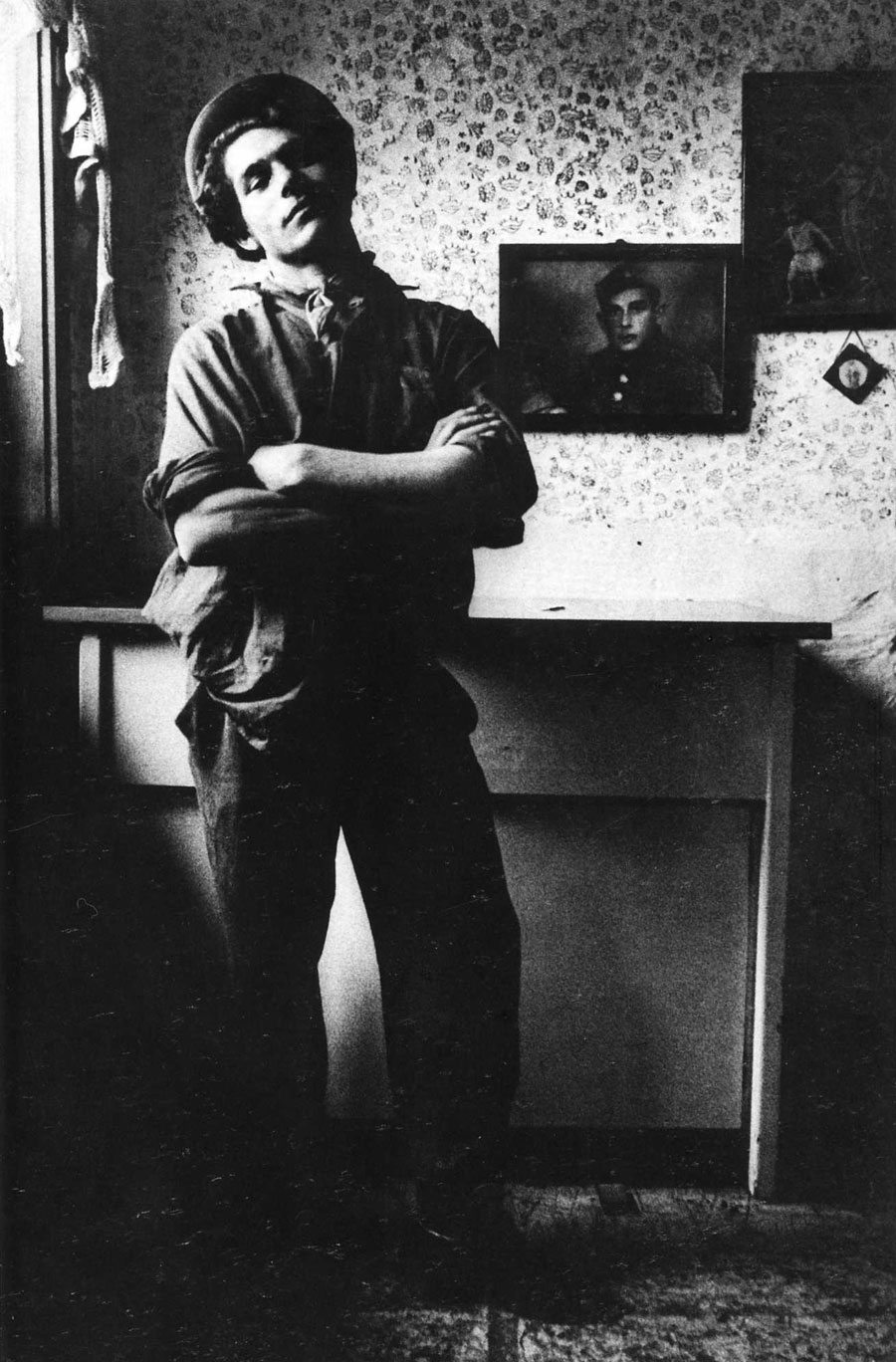
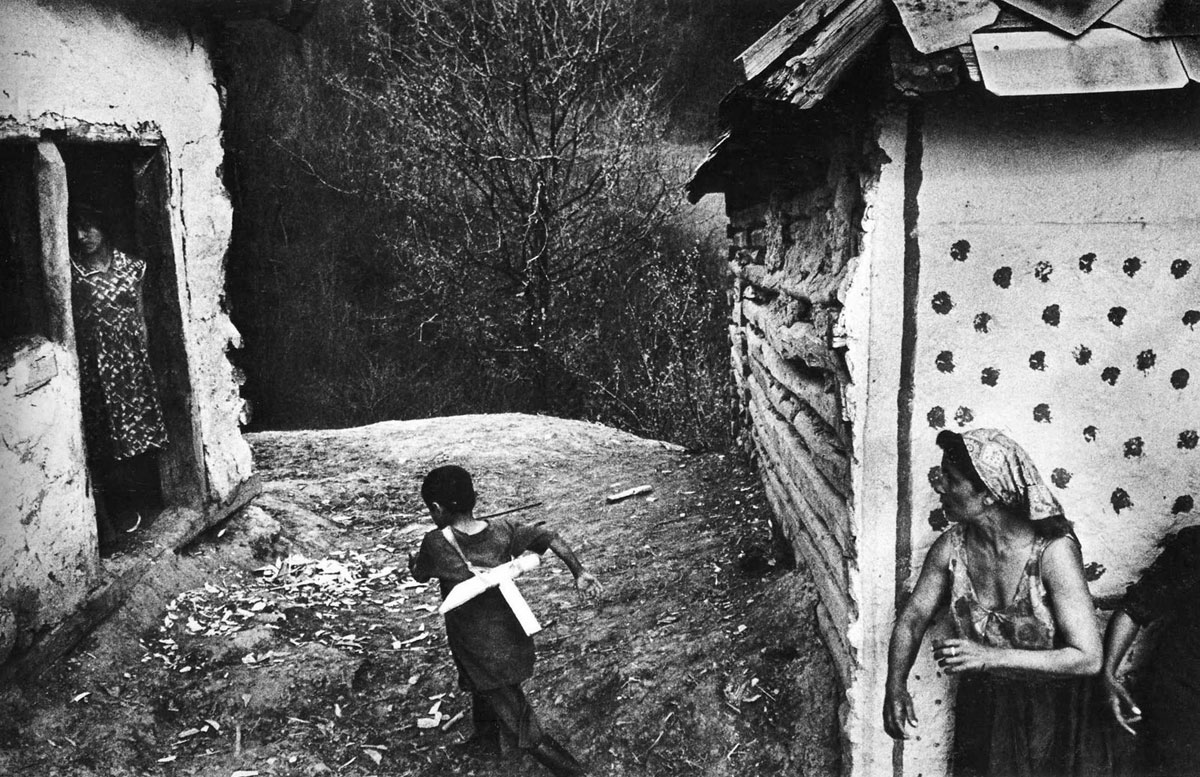
Between 1999 and 2003 Vanessa Winship traveled through the regions of Albania, Serbia, Kosovo and Athens, coinciding with the armed conflict in the former Yugoslavia and resulting in her series Imagined States and Desires. A Balkan Journey. This project was a fundamental step in defining her photographic vision and in her decision to break with contemporary reportage and the traditional concept of the photojournalist. The images that make up this series mostly center on the tragedy of the exodus of Kosovar Albanian refugees from Serbia to neighbouring countries. They are a collection of snapshots that reflect the volatile nature of borders, ethnic groups and creeds while asserting that identity is not bestowed by territory but is ingrained in individuals, wherever they go. The fragmentary nature of the series, its condensation into micro-stories, lays the foundations for her future practice.
In 2002 Vanessa Winship moved to the Black Sea region and over the next eight years traveled through Turkey, Georgia, Russia, Ukraine, Romania and Bulgaria. Her work in this area gave rise to one of her most renowned series, Black Sea: Between Chronicle and Fiction. In this series, she presents her vision of the area and the residents of the regions around the shores of the Black Sea, which she presents as a natural border – challenging all notions of geopolitical or historically established limits – of the vital space of each nation, and even of the distinction between public and private space. Winship’s work therefore focuses on the aspects that endure beyond the action of politics: collective rituals, modes of transportation, recreational spaces, and the movement of human beings up and down the coastlines.
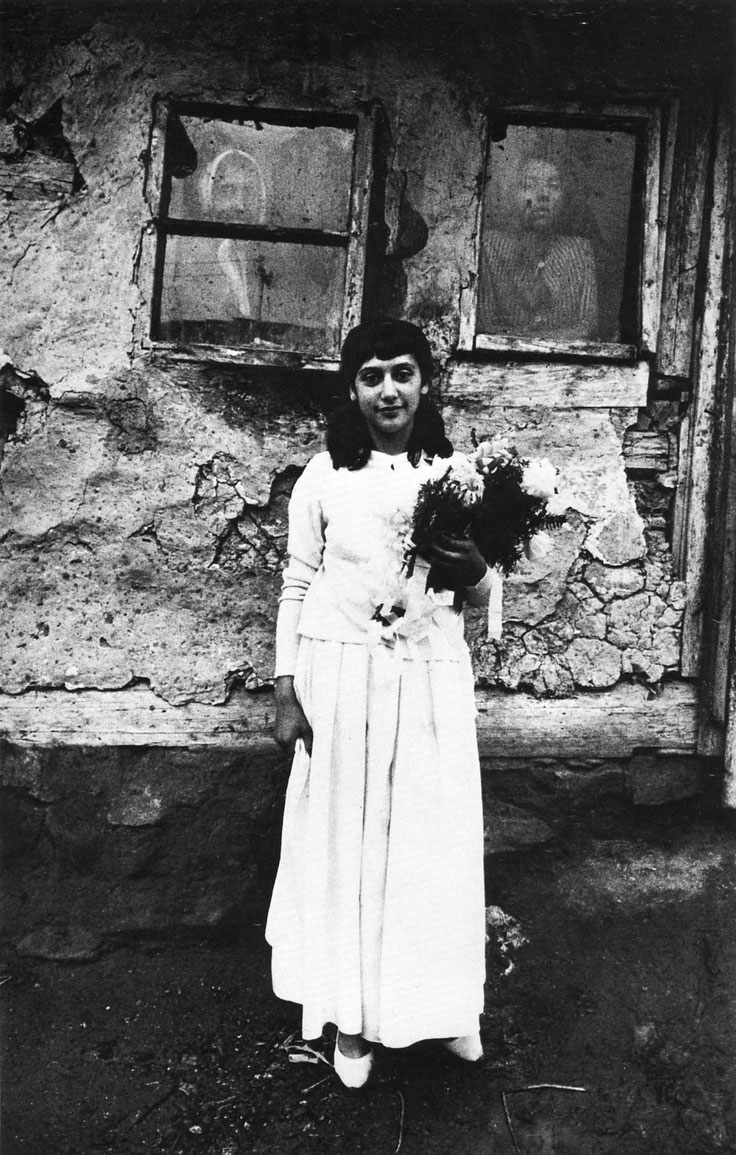
In Black Sea, portraits of Turkish wrestlers and Ukrainian wedding guests allow Winship to elaborate on her reflections and explore the concepts of sexual differentiation governing societies: on one hand, Turkish wrestling, a direct descendant of Greco-Roman wrestling and an icon of masculinity in the country; on the other, participation in a wedding ceremony as a means of self-presentation in society for young Ukrainian women.
In both of these series, the images are accompanied by brief notes written by the artist, either expressing a single thought or a short description, which create a deliberately incomplete narrative. For Winship, these notes are meant to remind us of the power of text to evoke an image.
Sweet Nothings: Schoolgirls of Eastern Anatolia (2007), produced during her travels through Eastern Europe, is a key project in Vanessa Winship’s evolution as a photographer. It is an almost serial collection of portraits of schoolgirls from the rural area of Eastern Anatolia, a region bordering with Georgia, Armenia, Azerbaijan and Iran where the plurality of ethnic groups is silenced by the proliferation of uniforms, of both schoolchildren and military personnel. On a certain level, the school uniforms recall the tools used by states to classify the population, to “mark” their territory and neutralise the plurality of areas, as in Eastern Anatolia where the ethnic and geographic borders are not as clearly defined as they are on maps. This fact – the presence of uniforms – represents a framework for action, a boundary for the project, and allows Winship to further develop her interest in faces, gestures, and the sense of belonging to a group or community.
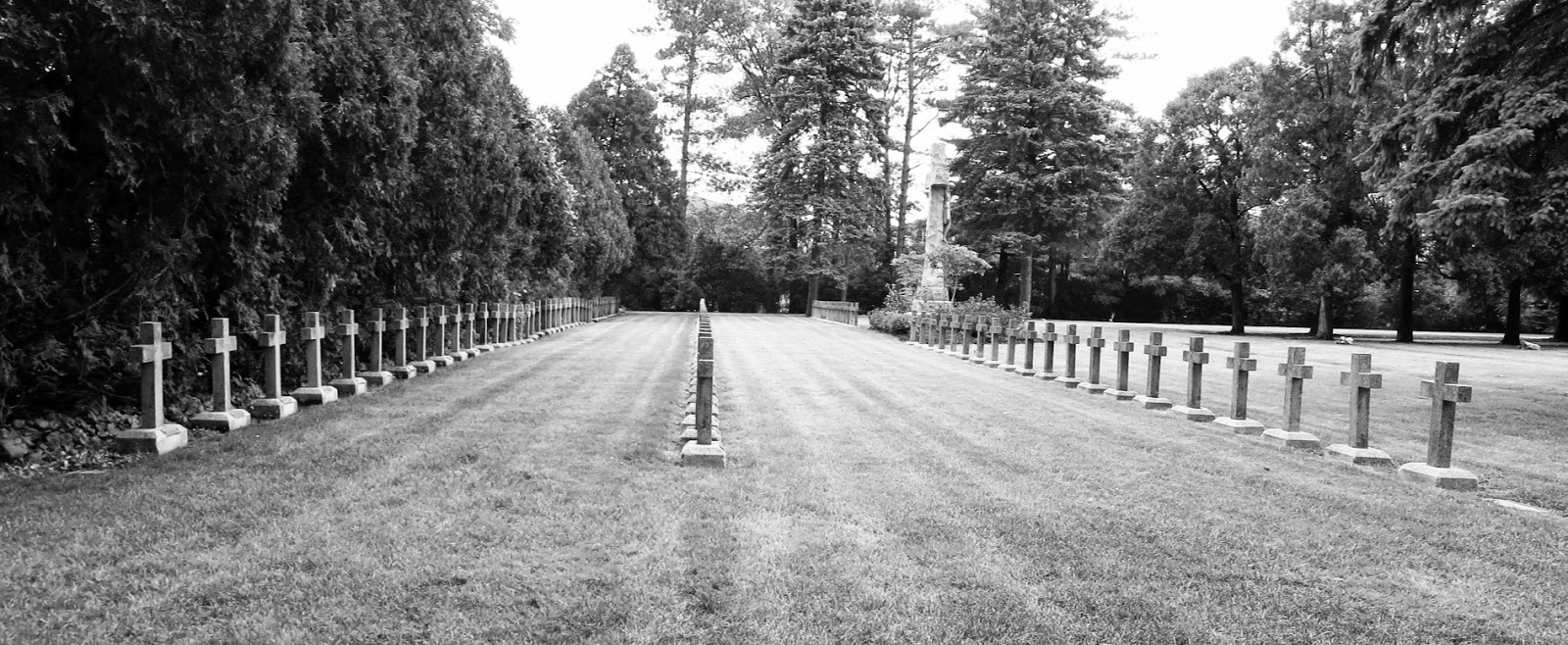
Georgia, another region on the shores of the Black Sea, is the setting for the series produced by between 2008 and 2010, in which she mostly focuses on portraits. Georgia. Seeds Carried by the Windis a detailed study of the faces the photographer came across. These are portraits of youths and children, mostly individuals who, when grouped together, appear almost without variation as same-sex pairs. The collection suggests an energetic, survivor country. These images are combined with a series of colored photographs (the only ones in Winship’s entire output) that accompany tombstones in a cemetery. The two collections establish an interesting dialogue between different generations of Georgians and, simultaneously, between the artist herself and the original anonymous photographer. Meanwhile, the landscapes and stones that complete the series evoke a premature death. By combining landscape and portrait as places where the traces of identity, history and present are imprinted, this series is a key project in Winship’s work as it prompts a debate about her practice and the issues posed by the two genres.
In 2011 Vanessa Winship received the prestigious Henri Cartier-Bresson (HCB) photography award. The project for she won the prize led to the series she Dances on Jackson. United States (2011-2012), produced in the United States, a country which she represents as of great uncertainty, where the weight of the recent past is manifested through public works and constructions which are either underused or have fallen into disuse, and where the faces of anonymous individuals and groups reveal their disillusionment with the promises of the American dream. This series also constitutes Winship’s definitive approach to landscape photography, a genre which has gained increasing prominence in her output. Short texts written by the author replace the gradual disappearance of the portrait, operating as narratives of the missing photographs. In she Dances on Jackson. United States the geographic leap to the other side of the Atlantic defines the characters that people Winship’s earlier photography.
Before embarking on her trip to the United States, Winship worked in her home town on the estuary of the Humber river (2010), for which this series is titled. In this project, we again witness the growing preeminence of landscape in her work. This process culminates masterfully in her most recent series, produced in Almería, which represents the reaffirmation of her work as a landscapist and the total absence of the human figure. In January 2014, for the purposes of this exhibition, the artist moved to Almería, a place marked by rootlessness and its border nature and geological diversity, to carry out her latest project. Winship has focused on photographing the geological formations along the coastline of Cabo de Gata and the devastation of the area following the proliferation of intensive agriculture based on greenhouse production. The land of gold, Spaghetti westerns and marble now appears as a land of plastic and, like all other places Winship has photographed, seems to be located in a place suspended in space and time. All of the images in this section of the show reflect the rapid transformation of the region following the introduction of greenhouses, a radical systemic change and altered coexistence brought about by the arrival of communities of immigrants and their access to consumer society customs. Almería, as Winship’s photographs clearly show, continues to be a fragmented landscape in which urban and rural collide and where the “non-place” that is the greenhouse acts as a metaphor for the area’s instability and vulnerability.
Catalogue
The exhibition will be accompanied by a catalogue featuring all the images on display and specially commissioned essays about the work of Vanessa Winship by Neil Ascherson, Stanley Wolukau-Wanambwa and Carlos Martín García. The catalog will also include two excerpts from Campos de Níjar (Níjar Country) and Coto Vedado (Forbidden Territory) by Juan Goytisolo, as well as a biography-timeline, an updated bibliography, and a selection of the texts the photographer uses to complement her series, in the manner of a “travel diary”. To date there are only two monographs on Winship, one devoted to the Black Sea series and one to Sweet Nothings, which means that this catalog will be the first and most incisive historiographical approximation to her entire oeuvre.”
Artists: Jane Brown, Cameron Clarke, Zoë Croggon, Therese Keogh, Phuong Ngo, Meredith Turnbull, Wolfgang Sievers
Curators: Naomi Cass and Kyla McFarlane
Jane Brown (Australian, b. 1967) Triptych. The Paper Mill (former Amcor and APM site), Fairfield 2014 3 panels of 9, 6 and 6 selenium toned, fibre-based, gelatin silver prints
Curated by CCP Director Naomi Cass and Kyla McFarlane, this intelligent exhibition features the work of six early career artists who respond in diverse ways to renowned Australian photographer Wolfgang Sievers (1913-2007). It was a joy to see again the large vintage silver gelatin, almost clinically composed photographs by Sievers. The light, tonality and stillness of the images make them seem mythic, modern and monumental.
Each artist offers a unique “take” on Sievers influence on Australian photography and design, including his interest in refugees and human rights issues and the representation of the dignity of labour (although the machine is more often represented in Sievers work with a distinct lack of human presence and the act of work itself).
My personal favourites were Phuong Ngo’s intimate silver gelatin photographs in four groups of sweat shop workers in Vietnam, people on boats coming to Australia, photographs of textile workers in Australia and photographs of his mother. Phuong Ngo’s shared stories of young Vietnamese refugees and the journeys taken by their mothers told through photographs is very moving, but only after you are told what the four bodies of images are about. Positioned in the small Gallery Four it was also difficult to associate this installation with the rest of the exhibition. Initially I thought it was a separate exhibition until the linkages were told, the light dawned, and the connections were made.
While Cameron Clarke’s photographs of Ford factory workers and machinery are meticulously lit and digitally observed, producing a strong body of work, it is Jane Brown’s gridded analogue triptych which steals the show (see photographs above and below). These are superbly rich and textured photographs, beautifully seen and resolved within the shifting mise-en-scène. Brown’s images kinetically flow from one image to another even as they are self contained within a modernist grid. In some instances the artist has used the same photograph within the triptych but cropped in a different manner, which pushes and pulls the viewer into a different perspective on the subject matter. This is highly intelligent art making that observes the self contained nature and monumentality of Sievers work and reworks it, lucidly commenting on the dis/integration of these spaces and industries in the present day.
This series of work is the best sequence of photographs I have seen this year and any institution worthy of their salt should snap up these works for their collection.
Installation photographs of Jane Brown Triptych. The Paper Mill (former Amcor and APM site), Fairfield2014 (details) at the exhibition The Sievers Project at the Centre for Contemporary Photography (CCP)
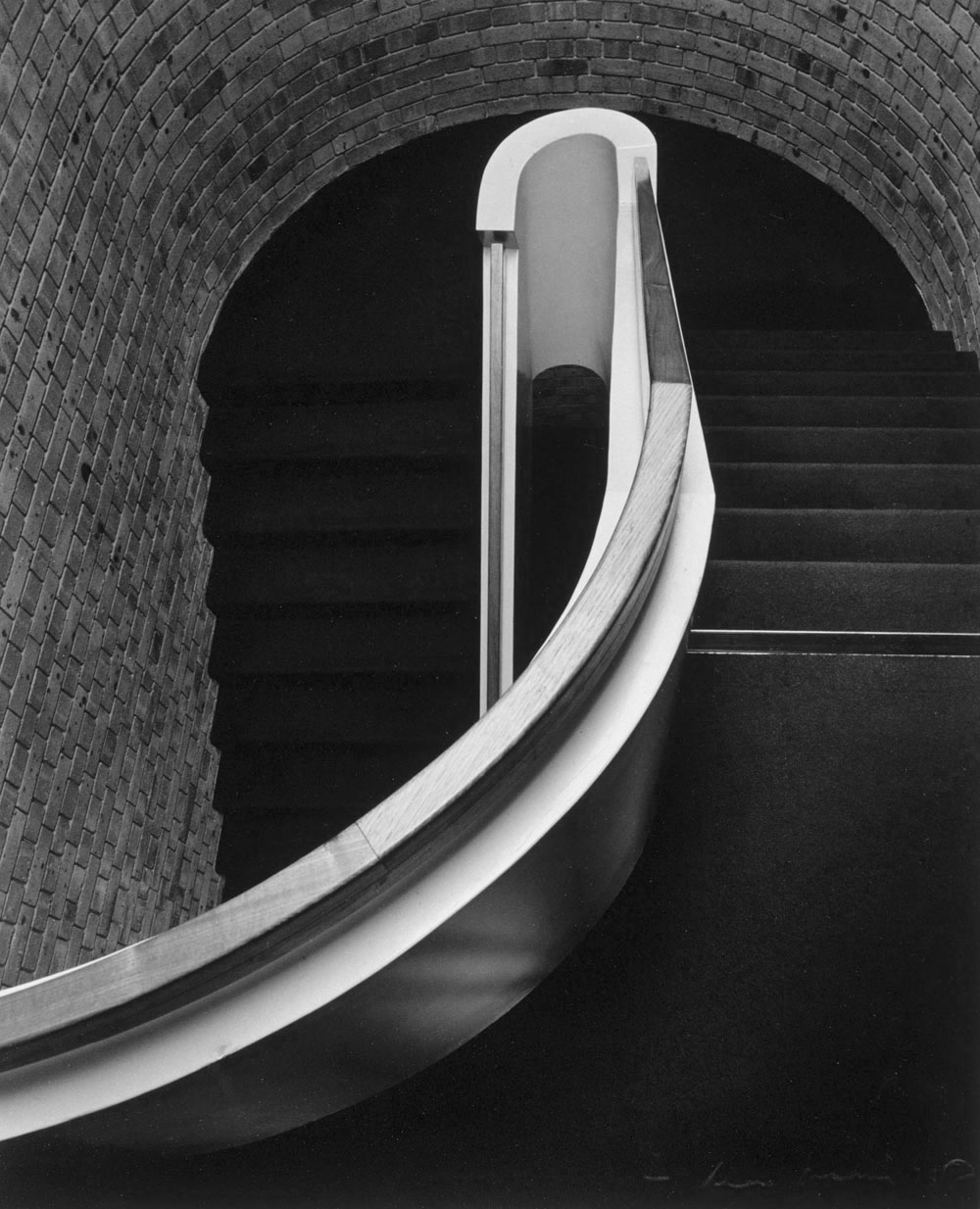
Jane Brown (Australian, b. 1967) Staircase. The Paper Mill (former Amcor and APM site), Fairfield, 2014 2014 Fibre-based, gelatin silver print
Jane Brown (Australian, b. 1967) Mining machinery, Line of Lode Miners Memorial Complex, Broken Hill 2014-06-10 2014 Brown toned, fibre-based, gelatin silver print Courtesy the artist
Installation photograph of Jane Brown’s work at the exhibition The Sievers Project at the Centre for Contemporary Photography (CCP)
Wolfgang Sievers (Australian born Germany, 1913-2007) Gears for the Mining Industry, Vickers Ruwolt, Burnley, Victoria, 1967 1967 Gelatin silver photograph 49.6 x 39.3cm National Library of Australia, Wolfgang Sievers Photographic Archive
Wolfgang Sievers (Australian born Germany, 1913-2007) Sulphuric Acid Plant Electrolytic Zinc, Risoon, Tasmania, 1959 1959 Gelatin silver photograph
Installation photograph of the work of Meredith Turnbull (foreground) and Zoë Croggon (rear wall) at the exhibition The Sievers Project at the Centre for Contemporary Photography (CCP)
Zoë Croggon (Australian, b. 1989) John Holland Constructions, Ginninderra Bridge (after Wolfgang Sievers) 2014 Photocollage 70 cm x 86cm Courtesy the artist and Daine Singer, Melbourne
Zoë Croggon (Australian, b. 1989) Comalco Aluminium Used in the Construction of the National Gallery of Victoria [7] (after Wolfgang Sievers) 2014 Photocollage Courtesy the artist and Daine Singer, Melbourne
Zoë Croggon (Australian, b. 1989) Comalco Aluminium Used in the Construction of the National Gallery of Victoria [18] (after Wolfgang Sievers) 2014 Photocollage Courtesy the artist and Daine Singer, Melbourne
Zoë Croggon (Australian, b. 1989) Westgate Bridge (after Wolfgang Sievers) 2014 Photocollage Courtesy the artist and Daine Singer, Melbourne
“Six early career artists, working in photography through to installation, have responded in diverse ways to renowned Australian photographer Wolfgang Sievers (1913-2007), icon of 20th century Australian photography. Sievers’ commercial practice exemplifies mid-century positivism and modernity, and the myth-making role of photography. As a German Jewish immigrant, he had a strong interest in refugees and human rights issues as well as an expressed commitment to representing the dignity of labour. The Sievers Project presents key historical works as a context for engaging the past through the present.
Photographers Jane Brown and Cameron Clarke have followed in his footsteps to industrial clients Sievers photographed and valorised, finding sites that are visually dynamic within industries now in decline. Through her intrepid, research-based practice, Therese Keogh has developed a materially-rich work from the starting point of a single, anomalous photograph Sievers took at the Roman Forum in 1953. Meredith Turnbull draws on his connections with Melbourne’s design community in the 1950s and 60s, including Gerard Herbst and Frederick Romberg. In Sievers’ photographs of industrial sewing machines and their machinists, Phuong Ngo finds shared stories of young Vietnamese refugees and the journeys taken by their mothers. Zoë Croggon positions fragments of Sievers’ iconic architectural photographs against found photographs of the human body in movement.”
Text from the CCP website
Foreword to the catalogue
The Sievers Project follows a number of exhibitions over the last five years where CCP has opened up a vista on contemporary practice by exhibiting early work by living artists such as Bill Henson, Kohei Yoshiyuki and Robert Rooney, as well as historical photography, alongside contemporary work. As a commissioning exhibition we have titled this a ‘project’ to point towards the year-long research period integral to the exhibition, capturing the curatorial gesture of inviting early career artists to engage with the past.
The Sievers Project represents a significant curatorial endeavour for CCP, the tale of which is recounted in the Introduction. It would simply not have taken place were it not for the willingness and generosity of Julian Burnside AO QC to participate, through allowing the artists research access to his Wolfgang Sievers collection and lending work from it for the exhibition, as well as contributing an essay for this catalogue.
I acknowledge the artists for setting out on this project and for returning with thoughtful and excellent work. It has been a pleasure to both engage with and exhibit the work of Jane Brown, Cameron Clarke, Zoë Croggon, Therese Keogh, Phuong Ngo and Meredith Turnbull.
The Sievers Project has been dignified by contributions by a number of experts and I wish to acknowledge Professor Helen Ennis, Australian National University School of Art who has also contributed a catalogue essay; Madeleine Say, Picture Librarian, Eve Sainsbury, Exhibitions Curator and Clare Williamson, Senior Exhibitions Curator, State Library of Victoria; Maggie Finch, Curator of Photography, National Gallery of Victoria and Professor Harriet Edquist and Kaye Ashton, Senior Coordinator, RMIT Design Archives, who all took time to speak about Sievers and share his work with the artists.
Opportunities to commission artists are relatively rare and funding through the inaugural Early Career Artist Commissions Grant from the Australia Council has enabled the project. CCP is pleased to acknowledge this recognition and support. We are delighted that Lovell Chen Architects & Heritage Consultants have provided further critical support to realise the project, for which we are grateful. We see a germane link between Lovell Chen and the premise of The Sievers Project.
The Besen Family Foundation are champions for enabling CCP to produce catalogues for selected exhibitions. I acknowledge the Foundation for their long-standing and generous engagement with CCP. We thank the National Library of Australia for providing permission to reproduce Sievers’ work in this catalogue.
The Sievers Project has provided a welcome opportunity for CCP to engage with colleagues in the fi eld of architecture and we are delighted to acknowledge a partnership with the Robin Boyd Foundation to present public programs. We are grateful to Tony Lee from the Foundation for his interest in the project.
Without doubt CCP’s ability to both present contemporary art well and look after artists is greatly enhanced through the longstanding and generous support of Tint Design and Sofi tel Melbourne on Collins. CCP is pleased to present a parallel exhibition of The Sievers Project at the 2014 Melbourne Art Fair and we thank the Melbourne Art Foundation for enabling CCP to bring the exhibition to broad new audiences. For the Art Fair exhibition we are also indebted to Christine Downer, previous CCP Board member and current supporter, for the loan of a major Sievers work.
The Sievers Project has been ably assisted by Philippa Brumby, curatorial intern. Co-curator Dr Kyla McFarlane and I thank Philippa for her wide-ranging skills over a substantial period of time. Lastly, I acknowledge Kyla for her excellent curatorial work and for the pleasure of collaborating with such a playful, dedicated and steely intellect.
Naomi Cass, Director, CCP
And what about his Legacy?
A response to this necessarily combines elements of certitude and speculation. Sievers himself was totally committed to ensuring his legacy as a photographer. He spent years meticulously cataloguing and documenting his work and was assiduous in placing as much of it as he could in major photography collections around the country – art galleries and libraries. The bulk of his archive, a staggering 65,000 negatives and prints, was acquired by the National Library where it has been digitised and is available online to users in perpetuity. But there is another aspect to his preoccupation with legacy that has troubled me over the years – his desire to control the readings of his work, to ensure that he ‘owned’ the contextualisation and interpretation of it. As I see it, some of the framing narratives he constructed were retrospective and are misleading because they are not borne out by the evidence, that is, by the photographs themselves. This is especially apparent in his insistence that the relationship between ‘man and machine’ was central to his industrial photography. In my assessment of his enormous archive, images that extol this interaction are actually relatively few in number. They are outweighed by thousands and thousands of other industrial scenes in which the worker is locked into the dreary, repetitive tasks associated with mass production, or is not present at all having been displaced by machines that are far more efficient than humans will ever be. In other words, the bulk of Sievers’ own photographs contradict his central tenet of the dignity of labour in the modern machine era. The most important aspect of his legacy is undoubtedly his photographs and the astonishingly vast, high quality body of architectural and industrial work he produced between 1938 and the early 1970s. My view is that his black and white photography is the best although he did not agree with me, arguing that his colour photography, with its expressive and dramatic qualities, was equally fine. For me, it is his black and white images that are visionary, their precision, clarity and drama embodying the belief in progress that underpinned modernity. I would also suggest Sievers’ legacy isn’t confined to his photography. As a man he cared deeply about the world and wanted it to be better. He was closely involved in the restoration of Karl Friedrich Schinkel’s buildings in Berlin in the 1990s and in the re-evaluation of his own father’s reputation (Professor Johannes Sievers was an expert on Schinkel and had used his young son’s photographs in his books on the architect in the 1930s). Wolfgang donated his photographs to fund-raising campaigns for human rights and remained a passionate antiwar activist until his death.
What would he have thought about this project?
I suspect that he would have been thrilled to know that his contribution to Australian life and photography is the touchstone for the six photographers involved in the project and that his work continues to be appreciated.
Professor Helen Ennis is Director of the Centre for Art History and Art Theory at ANU School of Art, Canberra.
Installation photographs of the exhibition The Sievers Project at the Centre for Contemporary Photography (CCP)
Installation photograph of the work of Therese Keogh (detail) in the exhibition The Sievers Project at the Centre for Contemporary Photography (CCP)
Installation photograph of the work of Meredith Turnbull (detail) in the exhibition The Sievers Project at the Centre for Contemporary Photography (CCP)
Therese Keogh In the Forum Romanum (after Sievers) (installation view) 2013 Graphite on paper Courtesy the artist
Cameron Clarke Loui Nedeski, Ford Motor Company, Geelong 2014 Archival inkjet print 50 x 63 cm Courtesy the artist
Exhibition dates: 21st February – 1st September 2014
Many thankx to the Solomon R. Guggenheim Museum for allowing me to publish the art work in the posting. Please click on the photographs for a larger version of the art.
Around 1902, [Balla] taught Divisionist techniques to Umberto Boccioni and Gino Severini. Influenced by Filippo Tommaso Marinetti, Giacomo Balla adopted the Futurism style, creating a pictorial depiction of light, movement and speed. He was a signatory of the Futurist Manifesto in 1910. Typical for his new style of painting is Dynamism of a Dog on a Leash (1912) and his 1914 work Abstract Speed + Sound (Velocità astratta + rumore) (below). In 1914, he began to design Futurist furniture, as well as so-called Futurist “antineutral” clothing. Balla also began working as a sculptor, creating, in 1915, the well-known work titled Boccioni’s Fist, based on ‘lines of force’ (Linee di forza del pugno di Boccioni).
During World War I, Balla’s studio became a meeting place for young artists.
Balla’s most famous works, such as his 1912 Dynamism of a Dog on a Leash where efforts to express movement – and thus the passage of time – through the medium of painting. One of Balla’s main inspirations was the chronophotography of Étienne-Jules Marey. Balla’s 1912 The Hand of the Violinist (above) depicts the frenetic motion of a musician playing, and draws on inspiration from Cubism and the photographic experiments of Marey and Eadweard Muybridge.
In his abstract 1912-1914 series Iridescent Interpenetration, Balla attempts to separate the experience of light from the perception of objects as such. Abstract Speed + Sound (1913-14, below) is a study of speed symbolised by the automobile. Originally, it may have been part of a triptych.
Neapolitan writer and painter who made an important contribution to Futurism’s experiments in poetry and drama.
The Napolitano artist was born on January 27th, 1884 and was largely self-taught. He joined the Futurist movement in 1910 and took part in the important Futurist exhibition in Rome in 1914, creating art collaboratively with both Filippo Tommaso Marinetti and Giacomo Balla. Cangiullo created his best-known artwork in 1915; in Café-Concert: Unexpected Alphabet he playfully portrays a lively evening at the theatre in his hometown of Naples in which the singers, dancers, acrobats, and comedians are composed of letters, numbers, and mathematical sings. In 1924 he distanced himself form the Futurists, but still continued a friendship with Marinetti. Fondly reminiscing on his experiences with the art movement, Cangiullo published Futurist Evenings recounting his memories with the group.
Filippo Masoero (Italian, 1894-1969) Descending over Saint Peter (Scendendo su San Pietro)
c. 1927-1937 (possibly 1930-1933)
Gelatin silver print
24 x 31.5cm
Touring Club Italiano Archive
Ivo Pannaggi (Italian, 1901-1981) Speeding Train (Treno in corsa)
1922
Oil on canvas
100 x 120cm
Fondazione Carima – Museo Palazzo Ricci, Macerata, Italy Photo: Courtesy Fondazione Cassa di risparmio della Provincia di Macerata
Ivo Pannaggi
Futurism
Pannaggi joined the Futurist movement in 1918, but left soon after because of disagreements with Fillippo Marinetti. In 1922, he and Vinicio Paladini [it] published their “Manifesto of Futurist Mechanical Art.” The manifesto emphasised the importance of machine aesthetics (arte meccanica), which became one of the dominant strands of Futurism in the 1920s. He and Paladini also staged the Mechanical Futurist Ballet (Ballo meccano futurista) at Anton Giulio Bragaglia’s Casa d’Arte.
Around the same time he painted Speeding Train (Treno in corsa), perhaps his most famous work (above). He also created many photomontage works. In Postal Collages (1925), Pannaggi created a series of unfinished photomontages that would be completed through the inevitable addition of stamps and seals by postal workers – an early instance of mail art.
Germany and the Bauhaus
In 1927, Pannaggi traveled to Berlin, where he would live until 1929. He became friends with Kurt Schwitters and Walter Benjamin and published photomontage works in German newspapers. Between 1932 and 1933, Pannaggi attended the Bauhaus, the only Futurist other than Nicolaj Diugheroff to do so.
From February 21 through September 1, 2014, the Solomon R. Guggenheim Museum presents Italian Futurism, 1909-1944: Reconstructing the Universe, the first comprehensive overview in the United States of one of Europe’s most important 20th-century avant-garde movements. Featuring over 360 works by more than 80 artists, architects, designers, photographers, and writers, this multidisciplinary exhibition examines the full historical breadth of Futurism, from its 1909 inception with the publication of Filippo Tommaso Marinetti’s first Futurist manifesto through its demise at the end of World War II. The exhibition includes many rarely seen works, some of which have never traveled outside of Italy. It encompasses not only painting and sculpture, but also the advertising, architecture, ceramics, design, fashion, film, free-form poetry, photography, performance, publications, music, and theatre of this dynamic and often contentious movement that championed modernity and insurgency.
About Futurism
Futurism was launched in 1909 against a background of growing economic and social upheaval. In Marinetti’s “The Founding and Manifesto of Futurism,” published in Le Figaro, he outlined the movement’s key aims, among them: to abolish the past, to champion modernisation, and to extol aggression. Although it began as a literary movement, Futurism soon embraced the visual arts as well as advertising, fashion, music and theatre, and it spread throughout Italy and beyond. The Futurists rejected stasis and tradition and drew inspiration from the emerging industry, machinery, and speed of the modern metropolis. The first generation of artists created works characterised by dynamic movement and fractured forms, aspiring to break with existing notions of space and time to place the viewer at the centre of the artwork. Extending into many mediums, Futurism was intended to be not just an artistic idiom but an entirely new way of life. Central to the movement was the concept of the opera d’arte totale or “total work of art,” in which the viewer is surrounded by a completely Futurist environment.
More than two thousand individuals were associated with the movement over its duration. In addition to Marinetti, central figures include: artists Giacomo Balla, Benedetta (Benedetta Cappa Marinetti), Umberto Boccioni, Carlo Carrà, Fortunato Depero, and Enrico Prampolini; poets and writers Francesco Cangiullo and Rosa Rosà; architect Antonio Sant’Elia; composer Luigi Russolo; photographers Anton Giulio Bragaglia and Tato (Guglielmo Sansoni); dancer Giannina Censi; and ceramicist Tullio d’Albisola. These figures and other lesser-known ones are represented in the exhibition.
Futurism is commonly understood to have had two phases: “heroic” Futurism, which lasted until around 1916, and a later incarnation that arose after World War I and remained active until the early 1940s. Investigations of “heroic” Futurism have predominated and comparatively few exhibitions have explored the subsequent life of the movement; until now, a comprehensive overview of Italian Futurism had yet to be presented in the U.S. Italian art of the 1920s and ’30s is little known outside of its home country, due in part to a taint from Futurism’s sometime association with Fascism. This association complicates the narrative of this avant-garde and makes it all the more necessary to delve into and clarify its full history.
Exhibition overview
Italian Futurism unfolds chronologically, juxtaposing works in different mediums as it traces the myriad artistic languages the Futurists employed as their practice evolved over a 35-year period. The exhibition begins with an exploration of the manifesto as an art form, and proceeds to the Futurists’ catalytic encounter with Cubism in 1911, their exploration of near-abstract compositions, and their early efforts in photography. Ascending the rotunda levels of the museum, visitors follow the movement’s progression as it expanded to include architecture, clothing, design, dinnerware, experimental poetry, and toys.
Along the way, it gained new practitioners and underwent several stylistic evolutions – shifting from the fractured spaces of the 1910s to the machine aesthetics (or arte meccanica) of the ’20s, and then to the softer, lyrical forms of the ’30s. Aviation’s popularity and nationalist significance in 1930s Italy led to the swirling, often abstracted, aerial imagery of Futurism’s final incarnation, aeropittura. This novel painting approach united the Futurist interest in nationalism, speed, technology, and war with new and dizzying visual perspectives. The fascination with the aerial spread to other mediums, including ceramics, dance, and experimental aerial photography.
The exhibition is enlivened by three films commissioned from documentary filmmaker Jen Sachs, which use archival film footage, documentary photographs, printed matter, writings, recorded declamations, and musical compositions to represent the Futurists’ more ephemeral work and to bring to life their words-in-freedom poems. One film addresses the Futurists’ evening performances and events, called serate, which merged “high” and “low” culture in radical ways and broke down barriers between spectator and performer. Mise-en-scène installations evoke the Futurists’ opera d’arte totale interior ensembles, from those executed for the private sphere to those realized under Fascism.
Italian Futurism concludes with the five monumental canvases that compose the Syntheses of Communications (1933-1934) by Benedetta (Benedetta Cappa Marinetti), which are being shown for the first time outside of their original location. One of few public commissions awarded to a Futurist in the 1930s, the series of paintings was created for the Palazzo delle Poste (Post Office) in Palermo, Sicily. The paintings celebrate multiple modes of communication, many enabled by technological innovations, and correspond with the themes of modernity and the “total work of art” concept that underpinned the Futurist ethos.
Text from the Solomon R. Guggenheim Museum website
In 1928 Crali flew for the first time. His enthusiasm for flying and his experience as a pilot influenced his art. In 1929, through Sofronio Pocarini, he made contact with Marinetti, the founder of Futurism, and joined the movement. In the same year aeropittura was launched in the manifesto, Perspectives of Flight, signed by Benedetta, Depero, Dottori, Fillia, Marinetti, Prampolini, Somenzi and Guglielmo Sansoni (Tato). The manifesto stated that “The changing perspectives of flight constitute an absolutely new reality that has nothing in common with the reality traditionally constituted by a terrestrial perspective” and that “Painting from this new reality requires a profound contempt for detail and a need to synthesise and transfigure everything.”
Despite his relative youth, Crali played a significant part in aeropittura. His earliest aeropitture represent military planes, Aerial Squadron and Aerial Duel (both 1929). In the 1930s, his paintings became realistic, intending to communicate the experience of flight to the viewer. His best-known work, Nose Dive on the City (1939), shows an aerial dive from the pilot’s point of view, the buildings below drawn in dizzying perspective.
Crali exhibited in Trieste and Padua. In 1932 Marinetti invited him to exhibit in Paris in the first aeropittura exhibition there. He participated in the Rome Quadrennial in 1935, 1939 and 1943 and the Venice Biennale of 1940. At that time Crali was researching signs and scenery, leading in 1933 to his participation in the film exhibition Futuristi Scenotecnica in Rome. In 1936 he exhibited with Dottori and Prampolini in the International Exhibition of Sports Art at the Berlin Olympics.
Crali’s declamatory abilities and his friendship with Marinetti led him to organise Futurist evenings at Gorizia, Udine and Trieste, where he read the manifesto Plastic Illusionism of War and Protecting the Earth which he had co-authored with Marinetti. He also published a Manifesto of Musical Words – Alphabet in Freedom.
After the Second World War
Crali lived in Turin after the war, where he continued to promote Futurist events. Despite the ending of the Futurist movement with the death of Marinetti in 1944 and its Fascist reputation, Crali remained attached to its ideals and aesthetic.
Between 1950 and 1958 he lived in Paris, making occasional visits to Britain. He moved to Milan in 1958 where he remained (apart from a five-year period teaching at the Italian Academy of Fine Arts, Cairo) for the rest of his life. In Milan he began to collect and catalogue documents relating to his life and work. He donated his archive and several of his works to the Museo di arte moderna e contemporanea di Trento e Rovereto.
Gerardo Dottori (11 November 1884 – 13 June 1977) was an Italian Futurist painter. He signed the Futurist Manifesto of Aeropainting in 1929. He was associated with the city of Perugia most of his life, living in Milan for six months as a student and in Rome from 1926-39. Dottori’s’ principal output was the representation of landscapes and visions of Umbria, mostly viewed from a great height. Among the most famous of these are Umbrian Spring and Fire in the City, both from the early 1920s; this last one is now housed in the Museo civico di Palazzo della Penna in Perugia, with many of Dottori’s other works. His work was part of the art competitions at the 1932 Summer Olympics and the 1936 Summer Olympics.
Umberto Boccioni (19 October 1882 – 17 August 1916) was an influential Italian painter and sculptor. He helped shape the revolutionary aesthetic of the Futurism movement as one of its principal figures. Despite his short life, his approach to the dynamism of form and the deconstruction of solid mass guided artists long after his death. His works are held by many public art museums, and in 1988 the Metropolitan Museum of Art in New York City organised a major retrospective of 100 pieces. …
Boccioni moved to Milan in 1907. There, early in 1908, he met the Divisionist painter Gaetano Previati. In early 1910 he met Filippo Tommaso Marinetti, who had already published his Manifesto del Futurismo (“Manifesto of Futurism”) in the previous year. On 11 February 1910 Boccioni, with Balla, Carlo Carrà, Luigi Russolo and Severini, signed the Manifesto dei pittori futuristi (“Manifesto of Futurist painters”), and on 8 March he read the manifesto at the Politeama Chiarella theatre in Turin.
Boccioni became the main theorist of the artistic movement. “Only when Boccioni, Balla, Severini and a few other Futurists traveled to Paris toward the end of 1911 and saw what Braque and Picasso had been doing did the movement begin to take real shape.” He also decided to be a sculptor after he visited various studios in Paris, in 1912, including those of Georges Braque, Alexander Archipenko, Constantin Brâncuși, Raymond Duchamp-Villon, August Agero and, probably, Medardo Rosso. In 1912 he exhibited some paintings together with other Italian futurists at the Galerie Bernheim-Jeune, and the following year returned to show his sculptures at the Galerie La Boétie: all related to the elaboration of what Boccioni had seen in Paris, where he had visited the studios of Cubist sculptors, including those of Constantin Brâncuși, Raymond Duchamp-Villon and Alexander Archipenko to further his knowledge of avant-garde sculpture.
In 1914 he published Pittura e scultura futuriste (dinamismo plastico) explaining the aesthetics of the group:
“While the impressionists paint a picture to give one particular moment and subordinate the life of the picture to its resemblance to this moment, we synthesise every moment (time, place, form, colour-tone) and thus paint the picture.”
Development of Futurism
Boccioni worked for nearly a year on La città sale or The City Rises, 1910, a huge (2m by 3m) painting, which is considered his turning point into Futurism. “I attempted a great synthesis of labor, light and movement” he wrote to a friend. Upon its exhibition in Milan in May 1911, the painting attracted numerous reviews, mostly admiring. By 1912 it had become a headline painting for the exhibition traveling Europe, the introduction to Futurism. It was sold to the great pianist, Ferruccio Busoni for 4,000 lire that year, and today is frequently on prominent display at the Museum of Modern Art in New York, at the entrance to the paintings department.
La risata (1911, The Laugh) is considered Boccioni’s first truly Futurist work. He had fully parted with Divisionism, and now focused on the sensations derived from his observation of modern life. Its public reception was quite negative, compared unfavourably with Three Women, and it was defaced by a visitor, running his fingers through the still fresh paint. Subsequent criticism became more positive, with some considering the painting a response to Cubism. It was purchased by Albert Borchardt, a German collector who acquired 20 Futurist works exhibited in Berlin, including The Street Enters the House (1911) which depicts a woman on a balcony overlooking a busy street. Today the former also is owned by the Museum of Modern Art, and the latter by the Sprengel Museum in Hanover.
Boccioni spent much of 1911 working on a trilogy of paintings titled “Stati d’animo” (“States of Mind”), which he said expressed departure and arrival at a railroad station – The Farewells, Those Who Go, and Those Who Stay. All three paintings were originally purchased by Marinetti, until Nelson Rockefeller acquired them from his widow and later donated them to the Museum of Modern Art in New York.
Beginning in 1912, with Elasticità or Elasticity (above), depicting the pure energy of a horse, captured with intense chromaticism, he completed a series of Dynamist paintings: Dinamismo di un corpo umano (Human Body), ciclista (Cyclist), Foot-baller, and by 1914 Dinamismo plastico: cavallo + caseggiato (Plastic Dynamism: Horse + Houses). While continuing this focus, he revived his previous interest in portraiture. Beginning with L’antigrazioso (The antigraceful) in 1912 and continuing with I selciatori (The Street Pavers) and Il bevitore (The Drinker) both in 1914.
In 1914 Boccioni published his book, Pittura, scultura futuriste (Futurist Painting and Sculpture), which caused a rift between himself and some of his Futurist comrades. As a result, perhaps, he abandoned his exploration of Dynamism, and instead sought further decomposition of a subject by means of colour. With Horizontal Volumes in 1915 and the Portrait of Ferruccio Busoni in 1916, he completed a full return to figurative painting. Perhaps fittingly, this last painting was a portrait of the maestro who purchased his first Futurist work, The City Rises.
Enrico Prampolini and Maria Ricotti, with cover by Enrico Prampolini Program for the Theater of Futurist Pantomime (Théâtre de la Pantomine Futuriste)
Illustrated leaflet (Paris: M. et J. De Brunn, 1927)
27.5 x 22.7cm
Fonds Alberto Sartoris, Archives de la Construction Moderne-Ecole polytechnique fédérale de Lausanne (EPFL), Switzerland
By permission of heirs of the artist Photo: Jean-Daniel Chavan
Carlo Carrà (Italian, February 11, 1881 – April 13, 1966) was an Italian painter and a leading figure of the Futurist movement that flourished in Italy during the beginning of the 20th century. In addition to his many paintings, he wrote a number of books concerning art. He taught for many years in the city of Milan.
In 1899-1900, Carrà was in Paris decorating pavilions at the Exposition Universelle, where he became acquainted with contemporary French art. He then spent a few months in London in contact with exiled Italian anarchists, and returned to Milan in 1901. In 1906, he enrolled at Brera Academy (Accademia di Brera) in the city, and studied under Cesare Tallone. In 1910 he signed, along with Umberto Boccioni, Luigi Russolo and Giacomo Balla the Manifesto of Futurist Painters, and began a phase of painting that became his most popular and influential.
Luigi Russolo (Italian, 1885-1947) “The Art of Noises: Futurist Manifesto” (“L’arte dei rumori: Manifesto futurista”)
Leaflet (Milan: Direzione del Movimento Futurista, 1913)
29.2 x 23cm
Wolfsoniana – Fondazione regionale per la Cultura e lo Spettacolo, Genoa
By permission of heirs of the artist Photo: Courtesy Wolfsoniana – Fondazione regionale per la Cultura e lo Spettacolo, Genoa
Luigi Russolo
Luigi Carlo Filippo Russolo (30 April 1885 – 6 February 1947) was an Italian Futurist painter, composer, builder of experimental musical instruments, and the author of the manifesto The Art of Noises (1913). He is often regarded as one of the first noise music experimental composers with his performances of noise music concerts in 1913–14 and then again after World War I, notably in Paris in 1921. He designed and constructed a number of noise-generating devices called Intonarumori.
Luigi Russolo was perhaps the first noise artist. His 1913 manifesto, L’Arte dei Rumori (The Art of Noises), stated that the industrial revolution had given modern men a greater capacity to appreciate more complex sounds. Russolo found traditional melodic music confining, and he envisioned noise music as its future replacement.
Russolo designed and constructed a number of noise-generating devices called Intonarumori, and assembled a noise orchestra to perform with them. A performance of his Gran Concerto Futuristico (1917) was met with strong disapproval and violence from the audience, as Russolo himself had predicted.
Benedetta Cappa (14 August 1897 – 15 May 1977) was an Italian futurist artist who has had retrospectives at the Walker Art Center and the Solomon R. Guggenheim Museum. Her work fits within the second phase of Italian Futurism.
Though she was an artist active in Futurist circles, Cappa felt labels were restrictive and initially rejected the designation. In a 1918 correspondence with F.T. Marinetti she writes, “I am too free and rebellious – I do not want to be restricted. I want only to be me.” Despite entering her marriage with such determined independence, the considerable contributions made by Cappa are often overshadowed by the figure of Marinetti and the vociferous manner with which he directed the movement. Cappa’s body of work spanned a range of media that included pen, paper, paint, metal and textiles. She wrote poetry and prose, signed, and spoke as an individual, but only recently has she garnered independent recognition.
In 1919, Cappa published Spicologia di 1 Uomo, a collection of poetry which incorporates “unusual word placement, typographic experimentation, and visual and auditory correspondences.” Subsequently published in 1924, Le Forze Umane: Romanzo Astratto con Sintesi Grafiche (Human Forces: Abstract Novel with Graphic Synthesis), has a similar structure presented in an extrapolated form. Two images from this novel provide an interesting conceptual contrast. The first, Forze Feminile: Spirale di Dolcezza + Serpe di Fascino (Feminine Forces: Spiral of Sweetness + Serpent of Charm) consists simply of three curved lines, one of which provides a central axis for the other two. The linear composition of the second drawing, Forze Maschili: Armi e Piume (Masculine Forces: Weapons and Feathers), has numerous straight lines and arcs arranged in an impenetrable tangle.
Cappa’s publication of Le Forze Umane was one of three books she has written. The release of her book made many futurists question her allegiance with Futurism, for her book seemed to align more with Neo-Plasticism at the time by many male Futurists who have written reviews on Cappa’s book. Cappa collected all of the reviews in her Librone which can be found at the Getty Research Institute. It was a decision made from many reviewers that Cappa’s first book represents the unwillingness from the reviewers to accept a women’s work as part of Futurism.
The action and aesthetic of the machine age is a trope within Futurism that appears frequently in Cappa’s artwork. One early abstract painting, Velocità di Motoscafo, (Velocity of a Motorboat), (1923-24), contains many of the elements that would come to mark Cappa’s painting style. Well defined, curvilinear shapes, painted in gradient tones are compositionally arranged to imply objects in motion: “… the interplay of ‘force lines,’ become the subject.” The artist’s exploration of the machine continued with Luci + Rumori di un Treno Notturno, (Lights + Sounds of a Night Train), (c. 1924) and with Aeropittura (1925). A trip to Latin America in 1926 was followed by a series of abstract paintings done in gouache on paper.
As Cappa developed her artistic practice, her influence within the Futurist Movement expanded. Between the end of World War I and the early 1930s, there was an ideological transformation which led to the period commonly known as Second Wave Futurism. The notably misogynistic tone of the foundation texts was largely muted as the number of female Futurists increased. Several other themes, such as Technology, Speed, and Mechanisation carried over into this new incarnation of Futurism. For this reason, Cappa’s oil painting Il Grande X (1931) is considered the culmination of one era and the prelude to another. In the two decades since F.T. Marinetti’s manifesto, the brash avant-garde movement had largely become the establishment.
It was the Futurists’ affiliation with the state establishment that would lead to one of Cappa’s most recognisable paintings, her mural series for the Conference Room at the Palazzo delle Poste in Palermo, Sicily. The building is an amalgam of works by several Futurist artists. Designed by the Rationalist architect, Angiolo Mazzoni, the Poste Italiane houses tile wall mosaics by Luigi Colombo Filìa and Enrico Prampolini in addition to the murals by Benendetta. The shared themes of synthesis and communication are critical to the aesthetic program of the Futurist structure. Completed between 1933 and 1934, each painting depicts a form of information transfer, including terrestrial, maritime, aerial, radio, telegraphic and telephonic communication. The pale blue and green colour palette, along with the use of tempera and encaustic media, were designed to invoke resonances with Pompeian frescos. The collection represents the idealised speed and efficiency of message delivery in the modern world.
Artists: Micky Allan, Virginia Coventry, Gerrit Fokkema, John Gollings, Tim Handfield, Ian North, Robert Rooney, Wes Stacey
Virginia Coventry (Australian, b. 1942) Service road
1976-1978
1 of 34 gelatin silver prints and two text panels
26.5 x 32.5cm (each)
Collection: Powerhouse Museum, Sydney
Courtesy of the artist and Liverpool Street Gallery (Sydney)
This is another stimulating exhibition at the Monash Gallery of Art, a gallery that consistently puts on some of the best photography exhibitions in Melbourne each year. Kudos to them.
Each of the eight artists in this exhibition present mainly conceptually based work. Each body of work is individually strong but in the context of the exhibition they come together seamlessly to form a kind of giant jigsaw puzzle of images, a series of impressions of Australia and the road: work that responds to the experience of automotive travel in Australia, announcing “the road-trip as the quintessential Australian journey, highlighting the challenges to life and culture that accompanied suburban expansion and the ways that Australians embraced the road during the 1970s and ‘80s.”
It is a pleasure to finally see Ian North’s colour series Canberra suite (1980-1981, below). Having seen but a few images online, to see the whole body of work in the flesh was illuminating. While lacking the formal rigour and structure of some of the other work in the exhibition, I enjoyed the natural simplicity of the photographs, their planned naïveté, which perfectly captures the suburbs of Canberra at that time. I also delighted in the intimacy of the small silver gelatin prints of Micky Allan’s Mock-up for ‘My trip’ 1976 (1976, below) with their pithy aphorisms such as “Need help?” when the car is bogged.
Another great series is Wes Stacey’s spunky The road (1974-1975, below) – small automated chemist shop prints with their 1970s colours and rounded corners all housed in cheap plastic sleeves pinned to board. This series is beautifully resolved which today allows for a sensually self-indulgent nostalgia to form for the time in which they were taken. The cars, the colours, the travel, people and places so evocatively captured on an Instamatic camera form a captivating narrative of “the sense of movement and adventure that underpins a road trip in a relatively cheap and expedient way.” Another strong series of photographs are by Tim Handfield who I have always thought is an excellent photographer with a good eye. As can be seen by the four images in this posting, Handfield is a master at handling form, structure and colour in the image field. In these photographs he almost seems to compress the space inside the photograph so that they have a vaguely threatening presence.
Finally, there is the wonderful Surfers Paradise Boulevard (1973, below) by John Gollings. The artist’s riff on the American artist Ed Ruscha’s book Every building on the Sunset Strip (1966) – which presented composite black and white panoramas of each side of Los Angeles’s Sunset Strip – Gollings vision is in glorious Ektacolour film which highlights the sensuality of what can, at that time, be seen as a sleepy surf coast town. The shock comes on seeing the main strip of the town and envisioning in your mind what a monster it has become today… how human beings almost always despoil the very thing that is beautiful and valuable in a spiritual sense (such as my favourite place in Australia, Byron Bay). This fragmented, Hockney-esque view of the vernacular forms of cultural expression perfectly captures the insouciance of a town that doesn’t yet know what’s going to hit ’em – through an ideal representation of contemporary urban space and the automotive experience of it.
Installation view of Ian North’s series Canberra suite 1980-1981 at the exhibition The road: Photographers on the move 1970-1975 at the Monash Gallery of Art
Installation views of Wesley Stacey’s series The road 1974-1975 at the exhibition The road: Photographers on the move 1970-1975 at the Monash Gallery of Art
This exhibition brings together a range of photographic projects that responded to the experience of automotive travel in Australia during the 1970s and ’80s. The work in this exhibition shows that there was a strong relationship between photography and the road in Australian culture at this time. Photography helped to make sense of the particular experience of movement made possible by faster cars and better roads; at the same time, it helped to demonstrate the challenges to life and culture that accompanied suburban expansion and the rise of the road in Australia.
The road is one of the great subjects in Australian visual culture. In many of our greatest films, books and works of art, the road is a place where personal identity is negotiated, where the national story unfolds, and where culture, technology and nature come together at times in extraordinary ways. MGA’s latest exhibition The road: Photographers on the move 1970-1975 brings together a range of photographic projects that explore the road as experienced by many Australians in the 1970s and ’80s.
Presenting the work of eight prominent Australian artists, The road: Photographers on the move 1970-1975 announces the road-trip as the quintessential Australian journey, highlighting the challenges to life and culture that accompanied suburban expansion and the ways that Australians embraced the road during the 1970s and ‘80s. Using a range of strategies – from Instamatic cameras and chemist-shop printing, to expansive composite panoramas and photographic grids that replicate the experience of the modern city – these photographers helped to make sense of the particular experience of movement and landscape made possible by faster cars and better roads, in a way only photography could.
The exhibition features some of the most significant photographic projects produced by Australian photographers during this period. Wes Stacey’s mythic series of over 300 photographs The road presents an epic travelogue of road trips made by the artist in his Kombi Van during 1973 and 1974. The exhibition also features John Gollings’s monumental, ten-metre long streetscapes of Surfers Paradise Boulevard from 1973, as well as Robert Rooney’s iconic Holden park, featuring the artist’s Holden car parked in 20 different locations across Melbourne. The road also features work by two of Australia’s most important feminist photographers, Micky Allan and Virginia Coventry, who both challenged many of the gendered assumptions about the road, automotive travel and Australian life during the ’70s and ’80s.
As MGA Curator Stephen Zagala notes, “The road has often provided Australian photographers with a means to an end, whether a landscape or a picturesque community in some distant part of the country. But as this important exhibition shows, during the 1970s, the road took on a whole new meaning for Australian photographers. It provided a space for innovation and experimentation, and also a photographic reconsideration of Australian life.”
Gallery Director Shaune Lakin states, “The history of MGA – with its genesis in the late 1970s – is intricately linked to The road, one of our most important exhibitions of the year. Relatively cheap and accessible petrol, increased private car ownership, and a vastly improved network of roads encouraged the suburban expansion of Melbourne, and MGA is one of the many legacies of this expansion. We are proud to present this exhibition, which provides an as-yet untold account of Australian photography and has such a close historical association with our gallery.”
Press release from the MGA website
Installation views of Micky Allan’s Mock-up for ‘My trip’ 1976 (1976) at the exhibition The road: Photographers on the move 1970-1975 at the Monash Gallery of Art
Micky Allan (Australia, b. 1944)
Micky Allan’s My trip is a conceptual art project based on a road trip that she made through country Victoria in 1976. Allan’s conceptual premise was to photograph everyone who spoke to her and then invite these people to use her camera to photograph whatever they chose. Allan also recorded the conversations that transpired in these encounters, and subsequently compiled all these elements as a photographic essay that was printed and distributed as a broadsheet. Like many road trip narratives, Allan’s My trip conceptualises travel as a trajectory of chance encounters that illuminate social differences.
Micky Allan completed a Bachelor of Fine Arts at the University of Melbourne in 1967 and a Diploma of Painting at the National Gallery School in 1968. Allan began taking photographs in 1974 after joining the loosely formed feminist collective at Melbourne’s experimental arts and theatre space the Pram Factory. In this context Allan was part of a vibrant community of feminist artists that included Sue Ford, Ruth Maddison, Ponch Hawkes and Virginia Coventry, who taught her how to take and print photographs. Allan is well-known for reclaiming the antiquated practice of hand-colouring monotone photographs, as a way of investing the photo-mechanical process with subjective qualities. She has often used the theme of travel to embed her practice in a personal journey of discovery.
Installation view of Virginia Coventry’s series Service road 1976-1978 (detail) at the exhibition The road: Photographers on the move 1970-1975 at the Monash Gallery of Art
Virginia Coventry (Australian, b. 1942) Service road 1976-1978
1 of 34 gelatin silver prints and two text panels
26.5 x 32.5cm (each) Collection: Powerhouse Museum, Sydney
Courtesy of the artist and Liverpool Street Gallery (Sydney)
Virginia Coventry (Australian, b. 1942) Service road 1976-1978
1 of 34 gelatin silver prints and two text panels
26.5 x 32.5cm (each) Collection: Powerhouse Museum, Sydney
Courtesy of the artist and Liverpool Street Gallery (Sydney)
Virginia Coventry (Australian, b. 1942) Service road 1976-1978
1 of 34 gelatin silver prints and two text panels
26.5 x 32.5cm (each) Collection: Powerhouse Museum, Sydney
Courtesy of the artist and Liverpool Street Gallery (Sydney)
Virginia Coventry (b. Melb 1942)
Virginia Coventry’s Service road continued the artist’s interest in reflecting social and emotional experiences that differed from dominant, particularly masculine positions and experiences. The series presents two rows of reverse-angle photographs of houses and empty blocks that line a service road near the recently-completed Princes Freeway at Moe, Victoria. The weatherboard houses and the scene no doubt reflect the experience of many Australians living in postwar suburban developments who commuted between home and work, in this case the thousands of men who worked at the nearby Yallourn and Morewell power stations. Coventry photographed these homes and empty blocks as if viewed from a car passing by. Coventry has also included a number of views of the road, seen from inside the homes. The dark interiors take on a particular psychological and emotional countenance, one that contrasts starkly with the brightly lit outside. In this way, the series illuminates the experience of many women for whom the service road was a place of loneliness and dislocation.
Virginia Coventry studied painting at the Royal Melbourne Institute of Technology during the early 1960s, before undertaking postgraduate studies at the Slade School of Fine Art, University College, London. While painting and drawing have remained a constant part of Coventry’s practice, she started taking photographs during the mid-1960s and developed a significant reputation during the 1970s for her photographs and installations. Her photographic work often comprised sequences of images combined with text and other fragments, and examined the relationship of landscape, place and power – particularly in relation to the experience of women. Her photographs were included in a number of key exhibitions of the period, including Three women photographers at George Paton Gallery, the Sydney Biennales of 1976 and 1979, Ten viewpoints (Australian Centre for Photography, 1976), and Self portrait/self image (Victorian College of the Arts, 1980).
Gerrit Fokkema (b. 1954, Papua New Guinea; Australia since 1958)
During the 1970s Gerrit Fokkema used the spacious streetscapes of Canberra to compose surreal photographs of contemporary urban life. In Exit Canberra and Ligertwood Street, the infrastructure of new suburbs has become overgrown with grass while waiting to be populated. The road itself doesn’t appear in these photographs, but its presence is alluded to with street signs and a lamp post. In this way, Fokkema suggests that these places exist at the ‘end of the road’ or on a ‘road to nowhere’. The optimistic skies that feature in these photographs seem to mock the aspirations of Canberra’s town planners.
Gerrit Fokkema studied photography at Canberra Technical College (1974-1977) while working as a press photographer. In 1980 he moved to Sydney to work for the Sydney Morning Herald, and in 1986 he left the paper to pursue a freelance commercial career. Throughout his professional life Fokkema has maintained a personal photographic practice and exhibited his work on numerous occasions. He held his first solo exhibition at the Australian Centre for Photography in 1975, where he exhibited regularly throughout the late 1970s. His photographs are executed in a social-documentary mode, with a particular interest in urban landscapes and situated portraits of ‘everyday’ Australians.
Installation and detail views of John Gollings’ work Surfers Paradise Boulevard 1973 (details) at the exhibition The road: Photographers on the move 1970-1975 at the Monash Gallery of Art
John Gollings (Australian, b. Melb 1944)
John Gollings is best known for his architectural photography, and has over the last four decades photographed most of Australia’s and Asia’s most significant architectural projects. In 1973, Gollings travelled to Surfers Paradise to photograph its buildings, streetscape and signage. He had recently read influential architects Robert Venturi, Denise Scott-Brown and Steven Izenour’s book Learning from Las Vegas (1972), which asked architects to pay closer attention to vernacular forms of cultural expression in favour of heroic or monumental architecture of the past. Gollings was also familiar with the work of the Californian artist Ed Ruscha, notably his book Every building on the Sunset Strip (1966), which presented composite panoramas of each side of Los Angeles’s Sunset Strip. For many urbanists at the time – including the authors of Learning from Las Vegas – Ruscha’s book realised an ideal representation of contemporary urban space and the automotive experience of it.
Gollings undertook a depiction of Surfers Paradise Boulevard that drew on Ruscha’s composite panorama of Sunset Strip. Sitting on the bonnet of a V8 Valiant station wagon, Gollings drove up and down Surfers Paradise Boulevard on a quiet Sunday morning, progressively photographing each side of the strip with his Nikon camera using Ektacolour film. The resulting composite panorama has become a remarkable historical record of an urban setting that has undergone radical transformation in the time since 1973.
Installation view of Tim Handfield’s work Babinda 1981 at the exhibition The road: Photographers on the move 1970-1975 at the Monash Gallery of Art
Installation view of Tim Handfield’s work Gordonvale 1981 at the exhibition The road: Photographers on the move 1970-1975 at the Monash Gallery of Art
Tim Handfield (Australian, b. 1952) Promenade
1985
Silver dye bleach print
51 x 67cm
Collection of the artist
Courtesy of the artist and M. 33 (Melbourne)
Tim Handfield (Australian, b. 1952) Bayview Heights, Cairns
1980
Silver dye bleach print
51 x 67cm
Collection of the artist
Courtesy of the artist and M. 33 (Melbourne)
Tim Handfield (Australian, b. Melb 1952)
These photographs come from an extended series of pictures taken by Tim Handfield on the road. The series features images of the roadside landscape of places Handfield travelled through and visited along Australia’s eastern seaboard during the 1980s. The photographs relate to a broad body of often diaristic postwar literature, cinema and visual arts that considered the particular experience of the world made possible by the road (at least in the West). In this way, the pictures reflect the dominance of American culture at this time, when earlier assumptions about the road as a place of quest and opportunity were giving way to accounts of the road as a place of boredom, sameness and danger. The series is also about the particular experience of travel and landscape in Australia, at a time when the impending bicentennial of European settlement led many to reconsider the assumptions upon which Australian life was based.
Tim Handfield has been working at the forefront in Australia of new colour photographic processes since the mid-1970s. Spending extended periods of time in the United States during the early to mid-1970s, Handfield became interested in the work of American photographers such as William Eggleston and Stephen Shore, who found deadpan beauty in the banality of American suburban life. After returning to Australia, Handfield sought out non-dramatic urban sites, which he photographed in highly formal ways. These images were ideally served by the Cibachrome printing process, a dye destruction positive-to-positive photographic process noted for the purity of its colour, clarity of image and archival stability.
Ian North (born New Zealand 1945; arrived Australia 1971) Canberra suite
1980-1981
1 of 24 chromogenic prints, printed 1984
37 x 46cm (each)
National Gallery of Victoria, Melbourne
Purchased through the NGV Foundation with the assistance of David Symen & Co. Limited, 2001
Courtesy of the artist
Ian North (born New Zealand 1945; arrived Australia 1971) Canberra suite
1980-1981
1 of 24 chromogenic prints, printed 1984
37 x 46cm (each)
National Gallery of Victoria, Melbourne
Purchased through the NGV Foundation with the assistance of David Symen & Co. Limited, 2001
Courtesy of the artist
Ian North (b. 1945, New Zealand; Australia from 1971)
Ian North developed his Canberra suite while living in Canberra during 1980-1984. The suite reflects North’s experience of the particular suburban interface that is so intrinsic to Walter Burley-Griffin’s vision of Canberra. Having grown up in New Zealand, making artwork about the sublime urban spaces of Wellington, North brought a particularly soulful sensibility to Australia’s suburban capital. Canberra suite also reflects North’s professional experience of the city. He moved to Canberra in 1980 as the first Curator of Photography at the National Gallery of Australia. A key feature of NGA’s collection development at the time was the acquisition of work by contemporary American photographers, including prints by William Eggleston and Stephen Shore and books by Ed Ruscha. After work hours, North made a pastime of wandering the streets of Canberra and taking photographs in a similar vein. Like his American contemporaries, North embraced the roadside as an uncanny threshold between public and private space, systematically documenting the everyday in order to imbue it with a sense of mystery.
Ian North initially studied art history and spent most of his professional life working as a curator and an academic. Alongside his career as a curator, North developed a substantial artistic practice which flourished when he moved away from museum-based work. Working with photography and painting, North’s art practice focuses on the representation of the landscape.
Installation views of Robert Rooney’s series Holden Park 1 & 2, May 1970 at the exhibition The road: Photographers on the move 1970-1975 at the Monash Gallery of Art
Robert Rooney (Australian, b. Melb 1937-2017)
Robert Rooney’s Holden Park 1 & 2, May 1970 is one of the key works of postwar Australian photography. The work comprises a grid of photographs depicting Rooney’s Holden car parked at 19 different sites around the artist’s East Hawthorn home, locations which Rooney chose at random from a street directory. Holden Park draws on a range of influences that include the photographic books of American conceptualist Ed Ruscha, the absurd topographies of the Swiss conceptualist Daniel Spoerri, and the American composer John Cage’s interest in chance as a creative principle. However, and while the work is very ‘literate’ in relation to these influences, Holden Park is very much a product of postwar Melbourne. Rooney has always maintained a strong interest in the suburban experience and the way that Melbourne has developed around this experience. While it would be disingenuous to say that Holden Park is a product of social history, it was certainly informed by and reflects the sensation of driving around Melbourne’s suburbs on a Sunday afternoon.
Robert Rooney is one of Australia’s best-known artists. Rooney studied art and design at Swinburne Technical College and quickly developed a significant reputation for his abstract painting and art criticism. Rooney gave up painting during the early 1970s and for over a decade focussed largely on photographic work. Using an Instamatic and later a 35 mm camera, Rooney photographed in great detail his suburban life, organising his pictures according to gridded frameworks that seemed to distil the rigour of European and American conceptualism and performance art, the humour of Pop Art, and the particular countenance of Australian suburban life during the 1970s. Examples include AM/PM of 1974, for which Rooney photographed his bed each morning and night for 107 days, and Garments 1972-1973, for which he photographed the clothes he would wear each day for 107 days.
Installation views of Wesley Stacey’s series The road 1974-1975 (detail) at the exhibition The road: Photographers on the move 1970-1975 at the Monash Gallery of Art
Wesley Stacey (Australian, b. 1941) The road (details)
1974-1975
304 chromogenic prints
9.0 x 12.7cm (each)
Monash Gallery of Art, City of Monash Collection
Courtesy of the artist
Wesley Stacey (Australian, b. 1941)
Wesley Stacey’s The road is an epic travelogue that documents a series of specific road trips made by the artist in his Kombi Van during 1973 and 1974. This project grew out of Stacey’s interest in Instamatic cameras and automated colour printing, which became readily available during the early 1970s. Remote Australian landscapes are a persistent theme in Stacey’s photography, but these new technologies allowed him to document the sense of movement and adventure that underpins a road trip in a relatively cheap and expedient way. The road was initially exhibited as a series of sequential panels at the Australian Centre for Photography in 1975, and then re-configured as a series of photobooks containing 305 prints. A second version containing 280 photographs was printed for the National Gallery of Australia in 1984.
Wesley Stacey studied drawing and design at East Sydney Technical College (1960-1962) before working as a graphic designer and photographer for the ABC in Sydney and the BBC in London through the 1960s. In the late 1960s he worked as a magazine photographer in Sydney and from 1969-1975 worked as a freelance commercial photographer. In 1973 Stacey helped establish the Australian Centre for Photography and was a member of its inaugural board of management. In 1976 Stacey moved to the Bermagui area of the NSW South Coast, where he purchased land and established a rudimentary bush camp where he continues to live.
Many thankx to the Metropolitan Museum of Art for allowing me to publish the photographs in the posting. Please click on the photographs for a larger version of the image.
Ralph Eugene Meatyard was a photographer and optician who spent the last two decades of his life in Lexington, Kentucky, producing an eccentric body of work at some remove from the photographic mainstream. He often posed his family and friends in enigmatic tableaux with props such as dolls and rubber masks, imbuing his images with a haunting Surrealist sensibility. The curious title of this photograph stems from Meatyard’s passion for odd names, puns, and peculiar words and phrases. Diriment is a made-up word, a Lewis Carroll-like compound of “dire” and “merriment” that suggests a mood of high-spirited fun and hilarity fraught with anxious undertones.
Lee Friedlander (American born Aberdeen, Washington, 1934) Shadow, New York City
1966, printed 1973
Gelatin silver print
16.0 x 24.1cm (6 5/16 x 9 1/2 in.)
Purchase, The Horace W. Goldsmith Foundation Gift, through Joyce and Robert Menschel, 1990
Robert Frank (American born Zurich, 1924-2019) Covered Car – Long Beach, California
1955
Gelatin silver print
21.4 x 32.7cm (8 7/16 x 12 7/8 in.)
Gilman Collection, Purchase, Ann Tenenbaum and Thomas H. Lee Gift, 2005
Photography is a medium prized for its capacity to expose, lay bare, make visible. For many artists, the camera is, above all, a tool for revealing what would otherwise remain unnoticed. As Diane Arbus once said: “I really believe there are things which nobody would see unless I photographed them.” At the root of this artistic impulse is a keen fascination with that which is hidden, obscure, or hitherto unseen. This exhibition presents a selection of contemporary photographs and video from the permanent collection that variously explores the medium’s dynamic interplay between concealment and revelation.
Some of the artists featured here use the camera to reveal subjects or places ordinarily hidden, as in Vera Lutter’s majestic view of the interior of a Pepsi-Cola bottling plant or Miguel Rio Branco’s lush image of a tapestry’s seamy underside. Others address instances of geopolitical obfuscation: Fazal Sheikh’s aerial photographs of the Negev desert in southern Israel record the traces of Bedouin villages that have been transformed into forests or farmland, while Mishka Henner collects images of stylishly censored high-security sites on Google Earth. In Vault (2011), Thomas Demand takes his inspiration from current events, meticulously re-creating a storeroom in which thirty missing works of art were discovered during a recent police raid.
The tension between publicity and privacy – the simultaneous desire to be looked at and to evade the merciless gaze of the camera – animates the work of artists as diverse as Arbus, Lutz Bacher, Jack Pierson, and Taryn Simon. In her video, The Nightingale (2003), Grace Ndiritu explores the tradition of the veil and its complex poetics of exposure and effacement. Complementing the contemporary works on view is a selection of earlier photographs in which the primary subject is hidden or obscured – a brief anthology of playfulness, shame, and seduction.
In 2011 the French photographer Frederic Brenner invited eleven prominent photographers to spend six months in residence in Israel and the Occupied Territories, or West Bank, to explore the area’s complexity and to create bodies of work that might broaden and reframe the conversation about the region. Among those invited was Sheikh, an artist best known for his sensitive black-and-white portraits of people living in displaced and marginalised communities around the world. Sheikh’s project takes the form of a trilogy titled Erasure, of which Desert Bloom is the central part. The images were made during several months of flying above the Negev desert and are intended to articulate the rapid transformation of the region. On the one hand, they invoke the Israeli endeavour to “make the desert bloom,” and on the other, they reveal traces of the Negev’s history: the construction of towns for the Bedouin, the natural erosion of the land, the demolition of local dwellings, the remains of military installations, the afforestation campaigns of the Jewish National Fund (JNF), and the transformation of nomadic desert regions into farmland.
Demand’s photographs of the paper constructions he builds in his studio are typically based on photographs related to politically charged real-world events. He begins with an existing image, usually culled from the news media, which he translates into a three-dimensional life-sized model made of coloured paper and cardboard. The models are then carefully lit and photographed, after which they are destroyed. Three times removed from the scenes they depict, Demand’s works are masterpieces of pictorial ambiguity that occupy a mesmerising middle ground between reality and artifice.
Vault is based on a police photograph of a storeroom at the Wildenstein Institute in Paris, where thirty paintings and sculptures that had been missing for decades were discovered during a police raid in 2011. The missing artworks belong to the heirs of a French Jewish family displaced during the Holocaust. In Demand’s picture, as in the photograph on which it is based, the framed paintings – which include works by Degas, Manet, and Morisot – are turned to face the walls and remain tantalisingly hidden from view.
While the basis for Lutter’s technique – the camera obscura – is older than photography itself, her images and subject matter are wholly modern. This enormous negative print was made inside a room-sized pinhole camera that Lutter built in a derelict Pepsi-Cola bottling plant on the East River in Hunters Point, Queens. After pinning three huge sheets of photographic paper opposite the camera’s pinhole aperture, she worked inside the camera to monitor and manipulate the light during the weeklong exposure. The bottling plant itself closed in 1999 and was later demolished.
In his “Dutch Landscapes” series, Henner selects and reproduces images of the Netherlands found on Google Earth. The multicoloured shapes punctuating these landscapes were created not by the artist but at the behest of the Dutch government. When Google Earth was introduced in 2005, satellite imagery of the entire planet became freely accessible to anyone with an Internet connection. This sudden visibility created concerns among many governments, who required Google – or its image suppliers – to obscure the details of sites deemed vital to national security. While most nations employed standard techniques, such as blurring, pixilation, or digital cloning, the Dutch chose to conceal hundreds of sites – including royal palaces, army barracks, and fuel depots – with bold, multicoloured polygons. “There is of course an absurdity to these censored images,” Henner has written, “since their overt, bold and graphic nature only draws attention to the very sites that are meant to be hidden. Yet this contradiction seems perfectly apt for the absurd fear of terror that has come to dominate the cultural landscape of the last decade.”
Now You See It: Photography and Concealment, an installation of 25 works at The Metropolitan Museum of Art, focuses on the dynamic interplay between concealment and revelation in contemporary photography and video art. The featured works, all from the Museum’s Department of Photographs, range from a late 19th-century photograph by Pierre-Louis Pierson to a recently acquired work by Thomas Demand.
The installation presents works by artists who use the camera to reveal subjects or places ordinarily hidden from view, as well as works that explore broader themes of secrecy and obscured or partial vision. A highlight of Now You See It is Thomas Demand’s photograph Vault (2012). The image is based on a police photograph of a storeroom at the Wildenstein Institute in Paris, where 30 paintings and sculptures that had been missing for decades were discovered during a police raid in 2011. In Demand’s picture, as in the photograph on which it is based, the framed art works are turned to face the walls, remaining tantalisingly hidden from view. Other highlights include Vera Lutter’s haunting view of the seldom seen interior of the Pepsi Cola bottling plant in Queens, New York, Pepsi Cola Interior II: July 6-13 (2000), and Fazal Sheikh’s Desert Bloom (2011), a series of aerial photographs of the Negev desert. In Grace Nditru’s acclaimed video The Nightingale (2003), the artist explores the tradition of the veil and its complex associations of exposure and effacement. Accompanied by a recording of the Senegalese singer Baaba Maal, Ndiritu evokes a rapid-fire series of cultural references as she performs a hypnotic, Scheherazade-like series of gestures and movements with a piece of fabric, swiftly transforming it from turban to blindfold, and do-rag to noose to niqab. The tension between publicity and privacy, inherent in the field of photography, is explored in works by artists as diverse as Diane Arbus, Lutz Bacher, Jack Pierson, and Taryn Simon. The 20th-century photographs on view present the theme of concealment in a literal way and include Weegee’s Charles Sodokoff and Arthur Webber Use Their Top Hats to Hide Their Faces (January 27, 1942) and Helen Levitt’s Kids in a Box, on the Street, New York City (c. 1942).
Now You See It: Photography and Concealment is organised by Mia Fineman, Associate Curator in the Department of Photographs at The Metropolitan Museum of Art.
Attributed to Juliette Alexandre-Bisson (French, 1861-1956) [Birth of Ectoplasm During Séance with the Medium Eva C.]
1919-1920
Gelatin silver print
11.8 x 8.9cm (4 5/8 x 3 1/2 in.)
Gilman Collection, Purchase, The Howard Gilman Foundation Gift, 2001
Before a camera fixed on her face and neck and accompanied by a recording of the Senegalese singer Baaba Maal, Ndiritu performs a hypnotic, Scheherazade-like series of gestures and movements with a piece of fabric, swiftly transforming it from turban to blindfold, from do-rag to noose to niqab. Both jubilant and unsettling, the video evokes a rapid-fire series of cultural references, counterposing the enforced modesty of the Islamic world with Western fantasies of exoticism. Ndiritu, who studied textiles at the Winchester School of Art, acquired this simple red-and-white scarf while traveling in India and carried it with her as a talisman through years of global exploration.
In 1994, Pierson was invited by the Whitney Museum of American Art to show his photographs alongside a group of works by Edward Hopper (1882-1967) that the artist selected from their vast holdings. Like Hopper, Pierson creates works that are inherently cinematic in their scope and effects; both are primarily concerned with mood, atmosphere, and exhibit a particularly urban kind of melancholy. His greatest asset, however, is an almost overwhelmingly lush palette, which he uses to depict objects of desire or scenes that are unabashedly sensual and emotional. An excellent example of the artist’s high-key chromaticism, The Lonely Life describes the unique brand of loneliness shared by the performer and the fan, both of whom (like Pierson) are doomed to experience existence solely through the intoxications of art.
Pierre-Louis Pierson (French, 1822-1913) Scherzo di Follia
1861-1867, printed c. 1930
Gelatin silver print from glass negative
39.8 x 29.8cm (15 11/16 x 11 3/4 in.)
Gilman Collection, Gift of The Howard Gilman Foundation, 2005
Virginia Oldoini, Countess Verasis de Castiglione (1837-1899), created a sensation when she appeared on the social scene in Paris in 1855, having been sent by the Italian statesman Cavour to secretly win Napoleon III over to the cause of Italian unity by “any means she chose.” Within months, the statuesque beauty was the mistress of Napoleon III and a much-talked-about ornament of the lavish balls so prevalent during the period. After the fall of the Second Empire in 1870, she led an increasingly secluded existence, which gave rise to fantastic speculation about her affairs. As the years went by, her mental stability declined and she ventured out only at night, shrouded in veils.
The countess’s raging narcissism found in photography the perfect ally; Pierre-Louis Pierson produced over seven hundred different images of her. In a reversal of roles, the sitter would direct every aspect of the picture, from the angle of the shot to the lighting, using the photographer as a mere tool in her pursuit of self-promotion and self-expression.
The Metropolitan Museum of Art
1000 Fifth Avenue at 82nd Street
New York, New York 10028-0198 Phone: 212-535-7710
Opening hours:
Sunday – Tuesday and Thursday 10am – 5pm
Friday and Saturday 10am – 9pm
Closed Wednesday
Unidentified photographer David McDiarmid at his first one-man show ‘Secret Love’, Hogarth Gallery, Sydney, 1976
1976
Silver gelatin photograph
Dennis Altman Collection, Australian Lesbian and Gay Archives (ALGA)
Here’s winking at you, sweetie…
My apologies for the slightly out of focus nature of some of the installation photographs, but I had to take them quickly as I walked through the gallery with co-curator Simon Maidment. If you relied on the nine press images supplied by the NGV (bottom of the posting), you would have no idea of the complexity of this artists work nor would you possess an understanding of the scale, intimacy, brashness, beauty and confrontational visibility of the art. You would also have no idea what a stunning installation the NGV has produced to display the work.
Simply put, this is the best exhibition I have seen in Melbourne this year.
David McDiarmid (1952-1995) – activist (the first gay person ever to be arrested in Australia) and multi-dimensional artist – proves the personal IS political AND influential. His work moves from early personal narratives through decorative to visually commanding and confrontational art. As homosexual identity transits from camp to gay to queer, McDiarmid deconstructs and redefines this identity using context as a FOIL for his art making. As Robert Nelson in his excellent review of the exhibition in The Age newspaper observes, “McDiarmid’s expression of the erotic is an act of protest as well as festivity. When McDiarmid began in full fervour, gay sex was not only reviled but illegal; and as he ended his career, homosexuality seemed to pass from the police to the undertaker. He began his expose of gay eroticism in the spirit of a demonstration and ended it as an act of compassion.”1
Well said. Homosexuality was illegal were McDairmid started making art and was deathly when he himself succumbed to the Grim Reaper. But during the journey that he took the key thing to remember is that McDiarmid never “passed” as something he was not. He was always up front, out there, doing his thing since he was first arrested in 1971. He was always pushing the boundaries, offering a wider perspective on social histories and political contexts. He questioned the marginalisation of minorities (Secret Love, 1976), the boundaries of self and society and examined taboo and transgression in a conservative society. He lived at the cutting edge of culture. Later, he waged a life and death struggle for HIV/AIDS funding, awareness and compassion with a fierce determination combined with sparkling wit, humour and sardonic aphorisms. Sexual politics and safe sex campaigns went hand in hand.
Of course, sexuality and sexual identity were at the core of his creativity. He explored the urban gay male world and the struggle for gay rights, sexual and emotional sensibilities and the cultural politics of HIV/AIDS. Early work was influenced by time spent in New York (where he knew Keith Haring) and San Francisco, where he experienced the development of the clone scene and the music of the clubs. His mode of construction has a lot in common with folk and women’s art (in particular patchwork and quilting) coupled with the use of contemporary materials (such as holographic foil).
McDiarmid’s later work becomes more symbolic and universal but still contains that cutting edge of the personal (DEMENTED QUEEN REMEMBERS HER NAME – forgets to die; POSITIVE QUEEN FEELS NEGATIVE – goes shopping). In the most amazing room of art I have seen this year, McDiarmid uses reflective cut and tiled holographic foils to create moving tribute and biting comment on the HIV/AIDS epidemic. In this darkened room the viewer is surrounded by tiles that “scintillate in spectral transience, changing their colours holographically according to your movement. The image is blunt and horny but also melancholy and scary; and similarly the medium impenetrable, deflecting the gaze and forcing you to change perspective.” (Robert Nelson)
But it’s more than that. You are surrounded by metallic flesh and embedded amongst the iridescence is both love and hate, life and death, winking eyes and holographic rainbow coloured skulls. Body language (1990, below) contains the names of McDairmid’s dead lovers woven into its fabric, a Swastika with the word AIDS for a head and the desire for the anus as a man pulls his arse cheeks apart. But here’s the rub – the tiny, puckered hole contains a holographic image of a winking eye, inviting you in, sharing the death/life joke with you. It’s a classic. In this room it feels as though you are surrounded by the fires of hell as the opalescence of the work changes from footstep to footstep, from positive to negative, from love to hate – and the pure beauty of the work is overwhelming. These are absolutely stunning works of art by any mark of the imagination, up there with the very best art ever made in Australia. His famous Rainbow Aphorisms series 1994 (below) are strong but they are are not a patch on the silver foil works. Less successful are the textile and costume designs, the weakest part of the exhibition.
One question springs to mind. Would his art have been as strong without the impetus of “death art” behind it? What would it have looked like?
I wonder which direction his art would have taken after his initial investigation of gay male identity had he not contracted HIV / AIDS and started making art about the disease. This strong focus gives the work the impetus and grunt it needed to move from the purely decorative and graphic, ney camp in some cases, to work with serious gravitas. In these later works McDiarmid lays it all on the line and just goes for it. I am so glad he did. They are powerful, concise, confrontational, beautiful, shimmering renditions of a soul living life to the full while he still had time.
It’s a pity the NGV has not advertised and promoted this exhibition more extensively. With a stunning catalogue, insightful research, amazing installation and world class art this is one exhibition you shouldn’t miss in Melbourne this winter.
Dr Marcus Bunyan
ART BLART: THE ONLY PLACE TO SEE INSTALLATION PHOTOGRAPHS OF THIS EXHIBITION ON THE WEB.
David McDiarmid (Australian 1952-1995, worked in United States 1979-1987)
Installation photograph of early works including, in the case, Vest (c. 1972), hand-embroidered by McDiarmid with the words ‘sydney gay liberation’ as a gift for John Lee with photographs of McDiarmid and artist Peter Tully used as a wallpaper on the wall behind at the exhibition David McDiarmid: When This You See Remember Me at NGV Australia, Melbourne
David McDiarmid (Australian 1952-1995, worked in United States 1979-1987)
Installation photograph of early works including Secret Love art show, poster (1976, far left), Secret Love (1976, top centre left), Ken’s Karate Klub (1976, centre below left) and Tube of joy (1976, above right) – all from the Secret Love series, 1976 except KKK – at the exhibition David McDiarmid: When This You See Remember Me at NGV Australia, Melbourne
David McDiarmid (Australian 1952-1995, worked in United States 1979-1987) Secret Love (installation view)
1976
From the Secret Love series, 1976
Metallic paint, red fibre-tipped pen, coloured pencil, collage of cut photo-offset lithograph and red and black ink on graph paper
78 x 66cm
Collection of Paul Menotti and Bryce Kerr, Sydney
David McDiarmid (Australian 1952-1995, worked in United States 1979-1987) Secret Love (installation view)
1978
Collage of cut colour photo-offset lithographs on plastic, metal and plastic
135 x 142.8cm
Collection of Bernard Fitzgerald, Sydney
David McDiarmid (Australian 1952-1995, worked in United States 1979-1987) Secret Love (installation view detail)
1978
Collage of cut colour photo-offset lithographs on plastic, metal and plastic
135 x 142.8cm
Collection of Bernard Fitzgerald, Sydney
David McDiarmid (Australian 1952-1995, worked in United States 1979-1987)
Installation view of various artworks from 1978 including Strangers in the night (top second left), Mardi Gras (top fourth left), Juicy fruit (top second right) and Real confessions (bottom second left)
All National Gallery of Victoria
Bush Couture, Sydney (fashion house) (front) Linda Jackson (designer) David McDiarmid (Australian 1952-1995, worked in United States 1979-1987) (painter) Paua kimono (installation view)
1984
National Gallery of Victoria, Melbourne
Interview with co-curator Simon Maidment
MB: First of all Simon, can I ask how long have you been at the National Gallery of Victoria and what brought you to the institution?
SM: I’ve been at the NGV since June 2013 and I joined because of a new vision for the gallery which is making contemporary art a priority, both in collecting practices in the exhibitions that the NGV holds. Recently, there has been a real push for change, precipitated by the appointment of Max Delany who is a friend and colleague I respect a lot and who has been really supportive of my career.
MB: So what was your background in terms of training?
SM: I studied as an artist and immediately before coming to the NGV I was undertaking my PhD at The University of Melbourne’s Victorian College of the Arts Centre for Ideas with Elizabeth Presa as one of my supervisors.
MB: And what new knowledge was your PhD based around?
SM: It investigated curatorial practices that could be thought of as context responsive, looking at artists who seek to enact some sort of social and/or political change.
MB: So this exhibition would be perfect to fit into that…
SM: Yes, indeed… so largely my background has been working with living artists. I have done a few shows in which I have worked with existing bodies of work, but I have done a lot of shows where I have been facilitating artists works. I started as an artist working in media arts – sound, video, projection and digital technologies – and often worked as a studio assistant for more senior artists, people like Sue Ford, Susan Fereday, Ian de Gruchy and my role with them became more and more about facilitation. Then the directorship of Westspace came up and I got that, and my focus turned more from collaboration and working as a studio assistant to facilitation. I became a curator because basically that is what I was doing.
MB: So can you tell me Simon, what was the lead in time for this exhibition? I know it was postponed and delayed at various times, what were the reasons for that?
SM: It was kind of before my time so I am not really sure, but there have been different curators at different times from the NGV involved with the project. So Ted Gott was involved with the exhibition, even before he began work at the NGV. Ted was involved with David’s estate with Sally Gray, my co-curator, right from the start, so he’s been an advisor to Sally right from the start of this long journey. I think the initial discussion about the show was with Ted, and then when Jason Smith was in my position he was involved in this project. When I was talking with Sally the very first discussions about holding the exhibition at the NGV was maybe 15 years ago…
MB: So to finally get it here and up on the walls…
SM: So when I started 11 months ago there was really very little in place. So Max Delany and Sally started a conversation about working towards this show probably about 14 months ago. When Tony Ellwood started he was like, “We’re doing this show.” He’s a big fan of David McDiarmid. He was very familiar with his work so I think that helped speed things along and he really facilitated getting this exhibition done. It was scheduled for 2011.
MB: To get it together from start to finish in 14 months is pretty amazing really…
SM: It was a lot of work but bearing in mind how familiar Sally is with the material we kind of had a real head start.
MB: But then you have to pull it all together from lenders and institutions that hold works and that would have been very intensive. Then to design it all and to make it look like it does. It looks fantastic! Everyone at the opening was just smiling and having a good time, looking at the work, remembering.
SM: I knew the work en masse would blow people away.
MB: Reading the catalogue, you can see that David comes from a period where there was a ground swell of social movements, which was almost like one movement. Everybody went to everyone else’s rallies and they all protested together. David McDiarmid was the very first gay person to get arrested in Australia and at the moment I am digitally restoring the image of him being marched away by two policemen at the ABC protest in Sydney. It is so degraded it will take a long time to restore but it is a really important image. Out of that there comes a real social conscience, fighting for your rights and freedom. So leading on from that, when you think about having this exhibition here now (after Ted Gott’s seminal exhibition Don’t Leave Me This Way: Art in the Age of AIDS at the National Gallery of Australia in 1994), you observe that marginalised voices rarely enter institutional centres of art, rarely enter the mainstream art. It’s usually ARI’s or small public galleries. Not that the artist is gay (because they are just artists) but that the CONTENT addresses gay issues – which is why it’s so fantastic to see this exhibition here at the NGV.
So were there any barriers here to doing David’s show?
SM: No, not really. I think one of the really important things to note is that they show would not have really happened without the large gift from the estate. Becoming the key holder and custodian of David McDiarmid’s work added extra emphasis and responsibility about doing the right thing. At that point the organisation is implicated in that legacy and somehow we have to disseminate the work out into the community.
MB: It is quite a confronting show, how do you think the general public will respond to it?
SM: I have done a couple of tours of people through the exhibition, members and other, and one of the things that has been surprising to me, in a way, which has only become apparent when I have been describing the show in which David makes work in response to particular social and political conditions and contexts… is how different things are. AIDS is now not a terminal illness. To speak to a younger generation than even myself, they have no idea about dying from lack of a viable treatment, of AIDS being a death sentence.
MB: Last night I had a cry for all the people I had loved and lost. But it’s not just the public coming in to see this exhibition, it’s young gay men who don’t ever see anybody ill, don’t understand about the side effects of taking the medication, about what living with HIV is like. They don’t understand the struggle that went on for them to live as they do now. Do you think they will engage with that?
SM: We have structured the show in a way that teases those things out. One of the aspects of McDiarmid as a figure that I find very interesting is that, in 20 short years of practice, he spanned incredible key moments and periods of change in broader society and also within gay society. The legal, medical, institutional change… and really looking at that 20 years is looking at a period of immense social change. The narrative of the exhibition is then to reflect on that broader cultural shift through the biography of one person.
MB: It’s interesting when I looked at the show, when you start making work as an artist it’s always about personal narratives – lovers, friends, places – which then widens out into more universal concerns. You can see in David’s early work him scribbling, writing and really intimately notating his world, investigating his self and his relations to the world around him. And then to take that insight and then to mould it into these reflective images into the Rainbow Aphorisms at the end is an incredible journey. Stephen Alkins was saying to be last night that even the last works were still grounded in this humorous, ironic look at life. He as a really important multimedia artist when you actually study the work.
SM: Just to pick up on one aspect that you are mentioning, and going back into my own background, one of things that Max Delany and I have been talking about that has in some ways illuminated this project is that, in the 1970s and 80s that saying ‘The personal is political’, is very important. David’s work is talking very much about the political as his own biography. Perhaps there is a shift in his later work to a more symbolic realm, and I would argue that nowadays artists working in a political and social context and to affect social change is not so much now as a personal identity – a woman, a black man, a gay man – it’s not necessarily about individual identities anymore, in some ways those battles seem to have been won within Western society. Actually for artists now in this context it’s more about neo-liberalism or capitalism. So it tends to be more on an institutional level and people tackling that in a much more symbolic realm. For instance I am thinking of such people as Jeremy Deller, an English artist who engages with British history and in particular his Battle of Orgreave, a reenactment of the actual Battle of Orgreave which occurred during the UK miners’ strike in 1984.
MB: People like Tom Nicholson in Australia, then, who did the Monument for the flooding of Royal Park (2008-2010), a proposition for the scattering of nardoo sporocarp throughout Royal Park, a vast Park in Melbourne’s inner north which was Burke and Wills departure point, now commemorated by a small cairn.
SM: Exactly. Artists like Tom are working in very propositional ways about memory, social imagination, monuments and memorialisation. All those kind of things are very much within a symbolic realm now. McDiarmid’s work fills the personal and then moves into the symbolic.
MB: But then Stephen Alkins said it was always personal to David, still based in the personal. He was very loyal to his friends, he was a very quiet person, very loving person with great energy. But he didn’t suffer fools gladly, and I think that this comes out of that culture of standing up for yourself and being strong because of the stuff we had to go through to where we are today. Seeing this exhibition actually shows you that difference and what we had to fight for.
SM: There’s a real drive there in that last room. He made so much work, across so much media, at the end of his life – that impending death drive was the source of so much creativity.
MB: McDiarmid was heavily influenced by international artists such as Keith Haring but he never really showed overseas. What do you think about that diaspora, that going overseas and then returning home to then begin exhibiting?
SM: Well the earlier work is, as you say, heavily influenced by the New York scene, the clone scene that was prevalent in the 80s – San Francisco, New York – so he’s definitely channelling those places… Interestingly, unlike many other artists, his art practice is nearly all Australian.
MB: Finally, what do you think is is his legacy in terms of his standing as an artist?
SM: In the last ten years of his life he was heavily involved as a community artist. He was incredibly busy and incredibly involved with things like the organisation of the Sydney Gay Mardi Gras and the design of the posters and floats. He was director of Mardi Gras from 1988-90 and he worked up float designs for various groups. You really get a sense of, as you said, of the solitary work of an artist and a real commitment to that work. In terms of his legacy as an artist, I don’t think that we will know until the exhibition is over. His work, such as the Rainbow Aphorisms, has been distributed widely but not really in an art context, and certainly not in a museum show such as this. People have not had the opportunity to visualise his work as a whole body of work until now.
MB: That brings me to the international context. The Keith Haring Foundation relentlessly promotes his work through books, exhibitions and conferences throughout the world. Do you think that you will start promoting his work overseas to other galleries and getting it into international exhibitions?
SM: I think the book will open a lot of doors. Because his work reproduces so well, because his writing is so interesting there is a broad range of voices for the scholars to investigate. But I think because the work reproduces so beautifully that will be hugely important. One of the aspects that the book will hopefully communicate to a younger audience is that of an infected muscular, sexually active, virile man not an emaciated artist… but to understand that and where that came from, and how radical that was at the time. I think that is one of the legacies that people will take away from David’s work. He is one of the artists that has been really instrumental in redefining that imaginary representation of a dying gay man.
MB: I remember seeing those + and – posters in gay sex venues, and thinking to myself, wow those are so amazing, who did those!
SM: Yes, those posters are about not closing down, about always been open to possibilities.
MB: Thank you so much Simon for taking the time to talk to me, it’s been great.
SM: Always a pleasure.
Dr Marcus Bunyan with Simon Maidment for Art Blart, June 2014
Simon Maidment is Curator of Contemporary Art at the NGV.
David McDiarmid (Australian 1952-1995, worked in United States 1979-1987)
Installation views of various Sydney party posters with a black and white background wallpaper of David and the HIV Living group’s Day of the dead skeleton for the Sydney Gay and Lesbian Mardi Gras, 1992 (commissioned by the AIDS Council of NSW) at the exhibition David McDiarmid: When This You See Remember Me at NGV Australia, Melbourne
David McDiarmid (Australian 1952-1995, worked in United States 1979-1987) Sleaze Ball, Horden Pavilion, 12 October 1985 (installation view)
1985
Screenprint printed in black and gold ink
91.2 x 65cm (sheet)
National Gallery of Australia, Canberra
Gift of the artist, 1991
David McDiarmid (Australian 1952-1995, worked in United States 1979-1987) So I walked into the theatre (installation view)
1984-1985
Synthetic polymer paint, iron-on transfer, and cotton thread on cotton
Heide Museum of Modern Art, Melbourne
Gift of the Estate of David McDiarmid, 1998
David McDiarmid (Australian 1952-1995, worked in United States 1979-1987) So I walked into the theatre (installation view detail) 1984-1985
Synthetic polymer paint, iron-on transfer, and cotton thread on cotton
Heide Museum of Modern Art, Melbourne
Gift of the Estate of David McDiarmid, 1998
So I walked into the
theatre and lit a cigarette
I looked around. Then I
saw Tony. He lives in
Brooklyn and has a nice
beard and greasy hair.
He didn’t acknowledge
me, but I expected that.
I’d already made it with
him several times before
and each time, he pretended
was the first. He had
even told me his name
once, and that he lived
with a lover. We always
have great sex, but he doesn’t
want me to do anything
but stand there. He has
an incredible mouth…
David McDiarmid (Australian 1952-1995, worked in United States 1979-1987) Disco kwilt (installation view)
c. 1980
Artbank collection
David McDiarmid (Australian 1952-1995, worked in United States 1979-1987)
Installation view of works from the series Kiss of Light, 1990-92 including at left Mighty real 1991 with Kiss of Light 1990 right at the exhibition David McDiarmid: When This You See Remember Me at NGV Australia, Melbourne
Collage of cut self-adhesive holographic film on enamel paint on plywood
David McDiarmid (Australian 1952-1995, worked in United States 1979-1987) Mighty real (installation view detail) 1991
From the Kiss of light series 1990-1992
Collage of cut self-adhesive holographic film on enamel paint on plywood
144.5 x 123.6cm
Collection of Bernard Fitzgerald, Sydney
Detail of one of David McDiarmid’s holographic film art works showing the winking eyes
David McDiarmid (Australian 1952-1995, worked in United States 1979-1987) Body language (installation view)
1990
From the Kiss of light series 1990-1992
Collage of cut self-adhesive holographic film on enamel paint on plywood
152.4 x 121.8cm
National Gallery of Victoria, Melbourne
There is a holographic winking eye in the arsehole of this work
David McDiarmid (Australian 1952-1995, worked in United States 1979-1987) Thinking of you (installation view detail) 1990
Collage of cut self-adhesive holographic film on enamel paint on plywood
140 x 120cm
Collection of Steven Alkins, Mullumbimby, New South Wales
Installation photograph of the last room showing, at left on the wall, work from the Rainbow Aphorisms series 1994 with in front Totem works 1992-1995 at the exhibition David McDiarmid: When This You See Remember Me at NGV Australia, Melbourne
David McDiarmid (Australian 1952-1995, worked in United States 1979-1987) Standard bold condensed (installation view)
1994
Screenprint on mylar on colour laser print
255.7 x 242.3cm (overall)
National Gallery of Victoria, Melbourne
Gift of the Estate of David McDiarmid, 1998
David McDiarmid (Australian 1952-1995, worked in United States 1979-1987)
Works from the Rainbow Aphorisms series (installation views)
1994, printed 2014
Computer generated colour inkjet prints
149.1 x 110cm (image and sheet each)
Collection of the McDiarmid Estate, Sydney
Peter Tully (Australian, 1947-1992)
David McDiarmid (Australian 1952-1995, worked in United States 1979-1987)
Lived in United States 1979-1987
Ron Smith (Australian, b. 1950s) Totem works
1992-1995
Anodised aluminium, found objects (installation)
Dimensions variable
Collection of Ron Smith, Woonona, New South Wales
Installation photograph of the last room showing, at right on the wall, work from the Rainbow Aphorisms series 1994 with in front Totem works 1992-95, then at left on the wall Pictograms 1995 at the exhibition David McDiarmid: When This You See Remember Me at NGV Australia, Melbourne
David McDiarmid (Australian 1952-1995, worked in United States 1979-1987) Pictograms
1995
Vinyl and reflective plastic on aluminium
“I never saw art as being a safe thing. I know that exists but that’s not something that involves me.”
David McDiarmid, 1993
The vibrant, provocative and pioneering work of leading Australian artist, designer and gay activist David McDiarmid will be presented in a retrospective exhibition at the National Gallery of Victoria. Defying classification, McDiarmid’s work encompasses the complex and interconnected histories of art, craft, fashion, music, sex, gay liberation and identity politics.
David McDiarmid: When This You See Remember Mewill bring together more than 200 works, including the artist’s early gay liberation work; New York graffiti and disco quilts; fashion collaborations with Linda Jackson; his pioneering Rainbow aphorisms andGothic aphorisms digital work; material he produced as Sydney Mardi Gras Artistic Director; posters created for the AIDS Council of NSW; and, his significant and highly influential international campaigns developed in the context of AIDS, sexual politics and safe sex in the 1990s.
Tony Ellwood, Director, NGV, said, “The NGV is pleased to be staging this retrospective of an artist whose work had enormous impact on both the gay liberation movement and the international dialogue around AIDS, and whose clear messages of liberation, equality and emancipation continue to resonate today. David McDiarmid: When This You See Remember Me explores the social history, as well as political and art historical context, that informed McDiarmid’s work, which inspires through its courage, poetry, exuberance and cultural impact.”
Defying classification, the work of David McDiarmid encompasses the complex and interconnected histories of art, craft, fashion, music, sex, gay liberation and identity politics; happily residing in the spaces between high and low art, popular culture and community engagement. At once kaleidoscopic, celebratory and darkly humorous in tone, the artist’s idiosyncratic, highly personal and at times, confessional work highlights the redefinition and deconstruction of identities – “from camp to gay to queer” – drawing on the experiences of a life intensely lived in Melbourne, Sydney and New York. Charting the shifts in politics and individual and community expression that unfold across the decades of the 1970s, 80s and 90s, this exhibition also reveals McDiarmid’s artistic and grassroots political response to the impact of HIV/AIDS during the 1980s and beyond, for which he is best known internationally.
Recognising the cultural climate in which the artist worked, including the burgeoning of the gay rights movement, and a decade later, the advent of the AIDS crisis, the playful and provocative nature of McDiarmid’s work was critically related to changes that were occurring throughout this time to sexual identity and politics in Australia.
Dr Sally Gray, Guest Curator, said, “McDiarmid’s work speaks so eloquently of its time yet its importance and relevance endures today.David McDiarmid: When This You See Remember Me is the first exhibition in which the full scope of McDiarmid’s creative oeuvre is on display and is the culmination of painstaking research, with the support of many of his collaborators, friends and fans.”
David McDiarmid: When This You See Remember Me will coincide with the 20th International AIDS Conference in Melbourne in July 2014.
This exhibition includes coarse language and sexual content. Press release from the NGV website
What a fascinating exhibition this looks to be… I wish I could see it!
Quite a few Sander photographs I have never seen before in the posting.
Sander is another photographer that would be near the top of my list.
Marcus
Many thankx to the Pinakothek der Moderne for allowing me to publish the photographs in the posting. Please click on the photographs for a larger version of the image.
August Sander’s epochal cycle People of the 20th Century is considered one of the most important works in the history of art and photography of the last century.
Sander’s photographic typology of German society did not only fascinate artists, writers and philosophers of that period but, at the same time, formed an important point of reference for the artistic concept contemporary photographers had of themselves. This is also reflected in the Munich publisher Lothar Schirmer’s photographic collection, the starting point of which was a group of some 80 works by Sander comprising not only portraits, but also landscapes and urban pictures, acquired in the early 1970s.
This batch of works, acquired from the artist’s estate back in the 1970s, comprises not only more than 40 originals of Sander’s famous portraits, including masterpieces such as the Stammmappe focussing on farmers in Westerwald, the portrait of the artist Heinrich Hoerle in the austere style of New Objectivity and Handlanger, with its impressive visual directness, but also a rare group of lesser known Rhineland landscapes and vedute of Cologne from the 1930s. Precisely the last two groups of works mentioned are enduring proof that Sander’s vision of an equally authentic and veritable document of the times was not only to be limited to people within their social and societal structure but should also include their immediate surroundings, the landscape and the urban environment – an aspect that, for a long time, was given little attention in analyses of the photographer’s work since his death in April, fifty years ago.
In view of the undisputed importance of Sander’s portraits, it is surprising that a more extensive selection of the photographer’s work is only now to be seen in the exhibition People in a River Landscape – and that in Munich too, although there were in fact a number of links between the artist and the city. Sander’s pioneering photography book, Antlitz der Zeit, was published in 1929 by the Munich-based Kurt Wolff Verlag; one year later, his works were to be seen in the exhibition Das Lichtbild – one of the rare presentations of Sander’s works anywhere before 1933; and in the 1960s and ’70s his extensive estate was stored not far from Munich.
Sander’s photographs from this collection will be exhibited for the first time in their entirety and be displayed in dialogue with works by contemporary artists such as Bernd and Hilla Becher, Andreas Gursky, Thomas Ruff, Cindy Sherman, Thomas Struth and Jeff Wall. The selection will be extended by a rare group of extraordinary photographs taken in Berlin by Heinrich Zille in the late 19th / early 20th century and enlarged by Thomas Struth almost 100 years later.
The exhibition presents a both representative and focussed cross section of Sander’s photographic oeuvre. At the same time it shows the medium of photography in a wider perspective by placing individual groups of works by Sander in dialogue with those of contemporary artists. Starting with a typology by Bernd and Hilla Becher, whose encyclopaedically structured work can be regarded as an immediate successor to Sander’s photographic credo, the selection – supplemented by works from the holdings of the Sammlung Moderne Kunst – includes Andreas Gursky’s Rhine picture, urban views by Thomas Struth and Jeff Wall and portraits by Thomas Ruff and Cindy Sherman, among others. The interplay between the past and the present, between small-format, black-and-white prints and colour images the size of large canvases, between austere documentary works and staged and digitally processed pictures, not only illustrates the immediate relevance of Sander’s concept, far beyond any temporal or formal distinctions, but also how photography has become established as an artistic form of expression in its own right within the context of contemporary art. This topic will be explored in greater depth in the accompanying series of lectures Why Photography Matters, at which the artists Hilla Becher and Thomas Struth, as well as the art historians Wolfgang Kemp and Michael Fried will be speaking. As a modest homage to another historical precursor, the exhibition finishes with a rare group of photographs of Berlin by Heinrich Zille taken at the turn of the century, which Thomas Struth enlarged and reinterpreted in 1985 using the original negatives.
Press release from the Pinakothek der Moderne website
It takes guts and moral fortitude to continue photographing the city that you live in even as the state that controls that city (and country) conspires against you. It takes talent to produce memorable images of urban poverty, to record for posterity communities that would soon vanish forever under the weight of a malignant form of madness, of genocide.
Vishniac was the only one not concerned with ego. He went out there and got the job done where no one else did. He produced thoroughly modern images of an ancient culture on the verge of destruction. He knew the danger and yet he still took the photos. Courage and fortitude, and in the end the luck to escape the Holocaust himself.
You can’t look at these images without a sense of regret and sadness – at the stupidity of humanity, of the egos of men, and the waste of millions of lives. One name says it all: Ernst Kaufmann. Standing on a pile of rocks, wearing wooden clogs, this man with the wavy hair looks down into the camera and he will ever be thus – young, handsome, alive in the moment that the photograph was taken.
Ernst Kaufmann was born in Krefeld, Germany, in 1911. He was arrested in June 1941 and killed in August of that year in the Mauthausen concentration camp in Austria.
Dr Marcus Bunyan
Many thankx to the Jewish Historical Museum for allowing me to publish the photographs in the posting. Please click on the photographs for a larger version of the image. Lots more images can be found on the excellent Roman Vishniac Archive website.
Roman Vishniac Rediscovered brings together four decades of work by an extraordinarily versatile and innovative photographer for the first time. Vishniac (1897-1990) created the most widely recognised and reproduced photographic record of Jewish life in Eastern Europe between the two World Wars. These celebrated photographs were taken on assignment for the American Jewish Joint Distribution Committee, the world’s largest Jewish relief organisation, from 1935-1938, yet this exhibition follows the photographer’s long and accomplished career from the early 1920s through the 1950s. Roman Vishniac Rediscovered introduces a radically diverse body of work – much of it only recently discovered – and repositions Vishniac’s iconic photographs of Eastern European Jewry within a broader tradition of 1930s social documentary photography.
More than any other photographer, Roman Vishniac’s images have profoundly influenced contemporary notions of Jewish life in Eastern Europe. Vishniac created the most widely recognised and reproduced photographic record of that world on the eve of its annihilation, yet only a small fraction of his work was published or printed during his lifetime. Known primarily for this poignant record, Vishniac was in fact a remarkably versatile and innovative photographer. His body of work spans more than five decades, ranging from early engagements with European modernism in the 1920s to highly inventive colour photomicroscopy in the 1950s and ’60s.
Born in 1897 to an affluent Russian-Jewish family, Vishniac was raised in Moscow, where he studied zoology and biology. He immigrated to Berlin in 1920 in the aftermath of the Bolshevik Revolution. As an amateur photographer he took to the streets, offering witty and wry visual commentary on his adopted city while experimenting with new approaches to framing and composition. As Vishniac documented the Nazi rise to power, foreboding signs of oppression soon became a focal point of his work. In 1935, he was commissioned by the European headquarters of the American Jewish Joint Distribution Committee (AJDC) – the world’s largest Jewish relief organisation – to photograph impoverished Jewish communities in Eastern Europe. Vishniac’s four years of work on the project yielded the celebrated images that have largely defined his photographic legacy.
Arriving in New York on New Year’s Day 1941, Vishniac opened a portrait studio, working to make ends meet by documenting American Jewish communal and immigrant life, while establishing himself as a pioneer in the field of photomicroscopy. In 1947, he returned to Europe and documented Jewish Displaced Persons’ Camps, the efforts of Holocaust survivors to rebuild their lives, emigration and relief efforts, and the ruins of Berlin.
Roman Vishniac Rediscovered is a comprehensive reappraisal of Vishniac’s total photographic output, from his early years in Berlin through the postwar period in America. The exhibition is drawn from the Roman Vishniac archive at ICP and serves as an introduction to this vast assemblage comprising more than 30,000 objects, including recently discovered vintage prints, rare moving film footage, contact sheets, personal correspondence, and exhibition prints made from his recently digitised negatives.
Berlin Street Photography, 1920s-1930s
Vishniac immigrated to Berlin in 1920, shortly after the formation of the Weimar Republic. He and his wife Luta settled in the Wilmersdorf district, home to a large community of affluent Russian-Jewish expatriates. Berlin in the 1920s was the epitome of a modern city: cosmopolitan, loud, vibrant, diverse, and full of recent immigrants. Already an accomplished amateur photographer, Vishniac joined several of the city’s ubiquitous camera clubs. Armed with his Rolleiflex and Leica, he took to the streets, creating astute, often humorous observations of his adopted city.
Vishniac’s interest in photography had begun during his childhood in Russia; many Russian Jews owned photography shops and studios, and Vishniac’s family encouraged his pursuits. In Berlin, his perspective as an outsider contributed to his inventive and dynamic images of life in the city, and marked his transformation from amateur hobbyist to accomplished street photographer. His best, most intimate photographs were often taken in his own neighbourhood, where he built a fully equipped photo-processing lab in his apartment.
Vishniac took full advantage of the city’s manifold resources, improving his technique and experimenting with modernist and avant-garde approaches to framing and composition – hallmarks of Weimar Berlin. This prodigious body of early work became increasingly influenced by European modernism as he captured the buzzing day-to-day life of the city: streetcar drivers, municipal workers and day labourers, marching students and children at play, bucolic park scenes and the intellectual café life of the bustling metropolis that was, in Vishniac’s words, “the world’s center of music, books, and science.”
The oldest and most renowned zoo in Germany, the Zoologische Garten was a popular gathering place for Berlin’s middle- and upper-class Jewish community before World War II. Many affluent Jewish families, including the Vishniacs, were shareholders. Beginning in 1933, the zoo began to force out Jewish board members. In 1938, a sign reading “Juden unerwünscht” (Jews Unwanted) was displayed at the entrance to the zoo and in early 1939 Jews were denied entry entirely. In Vishniac’s photograph of the zoo’s famous polar bears, it appears that the visitors, and not the animals, are in a cage.
“I grew up in Berlin with a pervasive sense of danger and dread combined with a perceived obligation not to show fear. I was aware of personal danger and knew that whatever happened to me, my parents could offer no protection or help. That was everyday life.”
Mara Vishniac Kohn
Vishniac’s development as a professional photographer coincided with the Nazi rise to power and the establishment of the Third Reich. Widespread antisemitism and the implementation of increasingly restrictive measures against Jews became daily realities. Vishniac documented the ominous changes he encountered, photographing campaign posters, swastika banners, phrenology shops, and marching Nazi soldiers. Following Hitler’s appointment as chancellor in 1933, the government relentlessly pursued those artists and intellectuals not in line with the Reich’s values. Berlin’s cosmopolitan vivacity was soon drained of its intellectual and cultural capital. Once-vibrant neighbourhoods became ruled by fear; anyone considered an opponent of the Nazi government could be sent to Dachau, a concentration camp established in 1933 outside Munich.
Many photographers suffered from the Nazi policies; the Schriftgesetz (Editorial Act) of November 1933 forced anyone working in publishing – photographers included – to provide proof of Aryan heritage. In 1934, the Deutsche Presse (German Press) published a list of authorised Aryan photographers whose work aligned with the Nazi party. Jews were forbidden to take photographs on the street. In spite of these restrictions, Vishniac tenaciously documented Berlin’s rapid acclimation to Nazi policy. To avoid suspicion, he often used his young daughter Mara as a prop, snapping seemingly innocuous pictures of her in front of advertising columns and shop windows festooned with Nazi propaganda.
These symbols of oppression formed the quotidian backdrop of Vishniac’s Germany, a fact to which the ubiquity of Nazi flags, banners, and posters in his later Berlin photographs testify. Capturing the spread of Nazi ideology on Berlin’s streets, Vishniac’s images embodied his own marginalisation – and endangerment – as both a photographer and a Jew.
Vishniac often positioned himself in doorways or building foyers in his Berlin street photography, documenting daily life as a removed observer. This image reveals multiple layers of time in one shot: the car positioned alongside the horse-drawn wagon, bicyclists speeding by as pedestrians young and old navigate the cobblestones and pavement, against the backdrop of a rapidly modernising metropolis. Only upon closer examination do our eyes move to a swastika flag blowing in the wind above the horses, a common site on most Berlin streets by 1935.
German-Jewish Relief and Community Organizations, Berlin, mid- to late 1930s
Prior to Hitler’s assumption of power in 1933, Jewish social service organisations in Germany primarily served Eastern European Jews, the majority of whom were less cosmopolitan, assimilated, and affluent than their German-born coreligionists. The Nazi regime recognised no such distinction, however, and their rise to power drastically affected almost every Jew living in Germany. As Germany’s Jewish population was gradually excluded from both social and economic life, many came to depend upon a Jewish social structure that was originally intended to look outward but quickly expanded to serve the growing needs of the community.
In 1933, German-Jewish groups unified into the Reichsvertretung der Deutschen Juden (Central Organization of German Jews), an umbrella organisation intended to ameliorate the effects of Nazi racial policy. Between 1933 and 1938, subsidiary and affiliate organisations created Jewish education and healthcare systems and instituted a welfare system for Jews facing impoverishment. Zionist and other youth organisations flourished under the exclusionary policies of the Nazis, helping would-be émigrés learn the agricultural and vocational skills needed to build new lives in Palestine and elsewhere. The Jüdischer Kulturbund (Jewish Cultural Association) was established in response to restrictions placed on Jewish artists. Vishniac and his family were among its 70,000 members and regularly attended lectures and performances. Vishniac was also a member of T’munah, a Jewish photographic group founded in 1934 in response to the exclusionary policies of “Aryan” camera clubs.
As restrictions on photographers increased, Vishniac was commissioned to document the work of several Jewish community and social service organisations in Berlin. This fascinating body of work is largely unknown, but it helped establish his reputation in Jewish philanthropic circles, leading to major commissions from a wide range of Jewish relief and community organisations from the mid-1930s to the mid-1950s.
In 1935, Roman Vishniac was hired by the European headquarters of the American Jewish Joint Distribution Committee (AJDC) to document impoverished Jewish communities in Eastern Europe. Photographic images offered limitless, affordable reproducibility, and could be used in slide lectures, brochures, appeals, and annual reports throughout America and Western Europe. Vishniac’s images played a crucial role in communicating the AJDC’s message, and they would ultimately become the last extensive photographic record by a single photographer of Jewish communities that had existed for centuries.
The majority of Vishniac’s published photographs of Eastern Europe depict privation. Many others illustrate the philanthropic activities of the AJDC such as children’s camps, free loan societies, soup kitchens, schools, and health organisations. And while Vishniac is often associated with images of rural villages and small towns, or shtetlach, most of his photographs record urban poverty in major cities like Warsaw, Krakow, and Lodz. His work for the AJDC echoes the contemporaneous projects of American photographers like Dorothea Lange, Ben Shahn, Arthur Rothstein, and Walker Evans. In the same years that the Farm Security Administration sent photographers to the American South and West to document those affected by drought, depression, and migration, Vishniac was sent east by the AJDC. Today, his work stands alongside the best social-documentary photographers of his era. His unpublished work imparts a much more complex and nuanced perspective on Eastern European Jewish life, and reveals a much more versatile – and modern – artist.
That Vishniac was commissioned to document the most impoverished Jews is significant, as is the fact that he often chose the most traditional and observant Jews as subjects, to amplify the contrast between Ostjuden, or Eastern Jews, and the more assimilated Western Jews who would be viewing the images. It was only after the Holocaust, when the communities he had so poignantly depicted were annihilated, that his body of work came to symbolise the vanished world of Eastern Jewry.
Werkdorp Nieuwesluis Agrarian Training Camp, Wieringermeer, The Netherlands, 1939
As the plight of German Jews became increasingly dire throughout the 1930s and many Jewish families attempted to send their children to safety in neutral countries, many young German Jews, including Vishniac’s children Wolf and Mara, joined a large number of Zionist organisations. With the British government maintaining strict immigration quotas, hundreds of young German Jews planning to go to Palestine and waiting to obtain visas were sent to the Werkdorp Nieuwesluis, a Zionist agrarian youth training complex, or hachschara, in the Netherlands. Established in 1934 by the Foundation for Jewish Labor on land donated by the Dutch government, the Werkdorp taught young, urban Jews farming, animal husbandry, construction, and other unfamiliar skills they would need as pioneers in Palestine.
In 1939, Vishniac was sent by the American Jewish Joint Distribution Committee (AJDC) to document the Werkdorp’s activities. Vishniac photographed the capable young men and women as idealised, heroic Zionist pioneers, lifting heavy stones, constructing scaffolding, and tugging on rope. The images bear a striking resemblance to heavily circulated halutz (Zionist pioneer) photography made in Palestine in the 1930s, and demonstrate Vishniac’s versatility: here is an ambitious, accomplished series in a style that is radically different from his earlier work, and perfectly suited to his athletic, industrious subjects. Shot from a low vantage point, the Werkdorp images juxtapose clear skies and strong silhouettes to form vigorous, balanced compositions. Young, healthy bodies play off the clean, rhythmic geometry of the construction sites in a manner that is also reminiscent of the Russian Constructivist photographer Rodchenko, whose work would certainly have been familiar to Vishniac.
In March 1941, Nazi SS officers ordered the evacuation of the camp, and most of its inhabitants were sent to transit camps, including Westerbork. Out of 315 Werkdorp residents in May 1940, 175 were killed in concentration camps in the east.
Vishniac’s Werkdorp images did not include any caption information on the few existing prints of the work, and were thus difficult to identify. A small, 2 1/4-inch-square contact print of three young men wearing wooden clogs provided a vital clue that facilitated the attribution of this larger body of Werkdorp material, with the assistance of curators at the Jewish Historical Museum in Amsterdam. This is the only known example of a professional photographer documenting this Dutch Zionist agrarian training camp.
Ernst Kaufmann was born in Krefeld, Germany, in 1911. He was arrested in June 1941 and killed in August of that year in the Mauthausen concentration camp in Austria.
Willy Lefkowitz, left, was forcibly removed from the Werkdorp when it was closed by the Nazis in 1941. Lefkowitz, along with the majority of the Werkdorp’s remaining inhabitants, was sent to the Westerbork Transit Camp in northeastern Netherlands, a site where Dutch Jews and Roma were assembled during World War II prior to their deportation to Nazi extermination camps in the east. Of the 107,000 people who passed through Westerbork – among them Anne Frank and her family – only 5,200 survived, including Lefkowitz, who immigrated to the United States. He is believed to have died in Brooklyn in 2001. Martin Grünpeter, right, a German Jew born in 1914, survived World War II and immigrated to Palestine.
Travel, Refuge, and Internment in France: Paris, Nice, and Marseille, c. 1939
From April to September 1939, Vishniac worked as a freelance photographer based in France while his family struggled to secure exit visas to the U.S. (his children had been sent to safety in Sweden). In the interwar years, France had welcomed Jews from across Europe. By 1939, as Jews fleeing Nazi rule brought the Jewish population in France to over 300,000, an increasingly conservative and nationalist government sought to limit immigration. Detention camps for Jews were established in southern France.
During this time, Vishniac was commissioned by the American Jewish Joint Distribution Committee (AJDC) and the Society for Trades and Agricultural Labor (ORT) to photograph and film an ORT vocational training school for Jewish refugees near Marseille. Vishniac’s parents had relocated to Nice in 1937, and while visiting them, he took playful, spontaneous photographs of Riviera beach life, a stark contrast to the intense and machine-focused ORT images that were to be his final photographic assignment for the AJDC until his return to Europe in 1947.
In late 1939, after entrusting a large selection of his negatives to his friend Walter Bierer in Paris, Vishniac was arrested and imprisoned at the Camp du Ruchard internment camp. Held for three months, he wrote desperate letters to family, friends, and the staff of the AJDC, describing the dismal conditions and pleading for assistance. Following his release, secured through the efforts of his wife, Vishniac waited in France while his family worked to obtain exit visas, with assistance from the AJDC. Vishniac reunited with Luta, Wolf, and Mara in Lisbon, and the family sailed for America on the S.S. Siboney in December 1940, arriving in America on New Year’s Day 1941.
YIVO Exhibitions in New York, January 1944 and January 1945
In 1944 and 1945, as World War II raged in Europe, Vishniac staged two large exhibitions at YIVO Institute for Jewish Research in New York, presenting his commissioned work from Eastern Europe to an American audience.
Founded in 1925 as the Yiddish Scientific Institute in Wilno, Poland, YIVO was created to preserve, research, and promote Eastern European Jewish culture and history during a period of rapid modernisation and immigration. After the German invasion of Poland in 1939, the organisation was reestablished in New York in 1940 as the YIVO Institute for Jewish Research, at 55 West 123rd Street, while a group of brave and dedicated archivists in Wilno worked to rescue precious material in defiance of Nazi orders.
Vishniac’s first exhibition at YIVO, Pictures of Jewish Life in Prewar Poland, opened in January 1944 and focused on urban Jewish life, with a large selection of images from Lublin, Warsaw, and Wilno. The second exhibition, Jewish Life in the Carpathians, opened in January 1945, and featured photographs of Jewish farming communities in the Carpathian Mountains, and yeshivas and religious life in Galicia.
The largely Yiddish-speaking audience in New York viewed images of their communities of origin just as those communities were being destroyed, a fate the viewers were virtually powerless to stop. As word of the destruction of Eastern European Jews spread across the Atlantic, Vishniac’s photographs – originally intended to call attention to the privation of living Eastern European Jews – began to be seen as “documents of a lost epoch,” as phrased in the exhibition text at YIVO. These exhibitions signalled the first major shift in the contextualisation of Vishniac’s work: from documentary assignments to bolster relief efforts in the late 1930s to images capturing a world on the brink of annihilation.
The YIVO exhibition boards, labeled in both English and Yiddish utilising an innovative, Bauhaus-inspired typography that originated in interwar Wilno, are now in the collection of ICP and are being displayed as a group for the first time since the original exhibitions.
Today, YIVO continues to advance the study of Eastern European Jewish cultural heritage, and houses an archive of more than 24 million artefacts.
“The Face of America at War”: New York, 1941-1944
The recent discovery of Vishniac’s unsuccessful 1944 application for a Guggenheim Fellowship sheds new light on a group of more than 200 negatives from the early 1940s that had previously appeared to be unrelated. Printed and exhibited here for the first time, these images show the impact of war rationing on shoppers at the Washington Market, the war relief efforts of New York’s Chinese-American community, women’s entrance into the industrial workforce and the military, the carousing of off-duty soldiers in Central Park, and the impact of war on the lives of New Yorkers. Vishniac’s Guggenheim proposal described a “photographic series portraying the face of America at war,” and this diverse yet cohesive group of images was likely submitted as a sample portfolio with his application, the beginnings of a project never completed for want of funding. His extraordinary, extensive series on Chinatown, reminiscent of his photographs of urban Jewish communities in Eastern Europe, depicts a neighbourhood that is both separated from and integrated into the fabric of the larger city, reflective of Vishniac’s own efforts to navigate yet another new, adopted home as an outsider. The images capture the “objectivity” of “un-posed” journalistic photography, in the words of one recommender, and have a great deal in common with fellow Jewish émigré Robert Frank’s Guggenheim-funded project, The Americans, made a decade later.
In 1947, Vishniac returned to Europe as an American citizen, hired by the American Jewish Joint Distribution Committee (AJDC) and United Jewish Appeal (UJA) to document relief efforts in Jewish Displaced Persons’ Camps. While on assignment, Vishniac visited Berlin, where he created a bleak and poignant record of the destroyed city that had been his home for twenty years. Focusing on West Berlin, he took intimate photographs of his former Wilmersdorf neighbourhood, now reduced to ruins. The same locations that had thrummed with life in his street photography from the Weimar era are suffused with a haunting silence in his 1947 photographs. One photograph reveals the crumbling and mangled platform that had once been Vishniac’s living room. Other images capture the tentative steps of a city emerging from devastation: children walking hand-in-hand and playing amidst the ruins, flowers growing through the rubble, and hairdressers once more advertising their services. Together, these pictures, which have not been previously printed or exhibited, constitute a unique and highly personal contribution to the documentation of postwar life in Berlin.
Refugees and Displaced Persons’ Camps, Germany and France, 1947
In the aftermath of World War II, the Allied nations had initially expected the repatriation of displaced refugees to take six months. Most Jewish refugees, however, no longer had communities or family to which they could return, presenting a unique challenge. Following the 1945 Harrison Report, the Allies considered Jewish survivors a distinct group, to be housed in exclusively Jewish camps and aided in eventual emigration. By mid-1947, 250,000 Jews lived in Displaced Persons’ Camps in Germany, Austria, and Italy. Officially administered by the United Nations, the primary aid, support, and administration for the DP Camps came from Jewish charitable organisations, most notably the American Jewish Joint Distribution Committee (AJDC). In France, Jewish organisations ran DP Camps privately, housing nearly 40,000 refugees. Despite difficult conditions and profound trauma, Jewish life soon flourished in the camps, as families reunited and formed anew.
Commissioned by the AJDC and the United Jewish Appeal (UJA), Vishniac traveled to various DP Camps in 1947, documenting a broad range of relief programs, including food distribution centres, visa application lines, occupational training, and health services. Other images record children’s camps, religious and cultural events, and refugee reunions. Wired back to America, Vishniac’s images helped publicise the plight of homeless and stateless Jewish refugees, raising funds and increasing the pressure on Britain and the U.S. to open their doors to survivors.
Spurred by these cultural and educational programs and the emerging Zionist youth movement, survivors soon rallied against British restrictions on immigration to Palestine. Following the Declaration of the State of Israel in 1948, and the American Displaced Persons Act of 1948, most Jews left DP Camps for Israel or the United States. By 1952, almost all DP Camps had closed.
Maya Benton, Curator at the International Center of Photography
This is hugely disappointing exhibition of the work of Sue Ford at NGV Australia, Melbourne. The artist deserved better.
There is no doubting the importance of Ford’s early black and white photographs. Images of this type had not been seen in Australia before, and looking back now it is hard to appreciate the impact that the Time series (1962-74), Self-portrait with camera (1960-2006) and images of women had on the photographic scene at the time. These muscular, robust photographs, while not possessing great technical skill, are rightly acknowledged as seminal images in the history of photography in Australia. I cannot praise them highly enough.
However, this exhibition and the important series in it have been ruined by a disastrous hang. The first room is spoiled by an ugly, cheap looking round central installation which is covered by pinned images from the much later series Somewhere in France, 1917 (1995, below) inside of which is projected the video Faces 1976-96 (below). This huge installation simply destroys the sensitivity, size and presence of the small silver gelatin works, overpowering them with repetitive images of a much larger scale.
The second room features a haphazard disposition of Ford’s important portraits of women from her book A Sixtieth of a Second: Portraits of Women 1961-1981, the arrangement of which seems to have no rhyme or reason. It’s all downhill from there. It doesn’t help that Ford’s work looses focus after the initial succinct statements as she begins to work with experimental photographic techniques – photograms, multiple exposures and mirroring of negatives – and, starting in the mid-1980s, branches out into research of Indigenous histories which only results in serviceable photographs at best. What is more disturbing is how later work such as the powerful series Shadow portraits (1994, below) are displayed. I remember seeing this series many years ago at the NGV in St Kilda Road and being bowled over by their size and formal presence; here in a darkened room they are displayed piecemeal and all impact and import is lost. The whole room should have been dedicated to this series, surrounding you with scans of nineteenth-century cartes-de-visite, the empty silhouettes filled with magical photograms of indigenous Australian fauna. That would have been something.
Finally, the exhibition shows 1990s works such as Bima, Brenda and the Madonna (1992-93), Video land (Kakadu river tour) (1994) and Yellowcake (1991) which continue Ford’s interest in social and political issues relating to the Australian landscape. Featuring still images of video shot from a tv screen these fractured, distorted and oversaturated images are printed as colour photocopies and then displayed as fragmented images in a rigid grid system pinned to the wall. These are ugly works. They contain too many elements, the colour, distortion, and bounding box of the tv screen playing badly against the too rigid grid system of the colour photocopies. Ford’s work seems to tail off into something unnatural, a dissolution of identity that really has nothing constructive to say. Perhaps these works do parallel the physical, ecological and spiritual gulf that Ford felt existed between many non-indigenous urban Australians but I don’t really feel that connection in the work and her investigation doesn’t lead to good art. If you want to see the most excellent use of colour, collage, montage, weaving and layering you only have to go up a level at NGV Australia to look at the David McDairmid exhibition to see how it should be done… it’s like night and day, one artist experimenting for abstraction’s sake, and the other really knowing their medium, what they are doing and what narrative / message they want to communicate.
What we cannot take away from Sue Ford is the utmost importance of those feminist images of strong, independent women and the precious, jewel-like, time travelling portrait works. For Ford the process of taking, looking at and using photographs was implicitly connected to a sense of time, time in flux in which the faces of a doubled past (1962-74, 1976-96) are reanimated in the present allowing for a consideration of the effects of ageing and change. Ultimately, these are conceptual works that have great power and integrity.
Unfortunately, the itsy bitsy design of this exhibition doesn’t allow any of the work to shine. It is not up to scratch and not worthy of the artist. Did the NGV run out of time, money and inspiration or where there other factors going on behind the scenes, such as access to the work? I don’t know the answers to these questions, but when you put this exhibition side by side with the 2011 Time Machine: Sue Fordat the Monash Gallery of Art, there is no comparison as to which better conveys the importance of Ford’s work in the history of Australian photography.
Dr Marcus Bunyan
Many thankx to the National Gallery of Victoria for allowing me to publish the photographs in the posting. Please click on the photographs for a larger version of the image.
For some time I have been thinking about the camera itself. Trying to explore its particular UNIQUENESS, coming to terms with the fact that I had been trying to ignore for some years, that the camera is actually a MACHINE. The machine has an enormous power easily abused. Man seems to misuse his machines continuously, with disastrous results for this century. In Time series I tried to use the camera as objectively as possible. It was a time machine. For me it was an amazing experience. It wasn’t until I placed the photograph of the younger face beside the recent photograph that I could fully appreciate the change. The camera showed me with absolute clarity something I could only just perceive with my naked eye.
“The ground-breaking work of Australian photographer and filmmaker Sue Ford will be explored in a major retrospective opening at the National Gallery of Victoria on 17 April. One of the most important practitioners to emerge in the wave of 1970s feminist photographers, Ford is recognised for her inventive and unique approaches to the medium and passionate engagement with feminism and gender issues, contemporary politics and the histories of Australia and its Indigenous people.
The exhibition will bring together more than 150 photographs, digital prints, collages and films spanning the five decades of Ford’s career, as well as important archival materials and, poignantly, several unseen works that the artist was working on at the time of her death in 2009.
Tony Ellwood, Director, NGV, said, “Sue Ford has a long and significant history with the National Gallery of Victoria; she was the first Australian photographer to hold a solo exhibition at the Gallery with her renowned Time Series in 1974, and we have been honoured to present her work many times since. It is appropriate, then, that the NGV presents this retrospective exhibition surveying and celebrating her artistic work and life.”
Ford’s Time Series 1962-1974 is regarded as a key moment in Australian photography. In this work, black-and-white double portraits of Ford’s friends and associates were taken around ten years apart and displayed side by side. Some sitters were photographed for a third and even fourth time, producing a remarkable dialogue on the passage of time, identity and personal histories. The entirety of the Time Series will be on display in the exhibition, along with Ford’s long-term project Self-portrait with camera, an extraordinary series of 47 self-portraits taken between 1960 and 2006.
The exhibition will feature Ford’s social documentary and portraiture work; both political and personal, these images reveal intimate depictions of life in inner-city Melbourne along with powerful records of critical political and social milestones including the 1988 Barunga Festival in the Northern Territory. Her prolific output also allows for the exhibition to survey the development of her experimentation with photographic, film, printing and multimedia techniques since the 1960s, such as the photogram, multiple exposures and mirroring of negatives.”
Who are the interesting photographers anywhere who are alive now?
And my answer would be: there are very few who are alive now that are interesting.
Exhibition dates: 23rd April – 17th August 2014
Carleton Watkins (American, 1829-1916) Sugar Loaf Islands and Seal Rocks, Farallons 1868-1869
From the album Photographs of the Pacific Coast Albumen print
Lent by Department of Special Collections, Stanford University Libraries.
Who would you put in your top eleven photographers of all time?
(in no particular order)
Minor White
Eugene Atget
Frederick Sommer
Carelton Watkins
Julia Margaret Cameron
Walker Evans
Edward Weston
Lee Friedlander
Manuel Alvarez Bravo
Diane Arbus
Paul Strand
and then it gets a bit more difficult…
Is it a Josef Sudek, Robert Adams, Aaron Siskind, Man Ray, Berenice Abbott, Helen Levitt, Emmet Gowin, William Clift, Ernest Cole, William Eggleston, Lee Friedlander, Cindy Sherman, Charles Marville, Vivian Maier, Saul Leiter and suggestions from others – André Kertész, Josef Koudelka, Dorothea Lange, Henri Cartier-Bresson, Edouard Boubat, Paul Caponigro, etc …
What is more interesting is to ask:
Who are the interesting photographers anywhere who are alive now?
And my answer would be: there are very few who are alive now that are interesting.
That is – by looking at the ideas that are present in poetry, music, philosophy or even politics – who is there that is truly taking these ideas forward (or ideas that are as interesting).
Or who is arranging images with the elegance of a Sommer or an Atget or the dynamics of Arbus
= few if any.
In other words whose acts am I hanging upon, so that I am waiting with great anticipation to see what they are going to do next.
Only a few is my answer.
Which living photographers would I walk a mile to see their work?
= some (eg Lee Friedlander, Wolfgang Tillmans)
Which living Australian photographers would I walk an hour in the hot January sun to see?
= possibly two (Bill Henson, Rosemary Laing)
Dr Marcus Bunyan
PS. Just look at Cape Horn, near Celilo (1867, below). You are not likely to see a more magnificent landscape photograph than this.
Many thankx to the Cantor Arts Center for allowing me to publish the photographs in the posting. Please click on the photographs for a larger version of the image.
Carleton Watkins (American, 1829-1916) Devils’ Cañon Geysers, Looking Up c. 1867
From the album Photographs of the Pacific Coast Albumen print
Lent by Department of Special Collections, Stanford University Libraries
Carleton Watkins (American, 1829-1916) Devils’ Cañon Geysers, Looking Up (detail)
c. 1867
From the album Photographs of the Pacific Coast Albumen print
Lent by Department of Special Collections, Stanford University Libraries
Carleton Watkins (American, 1829-1916) Alcatraz from North Point 1862–1863
From the album Photographs of the Pacific Coast Albumen print
Lent by Department of Special Collections, Stanford University Libraries
Carleton Watkins (American, 1829-1916) The Wreck of the Viscata March 1868
From the album Photographs of the Pacific Coast Albumen print
Lent by Department of Special Collections, Stanford University Libraries
Carleton Watkins (American, 1829-1916) Magenta Flume Nevada Co. Cal. c. 1871
From the album Photographs of the Pacific Coast Albumen print
Lent by Department of Special Collections, Stanford University Libraries
Carleton Watkins (American, 1829-1916) Flour and Woolen Mills, Oregon City 1867
From the album Photographs of the Columbia River and Oregon Albumen print. Lent by Department of Special Collections, Stanford University Libraries
Carleton Watkins (American, 1829-1916) Cape Horn, Columbia River 1867
From the album Photographs of the Columbia River and Oregon Albumen print
Lent by Department of Special Collections, Stanford University Libraries
Carleton Watkins (American, 1829-1916) Mt. Hood and the Dalles, Columbia River 1867
From the album Photographs of the Columbia River and Oregon Albumen print
Lent by Department of Special Collections, Stanford University Libraries
Carleton Watkins (American, 1829-1916) Cape Horn, near Celilo 1867
From the album Photographs of the Columbia River and Oregon Albumen print
Lent by Department of Special Collections, Stanford University Libraries
Carleton Watkins (American, 1829-1916) The Yosemite Valley from the “Best General View” 1866
From the album Photographs of the Yosemite Valley Albumen print
Lent by Department of Special Collections, Stanford University Libraries
Carleton Watkins (American, 1829-1916) Cathedral Rocks, 2630 ft., Yosemite 1865-1866
From the album Photographs of the Yosemite Valley Albumen print
Lent by Department of Special Collections, Stanford University Libraries
Carleton Watkins (American, 1829-1916) Pompompasos, the Three Brothers, Yosemite 4480 ft. 1865-1866
From the album Photographs of the Yosemite Valley Albumen print
Lent by Department of Special Collections, Stanford University Libraries
Carleton Watkins (American, 1829-1916) Mirror View of the North Dome, Yosemite 1865-1866
From the album Photographs of the Yosemite Valley Albumen print
Lent by Department of Special Collections, Stanford University Libraries
Born in upstate New York, Carleton Watkins (1829-1916) ventured west in 1849 to strike it rich. But instead of prospecting for gold, Watkins developed a talent for photography – a medium invented only 22 years before. He documented the remote Pacific Coast in the 1860s and 1870s, capturing its vast scale and spirit with a custom-built camera that created “mammoth” 18 x 22-inch glass-plate negatives. In June 1864, his stunning photographs of Yosemite’s valley, waterfalls and peaks proved instrumental in convincing President Abraham Lincoln and the 38th U.S. Congress to pass the Yosemite Valley Grant Act, legislation that preserved the land for public use and set a precedent for America’s National Park System.
As the nation celebrates the 150th Anniversary of the Yosemite Grant, the Cantor Arts Center at Stanford University presents Carleton Watkins: The Stanford Albums, an exhibition featuring more than 80 original mammoth prints from three unique albums of Watkins’s work: Photographs of the Yosemite Valley (1861 and 1865-66), Photographs of the Pacific Coast (1862-76), and Photographs of the Columbia River and Oregon (1867 and 1870). The exhibition will be on view April 23 through August 17, 2014. Also featured will be cartographic visualisations developed in collaboration with Stanford’s Center for Spatial and Textual Analysis and the Bill Lane Center for the American West, which provide dynamic context for the geography and natural history of Watkins’s photographs. A fully illustrated publication will accompany the exhibition.
“The Cantor is thrilled to be leading such an innovative, interdisciplinary effort to look at Watkins’s work anew,” says Connie Wolf, the Cantor’s John & Jill Freidenrich Director. “These extraordinary albums from Stanford University Libraries’ singular collection provide us with an unparalleled opportunity to examine Watkins’s place in the history of photography, and to more fully understand the critical role photography played in the preservation, promotion, and development of the West. It is fascinating to note that Watkins and Leland Stanford were contemporaries. Watkins even photographed Stanford’s family, making this university a proud and apt home for these albums.”
The Albums
Photographs of the Yosemite Valley (1861 and 1865-1866)
In 1861, Watkins loaded up a team of mules with nearly a ton of photographic equipment including a mobile darkroom tent, a dangerous assortment of flammable chemicals, and an enormous custom-built camera that produced “mammoth” 18 x 22-inch glass-plate negatives. He headed 75 miles into the rugged and remote Yosemite Valley on a sometimes perilous journey to capture the natural wonders of the Sierra Nevada. The technical challenges of creating wet-plate negatives in the field were immense. Dust and grit could easily ruin the work as the plates were coated, exposed for up to an hour, and developed. Water had to be carried great distances. The sun warped and shrank camera parts. But the resulting suite of photographs became an international sensation – not only because they provided virtual access to one of America’s grandest wilderness areas but also for their extraordinary beauty. The New York Times declared in 1862 that “as specimens of the photographic art they are unequaled.”
Watkins’s album Photographs of the Yosemite Valley is sequenced to replicate the experience of entering the Mariposa Grove trail and traveling into the valley. From Cathedral Rocks to Half Dome, Watkins captures the quiet majesty of Yosemite’s natural monuments. The album contains images from both his initial expedition in 1861 and a subsequent visit as an ad hoc member of the California State Geological Survey team in 1865-66. Throughout his career, Watkins maintained close relationships with geologists as well as botanists who were deeply interested in his documentation of native tree species.
In Yosemite, Watkins found a spectacular natural laboratory for testing and refining his approach to landscape photography. His compositional choices were unique. In The Yosemite Valley from the “Best General View” (1866), for instance, Watkins cropped off the top of the lone tree in the foreground instead of framing it, lending a painterly quality to the image. By manipulating focus and perspective, Watkins also achieved an unusual balance of crispness against softer tonalities.
Watkins’s technical achievements under adverse conditions were unmatched and astonished his peers. The resolution of his photographs still rivals that of the high-end digital cameras of today. After 1861, capitalising on the success of his Yosemite pictures and his reputation as a landscape photographer, Watkins renamed his studio at 425 Montgomery Street in San Francisco the “Yo-Semite Gallery.” The exhibition features more than 30 photographs from the album Photographs of the Yosemite Valley including various views of Yosemite Valley; mountains and rock formations such as Cathedral Rocks, Half Dome, and El Capitan; waterfalls and water views such as Mirror Lake and Yosemite Falls; and photographs of Yosemite’s majestic trees.
Photographs of the Pacific Coast (1862-1876)
Watkins made his living mostly as a field photographer for hire, accepting commissions from logging companies and mining operations up and down the coast. Early in his career, Watkins’s photographs were often used to attract investors or as documentation in court evidence for land disputes. In the fast-developing West, photography was a means of establishing ‘truth claims’ to property and resource rights. And in a region where vast swaths of territory were rarely traveled by city dwellers, photography filled in the gaps.
Watkins added images from these underwritten trips to an album he called Photographs of the Pacific Coast. Along with his commercial photographs of smelting works at the New Almaden Mine in Santa Clara County and the hydraulic North Bloomfield mine in Nevada County, the album contains remarkable vistas of San Francisco including a dramatic photograph of the shipwreck Viscata on Ocean Beach, also images of the Devil’s Canyon geysers in Sonoma County and the Farallon Islands.
The album also includes images commissioned by California’s sixth governor, Milton Slocum Latham, of Latham’s mansion on San Francisco’s Rincon Hill. It was, in fact, Latham’s wife, Mollie, who commissioned the three albums now at Stanford. One of the original bindings is on display so visitors can appreciate its massive size and ornate details. With the Civil War raging in the eastern part of the country until 1865, Watkins’s images of the pristine Pacific Coast must have provided Americans a welcome alternative to the images of carnage issuing from the battlefield.
In the exhibition, there are more than 20 California photographs from the album Photographs of the Pacific Coast including scenes of San Francisco neighbourhoods, homes, and natural sites including the Farallon Islands; commissioned images of mining operations; and views of Mt. Shasta, Mendocino County, and Sonoma County.
Photographs of the Columbia River and Oregon (1867 and 1870)
While Watkins’s name is most closely associated with Yosemite, photographers often cite Watkins’s album Photographs of the Columbia River and Oregon as his crowning artistic achievement. No longer a novice, Watkins demonstrates mastery of his craft and a keen eye for composition in these images. A friend at the Oregon Steam Navigation Company arranged for Watkins to travel by rail up and down the Columbia River to photograph the company’s rail portages and scenic beauty to document the company’s progress. Watkins was the first to photograph this area and traveled for four months to do so.
In the resulting views of Portland, Oregon City, rail portages, river industry, and scenery, Watkins made art of the river landscapes and the railroad laid alongside it. Cape Horn, Near Celilo (1867), taken at the final point of his journey where the tracks ended, shows a stark horizon, suggesting both the far edge of the world and the determination of early industrial pioneers. In Mt. Hood and the Dalles, Columbia River (1867), a spectacular view of Mt. Hood and of the meandering river at the base of basalt cliffs is disrupted by the object of greatest focus – a tiny white outbuilding for the railroad.
The exhibition features more than 15 photographs from the album Photographs of the Columbia River and Oregon including views along the Columbia River of Cape Horn, Castle Rock and Mt. Hood; and images of Portland, Oregon City, and smaller towns and industries along the railroad.
Exploring Watkins’s Photographs with Digital Technology
Stanford’s Center for Spatial and Textual Analysis, the Bill Lane Center for the American West, the Branner Earth Sciences Library, and the Cantor worked together to create an innovative cartographic digital accompaniment for each album.
For Photographs of Yosemite Valley, the team – including select students – generated “viewsheds” of several of Watkins’s photographs that enable visitors to see where each was likely taken and what topographical elements are either illuminated or obscured in them. With Photographs of the Pacific Coast, fascinating before-and-after visualisations illustrate the incredible changes in the landscape of San Francisco over the last century and a half. Lastly, a cartographic accompaniment to Photographs of the Columbia River and Oregon details the early railroad routes Watkins traveled to take his photographs.
Carleton Eugene Watkins (1829-1916)
Born in upstate New York in 1829, Watkins ventured west to look for opportunities and settled in the Bay Area in 1852. While working for a photography studio, he was asked to step in for a photographer who had unexpectedly quit. Watkins quickly learned the daguerreotype process and within two years he was making ambrotypes and wet-plate collodion photographs.
Throughout his career, Watkins documented the remote American West, generating more than 7,000 photographs of its most majestic wilderness sites as well as the dramatic transformation of isolated territories caused by logging and mining industries. His photographs won awards throughout the United States and abroad. With his early success, he established a gallery in San Francisco on prestigious Montgomery Street in 1861.
But Watkins’s fortunes took a turn with the 1874 failure of the Bank of California and the resulting economic panic. Heavily in debt at the time, Watkins had to declare bankruptcy and lost both the gallery and the majority of his negatives to a competitor. Watkins rebuilt his inventory, continuing to travel and work into the 1890s, but never recovered financially. At one point he and his family lived in a rail car in Oakland. Watkins’s health also declined, and by 1903 he was nearly blind. Watkins died tragically. The 1906 earthquake and fire destroyed his studio and his life’s work, and he never got over the shock. His family eventually had him committed to Napa State Hospital. He died there in 1916.
Press release from the Cantor Arts Center website
Carleton Watkins (American, 1829-1916) Cape Horn, Columbia River 1867
From the album Photographs of the Columbia River and Oregon Albumen print
Lent by Department of Special Collections, Stanford University Libraries
Carleton Watkins (American, 1829-1916) Arch at the West End, Farallones 1868-1869
From the album Photographs of the Pacific Coast Albumen print
Lent by Department of Special Collections, Stanford University Libraries
Carleton Watkins (American, 1829-1916) Multnomah Falls, Columbia River, Oregon 1867
From the album Photographs of the Columbia River and Oregon Albumen print
Lent by Department of Special Collections, Stanford University Libraries
Carleton Watkins (American, 1829-1916) Multnomah Falls, Cascades, Columbia River 1867
From the album Photographs of the Columbia River and Oregon Albumen print
Lent by Department of Special Collections, Stanford University Libraries
Carleton Watkins (American, 1829-1916) Pohono, the Bridal Veil, Yosemite 900 ft. 1865-1866
From the album Photographs of the Yosemite Valley Albumen print
Lent by Department of Special Collections, Stanford University Libraries
Carleton Watkins (American, 1829-1916) The Lower Yosemite Fall, Yosemite 1865-1866
From the album Photographs of the Yosemite Valley Albumen print
Lent by Department of Special Collections, Stanford University Libraries
Carleton Watkins (American, 1829-1916) The Yosemite Falls, 2634 ft. 1865-1866
From the album Photographs of the Yosemite Valley Albumen print. Lent by Department of Special Collections, Stanford University Libraries
Carleton Watkins (American, 1829-1916) Mirror View of El Capitan, Yosemite 1865-1866
From the album Photographs of the Yosemite Valley Albumen print
Lent by Department of Special Collections, Stanford University Libraries
Carleton Watkins (American, 1829-1916) Washington Column, 2082 ft., Yosemite 1865-1866
From the album Photographs of the Yosemite Valley Albumen print
Lent by Department of Special Collections, Stanford University Libraries
Carleton Watkins (American, 1829-1916) The Ponderosa, Yosemite 1866
From the album Photographs of the Yosemite Valley Albumen print
Lent by Department of Special Collections, Stanford University Libraries
Carleton Watkins (American, 1829-1916) Section of the Grizzly Giant, 33 ft. diameter 1865-1866
From the album Photographs of the Yosemite Valley Albumen print. Lent by Department of Special Collections, Stanford University Libraries
Cantor Arts Center at Stanford University 328 Lomita Drive at Museum Way
Stanford, CA 94305-5060 Phone: 650-723-4177
You must be logged in to post a comment.