Australian artist, curator and writer.
Doctor of Philosophy (RMIT University), Melbourne.
Master of Art Curatorship (University of Melbourne), Melbourne.
Master of Arts (RMIT University), Melbourne.
BA (Hons) (RMIT University), Melbourne.
A.R.C.M. (Associate of the Royal College of Music), London.
Curator: Beth Citron, Assistant Curator at The Rubin Museum of Art
Marc Riboud (French, 1923-2016) Road to Khyber Pass Afghanistan, 1956 60 x 94cm
I am not convinced by these. There are a couple of brilliant images in the posting, such as Forbidden City (Beijing, 1957), Darjeeling (Darjeeling, India, 1956), and Photography Fair 150 Kilometers from Tokyo (Japan, 1958) but the rest vary between plain (Between Konark and Puri, Orissa, India, 1956), kitsch or is it cheesy (Road to Khyber Pass, Afghanistan, 1956) to downright obvious (Cave Dwelling, between Urgup and Uchisar, Cappadocia, Turkey, 1955).
Dr Marcus Bunyan
Many thankx to The Rubin Museum of Art for allowing me to publish the photographs in the posting. Please click on the photographs for a larger version of the image.
Marc Riboud (French, 1923-2016) Photography Fair 150 Kilometers from Tokyo Japan, 1958 40 x 50cm
Marc Riboud (French, 1923-2016) Darjeeling Darjeeling, India, 1956 30 x 40cm
Marc Riboud (French, 1923-2016) Forbidden City Beijing, 1957 40 x 50cm
Marc Riboud (French, 1923-2016) Between Konark and Puri Orissa, India, 1956 Vintage print 18 x 27.2cm
Marc Riboud (French, 1923-2016) Camel Market Nagaur, Rajasthan, India, 1956 Vintage print 33.5 x 49.5cm
Marc Riboud’s first New York exhibition in over 25 Years chronicles the artist’s expeditions across Asia
Photography exhibition at Rubin Museum of Art offers rare glimpse into life at critical time in trans-regional Asian history
This October, the Rubin Museum of Art will open Witness at a Crossroads: Photographer Marc Riboud in Asia, a photography exhibition that chronicles the French artist’s journeys across Asia, with particular focus on his travels from 1955 through 1958. The first New York museum exhibition of Riboud’s work in over 25 years, Witness at a Crossroads will illustrate the artist’s perspective on the confluence of tradition and modern culture in mid-century Asia. On view from October 16, 2014 through March 23, 2015, Witness at a Crossroads will feature approximately 100 black-and-white photographs from the mid-to-late 1950s, as well as images from Riboud’s pioneering visit to China in the 1960s. The exhibition will also present ephemeral objects including press cards, contact sheets, and international magazines where photographs of Riboud’s travels were published.
Organised in thematic clusters – regionally and chronologically – the exhibition will examine Riboud’s travels across Turkey, Iran, Afghanistan, Pakistan, India, Nepal, China, and Japan. Riboud’s photographs provide an honest and accessible window into the daily lives of the diverse people of the region and illuminate the tension created by cultural shifts during this period. These early images provide important context for Riboud’s later works and illuminate the influence of his experience in Asia on his career.
“Marc Riboud captured a period of significant cultural transformation and postwar modernisation through the lives of everyday individuals, creating an important living document. The exhibition provides a broad lens through which to look at trans-regional Asian dynamics and history in these critical years,” said Beth Citron, Assistant Curator at the Rubin Museum of Art. “Witness at a Crossroadsis the latest exhibition at the Rubin Museum of Art to illuminate the profound impact of cultures across Asia on the work of modern and contemporary artists from across the globe. Our latest exhibition affirms the institution’s commitment to providing a comprehensive view of artistic activity coming out of – and impacted by – these diverse cultures.”
Riboud left for Asia shortly after beginning his career at the photo agency Magnum. The photographer’s explorations were shaped in part by his correspondence with his mentor Henri Cartier-Bresson, the father of photojournalism, who provided insight to his protégé on engaging with new cultures. The exhibition highlights common themes in Riboud’s work and underscores the artist’s use of photography to investigate culture and his ability to capture intimate glimpses of everyday life. One of the first foreign photographers allowed into China after the country’s Cultural Revolution of 1949, Riboud was a pioneer in documenting the region, as demonstrated in images such as Forbidden City (1957), where a silhouette of a figure is framed by the angular rooftops, fences, and walls. A strong sense of composition is also apparent in images like On the Backs of Ganges (1956), where bathers relaxing after a swim are divided by a draping sheet in the centre of the photograph. Works like Darjeeling (1956), a look at the Indian city on a rainy day, demonstrate Riboud’s ability to create poetic and atmospheric images of the countries he explored.
About Marc Riboud
Before beginning his career as a photographer, Marc Riboud worked as a factory engineer until 1951. After a week on holiday, during which he covered the cultural festival of Lyon, Riboud dropped his engineering job for photography and moved to Paris in 1952. He was invited by Henri Cartier-Bresson and Robert Capa to join Magnum as an associate that same year.
In 1957, Riboud made his first trip to China. He returned multiple times, including a 1965 trio with writer K.S. Karol. In 1968, 1972, and 1976, Riboud made several reportages on North Vietnam in addition to continuing his travels all over the world, mostly in Asia, Africa, the U.S., and Japan. He is best known for his extensive reports on the East: The Three Banners of China (1966), Face of North Vietnam (1970), Visions of China (1981) and In China (1966). He has received many awards including two by the Overseas Press Clun, the Time-Life Achievement, the Lucie Award and the ICP Infinity Award.
Press release from The Rubin Museum of Art website
Marc Riboud (French, 1923-2016) Cave Dwelling, between Urgup and Uchisar Cappadocia, Turkey, 1955 24 x 30cm
Marc Riboud (French, 1923-2016) Istanbul Istanbul, Turkey, 1955 30 x 40cm
Marc Riboud (French, 1923-2016) Jaipur Jaipur, India, 1956 23.2 x 33cm
Marc Riboud (French, 1923-2016) On a Train from Hong Kong to Guangzhou China, January 1, 1957 20.2 x 30cm
Marc Riboud (French, 1923-2016) Preparing Kites on a Sunday Morning Ankara, Turkey, 1955 Vintage print 17 x 25.3cm
Marc Riboud (French, 1923-2016) Untitled Afghanistan, 1955 Vintage print 16.2 x 23.7cm
Marc Riboud (French, 1923-2016) Street Show Beijing, China, 1957 Vintage print 20.4 x 29.9cm
The Rubin Museum of Art 150 West 17th Street New York City
Opening hours: Thursday 11.00am – 5.00pm Friday 11.00am – 10.00pm Saturday – Sunday 11.00am – 5.00pm Closed Mondays – Wednesdays The museum is closed on Christmas, Thanksgiving, and New Year’s Day
Artists: Jules Andrieu, Pierre Antony-Thouret, Nobuyoshi Araki, George Barnard, Adam Broomberg and Oliver Chanarin, Luc Delahaye, Ken Domon, Roger Fenton, Ernst Friedrich, Jim Goldberg, Toshio Fukada, Kenji Ishiguro, Kikuji Kawada, An-My Lê, Jerzy Lewczyński, Emeric Lhuisset, Agata Madejska, Diana Matar, Eiichi Matsumoto, Chloe Dewe Mathews, Don McCullin, Susan Meiselas, Kenzo Nakajima, Simon Norfolk, João Penalva, Richard Peter, Walid Raad, Jo Ratcliffe, Sophie Ristelhueber, Julian Rosefeldt, Hrair Sarkissian, Michael Schmidt, Ursula Schulz-Dornburg, Indre Šerpytyte, Stephen Shore, Harry Shunk and János Kender, Taryn Simon, Shomei Tomatsu, Hiromi Tsuchida, Marc Vaux, Paul Virilio, Nick Waplington, Jane and Louise Wilson, and Sasaki Yuichiro.
Curators: Simon Baker, Curator Photography and International Art, Shoair Mavlian, Assistant Curator, and Professor David Alan Mellor, University of Sussex
Roger Fenton (British, 1819-1869) The Valley of the Shadow of Death 1855
Another fascinating exhibition. The concept, that of vanishing time, a vanquishing of time – inspired by Kurt Vonnegut’s 1969 novel Slaughterhouse-Five and the Japanese photographer Kikuji Kawada’s 1965 photobook The Map – is simply inspired. Although the images are not war photography per se, they are about the lasting psychological effects of war imaged on a variable time scale.
While the images allow increasing passages of time between events and the photographs that reflect on them – “made moments after the events they depict, then those made days after, then months, years and so on” – there settles in the pit of the stomach some unremitting melancholy, some unholy dread as to the brutal facticity and inhumanness of war. The work which “pictures” the memory of the events that took place, like a visual ode of remembrance, are made all the more powerful for their transcendence – of time, of death and the immediate detritus of war.
Dr Marcus Bunyan
Many thankx to the Tate Modern for allowing me to publish the photographs in the posting. Please click on the photographs for a larger version of the image.
“… taking its cue from Vonnegut, ‘Conflict, Time, Photography’ is arranged differently, following instead the increasing passages of time between events and the photographs that reflect on them. There are groups of works made moments after the events they depict, then those made days after, then months, years and so on – 10, 20, 50, right up to 100 years later.”
Simon Baker
Shomei Tomatsu (Japanese, 1930-2012) Atomic Bomb Damage – Wristwatch Stopped at 11.02, August 9, 1945, Nagasaki 1961 Gelatin silver print on paper 253 x 251mm Tokyo Metropolitan Museum of Photography, Tokyo
Shomei Tomatsu (Japanese, 1930-2012) Steel Helmet with Skull Bone Fused by Atomic Bomb, Nagasaki 1963 Gelatin silver print on paper 226 x 303mm Tokyo Metropolitan Museum of Photography, Tokyo
“From the seconds after a bomb is detonated to a former scene of battle years after a war has ended, this moving exhibition focuses on the passing of time, tracing a diverse and poignant journey through over 150 years of conflict around the world, since the invention of photography.
In an innovative move, the works are ordered according to how long after the event they were created from moments, days and weeks to decades later. Photographs taken seven months after the fire bombing of Dresden are shown alongside those taken seven months after the end of the First Gulf War. Images made in Vietnam 25 years after the fall of Saigon are shown alongside those made in Nakasaki 25 years after the atomic bomb. The result is the chance to make never-before-made connections while viewing the legacy of war as artists and photographers have captured it in retrospect…
The exhibition is staged to coincide with the 2014 centenary and concludes with new and recent projects by British, German, Polish and Syrian photographers which reflect on the First World War a century after it began.”
Text from the Tate Modern website
“The original idea for the Tate Modern exhibition Conflict, Time, Photography came from a coincidence between two books that have captivated and inspired me for many years: Kurt Vonnegut‘s classic 1969 novel Slaughterhouse-Five and the Japanese photographer Kikuji Kawada’s 1965 photobook The Map. Both look back to hugely significant and controversial incidents from the Second World Warfrom similar distances.
Vonnegut was a prisoner of war in Dresden when what he called ‘possibly the world’s most beautiful city’ was destroyed by incendiary bombs, and struggled to write his war book for almost 25 years. Kawada was a young photographer working in post-war Hiroshima when he began to take the strange photographs of the scarred, stained ceiling of the A-bomb Dome – the only building to survive the explosion – that he would eventually publish on August 6 1965, 20 years to the day since the atomic bomb was dropped on the city.
It may seem odd that these great works of art and literature took so long to emerge from the aftermath of the events they concern. But many of the most complex and considered accounts of conflict have taken their time. To Vonnegut’s painfully slow response to the war, for example, we might add Joseph Heller’s brilliantly satirical Catch-22, published in 1961, and, even more significantly, JG Ballard’s memorial masterpiece Empire of the Sun, which did not see the light of day until 1984.
And today, in 2014, 100 years since the start of the First World War, it seems more important than ever not only to understand the nature and long-term effects of conflict, but also the process of looking back at the past…”
Extract from Simon Baker. “War photography: what happens after the conflict?” on The Telegraph website, 7th November 2014 [Online] Cited 09/02/2015. Used under fair use conditions for the purposed of education and research
An-My Lê (Vietnamese-American, b. 1960) Untitled, Hanoi 1994-1998 Gelatin silver print on paper 508 x 609mm Courtesy the artist and Murray Guy, New York
Jane Wilson (British, b. 1967) Louise Wilson (British, b. 1967) Urville 2006 Gelatin silver print, mounted onto aluminium 1800 x 1800mm Tate Purchased 2011
Jane Wilson (British, b. 1967) Louise Wilson (British, b. 1967) Azeville 2006 Gelatin silver print, mounted onto aluminium 1800 x 2900mm Tate Purchased 2011
Jo Ractliffe (South African, b. 1961) As Terras do fim do Mundo (The Lands of the End of the World) 2009-2010 Courtesy Mark McCain collection
“At first glance, Jo Ractliffe’s black-and-white shots of sun-baked African landscapes look random and bland: rocks, dirt, scrubby trees; some handwritten signs but no people. Only when reading the titles – “Mass Grave at Cassinga,” “Minefield Near Mupa” – do you learn where the people are, or once were, and the pictures snap into expressive focus.
Ms. Ractliffe, who lives in Johannesburg, took the photographs in 2009 and 2010 in Angola on visits to now-deserted places that were important to that country’s protracted civil war and to the intertwined struggle of neighbouring Namibia to gain independence from South Africa’s apartheid rule. South Africa played an active role in both conflicts, giving military support to insurgents who resisted Angola’s leftist government, and hunting down Namibian rebels who sought safety within Angola’s borders.
It’s through this historical lens that Ms. Ractliffe views landscape: as morally neutral terrain rendered uninhabitable by terrible facts from the past – the grave of hundreds of Namibia refugees, most of them children, killed in an air raid; the unknown numbers of land mines buried in Angola’s soil. Some are now decades old but can still detonate, so the killing goes on.”
My first published photo book, The Map, took me five years to complete, beginning in 1960. In late 1961 a solo show with work from the series was held at Fuji Photo Salon in Tokyo, organised in three parts.
The first featured a ruined castle that was blown up intentionally by the Japanese army during the Second World War. The second comprised photographs taken a decade after the atomic bomb exploded in Hiroshima. They showed the stains and flaking ceilings of the Atomic Bomb Dome, the only structure left standing at the heart of the detonation zone. The third part concerned Tokyo during the period of economic recovery: images of advertising, scrap iron, the trampled national flag and emblems of the American Forces such as Lucky Strike and Coca-Cola, all twisted together, their order shuffled again and again. Some appeared as a montage to be presented as a metaphor. I dare not say the meaning of it.
These works led me to attempt to create this photographic book, using the notion of the map as a clue to the future and to question the whereabouts of my spirit. Discarded memorial photographs, a farewell note, kamikaze pilots – the illusions of various maps that emerge are to me like a discussion with the devil. The stains are situated as a key image of the series by drawing a future stratum and sealing the history, the nationality, the fear and anxiety of destruction and prosperity. It was almost a metaphor for the growth and the fall.
On the back of the black cover box are written rhyming words that are almost impossible to read. The front cover shows that the words are about to burn out. Inside, the pages are laid out as hinged double fold-out spreads. The repetition of the act of opening and closing makes the images appear and disappear. I wanted to have a book design as a new object and something that goes beyond the contents. With the rich and chaotic nature of monochrome, it might be that I tried to find my early style within the illusion of reality by abstracting the phenomenon. As an observer, I would like to keep forcing myself into the future, never losing the sense of danger which emerges in the conflicts of daily life. I wish to harmonise my old distorted maps with the heartbeat of this exhibition at Tate Modern, twisting across the bridges of the centuries through conflicting space and time.
Conflict, Time, Photography brings together photographers who have looked back at moments of conflict, from the seconds after a bomb is detonated to 100 years after a war has ended. Staged to coincide with the centenary of the First World War, this major group exhibition offers an alternative to familiar notions of war reportage and photojournalism, instead focusing on the passing of time and the unique ways that artists have used the camera to reflect on past events.
Conflicts from around the world and across the modern era are depicted, revealing the impact of war days, weeks, months and years after the fact. The works are ordered according to how long after the event they were created: images taken weeks after the end of the American Civil War are hung alongside those taken weeks after the atomic bombs fell on Japan in 1945. Photographs from Nicaragua taken 25 years after the revolution are grouped with those taken in Vietnam 25 years after the fall of Saigon. The exhibition concludes with new and recent projects by British, German, Polish and Syrian photographers which reflect on the First World War a century after it began.
The broad range of work reflects the many different ways in which conflict impacts on people’s lives. The immediate trauma of war can be seen in the eyes of Don McCullin’s Shell-shocked US Marine 1968, while the destruction of buildings and landscapes is documented by Pierre Antony-Thouret’s Reims After the War (published in 1927) and Simon Norfolk’s Afghanistan: Chronotopia 2001-2002. Other photographers explore the human cost of conflict, from Stephen Shore’s account of displaced Jewish survivors of the Second World War in the Ukraine, to Taryn Simon’s meticulously researched portraits of those descended from victims of the Srebrenica massacre.
Different conflicts also reappear from multiple points in time throughout the exhibition, whether as rarely-seen historical images or recent photographic installations. The Second World War for example is addressed in Jerzy Lewczyński’s 1960 photographs of the Wolf’s Lair / Adolf Hitler’s War Headquarters, Shomei Tomatsu’s images of objects found in Nagasaki, Kikuji Kawada’s epic project The Map made in Hiroshima in the 1960s, Michael Schmidt’s Berlin streetscapes from 1980, and Nick Waplington’s 1993 close-ups of cell walls from a Prisoner of War camp in Wales.
As part of Conflict, Time, Photography, a special room within the exhibition has been guest-curated by the Archive of Modern Conflict. Drawing on their unique and fascinating private collection, the Archive presents a range of photographs, documents and other material to provide an alternative view of war and memory.
Conflict, Time, Photography is curated at Tate Modern by Simon Baker, Curator of Photography and International Art, with Shoair Mavlian, Assistant Curator, and Professor David Mellor, University of Sussex. It is organised by Tate Modern in association with the Museum Folkwang, Essen and the Staatliche Kunstsammlungen, Dresden, where it will tour in spring and summer 2015 respectively. The exhibition is also accompanied by a fully-illustrated catalogue from Tate Publishing and a programme of talks, events and film screenings at Tate Modern.
Susan Meiselas (American, b. 1948) Managua, July 2004 2004 From the series Reframing History
“Cuesto del Plomo,” hillside outside Managua, a well-known site of many assassinations carried out by the National Guard. People searched here daily for missing persons. July 1978, from the series, “Reframing History,” Managua, July 2004
In July 2004, for the 25th anniversary of the overthrow of Somoza, Susan returned to Nicaragua with nineteen mural-sized images of her photographs from 1978-1979, collaborating with local communities to create sites for collective memory. The project, “Reframing History,” placed murals on public walls and in open spaces in the towns, at the sites where the photographs were originally made.
Reframing History: Excerpt, Bus (2004)
Nick Waplington (British, b. 1965) Untitled 1993 From the series We Live as We Dream, Alone
Nick Waplington (British, b. 1965) Untitled 1993 From the series We Live as We Dream, Alone
Nick Waplington’s deeply moving and once controversial photographs of the cells of Barry Island prison, where Nazi SS Officers were held prisoner before the Nuremburg trials, were taken in 1993, almost 50 years after the prisoners had embellished the cell walls with Germanic slogans and drawings of pin-up girls and Bavarian landscapes will be displayed. The half-century that elapsed between the photographs and the creation of their subject is grim testament to the enduring legacy of conflict…
“In 1992 I was commissioned to make work by the Neue galerie in Graz, Austria and the theme was war or “krieg” as it is in German. Graz is on the border with Yugoslavia and there was war in Yugoslavia at the time. I think they were hoping that I would make something to do with the war that was taking place between Croatia and Serbia and Bosnia. I did go to the war; you went to Zagreb and got a UN pass and went in to the war zone. It was very interesting to be taken into the war zone but ultimately I got back to England and I decided – to the annoyance of the gallery – that I was thinking about Austria instead. At the time, the president of Austria, Kurt Waldheim, had been exposed as a member of the SS and had been informing Yugoslavia during the war [World War Two] and the Austrians were very unconcerned about this. I thought I’d much prefer to make work that had the Austrians confronting their Nazi past rather than about the current conflict. I knew about the prison in Barry Island in South Wales where the SS were held before they were sent to Nuremberg for the trial and I started taking a series of photographs in the prison. It was lucky that I did because it was demolished the following year by the MOD. It’s gone now. When I got there, I saw the prisoners had been drawing on the walls. They’re mossy and crumbling but you can see Germanic lettering and Bavarian landscapes and women with 1940s haircuts. They are evocative and powerful given the emotive history. “
Extract from Elliot Watson. “Nick Waplington: Conflict, Rim, Photography,” on the Hunger TV website, 26th November 2014 [Online] Cited 09/02/2015. No longer available online. Used under fair use conditions for the purposed of education and research
Sophie Ristelhueber (French, b. 1949) Fait #25 1992 71 photographs, gelatin silver prints mounted on aluminium Object, each: 1000 x 1240 x 50mm National Gallery of Canada, Ottawa. Purchased 2013
Sophie Ristelhueber (French, b. 1949) Fait #44 1992 71 photographs, gelatin silver prints mounted on aluminium Object, each: 1000 x 1240 x 50mm National Gallery of Canada, Ottawa. Purchased 2013
Sophie Ristelhueber (French, b. 1949) Fait #46 1992 71 photographs, gelatin silver prints mounted on aluminium Object, each: 1000 x 1240 x 50mm National Gallery of Canada, Ottawa. Purchased 2013
Luc Delahaye (French, b. 1962) US Bombing on Taliban Positions 2001 C-print 238.6 x 112.2cm Courtesy Luc Delahaye and Galerie Nathalie Obadia, Paris/Bruxelles
“This is a challenge still faced by photographers today. Two years ago, the British documentary photographer Chloe Dewe Mathews set about creating a series of her own responding to the World War One. Called Shot at Dawn, it expresses her shock upon discovering that during the conflict around a thousand British, French and Belgian troops were condemned for cowardice or desertion before being executed the following morning by firing squads consisting of comrades from their own battalions. “I never knew this happened,” she tells me. “Until quite recently, no one really talked about it, because the subject was so contentious and taboo.”
Researching her series, Dewe Mathews worked closely with academics to locate the forgotten places along the western front where these unfortunate combatants had been shot. She then travelled to each spot and set up her camera there at dawn, recording whatever could be seen a century after the executions had taken place.
The results are eerie and elegiac – otherwise unremarkable, empty landscapes infused with a powerful sense of mourning, outrage and loss.”
Stephen Shore (American, b. 1947) Tzylia Bederman, Bucha, Ukraine, July 18, 2012 2012 Courtesy of Stephen Shore
Pierre Anthony-Thouret (French, 1861-1926) Plate I 1927 from Reims after the war. The mutilated cathedral. The devastated city. Private collection, London
The limits of realism
“So how can photographers respond to conflict if not by employing strategies commonly found in photojournalism about war? One alternative approach is to focus less on documenting the heat of battle and more on remembrance – something that feels relevant this year, which marks the centenary of the start of the World War One.
Some of the most moving evocations of the Great War were captured by commercial photographers who arrived in northeast France in the wake of the conflict, when people began travelling to the region in order to see for themselves the extent of the devastation of local villages, towns, and cities. There was enormous appetite for images recording the destruction, available in the form of cheap guidebooks and postcards.
“This is one of the first episodes of mass tourism in the history of the world,” explains [curator Simon] Baker. “There were 300 million postcards sent from the western front, for instance by people visiting the places where their relatives had died. And the photographers had to make these incredible compromises: making photographs of places that weren’t there anymore.”
In the case of Craonne, which was entirely obliterated by artillery, the village had to be rebuilt on a nearby site, while the ruins of the original settlement were abandoned to nature. As a result, the only way for photographers to identify Craonne was by providing a caption.
“The idea of photographing absence became really important,” says Baker. “War is about destruction, removing things, disappearance. A really interesting photographic language about disappearance in conflict emerged and it is extremely powerful. How does one record something that is gone?””
Pierre Anthony-Thouret (French, 1861-1926) Plate XXXVIII 1927 from Reims after the war. The mutilated cathedral. The devastated city. Private collection, London
Tate Modern Bankside London SE1 9TG United Kingdom
Curator: Clare Williamson, with specialist advice from historian Dr. Tony Moore
Unknown photographer Members of the Ishmael Club c. 1900 Gelatin silver photograph State Library Victoria
Definition
Bohemianism is the practice of an unconventional lifestyle, often in the company of like-minded people, with few permanent ties, involving musical, artistic, or literary pursuits. In this context, Bohemians may be wanderers, adventurers, or vagabonds. (Wikipedia)
A Bohemian is a person, as an artist or writer, who lives and acts free of regard for conventional rules and practices.
This is a fantastic exhibition at the State Library of Victoria, one of the best I have seen so far in Melbourne this year. I have seen it three times and each time it has been a thoroughly rewarding experience.
~ Visually and intellectually stimulating, with a plethora of artefacts, texts and photographs
~ Excellent curatorship, with the exhibition logically structured in order to cohesively display the history, characters and stories, and strands of creativity and rebellious spirit that make up Melbourne’s cultural life
~ A great hang, with disparate elements and mediums all informing each other, pithy quotes, unique film footage, video, music
~ Not too big, just the right size to indulge your senses and brain power
One downside was that the exhibition needed a book or exhibition catalogue to flesh out the themes. Hopefully this will eventuate down the track. Also, it would have been nice to see more of what I would call ‘vernacular bohemianism’ – not just the famous people in each era, but the people that lived the life out on the streets, that supported the subcultures that sprung up from the 1950s onwards, but in a small exhibition it is understandable that there was not enough space.
Another perspective is that, in ordering such a diverse group of people who don’t want to be classified, who lived on the edge of society – you remove their cultural and historical ability to be transgressive, to cross moral and social taboos. By naming them as “bohemian” you seek to classify and order their existence and bring them within a frame of reference that is about control, power and visibility. This disciplinary power, Michel Foucault maintains, relies on surveillance to transform the subjects and the exhibition taxonomy is just that… a form of surveillance of the subject as well as a form of ordering it. Under this phenomena of power, dissonance / dissidence is neutralised and human beings are made subjects: through ‘the systematic linking of the categories of power and knowledge to form a hybrid, power-knowledge.’ (Hirst, 1992, “Foucault and Architecture,” in AA Files, No. 26, Autumn, pp. 52-60)
As John Tagg notes in his book The Burden of Representation (and this is what this exhibition does, it ‘represents’ a particular construction of identity as seen from the viewpoint of the establishment, the institution), “when Foucault examines power he is not just examining a negative force operating through a series of prohibitions … We must cease once and for all to describe the effects of power in negative terms – as exclusion, censorship, concealment, eradication. In fact, power produces. It produces reality. It produces domains of objects, institutions of language, rituals of truth.” (Tagg, John. The Burden of Representation: Essays on Photographies and Histories. Basingstoke: Macmillan, 1988, p. 87)
Ultimately, that is what this exhibition does, it produces a reality that many of these bohemians would not have bought into, for they lived outside the fold. It produces domains of objects, institutions of language, rituals of truth that, through their naming, seek to classify and negate the transgressive and subversive nature of many of these people and groups. These people lived in opposition to the tenants and morals of everyday society and that is why we still love them – for their creativity, their individuality, their thoughts and above all their panache, stepping outside the orthodoxies and regi/mentality of everyday life. Against the system, for life.
“The mania of young artists to wish to live outside of their time, with other ideas and other customs, isolate them from the world, render them strange and bizarre, puts them outside the law, banished from society. These are today’s bohemians.”
Félix Pyat (French, 1810-1889)
Artist, rebel, hippie, hipster?
Revealing Melbourne’s enduring counter-cultures, Bohemian Melbourne celebrates a who’s who of creative free spirits through their art and the bohemian legacy that has shaped the character of this city. The exhibition shines a light on Melbourne’s cultural bohemians from 1860 to today, tracing individuals who have pushed against convention in their lives and art, from Marcus Clarke, Albert Tucker and Mirka Mora to Barry Humphries, Vali Myers and Nick Cave.
Venture into history’s backstreets and smoky salons to discover the stories of the daring poets, artists, visionaries, rebels and rock stars who changed Melbourne forever.
Text from the State Library of Victoria website
Marcus Clarke: “A Punk in the Age of Steam”
Marcus Clarke, writer, journalist and later a librarian at the Melbourne Public Library, is generally celebrated as the father of Bohemian Melbourne – although he was more its wild child. After a privileged start in a wealthy English family, which allowed him to cultivate the life of a young dandy and to indulge his passion for the writings of Honoré de Balzac and others, a 16-year-old Clarke suddenly found himself in colonial Melbourne in 1863, thanks to a turn in the family fortune.
Determined to maintain a semblance of the life to which he had become accustomed, Clarke was soon to be found strolling the streets of Melbourne as a flâneur, an observer of the city spectacle. A short-lived post as a bank clerk was followed by a stint on the land as a jackaroo, but by the age of 21 he was back in Melbourne and working as a journalist for the Argus newspaper.
Clarke’s bohemian ways soon attracted other young journalists and writers, and they began to congregate at various Melbourne watering holes, in particular the Cafe de Paris establishing the Yorick Club, the early members of which included fellow writers Henry Rendall, George Gordon McCrae and Adam Lindsay Gordon. The Yorick had a human skull for a mascot and rules that parodied the gentleman’s clubs of establishment Melbourne. Its members gathered in rooms adjoining the office of Melbourne Punch to smoke clay pipes, drink from pewter mugs, recite poetry and generally engage in horseplay. Bohemian society had found a Melbourne home and a creative community was born.
Wall text from exhibition
Unknown photographer Marcus Clarke 1866 Albumen silver photograph State Library Victoria
Bohemian culture in marvellous Melbourne
Marvellous Melbourne, which arose out of the egalitarianism of the gold rushes, gave birth to a strong bohemian culture. Marcus Clarke, the London-born journalist, writer, librarian and professional bohemian, joined the Athenaeum Club and founded in 1868 the Yorrick Club, Australia’s first bohemian club, which became a magnet for men of letters.
He was a dressed-up dandy, a flâneur and a heavy drinker, but had a touch of genius with his novel, For the Term of His Natural Life (1874/75), one of the classics of Australian colonial literature. He was dead by the age of 35, with suicide rumoured but rejected by his actress wife, Marian Dunn, the mother of his six children. Clarke in his behaviour and creative achievement became a model for other Australian bohemians to follow.
Unknown photographer Marcus Clarke (detail) 1866 Albumen silver photograph State Library Victoria
In 1863, when the young Marcus Clarke arrived in Melbourne, he could have slipped easily into what passed for mannered society in the booming gold-rush city. His uncle was a County Court judge, his cousin a politician, and Clarke himself was granted honorary membership of the elite Melbourne Club. But he chose to turn his back on the bunyip aristocracy. “I am a bohemian,” declared the man who would go on to write the first great Australian novel. “I live, I walk, I eat, drink and philosophise.”
All of which sounds perfectly normal – except, perhaps, for the philosophising – but in reality, Marcus Clarke’s life was far from average. He became a celebrated satirist of Marvellous Melbourne, by turns outraging and titillating 19th-century sensibilities in Australia’s modern metropolis. He befriended fellow intellectuals and bon vivants to form underground literary clubs that didn’t so much turn their backs on as raise an insulting finger to colonial mores. He was a poet and a playwright, a journalist and a novelist, a jackaroo, a wastrel and, above all, quite the tremendous wit.
Clarke’s most enduring gift is his writing, particularly the classic convict novel For The Term Of His Natural Life. But a new exhibition at the State Library of Victoria pays tribute to his other major legacy – that of Australia’s first bona fide bohemian.
“Clarke was an iconoclast, dangerous to know and a dandy about town,” explains historian Dr Tony Moore, author of Dancing With Empty Pockets: Australia’s Bohemians…
“Most people think of him as a venerable old Victorian gentleman, but I characterise him as a punk in the age of steam.” [Marcus: I don’t know why a venerable old Victorian gentleman – he was dead at 35]
Moore, who is a Monash University academic and passionate chronicler of unconventional Australians, was an adviser to the exhibition and worked alongside curator Clare Williamson to create this retrospective of radicals. Melbourne’s roaming free spirits have been corralled together for the first time using material – some of it never previously displayed in public – drawn from State Library archives and borrowed from public and private collections. Viewed en masse, they comprise a rogues’ gallery of some of the country’s most indelible cultural icons…
His [Clarke’s] image adorns the exhibition posters, a larger-than-life bohemian in breeches and knee-high boots with a cabbage-tree hat perched jauntily above his broad, handsome face. Melbourne’s original radical would be thrilled to see that his notoriety lives on, more than a century after his death.
Extract from Kendall Hill. “Bohemian Melbourne: Exhibition” on the Qantas Travel Insider website [Online] Cited 03/02/2015. No longer available online. Used under fair use conditions for the purposes of education and research
Installation views of the exhibition Bohemian Melbourne at the State Library of Victoria, Melbourne Photos: Marcus Bunyan
Wall text from the exhibition Bohemian Melbourne at the State Library of Victoria, Melbourne Photo: Marcus Bunyan
Justus Jörgensen (Australian, 1893-1975) Fifteen of the Founders (installation view) 1944 Oil on canvas and gauze mounted on panel Collection of the Montsalvat Trust Photo: Marcus Bunyan
Montsalvat is the result of Justus Jörgensen’s vision for a collective experience of art and life. Jörgensen had trained in architecture and then in painting with earlier bohemian Max Meldrum. His studio in Queen Street, the Mitre Tavern and the Latin and Chung Wah restaurants were sites for lively discussions in which Jörgensen put forward his philosophies of art, the revival of medieval craftsmanship and communal living. This vision began to take shape in 1934 when he and his wife, Lily, brought land at Eltham; with the assistance of friends and followers, he built Montsalvat, an artists’ colony of studios, workshops and the communal Great Hall.
While Justus Jörgensen rarely exhibited, his great love was painting. This multi-panelled work comprises portraits by Jörgensen of 15 significant figures from the early years of Montsalvat. They are, from top to bottom, left to right:
Ian Robertson – student of Jorgensen who also ran an antiques shop Leo Brierley – businessman and backer of Mervyn Skipper’s Pandemonium journal Helen (Nell) Lempriere – niece of Dame Nellie Melba, painter, sculptor, and an earl student of Jorgensen Norman Porter – friend and student of Jorgensen and lecturer in philosophy Mervyn Skipper – author, journalist and Melbourne editor of the Bulletin Helen Skipper – Mervyn’s first daughter, Jorgensen’s partner for many years, and mother of Sebastian and Sigmund Jorgensen Justus Jorgensen – founder and architect of Montsalvat, painter, assistant to artist Max Meldrum and teacher. Sonia Skipper – second daughter of Mervyn Skipper, and painter and teacher Arthur Munday – law student, sculptor and stonemason trained by Jorgensen William (Bill) Cook – teacher, philosophy and president of the Victorian Rationalist Society Norman Radcliffe – student and friend of Jorgensen, and philosopher Ray Grant – student of Jorgensen and philosopher Edward Goll – internationally renowned pianist and teacher at Melbourne Conservatorium of Music Arthur (George) Chalmers – pharmacist, student of Jorgensen, stonemason and carver, who also planted the first vineyard at Montsalvat
(Label texts)
Montsalvat is an artist colony in Eltham, Victoria, Australia, established by Justus Jörgensen in 1934. It is home to over a dozen buildings, houses and halls set amongst richly established gardens on 48,562 m2 (12 acres) of land.The colony of Montsalvat has a detailed history that reflects the life of Jörgensen and his friends and family; there is also a legend behind its name, while its buildings and gardens are steeped in the art and culture of Melbourne and its surroundings.
Visitors can pay a small fee to walk throughout the colony’s historical gardens, artists’ houses/workshops and explore the surrounding buildings. All of the buildings on the site were designed and built by residents with locally available materials, from various sources. The Great Hall offers an extensive network of spaces from extravagant halls and vast exhibition spaces, to small corridors and tiny balconies overlooking the gardens.
Percy Grainger (Australian, 1882-1961) Ella Grainger (Australian, 1889-1979) Towelling tunic, shirt, leggings, belt, shoes worn by Percy Grainger (installation view) c. 1934 Cotton bath towels, plastic, leather and metal Grainger Museum collection, University of Melbourne Photo: Marcus Bunyan
“In 1932 or 1933 my wife and I took up again this idea of clothing made of towelling and when in Australia in 1934 and 1935 we were amazed by the beauty of the bath towels on sale in Australia – some imported from England, Czechoslovakia and America, but most of them (and among them the most beautiful ones) manufactured in Australia. Here was a chance to show what could be done with the beauty born of machinery – a beauty as rich and subtle, in its own way, as anything made by hand or loom.”
Percy Grainger, c. 1955-1956
Unknown photographer, New York Percy Grainger wearing a towelling clothes outfit at his home in White Plains 1936 Silver gelatin print Grainger Museum collection, University of Melbourne
Installation photograph of the exhibition Bohemian Melbourne at the State Library of Victoria February 2015, including at left Albert Tucker, Self-portrait with Joy Hester, 1939 (see below) Photo: Marcus Bunyan
Albert Tucker (Australian, 1914-1999) Self-portrait with Joy Hester 1939 Gelatin silver photograph State Library Victoria
Albert Tucker Interview with an Australian Artist – Heide Museum
An Interview with Albert Tucker conducted by Justin O’Brien in 1997.
Albert expands on his many insights,during the time he spent with John and Sunday Reed and other artists at Heide during the1940’s. An intimate insight into a unique man.
Unknown photographer Opening of Mirka Café 1954 Gelatin silver photograph Courtesy of Heide Museum of Modern Art and William Mora Galleries
Unknown photographer Opening of Mirka Café (detail) 1954 Gelatin silver photograph Courtesy of Heide Museum of Modern Art and William Mora Galleries
These clips features home movie footage taken by Gertie Anschel (c. 1953-1954) with audio commentary by film director Philippe Mora.
Part 1 of 3 features scenes of Melbourne, The Mirka Café and Joy Hester and Gray Smith’s property. Philippe reflects on his childhood and identifies key figures of the Melbourne art scene.
Part 2 of 3 features the property of Roger de Stoop, artist friends and Arthur Boyd at work on his 1956 Melbourne Olympic statue. Philippe reflects on his childhood identifies key figures of the Melbourne art scene.
Part 3 of 3 features the Moras, the art gang at a balcony party and late American actor Melvyn Douglas. Philippe reflects on his childhood, parents and identifies key figures of the Melbourne art scene.
Making Your Own Fun in the 50s
On the surface at least, Melbourne in the 1950s was a rather dour affair. For some non-conformists, such as Vali Myers and Barry Humphries, it was a place to escape rather than a place to be. For others, however, it was a site for creating underground cultures that were largely invisible to the mainstream.
This was no more so than in the case of gay and lesbian, or ‘camp’, culture, as it was known at the time. Homosexuality was illegal in Victoria until 1960, and in the 1950s it was sensationalised in the tabloid press as a subject for mockery if not horror. As a result, homosexual men and women developed alternative bohemian cultures and communities, with their own covert venues, house parties, secret languages and dress codes.
The gala costume arts balls that raised money for mainstream theatre and other arts charities were grand exceptions to the generally underground clubs and private parties. They offered rare moments in which camp culture could be expressed in public without fear for reprisal. Theatres and dance companies provided employment for many, and bars, such as the one nicknamed the Snake Pit at the Hotel Australia, and restaurants such as Val’s Coffee Lounge, provided opportunities for the camp community to meet and to mix with others who were outside the establishment.
Norman Ikin (Australian, 1925-1962) Vali Myers c. 1949 Gelatin silver photograph State Library Victoria
Mark Strizic (Australian, 1928-2012) Barry Humphries in Melbourne 1969 Exhibition print from flexible-base negative State Library of Victoria Courtesy of the Estate of the artist
A never seen on broadcast TV programme with Barry Humphries as Dame Edna Everage made in 1975. Barry Humphries was promoting his film ‘Barry McKenzie holds his own’. Films clips were provided officially by EMI. The interviewer trying to hold things together is Mark Caldwell. The programme was made in black and white.
Wall text from the exhibition Bohemian Melbourne at the State Library of Victoria, Melbourne Photo: Marcus Bunyan
Installation photograph of the exhibition Bohemian Melbourne at the State Library of Victoria February 2015 with, in the distance, Henry Talbot Portraits of actor Frank Thring 1963, with Thring’s jewellery box and contents in the foreground Photo: Marcus Bunyan
It has been said of Frank Thring that he could make most stages or foyers seem small. His larger-than-life personality was almost matched by his frame, often decked out in imposing black and with flamboyant jewellery. Son of Frank Thring snr, founder of Efftee Films and 3XY Radio, Thring jnr earned fame as an actor in London’s West End and in Hollywood films such as Ben Hur, often playing sinister or decadent characters. In the 1950s, he would recite poems laden with innuendo and hold court at the ‘head table’ at Val’s Coffee Lounge. To be welcome at his table was a sign one was part of the ‘in’ crowd.
Label text
Unknown photographer Arts Ball, Palais de Danse – John Anderson as Sun God c. 1963-1964 Gelatin silver photograph Australian Lesbian and Gay Archives
John Anderson was first-prize winner at a number of arts balls in the 1960s. His costume shown here reflects the creativity and effort that many put into their outfits. Costumes and headdresses were sometimes so large that Anderson and others regularly hired furniture vans to take them to the ball. One year the van that was transporting Anderson broke down and he completed the journey strapped upright on the back of a ute. His Sun God costume wowed new audiences when he was invited to take part in a pageant on ice base on the theme of The Kind and I – with Anderson as the King – at the Southland shopping centre ice rink around 1970.
Label text
But you will go to the ball, you will sweetie!
Richard Walsh (editor) The Review, Vol. 22, No. 22 Melbourne incorporated Newsagencies Co., March 1972 State Library of Victoria Photo: Marcus Bunyan
Before editing the irreverent Melbourne weekly The Review (Nation Review from July 1972, Richard Walsh edited counter-cultural Oz magazine with Richard Neville and Martin Sharp. Contributors to Nation Review included Max Harris, Bob Ellis, Phillip Adams, Michael Leunig and Germaine Greer. Greer had been part of the Drift in Melbourne, a loose association of artists, students and graduates. Enrolling in a Masters degree at Sydney University, in 1962 she becomes a leading light in the Sydney libertarian Push, an intellectual bohemia of larrikin anarchists. Gaining her PhD at Cambridge University, Greer then published her groundbreaking book The Female Eunuch.
Label text
Ashley Mackevicius (Australian, b. 1958) Nick Cave 1973 Gelatin silver photograph National Portrait Gallery, Canberra Gift of the artist 2006
Installation photograph of the exhibition Bohemian Melbourne at the State Library of Victoria February 2015 with artist Ponch Hawkes’ work at right Photo: Marcus Bunyan
Vali Myers (Australian, 1930-2003) Passions 1981-1982 Pen, black ink, sepia, burnt sienna and watercolour Vali Myers Art Gallery Trust
Vali Myers discovered a love of drawing at an early age. Over the years it became her primary mode of artistic expression in place of contemporary dance. She dedicated her life to her art and would spend up to two years creating each of her intricately drawn artworks. Passions contains many elements that symbolically represent aspects of Vali Myers’ art and life. These include a fox (referencing her pet Foxy), ravens (Edgar Allan Poe’s The Ravenbeing one of her favourite poems, a gypsy-like figure playing a violin and, at the centre of it all, a woman with flaming red hair.
Label text
Liz Ham (Australian born England, b. 1975) Vali Myers in her studio in the Nicholas Building 1997 Gelatin silver photograph State Library Victoria
Ed van der Elsken “Vali” 1972
Australian artist Vali Myers moved to Paris from Australia at age 19 where she lived on the streets, danced in cafes, met Satre, Cocteau, Genet and Django Reinhardt. She moved to New York, tattooed Patti Smith’s knee, befriended Salvador Dali and met Andy Warhol and Tennessee Williams.
Vali was a great influence on lots of famous people Tennessee Williams, Jean Cocteau, Mick Jagger, Marianne Faithfull, Debbie Harry, Patti Smith, Jean Genet and Kate Bush.
Installation photograph of the exhibition Bohemian Melbourne at the State Library of Victoria February 2015 Photo: Marcus Bunyan
Howard Arkley
Australian artist Howard Arkley interviewed by ABC television shortly before his untimely death in 1999.
Howard Arkley (Australian, 1951-1999) The Ritual 1986 Synthetic polymer paint on canvas State Library of Victoria
Howard Arkley is recognised as one of Australia’s most significant 20th-century artists. He is unique in embracing not only urban culture but also life in suburbia, a space generally shunned or scorned by bohemians, with exception of that other flaneur of suburbia, Barry Humphries. Like many bohemians before him, Arkley lived on the edge and experimented with mind-altering substances, and, like a good proportion of them, his life was tragically cut short as a result. Despite its large scale, comic-book style and pop colours, The Ritualis as much a cool and judgment-free study in composition and the human form as it is in the rituals or ‘habits’ associated with drug use.
Label text
State Library of Victoria 328 Swanston St, Melbourne VIC 3000 Phone: (03) 8664 7000
The Prince saw the Parthenon on 30 May, the day before Bedford took this photograph. The group drove there in a carriage at 8am, stopping on the way to see a newly excavated amphitheatre. At the Acropolis, the royal party was joined by the Director of Antiquities who showed them the site. The Prince described the ruins as ‘beautiful’.
The photograph is signed, dated and captioned in the negative, ‘F Bedford Athens 163’, 31 May 1862. See RCIN 2861702 for another print of the same image.
These photographs are absolutely glorious!
Bedford had one advantage… what subject matter to work with. The quality is outstanding and the images really bring these treasures alive. The photographs breathe history, but they also breathe the space and light that surround these great monuments.
It takes special skill as an artist to position the camera in just the right place – to tension the image, to let it breathe, to capture the magic of their continued existence – like Charles Marville and Eugène Atget did with the streets of Old Paris. You can see why Francis Bedford was considered one of the finest landscape photographers in Victorian England.
Just look at the space in photographs such as Acropolis and Temple of Jupiter Olympus (31 May 1862, below) and, my favourite, Tombs of the Memlooks at Cairo (25 Mar 1862, below). In the latter, vibrations in the energy of the air and the earth – oscillating at numerous frequencies simultaneously – flow towards the viewer like a sound wave, akin to musical harmonics.
These works veritably sing to you. You only have to look at the stereograph by an anonymous photographer of the same subject to realise what a master photographer like Bedford can achieve.
Please look at these photographs at the large size. They are truly stunning.
Dr Marcus Bunyan
Many thankx to The Queen’s Gallery for allowing me to publish the photographs in the posting. Please click on the photographs for a larger version of the image.
“This exhibition follows the journey taken by the Prince of Wales (later King Edward VII) in 1862, as he undertook a four month tour around the Middle East. Seen through the photographs of Francis Bedford (1815-1894), the first photographer to travel on a royal tour, it explores the cultural and political significance Victorian Britain attached to the region, which was then as complex and contested as it remains today.
The tour took the Prince to Egypt, Palestine and the Holy Land, Syria, Lebanon, Turkey and Greece where he met rulers, politicians and other notable figures, and travelled in a manner not associated with royalty – by horse and camping out in tents. On the royal party’s return to England, Francis Bedford’s work was displayed in what was described as “the most important photographic exhibition that has hitherto been placed before the public.”
The photograph shows marble blocks from the frieze that ran around all four sides of the Parthenon, a temple dedicated to the goddess Athena. The frieze was sculpted probably between 438 and 432 BC. In the early 19th century, Thomas Bruce the 7th Earl of Elgin removed about half of the surviving marble blocks from the Parthenon. In 1816 they ended up in the British Museum. The head of the Prince’s party, Robert Bruce, was the younger son of the 7th Earl. Bedford photographed several of the blocks which remained in Athens.
The photograph is signed, captioned and dated in the negative, ‘F Bedford Athens’, 31 May 1862. See RCIN 2861704 for another print of the same image.
After leaving Constantinople, the royal party sailed to Athens. Their first stop upon arrival was to visit the King and Queen of Greece. They then spent two days sightseeing and shopping before rejoining the Royal Yacht. The Erechtheum, set on the Acropolis, is a Greek temple probably built between 421 and 406 BC. The figures of six maidens (the ‘caryatids’) are used to support the porch.
The photograph is signed, captioned and dated in the negative, ‘F Bedford Athens’, 30 May 1862. See RCIN 2861708 for another print of this image.
The best-known and most-copied examples are those of the six figures of the Caryatid Porch of the Erechtheion on the Acropolis at Athens. One of those original six figures, removed by Lord Elgin in the early 19th century, is now in the British Museum in London. The Acropolis Museum holds the other five figures, which are replaced onsite by replicas. The five originals that are in Athens are now being exhibited in the new Acropolis Museum, on a special balcony that allows visitors to view them from all sides. The pedestal for the Caryatid removed to London remains empty. From 2011 to 2015, they were cleaned by a specially constructed laser beam, which removed accumulated soot and grime without harming the marble’s patina. Each Caryatid was cleaned in place, with a television circuit relaying the spectacle live to museum visitors.
Although of the same height and build, and similarly attired and coiffed, the six Caryatids are not the same: their faces, stance, draping, and hair are carved separately; the three on the left stand on their right foot, while the three on the right stand on their left foot. Their bulky, intricately arranged hairstyles serve the crucial purpose of providing static support to their necks, which would otherwise be the thinnest and structurally weakest part.
The columns in the foreground are part of the remains of the Olympieion, also known as the Temple of Olympic Zeus. This vast temple was dedicated to Zeus, King of the Gods. During the Roman period, it was renowned as the largest temple in Greece. The Acropolis, with the ruins of the Parthenon, can be seen beyond.
The photograph is signed, captioned and dated in the negative, ‘F Bedford Athens’, 31 May 1862. See RCIN 2861698 for another print of this image.
The royal party spent about a day and a half exploring Baalbek. Most of the time was spent in and around this temple. The Prince wrote in his journal that ‘Mr Bedford took some excellent views of it, which will be a great addition to his collection of photographs.’
The photograph is signed, captioned and dated in the negative, ‘F Bedford Baalbec’. The number in the Day & Son series is 111.
The six standing columns are all that remain of the colonnade that ran around the outside of the Temple of Jupiter. The columns are the largest in the world, at a height of 22.9 metres. A legend about the founding of Baalbek stated that a race of giants constructed the buildings.
The photograph is signed, captioned and dated in the negative, ‘F Bedford Baalbec’. It is number 106 in the Day & Son series.
In 334 BC, Alexander The Great conquered Baalbek and the process of Hellenization began. After the death of Alexander the Great, the Ptolemies of Egypt invaded Baalbek and they renamed it to Heliopolis, the City of the Sun. They identified Baal with Zeus and the temple was mentioned as a place of oracular divination. During the Greek era, the court was enlarged and a podium was completed to support a classic temple that was never built.
During the Roman era, Baalbek entered its golden age. In 15 BC, Julius Caesar settled in Baalbek and began the construction of a temple complex consisting of three temples: Jupiter (God of sky and thunder), Bacchus (God of agriculture and wine), and Venus (God of love and beauty). On a nearby hill, the Romans built the temple of Mercury. The construction of the temple complex was completed in several phases over three centuries during the Roman Empire.
Extract from Lauren Zak, “Baalbek: The Unsolved Enigma,” on the Exposing the Truth website, June 23, 2014 [Online] Cited 12/07/2021. Used under fair use conditions for the purposes of education and research
The ‘colossi’ are two statues of the Pharaoh Amenhotep III, standing about 18 m (60 ft) high. They are all that remain of a large mortuary temple to Amenhotep, originally serving as guardians to the entrance of the temple. During the Roman period, one of the statues was believed to ‘sing’ at dawn and thus was linked to the legendary figure of Memnon. As the son of Eos the dawn, he was believed to greet her each morning with a sigh.
The photograph is signed, captioned and dated in the negative. The number in the Day & Son series is 38.
The twin statues depict Amenhotep III (fl. 14th century BC) in a seated position, his hands resting on his knees and his gaze facing eastwards (actually ESE in modern bearings) towards the river. Two shorter figures are carved into the front throne alongside his legs: these are his wife Tiy and mother Mutemwiya. The side panels depict the Nile god Hapy.
The statues are made from blocks of quartzite sandstone which was quarried at el-Gabal el-Ahmar (near modern-day Cairo) and transported 675 km (420 mi) overland to Thebes. (They are too heavy to have been transported upstream on the Nile.) The blocks used by later Roman engineers to reconstruct the northern colossus may have come from Edfu (north of Aswan). Including the stone platforms on which they stand – themselves about 4 m (13 ft) – the colossi reach a towering 18 m (60 ft) in height and weigh an estimated 720 tons each The two figures are about 15 m (50 ft) apart.
Both statues are quite damaged, with the features above the waist virtually unrecognisable. The southern statue is a single piece of stone, but the northern figure has a large extentive crack in the lower half and above the waist consists of 5 tiers of stone. These upper levels consist of a different type of sandstone, and are the result of a later (Roman Empire) reconstruction attempt. It is believed that originally the two statues were identical to each other, although inscriptions and minor art may have varied.
The original function of the Colossi was to stand guard at the entrance to Amenhotep’s memorial temple (or mortuary temple): a massive construct built during the pharaoh’s lifetime, where he was worshipped as a god-on-earth both before and after his departure from this world. In its day, this temple complex was the largest and most opulent in Egypt. Covering a total of 35 hectares (86 acres), even later rivals such as Ramesses II’s Ramesseum or Ramesses III’s Medinet Habu were unable to match it in area; even the Temple of Karnak, as it stood in Amenhotep’s time, was smaller.
The Prince and his companions visited the pyramids on camels, which the Prince described as ‘not at all an unpleasant mode of conveyance’. They viewed the Sphinx just before sunset and decided to set up an encampment below the pyramids where they slept for the night in order to climb the Great Pyramid before sunrise the following day.
The photograph is signed, captioned and dated in the negative, ‘F Bedford Pyramids Gizeh’. The number in the Day & Son series is 14.
In 1862, the 20-year-old Prince of Wales, eldest son of Queen Victoria and Prince Albert (and the future King Edward VII), embarked on a tour of the Middle East, accompanied by the photographer Francis Bedford. The resulting images, produced little more than 20 years after the arrival of photography, were the first-ever visual record of a royal tour.
A new exhibition Cairo to Constantinople: Early Photographs of the Middle East on view at The Queen’s Gallery, Buckingham Palace this Friday reveals the Prince’s journey through Egypt, Palestine and the Holy Land, Syria, Lebanon, Turkey and Greece in over 100 spectacular photographs.
The Prince of Wales’s four-month tour, the first official royal tour of the Middle East, had been carefully planned by his parents to occupy him after university and before he was married. Despite Prince Albert’s sudden death just two months earlier in December 1861, Queen Victoria was determined that her son’s visit should go ahead. The Prince travelled in a manner unassociated with royalty at the time, by horse and camping in tents, and met rulers, politicians and other notable figures throughout his journey. He diligently recorded his travels in a private journal, which is on show for the first time.
Photography of a royal tour was a new concept, inspired in part by Queen Victoria and Prince Albert’s avid interest in the medium. Francis Bedford had already impressed the Queen with his photographs of places associated with Prince Albert’s childhood in Germany, an earlier royal commission. In mid-February 1862, the Photographic News announced that the Prince of Wales was to be accompanied by ‘eight gentlemen only’, including Mr Bedford, on a tour to be undertaken ‘in as private a manner as possible’. The presence of a photographer was “the first public act which illustrates that the heir to England’s throne takes as deep an interest in photography as his late royal father.”
The main purpose of Bedford’s work was to capture historic and sacred landscapes – the young Prince and his companions appear in only three of the 191 surviving photographs. Two of these were taken in Egypt, showing the party in front of the pyramids at Giza and at the Temple of Amun at Karnak, ancient Thebes. In the third, they are having lunch under a fig tree at Capernaum, on the northern shore of the Sea of Galilee. The rest of the photographs reflect a growing public demand for romantic images of biblical sites, Egyptian and Greek ruins, and mosques. By the 1860s leisure travel to the Middle East was increasing, stimulated by major archaeological discoveries in the region. The introduction of steamships to Alexandria in 1840 had cut journey times and made the area more accessible for European pilgrims and tourists.
In his lifetime, Francis Bedford was considered one of the greatest British photographers, and on his return from the Middle East many of his photographs of the royal tour were exhibited to the public in a gallery on New Bond Street. Among those now on display for the first time since then are views of the Colossi of Memnon and of the Temple of Horus at Edfu on the west bank of the Nile, in which Bedford’s portable darkroom can be seen in the shadow of the temple. Bedford would have had to take a large amount of equipment with him, including plates, tripods, lenses, chemicals and a darkroom, as well as the camera itself.
A number of antiquities collected by the Prince also are on display for the first time. They include an ancient Egyptian papyrus inscribed with the Amduat, a funerary text which describes the journey of regeneration of Re, the Egyptian sun god, and pottery vessels from an excavation on the island of Rhodes. Also among the objects is a marble fragment from Syria inscribed From the remains of the Christian Quarter at Damascus, May. 1862. Syria, reflecting the devastation caused by the 1860 conflict between the Christian Maronites and the Druze, when the Christian quarter in Damascus was destroyed. A marble bust of Princess Alexandra, who married the Prince the following year, shows her wearing a brooch set with one of the scarabs acquired by the Prince in Egypt, which is also on display.
Sophie Gordon, Royal Collection Trust, curator of the exhibition, said, “Today royal tours are widely photographed, and the pictures are transmitted instantly around the world. Bedford’s photographs were not seen by the public until over a month after the royal party’s return to England, but his presence on the tour was widely reported in the press. The intense interest in his work at the time shows just how innovative and ground-breaking a move it was to invite Bedford to accompany the tour.”
Writer and broadcaster John McCarthy, who has written the foreword to the exhibition publication, said, “The first thing that strikes me about Bedford’s photographs is how good they are. It is only 20 or 30 years after the invention of the medium, and yet the quality of the images is stunning. They manage to bring alive the places the royal party visited, capturing the majesty and romance of what were then largely unvisited sites. One hundred and fifty years on and the Middle East continues to hold our attention – for the wonderful sites, but also for the political landscape in which they are set.
A group of eight men, with the Prince of Wales (later Edward VII) at the centre and Prince Louis of Hesse standing on the right. The Prince of Wales rests his hand against his face, while an open book is held in front of him.
This photograph was taken at the beginning of the Prince of Wales’s tour to the Middle East. He travelled out by train through Europe, meeting various dignitaries en route. Prince Louis of Hesse (who was to marry the prince’s sister, Princess Alice, in July 1862) met the royal party in Darmstadt on 8 February 1862. The Prince of Wales and Prince Louis were photographed with a number of the party who accompanied the Prince from Windsor. The Prince wrote about the occasion in his journal, ‘before luncheon we went through the ordeal of being photography by Mr. Albert and the result was very successful’.
Edfu is the site of an important temple complex to the falcon-headed god Horus, constructed between 237 and 51 BC. The main gateway, properly known as the First Pylon, is covered in carvings showing the Pharaoh Ptolemy XII defeating his enemies in the presence of the god Horus and goddess Hathor, both of whom appear twice, on either side of the gateway.
The photograph is signed, captioned and dated in the negative, ‘F Bedford Edfou’. The number in the Day & Son series is 23.
Edfu is the site of an important temple complex to the falcon-headed god Horus, constructed between 237 and 51 BC. The main gateway, properly known as the First Pylon, is covered in carvings showing the Pharaoh Ptolemy XII defeating his enemies in the presence of the god Horus and goddess Hathor, both of whom appear twice, on either side of the gateway.
The photograph is signed, captioned and dated in the negative, ‘F Bedford Edfou’. The number in the Day & Son series is 22.
Edfu was one of several temples built during the Ptolemaic period, including Dendera, Esna, Kom Ombo and Philae. Its size reflects the relative prosperity of the time. The present temple, which was begun “on 23 August 237 BC, initially consisted of a pillared hall, two transverse halls, and a barque sanctuary surrounded by chapels.” The building was started during the reign of Ptolemy III and completed in 57 BC under Ptolemy XII. It was built on the site of an earlier, smaller temple also dedicated to Horus, although the previous structure was oriented east-west rather than north-south as in the present site. A ruined pylon lies just to the east of the current temple; inscriptional evidence has been found indicating a building program under the New Kingdom rulers Ramesses I, Seti I and Ramesses II. A naos of Nectanebo II, a relic from an earlier building, is preserved in the inner sanctuary, which stands alone while the temple’s barque sanctuary is surrounded by nine chapels.
The temple of Edfu fell into disuse as a religious monument following Theodosius I’s edict banning non-Christian worship within the Roman Empire in 391. As elsewhere, many of the temple’s carved reliefs were razed by followers of the Christian faith which came to dominate Egypt. The blackened ceiling of the hypostyle hall, visible today, is believed to be the result of arson intended to destroy religious imagery that was then considered pagan.
Over the centuries, the temple became buried to a depth of 12 metres (39 ft) beneath drifting desert sand and layers of river silt deposited by the Nile. Local inhabitants built homes directly over the former temple grounds. Only the upper reaches of the temple pylons were visible by 1798, when the temple was identified by a French expedition. In 1860 Auguste Mariette, a French Egyptologist, began the work of freeing Edfu temple from the sands.
The Temple of Edfu is nearly intact and a very good example of an ancient Egyptian temple. The Temple of Edfu’s archaeological significance and high state of preservation has made it a centre for tourism in Egypt and a frequent stop for the many riverboats that cruise the Nile. In 2005, access to the temple was revamped with the addition of a visitor centre and paved carpark. A sophisticated lighting system was added in late 2006 to allow night visits.
Once the royal party returned to Cairo, Francis Bedford spent some time photographing the sites alone while the Prince undertook a separate programme of events. Bedford visited a number of fine examples of Islamic architecture. Emir Qawsun was one of the most powerful emirs during the 14th century. His tomb and khanqah (a large hall for gatherings for prayer and meditation) were built in 1335-1336.
The photograph is signed, captioned and dated in the negative, ‘F Bedford Cairo’. The number in the Day & Son series is 9.
Anonymous photographer View of the Tombs of the Memlook Kings, Cairo, Egypt Nd 7.75 x 4.2 inches From the collection of Dr Paula Sanders, Rice University
View of Mosque of Mohammed Ali in Cairo, Egypt. Alabaster building seen across square, with 2 tall minarets centre. Single row of columns supporting round arches lining court, left. The mosque was built in the Ottoman style between 1830 and 1848 for the son of the ruler Muhammad Ali Pasha (Mehmet Ali). The Prince of Wales and his party visited the mosque on 3 March 1862. They climbed to the roof to get a view of the town and country, and were able to see the pyramids in the distance. They also visited Mehmet Ali’s tomb within the mosque (he died in 1849).
The photograph is signed, captioned and dated in the negative, ‘F Bedford Cairo’. The number in the Day & Son series is 10.
The Prince spent a few days in Cairo before travelling down the Nile. The royal party were taken to visit the Mosque of Muhammad Ali (r. 1805-1848), who was the founder of the dynasty ruling the country at that time. The Mosque, only completed in 1857, remains today one of the most prominent landmarks in the city.
The photographer, Francis Bedford, wrote in his catalogue of this scene, “This light and elegant edifice has long and justly been celebrated as one of the most beautiful fountains in the mosks of Cairo. As is apparent in the Photograph, it is fast hastening to decay; and it is altogether to be lamented that among the inhabitants of modern Egypt so little provision is made for the repair and preservation of interesting monuments of ancient art.” (Bedford photographic catalogue 1862, pp. 4-5).
The photograph is signed, captioned and dated in the negative, ‘F Bedford Cairo’. The number in the Day & Son series is 11.
The Garden of Gethsemane has always been identified as an olive grove. Here the carefully tended, centuries-old olive trees are easily identified.
The photograph is signed, captioned and dated (incorrectly as 2 March 1862) in the negative, ‘F Bedford Gethsemane’. The number in the Day & Son series is 68.
The Mount of Olives rises to the east of Jerusalem. The walled enclosure to the right contains the site identified as the Garden of Gethsemane. After the Last Supper, Jesus went to the garden where he prayed, accompanied by St Peter, St John and St James the Greater. Jesus was subsequently betrayed by Judas in the garden and arrested.
The photograph is signed, captioned and dated (incorrectly as 2 March 1862) in the negative, ‘F Bedford Jerusalem’. The number in the Day & Son series is 63.
The Islamic shrine was constructed on a site traditionally identified with Solomon’s Temple, which was later replaced with the Second Temple only to be destroyed by the Romans. The Dome of the Rock was constructed between 688 and 691 AD. The ‘rock’ is believed to be the place from where the prophet Muhammad ascended to Heaven in his Night Journey. Other traditions identify the rock as the place where Abraham was asked to sacrifice Isaac.
The photograph is signed, captioned and dated in the negative, ‘F Bedford Jerusalem’. The number in the Day & Son series is 55.
The Royal Yacht reached Jaffa (modern-day Tel Aviv) on 29 March. The following day the royal party set out on horses in the direction of Jerusalem. En route they visited Beit Ur al-Foqa from where they could view the Valley of Ajalon, the site of a famous biblical battle, fought by Joshua, the leader of the Israelites, against the Amorite kings.
The photograph is signed, captioned and dated in the negative, ‘F Bedford Bethoron’. The number in the Day & Son series is 50.
View across rooftops of dilapidated buildings in Damascus. Minarets and dome of Great Mosque visible in distance, left. The ruins were a consequence of the conflict during the 1860 massacres.
The photograph is signed, captioned and dated in the negative, ‘F Bedford Damascus’. The number in the Day & Son series is 95.
View up Straight Street – narrow lane running between Christian and Jews’ Quarter in Damascus. Buildings either side stand in ruins.
The ‘Street called Straight’ led out of the Christian quarter. Signs of the 1860 conflict are still apparent in the photograph. The street, however, was known as the place where St Paul (formerly Saul) regained his sight and converted to Christianity, having been blinded by holy light three days earlier while travelling on the road to Damascus. The Christian quarter is to the north-east of the street. This reflects a decision made in 636 by Khalid Ibn al-Walid, the Muslim conqueror of Damascus, to retain the orthodox churches in this area and to continue to provide access for the Christians to these buildings.
The photograph is signed, captioned and dated in the negative, ‘F Bedford Damascus’. The number in the Day & Son series is 97.
View of the Galata Tower, in the Galata district of Constantinople [Istanbul]. The tower was built by the Genoese community in 1348 and was known as the ‘Christea Turris’ [Tower of Christ]. Various restoration works have taken place over the years, and the tower now has a conical turret at the top, rather than the two-storey pavilion seen in the photograph. The Prince of Wales makes no mention in his journal of visiting or climbing the tower. It was not far from the arsenal and the Nusretiye Mosque, which he visited on 21 May 1862.
The photograph is signed and captioned in the negative, ‘F Bedford Constantinople’. See RCIN 2861678 for another print of this image.
The Romanesque style tower was built as Christea Turris (Tower of Christ) in 1348 during an expansion of the Genoese colony in Constantinople. Galata Tower was the tallest building in Istanbul at 219 1/2 feet (66.9 m) when it was built in 1348. It was built to replace the old Tower of Galata, an original Byzantine tower named Megalos Pyrgos (English: Great Tower) which controlled the northern end of the massive sea chain that closed the entrance to the Golden Horn. That tower was on a different site and was largely destroyed in 1203, during the Fourth Crusade of 1202-1204.
The upper section of the tower with the conical cap was slightly modified in several restorations during the Ottoman period when it was used as an observation tower for spotting fires. According to the Seyahatname of Ottoman historian and traveller Evliya Çelebi, in circa 1630-1632, Hezarfen Ahmet Çelebi flew as an early intercontinental aviator using artificial wings for gliding from this tower over the Bosphorus to the slopes of Üsküdar on the Anatolian side, nearly six kilometres away. Evliyâ Çelebi also tells of Hezarfen’s brother, Lagari Hasan Çelebi, performing the first flight with a rocket in a conical cage filled with gunpowder in 1633.
Starting from 1717 the Ottomans began to use the tower for spotting fires in the city. In 1794, during the reign of Sultan Selim III, the roof of the tower made of lead and wood, and the stairs were severely damaged by a fire. Another fire damaged the building in 1831, upon which a new restoration work took place.
In 1875, during a storm, the conical roof on the top of the building was destroyed. The tower remained without this conical roof for the rest of the Ottoman period. Many years later, during the restoration works between 1965 and 1967, the conical roof was reconstructed. During this final restoration in the 1960s, the wooden interior of the tower was replaced by a concrete structure and it was commercialised and opened to the public.
The Colossus of Rhodes, one of the seven wonders of the ancient world, was said to have straddled the entrance to the harbour into Rhodes Town. The Colossus was a statue of the Titan Helios, standing at about 30 m (107 ft) high. It was constructed to commemorate an unsuccessful siege of the island in 305 BC.
The photograph is signed and captioned in the negative, ‘F Bedford Rhodes’.
The Grotto, or ‘Great Cave’, on the small island of Antiparos, has been a tourist attraction for hundreds of years. The Prince of Wales described his visit, “A ride of 45 minutes brought us to the entrance of a large grotto or cave which is 60 fathoms in depth. We descended it by means of rope and rope ladders, and it was by no means an easy job. … There are some very fine stalactites in the cave.”
The photograph is signed and captioned in the negative, ‘F Bedford Antiparos’. See RCIN 2861673 for another print of this image.
Photographic title page from Francis Bedford’s Middle East views of 1862. Includes a copy of Bedford’s view of the ‘Mosque of Omar from the Governor’s House’ in Jerusalem
A carte-de-visite portrait of the Prince of Wales (right) with Prince Louis of Hesse (Grand Duke Ludwig IV). Prince Louis was engaged to marry the Prince’s sister, Princess Alice.
This photograph was taken when the Prince was travelling across Europe in order to meet the royal yacht at Venice, in order to commence his tour of the Middle East. Both princes wear overcoats and hats, and are smoking cigarettes; the Prince of Wales is holding a cane. The Prince later wrote about this occasion in his journal, “Before luncheon we went through the ordeal of being photographed by Mr Albert and the result was very successful” (11 February 1862).
The Queen’s Gallery Buckingham Palace Road, London SW1A 1AA, United Kingdom Phone: +44 20 7766 7300
Opening hours: 10.00 – 17.30 Closed Tuesdays and Wednesdays
Curator: Linda Benedict-Jones, Curator of Photography at the Carnegie Museum of Art
Duane Michals (American, b. 1932) A Letter from My Father 1960/1975 Gelatin silver print with hand-applied text Carnegie Museum of Art, Pittsburgh Courtesy of the Artist and DC Moore Gallery
Exposing your/self
Viva Michals! Viva Michals!
Magician, poet, storyteller, philosopher and dreamer.
Not for him the overblown statement (huge prints the size of billboards) but small, dark, rough prints assembled in photo-sequences, often incorporating text, that examine the human condition in every aspect. This is emotional work and Michals has a unique style and voice as an artist. You always know that you are looking at a sequence by Michals, for his signature is that distinctive.
As he says, his work goes beyond description, beyond surfaces, to reveal the subject – not as it looks but as it feels. In his sequences he usually achieves this by posing a question that has no answer, a question that is like a Zen koan… what is the sound of one hand clapping? The grandfather ascends smilingly to heaven with little wings on his back as the child waves goodbye (if youth knew, if age could); the man as human condition turns into a galaxy; and the spirit leaves the body as it was left before.
Various Michals sequences, such as The Spirit Leaves The Body (1968, below), have a circular construction. Another sequence, Things are Queer (1973, below) is also a circular spatio-temporal enigma where instead of moving forward, the camera and the viewer are pulled backwards in a space-time continuum… where Michals forces you to question what reality really is. These two sequences are my personal favourites, and I had to scour the internet to find images for them as you rarely see them online.
His most famous sequence, the one that you see most often, is Chance Meeting (1970, below) – again an open-ended, intimate but puzzling encounter with a reflection of the self. Michals sequences are full of ghosts, uncommon intimacies, nubile females and delicious males (Michals is gay and has just celebrated his 54th anniversary with his partner). Dealing “with topics such as death, desire, and the passage of time” his work peers inward to examine “his own thoughts and dreams, to blur the lines between photography and philosophy.”
All is not sunshine and light, and I feel that there is a nebulous, obsidian energy hovering not too far below the surface. The photographs have high contrast and the subjects are very closely framed, giving the sequences an almost claustrophobic quality, as though you are having the life, the energy gently yet forcibly manipulated around you. The photographs rarely breathe freely and you feel as though you are almost trapped within their spaces.
Then there is the text. Never used to excess in the sequences (the title does that job alone), the singular images are extended into a longer narrative by biting, poignant words – sentences that utter harsh truths and tell it how it really is. I can’t look at the image and read that text from A Letter from My Father (1960 / 1975, above) without thinking of my abusive father and wondering what happened to his love – whether he hadn’t hidden it, he just didn’t have any to start with. For any child inside an adult who has been abused, the image cuts to the bone.
Michals staged, narrative scenes take us on a journey into his reality, one which “has entered a realm beyond observation.” He poses difficult questions that force us to examine ideas beyond the world of phenomena, beyond the world of surfaces. He challenges our repressed inner lives and our idealised image of ourselves, disturbing the boundaries of personality, ego, and identity.1 He wrestles with Sartre’s noumenal world (the world of the subconscious, dreams), the “being-in-itself” or sometimes simply “the in-itself,” as Sartre calls it (what Kant called the noumenal world), where Sartre does not see man comfortably installed in the world.
“All of us, says Sartre, have a “pre-ontological comprehension” of being-in-itself, that is to say, an opaque, inarticulate, but very real sense of its presence and nature. The world is but a “varnish” on the surface of the being-in-itself; or, changing the metaphor, the world is but a “thin crust” of meaning which we impose upon being-in-itself. Ordinarily this thin crust of meaning conceals the in-itself and obscures our awareness of it, but the anguish of being is always there just below the surface of daily consciousness, and from time to time it breaks through to the surface, presenting being-in-itself without disguise.”2
This is what Michals attunes himself to, an examination of the in-itself, one that impacts on our internal poetic understandings of space and time. In his malleable daydreams Michals proffers a ‘releasement toward things’, the glimpsing of a coexistence between a conscious and unconscious way of perceiving which enables the seeing of the ‘Thing Itself’. As Heidegger observes,
“We stand at once within the realm of that which hides itself from us, and hides itself just in approaching us. That which shows itself and at the same time withdraws is the essential trait of what we call the mystery… Releasement towards things and openness to the mystery belong together. They grant us the possibility of dwelling in the world in a totally different way…”3
It is Michals great skill as an artist and a human being that enables us the possibility of accessing some aspect of the mystery of our existence.
Dr Marcus Bunyan
Footnotes
1/ As discussed in Magee, Bryan. Confessions of a Philosopher. London: Weidenfeld and Nicolson, 1997, pp. 405-406
2/ Olsen, Robert. An Introduction to Existentialism. Dover Publications, New York, 1962, p. 39
3/ Heidegger, Martin. Discourse on Thinking. New York: Harper & Row, 1966, pp. 55-56 quoted in Baracco, Mauro. “Completed Yet Unconcluded: The Poetic Resistance of Some Melbourne Architecture,” in van Schaik, Leon (ed.,). Architectural Design Vol. 72, No. 2 (‘Poetics in Architecture’). London: John Wiley and Sons, 2002, p. 74. Footnote 6.
Many thankx to the Carnegie Museum of Art for allowing me to publish the photographs in the posting. Please click on the photographs for a larger version of the image.
“Who gives a fuck about what he had for breakfast? These are stylistic ticks. The digital has changed the paradigms of photography. I had an opening in Boston and this woman had a little camera with her and kept exclaiming, ‘Everything is a photograph!’ That’s the problem. The bar has been lowered so much in photography now…”
“Photographers tend not to photograph what they can’t see, which is the very reason one should try to attempt it. Otherwise we’re going to go on forever just photographing more faces and more rooms and more places. Photography has to transcend description. It has to go beyond description to bring insight into the subject, or reveal the subject, not as it looks, but how does it feel?”
“I don’t trust reality. So all of the writing on and painting on the photographs is born out of the frustration to express what you do not see.”
Duane Michals
Duane Michals (American, b. 1932) Cavafy Cheats Playing Strip Poker 2004 12 Gelatin silver prints with hand applied text 5″ x 7″ each
This series of photographs was inspired by the poem The Windows by Constantine Cavafy:
In these dark rooms where I live out empty days, I wander round and round trying to find the windows. But the windows are not to be found – or at least I can’t find them. And perhaps it is better that way. Perhaps the light will prove another tyranny. Who knows what new things it will expose?
Duane Michals (American, b. 1932) Chance Meeting 1970 Six gelatin silver prints Carnegie Museum of Art, Pittsburgh Courtesy of the Artist and DC Moore Gallery
Duane Michals (American, b. 1932) Things are Queer 1973 Nine gelatin silver prints Carnegie Museum of Art, Pittsburgh Courtesy of the Artist and DC Moore Gallery
Duane Michals (American, b. 1932) Grandpa Goes to Heaven 1989 Five gelatin silver prints with hand applied text Carnegie Museum of Art, Pittsburgh Courtesy of the Artist and DC
“The best part of us is not what we see, it’s what we feel. We are what we feel. We are not what we look at… We’re not our eyeballs, we’re our mind. People believe their eyeballs and they’re totally wrong… That’s why I consider most photographs extremely boring – just like Muzak, inoffensive, charming, another waterfall, another sunset. This time, colours have been added to protect the innocent. It’s just boring. But that whole arena of one’s experience – grief, loneliness – how do you photograph lust? I mean, how do you deal with these things? This is what you are, not what you see. It’s all sitting up here. I could do all my work sitting in my room. I don’t have to go anywhere.”
Duane Michals
Opening November 1, 2014, at Carnegie Museum of Art (CMOA), Storyteller: The Photographs of Duane Michals is the definitive retrospective and the largest-ever presentation of this innovative artist’s work. Drawing from select loans and the museum’s holdings, which constitute the largest single collection of Michals’s output, and spanning six decades, the works in Storyteller include classic sequences from the early 1970s as well as rarely seen images from later in his career.
Born in 1932 and raised in a steelworker family in McKeesport, Pennsylvania, Michals broke away from established traditions of documentary and fine art photography in the 1960s when he added handwritten messages and poems to prints, produced multi-image narrative sequences, and experimented with double- and triple-exposures. His work was poignant and unabashedly sentimental, flying in the face of the dominant photographic aesthetics of the time.
Storyteller unfolds in thematic groupings that range from portraiture to meditations on the mind’s interior world; from childhood and imagination to desire and death. Michals’s love of two very different cities, Pittsburgh and Paris, is evident in sections exploring the beauty, quirks, and particularities of these places. He has riffed on, critiqued, and crossed paths with countless artists, including René Magritte, Cindy Sherman, Joseph Cornell, Robert Frank, Andreas Gursky, Andy Warhol, and others, and a section of the exhibition brings to light the admiration and acerbic wit in Michals’s engagements with other creative minds.
“The exhibition is designed to acquaint the visitor with the many themes that Michals explored over more than half a century,” says curator of photography Linda Benedict-Jones. “Well known sequences such as Paradise Regained and Chance Meeting greet the viewer first, followed by engaging and sometimes surprising Children’s Stories. A section called The Mind’s Eye shows Michals’s absorption with photographing things that cannot actually be seen, such as A Man Going to Heaven or The Human Condition. We could not present Storyteller chronologically, because Michals revisits themes often. One theme, Painted Expression, shows how, in two distinct periods of his life – in the early 1980s and again in 2012 – Michals has picked up a brush to apply oil paint to both black-and-white photographic prints as well as most recently to 19th century tintypes, resulting in unique, one-of-a-kind photographic works. His creative energy is boundless and readily apparent when seen in a large retrospective display.”
“I’m a storyteller,” he often states as he begins a talk in public – equally interested in the moments before and after the “decisive moment” (a term coined by famed photographer Henri Cartier-Bresson). “When I began to do sequences, it wasn’t because I thought it was cool and the latest thing. I did it out of frustration with the still photograph.” He has observed that his practice aims to transcend mere appearances: “I’m not interested in what something looks like, I want to know what it feels like… My reality has entered a realm beyond observation.” This approach can be seen throughout his career, from early, carefully staged sequences, to hand-painted gelatin silver prints and tintypes, revealing the artist’s hand at work long after the image is captured.
According to curator of photography Linda Benedict-Jones, who organised Storyteller, “Duane Michals is a sensitive and provocative artist who has followed his own unique path. His way of staging narrative scenes, then recording them with a 35mm camera, represented a fresh approach to the medium. This, combined with an uncommon intimacy when dealing with topics such as death, desire, and the passage of time, set him apart as an image-maker.”
Storyteller also touches upon Michals’s extensive portfolio of commercial photography and portraiture, which spans several decades, and includes assignments for Neiman Marcus, Esquire, Vogue, and Gap, as well as commissioned portraits of such figures as Nancy Reagan, Sting, and Willem de Kooning.
CMOA, a fixture in Michals’s artistic upbringing, has acquired 139 of his works, ranging from his earliest images made in Russia in 1958 to hand-painted tintypes that he began creating in 2012. Michals, in turn, has always felt an attachment to Pittsburgh, a subject of many of his photographs, and of two books, the sequence The House I Once Called Home (2003) and poetry collection A Pittsburgh Poem (2013). Lending institutions to Storyteller include Musée d’Art Moderne de la Ville de Paris, Museum of Fine Arts (Houston), Musée des Beaux Arts (Montreal), High Museum of Art (Atlanta), and Museum of Modern Art (New York). Even longtime admirers of the artist may be unfamiliar with several of his bodies of work, and an examination of this full range is long overdue: while Michals has been championed in several solo exhibitions throughout Europe in the past decade, this is his first major museum exhibition in North America since 1998.
Presented alongside Storyteller will be the exhibition Duane Michals: Collector, which highlights works from Michals’s private art collection that are promised gifts to the museum. The eclectic array of objects, ranging from 1799 to 1999, and from Francisco de Goya to André Kertész to Mark Tansey, will be united by Michals’s unique take on the artists, the artworks, and their influence on his own practice. Organised by associate curator of fine arts Amanda Zehnder, Duane Michals: Collector will further contextualise his work from an unusually personal perspective.
Storyteller: The Photographs of Duane Michals represents a refreshing, much-needed reexamination of a historically significant photographer. Michals’s pioneering photography infused the medium with a personal, critical approach that translates universally. In an art world that feels at times jaded and detached, his images retain the same moving, affecting impact that they commanded decades ago.
Press release from the Carnegie Museum of Art
Photographer Duane Michals Talks About His Career
Internationally-renowned photographer Duane Michals discusses his eight-decade life and career as a self-described “expressionist.” His work is known for its innovative narrative sequencing and iconic use of text and image. During a period when photography looked out to the world around us, Michals redefined the medium by peering inward to his own thoughts and dreams to blur the lines between photography and philosophy.
Duane Michals (American, b. 1932) The Spirit Leaves The Body 1968 Seven gelatin silver prints with hand applied text Carnegie Museum of Art, Pittsburgh Courtesy of the Artist and DC Moore Gallery
Duane Michals (American, b. 1932) The Young Girl’s Dream 1969 Five gelatin silver prints with hand applied text Carnegie Museum of Art, Pittsburgh Courtesy of the Artist and DC Moore Gallery
Duane Michals (American, b. 1932) Magritte with Hat 1965 Gelatin silver print with hand applied text Carnegie Museum of Art, Pittsburgh Courtesy of the Artist and DC Moore Gallery
Duane Michals (American, b. 1932) Magritte with Hat (detail) 1965 Gelatin silver print with hand applied text Carnegie Museum of Art, Pittsburgh Courtesy of the Artist and DC Moore Gallery
Duane Michals (American, b. 1932) This Photograph Is My Proof 1967 Gelatin silver print with hand-applied text The Henry L. Hillman Fund, Carnegie Museum of Art, Pittsburgh Courtesy of the Artist and DC Moore Gallery
Duane Michals (American, b. 1932) Young Soldiers Dream in the Garden of the Dead with Flowers Growing from Their Heads 1995 From the series Salute, Walt Whitman Gelatin silver print The Henry L. Hillman Fund Courtesy of Carnegie Museum of Art, Pittsburgh
Duane Michals (American, b. 1932) The Human Condition 1969 Six gelatin silver prints with hand applied text Carnegie Museum of Art, Pittsburgh Courtesy of the Artist and DC Moore Gallery
Duane Michals (American, b. 1932) Rigamarole 2012 Tintype with oil paint The William T. Hillman Fund for Photography Carnegie Museum of Art,Pittsburgh Courtesy of the Artist and DC Moore Gallery
Carnegie Museum of Art 4400 Forbes Avenue Pittsburgh, PA 15213
Individually, the work of these two photographers is outstanding, but together?
The premise for the exhibition (two American photographers in Britain and Ireland) seems weak, tenuous at best. The exhibition focuses on the contrasting styles of the two photographers – Davidson is a photojournalist and Caponigro practices a pure, formalist approach to landscape photography – “as they trained American eyes on enduring landscapes and changing cultural scenes… “Britain and Ireland are the countries to which each man embarked on significant creative journeys in the course of refining his art.” (Jennifer A. Watts)”
But is this enough? For example, the ground breaking exhibition Caravaggio – Bacon at Gallery Borghese, Rome in 2009-2010 offered the viewer something that they had never thought about before: “Instinctively, intellectually we know how the paintings of a Baroque artist of the early 17th century affect how we look at the paintings of Bacon. This exhibition offers the reverse, in fact it rewrites how we look at Caravaggio – through the benediction of Bacon.”
Here no such revelation occurs. You could argue that the connection lies outside photography in a concern for what is present in the landscape, what is present in a community, what is present beyond bricks and mortar, leaves and rocks – what is our place in the world, full stop. But the work of the artists is so different, one from the other, that this diffident relationship is strained at best. No wonder these humans had never met before the opening of the exhibition, for they seem artistically to have little in common.
I have tried to sequence the photographs in the posting, so that they might have some reflection, some conversation one to the other: the presence of The Duke of Argyll, fag in hand kitted out in traditional Scottish attire, and the grandness of his residence playing off the darkness, isolation and simplicity of the house in Caponigro’s Connemara, County Galway, Ireland; the luminous stones in Stonehenge, Wiltshire, England becoming the dark edged reflections in Davidson’s London (1960); and the church in Caponigro’s Church, St. MacDara’s Island, County Galway, Ireland morphing into the temple of the British sun, the beach holiday, in Davidson’s Blackpool (1965) – but it is hard work.
Best to just enjoy the photographs individually, especially Caponigro’s glorious paen to ancient forces Avebury, Wiltshire, England (1967, above). The life force of the tree, the life force of the stone – the communion of those two things with the landscape – with sheep in the background. A friend of mine (Ian Lobb) who knows Caponigro told me that he said he never travelled anywhere without a blow up sheep in the back of the car.
Dr Marcus Bunyan
Many thankx to the The Huntington Library for allowing me to publish the photographs in the posting. Please click on the photographs for a larger version of the image.
Bruce Davidson/Paul Caponigro: Two American Photographers in Britain and Ireland is set to open at The Huntington Library, Art Collections, and Botanical Gardens on Nov. 8 after a successful run at the Yale Center for British Art in New Haven over the summer. Focusing on the contrasting styles of two of the greatest American photographers of their generation, the exhibition of 128 works by Paul Caponigro (b. 1932) and Bruce Davidson (b. 1933) showcases their photography of Britain and Ireland beginning in 1960. It will be presented in a newly designed installation in the MaryLou and George Boone Gallery through March 9, 2015.
Davidson traveled to England and Scotland in 1960, where he brought the same gritty street sensibility that had made his photography a sensation in the United States. Caponigro went to Ireland and Britain in 1966 on a prestigious Guggenheim fellowship. Those countries became sites of creative energy to which he returned repeatedly in the 1960s and beyond. The exhibition examines the work of the two virtuosic photographers as they trained American eyes on enduring landscapes and changing cultural scenes.
“This is the first exhibition to pair these influential contemporaries who followed overlapping yet distinct creative paths,” said Jennifer A. Watts, the exhibition’s co-curator and curator of photographs at The Huntington. “Britain and Ireland are the countries to which each man embarked on significant creative journeys in the course of refining his art. How fitting, then, to bring these works to The Huntington, where we have one of the strongest collections of British art and historical materials in the country.”
The exhibition is also curated by Scott Wilcox, chief curator of art collections and senior curator of prints and drawings at the Yale Center for British Art. Watts and Wilcox also coauthored a richly illustrated catalog of the exhibition, published by Yale University Press.
The Artists and Their Work in Britain and Ireland
While Caponigro and Davidson were acquainted with each other’s work, the two had never met until the opening of the exhibition in New Haven.
Davidson is a photojournalist and member of the prestigious Magnum Agency; Caponigro practices a pure, formalist approach to landscape photography. Both are devoted to black-and-white film and continue to make prints by hand. And both of them produced important bodies of work in Britain and Ireland beginning in 1960.
In trips to Britain in 1960 and 1965, Davidson created an evocative and sometimes tongue-in-cheek portrait of the British people at work and play. During numerous visits starting in 1967, Caponigro focused on the ancient stone circles, dolmens, and early churches in the British and Celtic landscape. “There’s a force in the land and it’s intelligent” became Caponigro’s mantra and guide. He returned repeatedly to the United Kingdom and Ireland (his latest photographs in the exhibition are from 1993).
Paul Caponigro was born in Boston, a shy child in a boisterous Italian-American family. Drafted into the Army in 1953, he was sent to San Francisco and eventually fell under the influence of Ansel Adams, Edward Weston, and other luminaries of the Bay Area school, a loose affiliation of photographers who took the natural landscape as their subject and used razor-sharp focus and superb printing techniques as expressive tools. In 1966, he went to Ireland and Britain on a Guggenheim grant. He had intended to travel to Egypt, but unrest in the Middle East interrupted his plans. “Ireland became my Egypt,” he said, “and the stones my temples.”
That year marked the beginning of a sustained relationship with places that significantly shaped his career. He returned a dozen times over the next decade.
Bruce Davidson grew up in suburban Chicago and purchased his first camera as a young boy. In 1952, he enrolled in the Rochester Institute of Technology in upstate New York, encountering there the work of Henri Cartier-Bresson and Robert Frank. The spontaneity and emotional depth of their pictures proved a revelation.
In the late 1950s, Davidson was invited to join Magnum, the elite organisation of photojournalists founded by Cartier-Bresson, Robert Capa, and several others. He received wide acclaim with the publication in 1960 of Brooklyn Gang, a series featuring a notorious group of streetwise teens. He left the United States shortly thereafter for England and Scotland on a two-month assignment for British magazine The Queen.
He would return to the United Kingdom periodically thereafter, producing photography documenting a range of people in diverse settings, including Blackpool, the mining districts of southern Wales, and a traveling circus in rural Ireland.
The installation will divide the gallery into two separate but equal sections devoted to each artist’s work. Davidson’s photographs are organised according to the four trips he made on assignment between 1960 and 1967. Caponigro’s work will be seen in geographic sections that account for the numerous trips he made to the British Isles over more than two decades. The Huntington’s presentation of the show will incorporate two recently acquired Caponigro prints. (The institution also holds a substantial collection of Caponigro’s work that focuses on California and the West.)
Still Looking, a film featuring both photographers and produced exclusively for the exhibition, is installed in a separate room of the exhibition and is also posted online. Created in early 2014 by Huntington filmmaker Kate Lain, the 16-minute film is a series of evocative moments with Davidson and Caponigro on location in their respective homes in New York City and Maine.”
Curators: Claudia Zevi and Meret Meyer (Chagall’s granddaughter)
Marc Chagall (French born Russia, 1887-1985) Figura davanti alla volta blu 1911 Gouache on paper
A bumper posting on this glorious artist – another who, too late, realised the threat of Nazi Germany and only survived deportation and death by the skin of his teeth. It would have been a sad loss, for he possesses an unbridled passion for life. Social conscience, mythology, iconography, place, identity, race, religion, beauty, war and tragedy. And the exemplary use of colour in his metaphysical, fantastical scenes. But above all…. MAGIC!
Marcus
Many thankx to the Palazzo Reale for allowing me to publish the photographs in the posting. Please click on the photographs for a larger version of the image.
“If I create from the heart, nearly everything works; if from the head, almost nothing.”
Marc Chagall
“Chagall a pioneer of modern art and one of its greatest figurative painters… [who] invented a visual language that recorded the thrill and terror of the twentieth century…
On his canvases we read the triumph of modernism, the breakthrough in art to an expression of inner life that … is one of the last century’s signal legacies. At the same time Chagall was personally swept up in the horrors of European history between 1914 and 1945: world wars, revolution, ethnic persecution, the murder and exile of millions. In an age when many major artists fled reality for abstraction, he distilled his experiences of suffering and tragedy into images at once immediate, simple, and symbolic to which everyone could respond.”
Wullschlager, Jackie. Chagall: A Biography. Knopf, 2008. p. 4
Marc Chagall (French born Russia, 1887-1985) Daphnis and Cloe 1911 Watercolour 16.5 x 21cm Private collection
Marc Chagall (French born Russia, 1887-1985) The Blue House 1917 Oil on canvas 66 x 96.8cm Musée des Beaux-Arts, Liège, France
Marc Chagall (French born Russia, 1887-1985) Matrimonio (Wedding) 1918 Oil on canvas 100 x 119cm Tretyakov Gallery, Moscow, Russia
Marc Chagall (French born Russia, 1887-1985) Modello di grande scena per “Mazeltov” di Scholem Aleichem (Model of great scene for “Mazeltov” Scholem Aleichem) 1919 Oil and black pencil on paper pasted on cardboard Private Collection
Marc Chagall (French born Russia, 1887-1985) Composizione con cerchi e capra (Teatro d’arte ebraica) (Composition with circles and goat (Jewish Theatre Art)) 1920 Oil on cardboard laid on wood agglomerate Private Collection
Marc Chagall (French born Russia, 1887-1985) Angelo cadente (The Falling Angel) 1923 Oil on canvas 148 x 189cm Private collection
Marc Chagall (French born Russia, 1887-1985) The Red Circus 1956-1960 Oil on canvas
Marc Chagall (French born Russia, 1887-1985) Big Sun 1958 Oil on canvas
Marc Chagall (French born Russia, 1887-1985) War (Guerra) 1964 Oil on canvas 163 x 231cm Kunsthaus Zürich, Zürich, Switzerland
Marc Chagall (French born Russia, 1887-1985) The Players (i giocatori) 1968 Oil no canvas 150 x 160cm Private collection
Marc Chagall (French born Russia, 1887-1985) The Grand Parade 1979 Oil on canvas 119 x 132cm Private collection
“Will the hurried men of today be able to penetrate her work, her world?” is the question asked by Marc Chagall in 1947 in the postface to the memoirs of his wife Bella, who left him “in the shadows” following her sudden death three years earlier. However, this question could also be asked about his own work, the work of an artist who speaks such a universal language that he is loved by everyone alike, both young and old, men and women, scholars and men on the street. Chagall is an artist who is known and recognised by everyone and, out of all the 20th-century artists, was one of the few to remain faithful to himself despite living through a century of wars, catastrophes, political and technological upheavals.
The exhibition narrative has arisen from a question and a need: on the one hand, the attempt to understand the strength that an enabled an artist who experimented with the styles of all the avant-garde movements, to remain so consistent to himself, always curious about the world around him, developing a style that can be recognised immediately by people of any age and any social status; on the other, the need to study Chagall’s work in order to identify the secret behind the poetry of this fragile man who was yet able to keep faith with his traditions and with his humanity, despite living in a world shaken to the core by indescribable and until then unimaginable catastrophes.
The exhibition opened on 17 September at the Palazzo Reale in Milan and is the biggest retrospective ever devoted to Marc Chagall in the last 50 years in Italy, with over two hundred and twenty works – mainly paintings from 1908 onwards, when Chagall painted his first work Le Petit Salon, right up to his final, monumental works of the 1980s – which guide visitors through the artistic career of Marc Chagall. Works from the collections of his heirs, some of which have not been exhibited to the public before, feature alongside masterpieces from the world’s most important museums, including the MoMA, the Metropolitan Museum in New York, the National Gallery in Washington, the State Russian Museum in St Petersburg, the Centre Pompidou, and over fifty public and private collections that have so generously collaborated. The exhibition theme therefore focuses on a new interpretation of the language of Chagall, whose poetic vein developed throughout the 20th century out of a blend of the best western European traditions: from his original Jewish culture to the Russian culture and his encounter with French avant-garde painting.
“The exhibition features a comprehensive chronological narrative, which is divided into sections, starting with his earliest works painted in Russia; his first visit to France and his subsequent return to Russia where he stayed until 1921; the second period of his exile, opened by the autobiography written by Chagall when he left Russia forever, living firstly in France and then, in the 1940s running away from Nazism, in America where he endured the tragedy of the death of his beloved wife Bella; his return to France and his decision to settle permanently on the Cote d’Azur, where Chagall rediscovered his most relaxed poetic language, calmed by the colours and atmosphere of the south.
The exhibition provides visitors with an understanding of how, despite living in perennial exile, Chagall never lost hold of the thread that kept the child he used to be in his heart; how, over the years and throughout the terrible events that marred his existence, he succeeded in preserving his sense of amazement, joy and wonder inspired by nature and humanity, as well as his strong faith that led him to believe in the possibility of a better world and seek to build it in all possible ways. Visitors will also discover his highly original poetic language, born out of the assimilation of the three cultures to which he belonged: Jewish culture (the visual tradition of its ornate manuscripts inspired the expressive, non-perspectival and sometimes mystic elements of his work); Russian culture (evident both in the folk images of the luboks and the religious images of the icons); western culture (in which he assimilates the great artists of tradition, from Rembrandt to the avant-garde artists whom he frequented so assiduously). They will also observe his sense of wonder at nature and the amazement inspired by living creatures that places him closer to mediaeval sources than 20th-century ones.
Flowers and animals are a constant presence in his paintings, enabling him on the one hand to overcome the Jewish interdiction of human depiction, while on the other becoming metaphors for a possible world in which all living beings can live in peace as in Russian mediaeval culture. In the words of Giovanni Arpino: “The soul of Chagall is a bleating soul, as mild as it is invincible because it escapes the horrors, the snares, the outrages … His paradise is an earthly Otherworld that encompasses the simulacra of life, a physical place that becomes metaphysical precisely because we have all killed it during daily life.” His art constitutes a sort of metissage [mix] between cultures and traditions. The fundamental key to his modernity lies in his desire to transform contamination into a value, a work of art into a language able to ask questions that have as yet been left unanswered by mankind.
After Milan the exhibition will travel to the prestigious Musees royaux des Beaux-Arts de Belgique / Koninklike Musea voor Schone Kunsten van Belgie, Bruxelles.
Marc Chagall (French born Russia, 1887-1985) The Soldier Drinks (Soldato che beve) 1911 Oil on canvas 109.8 x 94.7cm Solomon R. Guggenheim Museum, New York
Marc Chagall (French born Russia, 1887-1985) Bride with fan (Sposa con ventaglio) 1911 Oil on canvas Private Collection
Marc Chagall (French born Russia, 1887-1985) I and the Village 1911 Oil on canvas 192.1 x 151.4cm Museum of Modern Art, New York
Marc Chagall (French born Russia, 1887-1985) Nude with comb (Nuda con pettine) 1911-1912 Black ink and gouache on paper
Marc Chagall (French born Russia, 1887-1985) The Fiddler 1912 Oil on canvas 188 x 158cm Stedelijk Museum, Amsterdam
Marc Chagall (French born Russia, 1887-1985) Soldiers 1912 Private collection 38.1 x 32.4cm
Marc Chagall (French born Russia, 1887-1985) The Old Jew (il vecchio ebreo) 1912 Oil on canvas
Marc Chagall (French born Russia, 1887-1985) Self-portrait in profile 1914 Oil on cardboard 34 x 27.9cm Private collection
Marc Chagall (French born Russia, 1887-1985) Blue Lovers 1914 Tempera on paper pasted on cardboard 49 x 44cm Private collection
Marc Chagall in his studio of Saint-Paul de Vence Nd
Marc Chagall (French born Russia, 1887-1985) Red Jew 1915 Oil on cardboard Russian Museum, St. Petersburg, Russia
Marc Chagall (French born Russia, 1887-1985) Mondo rosso e nero o Sole rosso (Red and black world) 1951 Gouache, watercolour, pastel on paper pasted on canvas Private collection
Marc Chagall (French born Russia, 1887-1985) Il trionfo della musica – Maquette per il murale Metropolitan Opera, Lincoln Art Center, New York (The triumph of music – Maquette for the mural Metropolitan Opera, Lincoln Art Center, New York) 1966 Tempera, gouache and collage on paper Private collection
Curators: Stephanie Loeb Stepanek, Curator of Prints and Drawings; Frederick Ilchman, Chair, Art of Europe; and Mrs. Russell W. Baker Curator of Paintings.
This one is for me, this man of darkness and light.
Marcus
Many thankx to the Museum of Fine Arts, Boston for allowing me to publish the art work in the posting. Please click on the images for a larger version of the art.
Francisco Goya (Spanish, 1746-1828) The Family of the Infante Don Luis 1784 Oil on canvas 630 x 838cm Fondazione Magnani Rocca, Parma, Italy
Francisco Goya (Spanish, 1746-1828) A heroic feat! With dead men! (Grande hazaña! Con muertos!), Disasters of War 39 c. 1810-1813 Etching, direct etching, and drypoint
Francisco Goya (Spanish, 1746-1828) Unfortunate events in the front seats of the ring of Madrid, and the death of the Mayor of Torrejón (Desgracias acaecidas en el tendido de la plaza de Madrid, y muerte del alcalde de Torrejón) 1815-1816 From the 35 etchings making up the Tauromaquia (“Art of Bullfighting”) series Etching with burnished aquatint, drypoint and burin on paper
This fall, the Museum of Fine Arts, Boston (MFA), presents Goya: Order and Disorder, a landmark exhibition dedicated to Spanish master Francisco Goya (1746-1828). The largest retrospective of the artist to take place in America in 25 years features 170 paintings, prints and drawings – offering the rare opportunity to examine Goya’s powers of observation and invention across the full range of his work. The MFA welcomes many loans from Europe and the US, including 21 works from the Museo Nacional del Prado in Madrid, along with loans from the Musée du Louvre, the Galleria degli Uffizi, The Metropolitan Museum of Art, the National Gallery of Art (Washington) and private collections. Goya: Order and Disorder includes some 60 works from the MFA’s collection of Goya’s works on paper, one of the most important in the world. Many of these prints and drawings have not been on view in Boston in 25 years. Employed as a court painter by four successive rulers of Spain, Goya managed to explore an extraordinarily wide range of subjects, genres and formats. From the striking portrait Duchess of Alba (1797) from the Hispanic Society of America, to the tour de force of Goya’s Seated Giant (by 1818) in the MFA’s collection, to his drawings of lunacy, the works on view demonstrate the artist’s fluency across media. On view in the Museum’s Ann and Graham Gund Gallery from October 12, 2014 – January 19, 2015, the MFA is the only venue for the exhibition, which is accompanied by a publication revealing fresh insights on the artist.
“This exhibition offers a once-in-a-generation look at one of the greatest, most imaginative artists of all time,” said Malcolm Rogers, Ann and Graham Gund Director at the MFA. “Goya: Order and Disorder reflects the Museum’s close collaboration with the Prado, and builds on our proud tradition of Goya scholarship.”
As 18th-century culture gave way to the modern world, little escaped Goya’s penetrating gaze. Working with equal prowess in painting, drawing and printmaking, he was the portraitist of choice for the royal family as well as aristocrats, statesmen and intellectuals – counting many as acquaintances or friends. Living in a time of revolution and radical social and political transformations, Goya witnessed drastic shifts between “order” and “disorder,” from relative prosperity to wartime chaos, famine, crime and retribution. Among the works he created – some 1,800 oil paintings, frescoes, miniatures, etchings, lithographs and drawings – many are not easy to look at, or even to understand. With a keen sensitivity to human nature, Goya could portray the childhood innocence of Manuel Osorio Manrique de Zuñiga (about 1788, The Metropolitan Museum of Art, New York) – his most famous portrait of a child – or the deviance of the Witches’ Sabbath (1797-1798, Fundación Lázaro Galdiano, Madrid).
The full arc of Goya’s creativity is on display in the exhibition, from the elegant full-length portraits of Spanish aristocrats that first brought the artist fame, to caustic drawings of beggars and grotesque witches, to his series of satirical etchings targeting ignorance and superstition, known as the Caprichos. Rather than a chronological arrangement, exhibition curators Stephanie Loeb Stepanek, Curator of Prints and Drawings, and Frederick Ilchman, Chair, Art of Europe and Mrs. Russell W. Baker Curator of Paintings, grouped the works in Goya: Order and Disorder, and its accompanying publication, into eight categories highlighting the significant themes that captured Goya’s attention and imagination. From tranquil to precarious, Goya’s art made the diversity of life, and the conflicting emotions of the human mind, comprehensible to the viewer – and to himself.
“We decided to juxtapose similar subjects or compositions in different media in order to allow visitors to examine how Goya’s choice of technique informed and transformed his ideas, since the characteristics of each medium – and the intended audience – influenced the final appearance of the work,” said Stepanek.
Noted for his satirical eye, Goya reserved his closest scrutiny for himself. The first section of the exhibition, Goya Looks at Himself, is a sweeping group of self-portraits. In the MFA’s etching, The Sleep of Reason Produces Monsters (El sueño de la razon produce monstruos), Caprichos 43 (1797-1799), Goya offers himself as a universal artist sleeping at a desk, while the creatures of his dreams swirl about his head. This print is grouped with two loans from Madrid, The Artist Dreaming (about 1797), a drawing from the Prado that preceded the famous print, and Self-Portrait while Painting (about 1795), from the Museo de la Real Academia de Bellas Artes de San Fernando. Together, these works reflect Goya’s tendency to insert his persona into allegories and fantasies. At the entrance of this section is an imposing group portrait of The Family of the Infante Don Luis (1784, Fondazione Magnani Rocca, Parma, Italy) – the brother of King Charles III – which features 14 figures, including Goya, who depicts himself working on a sizeable canvas on an easel.
“Just as Goya’s imagery is determined by whether he painted, drew or made a print, he also reconsidered certain favoured subjects, reviving them from his memory and returning to them again and again during his long career,” said Ilchman. “Examining his compositional preoccupations across decades – often in the same room of the exhibition – reveals the continuity of Goya’s imagination.”
Through his art, Goya sought to describe, catalogue and satirise the breadth of human experience – embracing both its pleasures and discomforts. The artist tackled the nurturing of children, the pride and infirmity of old age, the risks of romantic love, and all types of women – from young beauties to old women. In the section dedicated to Goya’s depictions of the stages of life, Life Studies, the exhibition explores how the artist transformed observations of human frailty, creating allegories of vanity and the passage of time. A wizened woman, who is unsuccessfully attempting to adopt youthful styles in Until Death (Hasta la muerte), Caprichos 55 (1797-1799, The Boston Athenaeum), is revived in one of Goya’s most haunting monumental paintings – Time (Old Women) (about 1810-1812, Palais des Beaux-Arts de Lille). The aged woman is now decayed and diseased, but still clings to her outdated fashions, and is soon to be swept away by the broom of Time. Goya’s tapestry designs frequently depict young people, with relationships between men and women marked by affection, disaffection and tension. The Parasol (1777, Museo Nacional del Prado) presents a young woman who poses under a parasol with her docile lapdog – she seems to ignore her male companion in favour of engaging viewers who would look up at this tapestry, which was meant to hang over a door.
In the Play and Prey section, Goya’s creative process is revealed through representations of a popular game in which young women toss a well-dressed mannequin in a blanket. In Straw Mannequin, this carnivalesque reversal of class and gender roles is seen in a tapestry (1792-1793, Patrimonio Nacional, Spain), as well as two preparatory paintings (1791, Hammer Museum, Los Angeles and Museo Nacional del Prado). A late print, Feminine Absurdity (Disparate femenino) Disparates 1 (1815-1817, Fundación Lázaro Galdiano), imparts new meaning to the previously simple image of young women at play, as the women now strain to lift several figures, including a peasant and donkey. This more sinister vein is reflected in many of the subjects the artist returned to later in life, following the devastation of the Peninsular War and its political reversals. “Play and Prey” also explores Goya’s famous images of men engaging in hunting (his own favourite pastime) and the bullfight. In these works, including examples from the series of prints, the Tauromaquia and the Bulls of Bordeaux, Goya celebrates both activities while also subtly portraying their darker sides.
The precarious relationship between order and discord, balance and imbalance, is fundamental to Goya’s work, and the subject of the section In the Balance. The theme appears vividly in images of the punishing forces of nature, figures losing their balance and others fighting. This topic is particularly noteworthy given the tumultuous social and political change during Goya’s lifetime, as well as the artist’s own struggles with illness, dizzy spells and deafness. The MFA’s print, The Agility and Audacity of Juanito Apiñani in the Ring at Madrid (Ligereza y atrevimiento de Juanito Apiñani en la de Madrid (Tauromaquia 20) (1815-1816) depicts a precarious matador, who is poised midair as he vaults over a charging bull, anchored only by his upright pole.
Goya earned widespread fame through grand portraits executed in the 1780s and 1790s, and the exhibition displays some of these masterpieces alongside more intimate likenesses of his artistic and family circle. Focusing on the painter’s approach to portraiture – from relations with sitters to his handling of paint – Portraits explores the discipline that remained central to his reputation as Spain’s leading painter and helped sustain him financially throughout his career. Paintings of the Duke of Alba (1795, Museo Nacional del Prado) and Duchess of Alba (1797, Hispanic Society of America), shown together for the first time since the early 19th century, are superb examples of his aristocratic portraits and illustrate two of his most important patrons. In the Duchess of Alba, the darkly clothed sitter points a finger to the ground, where the words “Solo Goya” are written in the sand. The assertion that only Goya was worthy of this commission and that only he could have pulled off such a dramatic likeness, changes the painting’s focus from the aristocrat to the artist.
Other Worlds, Other States features two facets of Goya’s spiritual explorations – Christian religious belief and its opposite, superstition. While Goya frequently focused on clerical abuses, religious commissions helped pay the bills throughout his life, and there is no evidence that he lacked personal piety. One of Goya’s greatest legacies is his ability to represent mental and psychological conditions. His depictions of illusions and inner reality are also on view in this section, and include visions, nightmares and the deluded mind of the insane. An imaginative rendering of a particular Spanish nightmare – a witch riding a bull through the air – is depicted in the drawing Pesadilla (Nightmare) (1816-1820).
Many of Goya’s deranged characters highlight the fragile boundary between lunacy and sanity. A luminous painting on copper from the Meadows Museum in Dallas, Yard with Madmen of 1794 – which shows distressed and helpless lunatics – anticipates a sequence of black crayon drawings made three decades later. In these later works, the individuals, whom Goya labeled as “locos,” are in even more desperate condition, restrained in straitjackets or trapped behind bars. Also in this gallery, a “learning space” offers additional educational materials and a timeline that provides context and insight into the mind of the Spanish Master.
A keen awareness of the weight of historical events pervades Goya’s work. Although he belongs in the ranks of great history painters who narrated courageous acts, he is not preoccupied with generals, patriots and battles. Instead, he focuses attention on the anonymous victims of the horrors of war or the Spanish Inquisition, and rarely fails to raise moral questions in these works. In Capturing History, works that blend the epic and mundane include a painting of an imagined scene, Attack on a Military Camp (about 1808-1810, Colección Marqués de la Romana), in which a woman holds a screaming infant as she runs from assailants who have already wounded several people. In One Can’t Look (No se puede mirar),Disasters of War 26 (1810-1814), the viewer is only a step or two away from the victims and the advancing bayonets of the print’s aggressors. The work is part of the wrenching print series, Disasters of War, which depict the artist’s thoughts on violence during the Peninsular War that ripped Spain apart from 1808 to 1814.
The final section of the exhibition, Solo Goya, summarises the characteristics that establish the artist’s greatness – exploring themes such as Goya’s imagery of swarms of human figures as well as his periodic reflection on the concept of redemption. The same artist who took on the abuses of war could also evoke the most sympathetic and poignant moments of human experience, such as the Last Communion of Saint Joseph of Calasanz (1819, Collection of the Padres Escolapios). The altarpiece depicts Joseph of Calasanz, from Goya’s home region of Aragón, who founded the order of the Padres Escolapios (Piarists) to educate poor children. Goya may have attended one of the order’s schools, known as the Escuelas Pías, and might have felt a personal connection to the protagonist of the painting – his final major religious work – which comes to the US for the first time in this exhibition.
One of Goya’s most resonant themes addresses the problem with power, embodied by a central character: the giant. Conditioned by the events of his day, particularly the sudden rise and fall of military and institutional fortunes, Goya explores how power is not necessarily inherent, but comes with a cost. Goya’s Seated Giant (by 1818), from the MFA’s renowned collection of Goya prints and drawings, is among the most enigmatic and compelling of the artist’s graphic works, depicting a looming figure immobilised by the burden of power. While no single work can epitomise an artist’s achievement, this figure embodies the grandest of Goya’s great themes.
The MFA’s Goya collection owes a great debt to former MFA Curator of Prints and Drawings, and esteemed Goya scholar, Eleanor A. Sayre, who worked on the exhibitions The Changing Image: Prints by Francisco Goya (1974) and Goya and the Spirit of Enlightenment (1989) at the MFA. Many of the works on view in Goya: Order and Disorder were acquired by the Museum during her tenure, including the Seated Giant; Woman Reading to Two Children (about 1819); Resignation (La resignacion) (1816-1820); Merry Absurdity (Disparate alegre) (1816-1819); and the oil sketch on canvas of the Annunciation (1785). The Sleep of Reason Produces Monsters (El sueño de la razon produce monstruos), Caprichos 43 (1797-1799) and the drawing of Two Men Fighting (1812-1820) were part of Sayre’s bequest to the MFA after she passed away in 2001.
Press release from the Museum of Fine Arts, Boston website
Francisco Goya (Spanish, 1746-1828) Duke of Alba 1795 Oil on canvas 195 x 126cm Museo del Prado, Madrid, Spain
The most inquiring self-portraits often display a cool detachment almost to the point of impersonality. These are the real backstage revelations, where the painter’s high seriousness and insight are as palpable as the flaws exposed by these virtues.
Goya in his studio is dressed like a matador or majo, a wideboy, a mistake as he himself owns: his jacket is too tight and the trousers are straining around his bulging thighs. At nearly fifty he is too old and too stout for such clothes, as he very well knows, for in letters to his boyhood friend, Martin Zapater, Goya periodically laments his snub nose, and increasing girth. Yet he chose to paint himself in the least flattering position – side on – and the worst possible light, silhouetted against a whiteness so shattering that every contour is emphasised. He might as well have stood there naked.
It is high noon in the studio. The light is so bright that nothing is visible beyond the window as reflected in the mirror, and you need to squint to see this man of darkness. The brim of his hat is ringed with candleholders; according to his son Javier, Goya preferred to paint in the clear morning light but give ‘the final touches at night in artificial light’. He may not have been the only painter to get a close glow by turning his hat into a lamp stand but he is the only artist to paint himself wearing one of the candle-hats and thus revealing a trick of the trade. Presumably it is acting as an eye-shade at this moment, though he could have taken it off in the final painting for the sake of vanity, this cumbersome pot that’s too tall for his head. But size is a running gag here. Look at the tiny brush he is using to prod away at a painting so big it makes the artist look even smaller beneath his outsize headgear (matador and bull), a painting that is too large to correspond to this one for the self-portrait is surprisingly small – not quite two feet tall.
So small and yet strong enough to carry the full force of the scene, the stark light and the stark disenchantment of a man who turns upon himself very suddenly out of a spell of protracted thought. Just as in his portraits of the Spanish royal family – like the corner barker and his wife, as the French writer Théophile Gautier once described them – Goya doesn’t lay a gloss upon the facts. He is a fat man, quite probably a small fat man, tousled, unshaven, unsuitably dressed and able to see the truth quite clearly. That is what his look declares: I see how I look, I know what I am doing and who I am in this world.
Goya is probably stone-deaf by the time he painted himself in his studio at number 1 calle del Desengano, Madrid, the final cruelty of a long and mysterious illness. And the world is shut out of this picture, the window a white-out, the artist all alone in the little kingdom of his studio. The solo studio – as opposed to the buzzing workshop or atelier – was still quite a recent luxury in Goya’s day, only just becoming a place of withdrawal. It plays its part in the history of self-portraiture not just as a room of one’s own, or a refuge from society; but as the cell that throws you back on yourself and your misfortunes.
Laura Cummings. A Face to the World: On Self-Portraits. London: Harper Press, 2009, pp. 110-111.
Francisco Goya (Spanish, 1746-1828) Until Death (Hasta la muerte), Caprichos 55 1797-1799 Burnished aquatint etching with drypoint The Boston Athenaeum
Francisco Goya (Spanish, 1746-1828) Time (Old Women) c. 1810-1812 Oil on canvas Palais des Beaux-Arts de Lille
Francisco Goya (Spanish, 1746-1828) Straw Mannequin 1791 Oil on canvas
Museum of Fine Arts, Boston Avenue of the Arts 465 Huntington Avenue Boston, Massachusetts
Curators: Ann Temkin, The Marie-Josée and Henry Kravis Chief Curator of Painting and Sculpture, and Paulina Pobocha, Assistant Curator, Department of Painting and Sculpture
Many thankx to MoMA for allowing me to publish the photographs in the posting. Please click on the photographs for a larger version of the image.
“Begun in 1984, the sink series appeared during the darkest period of the AIDS epidemic. Gober, who is gay, responded to the tragedy with poetic indirection: the sinks’ cold air of clinical hygiene. The Times critic John Russell nailed the artistic effect: “Minimal forms with maximum content.” The fact that the content must be intuited by the viewer, who is free to regard the sinks as just cleverly manufactured found objects, typifies Gober’s circumspection. His works are enigmatic but not coy, morally driven but not aggrieved. They radiate a quality that is as rare in life as it is in art: character. …
The heart is an excitable physical organ that registers sensations of fight or flight and of love or aversion: the first and last unimpeachable witness to what can’t help but matter, for good and for ill, in every life.”
Peter Schjeldahl. “Found Meanings: A Robert Gober Retrospective,” October 6, 2014 in ‘The Art World’ October 13, 2014 Issue on ‘The New Yorker’ website [Online] Cited 09/07/2021. Used under fair use conditions for the purposes of education and research
Chronicling a 40-year career, Robert Gober: The Heart Is Not a Metaphor is the first large-scale survey of Robert Gober’s (American, b. 1954) work to take place in the United States. The exhibition is on view from October 4, 2014 to January 18, 2015, and features approximately 130 works across several mediums, including individual sculptures, immersive sculptural environments, and a distinctive selection of drawings and prints. Robert Gober: The Heart Is Not a Metaphor is organised by Ann Temkin, The Marie-Josée and Henry Kravis Chief Curator, and Paulina Pobocha, Assistant Curator, Department of Painting and Sculpture, MoMA, working in close collaboration with the artist.
Early on, Gober’s sculptures declared themselves an indispensable part of the landscape of late-twentieth century art; since then they have continued to evolve while remaining tightly bound to the principles outlined by the artist almost four decades ago. Gober places narrative at the centre of his endeavour, embedding themes of sexuality, religion, and politics into work drawn from everyday life. Spare in its use of images and motifs while protean in its capacity to generate meaning, Gober’s work is an art of contradictions: intimate yet assertive, straightforward yet enigmatic. Taking imagery familiar to anyone – doors, sinks, legs – Gober dislocates, alters, and estranges what we think we know. Although a first glance might suggest otherwise, all of Gober’s objects are entirely handmade, by the artist and by collaborators with the necessary expertise.
The earliest works in the exhibition date from the mid-to-late 1970s when Gober was largely working in two dimensions. A painting of the house he grew up in Connecticut hangs at the entrance to the galleries. The first room of the exhibition offers an introduction to Gober’s career, as told through five works: a sculpture of a paint can, a man’s leg, and a closet, as well as a drawing and a small print.
Between 1983 and 1986, Gober created more than 50 sculptures of sinks and scores of related drawings. Based on real sinks, including one in the artist’s childhood home, Gober built them from wood, plaster, and wire lath, and finished them with multiple coats of paint to mimic the appearance of enamel. But, crucially, they lack faucets and plumbing. The sinks’ appearance coincided with the early years of the AIDS epidemic, and their uselessness spoke to the impossibility of cleansing oneself. The sculptures on view in the second gallery of the exhibition were featured in Gober’s first show of sinks, held at the Daniel Weinberg Gallery, Los Angeles, in 1985.
Gober’s early and straightforward sink sculptures gave way in 1985 to a group of distorted sinks whose bodies are variably stretched, bent, multiplied, and divided. The evolution of form registers in the works’ titles: self-evident descriptions become increasingly expressive (eg. The Sink Inside of Me). By the mid-1980s, the artist’s preoccupation with domestic objects expanded to include sculptures of furniture such as beds and playpens, as well as an armchair, on view in the third gallery. Between 1986 and 1987, Gober created Two-Partially Buried Sinks, among the last sink sculptures of the decade. This work is positioned outside the walls of the Museum on a scaffold, and can be viewed through the gallery’s window.
In 1989 at the Paula Cooper Gallery, Gober exhibited his first room-sized installations. Each is framed by wallpapers: a pattern pairing a sleeping white man and a lynched black man in one, and line drawings of male and female genitalia in the other, both of which are on view in the following galleries. These backdrops powerfully inflect the sculptures contained within: a freestanding bridal gown and hand-painted plaster cat litter bags in the first room and a bag of donuts with cast-pewter drains inset into the walls in the second. With characteristic concision, Gober sets off a complex swirl of questions about the unease surrounding issues to everyday life in America.
Gober made Slides of a Changing Painting between 1982 and 1983. During this year, he painted on a small Masonite board and photographed the imagery as it changed over time. Eventually, he had accumulated more than 1,000 slides, which he edited down and organised into a slide projection that he showed in 1984. After the exhibition, Gober put the slides away. When he revisited the project around 1990, he realised that he had unknowingly employed many of the same images in his subsequent sculptures. Slides of a Changing Painting has continued to be generative; it provides a nearly complete index of Gober’s visual themes and vocabulary. The work is on view in a gallery centrally located within the exhibition.
The human figure was absent from Gober’s sculptural repertoire until 1989, when he made his first sculpture of a man’s leg, a breakthrough that ushered in many related works. Single legs wearing trousers and shoes and truncated at mid-shin were followed by pairs of legs that Gober left whole to the waist. He showed these surreal sculptures in a 1991 exhibition in Paris, recreated in the following gallery. Three pairs of legs, augmented by candles, drains, and a musical score, are positioned around the perimeter of a room wallpapered with a kaleidoscopic landscape of a beech forest in autumn. In the centre of the gallery sits a human-sized cigar composed of tobacco sheafs purchased from a Pennsylvania supplier. To learn how to preserve this organic material as it aged, Gober consulted an expert at the American Museum of Natural History. Seeking out specialists’ advice on complicated projects is a hallmark of the artist’s craft based practice.
The works on view in the following gallery were made by artists Anni Albers, Robert Beck, Cady Noland, and Joan Semmel; photographs by Nancy Shaver hang in the adjoining space. Gober brought these objects together for the first time in an exhibition he organised at the Matthew Marks Gallery, New York in 1999. Gober has been curating exhibitions since the mid-1980s, most recently focusing on monographic presentations of the works by American artists Charles Burchfield and Forrest Bess. The contemporary artists included in this gallery share with Gober daring approaches to the representation of sexuality, violence, and American culture.
The immersive installation Gober conceived for a 1992 exhibition at the Dia Center for the Arts, New York is on view nearby. All three rooms of that original presentation are reconstructed: an antechamber, a central gallery, and a dark cul-de-sac. The main space features a hand-painted mural, executed in a paint-by-number method by scenic painters, depicting a forest inspired by the landscape of Long Island’s North Fork. Barred prison windows, through which a blue sky is visible, interrupt the verdant panorama. Placed throughout the gallery are hand-painted plaster sculptures of boxes of rat bait and bundles of newspapers – actually photolithographic facsimiles of newspapers featuring real and invented content. After a six-year absence from Gober’s work, sinks reappeared in the installation at Dia, water now running freely from their faucets.
Following the introduction of mens’ legs into his sculptural vocabulary, Gober cast the leg of a young boy and used that mould as the basis for several subsequent works, including a fireplace where legs take the place of firewood, a vision invoking childhood nightmares and uncensored fairy tales. Also on view is a sculpture of a suitcase that occupies space below ground as well as above. Its lid opens to reveal a sewer grate and a brick shaft that leads to a subterranean tidal pool complete with seaweed, mussel shells, and starfish. Visible through the depths of the water, amid the marine life, are the legs of a man and baby, one holding the other in a manner suggestive of baptism. While primarily a sculptor, Gober has worked across a range of media throughout his career including drawing and printmaking. Drawings sit the closest to his work in three dimensions; most of his sculptures and installations are preceded by preparatory drawings. A selection of Gober’s works on paper is also on view in this gallery.
The final installation included in the exhibition was made in response to the attacks of September 11, 2001, and results from Gober’s desire to create a space of refuge and reflection. The overall structure evokes the interior of a church: a central aisle separating rows of pews leads to an altar-like area flanked by two chapels. From the nipples of a headless Christ, regenerative “living water” flows into a large hole jackhammered into the floor. In the pastel drawings hanging on the side walls, the power of human embrace confronts the harrowing news contained within the photo-lithographed pages of the September 12, 2001, issue of The New York Times. In this installation, the overt references to Catholicism explore the vitality of such symbolism in the wake of contemporary tragedy.
Over the past decade, Gober’s sculptures have become increasingly complex, both technically and iconographically. The artist sometimes uses casts of existing sculptures and combines them to create hybrid objects, as in the conjunction of a chest, a stool, and a twisted network of children’s legs. Elsewhere, Gober pushes recognisable imagery into unpredictable terrain: a sink’s backsplash morphs into gnarled planks of wood interwoven with casts of fragmented arms. New motifs, such as a surrealistically melting rifle, also have entered the artist’s visual universe. The strangeness of these new sculptures is presaged by Prayers Are Answered (1980-1981), an early work loosely based on a Catholic church on 7th Street and Avenue B in the East Village. Rather than the traditional religious scenes to be found in paintings lining the walls, Gober has furnished the church with murals depicting the harshness of daily life in the city.
The exhibition’s final gallery presents works made as early as 1979 and as recently as this past spring. Images of domestic objects and architecture and themes of childhood and the body reverberates across the decades. The dollhouse placed on the floor is one of several that Gober designed and built during his first years in New York City, as one way of earning a living. The sculpture and installations that would follow may be considered life-size realisations of the imaginative potential contained within these small structures.
Published in conjunction with the exhibition and prepared in close collaboration with the artist, Robert Gober: The Heart Is Not a Metaphor traces the development of his work, highlighting themes and motifs to which he has returned throughout the decades. The book features an essay by Hilton Als – a text both wide-ranging and personal – and an in-depth narrative of Gober’s life. The rich selection of images illustrates every phase of the artist’s career, and includes previously unpublished photographs from his own archive. Hardcover. 6.5″w x 9.75″h; 272 pages; 169 illustrations. ISBN: 978-0-87070-946-3. $45.
Ann Temkin
The Marie-Josée and Henry Kravis Chief Curator of Painting and Sculpture The Museum of Modern Art
Ms. Temkin assumed the role of Chief Curator of Painting and Sculpture in 2008, after joining The Museum of Modern Art in 2003 as Curator. During her tenure, Ms. Temkin has worked extensively with her colleagues on reimagining the Painting and Sculpture collection galleries at the Museum. Along with Robert Gober: The Heart Is Not A Metaphor, her exhibitions at MoMA include Ileana Sonnabend: Ambassador for the New (2013); Abstract Expressionist New York(2010); Gabriel Orozco (2009); and Color Chart: Reinventing Color, 1950 to Today (2008). Prior to MoMA, Ms. Temkin was the curator of modern and contemporary art at the Philadelphia Museum of Art from 1990 to 2003, where she organised such exhibitions as Barnett Newman (2002), Constantin Brancusi (1995), and Thinking is Form: The Drawings of Joseph Beuys (1994).
Paulina Pobocha
Assistant Curator, Department of Painting and Sculpture The Museum of Modern Art
Ms. Pobocha is an assistant curator in the Department of Painting and Sculpture at The Museum of Modern Art. She joined the Museum in 2008 and has worked on the exhibitions Gabriel Orozco (2009) and Abstract Expressionist New York (2010). In 2013 she co-organised Claes Oldenburg: The Street and The Store. She has also worked extensively with the Museum’s collection. Prior to MoMA, Ms. Pobocha was a Joan Tisch Fellow at the Whitney Museum of American Art, where she lectured on a broad range of subjects in contemporary and modern art. In 2011, she was appointed Critic at the Yale University School of Art.
Press release from the MoMA website
Robert Gober (American, b. 1954)
X Pipe Playpen 2013-14
Wood and bronze
26 1/8 x 55 x 55″ (66.4 x 139.7 x 139.7cm)
Collection the artist
It’s strange how some artists become famous while others wane in relative obscurity. For 50 years after his death, J. S. Bach’s reputation as a composer declined, his work regarded as old-fashioned compared to the new style of the day. Just look at him now.
Wynn Bullock, contemporary of Edward Weston, Minor White, Harry Callahan, Aaron Siskind, Imogen Cunningham, Frederick Sommer and Ansel Adams, is not yet as well known as any of them. He should be. As the press release states, “Despite early acclaim, the true breadth and depth of Bullock’s career has remained largely in the shadows.” This first retrospective of his work in 40 years will hopefully start to change that perception. In my estimation he is up there in the pantheon of photographic stars. There are photographers… and there are master photographers. Bullock is one of the latter, in my top ten classical black and white analogue photographers of all time.
Bullock began pursuing “straight” photography after meeting Edward Weston in 1948. Work from the early 1950s has an essential, humanist flavour as can be seen in photographs such as Child in Forest (1951) and Let There Be Light(1951), both images appearing in Edward Steichen’s seminal exhibition The Family of Man at the Museum of Modern Art in 1955, printed at large scale. By the mid-50s Bullock was really hitting his straps and the work starts to become less didactic and more open to multiple interpretations and possibilities.
As Bullock says, the mysteries lie all around us waiting only to be perceived. But it’s more than that… it’s more than “what if”. Bullock claims the existence of these things while at the same time acknowledging that they are not generally accessible within the Western canon. That he expresses their existence is his gift to the world.
Take, for example, that most complex of images, Point Lobos Tide Pool (1957). Once seen, never forgotten. I remember seeing this image in my first year studying photography at university and it being seared into my brain. How could you get such an image! It encompasses every feeling and emotion about our place in the cosmos that I could ever think of. And then you hear the story (one that I recently confirmed with his daughter Barbara), which I recount here and which appeared in the book Darkroom edited by Eleanor Lewis, published in 1976 by Lustrum Press, and dedicated to Bullock’s memory.
Bullock was only able to make ONE exposure.
“The first photograph I want to discuss is the POINT LOBOS TIDE POOL. This is a contact print from an 8 x 10 negative. The picture was taken at sunset and the light was dim. The sun was striking only the edges of the rocks in the upper-left-hand corner. The tide pool itself was especially dull, and the light was disappearing so fast I had to make a quick exposure. The negative is very soft because in my hurry to capture the picture, I forgot to underexpose the film so that I could expand the contrast by overdeveloping. The tide pool, a critical part of the image, is especially soft.
“For the final print, I used Brovira No. 5 paper, Amidol developer, and developed it for three minutes to keep the dull parts from going flat. As soon as you use high contrast papers, everything gets more critical. A second or two variation in exposure in high contrast areas can mean the difference between seeing what I want to see, and not seeing anything but black or white paper.
“I could think of the negative-making process as one in which I would make a technically perfect negative. But the technically perfect negative doesn’t always give me what I want… By not always reaching for the easily printed negative, I get luminosity I wouldn’t otherwise have.
In the tide pool print, it’s always been a touchy problem to get the brilliance in the pool itself, where the negative is soft. Unless carefully controlled, that part goes muddy. The rest of the photograph is secondary, but requires some burning and dodging to get tonal balance.
“These are problems I’ve been living with. In doing so, I’ve developed printing skills. It’s a way of life with me. In printing, I don’t want to distort the reality of the image, but I don’t want to distort the reality of my feelings for it either. The two go hand in hand. I have no qualms about altering the image by burning and dodging. I’m not a purist in that way. I am a purist in that I don’t want the manipulation to show. As soon as it does, the magic is destroyed.”
As his daughter Barbara notes, “Point Lobos Tide Pool, 1957 is another serendipitous image that took place on the [Point Lobos State] Reserve. The day this photograph was made, Dad was hauling his heavy field camera along the South Shore Trail when he happened upon a tide pool with a galaxy in its midst. He set up his equipment as quickly as he could and made his first exposure. Normally, he liked to bracket his exposures, but before he could make a second one, a gust of wind swept across the pool and the complex pattern of microscopic organisms vanished.
It is as if the universe stood still for the length of time that it took Bullock to expose his plate, as though the universe was giving him permission for his previsualisation … … … before it moved on, in a gust of wind. But that is not the end of it, no! Because of the thin negative Bullock had to print on grade 5 paper, the most contrasty paper that you can get. And because the area of the tide pool was especially thin, the exposure time is absolutely critical for this print, to get the luminosity in the pool that the artist required. In the whole scheme of things there is a tiny window of opportunity with the exposure of this negative to get a glorious print. This is far from a straight print, and what makes the story even more remarkable is that Bullock had to delve into his scientific knowledge, had to experiment with his feelings (his exposure time), with the magic of the analogue print, to make this apparition appear!
The whole story is quite thrilling really. As my mentor observes, “Point Lobos is several km of coast if you measured into every bay – but there aren’t that many spots where you can photograph the actual tide zone – probably 7 or 8 inlets – some smaller than a basketball court. The spot that Minor White talks about as Weston cove is about basketball court size from memory. You can walk around above it a few metres in the air and see it all. Only someone with a specific aim would scramble down to be amongst what could already be clearly seen. There are just as many spots where you can’t get down like Weston’s sparkle on the sea shot. Weston cove feels amazing; full of ghosts. Bullock would have been very familiar with what would be likely to come around again and what would not.”
Close your eyes and just imagine dragging an 8 x 10 camera down there and finding that image.
Readers, you know that I am a passionate person, that I am passionate about photography. As I relatively young man what these great artists seemed to me to be doing were noble artistic things; I still feel that. You cannot talk about photography like other mediums that define themselves – not in a modernist sense of materials – Rothko can only be talked about by referring to Rothko, Beethoven, Mozart, etc… Much as Bullock says that light “permits the same freedom of expression as paint for the painter, words for the writer, numbers for the mathematician, or sound for the composer,” photography is of a different order. You are comparing a system of making using the hand with a system using a photo-mechanical eye. Making great images is of necessity much more difficult within this process (as can be see in the millions of meaningless images that flood the world today).
I believe that inherent to any photograph is the ability to transcend the medium – whether that is in vernacular photography (by chance) or through astute observation and meditation (MW and WB). Whether the person then recognises these images as such is another matter, but it only happens on limited occasions. But when you get something, the magic just works. In his Point Lobos Tide Pool (1957), Navigation without Numbers (1957), Under Monterey Wharf (1969) and Erosion (1959), Bullock is like a mystical time traveller – of both the body and the landscape. You only have to look at the timbre of the prints and the layering of tones.
These images can’t be judged on any terms other than the terms the image itself lays down. They are beyond serious: and it shows how difficult photography really is – and how rare the good photograph is – that most photographers don’t really have a count that gets into double figures for a decade’s work. It doesn’t add up to much of a crop for a lifetimes work but does Bullock care… hell no!
As he says, “You really have to give of yourself to make good pictures… The fact that good pictures are rare, however, has never slowed me down. Just going out and looking at things and using a camera is therapeutic. I deeply love the whole process.”
A deep love of the whole process, a deep love of being and becoming.
The ability of the photographer is that they can massage the medium – through imagination, surrealism, reality, space / time etc… that ENACTS a difference that painters, musicians can only dream of – through a manipulation of reality, through a form of hyper-reality. In Bullock’s case it is the recognition of the mysteries that lie all around us in which the images take on a symbiotic relationship with an observation of the human mind THROUGH photography.
Openly talking in a clear language from a lifetime of meditation.
A clear language where words don’t quite equal the meanings normally attached to them.
From another dimension.
“In streams of light I clearly saw The dust you seldom see, Out of which the Nameless makes A Name for one like me.
I’ll try to say a little more: Love went on and on Until it reached an open door – Then Love Itself Love Itself was gone.
All busy in the sunlight The flecks did float and dance, And I was tumbled up with them In formless circumstance.
I’ll try to say a little more: Love went on and on Until it reached an open door – Then Love Itself Love Itself was gone.”
(from “Love Itself” lyrics by Leonard Cohen)
Dr Marcus Bunyan
Many thankx to the High Museum of Art for allowing me to publish the photographs and text in the posting. Please click on the photographs for a larger version of the image.
“Mysteries lie all around us, even in the most familiar of things, waiting only to be perceived.”
“Light to me is perhaps the most profound truth in the universe… [It] permits the same freedom of expression as paint for the painter, words for the writer, numbers for the mathematician, or sound for the composer.”
“You really have to give of yourself to make good pictures. Well, that giving takes a lot out of you, and you simply can’t operate at that intense level all the time. Neither can you predetermine what happens outside you.
The fact that good pictures are rare, however, has never slowed me down. Just going out and looking at things and using a camera is therapeutic. I deeply love the whole process.”
Point Lobos Tide Pool appears simultaneously to resemble both a galaxy and a bacterial growth across a petri dish, when in fact it is neither so large nor so small a subject, but rather a pool arrayed with microorganisms along the Carmel coast, transformed into a picture of astounding beauty.
Bullock found this scene along a California roadway and was drawn to the insight it provides into what goes on in spaces that normally lie beyond our perception. The eroded embankment reveals the slow evolution of the world across centuries, with organic and inorganic elements coexisting together at different stages of growth and decay. Stripped of its skin and flayed by the corrosive power of water, the hill in Bullock’s picture reveals a powerfully foreign world as real and as beautiful as anything on the surface of the earth. Bullock’s efforts were decidedly pointed toward making the ordinary profound and in revealing a complexity beyond the surface of things.
In this picture, a brightly lit window occupies the bulk of Bullock’s composition, hovering over a woman who appears to be asleep; light shines in through the glass with a blinding intensity that obscures a clear view of the exterior while alluding to the existence of a world of indefinite proportions beyond.
“The most beautiful thing we can experience is the mysterious. It is the source of all true art and science.
He to whom this emotion is a stranger, who can no longer pause to wonder and stand rapt in awe, is as good as dead: his eyes are closed.”
Albert Einstein, quoted by Wynn Bullock
In June 2014, the High Museum of Art will become the first major museum in nearly 40 years to mount a retrospective of work by Wynn Bullock (1902-1975) with the exhibition Wynn Bullock: Revelations, organised by the High in collaboration with the Center for Creative Photography.
One of the most significant photographers of the mid-20th century, Bullock worked in the American modernist tradition alongside Edward Weston, Harry Callahan and Ansel Adams. More than 100 black-and-white and colour works by Bullock will come together for the exhibition, which will coincide with a major gift to the High from the Bullock Estate of a large collection of vintage photographs, making the Museum one of the most significant repositories of Bullock’s work in the U.S.
The High is home to the most robust photography program in the American Southeast with particularly distinct holdings in the classic modernist tradition. Wynn Bullock: Revelations offers an unprecedentedly holistic look at Bullock’s innovative career, beginning with his early light abstractions and moving through his landscapes, figure studies, colour work, negative images and late abstractions. The exhibition will be on view June 14, 2014 through Jan. 18, 2015.
A close friend of influential West Coast artists Ansel Adams and Edward Weston, and a contemporary of Minor White, Harry Callahan, Aaron Siskind, Imogen Cunningham and Frederick Sommer, Bullock created a body of work marked by a distinct interest in experimentation, abstraction and philosophical exploration. His images Let There Be Light and Child in Forest (both of which will be included in the High’s exhibition) became icons in the history of photography following their prominent inclusion in Edward Steichen’s landmark 1955 exhibition at the Museum of Modern Art, The Family of Man.
Bullock’s photography received early recognition in 1941, when the Los Angeles County Museum of Art staged his first solo exhibition. His mature work appeared in one-man shows at the Bibliotèque Nationale, Paris; the Royal Photographic Society, London; the Metropolitan Museum of Art, New York; and the Art Institute of Chicago; among other prestigious venues. His archive was a foundational collection for the Center for Creative Photography in Tucson, Ariz., which is recognised as one of the most important photographic resources in the world.
Despite early acclaim, the true breadth and depth of Bullock’s career has remained largely in the shadows. Wynn Bullock: Revelations offers the most comprehensive assessment of the photographer’s extraordinary career in nearly 40 years. This retrospective traces Bullock’s evolution from his early experimental work of the 1940s, through the mysterious black-and-white imagery of the 1950s and colour light abstractions of the 1960s, to his late metaphysical photographs of the 1970s.
“Bullock’s arresting work was integral to codifying what we now think of as quintessential mid-century style, which in turn paved the way for every stage of photography that has followed,” said Brett Abbott, curator of photography and head of collections at the High. “Presenting this exhibition and acquiring this generous body of work from Bullock’s estate will allow us to play a role in bringing him back into the popular consciousness. Our photography department has expanded greatly over the last few years, in terms of the work we own and the exhibitions we mount, giving us the ability to position this pivotal body of work as part of the nearly two-century-long story of the development of photography.”
Wynn Bullock: Revelations will be accompanied by a fully illustrated catalogue to be produced by the High in collaboration with the University of Texas Press. The book presents 110 images, including some from the Bullock Estate that have never been published before. An essay by Abbott explores the nuances of Bullock’s approach to photography and its fascinating relationship to the history of science and philosophy. The volume also includes an illustrated chronology, bibliography, selected collections, exhibitions history, plate list and notes.
About Wynn Bullock
Wynn Bullock was born on April 18, 1902, in Chicago, Ill. After graduating from high school, Bullock worked as a professional singer in New York City and across Europe. In 1938 he moved to Los Angeles to pursue a law degree but soon dropped out of school to become a photography student at Art Center School, where he became deeply involved in exploring alternative processes such as solarisation and bas relief and began building a career in commercial photography. Bullock went on to serve in the military and then to build a successful private photography business, where he developed a way to control the line effect of solarisation, a discovery for which he was awarded patents. Bullock began pursuing “straight” photography after meeting Edward Weston in 1948. Throughout the 1950s he explored the natural world from his own unique perspective in photography and came into the public spotlight through exhibitions at the Museum of Modern Art in New York City and the Corcoran Gallery in Washington, D.C. In the 1960s he created an innovative body of abstract colour images. He later returned to experimental black and white, on which he continued to focus until his death in 1975. Bullock’s work is part of the collections of more than 90 major institutions throughout the world.
Wynn Bullock: Revelations installation at the High Museum of Art, Atlanta Entrance mural with glimpses of Galleries 1 and 3 (top), Galleries 1, 2 and 3 (bottom)
“Love Itself”
The light came through the window, Straight from the sun above, And so inside my little room There plunged the rays of Love.
In streams of light I clearly saw The dust you seldom see, Out of which the Nameless makes A Name for one like me.
I’ll try to say a little more: Love went on and on Until it reached an open door – Then Love Itself Love Itself was gone.
All busy in the sunlight The flecks did float and dance, And I was tumbled up with them In formless circumstance.
I’ll try to say a little more: Love went on and on Until it reached an open door – Then Love Itself Love Itself was gone.
Then I came back from where I’d been. My room, it looked the same – But there was nothing left between The Nameless and the Name.
All busy in the sunlight The flecks did float and dance, And I was tumbled up with them In formless circumstance.
I’ll try to say a little more: Love went on and on Until it reached an open door – Then Love itself, Love Itself was gone. Love Itself was gone.
To create this image, Bullock reversed the positive and negative values of his rendering of a tree trunk, and then turned the composition upside down. In so doing, he disrupts a habitual reading of the natural world, creates an experience of disorientation, and allows the forms pictured to engage the eye in freshly invigorating ways.



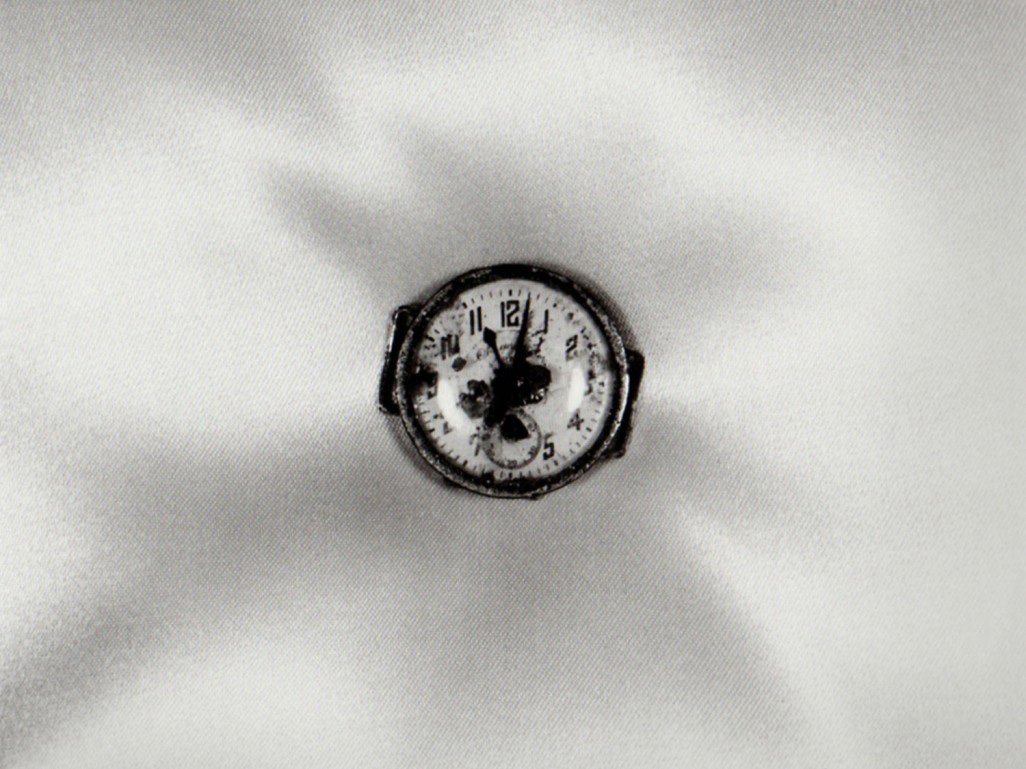
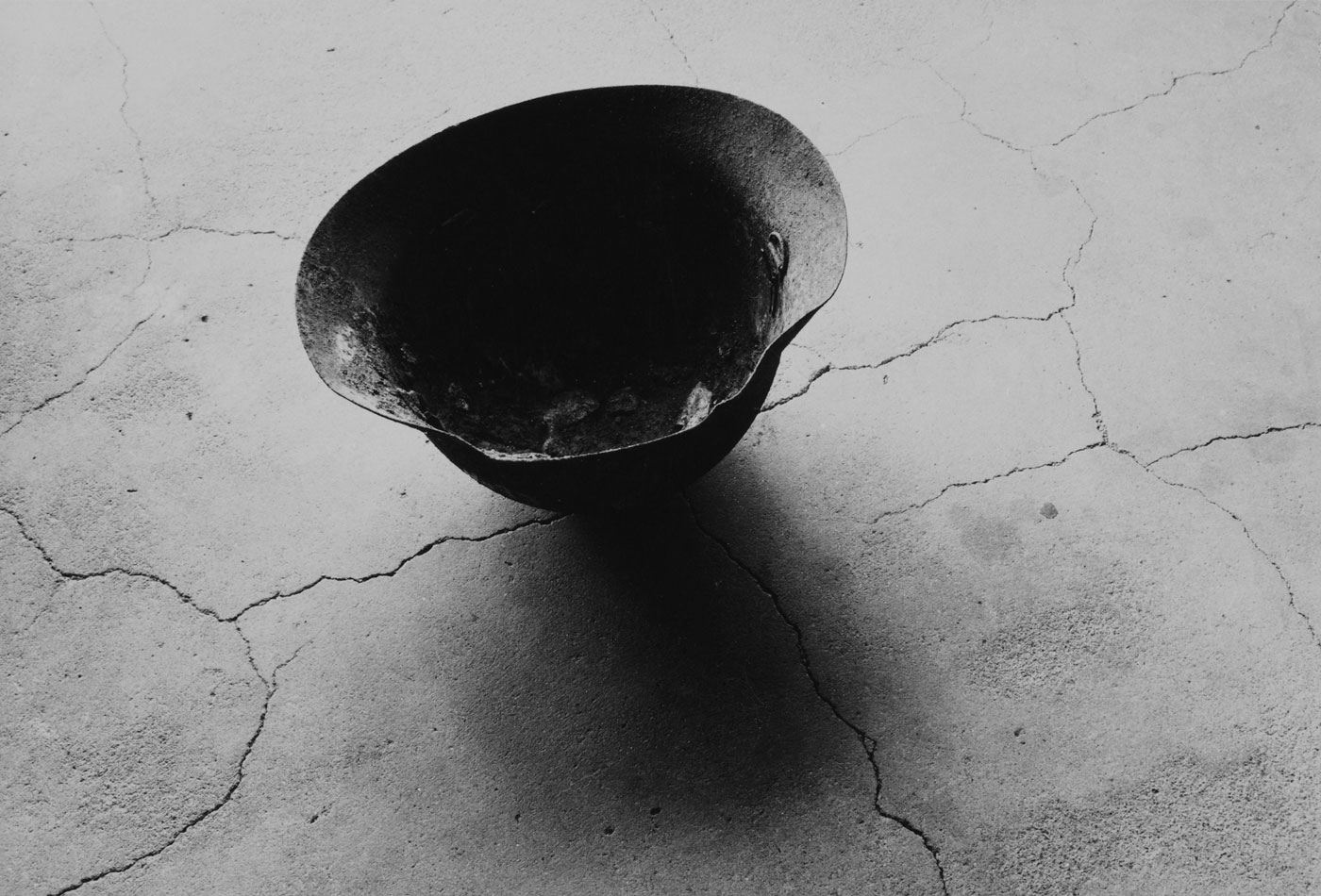


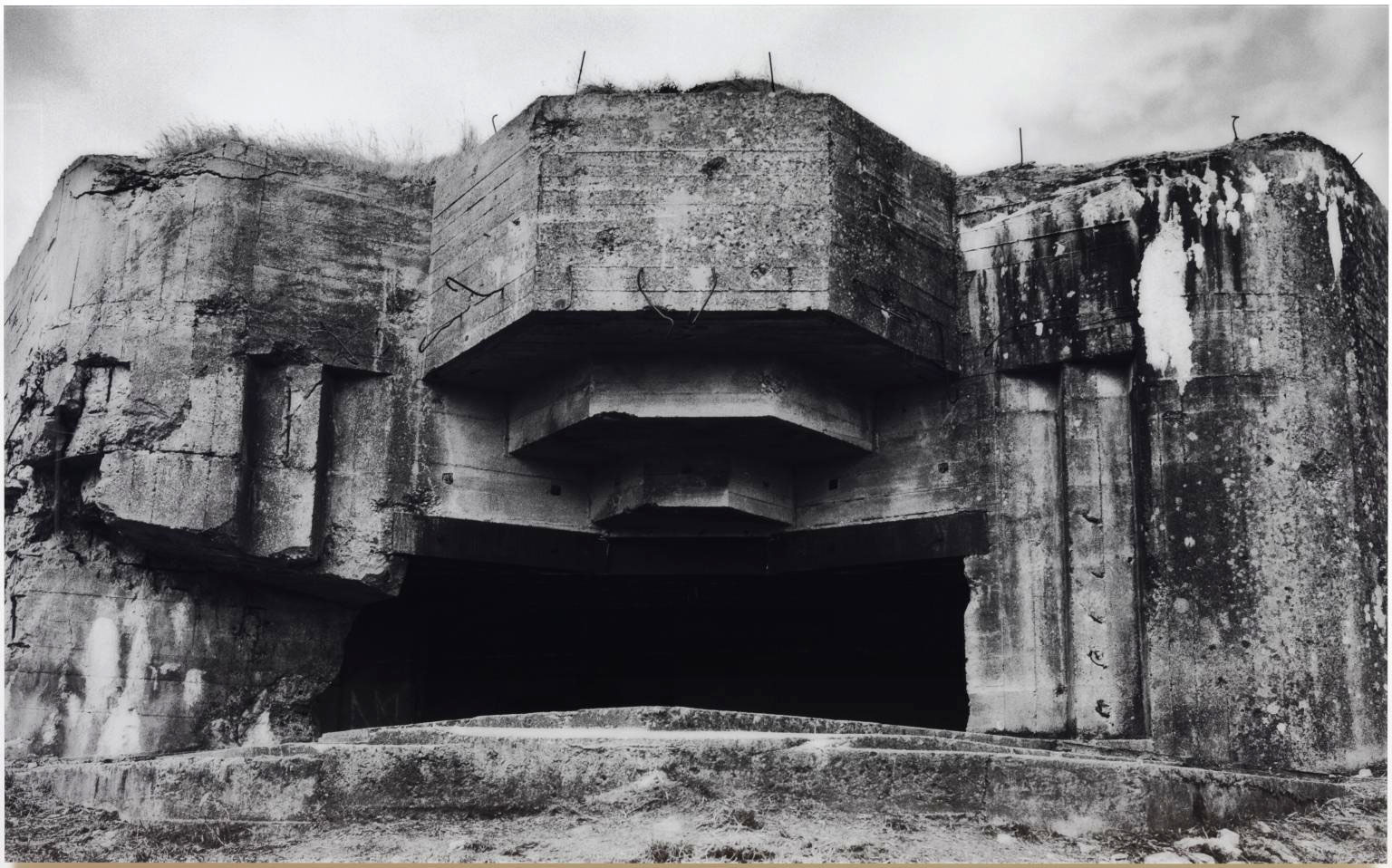
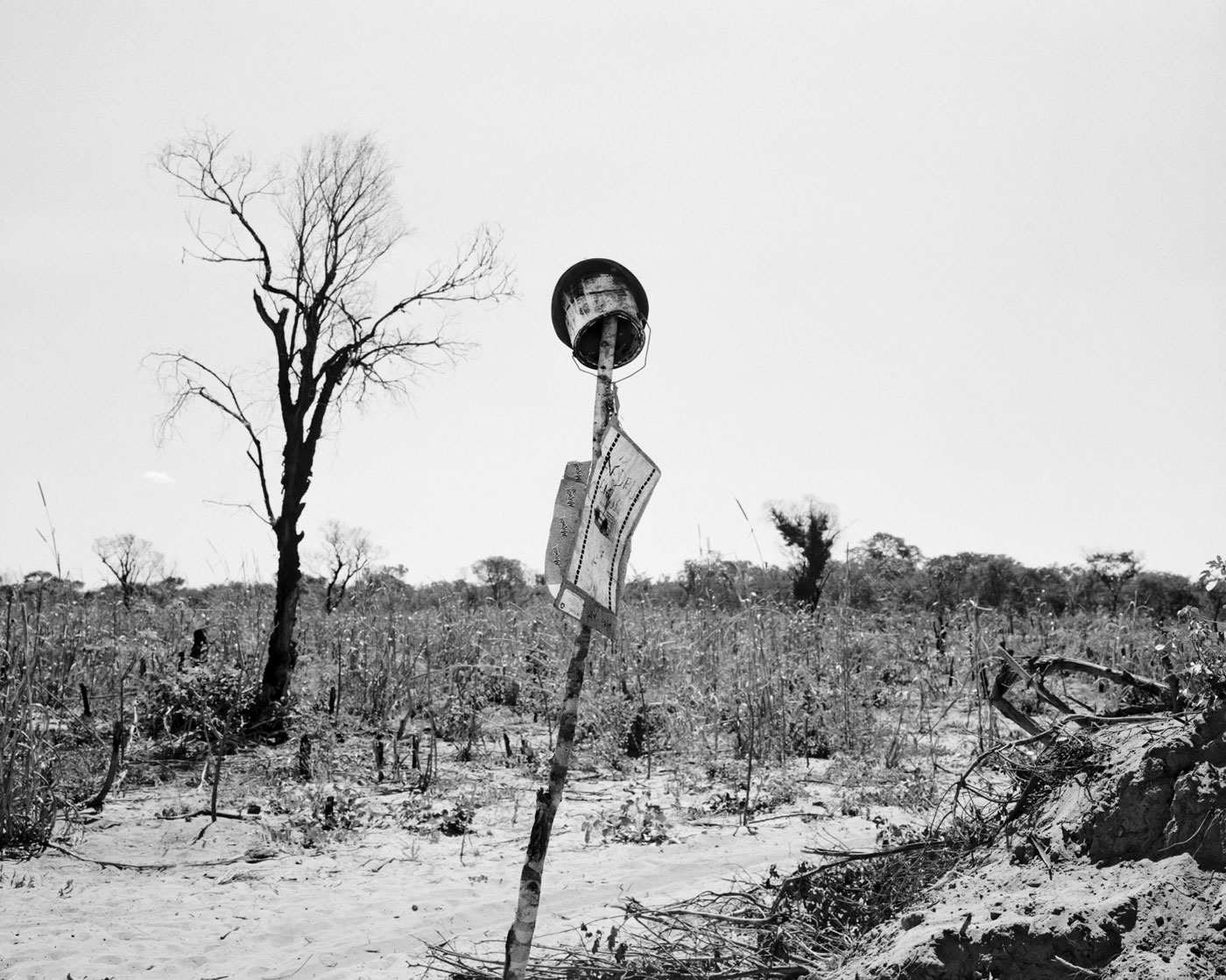


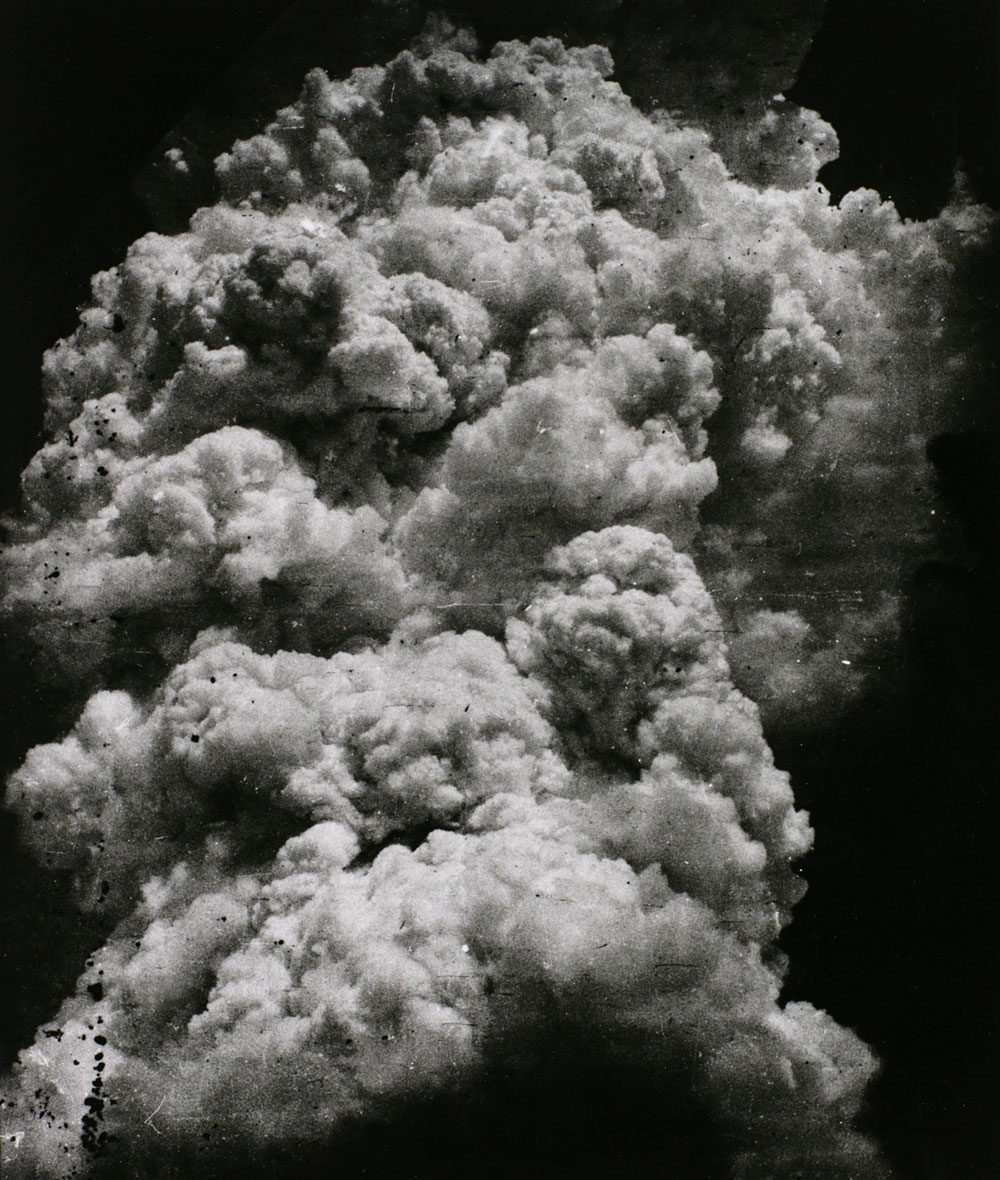


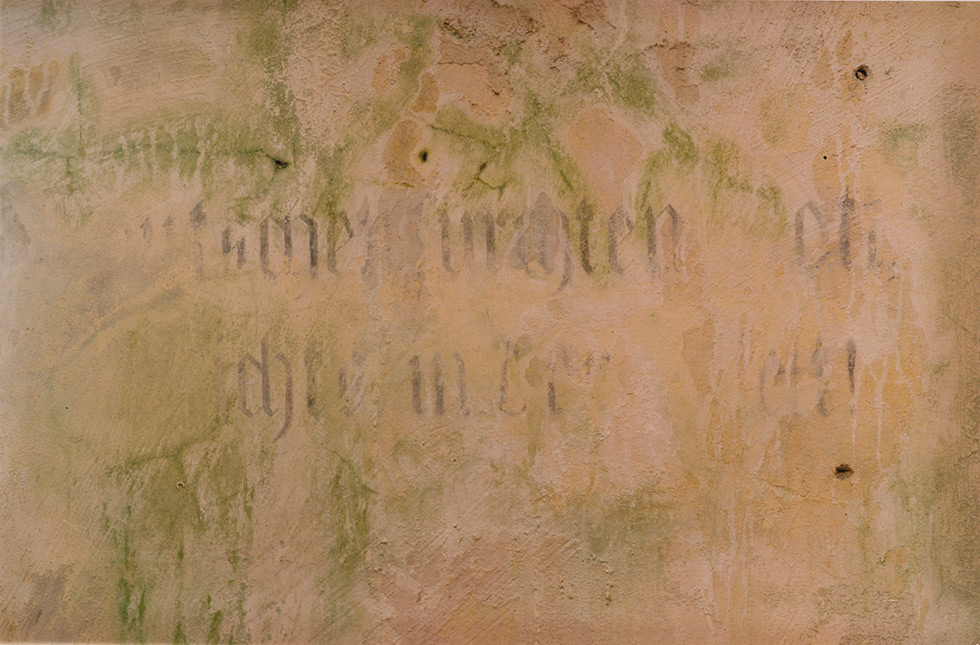

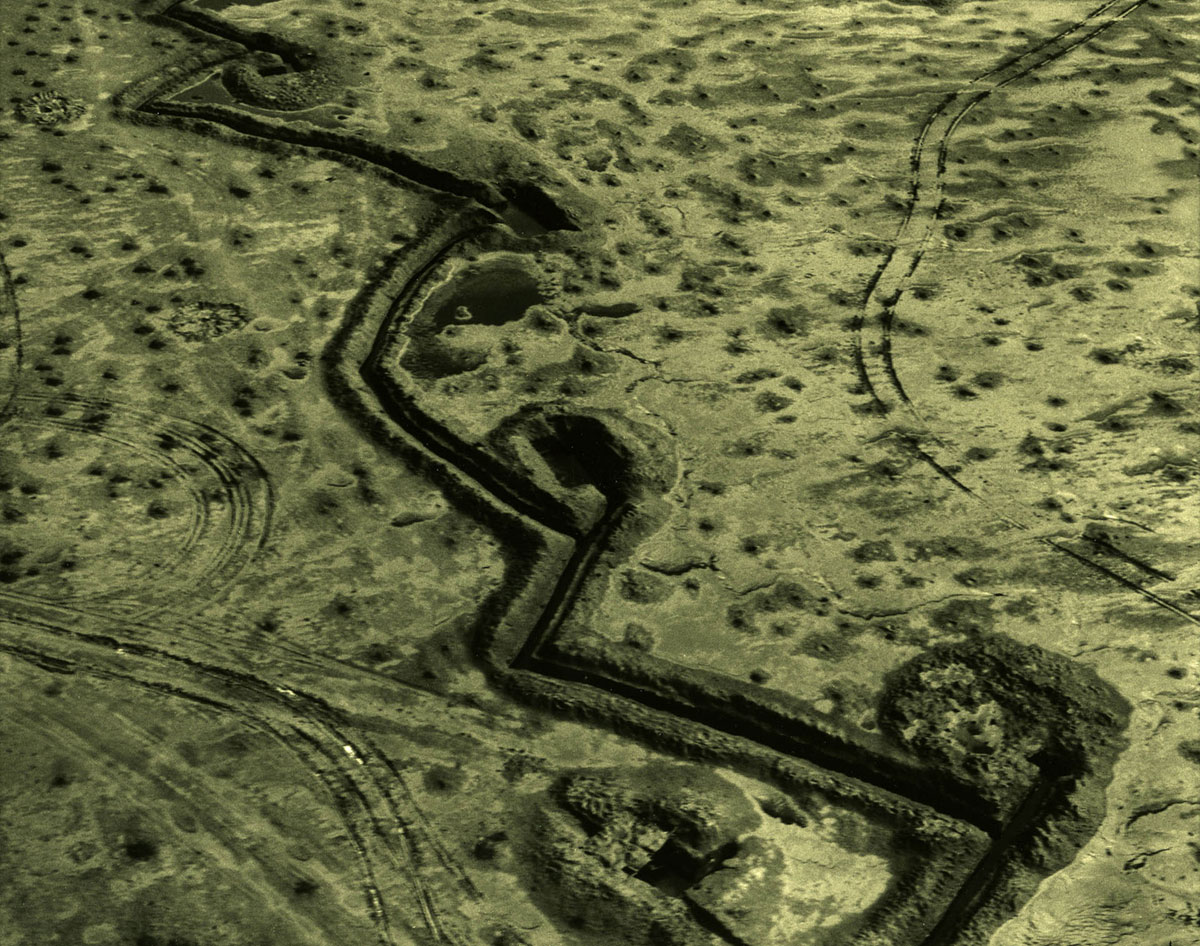


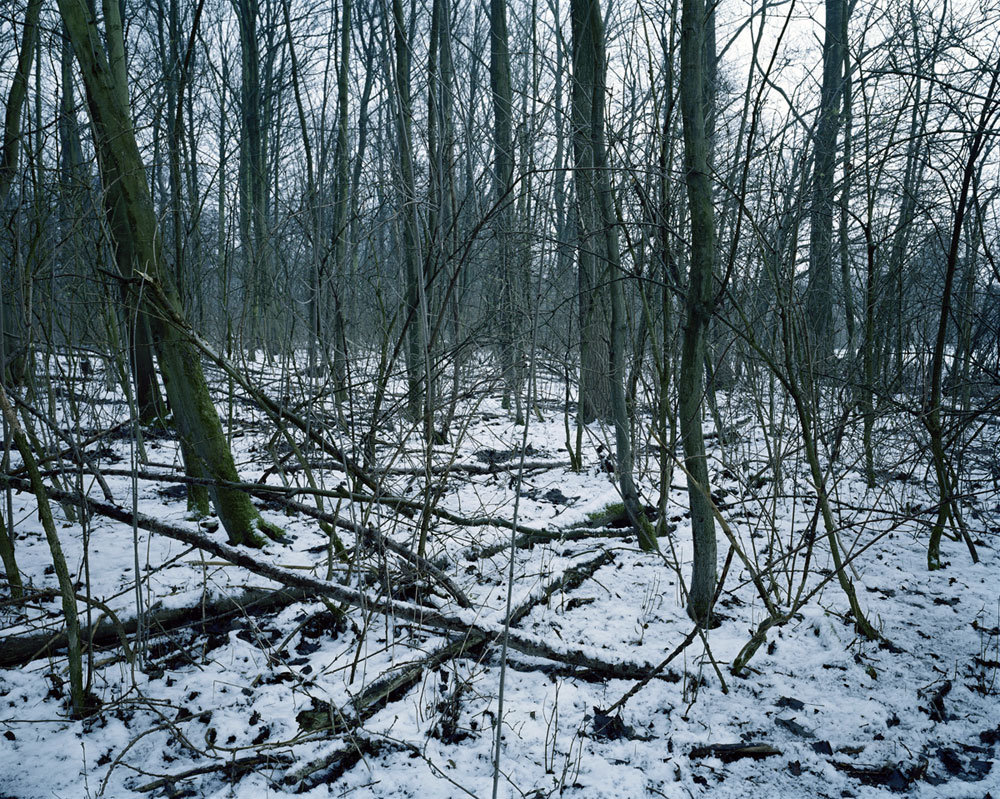


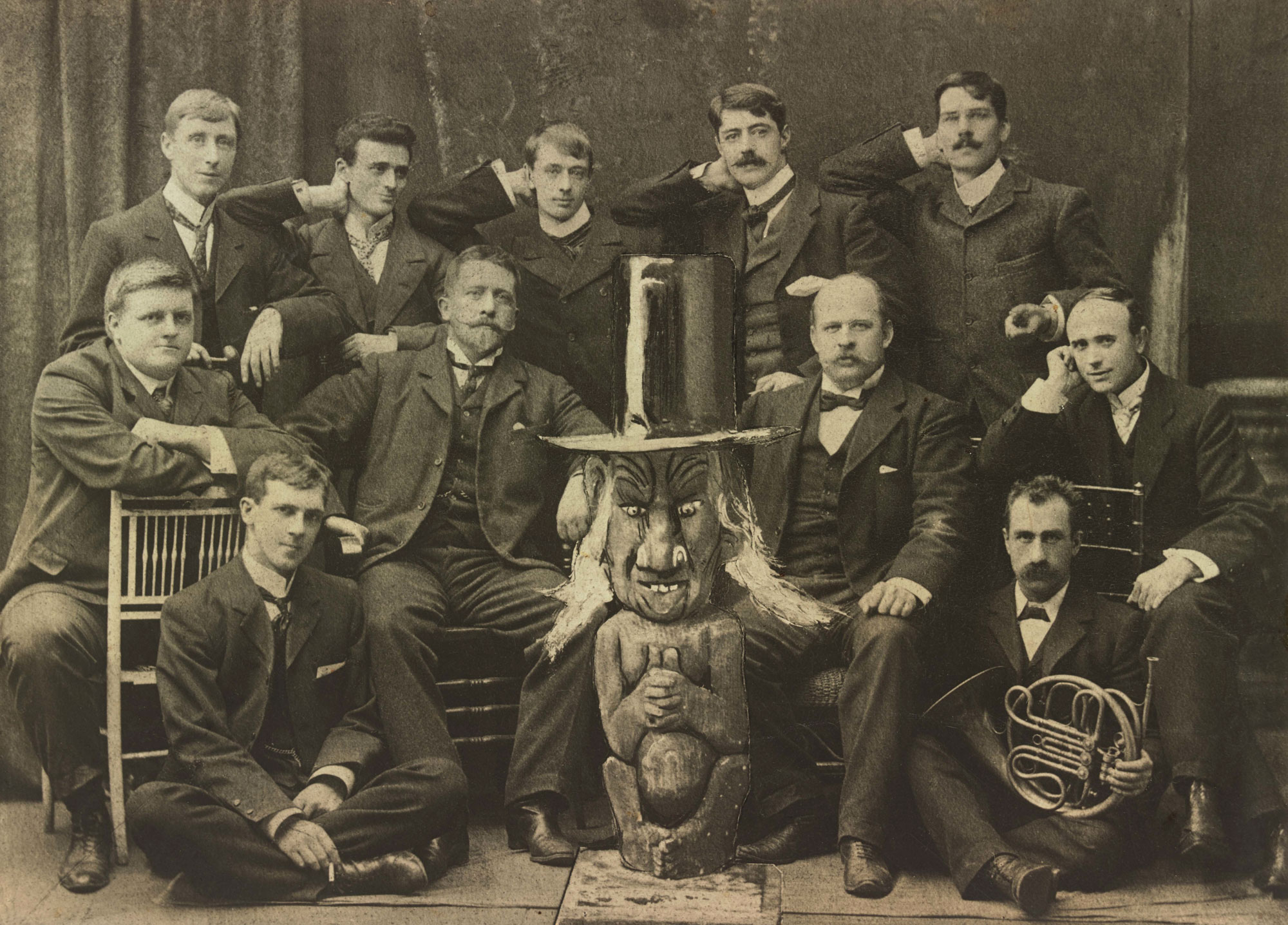


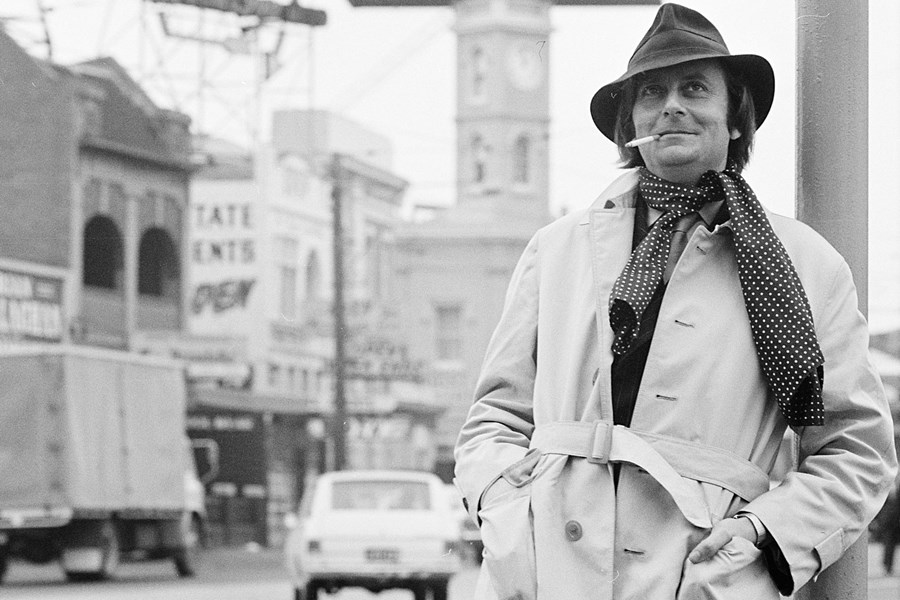

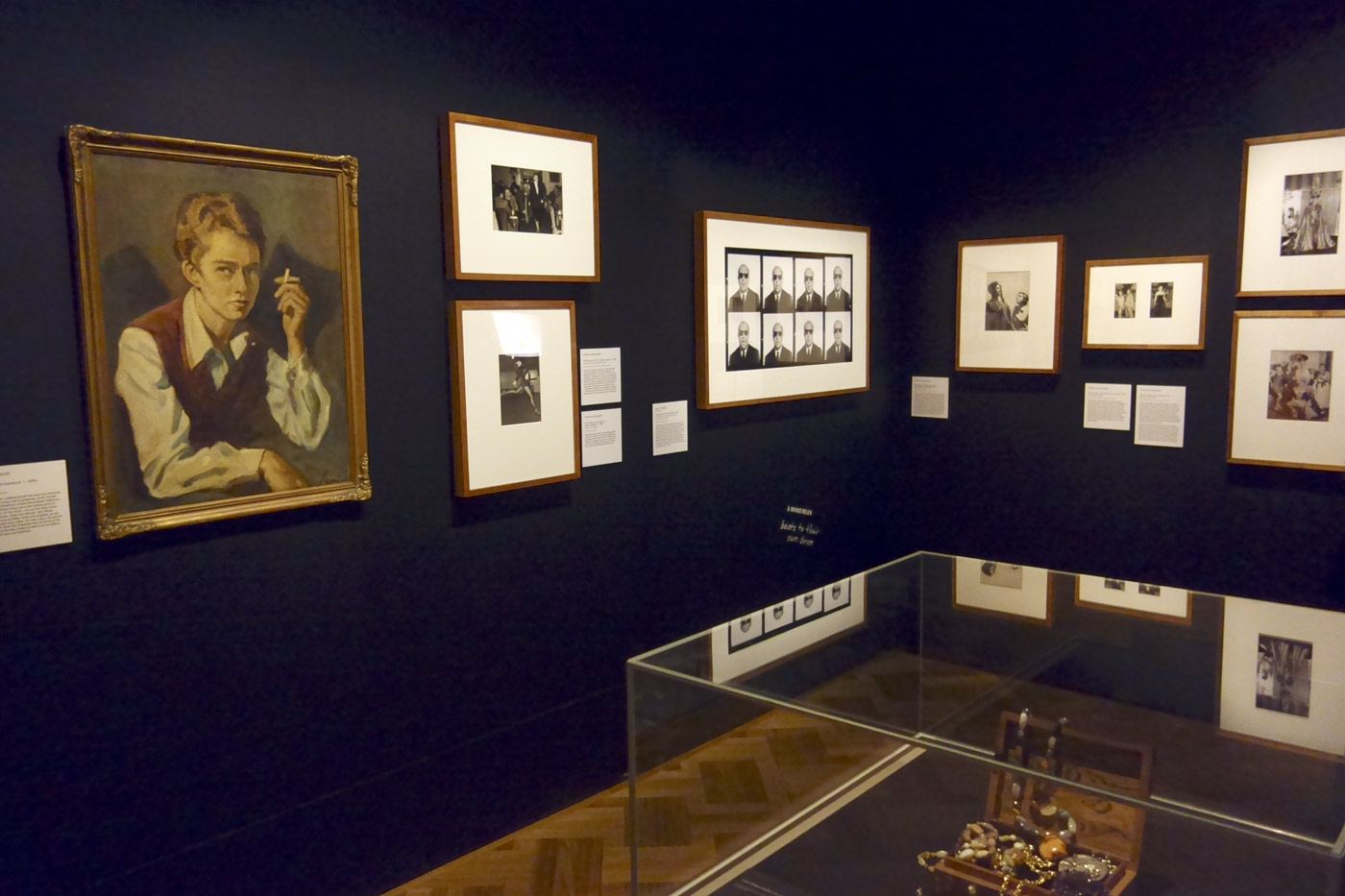


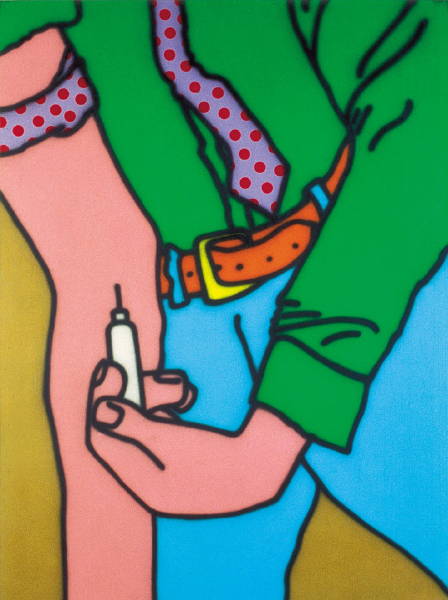
![Francis Bedford (English, 1815-1894) (photographer) 'South West View of the Parthenon [on the Acropolis, Athens, Greece]' 31 May 1862 from the exhibition 'Cairo to Constantinople: Early Photographs of the Middle East' at The Queen's Gallery, Buckingham Palace, London, November 2014 - February 2015](https://artblart.com/wp-content/uploads/2015/02/south-west-view-of-the-parthenon-web.jpg "Francis Bedford (English, 1815-1894) (photographer) 'South West View of the Parthenon [on the Acropolis, Athens, Greece]' 31 May 1862 from the exhibition 'Cairo to Constantinople: Early Photographs of the Middle East' at The Queen's Gallery, Buckingham Palace, London, November 2014 - February 2015")
![Francis Bedford (English, 1815-1894) (photographer) 'Portions of the Frieze of the Parthenon [Athens, Greece]' 31 May 1862 from the exhibition 'Cairo to Constantinople: Early Photographs of the Middle East' at The Queen's Gallery, Buckingham Palace, London, November 2014 - February 2015](https://artblart.com/wp-content/uploads/2015/02/portions-of-the-frieze-of-the-parthenon-web.jpg "Francis Bedford (English, 1815-1894) (photographer) 'Portions of the Frieze of the Parthenon [Athens, Greece]' 31 May 1862 from the exhibition 'Cairo to Constantinople: Early Photographs of the Middle East' at The Queen's Gallery, Buckingham Palace, London, November 2014 - February 2015")
![Francis Bedford (English, 1815-1894) (photographer) 'The Caryatid porch of the Erechtheum [Athens, Greece]' 30 May 1862](https://artblart.com/wp-content/uploads/2015/02/the-caryatid-porch-of-the-erechtheum-web.jpg "Francis Bedford (English, 1815-1894) (photographer) 'The Caryatid porch of the Erechtheum [Athens, Greece]' 30 May 1862")
![Francis Bedford (English, 1815-1894) (photographer) 'Acropolis and Temple of Jupiter Olympus [Olympieion, Athens]' 31 May 1862](https://artblart.com/wp-content/uploads/2015/02/acropolis-and-temple-of-jupiter-olympus-web.jpg "Francis Bedford (English, 1815-1894) (photographer) 'Acropolis and Temple of Jupiter Olympus [Olympieion, Athens]' 31 May 1862")
![Francis Bedford (English, 1815-1894) (photographer) 'The Temple of Jupiter from the north west [Baalbek, Lebanon]' 3 May 1862](https://artblart.com/wp-content/uploads/2015/02/the-temple-of-jupiter-web.jpg "Francis Bedford (English, 1815-1894) (photographer) 'The Temple of Jupiter from the north west [Baalbek, Lebanon]' 3 May 1862")
![Francis Bedford (English, 1815-1894) (photographer) 'The Temple of the Sun and Temple of Jupiter [Baalbek, Lebanon]' 4 May 1862](https://artblart.com/wp-content/uploads/2015/02/the-temple-of-the-sun-web.jpg "Francis Bedford (English, 1815-1894) (photographer) 'The Temple of the Sun and Temple of Jupiter [Baalbek, Lebanon]' 4 May 1862")
![Francis Bedford (English, 1815-1894) (photographer) 'The Colossi on the plain of Thebes [Colossi of Memnon]' 17 Mar 1862](https://artblart.com/wp-content/uploads/2015/02/the-colossi-on-the-plain-of-thebes-web.jpg "Francis Bedford (English, 1815-1894) (photographer) 'The Colossi on the plain of Thebes [Colossi of Memnon]' 17 Mar 1862")

![Joseph Albert (German, 1825-1886) (photographer) '[The Prince of Wales with Prince Louis of Hesse, and companions, in Munich, February 1862]' 1862](https://artblart.com/wp-content/uploads/2015/02/the-prince-of-wales-and-companions-web.jpg "Joseph Albert (German, 1825-1886) (photographer) '[The Prince of Wales with Prince Louis of Hesse, and companions, in Munich, February 1862]' 1862")
![Francis Bedford (English, 1815-1894) (photographer) 'View through the Great Gateway into the Grand Court of the Temple of Edfou [Temple of Horus, Edfu]' 14 Mar 1862](https://artblart.com/wp-content/uploads/2015/02/view-through-the-great-gateway-web.jpg "Francis Bedford (English, 1815-1894) (photographer) 'View through the Great Gateway into the Grand Court of the Temple of Edfou [Temple of Horus, Edfu]' 14 Mar 1862")
![Francis Bedford (English, 1815-1894) (photographer) 'The Great Propylon of the Temple at Edfou [Pylon of the Temple of Horus, Edfu]' 14 Mar 1862](https://artblart.com/wp-content/uploads/2015/02/the-great-propylon-of-the-temple-at-edfou-web.jpg "Francis Bedford (English, 1815-1894) (photographer) 'The Great Propylon of the Temple at Edfou [Pylon of the Temple of Horus, Edfu]' 14 Mar 1862")
![Francis Bedford (English, 1815-1894) (photographer) 'Tombs of the Memlooks at Cairo [Mausoleum and Khanqah of Emir Qawsun]' 25 Mar 1862](https://artblart.com/wp-content/uploads/2015/02/tombs-of-the-memlooks-at-cairo-web.jpg "Francis Bedford (English, 1815-1894) (photographer) 'Tombs of the Memlooks at Cairo [Mausoleum and Khanqah of Emir Qawsun]' 25 Mar 1862")
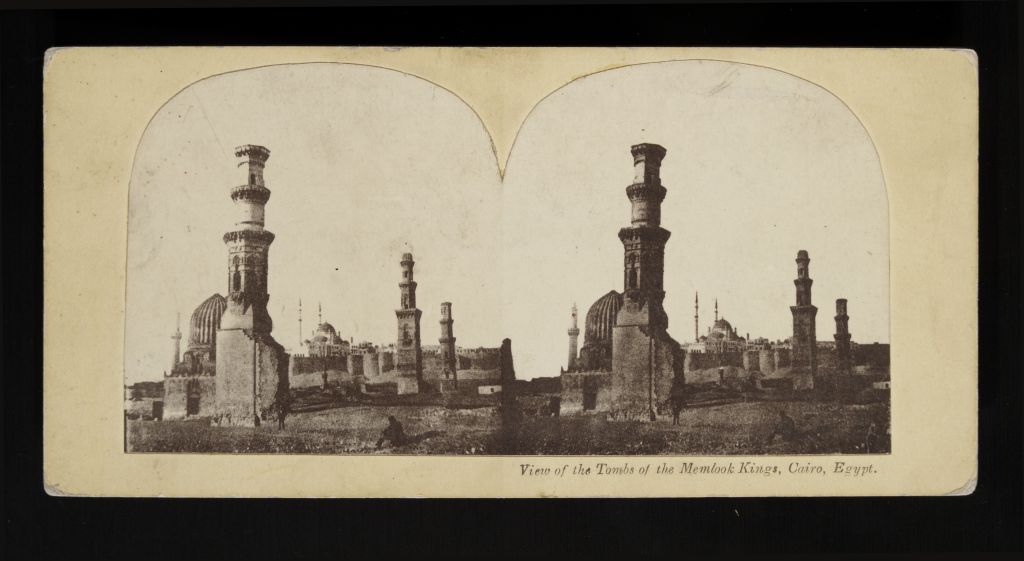
![Francis Bedford (English, 1815-1894) (photographer) 'Mosque of Mehemet Ali [Mosque of Muhammad Ali, Cairo]' 8 March 1862](https://artblart.com/wp-content/uploads/2015/02/mosque-of-mehemet-ali-web.jpg "Francis Bedford (English, 1815-1894) (photographer) 'Mosque of Mehemet Ali [Mosque of Muhammad Ali, Cairo]' 8 March 1862")
![Francis Bedford (English, 1815-1894) (photographer) 'Fountain in the Court of the Mosque of Mehemet Ali [Mosque of Muhammad Ali, Cairo]' 3 Mar 1862](https://artblart.com/wp-content/uploads/2015/02/fountain-in-the-court-of-the-mosque-web.jpg "Francis Bedford (English, 1815-1894) (photographer) 'Fountain in the Court of the Mosque of Mehemet Ali [Mosque of Muhammad Ali, Cairo]' 3 Mar 1862")
![Francis Bedford (English, 1815-1894) (photographer) 'Garden of Gethsemane [Jerusalem]' 2 Apr 1862](https://artblart.com/wp-content/uploads/2015/02/garden-of-gethsemane-web.jpg "Francis Bedford (English, 1815-1894) (photographer) 'Garden of Gethsemane [Jerusalem]' 2 Apr 1862")
![Francis Bedford (English, 1815-1894) (photographer) 'The Mount of Olives and Garden of Gethsemane [Jerusalem]' 2 Apr 1862](https://artblart.com/wp-content/uploads/2015/02/the-mount-of-olives-web.jpg "Francis Bedford (English, 1815-1894) (photographer) 'The Mount of Olives and Garden of Gethsemane [Jerusalem]' 2 Apr 1862")
![Francis Bedford (English, 1815-1894) (photographer) 'West Front of the Mosque of Omar [Dome of the Rock, Jerusalem]' 1 Apr 1862](https://artblart.com/wp-content/uploads/2015/02/west-front-of-the-mosque-of-omar-web.jpg "Francis Bedford (English, 1815-1894) (photographer) 'West Front of the Mosque of Omar [Dome of the Rock, Jerusalem]' 1 Apr 1862")
![Francis Bedford (English, 1815-1894) (photographer) 'Upper Bethoron [Beit Ur al-Foqa and the Valley of Ajalon]' 31 Mar 1862](https://artblart.com/wp-content/uploads/2015/02/upper-bethoron-web.jpg "Francis Bedford (English, 1815-1894) (photographer) 'Upper Bethoron [Beit Ur al-Foqa and the Valley of Ajalon]' 31 Mar 1862")
![Francis Bedford (English, 1815-1894) (photographer) 'Damascus - from a minaret in the Christian quarter [Syria]' 30 Apr 1862](https://artblart.com/wp-content/uploads/2015/02/damascus-web.jpg "Francis Bedford (English, 1815-1894) (photographer) 'Damascus - from a minaret in the Christian quarter [Syria]' 30 Apr 1862")
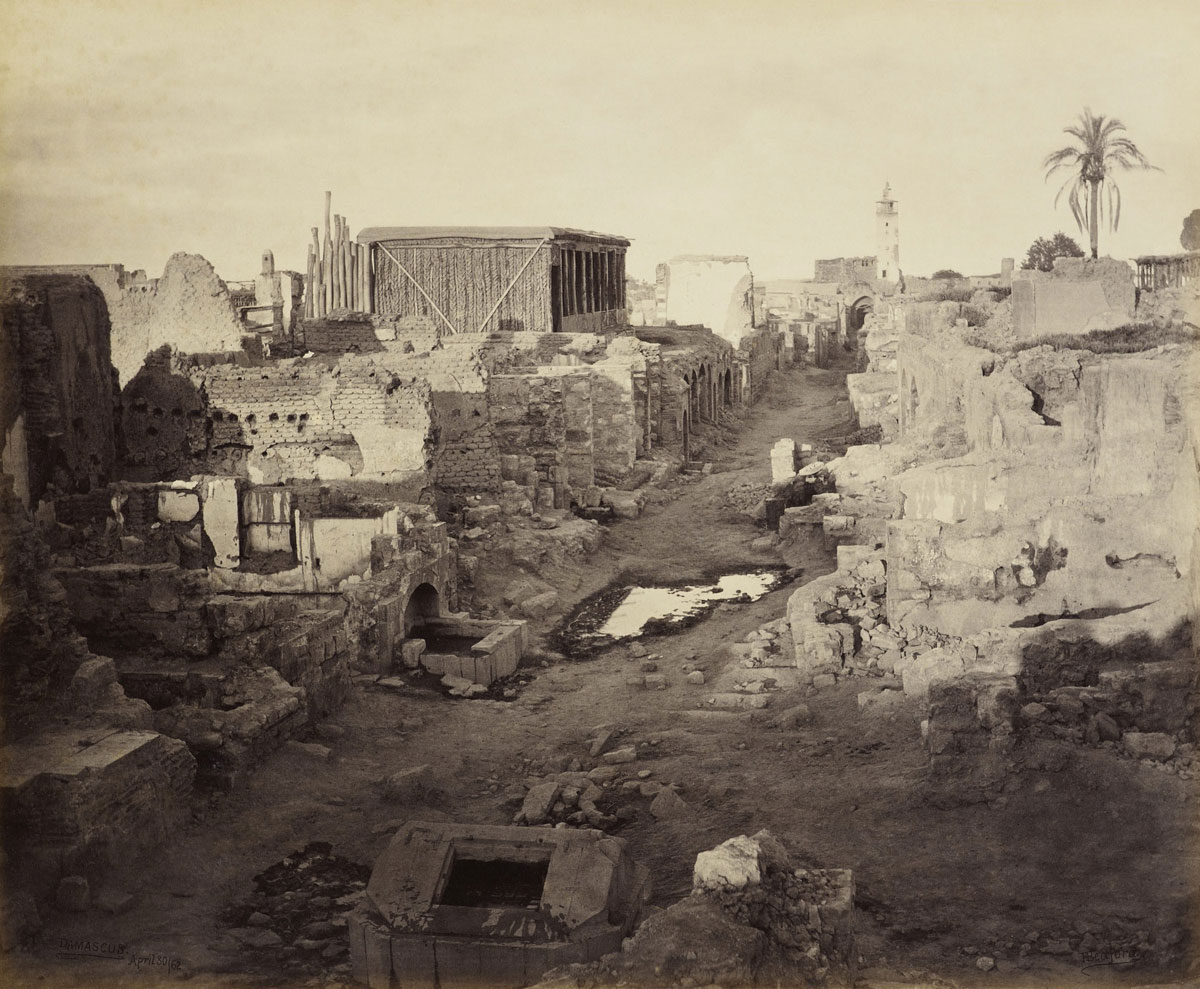
![Francis Bedford (English, 1815-1894) (photographer) 'Tower of Galata and part of Turkish burial ground [Istanbul, Turkey]' 21 May 1862](https://artblart.com/wp-content/uploads/2015/02/tower-of-galata-web.jpg "Francis Bedford (English, 1815-1894) (photographer) 'Tower of Galata and part of Turkish burial ground [Istanbul, Turkey]' 21 May 1862")
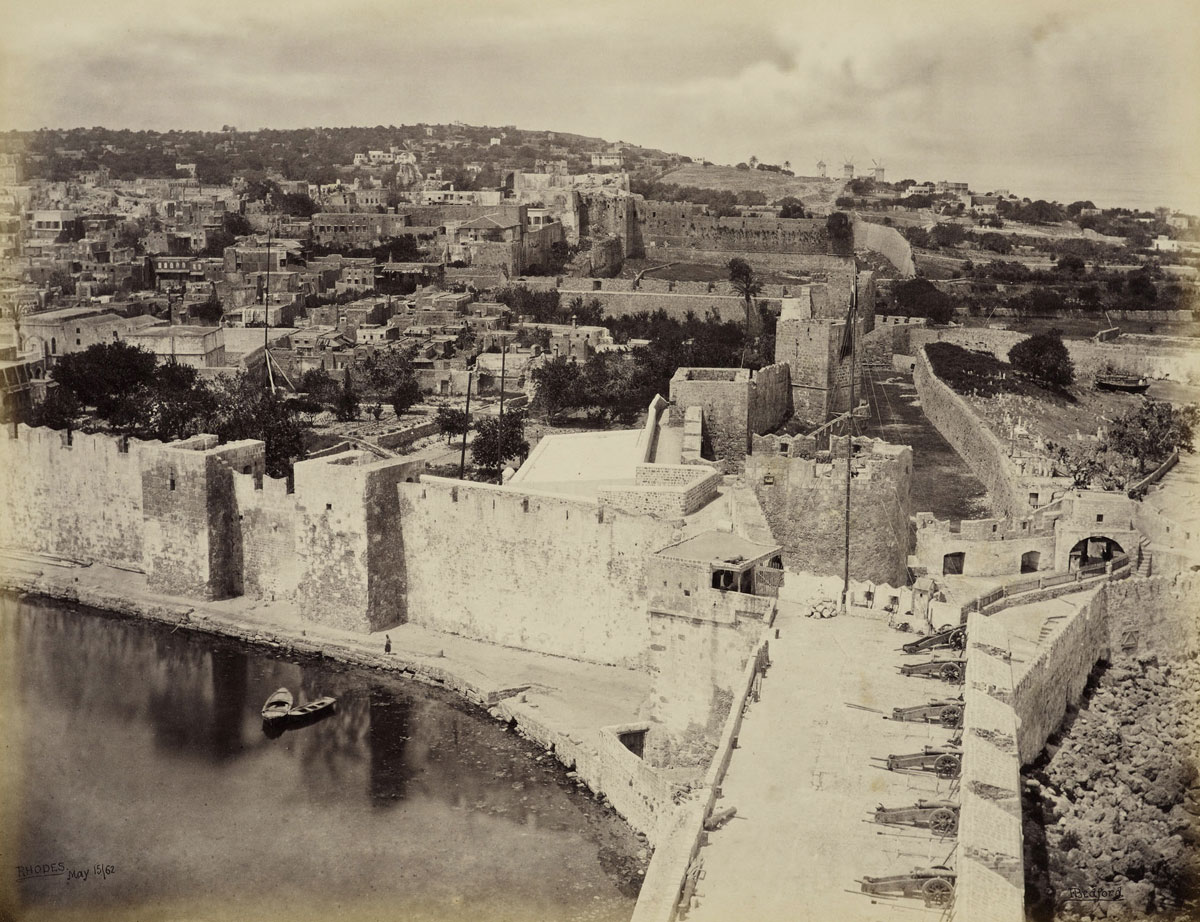


![Joseph Albert (English, 1825-1886) (photographer) '[The Prince of Wales and Prince Louis of Hesse, 11 February 1862]' Feb 1862](https://artblart.com/wp-content/uploads/2015/02/the-prince-of-wales-web.jpg "Joseph Albert (English, 1825-1886) (photographer) '[The Prince of Wales and Prince Louis of Hesse, 11 February 1862]' Feb 1862")
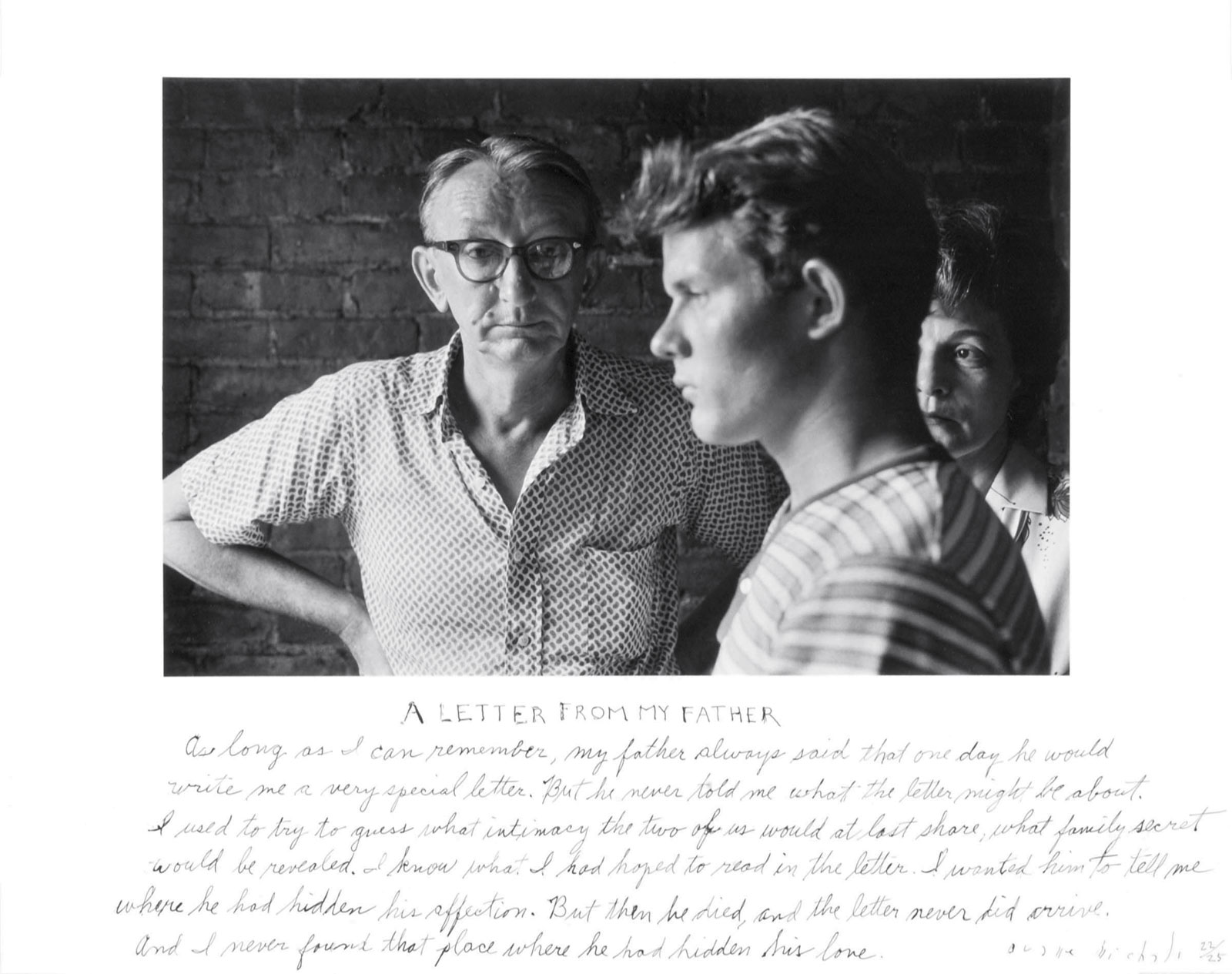
























![Francisco Goya (Spanish, 1746-1828) 'Raging Lunatic (Loco furioso), Bordeaux Album I, G, 3[4?]' 1824-1828](https://artblart.com/wp-content/uploads/2015/01/11-raging-lunatic-web.jpg "Francisco Goya (Spanish, 1746-1828) 'Raging Lunatic (Loco furioso), Bordeaux Album I, G, 3[4?]' 1824-1828")












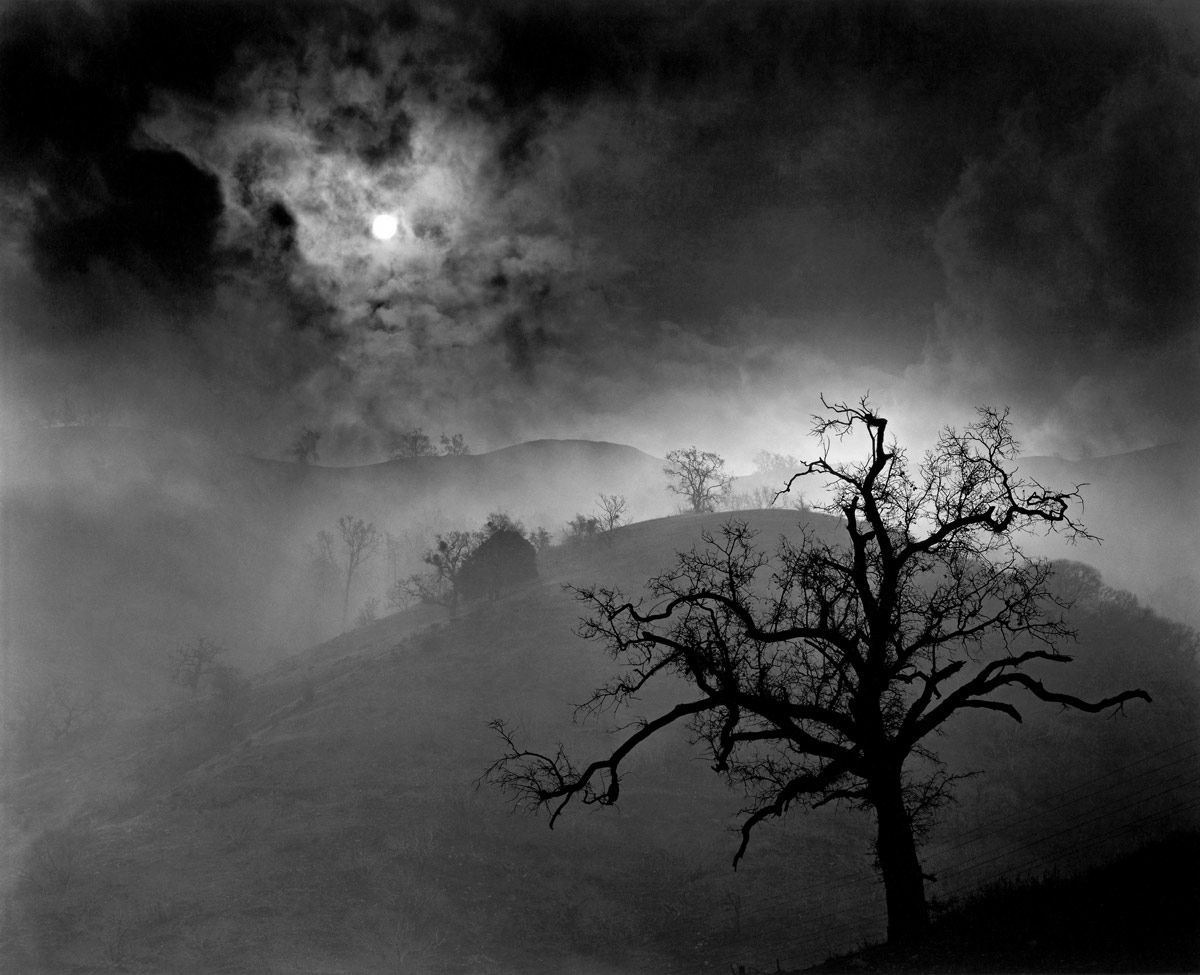


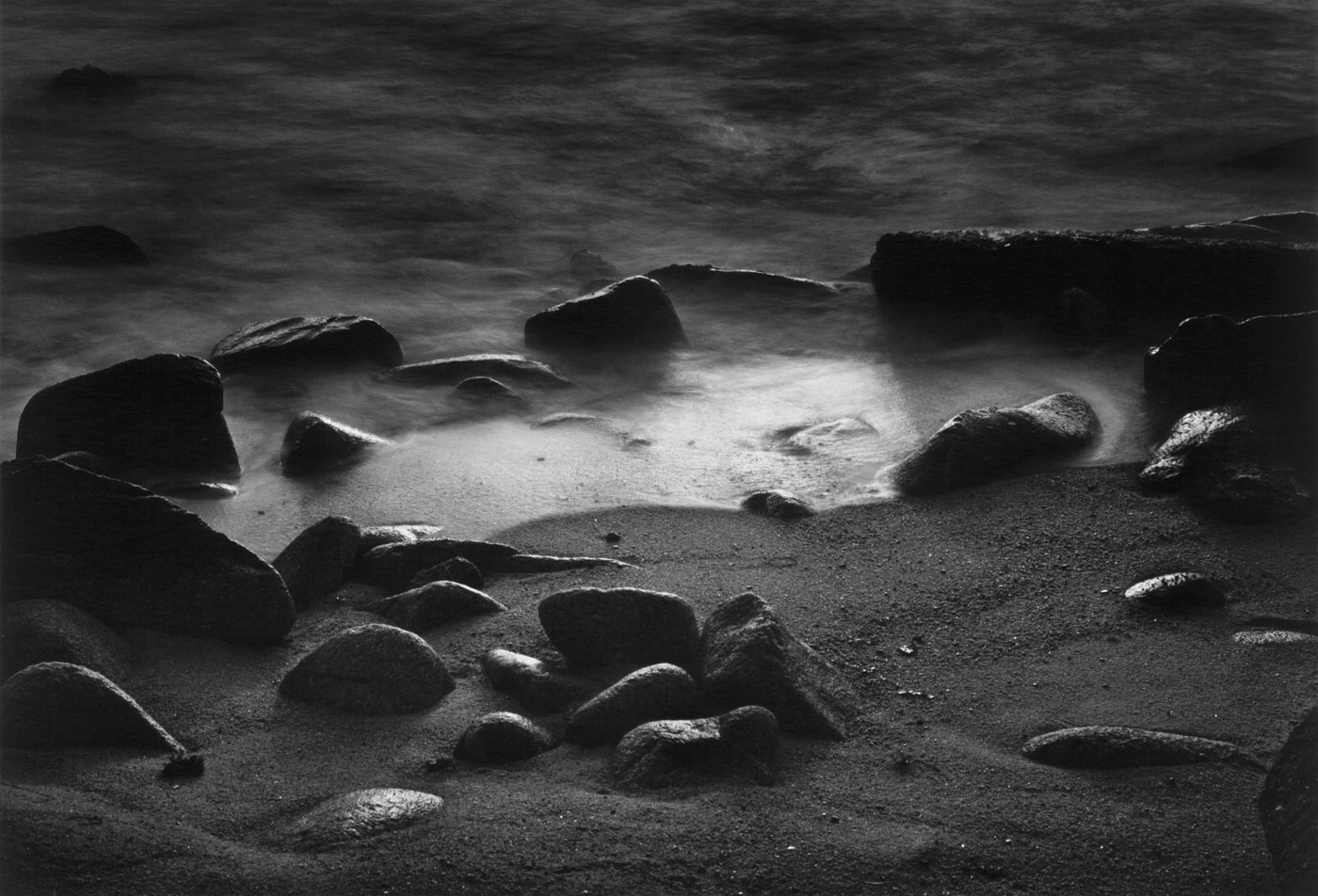
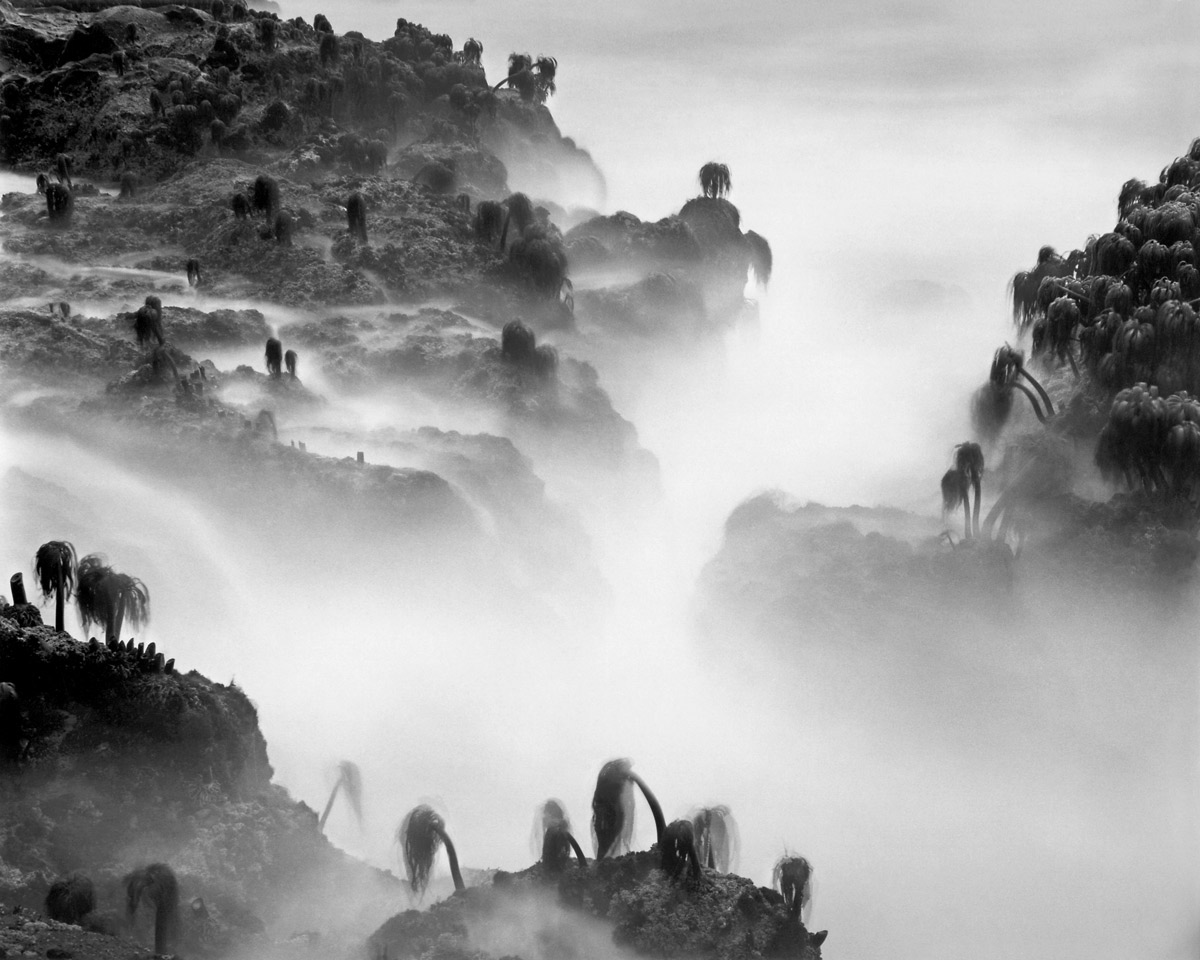
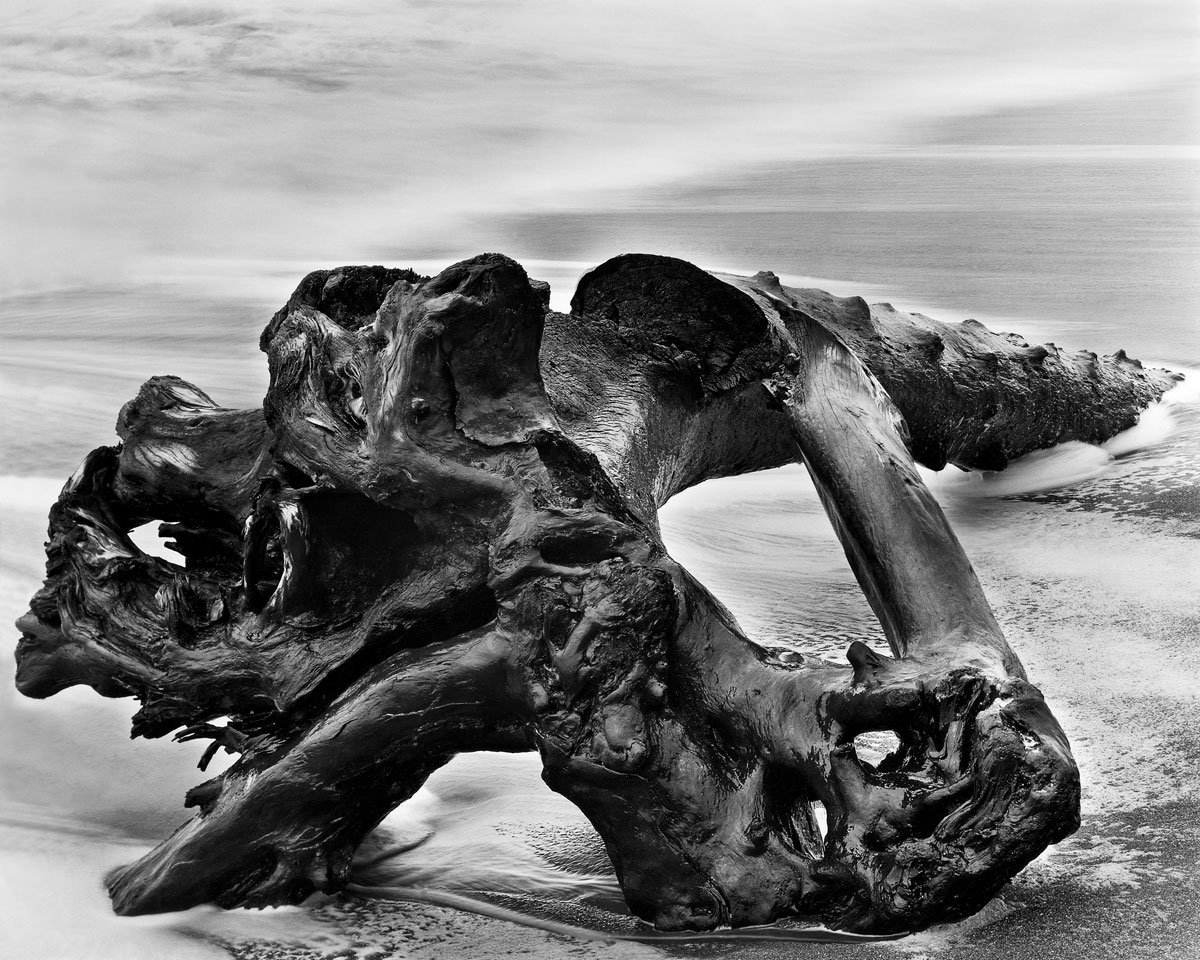



 Art Blart _ art and cultural memory archive
You must be logged in to post a comment.