Exhibition: ‘Juan Davila: The Moral Meaning of Wilderness’ at the Monash University Museum of Art (MUMA), Caulfield

Exhibition dates: 4th August – 1st October 2011
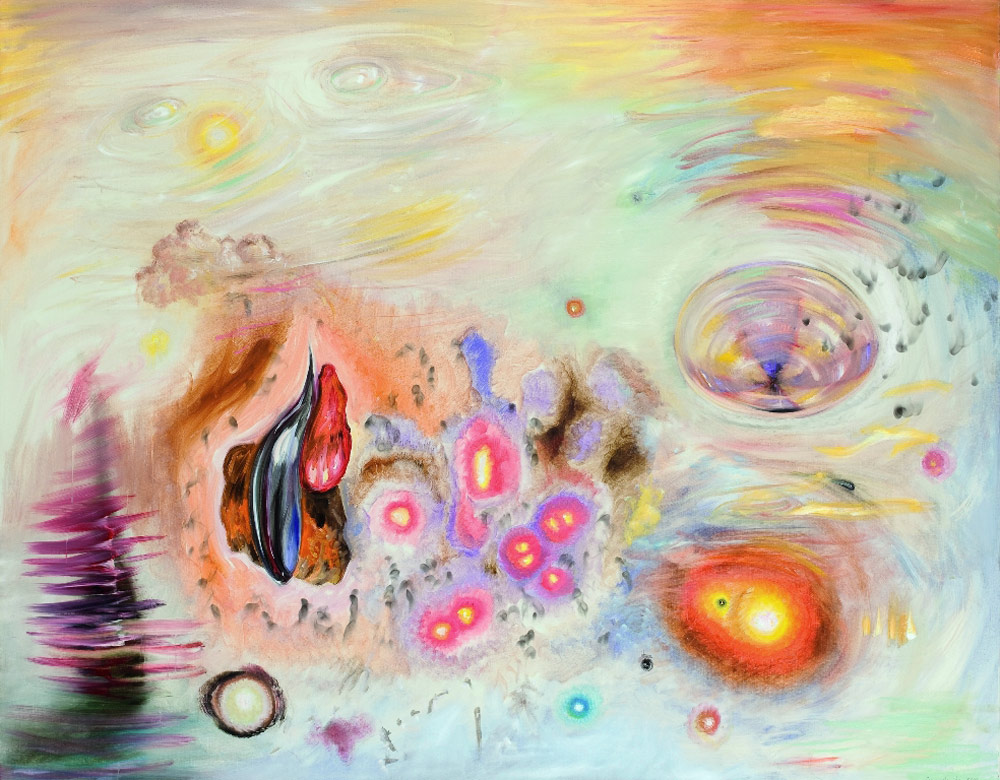
 

Juan Davila (Chilean b. 1946, emigrated Australia 1974) 'Wilderness' 2010


Juan Davila (Chilean b. 1946, emigrated Australia 1974)
Wilderness
2010
© Juan Davila, Courtesy Kalli Rolfe Contemporary Art


“The ‘Moral Meaning of Wilderness’ exhibition is a tour of the various approaches to the landscape: ‘plein air’ painting, studio landscape work, sublime landscape, historical evocation of landscape, modernity and the landscape, natural disaster, childhood memory of a landscape, woman in the wilderness. The ‘After Image’ works seem to refer to fantasies, inner space, unnameable objects, microcosm and immense space. Within the representation of “the land” one easily forgets that we are dealing with complexity and a field of projections. The political, the sublime, the moral stance, corporate destruction and the future of our environment come to mind.”


Juan Davila 1


“In a state of grace, one sometimes perceives the deep beauty, hitherto unattainable, of another person. And everything acquires a kind of halo which is not imaginary: it comes from the splendour of the almost mathematical light emanating from people and things. One starts to feel that everything in existence – whether people or things – breathes and exhales the subtle light of energy. The world’s truth is impalpable.”


Clarice Lispector 2


Simply put, this is the best exhibition I have seen in Melbourne this year.

Feminine jouissance is critical to an understanding of the work of Juan Davila (see quotation below). It is the jouissance of the Other: ineffable, incapable of being expressed, indescribable, unutterable. Also critical is an understanding of the meaning of ‘wilderness’ and ‘after image’:

Wilderness “is a relative term suggesting the perspective of a visitor or interloper for whom the landscape is wild and Other – for the landscape was neither wild nor foreign to its original inhabitants, at least not until its transformation through colonising, farming and displacement.”3

“An after image … is an optical illusion that refers to an image continuing to appear in one’s vision after the exposure to the original image has ceased.”4


The most powerful works are the Wilderness and After Image paintings. Grouped together in a room at the far end of the gallery, the effect of these paintings is to be physically surrounded by the nebula of the unconscious mind. The feeling is not dissimilar to being consumed by the abstract, elemental quality of Monet’s Nymphéas (Water Lilies) at the Orangerie in Paris. Pair to more earthly landscapes (see images 2 and 3 below) the paintings are the closest experience in approaching the divine that I have felt in a long time. Their visual and noumenal ‘energy’ is superlative.

Robert Nelson observes that, “The after-image is a momentary body-memory – not intellectual but bizarrely willed – perhaps a bit like the recollection of a dream or the instant slip that uncannily reveals the unconscious. In monumentalising this trace, Davila delivers us to another ethereal zone: the breath of libido, buffeted by clouds of repression and misty internalised myths. As portraits of evanescent memory, they are wantonly memorable.”5

Indeed, they are memorable. I had a spiritual experience with this work for the paintings promote in the human a state of grace. The non-material, the unconceptualisable, things which are outside all possibility of time and space are made visible. This happens very rarely but when it does you remember, eternally, the time and space of occurrence. I hope you have the same experience.

Dr Marcus Bunyan


Many thankx to MUMA for allowing me to publish the images in the posting. Please click on the images for a larger version.


“The term jouissance, in French, denotes “pleasure” or “enjoyment.” The term has a sexual connotation (i.e., orgasm) lacking in the English word “enjoyment”, and is therefore left untranslated in English editions of the works of Jacques Lacan. In his Seminar “The Ethics of Psychoanalysis” (1959-1960) Lacan develops his concept of the opposition of jouissance and pleasure. The pleasure principle, according to Lacan, functions as a limit to enjoyment: it is the law that commands the subject to ‘enjoy as little as possible’. At the same time the subject constantly attempts to transgress the prohibitions imposed on his enjoyment, to go beyond the pleasure principle. Yet the result of transgressing the pleasure principle, according to Lacan, is not more pleasure but pain, since there is only a certain amount of pleasure that the subject can bear. Beyond this limit, pleasure becomes pain, and this ‘painful principle’ is what Lacan calls jouissance.

In his Seminar “Encore” (1972-1973) Lacan states that jouissance is essentially phallic. That is, insofar as jouissance is sexual it is phallic, meaning that it does not relate to the Other as such. Lacan admits, however, that there is a specifically feminine jouissance, a supplementary jouissance, which is beyond the phallus, a jouissance of the Other. This feminine jouissance is ineffable, for both women and men may experience it but know nothing about it.”6


Footnotes

1/ Davila, Juan quoted in “After Image: A conversation between Juan Davila and Kate Briggs,” in Juan Davila: The Moral Meaning of Wilderness catalogue. Canberra: ANU Drill Hall Gallery, 2011, p. 53.

2/ Lispector, Clarice. Discovering the World. Manchester: Carcanet Press, 1992, p. 122 quoted in Briggs, Kate. “Painting, an act of faith: Moments in the work of Juan Davila,” in Juan Davila: The Moral Meaning of Wilderness catalogue. Canberra: ANU Drill Hall Gallery, 2011, p. 8.

3/ Delany, Max. Introductory speech for “Contemporary Visions & Critiques of the Landscape.” Video of session. The Festival of Ideas, The Pursuit of Identity: Landscape, History and Genetics. The University of Melbourne [Online] Cited 21/09/2011. No longer available online

4/ Anon. “Afterimage,” on the Wikipedia website [Online] Cited 21/09/2011.

5/ Nelson, Robert. “Exhibition does not take air lightly,” in The Age newspaper. Wednesday, September 21st, 2011, p. 17.

6/ Anon. “Jouissance,” on the Wikipedia website [Online] Cited 21/09/2011.


Juan Davila (Chilean b. 1946, emigrated Australia 1974) 'A Man is Born Without Fear' 2010


Juan Davila (Chilean b. 1946, emigrated Australia 1974)
A Man is Born Without Fear
2010
© Juan Davila, Courtesy Kalli Rolfe Contemporary Art


Juan Davila (Chilean b. 1946, emigrated Australia 1974) 'After Image. A Man is Born Without Fear' 2010


Juan Davila (Chilean b. 1946, emigrated Australia 1974)
After Image. A Man is Born Without Fear
2010
© Juan Davila, Courtesy Kalli Rolfe Contemporary Art
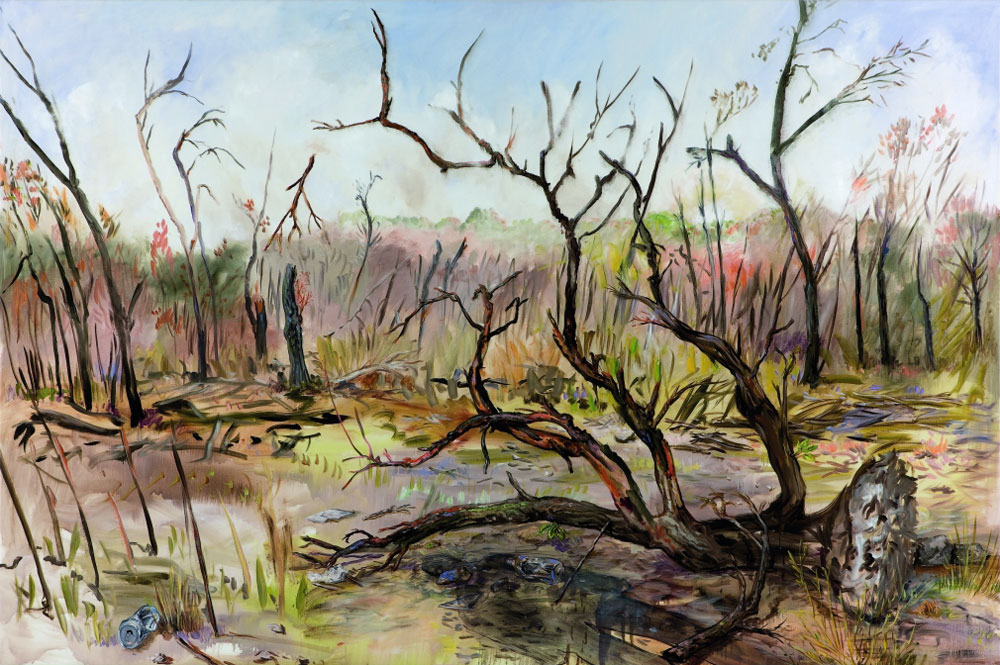
 

Juan Davila (Chilean b. 1946, emigrated Australia 1974) 'Churchill National Park' 2009


Juan Davila (Chilean b. 1946, emigrated Australia 1974)
Churchill National Park
2009
© Juan Davila, Courtesy Kalli Rolfe Contemporary Art


The Moral Meaning of Wilderness features recent work by Juan Davila, one of Australia’s most distinguished artists. The exhibition sees Davila turn to the genres of landscape and history painting, at a time when the environment is as much a political as a cultural consideration. With technical virtuosity, Davila’s striking representations of nature achieve monumental significance, depicting beauty and emotion while addressing modern society’s ambivalence to nature and increasing consumerism.

The Moral Meaning of Wilderness represents a radical shift in Davila’s practice, whilst continuing to explore art’s relationship to nature, politics, identity and subjectivity in our post-industrial age. Davila pursues his exploration of the role of art as a means of social, cultural and political analysis.

While many contemporary artists turned away from representation of the landscape, due to its perceived allegiance to outmoded forms of national identity and representation, Davila has recently sought to revisit and reconsider our surroundings au natural.

His paintings are, at first view, striking representations of nature. The paintings, created since 2003, are undertaken en plain air, a pre-modern technique based on speed of execution in situ, and the use of large scale canvases characteristic of history painting. He has also employed other techniques such as studio painting and representations of the landscape with reference to the sublime, the historical, memory and modernity.

Text from the MUMA website
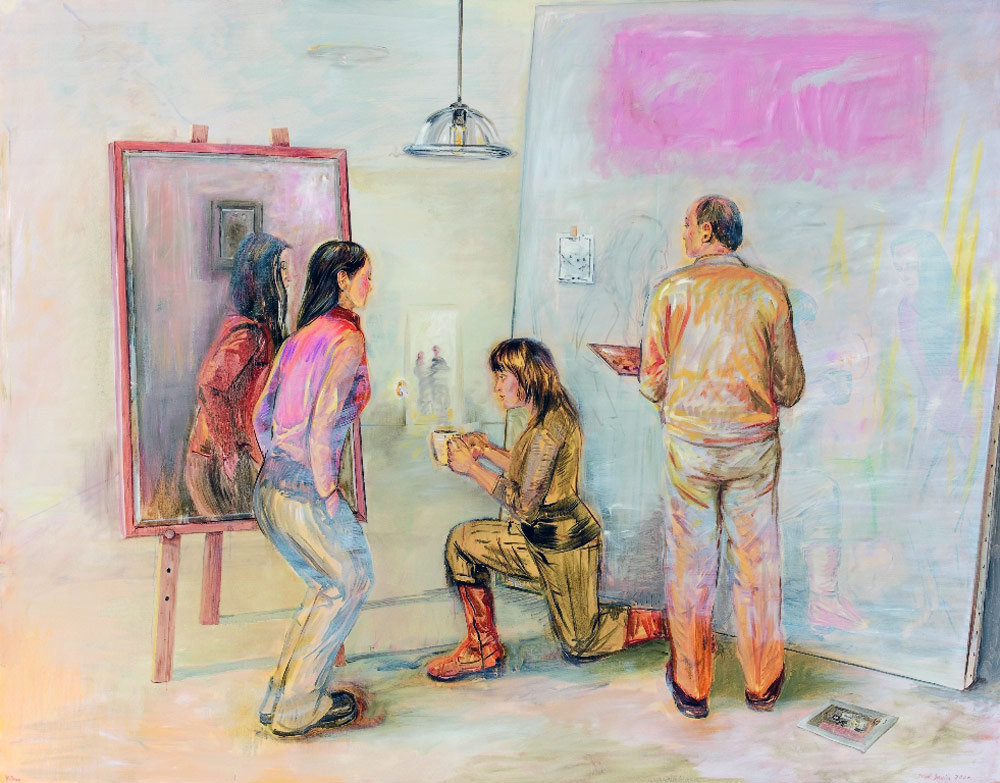
 

Juan Davila (Chilean b. 1946, emigrated Australia 1974) 'The Painter's Studio' 2006


Juan Davila (Chilean b. 1946, emigrated Australia 1974)
The Painter’s Studio
2006
© Juan Davila, Courtesy Kalli Rolfe Contemporary Art


Juan Davila (Chilean b. 1946, emigrated Australia 1974) '761 Wattletree Road' 2008


Juan Davila (Chilean b. 1946, emigrated Australia 1974)
761 Wattletree Road
2008
© Juan Davila, Courtesy Kalli Rolfe Contemporary Art
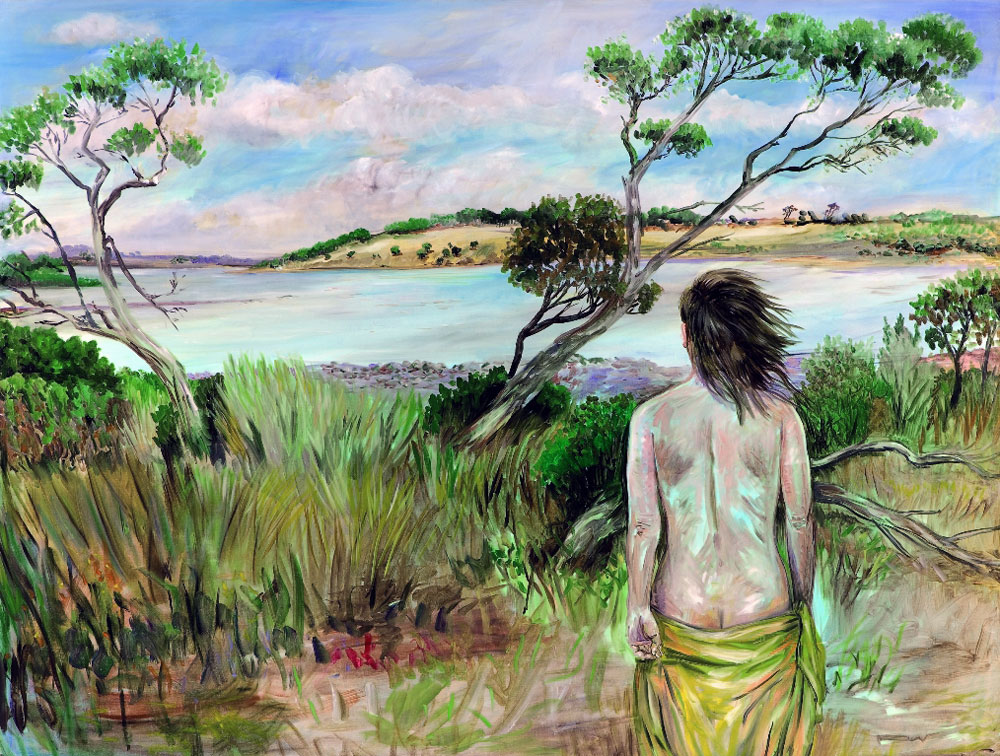
 

Juan Davila (Chilean b. 1946, emigrated Australia 1974) 'What About my Desire?' 2009


Juan Davila (Chilean b. 1946, emigrated Australia 1974)
What About my Desire?
2009
© Juan Davila, Courtesy Kalli Rolfe Contemporary Art
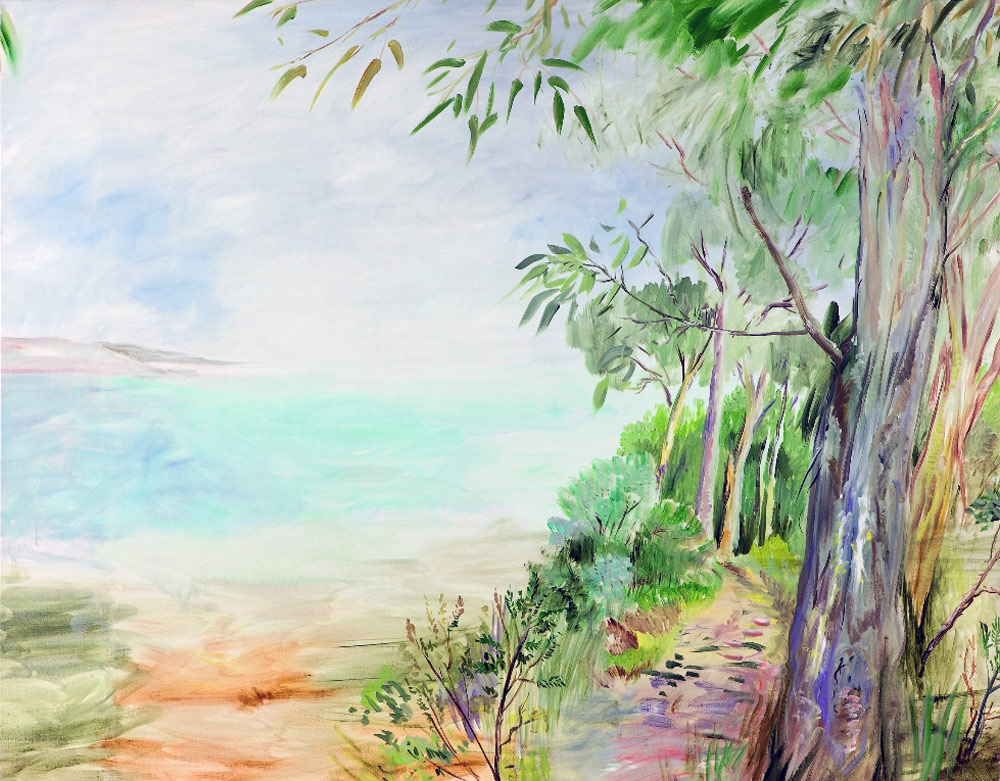
 

Juan Davila (Chilean b. 1946, emigrated Australia 1974) 'Australia: Nuclear Waste Dumping Ground' 2007


Juan Davila (Chilean b. 1946, emigrated Australia 1974)
Australia: Nuclear Waste Dumping Ground
2007
© Juan Davila, Courtesy Kalli Rolfe Contemporary Art


Monash University Museum of Art (MUMA)
Ground Floor, Building F.
Monash University Caulfield campus
900 Dandenong Road
Caulfield East, VIC 3145
Phone: 61 3 9905 4217

Opening hours:
Tuesday – Friday 10am – 5pm
Saturday 12 – 5pm
Monash University Museum of Art (MUMA) website

LIKE ART BLART ON FACEBOOK

Back to top

Exhibition: ‘Twombly and Poussin: Arcadian Painters’ at the Dulwich Picture Gallery, London

Exhibition dates: 29th June – 25th September 2011

Curator: Dr Nicholas Cullinan, Curator of International Modern Art at Tate Modern.


Many thankx to the Dulwich Picture Gallery for allowing me to publish the images in the posting. Please click on them for a larger version of the image.


Robert Rauschenberg (American, 1925-2008) 'Cy and Relics' 1952


Robert Rauschenberg (American, 1925-2008)
Cy and Relics
1952
Photograph
© The Rauschenberg Foundation


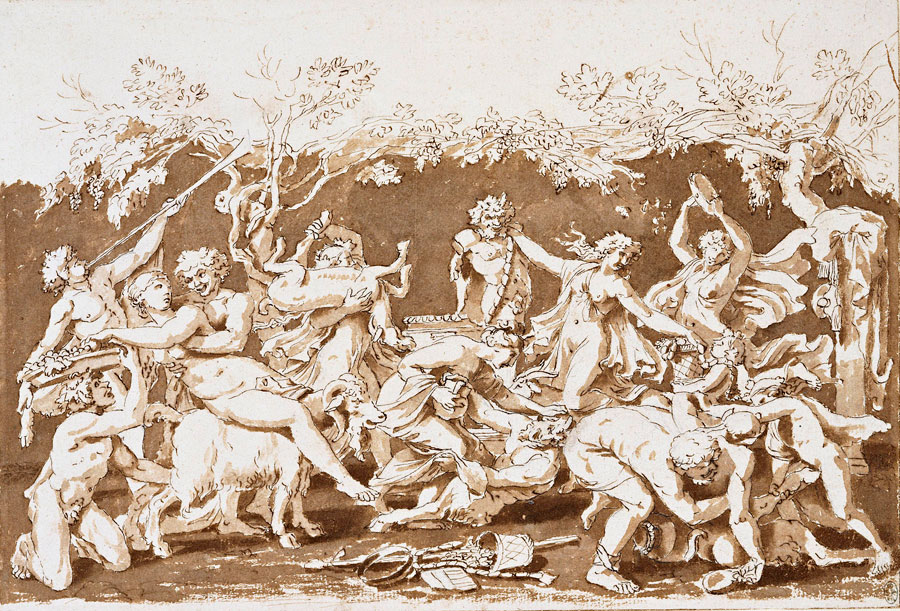
Nicolas Poussin (French, 1594-1665) 'The Triumph of Pan' c. 1636


Nicolas Poussin (French, 1594-1665)
The Triumph of Pan
c. 1636
Pen and ink with wash over stylus and black chalk
581 x 410 x 29 mm
Lent by Her Majesty the Queen. The Royal Collection
© 2011 Her Majesty Queen Elizabeth II


Cy Twombly (American, 1928-2011) 'Bacchanalia-Fall (5 Days in November) Blatt 4, InvNr. UAB 457' 1977


Cy Twombly (American, 1928-2011)
Bacchanalia-Fall (5 Days in November) Blatt 4, InvNr. UAB 457
1977
Collage, oil, chalk, gouache, on fabriano paper, graph paper
101.2 x 150.5cm
Bayerische Staatsgemäldesammlungen – Museum Brandhorst, München
Leihgeber: Udo Brandhorst
© Cy Twombly


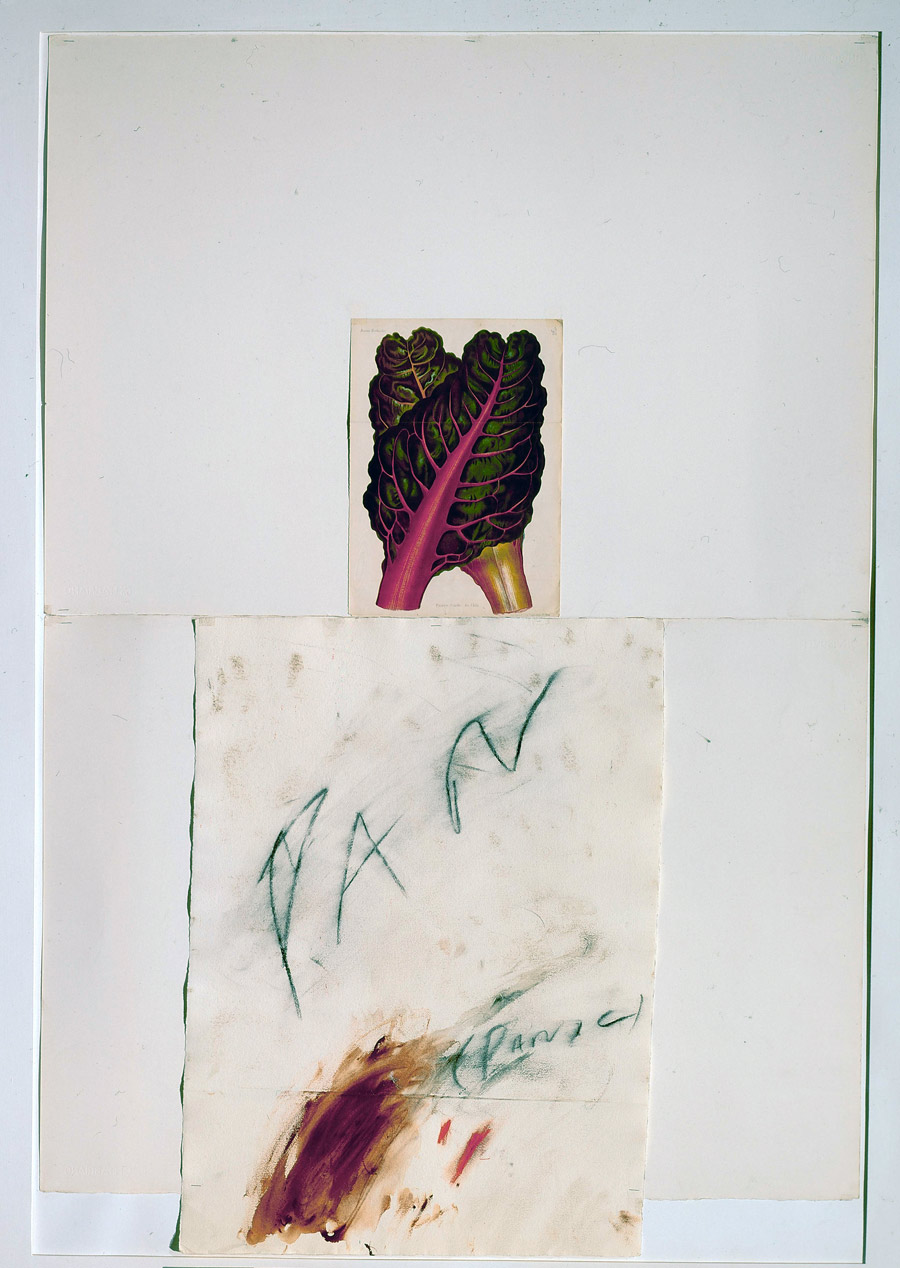
Cy Twombly (American, 1928-2011) 'Pan' 1975


Cy Twombly (American, 1928-2011)
Pan
1975
148 x 100cm
Private Collection
© Cy Twombly, Courtesy: Cy Twombly Archive


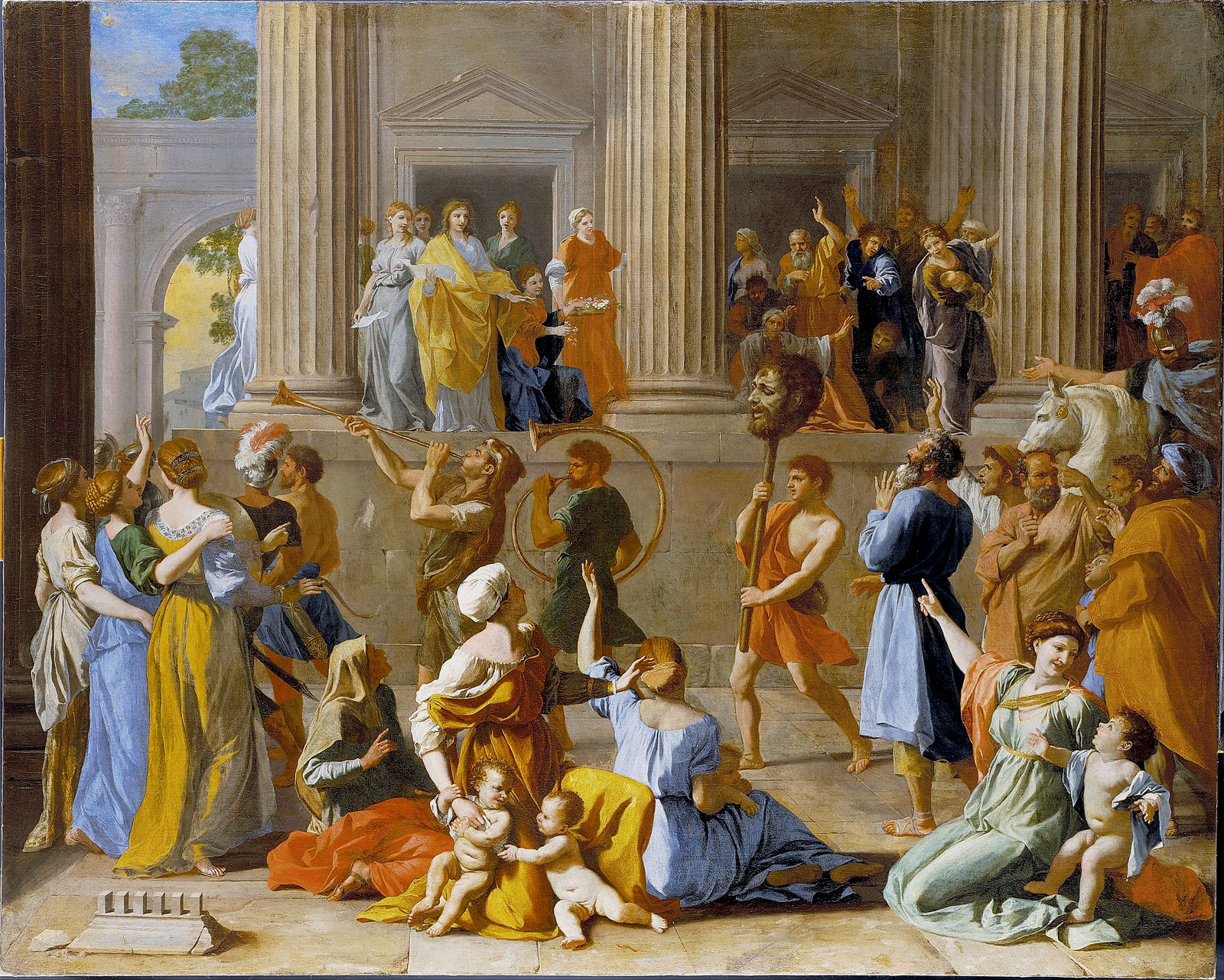
Nicolas Poussin (French, 1594-1665) 'The Triumph of David' 1628-1631


Nicolas Poussin (French, 1594-1665)
The Triumph of David
1628-1631
Oil on canvas
Height: 1,184 mm (46.61 in)
Width: 1,483 mm (58.38 in)
Dulwich Picture Gallery
© By permission of the Trustees of Dulwich Picture Gallery


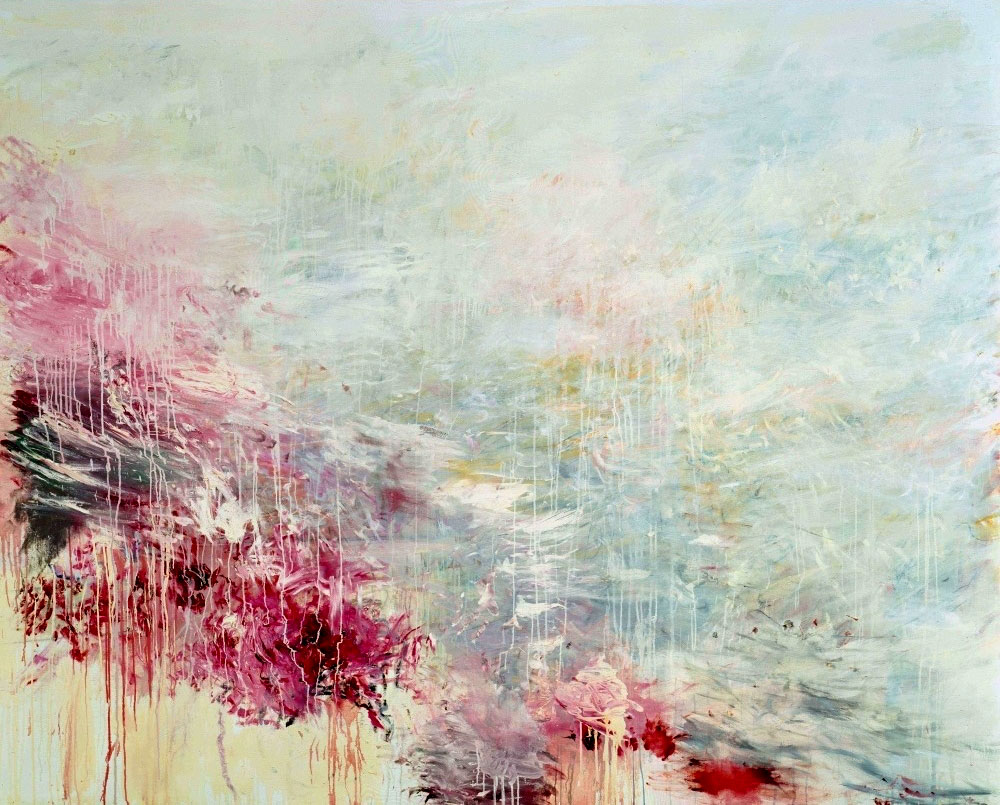
Cy Twombly (American, 1928-2011) 'Hero and Leandro' 1985


Cy Twombly (American, 1928-2011)
Hero and Leandro
1985
202 x 254cm
Private Collection, Courtesy Thomas Ammann Fine Art AG, Zurich
© Cy Twombly


“I would’ve liked to have been Poussin, if I’d had a choice, in another time.”


Cy Twombly


Dulwich Picture Gallery is proud to announce a revelatory exhibition of the work of Cy Twombly and Nicolas Poussin. Organised to celebrate the Bicentenary of the Gallery, this major show will explore, for the first time, the unexpected yet numerous parallels and affinities between the two artists. The exhibition will draw upon the world-class permanent collection of works at Dulwich Picture Gallery by Nicolas Poussin, alongside other works from major collections around the world by both Poussin and Twombly.

In 1624 and 1957, the two artists, aged around thirty, moved to Rome. Nicolas Poussin and Cy Twombly subsequently spent the majority of their lives in the Eternal City, and went on to become the pre-eminent painters of their day. Rather than recent exhibitions that have sought to compare and contrast old masters with contemporary artists through superficial visual appearances, this groundbreaking show will instead juxtapose works which may seem radically disparate in terms of style, yet ones that share deep and timeless interests. Both Poussin and Twombly were artists of prodigious talent who found in the classical heritage of Rome a life-long subject. Both spent their lives studying, revivifying and making newly relevant for their own eras antiquity, ancient history, classical mythology, Renaissance painting, poetry and the imaginary, idealised realm of Arcadia.

Curated by Dr. Nicholas Cullinan, Curator of International Modern Art at Tate Modern, the exhibition examines how Twombly and Poussin, although separated by three centuries, nonetheless engaged with the same sources and will explore the overlapping subjects that the two artists have shared. It will consist of around thirty carefully-chosen paintings, drawings and sculptures, structured thematically around six sections devoted to key shared themes, from both artists’ early fascinations with Arcadia and the pastoral when they first moved to Rome, Venus and Eros, Anxiety and Theatricality, Apollo, Parnassus and Poetry, Pan and the Bacchanalia, through to the theme of The Four Seasons.

The exhibition will be accompanied by the British premiere of Tacita Dean’s new 16mm film portrait of Cy Twombly, Edwin Parker (2011). The film documents Twombly in his studio in Lexington, Virginia, and follows on from Dean’s series of filmed depictions of subjects such as the choreographer Merce Cunningham, the poet Michael Hamburger and the artist Mario Merz, where the inner life of the sitter is implied through their physical demeanour and surroundings. A series of talks will also accompany the exhibition, including Sir Nicholas Serota, Director of Tate, in conversation with Dr. Nicholas Cullinan on the topic of curating Twombly, and Malcolm Bull (Ruskin School of Drawing, University of Oxford) and T. J. Clark (Professor Emeritus of Modern Art at the University of California, Berkeley; and Visiting Professor, University of York) who will discuss the work of Poussin and Twombly and the themes raised by the exhibition.

Ian Dejardin, Director of Dulwich Picture Gallery explains that the exhibition “fits in with a philosophy I have pursued here – that exhibitions can conduct a dialogue with the permanent collection. In the past Howard Hodgkin, Lucian Freud and Paula Rego have all hung their paintings within the collection, so Poussin and Twombly seemed like a natural extension of those experiments.”

The exhibition has received enthusiastic support and loans from major private and public collections around the world, including The National Gallery and Tate in London; The Royal Collection; The Duke of Devonshire; The Fitzwilliam Museum, Cambridge; Museo del Prado, Madrid; The Brandhorst Museum, Munich and The Art Institute of Chicago. The exhibition has been developed in close collaboration with Cy Twombly himself, and will include works that have never been exhibited before.

Press release from the Dulwich Picture Gallery


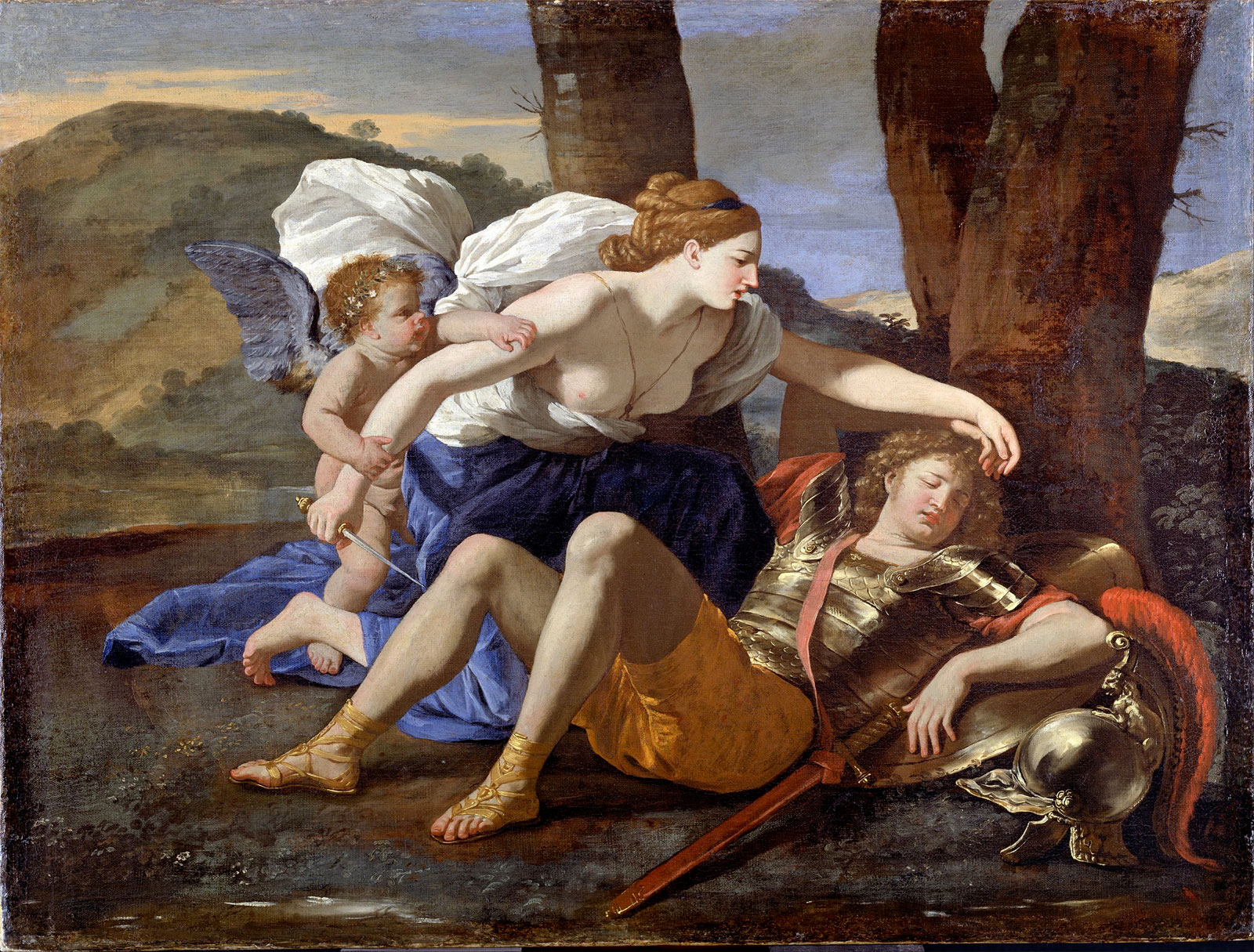
Nicolas Poussin (French, 1594-1665) 'Rinaldo and Armida' c. 1630


Nicolas Poussin (French, 1594-1665)
Rinaldo and Armida
c. 1630
Oil on canvas
Height: 822 mm (32.36 in)
Width: 1,092 mm (42.99 in)
Dulwich Picture Gallery
© By permission of the Trustees of Dulwich Picture Gallery


Nicolas Poussin (French, 1594-1665) 'The Nurture of Jupiter' mid 1630s


Nicolas Poussin (French, 1594-1665)
The Nurture of Jupiter
mid 1630s
Oil on canvas
Height: 965 mm (37.99 in)
Width: 1,210 mm (47.63 in)
Dulwich Picture Gallery
© By permission of the Trustees of Dulwich Picture Gallery


Cy Twombly (American, 1928-2011) 'Quattro Stagioni: Primavera' 1993-5


Cy Twombly (American, 1928-2011)
Quattro Stagioni: Primavera
1993-1995
Acrylic, oil, crayon and pencil on canvas
3230 x 1996 x 67 mm
Tate: Purchased with assistance from the American Fund for the Tate Gallery and Tate Members 2002
© Tate, London, 2010, © Cy Twombly


Cy Twombly (American, 1928-2011) 'Quattro Stagioni: Estate' 1993-5


Cy Twombly (American, 1928-2011)
Quattro Stagioni: Estate
1993-1995
Acrylic and pencil on canvas
3241 x 2250 x 67 mm
Tate: Purchased with assistance from the American Fund for the Tate Gallery and Tate Members 2002
© Tate, London, 2010, © Cy Twombly


Nicolas Poussin (French, 1594-1665) 'Venus and Mercury' c. 1627/1629


Nicolas Poussin (French, 1594-1665)
Venus and Mercury
c. 1627/1629
© By permission of the Trustees of Dulwich Picture Gallery


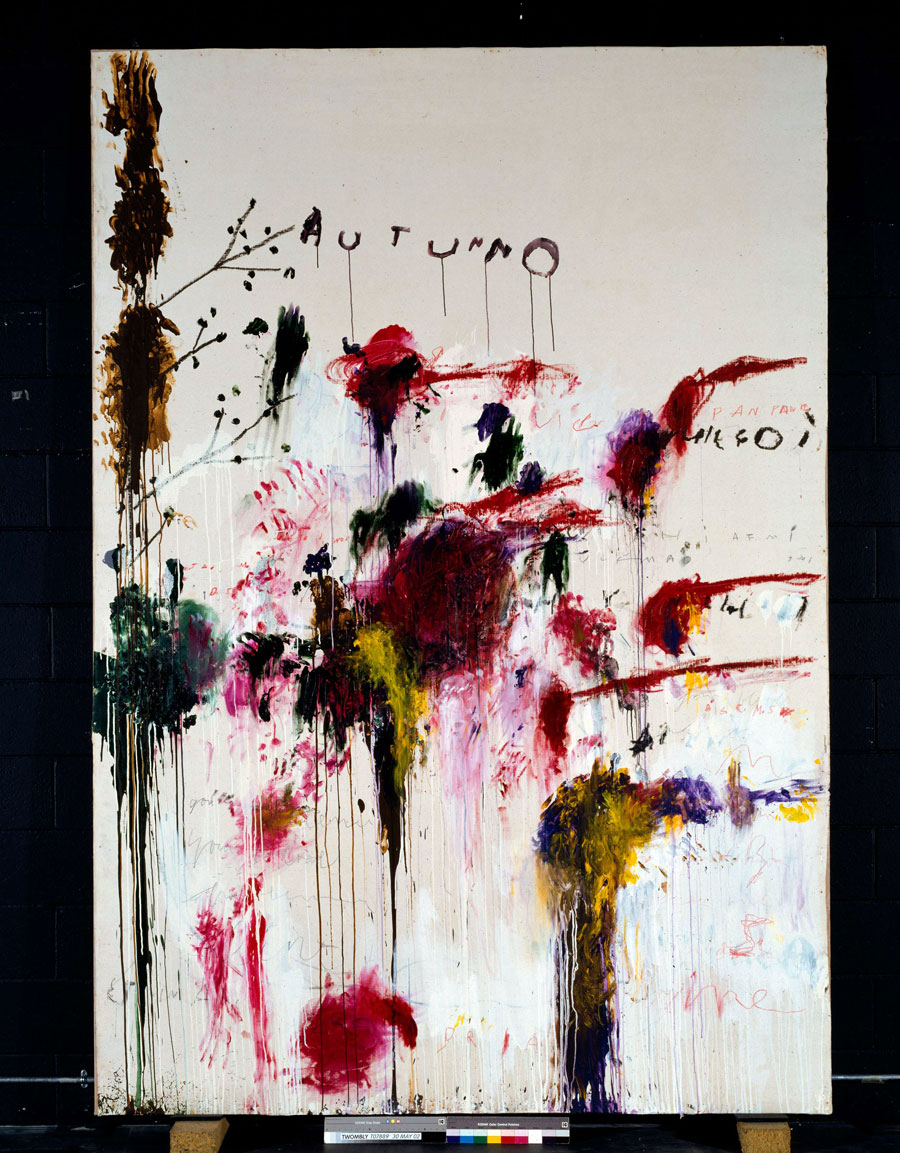
Cy Twombly (American, 1928-2011) 'Quattro Stagioni: Autunno' 1993-5


Cy Twombly (American, 1928-2011)
Quattro Stagioni: Autunno
1993-1995
Acrylic, oil, crayon and pencil on canvas
3230 x 2254 x 67 mm
Tate: Purchased with assistance from the American Fund for the Tate Gallery and Tate Members 2002
© Tate, London, 2010, © Cy Twombly


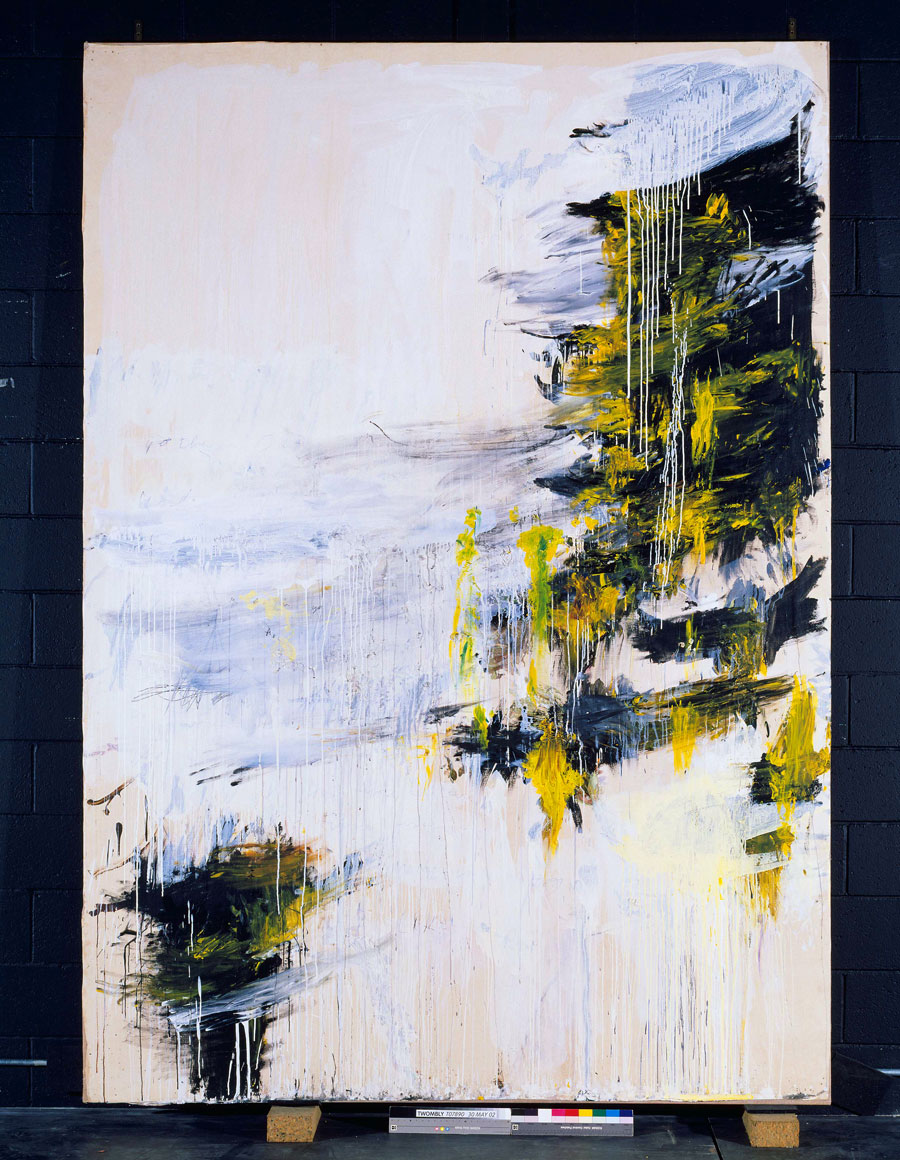
Cy Twombly (American, 1928-2011) 'Quattro Stagioni: Inverno' 1993-5


Cy Twombly (American, 1928-2011)
Quattro Stagioni: Inverno
1993-1995
Acrylic, oil and pencil on canvas
3229 x 2300 x 67mm
Tate: Purchased with assistance from the American Fund for the Tate Gallery and Tate Members 2002
© Tate, London, 2010, © Cy Twombly


Dulwich Picture Gallery
Gallery Road, London, SE21 7AD

Opening hours:
Tuesday – Sunday, 10am – 5pm
Closed Mondays except Bank Holidays

Dulwich Picture Gallery website

LIKE ART BLART ON FACEBOOK

Back to top

Exhibition: ‘Hiroshi Sugimoto’ at The Scottish National Gallery of Modern Art, Edinburgh

Presented by the Scottish National Gallery of Modern Art and the Edinburgh International Festival
Exhibition dates: 4th August – 25th September 2011


Many thankx to the Scottish National Gallery of Modern Art for allowing me to publish the photographs in the posting. Please click on the photographs for a larger version of the image.


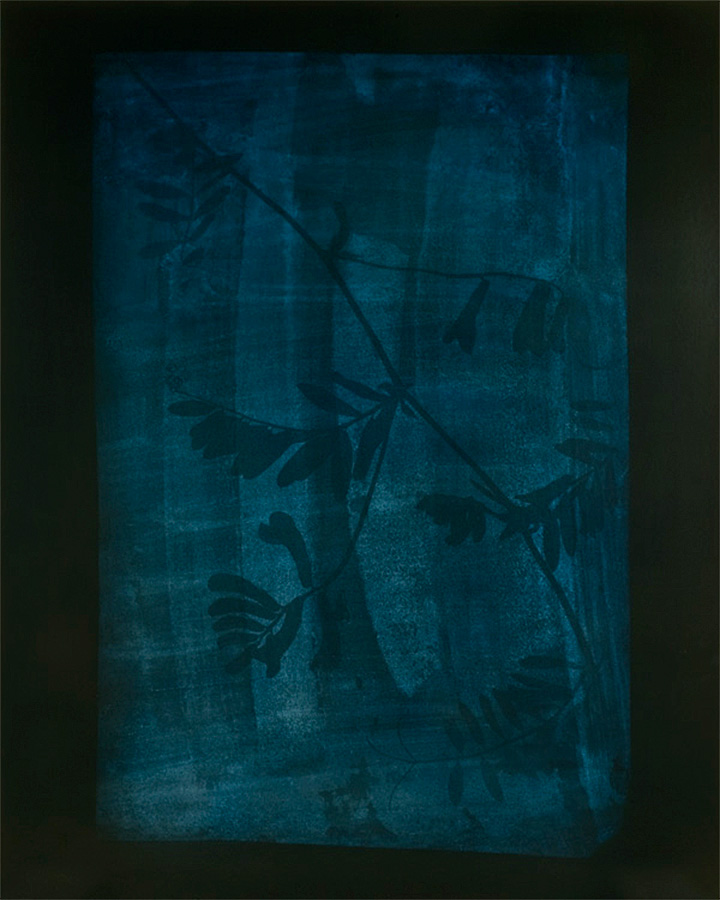
Hiroshi Sugimoto (Japanese, b. 1948) 'A Stem of Delicate Leaves of an Umbrellifer, circa 1843-1846' 2009


Hiroshi Sugimoto (Japanese, b. 1948)
A Stem of Delicate Leaves of an Umbrellifer, circa 1843-1846
2009
Toned gelatin silver print
93.7 x 74.9cm
© Hiroshi Sugimoto


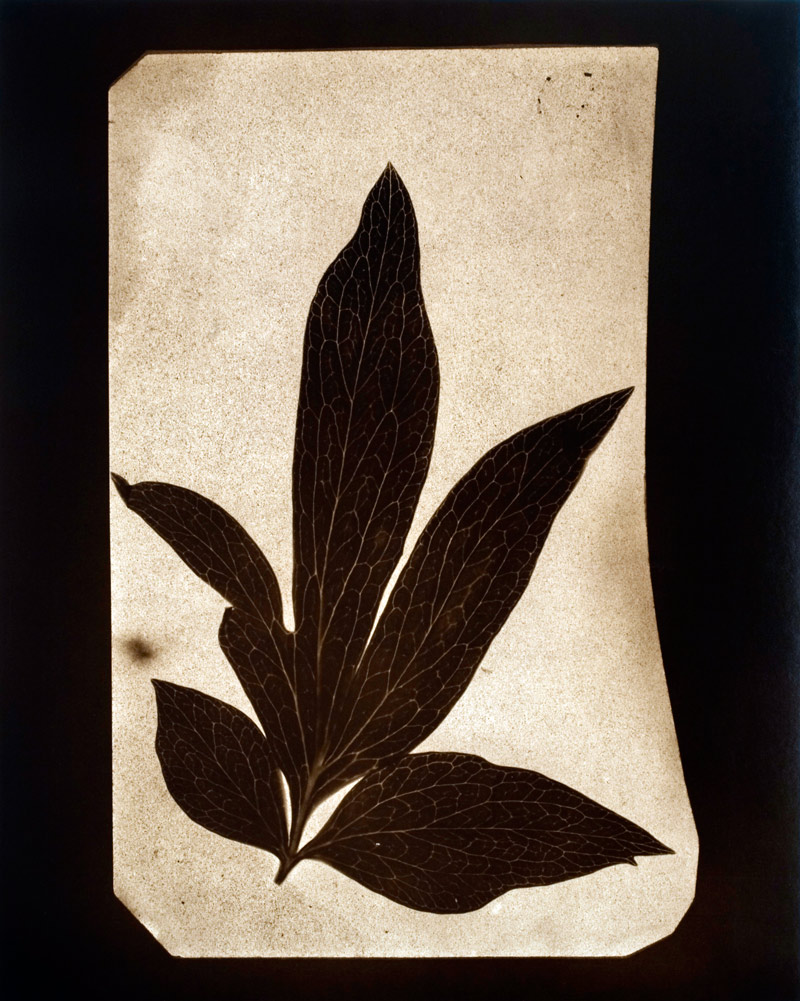
Hiroshi Sugimoto (Japanese, b. 1948) 'Leaves of Paeony, June 1839' 2009


Hiroshi Sugimoto (Japanese, b. 1948)
Leaves of Paeony, June 1839
2009
Toned gelatin silver print
93.7 x 74.9cm
© Hiroshi Sugimoto


Hiroshi Sugimoto (Japanese, b. 1948) 'Louisa Gallwey and Horatia Feilding, at Lacock Abbey, August 29, 1842' 2009


Hiroshi Sugimoto (Japanese, b. 1948)
Louisa Gallwey and Horatia Feilding, at Lacock Abbey, August 29, 1842
2009
Toned gelatin silver print
93.7 x 74.9cm
© Hiroshi Sugimoto


Hiroshi Sugimoto (Japanese, b. 1948) 'Wild Fennel, circa 1841-1842' 2009


Hiroshi Sugimoto (Japanese, b. 1948)
Wild Fennel, circa 1841-1842
2009
Toned gelatin silver print
93.7 x 74.9cm
© Hiroshi Sugimoto


Hiroshi Sugimoto (Japanese, b. 1948) 'Stem of Leaves and Flowers, circa 1834-1839' 2008


Hiroshi Sugimoto (Japanese, b. 1948)
Stem of Leaves and Flowers, circa 1834-1839
2008
Toned gelatin silver print
93.7 x 74.9cm
© Hiroshi Sugimoto


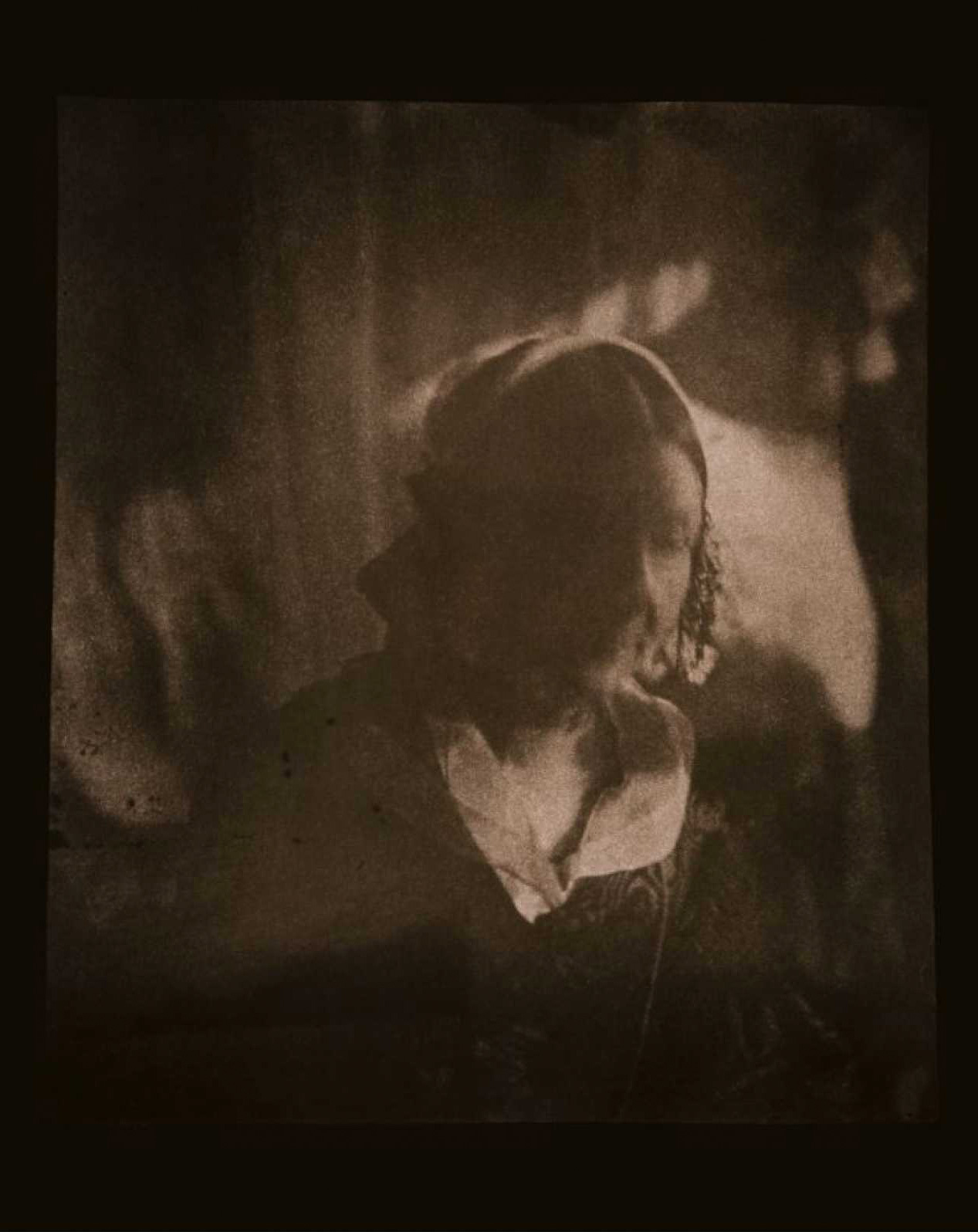
Hiroshi Sugimoto (Japanese, b. 1948) 'Believed to be Mlle. Amélina Petit, Talbot Family Governess circa 1840-1841' 2008


Hiroshi Sugimoto (Japanese, b. 1948)
Believed to be Mlle. Amélina Petit, Talbot Family Governess circa 1840-1841
2008
Toned gelatin silver print
93.7 x 74.9cm
© Hiroshi Sugimoto


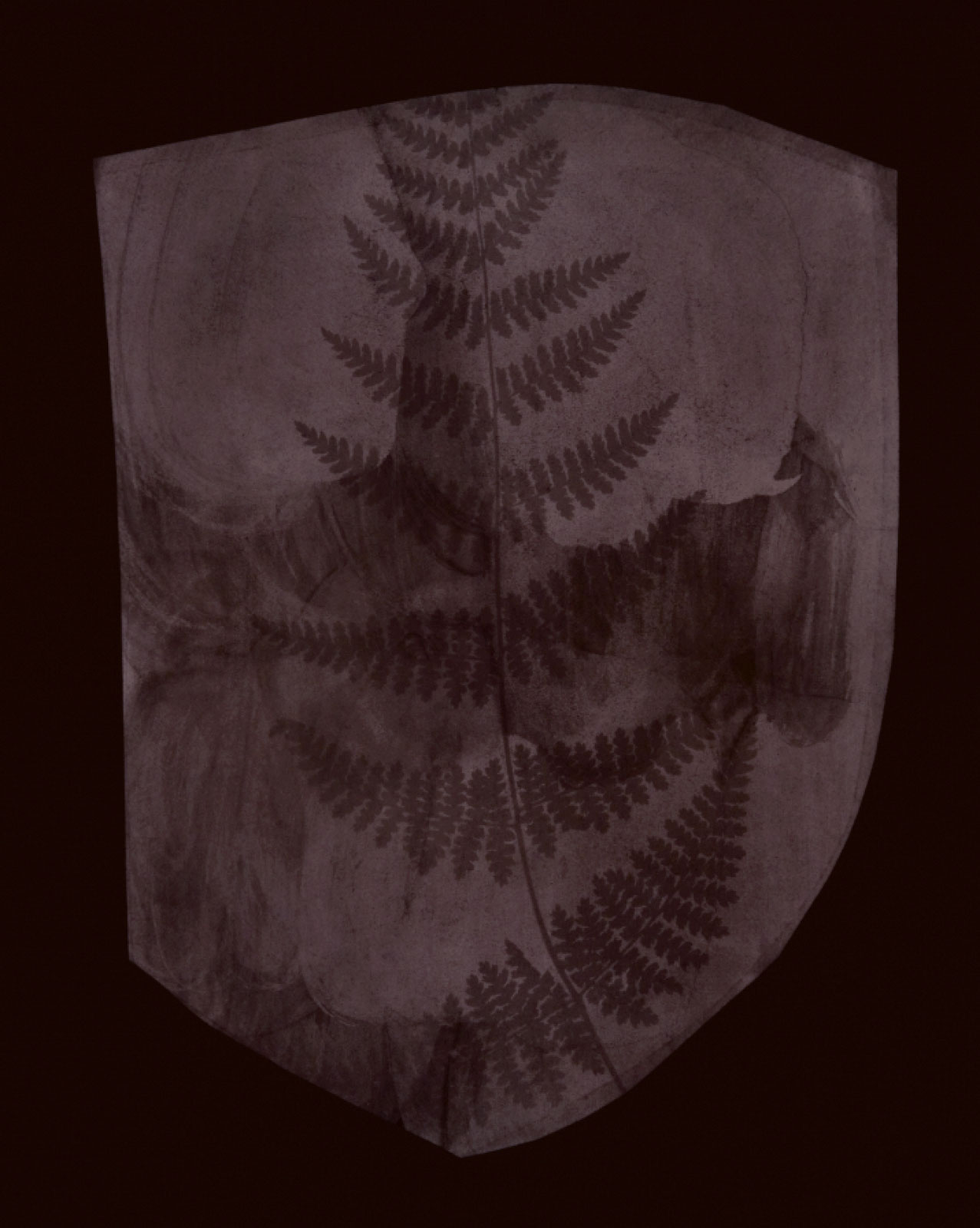
Hiroshi Sugimoto (Japanese, b. 1948) 'Buckler Fern 1839 or earlier' 2008


Hiroshi Sugimoto (Japanese, b. 1948)
Buckler Fern 1839 or earlier
2008
Toned gelatin silver print
93.7 x 74.9cm
© Hiroshi Sugimoto


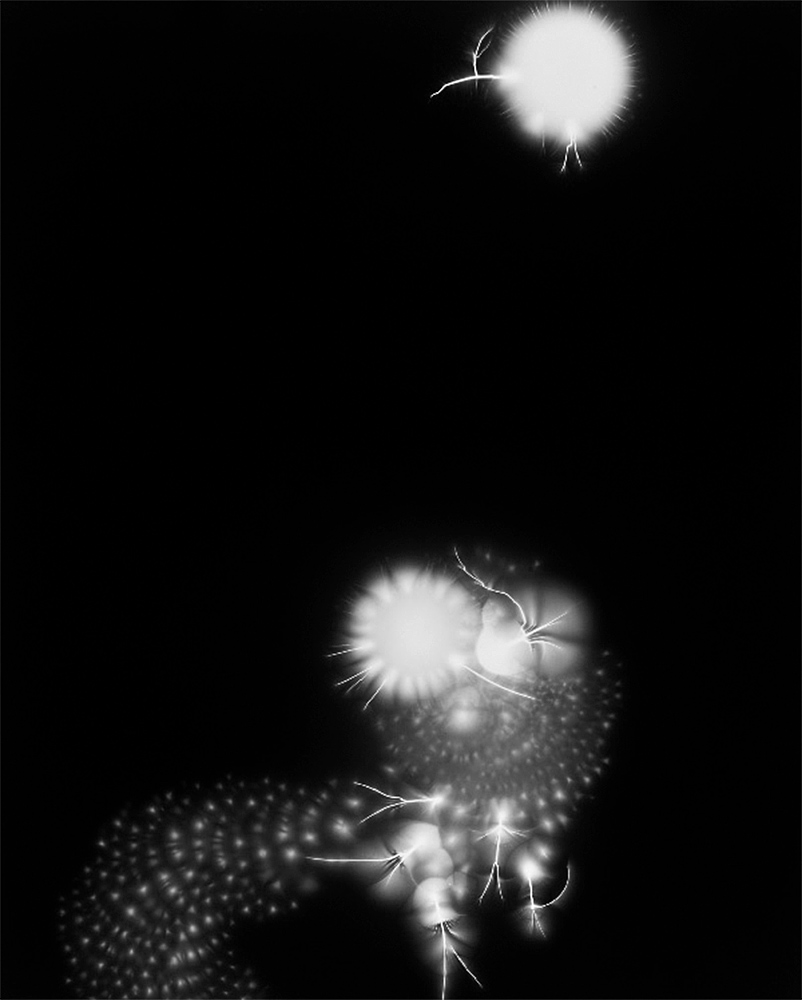
The Scottish National Gallery of Modern Art and the Edinburgh International Festival are delighted to announce a major new exhibition of one of the world’s leading artists, the renowned Japanese photographer Hiroshi Sugimoto. Consisting entirely of works which are being shown in Europe for the first time, this exhibition will feature 26 large-scale works from two of Sugimoto’s most recent, and visually poetic series, Lightning Fields and Photogenic Drawings. This revelatory exhibition will allow audiences to experience first hand Sugimoto’s exploration of the very nature of photography. The show has been extended by one week and will now run until 25 September instead of the 18 September as previously published.

Simon Groom, Director of Modern and Contemporary Art, National Galleries of Scotland said: “Sugimoto has developed an international reputation for the sheer beauty of his images, which are as thought-provoking as they are technically stunning. We are thrilled to be premiering work from his newest series in Europe, which demonstrates a master at the very top of his game, and are delighted to be working again in partnership with Edinburgh International Festival to bring the very best of contemporary visual art to Scotland.”

Jonathan Mills, Edinburgh International Festival Director added: “Hiroshi Sugimoto’s extraordinary work presented at the Scottish National Gallery of Modern Art is an exciting part of Festival 2011’s exploration of contemporary and classical Asian artists and their long influence on artists in the West. These are stunning images created in fascinating ways and I urge people to engage with this exhibition as part of their Festival experience.”

Hiroshi Sugimoto was born in Tokyo in 1948 and now divides his time between Japan and his studio in New York. He has exhibited extensively in major museums and galleries throughout the world, including the Museum of Contemporary Art in Los Angeles; the Museum of Modern Art and the Metropolitan Museum of Art, New York; Deutsche Guggenheim, Berlin; the Serpentine Gallery, London; and the Fondation Cartier pour l’Art Contemporain, Paris. In 2009 he was awarded the Praemium Imperiale, an arts prize awarded by the imperial family of Japan on behalf of the Japan Art Association. His image, Boden Sea, Uttwil (1993) featured on the cover of No Line on the Horizon, the 2009 album by Irish rock band U2.

The Photogenic Drawings series was inspired by the innovative techniques of the 19th century photographer, Henry Fox Talbot. This pioneering artist invented ‘photogenic drawings’ by using light-sensitive paper to produce a negative in the early experimental days of photography. This process was especially influential in Scotland shaping the careers of Robert Adamson and David Octavius Hill, who went on to become one of the most famous collaborations in photographic history. Sugimoto has spent several years locating and acquiring Fox Talbot’s rare and vulnerable negatives from which to make his own photographs. The small scale of Fox Talbot’s work has been greatly enlarged by Sugimoto to reveal images that are haunting, almost painterly in their evocative power.

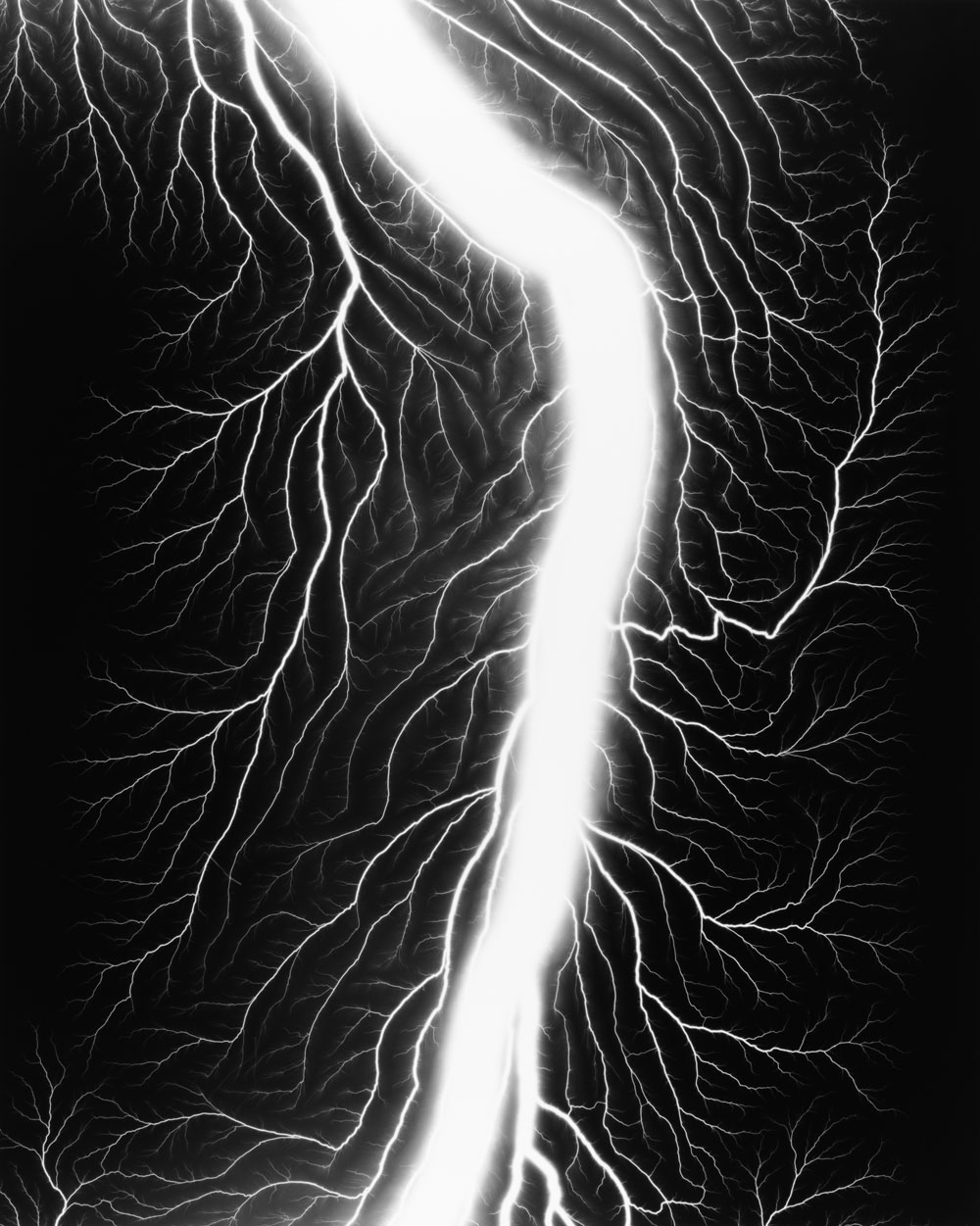
Lightning Fields is a series of dramatic and spectacular photographs produced through the play of violent electrical discharges on photographic film. Sugimoto moved his studio six times in an attempt to overcome a problem of static electricity which would often ruin his photographs with their tell-tale white flashes on the finished image. He decided to investigate further the phenomenon and to make ‘an ally of my nemesis’. Eventually, rather than try to suppress the random acts of nature, Sugimoto found ways to generate them by using a Van de Graaf Generator to induce electrical charges on the film. His large photographs expose in minute detail the remarkable effects of light particles not visible to the human eye. The results offer a fascinating range of interpretations, from powerful lightning strikes to images of weird and wonderful life forms.

This exhibition will be complemented by Towards the Light, a free display of prints from the National Galleries of Scotland collection that will examine the influence of 19th century Japanese colour woodcuts on artists working in Britain and Japan during the first decades of the 20th century. 19th century Japanese prints will feature as well as prints by artists using traditional colour woodcut techniques in the 1920s and 30s.

Press release from the Scottish National Gallery of Modern Art website


Hiroshi Sugimoto (Japanese, b. 1948) 'Lightning Fields 168' 2009


Hiroshi Sugimoto (Japanese, b. 1948)
Lightning Fields 168
2009
Gelatin silver print
149 x 119.4cm
© Hiroshi Sugimoto


Hiroshi Sugimoto (Japanese, b. 1948) 'Lightning Fields 138' 2009


Hiroshi Sugimoto (Japanese, b. 1948)
Lightning Fields 138
2009
Gelatin silver print
149 x 119.4cm
© Hiroshi Sugimoto


Hiroshi Sugimoto (Japanese, b. 1948) 'Lightning Fields 190' 2009


Hiroshi Sugimoto (Japanese, b. 1948)
Lightning Fields 190
2009
Gelatin silver print
149 x 119.4cm
© Hiroshi Sugimoto


Hiroshi Sugimoto (Japanese, b. 1948) 'Lightning Fields 226' 2009


Hiroshi Sugimoto (Japanese, b. 1948)
Lightning Fields 226
2009
Gelatin silver print
149 x 119.4cm
© Hiroshi Sugimoto


Hiroshi Sugimoto (Japanese, b. 1948) 'Lightning Fields 236' 2009


Hiroshi Sugimoto (Japanese, b. 1948)
Lightning Fields 236
2009
Gelatin silver print
149 x 119.4cm
© Hiroshi Sugimoto


Scottish National Gallery of Modern Art
75 Belford Road, Edinburgh, EH4 3DR
Phone: 0131 6246 6200

Opening hours:
Open Daily 10am – 5pm
Scottish National Gallery of Modern Art website

LIKE ART BLART ON FACEBOOK

Back to top

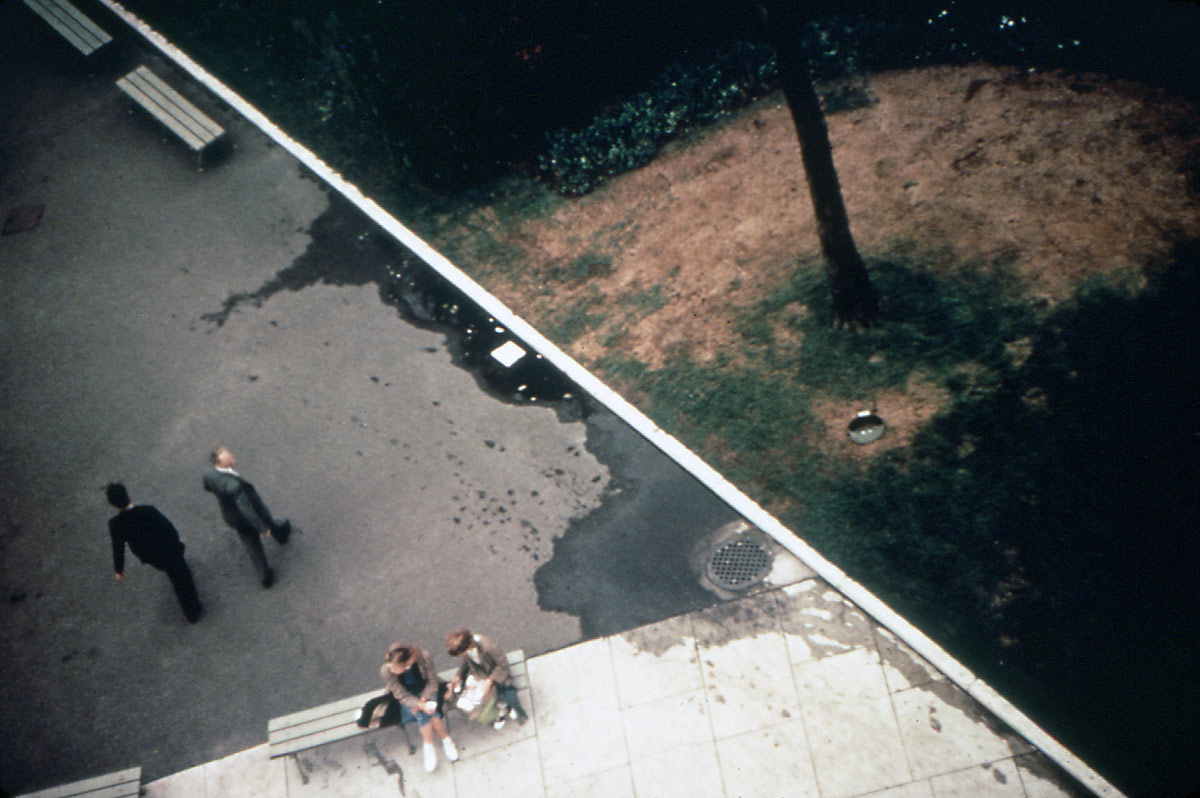
Exhibition: ‘László Moholy-Nagy. The Art of Light’ at the Ludwig Museum, Budapest

Exhibition dates: 9th June – 25th September 2011


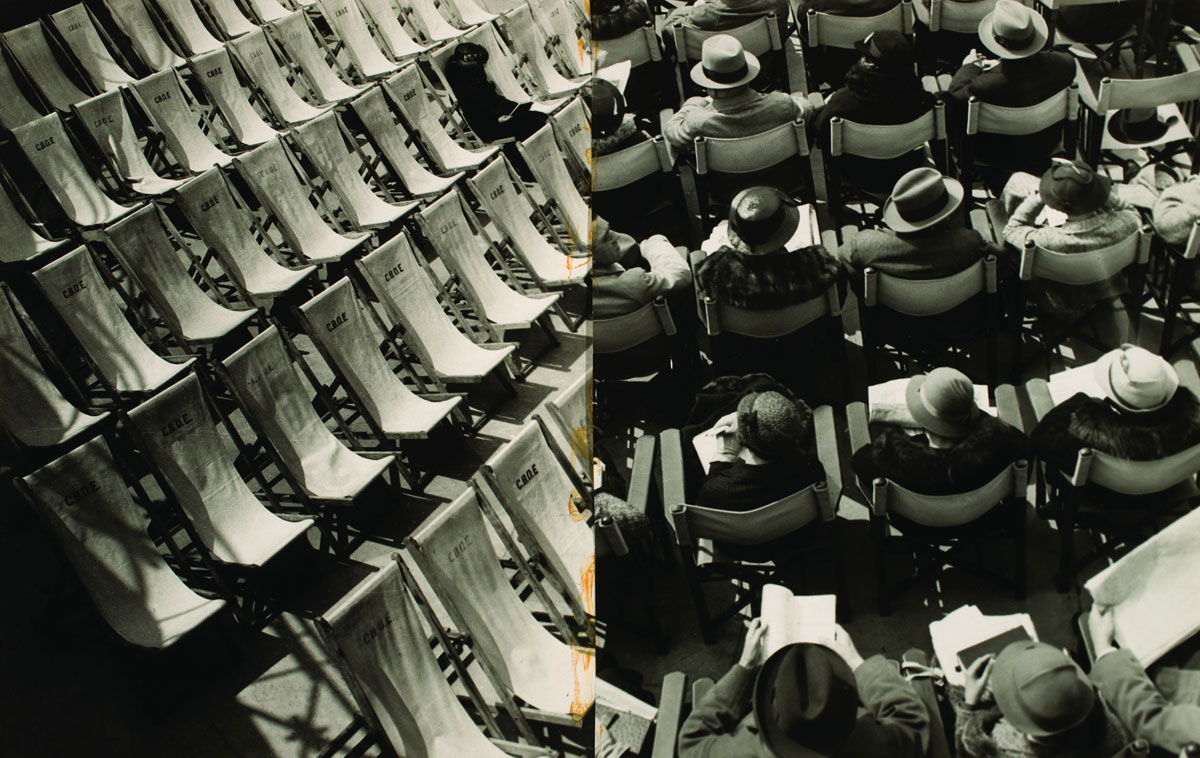
László Moholy-Nagy (Hungarian, 1895-1946) 'Chairs at Margate' 1935


László Moholy-Nagy (Hungarian, 1895-1946)
Chairs at Margate
1935
Gelatin silver print diptych
36.9 x 29.5cm (each)
© Hattula Moholy-Nagy/VEGAP 2011


Different press photographs from this exhibition, one that I last posted when it was at Martin Gropius-Bau, Berlin.

Marcus


Many thankx to the Ludwig Museum for allowing me to publish the photographs in the posting. Please click on the photographs for a larger version of the image.


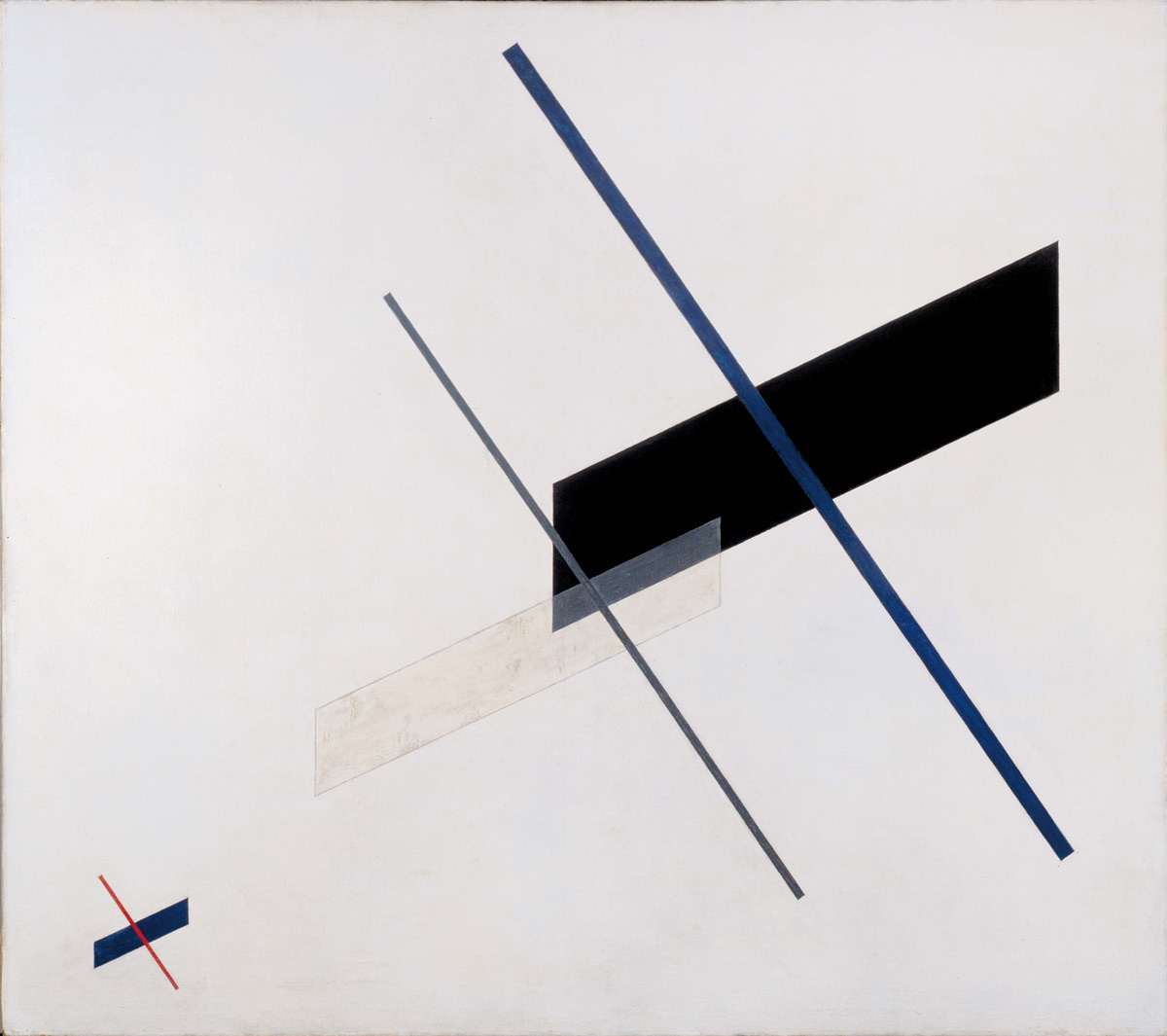
László Moholy-Nagy (Hungarian, 1895-1946) 'K VII' 1922


László Moholy-Nagy (Hungarian, 1895-1946)
K VII
1922
Oil on canvas
115.3 x 135.9cm
Tate, London
© Hattula Moholy-Nagy/VEGAP 2011


László Moholy-Nagy (Hungarian, 1895-1946) 'Composition A XI' 1923


László Moholy-Nagy (Hungarian, 1895-1946)
Composition A XI
1923
Oil on canvas
Image: 115.6 x 131.1cm
© Hattula Moholy-Nagy/VEGAP 2011


László Moholy-Nagy (Hungarian, 1895-1946) 'Eton. Eleves watching cricket from the pavilion on Agar's Plough' c. 1930


László Moholy-Nagy (Hungarian, 1895-1946)
Eton. Eleves watching cricket from the pavilion on Agar’s Plough
c. 1930
Gelatin silver print


László Moholy-Nagy (Hungarian, 1895-1946) 'Untitled' 1939


László Moholy-Nagy (Hungarian, 1895-1946)
Untitled
1939
Fujicolor Crystal Archive print
Image: 22.8 x 34.2cm
Courtesy of László Moholy-Nagy Estate and Andrea Rosen Gallery Inc., New York
© Hattula Moholy-Nagy/VEGAP 2011


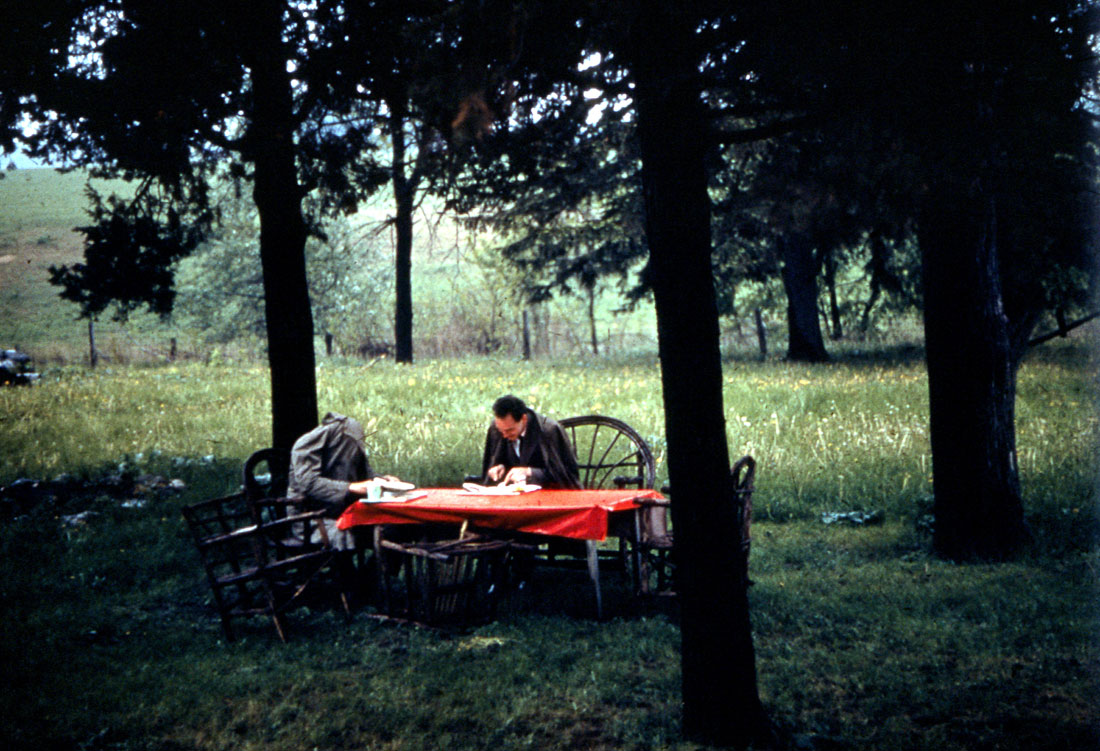
László Moholy-Nagy (Hungarian, 1895-1946) 'Untitled' 1940-44


László Moholy-Nagy (Hungarian, 1895-1946)
Untitled
1940-1944
Fujicolor Crystal Archive print
Image: 22.8 x 34.2cm
Courtesy of László Moholy-Nagy Estate and Andrea Rosen Gallery Inc., New York
© Hattula Moholy-Nagy/VEGAP 2011


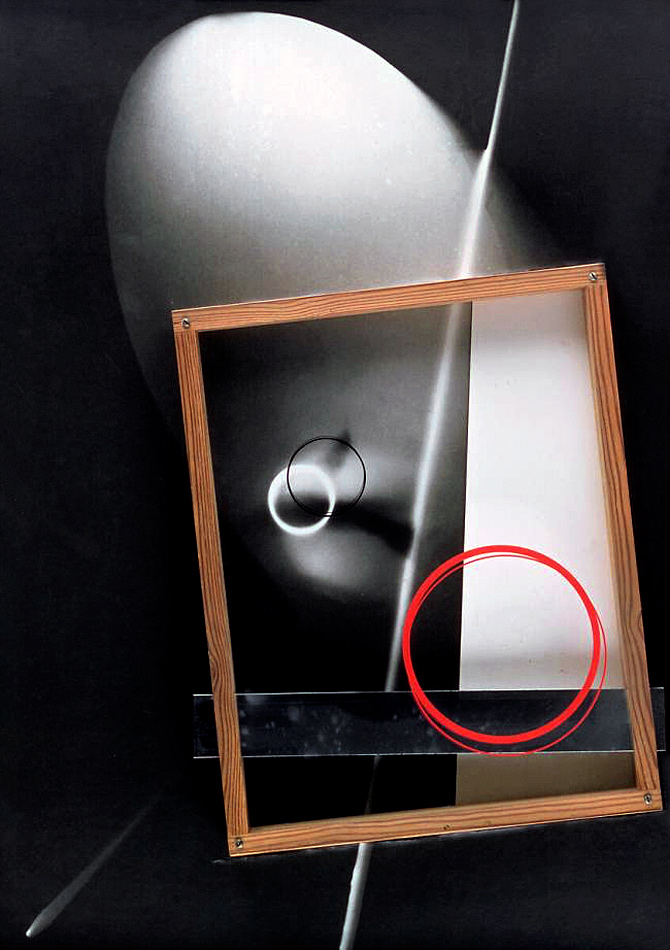
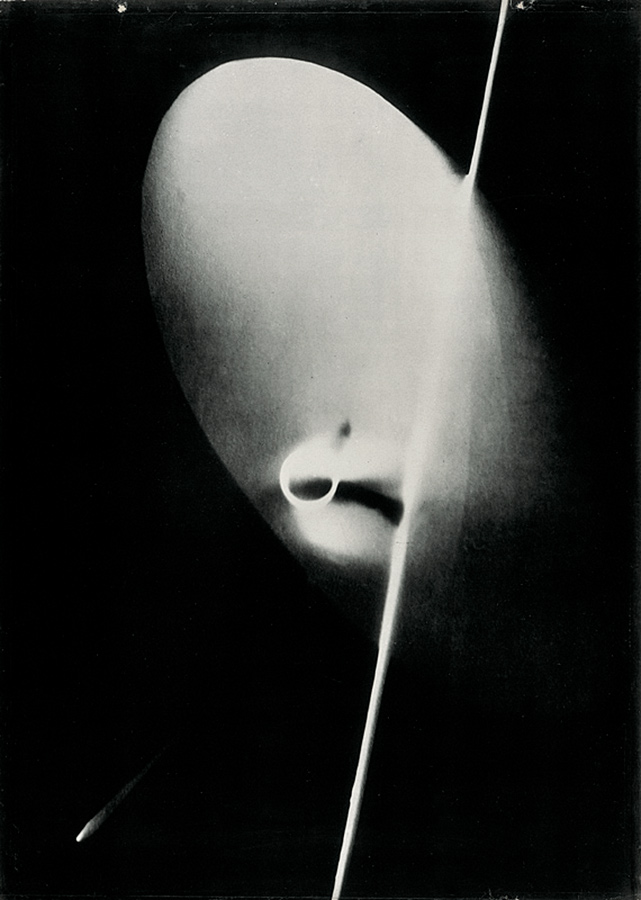
László Moholy-Nagy is a world-famous figure of twentieth-century avant-garde art. His visual art and theoretical works, photographs, films, educational activities and photograms – taken without a camera and now synonymous with his name – were of such significance that it is no exaggeration to say that since Moholy-Nagy, we see things differently; since Moholy-Nagy, our thinking about art has been transformed. His innovations over the decades have become so natural, his influence so pervasive, that we now almost have to rediscover him once again. In the series of Hungarian photographers who accomplished world fame – Robert Capa, Martin Munkácsi, György Kepes – the Ludwig Museum – Museum of Contemporary Art now presents the work of László Moholy-Nagy (1895-1946), focussing primarily his photography. This is a long-overdue show: Hungary has not held such an exhibition of Moholy-Nagy’s work since 1975, not even on the centenary of his birth in 1995.

Moholy-Nagy began his creative career in the first half of the twentieth century in Lajos Kassák’s activist circle where, at twenty years old, he was one of Hungary’s youngest avant-garde artists. In 1919 he left for Vienna then Berlin, where he came under the influence of Dadaism and Constructivism, which he later developed further independently. On the invitation of director Walter Gropius in 1923, he became a teacher at the Weimar Bauhaus, then the most progressive art school. There, alongside the Metal Workshop, he also led the definitive course in new arts education, the Foundation. The Bauhaus was more than a school: it was a way of life that unified life, art and science. As well as exploring painting, leading the Metal Workshop, writing and editing books and applying new typographies at the experimental, innovative Bauhaus school, Moholy-Nagy also turned towards photography and film as forms offering new possibilities in art. Photography, and in particular film represented new technologies that questioned the traditional principles of art, among them the uniqueness of the artefacts and the personal signature of the artist.

The central organising principle in Moholy-Nagy’s diverse activities was light: light defined his paintings, sculptures, photoplastics, photograms, photographs, typography and theatre sets. He did not regard photography as a tool for the perfect imaging of reality, rather, it was his conviction that the camera offered new discoveries and possibilities for modern people to finally liberate themselves from the obligation to depict, to copy reality. The years at the Bauhaus proved to be an experience that defined his entire life. After Berlin, Weimar and Dessau, he settled in Chicago in 1937, where he founded the ‘New Bauhaus’ and remained until the end of his life, working as an experimental, innovative artist and theorist. He regarded art as an activity that embraced the whole of life which was non-hierarchical, accessible and cultivatable by everyone, and he was a firm believer in the educational role of art.

The Ludwig Museum’s exhibition presents his diverse life achievement from 1922, with Moholy-Nagy’s photography, films, and works ‘made with light’ in central focus. His first writings on light as a medium were published in 1923, in the Broom magazine, New York. One of the most exciting parts of the exhibition is the compilation of all Moholy-Nagy’s films, shown together here for the first time and according to the artist’s original conception. Such an ambitious and large-scale exhibition of Moholy-Nagy’s oeuvre could only have been realised with international collaboration. This exhibition brings together over 200 pieces and documents from over twenty museums around the world (Tate, Whitney, Tokyo Metropolitan, etc.) as well as private collections. It is based on the curatorial concept of the director of Madrid’s la Fábrica, Oliva Maria Rubio, and is the result of joint work between the Martin-Gropius-Bau in Berlin and the Gemeentemuseum in The Hague. The exhibition has previously shown in Madrid, Berlin and The Hague, and will open to audiences in Budapest until the end of September.

Moholy-Nagy’s rich oeuvre also allows us to make slightly different emphases according to location. In Berlin, the legendary 1929 Film und Foto (FiFo) exhibition and his pedagogical works were emphasised, while in The Hague, the focus was on the time he spent in the Netherlands between 1933 and 1935. With the participation of two internationally-renowned Hungarian art historians, experts of Moholy-Nagy, Krisztina Passuth and Éva Bajkay, the Budapest exhibition is complemented by photographs and publications from Hungarian collections. Thanks to László Moholy-Nagy’s family, valuable documents that have not been seen in any of the earlier locations have been added to the exhibition.

Press release from the Ludwig Museum


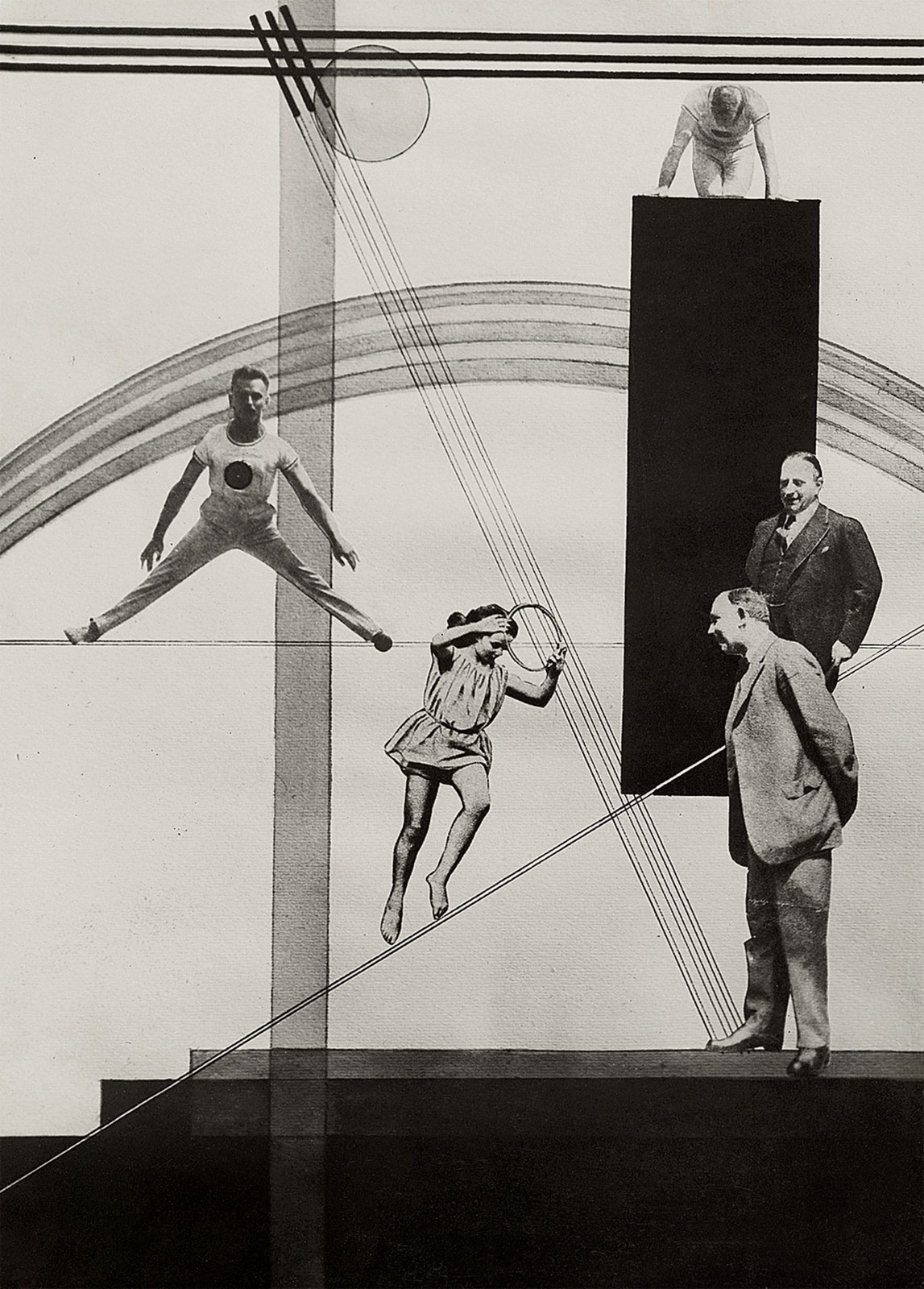
László Moholy-Nagy (Hungarian, 1895-1946) 'The Benevolent Gentleman' 1924


László Moholy-Nagy (Hungarian, 1895-1946)
The Benevolent Gentleman
1924
Photoplastic, gelatin silver print


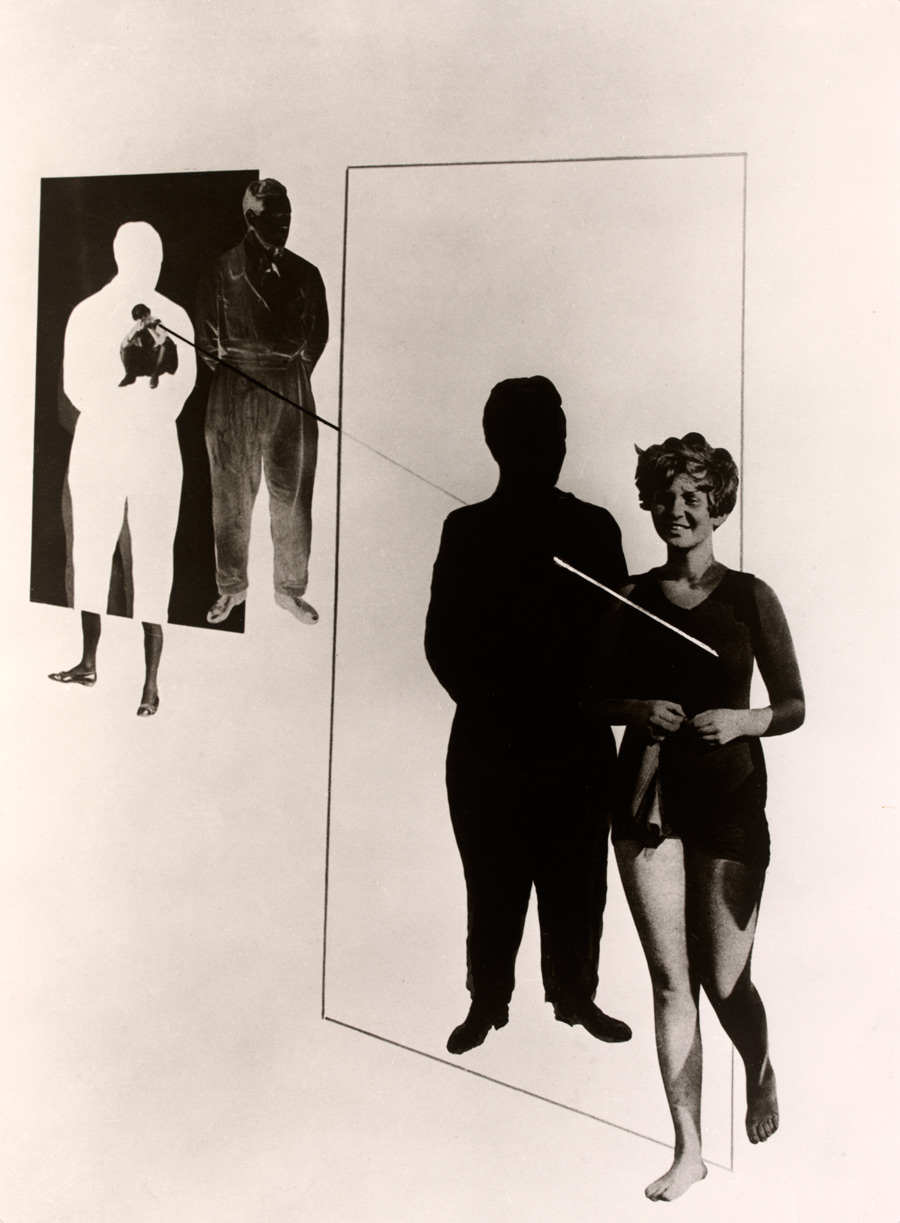
László Moholy-Nagy (Hungarian, 1895-1946) 'Jealousy' 1924-1927


László Moholy-Nagy (Hungarian, 1895-1946)
Jealousy
1924-1927
Photoplastic, gelatin silver print
30 x 24.6cm
Victoria & Albert Museum Collection, London
© Hattula Moholy-Nagy/VEGAP 2011


László Moholy-Nagy (Hungarian, 1895-1946) 'La Canebière Street, Marseilles - View Through the Balcony Grille' 1928


László Moholy-Nagy (Hungarian, 1895-1946)
La Canebière Street, Marseilles – View Through the Balcony Grille
1928
Gelatin silver print
24.4 x 17.5cm
George Eastman House Collection. Donated by Katharine Kuh
© Hattula Moholy-Nagy/VEGAP 2011


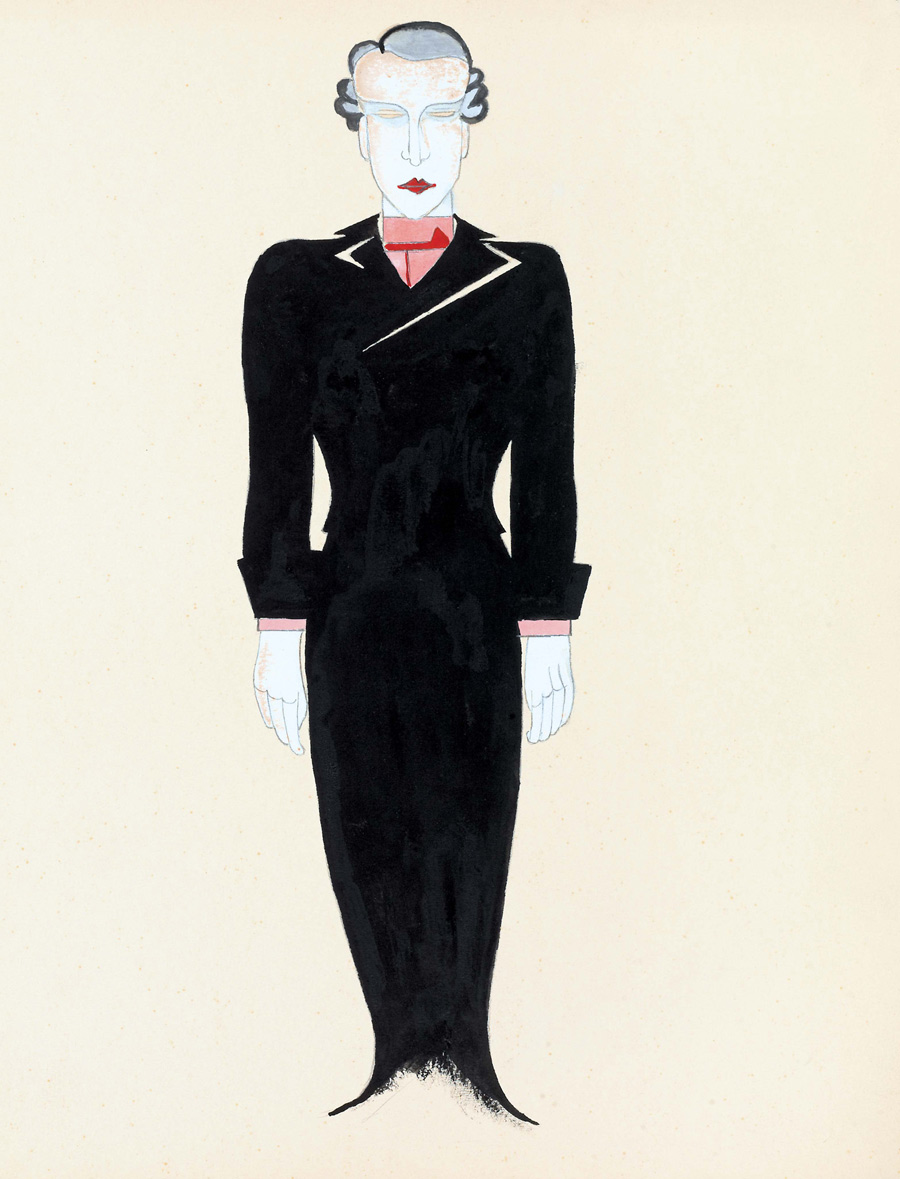
László Moholy-Nagy (Hungarian, 1895-1946) 'Costume Design for Tales of Hoffmann' 1929


László Moholy-Nagy (Hungarian, 1895-1946)
Costume Design for Tales of Hoffmann
1929
Watercolour on paper
34.3 x 27cm
Hattula Moholy-Nagy, Ann Arbor, Michigan
© Hattula Moholy-Nagy/VEGAP 2011


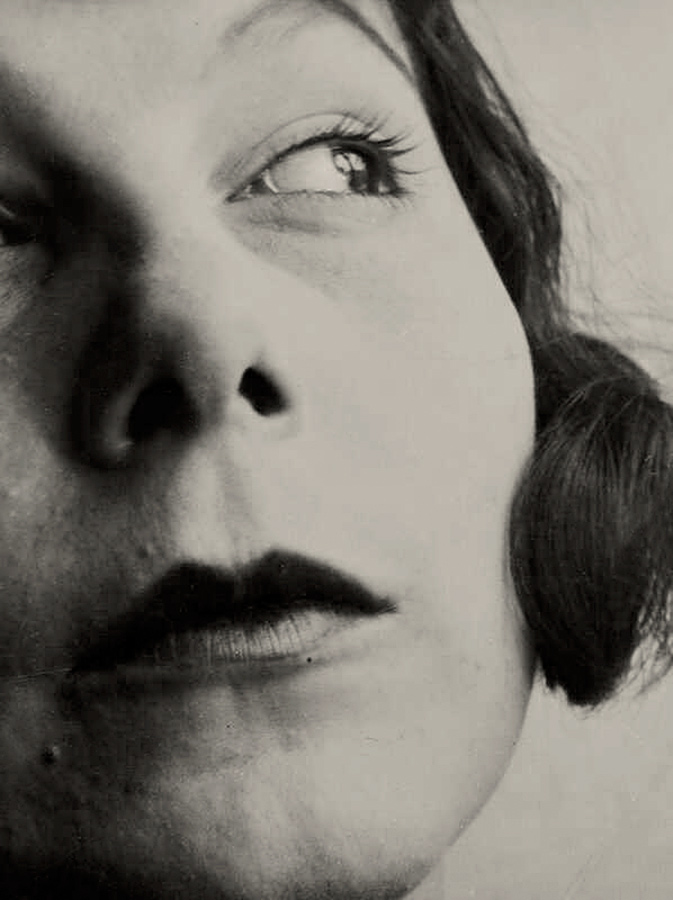
László Moholy-Nagy (Hungarian, 1895-1946) 'Portrait of Ellen Frank' c. 1929


László Moholy-Nagy (Hungarian, 1895-1946)
Portrait of Ellen Frank
c. 1929
Gelatin silver print


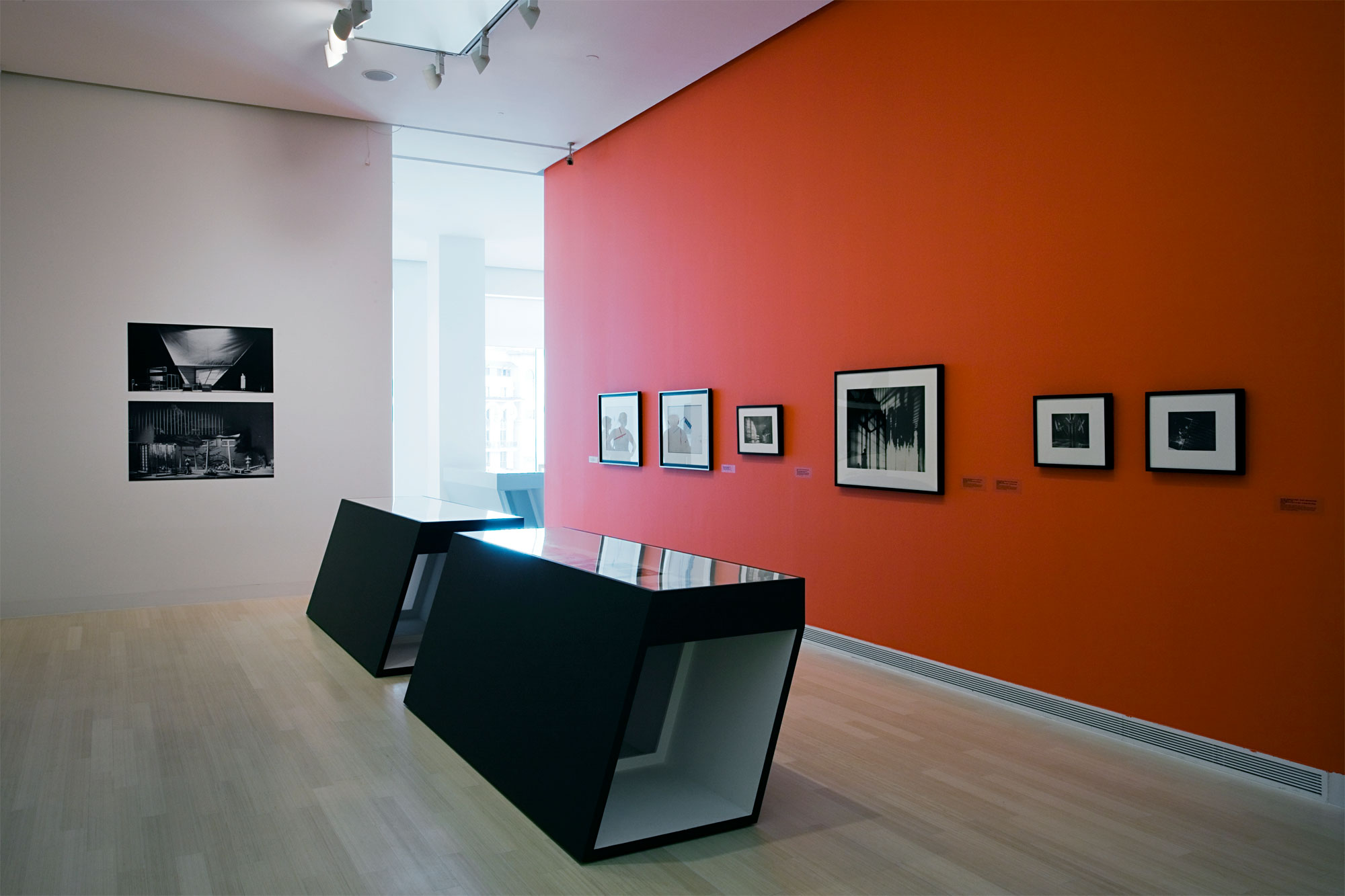
Interior view of the exhibition 'László Moholy-Nagy. The Art of Light' at Ludwig Museum - Museum of Contemporary Art


Interior view of the exhibition László Moholy-Nagy. The Art of Light at Ludwig Museum – Museum of Contemporary Art
© BUJNOVSZKY Tamás / Ludwig Museum – Museum of Contemporary Art, Archives


Interior view of the exhibition 'László Moholy-Nagy. The Art of Light' at Ludwig Museum - Museum of Contemporary Art

Interior view of the exhibition 'László Moholy-Nagy. The Art of Light' at Ludwig Museum - Museum of Contemporary Art

Interior view of the exhibition 'László Moholy-Nagy. The Art of Light' at Ludwig Museum - Museum of Contemporary Art


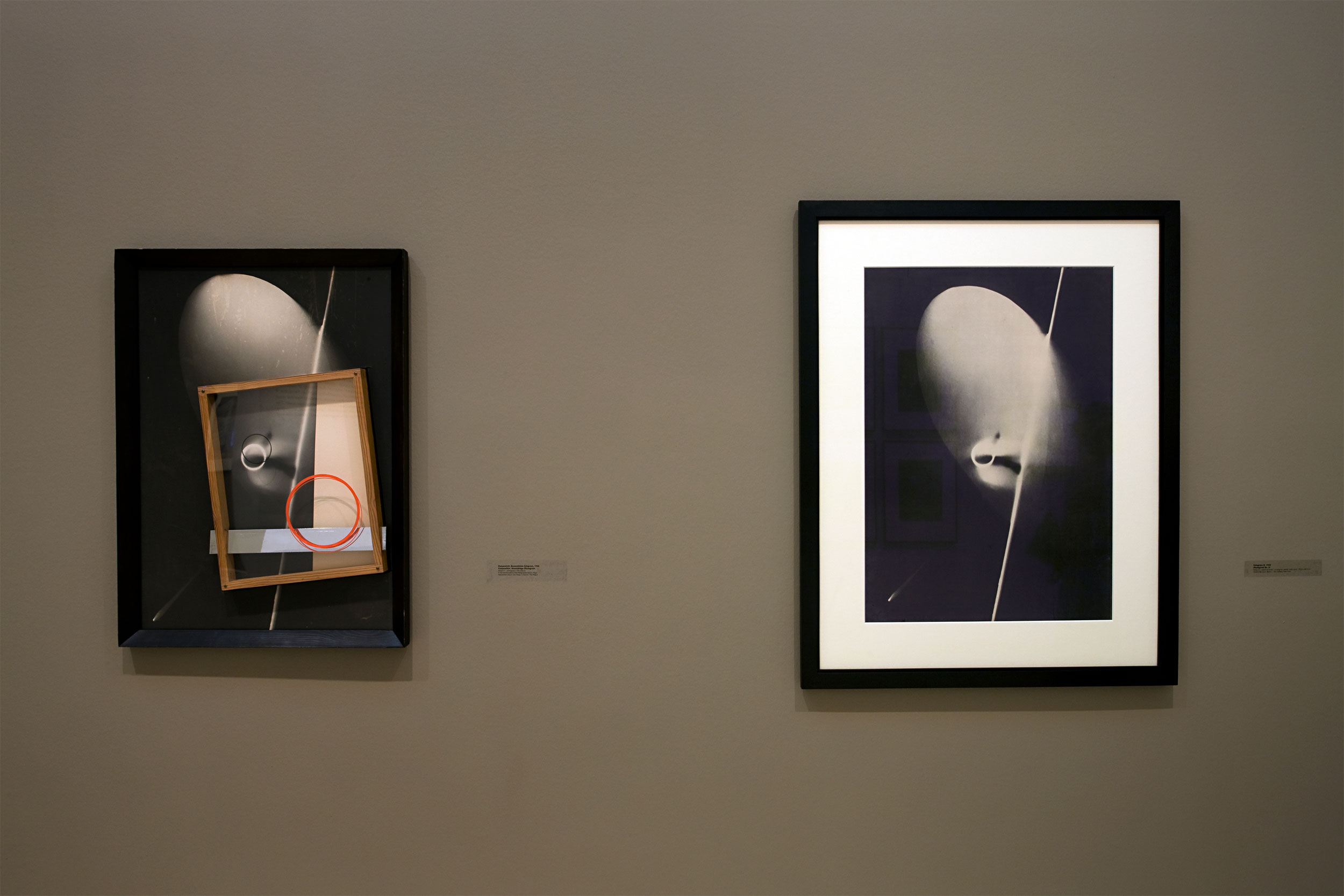
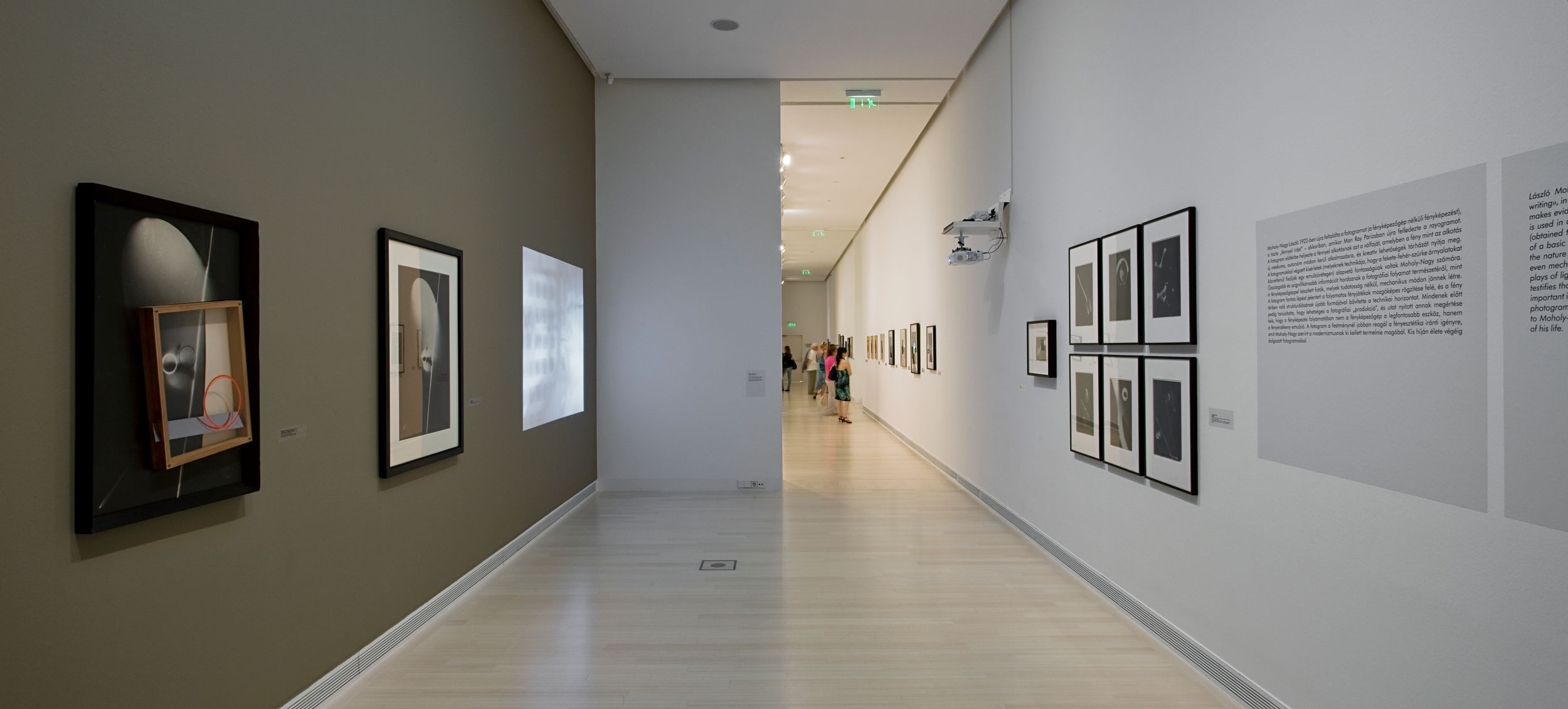
Interior views of the exhibition László Moholy-Nagy. The Art of Light at Ludwig Museum – Museum of Contemporary Art showing at left in the bottom image, Composition – Assemblage – Photogram (1926, below); and at right, Photogramm No. II (1929, below)
© BUJNOVSZKY Tamás / Ludwig Museum – Museum of Contemporary Art, Archives


László Moholy-Nagy (Hungarian, 1895-1946) 'Composition - Assemblage - Photogram' 1926


László Moholy-Nagy (Hungarian, 1895-1946)
Composition – Assemblage – Photogram
1926
Photogram and mixed media


László Moholy-Nagy (Hungarian, 1895-1946) 'Photogramm No. II' 1929


László Moholy-Nagy (Hungarian, 1895-1946)
Photogramm No. II
1929
Silver gelatin photograph
95.5 x 68.5cm


László Moholy-Nagy (Hungarian, 1895-1946) 'Lago Maggiore, Ascona, Switzerland' c. 1930


László Moholy-Nagy (Hungarian, 1895-1946)
Lago Maggiore, Ascona, Switzerland
c. 1930
Silver gelatin photograph


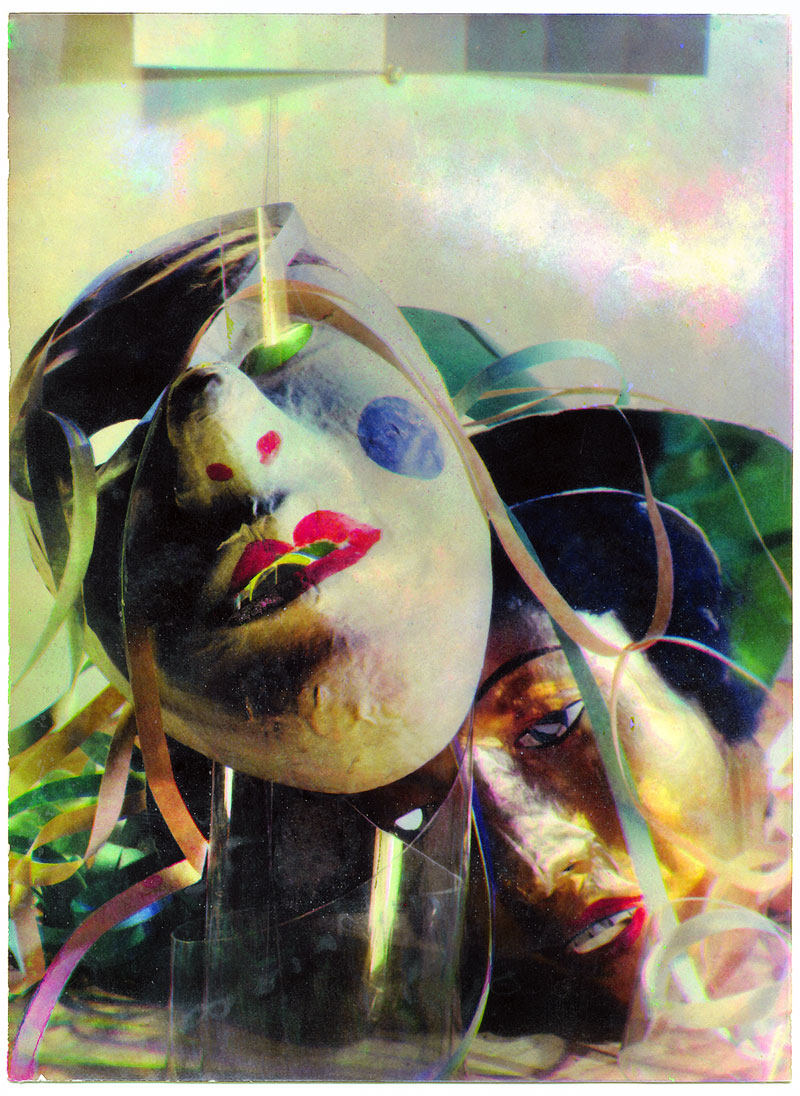
László Moholy-Nagy (Hungarian, 1895-1946) and Paul Hartland. 'Carnival: Composition with two masks' c. 1934


László Moholy-Nagy (Hungarian, 1895-1946) and Paul Hartland 
Carnival: Composition with two masks
c. 1934
Gemeentemuseum Den Haag


Ludwig Museum – Museum of Contemporary Art
Palace of Arts
Komor Marcell u. 1, Budapest, H-1095
Phone: +36 1 555 3444

Opening hours:
Tuesday – Sunday: 10am – 6pm
Closed on Mondays

Ludwig Museum website

LIKE ART BLACK ON FACEBOOK

Back to top

Exhibition, Films, Events and Symposia: ‘Jack Smith: A Feast for Open Eyes’ at the Institute of Contemporary Arts (ICA), London

Dates: 7th – 18th September 2011


Jack Smith (American, 1932-1989) 'Untitled' c. 1958-1962/2011


Jack Smith (American, 1932-1989)
Untitled
c. 1958-1962/2011
Analog C-print hand printed from original colour negative on Fuji Crystal Archive paper
14 x 11 inches (35.6 x 27.9cm)
Copyright Estate of Jack Smith
Courtesy Gladstone Gallery, New York and Brussels


His photographic works are rare and remain largely unknown according to Wikipedia. They shouldn’t be.

Dr Marcus Bunyan


Many thankx to the ICA for allowing me to publish the photographs in the posting. Please click on the photographs for a larger version of the image.


Jack Smith: A Feast for Open Eyes

‘The only true underground filmmaker’ – John Waters

ICA director Gregor Muir introduces the work of Jack Smith in this two week season. Jack Smith: A Feast for Open Eyes is on from 7 – 18 September 2011


Jack Smith (American, 1932-1989) 'Untitled' 1982


Jack Smith (American, 1932-1989)
Untitled
1982
Mixed media on paper
6 1/8 x 8 7/8 inches (15.6 x 22.5cm)
Copyright Estate of Jack Smith
Courtesy Gladstone Gallery, New York and Brussels


Jack Smith (American, 1932-1989) 'Untitled' c. 1958-1962/2011


Jack Smith (American, 1932-1989)
Untitled
c. 1958-1962/2011
Black and white gelatin silver print
10 x 8 inches (25.4 x 20.3cm)
Copyright Estate of Jack Smith
Courtesy Gladstone Gallery, New York and Brussels


“Jack Smith (November 14, 1932 in Columbus, Ohio – September 25, 1989 in New York City) was an American filmmaker, actor, and pioneer of underground cinema. He is generally acclaimed as a founding father of American performance art, and has been critically recognised as a master photographer, though his photographic works are rare and remain largely unknown.

Smith was one of the first proponents of the aesthetics which came to be known as ‘camp’ and ‘trash’, using no-budget means of production (e.g. using discarded colour reversal film stock) to create a visual cosmos heavily influenced by Hollywood kitsch, orientalism and with Flaming Creatures created drag culture as it is currently known. Smith was heavily involved with John Vaccaro, founder of The Playhouse of The Ridiculous, whose disregard for conventional theater practice deeply influenced Smith’s ideas about performance art. In turn, Vaccaro was deeply influenced by Smith’s aesthetics. It was Vaccaro who introduced Smith to glitter and in 1966 and 1967, Smith created costumes for Vaccaro’s Playhouse of The Ridiculous. Smith’s style influenced the film work of Andy Warhol as well as the early work of John Waters. While all three were part of the 1960s gay arts movement, Vaccaro and Smith refuted the idea that their sexual orientation was responsible for their art.

After his last film, No President (1967), Smith created performance and experimental theatre work until his death on September 25, 1989 from AIDS-related pneumonia.”

Text from the Wikipedia entry


Jack Smith (American, 1932-1989) 'Untitled' c. 1958-1962/2011


Jack Smith (American, 1932-1989)
Untitled
c. 1958-1962/2011
Analog C-print hand printed from original colour negative on Fuji Crystal Archive paper
14 x 11 inches (35.6 x 27.9cm)
Copyright Estate of Jack Smith
Courtesy Gladstone Gallery, New York and Brussels


Legendary American artist, filmmaker and actor Jack Smith (1932-1989), described by Andy Warhol as the only person he would ever copy and by John Waters as “the only true underground filmmaker”, is celebrated at the Institute of Contemporary Arts (ICA) in film, performance and debate with a retrospective of Smith’s work from 7 to 18 September 2011.

Working in New York from the 1950s until his death in 1989, Smith unequivocally resisted and upturned accepted conventions, whether artistic, moral or legal. Irreverent in tone and delirious in effect, Smith’s films, such as the notorious Flaming Creatures (1963), are both wildly camp and subtly polemical. Smith is best known for his contributions to underground cinema but his influence extends across performance art, photography and experimental theatre.

A Feast for Open Eyes: Jack Smith maps out the breadth of Smith’s practice, from his collaborative film productions to his individual writings, and looks at his legacy in the UK drawing upon a generation of New York artists with whom Smith was closely involved, including Jonas Mekas and Penny Arcade, and younger artists and filmmakers whom he influenced. John Zorn, a long-term Smith collaborator selects records to accompany an installation of slides documenting Smith’s work, as he used to in collaboration with Smith in the 1970s and 80s.

The retrospective opens with a screening of Flaming Creatures introduced by Chris Dercon, Director of Tate Modern, who was a close friend of Smith’s. The film is followed by the screening of an interview, recorded exclusively for the ICA this summer, with Jonas Mekas, a founder member of Anthology Film Archives who faced obscenity charges for defending Flaming Creatures in the 1960s. The presentation is introduced by Dominic Johnson, author of the forthcoming monograph Glorious Catastrophe: Jack Smith, Performance and Visual Culture (Manchester University Press) and co-curator of A Feast for Open Eyes.

Press release from the ICA website


Jack Smith (American, 1932-1989) 'Untitled' c. 1978


Jack Smith (American, 1932-1989)
Untitled
c. 1978
Mixed media on paper
13 x 20 3/4 inches (33 x 52.7cm)
Copyright Estate of Jack Smith
Courtesy Gladstone Gallery, New York and Brussels


Jack Smith (American, 1932-1989) 'Untitled' c. 1958-1962/2011


Jack Smith (American, 1932-1989)
Untitled
c. 1958-1962/2011
Analog C-print hand printed from original colour negative on Fuji Crystal Archive paper
14 x 11 inches (35.6 x 27.9cm)
Copyright Estate of Jack Smith
Courtesy Gladstone Gallery, New York and Brussels


Jack Smith (American, 1932-1989) 'Untitled' c. 1958-1962/2011


Jack Smith (American, 1932-1989)
Untitled
c. 1958-1962/2011
Black and white gelatin silver print
10 x 8 inches (25.4 x 20.3cm)
Copyright Estate of Jack Smith
Courtesy Gladstone Gallery, New York and Brussels


Jack Smith (American, 1932-1989) 'Untitled' c. 1958-1962/2011


Jack Smith (American, 1932-1989)
Untitled
c. 1958-1962/2011
Black and white gelatin silver print
10 x 8 inches (25.4 x 20.3cm)
Copyright Estate of Jack Smith
Courtesy Gladstone Gallery, New York and Brussels


Jack Smith (American, 1932-1989) 'Untitled' c. 1958-1962


Jack Smith (American, 1932-1989)
Untitled
c. 1958-1962
Color negative
2 1/4 x 2 1/4 inches 
(5.7 x 5.7cm)
Copyright Estate of Jack Smith
Courtesy Gladstone Gallery, New York and Brussels


Institute of Contemporary Arts
The Mall,
London,
SW1Y 5AH

Opening hours:
Tuesday – Sunday 12 – 9pm
Closed Mondays

ICA website

LIKE ART BLART ON FACEBOOK

Back to top

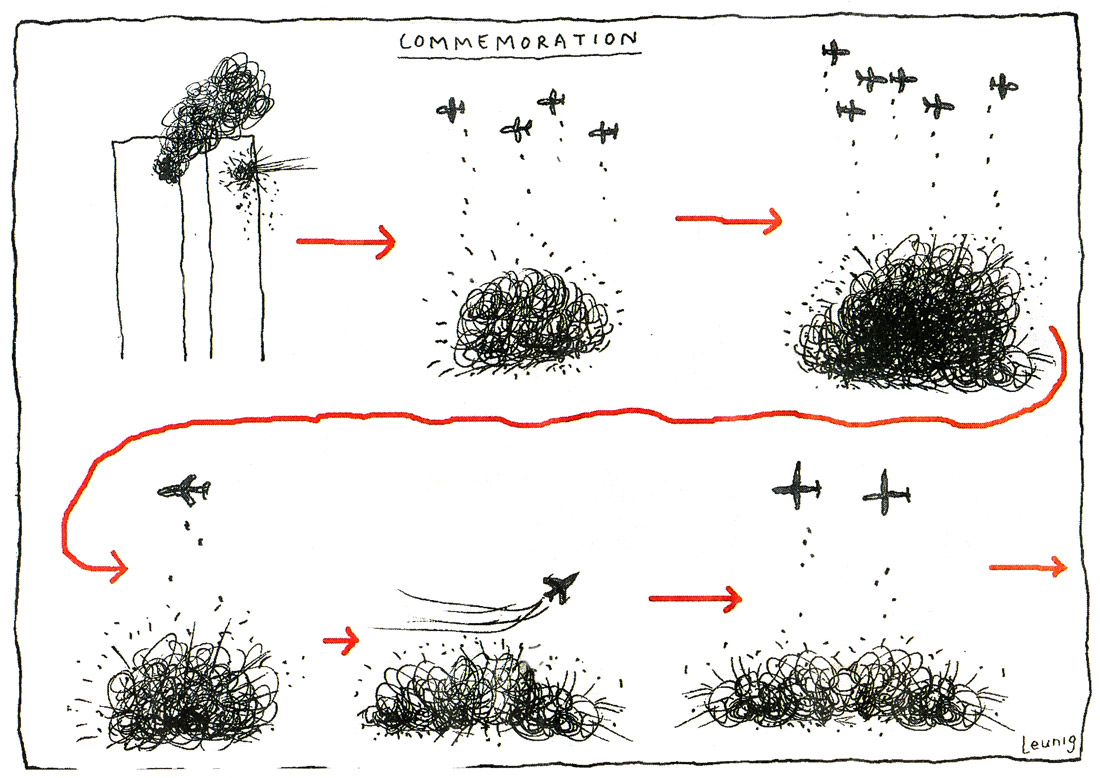
Michael Leunig. ‘Commemoration’ 2011

September 2011


Michael Leunig (Australian, 1945-2024) 'Commemoration' 2011


Michael Leunig (Australian, 1945-2024)
Commemoration
2011


“It begins with ideas. Something like September 11 demands a narrative to explain it. But narratives are tricky, and frequently self-serving. They can obscure as much as they explain. And so it was. For Western political elites, September 11 quickly became a story about our own virtue. You will be familiar with the lines: it was an attack on the very idea of freedom; we were attacked, not for anything we did, but for nothing more than who we are; because we’re – in President George Bush’s phrase “the brightest beacon for freedom and opportunity in the world.” The consequences of this are profound. If the attack has nothing to do with us, then there is nothing to be done in response except bomb the problem out of existence. It cannot be managed, contained, or in any other way ameliorated.”


Waleed Aly writing in The Sunday Age newspaper, September 11, 2011, p. 13


Michael Leunig on Wikipedia

LIKE ART BLART ON FACEBOOK

Back to top

Exhibition: ‘The Mind’s Eye, 50 Years of Photography by Jerry Uelsmann’ at the Harn Museum of Art, Florida

Exhibition dates: 14th June – 11th September 2011


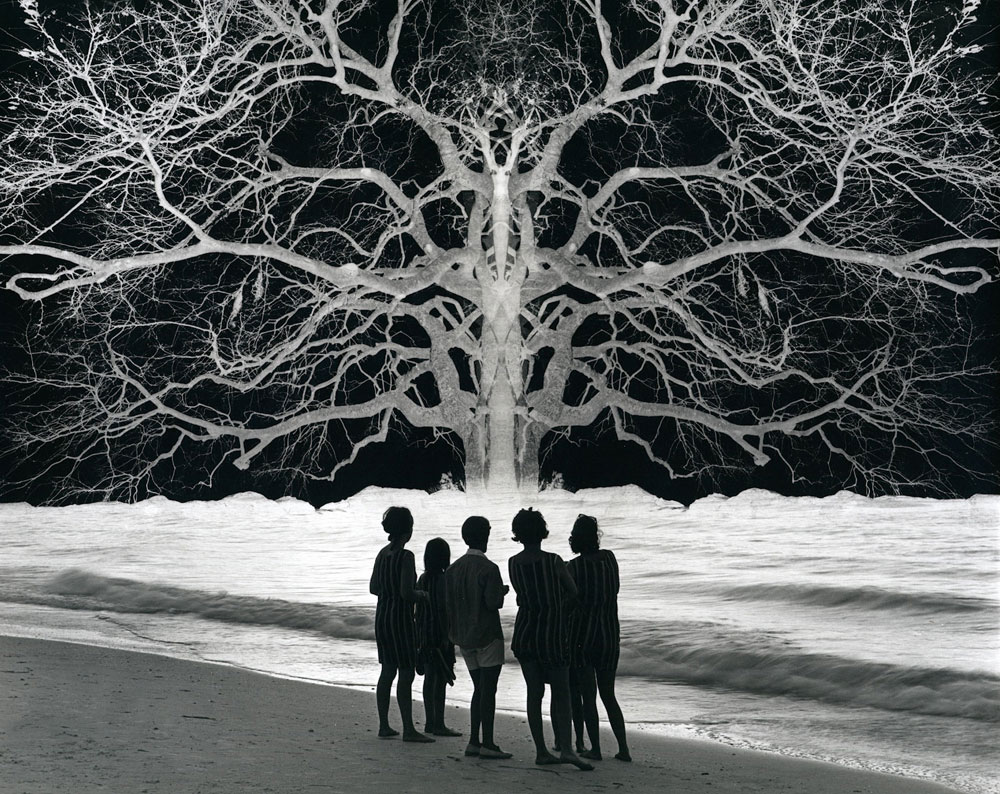
Jerry Uelsmann (American, 1934-2022)
 'Apocalypse II
' 1967


Jerry Uelsmann (American, 1934-2022)
Apocalypse II
1967
Gelatin silver print
10 3/4 x 13 5/8 in (27.2 x 34.5cm)
Collection of the artist
© Jerry Uelsmann


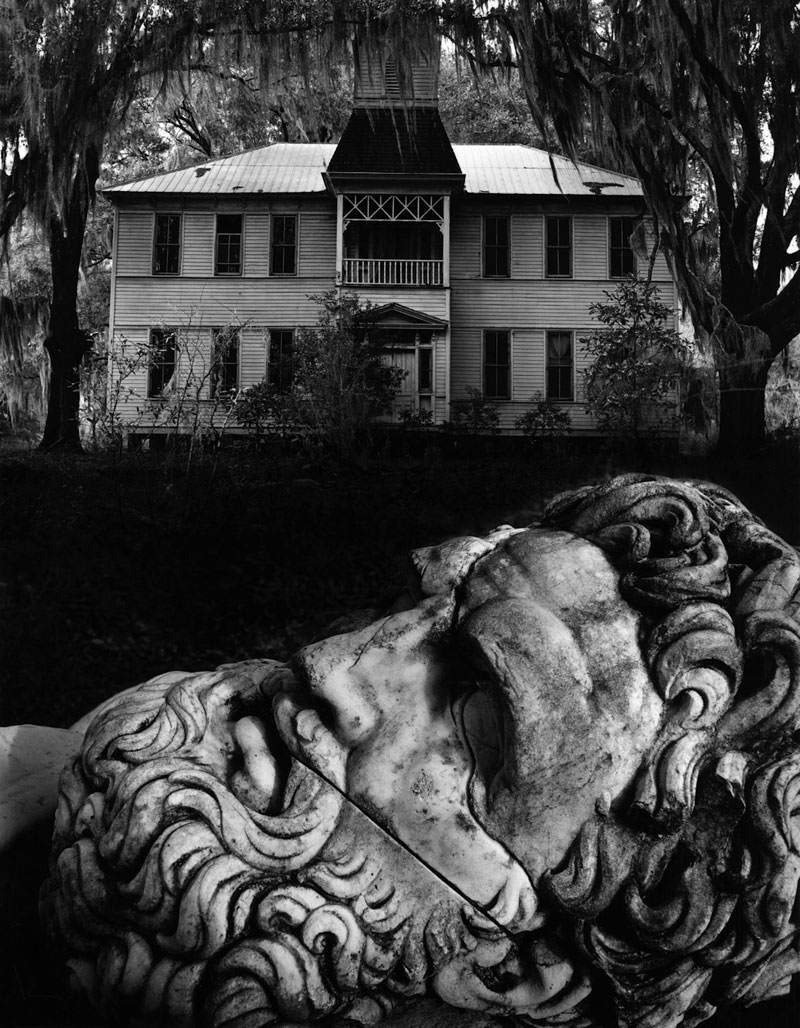
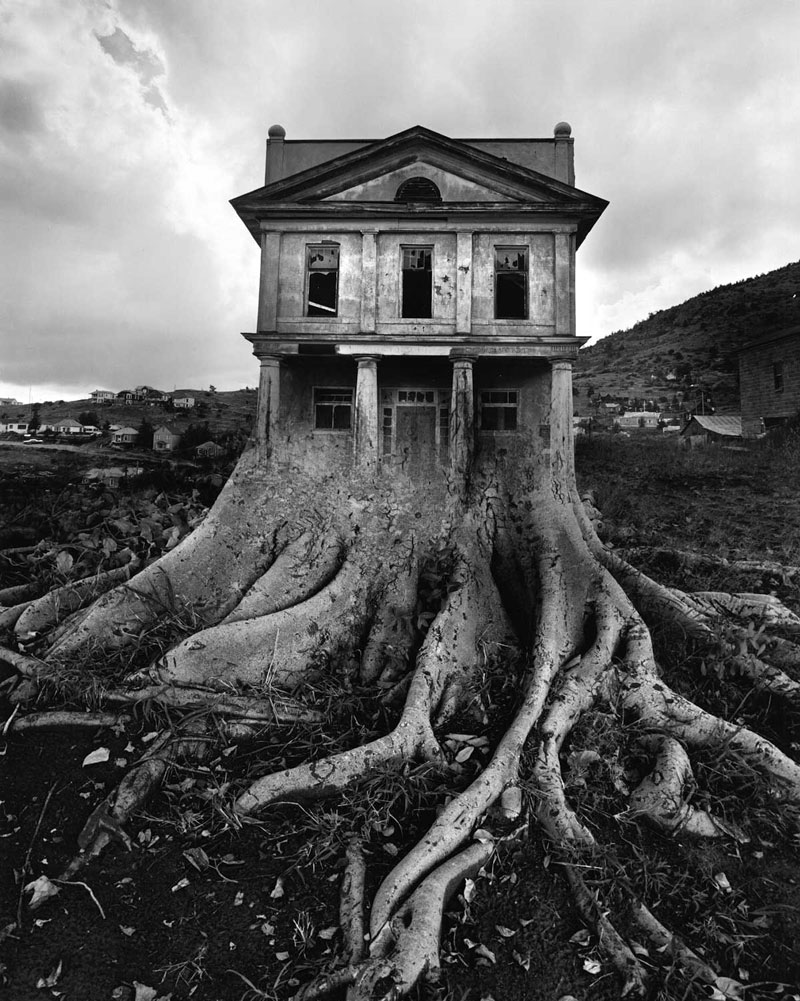
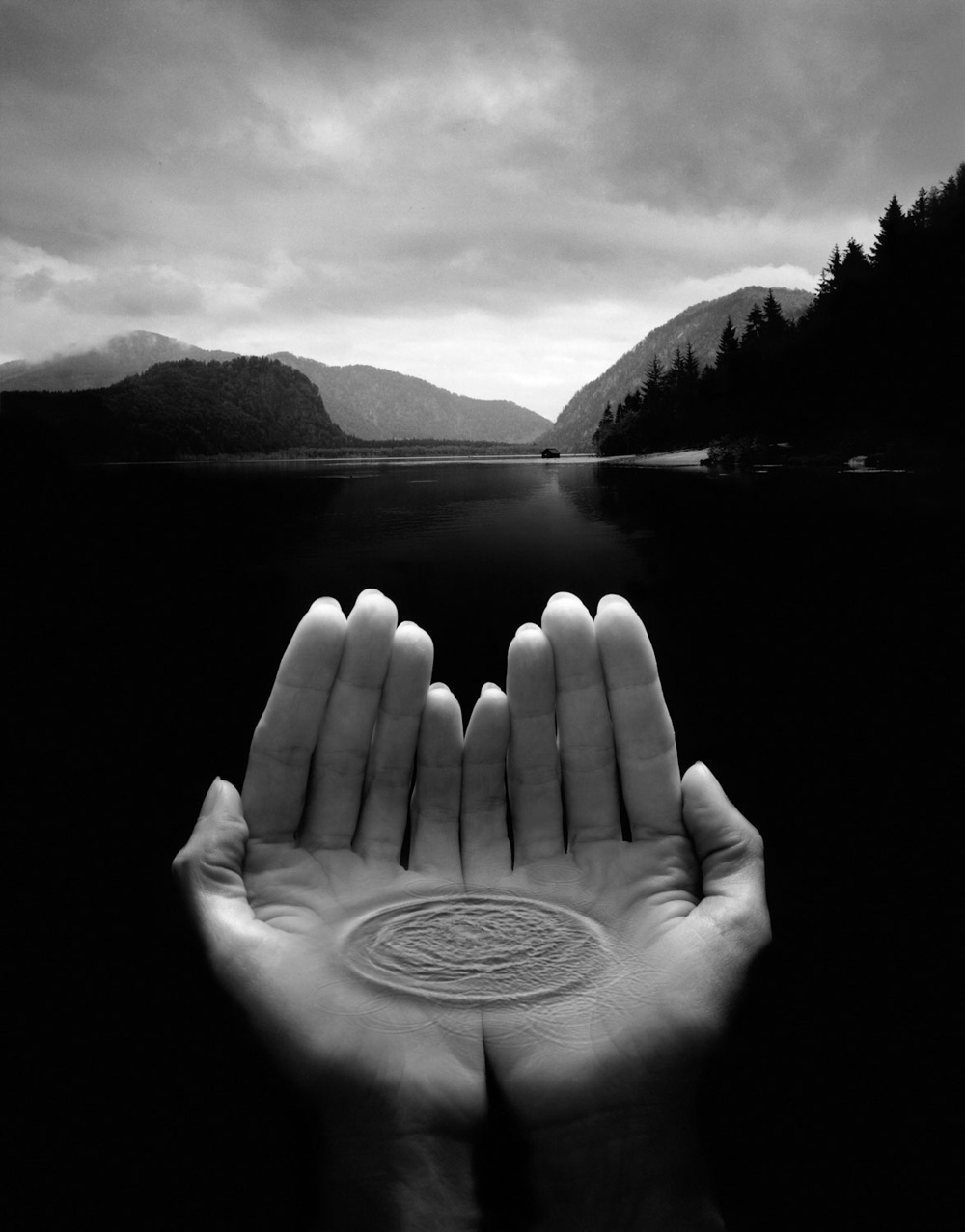
Uelsmann is one of my favourite artists. His unique vision and the skill required to execute that vision using multiple exposure of negatives in the darkroom (remember, this is all done with no Photoshop!) is outstanding. Observe the sensitivity to subject matter and the placement of disparate elements in the surrealist landscape. His photographs have real allegorical power and lodge in the viewer’s psyche. My particular favourites are the library and the house on the tree stump. Uelsmann achieves wonderful resolution to inner visions and then makes the dream-like tableaux accessible to the viewer. As one who started as a black and white photographer and who experimented with multiple exposures on one piece of silver gelatin paper in the darkroom, I can attest to how enormously difficult this process is.

The text on Wikipedia states:

“Uelsmann is a master printer producing composite photographs with multiple negatives and extensive darkroom work. He uses up to a dozen enlargers at a time to produce his final images … Uelsmann is a champion of the idea that the final image need not be tied to a single negative, but may be composed of many … he does not seek to create narratives, but rather allegorical surrealist imagery of the unfathomable … Today, with the advent of digital cameras and Photoshop, photographers are able to create a work somewhat resembling Uelsmann’s in less than a day, however, at the time Uelsmann was considered to have almost “magical skill” with his completely analog tools.”


I thank him for having the creative energy to be a magician.

Dr Marcus Bunyan

See another posting on this exhibition.


Many thankx to the Harn Museum of Art for allowing me to publish the photographs in the posting. Please click on the photographs for a larger version of the image.


Jerry Uelsmann (American, 1934-2022) 'Magritte’s Touchstone' (first version)
 Nd


Jerry Uelsmann (American, 1934-2022)
Magritte’s Touchstone (first version)
Nd
Gelatin silver print
Collection of the artist
© Jerry Uelsmann


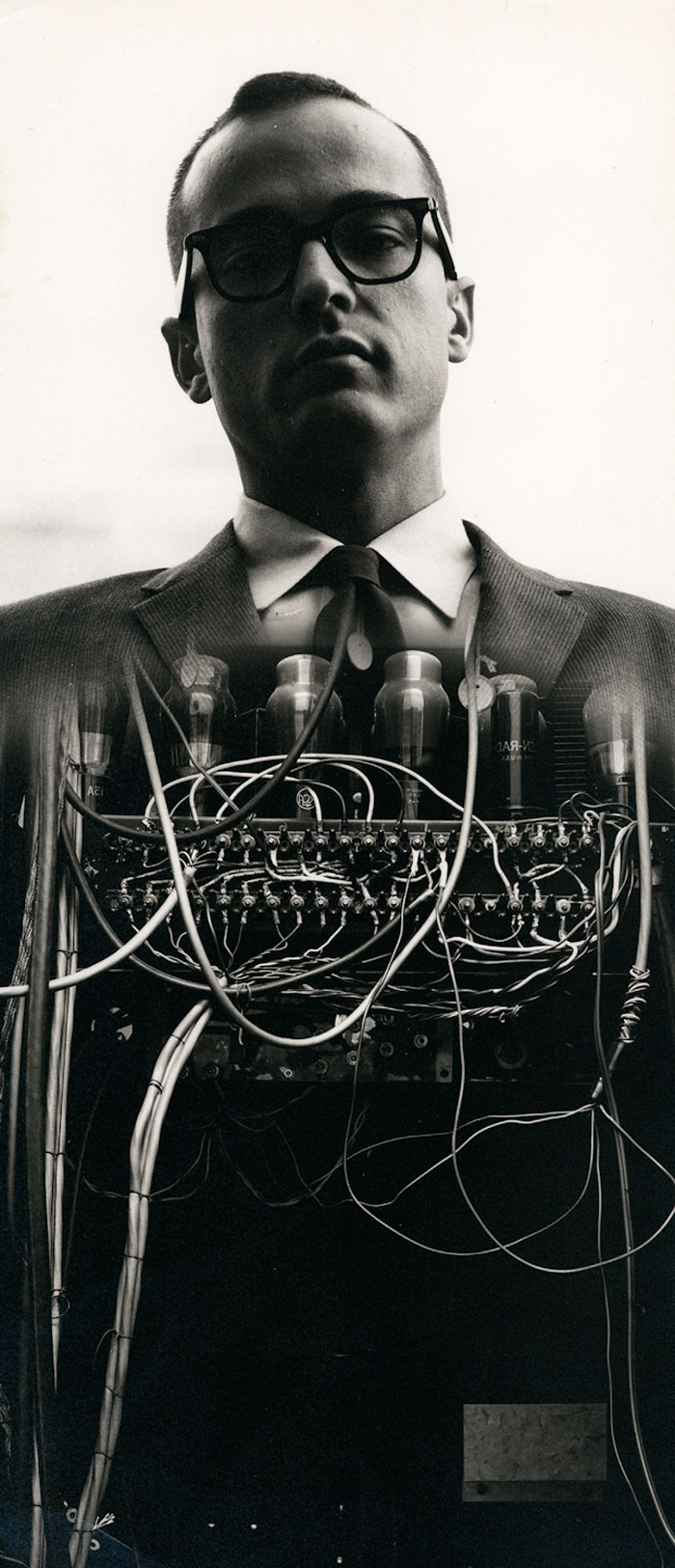
Jerry Uelsmann (American, 1934-2022)
 'Mechanical Man #2' 1959


Jerry Uelsmann (American, 1934-2022)
Mechanical Man #2
1959
Gelatin silver print
Collection of the artist
© Jerry Uelsmann


The first critical retrospective of American photographer Jerry Uelsmann’s work will open at the Harn Museum of Art at the University of Florida on June 14, 2011. Uelsmann, known for his iconic, surreal style and his innovative composite printing techniques, has spent more than 50 years challenging and advocating for the acceptance of photography as an experimental art form. The Mind’s Eye, 50 Years of Photography by Jerry Uelsmann, organised by the Peabody Essex Museum in Salem, Massachusetts will feature 89 works from every phase of the artist’s wide-ranging career, including a selection of rare pieces that have never before been on public view. Additional works from the artist’s collection will be on view only during this leg of the exhibition, open through September 11, 2011.

“The Harn Museum of Art is delighted to welcome this important exhibition of photographic works by the University of Florida’s own Jerry Uelsmann, a graduate research professor in the art department from 1960 to 1998,” said Rebecca Nagy, director of the Samuel P. Harn Museum of Art. “Jerry has been, and continues to be a leader in the field and we are delighted to celebrate and look back on such a long, important, and innovative career.”

The exhibition will emphasise Uelsmann’s profound influence on the field of photography through his revolutionary mastery of composite photography. Through the presentation of images from different stages of his works, viewers will gain a new understanding of the artist’s creative process and the evolution of Uelsmann’s ideas throughout his career. The pieces on view will be drawn from the artist’s personal archive of vintage materials, and are the definitive prints of the images. A few examples of the artist’s photo sculptures, artist’s books and albums will give viewers first-hand insight into Uelsmann’s creative process.

“From the beginning of his career, Uelsmann has advocated for the acceptance of photography as an experimental art form,” said Phillip Prodger, curator of photography at the Peabody Essex Museum. “Uelsmann’s photography provides a valuable touchstone for understanding new trends in photographic art. His ideas and work have become even more relevant as photography embraces Photoshop and other computer technologies for altering and manipulating photographic pictures.”

Beginning in the late 1950s, Uelsmann succeeded in combining negatives in the darkroom to create synthetic compositions that conjure the illusion of photographic truth. Although these pictures are visually convincing, they depict scenes that often have no analogue in the real world. Evocative, unsettling, and often humorous, Uelsmann’s photographs are seldom easily resolved, inviting reflection without obvious resolution. His most famous technique, seamlessly fabricating photographs from unrelated negatives to create imaginary scenes, helped build his reputation as an experimental photographer, and cemented his standing as a leader of non-literal photography.

“My visual quest is driven by a desire to create a universe capable of supporting feelings and ideas,” said Jerry Uelsmann. “I am drawn to art that challenges one’s sense of reality.”

Press release from the Harn Museum of Art website


Jerry Uelsmann (American, 1934-2022)
 'Untitled' 
1964


Jerry Uelsmann (American, 1934-2022)
Untitled
1964
Gelatin silver print
13 3/4 x 10 1/4 in (34.9 x 26.1cm)
Collection of the artist
© Jerry Uelsmann


Jerry Uelsmann (American, 1934-2022)
 'Untitled'
 1976


Jerry Uelsmann (American, 1934-2022)
Untitled
1976
Gelatin silver print
19 5/8 x 14 1/4 in (49.9 x 36.3cm)
Collection of the artist
© Jerry Uelsmann


Jerry Uelsmann (American, 1934-2022)
 'Untitled'
 1982


Jerry Uelsmann (American, 1934-2022)
Untitled
1982
Gelatin silver print
13 1/4 x 10 3/8 in (33.8 x 26.4cm)
Collection of the artist
© Jerry Uelsmann


Jerry Uelsmann (American, 1934-2022)
 'Untitled'
 2003


Jerry Uelsmann (American, 1934-2022)
Untitled
2003
Gelatin silver print
19 3/8 x 15 in (49.1 x 38cm)
Collection of the artist
© Jerry Uelsmann


Jerry Uelsmann (American, 1934-2022) 'Dream Theater' 2004


Jerry Uelsmann (American, 1934-2022)
Dream Theater
2004
Gelatin silver print
Collection of the artist
© Jerry Uelsmann


Samuel P. Harn Museum of Art
SW 34th Street and Hull Road
Gainesville, Florida 32611-2700

Opening hours:
Tuesday – Saturday 10am – 5pm
Sunday 1 – 5pm
The museum is closed on Mondays and state holidays.

Samuel P. Harn Museum of Art website

LIKE ART BLART ON FACEBOOK

Back to top

Review: ‘Scott’s Last Expedition’ at the Australian National Maritime Museum, Sydney

Exhibition dates: 17th June – 16th October 2011


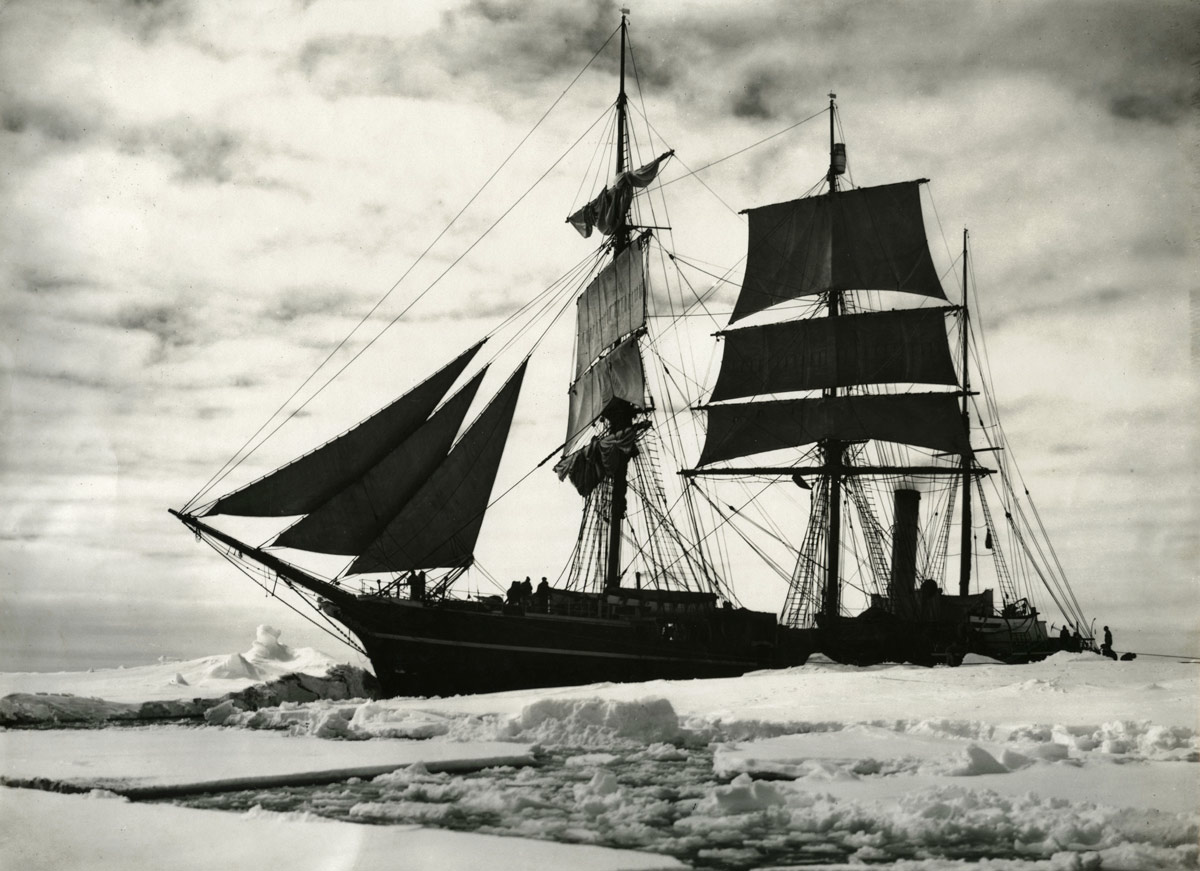
Herbert Ponting (British, 1870-1935) 'The former whaling ship, the 'Terra Nova'' 1911


Herbert Ponting (British, 1870-1935)
The former whaling ship, the ‘Terra Nova’
1911
Gelatin silver print
Canterbury Museum NZ


“Greater love hath no man than this, that a man lay down his life for his friends.”


John 15:13


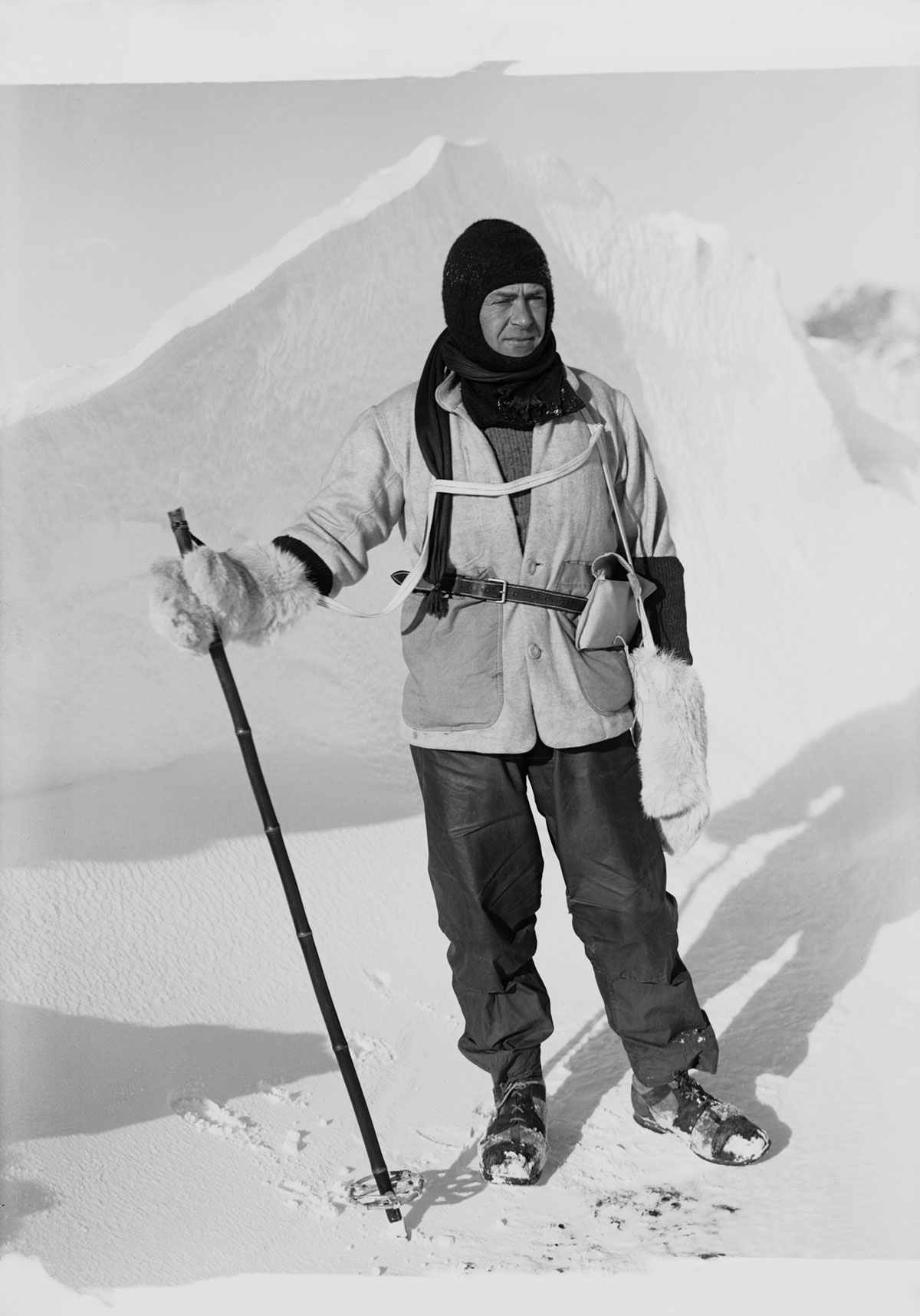
It is difficult to describe how heroic a figure Robert Scott, ‘Scott of the Antarctic’ was to a child of the Empire growing up in the 1960s. He and his doomed party were, and still are, the quintessential heroes of my youth. Despite what we now know of Scott’s failures in leadership and organisation, he and his comrades remain embedded in English consciousness as all that is noble about the explorers of the time. They may have failed to become the first to reach the South Pole and died on the return journey but what a magnificent effort it was, what camaraderie and fortitude they showed in the face of adversity.

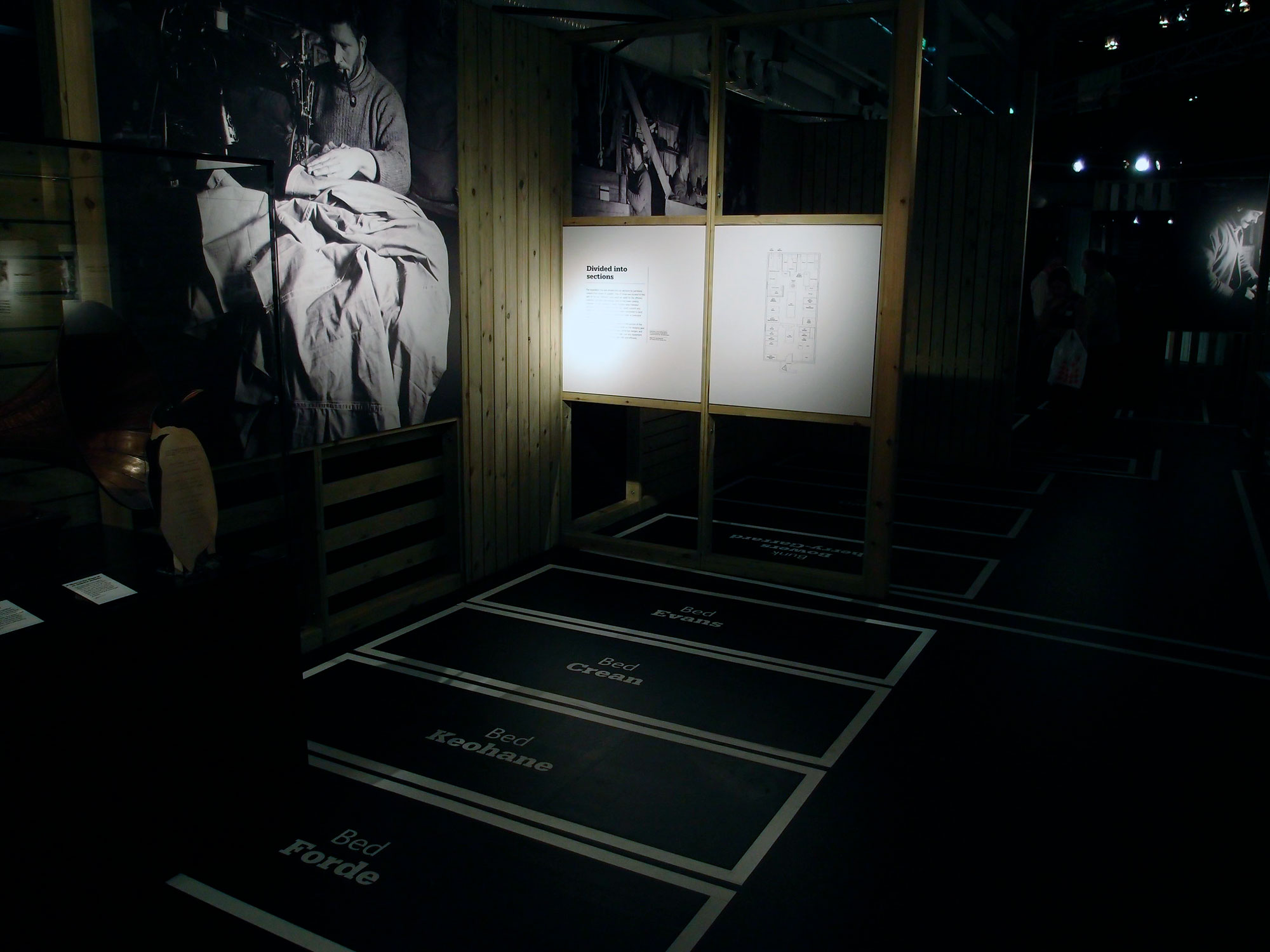
At the centre of the exhibition at the Australian National Maritime Museum, Sydney is a representation of Scott’s base camp at Cape Evans. Visitors can walk inside the life-size hut and get a sense of the everyday realities for the 25 expedition members, from the cramped conditions and homeliness of the hut, to the wealth of specimens collected and experiments conducted. The exhibition also reunites the artefacts used by Scott and his team together with scientific specimens collected during the 1910-1913 expedition for the first time since their use in Antarctica. The exhibition uses life-size reproductions of the photographs of Herbert Ponting. At this scale it enables the viewer to inspect in intimate detail the habitus of their lives.

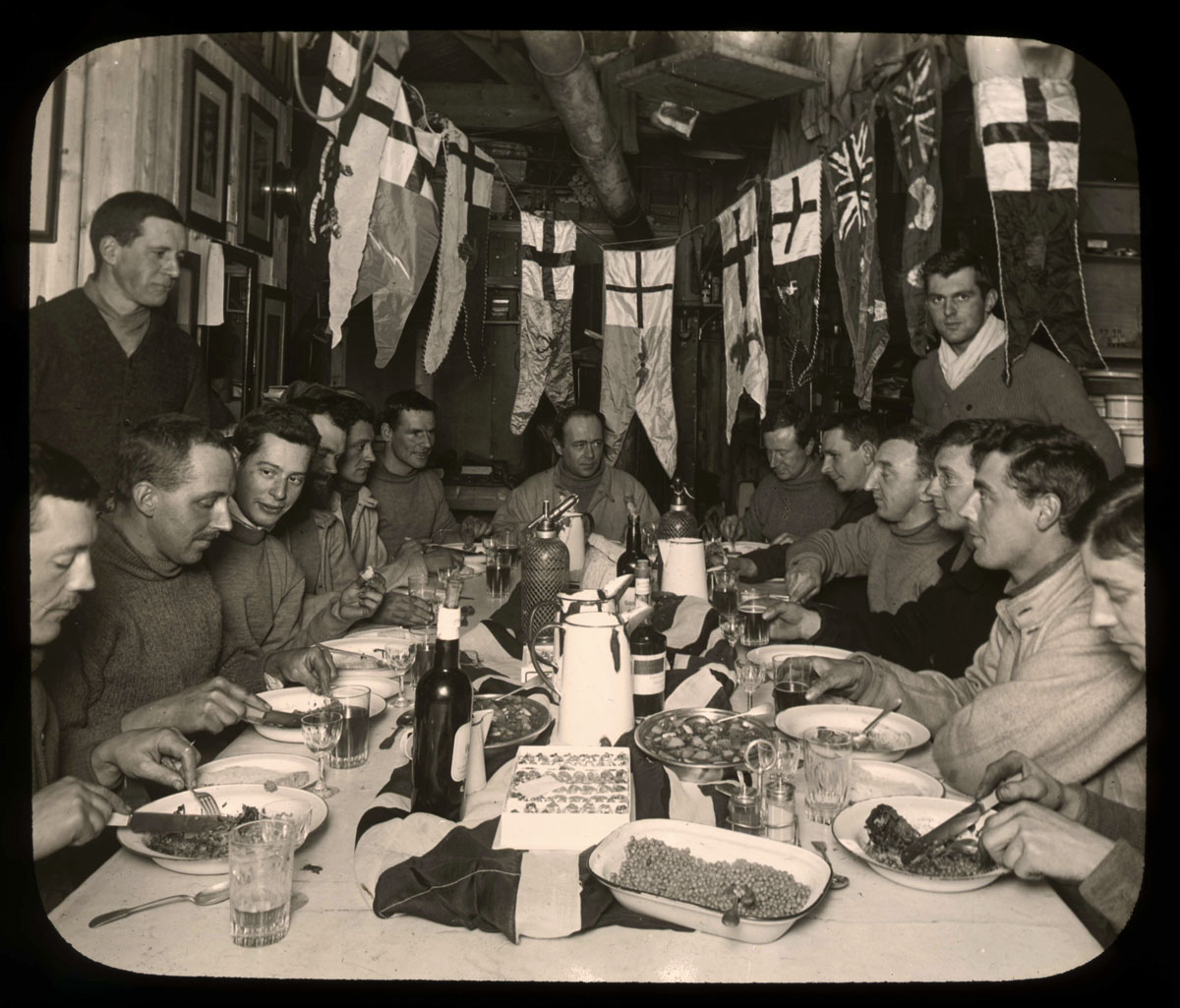
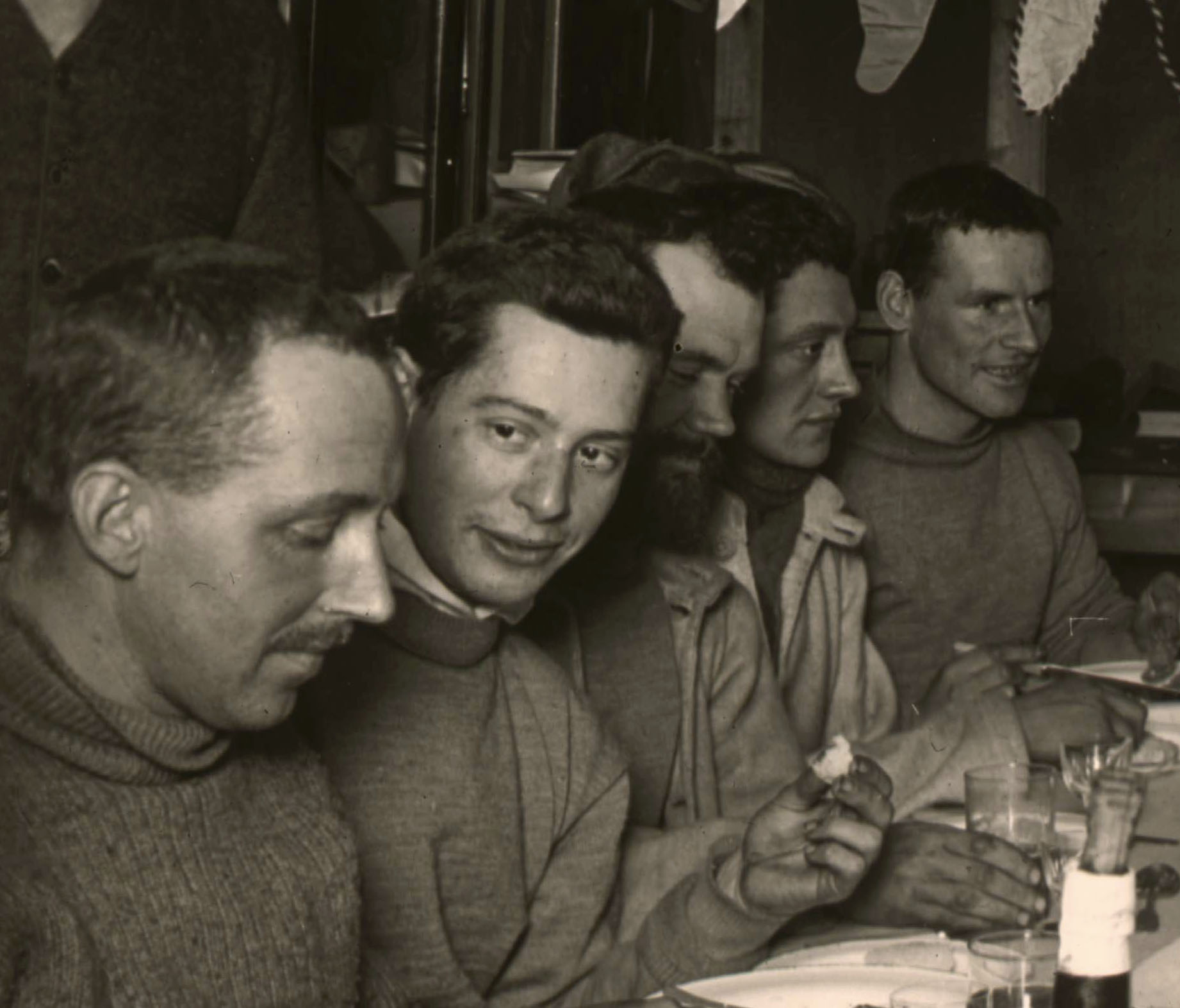
What a master of photography Ponting was. His photographs are classically framed and formally restrained; his use of light is magical. The camera always seems to be in the perfect position to capture the subject, neither too high or low but beautifully balanced so that the eye is led into the photograph, to investigate those wonderful nooks and crannies of the image plane. Because of the excellent quality press images I have been able to close in on details of the photographs (a la Ken Burns). The receding row of male faces to the left of Scott’s birthday dinner, June 1911 (below) that lead to Scott as the focal point at the head of the table, flags of St. George flying above, the two standing men acting as vertical counterpoints to the equipoise of the horizontal perspectival point – and then we glimpse the punctum of the piece of bread held between darkened fingers and thumb of the man caught in mid-conversation with his neighbour. Also note the framed images on the wall behind at top left, bearing witness to the fact that living is more civilised in such a desolate place if you are surrounded by images of culture and home.

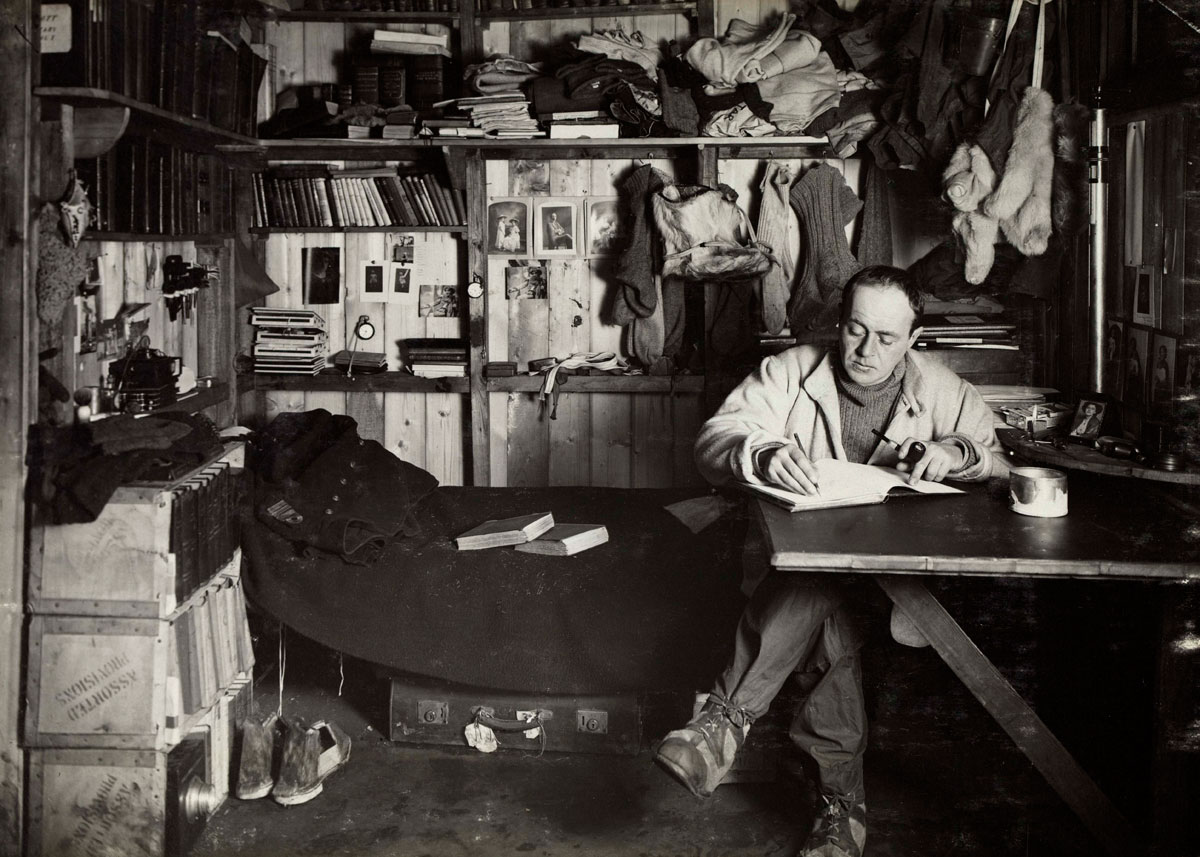
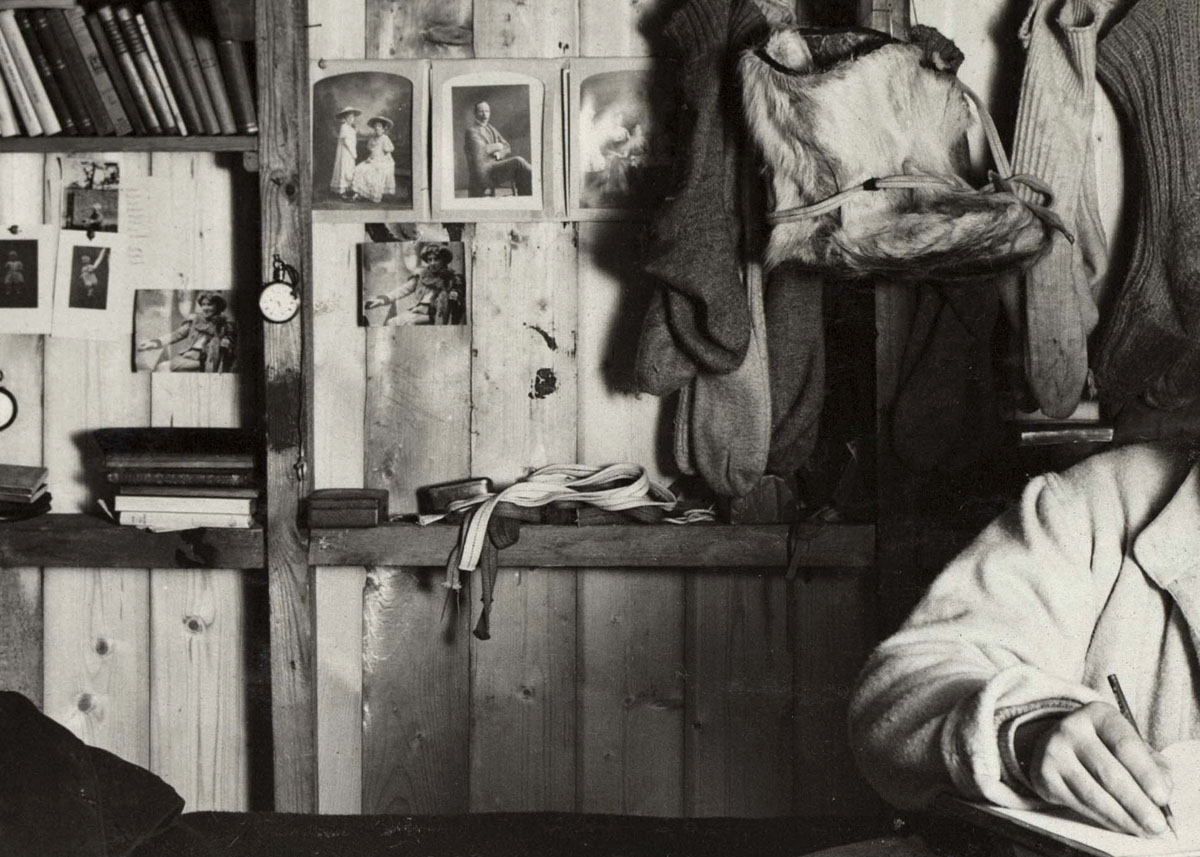
This remembrance becomes poignant in the photograph Scott writing in his area of the expedition hut, Scott’s cubicle (below). In the detail of the image we observe candid photographs of what are presumably Scott’s wife in two photographs that are slightly different from each other, his wife and child, his father and small photographs of his children pinned to the hut’s wall. Memories of home and family that become multiple momenti mori – the death of the people in the images pinned to the wall, the death present in Pontings’ photograph (the little death at the point in time that the photograph was taken) and the death of Scott himself. The pocket watch hung from a wooden post only adds to this sense of refractive timelessness.

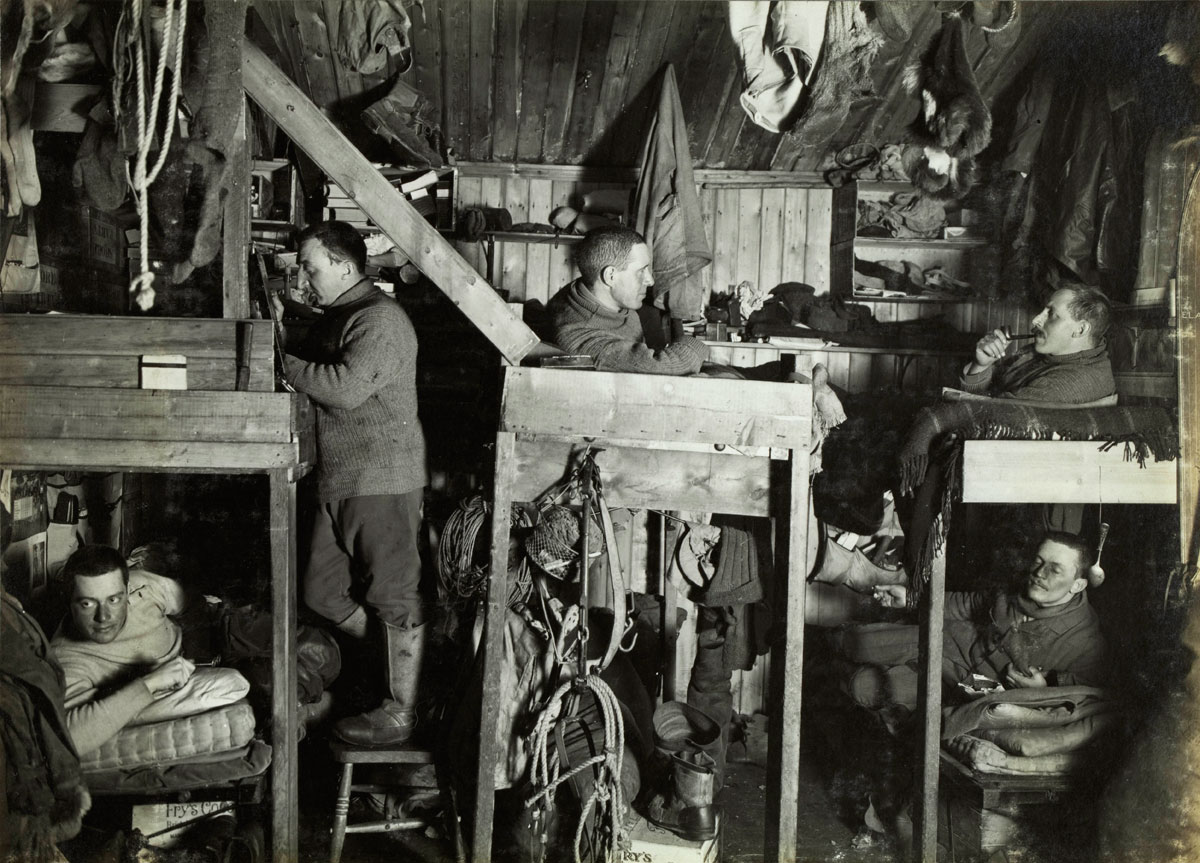
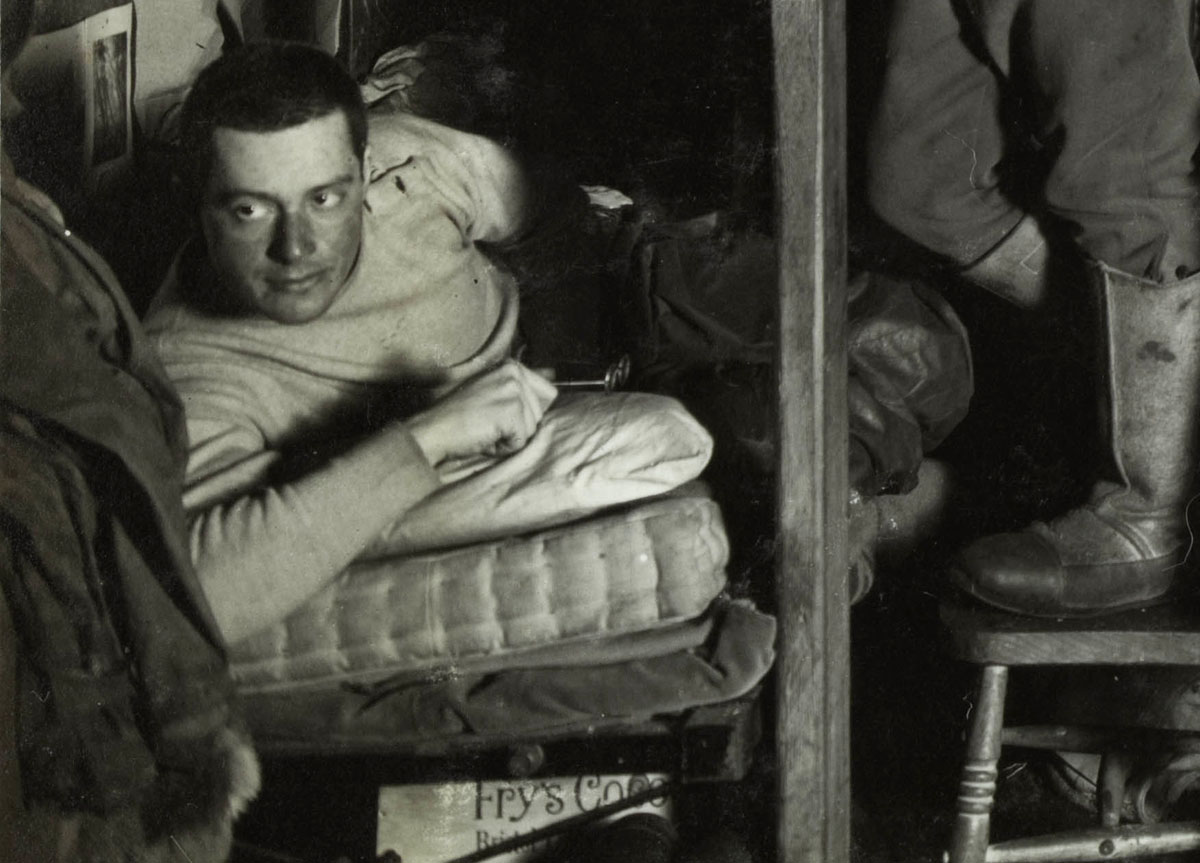
The sense of these men living in close quarters in this community is beautifully captured in Ponting’s photograph The Tenements, 9 October 1911 (below). Three vertical lozenges project into the space from the bottom of the image, each containing its own theatrical diorama. The balance and space between the men looking across, down, up and out of the image is outstanding. The distance between Oates in the top centre and the man on the right seems somehow infinite in the photograph, like the distance in Alfred Hitchcock’s film North by Northwest where Cary Grant is waiting for the bus in the middle of nowhere and on the other side of the road is another man, also waiting. The spatial tension between the two men in the photograph is palpable, emphasised by the stacked horizontal shelf behind them. The gaze of the man at bottom left allows the viewer some room for escape from the confines of the tenements and the confines of the image plane, for without that gaze the viewer would be caught with no way out. In the detail of this man we can, as before, note the importance of personal remembrances of home with a picture pinned on the wall behind his bunk and a Fry’s Cocoa box stored underneath.

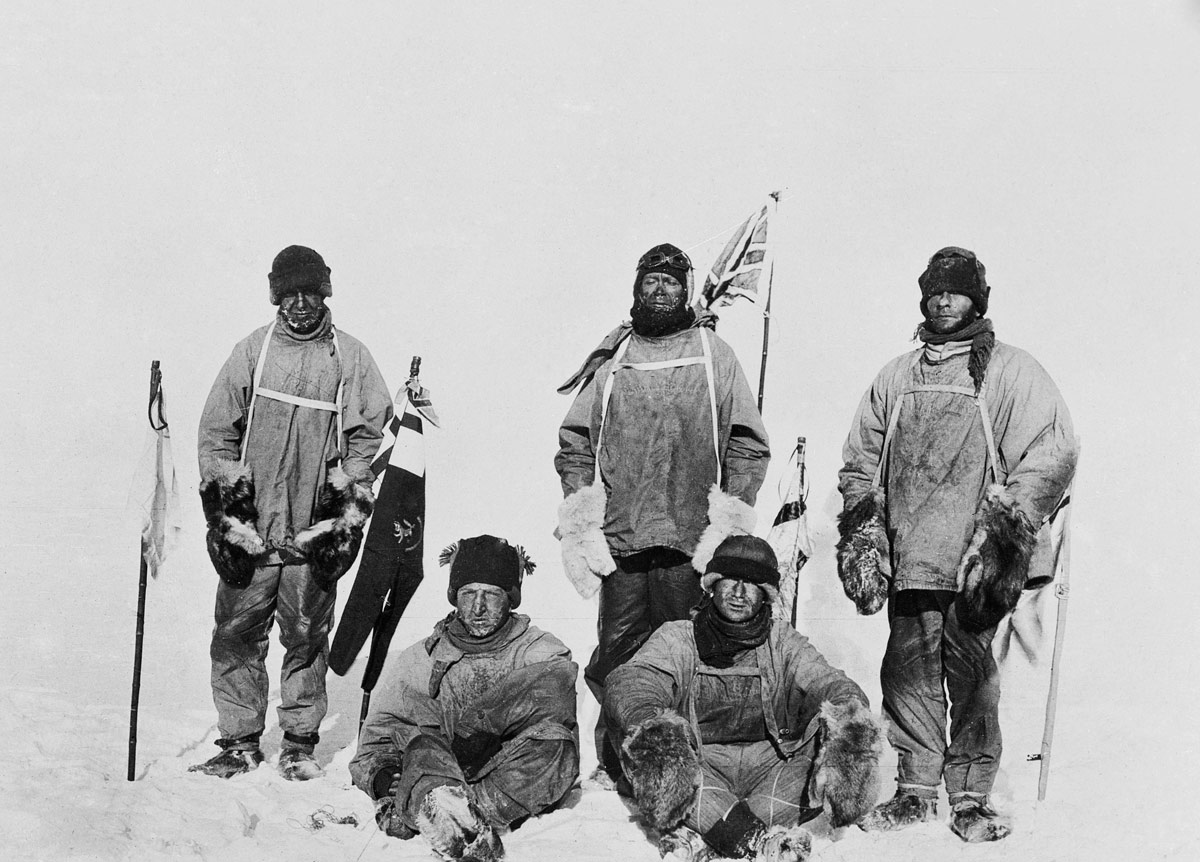
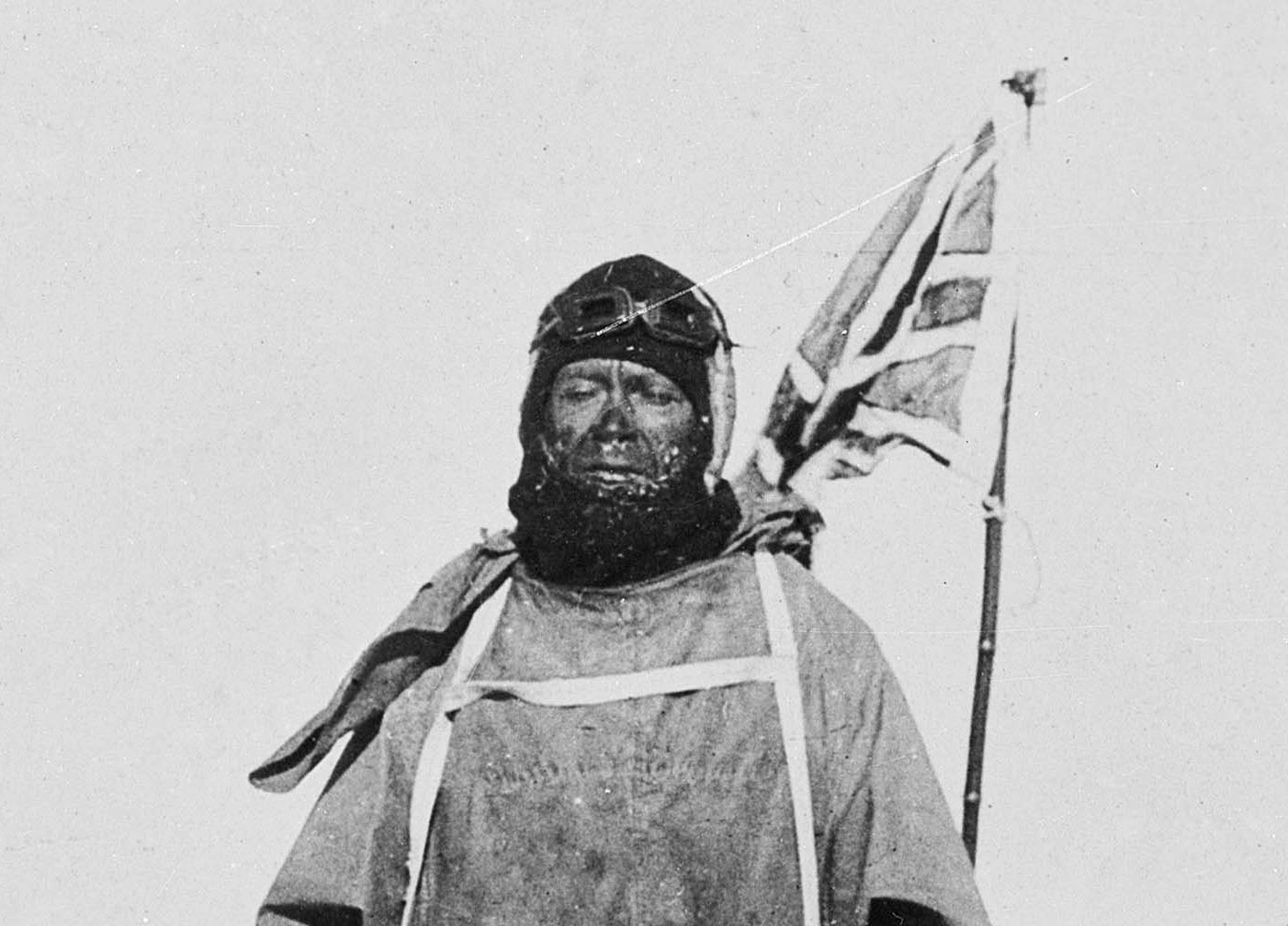
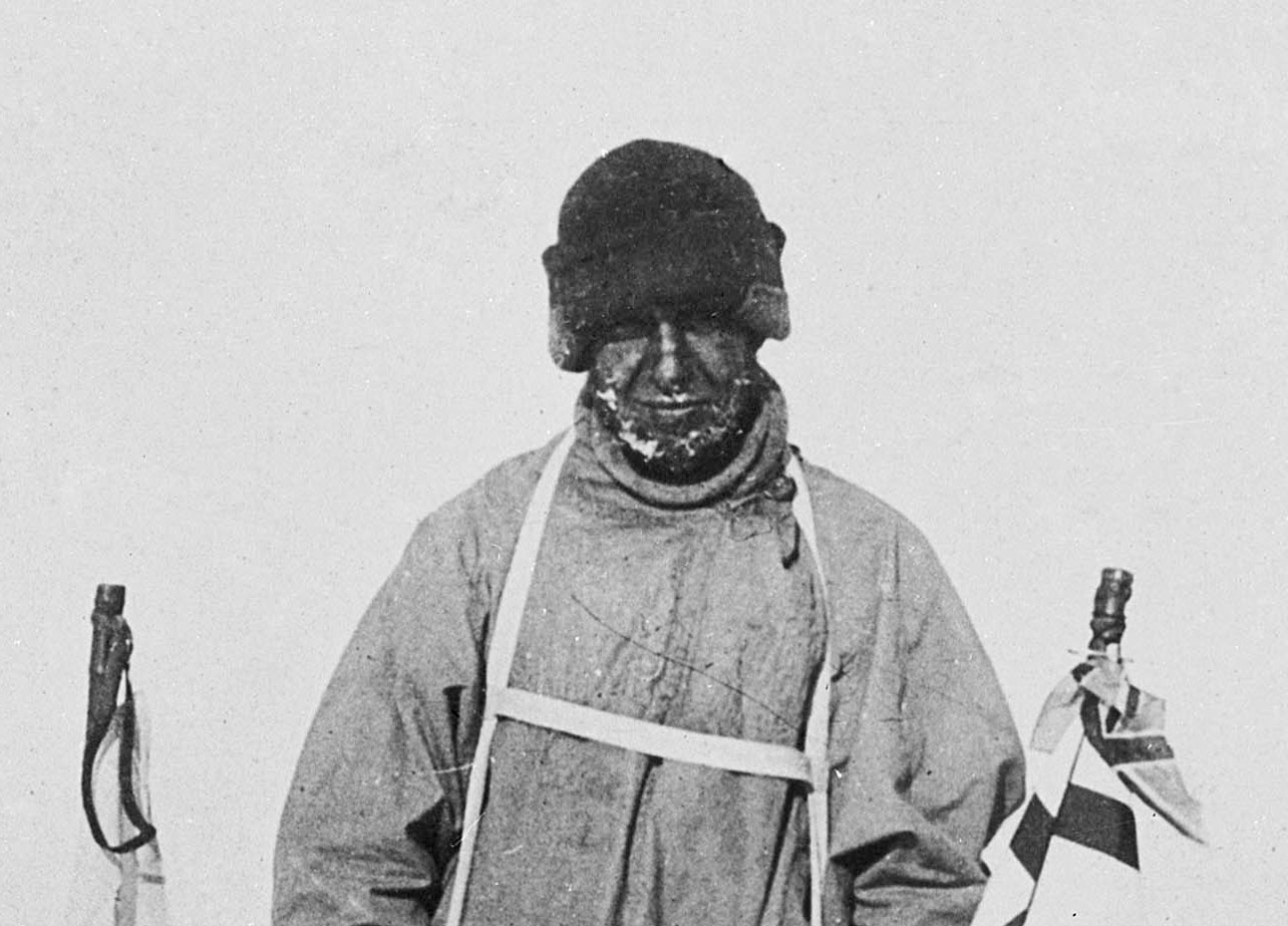
And so to the final few photographs in the posting: the famous photograph of Scott and the Polar Party at the South Pole (below) taken by Henry Bowers. Taken the day after the party had arrived at the South Pole, only to discover that Roald Amundsen had beaten them to their goal by five weeks, Bowers (seated at bottom left) used a string to release the shutter of the camera that can just be seen in his right hand in the photograph – a photograph that was then printed by Herbert Ponting from the recovered glass plate negative. In the detail of Scott and Oates in this photograph you can see the weariness, anguish and defeat in faces that are sun and wind damaged, knowing that they had to trek all the way back from this awful place (as Scott himself said, “Great God! This is an awful place”).

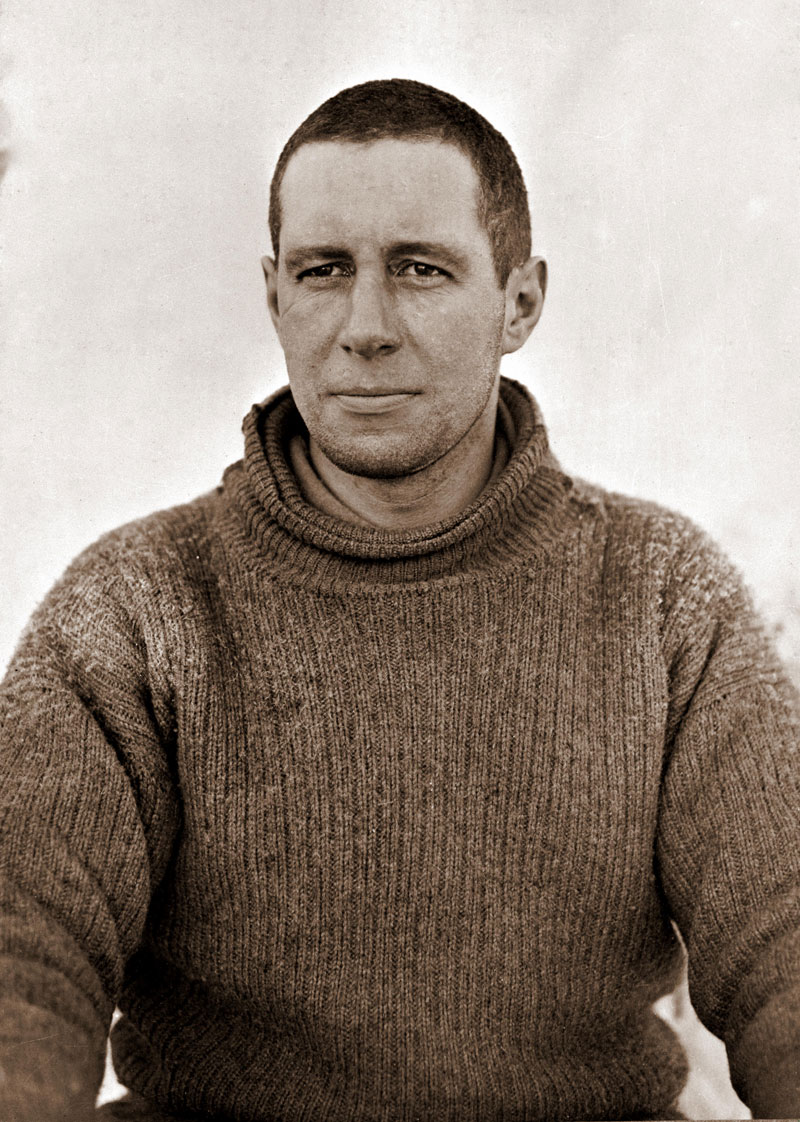
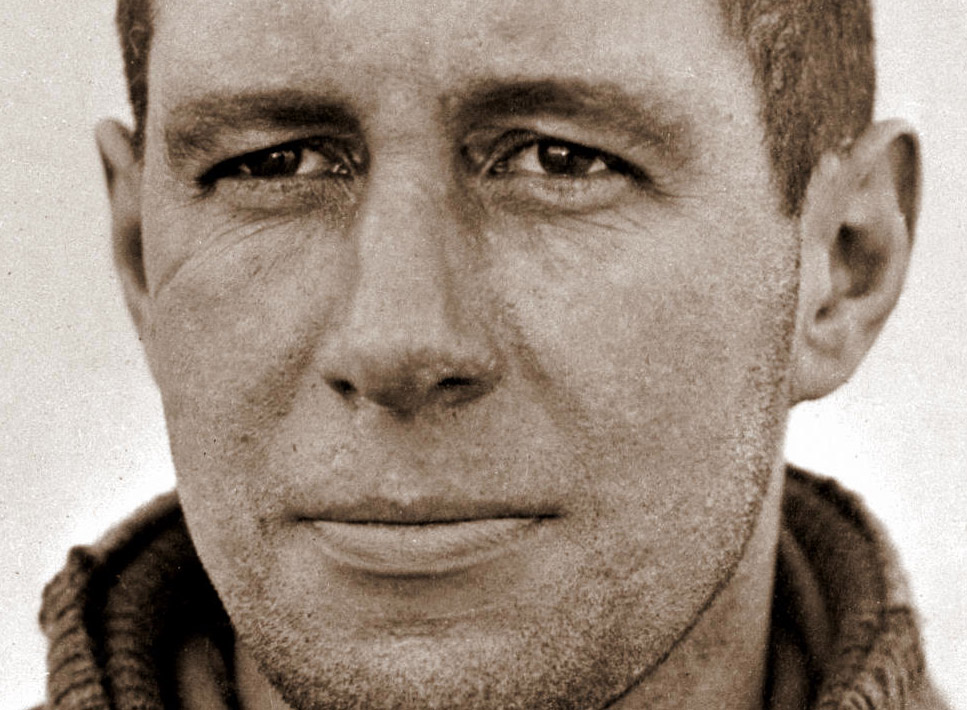
I have put a photograph by Herbert Ponting, Captain Lawrence Edward Grace Oates during the British Antarctic Expedition of 1911-1913, below the detail of him at the South Pole. The face is almost unrecognisable from the strong, handsome face in Ponting’s picture, the prominent nose now blackened and dark being the only thing that make it recognisably the same person. In the detail of Ponting’s photograph, if you enlarge it, you can see two small points of light in his eyes, probably the light of the polar sun when Ponting took the photograph. For me these two spots of light become portents of what was to come as Oates walked out into a blizzard saying those immortal words, “I am just going outside and may be some time”. To me these points of light seared into his retina are like the driving snow that he walked out into in such a selfless act. It is very emotional for me as an Englishman and as a human being to look into the face of this man knowing what he was eventually to go through.

Though they failed in their quest to become the first to the South Pole, for this child, for this man they will forever remain my heroes.

Dr Marcus Bunyan


Many thankx to the Australian National Maritime Museum for allowing me to publish the photographs in the posting. Please click on the photographs for a larger version of the image.


Anonymous photographer. 'Captain Robert Falcon Scott' Nd


Anonymous photographer
Captain Robert Falcon Scott
Nd
Gelatin silver print
Licensed with permission of the Scott Polar Research Institute, University of Cambridge


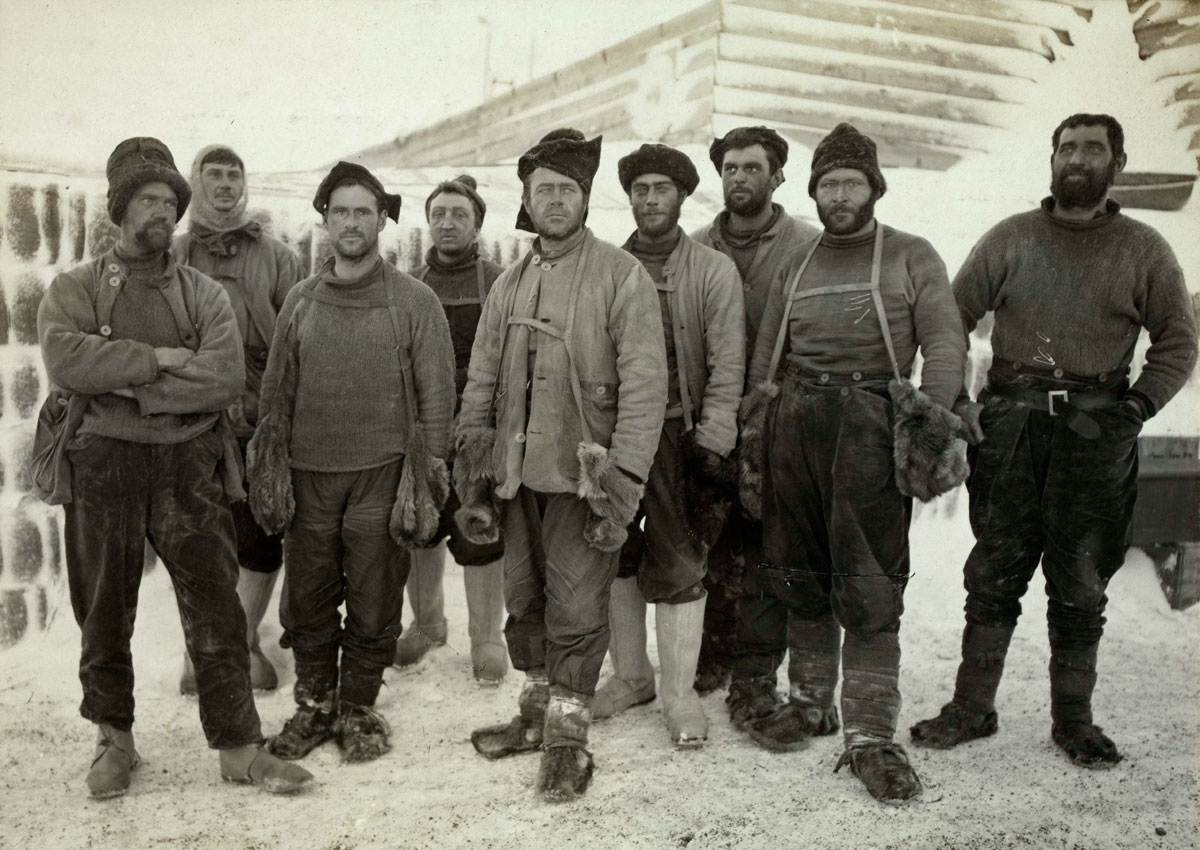
Herbert Ponting (British, 1870-1935) 'Members of the 'Terra Nova' expedition with Scott in the centre' 1911


Herbert Ponting (British, 1870-1935)
Members of the ‘Terra Nova’ expedition with Scott in the centre
1911
Gelatin silver print
Canterbury Museum NZ


Herbert Ponting (British, 1870-1935) 'Scott’s birthday dinner, June 1911'


Herbert Ponting (British, 1870-1935)
Scott’s birthday dinner, June 1911
1911
Gelatin silver print
Canterbury Museum NZ


Herbert Ponting (British, 1870-1935) 'Scott’s birthday dinner, June 1911' 1911 (detail)


Herbert Ponting (British, 1870-1935)
Scott’s birthday dinner, June 1911 (detail)
1911
Gelatin silver print
Canterbury Museum NZ


Herbert Ponting (British, 1870-1935) 'Scott writing in his area of the expedition hut, Scott's cubicle' 1911


Herbert Ponting (British, 1870-1935)
Scott writing in his area of the expedition hut, Scott’s cubicle
1911
Gelatin silver print
Pennell Collection, Canterbury Museum NZ


Herbert Ponting (British, 1870-1935) 'Scott writing in his area of the expedition hut, Scott's cubicle' 1911 (detail)


Herbert Ponting (British, 1870-1935)
Scott writing in his area of the expedition hut, Scott’s cubicle (detail)
1911
Gelatin silver print
Pennell Collection, Canterbury Museum NZ


Herbert Ponting (British, 1870-1935) 'The Tenements, 9 October 1911' 1911


Herbert Ponting (British, 1870-1935)
The Tenements, 9 October 1911
1911
Gelatin silver print
Pennell Collection, Canterbury Museum NZ


Herbert Ponting (British, 1870-1935) 'The Tenements, 9 October 1911' 1911 (detail)


Herbert Ponting (British, 1870-1935)
The Tenements, 9 October 1911 (detail)
1911
Gelatin silver print
Pennell Collection, Canterbury Museum NZ


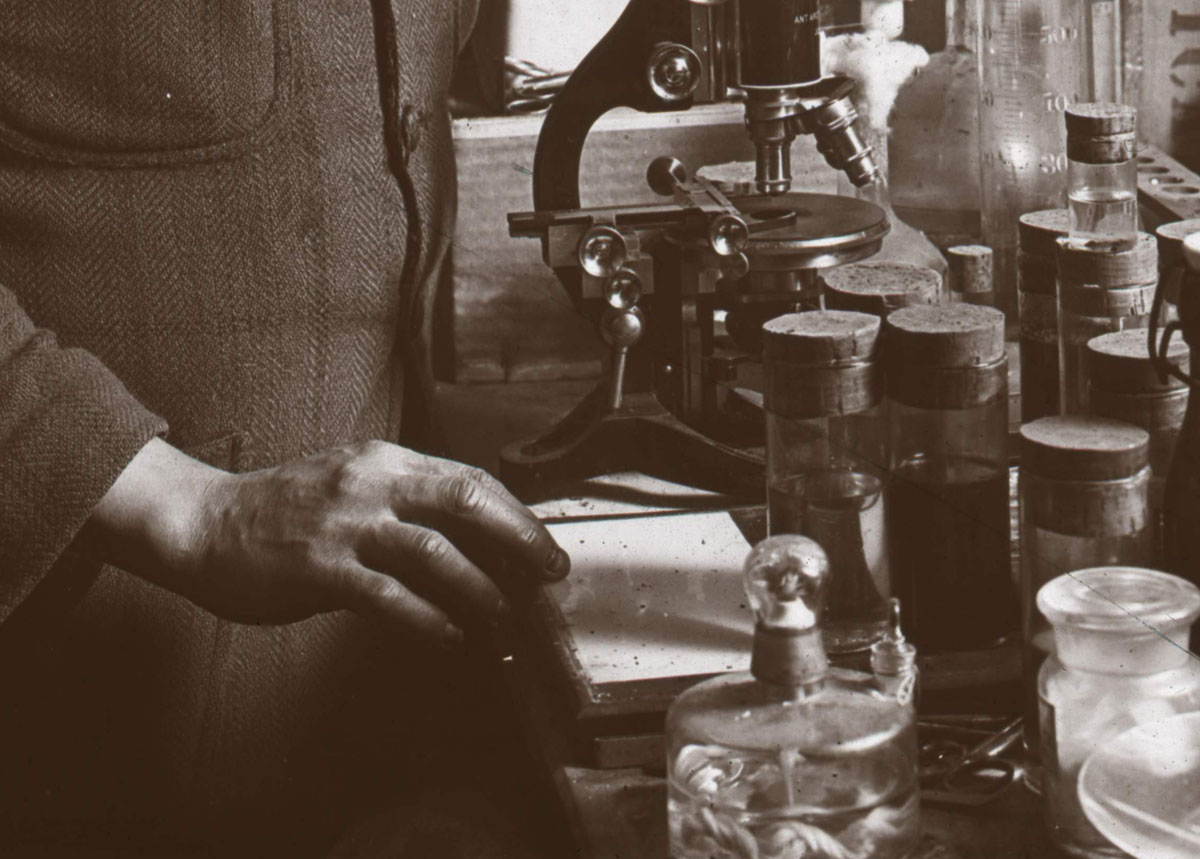
Herbert Ponting (British, 1870-1935) 'Edward Atkinson in the laboratory' 1911


Herbert Ponting (British, 1870-1935)
Edward Atkinson in the laboratory
1911
Silver gelatin print
Canterbury Museum NZ


Herbert Ponting (British, 1870-1935) 'Edward Atkinson in the laboratory' 1911 (detail)


Herbert Ponting (British, 1870-1935)
Edward Atkinson in the laboratory (detail)
1911
Silver gelatin print
Canterbury Museum NZ


One hundred years after its tragic end, the definitive story of British explorer Captain Robert Falcon Scott’s Terra Nova expedition to Antarctica is being told in a major international exhibition coming to the Australian National Maritime Museum this June.

Scott’s Last Expedition will reunite real artefacts used by Scott and his team together with rare scientific specimens collected during the 1910-1913 expedition for the first time since their use in Antarctica.

When Scott set off on what was his second journey to explore the Antarctic on board the former whaling ship Terra Nova, he could not have predicted it would be his last. Tragically he and four of his colleagues died on the return trek to the South Pole two years later, having lost the race to be first. The exhibition however will go beyond the familiar tales of the journey to the Pole and the death of the Polar party to explore the Terra Nova expedition from every angle.

“Over the years public perceptions of Scott have varied greatly, from hero to flawed leader, and discussions of what really happened still captivate people,” said museum director Mary-Louise Williams today. “This exhibition will give visitors a unique opportunity to immerse themselves in this epic journey and the remarkable landscape of Antarctica,” she said.

Visitors will uncover Scott the man, learn more about the people who made up the expedition and explore every fascinating detail of this historic journey. At the centre of the exhibition will be a life-size representation of Scott’s Cape Evans’ base camp. Visitors can walk inside and get a sense of the everyday realities for the expedition’s members… from the cramped conditions and homeliness of the hut to the wealth of specimens collected and scientific investigations conducted.

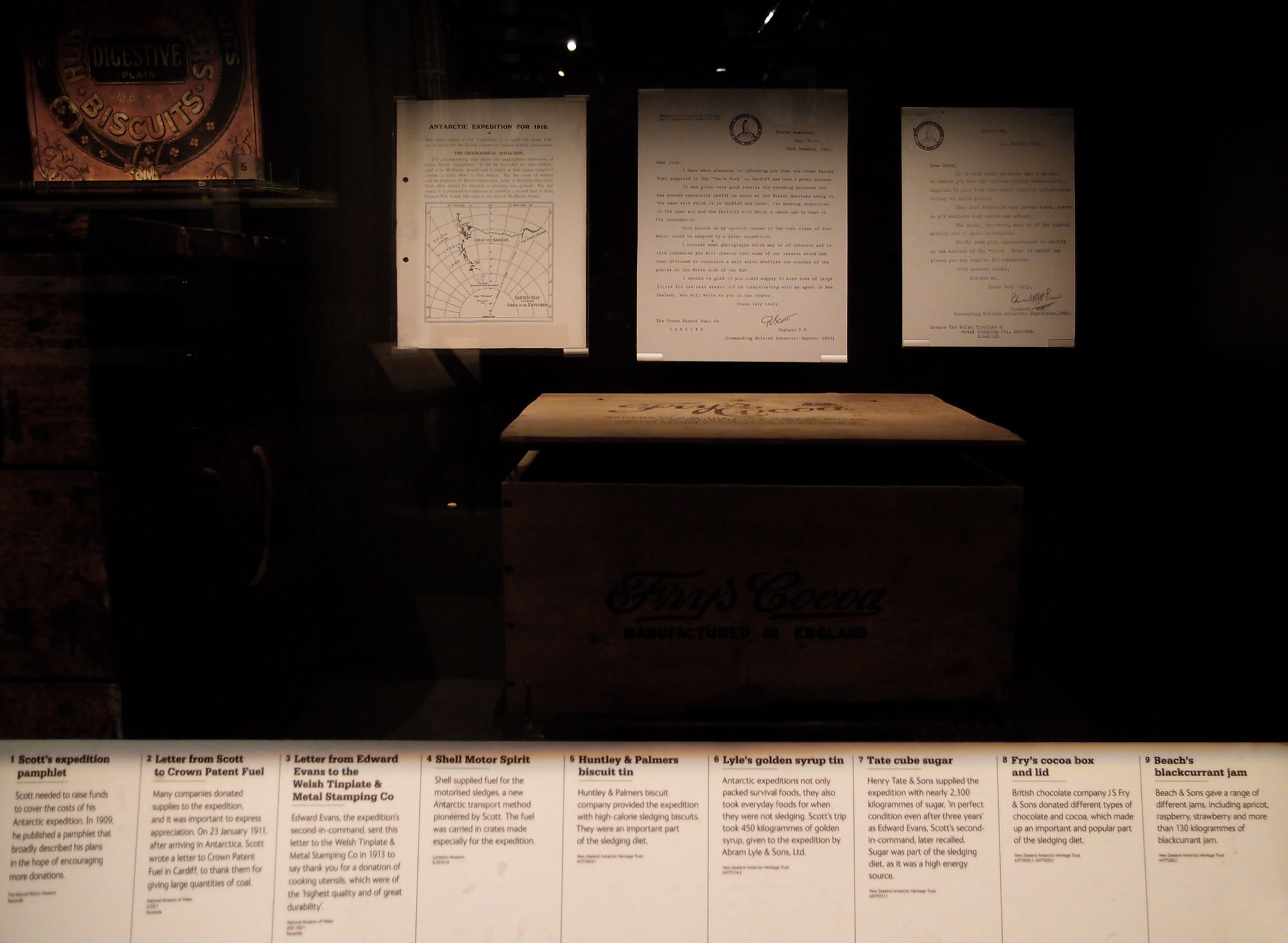
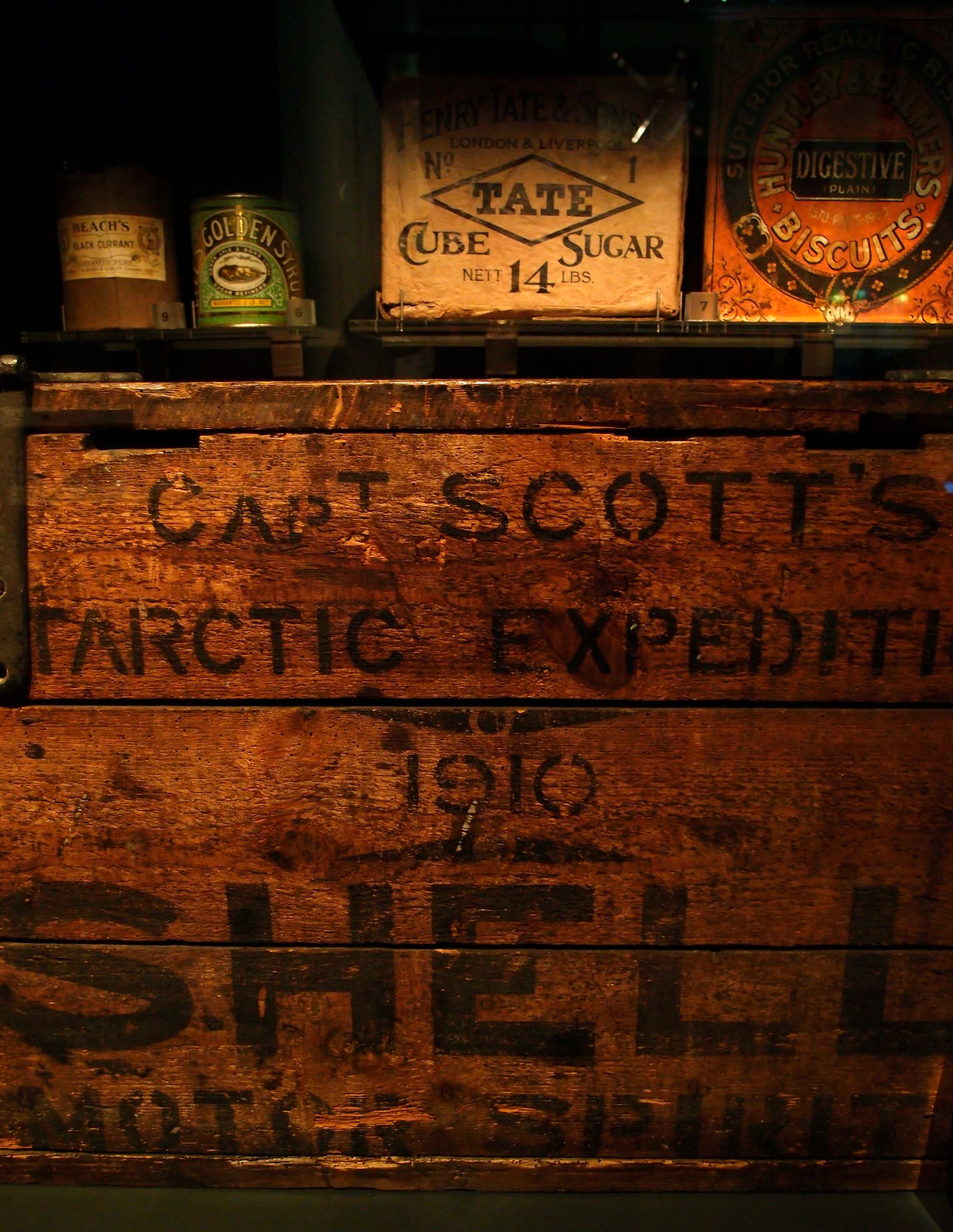
Original artefacts, equipment, clothes, and personal effects will be displayed for the first time in Australia and show the group’s attempts to make life in one of the most hostile environments on Earth as bearable as possible. Food tins including Fry’s Cocoa, Trufood Trumilk, and Symington’s Pea Flour recovered from the hut will be on display together with instruments, a microscope, and even Scott’s gramophone.

Photographs of the environment and life in camp taken by expedition photographer Herbert Ponting and poignant letters and diaries by various expedition members create a vivid picture of what life was like… working in hostile conditions, the struggles for survival and the strength of human endurance and courage.

Scott’s Terra Nova expedition made a significant contribution to Antarctic science. The expedition included a full scientific program with a large team of scientists making new discoveries which directly led to a greater understanding of Antarctica. The scientists had to endure harsh Antarctic conditions to carry out their work. It was cold, windy and completely dark in winter and, if not careful, the scientists could easily get frostbitten. And yet despite the conditions, the expedition left a rich legacy that continues to inspire and inform today.

Natural History Museum, London, the Canterbury Museum, Christchurch, New Zealand and the Antarctic Heritage Trust, New Zealand, have collaborated to create this exhibition to commemorate the centenary of the expedition and celebrate its achievements.

Press release from the Australian National Maritime Museum


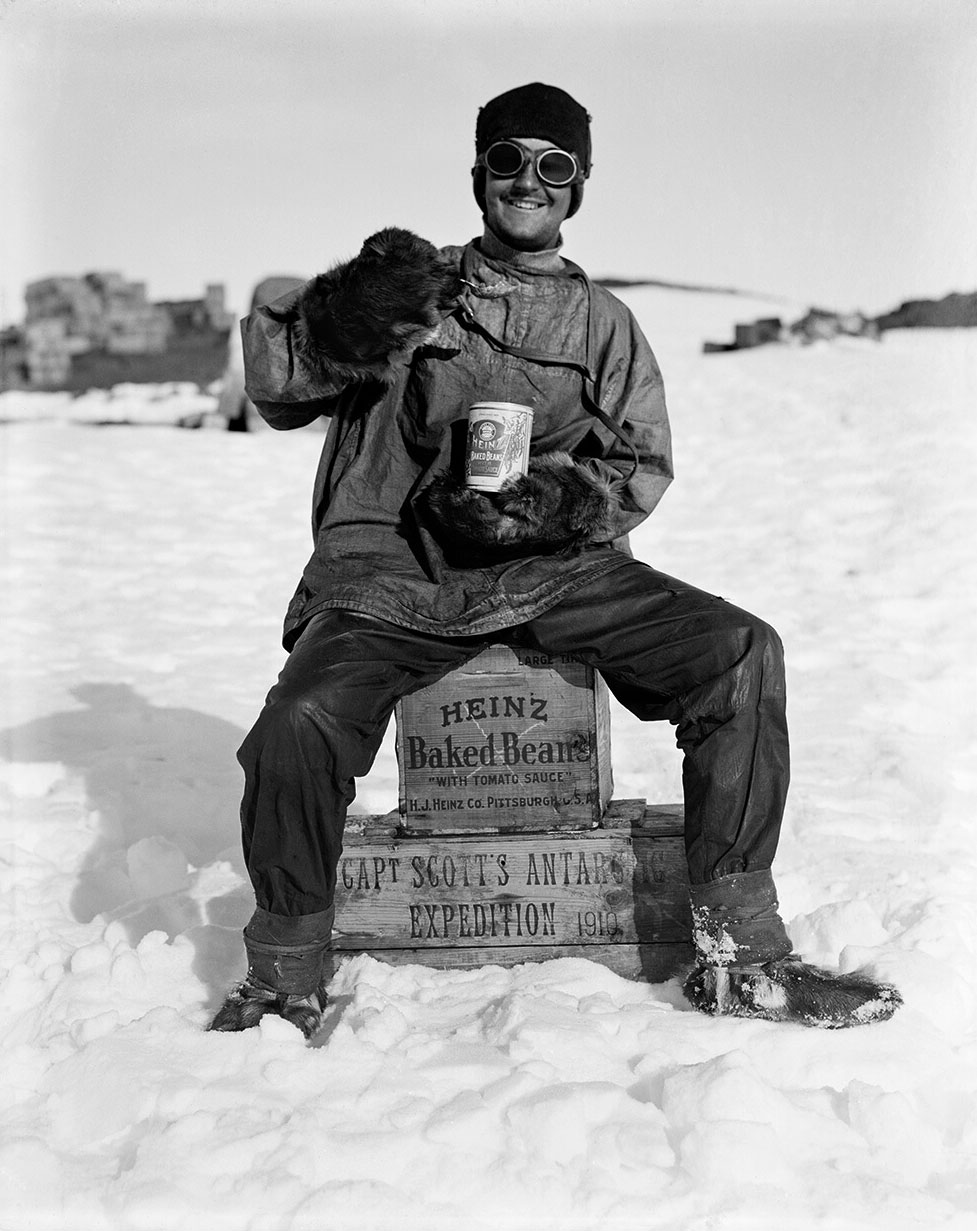
Herbert Ponting (British, 1870-1935) 'A member of the team tucks into a tin of Heinz baked beans in the Ross Dependency, during Captain Robert Falcon Scott’s Terra Nova Expedition to the Antarctic, January 1912' 1912


Herbert Ponting (British, 1870-1935)
A member of the team tucks into a tin of Heinz baked beans in the Ross Dependency, during Captain Robert Falcon Scott’s Terra Nova Expedition to the Antarctic, January 1912
1912
Silver gelatin print
Canterbury Museum NZ


Neerav Bhatt (photographer) Installation view of the exhibition 'Scott's Last Expedition' at the Australian National Maritime Museum, Sydney, June - October 2011

Neerav Bhatt (photographer) Installation view of the exhibition 'Scott's Last Expedition' at the Australian National Maritime Museum, Sydney, June - October 2011

Neerav Bhatt (photographer) Installation view of the exhibition 'Scott's Last Expedition' at the Australian National Maritime Museum, Sydney, June - October 2011

Neerav Bhatt (photographer) Installation view of the exhibition 'Scott's Last Expedition' at the Australian National Maritime Museum, Sydney, June - October 2011

Neerav Bhatt (photographer) Installation view of the exhibition 'Scott's Last Expedition' at the Australian National Maritime Museum, Sydney, June - October 2011


Neerav Bhatt (photographer)
Installation view of the exhibition Scott’s Last Expedition at the Australian National Maritime Museum, Sydney, June – October 2011
CC BY-NC-SA 2.0


Scott and the Polar Party at the South Pole 1912


Scott and the Polar Party at the South Pole
Left to right: Captain Lawrence Oates, Lieutenant Henry Bowers (seated), Captain Robert Falcon Scott, Dr Edward Wilson (Seated), Petty Officer Edgar Evans
1912
Licensed with permission of the Scott Polar Research Institute, University of Cambridge.


Notice the camera release cord in the right hand of Lieutenant Henry Bowers.


The fatal journey

Scott’s 1,450 km journey to the geographic South Pole began on 1 November 1911, two weeks after the Norwegian polar explorer Roald Amundsen left his base camp at the Bay of Whales. Amundsen reached the pole first – on 14 December 1911 – and then raced back to tell the world their news. Scott and his team reached the Pole a month later on 17 January 1912 having been beset by fierce weather conditions. The disappointment was immense. The return journey was undertaken in horrid weather with harsh, intense cold and violent blizzards that, in the end, defeated them. Evans failed first, suffering concussion from a fall; Oates suffered dramatic frostbite to his feet – gangrene had set in – and he crawled out of the tent saying the now famous words, “I am just going outside and may be some time”. The remaining men – Scott, Wilson and Bowers – were weak with malnutrition, starvation and exhaustion and perished on or around 29/30 March 1912 – some three weeks after the world learned that Amundsen had reached the Pole first.


Captain Robert Falcon Scott at the South Pole (detail)


Captain Robert Falcon Scott at the South Pole (detail)


Captain Lawrence Oates at the South Pole (detail)


Captain Lawrence Oates at the South Pole (detail)


Herbert Ponting. 'Lawrence Oates' c. 1911


Herbert Ponting (British, 1870-1935)
Captain Lawrence Edward Grace Oates during the British Antarctic Expedition of 1911-1913
c. 1911
Silver gelatin print
Photographic Archive, Alexander Turnbull Library


Herbert Ponting. 'Captain Lawrence Edward Grace Oates during the British Antarctic Expedition of 1911-1913' c. 1911 (detail)


Herbert Ponting (British, 1870-1935)
Captain Lawrence Edward Grace Oates during the British Antarctic Expedition of 1911-1913 (detail)
c. 1911
Silver gelatin print
Photographic Archive, Alexander Turnbull Library


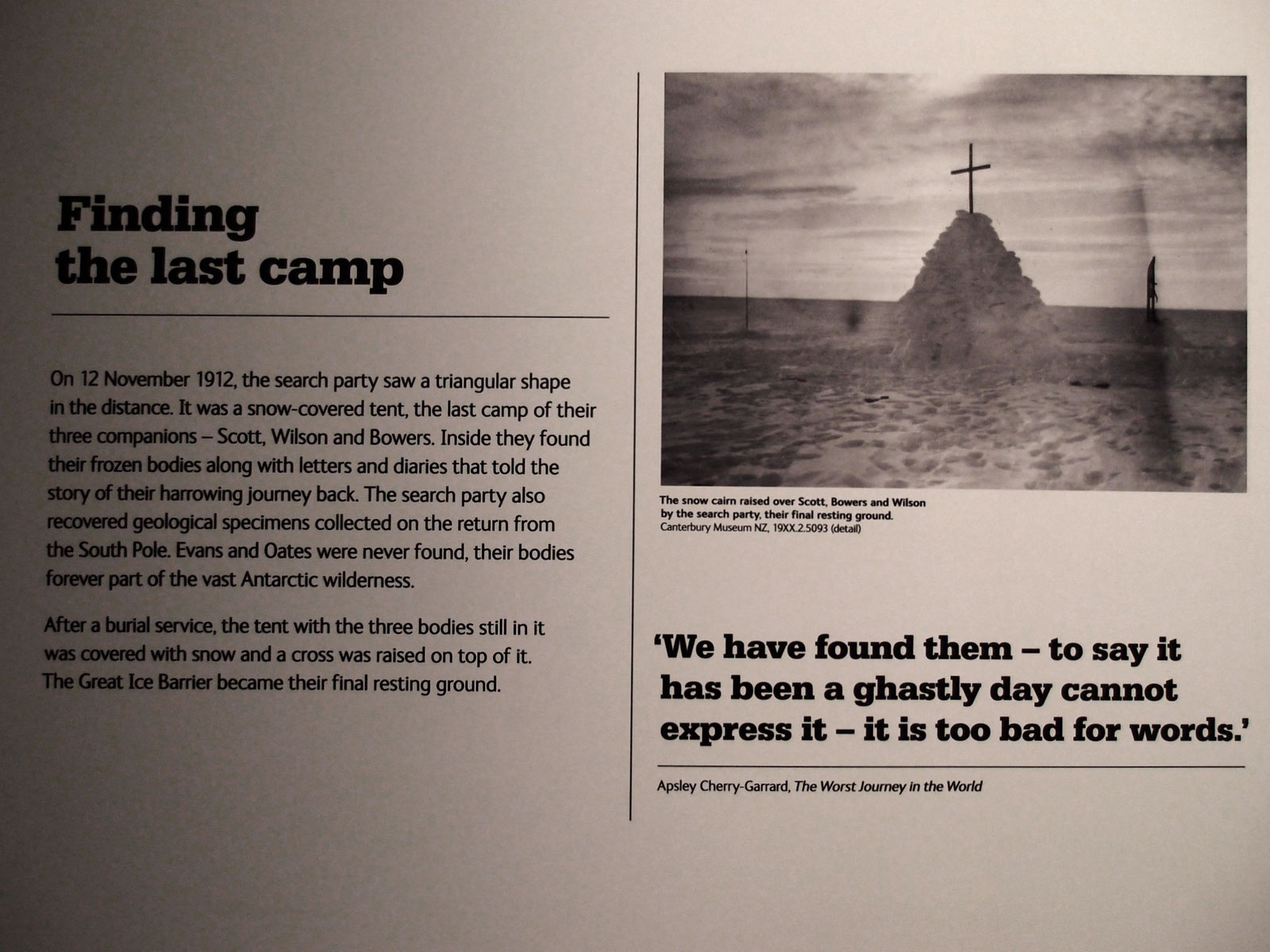
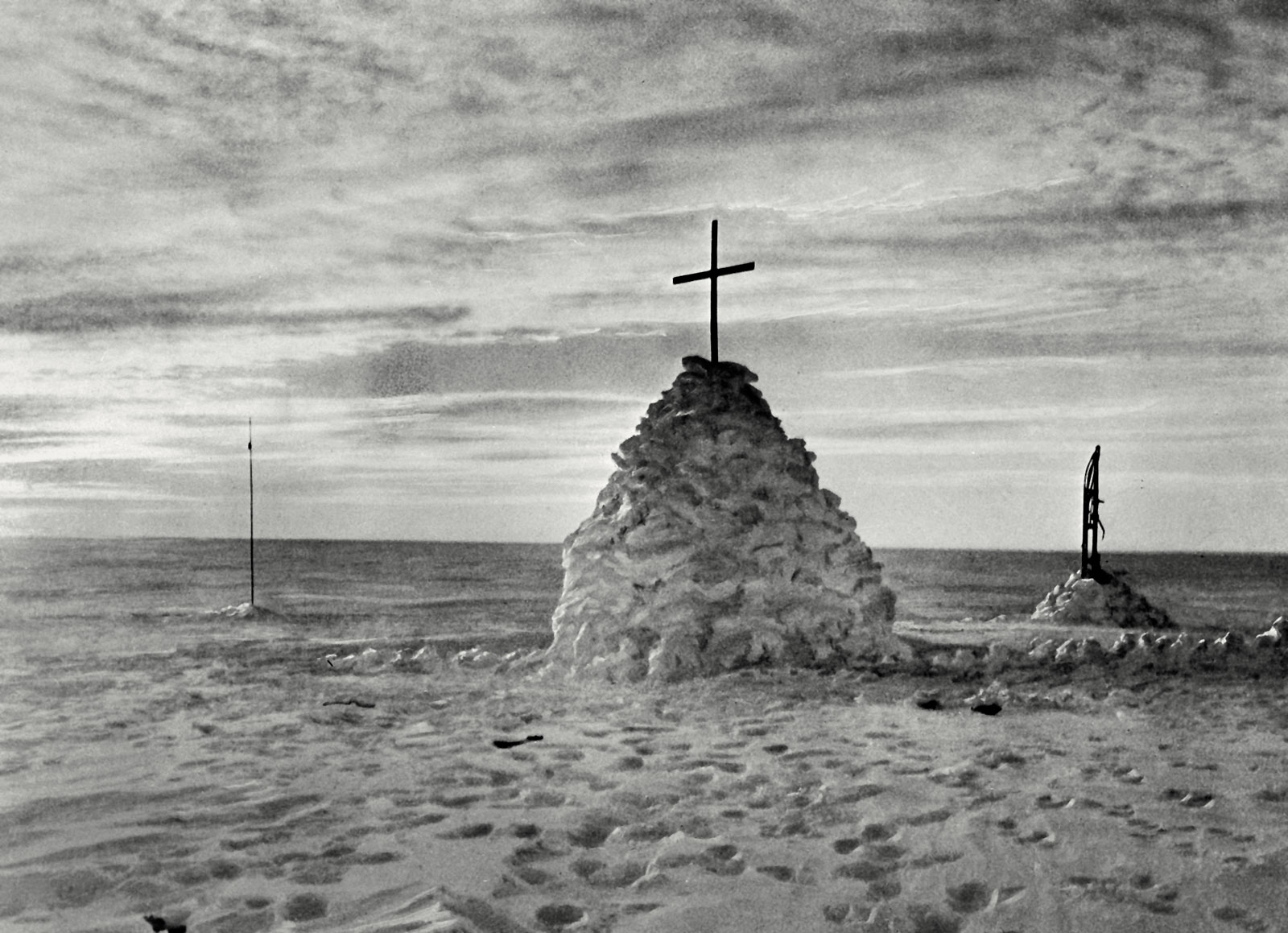
Anonymous photographer. 'The snow cairn raised over Scott, Bowers and Wilson by the search party, their final resting ground' 1912 (detail)


Anonymous photographer
The snow cairn raised over Scott, Bowers and Wilson by the search party, their final resting ground (detail)
1912
Silver gelatine print
Canterbury Museum NZ


Australian National Maritime Museum
2 Murray Street
Darling Harbour
Sydney NSW 2000
Australia

Opening hours:
Every day 10am – 4.00pm
Australian National Maritime Museum website
LIKE ART BLART ON FACEBOOK

Back to top

Exhibition: ‘Boris Mikhailov: Case History’ at The Museum of Modern Art (MoMA), New York

Exhibition dates: 26th May – 5th September 2011


Many thankx to The Museum of Modern Art for allowing me to publish the photographs in the posting. Please click on the photographs for a larger version of the image.


Boris Mikhailov (Ukrainian, born 1938) 
'Untitled', from the series 'Case History' 
1997-98


Boris Mikhailov (Ukrainian, b. 1938)
Untitled
1997-1998
From the series Case History
Chromogenic colour print
93″ x 49 15/16″ (236.2 x 126.8cm)
Courtesy the artist, Pace/MacGill Gallery, New York, and Galerie Barbara Weiss, Berlin
© 2011 Boris Mikhailov


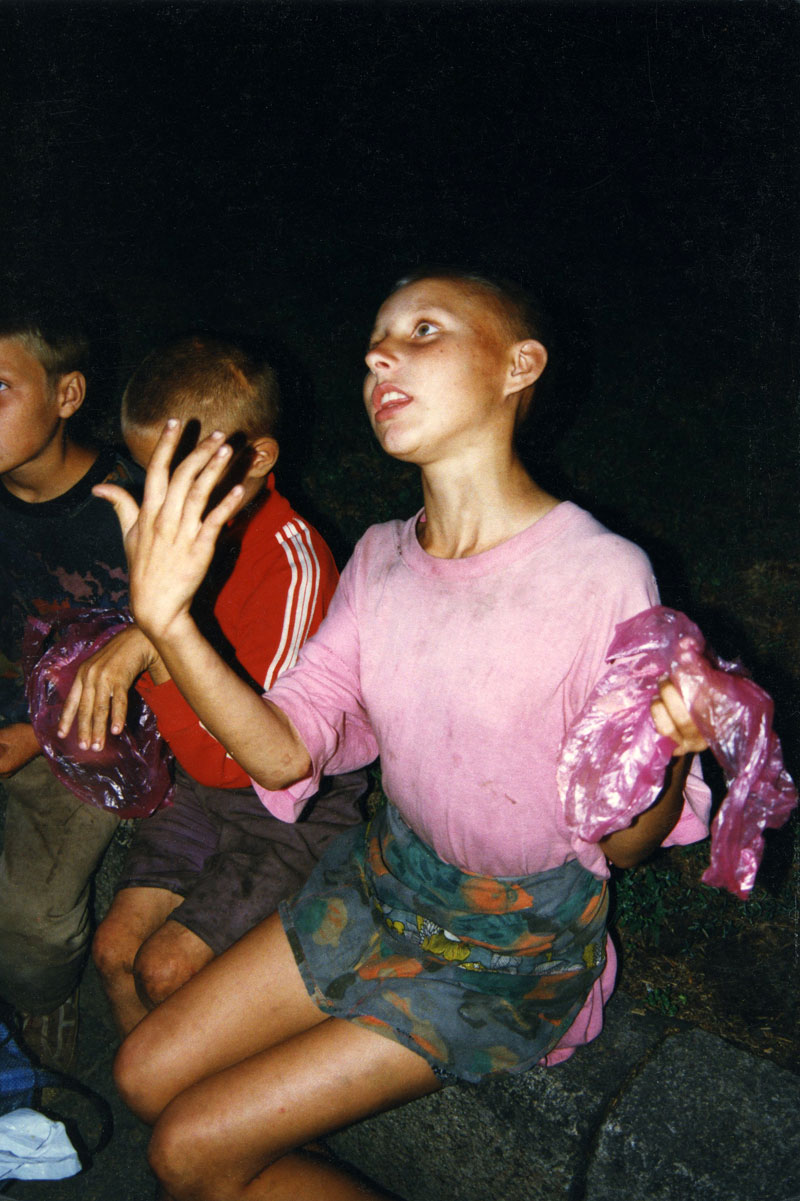
The demise of the Soviet Union in 1991 spelled disaster for many citizens of Mikhailov’s native Kharkov, in Ukraine. As the state apparatus collapsed, bleak predictability rapidly gave way to chaos and want. The photographer, whose earlier work includes sympathetic records of communal pastimes, responded with a bitter series that starkly evokes the squalor of desperation, drink, and despair. In the same years, but in another photographic mode altogether, he experimented with flagrantly staged political and sexual satires.

A decade later, as a few made millions, the least fortunate Ukrainians were more desperate still. This untitled work (above) belongs to Mikhailov’s bold and risky series Case History, for which he paid Kharkov’s outcasts to pose and perform. The best of his new photographs improbably blend the opposing poles of his art. No-nonsense realism and impromptu playacting seamlessly conspire in a persuasive theater of wrenching misery.

Publication excerpt from The Museum of Modern Art, MoMA Highlights, New York: The Museum of Modern Art, revised 2004, originally published 1999, p. 357.


With Case History, Boris Mikhailov confronts viewers with the effects of the Soviet Union’s collapse on the homeless and marginalised people of Ukraine. To create these raw, colour-saturated, large-scale photographs, Mikhailov paid his subjects and worked with them to stage poses inspired by religious and historical paintings. “This is the first time I paid my models,” he explains. “I don’t think this is an issue. If models get paid to appear in an advertisement, nobody cares. Why can’t I? This gave me the possibility to photograph them, and gave them the possibility to live.”

Additional text from Seeing Through Photographs online course, Coursera, 2016

Mikhailov’s Case History series examines the social oppression and devastating poverty of a disenfranchised community in Kharkiv, Ukraine: those who had been left homeless by the rise of the capitalist oligarchy following the collapse of the Soviet Union. “The rich and the homeless – the new classes of a new society – this was, as we had been taught, one of the features of capitalism,” Mikhailov observed. A haunting document of post-Soviet urban conditions, the series captures the failed promise of capitalism with poetry and grit.

Gallery label from 2020


Case History / Boris Mikhailov


Boris Mikhailov (Ukrainian, born 1938) 
'Untitled', from the series 'Case History' 
1997-98


Boris Mikhailov (Ukrainian, b. 1938)
Untitled
1997-1998
From the series Case History
Chromogenic colour print
93″ x 49 15/16″ (236.2 x 126.8cm)
Courtesy the artist, Pace/MacGill Gallery, New York, and Galerie Barbara Weiss, Berlin
© 2011 Boris Mikhailov


Boris Mikhailov (Ukrainian, born 1938) 
'Untitled', from the series 'Case History' 
1997-1998


Boris Mikhailov (Ukrainian, b. 1938)
Untitled
1997-1998
From the series Case History
Chromogenic colour print
93″ x 49 15/16″ (236.2 x 126.8cm)
Courtesy the artist, Pace/MacGill Gallery, New York, and Galerie Barbara Weiss, Berlin
© 2011 Boris Mikhailov


Boris Mikhailov (Ukrainian, b. 1938) '
Untitled', from the series 'Case History' 
1997-98


Boris Mikhailov (Ukrainian, b. 1938)
Untitled
1997-1998
From the series Case History
Chromogenic colour print
93″ x 49 15/16″ (236.2 x 126.8cm)
Courtesy the artist, Pace/MacGill Gallery, New York, and Galerie Barbara Weiss, Berlin
© 2011 Boris Mikhailov


The Museum of Modern Art presents Boris Mikhailov: Case History, the first presentation dedicated entirely to the artist’s seminal series Case History (1997-98) in an American museum, from May 26 to September 5, 2011. Ukrainian-born Mikhailov (b. 1938) is one of the leading photographers from the former Soviet Union. For over 40 years, Mikhailov has explored the position of the individual within the mechanisms of public ideology, touching on such subjects as Ukraine under Soviet rule, the living conditions in post-communist Eastern Europe, and the fallen ideals of the Soviet Union. Although deeply rooted in a historical context, his work incorporates profoundly engaging and personal narratives of humour, lust, vulnerability, ageing, and death. The exhibition is organised by Eva Respini, Associate Curator of Photography, The Museum of Modern Art.

This exhibition, which features some 20 works, is selected from the larger body of work of Case History, which comprises 400 photographs and was published as a book in 1999. Arguably his most challenging body of work, it explores the deeply troubling circumstances of bomzhes – the homeless – a new class that emerged after the collapse of the Soviet Union in 1991. In 1996, after spending time abroad, he returned to Kharkov, which seemed like a changed city, with foreign ads and the glitz of a new western capitalist façade. Whereas most mainstream media focused on the new capitalists and rising oligarchs of the former Soviet republics, Mikhailov’s pictures describe the circumstances of a largely invisible underclass. Set against the bleak backdrop of the industrial city of Kharkov, his life-size colour photographs chronicle the oppression, devastating poverty, and everyday reality of a disenfranchised community living on the margins of the Ukraine’s new economic regime. Many of his subjects display their wounds, rashes, tattoos, and growths.

For Mikhailov the act of photographing was partly born out of a sense of responsibility: Case History records post-Soviet realities, in stark contrast to the previous histories of the Ukraine (1930s famine, war, Soviet losses in World War II) that went undocumented. One of the most haunting documents of post-Soviet urban conditions, these unforgettable pictures capture this new reality with poetry, clarity, and grit. The large size of Mikhailov’s pictures is in keeping with the scale of contemporary photography, creating a visceral and immersive viewing experience. Ms. Respini states, “Mikhailov inhabits the worlds of social documentarian and contemporary artist. It is partly the tension between these two roles that makes the work so complex and powerful.”

Case History also explores the complicated relationship between photographer and subject. The photographs are collaborations, sometimes the result of a spontaneous moment, other times directed by the artist. Central to the exhibition is the seven-part work the artist calls “requiem.” The mannered posing of the people in his pictures exposes the constructed nature of the photographs, challenging the idea of objective truth and authenticity implied by documentary photography. For Mikhailov, photographic seeing is an accountable act, and viewers participate in this act. With these pictures, Mikhailov implicates himself – and the viewers – in the act of looking.

Press release from The Museum of Modern Art website


Installation view of the exhibition 'Boris Mikhailov: Case History' at The Museum of Modern Art (MoMA), New York


Installation view of the exhibition Boris Mikhailov: Case History at The Museum of Modern Art (MoMA), New York


Boris Mikhailov (Ukrainian, b. 1938) '
Untitled', from the series 'Case History' 
1997-98


Boris Mikhailov (Ukrainian, b. 1938)
Untitled
1997-1998
From the series Case History
Chromogenic colour print
93″ x 49 15/16″ (236.2 x 126.8cm)
Courtesy the artist, Pace/MacGill Gallery, New York, and Galerie Barbara Weiss, Berlin
© 2011 Boris Mikhailov


Boris Mikhailov (Ukrainian, b. 1938) 'Untitled' 1997-1998


Boris Mikhailov (Ukrainian, b. 1938)
Untitled
1997-1998
From the series Case History
Chromogenic colour print
93″ x 49 15/16″ (236.2 x 126.8cm)
Courtesy the artist, Pace/MacGill Gallery, New York, and Galerie Barbara Weiss, Berlin
© 2011 Boris Mikhailov


Boris Mikhailov (Ukrainian, b. 1938) '
Untitled', from the series 'Case History' 
1997-1998


Boris Mikhailov (Ukrainian, b. 1938)
Untitled
1997-1998
From the series Case History
Chromogenic colour print
93″ x 49 15/16″ (236.2 x 126.8cm)
Courtesy the artist, Pace/MacGill Gallery, New York, and Galerie Barbara Weiss, Berlin
© 2011 Boris Mikhailov


What does it mean to present images like these as art in a museum? In one respect, they carry on a tradition of picturing the downtrodden exemplified in photographs by countless artists from Walker Evans to Andres Serrano, who has made studio images of homeless people resembling the heroic portraits of American Indians by the 19th century photographer Edward S. Curtis. Works like those tell us that, whatever their outward appearances and circumstances, the poor have souls that are worthy of respect.

Mr. Mikhailov’s photographs are not so ennobling. They render their subjects as exotic and even demonic. Specimens in a Boschian freak show, they elicit sympathy, revulsion or amazement but not admiration or empathy. Because there are no titles or captions, you don’t know who the people are or anything about their lives. Maybe some were research scientists or university professors fired for not toeing party lines or for crossing paths with a ruthless plutocrat at the wrong place and time; maybe they were all rounded up from an insane asylum or an alcoholic detox center. …

All seem to belong to a tribe or extended family of outcasts. But “the homeless,” you might want to object, is not a homogeneous population. It includes alcoholics, drug addicts, criminals, prostitutes, con artists, people with mental illnesses and hard-working citizens going through rough patches. Mr. Mikhailov is not concerned with personal particulars. Under his direction the subjects are, above all, actors who function mainly as allegorical symbols. They are metonyms for the underbelly of society, and their challenging revelations of their own usually hidden body parts is a metaphor for the whole project of exposing what polite society would prefer to keep under wraps. To the extent that they appear everywhere around the world, including in New York City, they are universal signs of capitalism’s failure to care for the less fortunate.

Ken Johnson. “Behold the Anonymous Downtrodden,” on The New York Times website June 2, 2011 [oNline] Cited 08/01/2025


Boris Mikhailov (Ukrainian, b. 1938) 'Untitled' 1997-1998


Boris Mikhailov (Ukrainian, b. 1938)
Untitled
1997-1998
From the series Case History
Chromogenic colour print
93″ x 49 15/16″ (236.2 x 126.8cm)
Courtesy the artist, Pace/MacGill Gallery, New York, and Galerie Barbara Weiss, Berlin
© 2011 Boris Mikhailov


Boris Mikhailov (Ukrainian, b. 1938) 'Untitled' 1997-1998


Boris Mikhailov (Ukrainian, b. 1938)
Untitled
1997-1998
From the series Case History
Chromogenic colour print
93″ x 49 15/16″ (236.2 x 126.8cm)
Courtesy the artist, Pace/MacGill Gallery, New York, and Galerie Barbara Weiss, Berlin
© 2011 Boris Mikhailov


Boris Mikhailov (Ukrainian, b. 1938) '
Untitled', from the series 'Case History' 
1997-98


Boris Mikhailov (Ukrainian, b. 1938)
Untitled
1997-1998
From the series Case History
Chromogenic colour print
93″ x 49 15/16″ (236.2 x 126.8cm)
Courtesy the artist, Pace/MacGill Gallery, New York, and Galerie Barbara Weiss, Berlin
© 2011 Boris Mikhailov


Boris Mikhailov (Ukrainian, b. 1938) '
Untitled', from the series 'Case History' 
1997-98


Boris Mikhailov (Ukrainian, b. 1938)
Untitled
1997-1998
From the series Case History
Chromogenic colour print
93″ x 49 15/16″ (236.2 x 126.8cm)
Courtesy the artist, Pace/MacGill Gallery, New York, and Galerie Barbara Weiss, Berlin
© 2011 Boris Mikhailov


The Museum of Modern Art
11 West 53 Street
New York, NY 10019
Phone: (212) 708-9400

Opening hours:
10.30am – 5.30pm
Open seven days a week

MoMA website

LIKE ART BLART ON FACEBOOK

Back to top

Exhibition: ‘The Lives of Great Photographers’ at The National Media Museum, Bradford

Exhibition dates: 15th April – 4th September 2011


Many thankx to The National Media Museum for allowing me to publish the photographs in the posting. Please click on the photographs for a larger version of the image.


Lady Clementina Hawarden (British, 1822-1865) 'Self Portrait' c. 1864


Lady Clementina Hawarden (British, 1822-1865)
Self Portrait
c. 1864
Albumen print
Courtesy of the National Media Museum/SSPL


Clementina, Lady Hawarden, is a poetic, if elusive, presence among nineteenth-century photographers. As a devoted mother, her life revolved around her eight children. She took up photography in 1857; using her daughters as models, she created a body of work remarkable for its technical brilliance and its original depiction of nascent womanhood.
Lady Hawarden showed her work in the 1863 and 1864 exhibitions of the Photographic Society. With the exception of a few rare examples, her photographs remained in the possession of her family until 1939, when the more than eight hundred images were donated to the Victoria and Albert Museum. Only recently have they been the objects of research, publication, and exhibition.

Text from The Metropolitan Museum of Art website


John Moffat (Scottish, 1819-1894) 'William Henry Fox Talbot with camera and lens' 1864


John Moffat (Scottish, 1819-1894)
William Henry Fox Talbot with camera and lens
1864


Julia Margaret Cameron (British born India, 1815-1879) 'Carlyle like a rough block of Michael Angelo's sculpture' 1867


Julia Margaret Cameron (British born India, 1815-1879)
Carlyle like a rough block of Michael Angelo’s sculpture
1867
Albumen print
Courtesy The Royal Photographic Society Collection at the National Media Museum/SSPL


Henry Herschel Hay Cameron (British born India, 1852-1911) 'Mrs Julia Margaret Cameron' 1870


Henry Herschel Hay Cameron (British born India, 1852-1911)
Mrs Julia Margaret Cameron
1870
Albument print
Courtesy of the National Media Museum/SSPL


Julia Margaret Cameron (British born India, 1815-1879) 'So Like a Shatter'd Column Lay the King' 1875


Julia Margaret Cameron (British born India, 1815-1879)
So Like a Shatter’d Column Lay the King
1875
Albumen print
Courtesy of The Royal Photographic Society Collection at the National Media Museum


Photographers have created some of the most famous and memorable images ever produced, combining science and art since 1839. The Lives of Great Photographers, a free to enter exhibition at the National Media Museum in Bradford, draws on the Museum’s renowned collection to focus on the pioneers behind the camera, exploring the extraordinary stories surrounding some of photography’s most important innovators and artists.

Featuring Henri Cartier-Bresson, Julia Margaret Cameron, Robert Capa, William Henry Fox Talbot, Weegee, Tony Ray-Jones, Fay Godwin and Eadweard Muybridge, the exhibition will display iconic images and artefacts from these and other great names, selected exclusively from the National Collection of Photography.

Exhibition curator Brian Liddy said: “Photography has been with us for more than 170 years, and in that time countless famous photographs have been taken by many famous photographers. Often we may think we know these men and women because we know their work so well, but over time so many photographers’ personal stories have become overshadowed by their most famous pictures. This major exhibition aims to redress the balance.”

The show begins with an investigation into the rivalry between two of the medium’s earliest pioneers. Without Louis Jacques Mandé Daguerre and William Henry Fox Talbot, photography as it known today would not exist. Daguerre, a former theatrical designer, presented the photographic process to France and the world in 1839. Working in parallel and in competition, Talbot, who became an MP for Chippenham, went on to create the first negative from which multiple copy photographs could be produced.

As technology evolved, the breadth and range of photography increased, and the methods by which it could provide a source of income, or artistic expression, became more diverse. Julia Margaret Cameron, although primarily considered an artist, copyrighted her work and attempted to make a living by selling copies. Her personal connections gave her the opportunity to produce some of the first celebrity photographs in existence. Olive Edis employed photography as a serving war artist during the First World War and Edward Steichen’s career was remarkable for its variety as he moved effortlessly from art, to fashion, to advertising.

Photography also proved an ideal medium when it came to documenting world events. Lewis Hine and Dorothea Lange were both driven by their social consciences to record the Great Depression in America. Photojournalism, the cousin of documentary photography, is represented in the exhibition by names such as Henri Cartier-Bresson and Robert Capa, founding members of the world’s first photographic agency, Magnum. Both served in the Second World War and produced images that helped define an era.

One of the most notorious life stories is that of the English photographer Eadweard Muybridge. His pioneering work in chronophotography, whereby movement is captured by a sequence of photographic exposures, famously demonstrated that all four legs of a horse left the ground as it galloped. Until then the motion of a horse’s hooves were too quick for the human eye to determine. Perhaps less well known is the fact that Muybridge murdered his wife’s lover in cold blood but was later acquitted with a verdict of ‘justifiable homicide’.

The exhibition also includes Roger Fenton, Lady Clementina Hawarden, Alfred Stieglitz, André Kertész, and Larry Burrows. Each photographer is represented by their photographic portrait and a selection of their images. None is living, as only those whose lives and work can be evaluated in their entirety have been selected.

Brian Liddy added: “This exhibition shows just how rich the museum’s collections are. The work of some of the best-known photographers in history will be shown alongside the kinds of cameras they would have had to carry and use in the course of their work. We’ve also taken the opportunity to show rarely seen material, such as pages from the notebooks of Tony Ray-Jones detailing what was going through his mind when he was thinking about how to get the pictures he wanted.”

“By recounting the lives of these great photographers, we hope to provide an insight into what led them to produce some of the greatest photographs ever taken.”

Press release from The National Media Museum


Henry Fox Talbot (British, 1800-1877) 'The Ladder' 1844


Henry Fox Talbot (British, 1800-1877)
The Ladder
1844
Salted paper print from paper negative
Courtesy of the National Media Museum/SSPL


Roger Fenton (British, 1819-1869) 'Princesses Helena and Louise' 1856


Roger Fenton (British, 1819-1869)
Princesses Helena and Louise
1856
Albumen print
Courtesy of The Royal Photographic Society Collection at the National Media Museum


Photograph of Princess Helena and Princess Louise, seated outside together wearing identical outfits, including hats. Both look to front. Upturned stool in foreground.

The two princesses look straight at the camera in what is an unusually direct pose. Princess Helena (1846-1923) and Princess Louise (1848-1939) were the fifth and six children of Queen Victoria and Prince Albert. Princess Helena was herself a keen collector of photographs and compiled a number of albums commemorating her many visits to Balmoral

Text adapted from Roger Fenton – Julia Margaret Cameron: Early British photographs from the Royal Collection, London, 2010 on the Royal Collection Trust website


Eadweard Muybridge (English, 1830-1904) Man (Muybridge) throwing discus walking up steps walking Plate 519 Animal Locomotion


Eadweard Muybridge (English, 1830-1904)
Man (Muybridge) throwing discus walking up steps walking
Plate 519 Animal Locomotion
1887
Collotype
Courtesy of the National Media Museum/SSPL


Unknown photographer. 'Eadweard Muybridge' date unknown


Unknown photographer
Eadweard Muybridge
Date unknown
Courtesy of The Royal Photographic Society Collection at the National Media Museum


Alvin Langdon Coburn (American, 1882-1966) 'Alfred Stieglitz' 1905


Alvin Langdon Coburn (American, 1882-1966)
Alfred Stieglitz
1905
Courtesy of the National Media Museum/SSPL


Lewis Hine (American, 1874-1940) 'Albanian woman Ellis Island' 1905


Lewis Hine (American, 1874-1940)
Albanian woman Ellis Island
1905
Gelatin silver print
Courtesy of the National Media Museum/SSPL


At the Ethical Culture School in New York Lewis Hine taught photography to teenagers, encouraging them to observe others. He took his classes to Ellis Island to see arriving immigrants. “At times it looked like a costume ball,” he wrote, “with the multicoloured, many-styled national costumes,” This is one of over 200 photographs that Hine made himself at Ellis Island, representing an Albanian immigrant, wearing her best clothes, cleaned and immaculately pressed. Hine’s empathy with the neglected him led to a job with the National Child Labor Committee. He traveled the country photographing children at work in factories in New England, at coal mines in Pennsylvania, and canneries on the Gulf Coast. Hine’s photographs helped secure child labor laws in this country.

From Touchstones of the Twentieth Century: A History of Photography at the University of Notre Dame (exhibition, 2020-21)


Unknown photographer. 'Lewis Hine photographing children in a slum' c. 1910


Unknown photographer
Lewis Hine photographing children in a slum
c. 1910
Gelatin silver print
Courtesy of the National Media Museum/SSPL


Alvin Langdon Coburn (American, 1882-1966) 'George Davison' 1918


Alvin Langdon Coburn (American, 1882-1966)
George Davison
1918
Gelatin silver print
Courtesy of the National Media Museum/SSPL


George Davison (19 September 1854 – 26 December 1930) was an English photographer, a proponent of impressionistic photography, a co-founder of the Linked Ring Brotherhood of British artists and a managing director of Kodak UK. He was also a millionaire, thanks to an early investment in Eastman Kodak.


Edith Tudor Hart (Austrian-British, 1908-1973) 'Gee Street, Finsbury' 1936


Edith Tudor Hart (Austrian-British, 1908-1973)
Gee Street, Finsbury
1936
Courtesy of the National Media Museum/SSPL
© Wolfgang Suschitzky


This photograph was published alongside Poodle Parlour, London (PGP 279.33B) in the satirical magazine Lilliput in 1939, offering a comparison between the living conditions of the urban poor and the care lavished on pets by their wealthy owners. The juxtaposition made a simple political point and encouraged the viewer to think about the unequal organisation of society. This was a rhetorical technique common in left-wing illustrated journals on the Continent. The Austrian magazine, Der Kuckuck, had published a similar story in 1931 comparing the living conditions of the Berlin poor with the more salubrious accommodation of the city’s dog home.

Text from the National Galleries of Scotland website


Henri Cartier-Bresson (French, 1908-2004) 'Dessau, Germany' 1945


Henri Cartier-Bresson (French, 1908-2004)
Dessau, Germany
1945
Gelatin silver print
Courtesy of the National Media Museum/SSPL
© Henri Cartier-Bresson, Magnum, HCB Fondation


Cartier-Bresson had been a prisoner of war in Germany for nearly three years. He tried to escape two times, and then on the third time was successful. And partly because of that experience he was commissioned by the US Office of War Information to make a film about the return of displaced persons and prisoners of war.

And this incident appears in the film. The cameraman is filming this scene, and Cartier-Bresson, is right next to him making his own pictures. This is at a displaced person’s camp. And the woman in the black dress had been denounced to the Gestapo by the woman she’s about to hit. And here they’re both telling their stories to the man on the right who’s obviously the man in authority.

And what’s typical in this picture of Cartier-Bresson’s best work after the war, is that it’s all boiled down to these three protagonists. The anger of the woman who had been betrayed totally saturates her body, just the way the shame and the guilt of the woman who had done the betraying occupies her body, right down to where she’s got her thumb inside her fist.

Peter Galassi on the Museum of Modern Art website


Richard Sadler (British, 1927-2020) Weegee in Coventry, "Weegee the Famous" 1963


Richard Sadler (British, 1927-2020)
Weegee in Coventry, “Weegee the Famous”
1963
Gelatin silver print
Courtesy of the National Media Museum/SSPL


Tony Ray-Jones (English, 1941-1972) 'Auto Show, Daytona' 1965


Tony Ray-Jones (English, 1941-1972)
Auto Show, Daytona
1965
Gelatin silver print
Courtesy of the National Media Museum/SSPL


Unknown photographer. 'Portrait of Bill Brandt' c. 1979


Unknown photographer
Portrait of Bill Brandt
c. 1979
Gelatin silver print
Courtesy of the National Media Museum/SSPL


National Media Museum
Bradford,
West Yorkshire,
BD1 1NQ

Opening hours:
Wednesday – Sunday 10.00 – 17.00

National Media Museum website

LIKE ART BLACK ON FACEBOOK

Back to top