Exhibition: ‘Christian Lutz, Trilogy’ at The Musée de l’Elysée, Lausanne

Exhibition dates: 5th June – 1st September 2013


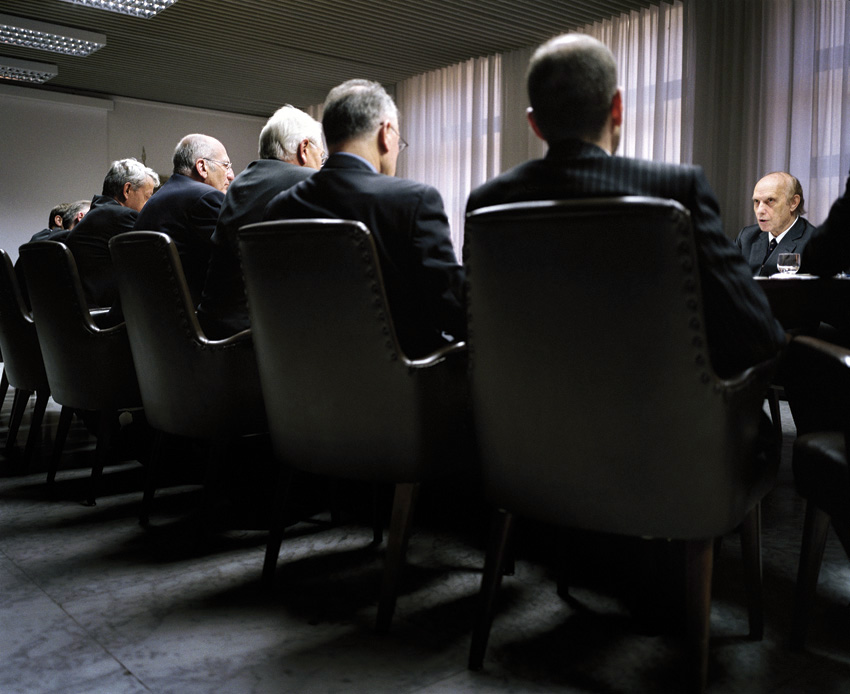
Christian Lutz (Swiss, b. 1973) From the series 'Protokoll' 2007


Christian Lutz (Swiss, b. 1973)
From the series Protokoll
2007
© Christian Lutz


Power: it will corrupt you, but if you don’t want it, it will be used against you.

PS. Some, if not all, of these people seem like marionettes!

Marcus


Many thankx to The Musée de l’Elysée for allowing me to publish the photographs in the posting. Please click on the photographs for a larger version of the image.


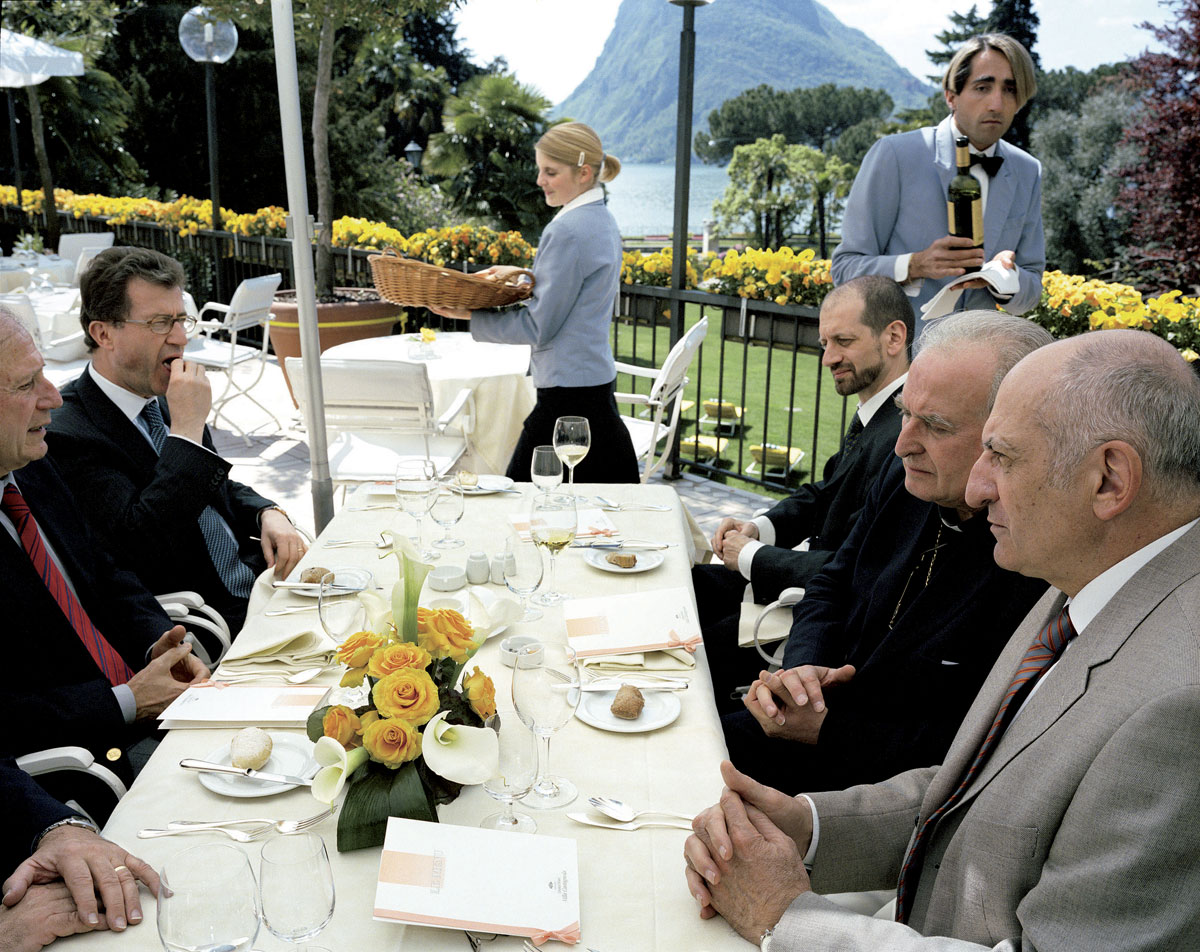
Christian Lutz (Swiss, b. 1973) From the series 'Protokoll' 2007


Christian Lutz (Swiss, b. 1973)
From the series Protokoll
2007
© Christian Lutz


Christian Lutz (Swiss, b. 1973) From the series 'Protokoll' 2007


Christian Lutz (Swiss, b. 1973)
From the series Protokoll
2007
© Christian Lutz


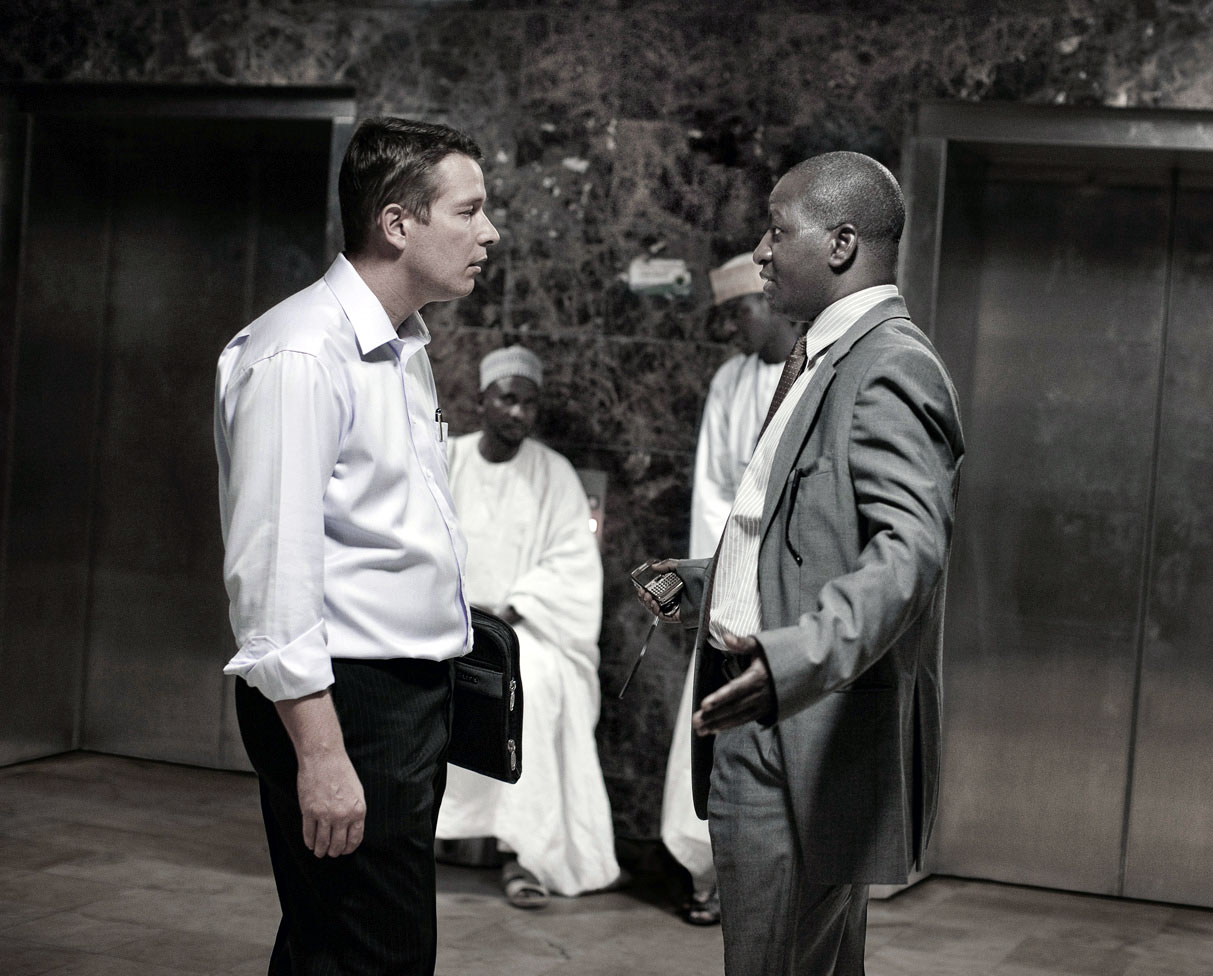
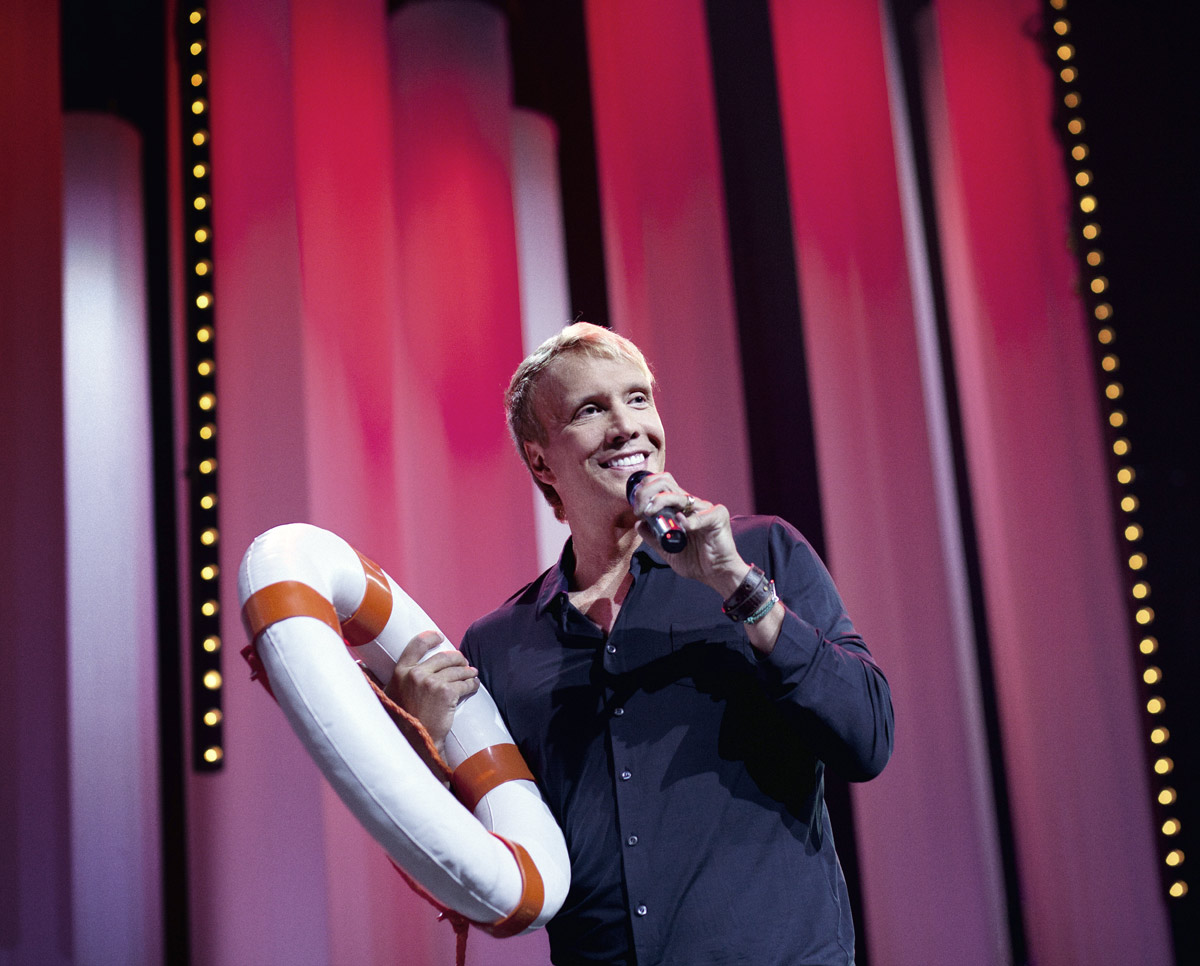
New York, 2003: spectacular security frenzy around the President of the Swiss Confederation Pascal Couchepin – a striking image to the eye of the photographer who was present at the scene. Christian Lutz thus invited himself in the suitcases of the ministerial delegation and documented its various official activities during three years. The first volume of what will become a trilogy on the issue of power is published in 2007: Protokoll. Tropical Gift, dealing with the oil and gas trading in Nigeria, is released in 2010. After portraying the rigorously codified and staged political sphere, the photographer’s cutting eye unveils the malodorous traps of a deadly economic power, with troubling visual poetry. In his viewfinder, reality unnoticeably shifts into a heady thriller. The first two parts of his trilogy have been exhibited worldwide, establishing Christian Lutz as an eminent photographer.

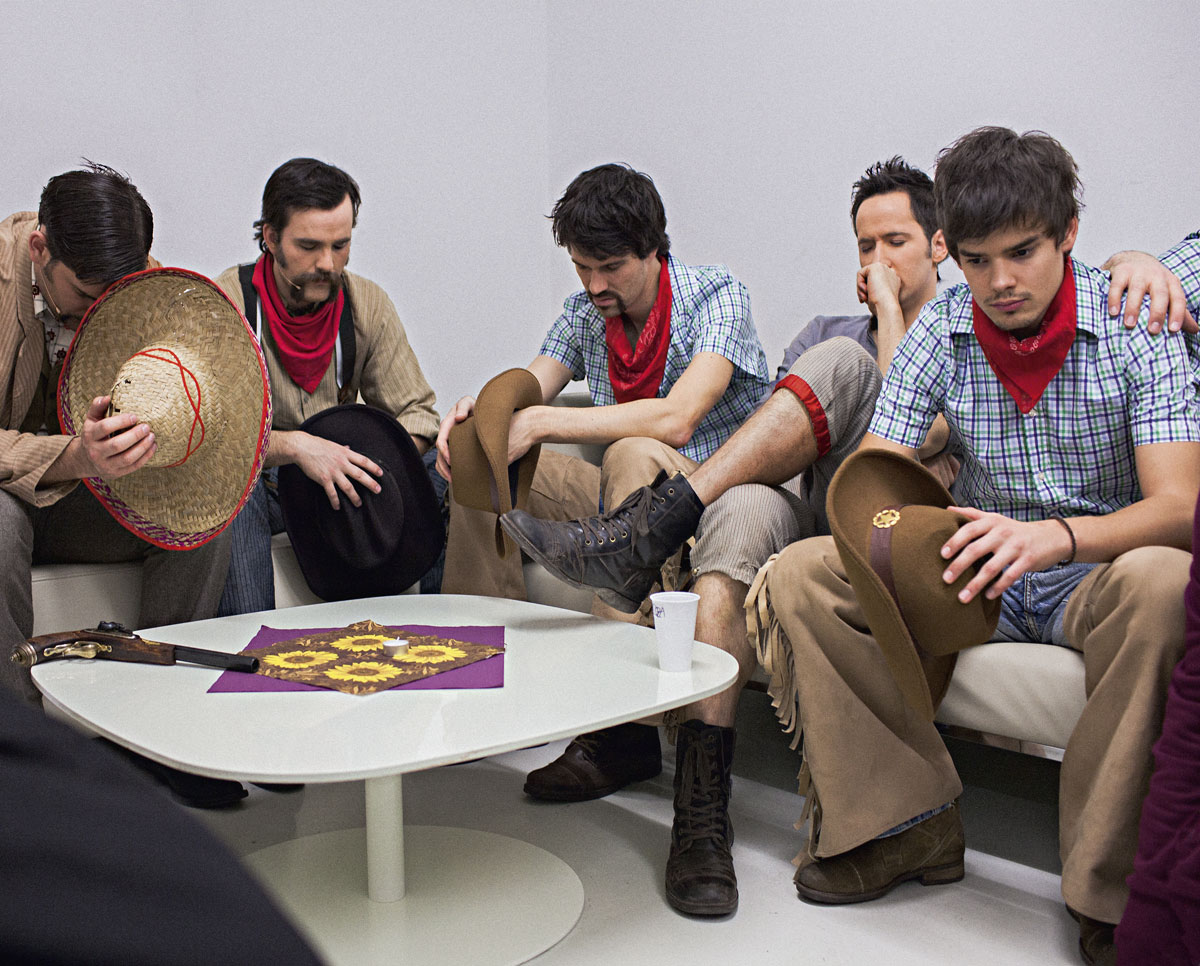
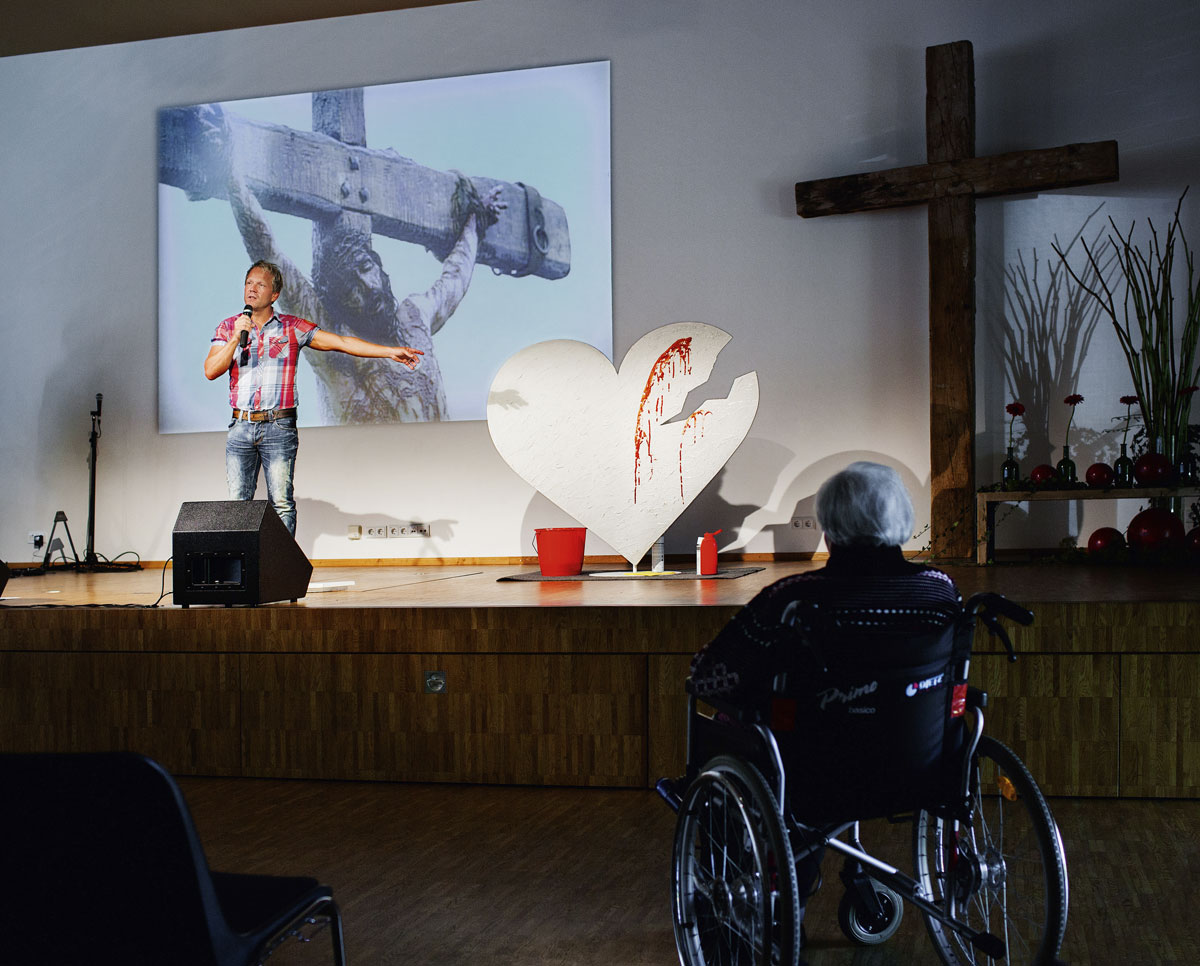
The fate of his yet unreleased third series, In Jesus’ Name, is quite different. Christian Lutz spent a year within a Zurich-based evangelical community. Celebrations and rock concerts, summer camps and blood donation rallies, he photographed all the events he was invited to attend. However, a Zurich Court of Justice banned the book immediately upon its release in November 2012 as 21 people appearing in the volume filed complaints to protect their image; complaints that were carefully orchestrated by the Church’s managers. With these provisional measures, the Court nonetheless ruled against the freedoms of expression and information.

The exhibition Trilogy is a three-fold investigation. Tropical Gift will be shown as a projection accompanied by the original score by Franz Treichler of the Young Gods. As for the latest series, In Jesus’ Name, it carries the marks of a new power, with which it is now inseparable: the judiciary. Troubling and destabilising, this fourth power questions democracy and artistic freedom. But as it pushes art into a corner, it seems to compel it to reconnect itself with its political dimension, to test established systems, by triggering debate.

Censorship of the book In Jesus’ Name

The photography book In Jesus’ Name, Christian Lutz’s third part of the series on the issue of power, was launched during Paris Photo on 17 November 2012, before disappearing from the bookstore shelves a couple of days later. The legal proceedings that followed this project raise issues about the artistic freedom as well as the freedom of expression.

The photographical project In Jesus’ Name

The Zurich-based evangelical community ICF (International Christian Fellowship) is one of the most important free churches in Switzerland. Its success and rapid expansion are a matter of public interest. Created according to the American model of mega-churches, it was initiated in Zurich at the end of the 90s, and has now spread throughout Roman Switzerland thanks to a solid establishment in Lausanne and Geneva. It manages a considerable budget and is characterised by the use of sophisticated and performing marketing and communication methods.

Christian Lutz met the pastor and founder of the Evangelical movement ICF, Leo Bigger, in May 2011. He then introduced him to the other church managers to whom the photographer also presented his project, his former books, his approach and the stakes involved in his Trilogy. He was subsequently granted express consent from the managers who welcomed him in the community.

The photographer nonetheless systematically kept on requesting specific authorisations to the organisers for each ICF’s activity which he wished to photograph. He joined several trips and summer camps organised by the church, and took part in all sorts of events: celebrations, baptisms, ladies lounge, blood donation, theatre show, workshop on the addiction to pornography, etc. He met members of the church, exchanged constantly with them, and freely discussed his reportage.

As for each of his series, Christian Lutz entirely immersed himself, photographing faces and individuals up close while fully respecting a rigorous deontology. He was given an ICF photo-reporter badge, and affiliates or organisers of activities regularly ordered images from him. He photographed openly, each one being aware of the project and accepting to be part of it.

Press release from the Musée de l’Elysée website


Christian Lutz (Swiss, b. 1973) From the series 'Tropical Gift' 2010


Christian Lutz (Swiss, b. 1973)
From the series Tropical Gift
2010
© Christian Lutz


Christian Lutz (Swiss, b. 1973) From the series 'Tropical Gift' 2010


Christian Lutz (Swiss, b. 1973)
From the series Tropical Gift
2010
© Christian Lutz


Christian Lutz (Swiss, b. 1973) From the series 'Tropical Gift' 2010


Christian Lutz (Swiss, b. 1973)
From the series Tropical Gift
2010
© Christian Lutz


Interview of Christian Lutz by Sam Stourdzé, Director of the Musée de l’Elysée

SYS: Protokoll, the first series in the project, started in 2003 when you started photographing the apparatus of federal politics. Ten years later, how would you assess your itinerary?

CL: Actually, I am the kind of person who prefers to look forward rather than backward. And I’ve come to realise that my work on the issue of power is not quite yet finished. It was initiated in 2003 by coincidence, without any real initial intention; I didn’t tell myself “well, how about working on the notion of power”! It is only with time, as my work asserted itself, that I realised why I was doing it and why I wanted to carry on. Power operates everywhere, in the private sphere, in human relations, between nations, among peoples; it is at the heart of countless processes in society. This is an issue that obsesses me and which is in fact an excuse to talk about our world and the interactions between individuals and systems. I thought I would come to terms with it through this trilogy, but I still have some way to go, as the issue of power opens up new fields of exploration.

SYS: All three components of the Trilogy – political, economic, and religious powers, are exhibited for the first time at the Musée de l’Elysée. What tensions or reflections do you intend to create by juxtaposing the series?

CL: My assumption is that power is always staged, as if power needed some form of theatricality to exist: protocol, representational codes, uniforms and role play, decorum, the forms of power that I have observed in the three series presented today all express themselves through external signs. But they are so obvious that they allow for breaches and give a glimpse of details, urging you to take a closer look, to reach beyond appearances. In all three series, there is this permanent tension between what is being observed and the grey areas, the hidden, the unspoken.

SYS: Several images in the series In Jesus’ Name have been censored. How do you intend to show the void of censorship?

CL: From my point of view, censorship did not create a void, it created a surplus. In other words, I consistently refuse to explain my images or to caption them, in order to avoid imposing a unique interpretation and a manipulation of the imagination. Captions freeze the poetical and suggestive space carried within a photograph; which does not mean that photographs can be made to say anything and everything, especially when we’re talking about a series or a book, as in this case. But an image must breathe, and leave some space to the beholder.

Yet, in order to achieve the ban on the book, the lawyer of the plaintiffs wrote out his own interpretation of my images. In doing so, he kills them in a way. So I had two options: either to let go and admit the defeat, or give a new impetus to the series In Jesus’ Name by foiling the situation, exploiting the new power that is being imposed on me, that is, the power of the judiciary.

SYS: You discovered the judiciary power though your appearance in court. Could this constitute a fourth component to your project?

CL: Yes, but I would not say that it would be a fourth component. It would rather be an outlet project, stemming from a situation I didn’t chose. This sequel will link together the three previous series and will probably shed a different light on them. It is likely to be a narrative rather than a photographic project. To tell the truth, I still don’t really precisely know; the legal proceedings are pending and I still have some difficulties figuring out what I could do with this. But what is certain is that as an artist, I cannot let things happen without finding an artistic outcome to this restriction on the freedom of speech.


Christian Lutz (Swiss, b. 1973) From the series 'In Jesus’ Name' 2010


Christian Lutz (Swiss, b. 1973)
From the series In Jesus’ Name
2010
© Christian Lutz


Christian Lutz (Swiss, b. 1973) From the series 'In Jesus’ Name' 2010


Christian Lutz (Swiss, b. 1973)
From the series In Jesus’ Name
2010
© Christian Lutz


Christian Lutz (Swiss, b. 1973) From the series 'In Jesus’ Name' 2010


Christian Lutz (Swiss, b. 1973)
From the series In Jesus’ Name
2010
© Christian Lutz


Christian Lutz (Swiss, b. 1973) From the series 'In Jesus’ Name' 2010


Christian Lutz (Swiss, b. 1973)
From the series In Jesus’ Name
2010
© Christian Lutz


Christian Lutz (Swiss, b. 1973) From the series 'In Jesus’ Name' 2010


Christian Lutz (Swiss, b. 1973)
From the series In Jesus’ Name
2010
© Christian Lutz


Portrait of Christian Lutz © Frédéric Choffat


Portrait of Christian Lutz
© Frédéric Choffat


The Musée de l’Elysée
18, avenue de l’Elysée
CH - 1014 Lausanne
Phone: + 41 21 316 99 11

Opening hours:
Wednesday – Monday, 11am – 6pm
Closed Tuesday, except for bank holidays

The Musée de l’Elysée website

LIKE ART BLART ON FACEBOOK

Back to top

Exhibition: ‘Lewis Hine – Photography for a Change’ at Fotomuseum Winterthur, Zurich

Exhibition dates: 8th June – 25th August 2013


Lewis Hine (American, 1874-1940) 'Midnight at the Brooklyn Bridge' 1906


Lewis Hine (American, 1874-1940)
Midnight at the Brooklyn Bridge
1906
Gelatin silver print
12 x 17cm
© Collection of George Eastman House, Rochester


“While human truth may be ephemeral qualities like justice are not; the struggle is to define justice and to live it. And for artists to display it.”


Dr Marcus Bunyan


Here is one artist who certainly used photography for social good. Hine “represents the beginning of a long tradition of politically engaged, social documentary photography, so called “concerned photography”… He firmly believed that every person, every individual, was worthy of respect, and he believed photography to be the best tool for clearly and visibly expressing this view.” Bravo to him.

Unfortunately, like so many of these visionary and revolutionary artists, Hine died in 1940, completely impoverished. As a society, why is it that we don’t value these brave human beings until years after they have passed? Is it because of petty jealousies, the rush of life, people in positions of power too long or a lack of understanding of the visionary nature of their work? Or is it just that time passes them by. I would like to pose this question.

Dr Marcus Bunyan


Many thankx to Fotomuseum Winterthur for allowing me to publish the photographs in the posting. Please click on the photographs for a larger version of the image.


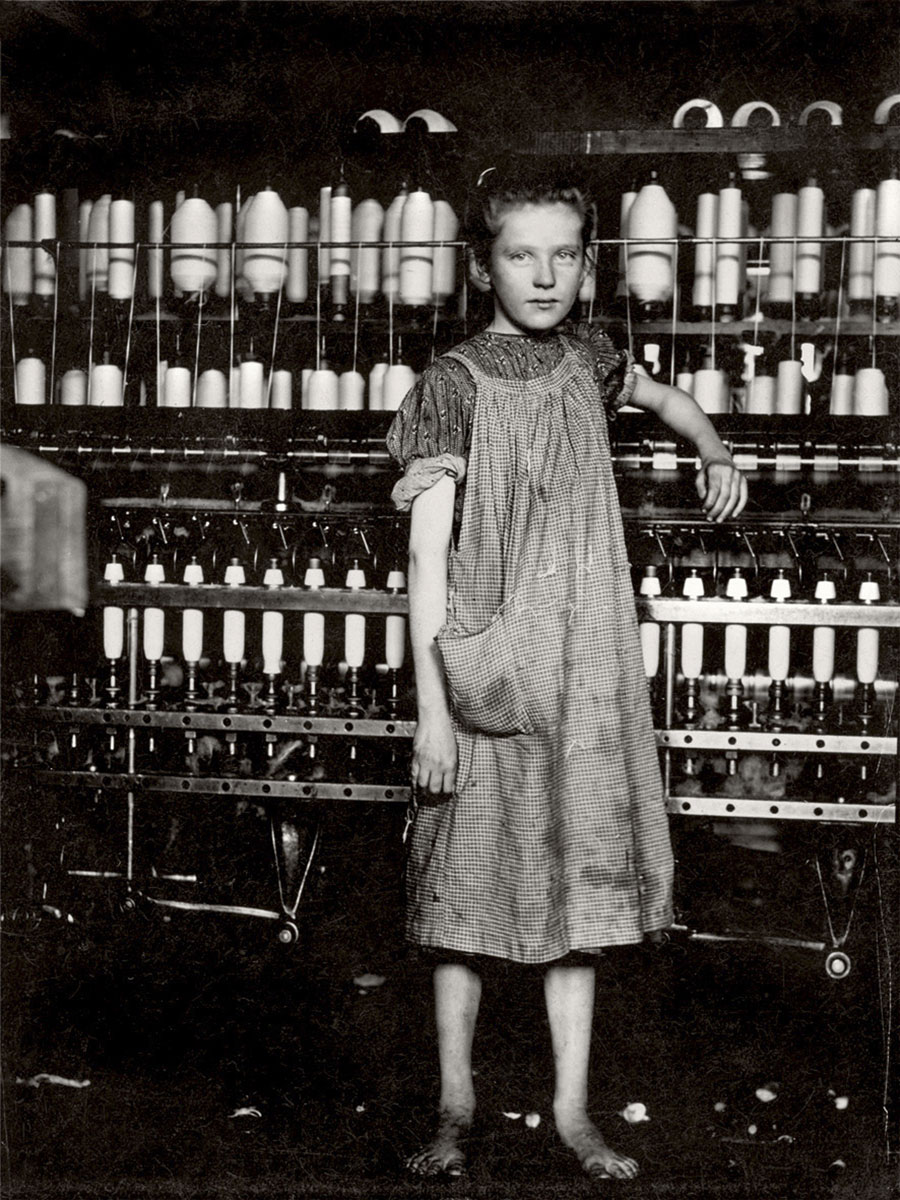
Lewis Hine (American, 1874-1940) 'Spinner in New England mill' 1913


Lewis Hine (American, 1874-1940)
Spinner in New England mill
1913
Gelatin silver print
12.6 x 10.1cm
© Collection of George Eastman House, Rochester


Lewis Hine (American, 1874-1940) 'Italian family looking for lost baggage, Ellis Island' 1905


Lewis Hine (American, 1874-1940)
Italian family looking for lost baggage, Ellis Island
1905
Gelatin silver print
33.4 x 27.2cm
© Collection of George Eastman House, Rochester


Lewis Hine (American, 1874-1940) 'Candy worker, New York' c. 1925


Lewis Hine (American, 1874-1940)
Candy worker, New York
c. 1925
Gelatin silver print
17.2 x 11.8cm
© Collection of George Eastman House, Rochester


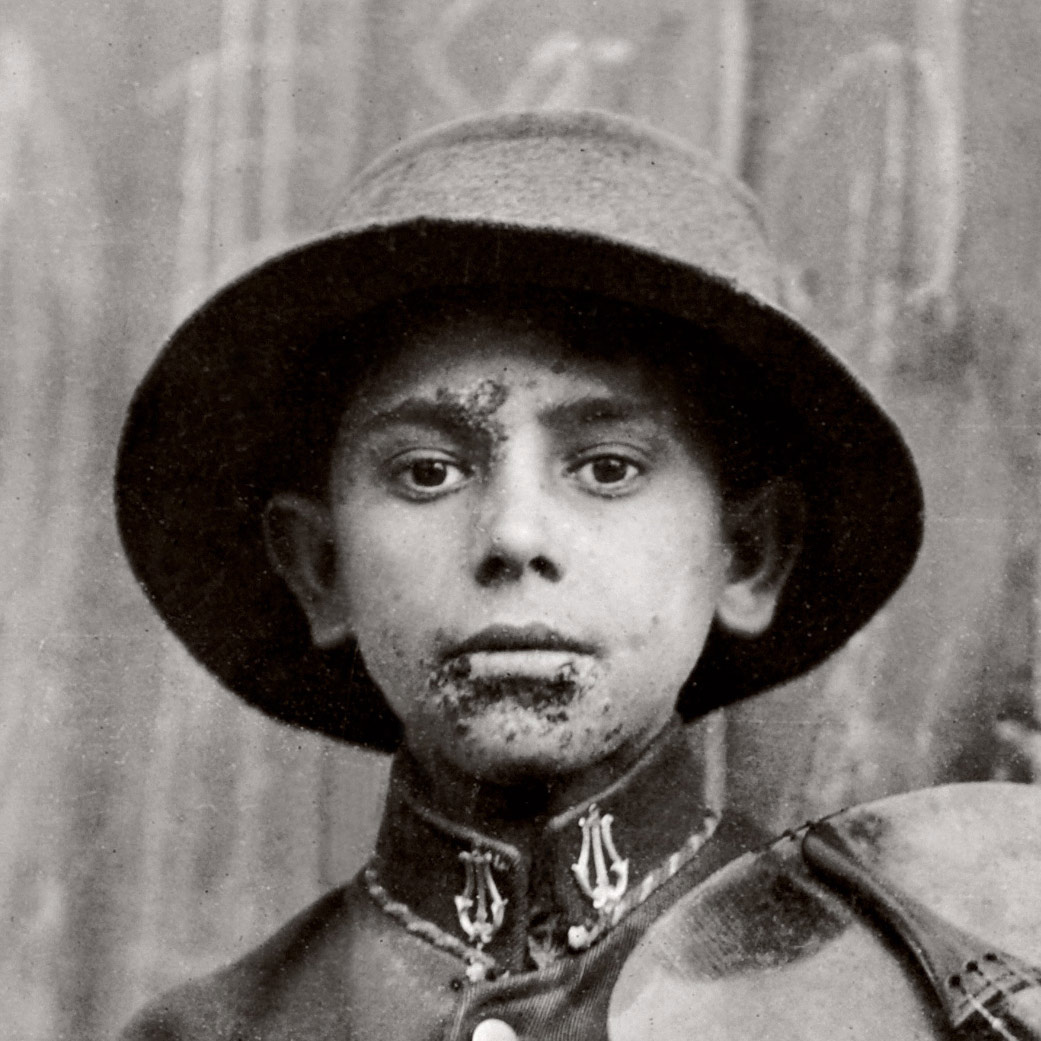
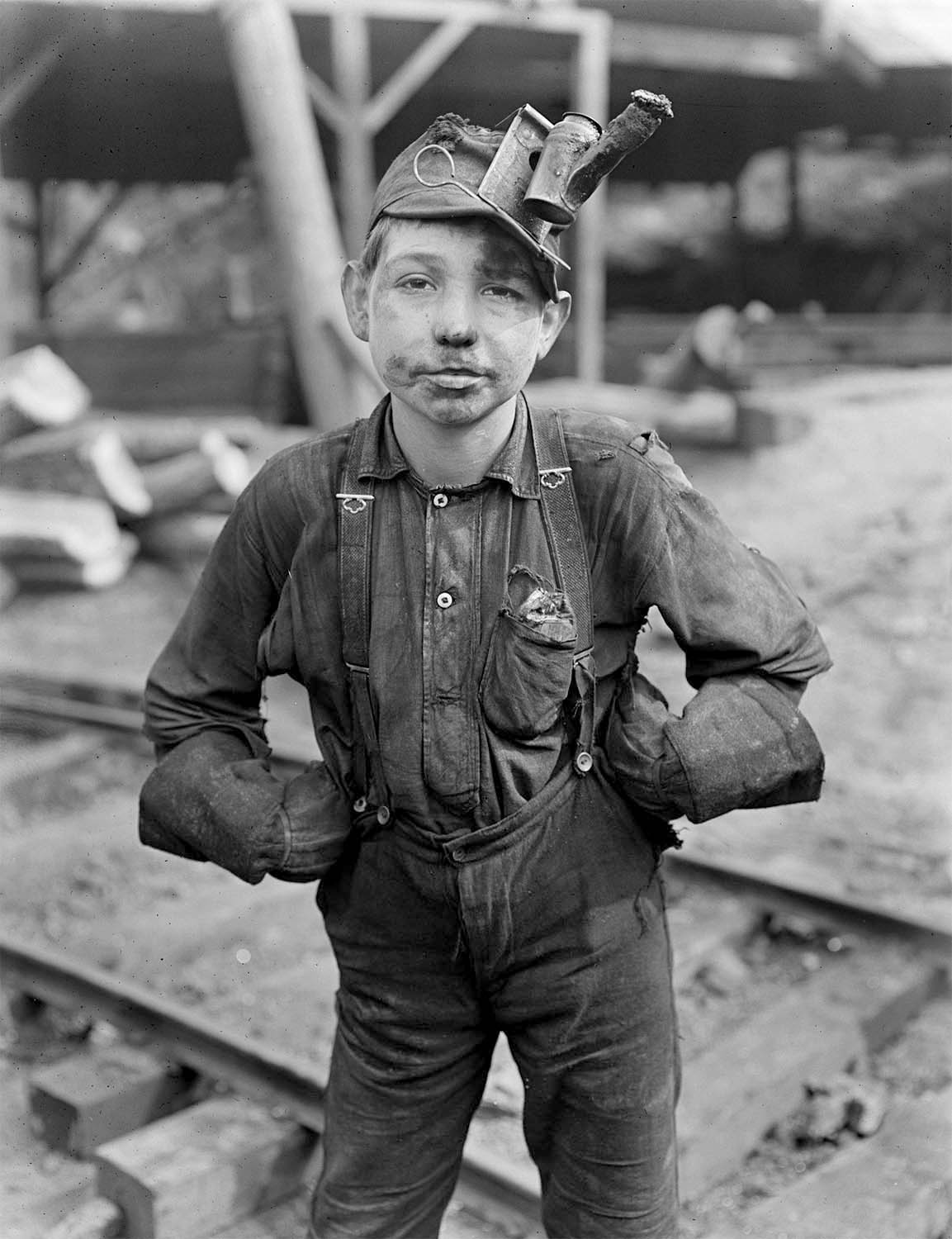
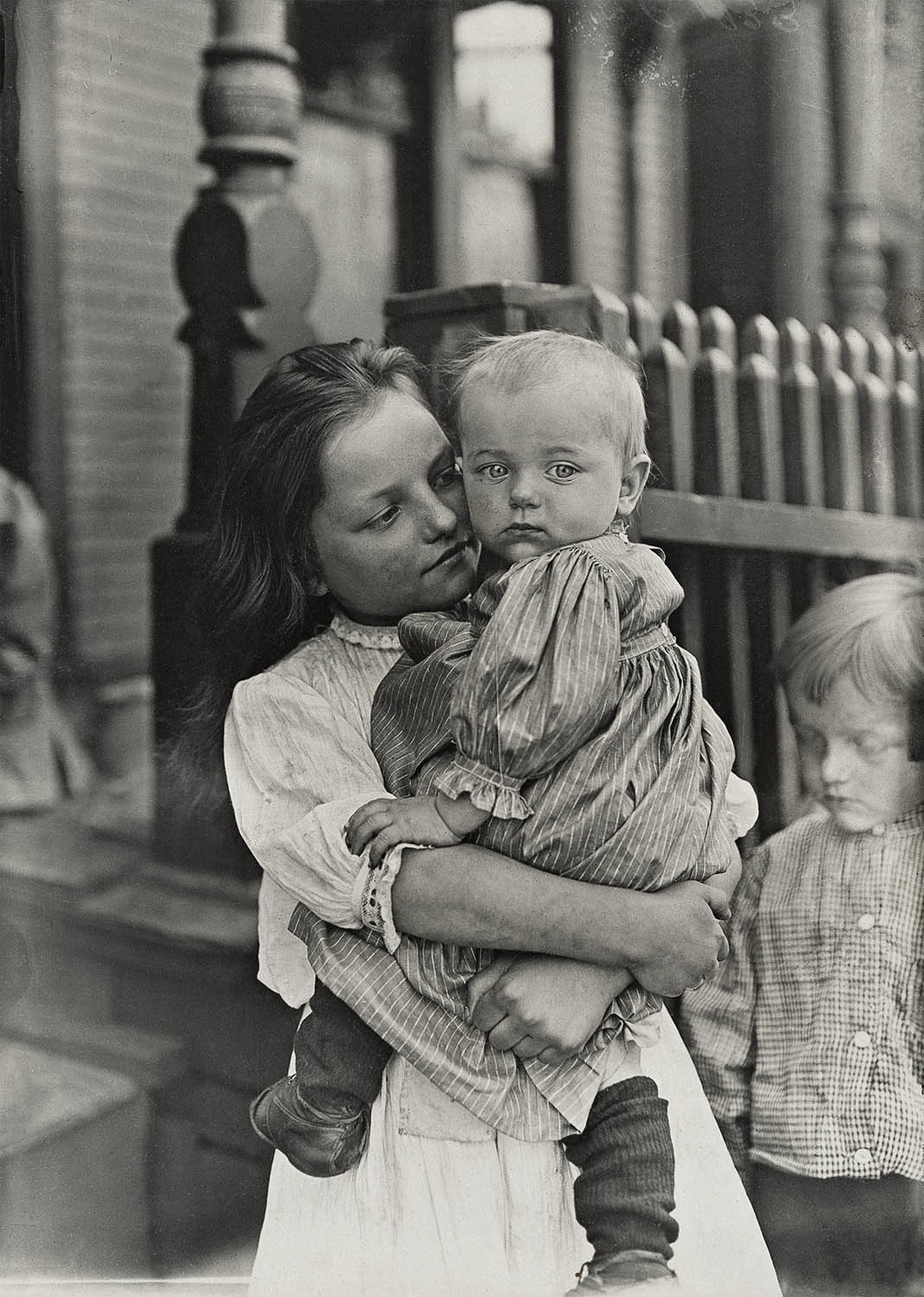
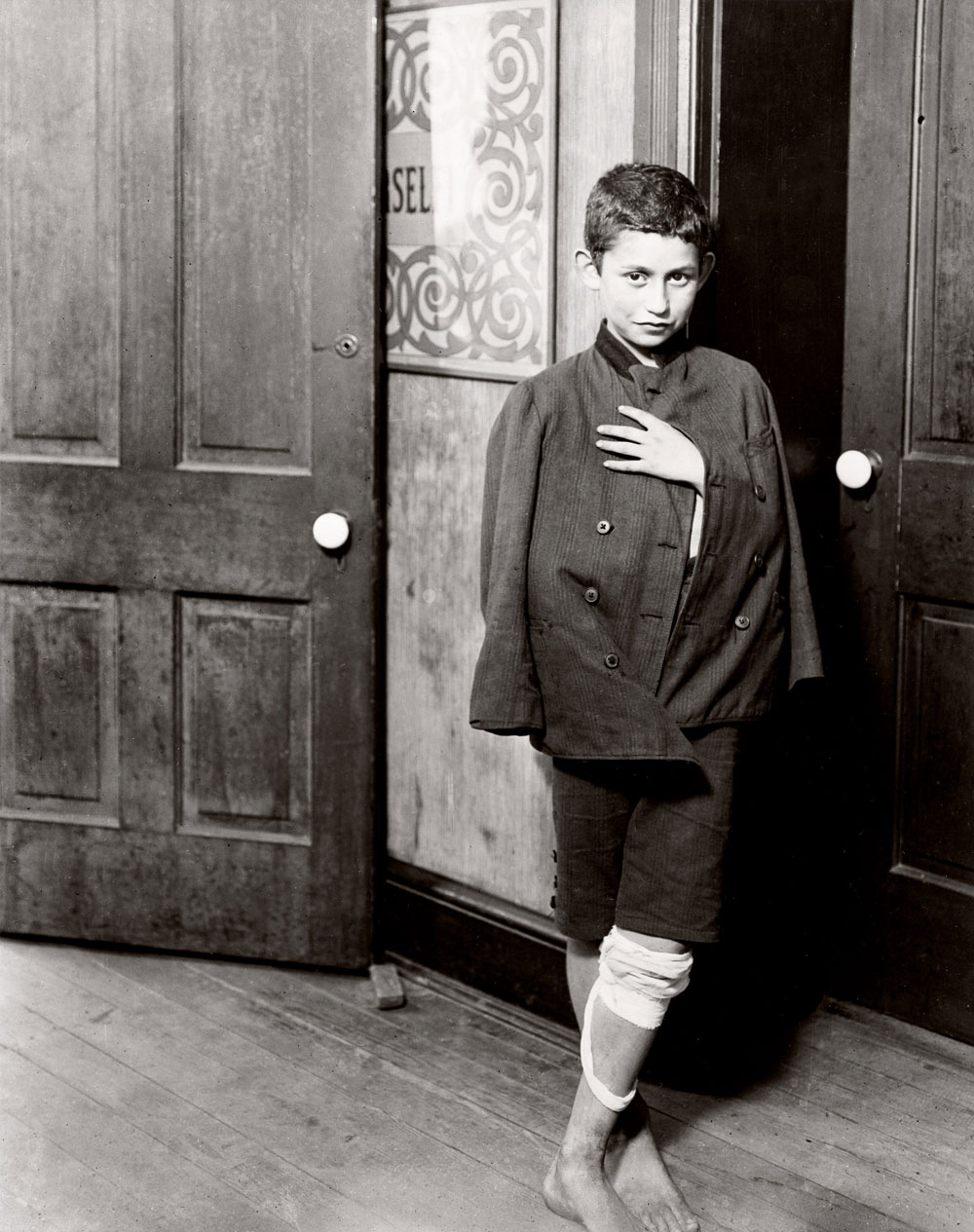
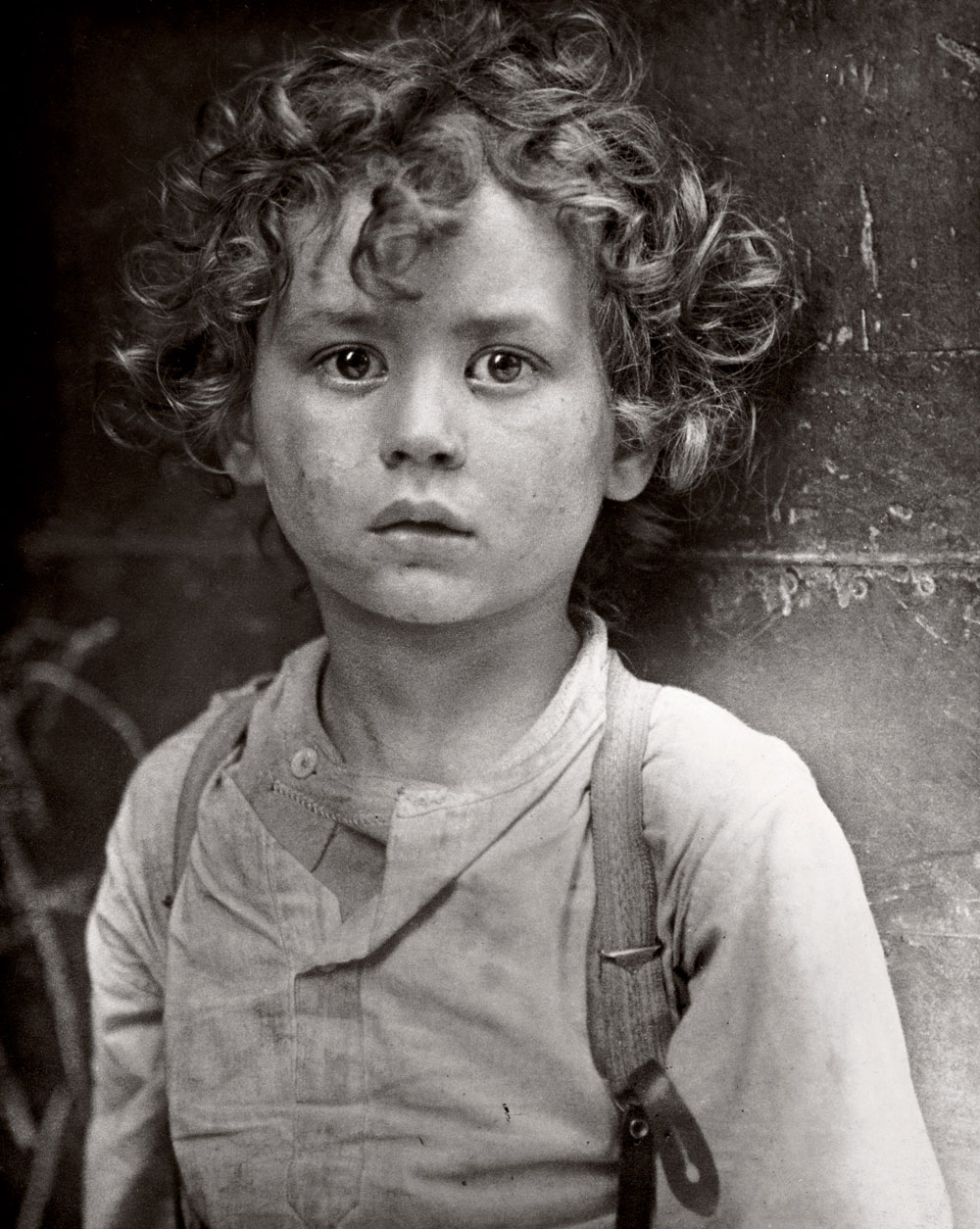
To what extent can images effectively combat injustice and social inequity? The American photographer Lewis Hine (1874-1940) offered an early answer to this question through his work. Trained as a teacher and sociologist, he ardently wished that Americans would become conscious of the injustice of American labor laws. He also firmly believed that every person, every individual, was worthy of respect, and he believed photography to be the best tool for clearly and visibly expressing this view.

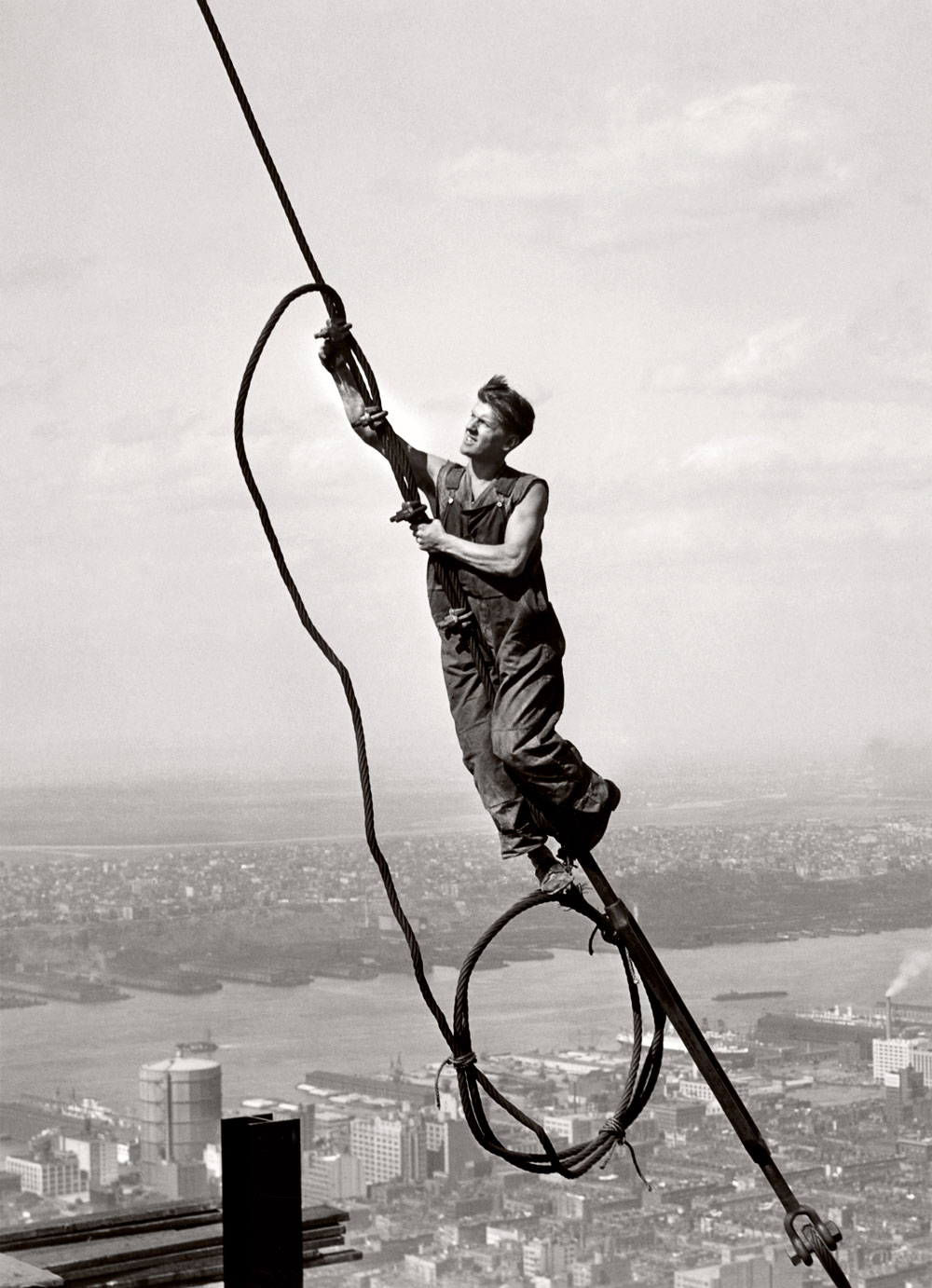
His work represents the beginning of a long tradition of politically engaged, social documentary photography, so called “concerned photography.” His photographs of immigrants from Ellis Island, child labor in American factories, and the construction of the Empire State Building high above Manhattan have become major icons of the 20th century. Simultaneously, the photographs also point to the fact, that the documented problems have not lost their currency, even one hundred years later. Today, even in Europe, we are experiencing intensive migrations, which will continue to increase in the future. Here we are not confronted with child labor, because we have transferred the kinds of industrial production that used child labor to distant countries. Accidents in non-European factories indicate the risky conditions under which our consumer goods are still produced today. Hine’s photographic eye and his black and white images form a trajectory that leads directly to the present.

Lewis Hine grew up in a family that owned a simple restaurant in the small town of Oshkosh, Wisconsin. He lost his father at age 18 due to an accident. He provided for himself and his family first as a factory worker in a furniture production company and then as a doorman, salesman, and bookkeeper. After training as a teacher and studying sociology at the University of Chicago, Hine moved to New York, where he first came in contact with photography while teaching at the Ethical Culture School. Using the camera in his lessons, he made portraits of immigrants on Ellis Island in conjunction with a research project. From then on Hine viewed his camera as a weapon for revealing social injustice and effecting change through the power of images. With this motivation he traveled some 75,000 km through the United States for the National Child Labor Committee (NCLC) and photographed children at work in the fields, mines, factories, mills, and on the streets. His photographs played no small part in raising awareness for child labor and instigating initial reforms. They also represented some of the earliest and most significant contributions to the social documentary genre of photography. During the construction of the Empire State Building Hine was commissioned with documenting the phases of construction over the course of six months in 1930/1931. In over one thousand photographs he recorded the perspective of the construction workers and their hard work on the ultimately 381 m high building. Despite his early success and the use of his images by many governmental agencies, Hine died in 1940, completely impoverished, after an operation.

Fotomuseum Winterthur presents this comprehensive retrospective including 170 images and extensive documentation material in cooperation with the Fundación MAPFRE (Madrid), the Fondation Henri Cartier-Bresson (Paris) and the Nederlands Fotomuseum (Rotterdam). All works come from the George Eastman House, International Museum of Photography and Film in Rochester, USA.

Press release from the Fotomuseum Winterthur website


Lewis Hine (American, 1874-1940) 'Paris gamin' c. 1918


Lewis Hine (American, 1874-1940)
Paris gamin
c. 1918
Gelatin silver print
24.4 x 19.4cm
© Collection of George Eastman House, Rochester


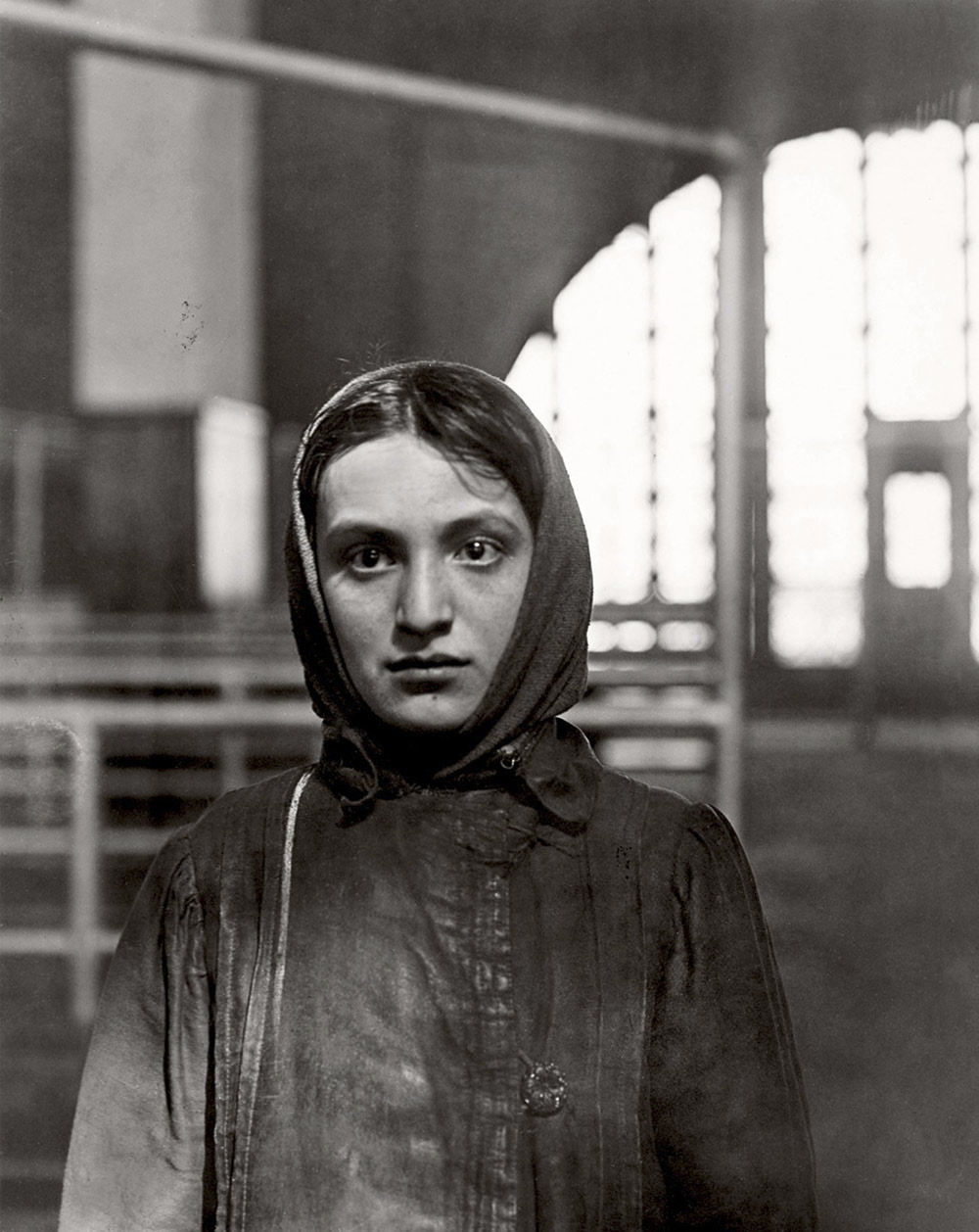
Lewis Hine (American, 1874-1940) 'Jewess at Ellis Island' 1905


Lewis Hine (American, 1874-1940)
Jewess at Ellis Island
1905
Gelatin silver print
24.1 x 19.1cm
© Collection of George Eastman House, Rochester


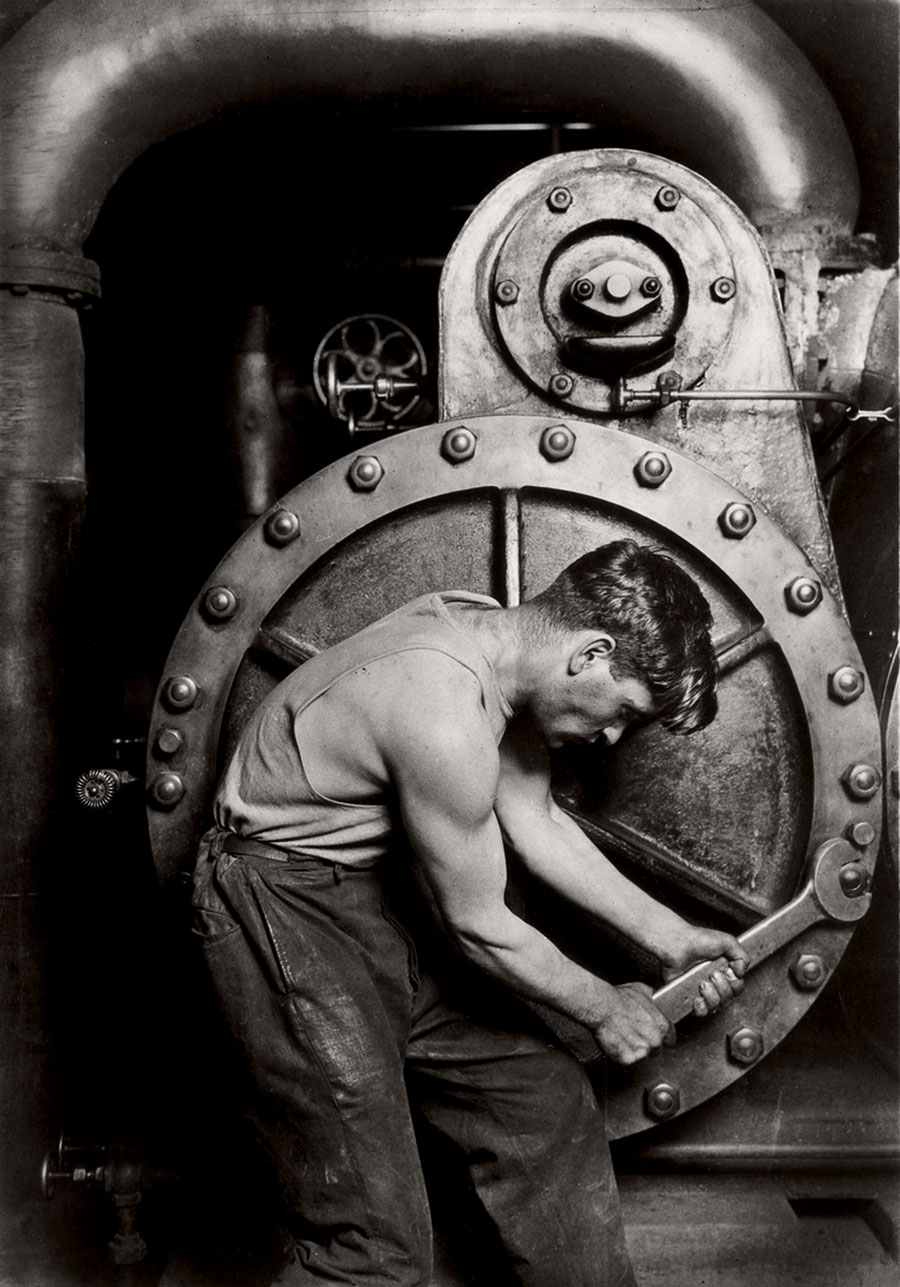
Lewis Hine (American, 1874-1940) 'Mechanic at steam pump in electric power house' 1920


Lewis Hine (American, 1874-1940)
Mechanic at steam pump in electric power house
1920
Gelatin silver print
16.9 x 11.7cm
© Collection of George Eastman House, Rochester


Lewis Hine (American, 1874-1940) '[Man on girders, Empire State Building]' c. 1931


Lewis Hine (American, 1874-1940)
[Man on girders, Empire State Building]
c. 1931
Gelatin silver print
12 x 9.2cm
© Collection of George Eastman House, Rochester


Lewis Hine (American, 1874-1940) '[Steelworker touching the tip of the Chrysler Building]' c. 1931


Lewis Hine (American, 1874-1940)
[Steelworker touching the tip of the Chrysler Building]
c. 1931
Gelatin silver print
16.9 x 11.9cm
© Collection of George Eastman House, Rochester


Lewis Hine (American, 1874-1940) 'Icarus atop Empire State Building' 1931


Lewis Hine (American, 1874-1940)
Icarus atop Empire State Building
1931
Gelatin silver print
9.3 x 10cm
© Collection of George Eastman House, Rochester


Fotomuseum Winterthur
Grüzenstrasse 44 + 45
CH-8400
Winterthur (Zürich)

Opening hours:
Tuesday to Sunday 11am – 6pm
Wednesday 11am – 8pm
Closed on Mondays

Fotomuseum Winterthur website

LIKE ART BLART ON FACEBOOK

Back to top

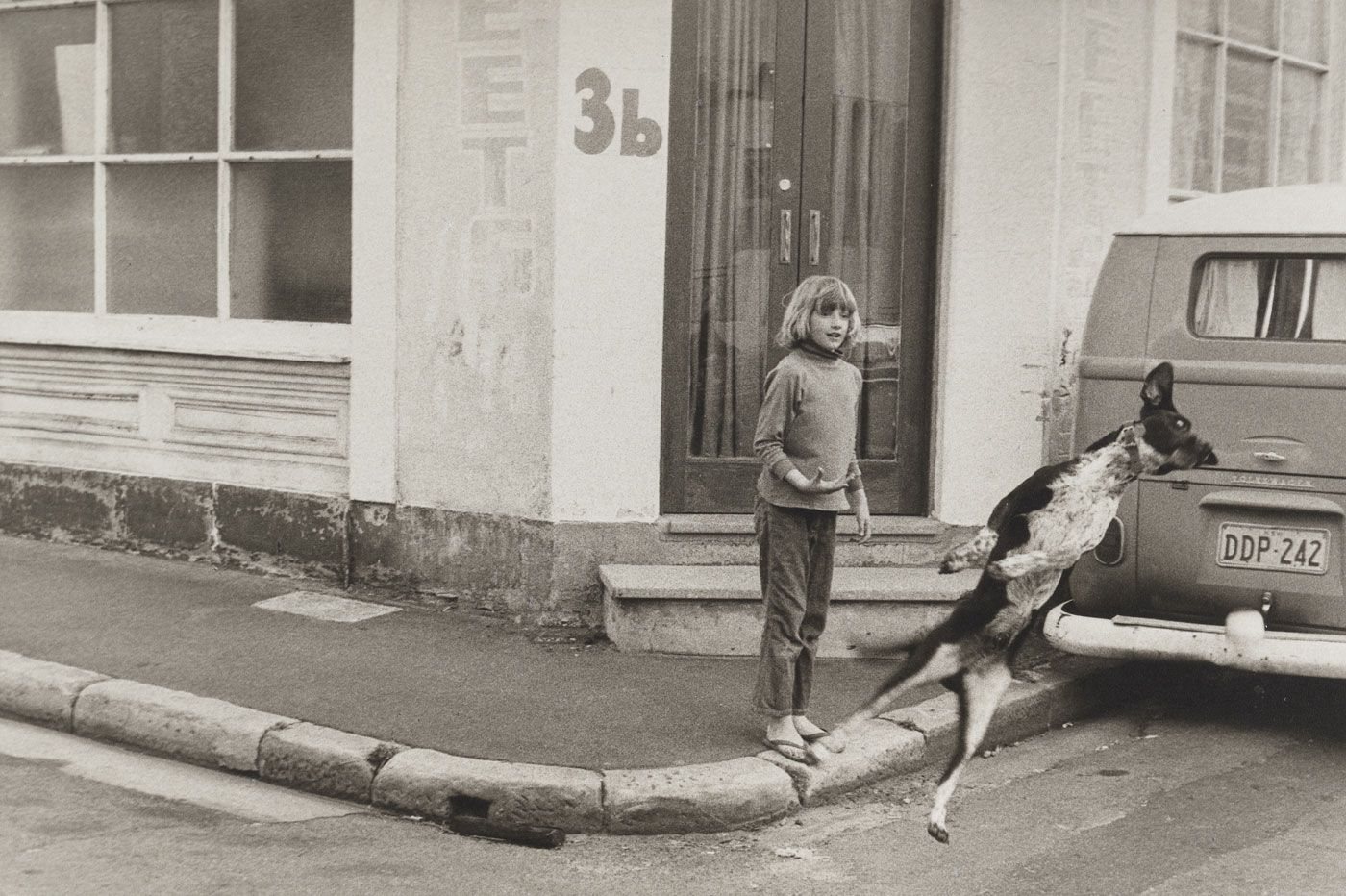
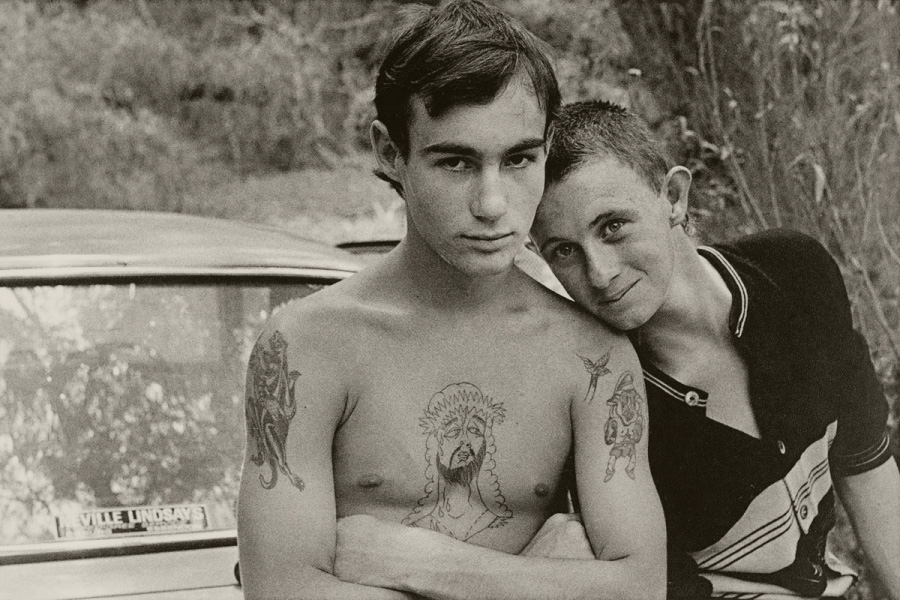
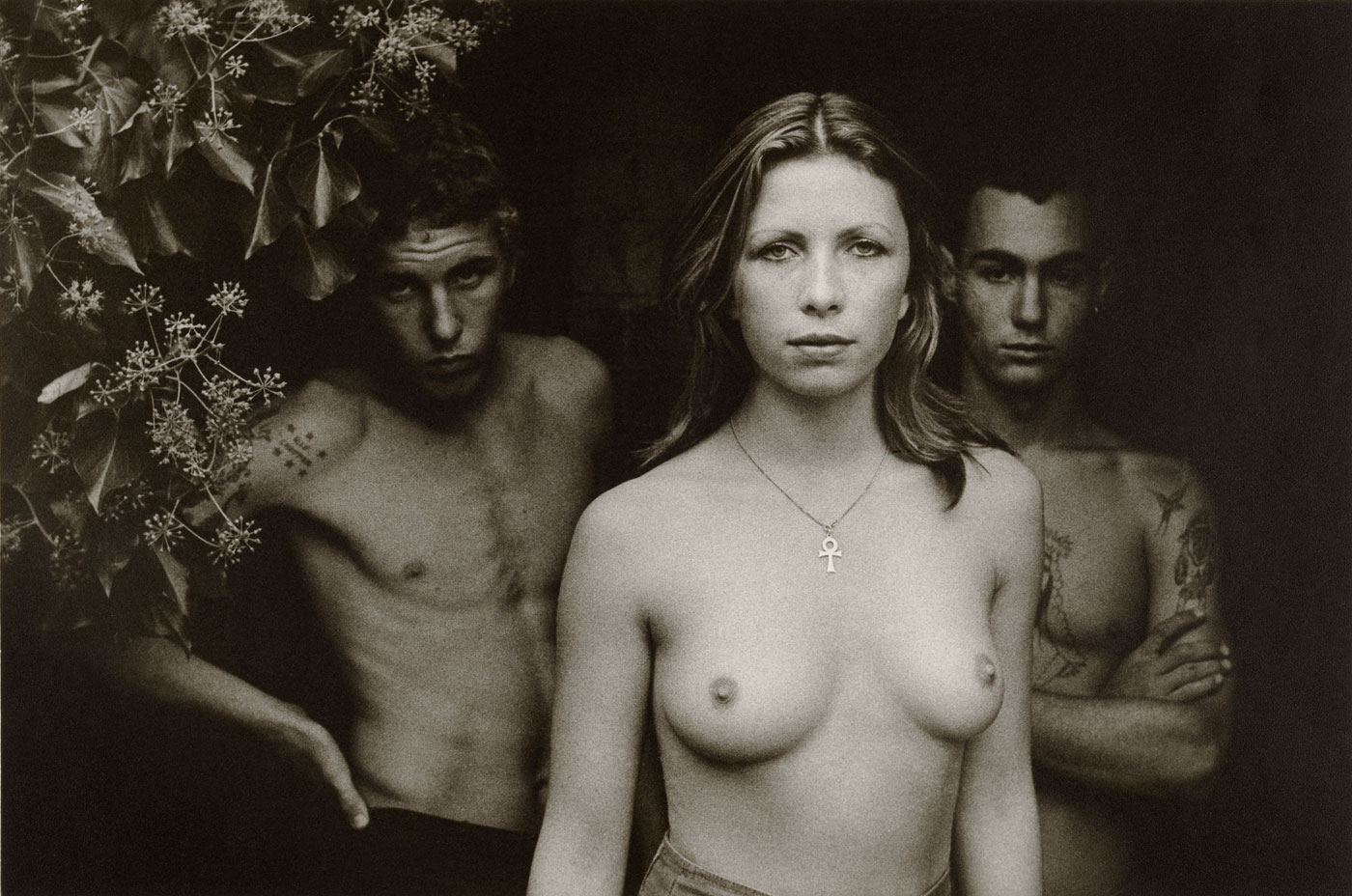
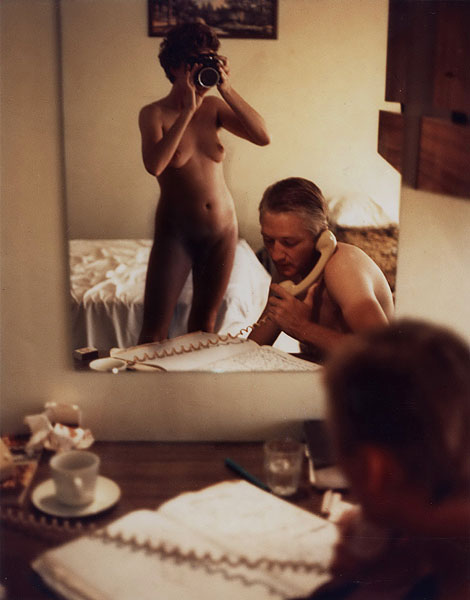
Marcus Bunyan black and white archive: South Yarra and surrounds, 1994

June 2013

PLEASE NOTE: THIS POSTING CONTAINS ART PHOTOGRAPHS OF MALE NUDITY – IF YOU DO NOT LIKE PLEASE DO NOT LOOK, FAIR WARNING HAS BEEN GIVEN
 

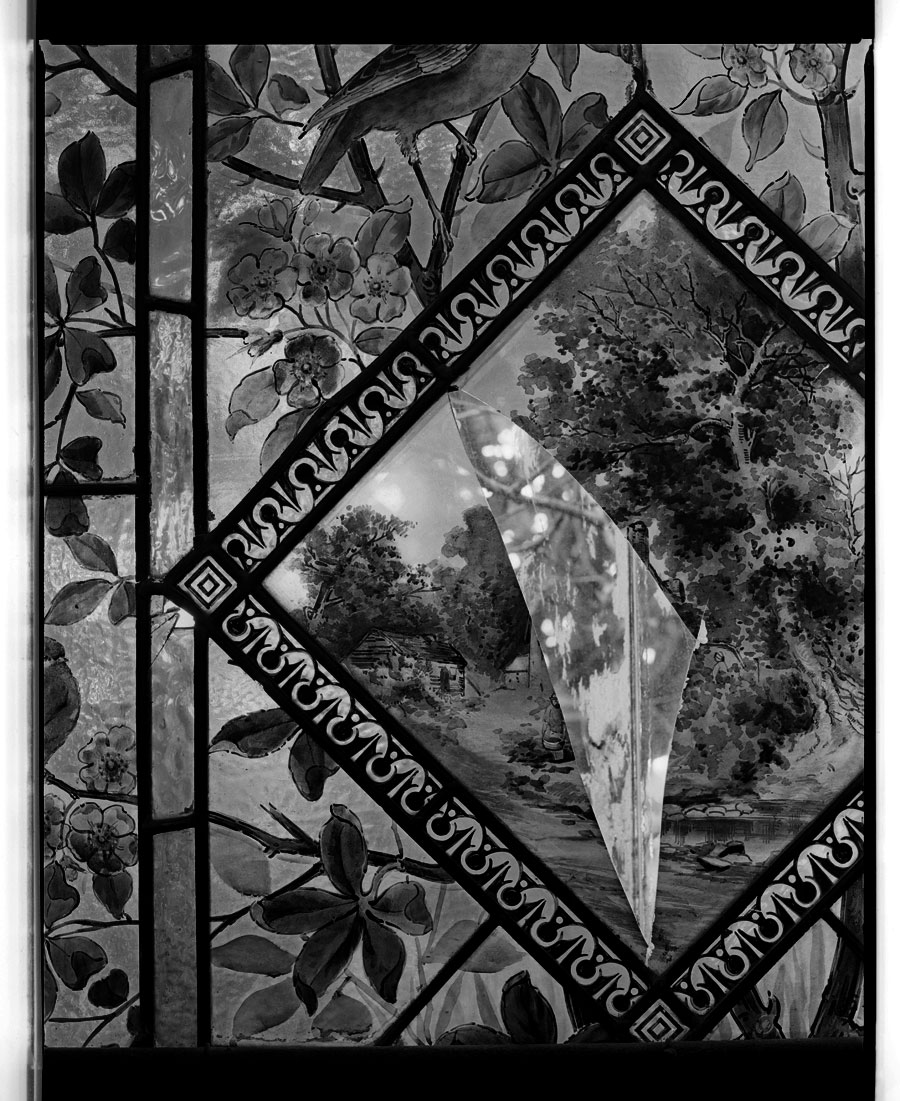
Marcus Bunyan (Australian, b. 1958) 'Stained glass, cracked' 1994


Marcus Bunyan (Australian, b. 1958)
Stained glass, cracked
1994
Silver gelatin photograph


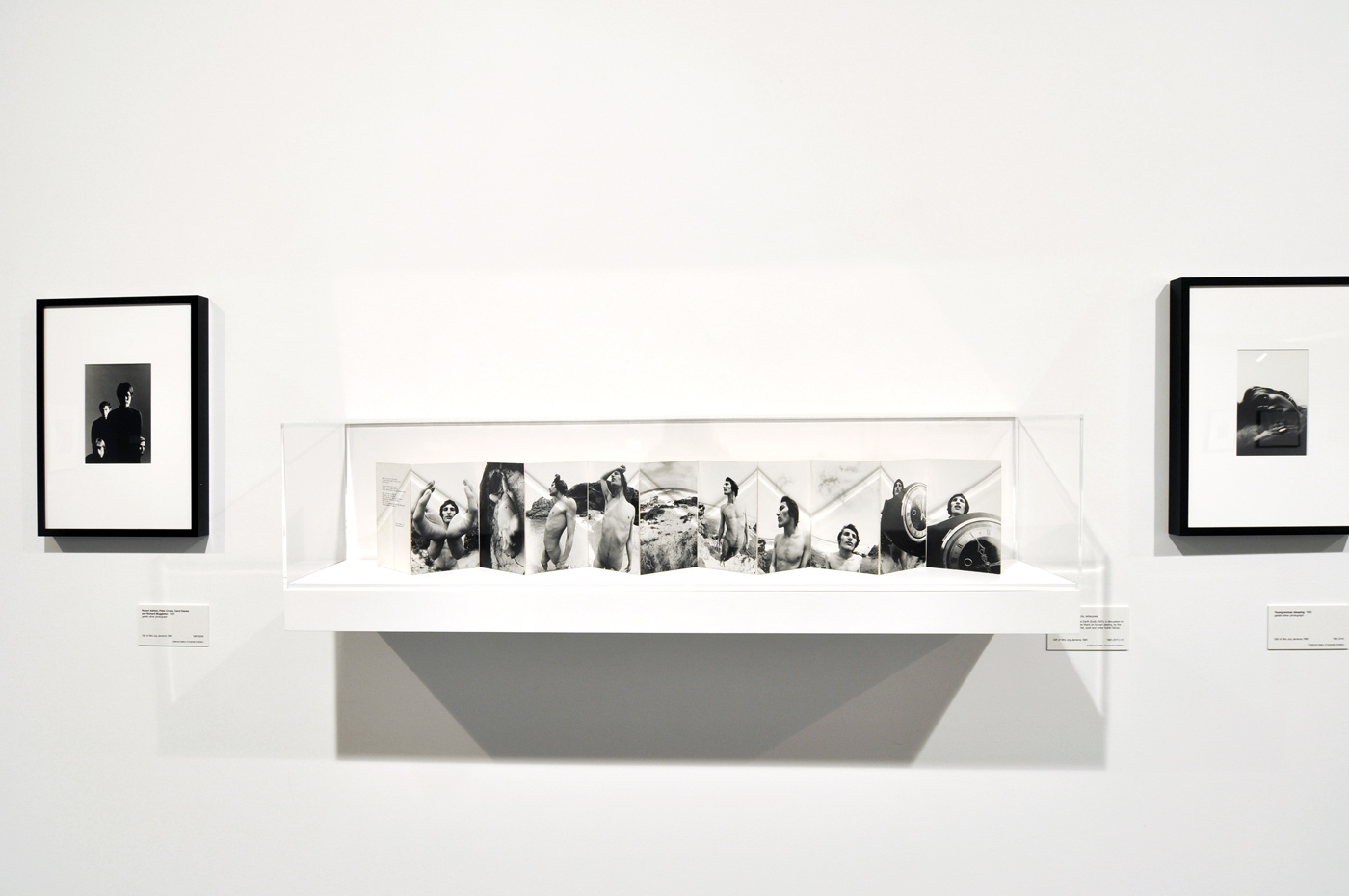
I am scanning my negatives made during the years 1991-1997 to preserve them in the form of an online archive as a process of active memory, so that the images are not lost forever. These photographs were images of my life and imagination at the time of their making, the ideas I was thinking about and the people and things that surrounded me.

All images © Marcus Bunyan. Please click the photographs for a larger version of the image; remember these are just straight scans of the negatives !

Photographs are available from this series for purchase. As a guide, a vintage 8″ x 10″ silver gelatin print costs $700 plus tracked and insured shipping. For more information please see my Store web page.


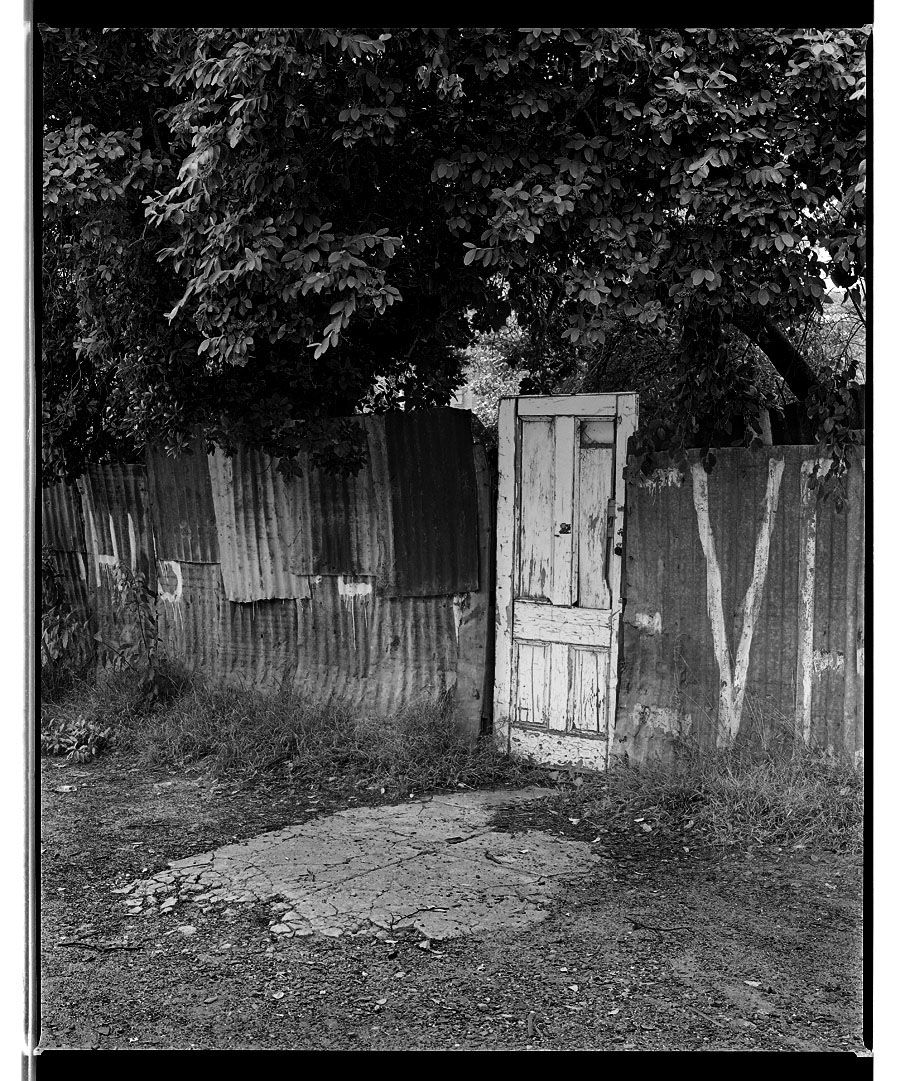
Marcus Bunyan (Australian, b. 1958) 'White door 1' 1994


Marcus Bunyan (Australian, b. 1958)
White door 1
1994
Silver gelatin photograph


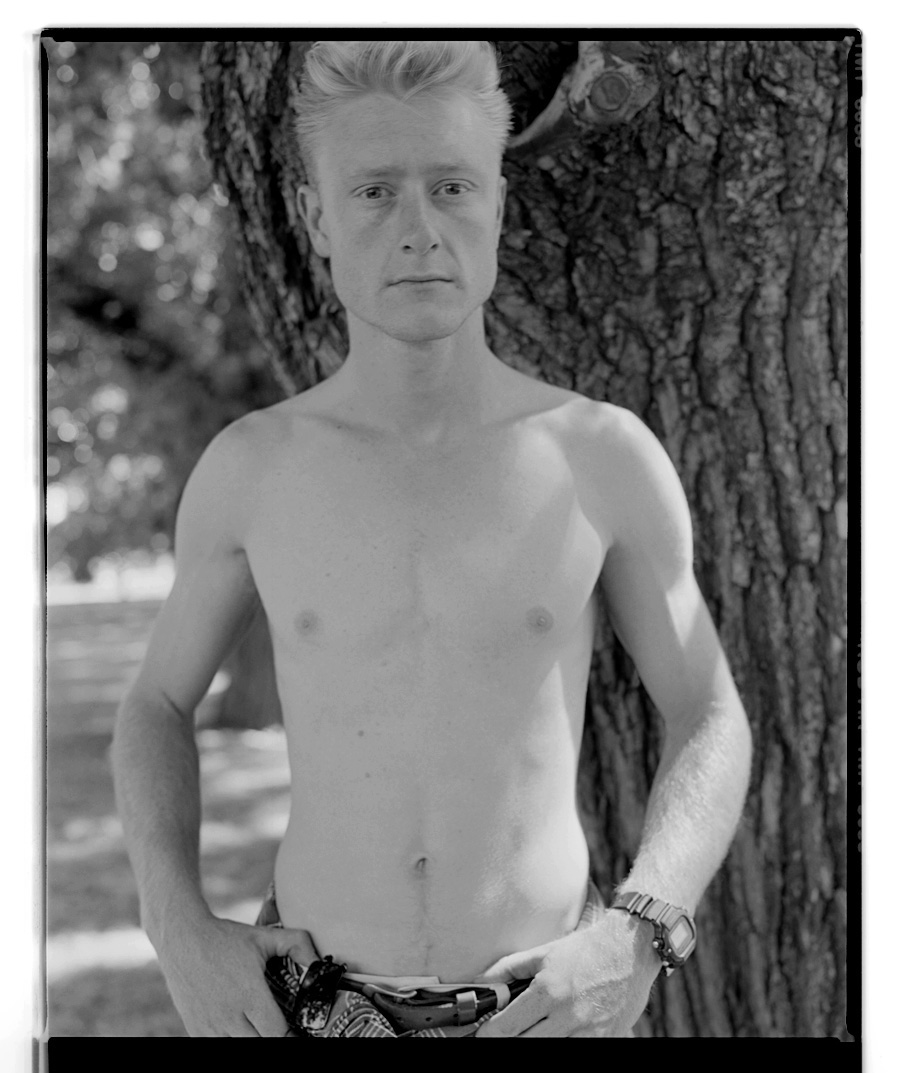
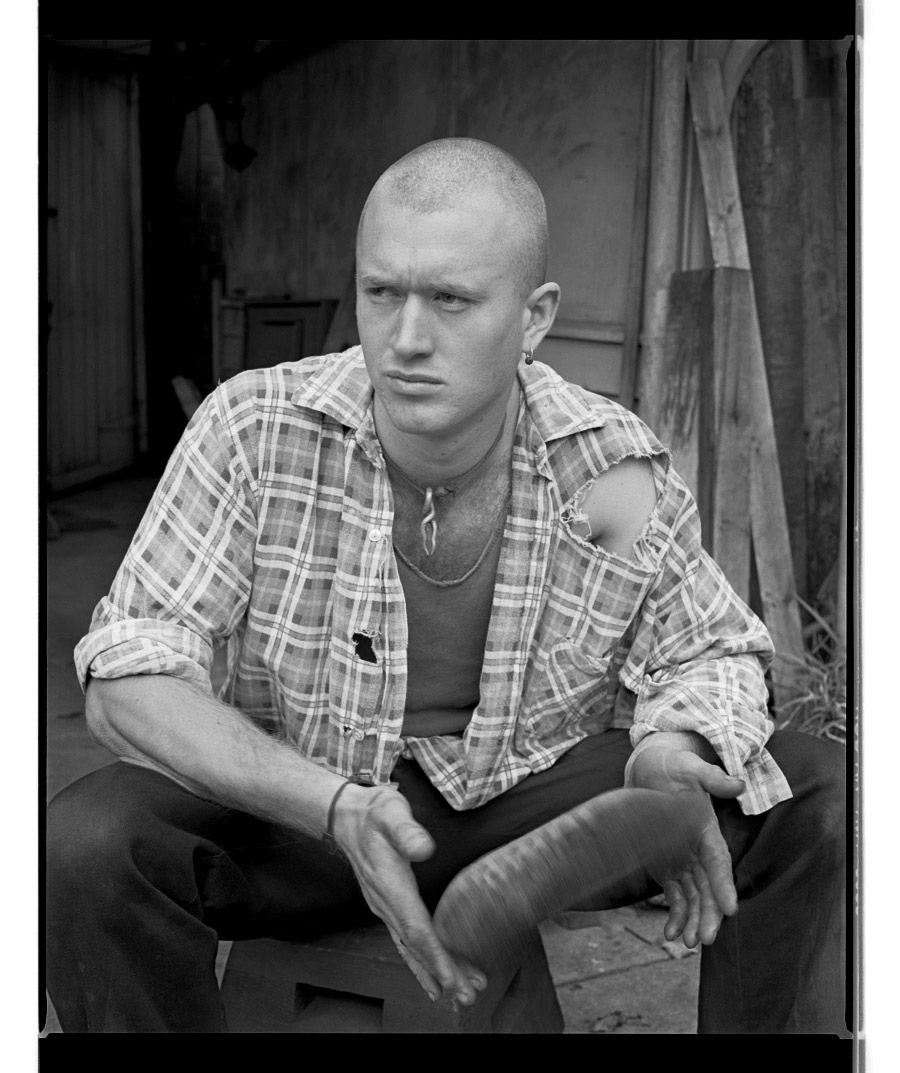
Marcus Bunyan (Australian, b. 1958) 'Damien, 1994' 1994


Marcus Bunyan (Australian, b. 1958)
Damien, 1994
1994
Silver gelatin photograph


Marcus Bunyan (Australian, b. 1958) 'Night repair' 1994


Marcus Bunyan (Australian, b. 1958)
Night repair
1994
Silver gelatin photograph


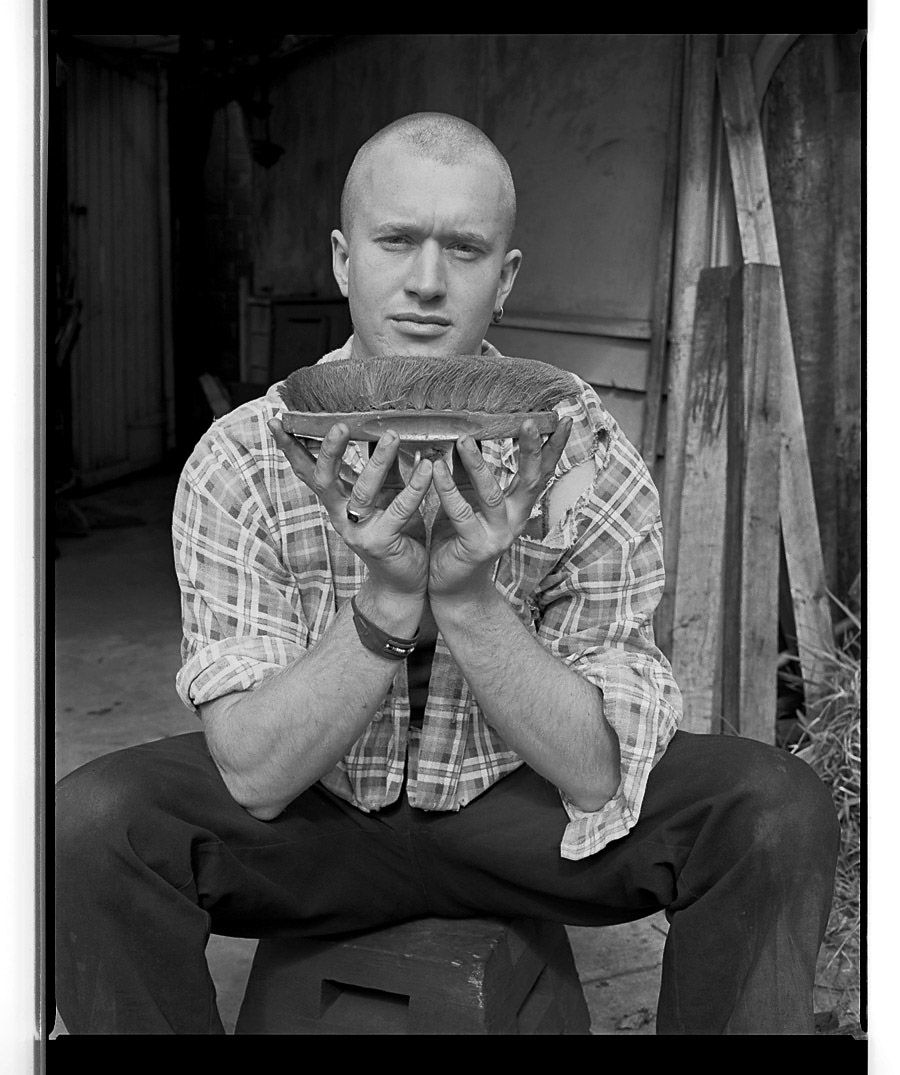
Marcus Bunyan (Australian, b. 1958) 'Jerry holding a brush, South Yarra' 1994


Marcus Bunyan (Australian, b. 1958)
Jerry holding a brush, South Yarra
1994
Silver gelatin photograph


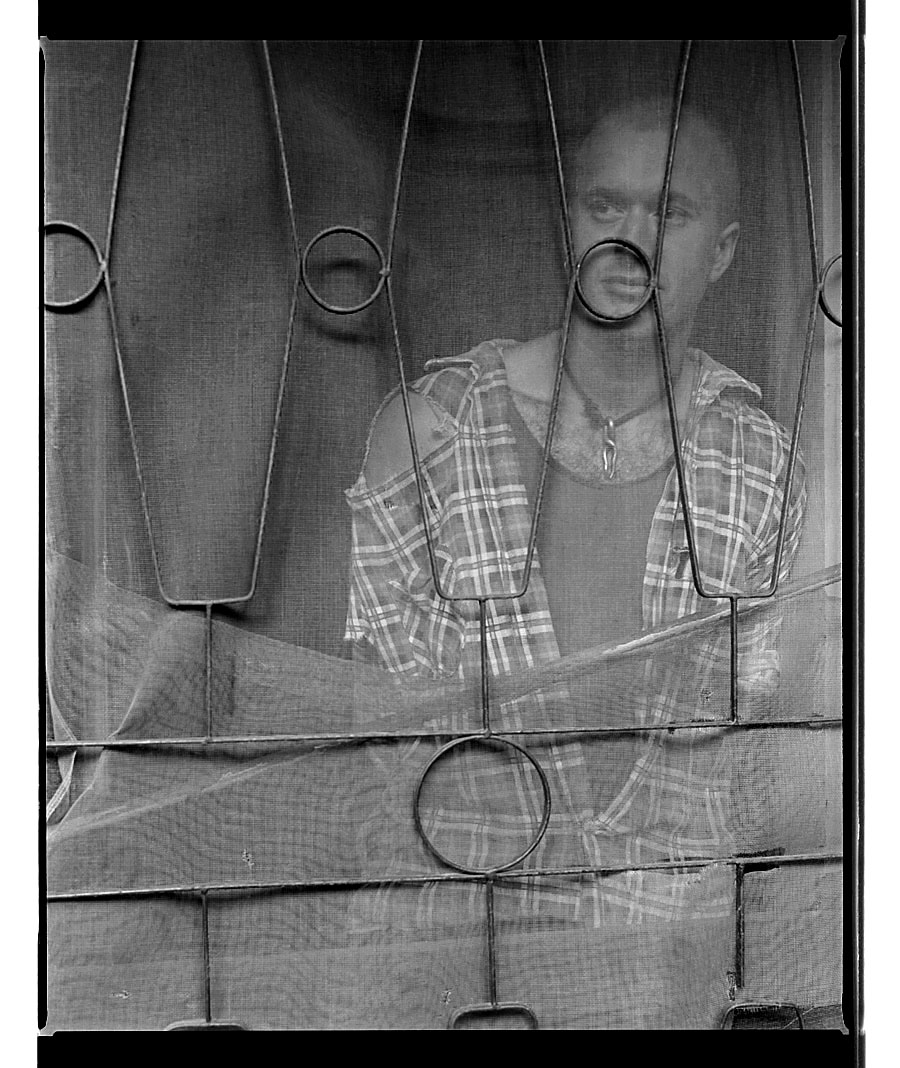
Marcus Bunyan (Australian, b. 1958) 'Jerry behind safety screen, Punt Road, South Yarra' 1994


Marcus Bunyan (Australian, b. 1958)
Jerry behind safety screen, Punt Road, South Yarra
1994
Silver gelatin photograph


Marcus Bunyan (Australian, b. 1958) 'Presence' 1994


Marcus Bunyan (Australian, b. 1958)
Presence
1994
Silver gelatin photograph


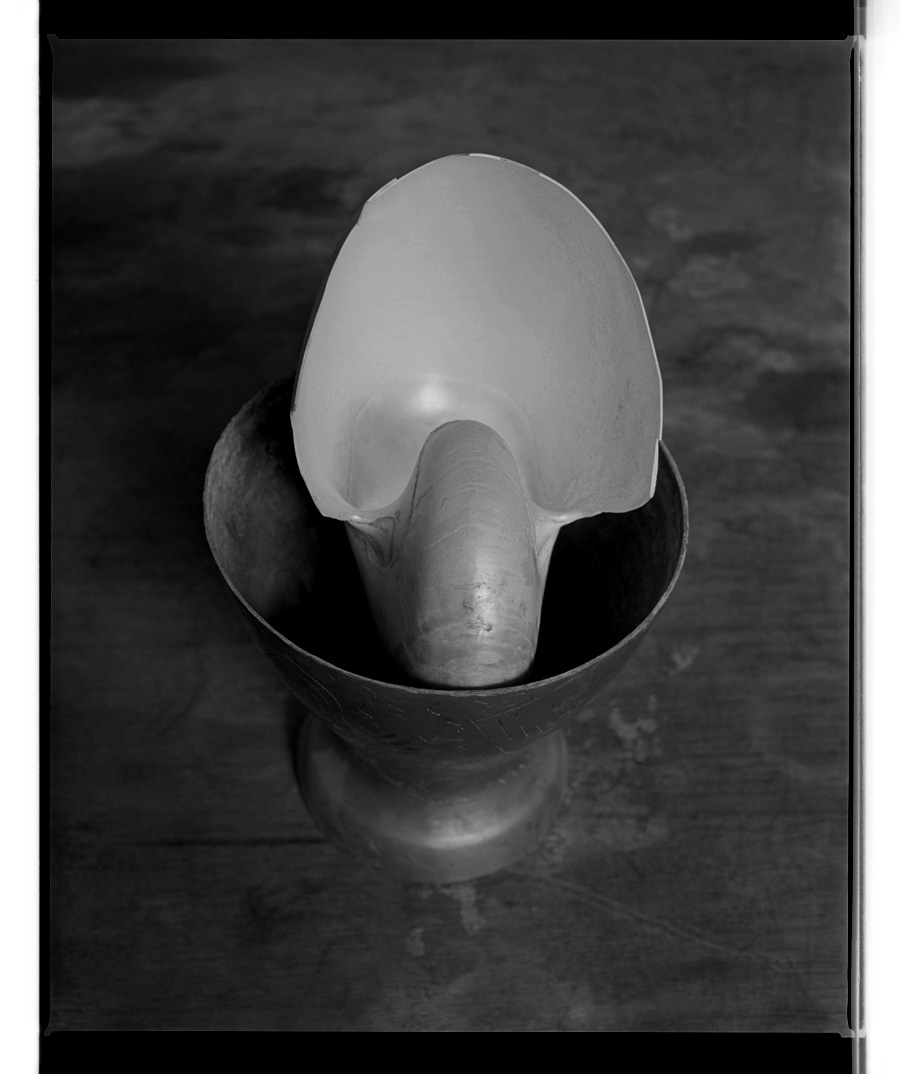
Marcus Bunyan (Australian, b. 1958) 'Nautilus shell in cup' 1994


Marcus Bunyan (Australian, b. 1958)
Nautilus shell in cup
1994
Silver gelatin photograph


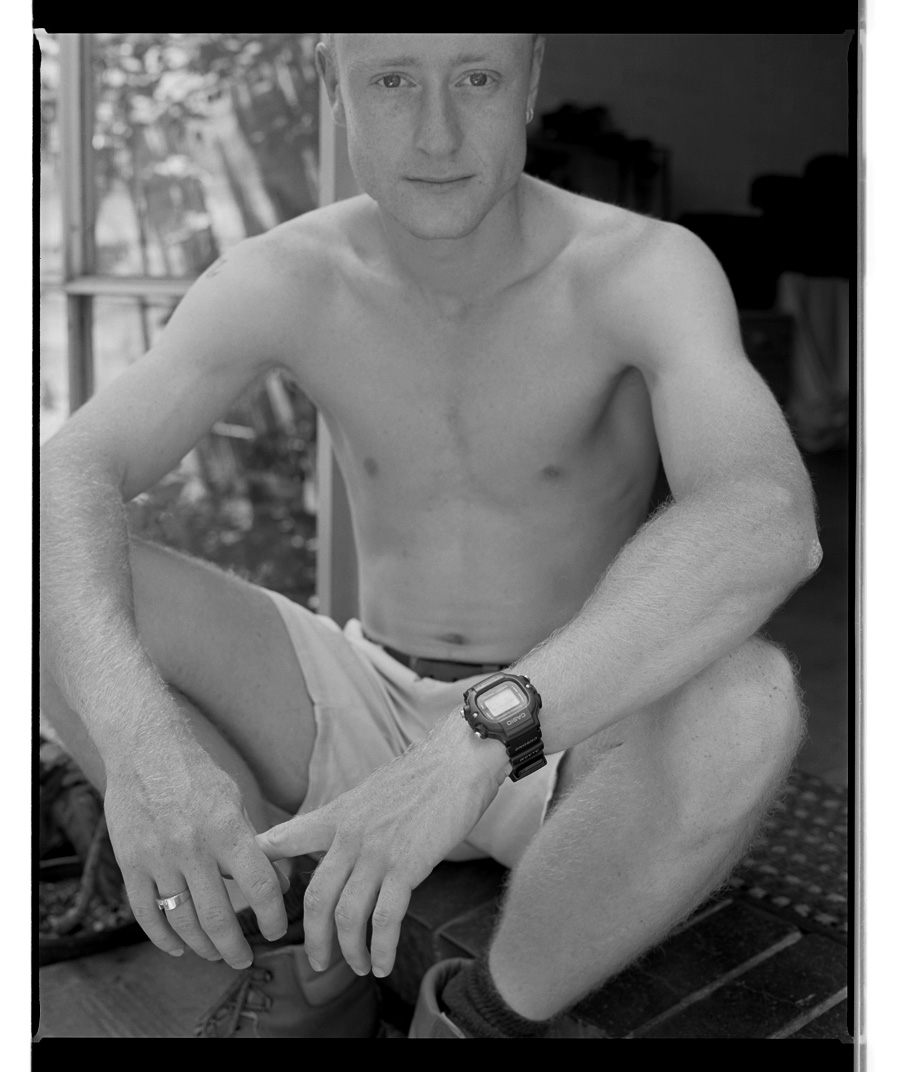
Marcus Bunyan (Australian, b. 1958) 'Jerry with shaved head' 1994


Marcus Bunyan (Australian, b. 1958)
Jerry with shaved head
1994
Silver gelatin photograph


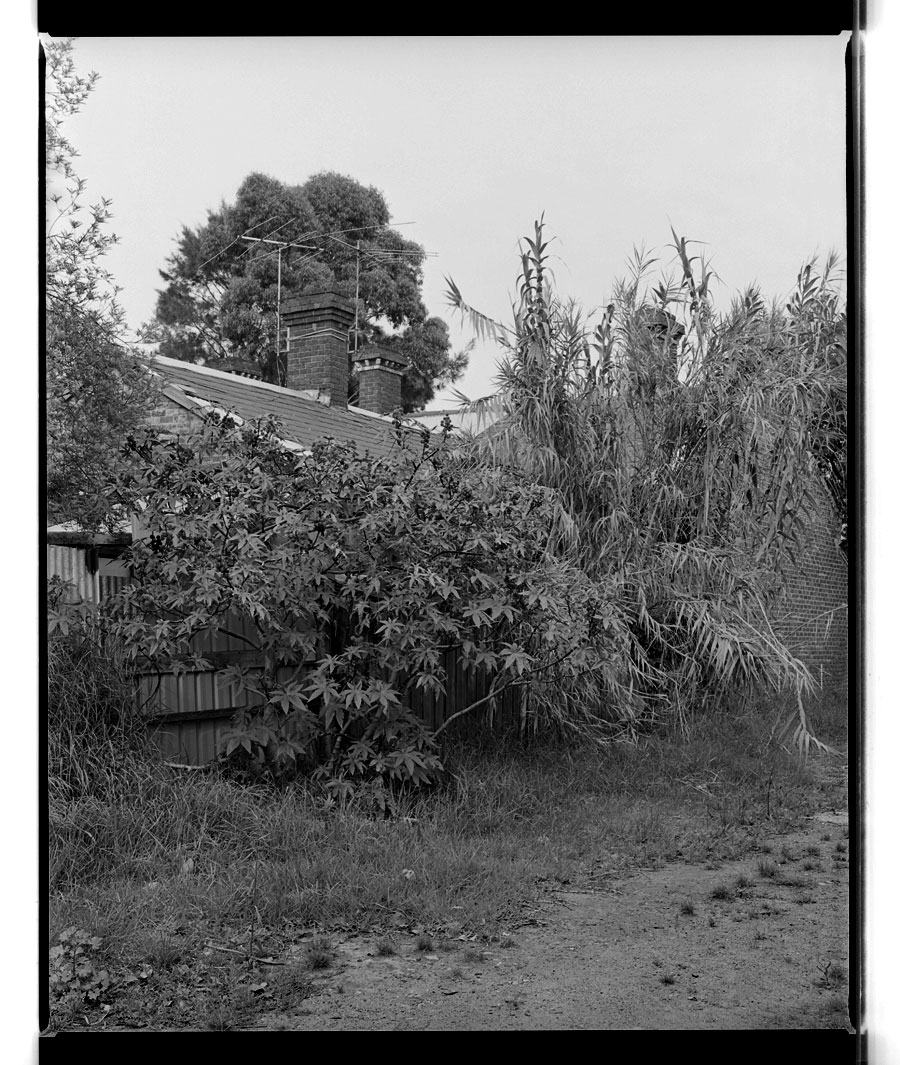
Marcus Bunyan (Australian, b. 1958) 'Undergrowth' 1994


Marcus Bunyan (Australian, b. 1958)
Undergrowth
1994
Silver gelatin photograph


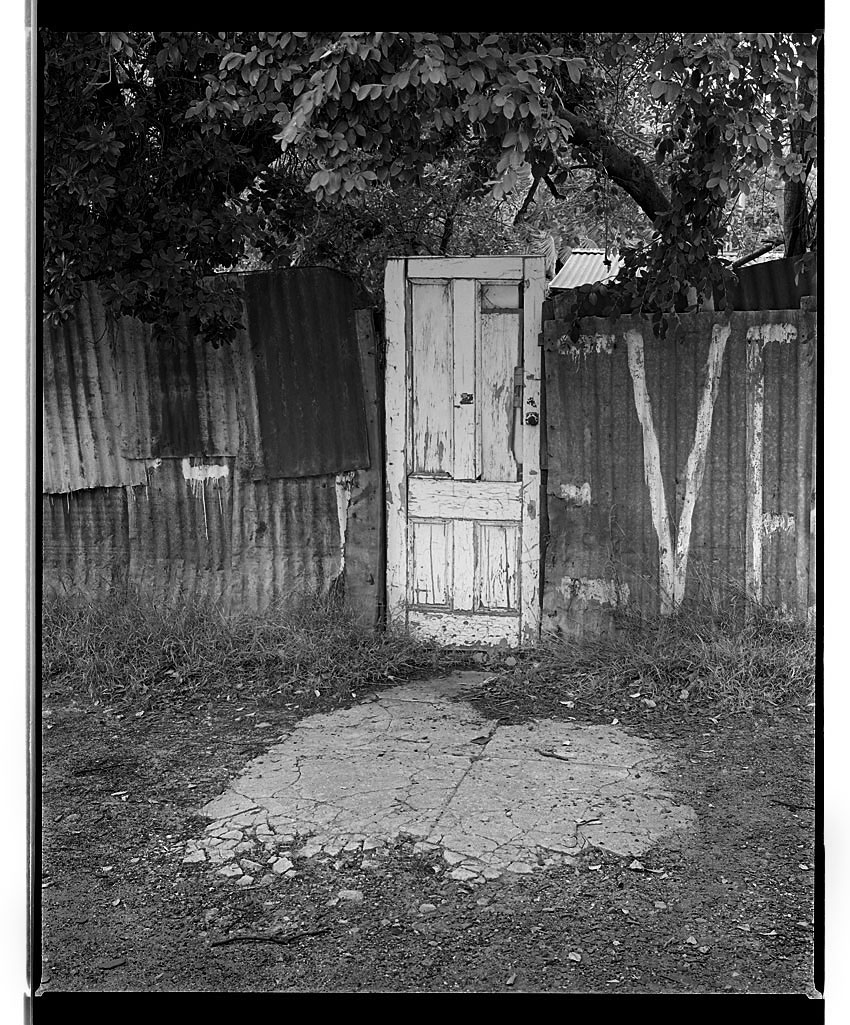
Marcus Bunyan (Australian, b. 1958) 'White door 2' 1994


Marcus Bunyan (Australian, b. 1958)
White door 2
1994
Silver gelatin photograph


Marcus Bunyan (Australian, b. 1958) 'Damien sitting outside his flat, South Yarra, 1994' 1994


Marcus Bunyan (Australian, b. 1958)
Damien sitting outside his flat, South Yarra, 1994
1994
Silver gelatin photograph


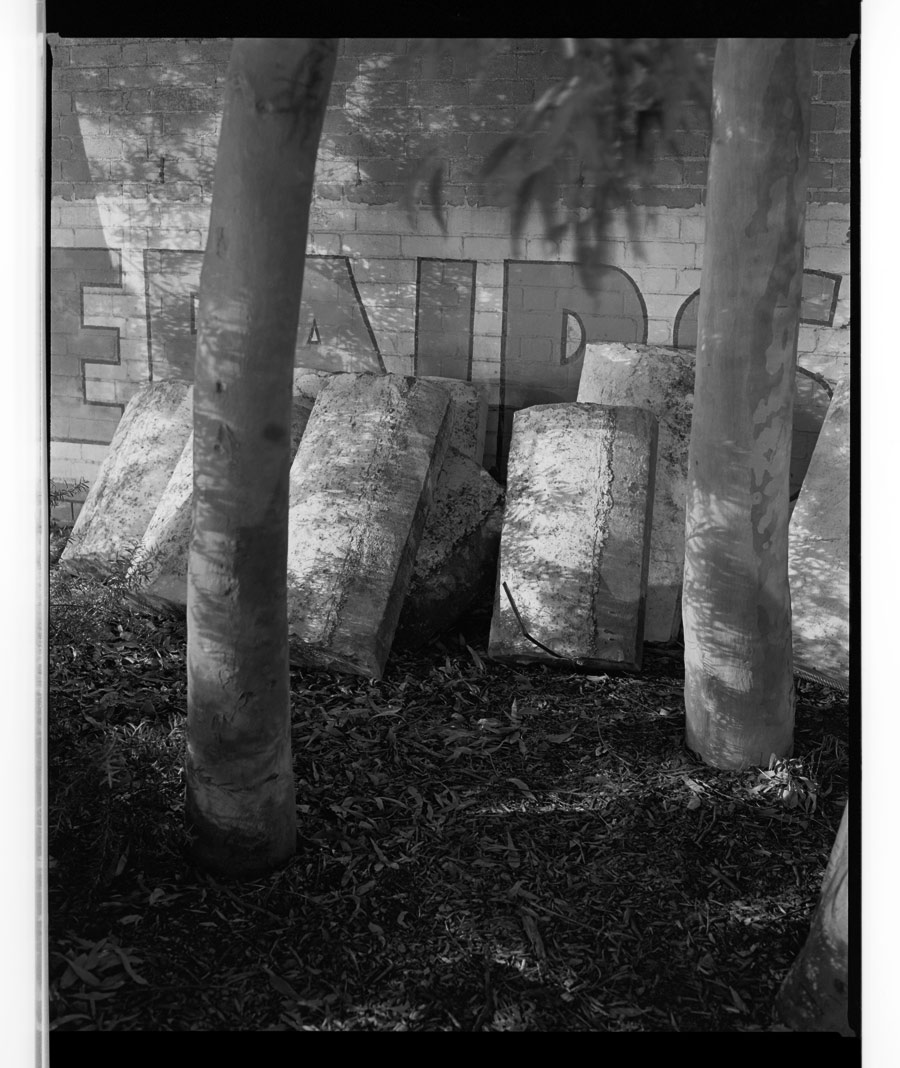
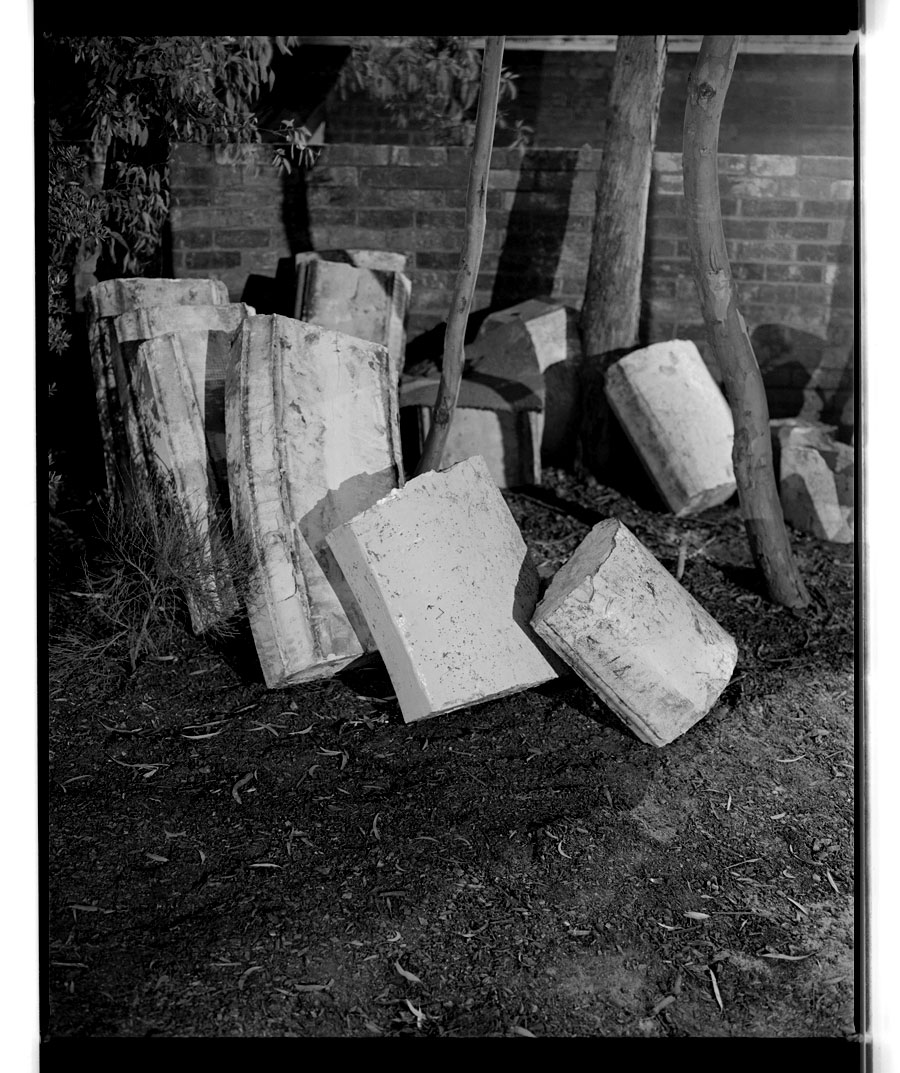
Marcus Bunyan (Australian, b. 1958) 'Trees, capstone, shadows' 1994


Marcus Bunyan (Australian, b. 1958)
Trees, capstone, shadows
1994
Silver gelatin photograph


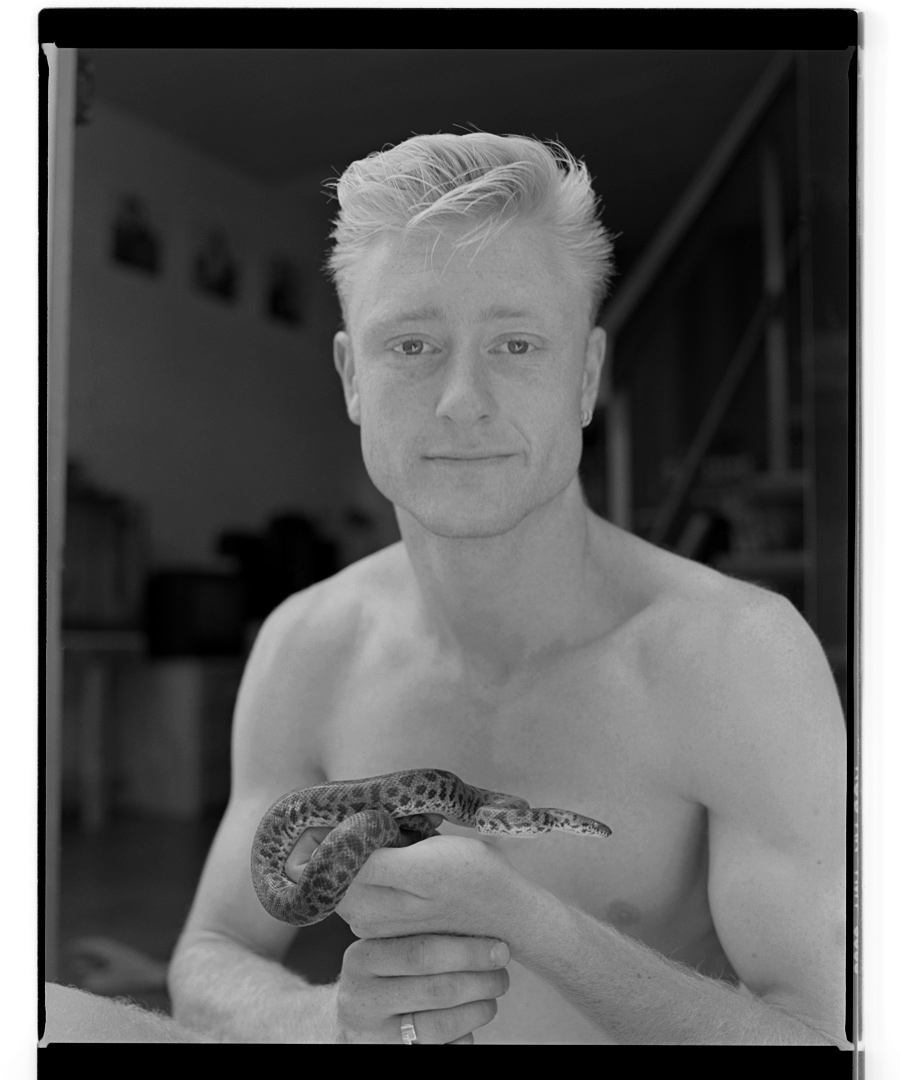
Marcus Bunyan (Australian, b. 1958) 'Damien with snake' 1994


Marcus Bunyan (Australian, b. 1958)
Damien with snake
1994
Silver gelatin photograph


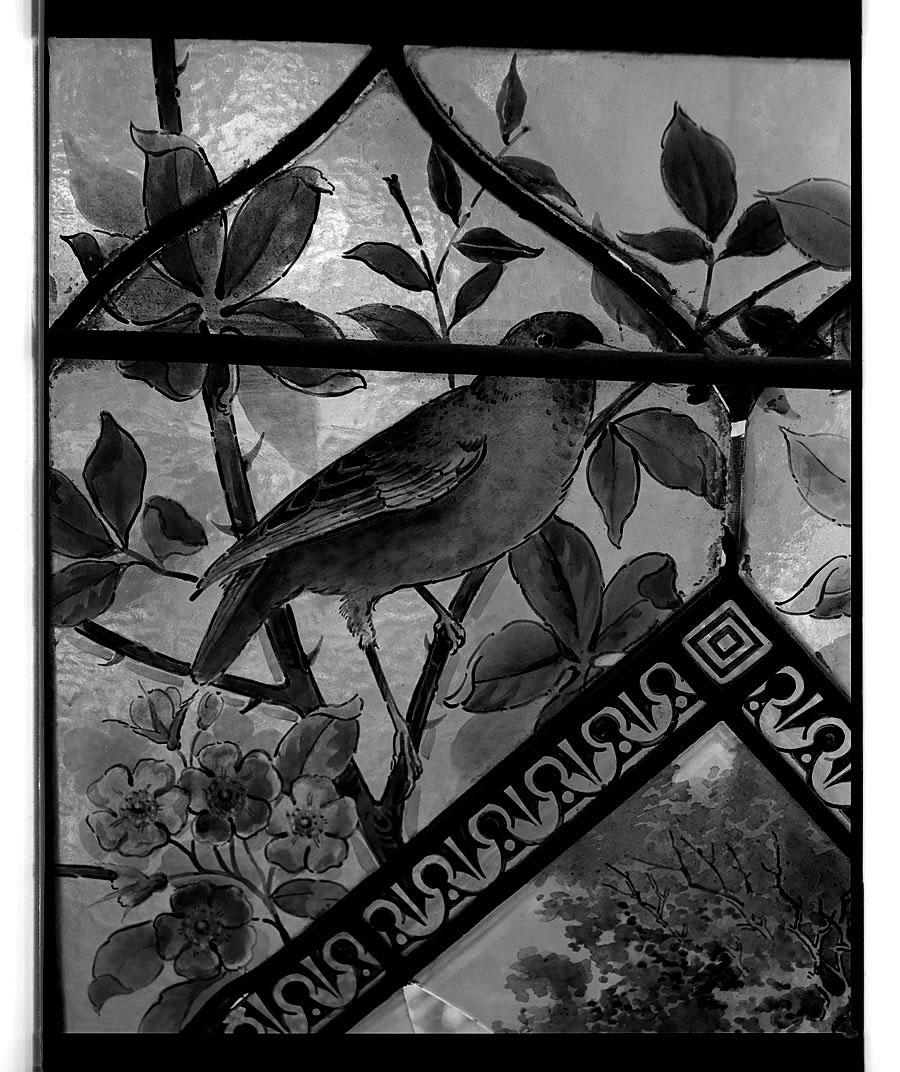
Marcus Bunyan (Australian, b. 1958) 'Glass bird, Punt Road, South Yarra' 1994


Marcus Bunyan (Australian, b. 1958)
Glass bird, Punt Road, South Yarra
1994
Silver gelatin photograph


Marcus Bunyan (Australian, b. 1958) 'Easter Sunday' 1994


Marcus Bunyan (Australian, b. 1958)
Easter Sunday
1994
Silver gelatin photograph


Marcus Bunyan (Australian, b. 1958) 'Capstone, night, Windsor train station' 1994


Marcus Bunyan (Australian, b. 1958)
Capstone, night, Windsor train station
1994
Silver gelatin photograph


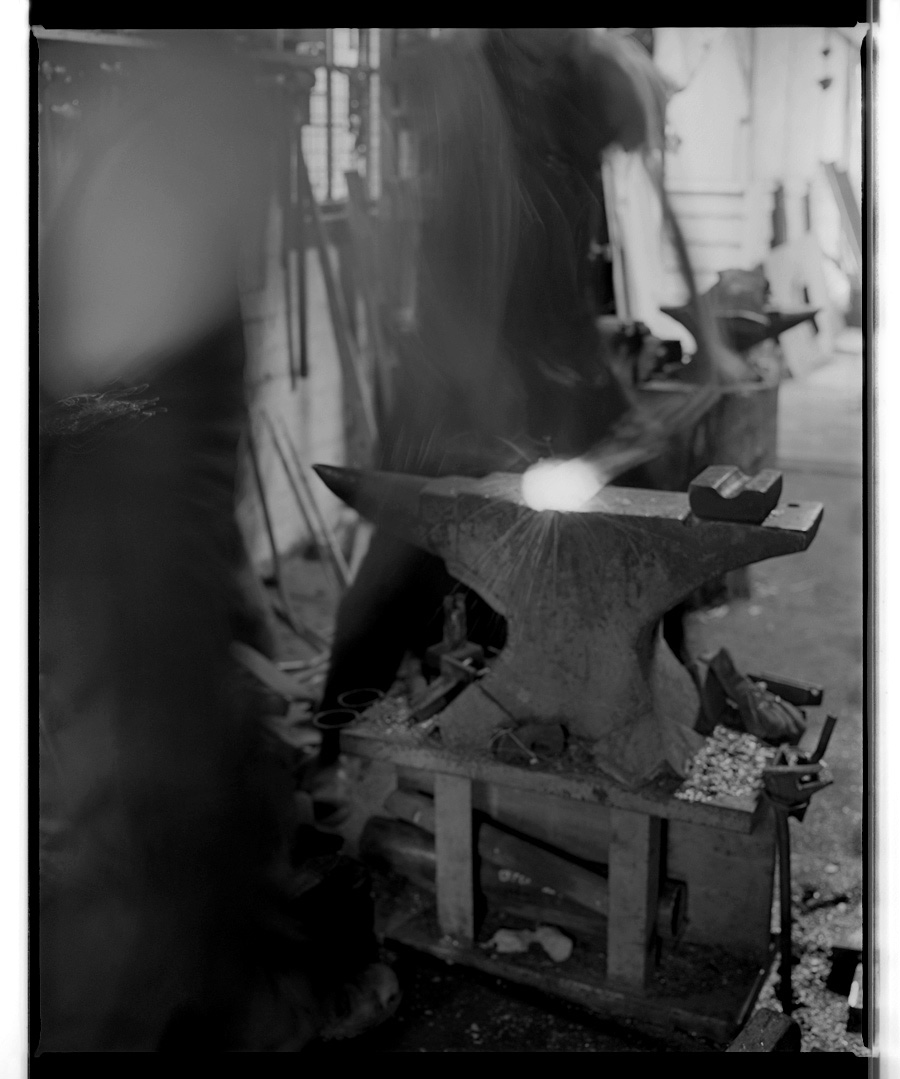
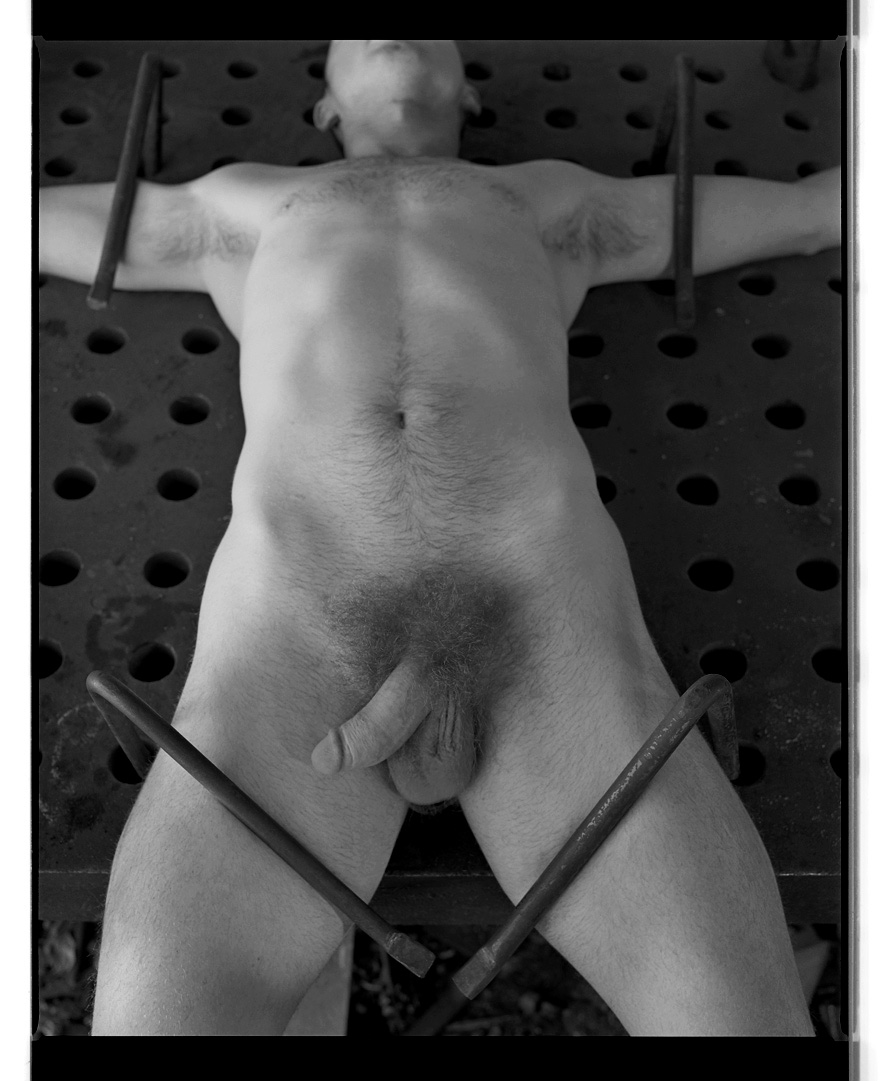
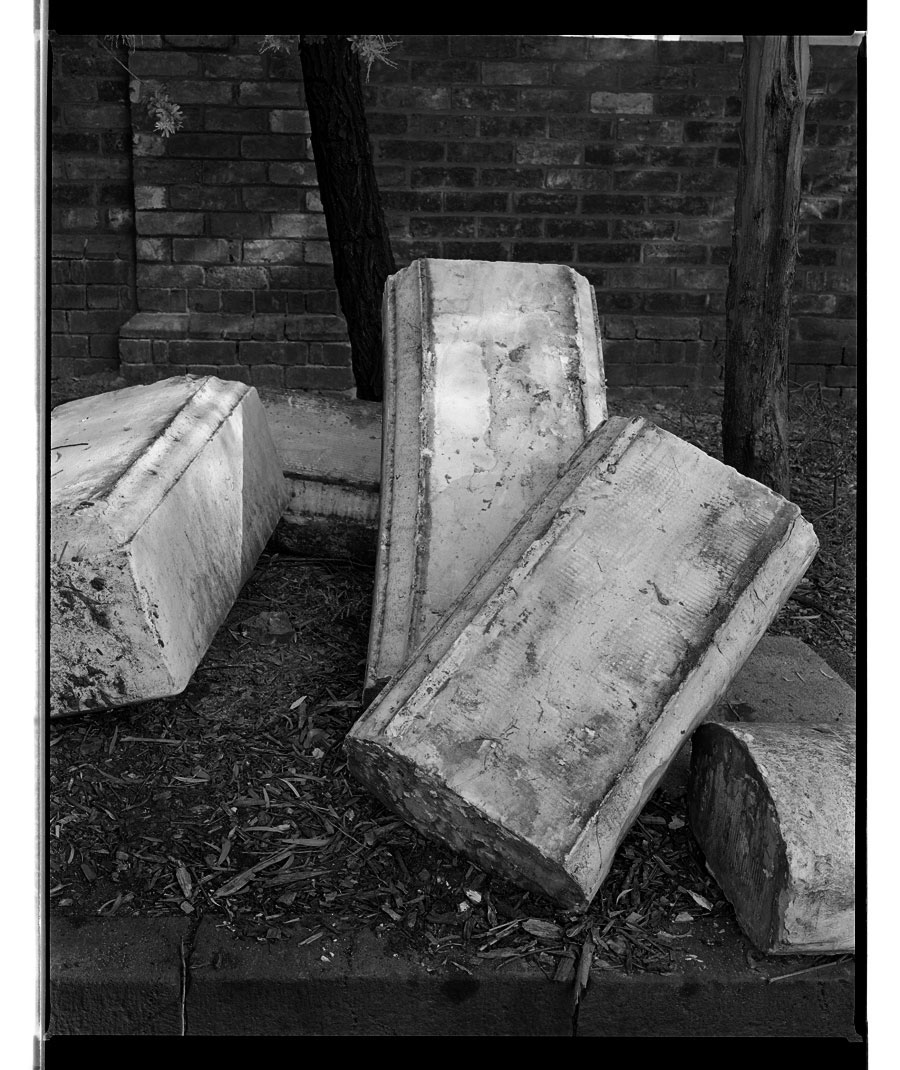
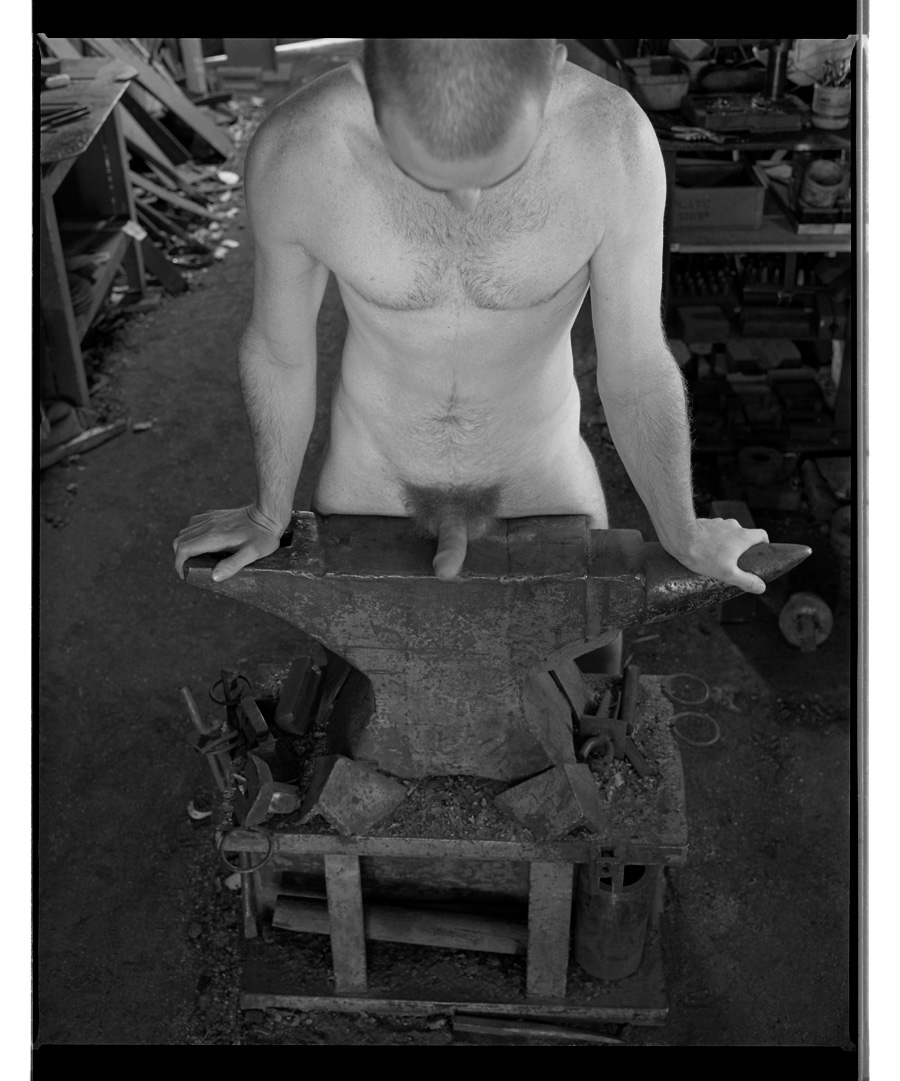
Marcus Bunyan (Australian, b. 1958) 'Paul, cock on anvil' 1994


Marcus Bunyan (Australian, b. 1958)
Paul, cock on anvil
1994
Silver gelatin photograph


Marcus Bunyan black and white archive 1991-1997

LIKE ART BLART ON FACEBOOK

Back to top

Exhibition: ‘The Radical Camera: New York’s Photo League, 1936-1951’ at The Norton Museum of Art, West Palm Beach, Florida

Exhibition dates: 14th March – 16th June 2013


Alexander Alland (Ukranian-American, 1902-1989, born Sevastopol, Ukraine) 'Untitled (Brooklyn Bridge)' 1938


Alexander Alland (Ukranian-American, 1902-1989, born Sevastopol, Ukraine)
Untitled (Brooklyn Bridge)
1938
Gelatin silver print
The Jewish Museum, New York
Purchase: William and Jane Schloss Family Foundation Fund


Conscience of the brave

Bradley Manning.
A slight, bespectacled, intelligent gay man.
A man who has the courage of his convictions.
He revealed truth at the heart of the world’s largest “democracy.”

There is something insidious about the American nation. Not its citizens, not its place, but its government. This government has perpetrated evil in the name of its people. Think of Iraq and Afghanistan, invasions in the name of freedom, the support of puppet governments, the assassinations, the military advisors on the ground, the profits made.

The torture. The deaths.

Bradley Manning revealed all of this because he has a mighty moral compass. He knows right from wrong. He was not afraid to expose the hypocrisy that for many years has beaten, unfettered, in the breast of a nation. The home of the brave and the free is sadly under attack from within. In the name of its people.

And why is this text relevant to this posting?

So often in the history of America, dissension is shut down because of some imagined menace, from within or without. Here another group of people (photographers documenting American social conditions) were persecuted for standing up for social causes, for the freedom to expose injustice where it lives. The paranoia of patriotism.

As Harold Pinter has so pithily observed,

“The crimes of the United States have been systematic, constant, vicious, remorseless, but very few people have actually talked about them. You have to hand it to America. It has exercised a quite clinical manipulation of power worldwide while masquerading as a force for universal good. It’s a brilliant, even witty, highly successful act of hypnosis.”

Except the hypnotist is a deranged psychopath, a divided split personality arraigning god, greed and guns. Out of one, many sins.

Dr Marcus Bunyan


Many thankx to The Norton Museum of Art for allowing me to publish the photographs in the posting. Please click on the photographs for a larger version of the image.


“When the persecution of an individual who has exposed an evil is pursued so ruthlessly and yet the evil itself is studiedly ignored, all of us know that there is something very wrong with the way that our society is conducting itself. And if we do not protest in the strongest terms about what is being done in our name, then we become complicit.”


Alan Moore


“The US has shown remarkable energy in its pursuit of alleged whistleblowers. Has it investigated the deaths of those innocent civilians with the same vigour? With any vigour whatsoever? And which would you consider a crime? To conceal the deaths of innocent civilians, or to reveal them? I know what my answer would be.”


Les Barker


“To suggest that lives were put in danger by the release of the WikiLeaks documents is the most cynical of statements. Lives were put in danger the night we invaded the sovereign nation of Iraq, an act that had nothing to do with what the Bradley Mannings of this country signed up for: to defend our people from attack. It was a war based on a complete lie and lives were not only put in danger, hundreds of thousands of them were exterminated. For those who organised this massacre to point a finger at Bradley Manning is the ultimate example of Orwellian hypocrisy.”


Michael Moore


“Private Manning is the world’s pre-eminent prisoner of conscience, having remained true to the Nuremberg principle that every soldier has the right to ‘a moral choice.’ His suffering mocks the notion of the land of the free.”


John Pilger


Louis Stettner (American, 1922-2016) 'Coming to America' c. 1951


Louis Stettner (American, 1922-2016)
Coming  to America
c. 1951
Gelatin silver print The Jewish Museum, New York
Purchase: Photography Acquisitions Committee Fund


Louis Stettner

Louis Stettner (November 7, 1922 – October 13, 2016) was an American photographer of the 20th century whose work included streetscapes, portraits and architectural images of New York and Paris. His work has been highly regarded because of its humanity and capturing the life and reality of the people and streets. Starting in 1947, Stettner photographed the changes in the people, culture, and architecture of both cities. He continued to photograph New York and Paris up until his death. …

Back from the war Stettner joined the Photo League in New York. Stettner visited Paris in 1946 and in 1947 moved there. From 1947 to 1949 he studied at the “Institut des Hautes Études Cinématographiques” in Paris and received a Bachelor of Arts in Photography & Cinema. He went back and forth between New York and Paris for almost two decades and finally settled permanently in Saint-Ouen, near Paris, in 1990. Stettner still frequently returned to New York.

Stettner’s professional work in Paris began with capturing life in the post-war recovery. He captured the everyday lives of his subjects. In the tradition of the Photo League, he wanted to investigate the bonds that connect people to one another. In 1947 he was asked by the same Photo League to organise an exhibition of French photographers in New York. He gathered the works of some of the greatest photographers of the era, including Doisneau, Brassaï, Boubat, Izis, and Ronis. The show was a big success and was largely reviewed in the annual issue of U.S. Camera. Stettner had begun a series of regular meetings with Brassaï who was a great mentor and had significant influence on his work. In 1949, Stettner had his first exhibition at the “Salon des Indépendants” at the Bibliothèque Nationale, Paris.

In 1951 his work was included in the famous Subjektive Fotografie exhibition in Germany. During the 1950s he free-lanced for Time, Life, Fortune, and Du (Germany). While in Paris he reconnected with Paul Strand, who had also left New York because of the political intolerance of the McCarthy era – Strand had been a founder of the Photo League that would be blacklisted and then banned during those years.

In the 1970s Stettner spent more time in New York City, where he taught at Brooklyn College, Queens College, and Cooper Union.

Text from the Wikipedia website


Erika Stone (born 1924, Frankfurt, Germany) 'Lower Eastside Facade' 1947


Erika Stone (German, b. 1924)
Lower Eastside Facade
1947
Gelatin silver print
Columbus Museum of Art, Ohio, Photo League Collection
Museum purchase with funds provided by Elizabeth M. Ross, the Derby Fund,
John S. and Catherine Chapin Kobacker, and the Friends of the Photo League


Stone’s adroit cropping of this image emphasises the coy upward gaze of the woman in the advertisement, away from the laundry line (emblem of poverty), and suggests the social mobility of the postwar era.


Erika Stone’s documentary photographs reflect her long, active career as a photo journalist and magazine photographer. In the 40’s, Stone was a member of the legendary Photo League, an organisation of photo documentarians which she feels most influenced her approach to her personal photographic work. It was during the years as a League member that she developed her interest in documenting people and at the age of seventeen, produced her Bowery series.

Although she considers herself mostly self-taught, she studied at the New School of Social Research with Bereniece Abbott and George Tice.

Stone was a stringer for both Time and Der Spiegel magazines and worked as a general photojournalist until 1960. After the birth of her two sons, she made photographing children and family her specialty. Her photographs have been and are widely published in magazines and textbooks around the world.

Anonymous. “Erika Stone,” on the American Photography Archives Group website Nd [Online] Cited 13/07/2024


Marvin E. Newman (American, 1927-2023) 'Halloween, South Side' 1951


Marvin E. Newman (American, 1927-2023)
Halloween, South Side
1951
Gelatin silver print
The Jewish Museum, New York
Purchase: Photography Acquisitions Committee Fund


Marvin Newman

Born in New York; Newman attended Brooklyn College, where he studied sculpture with Burgoyne Diller and photography with Walter Rosenblum. Following Rosenblum’s suggestion, he joined the Photo League in 1948, taking classes with John Ebstel. The Photo League, founded in 1936, blazed a trail for serious photographers for 15 years, providing a forum for ideas, cheap darkroom space, and the vision of using the art of picture taking to change the world. Newman then attended the Institute of Design, Chicago (1949-52), where, after studying with Harry Callahan and Aaron Siskind, he received one of the first MS degrees in photography (1952).

During this time, Newman won national contests, including one sponsored by American Photography (1950) and another by Time, Inc. (1951). His work appeared in the Always a Young Stranger exhibition at the Museum of Modern Art, New York, and in a one-man show at Roy De Carava’s A Photographer’s Gallery (1956). Well-known as a photojournalist, Newman has been a major contributor to Sports Illustrated since its inception (1953), as well as to Life, Look, Newsweek, and Smithsonian magazines. In addition, he has been the national president of the American Society of Magazine Photographers, authored or coauthored eight books on photography, and received the Art Director’s Gold Medal for Editorial Photography.


Ida Wyman (American, 1926-2019) 'Spaghetti 25 Cents, New York' 1945


Ida Wyman (American, 1926-2019)
Spaghetti 25 Cents, New York
1945
Gelatin silver print
The Jewish Museum, New York
Purchase: Photography Acquisitions Committee Fund


This Italian restaurant was near the offices of Acme Newspictures, where Wyman became the company’s first female photo printer in 1943. After the war she lost her job at the agency. The “Ladies Invited” sign on the window is a reminder of a time when unescorted women were not always welcome in public dining establishments.

Ida Wyman

When I began working in the 1940s, few women were doing magazine photography in a field that was almost exclusively male. As I progressed from box camera to Speed Graphic (my first professional camera), and then to a Rolleiflex, I stopped thinking about the mechanics of film speed, f-stops, shutter speed, and began focusing on subject matter that interested me. What interested me so much were ordinary people and their everyday activities. Early on, I had documented children’s games and unusual architectural details in my Bronx neighbourhood. I decided to expand, to go elsewhere, taking the subway to Harlem, Chinatown, and lower Manhattan, exploring those neighbourhoods and looking for photos.

I became a member of the Photo League in 1946. I considered myself a documentary photographer and the League’s philosophy of honest photography appealed to me. I also began to understand the power of photos to help improve the social order by showing the conditions under which many people lived and worked. Even after leaving the League the following year, I continued to emphasise visual and social realities in my straightforward photographs.

Beginning with my earliest photos seeing New York City with my feet, and in whatever part of the country I was in, I continued my own walkabout, learning the area, engaging my subject, listening, and respecting their dignity. This continued to be my approach when taking photos. My photographs depicted daily life in America’s modern metropolitan centres, including Chicago and Los Angeles as well as New York.


Aaron Siskind (American, 1903-1991) 'The Wishing Tree' 1937


Aaron Siskind (American, 1903-1991)
The Wishing Tree
1937, printed later
from Harlem Document, 1936-40
Gelatin silver print
The Jewish Museum, New York
Purchase: Lillian Gordon Bequest


Harlem’s legendary Wishing Tree, bringer of good fortune, was once a tall elm that stood outside a theatre at 132nd Street and Seventh Avenue. When it was cut down in 1934 Bill “Bojangles” Robinson, the celebrated tap dancer, moved the stump to a nearby block and planted a new Tree of Hope beside it to assume wish granting duties. A piece of the original trunk is preserved in the Apollo Theatre on 125th Street, where performers still touch it for luck before going onstage.


Sonia Handelman Meyer (American, 1920-2022) 'Hebrew Immigration Aid Society' c. 1946


Sonia Handelman Meyer (American, 1920-2022)
Hebrew Immigration Aid Society
c. 1946
Gelatin silver print
The Jewish Museum, New York
Purchase: Mimi and Barry J. Alperin in memory of Max Alperin


The efforts of the New York­ based Hebrew Immigration Aid Society (HIAS) to rescue European Jews during the war were severely hampered by US immigration laws. After the war it aided in the resettlement of some 150,000 displaced persons, including, presumably, these three, whom Handelman Meyer has chosen to photograph in close-­up. She conveys both their common suffering and their individuality, emphasising differences in body language and dress.

Sonia Handelman Meyer

I first heard of the Photo League from Lou Stoumen in Puerto Rico in 1942. I was working for the U.S. Army Signal Corps and Lou was preparing to join Yank Magazine. When I returned to New York City, I walked up the rickety stairs to League Headquarters and took a beginners class with Johnny Ebstel. I bought a used Rolleicord for a precious $100, and dared to go out on the city streets to photograph the life around me. Soon the guys began to come back from the war and the heady life of Photo League workshops, exhibits, lectures, photo hunts, and committee assignments intensified. I took eye-heart-soul opening workshops with Sid Grossman, worked as the paid (!) secretary for a year or so, and worked on the Lewis Hine Committee under Marynn Ausubel.

I photographed in Spanish Harlem, Greenwich Village, midtown Manhattan, at the Hebrew Immigration Aid Society, at an anti-lynching rally in Madison Square Park, at a Jehovah’s Witness convention in Yankee Stadium, and on Coney Island. Mostly, I photographed children and reflections of my city – rough-edged, tender, and very beautiful in its diversity. Some of this work was shown in the major 1949 exhibition, This is the Photo League.

The heartbreaking end of the League coincided with a huge change in my personal life. I got married and my husband began to go to college and we were out of NY for a while. And then the biggest change: our own family arrived and the joys of our son, and later our daughter, absorbed my time. Prints and negatives were stashed away in boxes and I lost track of all the old friends at the League. After so many years of being in the shadows, you can imagine my pleasure, at 90+ years of age, to have my photographs out of their boxes and onto walls where they can be seen, thought about, and enjoyed – and perhaps again take their place in the history of the Photo League.


Arthur Leipzig (American, 1918-2014) 'Chalk Games, Prospect Place, Brooklyn' 1950


Arthur Leipzig (American, 1918-2014)
Chalk Games, Prospect Place, Brooklyn
1950
Gelatin silver print
The Jewish Museum, New York
Purchase: Rictavia Schiff Bequest


Arnold Eagle (Hungarian-American, 1909-1992) 'Chatham Square Platform, New York City' c. 1939


Arnold Eagle (Hungarian-American, 1909-1992)
Chatham Square Platform, New York City
c. 1939
Silver gelatin print


Joe Schwartz (American, 1913-2013) 'Slums Must Go! May Day Parade, New York' c. 1936


Joe Schwartz (American, 1913-2013)
Slums Must Go! May Day Parade, New York
c. 1936
Gelatin silver print
Columbus Museum of Art, Ohio, Photo League Collection
Museum Purchase with funds provided by Elizabeth M. Ross, the Derby Fund, John S. and Catherine Chapin Kobacker, and the Friends of the Photo League


Morris Huberland (Polish-American, 1909-2003 born Warsaw, Poland) 'Union Square, New York' c. 1942


Morris Huberland (Polish-American, 1909-2003 born Warsaw, Poland)
Union Square, New York
c. 1942
Gelatin silver print
The Jewish Museum, New York
Purchase: Mimi and Barry J. Alperin Fund


The Norton Museum of Art’s newest special exhibition, The Radical Camera: New York’s Photo League, 1936-1951, is a formidable survey of the League’s history, and its artistic, cultural, social, and political significance. Opening March 14 and on view through June 16, 2013, this striking exhibition includes nearly 150 vintage photographs from Photo League collections at the Columbus Museum of Art, Ohio, and The Jewish Museum in New York City.

The exhibition is organised by Mason Klein, Curator of Fine Arts at The Jewish Museum and Catherine Evans, the William and Sarah Ross Soter Curator of Photography of the Columbus Museum of Art. It premiered in at The Jewish Museum in 2011 to rave reviews. The New York Times called The Radical Camera a “stirring show,” and the New York Photo Review hailed it as “nothing short of splendid.” The New Yorker named the exhibition one of the top 10 photography exhibitions of 2011. The Norton is the final venue on the exhibition’s tour.

The exhibition explores the fascinating blend of aesthetics and social activism at the heart of the Photo League. League members were known for capturing sharply revealing, compelling moments from everyday life. The League focused on New York City and its vibrant streets – a shoeshine boy, a brass band on a bustling corner, a crowded beach at Coney Island. Many of the images are beautiful, yet harbour strong social commentary on issues of class, race, and opportunity. The organisation’s members included some of the most noted photographers of the mid-20th century – W. Eugene Smith, Weegee (Arthur Fellig), Lisette Model, Berenice Abbott and Aaron Siskind, to name a few.

In 1936, a group of young, idealistic photographers, most of them Jewish, first-generation Americans, formed an organisation in Manhattan called the Photo League. Their solidarity centred on a belief in the expressive power of the documentary photograph, and on a progressive alliance in the 1930s of socialist ideas and art. (The Photo League also helped validate photography as a fine art, presenting student work and guest exhibitions by established photographers.) The Radical Camera presents the development of the documentary photograph during a tumultuous period that spanned the New Deal reforms of the Depression, World War II, and the Cold War. Offering classes, mounting exhibitions, and fostering community, members of the Photo League focused on social reform and the power of the photograph to motivate change. At the height of their influence, their membership included the most important photographers of their day including Berenice Abbot, Aaron Siskind, Barbara Morgan, Sid Grossman, Weegee (Arthur Fellig), and Lisette Model. Featuring more than 175 works by these artists as well as many more Photo League members, The Radical Camera traces the organisation’s interests, attitudes toward photography, and impact during its 15-year lifespan.

The innovative contributions of the Photo League during its 15-year existence (1936-1951) were significant. As it grew, the League mirrored monumental shifts in the world starting with the Depression, through World War II, and ending with the Red Scare. Born of the worker’s movement, the Photo League was an organisation of young, idealistic, first-generation American photographers, most of them Jewish, who believed in documentary photography as an expressive medium and powerful tool for exposing social problems. It was also a school with teachers such as Sid Grossman, who encouraged students to take their cameras to the streets and discover the meaning of their work as well as their relationship to it. The League had a darkroom for printing, published an acclaimed newsletter called Photo Notes, offered exhibition space, and was a place to socialise.

The Photo League helped validate photography as a fine art, presenting student work and guest exhibitions by established photographers such as Eugène Atget, Henri Cartier-Bresson, and Edward Weston, among others. These affecting black and white photographs show life as it was lived mostly on the streets, sidewalks and subways of New York. Joy and playfulness as well as poverty and hardship are in evidence. In addition to their urban focus, “Leaguers” photographed rural America, and during World War II, took their cameras to Latin America and Europe. The exhibition also addresses the active participation of women who found rare access and recognition at the League. The Radical Camera presents the League within a critical, historical context. Developments in photojournalism were catalysing a new information era in which photo essays were appearing for the first time in magazines such as Life and Look. As time went on, its social documentary roots evolved toward a more experimental approach, laying the foundation for the next generation of street photographers.

In 1947, the League came under the pall of McCarthyism and was blacklisted for its alleged involvement with the Communist Party. Ironically, the Photo League had just begun a national campaign to broaden its base as a “Center for American Photography.” Despite the support of Ansel Adams, Beaumont and Nancy Newhall, Paul Strand, and many other national figures, this vision of a national photography centre could not overcome the Red Scare. As paranoia and fear spread, the Photo League was forced to disband in 1951. The Radical Camera: New York’s Photo League, 1936-1951 has been organised by The Jewish Museum, New York, and the Columbus Museum of Art, Ohio. Major support was provided by the Phillip and Edith Leonian Foundation, the National Endowment for the Arts, and Limited Brands Foundation.”

Press release from The Norton Museum of Art website


Sy Kattelson (American, 1923-2018) 'Untitled (Subway Car)' 1949


Sy Kattelson (American, 1923-2018)
Untitled (Subway Car)
1949
Gelatin silver print
The Jewish Museum, New York
Purchase: The Paul Strand Trust for the benefit of Virginia Stevens Gift


Jerome Liebling (American, 1924-2011) 'Butterfly Boy, New York' 1949


Jerome Liebling (American, 1924-2011)
Butterfly Boy, New York
1949
Gelatin silver print
The Jewish Museum, New York, Purchase: Mimi and Barry J. Alperin Fund
© Estate of Jerome Liebling


Lee Sievan (American, 1907-1990) 'Salvation Army Lassie in Front of a Woolworth Store' c. 1940


Lee Sievan (American, 1907-1990)
Salvation Army Lassie in Front of a Woolworth Store
c. 1940
Gelatin silver print
The Jewish Museum, New York
Purchase: Horace W. Goldsmith Foundation Fund


This is a classic photograph. Look at the triangle that forms the central part of the image, from the girl at left looking with disdain at the matriarch singing then down to the look on the organ players face. Notice the girl at right covering her ears so she cannot hear the racket. Imagine the legs of the organ player going up and down, pumping air into the organ; and finally observe the shadow of a man’s face captured by reflection in the shop window as he walks past the scene. Magic.


Rosalie Gwathmey (American, 1908-2001) 'Shout Freedom, Charlotte, North Carolina' c. 1948


Rosalie Gwathmey (American, 1908-2001)
Shout Freedom, Charlotte, North Carolina
c. 1948
Gelatin silver print
The Jewish Museum, New York
Purchase: Gay Block and Malka Drucker Fund of the Houston Jewish Community Foundation


Weegee (Arthur Fellig) (American born Ukraine, 1899-1968) 'Max Is Rushing in the Bagels to a Restaurant on Second Avenue for the Morning Trade' c. 1940


Weegee (Arthur Fellig) (American born Ukraine, 1899-1968)
Max Is Rushing in the Bagels to a Restaurant on Second Avenue for the Morning Trade
c. 1940
Gelatin silver print
The Jewish Museum, New York
Purchase: Joan B. and Richard L. Barovick Family Foundation and Bunny and Jim Weinberg Gifts


Bernard Cole (English, 1911-1992, born London, England) 'Shoemaker’s Lunch' 1944


Bernard Cole (English, 1911-1992, born London, England)
Shoemaker’s Lunch
1944
Gelatin silver print
The Jewish Museum, New York,
Purchase: The Paul Strand Trust for the benefit of Virginia Stevens Gift


Rebecca Lepkoff (American, 1916-2014) 'Broken Window on South Street, New York' 1948


Rebecca Lepkoff (American, 1916-2014)
Broken Window on South Street, New York
1948
Gelatin silver print
The Jewish Museum, New York
Purchase: Esther Leah Ritz Bequest


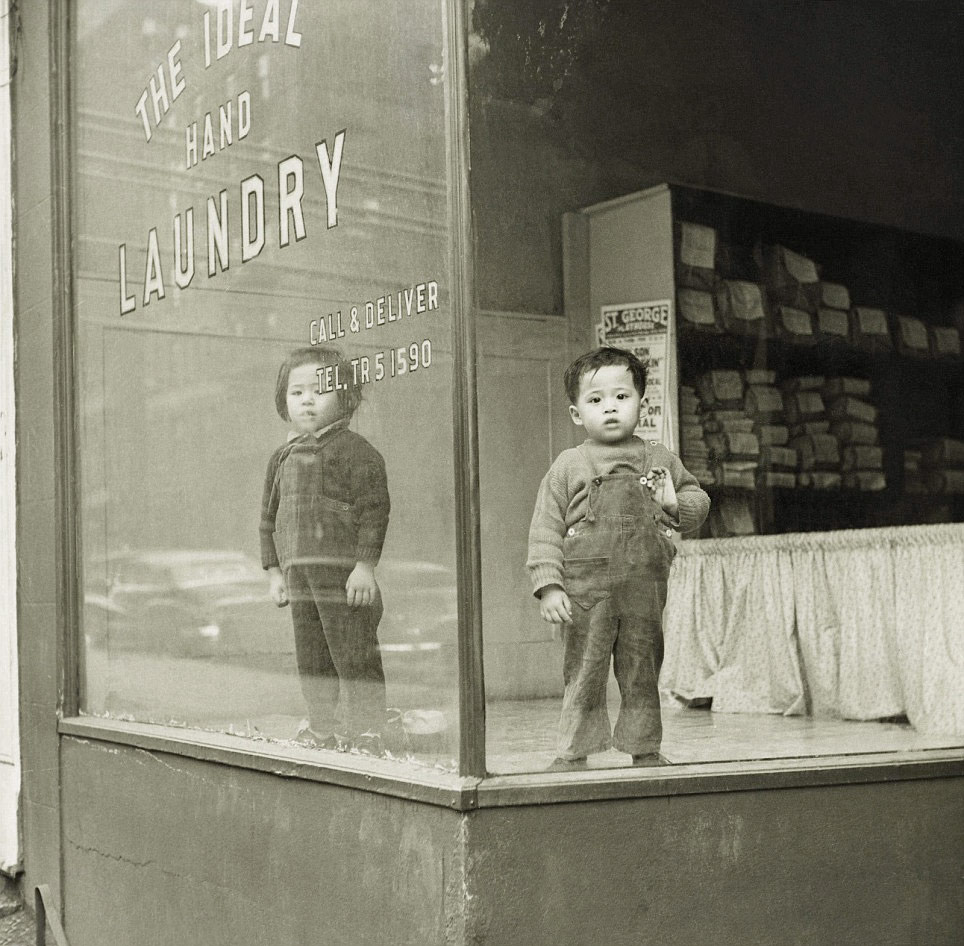
Arthur Leipzig (American, 1918-2014) 'Ideal Laundry' 1946


Arthur Leipzig (American, 1918-2014)
Ideal Laundry
1946
Gelatin silver print
The Jewish Museum, New York
Purchase: Esther Leah Ritz Bequest


Consuelo Kanaga (American, 1894-1978) 'Untitled (Tenements, New York)' c. 1937


Consuelo Kanaga (American, 1894-1978)
Untitled (Tenements, New York)
c. 1937
Gelatin silver print
The Jewish Museum, New York
Purchase: The Paul Strand Trust for the benefit of Virginia Stevens Gift


Leftist political activism was a strong element in Kanaga’s work, beginning with her photographs of a labor strike in San Francisco in 1934. She provided photographs for progressive publications such as New Masses, Labor Defender, and Sunday Worker. Underlying this formal study of tenement laundry lines (a common motif in League imagery) is Kanaga’s empathy for the living conditions of the working class.


Ruth Orkin (American, 1921-1985) 'Boy Jumping into Hudson River' 1948


Ruth Orkin (American, 1921-1985)
Boy Jumping into Hudson River
1948
Gelatin silver print The Jewish Museum, New York
Purchase: Horace W. Goldsmith Foundation Fund


Sol Prom (Solomon Fabricant) (American, 1906-1989) 'Untitled (Dancing School)' 1938


Sol Prom (Solomon Fabricant) (American, 1906-1989)
Untitled (Dancing School)
1938
from Harlem Document, 1936-40
Gelatin silver print
The Jewish Museum, New York
Purchase: Horace W. Goldsmith Foundation Fund


Mary Bruce opened a dancing school in Harlem in 1937. For fifty years she taught ballet and tap, giving free lessons to those who could not afford them. Her illustrious pupils included Katherine Dunham, Nat King Cole, Ruby Dee, and Marlon Brando.


The Norton Museum of Art
1451 S. Olive Avenue
West Palm Beach, FL 33401
Phone: (561) 832-5196

Opening hours:
Thursday – Tuesday 10am – 5pm
Closed Wednesdays

Norton Museum of Art website

LIKE ART BLART ON FACEBOOK

Back to top

Exhibition: ‘Rise and Fall of Apartheid: Photography and the Bureaucracy of Everyday Life’ at Haus der Kunst, Munich

Exhibition dates: 15th February – 26th May 2013


Eli Weinberg (South African born Latvia, 1908-1981) 'Crowd near the Drill Hall on the opening day of the Treason Trial, Johannesburg, 19. December 1956' 1956


Eli Weinberg (South African born Latvia, 1908-1981)
Crowd near the Drill Hall on the opening day of the Treason Trial, Johannesburg, 19. December 1956
1956
Times Media Collection, Museum Africa, Johannesburg


NEVER AGAIN!


Many thankx to Haus der Kunst for allowing me to publish the photographs in the posting. Please click on the photographs for a larger version of the image.


Gille de Vlieg (South African born England, b. 1940) 'Coffins at the mass funeral held in KwaThema, Gauteng, July 23, 1985' 1985


Gille de Vlieg (South African born England, b. 1940)
Coffins at the mass funeral held in KwaThema, Gauteng, July 23, 1985
1985


Gille de Vlieg (born 26 July 1940) is a photographer and anti-apartheid activist. She was born in England and moved to South Africa with her mother when she was 3 years old. During apartheid she was a member of both the Black Sash and one of the few women members of the Afrapix photography collective. Her images have been published in newspapers, magazines and books nationally and internationally. Unlike many of her counterparts, de Vlieg received little public acclaim for her work up until recently. About her work, she says, “I wanted to make a contribution to an alternative view of South Africa, a view not seen on the South African TV screen then.” Her images cover the following topics: land removals, rural lifestyle, township lifestyle, gender lifestyle, United Democratic Front (UDF), anti-harassment campaign, police violence, protests against death penalty, funerals, Black Sash, protests against incorporation into Bophuthatswana; Release Mandela Campaign, End Conscription Campaign (ECC), conscientious objectors, African National Congress (ANC) Welcome Home Rally, Day of the Vow (Geloftedag), street children, and homeless people.

Text from the Wikipedia website


Gille de Vlieg (South African born England, b. 1940) 'Pauline Moloise (mother of Ben), two women & Winnie Madikizela Mandela mourn at the Memorial Service for Benjamin Moloise, who was hanged earlier that morning. Khotso House, Johannesburg, October 18, 1985' 1985


Gille de Vlieg (South African born England, b. 1940)
Pauline Moloise (mother of Ben), two women & Winnie Madikizela Mandela mourn at the Memorial Service for Benjamin Moloise, who was hanged earlier that morning. Khotso House, Johannesburg, October 18, 1985
1985


“All the armies that ever marched, all the parliaments that ever sat, have not affected the life of man on earth as that one solitary life… I am proud of what I am… The storm of oppression will be followed by the rain of my blood. I am proud to give my life, my one solitary life.”


Moloise, Benjamin (18 October 1985). “All the armies that ever marched”. Weekly Mail. p. 1


Malesela Benjamin Moloise (c.  1955 – 18 October 1985) was a South African poet and political activist who came to international attention following his arrest and subsequent execution by the government of South Africa. From Soweto, Moloise worked as an upholsterer before turning to poetry during his time on death row. In 1983, Moloise was arrested for the 1982 murder of Phillipus Selepe, a black security policeman who assisted in capturing three African National Congress (ANC) members. Although he initially confessed to the murder, he later retracted the statement during his trial. Moloise’s death sentence sparked national and international outrage and was seen as emblematic of South Africa’s brutal crackdown on anti-apartheid activists.

Throughout Moloise’s trial, allegations arose about the legitimacy of the evidence against him, the veracity of his confession, and the overall fairness of the process. Following a refusal of clemency or retrial by President P. W. Botha, Moloise was executed in 1985. His execution sparked riots in Johannesburg, protests in major world cities, and a flurry of diplomatic condemnations. The legacy of Moloise’s life, death, and anti-apartheid poems penned during his time on death row transcended South Africa, manifesting in global displays of solidarity and streets named in his honor.

Text from the Wikipedia website


Jodi Bieber (South African, b. 1966) 'Protest against Chris Hani's assassination' 1993


Jodi Bieber (South African, b. 1966)
Protest against Chris Hani’s assassination
1993
© Goodman Gallery Johannesburg


Chris Hani (28 June 1942 – 10 April 1993), born Martin Thembisile Hani SSA, SBS, CLS, DMG, MMS, was the leader of the South African Communist Party and chief of staff of uMkhonto we Sizwe, the armed wing of the African National Congress (ANC). He was a fierce opponent of the apartheid government, and was assassinated by Janusz Waluś, a Polish immigrant and sympathiser of the Conservative opposition on 10 April 1993, during the unrest preceding the transition to democracy.

Text from the Wikipedia website


Complex, vivid, evocative, and dramatic, Rise and Fall of Apartheid: Photography and the Bureaucracy of Everyday Life represents the most comprehensive exhibition of its kind, attempting to formulate an understanding of apartheid’s legacy in South Africa through visual records. These images responded to the procedures and processes of the apartheid state from its beginning in 1948 to the first non-racial democratic elections that attended its demise in 1994. Featuring more than 600 documentary photographs, artworks, films, newsreel footage, books, magazines, and assorted archival documents, the exhibition will fill more than 2,000 square meters of the East Wing of Haus der Kunst. Starting in the entrance gallery (where two film clips are juxtaposed; one from 1948 showing the victorious Afrikaner National Party’s celebration rally, and another of President F. W. De Klerk in February 1990 announcing Nelson Mandela’s release from prison) the exhibition offers an absorbing exploration of one of the twentieth century’s most contentious historical eras.

The exhibition highlights the different strategies adopted by photographers and artists; from social documentary to reportage, photo essays to artistic appropriation of press and archival material. Through these polysemic images, the exhibition embarks on a tour of how photographers and artists think with pictures, the questions these images pose, and the issues of social justice, resistance, civil rights and the actions of opposition to apartheid raise. In so doing, The Rise and Fall of Apartheid brings together many iconic photographs that have rarely been shown before, to propose a fresh historical overview of the photographic and artistic responses to apartheid.

A fundamental argument of the exhibition is that the rise of the Afrikaner National Party to political power and its introduction of apartheid as the legal foundation of governance in 1948 changed the country’s pictorial perception from a “relatively benign colonial space based on racial segregation to a highly contested space in which the majority of the population struggled for equality, democratic representation, and civil rights” (Okwui Enwezor). From the moment apartheid was introduced, photographers in South Africa were immediately aware of how these changes taking place in politics and society accordingly affected photography’s visual language: The medium was transformed from a purely anthropological tool into a social instrument. No one photographed the struggle against apartheid better, more critically, and incisively than South African photographers. For that reason, with the notable exception of a few Western photographers and artists, including Ian Berry, Dan Weiner, Margaret Bourke-White, Hans Haacke, Adrian Piper, and others, the works in the exhibition are overwhelmingly produced by South African photographers.

Resisting the easy dichotomy of victims and oppressors, the photographers’ images present the reading of an evolving dynamic of repression and resistance. Ranging in approach between “engaged” photography of photo essays to the “struggle” photography of social documentary which was aligned with activism, to photojournalistic reportage, the photographers did not only show African citizens as victims, but more importantly as agents of their own emancipation. Included in the exhibition are seminal works by Leon Levson, Eli Weinberg, David Goldblatt and members of Drum magazine, such as Peter Magubane, Jürgen Schadeberg, Alf Kumalo, Bob Gosani, G.R. Naidoo, and others in the 1950s. Also represented are the investigative street photography of Ernest Cole and George Hallett in the 1960s, the reportage of Sam Nzima, Noel Watson, and protest images of the Black Consciousness movement, and student marches in the 1970s to those of the Afrapix Collective in the 1980s, as well as reportages by the members of the so-called Bang Bang Club in the 1990s. The exhibition concludes with works by a younger generation of South African photographers, such as Sabelo Mlangeni and Thabiso Sekgale, and the collective Center for Historical Reenactments, whose projects offer subtle reappraisals of the after effects of apartheid still felt today.

These South African photographers represented a clear political belief. They were opponents of the apartheid regime, and they employed photography as an instrument to overcome it. The independent photo agency Afrapix, founded in 1982 by Omar Badsha and Paul Weinberg, saw itself as a group of “cultural workers”. They believed political convictions came first, and that photography, like writing or acting, was part of the anti-apartheid movement. This attitude was supported by photographers such as Peter McKenzie, who – at a cultural conference organised by the ANC (African National Congress) in Gabarone, Botswana in 1982 – argued that the work of cultural producers is necessarily part of the struggle against apartheid. McKenzie’s argument stood in sharp contrast to that of David Goldblatt, who had the opinion that photographers should report on events with as much inner distance as they can muster.

On the other end of the spectrum, the so-called “struggle” or “frontline photography” is characterised by immediacy, giving the impression of being in the middle of the action. “If you want a picture, you get that picture, under all circumstances” was the leitmotif of one of the leading figures, Peter Magubane.

The photographs’ subjects are different historical events. These include the “Treason Trial” of 1956-1961, which ended with the acquittal of 156 anti-apartheid activists, including Nelson Mandela; the Sharpeville massacre of 1960, in which police shot 69 demonstrators dead; Mandela’s release in 1990 after 27 years in prison; and the civil war between opposing political factions during the 1994 election. Yet this exhibition is not a history of apartheid itself. Instead it aims to critically interrogate the normative symbols and signs of the photographic and visual responses to apartheid. For example, ritualised gestures were also part of the apartheid imagery. The “thumbs up” as a sign of solidarity among activists belonged to the movement’s nonviolent start when civil disobedience and strikes were still regarded as effective agents. After the Sharpeville massacre of 1960, the resistance became militarised. The cherished “thumbs up” was transformed into the upraised fist, the general symbol of black power. Since the burial of the Sharpeville massacre’s victims, black South Africans expressed their sense of community and identity at funerals. Their public mourning thus became a ritualised form of mass mobilisation and defiance.

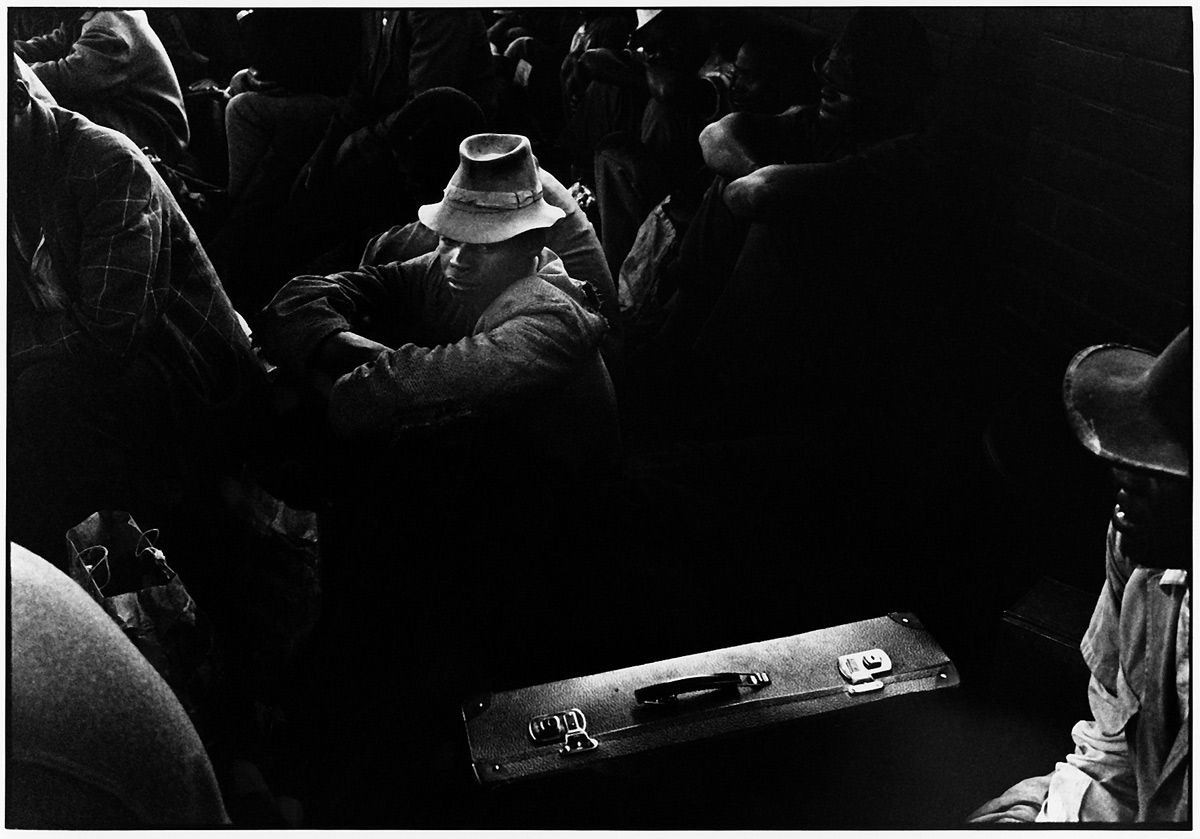
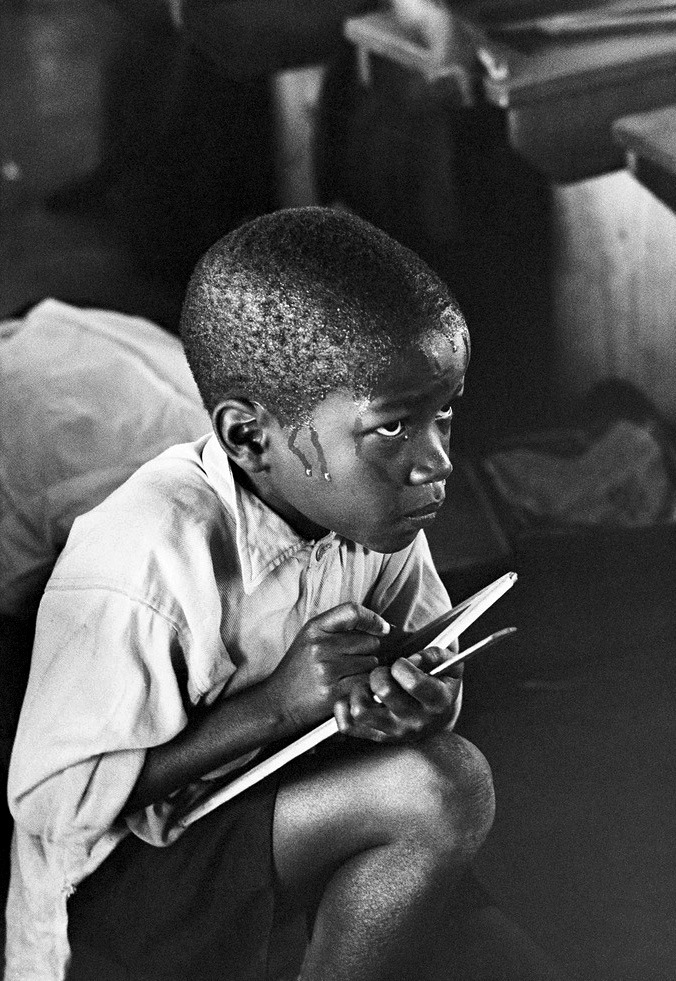
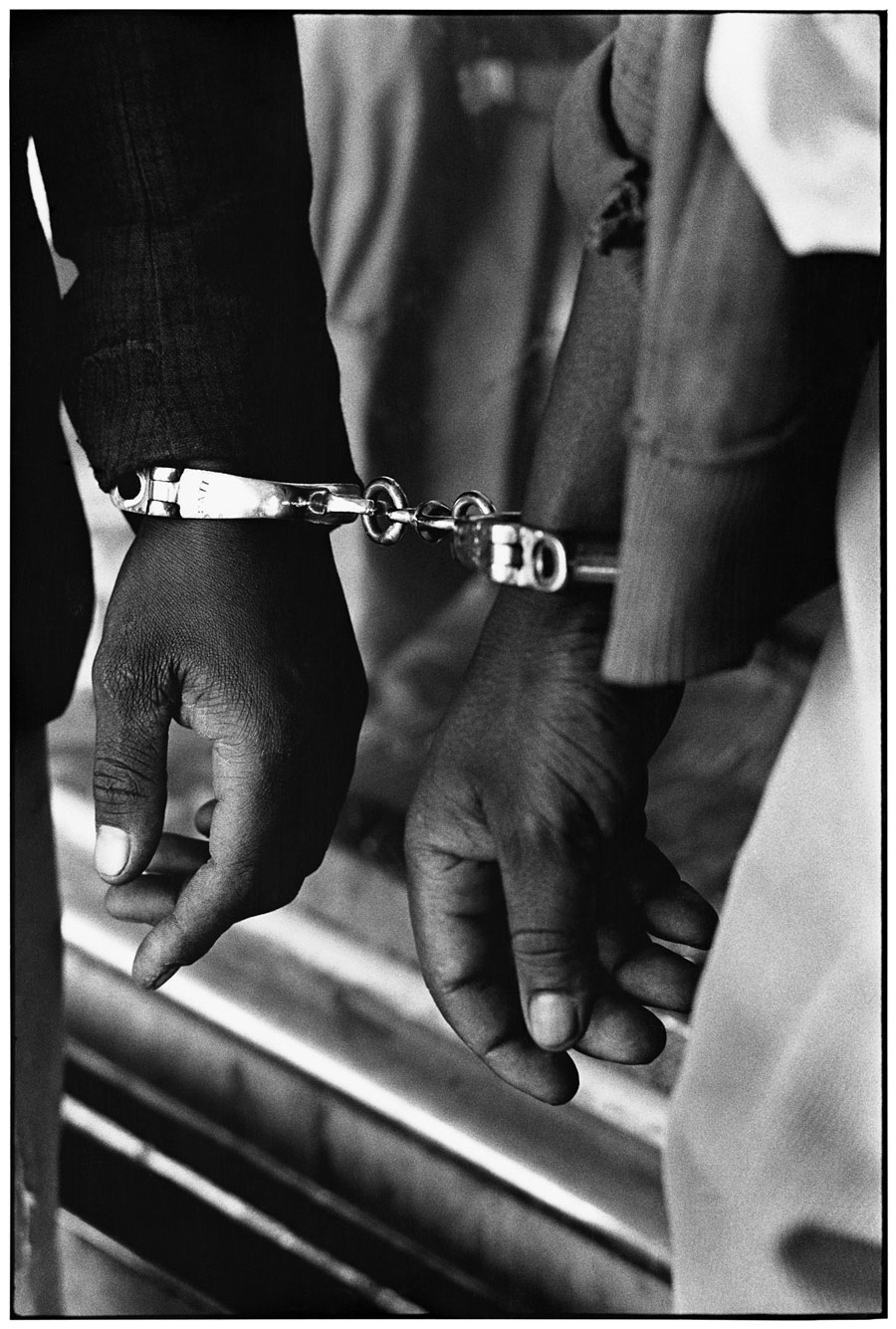
From the ordinary and mundane to the bureaucratic and institutional, the corrosive effects of the apartheid system on everyday life are explored in the multiplicity of public signage that drew demarcating lines of segregation between whites, Africans, and non-Europeans. For example, Ernest Cole engaged in a sustained study of apartheid signage at train stations, banks, buses, taxi ranks, and throughout the streets of cities like Johannesburg and Pretoria in the early to mid-1960s. Another exemplary image is a photo from 1956 taken by Peter Magubane. It draws attention to the fact that racial segregation restricted movement in both private and public space. The image shows a young white girl sitting on a bench with the inscription “Europeans only” as her black nanny strokes her neck, but must do so from the back bench.

However, the everyday was not limited to the humiliations of policed segregation. “Drum” magazine, one of the most important media outlets for African social life, combined the gritty realism of reportage and the fantasy of normality in the self-constructions of non-European dandies, beauty queens, and the exuberance of township life. Its pages offered images of entertainment, representations of leisure, cultural events, and celebrity portraits. The magazine encompassed a full range of motifs, from relentless documentary photography to fashion shoots, dance revues, and concerts. Through the magazine, photographs found an audience that was politically sensitive and attentive; it also gave South African photographers the opportunity to exchange ideas with colleagues from other African countries, India, and Europe for the first time.

In 1990, the interest of the international press was focused on Mandela’s imminent release. Photographs from South Africa had finally prepared the ground for the participation of world opinion in shaping the country’s future. In this context, the exhibition also asks whether photography can help inform the political face of the world.

Press release from the Haus der Kunst website


Jurgen Schadeberg (South African born Germany, 1931-2020) 'The 29 ANC Women’s League women are being arrested by the police for demonstrating against the permit laws, which prohibited them from entering townships without a permit, 26th August 1952' 1952


Jurgen Schadeberg (South African born Germany, 1931-2020)
The 29 ANC Women’s League women are being arrested by the police for demonstrating against the permit laws, which prohibited them from entering townships without a permit, 26th August 1952
1952
Courtesy the artist


Jurgen Schadeberg (South African born Germany, 1931-2020) '20 defiance campaign Leaders appear in the Johannesburg Magistrates Court on a charge of contravening the Suppression of Communism Act, August 26, 1952' 1952


Jurgen Schadeberg (South African born Germany, 1931-2020)
20 defiance campaign Leaders appear in the Johannesburg Magistrates Court on a charge of contravening the Suppression of Communism Act, August 26, 1952
1952
Courtesy the artist


Jurgen Schadeberg (South African born Germany, 1931-2020) 'Nelson Mandela, Treason Trial' 1958


Jurgen Schadeberg (South African born Germany, 1931-2020)
Nelson Mandela, Treason Trial
1958
Courtesy the artist


Eli Weinberg (South African born Latvia, 1908-1981) 'Nelson Mandela portrait wearing traditional beads and a bed spread. Hiding out from the police during his period as the "black pimpernel," 1961' 1961


Eli Weinberg (South African born Latvia, 1908-1981)
Nelson Mandela portrait wearing traditional beads and a bed spread. Hiding out from the police during his period as the “black pimpernel,” 1961
1961
Courtesy of IDAFSA


Ranjith Kally (South African, 1925-2017) 'Chief Albert Luthuli, former President General of the African National Congress, Rector of Glasgow University and 1960 Nobel Peace Prize Winner, gagged by the government from having any of his words published in his country, confined to small area around his home near Stanger in Natal, April 1964' 1964


Ranjith Kally (South African, 1925-2017)
Chief Albert Luthuli, former President General of the African National Congress, Rector of Glasgow University and 1960 Nobel Peace Prize Winner, gagged by the government from having any of his words published in his country, confined to small area around his home near Stanger in Natal, April 1964
1964
© Bailey’s Archives


Greame Williams (South African, b. 1961) 'Nelson Mandela and Winnie Mandela as he is released from the Victor Vester Prison' 1990


Greame Williams (South African, b. 1961)
Nelson Mandela and Winnie Mandela as he is released from the Victor Vester Prison
1990
Courtesy the artist
© Greame Williams


Haus der Kunst
Prinzregentenstraße 1
80538 Munich
Germany
Phone: +49 89 21127 113

Opening hours:
Monday, Wednesday  -  Sunday 10 am  -  8pm
Thursday 10am  -  10pm
Closed Tuesdays

Haus der Kunst website

LIKE ART BLART ON FACEBOOK

Back to top

Exhibition: ‘Gilles Caron, The Conflict Within’ at The Musée de l’Elysée, Lausanne

Exhibition dates: 30th January – 12th May 2013


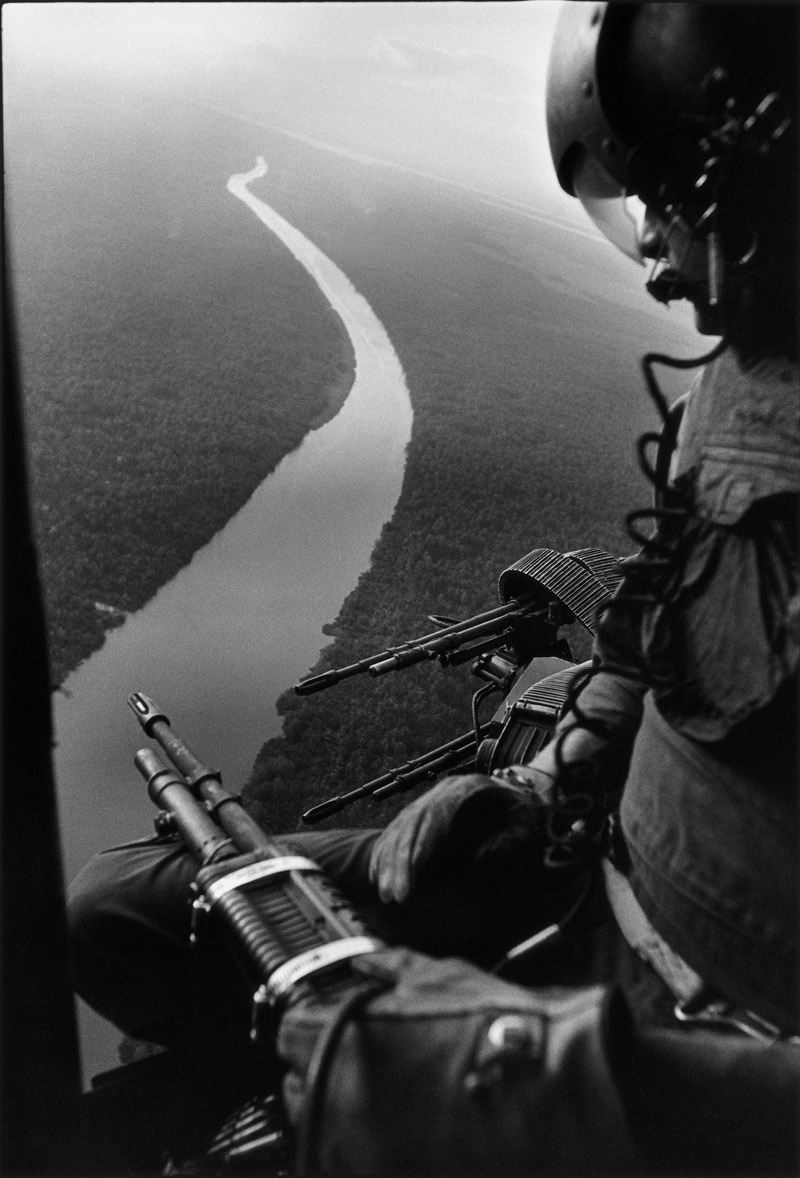
Gilles Caron (French, 1939-1970) 'Battle of Dak To, Vietnam, November 1967' 1967


Gilles Caron (French, 1939-1970)
Battle of Dak To, Vietnam, November 1967
1967
© Fondation Gilles Caron


Dead at 30

Died so young

Probably at the barrel of a snub nosed gun.

Guilt, narcissism, parody or irony

Doesn’t matter now

He’s dead…

Photos live on


Many thankx to the Musée de l’Elysée Lausanne for allowing me to publish the photographs in the posting. Please click on the photographs for a larger version of the image.


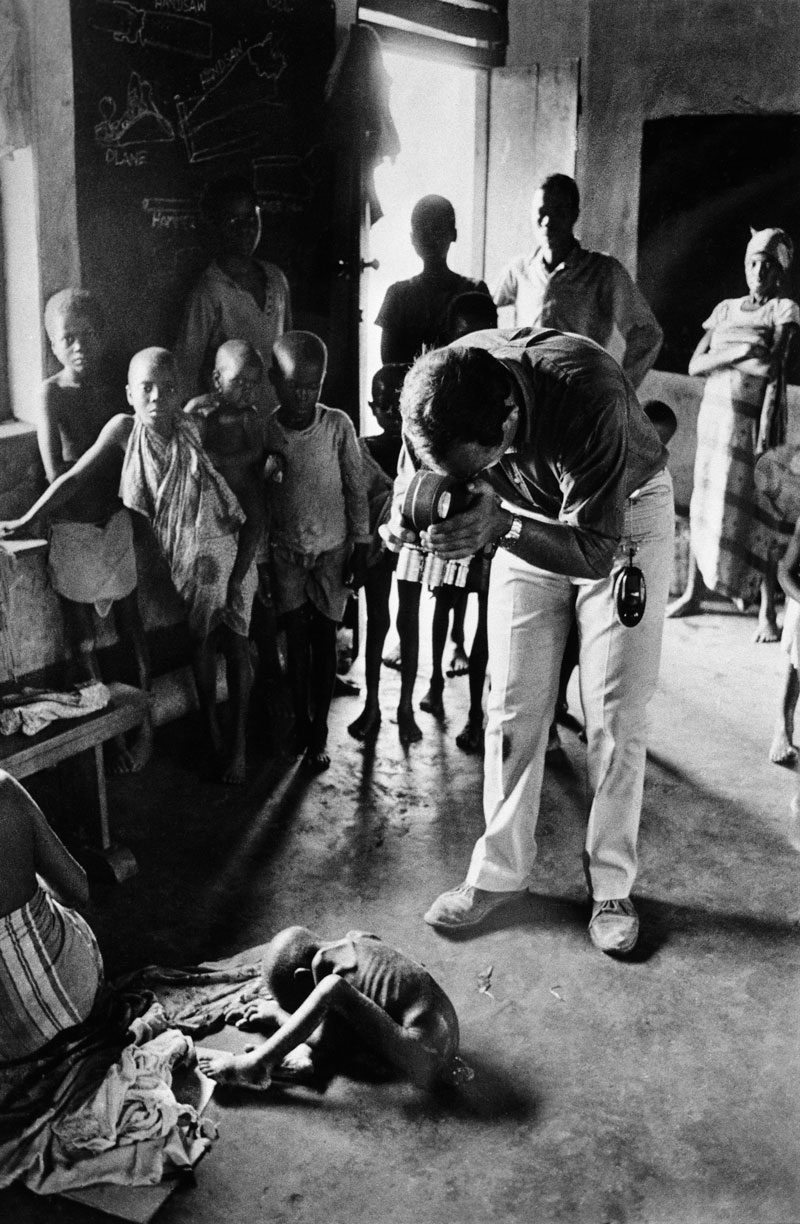
Gilles Caron (French, 1939-1970) 'Transport of a victim of the famine of the Civil War in Biafra, July 1968' 1968


Gilles Caron (French, 1939-1970)
Transport of a victim of the famine of the Civil War in Biafra, July 1968
1968
© Fondation Gilles Caron


Gilles Caron (French, 1939-1970) 'Protest rue Saint-Jacques, Paris, 6 May 1968' 1968


Gilles Caron (French, 1939-1970)
Protest rue Saint-Jacques, Paris, 6 May 1968
1968
© Fondation Gilles Caron


Gilles Caron (French, 1939-1970) 'Demonstration at the first anniversary of the Soviet repression of "Spring in Prague", Czechoslovakia, 21 August, 1969' 1969


Gilles Caron (French, 1939-1970)
Demonstration at the first anniversary of the Soviet repression of “Spring in Prague”, Czechoslovakia, 21 August, 1969
1969
© Fondation Gilles Caron


Gilles Caron (French, 1939-1970) 'American Patrol during the Vietnam War 1967' 1967


Gilles Caron (French, 1939-1970)
American Patrol during the Vietnam War 1967
1967
© Fondation Gilles Caron


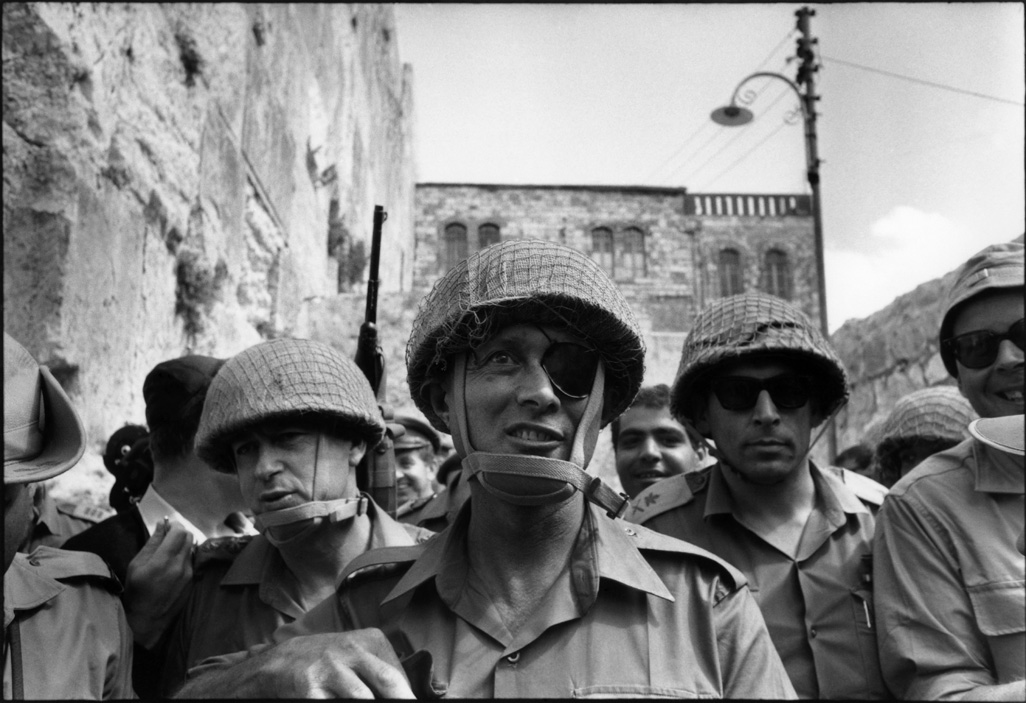
Gilles Caron (French, 1939-1970) 'Israeli Soldiers at the Wailing Wall at the end of the Six Day War in 1967' 1967


Gilles Caron (French, 1939-1970)
Israeli Soldiers at the Wailing Wall at the end of the Six Day War in 1967
1967
© Fondation Gilles Caron


Gilles Caron (French, 1939-1970) 'General Moshe Dayan June 1967' 1967


Gilles Caron (French, 1939-1970)
General Moshe Dayan June 1967
1967
© Fondation Gilles Caron


Visual memory of an epoch, Gilles Caron (1939-1970) has chronicled the greatest contemporary conflicts through his images (Six-Day War, Vietnam War, Biafra and Northern Ireland conflicts, May 68, Prague Spring…), a commitment that eventually cost him his life while on assignment in Cambodia. Called up as a parachutist to serve in the Algerian War, Caron became a witness to the brutality inflicted on civilians. Through photojournalism, he sought to cross to the other side in order to contribute to a better understanding of how populations caught up in the spiral of war were living.

His initial heroic vision of war photography soon turned into a reflection on the purpose of his job: can the role of witness, mere spectator, be satisfying? He is one of the first photographers to suffer symptoms from this inner moral conflict, and one of the first to practice a form of introspective disenchantment that led the reporter to gradually turn his camera on him, to become the object of the photographic narrative.

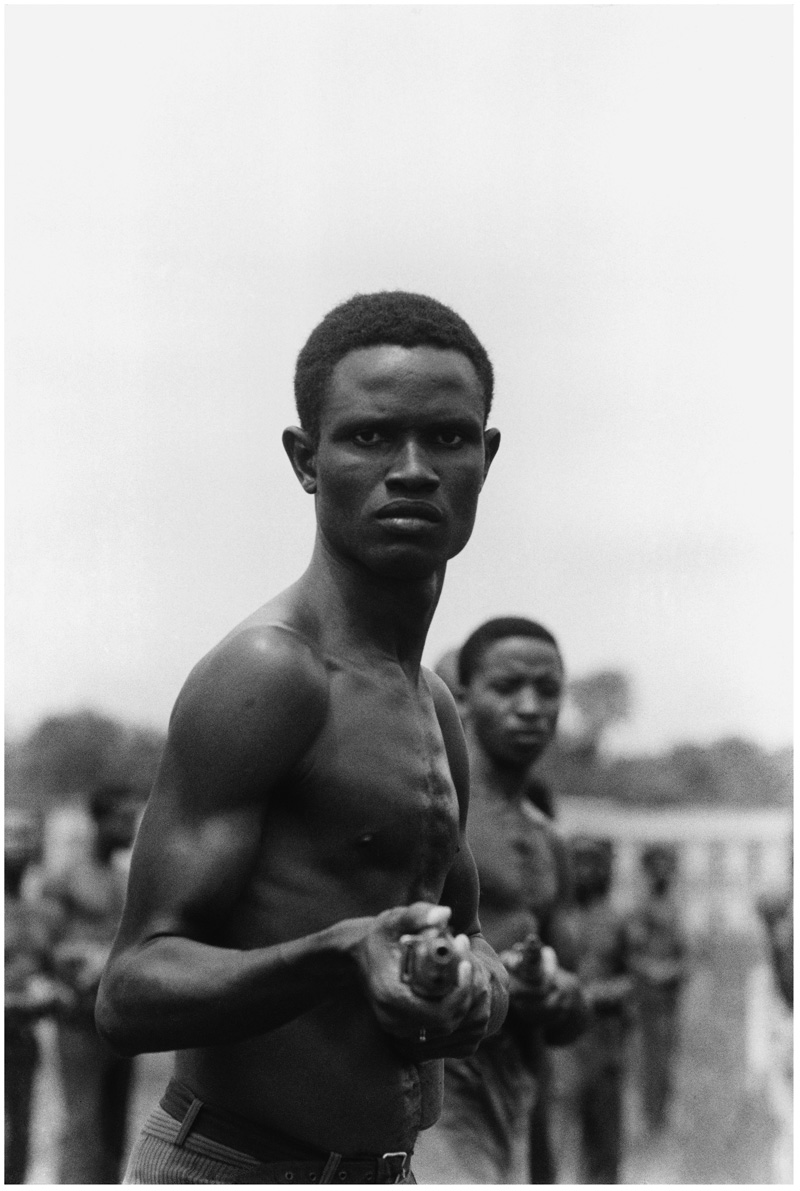
In the early stages of his career, during the Six-Day War and in Vietnam, he chose to focus on inactive figures, soldiers or prisoners absorbed in their thoughts, writing or meditating. During the Biafra War, Caron seemed particularly compassionate for the condition of children and other victims. In May 68 and in Northern Ireland, he was mainly interested in emblematic actors – demonstrators throwing stones or Molotov cocktails – as incarnations of urban guerilla. His inventiveness was never more visible than in his reports on street fighting where, through his lens, demonstrations seemed transformed into choreographies.

A war reporter, regularly exposed to extreme conditions, Caron was however not indifferent to the spectacle of the sixties, the Nouvelle Vague and the young musical scene. He would on occasion photograph on the film sets of Godard or Truffaut and even worked as a fashion photographer. These ventures into cinema and fashion might seem quite remote from the rest of his work but they clearly influenced his formal language, as demonstrated in his reports on the protests in the Latin Quarter or Ulster. The exhibition ends with an anti-heroic portrait of the photojournalist. Essential for the history of photojournalism, this conclusion proves that Caron’s conscience, along that of other photojournalists, became quite an unhappy one at the end of the 60s. Guilt, narcissism, parody or irony… In the end, it is difficult to figure out what image of themselves reporters are making.


Gilles Caron (French, 1939-1970) 'Battle of Dak To, Vietnam, November - December 1967' 1967


Gilles Caron (French, 1939-1970)
Battle of Dak To, Vietnam, November – December 1967
1967
© Fondation Gilles Caron


Gilles Caron (French, 1939-1970) 'Daniel Cohn-Bendit facing a CRS in front of the Sorbonne, Paris, 6 May 1968' 1968


Gilles Caron (French, 1939-1970)
Daniel Cohn-Bendit facing a CRS in front of the Sorbonne, Paris, 6 May 1968
1968
© Fondation Gilles Caron


Compagnies Républicaines de Sécurité

The Compagnies républicaines de sécurité, abbreviated CRS, are the general reserve of the French National Police. They are primarily involved in general security missions but the task for which they are best known is crowd and riot control.


Gilles Caron (French, 1939-1970) 'Protest rue Saint-Jacques, Paris, 6 May 1968' 1968


Gilles Caron (French, 1939-1970)
Protest rue Saint-Jacques, Paris, 6 May 1968
1968
© Fondation Gilles Caron


The exhibition presented at the Musée de l’Elysée is Caron’s first major retrospective. Comprising 150 prints and archival documents from the Fondation Gilles Caron, the collection of the Musée de l’Elysée and private collections, the exhibition is an opportunity to rediscover in six parts one of the major photojournalists of the 20th century through an original approach.

1. Heroism

Here and Now: Named the “French Capa” by Henri Cartier-Bresson, Caron’s images highlighting the different scenes of military operations are evidence to his audacity and talents as a reporter.

2. Making History?

The contemplative soldier: This section illustrates a recurring theme in Caron’s work of individuals who are absorbed, and/or made fragile and vulnerable by their surrounding events: military prisoners, civilian victims, soldiers shown reading or in reflection, become iconographic images of unedited, and spontaneous moments of stillness.

3. Sympathy

Compassionate Icons: In these photographs, beginning with the war in Biafra and extending across Caron’s travels one sees the deep sensibility of the photographer unfold in his images as Caron must face the very real pain of others. The images of children, starving and void of childhood innocence whom have been sacrificed in conflict mark the beginning of concerned photographic iconography.

4. Demonstrations and guerrilla

The iconography of revolt: In the images of revolt, be that workers, farmers, or students, Caron gives particular iconic importance to the figure of the “lanceur”: like David against Goliath. This representation of the body in action is like a repeated choreography which is performed spontaneously across the fronts of rebellion in Paris, on May 1968, Londonderry (Northern Ireland) and Prague.

5. Nouvelle Vague

Young and passionate in the 60s: In addition to his work in areas of conflict, famine, and war, Caron also gives photography a unique view of the youth of the 1960’s. With images of famous muses (actresses and singers) as well as of university students, and youth on the street, Caron shows his talents for fashion photography and film stills developed during his work with Truffaut and Godard.

6. The last image

Looking at the reporter: After Biafra and Chad, doubt took hold of Caron. The lens of the camera turns back upon the reporter, and these images document the work of the photojournalist in the field. These portraits leave viewers with a mixed message, this is his own profession but the images are in no way heroic portrayals of the work of the photojournalist.


Gilles Caron (French, 1939-1970) 'Civil War in Biafra, Nigeria, November 1968' 1968


Gilles Caron (French, 1939-1970)
Civil War in Biafra, Nigeria, November 1968
1968
© Fondation Gilles Caron


Gilles Caron (French, 1939-1970) 'Vietnam, November 1967' 1967


Gilles Caron (French, 1939-1970)
Vietnam, November 1967
1967
© Fondation Gilles Caron


Gilles Caron (French, 1939-1970) 'Filmmaker and photographer Raymond Depardon, during the Civil War in Biafra, Nigéria, August 1968' 1968


Gilles Caron (French, 1939-1970)
Filmmaker and photographer Raymond Depardon, during the Civil War in Biafra, Nigéria, August 1968
1968
© Fondation Gilles Caron


The Musée de l’Elysée 
18, avenue de l’Elysée
CH – 1014 Lausanne
Phone: + 41 21 316 99 11

Opening hours:
Wednesday – Monday, 10am – 6pm
Closed Tuesdays

The Musée de l’Elysée website

LIKE ART BLART ON FACEBOOK

Back to top

Exhibition: ‘Roman Vishniac Rediscovered’ at the International Center of Photography (ICP), New York

Exhibition dates: 18th January – 5th May 2013


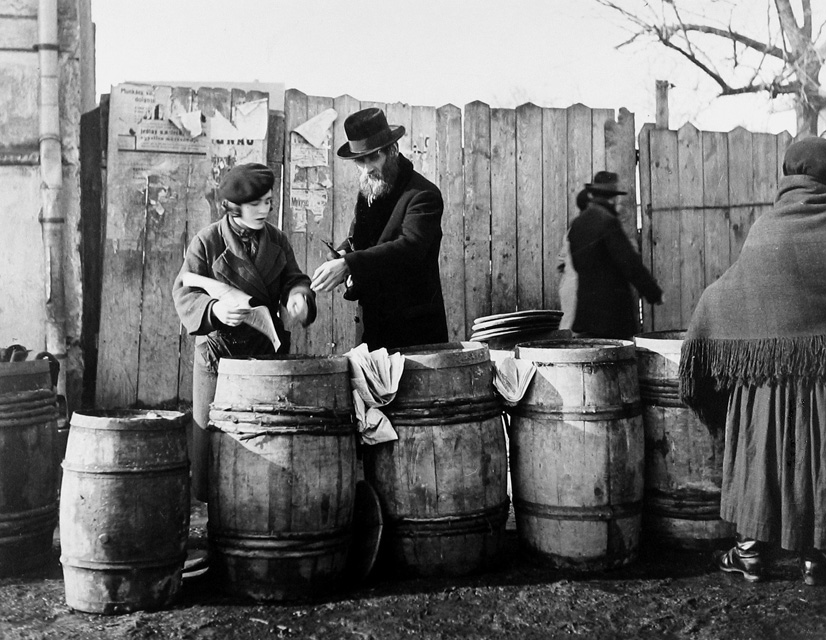
Roman Vishniac (Russian-American, 1897-1990) 'Herring for the traditional third meal of Shabbath, Mukachevo' 1937-1938


Roman Vishniac (Russian-American, 1897-1990)
Herring for the traditional third meal of Shabbath, Mukachevo
1937-1938
Gelatin silver print
10 1/2 x 13 3/8 inches
Courtesy International Center of Photography
© Mara Vishniac Kohn


“By repositioning Vishniac’s iconic photographs of Eastern Europe within the broader tradition of social documentary photography, and introducing recently discovered and radically diverse bodies of work, this exhibition stakes Vishniac’s claim as a modern master.”


ICP Adjunct Curator Maya Benton


Rediscovered! Rediscovered? Surely, such a splendid artist as Vishniac has never been away…

Revealing “a compositional acuity, inventiveness, and surprising stylistic range” – in other words traces of Josef Sudek, Walker Evans, Rodchenko and New Photography – Vishniac’s best work is a record of its troubled time: a photographic record of Jewish life in Eastern Europe between the two World Wars. What the viewing public must be made aware of is the curatorial reinterpretation of his work, seeking as it does to solidify his place “among the 20th century’s most accomplished photographers.”

While some of the work on view may be new, the claims of curator Maya Benton (above) must be observed with a good deal of scepticism. What we need to understand is how his photographs are being interpreted across a range of frames of reference – from photojournalism, to social documentary photography and art – in order, as Maya Benton says, to “reposition” his iconic photographs within the broader tradition of social documentary photography. This repositioning is a form of re/visioning of an artist’s work to place it in a different context or frame of reference in order to increase its significance; or, by exclusion (as in the case of the S/M photographs by Robert Mapplethorpe that have been occluded by the Mapplethorpe Foundation), another context, make the work of an artist more socially palatable than would otherwise be the case.

The interpretation of Vishniac’s photographs becomes problematic depending on what frame of reference one applies to them and how their interpretation is negotiated between multiple, fluid points of view. Repositioning an artist’s work within a broader context changes the nature of the interpretation of that artist’s work and raises the pertinent question: who is repositioning this work and for what reason(s); who is pushing that agenda and curatorial barrow (in Benton’s case it is because she wants Vishniac’s work to be seen as that of a modern master, to make the credibility of the exhibition and the artist more than it possibly is). What we must be fully aware of is the time and place in which Vishniac made the work and the conditions for its initial reception, not some stake in the ground claim of modern mastership.

Vishniac’s photographs frame the historical discourse of the end of Jewish culture in Eastern Europe and the rise of Fascism in Germany with erudition – for the past, present and future. Any other claims to eclecticism, applying different “repositioning” in particular cases, seems inelegant and shows a lack of consistency in clear thinking. When you really look at his work there is a sensitivity to the human condition in his work that is outstanding, coupled with a clear compositional structure and use of chiaroscuro. He was an excellent visual artist who had strong previsualisation that is evidenced in the prints. These photographs make insightful comment on the surrounding culture at the time of their production. Nothing more grandiose need be said.

Dr Marcus Bunyan


Many thankx to the ICP for allowing me to publish the photographs in the posting. Please click on the photographs for another version of the image.


Roman Vishniac (Russian-American, 1897-1990) 'Untitled [Jewish schoolchildren, Mukacevo]' c. 1935-1938


Roman Vishniac (Russian-American, 1897-1990)
Untitled [Jewish schoolchildren, Mukacevo]
c. 1935-1938
Gelatin silver print
Courtesy International Center of Photography
© Mara Vishniac Kohn


Roman Vishniac (Russian-American, 1897-1990) '[Boys admiring a motorcycle, Brandenburg, outskirts of Berlin]' 1929 - early 1930s (printed 2012)


Roman Vishniac (Russian-American, 1897-1990)
[Boys admiring a motorcycle, Brandenburg, outskirts of Berlin]
1929 – early 1930s (printed 2012)
12 x 11 1/2 in. (30.5 x 29.2cm)
Gelatin silver print
Courtesy International Center of Photography
© Mara Vishniac Kohn


Roman Vishniac (Russian-American, 1897-1990) 'Untitled [Boy with kindling in basement dwelling, Krochmalna Street, Warsaw]' c. 1935-1938


Roman Vishniac (Russian-American, 1897-1990)
Untitled [Boy with kindling in basement dwelling, Krochmalna Street, Warsaw]
c. 1935-1938
Gelatin silver print
Courtesy International Center of Photography
© Mara Vishniac Kohn


Roman Vishniac (Russian-American, 1897-1990) 'Untitled [Interior of the Anhalter Bahnhof, a railway terminus near Potsdamer Platz, Berlin]' late 1920s - early 1930s


Roman Vishniac (Russian-American, 1897-1990)
Untitled [Interior of the Anhalter Bahnhof, a railway terminus near Potsdamer Platz, Berlin]
Late 1920s – early 1930s
Gelatin silver print
Courtesy International Center of Photography
© Mara Vishniac Kohn


Roman Vishniac Rediscovered, on view at the International Center of Photography (1133 Avenue of the Americas at 43rd Street) January 18 – May 5, 2013, brings together four decades of work by a remarkably versatile and innovative photographer. The exhibition includes recently discovered vintage prints, moving film footage, personal correspondence, and exhibition prints made from Vishniac’s recently digitised negatives. His complex and visionary work, much of which is shown here for the first time, reveals a compositional acuity, inventiveness, and surprising stylistic range that solidifies his place among the 20th century’s most accomplished photographers.

Vishniac created the most widely recognised and reproduced photographic record of Jewish life in Eastern Europe between the two World Wars. Yet only a fraction of his work was published during his lifetime, most notably in A Vanished World (1983). Over the course of his career, Vishniac witnessed the sweeping artistic and photographic innovation of Weimar Berlin, the ominous rise to Nazi power in Germany, the final years of Jewish life in Eastern Europe, and immigrant life in America during and after the war.

“By repositioning Vishniac’s iconic photographs of Eastern Europe within the broader tradition of social documentary photography, and introducing recently discovered and radically diverse bodies of work, this exhibition stakes Vishniac’s claim as a modern master,” said ICP Adjunct Curator Maya Benton, who organised the exhibition.

Born in 1897 to a wealthy Russian-Jewish family, Vishniac immigrated to Berlin in 1920 in the aftermath of the Russian Revolution. As an amateur photographer, he took to the streets with his camera throughout the 1920s and ’30s, offering astute, often humorous visual commentary on his adopted city and experimented with new and modern approaches to framing and composition. Documenting the rise of Nazi power, he focused his lens on the signs of oppression and doom that soon formed the backdrop of his Berlin street photography. From 1935 to 1938, while living in Berlin and working as a biologist and science photographer, he was commissioned by the American Jewish Joint Distribution Committee (JDC), then the world’s largest Jewish relief organisation, to photograph impoverished Jewish communities in Central and Eastern Europe. On New Year’s Day, 1941, he arrived in New York and soon opened a portrait studio. At the same time, he began documenting American Jewish communal and immigrant life and established himself as a pioneer in the field of photomicroscopy. In 1947, Vishniac returned to Europe and documented Jewish displaced persons camps and the ruins of Berlin. During this time, he also recorded the efforts of Holocaust survivors to rebuild their lives, and the work of the JDC and other Jewish relief organisations in providing them with aid and emigration assistance.

Roman Vishniac Rediscovered is a comprehensive reappraisal of Vishniac’s total photographic output, from the early years in Berlin through the postwar period. The exhibition also includes a slideshow of 100 colour science transparencies – digitised for the first time – of Vishniac’s microphotoscopy, taken from the early 1950s to the late 1970s. In addition to the exhibition, a primary task of the archive is to make this work available for research, in partnership with the United States Holocaust Memorial Museum.

Press release from the ICP website


Sections of the exhibition

~ Introduction: Roman Vishniac Rediscovered
~ Berlin Street Photography, 1920s-30s
~ Nazi Rise to Power in Germany, 1933-1938
~ German Jewish Relief and Community Organizations, Berlin, mid- to late 1930s
~ Jewish Life in Eastern Europe, c. 1935-38
~ Werkdorp Nieuwesluis Agrarian Training Camp, Wieringermeer, The Netherlands, c. 1938
~ Travel, Refuge, and Internment in France: Paris, Nice, and Marseille, c. 1939
~ Portrait Studio and Nightclubs, America, 1941 – early 1950s
~ YIVO Exhibitions in New York, January 1944 and January 1945
~ Immigrants and Refugees, New York, 1941 – early 1950s
~ “The Face of America at War”: New York, 1941-1944
~ Jewish Community Life, New York, 1941 – early 1950s
~ Berlin in Ruins, 1947
~ Refugees and Displaced Persons Camps, Germany and France, 1947
~ Scientific Work and Photomicroscopy, America, early 1950s – late 1970s
~ Vishniac’s Scrapbook


Roman Vishniac (Russian-American, 1897-1990) 'Untitled [Street scene with swastika flag in background, Berlin]' c. 1935-36


Roman Vishniac (Russian-American, 1897-1990)
Untitled [Street scene with swastika flag in background, Berlin]
c. 1935-1936
Gelatin silver print
Courtesy International Center of Photography
© Mara Vishniac Kohn


Roman Vishniac (Russian-American, 1897-1990) 'Untitled [Nazi Storm Troopers marching next to the Arsenal in front of the Berlin Cathedral]' c. 1935


Roman Vishniac (Russian-American, 1897-1990)
Untitled [Nazi Storm Troopers marching next to the Arsenal in front of the Berlin Cathedral]
c. 1935
Gelatin silver print
Courtesy International Center of Photography
© Mara Vishniac Kohn


Roman Vishniac (Russian-American, 1897-1990) 'Untitled [Beach dwellers in the afternoon, Nice, France]' c. 1939


Roman Vishniac (Russian-American, 1897-1990)
Untitled [Beach dwellers in the afternoon, Nice, France]
c. 1939
Gelatin silver print
Courtesy International Center of Photography
© Mara Vishniac Kohn


Roman Vishniac (Russian-American, 1897-1990) 'People behind bars, Berlin Zoo' early 1930s


Roman Vishniac (Russian-American, 1897-1990)
People behind bars, Berlin Zoo
Early 1930s
Gelatin silver print
Courtesy International Center of Photography
© Mara Vishniac Kohn


Roman Vishniac (Russian-American, 1897-1990) 'Untitled [Zionist youth building a school and foundry while learning construction techniques, Werkdorp Nieuwesluis, Wieringermeer, The Netherlands]' 1939


Roman Vishniac (Russian-American, 1897-1990)
Untitled [Zionist youth building a school and foundry while learning construction techniques, Werkdorp Nieuwesluis, Wieringermeer, The Netherlands]
1939
Gelatin silver print
Courtesy International Center of Photography
© Mara Vishniac Kohn


Roman Vishniac (Russian-American, 1897-1990) 'Recalcitrance' Berlin, 1926


Roman Vishniac (Russian-American, 1897-1990)
Recalcitrance
Berlin, 1926
Gelatin silver print
Courtesy International Center of Photography
© Mara Vishniac Kohn


Roman Vishniac (Russian-American, 1897-1990) 'Father taking his son to the first day of cheder' 1937-1938


Roman Vishniac (Russian-American, 1897-1990)
Father taking his son to the first day of cheder
1937-1938
Gelatin silver print
Image (paper): 3 1/2 x 3 1/2 in. (8.9 x 8.9cm)
Courtesy International Center of Photography
© Mara Vishniac Kohn


Roman Vishniac (Russian-American, 1897-1990) '[Vishniac's daughter Mara posing in front of an election poster for Hindenburg and Hitler that reads "The Marshal and the Corporal: Fight with Us for Peace and Equal Rights," Wilmersdorf, Berlin]' 1933


Roman Vishniac (Russian-American, 1897-1990)
[Vishniac’s daughter Mara posing in front of an election poster for Hindenburg and Hitler that reads “The Marshal and the Corporal: Fight with Us for Peace and Equal Rights,” Wilmersdorf, Berlin]
1933
Gelatin silver print
12 1/8 x 15 11/16 in. (30.8 x 39.8cm)
Courtesy International Center of Photography
© Mara Vishniac Kohn


Vishniac’s daughter Mara, age seven, was photographed standing in front of this 1933 poster celebrating Hitler’s recent appointment as German chancellor. The poster advertises a plebiscite to permit withdrawal from the League of Nations and Geneva Disarmament Conference, which restricted Germany’s ability to develop a military. Other posters include the slogans “Mothers, fight for your children!,” “The coming generation accuses you!,” and “In 8 months… 2,250,000 countrymen able to put food on the table. Bolshevism destroyed. Sectionalism overcome. A kingdom and order of cleanliness built… Those are the achievements of Hitler’s rule…”

Label text from the exhibition


Roman Vishniac (Russian-American, 1897-1990) 'Children playing on a street lined with swastika flags' mid-1930s


Roman Vishniac (Russian-American, 1897-1990)
Children playing on a street lined with swastika flags
mid-1930s
Gelatin silver print
12 x 11 3/8 in. (30.5 x 29cm)
Courtesy International Center of Photography
© Mara Vishniac Kohn


Roman Vishniac (Russian-American, 1897-1990) 'Window washer balancing on a ladder, Berlin' mid-1930s


Roman Vishniac (Russian-American, 1897-1990)
Window washer balancing on a ladder, Berlin
mid-1930s
Gelatin silver print
11 3/8 x 9 in. (29 x 22.9cm)
Courtesy International Center of Photography
© Mara Vishniac Kohn


Roman Vishniac (Russian-American, 1897-1990) 'Cross section of a pine needle' Early 1950s - late 1970s


Roman Vishniac (Russian-American, 1897-1990)
Cross section of a pine needle
Early 1950s – late 1970s
Digital file from colour transparency
Courtesy International Center of Photography
© Mara Vishniac Kohn


International Center of Photography
79 Essex Street, New York, NY 10002
between Delancey Street and Broome Street

Opening hours:
Wednesday – Monday 11am – 7pm
Closed Tuesdays

International Center of Photography website

LIKE ART BLART ON FACEBOOK

Back to top

Exhibition: ‘Lewis Hine: Photography for a Change’ at the Netherlands Museum of Photography, Rotterdam

Exhibition dates: 15th September – 6th January 2013


Lewis Hine
 (American, 1874-1940) 'Lunch Time, New York' 1910


Lewis Hine
 (American, 1874-1940)
Lunch Time, New York
1910
Gelatin silver print
© George Eastman House


“In the last analysis, good photography is a question of art.”

“I wanted to show the thing that had to be corrected: I wanted to show the things that had to be appreciated.”


Lewis Wickes Hines


Something that you really don’t get in reproductions is the absolutely beautiful tonality of Hine’s social documentary photography. Even less so when the images provided by the institution are degraded by scratches, dust, spots and colour irregularities. Despite these media images being 300 dpi when I received them from the museum media department they were in very average condition. For example, the image of Christmas Fiddles (below) was in such poor condition when enlarged that I had to spend over half and hour cleaning up the image to make it pictorially legible to the viewer at a larger size.

This is not an unusual occurrence and, unbeknownst to the readers of the archive, I spend many hours quickly cleaning the digital files before they are presented to you. Some individual images and sets of images are of such poor quality that I simply cannot use them at all. I will do a posting on this issue soon, but suffice to say that museums that spend thousands of hours and dollars staging impressive photographic exhibitions really let themselves down in the promotion of the exhibition if they provide dodgy scans and unusable media images to people that promote the exhibition for free. In this world of media saturated images it should be the norm that the “quality” of the image outweighs the indifferent quantity. With faster and faster download speeds larger images can be viewed more readily online and therefore scans provided by institutions must live up to this enlarged capacity.

Hopefully you can get some idea of the work of this socially conscious photographer, an American photographer who saw the camera as both a research tool and an instrument of social reform, whose images helped change the world with regard to child labour. Unfortunately success and reputation counted for nought. He died totally impoverished in 1940, shortly before a resurgence of public interest in his work raised him to the highest level of American photographers. What an infinite sadness.

Dr Marcus Bunyan


Many thankx to the Netherlands Museum of Photography for allowing me to publish the photographs in the posting. Please click on the photographs for a larger version of the image.


Installation view of the exhibition 'Lewis Hine: Photography for a Change' at the Netherlands Museum of Photography, Rotterdam 


Installation view of the exhibition Lewis Hine: Photography for a Change at the Netherlands Museum of Photography, Rotterdam


Lewis Hine
 (American, 1874-1940) 'Belgrade. Christmas Fiddles' 1918


Lewis Hine
 (American, 1874-1940)
Belgrade. Christmas Fiddles
1918
Gelatin silver print
© George Eastman House


Lewis Hine
 (American, 1874-1940) 'Belgrade. Christmas Fiddles' 1918 (detail)


Lewis Hine
 (American, 1874-1940)
Belgrade. Christmas Fiddles (detail)
1918
Gelatin silver print
© George Eastman House


Lewis Hine
 (American, 1874-1940) 'Construction workers, Empire State Building, NYC' 1930-1931


Lewis Hine
 (American, 1874-1940)
Construction workers, Empire State Building, NYC
1930-1931
Gelatin silver print
© George Eastman House


From 15 September 2012 to 6 January 2013, the Netherlands Museum of Photography will present the first large retrospective in the Netherlands of the work of the renowned American photographer Lewis Hine. Hine was an enthusiastic photographer who wished to improve people’s lives through his photos. His pictures of immigrants on Ellis Island, of child labour, and of workers busy on the Empire State Building high above New York belong to the visual icons of the 20th century. The internationally touring exhibition contains more than 200 photos and documents, many in their original state and originating from the collection of the George Eastman House in Rochester, New York State. Lewis Hine is an initiative of three European institutions: Fondation Henri Cartier-Bresson (Paris), Fundación MAPFRE (Madrid) and the Netherlands Museum of Photography (Rotterdam). It is with great pride that the Netherlands Museum of Photography can now present this exhibition that harmonises perfectly with its aim to pay attention to the canon of international documentary photography.

Lewis W. Hine (Wisconsin, 1874 – New York, 1940), a sociologist and photographer, belongs to the group of famous photographers such as Joel Meyerowitz, Robert Frank, Robert Capa, Eugène Atget to whom the Netherlands Museum of Photography has previously devoted impressive exhibitions. Hine is known as a 20th-century pioneer of social documentary photography. It is characteristic of Hine that he strongly believed in the camera’s powers of conviction. Thus, armed only with a heavy camera he fought for social justice. For the National Child Labor Committee he travelled more than 75,000 kilometres through the United States to photograph children working in agriculture, the mines, factories, sewing attics, and on the streets. His photos were partly responsible for reforms in these fields. The themes in Hine’s work – child labour, situations of human indignity, and the vulnerability of immigrants and refugees – are still current. Despite his present reputation, his early successes and the fact that many governmental organisations made use of his photos, he died totally impoverished in 1940.

Empire State Building and Building the Rotterdam

In 1932 Lewis Hine published the famous photographic book entitled Men at Work, which covered the construction of the Empire State Building. From the most audacious vantage points he took photos of the 381-metre building, showing the strength and willpower of humankind, man’s contribution to industry. The tall buildings on the Wilhelminapier have determined the skyline of Rotterdam for many years, just as the Empire State Building did in New York around 1930. The Wilhelminapier is now under full development. De Rotterdam Building, designed by Rem Koolhaas of OMA (Office for Metropolitan Architectural) will be completed in 2013-2014. The photographer Ruud Sies has followed the genesis of the largest building in the Netherlands for four years now. The project entitled Building the Rotterdam – a work in progress by Ruud Sies was inspired by the work of Lewis Hine and establishes the connection with the Wilhelminapier as a historical location. To the Netherlands Museum of Photography, this is a reason to include this project in the exhibition of the work of Lewis Hine.

Exhibition

With 170 vintage photos from the period 1903-1937 as well as 42 documents, this exhibition of Hine’s work is the first extensive and well-documented overview in the Netherlands and even in Europe. Hine’s entire oeuvre is on show, ranging from his earliest portraits of immigrants on Ellis Island to his work in Europe after the First World War. The Lewis Hine touring exhibition was on display in Paris toward the end of 2011, and in Madrid at the beginning of this year. For this international journey, Hine’s work has undergone preventative preservation treatment and is exposed to a minimum amount of light. After the exhibition in the Netherlands, the work will return to the George Eastman House in America to relax in a dark depot.”

Press release from the Netherlands Museum of Photography website


Lewis Hine
 (American, 1874-1940) 'Coal mine worker in West Virginia. Eleven year old boy. Tipple boy at the Turkey Knob coal mine in Macdonald, West Virginia' 1908


Lewis Hine
 (American, 1874-1940)
Coal mine worker in West Virginia. Eleven year old boy
Tipple boy at the Turkey Knob coal mine in Macdonald, West Virginia
1908
Gelatin silver print
© George Eastman House


Lewis Hine
 (American, 1874-1940) 'Little Mother, Pittsburgh District' 1909


Lewis Hine
 (American, 1874-1940)
Little Mother, Pittsburgh District
1909
Gelatin silver print
© George Eastman House


Anonymous photographer (American) 'Lewis Hine photographing children in a slum' 1910


Anonymous photographer (American)
Lewis Hine photographing children in a slum
1910
© George Eastman House


Lewis Hine
 (American, 1874-1940) 'Waiting for the dispensary to open Hull House District, Chicago' 1910


Lewis Hine
 (American, 1874-1940)
Waiting for the dispensary to open Hull House District, Chicago
1910
Gelatin silver print
© George Eastman House


Lewis Hine was born in Oshkosh, Wisconsin, in 1874. He moved to New York City in 1901 to teach at the Ethical Culture School. There Hine used photographs as educational tools, and soon began to photograph immigrants at Ellis Island. He hoped his photographs would encourage people to “exert the force to right wrongs.” While continuing to teach at ECS, Hine began to do freelance work for the National Child Labor Committee, an association that transformed his professional life.

In 1908, the NCLC provided Hine a monthly salary to photographically document children in factories, mills, canneries, textile mills, street trades, and agricultural industries. Through his photographs he sought to alert the public to the extent of child labor in America, and the degree to which it denied these children their childhood, health, and education. In one year, Hine covered 12,000 miles in his quest to end abusive child labor. By 1913, Hine was considered the leading social welfare photographer in America.

Hine enjoyed a long and successful career following his work for the NCLC. He worked for the American Red Cross (1917-1920), photographing refugees and civilians in war-torn Europe, a new series of photographs of immigrants at Ellis Island (1926), a series of photographs documenting the construction of the Empire State Building (1930), photographs of drought-ridden communities in Arkansas and Kentucky (1931), as well as work for the Tennessee Valley Authority.

In 1936-1937 Hine was appointed head photographer for the National Research Project of the Works Progress Administration. The ageing Hine, however, was disappointed at the rebuff of his attempts to secure work with the Farm Services Administration, where director Roy Stryker considered Hine old fashioned and difficult. Lewis Hine died in 1940, shortly before a resurgence of public interest in his work raised him to the highest level of American photographers.

Text from Child Labour in Virginia: Photographs by Lewis Hine web page [Online] Cited 21/12/2012 no longer available online


Lewis Hine
 (American, 1874-1940) 'Paris Gamin' 1918


Lewis Hine
 (American, 1874-1940)
Paris Gamin
1918
Gelatin silver print
© George Eastman House


Lewis Hine
 (American, 1874-1940) 'Mechanic at steam pump in electric power house' 1920


Lewis Hine
 (American, 1874-1940)
Mechanic at steam pump in electric power house
1920
Gelatin silver print
© George Eastman House


Lewis Hine
 (American, 1874-1940) 'Candy Worker, New York' 1925


Lewis Hine
 (American, 1874-1940)
Candy Worker, New York
1925
Gelatin silver print
© George Eastman House


Lewis Hine
 (American, 1874-1940) 'Man on hoisting ball, Empire State building' 1931


Lewis Hine
 (American, 1874-1940)
Man on hoisting ball, Empire State building
1931
Gelatin silver print
© George Eastman House


Lewis Hine
 (American, 1874-1940) 'Steelworker standing on beam' 1931


Lewis Hine
 (American, 1874-1940)
Steelworker standing on beam
1931
Gelatin silver print
© George Eastman House


Lewis Hine
 (American, 1874-1940) 'The Sky Boy' 1931


Lewis Hine
 (American, 1874-1940)
The Sky Boy
1931
Gelatin silver print
© George Eastman House


Netherlands Museum of Photography
Wilhelminakade 332
3072 AR Rotterdam
The Netherlands

Opening hours
Tuesday – Sunday 11am – 5pm
Closed Mondays

Nederlands Museum of Photography website

LIKE ART BLART ON FACEBOOK

Back to top

Exhibition: ‘The Serial Portrait: Photography and Identity in the Last One Hundred Years’ at the National Gallery of Art, Washington

Exhibition dates: 30th September 2012 – 31st December 2012


Emmet Gowin (American, b. 1941) 'Edith, Danville, Virginia' 1971


Figure 5. Emmet Gowin (American, b. 1941)
Edith, Danville, Virginia
1971
Gelatin silver print
20.2 x 25.2cm (7 15/16 x 9 15/16 in.)
National Gallery of Art, Washington
Patrons’ Permanent Fund
© Emmet and Edith Gowin, Courtesy Pace/MacGill Gallery, New York


~ Alfred Stieglitz / Georgia O’Keeffe
~ Paul Strand / Rebecca Strand
~ Emmet Gowin / Edith Gowin
~ Harry Callahan / Eleanor and Barbara Callahan
~ Robert Mapplethorpe / Patti Smith
~ Nicholas Nixon / The Brown Sisters
~ Andy Warhol / Serial Photography / Photo Booth Portraits
~ Mario Testino / Kate Moss
~ Baron Adolf de Meyer / Baroness Olga de Meyer
~ Edward Weston / Charis Weston
~ Lee Friedlander / Maria Friedlander
~ Paul Caponigro / The woods of Connecticut
~ Bernd and Hilla Becher / grids
~ Gerhard Richter / Overpainted Photographs
~ Masahisa Fukase / wife and family
~ Seiichi Furuya / Christine Furuya-Gößler
~ Sally Mann / children and husband
~ William Wegman / dogs


Australia?
Nobody that I can think of except Sue Ford.

Notice how all the artists are men except two: Sally Mann and Hilla Becher.

Dr Marcus Bunyan


Many thankx to the National Gallery of Art for allowing me to publish the photographs in the posting. Please click on the photographs for a larger version of the image.


Introduction

Alfred Stieglitz, one of the most influential photographers of the twentieth century, argued that “to demand the [single] portrait… be a complete portrait of any person is as futile as to demand that a motion picture be condensed into a single still.” Stieglitz’s conviction that a person’s character could not be adequately conveyed in one image is consistent with a modern understanding of identity as constantly changing. For Stieglitz, who frequently made numerous portraits of the same sitters – including
striking photographs of his wife, the painter Georgia O’Keeffe – using the camera in a serial manner allowed him to transcend the limits of a single image.

Drawn primarily from the National Gallery of Art’s collection, the
Serial Portrait exhibition features twenty artists who photographed the same subjects – primarily friends, family, or themselves – multiple times over the course of days, months, or years. This brochure presents a selection of works by seven of these artists. Like Stieglitz’s extended portrait of O’Keeffe, Emmet Gowin’s ongoing photographic study of his wife, Edith, explores her character and reveals the bonds of love and affection between the couple. Milton Rogovin’s photographs of working-class residents of Buffalo, New York, record shifts in the appearance and situation of individuals in the context of their community over several decades.

A number of photographers in the exhibition have made serial self-portraits that investigate the malleability of personal identity. Photographing themselves as shadows, blurs, or partial reflections, Lee Friedlander and Francesca Woodman have made disorienting images that hint at the instability of self-representation. Ann Hamilton has employed unusual props and materials to transform herself into a series of hybrid objects. Finally, work by Nikki S. Lee takes the idea of mutable identity to its logical conclusion as the artist photographs herself masquerading as members of different social and ethnic groups.

Text from the NGA website


Emmet Gowin (American, b. 1941) 'Edith, Danville, Virginia' 1963


Figure 4. Emmet Gowin (American, b. 1941)
Edith, Danville, Virginia
1963
Gelatin silver print, printed 1980s
19.7 x 12.7cm (7 3/4 x 5 in.)
National Gallery of Art, Washington
Charina Endowment Fund
© Emmet and Edith Gowin, Courtesy Pace/MacGill Gallery, New York


Emmet Gowin

Emmet Gowin (born 1941) met Edith Morris in 1961 in their hometown of Danville, Virginia, just as he had decided to abandon business school to study art. Several years later at the Rhode Island School of Design, his teacher Harry Callahan, who made numerous photographs of his wife, Eleanor, encouraged Gowin to photograph the subject he knew most intimately – his family and in particular Edith, whom he married in 1964.

The Gowins’ artistic and marital collaboration has endured for half a century, yielding an extraordinary series of quiet, attentive portraits. In some photographs, such as Edith, Danville, Virginia, 1963 (fig. 4, above), Edith appears contemplative, even reserved. The somber beauty of this work stems in part from Gowin’s use of a tripod-mounted, large-format camera, which requires a lengthy exposure but produces photographs with exquisite details, such as the delicate shadow of a twig that falls across Edith’s face. To make the dramatic circular shadow that surrounds her in Edith, Danville, Virginia, 1971 (fig. 5, above), Gowin attached a lens meant for a 4 × 5 camera to a large 8 × 10 camera. This focus draws our attention to her figure, but the screen door simultaneously frames and obscures her form, resulting in a play between presence and elusiveness. While Gowin’s photographs are born of a deep intimacy, they refuse to lay bare his wife’s soul or expose the couple’s private passions.

The same delicate balance between revelation and reserve marks a group of portraits made during the couple’s travels in Central and South America. Edith and Moth Flight, 2002 (fig. 6, below), made at night using a ten-second exposure, combines Gowin’s enchantment with natural beauty and his interest in the nuances of his wife’s gestures and moods. Placing a pulsing ultraviolet light behind Edith’s head, Gowin recorded the luminous traces left by moths as they danced around her blurred face, transforming her into a ghostly and even otherworldly presence, visible yet just out of our reach.

Text from the NGA website


Emmet Gowin (American, b. 1941) 'Edith and Moth Flight' 2002


Figure 6. Emmet Gowin (American, b. 1941)
Edith and Moth Flight
2002
Digital ink jet print
19 x 19cm (7 1/2 x 7 1/2 in.)
National Gallery of Art, Washington
Charina Endowment Fund
© Emmet and Edith Gowin, Courtesy Pace/MacGill Gallery, New York


Francesca Woodman (American, 1958-1981) 'House #3, Providence, Rhode Island' 1976


Francesca Woodman (American, 1958-1981)
House #3, Providence, Rhode Island
1976
Gelatin silver print
16.1 x 16.3cm (6 5/16 x 6 7/16 in.)
National Gallery of Art, Washington
Gift of the Heather and Tony Podesta Collection


Francesca Woodman

Francesca Woodman (1958-1981) began making photographs at age thirteen, and by the time she entered the Rhode Island School of Design in 1975, she was already a skilled photographer. Using herself as the subject of nearly all her work, Woodman put her body in the service of exploring such themes as feminine identity, sexuality, mythology, and the relationship of the body to its surroundings. Conjuring visions of a complex inner world, Woodman’s photographs are powerful for their ability to suggest psychic turmoil within images of serene, ethereal beauty.

Woodman’s interest in the emotional affect of space can be seen in House #3, Providence, Rhode Island, 1976 (fig. 14, above). Using an abandoned house as a makeshift studio, Woodman often photographed herself merging with her surroundings, including doors, walls, and windows, dissolving physical or psychic boundaries. She also frequently moved during long exposures or allowed the camera to record only part of her body in order to obscure her figure. By invoking a ghostly presence, Woodman’s photographs often present her as someone who refuses to commit to a solid image of herself.

Woodman’s lush and intimate photographs thus offer a tantalising glimpse of a mysterious, private world. Yet they are more than romantic expressions of a young woman’s subjective experience. Notes in Woodman’s diary suggest, for instance, that Untitled, Providence, Rhode Island, 1975-1978 (fig. 15, below), alludes to the Greek mythological story of Leda, who was seduced by the god Zeus in the form of a swan.

Toward the end of her brief but prolific career (Woodman committed suicide when she was twenty-two) the artist began working on a much larger scale, using her body more as a structural element. Caryatid, New York, 1980 (fig. 16, below), made as part of a monumental photo-installation called Temple Project, draws both its title and inspiration from the columns carved in the shape of women that were used in ancient Greek and Roman architecture. Although Woodman displays her figure in a more expansive and direct manner than in her earlier work, the gesture that obscures her face and leaves her partial and unknowable is typical for the artist, who always preferred suggestion over declaration.

Text from the NGA website


Francesca Woodman (American, 1958-1981) 'Untitled, Providence, Rhode Island' 1975-1978


Francesca Woodman (American, 1958-1981)
Untitled, Providence, Rhode Island
1975-1978
Gelatin silver print
10.5 x 10.5cm (4 1/8 x 4 1/8 in.)
National Gallery of Art, Washington
Gift of the Collectors
Committee and R. K. Mellon Family Foundation


Francesca Woodman (American, 1958-1981) 'Caryatid, New York' 1980


Francesca Woodman (American, 1958-1981)
Caryatid, New York
1980
National Gallery of Art, Washington
William and Sarah Walton Fund and Gift of the Collectors Committee


Ann Hamilton (American, b. 1956) 'body object series #13, toothpick suit/chair' 1984


Figure 17. Ann Hamilton (American, b. 1956)
body object series #13, toothpick suit/chair
1984
Gelatin silver print, printed 1993
11 x 11cm (4 5/16 x 4 5/16 in.)
National Gallery of Art, Washington
Gift of Heather and Tony Podesta Collection


Ann Hamilton

An artist known for multimedia environments, performances, and videos, Ann Hamilton (born 1956) made the first photographs in the body object series in 1984 with objects left over from an installation she had presented as an MFA student at Yale. Later images from the series were based on subsequent performances and installations, documenting both the objects used and the actions performed with them. Hamilton appears in each photograph with objects attached to or touching her body, her face only rarely visible. The results are striking, unsettling, and often witty.

Despite emerging from Hamilton’s installation and performance practice, the photographs in the series stand on their own as works of art. Paying close attention to the material qualities of familiar objects, Hamilton models creative new uses for them, changing their function and meaning. In body object series #13, toothpick suit/chair, 1984 (fig. 17, above), for example, thousands of toothpicks transform Hamilton’s clothes into a porcupine-like hide while a chair becomes a burdensome instrument of torture. The image elicits visceral emotions – alienation, hostility, fear – though it does so with a dose of absurdist humour.

As self-representations, the photographs in the body object series depart radically from any traditional notion of portraiture. Instead of insisting on Hamilton’s uniqueness as an individual, these images present her body almost as an object on a par with other objects. Some of the photographs are linked directly to her biography: Hamilton had studied textile design before getting her MFA, and the toothpick suit refers to her love of fabrics. In other photographs she makes abstract concepts more graspable through the senses. Sound is given tactile and visual form as tissue paper in body object series #14, megaphone, 1986 (fig. 18, below), while in body object series #15, honey hat, 1989 (fig. 19, below), Hamilton wrings her hands in honey to suggest the idea of washing one’s hands of guilt. Based on an installation in which the artist embedded money – 750,000 pennies – in a layer of honey, this image also gives new meaning to the phrase “sticky fingers” and highlights the connections between language, images, and objects that Hamilton explores in both her photographs and installations.

Text from the NGA website


Ann Hamilton (American, b. 1956) 'body object series #14, megaphone' 1986


Figure 18. Ann Hamilton (American, b. 1956)
body object series #14, megaphone
1986
Gelatin silver print, printed 1993
11 x 11cm (4 5/16 x 4 5/16 in.)
National Gallery of Art, Washington
Gift of Heather and Tony Podesta Collection


Ann Hamilton (American, b. 1956) 'body object series #15, honey hat' 1989


Figure 19. Ann Hamilton (American, b. 1956)
body object series #15, honey hat
1989
Gelatin silver print, printed 1993
11 x 11cm (4 5/16 x 4 5/16 in.)
National Gallery of Art, Washington
Gift of Heather and Tony Podesta Collection


The National Gallery of Art explores how the practice of making multiple portraits of the same subjects produced some of the most revealing and provocative photographs of our time in The Serial Portrait: Photography and Identity in the Last One Hundred Years, on view in the West Building’s Ground Floor photography galleries from September 30 through December 31, 2012. Arranged both chronologically and thematically, the exhibition features 153 works by 20 artists who photographed the same subjects – friends, family, and themselves – numerous times over days, months, or years to create compelling portrait studies that investigate the many facets of personal and social identity.

“The Gallery’s photography collection essentially began with the donation of Alfred Stieglitz’s ‘key set,’ so it is fitting that this exhibition opens with portraits by Stieglitz, who understood that a person’s character was best captured through a series of photographs taken over time,” said Earl A. Powell III, director, National Gallery of Art. “Although the exhibition is drawn largely from the Gallery’s significant collection of photographs, we are grateful to the lenders who have allowed us to present more fully the serial form of portraiture that Stieglitz championed.”

Since the introduction of photography in 1839, portraiture has been one of the most widely practiced forms of the medium. Starting in the early 20th century, however, some photographers began to question whether one image alone could adequately capture the complexity of an individual. As Alfred Stieglitz, the era’s leading champion of American fine art photography, argued: “to demand the [single] portrait that will be a complete portrait of any person is as futile as to demand that a motion picture will be condensed into a single still.”

Along with Stieglitz, some of the 20th century’s most prominent photographers – Paul Strand, Harry Callahan, and Emmet Gowin – used the camera serially to transcend the limits of a single image. Each of these photographers made numerous studies of their lovers that sought to redefine the expressive possibilities of portraiture while probing the affective bonds of love and desire. By employing the camera’s capacity to record fluctuating states of being and mark the passage of time, other photographers such as Nicholas Nixon and Milton Rogovin have documented individuals – in families or communities – over four decades. Capturing subtle and dramatic shifts in appearance, demeanour, and situation, these series are poignant and elegiac memorials that remind us of our own mortality.

Other photographers have made serial self-portraits that explore the malleability of personal identity and the possibility of reinvention afforded by the camera. By photographing themselves as shadows, blurs, or partial reflections, Ilse Bing, Lee Friedlander, and Francesca Woodman have created inventive but elusive images that hint at the instability of self-representation. Conceptual artists of the 1970s and 1980s such as Vito Acconci, Blythe Bohnen, and Ann Hamilton have explicitly combined performance and self-portraiture to stage continual self-transformations. The exhibition concludes with work from the last 15 years by artists such as Nikki S. Lee and Gillian Wearing, who take the performance of self to its limits by adopting masquerades to delve into the ways identity is inferred from external appearance.

Press release from the National Gallery of Art website


Lee Friedlander (American, b. 1934) 'Westport, Connecticut' 1968


Figure 11. Lee Friedlander (American, b. 1934)
Westport, Connecticut
1968
Gelatin silver print
19.8 x 12.3cm (7 13/16 x 4 13/16 in.)
National Gallery of Art, Washington, Trellis Fund
© Lee Friedlander, courtesy Fraenkel Gallery


Lee Friedlander

In the 1960s Lee Friedlander (born 1934) sought, by his own account, to create images of “the American social landscape and its conditions.” Other photographers in his New York circle, including Diane Arbus and Garry Winogrand, also explored the chaotic beauty and contradictions of modern life. Friedlander, however, was the only member of this group to turn repeatedly to self-portraiture in order to understand the world around him. He stalked city streets with camera in hand, recording not only the haphazard incidents of daily life but also his own presence, often as a shadow or a reflection.

In the shop window of Westport, Connecticut, 1968 (fig. 11, above), for example, a reflection of Friedlander’s legs appears to merge with the shapely limbs of a woman in a bathing suit who points a camera at the viewer. The woman is an illusion, a cutout advertisement – but she is also a stand-in for the camera-wielding Friedlander, whose torso and head also appear faintly, as a shadow cast against her legs.

By letting the reflection in a window obscure what is inside, or allowing his shadow to intrude into the frame, Friedlander violates many of the rules of “good” photography. Works such as New York City, 1966 (fig. 12, below) testify to Friedlander’s ability to transform such “mistakes” into witty, ironic juxtapositions. In this case, the startling intrusion of Friedlander’s shadow onto the back of a fellow pedestrian is visually confusing, simultaneously threatening and humorous, as Friedlander’s spiky hair merges with the woman’s fur collar. A sly commentary on the predatory nature of such street photography, the looming shadow that engulfs the subject is also an effect of Friedlander’s equipment, a 35mm Leica with a wide-angle lens. In order to fill the picture frame with his chosen subject, Friedlander had to make the picture at close range, resulting in the inclusion of his own shadow.

Even in self-portraits in which Friedlander makes himself fully visible to the camera, the artist often makes humorously self-deprecating deadpan images, appearing, for example, as a disheveled driver on a manic mission in Haverstraw, New York, 1966 (fig. 13, below). Edgy but unpretentious, brimming with pictorial detail, Friedlander’s self-portraits are visual puzzles that explore the place of the self in the chaos of contemporary urban life.

Text from the NGA website


Lee Friedlander (American, b. 1934) 'New York City' 1966


Figure 12. Lee Friedlander (American, b. 1934)
New York City
1966
Gelatin silver print
21.7 x 32.7cm (8 9/16 x 12 7/8 in.)
National Gallery of Art, Washington
Trellis Fund
© Lee Friedlander, courtesy Fraenkel Gallery


Lee Friedlander (American, b. 1934) 'Haverstraw, New York' 1966


Figure 13. Lee Friedlander (American, b. 1934)
Haverstraw, New York
1966
Gelatin silver print
21.7 x 32.7cm (8 9/16 x 12 7/8 in.)
National Gallery of Art, Washington
Trellis Fund
© Lee Friedlander, courtesy Fraenkel Gallery


Ilse Bing (German, 1899-1998) 'Self-Portrait with Leica' 1931


Ilse Bing (German, 1899-1998)
Self-Portrait with Leica
1931
Gelatin silver print, printed c. 1988
26.7 x 29.7cm (10 1/2 x 11 11/16 in.)
National Gallery of Art, Washington
Gift of Ilse Bing Wolff


Gillian Wearing (English, b. 1963) 'Me as Mapplethorpe' 2009


Gillian Wearing (English, b. 1963)
Me as Mapplethorpe
2009
Gelatin silver print (based upon Robert Mapplethorpe work: Self Portrait, 1988. © Robert Mapplethorpe Foundation)
149.86 x 121.92cm (59 x 48 in.)
Private Collection
Courtesy the artist; Tanya Bonakdar Gallery, New York; Maureen Paley, London, Regen Projects, Los Angeles


Paul Strand (American, 1890-1976) 'Rebecca' 1922


Paul Strand (American, 1890-1976)
Rebecca
1922
Platinum print
24.4 x 19.4cm (9 5/8 x 7 5/8 in.)
National Gallery of Art, Washington
Southwestern Bell Corporation Paul Strand Collection
© Aperture Foundation Inc., Paul Strand Archive


Paul Strand (American, 1890-1976) 'Rebecca, New Mexico' 1932


Paul Strand (American, 1890-1976)
Rebecca, New Mexico
1932
Platinum print
14.9 x 11.8cm (5 7/8 x 4 5/8 in.)
National Gallery of Art, Washington
Southwestern Bell Corporation Paul Strand Collection
© Aperture Foundation Inc., Paul Strand Archive


Alfred Stieglitz (American, 1864-1946) 'Georgia O'Keeffe' probably 1918


Figure 1. Alfred Stieglitz (American, 1864-1946)
Georgia O’Keeffe
probably 1918
Platinum print
18.4 x 23.1cm (7 1/4 x 9 1/8 in.)
National Gallery of Art, Washington
Alfred Stieglitz Collection


Alfred Stieglitz

Alfred Stieglitz (1864-1946) was already an accomplished photographer, publisher, and champion of modern art when he the first encountered the work of Georgia O’Keeffe in 1916. He made his first photographs of her in 1917 and sent them to her with the note, “I think I could do thousands
of things of you – a life work to express you.” Over the next two decades Stieglitz made more than three hundred photographs of O’Keeffe, whom he married in 1924, creating what he called a “composite portrait.” This extraordinary body of work charts the couple’s relationship and
expresses Stieglitz’s conviction that portraiture should function as a kind of “photographic diary.”

Many of the photographs Stieglitz made of O’Keeffe in the early years of their relationship, including Georgia O’Keeffe, c. 1918 (fig. 1, above), are palpably erotic, reflecting the intense passion they shared. Revealing herself to the lens with a bewitching vulnerability, O’Keeffe exudes a tenderness and seductiveness that belie the strain of holding the pose during the long exposures required by Stieglitz’s large-format camera. Often, his photographs express both his desire and admiration for O’Keeffe, at times verging on idealisation of the person he called “Nature’s child – a Woman.” Yet his portraits also look beyond her face to find eloquence in all
parts of her body, as in the print Georgia O’Keeffe – Hands and Thimble (fig. 2, below), where her hands display an almost tactile physicality. Here, Stieglitz used a printing technique that resulted in tonal reversal, causing deep shadows to print as bronze tones and creating the dark outlines that dramatise O’Keeffe’s graceful fingers and emphasise the metallic gleam of the thimble.

After Stieglitz exhibited more than forty portraits of O’Keeffe, including some provocative nudes, in 1921, the painter was dismayed to find that her own art began to be interpreted in a sexualised way, and she rarely posed unclothed after 1923. O’Keeffe’s desire to control her image, along with the increasingly attenuated nature of their relationship after 1929, when
she began spending several months a year working in New Mexico while he stayed in New York, further strained their partnership. In Georgia O’Keeffe, 1930 (fig. 3, below), the artist stands before one of the paintings she had made in New Mexico. Gazing steadily at the camera, she appears as a monumental force at one with her art, confident yet untouchable.

Text from the NGA website


Alfred Stieglitz (American, 1864-1946) 'Georgia O'Keeffe - Hands and Thimble' 1919


Figure 2. Alfred Stieglitz (American, 1864-1946)
Georgia O’Keeffe – Hands and Thimble
1919
Palladium print
24 x 19.4cm (9 7/16 x 7 5/8 in.)
National Gallery of Art, Washington
Alfred Stieglitz Collection


Alfred Stieglitz (American, 1864-1946) 'Georgia O'Keeffe' 1930


Figure 3. Alfred Stieglitz (American, 1864-1946)
Georgia O’Keeffe
1930
Gelatin silver print
23.9 x 19.1cm (9 7/16 x 7 1/2 in.)
National Gallery of Art, Washington
Alfred Stieglitz Collection


Nicholas Nixon (American, b. 1947) 'The Brown Sisters' 1975


Nicholas Nixon (American, b. 1947)
The Brown Sisters
1975
Gelatin silver print
20.2 x 25.2cm (7 15/16 x 9 15/16 in.)
National Gallery of Art, Washington
Patrons’ Permanent Fund
© Nicholas Nixon, courtesy Fraenkel Gallery, San Francisco and Pace/MacGill Gallery, New York


Nicholas Nixon (American, b. 1947) 'The Brown Sisters' 1978


Nicholas Nixon (American, b. 1947)
The Brown Sisters
1978
Gelatin silver print
Promised gift of James and Margie Krebs
© Nicholas Nixon, courtesy Museum of Fine Arts, Boston


For more images from this series please see my posting Nicholas Nixon: Family Album


Milton Rogovin (American, 1909-2011) 'Samuel P. "Pee Wee" West (Lower West Side series)' 1974


Figure 7. Milton Rogovin (American, 1909-2011)
Samuel P. “Pee Wee” West (Lower West Side series)
1974
Gelatin silver print
National Gallery of Art, Washington
Gift of Dr. J. Patrick and Patricia A. Kennedy


Milton Rogovin

Milton Rogovin (1909-2011) belongs to a rich photographic tradition of documenting the social and personal histories of people who would otherwise be forgotten. He did so serially, returning over many years to encapsulate not just single moments but entire lifetimes. Rogovin started his career as an optometrist in Buffalo, New York. In 1957, after he refused to testify before the House Committee on Un-American Activities about his association with the Communist Party, the local paper labeled him the “Top Red in Buffalo.” His optometry practice folded as a result, leaving his family of five to survive on the salary of his wife, Anne. With free time suddenly available, Rogovin turned to photography with a strong sense of purpose. “My voice was essentially silenced,” he recalled, “so I decided to speak out through photographs.”

Rogovin’s candid, powerfully direct pictures gave voice to those who traditionally had none: immigrants, minorities, and working-class people. Even though he traveled around the world making photographs of workers, his best-known work was made closer to home. In 1972 he began photographing residents of Buffalo’s Lower West Side, the city’s poorest
and most ethnically diverse neighbourhood. With his bulky twin-lens Rolleiflex camera, the photographer was sometimes suspected of working for the police or the FBI. Over time, however, Rogovin gained the trust of his sitters by visiting regularly and by giving them prints of their portraits. Dignified and occasionally tender, these photographs depict the circumstances of each subject with sober honesty.

Several times over the next three decades, Rogovin sought out and re-photographed many of his original subjects, capturing the changes wrought by time and circumstance. The series Samuel P. “Pee Wee” West (figs. 7-10) registers changes in the sitter’s situation over the course of twenty-eight years, from 1974 to 2002. In 2003 the oral historian Dave Isay, working
alongside Rogovin, interviewed West, who related the story of his decades of heavy drinking. Reflecting on a photograph Rogovin had made of him in 1985 (fig. 8), West said, “That… picture actually changed my life”; it prompted him to stop drinking for six months before relapsing. A later brush with death led to permanent recovery and the founding of a program to help local youth reject drugs and alcohol. In this and other serial portraits, Rogovin honoured the everyday lives of his subjects, offering a powerful visual legacy of a community he respected and loved.

Text from the NGA website


Milton Rogovin (American, 1909-2011) 'Samuel P. "Pee Wee" West (Lower West Side series)' 1985


Figure 8. Milton Rogovin (American, 1909-2011)
Samuel P. “Pee Wee” West (Lower West Side series)
1985
Gelatin silver print
National Gallery of Art, Washington
Gft of Dr. J. Patrick and Patricia A. Kennedy


Milton Rogovin (American, 1909-2011) 'Samuel P. "Pee Wee" West (Lower West Side series)' 1992


Figure 9. Milton Rogovin (American, 1909-2011)
Samuel P. “Pee Wee” West (Lower West Side series)
1992
Gelatin silver print
National Gallery of Art, Washington
Gft of Dr. J. Patrick and Patricia A. Kennedy


Milton Rogovin (American, 1909-2011) 'Samuel P. "Pee Wee" West (Lower West Side series)' 2002


Figure 10. Milton Rogovin (American, 1909-2011)
Samuel P. “Pee Wee” West (Lower West Side series)
2002
Gelatin silver print
National Gallery of Art, Washington
Gift of Dr. J. Patrick and Patricia A. Kennedy


National Gallery of Art
National Mall between 3rd and 7th Streets
Constitution Avenue NW, Washington

Opening hours:
Daily 11.00am – 4.00pm

National Gallery of Art website

LIKE ART BLART ON FACEBOOK

Back to top