
Exhibition dates: 2nd September 2023 – 21st January 2024
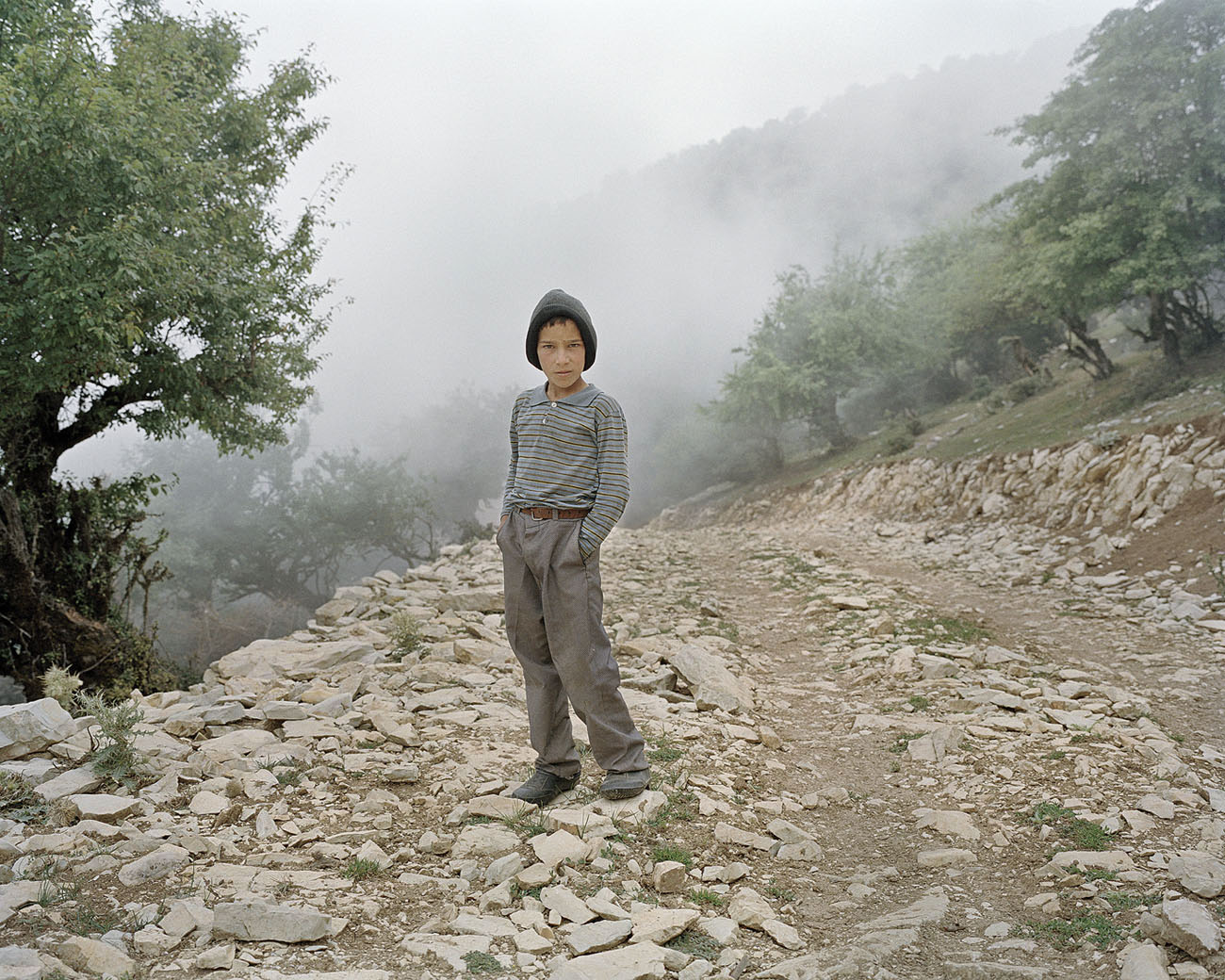
Hoda Afshar (Iran, Australia, b. 1983)
Portrait #3
2014
From the series In the exodus, I love you more 2014 – ongoing
Pigment photographic print
47 x 59cm
© Hoda Afshar, image courtesy the artist
“Mixed-up times are overflowing with both pain and joy – with vastly unjust patterns of pain and joy, with unnecessary killing of ongoingness but also with necessary resurgence. The task is to make kin in lines of inventive connection as a practice of learning to live and die well with each other in a thick present. Our task is to make trouble, to stir up potent response to devastating events, as well as to settle troubled waters and rebuild quiet places.”
Donna Haraway, 2016
“… according to one’s structure and position, each of us sees certain facets, certain parts of facets (…).”
Alberto Giacometti
It’s great to see Melbourne artist Hoda Afshar have a mid-career survey exhibition at the Art Gallery of New South Wales. With her strong bodies of work over recent years she surely deserves such an accolade.
Unfortunately I can’t make any comment on the exhibition Hoda Afshar: A Curve is a Broken Line itself – its flow from body of work to body of work, from space to space; the colours used behind the photographs; the sequencing of the work; and how the different sizes of the photographs bring the viewer forward and push them back – because I have not seen the exhibition. But, as always with the work of Afshar, it would seem her compassionate, lyrical, conceptual images are displayed with a clear seeing and focus on the stories that the artist wishes to tell.
Many words have been written by others (below) about significant aspects of Afshar’s work: the layers of displacement, difference and marginality; othering and image-making; war, statelessness, diaspora, oppression, corruption, torment, identity, place … which relate to the “relativity of reality” (the view that people are active participants in the construction of their own reality) imbued in her work. Indeed, “concepts of identity develop across the social spectrum – from within the self, within the culture, and within the political arena.”1 You can read these texts at your leisure. But from what I can see in the media images the exhibition exemplifies, as writer Celina Lei notes, “how her practice has matured while still carrying forth that visual pull – aesthetically, intellectually and emotionally.”
From what I can observe and feel the images are strongly composed, rigorously conceived and carry emotional weight when combined in sequences. Single images are ambiguous but when combined into a flow of images the narrative comes alive. People are framed against contextless backgrounds, they turn away from the camera, they shield their eyes and their identity or have their faces obscured by tree branches – so much of Afshar’s work is about absence, loss, longing, persecution, the impermanence of identity and the conflicting perceptions of a constructed, lived reality.
What I take issue with is John McDonald’s comparison of Afshar’s work with that of William Eggleston: works in her ongoing series In the exodus, I love you more (2014-) which capture diverse images of Iran “have the same mixture of ordinariness and oddity one finds in the work of a photographer such as William Eggleston.”2 Nothing could be farther from a form of reality. Eggleston’s images are never ordinary, are frequently surreal and bizarre, shot from a low or high angle (often with lurid colour ways) and possess a cutting social commentary on American culture … whereas Afshar’s photographs are poetic, sublime, lyrical emanations of ‘reality’ and if they do picture some oddity they lack the intense “bite” of an Eggleston image – something I would like to see Afshar reintroduce into her image making.
Many of her images are reflective, meditative, and approach the subject matter in an oblique manner which illuminates “how photography can activate new ways of thinking” … all well and good, but I long for a little more guts and directness to some of her individual images (physically, literally not intellectually). Her early series Under Western Eyes for example, contains biting, quirky creativity but for obvious reasons has not been included in this exhibition because it doesn’t fit the style of the smooth, polished, buffed, ambiguous and other worldly later work.
I also take issue with Tom Williams’ observation. “Even in her early, nominally “documentary” series, you can sense an embracing of the ambiguity of the still image, and an interest in composing a reality more vivid (and perhaps genuine) than dispassionate reportage might be capable of.”3 I disagree with the second part of this statement.
Having recently spent hours assembling a huge posting of photographs on the war in Ukraine – images which picture the ordinariness and atrocity of war – nothing, literally nothing, can be more vivid and genuine than the images of that war captured by brave Ukrainian photographers (see examples below). The same can be said of the genocide happening in Gaza and the photographs emerging from that massacre.
But as John McDonald intelligently observes, “The tragic events that have unfolded in Israel and Gaza over the past month should be enough to remind us that art is powerless in the face of real political upheaval. The most an artist can do to effect social and political change is to create a few striking images that circulate beyond the thought-absorbing walls of the art museum. Even then, any change to people’s attitudes is bound to be incremental and highly personal.”4
Most images then, have little power to change public and personal opinion… all they can do is proffer alternate visions and interpretations of the world and hope that some glimmer of recognition of injustice, difference and otherness will permeate the mind of the viewer. And while Afshar’s photographs do not effect social and political change what they do is bring to consciousness in the viewer “other” aspects of the realities of the world. Through the visibility of her images she exposes the phallocracy of the masculine, singular definition of truth. As David Smail suggests when speaking on the nature of ‘truth’,
“Though the truth is not just a matter of personal perspective, neither is it fixed and certain, objectively ‘out there’ and independent of human knowing. ‘The truth’ changes according to, among other things, developments and alterations in our values and understandings… the ‘non-finality’ of truth is not to be confused with a simple relativity of ‘truths’.”5
Afshar’s photographs address the simple relativity of many ‘truths’, the tension between “forms” … of truth and reality. Truths and reality, what is seen and not seen. So much of being alive is breaking…
Dr Marcus Bunyan
Footnotes
1/ Ari Hakkarainen. “‘The Urgency of Resistance’: Rehearsals of Death in the Photography of David Wojnarowicz” 2018
2/ John McDonald. “Politically charged or aesthetically ambitious? This show is the best of both worlds,” on The Sydney Morning Herald website November 3, 2023 [Online] Cited 05/02/2024
3/ Tom Williams. “How photography can reveal, overlook and manipulate truth: the fearless work of Australian Iranian artist Hoda Afshar,” on The Conversation website September 8, 2023 [Online] Cited 05/02/2024
4/ McDonald, op cit.,
5/ David Smail. Illusion & Reality: The Meaning of Anxiety. London: J.M. Dent & Sons, 1984, p. 152.
Many thankx to the Art Gallery of New South Wales for allowing me to publish the photographs in the posting. Please click on the photographs for a larger version of the image.
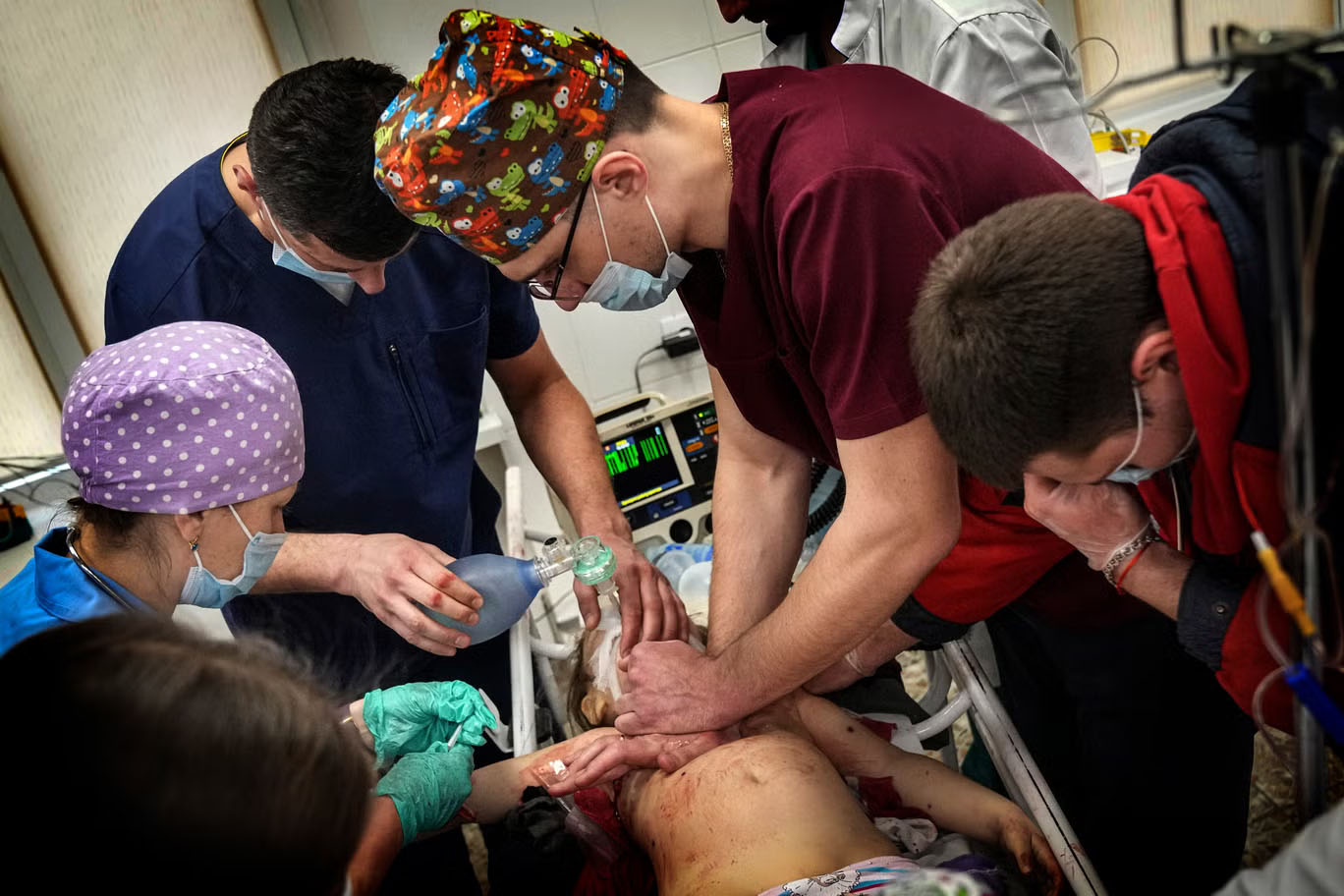
Mstyslav Chernov (Ukrainian, b. 1985) / AP
Doctors unsuccessfully try to resuscitate a girl hit by Russian shelling in Mariupol, Ukraine. February 27, 2022
2022
Used under fair use conditions for the purposes of education, research, criticism and review
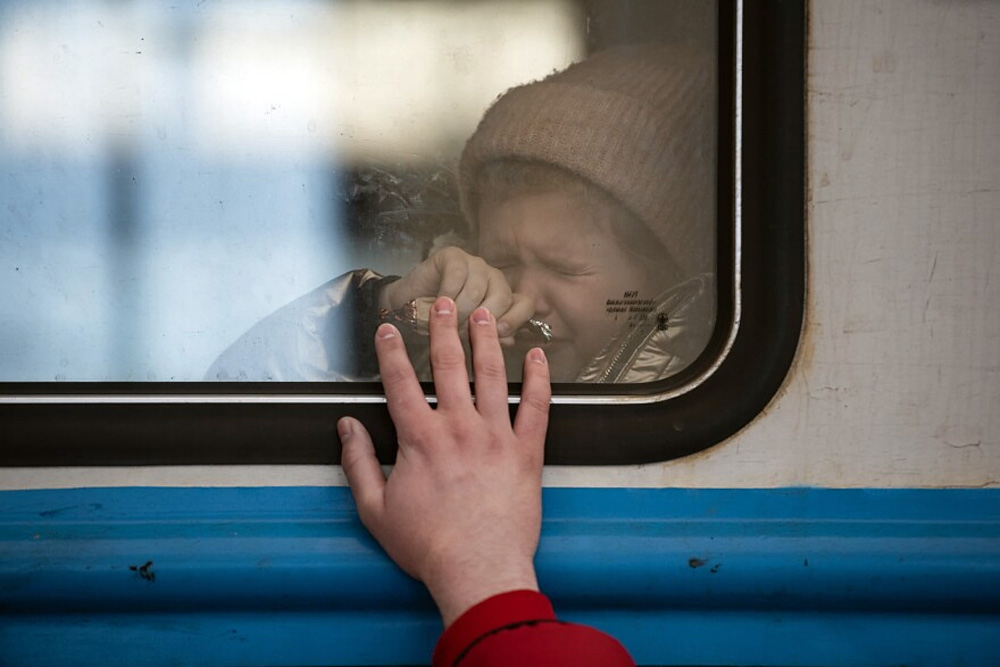
Alexey FurmanAlexey Furman (Ukrainian, b. 1991) / Getty Images
A young girl cries as a man bids his daughter goodbye at the railway station in Lviv, Ukraine, on March 22, 2022. Lviv has served as a stopover and shelter for the millions of Ukrainians fleeing the Russian invasion, either to the safety of nearby countries or the relative security of western Ukraine’
2022
Used under fair use conditions for the purposes of education, research, criticism and review
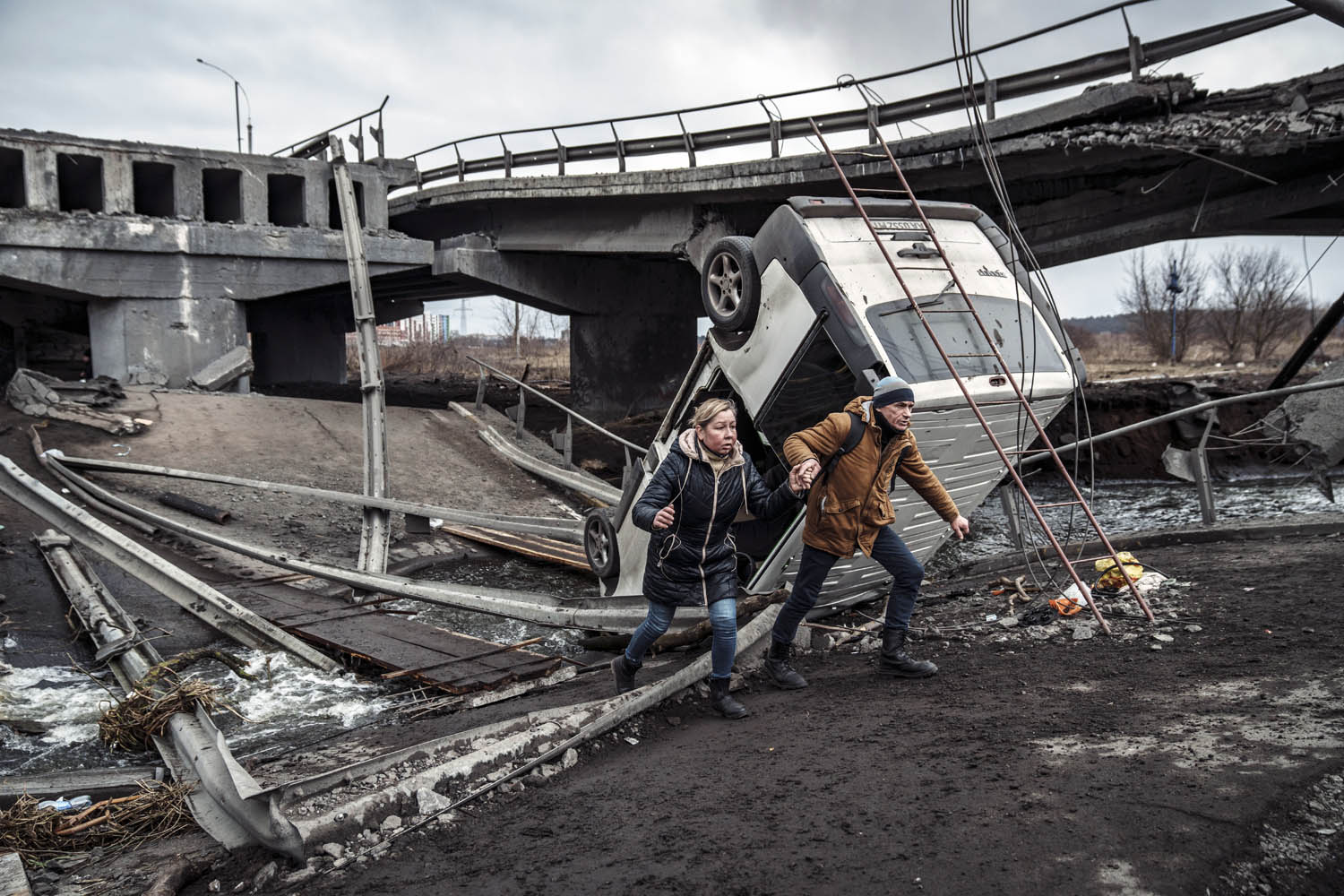
Sergi Mykhalchuk (Ukrainian, b. 1972)
Evacuation of civilians from Irpіn, Ukraine. March 4-5, 2022
2022
Used under fair use conditions for the purposes of education, research, criticism and review
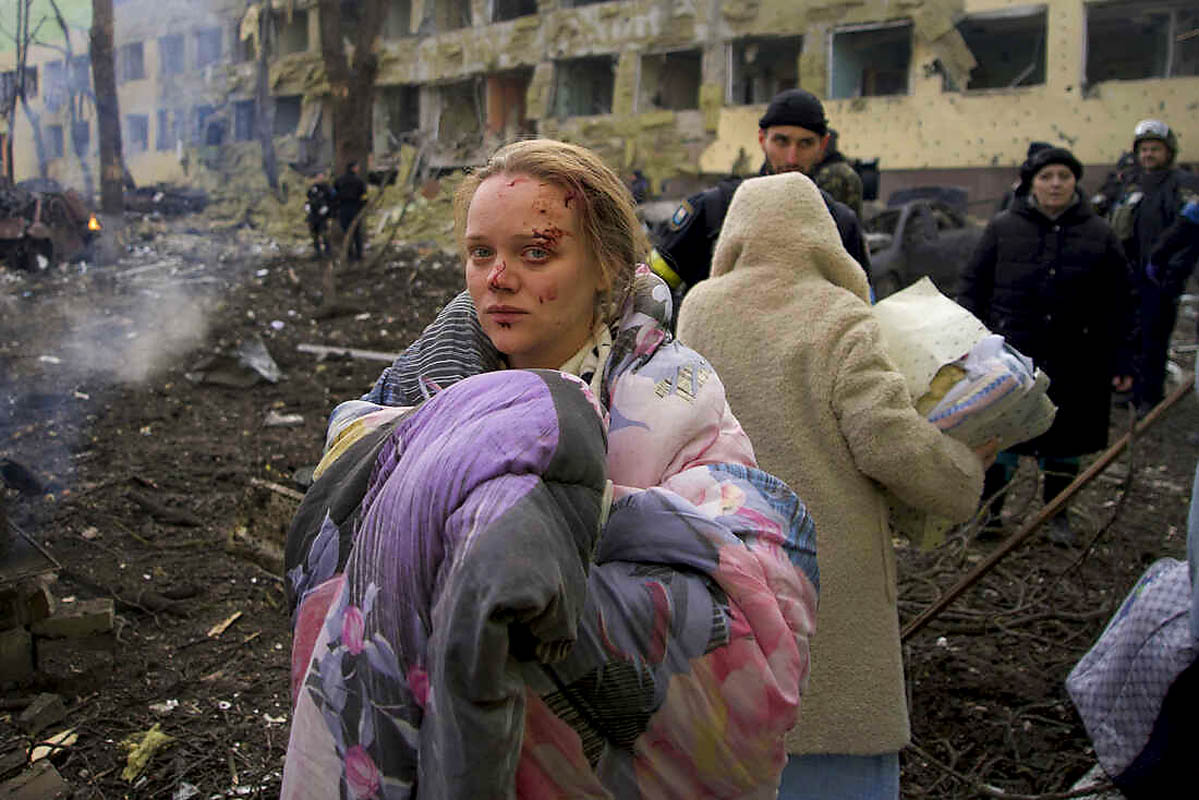
Mstyslav Chernov (Ukrainian, b. 1985) / AP
Mariana Vishegirskaya stands outside a maternity hospital that was damaged by shelling in Mariupol, Ukraine, March 9, 2022. Vishegirskaya survived the shelling and later gave birth to a girl in another hospital in Mariupol
2022
Used under fair use conditions for the purposes of education, research, criticism and review
“I see art-making as a process of “unselfing” – you can be outside of your body, less focused on what’s inside, and see yourself in relation to the broader world.”
Hoda Afshar
“In co-opting the documentary genre, Afshar harnesses its truth-telling power while simultaneously telling another story – one that is often unspoken or at odds with what we are told by those in power.”
Susan Acret. “Hoda Afshar’s Fragments of Reality,” on the Ocula website Sydney, 3 February 2023 [Online] Cited 11/12/2023
Through her poetically constructed images, Hoda Afshar illuminates a world overshadowed by history and atrocity. Yet we never see despair: we see defiance, comradeship, reinvention and a search for how photography can activate new ways of thinking. …
What unites her materially diverse work is a concern with visibility: who is denied it, what is made visible by media, and how photography can reveal, overlook and manipulate truth.
Much of her work addresses critical humanitarian issues of our time: war, statelessness, diaspora, oppression, corruption. She challenges stereotypes. We don’t see passive victims or closed narratives: we are introduced to new perspectives that might lead us to reappraise the world we inhabit.
Anonymous. “How photography can reveal, overlook and manipulate truth,” on the University of Wollongong website September 8, 2023 [Online] Cited 11/01/2023
The title of the exhibition was inspired by lines in a poem by Kaveh Akbar:
a curve is a straight line broken at all its points so much
of being alive is breaking.
Through her photographs and moving image works, Iranian-born, Melbourne-based Hoda Afshar examines the politics of image-making. Deeply researched yet emotionally sensitive, her work can be seen as a form of activism as much as an artistic inquiry.
Afshar uses the camera to give visibility to those who have been denied it, resolutely insisting on the humanity of her subjects. She makes us contend with violence and brutality, not through blunt imagery but through evocation. Her work is anchored in empathy yet also radical in the way it wrestles with injustice.
This exhibition will feature photography and film from the past decade to present a comprehensive overview of Afshar’s recent practice, including a newly commissioned series. Amassed together in dialogue for the first time in a major public institution, these works offer a poignant reminder of the power of images and their coercive potential.
An accompanying publication offers critical insight into Afshar’s work as well as creative and experimental responses from a range of writers.
Text from the Art Gallery of New South Wales website
“The tragic events that have unfolded in Israel and Gaza over the past month should be enough to remind us that art is powerless in the face of real political upheaval. The most an artist can do to effect social and political change is to create a few striking images that circulate beyond the thought-absorbing walls of the art museum. Even then, any change to people’s attitudes is bound to be incremental and highly personal. …
Like Valamanesh, Afshar has never been able to let go of her brutalised, much-maligned country. In her ongoing series, In the exodus, I love you more (2014-), which takes its title from a line by Palestinian poet Mahmoud Darwish, she returns time and again to Iran, capturing diverse images that have the same mixture of ordinariness and oddity one finds in the work of a photographer such as William Eggleston. Landscapes, street scenes, portraits, horses, peacocks, a building draped in heavy curtains, a hose in a courtyard … nothing is disqualified from an idiosyncratic overview that digs under the skin of her birthplace. The same applies, but with added eeriness, to the series Speak to the wind (2015-22), set on the island of Hormuz, off the southern coast of Iran.”
John McDonald. “Politically charged or aesthetically ambitious? This show is the best of both worlds,” on The Sydney Morning Herald website November 3, 2023 [Online] Cited 05/02/2024
“Through her poetically constructed images, Hoda Afshar illuminates a world overshadowed by history and atrocity. Yet we never see despair: we see defiance, comradeship, reinvention and a search for how photography can activate new ways of thinking. …
Even in her early, nominally “documentary” series, you can sense an embracing of the ambiguity of the still image, and an interest in composing a reality more vivid (and perhaps genuine) than dispassionate reportage might be capable of. …
What unites her materially diverse work is a concern with visibility: who is denied it, what is made visible by media, and how photography can reveal, overlook and manipulate truth.
Much of her work addresses critical humanitarian issues of our time: war, statelessness, diaspora, oppression, corruption. She challenges stereotypes. We don’t see passive victims or closed narratives: we are introduced to new perspectives that might lead us to reappraise the world we inhabit. …
Hoda Afshar’s work addresses conflict, injustice, mobility and the often fragile state of being alive. It reminds us that dominant powers can be challenged by exposing truth and envisioning something new.”
Tom Williams. “How photography can reveal, overlook and manipulate truth: the fearless work of Australian Iranian artist Hoda Afshar,” on The Conversation website September 8, 2023 [Online] Cited 05/02/2024
“Social and political commentary is a given in much of her work, but her lens remains sympathetic, never othering. This is highlighted in sections throughout Hoda Afshar: A Curve is a Broken Line. Her portraits of stateless asylum seekers on Manus Island, Papua New Guinea, taken in 2018, display power and dignity in visibility, despite lived experiences of harshness and torment.”
Celina Lei. “Exhibition review: Hoda Afshar – A Curve is a Broken Line, AGNSW,” on the Artshub website 13 Sep 2023 [Online] Cited 05/02/2024
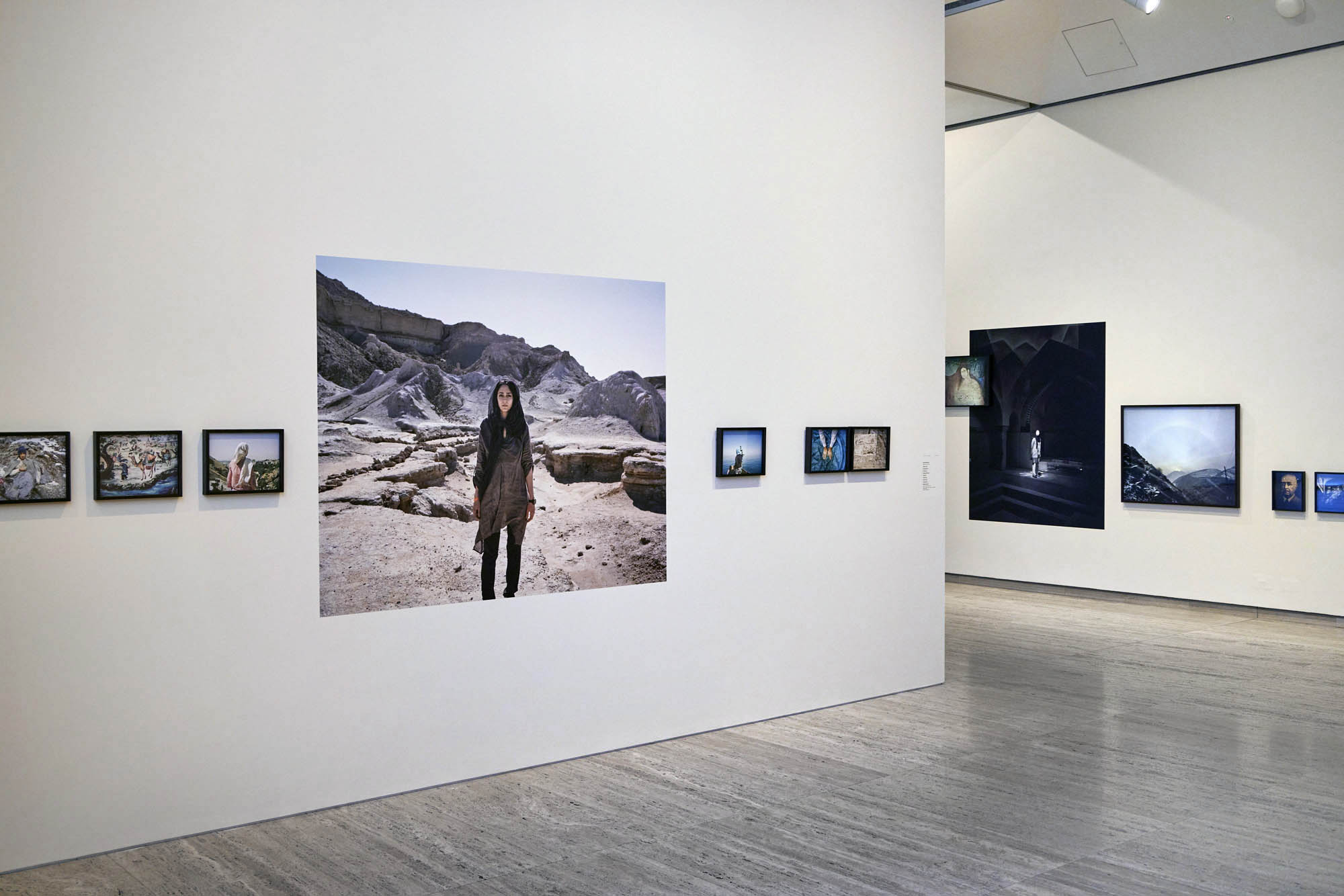
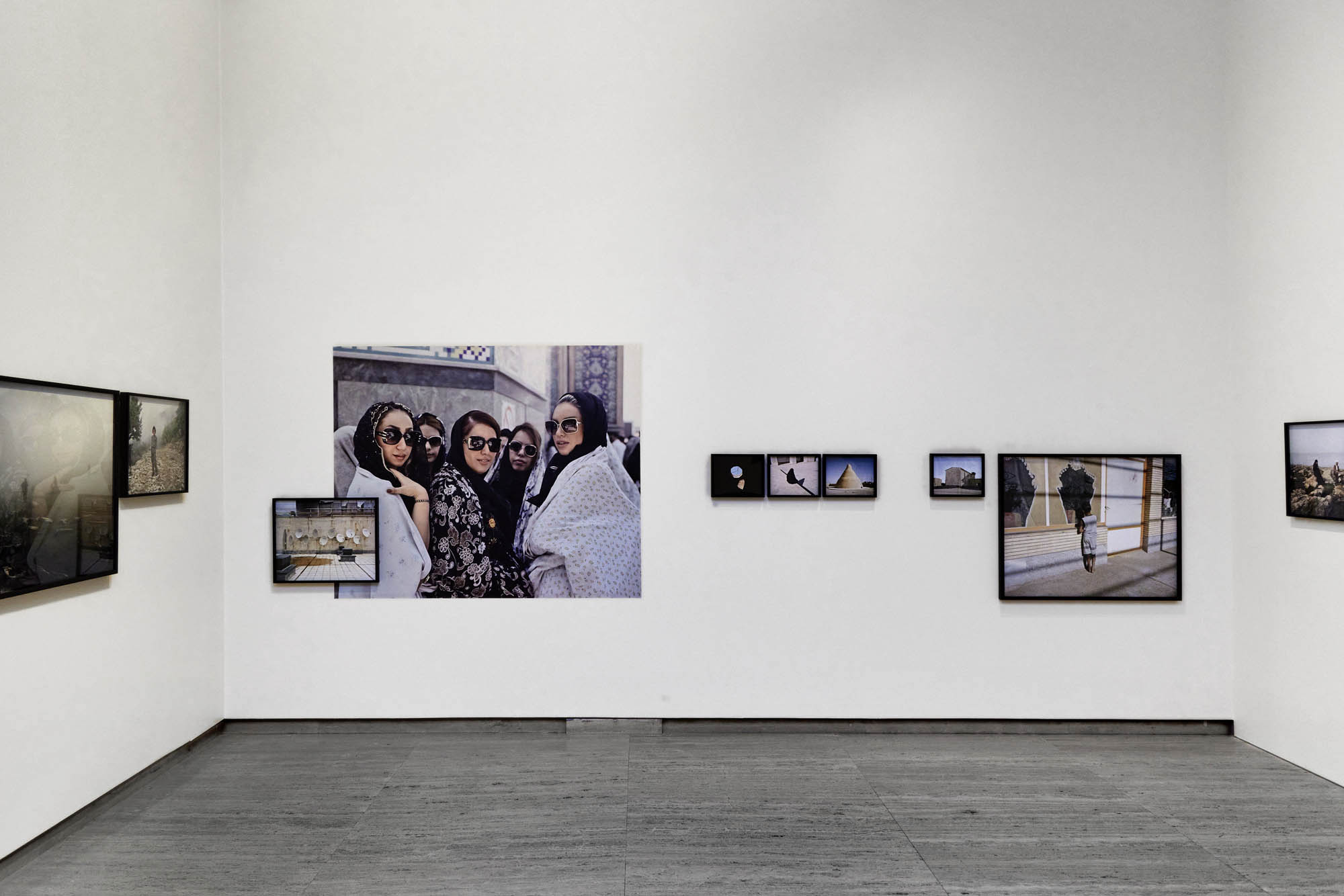
Installation views of the exhibition Hoda Afshar: A Curve is a Broken Line at the Art Gallery of New South Wales, 2023 showing work from the series In the exodus, I love you more 2014- ongoing
Photo: © Art Gallery of New South Wales, Christopher Snee
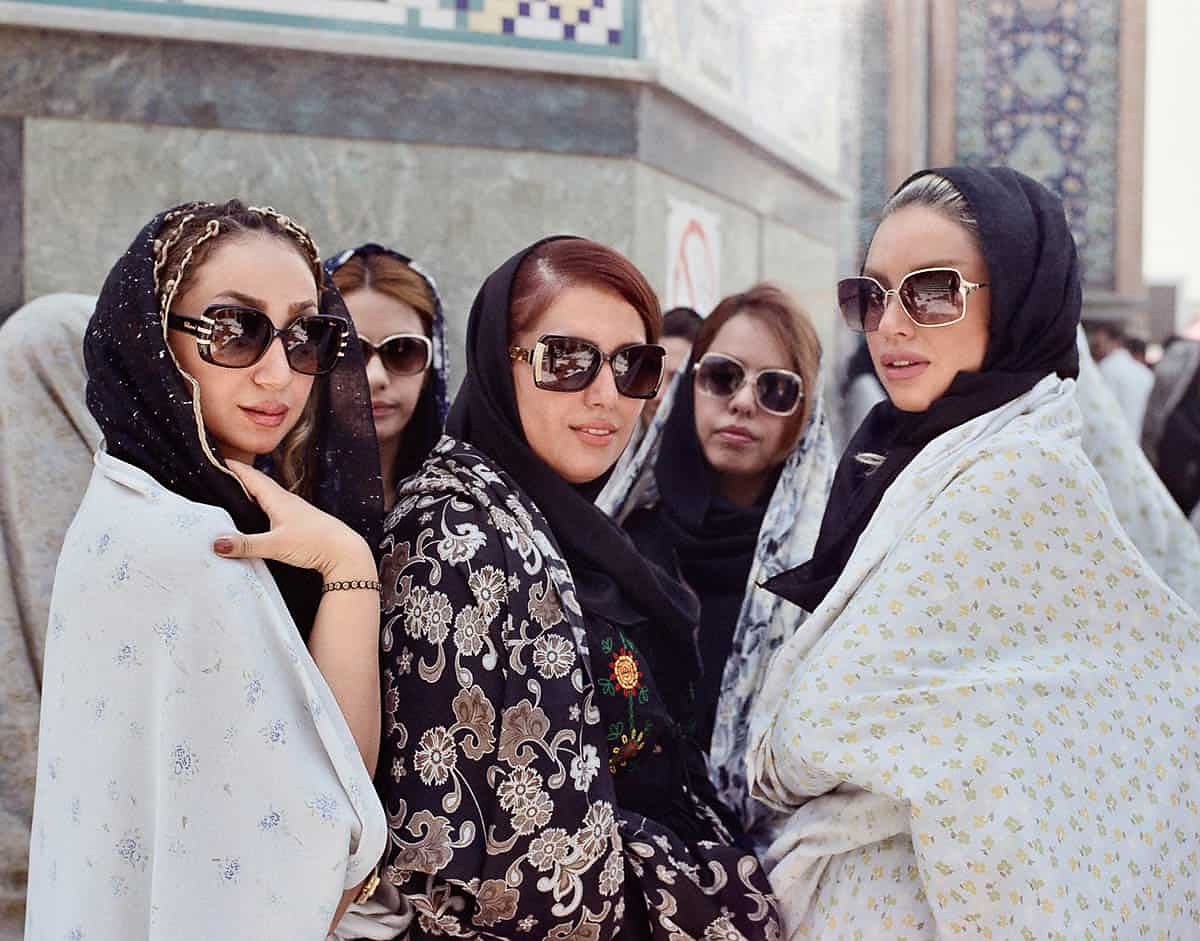
Hoda Afshar (Iran, Australia, b. 1983)
Untitled
2014
From the series In the exodus, I love you more 2014- ongoing
Pigment photographic print
© Hoda Afshar, image courtesy the artist
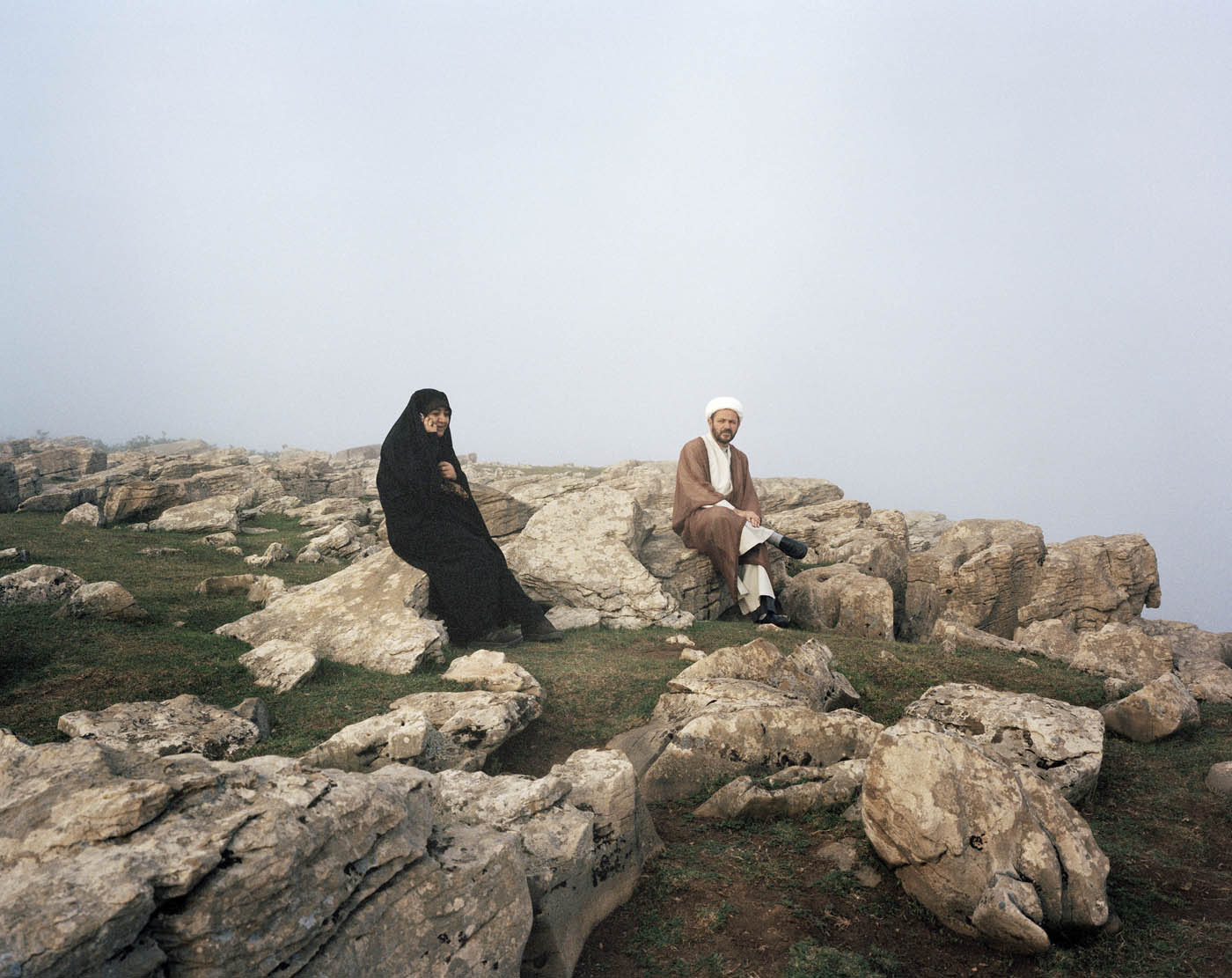
Hoda Afshar (Iran, Australia, b. 1983)
Grace
2014
From the series In the exodus, I love you more 2014- ongoing
Pigment photographic print
47 x 59cm
© Hoda Afshar, image courtesy the artist
In the exodus, I love you more (2014-) is a portrait of her home country formed by experiences of familiarity and distance. The artist is both at home and searching, like an outsider. Images suggest at times an intimate proximity, and at others a separation akin to the one made by raising a camera to your eye.
Afshar examines her experience of migration and, she tells me, seeks to “dismantle the idea of there being one way of seeing Iran.”
The final image in this series shows the erasure of a woman’s face in a painted Persian miniature.
Tom Williams. “How photography can reveal, overlook and manipulate truth: the fearless work of Australian Iranian artist Hoda Afshar,” on The Conversation website September 8, 2023 [Online] Cited 08/11/2023
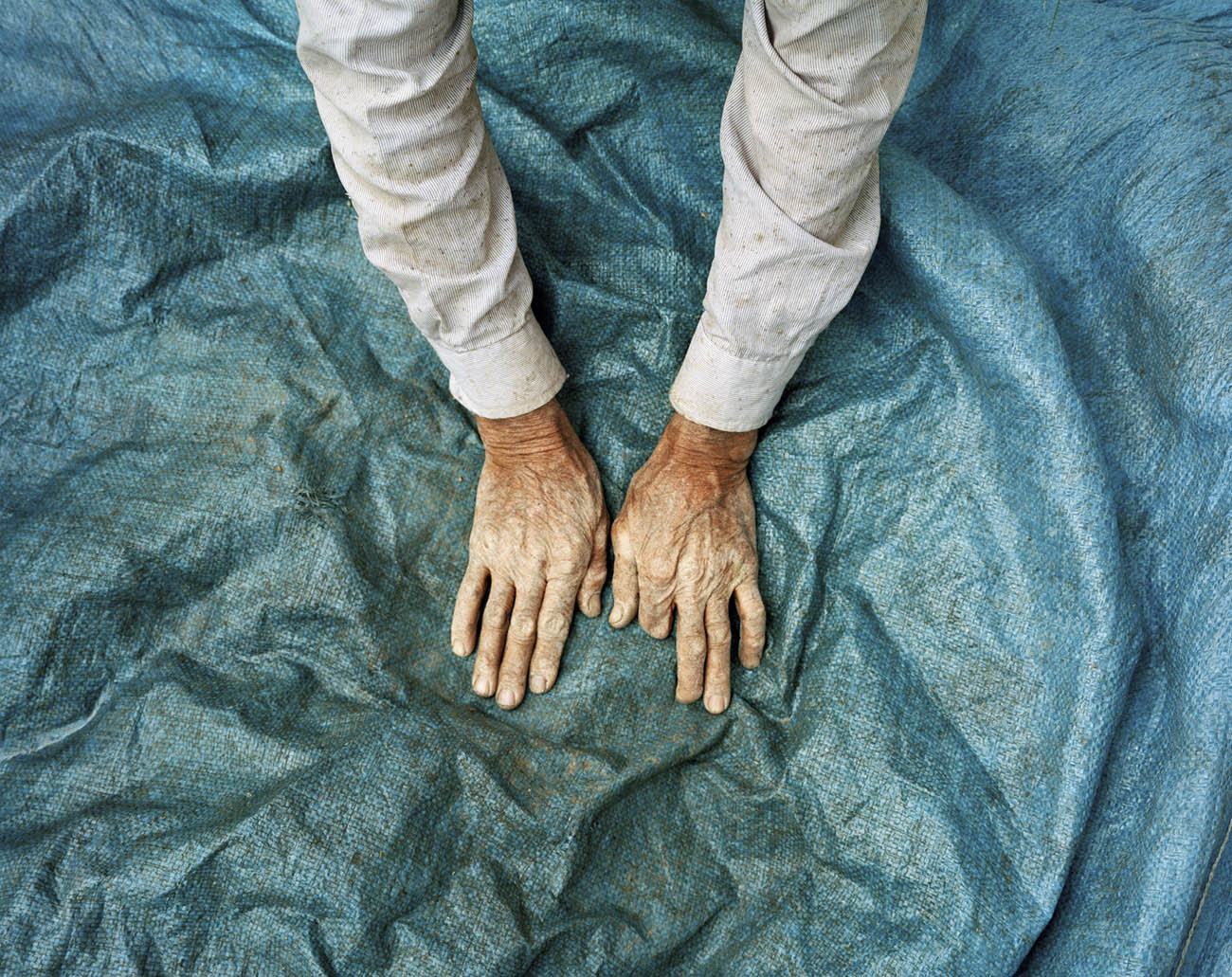
Hoda Afshar (Iran, Australia, b. 1983)
Crease
2014
From the series In the exodus, I love you more 2014 – ongoing
Pigment photographic print
23 x 29cm
© Hoda Afshar, image courtesy the artist
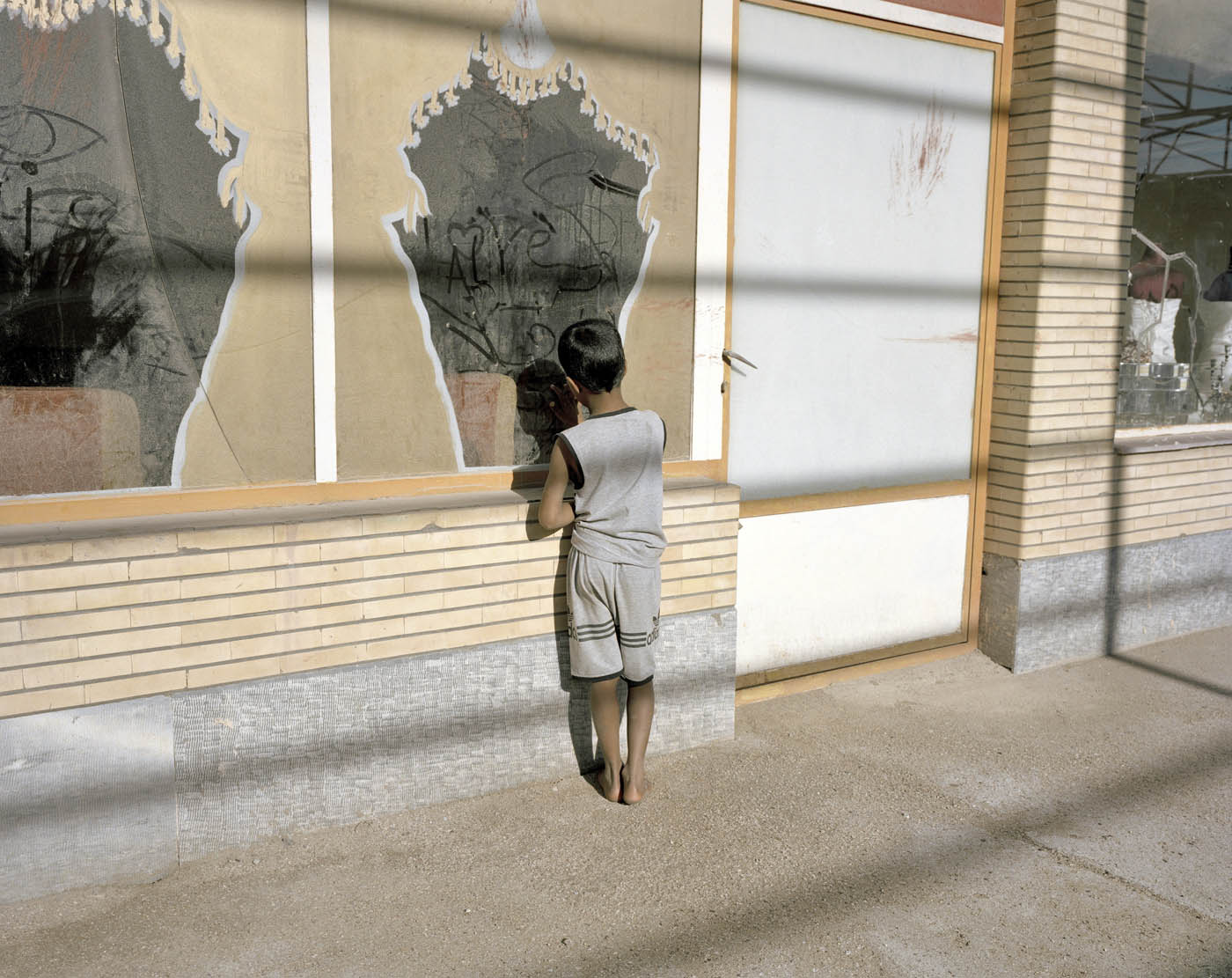
Hoda Afshar (Iran, Australia, b. 1983)
Draw
2016
From the series In the exodus, I love you more 2014 – ongoing
Pigment photographic print
81 x 102cm
© Hoda Afshar, image courtesy the artist
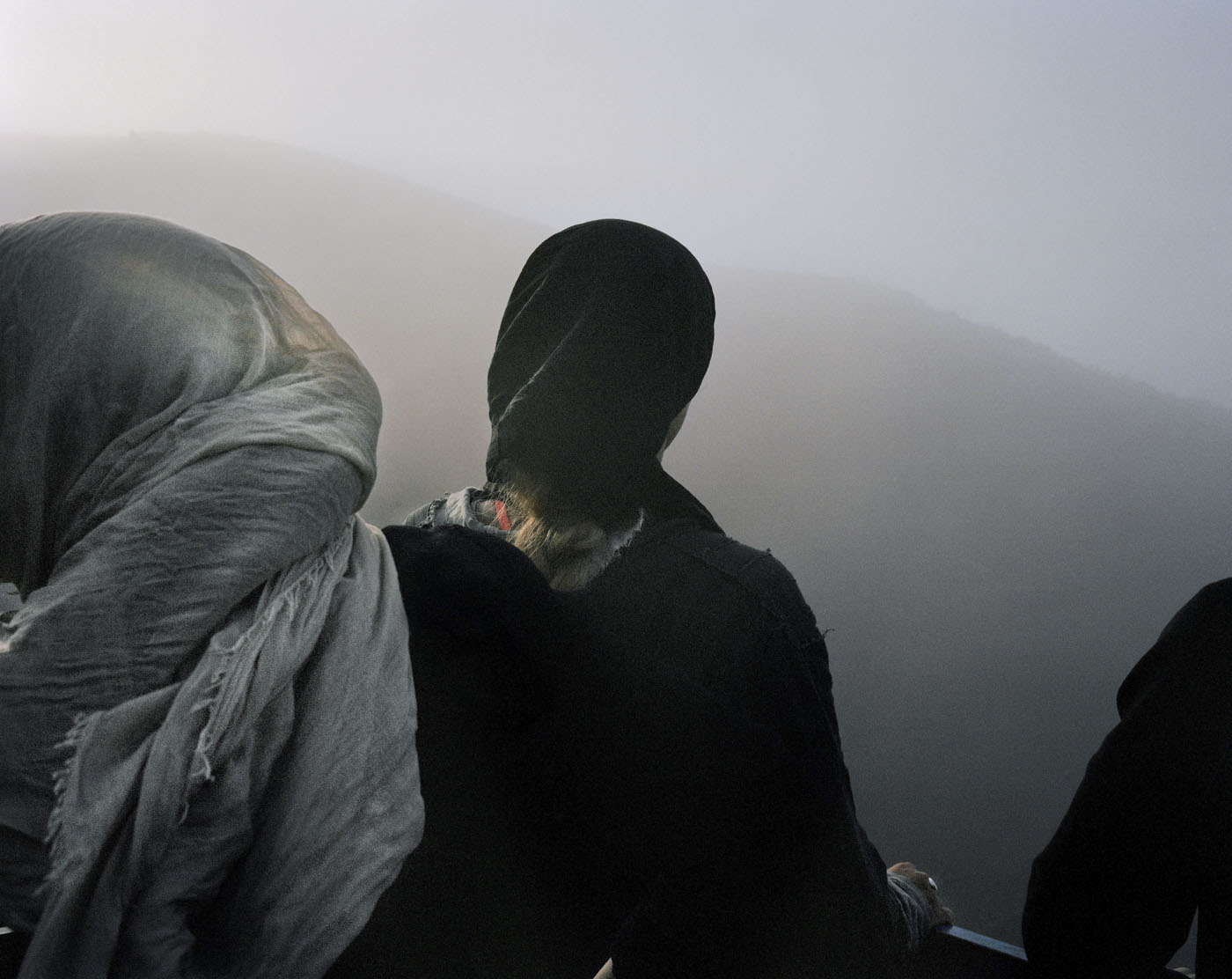
Hoda Afshar (Iran, Australia, b. 1983)
Twofold
2014, printed 2023
From the series In the exodus, I love you more 2014 – ongoing
Digital print on vinyl, installation dimensions variable
© Hoda Afshar, image courtesy the artist
In September, the Art Gallery of New South Wales will present Hoda Afshar: A Curve is a Broken Line, the first major solo exhibition of one of Australia’s most innovative and unflinching photo-media artists, Iranian-born, Melbourne-based Hoda Afshar.
Featuring photographs and moving image works from the past decade, including a newly commissioned series, the comprehensive exhibition provides an overview of the artist’s recent practice and examines the politics of art making. Amassed together in dialogue for the first time by a major public institution, these works offer a poignant reminder of the power of images and their coercive potential.
Art Gallery of NSW director Michael Brand said it is a great pleasure to present Afshar’s first major solo exhibition at the Art Gallery of NSW.
‘Hoda Afshar is one of the most exciting artists working in Australia today. While her work explores themes of violence and pain, it also speaks to the transformative potential of image-making which is of profound importance to art institutions, as agents of advocacy and emotional encounter,’ said Brand.
‘Her work gives visibility to marginalised voices and serves as a powerful reminder of art’s capacity to embolden, inspire, and move. Her own voice as an artist is a defiantly international one.’
Since she first began working with photography in the early 2000s, Afshar has resolutely insisted on the humanity of her subjects. She is sensitive to the camera’s status as an imperialist tool that has long been used to define how history is told and how power is consolidated. Throughout her practice, she has involved her subjects in the act of photographing them in order to equalise the power dynamic that exists between photographer and photographed and return agency to those she depicts.
Exhibition curator, Art Gallery of NSW senior curator of contemporary Australian art Isobel Parker Philip said: ‘Hoda Afshar’s work is both deeply researched and poetically resonant and can be seen as a form of activism as much as an artistic inquiry.
‘Hoda’s approach is unique in that she makes us contend with brutality, not through blunt imagery but through evocation. Her work is anchored in compassion yet also radical in the way it wrestles with injustice.
‘Hoda’s photographs and videos are emotionally embroiled in the world they depict. It is this fact that makes a survey of her work both compelling and timely.’
Hoda Afshar: A Curve is a Broken Line includes the reveal of a new body of work commissioned for the exhibition, titled In turn 2023, which is a series of large-scale photographs depicting Iranian women who, like Afshar, live in Australia and have watched, from afar, the women-led Iranian uprising that began in September 2022. Presented one year on from when the uprising started, the portrait series is something of an elegy, speaking to their shared grief and their shared hope.
Among the most recognisable works featured in the exhibition, is Behrouz Boochani – Manus Island 2018, which was acquired by the Art Gallery in 2020 from Afshar’s pivotal series Remain 2018, which comprises a video and suite of photographs. Made on Manus Island, Papua New Guinea with a group of stateless asylum seekers, the video and photographs of Remain serve as testimony to the lived impact of Australia’s border protection policy.
The exhibition is accompanied by a publication, Hoda Afshar: A Curve is a Broken Line (RRP$65) featuring new writing by curator Isobel Parker Philip and writers including Hala Alyan, Elyas Alavi, Behrouz Boochani, Andrew Brooks and Astrid Lorange (working as the duo Snack Syndicate), Taous Dahmani, Shahram Khosravi and Sarah Sentilles.
Press release from the Art Gallery of New South Wales
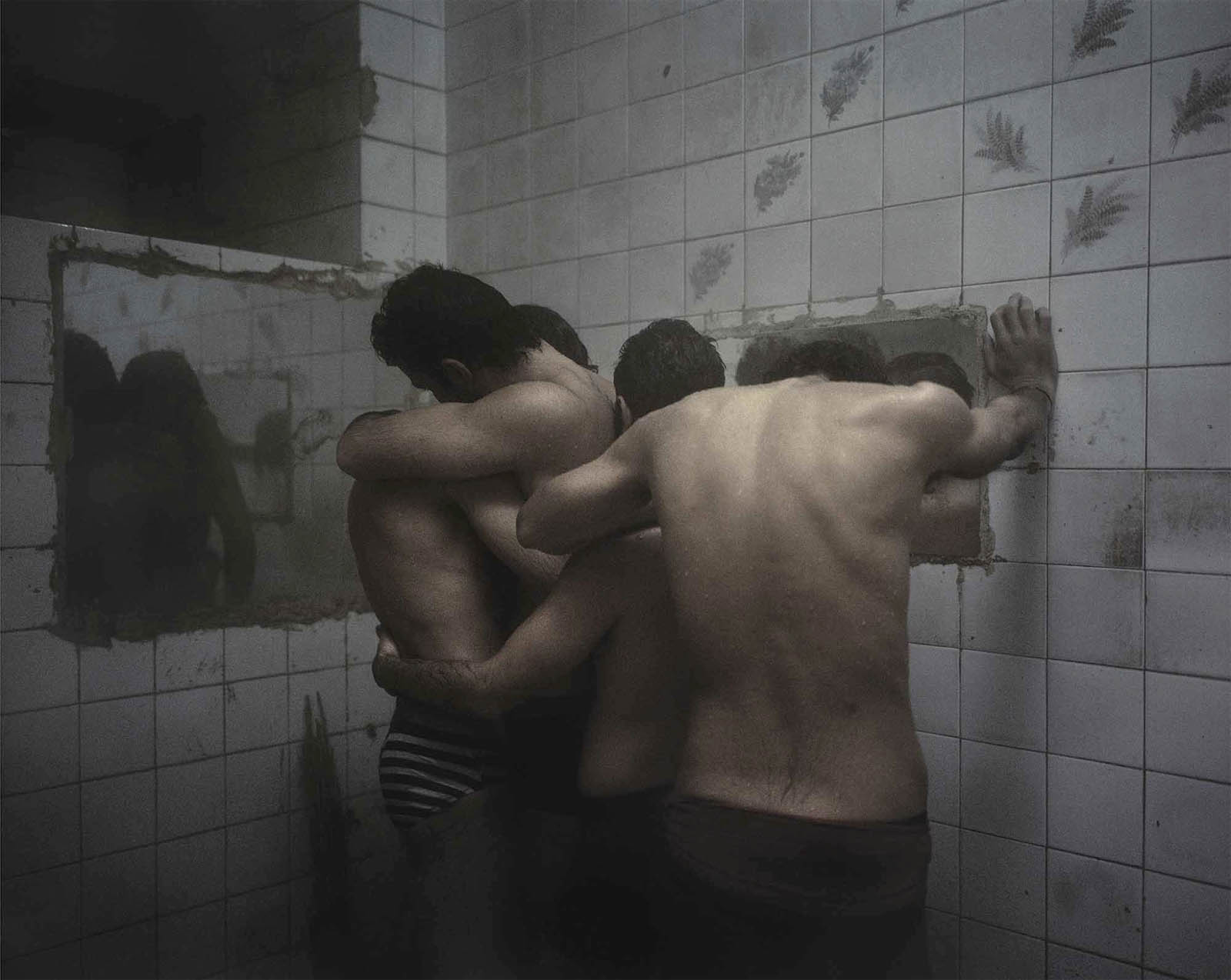
Hoda Afshar (Iran, Australia, b. 1983)
Untitled #4
From the series Behold 2016
Pigment photographic print
95 x 120cm
© Hoda Afshar, image courtesy the artist
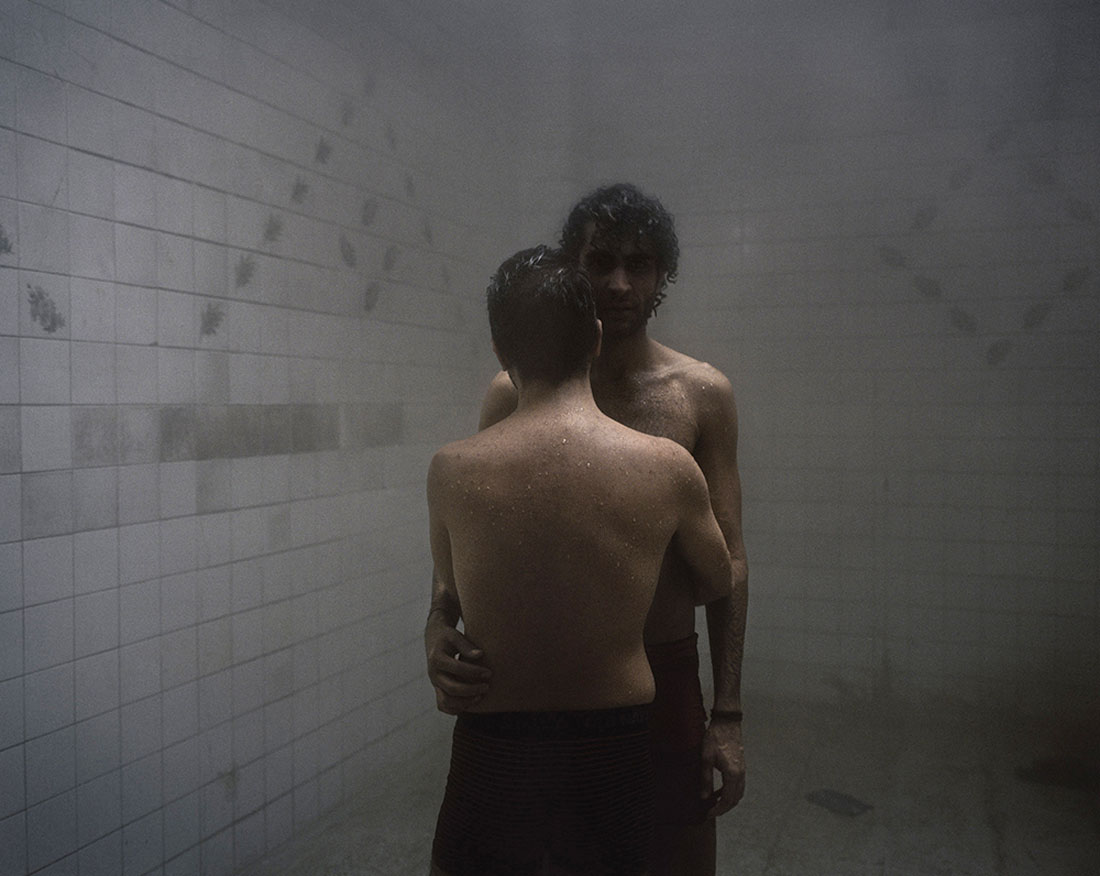
Hoda Afshar (Iran, Australia, b. 1983)
Untitled #6
rom the series Behold 2016
Pigment photographic print
95 x 120cm
© Hoda Afshar, image courtesy the artist
Behold (2016)
The series Behold was made while the artist was travelling in the Middle East and befriended a group of young gay men who invited her to photograph them in a local male-only bathhouse.
The title Behold is alluding to the role of the viewer, the camera, in partially constructing the meaning of these images. For instance, the visible expressions of male intimacy tend to be viewed through a very narrow sexualized frame in the West, but in Iran, like elsewhere in the East, it is quite normal to see men engaged in physical contact, embracing each other and kissing cheeks, physically massaging each other in bathhouses, without it being sexualized. It is like public displays of breastfeeding and images of naked infants or adolescents – and also male intimacy – it is always interesting for me the reactions that these things engender in the West – the weird sort of prohibitions, and paranoias that surround the displaying of certain bodies or their interactions.
Picking up on something that John Berger said for example – if we were to replace the men in these images with women then of course the reaction would be very different. So returning to the idea of viewing: this work for me (now, upon reflection) is also about challenging the viewer – or different viewers – about these things. because despite the points just mentioned, the dominant reading of the work will still likely be about the censorship of bodies and identities in a particularly religious environment. But again what I am suggesting is that this has something, though not everything, to do with our own framing.
Hoda Afshar Instagram page
In Behold (2016), once more we see acts of resolute defiance by people performing for the camera. Afshar was invited by a group of gay men to observe re-enacted gestures of protection and intimacy outlawed in most of the Middle East.
Unable to freely express their love in society, they disclose and affirm it for Afshar and her lens.
Tom Williams. “How photography can reveal, overlook and manipulate truth: the fearless work of Australian Iranian artist Hoda Afshar,” on The Conversation website September 8, 2023 [Online] Cited 08/11/2023
Behold was made unexpectedly, and without design. I was travelling in a city that I sometimes return to, and I got to know a group of gay men. There, where they live, these men (and many others like them) are mostly left to be. But only on the condition that they lead one part of their lives in secret. Rarely, that is, do their bodies ever meet in open honesty outside, in public. Only here, in this bathhouse, where their desire to be seen and embraced by others – just to be and to be held – is played out the partial openness of these four closed walls.
The bathhouse no longer exists. But while it still did, these men invited me to document it and a little glimpse of their lives in it. We arrived, but I was not allowed to enter. So we rented the place, and for a few hours I took pictures while these men played themselves performing their lives for my peering camera, in order that their desire to be seen might be realised, in part at least, here in the world of the images – in the act of beholding, where the bare thereness of life is transformed from mere appearing or appearance, into something more meaningful … into recognition.
Hoda Afshar. “11 Works by Hoda Afshar,” on the Cordite website 1 August 2018 [Online] Cited 09/11/2023
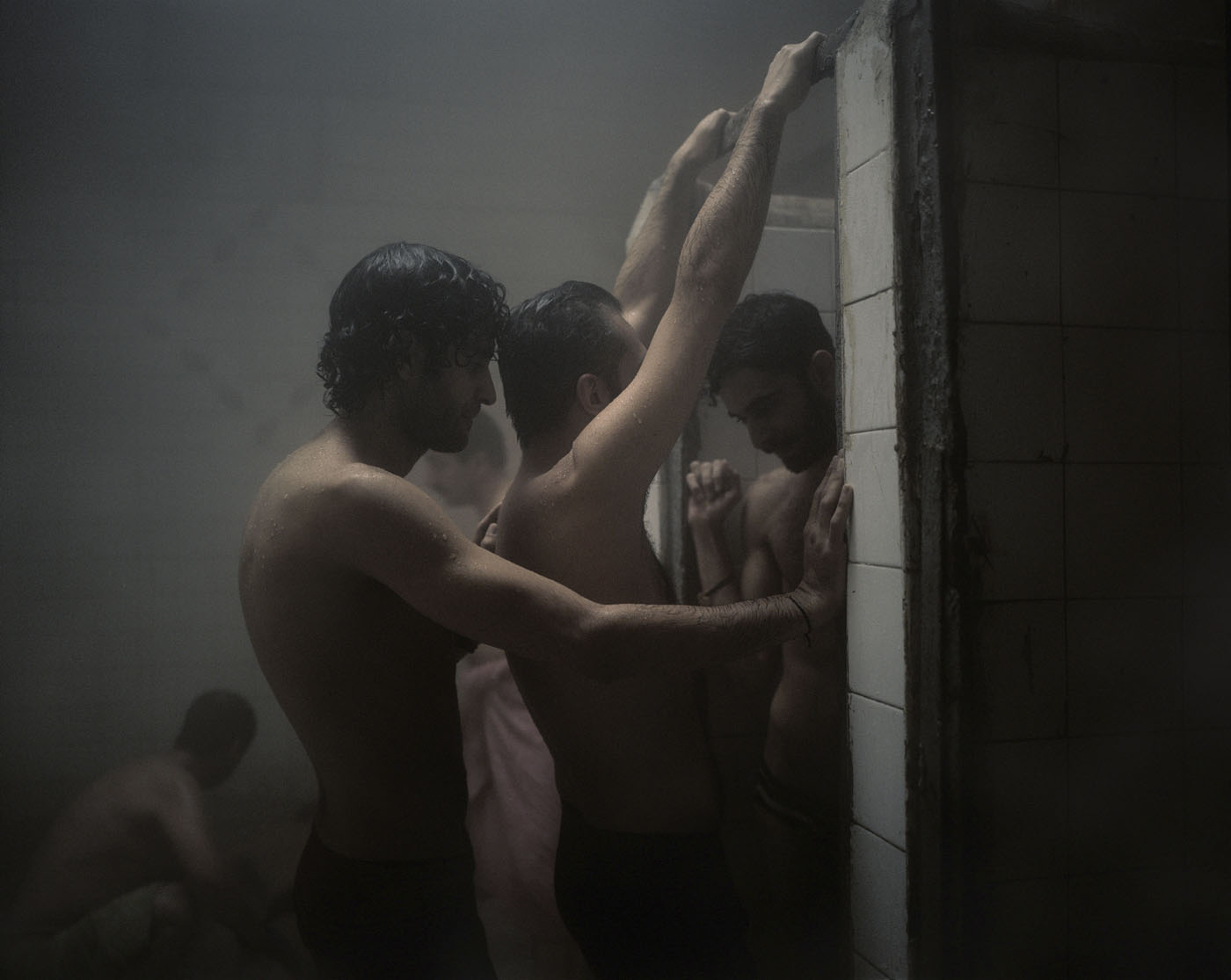
Hoda Afshar (Iran, Australia, b. 1983)
Untitled #7
From the series Behold 2016
Pigment photographic print
95 x 120cm
© Hoda Afshar, image courtesy the artist
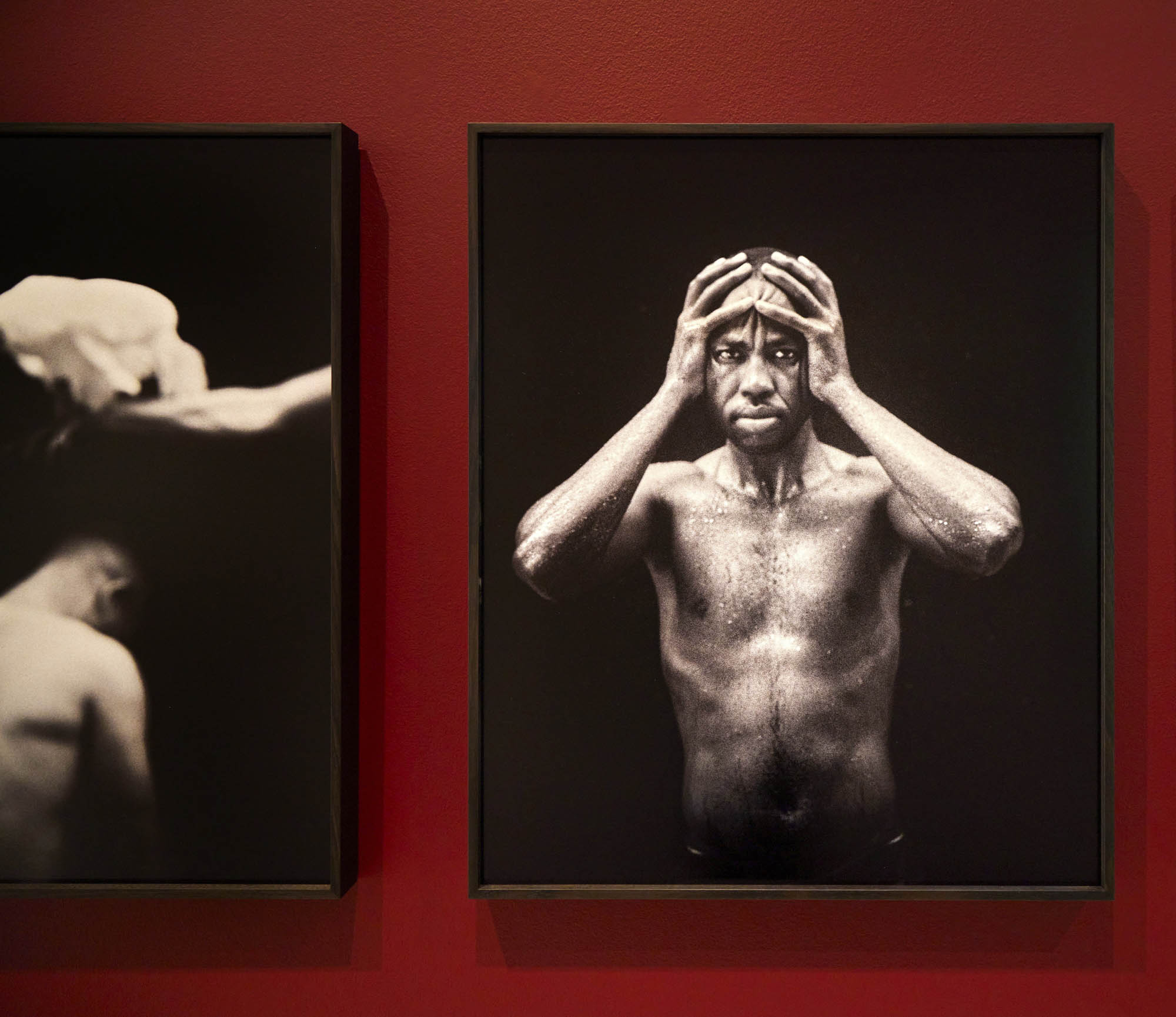
Installation view of the exhibition Hoda Afshar: A Curve is a Broken Line at the Art Gallery of New South Wales, 2023 showing Ibrahim Mahjid – Manus Island from the series Remain 2018
Photo: © Art Gallery of New South Wales, Christopher Snee
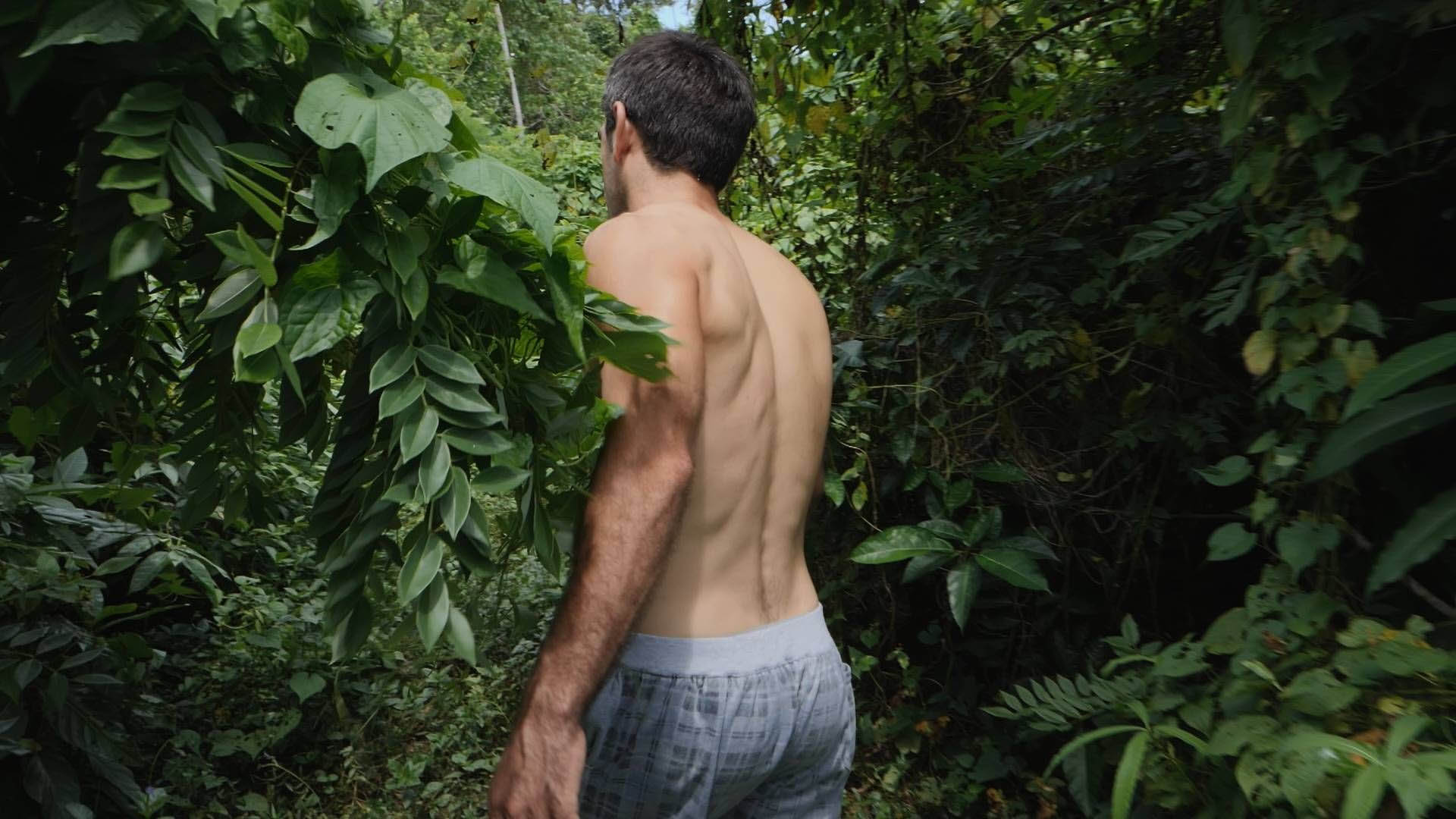
Hoda Afshar (Iran, Australia, b. 1983)
Remain (video still)
2018
From the series Remain 2018
Dual channel digital video, colour, sound
Two-channel digital video, colour, sound, duration 23:33 min, aspect ratio 16:9, installation dimensions variable
Art Gallery of New South Wales
Purchased with funds provided by the Contemporary Collection Benefactors 2020
© Hoda Afshar
Hoda Afshar | Remain (excerpt)
Remain (2018)
Remain addresses Australia’s contentious border protection policy and the human rights of asylum seekers. The work was made in collaboration with several of the men who remained on Manus Island, Papua New Guinea, six or more years after they left their homelands to seek asylum in Australia, but instead were sent to languish in the remote offshore detention centre. The work involves these men retelling their individual and shared stories through staged images, words, and poetry, and bearing witness to life in the Manus camps: from the death of friends and dreams of freedom, to the strange air of beauty, boredom, and violence that surrounds them on the island.
Afshar believes ‘typical images of refugees only reinforce in the eyes of the viewer their inferior image and position’. Afshar, in collaboration with the people in her
portraits, attempted to create ‘an artwork – using the language of poetry, performance, and song – that defies such logic, and forces the viewer to confront their
own incomprehension, as well as the very inexplicableness of the situation that these men face.’ Collaboration, trust and empathy is an important aspect of Afshar’s art practice. She says:
One portrait shows a stateless Kurdish refugee called Emad struggling under a downpour of sand. When I asked him what natural element he wanted to use in his image, he chose soil. He said: ‘It reminds me of land; the land that I was torn from; the land that has been torn from me. From us. Soil is the most precious idea in Kurdish culture. But we are stateless. I’ve been stateless my whole life.’
Afshar’s criticism of documentary photography isn’t aimed at photographers themselves, or their intentions: ‘It’s important for all of us to look at the visual languages that we inherited, that are predominantly imperial visual languages, and ask questions about why we’re framing things in a certain way.’
Anonymous. “Counihan Gallery learning resource – Means Without End Hoda Afshar,” on the Merri-bek City Council website [Online] Cited 08/11/2023
Hoda Afshar – Introduction to Remain
Hoda Afshar’s 2018 body of work Remain is an unflinchingly political commentary on Australia’s border protection policy and serves as testimony to its assault of human rights. Encompassing a film and a suite of photographic portraits, Remain speaks the stories of a group of stateless men who remained on Manus Island, Papua New Guinea, after the immigration detention centre closed in October 2017. In the film, their experiences are recounted as episodic fragments shot through with violence in voice overs that are by turns lyrical and brutal. Some recite poetry, some sing, some remember the riots and the suicides. As their stories unfold, the camera pans over a picturesque landscape – lush foliage and crystal-clear water. A ‘green hell’ as one man describes it. It is the abrupt collision of these two registers, the haunting narrative and the idyllic imagery, that carries the emotional force of the work. It is beautiful and horrifying at the same time.
The accompanying photographic portraits of the same protagonists are insistent and powerful. They stand before us, in the foreground of the image, against a dark backdrop. In these photographs, there is nothing to distract us from the figures themselves. Nothing to detract from the simple fact of their presence. They each assert their right to be seen. The bluntness of this gesture is itself a political act. For that is what detention does; it makes individuals invisible. In these portraits, Afshar acknowledges the plight of these men metaphorically. They are beset by the elements, by fire, water and earth. But at no point is their humanity questioned.
Text from the Art Gallery of New South Wales website
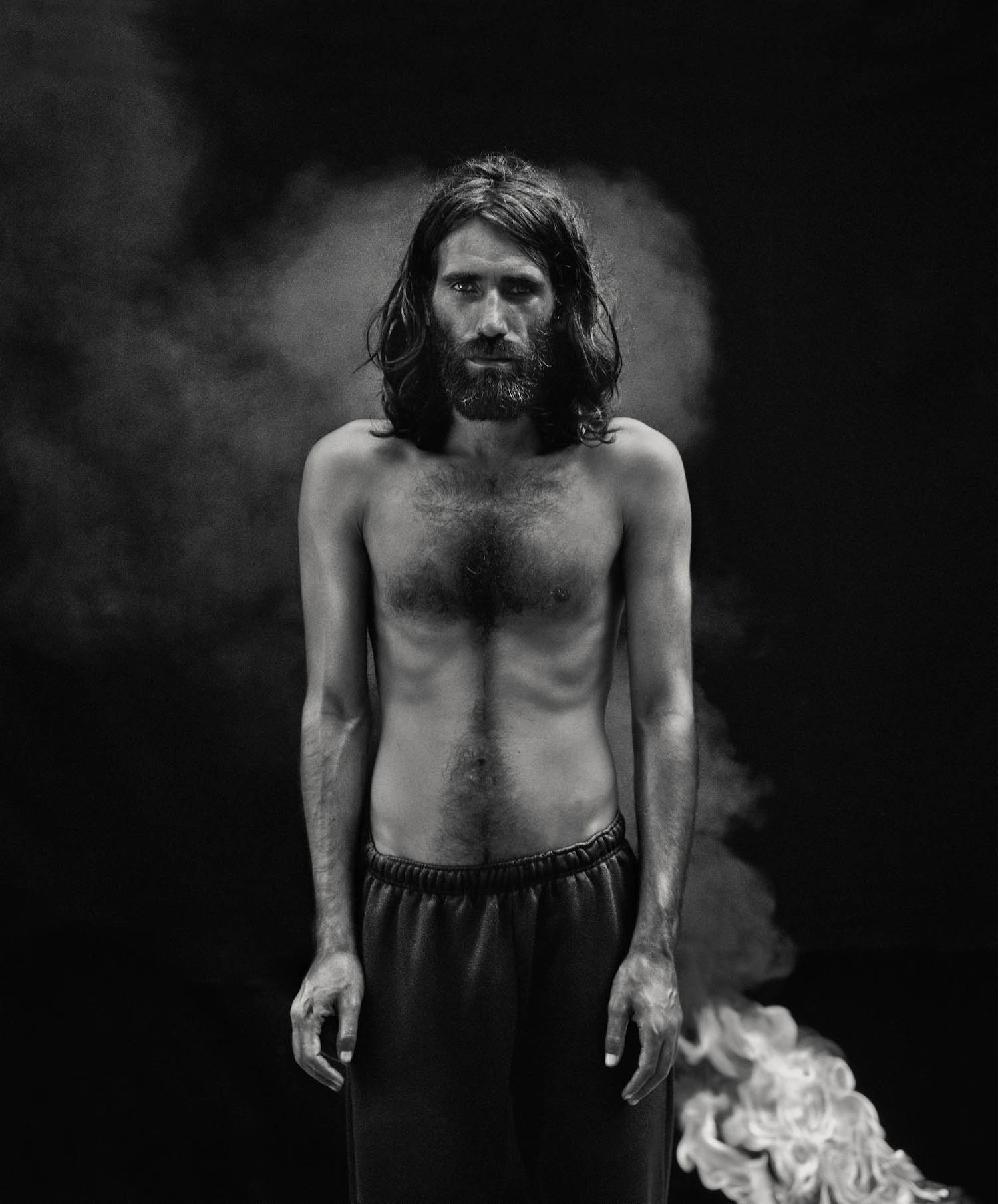
Hoda Afshar (Iran, Australia, b. 1983)
Behrouz Boochani – Manus Island
2018
From the series Remain
Inkjet archival print
130 x 104cm
Art Gallery of New South Wales
Purchased with funds provided by the Contemporary Collection Benefactors 2020
© Hoda Afshar
Behrouz Boochani (Persian, b. 1983)
Behrouz Boochani (Persian: بهروز بوچانی; born 23 July 1983) is a Kurdish-Iranian journalist, human rights defender, writer and film producer living in New Zealand. He was held in the Australian-run Manus Island detention centre in Papua New Guinea from 2013 until its closure in 2017. He remained on the island before being moved to Port Moresby along with the other detainees around September 2019. On 14 November 2019 he arrived in Christchurch on a one-month visa, to speak at a special event organised by WORD Christchurch on 29 November, as well as other speaking events. In December 2019, his one month visa to New Zealand expired and he remained on an expired visa until being granted refugee status in July 2020, at which time he became a Senior Adjunct Research Fellow at the University of Canterbury.
Boochani is the co-director, along with Iranian film maker Arash Kamali Sarvestani, of the documentary Chauka, Please Tell Us the Time, has published numerous articles in leading media internationally about the plight of refugees held by the Australian government on Manus Island, and has won several awards.
His memoir, No Friend But the Mountains: Writing from Manus Prison, won the Victorian Prize for Literature and the Victorian Premier’s Prize for Nonfiction in January 2019. The book was tapped out on a mobile phone in a series of single messages over time and translated from Persian into English by Omid Tofighian.
After the November 2022 publication of his second collection of writings, Freedom, Only Freedom: The Prison Writings of Behrouz Boochani, Boochani visited Australia for the first time to promote the book in December 2022.
Text from the Wikipedia website
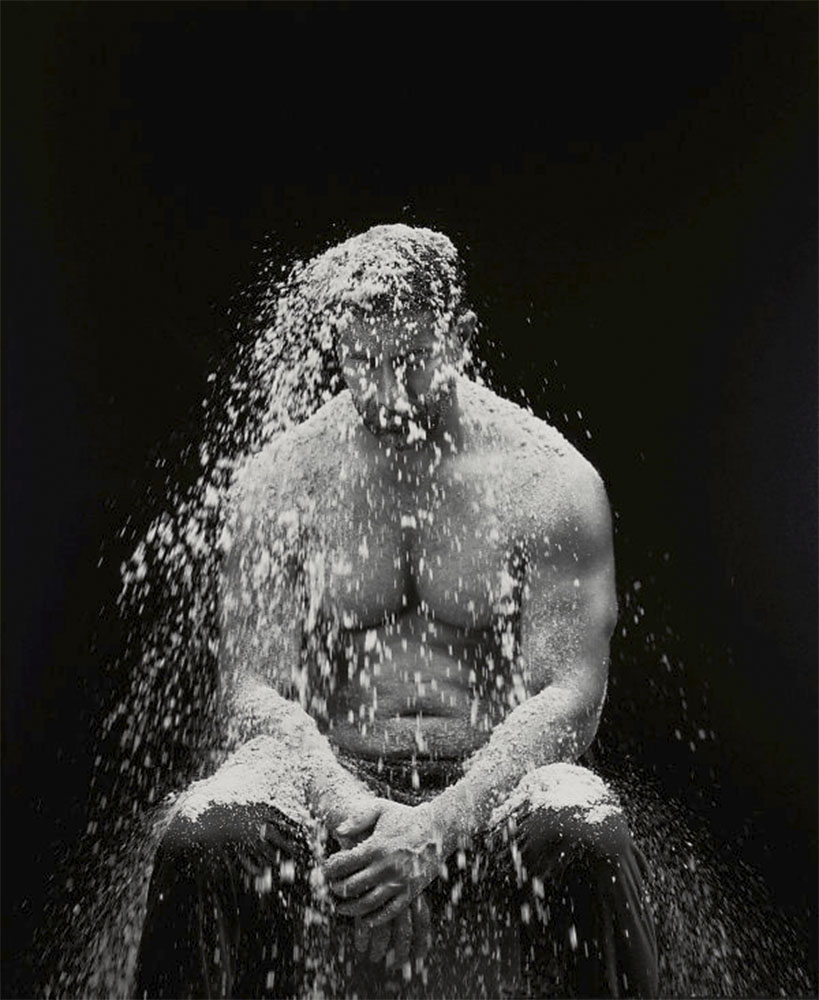
Hoda Afshar (Iran, Australia, b. 1983)
Emad Moradi – Manus Island
2018
From the series Remain
Inkjet archival print
130 x 83cm
Art Gallery of New South Wales
Purchased with funds provided by the Contemporary Collection Benefactors 2020
© Hoda Afshar
Hoda Afshar’s 2018 body of work Remain is an unflinchingly political commentary on Australia’s border protection policy and serves as testimony to its assault of human rights. Encompassing a film and a suite of photographic portraits, Remain speaks the stories of a group of stateless men who remained on Manus Island, Papua New Guinea, after the immigration detention centre closed in October 2017. In the film, their experiences are recounted as episodic fragments shot through with violence in voice overs that are by turns lyrical and brutal. Some recite poetry, some sing, some remember the riots and the suicides. As their stories unfold, the camera pans over a picturesque landscape – lush foliage and crystal-clear water. A ‘green hell’ as one man describes it. It is the abrupt collision of these two registers, the haunting narrative and the idyllic imagery, that carries the emotional force of the work. It is beautiful and horrifying at the same time.
The accompanying photographic portraits of the same protagonists are insistent and powerful. They stand before us, in the foreground of the image, against a dark backdrop. In these photographs, there is nothing to distract us from the figures themselves. Nothing to detract from the simple fact of their presence. They each assert their right to be seen. The bluntness of this gesture is itself a political act. For that is what detention does; it makes individuals invisible. In these portraits, Afshar acknowledges the plight of these men metaphorically. They are beset by the elements, by fire, water and earth. But at no point is their humanity questioned.
Text from the Art Gallery of New South Wales website
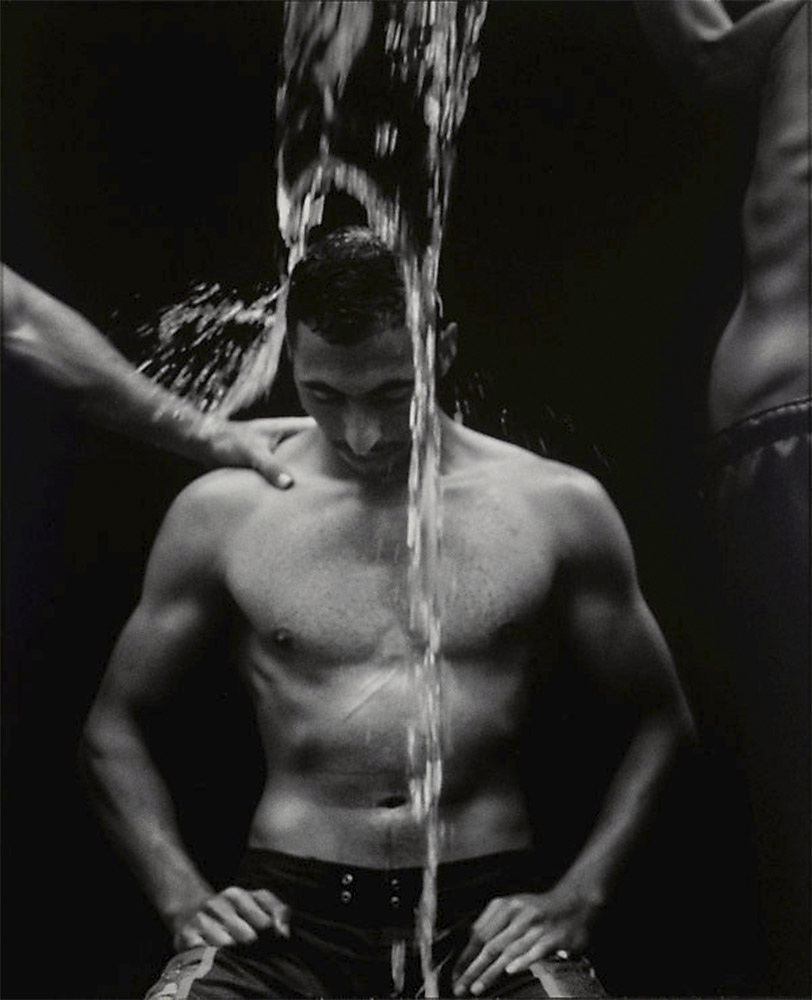
Hoda Afshar (Iran, Australia, b. 1983)
Ari Sirwan – Manus Island
2018
From the series Remain
Inkjet archival print
130 x 83cm
Art Gallery of New South Wales
Purchased with funds provided by the Contemporary Collection Benefactors 2020
© Hoda Afshar
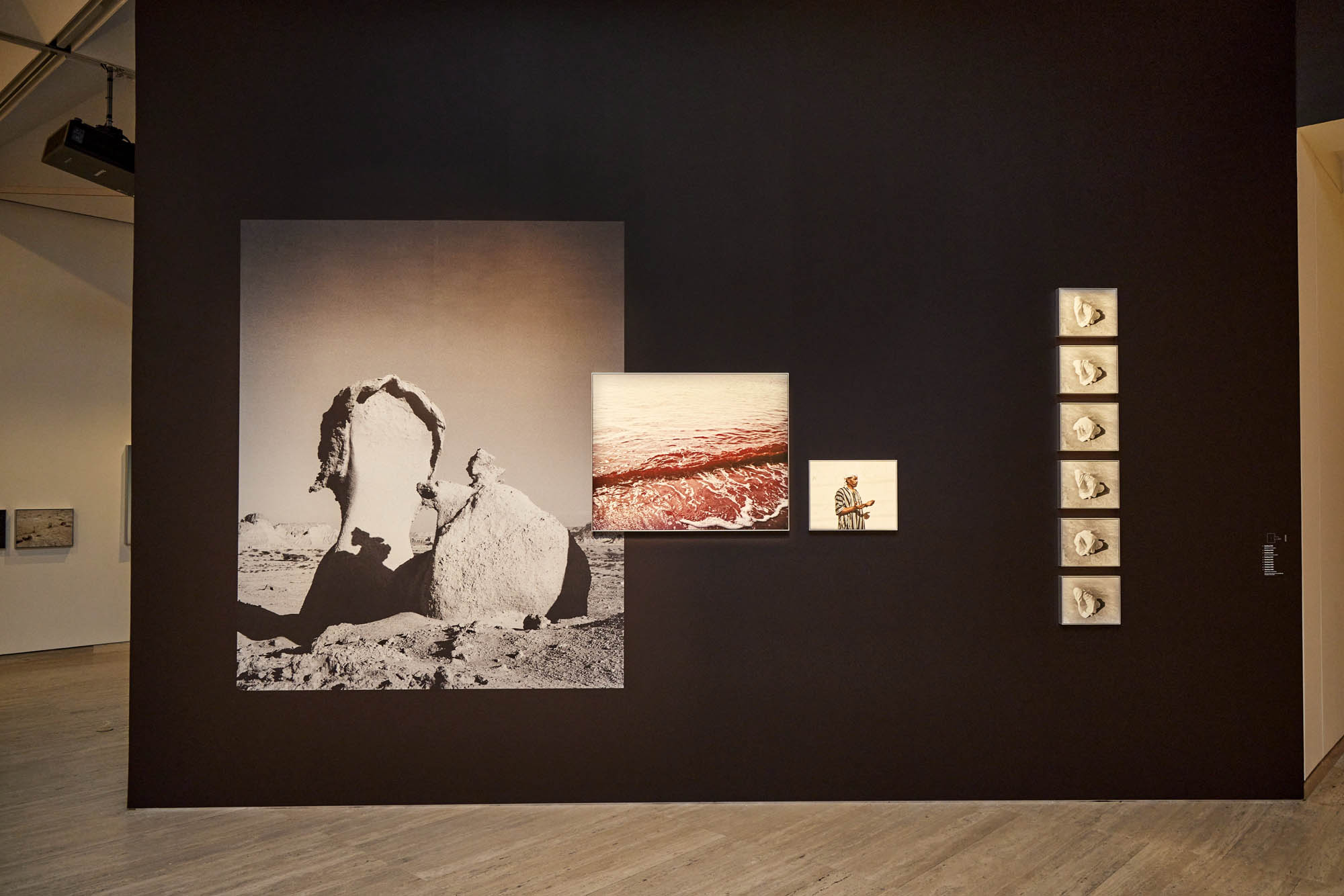
Installation view of the exhibition Hoda Afshar: A Curve is a Broken Line at the Art Gallery of New South Wales, 2023 showing work from the series Speak the wind 2015-2022 (see below)
Photo: © Art Gallery of New South Wales, Christopher Snee
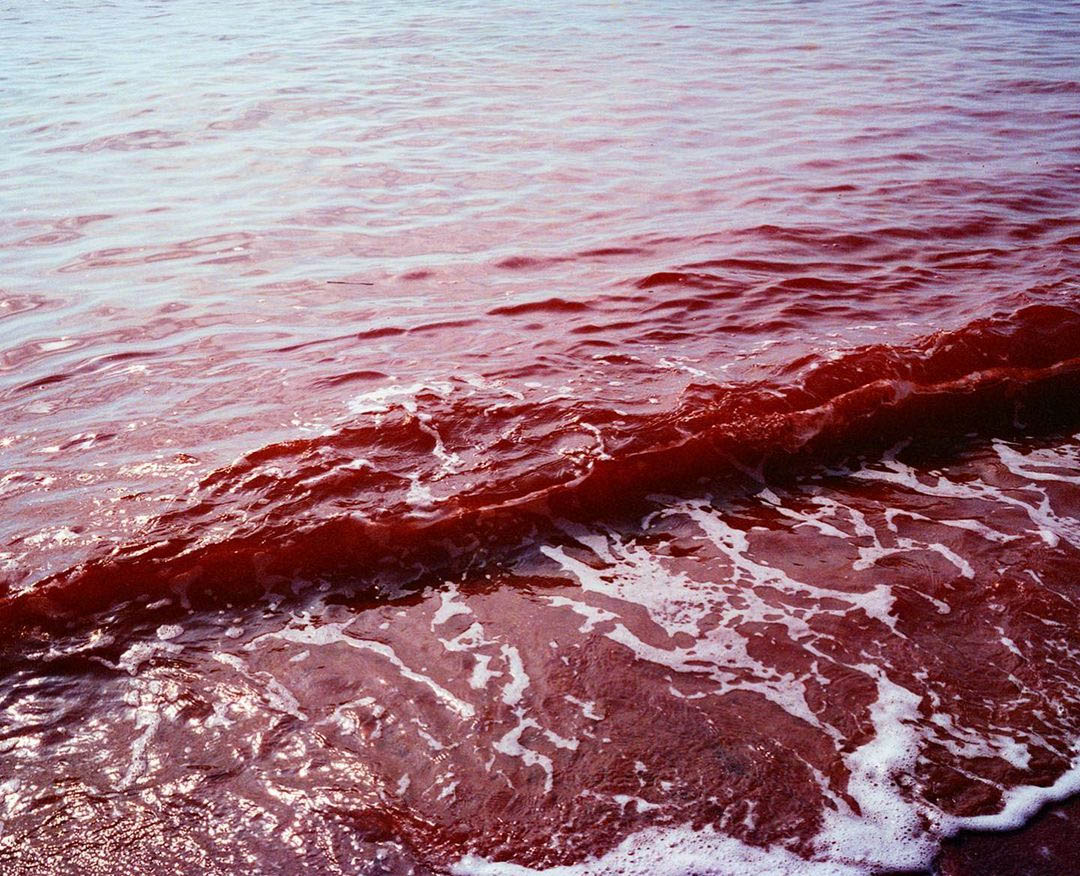
Hoda Afshar (Iran, Australia, b. 1983)
Untitled
From the series Speak the wind 2015-2022
Pigment photographic print
100 x 80cm
© Hoda Afshar, image courtesy the artist
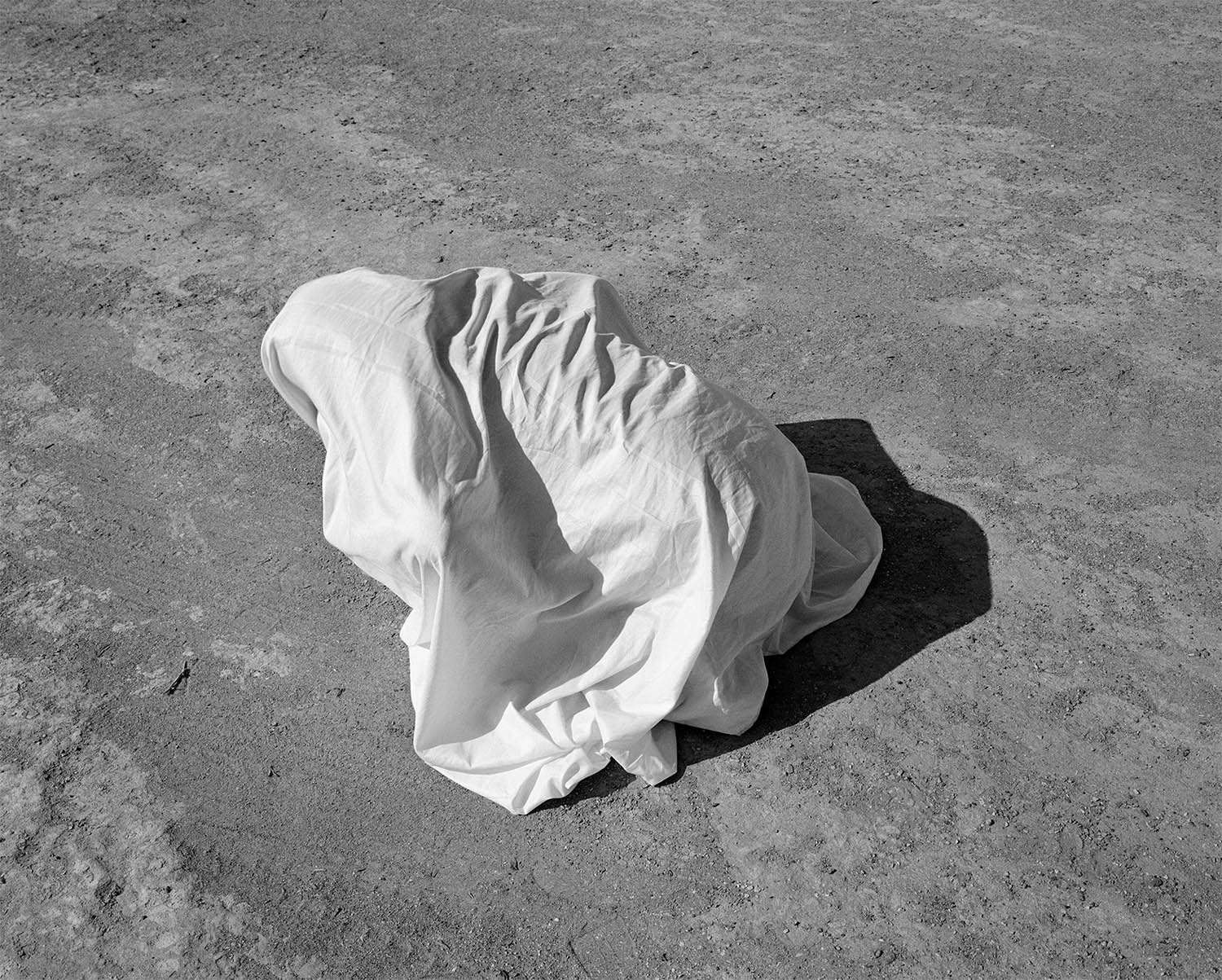
Hoda Afshar (Iran, Australia, b. 1983)
Untitled
From the series Speak the wind 2015-2022
Pigment photographic print
100 x 80cm
© Hoda Afshar, image courtesy the artist
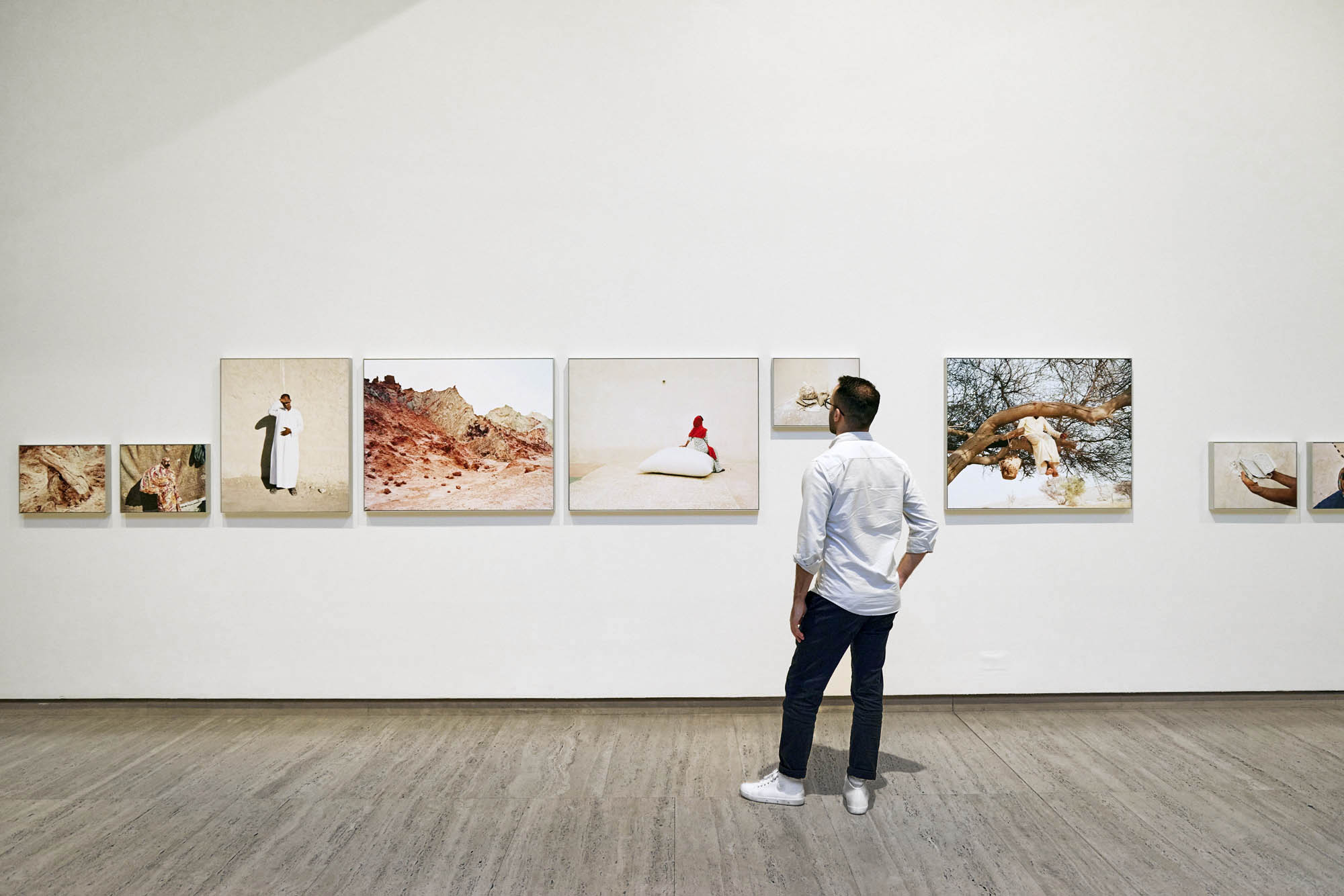
Installation view of the exhibition Hoda Afshar: A Curve is a Broken Line at the Art Gallery of New South Wales, 2023 showing work from the series Speak the wind 2015-2022 (see below)
Photo: © Art Gallery of New South Wales, Christopher Snee
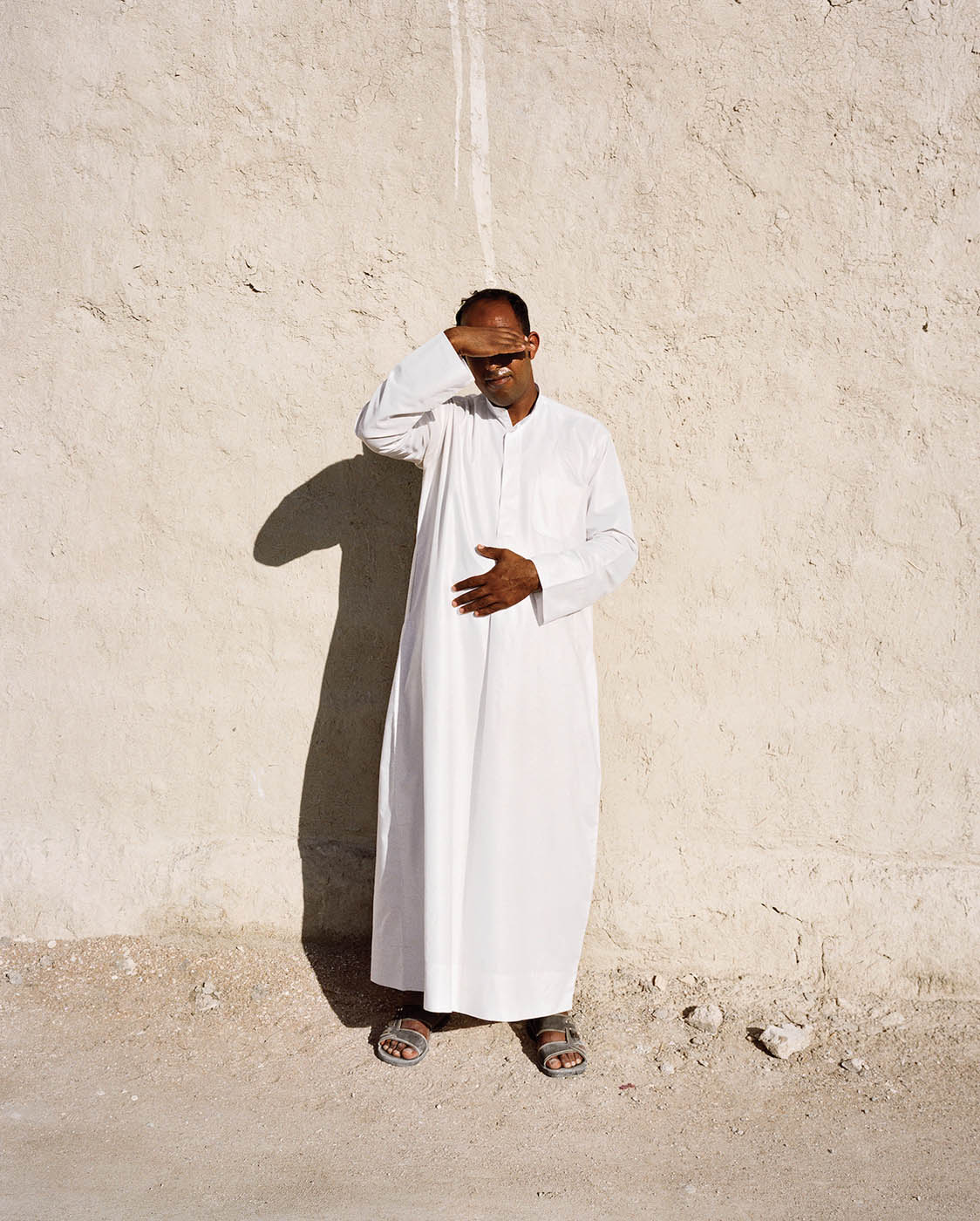
Hoda Afshar (Iran, Australia, b. 1983)
Untitled
From the series Speak the wind 2015-2022
Pigment photographic print
100 x 80cm
© Hoda Afshar, image courtesy the artist
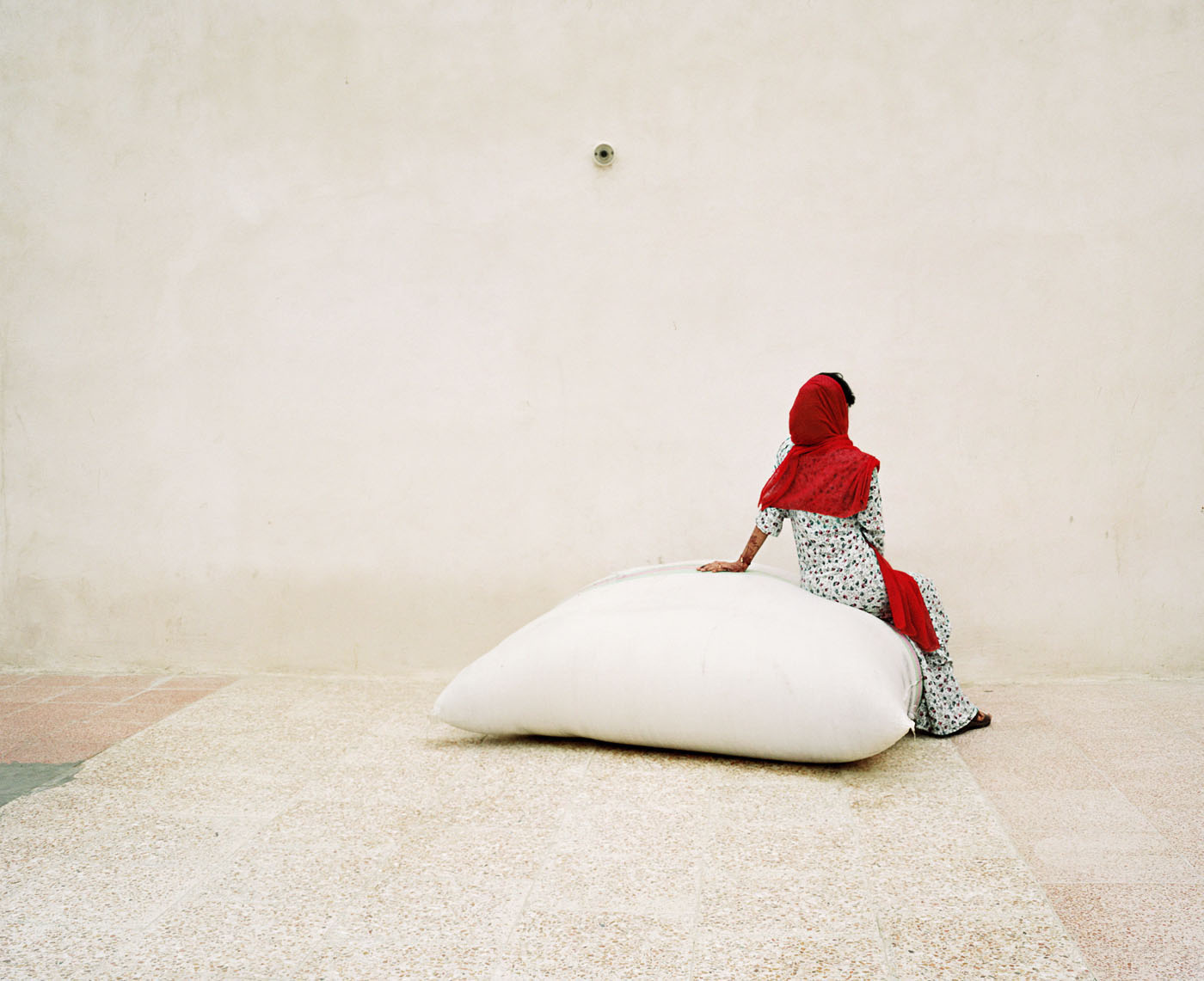
Hoda Afshar (Iran, Australia, b. 1983)
Untitled #88
From the series Speak the wind 2015-2022
Pigment photographic print
80 x 100cm
© Hoda Afshar, image courtesy the artist
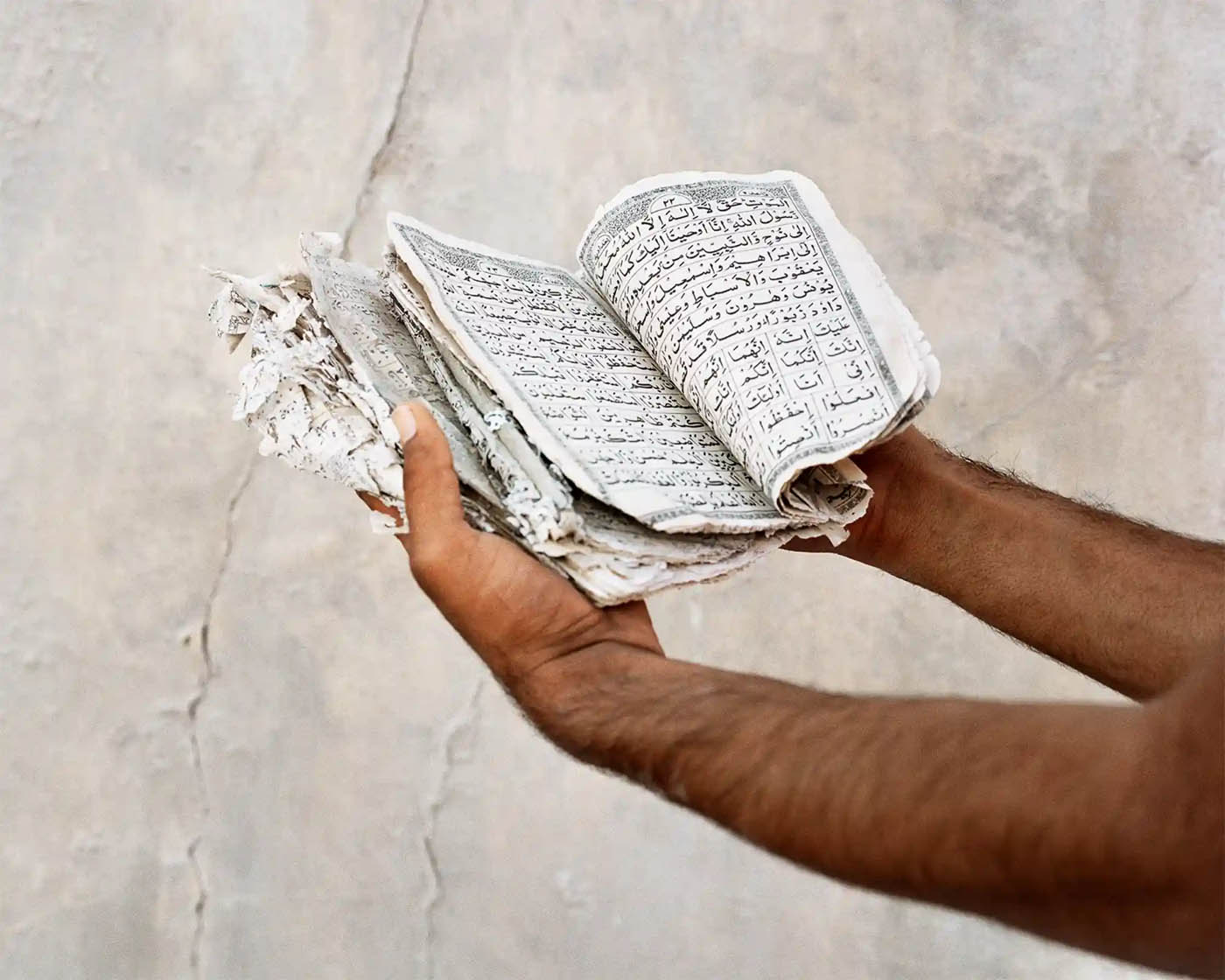
Hoda Afshar (Iran, Australia, b. 1983)
Untitled
From the series Speak the wind 2015-2022
Pigment photographic print
80 x 100cm
© Hoda Afshar, image courtesy the artist
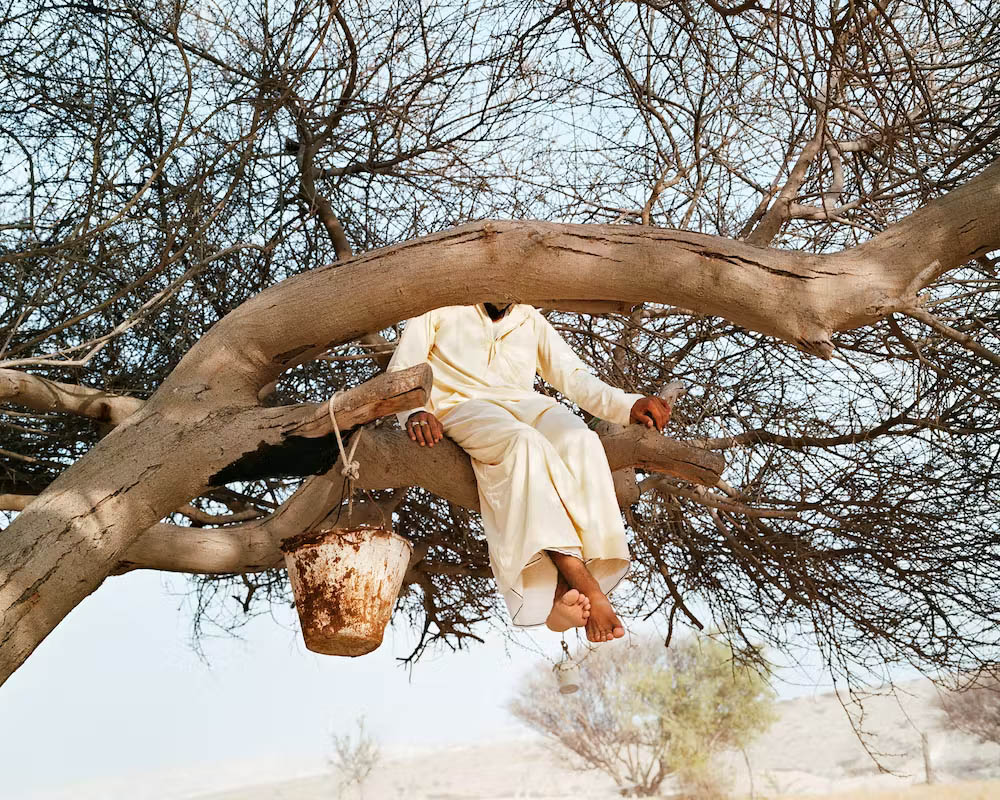
Hoda Afshar (Iran, Australia, b. 1983)
Untitled #18
From the series Speak the wind 2015-2022
Pigment photographic print
80 x 100cm
© Hoda Afshar, image courtesy the artist
Speak the wind 2015-2022
On the islands in the Strait of Hormuz, a belief exists that a wind, known as zār, can possess a person, and can be exorcised from them through an intense ceremony of dance and music.
On the islands of the Strait of Hormuz, near the southern coast of Iran, there is a belief that the winds – generally believed to be harmful – can possess a person, causing them to experience illness or disease. As part of a ritual placating the winds’ harmful effects, the islands’ inhabitants practice a ceremony involving incense, music and movement, in which a hereditary cult leader speaks with the wind through the afflicted patient in order to negotiate its exit.
When artist Hoda Afshar first visited the islands in 2015, she found herself drawn not only to these distinctive customs practiced by its inhabitants but also to its otherworldly landscapes – the strange valleys and statue-like mountains, themselves sculpted by the wind over many millennia. While the exact origins remain unclear, the existence of similar beliefs in many African countries suggests that the cult may have been brought to the south of Iran from southeast Africa through the Arab slave trade. This seldom spoken history became a starting point into an intriguing project for Afshar, who sought to document the story of these winds and the traces they have left on these islands and inhabitants.
Mack Books on Intagram
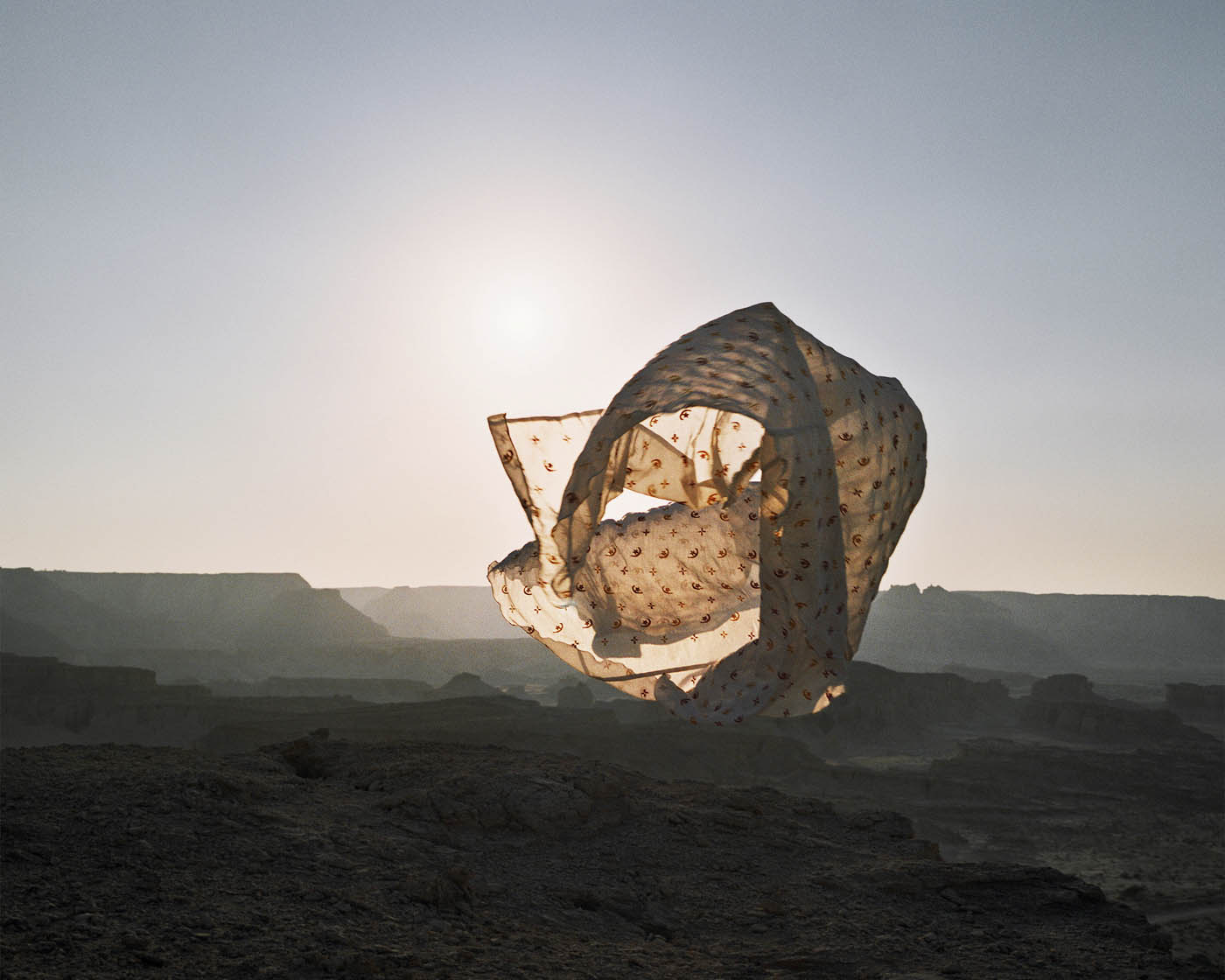
Hoda Afshar (Iran, Australia, b. 1983)
Untitled #11
From the series Speak the wind 2015-2022
Pigment photographic print
80 x 100cm
© Hoda Afshar, image courtesy the artist
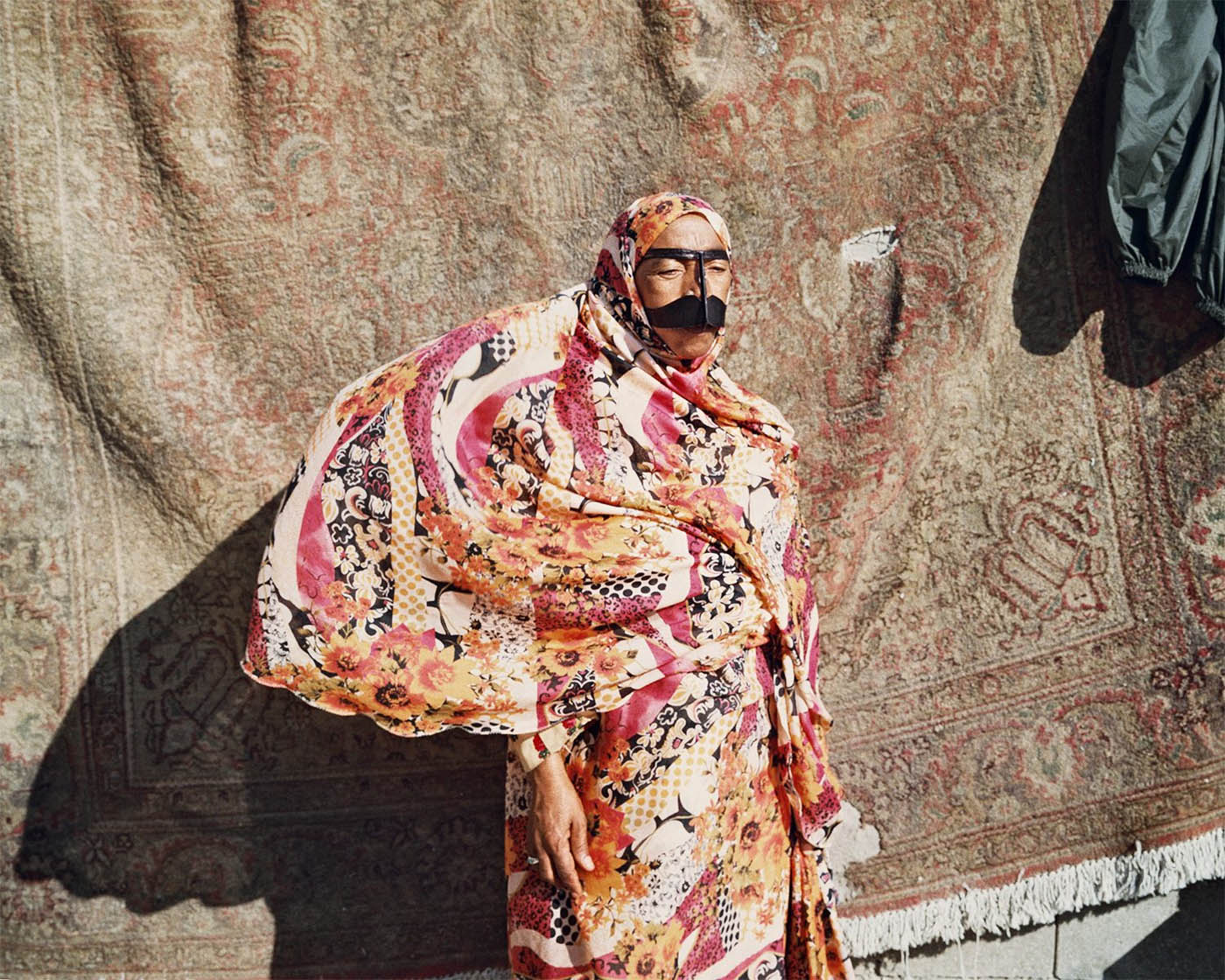
Hoda Afshar (Iran, Australia, b. 1983)
Untitled
From the series Speak the wind 2015-2022
Pigment photographic print
80 x 100cm
© Hoda Afshar, image courtesy the artist
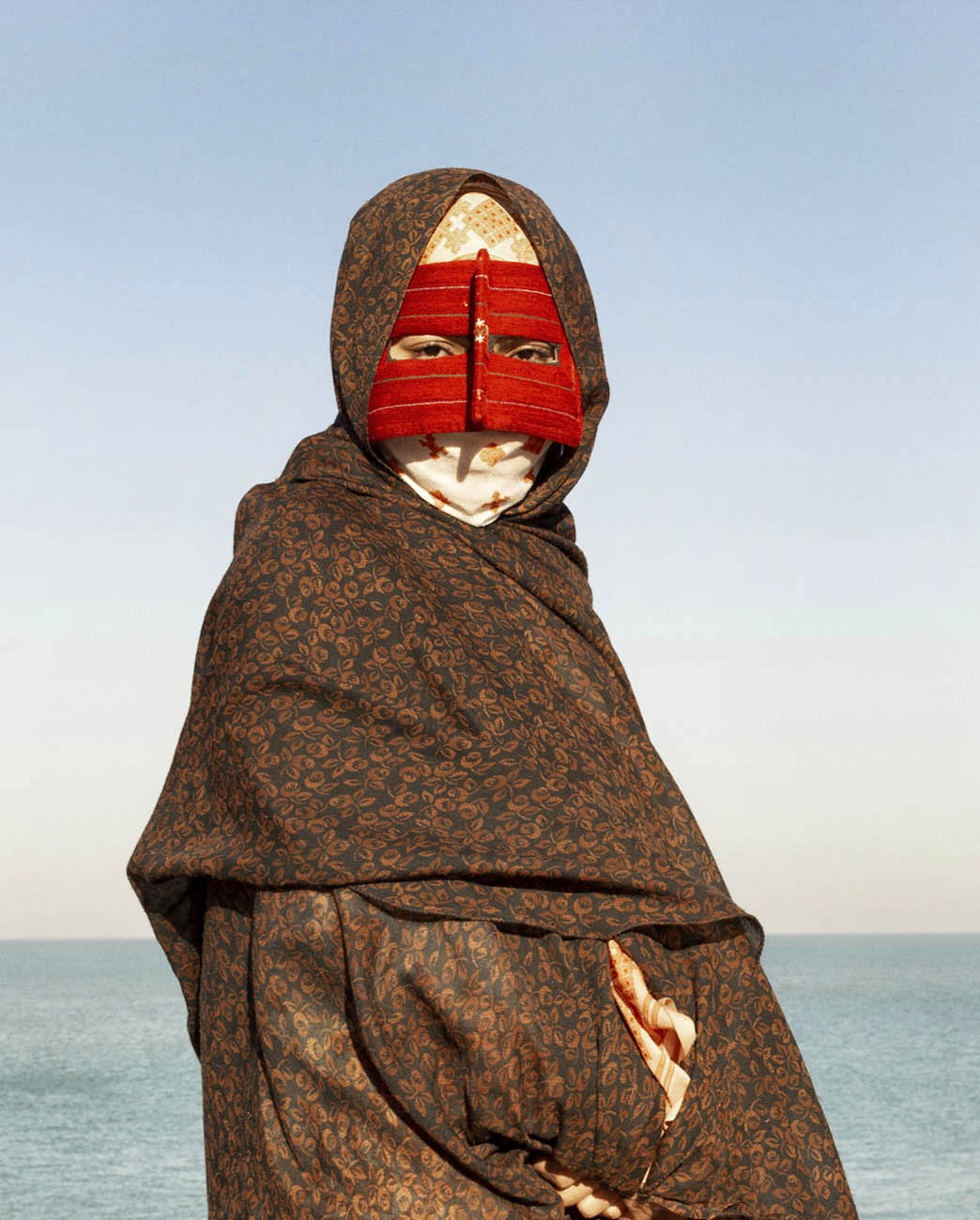
Hoda Afshar (Iran, Australia, b. 1983)
Untitled #2
From the series Speak the wind 2015-2022
Pigment photographic print
100 x 80cm
© Hoda Afshar, image courtesy the artist
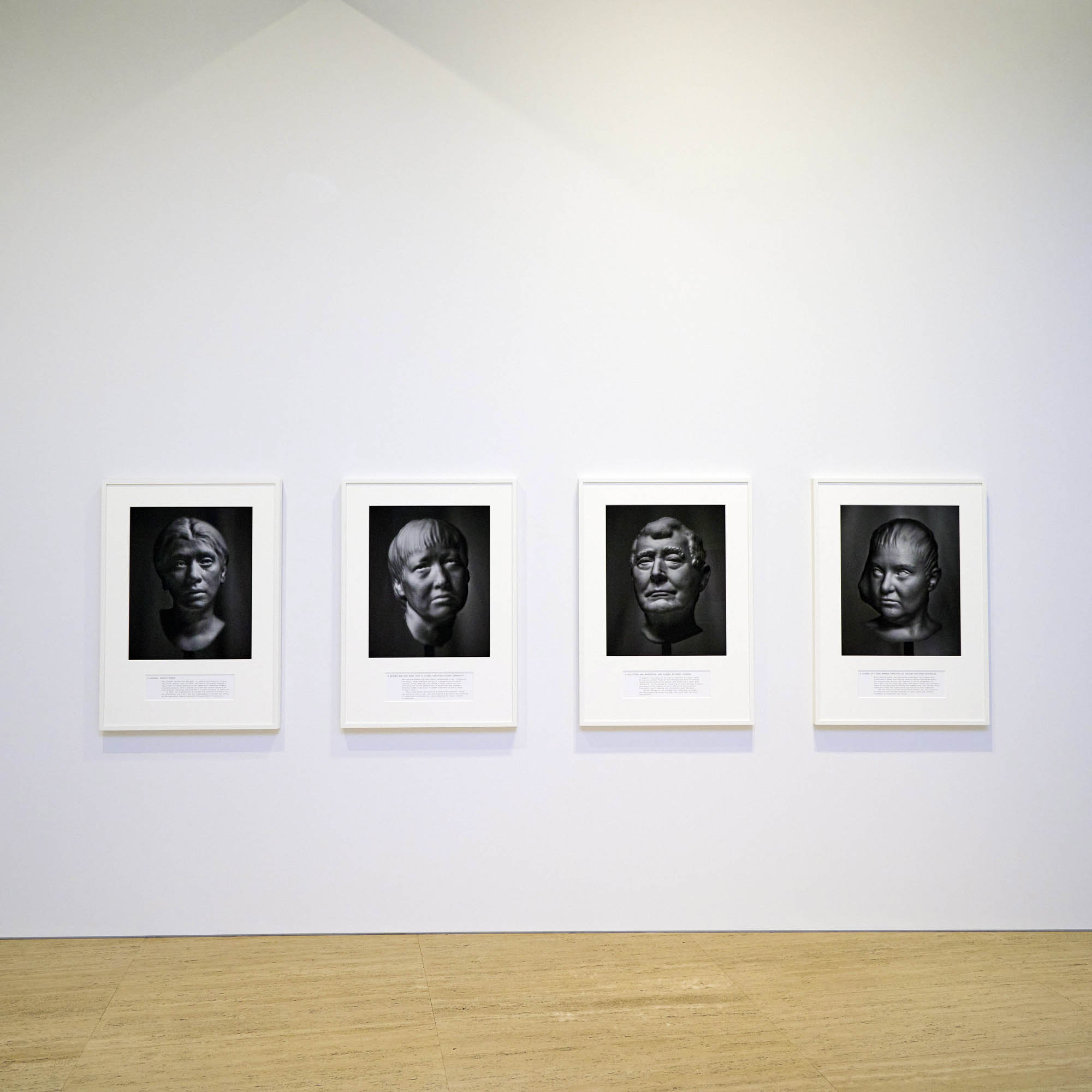
Installation view of the exhibition Hoda Afshar: A Curve is a Broken Line at the Art Gallery of New South Wales, 2023 showing work from the series Agonistes 2020 with, from left to right, A General Practitioner / A Writer Who Was Born Into A Closed Christadelphian Community / A Solicitor and Barrister, and Former Attorney General / A Disability Care Worker Employed at Autism Spectrum Australia
Photo: © Art Gallery of New South Wales, Christopher Snee
With 110 cameras functioning instantaneously in a photo studio, Afshar created 3D images of her subjects and used a 3D printer to convert them into statues.
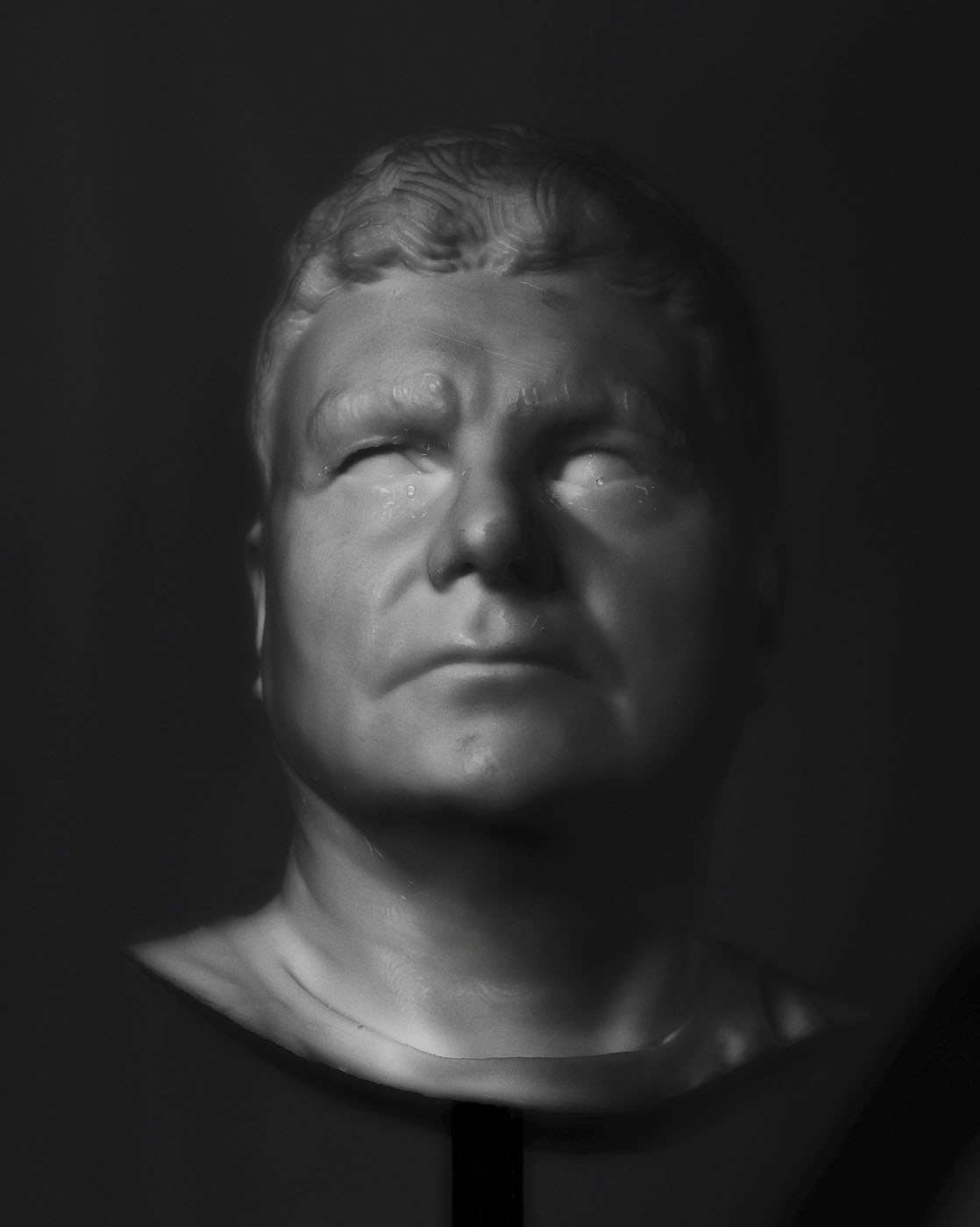
Hoda Afshar (Iran, Australia, b. 1983)
Portrait #3
From the series Agonistes 2020
Pigment photographic print, text
69 x 55cm
© Hoda Afshar, image courtesy the artist
An officer and lawyer in the Australian Special Forces
While serving in Afghanistan, he raised concerns that the Australian government were covering up the corruption of Australia’s defence force for political gain, and sacrificing the lives of Australian soldiers. After his concerns were consistently ignored, he copied over a hundred secret documents and distributed them to several journalists and to the ABC. He faces trial on five charges relating to National Security. If found guilty, he will face lifetime imprisonment.
Hoda Afshar Instagram page
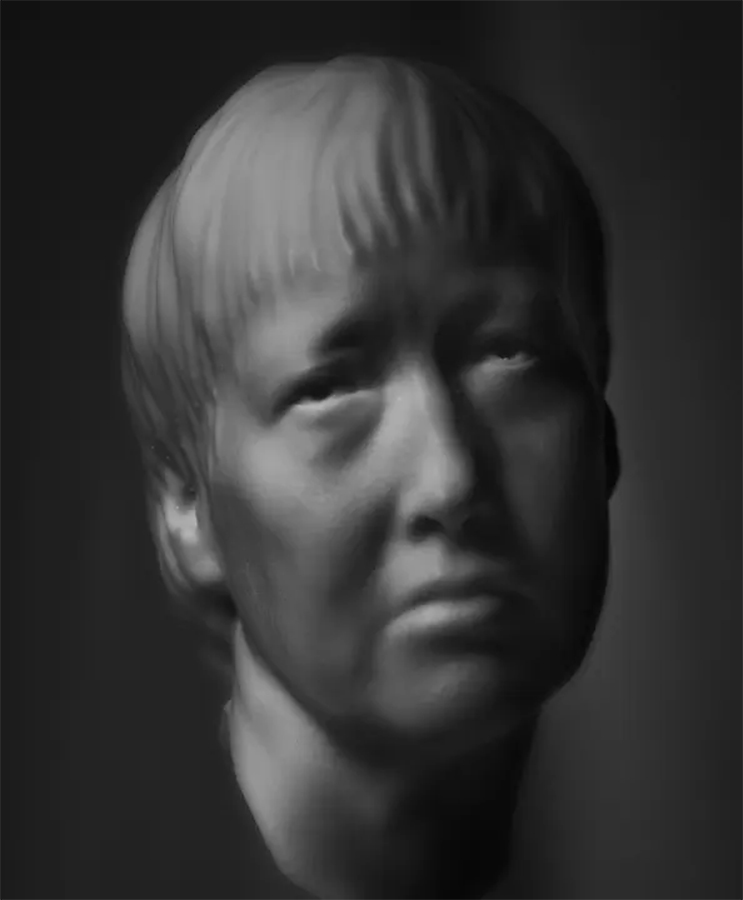
Hoda Afshar (Iran, Australia, b. 1983)
A writer who was born into a closed Christadelphian community
From the series Agonistes 2020
Pigment photographic print, text
69 x 55cm
© Hoda Afshar, image courtesy the artist
Portrait of Janet Galbraith, a survivor of family sexual abuse
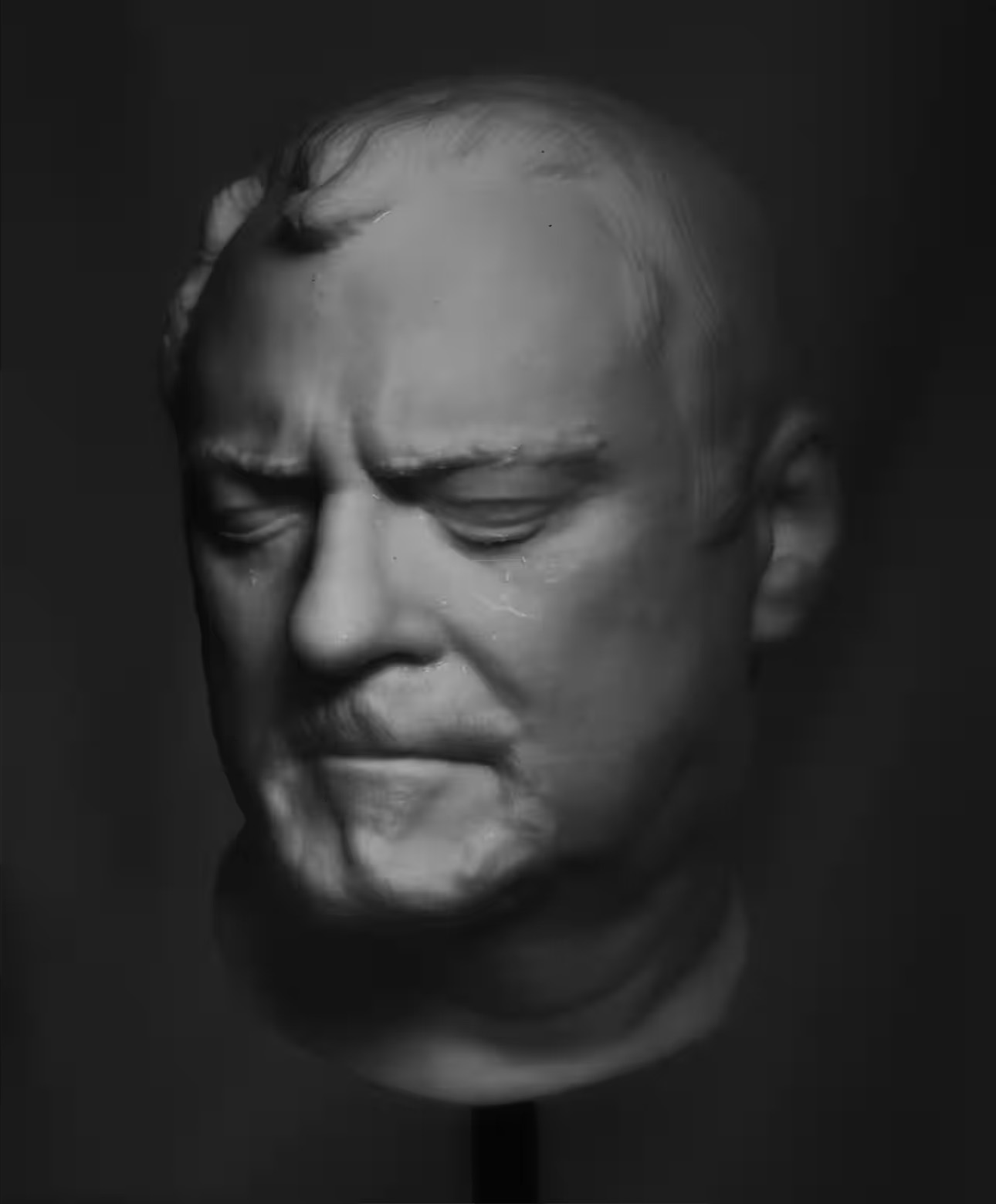
Hoda Afshar (Iran, Australia, b. 1983)
An occupational health and safety manager working for security firm G4S at Manus Island Immigration Detention Centre
From the series Agonistes 2020
Pigment photographic print, text
69 x 55cm
© Hoda Afshar, image courtesy the artist
Portrait of Rod St George, who exposed atrocious conditions at the Manus Island detention centre
Agonistes (2020)
Hoda Afshar explores the experiences of people who have spoken out. The artist worked with people known as whistle-blowers, who have brought to light various transgressions perpetrated in Australian institutions today. Although whistleblowing in Australia is considered a hallmark of our democracy, whistle blowers take great personal risks when drawing attention to institutional wrongdoing.
Agonistes is based on the experiences of several men and women – former employees in the areas of immigration, youth detention, disability care, and other government agencies – who chose to speak out, and who now live with the consequences. They describe the personal and professional ruin, the breakdown of friendships and family relationships, and the physical and mental anguish that followed their decision to call out alleged abuses, and the reasons that led them to do so, despite knowing their possible fate. They explain that if they could go back, they would do it all again.
While their individual stories differ, the shared struggle of these men and women and their portraits expose the same agonizing truth: that the choice between responsibility and obligation – between morality and the law – is, in a very real sense, the essence of tragedy. Afshar produced a 3D scan of each of the whistle blowers. This was then 3D printed to create a bust. Afshar created studio photographs of the busts, which resulted in a suite of images that abstracts the identity of each subject. The eyes – a feature we usually use to identify people in photographs – become curiously blank.
Anonymous. “Counihan Gallery learning resource – Means Without End Hoda Afshar,” on the Merri-bek City Council website [Online] Cited 08/11/2023
“It took me 14 years to find that level of courage, or knowledge or connection to the place [Australia] to make a work like the Agonistes, to turn the lens inward, to feel like I’m authorised to talk about it as a citizen,” says Afshar.
To identify the whistleblowers to approach for the project, Afshar worked with Claire Loughnan, a lecturer in criminology at the University of Melbourne.
She flew each person to Melbourne and photographed them using a system of 110 cameras – which allowed her to essentially create a 360-degree portrait. She used this composite image to generate a 3D-printed sculpture of each whistleblower. …
Afshar was fascinated to discover that the one thing that the 110 cameras could not capture was the details of her subjects’ eyes – resulting in a glazed-over effect.
This accidental byproduct of the process had a certain poetic resonance for the photographer: it reminded her of the eyes on ancient Greek busts.
She points out that democracy and tragedy emerged in ancient Greece at the same time.
“Often in the tragic narratives, the main character is the one that is caught between two conflicting choices: responsibility and obligation, or morality and the law … [or] the public and the state.”
“The reality of Athens at the time was a system that was rooted in patriarchy, slavery, xenophobia, refugee crisis – which are still the struggles of our time. And the function of tragedy then was to give voice to the excluded voices.”
In the Agonistes video work, we hear the excluded voices of the whistleblowers while Afshar zooms in on her subjects’ eyes, mouths, hands.
Hannah Reich. “Hoda Afshar documents Australian government whistleblowers in new photography and film project,” on the ABC News website Sat 6 Mar 2021 [Online] Cited 08/11/2023
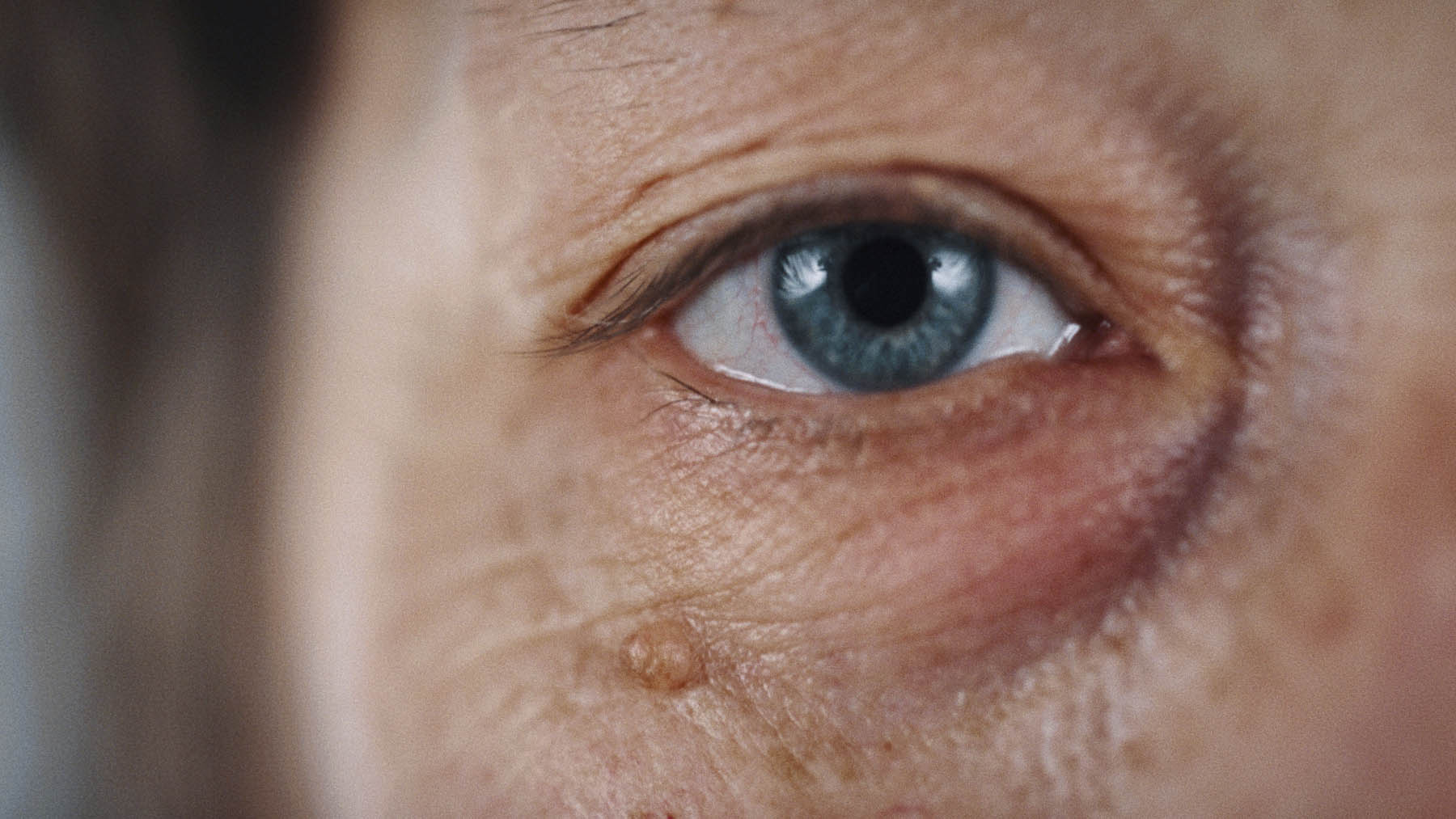
Hoda Afshar (Iran, Australia, b. 1983)
Agonistes (video still)
From the series Agonistes 2020
Single-channel digital video, colour, sound, duration 20 min, aspect ratio 16:9, installation dimensions variable
© Hoda Afshar, image courtesy the artist
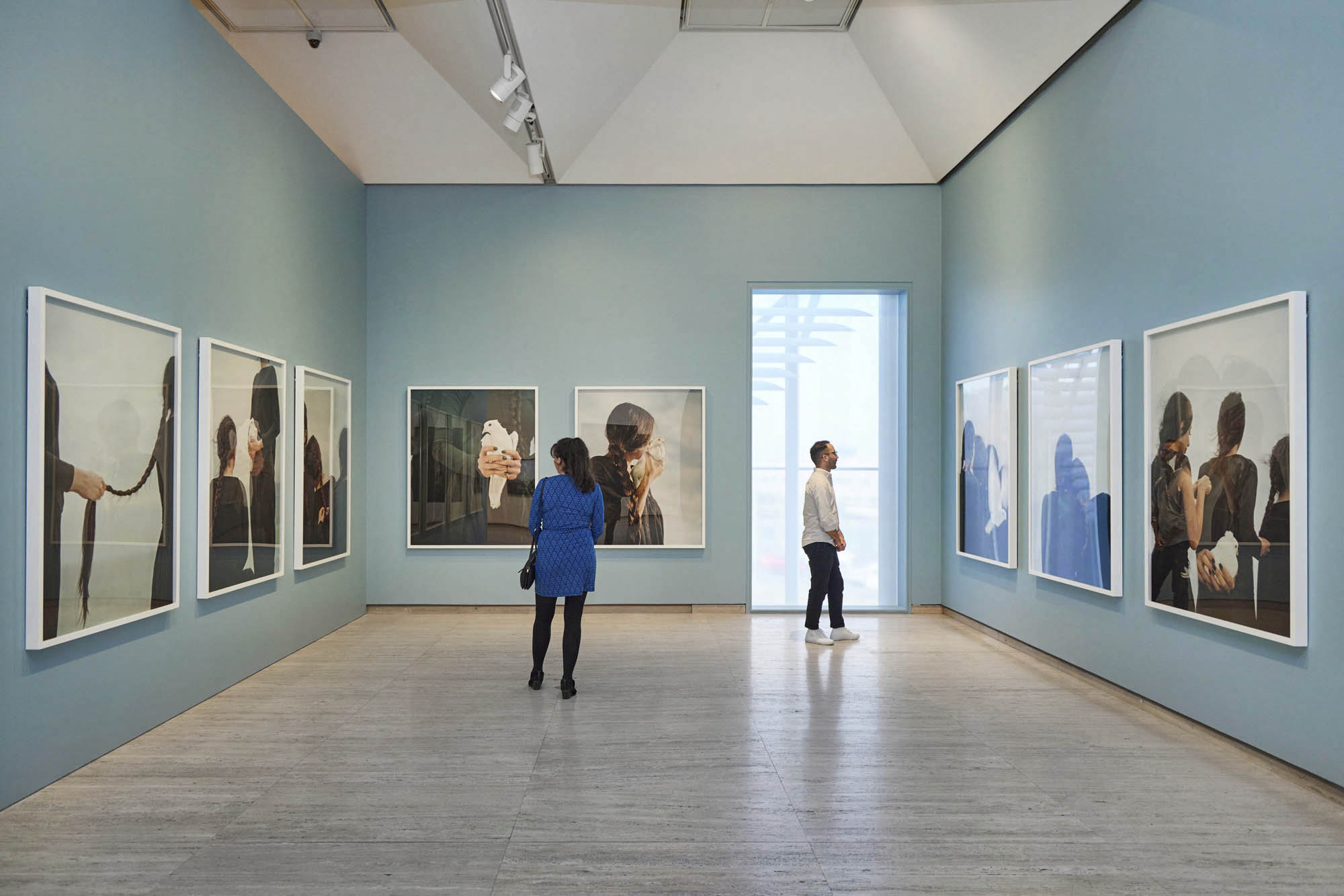
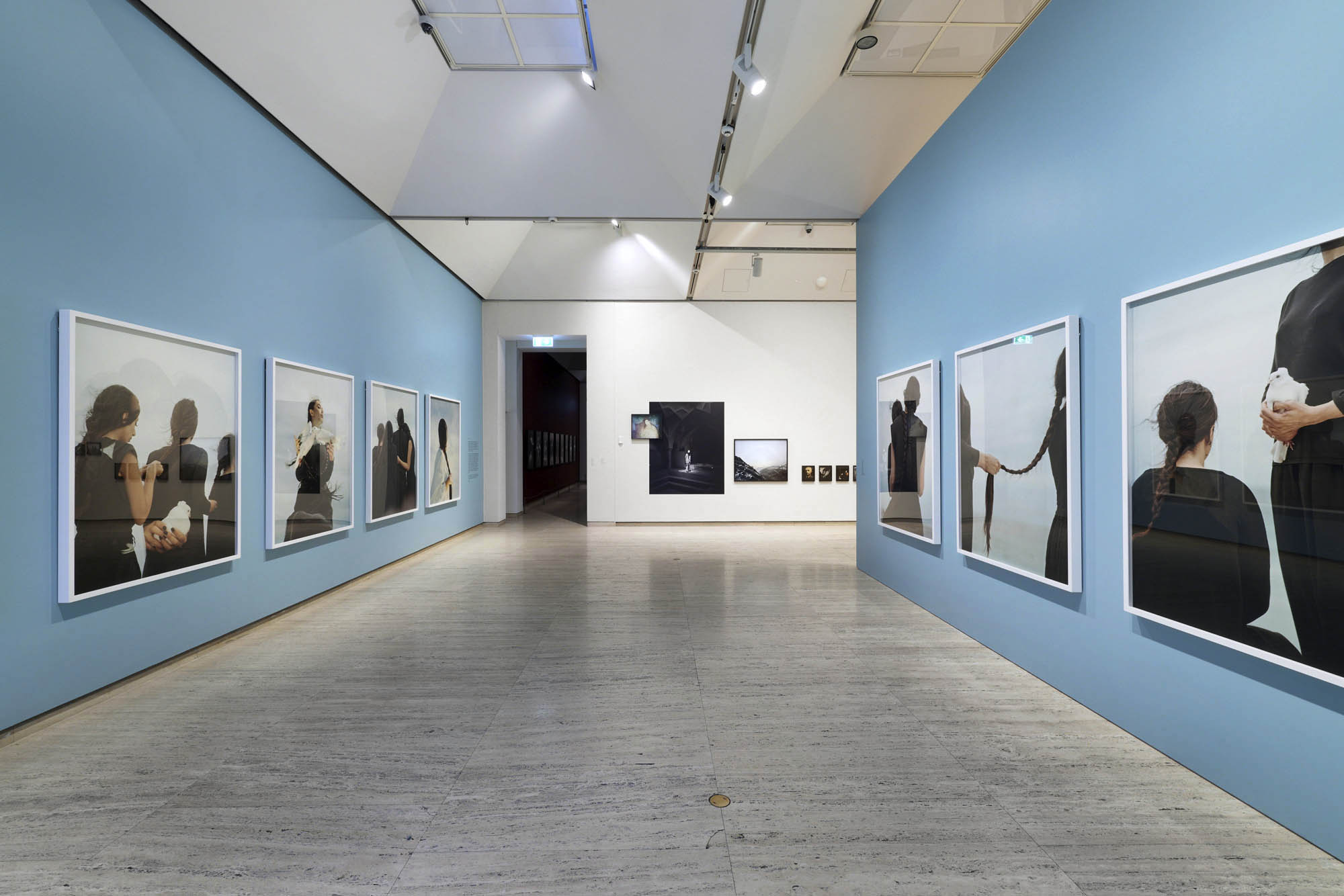
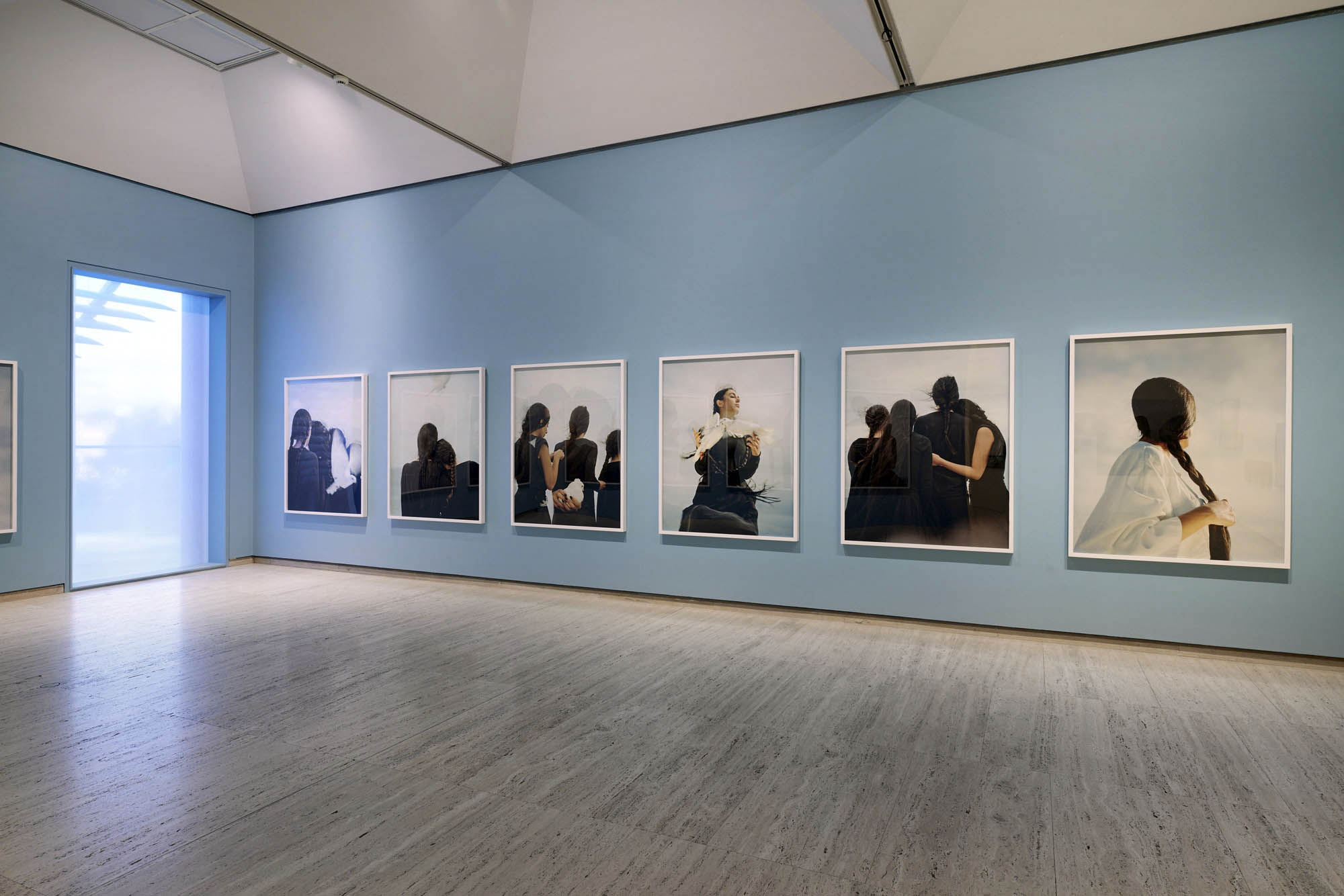
Installation views of the exhibition Hoda Afshar: A Curve is a Broken Line at the Art Gallery of New South Wales, 2023 showing work from the series In turn 2023
Photo: © Art Gallery of New South Wales, Christopher Snee
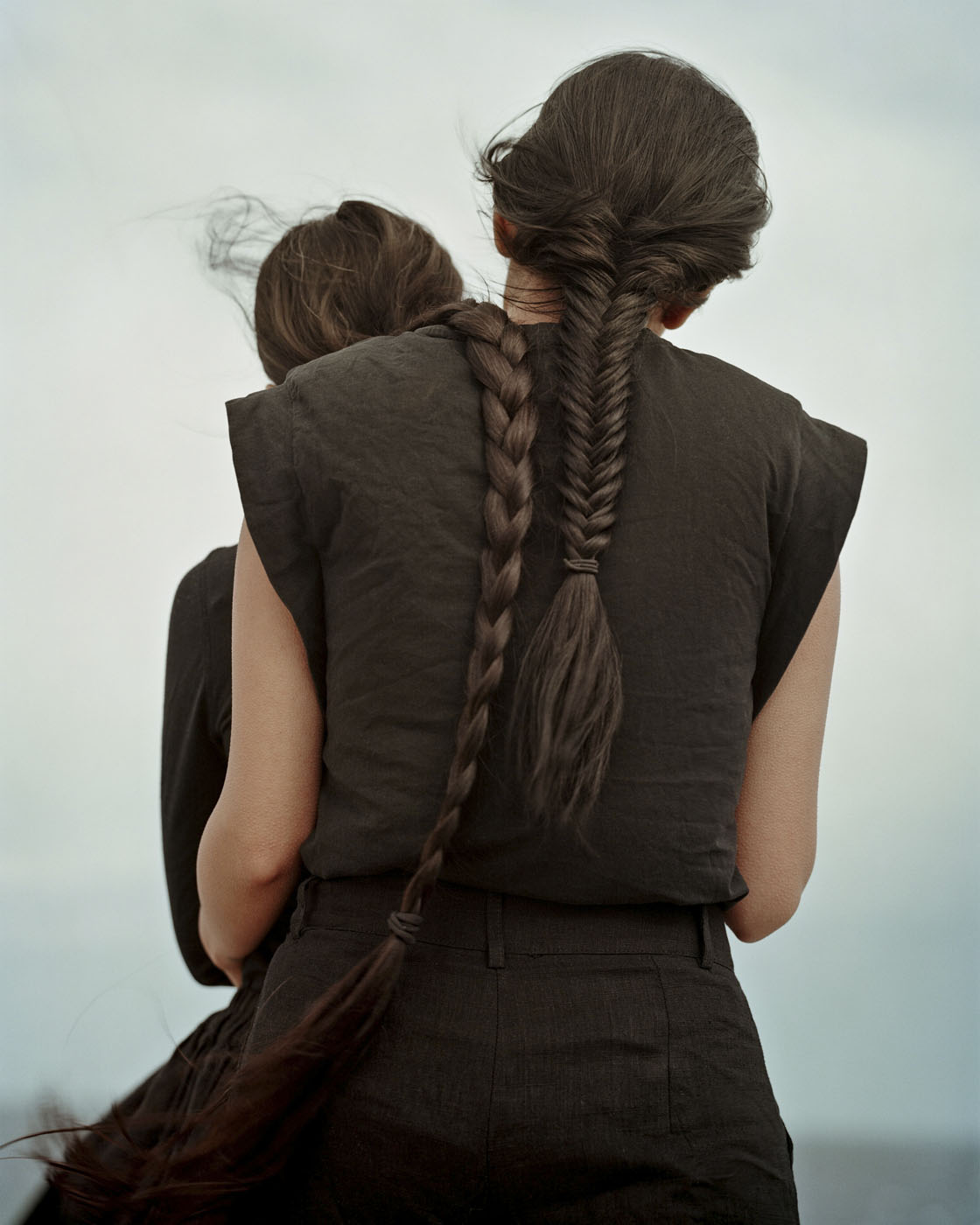
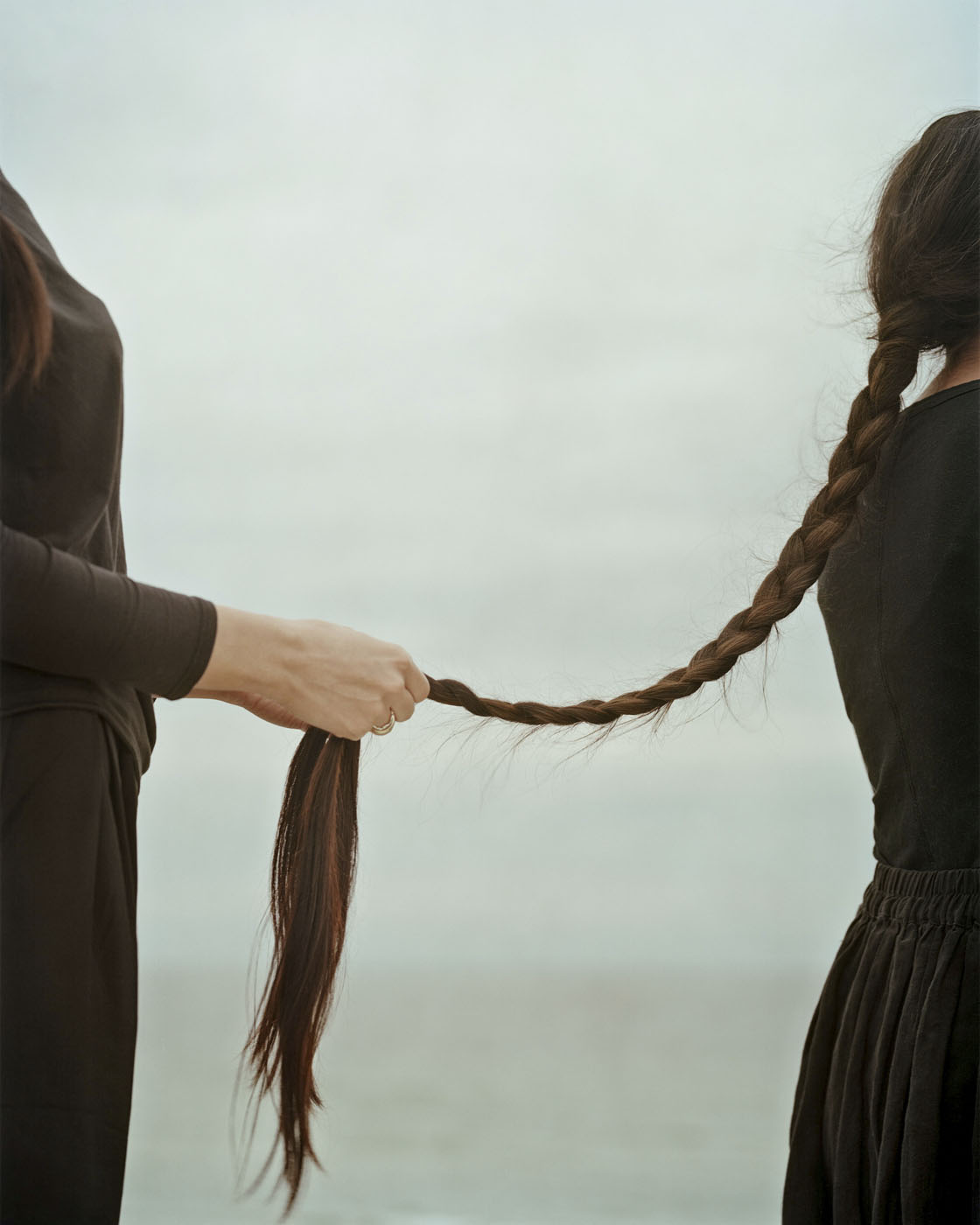
Hoda Afshar (Iran, Australia, b. 1983)
Untitled #2
From the series In turn 2023
Pigment photographic print
169 x 128cm
© Hoda Afshar, image courtesy the artist
Hoda Afshar (Iran, Australia, b. 1983)
Untitled #4
From the series In turn 2023
Pigment photographic print
169 x 128cm
© Hoda Afshar, image courtesy the artist
In the adjoining room, the new series In turn (2023) is a suite of large, framed photographs of Iranian women based in Australia. Many images show them as they tenderly braid one another’s hair. These women are unidentifiable, apart from artist and activist Mahla Karimian, who appears airborne with a pair of flying doves.
This work was catalysed by the women-led protest movement sparked by the death of Mahsa Jina Amini, an Iranian Kurdish woman arrested in September 2022 for not following Iran’s strict female dress codes. The uprising filled the streets with women chanting “Women, Life, Freedom!” and “Say her name!” in fearless defiance of authorities, who responded with murderous retaliation.
Afshar was observing her homeland from afar. She says she wanted to “share voices the media was ignoring”. She was inspired by social media images of women plaiting each other’s hair in public: a rebellious act that echoes a practice of female Kurdish fighters preparing for battle.
But the images aren’t violent. They’re quietly peaceful, showing solidarity in grief, hope and determination. In making this “visual letter” to her Iranian sisters, Afshar has risked long-term exile from her country of birth.
Tom Williams. “How photography can reveal, overlook and manipulate truth: the fearless work of Australian Iranian artist Hoda Afshar,” on The Conversation website September 8, 2023 [Online] Cited 08/11/2023
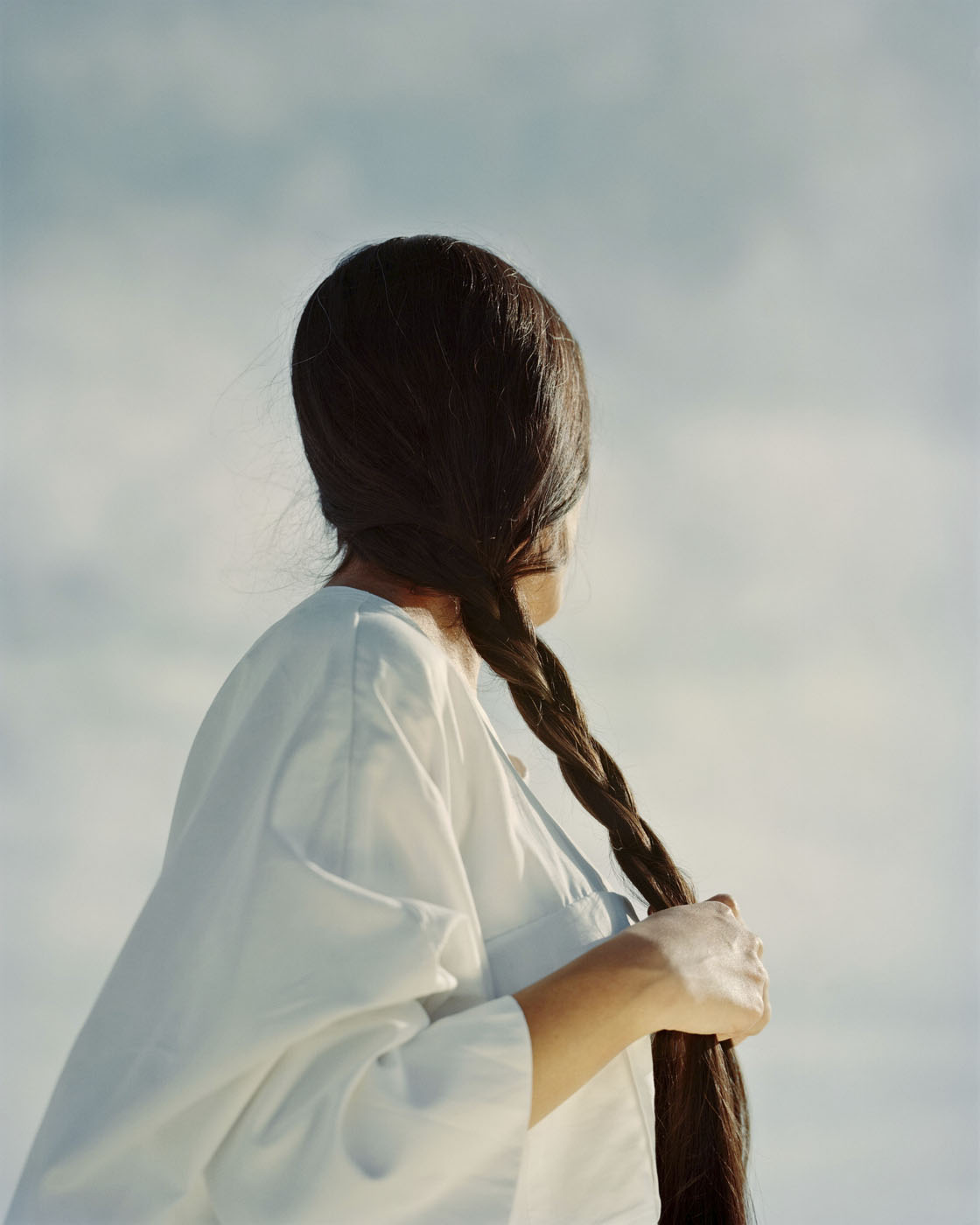
Hoda Afshar (Iran, Australia, b. 1983)
Untitled #10
From the series In turn 2023
Pigment photographic print
169 x 128cm
© Hoda Afshar, image courtesy the artist
Art Gallery of New South Wales
Art Gallery Road, The Domain
Sydney NSW 2000, Australia
Opening hours:
Open every day 10am – 5pm
except Christmas Day and Good Friday



 Art Blart _ art and cultural memory archive
You must be logged in to post a comment.