Curators: Simon Baker & Laurie Hurwitz, MEP and Polly Fleury & Hope Kingsley, Wilson Centre for Photography
Installation view of the exhibition Edward Weston: Becoming Modern at Maison Européenne de la Photographie (MEP), Paris, 15th October, 2015 – 25th January, 2026 showing at left, Edward Weston’s ‘M’ on the Black Horsehair Sofa, 1921 (below); and at right, Tina Modotti (Nude in Studio), 1922 (below)
Shadow man
You can always learn from the great artists now matter how many times you have seen their work, especially when the photographs are simply, effectively hung ‘on the line’ in a beautiful space.
Here are photographs by Edward Weston I have never seen before: Pictorialist photographs of suffused and intimate beauty. An exhibition of Weston’s Pictorialist work would be magnificent to behold.
And then Weston’s Peppers (1929, below).
I don’t know why I have never seen this photograph before, why his Pepper (1930, below) is more famous, for this is a monstrous image of dark, writhing, semi-abstract figurative forms, just as valid an artistic statement (in a completely different way) than the more famous image.
Can you imagine holding a vintage print of this photograph in your hands!
Gloria virtutem tanquam umbra sequitur
Dr Marcus Bunyan
Many thankx to Maison Européenne de la Photographie (MEP) for allowing me to publish the photographs in the posting. Please click on the photographs for a larger version of the image.
“Only rhythm, form and perfect detail to consider – first conceptions coming straight through unadulterated.”
“What I seek now is simplicity – the form reduced to its essence.”
Edward Weston. Daybooks II: California (1930-1945). Aperture, 1961
“The camera should be used for a recording of life, for rendering the very substance and quintessence of the thing itself.”
“To see the Thing Itself is essential: the Quintessence revealed direct without the fog of impressionism.”
Edward Weston. The Daybooks of Edward Weston, from Edward Weston: The Flame of Recognition. Aperture, 1965
Installation view of the exhibition Edward Weston: Becoming Modern at Maison Européenne de la Photographie (MEP), Paris, 15th October, 2015 – 25th January, 2026 showing at left, Edward Weston’s Shell 1927 (below); and right, Santa Monica (Nude in Doorway) 1936 (below)
Installation views of the exhibition Edward Weston: Becoming Modern at Maison Européenne de la Photographie (MEP), Paris, 15th October, 2015 – 25th January, 2026
The exhibition
The MEP presents Edward Weston: Becoming Modern, the most significant exhibition dedicated to Edward Weston in Paris in nearly thirty years. A pioneering figure of photographic modernism, Weston helped forge a new visual language – marked by clarity, formal rigour, and a profound engagement with the essential qualities of the photographic medium.
Originating from an idea by Michael Wilson – founder of the Wilson Centre for Photography in London and one of the world’s foremost collectors – Becoming Modern brings together a rare selection of vintage prints from his collection, many of which have never been exhibited in France. These works offer an exceptional insight into Weston’s evolving practice and the emergence of a distinctly photographic modernism.
Spanning more than three decades, from 1908 to 1945, the exhibition traces Weston’s artistic trajectory. His early pictorialist photographs, created in California during the 1910s and early 1920s, draw upon 19th-century artistic traditions, employing soft focus, carefully staged settings, and symbolic imagery. Over time, his vision transformed: his images became sharper, compositions more austere, with an increasing emphasis on form, surface, and structure. By the 1920s, many of his photographs approached geometric abstraction – though Weston was never confined to a single style. This transformation unfolded gradually, as motifs intertwined and techniques evolved in a subtle, ongoing dialogue, revealing an artist continuously refining and deepening his vision.
Highlights include works from Weston’s time in Mexico, where, in close collaboration with Tina Modotti – an artist, political activist, and his lover – he created portraits and nudes imbued with a newfound freedom and radicalism These are complemented by evocative landscapes of the dramatic California coastline near Point Lobos and Carmel. At the heart of the exhibition are his most iconic series: sensuous close-up studies of natural forms – peppers, shells, fruits, and vegetables – captured with an almost obsessive intensity; dune and rock landscapes from Point Lobos and Death Valley; and luminous nudes of his muse, Charis Wilson. Throughout, Weston reveals the universal beauty of everyday subjects, transforming them into pure, sculptural forms. Recurring themes – portraiture, the nude, still life, and nature – are placed in dialogue, uncovering deeper connections across his oeuvre. His work displays remarkable strength and variety, with many natural forms taking on subtle anthropomorphic qualities.
Becoming Modern invites audiences to rediscover a bold innovator whose visionary approach helped shape the course of photographic history. The exhibition also includes a selection of rare works by leading Pictorialist photographers, offering a broader context for Weston’s early influences and the artistic milieu from which his modernism emerged.
Edward Weston biography
Widely regarded as one of the masters of 20th-century photography, Edward Henry Weston (March 24, 1886 – January 1, 1958) reshaped the medium through a vision rooted in clarity, form, and a profound sensitivity to the physical world. Over a career spanning more than forty years, he forged a style that was both radically modern and deeply grounded in the landscapes and materials of the American West.
Born in Highland Park, Illinois, Weston spent his early years in the Chicago area, where his fascination with photography first took hold. By 1903, as a teenager, he was already exhibiting his early works. At sixteen, he received his first camera – a gift from his father that marked the beginning of a lifelong creative journey. He studied at the Illinois College of Photography from 1908 to 1911 before relocating to California, where, at age 25, he opened a portrait studio in Tropico, operating from 1911 to 1922. In his early career, Weston worked within the Pictorialist tradition – a popular style of the early 20th century characterised by soft focus and romantic, painterly effects. His portraits from this period brought him recognition from the art community. Yet by the early 1920s, he began to move away from this approach, embracing a sharper, more precise, and abstract visual language that emphasised form and detail.
A turning point in Weston’s artistic journey occurred in 1922 on a trip to New York, where he met influential modernist photographers such as Alfred Stieglitz, Paul Strand, and Charles Sheeler. They recognised the originality of his work and encouraged him to fully embrace this new direction, which soon included close studies of fruits, vegetables, shells, and stones, rendered with astonishing clarity and sculptural intensity. Through close observation and meticulous composition, he revealed the inherent beauty of form, transforming the ordinary into the iconic.
In the mid-1920s, Weston travelled to Mexico with the photographer and political activist Tina Modotti, with whom he shared a studio and a deep creative partnership. Immersed in the vibrant cultural life of Mexico City, he engaged with a dynamic community of artists and thinkers whose ideas further catalysed his break from tradition.
Returning to California in 1928, Weston found new inspiration in the rugged coastal terrain of Point Lobos. The region’s intricate rock formations, windswept trees, and tide pools became a central focus of his work, offering endless opportunities for visual exploration and formal innovation. In 1932, Weston co-founded Group f/64 – a collective of West Coast photographers dedicated to “straight” photography, emphasising sharp focus, rich tonality, and the use of large-format cameras. The group championed an unmanipulated approach to the medium. Weston’s contributions during this period, especially his landscapes, remain among the most enduring images in American photography.
Becoming Modern traces Edward Weston’s evolution from the soft pictorialism of his early years to the clarity and precision that came to define modern photography. Spanning nearly three decades, the exhibition presents more than 100 rare vintage prints from the Wilson Centre for Photography. It invites viewers to rediscover one of photography’s most visionary pioneers through an extraordinary body of work.
The exhibition opens with two emblematic photographs that frame its central theme, reflecting a curatorial concept developed by Michael Wilson to highlight Weston’s extraordinary range and experimentation. On one side hangs M on the Black Horsehair Sofa (1921, above), a quintessential example of the Pictorialist style: a languid pose, softly diffused light, and a painterly atmosphere enriched by symbolic elements – a floral bouquet, a circular mirror. Opposite it, Tina Modotti (Nude in Studio) (1922, above) marks a striking departure. The figure sits upright, smoking, in a bare studio – captured with crisp focus and a stark, modern sensibility. Though created just a year apart, these works embody the transformative arc at the heart of Weston’s career: a restless search for new ways of seeing. From these beginnings, Weston’s exploratory approach soon dissolved strict categories, embracing a practice defined by an ongoing dialogue between subjects and forms.
From here, the exhibition situates Weston’s early work within the broader context of the Pictorialist movement. His prints are shown alongside key images by photographers who shaped or anticipated his early style – Edward Steichen, George Seeley, Anne Brigman, Dorothea Lange, Margrethe Mather, and Alfred Stieglitz. A tireless advocate for photography as a fine art, Stieglitz helped define the medium’s possibilities through his publications Camera Work and 291, and through his influential New York gallery of the same name. Weston’s own early prints – including a striking self-portrait – are exhibited alongside these historic works. These are placed in conversation with later photographs that capture Weston and his creative circle in 1920s California, evoking a distinct artistic atmosphere. Rooted in the landscape and rhythms of the West Coast, Weston’s early vision subtly diverged from that of his East Coast contemporaries.
The exhibition then turns to the pivotal decade of the 1920s, a period of remarkable transformation and experimentation in Weston’s practice. Rather than unfolding in a linear progression, this section reveals how Weston moved fluidly between subjects and styles – returning repeatedly to certain motifs while continually refining his formal vocabulary.
This section opens with works from Weston’s extended stays in Mexico from 1923 to 1926 with photographer and political activist Tina Modotti – his muse, lover, and collaborator – where he encountered a vibrant avant-garde community. Immersed in the artistic and political ferment of 1920s Mexico, Weston developed a bold new visual language focused on form, contrast, and a sense of immediate presence. A striking portrait of Modotti, presented in both gelatin silver and palladium prints, showcases Weston’s ongoing technical experimentation alongside his deepening sensitivity to tonal nuance. Modotti encouraged Weston toward an even more radical vision, challenging him to see the world anew through his camera.
His Mexican experience deepened Weston’s experimental impulse, introducing sharper contrasts and new formal rigor that reverberated through his portraits and nudes. His obsession with natural forms intensified. He photographed them repeatedly, seeking the perfect composition and meticulously refining his prints to reveal the interplay of light, shadow, and volume.
These subjects interact and reflect one another through Weston’s lens. The sinuous curves of a shell echo the lines of a nude; the gleaming porcelain of Excusado (Toilet) (1926) takes on the quiet sensuality of the human body. Shell (1927, above), one of Weston’s most iconic images, exemplifies his singular ability to elevate everyday objects into studies of luminous purity, rendering form, texture, and light with a precision so distilled that they verge on abstraction – not simply photographs of things, but meditations on form itself. During this period, his treatment of the nude also evolved dramatically: the body becomes fragmented and abstracted, its anatomy transformed into sculptural rhythm. This exploration reaches its pinnacle in Charis, Santa Monica (Nude in Doorway) (1936, above), one of Weston’s most celebrated images.
At the heart of the exhibition are many of Weston’s most exceptional works from the late 1920s and 1930s, in which he famously transformed the ordinary into something sensuous and unexpected. In his iconic studies of vegetables – particularly peppers – their curves and folds evoke the flesh and contours of the human torso, recalling both modernist sculpture and the body. Using the camera to express, in his words, “the very substance and the quintessence of the thing itself,” Weston also photographed in close-up what he saw around him: an egg-slicer, the plank from a barley sifter, a gnarled tree.
His portraits from this period grew sharper in focus and more daring in composition, echoing the dynamic perspectives emerging in European Modernist photography. By the late 1920s, after returning to California, his work had begun to appear in major exhibitions linked to the New Objectivity movement, which championed photographic clarity and rejected painterly effects. This evolution is also evident in his treatment of the nude: the body is fragmented and abstracted, its forms studied as sculptural elements.
Weston’s practice moved fluidly between subjects, embracing both the human body and the natural world, constantly refining his vision through intense study and formal innovation. Close-up studies of nature – sand patterns, rocks, and wood – verge on abstraction, including Rock Erosion and Sandstone Erosion (Point Lobos) – photographs made along the dramatic California coastline that Weston returned to repeatedly. Jagged rock formations, knotted seaweed, wind-twisted cypress trees, and bleached driftwood became recurring motifs, offering endless opportunities for formal exploration. These works also include a group of powerful portraits, from images of his future wife, Charis Wilson, and her brother Leon, to Weston’s son Brett and daughter-in-law Elinore Stone.
Edward Weston (American, 1886-1958) Surf, Bodega 1937 19 x 24cm Gelatin silver print Center for Creative Photography, The University of Arizona. Edward Weston Archive
Three week’s to the day since my hip replacement operation and I’m still in pain. I know, slowly slowly but it’s very frustrating…
Thus, I just have two words for you about this exhibition –
GREAT WESTERN!
Dr Marcus Bunyan
Many thankx to the Fundación MAPFRE for allowing me to publish the photographs in the posting. Please click on the photographs for a larger version of the image.
“Not I, nor anyone else can travel that road for you, You must travel it for yourself.
It is not far, It is within reach, Perhaps you have been on it since you were born, and did not know, Perhaps it is every where on water and land.”
Walt Whitman. Part of Song of Myself from Leaves of Grass. 1855
I never try to limit myself by theories, I do not question right or wrong approach when I am interested or amazed – impelled to work. I do not fear logic, I dare to be irrational, or really never consider whether I am or not. This keeps me fluid, open to fresh impulse, free from formulae; and precisely because I have no formulae – the public who know my work is often surprised, the critics, who all, or most of them, have their pet formulae are disturbed. And my friends distressed.
I would say to any artist – don’t be repressed in your work – dare to experiment – Consider any urge – if in a new direction all the better – as a gift from the Gods not to be lightly denied by convention or a priori concept. Our time is becoming more and more bound by logic, absolute rationalism; this is a straitjacket I – it is the boredom and narrowness which rises directly from mediocre mass thinking.
The great scientist dares to differ from accepted ‘facts’ -think irrationally – let the artist do likewise.
Edward Weston 28 January, 1932 from The Daybooks of Edward Weston. Vol. ll Horizon Press, New York 1966
Edward Weston (American, 1886-1958) Guadalupe Marín de Rivera 1924 20.8 x 17.9cm Gelatin silver print Center for Creative Photography, The University of Arizona. Gift of Ansel and Virginia Adams
Strongly linked to the landscape and to North American cultural history, Edward Weston’s work, in its extreme simplicity and originality, allows us to appreciate a unique perspective on the process of consolidation of photography as an artistic medium and its relevant role in the context of modernity in the visual arts. The exhibition Edward Weston. La matèria de les formes (Edward Weston. The Matter of Forms) is conceived as an anthology that covers the different phases of the artist’s photographic production.
A pioneer in the use of a modern photographic style, his use of the large-format camera gives rise to richly detailed black and white images of extraordinary clarity. His technical expertise and his affection for nature and form led to the development of a body of work in which iconic images of still lifes, nudes, landscapes and portraits stand out. His images are essential for understanding the new aesthetic and new American lifestyle that emerged in the United States between the wars.
The exhibition, curated by Sergio Mah, consists of around two hundred photographs grouped into seven sections. The exhibition tour is completed with numerous documentary material and is conceived from a European perspective on the legacy of modern American photography. An aesthetic and conceptual counterpoint to the photographic modernism in Europe that emerged with the first avant-garde of the 20th century.
The emancipation of photography
Edward Weston was one of the pioneers, along with Alfred Stieglitz and Paul Strand, in defending the emancipation of photography from other artistic disciplines. In this sense, his work contributed decisively to demonstrating, in this early period of photography, the aesthetic and perceptual dimension of the medium, the capacity to express aesthetic qualities in the same way as painting or sculpture.
Figuration and abstraction
The technical mastery of the photographic medium leads Weston to a formalism in which framing becomes one of the most relevant elements of his work. Weston eliminates any anecdotal aspect and focuses on the motif that interests him, and does so with such realism and exaltation of the two-dimensional nature of photography, which often results in an abstract image. In this way, the artist shows that figuration and abstraction do not exempt one from the other, but are perfectly compatible.
Exhibition organised with the support of the Center for Creative Photography at the University of Arizona, Tucson.
Text from the Fundación MAPFRE website translated from the Spanish by Google Translate
Edward Weston (American, 1886-1958) Two Shells 1927, print about 1933 24.1 x 18.4cm Gelatin silver print The J. Paul Getty Museum, Los Angeles
Edward Weston (American, 1886-1958) Pepper No. 30 1930 22.8 x 17.7cm Gelatin silver print Courtesy by Trockmorton Fine Art
Highlights
Fundación MAPFRE presents the exhibition Edward Weston. The Matter of Forms, dedicated to the five decades of the career of this North American artist, one of the most important figures in modern photography. In addition, through the work of the artist himself, the exhibition aims to offer a pedagogical reflection on the history of the medium and its relevance as an aesthetic and perceptive discipline, apart from the more traditional plastic arts; specifically, painting.
Key points
The emancipation of photography
Edward Weston was one of the pioneers, along with Alfred Stieglitz and Paul Strand, in defending the emancipation of photography from other artistic disciplines. In this sense, his work is essential to understanding the aesthetic and perceptive capacity of the medium in its beginnings. This capacity allows photography to express aesthetic qualities such as beauty, pain or ugliness at the same level as painting or sculpture.
Figuration and abstraction
The technical mastery of the photographic medium leads Weston to a formalism where framing becomes one of the most relevant elements of his work. In this sense, he eliminates any anecdotal aspect and focuses on the motif that interests him, and he does so with such realism and with such exaltation of the two-dimensional character of photography that he ends up obtaining an abstract image as a result. In this way, the artist shows that figuration and abstraction do not exclude each other, but are perfectly compatible.
Pepper No. 30
Edward Weston took this photograph, one of the most representative of his entire career, at the beginning of August 1930. It was not the first time he had photographed a vegetable, nor a pepper. The artist himself spoke about this image: “It is a fully satisfactory classic: a pepper, but more than a pepper. It is abstract, in the sense that it exists completely outside the subject. It has no psychological attributes, it does not awaken human emotions: this new pepper takes us beyond the world we know in the conscious mind.” In the light of this photograph and the artist’s words, the innovative character of his work can be distinguished, which transcended not only modern American photography, but also European photography.
The exhibition
Weston’s work, strongly linked to the landscape and to North American cultural history, in its extreme simplicity and originality, reveals a unique perspective on the process of consolidation of photography as an artistic medium and its relevant role in the context of modernity in the visual arts. The exhibition Edward Weston. The Matter of Forms is conceived as an anthology that covers the different phases of the artist’s photographic production. From his initial interest in Pictorialist approaches to his consolidation as one of the central figures in the affirmation of the poetic and speculative value of direct photography. A pioneer in the use of a modern photographic style, his work is characterised by the use of a large-format camera, which allows him to offer richly detailed black and white images of extraordinary clarity. His mastery of technique, together with his love of nature and form, led him to develop a photographic production in which iconic images of still lifes, nudes, landscapes and portraits stand out. As a co-founder of the photography collective Group f/64, his images are key to understanding the new North American aesthetic and lifestyle that emerged in the United States between the wars.
The exhibition, grouped into seven sections and curated by Sérgio Mah, consists of around 200 photographs and a large amount of documentary material. The exhibition is conceived as a European look at the legacy of modern North American photography. An aesthetic and conceptual counterpoint to the modern photography that emerged in Europe with the first avant-garde of the 20th century.
Edward Weston (American, 1886-1958) Prologue to a Sad Spring 1920 23.8 x 18.7cm Platinum print Center for Creative Photography, The University of Arizona. Johan Hagemeyer Collection/Purchase
1 /
Edward Weston began photography very early, thanks to a Kodak Bulls-Eye No. 2 camera that his father gave him when he was just sixteen. Although he was practically self-taught, in 1911 he opened his first photographic establishment in a suburb of Los Angeles. His early works reveal the influence of the Pictorialist atmosphere of the time: impressionistic views and pastoral subjects with soft or slightly blurred focus, scenography and expressive poses.
Edward Weston (American, 1886-1958) Janitzio, Mexico 1926 20.4 x 25.2cm Gelatin silver print Center for Creative Photography, The University of Arizona. Edward Weston Archive/Gift of the Heirs of Edward Weston
2 /
Weston’s dissatisfaction with this artistic approach to photography, which sought to assimilate itself to painting, coincided with the appearance of other photographers with similar ideas, such as Alfred Stieglitz and Paul Strand, whom he met in New York in 1922. In 1923 he set sail for Mexico accompanied by one of his sons and the photographer Tina Modotti. There he found a true renaissance of the arts and culture, and he came into contact with artists such as Diego Rivera, Frida Kahlo and Rafael Sala. He expanded his visual horizon and tackled new themes, photographing objects, figures and motifs far from their original context, turning them into suggestive and extraordinary elements. It was then that he realised that true photographic art is intuitive and immediate, that the elimination of everything that is accessory constitutes the essence of his creative talent.
Edward Weston (American, 1886-1958) Excusado, Mexico October 1925 24.1 x 19.1cm Gelatin silver print Center for Creative Photography, The University of Arizona. Edward Weston Archive
3 /
From 1927, influenced by the humanism of Walt Whitman and his work Leaves of Grass, he felt attracted, in the words of Sérgio Mah, by “the extraordinariness of banality”. Fruits, shells and vegetables became the protagonists of his works, and he made one of his most famous photographs: a toilet, an unusual object as an artistic subject, with the title Excused. In these images, Weston accentuated the two-dimensionality of the motifs, since it was one of the characteristics of photography that interested him. He looked for details as a way of fragmenting, isolating and approximating the photographed object, eliminating the sense of depth, a technique particularly notable in still lifes with dark backgrounds, as is the case with his photographs of peppers.
Edward Weston (American, 1886-1958) Floating Nude 1939 19.3 x 24.2cm Gelatin silver print Center for Creative Photography, The University of Arizona. Edward Weston Archive
4 /
From 1926, after leaving Mexico, Weston photographed several sets of nudes. In these nudes, the photographer’s gaze varies depending on the model. In some cases, the frame is wide and even shows the face, while in others the gaze is more segmented and focuses on parts of the body as a way of cutting out and accentuating the shapes within the frame. It must be recognized that eroticism is a quality present in some of these photographs. However, it is incorrect to conclude that this type of gaze prevails in most of the nudes he photographed. Above all, Weston observes the body as a formal reality. The beauty and sensuality that these bodies suggest is reflected in the play of lines, shadows and contours they offer.
Edward Weston (American, 1886-1958) Clouds, Death Valley 1939 20.4 x 25.2cm Gelatin silver print Center for Creative Photography, The University of Arizona. Edward Weston Archive
5 /
From the late 1920s and into the following decades, landscape became a central element in Weston’s work. The artist photographed in the desert near Palm Springs, California, as well as in New Mexico, Arizona, and other Californian areas near his home in Carmel. In these works, the horizon and the depth of the background become a structural part of his works: the panoramic shots highlight the sublime character of the landscape. It was also during this period that Weston began to be interested in meteorological phenomena such as rain, the configuration of clouds, and the aridity of the territory.
Edward Weston (American, 1886-1958) Crescent Beach, North Coast 1939 24.3 x 19.2cm Silver print mounted on board The Huntington Library, Art Museum, and Botanical Gardens
6 /
Over the years, Weston’s work increasingly acquired a “dense and melancholic” patina, an aspect that is accentuated by the tones that the images acquire. This characteristic is particularly evident in the photographs he took in 1941 to illustrate Leaves of Grass, a project for which he traveled throughout much of the United States for nearly two years. The images he captured in cemeteries in Louisiana and Georgia stand out, as well as those of abandoned, destroyed and burned buildings where the interest in formal aspects predominates and in which a critical and disillusioned commentary on reality and American society can already be seen.
Edward Weston (American, 1886-1958) Drift Stump, Crescent Beach 1937 20.3 x 25.2cm Gelatin silver print Center for Creative Photography, The University of Arizona. Edward Weston Archive
7 /
In the vicinity of Point Lobos, California, was the log cabin built by his son Neil on Wildcat Hill, where Weston moved in 1938. In this area of California, the artist found the wild nature that he had sought in distant places. His images from this period denote less compositional and formal rigidity and show the cycles of nature in the territory, the wild beauty, the trees, stones and rocky landscapes that seem to arise and remain in a time that is stopped. These images express a certain melancholy and solitude, while allowing the viewer to rediscover nature in all its splendour.
Edward Weston (American, 1886-1958) Dunes, Death Valley 1938 20.4 x 25.1cm Gelatin silver print Center for Creative Photography, The University of Arizona. Edward Weston Archive
Catalogue
The catalogue accompanying this exhibition reproduces all the photographs on display. In addition, it includes essays by Sérgio Mah, its curator, by Rebecca Senf, who discusses the artist’s relationship with Mexico, and by Jason Weems, who focuses on Weston’s landscapes and vegetable photographs. It also includes a series of reflections by the artist himself on photography taken from his diaries.
The publication of the catalogue, published in Spanish and Catalan by Fundación MAPFRE, also has a co-edition in Italian published by Dario Cimorelli Editore.
Text from Fundación MAPFRE translated from the Spanish by Google Translate
Edward Weston (American, 1886-1958) Nude 1936 23.4 x 19.1cm Gelatin silver print Center for Creative Photography, The University of Arizona. Gift of the Estate of A.Richard Diebold, Jr.
Author of a vast and diverse body of work spanning five and a half decades, Edward Weston (1886-1958) is one of the great figures in the history of modern photography, partly because his work allows us to reflect on the distinctive qualities of photography as a technical, aesthetic and perceptual category.
His first creative experiments reveal a momentary adherence to the pictorialist tendencies of the time, but he would later stand out as one of the protagonists of a new generation of American photographers who sought to refocus the artistic axis of photography based on its exceptional capacity to represent the most diverse subjects in the world with rigor, clarity and sobriety.
With their extreme simplicity and originality, the exceptional quality of Weston’s images also lies in the way in which he was able to rethink and articulate the extraordinary realistic and objective capacity of photography with its aesthetic, poetic and phenomenological potential, contributing to expanding the horizon of the subjective experience of the image. In this way, Weston enunciated the unique role of photography in the panorama of the visual arts of his time.
Weston was an immensely prolific photographer and his work brings together a whole series of photographic themes, types and genres: portraits, nudes, still lifes, natural and urban landscapes, object photography, architecture… This anthological exhibition aims to cover the entirety of Weston’s photographic career, which began at the beginning of the 20th century and was uninterrupted until the end of the 1940s. The selection of works aims to go well beyond the period in which Weston took most of the images that gave him wide critical and institutional recognition. The truth is that a more complete and heterogeneous approach to his work allows us to summon other layers of aesthetic appreciation, broadening the understanding of the depth and articulations that Weston developed in the various fields he explored. Furthermore, it offers the opportunity to point out the aspects and affinities (in the gaze, in the construction of the image or in its peculiar relationship with certain themes) present throughout his career, emphasizing the coherence of his imagery, as well as the nuances and moments of transition that occurred in it.
Sérgio Mah Curator
Text from Fundación MAPFRE translated from the Spanish by Google Translate
Edward Weston (American, 1886-1958) Dunes, Oceano 1936 24.1 x 18.9cm Silver print mounted on board The Huntington Library, Art Museum, and Botanical Gardens
From an early age, Edward Weston showed an interest in developing a creative side of photography apart from his commercial work. His early experiments show the influence of painting and reveal his attention and attachment to the pictorialist atmosphere of the time. These photographs include impressionistic views, pastoral subjects with soft or slightly blurred focus, numerous staged portraits that explore expressive poses and combinations with shadows and graphic elements of the environment.
The two periods he spent in Mexico, between 1923 and 1924 and then between 1925 and 1926, were decisive in Edward Weston’s creative career. There he began to explore new themes and genres and his visual horizon expanded significantly. He covered a wide variety of subjects, types of places, figures and things, parts of things, appropriate objects, motifs taken from their original context and repositioned in another interpretative framework. At the same time, his visual style completely sheds any reminiscence of the Pictorialist phase. A photography of great technical, formal and compositional rigour was consolidated. Weston realised that he had the capacity to transform trivial things into suggestive and extraordinary. He was clear that the art of photography lies fundamentally in the moment of making the image, in the way in which the photographer contemplates the subject and makes decisions according to the variables inherent in the photographic device. For him, the process is instinctive. This way of seeing – intuitive, intense and immediate – which seeks to isolate the subject, eliminating the accessory, the unnecessary, anything that could divert or attenuate the intensity of the photographic vision, constitutes the essence of Weston’s creative talent.
From 1927, Weston began a series of still life photographs. In these images he fully reveals the principles and characteristics of his work: the desire to represent the timeless essence of a natural object and, correlatively, to emphasise the duplicative and perceptive capacities of the photographic medium.
The compositions are carefully conceived. In the space of the image, there is a calculated conformity between the dimension of the forms and the format of the image. Here it is important to reiterate the focus on detail as a defining aspect of Weston’s imagery, evident in these still lifes and also in other aspects of his work. Weston understands the vision of detail as a way of fragmenting, isolating and bringing our gaze closer to certain things, accentuating the two-dimensional character of the image, its closed and opaque nature, without depth or horizon, evident above all in still lifes with dark backgrounds, such as photographs of peppers, but also in the various images of plants, trees, rocks and stones that he has been making since the early 1930s.
Weston left Mexico in 1926. In the following years, he made several series of nudes. This is not a new subject. He had already made some important ones before, including one of Anita Brenner’s back and another of her son Neil, whose torso is cut out in an image that evokes ancient Greek statues. In the nudes, the photographer’s gaze varies depending on the model. In some cases, the framing is wide and even shows the face, while in others the gaze is more segmented and focuses on parts of the body as a way of cutting out and accentuating the shapes within the frame. We can recognise that eroticism is a quality present in some of these photographs. It is incorrect, however, to conclude that this gaze prevails in most of his nudes. Weston observes the body mainly as a formal reality. The beauty and sensuality that these bodies suggest are based above all on the play of lines, shadows and contours that they provide.
From the late 1920s, and with greater intensity in the following decades, the landscape genre occupies a central place in Weston’s photographic production. In 1927, the artist takes photos in the Californian desert near Palm Springs. In the following years, he travels through New Mexico, Arizona and other areas of California, such as Oceano, Death Valley, Yosemite, the Mojave Desert and Point Lobos, near his home in Carmel. In these various places, he captures wide views of inhospitable territories in which there are no signs of human presence or intervention. The horizon line and the breadth of the territory become structuring motifs in his work. The impetus for these images is a feeling of admiration for the epic and immeasurable nature of these natural landscapes. Beyond his choice of panoramic shots, the images reveal other aspects and elements of nature, such as meteorological phenomena, rain, cloud formations and variations in sunlight, often in conjunction with their visual effect on the arid land or the vegetation and unique morphology of these territories. It is a vision sensitive to the transformative nature of the landscape, subject to environmental and geological changes.
Gradually, and with greater intensity from the 1940s onwards, Edward Weston’s imagery became denser and more melancholic, not only in terms of the selection of subjects, but also in the tonalities of the images. This tendency is particularly evident in the photographs he takes for an edition of Leaves of Grass, the masterpiece of the poet Walt Whitman. He travels throughout the United States for two years. He revisits many of the recurring themes in his work, but the large number of images he takes of cemeteries in Louisiana and Georgia stand out. These are photographs in which his interest in formal aspects, texture and light predominates. All the subjects are seen as an integral part of a geography that is at once physical, social and mental. On the other hand, there are a lot of images of abandoned, destroyed and burnt buildings, of rubbish and things destined to disappear. We can identify that the themes of finitude and death contribute to an imagery increasingly characterised by loneliness, melancholy, and decadence. For the first time in his work, the images suggest a disillusioned and critical commentary on American reality, on the relationship between nature and culture, continuity and change, alienation and social tension.
In 1938, Weston moved with Charis Wilson to the wooden house built by his son Neil on Wildcat Hill, near Point Lobos, California. The artist spent long periods taking photos in this coastal region. He wandered through areas that he knew well. The images show a nature permeated with cycles, rhythms and forces, a macrocosm where Weston found the material to continue his work. At Point Lobos, Weston encountered a wild, dazzling and ineffable beauty that he had always sought in distant places. In the trees, forests, stones and rocky landscapes, the photographer found a vital energy that led perception towards a diffuse time, contrary to the linearity of history, alien to modernity. Nature then emerged as a theme and setting that allowed him to think and experience a renewed gaze (spontaneous, intuitive, aesthetic), a gaze that was both concrete and metaphysical that allowed him to rediscover nature.
Text from Fundación MAPFRE translated from the Spanish by Google Translate
Edward Weston (American, 1886-1958) Charis, Lake Ediza 1937 19.1 x 24.1cm Silver print mounted on board The Huntington Library, Art Museum, and Botanical Gardens
KBr Fundación MAPFRE Av. del Litoral, 30 08005 Barcelona Phone: +34 932 723 180
Exhibition dates: 24th August – 29th December 2024
Peter Henry Emerson (British born Cuba, 1856-1936) Poling the Marsh Hay c. 1885 Platinum print on paper
Id est / that is
Voluptuous = relating to or characterised by luxury or sensual pleasure
Sensual = late Middle English (in the sense ‘sensory’): from late Latin sensualis, from sensus (see sense)
Sense = various; including:
~ a reasonable or comprehensible rationale i.e. the latent and emerging Modernism inherent in Photo-Secession photographs
~ the way in which a situation [in this case the “reading” of a photograph] can be interpreted i.e. the interpretation of Photo-Secession photographs as either Pictorialist, Modernist or a combination of both
~ a keen intuitive awareness of or sensitivity to the presence or importance of something i.e. the feeling of the photographer towards the object of their attention, revealed in the print, whether that be a nude, a building, pears and an apple or the side of a white barn
~ to be aware of (something) without being able to define exactly how one knows i.e. to be able to detect, recognise, and feel that ineffable “something” that emanates from the object of (y)our attention… in the act of creativity, in the act of seeing
Bringing something to our senses
Thus, the older I get the more I appreciate the faculty of feeling, thought and meaning that is revealed in these revolutionary photographs.
Dr Marcus Bunyan
Many thankx to the Utah Museum of Fine Arts for allowing me to publish the photographs in the posting. Please click on the photographs for a larger version of the image.
Quotes on Walls
“Why, Mr. Stieglitz, you won’t insist that a photograph can possibly be a work of art – you are a fanatic!”
Luigi Palma de Cesnola, Director of the Metropolitan Museum of Art, reportedly said to Alfred Stieglitz, 1902
“The painter need not always paint with brushes, he can paint with light itself. Modern photography has brought light under control and made it as truly art-material as pigment or clay. … The photographer has demonstrated that his work need not be mechanical imitation. He can control the quality of his lines, the spacing of his masses, the depth of his tones and the harmony of his gradations. He can eliminate detail, keeping only the significant. More than this, he can reveal the secrets of personality. What is this but Art?”
Arthur Wesley Dow, 1921
“The photographer’s problem therefore, is to see clearly the limitations and at the same time the potential qualities of his medium… without tricks of process or manipulation, through the use of straight photographic methods. … Photography is only a new road from a different direction but moving toward the common goal, which is Life.”
Paul Strand, 1917
“Pictorial photography owes its birth to the universal dissatisfaction of artist photographers in front of the photographic errors of the straight print. Its false values, its lack of accents, its equal delineation of things important and useless, were universally recognised and deplored by a host of malcontents… I consider that, from an art point of view, the straight print of today is not a whit better than the straight print of fifteen years ago. If it was faulty then it is still faulty now.”
Robert Demachy, 1907
“Gum, diffused lenses, (ultra) glycerining, were of experimental interest once. … Most of these are of more value historically than artistically. The prints are neither painting (or its equivalents) nor photographs. Let the photographer make a perfect photograph. It will be straight and beautiful – a true photograph.”
Alfred Stieglitz, 1919
Photo-Secession: Painterly Masterworks of Turn-of-the-Century Photography celebrates an intrepid group of photographers, led by preeminent photographer Alfred Stieglitz, who fought to establish photography as fine art, coequal with painting and sculpture at the turn of the 20th century. The Photo-Secession movement took cues from European modernists – who seceded from centuries-old academic traditions – to demonstrate photographic pictures’ aesthetic, creative, and skilful value as art. An homage to Stieglitz, Photo-Secession includes some of the very images that established the appreciation of photography’s artistic merits.
The UMFA will present this exhibition concurrently with Blue Grass, Green Skies: American Impressionism and Realism from the Los Angeles County Museum of Art to draw attention to the cyclical dialogue between painting and photography in the late 19th and early 20th centuries. During this period, photographers manipulated their images at various stages of production to imitate painterly effects, while painters worked and reworked their oils to imitate the immediacy of photography, demonstrating a remarkable reciprocity between these two art forms.
Text from the Utah Museum of Fine Arts website
Installation view of the exhibition Photo-Secession: Painterly Masterworks of Turn-of-the-Century Photography at the Utah Museum of Fine Arts showing the work of Heinrich Kühn Image courtesy of the Utah Museum of Fine Arts
Installation view of the exhibition Photo-Secession: Painterly Masterworks of Turn-of-the-Century Photography at the Utah Museum of Fine Arts showing at centre from left to right, Bernard Shea Horne Doorway Abstraction; Drahomir Josef Ruzicka The Arch, Pennysylvannia Station c. 1920; Arnold Genthe Acoma Pueblo, New Mexico c. 1920; William E. Dassonville The Great Highway, San Francisco c. 1905
Installation view of the exhibition Photo-Secession: Painterly Masterworks of Turn-of-the-Century Photography at the Utah Museum of Fine Arts showing from top left to right, Edward Steichen Lotus, Mount Kisco 1915; Edward Steichen Calla Lily c. 1921; Edward Steichen Three pears and an apple c. 1921; Edward Steichen Blossom of White Fingers c. 1923
Installation view of the exhibition Photo-Secession: Painterly Masterworks of Turn-of-the-Century Photography at the Utah Museum of Fine Arts
Installation view of the exhibition Photo-Secession: Painterly Masterworks of Turn-of-the-Century Photography at the Utah Museum of Fine Arts showing in the display cabinet issues of the magazine Camera Work, 1903-1917. Edited by Alfred Stieglitz and Edward Steichen
The Role of Camera Work
One of the key platforms for the Photo-Secession movement was the influential journal Camera Work, edited by Stieglitz and Steichen. Published from 1903 to 1917, Camera Work featured the work of Photo-Secessionists alongside essays and critiques that championed the artistic potential of photography. The journal played a crucial role in shaping public and critical perceptions of photography, providing a space for photographers to showcase their work and engage in intellectual discourse.
This exhibition celebrates 26 intrepid artists at the turn of the 20th century who sought to establish photography as a fine art equal to long-established media like painting, sculpture, drawing, and printmaking. This movement in the United States centred on the group dubbed the Photo-Secession. While each of the Photo-Secessionists had their distinctive approaches, their works are hand-crafted photographic prints of traditional artistic subjects, such as landscape, portraiture, figure study, and still life. This combination of painterly imagery and printmaking is also known as Pictorialism.
The passionate leader and tenacious advocate of the Photo-Secession was Alfred Stieglitz, who advanced the visions of the most ambitious photographers of the time, including Heinrich Kühn, Gertrude Käsebier, Edward Steichen, Paul Strand, and Clarence White. Stieglitz tirelessly promoted art photography through his exhibition space in New York City – the Little Galleries of the Photo-Secession and later called simply 291 – as well as through the journals he edited – Camera Notes (1897-1903) and Camera Work (1903-1917).
This exhibition also covers the breakup of the Photo-Secession, as some photographers rejected Pictorialism while others remained staunchly committed to it. The Photo-Secession itself irrevocably split apart around 1917. Artists led by Stieglitz, Steichen, and Strand switched to Straight Photography, an approach involving sharp focus and direct printing of the original shot. Artists led by Käsebier and White continued to innovate through painterly approaches using soft focus and manipulated prints.
The works in this exhibition represent some of the most influential artists and iconic images of the period as well as superb examples of a variety of photographic printing techniques, including platinum, gum-bichromate, carbon, cyanotype, and bromoil.
All works of art this exhibition are from the private collection of Michael Mattis and Judith Hochberg. This exhibition is organised by art2art Circulating Exhibitions.
The Rebirth of Art Photography in Europe
In the first few decades after the invention of photography in 1839, painters played an instrumental role in the development of this new medium. Artist-photographers like D.O. Hill in Edinburgh and Gustave Le Gray in Paris exhibited their photographs alongside paintings, drawings, and prints. The novelty of the photograph led to the proliferation of portrait studios and mass-produced views of famous monuments or exotic locales for the tourist trade. By the 1860s photography was considered a bourgeois technical profession. The Kodak camera, first issued in 1888, further popularised photography with its roll film, simple controls, and reasonable cost of one dollar (about $33 today).
Even as more and more individuals could access the means to make photos, artist-photographers advocated for the status of their medium and demanded a differentiation between their work and the products of point-and-shoot cameras. In 1889 Peter Henry Emerson published the book Naturalistic Photography for Students of the Art, which proposed a role for landscape photographers equal to esteemed painters like Camille Corot and Jean-François Millet. Emerson’s publication was a clarion call for a new generation of artistic photographers, and Pictorialism was born.
Pictorialist photographers enthusiastically pursued their new movement, pioneering soft-focus lenses and manipulatable printing methods. Soon they were forming regional clubs across Europe and resumed exhibiting their prints as art. The photographers that formed the t in London were particularly active and influential, and Pictorialism spread to other cultural centres like Paris, Berlin, and Vienna.
Alfred Stieglitz and the American Pictorialist Movement
Born in Hoboken, New Jersey, but educated largely in Germany, Alfred Stieglitz (1864-1946) watched the flowering of European Pictorialism with a mixture of aesthetic appreciation and fierce competitiveness, writing in 1892:
“Every unbiased critic will grant that we [American photographers] are still many lengths in the rear, apparently content to remain there, inasmuch as we seem to lack the energy to strive forward – to push ahead with that American will-power which is so greatly admired by the whole civilised world.”
Energised by European Pictorialism, Stieglitz championed juried photographic salons in Boston, New York, and Philadelphia. He also edited a series of increasingly ambitious journals about Pictorialist photography, starting with The American Amateur Photographer in 1893, then Camera Notes in 1897, and finally Camera Work starting in 1903. He inaugurated and named the Photo-Secession movement through the landmark exhibition he curated in 1903 at the National Arts Club in New York, which comprised 162 works by 32 artists. The name “Photo-Secession” referred to European avant-garde artistic movements, and in his own words, “Photo-Secession actually means a seceding from the accepted idea of what constitutes a photograph.” Eventually European artists would also be invited to join the Photo-Secession.
In 1905 Stieglitz opened a space at 291 Fifth Avenue in New York, the Little Galleries of the Photo-Secession, later simply called 291. It was the first retail gallery devoted to photography. He supported the venture with his own resources and generous assistance from others, and Edward Steichen was his steadfast associate. By 1915 Stieglitz was also showing avant-garde painting and sculpture at 291, including works by Pablo Picasso, Henri Matisse, and Constantin Brâncuși. Thus, he sought to demonstrate the idea that all art forms were on par with and informed one another.
Close Collaborations and the Sudden End of the Photo-Secession
From 1907 to 1910 Alfred Stieglitz and Clarence White closely collaborated on photographs and a landmark photography exhibition. In 1907 they made a series of 60 nudes, Stieglitz posing the models and White focusing the camera and making most of the prints. The following year, Stieglitz devoted an entire issue of Camera Work to White. In 1910 Stieglitz and White co-curated the International Exhibition of Pictorial Photography at Buffalo’s Albright Gallery (now Albright Knox Gallery). This historic project that included over 600 prints is now regarded as the apex of the Photo-Secession. It was also the final monument of the movement, as each of the major Pictorialists, White included, broke away from Stieglitz in the years that followed.
Significant reasons for the end of the Photo-Secession were Stieglitz’s authoritarian personality and disdain for photographers who needed to earn a living rather than exclusively pursue art for art’s sake. Philosophical differences also explain the rupture. Stieglitz had come to believe that Pictorialism had run its course. The irony was that the Photo-Secession had established photography as fine art through images that imitated other art forms by manipulation at every stage of the process – from lens to negative to print. Their pictures to varying degrees used methods that denied the very essence of photography. Stieglitz asserted that it was time to abandon the “painterly photograph” and to champion photography as fine art with compelling pictures that were truly photographic.
Late Pictorialism and the Clarence White School
As the artist Georgia O’Keeffe, Alfred Stieglitz’s partner for 30 years, acknowledged, “He was either loved or hated – there wasn’t much in between.” For reasons both personal and professional, most of the leading Photo-Secessionists chose not to follow Stieglitz and Paul Strand into Straight Photography. Many clustered instead around Clarence White, who in his gentle and encouraging manner was the antithesis of Stieglitz. In 1914 White founded the Clarence White School of Photography in New York City. In 1916 White along with Gertrude Käsebier and Alvin Langdon Coburn co-founded Pictorial Photographers of America; this new society welcomed members of all backgrounds and published the new journal Photo-Graphic Art.
The Clarence White School continued to be a locus for the training of new photographers until 1940, under the guidance of White’s widow Jane White after his death in 1925. Among the most prominent students of Clarence White are Karl Struss, Anne Brigman, Laura Gilpin, and Doris Ulmann, all of whom are represented in this exhibition. Other notable pupils of White include Margaret Bourke-White, Anton Bruehl, Paul Outerbridge, and Dorothea Lange.
Straight Photography, Edward Steichen, and Paul Strand
The final section of this exhibition focuses on Straight Photography and two of Alfred Stieglitz’s most notable protégés, Edward Steichen and Paul Strand. Between them, they pioneered leading branches of 20th-century American photography.
With the entry of the United States into World War I, both Steichen and Strand were drafted into the U.S. Army. Steichen was a photographer for the Army Air Service Signal Corps in Europe, and Strand was an X-ray technician in the Army Medical Corps. In the years immediately after WWI, they each turned their attention to photographing the natural world: flowers and fruit in Steichen’s case, and toadstools, grasses, and ferns in Strand’s. Both would return to photographing their gardens in the final years of their lives.
Outside the naturalist realm, Steichen and Strand’s paths diverged.
Steichen, an extrovert, pioneered modern fashion and advertising photography for the Condé Nast magazines Vogue and Vanity Fair. Later he was named Director of the Department of Photography at the Museum of Modern Art in New York, where he organised the landmark exhibition, Family of Man, which traveled to 37 countries on six continents and was seen by an estimated nine million people.
Strand, an introvert, traveled to remote places around the world, documenting the landscape, architecture, and people, his work exuding a respect for the dignity of the labouring class, which he absorbed from his mentor, Lewis Hine. Overall, Strand’s profoundly humanist scenes of everyday life influenced a generation of socially conscious photographers who documented the 20th-century crises of the Dust Bowl, the Great Depression, World War II, and more.
Heinrich Kühn
In the late 19th century, European Pictorialism was divided into two camps. On the one side were the purist photographers who, aside from a softening of the lens, opposed extensive manipulation of the negative or the print for artistic effect. On the other side were those who derided “button-pushers” and viewed the “straight” photograph as merely the raw material from which to create an artistic print through elaborate handiwork.
The leader of this latter camp was Heinrich Kühn (1866-1944). Eschewing Modernist tendencies, he chose traditional subject matter of painting from the 17th through 19th centuries: still life, figural studies, and genre scenes. His preference for gum-bichromate and bromoil printmaking techniques, which allowed for extensive manipulation, were intended to provoke the reaction in the viewer: is that really a photograph?
Born in Dresden, Kühn moved to Innsbruck, Austria, after youthful studies in science and medicine. Thanks to a sizeable inheritance, he could devote himself to artistic photography, joining both the Linked Ring in London and Stieglitz’s Photo-Secession in the United States. A trans-Atlantic correspondence with Stieglitz began in 1899 and lasted three decades. They congratulated one another on their latest triumphs and encouraged each other through professional and personal disappointments. In 1909, with Stieglitz’s assistance, Kühn organised the International Photographic Exhibition in Dresden, one of the high points of Pictorialism.
Later in life, Kühn filed multiple patents in photochemistry and camera technology related to Pictorialist photography, but none earned him any money. Tastes had changed, and the painterly photograph had become a quaint curiosity.
Gertrude Käsebier
Gertrude Käsebier (1852-1934) was 37 years old, married, and had three children by the time she began studying art at the Pratt Institute. She had originally purchased a camera to make portraits of her children, but Pratt encouraged its women students to earn a living in the arts. By 1897 she opened a one-room commercial portrait studio in New York City. Her ambition was to make “not maps of faces, but likenesses that are biographies, to bring out in each photograph the essential personality that is variously called temperament, soul, humanity.”
Recognition for Käsebier’s talent and ability came swiftly. In 1898 the painter William Merritt Chase, judging the Philadelphia Photographic Salon, called her work “as fine as anything that [Anthony] Van Dyck has ever done.” For Stieglitz, who organised her first solo show in 1899 at the Camera Club of New York, Käsebier was “beyond dispute the leading portrait photographer in this country.” That year, she sold one of her photographs for the unheard-of sum of $100 (almost $3,800 today).
However, by the time that the Brooklyn Museum honoured Käsebier with a career retrospective in 1929, Pictorialist photography had fallen so far out of fashion that the exhibition was not even reviewed in major journals.
Clarence Hudson White
Clarence Hudson White (1871-1925) was a modest, soft-spoken, entirely self-taught genius from America’s heartland. Raised in the small town of Newark, Ohio, he eked out a living as a bookkeeper for a wholesale grocer; each week he saved enough to purchase two glass plates for his camera. He specialised in gorgeously back-lit domestic interior scenes featuring his friends and members of his close-knit extended family.
White’s contributions to the 1898 Philadelphia Photographic Salon were so highly praised that, like Gertrude Käsebier, he was appointed a judge for the following year. The annual salons of the Newark Camera Club that he organised featured the nation’s preeminent Pictorialists and were the direct precursor to Stieglitz’s Photo-Secession. Indeed, the 1900 salon featured his friend and latest discovery, Edward Steichen of Milwaukee.
From 1907 onwards, both in New York City and during summers in rural Maine, White was also America’s foremost teacher of photography. Many of the leading American photographers of the 20th century studied at the Clarence White School.
Paul Strand
In 1915 Alfred Stieglitz found in the young Paul Strand (1890-1976) the leader of a remarkable new direction in photography. Strand had been a senior at the Ethical Culture High School in 1907 when he first visited Gallery 291 on a class trip with his photography teacher, Lewis Hine, whose poignant documents of immigrants and child labor were staples of the Progressive Movement. Eight years later, after thousands of hours in the darkroom at the New York Camera Club, Strand returned to 291 with a portfolio of platinum prints that pointed the way to a new era. Stieglitz deemed them “brutally direct, devoid of all flim-flam, devoid of trickery and of any ‘ism’. These photographs are the direct expression of today.” Stieglitz not only offered Strand an exhibition at 291, but also devoted the final two issues of Camera Work exclusively to him.
What was so compelling and inspiring to Stieglitz in Strand’s photography? His portfolio contained pictures of urban street life and architecture, as well as powerful close-ups of weathered New York faces (influenced by Lewis Hine), boldly composed still lifes, and shadow abstractions taken on a porch in Twin Lakes, Connecticut.
As for photography’s future, Strand and Stieglitz saw eye to eye. In his essay in Camera Work, Strand called for the universal adoption of Straight Photography “without tricks of process or manipulation.” In a provocative lecture at the Clarence White School, Strand condemned “this so-called pictorial photography, which is nothing but an evasion of everything photographic.”
Works by Emerson, Post, Evans, and Sutcliffe
Frank Meadow Sutcliffe (British, 1853-1941) The Water Rats 1886 Platinum print on paper
Sutcliffe was a member of the British photographic society the Linked Ring, which sought to make their work recognised as fine art. He operated a portrait studio in the seaside town of Whitby in North Yorkshire but is remembered for his charming, naturalistic depictions of local life. This photograph resulted in his excommunication by local clergy for its “corrupting” effects. Today this is his best-known photograph, regarded as a study of pure childhood joy.
Frederick H. Evans (British, 1853-1943) Poplars on a French River c. 1900 Platinum print on paper
Peter Henry Emerson (British born Cuba, 1856-1936) Gathering Water Lilies c. 1885 Platinum print on paper
In addition to his photographic work, Emerson wrote persuasively that photography could match – and even surpass – painting as an emotive art form. His writings were influential to the young Alfred Stieglitz, with whom he corresponded over four decades.
All from the Collection of Michael Mattis and Judith Hochberg
Works by Thiollier
Félix Thiollier (French, 1842-1914) Landscape in Bugey c. 1885 Carbon print on paper
From the Collection of Michael Mattis and Judith Hochberg
Works by Kühn
Heinrich Kühn (Austrian born Germany, 1866-1944) Nude in Morning Sun c. 1920 Multiple bromoil transfer print on Japanese tissue paper
Heinrich Kühn (Austrian born Germany, 1866-1944) Female torso in sunlight c. 1920
Heinrich Kühn (Austrian born Germany, 1866-1944) Walter at Easel c. 1909 Gum-bichromate print on paper
Heinrich Kühn (Austrian born Germany, 1866-1944) Still Life with Fruit and Pottery c. 1896 Gum-bichromate print on paper with an applied watercolour wash
Kühn’s still lifes deliberately recall paintings from earlier centuries. This scene – his first published image – contains similar elements to 17th-century still-life compositions. He even included insects, which are traditional references to mortality called memento mori (reminders of death). Can you spot the housefly?
All from the Collection of Michael Mattis and Judith Hochberg
Portraits by Steichen
Edward Steichen (American born Luxembourg, 1879-1973) George Frederic Watts, London 1901 Varnished platinum print on paper
This dramatic profile portrait of the English Pre-Raphaelite painter was the first in what Steichen termed his “Great Men” series. Steichen wrote about his approach to portraiture, “I aim for the expression of something psychological. I am not satisfied with the mere reproduction of features and expression.”
Published in Camera Work, 14, 1906
Edward Steichen (American born Luxembourg, 1879-1973) The Photographer’s Best Model: George Bernard Shaw, London 1907 Platinum print on paper
Steichen was elated after his photographic sitting with Shaw, writing to Stieglitz: “Well I’ve seen and done Shaw (photographically of course). He’s the nicest kind of fellow imaginable – genial and boyish – there is a little of the sardonic about him as you see him but when you get the camera at him you are tempted with possibilities in that way. He seems to know a lot about photography and certainly skilfully bluffs you into believing he knows it all.”
Published in Camera Work, 42/43, 1913
All from the Collection of Michael Mattis and Judith Hochberg
Glossary of Photographic Printing Methods and Terms from the History of Photography
Gelatin Silver Print
For over a century, from the 1880s until the digital era, the gelatin silver print was the most common technique for producing black-and-white photographs. The paper is coated with a binder layer of gelatin incorporating light-sensitive silver chloride or silver bromide. The paper is exposed under a negative, either by contact-printing or through an enlarger, then chemically developed, stopped, fixed, and dried. In the process, the silver salts are reduced to metallic silver, which carries the image. The overall color of the print can be altered through toning.
Cyanotype
A sheet of paper is sensitised in a solution of potassium ferricyanide and ferric ammonium citrate. After contact-printing under a negative, the iron compounds form an insoluble blue (“cyan”) dye known as Prussian blue. Apart from its occasional artistic use, the only regular use of the cyanotype was in copying architectural plans, thus called “blueprints.”
Platinum or Palladium Print
A platinum print is produced by sensitising a sheet of paper with platinum and iron salts. The sheet is then contact-printed under a negative until a faint image is visible. The print is developed in a potassium oxalate solution that dissolves unexposed iron salts and transforms the platinum salts into metallic platinum, which intensifies the image. Mercury chloride can be added to the solution to give a warmer tone. Unlike a silver print, where the image lives in a gelatin binder layer on top of the paper (akin to a watercolour), the image in a platinum print is embedded in the paper fibres (akin to an oil painting). The rich mid-tone range and matte surface made the platinum print the favoured medium for the Pictorialist photographers, from P.H. Emerson onward. When the price of platinum spiked during World War I, palladium was introduced as a more affordable (and generally warmer-toned) substitute.
Pigment Prints
The following processes are known as pigment prints, because the photographic image is carried by inks or pigments, rather than by metallic particles like silver, iron, or platinum.
Gum Bichromate Print
A sheet of paper is coated with diluted gum-arabic mixed with coloured pigment and light-sensitive potassium bichromate. During exposure under a negative, the bichromate causes the coloured gum-arabic to harden in proportion to the amount of light received. The areas not exposed to light remain soluble in water, and the print is developed by washing away the soluble areas, leaving a positive image on the paper. The prints can be exposed and reprinted numerous times with different coloured pigments, as well as manipulated by brushing away more pigmented gum during the washing stage.
Bromoil (Transfer) Print
This process does not begin with a negative, but rather with a gelatin silver print that is bleached in a solution of potassium bromide. The bleaching removes the silver-based image and selectively hardens the underlying gelatin in proportion to the image density. The sheet is then hand-coloured with an oil-based ink, which is selectively absorbed depending on the hardness of the gelatin: the softer areas contain more water, which repels the oil-based ink. An inked print is sometimes used as a kind of printing plate for transferring the image to another sheet of paper (a bromoil transfer print).
Photogravure
This is a sophisticated photomechanical process used for reproducing photographs in ink in a large edition. It is a form of intaglio printing, in which a photographic image is acid-etched into a copper plate. The relief image is then inked and printed. Alfred Stieglitz’s magazine Camera Work was largely printed in photogravure.
The Photo-Secession
This was the brief but influential artistic movement led by American Alfred Stieglitz during the years 1902–1915 that championed photography as an art form that was as aesthetic, creative, and skilful as traditional media like painting, drawing, watercolour, and printmaking. The European artistic movement Secessionism inspired the name Photo-Secession, and both movements were committed to Modernism by seceding from centuries-old academic traditions.
Pictorialism / Pictorialist
The approach to photography in which artists sought to make images that imitated the tradition of paintings through photographic prints. Pictorialist photographers used soft focus lenses and manipulated both their negatives and printing media to create their prints.
The Linked Ring
Also known as the Brotherhood of the Linked Ring, this photographic society founded in 1892 in London promoted photography as a form of art and was influential for the American society of the Photo-Secession.
Straight Photography
The approach to photography in which artists use sharp focus and print directly from their negatives with minimal or no manipulation.
Camera Notes
Camera Notes was the journal of the Camera Club of New York, edited by Alfred Stieglitz from 1897 to 1902. Under Stieglitz’s editorship, the purposes of Camera Notes were “to take cognisance also of what is going on in the photographic world at large, to review new processes and consider new instruments and agents as they come into notice; in short to keep our members in touch with everything connected with the progress and elevation of photography.”
Camera Work
Camera Work was the journal about contemporary photography that Alfred Stieglitz edited and published with the assistance of Edward Steichen from 1903 to 1917. The goal of this journal “devoted largely to the interests of pictorial photography” was “to issue quarterly an illustrated publication which will appeal to the ever-increasing ranks of those who have faith in photography as a medium of individual expression, and, in addition, to make converts of many at present ignorant of its possibilities.”
This glossary has been edited from primary sources and text by Ina Schmidt-Runke, Meike Harder, and Andreas Gruber.
The Photo-Secession Movement: Pioneering Artistry in Early Photography
By Adelaide Ryder, head photographer and digital assets manager at the UMFA
The Birth of the Photo-Secession Movement
This fall the Utah Museum of Fine Arts will exhibit Photo-Secession: Painterly Masterworks of Turn-of-the-Century Photography. This exhibition of art photography from the early 20th century will be on view from August 24 to December 29, 2024. Who were the Photo-Secessionists and why was their work so pivotal to the advancement of photography as an art form?
In the mid-19th century photography was regarded as a complex technical field that only a trained professional could do. By the 1880s, however, the hand-held camera had become affordable and easy to use, and the “snapshot” became commonplace. Smaller, easier-to-use cameras and the ability to send the film off to a lab for development gave the public accessibility to the medium in a new way. This technological advancement greatly affected the professional photography business, as people began to question the skills needed to make a photograph when “anyone could push a button.”
How did photographers respond to this shift in aesthetics and business? Many searched for ways to use photography to express abstract ideas or subjective points of view, shifting from using photography to document objective likeness to illustrating subjective conditions or the subject’s inner state. This helped elevate the photographer’s status, as the expressive ability of the person behind the camera became as important as the subject. Photographers embraced symbolism and started printing with complex techniques like gum bichromate to elevate their craft above the basic snapshot. Two significant movements were born from this struggle to gain recognition as a legitimate form of artistic expression rather than simply a means of mechanical documentation: Pictorialism and the Photo-Secession.
The camera was seen as a tool, and many felt that photographs visually lacked the “artist’s hand,” an essential factor in calling something “art.” The Photo-Secession movement, founded by Alfred Stieglitz in 1902, aimed to change this perception. Stieglitz and his contemporaries believed photography deserved the same artistic consideration as painting and sculpture. They aimed to elevate photography to fine art, emphasizing the photographer’s vision and creativity over mere technical skill. Stieglitz said the Photo-Secession was founded “loosely to hold together those Americans devoted to pictorial photography in their endeavour to compel its recognition, not as a handmaiden of art, but as a distinctive medium of individual expression.” (Camera Work, no. 6, April 1904.)
The Photo-Secession movement emerged from the broader Pictorialist movement, which dominated photographic art in the late 19th and early 20th centuries. While both movements sought to establish photography as an art form, the Photo-Secessionists emerged with their own philosophy.
Similarities
Artistic Expression: The Photo-Secession and Pictorialism emphasized the photographer’s role as an artist rather than a mere technician. They believed that photography should convey the photographer’s vision and emotional intent.
Aesthetic Quality: Both movements valued the aesthetic quality of photographs. They often employed techniques like soft focus, manipulation of light, and careful composition to create visually striking images.
Influence of Painting: Both were heavily influenced by the aesthetics of painting, particularly Impressionism and Symbolism. They sought to create images that were painterly in style, blurring the lines between photography and traditional fine arts.
Differences
Philosophical Focus: Pictorialism focused on creating images that looked like paintings, often using elaborate darkroom techniques to achieve a painterly effect. Photo-Secession, while also influenced by painting, emphasised the photographer’s personal expression and the inherent qualities of the photographic medium, sometimes even embracing the “snapshot” aesthetic if it helped to illustrate more hidden ideas and thoughts.
Technical Innovation: The Photo-Secessionists were more open to embracing the amateur artist and experimentation in techniques and technologies, whereas the Pictorialists held on to the traditional hierarchy of the European artistic schools of the time. Photo-Secessionists saw innovation as a means to expand photography’s artistic potential.
Subject Matter: Pictorialists focused on romanticized and idealized subjects, such as landscapes, portraits, and allegorical scenes. The Photo-Secessionists, on the other hand, explored a wider range of subjects, including urban scenes, modern life, and abstract forms. They embraced art movements like Cubism and Futurism, reflecting a broader and more progressive vision of art.
Exhibition and Display: The Photo-Secessionists were disenchanted with the outdated salons and gate-keeping ways of many photo schools commonly practiced in Europe. They began publications like The American Amateur Photographer, Camera Notes, and Camera Work to help give a platform to young photographers and people practicing these new ways of image making.
Alfred Stieglitz was a driving force behind the Photo-Secession movement. His passion for photography galvanized his dedication to promoting it as an art form. He saw photography as a means of personal expression. He helped catapult the idea that image-making can happen in the darkroom, during the printing process, as much as in the camera.
Stieglitz’s photograph The Steerage (1907, below) is one of the most iconic images in the history of photography. This powerful image captures the crowded lower deck of a transatlantic steamer, where people traveled in steerage class, the part of the ship with accommodations for those with the cheapest tickets. The Steerage is celebrated for its striking composition, which combines geometric shapes and human forms to create a dynamic and balanced visual narrative. Stieglitz considered this photograph one of his most outstanding achievements, as it encapsulated his transition to straight photography, which embraced photographs looking like photographs rather than the painterly qualities of Pictorialism. This photograph shows his ability to convey the complexity and depth of human experience through a single image. The photograph is a masterpiece of visual artistry and a compelling social document, reflecting the conditions and aspirations of early 20th century immigrants.
Alfred Stieglitz (American, 1864-1946) The Steerage 1907 Hand-pulled photogravure on paper
This photograph has become the iconic image of the Photo-Secession and has legendary status. In June 1907 he sailed to Europe to visit family and booked a first-class cabin. On a stroll around the ship, he encountered a bustling scene of labourers and their families traveling in steerage class, the part of the ship with accommodations for those with the cheapest tickets. With a single four-by-five-inch glass plate left in his camera, Stieglitz shot what would be regarded as a definitive masterpiece of both photography and Modernism.
About making this picture Stieglitz recalled: “There were men and women and children on the lower deck of the steerage. There was a narrow stairway leading to the upper deck of the steerage, a small deck right on the bow of the steamer. To the left was an inclining funnel and from the upper steerage deck there was fastened a gangway bridge that was glistening in its freshly painted state. It was rather long, white, and during the trip remained untouched by anyone. On the upper deck, looking over the railing, there was a young man with a straw hat. The shape of the hat was round. He was watching the men and women and children on the lower steerage deck. A round straw hat, the funnel leaning left, the stairway leaning right, the white drawbridge with its railing made of circular chains – white suspenders crossing on the back of a man in the steerage below, round shapes of iron machinery, a mast cutting into the sky, making a triangular shape. I saw shapes related to each other. I saw a picture of shapes and underlying that the feeling I had about life.”
Alfred Stieglitz (American, 1864-1946) The Hand of Man 1902 Hand-pulled photogravure on paper
All from the Collection of Michael Mattis and Judith Hochberg
Works by Käsebier
Gertrude Käsebier: The Master of Portraiture
Gertrude Käsebier was known for her compelling portraits and allegorical imagery. Käsebier’s work transcended traditional portrait photography by infusing her images with a deep sense of intimacy and character. She believed that a photograph should reveal the inner essence of its subject, and her portraits are renowned for capturing the personality and spirit of the people she photographed.
Käsebier’s approach to portraiture was both innovative and empathetic. This image from the UMFA’s permanent collection is a perfect example of how she photographed women and children, presenting them with dignity and respect at a time when they were not the usual subjects of portraiture. Her work challenged conventional representations and highlighted her subjects’ emotional depth and individuality.
Gertrude Käsebier (American, 1852-1934) Untitled (Billiard Game) c. 1909 Platinum print on paper
Gertrude Käsebier (American, 1852-1934) Mother and Two Children 1899 Platinum print on paper
Gertrude Käsebier (American, 1852-1934) Serbonne (A Day in France) 1901 Platinum print on paper
Both Pumpkin Pie, Voulangis and Serbonne (A Day in France) were set in France in 1901, when the artist was chaperoning art students. The young man in both scenes is Edward Steichen at age 22, whose interest in photography was then budding.
Serbonne is Käsebier’s chaste reference to Édouard Manet’s famous painting Le Déjeuner sur l’herbe (The Luncheon on the Grass) of 1863. An example of ultra-soft focus, this photo was reproduced in the inaugural issue of Camera Work, which was devoted to Käsebier.
Published in Camera Work, 1, 1903
Gertrude Käsebier (American, 1852-1934) The Heritage of Motherhood 1904 Gum-bichromate print on paper
This portrays the children’s book author Agnes Rand Lee in mourning after the sudden death of her daughter from illness. A contemporary photographer and critic deemed this image “one of the strongest things that Käsebier has ever done, and one of the saddest and most touching that I have ever seen.” Käsebier extensively manipulated the gum-bichromate process to make this print appear like a charcoal drawing.
Gertrude Käsebier (American, 1852-1934) Mother and Child c. 1900 Multiple gum-bichromate print on paper
The subject of mother and child was a frequent one for Pictorialists, especially Käsebier and Clarence White. The contrast between the tiny infant and the mighty tree gives this image additional symbolic meaning.
Gertrude Käsebier (American, 1852-1934) The Picture Book 1903 Platinum print on paper
Alfred Stieglitz had a print of this photograph in his personal collection, which he bequeathed to the Metropolitan Museum of Art in New York.
Published in Camera Work, 10, 1905
All from the Collection of Michael Mattis and Judith Hochberg
Works by Evans
Frederick H. Evans (British, 1853-1943) Aubrey Beardsley 1893 Platinum print on paper
Evans, a member of the British art photography group the Linked Ring, was close friends with prominent authors and artists, such as George Bernard Shaw and Aubrey Beardsley. Portrayed here around age 20, Beardsley was a talented artist, designer, and illustrator, whose promising career was cut short by tuberculosis just five years after this photo was made.
Frederick H. Evans (British, 1853-1943) Alvin Langdon Coburn in Eastern Clothing 1901 Platinum print on paper
Coburn was a precocious young American artist. An eighth birthday gift of a Kodak camera sparked his interest in photography. By age 16 Coburn had moved to London to work with his cousin the photographer F. Holland Day, whose portrait by Gertrude Käsebier is in this exhibition. After being included in a landmark exhibition at the Royal Photographic Society, Coburn returned to New York and apprenticed with Käsebier. By the tender age of 20, he became a founding member of the Photo-Secession and launched an international career dividing his time between New York, London, and Paris.
All from the Collection of Michael Mattis and Judith Hochberg
Works by Dow
Arthur Wesley Dow (American, 1857-1922) Silhouetted Trees c. 1910 Cyanotype print on paper
A painter, printmaker, and photographer, Dow is mainly remembered today as a pioneering educator who taught in New York at the Pratt Institute, Art Students League, and Teacher’s College of Columbia University. Among Dow’s students were Gertrude Käsebier, Alvin Langdon Coburn, Charles Sheeler, and Georgia O’Keeffe. Dow also hired Clarence White to teach photography at Columbia, thereby launching White’s important teaching career.
From the Collection of Michael Mattis and Judith Hochberg
Works by Haviland
Paul Burty Haviland (American, 1880-1950) Ship Deck 1910 Platinum print on paper
Haviland was an amateur photographer from a young age and grew up immersed in the arts. His grandfather was an early photography critic in Paris, and his father owned Haviland porcelain factory in Limoges, France. As the New York representative of the family business, Haviland happened to meet Alfred Stieglitz in 1908. Just two years later he became associate editor of Camera Work and helped financially support Stieglitz’s gallery 291.
All from the Collection of Michael Mattis and Judith Hochberg
Works by Struss
Karl Struss (American, 1886-1981) Cables 1912 Gelatin silver print on paper
Struss was a star pupil of Clarence White and became a favourite of Alfred Stieglitz and the youngest member of the Photo-Secession. He is best known for his compelling cityscapes of New York, including the view of the Singer Building through the cables of the Brooklyn Bridge and the dramatic Flatiron Building, Twilight.
Karl Struss (American, 1886-1981) Flatiron Building, Twilight c. 1915 Gelatin silver print on paper
Struss eventually broke away from Stieglitz and cofounded the society of the Pictorial Photographers of America along with Clarence White and Gertrude Käsebier in 1916. He … accepted a job as a cameraman for filmmaker Cecil B. DeMille. Struss would become one of the most prolific Hollywood cinematographers with 150 films, an Academy Award, and three Academy nominations to his credit.
All from the Collection of Michael Mattis and Judith Hochberg
Nudes by Stieglitz and White
Clarence Hudson White (American, 1871-1925) Reflected Nude 1909 Platinum print on paper
Alfred Stieglitz (American, 1864-1946) and Clarence Hudson White (American, 1871-1925) Nude Posed in Doorway (Miss Thompson) 1907 Platinum print on paper
Alfred Stieglitz (American, 1864-1946) and Clarence Hudson White (American, 1871-1925) The Torso 1907 Palladium print on paper
This is likely the most widely reproduced nude by Photo-Secession artists.
After their personal and professional rupture, Stieglitz wrote White a letter that specifically referred to their collaboration in 1907. Stieglitz insisted “that my name be not mentioned by you in connection with either the prints or the negatives” and further instructed White to erase his name from any prints they had jointly signed. Despite this vitriol, Stieglitz retained in his personal collection two prints of The Torso, one of them jointly signed in pencil.
Published in Camera Work, 27, 1909
All from the Collection of Michael Mattis and Judith Hochberg
Images of O’Keeffe by Stieglitz
Alfred Stieglitz (American, 1864-1946) Georgia O’Keeffe 1918 Palladium print on paper
Alfred Stieglitz (American, 1864-1946) Georgia O’Keeffe (Fixing Hair) 1919-1921 Palladium print on paper
Over two decades, Stieglitz made over 300 photos of O’Keeffe, producing an extraordinary and candid portrait of the artist. She recalled, “I was photographed with a kind of heat and excitement and in a way wondered what it was all about.” The directness and intimacy of this series of photos differ from the idealised nudes that Stieglitz and White made together during the heyday of the Photo-Secession.
All from the Collection of Michael Mattis and Judith Hochberg
Works by White
Clarence Hudson White: The Romantic
Clarence Hudson White was celebrated for his romanticised and intimate approach to photography. His 1904 image The Kiss perfectly illustrates his unique style. This platinum print on paper captures a tender moment with a soft focus and gentle lighting. The Kiss portrays an intimate scene imbued with a sense of emotional depth. White’s use of the platinum printing process, which provides a broad tonal range and exquisite detail, enhances the image’s delicate and dreamlike quality. His work reflects the movement’s early emphasis on creating photographs that evoke the emotional and aesthetic qualities of fine art while also paving the way for future explorations in photographic expression.
Clarence Hudson White (American, 1871-1925) The Bubble 1898 Platinum print on paper
This image was exhibited at the 1898 Philadelphia Photographic Salon to great acclaim. Fellow photographer and critic Joseph Keiley commented, “Like most of Mr. White’s pictures, it is a well nigh perfect piece of composition whose subject with subtle poetry stimulates and leaves much to the imagination.”
Clarence Hudson White (American, 1871-1925) The Mirror 1912 Platinum print on paper
Clarence Hudson White (American, 1871-1925) The Kiss 1904 Platinum print on paper
This is one of White’s best known photographs. Despite his separation from White, Stieglitz kept prints of both The Kiss and The Bubble in his personal collection throughout his life.
All from the Collection of Michael Mattis and Judith Hochberg
Works by followers of White
Anne Brigman: The Feminine Mystic of Photo-Secession
Anne Brigman was known for her evocative and mystical imagery. She often placed herself within her compositions, challenging traditional gender roles and expectations. Her connection to the Photo-Secession movement was cemented through her association with Alfred Stieglitz, who published her work in Camera Work and admired her innovative spirit.
Brigman’s 1911 photograph The Pine Sprite exemplifies her distinctive style. The image features a nude female figure intertwined with the natural landscape, blending the human form seamlessly with the rugged environment. This work reflects Brigman’s themes of femininity, nature, and freedom, aligning with the Photo-Secessionist emphasis on personal expression and artistic experimentation. Brigman’s contributions highlighted the movement’s inclusive spirit, showcasing how female photographers could assert their voices and artistic visions in a male-dominated field.
Anne Brigman (American, 1869-1950) The Shadow on My Door (Self Portrait) 1921 Gelatin silver print on paper
Anne Brigman (American, 1869-1950) The Pine Sprite 1911 Gelatin silver print on paper
Brigman was for a long time the only Californian member of the Photo-Secession. She was a free spirit and pagan whose woodsy nudes inspired by fantasy and folklore were frequently reproduced in Camera Work.
Laura Gilpin (American, 1891-1979) Ghost Rock, Garden of the Gods, Colorado 1919 Palladium print on paper
An amateur photographer from Colorado Springs, Gilpin moved to New York to study with Clarence White in 1916. This photograph was one of Gilpin’s first successes after returning home in 1919, the beginning of her decades-long career as one of the most notable photographers of the West and Southwest.
All from the Collection of Michael Mattis and Judith Hochberg
In 1916 Gilpin enrolled at the Clarence H. White School of Photography in New York. Two years later, she returned to her native Colorado Springs and became one of the few women to pursue landscape photography.
This is her depiction of the Garden of the Gods, a scenic rock formation in Colorado Springs. It captures the stillness and otherworldly quality of the area. The photograph also reflects an emphasis on the evocation of mood rather than on descriptive detail.
Text from the National Gallery of Art Facebook page
Edward Steichen
Edward J. Steichen: The Innovator
Edward J. Steichen, a close associate of Stieglitz, brought a unique perspective to the Photo-Secession movement. Steichen was not only a photographer but also a painter, which influenced his photographic style. He experimented with various techniques, including soft focus and manipulation of light, to create both ethereal and visually striking images.
An avid gardener, Steichen propagated and grew a bountiful garden at his French country house. This image of a calla lily is rendered with exquisite detail and tonal richness. Steichen’s botanical images showcase his ability to find harmony between nature and art. His meticulous composition and sensitivity to light transform a simple flower into a work of art, reflecting his painterly approach to photography. His botanical works contributed to the Photo-Secession movement by highlighting the artistic potential of natural forms.
Edward Steichen (American born Luxembourg, 1879-1973) Lotus, Mount Kisco 1915 Gelatin silver print on paper
Edward Steichen (American born Luxembourg, 1879-1973) Calla Lily c. 1921 Platinum print on paper
Steichen had previously photographed flowers in compositions that placed delicate floral arrangements next to women figured as ideals of feminine beauty. In contrast, here he presents the lotus and calla lily in sharp focus and as singular subjects without overt metaphorical meaning.
Edward Steichen (American born Luxembourg, 1879-1973) Three Pears and an Apple 1921 Gelatin silver print on paper
On making this picture Steichen wrote: “I was particularly interested in a method of representing volume, scale, and a sense of weight. In my small greenhouse I constructed a tent of opaque blankets. From a tiny opening, I directed light against one side of the covering blanket, and this light, reflected from the blanket, was all. I made a series of exposures that lasted more than two days and one night. As the nights were cool, everything, including the camera, contracted and the next day expanded. Instead of producing one meticulously sharp picture, the infinitesimal movement produced a succession of slightly different sharp images, which optically fused as one. Here for the first time in a photograph, I was able to sense volume as well as form.”
Edward Steichen (American born Luxembourg, 1879-1973) Blossom of White Fingers c. 1923 Gold-toned gelatin silver print on paper
This study of the graceful hands of Steichen’s wife with ultra-soft focus and high-key lighting and printed on gold-toned gelatin paper is one of the rare instances of Steichen using Pictorialist methods after the end of the Photo-Secession.
Edward Steichen (American born Luxembourg, 1879-1973) Backbone and Ribs of a Sunflower c. 1920 Gelatin silver print on paper
Steichen was a knowledgeable botanist and spent five decades photographing the life cycle of sunflowers. This is one of his earliest studies of the plant. He became fascinated with spirals in nature, writing, “I found some form of the spiral in most succulent plants and in certain flowers, particularly in the seed pods of the sunflower.”
Edward Steichen (American born Luxembourg, 1879-1973) Advertising Study for Coty Lipstick 1929 Gelatin silver print on paper
Steichen is credited as a founding figure of modern advertising and fashion photography. From 1923 to 1938, he served as chief photographer for the Condé Nast magazines Vogue and Vanity Fair. He had extensive experience in graphic design and advertising from his youth and earlier career. He had designed posters as a young man for a lithographic printer in Milwaukee. As Alfred Stieglitz’s associate on Camera Work from 1903 to 1917, Steichen produced the logo, typeface, and page layouts.
All from the Collection of Michael Mattis and Judith Hochberg
Works by Strand
Paul Strand (American, 1890-1976) Central Park 1915-1916 Platinum print on paper
Urban life preoccupied Strand and in the 1920s would become a central subject of Modernist photographers around the world. From a Central Park overpass Strand identified this interesting composition with the bright, sinuous path dividing the picture plane. The decisive moment to snap the shutter occurred with the appearance of the two advancing figures and their angular shadows.
Paul Strand (American, 1890-1976) Speckled Toadstool, Georgetown, Maine 1927 Waxed platinum print on paper
Strand continued to use platinum printing long after most other photographers adopted gelatin silver papers, which were more efficient and versatile and had a glossier surface. His prints in platinum are highly regarded for capturing minute detail and a wide range of tonal values.
Paul Strand (American, 1890-1976) Cobweb in the Rain, Georgetown, Maine 1928 Gelatin silver print on paper
All from the Collection of Michael Mattis and Judith Hochberg
Works of Straight photography
Charles Sheeler (American, 1883-1965) Side of White Barn, Bucks County 1917 Gelatin silver print on paper
A painter and photographer, Sheeler became a close friend of Alfred Stieglitz as the Photo-Secession dissolved. This photographic study of line, shape, and tone recalls the hard-edged style of Sheeler’s paintings. Only the chickens appearing at the bottom edge give a sense of scale to the barn.
Alvin Langdon Coburn: The Avant-Garde Creator
Alvin Langdon Coburn pushed the boundaries of photography with his innovative Vortographs, created in 1916-1917. These images are considered some of the first abstract photographs, born from Coburn’s desire to create art that combined the physical with the spiritual. By placing a vortoscope, a triangular arrangement of mirrors and prisms, over a camera’s lens, Coburn created complex images of kaleidoscopic and geometric patterns that simplify the photograph to the essential elements of light and form. This technique broke away from traditional photographic representation, emphasising form, structure, and abstraction. The Vortographs were influenced by the Vorticist movement, which celebrated dynamic and abstract art. Coburn’s pioneering work with these images marked a significant departure from Pictorialism, embracing modernist principles and demonstrating the artistic potential of photography beyond mere depiction. The Vortographs stand as a testament to Coburn’s visionary approach and contributions to the evolution of photographic art.
Alvin Langdon Coburn (British American, 1882-1966) Vortograph 1917 Gelatin silver print on paper
Coburn was one of the Photo-Secessionists who rejected Pictorialism. In his 1916 essay “The Future of Pictorial Photography,” he called for abstraction in photography, concluding, “it is my hope that photography may fall in line with all the other arts, and with her infinite possibilities, do things stranger and more fascinating than the most fantastic dreams.” Coburn created vortographs like this by placing a devise with three mirrors between his camera and subject. When he exhibited them to great fanfare in London in 1917, Ezra Pound proclaimed: “The Camera is freed from Reality!”
All from the Collection of Michael Mattis and Judith Hochberg
Utah Museum of Fine Arts University of Utah campus Marcia and John Price Museum Building 410 Campus Center Drive
This is the second posting on this magnificent exhibition on the work of the American photographer Imogen Cunningham (1883-1976), this time its iteration at the J. Paul Getty Museum, Los Angeles. Cunningham, whose broad expanse of work stretches from Pictorialism through avant-garde to Group f/64 modernism, has for too long been underrated in the pantheon of 20th century photographic stars.
In this posting there are 20 or so new images from the exhibition, including contributions from luminaries and friends such as Minor White, Edward Weston, Lisette Model and Dorothea Lange. Of interest is the close framing of the portraits (for example see Sonya Noskowiak 1928, below) and, with these media images, the ability to see the placement and size of the photographic print on the supporting backing card.
I particularly respond to the tonality and texture of the plant photographs and Imogen’s sensitivity to their form and structure.
My favourite photograph in the posting is an image of Cunningham’s I have never seen before – the wonderful late work, Aiko’s Hands (1971, below). The Stieglitz hands, the suspended leaf like Minor White, the message in the water…
There are parts of this image that are a quiet metaphor, but the overall impression is not. It talks directly and immediately to the viewer.
Dr Marcus Bunyan
Many thanks to the J. Paul Getty Museum for allowing me to publish the photographs in the posting. Please click on the photographs for a larger version of the image. See the posting on this exhibition when it was at the Seattle Art Museum.
In a career that spanned seventy years, Imogen Cunningham created a large and diverse body of work – from portraits, to nudes, to florals, and to street photographs. In a field dominated by men, she was one of a handful of women who helped to shape early modernist photography in America. This exhibition seeks to acknowledge her stature as equivalent to that of her male peers and to reevaluate her enormous contribution to twentieth century photographic history.
After her graduation from the University of Washington, Cunningham took a job in the studio of photographer and ethnologist Edward S. Curtis. She learned the platinum printing process there, and received a grant that allowed her to continue her studies in Dresden, Germany. On her return to Seattle, she began making soft-focus platinum prints with an ethereal dreamlike quality. Her work in this period was influenced by the Pre-Raphaelite movement in art and literature, which called for renewal within the Victorian art establishment through spiritualism and an enhanced connection with nature. An epic tale set in a medieval forest, The Wood Beyond the World (1894) by William Morris, a leading figure in the movement, particularly sparked her imagination.
After Cunningham moved her family to San Francisco in 1917, she turned away from soft-focus images and began to make sharply delineated pictures. She cultivated a garden, growing plants and flowers for a series of botanical studies, all while taking care of her three young sons. In 1929 the prominent photographer Edward Weston recommended that ten of Cunningham’s photographs be included in the seminal exhibition Film und Foto in Stuttgart, Germany. Although the show did not bring her financial success, it garnered international recognition for her as a leading American modernist photographer.
When asked to describe the requirements for a successful portrait photographer, Cunningham replied, “You must be able to gain an understanding at short notice and at close range of the beauties of character, intellect, and spirit, so you can draw out the best qualities and make them show in the face of the sitter.” She would often engage her sitters in conversation until they relaxed, or ask them to think of the nicest thing they could imagine. She resisted indulging their vanity, however, and “face-lifting” was her word for the type of portrait work that required beautification – in her estimation an obstacle to a good likeness.
Dorothea Lange (American, 1895-1965) Waiting for Work on Edge of the Pea Field, Holtville, Imperial Valley, California February 1937 Gelatin silver print 20.5 × 19.2 cm (8 1/16 × 7 9/16 in.) The J. Paul Getty Museum, Los Angeles
“HUMAN EROSION [all underlined] / Erosion of the soil has its counterpart in erosion / of our society. / The one wastes natural resources; / the other human resources / Employment is intermittent. Jobs are precarious and / annual income is low. / Waited weeks for the maturity of 1937 winter pea / crop, which froze; then more weeks until maturity / of second crop. / Near Hollville,California / February 1937.”
Lisette Model (American born Austria, 1901-1983) Woman with Veil, San Francisco 1949 Gelatin silver print 34.9 x 27cm The J. Paul Getty Museum, Los Angeles
In 1932 Imogen Cunningham, along with Ansel Adams, John Paul Edwards, Sonya Noskowiak, Henry Swift, Willard Van Dyke, and Edward Weston – all San Francisco Bay Area photographers – helped found Group f/64. (They adopted the name from the aperture setting on a large-format camera that would yield the greatest depth of field, making a photograph equally sharp from foreground to background.) The goal of this loosely formed association was to promote a modernist style through sharply focused images created with a West Coast perspective or sense of place. The works presented in this gallery, created by Cunningham’s closest colleagues – all contributors to the Group f/64 legacy – demonstrate how the influence they had on one another defined the future of West Coast photography.
In 1934 Cunningham’s marriage to Roi Partridge ended in divorce. Their three teenage boys, Gryffyd, Rondal, and Padraic, remained in the family home with their mother until they finished high school. Cunningham never remarried, and although she received the house as part of her settlement, the divorce was the beginning of three decades of financial difficulties. Without Partridge, Cunningham had to pick up the pace of her work to stay afloat. She took more commissions, made more portraits, and began teaching portrait photography to students in her home. Despite the added stress, Cunningham sought out ways to challenge herself.
In 1934, while in New York, Cunningham made what she called her first “stolen pictures,” documentary street photographs that she took while trying to hide herself and her camera from view. Her interest in street photography was renewed in 1946 when she met Lisette Model while they were both teaching at the California School of Fine Arts (now the San Francisco Art Institute). Cunningham’s candid depictions of her subjects have often been described as gentler and more sympathetic than those by many of her contemporaries. Her “stolen pictures” capture people as they are and not how they look when they know they are being photographed.
One of the greatest photographers of the 20th century, Imogen Cunningham (American, 1883-1976) enjoyed a career that spanned three-quarters of a century, creating a large and diverse body of work that underscored her vision, versatility, and commitment to the medium.
The first major retrospective in the United States in more than 35 years, Imogen Cunningham: A Retrospective brings together her insightful portraits, elegant flower and plant studies, poignant street pictures, and groundbreaking nudes in a visual celebration of Cunningham’s enormous contributions to the history of photography.
“Despite Cunningham’s exceptional achievements as a photographic artist, her work has not received the attention accorded her male counterparts,” says Timothy Potts, Maria Hummer-Tuttle and Robert Tuttle Director of the J. Paul Getty Museum. “Though struggling to meet the demands of family and career, she emerged by the second half of the 1920s as one of the most important and innovative modernist photographers in America, collaborating with leading practitioners, mentoring novices, and actively engaging with contemporary controversies in modern art. This exhibition and publication will provide the spotlight on her contribution to 20th-century photography that she so richly deserves.”
Cunningham was initially self-taught, learning the fundamentals of photography from the instructions that came with her first camera. After graduating from the University of Washington, she established a portrait studio in Seattle and began making soft-focus photographs. Her work in this period was influenced by the Pre-Raphaelite movement in art and literature. In 1915, Cunningham married and started a family. After she moved her family to San Francisco in 1917, she turned away from soft-focus images and began making a series of sharply delineated botanical studies.
In 1932 Cunningham, along with Ansel Adams, John Paul Edwards, Sonya Noskowiak, Henry Swift, Willard Van Dyke, and Edward Weston – all San Francisco Bay Area photographers – helped found Group f/64. This loosely formed association promoted a modernist style through sharply focused images created with a West Coast perspective and sense of place.
From the mid-1940s forward, Cunningham could often be seen roaming the streets of San Francisco with her Rolleiflex, making environmental portraits of the city’s inhabitants. Her enlightened attitude about her place in the world extended to her relationships with people of different racial backgrounds and sexual orientations, which broke down social barriers while enriching and diversifying her oeuvre. Cunningham’s last major project, a series of portraits of older people, was started at age 92 and published posthumously in the book After Ninety: Imogen Cunningham in 1977. The project reflected her determination to keep active and provided a way to come to grips with being a nonagenarian herself.
Cunningham was a woman of exceptional intelligence and talent, yet competing in a male-dominated profession posed a formidable challenge. She felt disparaged by some of her male colleagues, who occasionally downplayed her talent and influence. As a bulwark against the stress, she joined San Francisco Women Artists, a group organised to promote, support, and expand the representation of women in the arts. Over the years Cunningham served as a resource for female artists such as Laura Andreson, Ruth Asawa, Alma Lavenson, Laura Gilpin, Dorothea Lange, Consuelo Kanaga, and Merry Renk, among others, providing advice, moral support, and essential connections throughout the art and business worlds.
“Cunningham continually sought out new opportunities to grow, learn, and change as an artist and a person” says Paul Martineau, curator of photographs at the Getty Museum, and curator of the exhibition. “She readily admitted that she was never fully satisfied with anything and considered self-improvement, in all its forms, her life’s work.”
Imogen Cunningham: A Retrospective is organised by the Getty Museum, Los Angeles and curated by Paul Martineau, associate curator of Photographs. Major support from Jordan Schnitzer and the Harold & Arlene Schnitzer CARE Foundation. Accompanying the exhibition is a lavishly illustrated companion book, Imogen Cunningham: A Retrospective.
Press release from the J. Paul Getty Museum website
Cunningham was a woman of exceptional intelligence and talent, yet competing in a male-dominated profession posed a formidable challenge, particularly after Partridge divorced her in 1934 and she struggled to support herself. To make matters worse, Cunningham felt disparaged by some of her male colleagues, who occasionally downplayed her talent and influence. As a bulwark against the stress, Cunningham joined San Francisco Women Artists, a group organised to promote, support, and expand the role of women in the arts. Over the years Cunningham served as a resource for female artists such as Laura Andresen, Ruth Asawa, Alma Lavenson, Laura Gilpin, Dorothea Lange, Consuelo Kanaga, and Merry Renk, among others, providing advice, moral support, and essential connections throughout the art and business worlds.
In 1964 the photographer and editor Minor White devoted an issue of the influential magazine Aperture to Cunningham. In an elegant tribute, he described his own experience of the spell she cast over her subjects as a kind of inner light. The first publication dedicated entirely to Cunningham’s work, this issue of Aperture contained a selection of forty-four images dating from 1912 to 1963, representing her wide range of genres and styles.
Between 1965 and 1973 Cunningham served as a visiting photography instructor at the California College of Arts and Crafts, Oakland; Humboldt State College, Arcata; the San Francisco Art Institute; and San Francisco State College. In 1970 she was awarded a Guggenheim Foundation grant of $5,000 to make prints from her old negatives. This prestigious prize marked a turning point in her long career, an acknowledgment that coincided with a rising interest among museums and enthusiasts in collecting photographs, both historical and contemporary.
When she was ninety-two, Cunningham started a new project, photographing people of advanced age. She estimated that this would take two years to complete, and she planned to publish the photographs in a volume to be called After Ninety. She began to seek out subjects, visiting them in their homes, in hospitals, and in convents. The project provided an outlet for her determination to keep active as well as a way to come to grips with being a nonagenarian herself. Cunningham died on June 24, 1976, and the book was published the following year.
Imogen Cunningham (American, 1883-1976) After Ninety 1977 Closed: 31.1 x 23.5 x 1.3cm Private collection
Artists represented in the exhibition: Anna Boberg, Helmer Bäckström, Julia Margaret Cameron, Uno Falkengren, Gustaf Fjæstad, Ferdinand Flodin, Henry B. Goodwin, John Hertzberg, Gösta Hübinette, Eugène Jansson, Nicola Perscheid and Ture Sellman.
Otto Girl in Chair c. 1892 Reproduction photo: Prallan Allsten/Moderna Museet
Apologies, a short text today… my lower back is not very good and I am not feeling that well.
Another “niche” exhibition that Art Blart likes to promote, one that fills a gap in our greater knowledge of world art and artists. But why the distinction in the title of the exhibition between art and photography? That old chestnut rears its ugly head again… why not just ‘art around 1900’?
My particular favourites in the posting are the muscular yet translucent Anna Boberg painting A Quiet Evening. Study from North Norway (Nd); the gossamer wispiness and beauty of Ferdinand Flodin’s Portrait of a young lady (1922); and the velvety softness and light of Ture Sellman’s Untitled landscape (c. 1915).
I have added detail of the artists and sitters where possible and information on early photographic processes.
Enjoy!
Dr Marcus Bunyan
Many thankx to the Moderna Museet for allowing me to publish the photographs and the text in the posting. Please click on the photographs for a larger version of the image.
Moderna Museet highlights Pictorialism – a movement in photography that arose around 1900. The exhibition In Lady Barclay’s Salon – Art and Photography Around 1900 also includes paintings from the same period, treating visitors to a selection of nearly 300 works from the collections of Moderna Museet and Nationalmuseum.
This exhibition is based on the rich collections of Moderna Museet and Nationalmuseum, with art and photography dating from the late 1800s to the First World War. During this period, pictorialism was a style that many prominent photographers worked in; it was inspired by impressionism, symbolism and naturalism.
Pictorialism was the first international art photography movement, with many active practitioners throughout Europe and the USA. Sweden was on the periphery of this movement, but the style became popular here too among several influential amateur and professional photographers. This was a pivotal period in painting, where the younger artists who went abroad and were inspired by a freer approach broke with the more conservative academic painters. This exhibition will highlight works by famous photographers and painters from the years around the turn of the century.
Dark haired, almond eyed, and irresistibly charming, Lady Sarita Enriqueta Barclay was an influential figure of Stockholm’s Pictorialism movement. Captivated by the experimental nature of Swedish art during the fin de siècle, she hosted elaborate viewings and events, and was photographed often. Known for diffused light, sepia tones, and romanticism, the impressionistic photographs of the era capture a cultural moment in Swedish history.
Look into Lady Barclays Salon: Live curator talk
Look into Lady Barclay’s salon and discover Pictorialism, the first art photo stream. Many prominent photographers worked in the style that prevailed from the 1890s and a few decades onwards. Anna Tellgren, curator and Karin Malmquist, program curator, talk about Pictorialism and some of the approximately 300 paintings and photographs that you can see in the exhibition “In Lady Barclays Salon”.
August Strindberg (Swedish, 1849-1912) Underlandet (The Wonderland) 1894 Oil on cardboard 72.5cm (28.5 in) x 52cm (20.4 in) Nationalmuseum (Stockholm)
Johan August Strindberg
Johan August Strindberg (22 January 1849 – 14 May 1912) was a Swedish playwright, novelist, poet, essayist and painter. A prolific writer who often drew directly on his personal experience, Strindberg’s career spanned four decades, during which time he wrote more than sixty plays and more than thirty works of fiction, autobiography, history, cultural analysis, and politics. A bold experimenter and iconoclast throughout, he explored a wide range of dramatic methods and purposes, from naturalistic tragedy, monodrama, and history plays, to his anticipations of expressionist and surrealist dramatic techniques. From his earliest work, Strindberg developed innovative forms of dramatic action, language, and visual composition. He is considered the “father” of modern Swedish literature and his The Red Room (1879) has frequently been described as the first modern Swedish novel. In Sweden, Strindberg is known as an essayist, painter, poet, and especially as a novelist and playwright, but in other countries he is known mostly as a playwright. …
Strindberg, something of a polymath, was also a telegrapher, theosophist, painter, photographer and alchemist. Painting and photography offered vehicles for his belief that chance played a crucial part in the creative process.
Strindberg’s paintings were unique for their time, and went beyond those of his contemporaries for their radical lack of adherence to visual reality. The 117 paintings that are acknowledged as his were mostly painted within the span of a few years, and are now seen by some as among the most original works of 19th-century art.
Today, his best-known pieces are stormy, expressionist seascapes, selling at high prices in auction houses. Though Strindberg was friends with Edvard Munch and Paul Gauguin, and was thus familiar with modern trends, the spontaneous and subjective expressiveness of his landscapes and seascapes can be ascribed also to the fact that he painted only in periods of personal crisis.
Joseph Mallard William Turner (British, 1775-1851) A View of Deal Nd Oil on paper on panel 32 x 24cm (12.6 x 9.6 inches) Nationalmuseum (Stockholm)
The years from 1890 to the first World War were a golden era for the arts in Sweden. This exhibition presents beautiful Pictorialist photographs and selected paintings from this period. The more than 300 works from the rich collections of Moderna Museet and Nationalmuseum give us an insight into art at the time. In Lady Barclay’s Salon, we imagine a meeting between photographers and painters, their friends and the public. Lady Sarita Enriqueta Barclay (1891-1985) was married to a British diplomat, and they both lived in Stockholm for a few years around 1921. She was portrayed several times in the studio of the photographer Henry B. Goodwin. We can assume that she was prominent in the city’s social life and went to previews, dinners and other events.
This exhibition is an opportunity to see a selection of some 300 works by famous photographers and painters in the Moderna Museet and Nationalmuseum collections, including Anna Boberg, Helmer Bäckström, Julia Margaret Cameron, Uno Falkengren, Gustaf Fjæstad, Ferdinand Flodin, Henry B. Goodwin, John Hertzberg, Gösta Hübinette, Eugène Jansson, Nicola Perscheid and Ture Sellman.
Around the end of the previous century
In the years around 1900, a number of colourful personalities emerged in literature, music, art and architecture, and patrons such as Prince Eugen and Ernest Thiel were building major art collections. The Art and Industry Exhibition in Stockholm in 1897 and the Baltic Exhibition in Malmö in 1914 had sections for art and photography.
The exhibition “In Lady Barclay’s Salon” gives a picture of the visual culture at the time. It features mainly Swedish material, with a few international highlights. The works date from the late-19th century to 1930, a period when Pictorialism was emerging in photography. The style was inspired by impressionism, symbolism and naturalism, and there were lively debates on how to make photography more artistic.
Unlike the increasing number of amateur and professional photographers – who had gained access to the medium thanks to technological progress – the Pictorialists emphasised craftsmanship. Their images are characterised by soft focus and with colours ranging from brown, earthy tones to strong reds and blues. They worked with a variety of processes with the purpose of creating or “painting” on light-sensitive paper. This was the first international art photography movement, and it had many prominent practitioners throughout Europe and the USA.
A pivotal time for painting
This was a pivotal period in painting, when the younger artists who travelled abroad and were inspired by a freer approach broke with the more conservative academic painters. The French painter Paul Gauguin and the Pont-Aven school had a strong influence on Swedish artists who adopted symbolist or synthetist approaches. Images were reproduced and distributed more widely in books, posters and magazines, making it easier to share ideas. No longer was it necessary to visit other countries to see the latest art, but Paris was still a mecca for art students. Towards the end of the century, however, Paris was rivalled by Berlin, Munich, Dresden and Hamburg. Copenhagen, with its international relations and exhibitions, also offered a natural meeting place for Swedes.
Text from the Moderna Museet website
Ferdinand Flodin (Swedish, 1863-1935) View from My Window over Skeppsholmen, Stockholm 1929 Bromoil print mounted on board Moderna Museet Reproduction photo: Prallan Allsten/Moderna Museet
Eugène Jansson (Swedish, 1862-1915) Hornsgatan nattetid (Hornsgatan at night) 1902 Oil on canvas 152cm (59.8 in) x 182cm (71.6 in) National Museum (Stockholm)
Moderna Museet highlights Pictorialism – a movement in photography that arose around 1900. The exhibition In Lady Barclay’s Salon – Art and Photography Around 1900 also includes paintings from the same period, treating visitors to a selection of nearly 300 works from the collections of Moderna Museet and Nationalmuseum.
Lady Sarita Enriqueta Barclay (1891-1985) became a prominent figure on the Stockholm arts scene after her husband, a British diplomat, had been posted to Stockholm. Lady Barclay frequently hosted cultural gatherings and events in the five years following the end of the First World War when she lived here. The photographer Henry B. Goodwin (1878-1931) portrayed Lady Barclay on several occasions, and his pictures show her as a stylish woman with a cosmopolitan air – an emblem of Sweden’s flourishing arts scene at the time.
In the years around 1900, a number of colourful personalities emerged in literature, music, art and architecture, and patrons such as Prince Eugen and Ernest Thiel were building major art collections. The Art and Industry Exhibition in Stockholm in 1897, and the Baltic Exhibition in Malmö in 1914, included separate sections for art and photography.
The exhibition In Lady Barclay’s Salon gives a picture of the visual culture at the time, and consists mainly of Swedish material, with a few international highlights. The works date from the late-19th century to 1930, a period when Pictorialism was emerging in photography. The style embraced inspiration from impressionist, symbolist and naturalism, and there was a lively debate on how to make photography more artistic. Unlike the increasing number of amateur and professional photographers – who had gained access to the medium thanks to technological progress – the Pictorialists emphasised craftsmanship. Their images are characterised by soft focus and with colours ranging from brown, earthy tones to strong reds and blues. They worked with a variety of processes with the purpose of creating or “painting” on light-sensitive paper.
Painting also moved into a new phase around 1900. While the older members of the artist federation Konstnärsförbundet, founded in 1886, maintained their dominance, a younger generation was beginning to step in at the turn of the century. The French artist Paul Gauguin and the Pont-Aven school had a strong influence on Swedish artists who adopted symbolist or synthetist approaches. Ideas could be shared more easily with mass-produced images in books, posters and magazines.
In Lady Barclay’s Salon presents a fictive encounter between photographers and painters, their friends and the audience. The exhibition features some 300 works from the collections of Moderna Museet and Nationalmuseum, including works by Anna Boberg, Helmer Bäckström, Julia Margaret Cameron, Uno Falkengren, Gustaf Fjæstad, Ferdinand Flodin, Henry B. Goodwin, John Hertzberg, Gösta Hübinette, Eugène Jansson, Nicola Perscheid and Ture Sellman.
“This is an opportunity to discover a less well-known part in the history of photography, where the artistic aspects of the medium were discussed fervently, and where there are many intriguing links to painting at the time,” says the exhibition’s curator, Anna Tellgren. “The exhibition highlights both famous and unknown photographers and artists who were practising around 1900, and reveals some fantastic visual treasures from our collection.”
Press release from Moderna Museet
Prince Eugen, Duke of Närke (Swedish, 1865-1947) Tidig vintermorgon (Early winter morning) 1906-1907 Oil on canvas 77cm (30.3 in) x 89cm (35 in) Nationalmuseum (Stockholm)
Prince Eugen
After finishing high school, Prince Eugen studied art history at Uppsala University. Although supported by his parents, Prince Eugen did not make the decision to pursue a career in painting easily, not least because of his royal status. He was very open-minded and interested in the radical tendencies of the 1880s. The Duke became one of the era’s most prominent landscape painters. He was first trained in painting by Hans Gude and Wilhelm von Gegerfelt.
Between 1887 and 1889, he studied in Paris under Léon Bonnat, Alfred Philippe Roll, Henri Gervex and Pierre Puvis de Chavannes. Puvis de Chavannes’s classical simplicity had the greatest influence on Prince Eugen’s work. The Duke devoted himself entirely to landscape painting. He was mainly interested in the lake Mälaren, the countryside of Stockholm (such as Tyresö, where he spent his summers), Västergötland (most notably Örgården, another summer residence) and Skåne (especially Österlen).
Henry B. Goodwin (Swedish born Germany, 1878-1931) Bragevägen Stockholm’s loveliest street 1917 Reproduction photo: Prallan Allsten/Moderna Museet
About the exhibition In Lady Barclay’s Salon
The exhibition “In Lady Barclay’s Salon – Art and Photography around 1900” highlights the period from 1890 and up to the First World War. It was a golden age for the arts in Sweden. A number of noteworthy figures appear within the fields of literature, music, art and architecture. Among them are Verner von Heidenstam, Ellen Key, Selma Lagerlöf and August Strindberg.
Art patrons Prince Eugen and Ernest Thiel acquired large art collections, that can still be admired in their respective homes: Waldermarsudde and Thielska Galleriet on Djurgården. Both buildings were designed by the architect Ferdinand Boberg, who included Renaissance, oriental and late Jugend style elements.
The renowned artist Eva Bonnier was another important figure. Better communications in the form of railways and telephone networks contributed to the development of cities, and a growing, export-oriented industry in Sweden. The 1897 Art and Industry Exposition in Stockholm and, a few years later, the 1914 Baltic Exhibition in Malmö, were manifestations of this progressive outlook. Both included sections that showed art and photography.
It was a time of Scandinavianism, and many Nordic collaborations and groups were formed. The women’s movement gained momentum, and in 1919 women were finally given the right to vote. For the first time, after a long struggle, they were able to cast their vote in the 1921 lower house election – exactly one hundred years ago.
Pictorialism developed as a photographic movement
This exhibition offers a glimpse of visual culture from this period by means of some 300 works from the rich collections of Moderna Museet and National museum. While most of these are Swedish in origin, there are some international examples.
The works span a period from the late 19th century to 1930. During this period, Pictorialism developed as a distinct movement that took a different direction from amateur and professional photography. Technical advances, the arrival of roll film for example, made photography accessible to a wider circle of practitioners. The Pictorialists, however, were interested in the craft of photography.
The style was inspired by impressionism, symbolism and naturalism, and there was a heated debate on how to develop photography as an art form. The monochrome portrait paintings of the symbolist Eugène Carrière, for example, clearly influenced art photography around 1900.
The Pictorialists’ images are characterised by soft focus and a palette that ranges from brown, earthy tones to strong reds and blues. They worked with a variety of processes such as gum bichromate, platinum and bromoil printing with the purpose of creating or “painting” on light-sensitive paper.
This was the first international art photography movement to have a large number of prominent practitioners across Europe and the United States. Clubs were formed to promote this new art photography, among them were the Wiener Camera-Club, the Photo-Club de Paris and the Photo-Secession in New York, with famous members such as Alfred Stieglitz and Edward Steichen. The works were judged in competitions and shown in galleries and museums and at international salons. The style thus spread to Belgium, Holland, Italy, Poland, Russia, Spain and the Nordic countries.
The artistic period
Sweden was on the periphery of this movement, but it found a following here too, with a number of talented photographers. This period is known as the “artistic period” (konstnärstiden), a term coined in an article by the keen Pictorialist Professor Helmer Bäckström. Bäckström was also an active member of Fotografiska Föreningen (the Photographic Association), a Swedish version of the clubs abroad. The association was established in 1888. Its purpose was to organise meetings and dinners where photography was discussed.
In the 1890s, the professional photographer Herman Hamnqvist was an important introducer of Pictorialism. He promoted artistic photography in his many articles and lectures. Other colourful representatives were Uno Falkengren, Ferdinand Flodin, John Hertzberg, Gösta Hübinette and Ture Sellman.
In Sweden, these new ideas were first picked up by the older generation. They were followed by a younger generation of photographers who introduced and disseminated Pictorialism. This second wave includes Henry B. Goodwin, a major figure in Sweden and the Nordic countries. Goodwin was renowned for his expressive, subdued portraits and his many Stockholm cityscapes.
He also kept up with what went on abroad; among his contacts was the well-known portrait photographer Nicola Persheid, who was active in Berlin for many years. Women photographers disappeared from the history of photography during this period. The networking that took place in clubs and associations seems to have excluded many women, even if they had their own successful studios.
Atmospheric style typical of the period
Around 1900, painters entered a new, exciting era. The older members of Konstnärsförbundet (the Artists’ Association), established in 1886, continued to dominate, but a new generation came to the fore around the turn of the century. The French artist Paul Gaugin and the Pont-Aven school were important influences among the Swedish artists.
Helmer Osslund was able to visit Gauguin’s studio, and he later put this experience to practice in his northern landscapes. Carl Wilhelmson was known for his many portraits with motifs from his native West Coast. He taught at the Valand art school in Gothenburg and had a major influence on many artists. Maja and Gustaf Fjæstad founded an artists’ colony by Lake Racken in Värmland where a style in line with current national romanticism tendencies developed. Several local circles or schools in a similar vein were formed across Sweden.
Other important artists at the time were Richard Bergh, Eugène Jansson, Nils Kreuger and Karl Nordström, who all represented and developed an atmospheric style typical of the period. New ideas were now rapidly disseminated via mass-produced pictures in books, volumes of prints and magazines. The artists did not always have to travel abroad in order to find inspiration. However, study trips to Paris, the current art hub, were still important, although Berlin, Munich, Dresden and Hamburg were taking over that role at the end of the 1800s. To Swedish artists, Copenhagen, with its international outlook and exhibitions, became a natural place to gather.
New ways of framing and cropping
Japanese art, especially colour woodcuts, which reached Europe via the impressionists were fashionable and encouraged painters and photographers to try new ways of cropping and framing their motifs. The ornamental details and undulating lines that are typical of the Jugend (Art Noveau) period also inspired many painters. Eccentrics such as Ivar Arosenius and Olof Sager-Nelson (see below) were renowned for their sensitive, almost fairy tale-like portraits.
The author August Strindberg (see above) experimented with both painting and photography, which has been studied closely in recent years. Around the turn of the last century, an intermediary generation were overshadowed by great national artists such as Bruno Liljefors, Carl Larsson and Anders Zorn. However, they became an important link to the emerging expressionism and other modernist movements that came to the fore in the first decades of the 20th century.
Lady Barclay’s Salon
In Lady Barclay’s Salon we have created a fictional encounter between photographers, painters, their friends and audiences. Sarita Barclay was married to a British diplomat, and the couple lived in Stockholm for a few years around 1921. During these years she attended several portrait sittings with Henry B. Goodwin. We can assume she visited exhibition openings, dinners and other society events.
Social circles do not seem to have mixed a great deal, but there is clear evidence of links between painting and photography. Portraits are a common motif, but the many landscapes, cityscapes, dancers and nudes also offer us information about and a glimpse of the past.
Text from the Moderna Museet website
Ferdinand Flodin (Swedish, 1863-1935) Greta Gustavsson Garbo 1923 Reproduction photo: Prallan Allsten/Moderna Museet
Greta Garbo
Greta Garbo (born Greta Lovisa Gustafsson 18 September 1905 – 15 April 1990) was a Swedish-American actress. She was known for her melancholic, somber persona due to her many portrayals of tragic characters in her films and for her subtle and understated performances. In 1999, the American Film Institute ranked Garbo fifth on its list of the greatest female stars of classic Hollywood cinema. She was nicknamed “The Divine” because of her whimsical attitude and her willingness to avoid the press. Garbo launched her career with a secondary role in the 1924 Swedish film The Saga of Gösta Berling.
James Bourn (Swedish, Gothenburg) No title 1905
Herrman Sylwander (Swedish, 1883-1948) Tora Teje in ‘Inom lagens gränser’ (Tora Teje in ‘Within the Limits of the Law’) 1914
Tora Teje (17 January 1893 – 30 April 1970) was a Swedish theatre and silent film actress. She appeared in ten films between 1920 and 1939.
Photographic Processes and Materials around 1900
In 1888, Kodak launched the first roll-film hand camera. It revolutionised the market and turned photography into something everyone could enjoy. The specially constructed cameras were sent back to the factory where the pictures were processed. In 1900, Kodak introduced the popular Brownie, a classic box camera. Another aspect of the increased interest in and use of photographs was that mass produced pictures were now easy to publish in books, volumes of prints and magazines. One example is photogravure, but there were many other processes. The Pictorialists used various processing methods and materials, some of which were closer to printmaking and painting, and they avoided regular photographic materials. The craft of making photographs was important, which was in line with an interest in and revival of older techniques as industrialism gained momentum during the Jugend period.
Professional photographers engaged in portrait photography and took on other commissions for their customers. Among the most prominent Pictorialists, many had second jobs. The tension between, or the different preconditions for photographers who embraced a more artistic form of expression and those who were forced to earn a living from selling their photographs is relevant to this day. There were many conflicts between members of Fotografiska Föreningen (the Photographers’ Association) – which to begin with only accepted amateurs – and the industry association Svenska Fotografers Förbund (the Association of Professional Photographers). At the same time, there are many examples of contacts and collaborations between different types of photographers around the turn of the last century.
Terminology was often translated from German and English, and in older literature you often find processes described in Swedish as gummitryck (gum print), pigmenttryck (pigment print) or oljetryck (oil print). However, the process is not strictly “printing”; the images were developed on light-sensitive paper. Instead of using the most common type of photographic paper with light-sensitive coating of silver salts in gelatine or albumin, the Pictorialists worked with other light-sensitive solutions. The image was often contact printed under a negative, which resulted in a picture with the same dimensions as the negative. The Pictorialists’ images are characterised by soft focus and often a grainy, print-like texture in hues that go from earthy browns to strong reds and blues.
Carbon print
A pigment, potassium bichromate and gelatine emulsion on thin paper is subjected to natural light in contact with a negative. The image is formed with the help of pigment in the desired colour. After exposure, the image is transferred to a new paper. This is the original. The image stands out in clear relief and is reversed, which can be corrected by repeating the transfer process onto a new paper. The tone is often dark brown or black, but it varies depending on the type of pigment used. Factory-made paper by Bühler and Höchheimer were sensitised in alcohol. This process is called carbon print, especially when it features black pigment. It was in use between 1864 until the end of the 1930s.
John Hertzberg (Swedish, 1871-1935) No title 1903 Gum Bichromate Print
Gum Bichromate print
The gum bichromate process was invented in 1894. It is achieved by applying a solution of pigment, potassium bicharbonate and gum arabic to paper. The components are mixed in water and brushed on. When the coat has dried, it is light-sensitive, and the areas under the negative that are not exposed to light is stabilised. The rest is rinsed off in water. The colour range is very limited. The motif is often built up through multiple coats, erasures and applications of colour. The images are generally monochrome, reminiscent of charcoal or pastels. It is necessary to use a coarse-grained or uneven paper for the emulsion to adhere, which enhances the graphic qualities of the image. Custom-made paper for this method was marketed by Höchheimer, Bühler and Fresson.
Ture Sellman (Swedish, 1888-1969) Landskap (Landscape) c. 1913 Pigment print mounted on board 27.5 × 21.4cm
Oil print
An emulsion consisting of potassium bichromate and gelatine is applied to paper and exposed to light. It results in an almost invisible gelatine image in relief. The gelatine absorbs and repels greasy pigments, which can be fixed by means of a rubber roller or brush. This method gives a grainy image that resembles art prints and drawings.
Olof Sager-Nelson (Swedish, 1868–1896) Flickhuvud II (A Girl’s Head II) 1902 Oil on canvas 41cm (16.1 in) x 33cm (12.9 in) Nationalmuseum (Stockholm)
Ebba-Lisa Roberg (Swedish, 1904-1993) No title 1927 Bromoil print
Bromoil print
Colour pigments on a silver, potassium bichromate and gelatine emulsion on paper. A silver bromide image on paper is sensitised by means of potassium bichromate with an addition of copper sulphate and potassium bromide, then fixer is added. The image is soaked in water, and a gelatine relief is produced, which can be coloured multiple times by brushing or rolling on greasy ink. The tone is determined by the pigments in the ink. A variation is achieved when the wet, tinted gelatine relief is pressed against a paper and the ink is transferred. The image is reversed with a matt finish and pressure marks from the original print. This method was used between 1907 and the 1940s.
Uno Falkengren (Swedish, 1889-1964) Nöd. Arranged dance group with Anna Behle in the middle, Stockholm 1917 Sepia platinum type mounted on paper 23.7 x 24.2cm
Platinum print
A paper is given a coat of a potassium chloropatinate and iron oxalate. It is then exposed to daylight through a negative. The image is developed as potassium oxalate dissolves the iron salts and transform the platinum salts to metallic platinum embedded in the paper fibres. This process offers few opportunities for manual manipulation. Platinum prints are characterised by a smooth, neutral greyscale. Platinum was relatively inexpensive before the First World War, and prepared papers were readily available. Today, platinum is used in combination with palladium. The method was used as far back as in 1873.
Photogravure
Colour pigment on paper. A paper base coated in potassium bichromates in gelatine are exposed to UV light in contact with a transparent positive. The gelatine coating is thereby stabilised and is then transferred face down to a copper plate. When ink is applied to the plate, it adheres to the etched areas after which the image is printed on paper in a printing press. Photogravures have a clearly defined depression from the edges of the plate, and each print is an original. Shadows are similar to charcoal pigment and highlights match the colour of the paper. This method is classified as a photomechanical print and is not in fact a true photograph. It has been used since the 1880s.
Nils Kreuger (Swedish, 1838-1930) Vårafton (Spring evening) 1896 Oil on mahogany panel 48.5cm (19 inches) x 60.1cm (23.6 inches) Nationalmuseum (Stockholm)
Nils Edvard Kreuger
Nils Edvard Kreuger (11 October 1858 – 11 May 1930) was a Swedish painter. He specialised in landscapes and rural scenes.
In 1874, he began his studies at the Royal Swedish Academy of Fine Arts, but was forced to discontinue them due to illness. In 1878, he was able to resume studying at the private painting school of Edvard Perséus. He then went to Paris, in 1881, and studied with Jean-Paul Laurens at the Académie Colarossi. Much of his time was spent painting en plein air in Grez-sur-Loing. As his style progressed, he showed a preference for painting at dawn or dusk, in haze or rain. His first exhibition at the Salon came in 1882.
After 1885, he was a supporter of the “Opponenterna [sv]”, a group that was opposed to the outmoded teaching methods at the Royal Academy. He was also active in creating the Konstnärsförbundet [sv] (Artists’ Union). At this time, he abandoned painting en plein air in favour of Romantic nationalism. In 1886, he married Bertha Elisabeth von Essen (1857-1932), the daughter of an army officer, and settled in Bourg-la-Reine.
In 1887, he returned to Sweden, looking for a quiet place to paint, and chose Varberg, where he worked with Richard Bergh and Karl Nordstrom to establish what came to be known as the Varbergsskolan [sv]; a term coined by Prince Eugen, himself an amateur artist. It was a reaction to the prevailing realistic style of landscape painting and may have been inspired by Bergh’s attraction to the works of Paul Gauguin. He was also influenced by Van Gogh, whose paintings were exhibited in Copenhagen in 1893.
In 1896, he moved to Stockholm, but visited Öland in the summers, where he painted cows and horses. After 1900, his palette lightened and he began adding dots to his work. He also did illustrations, designed furniture and produced some humorous paintings called the “historiska baksidor” (historic backs), showing famous rulers from behind. Between 1904 and 1905, he executed some large wall paintings at the Engelbrektsskolan [sv]. In his final years, he had problems with his eyesight, but was able to continue painting.
The most common form of black and white photography in the 20th century. A photo paper with a coating of light-sensitive silver halogens in gelatine are exposed and developed. There are many varieties of this process with different texture and glossiness, dynamic range and contrast. The result depends on the types of paper, developer and additive tones that are used.
Bibliography
Håkan Petersson, “Photographic materials”, Another Story. Photography from the Moderna Museet Collection, ed. Anna Tellgren, Stockholm: Moderna Museet and Göttingen: Steidl, 2011, pp. lxi-lxiii.
Pär Rittsel and Rolf Söderberg, “Konstnärstidens metoder”, Den svenska fotografins historia 1840–1940, Stockholm: Bonnier Fakta Bokförlag AB, 1983, p. 240-241.
Lena Johannesson, Den massproducerade bilden. Ur bildindustrialismens historia, Stockholm: Almqvist & Wiksell Förlag AB, 1978.
Impressionist Camera. Pictorial Photography in Europe, 1889-1918, ed. Philip Prodger, London/New York: Merrell Publishers Limited, 2006, pp. 322-324.
Text from the Moderna Museet website
Henry B. Goodwin (Swedish born Germany, 1878-1931) Carin 1920 Reproduction photo: Prallan Allsten/Moderna Museet
Henry B. Goodwin (Swedish born Germany, 1878-1931)
Henry B. Goodwin, born in Munich as Henry Buergel, was the most successful representative of Pictorialism. He arrived in Sweden in 1905 in order to teach German at Uppsala University. Some ten years later, in 1914, he moved to Stockholm where he opened a studio, Kamerabilder, which was popular with painters and artists.
His many superb portraits were achieved with small means: the subject is captured against a dark, neutral backdrop. His soft, smoky Stockholm cityscapes have been collected in a series of special editions, and Goodwin’s keen interest in gardening was expressed through meticulously arranged close-ups of plants.
Goodwin enjoyed a large, international network and launched the term bildmässig (pictorial) photography as an alternative to artistic photography. It was a term that came to be used frequently in the photographic debate.
Text from the Moderna Museet website
Julia Margaret Cameron (British, 1815-1879) The Mountain Nymph, Sweet Liberty 1866
Julia Margaret Cameron (British, 1815-1879)
A small pioneering group of photographers in Victorian England were the first to experiment with, and who attempted to formulate, an aesthetic around artistic photography. Julia Margaret Cameron was part of this group. She left behind a wonderful collection of intimate portraits of members of her family and large circle of friends. She was an amateur, predominantly active during the 1860s and 1870s.
Cameron specialised in expressive soft-focus photographs of staged motifs borrowed from mythology, the Bible or English literature, as in her rendering of Alfred Tennyson’s famous poem “Maud” from 1855.
Cameron’s photographs evoke the Pre-Raphaelites with their penchant for the Middle Ages and Renaissance painting. She was a precursor of the photographers that a few decades later formed part of the pictorial movement.
Text from the Moderna Museet website
Helmer Bäckström (Swedish, 1891-1964) Segel till tork (Drying sails) 1923
Helmer Bäckström (Swedish, 1891-1964)
Helmer Bäckström was an important member of Fotografiska Föreningen (the Photographic Association). The association, which was formed in 1888, organised meetings where photography was discussed. A library of books on photography was accumulated, but most important were the photo competitions. Bäckström was a researcher, collector, historian and photographer. In 1948, he was appointed professor of photography at the Royal Institute of Technology. Throughout his career, he wrote about early photography and technical innovations in a series of articles entitled “Samlingar till kamerans och fotografins svenska historia” (Collections of the Swedish History of Cameras and Photography). They were published in the association’s journal, “Nordisk Tidskrift för Fotografi”.
Bäckström was also a Pictorialist; studies of flora and fauna were his favourite motifs. His large collection of photographs was acquired by the Swedish state in 1965. It has been part of the Moderna Museet collection since 1971.
Text from the Moderna Museet website
Anna Boberg (Swedish, 1864-1935) Stilla afton. Studie från Nordlandet (A Quiet Evening. Study from North Norway) Nd 40.5 x 70.5cm Nationalmuseum (Stockholm)
Anna Boberg (Swedish, 1864-1935)
Anna Scholander’s family was part of the Stockholm elite. She was well educated and moved with ease in the salons of Paris and other cities. In Paris she met Ferdinand Boberg, who was to become one of Sweden’s leading architects. They were married in 1888. The couple dedicated their lives to work and travel.
Anna Boberg was highly versatile. She designed textiles, glass and Jugend pottery – one example is the elegant peacock vase from around 1897 for Rörstrand. In 1901, she made a life-changing trip to northern Norway where she fell in love with the rocky landscape around Lofoten, which seemed to rise out of the sea. It woke in her an irresistible urge to paint.
Anna Boberg returned to this location over a period of thirty years. Contrary to her life as a society lady, she embarked on strenuous expeditions on foot and by sea, and she made oil sketches of what she saw which she later used as inspiration in her studio.
Text from the Moderna Museet website
Ferdinand Flodin (Swedish, 1863-1935) Portrait of a young lady 1922
Ferdinand Flodin (Swedish, 1863-1935)
One of the foremost portrait photographers of the period was Ferdinand Flodin. During his long career he tried all the different processes that were typical of Pictorialism, and he became a highly skilled photographer. As a young man, he travelled to the United States, and for a number of years he worked in Worcester near Boston. After his return in 1889, he opened a studio in Stockholm where he received celebrities associated with the theatre, art, politics and science.
Besides portraits, his large body of work includes a number of beautiful cityscapes in different colour tones. Flodin continued to travel; he was interested in the international scene and he knew a great deal about early photography. He went on to build a collection of historical photographs, later acquired by Helmer Bäckström. Flodin was active in Svenska Fotografers Förbund (the Swedish Association of Professional Photographers) for many years, and he regularly wrote about technical and financial matters in the association’s journal.
Text from the Moderna Museet website
Gösta Hübinette (Swedish, 1897-1980) Japanskt c. 1925
Gösta Hübinette (Swedish, 1897-1980)
With their more independent position and experimental approach, amateur photographers were fundamental to the development of the pictorial movement in Sweden and internationally. Gösta Hübinette was interested in art from an early age, but on his family’s advice he studied business administration, and he worked at the carpet business, Myrstedts Matthörna, until he retired. He practiced several disciplines, including painting, but he was most successful as a photographer. Hübinette was part of the circle around Henry B. Goodwin, and in the 1920s he often took part in exhibitions and the important photo competitions.
Hübinette’s photographs are testament to his proficiency in painting, drawing and printmaking. With delicate works such as “Japanskt” (c. 1925) he is also one of the Swedish photographers for whom Japanese woodcuts served as inspiration.
Text from the Moderna Museet website
Ture Sellman (Swedish, 1888-1969) No title c. 1915
Ture Sellman (Swedish, 1888-1969)
As an architect, Ture Sellman had his own approach to photography. He was well acquainted with the compositional and technical aspects and was therefore an important figure who also gave lectures. He later became an astute critic. Sellman was among the most vociferous advocates of photography as an artistic medium. His early Bromoil prints are some of the most graphic examples of Swedish Pictorialism.
After having experimented with different artisan processes, Sellman did a complete U-turn in 1920 and became a supporter of the straight photography expression, but his interest in tonality and composition are still visible in his soft-focus photographs from the 1920s.
Sellman designed some seventy buildings, and many of his photographs are testament to his eye for architecture.
Text from the Moderna Museet website
Nicola Perscheid (German, 1864-1930) No title c. 1920
Nicola Perscheid (German, 1864-1930)
Nicola Perscheid was one of the international figures that came to have a major influence on Pictorialism in Sweden. In the autumn of 1913, he arrived in Stockholm in order to conduct what we would today call a workshop. It was enormously popular. His fame had reached Sweden partly via his former pupil, Henry B. Goodwin.
Perscheid was against retouching, which meant he spend a great deal of time on preparations. Among his portraits are many full-length and half-length photographs of distinguished men and nameless women. Especially his expansive, pared down photographs of women with their soft lines and ornamental jewellery and flowers evoke the pictorial language of symbolism, but also older painting practices.
The Perscheid lens was launched in 1920. This soft-focus lens became especially popular in Europe and Japan.
Text from the Moderna Museet website
Uno Falkengren (Swedish, 1889-1964) Nöd. Arranged dance group with Anna Behle in the middle, Stockholm 1917 Sepia platinum type mounted on paper 23.7 x 24.2cm
Uno Falkengren (Swedish, 1889-1964)
Uno Falkengren belonged to the inner circle around Henry B. Goodwin. Goodwin was also instrumental in allowing Falkengren to study under the distinguished German photographer Nicola Perscheid in Berlin. It was a formative period during which Falkengren developed a minimalistic, elegant style. Among his works are a number of interesting portraits of famous dancers in expressive scenes and groups.
In 1916, he was appointed head of the Nordiska Kompaniet studio. He then worked at his own studio for a few years until he moved to Berlin in 1924. Only a year later, he returned to Stockholm and gave up photography completely. On account of his homosexuality, Falkengren lived an itinerant, partly secret, life. There are elements of queer culture within Pictorialism, as practitioners were often attracted to alternative settings or artists’ communities.
Text from the Moderna Museet website
Anna Behle (Swedish, 1876-1966)
Anna Charlotta Behle (Stockholm, August 9, 1876 – Gothenburg, October 2, 1966) was a Swedish dancer and dance teacher. Considered a pioneer of modern dance in Sweden, she first became interested in the art after watching Isadora Duncan perform. She was born to unwed parents, and was adopted, along with her brother August, by the Granbäck family, who ensured that she had a full education. After initial studies in singing with Eugène Crosti and Emile Wartel in Paris, she studied dance with Duncan and with Emile Jacques-Dalcroze; later she would open her own school in Stockholm.
John Hertzberg (Swedish, 1871-1935) No title 1903 Gum Bichromate Print
John Hertzberg (1871-1935)
John Hertzberg was a technically accomplished photographer. He developed colour photography in Sweden. He was educated in Vienna and was later offered to teach at the Royal Institute of Technology where he was later senior lecturer in photography. He was thereby a key figure in photographic circles.
When Nils Strindberg’s rolls of film were discovered on Kvitøya in the Svalbard archipelago thirty years after S. A. Andrée’s failed balloon Arctic Expedition in 1897, Hertzberg was given the prestigious task of developing the exposed films. He was also editor of the journal “Nordisk Tidskrift för Fotografi” for many years and chairman of Fotografiska Föreningen.
He experimented with different techniques and groups of motifs in a style typical of the time. These include pictures of Stockholm from the water as well as compositions of clouds and shadows.
Text from the Moderna Museet website
Eugène Jansson (Swedish, 1862-1915) Hornsgatan nattetid (Hornsgatan at night) 1902 Oil on canvas 152cm (59.8 in) x 182cm (71.6 in) National Museum (Stockholm)
Eugène Jansson (Swedish, 1862-1915)
Eugène Jansson became a member of the Konstnärsförbundet association of artists in 1886. Inspired by periods spent in France, they painted plein air, impressionist landscapes. Jansson was influenced by these movements from early on. However, he soon progressed to depicting moods rather than the concrete objects he observed.
Many know him from his blue, early evening panoramas of south Stockholm, where he moved in the mid-1890s. In “Hornsgatan nattetid” (1902), everything seems to merge into a blue vision where houses, gas lights and sky form a synthesis.
When Eugène Jansson embarked on a new phase a few years into the 20th century, his motifs were athletic, sun-lit, bathing men. Many found these paintings offensive. Eugène Jansson was a homosexual man at a time when sexual activity between men was against the law.
Text from the Moderna Museet website
Gustaf Fjæstad (Swedish, 1868-1948) Vinterafton vid en älv (Winter evening by a river) 1907 Oil on canvas 150cm (59 in) x 185cm (72.8 in) Nationalmuseum (Stockholm)
Gustaf Fjæstad (Swedish, 1868-1948)
After having attended art school in Stockholm, Gustaf Fjæstad settled by Lake Racken in Värmland where he founded an artists’ colony. The collective had no common programme, but they supported each other and exhibited their work together. There was also an idea of not distinguishing art from craft.
Fjæstad was not only a painter, he also designed furniture and textiles. “Vinterafton vid en älv” (Winter Evening at the River Bank, 1907) is testament to Fjæstad’s interest in Japanese woodcuts. The painting communicates a strong sense of nature and existential intensity. The surface is accentuated by fields of colour and a Jugend-inspired linear pattern. The motif is a seemingly random section of the river. The trees are cropped at the top of the canvas but touch the water where the eddies evoke the growth rings of the wood.
Text from the Moderna Museet website
Henry B. Goodwin (Swedish born Germany, 1878-1931) Lady Barclay 1921
Lady Sarita Enriqueta Barclay (British, 1891-1985)
The portraits that Henry B. Goodwin took of Lady Barclay between 1920 and 1922 show a fashion-conscious society woman. Sarita Barclay moved to Stockholm just after the end of the First World War with her husband, Sir Colville Barclay, and their three children. Her husband was Minister to Sweden, a high-ranking British diplomat.
During the five years that Lady Barclay lived in Stockholm she hosted various events, including a dinner in conjunction with an exhibition of French art at the Liljevalchs art gallery at the initiative of Prince Eugen in 1923. Sarita was the daughter of the British sculptor Herbert Ward.
After the death of her first husband, she married Robert Vansittart, a diplomat who spoke out against Nazism before and during the Second World War.
Text from the Moderna Museet website
Moderna Museet, Stockholm
Moderna Museet is ten minutes away from Kungsträdgården, and twenty minutes from T-Centralen or Gamla Stan. Walk past Grand Hotel and Nationalmuseum on Blasieholmen, opposite the Royal Palace. After crossing the bridge to Skeppsholmen, continue up the hill. The entrance to Moderna Museet and Arkitekturmuseet is on the left-hand side.
This tiny but iconic masterpiece of twentieth-century photography is the second earliest work in the exhibition, and a gem in the Tenenbaum and Lee collection. Made while André Kertész was convalescing from a gunshot wound received while serving in the Austro-Hungarian army during World War I, it prefigures by some fifteen years his renowned mirror distortions produced in Paris. Displaying both Cubist and Surrealist influences, the photograph reveals the artist’s commitment to the spontaneous yet analytic observation of fleeting commonplace occurrences – one of the essential and most idiosyncratic qualities of the medium.
It’s a mystery
There are some eclectic photographs in this posting, many of which have remained un/seen to me before.
I have never seen the above version of Kertész’s Underwater Swimmer, Esztergom, Hungary (1917), with wall, decoration and water flowing into the pool at left. The usual image crops these features out, focusing on the distortion of the body in the water, and the lengthening of the figure diagonally across the picture frame. That both images are from the same negative can be affirmed if one looks at the patterning of the water. Even as the exhibition of Kertész’s work at Jeu de Paume at the Château de Tours that I saw last year stated that their version was a contact original… this is not possible unless the image has been cropped.
Other images by Alfred Stieglitz, Paul Outerbridge Jr., Eugène Atget, Walker Evans, Pierre Dubreuil, Ilse Bing, Bill Brandt, Dora Maar, Joseph Cornell, Nan Goldin, Laurie Simmons, Robert Gober, Rachel Whiteread, Zanele Muholi have eluded my consciousness until now.
What I can say after viewing them is this.
I am forever amazed at how deep the spirit, and the medium, of photography is… if you give the photograph a chance. A friend asked me the other day whether photographs had any meaning anymore, as people glance for a nano-second at images on Instagram, and pass on. We live in a world of instant gratification was my answer to him. But the choice is yours if you take / time with a photograph, if it possesses the POSSIBILITY of a meditation from its being. If it intrigues or excites, or stimulates, makes you reflect, cry – that is when the photographs pre/essence, its embedded spirit, can make us attest to the experience of its will, its language, its desire. In our presence.
The more I learn about photography, the less I find I know. The lake (archive) is deep – full of serendipity, full of memories, stagings, concepts and realities. Full of nuances and light, crevices and dark passages. To understand photography is a life-long study. To an inquiring mind, even then, you may only – scratch the surface to reveal – a sort of epiphany, a revelation, unknown to others. Every viewing is unique, every interpretation different, every context unknowable (possible).
Dr Marcus Bunyan
PS. When Minor White was asked, what about photography when he dies? When he is no longer there to influence it? And he simply says – photography will do what it wants to do. This is a magnificent statement, and it shows an egoless freedom on Minor White’s part. It is profound knowledge about photography, about its freedom to change.
Many thankx to the Metropolitan Museum of Art for allowing me to publish the photographs in the posting. Please click on the photographs for a larger version of the image.
This exhibition will celebrate the remarkable ascendancy of photography in the last century, and Ann Tenenbaum and Thomas H. Lee’s magnificent promised gift of over sixty extraordinary photographs in honour of The Met’s 150th anniversary in 2020. The exhibition will include masterpieces by the medium’s greatest practitioners, including works by Paul Strand, Dora Maar, Man Ray, and László Moholy-Nagy; Edward Weston, Walker Evans, and Joseph Cornell; Diane Arbus, Andy Warhol, Sigmar Polke, and Cindy Sherman.
The collection is particularly notable for its breadth and depth of works by women artists, its sustained interest in the nude, and its focus on artists’ beginnings. Strand’s 1916 view from the viaduct confirms his break with the Pictorialist past and establishes the artist’s way forward as a cutting-edge modernist; Walker Evans’s shadow self-portraits from 1927 mark the first inkling of a young writer’s commitment to visual culture; and Cindy Sherman’s intimate nine-part portrait series from 1976 predates her renowned series of “film stills” and confirms her striking ambition and stunning mastery of the medium at the age of twenty-two.
Text from the Metropolitan Museum of Art website
Alfred Stieglitz (American, 1864-1946) Georgia O’Keeffe 1918 Platinum print 9 1/2 × 7 1/2 in. (24.1 × 19.1cm) Ann Tenenbaum and Thomas H. Lee Collection The Metropolitan Museum of Art
This photograph marks the beginning of the romantic relationship between Alfred Stieglitz and Georgia O’Keeffe, which transformed each of their lives and the story of American art. The two met when Stieglitz included O’Keeffe, a then-unknown painter, in her first group show at his gallery 291 in May 1916. A year later, O’Keeffe had her first solo show at the gallery and exhibited her abstract charcoal No. 15 Special, seen in the background here. In the coming months and years, O’Keeffe collaborated with Stieglitz on some three hundred portrait studies. In its physical scope, primal sensuality, and psychological power, Stieglitz’s serial portrait of O’Keeffe has no equal in American art.
Paul Outerbridge Jr. (American, 1896-1958) Telephone 1922 Platinum print 4 1/2 × 3 3/8 in. (11.4 × 8.5cm) Promised Gift of Ann Tenenbaum and Thomas H. Lee, in celebration of the Museum’s 150th Anniversary The Metropolitan Museum of Art
A well-paid advertising photographer working in New York in the 1930s, Paul Outerbridge Jr. was trained as a painter and set designer. Highly influenced by Cubism, he was a devoted advocate of the platinum-print process, which he used to create nearly abstract still lifes of commonplace subjects such as cracker boxes, wine glasses, and men’s collars. With their extended mid-tones and velvety blacks, platinum papers were relatively expensive and primarily used by fine-art photographers like Paul Strand, Edward Steichen, and Alfred Stieglitz. This modernist study of a Western Electric “candlestick” telephone attests to Outerbridge’s talent for transforming banal, utilitarian objects into small, but powerful sculptures with formal rigour and startling beauty.
Edward Weston moved from Los Angeles to Mexico City in 1923 with Tina Modotti, an Italian actress and nascent photographer. They were each influenced by, and in turn helped shape, the larger community of artists among whom they lived and worked, which included Diego Rivera, Jean Charlot, and many other members of the Mexican Renaissance. In fall 1925 Weston made a remarkable series of nudes of the art critic, journalist, and historian Anita Brenner. Depicting her body as a pear-like shape floating in a dark void, the photographs evoke the hermetic simplicity of a sculpture by Constantin Brancusi. Brenner’s form becomes elemental, female and male, embryonic, tightly furled but ready to blossom.
Eugène Atget (French, 1857-1927) Boulevard de Strasbourg 1926 Gelatin silver print 8 7/8 in. × 7 in. (22.5 × 17.8cm) Ann Tenenbaum and Thomas H. Lee Collection The Metropolitan Museum of Art
Eugène Atget became the darling of the French Surrealists in the mid-1920s courtesy of Man Ray, his neighbour in Paris, who admired the older artist’s seemingly straight forward documentation of the city. Another American photographer, Walker Evans, also credited Atget with inspiring his earliest experiments with the camera. A talented writer, Evans penned a famous critique of his progenitor in 1930: “[Atget’s] general note is a lyrical understanding of the street, trained observation of it, special feeling for patina, eye for revealing detail, over all of which is thrown a poetry which is not ‘the poetry of the street’ or ‘the poetry of Paris,’ but the projection of Atget’s person.”
Walker Evans (American, 1903-1975) Self-portrait, Juan-les-Pins, France, January 1927 1927 Promised Gift of Ann Tenenbaum and Thomas H. Lee, in celebration of the Museum’s 150th Anniversary The Metropolitan Museum of Art
Walker Evans (American, 1903-1975) Shadow, Self-Portrait (Right Profile, Wearing Hat), Juan-les-Pins, France, January 1927 1927 Film negative Promised Gift of Ann Tenenbaum and Thomas H. Lee, in celebration of the Museum’s 150th Anniversary The Metropolitan Museum of Art, New York
Like many other European and American photographers, Pierre Dubreuil was indifferent to the industrialisation of photography that followed the invention and immediate global success of the Kodak camera in the late 1880s. A wealthy member of an international community of photographers loosely known as Pictorialists, he spurned most aspects of modernism. Instead, he advocated painterly effects such as those offered by the bromoil printing process seen here. What makes this photograph exceptional, however, is the modern subject and the work’s title, The Woman Driver. Dubreuil’s wife, Josephine Vanassche, grasps the steering wheel of their open-air car and stares straight ahead, ignoring the attention of her conservative husband and his intrusive camera.
Florence Henri (French, born America 1893-1982) Windows 1929 Gelatin silver print 14 1/2 × 10 1/4 in. (36.8 × 26cm) Promised Gift of Ann Tenenbaum and Thomas H. Lee, in celebration of the Museum’s 150th Anniversary The Metropolitan Museum of Art
A peripatetic French American painter and photographer, Florence Henri studied with László Moholy-Nagy at the Bauhaus in Germany in summer 1927. Impressed by her natural talent, he wrote a glowing commentary on the artist for a small Amsterdam journal: “With Florence Henri’s photos, photographic practice enters a new phase, the scope of which would have been unimaginable before today… Reflections and spatial relationships, superposition and intersections are just some of the areas explored from a totally new perspective and viewpoint.” Despite the high regard for her paintings and photographs in the 1920s, Henri remains largely under appreciated.
Ilse Bing trained as an art historian in Germany and learned photography in 1928 to make illustrations for her dissertation on neoclassical architecture. In 1930 she moved to Paris, supporting herself as a freelance photographer for French and German newspapers and fashion magazines. Known in the early 1930s as the “Queen of the Leica” due to her mastery of the handheld 35 mm camera, Bing found the old cobblestone streets of Paris a rich subject to explore, often from eccentric perspectives as seen here. She moved to New York in 1941 after the German occupation of Paris and remained here until her death at age ninety-eight.
Bill Brandt (British, 1904-1983) Soho Bedroom 1932 Gelatin silver print 8 7/16 × 7 5/16 in. (21.4 × 18.5cm) Ann Tenenbaum and Thomas H. Lee Collection The Metropolitan Museum of Art
Bill Brandt challenged the standard tenets of documentary practice by frequently staging scenes for the camera and recruiting family and friends as models. In this intimate study of a couple embracing, the male figure is believed to be either a friend or the artist’s younger brother; the female figure is an acquaintance, “Bird,” known for her beautiful hands. The photograph appears with a different title, Top Floor, along with sixty-three others in Brandt’s second book, A Night in London (1938). After the book’s publication, Brandt changed the work’s title to Soho Bedroom to reference London’s notorious Red Light district and add a hint of salaciousness to the kiss.
When Dora Maar first traveled to Barcelona in 1932 to record the effects of the global economic crisis, she was twenty-five and still finding her footing as a photographer. To sustain her practice, she opened a joint studio with the film designer Pierre Kéfer. Working out of his parents’ villa in a Parisian suburb, he and Maar produced mostly commercial photographs for fashion and advertising – projects that funded Maar’s travel to Spain. With an empathetic eye, she documents a mother and her child peering out of a makeshift shelter. Adapting an avant-garde strategy, she chose a lateral angle to monumentalise her subjects.
The nude as a subject for the camera would occupy Edward Weston’s attention for four decades, and it is a defining characteristic of his achievement and legacy. This physically small but forceful, closely cropped photograph is a study of the writer Charis Wilson. Although presented headless and legless, Wilson tightly crosses her arms in a bold power pose. Weston was so stunned by Wilson when they first met that he ceased writing in his diary the day after he made this photograph: “April 22 [1934], a day to always remember. I knew now what was coming; eyes don’t lie and she wore no mask… I was lost and have been ever since.” Wilson and Weston immediately moved in together and married five years later.
The exhibition Photography’sLast Century: The Ann Tenenbaum and Thomas H. Lee Collection celebrates the remarkable ascendancy of photography in the last hundred years through the magnificent promised gift to The Met of more than 60 extraordinary photographs from Museum Trustee Ann Tenenbaum and her husband, Thomas H. Lee, in honour of the Museum’s 150th anniversary in 2020. The exhibition will feature masterpieces by a wide range of the medium’s greatest practitioners, including Diane Arbus, Richard Avedon, Ilse Bing, Joseph Cornell, Walker Evans, Robert Frank, Andreas Gursky, Helen Levitt, Dora Maar, László Moholy-Nagy, Jack Pierson, Sigmar Polke, Man Ray, Laurie Simmons, Alfred Stieglitz, Paul Strand, Cindy Sherman, Andy Warhol, Edward Weston, and Rachel Whiteread.
The exhibition is made possible by Joyce Frank Menschel and the Alfred Stieglitz Society.
Max Hollein, Director of The Met, said, “Ann Tenenbaum brilliantly assembled an outstanding and very personal collection of 20th-century photographs, and this extraordinary gift will bring a hugely important group of works to The Met’s holdings and to the public’s eye. From works by celebrated masters to lesser-known artists, this collection encourages a deeper understanding of the formative years of photography, and significantly enhances our holdings of key works by women, broadening the stories we can tell in our galleries and allowing us to celebrate a whole range of crucial artists at The Met. We are extremely grateful to Ann and Tom for their generosity in making this promised gift to The Met, especially as we celebrate the Museum’s 150th anniversary. It will be an honour to share these remarkable works with our visitors.”
“Early on, Ann recognised the camera as one of the most creative and democratic instruments of contemporary human expression,” said Jeff Rosenheim, Joyce Frank Menschel Curator in Charge of the Department of Photographs. “Her collecting journey through the last century of picture-making has been guided by her versatility and open-mindedness, and the result is a collection that is both personal and dynamic.”
The Tenenbaum Collection is particularly notable for its focus on artists’ beginnings, for a sustained interest in the nude, and for the breadth and depth of works by women artists. Paul Strand’s 1916 view from the viaduct confirms his break with the Pictorialist past and establishes the artist’s way forward as a cutting-edge modernist; Walker Evans’s shadow self-portraits from 1927 mark the first inkling of a young writer’s commitment to visual culture; and Cindy Sherman’s intimate nine-part portrait series from 1976 predates her renowned series of “film stills” and confirms her striking ambition and stunning mastery of the medium at the age of 22.
Ms. Tenenbaum commented, “Photographs are mirrors and windows not only onto the world but also into deeply personal experience. Tom and I are proud to support the Museum’s Department of Photographs and thrilled to be able to share our collection with the public.”
The exhibition will feature a diverse range of styles and photographic practices, combining small-scale and large-format works in both black and white and colour. The presentation will integrate early modernist photographs, including superb examples by avant-garde American and European artists, together with work from the postwar period, the 1960s, and the medium’s boom in the late 1970s and early 1980s, and extend up to the present moment.
Photography’s Last Century: The Ann Tenenbaum and Thomas H. Lee Collection is curated by The Met’s Jeff L. Rosenheim, Joyce Frank Menschel Curator in Charge of the Department of Photographs.
Joseph Cornell is celebrated for his meticulously constructed, magical shadow boxes that teem with celestial charts, ballet stars, parrots, mirrors, and marbles. Into these tiny theatres he decanted his dreams, obsessions, and unfulfilled desires. Here, his subject is the Russian prima ballerina Tamara Toumanova. Known for her virtuosity and beauty, the dancer captivated Cornell, who met her backstage at the Metropolitan Opera and thereafter saw her as his personal Snow Queen and muse.
Tamara Toumanova (Georgian 2 March 1919 – 29 May 1996) was a Georgian-American prima ballerina and actress. A child of exiles in Paris after the Russian Revolution of 1917, she made her debut at the age of 10 at the children’s ballet of the Paris Opera.
She became known internationally as one of the Baby Ballerinas of the Ballet Russe de Monte Carlo after being discovered by her fellow émigré, balletmaster and choreographer George Balanchine. She was featured in numerous ballets in Europe. Balanchine featured her in his productions at Ballet Theatre, New York, making her the star of his performances in the United States. While most of Toumanova’s career was dedicated to ballet, she appeared as a ballet dancer in several films, beginning in 1944. She became a naturalised United States citizen in 1943 in Los Angeles, California.
Text from the Wikipedia website
Richard Avedon (American, 1923-2004) Noto, Sicily, September 5, 1947 September 5, 1947 Gelatin silver print 6 × 6 in. (15.2 × 15.2cm) Promised Gift of Ann Tenenbaum and Thomas H. Lee, in celebration of the Museum’s 150th Anniversary The Metropolitan Museum of Art
Richard Avedon believed this early street portrait of a young boy in Sicily was the genesis of his long fashion and portrait career. On the occasion of The Met’s groundbreaking 2002 exhibition on the artist, curators Maria Morris Hambourg and Mia Fineman described the work as “a kind of projected self-portrait” in which “a boy stands there, pushing forward to the front of the picture. … He is smiling wildly, ready to race into the future. And there, hovering behind him like a mushroom cloud, is the past in the form of a single, strange tree – a reminder of the horror that split the century into a before and after, a symbol of destruction but also of regeneration.”
Lee Friedlander (American, b. 1934) Philadelphia 1961 Gelatin silver print 12 1/16 × 17 15/16 in. (30.7 × 45.5cm) Promised Gift of Ann Tenenbaum and Thomas H. Lee, in celebration of the Museum’s 150th Anniversary The Metropolitan Museum of Art
Philadelphia is the earliest dated photograph from a celebrated series of television sets beaming images into seemingly empty rooms that Lee Friedlander made between 1961 and 1970. The pictures provided a prophetic commentary on the new medium to which Americans had quickly become addicted. Walker Evans published a suite of Friedlander’s TV photographs in Harper’s Bazaar in 1963 and noted: “The pictures on these pages are in effect deft, witty, spanking little poems of hate… Taken out of context as they are here, that baby might be selling skin rash, the careful, good-looking woman might be categorically unselling marriage and the home and total daintiness. Here, then, from an expert-hand, is a pictorial account of what TV-screen light does to rooms and to the things in them.”
This intentionally mundane work by the Los Angeles–based painter and printmaker, Ed Ruscha, appears in Twentysix Gasoline Stations (1963), the first of sixteen landmark photographic books he published between 1963 and 1978. The volume established the artist’s reputation as a conceptual minimalist with a mastery of typography, an appreciation for seriality and documentary practice, and a deadpan sense of humour. Early on, he was influenced by the photographs of Walker Evans. “What I was after,” said Ruscha, “was no-style or a non-statement with a no-style.”
While still in college, Nan Goldin spent two years recording performers at the Other Side, a Boston drag bar that hosted beauty pageants on Monday nights. This black-and-white study of Ivy, Goldin’s friend from the bar, walking alone through the Boston Common is one of the artist’s earliest photographs. The portrait evokes the glamorous world of fashion photography and hints at its loneliness. In all of her photographs, Goldin explores the natural twinning of fantasy and reality; it is the source of their pathos and rhythmic emotional beat. A decade after this elegiac photograph, she conceived the first iteration of her 1985 breakthrough colour series, The Ballad of Sexual Dependency, which was presented as an ever-changing visual diary using a slide projector and synchronised music.
Laurie Simmons began her career in 1976 with a series of enchantingly melancholic photographs of toy dolls set up in her apartment. The accessible mix of desire and anxiety in these early photographs resonates with, and provides a useful counterpoint to, Cindy Sherman’s contemporaneous “film stills” such as Untitled Film Still #48 seen nearby. Simmons and Sherman were foundational members of one of the most vibrant and productive communities of artists to emerge in the late twentieth century. Although they did not all see themselves as feminists or even as a unified group of “women artists,” each used the camera to examine the prescribed roles of women, especially in the workplace, and in advertising, politics, literature, and film.
Cindy Sherman (American, b. 1954) Untitled Film Still #48 1979 Gelatin silver print 6 15/16 × 9 3/8 in. (17.6 × 23.8cm) Promised Gift of Ann Tenenbaum and Thomas H. Lee, in celebration of the Museum’s 150th Anniversary The Metropolitan Museum of Art
A lone woman on an empty highway peers around the corner of a rocky outcrop. She waits and waits below the dramatic sky. Is it fear or self-reliance that challenges the unnamed traveler? Does she dread the future, the past, or just the present? So thorough and sophisticated is Cindy Sherman’s capacity for filmic detail and nuance that many viewers (encouraged by the titles) mistakenly believe that the photographs in the series are reenactments of films. Rather, they are an unsettling yet deeply satisfying synthesis of film and narrative painting, a shrewdly composed remaking not of the “real” world but of the mediated landscape.
Robert Mapplethorpe (American, 1946-1989) Coral Sea 1983 Platinum print 23 1/8 × 19 1/2 in. (58.8 × 49.5cm) Promised Gift of Ann Tenenbaum and Thomas H. Lee, in celebration of the Museum’s 150th Anniversary The Metropolitan Museum of Art
This study of a Midway-class aircraft carrier shows a massive warship not actually floating on the ocean’s surface but seemingly sunken beneath it. The rather minimal photograph is among the rarest and least representative works by Robert Mapplethorpe, who is known mostly for his uncompromising sexual portraits and saturated flower studies, as well as for his mastery of the photographic print tradition. Here, he chose platinum materials to explore the subtle beauty of the medium’s extended mid-grey tones. By rendering prints using the more tactile platinum process, Mapplethorpe hoped to transcend the medium; as he said it is “no longer a photograph first, [but] firstly a statement that happens to be a photograph.”
Although Robert Gober is not often thought of as a photographer, his conceptual practice has long depended on a camera. From the time of his first solo show in 1984 Gober has documented temporal projects in hundreds of photographs, and today many of his site-specific installations survive as images. His photography resists classification, seeming to split the difference between archival record and independent artwork. Here, across three frames, flimsy white dresses advance and recede into a deserted wood. Gober sewed the garments from fabric printed by the painter Christopher Wool in the course of a related collaboration. Seen together, Gober’s staged photographs record an ephemeral intervention in an unwelcoming, almost fairy-tale landscape.
Hiroshi Sugimoto (Japanese, b. 1948) Imperial Montreal 1995 Gelatin silver print 20 × 24 in. (50.8 × 61cm) Ann Tenenbaum and Thomas H. Lee Collection The Metropolitan Museum of Art
A self-taught expert on the history of photography and Zen Buddhism, Hiroshi Sugimoto posed a question to himself in 1976: what would be the effect on a single sheet of film if it was exposed to all 172,800 photographic frames in a feature-length movie? To visualise the answer, he hid a large-format camera in the last row of seats at St. Marks Cinema in Manhattan’s East Village and opened the shutter when the film started; an hour and a half later, when the movie ended, he closed it. The series (now forty years in the making) of ethereal photographs of darkened rooms filled with gleaming white screens presents a perfect example of yin and yang, the classic concept of opposites in ancient Chinese philosophy.
To produce this quasi-architectural study of a barren luxury store display, Andreas Gursky used newly available software both to artificially stretch the underlying chemical image and to digitally generate the billboard-size print. At ten feet wide, the work is a Frankensteinian glimpse of what would transform the medium of photography over the next two decades. Gursky seems to have fully understood the Pandora’s box he had opened by using digital tools to manipulate his pictures, which put into question their essential realism: “I have a weakness for paradox. For me… the photogenic allows a picture to develop a life of its own, on a two-dimensional surface, which doesn’t exactly reflect the real object.”
How might one solidify water other than by freezing it? In New York in June 1998, a translucent 12 x 9-foot, 4 1/2-ton sculpture created by Rachel Whiteread landed like a UFO atop a roof at the corner of West Broadway and Grand Street. The artist described the work – a resin cast of the interior of one of the city’s landmark wooden water tanks – as a “jewel in the Manhattan skyline.” This print is a poetic trace of the massive sculpture, which was commissioned by the Public Art Fund. The original work of art holds and refracts light just like the acrylic resin applied to the surface of this print.
Gregory Crewdson (American, b. 1962) Untitled 2005 Chromogenic print 57 × 88 in. (144.8 × 223.5cm) Promised Gift of Ann Tenenbaum and Thomas H. Lee, in celebration of the Museum’s 150th Anniversary The Metropolitan Museum of Art
Gregory Crewdson describes his highly scripted photographs as single-frame movies; to produce them, he engages teams of riggers, grips, lighting specialists, and actors. The story lines in most of his photographs centre on suburban anxiety, disorientation, fear, loss, and longing, but the final meaning almost always remains elusive, the narrative unfinished. In this photograph something terrible has happened, is happening, and will likely happen again. A woman in a nightgown sits in crisis on the edge of her bed with the remains of a rosebush on the sheets beside her. The journey from the garden was not an easy one, as evidenced by the trail of petals, thorns, and dirt. Even so, the protagonist cradles the plant’s roots with tender regard.
Catherine Opie (American, b. 1961) Football Landscape #8 (Crenshaw vs. Jefferson, Los Angeles, CA) 2007 Chromogenic print 48 × 64 in. (121.9 × 162.6cm) Ann Tenenbaum and Thomas H. Lee Collection The Metropolitan Museum of Art
High school football is not a conventional subject for contemporary artists in any medium. Neither are freeways nor surfers, each of which are series by the artist Catherine Opie. A professor of photography at the University of California, Los Angeles, Opie spent several years traveling across the United States making close-up portraits of adolescent gladiators as well as seductive, large-scale landscape views of the game itself. Poignant studies of group behaviour and American masculinity on the cusp of adulthood, the photographs can be seen as an extension of the artist’s diverse body of work related to gender performance in the queer communities in Los Angeles and San Francisco.
Zanele Muholi (South African, b. 1972) Vukani II (Paris) 2014 Gelatin silver print 23 1/2 in. × 13 in. (59.7 × 33cm) Promised Gift of Ann Tenenbaum and Thomas H. Lee, in celebration of the Museum’s 150th Anniversary The Metropolitan Museum of Art
The South African photographer Zanele Muholi is a self-described visual activist and cultural archivist. In the artist’s hands, the camera is a potent tool of self-representation and self-definition for communities at risk of violence. Muholi has chosen the nearly archaic black-and-white process for most of their portraits “to create a sense of timelessness – a sense that we’ve been here before, but we’re looking at human beings who have never before had an opportunity to be seen.” Challenging the immateriality of our digital age, Muholi has restated the importance of the physical print and connected their work to that of their progenitors. In this recent self-portrait, Muholi sits on a bed, sharing a quiet moment of reflection and self-observation. The title, in the artist’s native Zulu, translates loosely as “wake up.”
The Metropolitan Museum of Art 1000 Fifth Avenue at 82nd Street New York, New York 10028-0198 Phone: 212-535-7710
John Shaw Smith (British, 1811-1873) The Mosque of Omar, Jerusalem April 1852 Albumen silver print, printed c. 1855 George Eastman Museum, gift of Alden Scott Boyer Courtesy of the George Eastman Museum
From December 1850 to September 1852, John Shaw Smith travelled throughout the Mediterranean with a camera. He used the paper negative process that William Henry Fox Talbot patented in 1841. Shaw Smith masked out uneven tonality or aberrations in the sky with India ink, a common practice at the time, and he introduced clouds into his prints through combination printing. Rather than a cloud negative made from life, however, his second paper negative consisted of clouds hand-drawn with charcoal.
John Shaw Smith (British, 1811-1873) The Mosque of Omar, Jerusalem April 1852 Calotype negative George Eastman Museum, gift of Alden Scott Boyer Courtesy of the George Eastman Museum
Completing a triumvirate of postings about aeroplanes, air, and sky … we finish with a posting on a small but perfectly formed exhibition, Gathering Clouds: Photographs from the Nineteenth Century and Today at George Eastman Museum.
The technical competence of the early photographers, and the sheer beauty of their images, is mesmerising. To overcome the technical deficiencies of early photographic processes – where the dynamic tonal range between shadows and highlights was difficult to capture on one negative – the artists used painted clouds, hand-drawn clouds, and combination prints with cloud negatives made from life. You name it, they could do it to fill a sky!
My particular favourites in this elevated selection, these songs of the earth and sky, are three. Firstly, that most divine of daguerreotypes, a woman by Southworth & Hawes c. 1850 (below). “The heavenly realm had long been represented by clouds in Western art.” Secondly, and always a desire of mine, are the seascapes of Gustave Le Gray. There is something so spatial, so serene about his images. One day I know I will own one. And finally, the surprise that is that most beautiful of images, Marsh at Dawn 1906 (below). You could have knocked me over with a feather when I found out it was by that doyen of modernist photography, Imogen Cunningham, a member of the California-based Group f/64, known for its dedication to the sharp-focus rendition of simple subjects. How an artist evolves over the life time of their career.
I have added text to some of the images from the George Eastman Museum virtual tour, and also added further biographical notes on the artists below some of the photographs. I do hope you enjoy the magic of these accumulated – a cumulus related images.
Dr Marcus Bunyan
Many thankx to George Eastman Museum for allowing me to publish the photographs in the posting. Please click on the photographs for a larger version of the image.
Gathering Clouds traces the complex history of photography’s relationship with clouds from the medium’s invention to Alfred Stieglitz’s Equivalents. The exhibition demonstrates that clouds played a seminal role in the development and subsequent reception of photography in the nineteenth century. At the same time, with Equivalents serving as a connection between past and present, the exhibition features contemporary works that forge new aesthetic paths while responding in various ways to the history of cloud photography.
Clouds and the Limitations of Photography
In the nineteenth century, clouds were technically difficult to photograph. As early as the 1830s, the medium’s inventors observe that photographic plates were more sensitive to violet and blue wavelengths of light and less sensitive to warm greens, yellows, oranges and reds. In order to record grass and trees in a landscape, photographers had to expose the plate to light longer, which left the sky overexposed; if they times their exposure to record the sky properly, the grass and trees were underexposed. Furthermore, clouds disappeared from even properly exposed skies because blue and white registered the same tonal value on the plate. Pink and orange skies created enough contrast for photographers to capture clouds, but the yellow hue of the late-day sun made it a challenge to record the browns and greens of the landscape. Cloudless skies are therefore a common feature of nineteenth-century photographs.
Clouds & Combination Printing
Painted Clouds and Combination Prints with Hand-Drawn Clouds
Southworth & Hawes (Albert Sands Southworth, American, 1811-1894; Josiah Johnson Hawes, American, 1808-1901) Woman c. 1850 Daguerreotype George Eastman Museum, gift of Alden Scott Boyer Courtesy of the George Eastman Museum
Around 1850, Southworth & Hawes began adding hand-painted clouds to select portraits of women. This was undoubtedly an aesthetic decision, but the association of women with clouds also corresponds with mid-nineteenth-century views of white women and their role in American society. At the time, piety was seen as a virtue bestowed on women by God – a strength upon which men were to draw. The heavenly realm had long been represented by clouds in Western art.
Southworth & Hawes (Albert Sands Southworth, American, 1811-1894; Josiah Johnson Hawes, American, 1808-1901) Woman (detail) c. 1850 Daguerreotype George Eastman Museum, gift of Alden Scott Boyer Courtesy of the George Eastman Museum
Count Camille Bernard Baillieu d’Avrincourt (French, 1824-1862) Château de Chambord c. 1855 Salted paper print George Eastman Museum, gift of Kodak-Pathé Courtesy of the George Eastman Museum
Count Camille Bernard Baillieu d’Avrincourt received praise from his peers for his technical skill and artistic sentiment. The clouds in Baillieu d’Avrincourt’s photographs of the Château de Chambord demonstrate his commitment to both. Perhaps dissatisfied with the relationship of clouds to the tower, he used combination printing to alter the placement of the cloud formation between the two prints.
Count Camille Bernard Baillieu d’Avrincourt (French, 1824-1862) Château de Chambord c. 1855 Salted paper print George Eastman Museum, gift of Kodak-Pathé Courtesy of the George Eastman Museum
“We have the sky always before us, therefore we do not recognise how beautiful it is. It is very rare to see anybody go into raptures over the wonders of the sky, yet of all that goes on in the whole world there is nothing to approach it for variety, beauty, grandeur, and serenity.”
H. P. Robinson, ‘The Elements of a Pictorial Photograph’, 1896
At the end of the nineteenth century, Henry Peach Robinson (British, 1830–1901) emphasised the significance of the sky in landscape photography. “The artistic possibilities of clouds,” he further noted, “are infinite.” Robinson’s plea to photographers to attend to the clouds was not new. From photography’s beginnings, clouds had been central to aesthetic and technological debates in photographic circles. Moreover, they featured in discussions about the nature of the medium itself. Gathering Clouds demonstrates that clouds played a key role in the development and reception of photography from the medium’s invention (1839) to World War I (1914-1918). Through the juxtaposition of nineteenth-century and contemporary works, the exhibition further considers the longstanding metaphorical relationship between clouds and photography. Conceptions of both are dependent on oppositions, such as transience versus fixity, reflection versus projection, and nature versus culture.
Gathering Clouds includes cloud photographs made by prominent figures such as Anne Brigman (American, 1869-1950), Alvin Langdon Coburn (British, 1882-1966), Peter Henry Emerson (British, 1856-1936), Gustave Le Gray (French, 1820-1884), Eadweard Muybridge (British, 1830-1904), Henry Peach Robinson, Southworth & Hawes (American, active 1843-1863), and Adam Clark Vroman (American, 1856-1916). Selections from the group of photographs that Alfred Stieglitz (American, 1864-1946) titled Equivalents (1923-34) serve as a link between past and present. The featured contemporary artists are Alejandro Cartagena (Mexican, b. Dominican Republic, 1977), John Chiara (American, b. 1971), Sharon Harper (American, b. 1966), Nick Marshall (American, b. 1984), Joshua Rashaad McFadden (American, b. 1990), Sean McFarland (American, b. 1976), Abelardo Morell (American, b. Cuba, 1948), Vik Muniz (Brazilian, b. 1961), Trevor Paglen (American, b. 1974), Bruno V. Roels (Belgian, b. 1976), Berndnaut Smilde (Dutch, b. 1978), James Tylor (Kaurna, Māori & Australian, b. 1986), Carrie Mae Weems (American, b. 1953), Will Wilson (American, Navajo, b. 1969), Byron Wolfe (American, b. 1967), Penelope Umbrico (American, b. 1957), and Daisuke Yokota (Japanese, b. 1983).
Text from the George Eastman House website
Combination Prints with Cloud Negatives Made from Life
Gustave Le Gray (French, 1820-1884) Mediterranean with Mount Agde 1857 Albumen silver print George Eastman Museum, gift of Eastman Kodak Company, ex-collection Gabriel Cromer Courtesy of the George Eastman Museum
The seascapes that Gustave Le Gray made between 1856 and 1858 were both praised and panned by his contemporaries. Some faulted the clouds for being too luminous in relation to the sea. One critic maintained that in Le Gray’s photographs, the clouds and the landscape – made on two separate negatives and combined during printing – were untrue to the laws of nature.
Combination Prints with Cloud Negatives Made from Life
Gioacchino Altobelli (Italian, 1825-1878) The Colosseum c. 1865 Albumen silver print George Eastman Museum, purchase Courtesy of the George Eastman Museum
Gioacchino Altobelli used combination printing to achieve a “moonlight effect,” made by photographing the sun (not the moon) behind clouds. Altobelli likely made such photographs with foreign travellers in mind. Inspired by Romantic poets like Johann Wolfgang von Goethe and Lord Byron, tourists to Rome often visited the Colosseum by moonlight.
At the end of 1865 the two painter-photographers divided and Gioacchino Altobelli moved to a studio at Passeggiata di Ripetta n.16 that had been used by the photographer Michele Petagna. A new company was formed “Photographic Establishment Altobelli & Co.” which leads us to assume that Atobelli was working in conjunction with other photographers probably including Enrico Verzaschi.
In the beginning of 1866 Altobelli asked for a declaration of ownership (a brevet) to the Department of Commerce in Rome for his invention of the application of color to photographic images (a union of photography with chrome-lithography). The manager of the Pontifical Chrome-Lithography strongly opposed his application as they are already using such an invention from his own Company. Few months later Altobelli asked for another brevet that is granted him this time, “to perform in photograph the views of the monuments with effect of sky”. His method, similar if not identical to that of Gustave Le Gray, consisted in taking a first photograph of a monument where the exposure was adjusted to highlight the architectural characteristics sought. Subsequently Altobelli took at another time one or more additional photographs exposed to capture strong sky and cloud contrasts. In the dark room Altobelli captured on photographic paper the double exposure of the two perfectly aligned plates – this resulted in a well illuminated monument contrasted with a strong sky that gave the feeling of “claire de lune”. In November 1866 Altobelli obtained the brevet for 6 years. It is probable that he didn’t know that in Venice the photographers Carlo Ponti and Carlo Naya were already using the “claire de lune” technique – moreover they tinted them with aniline giving their prints a beautiful blue tone as if the water of the lagoon was illuminated at night by the moon. However the brevet allowed the painter-photographer Gioacchino Altobelli to have great notoriety in Rome and this helped him to increase his work as a portraitist.
Text from the Luminous-Lint website [Online] Cited 21/08/2020
George N. Barnard (American, 1819-1902) Rebel Works in Front of Atlanta, Ga. No. 1 1866 Albumen silver print George Eastman Museum, purchase, ex-collection Philip Medicus Courtesy of the George Eastman Museum
Within one copy of Photographic Views of Sherman’s Campaign (1866), George N. Barnard sometimes used the same cloud negative to print in cloudscapes to two different scenes, such as in the example shown here. Moreover, between two copies of the album, he is also known to have used different cloud negatives to reproduce the same scene. In reviews of the album, the cloudscapes received particular attention. One reviewer claimed that the pictures’ clouds conveyed “a fine idea of the effects of light and shade in the sunny clime in which the scenes are laid.” In part because of Barnard’s practice of re-using cloud negatives, however, it is impossible to know whether Barnard even photographed the clouds while in the South.
George N. Barnard (American, 1819-1902) Rebel Works in Front of Atlanta, Ga. No. 1 (detail) 1866 Albumen silver print George Eastman Museum, purchase, ex-collection Philip Medicus Courtesy of the George Eastman Museum
One of the first persons to open a daguerreotype studio in the United States, George Barnard set up shop in Oswego, New York. In 1854 he moved his operation to Syracuse, New York, and began using the collodion process, a negative / positive process that allowed for multiple prints, unlike the unique daguerreotype.
Along with Timothy O’Sullivan, John Reekie, and Alexander Gardner, Barnard worked for the Mathew Brady studio and is best known for his photo-documentation of the American Civil War. In 1864 he was made the official photographer for the United States Army, Chief Engineer’s Office, Division of the Mississippi. He followed Union General William Tecumseh Sherman’s infamous march to the sea and in 1866 published an album of sixty-one photographs, Photographic Views of Sherman’s Campaign. After the war he continued primarily as a portrait photographer in Ohio, Chicago, Charleston, South Carolina, and Rochester, New York, where he briefly worked with George Eastman, the founder of the Eastman Kodak Company.
Text from the J. Paul Getty website [Online] Cited 21/08/2020
Combination Prints with Cloud Negatives Made from Life
Carleton E. Watkins (American, 1829-1916) Cape Horn, Columbia River, Oregon 1867 Albumen silver print George Eastman Museum, museum accession Courtesy of the George Eastman Museum
In 1867, Carleton E. Watkins travelled to Oregon for two purposes; to photograph the state’s geological features, and to document the sites and scenes along the Oregon Steam Navigation Company’s steamboat and portage railway route. This photograph was circulated with and without clouds, suggesting a third function for his Oregon views. The introduction of clouds into the prints staked a claim for the photograph’s artistic potential, in addition to its original scientific and commercial goals.
Clouds and Landscape on a Single Negative
Eadweard J. Muybridge (English, 1830-1904) Clouds 1868-1872 From the series Great Geyser Springs Albumen silver print George Eastman Museum, museum accession Courtesy of the George Eastman Museum
Painted Clouds and Combination Prints with Hand-Drawn Clouds
Unidentified maker Mount Fuji c. 1870 Albumen silver print with applied colour George Eastman Museum, gift of University of Rochester Courtesy of the George Eastman Museum
Hand-painted Japanese photographs made for Western tourists often played to their prospective consumers’ assumptions and desires. Near the port city of Yokohama, Mount Fuji was readily accessible to foreign travellers, and photographs of the mountain were common. Guidebooks primed visitors to delight in the clouds surrounding the mountain, an expectation to which this photograph – with its hand-painted clouds – caters.
Henry Peach Robinson (British, 1830-1901) Evening on Culverden Down c. 1870 Albumen silver print Lent by Patrick Montgomery
An influential practitioner of combination printing, H.P. Robinson argued that printing in clouds was essential to the photographer’s endeavour to interpret nature. A “properly selected cloud,” he wrote, allowed the photographer to control the composition, thereby rescuing the “art form from the machine.”
Clouds and Landscape on a Single Negative
Charles Victor Tillot (French, 1825-1895) Vues instantannées, effets de nuages, Barbizon Instant views, cloud effects, Barbizon 1874 Albumen silver print Lent by Patrick Montgomery
Charles Victor Tillot’s instantaneous views were criticised for being to dark. In addition to practicing photography, Tillot was a painter and exhibited with the Impressionists, whose central concerns were the effects of light and the truthfulness to nature. As a photographer, Tillot was attentive to the play of light both on the clouds – the most fleeting aspect of the scene – and in unaltered photographs.
Lala Deen Dayal (Indian, 1844-1905) Jahaz Mahal between 1879 and 1881 Albumen silver print George Eastman Museum, gift of University of Rochester Library Courtesy of the George Eastman Museum
Lala Deen Dayal (Hindi: लाला दीन दयाल) 1844 – 1905; (also written as ‘Din Dyal’ and ‘Diyal’ in his early years) famously known as Raja Deen Dayal) was an Indian photographer. His career began in the mid-1870s as a commissioned photographer; eventually he set up studios in Indore, Mumbai and Hyderabad. He became the court photographer to the sixth Nizam of Hyderabad, Mahbub Ali Khan, Asif Jah VI, who awarded him the title Raja Bahadur Musavvir Jung Bahadur, and he was appointed as the photographer to the Viceroy of India in 1885.
In the early 1880s he travelled with Sir Lepel Griffin through Bundelkhand, photographing the ancient architecture of the region. Griffin commissioned him to do archaeological photographs: The result was a portfolio of 86 photographs, known as “Famous Monuments of Central India”.
Photograph of the Jahaz Mahal at Mandu in Madhya Pradesh, taken by [Indian photographer] Lala Deen Dayal in the 1870s. The Jahaz Mahal or Ship Palace is part of the Royal Enclave in northern Mandu and dates from the late 15th century. It is a long, narrow, two-storey arcaded range crowned with roof-top pavilions and kiosks, built between two artificial lakes, the Munj Talao and Kapur Sagar. It was so named because from a distance in this setting it resembled a ship. Conceived as a pleasure palace, it housed the harem of Ghiyath Shah Khalji, a Sultan of Malwa who ruled between 1469 and 1500. This is a perspective view of the façade taken from one end, showing a flight of steps ascending to the roof terrace at left and rubble in the foreground. The palace is one of several at Mandu, a historic ruined hill fortress which first came to prominence under the Paramara dynasty at the end of the 10th century. It was state capital of the Sultans of Malwa between 1401 and 1531, who renamed the fort ‘Shadiabad’ (City of Joy) and built palaces, mosques and tombs amid the gardens, lakes and woodland within its walls. Most of the remaining buildings date from this period and were originally decorated with glazed tiles and inlaid coloured stone. They constitute an important provincial style of Islamic architecture characterised by an elegant and powerful simplicity that is believed to have influenced later Mughal architecture at Agra and Delhi.
Text from the British Library website [Online] Cited 21/08/2020
Painted Clouds and Combination Prints with Hand-Drawn Clouds
Unidentified maker The Roman Forum c. 1885 Albumen silver print George Eastman Museum, gift of George C. Pratt
Painted Clouds and Combination Prints with Hand-Drawn Clouds
William Henry Jackson (American, 1843-1942) Mt. Hood from Lost Lake c. 1890 Albumen silver print George Eastman Museum, gift of Harvard University Courtesy of the George Eastman Museum
Writing in 1883, the poet Joaquin Miller declared that the constantly moving cloud effects around Mount Hood added “most of all to the beauty and sublimity of the mount scenery.” Perhaps Miller’s description of the clouds elucidates William Henry Jackson’s decision to print clouds from drawn – as opposed to photographed – negatives. Jackson might have lacked cloud negatives that communicated motion and vigour and felt compelled to draw them himself.
William Henry Jackson (April 4, 1843 – June 30, 1942) was an American painter, Civil War veteran, geological survey photographer and an explorer famous for his images of the American West. He was a great-great nephew of Samuel Wilson, the progenitor of America’s national symbol Uncle Sam. …
The American photographer along with painter Thomas Moran are credited with inspiring the first national park at Yellowstone, thanks to the images they carried back to legislators in Washington, D.C. America’s great, open spaces lured these artists, who delivered proof of the natural jewels that sparkled on the other side of the country.
From 1890 to 1892 Jackson produced photographs for several railroad lines (including the Baltimore and Ohio (B&O) and the New York Central) using 18 x 22-inch glass plate negatives. The B&O used his photographs in their exhibit at the World’s Columbian Exposition.
Unidentified maker Plate V 1896 Chromolithograph From the International Cloud-Atlas, edited by Hugo Hildebrand Hildebrandsson (Swedish, 1838-1925), Albert Riggenbach (Swiss, 1854-1921), and Léon Philippe Teisserenc de Bort (French, 1855-1913), published by Gauthier-Villars et Fils (Paris) George Eastman Museum, purchase with funds from the Horace W. Goldsmith Foundation Courtesy of the George Eastman Museum
Published in 1896, the International Cloud-Atlas standardised the definitions and descriptions of cloud formations and outlined instructions for cloud observations so that scientists could communicate dependable data across borders. The atlas was illustrated with chromolithographs made after photographs. Photography thus played a central role in overcoming the difficulty of applying language to ever-changing cloud formations. To cloud scientists, photograph was valued not for its perceived objectivity but for its ability to capture minute details in a sea of infinite and transient forms. Photographs helped ensure that cloudspotters everywhere could use a standard vocabulary to describe their observations.
Unidentified maker Plate III 1896 Chromolithograph From the International Cloud-Atlas, edited by Hugo Hildebrand Hildebrandsson (Swedish, 1838-1925), Albert Riggenbach (Swiss, 1854-1921), and Léon Philippe Teisserenc de Bort (French, 1855-1913), published by Gauthier-Villars et Fils (Paris) George Eastman Museum, purchase with funds from the Horace W. Goldsmith Foundation Courtesy of the George Eastman Museum
Unidentified maker Plate IV 1896 Chromolithograph From the International Cloud-Atlas, edited by Hugo Hildebrand Hildebrandsson (Swedish, 1838-1925), Albert Riggenbach (Swiss, 1854-1921), and Léon Philippe Teisserenc de Bort (French, 1855-1913), published by Gauthier-Villars et Fils (Paris) George Eastman Museum, purchase with funds from the Horace W. Goldsmith Foundation Courtesy of the George Eastman Museum
Alfred Horsley Hinton (English, 1863-1908) Day’s Awakening 1896 Platinum print George Eastman Museum, gift of the 3M Foundation, ex-collection Louis Walton Sipley. Courtesy of the George Eastman Museum
“In the photographic rendering of clouds, not as atmospheric phenomena, but as vehicles of beautiful thought, we have to-day something of an indication of how much superior the photograph may be wen made and controlled by an artist mind.” ~ A. Horsely Hinton, 1897
Alfred Horsley Hinton (1863 – 25 February 1908) was an English landscape photographer, best known for his work in the Pictorialist movement in the 1890s and early 1900s. As an original member of the Linked Ring and editor of The Amateur Photographer, he was one of the movement’s staunchest advocates. Hinton wrote nearly a dozen books on photographic technique, and his photographs were exhibited at expositions throughout Europe and North America. …
Hinton’s landscape photographs tend to be characterised by prominent foregrounds and dramatic cloud formations, often in a vertical format. He typically used sepia platinotype and gum bichromate printing processes. Unlike many Pictorialists, Hinton preferred sharp focus to soft focus lenses. He occasionally cropped and mixed cloud scenes and foregrounds from different photographs, and was known to rearrange the foregrounds of his subjects to make them more pleasing. His favourite topic was the English countryside, especially the Essex mud flats and Yorkshire moors.
Combination Prints with Cloud Negatives Made from Life
Osborne I. Yellott (American, b. 1871 – d. unknown) Winter Evening 1898 Albumen silver print George Eastman Museum Courtesy of the George Eastman Museum
“Before printing a cloud negative into any view the worked should always ask himself whether those particular clouds are properly appropriate to the scene, or whether they lend expression to the scene.” ~ Osborne I. Yellott, 1901
Yellott distinguished between two branches of cloud photograph: clouds for their own sake and clouds for printing in. The first he identified as a “delightful hobby,” the pursuit of which would lead to a collection of “pleasing or unusual” cloud formations to be viewed as lantern-slide projections or as cyanotypes in an album. The second, practiced by Yellott himself, required more discrimination: the photographer must carefully select their clouds and camera position.
Osborne I. Yellott (American, b. 1871 – d. unknown) Winter Evening (detail) 1898 Albumen silver print George Eastman Museum Courtesy of the George Eastman Museum
Clouds and Landscape on a Single Negative
Adam Clark Vroman (American, 1856-1916) Cibollita Mesa (South from top of Mesa) 1899 Platinum palladium print George Eastman Museum, purchase with funds from the Charina Foundation Courtesy of the George Eastman Museum
“… if fortune favours you, you may find a background of such beautiful clouds as only the light clear air of the south-west can produce. All day long these fleecy rolls of cotton-like vapour have tempted you, until you are in danger of using up all your… plates the first day out. You think there never can be such clouds again – but keep a few for tomorrow, they are a regular thing in this land of surprises.”
Vroman, 1901
Vroman never used combination printing to add cloud effects to his celebrated photographs of the SW landscape. Rather, the Pasadena bookstore owner capture both cloudscapes and landscapes on an orthochromatic plate and made prints from this single negative. By the mid-1880s, orthochromatic plates were available and made the photography of clouds and landscape easier.
Adam Clark Vroman (1856-1916), a native of LaSalle, Illinois, moved to Pasadena, California, in 1892. He was an amateur field photographer who worked primarily with glass plate photography and was the founder of Vroman’s Bookstore located in Pasadena. His impressive body of photographic work from the late 1890s and early 1900s documents his multiple expeditions to the pueblos and mesas of Arizona, Colorado, New Mexico, and Utah, several of these trips alongside Dr Frederick Webb Hodge with the Bureau of American Ethnology. Vroman’s close friendship with the natives, notably the Zuni, Hopi, and Navajo, allowed him to capture intimate images of their daily lives and customs as well as the lands that they inhabited. These photographs provide a stark contrast from common depictions of the time period that portrayed American Indian peoples as either exotic subjects or as savages.
His work during this period also reflects his extreme fondness of the glowing, superior quality of light found in the Southwest region. During these expeditions he worked primarily with a 6 1/2″ x 8 1/2″ view camera as well as with 4″ x 5″ and 5″ x 7″ cameras. Between 1895 and 1905, Vroman documented the interiors and exteriors of the Spanish missions in California prior to the restoration of the buildings. He photographed areas in California such as Pasadena, Yosemite National Park, as well as the eastern region of the United States, including Illinois, Pennsylvania, and Washington, D.C. Vroman was also an avid art collector with an interest in the crafts of Native Americans and treasures from Japan and the Far East. He spent the last years of his life traveling to the East Coast and Canada, as well as to Japan and to countries in Europe. He died in Altadena, California, in 1916 of intestinal cancer.
Text from the Online Archive of California website [Online] Cited 21/08/2020
Combination Prints with Cloud Negatives Made from Life
Gertrude Käsebier (American, 1852-1934) The Sketch (Beatrice Baxter) 1903 Platinum print George Eastman Museum, gift of Hermine Turner
Gertrude Käsebier’s addition of clouds, which are absent from the original negative, gives this photograph a meditative quality that parallels the subject’s contemplative state. As a leading Pictorialist, Käsebier viewed photographs as an art form and drew inspiration from the work of famous painters. Perhaps, then, she was aware of painter Joghn Constable’s belief that the sky as the “chief organ of sentiment” in a picture.
Gertrude Käsebier (American, 1852-1934) The Sketch (Beatrice Baxter) (detail) 1903 Platinum print George Eastman Museum, gift of Hermine Turner
Alvin Langdon Coburn (British, b. United States, 1882-1966) Clouds in the Canyon 1911 Gum bichromate over platinum print George Eastman Museum, bequest of the photographer
Unidentified maker (French) Cumulus c. 1918 Gelatin silver print George Eastman Museum, purchase Courtesy of the George Eastman Museum
Unidentified maker (French) Mer de nuages (Sea of clouds) c. 1918 Gelatin silver print George Eastman Museum, purchase Courtesy of the George Eastman Museum
Alfred Stieglitz (American, 1864-1946) Equivalent 1925 Gelatin silver print George Eastman Museum, purchase and gift of Georgia O’Keeffe Courtesy of the George Eastman Museum
Alfred Stieglitz (American, 1864-1946) Equivalent probably 1926 Gelatin silver print George Eastman Museum, purchase and gift of Georgia O’Keeffe Courtesy of the George Eastman Museum
Sometimes we see a cloud that’s dragonish; A vapour sometime like a bear or lion, A tower’d citadel, a pendent rock, A forked mountain, or blue promontory With trees upon’t, that nod unto the world, And mock our eyes with air.
Shakespeare, “Antony and Cleopatra”, (IV, xii, 2-7)
Trevor Paglen’s artwork draws on his long-time interest in investigative journalism and the social sciences, as well as his training as a geographer. His work seeks to show the hidden aesthetics of American surveillance and military systems, touching on espionage, the digital circulation of images, government development of weaponry, and secretly funded military projects. …
Since the 1990s, Paglen has photographed isolated military air bases located in Nevada and Utah using a telescopic camera lens. Untitled (Reaper Drone) reveals a miniature drone mid-flight against a luminous morning skyscape. The drone is nearly imperceptible, suggested only as a small black speck [in] the image. The artist’s photographs are taken at such a distance that they abstract the scene and distort our capacity to make sense of the image. His work both exposes hidden secrets and challenges assumptions about what can be seen and fully understood.
Text from the Institute of Contemporary Art / Boston website [Online] Cited 21/08/2020
After Constable, [is] a series of unique visions of the landscape of Hamstead Heath by Abelardo Morell.
In June of 2017, the photographer Abelardo Morell took a pilgrimage to England, visiting the landscape of nineteenth-century Romantic painter John Constable. In the hopes of capturing the spirit of Constable’s work, Morell pitched a tent in the middle of London’s Hampstead Heath. This tent, a constructed camera obscura, projected the surrounding landscape onto the earthen ground through a small aperture at the tent’s top. Describing his camera obscura, Morell stated, “I invented a device – part tent, part periscope – to show how the immediacy of the ground we walk on enhances our understanding of the panorama, the larger world it helps to form.”
Photographing the ground below him, Morell captured both the texture of the earth as well as its vast surrounding landscape: both macro- and micro-visions of Constable’s surroundings, caught in harmony on one plane. With this layering, the photographs blend both image and texture. Always drawn to the dimension of a painting’s surface, Morell sought to emulate texture in his own photographs. In Constable’s romantic visions of Hampstead Heath from the early nineteenth century, the painter captured the english landscape in gestures of tactile, thick paint. With the roughness of the ground underneath the projected sky, each photograph’s plane echoes a painting’s surface.
Text from the Rosegallery website [Online] Cited 21/08/2020
This series explores my connection with Kaurna yarta (Kaurna land) through learning, researching, documenting and traveling on country. Turalayinthi Yarta* is a Kaurna phrase “to see yourself in the landscape” or “landscape photography”. In a two year period I travelled over 300 km of the southern part of the Hans Heysen trail that runs parallel along the Kaurna nation boundary line in the Mount Lofty ranges. Combining photographs and traditional Nunga** designs to represent my connection with this Kaurna region of South Australia.
*Yarta means Land, Country and Nation in Kaurna language **Nunga means South Australian Aboriginal people or person (Nunga language)
Text from the James Tylor website [Online] Cited 21/08/2020
John Chiara is an experimental photographer who makes unique works by directly manipulating photosensitive paper. Chiara always believed that too much was lost in the final photograph because of the enlargement processes in the darkroom. In 1995, he was working primarily with making contact prints with large-format negatives, but in subsequent years he developed equipment and processes that allowed him to make large-scale, colour, positive photographic images without the use of film. The largest of his devices is a field camera that is large enough for Chiara to enter; he attaches the paper to this camera’s back wall and uses his hands and body to burn and dodge the image instinctively. Chiara’s developing process often leaves anomalies in the resulting images, which he embraces.
Text from the Artsy website [Online] Cited 21/08/2020
George Eastman Museum 900 East Ave, Rochester, NY 14607, USA
Publisher: Ernst Wasmuth A.G. / Berlin With an Introduction by Charles F. G. Masterman
E. O. Hoppé (British born Germany, 1878-1972) Publisher Ernst Wasmuth A.G. / Berlin Picturesque Great Britain: Its Architecture and Landscape cover 1926 304 photoprints
E. O. Hoppé
Now there’s a name to conjure with!
I found this book in a charity shop, for $5. I couldn’t believe my luck. Here is a book, published in 1926, by one of the most underrated and oft forgotten of the great master photographers of the early twentieth century. It contains 304 photoprints of his journey around Great Britain – “picturesque” photographs – with all the implications that this name brings forth, with its link to Pictorialist photography.
Except, some of these photographs are far from “picturesque” ((of a place or building) visually attractive, especially in a quaint or charming way.) In fact, for the time, they can be seen as downright modern in their composition. Hoppé’s construction of the pictorial frame is exquisite. A wonderful sense of balance and proportion, use of chiaroscuro, low depth of field, geometric form, and a shear sense of space pervade these images. His use of near / far is a joy to behold, as he holds the foreground while drawing the viewers gaze into the distance, to an attendant bridge or dome of St Paul’s cathedral.
In this, the first of a four-part posting, what also strikes one is the rich tonality of these photogravure-like photoprints, with their dark, inky shadows and the sfumato blending of mid tones and highlights. Just look at Plate 33, Hoppé’s photograph of Stonehenge (below) and be swept away by this masters voice. In this photograph, as in many of the photographs, there is an almost abstract quality to them coupled with a wistful romanticism for time and place, for the history of the country he is photographing. Just imagine, hiring a car (or possibly a van) and travelling through a summer around Great Britain taking many many photographs, before whittling them down to the final 300 or so. Did he develop the film in the back of the van after each days shooting, before piling into bed at the local hotel? I don’t know, but I want to go on that road journey!
Being British, these photographs have a great pull and nostalgia for me. I love the British countryside and miss it dearly. What particularly strikes me about them is the absence of people and cars in the photographs, and how archaic and ancient this land seems. Despite being the head of the British Empire, despite being the leader of the Industrial Revolution (pictured throughout the book with pictures of Manchester and the Northern industrial cities), you cannot imagine that this country, a mere 14 years after these photographs were taken, would be on its knees after the withdrawal from Dunkirk, facing invasion from the Nazis… and yet, somehow, hold out, and eventually win the Second World War with the help of Russia and America.
These photographs portray Great Britain as an almost medieval country complete with castle and moat, cathedral and henge, fog descending over the Thames, horse and plough tilling the fields with nere a tractor in sight. People in one’s and two’s tramp the deserted streets, while thatched cottages silently await the rushing conflagration. How Great Britain, pictured here in all its beauty and serenity, survived the coming Armageddon – can perhaps be seen in these photographs very essence, their sense of history and place, of steadfastness and Britishness.
Dr Marcus Bunyan
Please click on the photographs for a larger version of the image. These photographs are published under fair use conditions for educational purposes only. See Part 2; Part 3; and Part 4 of the posting.
This magnificent set of pictures displays, with all the art of genius both in selection and technical skill, the beauty of the British Isles. I know of no similar collection which could give alike to the foreigner who wonders what England is like, to the Englishman who has wandered from his native land into all the great dominions of the world, and to the man who has remained behind, that particular sense of pleasure mingled with pain which all beauty excites, and excites especially a passionate love in the vision of home.
This is an introduction to pictures of the landscapes and the works of man; these latter ennobled by the associations of time, and in some cases by time’s decay. They open vistas through which one may gaze at the history of England for a thousand years.
Charles F. G. Masterman
E. O. Hoppé (British born Germany, 1878-1972) Publisher Ernst Wasmuth A.G. / Berlin Picturesque Great Britain: Its Architecture and Landscape title page 1926 304 photoprints
E. O. Hoppé (British born Germany, 1878-1972)
Emil Otto Hoppé (14 April 1878 – 9 December 1972) was a German-born British portrait, travel, and topographic photographer active between 1907 and 1945. Born to a wealthy family in Munich, he moved to London in 1900 to train as a financier, but took up photography and rapidly achieved great success.
He was the only son of a prominent banker, and was educated in the finest schools of Munich, Paris and Vienna. Upon leaving school he served apprenticeships in German banks for ten years, before accepting a position with the Shanghai Banking Corporation. He never arrived in China. The first leg of his journey took him to England where he met an old school friend. Hoppé married his old school friend’s sister, Marion Bliersbach, and stayed in London. While working for the Deutsche Bank, he became increasingly enamored with photography, and, in 1907, jettisoned his commercial career and opened a portrait studio. Within a few years, E.O. Hoppé was the undisputed leader of pictorial portraiture in Europe. To say that someone has a “household name” has become a cliché, yet in Hoppé’s case the phrase is apt. Rarely in the history of the medium has a photographer been so famous in his own lifetime among the general public. He was as famous as his sitters. It is difficult to think of a prominent name in the fields of politics, art, literature, and the theatre who did not pose for his camera.”
Although Hoppé was one of the most important photographic artists of his era and highly celebrated in his time, in 1954, at the age of 76, he sold his body of photographic work to a commercial London picture archive, the Mansell Collection. In the collection, the work was filed by subject in with millions of other stock pictures and no longer accessible by author. Almost all of Hoppé’s photographic work – that which gained him the reputation as Britain’s most influential international photographer between 1907 and 1939 – was accidentally obscured from photo-historians and from photo-history itself. It remained in the collection for over thirty years after Hoppé’s death, and was not fully accessible to the public until the collection closed down and was acquired by new owners in the United States.
In 1994 photographic art curator Graham Howe retrieved Hoppé’s photographic work from the picture library and rejoined it with the Hoppé family archive of photographs and biographical documents. This was the first time since 1954 that the complete E.O. Hoppé Collection was gathered together. Many years were spent in cataloguing, conservation, and research of the recovered work.
Curator: Arpad Kovacs, assistant curator of photographs at the museum
Peter Henry Emerson (British born Cuba, 1856-1936) Coming Home from the Marshes 1886 Platinum print Image: 19.8 × 28.9cm (7 13/16 × 11 3/8 in.) The J. Paul Getty Museum, Los Angeles
Glorious. adjective: having a striking beauty or splendour.
I have seen quite a few vintage platinum prints over the years, from Paul Strand to Robert Mapplethorpe (even though he didn’t print them himself). And there has always struck me about them a lusciousness, a pleasingly rich “atmosphere” which appeals strongly to the senses, through an almost erotic charge of intensity.
Contrary to the contemporary mania for pure blacks and whites in an image, platinum prints, with their wide gamut, can have an innumerable number of greys in their tonal range which form a holistic whole in the rendition of the subject. For example, Frederick H. Evans’ Kelmscott Manor: In the Attics (2) (1896, below) has a delicacy of description and a glowing aura seemingly emanating from the very depths of the image, which fetishises the photographic object, itself.
As in a drizzle of light rain – and emerging from Pictorialist conventions of sfumato – there is a liquidity to the tonality of platinum prints, as though there is mercury flowing under the surface of the paper. Glorious.
Dr Marcus Bunyan
Many thankx to the J. Paul Getty Museum for allowing me to publish the photographs in the posting. Please click on the photographs for a larger version of the image.
Admired for their velvety matte surface, wide tonal range, and neutral palette, platinum prints helped establish photography as a fine art. Introduced in 1873, the process was championed by prominent photographers until platinum’s use was restricted in World War I and manufacturers were forced to introduce alternatives. The process attracted renewed interest in the mid-twentieth century from a relatively small but dedicated community of practitioners. This exhibition draws from the Museum’s collection to showcase some of the most striking prints made with platinum and the closely related palladium processes.
Text from the J. Paul Getty Museum website
Eveleen W. H. Myers (British, 1856-1937) Leopold Hamilton Myers as ‘The Compassionate Cherub’ about 1888-1891 Platinum print Image: 24.4 × 29cm (9 5/8 × 11 7/16 in.) The J. Paul Getty Museum, Los Angeles
Sarah Choate Sears (American, 1858-1935) Helen Sears 1895 Platinum print Image: 22.8 × 18.7cm (9 × 7 3/8 in.) The J. Paul Getty Museum, Los Angeles
Sarah Choate Sears (American, 1858-1935)
Sarah Choate Sears (1858-1935) was an American art collector, art patron, cultural entrepreneur, artist and photographer
About 1890 she began exploring photography, and soon she was participating in local salons. She joined the Boston Camera Club in 1892, and her beautiful portraits and still life attracted the attention of fellow Boston photographer F. Holland Day. Soon her work was gaining international attention.
At the same time she was pursuing her photography interest, she and her husband were hosting some of the most elegant cultural and artistic parties in Boston. They often featured private symphonic performances and included many international composers and performers, including Ignacy Paderewski, Serge Koussevitsky and Dame Nellie Melba.
In 1899 she was given a one-woman show at the Boston Camera Club, and in 1900 she had several prints in Frances Benjamin Johnson’s famous exhibition in Paris. In early 1900 she met American Impressionist Mary Cassatt, and the two continued to be friends for the remainder of their lives. During this same period she was elected as a member of the prestigious photographic associations: the Linked Ring in London and Alfred Stieglitz’s Photo-Secession in New York…
In 1907, two of her photographs were published in Camera Work, but by that time she had lost much of her interest in photography.
Frederick H. Evans (British, 1853-1943) Kelmscott Manor: In the Attics (2) 1896 Platinum print Image: 19.9 × 14.9cm (7 7/8 × 5 7/8 in.) The J. Paul Getty Museum, Los Angeles
Gertrude Käsebier (American, 1852-1934) [Gertrude O’Malley and son Charles] 1900 Platinum print Image: 20.2 × 15.6cm (7 15/16 × 6 1/8 in.) The J. Paul Getty Museum, Los Angeles
Edward Steichen (American, born Luxembourg, 1879-1973) La Cigale (The cicada) Negative 1901; print 1908 Waxed gum bichromate over platinum print Image: 31.4 × 27cm (12 3/8 × 10 5/8 in.) The J. Paul Getty Museum, Los Angeles
The J. Paul Getty Museum presents In Focus: Platinum Photographs, featuring more than two dozen striking prints made with platinum and the closely related palladium photographic process.
Drawn from the museum’s collection, the exhibition explores the wide variety of visual characteristics that have come to define the allure and beauty of this medium, which include a velvety matte surface, wide tonal range, and neutral palette. Introduced in 1873 by scientist William Willis Jr. (British, 1841-1923), the use of platinum was quickly embraced by both professional and amateur photographers alike and helped to establish photography as a fine art.
The visual qualities of each print could be individualised by changing the temperature of the developer or adding chemicals such as mercury or uranium. Photographers further enhanced their works by using an array of commercially available papers with rich textures and by employing inventive techniques such as the application of pigments and layered coatings to mimic effects associated with painting and drawing.
Platinum printing became widely associated with Pictorialism, an international movement and aesthetic style popular at the end of the 19th century. Advocates of Pictorialism favoured visible marks of the artist’s hand that might be achieved by manipulating either the negative or the print, or both. These hand-crafted prints differentiated themselves from the crisp images produced by commercial photographers and snapshots made with hand-held cameras recently introduced by Kodak.
Among the works on view is a triptych of a mother and child by Gertrude Käsebier (American, 1852-1934), one of the most technically innovative photographers associated with Pictorialism, an atmospheric nude by Edward Steichen (American, born Luxembourg, 1879-1973), and a view of Venice by Alvin Langdon Coburn (British, born United States, 1882-1966). Other images by Paul Strand (American, 1890-1976) and Karl Struss (American, 1886-1981) incorporate geometric forms or unusual vantage points to introduce abstraction into their compositions.
The popularity of platinum paper declined in the years leading up to the First World War. The soaring price of the metal forced manufacturers to introduce alternatives, including papers made with palladium and a platinum-and-silver hybrid. As platinum became crucial in the manufacture of explosives, governments prohibited its use for any purpose outside the defence industry. The scarcity of materials and eventual shifting aesthetic preferences led many photographers to abandon the process in favour of gelatin silver prints.
Interest in the process was renewed in the mid-20th century, and a relatively small but dedicated number of photographers continue to use the process today. The fashion photographer Irving Penn (American, 1917-2009) began hand coating papers with platinum in the 1960s and created prints that simultaneously emphasise intense and detailed shadows and subtle luminous highlights. More recent examples include a double portrait by artist Madoka Takagi (American, born Japan, 1956-2015) featuring herself, arms crossed and a shirtless man covered in tattoos, both gazing stoically into the camera’s lens; a suburban night scene by Scott B. Davis (American, born 1971); and an experiment in abstraction by James Welling (American, born 1951).
In Focus: Platinum Photographs is on view January 21-May 31, 2020 at the J. Paul Getty Museum. The exhibition is curated by Arpad Kovacs, assistant curator of photographs at the museum.
Press release from The J. Paul Getty Museum
Gertrude Käsebier (American, 1852-1934) Gertrude and Charles O’Malley: A Triptych, summer 1903 1903 Platinum print Image: 19.4 × 15.2cm (7 5/8 × 6 in.) Later overmat and mount -irregular: 58.3 × 71.1cm (22 15/16 × 28 in.) The J. Paul Getty Museum, Los Angeles
Gertrude Käsebier (American, 1852-1934) Gertrude and Charles O’Malley: A Triptych, summer 1903 1903 Platinum print Image: 18.7 × 14.9cm (7 3/8 × 5 7/8 in.) Later overmat and mount -irregular: 58.3 × 71.1cm (22 15/16 × 28 in.) The J. Paul Getty Museum, Los Angeles
Gertrude Käsebier (American, 1852-1934) Gertrude and Charles O’Malley: A Triptych, summer 1903 1903 Platinum print Image: 20 × 14.8cm (7 7/8 × 5 13/16 in.) Later overmat and mount -irregular: 58.3 × 71.1cm (22 15/16 × 28 in.) The J. Paul Getty Museum, Los Angeles
Gertrude Käsebier (American, 1852-1934) Gertrude and Charles O’Malley: A Triptych, summer 1903 1903 Platinum print Image: 19.4 × 15.2cm (7 5/8 × 6 in.) Later overmat and mount -irregular: 58.3 × 71.1cm (22 15/16 × 28 in.) The J. Paul Getty Museum, Los Angeles
Joseph Turner Keiley (American, 1869-1914) Untitled 1900-1905 Platinum print The J. Paul Getty Museum, Los Angeles
Joseph Turner Keiley (American, 1869-1914)
Joseph Turner Keiley (26 July 1869 – 21 January 1914) was an early 20th-century photographer, writer and art critic. He was a close associate of photographer Alfred Stieglitz and was one of the founding members of the Photo-Secession. Over the course of his life Keiley’s photographs were exhibited in more than two dozen international exhibitions, and he achieved international acclaim for both his artistic style and his writing.
He began photographing in the mid-1890s and met fellow New York photographer Gertrude Käsebier, who at that time was engaged in photographing American Indians who were performing in Buffalo Bill’s Wild West Show. Keiley also photographed some of the same subjects, and in 1898 nine of his prints were exhibited in the Philadelphia Photographic Salon. One of the judges for the Salon was Stieglitz, who also wrote a glowing review of Keiley’s work.
Due to his success in Philadelphia the next year Keiley became the fourth American elected to the Linked Ring, which at that time was the most prominent photographic society in the world promoting pictorialism.
In 1900 he joined the Camera Club of New York and had a one-person exhibition in the Club’s gallery. At that time Stieglitz was serving as the Vice President of the Club and editor of the Club’s journal Camera Notes, and Keiley soon became his closest ally. Stieglitz asked him to become Associate Editor of the journal, and over the next few years Keiley was one of its most prolific writers, contributing articles on aesthetics, exhibition reviews and technical articles. He also had several of his photographs published in the journal.
While working with Stieglitz the two began experimenting with a new printing technique for glycerine-developed platinum prints, and they co-authored an article on the subject that was later published in Camera Notes.
In 1902 Stieglitz included Keiley as one of the founding members of the Photo-Secession, and he had fifteen of his prints (one more than Edward Steichen) included in the inaugural exhibition of the Photo-Secession at the National Arts Club.
When Stieglitz started Camera Work in 1903 he asked Keiley to become Associate Editor, and for the next eleven years he was second only to Stieglitz in the details of publishing the journal. He contributed dozens of essays, reviews and technical articles, and he advised Stieglitz about promising new photographers from Europe.
Keiley had seven gravures published in Camera Work, one in 1903 and six in 1907.
Alvin Langdon Coburn (British born United States, 1882-1966) Grand Canal, Venice 1908 Platinum print 40.8 × 21.3cm (16 1/16 × 8 3/8 in.) The J. Paul Getty Museum, Los Angeles
Alfred Stieglitz (American, 1864-1946) Georgia O’Keeffe – Hands 1918 Palladium print The J. Paul Getty Museum, Los Angeles
Doris Ulmann (American, 1882-1934) Landscape with Pump and Barn about 1920-1934 Platinum print The J. Paul Getty Museum, Los Angeles
Doris Ulmann (May 29, 1882 – August 28, 1934) was an American photographer, best known for her portraits of the people of Appalachia, particularly craftsmen and musicians, made between 1928 and 1934.
Tina Modotti (American born Italy, 1896-1942) Hands Resting on Tool 1927 Palladium print Image: 19.7 × 21.6cm (7 3/4 × 8 1/2 in.) The J. Paul Getty Museum, Los Angeles
James Welling (born 1951 in Hartford, Connecticut) is a postmodern artist. He earned both a BFA and an MFA at California Institute of the Arts in Valencia, California, where he studied with, among others, Dan Graham. He emerged in the 1970s as a post-conceptual artist for whom photographic norms and the representational field itself were and remain contested and problematised. Welling lives and works in Los Angeles.
The J. Paul Getty Museum 1200 Getty Center Drive Los Angeles, California 90049
Where Do We Come From / What Are We / Where Are We Going
I went to see one of my best friends for the last time in hospital today.
Joyce Evans has been like a surrogate mother to me for the last eight years. She has been wise counsel, friend, support, teacher, reconciler, adventurer and philosopher to this sometimes lost man. We had many adventures to exhibitions and openings, to our favourite restaurant Caffe e Cucina to have dinner, or going to see “Our Julia”, an exhibition of her favourite photographer Julia Margaret Cameron at the Art Gallery of New South Wales in Sydney. It is so sad in this life that we have to loose the wisdom of age only for the mistakes of past generations to be repeated over and over again.
Both Joyce and I do not believe in traditional, dogmatic religion. Both of us cannot stand the hypocrisy, baloney and proselytising that religion undertakes in the name of an “imaginary friend.” Religion is a crutch for the dogmatic who then impose their beliefs, and discrimination, on others.
But we both believe in spirit, that ineffable quality of experience where you obtain communion with the energy of the cosmos. A feeling, an emotional energy of connection to body, spirit and soul. Something noumenal, something that we have knowledge of, but that we can’t completely describe.
Strip away the baggage of religion from these photographs and you are left with a man being tortured and his spirit suffering. I wonder what this man was like when he was a baby? Who did he talk to growing up, what did he say, who did he meet. What was his essential journey to get to this place? Imagine Pontius Pilate not washing his hands of him, but sitting down with him and having a philosophical discussion on the nature of existence and being.
I felt immense love and sadness, hope and sorrow when I saw Joyce for the last time on this earth. I wished her a good journey and told her that I would see her soon.
I will miss her strength, intelligence, and beautiful spirit. But above all I will miss her love.
Dr Marcus Bunyan
These photographs are used under fair use conditions for the purpose of education and research. Please click on the photographs for a larger version of the image.
If we can find out what we are… that is the artist.
And then, this goes to the core element of your being:
If the core part of your life is the search for the truth then that becomes a core part of your identity for the rest of your life,
and the core element of your enquiry remains the same.
It becomes embedded in your soul.
Joyce Evans
Father forgive them they know not what they do
Today thou shalt be with me in Paradise
Woman behold thy son: Son thy mother
My God my God why hast thou forsaken me
I thirst
Into thy hands I commend my spirit
It is finished
From 1895 to 1898 Day undertook a project that was without precedent: an extended series – some 250 negatives – showing scenes of the life of Christ, from the Annunciation to the Resurrection, in which he played the title role. In 1890 Day had traveled to Oberammergau to see the famous once-a-decade Passion Plays and may well have seen a similar multimedia presentation that toured the East Coast, including Boston, later in the 1890s. For his own production, Day starved himself, let his beard grow long, and imported cloth and a cross from Syria. Just prior to the reenacted Crucifixion, he made this series of close-up self-portraits – the most powerful images in his entire series – which represent Christ’s seven last words:
FATHER FORGIVE THEM; THEY KNOW NOT WHAT THEY DO.
TODAY THOU SHALT BE WITH ME IN PARADISE.
WOMAN, BEHOLD THY SON; SON, THY MOTHER
MY GOD, MY GOD, WHY HAST THOU FORSAKEN ME?
I THIRST.
INTO THY HANDS I COMMEND MY SPIRIT.
IT IS FINISHED.
For many people, Day’s self-portraits as Christ were – and remain – unsettling, as one tries to reconcile their fact and fiction. Day defended the use of photography for sacred subjects as a matter of artistic freedom, and Steichen wrote, “Few paintings contain as much that is spiritual and sacred in them as do the ‘Seven Words’ of Mr. Day. … If we knew not its origin or its medium how different would be the appreciation of some of us, and if we cannot place our range of vision above this prejudice the fault lies wholly with us. If there are limitations to any of the arts, they are technical; but of the motif to be chosen the limitations are dependent on the man – if he is a master he will give us great art and ever exalt himself.”
Widely considered one of the masterpieces of photographic history, the monumental self portrait depicts Day as Christ in a series of seven platinum prints set in a frame designed by the artist. The work is a high point of Pictorialism – the turn-of-the-century movement advocating the artistic merit of photography. With few prints ever made by the artist and a tragic fire destroying his studio, Day’s photographs are tremendously rare. The Museum also acquired the crown of thorns worn by Day in The Seven Last Words and three important portraits of Day taken by photographers Edward Steichen, James Craig Annan and Clarence H. White. They were kept by the artist as part of his personal archive.
“The Seven Last Words is one of the most significant images in the history of photography, a work that reverberates with iconic importance and one that influenced subsequent artists significantly,” said Anne E. Havinga, Estrellita and Yousuf Karsh Senior Curator of Photographs at the MFA.
Born into an affluent family in Norwood, F. Holland Day was a turn-of-the-century Bostonian with an ultra-refined aesthetic sensibility and a multitude of interests, particularly in art and literature. He was a member of the “Boston Bohemians,” a circle of friends with whom he shared a love for the Arts and Crafts movement, sophisticated wit and Symbolist literature and art. He was also an admirer of old master painting and classical sculpture, and collected Japanese decorative arts and drawings. His interests led him into a career as a fine book publisher and photographer.
Day became interested in photography in the mid 1880s, joining the Pictorialist crusade to prove that photography could be a fine art, and within a decade he had become one of the most important figures in the international movement. While Day championed the same goals promoted by fellow photographers, he also defended religious imagery and the male nude – subjects that had previously been the domain of painting and sculpture. The seriousness of Day’s approach to artistic photography and his heightened sense of symbolism, enhanced by the subtle, low-keyed tonalities of his prints, were an inspiration to other photographers of the time.
In 1898, Day began exploring religious themes in his photographs. His “Sacred Studies,” as he called them, were widely acclaimed for their high-art aspirations – as seen in their relation to old master religious painting – and their unquestionable daring. The Seven Last Words was one of Day’s most expressive and best-known pieces and continues to be admired by many contemporary artists, especially those who explore identity, role play and staged photography in their work. Each of the seven photographs in the work, set in a frame designed by the artist, represents one of the last phrases spoken by Christ:
Father forgive them they know not what they do. Today thou shalt be with me in Paradise. Woman behold thy son: Son thy mother. My God my God why hast thou forsaken me. I thirst. Into thy hands I commend my spirit. It is finished.
Only two other versions of the work exist today: one is in the Metropolitan Museum of Art (without the artist-designed frame) and a third is owned by a private collector (with an altered frame). The MFA’s version is in tremendous condition and is in its original, un-altered frame.

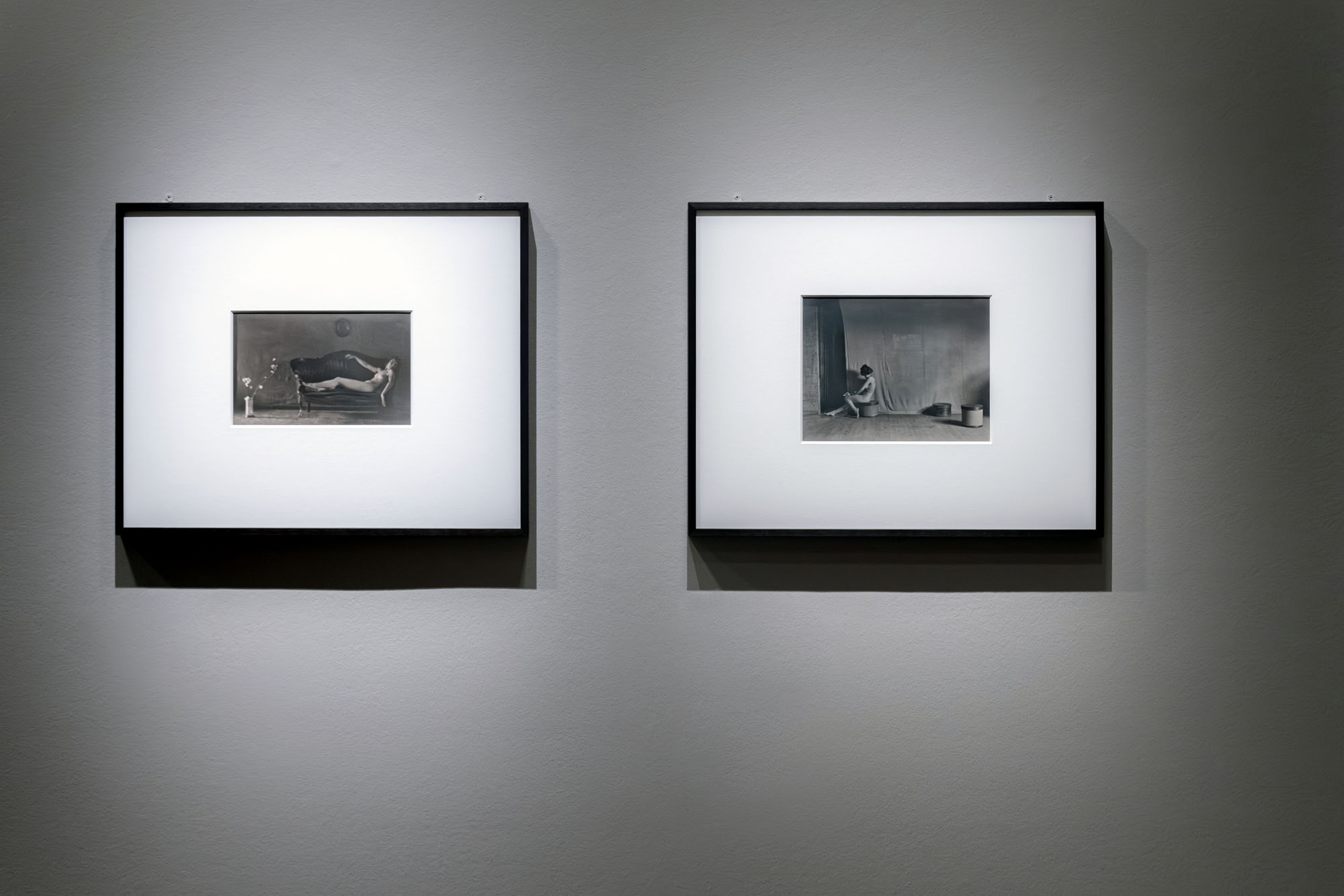
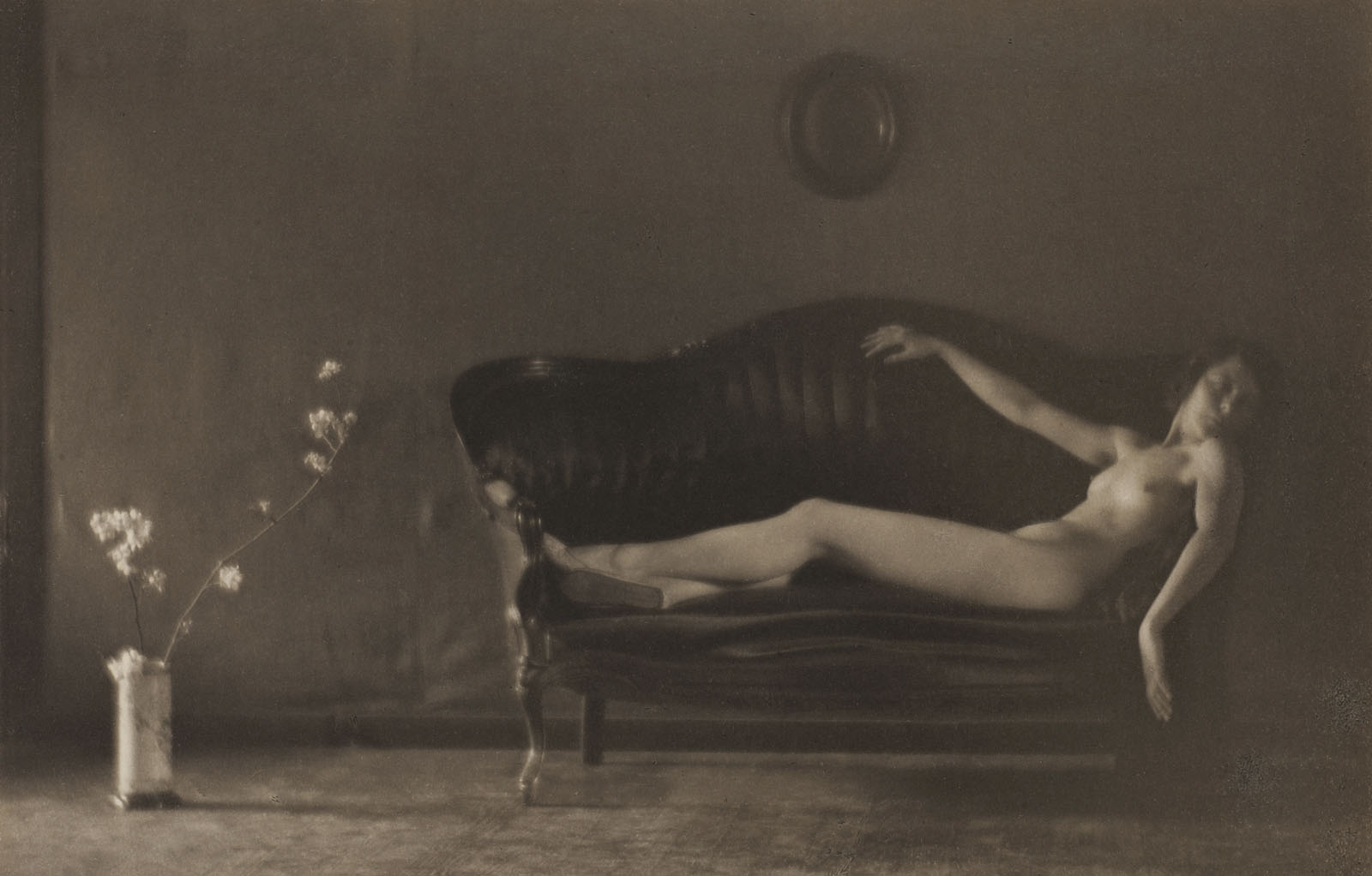
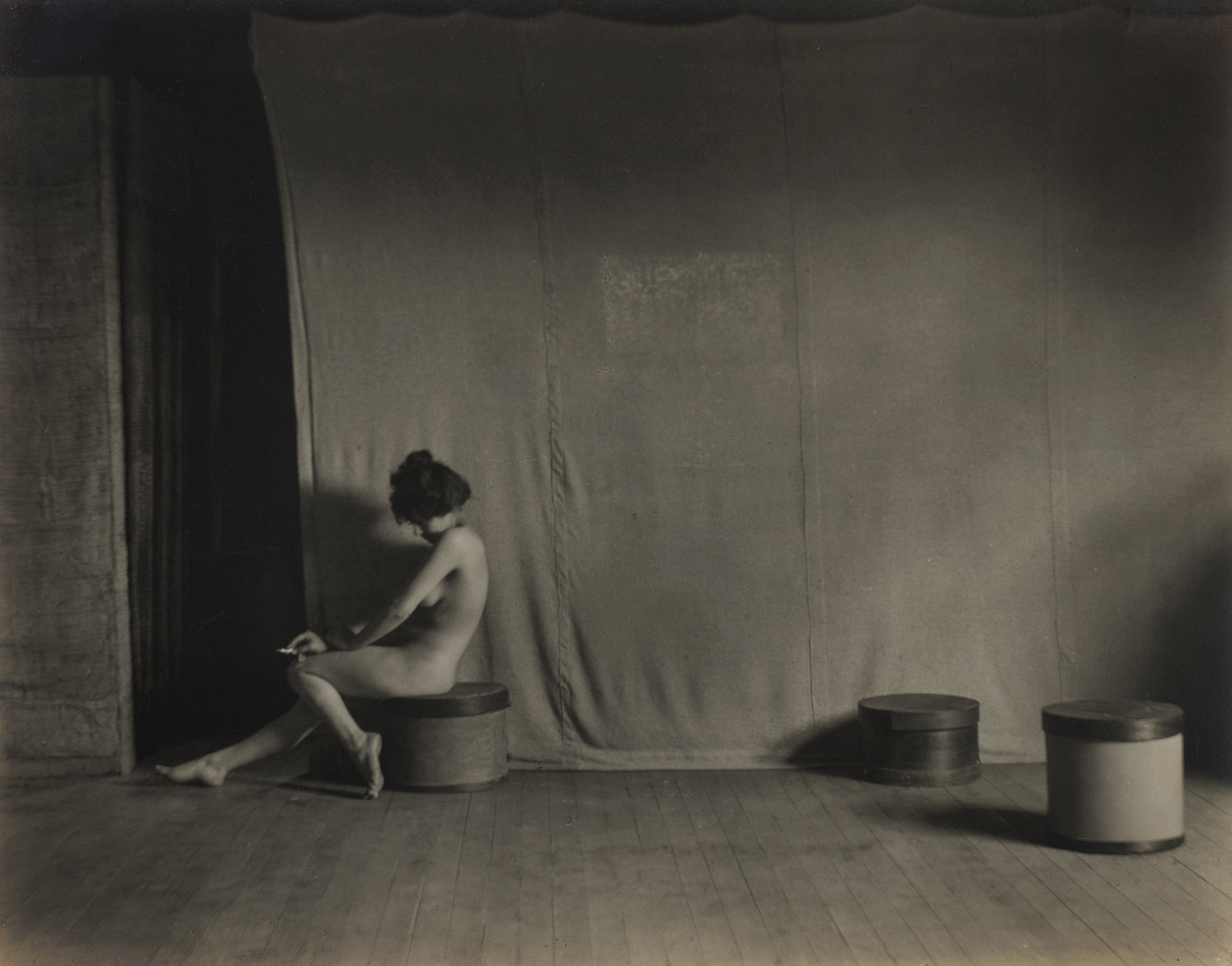
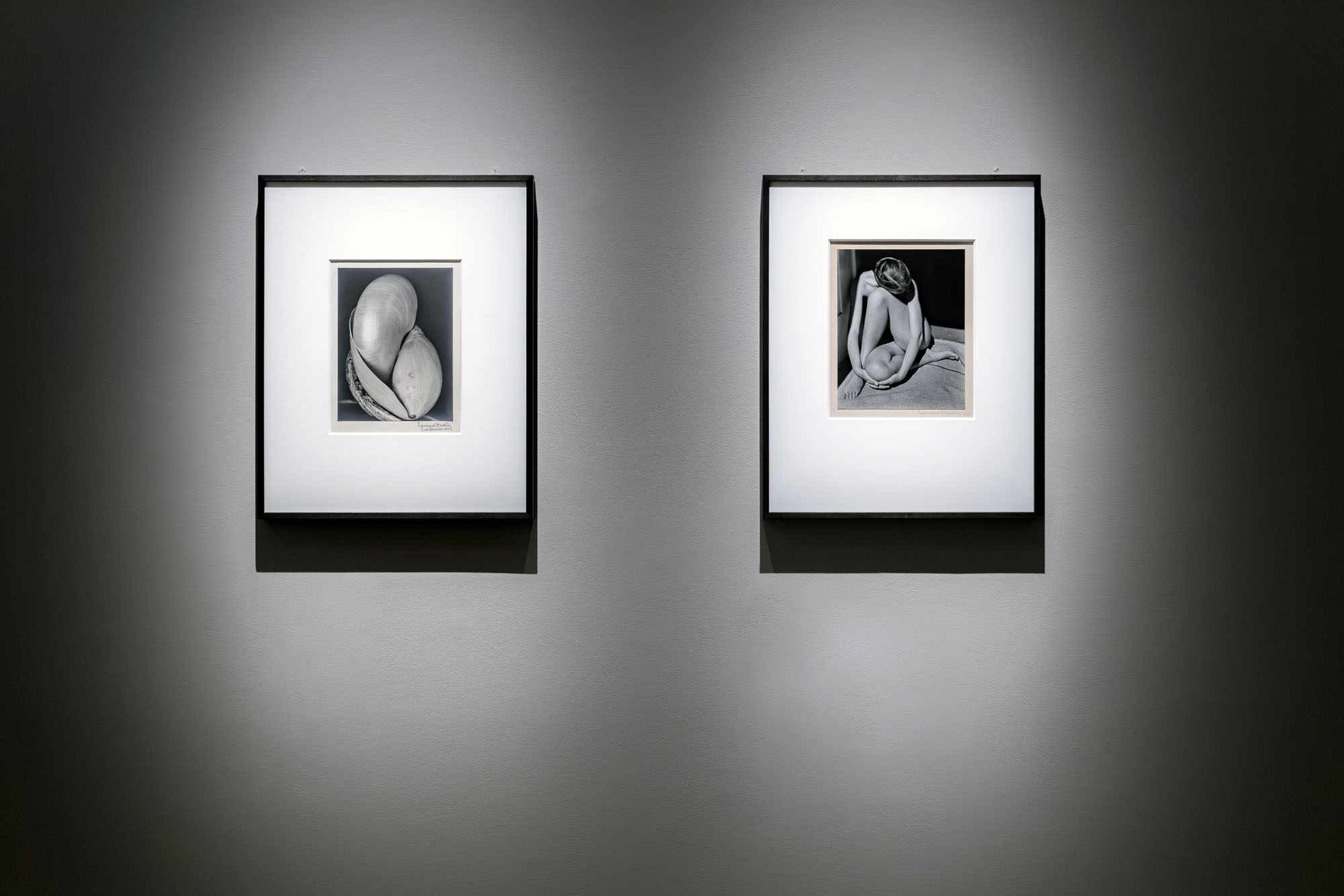
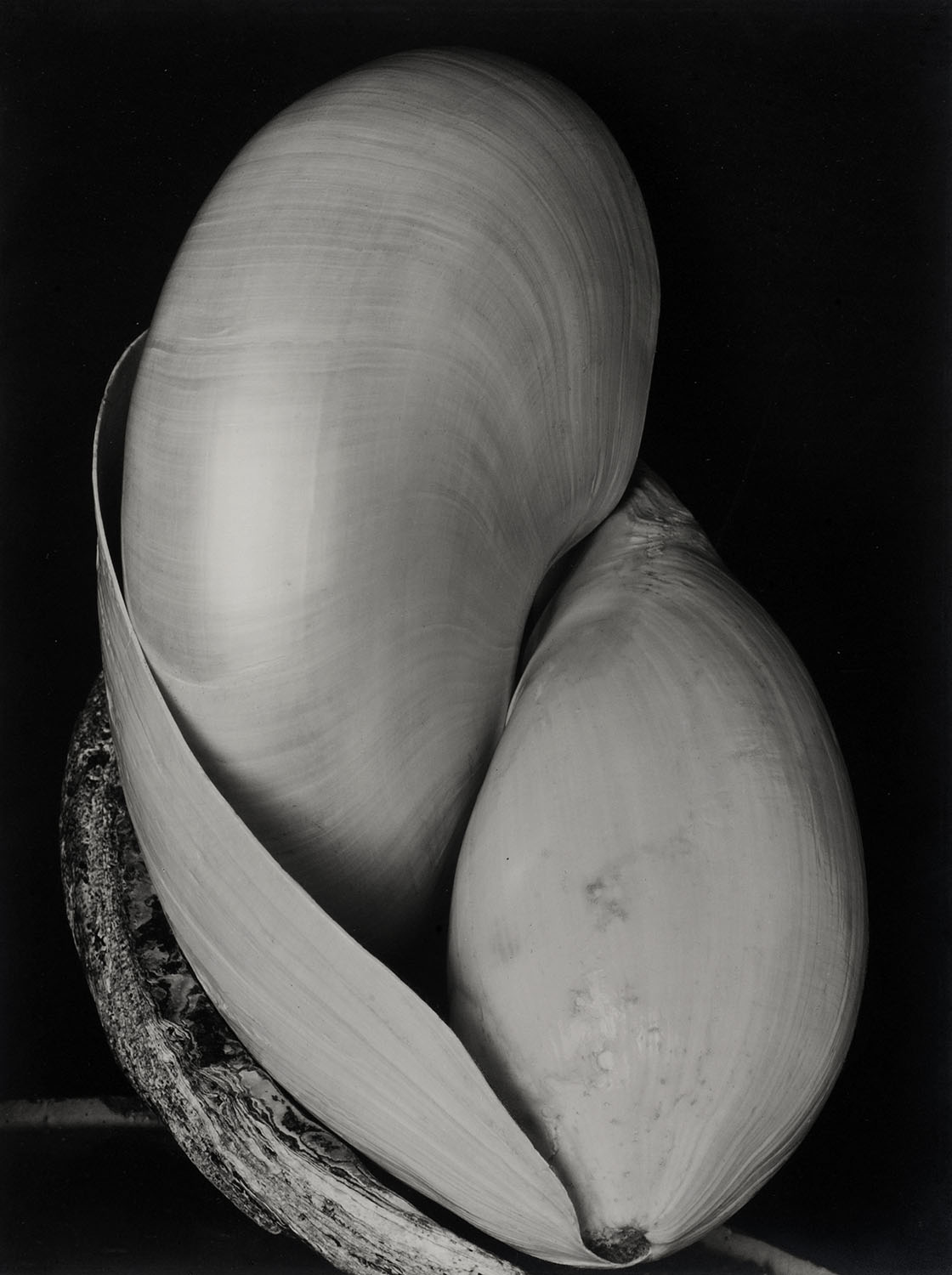
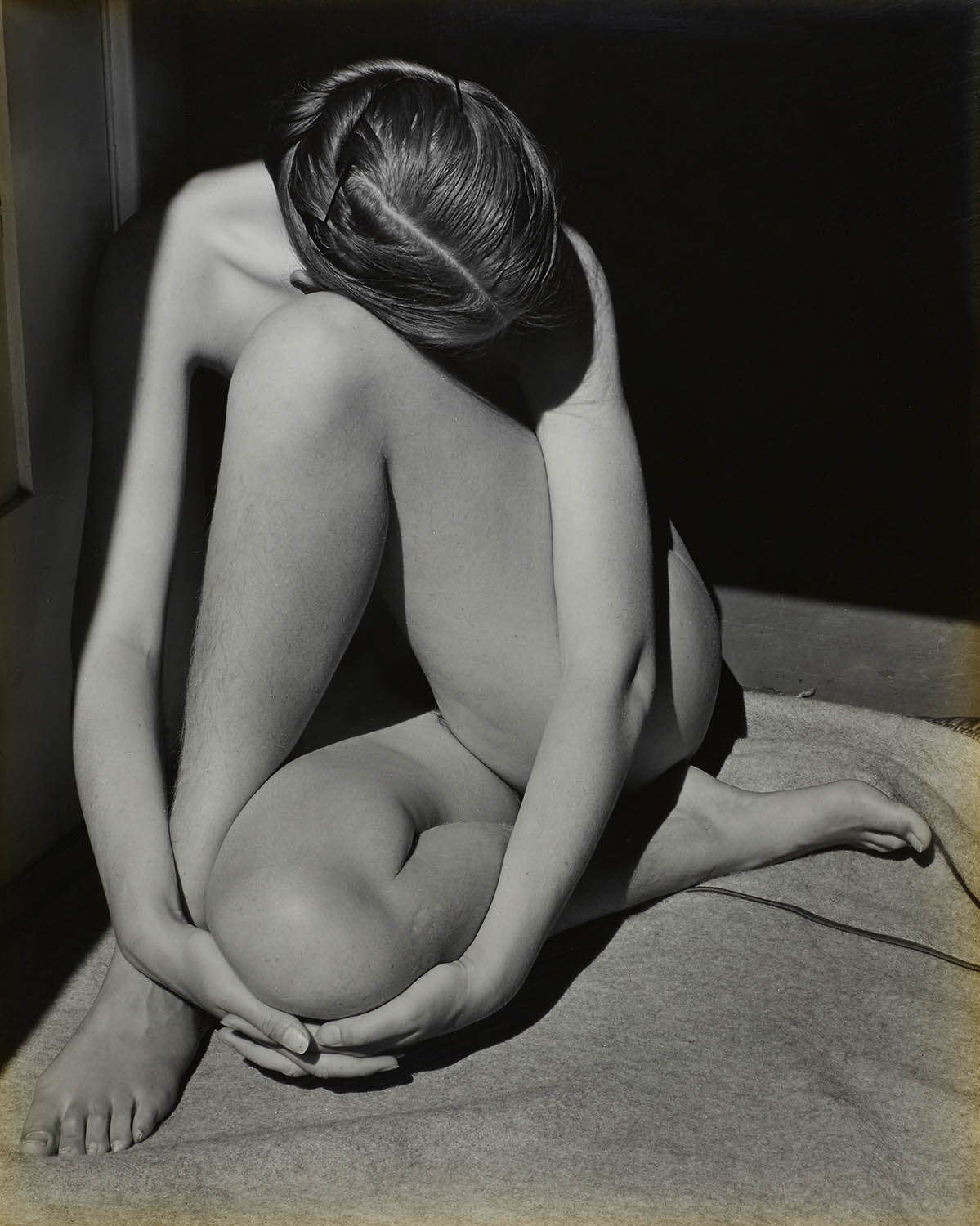
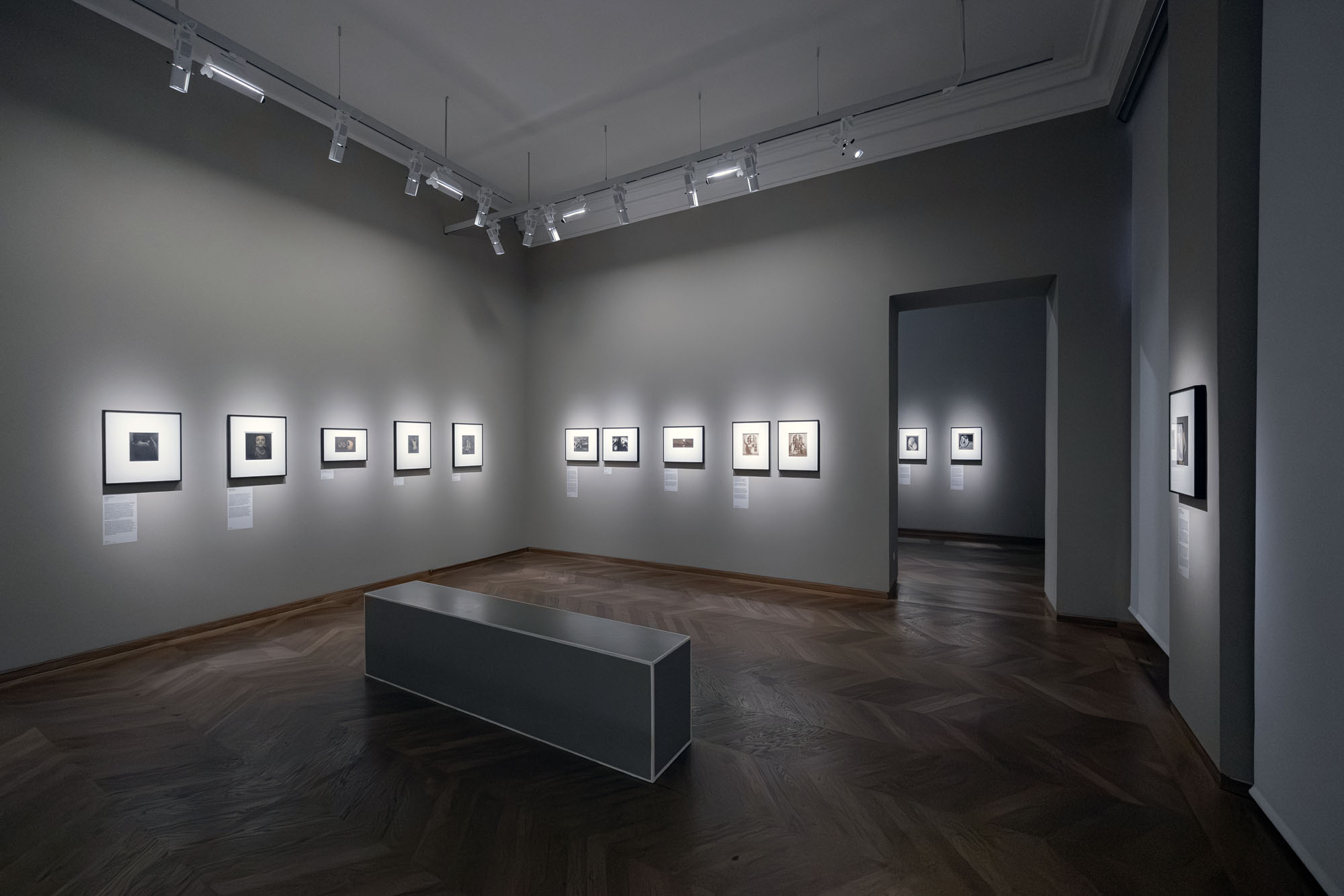
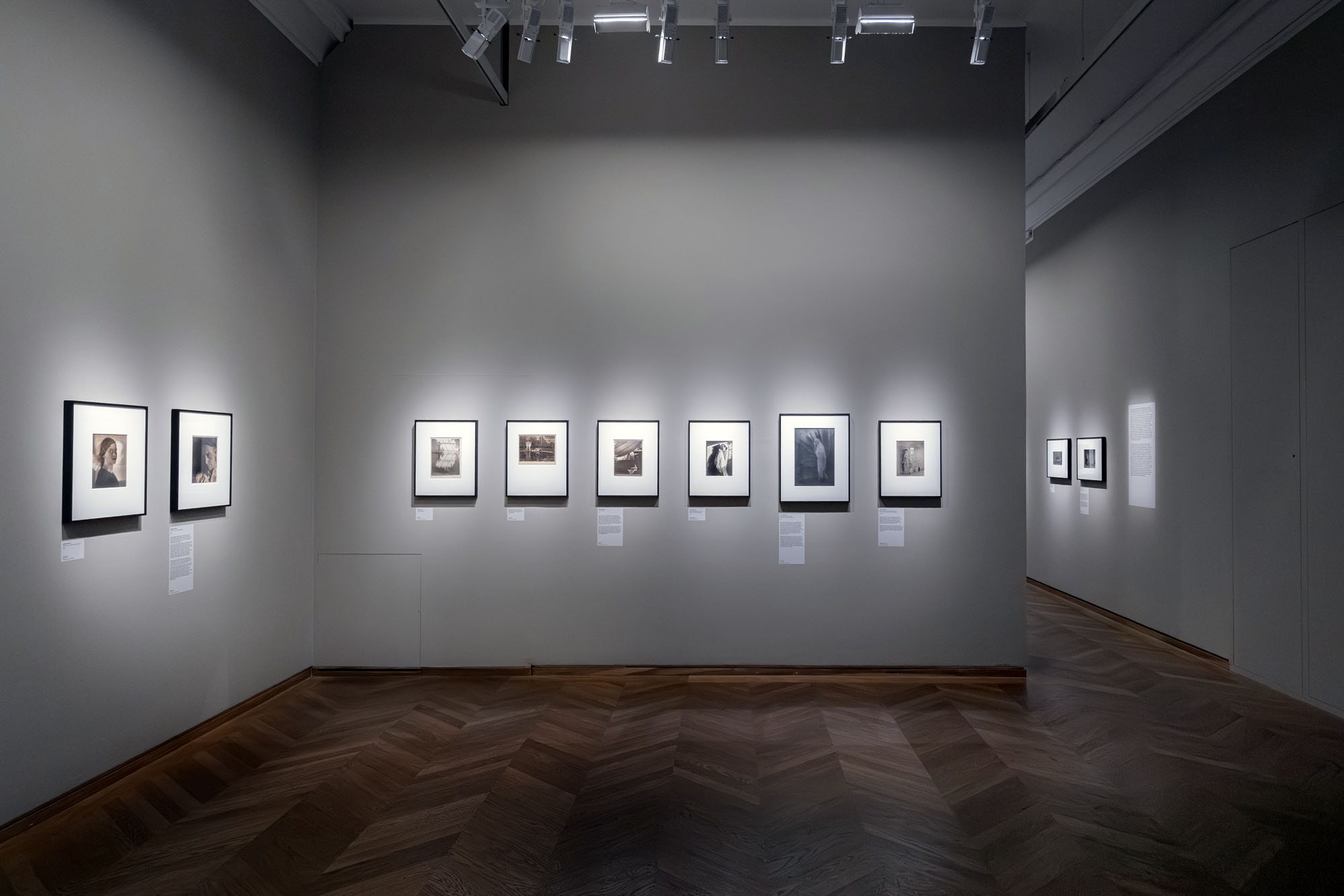
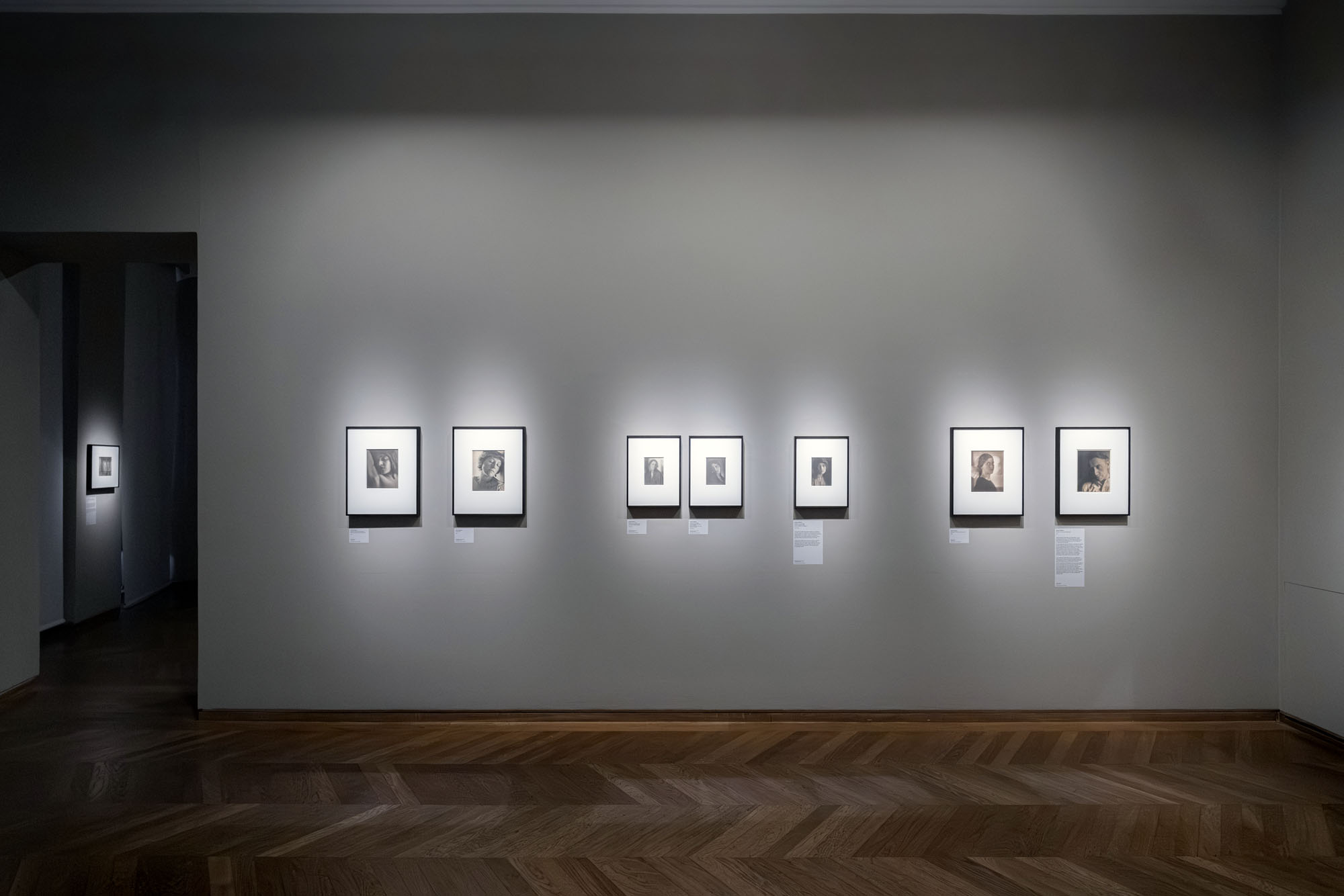
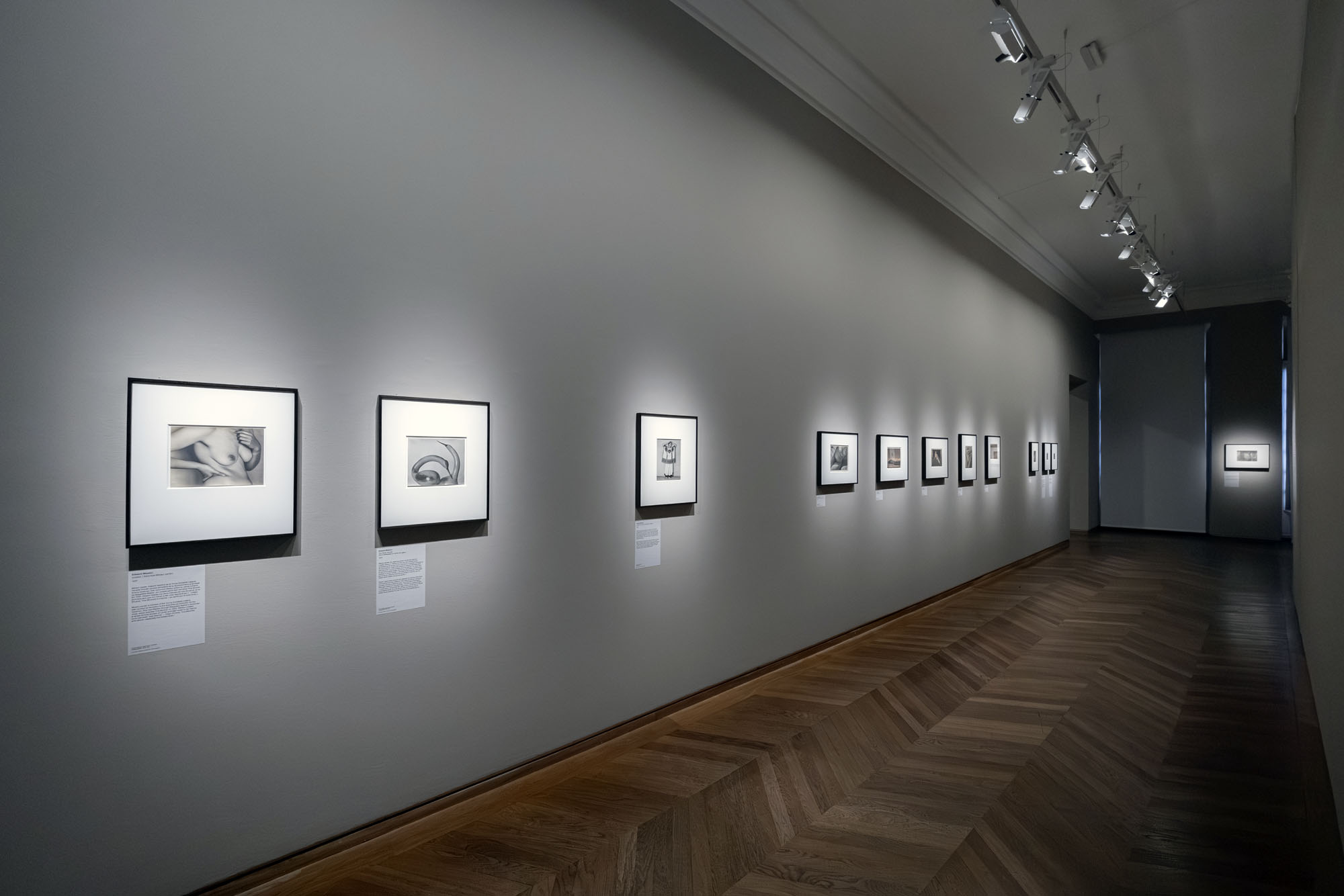
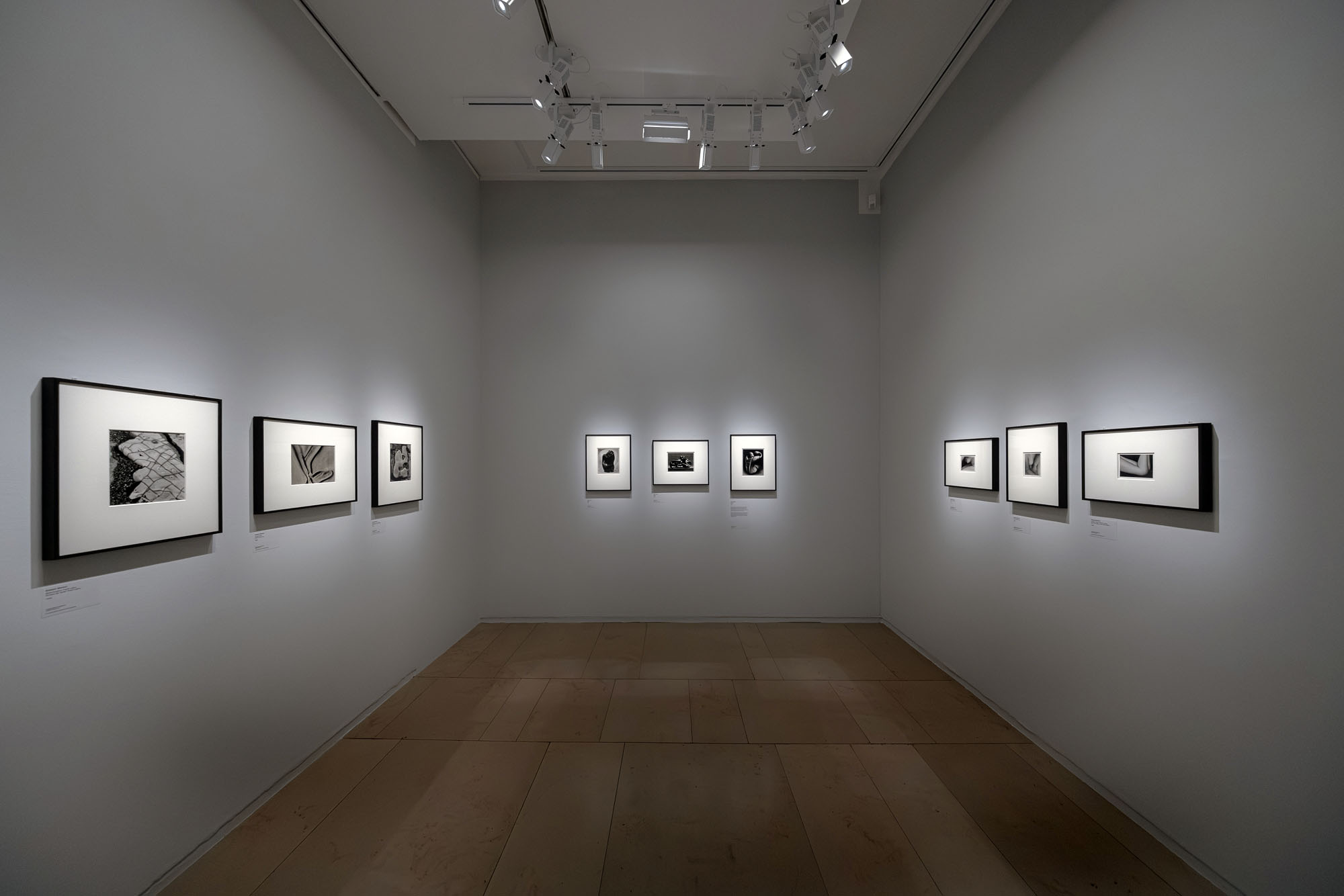
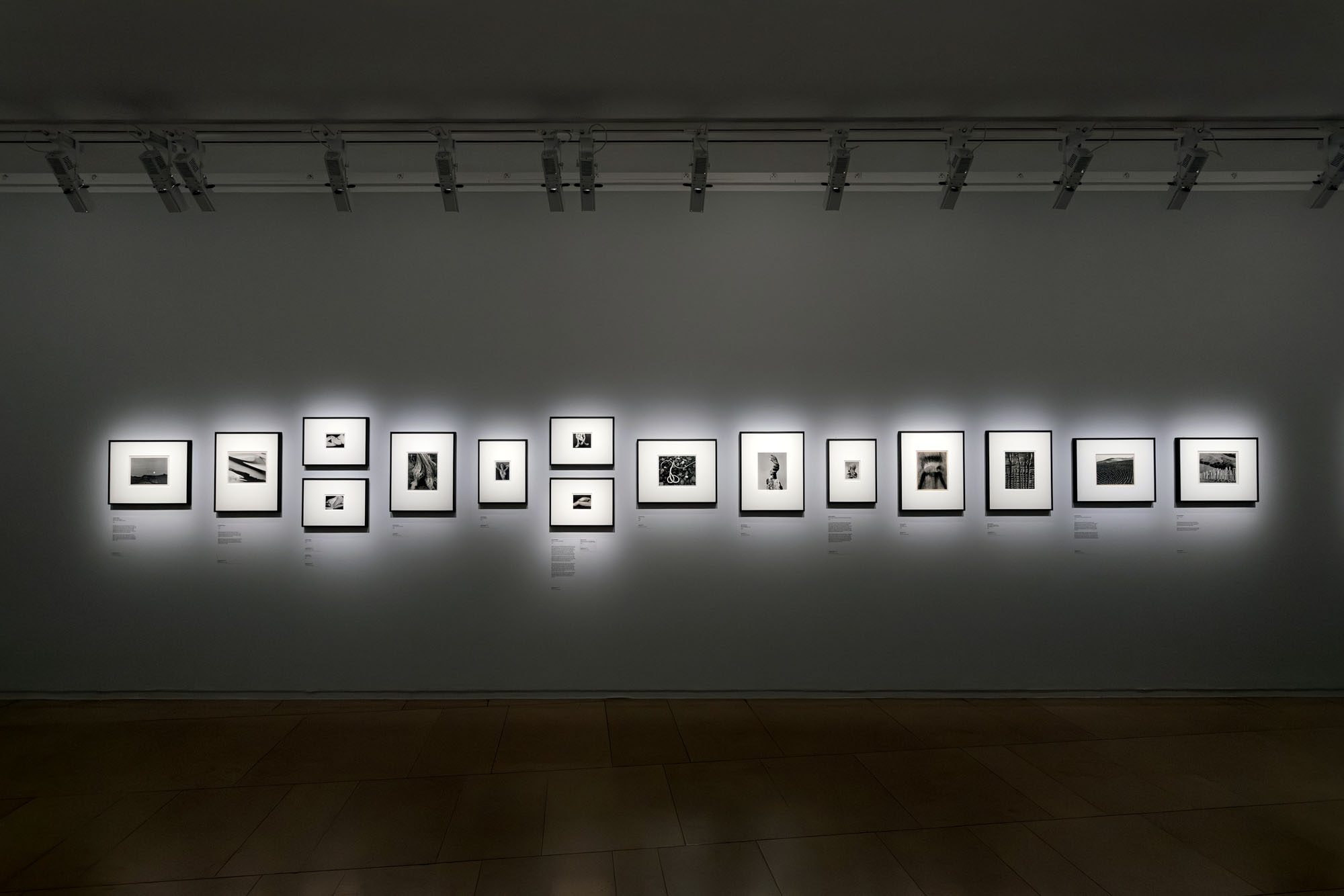
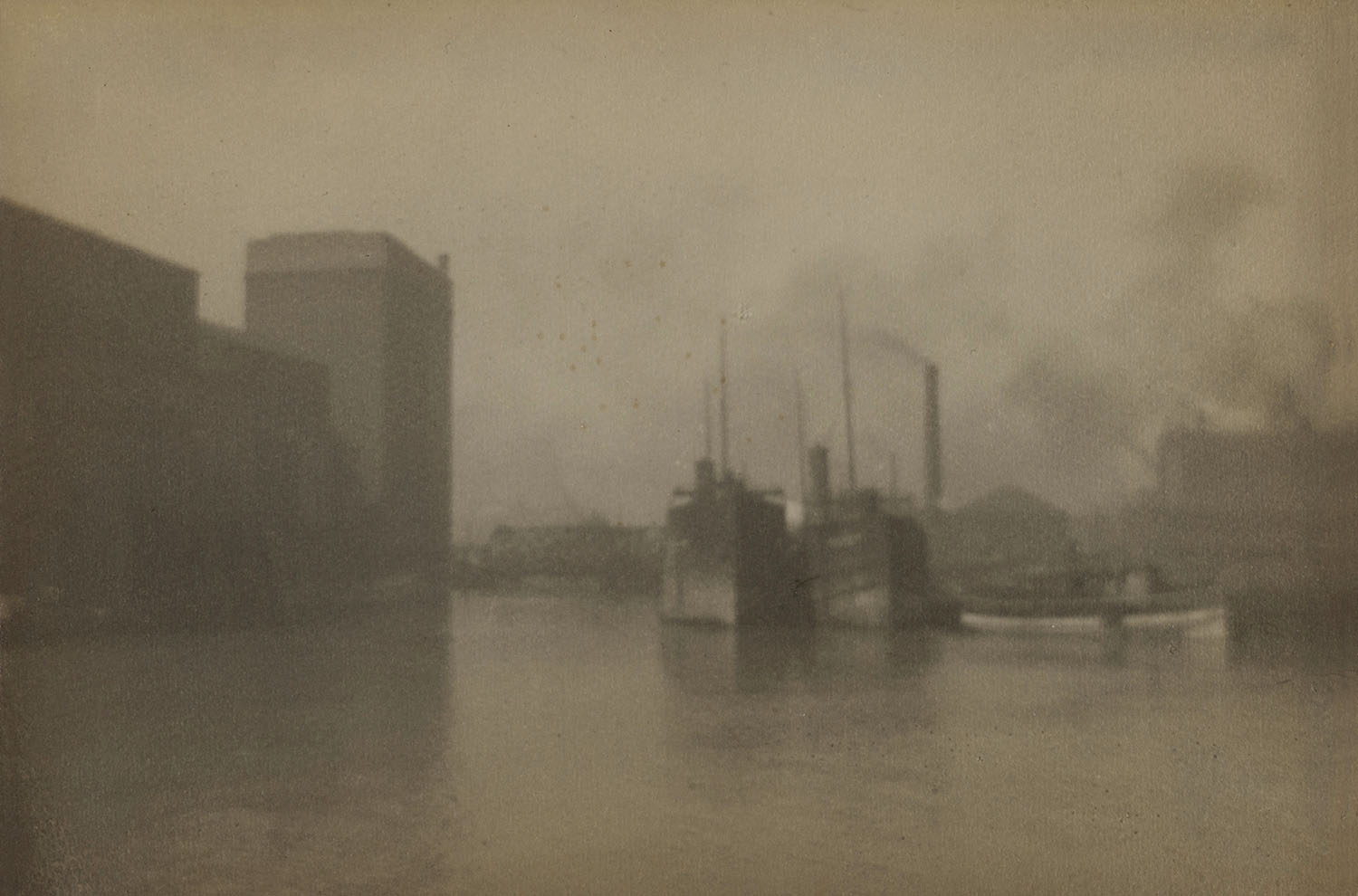
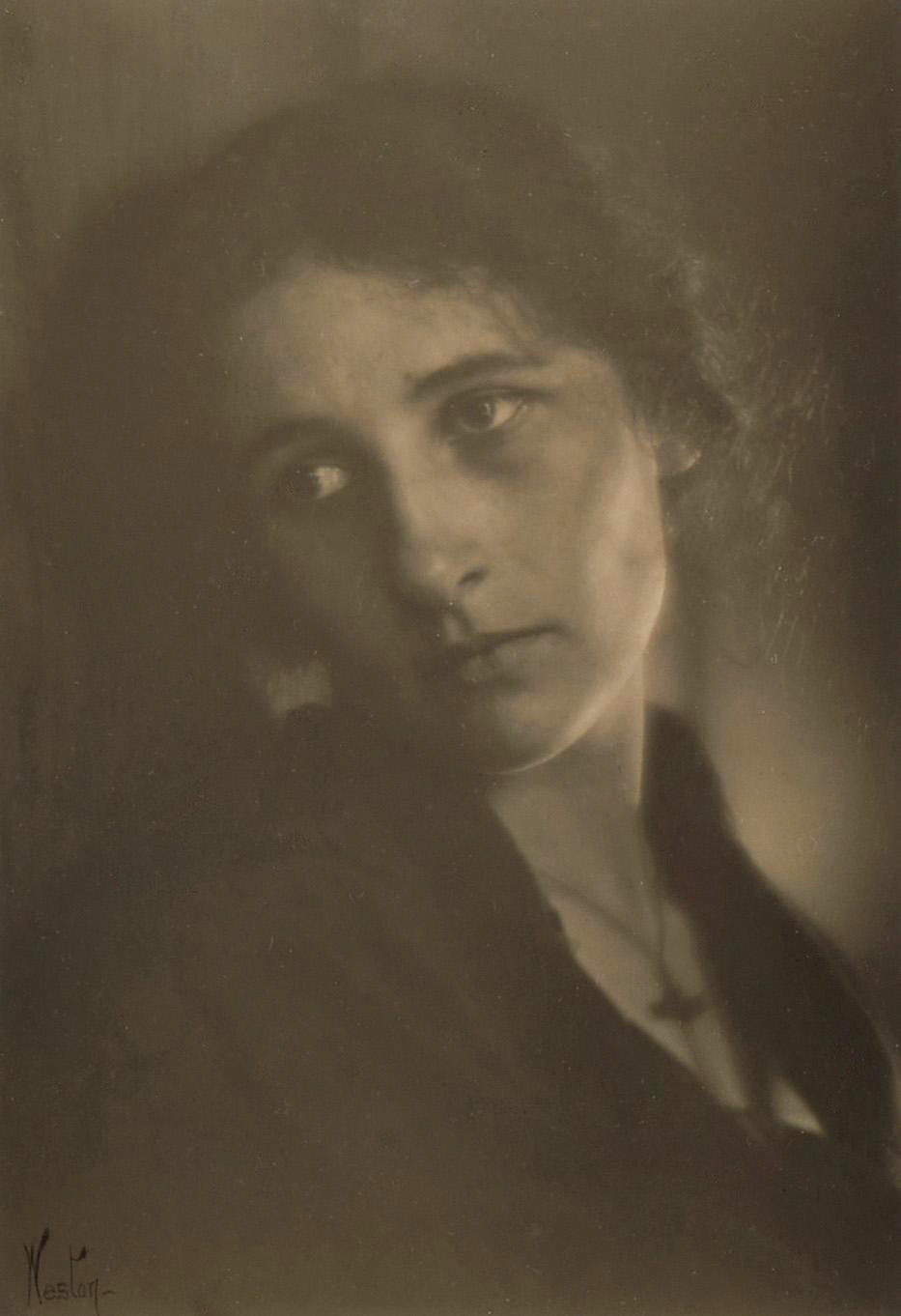
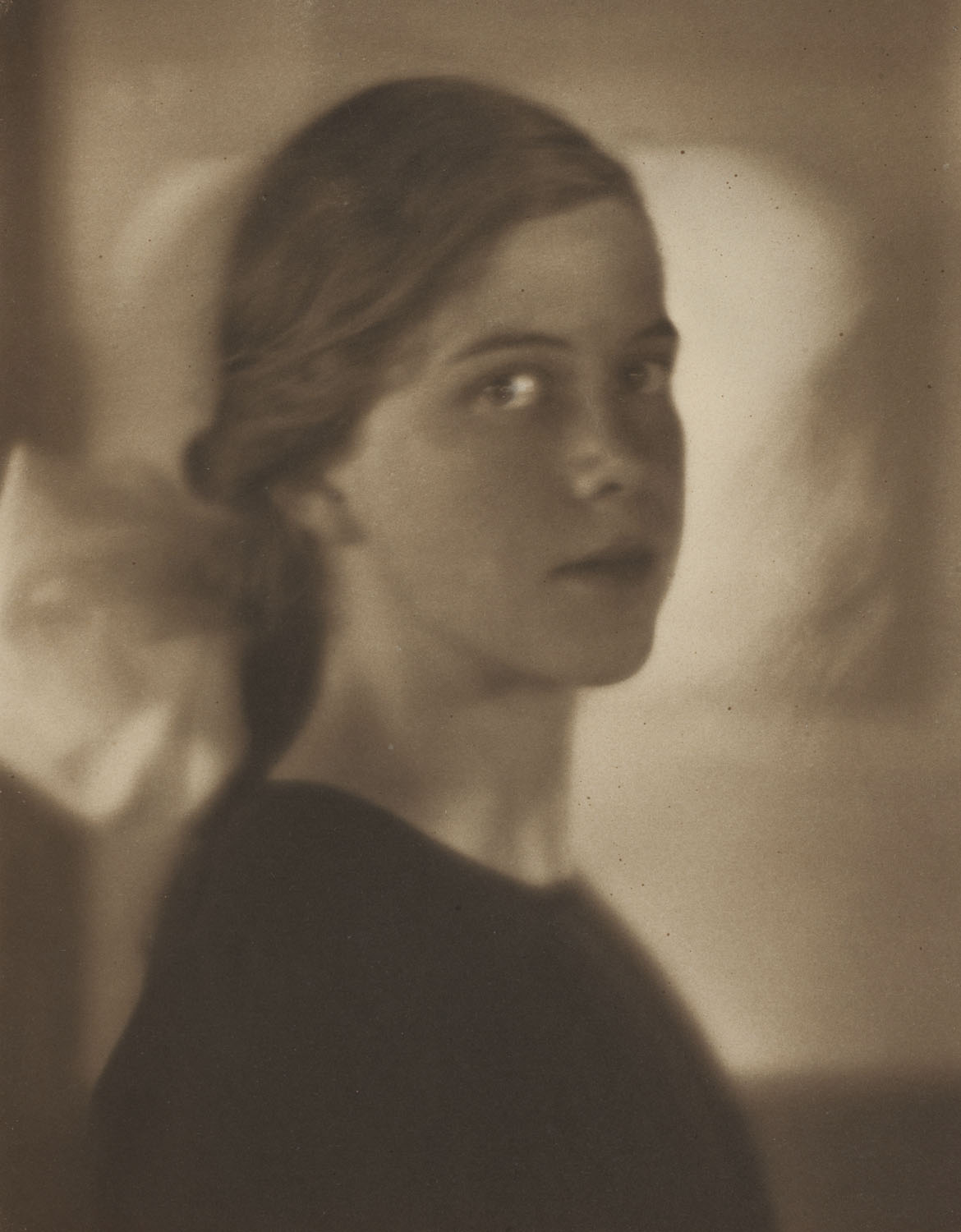
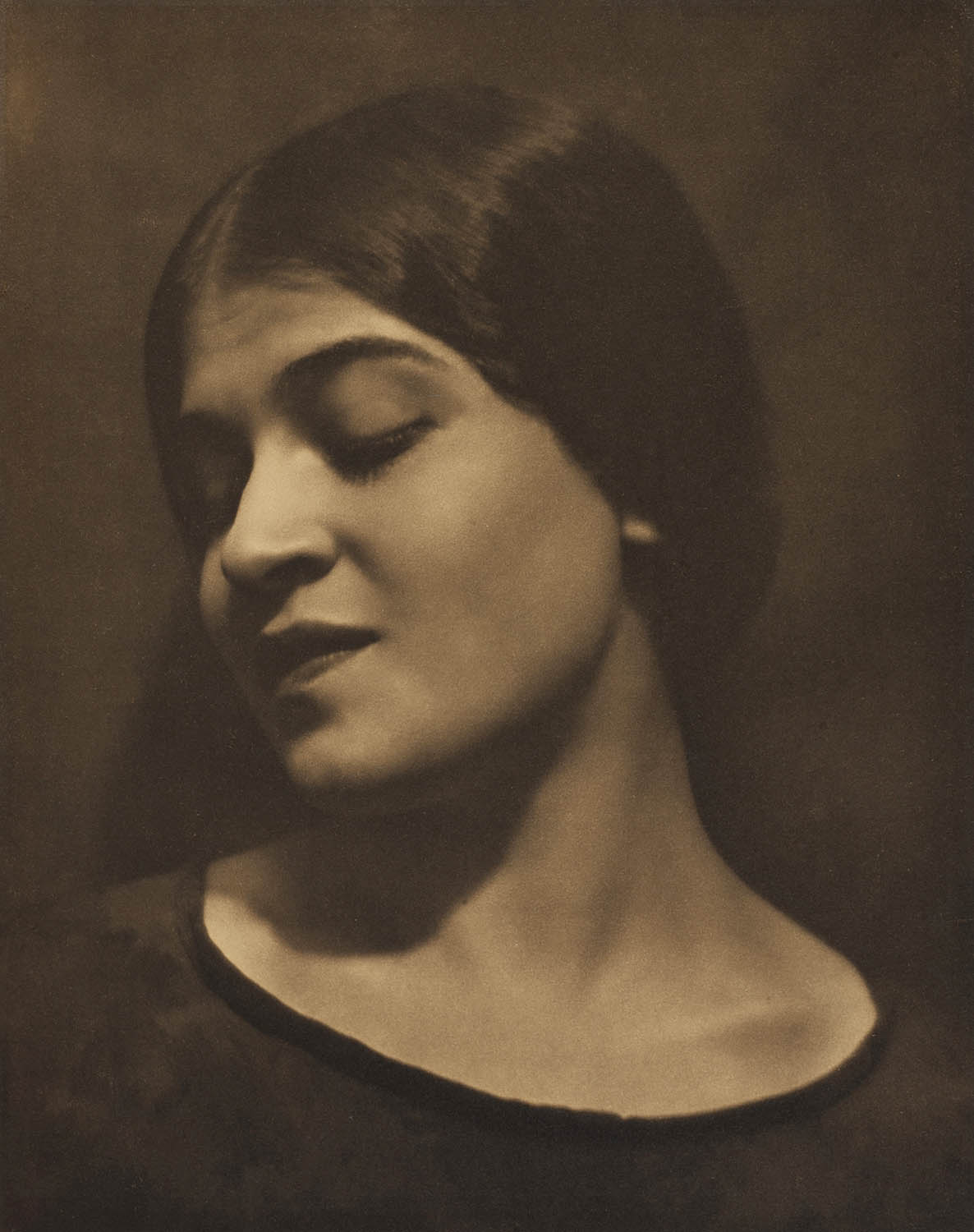
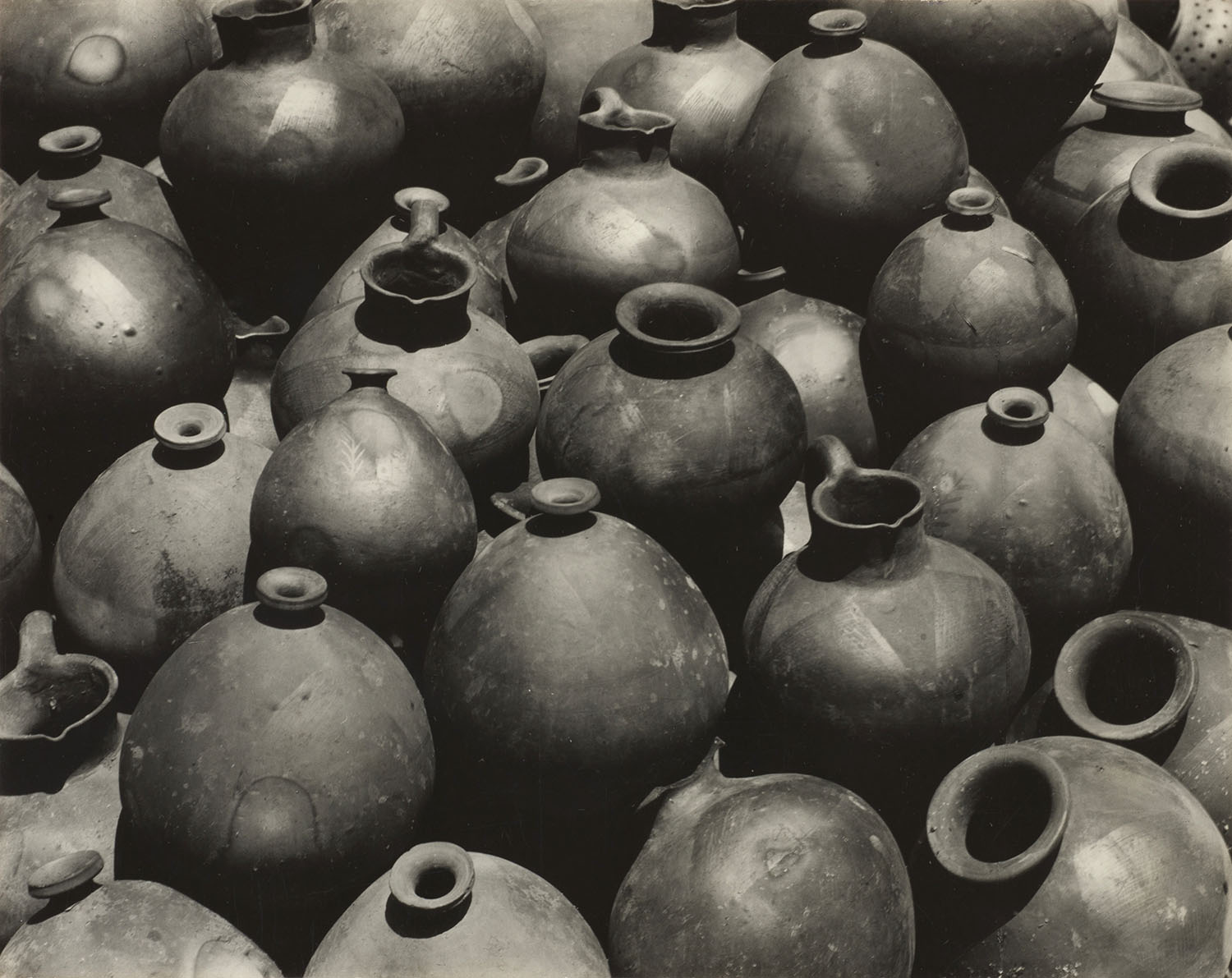
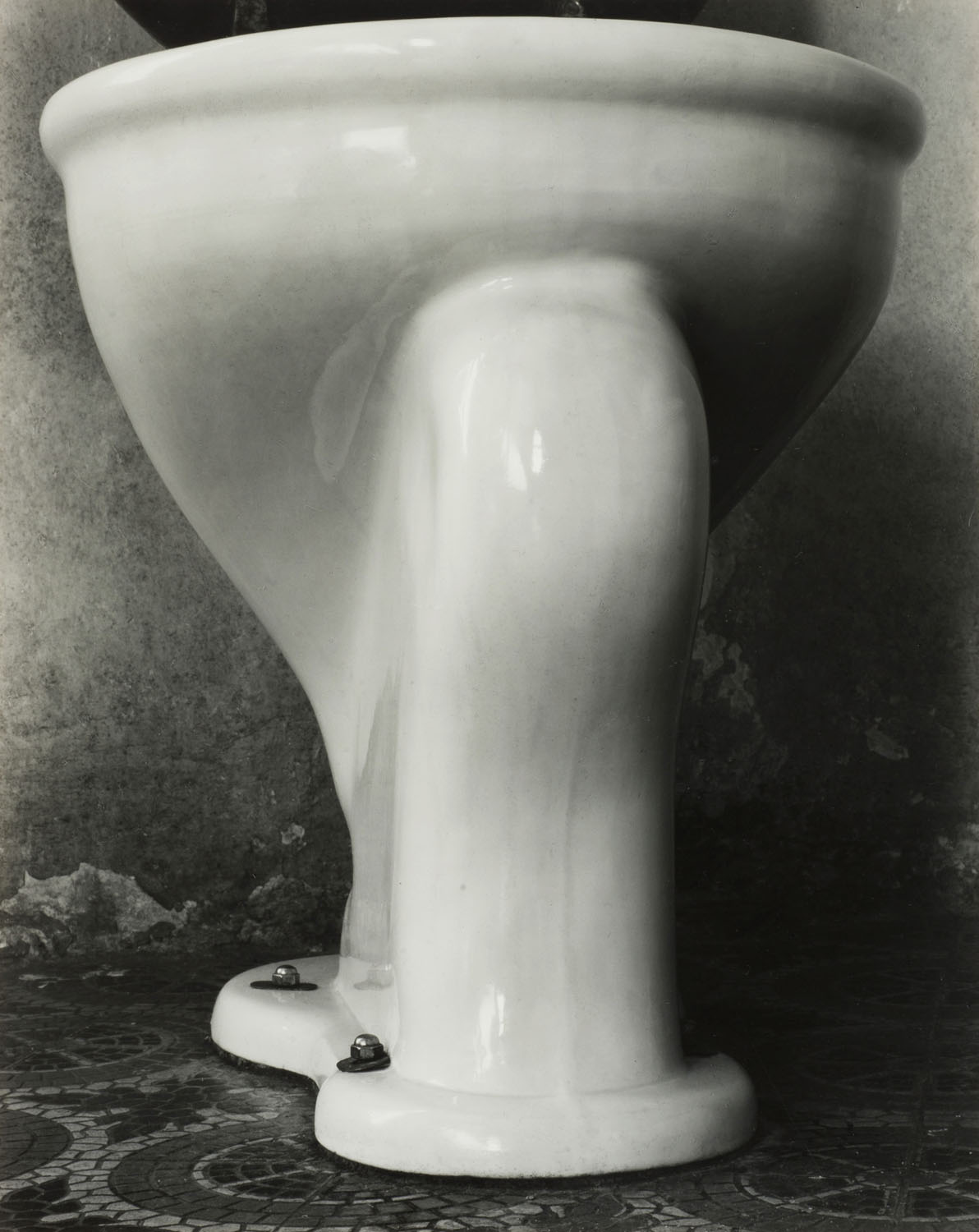
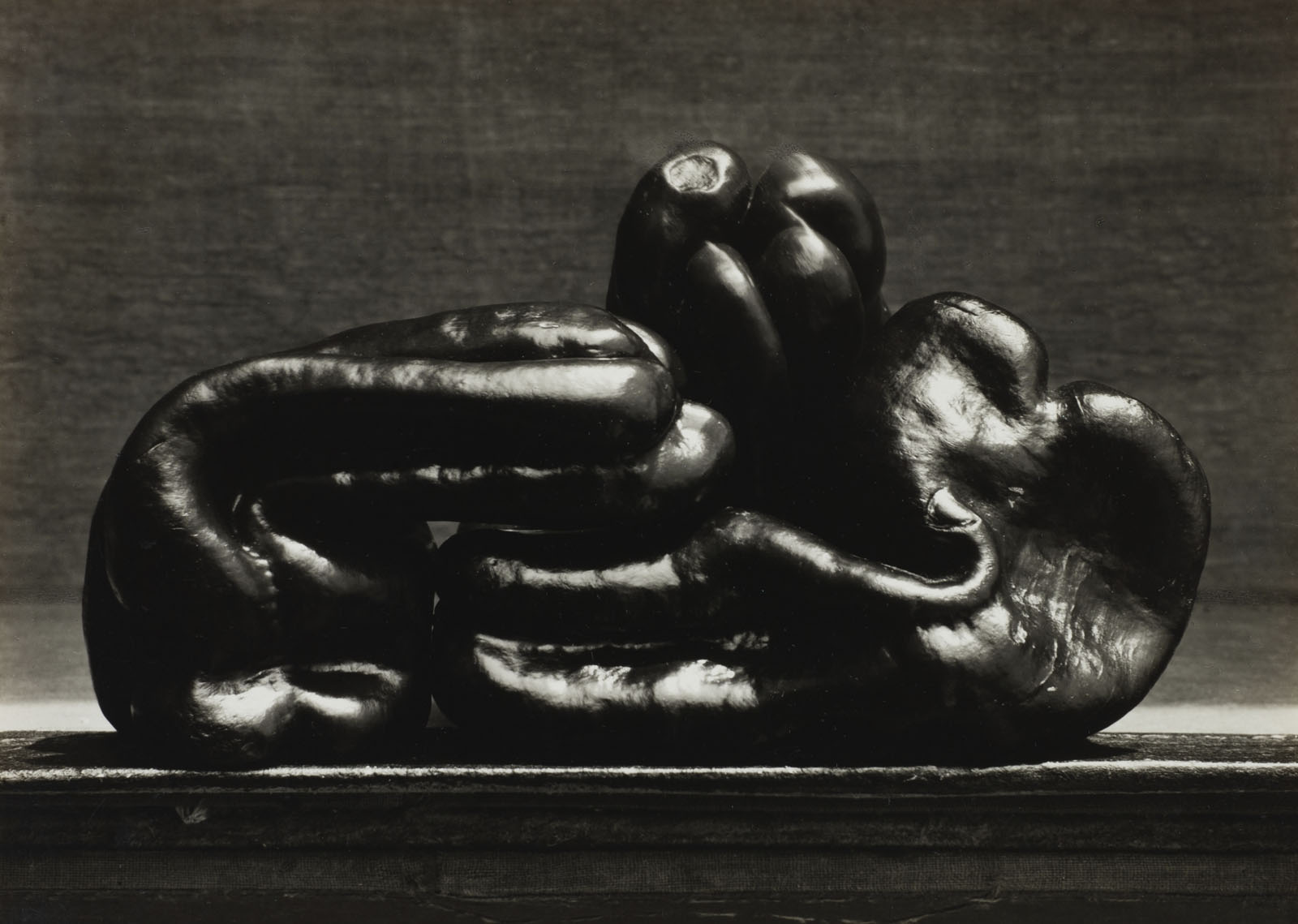


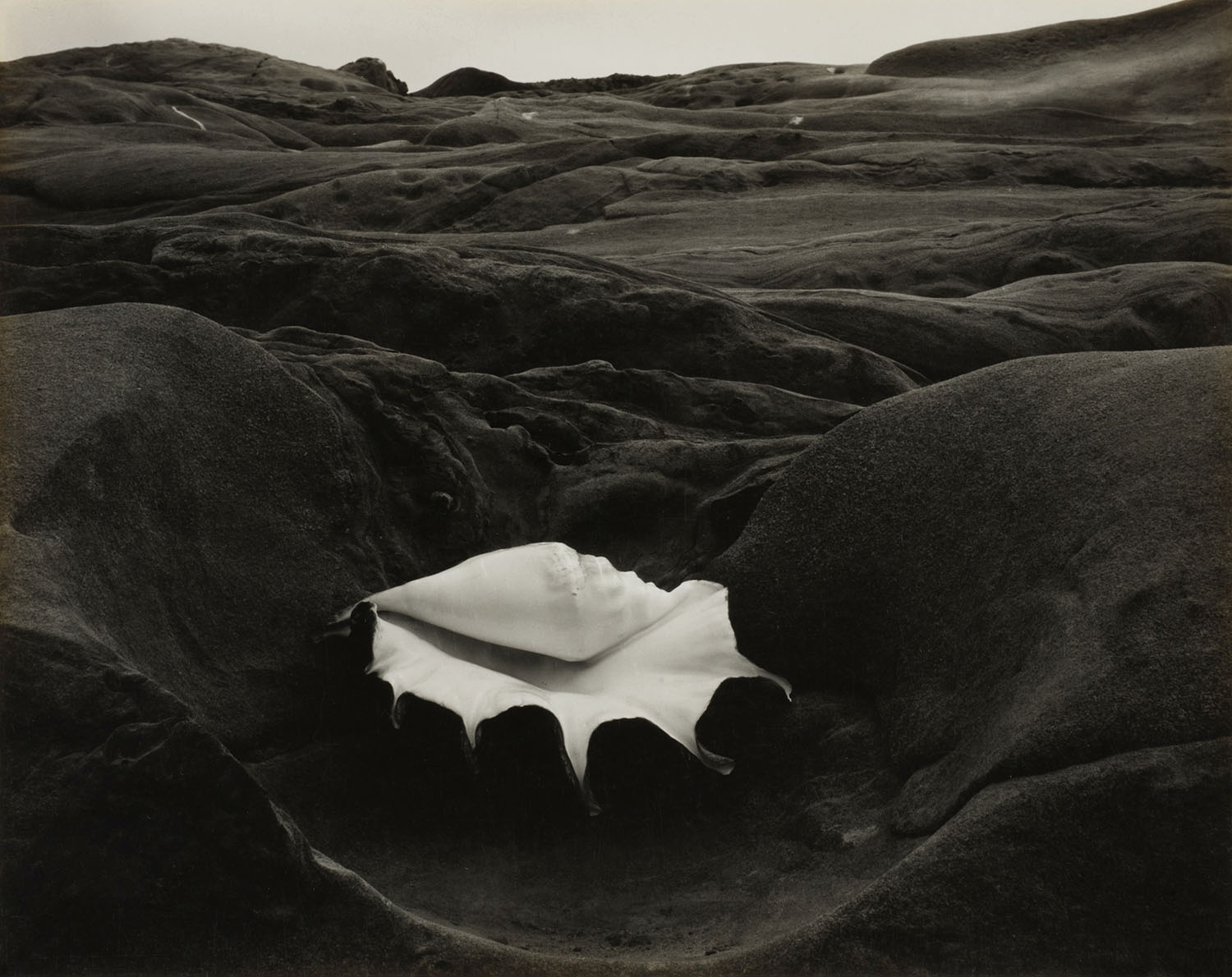
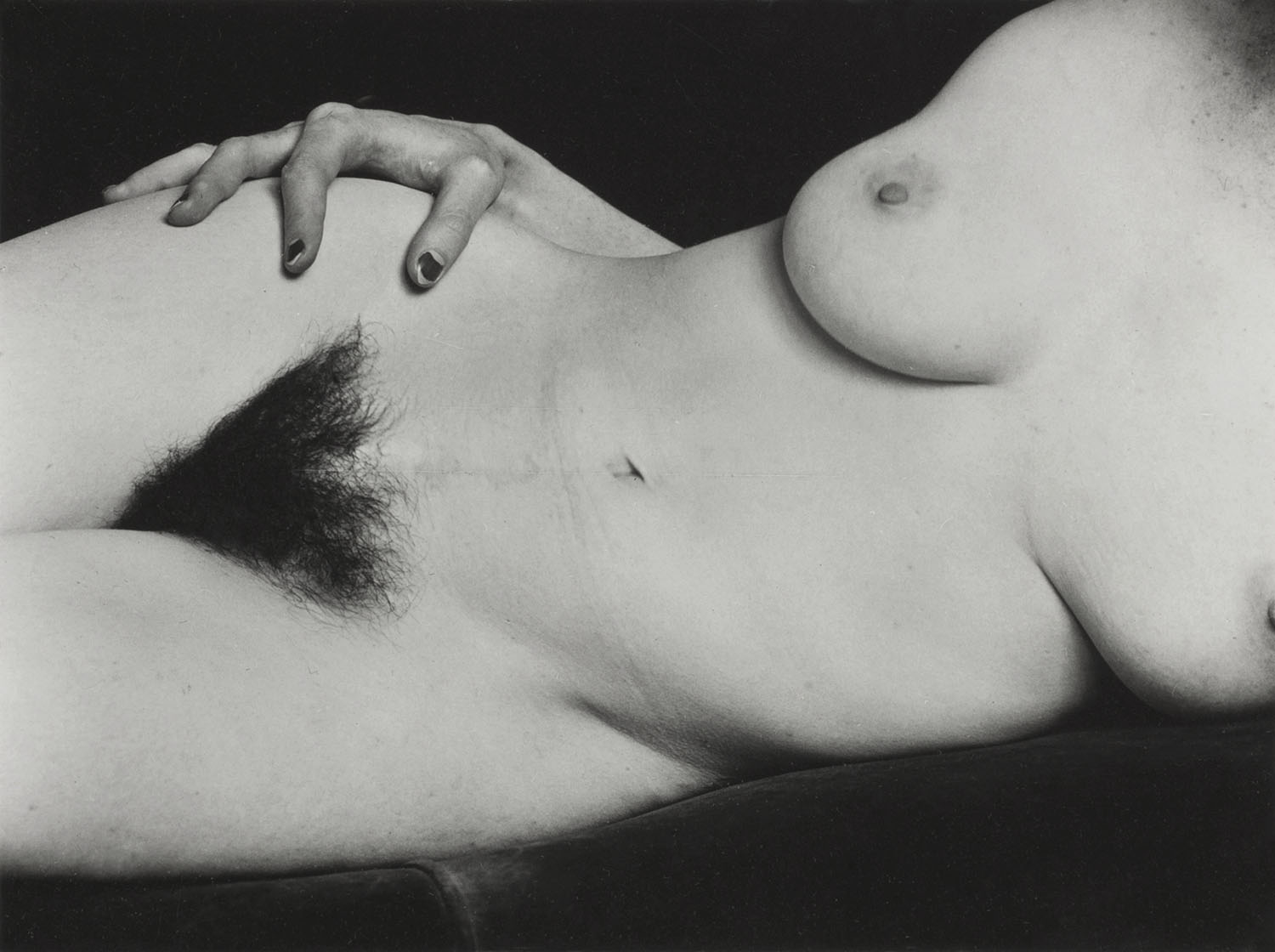
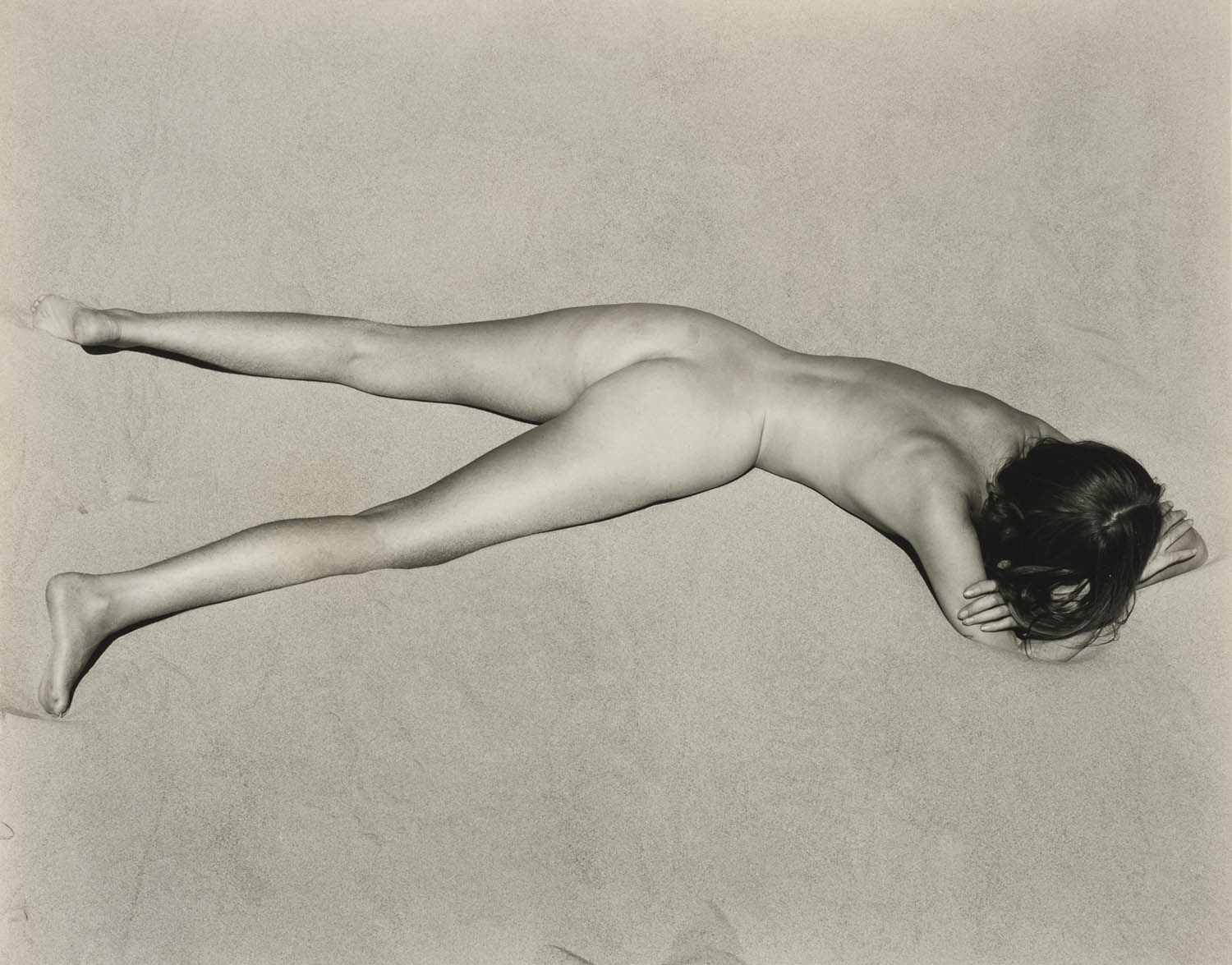
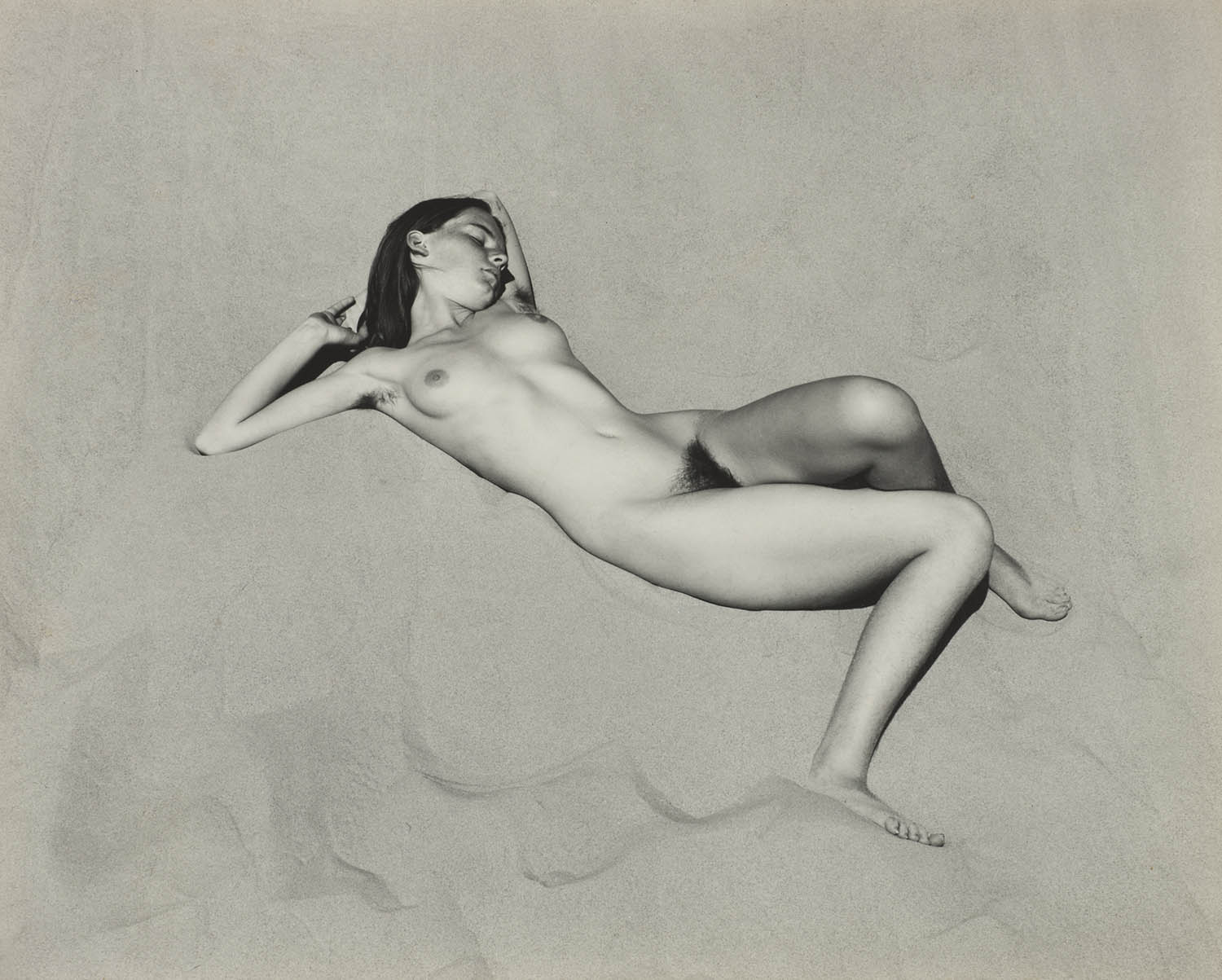
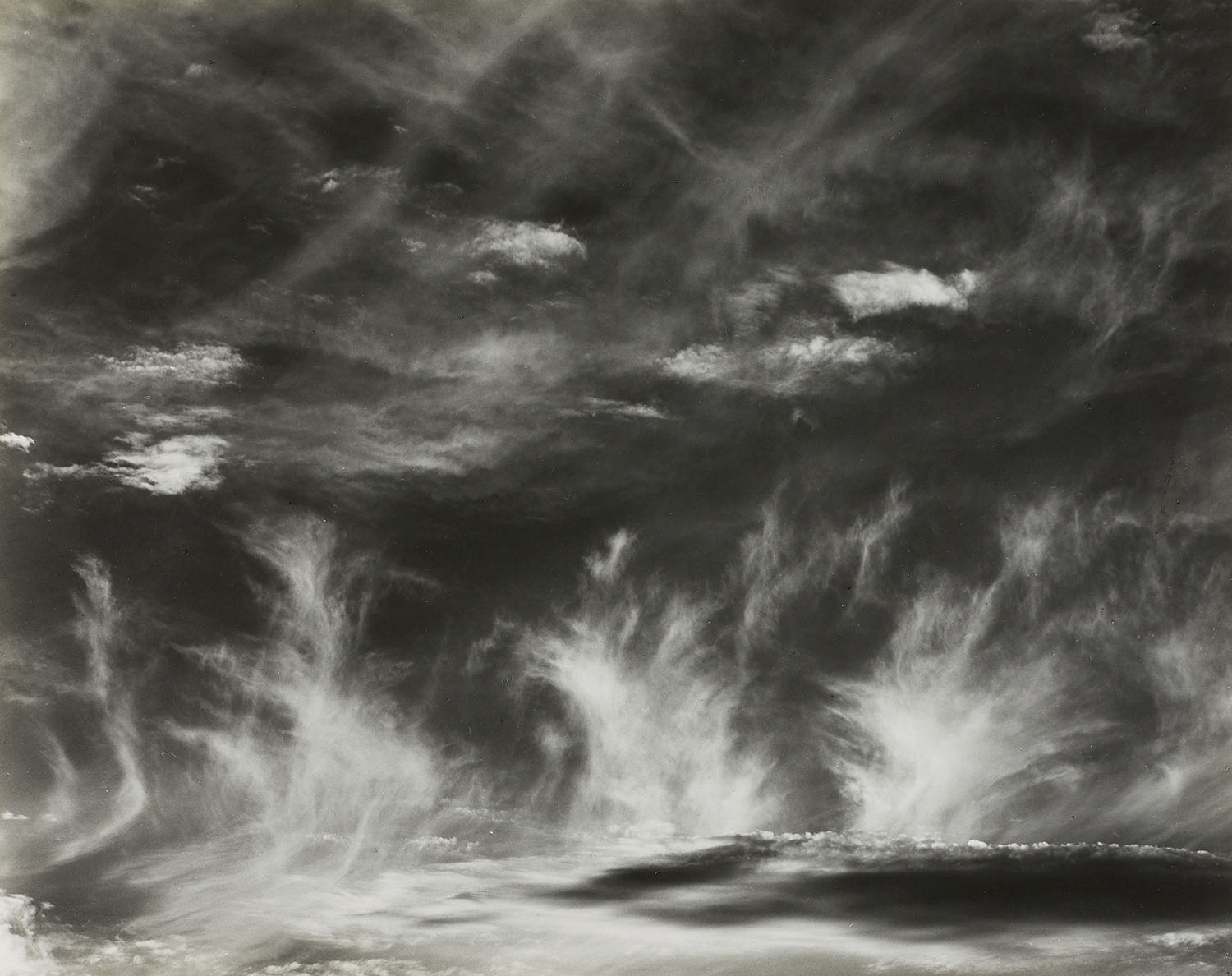
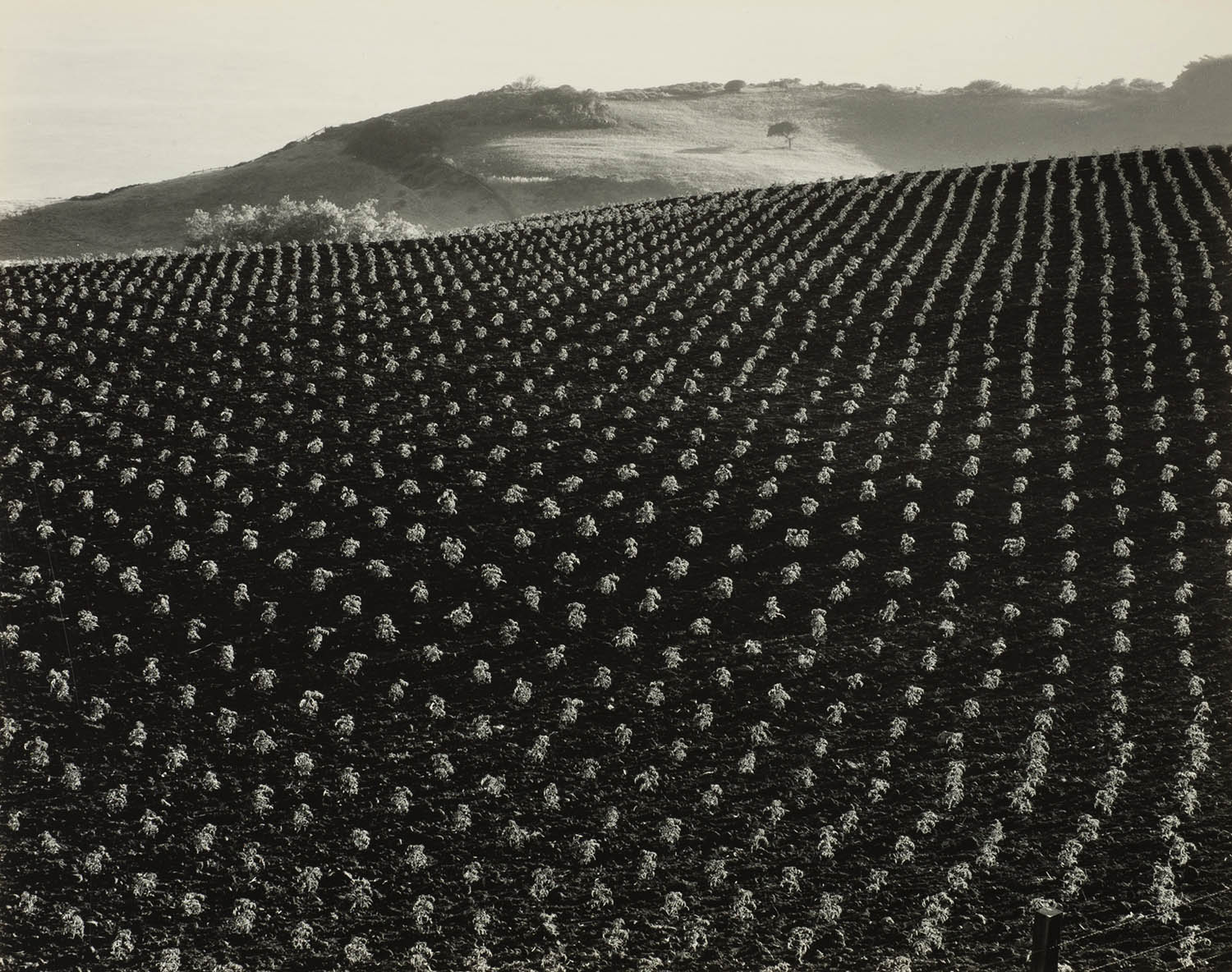
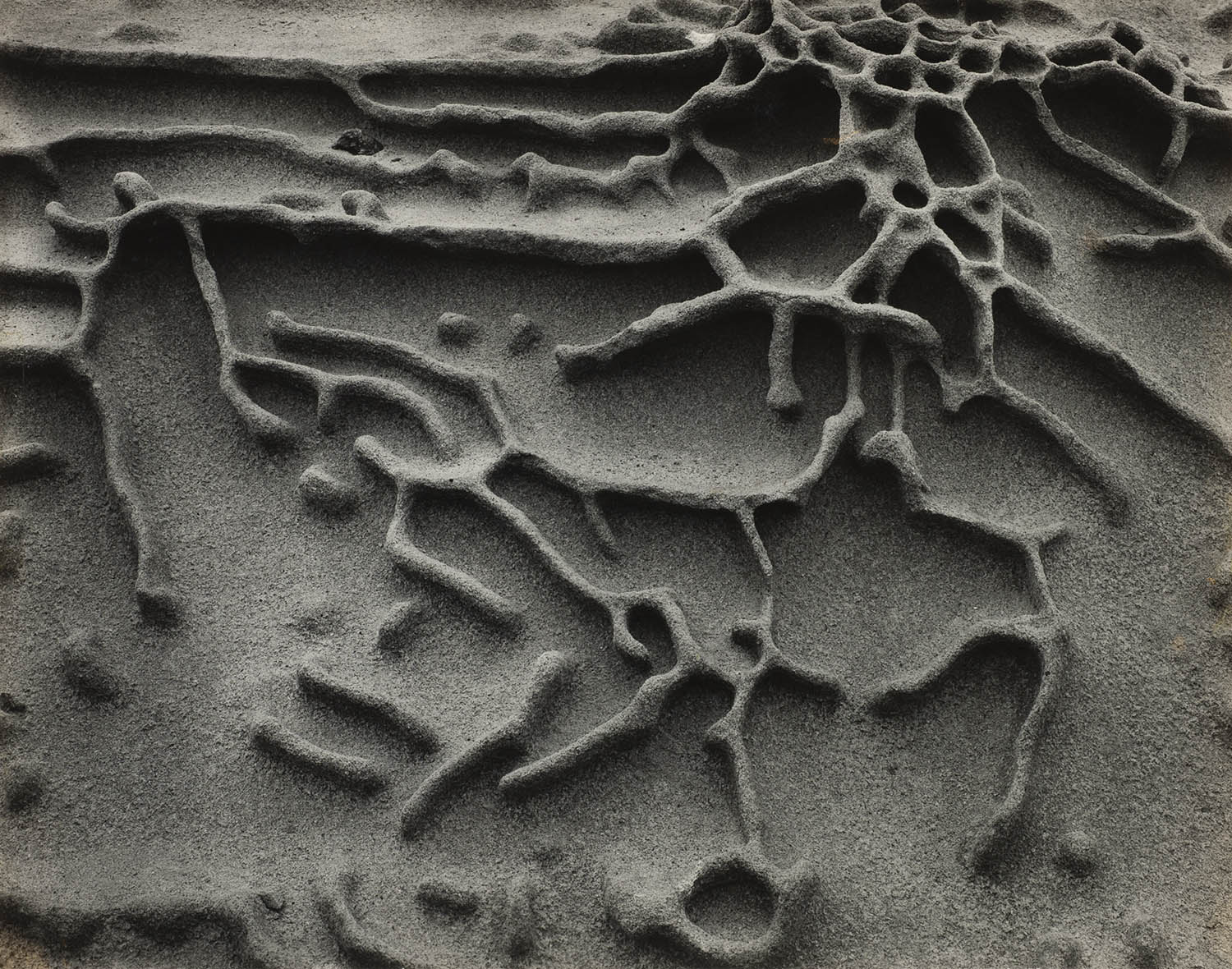
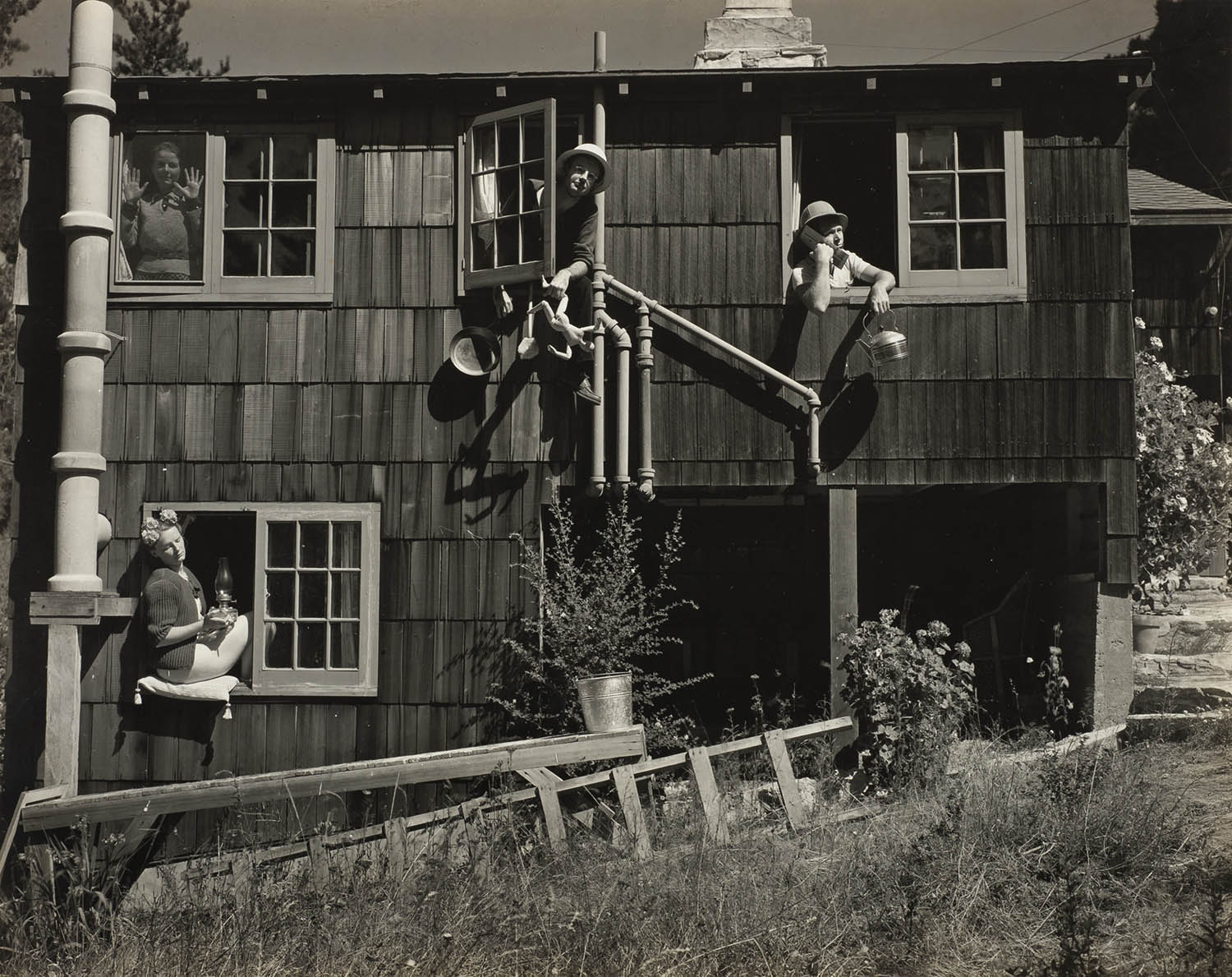
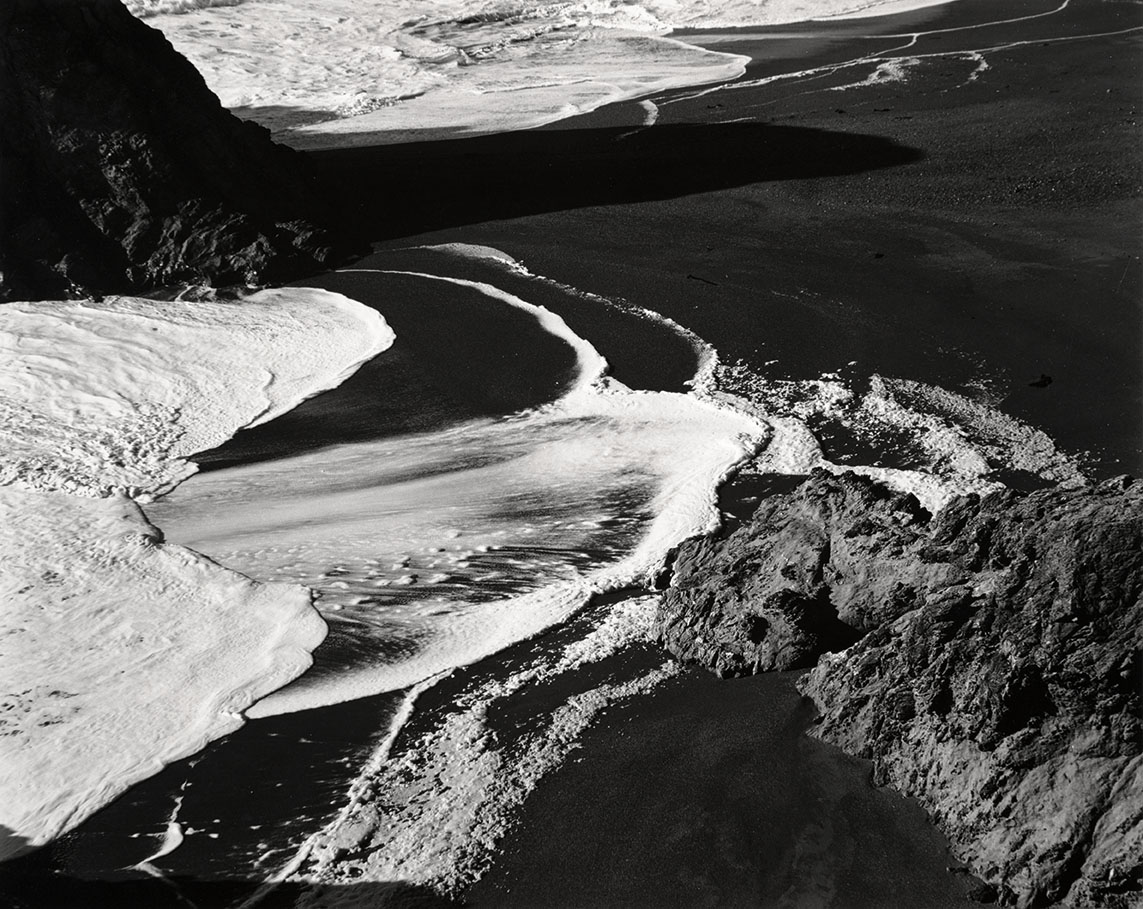
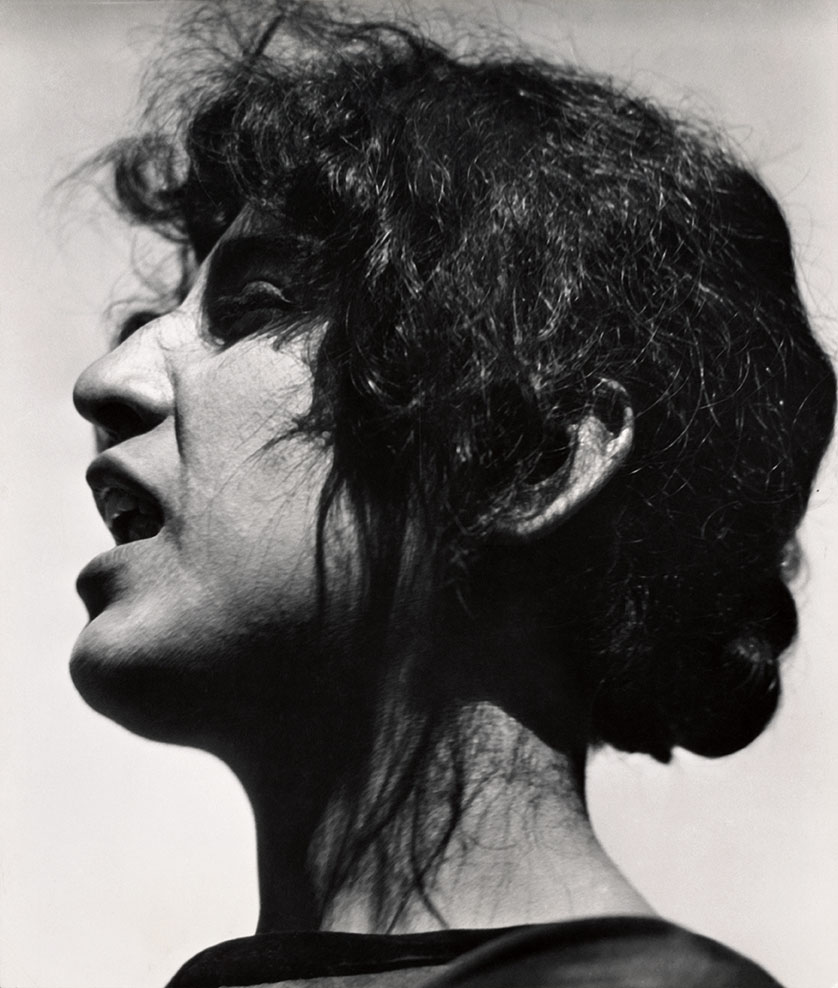
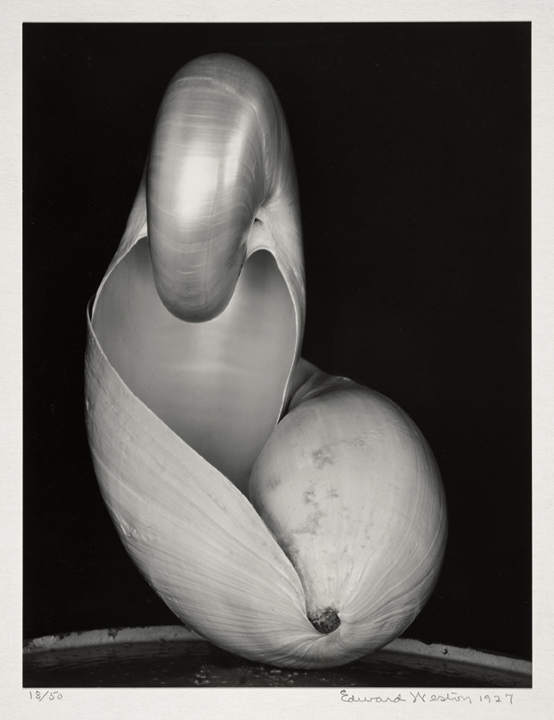

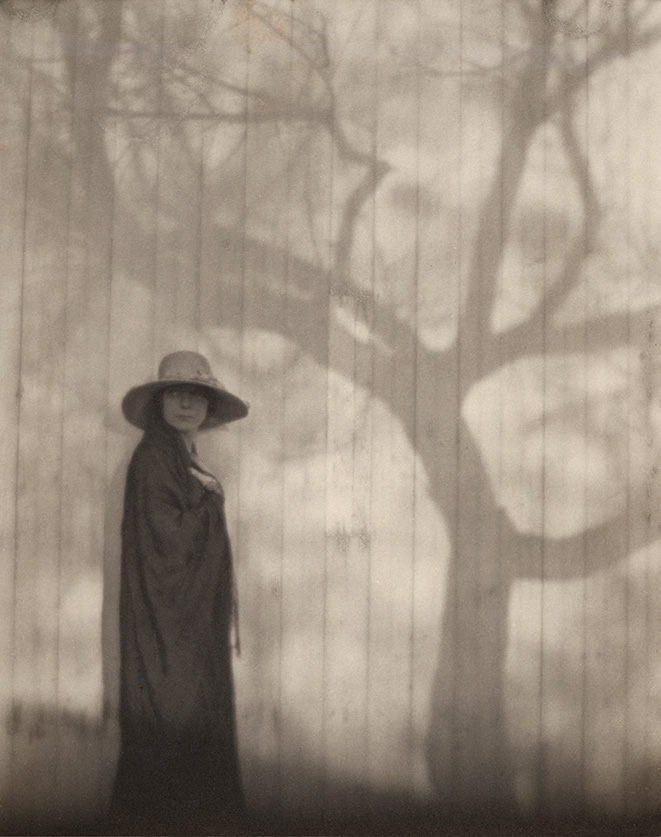
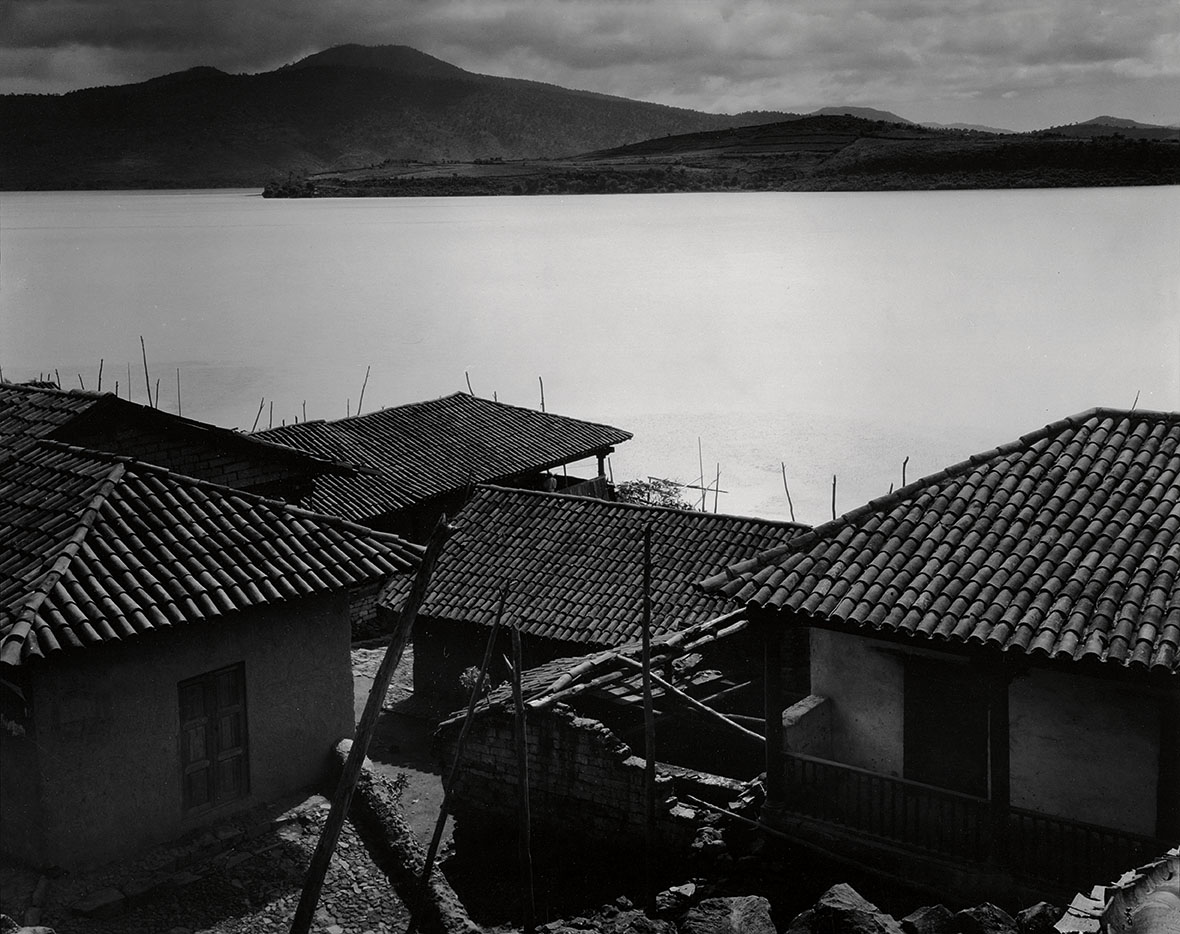
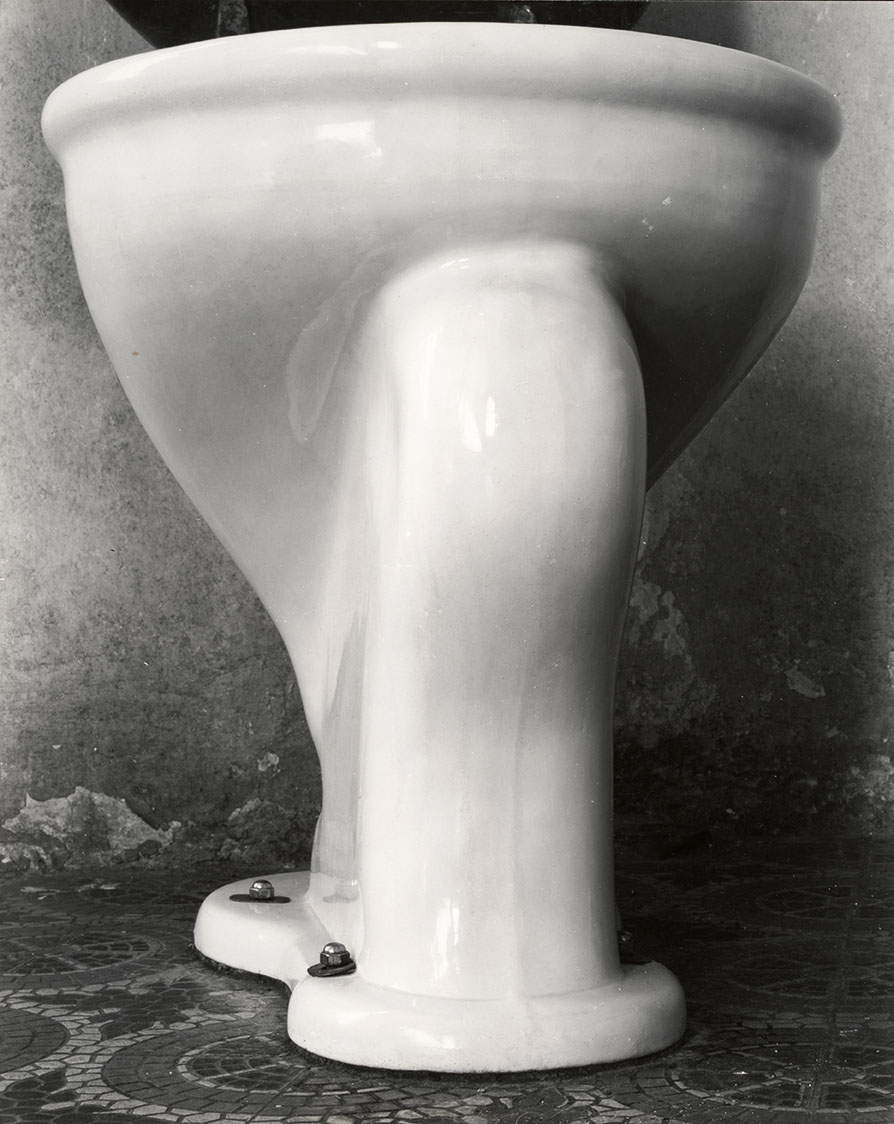
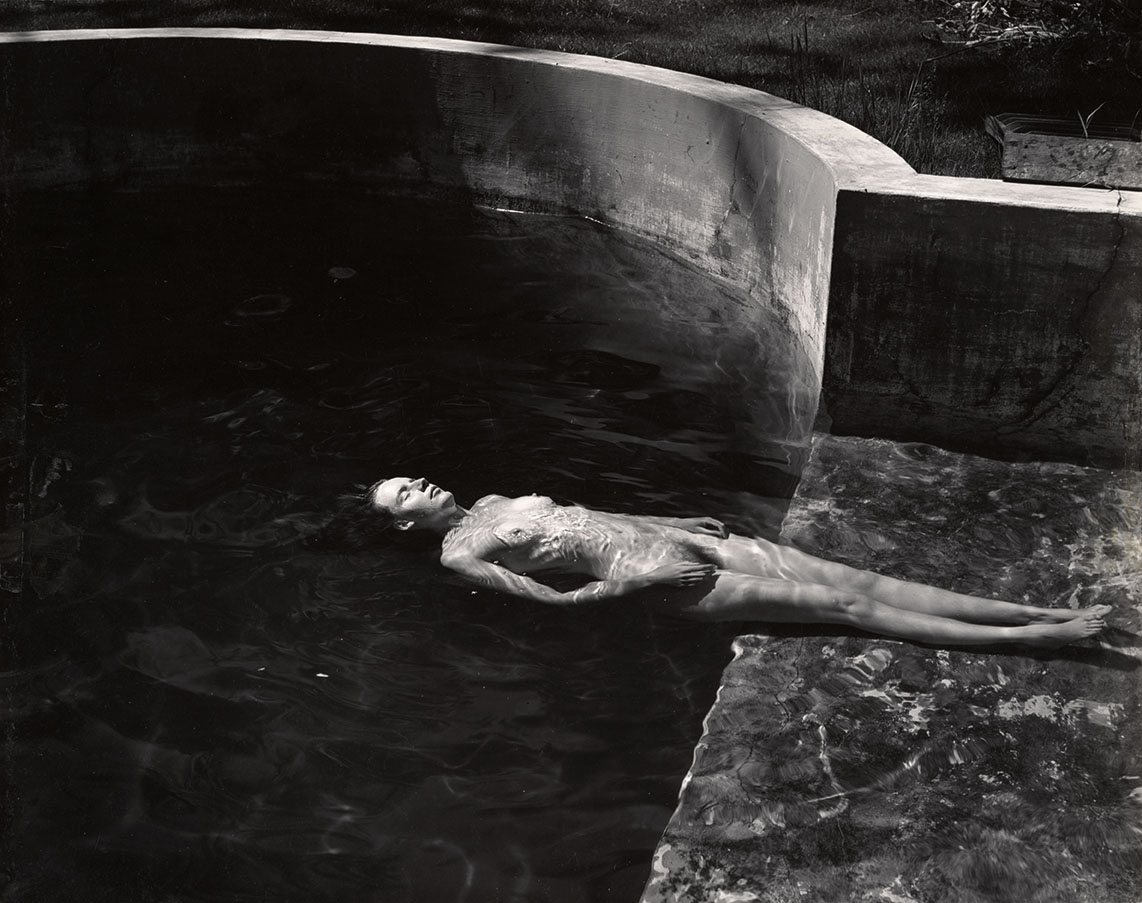
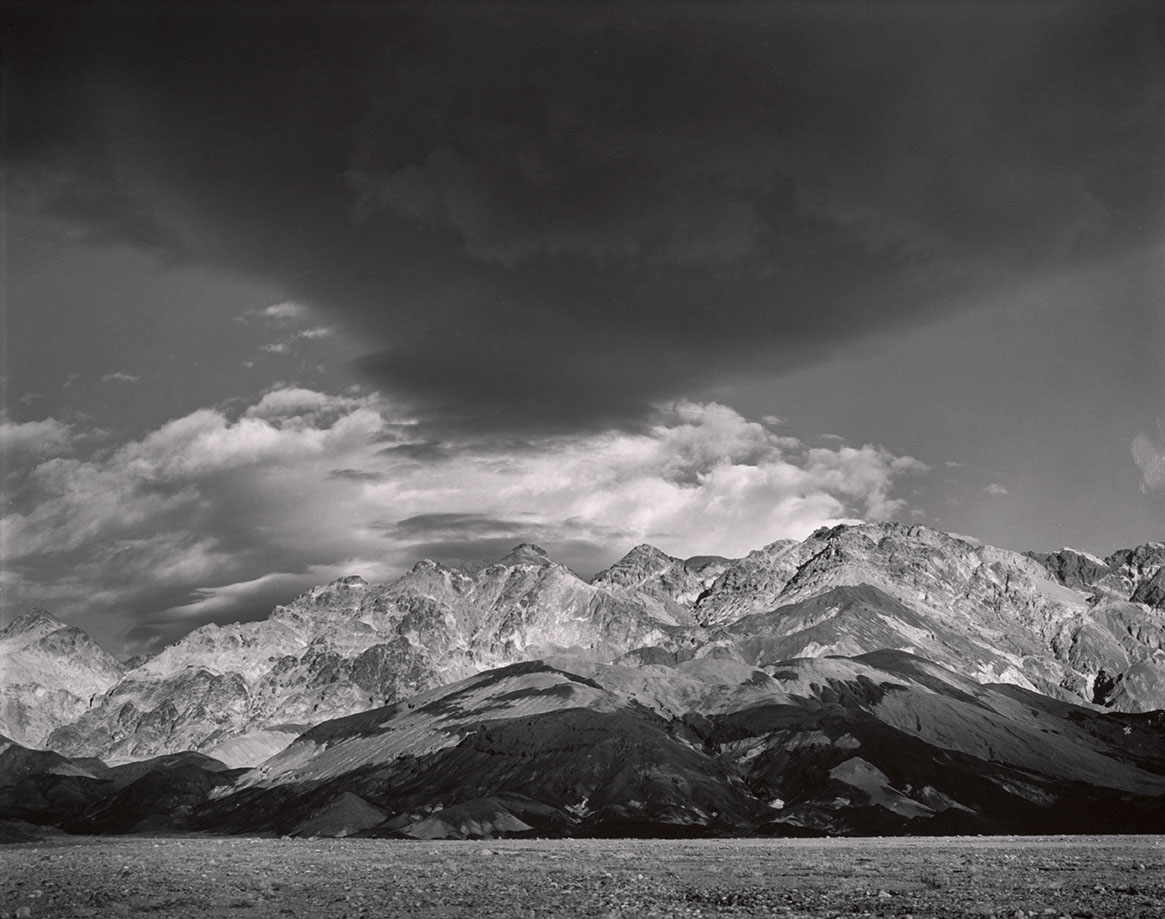
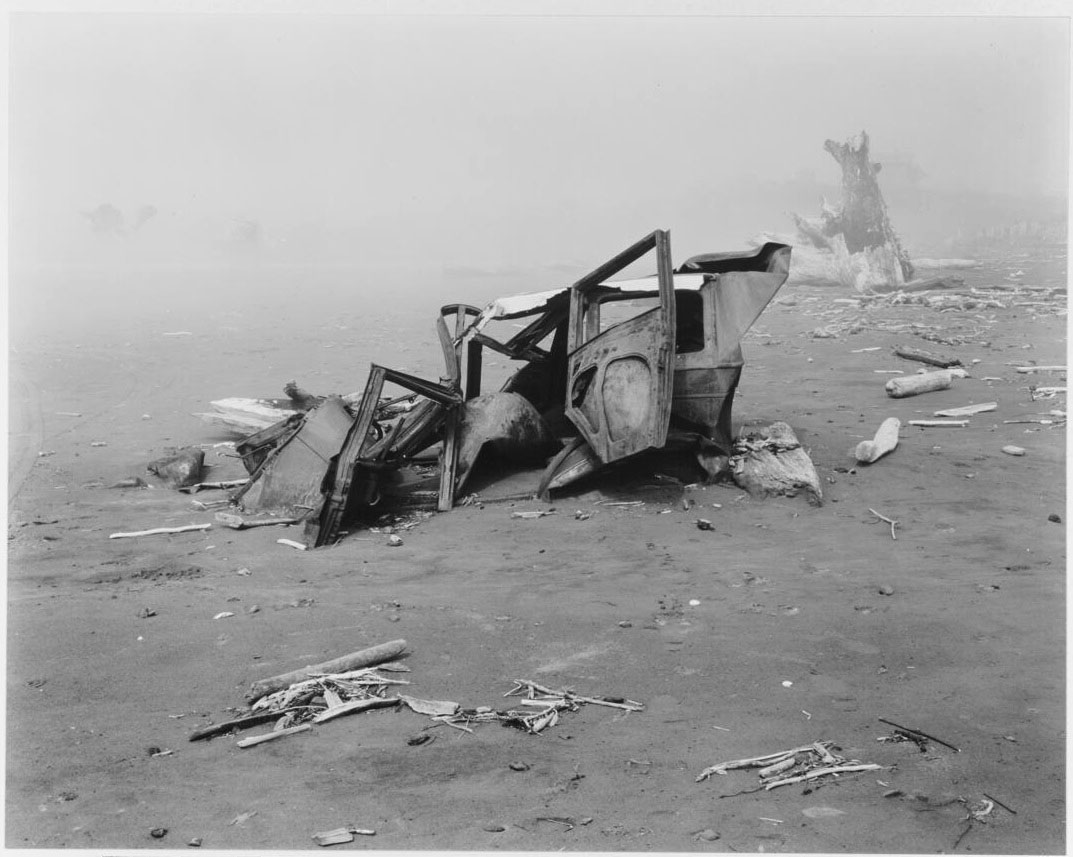
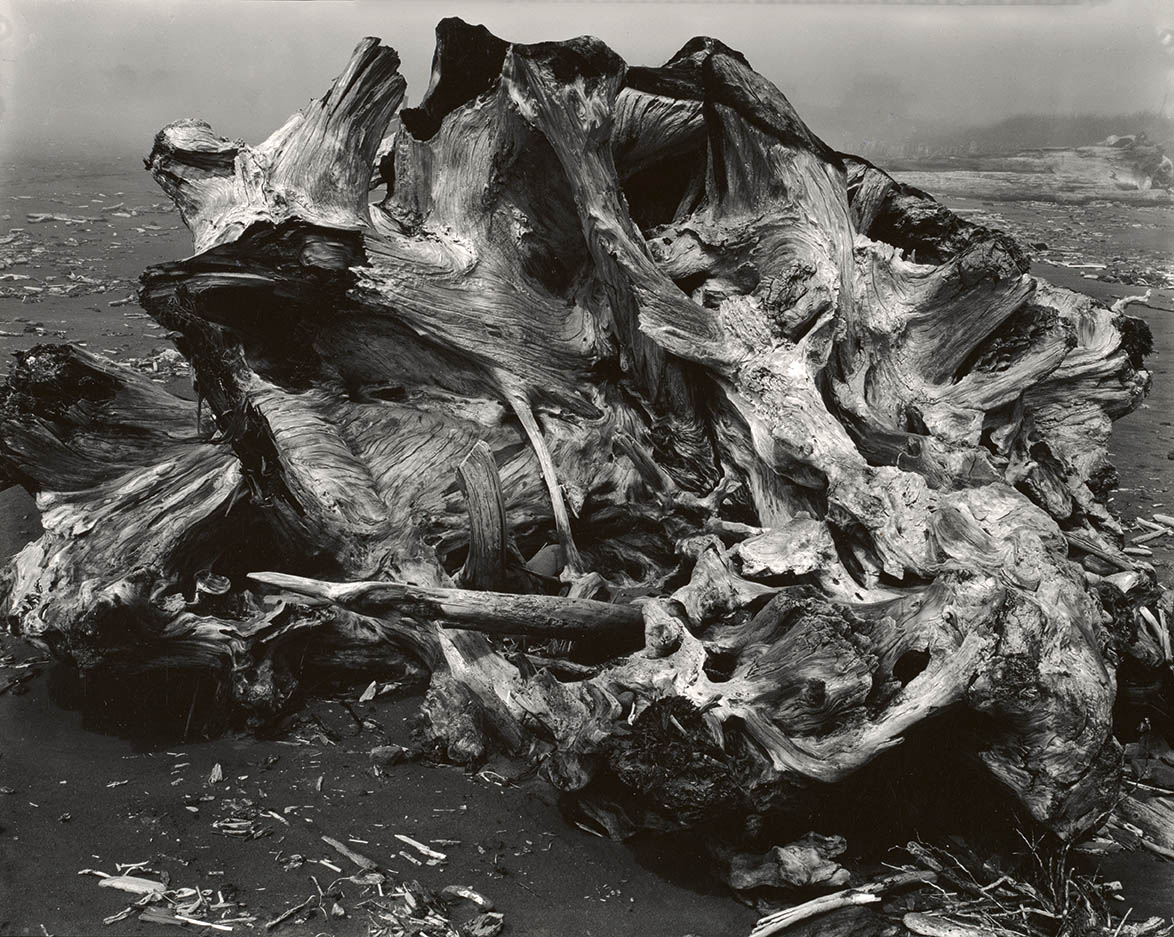

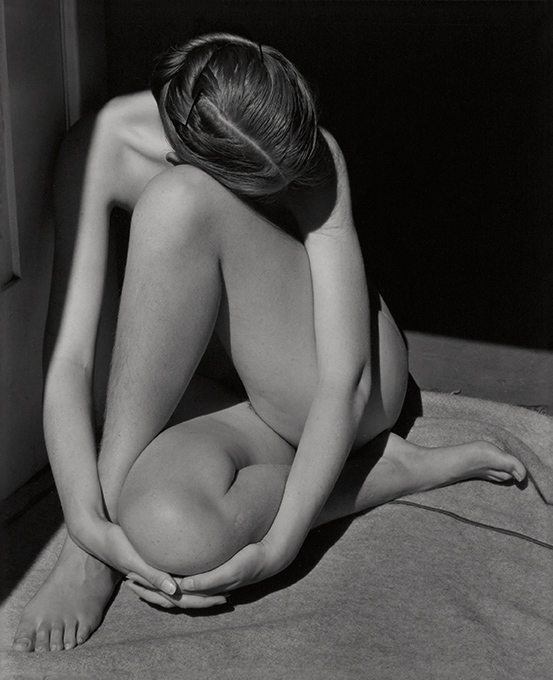
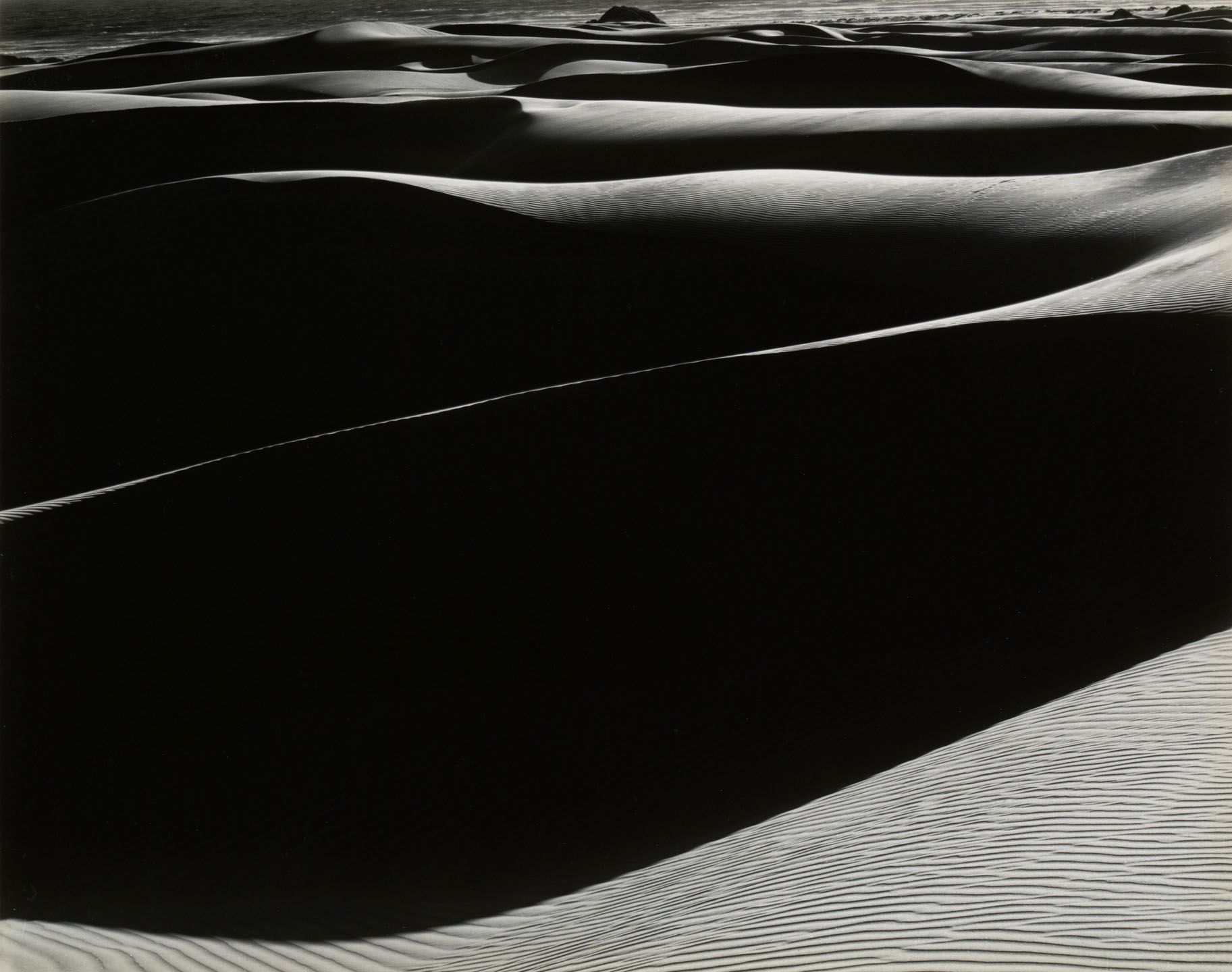


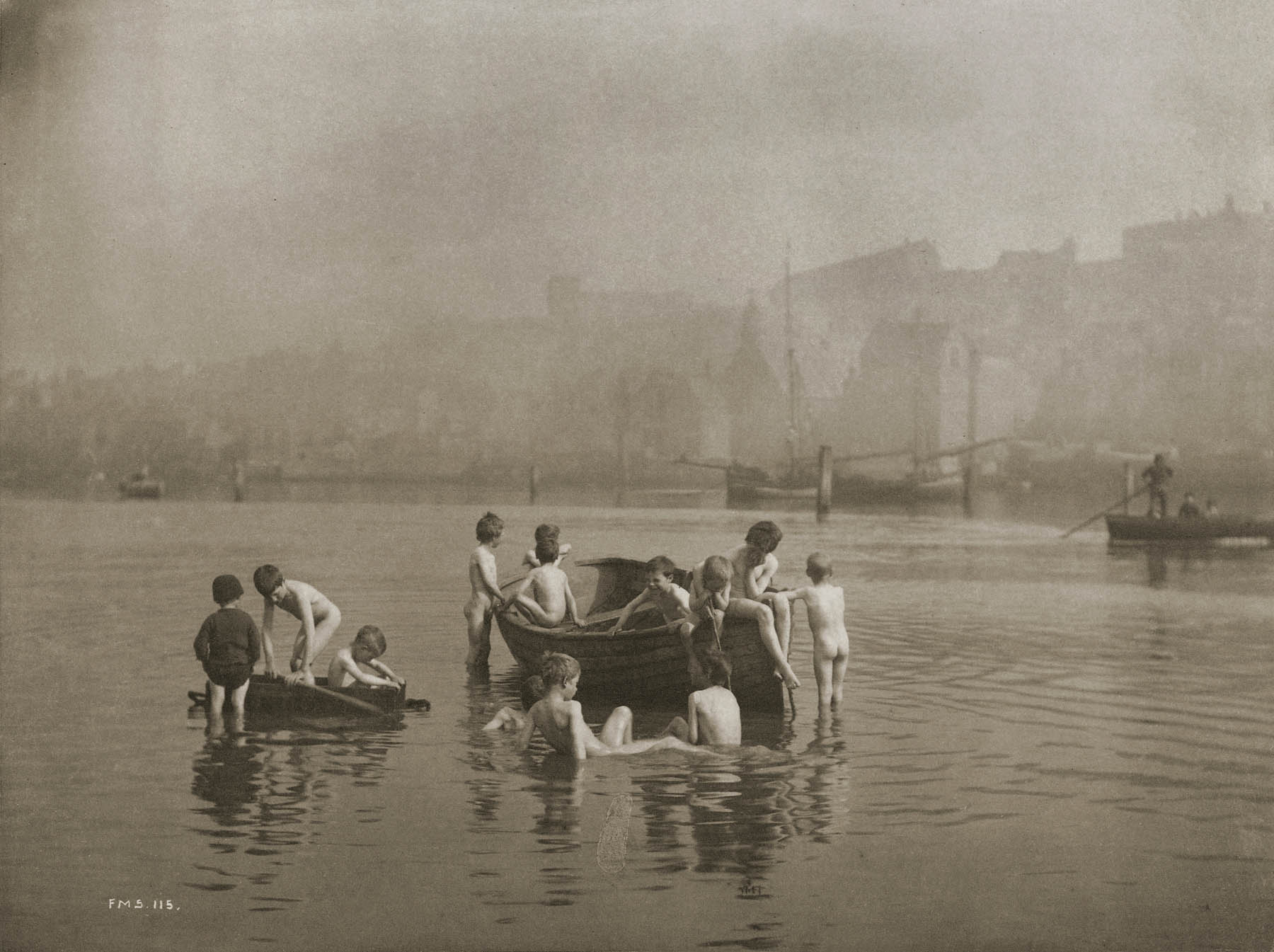
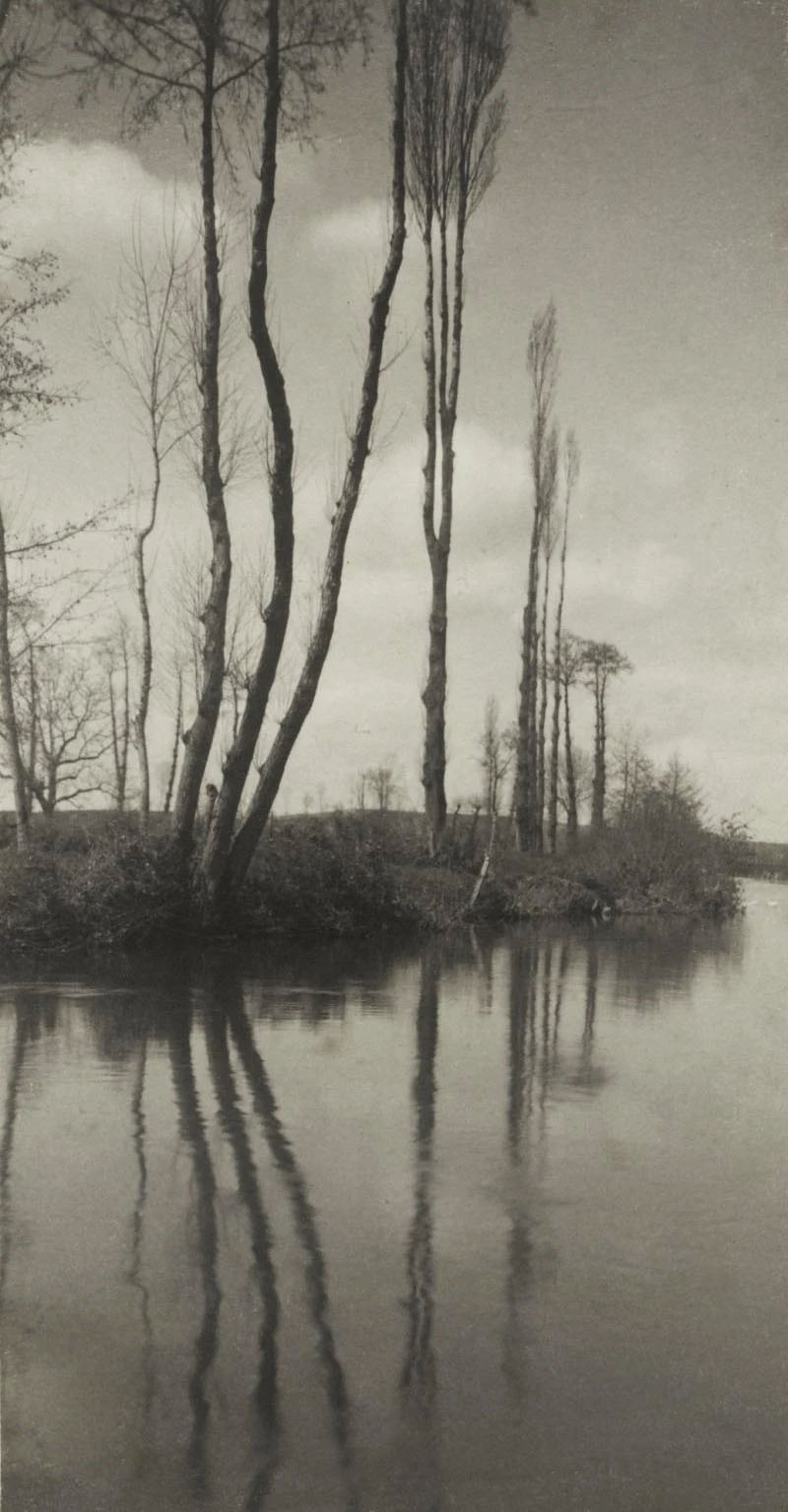
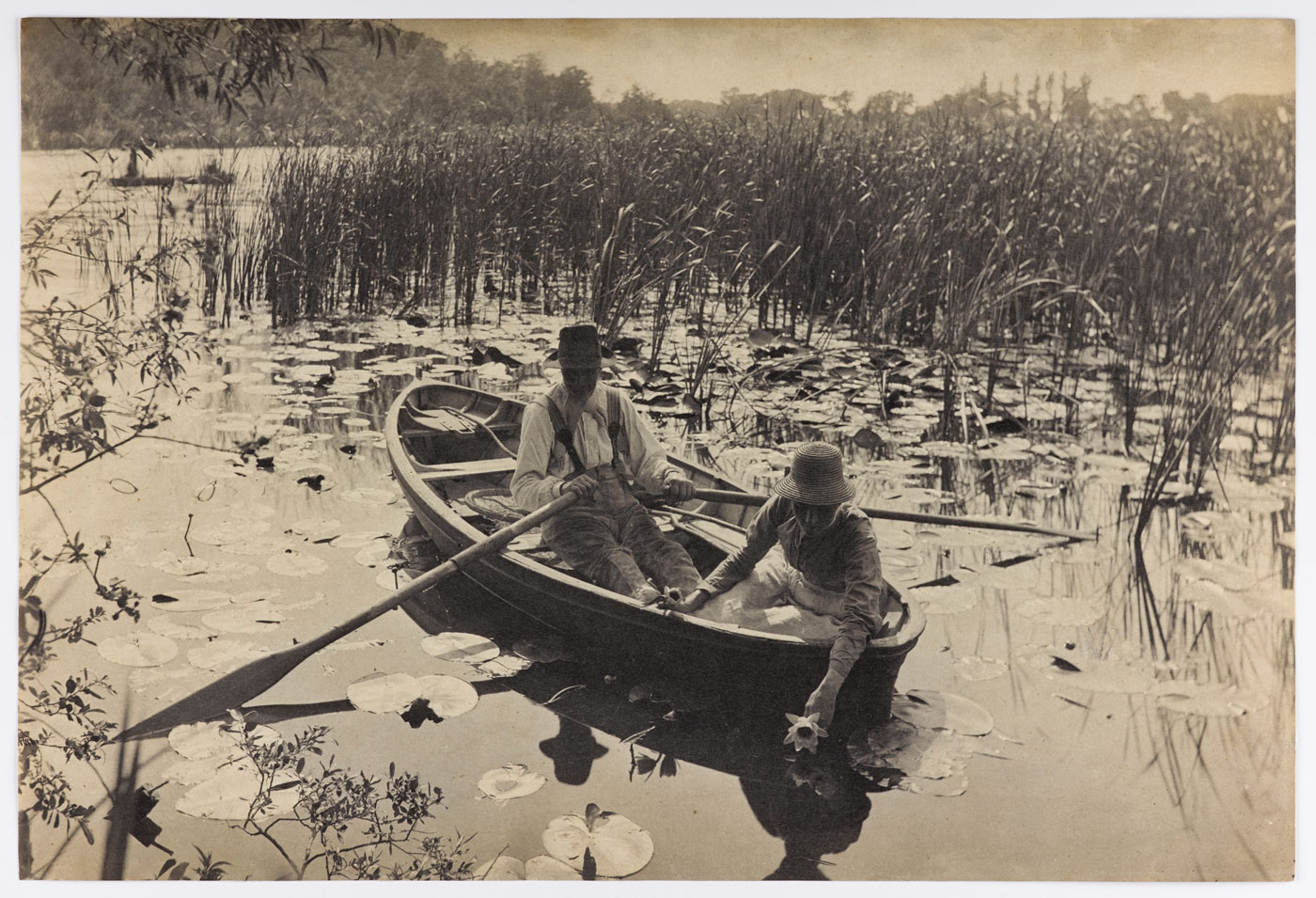
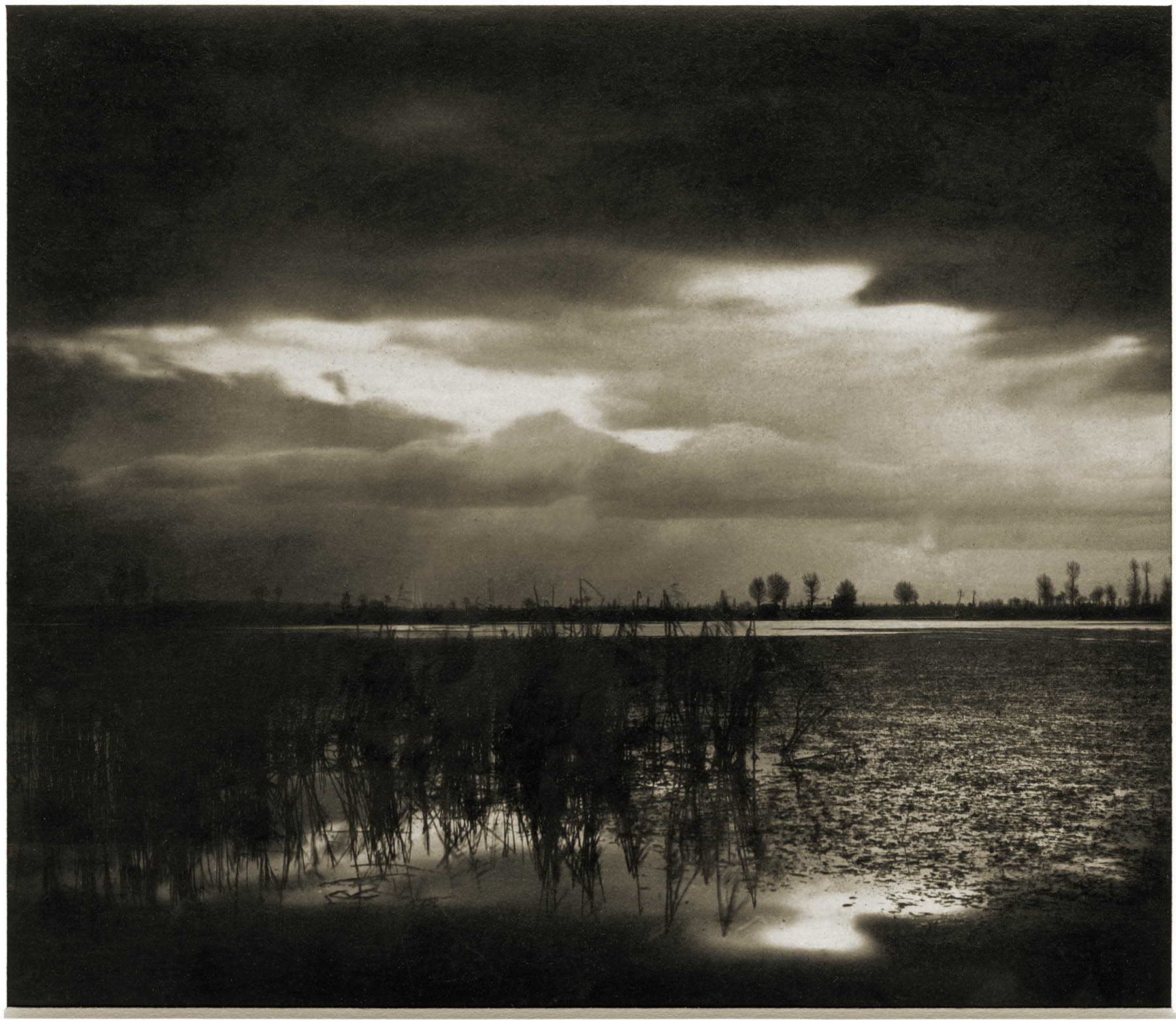


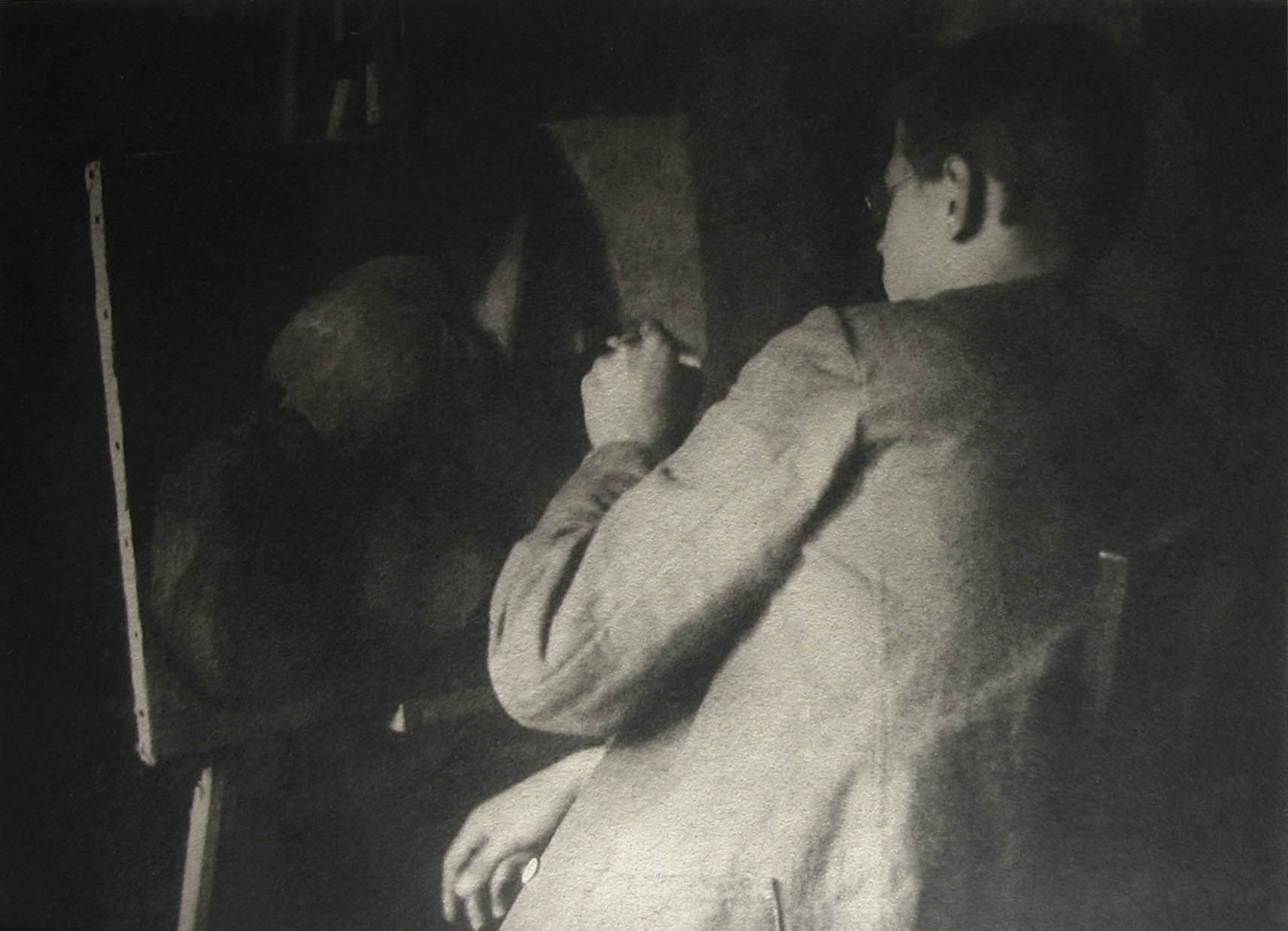


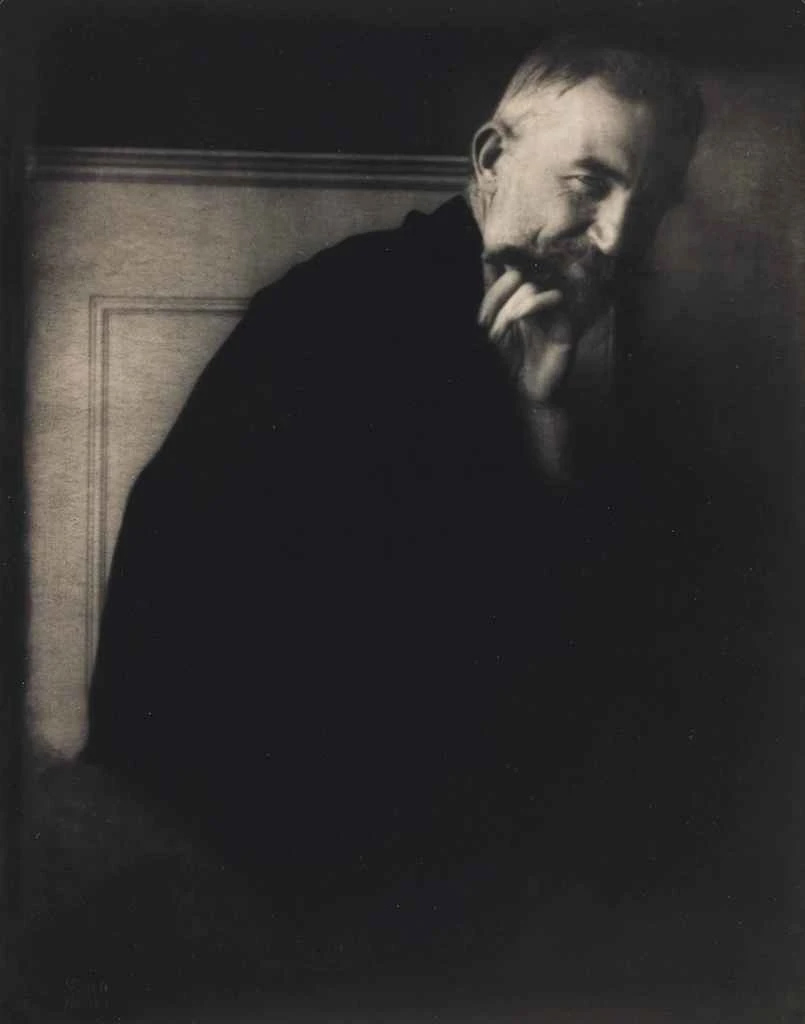
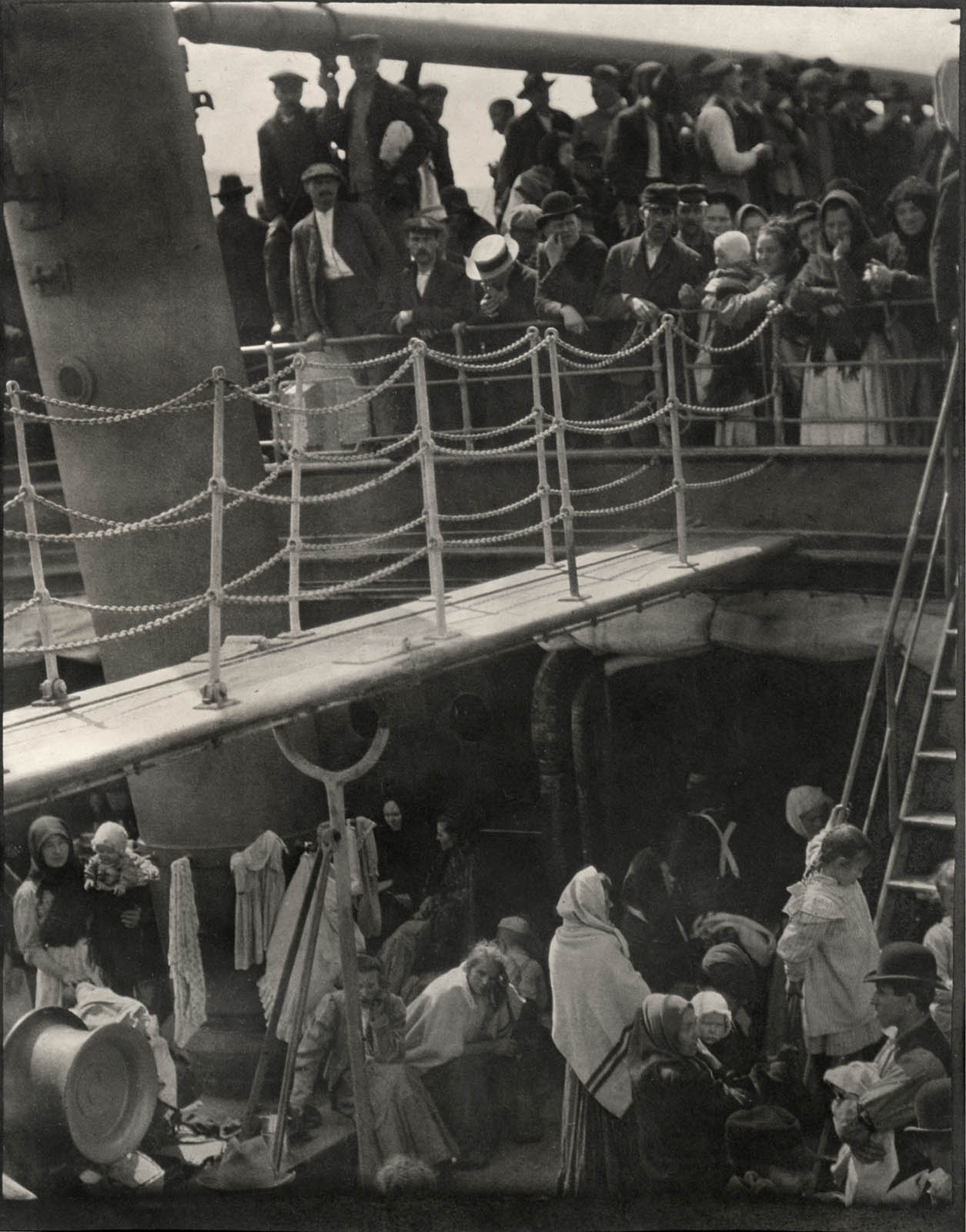

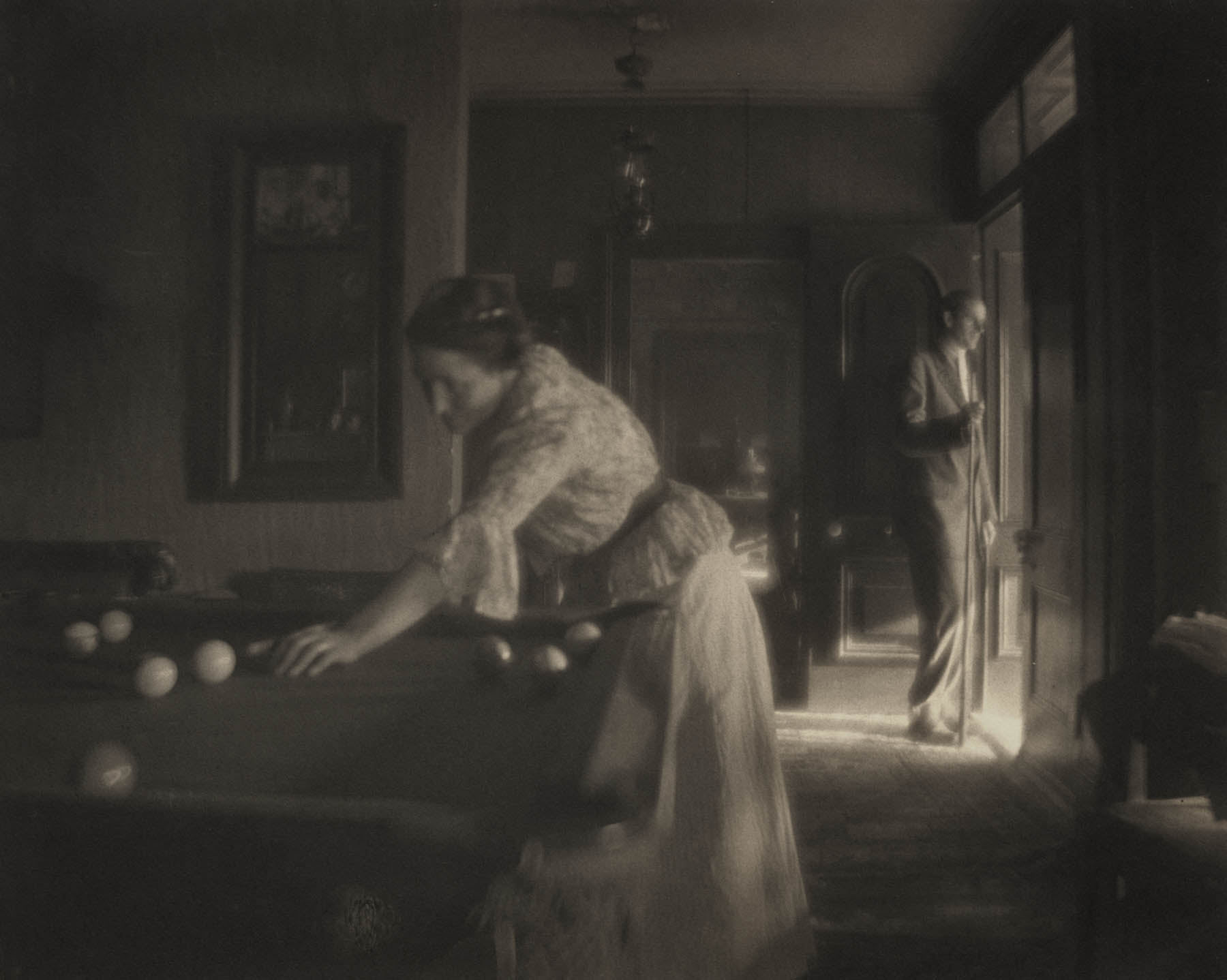
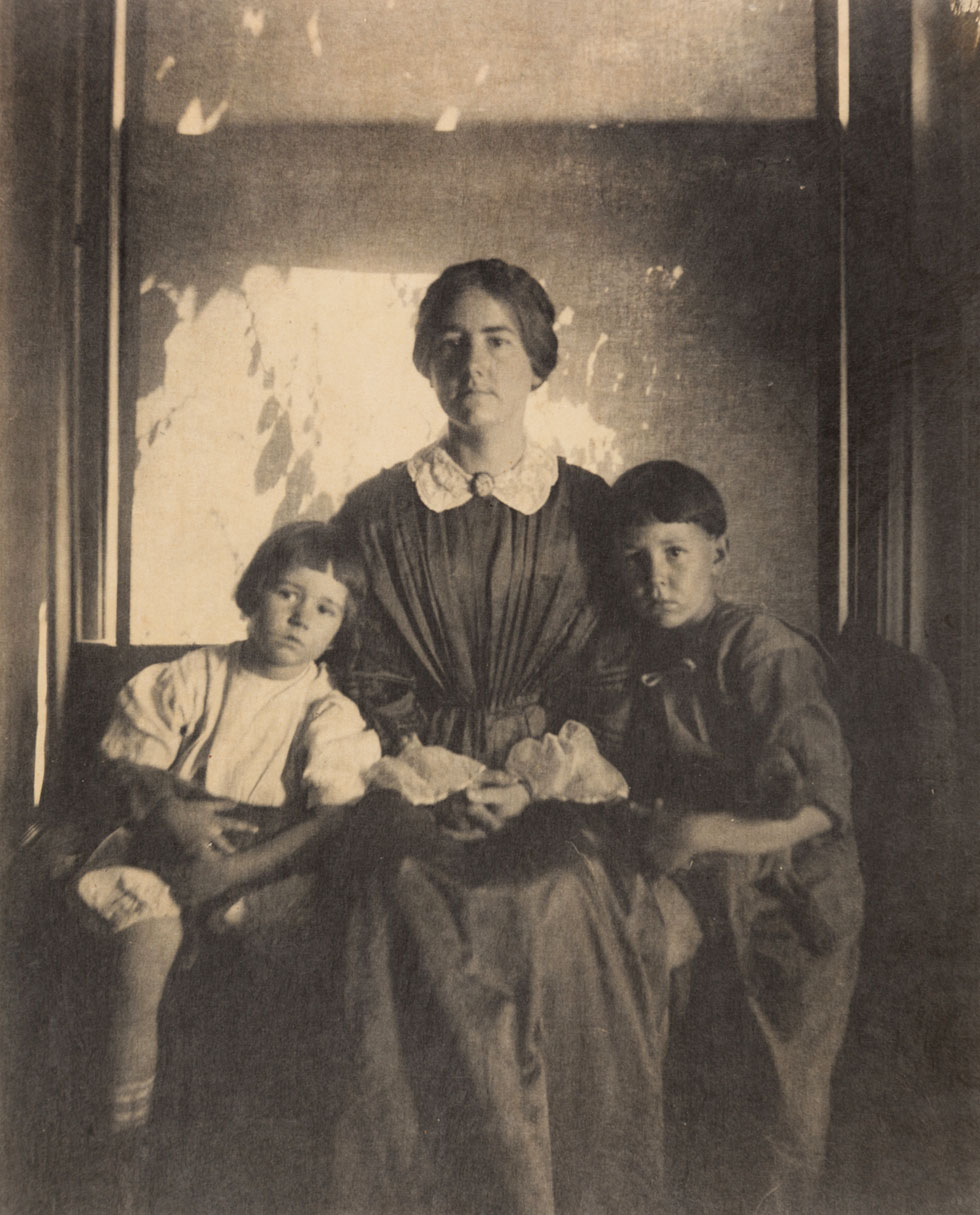

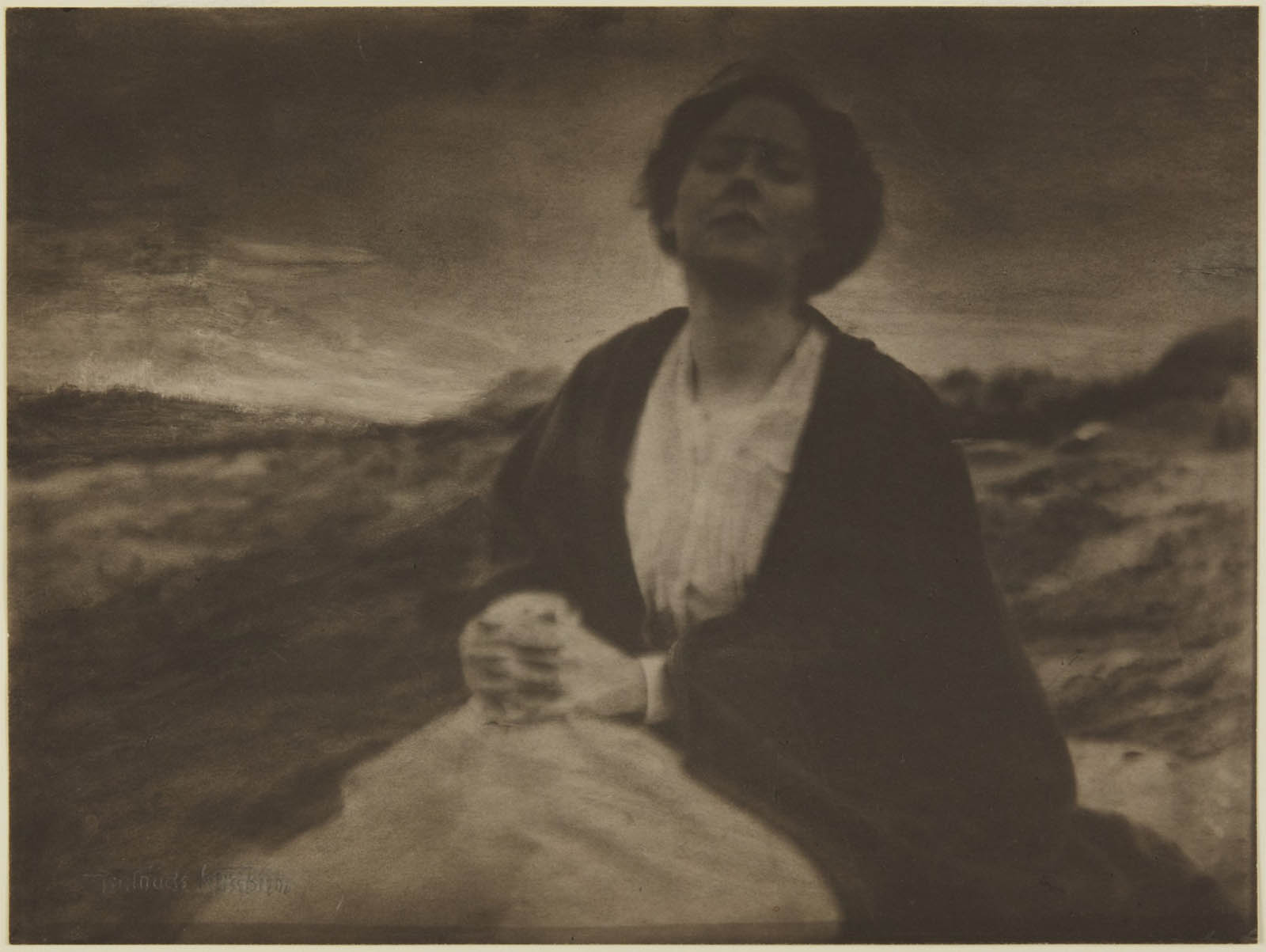
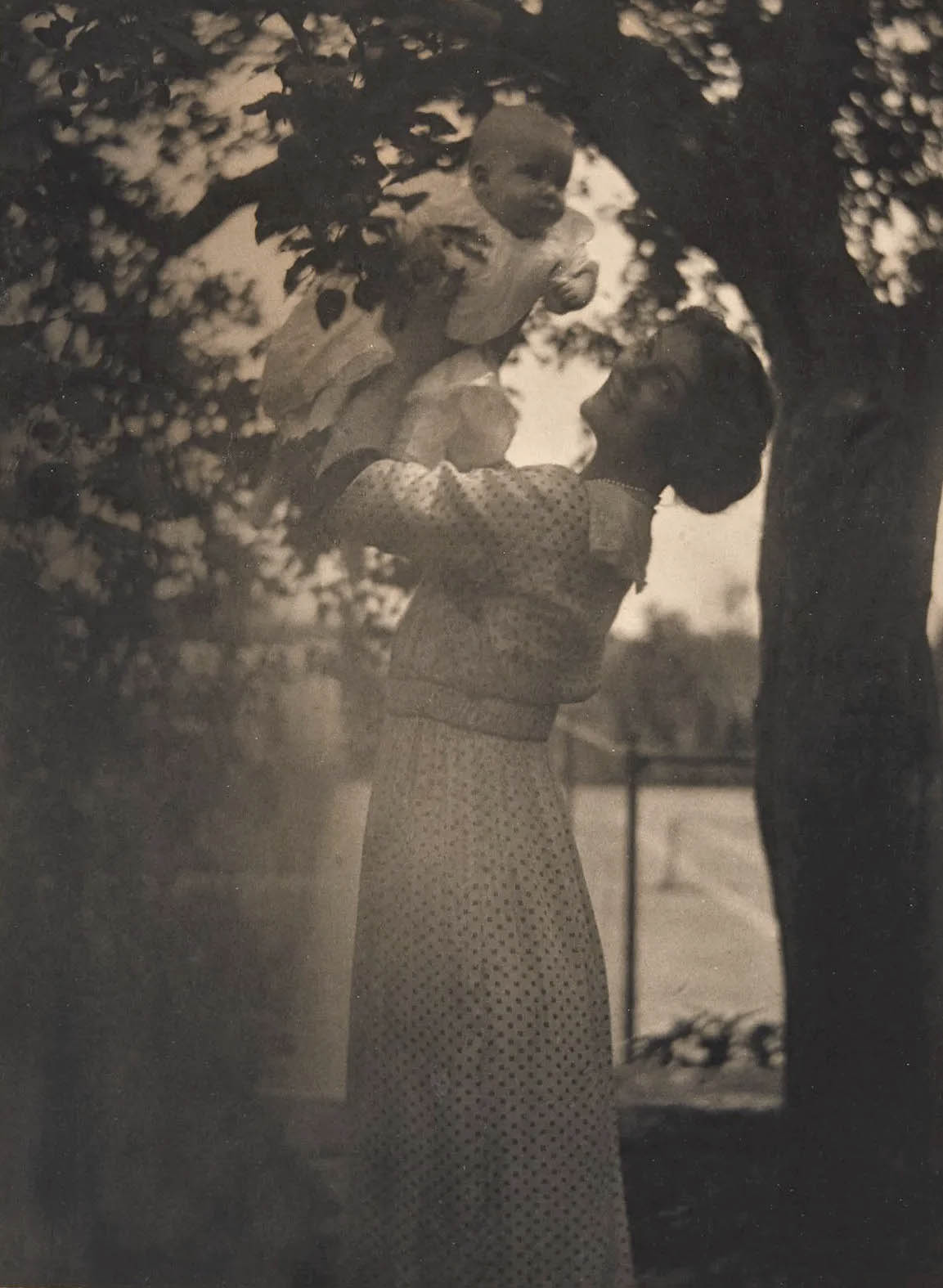



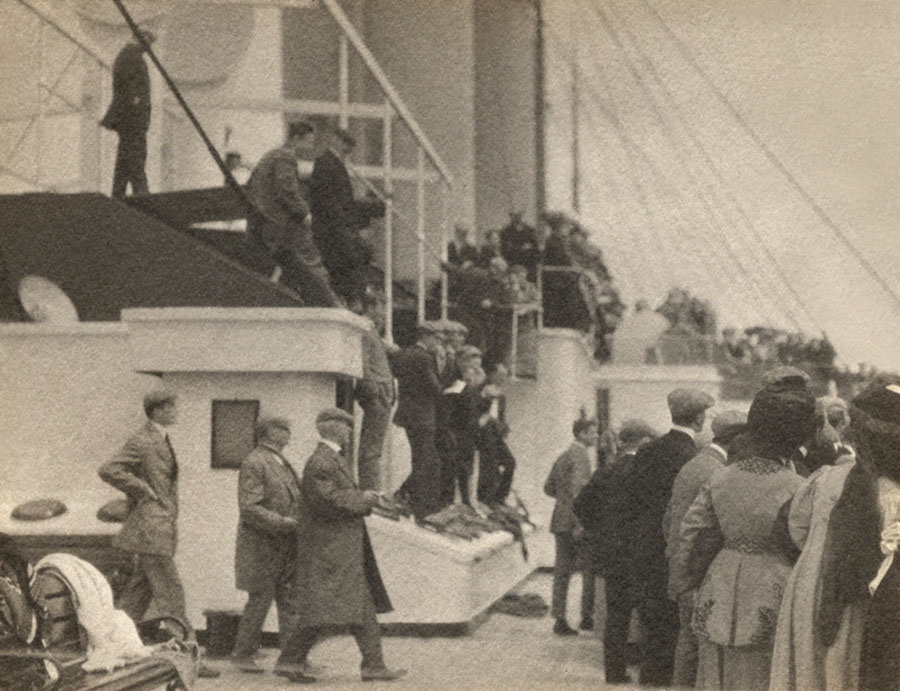
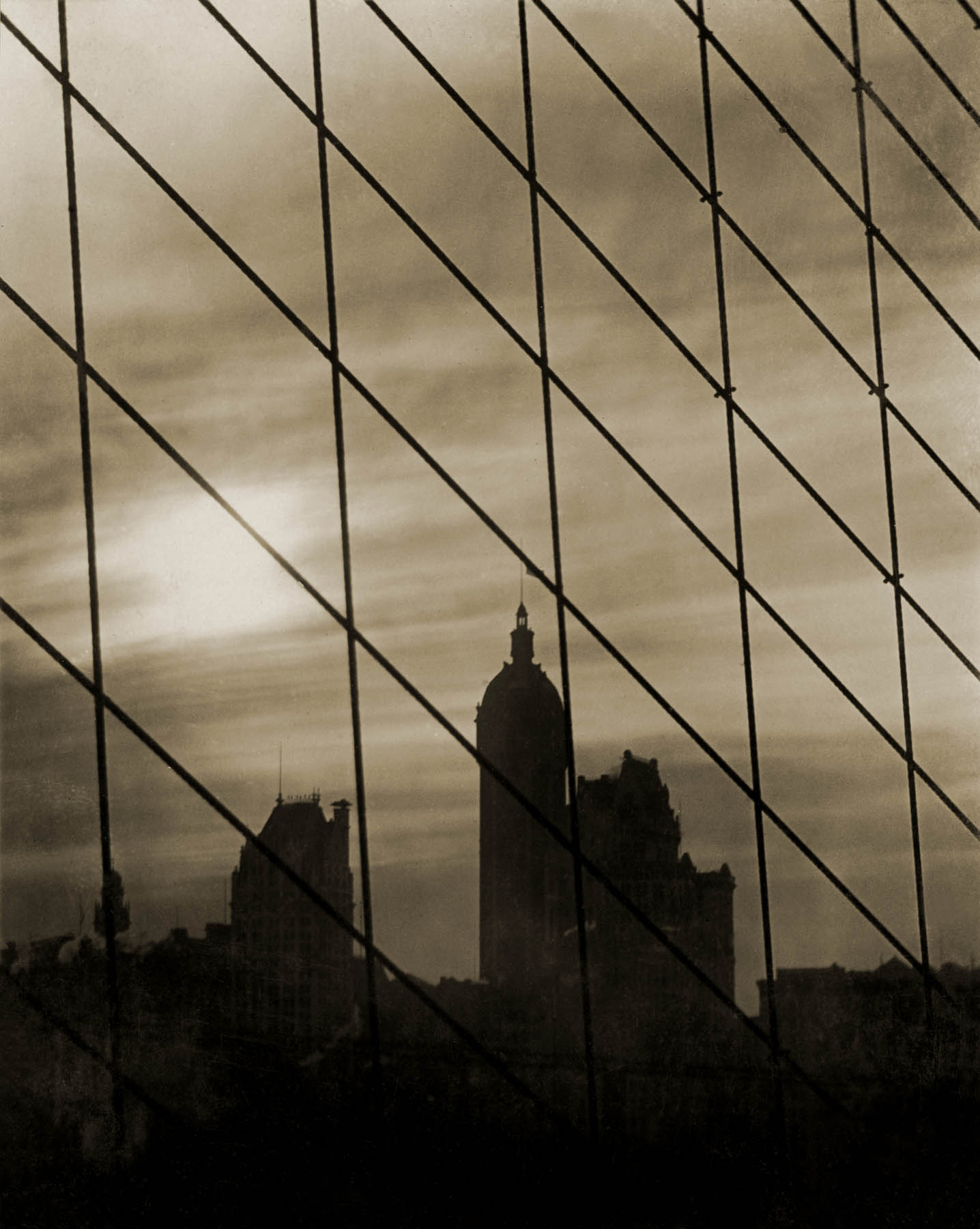


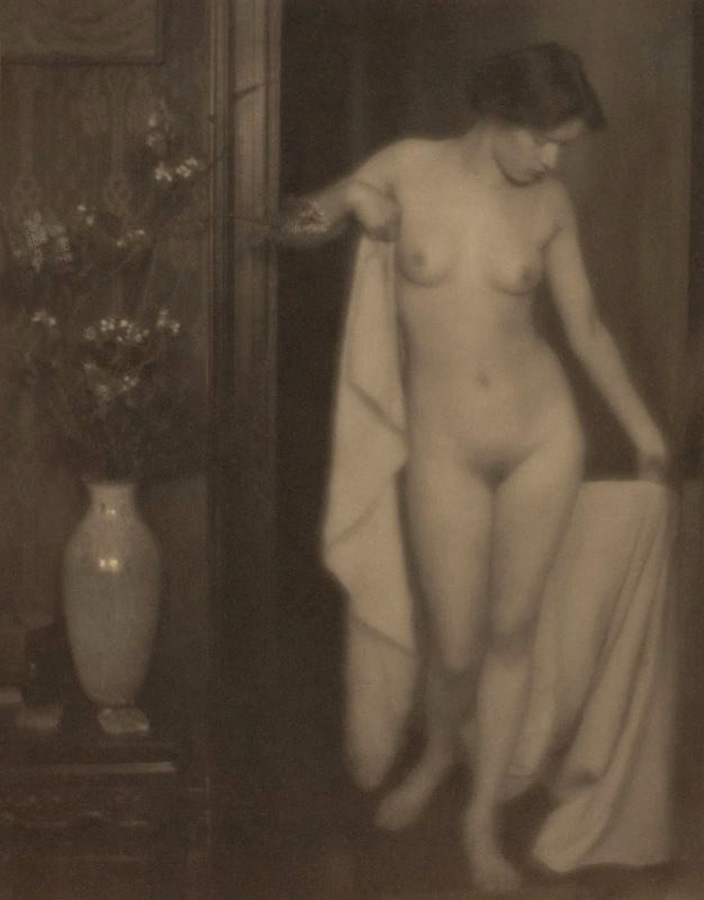

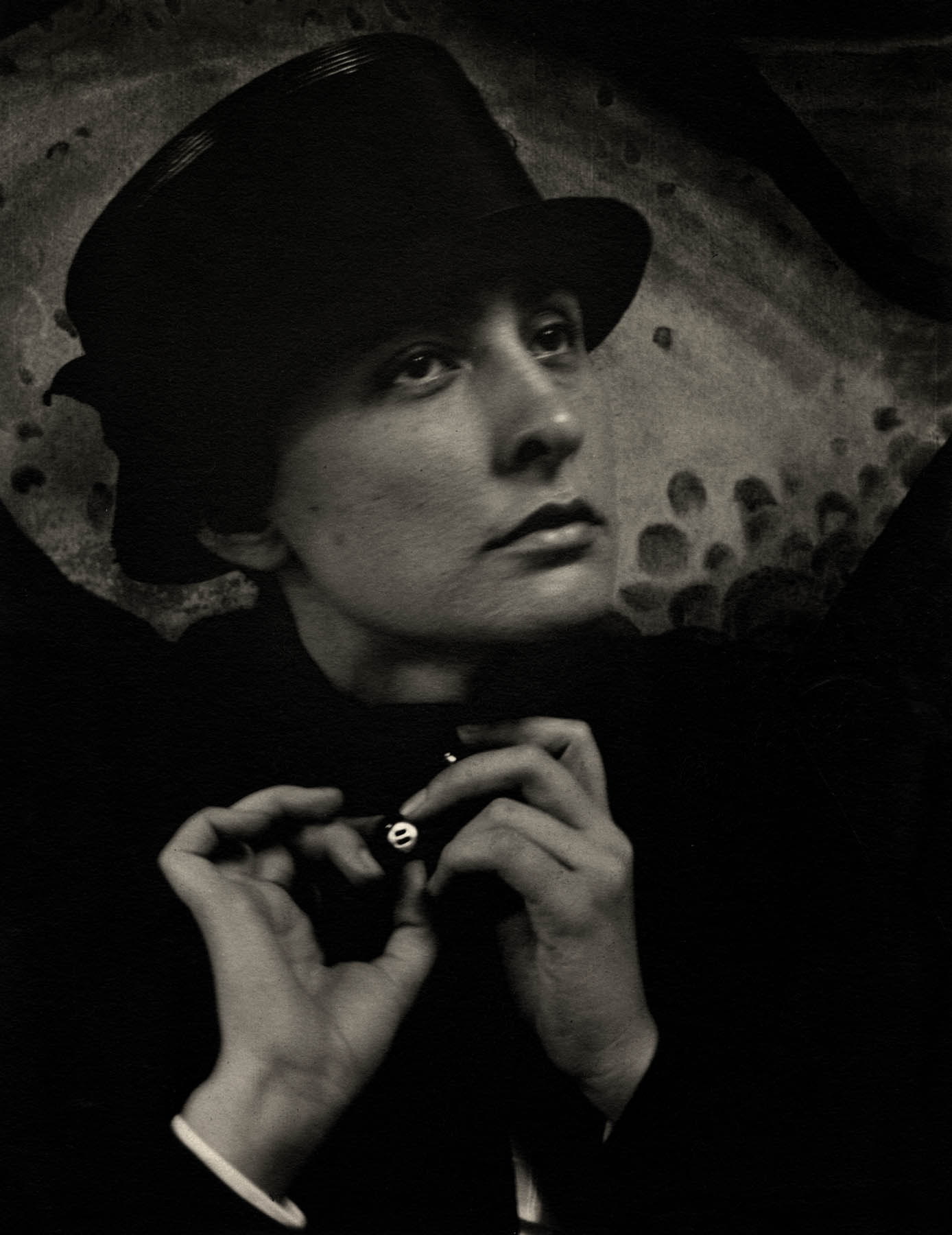
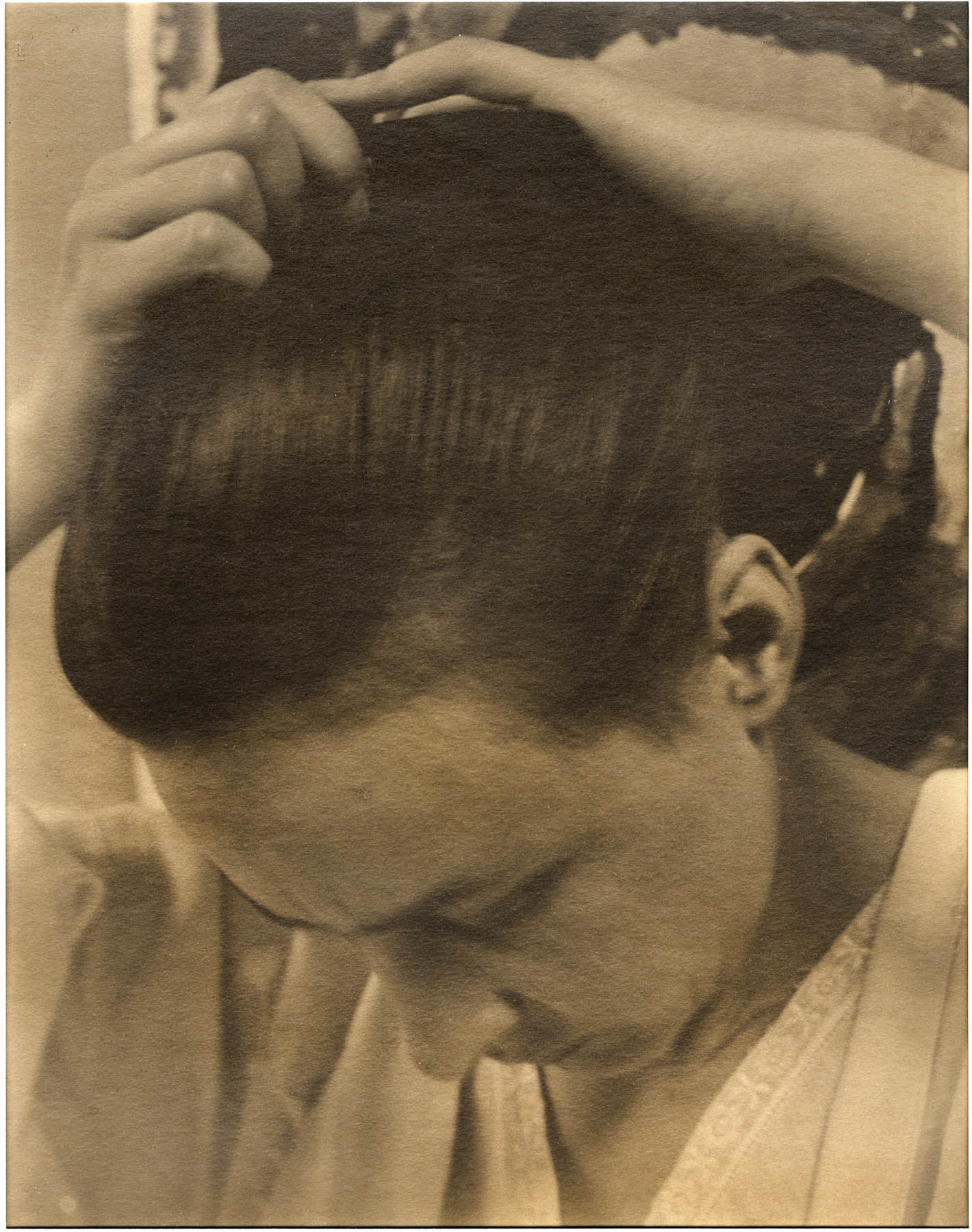


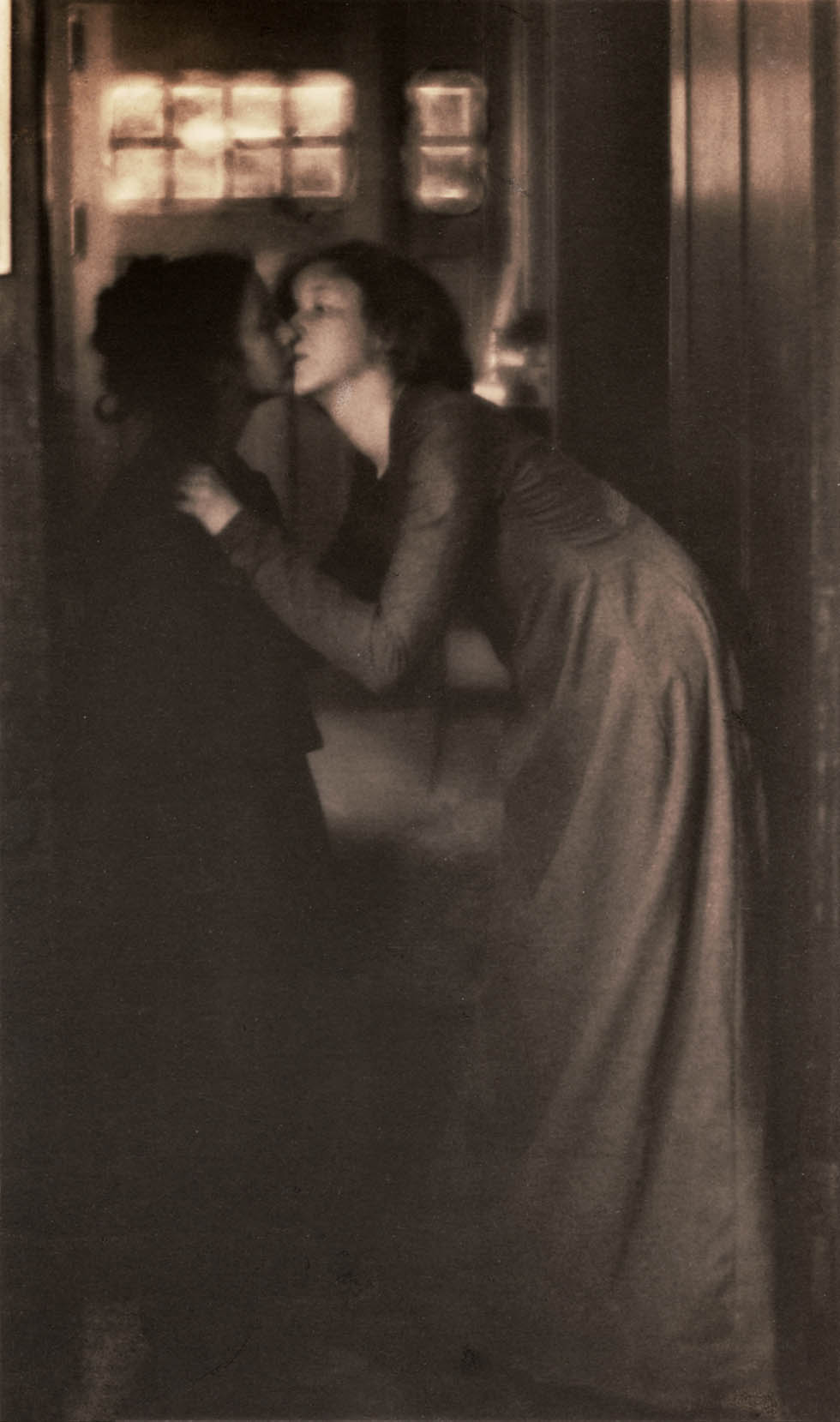
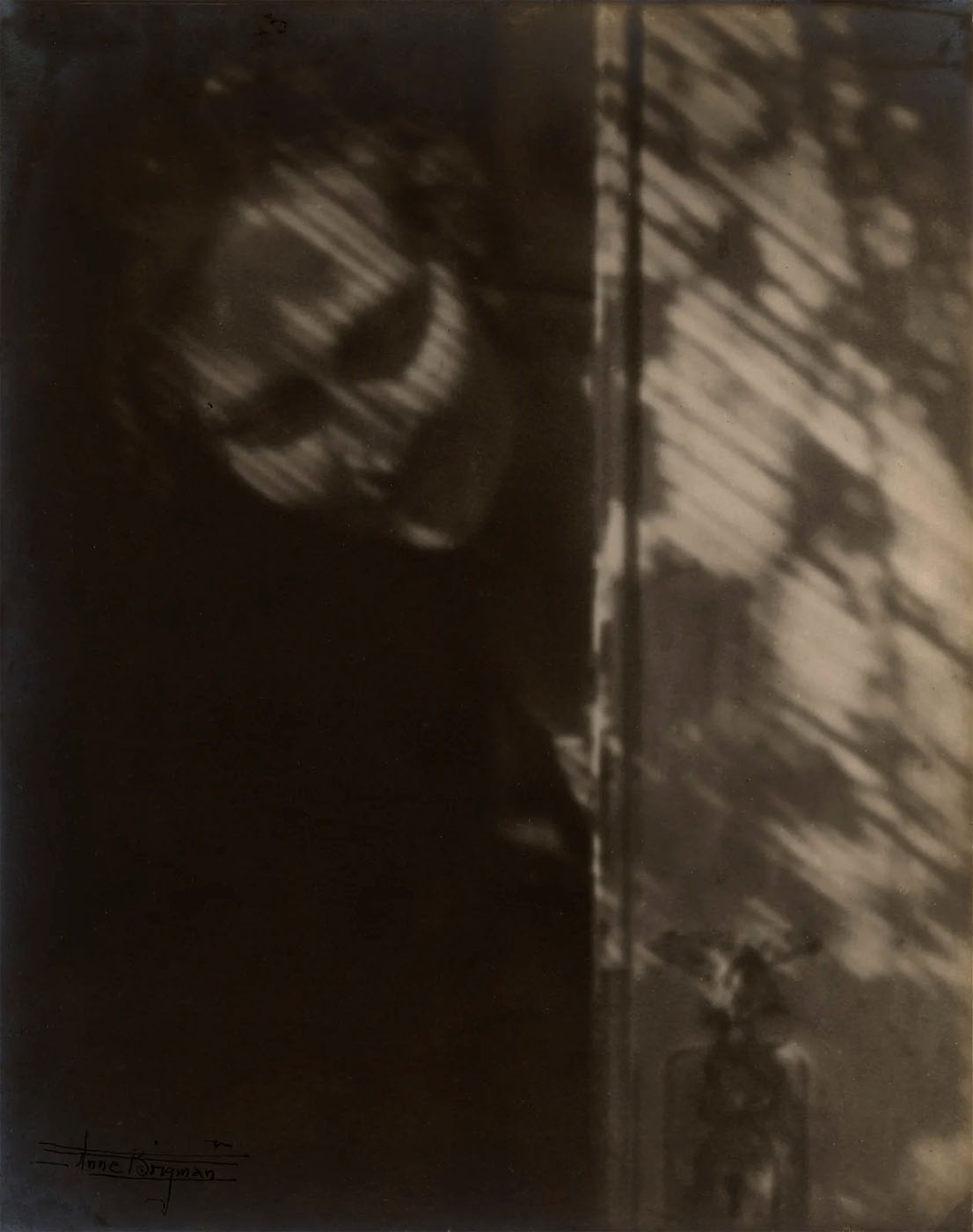
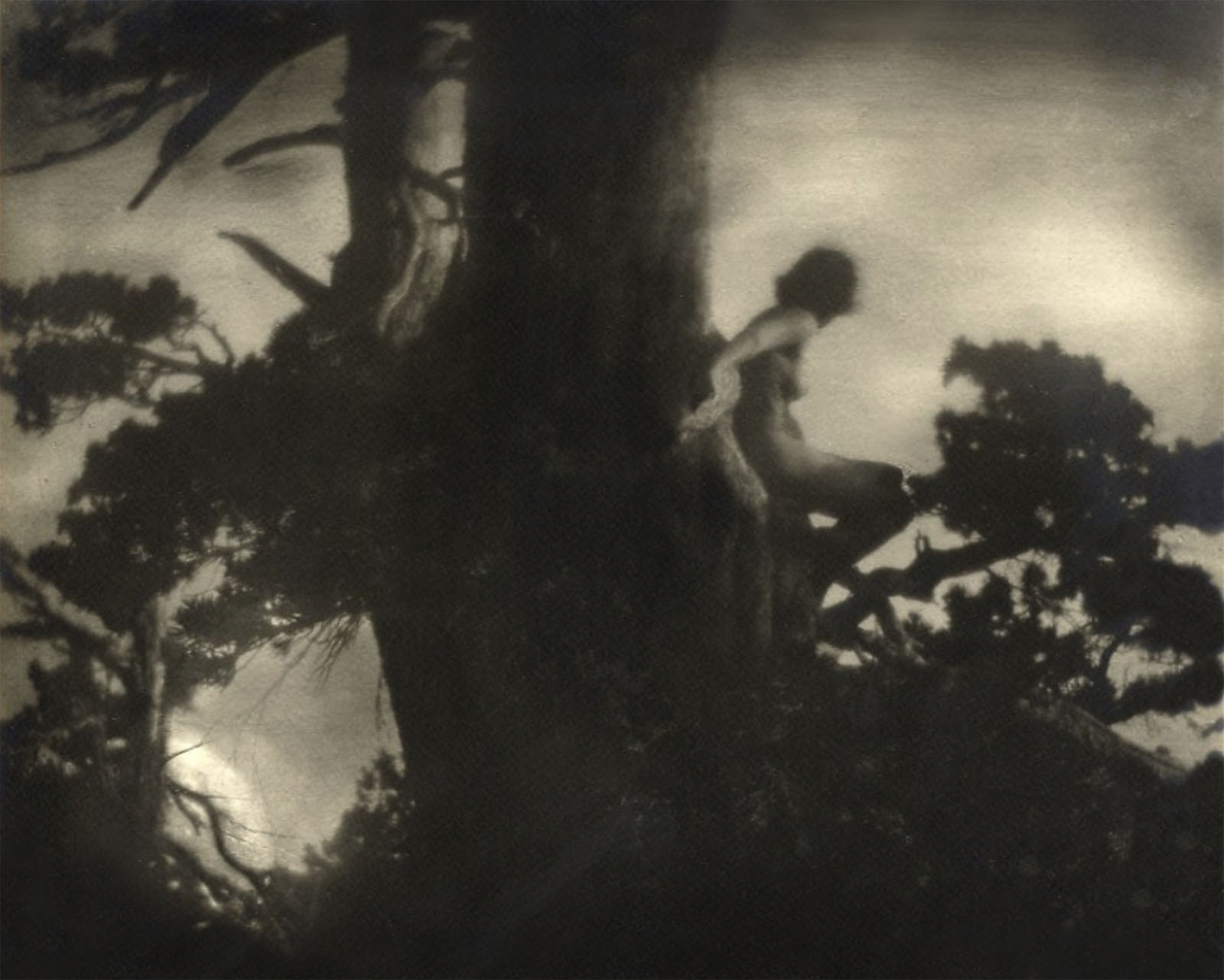

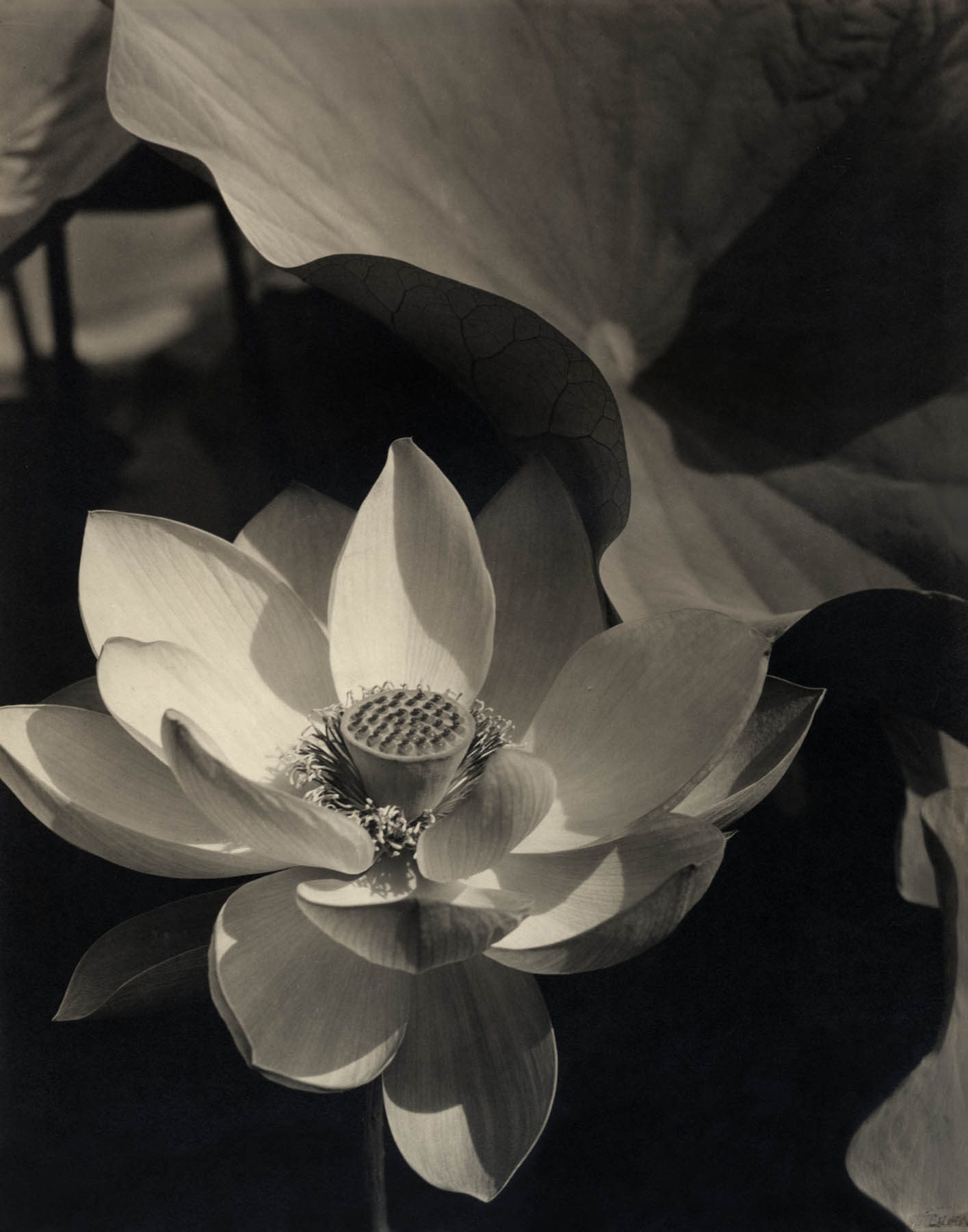


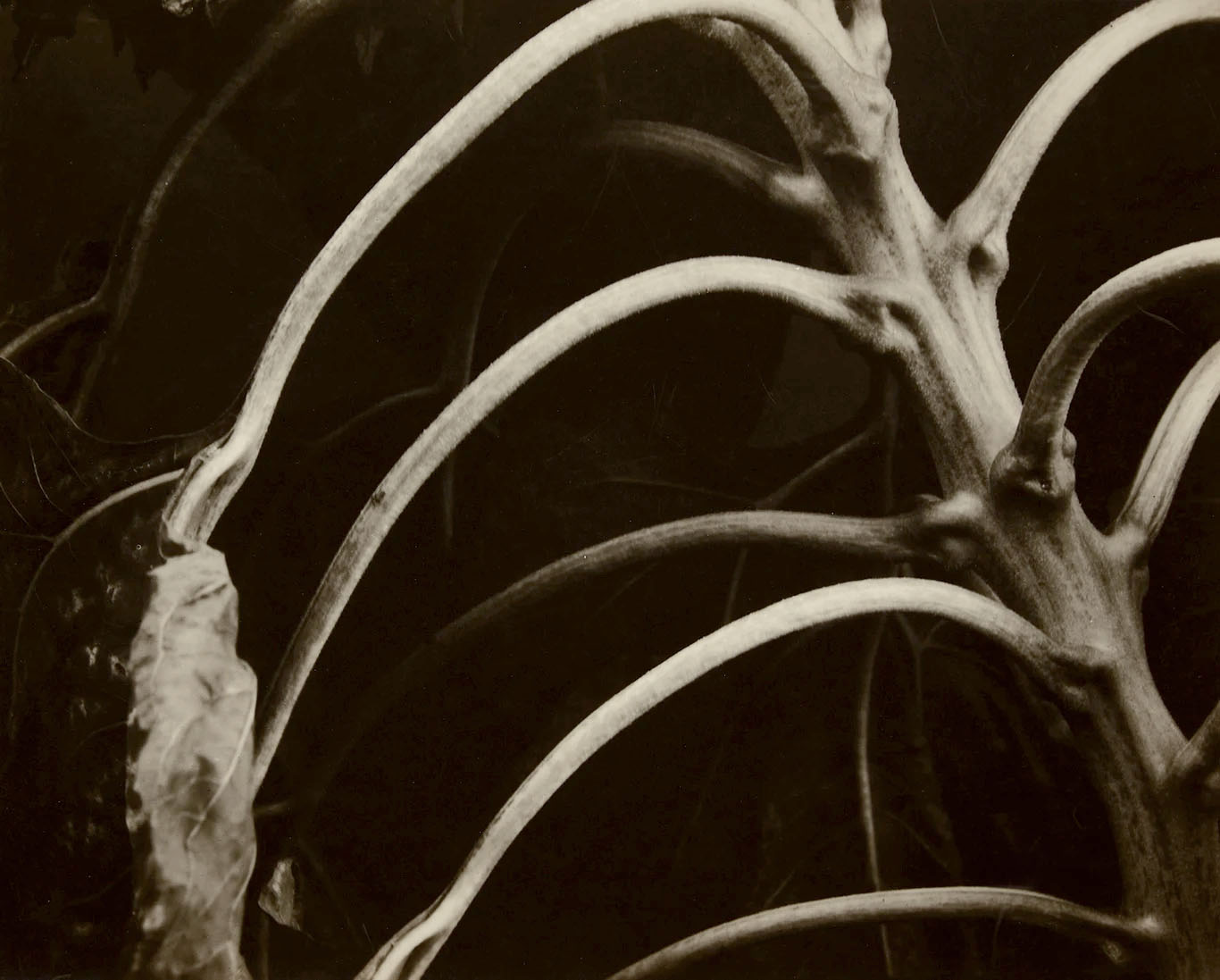

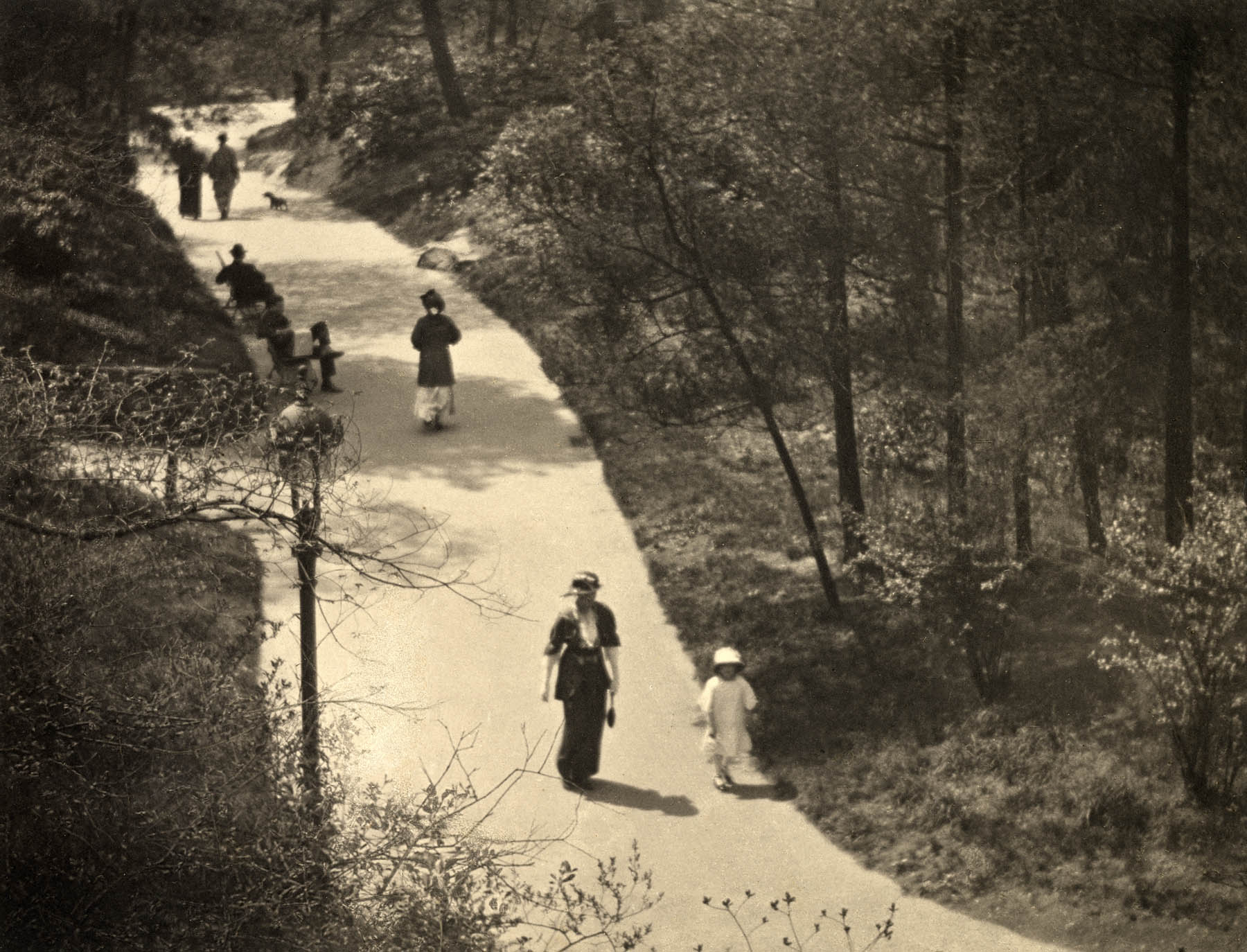
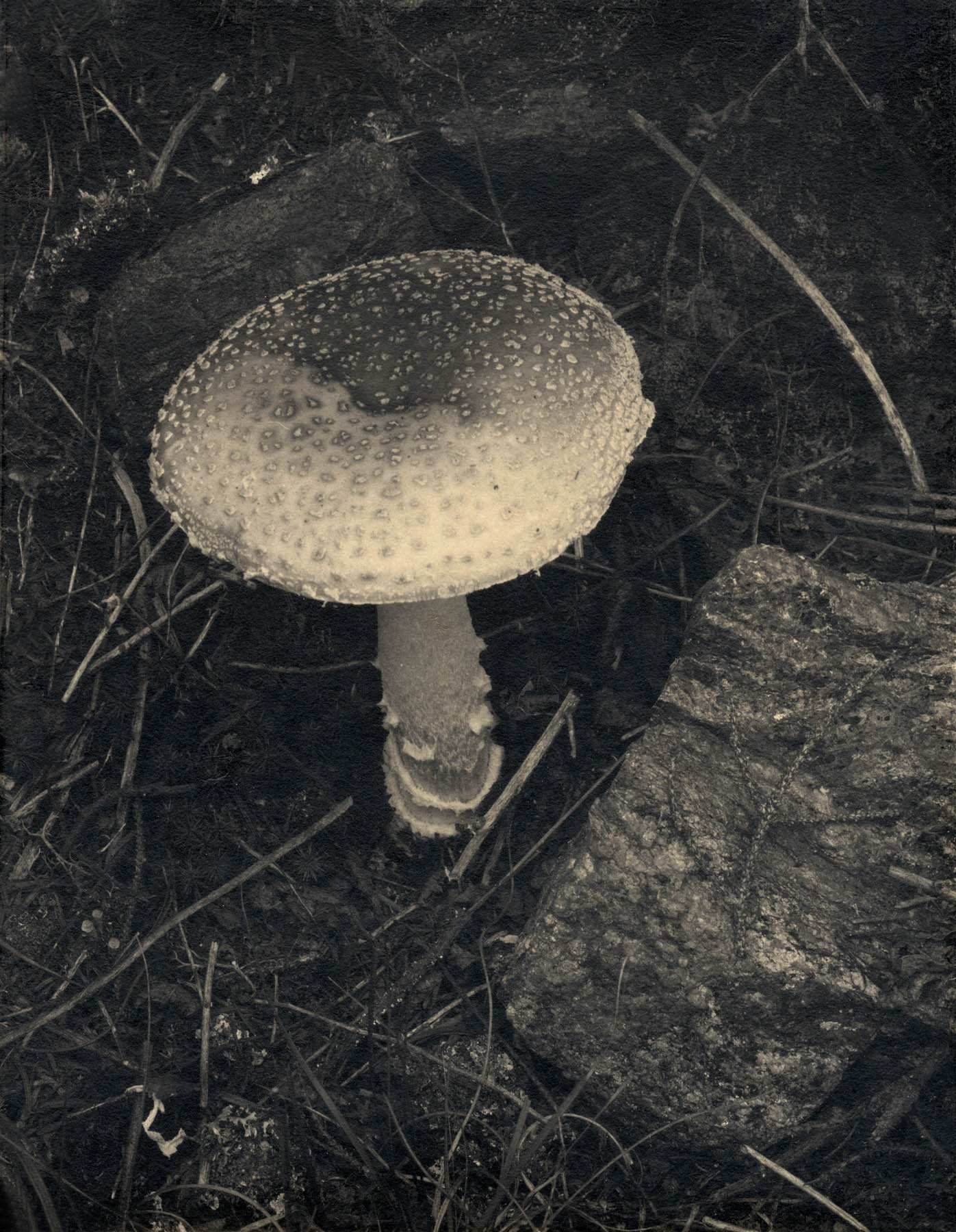
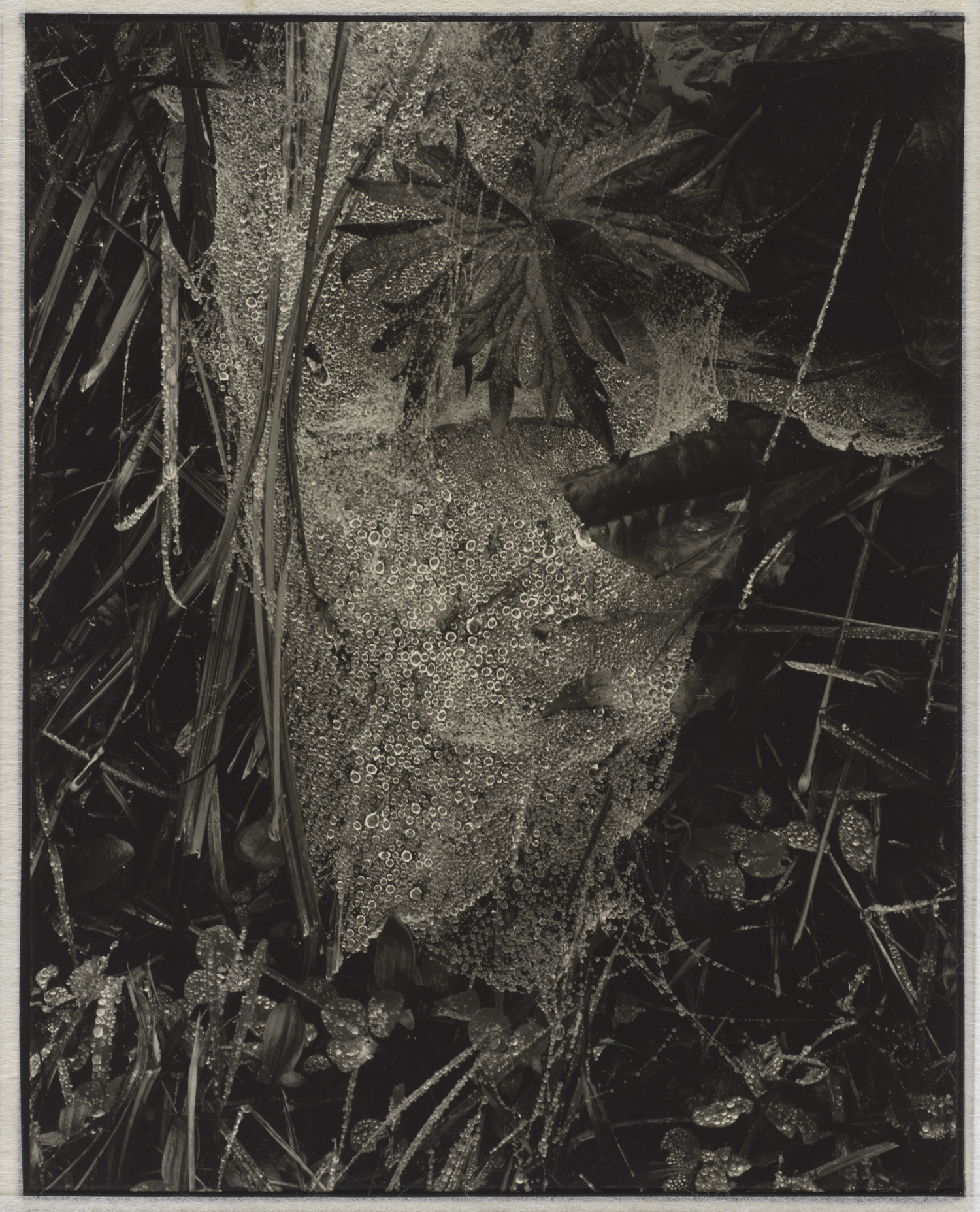
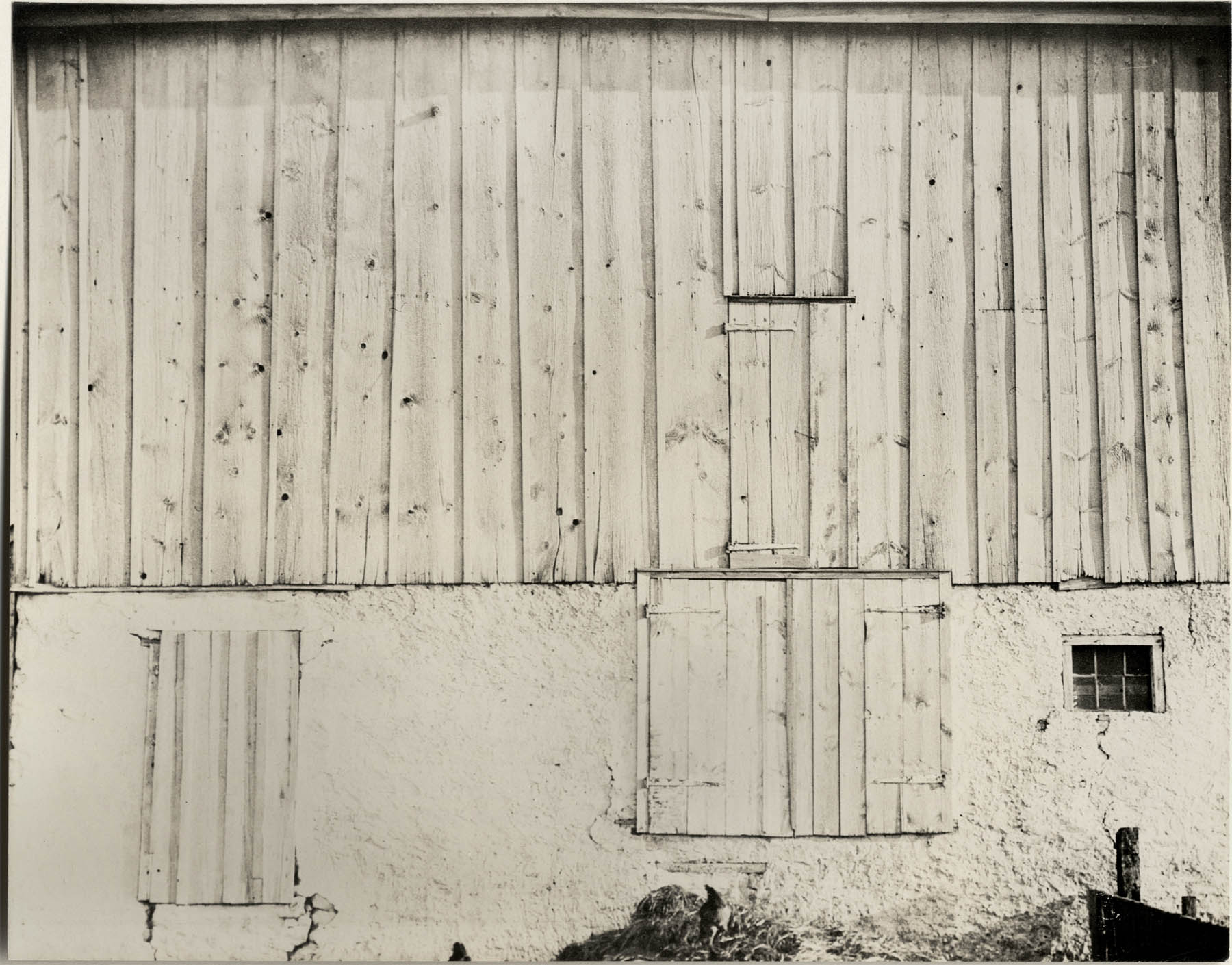
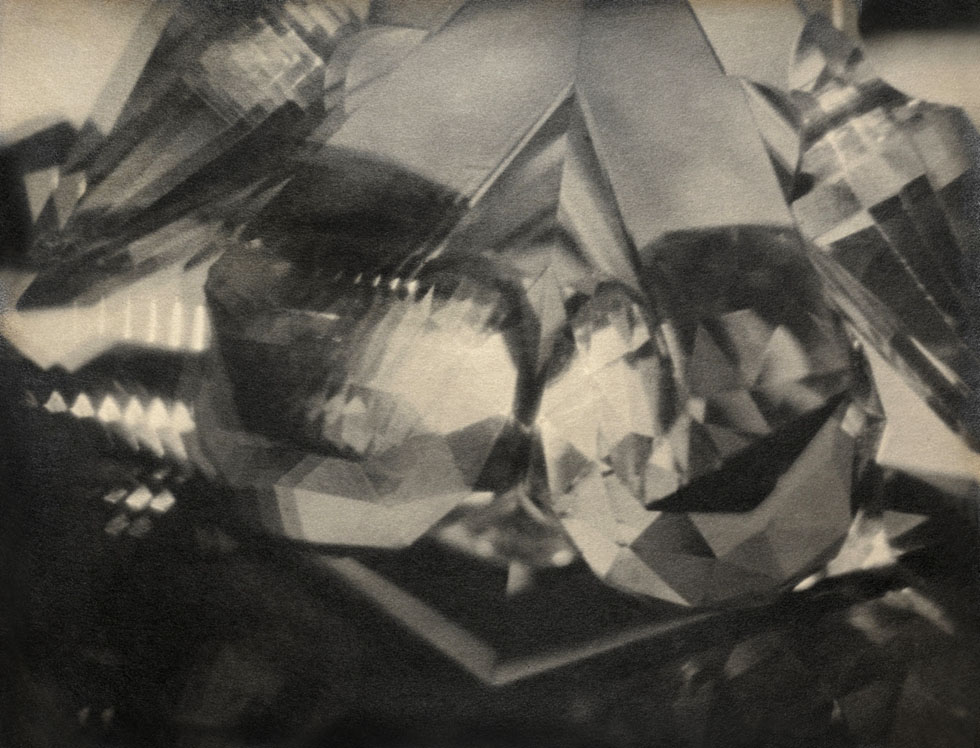
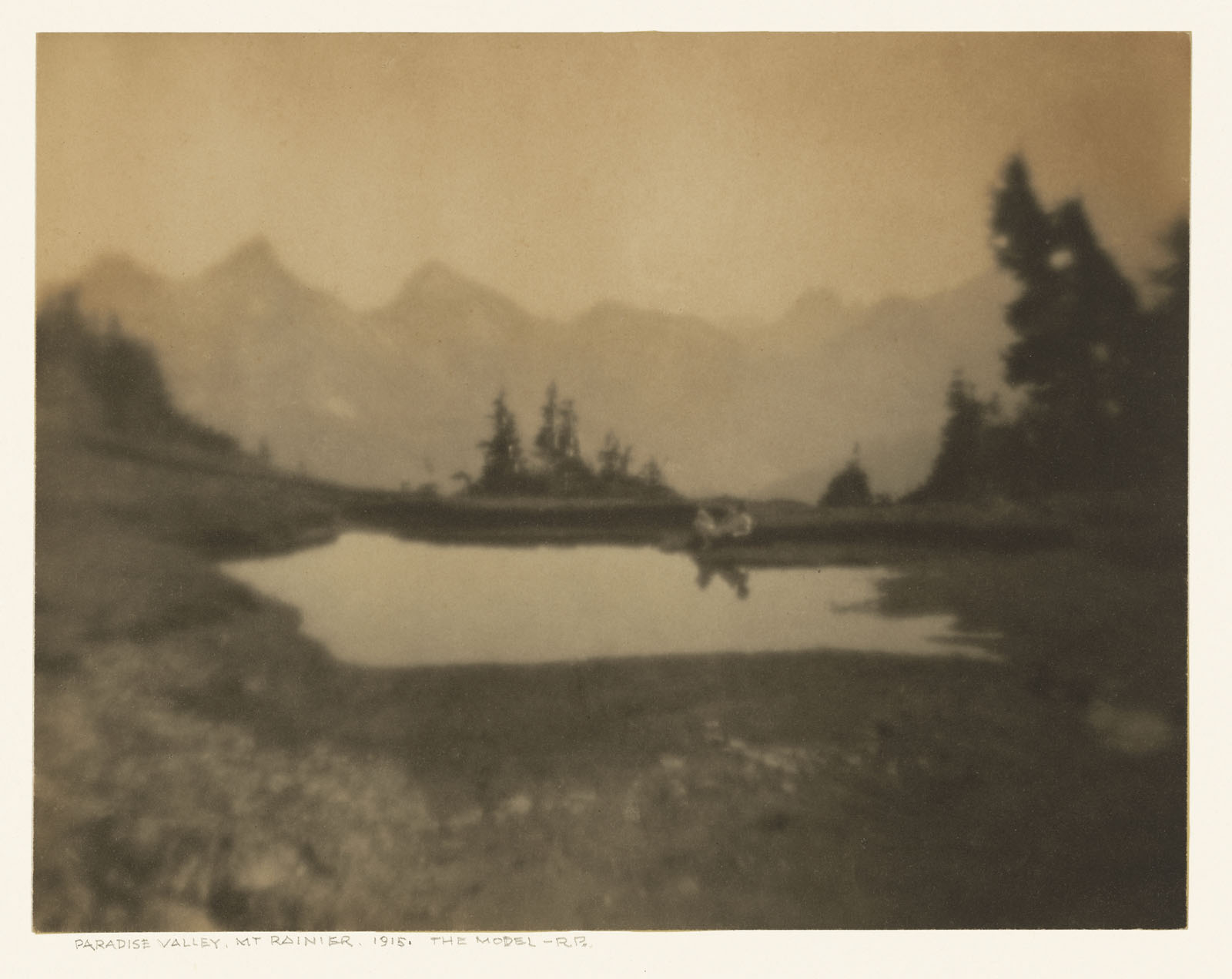
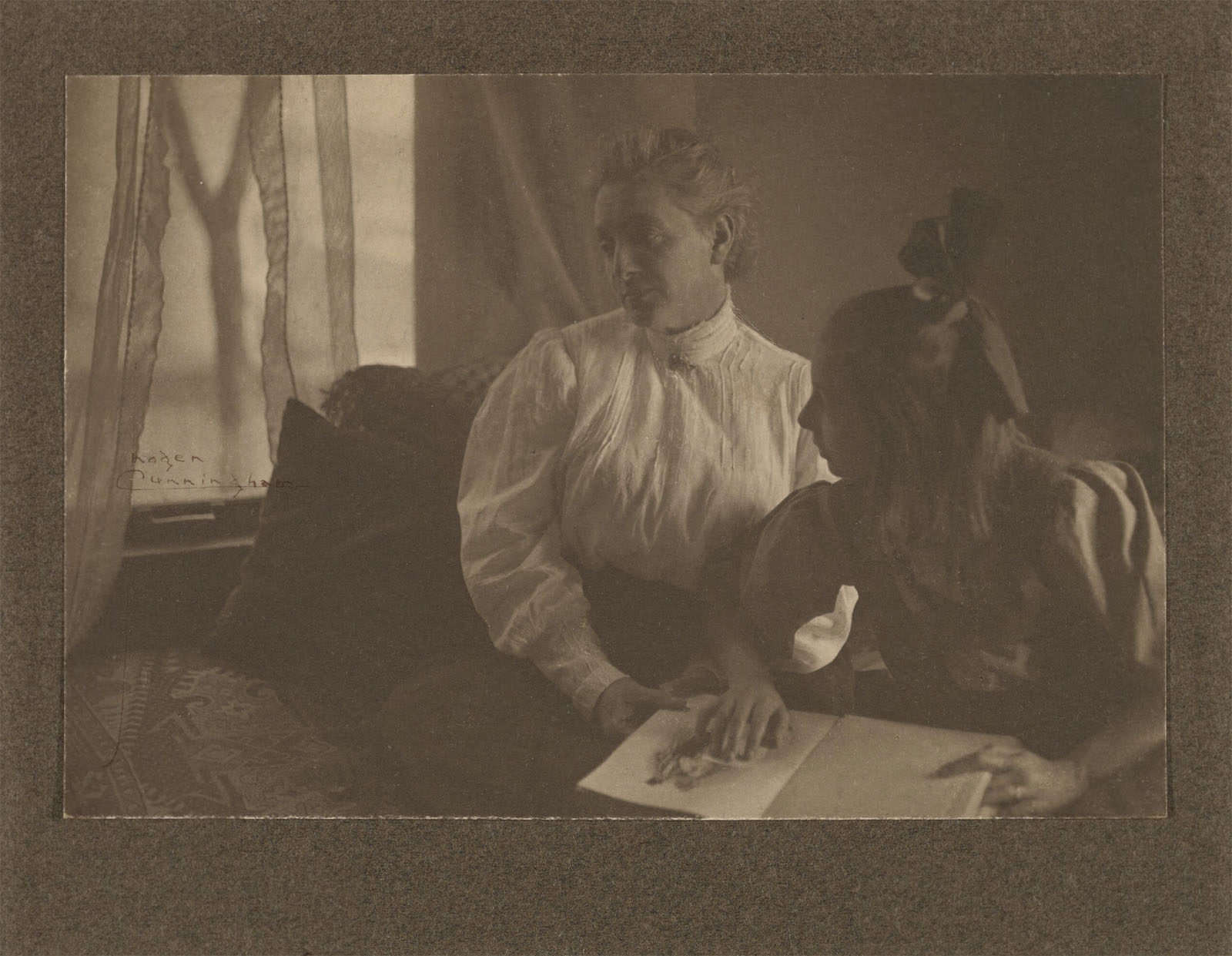


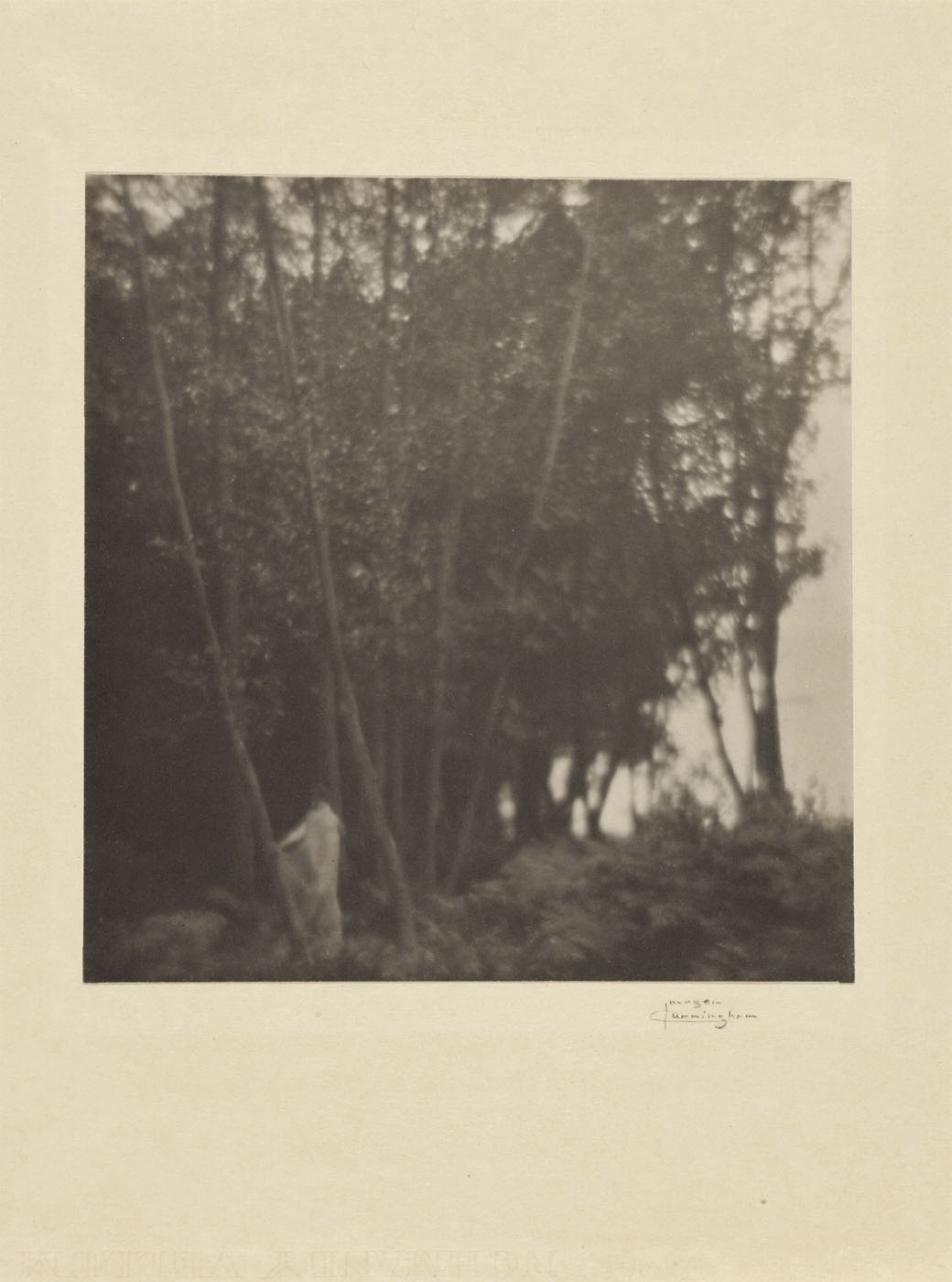

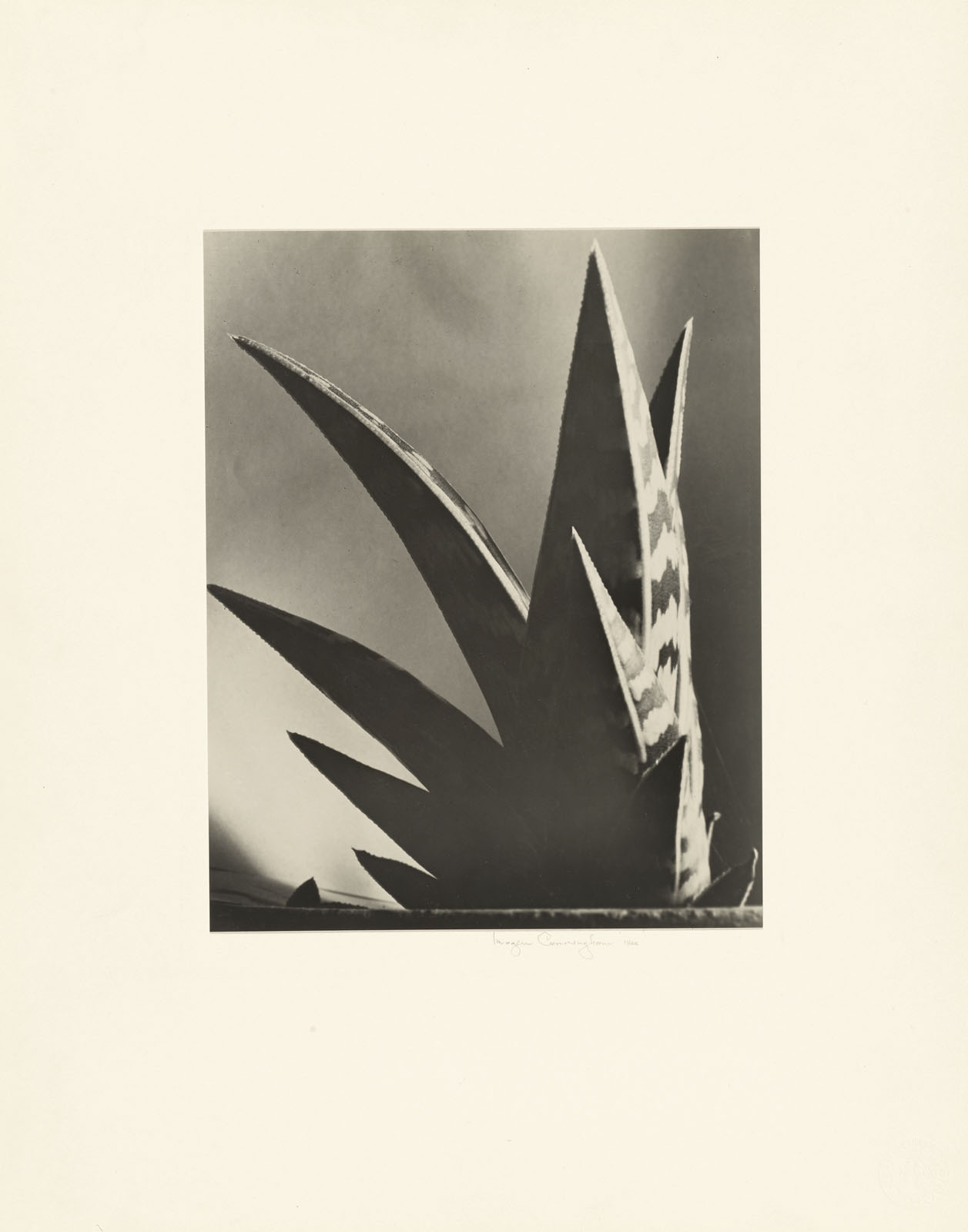


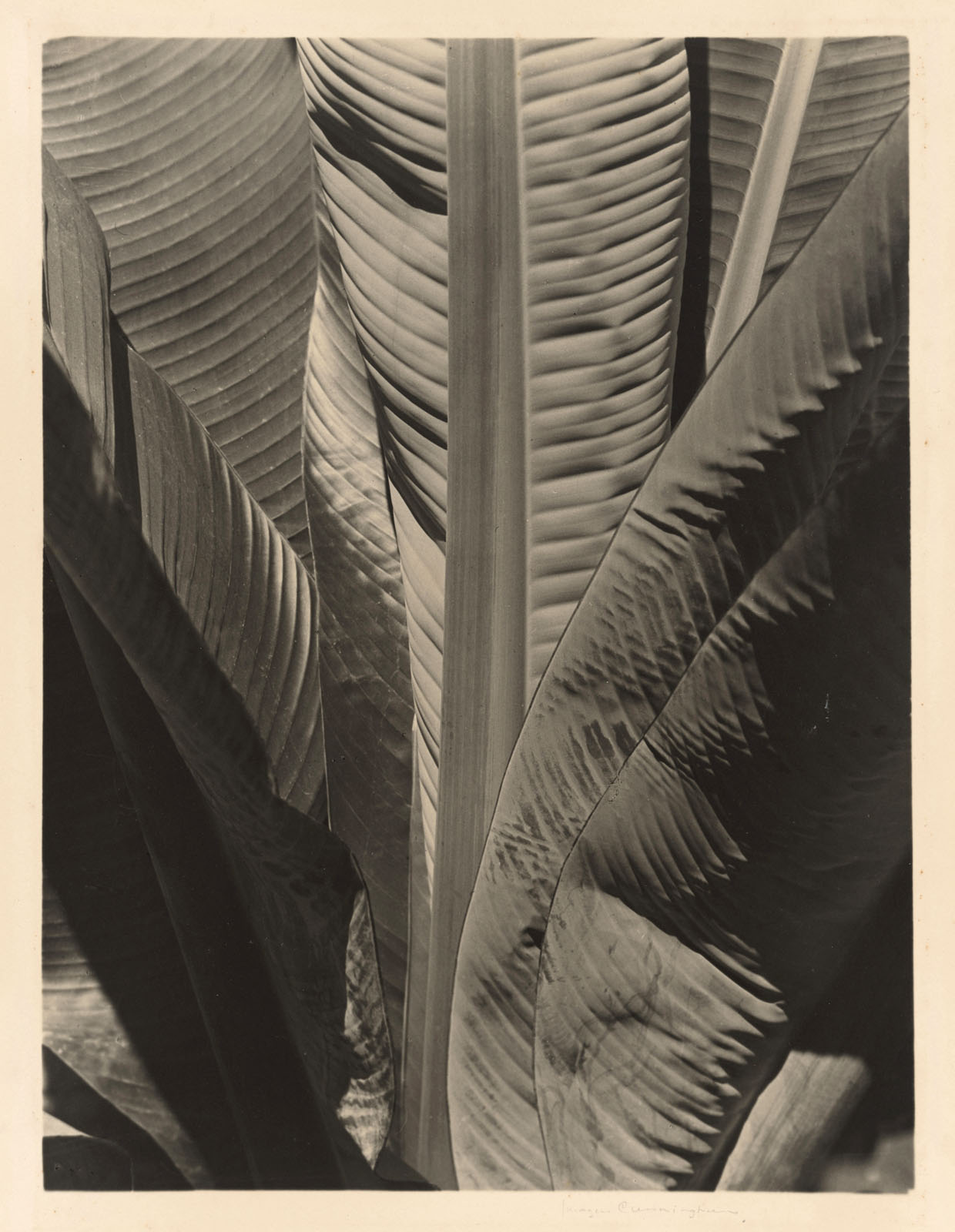
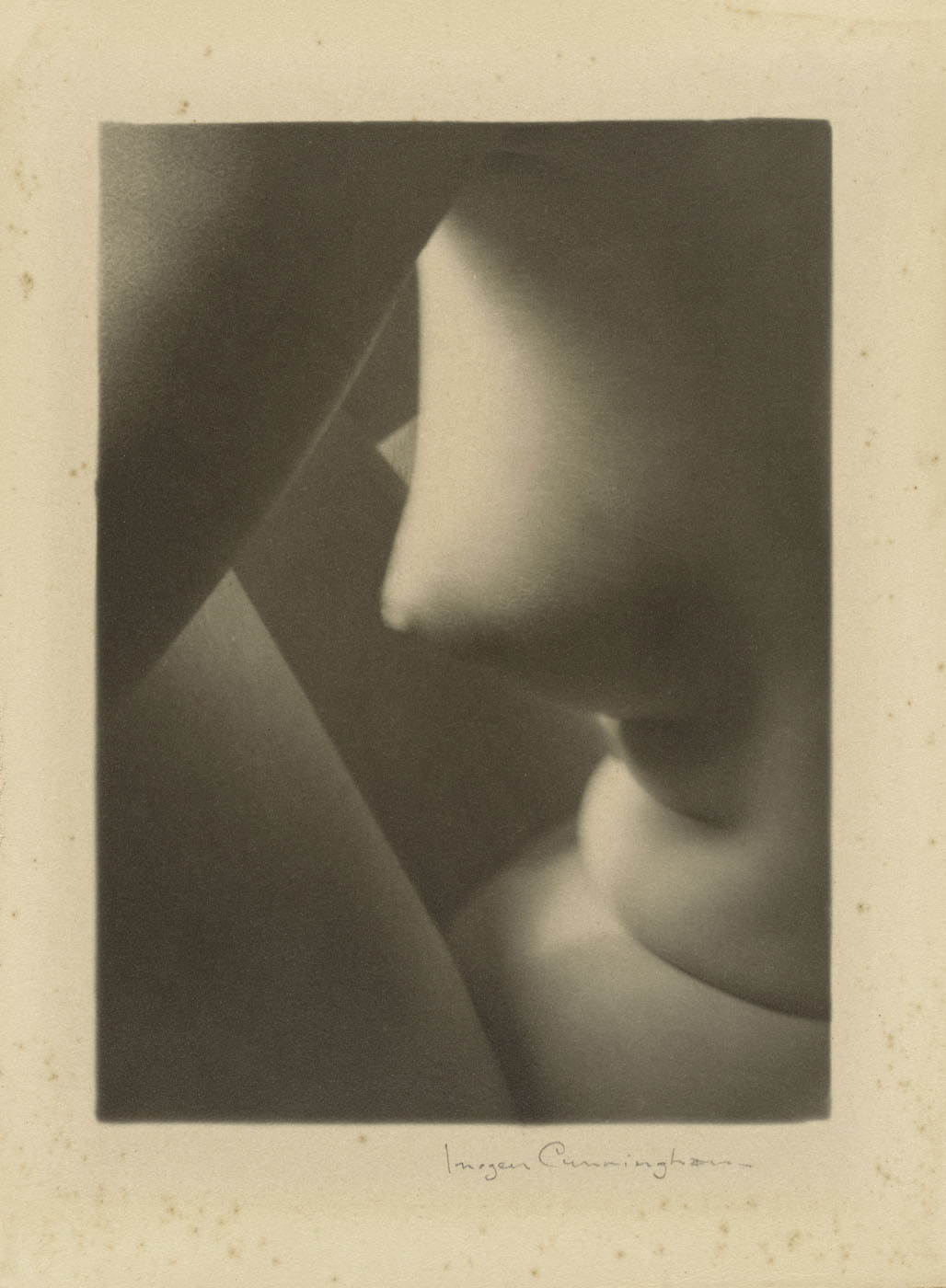

![Ansel Adams (American, 1902-1984) '[Dogwood Blossoms, Yosemite National Park]' Negative about 1938; print 1941](https://artblart.com/wp-content/uploads/2022/05/ansel-adams-dogwood-blossoms-yosemite-national-park.jpg "Ansel Adams (American, 1902-1984) '[Dogwood Blossoms, Yosemite National Park]' Negative about 1938; print 1941")
![Imogen Cunningham (American, 1883-1976) '[Sonya Noskowiak]' 1928](https://artblart.com/wp-content/uploads/2022/05/cunningham-sonya-noskowiak.jpg "Imogen Cunningham (American, 1883-1976) '[Sonya Noskowiak]' 1928")


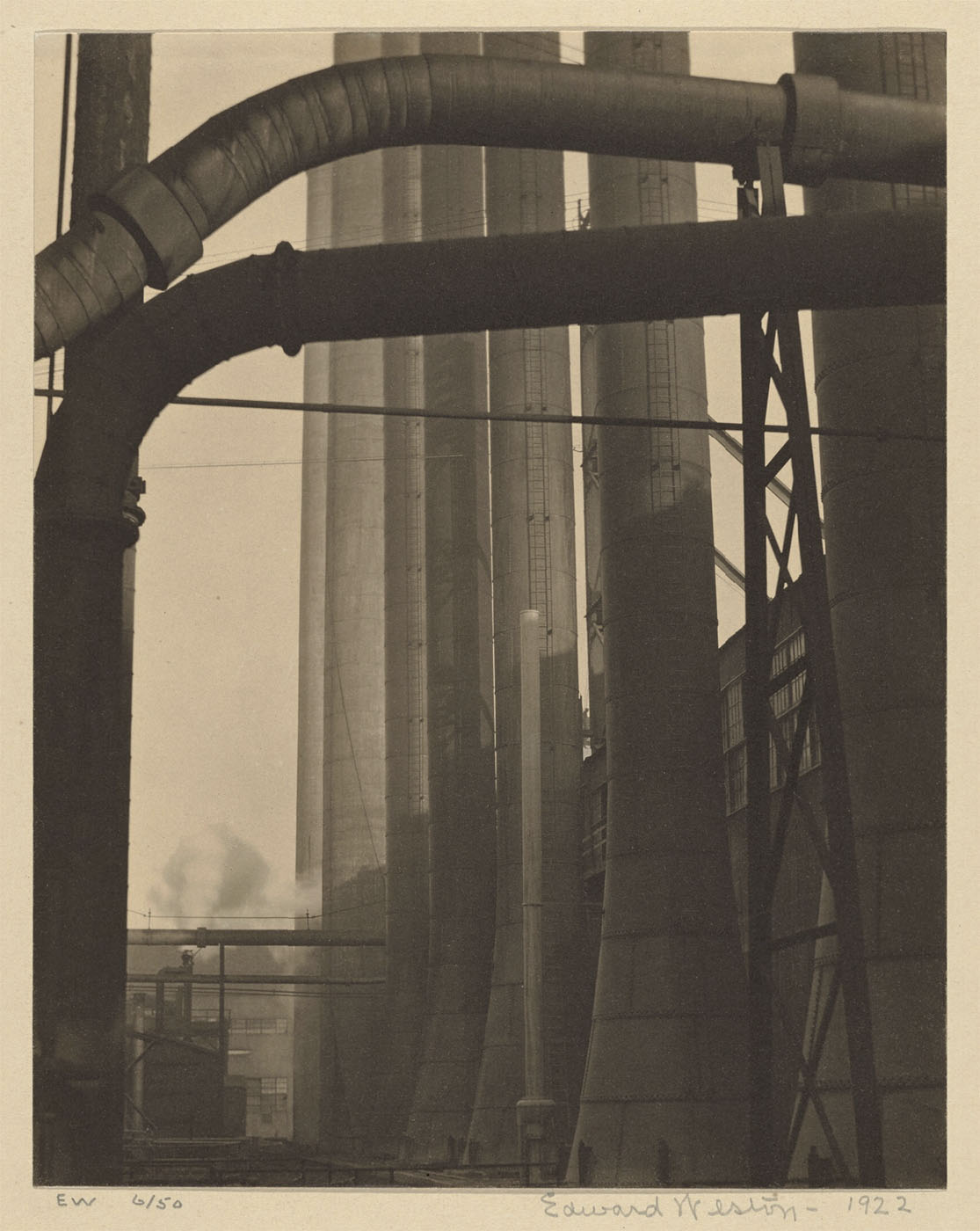








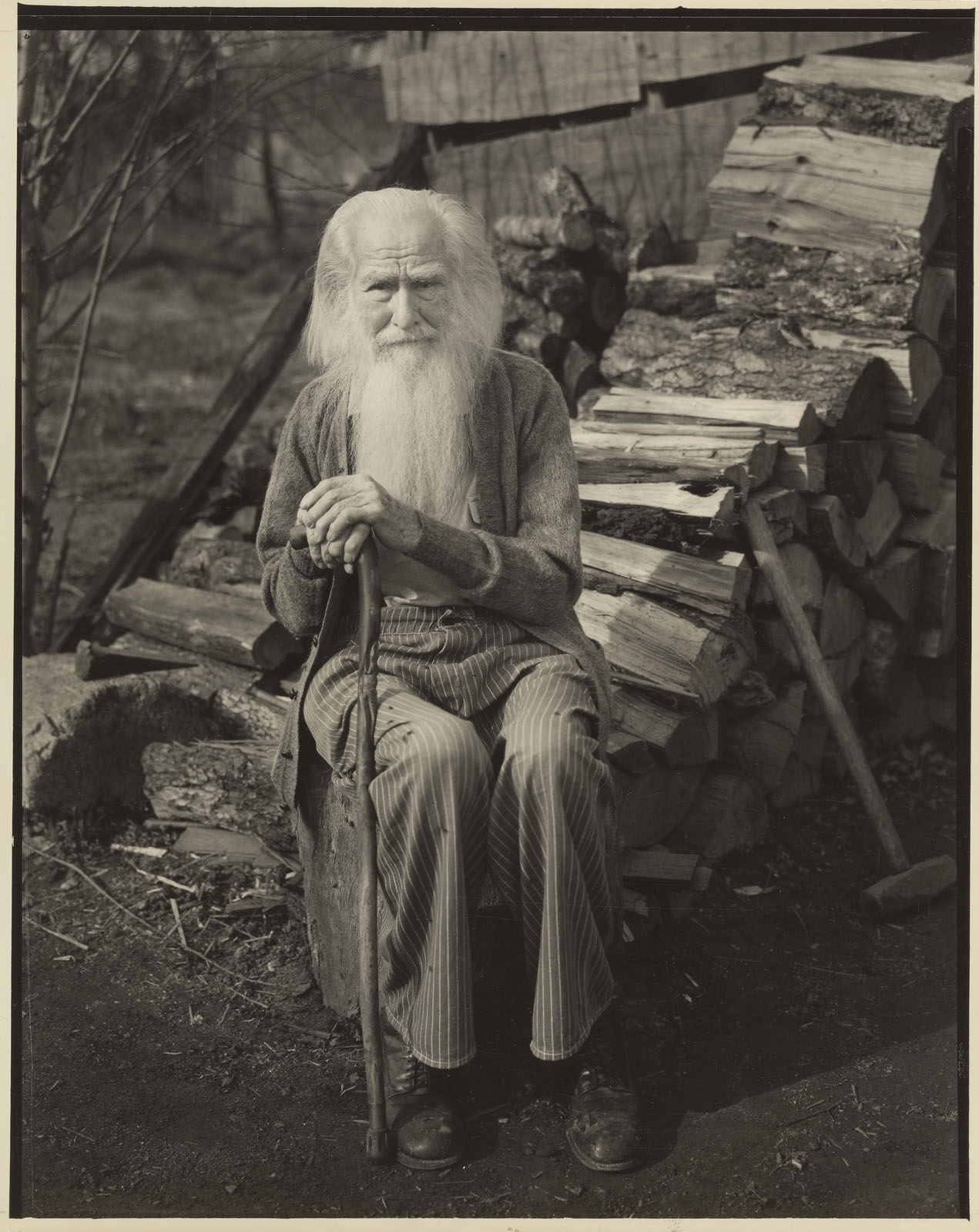


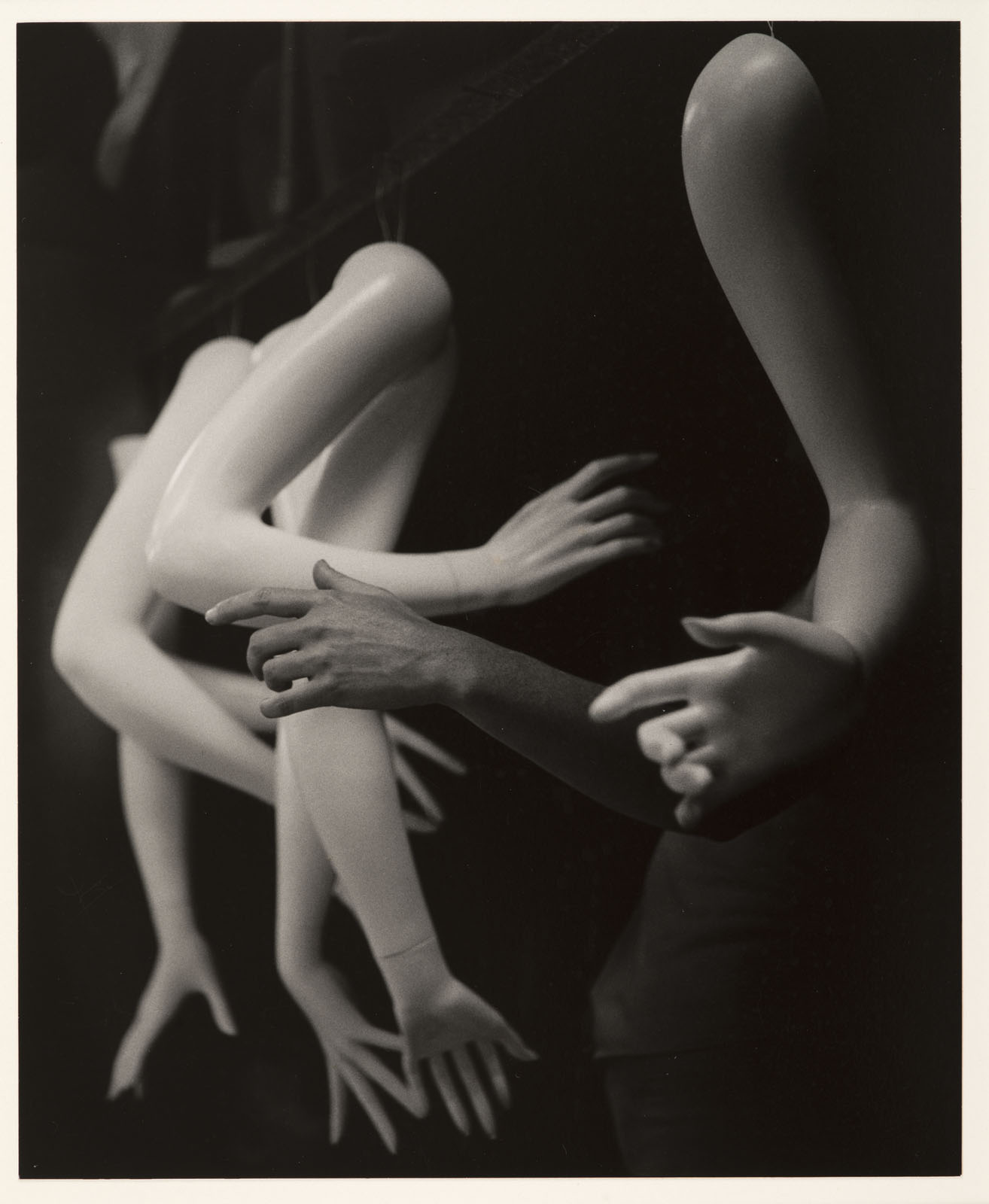
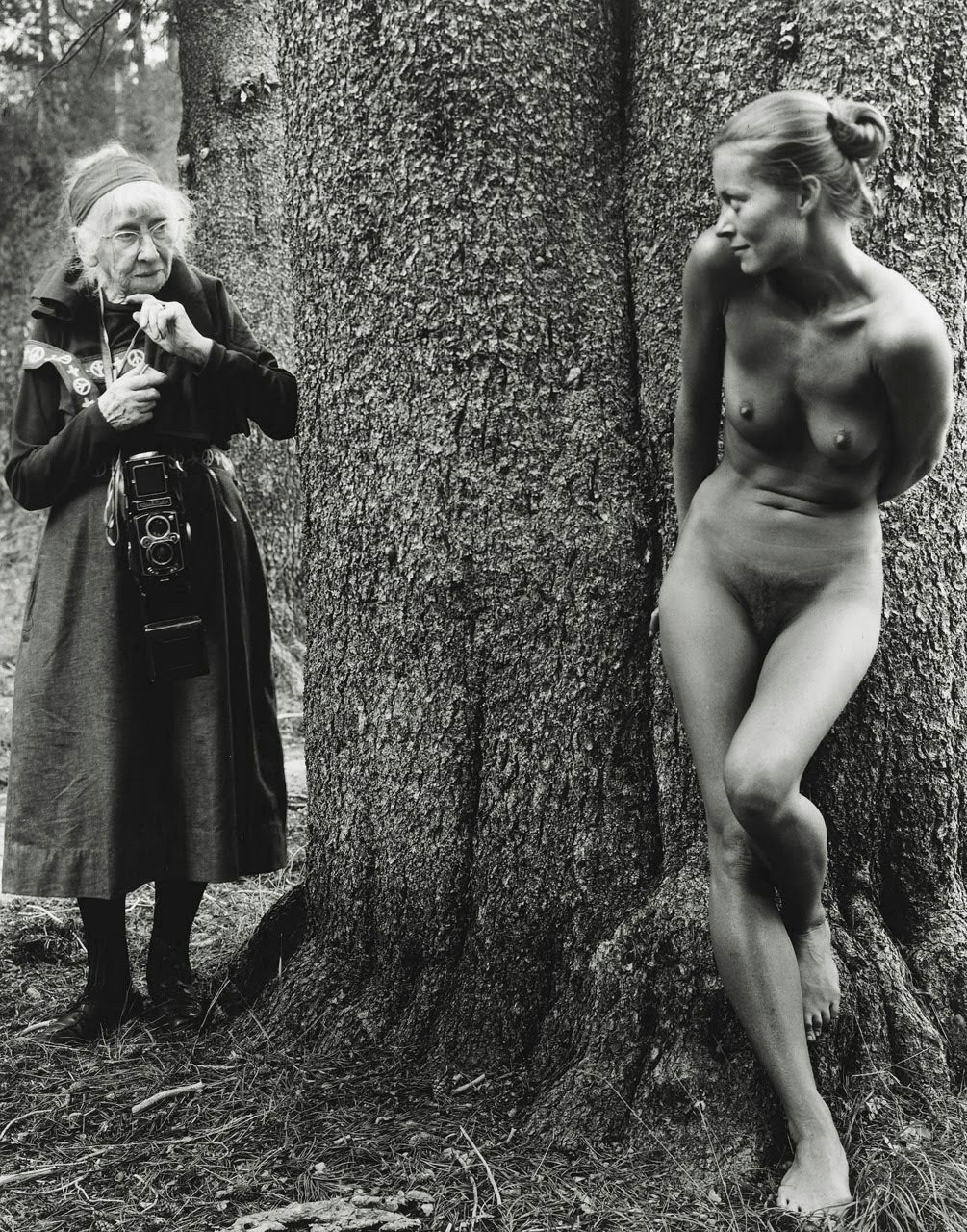


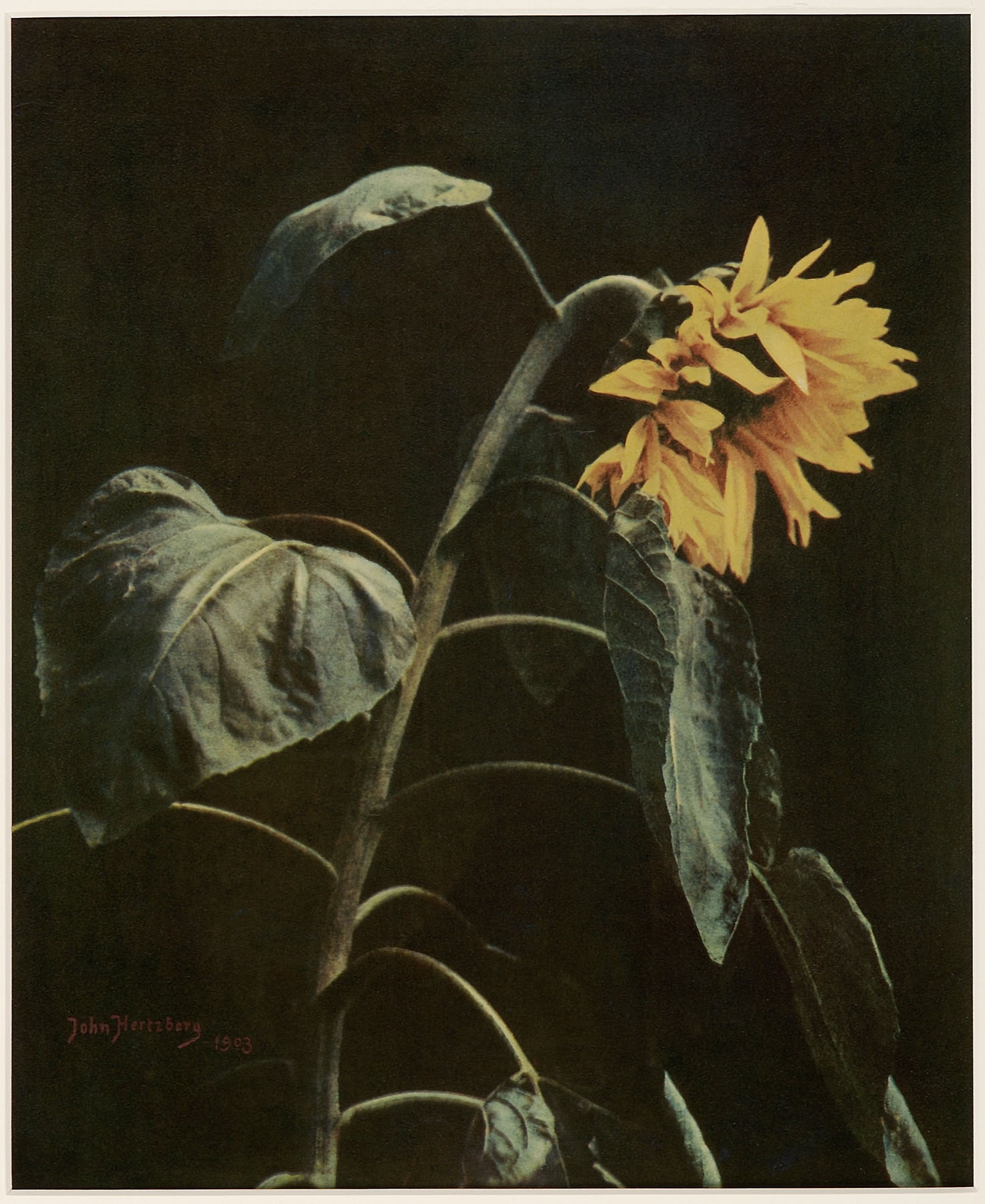


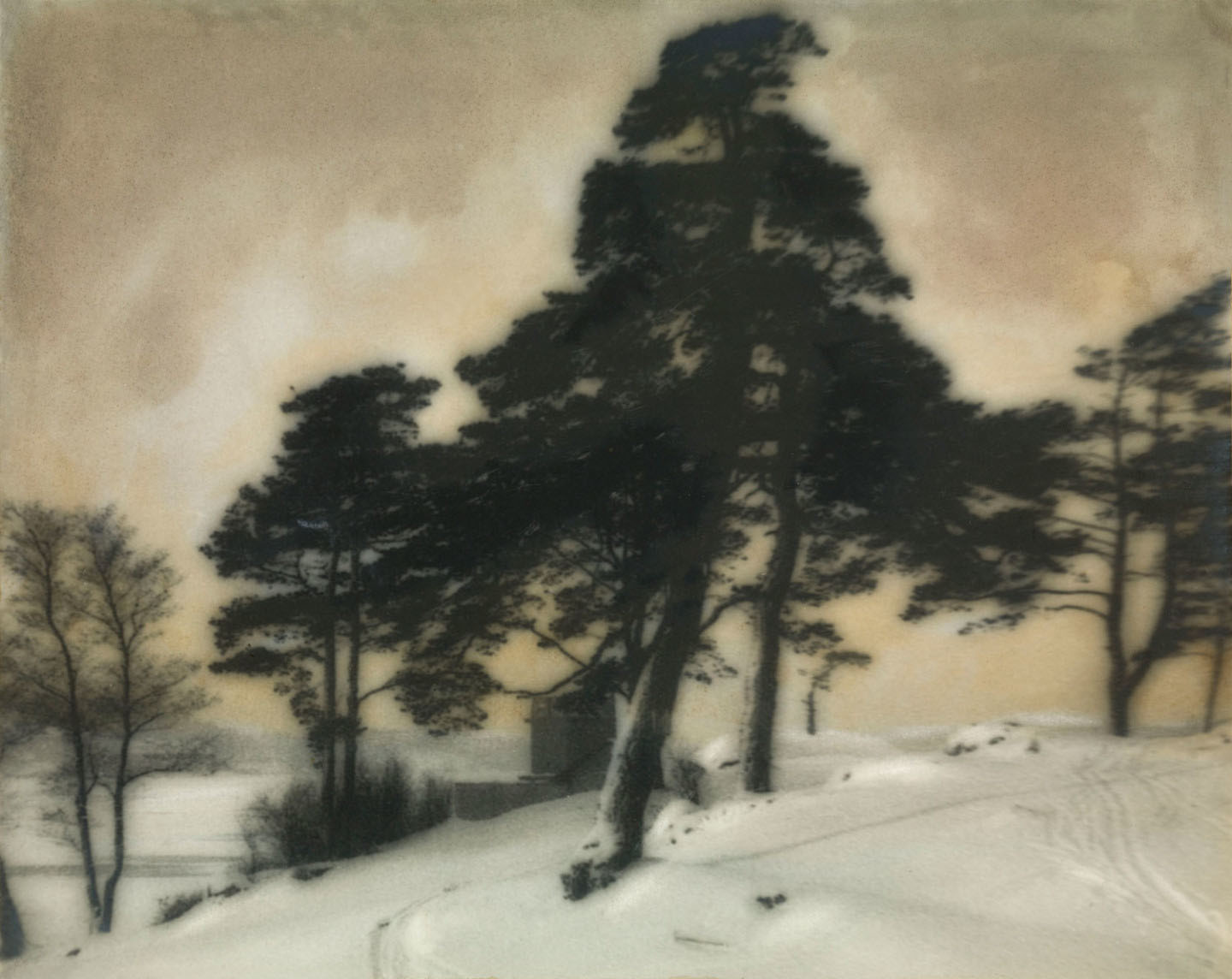
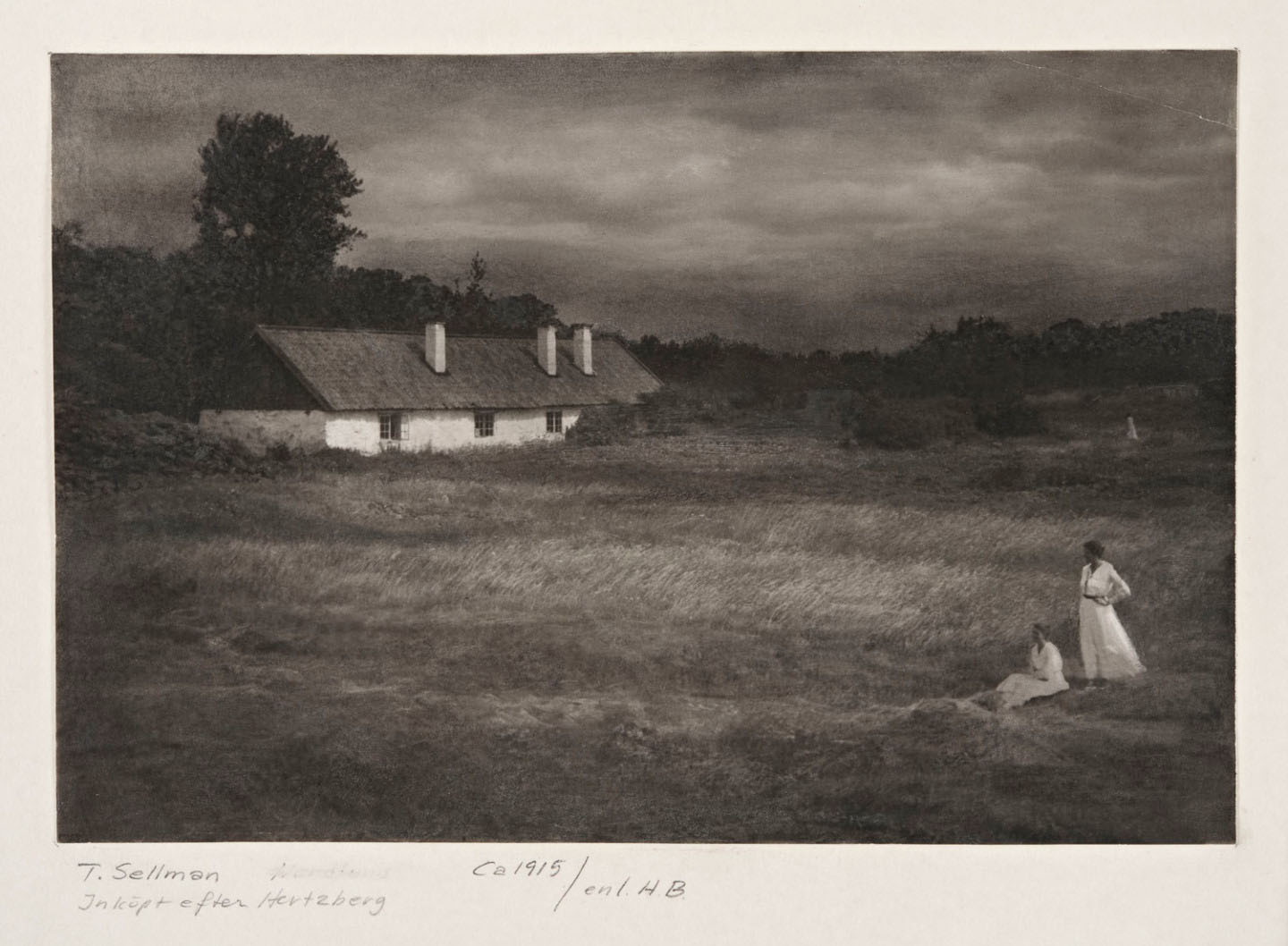


![Ilse Bing (German, 1899-1998) '[Rue de Valois, Paris]' 1932](https://artblart.com/wp-content/uploads/2020/11/ilse-bing-rue-de-valois-paris-1932.jpg "Ilse Bing (German, 1899-1998) '[Rue de Valois, Paris]' 1932")

![Dora Maar (French, 1907-1997) '[Woman and Child in Window, Barcelona]' 1932-1934](https://artblart.com/wp-content/uploads/2020/11/dora-maar-woman-and-child-in-window-barcelona.jpg "Dora Maar (French, 1907-1997) '[Woman and Child in Window, Barcelona]' 1932-1934")


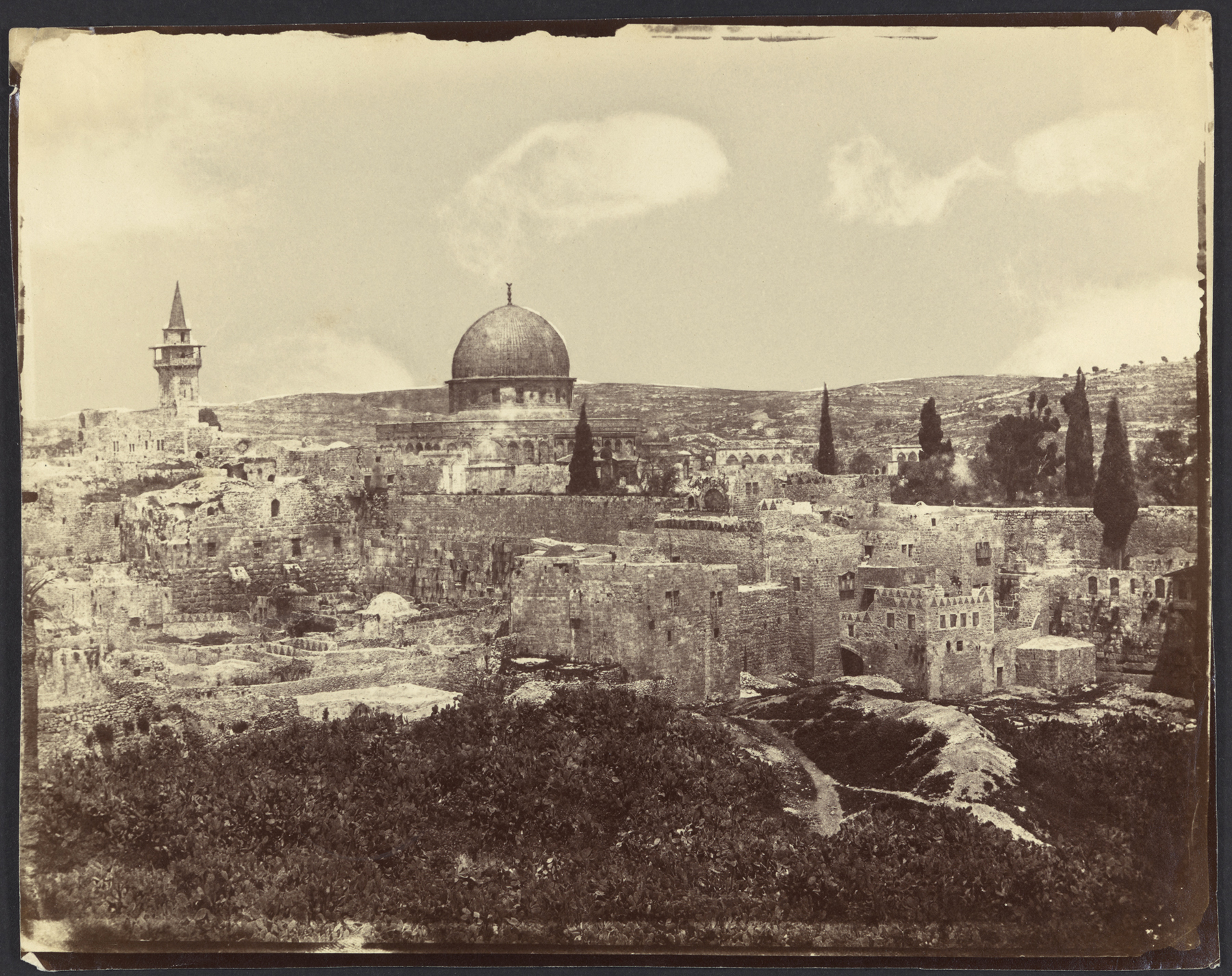
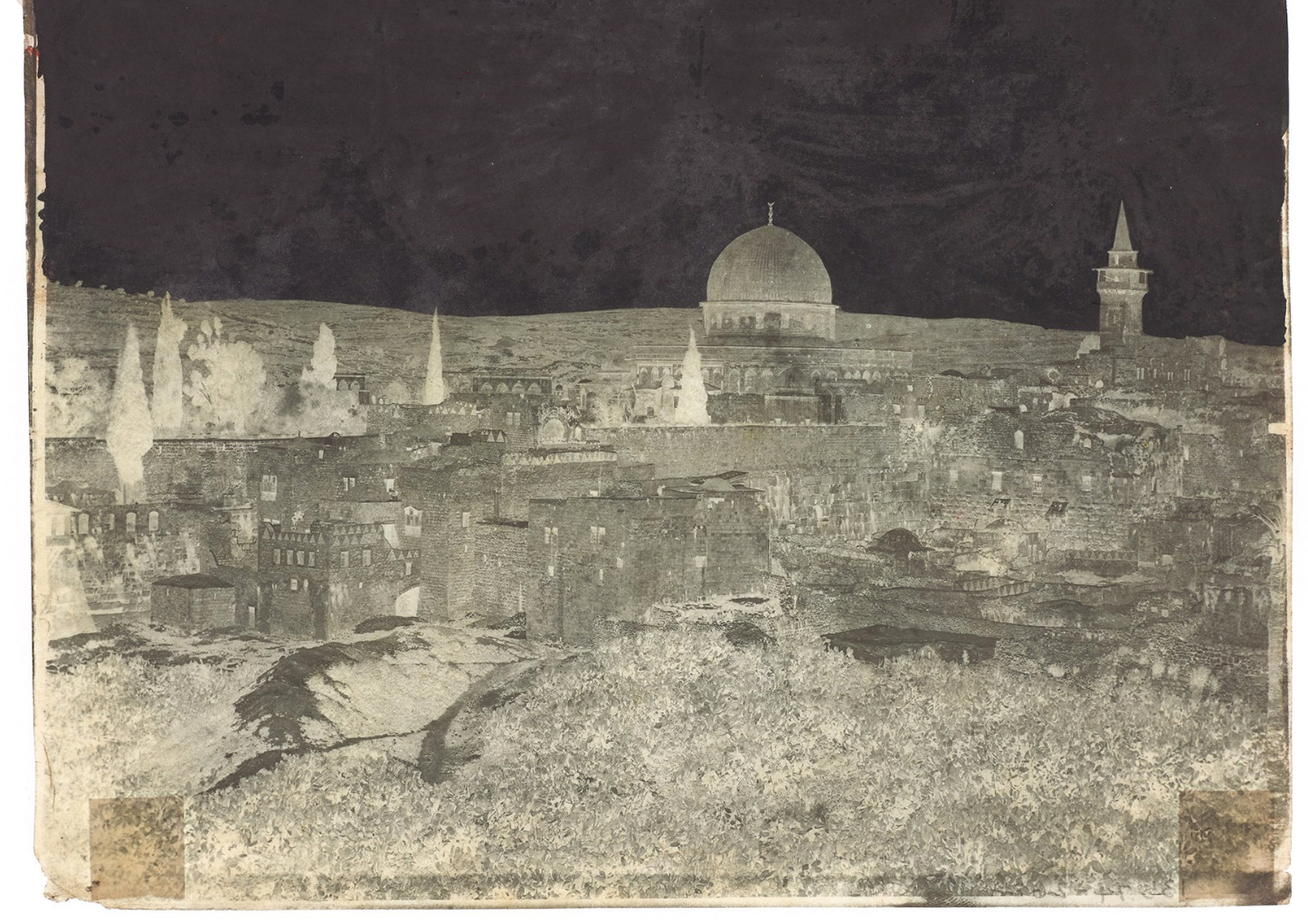
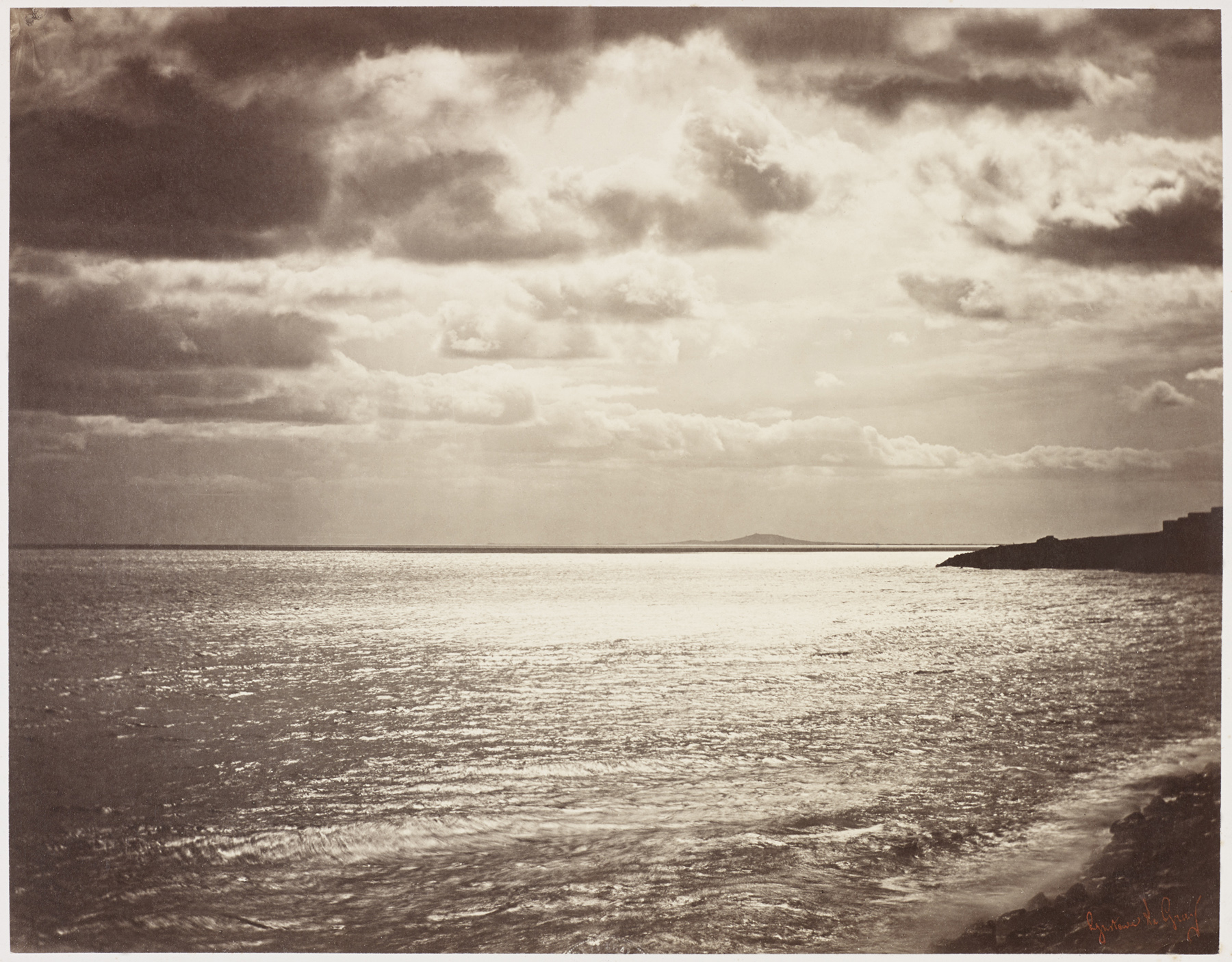
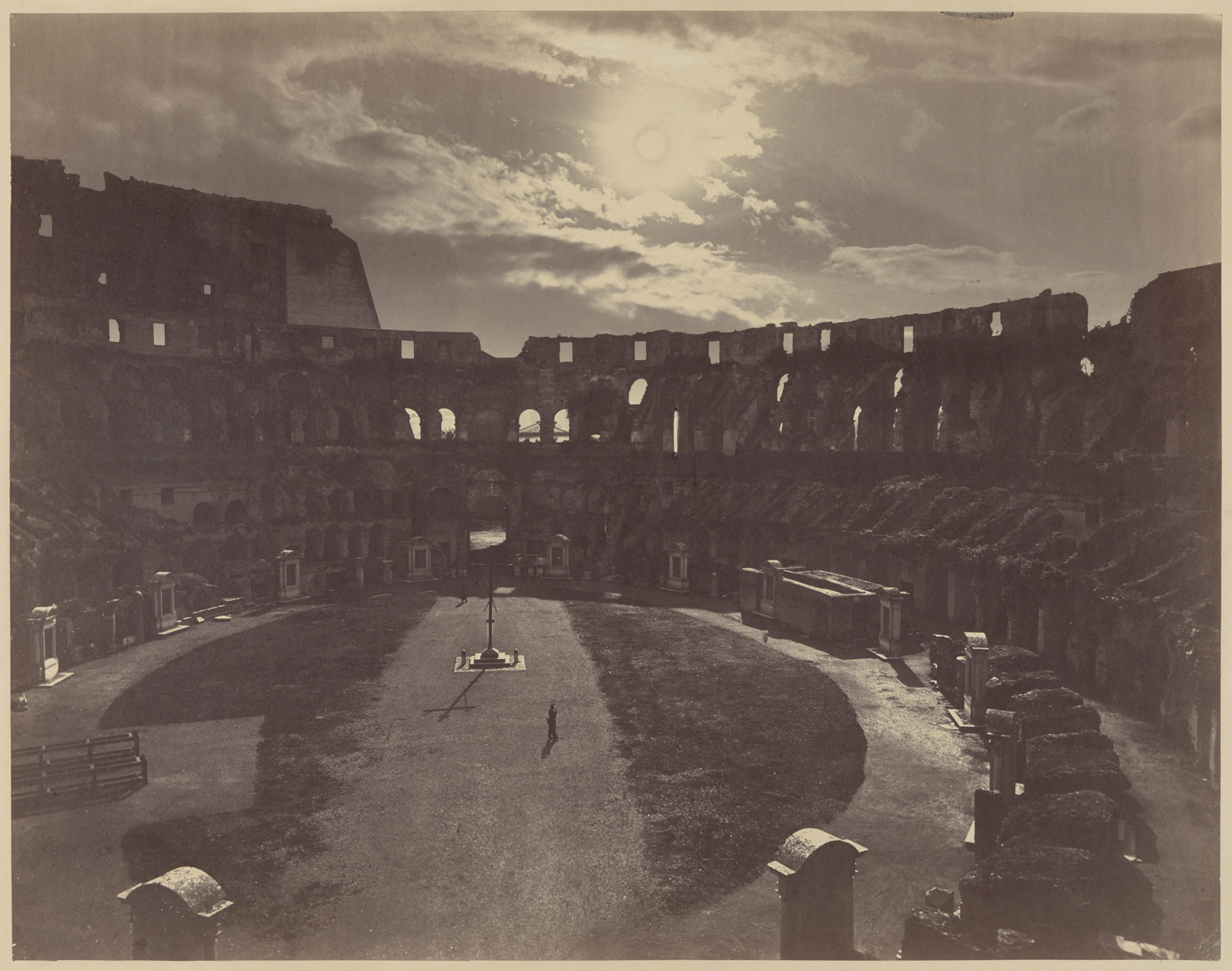
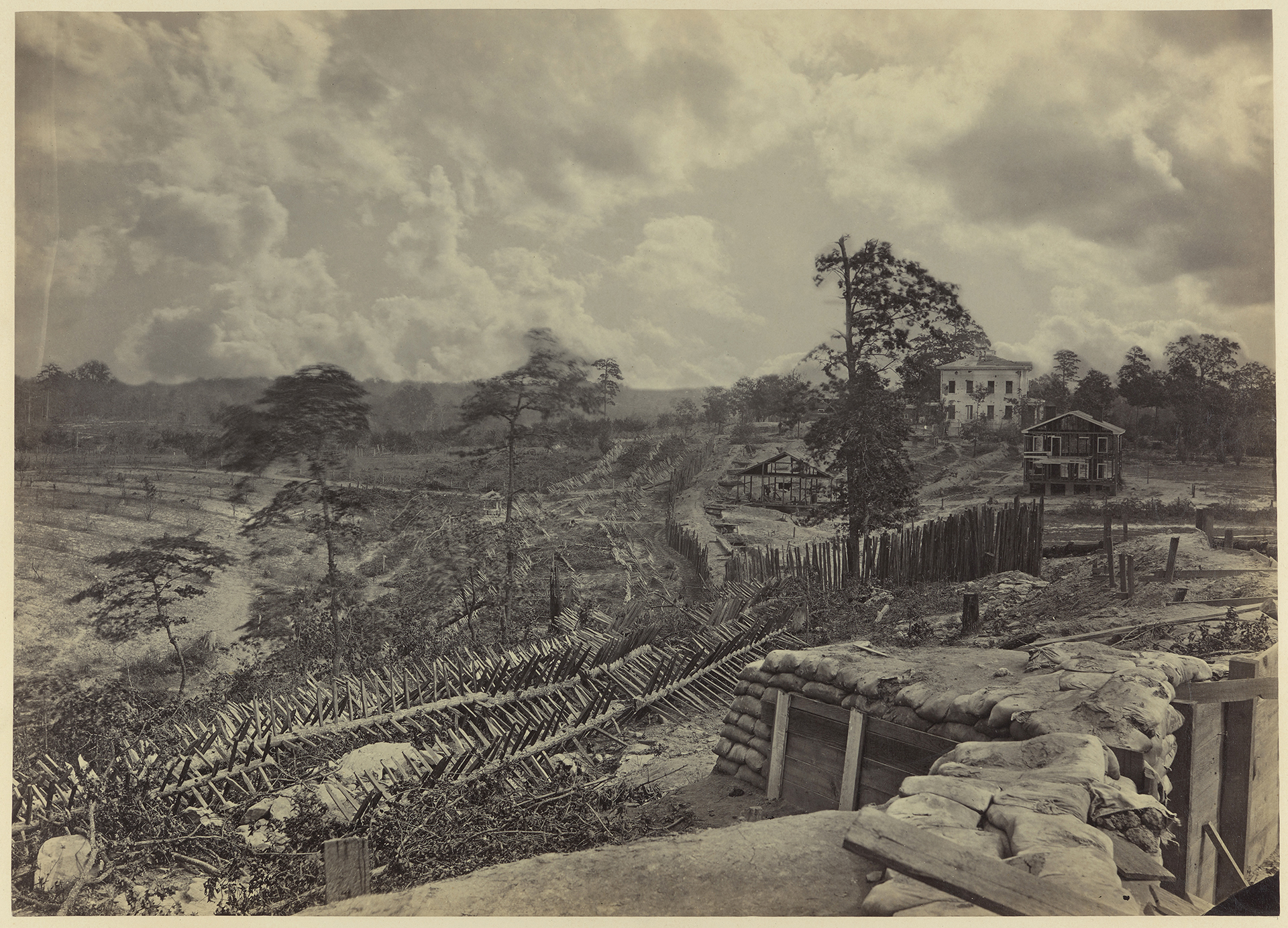
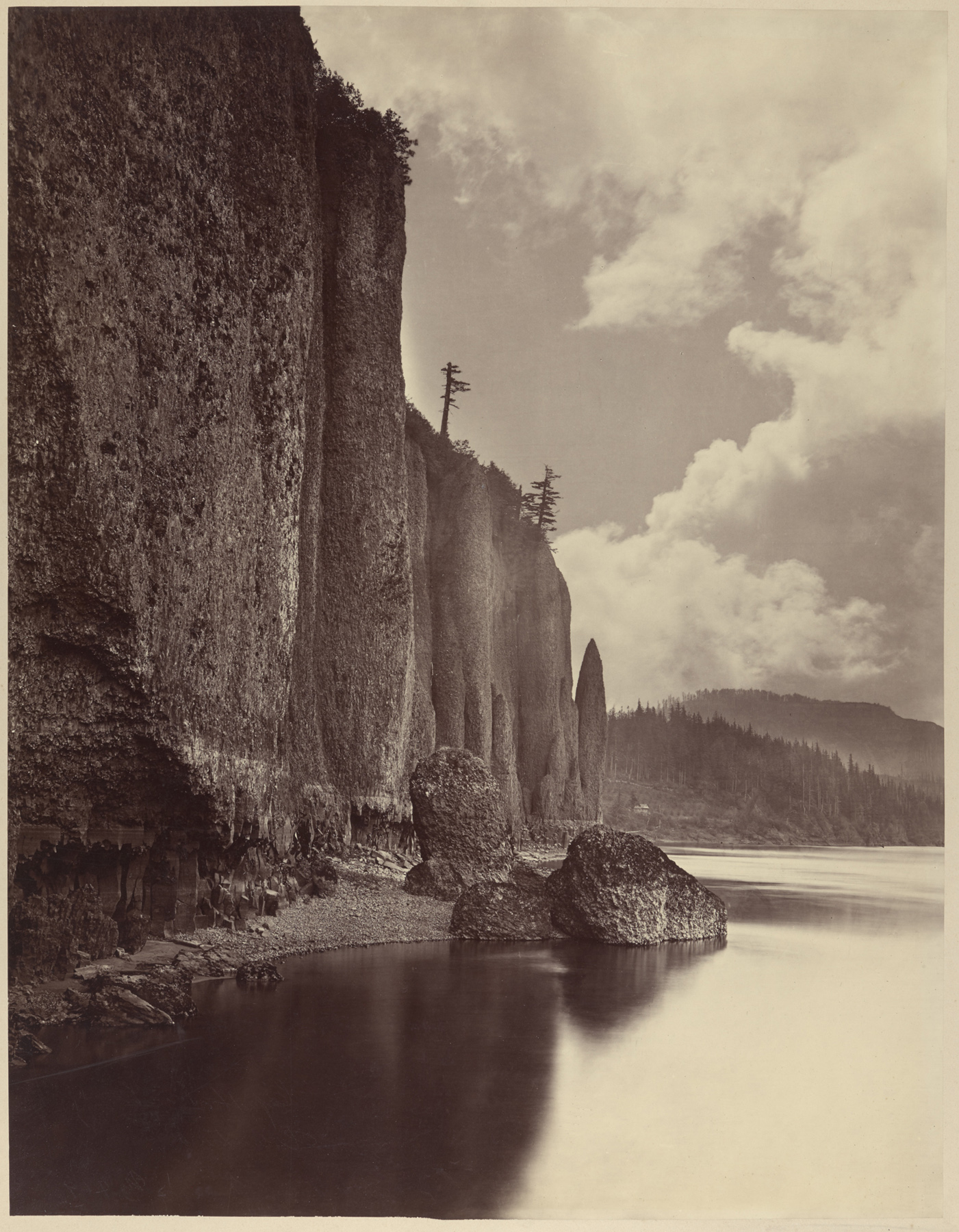
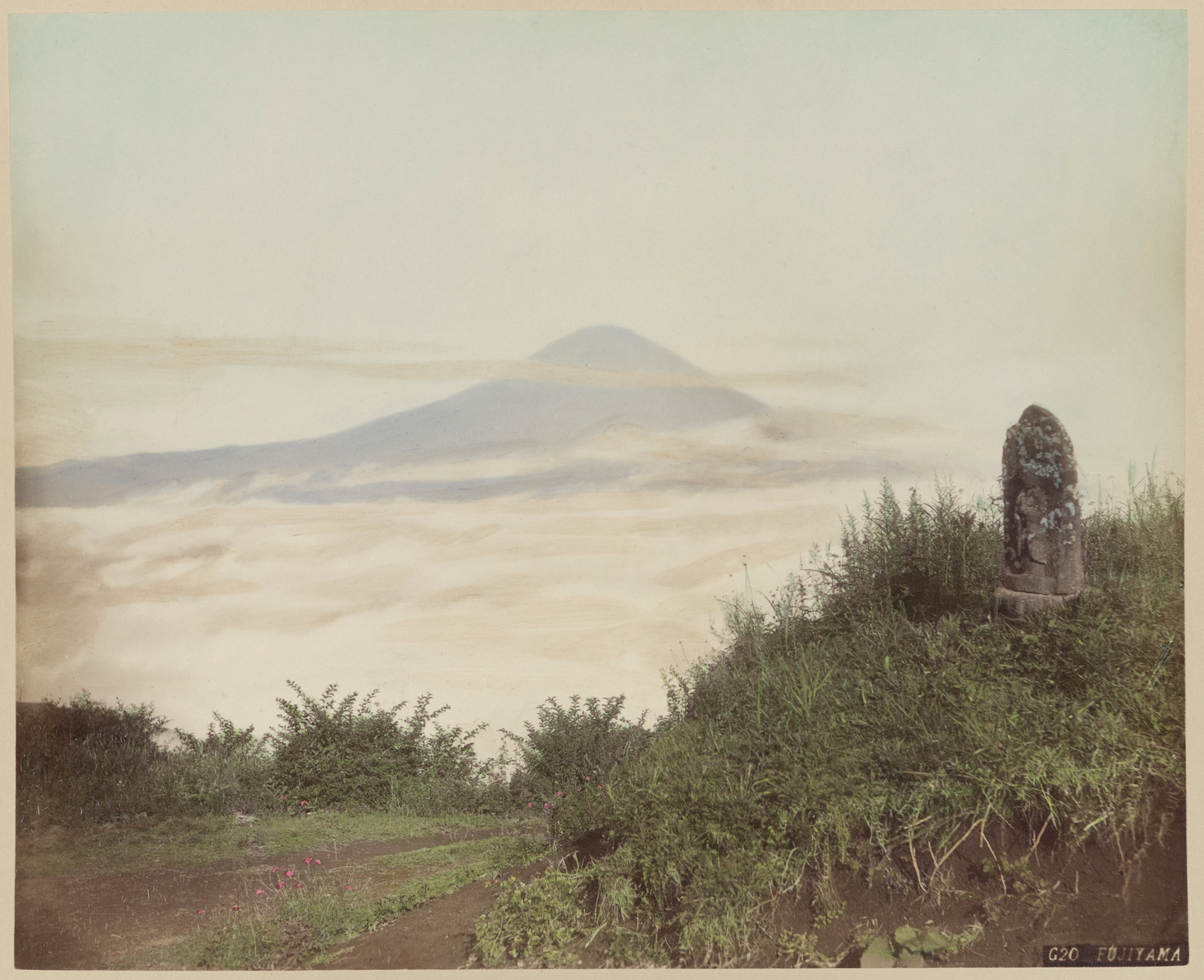
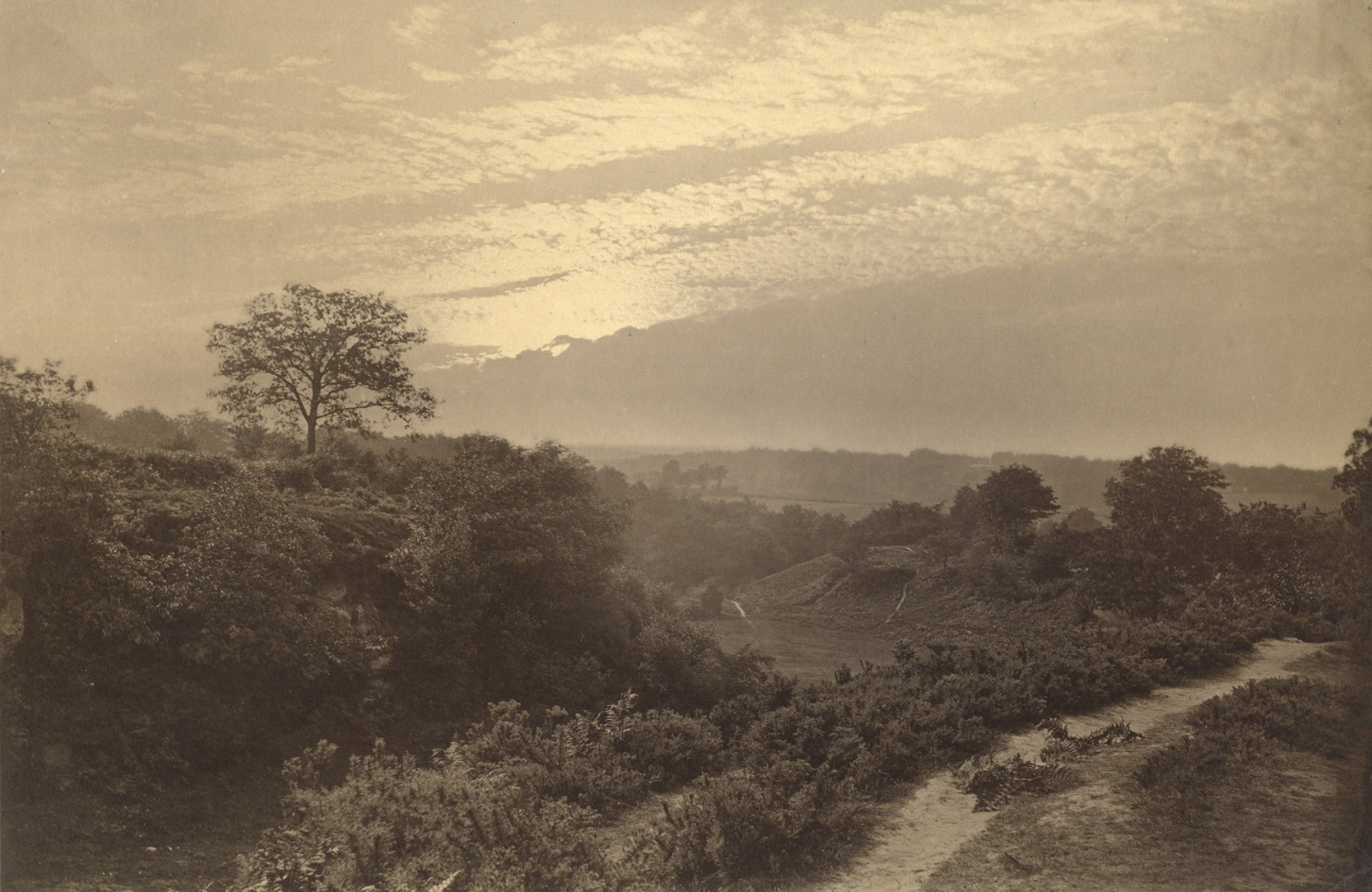
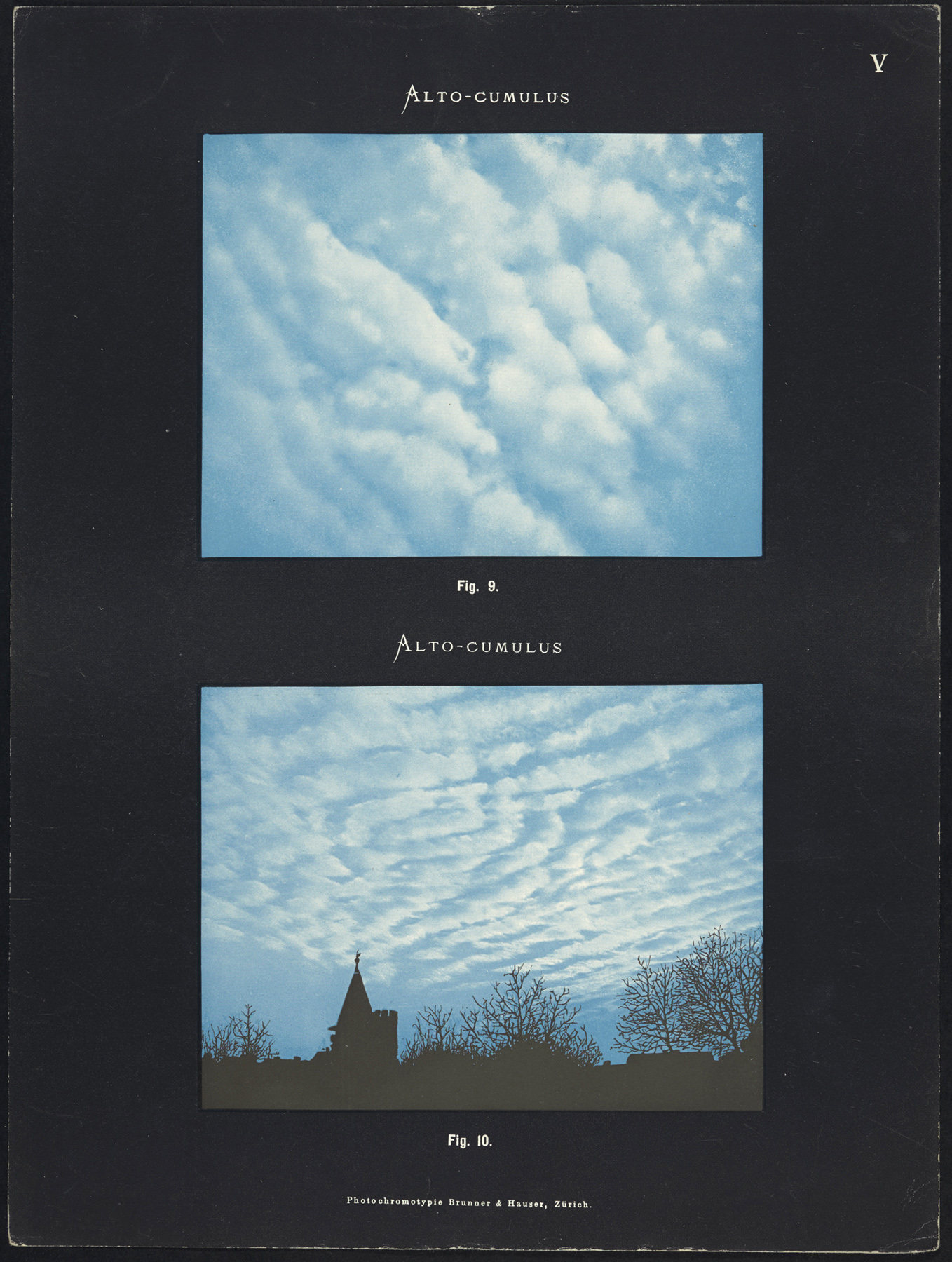
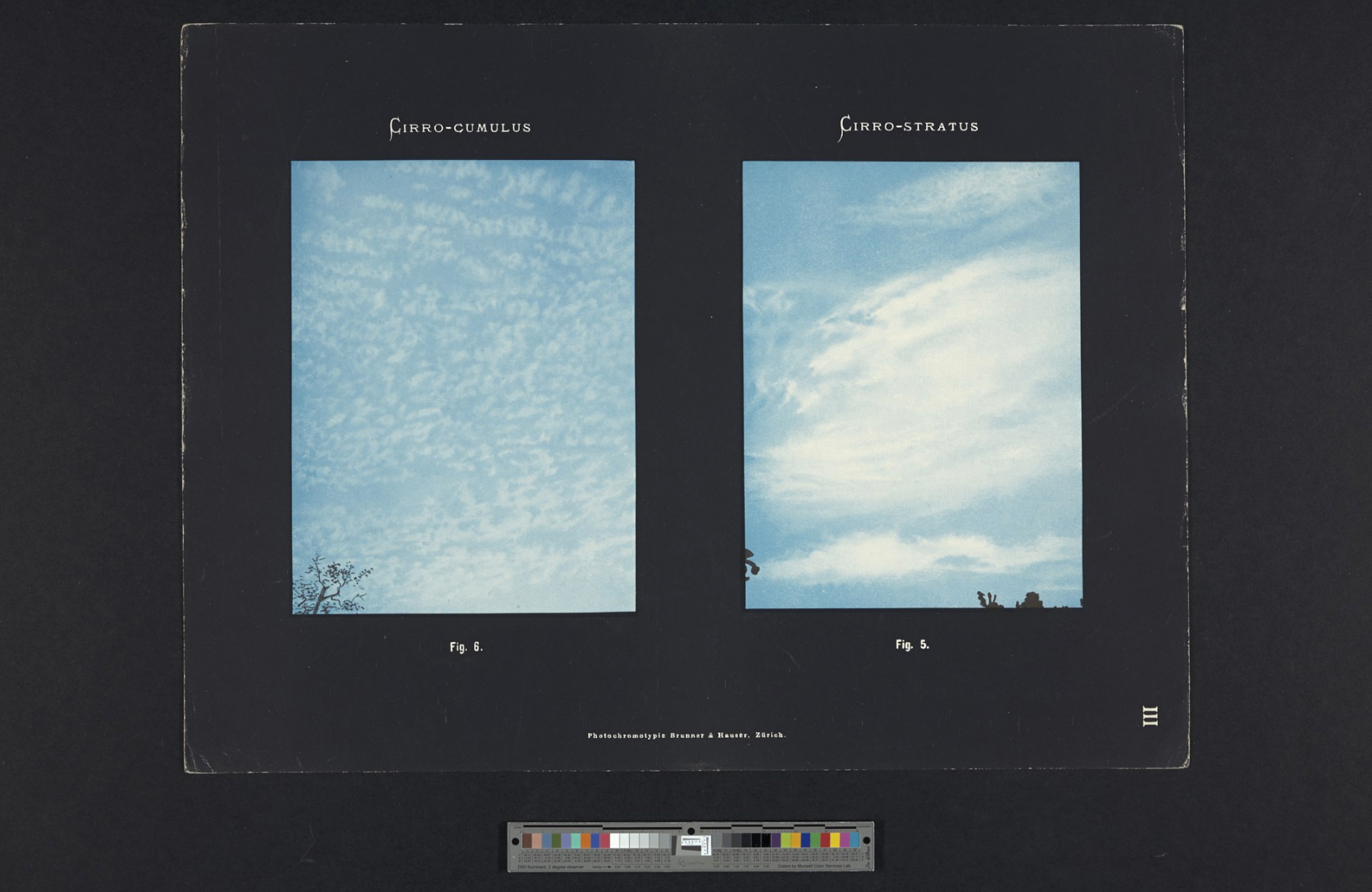
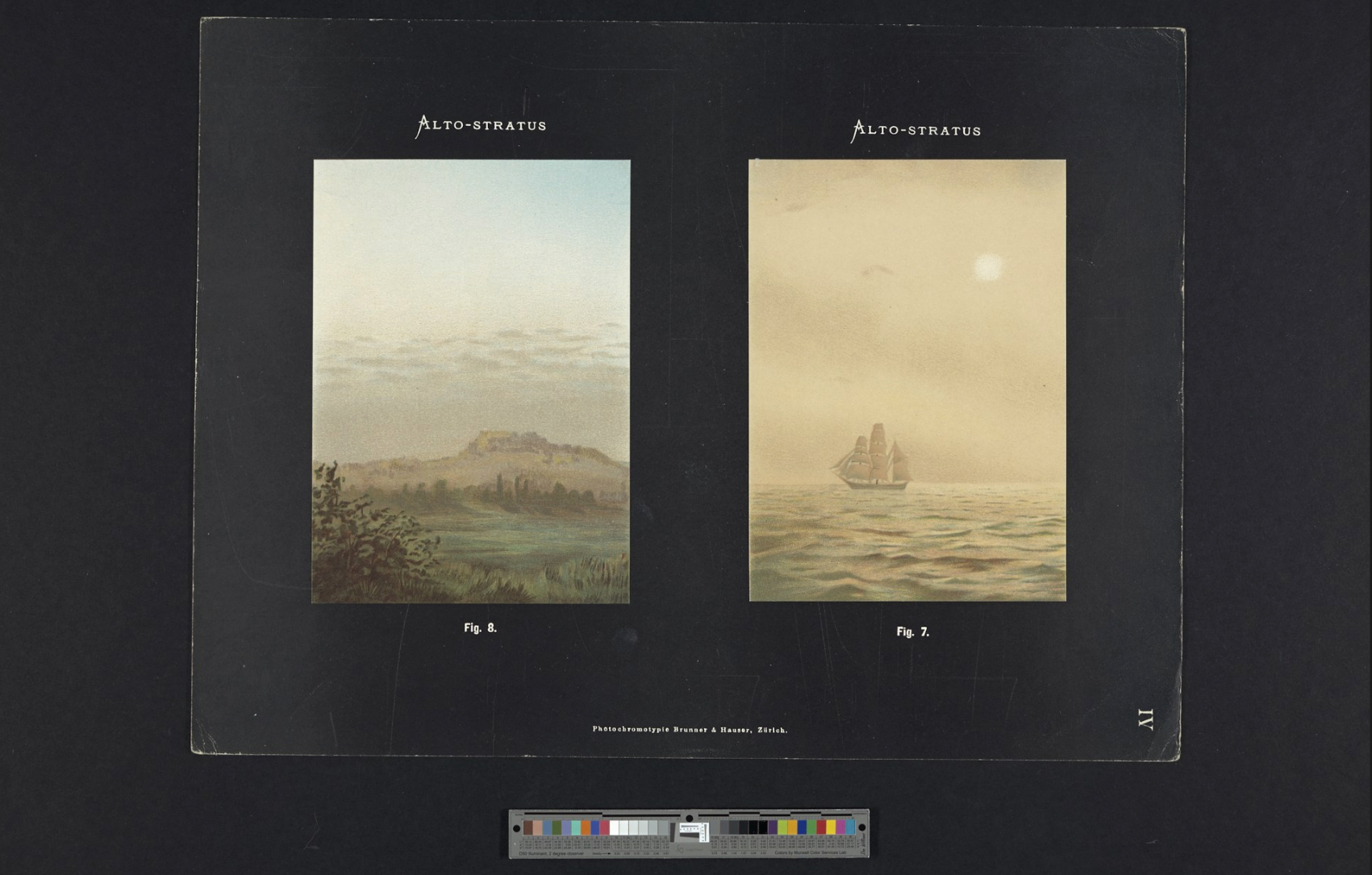
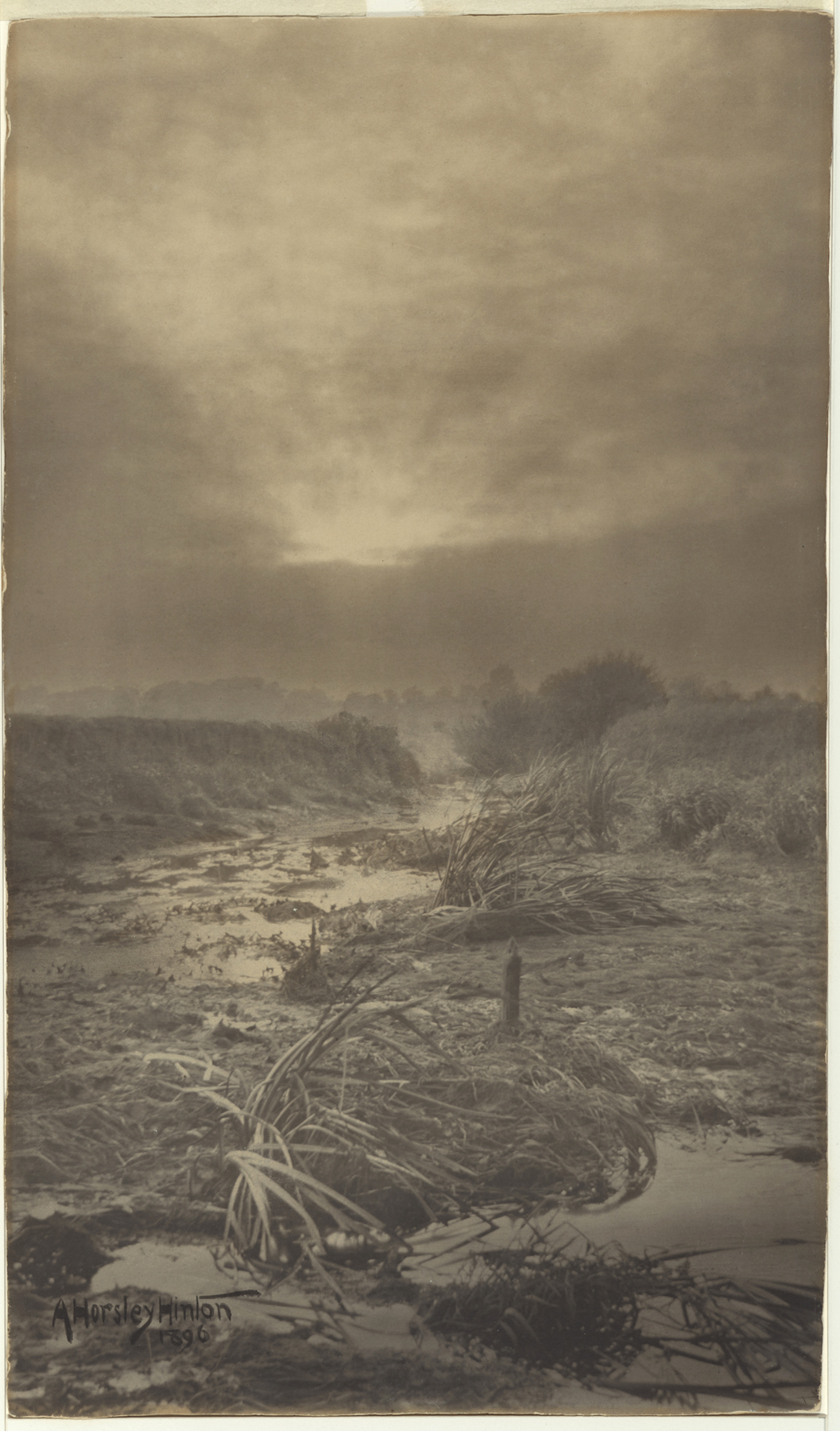
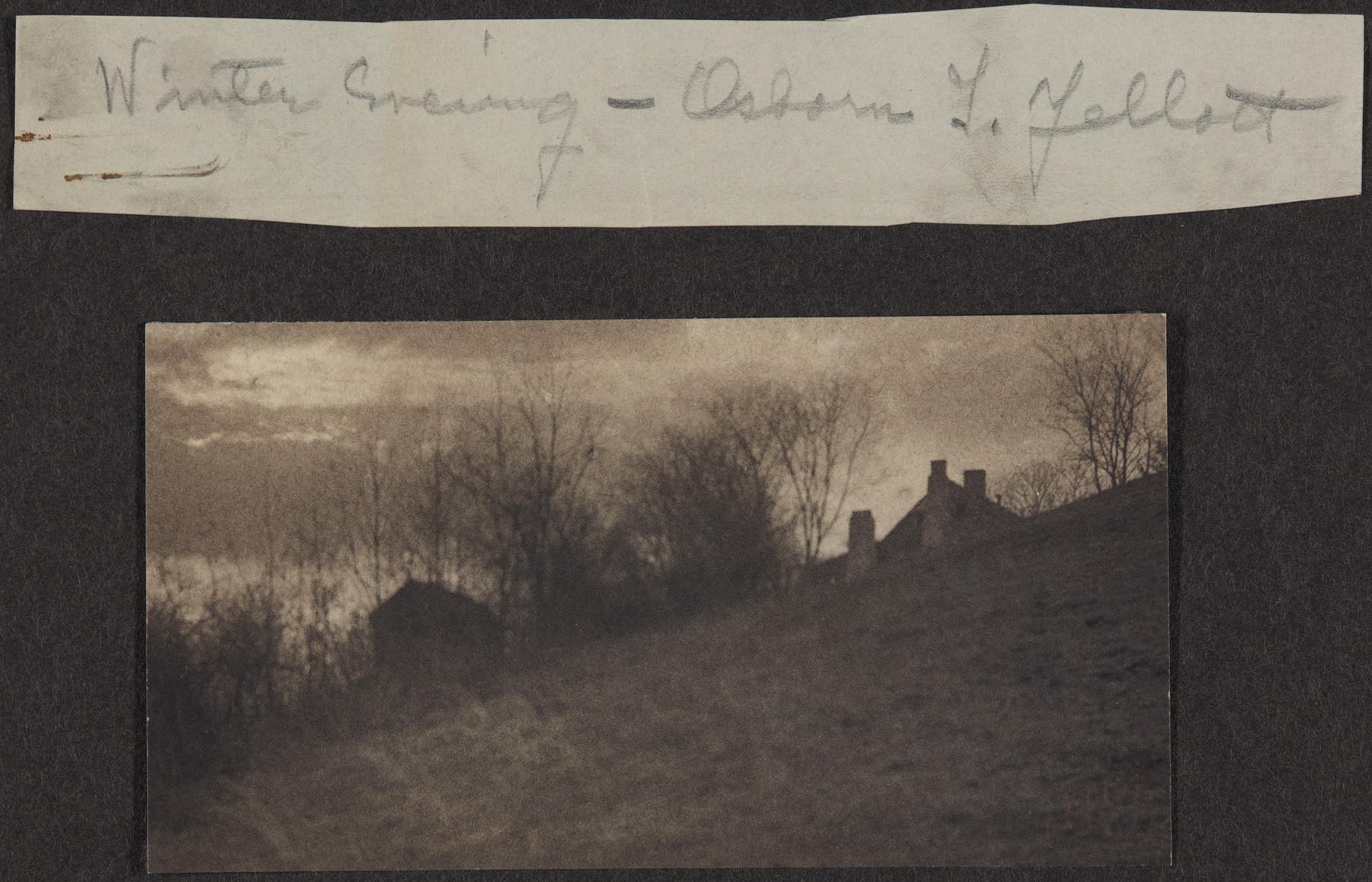
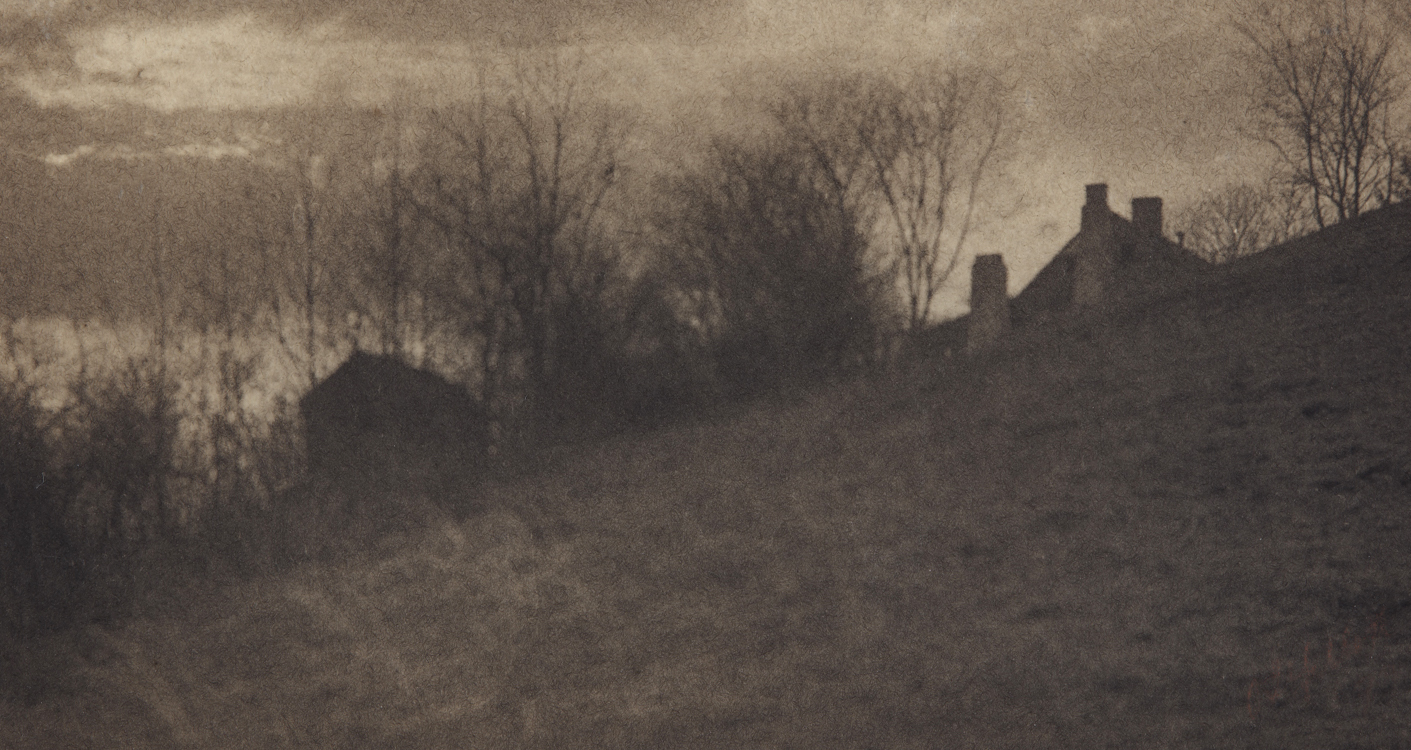
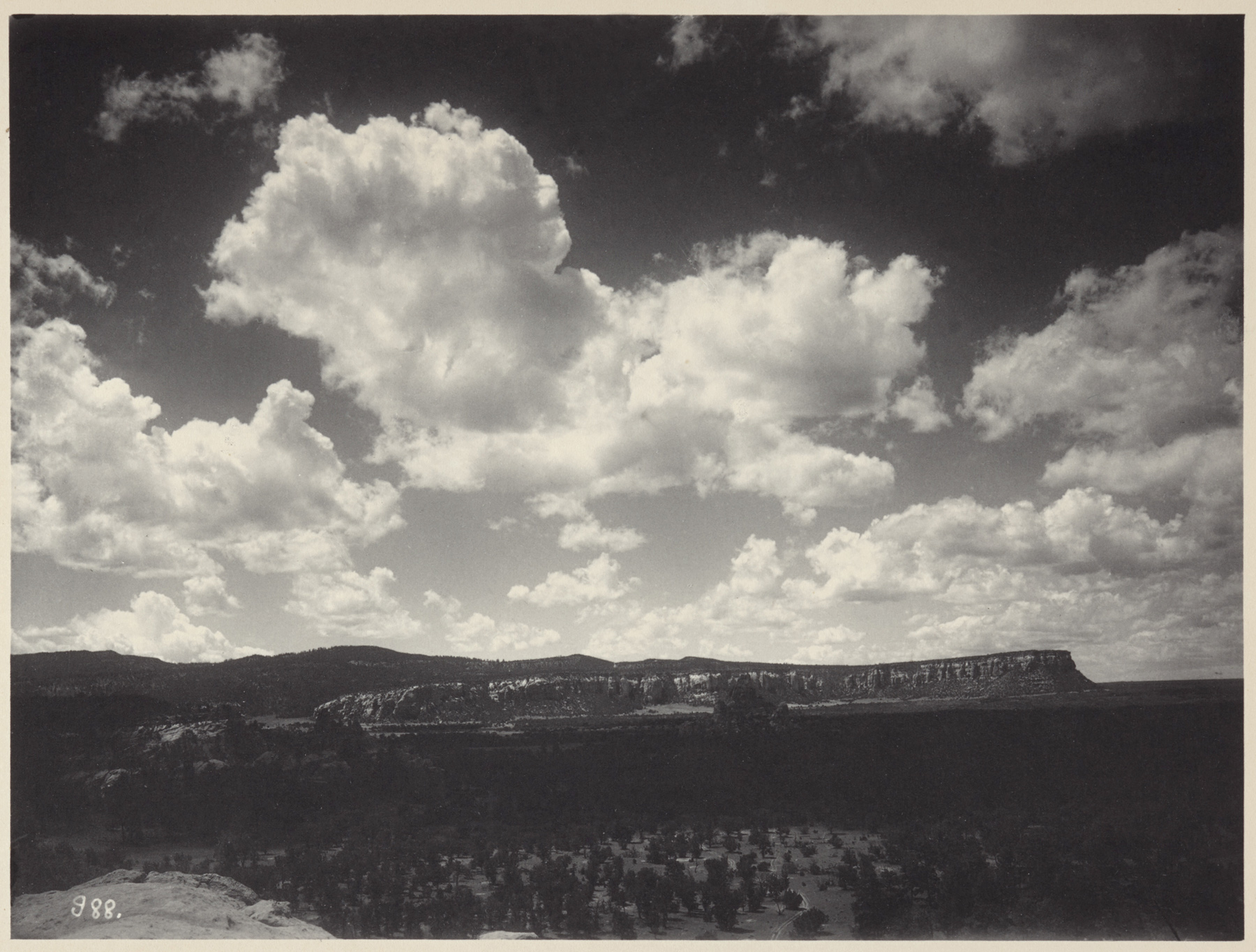
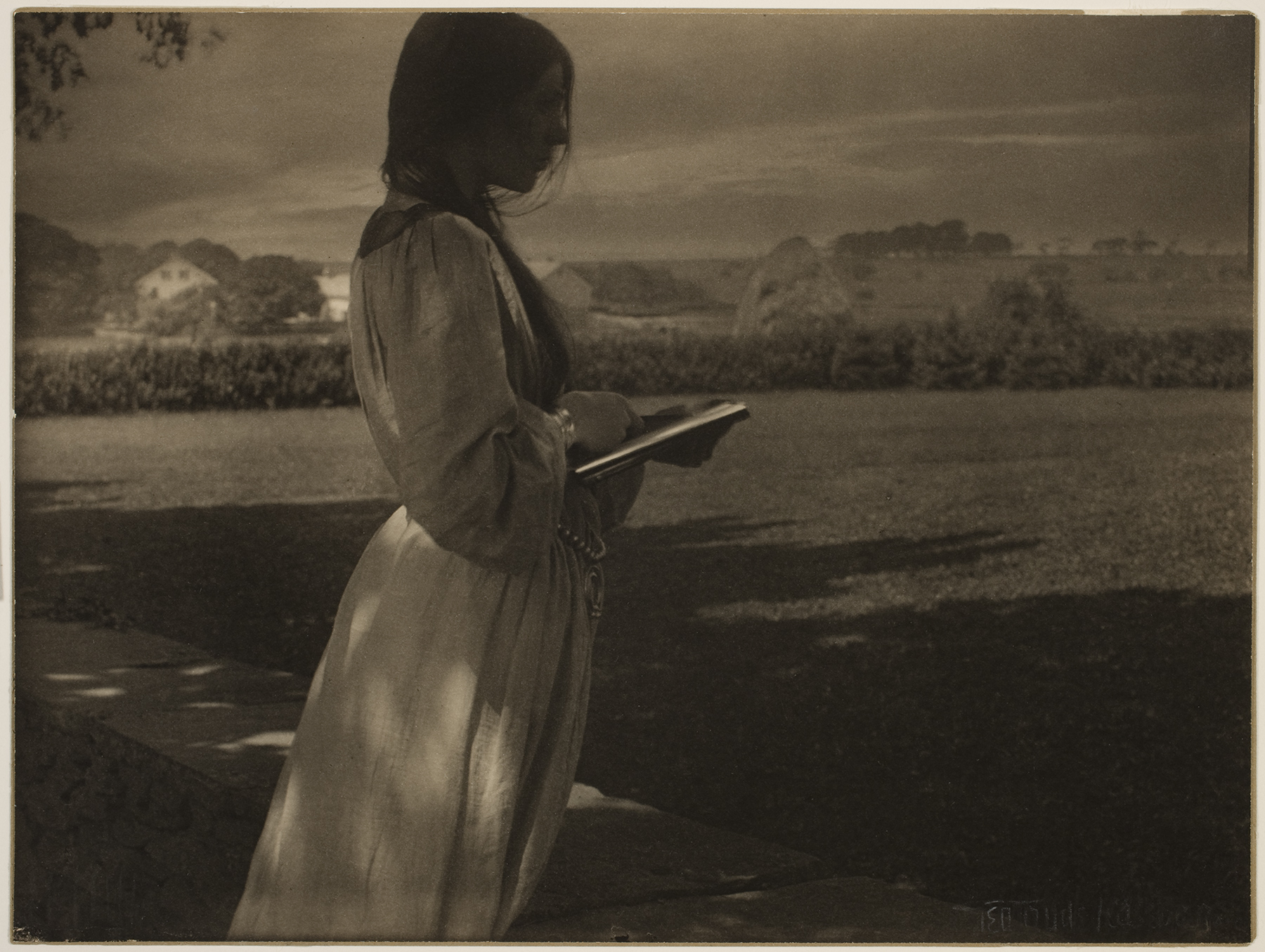
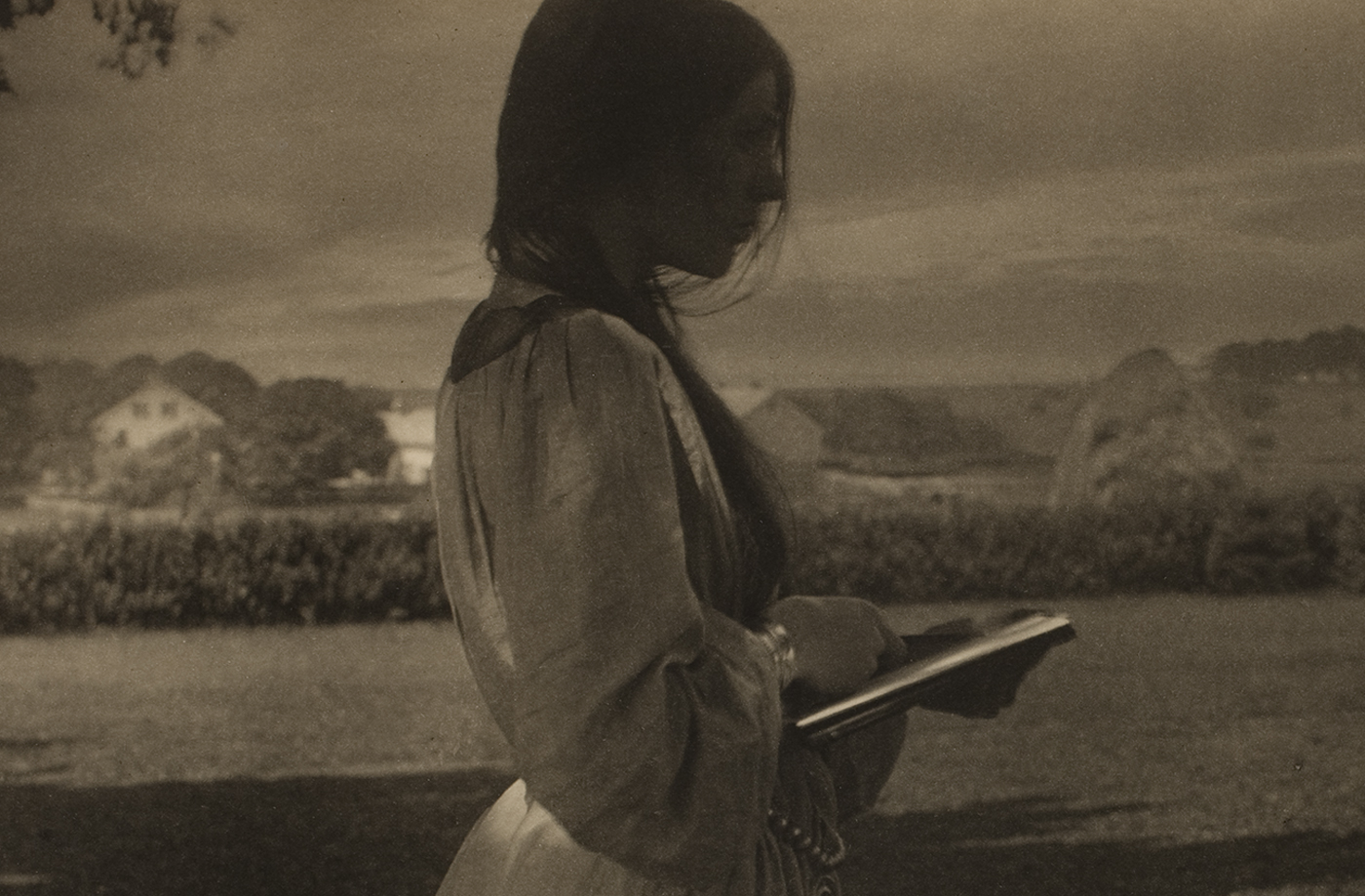
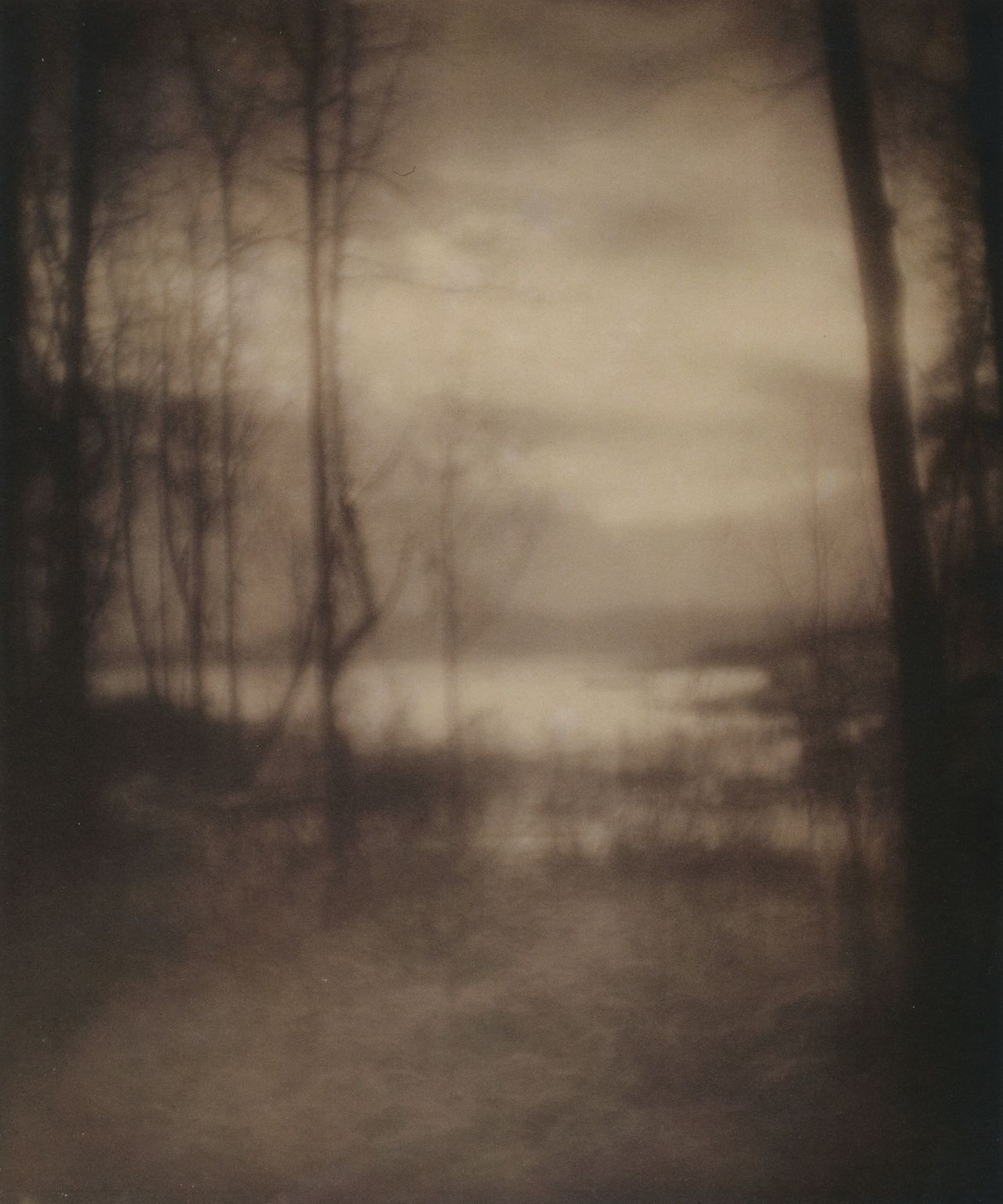
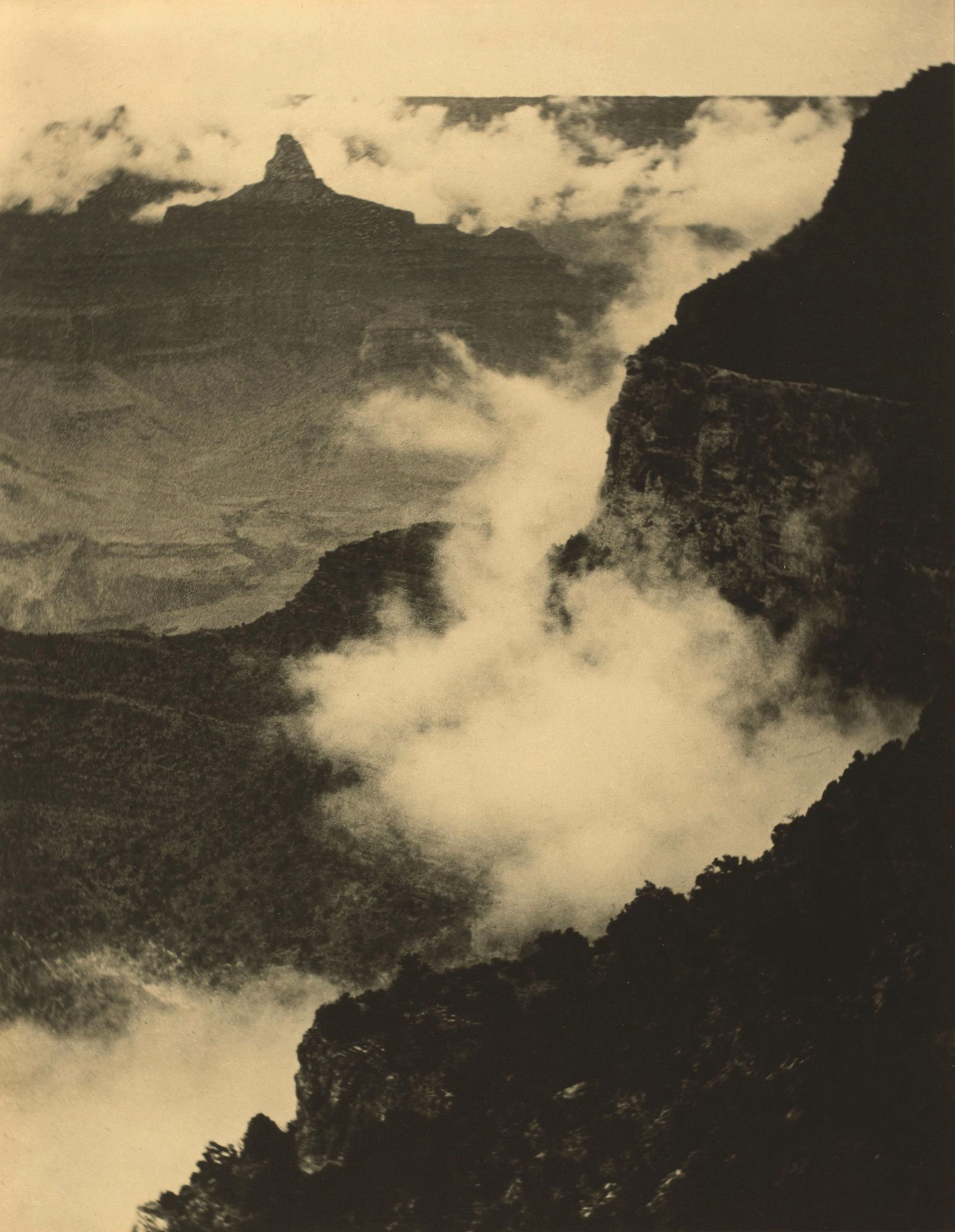
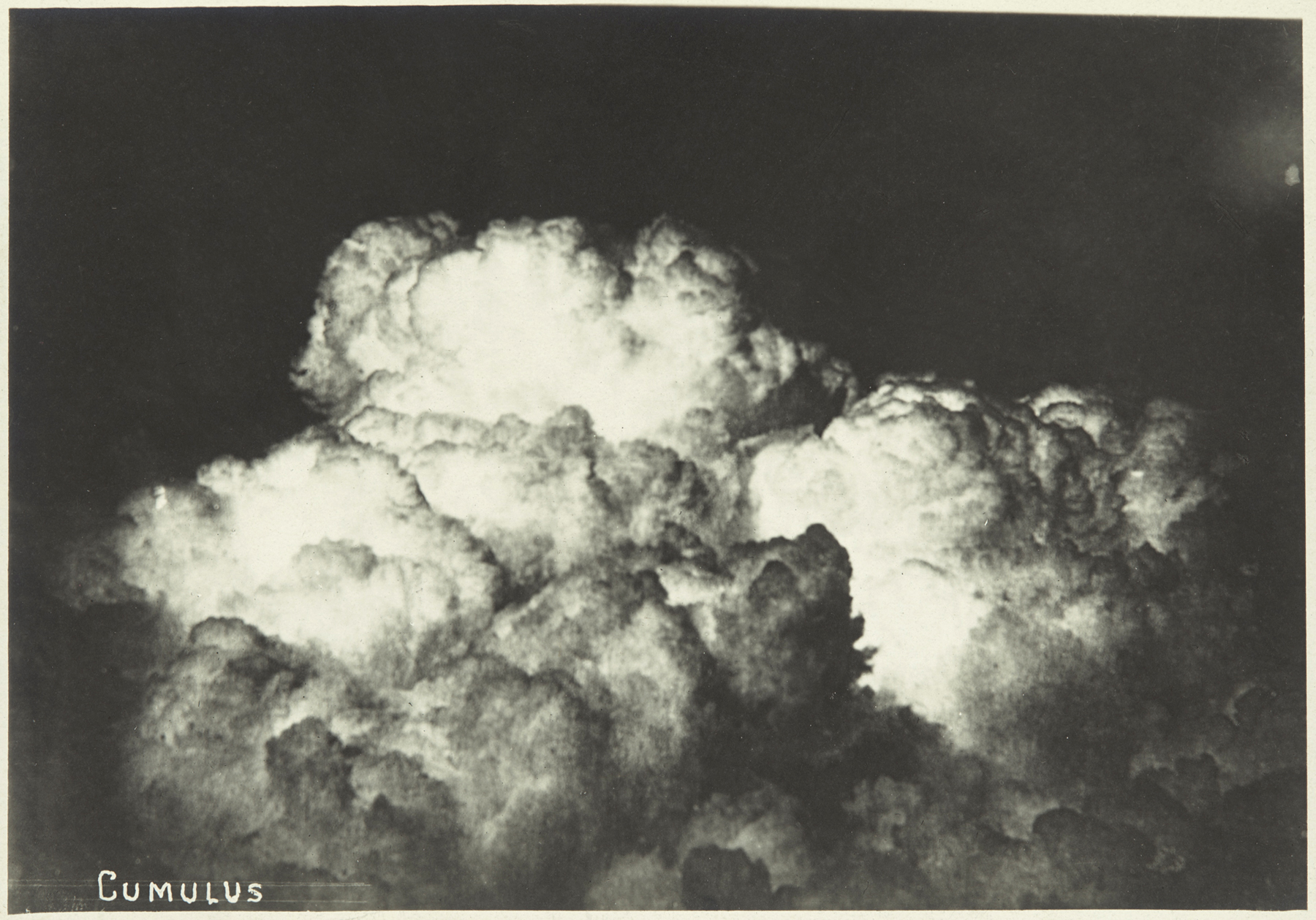
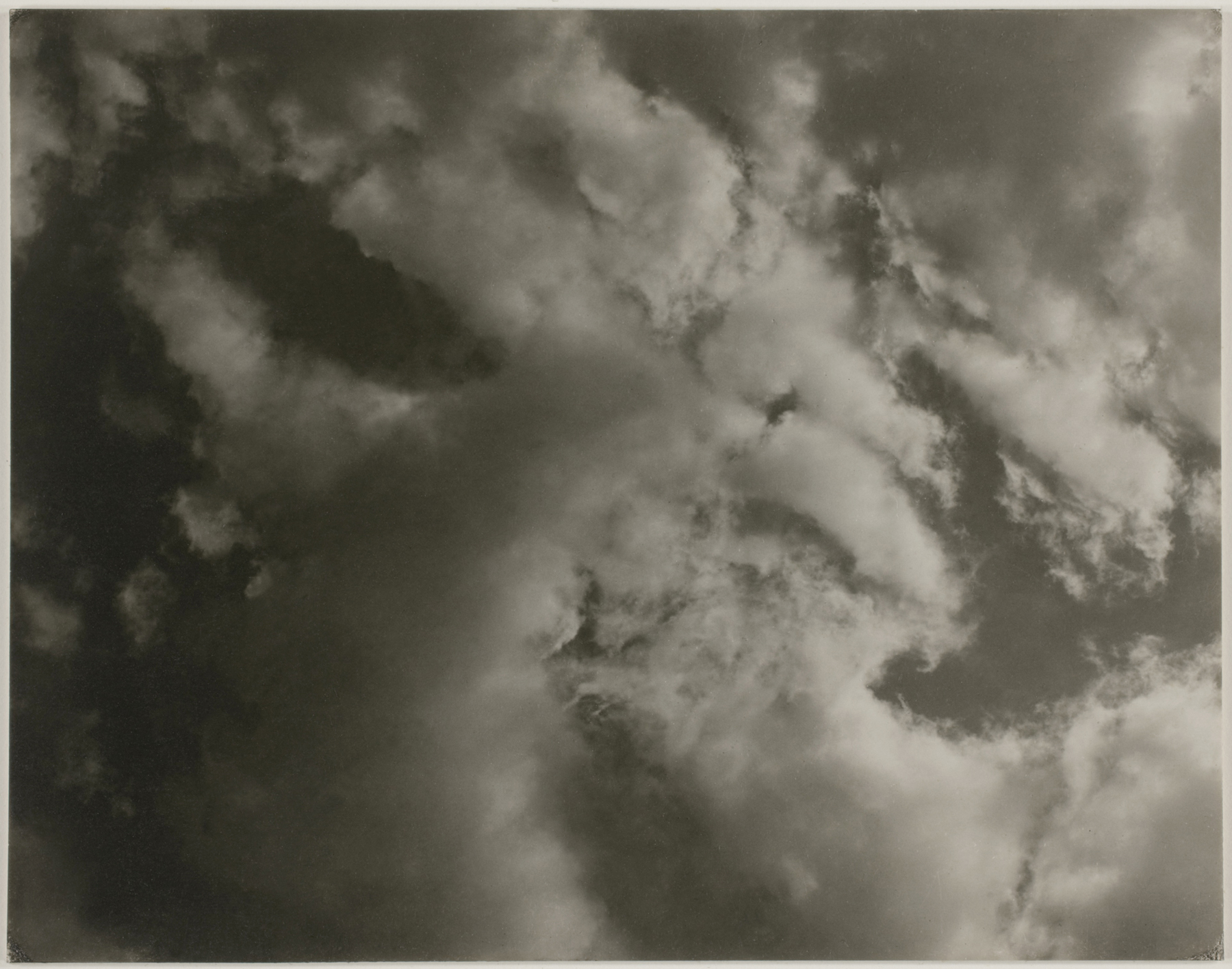
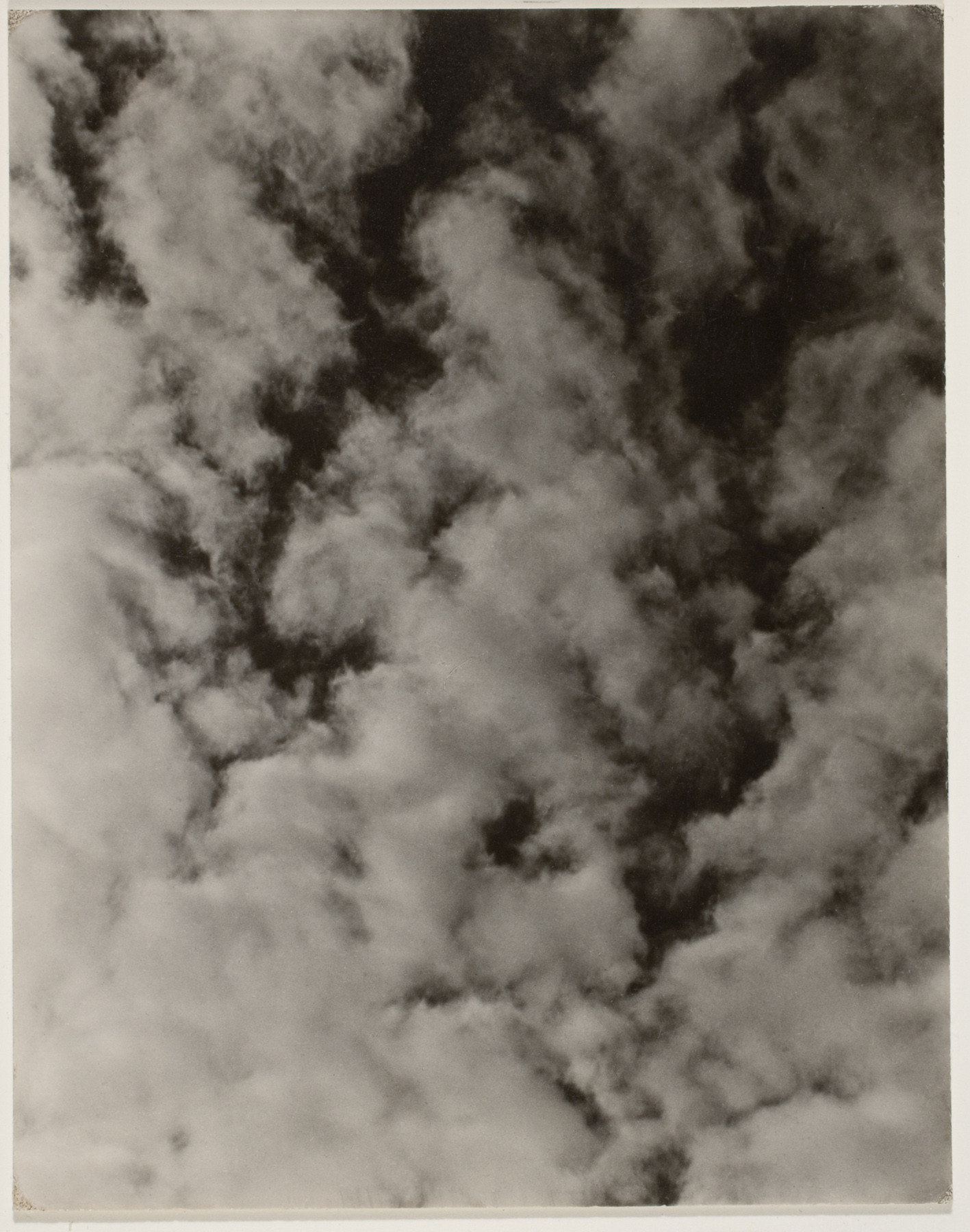
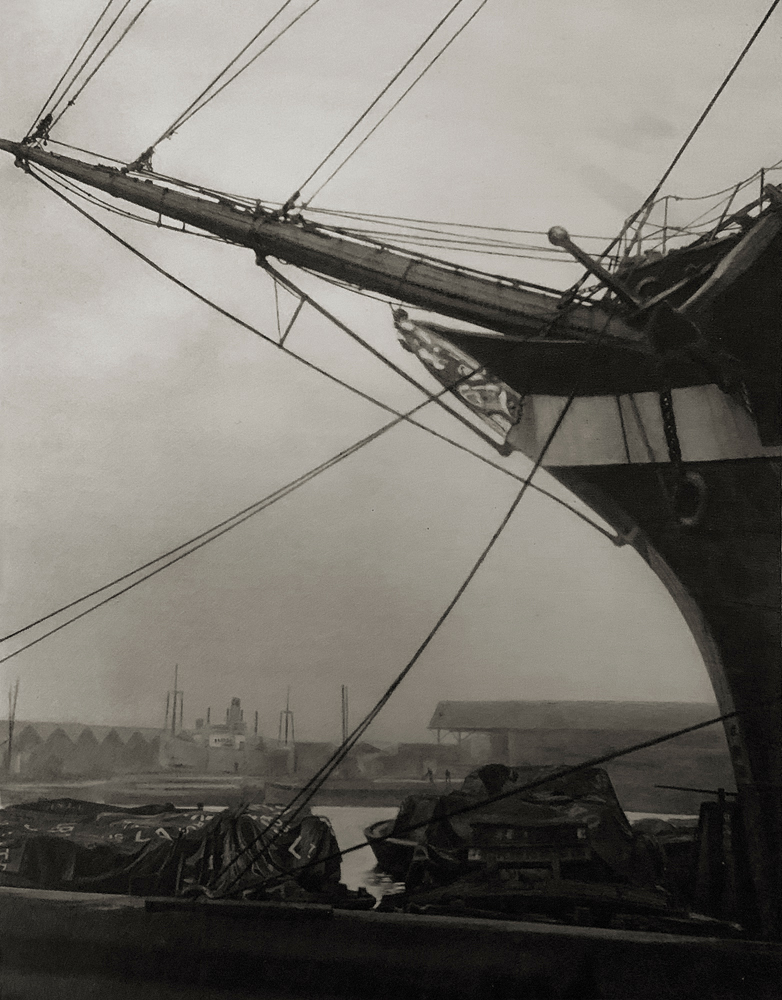
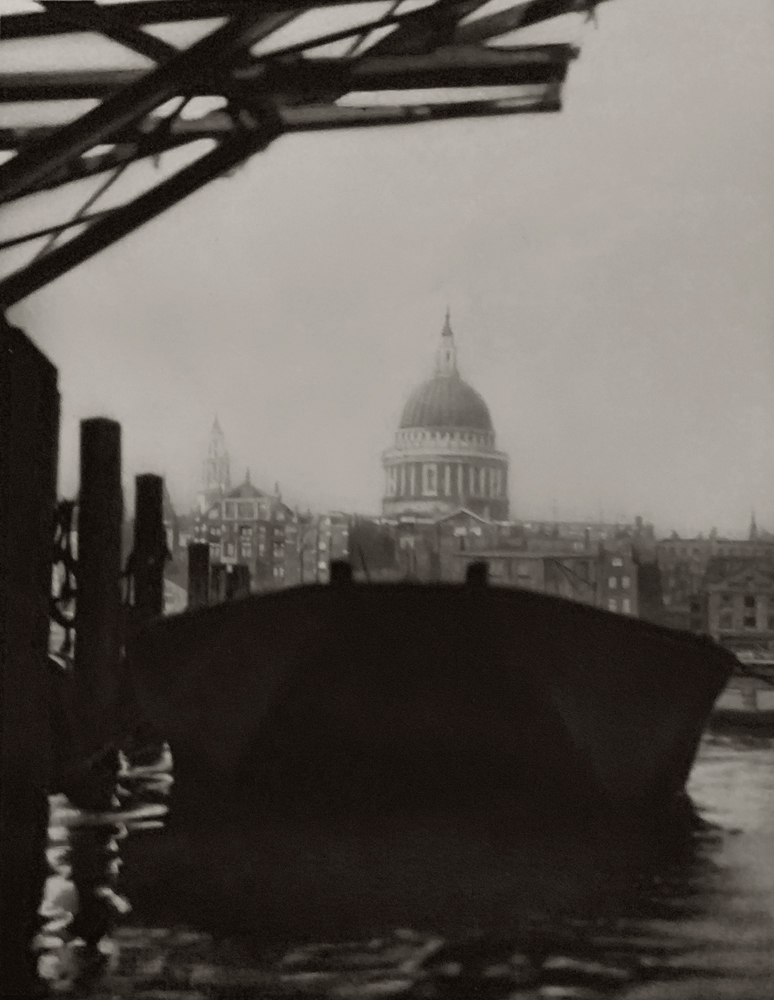
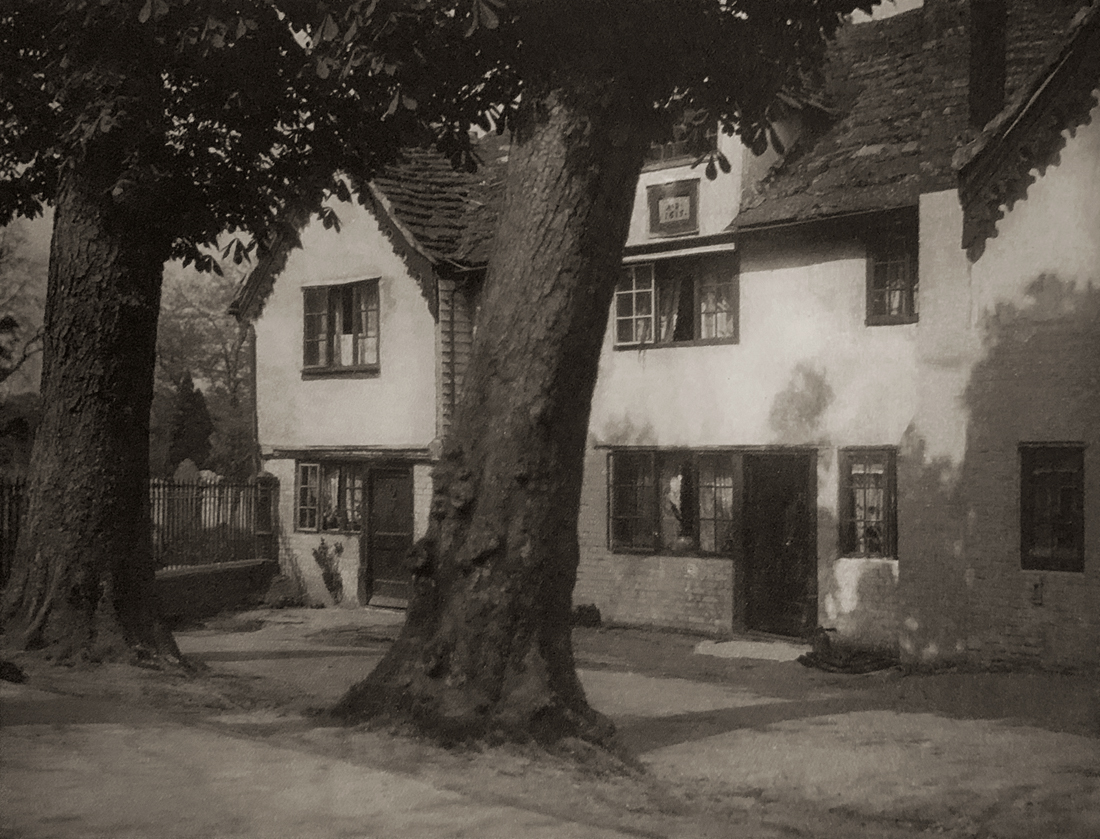
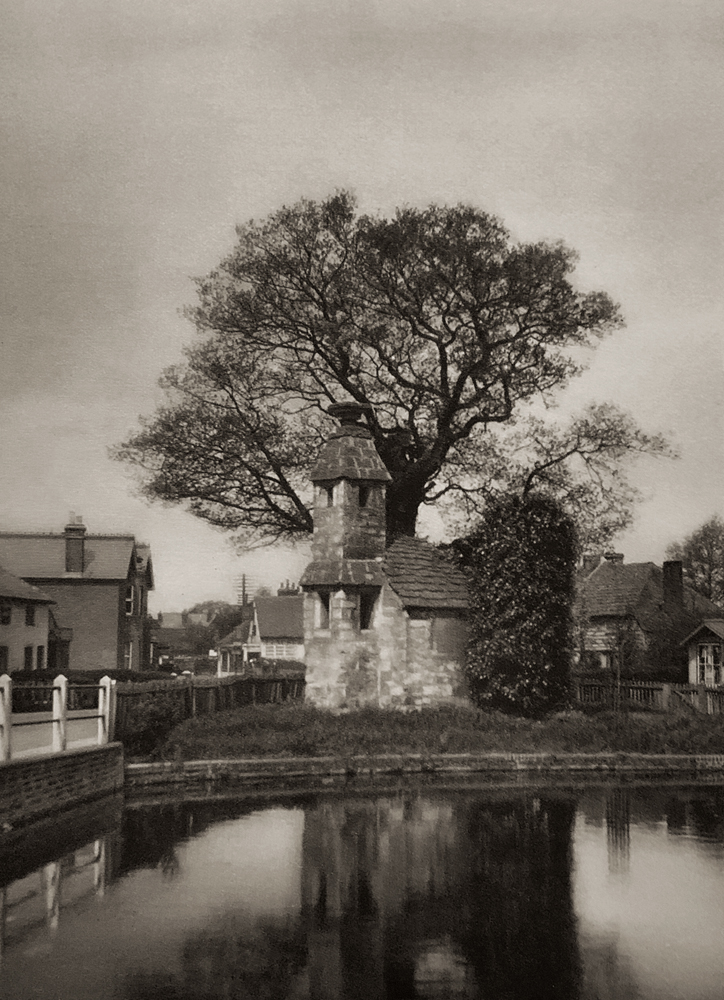
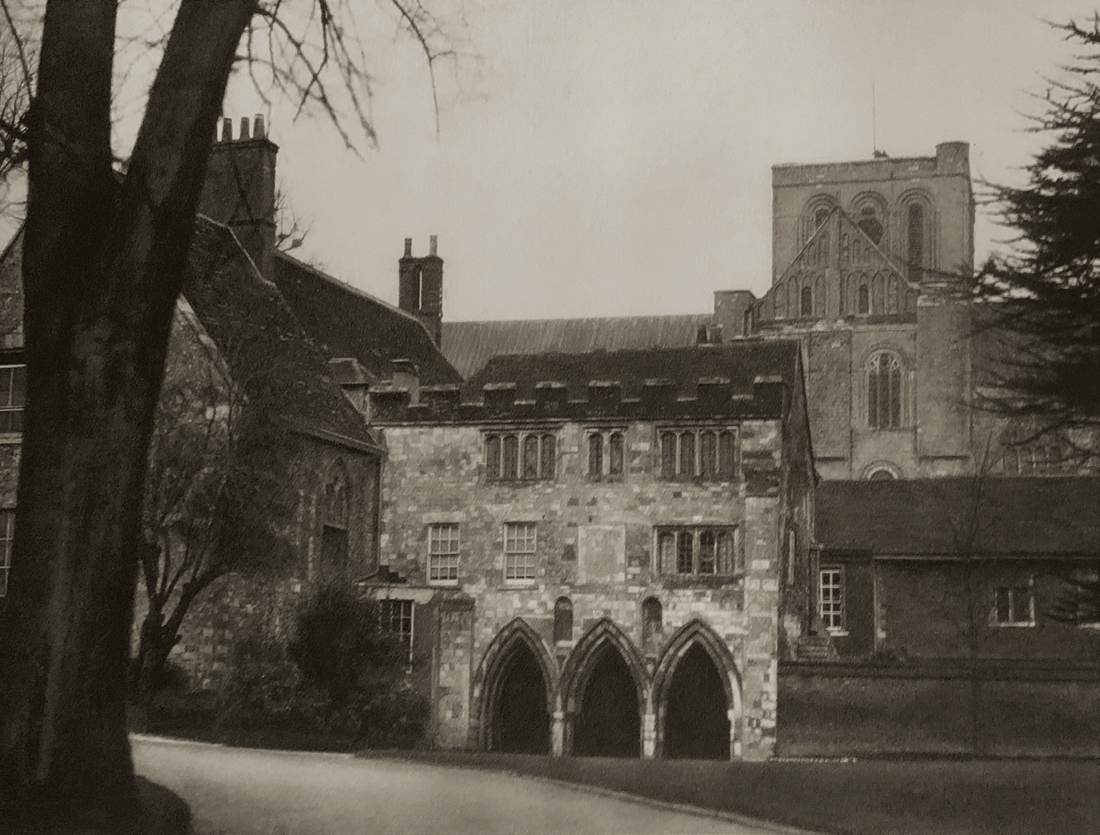
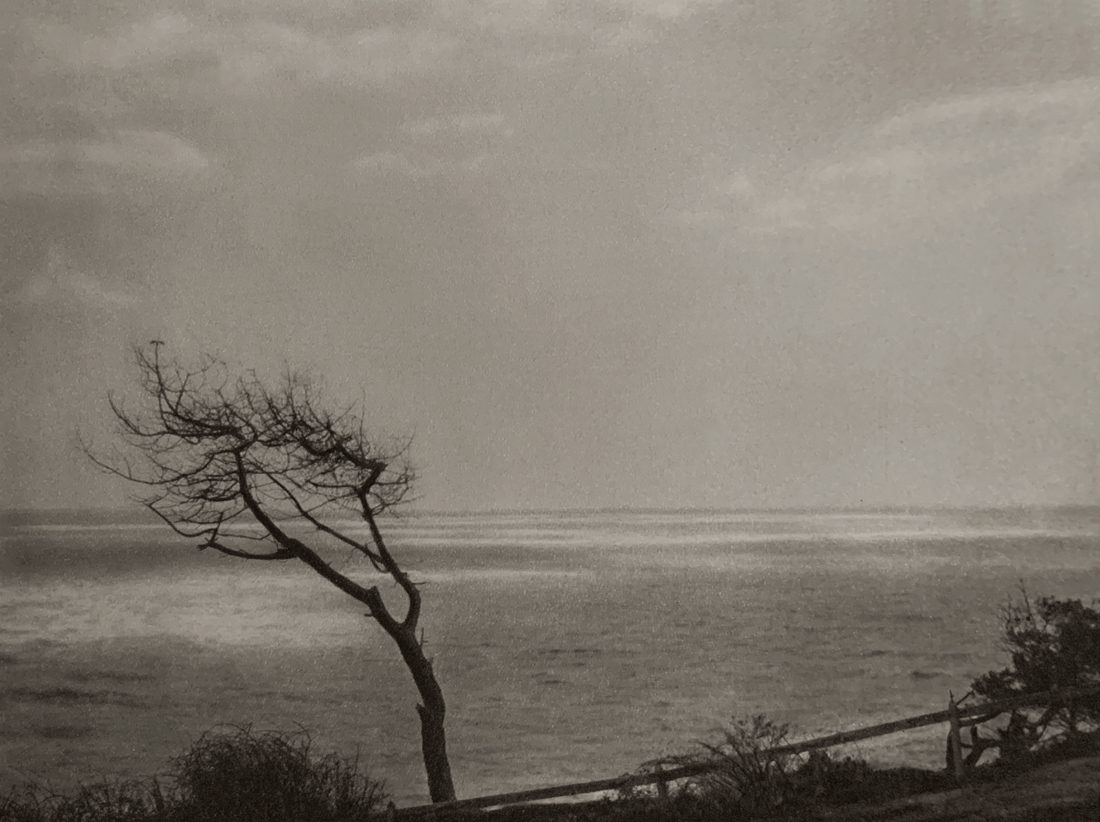
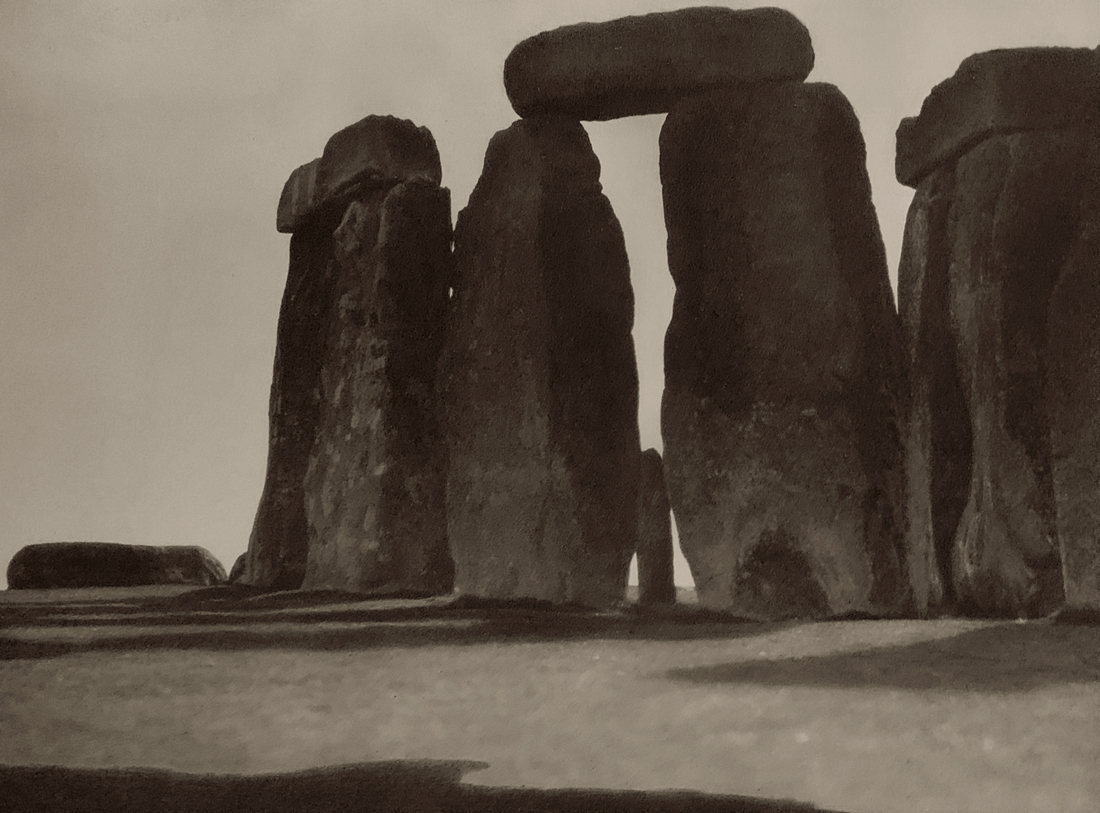
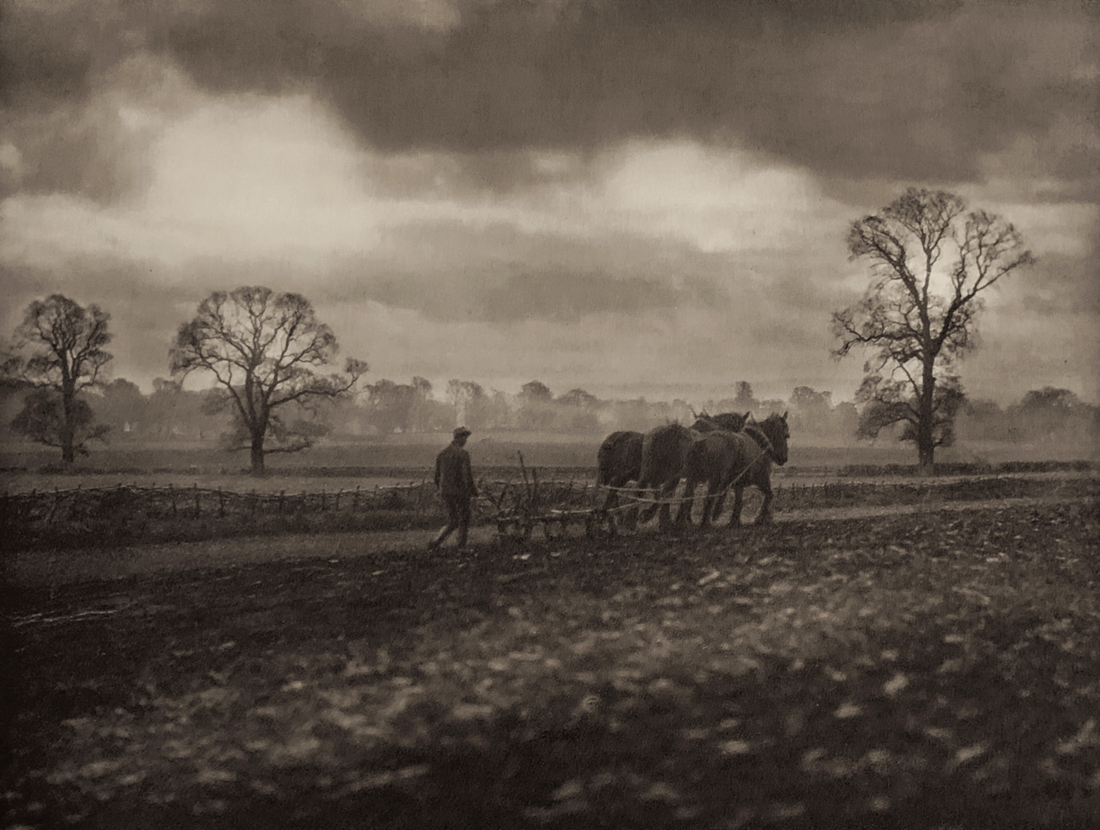
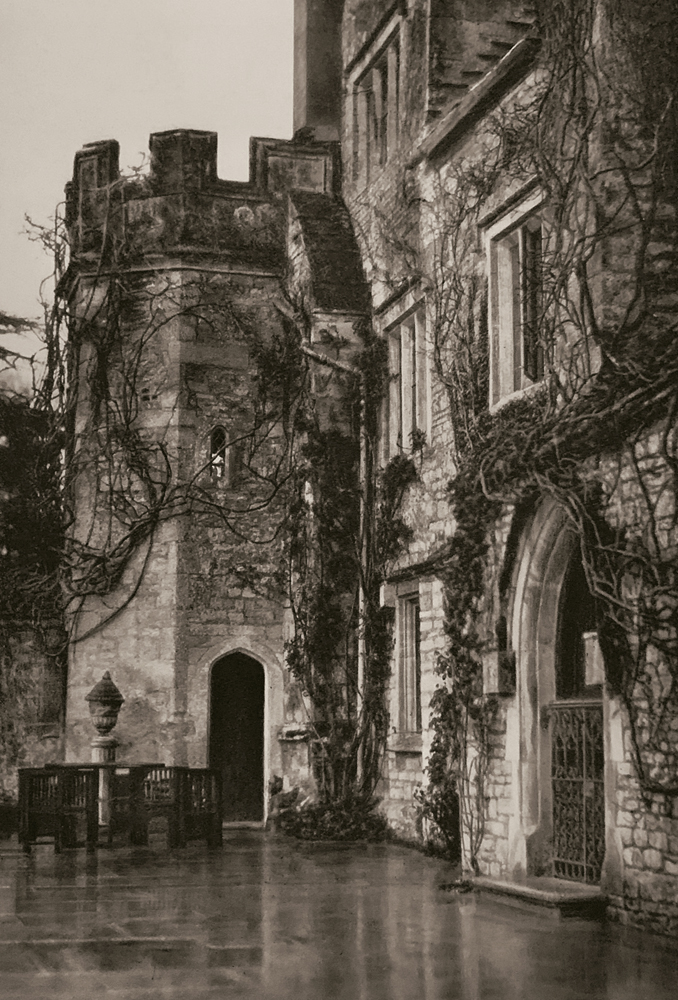
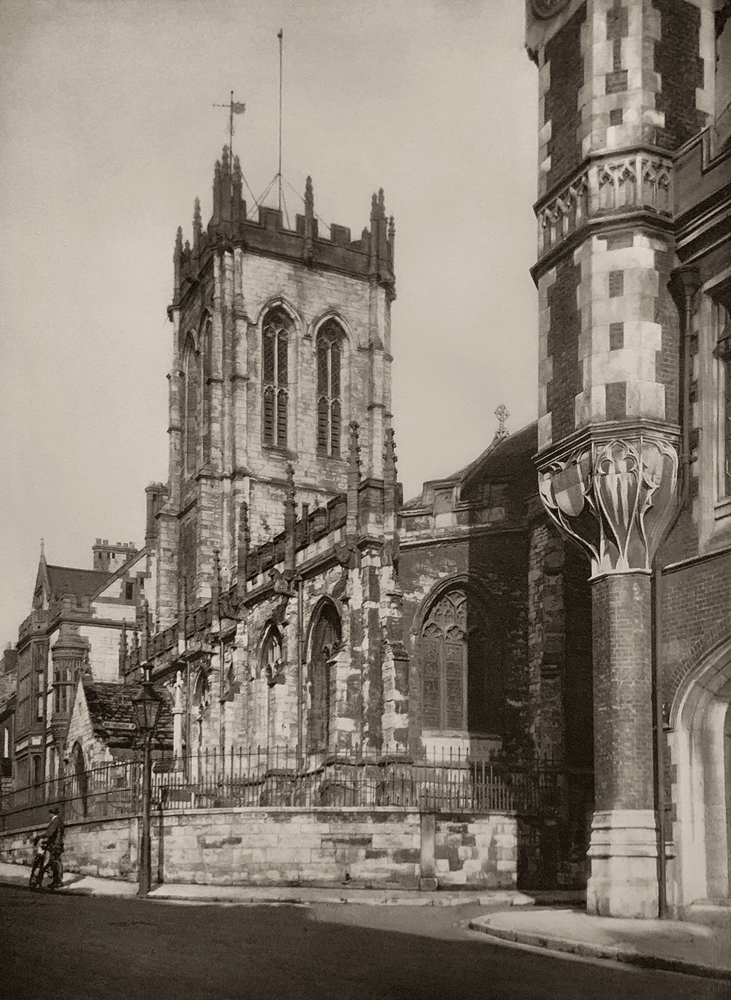
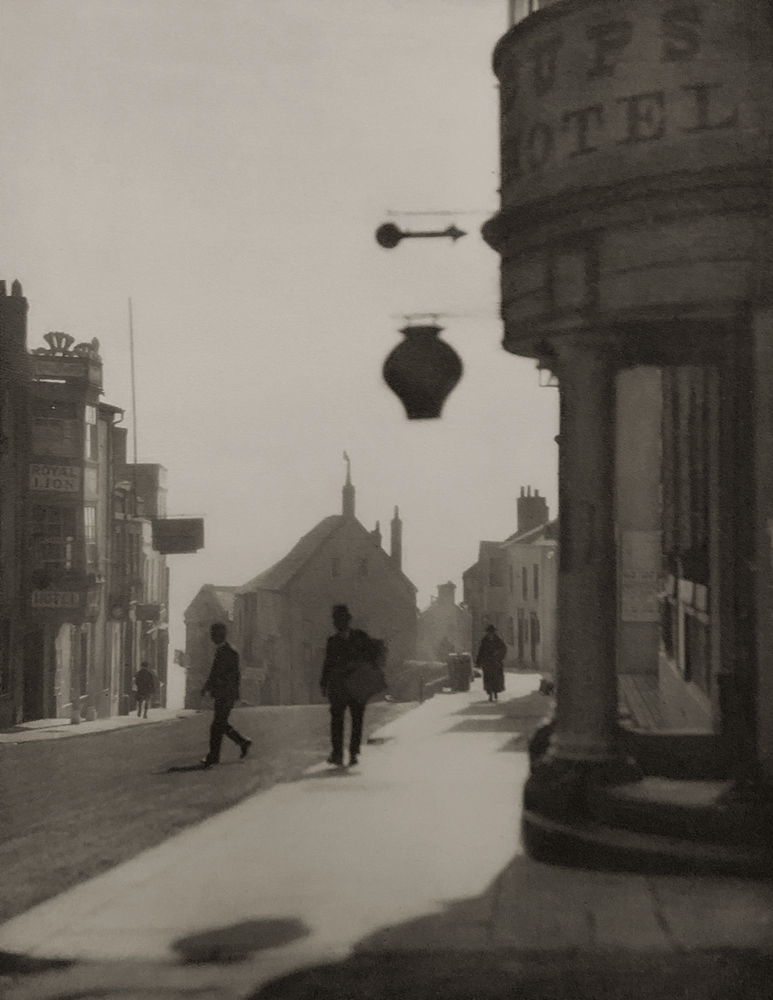
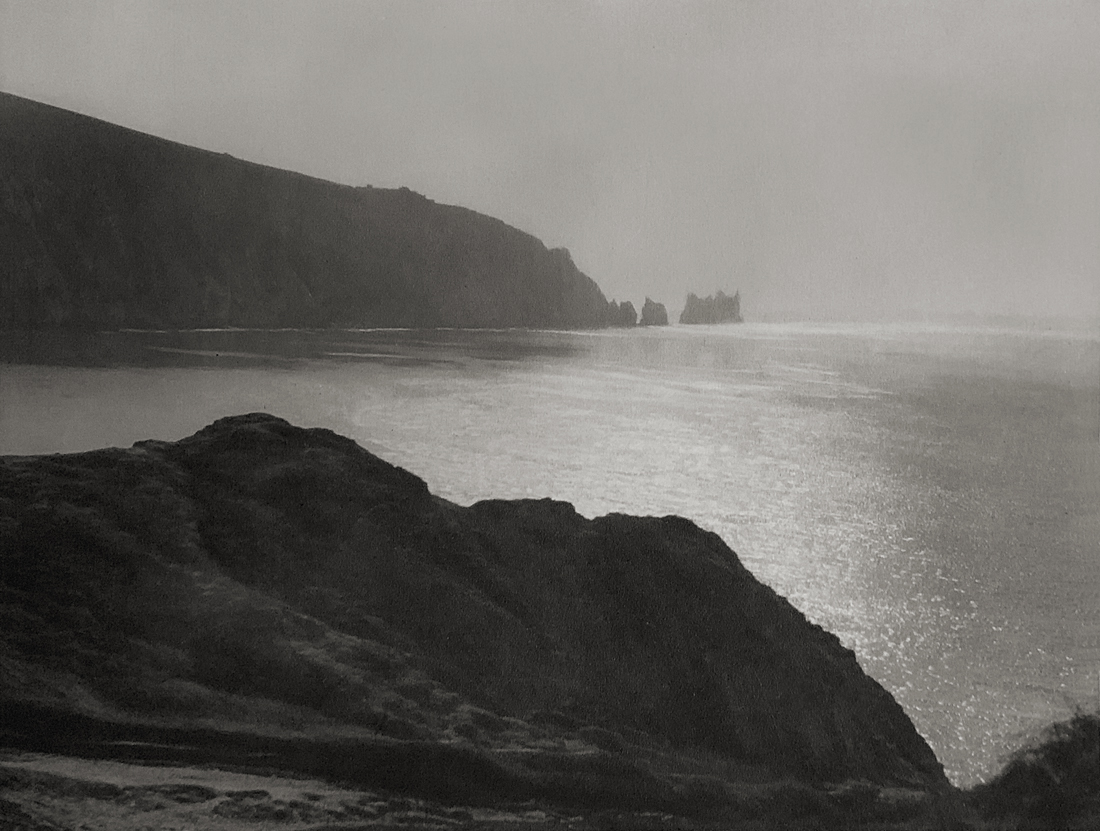
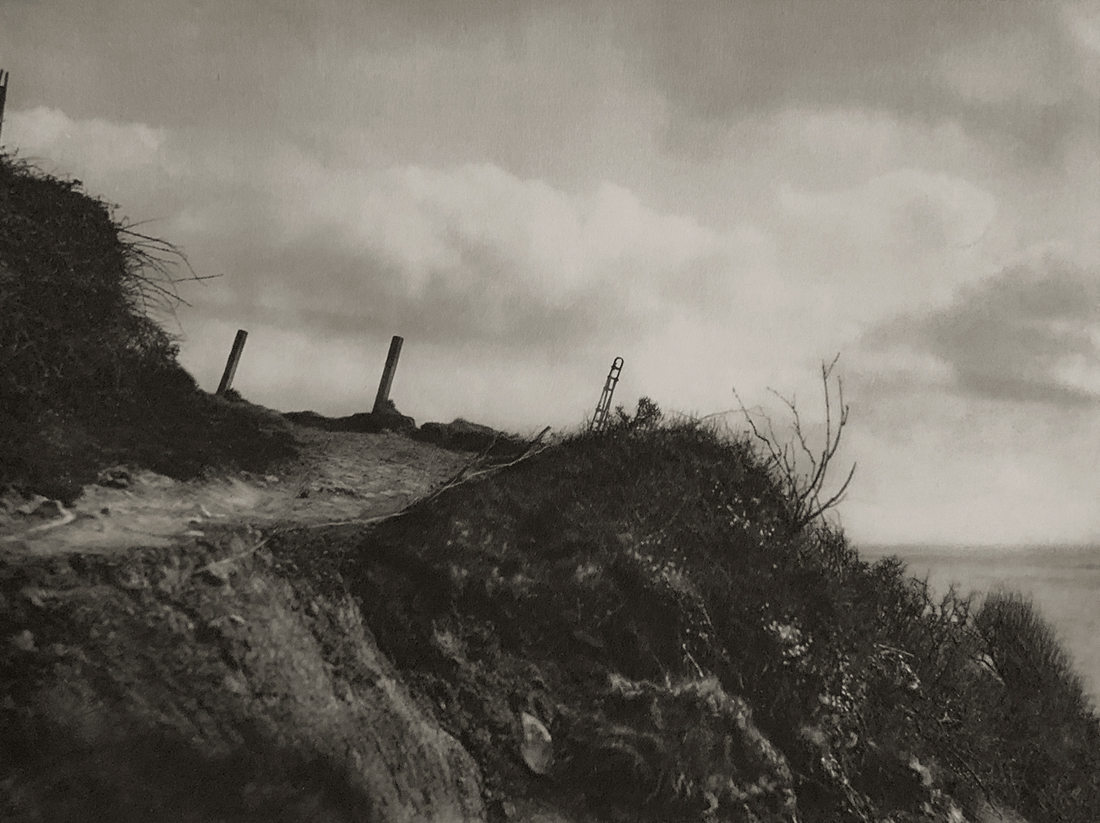
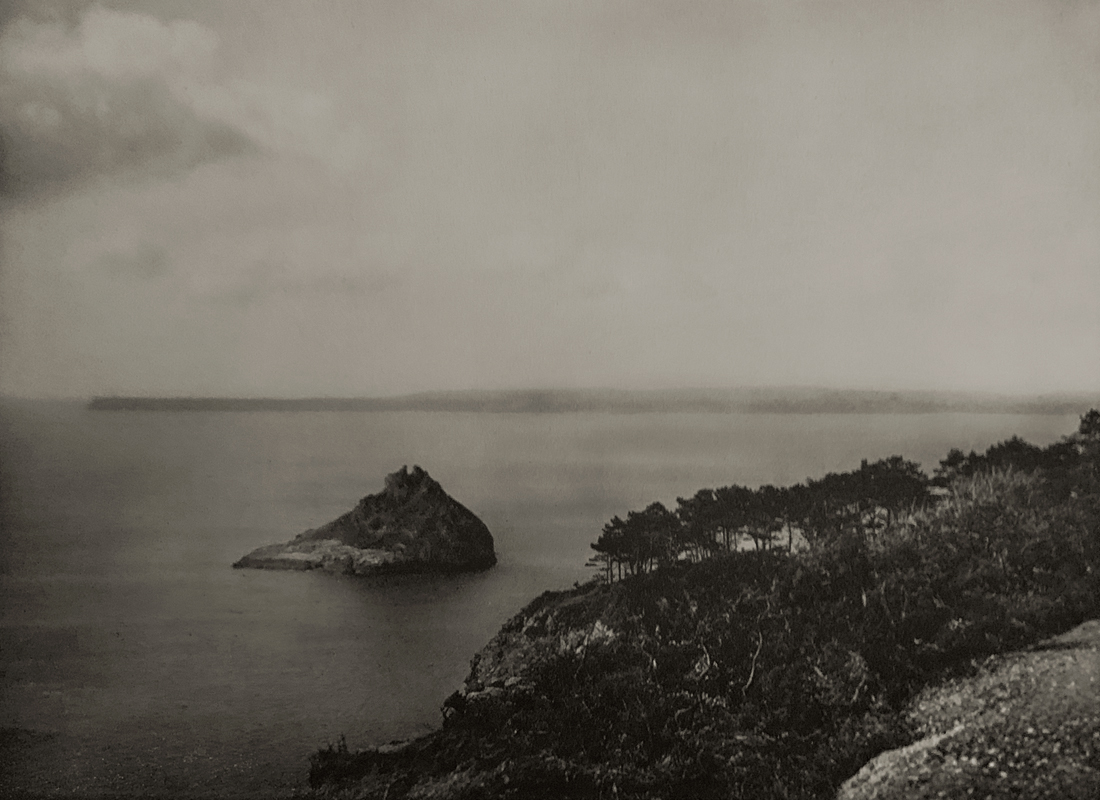
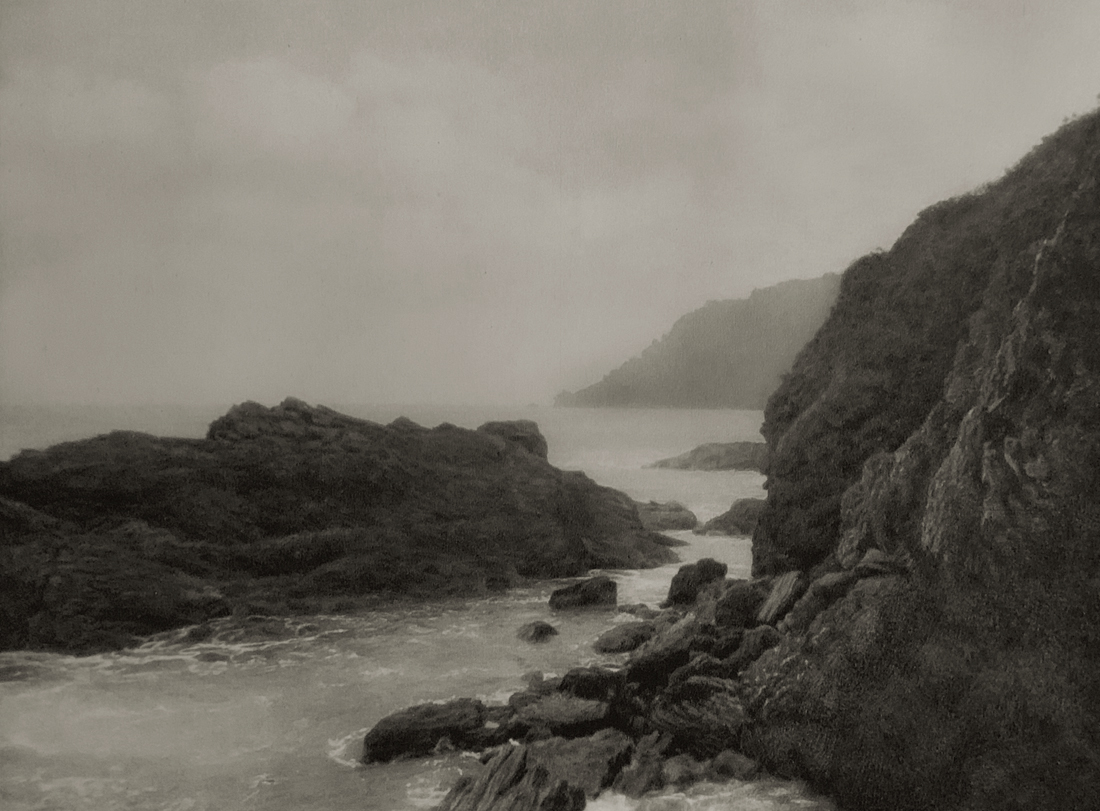
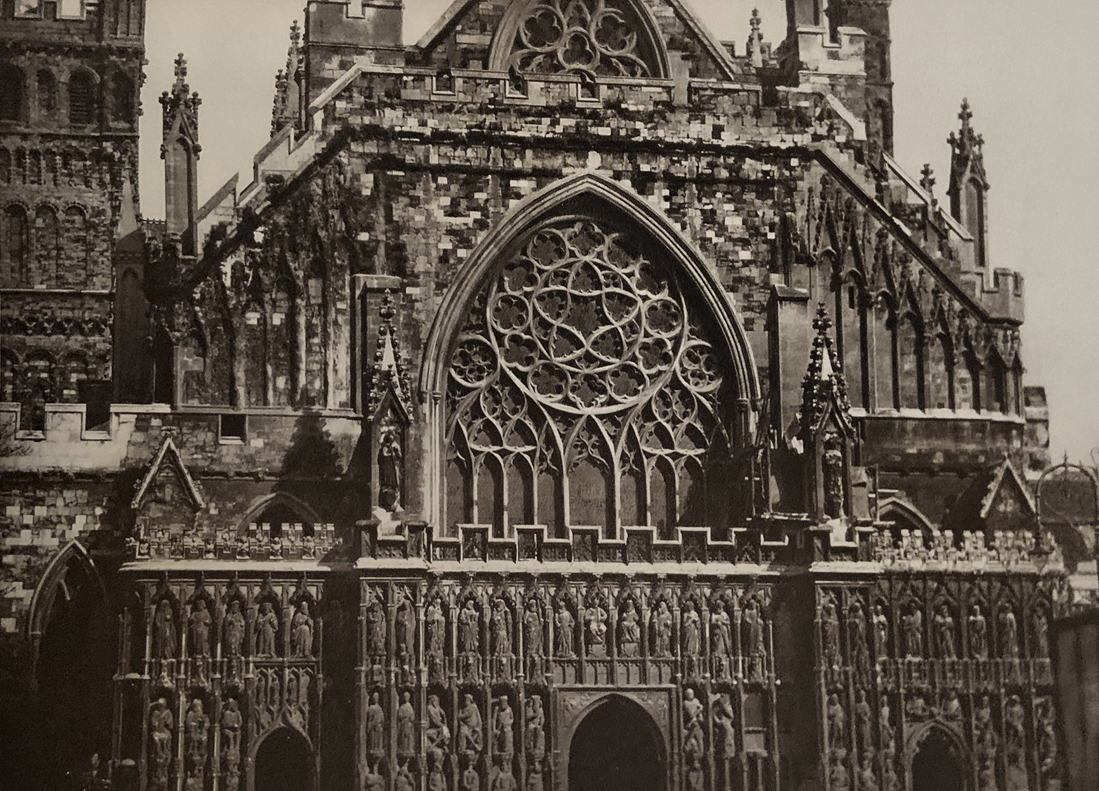
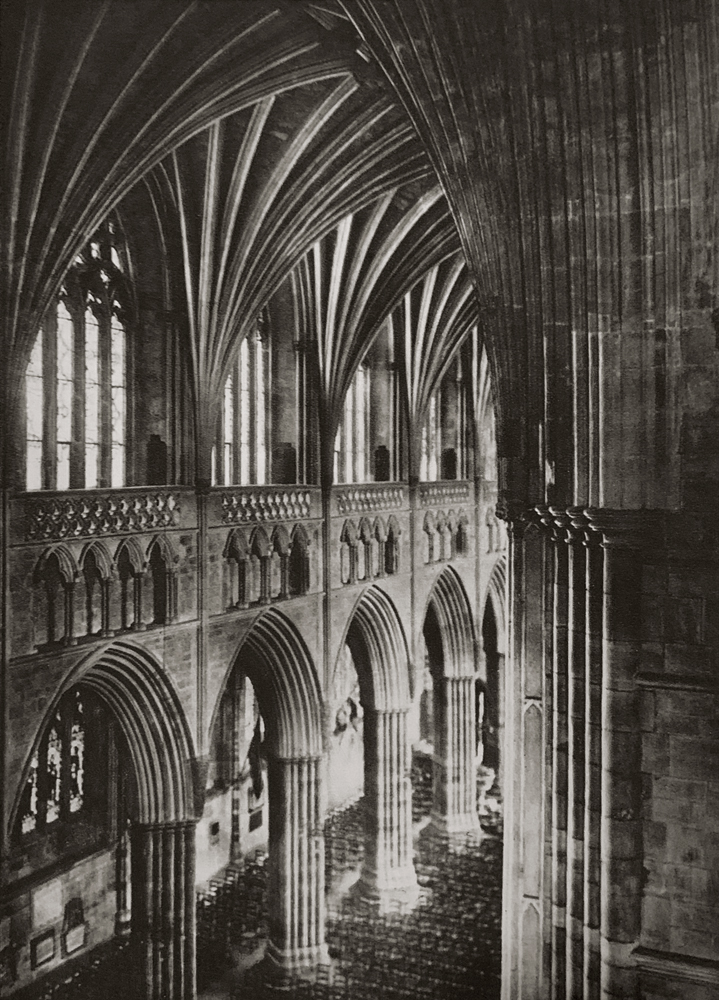
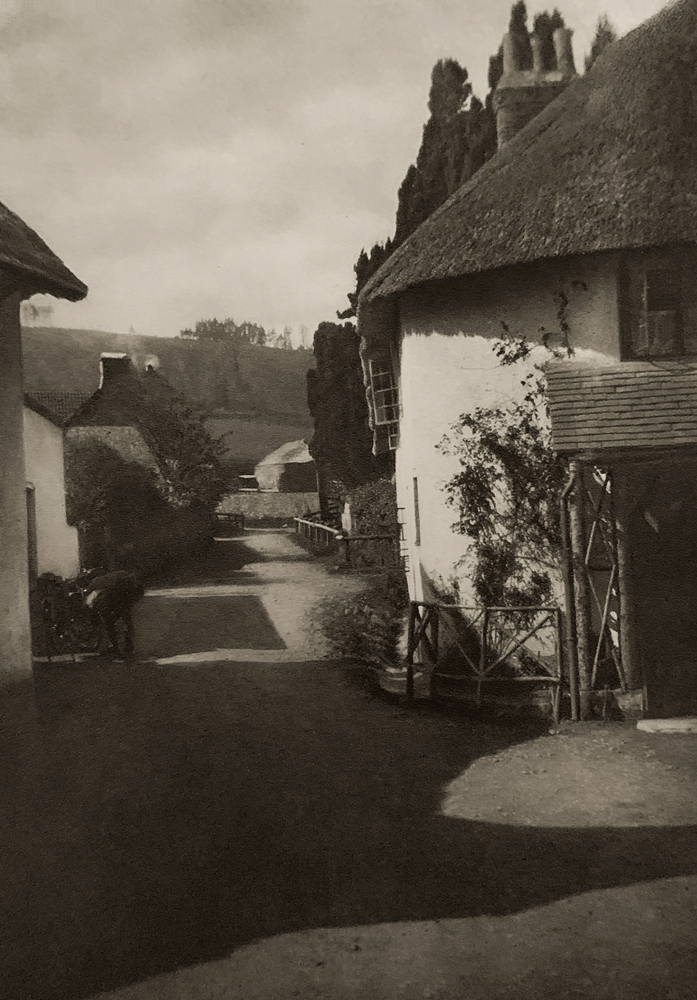
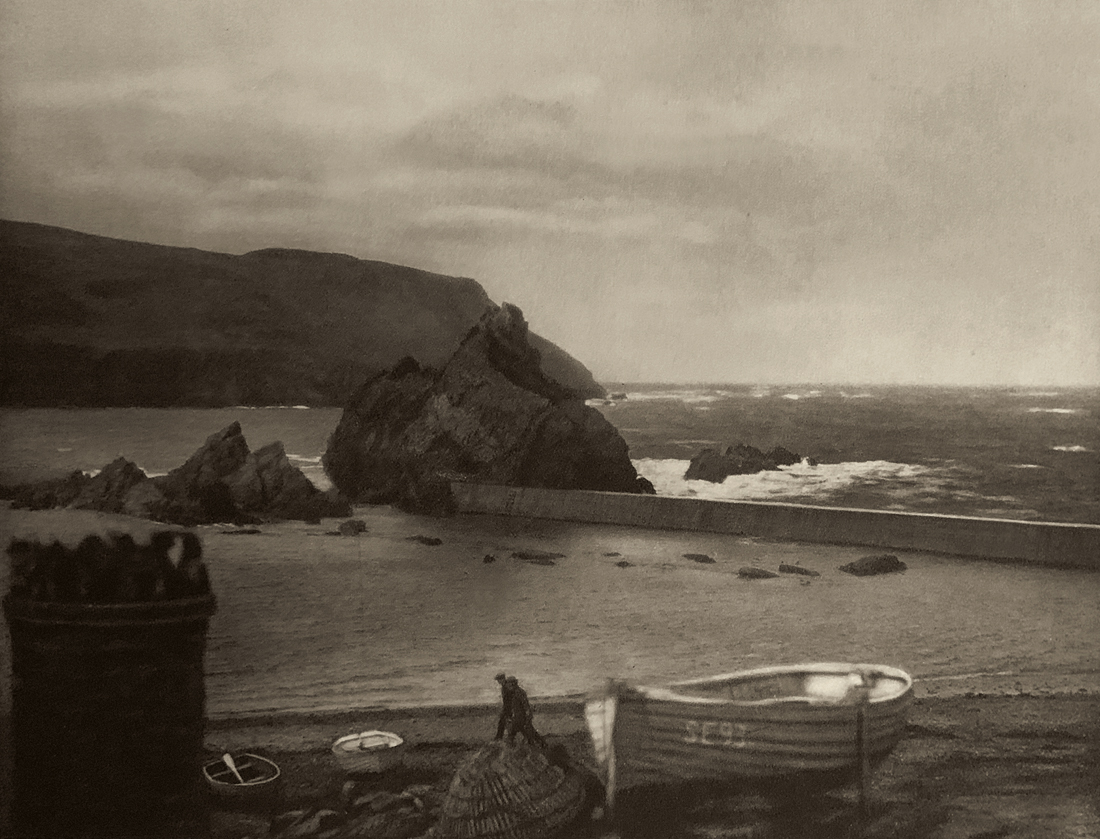
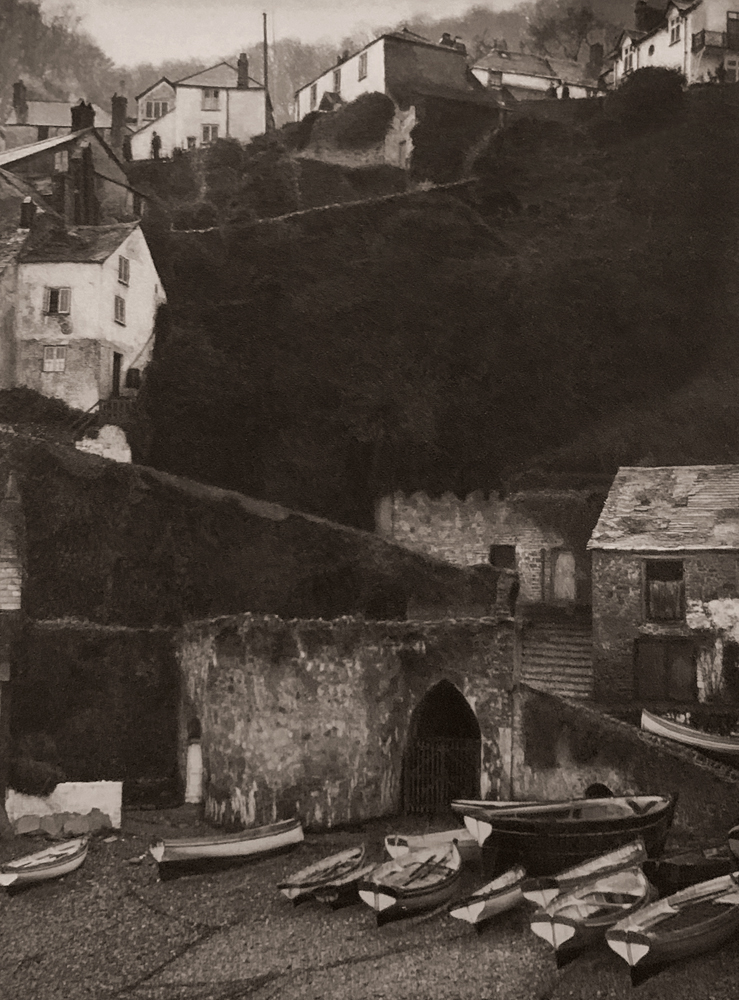
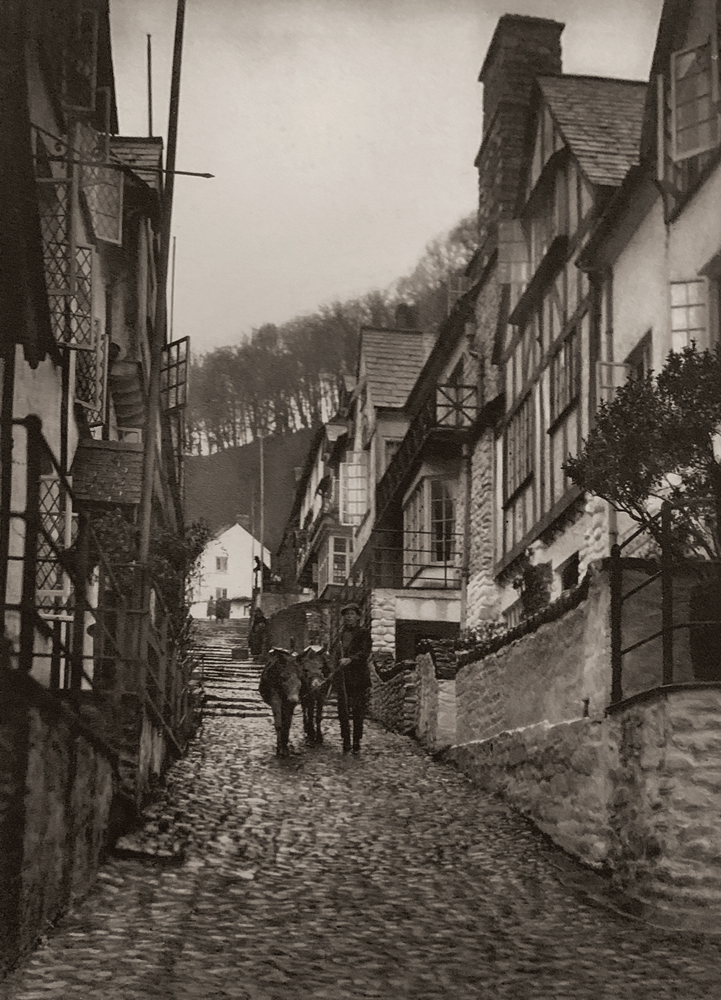
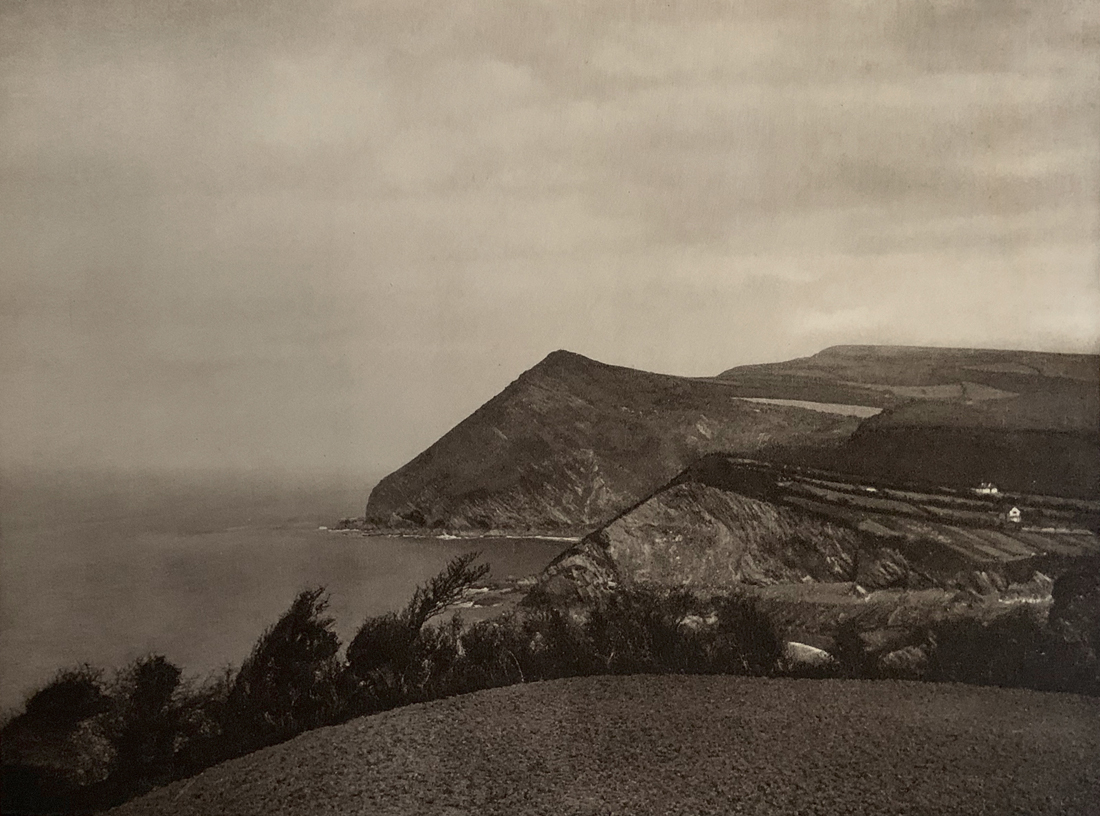
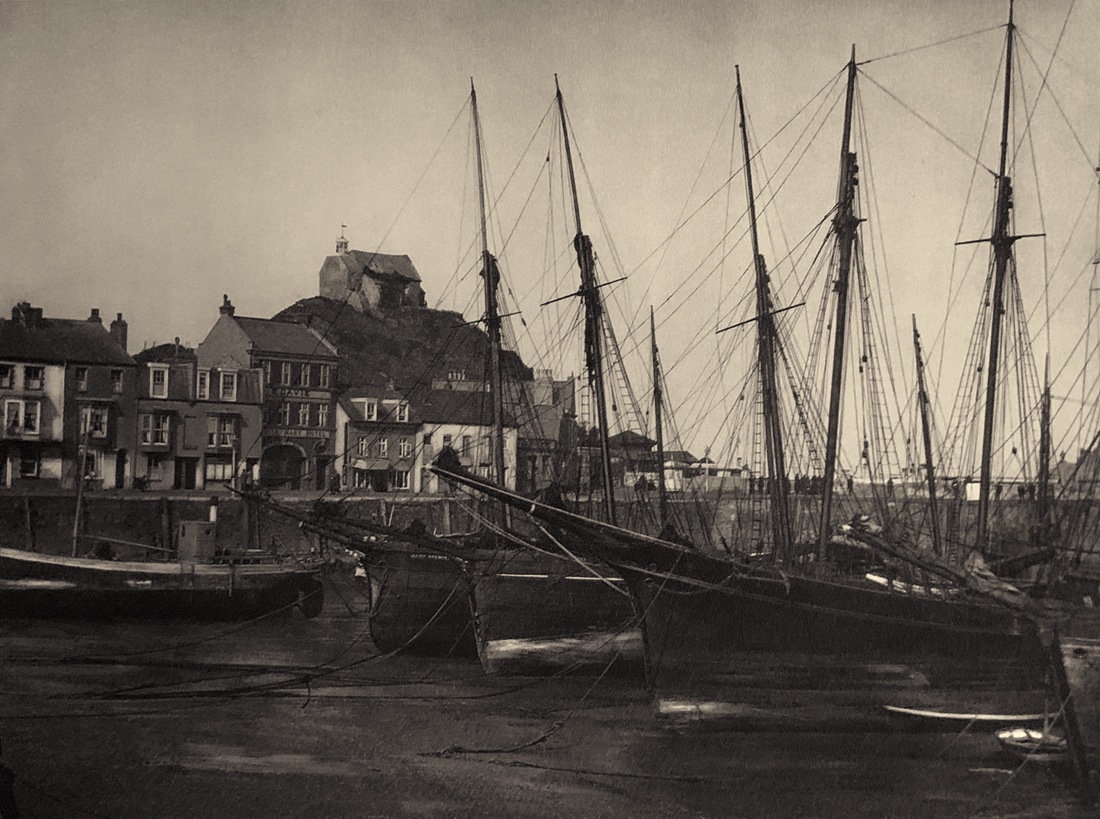
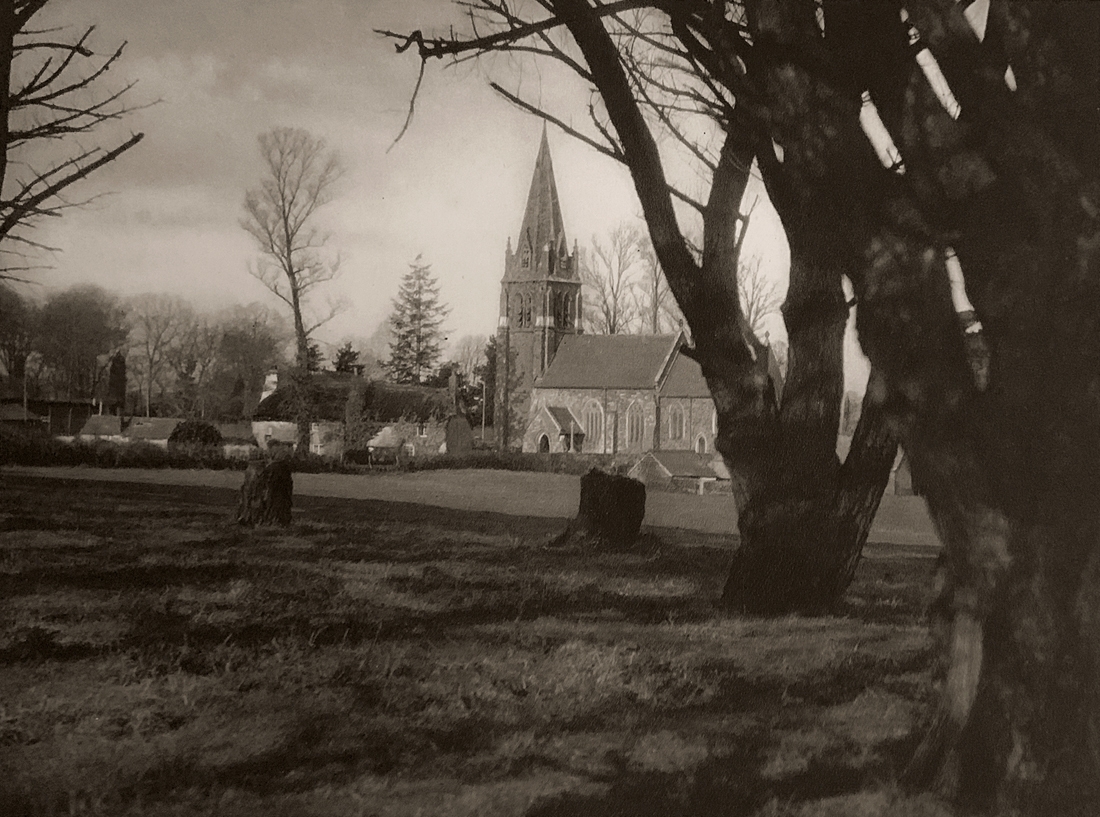
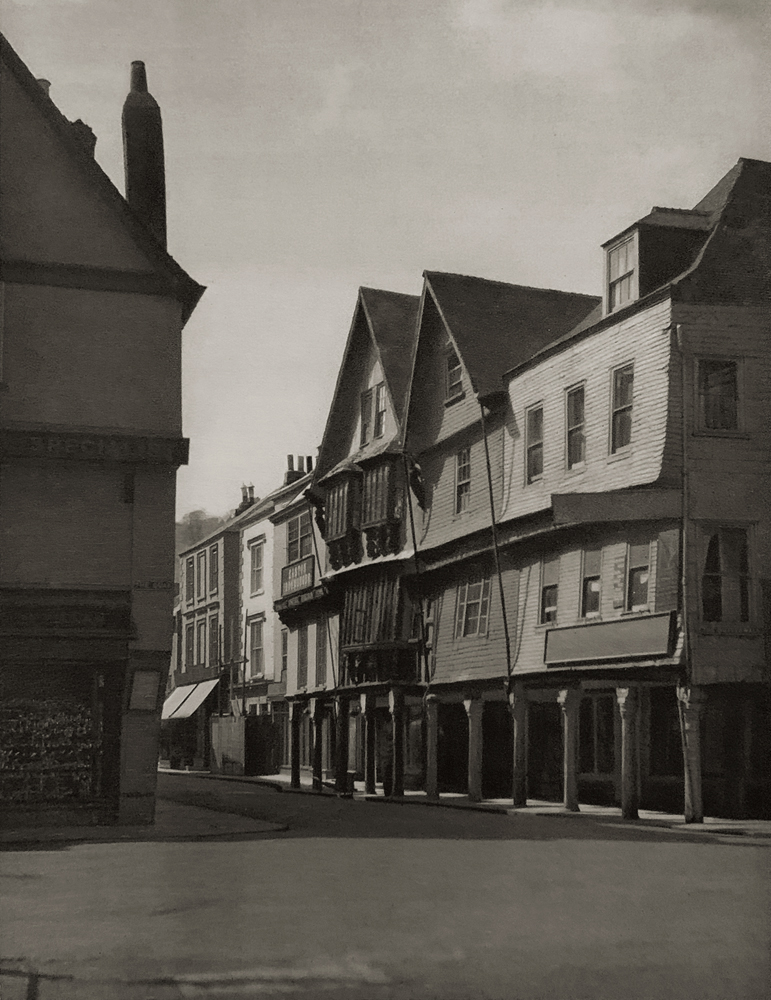
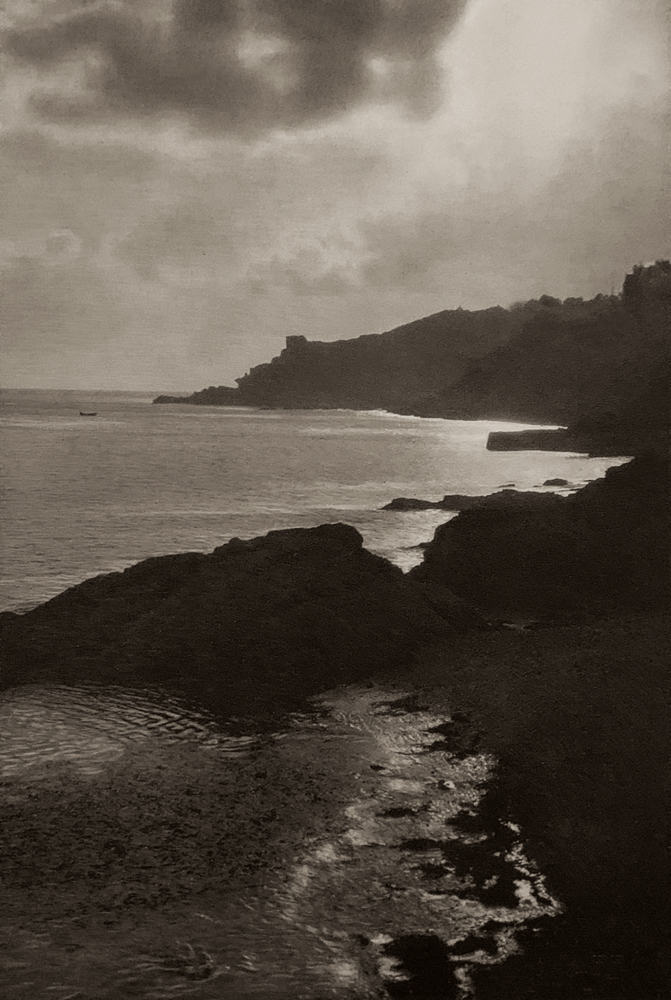


![Gertrude Käsebier (American, 1852-1934) '[Gertrude O'Malley and son Charles]' 1900](https://artblart.com/wp-content/uploads/2020/03/kacc88sebier-son.jpg "Gertrude Käsebier (American, 1852-1934) '[Gertrude O'Malley and son Charles]' 1900")


![Manuel Álvarez Bravo (Mexican, 1902-2002) '[Wounded Agaves]' Negative 1950; print late 1970s - early 1980s](https://artblart.com/wp-content/uploads/2020/03/bravo-agaves.jpg "Manuel Álvarez Bravo (Mexican, 1902-2002) '[Wounded Agaves]' Negative 1950; print late 1970s - early 1980s")

![Madoka Takagi (American, born Japan, 1956-2015) 'Untitled [Self-portrait with Bare-chested, Tattooed Latino Man]' 1986](https://artblart.com/wp-content/uploads/2020/03/gm_31474001_2000x2000.jpg "Madoka Takagi (American, born Japan, 1956-2015) 'Untitled [Self-portrait with Bare-chested, Tattooed Latino Man]' 1986")


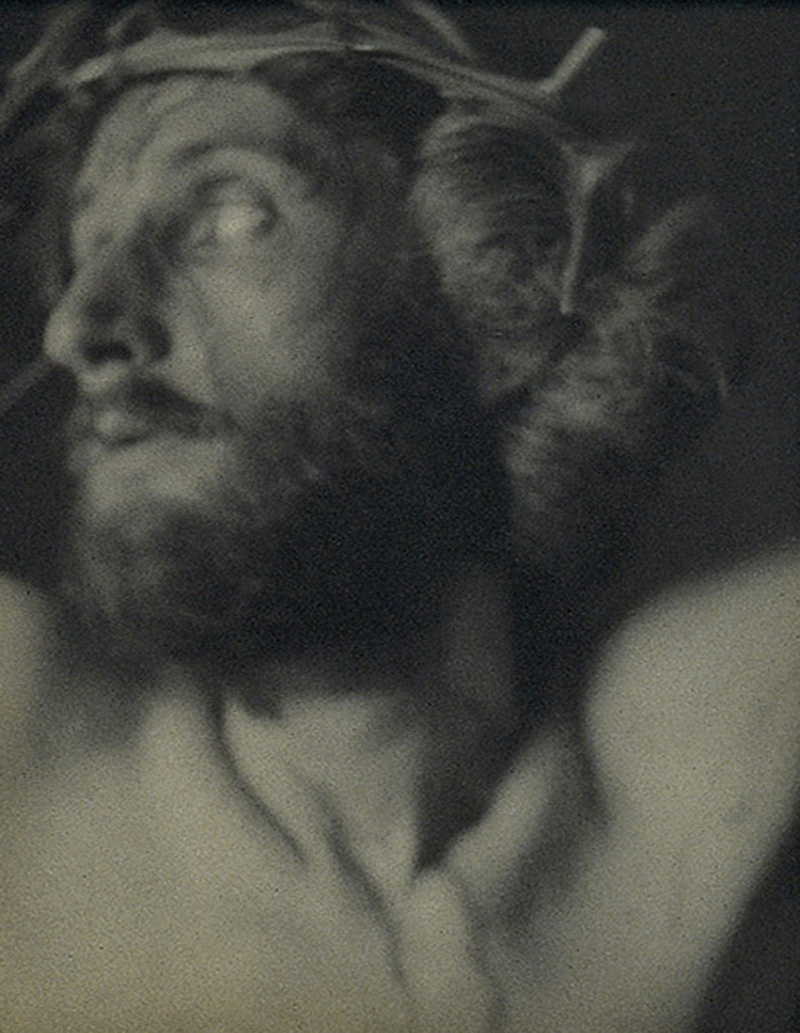


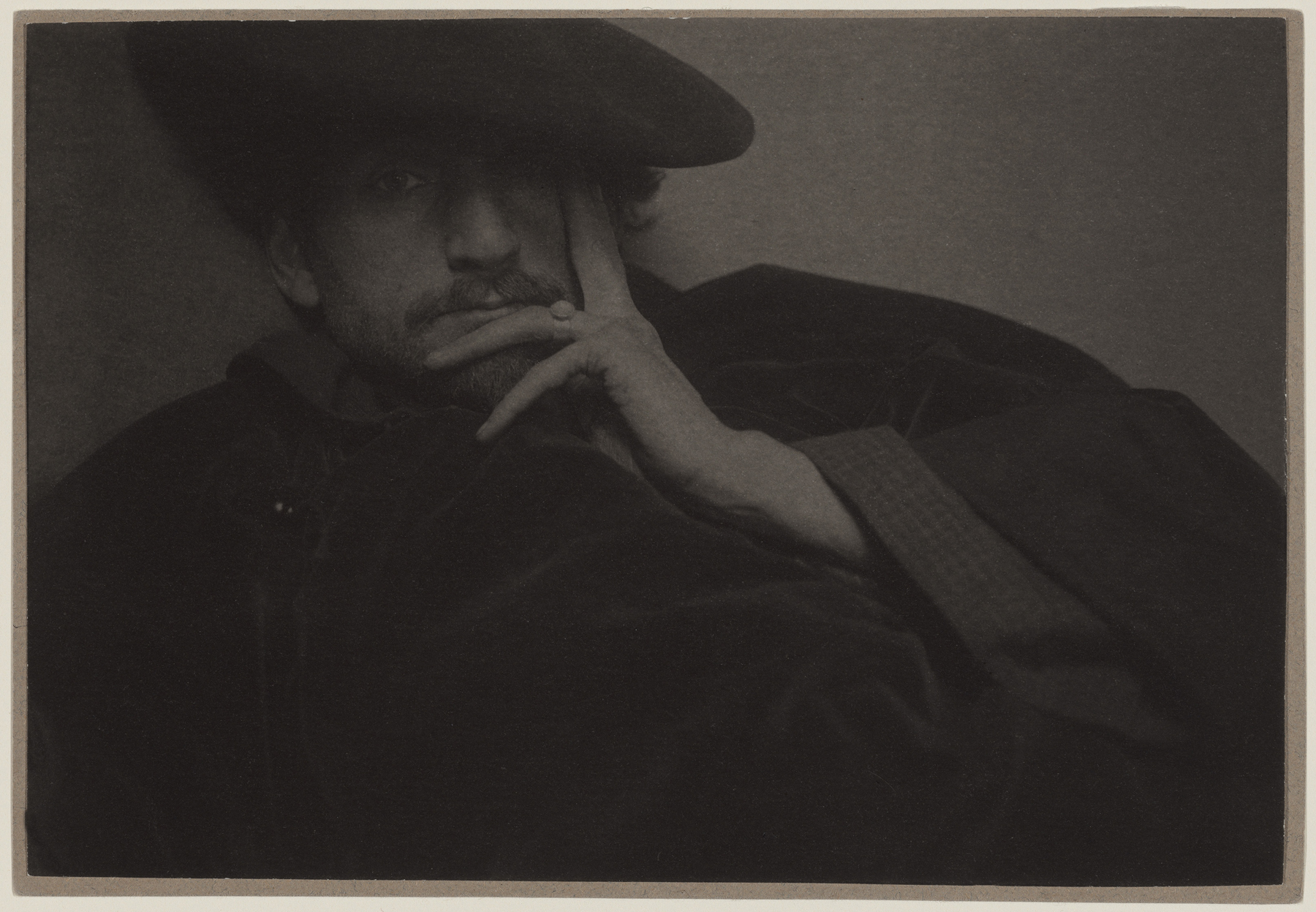
 Art Blart _ art and cultural memory archive
You must be logged in to post a comment.