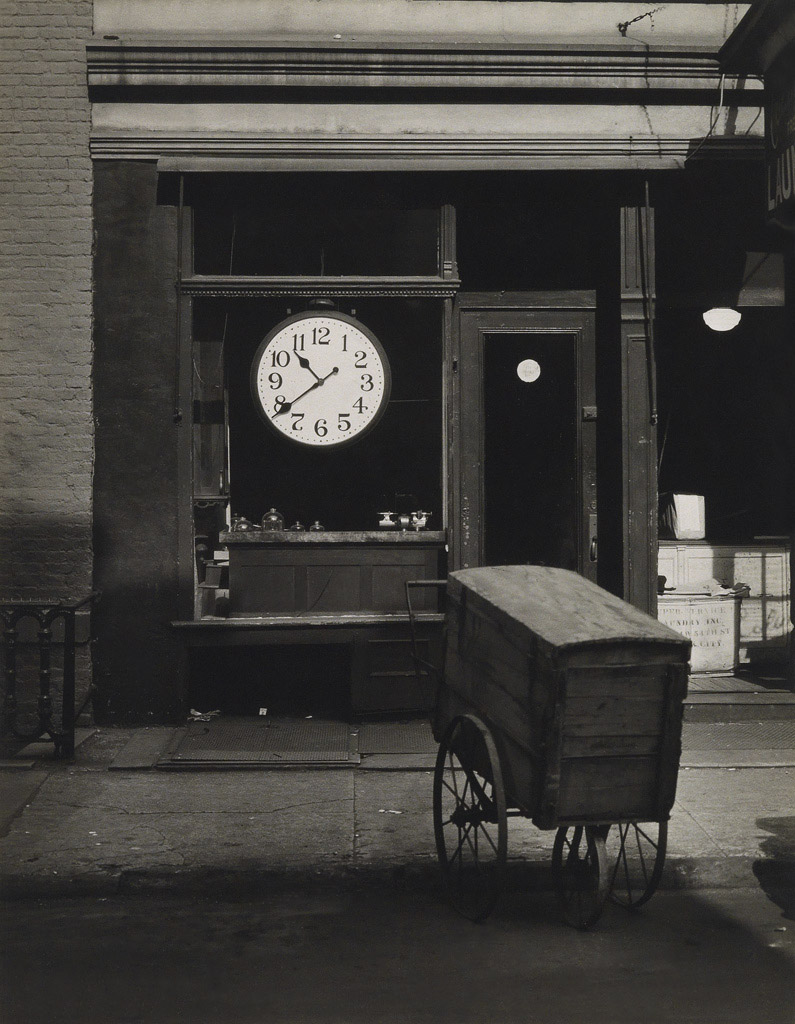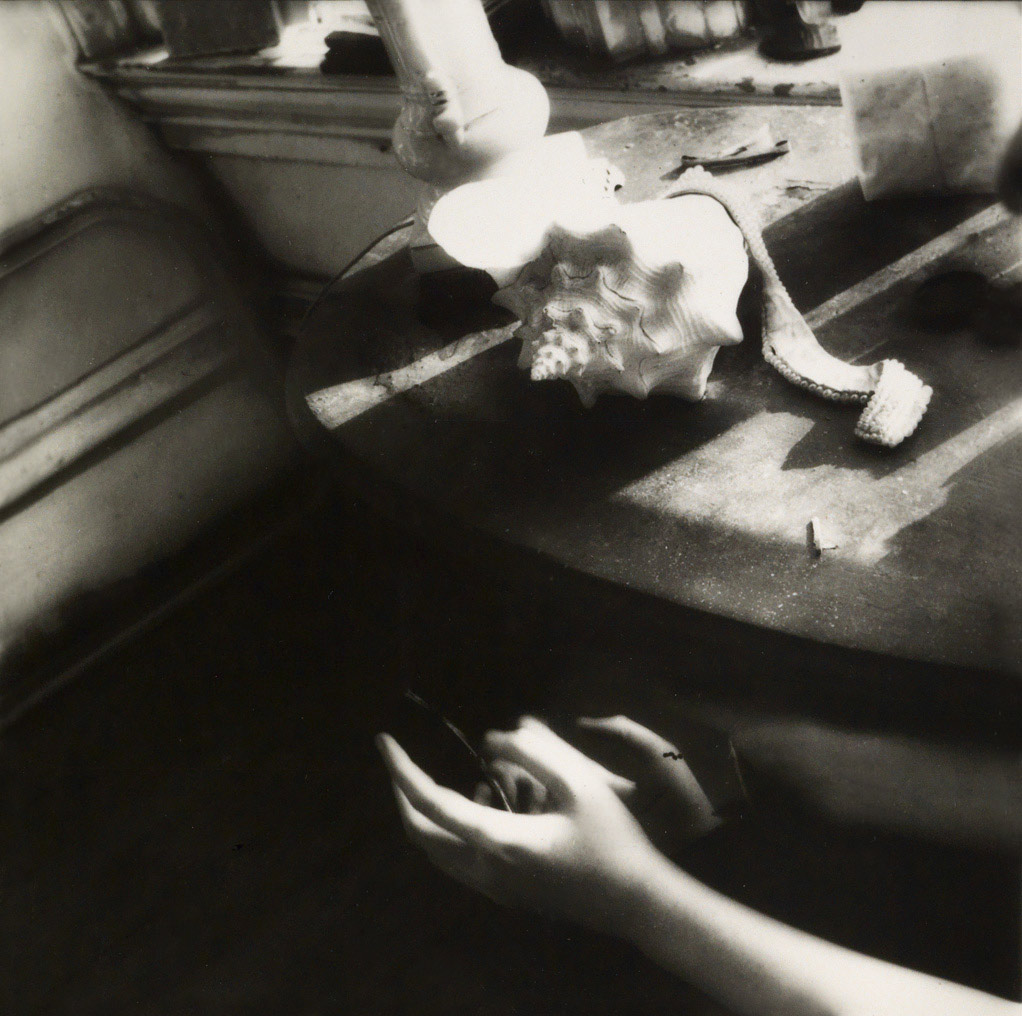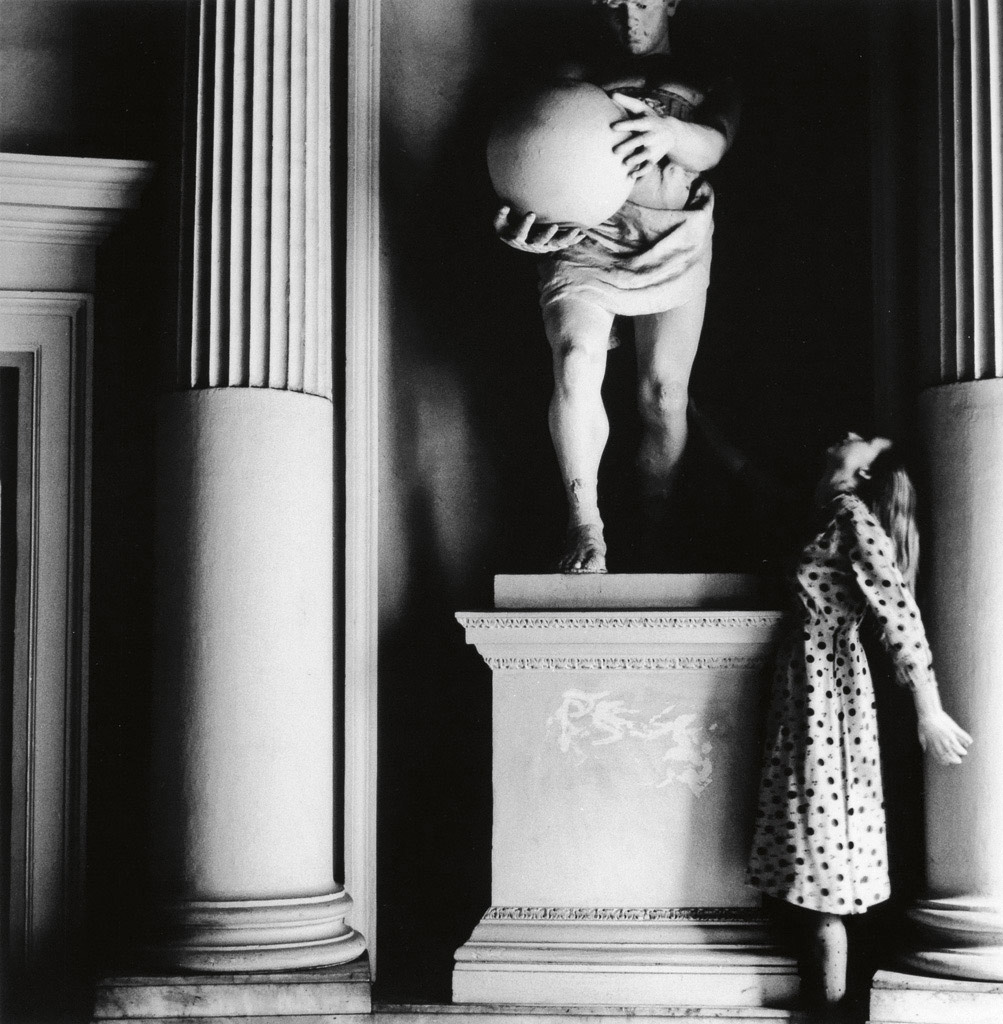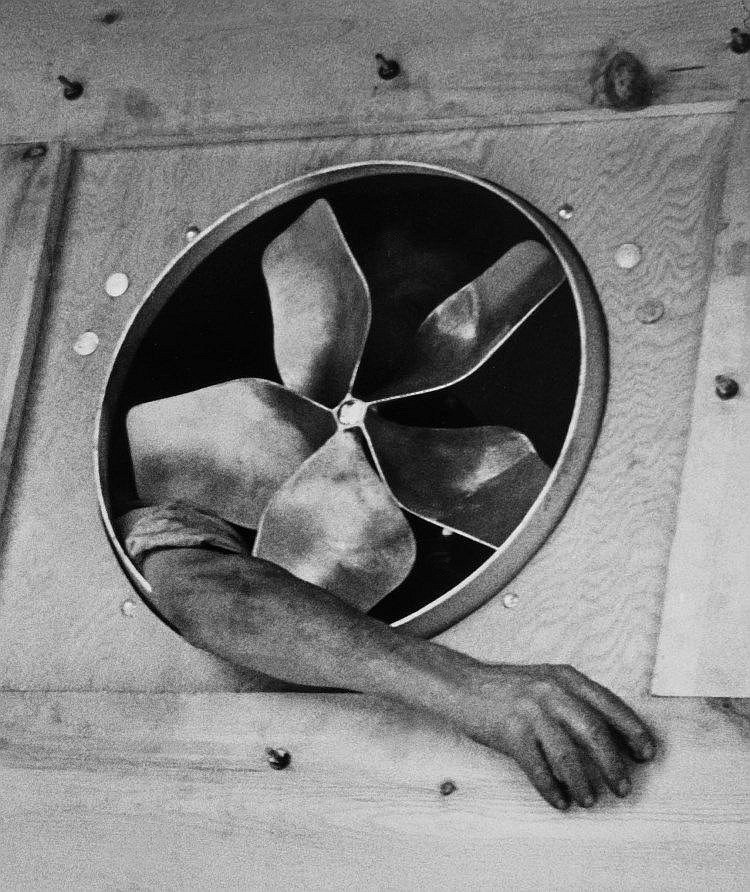
Vale Ian Lobb (1948-2023), photographer

December 2023


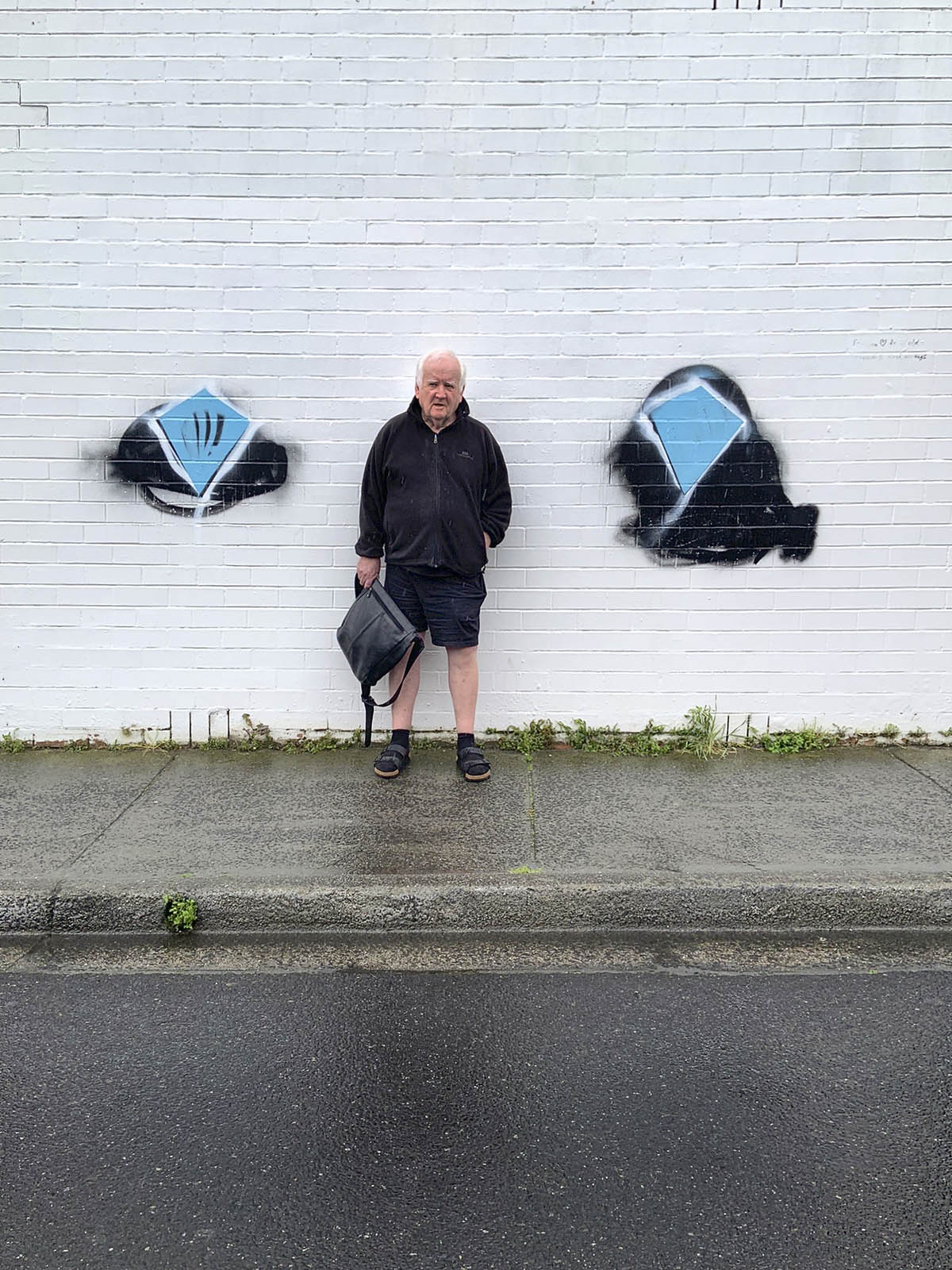
Marcus Bunyan (Australian, b. 1958) 'Ian Lobb, Station Street, Fairfield' 5 October 2022 


Marcus Bunyan (Australian, b. 1958)
Ian Lobb, Station Street, Fairfield
5 October 2022


The luminosity of Ian Lobb

These words are a celebration of the life of an extraordinary human, a heartfelt stream of consciousness text that touches on aspects of the life of Ian Lobb, photographer.

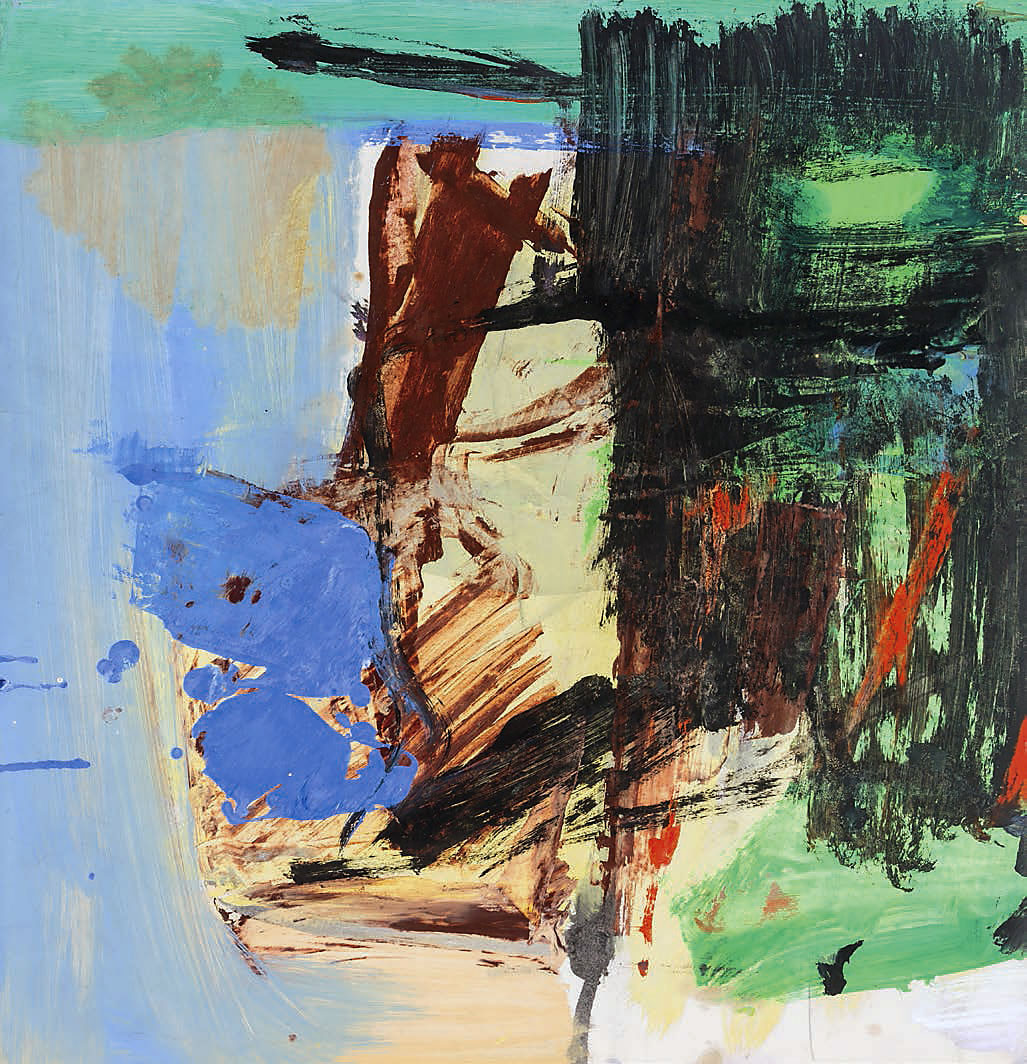
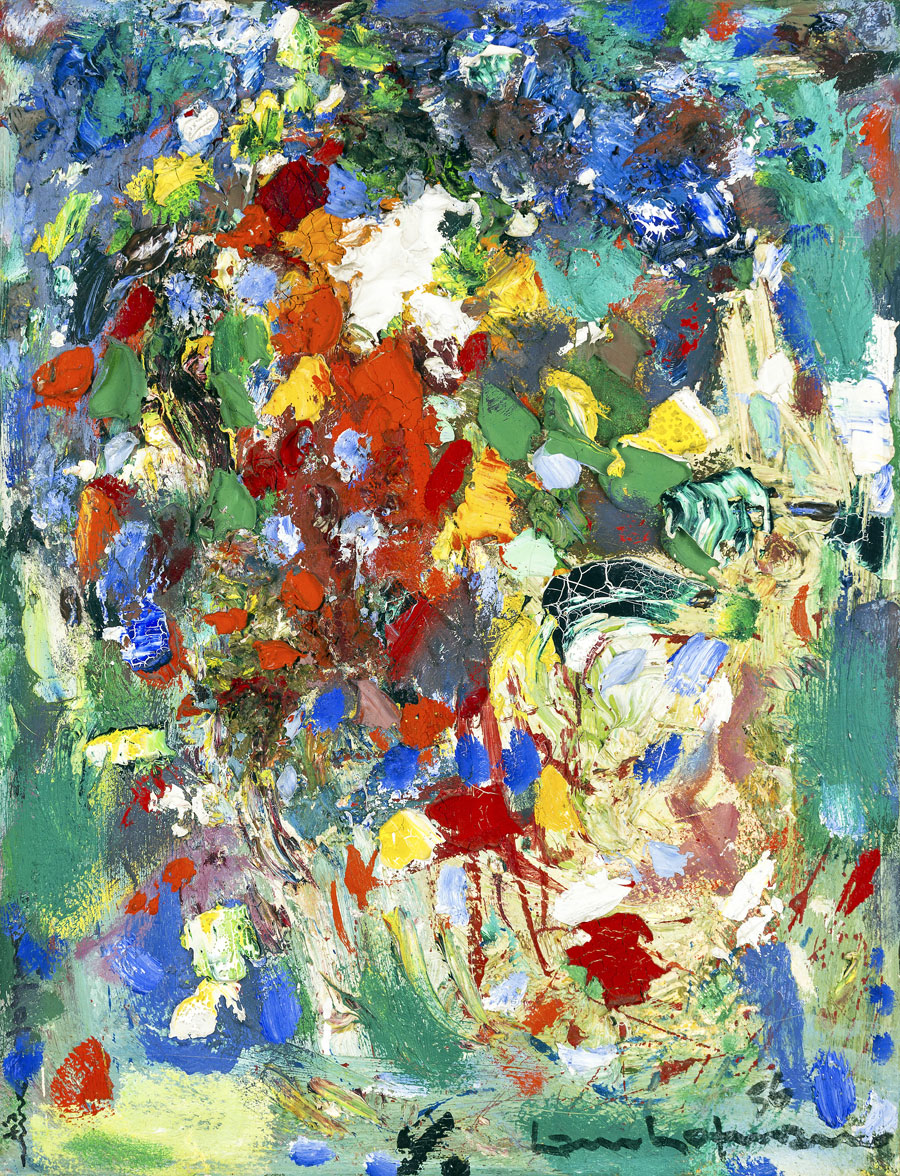
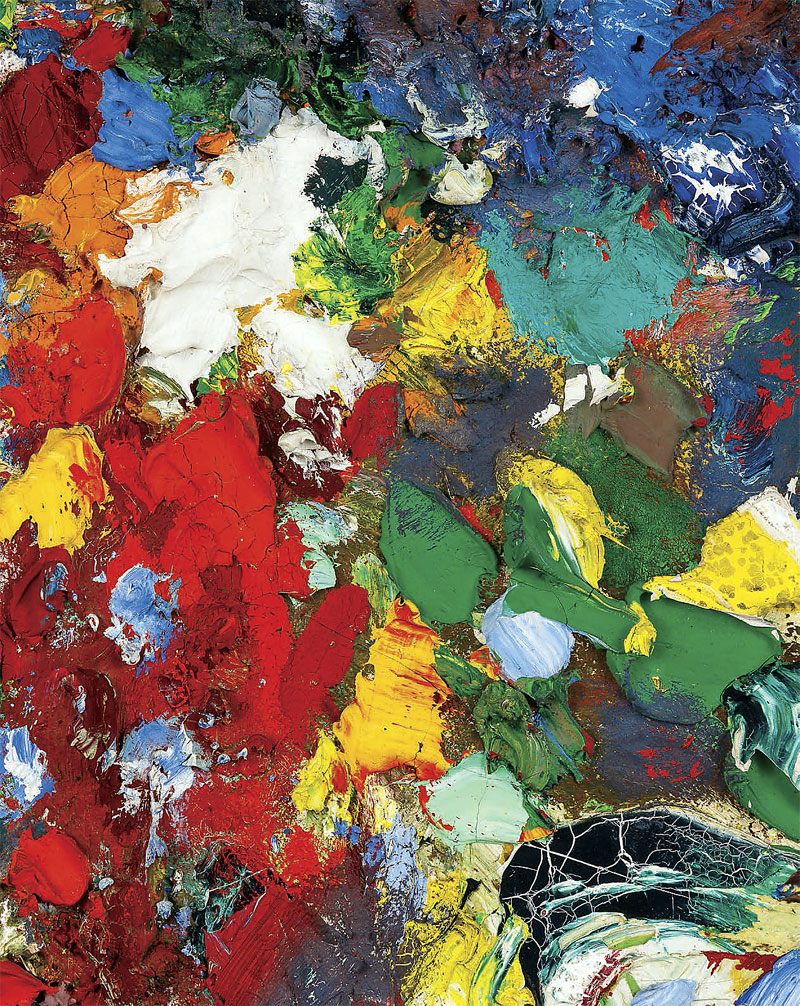
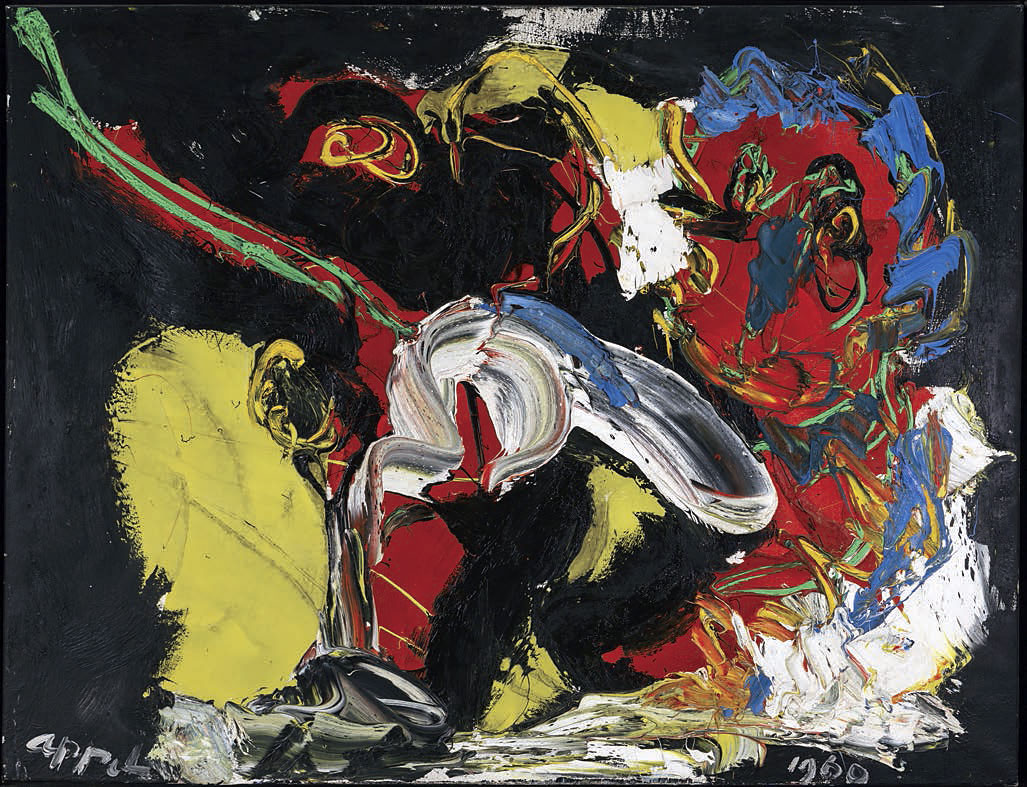
Ian Lobb was my friend. He was a poet, photographer, raconteur. He my first photographer lecturer at university who I could always rely on for advice on art, photography, writing and life. He was an audiophile and a lover of music, anything from classical to jazz to Nina Simone, Paul McCartney and Bob Dylan. He was a lover of women. He was dreamer and a philosopher. He adored the American artist Cy Twombly. He was a rabid Sydney Swans fan!

In the early 1990s monthly reviews of student photographic work at Phillip Institute of Technology (PIT, which later became part of RMIT University) with Ian and fellow lecturer Les Walkling were electric. Ideas and passion for the work abounded, discussions ran for hours on how to create work – with feeling and insight into the condition of image (and human) becoming. Here Ian introduced me to Tarkovsky, Eisenstein and Joseph Campbell, and the Marathon Monks of Mount Hiei, Kyoto, Japan. And of course he introduced me to the French photographer Eugène Atget – oh how we loved Atget, and Strand, Weston, Caponigro and Minor White. We could talk on any subject. Many years later, at our regular coffee catchups in Fairfield, I would take him new photography books that I had bought and recent object d’art purchases and, over lunch, the conversation would range far and wide about photography, art and life. He helped me sequence my work – have you thought about this pairing together, what about swapping this one over – and we drew inspiration from the sequences of Minor White and his use of “ice/fire”.

Ian was a storyteller. His photographs tell stories. From the teachings of Minor White (especially his “Three Canons”) there was an acknowledgement in his work of the spirit of the object he was photographing – a moment of revelation sought in the negative and subsequent print through a connection and circular transmission of energy between artist and object back through the camera and onto film (Zen)(for example see Eagles Nest, Cape Paterson 1975, below). A moment of revelation of spirit that was so important to Ian that this moment of “revelatio” can still be seen and felt in his recent mobile phone images.

Ian was aware, fully present. He was attuned to his surroundings like few people I have met for he was tremendously attentive, tremendously awake and sensitive to the environment and the vibrations of energy that emanated from the city, the land, the sky. Imagine travelling to a small patch of earth in the Black Ranges year after year to photograph in all seasons and in all weather something that he could see and feel in that land… something any other human would not even recognise, would walk past without a moments hesitation as though nothing was there, was of no import. But not Ian. He recognised and felt the energy of that place, space.

Talking to the wonderful Australian photographer David Tatnall who was also a friend of Ian’s we reminisced the other day. Ian had won an Australia Council grant and went to America on board a cargo ship teaching yoga on the way over, first going to South America and then on to America. There he visited Barbara, Wynn Bullock’s wife, and Ralph Gibson, Brett Weston, Harry Callahan and William Clift. He attended workshops with Ansel Adams and Paul Caponigro. He visited the Museum of Modern Art’s reading room and examined box after box of iconic prints by the masters, all jumbled together as he told me in folders with little order or care for their preservation. David told me he rocked up unannounced at Eliot Porter’s and said he was a visiting photographer from Australia, and while Eliot made a pot of tea he was left to go through boxes of dye transfer prints. Back then there was a camaraderie of photography very different from the present. Can you imagine doing that today!

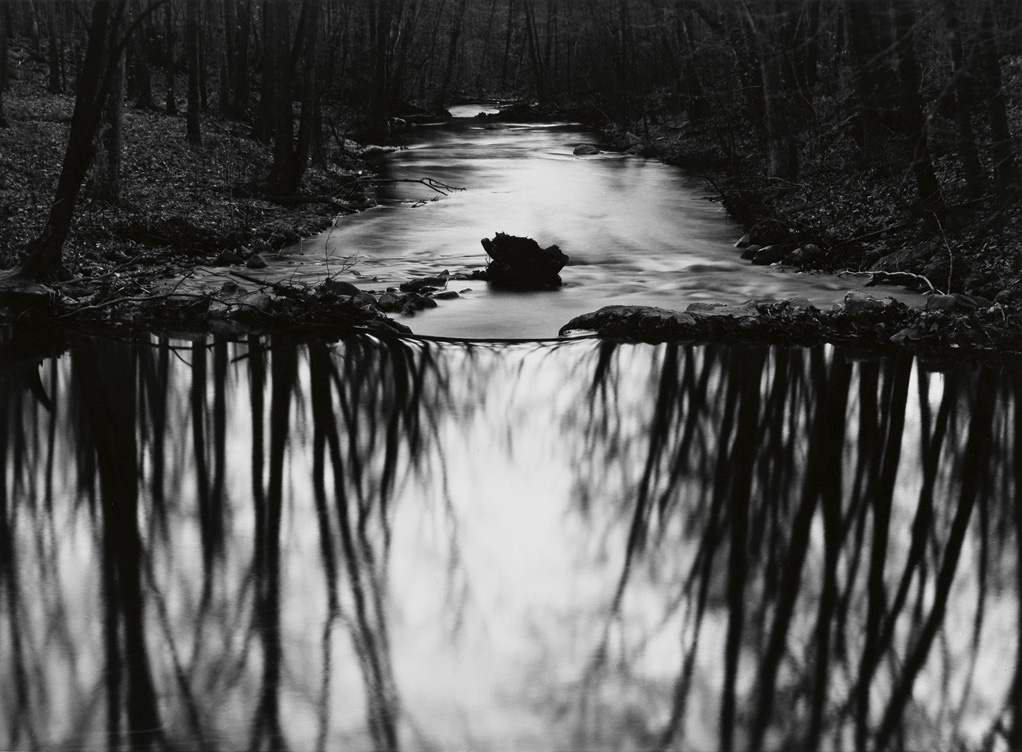
He conversed with the masters. Like a pebble making ripples in a pond the energy of these photographers was transferred by osmosis through Ian to a wider network of artists. David and I remembered how Ian taught us to look at the print upside down in order to understand the balance of the print and develop an appreciation of its structure and the music inherent in it. Look at the image of Caponigro’s Reflecting Stream, Redding, CT (1968, below) – one of Ian’s favourites – and you just know that water has to be “wet” in that print, that the shadows of the trees on the water have to be (Ansel Adams) Zone 2, and that the Zone 7 patch of grey under the boulder in the centre of the image is critical to its music, its balance. Ian knew these things instinctively, intuitively. Ian also taught both of us how to make Ansel Adams’ “burning in” tool… three pieces of stiff black board (with the top two pieces secured by tape to make a hinges) with gradually larger holes in each board for use under the enlarger, so that you could easily flip the boards to a larger or smaller hole for “burning in” while making a print. We both still have these indispensable tools, passed down like an oral history from the master. On reflection, learning from Ian and Les during those early days printing black and white photographs in the basement darkroom at Phillip Institute of Technology (PIT) in Bundoora, Melbourne were some of the happiest days of my life.

With friend and fellow director William (Bill) Heimerman (1950-2017), The Photographers’ Gallery and Workshop, Melbourne brought to Australia some of the most respected master photographers from around the world: Wynn Bullock, Emmet Gowin, Eikoh Hosoe, William Clift, Harry Callahan, Paul Caponigro, William Eggleston, Ralph Gibson, Duane Michaels, Lisette Model, August Sander, Aaron Siskind among others … and promoted local Australian photographers such as John Cato, Carol Jerrems, Christopher Koller, Jeff Busby and more. I was privileged to have several solo exhibitions in the gallery space. For the opening of Carol Jerrems exhibition at the gallery, Ian asked her who she would most like to attend – and Carol said Ron Barassi, then the most popular sporting and cultural personality in Australia. And on the day of the opening who attended – the great man himself. I don’t know how Ian did it, but he did!

David Tatnall took Ian to Cape Paterson only a couple of weeks before his passing, the first time he had been there since his father’s death many years ago (see the photographs below). Ian took some photographs with camera on tripod and on the mobile phone and then sat down, sat down and just looked at things in that self deprecating way of his. He just looked at the rocks and the form and the light and soaked in the spirit of the place. The same with his favourite tree, his beloved lemon scented gum in the garden of his church in Fairfield. Much as the Black Range series many years earlier, he took thousands of photographs on his mobile phone of this tree in all weather conditions, at all times of the day and year. He saw and felt something there that he kept coming back too, searching for the answer to that one great question that he could never answer.

David said that he believed that he was only using the mobile phone as a visual notebook before he came back to the place to photograph with an SLR – but respectfully I must disagree. Increasingly in his later years Ian surrendered the use of his bigger digital cameras to the flexibility of his mobile phone camera, trading in their heft for the felt immediacy of the mobile phone image and his ability to study the results as he pleased. While many would dismiss these phones images as preludes to the finished work, Ian recognised (as do many artists) that these impressions, these deeply felt visual sketches, had become fully rendered works of art. He moved with the times. As he observed, “For the last 18 months I’ve been spending the first few hours of the day in the local church yard where I am photographing a lemon scented gum. I’m doing this with an iPhone as a way of exploring different ways of working that facilitates.” (Email for William Clift sent to Marcus Bunyan 22 January 2023)

Ian loved telling a story. And he was passionate about the Sydney Swans. He regaled me with the story of how he was so incensed by seeing photographers inside the circle of players celebrating in the rooms after a victory that he wrote to the club to explain that this space, this inner sanctum of celebration, should be a “sacred space” as he put it just for the players… and that photographers should not be allowed in to that space, but only be able to look in from the outside. He was special like that. He understood the significance of that circle and the energy that flowed across the space as players linked arms and belted out the club song. Nothing should disturb the sanctity of that space, much as nothing should disturb the energy of a rock face.

Ian was a (com)passionate man. He was a spiritual man. Throughout his life he had a deep abiding faith in Jesus and the benevolence and goodness of the Almighty. Now he is be gone but his energy still surrounds us. In his beloved lemon scented gum and in the many memorable ideas and images he shared with us.

Ian Lobb was my friend. I will miss his wise counsel.

God bless him xx

Dr Marcus Bunyan


PS. A very interesting analysis by Gary Sauer-Thompson on Ian Lobb’s Black Range series and new concepts in contemporary landscape photography can be found in the article “Ian Lobb + contemporary landscape photography” on the Thought Factory website January 28, 2024. Recommended reading.


Please click on the photographs for a larger version of the image. Many thankx to David Tatnall for allowing me to publish his images that are included in this posting.


“If you think of all the wonderful experiences of making images – and then sequencing them – really it is top of the world experience. If this then happens when society is particularly in flux – on spiritual and identity issues, and sequencing happens by someone who is sensitive to the time and the issues. And is sensitive to “image”. Then you really really hope that the book is well produced.”


Ian Lobb email to Marcus Bunyan, 29 May 2015


“In “LA Confidential” they give away their source by using the word “valediction”. A good name for a poem, maybe the best, but not an exhausted idea. Look out I have been inspired by genius. People say that they have to do something more difficult than they need. That’s ok. – there are angels to prevent that – but if you don’t want to go that way, most of them aren’t against us.”


Ian Lobb text to Marcus Bunyan, Monday 11 September 2023


“Marcus – can we be told how to love ? The first thought is no – but I’m not going to rush into an answer. Can we be told how to love a photograph or which photographs to love? I do know that my walk this morning has been recalling which photographs I have loved – and stopping on those where I have not lately dwelt. I didn’t get past the Paul Strand of the white picket fence. Sitting now on Station st as the coffee shops carry out their tables and seeing it.”


Ian Lobb text to Marcus Bunyan, Saturday, 16 September 2023


Ian Lobb speaking at a celebration of the life of William (Bill) Heimerman (1950-2017)

Windsor, Melbourne, Victoria, Australia, October 21, 2017.
Thank you to Peter Leiss for allowing me to publish this video.


Paul Strand (American, 1890 - 1976) 'White Fence, Port Kent, New York' 1916 (negative); 1945 (print)


Paul Strand (American, 1890 – 1976)
White Fence, Port Kent, New York
1916 (negative); 1945 (print)
Gelatin silver print
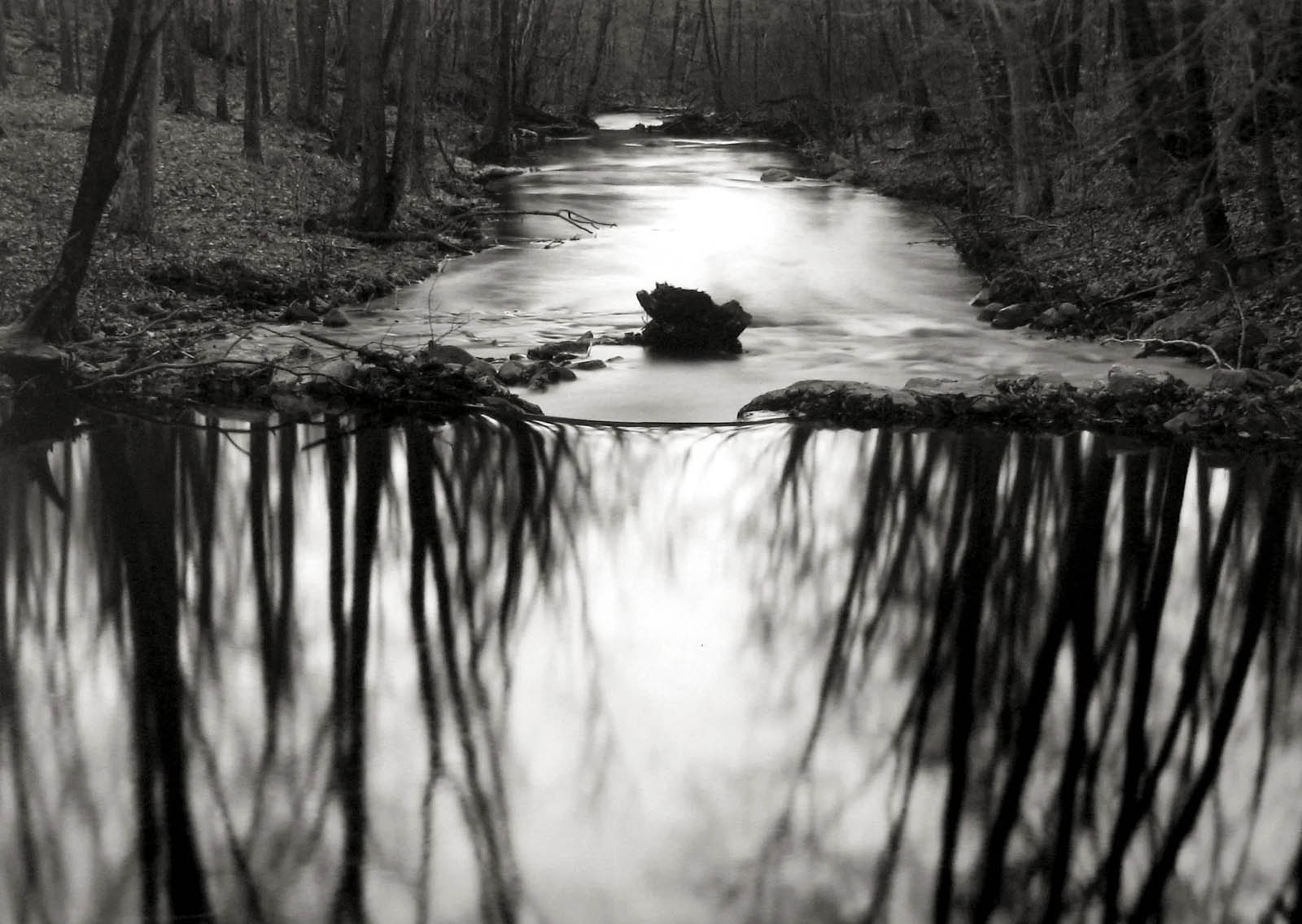
 

Paul Caponigro (American, 1932-2024) 'Reflecting Stream, Redding, CT' 1968


Paul Caponigro (American, 1932-2024)
Reflecting Stream, Redding, CT
1968
Gelatin silver print


During this particular workshop Caponigro was sometimes in a room where he could display several prints at once – he would never take them all down after talking, but move the first images away and attach new images to the right as he talked. The workshop was with the senior students of an Oregon art school, it can be dated because it was during the impeachment of Nixon.

~ Ian Lobb email to Marcus Bunyan, 6 January 2015
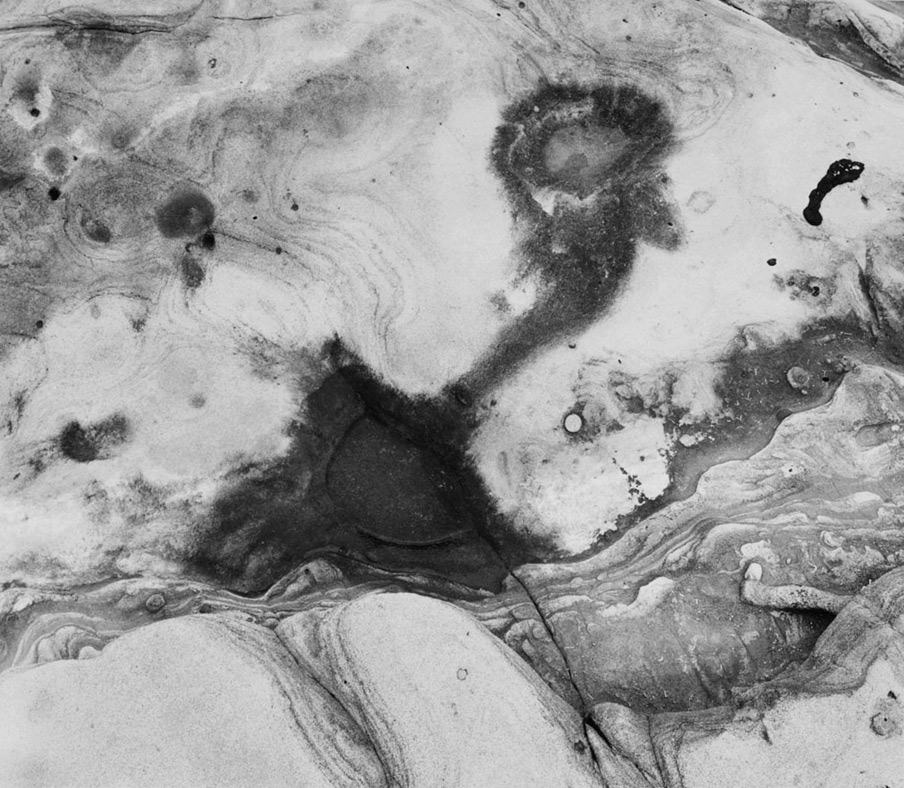
 

Minor White (American, 1908-1976) 'Point Lobos, California' 1948


Minor White (American, 1908-1976)
Point Lobos, California
1948
Gelatin silver print


Marcus, have you been to Point Lobos? I think you would find it a big experience if you were there at a quiet time. Imagine Minor White going to visit Weston on Wildcat Hill, and then the short drive down to Point Lobos – there would be some frisson in that car!! It’s not quite Nietzsche going to visit Wagner – but it’s not bad. For a lot of the year the day starts with fog and then the fog pulls back a little offshore and then comes back again. I think Weston’s Pelican would have been photographed in fog.

~ Ian Lobb email to Marcus Bunyan, 29 May 2015
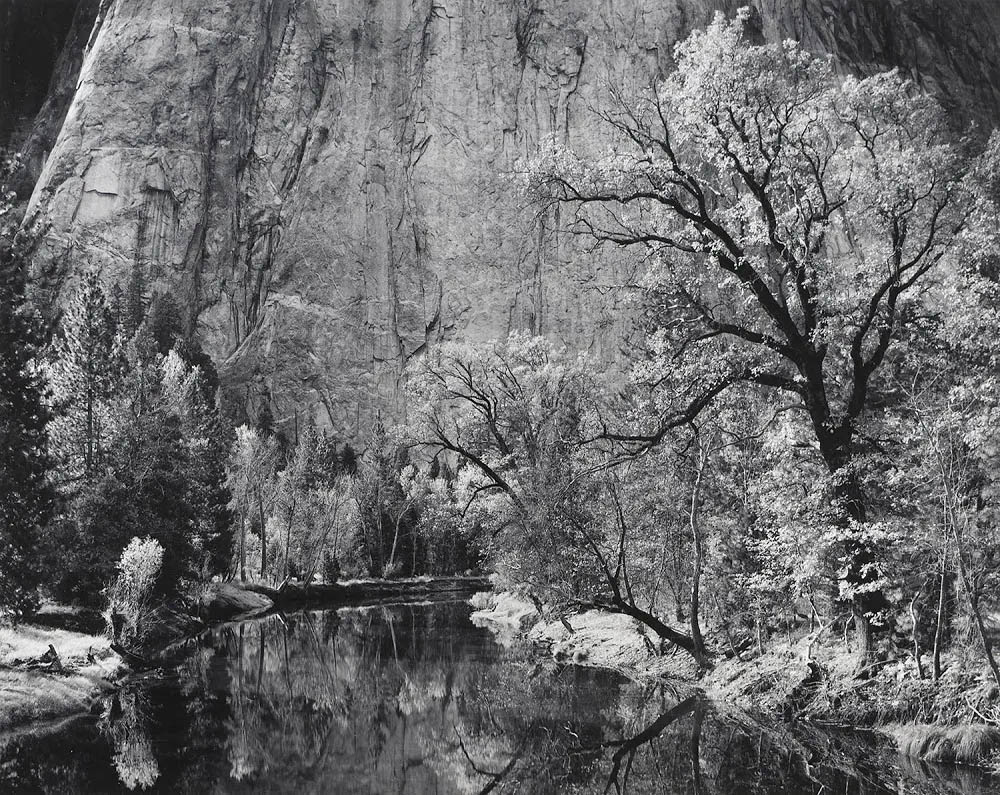
 

Ansel Adams (American, 1902-1984) 'Merced River, Cliffs, Autumn' 1939


Ansel Adams (American, 1902-1984)
Merced River, Cliffs, Autumn
1939
Gelatin silver print


When talking to him [Ansel Adams] you can imagine the number of mediocre questions. While I was listening all of his answers were quotes from his books. There had to be an extraordinary move to get him to break ranks with this rule.

~ Ian Lobb text to Marcus Bunyan, Sunday, 5 March 2023


Black Range series
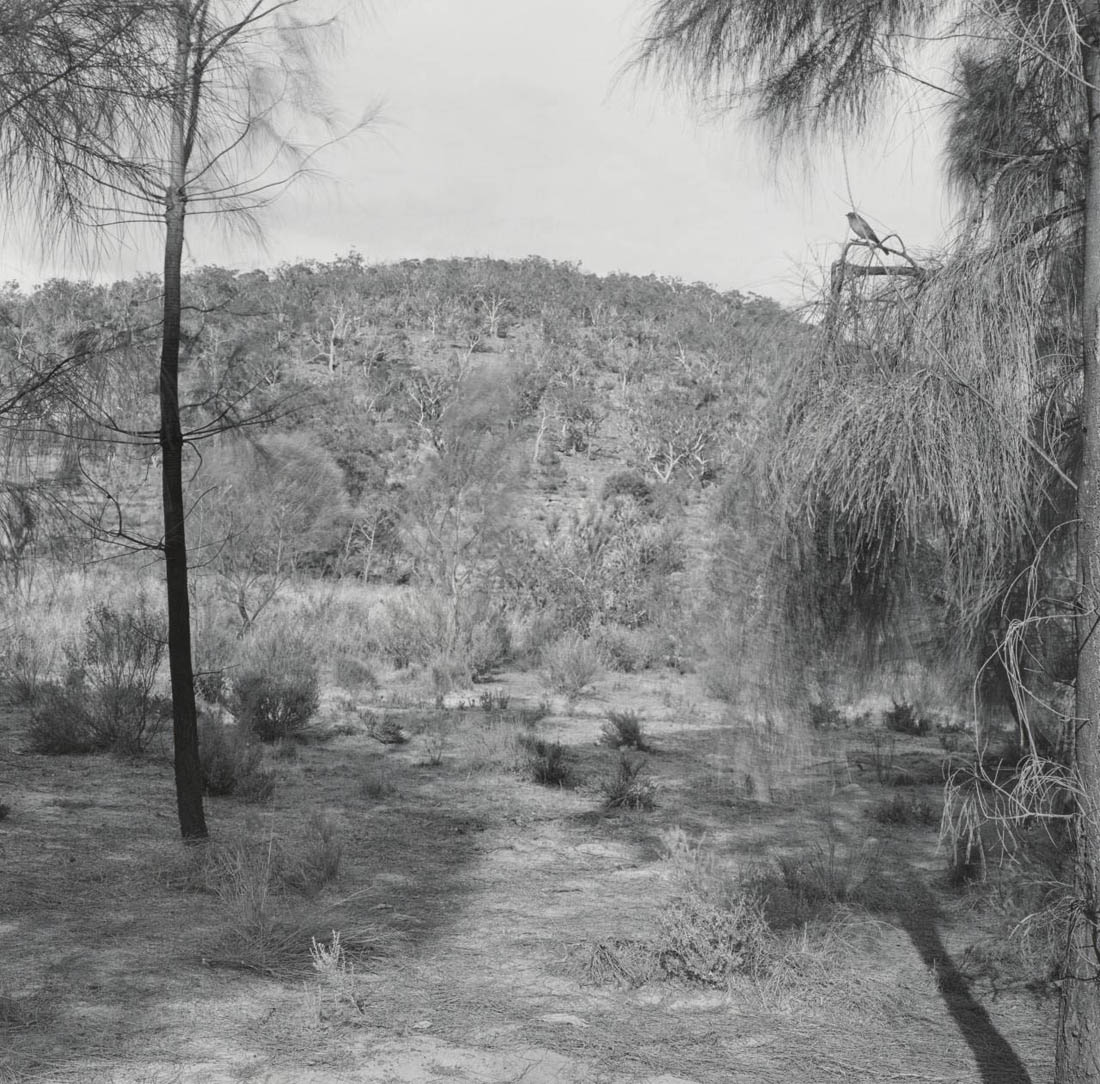
 

Ian Lobb (Australian, 1948-2023) 'Untitled' 1989 from the 'Black Range' series 1986-1989


Ian Lobb (Australian, 1948-2023)
Untitled
1989
from the Black Range series 1986-1989
36.9 × 36.7cm (image)
National Gallery of Victoria, Melbourne
Purchased with funds donated by Hallmark Cards Australia Pty Ltd, 1989
© Ian Lobb
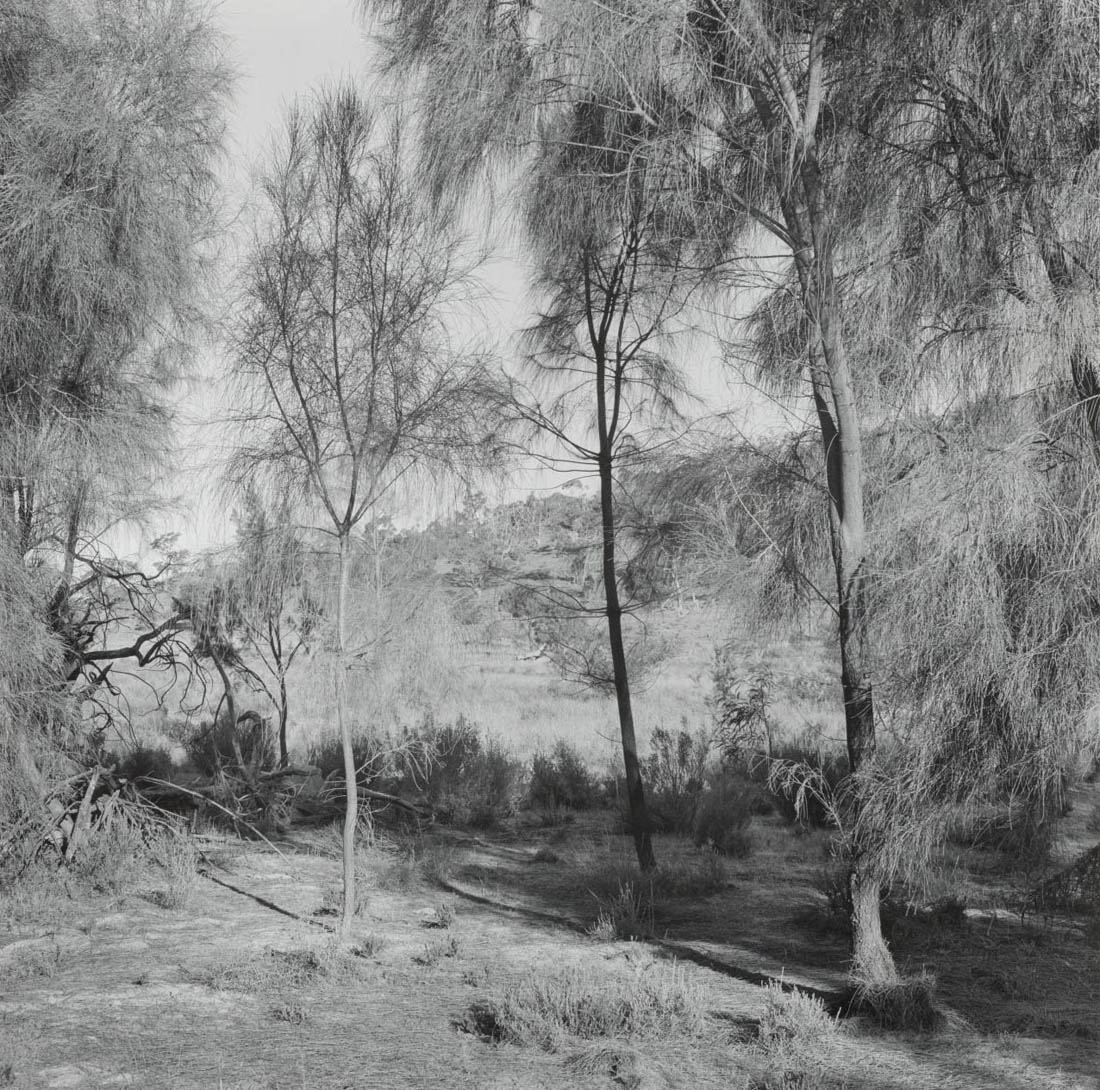
 

Ian Lobb (Australian, 1948-2023) 'Untitled' 1989 from the 'Black Range' series 1986-1989


Ian Lobb (Australian, 1948-2023)
Untitled
1989
from the Black Range series 1986-1989
35.6 × 35.6cm (image)
National Gallery of Victoria, Melbourne
Purchased with funds donated by Hallmark Cards Australia Pty Ltd, 1989
© Ian Lobb
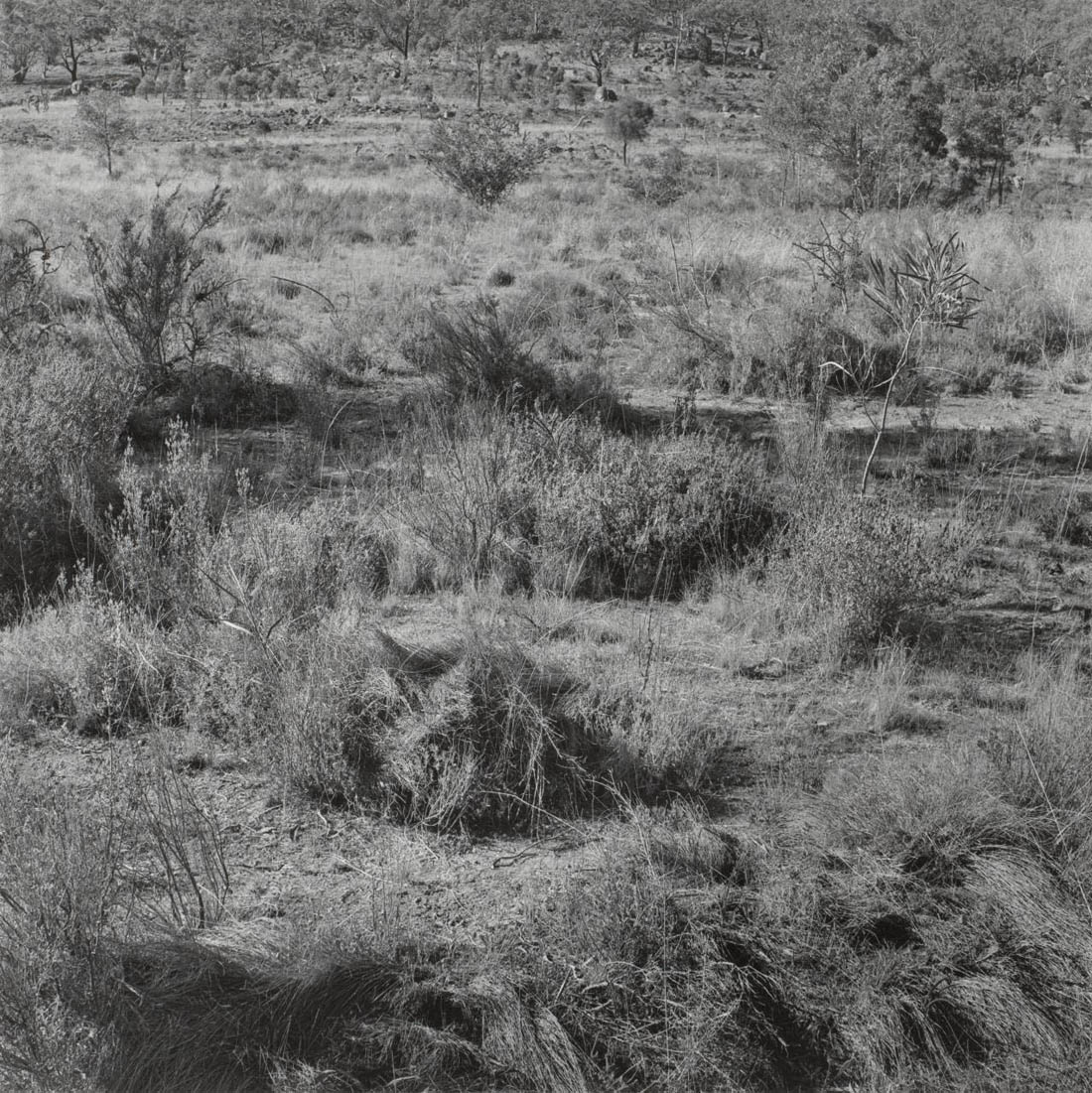
 

Ian Lobb (Australian, 1948-2023) 'Untitled' 1986, printed 1989 from the 'Black Range' series 1986-1989


Ian Lobb (Australian, 1948-2023)
Untitled
1986, printed 1989
from the Black Range series 1986-1989
26.4 × 26.4cm (image)
National Gallery of Victoria, Melbourne
Purchased with funds donated by Hallmark Cards Australia Pty Ltd, 1989
© Ian Lobb
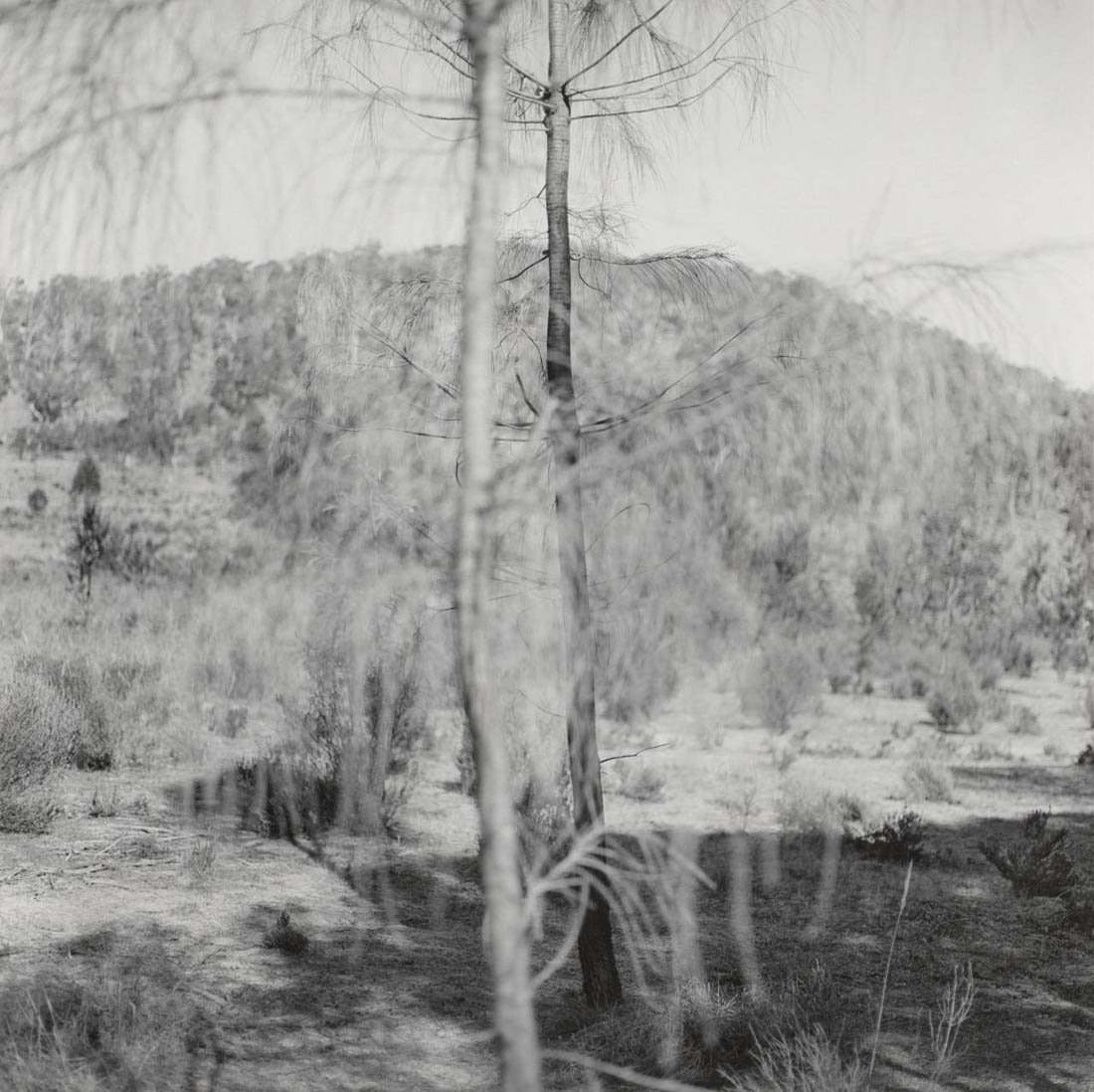
 

Ian Lobb (Australian, 1948-2023) 'Untitled' 1989 from the 'Black Range' series 1986-1989


Ian Lobb (Australian, 1948-2023)
Untitled
1989
from the Black Range series 1986-1989
36.5 × 36.5cm (image)
National Gallery of Victoria, Melbourne
Purchased with funds donated by Hallmark Cards Australia Pty Ltd, 1989
© Ian Lobb
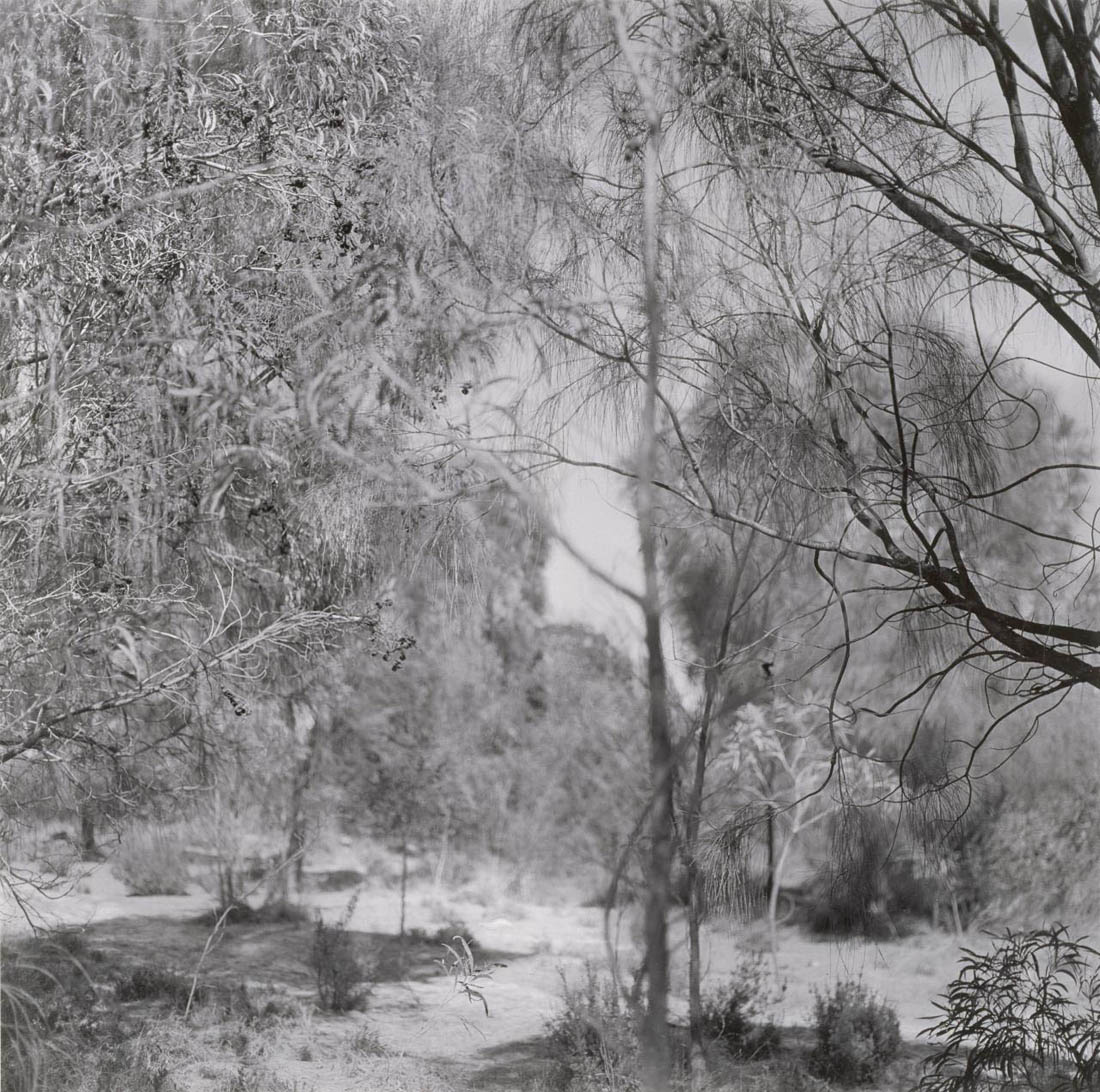
 

Ian Lobb (Australian, 1948-2023) 'No title (Soft focus landscape with branch detail in foreground)' 1989, printed 1998 from the 'Black Range' series 1986-1989


Ian Lobb (Australian, 1948-2023)
No title (Soft focus landscape with branch detail in foreground)
1989, printed 1998
from the Black Range series 1986-1989
38.2 × 38.4cm (image)
National Gallery of Victoria, Melbourne
Presented through The Art Foundation of Victoria by the artist, Fellow, 2000
© Ian Lobb


The Photographers’ Gallery and Workshop


Peter Leiss (Australian, b. 1951) 'Untitled [Bill Heimerman and Ian Lobb at the rear of the Photographers' Gallery]' c. 1975-1980


Peter Leiss (Australian, b. 1951)
Untitled [Bill Heimerman and Ian Lobb at the rear of the Photographers’ Gallery]
c. 1975-1980
Gelatin silver print


Eugène Atget (French, 1857-1927) 'Untitled [Atget's Work Room with Contact Printing Frames]' c. 1910


Eugène Atget (French, 1857-1927)
Untitled [Atget’s Work Room with Contact Printing Frames]
c. 1910


I am very familiar with the old suitcases under the desk – I think that only one – if any – is a suitcase.

This is typically how an exhibition would arrive at the Photographers’ Gallery – it would hold about 40 matted prints. Undo the strap and open the box to typically find 2 or 3 brown paper parcels. Maybe some archival tissue on the next layer down = sometimes not = and then about 20 mounted and matted prints sometimes face to face. This is the way Caponigro for example sent his prints – I’m trying to remember William Clift – Maybe one box like that and a handmade bigger one – or maybe 2 wooden boxes = but at least half  the exhibitions arrived in boxes like that.

But have a look to the left of those boxes –what are they? They look like old fashioned  double-darks – maybe for a quarter plate camera. The distance from the emulsion to the edge of the case was different for these compared to the last generation 5×4 double darks. People sometimes tried to make a way of putting the old film carriers onto 5×4″ cameras – but they would be focussing on the wrong spot by not making adjustments for the different positions of the emulsion.

To return to the boxes – they would be waiting for us at the airport, and we would have to spin a  yarn to the customs agents telling them that the prints were for “educational purposes only”. It was a great educational experience to unwrap some of the prints  when they came with a piece of tissue paper between the print and  the mat – you could see something of the image and then get to imagine it before removing the tissue.

Re Robert Frank – also note the size of the Lupe next to his hand. Ralph Gibson had Robert Franks Leica enlarger – For some reason it was in his “living room” – I have seen it!!!

~ Ian Lobb email to Marcus Bunyan 1 December, 2015


Carol Jerrems. 'Untitled [Bill Heimerman and Ian Lobb at the Dog Rocks near Geelong]' c. 1975-1980


Carol Jerrems (Australian, 1949-1980)
Untitled [Bill Heimerman and Ian Lobb at the Dog Rocks near Geelong]
c. 1975-1980
Gelatin silver print


Cape Liptrap and Cape Paterson
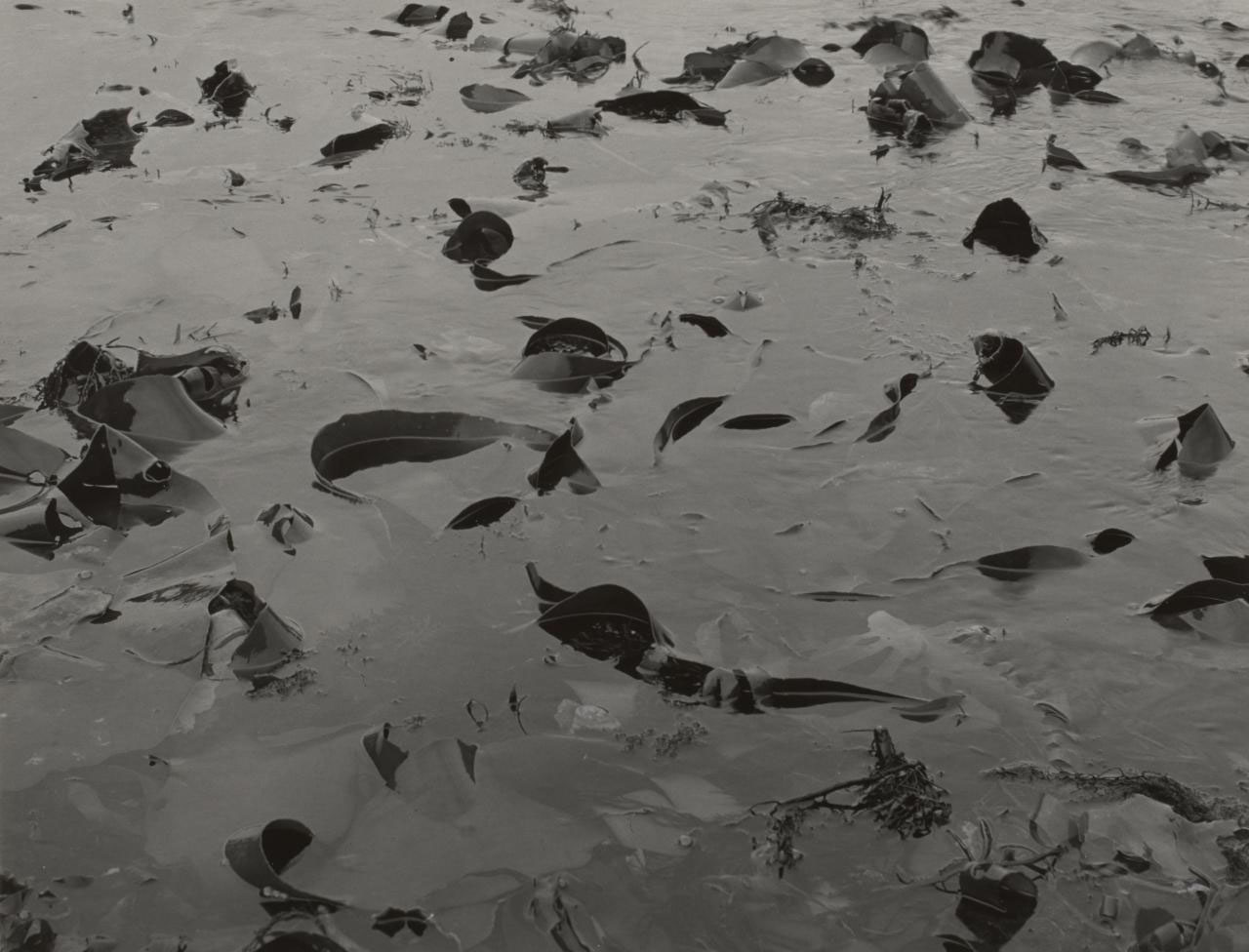
 

Ian Lobb (Australian, 1948-2023) 'Ocean (Cape Liptrap)' 1979


Ian Lobb (Australian, 1948-2023)
Ocean (Cape Liptrap)
1979
Gelatin silver photograph
17.3 × 22.5cm
National Gallery of Victoria, Melbourne
Purchased, 1980
© Ian Lobb
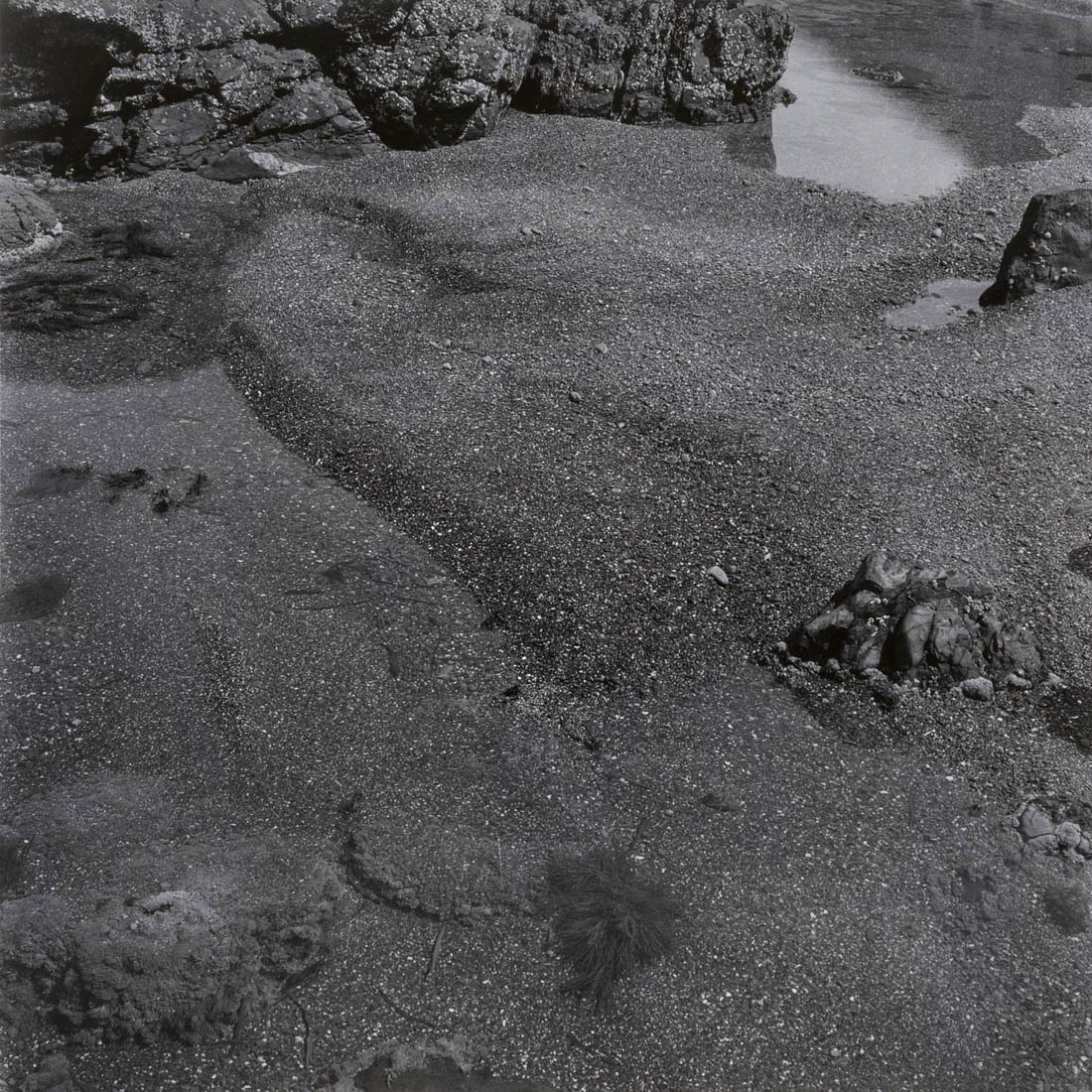
 

Ian Lobb (Australian, 1948-2023) 'No title (Black sand and rocks)' 1989; printed 1992


Ian Lobb (Australian, 1948-2023)
No title (Black sand and rocks)
1989; printed 1992
Gelatin silver photograph
34.3 × 34.3cm (image)
National Gallery of Victoria, Melbourne
Presented through The Art Foundation of Victoria by the artist, Fellow, 2000
© Ian Lobb
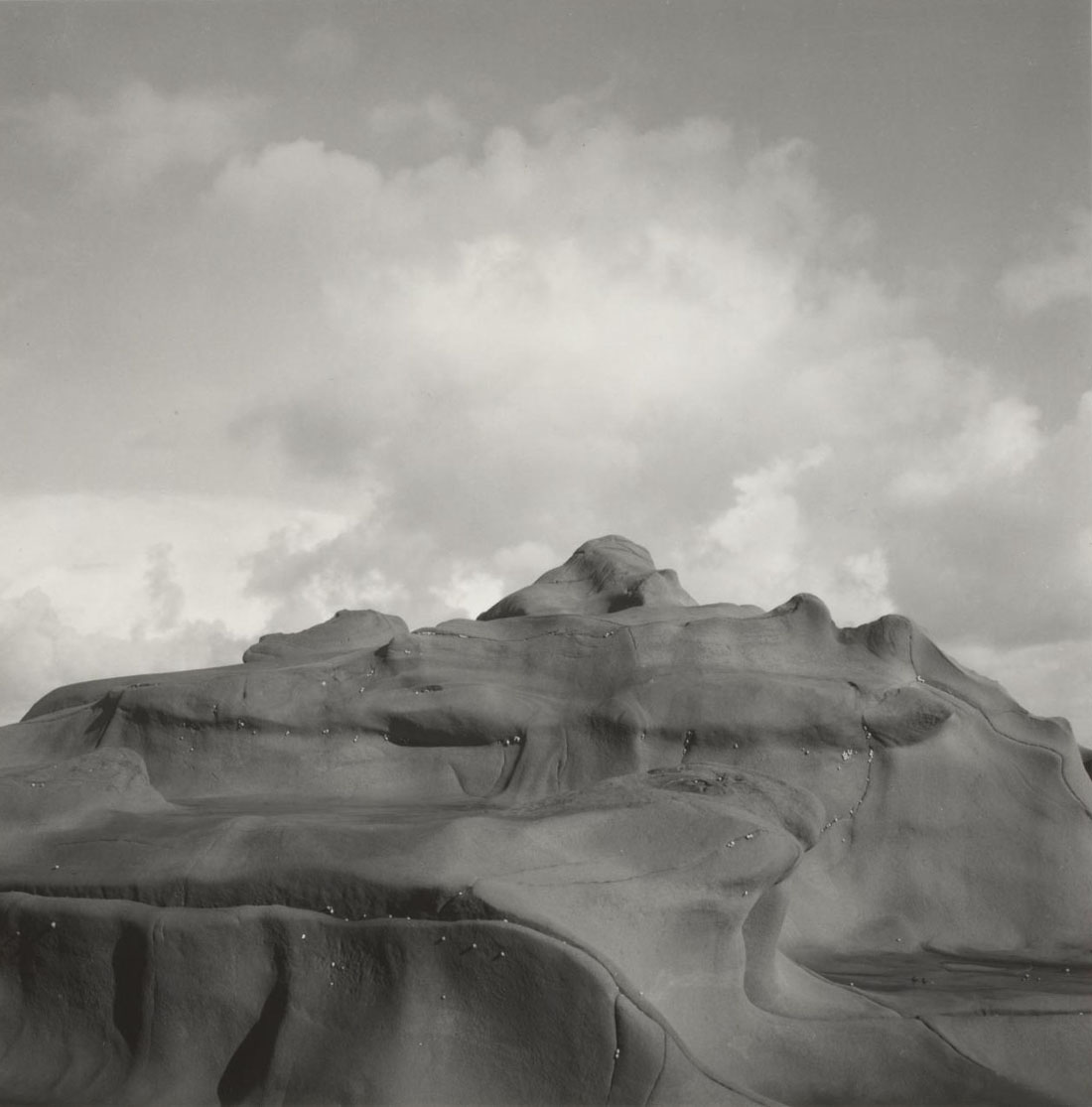
 

Ian Lobb (Australian, 1948-2023) 'Eagles Nest, Cape Paterson' 1975; printed 1979


Ian Lobb (Australian, 1948-2023)
Eagles Nest, Cape Paterson
1975; printed 1979
Gelatin silver photograph
17.6 × 17.4cm (image)
National Gallery of Victoria, Melbourne
Purchased, 1980
© Ian Lobb
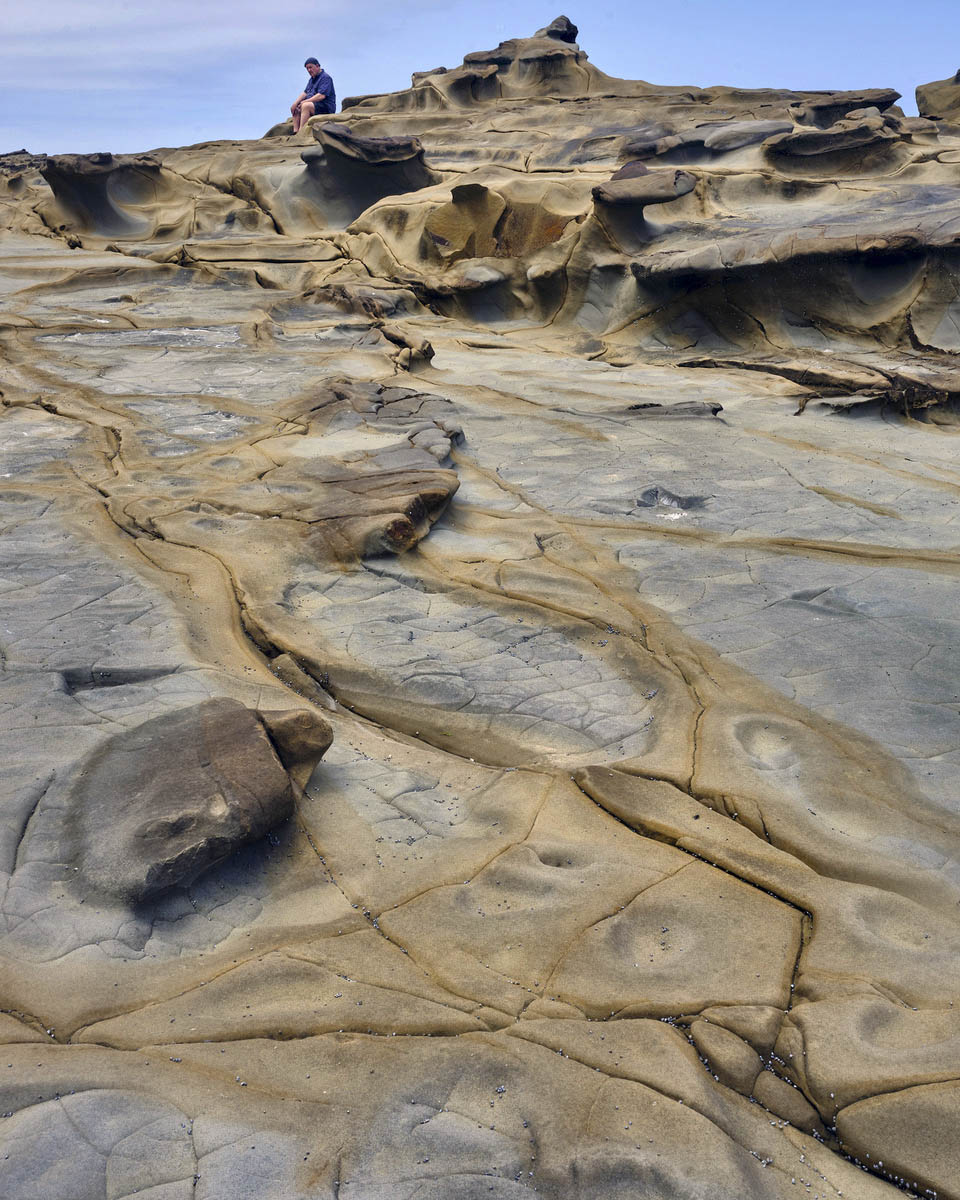
 

David Tatnall (Australian, b. 1955) 'Ian at Eagles Nest, Cape Paterson' November 2023


David Tatnall (Australian, b. 1955)
Ian at Eagles Nest, Cape Paterson
November 2023


This was the first Ian time had returned to Cape Paterson since the death of his father many years ago.
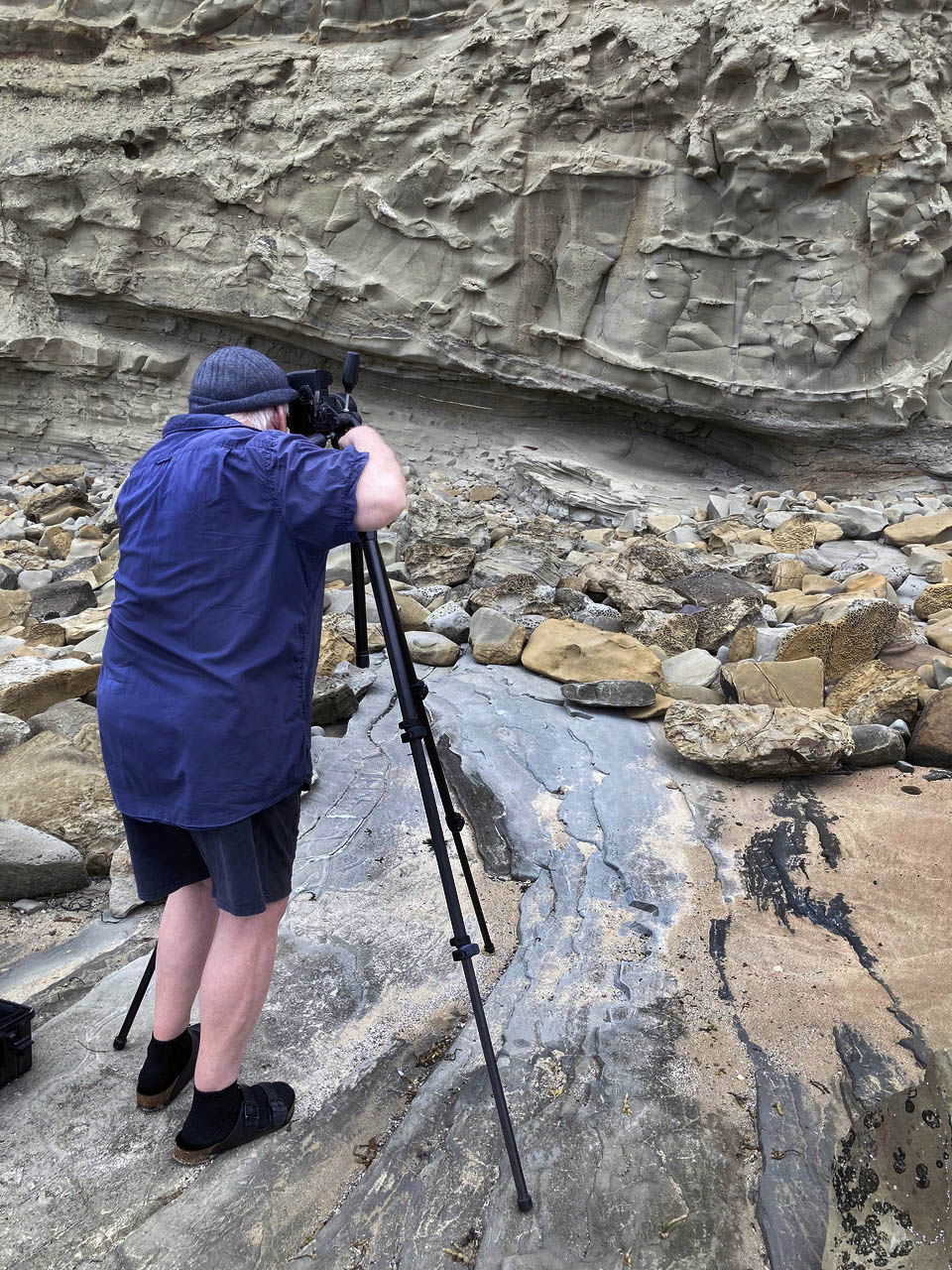
 

David Tatnall (Australian, b. 1955) 'Ian at Eagles Nest, Cape Paterson' November 2023


David Tatnall (Australian, b. 1955)
Ian at Eagles Nest, Cape Paterson
November 2023
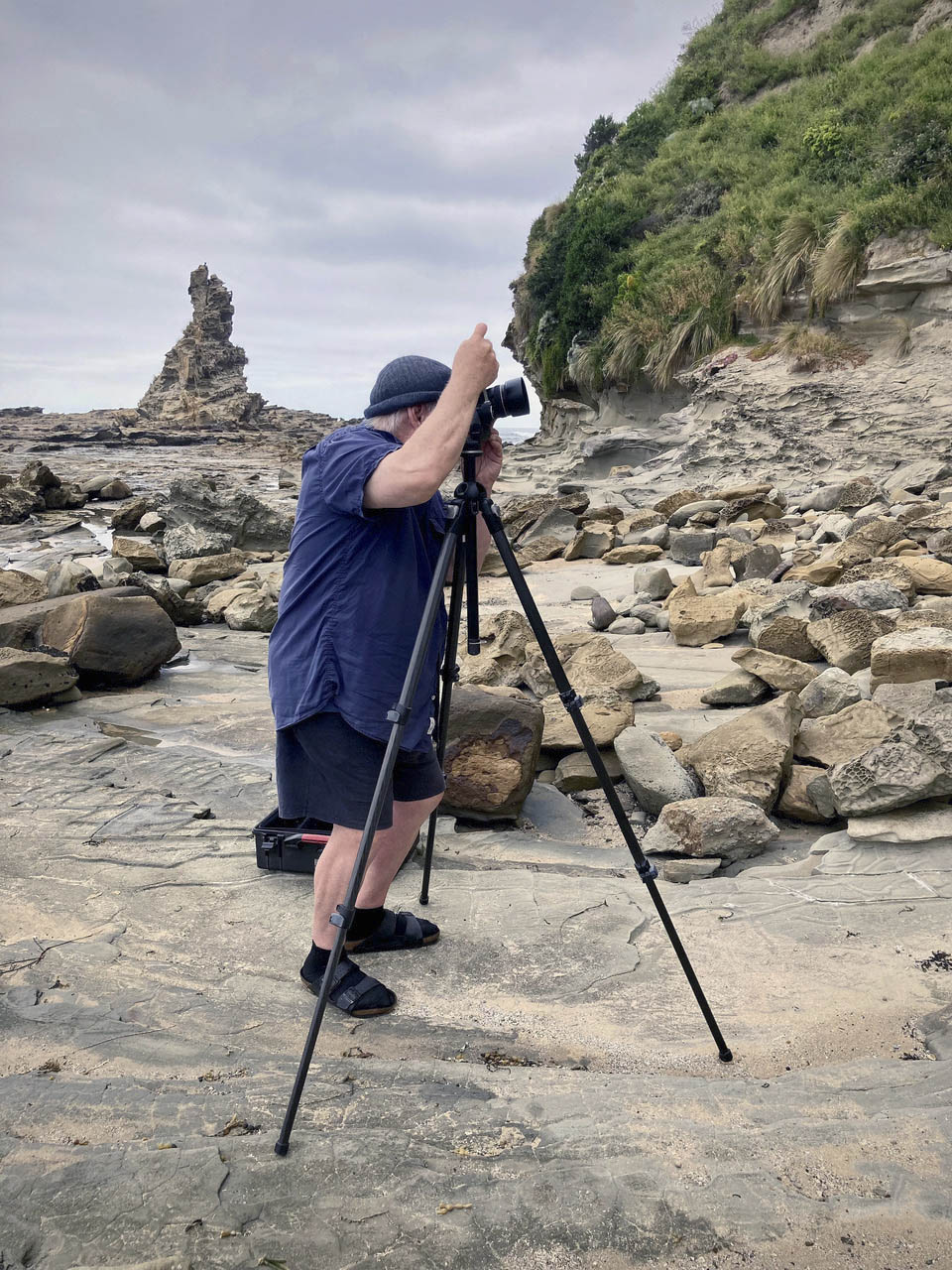
 

David Tatnall (Australian, b. 1955) 'Ian at Eagles Nest, Cape Paterson' November 2023


David Tatnall (Australian, b. 1955)
Ian at Eagles Nest, Cape Paterson
November 2023


Lemon scented gum, Fairfield
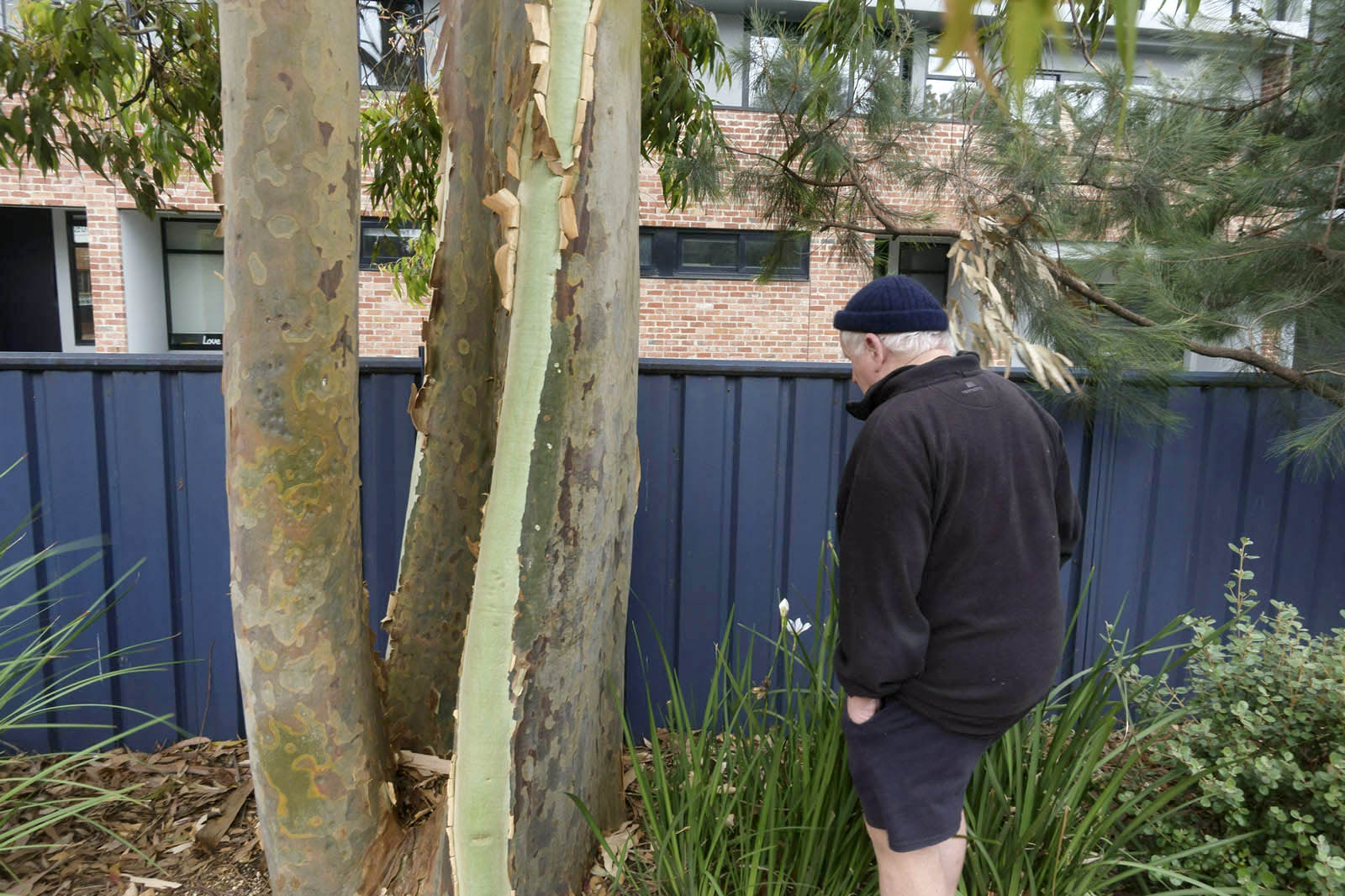
 

Marcus Bunyan (Australian, b. 1958) 'Ian Lobb, Fairfield' December 2021


Marcus Bunyan (Australian, b. 1958)
Ian Lobb, Fairfield
December 2021
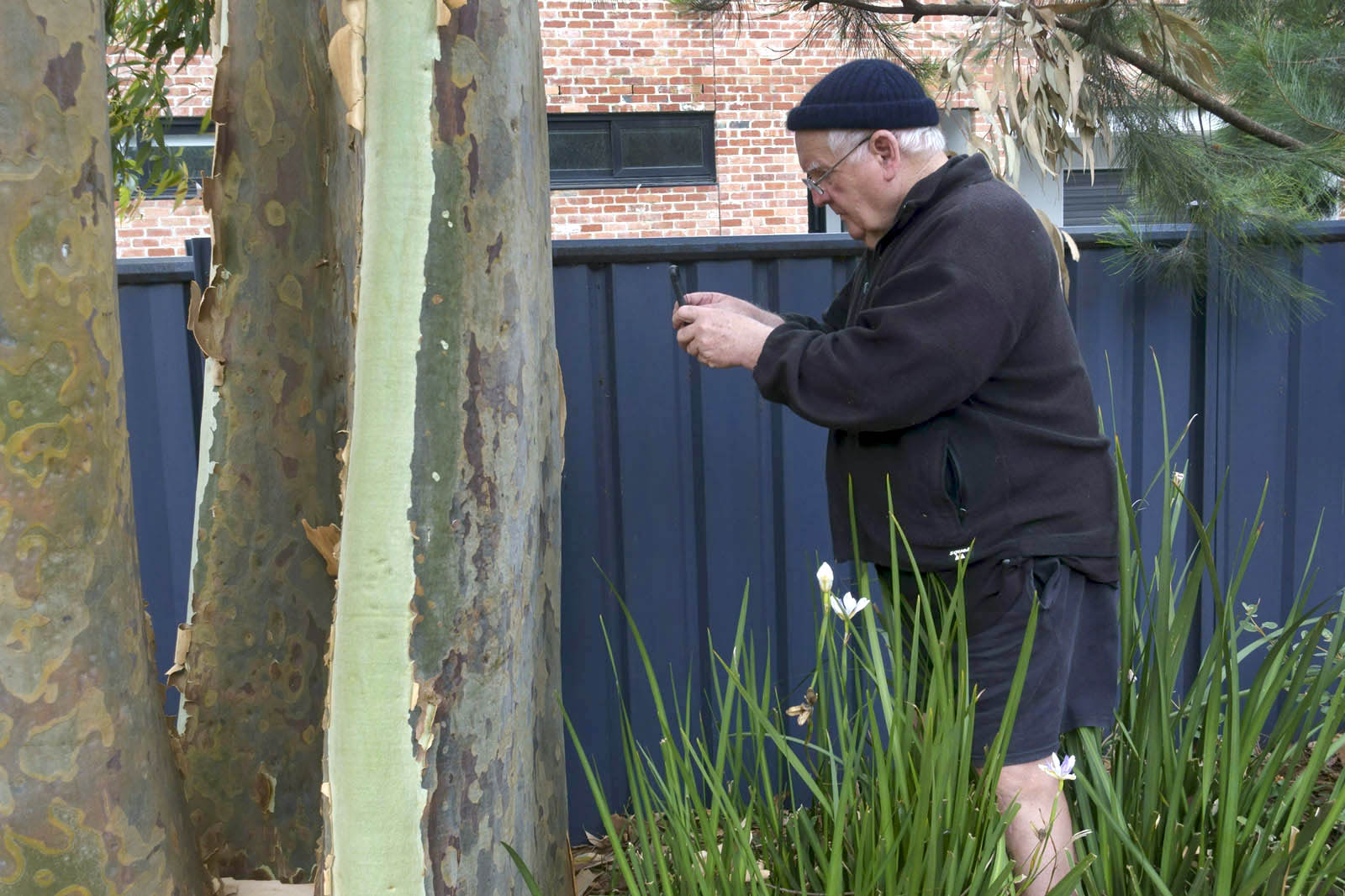
 

Marcus Bunyan (Australian, b. 1958) 'Ian Lobb, Fairfield' December 2021


Marcus Bunyan (Australian, b. 1958)
Ian Lobb, Fairfield
December 2021
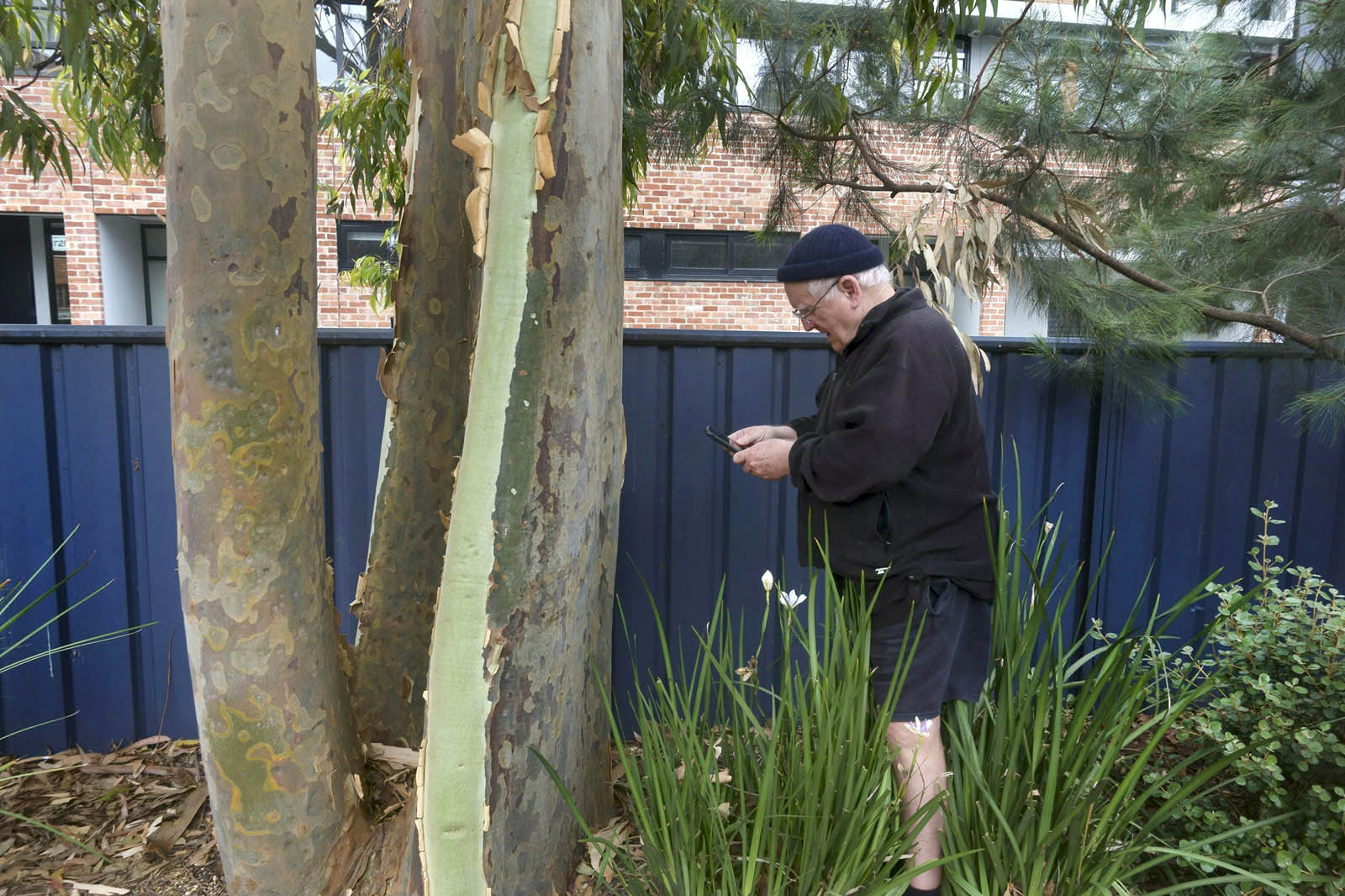
 

Marcus Bunyan (Australian, b. 1958) 'Ian Lobb, Fairfield' December 2021


Marcus Bunyan (Australian, b. 1958)
Ian Lobb, Fairfield
December 2021
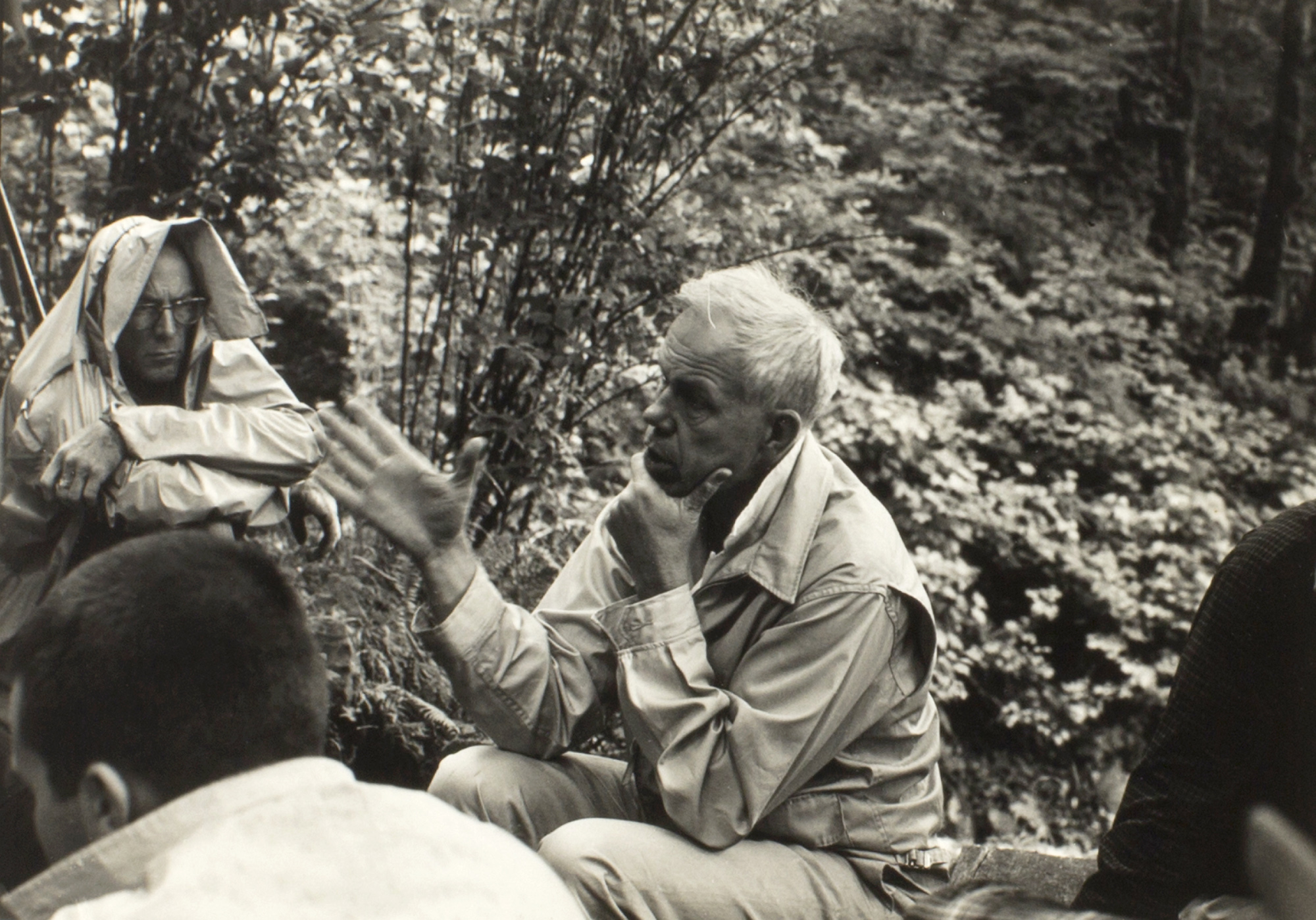
 

Maxwell Allara (American born Italy, 1906-1981) 'Untitled (Minor White During a Workshop)' 1959


Maxwell Allara (American born Italy, 1906-1981)
Untitled (Minor White During a Workshop)
1959
Gelatin silver print
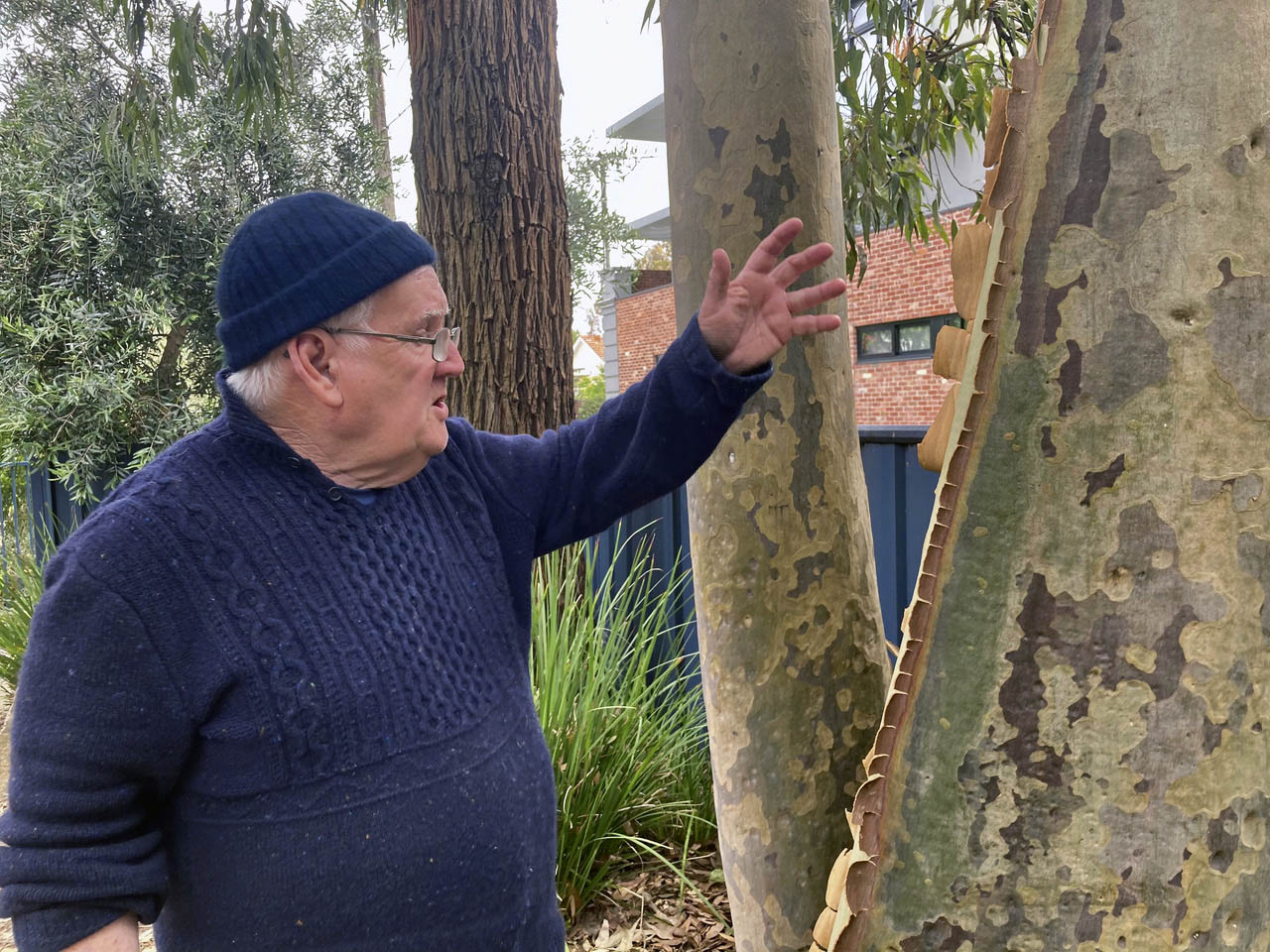
 

David Tatnall (Australian, b. 1955) 'Ian in front of his favourite tree, Fairfield' November 2021


David Tatnall (Australian, b. 1955)
Ian in front of his favourite tree, Fairfield
November 2021
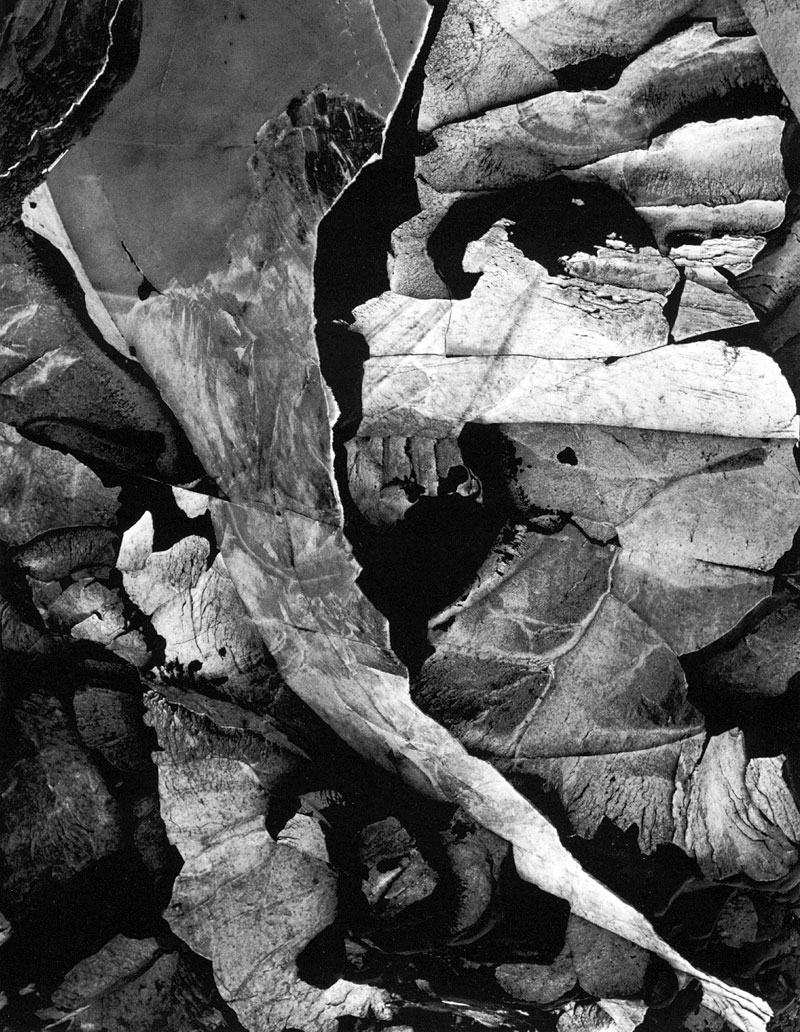
 

Minor White (American, 1908-1976) 'Moencopi Strata, Capital Reef, Utah' 1962 


Minor White (American, 1908-1976)
Moencopi Strata, Capital Reef, Utah
1962
Gelatin silver print
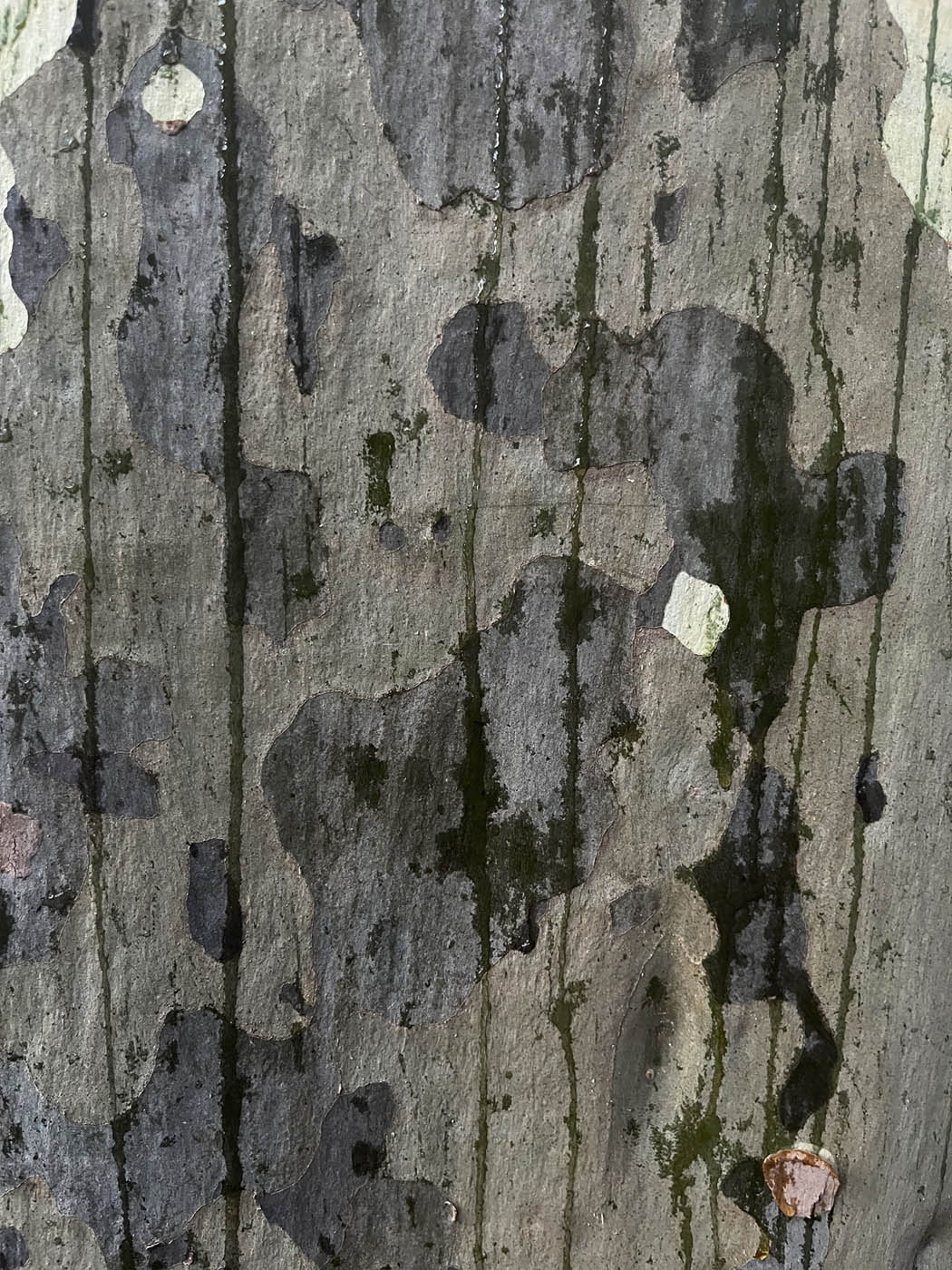
 

Ian Lobb (Australian, 1948-2023) 'Lemon scented gum' 24 January 2023


Ian Lobb (Australian, 1948-2023)
Lemon scented gum
24 January 2023
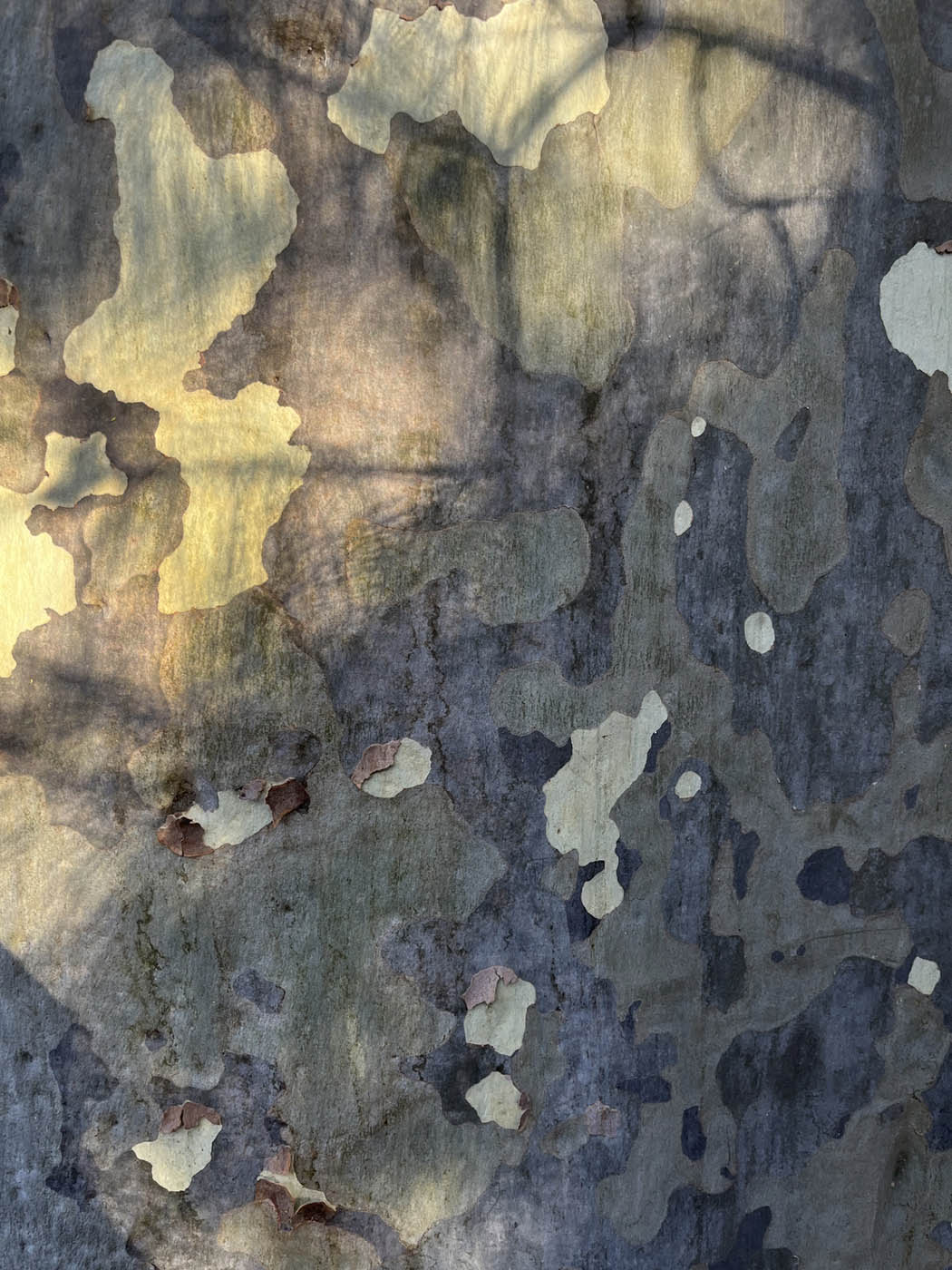
 

Ian Lobb (Australian, 1948-2023) 'Lemon scented gum' 14 February 2023


Ian Lobb (Australian, 1948-2023)
Lemon scented gum
14 February 2023


“The light comes down the tree. But for some days it twists right to left and makes an early morning shadow.

~ Ian Lobb text to Marcus Bunyan, Monday 11 September 2023
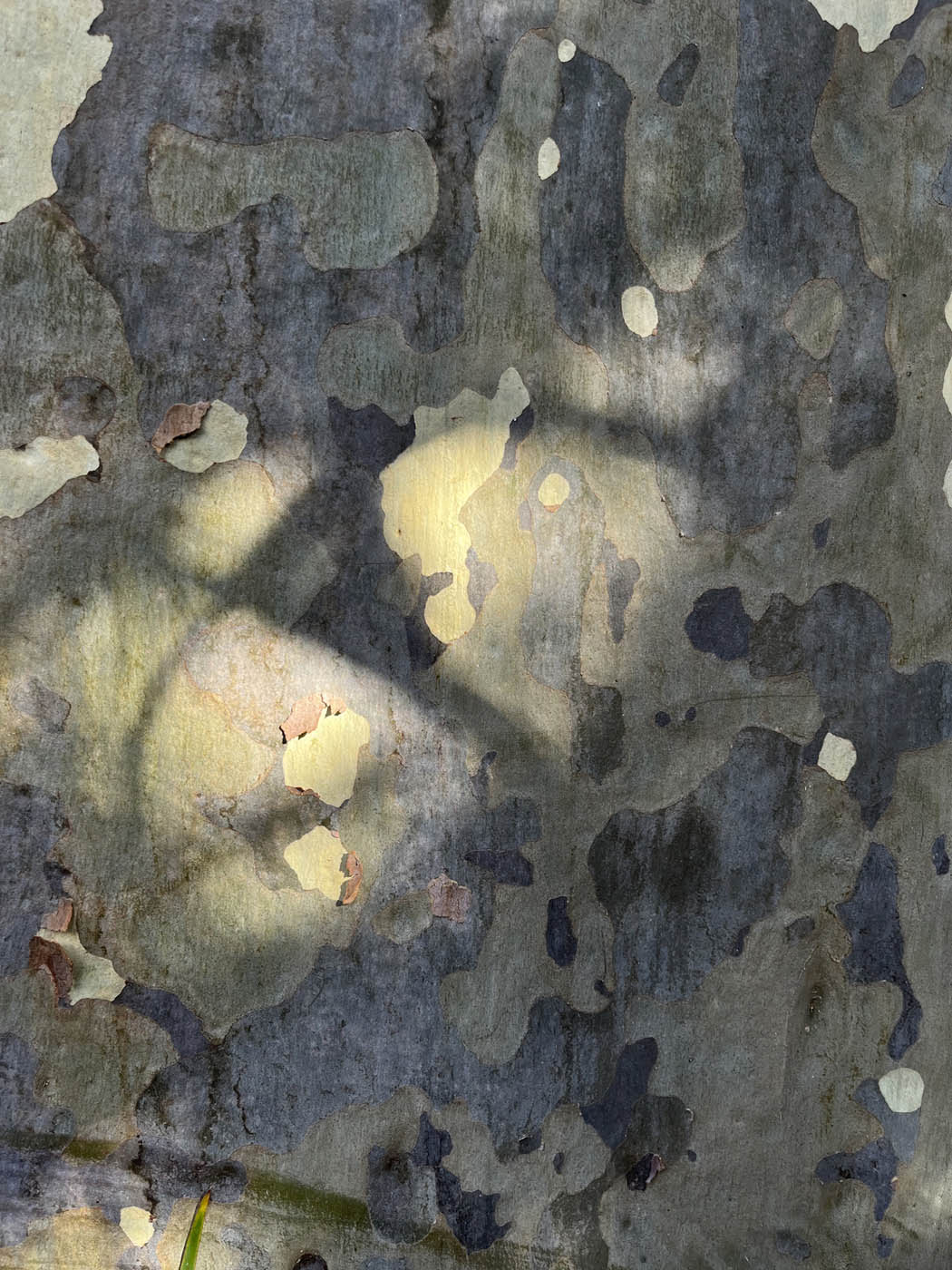
 

Ian Lobb (Australian, 1948-2023) 'Lemon scented gum' 22 February 2023


Ian Lobb (Australian, 1948-2023)
Lemon scented gum
22 February 2023
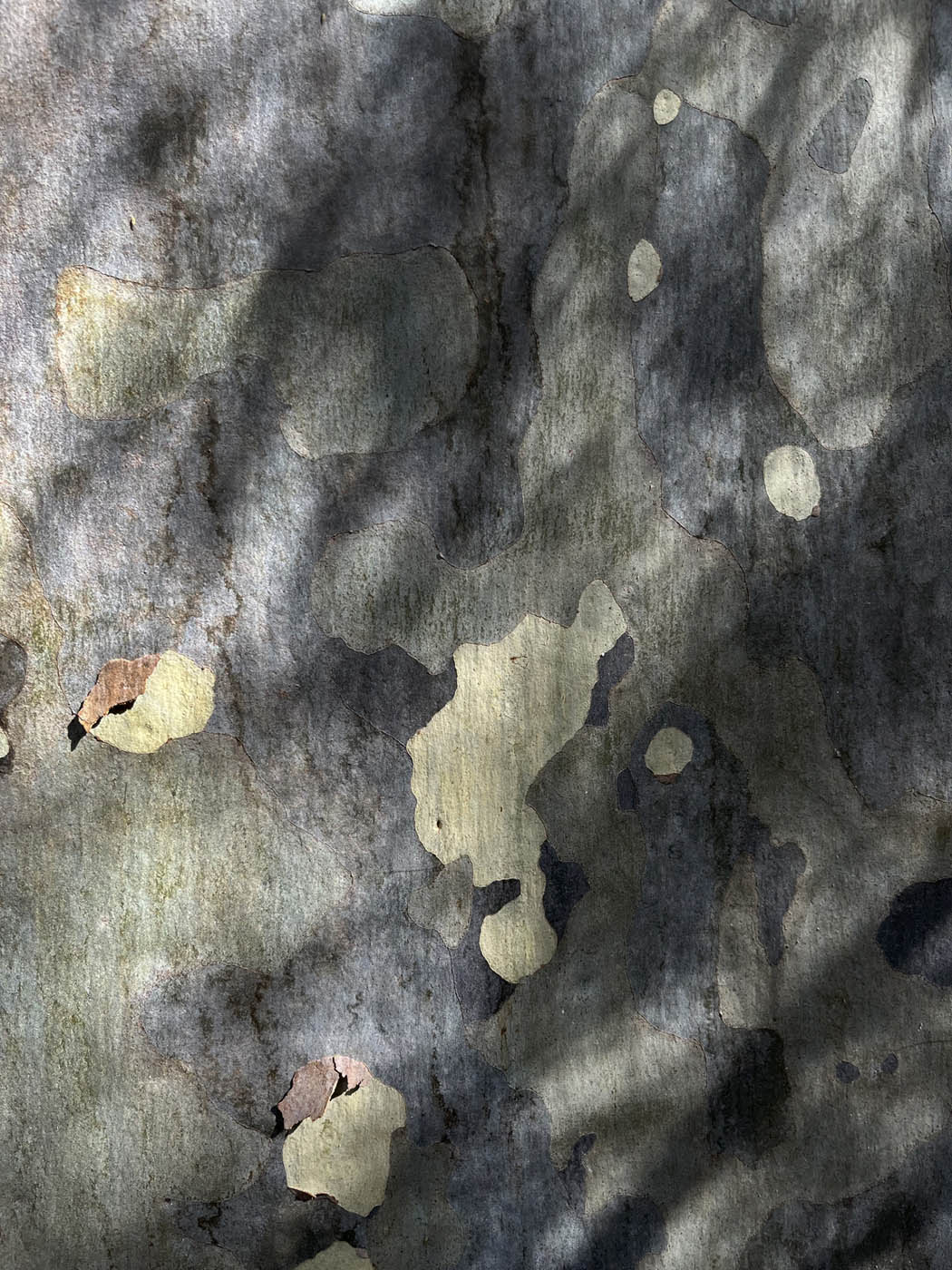
 

Ian Lobb (Australian, 1948-2023) 'Lemon scented' gum 8 March 2023


Ian Lobb (Australian, 1948-2023)
Lemon scented gum
8 March 2023


Marcus – thanks for the mystic particles. After I have apple and rhubarb I’ll be walking to check on the tree in the church-garden. I’m interested in this, rather than my own garden. Who knows why I can’t photograph my own. Do you have a garden close by that you can walk through easily? I can’t wait for the sun to move a bit further and the light to come back on church gum. A few weeks.

~ Ian Lobb text to Marcus Bunyan, Wednesday 12 July 2023
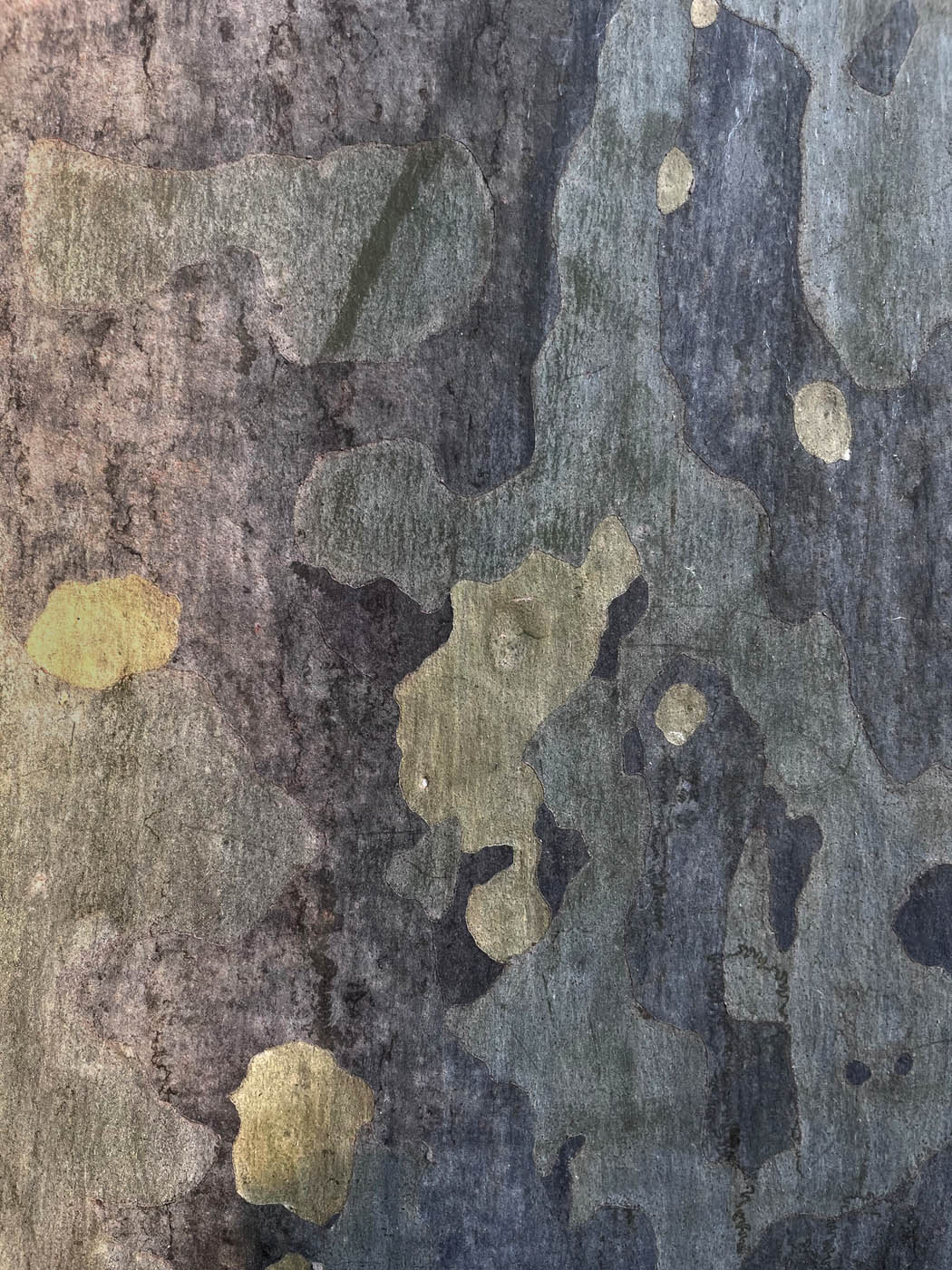
 

Ian Lobb (Australian, 1948-2023) 'Lemon scented gum' 13 September 2023


Ian Lobb (Australian, 1948-2023)
Lemon scented gum
13 September 2023


Mobile phone photographs
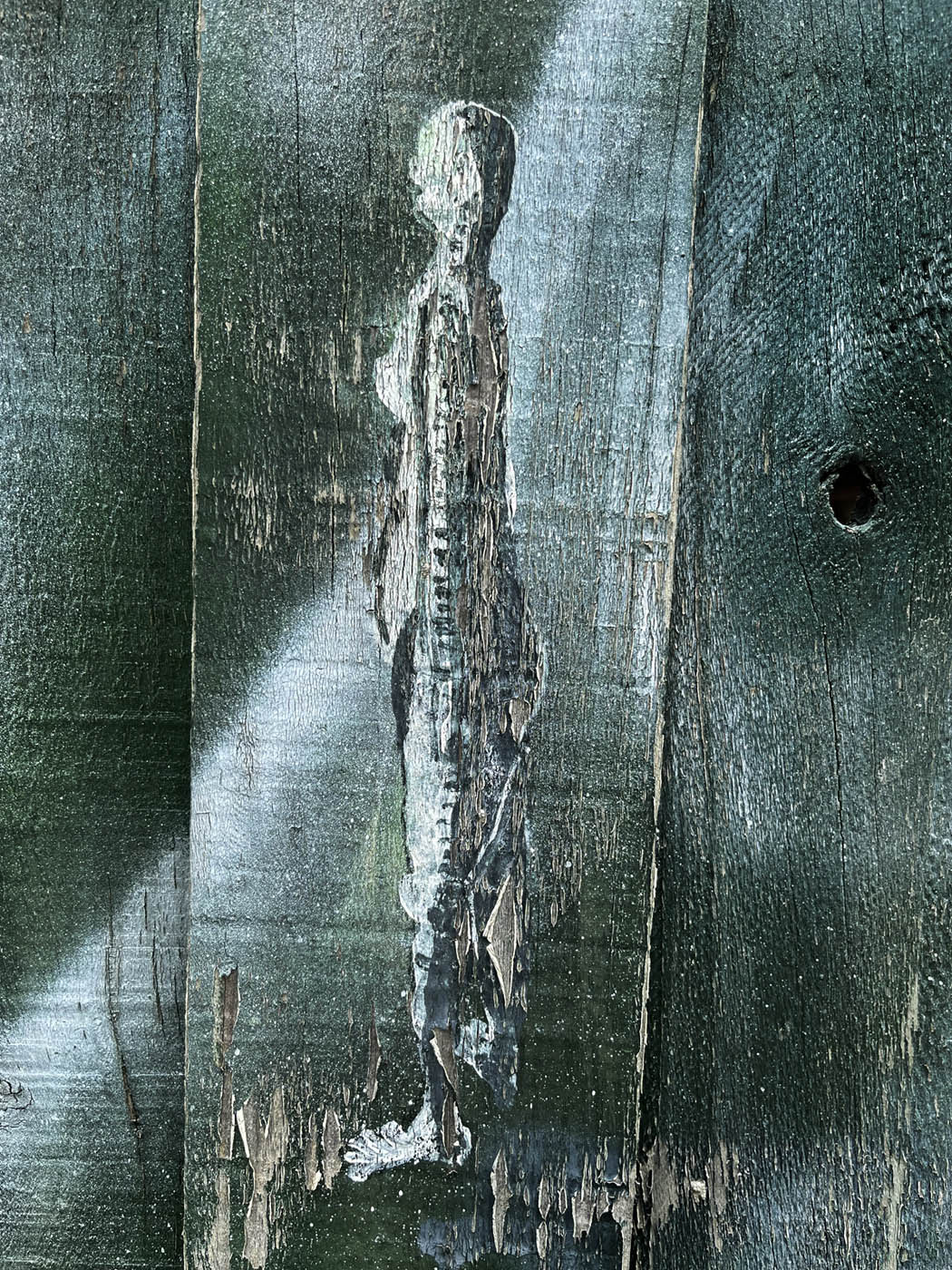
 

Ian Lobb (Australian, 1948-2023) 'Untitled (Green woman)' 22 November 2022


Ian Lobb (Australian, 1948-2023)
Untitled (Green woman)
22 November 2022
 

Ian Lobb (Australian, 1948-2023) 'Alex' 21 December 2022


Ian Lobb (Australian, 1948-2023)
Alex
21 December 2022
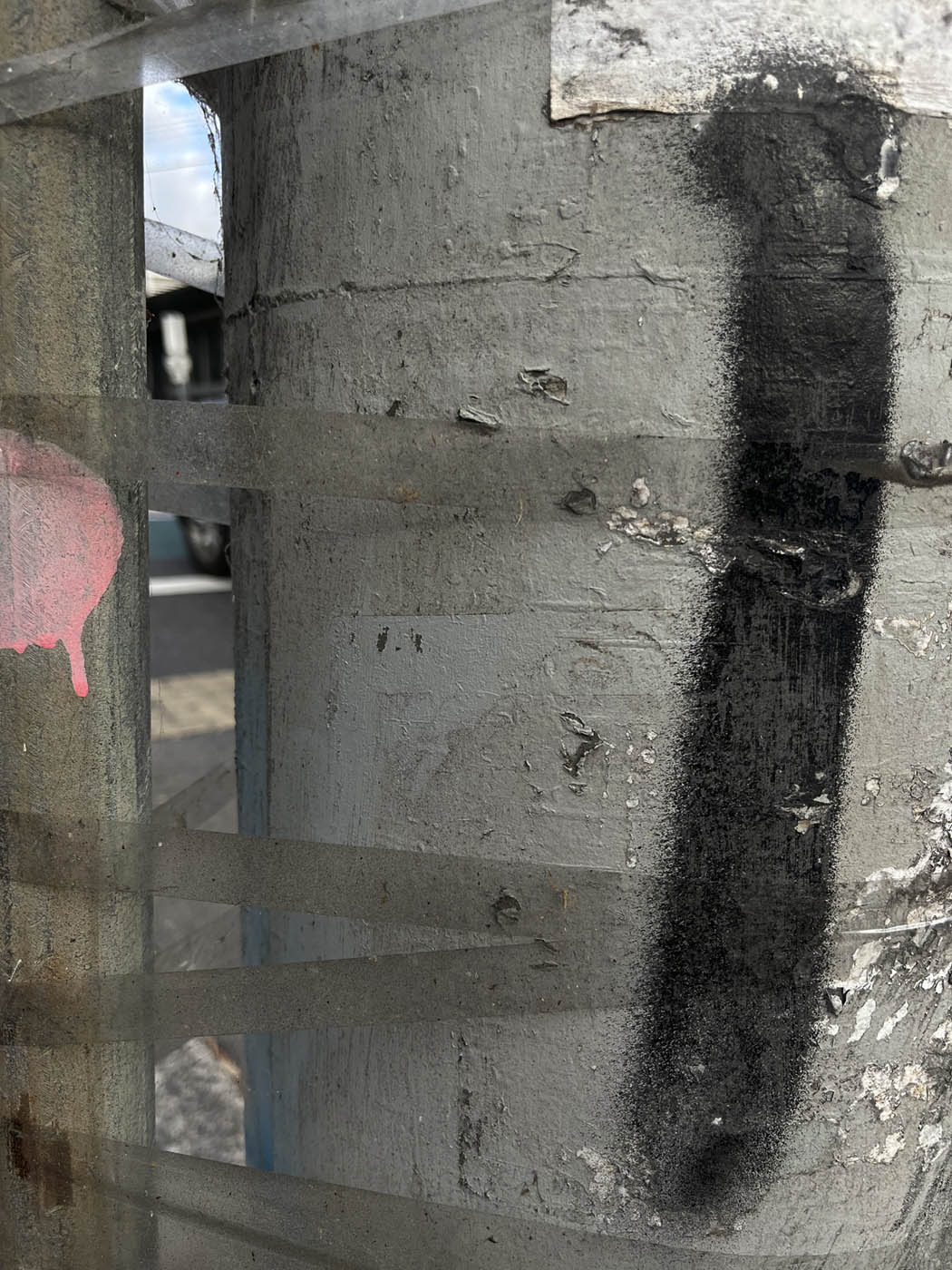
 

Ian Lobb (Australian, 1948-2023) 'Untitled (pink and black)' 31 January 2023


Ian Lobb (Australian, 1948-2023)
Untitled (pink and black)
31 January 2023
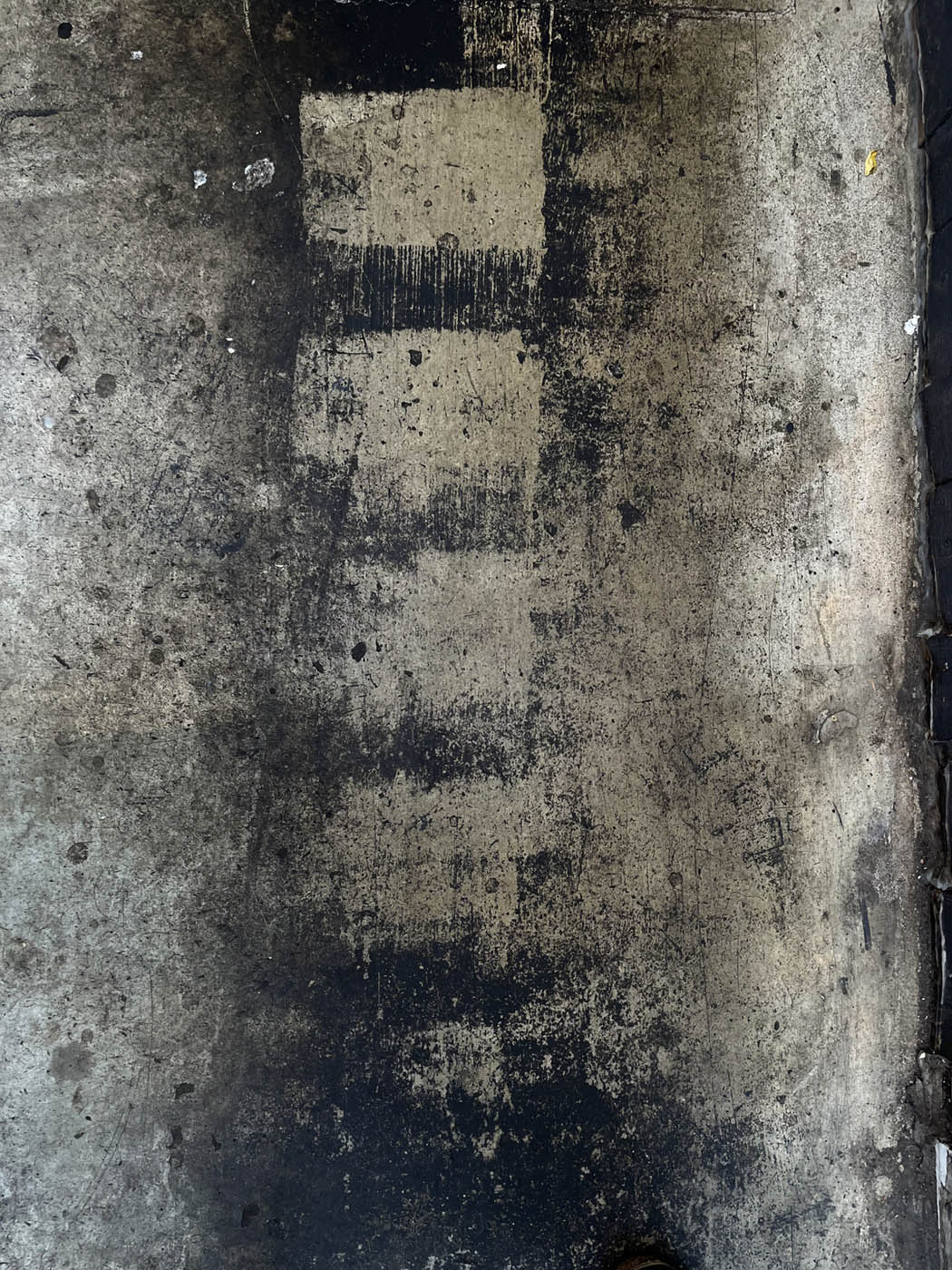
 

Ian Lobb (Australian, 1948-2023) 'The path from the coffee shop' 4 February 2023


Ian Lobb (Australian, 1948-2023)
The path from the coffee shop
Fairfield, 4 February 2023
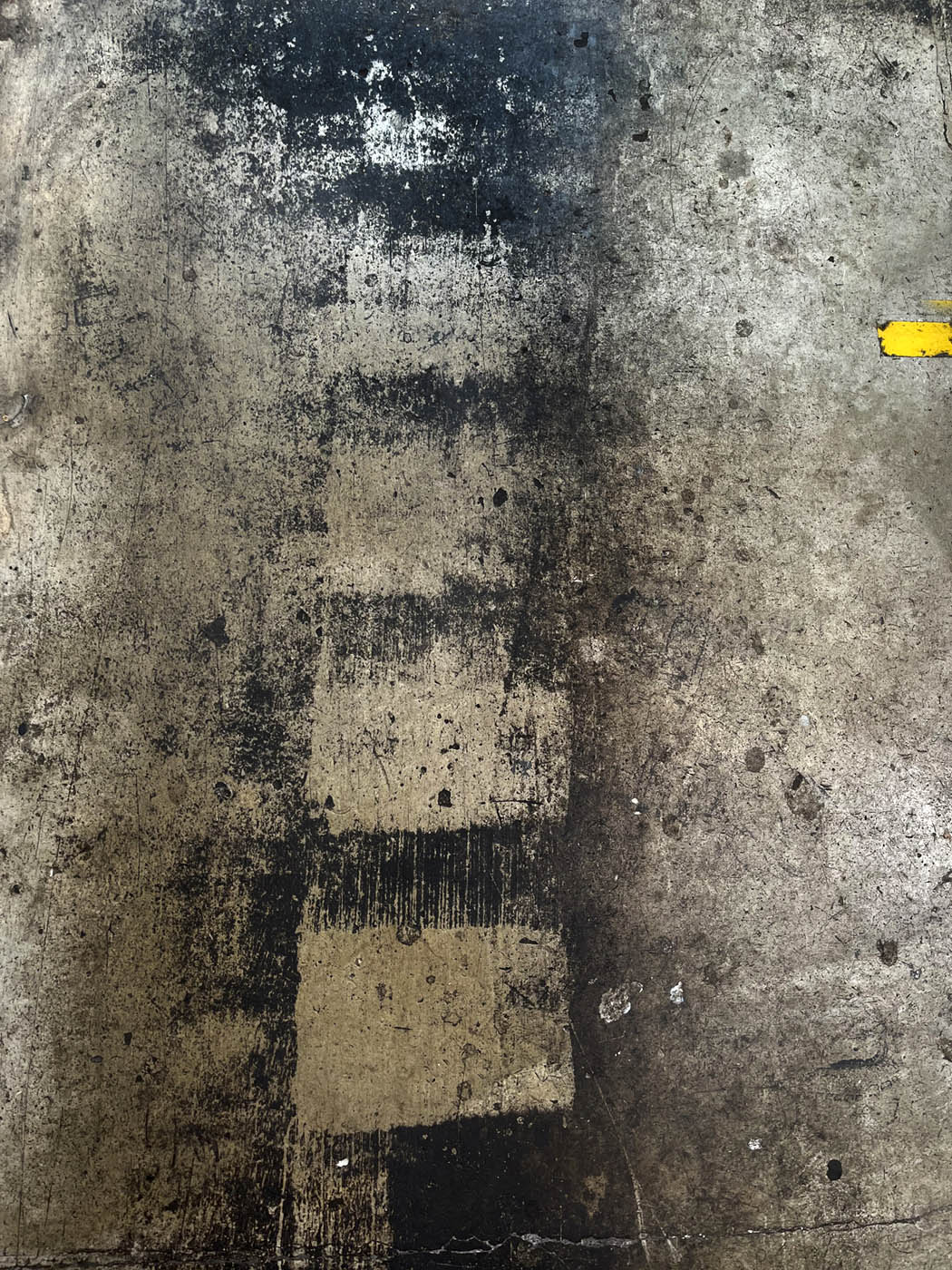
 

Ian Lobb (Australian, 1948-2023) 'The path to the coffee shop' Fairfield 4 February 2023


Ian Lobb (Australian, 1948-2023)
The path to the coffee shop
Fairfield, 4 February 2023
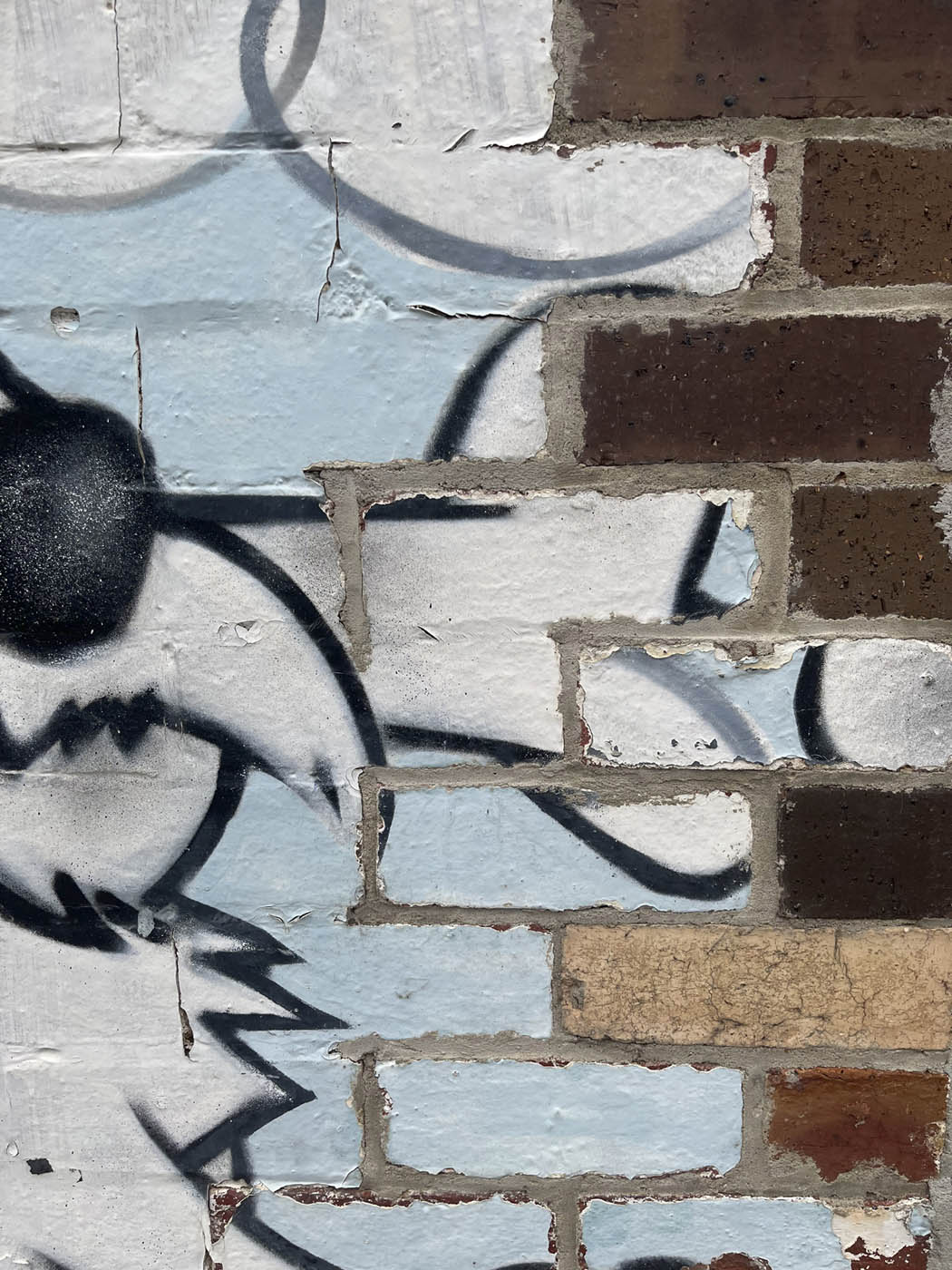
 

Ian Lobb (Australian, 1948-2023) 'Building his ying, Ignoring his yang' 21 February 2023


Ian Lobb (Australian, 1948-2023)
Building his ying, Ignoring his yang
21 February 2023


The First One

First one through the forest
First one on the beach
First one through the shallows
First one in the deep
Yes, first in the water
To swim out of reach
First one to belong
And then to be gone
First one to be gone too soon.

First foot off the platform
First step off the map
First one to learn
With nothing to teach
First one in this life
To whisper my name.
First one through my shallows
First one in my deep
First one to be gone too soon.

First winter field night
When the fires are lit
First soul at midnight
Watching burning trees twist.
At your back is the darkness
That turns you to see …
First one to the shadows
First one to the deep
First one to be gone too soon.

There’s a sound that’s so big
We can’t even hear
Not a murmur, a pulse
A note, nor a song
After midnight it wakes you
To its echoes and trace
First one to be swallowed
First one in the deep
First one to be gone too soon.

You’re the first, yes its true
On the roll call of friends
Now there’s spaces, not names
And you: you’re the worst.
You’re a very faint glow
On a very faint path
You were first through the shallows
First one in the deep
First one to be gone too soon.

Ian Lobb 28 August 2018
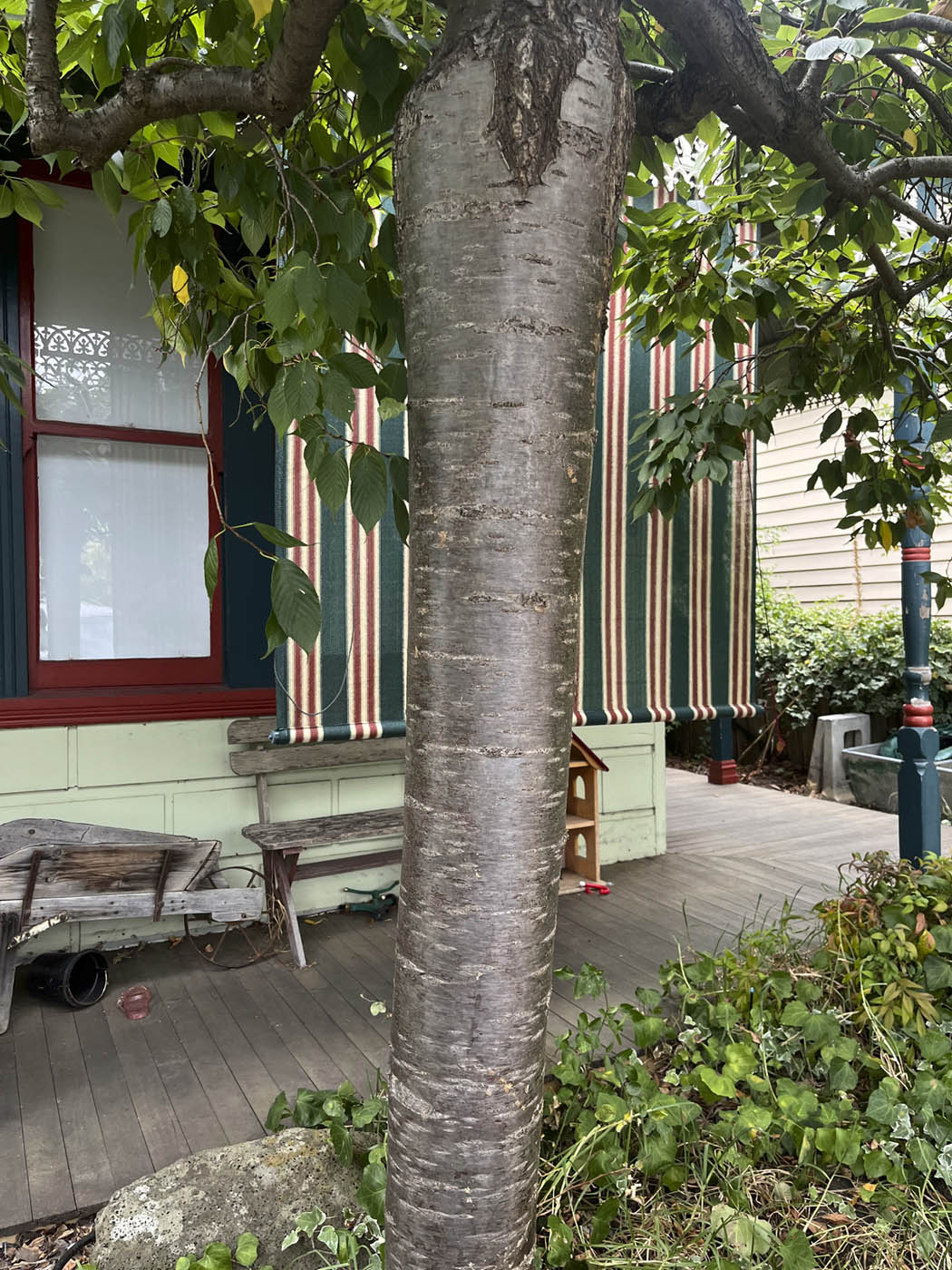
 

Ian Lobb (Australian, 1948-2023) 'A small moment with...' 25 February 2023


Ian Lobb (Australian, 1948-2023)
A small moment with…
25 February 2023


“If only the lens didn’t have anti flare – it would have been an Atget moment.”

~ Ian Lobb
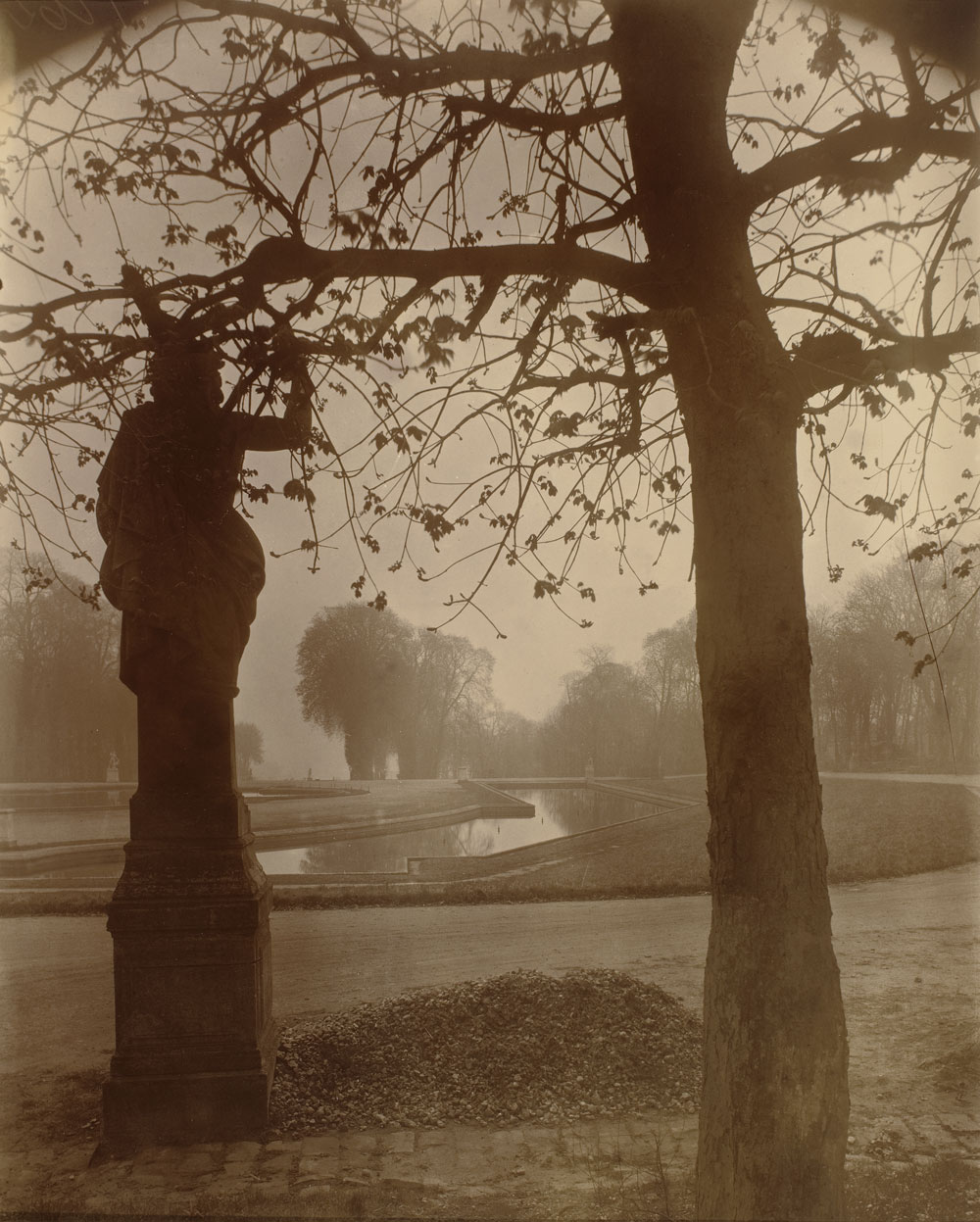
 

Eugène Atget. 'Saint-Cloud' 1926


Eugène Atget (French, 1857-1927)
Saint-Cloud
1926
Albumen print
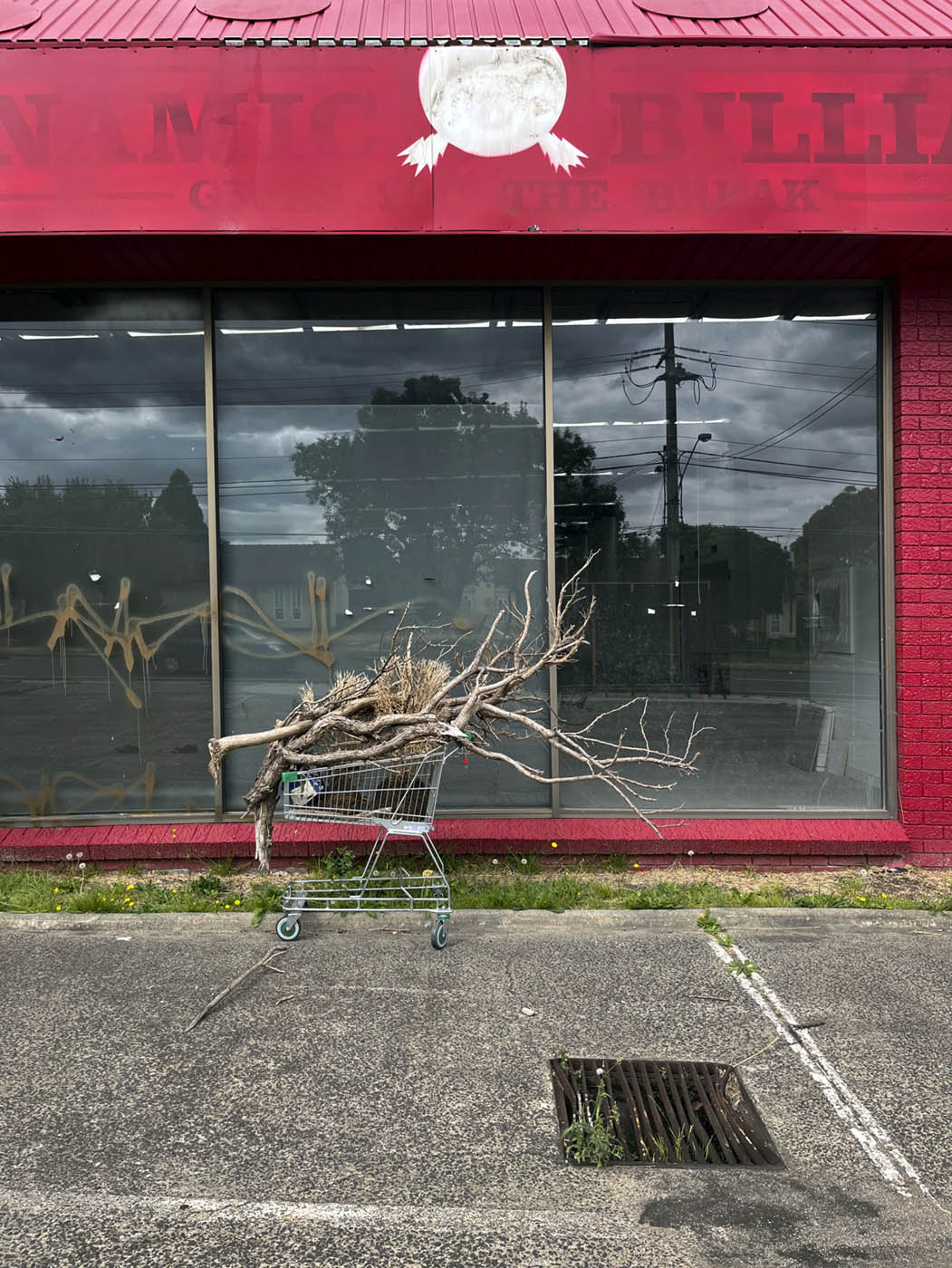
 

Ian Lobb (Australian, 1948-2023) 'Billiard' 2 March 2023


Ian Lobb (Australian, 1948-2023)
Billiard
2 March 2023


Ian: Please see full screen for pleasing puns

Marcus: Love how the graffiti imitates the shape of the wood in the trolley and how the triangle of white dots is a metaphor for the billiard triangle used to rack up the balls

Ian: Yes. And with the billiard signage I thought it was like a players gesture – towards the corner pocket

~ Ian Lobb text to Marcus Bunyan, Friday, 3 March 2023
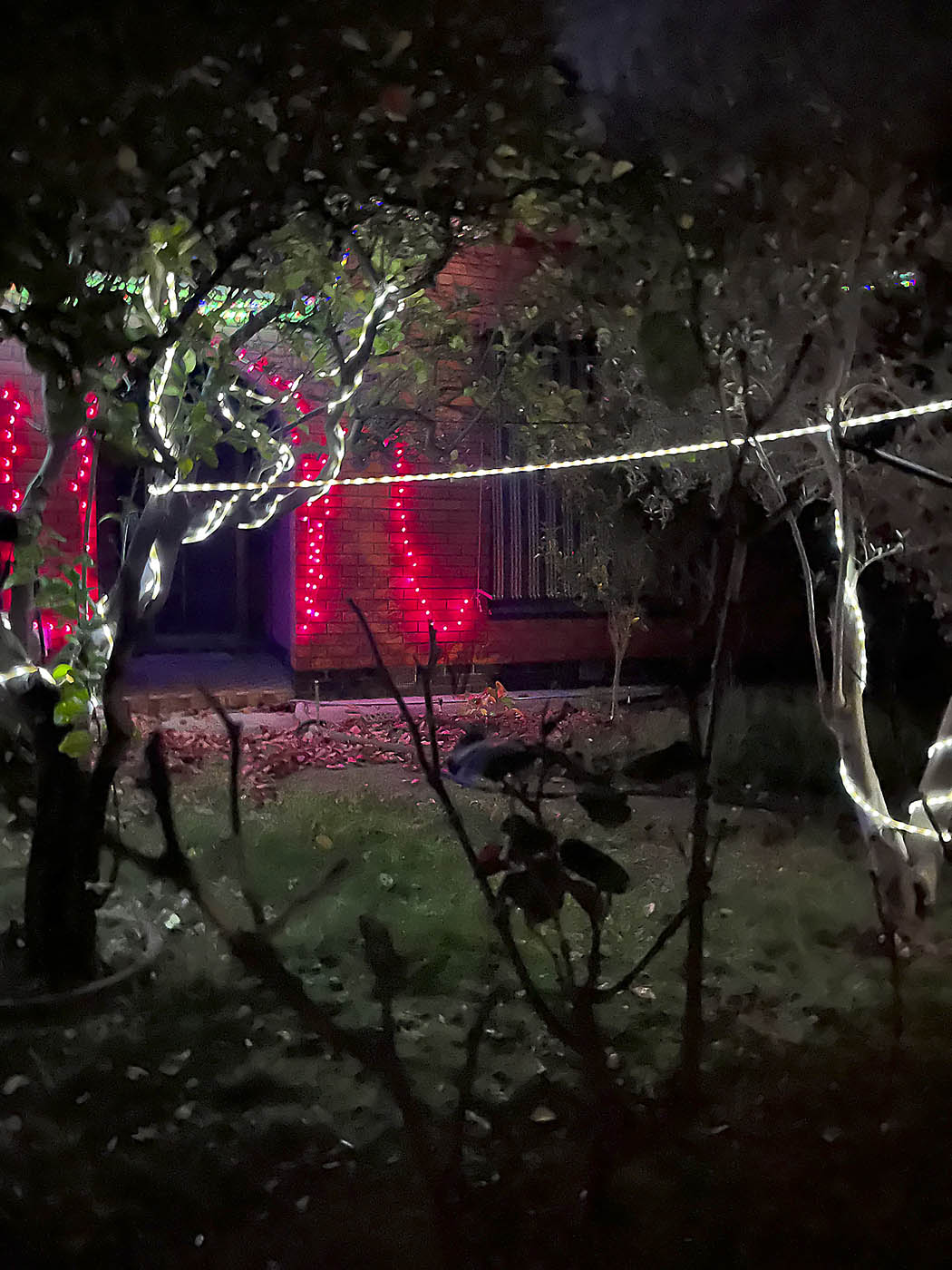
 

Ian Lobb (Australian, 1948-2023) 'Untitled (Mother)' 30 April 2023


Ian Lobb (Australian, 1948-2023)
Untitled (Mother)
30 April 2023


Apart from the teenagers at church, the mention that you were talking to your mother, was one of the few mentions of that relationship since my mother had passed. One minute after that I took this on my way home.

~ Ian Lobb text to Marcus Bunyan, Sunday, 30 April 2023
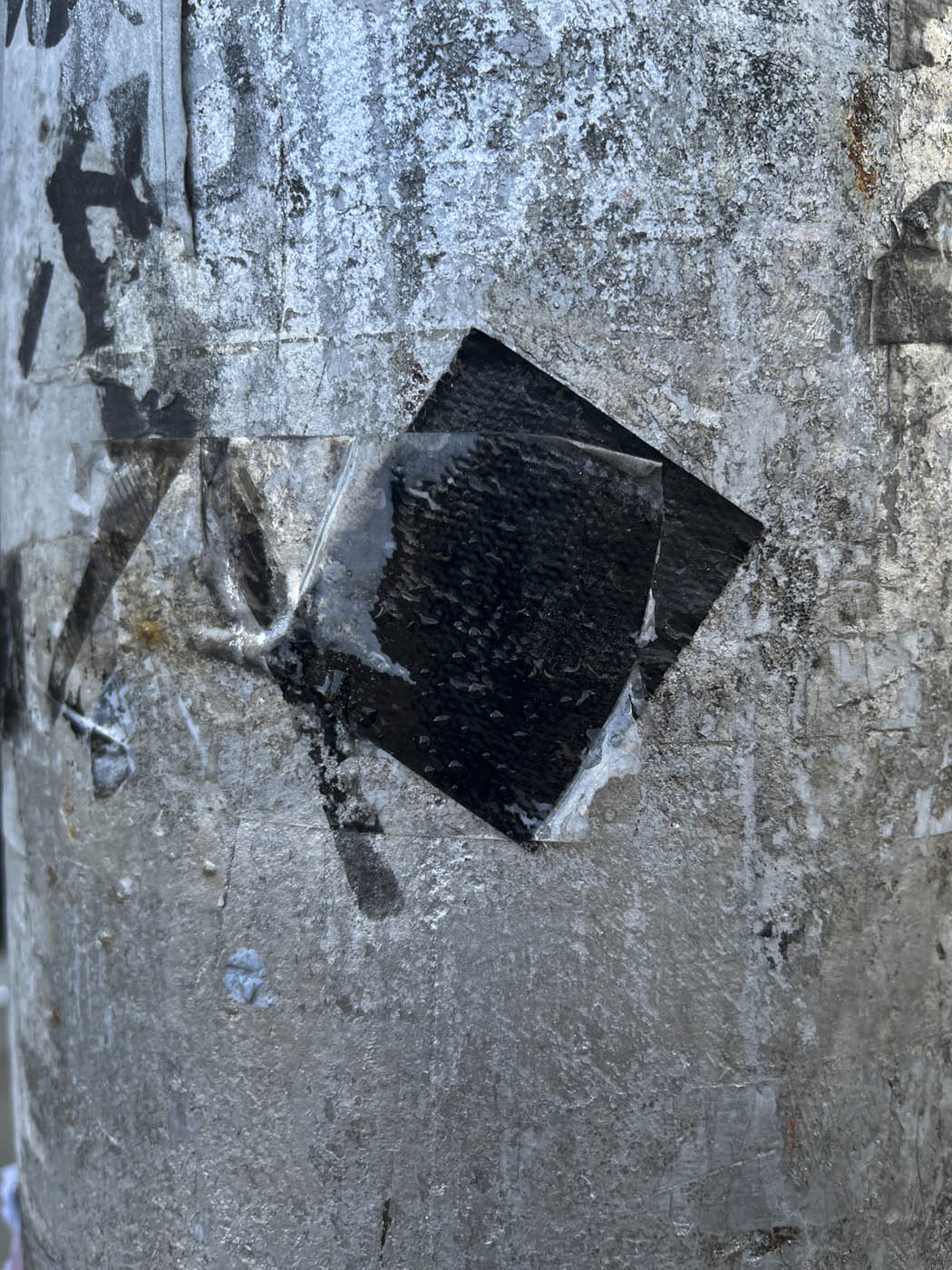
 

Ian Lobb (Australian, 1948-2023) 'Untitled (black oblong)' Fairfield, 8 May 2023


Ian Lobb (Australian, 1948-2023)
Untitled (black oblong)
Fairfield, 8 May 2023
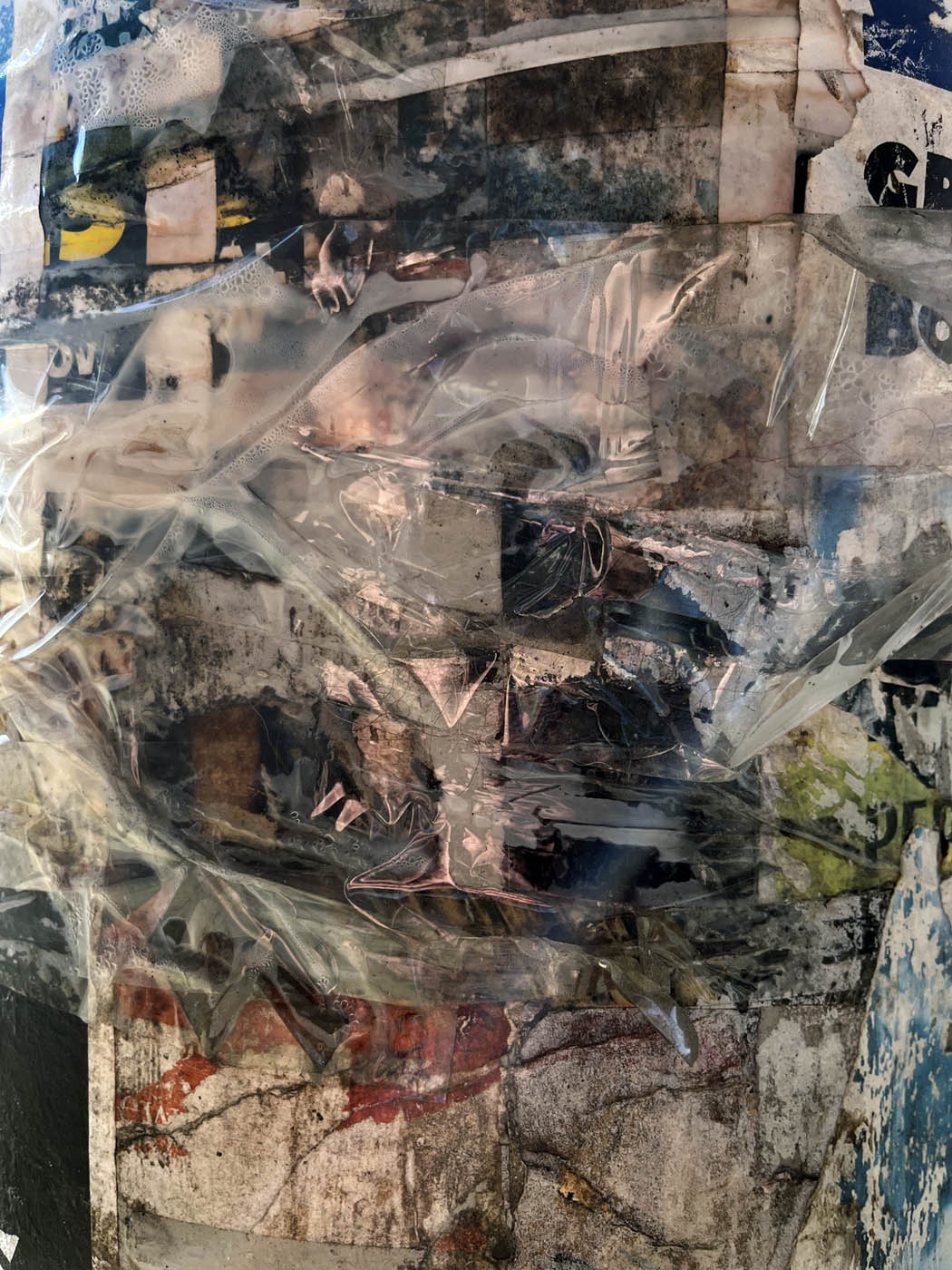
 

Ian Lobb (Australian, 1948-2023) Untitled (My walk this morning)' Fairfield, 11 May 2023


Ian Lobb (Australian, 1948-2023)
Untitled (My walk this morning)
Fairfield, 11 May 2023


On my second roll of HP4 were pictures of a young lady lying under clear sheets of curved 2mm plastic that I had sprayed with water (1968?). The attached is from my walk this morning. The similar mood is quite scary.

~ Ian Lobb text to Marcus Bunyan, Thursday, 11 May 2023
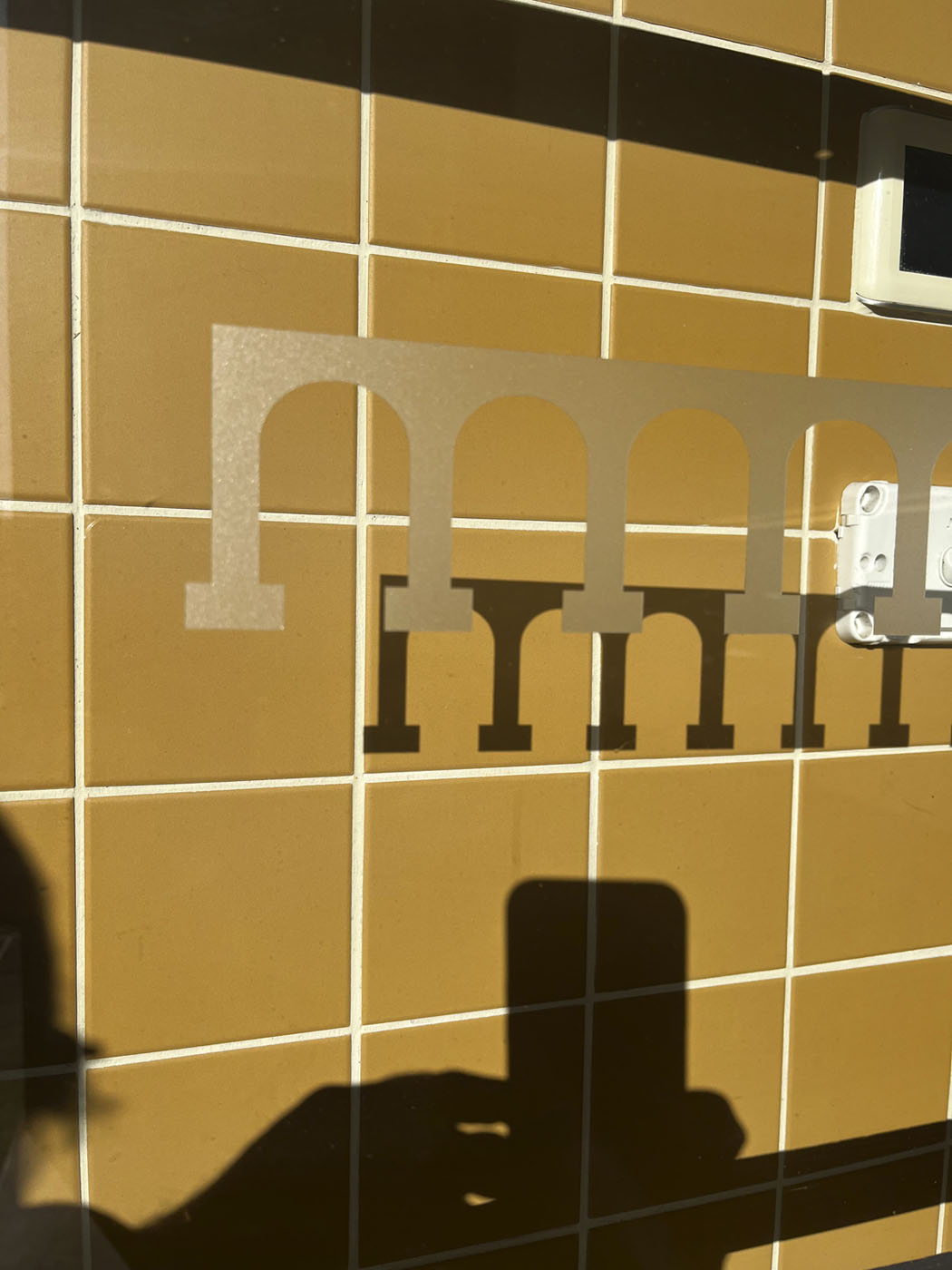
 

Ian Lobb (Australian, 1948-2023) 'mmmm, Pasta Poetry' Fairfield, 21 June 2023


Ian Lobb (Australian, 1948-2023)
mmmm, Pasta Poetry
Fairfield, 21 June 2023


Thinking about John Cato this morning. If you can google “the world is too much with us” – Wordsworth – and give a toast to John. Proteus!!!

~ Ian Lobb text to Marcus Bunyan, Wednesday, 5 July 2023


The world is too much with us

The world is too much with us; late and soon,
Getting and spending, we lay waste our powers;–
Little we see in Nature that is ours;
We have given our hearts away, a sordid boon!
This Sea that bares her bosom to the moon;
The winds that will be howling at all hours,
And are up-gathered now like sleeping flowers;
For this, for everything, we are out of tune;
It moves us not. Great God! I’d rather be
A Pagan suckled in a creed outworn;
So might I, standing on this pleasant lea,
Have glimpses that would make me less forlorn;
Have sight of Proteus rising from the sea;
Or hear old Triton blow his wreathèd horn.
William Wordsworth 1802


Cy Twombly. 'Coronation of Sesostris (Part III)' 2000


Cy Twombly (American, 1928-2011)
Coronation of Sesostris (Part III)
2000


Affirmation: When you Sing

(An affirmation from Cy Twombly’s Coronation of Sesostris)


If you sing, don’t let them hesitate
When you sing, don’t let them make signs of regret
When you sing, let them bear the loss of silence
When you sing, the lost gods are found
When you sing, the birds and trees love their shadows
Lying quietly on the ground
When you sing, the mark of nature and the mark of the mark rejoice
When you sing we trace to the source of trace – the realm.

Sing to the ghosts, sing to those to come
Flow over – into – flow over
Let the trees rise from the earth because you sing:
New sunlight on new leaves cutting into space
Write your name
with their scintilla through the air as you sing
Then each letter narrows, fades   white
Still unending trace as sing and sing as a lost god.
One majesty fades to another
Sing Osiris , sing that god into Orpheus

scribes
Porous sparse voice, could have been scattered
Empty surface – instead open sky
Bell
Nothing to shatter
Sing for the old rivers,
Sailors sink into sails,
The opposite bank still opposite
Take this – sing – most important , to the next life.
Like tall trees, rising from …

Gods cannot depart while love, I mean song, remains
Gods have not departed: it would have been heeded,
Reported as a hoax,
No arc of departure divulged
song, weightless
Gods have not departed – it is a drunken hoax, rumour.

Ian Lobb 30 August 2018
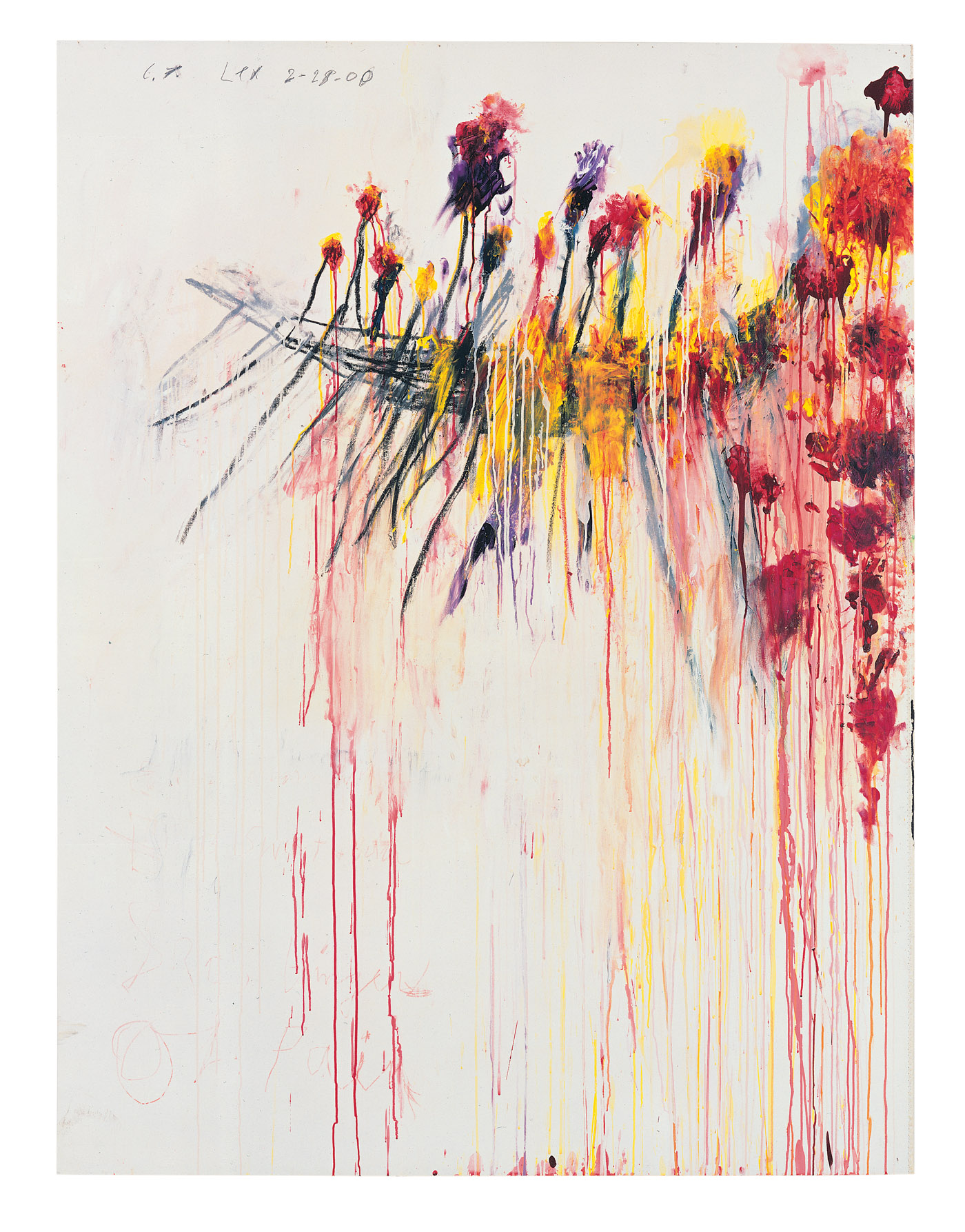
 

Cy Twombly. 'Coronation of Sesostris (Part V)' 2000


Cy Twombly (American, 1928-2011)
Coronation of Sesostris (Part V)
2000
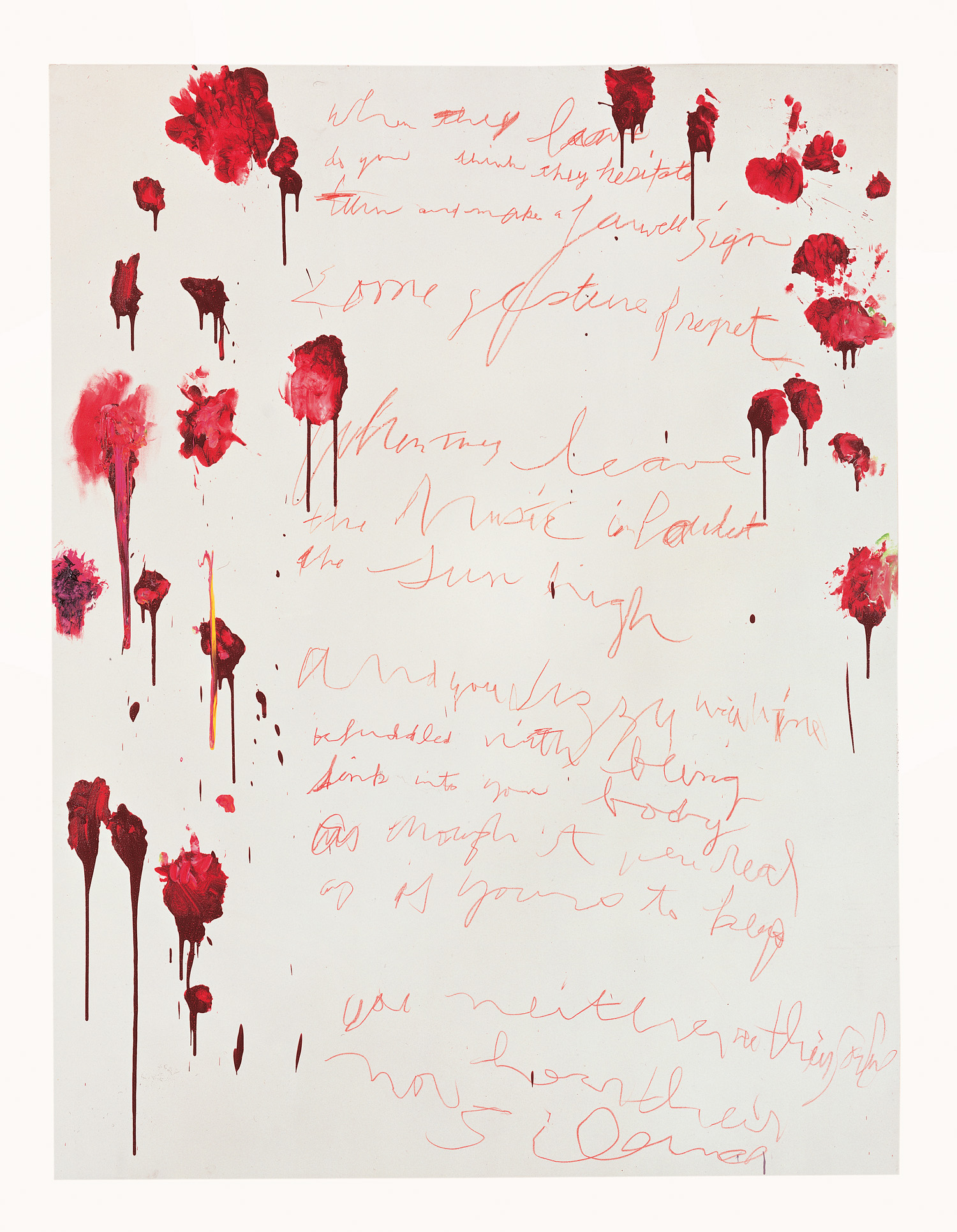
 

Cy Twombly. 'Coronation of Sesostris (Part VI)' 2000


Cy Twombly (American, 1928-2011)
Coronation of Sesostris (Part VI)
2000


Last house

Are you travelling to this very last house
On the very last street of this town?
That I built here for you,
Where I wait for you
If you go round the back you’ll find wild flowers
That you could almost touch
And you would watch the clouds come down from the hills

Long ago I promised this to you
It became my story that you’d come
To the last street
And to the last house
I watch all the doors to see you enter
So that we would almost touch
And you could watch the rain come down from the hills

Yes, it’s true, the house backs onto darkness
I swear there’s really nothing out there
Beyond this last street
Beyond this last house
Nothing you could be sure to name
Nothing we can almost touch
And at night you could keep watch, from here to the hills

You can smell salt in the air from all of the rooms
And hear the wind in the waves
But out the back you’ll only find wildflowers.
Not those grey choppy waves
That we can almost touch
On this last street
In this last house.

Ian Lobb 29 August 2018
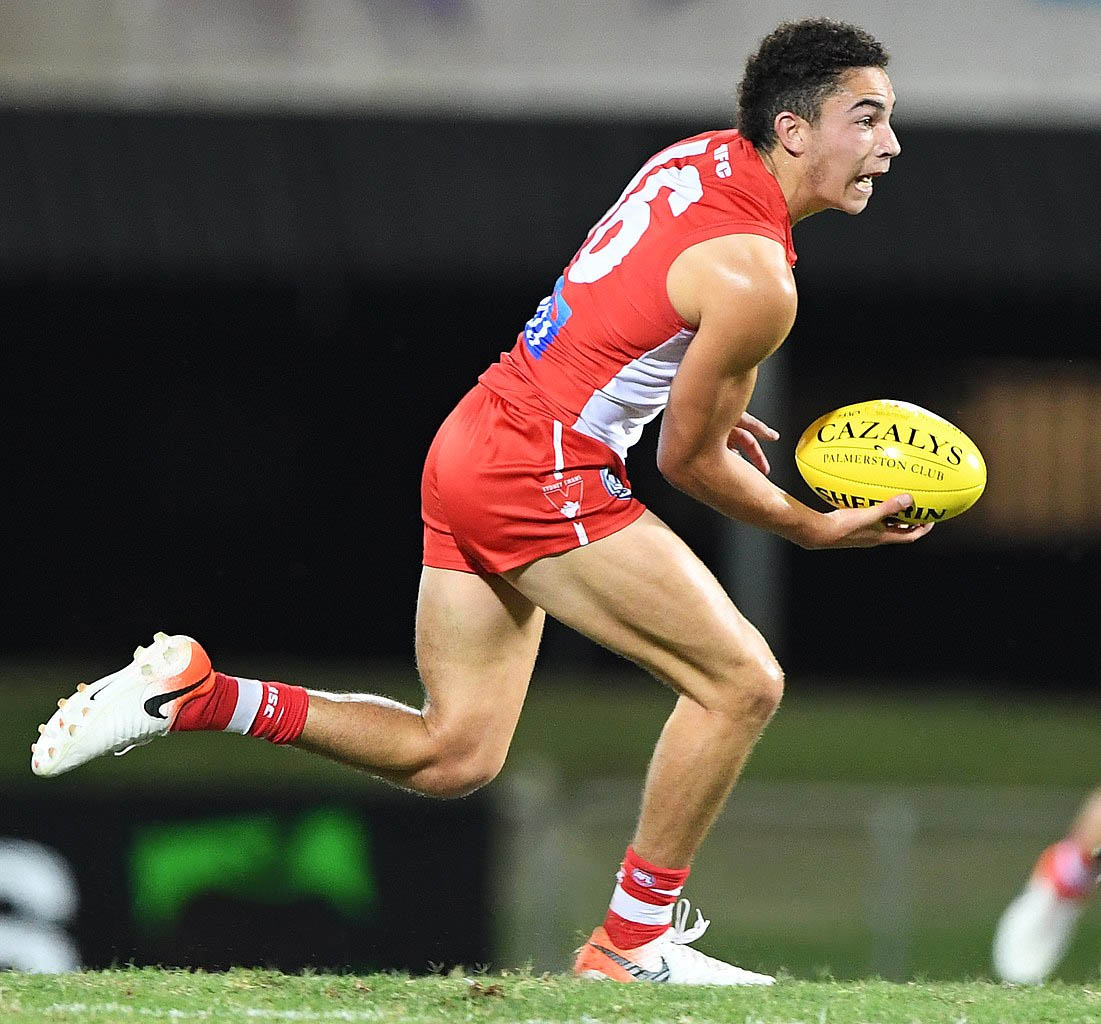


Flickerd (Australian)
Zac Foot of Sydney during the 2019 NEAFL round 14 match between NT Thunder and Sydney at TIO Stadium on Saturday, 6 July 2019 in Darwin, Northern Territory
2019
Creative Commons Attribution-Share Alike 4.0 International


LIKE ART BLART ON FACEBOOK

Back to top

Exhibition: ‘Patrick Pound: The Great Exhibition’ as part of the NGV Festival of Photography at NGV Australia, Melbourne Part 1

Exhibition dates: 31st March – 30th July, 2017

Individual art works from the NGV collection (in artist alphabetical order) appearing in Patrick Pound: The Great Exhibition at NGV Australia


” … from an air guitar to Being and nothingness … “


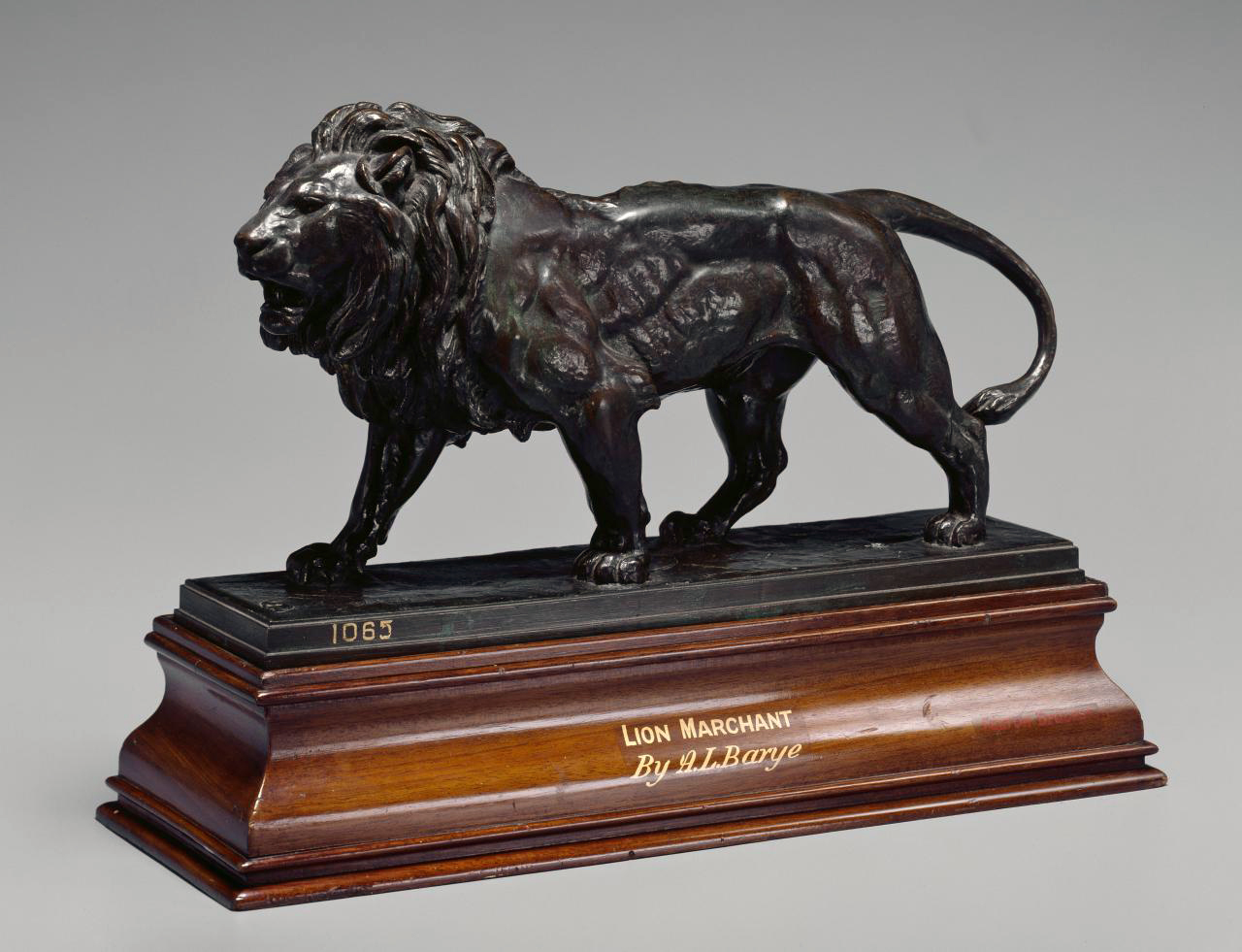
Antoine-Louis Barye (France, 1796-1875) 'Walking lion' c. 1840 from the exhibition 'Patrick Pound: The Great Exhibition' as part of the NGV Festival of Photography at NGV Australia, Melbourne, March - July, 2017


Antoine-Louis Barye (French, 1796-1875)
Walking lion
Lion qui marche
c. 1840, cast 1900
Bronze
National Gallery of Victoria
Felton Bequest, 1927


Part 1 of this bumper posting. See Part 2 of the posting with my review of the exhibition.

My hand is progressing slowly. A return to part-time work in the next couple of weeks, for which I will be grateful. It has been tough road dealing with this injury.

Dr Marcus Bunyan


Many thankx to the National Gallery of Victoria for allowing me to publish the photographs in the posting. Please click on the photographs for a larger version of the image.


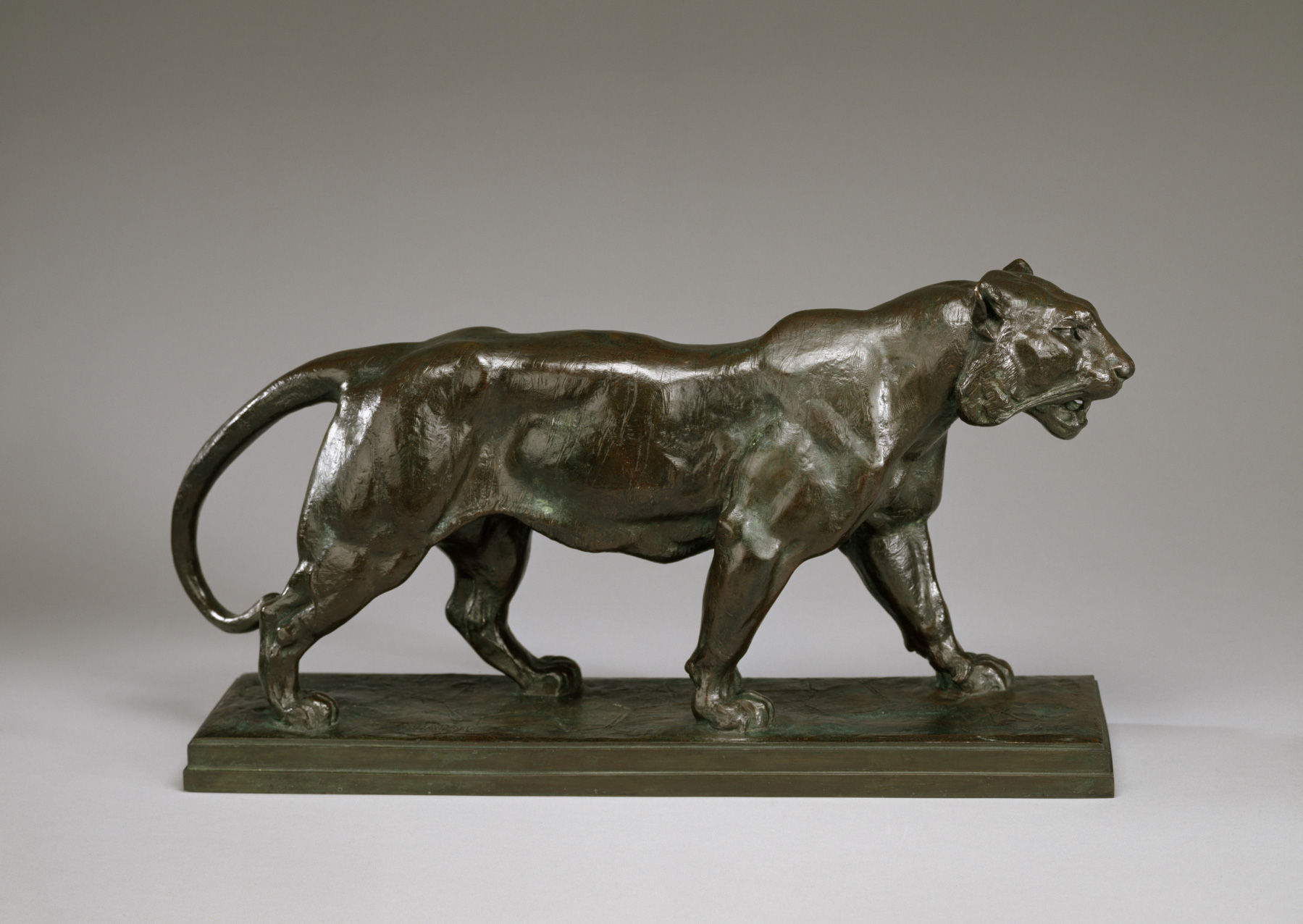
Antoine-Louis Barye (French, 1796-1875) 'Walking tiger' c. 1841 from the exhibition 'Patrick Pound: The Great Exhibition' as part of the NGV Festival of Photography at NGV Australia, Melbourne, March - July, 2017


Antoine-Louis Barye (French, 1796-1875)
Walking tiger
Tigre qui marche
c. 1841, cast 1900
Bronze
National Gallery of Victoria
Felton Bequest, 1927


John Armstrong (English, 1893-1973) 'Invocation' 1938 from the exhibition 'Patrick Pound: The Great Exhibition' as part of the NGV Festival of Photography at NGV Australia, Melbourne, March - July, 2017


John Armstrong (English, 1893-1973)
Invocation
1938
Tempera on plywood
National Gallery of Victoria
Purchased with funds donated by Ian Hicks AM and Dorothy Hicks, 2006


Invocation is one of a series of paintings, which John Armstrong begun in the 1930’s as a direct statement against the rise of Fascism in Europe. John Armstrong observed Fascism in Italy at first hand and became an active left wing campaigner against the proliferation of nuclear weapons. He was commissioned as an official war artist, designing a cover for a leaflet in the 1945 election campaign and contributed occasional articles and poetry to left wing journals. In his painting Victory, he imagined the result of a nuclear holocaust, which attracted the attention at the Royal Academy Summer Exhibition in 1958.

Text from the Leicester Galleries website [Online] Cited 17/07/2017. No longer available online


Eugène Atget (French, 1857-1927) 'Eclipse' 1911, printed 1956- early 1970s


Eugène Atget (French, 1857-1927)
Eclipse
1911, printed 1956- early 1970s
Gelatin silver photograph
National Gallery of Victoria
Purchased, 1978


Surrogates and the Surreal

Atget’s photograph Pendant l’éclipse (During the eclipse) was featured on the cover of the seventh issue of the Parisian Surrealists’ publication La Révolution surréaliste, with the caption Les Dernières Conversions (The last converts), in June 1926. The picture was uncredited, as were the two additional photographs reproduced inside. Although Atget firmly resisted the association, his work – in particular his photographs of shop windows, mannequins, and the street fairs around Paris – had captured the attention of artists with decidedly avant-garde inclinations, such as Man Ray and Tristan Tzara. Man Ray lived on the same street as Atget, and the young American photographer Berenice Abbott (working as Man Ray’s studio assistant) learned of the French photographer and made his acquaintance in the mid-1920s – a relationship that ultimately brought the contents of Atget’s studio at the time of his death (in 1927) to The Museum of Modern Art almost forty years later.

Text from Art Blart posting Eugène Atget: “Documents pour artistes” at the Museum of Modern Art (MoMA), New York


Pierre Bonnard (France, 1867-1947) 'Siesta' 1900


Pierre Bonnard (France, 1867-1947)
Siesta
La Sieste
1900
Oil on canvas
National Gallery of Victoria
Felton Bequest, 1949


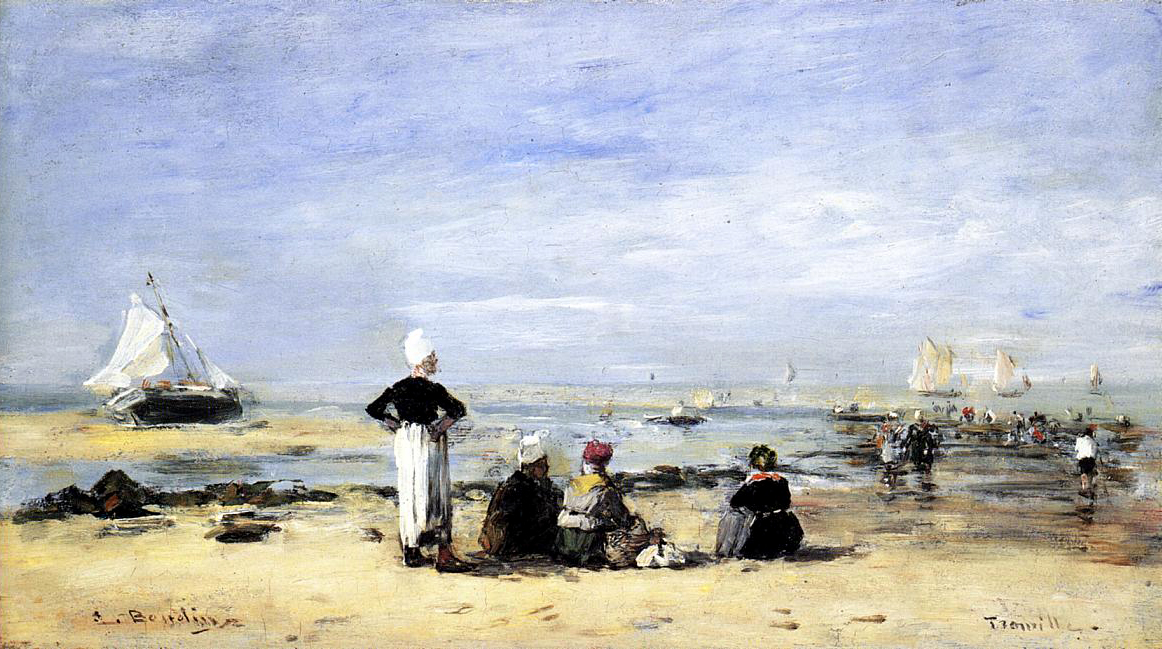
Eugène Boudin (French, 1824-1998) 'Low tide at Trouville' 1894


Eugène Boudin (French, 1824-1998)
Low tide at Trouville
Trouville, Mareé basse
1894
Oil on canvas
National Gallery of Victoria
Felton Bequest, 1939


John Brack (Australian, 1920-1999) 'Self-portrait' 1955


John Brack (Australian, 1920-1999)
Self-portrait
1955
Melbourne, Victoria
Oil on canvas
National Gallery of Victoria
Purchased with the assistance of the National Gallery Women’s Association, 2000


Striking in its candour, with its subject stripped of vanity and dressed in early-morning attire, Self portrait is a piercing study of a man engaged in the intimacy of shaving. Although images of women at their toilette have been frequently depicted by both male and female Australian artists, it is unusual for men to be shown or to show themselves in this context. Modest in scale, Brack’s image is conceived in a complex yet subtle colour scheme, applied with clarity and precision.

Geoffrey Smith. “John Brack’s Self Portrait,” on the National Gallery of Victoria website 4th June 2014 [Online] Cited 21/12/2021


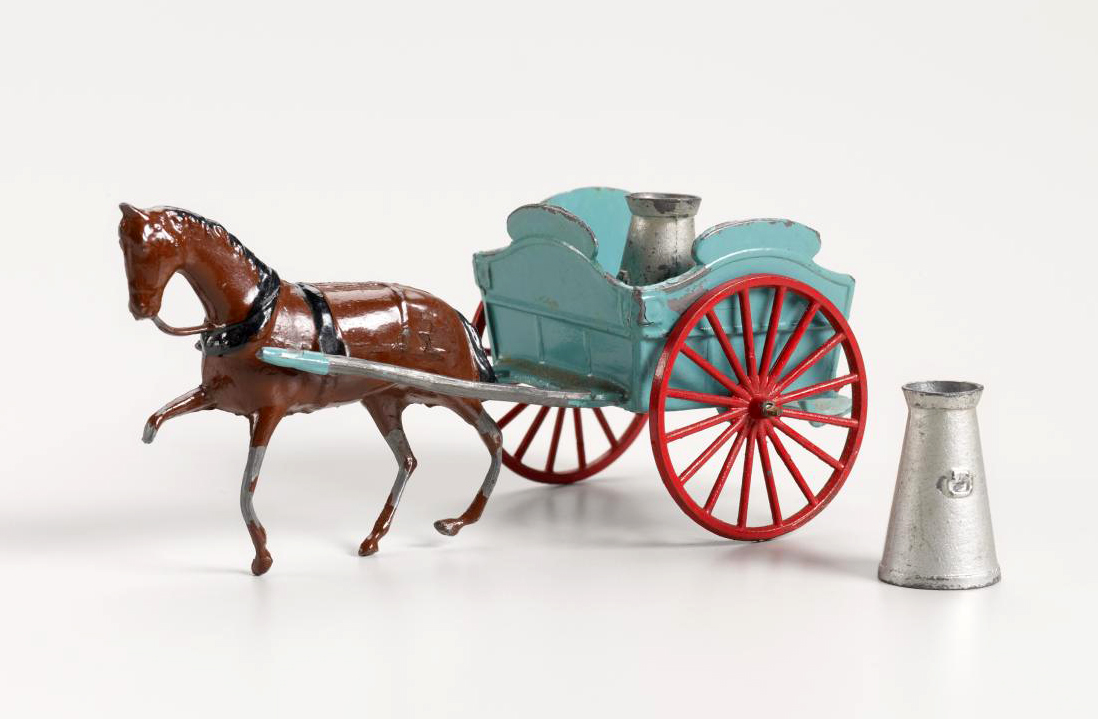
Britains Ltd, London manufacturer (English, 1860-1997) 'Milk float and horse' c. 1950


Britains Ltd, London manufacturer (English, 1860-1997)
Milk float and horse
no. 45F from the Model home farm series 1921-1961
c. 1950
Painted lead alloy
National Gallery of Victoria
Presented by Miss Lucy Kerley and her nephew John Kerley, 1982


Jacques Callot (French, 1592-1635) 'The firing squad' 1633


Jacques Callot (French, 1592-1635)
The firing squad
L’Arquebusade
Plate 12 from Les Misères et les malheurs de la guerre
The miseries and misfortunes of war series
1633
Etching, 2nd of 3 states
National Gallery of Victoria
Purchased, 1950


Paul Caponigro (American, 1932-2024) 'Nahant, Massachusetts' 1965


Paul Caponigro (American, 1932-2024)
Nahant, Massachusetts
1965
Gelatin silver photograph
National Gallery of Victoria
Purchased with the assistance of the National Gallery Society of Victoria, 1977


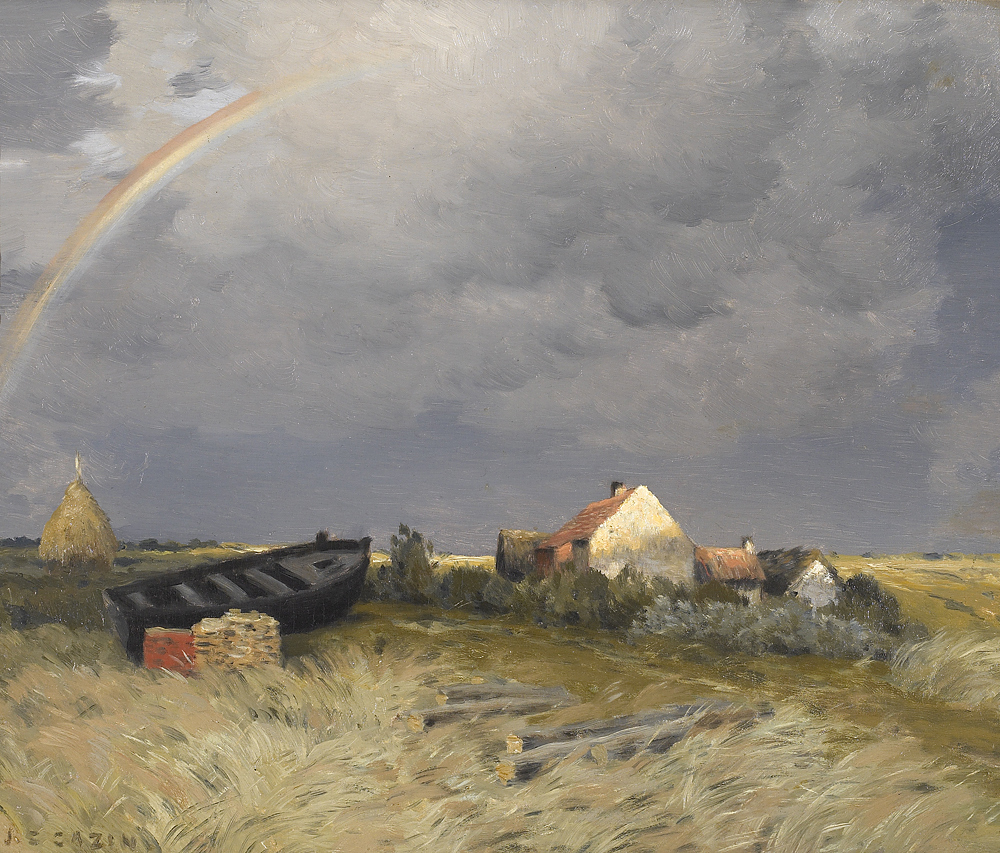
Jean Charles Cazin (French, 1841-1901, lived in England 1871-1875) 'The rainbow' late 1880s


Jean Charles Cazin (French, 1841-1901, lived in England 1871-1875)
The rainbow
L’Arc-en-ciel
late 1880s
Oil on canvas
National Gallery of Victoria
Felton Bequest, 1913


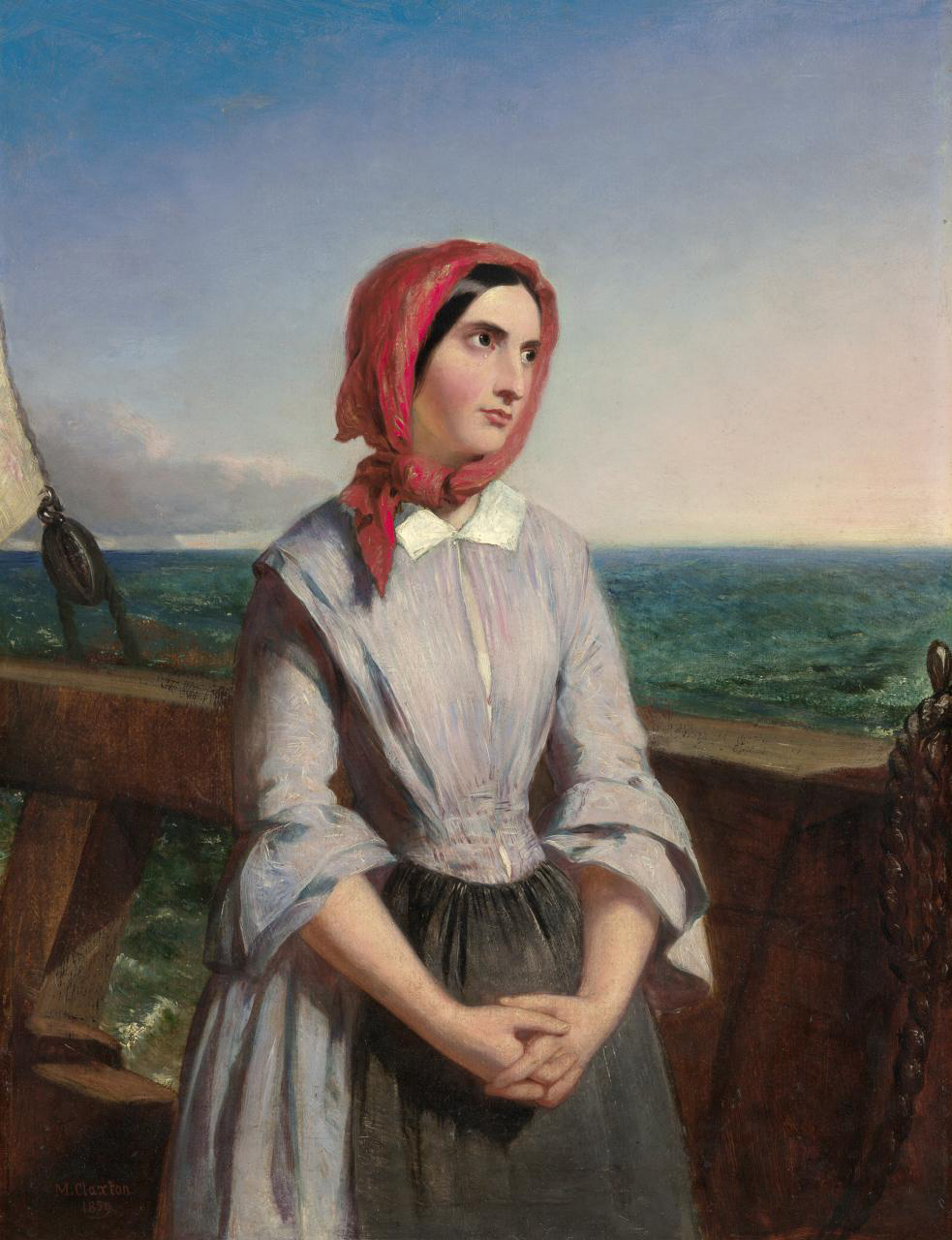
Marshall Claxton (English, 1813-1881, lived in Australia 1850-1854) 'An emigrant's thoughts of home' 1859


Marshall Claxton (English, 1813-1881, lived in Australia 1850-1854)
An emigrant’s thoughts of home
1859
Oil on cardboard
National Gallery of Victoria
Presented by the National Gallery Women’s Association, 1974


Marshall Claxton’s painting An emigrant’s thoughts of home (1859) belongs to a clutch of works, both fine and popular, both pictorial and literary, that for an Australasian audience are perhaps the most resonant of the many products of Victorian culture. Emigration, a social and political phenomenon for mid-nineteenth-century Britain, and the essential lubricant of British imperialism, inspired a profusion of paintings, prints, novels, plays, poems, essays and letters that speak eloquently about the realities and myths of Victorian Britain and its role in the world, engaging concepts of the family, womanhood, the artist’s role and function and, indeed, the meaning of life.

Pamela Gerrish Nunn. “Look homeward Angel: Marshall Claxton’s emigrant,” on the National Gallery of Victoria website 18th June 2014 [Online] Cited 21/12/2021


Olive Cotton (Australian, 1911-2003) 'Teacup ballet' 1935, printed 1992


Olive Cotton (Australian, 1911-2003)
Teacup ballet
1935, printed 1992
Gelatin silver photograph
National Gallery of Victoria
Purchased from Admission Funds, 1992


Among Cotton’s most famous photographs, Teacup ballet has very humble origins. It was taken after hours in the Dupain studio and used a set of cheap cups and saucers Cotton had earlier bought from a Woolworths store for use around the studio. As she later recounted: ‘Their angular handles suggested to me the position of “arms akimbo” and that led to the idea of a dance pattern’. The picture uses a range of formal devices that became common to Cotton’s work, especially the strong backlighting used to create dramatic tonal contrasts and shadows. The picture achieved instant success, and was selected for exhibition in the London Salon of Photography for 1935.

Text © National Gallery of Australia, Canberra


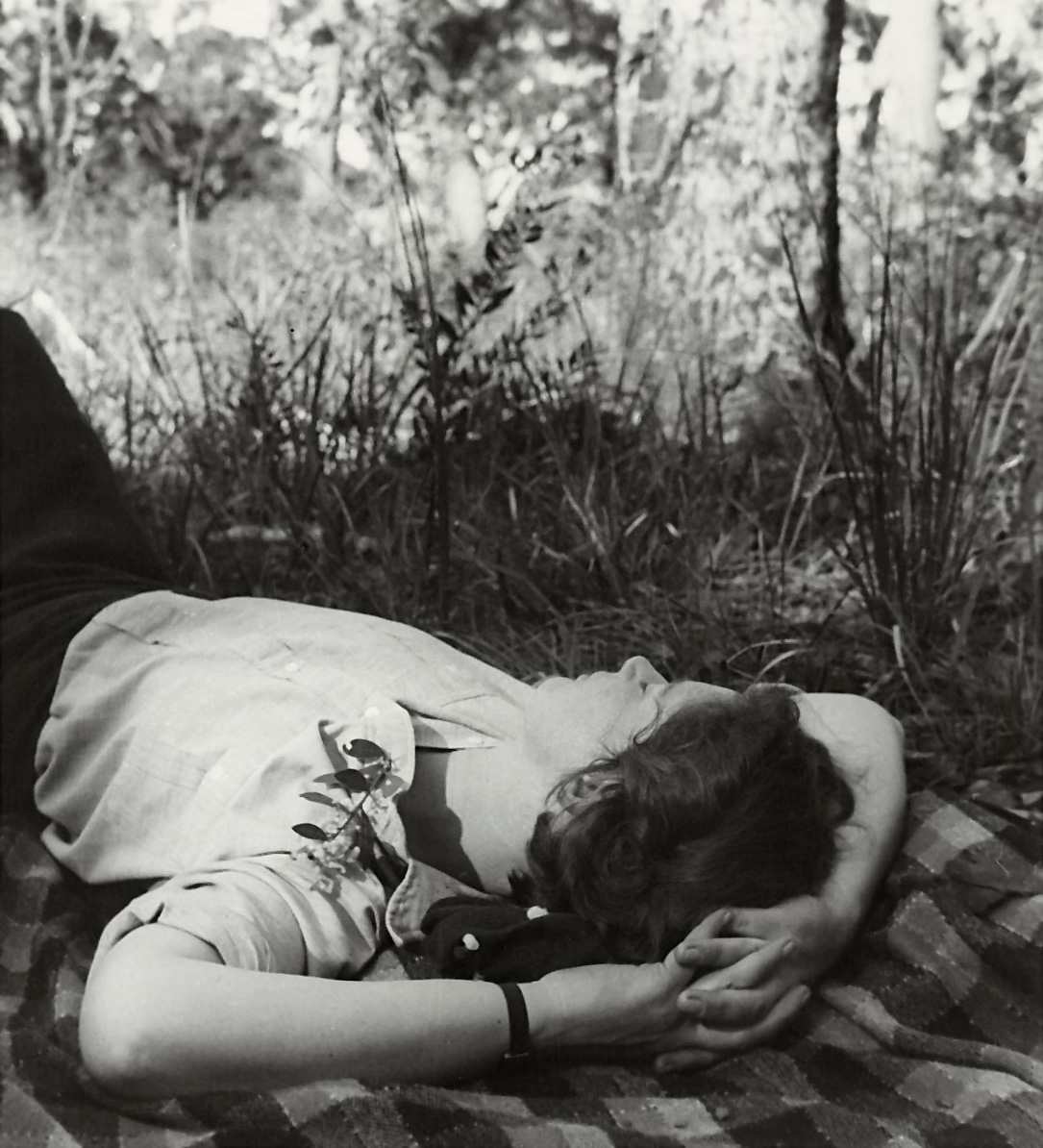
Olive Cotton (Australian, 1911-2003) 'The sleeper' 1939, printed 1992


Olive Cotton (Australian, 1911-2003)
The sleeper
1939, printed 1992
Gelatin silver photograph, ed. 4/25
National Gallery of Victoria
Purchased from Admission Funds, 1992


The sleeper 1939, Olive Cotton’s graceful study of her friend Olga Sharp resting while on a bush picnic, made around the same time as Max Dupain’s Sunbaker, presents a different take upon the enjoyment of life in Australia. The woman is relaxed, nestled within the environment. The mood is one of secluded reverie.

Text © National Gallery of Australia, Canberra


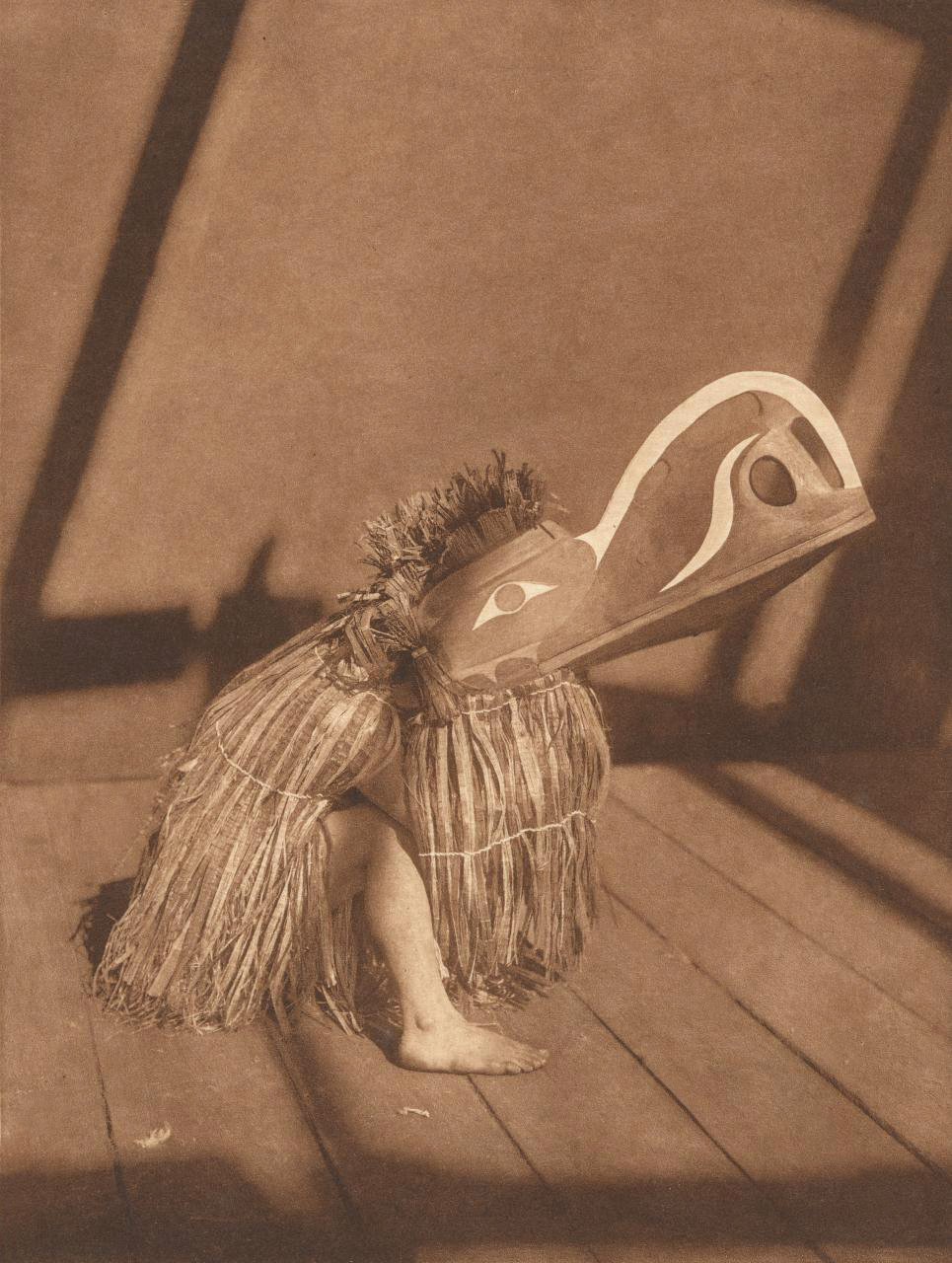
Edward Curtis (American, 1868-1952) 'Kalóqutsuis - Qágyuhl' 1914, printed 1915


Edward Curtis (American, 1868-1952)
Kalóqutsuis – Qágyuhl
1914, printed 1915
Photogravure
National Gallery of Victoria
Gift of Ms Christine Godden, 1991


Not only was he one of the greatest ethnographic photographers of all time (as well as being an ethnographer recording more than 10,000 songs on a primitive wax cylinder, and writing down vocabularies and pronunciation guides for 75 languages) … he was also an aesthetic photographer. Looking at his photographs you can feel that he adhered to the principles of the nature and appreciation of beauty situated within the environment of the Native American cultures and peoples. He had a connection to the people and to the places he was photographing…

Curtis created a body of work unparrallleled in the annals of photography – an ethnographic study of an extant civilisation before it vanished (or so they thought at the time). Such a project stretched over thirty years, producing 45-50 thousand negatives “many of them on glass and some as large as fourteen by seventeen inches” of which 2,200 original photographs appeared in his magnum opus, The North American Indian…

While all great photographers have both technical skill and creative ability it is the dedication of this artist to his task over so many years that sets him apart. That dedication is critically coupled with his innate ability to capture the “spirit” of the Native American cultures and peoples, their humanity.

Dr Marcus Bunyan from a posting on the Palm Springs Art Museum exhibition Edward S. Curtis: One Hundred Masterworks 2016


Frances Derham (Australian, 1894-1987) 'Building the bridge' 1929


Frances Derham (Australian, 1894-1987)
Building the bridge
1929
Colour linocut on Japanese paper
National Gallery of Victoria
Gift of Mr Richard Hodgson Derham, 1988


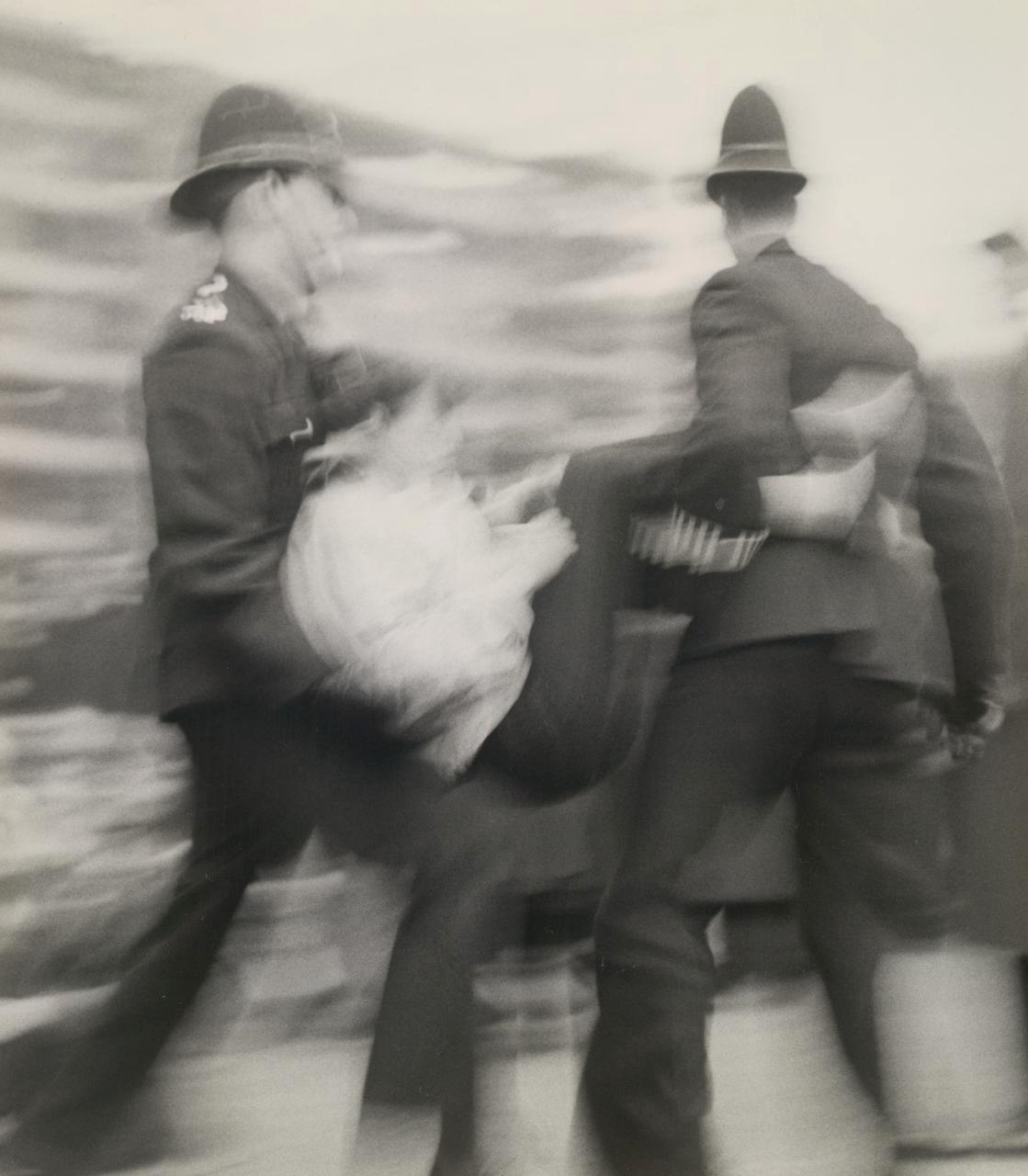
Kerry Dundas (Australian, b. 1931, lived in Europe 1958-1967) 'A girl is carried away under arrest' 1961-1963


Kerry Dundas (Australian, b. 1931, lived in Europe 1958-1967)
A girl is carried away under arrest
From the Youth against the Bomb series
1961-1963
Gelatin silver photograph
National Gallery of Victoria
Purchased 1971


Max Dupain (Australian, 1911-1992) 'Bondi' 1939


Max Dupain (Australian, 1911-1992)
Bondi
1939
Gelatin silver photograph
30.3 × 29.5cm
National Gallery of Victoria
Purchased with the assistance of the Visual Arts Board, 1976


Walker Evans (American, 1903-1975) 'Hitchhikers, near Vicksburg, Mississippi' 1936, printed c. 1975


Walker Evans (American, 1903-1975)
Hitchhikers, near Vicksburg, Mississippi
1936, printed c. 1975
Gelatin silver photograph
National Gallery of Victoria
Purchased 1975


Walker Evans (American, 1903-1975) 'Auto dump, near Easton, Pennsylvania' 1935, printed c. 1975


Walker Evans (American, 1903-1975)
Auto dump, near Easton, Pennsylvania
1935, printed c. 1975
Gelatin silver photograph
National Gallery of Victoria
Purchased 1975


William Frater (born Scotland 1890, arrived Australia 1913, died 1974) 'The blue nude' c. 1934


William Frater (born Scotland 1890, arrived Australia 1913, died 1974)
The blue nude
c. 1934
Oil on canvas on cardboard
National Gallery of Victoria
Gift of Mrs Lina Bryans 1969


His contribution to art in Australia was, however, as a painter who introduced Post-Impressionist principles and challenged the notion that art was an imitation of nature.

Frater’s oeuvre developed between 1915 and 1920 towards a simplification of design, an interplay of massed lights and shadows, and sonorous low-keyed colour that reflected his interest in the classical seventeenth century painters in interaction with the analytical tonal theory of Max Meldrum. Notable examples of his predominantly figure and portrait paintings are ‘The artist’s wife reading’ (1915) and ‘Portrait of artist’s wife’ (1919). An experimental Colourist phase followed in the next decade. His first solo exhibition was held in May 1923 at the Athenaeum, Melbourne, and he exhibited with the Twenty Melbourne Painters from the late 1920s, and the Contemporary Group of Melbourne in the 1930s.

His approach in the 1930s was markedly indebted to Cézanne, especially in the portraits which predominated until his retirement… Frater gave aggressive leadership to the small group of modernists in the 1920s. His example, teaching, lecturing and crusty style of polemic did much to disrupt the academic style as the arbiter of pictorial values and to pioneer a change of taste in the community.

L. J. Course. “Frater, William (1890-1974),” on the Australian Dictionary of Biography website, published first in hardcopy 1981 [Online] Cited 23 December 2021


Emmanuel Frémiet (French, 1824-1910) 'Gorilla carrying off a woman' 1887


Emmanuel Frémiet (French, 1824-1910)
Gorilla carrying off a woman
Gorille enlevant une femme
1887
Bronze
National Gallery of Victoria
Gift of the artist 1907


Lee Friedlander (American, b. 1934) 'Hillcrest, New York' 1970, printed c. 1977


Lee Friedlander (American, b. 1934)
Hillcrest, New York
1970, printed c. 1977
Gelatin silver photograph
National Gallery of Victoria
Purchased 1977


Lee Friedlander (American, b. 1934) 'Mount Rushmore' 1969, printed c. 1977


Lee Friedlander (American, b. 1934)
Mount Rushmore
1969, printed c. 1977
Gelatin silver photograph
National Gallery of Victoria
Purchased 1977


The ‘tourist gaze’

As Grundberg notes, Friedlander’s terse depiction shows both the sight and the tourists themselves, being brought into existence through the effects of looking, reflecting, framing and imaging. These, he adds, are all linked to the general project of culturally appropriating the natural world. ‘Natural site has become acculturated sight’ (Grundberg 1990: 15).

As the image makes clear, the ‘sight’ or the ‘site’ is a ‘seeing’ without a subject, for it pre-exists the arrival and activity of any individual tourist-photographer, who, once located there, is framed as much as framing. The sight is not so much an object to be viewers an already structured condition of seeing, a situation which places the sightseer even as he or she freely choose to look or shoot.

The effects of photography’s presence in the tourist system merely completed a process under way before photography’s birth. As tourists, even at the moment of photographing, even if touring cameraless, we are not so much looking as looking at images, or looking for images. Tourism provides us less with experience than with events to be seen, Or rather, events to look at. The privileging of the visual grants us separation from our own experience… We look on or look in through the distancing arrangements of the camera or through eyes educated to see with the same ontological remoteness. The world of the tourist is ‘over there’, in the past-present, in the exotic-ordinary. It is framed off, the object of imaging or description, in some spectacular distance, or set back as performance (Greenwood in Smith 1989).

Peter Osborne. Traveling Light: Photography, Travel and Visual Culture. Manchester University Press, 2000, pp. 81-82.


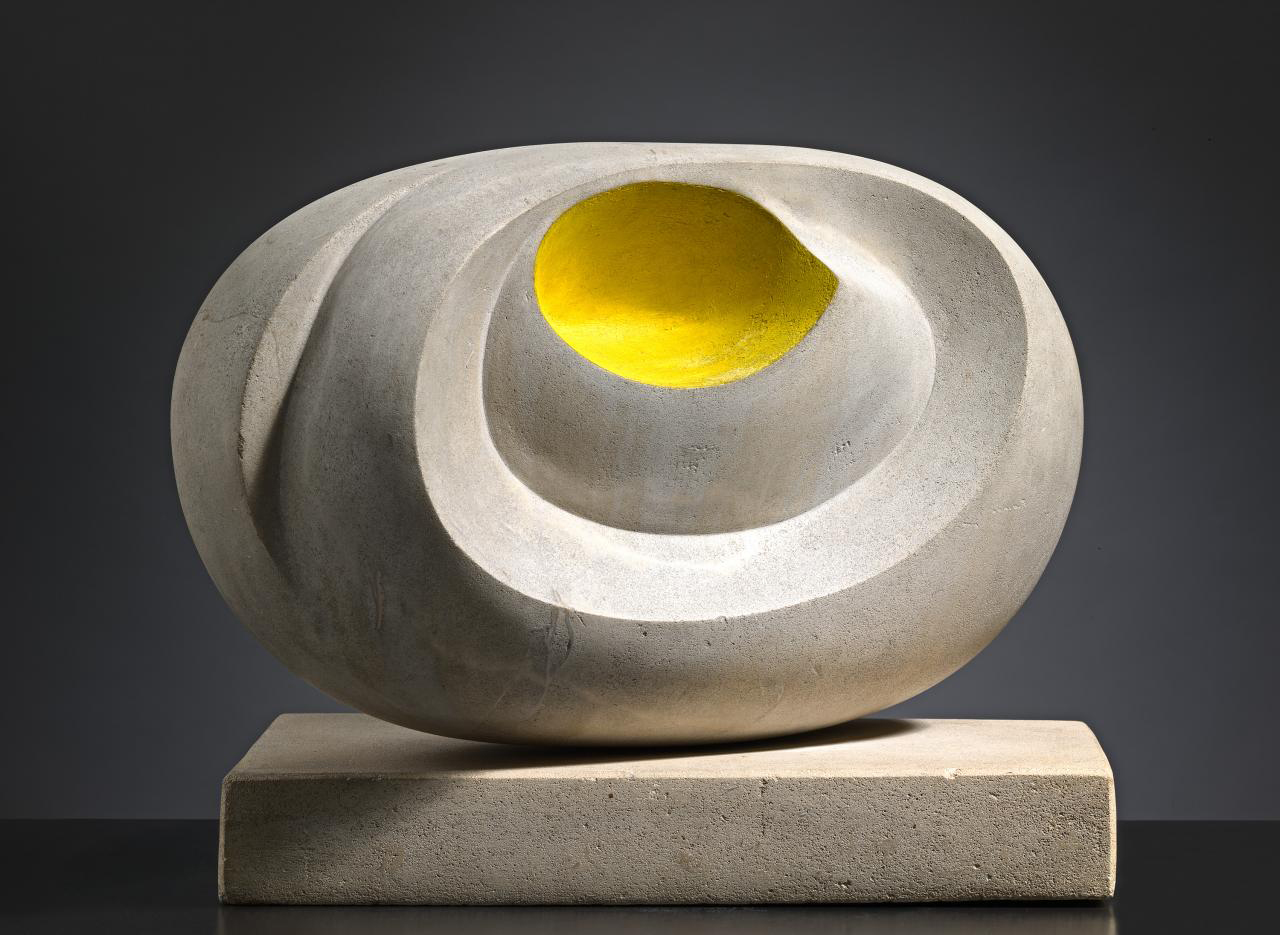
Barbara Hepworth (English, 1903-1975) 'Eidos' 1947


Barbara Hepworth (English, 1903-1975)
Eidos
1947
Stone, synthetic polymer paint
National Gallery of Victoria
Purchased with the assistance of the Samuel E. Wills Bequest to commemorate the retirement of Dr E. Westbrook, Director of Arts for Victoria, 1981


Eidos a Greek term meaning “form” “essence”, “type” or “species”. The early Greek concept of form precedes attested philosophical usage and is represented by a number of words mainly having to do with vision, sight, and appearance. The words, εἶδος (eidos) and ἰδέα (idea) come from the Indo-European root *weid-, “see”. Eidos (though not idea) is already attested in texts of the Homeric era, the earliest Greek literature. This transliteration and the translation tradition of German and Latin lead to the expression “theory of Ideas.” The word is however not the English “idea,” which is a mental concept only.

The meaning of the term εἶδος (eidos), “visible form”, and related terms μορφή (morphē), “shape”, and φαινόμενα (phainomena), “appearances”, from φαίνω (phainō), “shine”, Indo-European *bhā-, remained stable over the centuries until the beginning of philosophy, when they became equivocal, acquiring additional specialised philosophic meanings.

“Theory of forms” on the Wikipedia website


Lewis Hine (American, 1874-1940) 'Sam Pine, 8 year old truant newsboy who lives at 717 West California Street' 1917


Lewis Hine (American, 1874-1940)
Sam Pine, 8 year old truant newsboy who lives at 717 West California Street
1917
Gelatin silver photograph
National Gallery of Victoria
Purchased 1980


David Hockney (born England 1937, worked in United States 1964-1968, 1975- ) 'Reclining figure' 1975


David Hockney (born England 1937, worked in United States 1964-1968, 1975- )
Reclining figure
1975
Etching and liftground etching, ed. 38/75
National Gallery of Victoria
Gift of Margaret Toll 2006


Edmond-François Aman-Jean (French, 1860-1936) 'Woman resting' c. 1904


Edmond-François Aman-Jean (French, 1860-1936)
Woman resting
La Femme couchée
c. 1904
Oil on canvas
National Gallery of Victoria
Felton Bequest 1905


Max Klinger (German, 1857-1920) 'Cast of artist's hands' 1920


Max Klinger (German, 1857-1920)
Cast of artist’s hands
1920
plaster
National Gallery of Victoria
Gift of Mrs Marcelle Osins, 1994


Fred Kruger (Australian born Germany, 1831-1888) 'Coast scene, Mordialloc Creek, near Cheltenham' c. 1871


Fred Kruger (Australian born Germany, 1831-1888)
Coast scene, Mordialloc Creek, near Cheltenham
c. 1871
Albumen silver photograph
National Gallery of Victoria
Gift of Mrs Beryl M. Curl, 1979


The best of the landscape photographs have nothing to do with Arcadian, pastoral life at all. For me, Kruger’s photographs only start to come alive when he is photographing gum trees against the sky. Anyone who has tried to photograph the Australian bush knows how difficult it is to evince a “feeling” for the bush and Kruger achieves this magnificently in a series of photographs of gum trees in semi-cleared land, such as Bush scene near Highton (c. 1879). These open ‘park-like’ landscapes are not sublime nor do they picture the spread of colonisation but isolate the gum trees against the sky. They rely on the thing itself to speak to the viewer, not a constructed posturing or placement of figures to achieve a sterile mise-en-scène.

Dr Marcus Bunyan from a posting on the NGV exhibition Fred Kruger: Intimate Landscapes 2012


Kusakabe Kimbei (Japanese, 1841-1934) 'No title (Couple with a cabinet photograph and ghost in background)' 1880s


Kusakabe Kimbei (Japanese, 1841-1934)
No title (Couple with a cabinet photograph and ghost in background)
1880s
Albumen silver photograph, colour dyes
National Gallery of Victoria
Purchased 2004


Kimbei Kusakabe arrived in Yokohama in 1856 and became Felice Beato’s pupil, hand-colouring his photographs until 1863. In 1881, he opened his own studio and promptly became one of the most prosperous and influential photographers of his generation, rivalling the Western artists that had until then dominated the market. With his coloured portraits, everyday scenes and landscapes, he is the purveyor of souvenir images for Westerners visiting Japan. Kimbei Kusakabe depicted men in serene social and economic contexts while women – his favourite subjects – were represented in romantic portraits as well as domestic and cultural scenes. The young mysterious and submissive geisha was particularly appealing to Western audiences and the Japanese photographer helped establish their visual identity as icons of feminine beauty and social etiquette. Kimbei Kusakabe’s rare images are a rich resource for the comprehension of a Japan that has now disappeared.

Text from The Red List website [Online] Cited 17/07/2017. No longer available online


Kusakabe Kimbei worked with Felice Beato and Baron Raimund von Stillfried as a photographic colourist and assistant before opening his own workshop in Yokohama in 1881, in the Benten-dōri quarter, and from 1889 operating in the Honmachi quarter. He also opened a branch in the Ginza quarter of Tokyo. Around 1885, he acquired the negatives of Felice Beato and of Stillfried, as well as those of Uchida Kuichi. Kusakabe also acquired some of Ueno Hikoma’s negatives of Nagasaki. He stopped working as a photographer in 1912-1913.

Text from the Wikipedia website


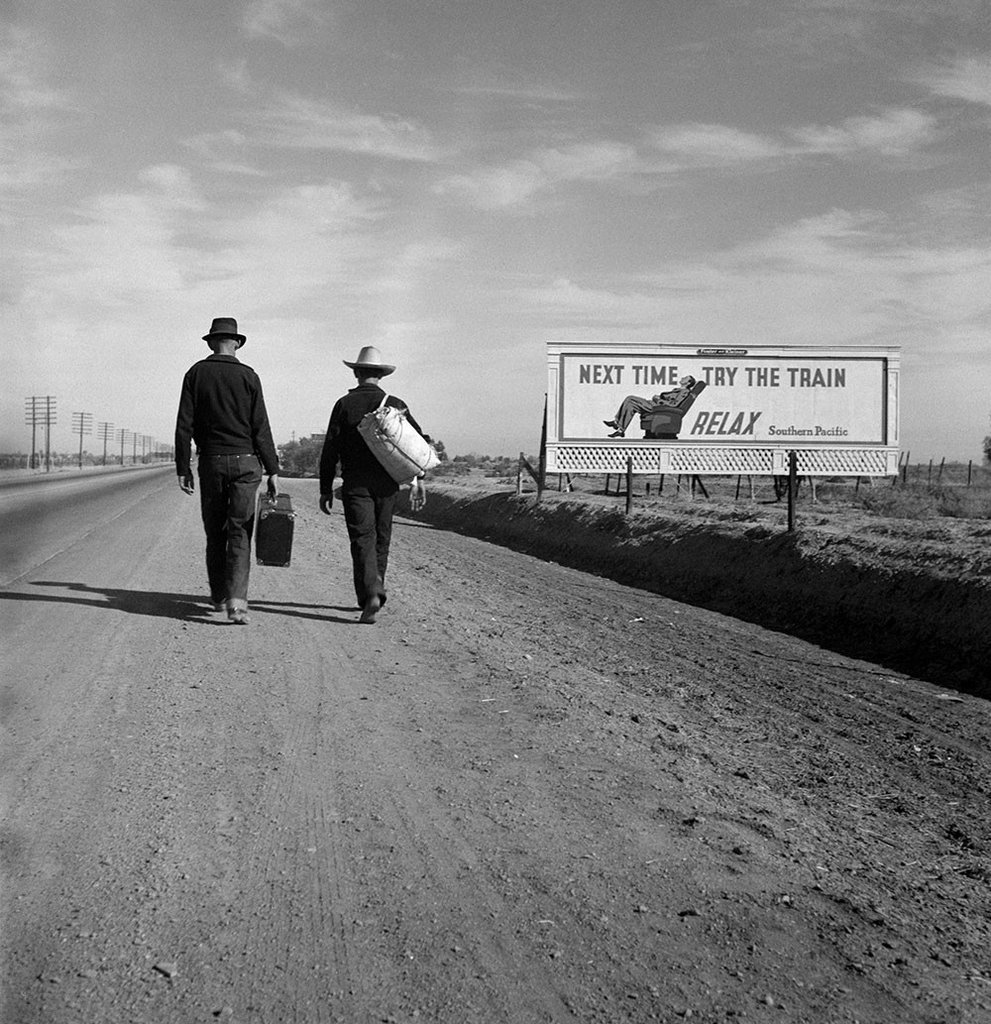
Dorothea Lange (American, 1895-1965) 'Towards Los Angeles, California' 1936, printed c. 1975


Dorothea Lange (American, 1895-1965)
Towards Los Angeles, California
1936, printed c. 1975
Gelatin silver photograph
National Gallery of Victoria
Purchased 1975


Dorothea Lange (American, 1895-1965) 'Ditched, stalled and stranded, San Joaquin Valley, California' 1935, printed c. 1975


Dorothea Lange (American, 1895-1965)
Ditched, stalled and stranded, San Joaquin Valley, California
1935, printed c. 1975
Gelatin silver photograph
National Gallery of Victoria
Purchased 1975


Russell Lee (American, 1903-1986) 'Interlude, after watching the Fourth of July Parade, Vale, Oregon' 1941, printed c. 1975


Russell Lee (American, 1903-1986)
Interlude, after watching the Fourth of July Parade, Vale, Oregon
1941, printed c. 1975
Gelatin silver photograph
National Gallery of Victoria
Purchased 1975


José López (born Cuba 1941, lived in United States c. 1961-1992, died United States 1992) Luis Medina (born Cuba 1942, lived in United States 1961-1985, died United States 1985) 'Boy asleep by the beach' 1976


José López (born Cuba 1941, lived in United States c. 1961-1992, died United States 1992)
Luis Medina (born Cuba 1942, lived in United States 1961-1985, died United States 1985)
Boy asleep by the beach
1976
Gelatin silver photograph
National Gallery of Victoria
Purchased 1978


Ruth Maddison (Australian, b. 1945) 'No title (Woman collecting a Christmas present from the car)' 1977-1978


Ruth Maddison (Australian, b. 1945)
No title (Woman collecting a Christmas present from the car)
from the Christmas Holidays with Bob’s Family, Mermaid Beach, Queensland series
1977-1978, printed 1979
Gelatin silver photograph, coloured pencils and fibre tipped pen, ed. 1/5
National Gallery of Victoria
Purchased 1980


This was a very hands on process, an observation confirmed by artist Ruth Maddison. “The process was like hand watering your garden, an intense exchange and engagement with the object. When I started I was completely untrained, but I loved the process. I just experimented in order to understand what medium does what on what paper surface. There was the beauty of its object and its physicality. I just loved the object.” Her series Christmas holiday with Bob’s family, Mermaid Beach, Queensland (1977-1978), photographed over Christmas Day and several days afterwards, evidences this magical transformation. Vernacular photographs of a typical Australia Christmas holiday become something else, transformed into beautiful, atypical representations of family, friendship, celebration and life.

Dr Marcus Bunyan commenting on the National Gallery of Australia exhibition Colour My World: Handcoloured Australia Photography 2015


Henri Matisse (France, 1869-1954) 'Reclining nude on a pink couch' 1919


Henri Matisse (France, 1869-1954)
Reclining nude on a pink couch
Nu couché sur canapé rose
1919
Oil on canvas
National Gallery of Victoria
Felton Bequest 1952


Amedeo Modigliani (born Italy 1884, lived in France 1906-1920, died France 1920) 'Nude resting' c. 1916-1919


Amedeo Modigliani (born Italy 1884, lived in France 1906-1920, died France 1920)
Nude resting
c. 1916-1919
Pencil on buff paper; laid down
National Gallery of Victoria
Felton Bequest 1948


László Moholy-Nagy (born Hungary 1895, lived in Germany 1920-1934, lived in United States 1935-1937, United States 1937-1946, died United States 1946) 'Helsinki' 1927, printed 1973


László Moholy-Nagy (born Hungary 1895, lived in Germany 1920-1934, lived in United States 1935-1937, United States 1937-1946, died United States 1946)
Helsinki
1927, printed 1973
Gelatin silver photograph
National Gallery of Victoria
Purchased 1975


David Moore (Australian, 1927-2003) 'Migrants arriving in Sydney' 1966


David Moore (Australian, 1927-2003)
Migrants arriving in Sydney
1966
Gelatin silver photograph
National Gallery of Victoria
Purchased 1991


In this evocative image Moore condenses the anticipation and apprehension of immigrants into a tight frame as they arrive in Australia to begin a new life. The generational mix suggests family reconnections or individual courage as each face displays a different emotion.

Moore’s first colour image Faces mirroring their expectations of life in the land down under, passengers crowd the rail of the liner Galileo Galilei in Sydney Harbour was published in National Geographic in 1967.1 In that photograph the figures are positioned less formally and look cheerful. But it is this second image, probably taken seconds later, which Moore printed in black-and-white, that has become symbolic of national identity as it represents a time when Australia’s rapidly developing industrialised economy addressed its labour shortage through immigration. The strength of the horizontal composition of cropped figures underpinned by the ship’s rail is dramatised by the central figure raising her hand – an ambiguous gesture either reaching for a future or reconnecting with family. The complexity of the subject and the narrative the image implies ensured its public success, which resulted in a deconstruction of the original title, ‘European migrants’, by the passengers, four of whom it later emerged were Sydneysiders returning from holiday, alongside two migrants from Egypt and Lebanon.2 Unintentionally Moore’s iconic image has become an ‘historical fiction’, yet the passengers continue to represent an evolving Australian identity in relation to immigration.

1/ Max Dupain and associates: Accessed 17/06/2006. No longer available online
2/ Thomas D & Sayers A 2000, From face to face: portraits by David Moore, Chapter & Verse, Sydney

© Art Gallery of New South Wales Photography Collection Handbook, 2007

From a posting on the exhibition The Photograph and Australia at the Art Gallery of New South Wales.


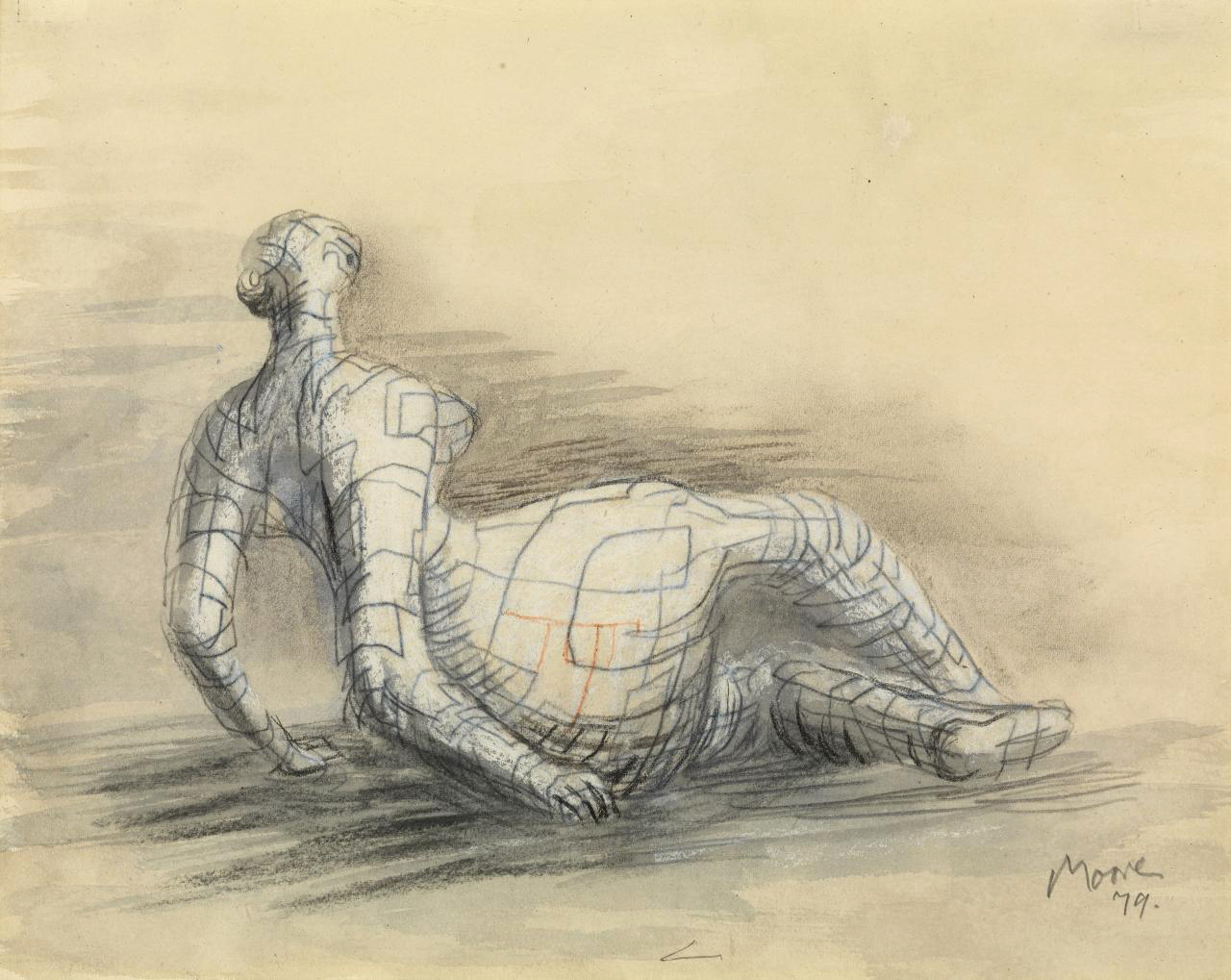
Henry Moore (English, 1898-1986) 'Reclining figure distorted - Sectional line' 1979


Henry Moore (English, 1898-1986)
Reclining figure distorted – Sectional line
1979
Chalk, charcoal, wax crayon, ballpoint pen and watercolour over pencil
National Gallery of Victoria
Gift of Ginny Green, Sandra Bardas OAM family, Vicki Vidor OAM and Bindy Koadlow in memory of their parents Loti Smorgon AO and Victor Smorgon AC through the Australian Government’s Cultural Gifts Program, 2014


William De Morgan (designer, England 1839-1917) 'Startled tigers, dish' c. 1880


William De Morgan & Co., London (manufacturer, England 1872-1911)
William De Morgan (designer, England 1839-1917)
Startled tigers, dish
c. 1880
Earthenware
National Gallery of Victoria
Felton Bequest 1980


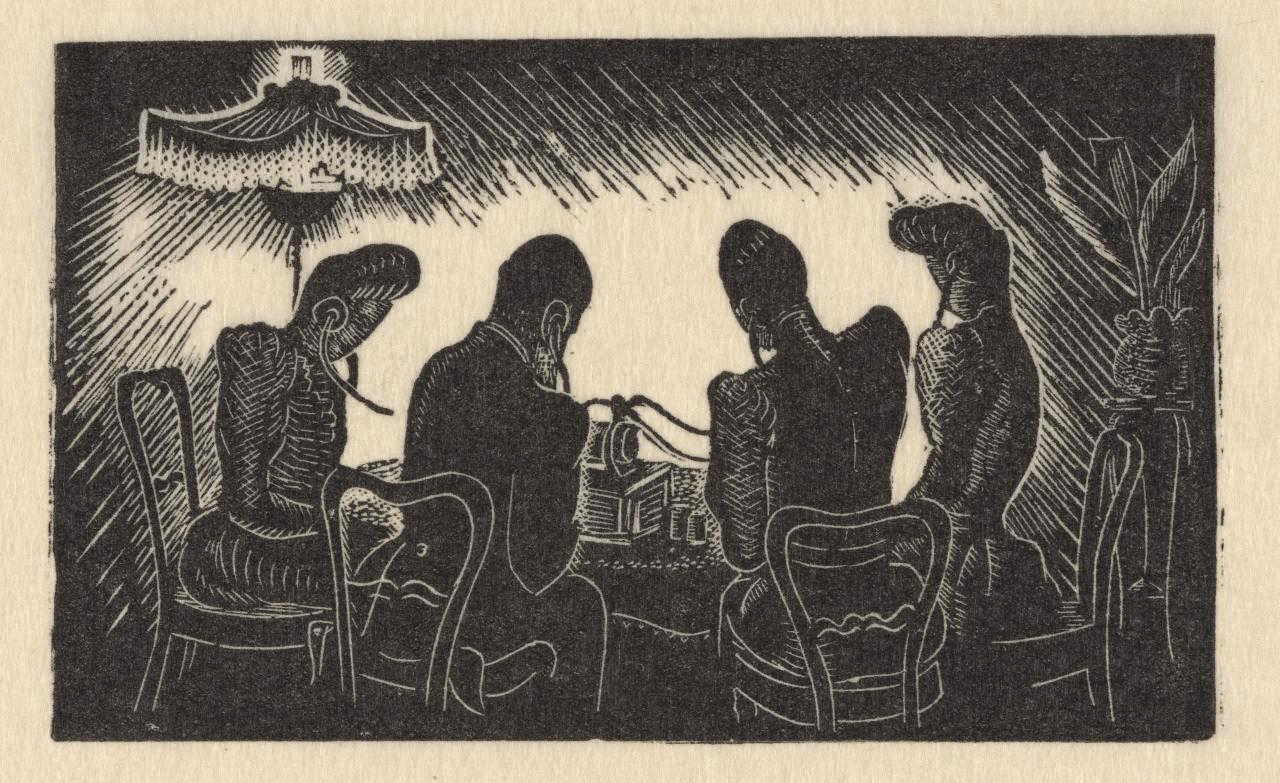
Helen Ogilvie (Australian, 1902-1993) '(Four figures seated at a table listening to a phonograph through earpieces)' c. 1947


Helen Ogilvie (Australian, 1902-1993)
(Four figures seated at a table listening to a phonograph through earpieces)
Illustration to Flinders Lane: recollections of Alfred Felton by Russell Grimwade. Melbourne University Press, Carlton, 1947
c. 1947
Wood-engraving on Japanese paper, proof
National Gallery of Victoria


“What interested me I think were the English wood engravers. I would have seen them in reproductions in books … I think it appealed to me as an artistic expression because it was done so directly with the hand. I know that when a painter is painting the hand is connected with the brain. But with wood engraving it seemed to me it was almost more so. And I got very worked up about it, but I had no way of learning … I know how I got started. Eric Thake was the man who said to me, “I’ll show you how to use your tool.”‘

from Anne Ryan, ‘Australian etchings and engravings 1880s-1930s from the Gallery’s collection’, AGNSW, Sydney 2007


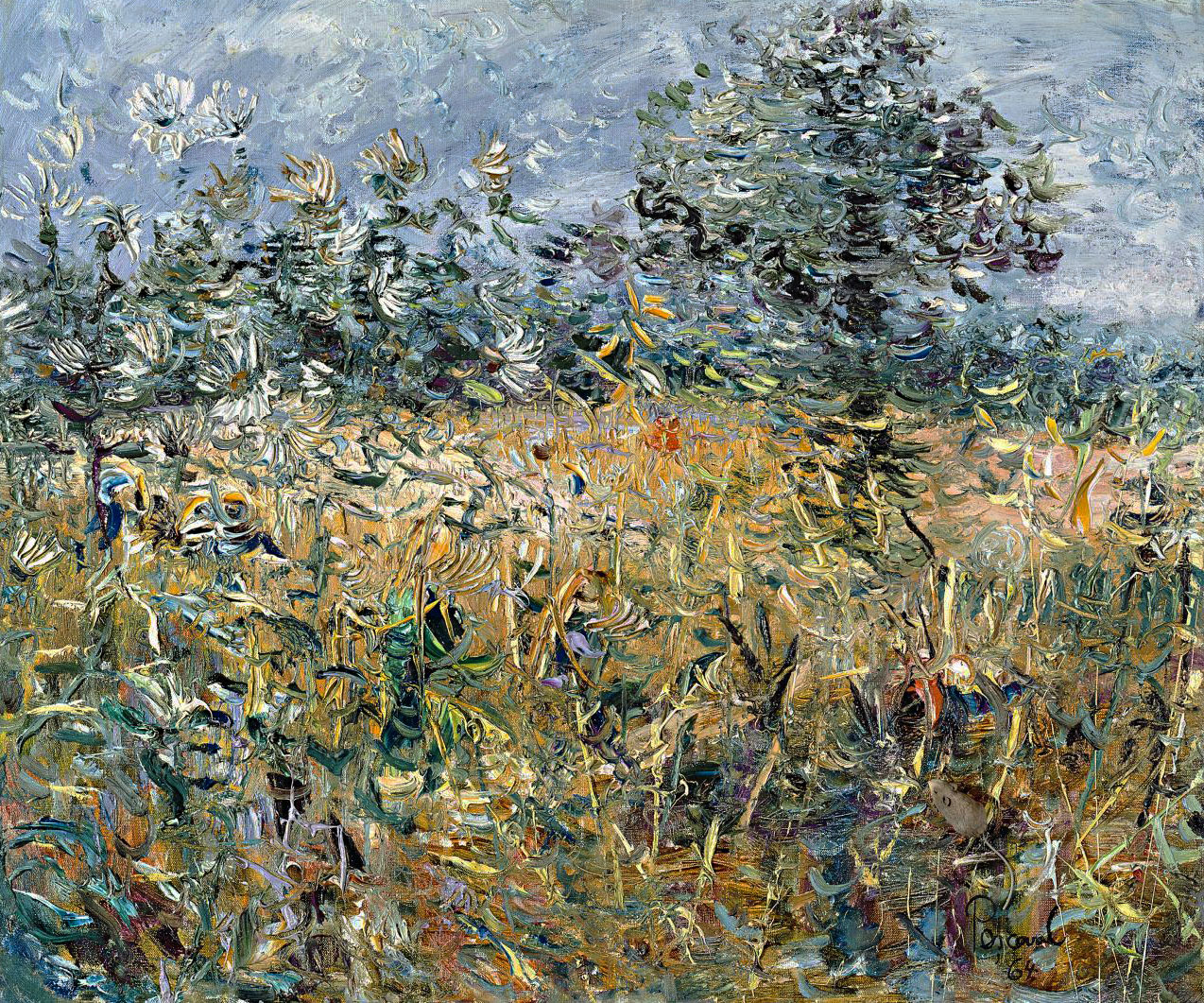
John Perceval (Australian, 1923-2000) 'Lover's walk in the corn, summer, England' 1964


John Perceval (Australian, 1923-2000)
Lover’s walk in the corn, summer, England
1964
Oil and toy mouse on canvas
National Gallery of Victoria
Presented through The Art Foundation of Victoria by Fingal Pastoral Property Limited, Fellow, 1997


Peter Peryer (New Zealand, 1941-2018) 'Seeing' 1989


Peter Peryer (New Zealand, 1941-2018)
Seeing
1989
Gelatin silver photograph
National Gallery of Victoria
Purchased 1996


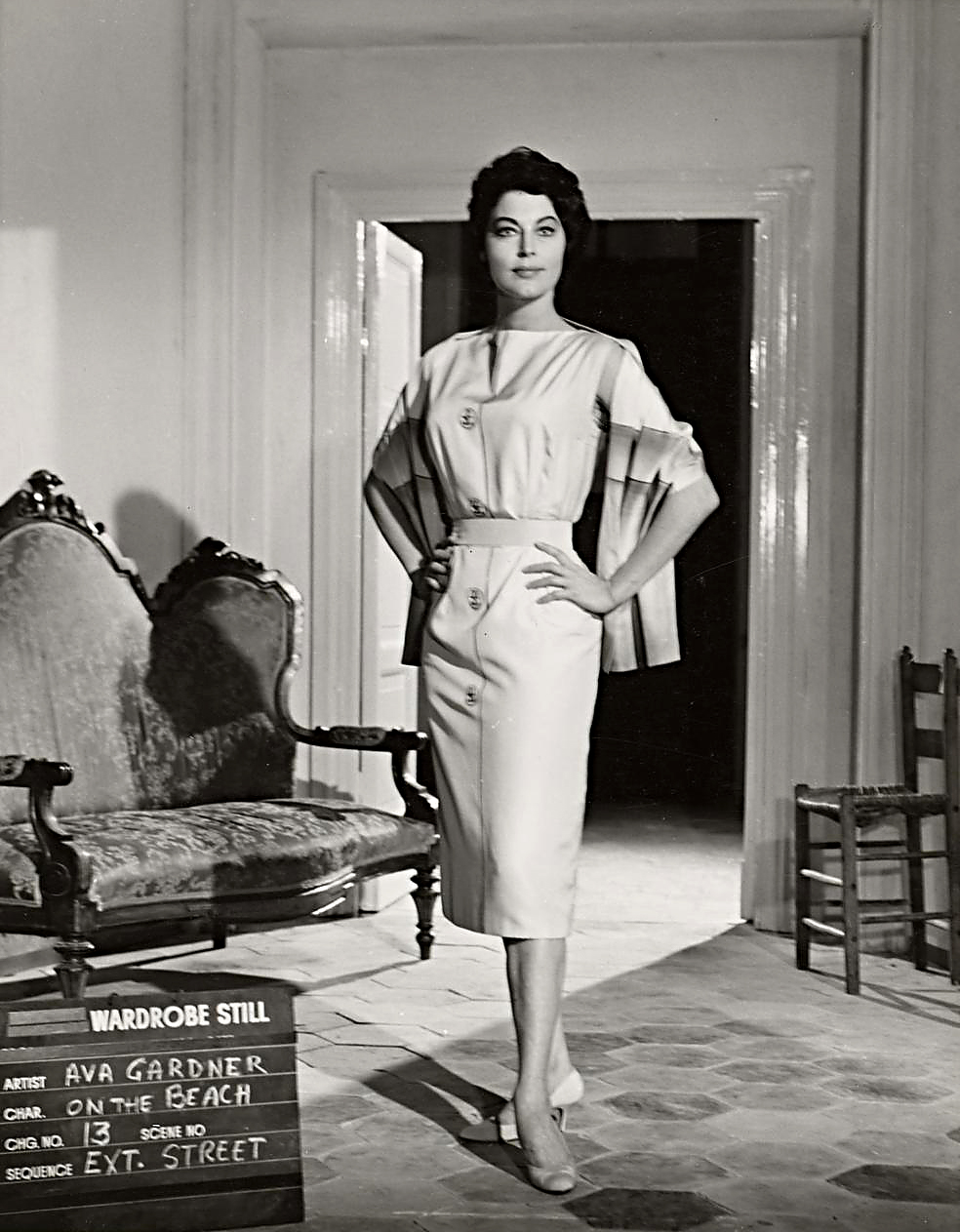
G. B. Poletto (Italian, 1915-1988) 'No title (Ava Gardner in wardrobe still for On the beach: Street)' 1957


G. B. Poletto (Italian, 1915-1988)
No title (Ava Gardner in wardrobe still for On the beach: Street)
1957
Gelatin silver photograph
National Gallery of Victoria
Purchased 2003


David Potts (Australian, 1926-2012, lived in England 1950-1955) 'Cat show, London' 1953


David Potts (Australian, 1926-2012, lived in England 1950-1955)
Cat show, London
1953
Gelatin silver photograph
National Gallery of Victoria
Purchased through the KODAK (Australasia) Pty Ltd Fund 1975


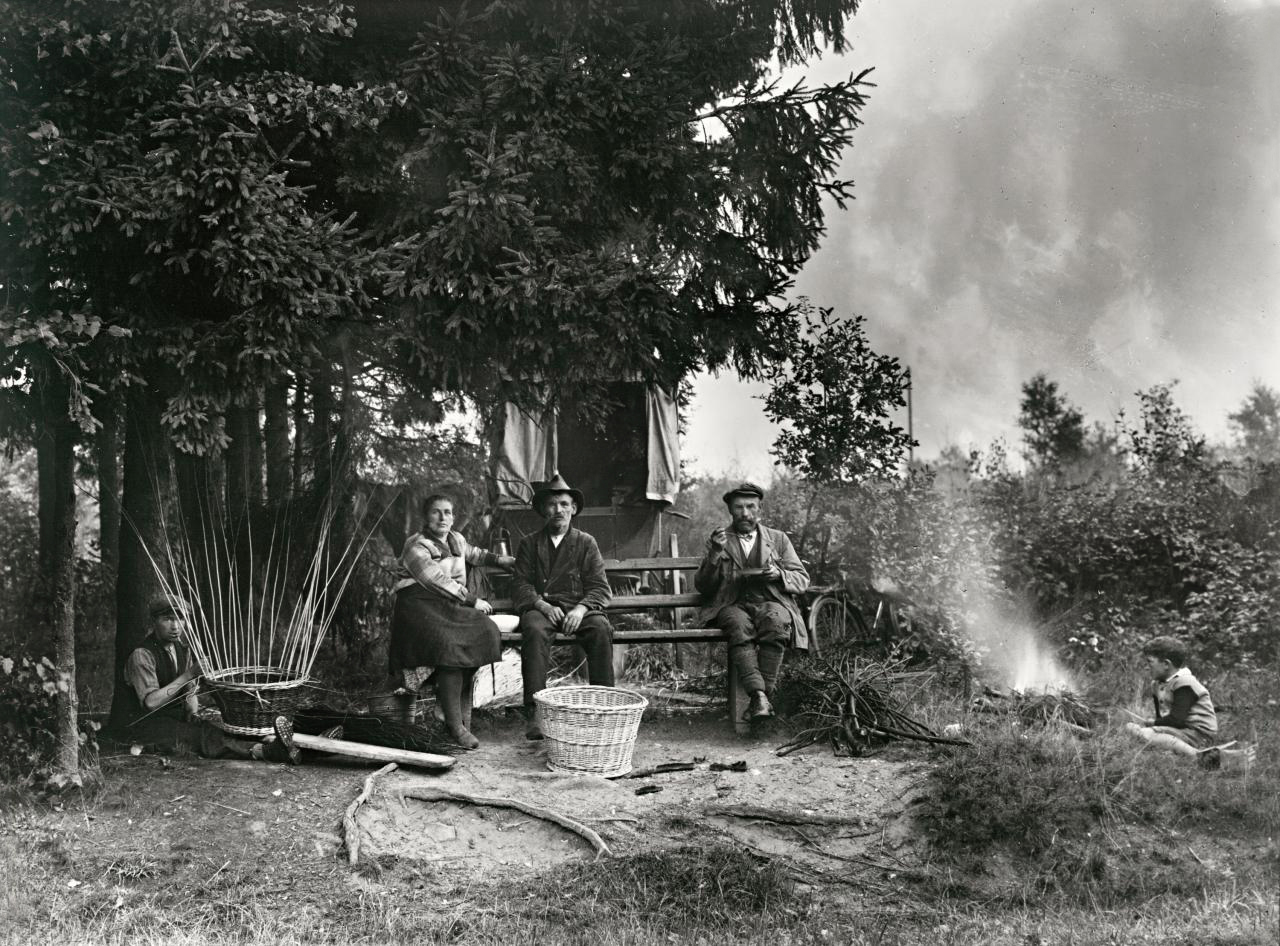
August Sander (German, 1876-1964) 'Itinerant basket makers' 1929


August Sander (German, 1876-1964)
Itinerant basket makers
from the People of the Twentieth Century project
1929, printed 1973
Gelatin silver photograph
National Gallery of Victoria
Purchased 1974


Nomadism

In the literature on nomadism, there is considerable disagreement over the range of societies that should be designated as “nomadic,” but there is some consensus that at least three categories of mobile peoples should be recognised. The first category, to which many wish to restrict the term “nomadic,” is that of pastoral nomads… The second broad category of nomads is that of hunter-gatherers, whose mode of subsistence sets them apart from both pastoralists and sedentary farmers…

The third basic category is that of Gypsies, itinerant basket-makers, tinkers, weavers, mimes, magicians, musicians, horse dealers, nostrum traders, carnival people, circus performers, and so on. Characterised the variously as “service nomads,” “economic nomads,” “commercial nomads,” “craftsman nomads,” “non-food producing nomads,” “floating industrial populations,” “peripatetic tribes,” “peripatetic peoples” or plain “peripatetics,” these are spatially mobile peoples who primarily exploit resources in the social environment. They exploit what Berland and Salo call a distinct peripatetic niche: “the regular demand for specialised goods and/or services that more sedentary or pastoral communities cannot, or will not, support on a permanent basis.”

Ronald Bogue. Deleuze’s Way: Essays in Transverse Ethics and Aesthetics. London and New York: Routledge, 2007, pp. 114-115.


Ben Shahn (born Lithuania 1898, lived in United States c. 1925-1969, died United States 1969) 'A deputy with a gun on his hip during the September 1935 strike in Morgantown, West Virginia' 1935, printed c. 1975


Ben Shahn (born Lithuania 1898, lived in United States c. 1925-1969, died United States 1969)
A deputy with a gun on his hip during the September 1935 strike in Morgantown, West Virginia
1935, printed c. 1975
Gelatin silver photograph
National Gallery of Victoria
Purchased, 1975


Athol Shmith (Australian, 1914-1990) 'Misses Mary and Rae Plotkin, bridesmaids at the wedding of Mrs Edith Sheezel' 1940


Athol Shmith (Australian, 1914-1990)
Misses Mary and Rae Plotkin, bridesmaids at the wedding of Mrs Edith Sheezel
1940
Hand-coloured gelatin silver photograph
National Gallery of Victoria
Gift of Mary Lipshut through the Australian Government’s Cultural Gift’s Program, 2012


Baron Raimund von Stillfried (Austrian, 1839-1911, lived throughout Europe and Asia 1871-1910) 'No title (Tattooed bettōs, porters)' c. 1875, printed c. 1877-1880


Baron Raimund von Stillfried (Austrian, 1839-1911, lived throughout Europe and Asia 1871-1910)
No title (Tattooed bettōs, porters)
c. 1875, printed c. 1877-1880
Albumen silver photograph, colour dyes
National Gallery of Victoria
Purchased through the NGV Foundation with the assistance of The Herald & Weekly Times Limited, Fellow, 2001


“There are two employments which I have mentioned among those of domestic servants because they would be so classed by us, but which in Japan rank among the trades. The jinrikisha man and the groom belong, as a rule, to a certain class at the bottom of the social ladder, and no samurai would think of entering either of these occupations, except under stress of severest poverty. The bettōs, or grooms, are a hereditary class and a regular guild, and have a reputation, among both Japanese and foreigners, as a betting, gambling, cheating, good-for-nothing lot. An honest bettō is a rare phenomenon.”

Alice Mabel Bacon. Japanese Girls and Women. Boston and New York: Houghton Mifflin Company The Riverside Press, 1891, p. 319.


Hiroshi Sugimoto (born Japan 1948, lived in United States and Japan 1976- ) 'Winnetka Drive-In, Paramount' 1993


Hiroshi Sugimoto (born Japan 1948, lived in United States and Japan 1976- )
Winnetka Drive-In, Pb  aramount
1993
Gelatin silver photograph, ed. 8/25
National Gallery of Victoria
Bowness Family Fund for Contemporary Photography, 2009


Hiroshi Sugimoto’s famous series Theaters is represented in the exhibition by the work Winnetka Drive-In, Paramount (1993) where  Sugimoto “photographs auditoriums of American movie theaters, and drive-in movies, during showings. The exposure time used for the photograph corresponds with the projection time of the film. This allows him to save the duration of the entire film in a single shot. What remains visible of the film’s time-compressed, individual images is the bright screen of the movie theater, which illuminates the architecture of the space. That its content retreats into the background makes the actual film a piece of information, manifesting itself in the (movie theater) space. As a result, instead of a content-related event, film presents itself here as the relationship between time and spatial perception.”3

If we think of the camera lens as being fully open, like an eye without blinking, for the duration of the length of the film then the shutter of the lens has to be set on “B” for Bulb which allows for long exposure times under the direct control of the photographer. “The term bulb is a reference to old-style pneumatically actuated shutters; squeezing an air bulb would open the shutter and releasing the bulb would close it… It appears that when instantaneous shutters were introduced, they included a B setting so that the familiar bulb behaviour could be duplicated with a cable release.”4 In other words light waves, reflecting from the surface of objects, are controlled by the photographer over an indefinite period (not the short “snap” of the freeze frame / the decisive moment), accumulating light from thousands of years in the past through the lens of the camera onto the focal plane, coalescing into a single image, controlled and constructed by the photographer.

Dr Marcus Bunyan from a review of the NGV exhibition Light Works 2012

3/ Kellein, Thomas and Sugimoto, Hiroshi. Time Exposed. Thames & Hudson, First edition, 1995, p. 91, quoted in Heike Helfert. “Hiroshi Sugimoto “Theaters”,” on the Media Art Net website Nd [Online] Cited 08/09/2012.
4/ Anonymous. “Bulb (photography),” on the Wikipedia website Nd [Online] Cited 08/09/2012.


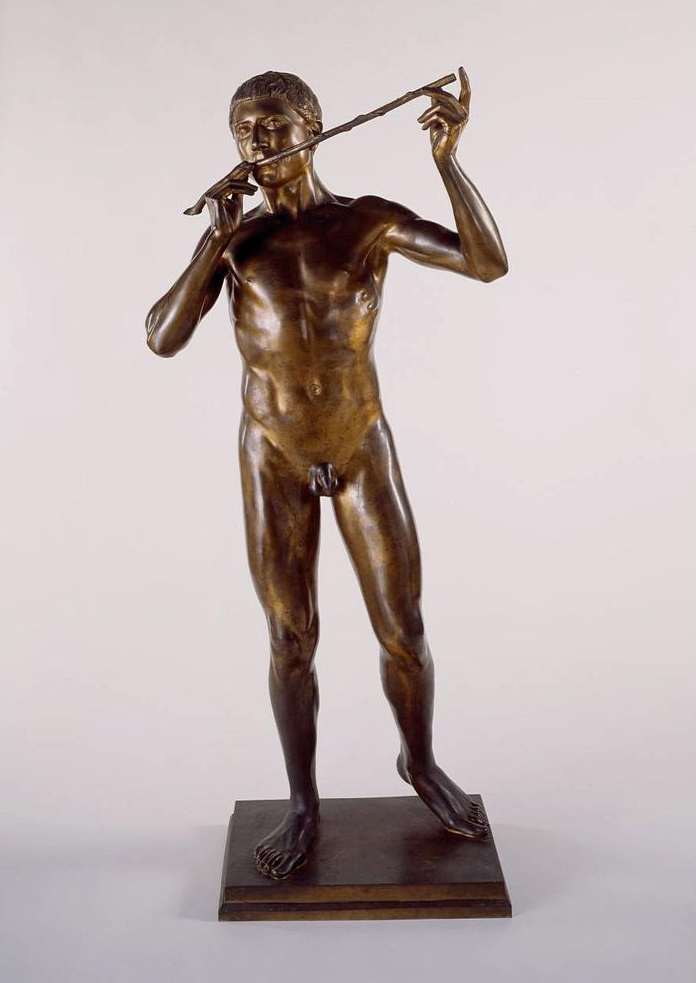
James Thomas (English, 1854-1921, lived in Italy 1889-1906) 'Thyrsis' 1914


James Thomas (English, 1854-1921, lived in Italy 1889-1906)
Thyrsis
1914
Bronze, patina
National Gallery of Victoria
Felton Bequest, 1915


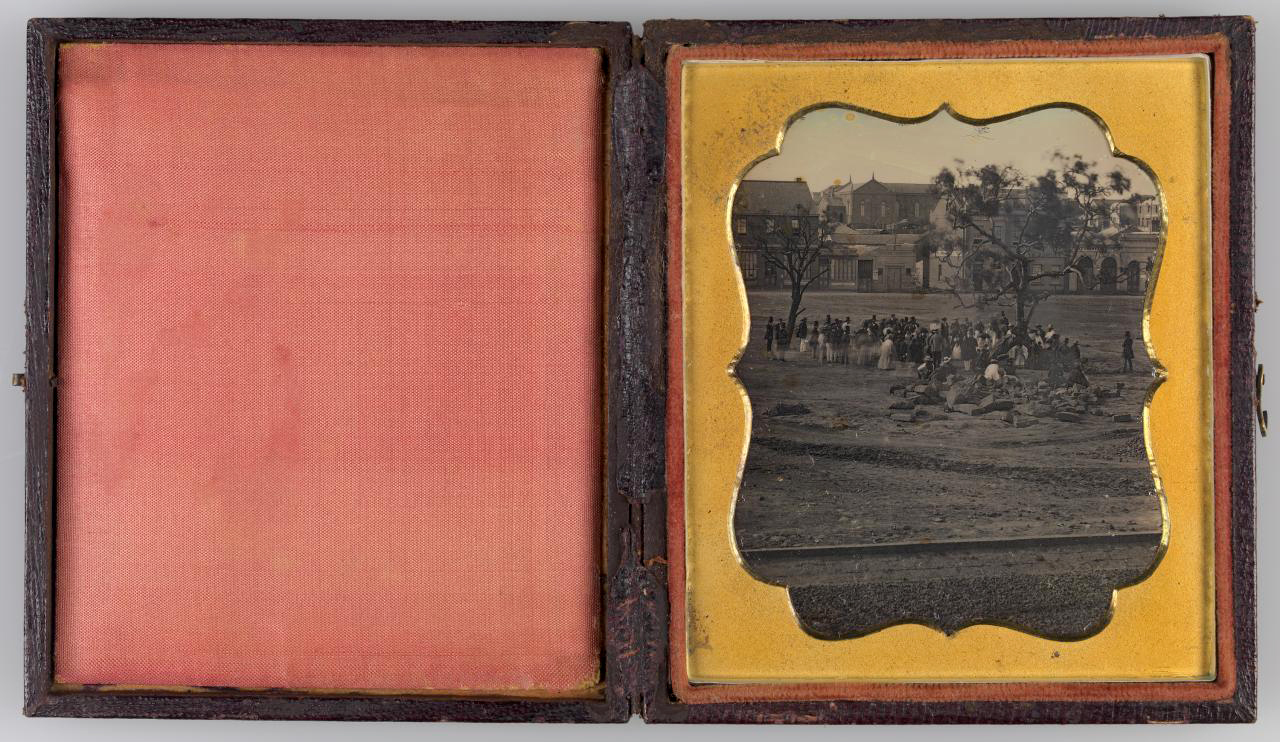
Joseph Turner (active in Australia 1856-1880s) 'No title (Laying the foundation stone of the Geelong clock tower)' 1856


Joseph Turner (active in Australia 1856-1880s)
No title (Laying the foundation stone of the Geelong clock tower)
1856
Daguerreotype leather, wood, silk, gilt metal and glass (case)
National Gallery of Victoria
Purchased, 1974


Market Square was a town square located in the centre of Geelong, Victoria, Australia. Consisting of eight acres (2.9 hectares) of land, the area was reserved by Governor Sir George Gipps as a town square during the initial surveying of Geelong. The area later became a produce market, before being progressively built upon. Today the Market Square Shopping Centre occupies the site, having been opened in 1985 by the City of Geelong…

A clock tower was built in the centre of the square in 1856. It was the idea of the second mayor of Geelong James Austin, who offered to pay for a clock tower in Geelong to mark his term as mayor. The clock was featured in The Illustrated London News in March 1855. Components for the clock arrived in Geelong on November 13, 1855 from England, but the location for the clock had yet to be decided. Suggestions of high ground at top of Moorabool, Yarra or Gheringhap Streets were put forward at the time, the indecision lasting into early 1856. In July 1857 a decision was made, and the foundation stone was finally laid in the Market Square…

The clock tower remained until October 1923 when it was demolished to make way for the CML Building. There was a public outcry, and no one was willing to demolish it. However, it was deemed too impractical to move intact, and was brought down by steel cables attached to traction engine. The site of the clock tower is marked by a plaque in the Market Square Shopping Centre.

Text from the Wikipedia website


William Wegman (American, b. 1943) 'Horned hound' 1991


William Wegman (American, b. 1943)
Horned hound
1991
Polaroid photograph
National Gallery of Victoria
Purchased, 1992


The Ian Potter Centre: NGV Australia
Federation Square
Corner of Russell and 
Flinders Streets, Melbourne

Opening hours:
Daily 10am – 5pm

National Gallery of Victoria website

LIKE ART BLART ON FACEBOOK

Back to top

Exhibition: ‘George Tice: Urban Landscapes’ at the Joseph Bellows Gallery, La Jolla, California

Exhibition dates: 10th September – 28th October, 2016


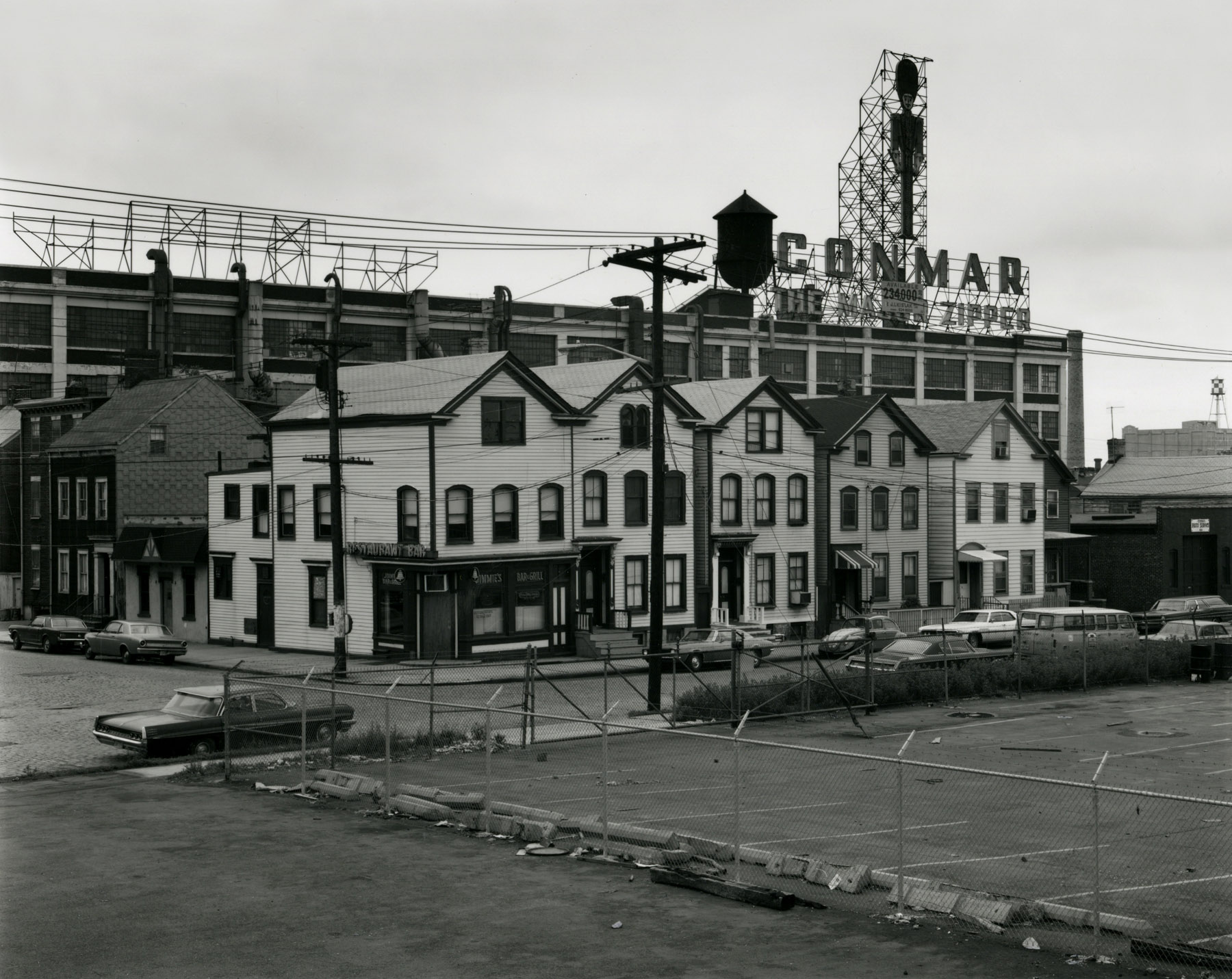
George Tice (American, b. 1938) 'Jimmy's Bar and Grill and Conmar Zipper Company, Newark, NJ, 1973' 1973 from the exhibition 'George Tice: Urban Landscapes' at the Joseph Bellows Gallery, La Jolla, California, Sept - Oct, 2016


George Tice (American, b. 1938)
Jimmy’s Bar and Grill and Conmar Zipper Company, Newark, NJ, 1973
1973
Silver gelatin print


An American iconography

George Tice is a master photographer and an exceptional artist. Using a large format 8 x 10 camera this craftsman has created a “deeply-penetrating” photographic record of the American urban landscape, mainly based around the city of New Jersey where he has lived for most of his life.

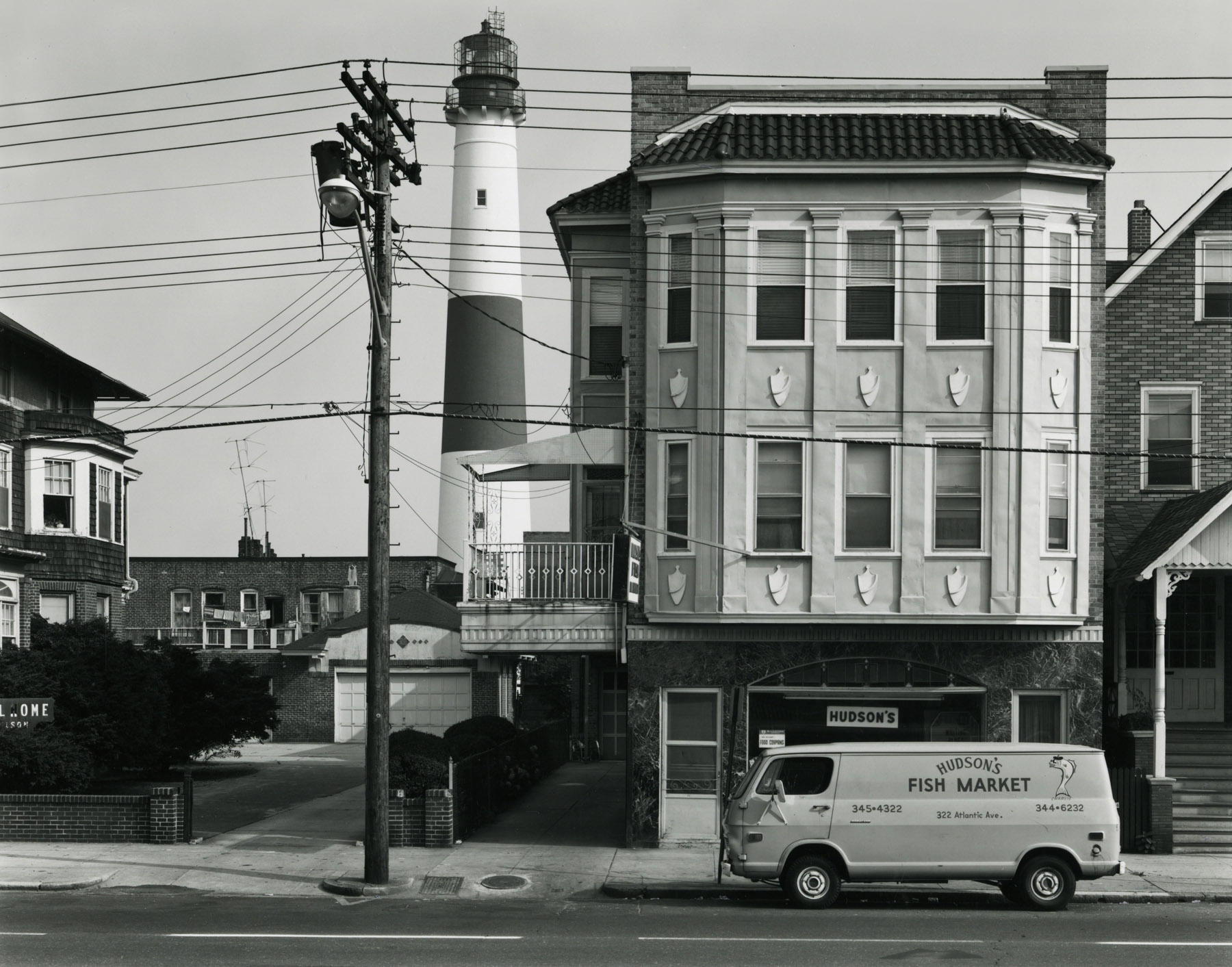
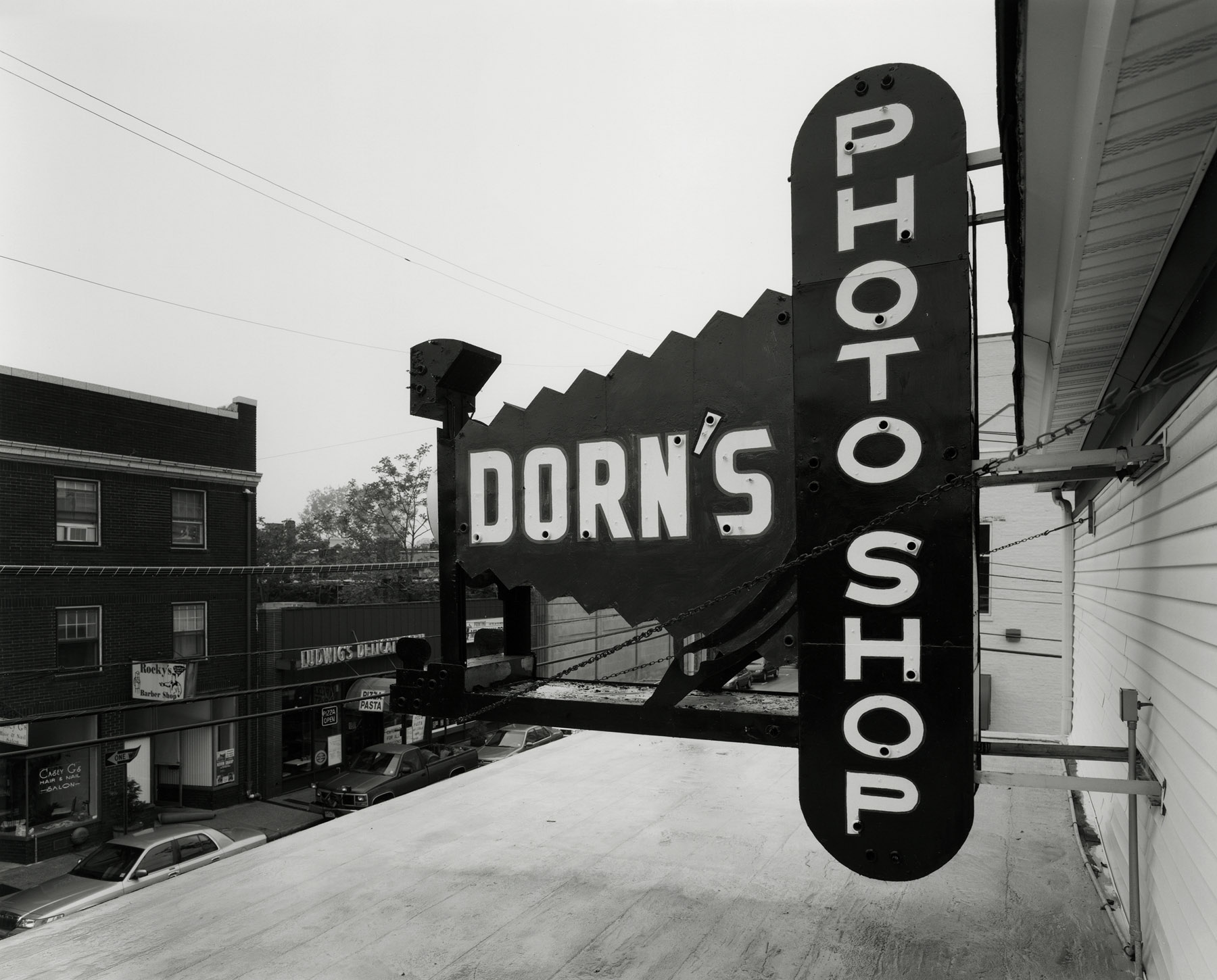
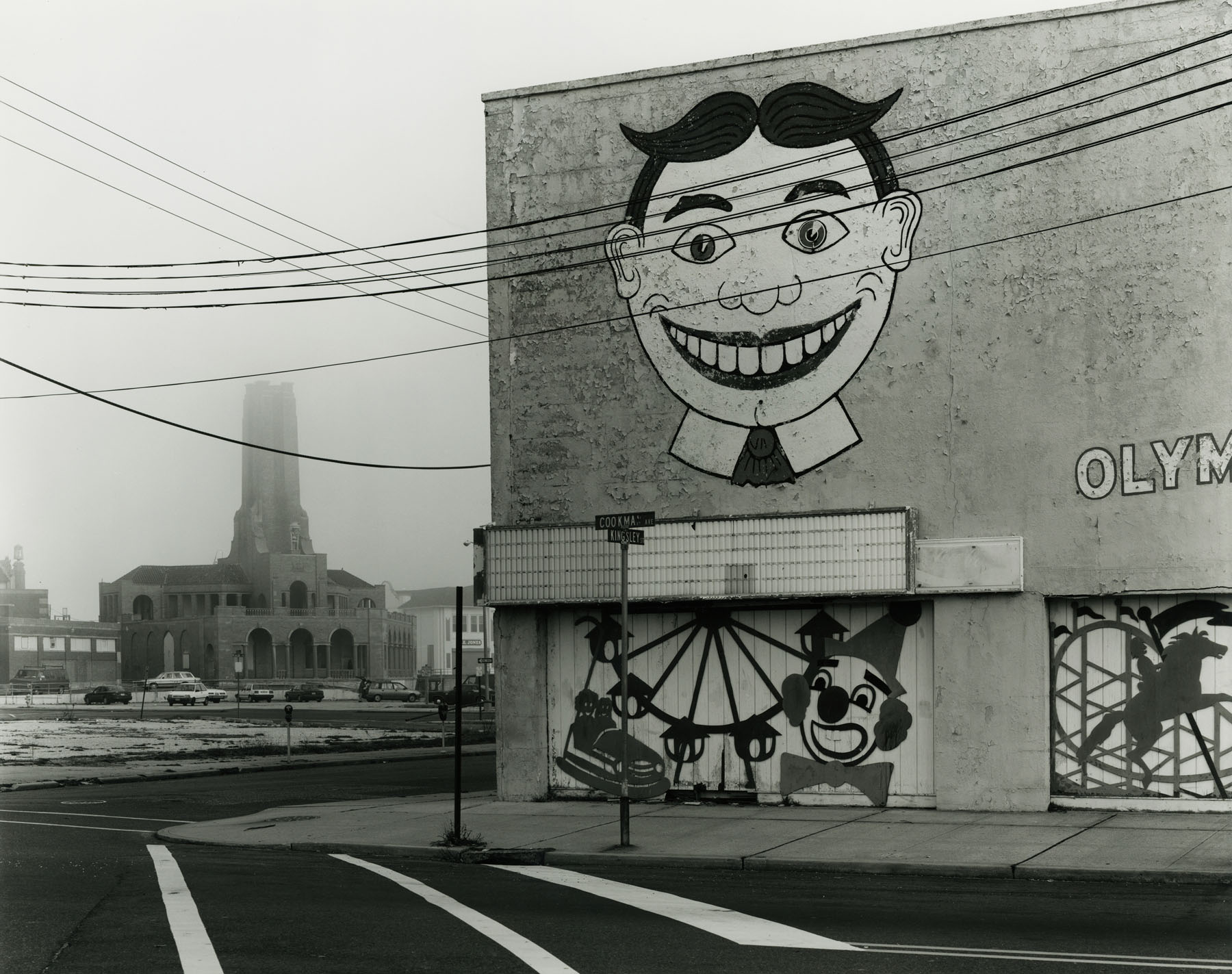
Tice’s ongoing epic visual poem is at its strongest in his early period, from 1973-74. While his later 1990s work is qualified by simplified imagery and semiotic statements (for example Dorn’s Photoshop, Red Bank, NJ, 1999 and Lakewood Manor Motel, Lakewood, NJ, 1998, below) it is this early work that produces “attentive and quotidian descriptions of the everyday structures and places that define the American cultural landscape.” There seems to be a greater personal investment in these earlier images. Tice’s recognition of subject matter that mere mortals pass by is translated into beautiful, serene, tonal and dare I say, sensual images, that belie the complexity of their previsualisation. You only have to look at two images, Houses and Water Towers, Moorestown, NJ, 1973 and Hudson’s Fish Market, Atlantic City, NJ, 1973 (below) to understand that these photographs are visually complex, slightly surreal, affectionate images of places he personally knows so well. They possess a totally different feeling from the conceptual photography of the German school of Bernd and Hilla Becher. As Sanford Schwartz in The New York Times, on December 3, 1972 noted: “Tice’s pictures… show a remarkable blend of intimacy, affection and clear-sightedness.”

The almost tragic, objective renditions of a post-industrial landscape evidence a poetic intensity that has deep roots in the history of photography. Vivien Raynor, writing in The New York Times, said, “Finding precedents for Mr. Tice’s photography is easier than defining the personal qualities that make it so special. As others have remarked, his tranquil towns, usually deserted, could sometimes be those of Walker Evans updated; his industrial views are not unrelated to Charles Sheeler’s, and, for good measure, the stillness and silence of his compositions link him to Atget, the first great urban reporter.” Tice builds upon the lineage of other great artists but then, as any good artist should, he forges his own path, not reliant on the signature of others. As he himself observes, “… if you learn to see what photography is through one person’s eyes you become fixed in that one way of seeing.”

When I first started taking photographs in 1990, my heroes were Atget, Strand, Evans and Minor White. Looking at art, and looking at photographers, trained my eye. But as an artist, looking at the world is the most valuable education that you can have, for eventually you have to forge your own style, not copy someone else … and the signature that you create becomes your own. You know it’s a Mapplethorpe, just as you know it’s an Evans, or a Tice. Each piece of handwriting is unique. Nobody can teach that and it only comes with time and experience. As Paul Strand said, it takes 10 years to become an artist, 10 years to learn your craft, 10 years to drop ego away and find your own style. This is what the work of George Tice speaks to. He approaches the world with a clear mind, focused on a objective narrative that flips! exposing us (like his film), to a subjective, visceral charm all of his own making.

Dr Marcus Bunyan


Many thankx to the Joseph Bellows Gallery for allowing me to publish the photographs in the posting. Please click on the photographs for a larger version of the image.


“As I progressed further with my project, it became obvious that it was really unimportant where I chose to photograph. The particular place simply provided an excuse to produce work… you can only see what you are ready to see – what mirrors your mind at that particular time.”

“Documenting the place is principally what I do. The bulk of my photographs are of New Jersey. It may have been a subject series, like ice or aquatic plants, that could have been anywhere, but it was done in New Jersey. Most of my pictures are about place. I would say the Urban Landscape work is what is most distinctive about me.”


George Tice


George Tice (American, b. 1938) 'Houses and Water Towers, Moorestown, NJ, 1973' 1973 from the exhibition 'George Tice: Urban Landscapes' at the Joseph Bellows Gallery, La Jolla, California, Sept - Oct, 2016


George Tice (American, b. 1938)
Houses and Water Towers, Moorestown, NJ, 1973
1973
Silver gelatin print


George Tice (American, b. 1938) 'Hudson's Fish Market, Atlantic City, NJ, 1973' 1973


George Tice (American, b. 1938)
Hudson’s Fish Market, Atlantic City, NJ, 1973
1973
Silver gelatin print


George Tice (American, b. 1938) 'Dorn's Photoshop, Red Bank, NJ, 1999' 1999


George Tice (American, b. 1938)
Dorn’s Photoshop, Red Bank, NJ, 1999
1999
Silver gelatin print


George Tice (American, b. 1938) 'Lexington Avenue, Passaic, NJ, 1973' 1973


George Tice (American, b. 1938)
Lexington Avenue, Passaic, NJ, 1973
1973
Silver gelatin print


George Tice (American, b. 1938) 'Palace Funhouse, Asbury Park, 1995' 1995


George Tice (American, b. 1938)
Palace Funhouse, Asbury Park, 1995
1995
Silver gelatin print


George Tice (American, b. 1938) 'Railroad Bridge, High Bridge, NJ, 1974' 1974


George Tice (American, b. 1938)
Railroad Bridge, High Bridge, NJ, 1974
1974
Silver gelatin print


George Tice (American, b. 1938) 'Route #440 Overpass, Perth Amboy, 1973' 1973


George Tice (American, b. 1938)
Route #440 Overpass, Perth Amboy, 1973
1973
Silver gelatin print


Joseph Bellows Gallery is pleased to announce an exhibition of photographs by one of the medium’s master photographers, George Tice. George Tice: Urban Landscapes will open with a book signing and reception with the artist on Saturday September, 10th from 6-8pm. The exhibition will continue through October 28th, 2016.

The exhibition will present a remarkable selection of forty exceptionally rare vintage 8 x 10 inch gelatin silver contact prints from the early period (1973-1974), of Tice’s ongoing epic visual poem of his native state of New Jersey. These unique vintage prints will be punctuated with larger photographs of some of artist’s most revered and significant images, as well as selections of more recent work from his extended New Jersey portrait.

Renowned for their attentive and quotidian descriptions of the everyday structures and places that define the American cultural landscape, Tice’s exquisitely printed photographs catalog a rich and layered journey that is both personal and universal. In the photographs that comprise Urban Landscapes, Tice defines a sense of America within a tradition rooted in the work of other American masters, namely Edward Hopper and Walker Evans. Tice’s photographs of New Jersey in the early to mid 1970’s describe a particular time and place; however, as the artist states, “It takes the passage of time before an image of a commonplace subject can be assessed. The great difficulty of what I attempt is seeing beyond the moment; the everydayness of life gets in the way of the eternal.” Now, with decades past, Tice’s observations have become even more poignant depictions, everlasting a specific era and landscape, as the artist intended.

As well as being one of the 20th Century’s most prominent photographers, Tice is revered as a master printer, having printed limited-edition portfolios of some of his favourite photographers, among them Edward Steichen, Edward Weston and Frederick H. Evans, as well as other important photographers including Francis Bruguiere, Ralph Steiner and Lewis Hine.

Press release from the Joseph Bellows Gallery


George Tice (American, b. 1938) 'Tenement Rooftops, Hoboken, NJ, 1974' 1974


George Tice (American, b. 1938)
Tenement Rooftops, Hoboken, NJ, 1974
1974
Silver gelatin print


George Tice (American, b. 1938) 'Steve's Diner, Route 130, North Brunswick, 1974' 1974


George Tice (American, b. 1938)
Steve’s Diner, Route 130, North Brunswick, 1974
1974
Silver gelatin print


George Tice (American, b. 1938) 'Ideal Diner, Perth Amboy, NJ, 1980' 1980


George Tice (American, b. 1938)
Ideal Diner, Perth Amboy, NJ, 1980
1980
Silver gelatin print


George Tice (American, b. 1938) 'White Castle, Route #1, Rahway, NJ, 1973' 1973


George Tice (American, b. 1938)
White Castle, Route #1, Rahway, NJ, 1973
1973
Silver gelatin print


George Tice (American, b. 1938) 'Strand Theater, Keyport, NJ, 1973' 1973


George Tice (American, b. 1938)
Strand Theater, Keyport, NJ, 1973
1973
Silver gelatin print


George Tice (American, b. 1938) 'Industrial Landscape, Kearny, NJ, 1973' 1973


George Tice (American, b. 1938)
Industrial Landscape, Kearny, NJ, 1973
1973
Silver gelatin print


George Tice in conversation with Paul Caponigro

JPC You had said, “After a time you don’t want to have any photographic influences. It’s okay to be influenced by writers, poets, people in other fields but not okay by other photographers.”

GT You don’t want to be like anyone else. Like all those people who were influenced by Ansel Adams. I don’t think any of them will do better than he did.

JPC Not until they find their own voice. It’s impossible to successfully imitate someone else’s voice.

GT Right. And the natural landscape of the west, that’s not going to be better in the future, as the population increases and much of the wilderness gets erased. Timothy O’Sullivan probably had a better chance at it than Ansel Adams did. But you don’t want anyone to be too great an influence, like an apprenticeship. If I was to begin photography, study it, I wouldn’t want one teacher. I think one teacher is too great an influence. I’d rather have an education based on workshops. You draw some knowledge through every one of them. But if you learn to see what photography is through one person’s eyes you become fixed in that one way of seeing.

George Tice Conversations on the John Paul Caponigro “Illuminating Creativity” web page 07/01/1997 [Online] Cited 09/10/2016


George Tice (American, b. 1938) 'Jahos Brothers Clothing Store, Trenton, NJ, 1973' 1973


George Tice (American, b. 1938)
Jahos Brothers Clothing Store, Trenton, NJ, 1973
1973
Silver gelatin print


George Tice (American, b. 1938) 'Minnie's Go-Go, Route 130, Merchantville, 1975' 1975


George Tice (American, b. 1938)
Minnie’s Go-Go, Route 130, Merchantville, 1975
1975
Silver gelatin print


George Tice (American, b. 1938) 'Lakewood Manor Motel, Lakewood, NJ, 1998' 1998


George Tice (American, b. 1938)
Lakewood Manor Motel, Lakewood, NJ, 1998
1998
Silver gelatin print


George Tice (American, b. 1938) 'Esso Station and Tenement House, Hoboken, NJ, 1972' 1972


George Tice (American, b. 1938)
Esso Station and Tenement House, Hoboken, NJ, 1972
1972
Silver gelatin print


George Tice (American, b. 1938) 'Telephone Booth, 3 am, Railway, NJ, 1974' 1974


George Tice (American, b. 1938)
Telephone Booth, 3 am, Railway, NJ, 1974
1974
Silver gelatin print


Joseph Bellows Gallery
7661 Girrard Avenue
La Jolla, California
Phone: 858 456 5620

Opening hours:
Tuesday – Saturday 11am – 5pm and by appointment

Joseph Bellows Gallery website

LIKE ART BLART ON FACEBOOK

Back to top

Selection of images part 1

April 2015


Berenice Abbott (American, 1898-1991) 'Fifth Avenue Houses' 1936


Berenice Abbott (American, 1898-1991)
Fifth Avenue Houses (5th Avenue and 8th Street)
1936, printed later
Silver gelatin print


A selection of interesting images.

The Vanishing Race by Edward S. Curtis is simple, yet one of the best. Already their shadows seem more substantial than their owners.

Any photographer worth their salt would recognise the light on the foliage in a certain location that they know, but the chance of it being as perfect as this are about a billion to one. Notice how the original frame extends the synthesis of man and landscape as well. Such a great amalgam of image and frame, such a perfect marriage where one complements the other without the frame being overpowering, as though the frame were an extension of the image (and organic nature of the landscape).

The line of the riders in the image as well… they would have virtually ridden over the photographer and the tripod if they had kept that line! And the outrider – magnificent!!

Marcus


Please click on the photographs for a larger version of the image.


Edward S. Curtis (American, 1868-1952) 'The Vanishing Race' 1904


Edward S. Curtis (American, 1868-1952)
The Vanishing Race – Navaho
1904
Orotone (in original frame)


“The passing of every old man or woman means the passing of some tradition, some knowledge of sacred rites possessed by no other… consequently the information that is to be gathered, for the benefit of future generations, respecting the mode of life of one of the great races of mankind, must be collected at once or the opportunity will be lost for all time.”

~ Edward S. Curtis


Ansel Adams (American, 1902-1984) 'Surf Sequence #4' 1940


Ansel Adams (American, 1902-1984)
Surf Sequence #4
1940, printed later
Silver gelatin print


Paul Caponigro (American, 1932-2024) 'Redding Stream, Redding, Connecticut' 1968


Paul Caponigro (American, 1932-2024)
Redding Stream, Redding, Connecticut
1968, printed later
Gelatin silver print


Paul Caponigro (American, 1932-2024) 'Nautilus Shell, Ipswich, Mass' 1960


Paul Caponigro (American, 1932-2024)
Nautilus Shell, Ipswich, Mass
1960
Silver gelatin print


Paul Caponigro (American, 1932-2024) 'Two Leaves, Brewster, New York' 1963


Paul Caponigro (American, 1932-2024)
Two Leaves, Brewster, New York
1963
Silver gelatin print


Harry Callahan (American, 1912-1999) 'Eleanor, Port Huron' c. 1954


Harry Callahan (American, 1912-1999)
Eleanor, Port Huron
c. 1954
Silver gelatin print


With her raven hair and ripe figure, Eleanor Callahan is one of the most recognisable models in the history of 20th-century photography, an inseparable part of both the life and work of one of its most renowned artists. Clothed and standing among trees in a public park, or nude and turned to the wall while clutching a radiator in an empty room, she served as a formal element within Mr. Callahan’s austere compositions as well as a symbol of womanhood. From 1941 to his death in 1999, she allowed herself to be photographed by him, without complaint, hundreds of times…

“He just liked to take the pictures of me,” she told an interviewer in 2008. “In every pose. Rain or shine. And whatever I was doing. If I was doing the dishes or if I was half asleep. And he knew that I never, never said no. I was always there for him. Because I knew that Harry would only do the right thing.”

Text from Richard B. Woodward. “Eleanor Callahan, Photographic Muse, Dies at 95,” on the New York Times website 28th February 2012.


Dorothea Lange (American, 1895-1965) 'Potato truck in the field near Shafter, California' 1937


Dorothea Lange (American, 1895-1965)
Potato truck in the field near Shafter, California
1937
Ferrotyped silver print


Walker Evans (American, 1903-1975) 'Fish Market near Birmingham, Alabama' 1936


Walker Evans (American, 1903-1975)
Fish Market near Birmingham, Alabama
1936
Silver gelatin print


Robert Doisneau (French, 1912-1994) 'Le gardien des géants du Nord' Nd


Robert Doisneau (French, 1912-1994)
Le gardien des géants du Nord
Nd
Silver gelatin print


Berenice Abbott (American, 1898-1991) 'Christopher Street Shop' late 1940s


Berenice Abbott (American, 1898-1991)
Christopher Street Shop
late 1940s
Silver gelatin print


Francesca Woodman (American, 1958-1981) 'But Lately I Find a Sliver of a Mirror is Simply to Slice an Eyelid' 1979/1980


Francesca Woodman (American, 1958-1981)
But Lately I Find a Sliver of a Mirror is Simply to Slice an Eyelid
1979-1980
Silver gelatin print


Francesca Woodman (American, 1958-1981) 'Untitled, Rome, Italy' 1977/1978


Francesca Woodman (American, 1958-1981)
Untitled, Rome, Italy
1977-1978
Silver gelatin print


André Kertész (Hungarian, 1894-1985) 'Fan, December 1937' 1937


André Kertész (Hungarian, 1894-1985)
Fan, December 1937
1937
Silver gelatin print


“I am an amateur and I intend to stay that way for the rest of my life.”

~ André Kertész


Margaret Bourke-White (American, 1904-1971) 'Fort Peck Dam, Montana' 1936


Margaret Bourke-White (American, 1904-1971)
Fort Peck Dam, Montana
1936
Silver gelatin print


This photograph became an icon of the machine age, not only because it was printed as the cover of the first issue of Life magazine (November 23, 1936), but also because it showed the power of modern technology to dwarf humankind. The giant buttresses and what seem to be crenellated battlements (actually the supports for an elevated highway) are meant to be as raw and impressive as the towering walls of ancient monuments. The engineers on the spillway provide the necessary indication of scale.


Margaret Bourke-White (American, 1904-1971) 'Terminal Tower [Cleveland]' c. 1928


Margaret Bourke-White (American, 1904-1971)
Terminal Tower [Cleveland]
c. 1928
Silver gelatin print


“I stood on the deck to watch the city [Cleveland] come into view. As the skyline took form in the morning mist, I felt I was coming to my promised land … columns of machinery gaining height as we drew toward the pier, derricks swinging like living creatures. Deep inside I knew these were my subjects.”

~ Margaret Bourke-White 1927


François Kollar (Hungarian, 1904-1979) 'Double-impression of the Eiffel Tower' 1931


François Kollar (Hungarian, 1904-1979)
Double-impression of the Eiffel Tower
1931
Solarised silver gelatin print


In this unique and widely-reproduced photograph, the French modernist photographer has overlaid positive and negative images of the magnificent Eiffel Tower. The iconic structure is depicted from an unusual perspective, thrusting upward, with Kollar’s special solarised effect.


Edward J. Kelty (American, 1888-1967) 'X-ray of Ajax, the sword swallower' 1928


Edward J. Kelty (American, 1888-1967)
X-ray of Ajax, the sword swallower
1928
 Silver print
18 × 11 inches (45.7 × 27.9cm)
With a New York X-ray lab credit in the negative


Edward J. Kelty (American, 1888-1967) 'Marcellus Golden Models' 1933


Edward J. Kelty (American, 1888-1967)
Marcellus Golden Models
1933
Silver print
11 1/4 × 8 7/8 inches (28.6 × 22.5cm)
With Kelty’s credit and title in the negative


LIKE ART BLART ON FACEBOOK

Back to top

Exhibition: ‘Bruce Davidson / Paul Caponigro: Two American Photographers in Britain and Ireland’ at The Huntington Library, San Marino, CA

Exhibition dates: 8th November 2014 – 9th February 2015

Curators: Scott Wilcox and Jennifer A. Watts


Paul Caponigro (American, 1932-2024) 'Avebury, Wiltshire, England' 1967


Paul Caponigro (American, 1932-2024)
Avebury, Wiltshire, England
1967
Gelatin silver print
9 3/8 × 13 1/8 in.
© Paul Caponigro


Individually, the work of these two photographers is outstanding, but together?

The premise for the exhibition (two American photographers in Britain and Ireland) seems weak, tenuous at best. The exhibition focuses on the contrasting styles of the two photographers – Davidson is a photojournalist and Caponigro practices a pure, formalist approach to landscape photography – “as they trained American eyes on enduring landscapes and changing cultural scenes… “Britain and Ireland are the countries to which each man embarked on significant creative journeys in the course of refining his art.” (Jennifer A. Watts)”

But is this enough? For example, the ground breaking exhibition Caravaggio – Bacon at Gallery Borghese, Rome in 2009-2010 offered the viewer something that they had never thought about before: “Instinctively, intellectually we know how the paintings of a Baroque artist of the early 17th century affect how we look at the paintings of Bacon. This exhibition offers the reverse, in fact it rewrites how we look at Caravaggio – through the benediction of Bacon.”

Here no such revelation occurs. You could argue that the connection lies outside photography in a concern for what is present in the landscape, what is present in a community, what is present beyond bricks and mortar, leaves and rocks – what is our place in the world, full stop. But the work of the artists is so different, one from the other, that this diffident relationship is strained at best. No wonder these humans had never met before the opening of the exhibition, for they seem artistically to have little in common.

I have tried to sequence the photographs in the posting, so that they might have some reflection, some conversation one to the other: the presence of The Duke of Argyll, fag in hand kitted out in traditional Scottish attire, and the grandness of his residence playing off the darkness, isolation and simplicity of the house in Caponigro’s Connemara, County Galway, Ireland; the luminous stones in Stonehenge, Wiltshire, England becoming the dark edged reflections in Davidson’s London (1960); and the church in Caponigro’s Church, St. MacDara’s Island, County Galway, Ireland morphing into the temple of the British sun, the beach holiday, in Davidson’s Blackpool (1965) – but it is hard work.

Best to just enjoy the photographs individually, especially Caponigro’s glorious paen to ancient forces Avebury, Wiltshire, England (1967, above). The life force of the tree, the life force of the stone – the communion of those two things with the landscape – with sheep in the background. A friend of mine (Ian Lobb) who knows Caponigro told me that he said he never travelled anywhere without a blow up sheep in the back of the car.

Dr Marcus Bunyan


Many thankx to the The Huntington Library for allowing me to publish the photographs in the posting. Please click on the photographs for a larger version of the image.


Bruce Davidson (American, b. 1933) 'Brighton' 1960


Bruce Davidson (American, b. 1933)
Brighton
1960
Gelatin silver print
8 3/4 ×12 7/8 in.
Yale Center for British Art, Gift of Ralph and Nancy Segall
© Bruce Davidson/Magnum Photos


Paul Caponigro (American, 1932-2024) 'Callanish Stone Circle, Isle of Lewis, Outer Hebrides, Scotland' 1972


Paul Caponigro (American, 1932-2024)
Callanish Stone Circle, Isle of Lewis, Outer Hebrides, Scotland
1972
Gelatin silver print
17 1/4 × 23 3/4 in.
© Paul Caponigro


Paul Caponigro (American, 1932-2024) 'Stonehenge, Wiltshire, England' 1967


Paul Caponigro (American, 1932-2024)
Stonehenge, Wiltshire, England
1967
Gelatin silver print
17 × 23 3/8 in.
© Paul Caponigro


Bruce Davidson (American, b. 1933) 'The Duke of Argyll, Inverary, Scotland' 1960


Bruce Davidson (American, b. 1933)
The Duke of Argyll, Inverary, Scotland
1960
Gelatin silver print
9 × 13 1/4 in.
Yale Center for British Art, Gift of Ralph and Nancy Segall
© Bruce Davidson/Magnum Photos


Paul Caponigro (American, 1932-2024) 'Connemara, County Galway, Ireland' 1970


Paul Caponigro (American, 1932-2024)
Connemara, County Galway, Ireland
1970
Gelatin silver print
9 1/2 × 12 1/8 in.
© Paul Caponigro


Bruce Davidson (American, b. 1933) 'Wales' 1965


Bruce Davidson (American, b. 1933)
Wales
1965
Gelatin silver print
8 1/4 × 12 1/2 in.
Yale Center for British Art, Gift of Henry S. Hacker, Yale BA 1965
© Bruce Davidson/Magnum Photos


Bruce Davidson (American, b. 1933) 'Wales' 1965


Bruce Davidson (American, b. 1933)
Wales
1965
Gelatin silver print
8 3/8 × 12 5/8 in.
Yale Center for British Art, Gift of Henry S. Hacker, Yale BA 1965
© Bruce Davidson/Magnum Photos


Paul Caponigro (American, 1932-2024) 'Running White Deer, Wicklow, Ireland' 1967


Paul Caponigro (American, 1932-2024)
Running White Deer, Wicklow, Ireland
1967
Gelatin silver print
7 1/2 × 19 1/8 in.
© Paul Caponigro


Paul Caponigro (American, 1932-2024) 'Stonehenge, Wiltshire, England' 1977


Paul Caponigro (American, 1932-2024)
Stonehenge, Wiltshire, England
1977
Gelatin silver print
13 5/8 × 19 in.
© Paul Caponigro


Bruce Davidson (American, b. 1933) 'London' 1960


Bruce Davidson (American, b. 1933)
London
1960
Gelatin silver print
8 5/8 × 12 7/8 in.
Yale Center for British Art, Friends of British Art Fund
© Bruce Davidson/Magnum Photos


Bruce Davidson (American, b. 1933) 'Wales' 1965


Bruce Davidson (American, b. 1933)
Wales
1965
Gelatin silver print
8 3/8 × 12 1/2 in.
Yale Center for British Art, Gift of Henry S. Hacker, Yale BA 1965
© Bruce Davidson/Magnum Photos


Bruce Davidson (American, b. 1933) 'Wales' 1965


Bruce Davidson (American, b. 1933)
Wales
1965
Gelatin silver print
8 1/4 × 12 1/2 in.
Yale Center for British Art, Gift of Henry S. Hacker, Yale BA 1965
© Bruce Davidson/Magnum Photos


Paul Caponigro (American, 1932-2024) 'Tralee Bay, County Kerry, Ireland' 1977


Paul Caponigro (American, 1932-2024)
Tralee Bay, County Kerry, Ireland
1977
Gelatin silver print
9 5/8 × 13 1/4 in.
© Paul Caponigro


Bruce Davidson/Paul Caponigro: Two American Photographers in Britain and Ireland is set to open at The Huntington Library, Art Collections, and Botanical Gardens on Nov. 8 after a successful run at the Yale Center for British Art in New Haven over the summer. Focusing on the contrasting styles of two of the greatest American photographers of their generation, the exhibition of 128 works by Paul Caponigro (b. 1932) and Bruce Davidson (b. 1933) showcases their photography of Britain and Ireland beginning in 1960. It will be presented in a newly designed installation in the MaryLou and George Boone Gallery through March 9, 2015.

Davidson traveled to England and Scotland in 1960, where he brought the same gritty street sensibility that had made his photography a sensation in the United States. Caponigro went to Ireland and Britain in 1966 on a prestigious Guggenheim fellowship. Those countries became sites of creative energy to which he returned repeatedly in the 1960s and beyond. The exhibition examines the work of the two virtuosic photographers as they trained American eyes on enduring landscapes and changing cultural scenes.

“This is the first exhibition to pair these influential contemporaries who followed overlapping yet distinct creative paths,” said Jennifer A. Watts, the exhibition’s co-curator and curator of photographs at The Huntington. “Britain and Ireland are the countries to which each man embarked on significant creative journeys in the course of refining his art. How fitting, then, to bring these works to The Huntington, where we have one of the strongest collections of British art and historical materials in the country.”

The exhibition is also curated by Scott Wilcox, chief curator of art collections and senior curator of prints and drawings at the Yale Center for British Art. Watts and Wilcox also coauthored a richly illustrated catalog of the exhibition, published by Yale University Press.

The Artists and Their Work in Britain and Ireland

While Caponigro and Davidson were acquainted with each other’s work, the two had never met until the opening of the exhibition in New Haven.

Davidson is a photojournalist and member of the prestigious Magnum Agency; Caponigro practices a pure, formalist approach to landscape photography. Both are devoted to black-and-white film and continue to make prints by hand. And both of them produced important bodies of work in Britain and Ireland beginning in 1960.

In trips to Britain in 1960 and 1965, Davidson created an evocative and sometimes tongue-in-cheek portrait of the British people at work and play. During numerous visits starting in 1967, Caponigro focused on the ancient stone circles, dolmens, and early churches in the British and Celtic landscape. “There’s a force in the land and it’s intelligent” became Caponigro’s mantra and guide. He returned repeatedly to the United Kingdom and Ireland (his latest photographs in the exhibition are from 1993).

Paul Caponigro was born in Boston, a shy child in a boisterous Italian-American family. Drafted into the Army in 1953, he was sent to San Francisco and eventually fell under the influence of Ansel Adams, Edward Weston, and other luminaries of the Bay Area school, a loose affiliation of photographers who took the natural landscape as their subject and used razor-sharp focus and superb printing techniques as expressive tools. In 1966, he went to Ireland and Britain on a Guggenheim grant. He had intended to travel to Egypt, but unrest in the Middle East interrupted his plans. “Ireland became my Egypt,” he said, “and the stones my temples.”

That year marked the beginning of a sustained relationship with places that significantly shaped his career. He returned a dozen times over the next decade.

Bruce Davidson grew up in suburban Chicago and purchased his first camera as a young boy. In 1952, he enrolled in the Rochester Institute of Technology in upstate New York, encountering there the work of Henri Cartier-Bresson and Robert Frank. The spontaneity and emotional depth of their pictures proved a revelation.

In the late 1950s, Davidson was invited to join Magnum, the elite organisation of photojournalists founded by Cartier-Bresson, Robert Capa, and several others. He received wide acclaim with the publication in 1960 of Brooklyn Gang, a series featuring a notorious group of streetwise teens. He left the United States shortly thereafter for England and Scotland on a two-month assignment for British magazine The Queen.

He would return to the United Kingdom periodically thereafter, producing photography documenting a range of people in diverse settings, including Blackpool, the mining districts of southern Wales, and a traveling circus in rural Ireland.


Still Looking (excerpt)


Installation

The installation will divide the gallery into two separate but equal sections devoted to each artist’s work. Davidson’s photographs are organised according to the four trips he made on assignment between 1960 and 1967. Caponigro’s work will be seen in geographic sections that account for the numerous trips he made to the British Isles over more than two decades. The Huntington’s presentation of the show will incorporate two recently acquired Caponigro prints. (The institution also holds a substantial collection of Caponigro’s work that focuses on California and the West.)

Still Looking, a film featuring both photographers and produced exclusively for the exhibition, is installed in a separate room of the exhibition and is also posted online. Created in early 2014 by Huntington filmmaker Kate Lain, the 16-minute film is a series of evocative moments with Davidson and Caponigro on location in their respective homes in New York City and Maine.”

Press release from The Huntington Library website


Still Looking


Bruce Davidson (American, b. 1933) 'Trafalgar Square, London' 1960


Bruce Davidson (American, b. 1933)
Trafalgar Square, London
1960
Gelatin silver print
13 1/4 × 8 7/8 in.
Yale Center for British Art, Friends of British Art Fund
© Bruce Davidson/Magnum Photos


Paul Caponigro (American, 1932-2024) 'Trethevy Quoit, Cornwall, England' 1977


Paul Caponigro (American, 1932-2024)
Trethevy Quoit, Cornwall, England
1977
Gelatin silver print
19 × 13 1/2 in.
© Paul Caponigro


Paul Caponigro (American, 1932-2024) 'Church, St. MacDara’s Island, County Galway, Ireland' 1989


Paul Caponigro (American, 1932-2024)
Church, St. MacDara’s Island, County Galway, Ireland
1989
Gelatin silver print
19 1/8 × 14 in.
© Paul Caponigro


Bruce Davidson (American, b. 1933) 'Blackpool' 1965


Bruce Davidson (American, b. 1933)
Blackpool
1965
Gelatin silver print
12 7/8 × 8 3/4 in.
Yale Center for British Art, Gift of Henry S. Hacker, Yale BA 1965
© Bruce Davidson/Magnum Photos


Bruce Davidson (American, b. 1933) 'Brighton' 1960


Bruce Davidson (American, b. 1933)
Brighton
1960
Gelatin silver print
13 1/4 × 8 7/8 in.
Yale Center for British Art, Gift of Ralph and Nancy Segall
© Bruce Davidson/Magnum Photos


Bruce Davidson (American, b. 1933) 'London' 1960


Bruce Davidson (American, b. 1933)
London
1960
Gelatin silver print
13 1/4 × 9 in.
Yale Center for British Art, Gift of Richard S. and Jeanne Press
© Bruce Davidson/Magnum Photos


Paul Caponigro (American, 1932-2024) 'Dead Calf in the Sand, County Kerry, Ireland' 1993


Paul Caponigro (American, 1932-2024)
Dead Calf in the Sand, County Kerry, Ireland
1993
Gelatin silver print
18 1/8 × 13 in.
© Paul Caponigro


Bruce Davidson (American, b. 1933) 'Albert Hall, London' 1960


Bruce Davidson (American, b. 1933)
Albert Hall, London
1960
Gelatin silver print
13 × 8 7/8 in.
Yale Center for British Art, Friends of British Art Fund
© Bruce Davidson/Magnum Photos


Paul Caponigro (American, 1932-2024) 'Reefert Church, Glendalough, County Wicklow, Ireland' 1988


Paul Caponigro (American, 1932-2024)
Reefert Church, Glendalough, County Wicklow, Ireland
1988
Gelatin silver print
19 × 13 1/4 in.
© Paul Caponigro


The Huntington Library, Art Collections, and Botanical Gardens
1151 Oxford Road San Marino, CA 91108

Opening hours:
Wed – Mon 10am – 5pm
Closed Tuesdays

The Huntington Library website

LIKE ART BLART ON FACEBOOK

Back to top

Exhibition: ‘Rothko to Richter: Mark Making in Abstract Painting from the Collection of Preston H. Haskell’, Class of 1960 at the Princeton University Art Museum

Exhibition dates: 24th May – 5th October 2014


Frank Stella (American, 1936-2024) 'Double Scramble' 1978


Frank Stella (American, 1936-2024)
Double Scramble
1978
Oil on canvas
174.9 x 350.5cm
Collection of Preston H. Haskell, Class of 1960
© 2014 The Franz Kline Estate / Artists Rights Society (ARS), New York / photo Douglas J. Eng


Frank Stella was an American artist best known for his use of geometric patterns and shapes in creating both paintings and sculptures. Arguably one of the most influential living American artists, Stella’s works utilise the formal properties of shape, colour, and composition to explore non-literary narratives… “Abstraction didn’t have to be limited to a kind of rectilinear geometry or even a simple curve geometry. It could have a geometry that had a narrative impact. In other words, you could tell a story with the shapes,” he explained. “It wouldn’t be a literal story, but the shapes and the interaction of the shapes and colours would give you a narrative sense. You could have a sense of an abstract piece flowing along and being part of an action or activity.”

Text from the Artnet website


Think about the big 4 colours:  Red Green Blue Yellow – and then there are the browns, the purples, magenta, cyan etc etc… Then have a look at the Gerhard Richter (Abstract Painting (613-3), 1986 below) in that light. A great colourist – but very reliant on the big four. Now compare him to Helen Frankenthaler (Belfry, 1979 below) – with this artist it’s a sort of a green, a sort of a red. And she used that palette in her watercolours as well.

They are both certainly aware of the presence of something else. I don’t know if Helen Frankenthaler would say that, and Gerhard Richter certainly wouldn’t, but there is an energy that is not human in the work of both of these artists. My benchmark in photography has always been the first Paul Caponigro exhibition which was called “In the presence of …” : hardly the vibrancy or the zeitgeist of Frankenthaler and Richter, but he had it right in front of his camera.

Dr Marcus Bunyan


Many thankx to the Princeton University Art Museum for allowing me to publish the art work in the posting. Please click on the art work for a larger version of the image.


Josef Albers (German, 1888-1976) 'Study for Homage to the Square' 1964


Josef Albers (German, 1888-1976)
Study for Homage 
to the Square
1964
Oil on paper
30.8 x 33.3cm
Collection of Preston H. Haskell, Class of 1960
© 2014 The Franz Kline Estate / Artists Rights Society (ARS), New York / photo Douglas J. Eng


Study for Homage to the Square reveals a great deal about the series that has done more than any other to establish Josef Albers’s reputation in the United States. More than one thousand Homages to the Square exist, some paintings, others prints. Launched in 1950, the series forecasts many of the key concerns of the 1960s, including seriality and repetition. In its predilection for regular shapes and methodical compositions, as well as spatial and chromatic illusionism, Homage to the Square also lays the foundation for that decade’s romance with geometric abstraction. Importantly, Homages to the Square are rooted in interwar Constructivism. Albers spent more than ten years at the Bauhaus, from 1920 to 1933, experimenting with glass, typography, furniture design, photography, printmaking, and painting. There he was weaned on the insights of artists like Piet Mondrian and fellow teachers Laslo Moholy-Nagy and Walter Gropius. Albers also played an important role in transmitting European modernism to a younger generation of American artists, first at Black Mountain College, where he taught between 1933 and 1949, and then at Yale, where he was an instructor from 1950 to 1958.1

Each work in the Homage to the Square series conforms to one of four formats, all based on nested squares. What distinguishes one format from another is the mathematical ratio governing the intervals between the squares.2 Within this standardised program, however, Albers extracts incredible variety. The squares are rendered in a range of hues that vary in their degree of brightness and saturation, creating “optical reversals” that cause some squares to project and others to recede. Albers once described the Homage to the Square series as a stage on which colour might “act.”3 While individual works experiment with different “colour climates,” the cycle in its entirety explores the “relational” character of colour.4 Colour, Albers believed, is one of the most mutable, contingent, even deceptive phenomena in the world: any one colour is invariably affected by the colours around it, altering its identity and manipulating perception in the process.5 What we see is never what we see in the Homage to the Square cycle. The paint handling in Study is much looser than in other works from the series, whose smooth, fastidious surfaces are free of what Albers called “hand-writing,” by which he meant texture, impasto, and visual incident.6 However, the very informality of this smaller piece underscores an often overlooked feature of the series as a whole: the gentle, imprecise edges separating one square from another. In finessing the boundaries between shapes, Albers also finessed the boundaries between colours, investing his works with maximum visual intensity.

Kelly Baum


1/ Richard Anuszkiewicz studied with Albers at Yale between 1953 and 1955.
2/ See Werner Spies, Josef Albers (New York: Abrams, 1970), pp. 48-50.
3/ See Sewell Sillman, Josef Albers: Paintings, Prints, Projects (New York: Clarke and Way / Associates in Fine Arts, 1956), p. 36.
4/ See Spies, Josef Albers, 44. In 1963, Albers published the important Interaction of Color.
5/ In this respect, Albers sought to exploit the “discrepancy” between “physical fact” and “psychic effect.” See Hal Foster, “The Bauhaus Idea in America,” in Albers and Moholy-Nagy: From the Bauhaus to the New World, ed. Achim Borchardt-Hume (New Haven, CT: Yale University Press, 2006), p. 99.
6/ Kynaston L. McShine, Josef Albers: Homage to the Square (New York: Museum of Modern Art, 1964), n.p. In the same publication, Albers describes his painting technique, which involved applying paint directly from the tube with a palette knife in one thin, even coat to create a “homogenous” “paint film.”


Robert Motherwell (American, 1915-1991) 'Untitled (red)' 1972


Robert Motherwell (American, 1915-1991)
Untitled (red)
1972
Acrylic on canvas
182.6 x 137.3cm
Collection of Preston H. Haskell, Class of 1960
© 2014 The Franz Kline Estate / Artists Rights Society (ARS), New York / photo Douglas J. Eng


Willem de Kooning (Dutch-American, 1904-1997) 'Untitled (Woman)' 1965


Willem de Kooning (Dutch-American, 1904-1997)
Untitled (Woman)
1965
Oil on paper
73.7 x 58.4cm
Collection of Preston H. Haskell, Class of 1960
© 2014 The Willem de Kooning Foundation / Artists Rights Society (ARS), New York / photo Douglas J. Eng


Willem de Kooning (Dutch-American, 1904-1997) 'Untitled (Woman)' 1965 (detail)


Willem de Kooning (Dutch-American, 1904-1997)
Untitled (Woman) 
(detail)
1965
Oil on paper
73.7 x 58.4cm
Collection of Preston H. Haskell, Class of 1960
© 2014 The Willem de Kooning Foundation / Artists Rights Society (ARS), New York / photo Douglas J. Eng


Woman II and Untitled (Woman) attest to de Kooning’s pursuit of fluidity and irresolution. Over the course of the 1960s, he altered his materials so as to facilitate his protracted editing process and increase the speed, vitality, and fluency of his brushwork – smooth supports reduced drag while safflower oil and kerosene slowed the drying time of his paints. As de Kooning said in 1960, “I was never interested … [in] how to make a good,” as in a perfect, finished “painting.” “I didn’t want to pin it down at all.”


Helen Frankenthaler (American, 1928-2011) 'February's Turn' 1979


Helen Frankenthaler (American, 1928-2011)
February’s Turn
1979
Oil on canvas
Collection of Preston H. Haskell, Class of 1960
© 2014 Helen Frankenthaler Foundation, Inc. / Artists Rights Society (ARS), New York / photo Douglas J. Eng


Helen Frankenthaler (American, 1928-2011) 'Belfry' 1979


Helen Frankenthaler (American, 1928-2011)
Belfry
1979
Acrylic on canvas
208.4 x 219.7cm
Collection of Preston H. Haskell Class of 1960
© 2014 The Franz Kline Estate / Artists Rights Society (ARS), New York / photo Douglas J. Eng


An intriguing paradox lies at the heart of Helen Frankenthaler’s work. In 1952 the artist started to create paintings that were gestural in appearance but not in fact. Thanks to a novel technique called staining, in which paint is poured onto canvas, Frankenthaler made marks that mimicked the sweeping strokes of Abstract Expressionism but indexed neither her hand nor her distinctive personality. Insofar as she minimised the role of will, choice, and subjectivity, Frankenthaler heralded a paradigm shift in postwar painting, breaking with Abstract Expressionism and planting a wedge between gesture and hand, art and artist. Frankenthaler’s technique, which evolved over time to include implements as unconventional as rags, mops, basters, sponges, squeegees, and windshield wipers,1 also has bearing on the equally paradoxical space of her paintings. In one respect, Frankenthaler strove to acknowledge, through the very act of painting, the feature that distinguishes painting from every other medium – flatness.2 This she did by thinning her paint and applying it to unprimed canvas, allowing the paint to penetrate the fabric. What results is not only a flat surface that reiterates the flat support on which it resides but also an image that is identified exactly with its ground. At the same time,

Frankenthaler’s work generates undoubtedly atmospheric effects. As the artist said in 1971, “Pictures are flat and part of the nuance and often the beauty or the drama that makes a work, or gives it life … is that it presents such an ambiguous situation of an undeniably flat surface, but on it and within it an intense play and drama of space, movements, light, illusion, [and] different perspectives.”3 Belfry and February’s Turn, both from the midpoint of Frankenthaler’s career, rely on just such an ambiguous sensation of space and depth. In their case, however, this ambiguity is exacerbated by the intrusion of marks that contradict the illusion of “aerated” flatness.4 Take the anomalous, almost gratuitous brushstroke in the centre right of Belfry, for instance, or the beige clump and the area of black impasto in February’s Turn, all of which lie obstinately on the surface of otherwise dyed canvases.

These marks very clearly qualify as painterly touches. As such, they introduce a degree of materiality to Frankenthaler’s mostly disembodied paintings and recall traditional Abstract Expressionism. Belfry and February’s Turn likewise exemplify a theme that concerned Frankenthaler from the very beginning of her career: landscape. Although abstract, these paintings evoke, through format, palette, and composition, the environments in which the artist lived and traveled, including the waterfront property she bought in Connecticut in 1978 and the arid, sunburned deserts of Arizona, which she visited in 1976 and 1977.

Kelly Baum


1/ Susan Cross, “The Emergence of a Painter,” After Mountains and Sea: Frankenthaler 1956-1959 (New York: Guggenheim Museum, 1998), p. 41.
2/ See, for instance, Clement Greenberg’s, “Modernist Painting [1960-65],” in Art in Theory, 1900-1990: An Anthology of Changing Ideas, ed. Charles Harrison and Paul Wood (Oxford, UK: Blackwell, 1993), pp. 754-60.
3/ Cindy Nemser, “Interview with Helen Frankenthaler,” Arts Magazine 46 (November 1971), p. 54.
4/ John Elderfield, Frankenthaler (New York: Abrams, 1989), 66, 255. See also E. A. Carmean, “On Five Paintings by Helen Frankenthaler,” Art International 22, No. 4 (1978): pp. 28-32; and Karen Wilkin, Frankenthaler: The Darker Palette (Savannah, GA: Savannah College of Art and Design), 1998.
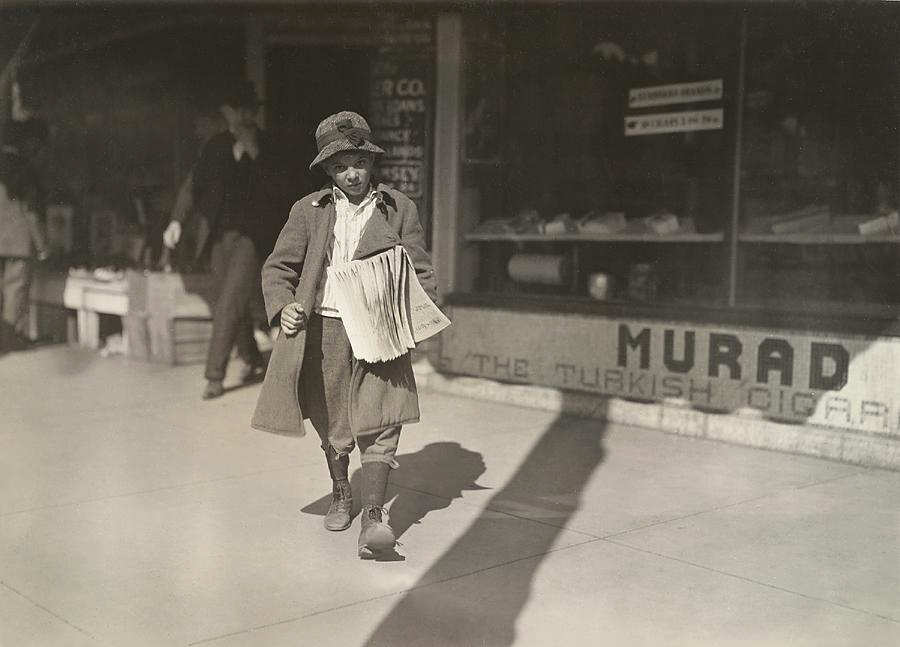
 

Paul Caponigro (American, 1932-2024) 'Monument Valley, Utah' 1970


Paul Caponigro (American, 1932-2024)
Monument Valley, Utah
1970
From Portfolio II
Gelatin silver print


Paul Caponigro (American, 1932-2024) 'Rock Wall, Connecticut' 1959


Paul Caponigro (American, 1932-2024)
Rock Wall, Connecticut
1959
Gelatin silver print


Gerhard Richter (German, b. 1932) 'Abstract Painting (613-3) 1986


Gerhard Richter (German, b. 1932)
Abstract Painting (613-3)
1986
Oil on canvas
260.7 x 203cm
Collection of Preston H. Haskell, Class of 1960
© 2014 The Franz Kline Estate / Artists Rights Society (ARS), New York / photo Douglas J. Eng


Few artists have tackled the subject of painting with more self-consciousness, with greater sensitivity to the history, dilemmas, and possibilities of the medium, than Gerhard Richter. For the last five decades, Richter has explored the very nature of painting with and in paint, making his an especially reflexive enterprise. In many ways, contradiction defines his prolific body of work, as does diversity, whether of mode, style, technique, or content. A student of two very different art academies, one in Dresden and the other in Düsseldorf, where he trained with Joseph Beuys, Richter was weaned on Eastern European Social Realism as well as Western Pop and Fluxus. His earliest mature canvases, from the early 1960s, consist of blurry renditions of mostly ready-made photographs representing subjects both banal and chilling, from automobiles and Nazi officials to military aircraft and aerial cityscapes. By 1966, Richter had begun to experiment with abstraction. To this day, he still alternates between objective and nonobjective painting.

The groundwork for pieces like Abstract Painting (613-3) was laid in the early 1970s, when Richter began a series of nonrepresentational paintings based on photographic enlargements of brushstrokes.1 Because they depict, in a highly illusionistic manner, reproductions of otherwise abstract marks, such paintings confuse the handmade and the technological, the original and the copy. Richter continued to duplicate brushstrokes until 1980, when he started to make actual abstract paintings, albeit in unconventional ways.2 Abstract Painting (613-3) exemplifies the technique for which Richter is recognised today, one in which editing, subtraction, and cancellation play crucial roles.3 Here as elsewhere, the artist fleshed out a preliminary composition with ordinary brushes. As it was drying, he covered the hard edge of a squeegee with paint and dragged it across the surface of the canvas, an action that blended some layers but removed others, thereby revealing what was previously concealed.4 The resulting works are tapestries of abrasions and palimpsests, heterogeneous fields of visual incident. Discontinuity is particularly evident in Abstract Painting (613-3), due to variations in the directionality of paint, the combination of cool and warm hues, and the presence of a vertical seam near the middle of the canvas. To the extent that it cedes some control to chance and introduces the spectre of mechanicity, Richter’s process “muffles singular signs of personal expression”5 and trades existential drama for moderation, unlike the gestural, virtuosic canvases his paintings superficially resemble. As with many of his abstractions after 1980, Abstract Painting (613-3)’s palette is bright and sumptuous in appearance but not necessarily in tone.6 For Richter, colour does not signify “happiness,” he once said, but instead a “tense” or “artificial” “cheeriness” associated with “gritted teeth.”7

Kelly Baum


1/ See Robert Storr, Gerhard Richter: Forty Years of Painting (New York: Museum of Modern Art, 2002), 53, pp. 68-69.
2/ These new abstractions coincided with a revival of Expressionism, called Neo-Expressionism, in the United States and Europe, a tradition from which Richter felt alienated and to which his works stand in pointed contrast. See “MoMA Interview with Robert Storr, 2002,” in Gerhard Richter: Writings, 1961-2007, ed. Dietmar Elger and Hans Ulrich Obrist (New York: D.A.P., 2009), p. 428.
3/ See ibid., pp. 71–74.
4/ Richter’s squeegees are essentially long pieces of rectangular plastic, often as wide as his canvases, to which handles are attached. While abrading a surface with the squeegee, Richter will sometimes use a brush or a knife to further blend and scrape. See Gerhard Richter Painting, directed by Corinna Belz (Berlin: Zero One Film, 2011), dvd.
5/ Hal Foster, “Semblance According to Gerhard Richter,” Raritan 22 (Winter 2003): 160. See also Benjamin H. D. Buchloh, Gerhard Richter: Abstract Paintings 2009 (Cologne: Walther Kônig, 2009), 89, 95. Richter does not always agree with this reading of his work. See “Interview with Benjamin H. D. Buchloh, 1986,” in Gerhard Richter: Writings, p. 180.
6/ The stringent quality of this and other abstractions by Richter is due as much to his predilection for bright, sharply contrasting colours as it is to his avoidance of earth tones.
7/ See “Interview with Benjamin H. D. Buchloh, 2004,” p. 489.


Gerhard Richter (German, b. 1932) 'Abstract Painting (613-3)' 1986 (detail)


Gerhard Richter (German, b. 1932)
Abstract Painting (613-3) (detail)
1986
Oil on canvas
260.7 x 203cm
Collection of Preston H. Haskell, Class of 1960
© 2014 The Franz Kline Estate / Artists Rights Society (ARS), New York / photo Douglas J. Eng


Extract from MARK, MAKER, METHOD by Kelly Baum

The paintings in Rothko to Richter narrate a history of postwar art whose greatest points of tension and most important moments of breakthrough revolve around facture, from the Latin facere, meaning “to make.”3 Together they demonstrate a fundamental fact: when painting’s prerogatives change, so too do its procedures. Focusing on select works from the Haskell Collection, this essay explores the nature of marks and mark-making in abstract painting after World War II. In the case of the artists seen here, mark-making was an activity of incredible consequence. The success or failure of any one painting might rest on something as elementary as the choice between oil paint and acrylic paint or a brush and a palette knife. It might depend on the difference between staining and smearing, between choppy strokes and fluid swipes, or between painting dry-on-dry and wet-on-wet.

With this in mind, my essay examines how and what marks signify within a single artist’s work as well as in postwar painting as a whole. How do shifts in the way marks are made signal broader shifts in artistic practice? What are the different, often competing logics of mark-making at any given moment? How do marks reflect or, alternately, disavow the impact of mass media, technology, and photomechanical reproduction in the mid- to late twentieth century? Such an investigation is premised on a particular understanding of the word “mark.” First and foremost, “mark” is a product as well as a process – more specifically, it is an end that cannot be separated from its means. Marks are also structural – as well as vocal – components of any given painting. Not only do they reveal a great deal about a painting’s meaning, they also shape that meaning, give it form and substance, for the viewer. For the purposes of this essay, then, I consider the mechanics of mark-making to be socially, physically, symbolically, and historically important.

Marks are the constituent feature, the backbone, of painting. A painting may be comprised of hundreds, if not thousands, of marks. In most cases, these marks are made in paint, on a support, by the hands of an artist. Even when those hands wield an implement – a brush or palette knife, for example – a physical connection still obtains between artist and mark.4 (What are implements like these, after all, but prostheses that extend the hand’s reach and capability?) Many of the artists in Rothko to Richter exploit this very character of the mark. In their paintings, a direct, transparent relationship exists between mark and method, a one-to-one correspondence between every stroke of paint and every movement of the artist’s hand. Here mark and method are tautological: the former records the latter. However, not every artist in Rothko to Richter subscribes to this approach. Several developed techniques designed to depersonalise the act of mark-making, to literally divorce the mark from the artist’s hand. Some even went so far as to erase the traces their tools left behind, effacing marks as soon as they were created. Instead of flaunting the process by which their paintings were produced, these artists dissimulated.

Dominating the Haskell Collection are Abstract Expressionist painters and their counterparts in Europe, including Appel, de Kooning, Goldberg, Kline, Riopelle, Rothko, and Tworkov.5 To varying degrees, these artists prized immediacy, virtuosity, and expression. Autographic gestures play a key role in their paintings.6 Such marks constitute a kind of painterly handwriting that indexes the artist’s distinct will, personality, and psychological state – his or her very self.

Etymologically, “gesture” derives from the Medieval Latin gestura, meaning “to carry.” In its original form, gesture denoted bearing – that is, the manner in which human beings deport themselves physically. It was also affiliated with rhetoric: in the past, gesture delineated a set of “bodily movements, attitudes, expression of countenance” intended to “giv[e] effect to oratory.”7 Gesture was a supplement to speech, a kind of accent or embellishment, in other words. All such connotations are relevant to the Expressionist canvases in the Haskell Collection: for artists like Goldberg and Kline, gestures were overtures, forms of communication that served to address viewers directly and invite them to participate in a subjective exchange. Gesturing involved gesticulating in the sense we understand that word today. In Appel’s Dans la Tempête (1960) or de Kooning’s Woman II (1961), for instance, the artist’s hand, wrist, and arm – sometimes his entire body – are marshalled so as to externalise otherwise private impulses, instincts, and passions. The affective power of such gestures was in direct proportion to their muscularity, fluidity, and dynamism, traits enthusiastically embraced by American and European Expressionists, who equated intensity of spirit with intensity of brushwork.

As art historian Meyer Schapiro astutely argued in 1957, the new emphasis on gesture among abstract painters of the postwar generation precipitated concomitant changes in technique. “The consciousness of the personal and spontaneous” in painting, Schapiro wrote, “stimulates the artist to invent devices of handling, processing, surfacing, which confer to the utmost degree the aspect of the freely made. Hence the great importance of the mark, the stroke, the brush, the drip, the quality of the substance of paint itself, and the surface of the canvas as a texture and field of operation.”8 This holds true of Appel’s Dans la Tempête (1960), de Kooning’s Untitled (Woman) (1965), Goldberg’s The Keep (1958), and Kline’s Untitled (1960), among other works, whose richly impastoed surfaces and bold, impetuous brushwork register not only heightened emotion but also the presence of the artist.

If Schapiro championed these paintings as enthusiastically as he did, it was because they represented, in his view, the “last hand-made personal objects within our culture.”9 Insofar as Rothko’s and de Kooning’s canvases preserved increasingly obsolete methods of fabrication, privileging manual over industrial forms of production, they “affirmed the individual in opposition to the contrary qualities of the ordinary experience of working and doing.”10 For Schapiro, the importance of painters like Goldberg and Tworkov lay precisely in their efforts to humanise art at a moment when the subject was under assault from the dehumanising forces of science, technology, and mass media. In his view, Abstract Expressionism represented the last bastion of freedom and individuality in an increasingly homogenous, mechanised world, a bulwark against the intrusion of standardisation into every walk of life.

However, by the late 1950s, when Schapiro made this claim, a sea change was already well under way in the world of art. Even then, a younger generation of artists, represented by Rauschenberg and Stella, was beginning to embrace at the level of technique the very shifts in society and subjectivity that Schapiro and the Abstract Expressionists decried. As the 1950s gave way to the 1960s, increasing numbers of artists would cease to identify either physically or emotionally with their canvases. Simultaneously, they began to align painting with fabrication, deriving insight from the fields of design and engineering. Gradually, the taste for “the machine-made, the impersonal, and reproducible,” likewise “an air of coolness and mechanical control,” would infiltrate art, heralding a break with Abstract Expressionism.11


3/ Sometimes reduced to “texture,” facture designates the way a work of art has been made and the manner in which its material components have been manipulated.
4/ As much as possible, I have tried to avoid falling into the all-too-common trap of fetishising the painted mark. Although much can be learned about a painting by deciphering the marks that comprise it, the mark is often conflated with something more problematic, the artist’s touch, a supposed symbol of singularity and authenticity that is inextricably related to the work’s exchange value and its status as a commodity on the market.
5/ For more information on Expressionism in Europe, see Serge Guilbaut, “Disdain for the Stain: Abstract Expressionism and Tachisme,” in Abstract Expressionism: The International Context, ed. Joan Marter (New Brunswick, NJ: Rutgers University Press, 2007).
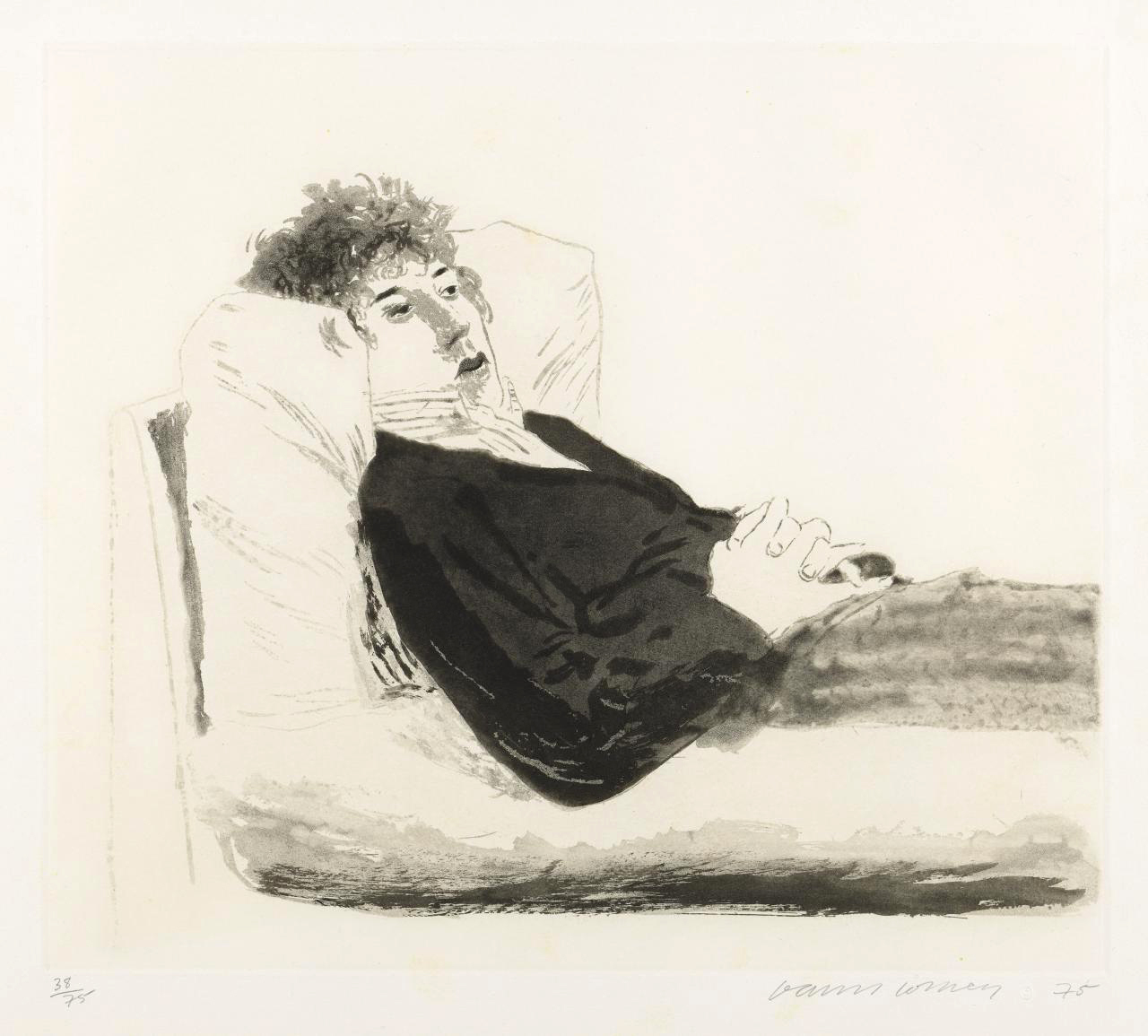
6/ As Michael Leja argues, this was a historically, culturally, and ideologically specific self that invested great importance in “irrationality” and reflected new knowledge about the human mind, psyche, and condition. See his Reframing Abstract Expressionism: Subjectivity and Painting in the 1940s (New Haven, CT: Yale University Press, 1993), pp. 2-9, pp. 36-41. See also Ann Eden Gibson, Abstract Expressionism: Other Politics (New Haven, CT: Yale University Press, 1997).
7/ Oxford English Dictionary Online, s.v. “Gesture,” http://www.oed.com/search?searchType=dictionary&q=gesture&_searchBtn=Search.
8/ Meyer Schapiro, “Recent Abstract Painting (1957),” in Modern Art: 19th and 20th Centuries (New York: George Braziller, 1978), p. 218.
9/ Ibid., p. 217.
10/ Ibid., p. 218.
11/ Ibid., p. 219. As Schapiro notes, if science and engineering were “distasteful” to the Abstract Expressionists, it was due largely to the role they played in World War II and the Holocaust.


Franz Kline (American, 1910-1962) 'Untitled' 1960


Franz Kline (American, 1910-1962)
Untitled
1960
Brush and oil on canvas
47 x 45.1cm
Collection of Preston H. Haskell, Class of 1960
© 2014 The Franz Kline Estate / Artists Rights Society (ARS), New York / photo Douglas J. Eng


Hans Hofmann (American born Germany, 1880-1966) 'Composition #3' 1952


Hans Hofmann (American born Germany, 1880-1966)
Composition #3
1952
Oil on canvas
76.8 x 61.3cm
Collection of Preston H. Haskell, Class of 1960
© 2014 Estate of Hans Hofmann / Artists Rights Society (ARS), New York / photo Douglas J. Eng


Hans Hofmann (American born Germany, 1880-1966) 'Midday' 1956


Hans Hofmann (American born Germany, 1880-1966)
Midday
1956
Oil on canvas
46.4 x 35.9cm
Collection of Preston H. Haskell, Class of 1960
© 2014 Estate of Hans Hofmann / Artists Rights Society (ARS), New York / photo Douglas J. Eng


Hans Hofmann is generally associated with the New York School, but he actually belongs to an earlier generation of artists based in Europe. Indeed, Hofmann witnessed firsthand the invention of abstraction while living in Paris from 1904 to 1914. Between 1933 and 1958, he would impart the lessons of Henri Matisse and Pablo Picasso as well as those of Wassily Kandinsky and Piet Mondrian to the students who attended his art schools in New York and Provincetown, Massachusetts.1 Later in life, after the works in the Haskell Collection were made, Hofmann helped broker the transition from Abstract Expressionism to Minimalism, a movement that shared his more recent predilection for restraint, objectivity, and pictorial problem-solving.2

Hofmann was never wedded to any one approach to painting. Indeed, “diversity” was in many respects his signature style. Before the late 1940s, he produced paintings of abstracted interiors, still lifes, landscapes, and figure studies, all of which bear the imprint of Cubism and Fauvism. By 1950, however, his paintings were reliably abstract: no, or almost no, recognisable content remained. Characterised by radiant luminosity, brilliant colour contrasts, and tactile surfaces, Composition #3 and Midday were created just a few years before the artist closed his two schools, a moment that coincided with his critical recognition as a painter. Colour serves a structural role in both paintings, generating form and defining space. In Composition #3, paint is added and subtracted, sometimes ferociously, with implements ranging from fingertips and spatulas to thick brushes and sharp paintbrush handles, all of which register clearly on the canvas. Clement Greenberg could have been describing this work when he wrote, “Klee and Soutine were perhaps the first to address the picture surface consciously as a responsive rather than inert object, and painting itself as an affair of prodding and pushing, scoring and marking, rather than of simply inscribing or covering. Hofmann has taken this approach further, and made it do even more.”3 For its part, Midday exemplifies Hofmann’s distinctive brand of “grandiose Pointillism,” a manner adopted around 1954.4 Covered in a dense crust of paint, the work is made of staccato brush marks that extend from edge to edge, resulting in an atomised, decomposed surface whose impasto projects into space.5 Midday’s resemblance to a mosaic is more than coincidental: in 1950 and 1956, Hofmann received commissions to create monumental mosaics for public spaces.

Kelly Baum


1/ On the ways in which Hofmann divests the tradition of abstraction embodied by Mondrian and Kandinsky of its social and utopian aspirations, see Sam Hunter, “Introduction,” in Hans Hofmann, ed. James Yohe (New York: Rizzoli, 2002), pp. 15-16.
2/ Like many of his contemporaries in Europe and the United States, Hofmann often linked the creation of art to spirituality, on the one hand, and to the artist’s personal temperament, on the other. However, these priorities were far less pronounced in his work than in that of artists such as Mondrian and Rothko. Hofmann’s concern was more for the mechanics – the grammar – of art. Ibid., p. 16, 20.
3/ “Hans Hofmann [1958],” in Art and Culture: Critical Essays (Boston: Beacon Press, 1961), p. 195.
4/ Hunter, “Introduction,” p. 29.
5/ On the art historical importance of Hoffmann’s “fat” surfaces, which contribute to the perception of his pictures as “objects,” see Clement Greenberg, Hofmann (Paris: G. Fall, 1961), p. 32, 34.


Hans Hofmann (American born Germany, 1880-1966) 'Midday' 1956 (detail)


Hans Hofmann (American born Germany, 1880-1966)
Midday (detail)
1956
Oil on canvas
46.4 x 35.9cm
Collection of Preston H. Haskell, Class of 1960
© 2014 Estate of Hans Hofmann / Artists Rights Society (ARS), New York / photo Douglas J. Eng


IN THE WAKE OF ABSTRACT EXPRESSIONISM by Hal Foster

This selection from the Haskell Collection focuses on Abstract Expressionism and its aftermath and, as such, provides an occasion to reflect on the fate of these two terms, abstraction and expression, in the advanced painting of this period. I want to do so briefly here, one term at a time.

In Western painting at least since Rembrandt, we look for expression, first and foremost, in brushwork, especially brushwork that exceeds the task of representation, brushwork that appears as gesture. Gesture in excess of representation tends to be read as the mark of the artist, not only of his distinctive touch but of that touch at a particular moment. We thus take gesture to be singular, original, authentic, in a word, individual – an indication, perhaps, of the very subjectivity of the artist at that instant in time. Now, what happens to this set of associations when we jump two hundred and fifty years, from Rembrandt to Van Gogh (to stay on a Dutch axis), and then move fifty years further, from Van Gogh to Willem de Kooning (who is represented in the Haskell Collection by two oil studies for his great Woman paintings)? In what ways do these associations, these conventions (for that is what they are), come under pressure?

Pitched in this way, the question is too general; so consider the works in the Haskell Collection produced by 1960 or so by Karel Appel, Michael Goldberg, Hans Hofmann, Franz Kline, Jean-Paul Riopelle, and Jack Tworkov. Can we agree that, in each case, the artist appears to believe in his gesture as defined above, that is, as a bearer of a uniquely subjective touch? All of these pieces, even when not large, conceive the picture as an “arena” for “action” (per the famous account of Abstract Expressionism given by the critic Harold Rosenberg in 1952).1 At the same time, this action is always qualified by calculation: note, for example, how Hofmann minds the edges of his canvases; and this gesture is sometimes wilful: note, for instance, how Goldberg seems a little forced in his painterly attack.

Once reiterated, a gesture, whether within one painting or from one painting to another, becomes a performance (not simply an action) as well as a sign (not simply an expression), and in this way it becomes divided from the very presence that it appeared to register in the first place. Jackson Pollock struggled with this conundrum – it was one factor that led to his partial return to figuration as early as 1951 – and we can sense this struggle in some of the works in the Haskell Collection, too (I see it in the Riopelle, among others). This problem of the reiteration of gesture is compounded by the greater difficulty of the repetition of style, that is, the repetition of the set of conventions that is Expressionism. For if de Kooning, Pollock, and friends worked in the wake of German Expressionism, so their followers laboured in the aftermath of Abstract Expressionism; thus they were belated Expressionists, in effect, twice over. As gesture came under existential pressure and Expressionism under art historical pressure, they could not help but see that the former might not be as singular, nor the latter as original, as they had once thought.2

Note what occurs after 1960, in part in response to this predicament, in the Color Field painting of Helen Frankenthaler, Paul Jenkins, and Morris Louis: gesture becomes muted, and the paint is loosened from the brush. Letting paint flow is what Frankenthaler learned from the drip paintings of Pollock, and what Louis and others learned from Frankenthaler (they exploited the new fluidity of acrylics here). And yet, however liberated, this paint speaks less of the expressive presence of the painter than of the material conditions of the painting – the fact that acrylic paint runs, mixes, responds to gravity, and stains the canvas (if it is not gessoed) in such a way that its weave becomes apparent and its flatness is foregrounded. “Flatness and the delimitation of flatness”: according to the critic Clement Greenberg, these are, respectively, the essential attribute of painting in general and the distinctive capability of abstract painting in particular.3 In this respect, see how Louis, in the 1962 painting in the Haskell Collection, lets his long bands of paint develop in a way that declares not only the vertical hang of the painting but also its flat surface; here the physical characteristics of paint, colour, and canvas are the sole subjects. Indeed, the painting seems to be produced as though by gravity alone, as though it were almost automatic; in comparison with Abstract Expressionism, the expressivity of the artist is here suppressed.

Such is the lesson that Frank Stella took from Louis in paintings like Double Scramble (1978) – a late example of work initiated in the mid-1960s. The critic Michael Fried termed such compositions “deductive structures” because they seemed to derive strictly from the rectangle of the support and the width of the stretcher, that is, they were deduced from the given structure of the painting alone.4 Here we are even further from the expressivity of Abstract Expressionism than we were with Louis: the composition seems to draw itself. Expressivity appears to return in the abstractions of Gerhard Richter, who is also represented in the Haskell Collection, yet the victory is a Pyrrhic one: like his  canvases, his gestures are so numerous and so reiterative that they seem to cancel one another out and so to nullify as much as to register any expressive self.

Like expression, abstraction also comes under pressure during the period surveyed by the Haskell Collection. Although presented in transcendental terms by pioneers of abstract painting such as Wassily Kandinsky in the 1910s, it was largely drained of this metaphysics by the 1960s, to the point where Stella could describe his work in the most positivist of terms: “What you see is what you see.”5 At the same time, abstraction was still endowed with great consequence for art history in general. In 1936, when the curator Alfred H. Barr Jr. presented his famous diagram of “Cubism and Abstract Art” for his show of that title at the new Museum of Modern Art in New York, abstraction served as the through-line of twentieth-century art, one that Greenberg made not only coherent but also ineluctable through his narrative of the progressive self-refinement of “modernist painting.” This story provided continuity as well as goal to twentieth-century art: “I cannot insist enough,” Greenberg wrote in “Modernist Painting” (1961), “that Modernism has never meant, and does not mean now, anything like a break with the past.”6

However, this story soon hit a large bump in the road. As abstract painting focused evermore on its own materiality, its status as an object became impossible to avoid; clearly the next step, it seemed to some avant-gardists, was to dispense with paintings altogether and to produce objects instead. Greenberg already glimpsed this heretical possibility with Stella, and this is why he never included Stella in his canon. Even if Fried still regarded Stella as the exemplar of “modernist painting,” for others, such as his close friend Carl Andre, Stella was on the other side, their side, the side of the Minimalist object as defined by the artist-critic Donald Judd. At this point, then, a “deductive structure” by Stella could be read – was read – as pure painting by some and as specific object by others.

This ambiguous status of abstract painting – as both transcendental force and mere thing, as both full and null – was already glimpsed in its first years. For example, for Kazimir Malevich, the monochrome, in its ideality, pointed to a world beyond this one; for his compatriot Aleksandr Rodchenko, however, the monochrome, in its materiality, underscored that this world was the only one we have. (At times these poles switched their charge: for some artists, transcendental abstraction suggested an emptying out of painting, a sort of Zen nullity of its own, while for others, mundane abstraction suggested a thingly presence, a fullness of its own, but the ambiguous status remained constant.) The paradox of abstraction as both full and null returns in the period surveyed by the Haskell Collection: the canvases by Robert Motherwell, Mark Rothko, and others clearly hold to the metaphysical power of abstract painting, whereas the paintings by Richter, Stella, and others manifestly do not.

Abstract painting was challenged by more than its own objecthood; it also faced an external threat, one that was even more grave. This problem runs back to its early days too, for abstraction emerged, circa 1912-1913, along with two other avant-garde inventions, the collage and the readymade, which brought the mass-media image and the mass-produced object into the frame of high art. For many artists and critics, abstract painting was all the more important for the stout resistance it offered to these troublesome incursions (this is certainly what Greenberg believed), yet it could not fend off such mediation forever, and in the 1950s and 1960s it mostly gave up.7 De Kooning, for example, used bits of collage in his Woman series, and Robert Rauschenberg, who is also represented in the Haskell Collection, added massive amounts of mediated images to his paintings.8 By the time of Richter, such mediation is fully folded into painting: almost from the start of his career, he has moved back and forth between abstract paintings and figurative ones based on photographs (both appropriated and his own); moreover, as suggested above, his abstract paintings appear mediated in their own ways. And this always-already mediated condition is the very point of departure of the spectacular paintings by Jack Goldstein in the Haskell Collection: however abstract they appear, they are worked up entirely from appropriated images. At this point the categories of abstraction and expression are transformed beyond recognition.9


1/ Harold Rosenberg, “The American Action Painters,” Art News 51 (December 1952).
2/ As represented in the Haskell Collection, some artists, such as Sam Francis and Joan Mitchell, carried on as if these problems didn’t matter much.
3/ Clement Greenberg, “After Abstract Expressionism,” Art International 25 (October 1962), p. 30.
4/ Michael Fried, Three American Painters: Kenneth Noland, Jules Olitski, Frank Stella (Cambridge, MA: Fogg Art Museum, 1965).
5/ Frank Stella, quoted in Bruce Glaser, “Questions to Stella and Judd,” Art News 65 (September 1966), p. 59.
6/ Clement Greenberg, “Modernist Painting,” Arts Yearbook 4 (1961), p. 108.
7/ It is not clear how opposed abstraction was to these other forms in the first place. For example, a monochrome or a grid painting is already a kind of readymade, and as soon as paint comes from an industrial tube, it is a sort of readymade too.
8/ De Kooning was rarely fully abstract; Greenberg comments on his “homeless representation” in “After Abstract Expressionism,” p. 25.
9/ These complications continue in the current work of Wade Guyton, Amy Sillman, Christopher Wool, and many others; indeed, they are largely what sustain advanced painting in the present.


Karel Appel (Dutch, 1921-2006) 'Dans la Tempête' 1960


Karel Appel (Dutch, 1921-2006)
Dans la Tempête
1960
Oil on canvas
88.9 x 115.9cm
Collection of Preston H. Haskell, Class of 1960
© 2014 Estate of Hans Hofmann / Artists Rights Society (ARS), New York / photo Douglas J. Eng


Karel Appel (Dutch, 1921-2006) 'Dans la Tempête' 1960 (detail)


Karel Appel (Dutch, 1921-2006)
Dans la Tempête (detail)
1960
Oil on canvas
88.9 x 115.9 cm
Collection of Preston H. Haskell, Class of 1960
© 2014 Estate of Hans Hofmann / Artists Rights Society (ARS), New York / photo Douglas J. Eng


“We live always in a tremendous chaos,” Karel Appel stated to an interviewer in 1986, “and who can make the chaos positive anymore? Only the artist.”1 Registering, but also redeeming, social, political, and psychic conflict was an ethical imperative for Appel, who came of age as an artist in the 1940s. Appel witnessed firsthand the brutalisation of human beings by war, prejudice, deprivation, and occupation, and he sought to visualise these experiences through art. His canvases are ravaged, quite literally, by brushes, palette knives, and fingers. Choked by thick layers of impasto, their surfaces are as agitated as the animals and figures the paintings depict. Form, colour, content, and technique all serve as corollaries to the period of profound turmoil in which Appel worked. Importantly, the artist’s approach to historical trauma was dialectical. The devastation of pre- and postwar Europe, he believed, was a tabula rasa making possible the rebirth of both art and human beings.2

Appel was a founding member of Cobra (1948-1951), a group of Expressionist painters from Amsterdam, Brussels, and Copenhagen. Appel shared with other Cobra artists an appreciation for the art of the untutored, including children and the mentally ill, whose supposed alienation from Western, classical tradition granted them privileged access to the wellsprings of creativity: fantasy, passion, and instinct.3 Believing that society had been betrayed by logic and science, Appel turned to the irrational for inspiration. His predilection for the primal aligned him with Jean Dubuffet and Art Brut, an association formalised by his appearance in French critic Michel Tapié’s 1952 exhibition Un Art autreDans la Tempête was painted in 1960, three years after Appel relocated temporarily to New York, where he socialised with Abstract Expressionists such as Willem de Kooning and Franz Kline. Upon arriving in Manhattan, Appel was struck not only by the spontaneous, improvisatory spirit of jazz but also by the city’s “unfinished quality.”4 He subsequently sought to translate this contingency into paintings like Dans la Tempête. Trapped in a state of arrested development, this work also demonstrates Appel’s longstanding fascination with the “creaturely,” that is, with the reduction of humans to the condition of animals.5 Here as elsewhere, the artist elides the one and the other, manufacturing from their cross-pollination a grotesque bestiary of mutants whose anatomical deformations evoke distress. Much as Appel blends pigment by painting wet-on-wet, so too does he blur the boundaries between things and the grounds they inhabit: permeability trumps both spatial and physical integrity, as seen in Dans la Tempête, where a yellow zoomorphic shape at the left and a barely legible demi-human at the right thrash amongst swirls of paint.6

Kelly Baum


1/ Sam Hunter, “Karel Appel in the Spirit of Our Time,” Arts Magazine 62 (January 1988), p. 60.
2/ Hal Foster, “Creaturely, Cobra,” October 141 (Summer 2013), p. 7.
3/ See Karel Appel, Psychopathological Notebook: Drawings and Gouaches, 1948-1950 (Bern: Gachnang and Springer, 1999).
4/ Hunter, “Karel Appel,” p. 62.
5/ Foster, “Creaturely, Cobra,” pp. 6-8.
6/ Appel described his work from 1955 to 1960 as “nightscapes” that merge “paysage” and “visage.” Helena Kontova and Giancarlo Politi, “Karel Appel,” Flash Art, no. 134 (May 1987), p. 53.


Jack Tworkov (American, 1900-1982) 'Bond' 1960


Jack Tworkov (American, 1900-1982)
Bond
1960
Oil on canvas
154.9 x 91.4cm
Collection of Preston H. Haskell, Class of 1960
© 2014 Estate of Hans Hofmann / Artists Rights Society (ARS), New York / photo Douglas J. Eng


Jack Tworkov (American, 1900-1982) 'Bond' 1960 (detail)


Jack Tworkov (American, 1900-1982)
Bond
(detail)
1960
Oil on canvas
154.9 x 91.4cm
Collection of Preston H. Haskell, Class of 1960
© 2014 Estate of Hans Hofmann / Artists Rights Society (ARS), New York / photo Douglas J. Eng


Jean Dubuffet (French, 1901-1985) 'Mire G119' 1983


Jean Dubuffet (French, 1901-1985)
Mire G119
1983
Acrylic on paper
135.7 x 99.5cm
Collection of Preston H. Haskell, Class of 1960
© 2014 Estate of Hans Hofmann / Artists Rights Society (ARS), New York / photo Douglas J. Eng


Modularity, seriality, and repetition – three of his main concerns here – ground us firmly in modernity, in the realm of synthetics and industrial production. Importantly, the title of the series, Mires, has both televisual and physiological connotations: it is French for “test pattern” (a signal used to calibrate television sets), but it also means “sight” as well as “aim,” as in “the sense of focusing sight on a point in an unlimited continuum.” Instead of the visionary, then, the Mires address vision itself. As the artist once wrote, the Mires “represent the spectacles that are offered to our eyes,” by which he meant the myriad optical enticements that bombard viewers in the form of signs, displays, and advertisements. Following from this, we might say that Dubuffet sought in works like Mire G119 to fashion an artistic equivalent for the “mobile,” “dynamic,” “impulsive,” and wholly mediated character of vision in the late twentieth century.

Kelly Baum


Richard Diebenkorn (American, 1922-1993) 'Untitled (Ocean Park)' 1983


Richard Diebenkorn (American, 1922-1993)
Untitled (Ocean Park)
1983
Acrylic, gouache, crayon, and pasted paper on paper
96.2 x 63.5cm
Collection of Preston H. Haskell, Class of 1960
© 2014 Estate of Hans Hofmann / Artists Rights Society (ARS), New York / photo Douglas J. Eng


Paul Jenkins (American, 1923-2012) 'Phenomena Spanish Cape' 1975


Paul Jenkins (American, 1923-2012)
Phenomena Spanish Cape
1975
Acrylic on canvas
86.7 x 86.7cm
Collection of Preston H. Haskell, Class of 1960
© 2014 Estate of Hans Hofmann / Artists Rights Society (ARS), New York / photo Douglas J. Eng


Although his paintings seem to share a great deal with those of Morris Louis and Helen Frankenthaler, Paul Jenkins never counted himself a member of the Color Field school – or indeed, of any school at all. Jenkins moved to New York in 1948, during the heyday of Abstract Expressionism, but relocated to Paris just five years later, joining an artistic community that included Joan Mitchell, Jean-Paul Riopelle, Michel Tapiés, and Wols. Throughout the 1950s and 1960s, Jenkins absorbed a dizzying array of writing on matters ranging from art and magic to psychoanalysis and Zen Buddhism.1 From this heady brew, he developed a distinctly mystical art that sought to make the invisible visible. The role of the artist, Jenkins believed, was to serve as a conduit, or “medium,” through which memories, emotions, and experiences passed directly onto canvas.2

In 1959-60, Jenkins’s work took a dramatic turn: after visiting a small port on the northeast coast of Spain, near the Cap de Creus, he began to prioritise fluidity as both a style and a concept, a decision that led him to experiment with water-based acrylic. Method played a crucial role in creating the effect of flux that Jenkins sought. In Phenomena Spanish Cape paint is poured directly onto the canvas from a can or watering pot, allowing for continuous, uninterrupted shapes to emerge.3 The downward flow of paint was hastened by gravity but controlled by the artist, who tilted the support right and left, up and down, to encourage the medium in one direction or another. Jenkins used water to mute or lighten tones and ivory knives, which left no discernible trace on the canvas, to spread the paint as it pooled.4 The result is a paradox: a painting born of the artist but from which all evidence of his hand – his labor – has been effaced. Phenomena Spanish Cape suggests expansion, radiation, and suspension. Evoking eddies, clouds, and tides, the sheets of colour seem to swell and drift like the natural events whose appearances they distill.5 We might also recognise in the work’s composition – with its veils of colour that project out from a dominant red mass into areas of white-primed canvas – an aerial view of a peninsula, perhaps the Spanish cape referenced in the title. In all of Jenkins’s paintings after 1960, the title of the work is prefaced by the word “phenomena,” meaning an event of spiritual and subjective import, a snapshot of “ever-changing reality” objectified on canvas.6

Kelly Baum


1/ For more on Jenkins’s spiritual and intellectual background, see Albert Elsen, Paul Jenkins (New York: Harry N. Abrams, 1973), pp. 20-21, p. 35, 46, 67.
2/ Ibid., p. 19.
3/ Ibid., p. 56. Jenkins first experimented with pouring paint in 1953-54.
4/ For more on the artist’s technique and materials, which he honed, quite literally, to a science, see ibid., pp. 65-76.
5/ On the role of nature in his work, see Jean Cassou, Jenkins (New York: Harry N. Abrams, 1963), pp. 13-14.
6/ Ibid., p. 6.


Mark Rothko (American, 1903-1970) 'Untitled' 1968


Mark Rothko (American, 1903-1970)
Untitled
1968
Oil on paper laid down on canvas
Collection of Preston H. Haskell, Class of 1960
© 1998 Kate Rothko Prizel & Christopher Rothko / Artists Rights Society (ARS), New York / photo Douglas J. Eng


Mark Rothko (American, 1903-1970) 'Untitled' 1968 (detail)


Mark Rothko (American, 1903-1970)
Untitled (detail)
1968
Oil on paper laid down on canvas
Collection of Preston H. Haskell, Class of 1960
© 1998 Kate Rothko Prizel & Christopher Rothko / Artists Rights Society (ARS), New York / photo Douglas J. Eng


Princeton University Art Museum
McCormick Hall, Princeton, NJ ‎
Phone: (609) 258-3788

The Museum is located on the Princeton University campus, a short walk from Nassau Street in downtown Princeton. Once on campus, simply follow the lamppost Museum banners.

Opening hours:
The main Museum building is closed for construction of our new Museum, designed by architect Sir David Adjaye and anticipated to open in late 2024.

Princeton University Art Museum website

LIKE ART BLART ON FACEBOOK

Back to top

Exhibition: ‘A New Vision: Modernist Photography’ at the Currier Museum of Art, Manchester, New Hampshire

Exhibition dates: 4th February – 13th May 2012


Minor White (American, 1908-1976) 'Birdlime and Surf, Point Lobos, California' 1951


Minor White (American, 1908-1976)
Bird Lime and Surf, Point Lobos, CA
1951
Gelatin silver print
8 1/4 in. x 10 3/8 in. (20.96 x 26.35cm)
Currier Museum of Art, Manchester, New Hampshire
Gift of Edith Vallarino


The conceptual idea of Modernist photography is “look at this,” look at how photography interprets the world: through light, lens, glass, film, paper, brain and eye. Early Modernist photography occurred in the first two decades of the twentieth century (through the vision of Alfred Steiglitz, Paul Strand, Edward Steichen et al) before it was even named “Modernism” and led to radically different forms of artistic expression that broke the pictorialist conventions of the era. Gritty realism was the order of the day, clean lines, repetition of form, strange viewpoints where the photographers observation of the subject is as important as the subject itself. Look at how I, and the camera, see the world: that is all there is, the indexical relation to the word of truth.

“Artists and photographers began looking at the photographs used in mass culture, to develop an aesthetic true to the intrinsic qualities of photographic materials: the accurate rendition of visible reality; framing that crops into a larger spatial and temporal context; viewpoints and perspectives generated by modern lenses and typically modern spatial organisations (for example, tall buildings); and sharp, black-and-white images. This objective, mechanised vision became art by foregrounding not its subject matter, but its formal structure as an image.”1

Steiglitz and Strand, “often abstracted reality by eliminating social or spatial context; by using viewpoints that flattened pictorial space, acknowledging the flatness of the picture plane; and by emphasising shape and tonal rendition in highlights and shadows as much as in the actual subject matter.”2 Such use of highlights and shadows can be seen in the most famous work by the photographer Helmar Lerski, Transformation Through Light (1937), a photograph of which is presented below. Have a look on Google Images to see the changes wrought on the same face just through the use of light.

It is interesting to note the inclusion of photographers such as Paul Caponigro and Brett Weston in this exhibition as later examples of artists influenced by language of Modernism. While this may be partially true by the mid-1970s the mechanised vision of early Modernism (with its link to the indexicality of the image, its documentary authority and ability to express the individuality of the artist) had dissipated with the advent of the seminal exhibition New Topographics: Photographs of a Man-Altered Landscape (International Museum of Photography at the George Eastman House, 1975). “The pictures were stripped of any artistic frills and reduced to an essentially topographic state, conveying substantial amounts of visual information but eschewing entirely the aspects of beauty, emotion and opinion.” These typologies, often shown in grids, “depicted urban or suburban realities under changes in an allegedly detached approach… casting a somewhat ironic or critical eye on what American society had become.” (Wikipedia) While the photographs by Weston and Caponigro do show some allegiance to Modernist Photography they are of an altogether different order of things, one that is not predicated on what the object is or what the artist says it is (its reality), but also, what else it can be.
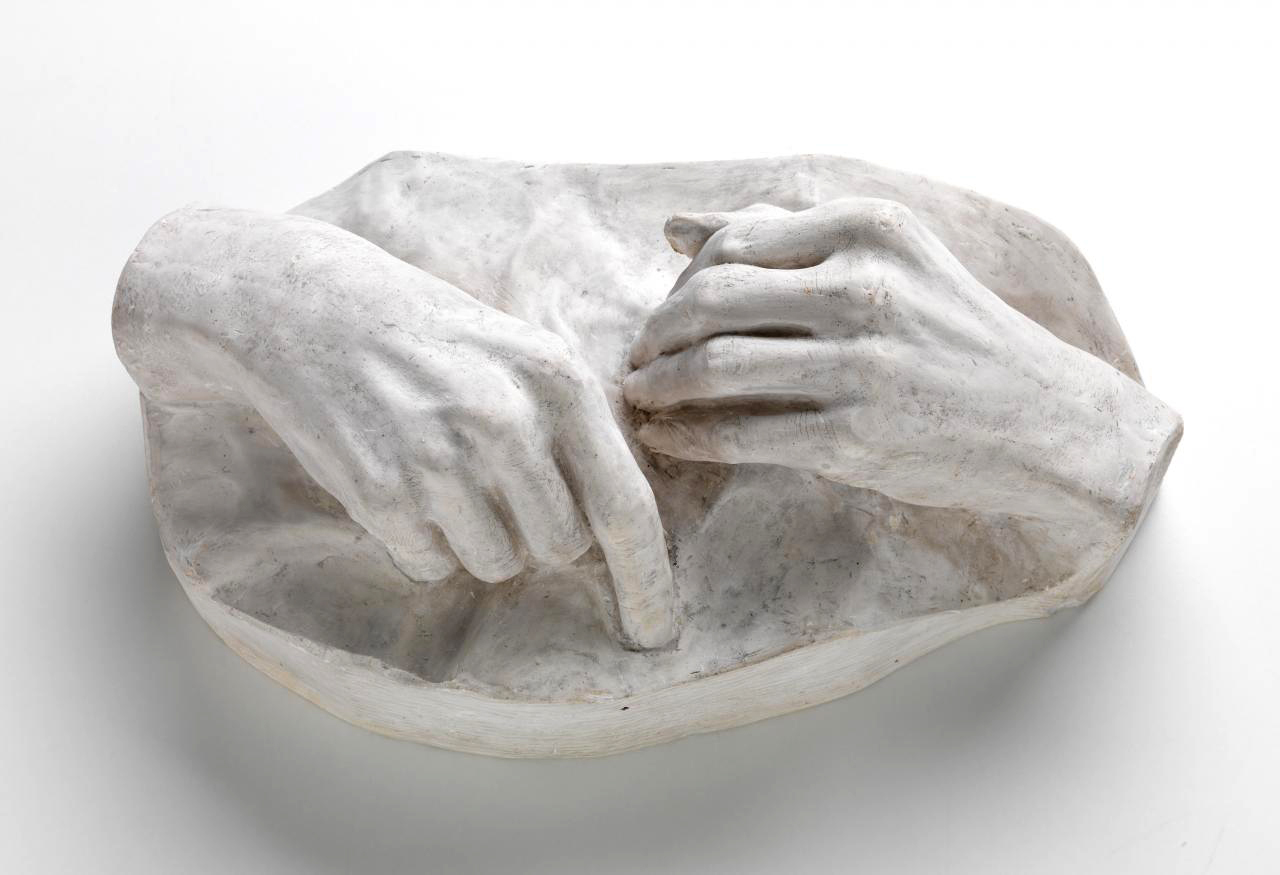
Of course, this leads into more critical readings on the meaning of photographs that emerged in the late 1970s-80s. As Patrizia di Bello has insightfully written,

“John Tagg, in The Burden of Representation (1988), argues that the indexical nature of the photograph does not explain its meanings. “What makes the link between the pre-photographic referent and the sign is a discriminatory technical, cultural and historical process in which particular optical and chemical devices are set to work to organise experience and desire and produce a new reality – the paper image which, through further processes, may become meaningful in all sorts of ways.” Rather than being a guarantor of realism, the camera is itself an ideological construct, producing an all-seeing spectator and effacing the means of its production. Analyses of who has possessed the means to represent and who has been represented reveal that photography has been profoundly implicated in issues of political, cultural, and sexual domination. This area of investigation has especially drawn upon Michel Foucault’s (1926-84) reflections on the emergence of forms of knowledge; on the modern notion of the subject; and on practices of power which produce subjects actively participating in the dominant disciplinary order. Particularly influential have been his rejection of the notion of a pre-given self or human nature, and his insistence that every system of power and knowledge also creates possibilities of resistance. The role of critics then becomes the deconstruction of dominant assumptions within and about representations, to identify works embodying the possibility of resistance.”3

The camera as ideological construct. Photography as profoundly implicated in issues of political, cultural, and sexual domination. In other words who is looking, at what, what is being pictured or excluded, who has control over that image (and access to it), who understands the language of that representation and controls its meaning (this picturing of a version of reality), and who resists the dominant assumptions within and about its representations.

Modernist Photography does indeed have a lot to answer for.

Dr Marcus Bunyan


1/ Patrizia di Bello. “Modernsim and Photography,” on Answers.com website [Online] Cited 03/08/2012 no longer available online

2/ Ibid.,

3/ Ibid.,


Many thankx to the Currier Museum of Art for allowing me to publish the photographs in the posting. Please click on the photographs for a larger version of the image.


Paul Caponigro (American, 1932-2024) 'Two Pears, Cushing, ME' 1999


Paul Caponigro (American, 1932-2024)
Two Pears, Cushing, ME
1999
Gelatin silver print
7 9/16 x 9 11/16 in
Currier Museum of Art, Manchester, New Hampshire
Gift of Paul Caponigro, photographer


Captured from above, the still-life Two Pears, Cushing, ME by Paul Caponigro is composed of two pieces of fruit nestled in a wooden bowl. The oval bowl is centrally located in the horizontal composition and is surrounded by a black background. The composition is roughly symmetrical, except for the stems of the pears, which break the central axis and create a diagonal frame. The pears hold a complementary position with relation to each other, reminiscent of a yin-yang symbol.

The pears glow a brilliant white in stark contrast to the black background. The fruit seems impossibly smooth, as though carved from marble, with the subtlest of grays suggesting vaguely corporeal curves. The smooth texture is juxtaposed with the rough natural bark that lines the edge of the wooden bowl. The interior of the bowl shows the subtle patterns, striations and concentric rings, of the tree from which the bowl was carved. …

Context and Analysis

Though primarily known as a landscape photographer, Caponigro also focuses on still-life. One of his favourite subjects is fruit. Caponigro began producing dramatic, black-and-white images of apples and pears in the 1960s. Devoid of their characteristic colour, the close-up images become abstract studies in form and, more important, pattern.

Many of Caponigro’s fruit still-lifes from the 1960s focus on the marks and patterns on the skin of the fruit. This is particularly true in Galaxy Apple, New York (1964), a high-contrast image that highlights the natural white markings on the dark surface of an apple, creating an effect reminiscent of stars in the night sky. Documenting decay in fruit still-life pictures is a tradition dating back hundreds of years, as seen in such works as Balthasar Van der Ast’s 1617 oil painting Still Life with Fruit on a Kraak Porcelain Dish (Currier, 2004.15 ). Still-life compositions are often about the passage of time. In the late-career photograph Two Pears, Cushing, ME, Caponigro instead presents the fruit as near-perfect and timeless.

Connections

Caponigro studied with pioneering photographer Minor White, whose work is also represented in the Currier’s collection. White and Caponigro shared an interest in modernist techniques and in ways of conveying the passage of time by using the natural world as subject matter. White’s 1963 photograph Bird Lime and Surf, Point Lobos, CA (Currier, 1992.15.13, above) shows a rock spotted with bright white bird droppings, traces of the birds gathering and flying along the shoreline.

Jane Seney. “Two Pears, Cushing, ME,” on the Currier Museum of Art website Nd [Online] Cited 17/10/2024


Paul Caponigro (American, 1932-2024) 'San Sebastian, New Mexico' 1980


Paul Caponigro (American, 1932-2024)
San Sebastian, New Mexico
1980
gelatin silver print
9 3/4 in. x 13 11/16 in. (24.77 x 34.77cm)
Currier Museum of Art, Manchester, New Hampshire
Henry Melville Fuller Fund


Brett Weston (American, 1911-1993) '(Untitled) Tide Pool and Kelp' c. 1980


Brett Weston (American, 1911-1993)
(Untitled) Tide Pool and Kelp
c. 1980
Gelatin silver print
10 9/16 x 13 11/16 in
Currier Museum of Art, Manchester, New Hampshire
Gift from the Christian K. Keesee Collection
© The Brett Weston Archive


Brett Weston (American, 1911-1993) '(Untitled) Branches and Snow' c. 1975


Brett Weston (American, 1911-1993)
(Untitled) Branches and Snow
c. 1975
Gelatin silver print
12 3/4 x 10 5/8 in
Currier Museum of Art, Manchester, New Hampshire
Gift from the Christian K. Keesee Collection
© The Brett Weston Archive


Helmar Lerski (Swiss, 1871-1956) 'Metamorphosis through Light #587' 1935-36


Helmar Lerski (Swiss, 1871-1956)
Metamorphosis through Light #587
1935-1936
Vintage gelatin silver print
11 1/2 x 9 1/4 in
Currier Museum of Art, Manchester, New Hampshire


Helmar Lerski (18 February 1871, Strasbourg – 19 September 1956, Zürich) was a photographer who laid some of the important foundations of modern photography. He focused mainly on portraits and the technique of photography with mirrors. Lerski concentrated on archetypal characteristics rather than on individual features, favouring extreme close-ups and tight cropping, and he became renowned for his experiments with multiple light sources.

Lerski was involved concurrently in the two major, emergent mediums of his time: film and photography. Born in Alsace in the then German city of Strausburg, he became involved in the theatre and, in 1896, moved to New York to pursue a career in acting, eventually working at the Irving Place Theater and later the German Pabst Theater. It was in this setting that Lerski first became aware of the unique visual effects achievable with stage lighting. Drawing from his acting experience, he began investigating photography as an artistic medium after meeting his wife, also a photographer. While photographing their colleagues, Lerski experimented with a series of portraits that severely manipulated the lighting effects. The resulting images formed a base for his later success in both commercial and art photography… This body of work upholds the artist’s declaration that “in every human being there is everything; the question is only what the light falls on.”

In 1937 he created his masterpiece, Transformation Through Light, on a rooftop terrace in Tel Aviv, in which he projected 175 different images of a single model, altered using multiple mirrors to direct intense sunlight towards his face at various angles and intensities. Siegfried Kracauer wrote about this series in his Theory of Film (Oxford University Press, 1960, p. 162):

“His model, he [Lerski] told me in Paris, was a young man with a nondescript face who posed on the roof of a house. Lerski took over a hundred pictures of that face from a very short distance, each time subtly changing the light with the aid of screens. Big close-ups, these pictures detailed the texture of the skin so that cheeks and brows turned into a maze of inscrutable runes reminiscent of soil formations, as they appear from an airplane. The result was amazing. None of the photographs recalled the model; and all of them differed from each other…

Out of the original face there arose, evoked by the varying lights, a hundred different faces, among them those of a hero, a prophet, a peasant, a dying soldier, an old woman, a monk. Did these portraits, if portraits they were, anticipate the metamorphoses which the young man would undergo in the future? Or were they just plays of light whimsically projecting on his face dreams and experiences forever alien to him? Proust would have been delighted in Lerski’s experiment with its unfathomable implications.”

Text from Wikipedia, Weimar Blog and Articles and Texticles websites


Margaret Bourke-White (American, 1904-1971) 'Turbine, Niagara Falls Power Co.,' 1928


Margaret Bourke-White (American, 1904-1971)
Turbine, Niagara Falls Power Co.,
1928
Gelatin silver print
13 1/2 x 9 1/2 in
Currier Museum of Art, Manchester, New Hampshire
Photo © Estate of Margaret Bourke-White/Licensed by VAGA, New York, NY


The Currier Museum of Art’s latest special exhibition traces the development of the modernist movement from the 1920s to its impact on artists today. Featuring more than 150 works displayed in three expansive galleries, A New Vision: Modernist Photography reflects the international nature of modernism, and includes American photographers such as Ansel Adams, Edward and Brett Weston, Margaret Bourke-White, Man Ray and Charles Sheeler, as well as European artists including Lotte Jacobi, László Moholy-Nagy, Helmar Lerski and Imre Kinszki…

[Marcus: Imre Kinszki (1901-1944) was a pioneer of modernist photography in Hungary, and a founder member of the group called Modern Hungarian Photographers. His son died in Buchenwald while he died on a death march to Sachsenhausen in 1944. See a moving video on YouTube where his daughter, who survived the ghetto, Judit Kinszki Talks About Her Father. The heartbreaking quotation below comes from the Articles and Texticles website which is no longer available online. It makes me very angry and very sad.

“In the ghetto we didn’t know anything about Auschwitz and what happened to those in forced labor service. It didn’t even occur to us that my father might not be alive. My mother and I went every day to the Keleti railroad station and went up to everybody who got off and asked them. Once my mother found a man who had been in the same group, and he remembered my father. He said that their car had been unhooked and the train went on towards Germany. They got off somewhere and went on foot towards Sachsenhausen – this was a death march. They spent the night on a German farm, in a barn on straw, and the man [who came back] said his legs had been so full of injuries that he couldn’t go on, and had decided that he would take his chances: he wormed himself into the straw. He did it, they didn’t find him, and that’s how he survived. He didn’t know about the others. We never found anyone else but this single man. So it’s clear that somewhere between this farm and Sachsenhausen everyone had been shot. But we interpreted this news in such a way that all we knew about him was that he would arrive sometime soon. We didn’t have news of my brother for a long time, then my mother found a young man who had worked with my brother. He told us that when they arrived in Buchenwald in winter, they were driven out of the wagon, and asked them what kind of qualifications they had. My brother told them that he was a student. This young man told us that the Germans immediately tied him up, it was a December morning, and they hosed him down with water just to watch him freeze to death. Those who didn’t have a trade were stripped of their clothes and hosed with cold water until they froze. I think that at that moment something broke in my mother. She was always waiting for my father, she refused to declare him dead even though she would have been eligible for a widow’s pension. But she waited for my father until the day she died. She couldn’t wait for my brother, because she had to believe what she had heard. Why would that young man have said otherwise?”]


Boris Ignatovich’s 1930s Tramway Handles and Margaret Bourke-White’s 1928 photo Turbine, Niagara Falls Power Co. [see below] showcase modernist images of isolated elements from the manmade world. While close-ups of nature, such as Brett Weston’s 1980 (Untitled) Tide Pool and Kelp, reveal striking abstract compositions that emphasise the repetition of patterns and dramatic contrast of light and shade. This new vision shared by modernist photographers makes form and composition as important as subject matter in their photographs.

“This exhibition illustrates the diversity of the modernist movement and its important contribution to the art of the 20th and 21st centuries,” said Kurt Sundstrom, curator of the exhibition. Adding, “Modernist photographers expanded the visual vocabulary of art – making everyday objects – from grass, drying laundry, machinery and lumber to details of the human body – subjects worthy of artistic interest.”

Contemporary New England photographers are still building upon the artistic language that their predecessors developed. Paul Caponigro, who lives in Cushing, Maine, Carl Hyatt of Portsmouth, New Hampshire and Arno Minkkinen of Andover, MA all clearly connect to modernism and are part of A New Vision.

A New Vision also explores the reciprocal influences among all media that shaped the modern art movement. Artists in the varied media shared a common vision; to illustrate this interconnectedness, paintings by Marsden Hartley, Georgia O’Keeffe, Charles Sheeler and Childe Hassam are paired with photographs in this exhibition.

Press release from the Currier Museum of Art website


Boris Ignatovich (Russian, 1899-1976) 'Tramway Handles' 1930s (printed 1955)


Boris Ignatovich (Russian, 1899-1976)
Tramway Handles
1930s (printed 1955)
Gelatin silver print
9 1/2 x 6 3/8 in
Currier Museum of Art, Manchester, New Hampshire
Art © Estate of Boris Ignatovich/RAO, Moscow/VAGA, New York.


Boris Ignatovich, born in Lutsk, Ukraine in 1899, was a Soviet photographer and a member of the Russian avant-garde movement. Ignatovich began his career in 1918, first working as a journalist and a newspaper editor before taking up photography in 1923. In the early 1920s he worked for a number of publications, most notably, Bednota (Poverty), Krasnaya Niva (Red Field) and Ogonyok. Ignatovich’s first photographic success was a documentary series about villagers in the Ramenskoe’s Workers’ settlement, which coincided with the first 5-year plan after Stalin’s victory. Ignatovich tried to alter the traditional format of documentary photography by using very low and very high unconventional angles, developing new perspectives, and including birds-eye constructions, which rendered the landscape as an abstract composition. In 1926 Ignatovich participated at the exhibition of the Association of Moscow Photo-Correspondents, and later became one of its leaders. In 1927, he photographed power plants and factories for Bednota and developed close association with Alexander Rodchenko, as they photographed for Dajosch together. Ignatovich’s famous photo stories also included the first American tractors in the USSR and aerial photographs of Leningrad and Moscow. In 1928, Ignatovich participated in the exhibition 10 Years of Soviet Photography, in Moscow and Leningrad, which was organized by the State Academy of Artistic Sciences. Due to his companionship with Rodchenko, Ignatovich was greatly influenced by his style and unconventional techniques. Both became members of the distinguished Oktiabr, the October group, which was a union of artists, architects, film directors, and photographers. In February of 1930, a photographic section of the October group was organised. Rodchenko was the head of the section and wrote its program. Other members include Dmitrii Debabov; Boris, Ol’ga, and Elizaveta Ignatovich; Vladimir Griuntal’; Roman Karmen; Eleazar Langman; Moriakin; Abram Shterenberg; and Vitalii Zhemchuzhnyi. The October group, whose styles favored fragmentary techniques and the distortion of images in an avant-garde manner, captured the idea of a world in dynamic form and rhythms.
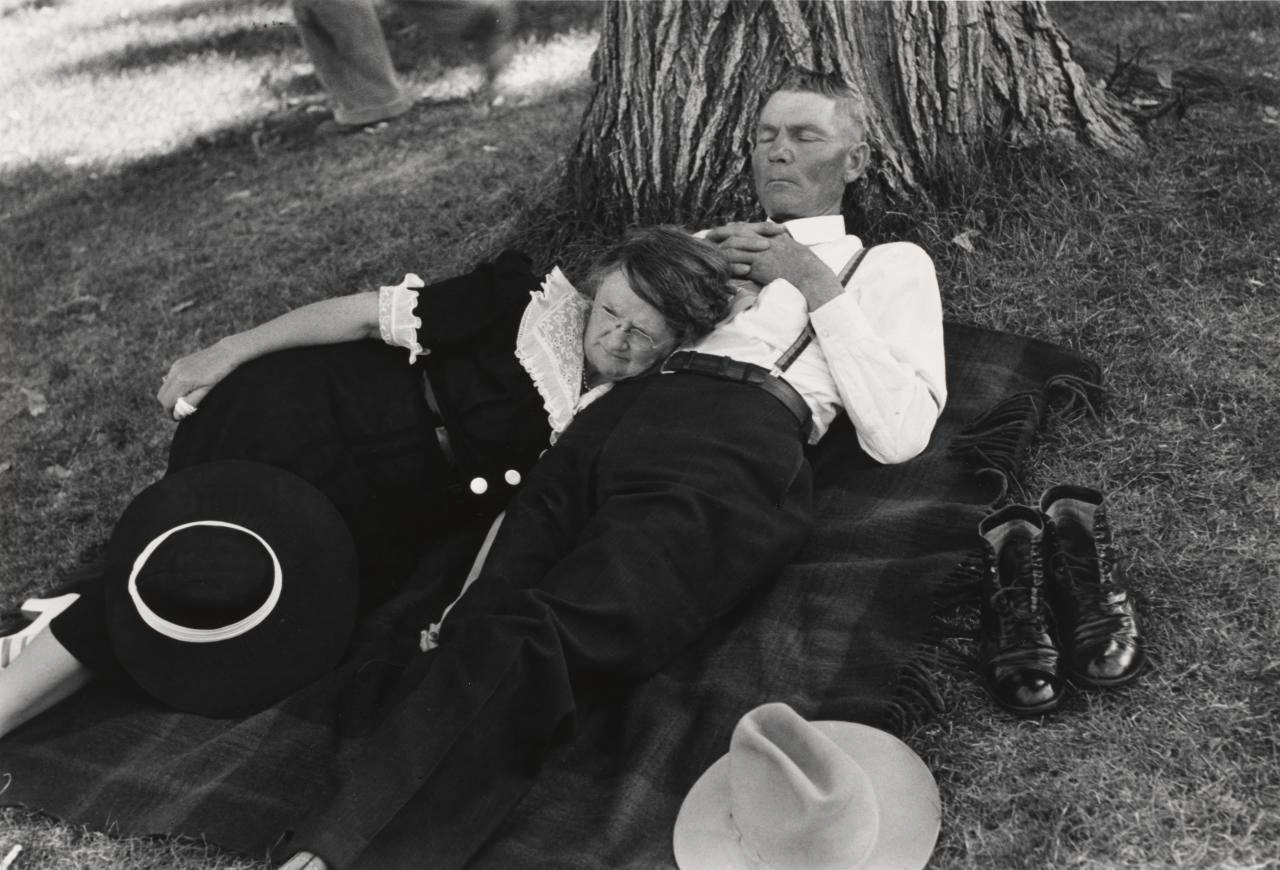
First general October exhibition opened at Gorky Park, a park of culture and rest named after Gorky in Moscow. The photography section, organised by Rodchenko and Stepanova, includes the magazine Radioslushatel, designed by Stepanova and illustrated with photographs by Griuntal, Ignatovich, and Rodchenko. When Rodchenko was expelled from the October group for his formalist photography, Ignatovich took over as head of the photographic section of the group until the group was dissolved in 1932 by governmental decree.  Apart from October, Ignatovich worked on documentary films from 1930 to 1932. As a movie cameraman, Ignatovich worked on the first sound film, Olympiada of the Arts. After 1932 he began to pioneer ideas such as the theory of collectivism in photojournalism at the Soyuzfoto agency where he developed specific rules and laws of photography, so much so that the photographers working under him were obliged to follow and jointly credit their work to Ignatovich by signing their photographs “Ignatovich Brigade.” Ignatovich participated in 1935 Exhibition of the Work of the Masters of Soviet Photography as well as the All-Union Exhibition of Soviet photography at the State Pushkin Museum in 1937. During the 1930s, Ignatovich also contributed photographs to the USSR In Construction, and in 1941, worked as a war photo correspondent on the front. After the War, Ignatovich concentrated on landscape and portraiture, experimenting with the use of symbols, picture captions, and ideas of collectivism, particularly at the Soyuzfoto agency where he continued to work as a photojournalist until he died in 1976.

Text from the Nailya Alexander Gallery website


Man Ray (American, 1890-1976) 'Mr. and Mrs. Woodman' c. 1930


Man Ray (American, 1890-1976)
Mr. and Mrs. Woodman
c. 1930
Rayograph
Currier Museum of Art, Manchester, New Hampshire


Paul Strand (American, 1890-1976) 'Akeley Motion Picture Camera' 1923, printed 1976


Paul Strand (American, 1890-1976)
Akeley Motion Picture Camera
1923, printed 1976
Gelatin silver print
9 1/2 in. x 7 5/8 in. (24.13 x 19.37cm)
Currier Museum of Art, Manchester, New Hampshire
Gift of Edith Vallarino


The Currier’s Akeley Motion Picture Camera is one of the machine-inspired photographs that distinguished Strand early in his career. In the summer of 1922 Strand purchased an Akeley motion picture camera for the purpose of making freelance newsreel and documentary films. Fascinated by the camera’s complex construction, he made it the subject of a series of close-up photographs. In these works, Strand explored the expressive possibilities of abstract form and composition while simultaneously celebrating the technological achievement of the dawning machine age.

Avoiding anecdotal associations that might arise from showing the motion picture camera within a larger pictorial context, Strand adopts a close-up view that makes it difficult to identify the machine or its purpose. The resulting composition is a nearly abstract presentation that expresses the spirit of all machinery rather than the facts of a particular model of motion picture camera. Here the viewer is presented with an assemblage of interlocking parts, each polished and gleaming. Although it is unclear as to each part’s specific function, one cannot help but admire the precision with which each is made and fitted together. Taking the viewer’s gaze past an array of complex shapes and forms -disks, cylinders, spiral springs, and others more organic in nature- Strand points to the ingenuity of the engineers, draftsmen, and manufacturers behind their making. Like the Precisionist paintings of Strand’s friend Charles Sheeler, the image is one of newness, cleanliness, and logical rigor. Epitomizing the efficiency and purity of the modern machine, Akeley Motion Picture Camera becomes a metaphor for modernism itself, and a key to understanding Strand’s own philosophy as an artist.

Anonymous. “Akeley Motion Picture Camera,” on the Currier Museum of Art website Nd [Online] Cited 17/10/2024


Lotte Jacobi (American, 1896-1990) 'Kaiser Wilhelm Memorial Church, Berlin' 1932


Lotte Jacobi (American, 1896-1990)
Kaiser Wilhelm Memorial Church, Berlin
1932
Gelatin silver print
9 1/2 in. x 7 1/2 in. (24.13 x 19.05cm)
Currier Museum of Art, Manchester, New Hampshire
Gift of Mr. and Mrs. Richard Thorner in honor of Kurt Sundstrom


Emerging out of the enveloping darkness, a large church stands out from the background with a sense of imposing volume. The burned-in whites of the street lamps, the lights of the cars, and the bright reflections on the rain-streaked streets are all emphasised by the photographer’s use of a long exposure. Looking carefully, one can notice the trail of light left by a moving car, which also suggests a long exposure.

Photographer Lotte Jacobi chose to angle her camera slightly downward. In doing so, she enlarged the foreground space and enhanced the scale of the church by lowering the horizon line and emphasising the leading lines of the streetcar tracks. The massive medieval shapes of the church contrast in form and theme with the modernity of the lamps, cars, and streetcar tracks.

Context and Analysis

Jacobi is best known for her expressive portraits and also for her abstract “photogenic” series, but she photographed other subjects as well. Her body of work includes cityscapes of Berlin, Germany, her native city, and photographs documenting her trip to the Soviet Union in 1932-33.

Kaiser Wilhelm Memorial Church, Berlin is a modernist experiment with the expressive power of nighttime photography. Jacobi’s use of dramatic light and shadows recalls Brassaï’s nocturnal photographs of Paris from the same era. Jacobi would later explain: “I am involved in seeing.” In this photograph she created a dramatic record of her vision.
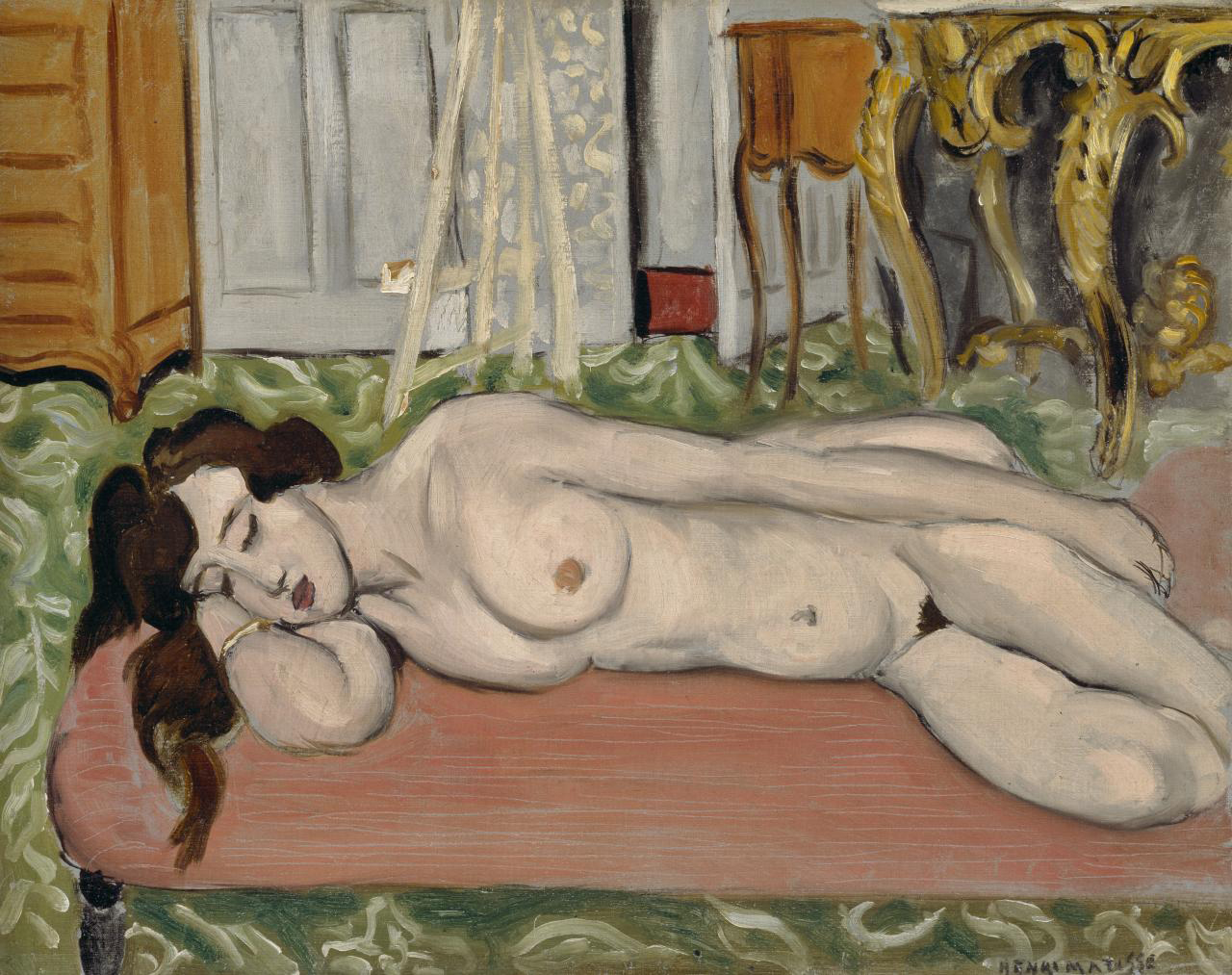
Although its architecture appears to be from the Middle Ages, with stone towers, arches, and stained-glass windows, Kaiser Wilhelm Memorial Church was actually built in the late 1800s in the Romanesque Revival architectural style. Designed by architect Franz Schwechten, it was constructed between 1891 and 1906. The church was dedicated to Kaiser Wilhelm I by his grandson, Kaiser Wilhelm II. Wilhelm I had achieved the unification of Germany, becoming the first German emperor. After Germany’s loss in World War I, Wilhelm II abdicated, and the German Empire was replaced by the Weimar Republic.

Eleven years after Jacobi made this photograph, the church was irreparably damaged by Allied bombing in World War II, one of many culturally significant buildings destroyed in that war. In the early 1960s a modern church was built around the site, preserving the ruins of the old structure.

Martin Fox. “Kaiser Wilhelm Memorial Church, Berlin,” on the Currier Museum of Art website Nd [Online] Cited 17/10/2024


Brett Weston (American, 1911-1993) '(Untitled) Fremont Bridge, Portland' 1971
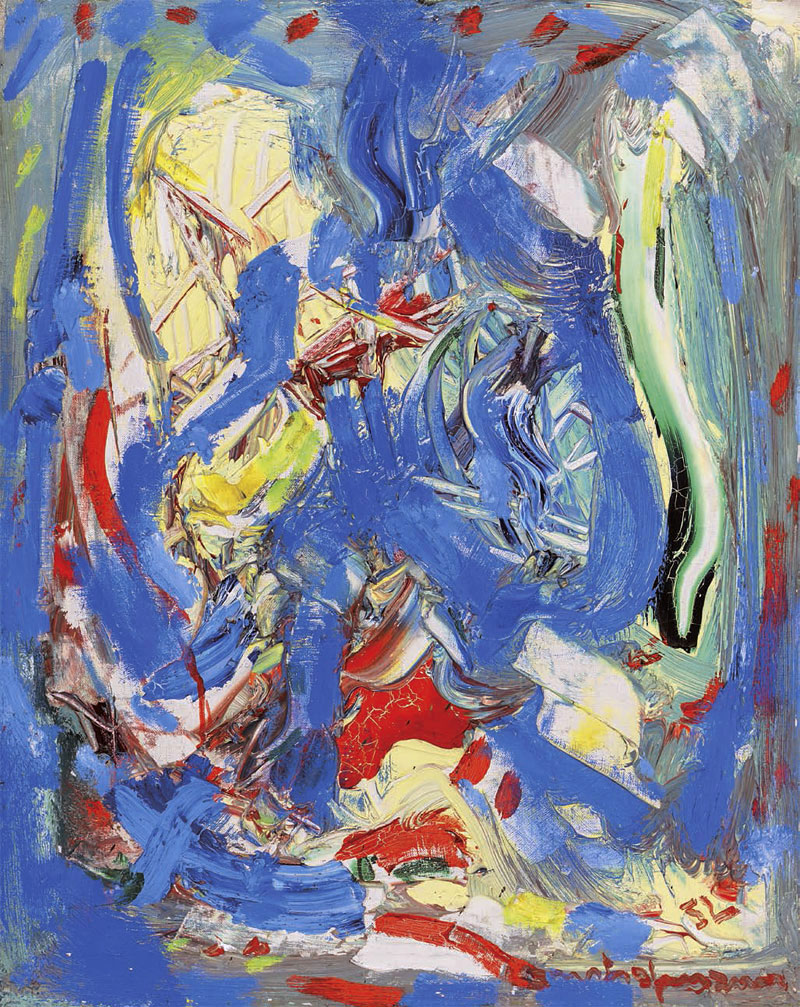
 

Brett Weston (American, 1911-1993)
(Untitled) Fremont Bridge, Portland
1971
Gelatin silver print
13 1/4 x 10 1/2 in
Currier Museum of Art, Manchester, New Hampshire. Gift from the Christian K. Keesee Collection
© The Brett Weston Archive


Currier Museum of Art
150 Ash Street, Manchester
New Hampshire 03104
Phone: 603.669.6144

Opening hours:
Wednesday – Sunday 10am – 5pm
Closed Mondays and Tuesdays

The Currier Museum of Art website

LIKE ART BLART ON FACEBOOK

Back to top