Exhibition: ‘Jewels, Gems, and Treasures: Ancient to Modern’ at the Museum of Fine Arts, Boston

Exhibition dates: 19th July 2011 – 25th November 2012
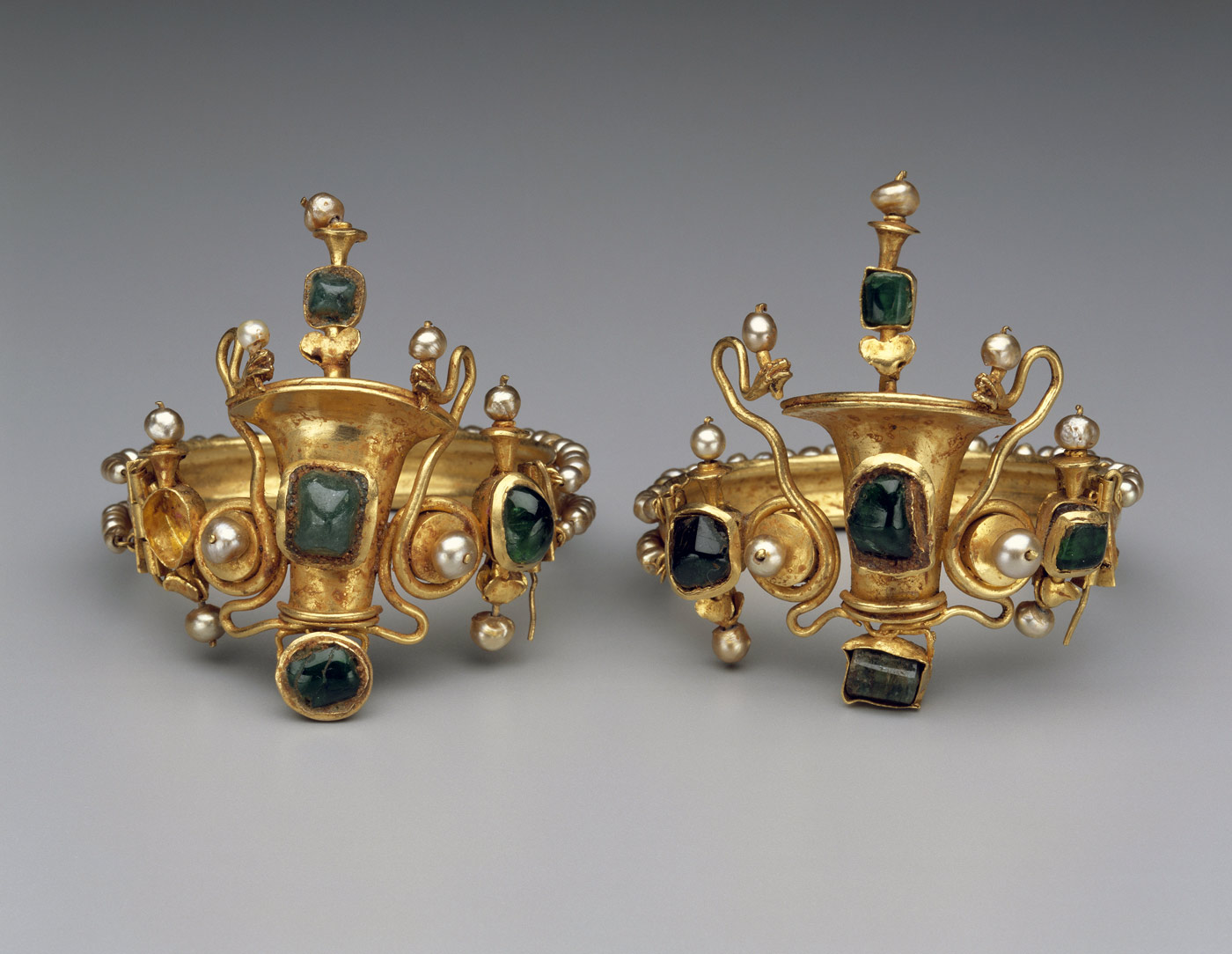
 

Anon. 'Bracelets' about 40-20 BC


Anon
Bracelets
about 40-20 BC
Gold, emeralds, and pearls (modern)
Classical Department Exchange Fund
Photo: © Museum of Fine Arts, Boston


“Today, in the West, we have come to regard diamond, pearl, emerald, sapphire, and ruby as the most precious of materials. That has not always been the case. Other substances have commanded equal attention, from feathers, claws, and mica appliqués to coral and rock crystal, serving a protective role, guarding their wearer from dangerous circumstances or malevolent forces. Other substances, especially those that are rare and available to a select few, are signifiers of wealth and power.”


Museum of Fine Arts, Boston


Continuing my love affair with exquisite jewellery. What splendour! I love them all…

Marcus


Many, many thankx to the Museum of Fine Arts, Boston for allowing me to publish the reproduction of the jewellery in the posting. Please click on the photographs for a larger version of the art works.
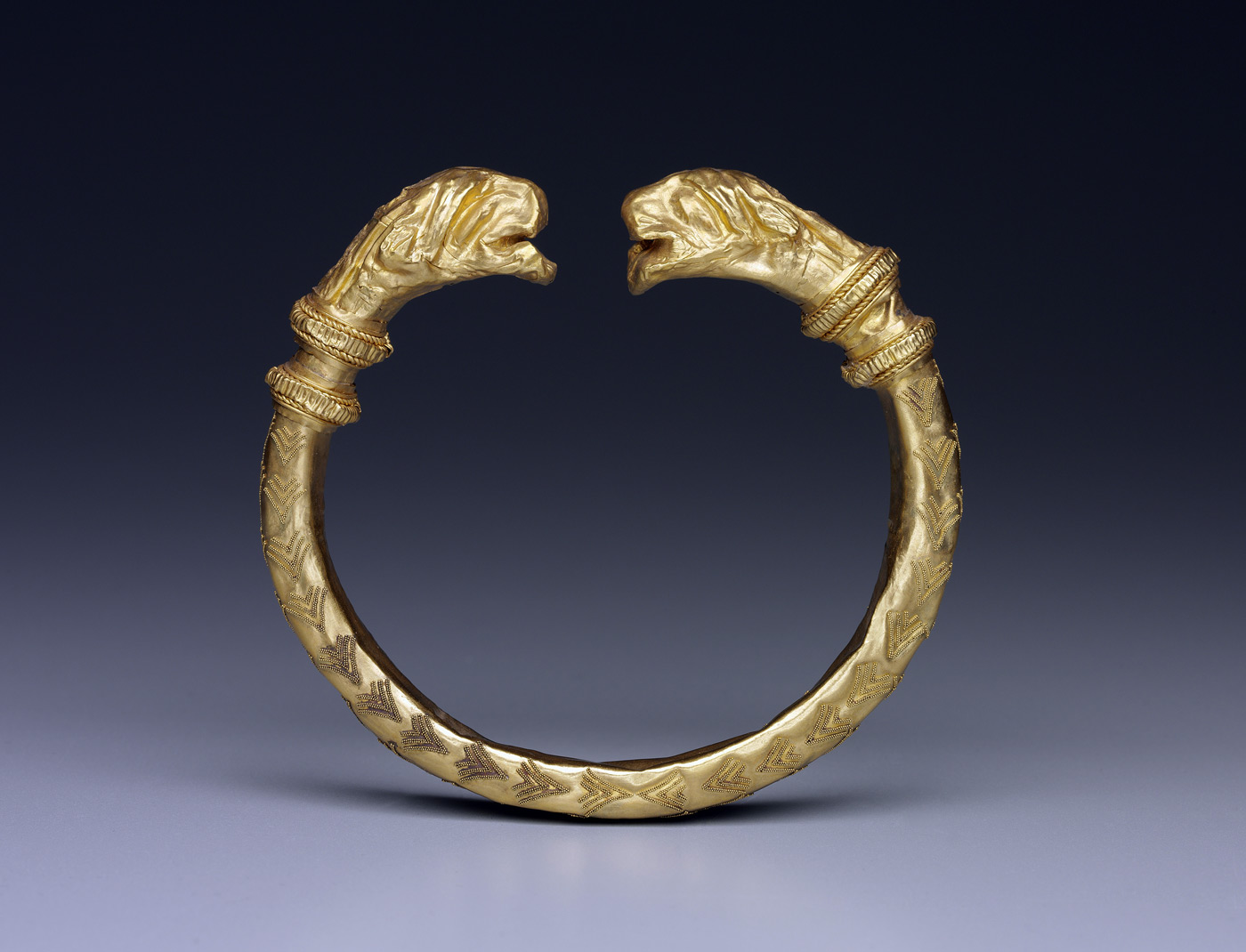


Anon. 'Armlet with feline-head terminals' Late 5th century BC


Anon
Armlet with feline-head terminals
Late 5th century BC
Gold
John Michael Rodocanachi Fund
Photo: © Museum of Fine Arts, Boston
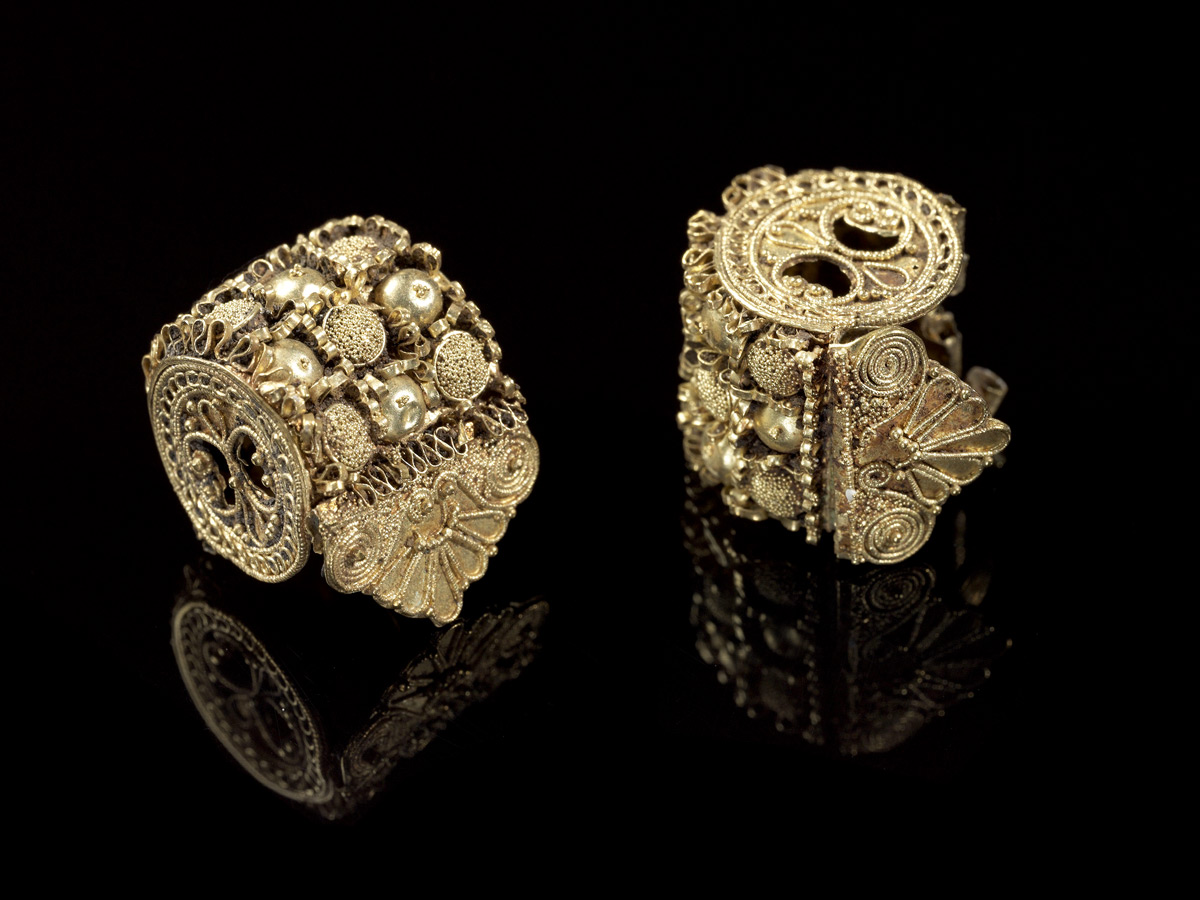
 

Anon. 'Spool earring' Italic, Etruscan, Late Archaic or Classical Period early 5th century BC


Anon
Spool earring
Italic, Etruscan, Late Archaic or Classical Period
early 5th century BC
Gold
Francis Bartlett Donation of 1900
Photo: © Museum of Fine Arts, Boston
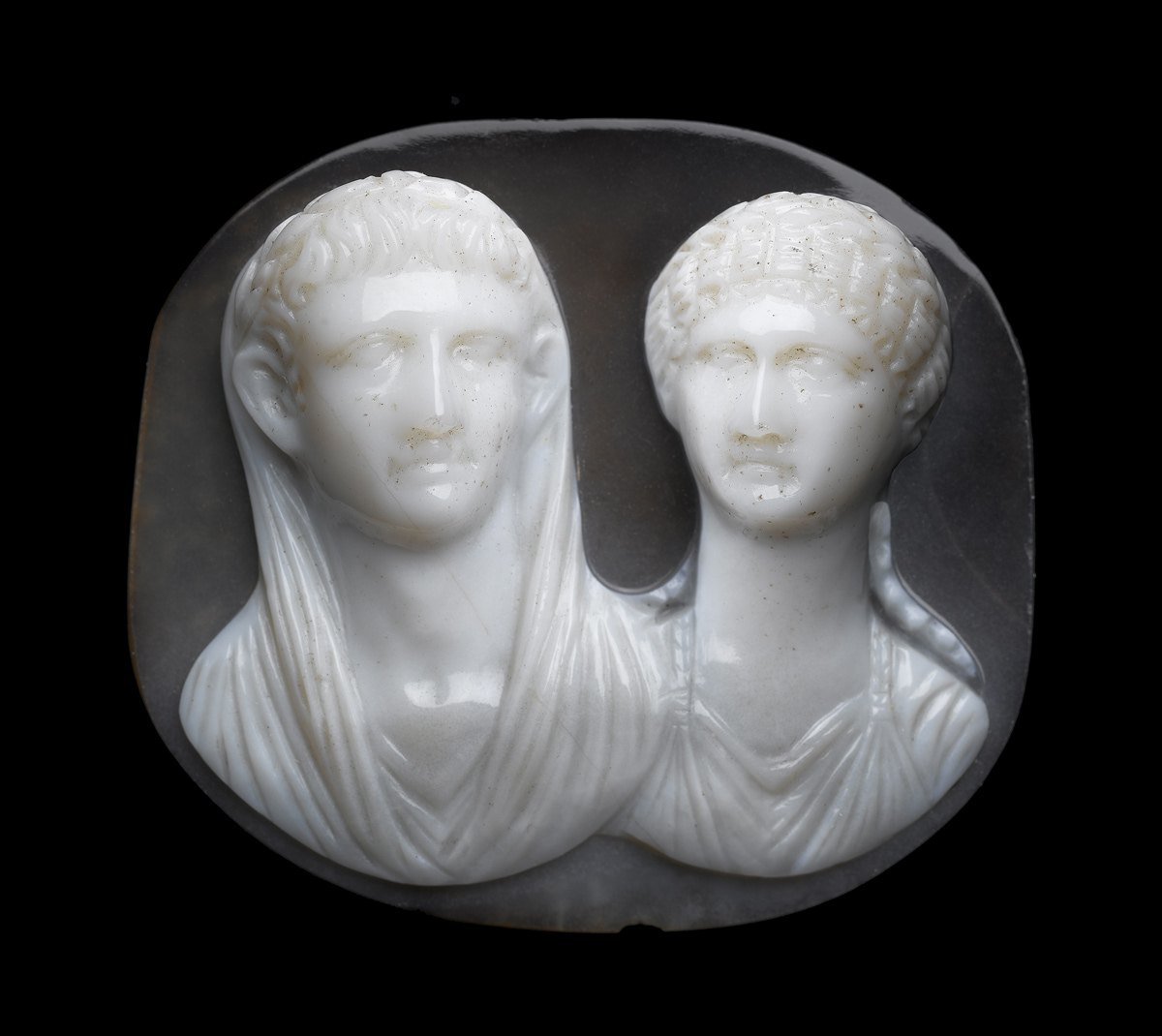
 

Anon. 'Cameo with portrait busts of an Imperial Julio-Claudian couple' mid-1st century AD


Anon
Cameo with portrait busts of an Imperial Julio-Claudian couple
mid-1st century AD
Sardonyx
Henry Lillie Pierce Fund
Photo: © Museum of Fine Arts, Boston
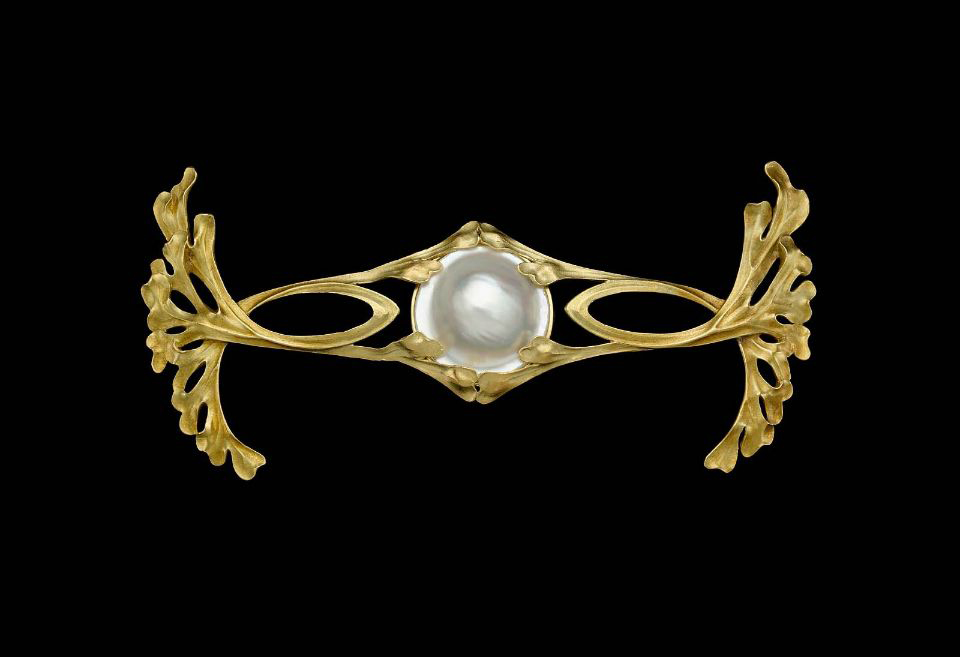
 

Paul Lienard (French, b. 1849) 'Seaweed brooch' French, about 1908


Paul Lienard (French, b. 1849)
Seaweed brooch
French, about 1908
Gold and mabe pearl
Height x width x depth: 5.4 x 11 x 1cm
Photo: © Museum of Fine Arts, Boston


As the saying goes, “diamonds are a girl’s best friend” – at least in modern times – but as the exhibition Jewels, Gem, and Treasures: Ancient to Modern illustrates, ornaments made of ivory, shell, and rock crystal were prized in antiquity, while jewellery made of diamonds, emeralds, sapphires, rubies, and pearls became fashionable in later years. On view July 19, 2011, through November 25, 2012, this exhibition at the Museum of Fine Arts, Boston (MFA), highlights some 75 objects representing the rich variety of jewels, gems, and treasures that have been valued over the course of four millennia.

Drawn from the MFA’s collection and select loans, these range from a 24th-century BC Nubian conch shell amulet, to Mary Todd Lincoln’s 19th-century diamond and gold suite, to a 20th-century platinum, diamond, ruby, and sapphire Flag brooch honouring the sacrifices of the Doughboys in World War I. Jewels, Gems, and Treasures is the inaugural exhibition in the MFA’s new Rita J. and Stanley H. Kaplan Family Foundation Gallery, which debuts on July 19. The gallery – one of only a few at US museums solely dedicated to jewellery – will feature works from the Museum’s outstanding collection of approximately 11,000 ornaments. It is named in recognition of the generosity of the Rita J. and Stanley H. Kaplan Family Foundation.

“The opening of the Museum’s first jewellery gallery provides an ongoing opportunity for the MFA’s collection to shine,” said Malcolm Rogers, Ann and Graham Gund Director of the MFA. “In this inaugural exhibition, visitors will see a wide range of gems that will both inform and dazzle in a beautiful new space that will allow the MFA to showcase its stellar assemblage of jewellery, which ranges from ancient to modern.”

Jewels, Gems, and Treasures sheds light on how various cultures throughout history have defined the concept of “treasure,” showcasing an exquisite array of necklaces, rings, bracelets, pendants, and brooches, as well as mineral specimens. In addition, the exhibition explains the significance of jewellery, which can be functional (pins, clasps, buckles, combs, and barrettes); protective (talismans endowed with healing or magical properties); and ornamental, making the wearer feel beautiful, loved, and remembered. Beyond functionality and adornment, jewellery can also establish one’s status and role in society. Rare gems and precious metals, made into fabulous designs by renowned craftsmen, have often served as symbols of wealth and power. This is especially evident in a section of the show where jewellery worn by celebrities is on view, including fashion designer Coco Chanel’s enamelled cuff bracelets accented with jewelled Maltese crosses (Verdura, New York, first half of 20th century) and socialite Betsey Cushing Whitney’s gold and diamond “American Indian” Tiara (Verdura, New York, about 1955), which she wore to her presentation to Queen Elizabeth II in 1956 as the wife of the US Ambassador to the Court of St. James.

The significance of precious materials in jewellery in the 20th century is explored in the exhibition, where several modern adornments from the MFA’s Daphne Farago Collection examine jewellery’s traditional roles in society. Among them are a 1985 brooch of iron, pyrite, and diamond rough by Falko Marx and a 1993 ring by Dutch jeweller Liesbeth Fit entitled Diamonds Are a Girl’s Best Friend. (The Daphne Farago Collection comprises 650 pieces of contemporary craft jewellery made by leading American and European artists from about 1940 to the present.)

Jewels, Gems, and Treasures begins with a look at jewellery made of organic materials – substances readily available and easy to work with, such as ivory, shell, wood, and coral. These range from a pair of ivory cuff bracelets from Early Kerma culture in modern Sudan (2400-2050 BC) to more sophisticated creations made possible through the advancement of tools. Examples include a gold, silver, carnelian and glass Egyptian Pectoral (1783-1550 BC) and a Nubian gold and rock crystal Hathor-headed crystal pendant (743-712 BC) recovered from the burial of a queen of King Piye, the great Kushite ruler who conquered Egypt in the eighth century BC. In addition to having magical properties that protected the wearer against malevolent forces, adornments such as these were often buried with their owners as their amuletic capabilities were needed during the arduous journey to the afterlife. On the other side of the globe, Mayans wore ear flares – conduits of spiritual energy – made of sacred green jadeite that represented key elements of human life. Various cultures throughout the ages at one point believed that amber could cure maladies, coral could safeguard children, an animal’s tooth or claw could invest the wearer with strength and ferocity, and gold and silver invoked the cosmic power of the sun and moon. In Medieval and Renaissance Europe, many hard stones were believed to have magical properties (some were even ground and consumed), and pendant reliquaries containing a holy person’s cremated ashes or bone fragments were often donned, along with rosaries (Rosary, South German, mid-17th century), as sacred adornments. Even today, zodiac ornaments and good luck charms are sometimes worn as tokens, recalling their earlier mystical importance.

Throughout much of history, jewellery’s role as a symbol of one’s elevated status has inspired the wealthy to seek out stones that sparkle, gold that gleams, and designs that reflect the greatest artistry money can buy. To illustrate this, Jewels, Gems, and Treasures features some of the most opulent works from the Museum’s jewellery collection, including an 1856 diamond wedding necklace and earrings suite given by arms merchant Samuel Colt to his wife (the 41.73-carat suite, purchased for $8,000, is now valued at $190,000) and Mary Todd Lincoln’s gold, enamel, and diamond brooch with matching earrings, which she acquired around 1864, shortly after the death of the Lincolns’ beloved son, Willy, and then sold in 1867 to pay mounting debts. Also on view is a Kashmir sapphire and diamond brooch (around 1900); a gold and diamond necklace made by August Holmström for Peter Carl Fabergé, the famous Russian jeweller to the czars; and cereal heiress Marjorie Merriweather Post’s lavish platinum brooch from the 1920s, featuring a spectacular 60-carat carved Mughal emerald surrounded by diamonds, which she purchased in anticipation of her presentation at the British court in 1929.

Also on view in the exhibition are superb adornments made by leading French Art Nouveau jewellers, which were fashioned for a wealthy and artistic clientele in the late 19th to early 20th centuries. The Art Nouveau movement, which originated in Europe, embraced an aesthetic that was avant-garde, sensuous, and symbolic – one that looked to the natural world, the Impressionists, and the arts of Japan for inspiration. In response to the “tyranny of the diamond” – the all white platinum and diamond jewellery previously in vogue – these elaborate, one-of-a kind pieces often featured coloured gems and unusual materials, such as horn, enamel, irregularly shaped pearls, steel, and glass. Examples in the show include René Lalique’s fanciful gold, silver, steel, and diamond Hair ornament with antennae (about 1900), and Paul Lienard’s gold and mabe pearl Seaweed brooch (about 1908). The Arts and Crafts movement, which emerged in Britain during the 1870s as a reaction to the mechanisation and poor working conditions of the Industrial Revolution, is represented by Marsh-bird brooch (1901-1902) by Charles Robert Ashbee, who sought to create a delicate stained-glass effect with this piece. The refined techniques of the Art Deco movement are evident in Japanesque brooch (about 1925), incorporating platinum, gold, enamel, diamonds, rubies, and onyx. The movement arose after World War I and continued through the 1930s. It was influenced by avant-garde ideology, as was the Art Nouveau and Arts and Crafts movements, but instead chose to express its aesthetic through geometric shapes, linear stylisation, and a return to platinum and diamonds.

Jewels, Gems, and Treasures also highlights a variety of interesting and unique pieces, such as a Suite of hummingbird jewelry (brooch and earrings, about 1870), made out of gold, ruby, and taxidermied hummingbirds; an ebony, ivory, silver lapis lazuli, and amber casket designed to showcase the amber cameos and intaglios collected by Arnold Buffum (about 1880-1885); an Indian silver and tiger claw necklace (19th century); and a gold, silver, agate, diamond, and ruby animal sculpture, The Balletta Bulldog (about 1910) made by the workshop of Peter Carl Fabergé Fabergé. In addition, the exhibition features jewellery as seen in William McGregor Paxton’s painting, The New Necklace (1910).

Press release from the Museum of Fine Arts, Boston website
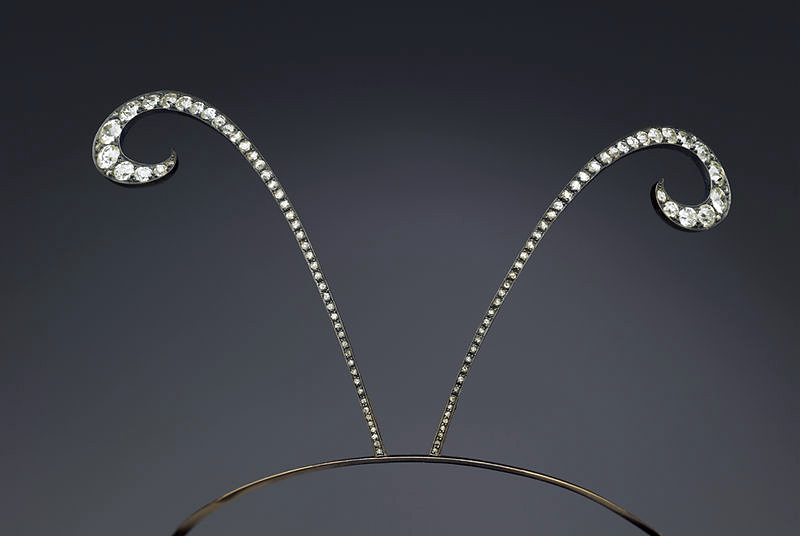
 

René Lalique (French, 1860-1945) 'Hair ornament with antennae' c. 1900


René Lalique (French, 1860-1945)
Hair ornament with antennae
c. 1900
Gold, silver, steel, and diamond
Height x width x depth: 8.8 x 12.5 x 7cm
Museum of Fine Arts, Boston. Gift of the Sataloff and Cluchey Family
© 2011 Artists Rights Society (ARS), New York/ADAGP, Paris
Photo: © Museum of Fine Arts, Boston


This hair ornament with its whimsical character is a unique piece by Lalique. It features the unusual exclusive use of diamonds which were sparingly used by the Art Nouveau jewellers who preferred less precious stones and enamel to provide colour and opalescence. From the gold wire headband emerge two antenna composed of hollow silver cubes in which are set graduated brilliants each secured by four prongs. A steel wire runs through the cubes to form the curved shape of each antenna. Except for the scroll terminals of the antennae, each cube is individually mounted and stacked without being attached to each other so that they tremble when the wearer moves, accentuating the sparkle of the diamonds.
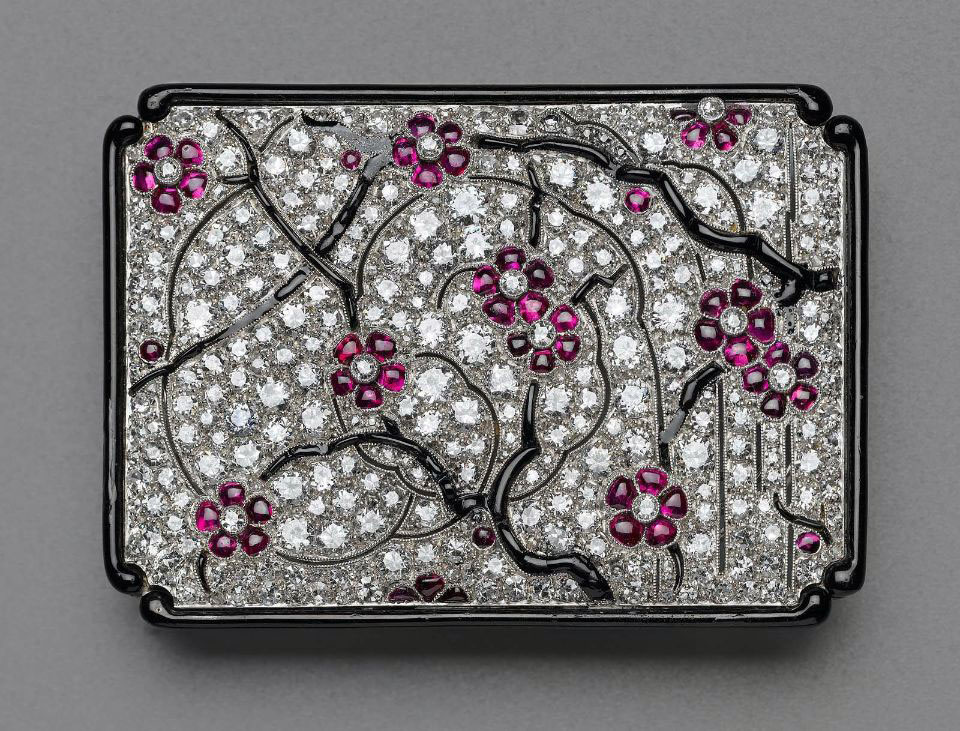
 

Probably by Lacloche Frères, Spanish, founded in 1875 (also working in Paris) 'Japanesque brooch' French, about 1925


Probably by Lacloche Frères, Spanish, founded in 1875 (also working in Paris)
Japanesque brooch
French, about 1925
Platinum, gold, enamel, diamond, ruby, and onyx
Height x width x depth: 3.6 x 5.2 x 0.6cm
Photo: © Museum of Fine Arts, Boston
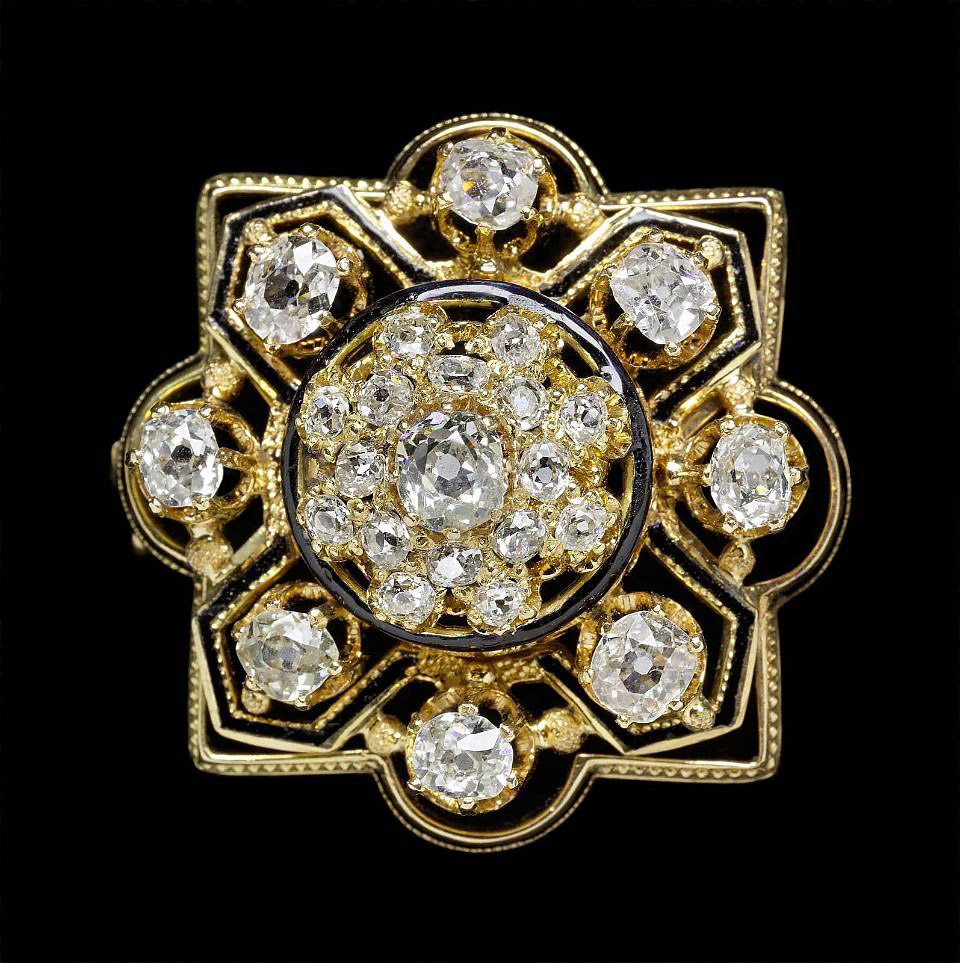
 

Anon. 'Brooch worn by Mary Todd Lincoln' (American, 1818-1882) American, about 1860


Anon
Brooch worn by Mary Todd Lincoln (American, 1818-1882)
American, about 1860
Gold, enamel, and diamond
Depth x diameter: 1.3 x 3cm
Photo: © Museum of Fine Arts, Boston


The brooch is part of a suite with matching earrings. Each element is quatrefoil in shape and has a central diamond with a diamond surround. Eight smaller diamonds form a second tier of stones. The stones are all mine-cut and are probably original to the suite. The colour range is J-K with VS-VS1 clarity. there are some losses to the tracery enamel. The suite was featured in Frank Lesley’s Illustrated Newspaper (Oct. 26, 1867). It was part of a large group of Mrs. Lincoln’s clothes, jewellery, and furnishings that were offered for sale through Brady & Company of New York City. Apparently, Mrs. Lincoln fell into dire financial circumstances after the assassination of her husband, Abraham Lincoln. The sale price was listed as $350.00.
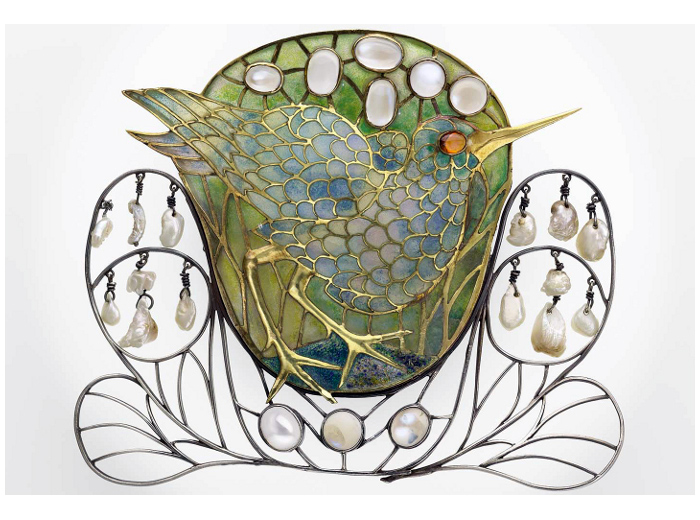
 

Charles Robert Ashbee (English, 1863-1942) 'Marsh-bird brooch' 1901-1902


Charles Robert Ashbee (English, 1863-1942)
Marsh-bird brooch
1901-1902
Gold, silver, enamel, moonstone, topaz, and freshwater pearl
Height x width x depth: 9 x 10.5 x 1.5cm
Photo: © Museum of Fine Arts, Boston


The brooch was originally a hair ornament that was converted to a brooch (silver pin stem and “C” hook added). Conversion probably occurred shortly after the ornament was made. The hair comb was fabricated by A. Gebhardt and enamelist William Mark, both members of the Guild of Handicraft.
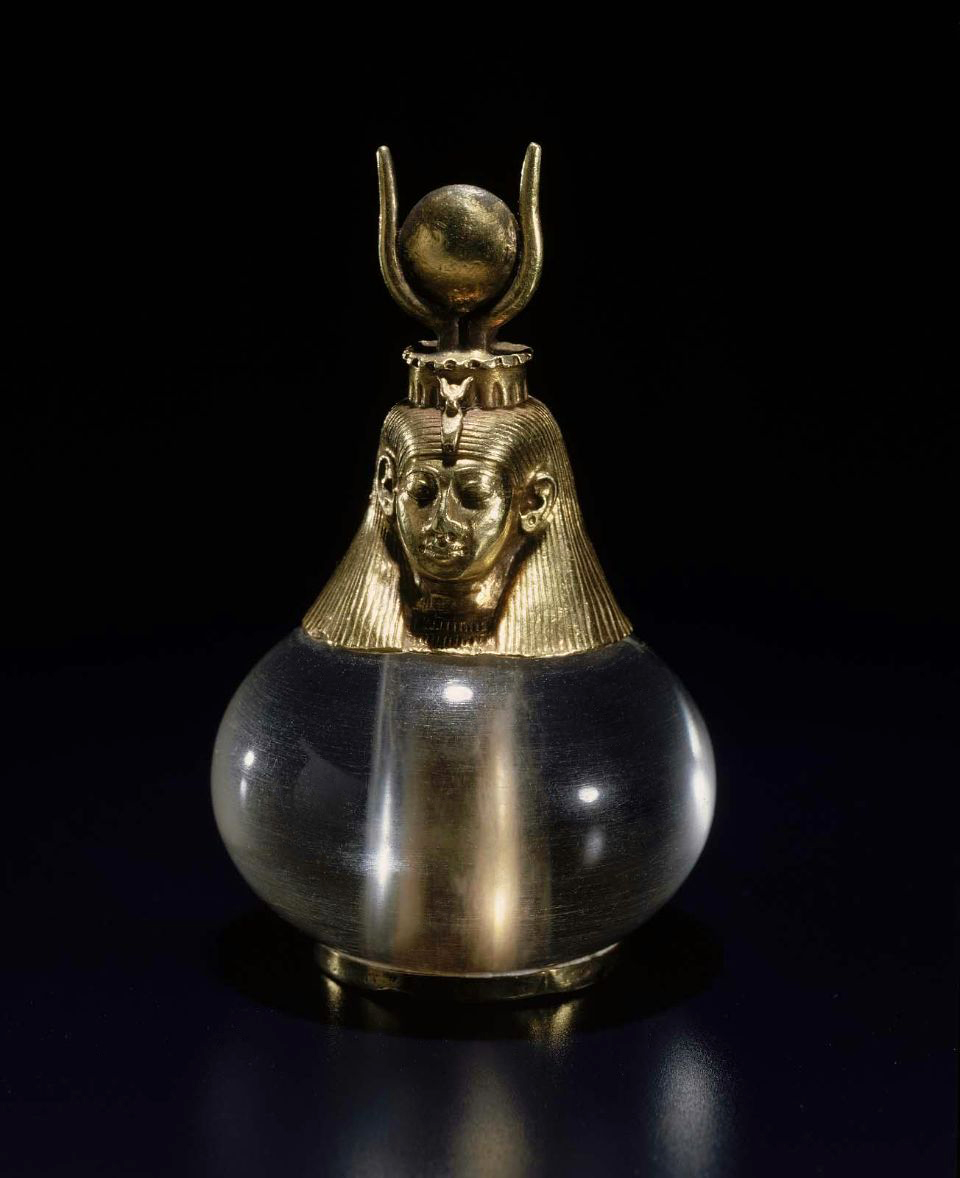
 

Anon. 'Hathor-headed crystal pendant' Napatan Period, reign of King Piye 743-712 BC


Anon
Hathor-headed crystal pendant
Napatan Period, reign of King Piye
743-712 BC
from el-Kurru, tomb Ku 55 (Sudan)
Gold, rock crystal
Height x diameter: 5.4 x 3.3cm
Photo: © Museum of Fine Arts, Boston
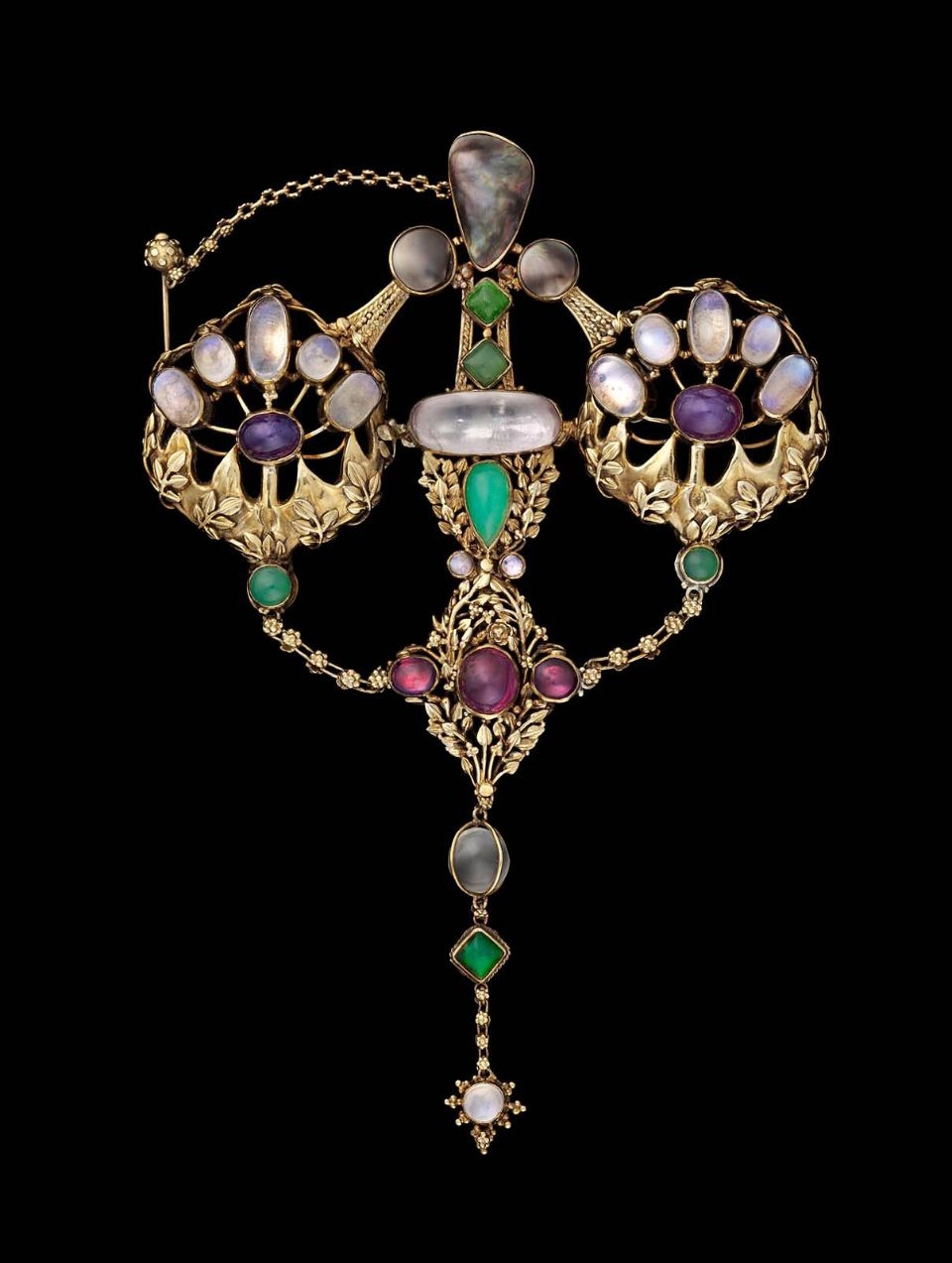
 

John Paul Cooper (English, 1869-1933) 'English Arts and Crafts brooch' 1908


John Paul Cooper (English, 1869-1933)
English Arts and Crafts brooch
1908
Gold (15 kt), ruby, moonstone, pearl, amethyst, and chrysoprase
Height x width x depth: 14 x 9.6 x 0.8cm
Photo: © Museum of Fine Arts, Boston


John Paul Cooper, a leading figure in the British Arts and Crafts movement, was an architect, designer, and metalsmith. Born into an affluent Leicester family, Cooper prepared for a career as a writer but was discouraged from pursuing this endeavour by his industrialist father. Instead, he apprenticed to London architect John D. Sedding, a strong proponent of the ideas of John Ruskin and Henry Wilson, an architect with interests in craft, especially metalwork and jewellery. Afterwards, Cooper joined the “Birmingham Group” and served as head of the Metalwork Department of the Birmingham Municipal Art School (1901-1906). He exhibited regularly at the Arts and Crafts Society exhibitions and completed several important public commissions, including two crosses and a pair of altar vases for Birmingham Cathedral. Additionally, his work often appeared in article published in Studio and Art Journal.

Cooper’s interest in jewellery design and fabrication began shortly after his association with Wilson. Like Wilson, he eventually employed others to fabricate his jewellery designs although he sometimes did the chasing and repoussé work himself. The jewellery was crafted primarily in 15 kt gold, utilising semi-precious cabochons (domed, unfaceted stones) and mother-of-pearl. Unlike many Arts and Crafts jewellery designers, Cooper often worked his designs from a selection of stones, rather than creating a design and then finding suitable gems. He once commented that stones should “… play on one another as two notes of music…”

In addition to jewellery, Cooper’s workshop designed and fabricated ecclesiastical objects and various decorative arts, including hollowware and frames. Many of the objects incorporate unusual materials, such as coconut shell, ostrich-egg shell, and narwhal tusk. At the beginning of his career, he often used gesso and plaster modelling to decorate surfaces and, at the end of the 1890s, he began making wooden boxes which he covered with shagreen, a decorative veneer made from the skin of certain sharks and rays.

This brooch is a major work by Cooper. Created during a period when the artist relied less on chased representational imagery and more on stones, the ornament conveys a sense of refined opulence. Inspired by medieval and Celtic design, the brooch is both airy and graceful. The goldwork is decorated with finely chased leaves and tendrils and the bezel-set stones include ruby, pearl, moonstone, amethyst, and chrysoprase. It took 273 hours to produce the brooch and Lorenzo Colarosi, Cooper’s chief craftsman, was the primary fabricator. It’s possible that Cooper did the chasework. The drawing for the brooch, which is dated 3 December 1908, can be found in Stockbook I, p. 81 in the Cooper Family Archives. Cooper entitled the piece Big double gold brooch.
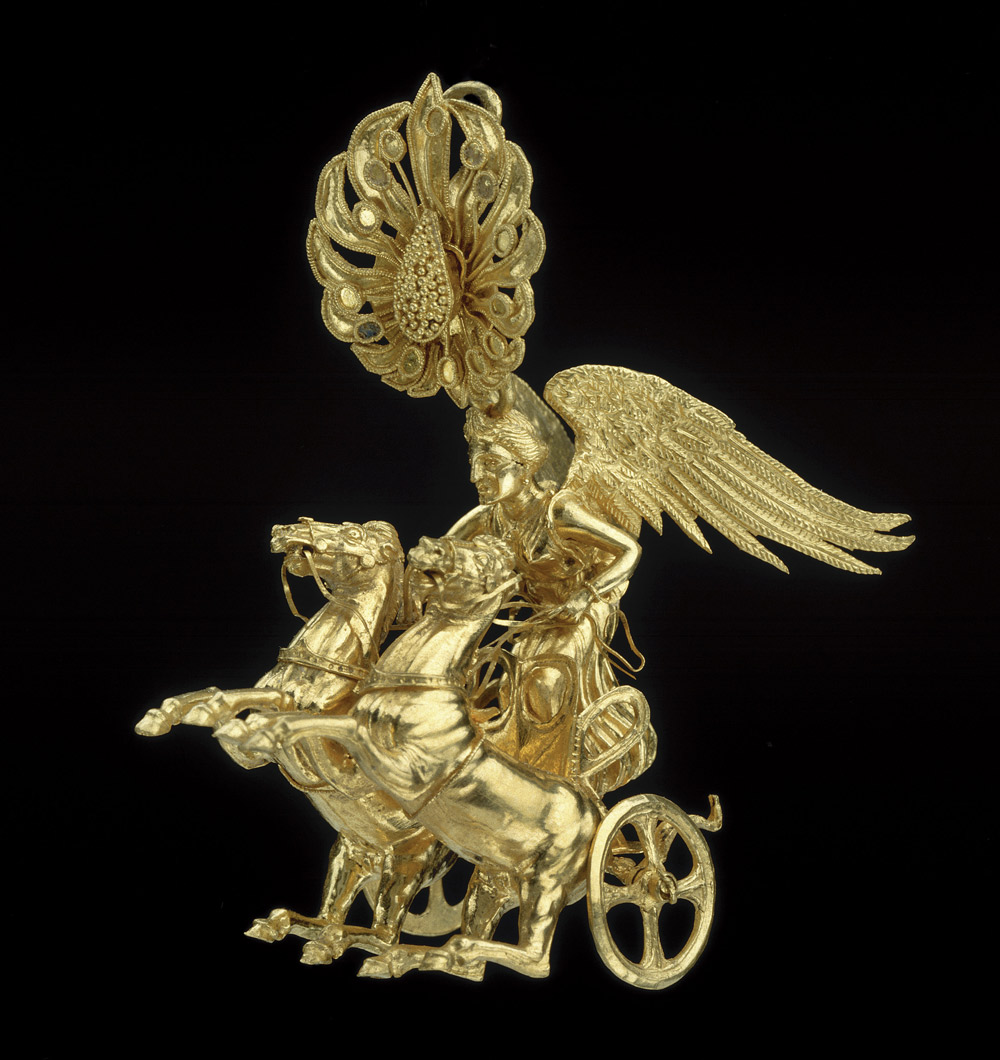
 

Anon. 'Earring with Nike driving a two-horse chariot' about 350-325 BC


Anon
Earring with Nike driving a two-horse chariot
About 350-325 BC
Gold
Henry Lillie Pierce Fund
Photo: © Museum of Fine Arts, Boston
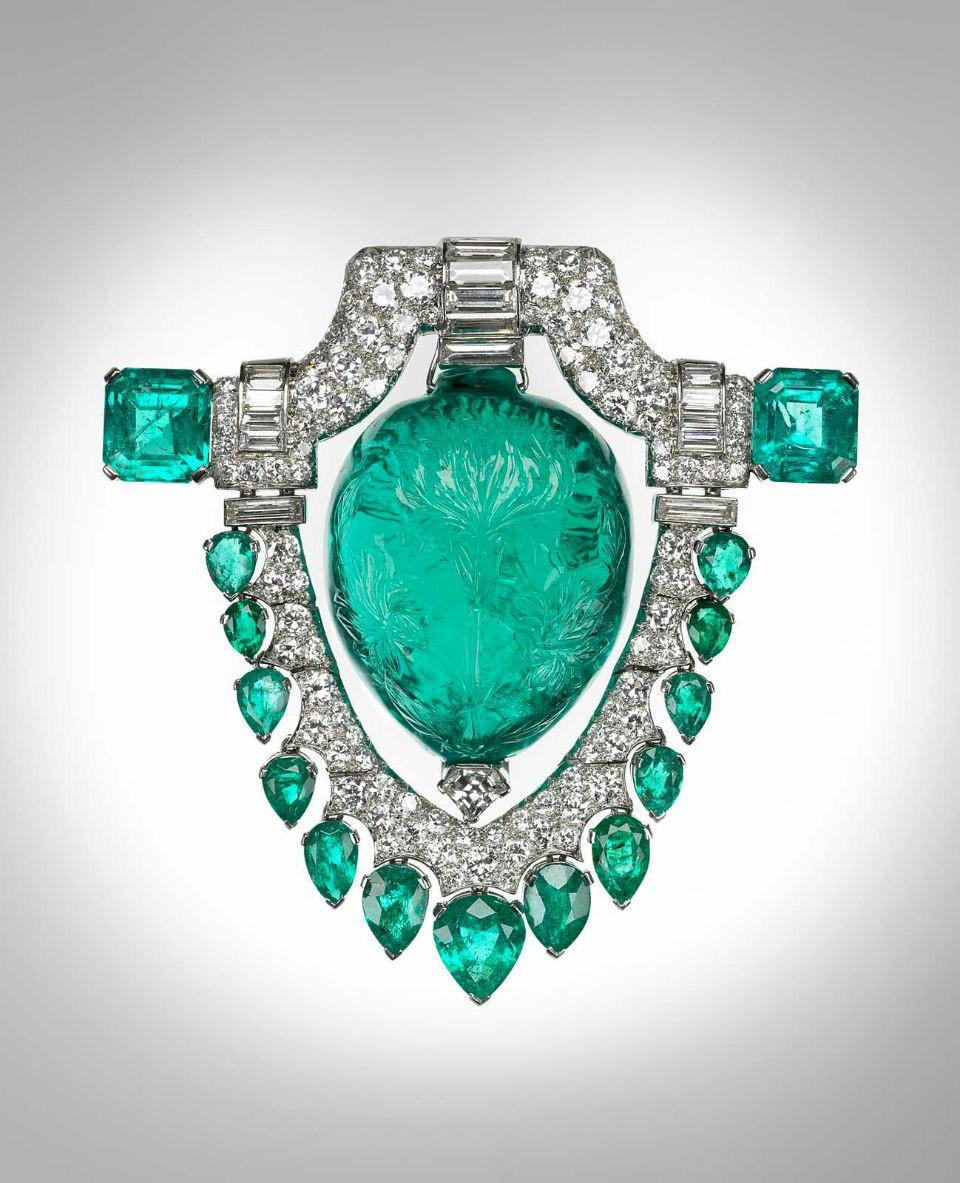
 

Possibly by Oscar Heyman & Bros., American, founded in 1912 for Marcus & Co., American, 1892-1941 Marjorie Merriweather Post's platinum brooch American, late 1920s


Possibly by Oscar Heyman & Bros. (American, founded in 1912 for Marcus & Co., American, 1892-1941)
Marjorie Merriweather Post’s platinum brooch
American, late 1920s
Platinum, diamond, and emerald featuring a spectacular 60-ct carved Mughal emerald surrounded by diamonds, which she purchased in anticipation of her presentation at the British court in 1929
Overall: 5.3 x 5.4 x 1.1cm
Photo: © Museum of Fine Arts, Boston


The brooch was purchased by Marjorie Merriweather Post (1887-1973) and is documented by two portraits; one by Frank O. Salisbury (Palm Beach Bath and Tennis Club) and the other by Douglas Chador (Hillwood Museum). Both date to 1952. The central stone in the brooch is a mid-17th century carved emerald that was purchased by Marcus and Co.’s agent in Bombay in the 1920s. Oscar Heyman & Bros. made many of the jewels marketed by Marcus & Co. during the 1920s.
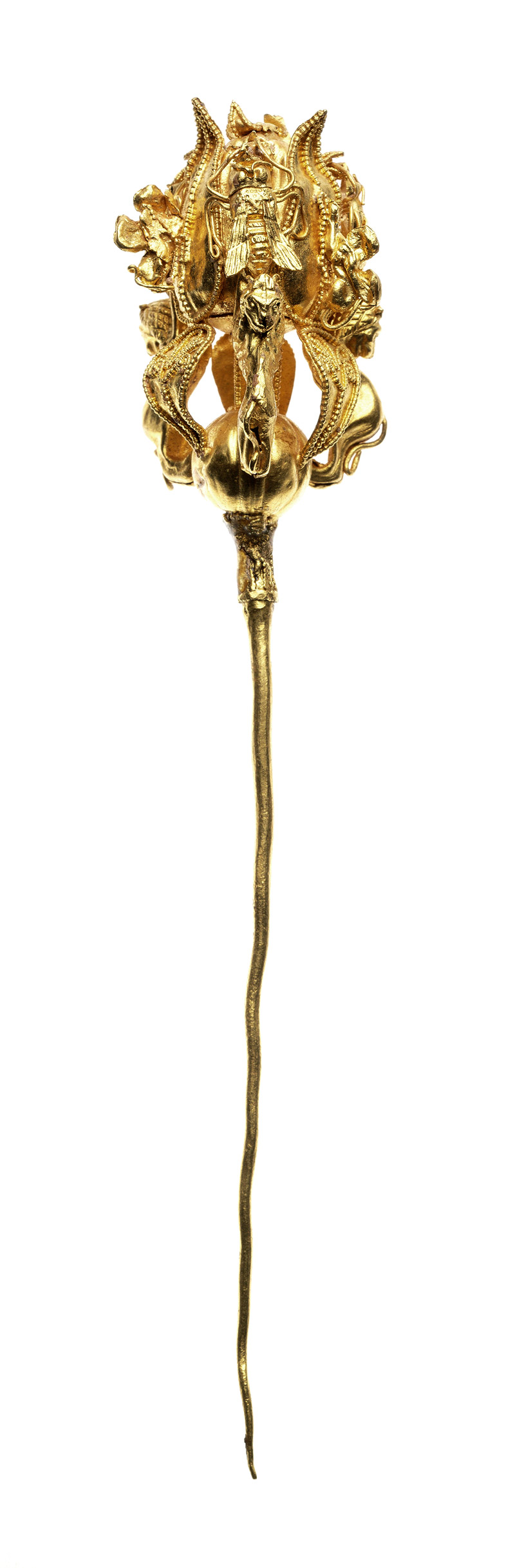
 

Anon. 'Pin with sphinxes, lions, and bees' Late 5th century BC


Anon
Pin with sphinxes, lions, and bees
Late 5th century BC
Gold
Catharine Page Perkins Fund
Photo: © Museum of Fine Arts, Boston.


Museum of Fine Arts, Boston
Avenue of the Arts
465 Huntington Avenue
Boston, Massachusetts

Opening hours:
Saturday – Monday and Wednesday 10am – 5pm
Thursday – Friday 10am – 10pm
Closed Tuesdays

Museum of Fine Arts, Boston website

LIKE ART BLART ON FACEBOOK

Back to top

Exhibition: ‘Chihuly: Through the Looking Glass’ at Museum of Fine Arts, Boston

Exhibition dates: 10th April – 7th August, 2011


Dale Chihuly (American, b. 1941) 'Neodymium Reeds on Logs', de Young Museum, San Francisco, California, 2008


Dale Chihuly (American, b. 1941)
Neodymium Reeds on Logs
2008
de Young Museum, San Francisco, California
Photo by Teresa Nouri Rishel
© 2008 Chihuly Studio


“The way I paint or draw, I don’t think about it very much. If I’m thinking about it, that kind of means that I don’t know what to do. If I start thinking, ‘I want to draw, now what can I draw?’ and I’m not inspired – because that can happen very easily – then they start to get mundane. On the other hand, if I start making drawings that I know how to do already, and if I can go fast enough, they start to get really good.”


Dale Chihuly


I love contemporary glass and Dale Chihuly is one of my favourite artists in the world. The Persian ceiling is breathtaking – organic and pulsating like the most outrageously coloured jellyfish floating over your head; the Ikebana boat, the Mille Fiori pitch perfect – a riot of colour and form, playing with ideas and the chandeliers, the chandeliers – wow! Then to do something as sensitive and restrained as the Tabac basket or the beautiful Neodymium Reeds on Logs. This is the full package, bravo.

Dr Marcus Bunyan


Many thankx to the Museum of Fine Arts, Boston for allowing me to publish the photographs in the posting. Please click on the photographs for a larger version of the image.


Often considered the greatest artist working in American glass since Louis Comfort Tiffany, Dale Chihuly is known for creating dramatic works, impressive for their size and bold use of color. Fortunately for Bostonians, his massive glass forms can now be seen in a dozen installations at the Museum of Fine Arts…


Dale Chihuly (American, b. 1941) 'Ikebana Boat' 2011


Dale Chihuly (American, b. 1941) 
Ikebana Boat
2011
Blown glass, boat hull
5 X 17 X 7′
Artwork © 2011 by Chihuly Studio, All rights reserved
Photograph © Museum of Fine Arts, Boston


Dale Chihuly (American, born 1941) 'Mille Fiori' 2011


Dale Chihuly (American, b. 1941)
Mille Fiori
2011
Blown glass
9½ X 56 X 12′
Artwork © 2011 by Chihuly Studio, All rights reserved
Photograph © Museum of Fine Arts, Boston


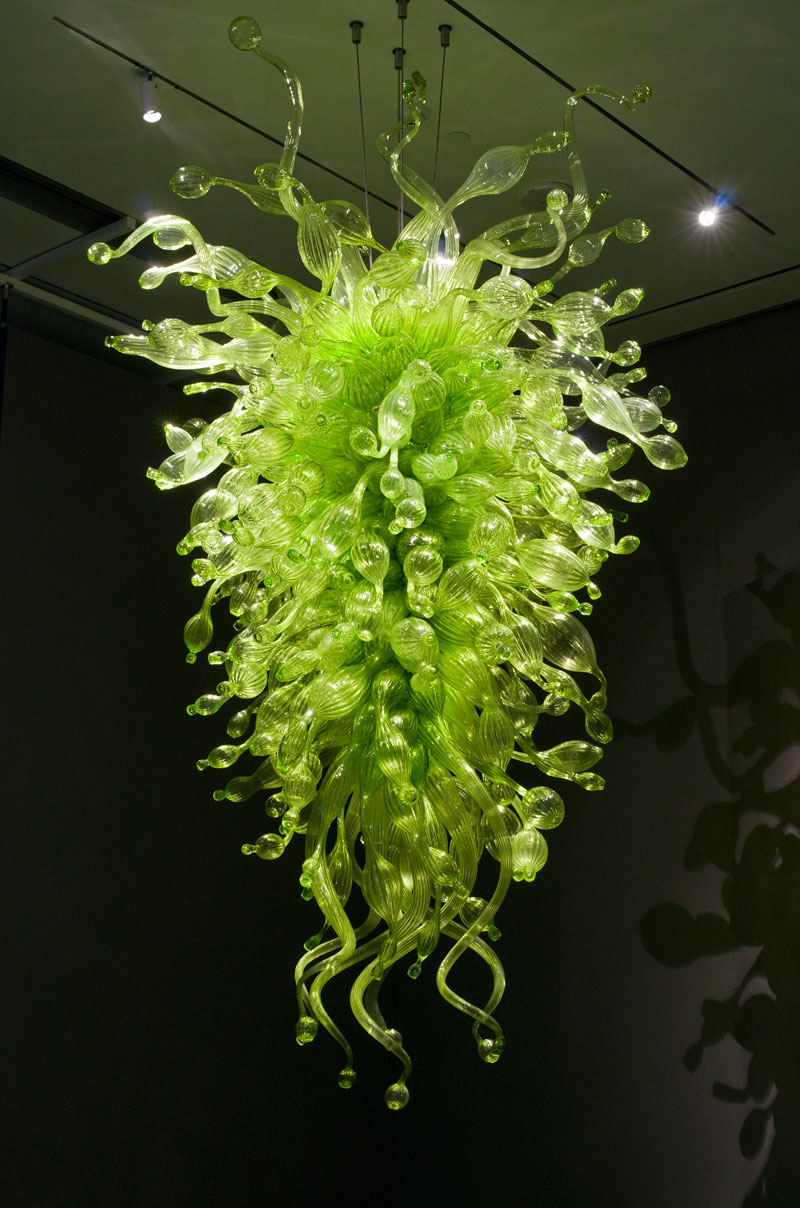
Installation view of the exhibition 'Chihuly: Through the Looking Glass' at Museum of Fine Arts, Boston showing Chihuly's 'Lime Green Icicle Tower' (2011)


Installation view of the exhibition Chihuly: Through the Looking Glass at Museum of Fine Arts, Boston showing Chihuly’s Lime Green Icicle Tower (2011)


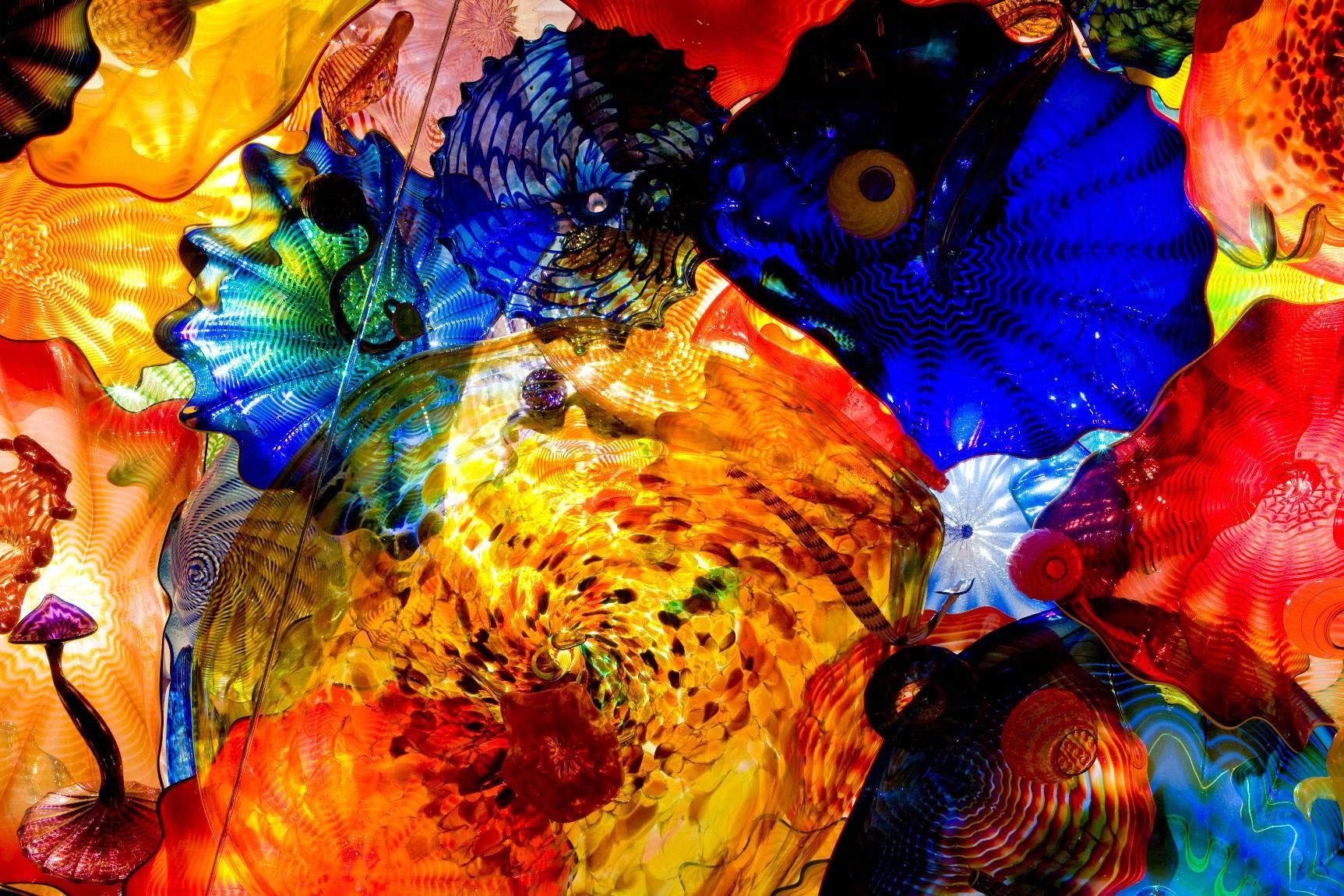
Dale Chihuly (American, b. 1941) 'Persian Ceiling' 2011


Dale Chihuly (American, b. 1941)
Persian Ceiling
2011
Blown glass
15 X 28′
Artwork © 2011 by Chihuly Studio, All rights reserved.
Photograph © Museum of Fine Arts, Boston


Dale Chihuly (American, b. 1941) 'Persian Ceiling' 2011


Dale Chihuly (American, b. 1941)
Persian Ceiling
2011
Blown glass
15 X 28′
Artwork © 2011 by Chihuly Studio, All rights reserved
Photograph © Museum of Fine Arts, Boston


Dale Chihuly (American, b. 1941) 'Persian Ceiling' 2011 (detail)


Dale Chihuly (American, b. 1941)
Persian Ceiling (detail)
2011
Blown glass
15 X 28′
Artwork © 2011 by Chihuly Studio, All rights reserved
Photograph © Museum of Fine Arts, Boston


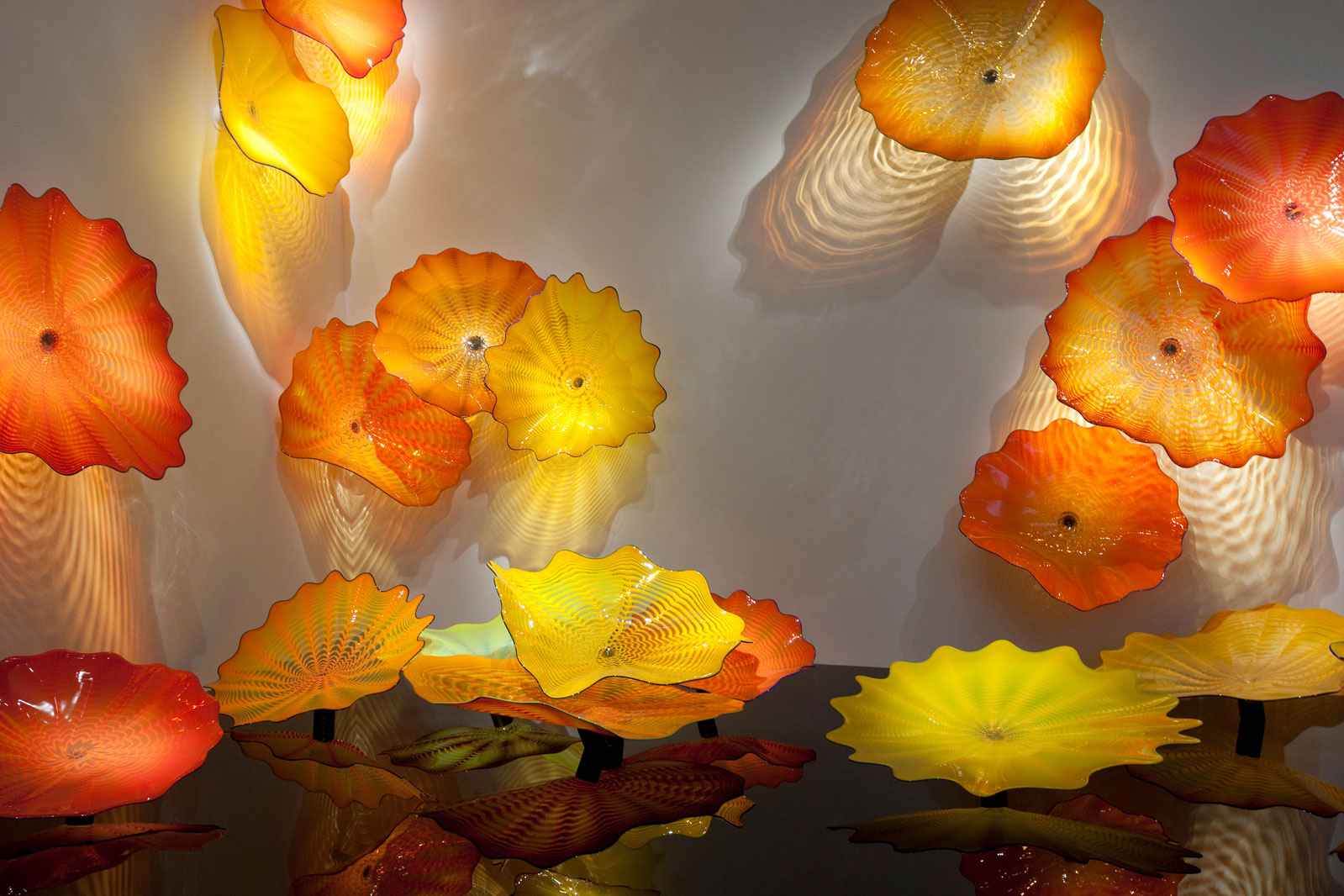
Dale Chihuly (American, b. 1941) 'Persian Wall' 2011


Dale Chihuly (American, b. 1941)
Persian Wall 
2011
Blown glass
15 X 30′
Artwork © 2011 by Chihuly Studio, All rights reserved
Photograph © Museum of Fine Arts, Boston


A magical wonderland to delight Alice herself unfolds in Chihuly: Through the Looking Glass at the Museum of Fine Arts, Boston (MFA), from April 10 through August 7, 2011. This exhibition presents new and early works created over the last four decades by Dale Chihuly, one of the world’s foremost artists working in glass. Chihuly: Through the Looking Glass features 12 boldly hued installations. Nine of these glass artworks are on view in the MFA’s Ann and Graham Gund Gallery, which serves as the main stage for the exhibition. Three additional installations are displayed within and outside of the Museum’s soaring, glass-enclosed Ruth and Carl J. Shapiro Family Courtyard, including the 42-foot-tall Lime Green Icicle Tower. The exhibition is organised by the Museum of Fine Arts, Boston, in cooperation with Dale Chihuly. It is supported by Highland Street Foundation. The media sponsors are The Boston Phoenix and WFNX Radio Network.

“Dale Chihuly is an American original, a master artist and craftsman who brings a truly magical touch to the fragile, yet malleable medium of glass, and who embodies the message: art is for everyone,” said Malcolm Rogers, Ann and Graham Gund Director of the MFA. “Visitors to the exhibition will be surprised and delighted by his dazzling installations, which create a kaleidoscopic world full of colour and light. This exhibition gives us the wonderful opportunity to showcase the full range and grand scale of his art.”

First Installation in the New Shapiro Family Courtyard

The MFA continues the celebration of the recently opened Art of the Americas Wing and Shapiro Family Courtyard with Chihuly: Through the Looking Glass, showcasing the artwork of one of the most innovative and beloved American artists of our time. The show was conceived two years ago when Chihuly visited the Museum while the courtyard was still under construction, and marks the first time that exhibition-related works are on view in the courtyard. Chihuly: Through the Looking Glass was designed by Chihuly specifically for the Museum site. Works created in the Chihuly Studio hot shop in Seattle, Washington, incorporating thousands of individual pieces of hand-blown glass, were sent to Boston in six 53-foot containers. The 12 installations were assembled on site at the MFA during a three-week period in March. During this time, visitors to the MFA were able to watch a team from Chihuly Studio install the monumental glass artworks in the courtyard and surrounding gardens…

Works created specifically for Chihuly: Through the Looking Glass, such as the dramatic Lime Green Icicle Tower, have transformed the Shapiro Family Courtyard. Measuring 42-feet high and weighing approximately 10,000 pounds, the sculpture’s 2,342 glass elements catch the light flooding into the glass-enclosed space. Also in the courtyard, along the colonnade of the Museum’s historic interior façade, is the newly created Boathouse Neon II – an expansive profusion of red, yellow, and orange – spanning 98 feet. Outside, along the courtyard’s glass walls, Amber Cattails extend the length of the northern-landscaped area as though planted in their natural environment.

“Perhaps the greatest artist in American glass since Louis Comfort Tiffany, Dale Chihuly is one of the central figures in the contemporary studio glass movement. This exhibition will give our visitors a look at his extraordinary career – the creation of enchanting environments that, through the manipulation of light and colour, both delight the eye and challenge our perception of space,” said Gerald W.R. Ward, the Katharine Lane Weems Senior Curator of American Decorative Arts and Sculpture, who organised the exhibition.

Nine Unique Installations in the New Gund Gallery

The exhibition continues below the courtyard, where nine unique Chihuly installations (including both newly made and early works) are on view in the Gund Gallery for special exhibitions. Outside of the gallery, a glistening, 30′ long and 15′ tall Persian Wall composed of intricately detailed rondels – flower-like shapes in yellows, reds, and oranges – offer an enchanting welcome to visitors. Inside the gallery, Scarlet Icicle Chandelier, measuring 6’ high, sets the stage for the bold creations that lie beyond, such as Ikebana Boat, a 17′-long, newly made composition featuring a weathered wooden rowboat filled with brightly colored, seemingly alien glass forms. Chihuly’s Ikebana series, which alludes to Japanese flower arrangements, is featured in a nearby room, where 5′-to-6′-tall silvered vessels hold inventive floral “stems”. Also on view in the room is an assortment of Venetians – silvered blown glass sculptures originally conceived by Chihuly after seeing Venetian Art Deco glass. Chihuly Drawings seen in this space serve as complement and inspiration for the glass Venetian works. The nearby Northwest Room evokes the artist’s native Pacific Northwest environment and the Native American influence on his work. It features an assemblage of ethereal Baskets inspired by Native American baskets, as well as displays of 75 colourful trade blankets and a variety of woven baskets from the artist’s own extensive collection.

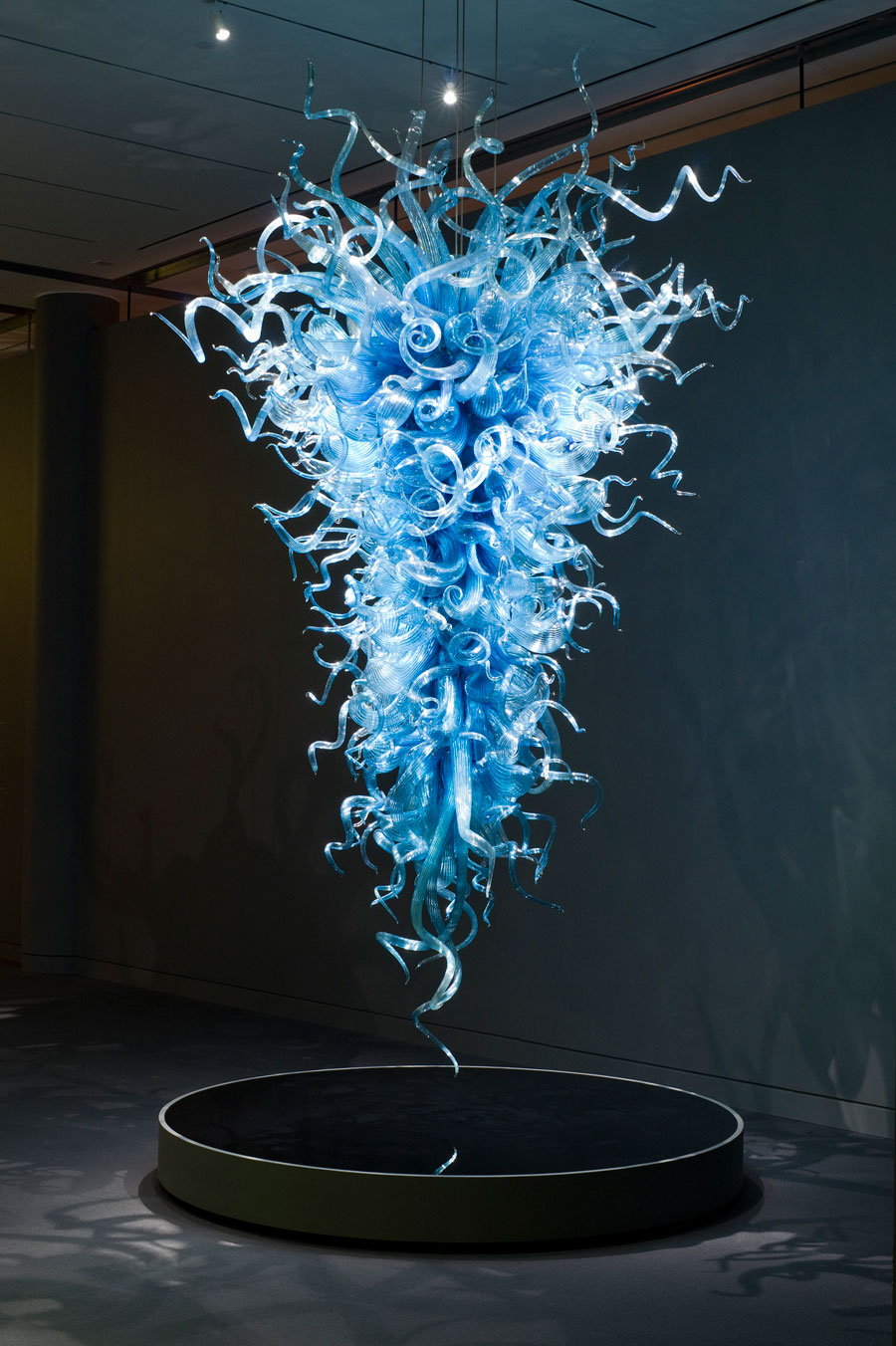
Adjacent to this installation is a darkened space showcasing Mille Fiori (Italian for “a thousand flowers”), measuring 58′ long and 11′ tall and presented on a 12′-wide raised platform. This breathtaking work of art is one of the artist’s largest installations, a combination of many of the colourful, inventive shapes found in Chihuly’s other creations – from exotic Cattails and tall Reeds, to giant glass Niijima Floats and ribbon-like Herons – brilliantly coloured in shades of yellow, red, lavender, green, orange, and blue. Persian Ceiling, a dazzling 15′ by 25′ array of vibrant and beautifully articulated shapes encased and suspended from the ceiling, is featured in the adjacent gallery. This eruption of colour continues in the Chandelier Room, featuring six dramatic Chandeliers hanging at different heights from the 16′-high Gund Gallery ceiling. Included are newly created works, the 12′-tall Silvered Chrysalis Tiered Chandelier and Iris Yellow Frog Foot Chandelier, as well as the spectacular Chiostro di Sant’Apollonia Chandelier and three other works: Palazzo di Loredana Balboni Chandelier, Orange Hornet and Eelgrass Chandelier, and Onyx and Caramel Chandelier. The final exhibition space showcases luminescent Neodymium Reeds, a large-scale installation composed of birch logs and elegant glass Reeds in shades of lavender.

Press release from the Museum of Fine Arts, Boston website


Dale Chihuly (American, b. 1941) 'Persian Wall' 2011 (detail)


Dale Chihuly (American, b. 1941)
Persian Wall (detail)
2011
Blown glass
15 X 30′
Artwork © 2011 by Chihuly Studio, All rights reserved
Photograph © Museum of Fine Arts, Boston


Dale Chihuly (American, b. 1941) 'Palazzo di Loredana Balboni Chandelier' 2011


Dale Chihuly (American, b. 1941)
Palazzo di Loredana Balboni Chandelier
2011
Blown glass, steel
9 X 7 X 7′
Artwork © 2011 by Chihuly Studio, All rights reserved
Photograph © Museum of Fine Arts, Boston


Dale Chihuly (American, b. 1941) 'Chiostro di Sant'Apollonia Chandelier' 2011


Dale Chihuly (American, b. 1941) 
Chiostro di Sant’Apollonia Chandelier
2011
Blown glass, steel
10 X 7 X 9′
Artwork © 2011 by Chihuly Studio, All rights reserved
Photograph © Museum of Fine Arts, Boston


Dale Chihuly (American, b. 1941) 'Tabac Basket' 2008


Dale Chihuly (American, b. 1941)
Tabac Basket
Photo by Teresa Nouri Rishel
© 2008 Chihuly Studio


Museum of Fine Arts, Boston
Avenue of the Arts
465 Huntington Avenue
Boston, Massachusetts

Opening hours:
Thursday – Monday 10am – 5pm
Closed Tuesdays and Wednesdays
Museum of Fine Arts Boston website

LIKE ART BLACK ON FACEBOOK

Back to top

Exhibition: ‘Nicholas Nixon: Family Album’ at Museum of Fine Arts, Boston

Exhibition dates: 28th July, 2010 – 1st May, 2011


Nicholas Nixon (American, born in 1947). 'Bebe, Cambridge' 1980


Nicholas Nixon (American, b. 1947)
Bebe, Cambridge
1980
Gelatin silver contact print
Museum of Fine Arts, Boston. Museum purchase with funds donated by the National Endowment for the Arts and Richard L. Menschel, Bela T. Kalman, Judge and Mrs. Matthew Brown, Mildred S. Lee, and Barbara M. Marshall
© Nicholas Nixon, Courtesy Fraenkel Gallery, San Francisco
Photograph © Museum of Fine Arts, Boston


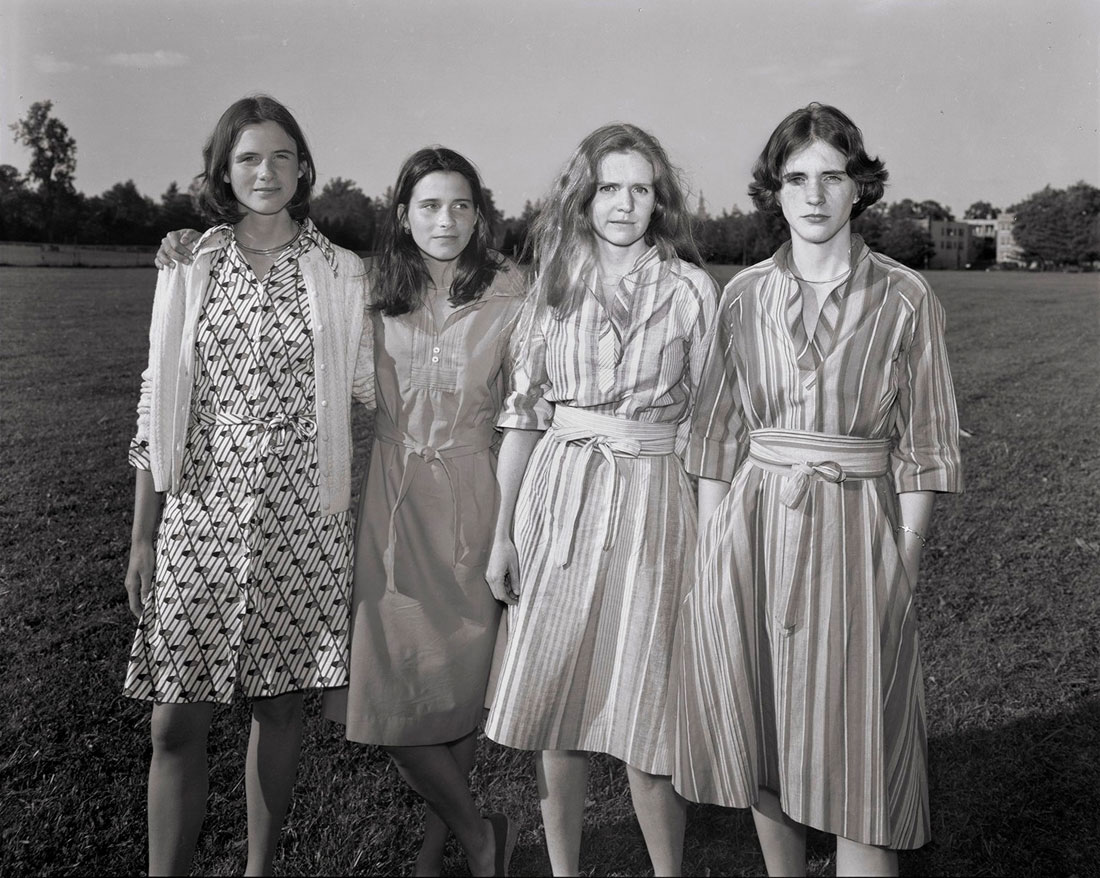
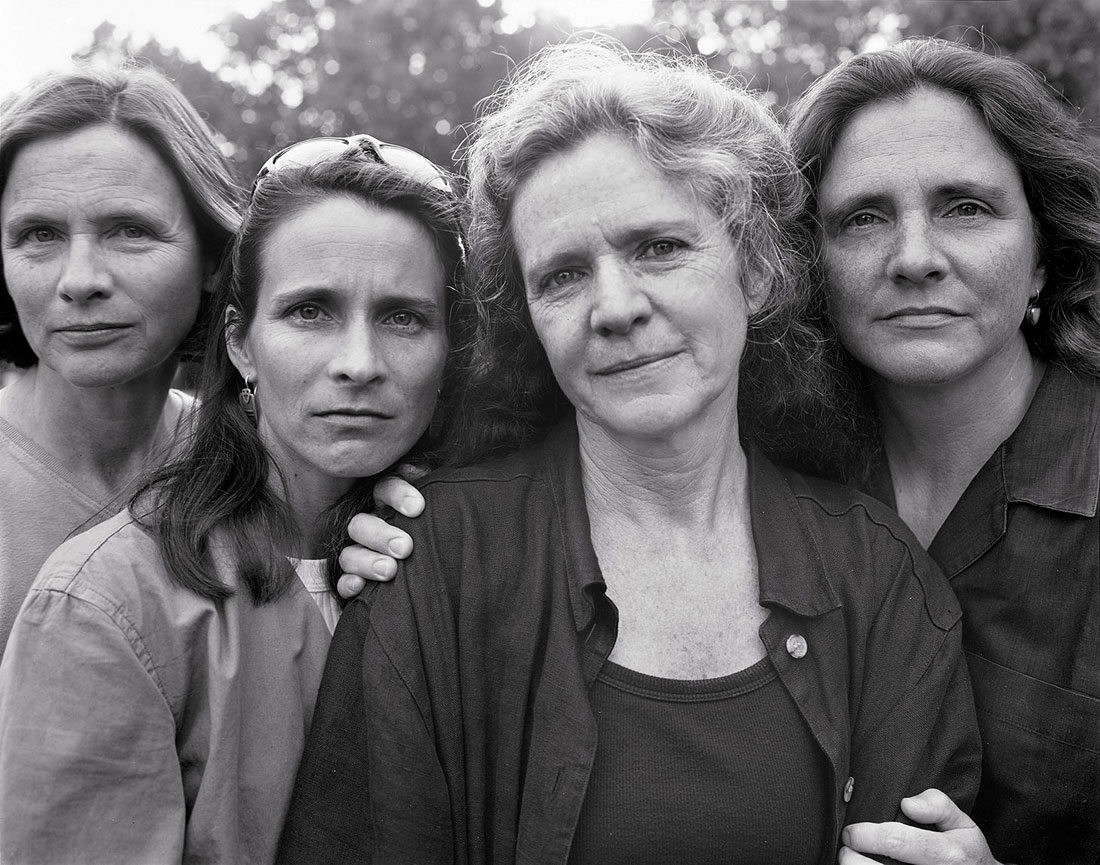
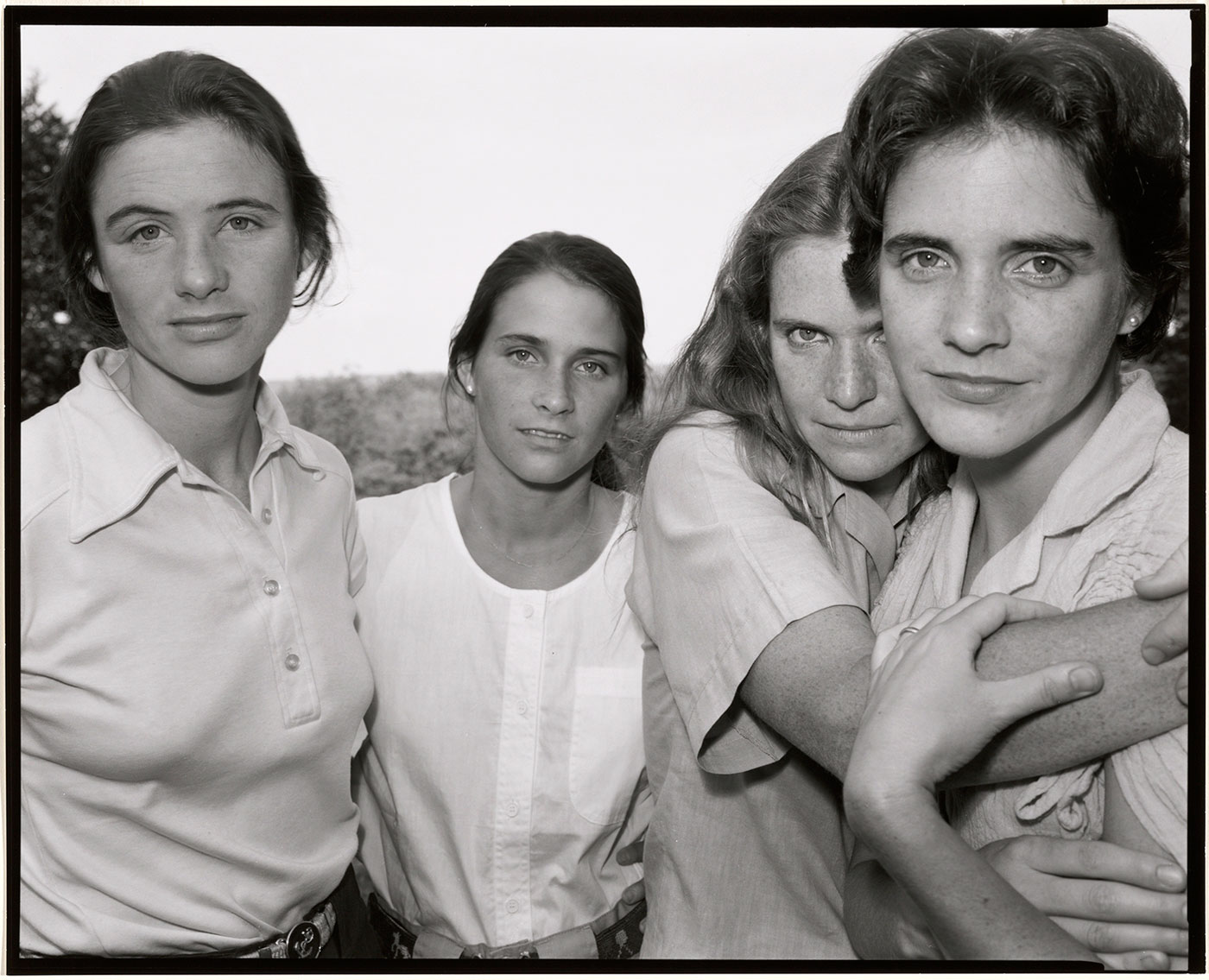
In the history of group photography Nixon’s ongoing series of family portraits The Brown Sisters (1975- ) is the best in the world. Beautifully structured and composed the photographs are nuanced and sensitive to the people portrayed and the passage of time. The subjects project and recede within the image frame, exposing vulnerability, intimacy and strength. Simply breathtaking!

Dr Marcus Bunyan


Many thankx to Amelia Kantrovitz for her help and to the Museum of Fine Arts, Boston for allowing me to publish the photographs in the posting. Please click on the photographs for a larger version of the image.


Nicholas Nixon (American, b. 1947)
'Chestnut Street, Louisville, Kentucky' 1982


Nicholas Nixon (American, b. 1947)
Chestnut Street, Louisville, Kentucky
1982
Gelatin silver print
Gift of the photographer
© Nicholas Nixon, Courtesy Fraenkel Gallery, San Francisco
Photograph © Museum of Fine Arts, Boston


Nicholas Nixon (American, born in 1947). 'Clementine and Bebe, Cambridge' 1985


Nicholas Nixon (American, b. 1947)
Clementine and Bebe, Cambridge
1985
Gelatin silver print
Gift of Nicholas Nixon
© Nicholas Nixon, Courtesy Fraenkel Gallery, San Francisco
Photograph © Museum of Fine Arts, Boston


Nicholas Nixon (American, b. 1947)
'Clementine and Bebe, Cambridge' 1985


Nicholas Nixon (American, b. 1947)
Clementine and Bebe, Cambridge
1985
Gelatin silver print
Gift of Nicholas Nixon
© Nicholas Nixon, Courtesy Fraenkel Gallery, San Francisco
Photograph © Museum of Fine Arts, Boston


Nicholas Nixon (American, b. 1947) 'Cambridge' 1986


Nicholas Nixon (American, b. 1947)
Cambridge
1986
Gelatin silver print
Gift of the photographer
© Nicholas Nixon, Courtesy Fraenkel Gallery, San Francisco
Photograph © Museum of Fine Arts, Boston


Nicholas Nixon (American, b. 1947)
'Clementine and Bebe, Cambridge'
1986


Nicholas Nixon (American, b. 1947)
Clementine and Bebe, Cambridge
1986
Gelatin silver print
20.3 × 25.4cm
Gift of the photographer
© Nicholas Nixon, Courtesy Fraenkel Gallery, San Francisco
Photograph © Museum of Fine Arts, Boston


Nicholas Nixon (American, b. 1947)
'Clementine and Sam' 1990


Nicholas Nixon (American, b. 1947)
Clementine and Sam
1990
Gelatin silver print
Gift of the photographer
© Nicholas Nixon, Courtesy Fraenkel Gallery, San Francisco
Photograph © Museum of Fine Arts, Boston


Themes such as the passage of time and the enduring nature of close family relationships are brought into focus in the exhibition Nicholas Nixon: Family Album at the Museum of Fine Arts, Boston (MFA). The show, on view from July 28, 2010, through May 1, 2011, in the MFA’s Herb Ritts Gallery, features more than 70 black and white portrait photographs by Nicholas Nixon, one of the most celebrated American photographers of this generation. Among them are pictures of Nixon’s wife, Beverly (Bebe) Brown Nixon, and their two children, Clementine and Sam. Nicholas Nixon also includes The Brown Sisters, the ongoing annual series of portraits of Bebe and her sisters taken each summer for the past 35 years. Nixon will take another photograph of the sisters this summer, which will be hung in the gallery during the course of the exhibition.

The promised gift to the MFA of The Brown Sisters series is the impetus for Nicholas Nixon. The group of photographs has been lent to the Museum for the exhibition from the collection of James Krebs, a Distinguished Benefactor of the MFA, and his late wife, Margie. Also included are works by Nixon purchased by the Museum, and a number that were given and lent to the MFA by the artist. Nicholas Nixon is presented with support from the Shelly and Michael Kassen Fund.

“Nicholas Nixon rose to prominence in the mid 1970s for his large-format black-and-white views of Boston and New York. Since then, he has turned almost exclusively to portraiture, and has produced many celebrated series of pictures – of the elderly, people with AIDS, and couples – but his portrayals of his family are particularly evocative and beloved. Nick has been a friend of the MFA for a long time and has generously given the Museum many of his photographs,” said Malcolm Rogers, Ann and Graham Gund Director of the MFA.

Nicholas Nixon’s photographs of family are both personal in nature and have a universality with which observers can connect. These pictures, a number of which have never been publicly displayed, celebrate the bonds of close family relationships, especially as they grow over time. Included in the exhibition is the luminous image that Nixon took of his wife in the bathtub, Bebe, Cambridge (MFA, Boston, 1980). The beautiful glowing light on her face suggests her interior state, as well as the depth of their long relationship. There are also many photographs in the show that highlight the richness and warmth of daily life with children. In an image from 1985, a cropped view of Bebe pictures her gazing downward, as Clementine’s fist emerges from the bottom of the frame, evoking the power of a new life. A close-up of Clementine’s face made the following year, with her wide eyes gazing upward, captures the toddler’s impression of wonder. The latest photograph of Clementine in the exhibition dates to 2003 and depicts her as a young woman, embracing her mother. Images of Nixon’s son, Sam, are also included, showing him in different stages over the years and in portraits with his sister.

The most recognised images in the exhibition are those that Nixon has taken of the Brown sisters each summer since 1975. The four women – Heather, Mimi, Bebe, and Laurie – always appear in the same order in the portraits, from left to right. These compelling photographs reveal the evolving nature of the sisters’ relationship over time. The serial portraits begin with The Brown Sisters, 1975 (James and Margie Krebs Collection, 1975), which captures them as young women, ranging in age from 15 to 25. With each passing year, observers can note changes in appearance, stance, and demeanour. In several of the portraits, the presence of the photographer is suggested through the shadow of himself and his camera projected across the figures, which makes reference to his role in the family dynamic. The series unfolds in a grid display on the central wall of the Ritts Gallery.
“In his serial pictures of family, Nicholas Nixon explores a classic conundrum in photography: how to suggest the passage of time by means of an instrument that records the instantaneous image. His effort is related to that of several predecessors – Alfred Stieglitz, Edward Weston, Harry Callahan, to name the most important – who, like him, used their wives as subject matter, photographing them over a period of years. What Nixon has added to the discussion – beyond recording facets of appearance, personality, or emphasising formal concerns – is his emphasis on the meaning of family,” said Anne Havinga, the MFA’s Estrellita and Yousuf Karsh Senior Curator of Photographs, who curated the show with Emily Voelker, the MFA’s Estrellita and Yousuf Karsh Assistant Curator of Photographs.

Born in Detroit in 1947, Nixon graduated from the University of Michigan in 1969 with a bachelor’s degree in English, and from the University of New Mexico in 1974 with a Masters of Fine Arts degree. Later that year, he moved to Boston, where he teaches at the Massachusetts College of Art and Design. Nixon is known for his documentary photography, especially city views and portraits rooted in the snapshot tradition. He works primarily in black and white, creating gelatin silver prints with a 8 x 10-inch view camera as did many of the great photographers who influenced him, including Alfred Stieglitz, Edward Weston, and Walker Evans. Working in large format and making contact prints enables him to create images of crisp detail and subtle tone. In recent years, Nixon has also begun to experiment with colour, although the photographs in the exhibition are all black-and-white, for which he is best known. He is the recipient of three National Endowment for the Arts Fellowships and two Guggenheim Fellowships, and, in addition to the MFA, his work is included in numerous museum collections, among them, the Metropolitan Museum of Art and the Los Angeles County Museum of Art.

Press release from the Museum of Fine Arts, Boston website [Online] Cited 26/04/2011 no longer available online


Nicholas Nixon (American, born in 1947). 'The Brown Sisters' 1976


Nicholas Nixon (American, b. 1947)
The Brown Sisters
1976
Gelatin silver print
Promised gift of James and Margie Krebs
Courtesy, Museum of Fine Arts, Boston


Nicholas Nixon (American, born in 1947). 'The Brown Sisters' 1978


Nicholas Nixon (American, b. 1947)
The Brown Sisters
1978
Gelatin silver print
Promised gift of James and Margie Krebs
Courtesy, Museum of Fine Arts, Boston


Nicholas Nixon (American, born in 1947). 'The Brown Sisters' 1980


Nicholas Nixon (American, b. 1947)
The Brown Sisters
1980
Gelatin silver print
Promised gift of James and Margie Krebs
Courtesy, Museum of Fine Arts, Boston


Nicholas Nixon (American, born in 1947). 'The Brown Sisters' 1996


Nicholas Nixon (American, b. 1947)
The Brown Sisters
1996
Gelatin silver print
Promised gift of James and Margie Krebs
Courtesy, Museum of Fine Arts, Boston


Nicholas Nixon (American, born in 1947). 'The Brown Sisters' 1999


Nicholas Nixon (American, b. 1947)
The Brown Sisters
1999
Gelatin silver print
Promised gift of James and Margie Krebs
Courtesy, Museum of Fine Arts, Boston


Museum of Fine Arts, Boston
Avenue of the Arts
465 Huntington Avenue
Avenue of the Arts
Boston, Massachusetts 02115-5523
617-267-9300

Opening hours:
Thursday and Friday 10am – 10pm
Saturday – Monday 10am – 5pm
Closed Tuesday and Wednesday

Museum of Fine Arts, Boston website

LIKE ART BLART ON FACEBOOK

Back to top

Exhibition: ‘Richard Misrach: After Katrina’ at The Museum of Fine Arts, Boston

Exhibition dates: 7th August – 31st October 2010


Many thankx to The Museum of Fine Arts, Boston for allowing me to publish the photographs in the posting. Please click on the photographs for a larger version of the image.


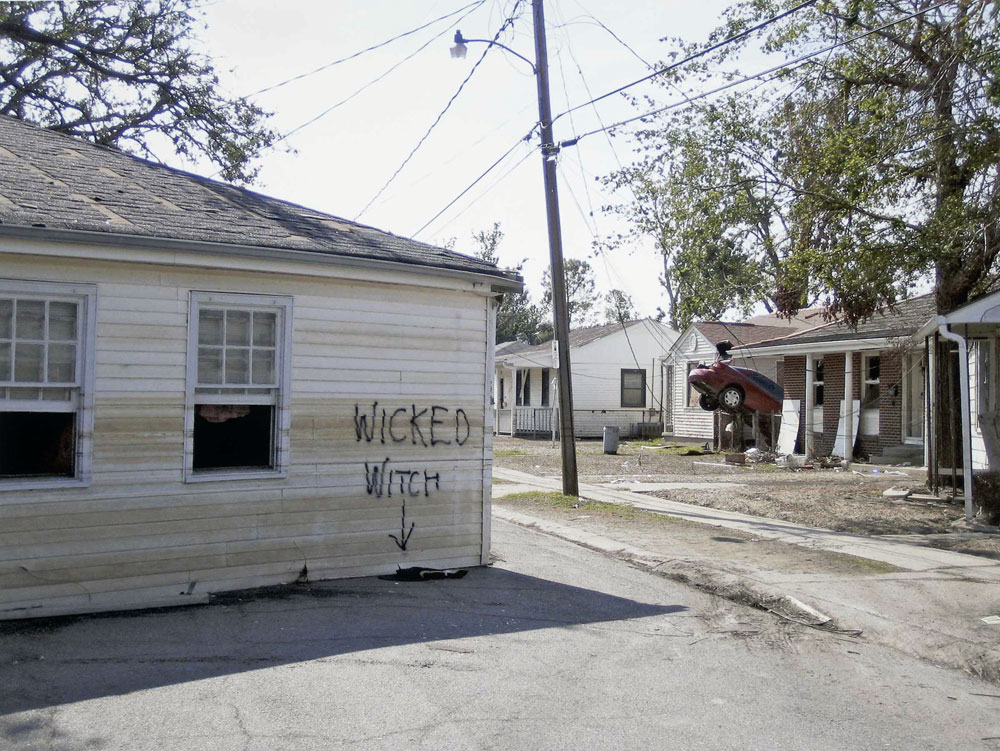
Richard Misrach (American, b. 1949) 'Untitled (New Orleans and the Gulf Coast)' 2005 from the exhibition 'Richard Misrach: After Katrina' at The Museum of Fine Arts, Boston, Aug-  Oct 2010


Richard Misrach (American, b. 1949)
Untitled (New Orleans and the Gulf Coast)
2005, printed 2010
Inkjet print, ed. #3/5
2399 x 1795 mm
The Museum of Fine Arts, Houston, gift of the artist
© Richard Misrach


Richard Misrach (American, b. 1949) 'Untitled (New Orleans and the Gulf Coast)' 2005 from the exhibition 'Richard Misrach: After Katrina' at The Museum of Fine Arts, Boston, Aug-  Oct 2010


Richard Misrach (American, b. 1949)
Untitled (New Orleans and the Gulf Coast)
2005, printed 2010
Inkjet print, ed. #3/5
2400 x 1807 mm
The Museum of Fine Arts, Houston, gift of the artist
© Richard Misrach


Richard Misrach (American, b. 1949) 'Untitled (New Orleans and the Gulf Coast)' 2005 from the exhibition 'Richard Misrach: After Katrina' at The Museum of Fine Arts, Boston, Aug-  Oct 2010


Richard Misrach (American, b. 1949)
Untitled (New Orleans and the Gulf Coast)
2005, printed 2010
Inkjet print, ed. #3/5
2400 x 1801 mm
The Museum of Fine Arts, Houston, gift of the artist
© Richard Misrach


Richard Misrach (American, b. 1949) 'Untitled (New Orleans and the Gulf Coast)' 2005


Richard Misrach (American, b. 1949)
Untitled (New Orleans and the Gulf Coast)
2005, printed 2010
Inkjet print
The Museum of Fine Arts, Houston, gift of the artist
© Richard Misrach


Richard Misrach (American, b. 1949) 'Untitled (New Orleans and the Gulf Coast)' 2005


Richard Misrach (American, b. 1949)
Untitled (New Orleans and the Gulf Coast)
2005, printed 2010
Inkjet print
The Museum of Fine Arts, Houston, gift of the artist
© Richard Misrach


Richard Misrach (American, b. 1949) 'Untitled (New Orleans and the Gulf Coast)' 2005


Richard Misrach (American, b. 1949)
Untitled (New Orleans and the Gulf Coast)
2005, printed 2010
Inkjet print
The Museum of Fine Arts, Houston, gift of the artist
© Richard Misrach


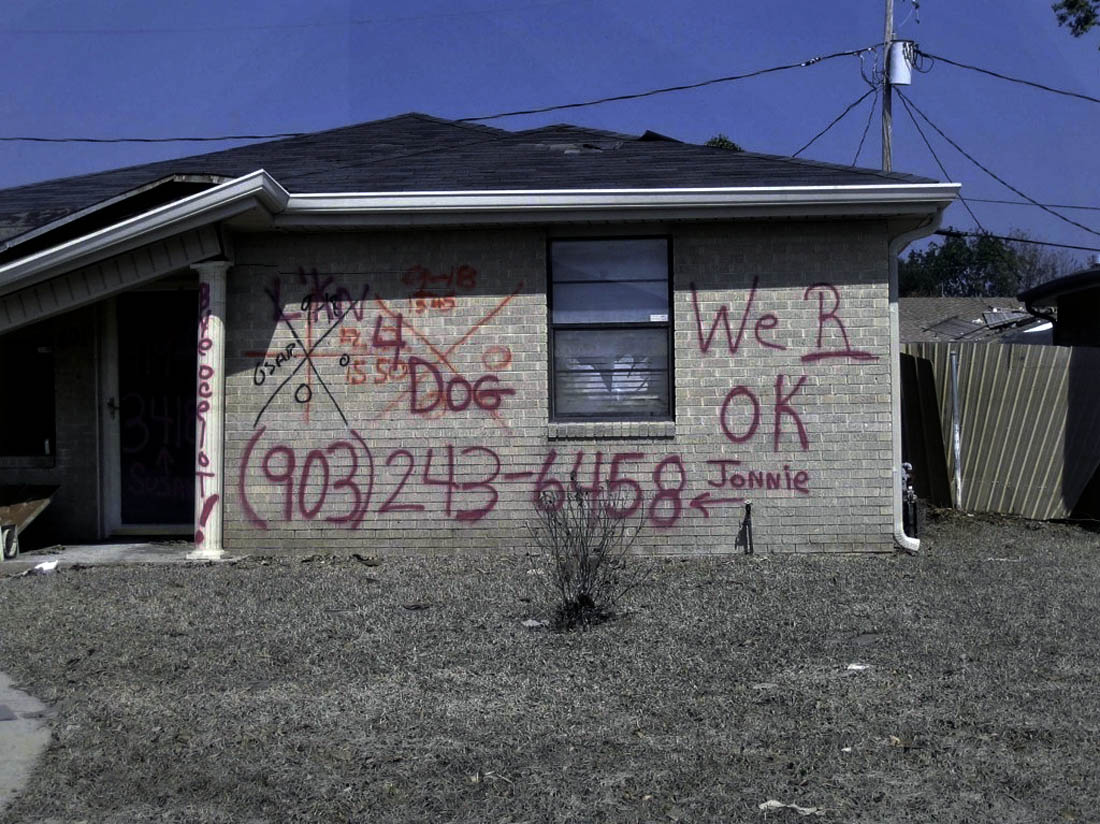
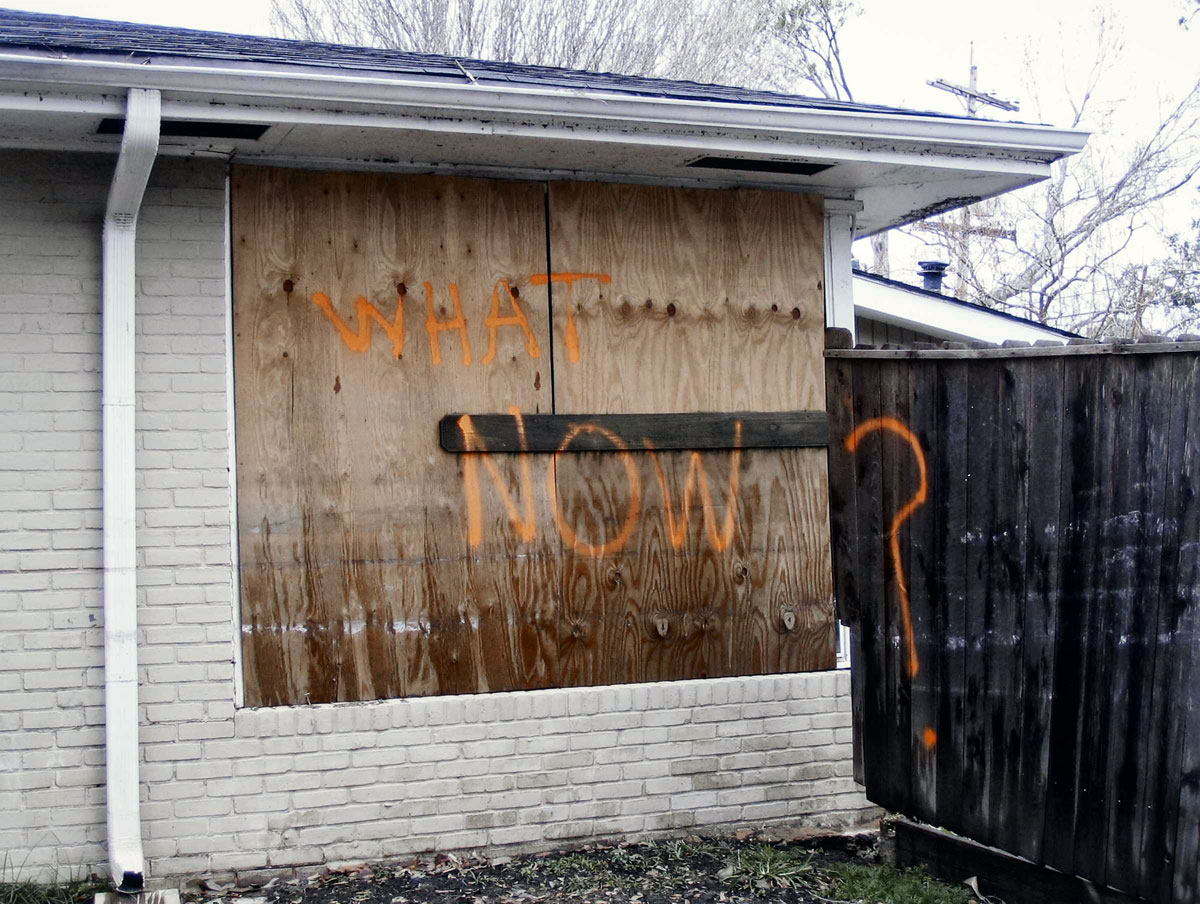
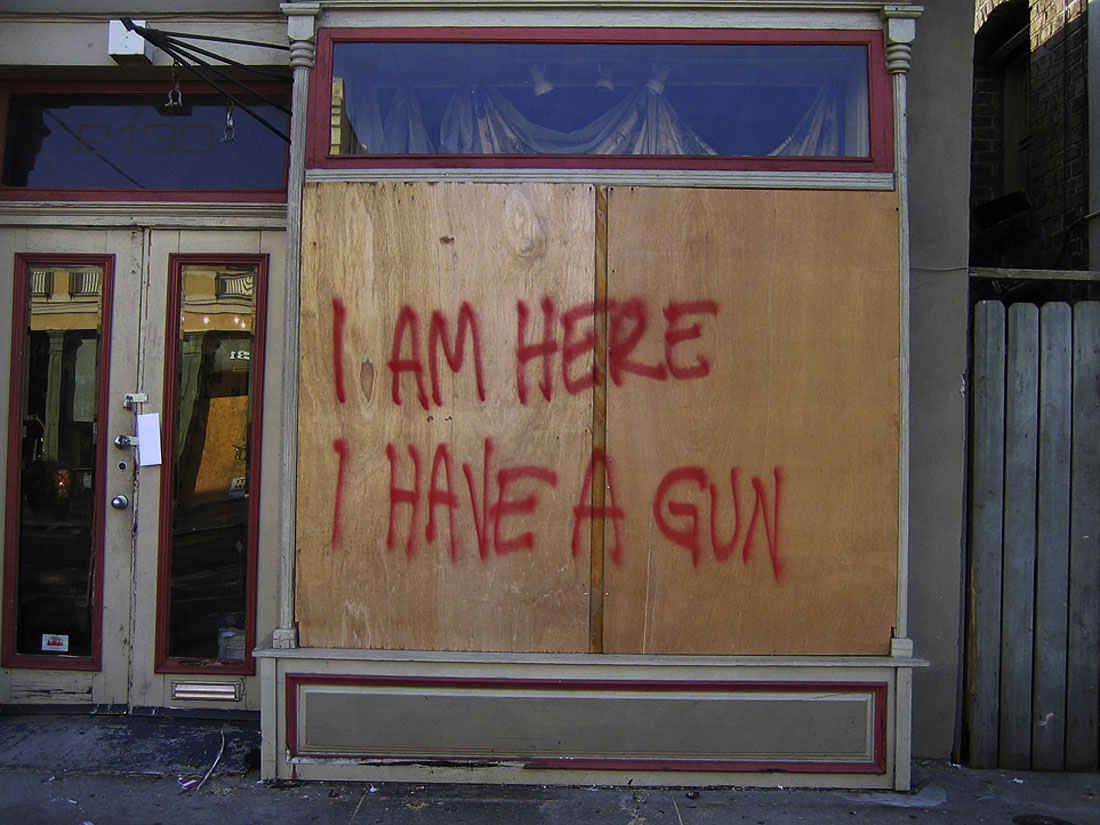
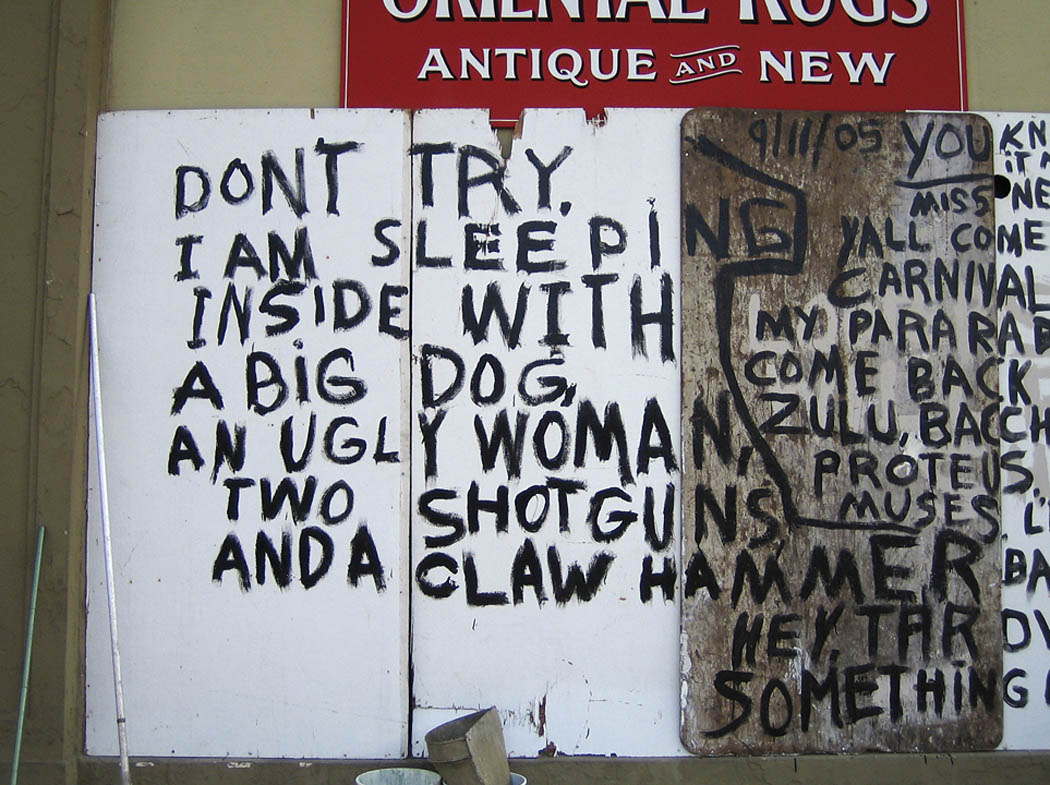
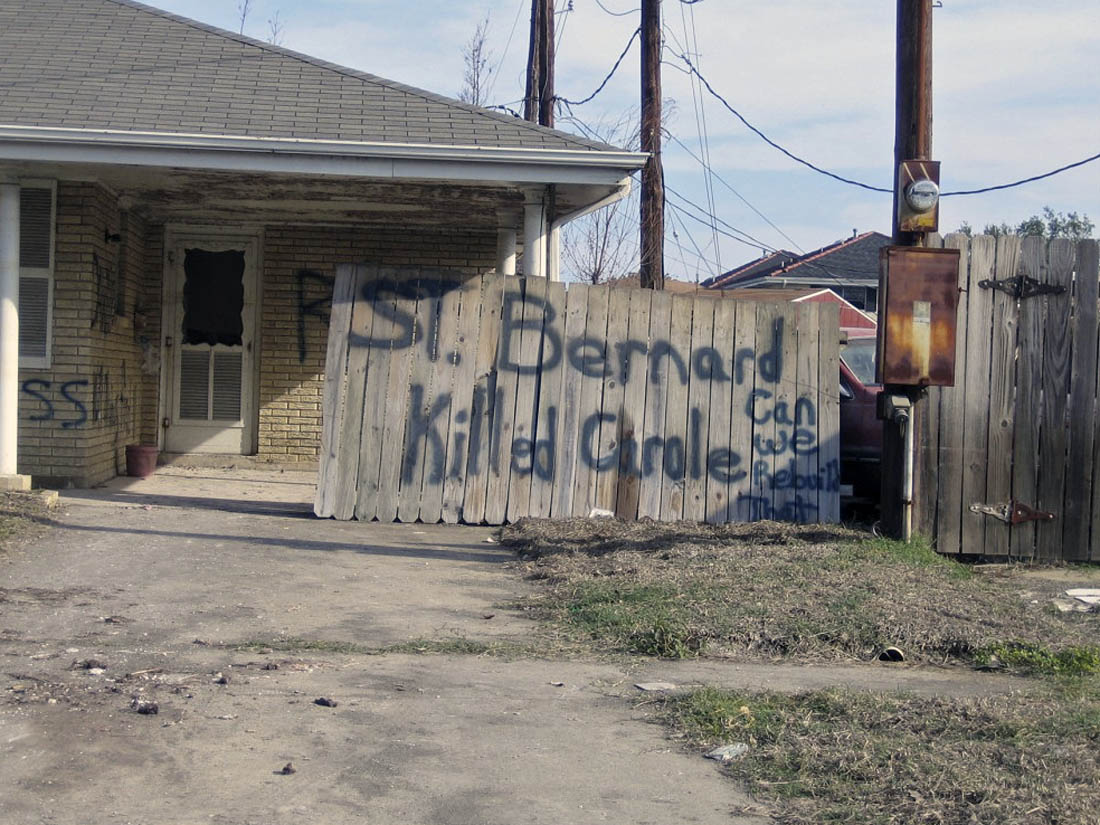
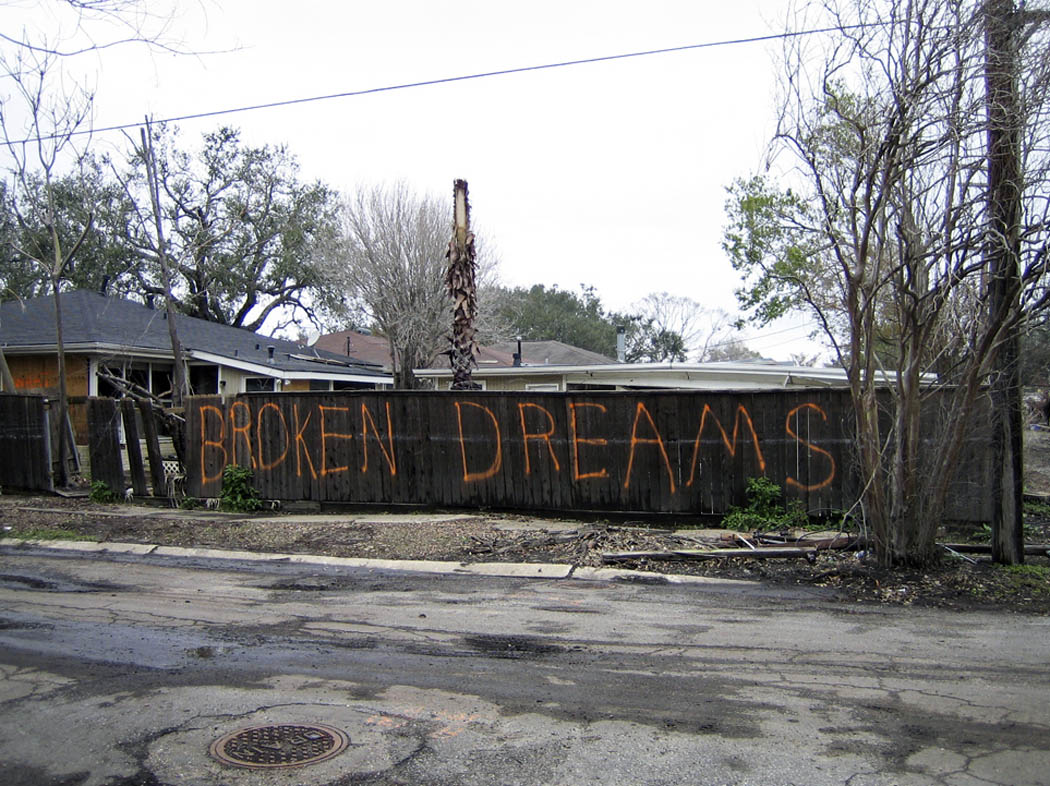
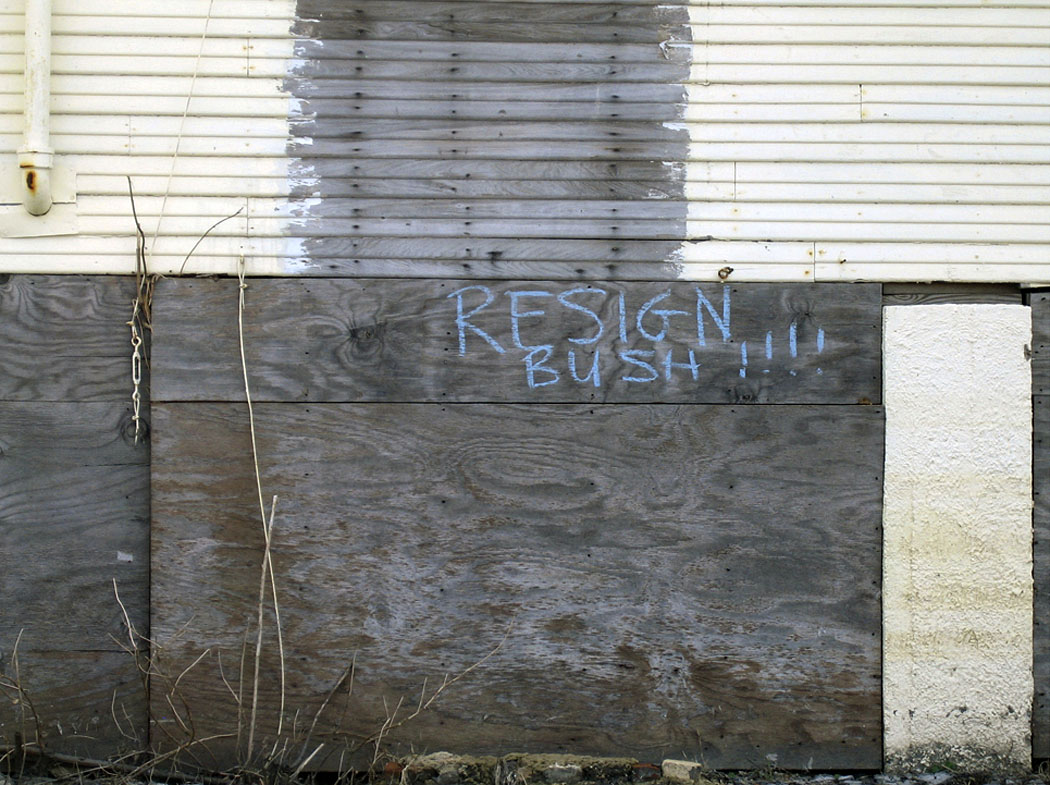
Just after Hurricane Katrina devastated the city of New Orleans in 2005, photographer Richard Misrach used a 4-megapixel pocket camera to capture messages left behind by evacuees. Some are warnings; some are cries for help or encouragement; some are tallies of loss.

Misrach composed a visual narrative that reveals the wrenching anguish of dealing with the aftermath of this horrific storm. Commemorating the hurricane’s fifth anniversary, the exhibition Richard Misrach: After Katrina presents 69 photographs that Misrach has generously given to the MFAH.

Misrach (born 1949) is best known for his Desert Cantos series, initiated in 1979 and still ongoing. Each canto within the series investigates specific aspects of the American West, from issues of water, to tourism, to the presence of the U.S. military. While developing the Cantos, Misrach has also produced series on the Golden Gate Bridge and Hawaiian beaches. The MFAH collects Misrach’s work in depth and in 1996 organised the artist’s mid-career retrospective, Crimes and Splendors: The Desert Cantos of Richard Misrach.

Text from The Museum of Fine Arts, Boston website


Richard Misrach (American, b. 1949) 'Untitled (New Orleans and the Gulf Coast)' 2005


Richard Misrach (American, b. 1949)
Untitled (New Orleans and the Gulf Coast)
2005, printed 2010
Inkjet print, ed. #3/5
2400 x 1794 mm
The Museum of Fine Arts, Houston, gift of the artist
© Richard Misrach


Richard Misrach (American, b. 1949) 'Untitled (New Orleans and the Gulf Coast)' 2005


Richard Misrach (American, b. 1949)
Untitled (New Orleans and the Gulf Coast)
2005, printed 2010
Inkjet print, ed. #3/5
2400 x 1801 mm
The Museum of Fine Arts, Houston, gift of the artist
© Richard Misrach


Richard Misrach (American, b. 1949) 'Untitled (New Orleans and the Gulf Coast)' 2005


Richard Misrach (American, b. 1949)
Untitled (New Orleans and the Gulf Coast)
2005, printed 2010
Inkjet print, ed. #3/5
2400 x 1807 mm
The Museum of Fine Arts, Houston, gift of the artist
© Richard Misrach


Richard Misrach (American, b. 1949) 'Untitled (New Orleans and the Gulf Coast)' 2005


Richard Misrach (American, b. 1949)
Untitled (New Orleans and the Gulf Coast)
2005, printed 2010
Inkjet print, ed. #3/5
2400 x 1803 mm
The Museum of Fine Arts, Houston, gift of the artist
© Richard Misrach


Richard Misrach (American, b. 1949) 'Untitled (New Orleans and the Gulf Coast)' 2005


Richard Misrach (American, b. 1949)
Untitled (New Orleans and the Gulf Coast)
2005, printed 2010
Inkjet print
The Museum of Fine Arts, Houston, gift of the artist
© Richard Misrach


Richard Misrach (American, b. 1949) 'Untitled (New Orleans and the Gulf Coast)' 2005


Richard Misrach (American, b. 1949)
Untitled (New Orleans and the Gulf Coast)
2005, printed 2010
Inkjet print
The Museum of Fine Arts, Houston, gift of the artist
© Richard Misrach


Richard Misrach (American, b. 1949) 'Untitled (New Orleans and the Gulf Coast)' 2005


Richard Misrach (American, b. 1949)
Untitled (New Orleans and the Gulf Coast)
2005, printed 2010
Inkjet print
The Museum of Fine Arts, Houston, gift of the artist
© Richard Misrach


Richard Misrach (American, b. 1949) 'Untitled (New Orleans and the Gulf Coast)' 2005


Richard Misrach (American, b. 1949)
Untitled (New Orleans and the Gulf Coast)
2005, printed 2010
Inkjet print
The Museum of Fine Arts, Houston, gift of the artist
© Richard Misrach


Richard Misrach (American, b. 1949) 'Untitled (New Orleans and the Gulf Coast)' 2005


Richard Misrach (American, b. 1949)
Untitled (New Orleans and the Gulf Coast)
2005, printed 2010
Inkjet print
The Museum of Fine Arts, Houston, gift of the artist
© Richard Misrach


Richard Misrach (American, b. 1949) 'Untitled (New Orleans and the Gulf Coast)' 2005


Richard Misrach (American, b. 1949)
Untitled (New Orleans and the Gulf Coast)
2005, printed 2010
Inkjet print
The Museum of Fine Arts, Houston, gift of the artist
© Richard Misrach


Richard Misrach (American, b. 1949) 'Untitled (New Orleans and the Gulf Coast)' 2005


Richard Misrach (American, b. 1949)
Untitled (New Orleans and the Gulf Coast)
2005, printed 2010
Inkjet print
The Museum of Fine Arts, Houston, gift of the artist
© Richard Misrach


The Museum of Fine Arts, Houston
1001 Bissonnet Street
Houston, TX 77005

Opening hours:
Wednesday 11am – 5pm
Thursday 11am – 9pm
Friday 11am – 6pm
Saturday 11am – 6pm
Sunday 12.30 – 6pm
Monday Closed
Tuesday Closed

The Museum of Fine Arts, Boston website

LIKE ART BLART ON FACEBOOK

Back to top

Exhibition: ‘Harry Callahan: American Photographer’ at the Museum of Fine Arts, Boston

Exhibition dates: 21st November 2009 – 3rd July, 2010


Harry Callahan (American, 1912-1999) 'Eleanor, Chicago' 1949 from the exhibition 'Harry Callahan: American Photographer' at the Museum of Fine Arts, Boston, Nov 2009 - July 2010


Harry Callahan (American, 1912-1999)
Eleanor, Chicago
1949
Gelatin silver print
Courtesy Museum of Fine Arts, Boston


I admire the use of strong horizontals and verticals in the work of Harry Callahan and the exquisite sense of space, stillness and sensuality he creates within the image plane. A true American master. Please click on the photographs for a larger version of the image.

Dr Marcus Bunyan


Many thankx to the Museum of Fine Arts, Boston for allowing me to publish the photographs in the posting. Please click on the photographs for a larger version of the image.


Harry Callahan (American, 1912-1999) 'Eleanor and Barbara' 1953 from the exhibition 'Harry Callahan: American Photographer' at the Museum of Fine Arts, Boston, Nov 2009 - July 2010


Harry Callahan (American, 1912-1999)
Eleanor and Barbara
1953
Gelatin silver print
Courtesy Museum of Fine Arts, Boston


Harry Callahan (American, 1912-1999) 'Eleanor and Barbara, Lake Michigan' 1953 from the exhibition 'Harry Callahan: American Photographer' at the Museum of Fine Arts, Boston, Nov 2009 - July 2010


Harry Callahan (American, 1912-1999)
Eleanor and Barbara, Lake Michigan
1953
Gelatin silver print
Courtesy Museum of Fine Arts, Boston


Harry Callahan (American, 1912-1999) 'Eleanor and Barbara' c. 1954


Harry Callahan (American, 1912-1999)
Eleanor and Barbara
c. 1954
Gelatin silver print
Courtesy Museum of Fine Arts, Boston


Harry Callahan (American, 1912-1999) 'Eleanor, Chicago' 1953


Harry Callahan (American, 1912-1999)
Eleanor, Chicago
1953
Gelatin silver print
Courtesy Museum of Fine Arts, Boston


Harry Callahan (American, 1912-1999) 'Detroit' 1943


Harry Callahan (American, 1912-1999)
Detroit
1943
Gelatin silver print
Courtesy Museum of Fine Arts, Boston


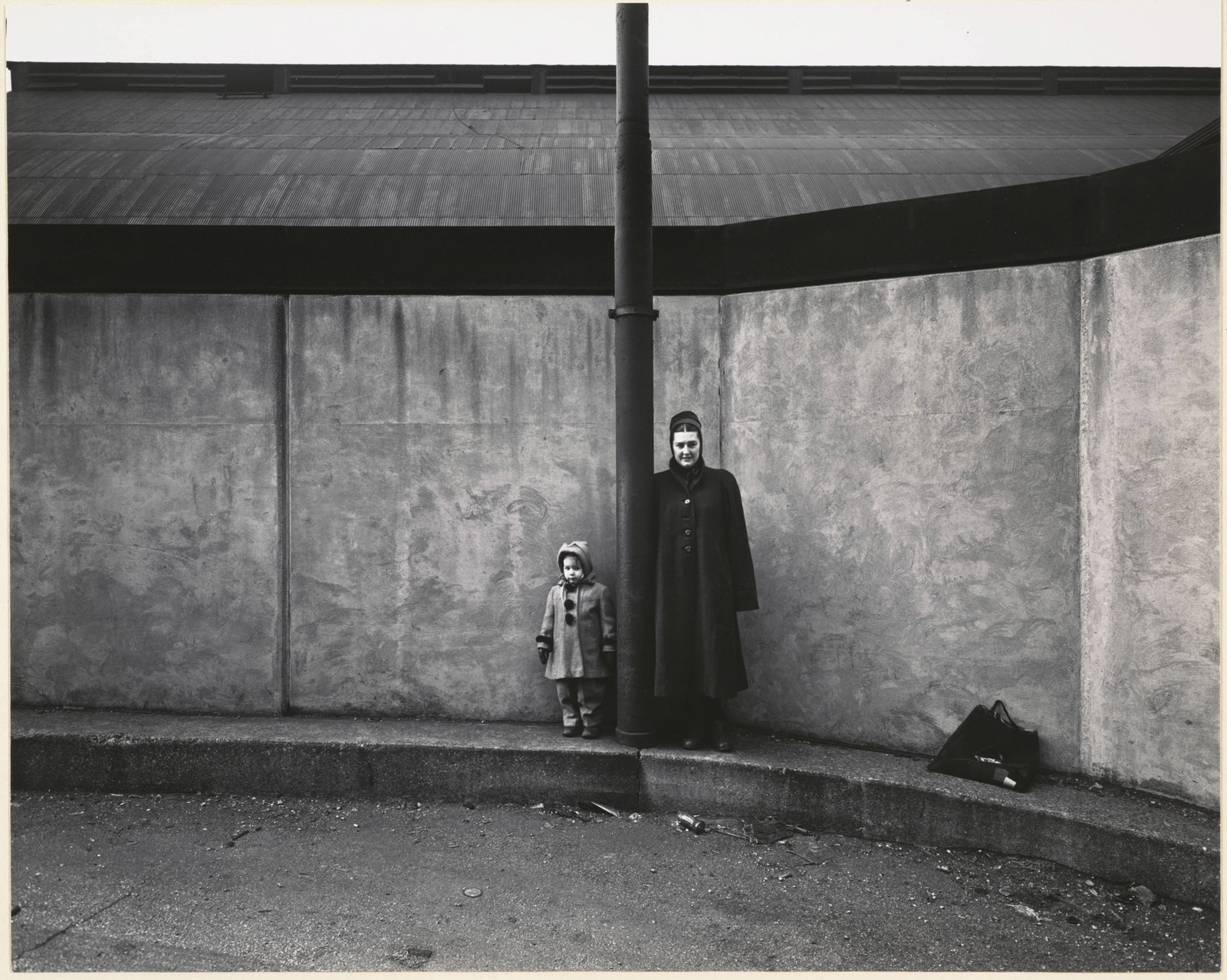
The brilliant graphic sensibility of Harry Callahan (1912-1999), a major figure in American photography, is the focus of Harry Callahan: American Photographer at the Museum of Fine Arts, Boston (MFA). Debuting November 21, the exhibition features approximately 40 photographs that survey the major visual themes of the artist’s career. It celebrates the Museum’s important recent acquisitions – by both purchase and gift – of Callahan’s photographs and showcases significant examples of his artistry from the collections of friends of the MFA. The many sensitive pictures that Callahan made of his wife Eleanor, his depictions of passers-by on the street, his carefully composed landscapes and close-ups from nature, and experimental darkroom abstractions reveal a wide-ranging talent that was enormously influential.

“Harry Callahan was one of the most innovative photographers working in America in the mid 20th-century,” said Malcolm Rogers, Ann and Graham Gund Director of the MFA. “His elegantly spare, introspective photographs demonstrate his lyricism and the originality of his sense of design.”

The Detroit-born photographer, whose career spanned six decades, became interested in the camera in the late 1930s while working as a Chrysler Corporation shipping clerk. He was largely self-taught, and attracted admiration early on for his originality. By 1946, Callahan was hired as a photography instructor by the Hungarian-born artist László Moholy-Nagy for the Institute of Design, a Bauhaus-inspired school of art and design in Chicago. In 1961, Callahan was invited to head the photography program at the Rhode Island School of Design (RISD), where he was based until retiring to Atlanta two decades later.

“Harry Callahan’s approach helped shape American photography in the second half of the 20th-century,” said Anne Havinga, Estrellita and Yousuf Karsh Senior Curator of Photographs, who organised the exhibition. “His way of seeing inspired countless followers and continues to feel fresh today.”

Callahan concentrated on a handful of personal subjects in his work, exploring each theme repeatedly throughout his career. These include portraits of his wife Eleanor, depictions of anonymous pedestrians, expressive details of the urban and natural landscape, and experimental darkroom abstractions. The MFA exhibition is organised into five themes: Eleanor, Pedestrians, Architecture, Landscapes, and Darkroom Abstractions …

Press release from the MFA website [Online] Cited 20/06/2010. No long available online


Harry Callahan (American, 1912-1999) 'Eleanor' 1948


Harry Callahan (American, 1912-1999)
Eleanor
1948
Gelatin silver print
Courtesy Museum of Fine Arts, Boston


Harry Callahan (American, 1912-1999) 'Chicago' 1950


Harry Callahan (American, 1912-1999)
Chicago
1950
Gelatin silver print
Courtesy Museum of Fine Arts, Boston


Harry Callahan (American, 1912-1999) 'Eleanor, Chicago' 1949


Harry Callahan (American, 1912-1999)
Eleanor, Chicago
1949
Gelatin silver print
Courtesy Museum of Fine Arts, Boston


Harry Callahan (American, 1912-1999) 'Eleanor and Barbara (baby carriage)' 1952


Harry Callahan (American, 1912-1999)
Eleanor and Barbara (baby carriage)
1952
Gelatin silver print
Courtesy Museum of Fine Arts, Boston


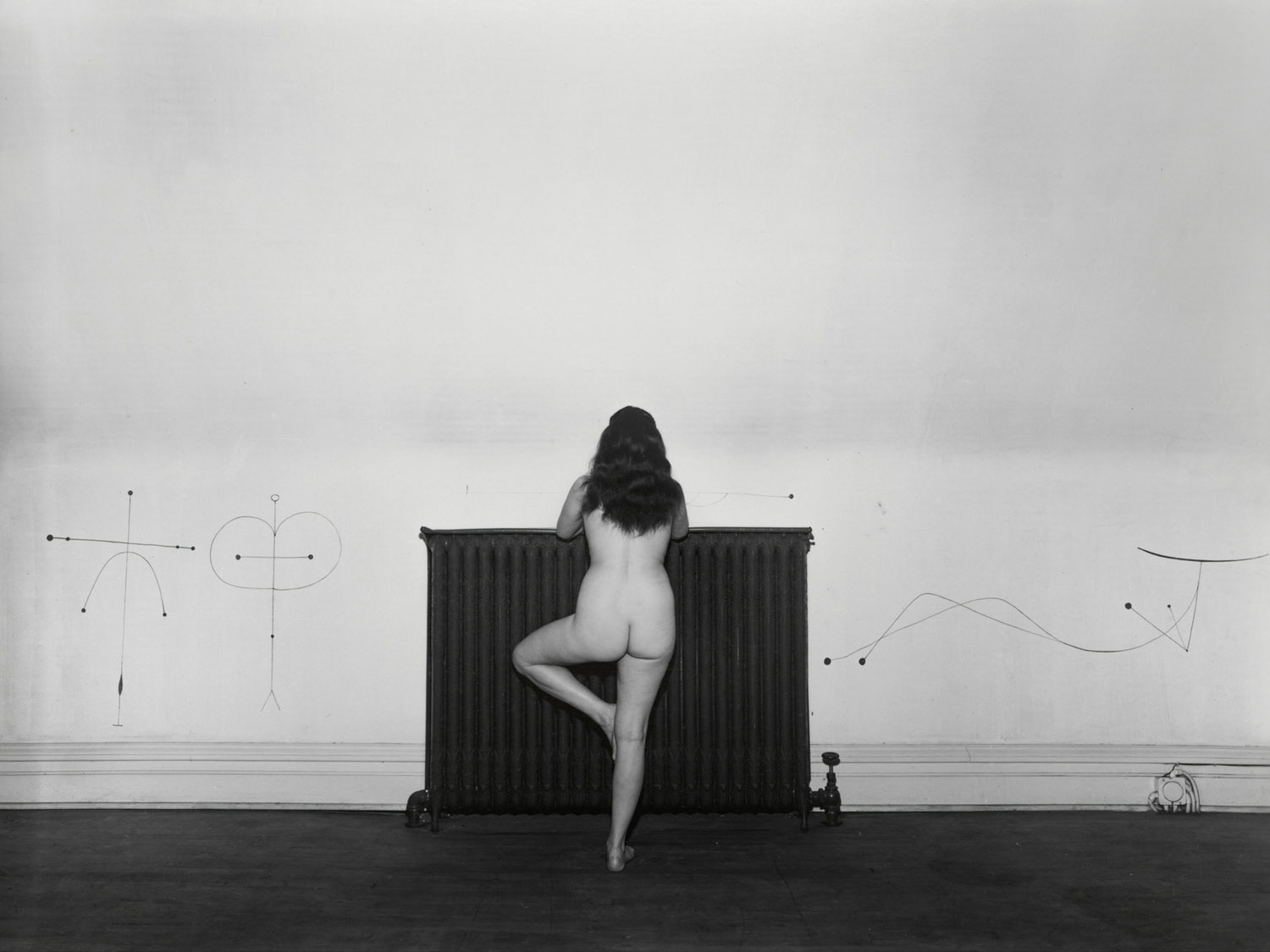
In 1936, around the time that Callahan began to explore photography, he married Eleanor Knapp, who served as one of his first and most frequent subjects. Callahan’s portraits of his wife, characterised by their intimate yet detached poetry, have become a landmark in the history of photography. In the photograph Eleanor (about 1948, see second photograph above), Callahan portrays his wife in a private interior setting, facing away from the camera. After the birth of their daughter Barbara in 1950, she too entered these family pictures, which capture the intimate moments of daily life as seen in the photograph, Eleanor and Barbara (1953, see photograph second from top).
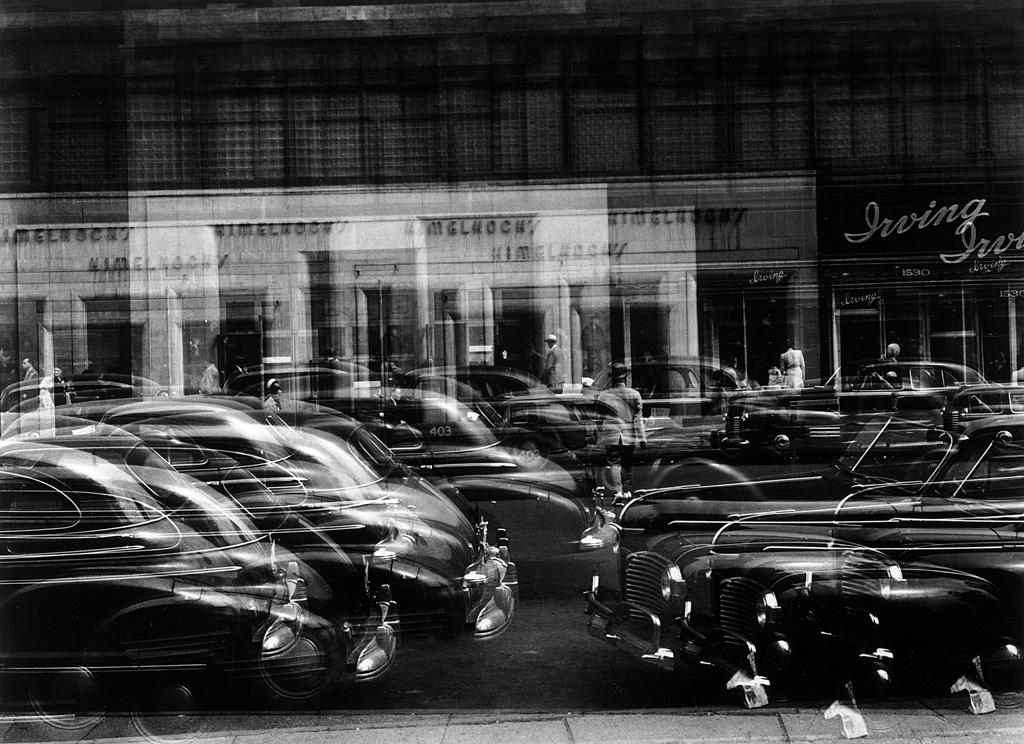
Callahan photographed the natural landscape throughout his career, focusing on its evocative forms and textures. In images such as Aix-en-Provence, France (1957), he explored the visual effects that he could create either through high contrast or closely related tonalities. Callahan also utilised a range of different experimental darkroom techniques – from photographing the beam of a flashlight in a darkened room, to developing one print from multiple negatives. Many of his multi-exposure pictures were made by superimposing images from popular culture onto studies of urban life. Callahan’s openness to experimentation was stimulating for the many students who worked with him.

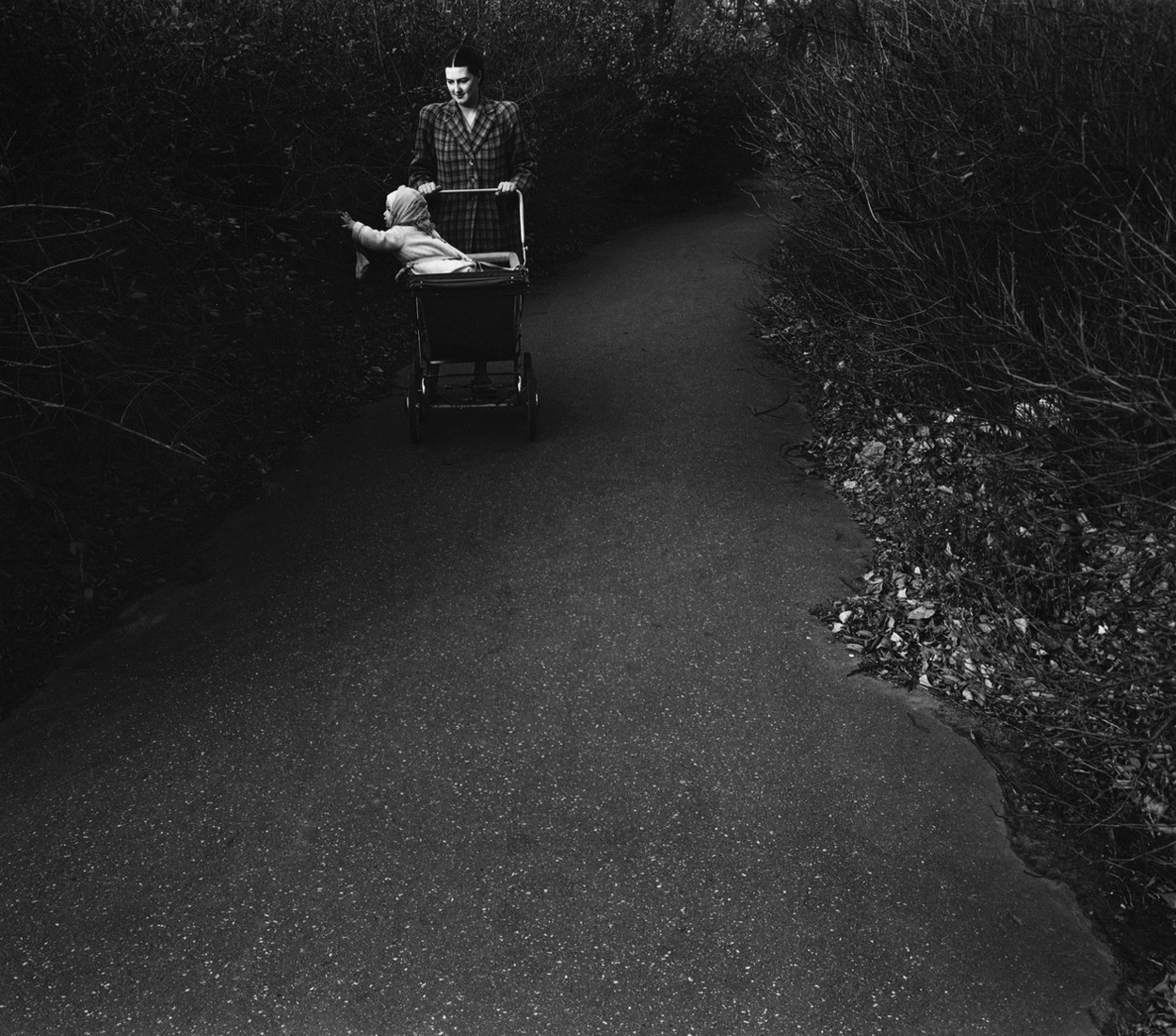
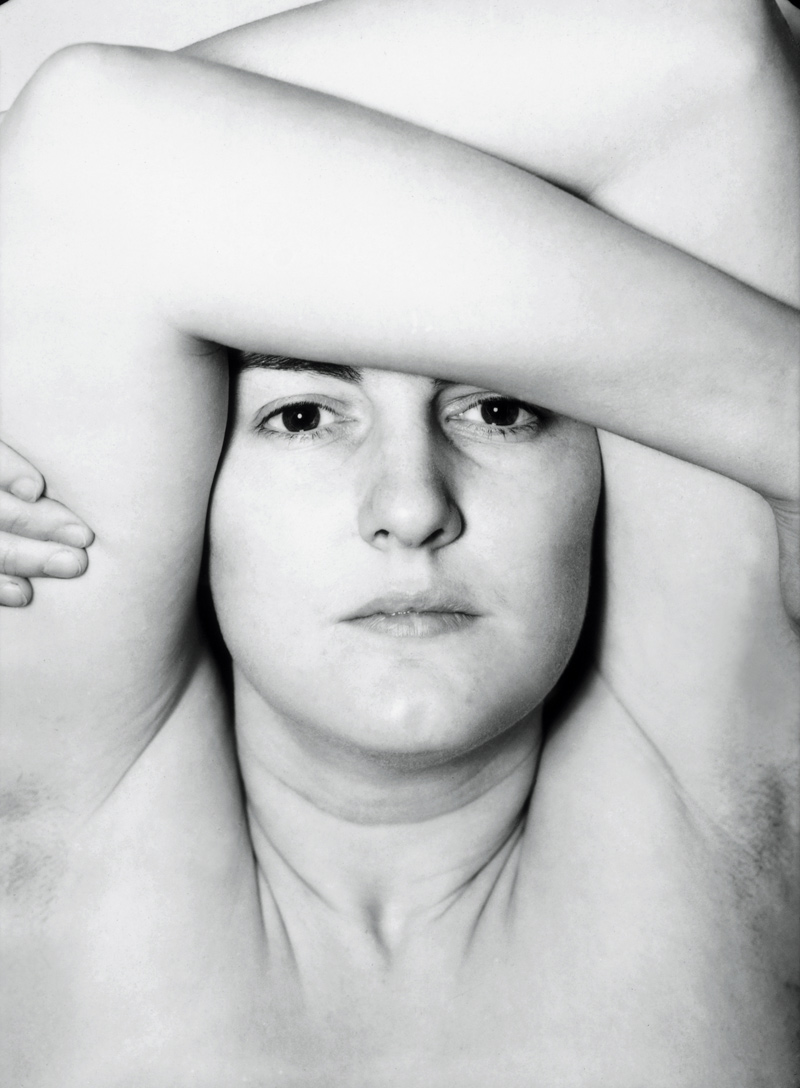
Callahan made many of his best known images during his 15 years in Chicago, where he also began his role as an influential teacher. During the 1950s, the photographer embarked on a series of close-ups of anonymous pedestrians in the streets of Chicago, most of them women. Using a 35mm camera with a pre-focused telephoto lens, he captured passersby unaware of his presence, resulting in snapshot-like images that record unsuspecting subjects absorbed in private thought or action, such as Chicago (1950, see photograph above), a close-up of a preoccupied woman’s face. Callahan returned to this theme frequently, working in both black and white and colour.

Callahan was repeatedly drawn to architectural and urban subjects. Prior to moving to Chicago, he explored the spaces of Detroit, photographing the formal patterns he discovered there. In Detroit (1943, see photograph above), Callahan depicts a street scene, with the people in transit appearing as a pattern. He experimented with colour in these pictures as early as the 1940s, but he worked more extensively in colour later in his career, from the 1970s onward.

Text from the Art Tatler website [Online] Cited 20/06/2010. No long available online


Harry Callahan (American, 1912-1999) 'Chicago' 1961


Harry Callahan (American, 1912-1999)
Chicago
1961
Gelatin silver print
Museum of Fine Arts, Boston. Gift of Barbara and Gene Polk
© The Estate of Harry Callahan, courtesy Pace/MacGill, NY
Courtesy Museum of Fine Arts, Boston


Harry Callahan (American, 1912-1999) 'Eleanor' about 1947


Harry Callahan (American, 1912-1999)
Eleanor
about 1947
Gelatin silver print
Museum of Fine Arts, Boston. Gift of Barbara and Gene Polk
© The Estate of Harry Callahan, courtesy Pace/MacGill, NY
Courtesy Museum of Fine Arts, Boston


Harry Callahan (American, 1912-1999) 'Cape Cod' 1972


Harry Callahan (American, 1912-1999)
Cape Cod
1972
Gelatin silver print
Museum of Fine Arts, Boston. Gift of Barbara and Gene Polk
© The Estate of Harry Callahan, courtesy Pace/MacGill, NY
Courtesy Museum of Fine Arts, Boston


Harry Callahan (American, 1912-1999) 'Cape Cod' 1972


Harry Callahan (American, 1912-1999)
Cape Cod
1972
Gelatin silver print
Museum of Fine Arts, Boston, Polaroid Foundation Purchase Fund
© The Estate of Harry Callahan, courtesy Pace/MacGill, NY
Courtesy Museum of Fine Arts, Boston


Museum of Fine Arts, Boston
Avenue of the Arts
465 Huntington Avenue
Avenue of the Arts
Boston, Massachusetts 02115-5523
617-267-9300

Opening hours:
Thursday – Monday 10am – 5pm
Closed Tuesday and Wednesday

Museum of Fine Arts, Boston website

LIKE ART BLART ON FACEBOOK

Back to top