Rembrandt van Rijn (Dutch, 1641-1668) Portrait of a Boy in Fancy Dress (Titus)
c. 1655
Oil on canvas
The Book of Memory. Book Four.
Several blank pages. To be followed by profuse illustrations. Old family photographs, for each person his own family, going back as many generations as possible. To look at these with utmost care.
Afterwards, several sequences of reproductions, beginning with the portraits Rembrandt painted of his son, Titus. To include all of them: from the view of the little boy in 1650 (golden hair, red feathered cap) to the 1655 portrait of Titus ‘puzzling over his lessons’ (pensive, at his desk, compass dangling from his left hand, right thumb pressed against his chin) to Titus in 1658 (seventeen years old, the extraordinary red hat, and, as one commentator has written, ‘The artist has painted his son with the same sense of penetration usually reserved for his own features’) to the last surviving canvas of Titus, from the early 1660s: ‘the face seems that of a weak old man ravaged with disease. Of course, we look at it with hindsight – we know that Titus will predecease his father…’
To be followed by the 1602 portrait of Sir Walter Raleigh and his eight-year-old-son Wat (artist unknown) that hangs in the National Portrait Gallery in London. To note: the uncanny similarity of their poses. Both father and son facing forward, left hands on hips, right feet pointing forward, and the somber determination on the boy’s face to imitate the self-confident, imperious stare of the father. To remember: that when Raleigh was released after a thirteen-year incarceration in the Tower of London (1618) and launched out on a doomed voyage to Guiana to clear his name, Wat was with him. To remember that Wat, leading a reckless military charge against the Spanish, lost his life in the jungle. Raleigh to his wife: ‘I have never known what sorrow meant until now.’ And so went he went back to England, and allowed the King to chop of his head.
To be followed by more photographs, perhaps several dozen: Mallarmé’s son, Anatole; Anne Frank (‘This is a photo that shows me as I should always like to look. Then I would surely have a chance to go to Hollywood. but now, unfortunately, I usually look different’); Mur; the children of Cambodia; the children of Atlanta. The dead children. The children who will vanish, the children who are dead. Himmler: ‘I have made the decision to annihilate every Jewish child from the face of the earth.’ Nothing but pictures. Because, at a certain point, the words lead one to conclude that it is no longer possible to speak. Because these pictures are the unspeakable.
Paul Auster. “The Book of Memory,” from The Invention of Solitude. Faber and Faber, 1982, pp. 102-103.
Please click on the images for a larger version.
Marcus Bunyan (Australian, b. 1958) Untitled (family)
2005
From the series Photos my mother sent me, 2005
Rembrandt van Rijn (Dutch, 1641-1668) Portrait of Titus
1655
Oil on canvas
Rembrandt van Rijn (Dutch, 1641-1668) The Artists Son Titus
1657
Oil on canvas
Rembrandt van Rijn (Dutch, 1641-1668) Portrait of Titus
1663
Oil on canvas
Unknown artist Sir Walter Ralegh and son
1602
Oil on canvas
78 1/2 in. x 50 1/8 in. (1994 mm x 1273mm)
Given by Lennard family, 1954
National Portrait Gallery, London
Anonymous photographer Portrait of Anatole Mallarmé
c. 1874
Photograph
Unknown photographer Anne Frank
10th October 1942
Hand written note from The Diary of a Young Girl
Photos of child victims on display at the Toul Sleng Genocide museum in Cambodia
Unknown photographer Executions of Kiev Jews by German army mobile killing units (Einsatzgruppen) near Ivangorod Ukraine. A woman protects a child with her body as Einsatzgruppen soldiers aim their rifles
1942
Executions of Kiev Jews by German army mobile killing units (Einsatzgruppen) near Ivangorod Ukraine. The photo was mailed from the Eastern Front to Germany and intercepted at a Warsaw post office by a member of the Polish resistance collecting documentation on Nazi war crimes. The original print was owned by Tadeusz Mazur and Jerzy Tomaszewski and now resides in Historical Archives in Warsaw. The original German inscription on the back of the photograph reads, “Ukraine 1942, Jewish Action [operation], Ivangorod.”
Identity, memory, gender, representation, the body, the subject, felt, text, images, video, gesture, reenactment, concept and performance, all woven together seamlessly like a good wig made of human hair…
Dr Marcus Bunyan
Many thankx to Jeu de Paume for allowing me to publish the photographs in the posting. Please click on the photographs for a larger version of the image.
Lorna Simpson surprised her audiences in 1994 when she began to print her photographs on felt, inspired by its materiality after seeing an exhibition of the sculpture of Joseph Beuys in Paris “where the piano and walls were covered for a beautiful installation.” Simpson questioned whether the medium might be appropriate in a far different way for her work given the perspective afforded her by the passage of time. With the felt pieces, Simpson turned away from photography’s traditional paper support, magnified the already larger-than-life-size of the images within her large photo-text pieces to extremely large-scale multi-part works, and, most critically, absented the figure, in particular, the black woman in a white shift facing away from the camera for which she had received critical acclaim.
Ever-present, nevertheless, were her thematic concerns. The first felts offered surrogates for the body in a taxonomy of her own photographs of Wigs, with voicings “in and around gender,” and expanded upon the investigation of the role of coiffure in the construction of identity in Simpson’s photo-texts (such as Stereo Styles, Gallery 1). In the mid-1990s, such felts were succeeded by a series of photographs of interior and exterior scenes that were accompanied by long text passages printed on separate small felts. In these works the figure was replaced, as Okwui Enwezor wrote, “by the rumour of the body.”
For each multi-part photo-booth piece, Simpson sets in bronze frames these small inexpensive shots as well as her drawings of selected details of the photographs. Self-styled and performed, these photographs were used for a variety of purposes by their now anonymous sitters, ranging from sober, formal ID photos to glamorous, often theatrically playful mementos. Encompassing photo booth shots of different sizes from the 1920s to the 1970s (a few in colour), Simpson’s constellations of many images for each work offer a collective portrait of self-portraiture (Gather, 2009) and continue her ongoing explorations of identity and memory, explicitly phrased in the title of one of them: Please remind me of who I am (2009).
Waterbearer shows a woman from the back, pouring water from an elegant silvery metallic pitcher in one hand and from an inexpensive plastic jug in the other, echoing art historical renderings of women at wells or in the domestic settings of Dutch still-life paintings. As if balancing the scales of justice, this figure also symbolically offers disjunctions of means and class. In the accompanying text, Simpson explicitly addresses memory and the agency of speakers: “She saw him disappear by the river, they asked her to tell what happened, only to discount her memory.”
For her first European retrospective, the Jeu de Paume presents thirty years of Lorna Simpson’s work. For this Afro-American artist, born in Brooklyn, New York, in 1960, the synthesis between image and text is profound and intimate. If one were to consider Lorna Simpson as a writer, the textual element of her works could have an autonomous life as prose poems, very short stories or fragments of scripts. And yet, her texts are inseparable from her images; there is a dynamic between the two that is both fragile and energising, which links them unfailingly. Lorna Simpson became known in the 1980s and 90s for her photographs and films that shook up the conventions of gender, identity, culture and memory.
Throughout her work, the artist tackles the complicated representation of the black body, using different media, while her texts add a significance that always remains open to the spectator’s imagination. In her recent work, Lorna Simpson has integrated archive images, which she reinvents by positioning herself in them as subject. As the artist underlines: “The theme I turn to most often is memory. But beyond this subject, the underlying thread is my relationship to text and ideas about representation.” (Lorna Simpson)
This retrospective reveals the continuity in her conceptual and performative research. In her works linking photography and text, as well as in her video installations, she integrates – while continually shaking them up – the genres of fixed and moving images, using them to ask questions about identity, history, reality and fiction. She introduces complexity through her use of photography and film, in her exploitation of found objects, in the processes she develops to take on the challenges she sets herself and to spectators.
The exhibition gathers her large format photo-texts of the mid 1980s, which brought her to the attention of the critics (Gestures / Reenactments, Waterbearer, Stereo Styles), her work in screenprints on felt panels since the 1990s (Wigs, The Car, The Staircase, Day Time, Day Time (gold), Chandelier), a group of drawings (Gold Headed, 2013), and also her “Photo Booths,” ensembles of found photos and drawings (Gather, Please remind me of who I am…). The exhibition is also an opportunity to discover her video installations: multivalent narratives that question the way in which experience is created and perceived more or less falsely (Cloudscape, 2004, Momentum, 2010), among them, Playing Chess, a new video installation made especially for the occasion.
About the exhibition
Joan Simon
In her critically acclaimed body of work spanning more than thirty years, Lorna Simpson questions identity and memory, gender and history, fact and fiction, playing eye and ear in tandem if not in synchrony to prompt consideration of how meaning is constructed. That she has often described herself as an observer and a listener informs an understanding of both her approach and her subjects. In her earliest black-and-white documentary street photographs (1978-1980), Simpson isolated gestures that bespoke an intimacy between those framed in her viewfinder, recording what was less a decisive moment than one of coming into relation. Some of these photographs seem to capture crossed glances, pauses in an ongoing conversation. Others are glimpses of occasions, transitional events identifiable by a white confirmation or wedding dress, which convey a sense of palpable silence in exchanges between people just out of earshot.
When Simpson began to stage her own photographs in 1985 and to write accompanying texts, she came in closer. She allowed us to see a carefully framed black body, abstracted in gesture and in white clothing, yet also permitted us to read seemingly overheard comments that redirected and recomplicated the view. While her images captured gestures, her narratives imbued these images frozen in a never-changing present with memory, a past. The title of her first photo-text work, made in 1985, and of the exhibition of that year in which it was first exhibited was Gestures / Reenactments, and one can argue that all Simpson’s work is built on the juxtaposition of gestures and reenactments, creating meaning in the resonant gap between the two. It is a gap that invites the viewer / reader to enter, all the while requiring an active reckoning with some inalienable truths: seeing is not necessarily believing, and what we might see is altered not only by our individual experiences and assumptions but also, critically, by what we might hear.
The exhibition
Whether for still or moving picture productions, Lorna Simpson (b. 1960) uses her camera as catalyst to question identity and gender, genres and history, race and class, fact and fiction, memory and meanings. Assumptions of photographic “truth” are challenged and qualified – indeed redirected – by the images she creates that are inseparable from the texts she writes to accompany them, by the soundings she chooses for videos, or by her pairings of vintage photographs with newly made renderings. The Jeu de Paume presents lorna Simpson’s first large-scale exhibition in Europe beginning with her earliest photo-text pieces of the 1980s through her newest video installation, Chess, 2013, which makes its debut in Paris.
Works in the exhibition show the artist drawing on traditional photo techniques such as gelatin silver prints in an intimate synthesis with speakerly texts (Gallery 1). They also show Simpson’s creation of new combines, among them serigraphs on felt with writings and images invoking film noir (Gallery 2), a video installation of three projections based on historic photographs and her own prior still photos (Gallery 3), constellations of recuperated photo-booth photos with her drawings isolating details from them as well as vintage photographs together with those re-staged by the artist (Gallery 4), and a video focusing on performance as well as time itself and its reversal (Gallery 5).
The exhibition’s parcours [route] reveals turning points in Simpson’s oeuvre as well as thematic continuities. The earliest pieces in the show are Simpson’s performative proto-cinematic photo-texts, beginning with the 1985 Gestures/ Reeactments, a title literally evocative of the work’s visual / verbal aspect while also paradigmatically descriptive of what would be her conceptual practice for the next three decades. Simpson herself makes a rare appearance in her work in two related pieces in the show: the 2009 epic still photo work 1957-2009 (Gallery 4), for which the artist re-enacted scenes from vintage photos, and Chess, 2013, (Gallery 3), which features re-enactments of some of the same photos.
. Gallery 1 introduces the artist’s signature, indeed iconic early images of the 1980s – a black figure in white clothing, face turned away from the camera or cropped out of the frame – accompanied by precisely crafted, allusive texts that recomplicate what is seen by what is heard in these voicings. The intention to deny a view of a face, as Simpson says, “was related to the idea that the one thing that people gravitate to in photography is the face and reading the expression and what that says about the person pictured, an emotional state, who they are, what they look like, deciphering and measuring. Who is being pictured, what is actually the subject? Photographing from the back was a way to get viewers’ attention as well as to consciously withdraw what they might expect to see.”
The performative photo-text works in Gallery 1 are Gestures / Reenactments, 1985 (created as part of her thesis project for her MFA at the University of California, San Diego), Waterbearer and Twenty Questions (A Sampler) (the first works that Simpson made when she moved to New York in 1986), as well as Five Day Forecast, 1988, and Stereo Styles, 1988. Beginning with Waterbearer, all of these except Gestures / Reenactments (which features a black male) show a black female in a white shift played by artist Alva Rogers, who was often mistaken for Simpson herself.
Gallery 2 marks important changes the artist made during the ’90s, most notably Simpson’s surprising shift to printing her photographs on felt and absenting the human figure. At first she used surrogates for the body, seen in the many and various wigs she photographed and which she accompanied with texts that continued to address ideas of identity and gender (Wigs, 1994-2006). She used photographs taken during her travels for the next series of felt works, which were interior and exterior scenes (The Car, 1995, The Rock, 1995, The Staircase, 1998) that in both imagery and texts invoked film noir. These works led almost inevitably to the start of Simpson’s film and video work in 1997. (Her earliest photo-texts will be recognised by the viewer as proto-cinematic with their multiple frames and conversational voices.)
This gallery also reveals how Simpson continues to use her felt medium and returns to her own archive of images as well as found objects. Three related works, though no longer using text, nevertheless “comment” on each other: a video of a performance (Momentum, 2010) inspired by an early 1970s performance at Lincoln Center generated felt works based on vintage photographs of this famous New York theatre – Chandelier, 2011, Daytime, 2011, and Daytime (gold), 2011 – as well as the Gold Headed (2013) drawings, based on the dancers costumed head to foot in gold. Drawings are perhaps the least known medium in Simpson’s practice, and while they reveal the fluid gestures of her hand, visitors will recognise in these gold heads turned from the viewer an echo of the position of the figures in Gallery 1.
Gallery 3 is devoted to Simpson’s newest video, Chess, 2013, which is based on historic photos as well as her own earlier photographic piece, 1957-2009 (Gallery 4), in which she restaged found vintage photographs. Chess and 1957-2009 mark the rare instances in which Simpson has herself appeared in her work.
Gallery 4 presents reenactments that use quotidian photographic genres to explore constructions of identity and that offer a collective portrait of photographic portraiture over time. All of the works in this gallery are based on found photographs Simpson purchased on eBay and each depicts anonymous subjects performing for the camera. 1957-2009 is based on photographs in a vintage album; Gather and Please remind me of who I am are constellations of bronze-framed found photo-booth images (from the 1920s to the 1970s) accompanied by Simpson’s similarly framed drawings of details from the photographs.
Gallery 5 offers Simpson’s video installation Cloudscape, 2004, which focuses on performance itself and the soundings of a body, that of artist Terry Adkins whistling a hymn. Embodying memory (and the distortions of it) as she did in her earliest photo-works but playing also with the particularities of video, Simpson loops the video to play forward and backward. In this process a new melody is created even as the stationary figure appears same but different.
“Gestures” and “reenactments” could both be described as the underlying methods of Simpson’s practice for the decades to follow. Whether working with photographs she herself staged, found photographs, or archival film footage, her images captured gestures (as in her earliest documentary photographs of 1978-1980) while her series of multiple images, accompanied by texts, proposed simultaneous (if not synchronous) reenactments. This method also applied to works in which she replicated found images, whether turning images from her films into drawings, or using herself to re-play roles depicted by anonymous figures she had discovered in vintage photographs, either for staged still photographs (as in 1957-2009, 2009), or for moving pictures (as in the video Chess, 2013).
Chess, 2013, Simpson’s video installation made expressly for this exhibition, draws on images from 1957-2009, her still photograph ensemble of 2009 (on view in Gallery 4). For both, in a departure from her earlier videos and prior staged photographs, Simpson herself performs. In 1957-2009, by reenacting scenes from found vintage prints with which they are shown, Simpson is “mirroring both the male and the female character, in dress, pose, expression, and setting. When I would mention the idea of working with mirrors [for the Chess video] people would often mention the famous portraits of Picasso and Picabia taken at a photo studio in New York by an anonymous photographer who placed the subject at a table in front of two mirrored panels at seventy-degree angles. The result is a five-way portrait that includes views that are not symmetrical and that offer slightly different angles: a surrealist trope of trick photography.”
Though the artist first rejected the idea of working with the mirror device used in these historic portraits, which she had seen many times, she decided to take it on fully and reconstruct it in her studio for this new video project after art historian and sociologist Sarah Thornton sent her “a beautiful image of an unknown man of African descent in a white straw hat, which had been in an exhibition at MoMA [catalogue page 61]. It was a five-way portrait probably taken by the same photographer who had taken the portraits of Picasso and Picabia. I could no longer resist or dismiss this idea. I felt that it was demanding my attention.”
Shot in Simpson’s studio over the weekend of December 8, 2012, Chess is comprised of three video projections. For two of them Simpson again plays both female and male chess-players, and with the help of makeup and hair assistants, she now allows her characters to age. The third projection shows pianist Jason Moran performing his improvised score for this project, which was inspired by discussions between artist and composer about “mirroring in music,” especially “in the work of musician Cecil Taylor, who employs mirroring in his compositions.”
While collecting photo booth images on eBay, Simpson found the first of the vintage photographs – a woman in a tight sweater-dress leaning on a car – that would generate 1957–2009 (2009). The artist subsequently bought the entire album and in 2009 restaged these photographs of an anonymous black woman and sometimes a man performing for their camera between June and August 1957 in Los Angeles, which they may have done in the hope of gaining movie work in Hollywood or as an independent project of self-invention. For 1957-2009, Simpson reenacted both female and male roles, and the 299 images are comprised of both the 1957 originals and Simpson’s 2009 remakes. Simpson again reenacted a selection of these vignettes for her video installation Chess, 2013.
Lorna Simpson’s video installation Cloudscape (2004) isolates one man, Simpson’s friend, the artist and musician Terry Adkins, in a dark room, spotlighted as he whistles a hymn and is enveloped in fog. Focusing on the ephemerality of performance, the artist employs a technique afforded by her medium to play with time as well. Simpson runs the video forward and then also backward in a continuous loop, creating new visual and oral / aural permutations of gesture and reenactment. In the reversal of the time sequence, the image remains somewhat familiar while the tune turns into something else, a different melody.
As Simpson explored new mediums, such as film and video starting in 1997 or found photographs in the late 1990s, she continued to work in parallel with her felt serigraphs. In this gallery are three related sets of works that, unlike her earlier photo-text pieces, are all based on a personal memory: performing as a youngster, age 12, in gold costume, wig, and body paint in a ballet recital at New York’s Lincoln Center. Simpson re-staged such a performance for her video Momentum (2010).
Jeu de Paume
1, Place de la Concorde
75008 Paris
métro Concorde Phone: 01 47 03 12 50
This exhibition is one of the core programs for this year’s Ballarat International Foto Biennale and I had the privilege of writing the catalogue essay for the Colombian artist Erika Diettes. I met the delightful Erika and her husband today at the opening of BiFB on their first trip to Australia and I must say the art hangs very well in the Mining Exchange building.
This was one of the most difficult but rewarding pieces that I have ever had to write. In reading, I hope you gather the full import of the text.
Intimations of Mor(t)ality: Sudarios (Shrouds) by Erika Diettes
Dr Marcus Bunyan
“There is now a vast repository of images that make it harder to maintain [a] kind of moral defectiveness. Let the atrocious images haunt us. Even if they are only tokens, and cannot possibly encompass most of the reality to which they refer, they still perform a vital function. The images say: This is what human beings are capable of doing – may volunteer to do, enthusiastically, self-righteously. Don’t forget.”
Susan Sontag Regarding the Pain of Others 2003 1
When I was asked to write the catalogue essay on Colombian artist Erika Diettes’ work Sudarios (Shrouds) by editor Esther Gyorki for the Ballarat International Foto Biennale the work gave me pause. What could I say about it that was relevant, insightful and spoke from the heart? I wrote back to Esther saying I needed to do some background research: “This is difficult subject matter and I want to make sure I can do it justice before I commit to writing about it.”2 In a synchronous way that often happens in the world, that is ultimately what this text is about – justice.
The basics are easily told. Artist and anthropologist Erika Diettes travelled to different cities in the department of Antioquia to interview women who had been present at the torture and murder of their loved ones.3 Diettes photographed the women, closely cropped in black and white, at a moment of great vulnerability – all but one with their eyes closed. The resultant twenty photographs were printed on seven feet tall silk panels and form the work Sudarios (shrouds are a burial cloak, a cloth that shrouds the body of the deceased). The artist always intended for these images to be printed on silk and had the installation in mind before she took the photographs: in other words previsualisation was strong. The work is usually displayed in sacred spaces such as churches and convents with a sound track of a barely audible, sighing female voice; here in Ballarat the work is hung in the former Mining Exchange building, a seat of colonial power and wealth which can be read as appropriate for the presentation of this work, for torture is always about the power of one person over another. The viewer can walk through these floating realities and be enfolded in the aggrieved women’s sorrow as if part of a ceremonial procession, perhaps a funeral cortege.
In her creation of an allegorical space for mourning, Diettes work acts as a funeral rite for both living and dead, acts of mourning placed in a context of splendour. The images evoke the representation of the death of Saint Sebastian, the faces recalling “the exquisite suffering of the Catholic saints and martyrs, but also of refugees and victims of contemporary traumas,”4 while the atrocities perpetrated on the body are hidden by the close cropping of the images. As Diettes observes, “You can’t help being a little pierced by their exhalations,”5 an indirect reference by Diettes to the arrows that pierce Saint Sebastian’s body. Diettes opens a space before the camera for the human ‘being’ in context, a terrain (of) or becoming, where the terrors are written on the countenance of the women, their mouths silently singing their song of mourning. Look at their mouths, each one contorted in agony, each one giving voice to the memory of terror.
These are confronting images about trauma and grief, documenting the ongoing effects of atrocity on the mind of the observer for they are portrayals of the effect of intim(id)ation, where intimations of mortality are evidenced by the removal of an identity, the beloved id, which reveals the intimate – expressed in the adoration/adornment of the women with jewellery which signifies the women’s dignity, comfort, and continuing engagement with the world as an extension of personal self/belief.
The signs of erasure of these murders are rearticulated through Diettes work. The bodies are held in suspended animation, in endless agony, through an act of re-terror-itorialisation. Through the evacuation of loved ones, their discontinuity and deterritorialisation, and the reterritorialisation / re-terroring of that space through memory – portrayed on the faces of the women – the images recast and represent issues of power, domination and abuse. Through suspended sorrow, suspended mourning, the disappearance of some bodies and the speaking of others, the images become a representation of a doubled absence, a doubled momenti mori – for the photographs picture the women (making them dead) as they themselves remember the violence perpetrated before them from behind closed eyes (as the dead have their eyes closed), remembering in their mind’s eye the death of the beloved. The image of the victim has become a ghost, a trace etched upon the face of the relative, a trace of that which “persists and gives testimony of a vanished state” in art, for if art is linked to memory and to what survives, it is from the perspective of its own corpse-oreality, its own ghostly and fragile materiality that these images emerge: the hanged man, the hung woman. Remaking but always recording the past through interaction with the present, the shrouds are a palimpsest in which “personal memories are always interwoven with historical consciousness”6 and are constantly being rewritten.
Of course the photographs elicit our empathy but more than that they make us feel their terrible vulnerability while drawing us into uncomfortable complicity as subsidiary witnesses to the event.7 Normally when looking at a photograph the viewer is a secondary witness but here the viewer becomes a tertiary witness – the actual event, the memory of that event etched on the face of the women captured by the camera and now observed by the viewer. There is an osmotic effect taking place as one as one image is super imposed on another. Even after an event is over, “there’s an after image or an echo that exists… a spirit or a residue, a trace.”8 These visions are like images of the Holocaust. As soon as we see them we are implicated in a narrative – and we are helpless in this process – which is an essential part of history.
Diettes work reframes the subject because there is no traditional frame of reference for the viewer, only a memory of that reference in the form of a ghost-like shroud. The normal definition of a shroud no longer pertains to these images for the cloth is no longer around a dead body but represents / holds a trace of what was once dead.
As spirit photographs in the Victorian era solidified a fractured, unknown reality, so these apparitions of the departed are brought forth and solidified, just for a moment, in the faces of the suffering women. The viewer of these images does not see the (dead) carrier of messages, but only their shadows carried by the grief of their loved ones, shrouded as they are in remembrances of the past. We feel that the women are not looking at us but that the aura of their invisible seeing is directed toward us from outside of its normative context – from behind their eyes. It is this imprint on the Shrouds; the imprint of their memories that travels great distances towards us, that enfolds us in sorrow and shadow.
“It is the special feeling of the ‘presence’ of a work produced not by its remaining where it is but by its moving across boundaries where it reaches us from a distance, looking at us even when it appears not to. It is where the work seems peculiarly meant for us even in its indifference to or difference from us.”9
If photographs really are “experience captured” then Diettes explores this arm of consciousness in its acquisitive mood,10 probing the limitation of the medium, shaping the space within the available conditions. Her images become images of sentience that enable the viewer to live in the world with open eyes (while the victims eyes are closed) – to be made aware of the injustices of this world and not remain silent. Diettes work is not about remembering, it’s about an answerable “not forgetting” for hers… is to remind us of the responsibility to make art in response to mor(t)ality.
As human beings, we must fight for the right to be heard and use art as a visual language to textualise our experience and thereby make it available for interpretation and closure. Powerful, simple questions (and I believe) undeniable questions have to be asked; and in response to those questions (power: it will corrupt you, but if you don’t want it, it will be used against you), intelligence, justice and integrity must be used in the service of art. While human truth may be ephemeral qualities like justice are not; the struggle is to define justice and to live it. And for artists to display it.
You place innocence at the heart of human depravity – and hope it survives.
Dr Marcus Bunyan
Melbourne 2013
Endnotes
1/ Sontag, Susan. Regarding the Pain of Others. London: Hamish Hamilton, 2003, p. 102.
2/ Email to Esther Gyorki. Tue, March 26, 2013
3/ The capital of the department of Antioquia is Medellin. The city is a 35-minute flight from the Colombian capital Bogota and has one of the highest rates of violence concerning drugs in Colombia. Most of the crimes were committed between 2001 and 2008.
4/ Anon. “Berlinde De Bruyckere Into One-Another To P.P.P.” on the Hauser and Wirth website [Online] Cited May 5, 2013. No longer available online
5/ Diettes, Erika quoted in Tobón, Paola Cardona. “The exhalation of sorrow,” in El Colombiano, November 4, 2012 [Online] Cited Cited May 5, 2013. No longer available online
6/ Garb, Tamar. “A Land of Signs,” in Journal of Contemporary African Art 26, Spring 2010, p. 11.
7/ Op. cit. “Berlinde De Bruyckere Into One-Another To P.P.P.”
Exhibition dates: 13th November 2012 – 7th April 2013
From the Art Fund Collection of Middle Eastern Photography at the V&A and the British Museum
Newsha Tavakolian (Iranian, b. 1981)
From the series Mothers of Martyrs
2006
Digital C-print
Art Fund Collection of Middle Eastern Photography at the V&A and the British Museum
A massive posting on a fascinating subject. I know little about this area of (sometimes postcolonial) photography. The images are really strong, powerful and laden with symbology – the signifier (photograph) and signified (meaning of the photograph) evidencing signs that interrogate “the creative responses to the social challenges and political upheavals that have shaped the Middle East over the past 20 years.”The three concepts Recording, Reframing and Resisting are critical to understanding the practices of these artists as they investigate the historicity, sacrifice, repression and persecution of their peoples.
Dr Marcus Bunyan
Many thankx to the Victoria and Albert Museum for allowing me to publish the photographs in the posting. Please click on the photographs for a larger version of the image.
Nermine Hammam (Egyptian, b. 1967) The Break
2011
From the series Upekkha Archival inkjet print
The Art Fund Collection of Middle Eastern Photography at the V&A and the British Museum
Light from the Middle East: New Photography is the first major museum exhibition of contemporary photography from and about the Middle East. It features more than 90 works by some of the most exciting artists from the region, spanning North Africa to Central Asia. The exhibition is part of a collaboration between the British Museum and the V&A, which has over the last three years seen the development of a major collection of Middle Eastern photography thanks to substantial funding from the Art Fund. The collection of 95 works has been built in response to a surge of interest in the visual arts in the region and is beginning to remedy the under-representation of Middle Eastern photography in UK collections. Light from the Middle East includes 87 of the works from this shared collection.
The photographs on display show the creative responses to the social challenges and political upheavals that have shaped the Middle East over the past 20 years and include work made following the recent revolution in Egypt. The photographs present multiple viewpoints of a region where collisions between personal, social, religious and political life can be emotive and complex. The exhibition showcases the work of 30 artists from 13 different countries including internationally established practitioners such as Abbas (Iran), Youssef Nabil (Egypt) and Walid Raad (Lebanon) as well as emerging talents such as Taysir Batniji (Palestine), Shadi Ghadirian (Iran) and Abdulnasser Gharem (Saudi Arabia). The work covers a wide range of techniques and subject matter, from photojournalism to staged and digitally manipulated imagery.
Marta Weiss, curator of the exhibition said: “In the past few years contemporary photographic practice from and about the Middle East has been some of the most exciting, innovative and varied art anywhere in the world. The exhibition celebrates the creative and sophisticated ways that contemporary artists use photography to respond to the complexities of the Middle East.”
The exhibition is structured around three key themes; Recording, Reframing and Resisting. Each explores a range of strategies Middle Eastern artists have used to engage with the medium of photography.
The opening section shows how photography can be used as a powerful tool for recording people, places and events. From Newsha Tavakolian’s series Mothers of Martyrs (2006) featuring elderly mothers holding framed pictures of their sons who were killed in the Iran-Iraq war during the 1980s, to Jananne Al-Ani’s disorienting aerial views of the desert in her video Shadow Sites II (2011), this section demonstrates various ways in which the camera has been used to document and record. The work in the second section explores an interest in reframing and reworking preexisting photographs. Shadi Ghadirian’s series Qajar (1998) recreates 19th-century Iranian studio portraits, updating them with contemporary props such as sunglasses and Pepsi cans, while Taysir Batniji applies the modernist style of the German photographers Bernd and Hilla Becher to his series of photographs of Israeli watchtowers in the West Bank.
The final section looks at practitioners who resist the authority of the photograph, questioning the medium’s ability to record factual information. Whether manipulating or digitally altering images, or physically attacking the print surface by scratching and burning, these artists demonstrate a desire to undermine the legibility and reliability of the photograph. In the intimate and poetic series Le Retour Imaginaire (2002), Afghan artist Atiq Rahimi rejects new technology, opting instead to photograph war-ravished Kabul with a primitive box camera. The recent series Uphekka by Nermine Hammam reworks photographs of Egyptian soldiers taken during the protests in Tahrir Square, Cairo in 2011 and transports them to multicoloured fantasy settings that are far removed from the struggles of the Arab Spring.
Press release from the V&A website
Recording
Photography is a seemingly accurate means of recording people, places and events. A photograph can serve a commemorative purpose or document a historic moment. It can reveal something not otherwise visible, such as a place or event the viewer would not have access to, or a particular vantage point available only to the photographer. It can also create a lasting image of a fleeting performance, or of a scene staged only for the camera.
But how reliable is a photograph? Despite the apparent authority of photographic images, they can trick or disorient. They can be ambiguous and difficult to decipher. Their meaning can shift according to context, cropping or captioning. What are the limitations of photography?
The photographers in this section use a range of approaches to exploit and explore the camera’s capacity to record.
Abbas (Iranian, 1944-2018) Rioters burn a portrait of the Shah as a sign of protest against his regime. Tehran, December 1978
1978-1979
From the series Iran Diary
Gelatin silver print
Art Fund Collection of Middle Eastern Photography at the V&A and the British Museum
Abbas@Magnum Photos, courtesy Magnum Gallery
Issa Touma (Syrian, b. 1962)
From the series Sufis: The day of al-Ziyara
1995-2005
Gelatin silver print
Art Fund Collection of Middle Eastern Photography at the V&A and the British Museum
Issa Touma is a prominent figure in the Syrian art scene. Self-taught, he began his career as a photographer in the early 1990s. In 1996 he founded Le Pont Organisation and Gallery, an independent art organisation to promote freedom of expression and stimulate the local art scene through international events.
His series on the day of al-Ziyara documents an annual procession of Sufi pilgrims in northern Syria. Sufism is a mystical path within Islam. Touma photographed the event over the course of ten years, gradually gaining the trust of his subjects. The resulting images convey his sense of immersion in the festival and capture the fervour of the worshippers.
Jananne Al-Ani (Born Kirkuk, Iraq, 1966. Lives London, UK) Still from ‘Shadow Sites II’
2011
Single channel digital video. Duration 8 mins 38 secs
Photography by Adrian Warren
Courtesy the Artist and Rose Issa Projects, London
Al-Ani works with photography, film and video, producing bodies of work that explore the power of testimony and interrogate the documentary tradition, often characterised by an interweaving of intimate recollections of loss and trauma with more formal, official accounts of historic events.
This is a still from a video composed of a series of aerial views, which show that the desert is inhabited and not the unoccupied wilderness it is sometimes believed to be. The title draws on a phenomenon familiar to archaeologists: when the sun is at its lowest, shadows make visible the remains of otherwise undetectable settlements. Al-Ani’s images are presented without explanation and the scale of the landscapes is difficult to interpret. They are deliberately ambiguous and point to the limitations of photography.
Shadow Sites II by Jananne Al-Ani
Extracts from Jananne al Ani’s film Shadow sites II 2011
Waheeda Malullah (Bahrain, b. 1978)
From the series Light
2006
Inkjet print on rag paper
Art Fund Collection of Middle Eastern Photography at the V&A and the British Museum
Waheeda Malullah uses playfulness and humour to explore social rules, and in particular the roles women play in Islamic society. In the series Light she records a performance staged expressly for the camera. By lying down next to tombs in Bahrain she exaggerates the Shi’i Muslim custom of seeking blessing by touching the tombs of revered people. These stylised compositions are also studies of form, light and shadow.
Ahmed Mater (Saudi Arabian, b. 1979) Magnetism II
2012
Photogravure
Acquired thanks to Mr Abdulaziz al-Turki
Ahmed Mater is a Saudi artist and qualified GP. Working in photography, calligraphy, painting, installation and video, Mater reflects his experiences as a doctor and the ways this has challenged his traditional background and beliefs, and explores wider issues about Islamic culture in an era of globalisation. In the series Magnetism, what at first appear to be pilgrims circling the Ka’ba, the sacred building at the heart of the sanctuary at Mecca, are in fact iron filings spiralling around a cube-shaped magnet. Mater refers to the spiritual force that Muslim believers feel during Hajj, the pilgrimage to Mecca. By creating photographs that recall well-known images on a dramatically different scale, Mater also questions the reliability of photography.
Newsha Tavakolian (Iranian, b. 1981)
From the series Mothers of Martyrs
2006
Digital C-print
Art Fund Collection of Middle Eastern Photography at the V&A and the British Museum
Newsha Tavakolian started her career at the age of 16, as a junior photographer for the Iranian women’s daily Zan-e Rooz. She also worked with other reformist newspapers and by the early 1990s had established herself as one of Tehran’s few female photojournalists, working internationally and particularly focussing on women’s issues. She is a founder member of the EVE international collective of women photojournalists, established in 2006 and of Rawiya, a collective of women photographers from the Middle East, founded in 2011. Her series Mothers of Martyrs shows elderly Iranian women holding framed photographs of their sons who died decades earlier in the Iran-Iraq war (1980-1988). The double portraits attest to photography’s emotive power.
Abbas Kowsari (Iranian, b. 1970) Halabche
2003
Digital C-print
Art Fund Collection of Middle Eastern Photography at the V&A and the British Museum
Abbas Kowsari began his career as a photojournalist for the Tehran Times in 1994 and is currently Senior Picture Editor for Shargh, a popular reformist title. This photograph made in nothern Iraq presents a portrait within a portrait. The figure of a peshmerga (a Kurdish combatant) is tightly framed to exclude his face. Instead, the face of rock musician Bryan Adams, on the soldier’s T-shirt, fills a central portion of the composition. The faded black-and-white image is surrounded by saturated colours and brightly gleaming metal. The contrast reinforces the incongruity between warfare in Iraq and western pop culture.
Abdulnasser Gharem (Saudi Arabian, b. 1973) The Path (Siraat)
2009
Inkjet print on aluminium
Art Fund Collection of Middle Eastern Photography at the V&A and the British Museum
Abdulnasser Gharem works across a variety of media to explore local Saudi issues. Amongst his best-known works are ‘stamp paintings’, made from industrial paint on rubber stamps, a technique devised to negotiate and comment on censorship. He combines service in the Saudi armed forces (he is currently Lieutenant Colonel) with his activities as an artist.
The subject of this photograph is a bridge in southern Saudi Arabia that was severely damaged in the early 1980s when villagers attempted to take shelter on it during a flash flood. Instead of providing a safe high ground above the floodwaters the bridge collapsed, resulting in the loss of many lives. Gharem spray-painted the word siraat repeatedly on the bridge. The word means path, and in the Qur’an it refers to ‘the path to God’.
Tal Shochat (Israeli, b. 1974) Pomegranate (Rimon)
2010
C-print
Art Fund Collection of Middle Eastern Photography at the V&A and the British Museum
In her photographs Shochat stages both figures and objects to create symbolically-laden images that often question the boundary between nature and artifice. Here she applies the conventions of studio portraiture to photographing trees. The first stage in her meticulous process is to identify the perfect specimen of a particular type of tree. When the fruit is at the height of maturity, she cleans the dust off the branches, leaves and fruit. Finally, Shochat photographs the tree, artificially lit and isolated against a black cloth background. The photographs present a view of nature that would never actually exist in a natural environment. The work highlights the tensions in photography between reality and artifice.
Yto Barrada (French, b. 1971) Bricks (Briques)
2003/2011
C-print
Art Fund Collection of Middle Eastern Photography at the V&A and the British Museum
Yto Barrada grew up in Paris and Tangier and studied in Paris and New York. Since 2006 she has directed the Cinématèque de Tanger, a cultural centre home to an archive of Maghrebi and Arabic film and video. Barrada’s hometown of Tangier is the subject of much of her work. In this view, recently constructed buildings in various states of completion are scattered across the hillsides. The pile of bricks in the foreground seems to parallel the haphazard nature of the surrounding building projects. The untidy man-made heap echoes the form of the natural hills in the background.
Mehraneh Atashi (Iranian, b. 1980) Bodiless I
2004
From the series Zourkhaneh Project (House of Strength)
Digital C-print
Art Fund Collection of Middle Eastern Photography at the V&A and the British Museum
Mehraneh Atashi explores the relationship between photography and power in her ongoing investigation into the possibilities of self-portraiture. Her photographic series reveal lesser-known aspects of Iranian life.
This photograph shows the inside of a zurkhana, a traditional Iranian wrestling gym, in Tehran. The artist has explained that ‘tradition forbids the breath of women’ in the zurkhana. Atashi includes herself in the scene through a reflection in a mirror. This picture within a picture emphasises her incongruous presence in a place from which women are normally excluded.
Reframing
The artists in this section appropriate or imitate images from the past in order to make statements about the present. Their sources range from studio portraiture to fashion photography, from Old Master paintings to Modernist photographs. Using a variety of techniques, they update and interrogate, knowingly combining past and present, East and West, fact and fiction. Whether emulating or critiquing, these artists reframe existing images to new ends.
Raeda Saadeh (Palestinian, b. 1977) Who will make me real?
2003
Digital C-print
Art Fund Collection of Middle Eastern Photography at the V&A and the British Museum
In her photographs, videos and performances, Raeda Saadeh assumes various roles to explore issues of displacement, gender and identity, with particular reference to the Israeli-Palestinian conflict. Here the artist lies in a pose that recalls 19th-century European paintings of reclining nudes. These often featured non-European women and ‘Orientalist’ costumes and scenery. Saadeh is encased in Palestinian newspapers, which conceal her body from neck to ankle while revealing its contours. The covering is both flimsy and apparently immobilising, resembling a papier-mâché body cast. Any sensuality implied by her pose is disrupted by the harsh realities reported in the newspaper.
Jalali was a photographer and teacher who played a leading role in collecting and preserving historical photographs in Iran. He was an influential teacher, mentored many of the younger generation of Iranian photographers, and was instrumental in setting up Tehran’s first Museum of Photography (also known as Akskhaneh Shahr).
In this montage he layered Qajar-period (1786-1925) portraits and an enlarged detail of an old photographic studio sign that had been crossed out with red paint. Jalali speculated that this defacement occurred during the Islamic revolution (1978-1979), perhaps as an attack on a studio where unveiled women had been photographed.
Shadi Ghadirian (Iranian, b. 1974)
From the series Qajar
1998
Gelatin silver print
Art Fund Collection of Middle Eastern Photography at the V&A and the British Museum
Shadi Ghadirian was among the first students to graduate in photography from the Azad University, Tehran. Her work addresses concerns of Iranian women of her generation, exploring ideas such as censorship, religion and modernity, often with a wry humour.
The series Qajar is based on a style of photograph made during Iran’s Qajar period (1786-1925). In those portraits, sitters posed with props representing their aspirations. Here, the sitters wear costumes that approximate Qajar fashion, but the objects they pose with are jarringly modern and western – a mountain bike, a stereo or a can of Pepsi. The contrast makes a comment on the tensions between tradition and modernity that women in Iran face today.
Youssef Nabil (Egyptian, b. 1972) The Yemeni Sailors of South Shields (detail)
2006
Hand-coloured gelatin silver print
Art Fund Collection of Middle Eastern Photography at the V&A and the British Museum
Youssef Nabil’s photographs and films evoke the glamour and melodrama of the golden age of Egyptian cinema in the 1940s and 50s, known as Hollywood on the Nile. This is one of a dozen portraits made as part of a project to document the last surviving Yemeni men to settle as ship-workers in South Shields, in the north of England. The area is home to one of the oldest Muslim communities in the UK. Nabil hand-coloured the black-and-white photographs in the manner of mid 20th-century Egyptian studio portraiture.
Hassan Hajjaj (Moroccan, b. 1961) Saida in Green
2000
Digital C-print and tyre frame
Art Fund Collection of Middle Eastern Photography at the V&A and the British Museum
Hajjaj is inspired by fashion photography, while also mocking its methods. He creates playful juxtapositions between global brand names and local motifs such as veils and babouches (traditional Moroccan slippers). The result is an exuberant collision of the stereotypical symbols of western consumerism and Middle Eastern tradition. The frames, which Hajjaj constructs from recycled materials, transform the photographs into three-dimensional, sculptural objects.
Resisting
The artists in this section question the idea that a photograph can tell the truth. Some digitally alter images. Some scratch negatives and prints, or even burn them. Other artists reject clarity and detail in favour of processes that rely on chance. The results are murky, atmospheric images that require effort to interpret. These manipulations demonstrate the fragility of the photograph, whether at the hands of artists or censors. They also lay bare the power of photographic imagery to influence and control through propaganda or surveillance. These works resist photography’s claim to accuracy and authority.
Atiq Rahimi (Afghanistan, b. 1962) On the threshold of time (Au seuil du temps)
2002
From the series The Imaginary Return (Le retour imaginaire)
Gelatin silver print
Art Fund Collection of Middle Eastern Photography at the V&A and the British Museum
Atiq Rahimi is a writer, film director and photographer who fled Afghanistan after the Soviet invasion in 1984, seeking political refuge in France, where he is now based. He returned to Afghanistan in 2002, after the fall of the Taliban. Confronted by the ruins of Kabul, he decided not to photograph the city with his digital camera. Instead he chose a primitive box camera normally used to take identity portraits in the streets of Kabul. The unpredictable process resulted in dreamlike photographs. They convey the nostalgia and brutal feelings of loss that Rahimi experienced when revisiting the war-wounded city.
Jowhara AlSaud (Saudi Arabian, b. 1978) Airmail
2008
From the series Out of Line
C-print
Art Fund Collection of Middle Eastern Photography at the V&A and the British Museum
Jowhara AlSaud’s photographs explore the language of censorship and the malleability of photography. AlSaud scratches the outlines of figures from her personal photographs into photographic negatives, which she then prints. By reducing the figures to line drawings she renders them anonymous. The embracing figures hint at farewells and longing. The envelopes suggest thwarted attempts at communication. AlSaud’s hybrid technique of drawing and photography critiques the censorship of visual communication in Saudi Arabia.
Şükran Moral (Turkish, b. 1962) Despair
2003
Digital C-print
Art Fund Collection of Middle Eastern Photography at the V&A and the British Museum
Şükran Moral works in photography, sculpture, video and performance, creating bold and often controversial works that critique society and its institutions. Violence against women is a major theme. She has also made work about other groups who lack societal power, including the mentally ill, children, immigrants and prostitutes.
In this image, brightly-coloured birds, what Moral calls ‘digital nightingales’, perch on a group of migrant workers huddled in a boat. According to the artist, in Turkish literature nightingales are a symbol of hope, love and separation. The men and boys are shown in black-and-white, at the mercy of their situation. The birds, however, are free to fly away.
Nermine Hammam (Egyptian, b. 1967) Armed Innocence II
2011
From the series Upekkha
Archival inkjet print
Art Fund Collection of Middle Eastern Photography at the V&A and the British Museum
Influenced by a background in film and graphic design, Nermine Hammam works in series, making prints that combine elements of painting and photography, often digitally manipulating and layering images to represent subjects in states of abandonment or altered consciousness. When the army was called in to respond to the protests in Cairo’s Tahrir Square in January 2011, Hammam was struck by the vulnerability of the soldiers. They seemed to want to be anywhere but there. In the Uppekkha series she transports these soldiers into vibrant fantasy settings. Reminiscent of postcards, the series likens the events of Tahrir Square to a tourist attraction that drew the world’s attention, but was not fully understood.
Joana Hadjithomas (Lebanon, b. 1969) and Khalil Joreige (Lebanon, b. 1969) Wonder Beirut #13, Modern Beirut, International Centre of Water-skiing
1997-2006
From the series Wonder Beirut: The Story of a Pyromaniac Photographer
C-print mounted on aluminium with face mounting
Art Fund Collection of Middle Eastern Photography at the V&A and the British Museum
Courtesy of the artists and CRG Gallery, New York and In Situ / Fabienne Leclerc, Paris
Joana Hadjithomas and Khalil Joreige collaborate as filmmakers and artists, producing cinematic and visual art work that intertwine. In the series Wonder Beirut they use photography to blur fact and fiction. The artists noticed that tourist postcards of pre-civil war Beirut were still for sale after the war ended in 1990. They invented a fictional photographer named Abdallah Farrah who, in 1968, was commissioned by the tourist board to make postcard views of Beirut’s attractions. When the civil war broke out in 1975, he began to burn his negatives to reflect the surrounding destruction. The artists present these works as prints from the fictional photographer’s damaged negatives.
John Jurayj (American, b. 1968) Untitled (Large Embassy with Red Mirror #1)
2007
Inkjet print on watercolour paper, with burn holes and mirrored Plexiglas
Art Fund Collection of Middle Eastern Photography at the V&A and the British Museum
Using a variety of media, including painting, print-making, sculpture and video, John Jurayj explores the impact of the Lebanese civil war (1975-1990), as both a world conflict and an identity trauma. He often re-works photographs of Lebanon from family albums, press archives and online databases. Here he translates the brutality of war into an attack on the photograph itself. He enlarges to near abstraction a news photograph of the bombed US embassy in Beirut in 1984. The image is further disrupted by the holes burnt into the paper. The holes are then filled in with red, mirrored Plexiglas.
Victoria and Albert Museum
Cromwell Road
London
SW7 2RL Phone: +44 (0)20 7942 2000
A munificence of Minor White and the revelation of the object through contemplation could be found in the lecture by William Kentridge. As an artist you must keep repeating and constructively playing and something else, some new idea, some new way of looking at the world may emerge. As a glimpse into the working methodology of one of the worlds great artists the lecture was fascinating stuff!
“At four in the morning there are no lack of branches for the crow of doubt to land upon.”
On Memory
“Memory – both memory and the forgetting of memory. For example, the building of monuments [monuments to the Holocaust, to wars] takes the responsibility of remembering away.”
On Play
“We absolutely want to make sense of the world in that way. That’s one of the principles of play – that however much you distort and break things apart, in the end we will try to reconstruct them in some way to make sense of the world. I think that every child does it. It’s fundamental.”
On Looking
“It’s the capacity for recognition that makes a difference between order and disorder in looking at visual images. And it’s the vocabulary of recognisable images that we have inside us, which is completely vital to what it is to see. I don’t really buy the idea that order and disorder are the same.”
William Kentridge
First History of the Cinema
Performances of Transformation
~ Cinema
~ Shadow dancing
~ Eidophusikon (The Eidophusikon was a piece of art, no longer extant, created by 18th century English painter Philip James de Loutherbourg. It opened in Leicester Square in February 1781.Described by the media of his day as “Moving Pictures, representing Phenomena of Nature,” the Eidophusikon can be considered an early form of movie making. The effect was achieved by mirrors and pulleys.
~ Quick change artist
~ Stage magicians
All work against the time of the audience e.g. the quick change artist may take 3 seconds, the sunset in a Georges Méliès film may take 2 minutes instead of 2 hours. The technology / scrims / screens happen at different speeds but the different times become one in the finished film. There is an elision of time: appearances / disappearances. Stopping time [changing a scene, changing clothing etc…], starting time again.
George Méliès starring in The Living Playing Cards (1904)
Second History of the Cinema
The sedimented gaze of the early camera. The slow chemicals meant that the object had to wait under the camera’s gaze for minutes. People were held in place by stiff neck braces to capture the trace of their likeness. Congealed time.
On the other hand, in cinema, a tear forward becomes a repair in reverse.
By rolling the film in reverse there is a REVERSAL of time, a REMAKING of the world – the power to be more than you are – by reversing to perfection. You throw a book or smash a plate: in reverse they become perfect again, a utopian world.
YOU MUST GIVE YOURSELF OVER TO PLAY!
Giving yourself over to what the medium suggests, you follow the metaphor back to the surface. Following the activity [of play] back to its root. Projecting forwards, projecting backwards. There is endless rehearsal, constant repetition, then discovering the nature of the final shot or drawing to be made. New ideas get thrown around: leaning into the experience, the experiment, the repetition, the rehearsal.
Four elements
1/ something to be seen
2/ the utopian perfection: perfectibility
3/ the grammar of learning that action
4/ Greater ideas, further ideas and thoughts; potentiality and its LOSS
Further meanings arise
How is this achieved?
Rehearsal, repetition
New thoughts will arise being led by the body in the studio NOT in the mind. Not conceptual but the feeling of the body walking in the studio.
The physical action as the starting point not the concept.
Six different degrees of tension
1/ Least tension in the body possible: slumped
2/ Relaxed
3/ Neutral
4/ Purpose: an impulse to make things happen – desire
5/ Insistence: listen to me, this is very important
What the body suggests is the construction of an image.
There are different degrees of tension in these performances. What do they suggest? This reverse osmosis from one state to another?
Third History of Cinema
Technologies of Looking
Pre-cinematic devices – a process of seeing in the world, of looking. Produces a reconfigured seeing, the invisible made [moving] visible.
Stereoscope
3D world made into a 2D image put back into 3D by our brains. The nature of binocularity, of depth perception. We see an illusion of depth, a construction by the eyes. Our brain is a muscle combining the two images. Depth of Field (DOF): focusing at different distances, we are inside the field of the image. Peripheral vision is blanked off; we look through a magnifying glass. A machine for demonstrating seeing.
There are erotics built into the language of the etching, but there is also a logic built into the machine used for etching. The Proof print, arriving at the first state. Going on the journey from artist as maker to artist as viewer through the mechanism of the etching press.
Artist / Maker unknown
Claude Glass, manufactured in England
18th century
V & A
Claude Glass
“A Claude glass (or black mirror) is a small mirror, slightly convex in shape, with its surface tinted a dark colour. Bound up like a pocket-book or in a carrying case, black mirrors were used by artists, travellers and connoisseurs of landscape and landscape painting. Black Mirrors have the effect of abstracting the subject reflected in it from its surroundings, reducing and simplifying the colour and tonal range of scenes and scenery to give them a painterly quality).”
“The Claude glass was standard equipment for Picturesque tourists, producing instant tonal images that supposedly resembled works by Claude. “The person using it ought always to turn his back to the object that he views,” Thomas West explained in his Guide to the Lakes. “It should be suspended by the upper part of the case… holding it a little to the right or the left (as the position of the parts to be viewed require) and the face screened from the sun.”
Object Type
A Claude Glass – essentially a small, treated mirror contained in a box – is a portable drawing and painting aid that was widely used in the later 18th century by amateur artists on sketching tours. The reflections in it of surrounding scenery were supposed to resemble some of the characteristics of Italian landscapes by the famous 17th-century painter and sketcher Claude Lorrain, hence the name.
Materials & Use
The ‘glass’ consists of a slightly convex blackened mirror, which was carried in the hand and held up to the eye. The image thus seen was the scenery behind – rather than in front of – the user. The mirror’s convexity reduced extensive views to the dimensions of a small drawing. The use of a blackened rather than an ordinary silvered mirror resulted in a somewhat weakened reflection, which stressed the prominent features in the landscape at the expense of detail. It also lowered the colour key. A larger version of this device is said on occasion to have been fixed to the windows of horse-drawn carriages in order to reflect the passing scenery.”
Artist / Maker unknown
Claude Glass, manufactured in England
18th century
V & A
Anamorphic Mirror
A counter intuitive way of drawing; turning 2D into 3D. The landscape has no edge, like a carrousel.
A LINK TO THE ENDLESS CIRCLING AND WALKING AROUND THE STUDIO!
Anamorphic drawing and cone shaped mirror
William Kentridge studio
Photo by John Hodgkiss
Art Tatler
The Studio
In the studio you gather the pieces together like a kind of Zoetrope. You may arrive at a new idea, a new starting point. Repetition, going around and around your head (at four in the morning!). There must be a truce between the artist as maker and the artist as viewer. As in earlier times, you walk the cloisters, you promenade.
You find the walk that is the prehistory of the drawing, that is the prehistory to the work.
A multiple, fragmented, layered performance of walking. You are trying to find the grammar of the studio – the necessary stupidity. Making a space for uncertainty. The conscious suppression of rationality. At some point, emerging, escaping the Zoetrope, from the physical making, something will be revealed. The spaces open up by the stupidities. Something new emerges.
THIS IS THE SPACE OF THE STUDIO.
Australian Centre for the Moving Image (ACMI) Federation Square, Melbourne, Australia
William Kentridge: Five Themes
Thursday 8 March – Sunday 27 May 2012
Exhibition open daily 10am – 6pm
Exhibition dates: 26th August 2011 – 26th February 2012
Many thankx to the Imperial War Museum, London for allowing me to publish the photographs in the posting. Please click on the photographs for a larger version of the image.
“Having watched the graphic destruction from my apartment, only two blocks from the Twin Towers, when I entered Hangar 17 at JFK International Airport for the first time in 2006, I was immediately hit by the deep sense that the objects I was confronted with, from large shards of rusted and burnt steel to bikes left forever by their owners, were the symbolic substitutes of the victims. Their overwhelming presence stood for all the people that lost their lives that late summer day a decade ago.”
The empty shell of Hangar 17 at JFK Airport became a storehouse of memories when it was filled with the material cleared from the World Trade Center site following the September 11 attacks on New York City.
Marking the tenth anniversary of 9/11, Francesc Torres’s work features over 150 projected images which explore inside the hangar and reflect on the emotional power of what remained, from personal belongings to steel girders distorted by the force of the attacks. Alongside the photographs is a section of raw rusted steel over two metres in length from the ruins of the World Trade Center. As well as larger piece (over 1 tonne) that is due to go on display at IWM North in October, these objects are the first pieces of steel from Ground Zero to go on display in the UK. The exhibition will also be on display at the International Centre for Photography in New York and at the Centre de Cultura Contemporània de Barcelona.
Throughout his career, Spanish-American artist Francesc Torres has reflected on the diverse manifestations of culture, politics, memory and power. His latest exhibition at the Imperial War Museum, Memory Remains, is a bold and haunting amalgam of all four.
In 2009, Torres was granted rare access to Hangar 17 at John F Kennedy International Airport, a gaping space of over 80,000-square-feet. Within the hangar lie the remnants deemed worth preserving from the September 11 attacks, taken from the 1.8 million tonnes of debris from Ground Zero. For five weeks Torres daily confronted the legacy of terror and the ghosts of that fateful late-summer day, capturing images of objects that stand as symbolic substitutes to the victims.
“Look at it this way”, says Torres, relaying his experience, “it’s a hanger constructed to house a plane, which was transformed into a weapon used for the attack on the towers and now the sediment of that attack is here. With the sound of planes constantly flying overhead it was absolutely surreal.”
According to the photographer, the experience of walking around the hanger after the first day was so emotionally draining that he slept from four o’clock in the afternoon through to ten o’clock the next morning.
“I was absolutely exhausted; physically and emotionally… every single iota of energy I had was gone.”
His efforts have produced some exceptional results, however, displayed on a rolling slideshow in a small room near the entrance of the museum. Among the objects photographed are large shards of rusted, burnt steel, crumpled filing cabinets and a plethora of flattened Port Authority vehicles. Some unexpected pieces of detritus were also found, including a nine-foot, three-dimensional Bugs Bunny, made completely bizarre when juxtaposed by a sign whose letters read chillingly: “That’s All Folks!”
Prior to the Hangar 17 project, Torres documented the excavation of a mass Spanish Civil War grave that he said drew certain comparisons with the material at JFK.
“The clothing is something that just grabs you,” he says, “it’s very uncanny that nothing changes with the victims as historical subjects. The clothing [in Hangar 17] was exactly the same as the clothing I’ve seen in Spain or in the former Yugoslavia; it all has the same patina. The victim becomes universal… the remains have that quality.”
Along with the photographs, the museum has also acquired a section of steel from the structure of the World Trade Center, displayed outside the projection room. It is the first section of raw rusted steel from the ruins at Ground Zero – thought to be the box section from one of windows – to be displayed in the UK.
For the past year, pieces from the hangar have made their way to be placed in memorials in each of the 50 American states, as well as seven other countries across the globe. Some, but not all, of the remaining pieces will be housed in the 9/11 Memorial Museum near the site of the attack, which is something that concerns Torres.
“We have to preserve the hanger as a container. It’s an unbelievable narrative apparatus that had been created almost on the run,” he says.
With a lifelong interest in questions of human memory and meaning, Torres’ work is based on the concept that it is through the remains of history that memory remains. His latest show is an unforgettable testament to those horrendous attacks that capped the 20th century almost a decade ago.”
Martin Smith (Australian, b. 1972) Hot/humid/oppressive/stifling/still 2009 Pigment print and collage 90 x 130cm
This is an interesting, well constructed exhibition of photographs, collage and sculpture by Martin Smith presented at Sophie Gannon Gallery, Melbourne that addresses issues of place and faith: memories of growing up within a religious framework. The work is well resolved, the themes explored are poignant, full of pathos, laden with sardonic humour and pull no punches.
The main body of the exhibition are contemporary personal photographs of sunsets, landscapes and urban spaces (such as the photograph of Central Park in New York, above). Incised into the surface of the photograph, actually cut into the surface, are narratives of boredom, anger and the blind injustice of devotion, memories of stories of a fifteen year old boy. In some of the photographs the lettering follows the pictorial representation of the photograph, in others it overwrites it. The cut letters fall away to the bottom of the picture and are captured by the picture frame, sitting at the bottom of each image like the leaves of autumn – half remembered stories that become jumbled in the mind, played over and over again.
These images consolidate both photographic and written texts while at the same time undermining their veracity and referentiality. Image and text are performative, playing off of each other to provide a transgressive textuality that becomes a mode of agential resistance capable of fragmenting and releasing the subject. In this engagement between image and text the work becomes intertextual, the ritual of production engaging a network of texts, a discursive multiplicity that traverses the entire scope of social, cultural, and institutional production. The childhood taboo of not criticising ‘faith’ is cross/ed in the process of re-remembering, re-inscription.
In these assemblages the surface of the photograph and the body of the text are subverted through a ritualised cutting, like the incision of the stigmata into the body of Christ. They become sites of resistance. As Deleuze and Guittari have noted of this process the site of resistance is both a productive and disruptive re-territorialization and de-territorialization of meaning:
“For them (Deleuze and Guattari), assemblages are the processes by which various configurations of linked components function in an intersection with each other, a process that can be both productive and disruptive. Any such process involves a territorialization; there is a double movement where something accumulates meanings (re-territorialization), but does so co-extensively with a de-territorialization where the same thing is disinvested of meanings. The organization of a territory is characterized by such a double movement … An assemblage is an extension of this process, and can be thought of as constituted by an intensification of these processes around a particular site through a multiplicity of intersections of such territorializations.”1
The particular site, the particular intersection that Smith addresses in his work is that of memory, faith and place. The lack of fixity in this intersection provides the artist with abundant opportunity to reinscribe the already inscribed ritual of faith, subverting the iteration of the norms already attributed to it, providing a loss of original meaning and the gaining of new meanings. This productive, disruptive re-inscription provides the positionality of the work and the viewer struggles with the emotional conflicts that result from this territorialization: even if you don’t know these stories they challenge what you believe, now.
Counterbalancing the colour photographs are white collages that are embossed with the answer to the celebrants greeting “The Lord be with you” to which the people respond “And also with you.” Hovering in the background of the work the words are again subverted, this time in a resurrection of cut letters – instead of being cut into the photograph the letters project outwards towards the viewer forming commodified shapes such as cars, underpants and people. The joy doesn’t stop there: the two sculptures in the exhibition add to the chaos with a wonderful sense of humour.
Through their hypertexts the work “becomes more and more layered until they are architectural in design, until their relationship to the context from which they have grown cannot be talked about through the simple models offered by referentiality, or by attributions of cause and effect.”2
Without absolute attribution the work becomes a form of transubstantiation. The flexibility of memory and the orthodoxy of religion are transformed into a spirituality of the self that the child of fifteen with blood running down his arms from his personal stigmata of boredom could never have imagined. At the end of days, when all is said and done, the funny diatribes with their ambiguous photographs are homily and heretic, and together form a more inclusive body of bliss: ‘And also with you and you and you and you’.
Whatever your faith, whoever you are.
Dr Marcus Bunyan
1/ Wood, Aylish. “Fresh Kill: Information technologies as sites of resistance,” in Munt, Sally (ed.,). Technospaces: Inside the New Media. London: Continuum, 2001, p. 166
2/ Burnett, Ron. Cultures of Vision: Images, Media, & the Imaginary. Bloomington: Indiana University Press, 1995, pp. 137-138
Thank you to Edwin Nicholls for his help.
Martin Smith (Australian, b. 1972) Hot/humid/oppressive/stifling/still (detail) 2009 Pigment print and collage 90 x 130cm
In the above installation photograph you can just see the cut letters lying at the bottom of the picture frame
Martin Smith (Australian, b. 1972) I still hate that man 2009 Pigment print and collage 130 x 180cm
Martin Smith (Australian, b. 1972) My Frenetic, Anxiety Driven Snuffing 2009 Pigment print and collage 90 x 130cm
Artist statement
I grew up in the bayside suburbs of Brisbane, Australia with a speech impediment. My teenage years were spent watching and observing, as I was too embarrassed to speak. My inability to express myself during this time left an indelible mark on my personal history and has provided the impetus for my artistic enquiries. Therefore it is no surprise that my art practice is primarily about language and the modes of representation used to express and interpret personal experience.
Among the studio methodologies that I employ are the combination of traditional story telling writing with vernacular photography. The text and the images have no literal relationship and I am very careful to avoid any obvious connection between the two. I write personal stories then hand-cut the text out of the image. The removed letters from the image are collected and captured by the picture frame, sitting at the bottom of each image like fallen leaves creating an Autumnal scene where visible change has occurred and the picture and the figure are going through a transition. The text punctures the surface of the image disrupting the way we view and read the work. We can’t fully view the image because of the text and we can’t read the text without the image creating a constant back and forth between the two. When viewing the visual and textual oscillation between the two narrative devices that have no literal connection we find balance outside the picture frame in a new discursive space. It is through this collision of narrative and languages that unique interpretations of personal experience are built. I am interested in exploring spaces of meaning that are created when two or more narrative devices are blended.
In other works the letters are also glued directly onto the wall of the gallery to form recognisable but featureless figures. These installations explore how meaning and identity are generated through language. The individual letters (the building blocks of language) combine together to form a representation of a life that exists only through the formulation of language.
Recently I performed a stand-up ‘comedy’ routine as another vehicle for exploring story-telling and personal histories. The routine titled “Hello Newmarket Hotel” was performed at an ‘open mic’ night in front of a regular comedy audience. The aim was to recreate and recontextualise a particularly painful childhood memory while incorporating known ‘comedy’ tropes. This work along with my whole practice is interested in the role that photography, and other forms of narrative, plays in the construction of our identity and how personal histories are written and interpreted.
Martin Smith 2017
Martin Smith (Australian, b. 1972) The Relationship Blossomed 2009 Pigment print and collage 115 x 115cm
Martin Smith (Australian, b. 1972) The Relationship Blossomed (detail) 2009 Pigment print and collage 115 x 115cm
Martin Smith (Australian, b. 1972) The Homily 2009 Pigment print and collage 130 x 90cm
Martin Smith (Australian, b. 1972) And also with you #2 2009 Collage on paper, eva 42 x 30cm
Martin Smith (Australian, b. 1972) And also with you #3 2009 Collage on paper, eva 42 x 30cm
Martin Smith (Australian, b. 1972) After 3 months on the road Mary started to loosen up 2009 Photographic carving on marble base 18 x 10 x 10cm
Sophie Gannon Gallery 2, Albert Street Richmond, Vic 3121
Opening night crowd at So It Goes by Laith McGregor at Helen Gory Galerie, Melbourne with the works My kinda of Blue (red) and My kind of blue (black) behind
The opening of the night – simply spectacular!
Great crowd, great atmosphere, great work.
Winner of the Robert Jacks Drawing Prize in 2008, the artist’s work in biro and oil is outstanding. I have never seen such art made using a biro before: truly inspiring. Inventive, funny, poignant and outrageous this is a must see show. Don’t miss it!
Dr Marcus Bunyan
Laith McGregor (Australian, b. 1977) My kind of blue (black) 2009 Ballpoint pen on paper
Laith McGregor (Australian, b. 1977) My kinda of Blue (red) (detail) 2009 Red and blue ballpoint on paper
Laith McGregor (Australian, b. 1977) Wiking 2009 Biro on paper 100.5 x 66.5 cm
“McGregor’s work blurs the boundaries between portraiture, memory and imagination. Into each picture, drawn from and nourished by his past, notions of the unconscious mind are introduced and investigated and the certainty of memory and markers are challenged and slowly unravelled. Figurative forms metamorphose into uncanny, exaggerated, and often incongruous images and arrangements. Beards are grossly elongated, hair extends seamlessly to form a tree or a cocoon that envelopes a face and a neck transforms into a weighted mound in ‘portraits’ that are at once warm, playful and pensive. “It’s important for me to see the imagery appear otherworldly, whimsical and strange. I want it to be amusing and serious simultaneously, for the work to push and pull between its contrasting qualities.”
In So It Goes it is his mother and father, who according to Laith ‘kinda looks like Jesus’, that are the subject of his gaze.”
Text from the Helen Gory Galerie website [Online] Cited 07/05/2009. No longer available online
Laith McGregor (Australian, b. 1977) Vertigo 2009 Blue and black ballpoint on paper
Laith McGregor (Australian, b. 1977) The Last Bastion (detail) 2009 Ballpoint on paper
Laith McGregor (Australian, b. 1977) The Last Bastion (detail) 2009 Ballpoint on paper
Curator: Curator of Media Arts Rudolf Frieling and Mark Rosenthal, adjunct curator of contemporary art at the Norton Museum of Art
William Kentridge (South African, b. 1955) Drawing for the film Stereoscope [Felix Crying] 1998-1999
One of my favourite artists in the world. His technique – the palimpsestic nature of his practice where the history, memories and spaces of previous drawings are overwritten again and again on a single piece of paper without their ever being lost (unlike traditional animation techniques) – is amazing. His use of drawing, animation and the camera to record narratives of connection always has personal and archetypal themes – love, loss, bigotry, big business, persecution, reconciliation and social conflict in the stories of his homeland South Africa. His perspective on the world, his knowledge of books and philosophy, his understanding that stories exist as faint, legible remains completes the perception that he is an artist drawn to the line of the world. His work is moving and compassionate as all great art should be.
Dr Marcus Bunyan
Many thankx to the San Francisco Museum of Modern Art for allowing me to publish the art work in the posting.
Combining the political with the poetic, William Kentridge’s work has made an indelible mark on the contemporary art scene. Dealing with subjects as sobering as apartheid and colonialism, Kentridge often imbues his art with dreamy, lyrical undertones or comedic bits of self-deprecation, making his powerful messages both alluring and ambivalent. Perhaps best known for his stop-motion films of charcoal drawings, the internationally renowned South African artist also works in etching, collage, sculpture, and the performing arts, opera in particular. This exhibition explores five primary themes that have engaged Kentridge over the last three decades through a comprehensive selection of his work from the 1980s to the present. Concentrating on his most recent production and including many pieces that have not been seen in the United States, the exhibition reveals as never before the full arc of his distinguished career.
Text from the SFMOMA website [Online] Cited 01/04/2009. No longer available online
William Kentridge (South African, b. 1955) “Invisible Mending” from 7 Fragments for Georges Méliès 2003 35-mm and 16-mm animation film
William Kentridge: Five Themes, a comprehensive survey of the contemporary South African artist’s work, will premiere at the San Francisco Museum of Modern Art (SFMOMA) on March 14, 2009. Featuring more than 75 works in a range of media – including animated films, drawings, prints, theater models, sculptures, and books – the exhibition is co-organised by SFMOMA and the Norton Museum of Art in West Palm Beach, Florida. The San Francisco presentation, overseen by SFMOMA Curator of Media Arts Rudolf Frieling, will be on view through May 31, 2009.
Curated by Mark Rosenthal, adjunct curator of contemporary art at the Norton Museum of Art, in close collaboration with the artist, the exhibition explores five primary themes that have engaged Kentridge over the past three decades. Although the exhibition highlights projects completed since 2000 (many of which have not been seen in the United States), it will also present, for the first time, Kentridge’s most recent work alongside his earlier projects from the 1980s and 1990s – revealing as never before the full arc of his distinguished career.
Following its debut at SFMOMA, the survey will travel to the Modern Art Museum of Fort Worth, the Norton Museum of Art, and The Museum of Modern Art in New York. Plans for the European tour – which will tentatively include Galerie nationale du Jeu de Paume in Paris, the Stedelijk Museum in Amsterdam, the Albertina Museum in Vienna, and the Israel Museum in Jerusalem – are being finalised. Accompanying the exhibition is a richly illustrated catalogue, complete with a DVD produced by the artist for this special occasion. The San Francisco presentation of William Kentridge: Five Themes is made possible by the generous support of the Koret Foundation and Doris and Donald Fisher.
William Kentridge is one of today’s most influential artists, and with this exhibition, SFMOMA continues its commitment to bringing such groundbreaking artists as Olafur Eliasson, Richard Tuttle, and Jeff Wall to local and international audiences,” says SFMOMA Director Neal Benezra, who co-curated the last major retrospective of the artist’s work in the United States in 2001. “Although Kentridge is primarily recognised for his animated films, he has devoted most of his time to making works on paper. The drawn line is completely inseparable from his work in other media, informing everything he creates. His transformation of drawing into animated film reflects his deep interest in how content evolves from process, how meaning accrues through making.”
Exhibition curator Rosenthal adds, “Even as Kentridge has established his reputation as a master draftsman, printmaker, and one of the preeminent artist–filmmakers of our time, he has also expanded the traditional notion of political art, evolving the genre from a conventional depiction of horrors to a more nuanced portrayal of the psychological effects of political events upon those who observe them, whether they be perpetrators, victims, or onlookers.”
Born in 1955 in Johannesburg, where he continues to live and work, Kentridge has earned international acclaim for his interdisciplinary practice, which often fuses drawing, film, and theater. Known for engaging with the social landscape and political background of his native South Africa, he has produced a searing body of work that explores themes of colonial oppression and social conflict, loss and reconciliation, and the ephemeral nature of both personal and cultural memory.
Kentridge first gained recognition in 1997, when his work was included in Documenta X in Kassel, Germany, and in the Johannesburg and Havana Biennials, which were followed by prominent solo exhibitions internationally. His art was widely introduced to American audiences in 2001 through a traveling retrospective – co-curated by Neal Benezra when he served as deputy director of the Art Institute of Chicago – which primarily included works made before 2000. William Kentridge: Five Themes brings viewers up to date on the artist’s work over the past decade, exploring how his subject matter has evolved from the specific context of South Africa to more universal stories. In recent years, Kentridge has dramatically expanded both the scope of his projects (such as recent full-scale opera productions) and their thematic concerns, which now include his own studio practice, colonialism in Namibia and Ethiopia, and the cultural history of post-revolutionary Russia. His newer work is based on an intensive exploration of themes connected to his own life experience, as well as the political and social issues that most concern him.
Although his hand-drawn animations are often described as films, Kentridge himself prefers to call them “drawings for projection.” He makes them using a distinctive technique in which he painstakingly creates, erases, and reworks charcoal drawings that are photographed and projected as moving image. Movement is generated within the image, by the artist’s hand; the camera serves merely to record its progression. As such, the animations explore a tension between material object and time-based performance, uniquely capturing the artist’s working process while telling poignant and politically urgent stories.
Concerning the artist’s innovative film installations of the past ten years, Rudolf Frieling adds: “Kentridge has been considered primarily as an artist who draws for projections. Yet his recent installation-based films explore an expanded cinema space and question the very foundation of what it means to produce and perceive a moving image.”
In light of SFMOMA’s history with Kentridge – in 2004 the museum acquired the artist’s landmark film Tide Table (2003) and a set of related drawings – and the rich holdings of his work in private Bay Area collections, the occasion to present the first major exhibition of his work in San Francisco has particular resonance and reflects the museum’s ongoing commitment to his art. In conjunction with the exhibition, SFMOMA will bring the artist’s multimedia opera The Return of Ulysses to San Francisco for performances at Project Artaud Theater from March 25 through 29, 2009. Kentridge will also present his lecture-format solo performance I am not me, the horse is not mine at SFMOMA on March 14, 2009.
The Five Themes
“Parcours d’Atelier: Artist in the Studio”
The first section of the exhibition examines a crucial turning point in Kentridge’s work, one in which his own art practice became a subject. According to the artist, many of these projects are meant to reflect the “invisible work that must be done” before beginning a drawing, film, or sculpture. This theme is epitomised by the large-scale multiscreen projection 7 Fragments for Georges Méliès (2003), an homage to the early French film director, who, like Kentridge, often combined performance with drawing. The suite of seven films – each depicting Kentridge at work in his studio or interacting with his creations – has only been shown once before in the United States and will be accompanied by a rarely seen group of related drawings, forming an intimate portrayal of the artist’s process.
“Thick Time: Soho and Felix”
A second section of the exhibition is dedicated to Kentridge’s best-known fictional characters, Soho Eckstein, a domineering industrialist and real estate developer whose troubled conscience reflects certain miens of contemporary South Africa, and his sensitive alter ego, Felix Teitlebaum, who pines for Soho’s wife and often functions as a surrogate for the artist himself. The centrepiece of this section, an ongoing work entitled 9 Drawings for Projection, comprises nine short animated films: Johannesburg, 2nd Greatest City after Paris (1989), Monument (1990), Sobriety, Obesity & Growing Old (1991), Mine (1991), Felix in Exile (1994), History of the Main Complaint (1996), WEIGHING … and WANTING (1998), Stereoscope (1999), and Tide Table (2003). These projections, along with a key selection of related drawings, follow the lives of Soho and Felix as they struggle to navigate the political and social climate of Johannesburg during the final decade of apartheid. According to Kentridge, the Soho and Felix films were made without a script or storyboards and are largely about his own process of discovery.
“Occasional and Residual Hope: Ubu and the Procession”
In 1975 Kentridge acted in Ubu Rex (an adaptation of Ubu Roi, Alfred Jarry’s satire about a corrupt and cowardly despot), and he subsequently devoted a large body of work to the play. He began with a series of eight etchings, collectively entitled Ubu Tells the Truth (1996), and in 1997 made an animated film of the same name, as well as a number of related drawings. These works also deal with the South African experience, specifically addressing the Truth and Reconciliation Commission hearings set up by the nation’s government in 1995 to investigate human rights abuses during apartheid. Other highlights in this grouping include the film Shadow Procession (1999), in which Kentridge first utilises techniques of shadow theatre and jointed-paper figures; the multi-panel collage Portage (2000); a large charcoal-and-pastel-on-paper work entitled Arc Procession (Smoke, Ashes, Fable) (1990); and some of the artist’s rough-hewn bronze sculptures.
William Kentridge (South African, b. 1955) Act IV Scene I from Ubu Tells the Truth 1996-1997
“Sarastro and the Master’s Voice: The Magic Flute”
A selection of Kentridge’s drawings, films, and theatre models inspired by his 2005 production of the Mozart opera The Magic Flute for La Monnaie, the leading opera house in Belgium, will be a highlight of the exhibition. The artist’s video projection Learning the Flute (2003), which started the Flute project, shifts between images of black charcoal drawings on white paper and white chalk drawings projected onto a blackboard, forming a meditation on darkness and light. Preparing the Flute (2005) was created as a large-scale maquette within which to test projections central to the production of the opera. Another theatre model, Black Box/Chambre Noire (2006), which has never been seen in the United States, addresses the opera’s themes, specifically through an examination of the colonial war of 1904 in German South-West Africa, and of the genocide of the Herero people. What Will Come (has already come) (2007), a consideration of colonialism in Ethiopia, presents an anamorphic film installation in which intentionally distorted images projected onto a tabletop right themselves only when reflected in a cylindrical mirror. This work was recently acquired, under the guidance of Rosenthal, by the Norton Museum of Art.
“Learning from the Absurd: The Nose”
The fifth section comprises a multichannel projection made in preparation for Kentridge’s forthcoming staging of The Nose, a Metropolitan Opera production that will premiere in New York in March 2010. The Nose – a 1930 Dmitri Shostakovich opera based on Nikolai Gogol’s absurdist short story of 1836 – concerns a Russian official whose nose disappears from his face, only to turn up, in uniform, as a higher-ranking official moving in more respected circles. Kentridge’s related work, I am not me, the horse is not mine (2008), on view in the United States for the first time, is a room-size installation of projected films that use Gogol’s story as the basis for examining Russian modernism and the suppression of the Russian avant-garde in the 1920s and 1930s.
Related Performances
Acknowledging the profound importance of theatrical work in Kentridge’s oeuvre, SFMOMA will bring the artist’s opera The Return of Ulysses to San Francisco in conjunction with the exhibition. First performed in Brussels in 1998, Kentridge’s acclaimed reinterpretation of Claudio Monteverdi’s classic 1640 opera (based on Homer’s epic poem) is transposed to a mid-20th-century Johannesburg setting. This limited-engagement performance features live actors and musicians, as well as 13 life-size, artisan-crafted wooden puppets and projections of Kentridge’s animated charcoal drawings. The Return of Ulysses will run at Project Artaud Theater from Tuesday, March 24, through Saturday, March 28 (preview March 24, opening March 25), and is a production of Pacific Operaworks, in Seattle, incorporating puppeteers from Kentridge’s longtime collaborator, the Handspring Puppet Company of Cape Town, in South Africa.
In a special opening-night event on March 14, Kentridge will present a lecture-format solo performance of I am not me, the horse is not mine, which premiered at the 16th Biennale of Sydney in June 2008 (and shares the same title of the related multichannel projection making its U.S. debut with the exhibition). This live performance focuses on the development process of Kentridge’s upcoming opera production, The Nose.
Definitive Publication with Companion DVD
To coincide with the exhibition, SFMOMA and the Norton Museum of Art, in association with Yale University Press, will publish a richly illustrated catalogue (hardcover, $50). In the catalogue’s principal essay, exhibition curator Mark Rosenthal presents a portrait of the artist, showing the interrelationship between aspects of Kentridge’s character and the protagonists that populate his work. Carolyn Christov-Bakargiev, chief curator at the Castello di Rivoli Museum of Contemporary Art, examines the artist’s themes and iconography in closer detail, addressing Kentridge’s working methods as he moves freely between disciplines. Rudolf Frieling demonstrates that although Kentridge is not typically discussed as an installation artist, there are compelling reasons to consider him as such. Cornelia H. Butler, Judith B. Hecker, and Klaus Biesenbach, curators at the Museum of Modern Art, New York, explore the subject of performance in Kentridge’s work. Finally, a conversation between Kentridge and Michael Auping, chief curator at the Modern Art Museum of Fort Worth, focuses on the artist’s drawing practice. In addition, the artist has written texts to introduce each of the book’s five plate sections.
For the first time, Kentridge will produce a DVD for distribution with the publication, making the catalogue unique among existing literature on the artist. Combining intimate studio footage of the artist at work with fragments from significant film projects, the DVD offers a fascinating look at how Kentridge’s ideas evolve from raw concept to finished work.
Press release from the San Francisco Museum of Modern Art
William Kentridge (South African, b. 1955) Johannesburg 1989
William Kentridge (South African, b. 1955) Drawing for the projection Felix in Exile 1994
William Kentridge (South African, b. 1955) Felix in Exile 1994
More videos of William Kentridge’s work are available on You Tube
San Francisco Museum of Modern Art 151 Third Street San Francisco CA 94103 Phone: 415.357.4000
Marcus Bunyan (Australian born England, b. 1958) Oakland, 7-’51 from the series The Shape of Dreams (restored) 2009
“Fragments of harmonic lines assemble and collapse as the meaning of each interval must be continually revised in light of the unfolding precession of further terms in an ultimately unsustainable syntax. The mind’s ear tries to remember the sum of passing intervals, but without the ability to incorporate them into larger identifiable units each note inevitably lapses back into silence, surrendered to the presence of the currently sounding tone, itself soon to give way to another newly isolated note in its turn.”
Craig Dworkin1
The Passing of Memory
Thinking about this photograph
I bought an album on Ebay that contained an anonymous aviator with snapshots of his life: photographs of him in Oakland, California, Cologne in Germany and flying out of Italy – photos of his buddies and the work they did, the places they visited, the fun they had.
This one photograph has haunted me more than the rest.
Who was he? What was his life like? Do he get married and have children? Is he still alive?
When scanned the image was so dirty, so degraded, that I spent 7 weeks of my life cleaning and restoring the photograph working all hours of the day and night. I was obsessive almost to the point of obstinacy. Many times I nearly gave up as I thought the task impossible – thousands of dots and hairs inhabited the surface of the image and, surely, it was just another photograph one of millions that circle the world. Why expend so much energy just to resurrect this one particular image?
Some things that can be said about this photograph
It is small measuring only 9cm high by 7.5 cm wide
It is printed on cheap glossy photographic paper which now has a slight yellow tinge to it.
The image is creased at top left.
The back is annotated ‘Oakland, 7-’51’
The dark roundel with the wing on the side of the aircraft has faint text that spells out the words ‘AERO ACE’.
There is no engine in the aircraft and it looks from the parts lying on the ground that the aircraft is being broken up or used for spares.
The man is wearing work overalls with unidentifiable insignia on them, a worker on the aircraft being dismantled or just a fitter on the base.
Someone standing on the ground has obviously called out the man’s name and he has turned around in response to the call and lent forward and put out his hand in greeting – a beautiful spontaneous response – and the photograph has been taken.
Some other things that can be said about this photograph, in passing
The sun splashes the man’s face. He smiles at the camera.
His arm rests gently on the metal of the aircraft, shielded from the sun.
Perhaps he wears a ring on his fifth finger.
He is blind.
This photograph is an individual, isolated note in the fabric of time. It could easily pass into silence as memory and image fade from view. Memories of the individual form the basis for remembering and photographs act as an aide-memoire both for individual memory and the collective memory that flows from individual memory. Memory is always and only partial and fragmentary – who is remembering, what are they remembering, when do they remember, what prompts them to remember and how these memories are incorporated into the collective memory, an always mediated phenomenon that manifests itself in the actions and statements of individuals, are important questions.
Images are able to trigger memories and emotional responses to a particular time and place, but since this photograph has no personal significance what is going on here? Why did I cry when I was restoring it? What emotional association was happening inside me?
“To remember is always to give a reading of the past, a reading which requires linguistic skills derived from the traditions of explanation and story-telling within a culture and which [presents] issues in a narrative that owes its meaning ultimately to the interpretative practices of a community of speakers. This is true even when what is remembered is one’s own past experience… [The] mental image of the past … becomes a phenomenon of consciousness only when clothed with words, and these owe their meaning to social practices of communication.”2
His blindness stares at us while underneath his body walks away into his passing.
I have become the speaker for this man, for this image.
His brilliant face is our brilliant face.
In this speaking, the phenomenon of making the image conscious, the gap between image and presence, between the photo and its shadow has collapsed. There is no past and present but a collective resonance that has presence in images.
“Such reasoning questions the separation of past and present in a fundamental way. As a consequence it becomes fruitless to discuss whether or not a particular event or process remembered corresponds to the actual past: all that matters are the specific conditions under which such memory is constructed as well as the personal and social implications of memories held.”3
‘The personal and social implications of memories held’. Or not held, if images are lost in passing.
It is such a joyous image, the uplifted hand almost in supplication. I feel strong connection to this man. I bring his presence into consciousness in my life, and by my thinking into the collective memory. Perhaps the emotional response is that as I get older photographs of youth remind me of the passing of time more strongly. Perhaps the image reminds me of the smiling father I never had. These are not projections of my own feelings but resonances held in the collective memory.
As Susan Sontag has observed,
“Remembering is an ethical act, has ethical value in and of itself. Memory is, achingly, the only relation we can have with the dead. So the belief that remembering is an ethical act is deep in our natures as humans, who know we are going to die, and who mourn those who in the normal course of things die before us – grandparents, parents, teachers and older friends.”4
Remembering is an ethical act. It is also a voluntary act. We can choose not to remember. We can choose to forget. In this photograph I choose to remember, to not let pass into the dark night of the soul. My mind, eyes and heart are open.
This is not a simulacra of an original image but an adaptation, an adaptation that tries to find resonances between past and present, between image and shadow. As such this photograph is no longer an isolated tone that inevitably lapses back into silence but part of a bracketing of time that is convulsingly beautiful in it’s illumination, it’s presence. The individual as collective, collected memory present for all to see.
The form of formlessness, the shape of dreams.
Dr Marcus Bunyan
1/ Dworkin, Craig. “Grammar Degree Zero (Introduction to Re-Writing Freud)” (2005) [Online] Cited 23rd March, 2009 (no longer available online)
2/ Holtorf, Cornelius. “Social Memory,” part of a doctoral thesis Monumental Past: The Life-histories of Megalithic Monuments in Mecklenburg-Vorpommern (Germany) submitted 1998 [Online] Cited 23/03/2009
3/ Ibid.,
4/ Sontag, Susan. Regarding the Pain of Others. London: Hamish Hamilton, 2003, p. 103

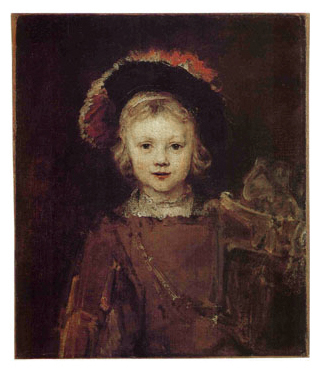
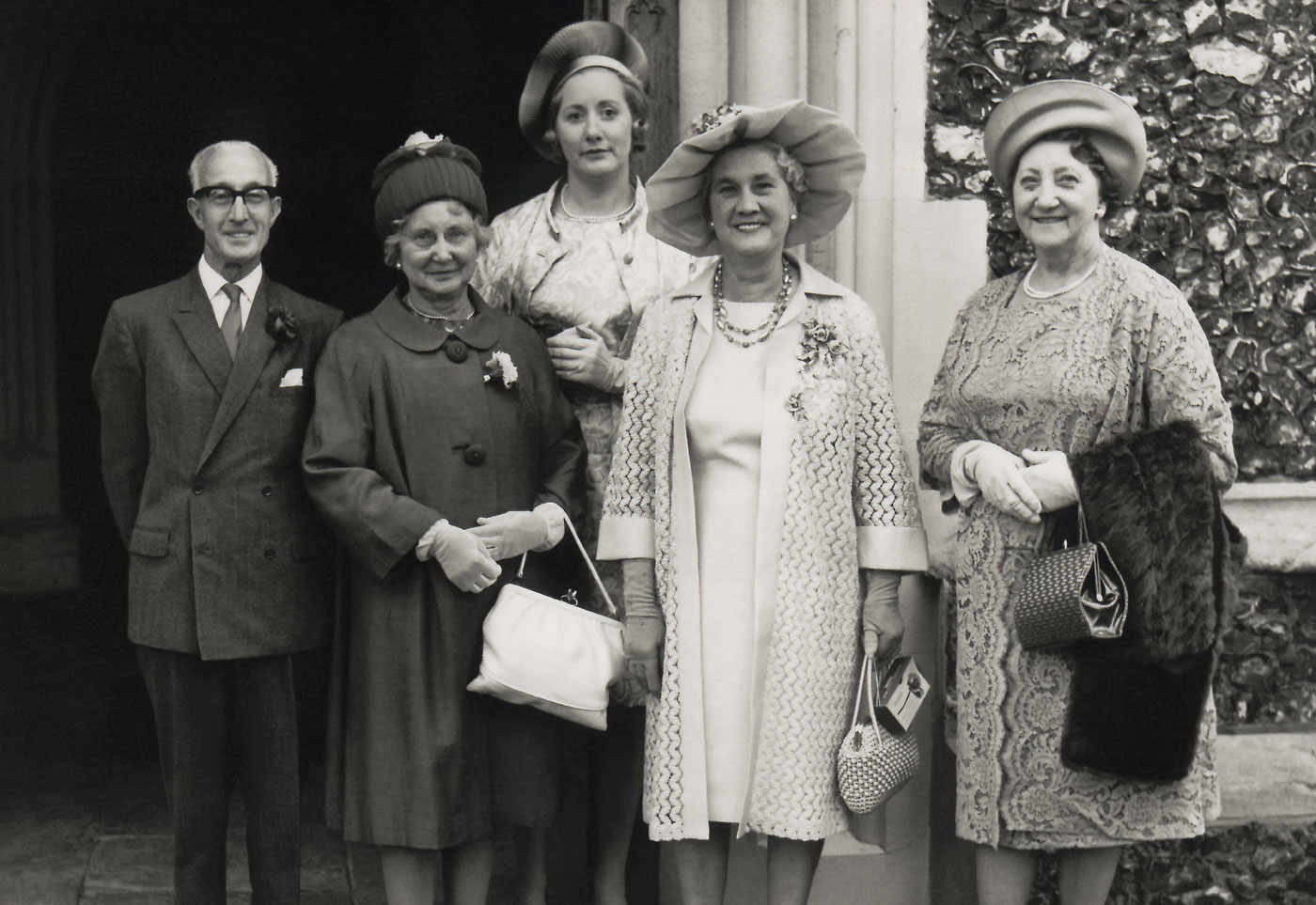
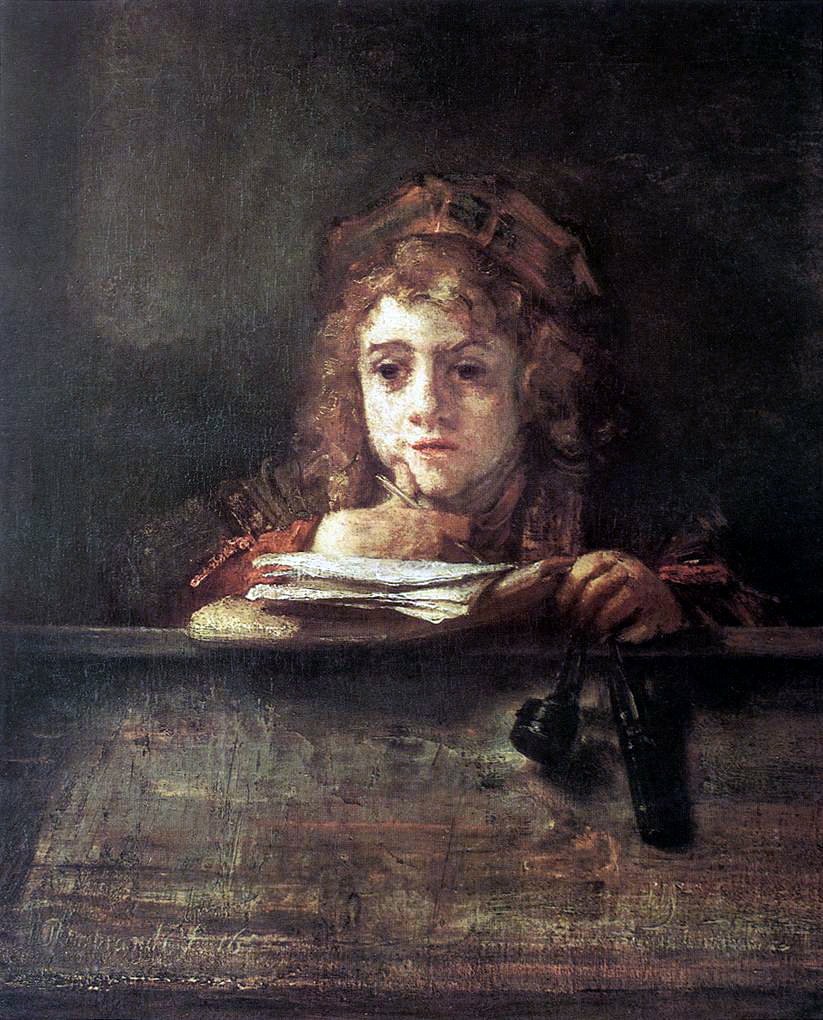
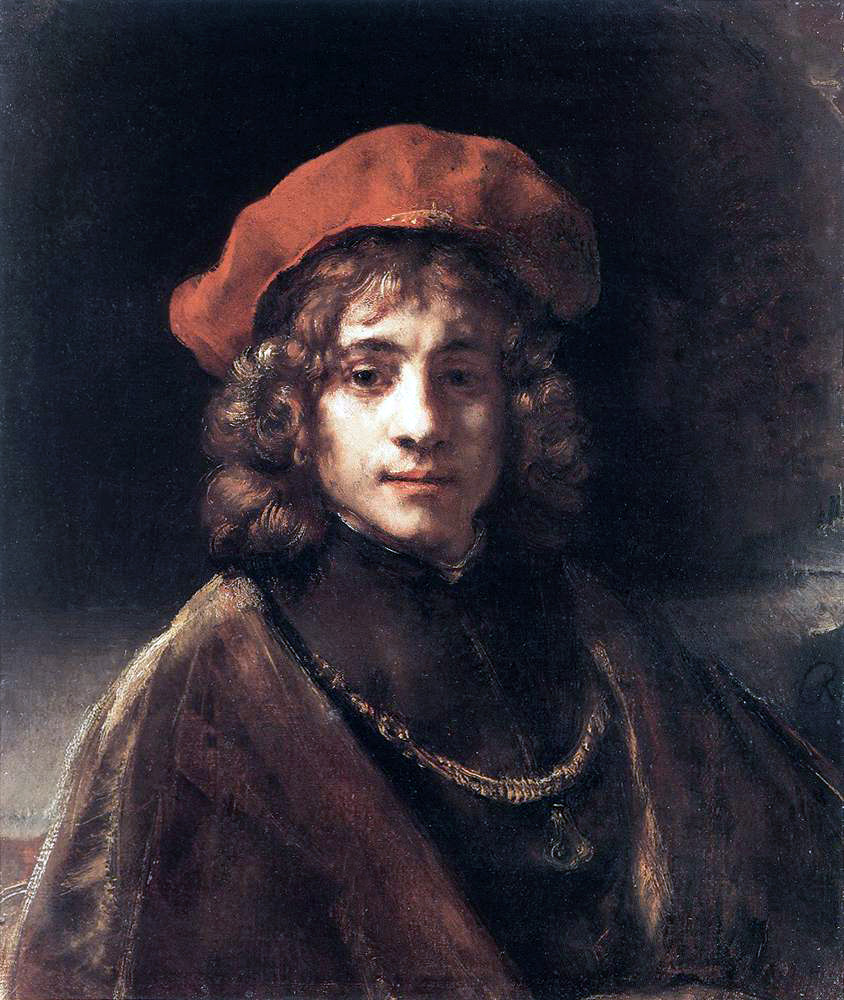

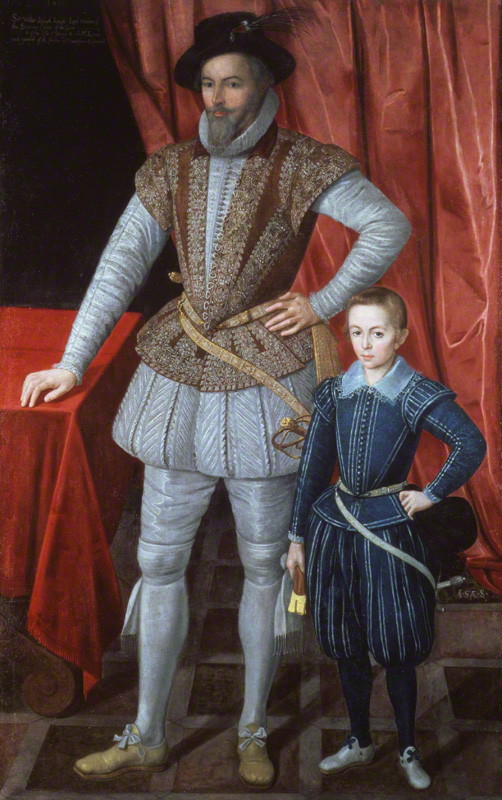
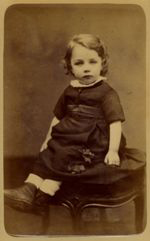
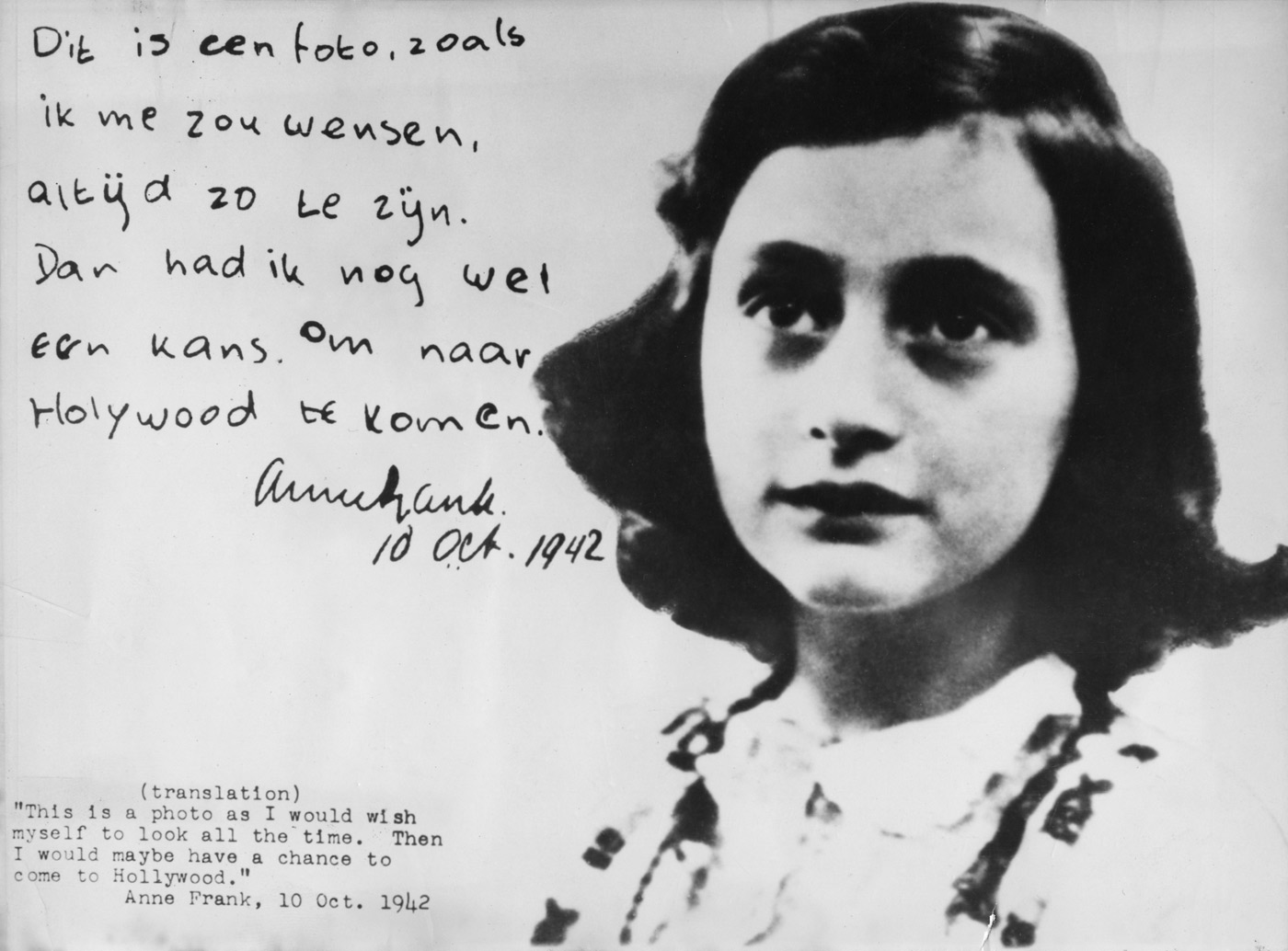


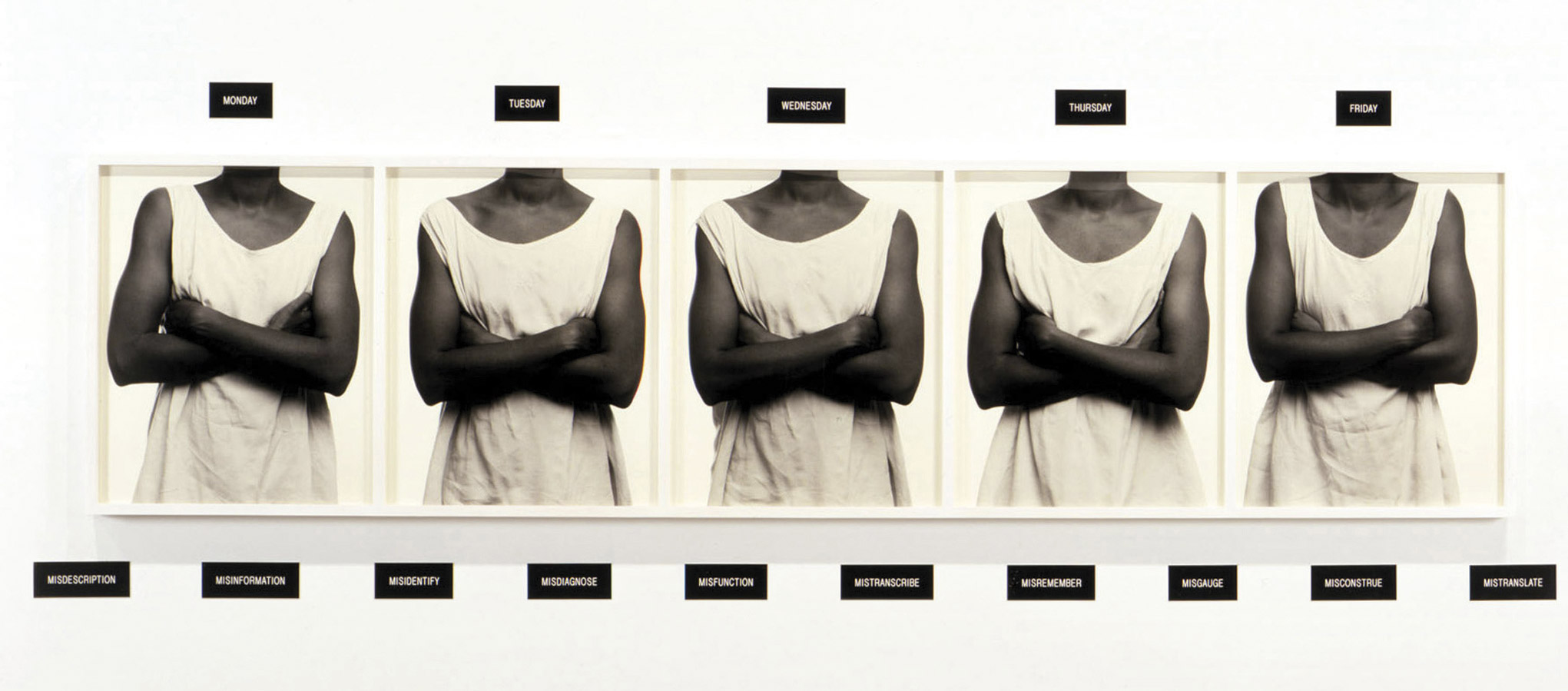
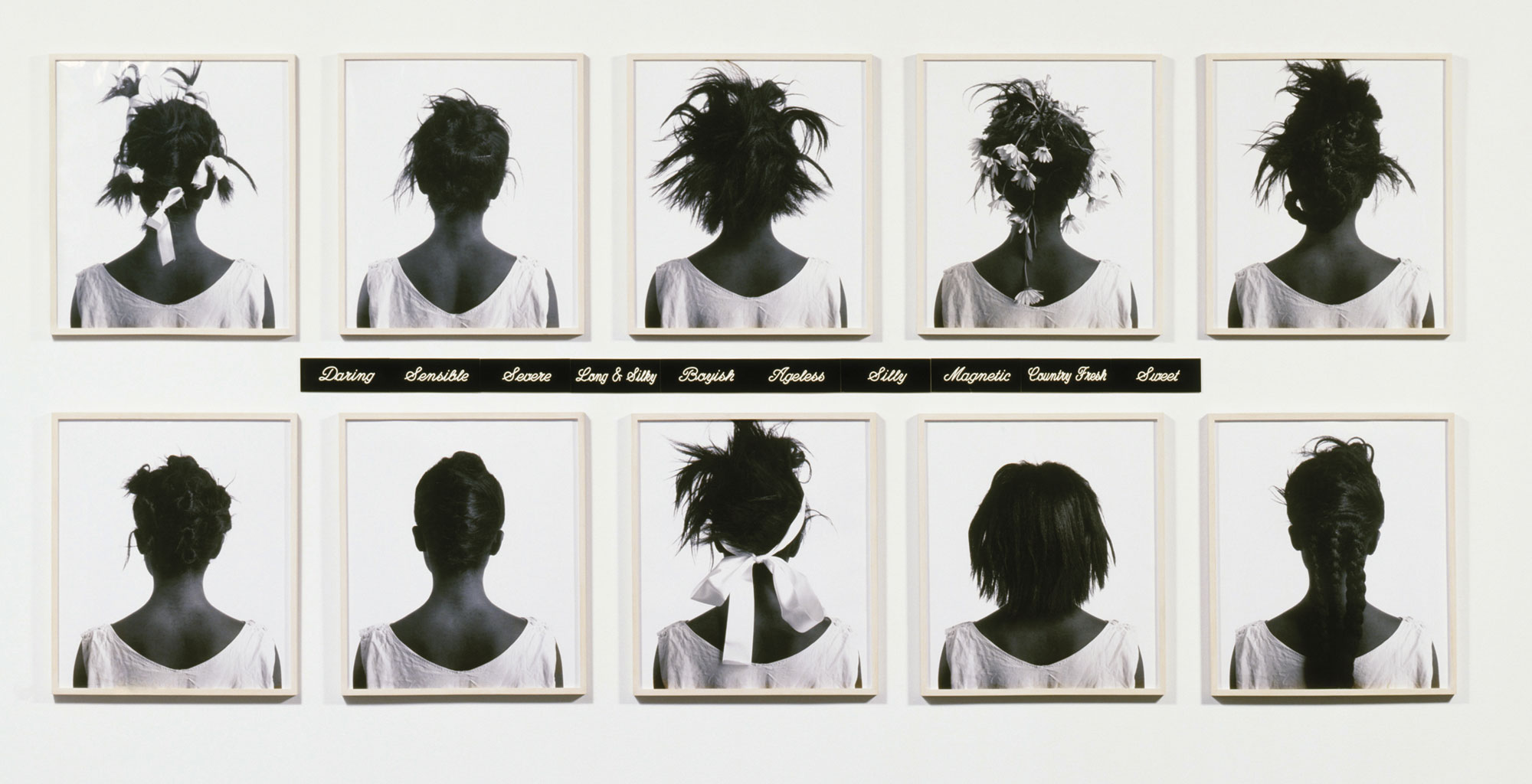
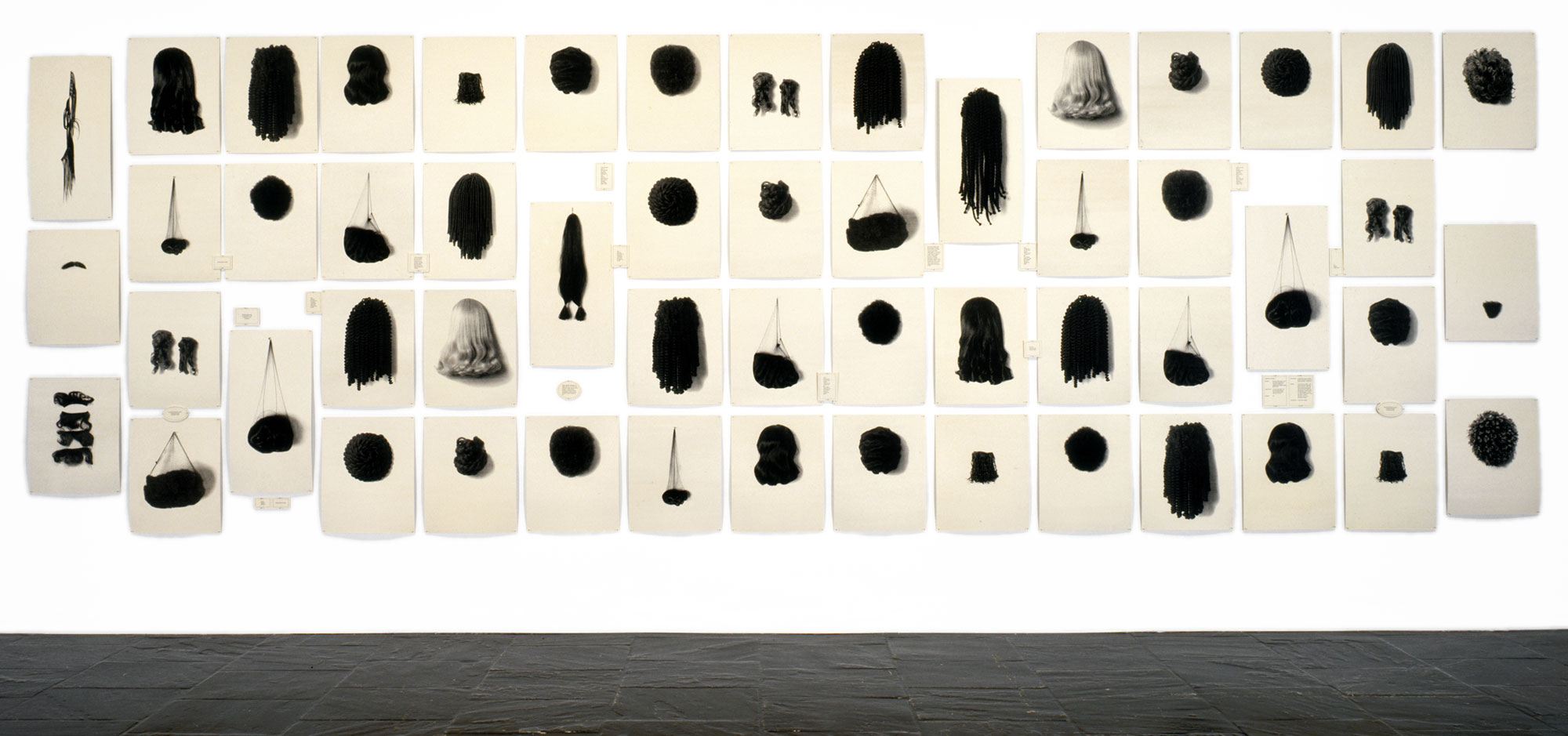

![Lorna Simpson (American, b. 1960) 'Waterbearer [Porteuse d'eau]' 1986](https://artblart.com/wp-content/uploads/2013/08/lornasimpson_004-web.jpg "Lorna Simpson (American, b. 1960) 'Waterbearer [Porteuse d'eau]' 1986")
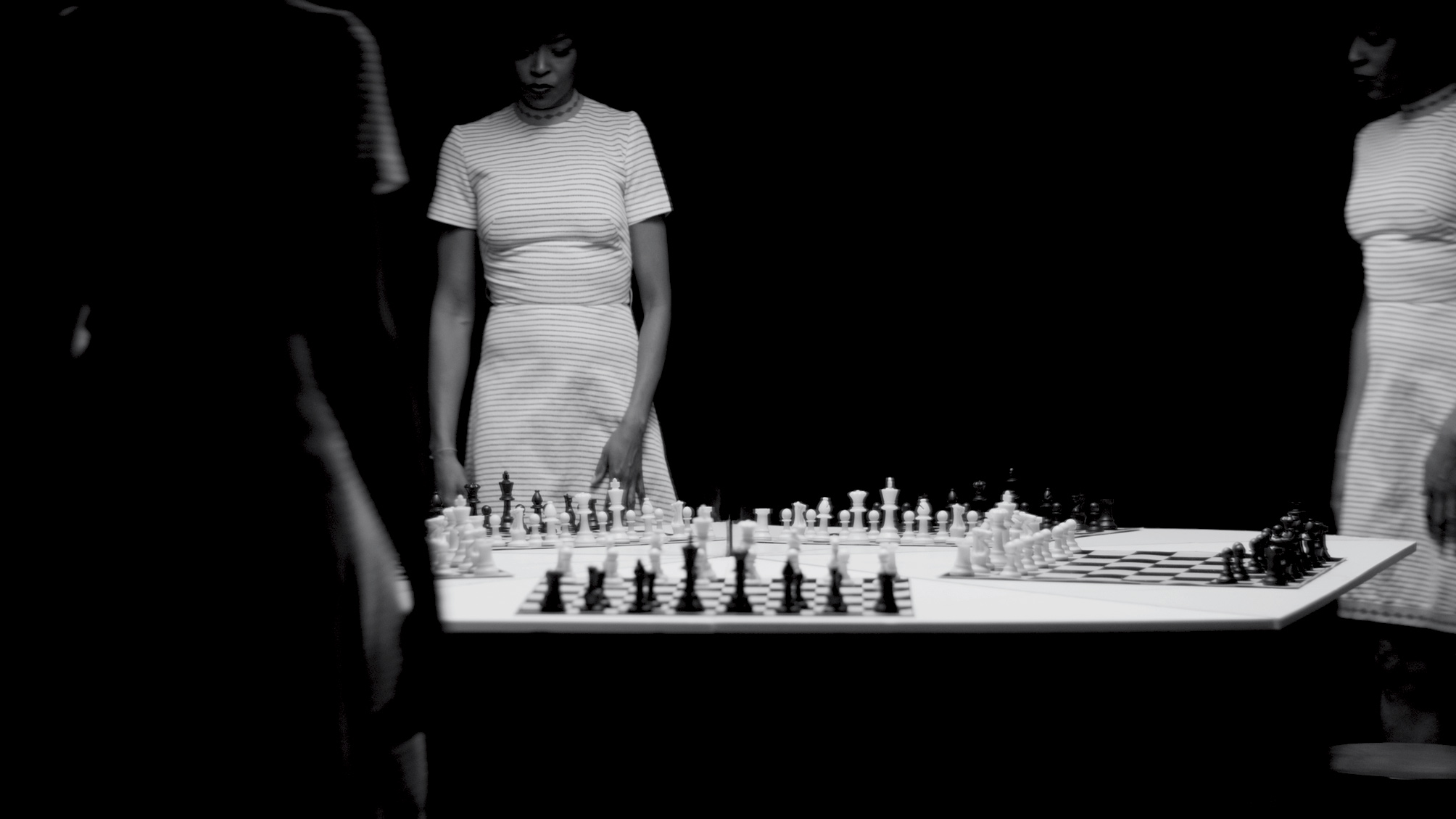
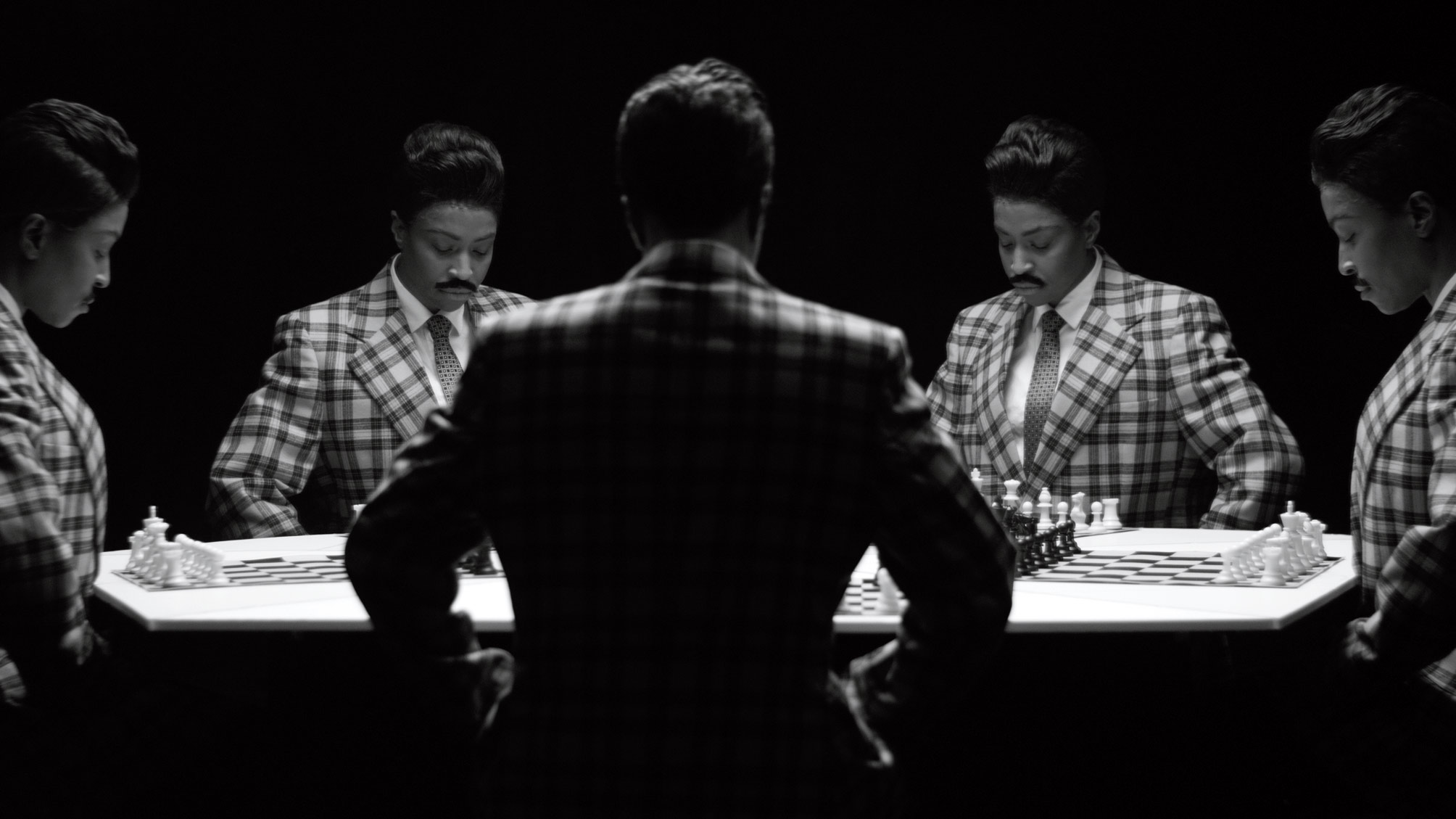
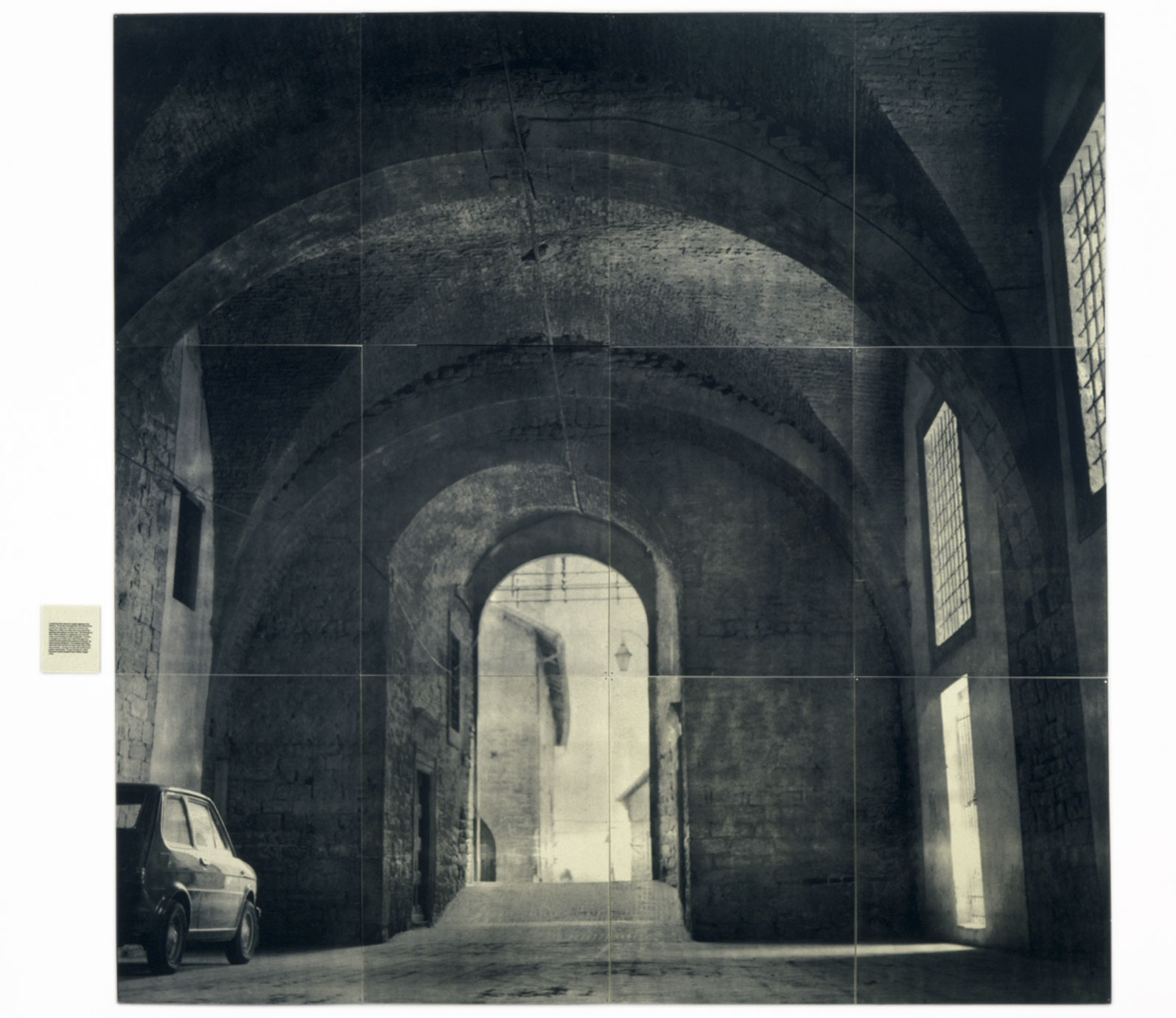
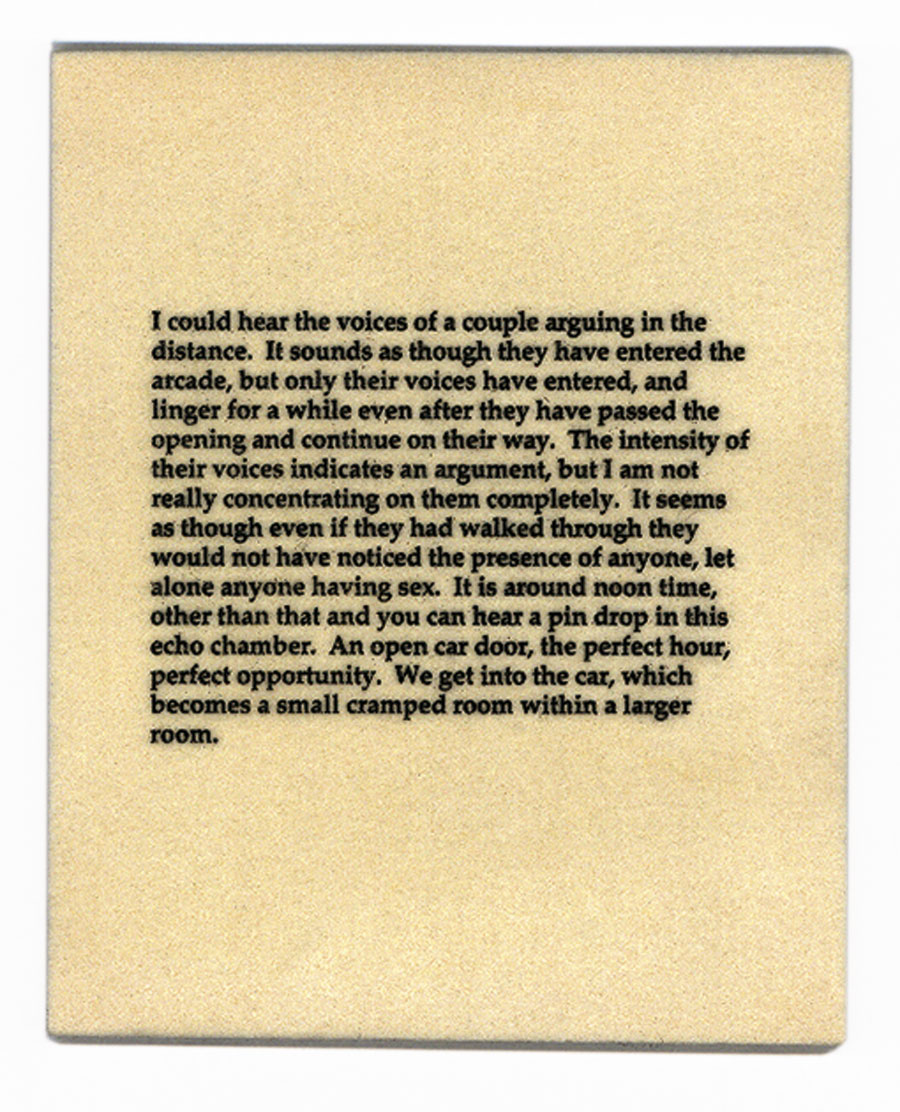
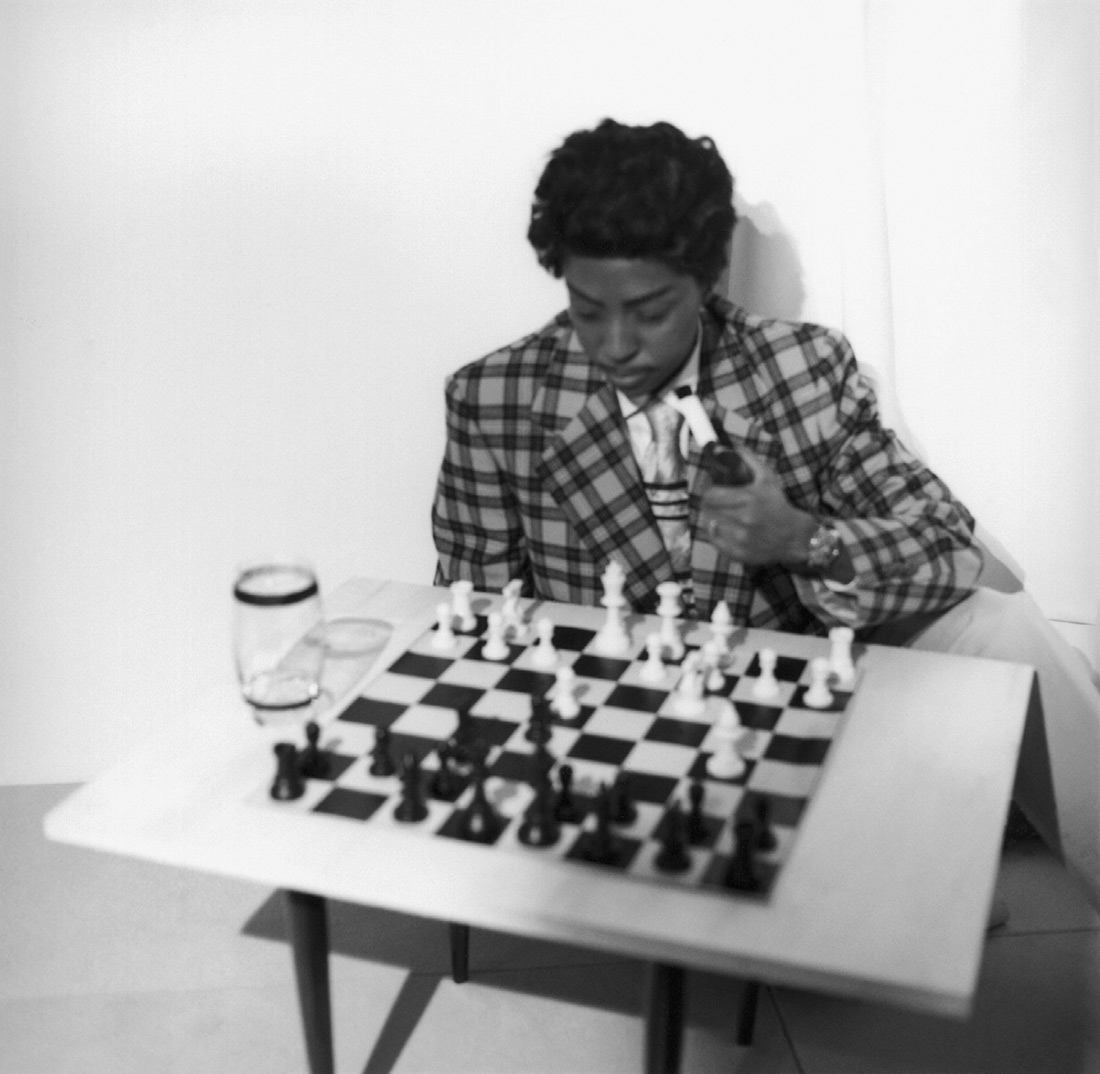

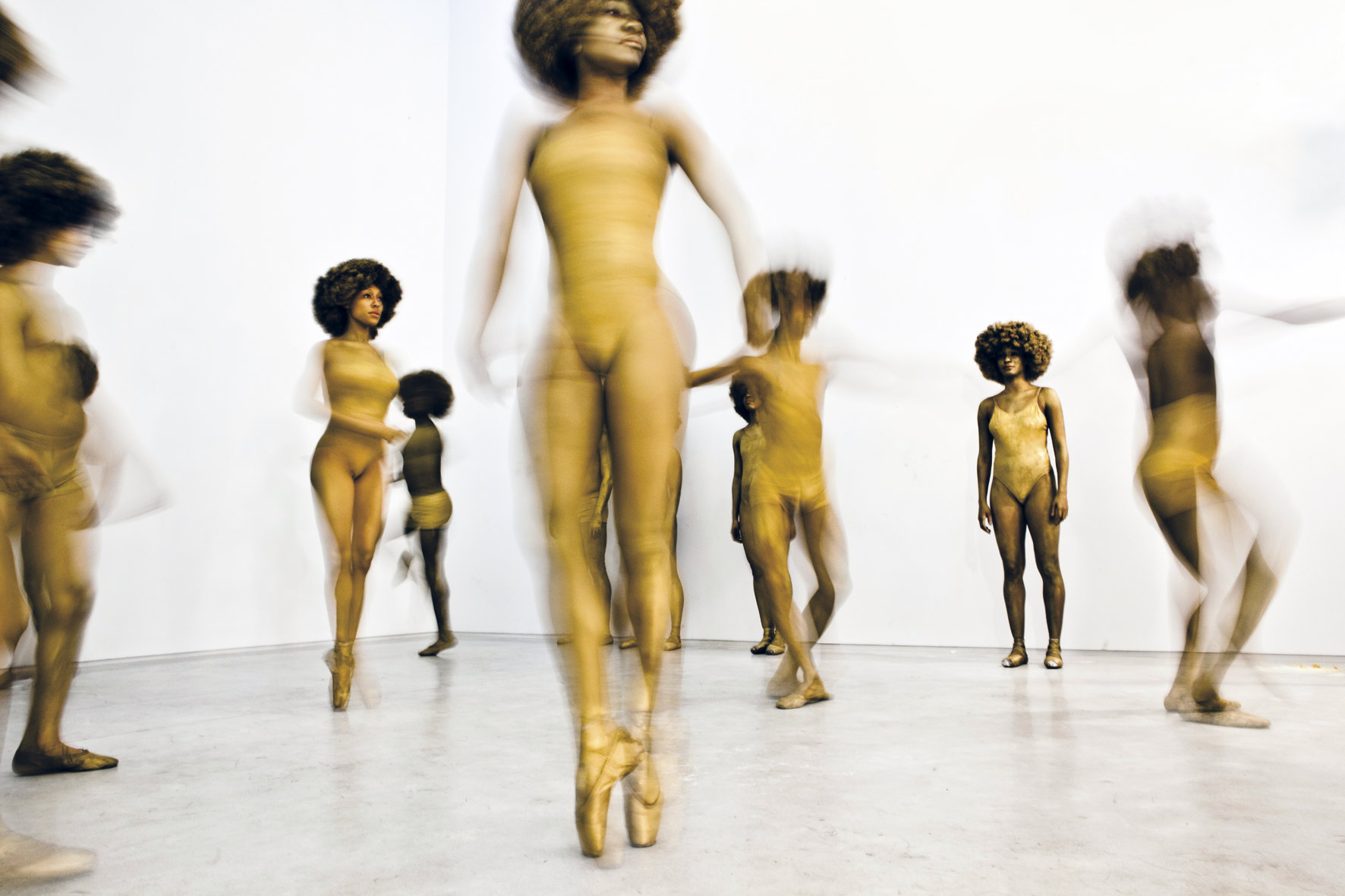
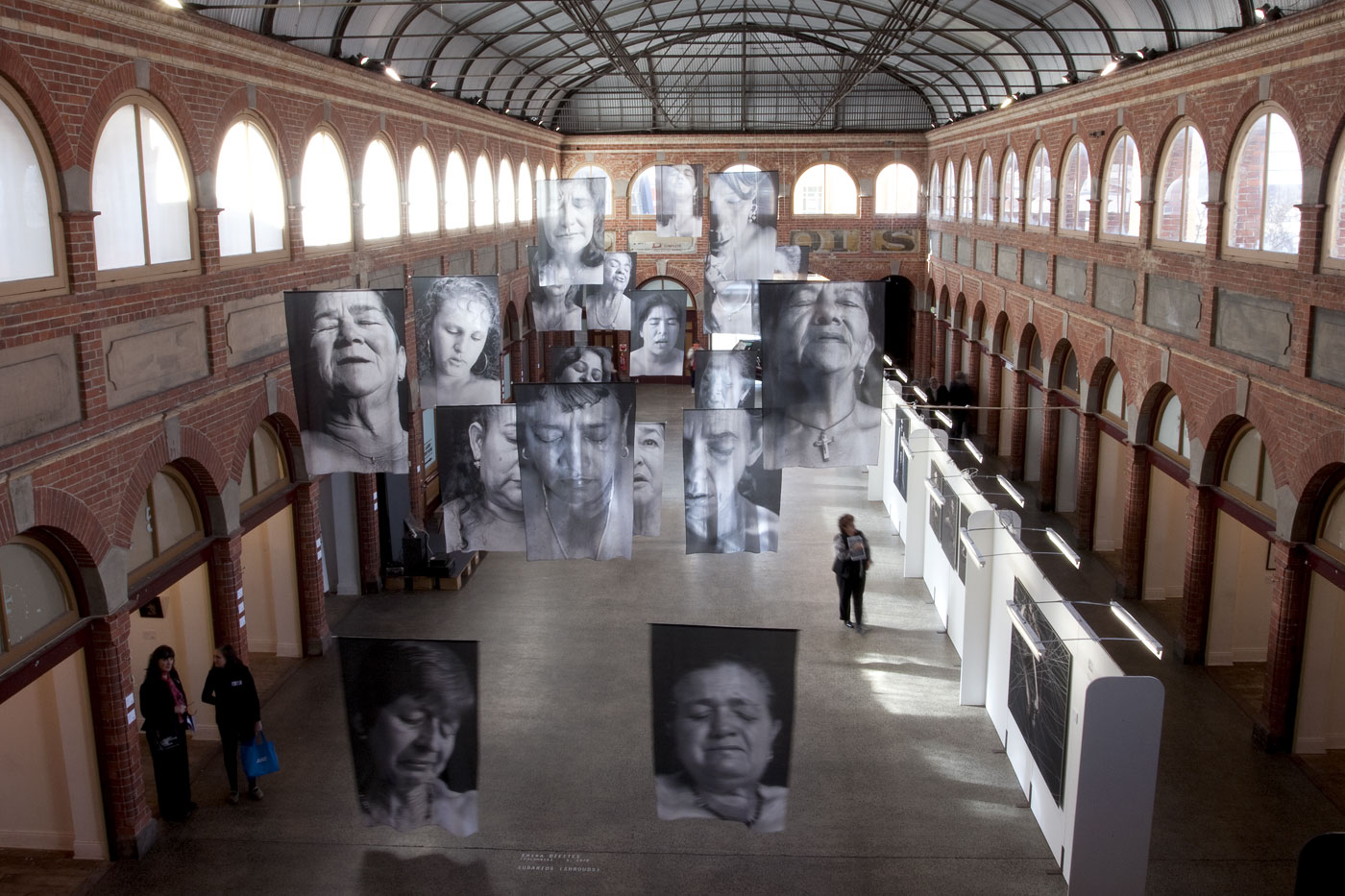
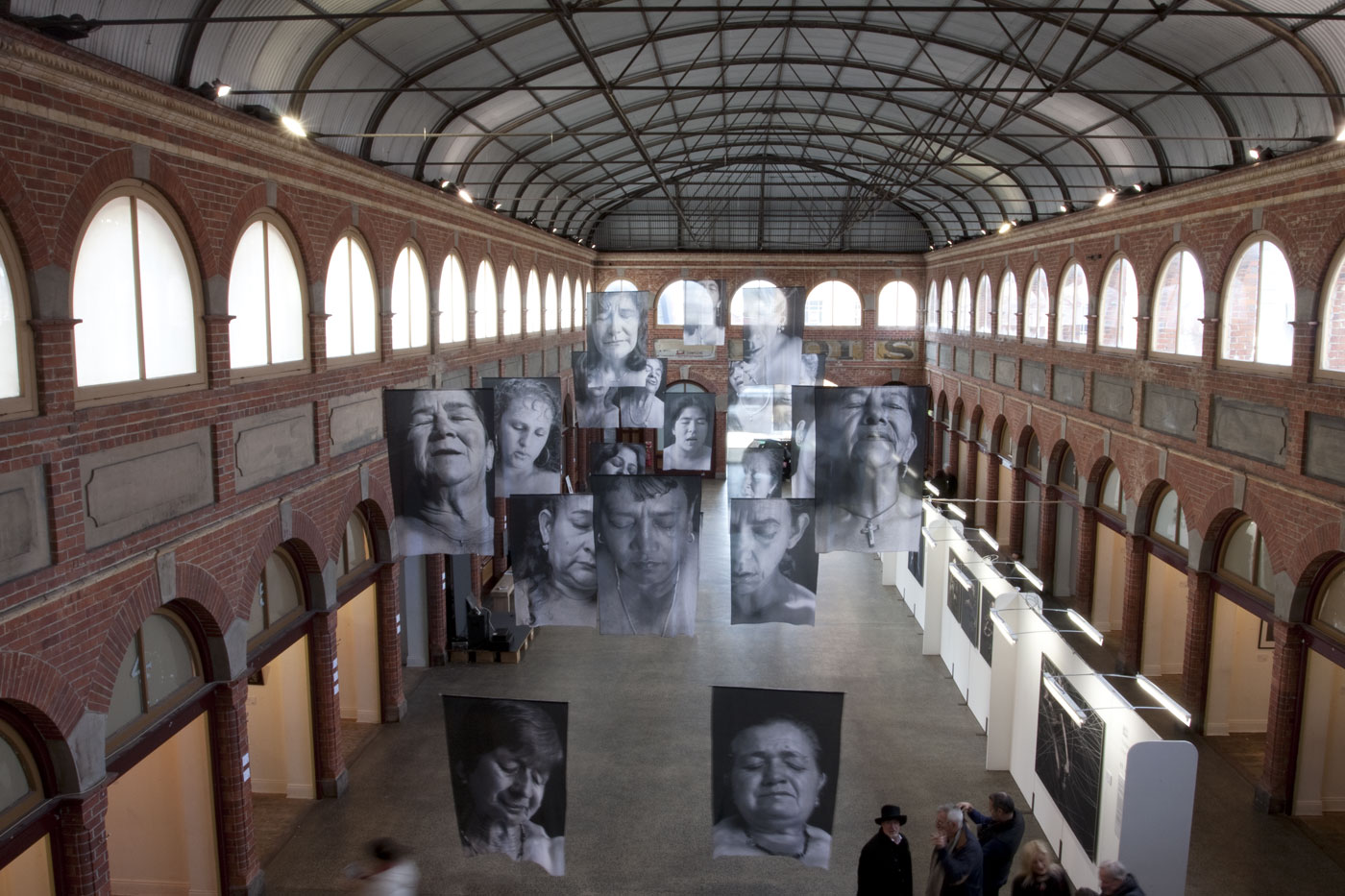
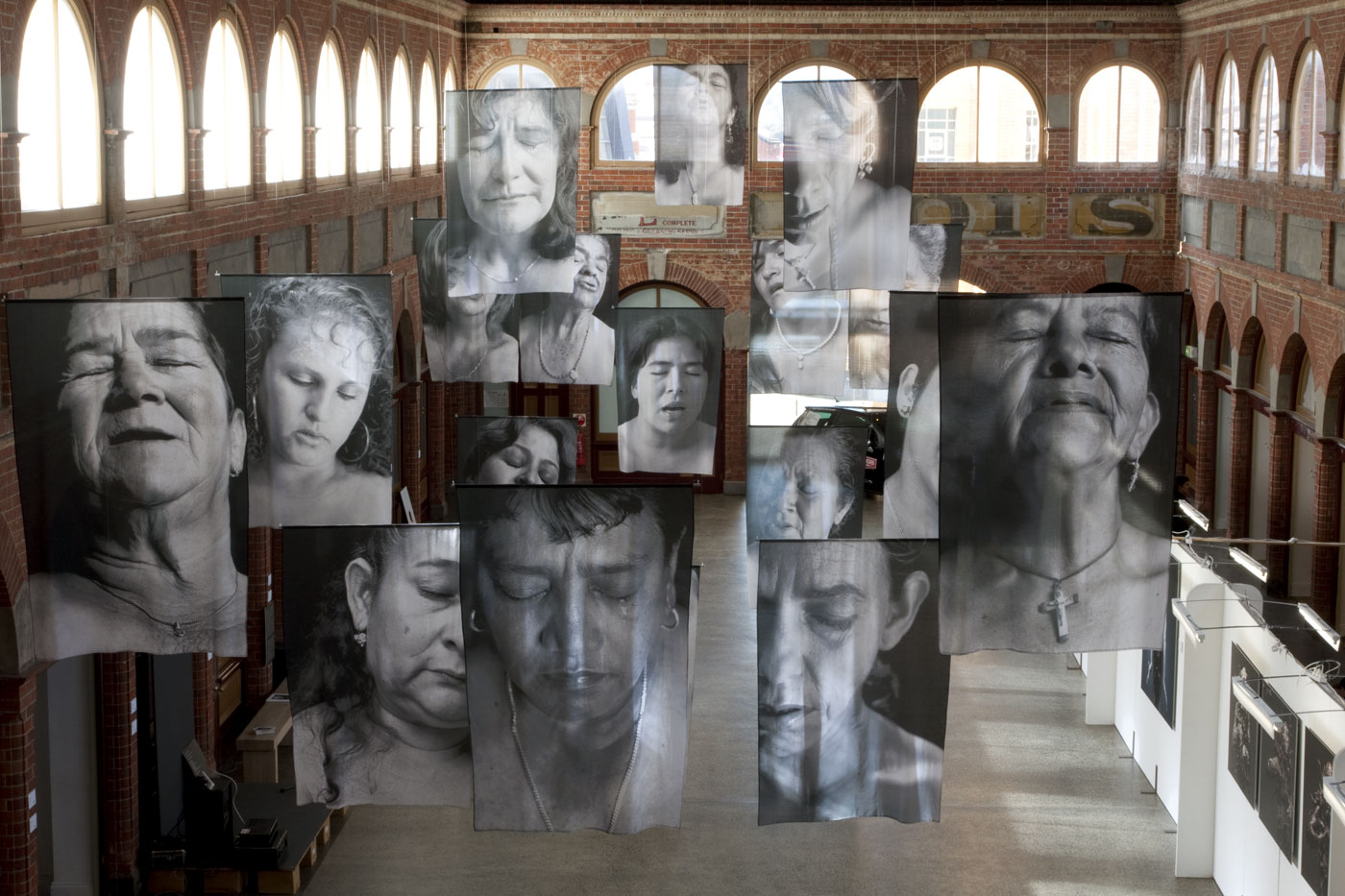
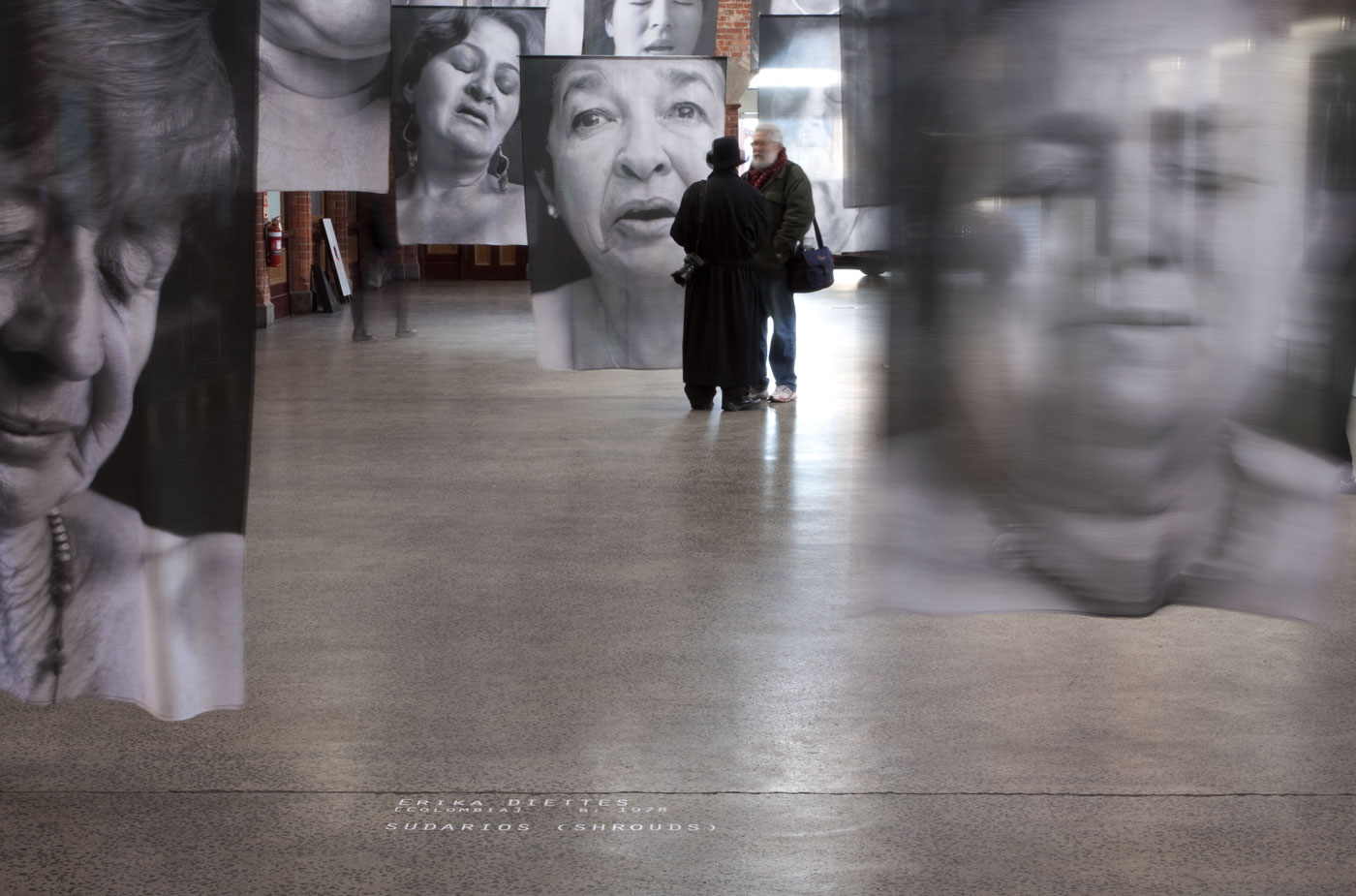
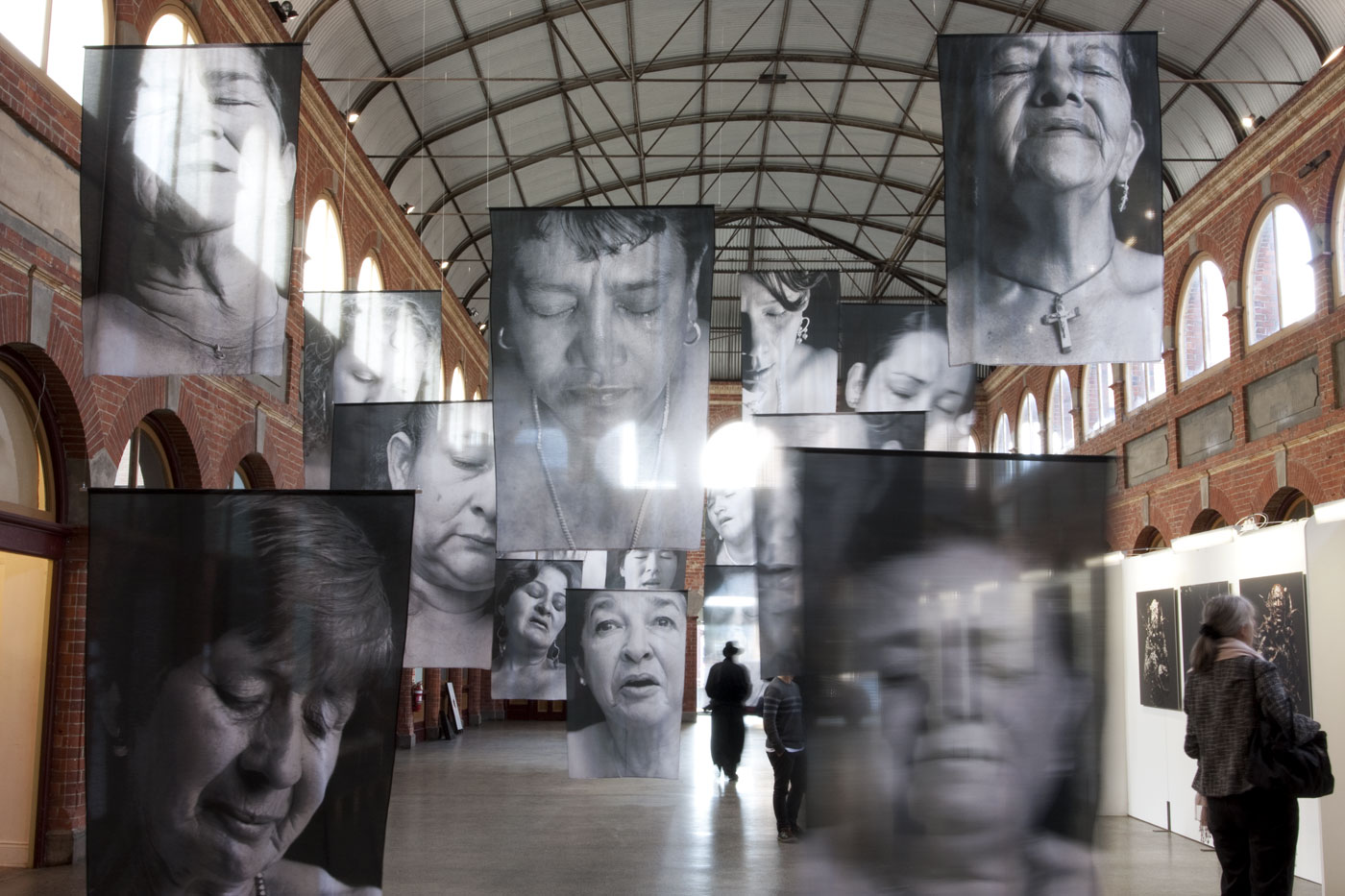
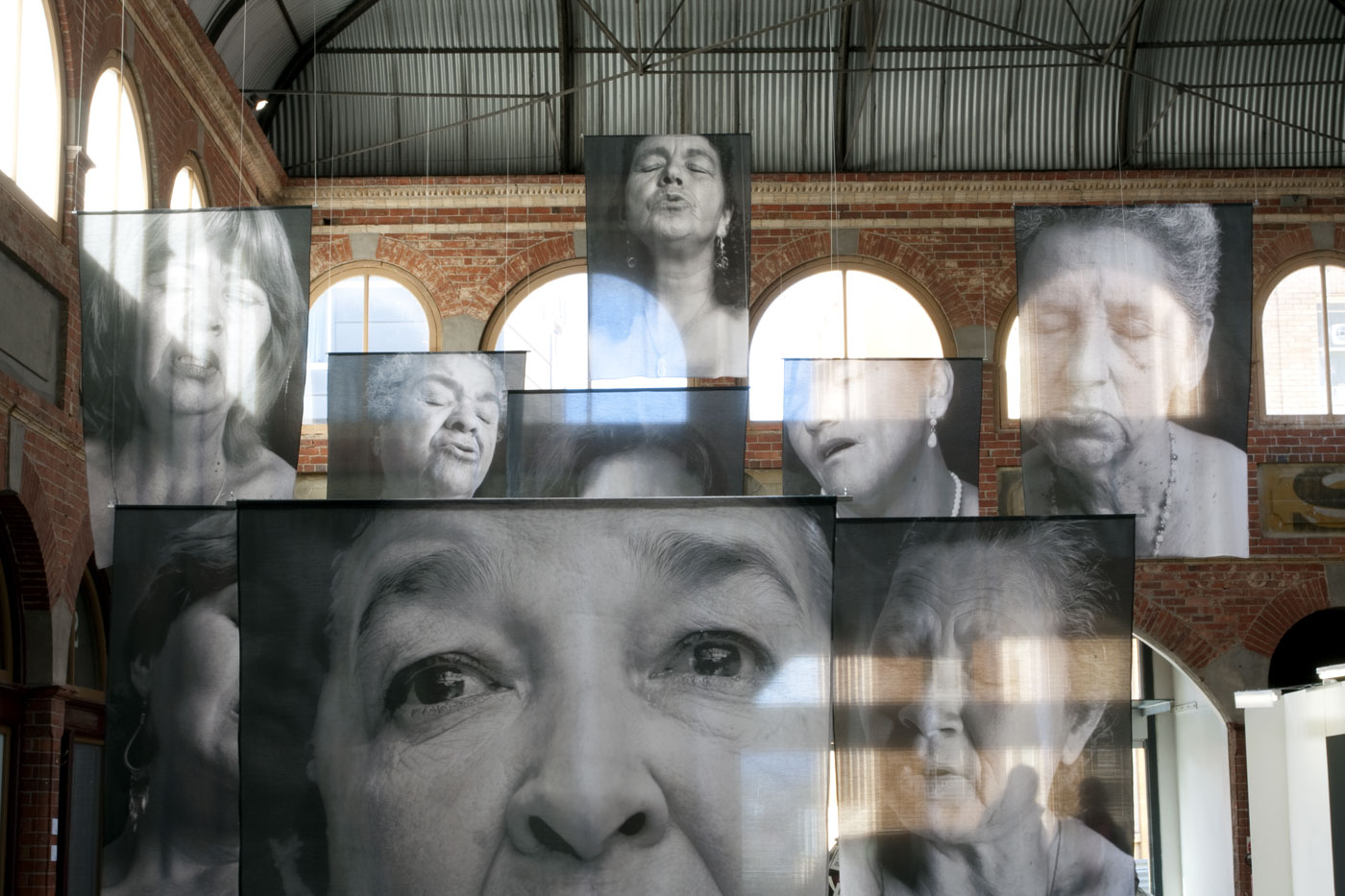
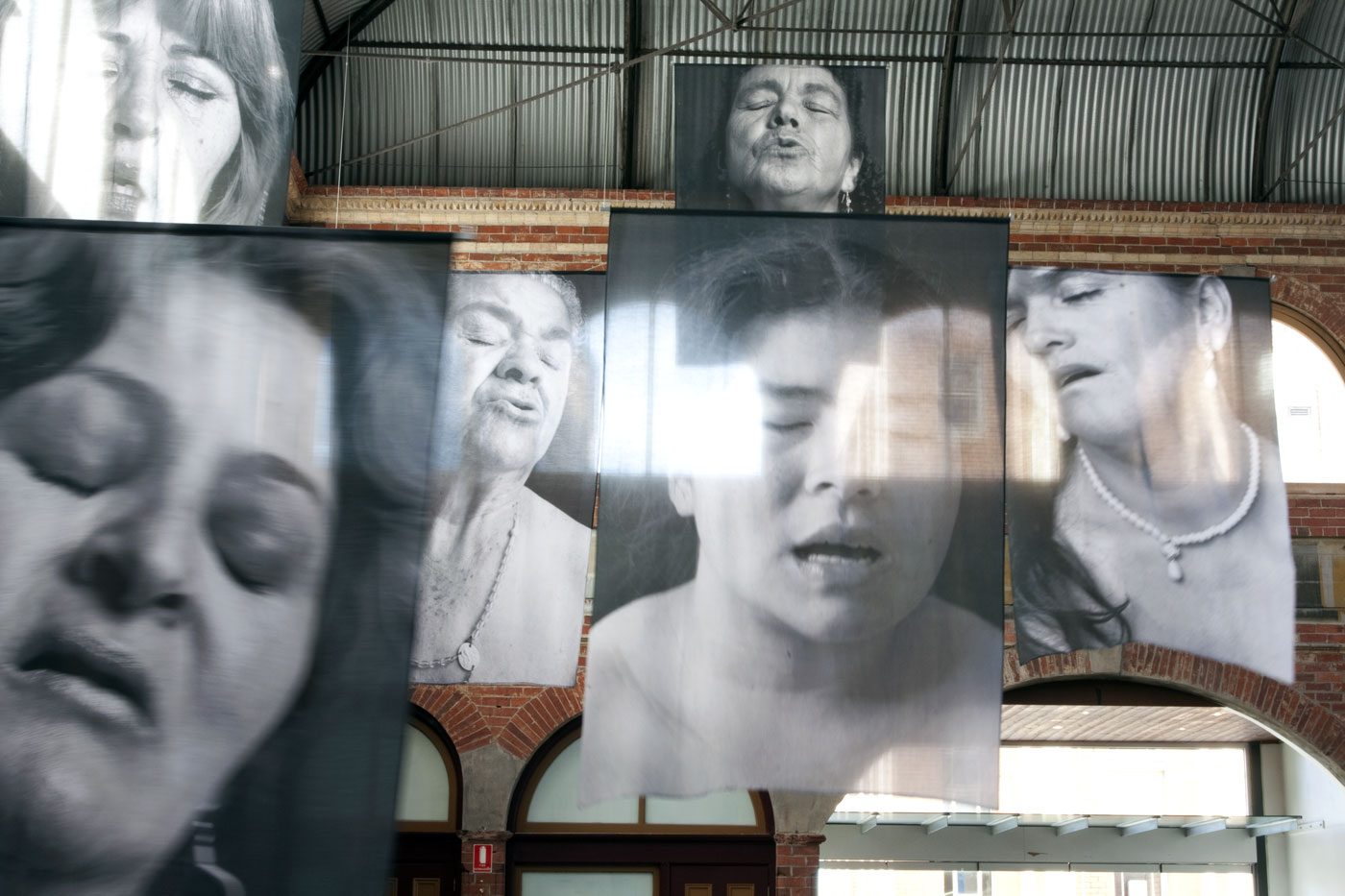
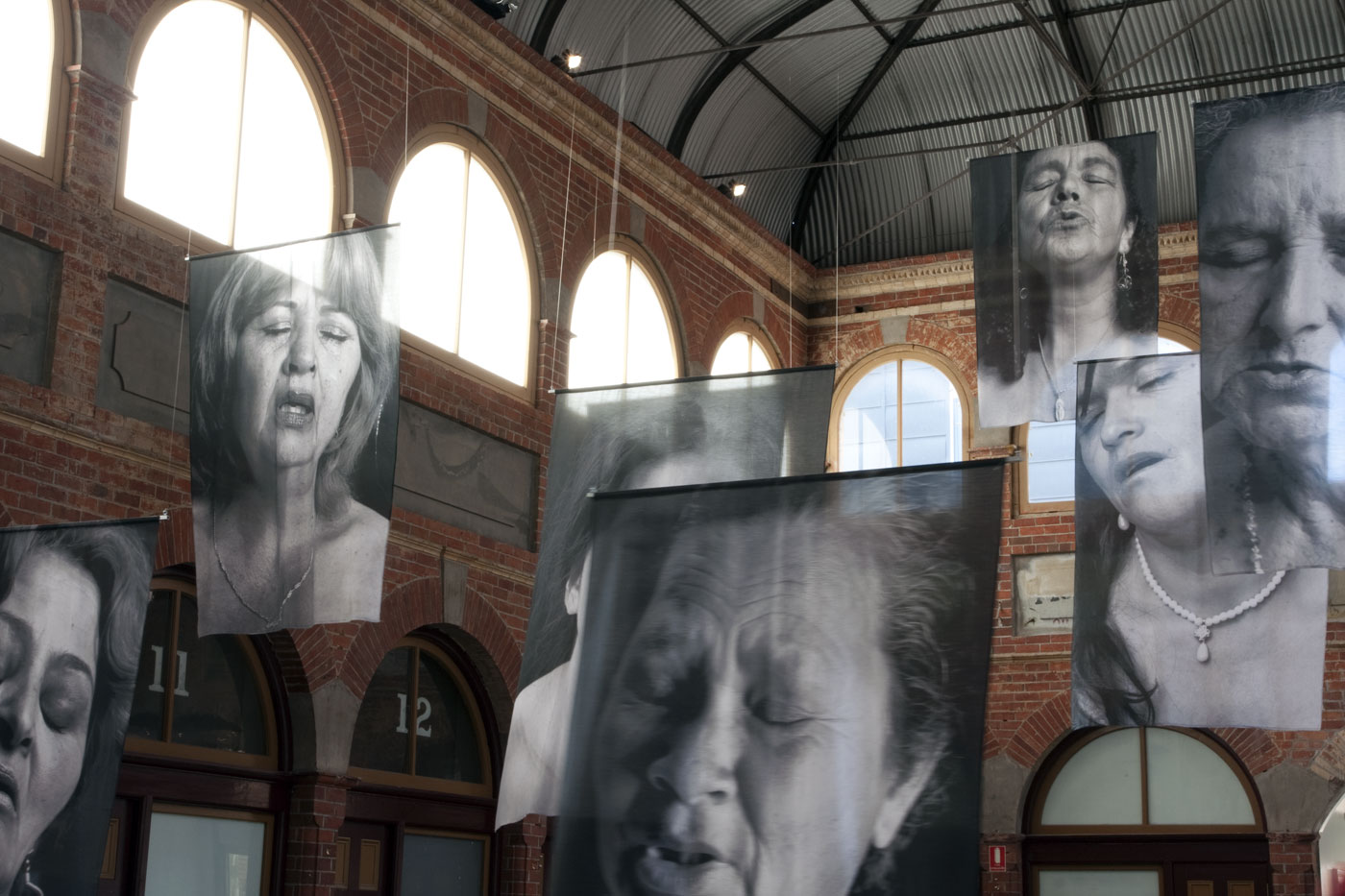
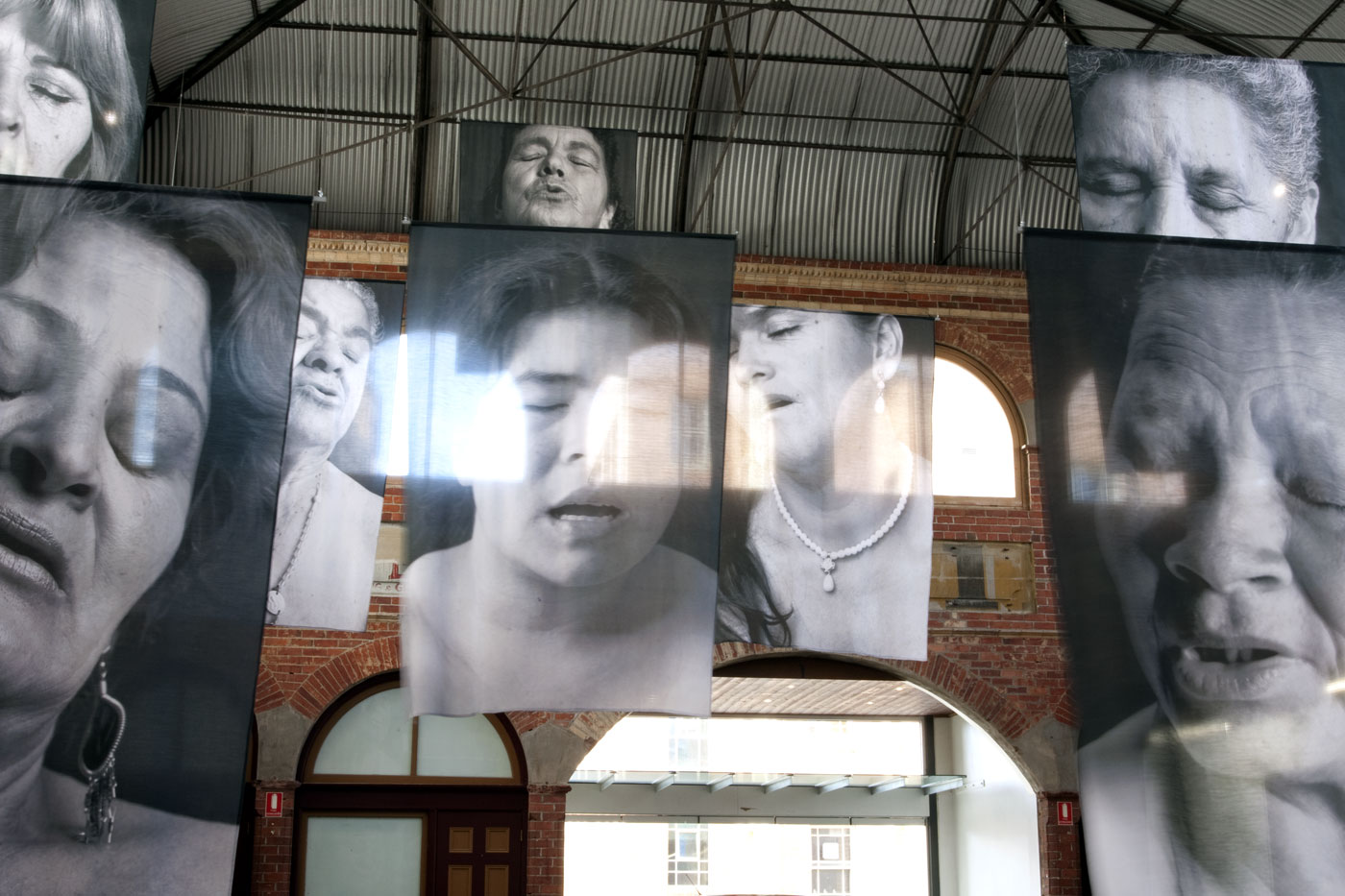
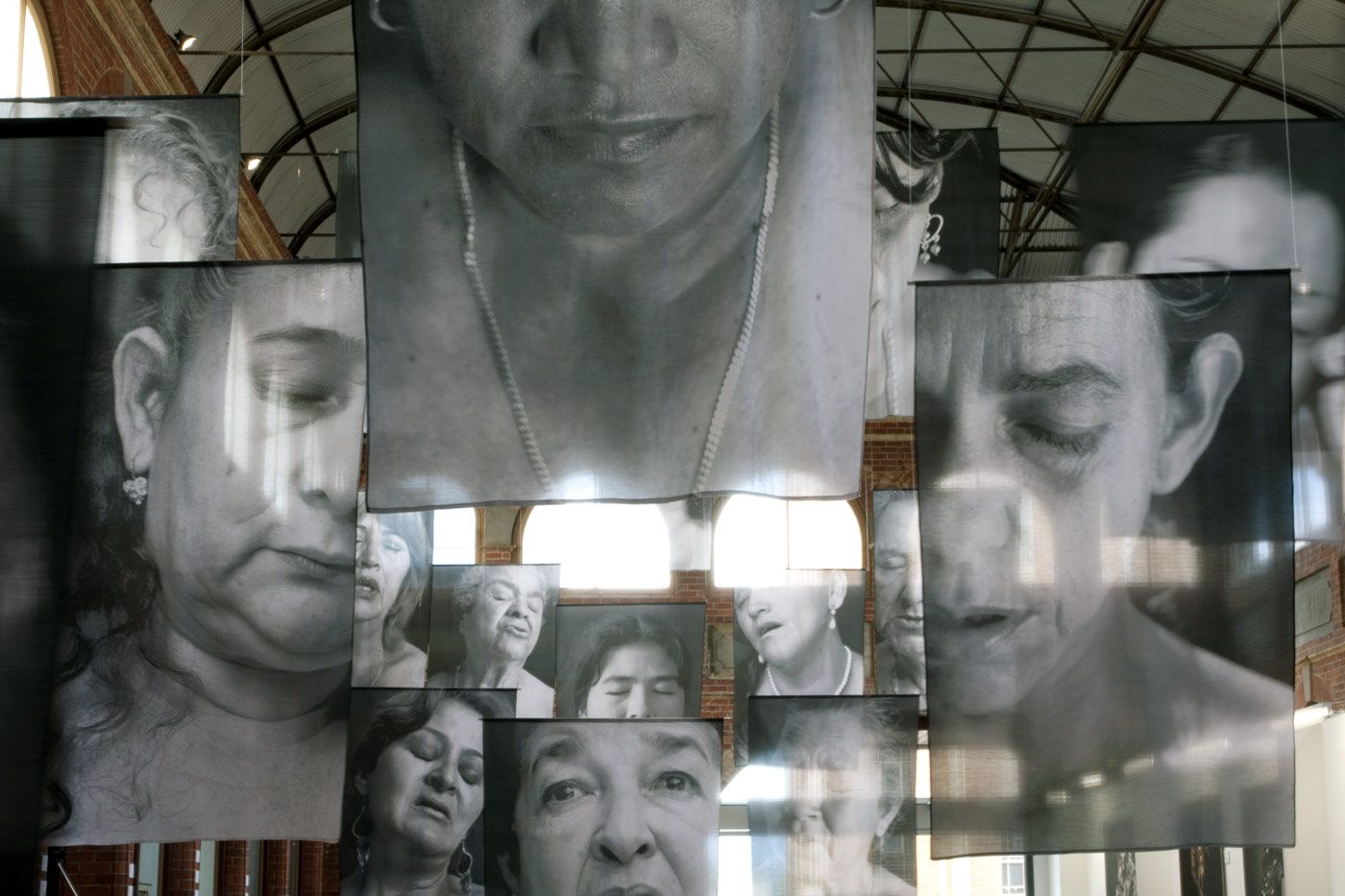
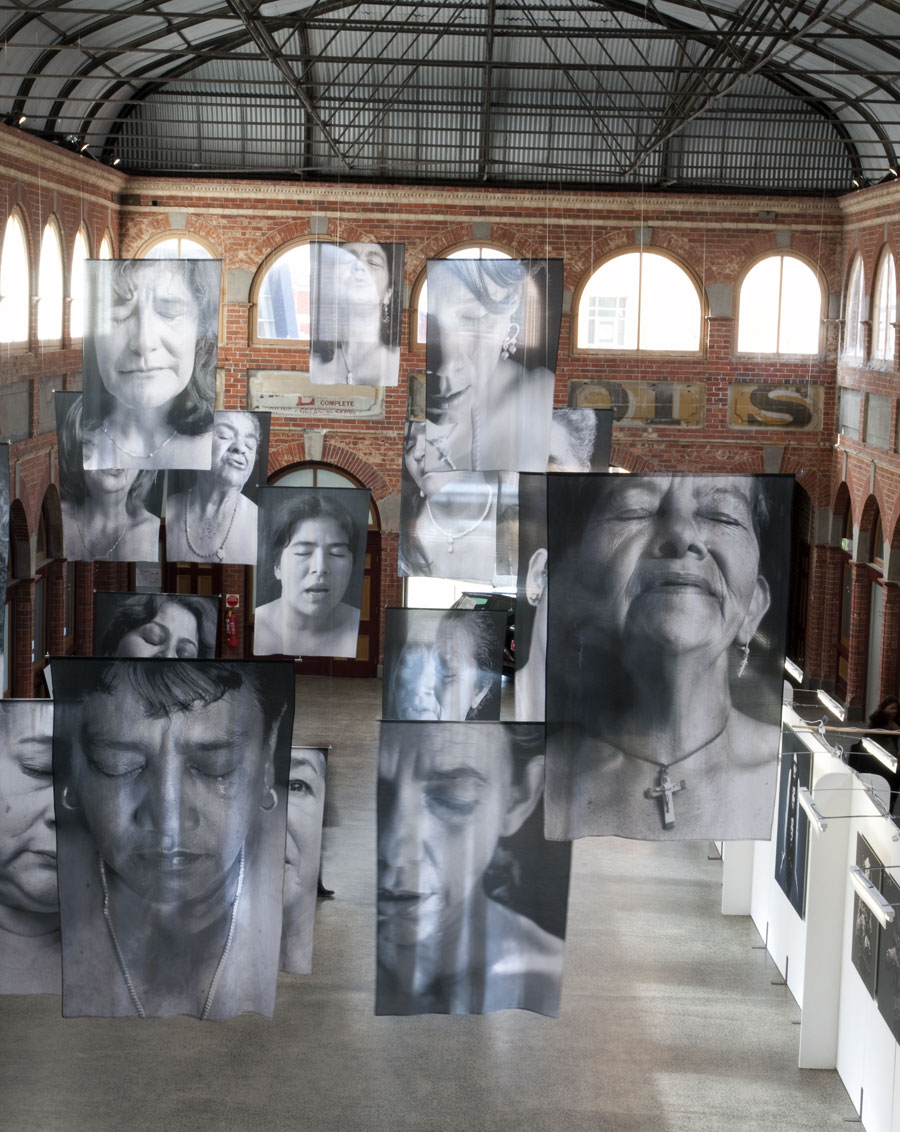
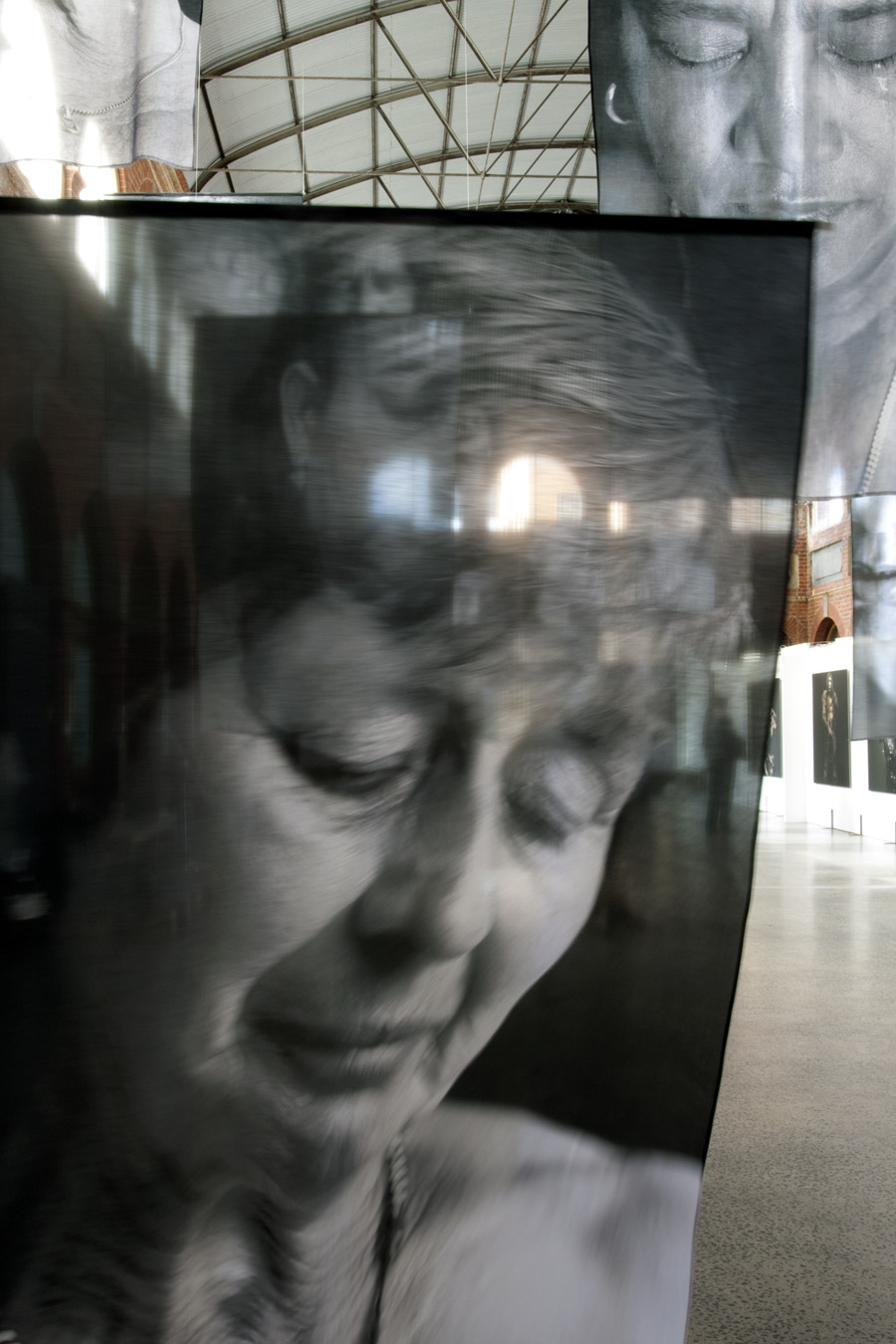
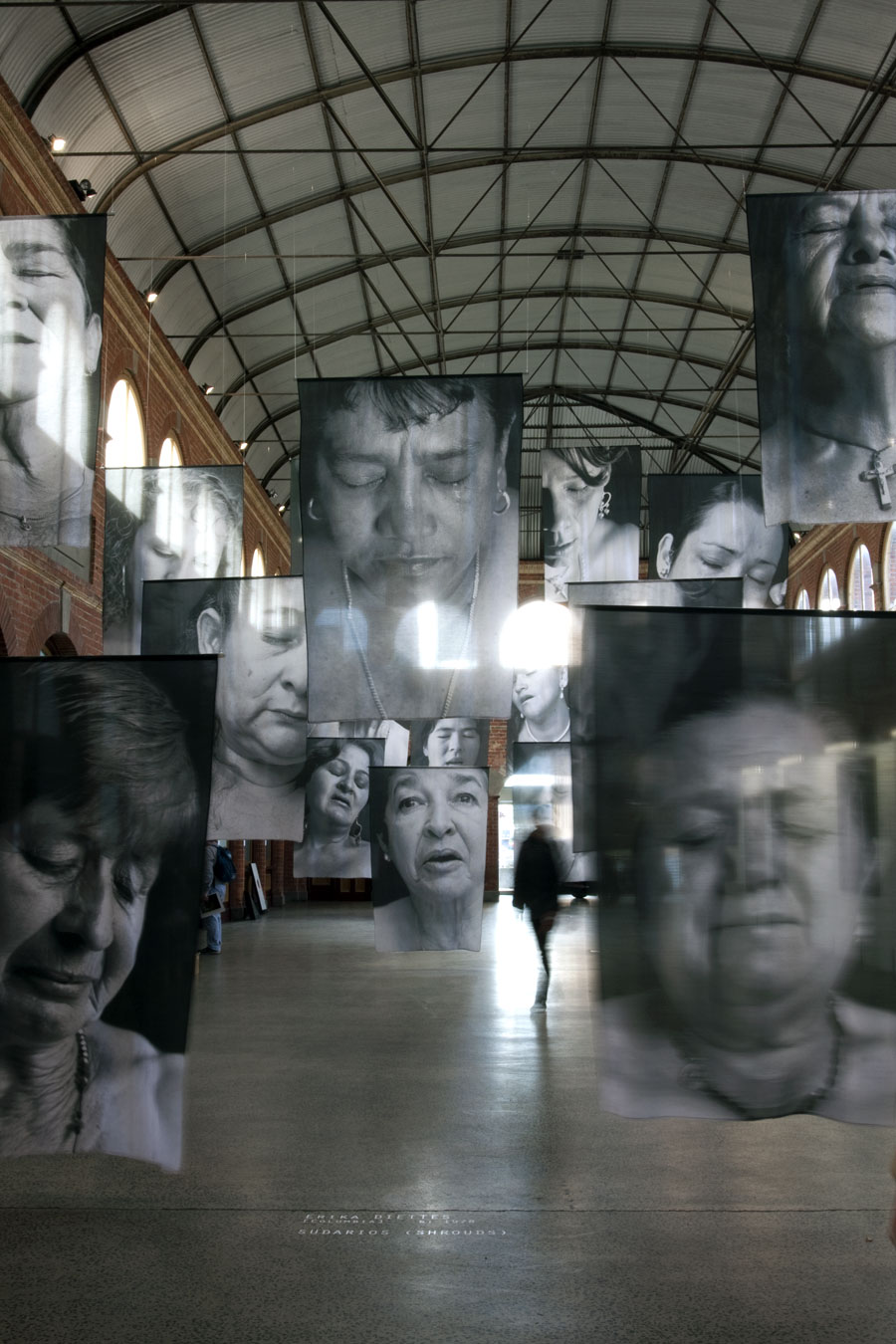


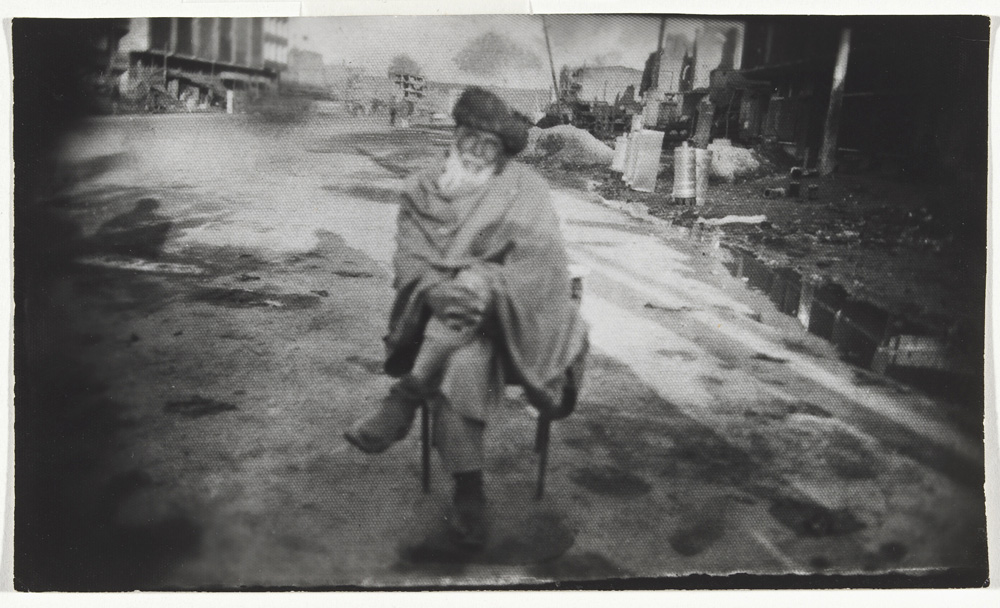


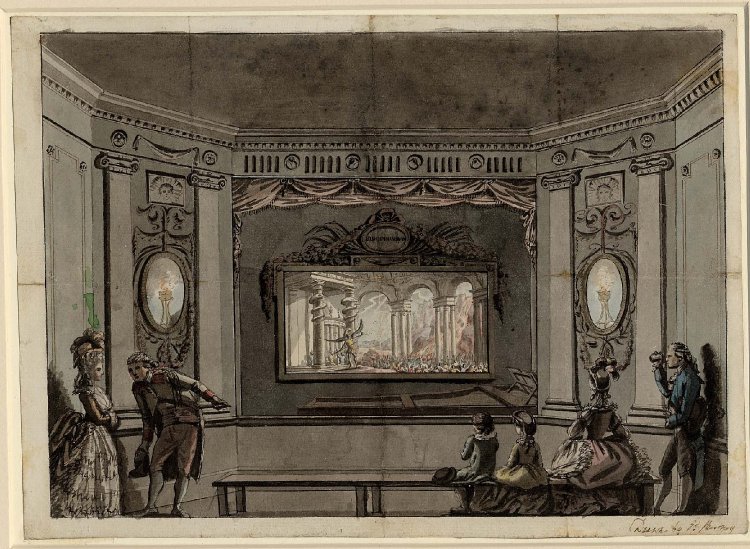
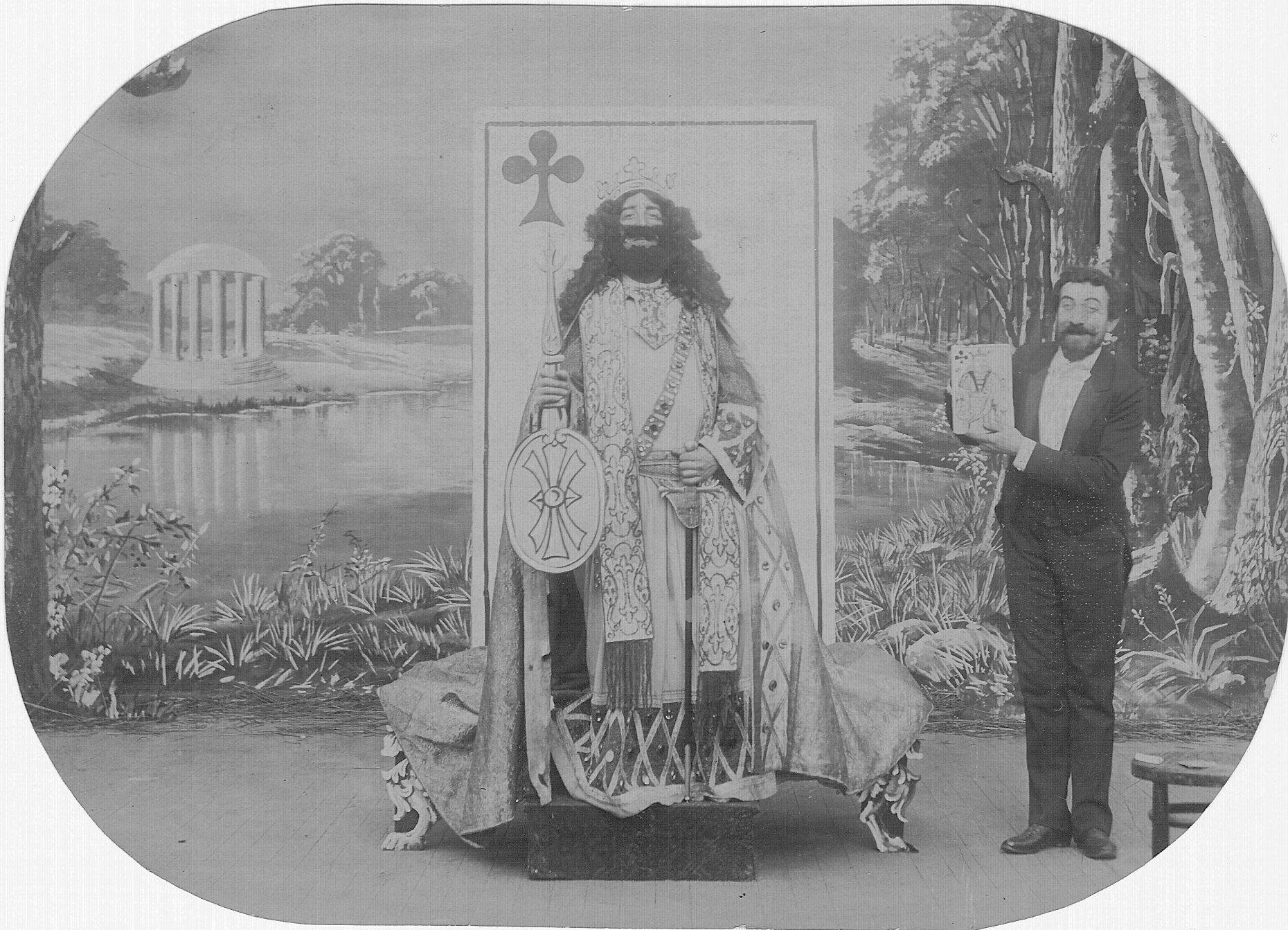
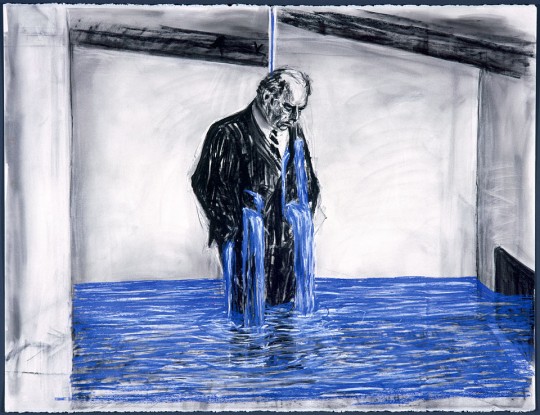
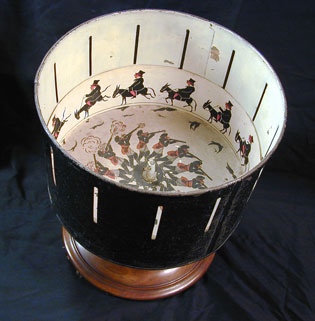
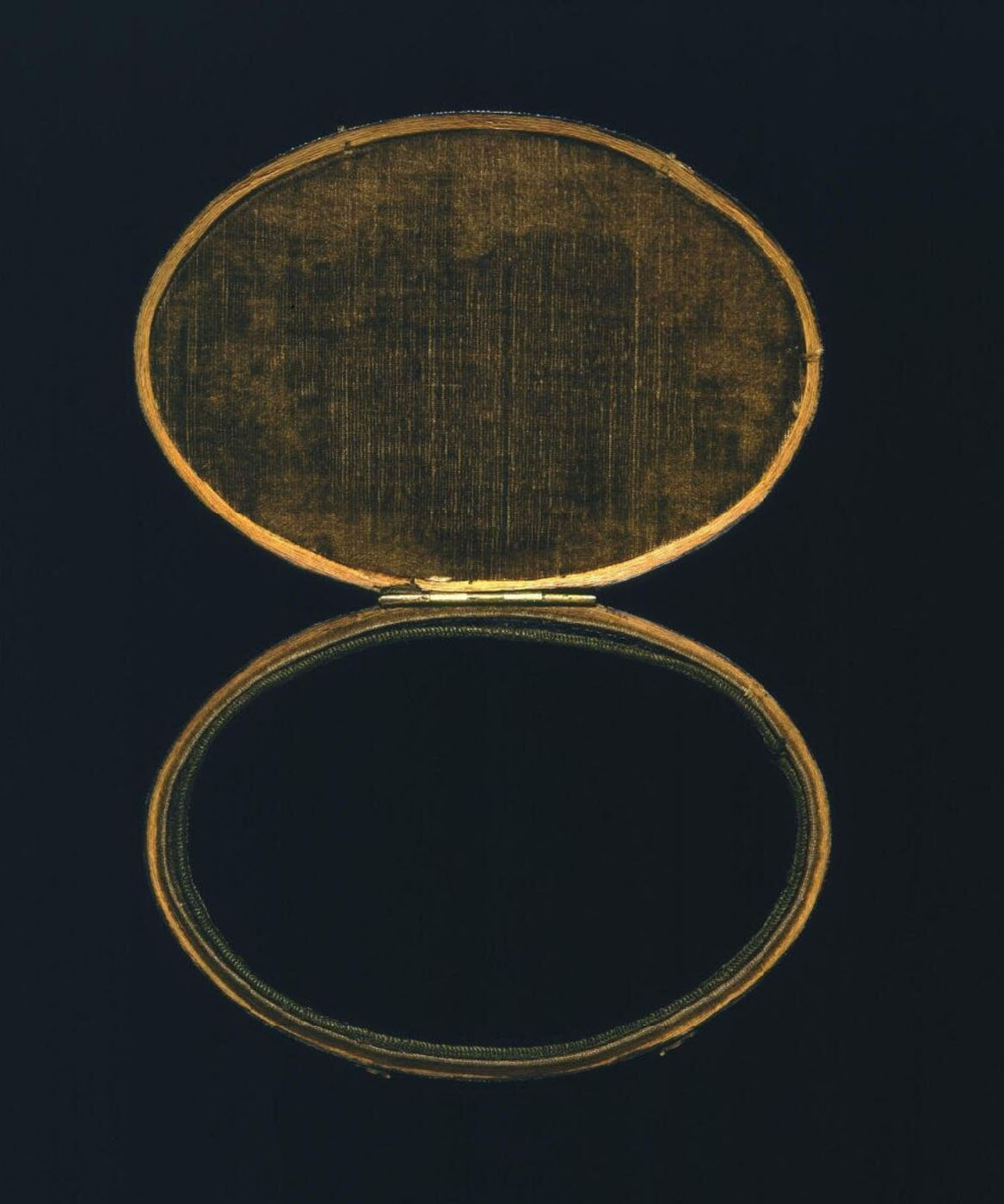
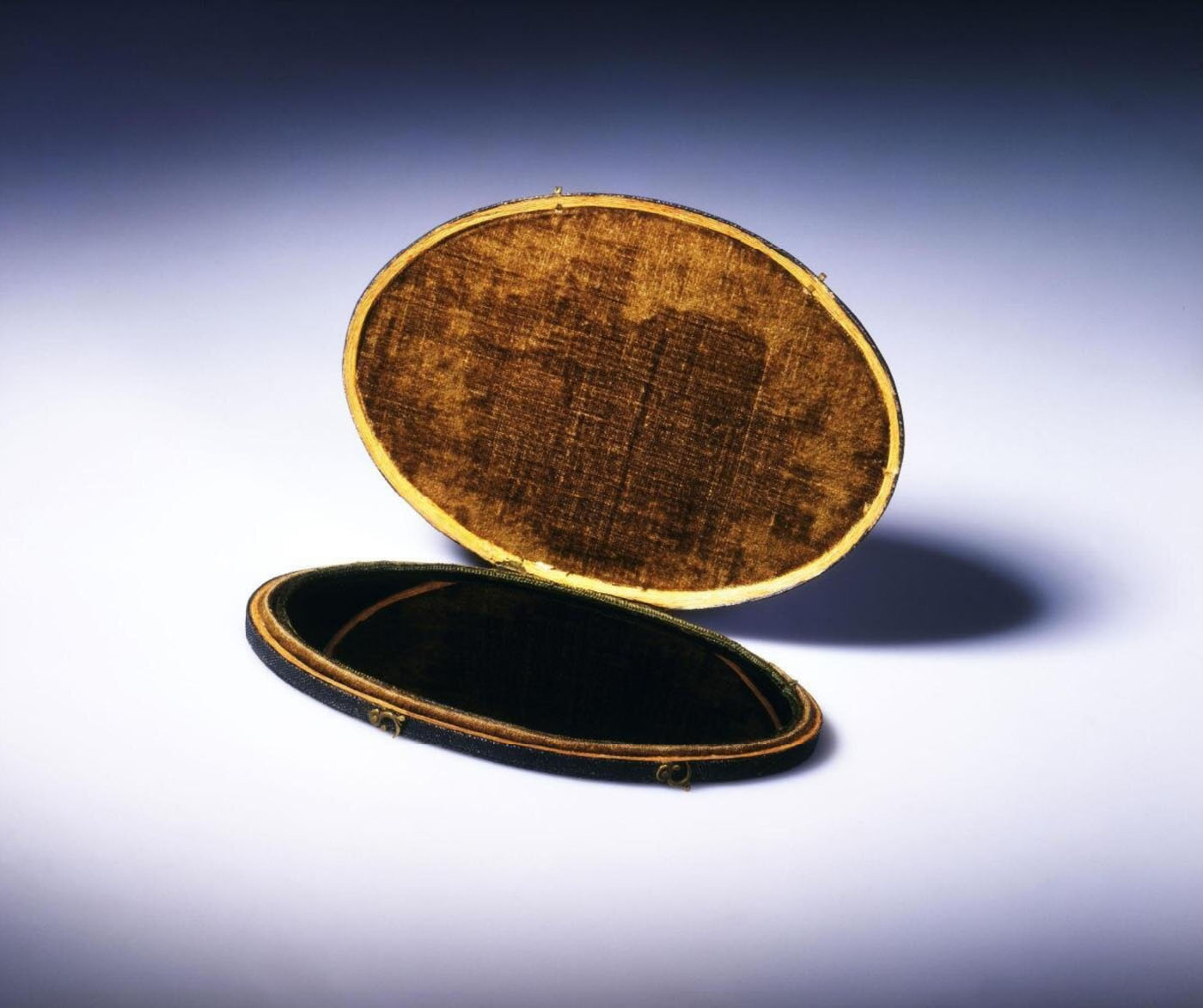
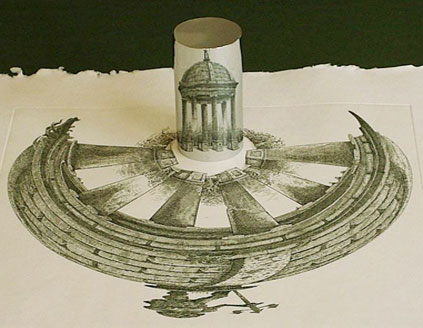
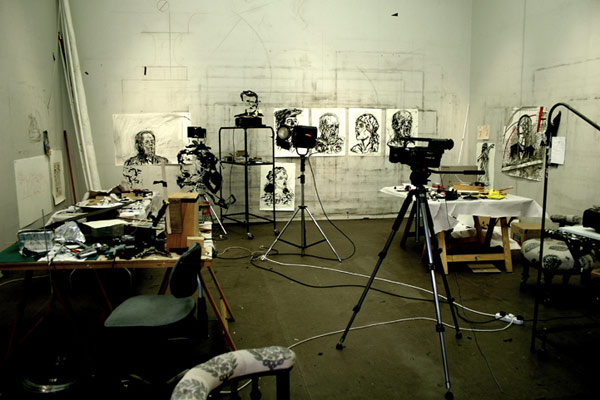

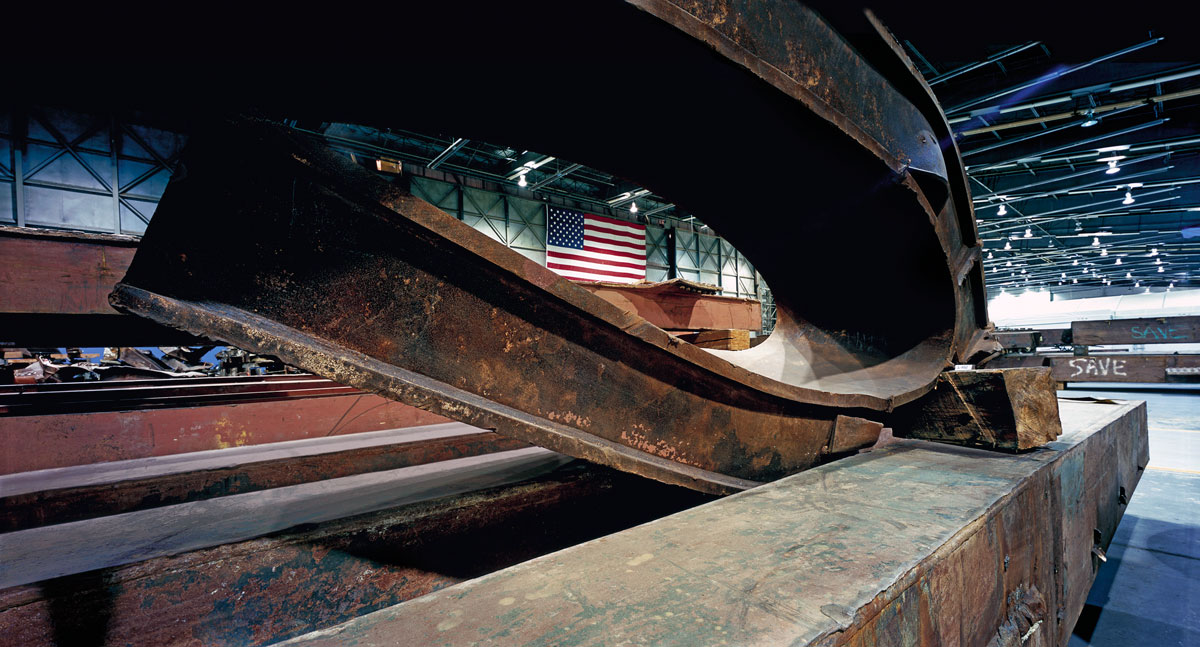
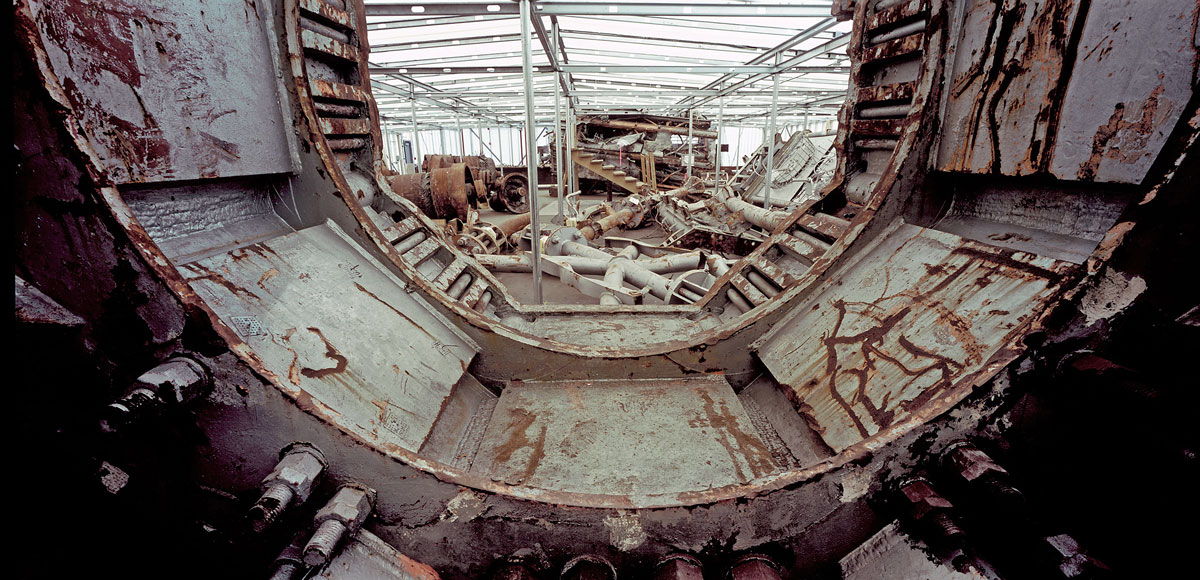


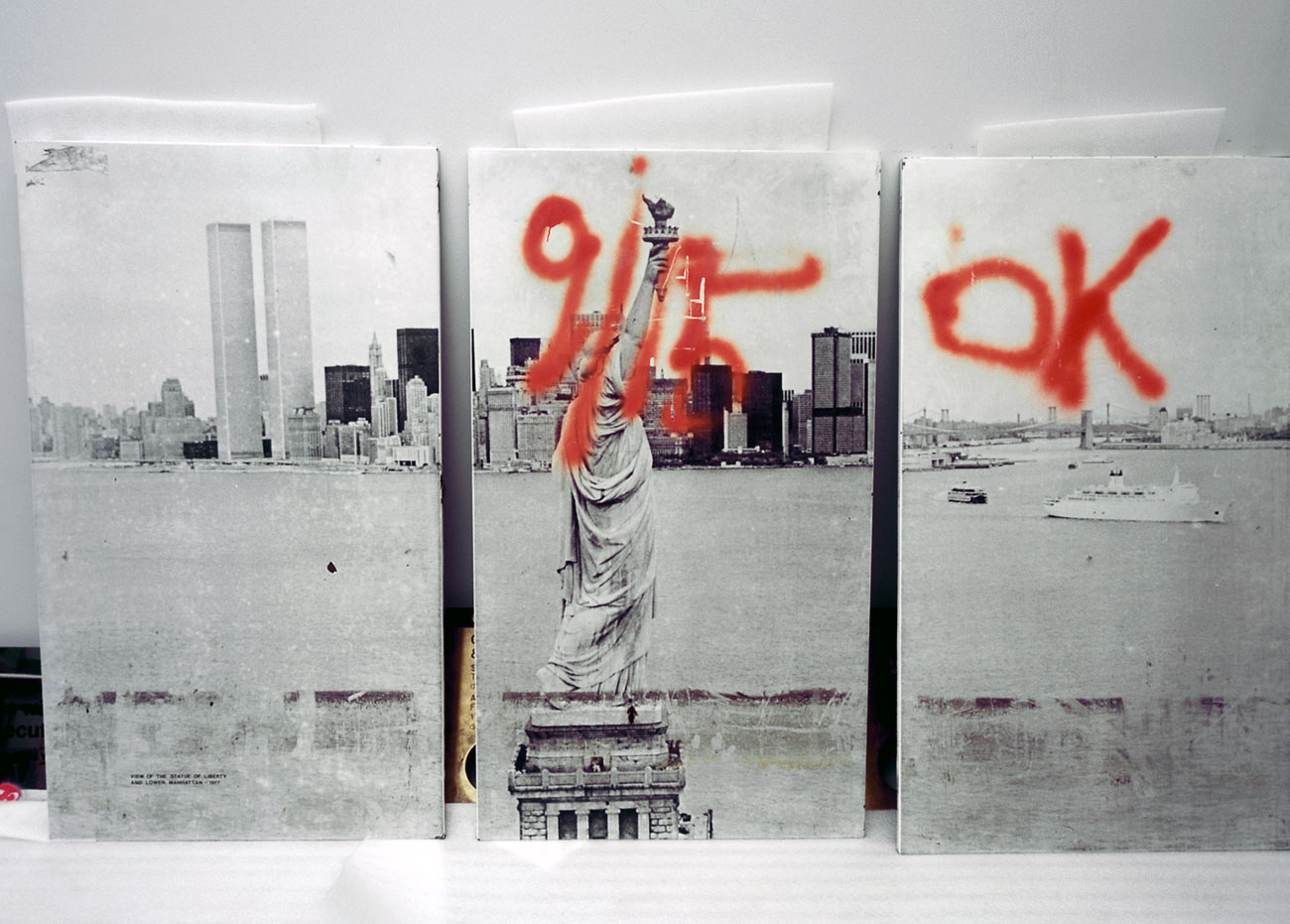
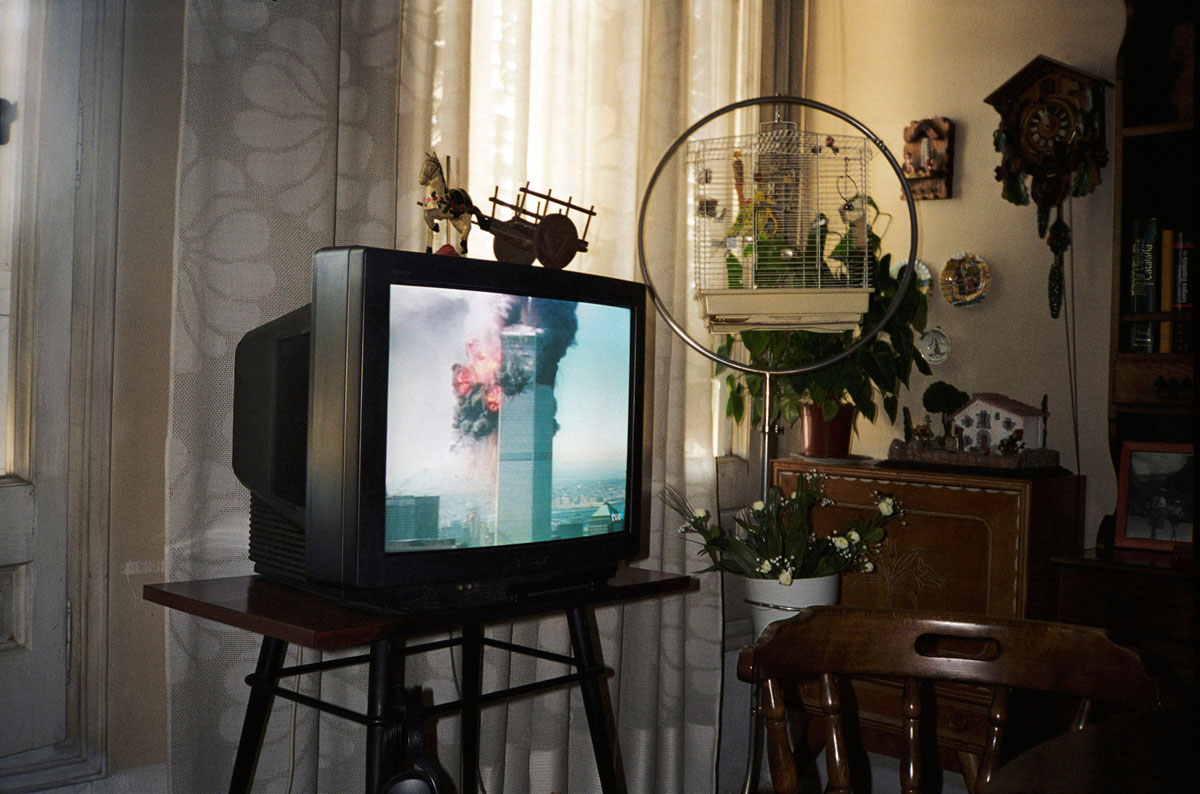
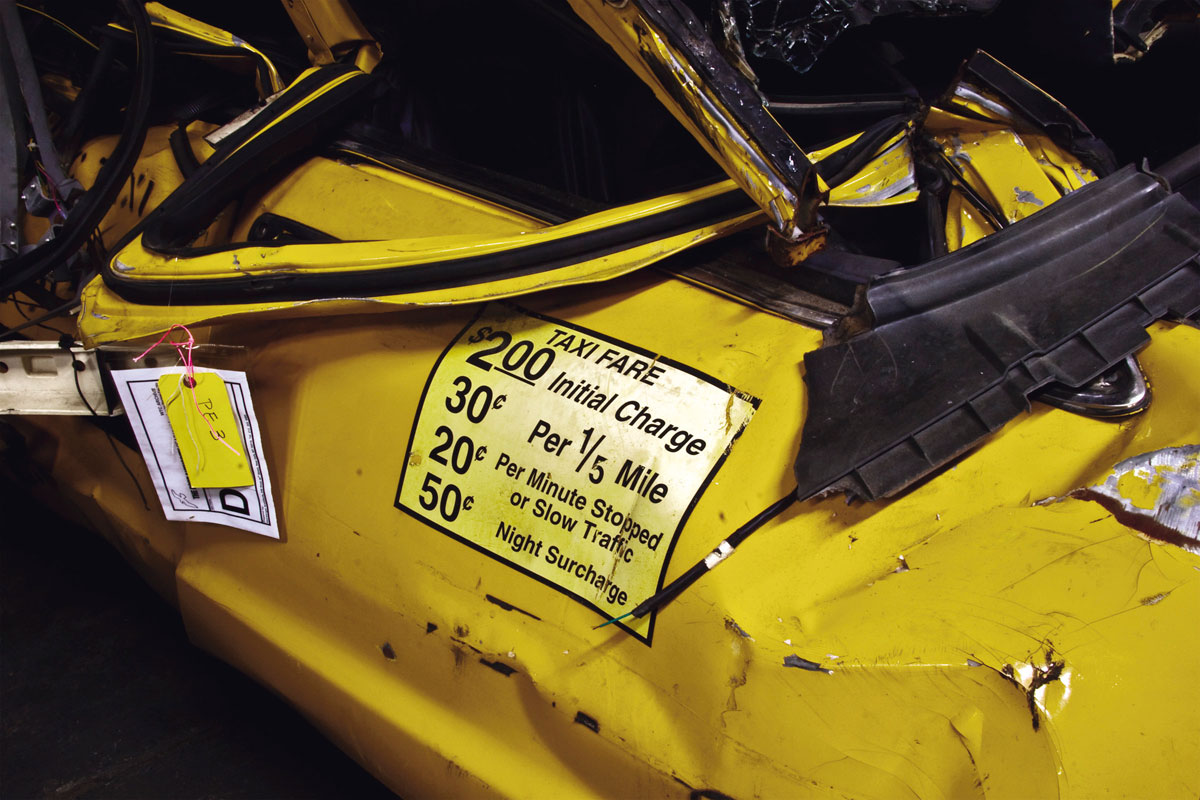
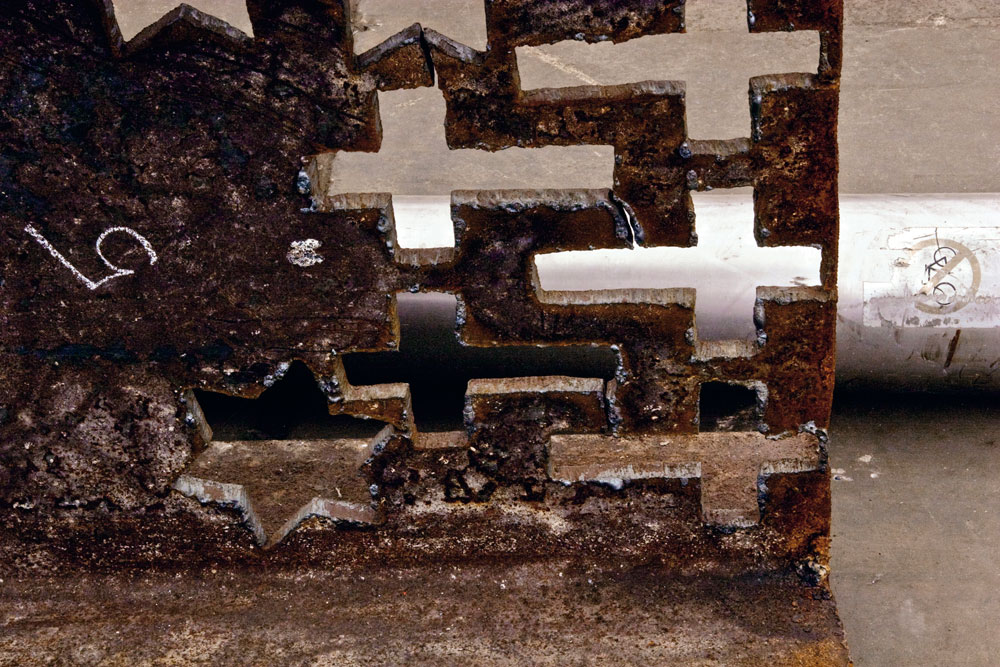


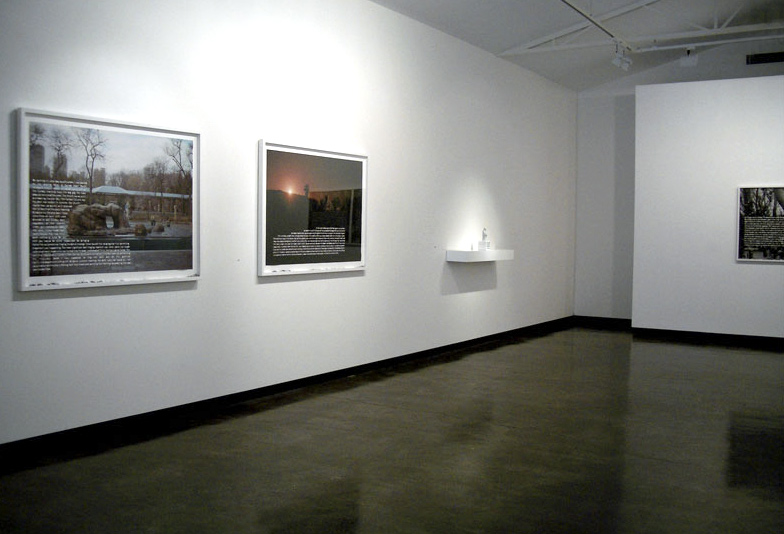
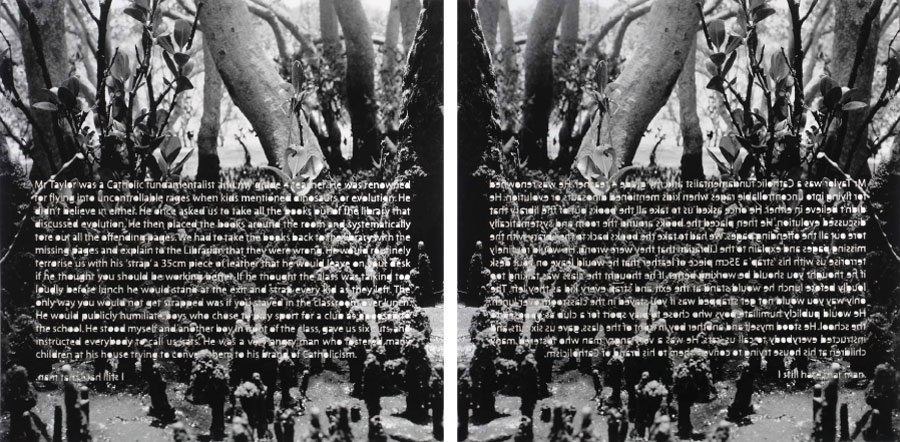


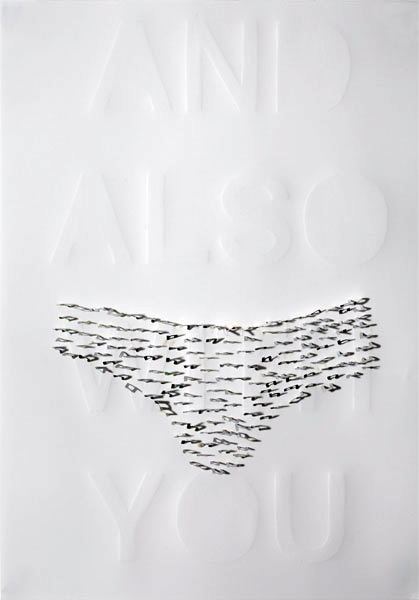
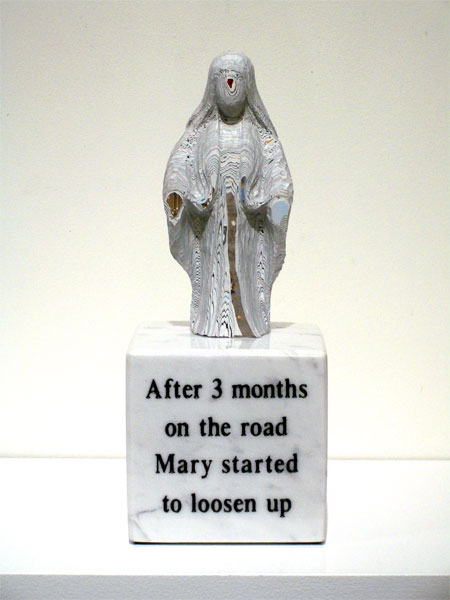

![William Kentridge (South African, b. 1955) 'Drawing for the film 'Stereoscope [Felix Crying]'' 1998-1999 from the exhibition 'William Kentridge: Five Themes' at San Francisco Museum of Modern Art (SFMOMA), March - May, 2009](https://artblart.com/wp-content/uploads/2009/04/kentridge2.jpg "William Kentridge (South African, b. 1955) 'Drawing for the film 'Stereoscope [Felix Crying]'' 1998-1999 from the exhibition 'William Kentridge: Five Themes' at San Francisco Museum of Modern Art (SFMOMA), March - May, 2009")
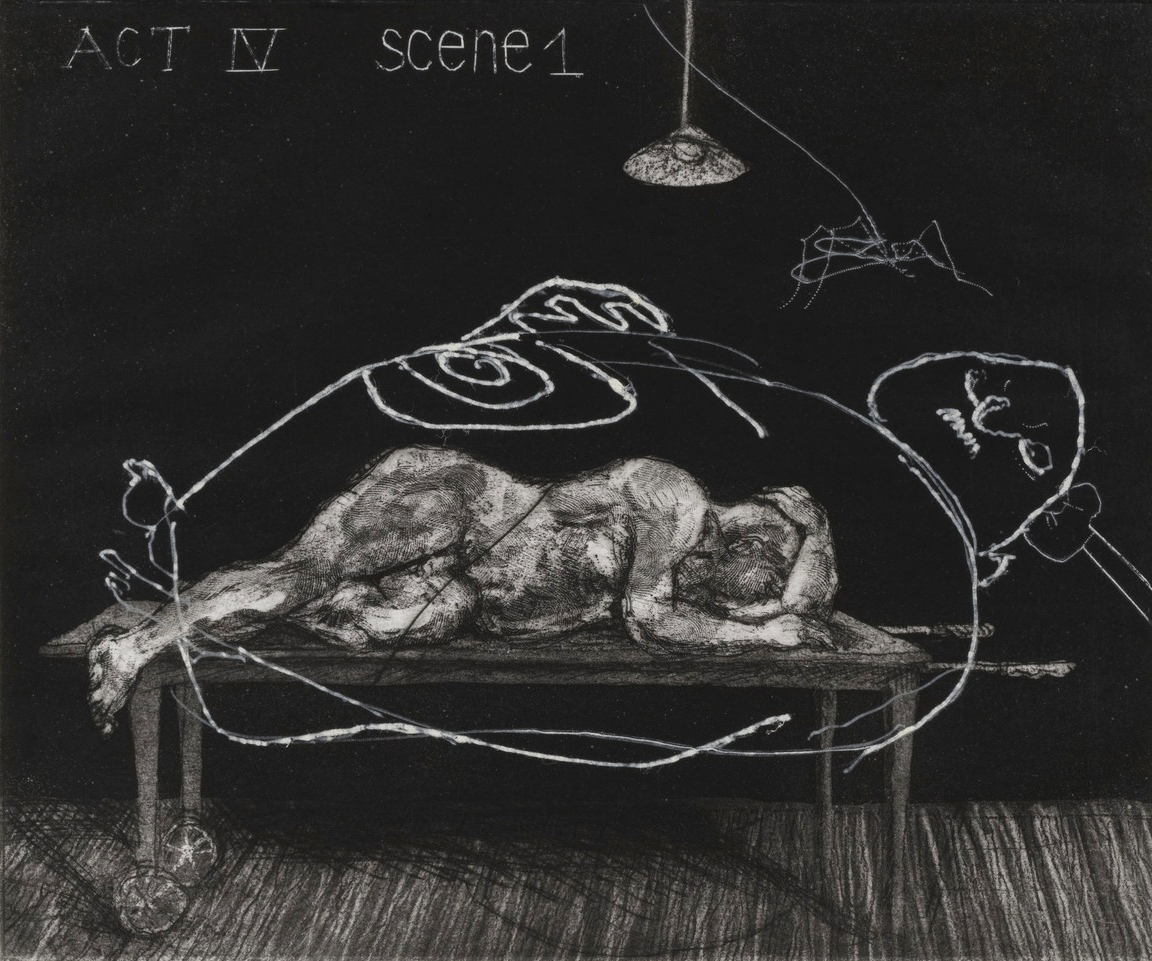


 Art Blart _ art and cultural memory archive
You must be logged in to post a comment.