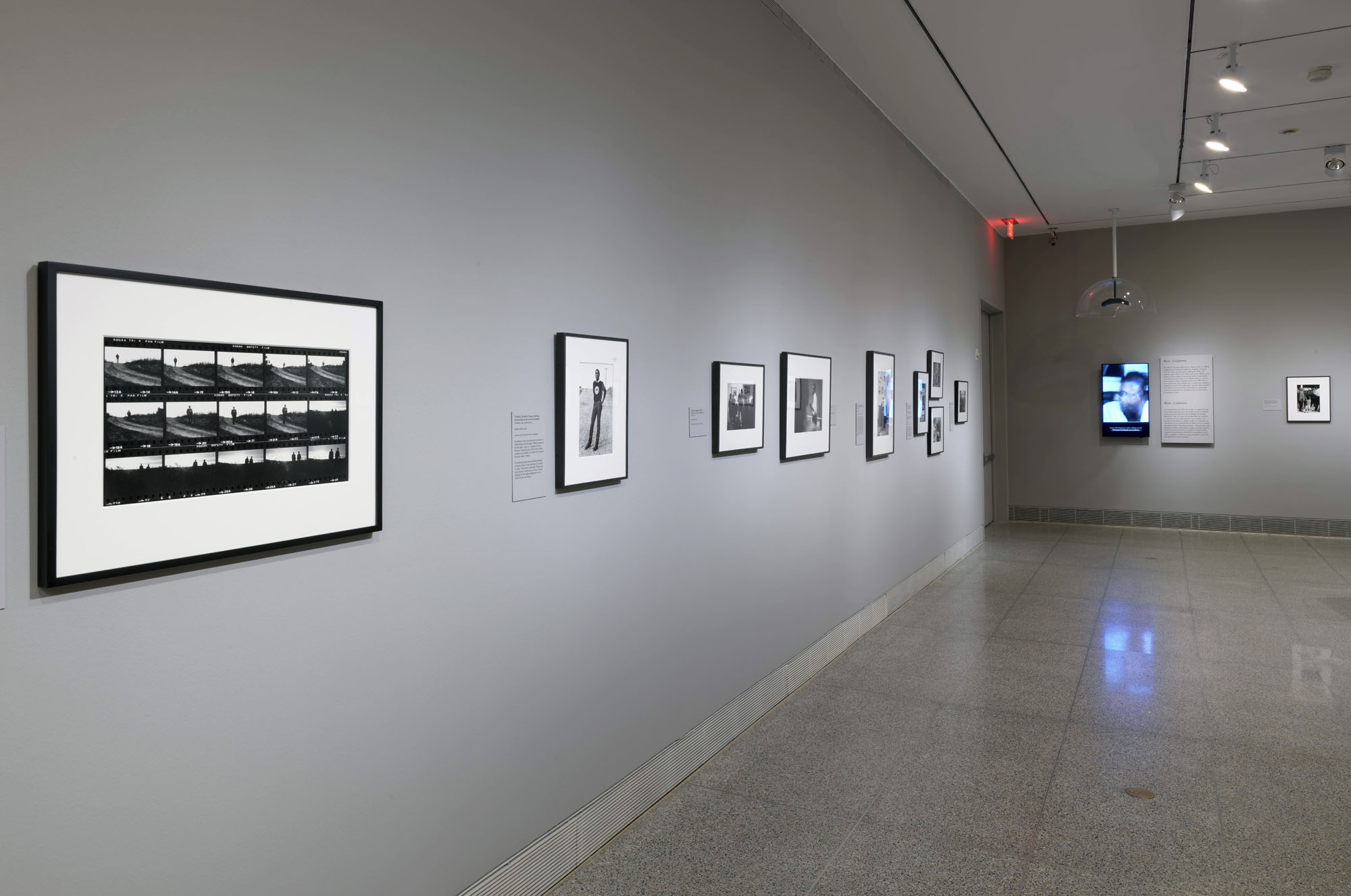
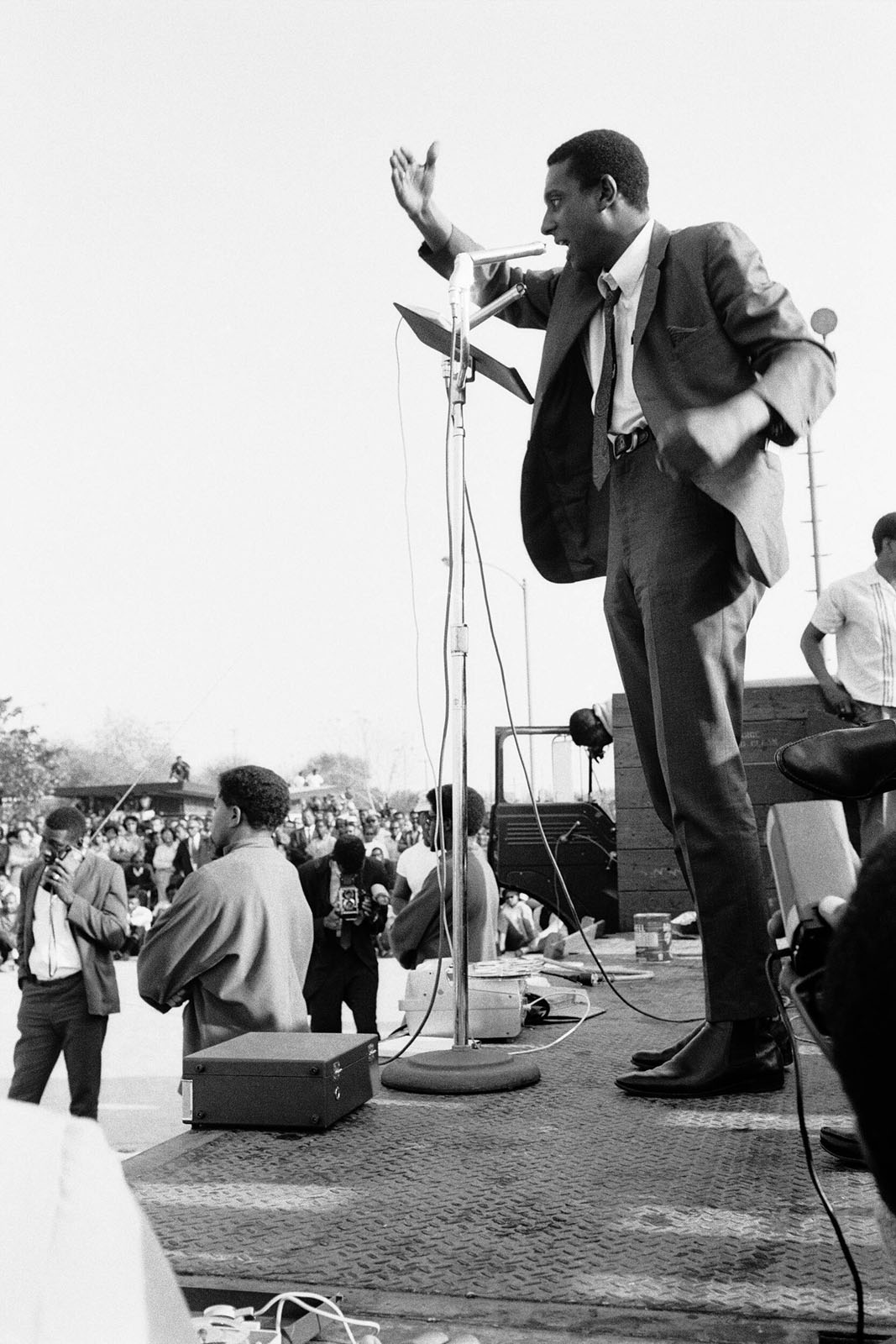
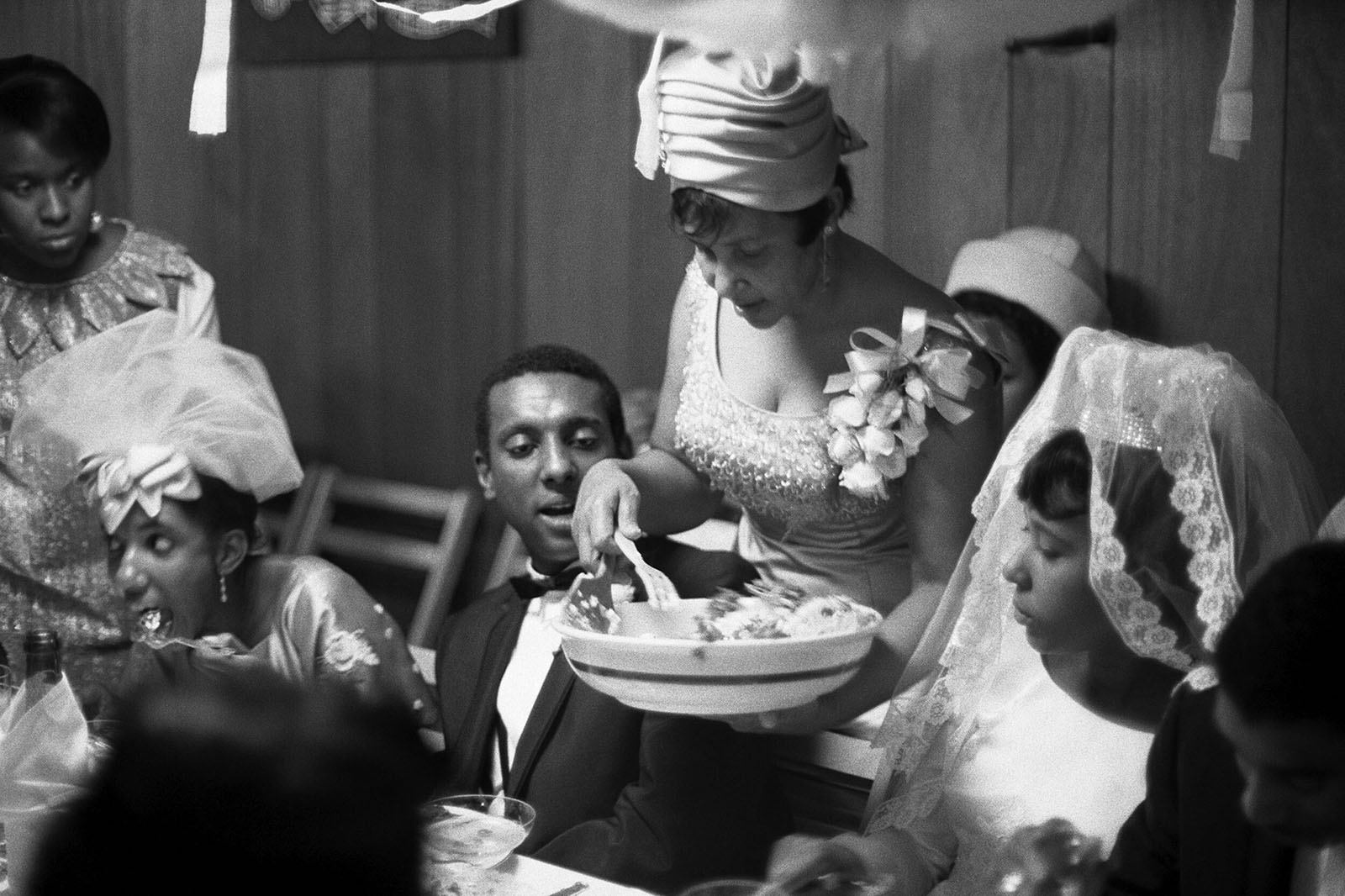
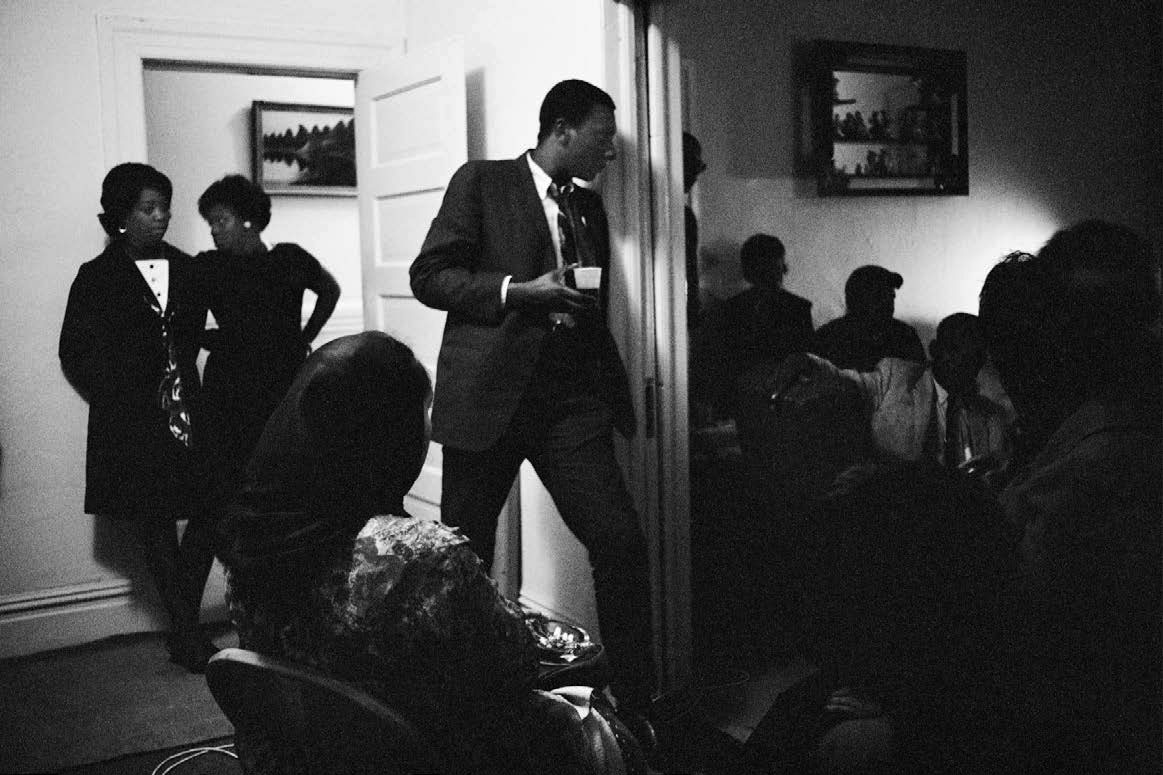
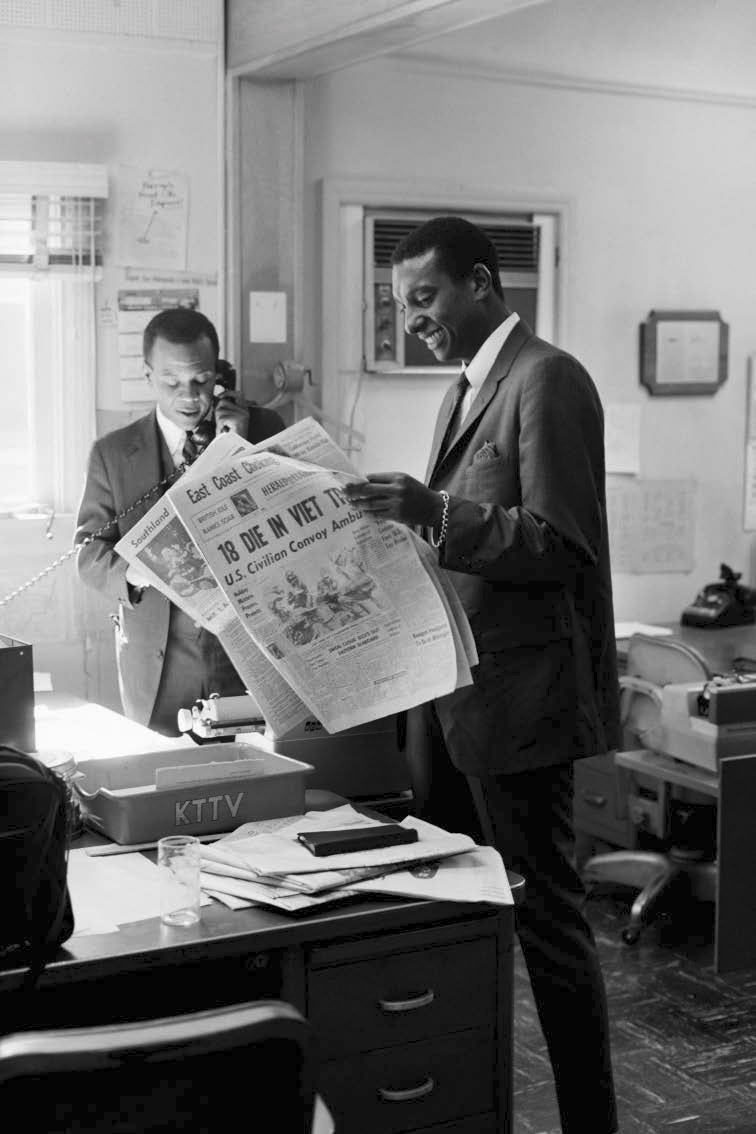
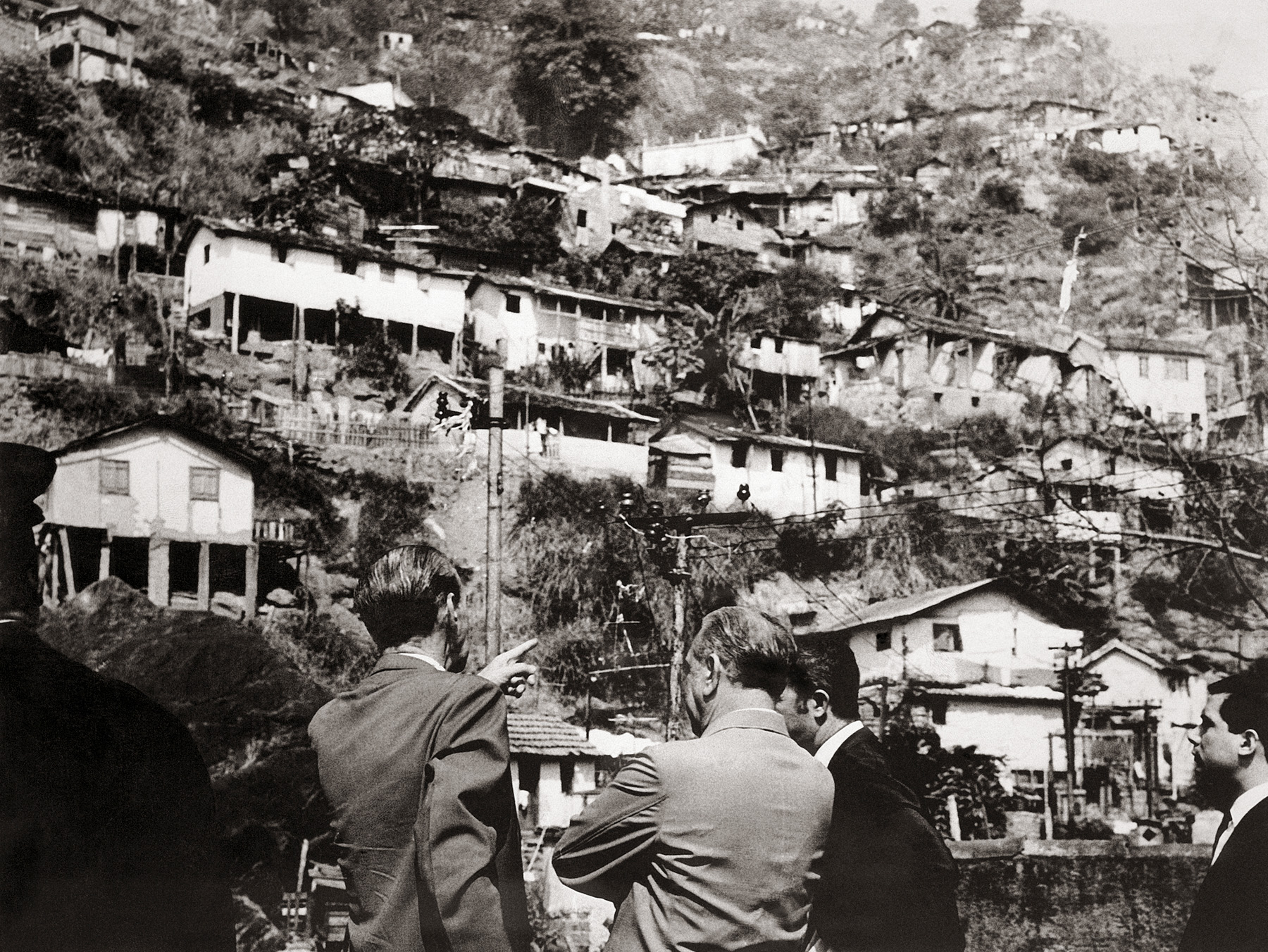
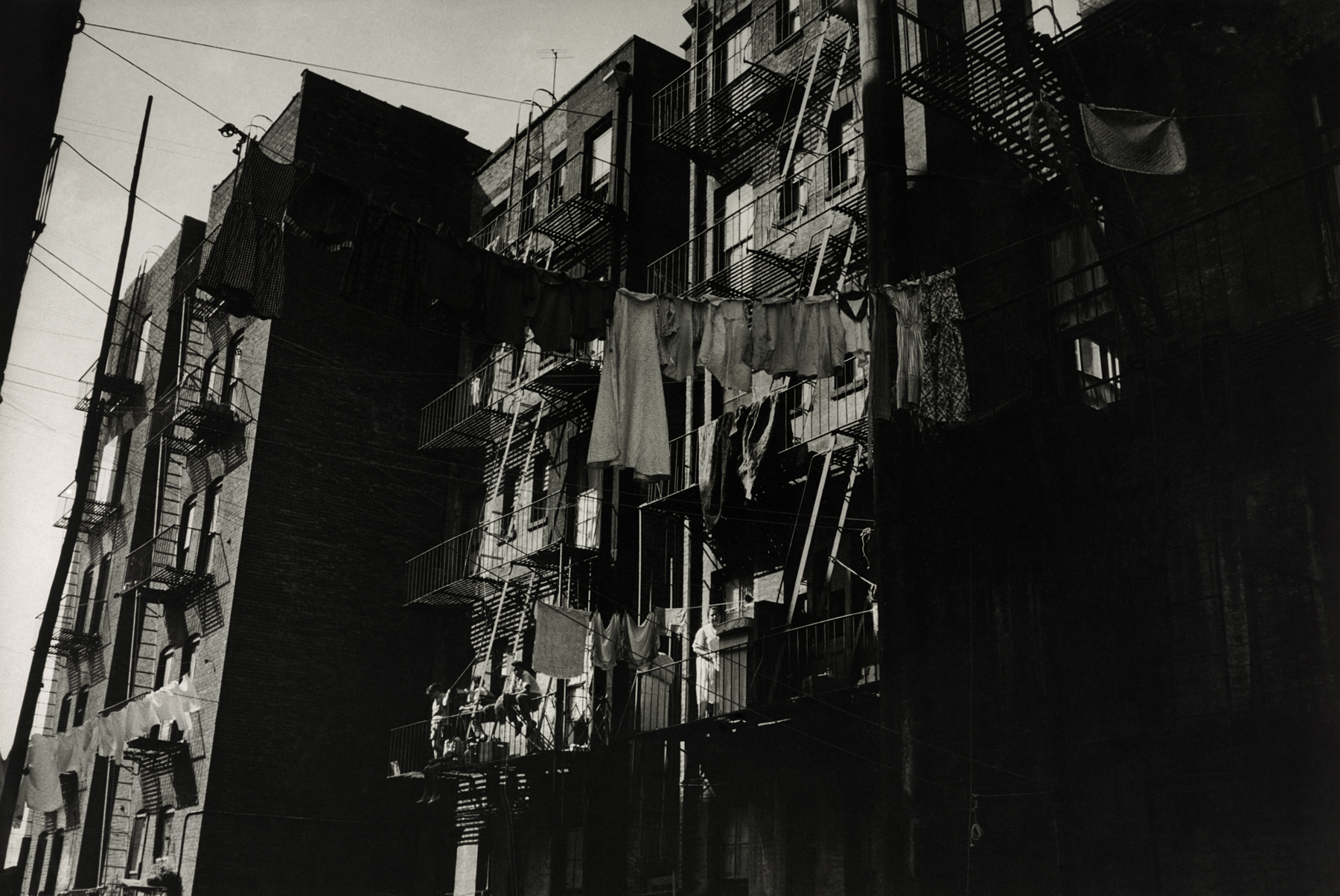
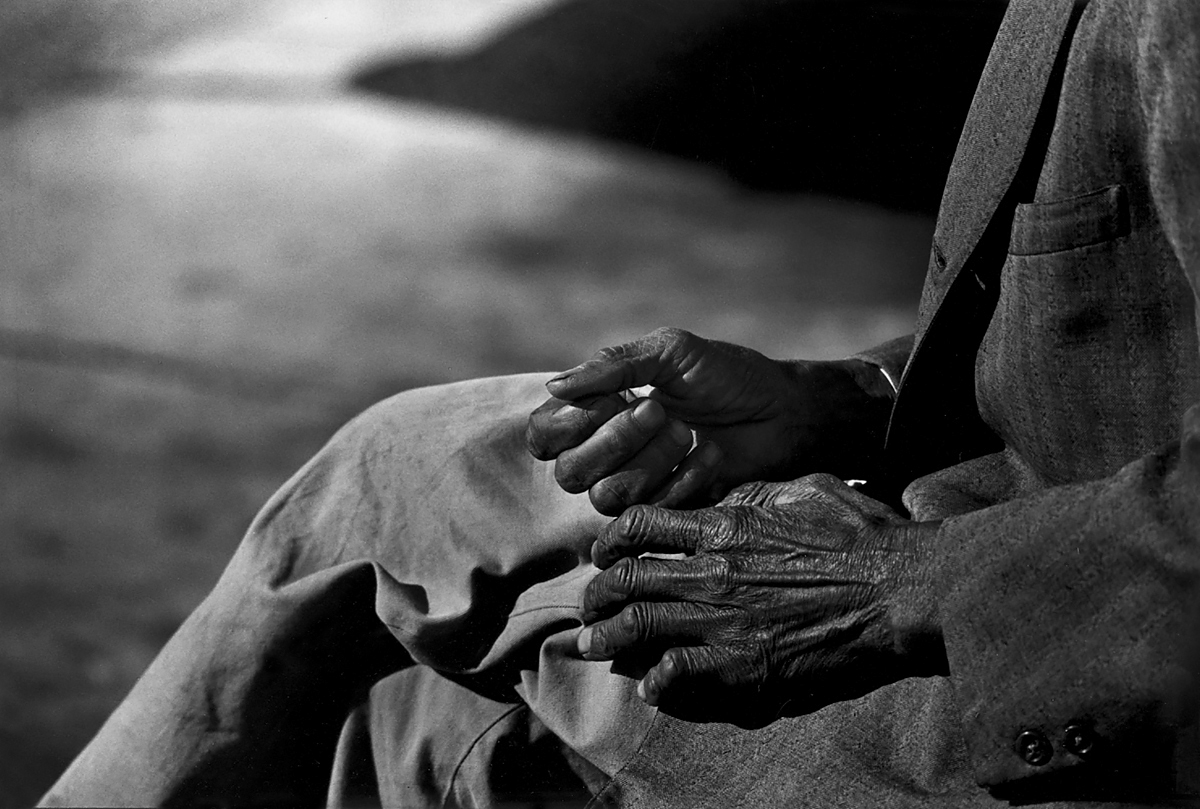
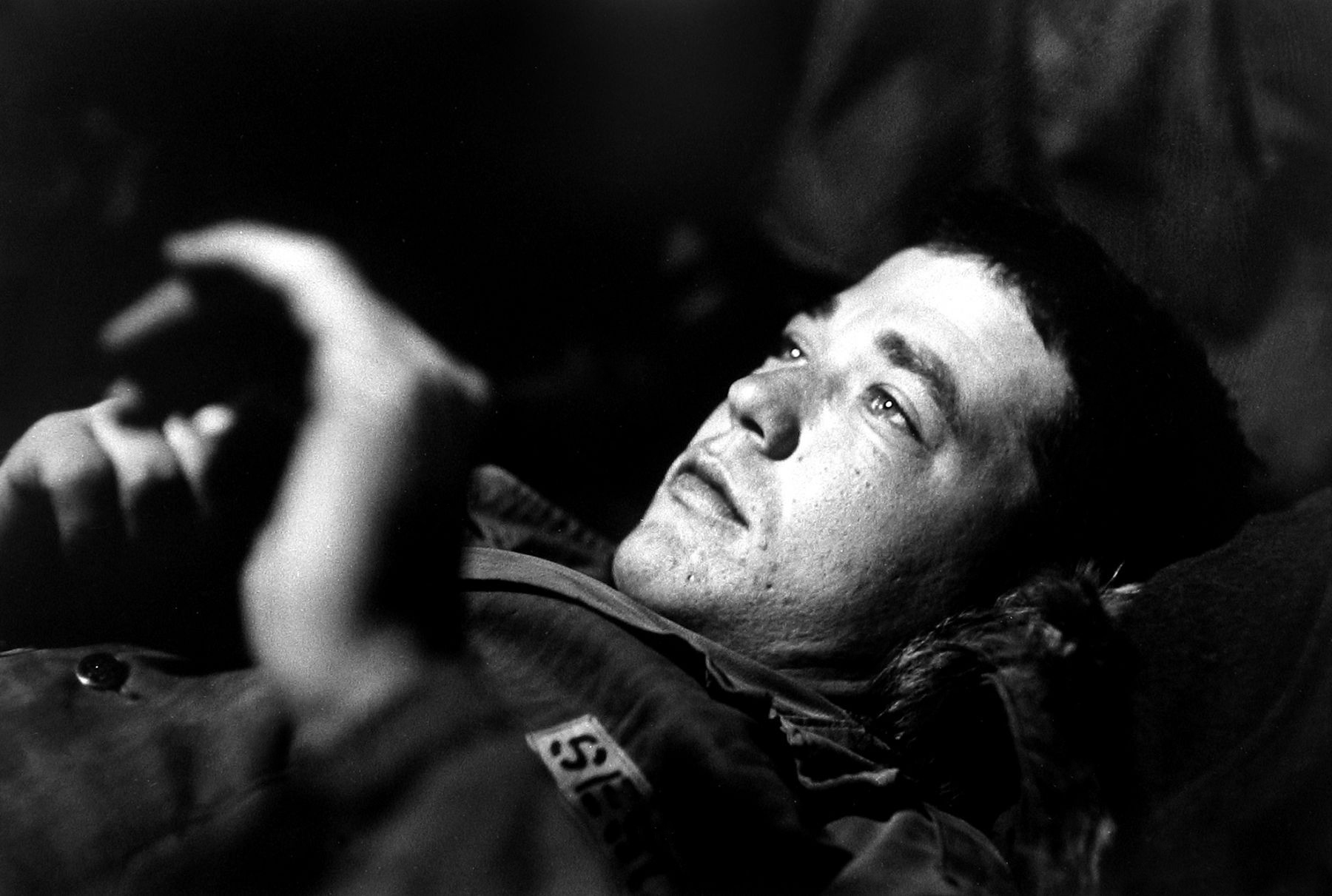
Exhibition: ‘Photography and the Black Arts Movement, 1955-1985’ at the National Gallery of Art, Washington

Exhibition dates: 21st September, 2025 – 11th January, 2026

Curators: The exhibition is co-curated by Philip Brookman, consulting curator of the department of photographs at the National Gallery of Art, and Deborah Willis, university professor and chair of the department of photography and imaging at the Tisch School of the Arts and director of the Center for Black Visual Culture at New York University.
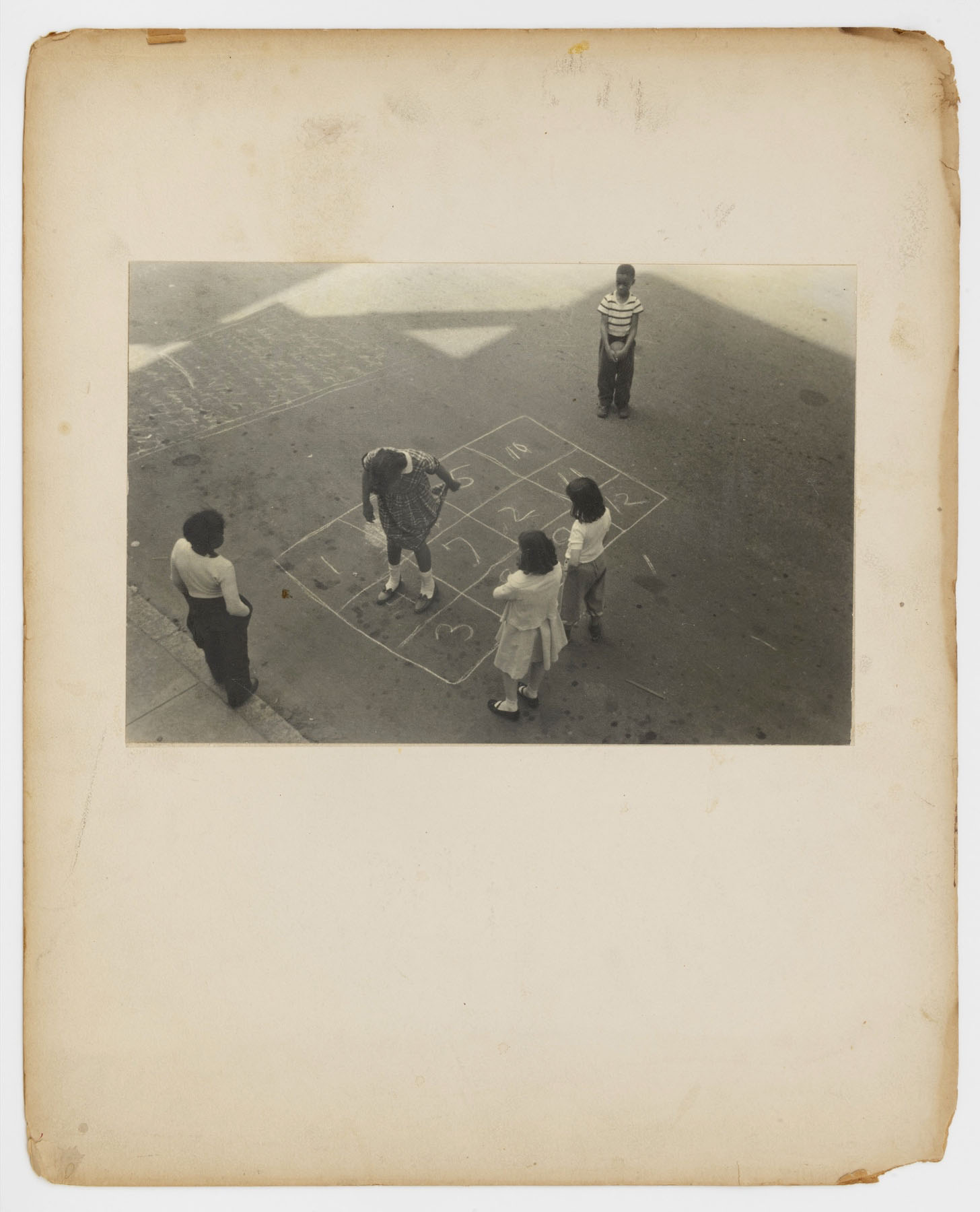
 

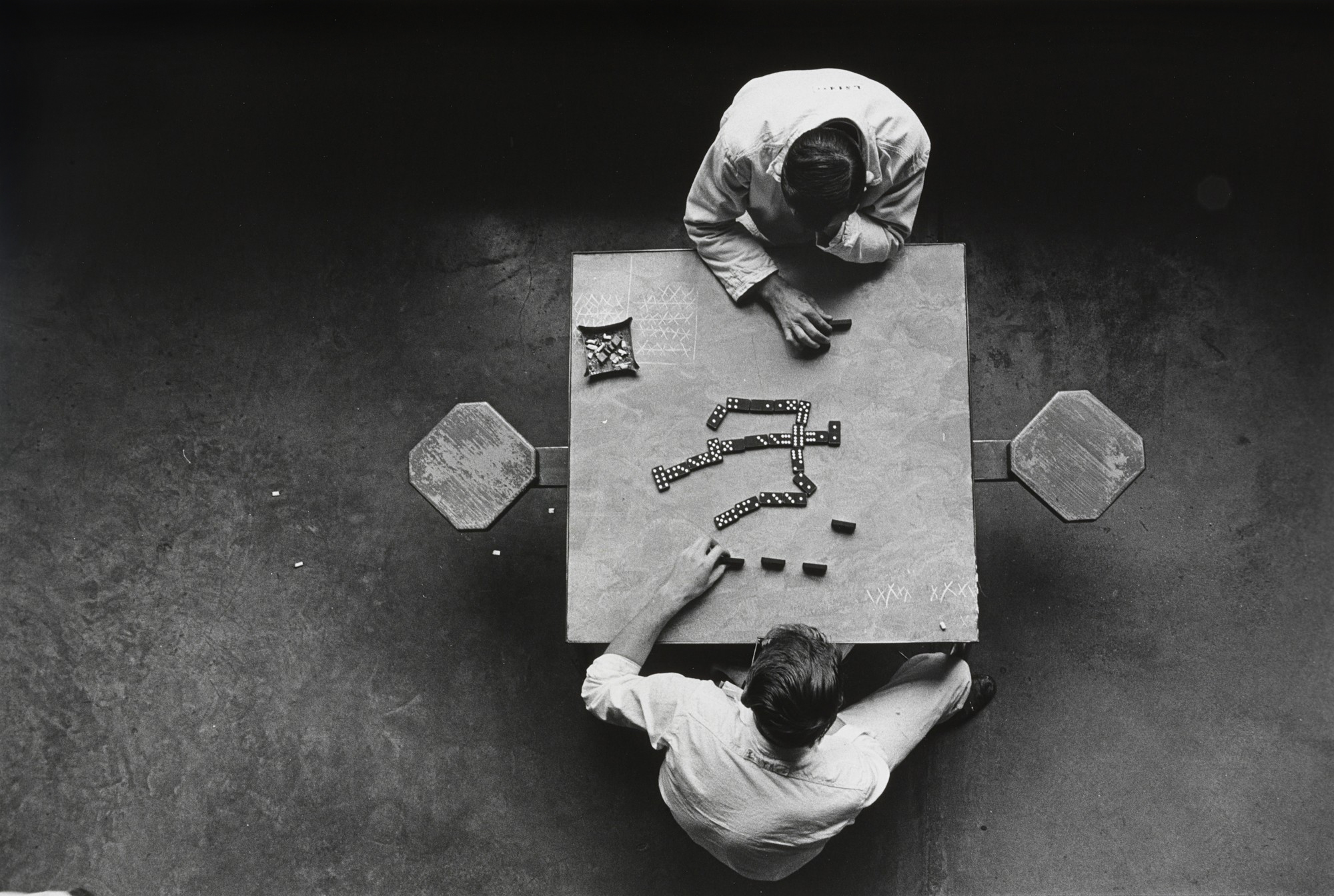
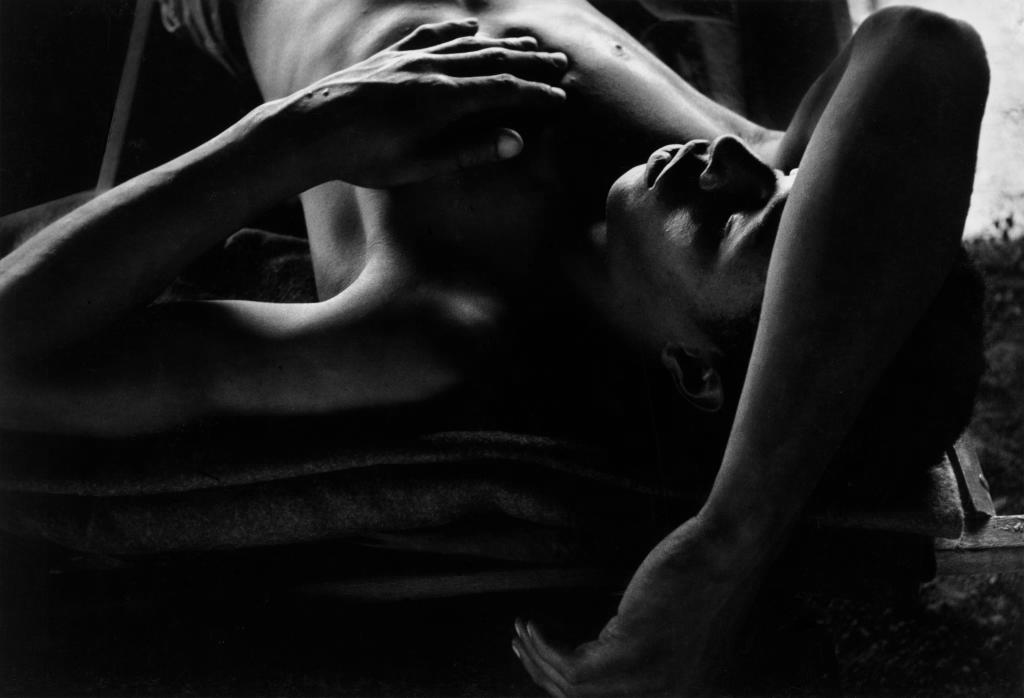
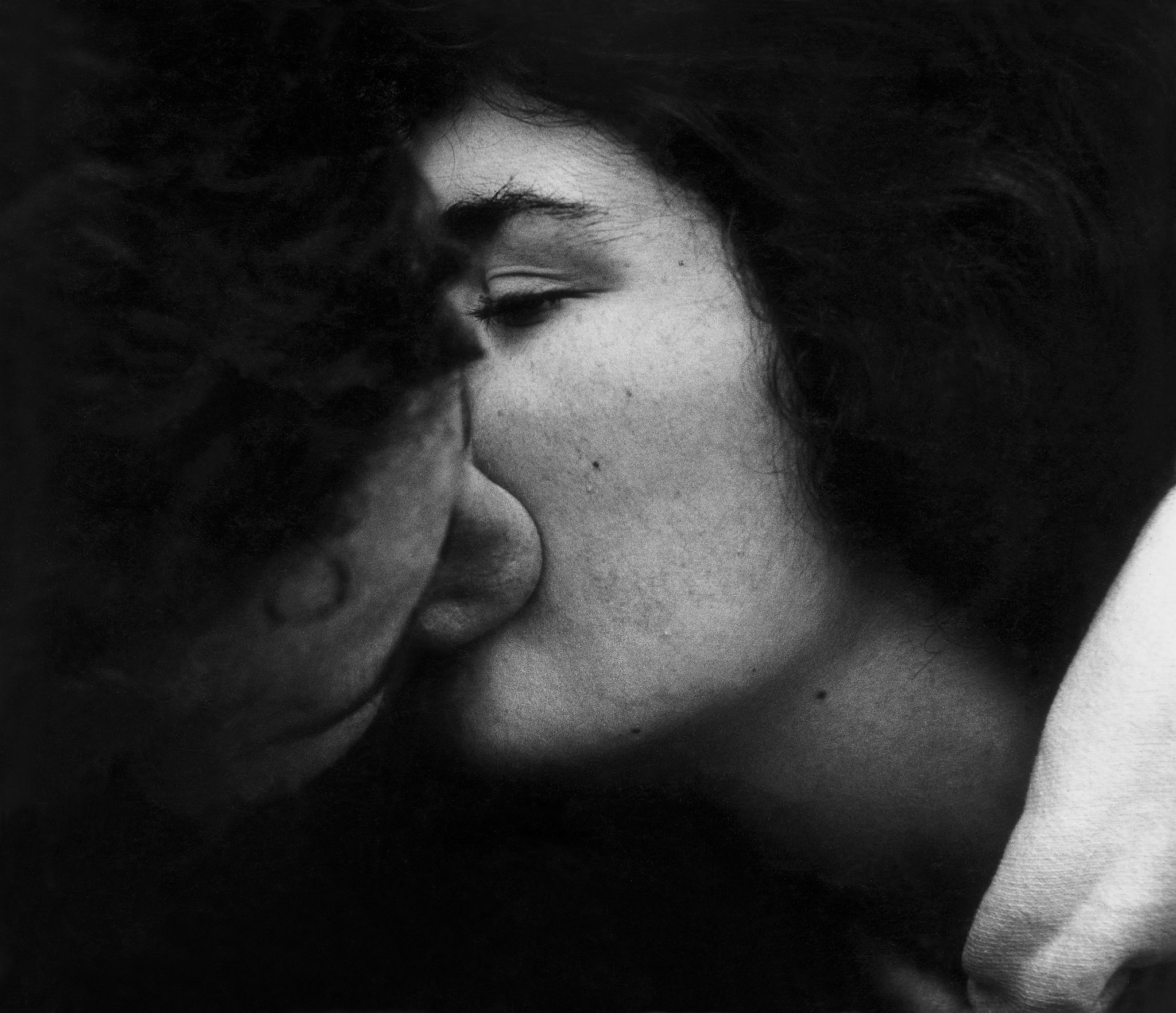
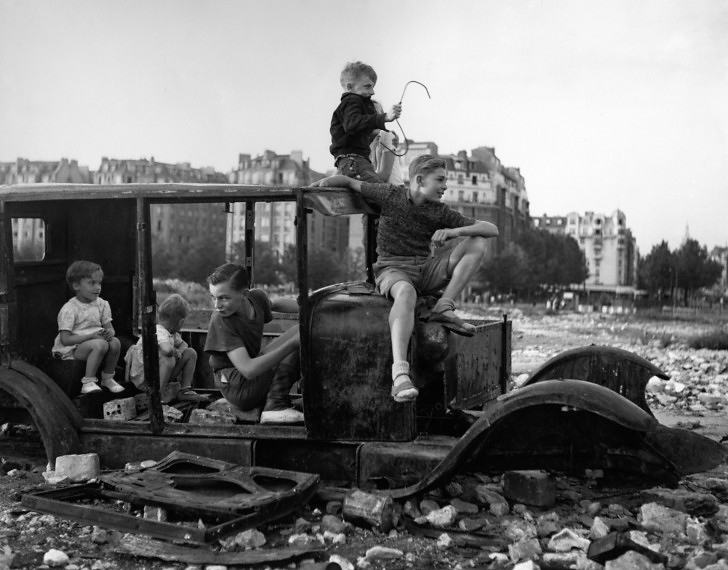
Thomas Ellis (American, 1963-2025) 'The Game' 1947 from the exhibition Exhibition: 'Photography and the Black Arts Movement, 1955-1985' at the National Gallery of Art, Washington, Sept 2025 - Jan 2026


Thomas Ellis (American, 1963-2025)
The Game
1947
Gelatin silver print
21 x 31.8cm (8 1/4 x 12 1/2 in.)
Courtesy of the Darrel Ellis Estate, Hannah Hoffman, Los Angeles, and Candice Madey, New York
Photo: Adam Reich


Thomas Sayers Ellis (October 5, 1963 – July 17, 2025) was an American poet, photographer, musician, bandleader and teacher.


“There’s nothing like a photograph for reminding you about difference. There it is. It stares you ineradicably in the face”

~ Professor Stuart Hall, 2008


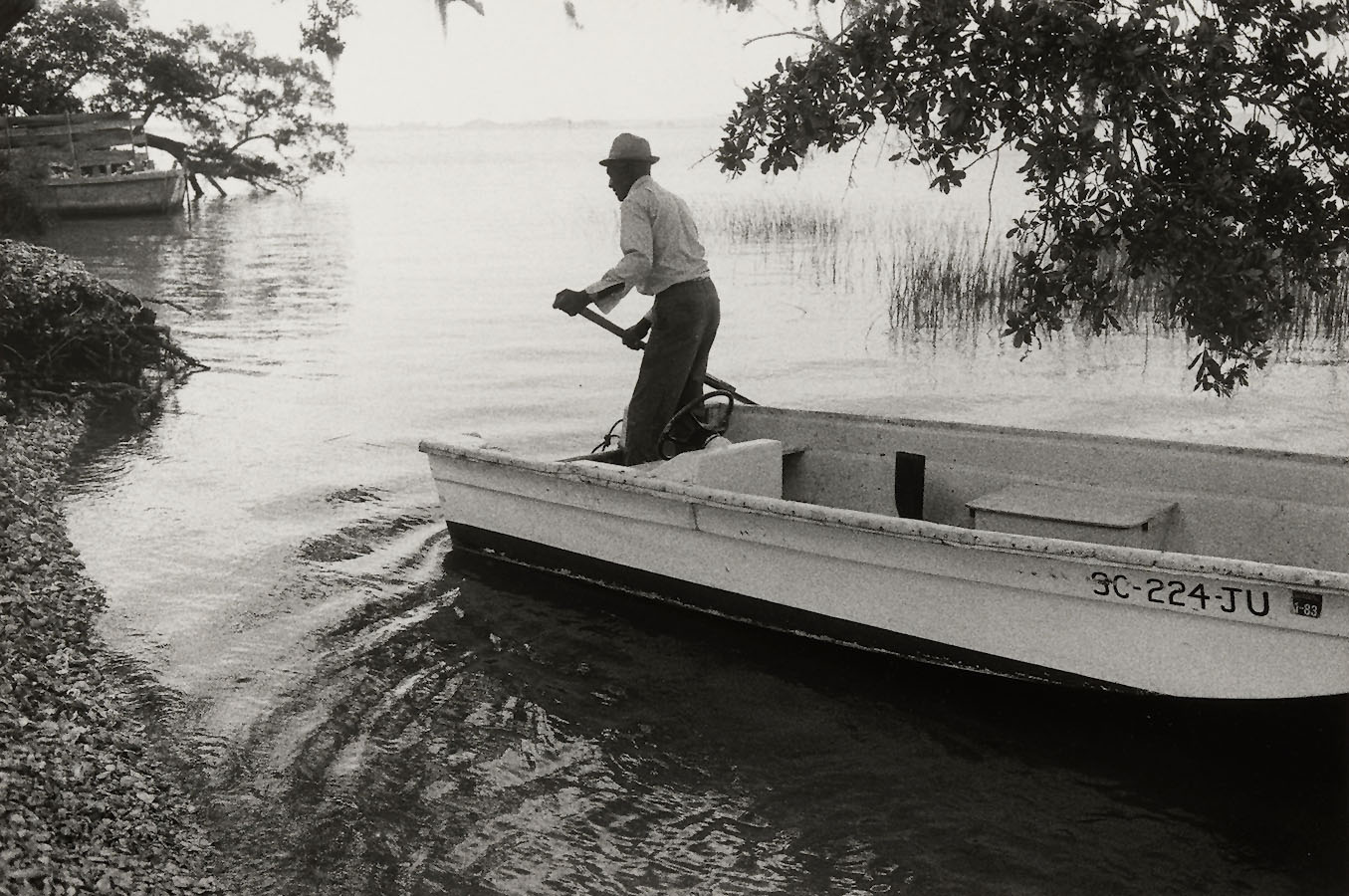
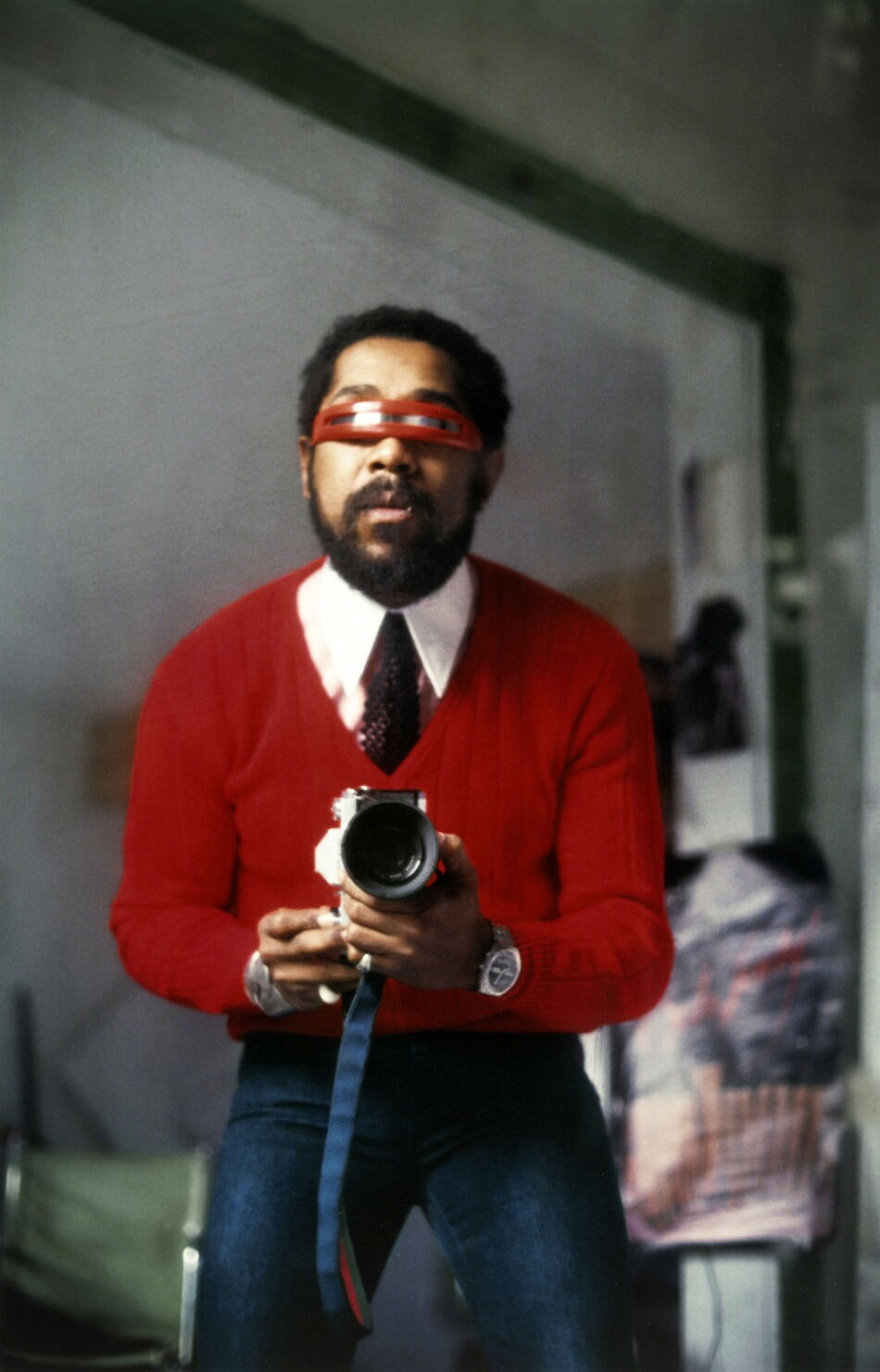
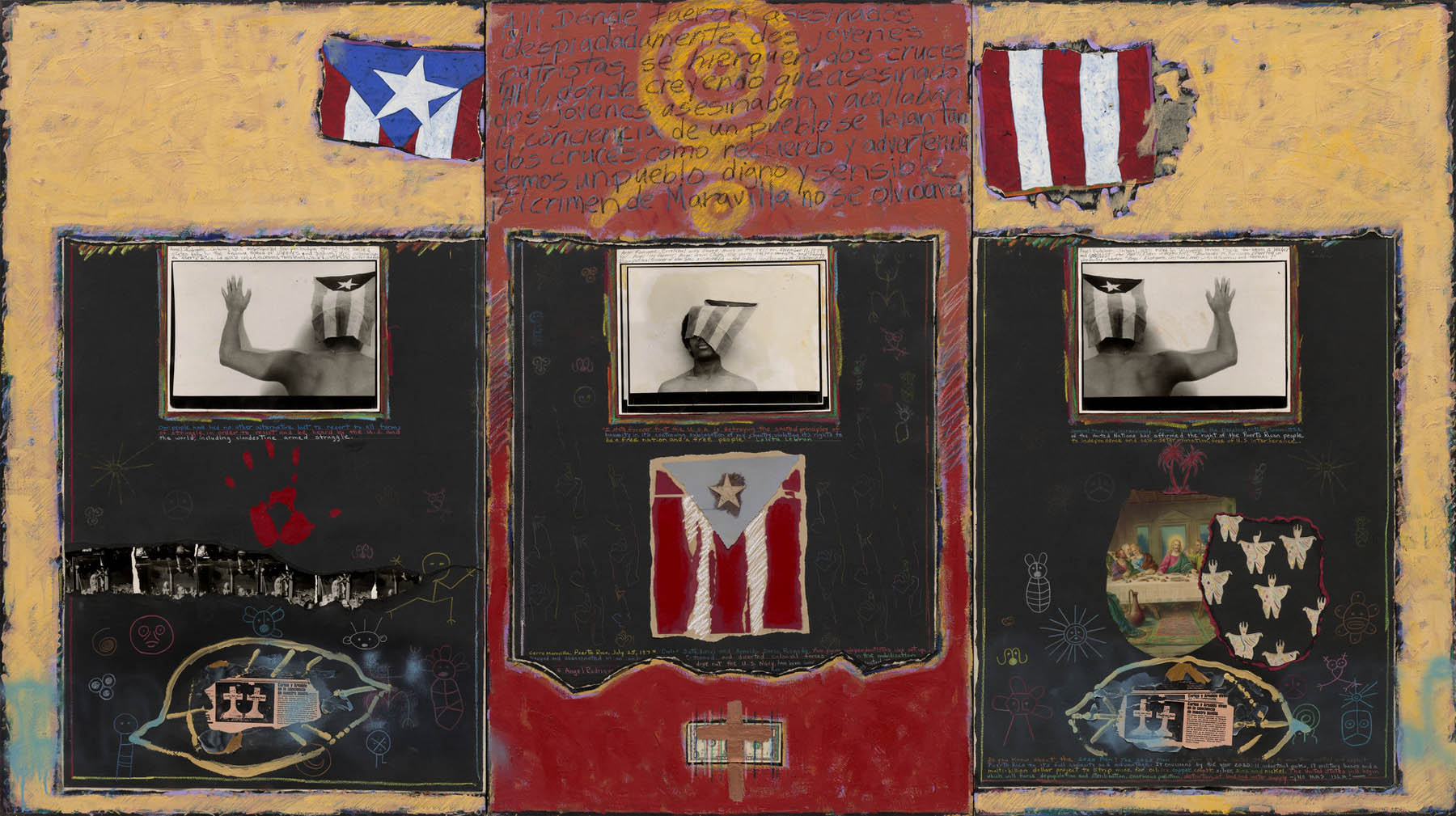
This looks to be a “worthy” exhibition on photography and the Black Arts movement but without having seen it in person there is little specific comment I can make about the exhibition. However, some thoughts on the photographs in this posting are possible.

It is a joy for me to be able to learn more about an important area in photographic history, vis a vis “the role of African American photographers and artists working with photographs in developing and fostering a distinctly Black perspective on art and culture.” (Text from the NGA website)

There are many photographers in the posting who I have never heard of before, whose work I have never seen, and I always like learning, for in learning you may gain some small amount of wisdom and appreciation of different cultures and points of view. I have added biographical information for each artist to their images where possible.

The photographs from the period 1955-1985 mark a shift away from an aesthetic and formalist way of looking at the image where the role of the photographer and the reception of the print was in its primacy (the 1950s-1960s) “towards a more polemical, critical and cultural analysis by Tagg, Sekul, Solomon-Godeau and others in the 1980s and 90s. These shifts from the pictorial to the political … decentre the photographer and bring into focus the photographed and viewing subjects…”1

In these photographs it is not so much the primacy of the artist, the aesthetics of the image, nor the photographs status as art objects, but the people within the images that are the focus of attention. They bring to the forefront of the viewer’s consciousness (or should do) the racial politics at work within photography in the context of discussions around race and representation and the ongoing legacies of Western imperialism.

The photographs demonstrate “that if we do not recognise the historical and political conjunctures of racial politics at work within photography, and their effects on those that have been culturally erased, made invisible or less than human by such images, then we remain hemmed within established orthodoxies of colonial thought concerning the racialised body, the subaltern and the politics of human recognition.”2

They bring to light (aha!) “new ways of seeing that bring the Other into focus”, photographs that challenge us to acknowledge the structural racism that is embedded in daily life which produces adverse outcome for people of color. Through such an acknowledgement we may open up a personally and culturally transformative dialogic space, “a “space of possibilities” where participants listen, engage with, and even transcend their own viewpoints to see issues from multiple angles” – as there can never be a single view point when we “examine” social groups that are subaltern (groups that have been marginalised or oppressed).

From a distance this seems to be one of the problems of the exhibition. It’s all so worthy and righteous, full of the injustice of it all, and perhaps that’s as it should be for those were the times and the culture from which these photographs emerged. But I can’t help but get the feeling that this exhibition seems to feel and read more like a study in cultural anthropology, more a sociological statement than any celebration of Black history and culture from the period. Speaking from the standpoint of a white, middle class artist and writer, there seems to be little joy to be had here – to me one of the essential elements of Black culture, the joy of gospel, jazz, laughter, love – but I’m supposedly on the inside looking out (or is it the outside looking in!). Who am I to say.

What is undeniable is that, as Professor Stuart Hall so succinctly observes, there is nothing like a photograph to remind you of difference, to challenge your perceptions on how you view and interact with the world around you, to open up new ways of seeing. As such, the photographs in this exhibition may allow us deeper insight into the “conditions of our own becoming” (while human beings have agency, the circumstances under which they act and develop their humanity are largely shaped by existing material, social, and historical conditions that they did not choose) of the people that live around us, even as we acknowledge that there is no singular point of view, that cultural forms have no single determinate meaning, and that no one, and “no discipline, whether art- or photo-history, or ethnography or geography, speaks with a single voice.”1

Not one way of seeing, but multiple ways of seeing our fellow human beings.

Dr Marcus Bunyan


1/ Catherine De Lorenzo. “Oceanian imaginings in French photographic archives,” in History of Photography, Issue 2, Volume 28, 2004, pp. 137-184

2/ Text from the description of the book by Mark Sealy. Decolonising the Camera: Photography in Racial Time. London: Lawrence & Wishart, 2019.

The book examines how Western photographic practice has been used as a tool for creating Eurocentric and violent visual regimes, and demands that we recognise and disrupt the ingrained racist ideologies that have tainted photography since its inception in 1839.


Many thankx to the National Gallery of Art, Washington for allowing me to publish the photographs in the posting. Please click on the photographs for a larger version of the image.


“The work that was done by artists and photographers before, during, and after the Black Arts Movement establishes a strategy of community engagement. It is that engagement that allows communities to define themselves and also to engage people in new forms of looking.”


Co-curator Philip Brookman


Cultural forms set the wider terms of limitation and possibility for the (re)presentation of particularities and we have to understand how the latter are caught in the former in order to understand why such-and-such gets (re)presented in the way it does. Without understanding the way images function in terms of, say, narrative, genre or spectacle, we don’t really understand why they turn out the way they do.

Secondly, cultural forms do not have single determinate meanings – people make sense of them in different ways, according to the cultural (including sub-cultural) codes available to them. For instance, people do not necessarily read negative images of themselves as negative …


Richard Dyer. The Matter of Images: Essays on Representations. London: Routledge, 1993, pp.2-3
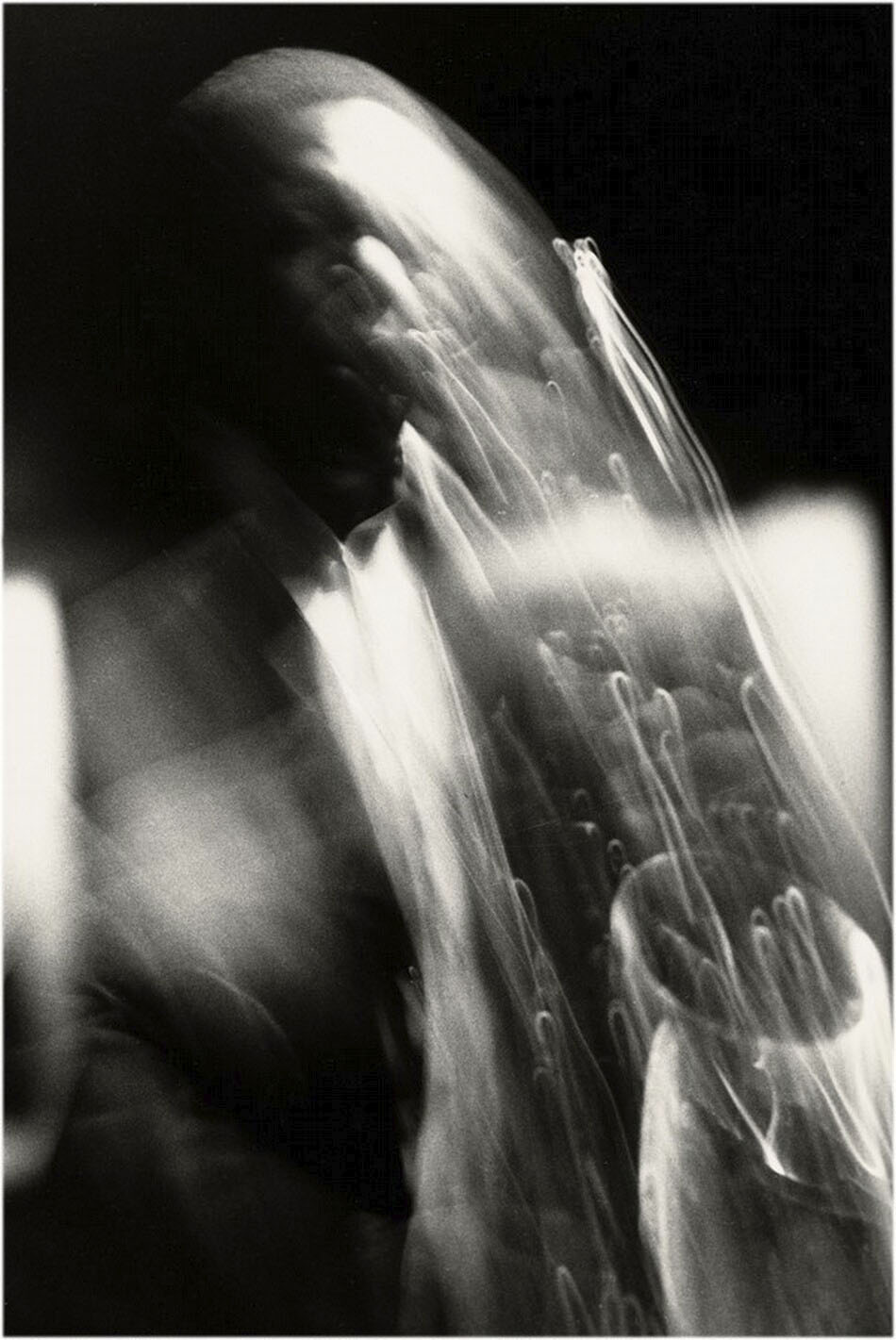


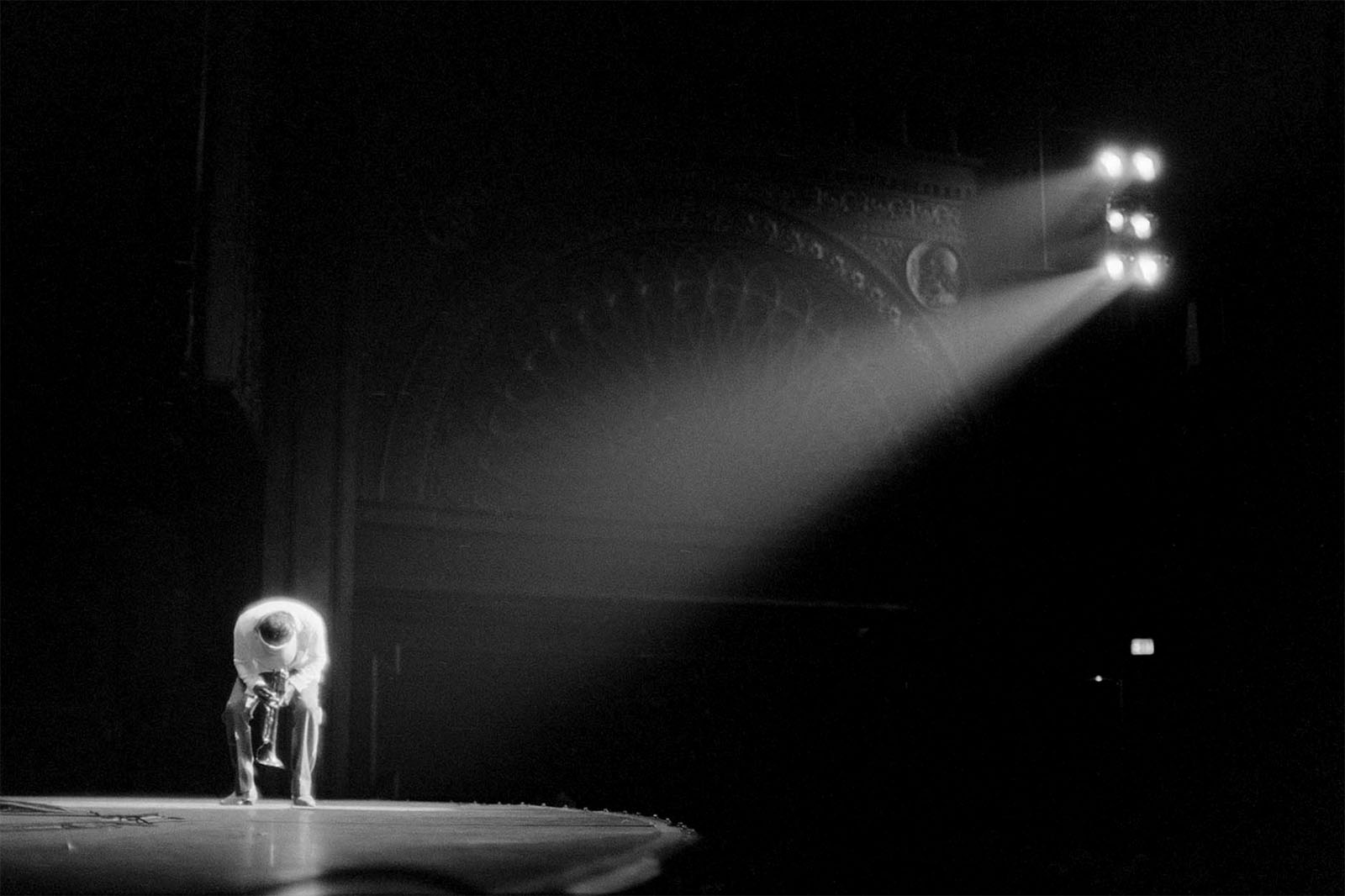
Adger Cowans (American, b. 1936) 'Coltrane at the Gate' 1961 from the exhibition Exhibition: 'Photography and the Black Arts Movement, 1955-1985' at the National Gallery of Art, Washington, Sept 2025 - Jan 2026


Adger Cowans (American, b. 1936)
Coltrane at the Gate
1961
Gelatin silver print
National Gallery of Art, Washington
Charina Endowment Fund


Adger Cowans (American, b. 1936)

Adger Cowans is a pioneering photographer and one of the founding members of the Kamoinge Workshop, a collective that played a key role in shaping Black photography in the 1960s and beyond.

In 1958 Cowans worked as an assistant to renowned photographer Gordon Parks. Throughout the 1960s Cowans became involved with influential groups associated with the Black Arts Movement, including Group 35 and Afri-COBRA, which he joined in 1968. 

His photographic work spans a wide range of approaches and subjects, from street photography in Harlem to documenting major historical events like the rallies and the funeral of Malcolm X. He also captured iconic jazz musicians, including John Coltrane and Pharoah Sanders.

Text from the National Gallery of Art website


Frank Dandridge (American, b. 1938) 'Blinded Birmingham Church Bombing survivor, Sarah Jean Collins, Birmingham, AL, 1963 "Clutching robe in hospital bed, Sarah Jean Collins was near bomb when it exploded in church. Her sister was killed. It will be weeks before she knows whether she can see again."' September 27, 1963


Frank Dandridge (American, b. 1938)
Blinded Birmingham Church Bombing survivor, Sarah Jean Collins, Birmingham, AL, 1963
“Clutching robe in hospital bed, Sarah Jean Collins was near bomb when it exploded in church. Her sister was killed. It will be weeks before she knows whether she can see again.”

September 27, 1963
Gelatin silver print
Overall: 35 x 50 cm (13 3/4 x 19 11/16 in.)
Collection of the Smithsonian National Museum of African American History and Culture
© Frank Dandridge
Photo: Frank Dandridge / The LIFE Picture Collection / Shutterstock


Frank Dandridge is a freelance photojournalist who worked mainly for Life Magazine in the 60’s. He covered numerous assignments, including, The Harlem Riots in 1964, Dr. King’s March on Washington, in 1963, and the terrible Birmingham Bombing in 1963. His photos also appeared in Look, Saturday Evening Post, Pageant, Paris Match, Good Housekeeping, Quick Magazine, the Canadian Film Board, Playboy, and many other national magazines. He won an Art Director’s Award for his photo essay, “The Two Faces of Harlem”, that appeared in Look magazine. His work included photographing many celebrities, including, Bobby Kennedy, Muhammad Ali, President Johnson, Dr. Martin Luther King, Frank Sinatra, The Supremes, Sammy Davis, Jr., and Jimmy Hoffa.

Text from the IMBd website


The photos that Frank Dandridge shot for LIFE magazine paint a vivid portrait of violence and race in 1960s America. He reported on riots in Harlem, in Watts, and in Newark,. He was in Selma, Alabama when Martin Luther King marched in the days immediately after Bloody Sunday. Dandridge’s most famous photo is of Sarah Collins, a 12-year-old girl whose eyes were in bandages after the bombing of a Sunday school class at the16th Street Baptist Church in Birmingham, Alabama. That bombing killed four girls, including Collins’ sister, while wounding many others and leaving Collins blind in one eye. The image of Collins in her hospital bed made vivid for America the cruelty of this horrific bombing by four men who were members of a splinter group of the Klu Klux Klan.

Bill Syken. “Race in the 1960s: The Photography of Frank Dandridge,” on the LIFE website Nd [Online] Cited 26/11/2025
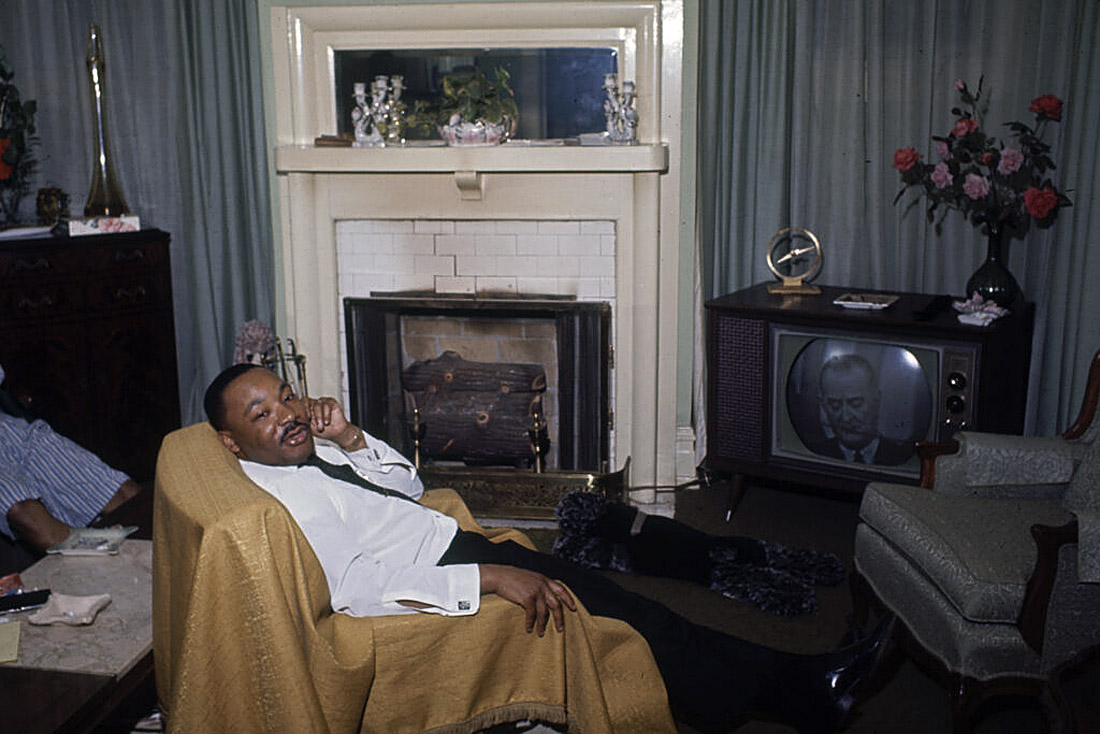
 

Frank Dandridge (American, b. 1938) 'Martin Luther King and other civil rights leaders watched President Lyndon B. Johnson speak on television' 1965


Frank Dandridge (American, b. 1938)
Martin Luther King and other civil rights leaders watched President Lyndon B. Johnson speak on television
1965
Gelatin silver print
© Frank Dandridge
Photo: Frank Dandridge / The LIFE Picture Collection / Shutterstock

Used under fair use for the purposes of education and research


Racism

Racism, when it is embedded in the structures, policies and practices of our social and political institutions can be termed “institutional”. Institutional racism, which will be described by the authors more fully below, is reflected in professional practice and working methods that result in racialized disparities. Frantz Fanon, psychiatrist and political philosopher, stands out as one of the earliest academics to explore the nature of racism from a psychosocial perspective. Fanon (1967) talked of “vulgar racism in its biological form”, which was evident for several hundreds of years, being replaced in the mid-20th century by “more subtle forms” (p. 35). In a study of Fanon’s clinical psychology and social theories, McCulloch (1983) refers to this new racism as “cultural racism” – describing this as “a more sophisticated form [of racism] in which the object is no longer the physiology of the individual but the cultural style of a people” (p. 120). Cultural racism believes that the dominant group’s culture is superior to the seemingly “lower” minority groups.

Cultural racism champions the supremacy of cultures. Commonly, some version of European culture or, more specifically, white European culture, rather than the white “race” (Amin, 1989), thereby producing a situation of racism without “races” (Balibar, 1991). It was the American civil leaders Stokely Carmichael (later Kwame Ture) and Charles V. Hamilton in their 1967 book, Black Power: The Politics of Liberation (Carmichael & Hamilton, 1967), who first described institutional racism:

It takes two, closely related forms … we call these individual racism and institutional racism. The first consists of overt acts by individuals … the second type is less overt, far more subtle, less identifiable in terms of specific individuals committing acts … and thus receives far less public condemnation than the first type. (p. 2)

Institutional racism forms an array of broader structural racism processes “that exclude … substantial numbers of members of particular groups from significant participation in major social institutions” (Henry & Tator, 2005, p. 352). According to minority mental health models like the racism-induced reactive negative emotionality cycle (Lazaridou & Heinz, 2021), structural racism and institutional racism result in experiences of rejection and emotional alienation in public spaces for Black people and People of Color (Lentin, 2015).

Structural racism in employment, earnings and credit may mutually limit equal access to quality, affordable accommodation. However, when public spaces are sites of surveillance, intimidation and frequent hostility by the police or by ordinary citizens, then the structure of social situations, such as even leaving one’s house and speaking in public, are filled with stress, anxiety, and fear (Chou et al., 2012; Sibrava et al., 2013). There is pervasive evidence that structural racism has destructive impacts on the health and wellbeing of patients from minority groups, including migrants, refugees, and asylum seekers (Alvarez et al., 2016; Bailey et al., 2017; Graham et al., 2016; Noh & Kaspar, 2003).

Felicia Lazaridou and Suman Fernando. “Deconstructing institutional racism and the social construction of whiteness: A strategy for professional competence training in culture and migration mental health,” in Transcult Psychiatry, 2022 Apr 4; 59(2), pp. 175-187.
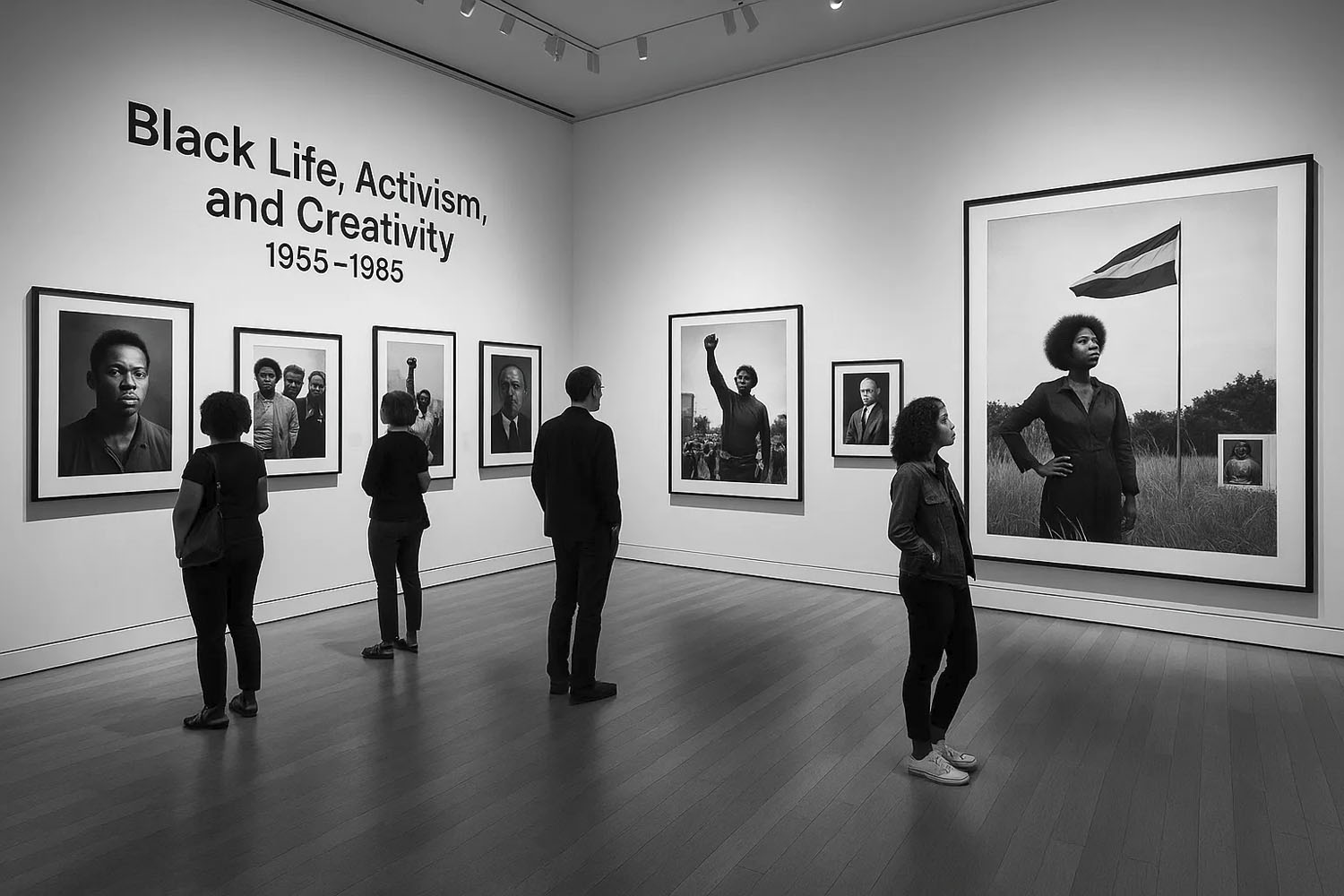
 

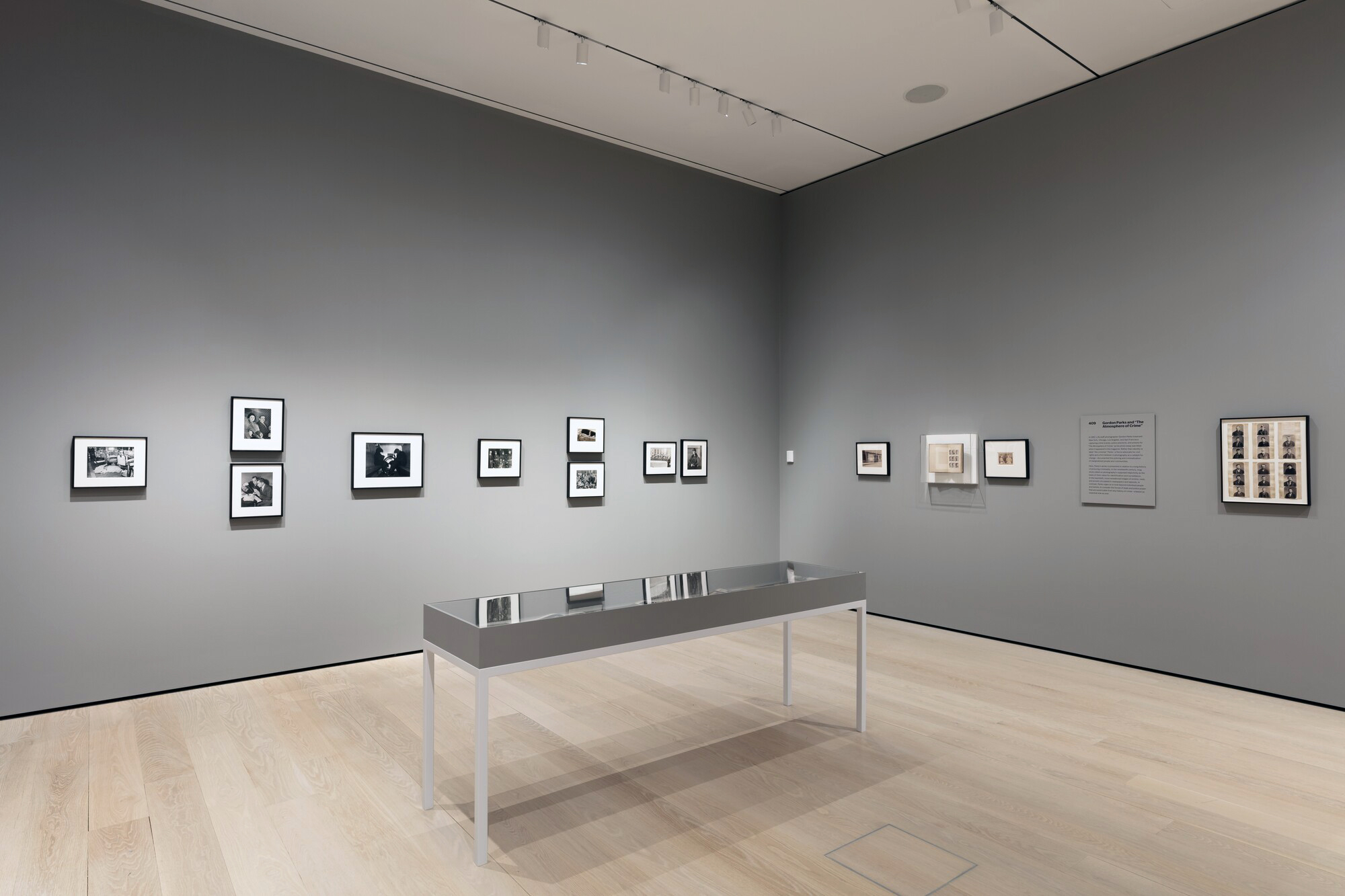
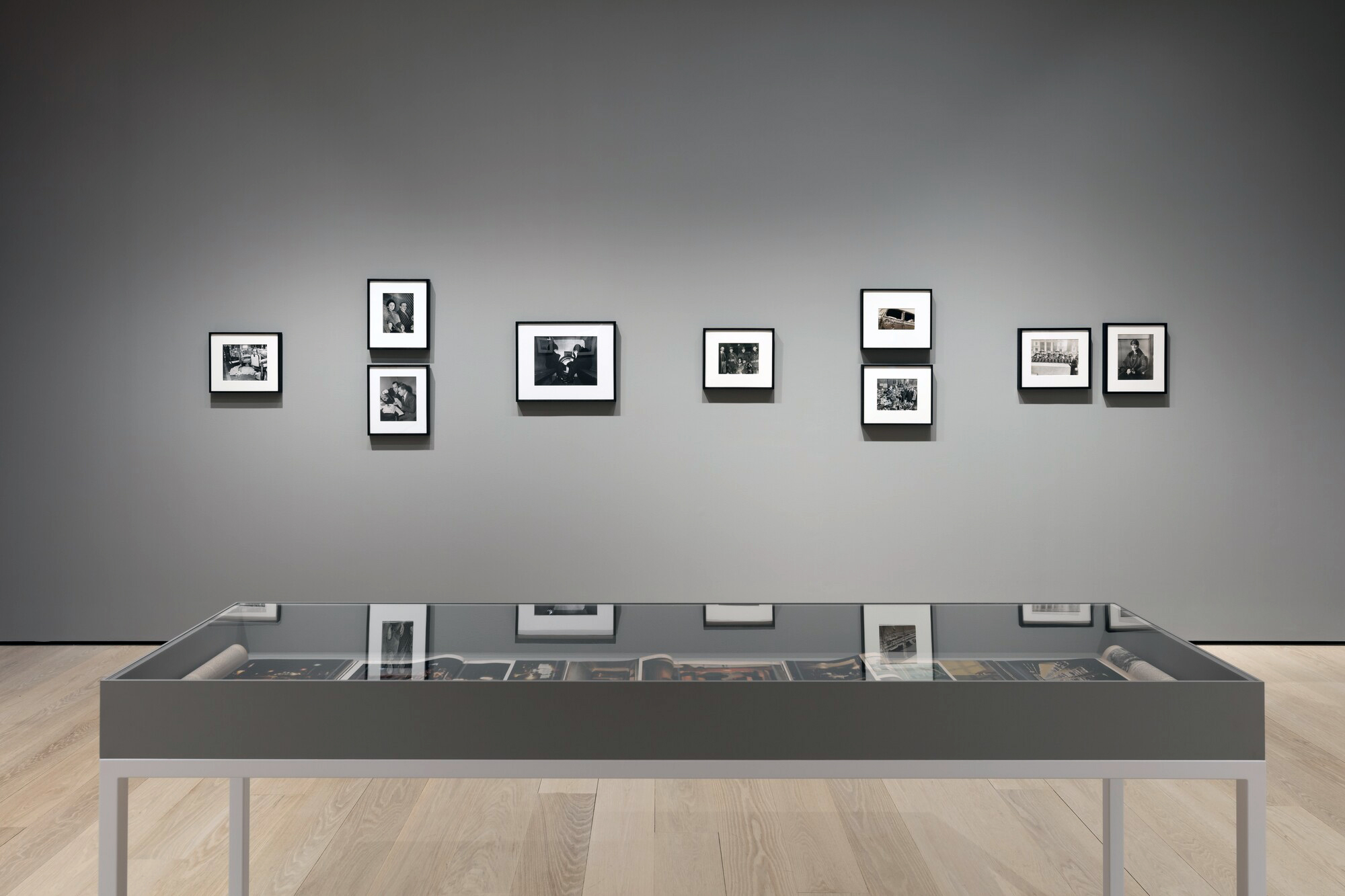
Installation view of the exhibition 'Photography and the Black Arts Movement, 1955-1985' at the National Gallery of Art, Washington, September 2025 - January 2026


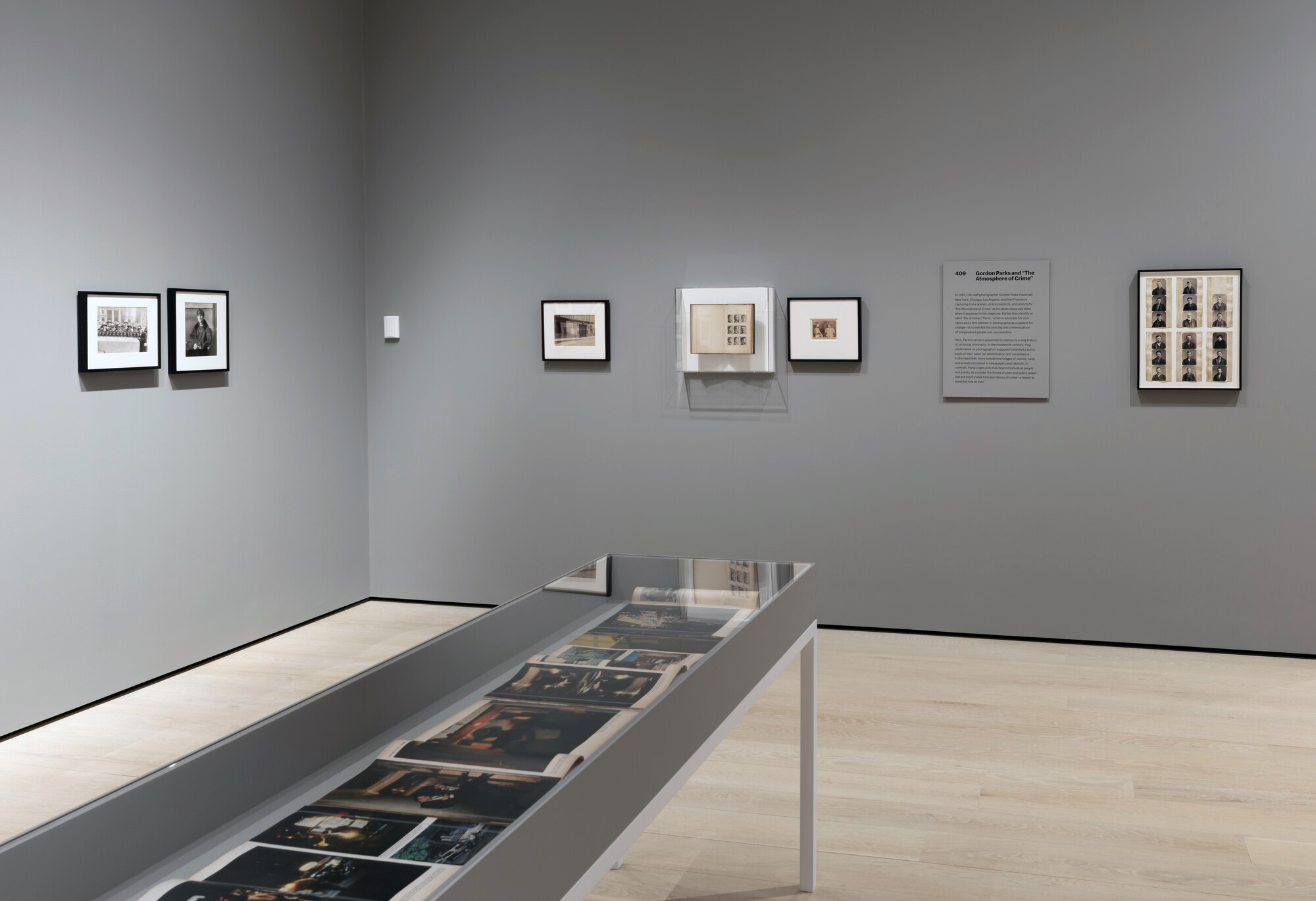
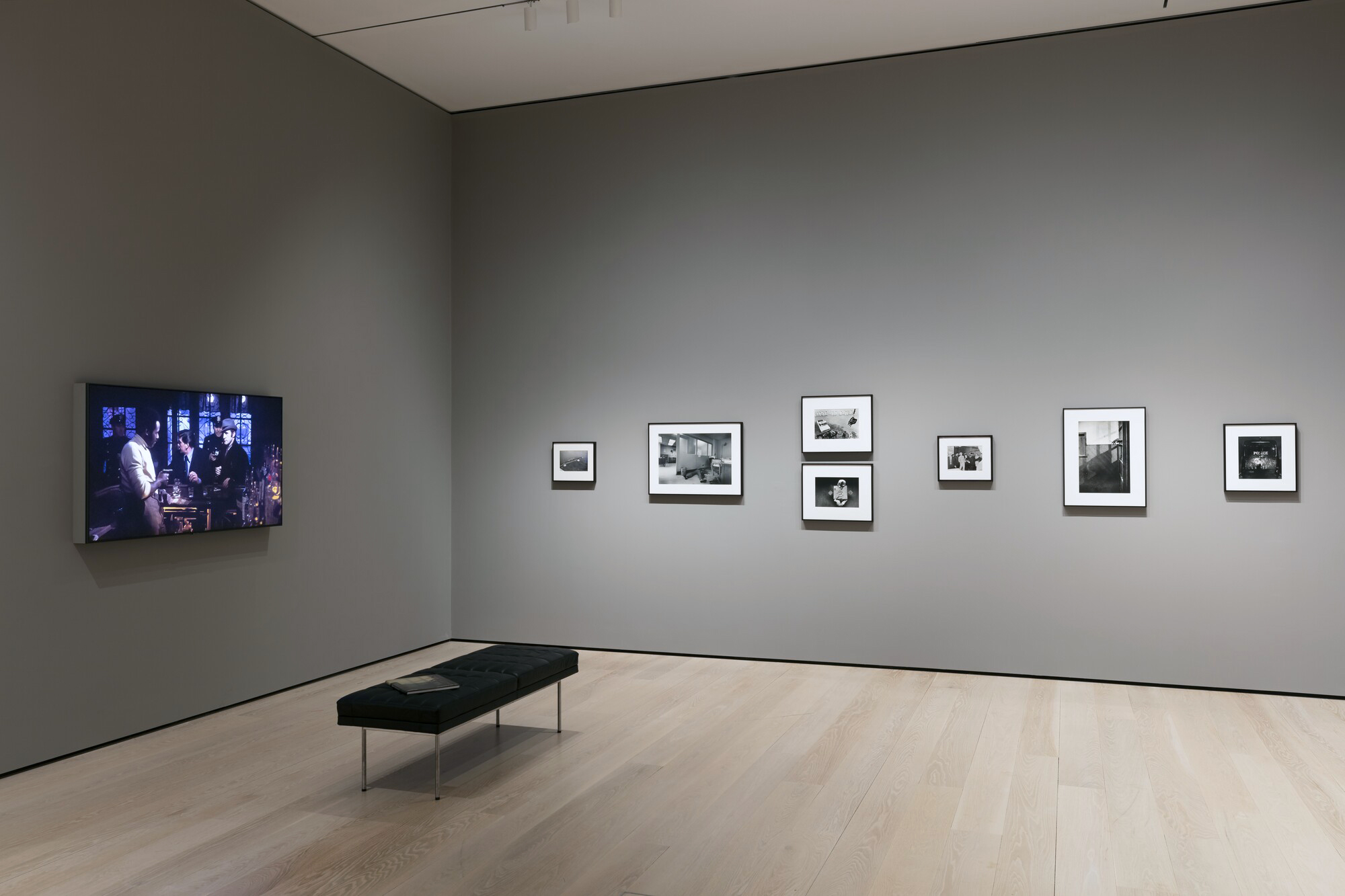
Installation view of the exhibition Photography and the Black Arts Movement, 1955-1985 at the National Gallery of Art, Washington, September 2025 – January 2026
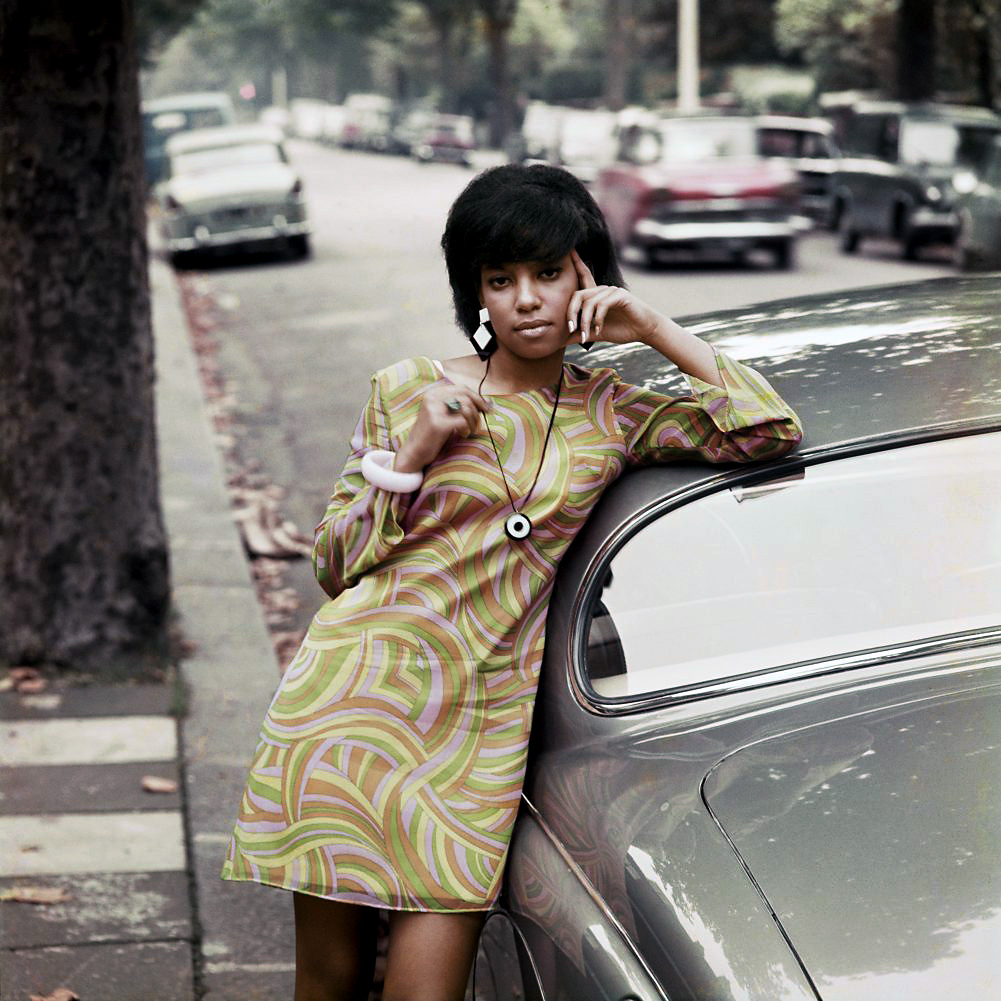
 

James Barnor (Ghanian, b. 1929) 'Drum Cover Girl Erlin Ibreck, London' 1966, printed 2010


James Barnor (Ghanaian, b. 1929)
Drum cover girl Erlin Ibreck, Kilburn, London
1966, printed 2023
Chromogenic print
29 × 29cm (11 7/16 × 11 7/16 in.)
National Gallery of Art, Washington
Alfred H. Moses and Fern M. Schad Fund
© James Barnor / Courtesy Galerie Clementine de la Feronnière


In the tradition of Black African photographers such as Malick Sidibé, Seydou Keïta and Sanlé Sory, Barnor’s photographs present people of all ages and all walks of life – whether in Accra, Ghana or in the suburbs of London, England – through direct and honest studio portraits or in more candid documents of the communities that surrounded him. …

Barnor’s photographs plant the seed of equality and happiness as a way of transmitting this knowledge to others. “He is a living archive, a link between the birth of photography in West Africa and the development of the discipline for the modern era.”2 It is his passion and feeling for the practice of photography, the stories that it tells and his engagement with the spirit of the people that he encounters – as a conversation between equals – that intuitively ground his work in the history of photography and the history of Black culture and makes them forever young.

Marcus Bunyan. “It’s late, but it’s better late than never,” on the Art Blart website October 17, 2021 [Online] Cited 26/11/2025
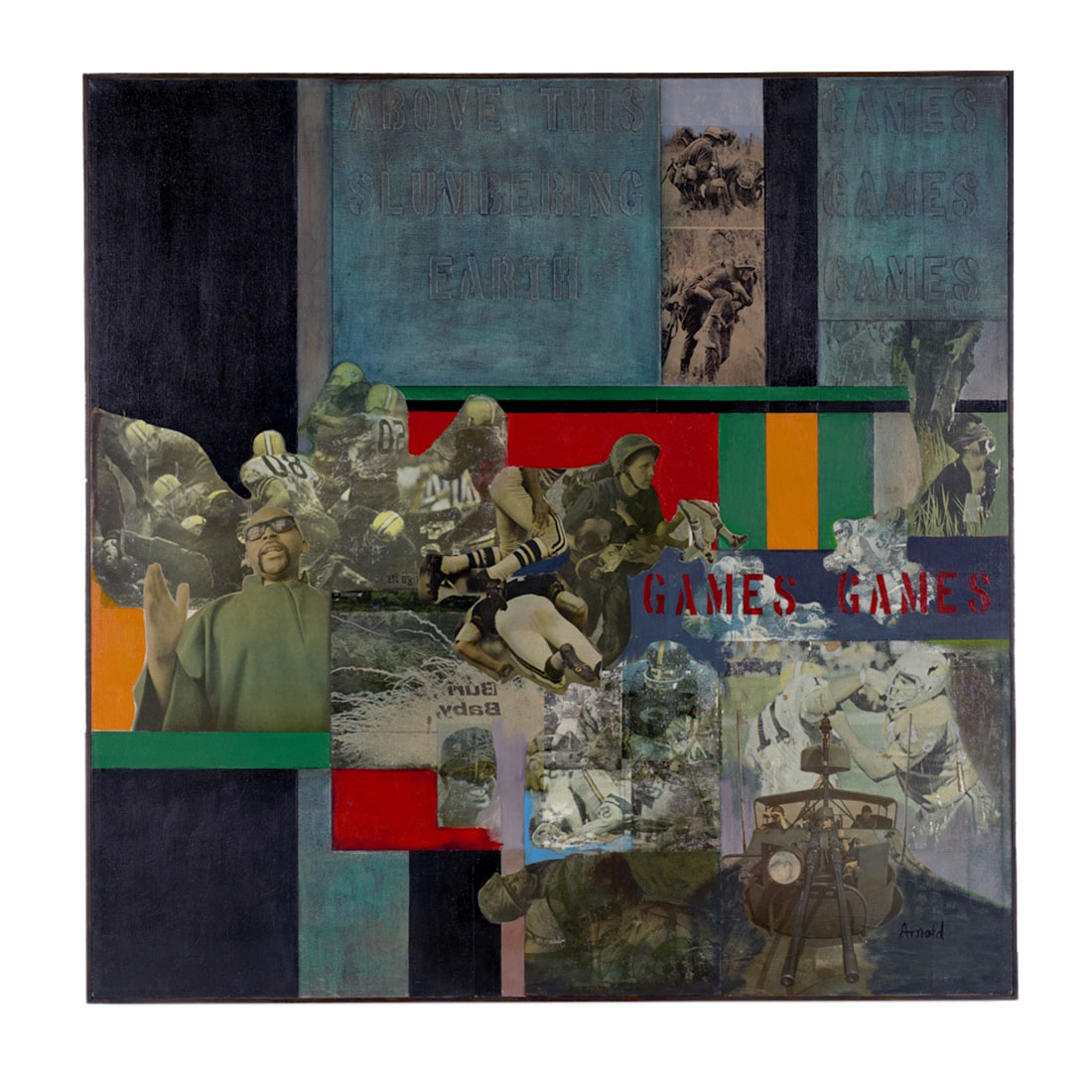
 

Ralph Arnold (American, 1928-2006) 'Above this Earth, Games, Games' 1968


Ralph Arnold (American, 1928-2006)
Above this Earth, Games, Games
1968
Collage and acrylic on canvas
Overall: 114.3 x 114.3 cm (45 x 45 in.)
Collection of Museum of Contemporary Photography at Columbia College, Chicago
Photo: P.D. Young / Spektra Imaging


During the tumultuous 1960s and 70s, the prolific artist Ralph Arnold (1928-2006) made photocollages that appropriated and commented upon mass media portrayals of gender, sexuality, race and politics. Arnold’s complex visual arrangements of photography, painting and text were built upon his own multilayered identity as a black, gay veteran and prominent member of Chicago’s art community…

Text from the Museum of Contemporary Photography in Chicago
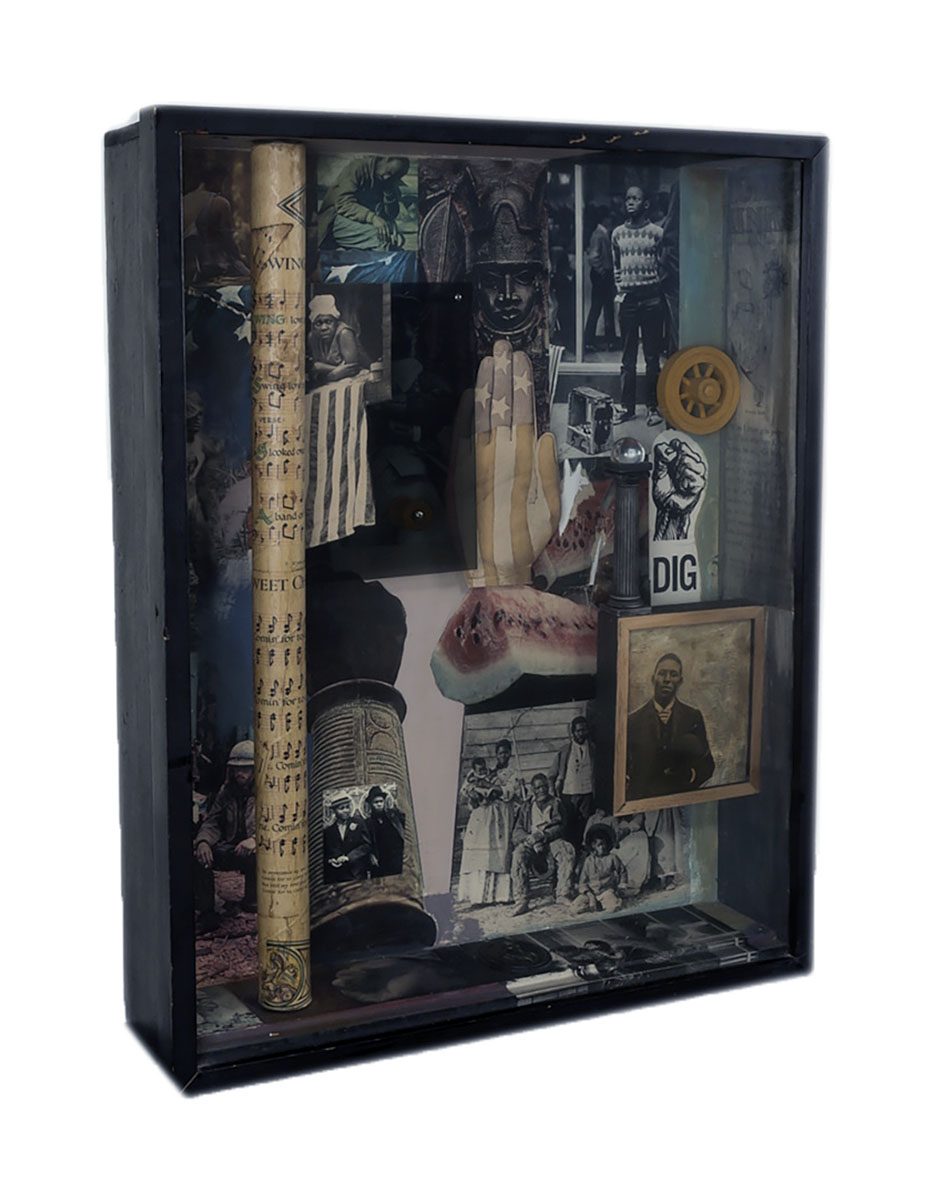
 

Ralph Arnold (American, 1928-2006) 'Soul Box' 1969


Ralph Arnold (American, 1928-2006)
Soul Box
1969
Assemblage with found objects and collage on Masonite
Framed: 71.1 x 56.8 x 14.9cm (28 x 22 3/8 x 5 7/8 in.)
Private collection of Courtney A. Moore
Photo: Courtesy of the Museum of Contemporary Photography at Columbia College Chicago


The first exhibition to consider photography’s impact on a cultural and aesthetic movement that celebrated Black history, identity, and beauty.

Uniting around civil rights and freedom movements of the 1960s and 1970s, many visual artists, poets, playwrights, musicians, photographers, and filmmakers expressed hope and dignity through their art. These creative efforts became known as the Black Arts Movement.

Photography was central to the movement, attracting all kinds of artists – from street photographers and photojournalists to painters and graphic designers. This expansive exhibition presents 150 examples tracing the Black Arts Movement from its roots to its lingering impacts, from 1955 to 1985. Explore the bold vision shaped by generations of artists including Billy Abernathy, Romare Bearden, Kwame Brathwaite, Roy DeCarava, Doris Derby, Emory Douglas, Barkley Hendricks, Barbara McCullough, Betye Saar, and Ming Smith.

Text from the NGA website


Photography and the Black Arts Movement, 1955-1985 investigates the role of African American photographers and artists working with photographs in developing and fostering a distinctly Black perspective on art and culture. The Black Arts Movement was a uniquely American creative initiative, closely linked to the civil rights movement and comparable to the Harlem Renaissance of the 1920s in its impact. Through new institutions and publications, Black writers, musicians, filmmakers, and visual artists explored ways their art could further the American civil rights movement and communicate messages of Black history and identity. Photography and the Black Arts Movement reveals how studio and street photographers, photojournalists, painters, conceptual artists, graphic designers, and community activists used photography to cut across traditional racial boundaries, express messages of empowerment, and advance social justice.

Bringing together some 150 works by more than 100 artists, Photography and the Black Arts Movement also includes objects from Africa, the Caribbean region, and Great Britain, representing artistic dialogues created through travel, migrations, and international engagement with the social, political, and cultural ideas that propelled the movement. Among the artists included are Billy Abernathy, Anthony Barboza, Romare Bearden, Dawoud Bey, Frank Bowling, Kwame Brathwaite, Ernest Cole, Adger Cowans, Roy DeCarava, Emory Douglas, Louis Draper, David C. Driskell, Samuel Fosso, Charles Gaines, Barkley Hendricks, Danny Lyon, Barbara McCullough, Jeanne Moutoussamy-Ashe, Gordon Parks, Adrian Piper, Juan Sánchez, Coreen Simpson, Betye Saar, Jamel Shabazz, Lorna Simpson, Ming Smith, Frank Stewart, and Carrie Mae Weems.

The exhibition is organised by the National Gallery of Art, Washington.

Text from the NGA website
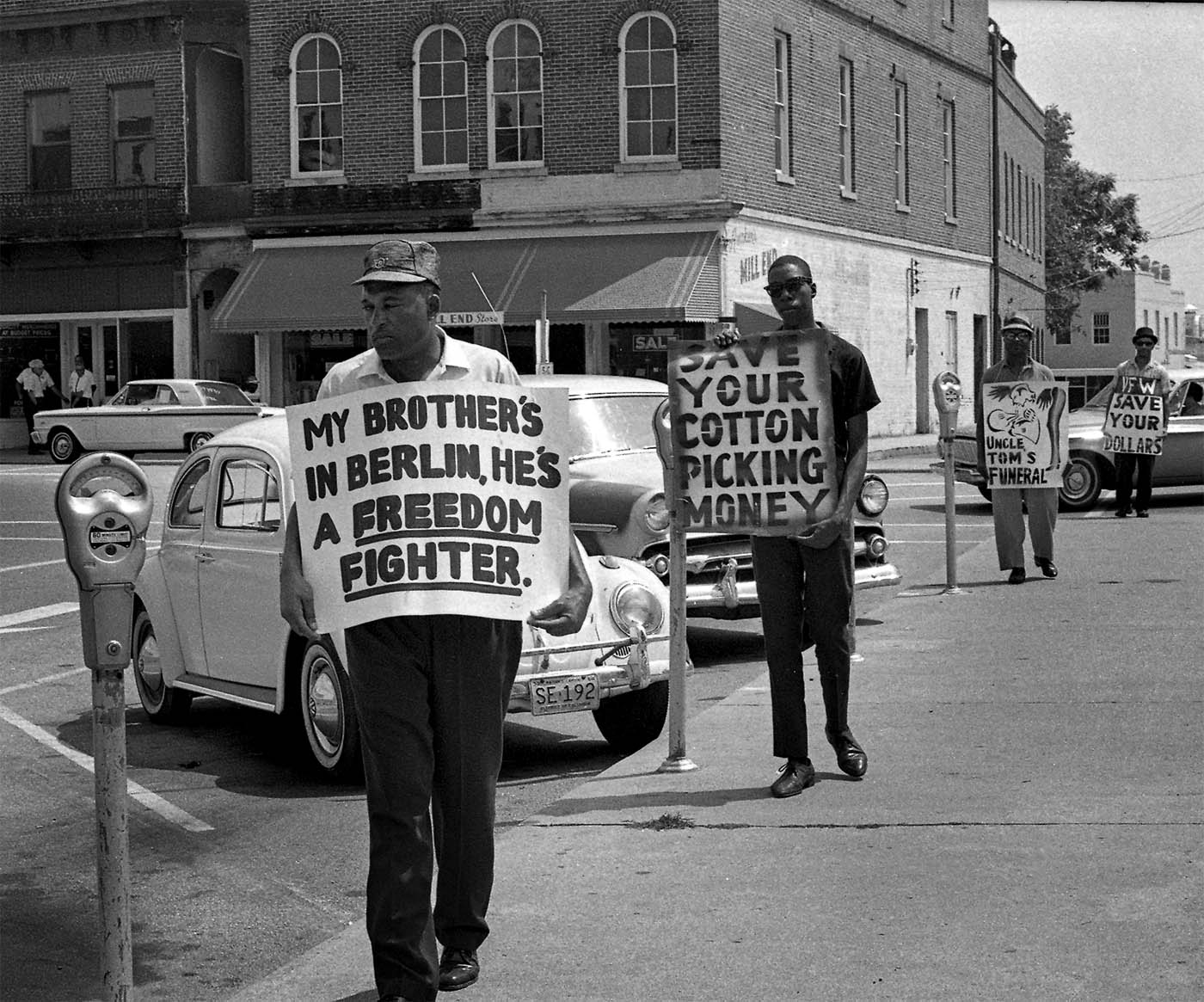
 

Cecil J. Williams (American, b. 1937) 'During the summer of 1960, the elders of Orangeburg took to the streets as part of ongoing demonstrations and boycotts in support of civil rights. They are standing outside a segregated supermarket where they were allowed to shop but not sit down for lunch' 1960, printed 2024


Cecil J. Williams (American, b. 1937)
During the summer of 1960, the elders of Orangeburg took to the streets as part of ongoing demonstrations and boycotts in support of civil rights. They are standing outside a segregated supermarket where they were allowed to shop but not sit down for lunch
1960, printed 2024
Inkjet print
37.3 x 55.9cm (14 11/16 x 22 in.)


Cecil J. Williams (American, b. 1937)

Cecil J. Williams (born November 26, 1937) is an American photographer, publisher, author and inventor who is best known for his photographs documenting the civil rights movement in South Carolina.

He began his career at an early age, photographing wedding and family parties. He studied art at Claflin University, while also being a photographer for the university. …

At the age of 14, Williams was one of 25 photographers around the world freelancing for JET magazine. JET caught wind of the movement growing in Orangeburg. They needed an onsite correspondent for constant updates, and someone to document the events. The only time Williams’ work appeared on the cover of JET was his picture of Coretta Scott King speaking at the protest during the 1969 Charleston hospital workers’ strike.

Williams has photographed significant desegregation efforts in South Carolina since the 1950s. Some of his most notable pictures are of the activity during the Briggs v. Elliott case in Summerton. It was the first of five desegregation cases pushing to integrate public schools in the United States. The five cases combined into Brown v. Board of Education, the 1954 U.S. Supreme Court case that declared that having “separate but equal” public schools for whites and blacks was unconstitutional.

Text from the Wikipedia website
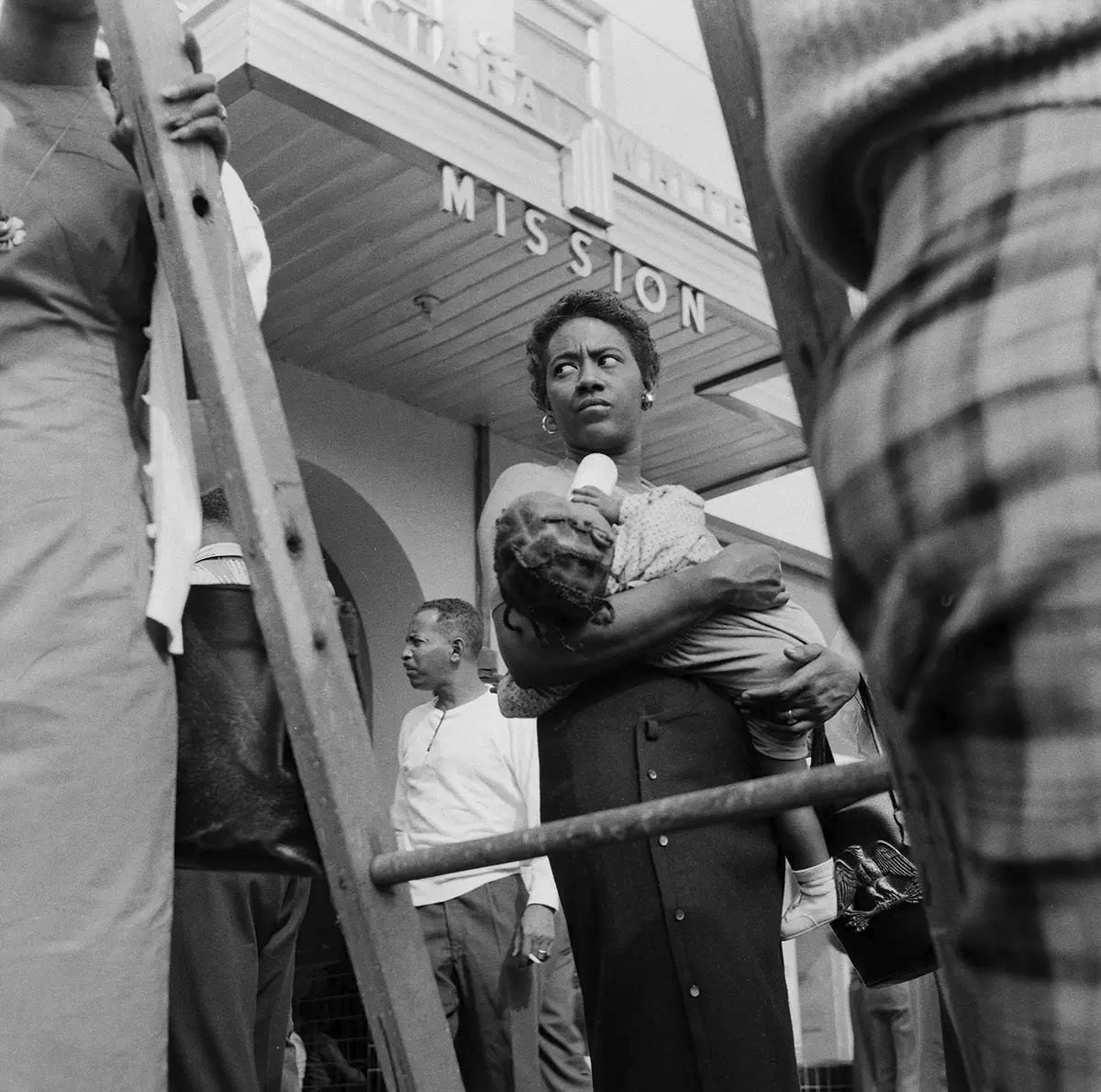
 

Cecil J. Williams (American, b. 1937) 'Clara White Mission, Jacksonville, Florida' 1960s, printed 2024


Cecil J. Williams (American, b. 1937)
Clara White Mission, Jacksonville, Florida
1960s, printed 2024
Inkjet print
45.7 x 45.7cm (18 x 18 in.)
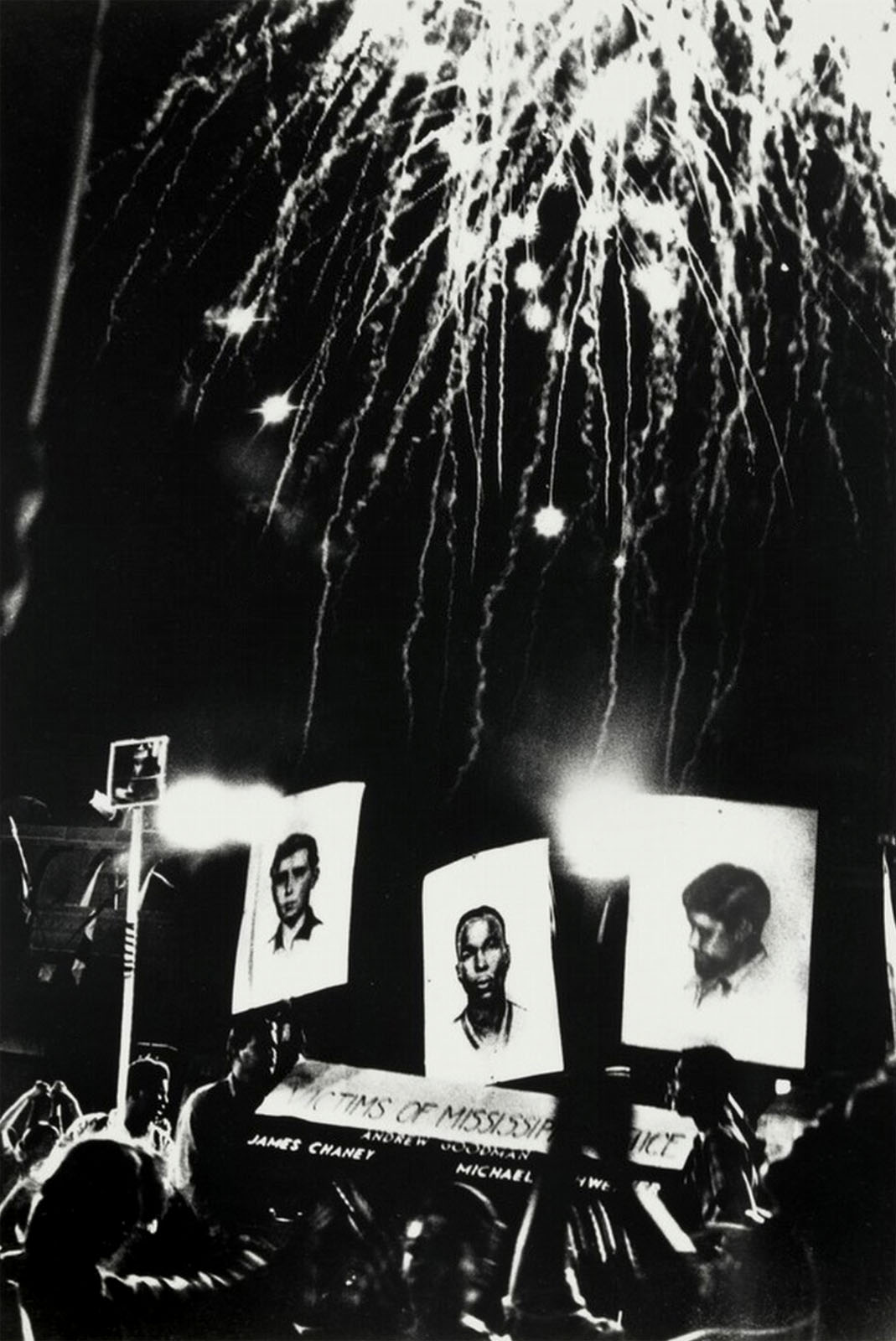
 

Bob Fletcher (American, b. 1938) 'Placards of Goodman, Chaney, and Schwerner at a Demonstration on the boardwalk during the Democratic National Convention, Atlantic City, New Jersey' 1964


Bob Fletcher (American, b. 1938)
Placards of Goodman, Chaney, and Schwerner at a Demonstration on the boardwalk during the Democratic National Convention, Atlantic City, New Jersey
1964
Gelatin silver print
33.97 × 22.86cm (13 3/8 × 9 in.)
National Gallery of Art, Washington
Anonymous gift


Bob Fletcher (American, b. 1938)

Robert E. “Bob” Fletcher is a photographer, filmmaker, writer, and educator. Born in 1938 in Detroit, Michigan, Fletcher majored in History and English at Fisk University and Wayne State University. In 1963, Fletcher became active in the civil rights movement, taking photographs for and administering the National Student Association’s Detroit Tutorial Program. After moving to New York City, he worked at the Harlem Education Project and set up a photographic workshop.

In the summer of 1964, Fletcher became a Freedom School teacher in Mississippi and joined the Student Nonviolent Coordinating Committee (SNCC) staff as a photographer; he documented the Civil Rights Movement throughout the South, between 1964 and 1968. After returning to New York in 1969, Fletcher set up a photography workshop at the Henry Street Settlement, and taught photography at Antioch College and Brooklyn College Film Studio.

Text from the New York Public Library Archives & Manuscripts website
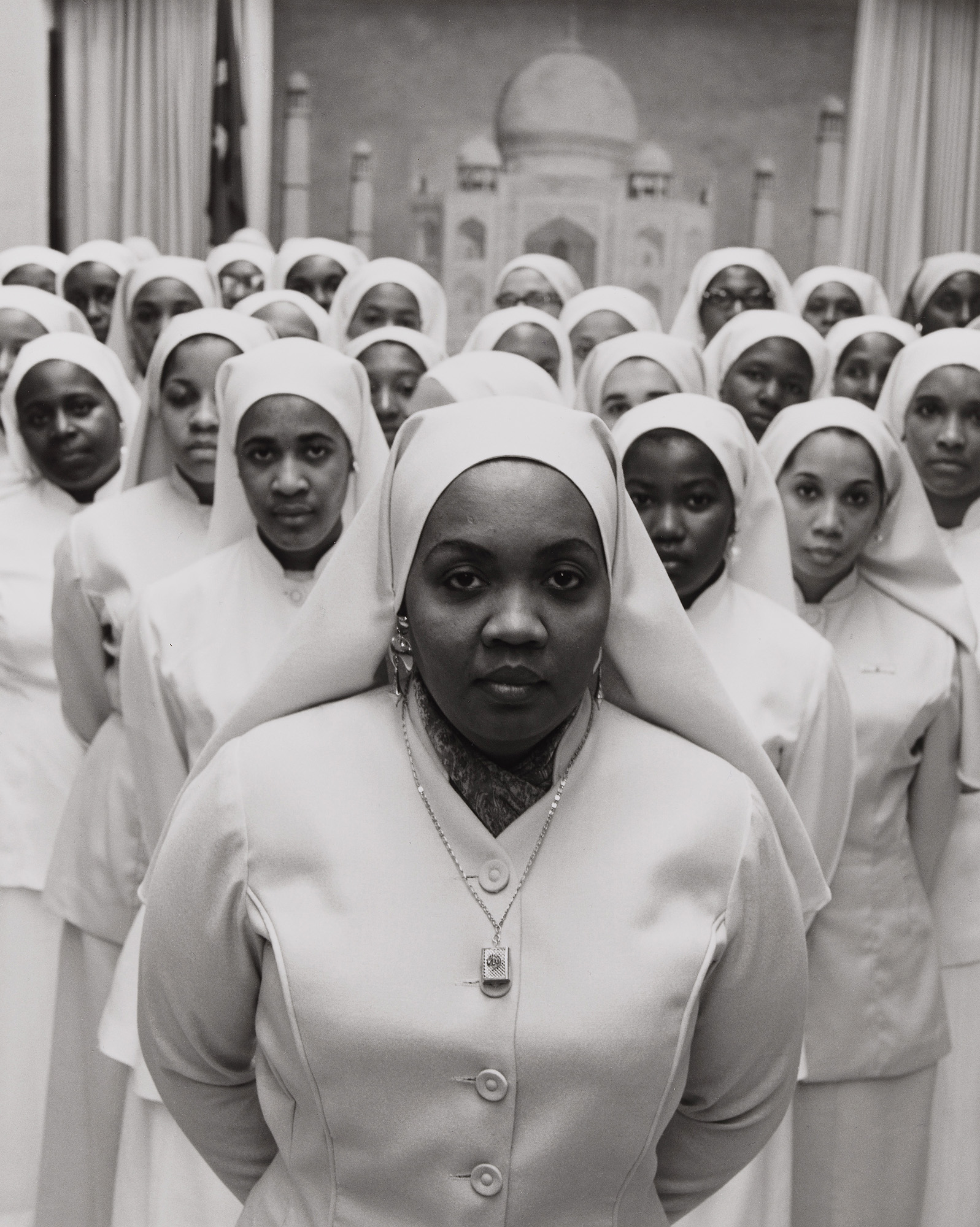
 

Gordon Parks (American, 1912-2006) 'Ethel Sharrieff in Chicago' 1963


Gordon Parks (American, 1912-2006)
Ethel Sharrieff in Chicago
1963
Gelatin silver print
14.6 × 15.9cm (5 3/4 × 6 1/4 in.)
National Gallery of Art, Washington
Corcoran Collection (The Gordon Parks Collection)
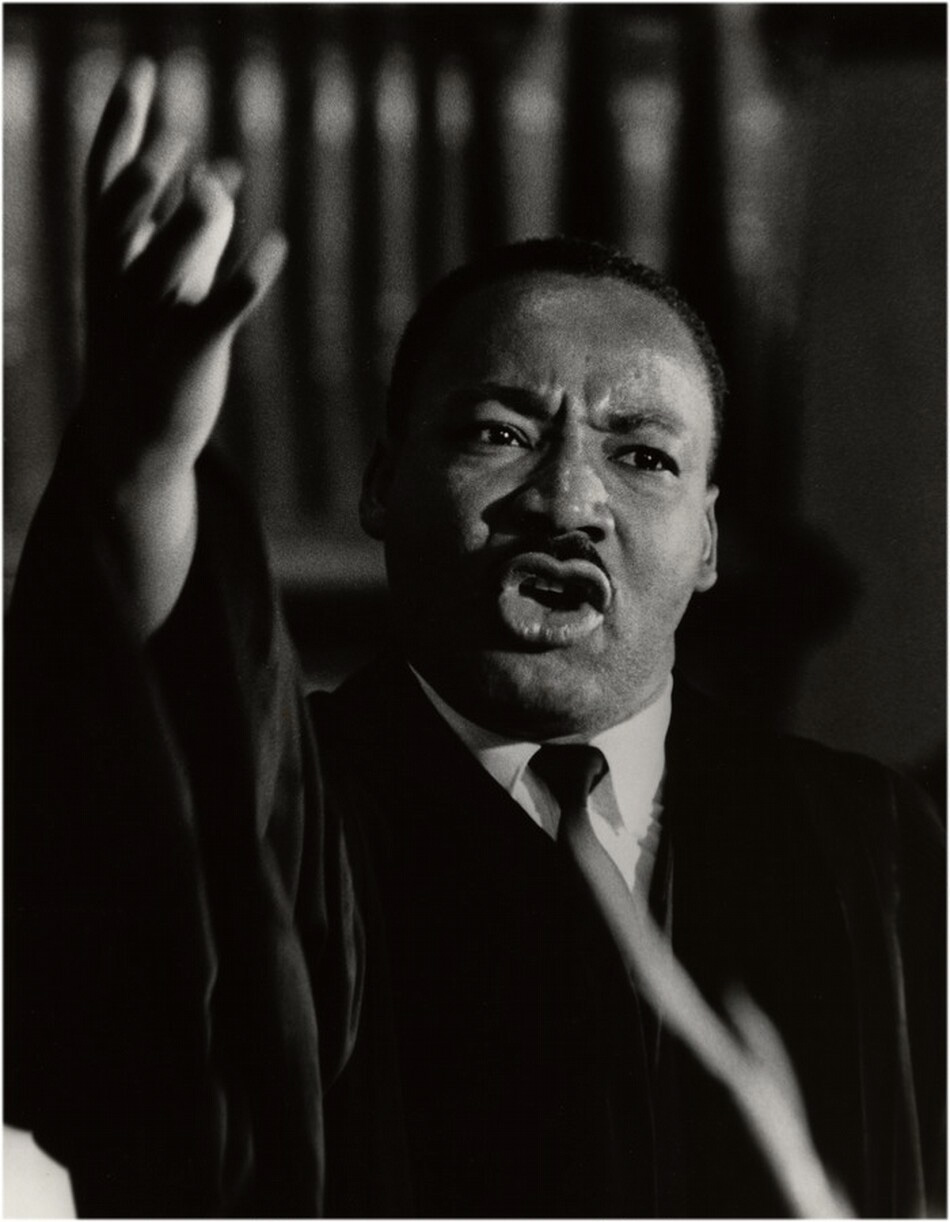
 

Robert A. Sengstacke (American, 1943-2017) 'Dr. Martin Luther King' January 1, 1965


Robert A. Sengstacke (American, 1943-2017)
Dr. Martin Luther King
January 1, 1965
Gelatin silver print
35.1 × 27.3cm (13 13/16 × 10 3/4 in.)
National Gallery of Art, Washington
Alfred H. Moses and Fern M. Schad Fund


Robert A. Sengstacke (American, 1943-2017)

Robert A. “Bobby” Sengstacke spent more than a half century photographing Chicago’s cultural and political landscape, most notably for the weekly newspaper the Chicago Defender, for which he also worked as an editor. The Defender was founded by Robert’s great-uncle Robert Sengstacke Abbott in 1905, and Robert’s father, John Sengstacke, ran the paper for nearly 60 years. In the mid-1950s, after attending Florida’s Bethune Cookman College, Bobby Sengstacke returned to Chicago and honed his skills with fellow photographers Billy (Fundi) Abernathy, Le Mont Mac Lemore, and Bob Black. In the years that followed, he became a member of a tight-knit network of South Side photojournalists who created intimate documents of Chicago’s Black community, from Civil Rights rallies led by Martin Luther King Jr. to the city’s lively entertainment scene.

Sengstacke was also a founding member of the Organization of Black American Culture (OBAC), which brought together Black artists, writers, intellectuals, and activists on Chicago’s South Side.

Text from The Art Institute of Chicago website
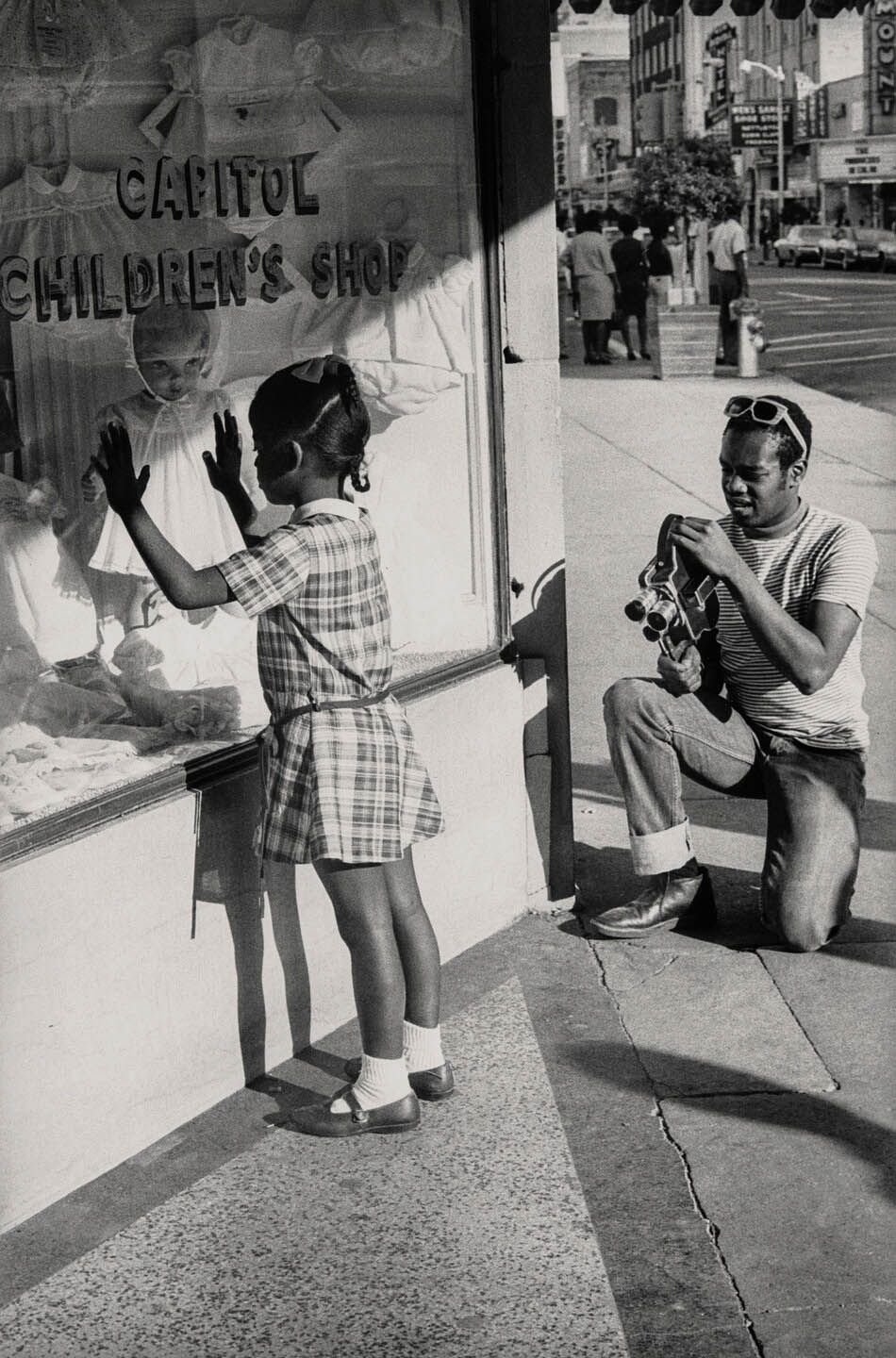
 

Doris A. Derby (American, 1939-2022) 'Member of Southern Media Photographing a Young Girl, Farish Street, Jackson, Mississippi' 1968


Doris A. Derby (American, 1939-2022)
Member of Southern Media Photographing a Young Girl, Farish Street, Jackson, Mississippi
1968
Gelatin silver print
National Gallery of Art, Washington
Gift of David Knaus


Doris A. Derby (American, 1939-2022)

The photography of the US civil rights activist and academic Doris Derby … began through documenting the struggles of black people in the segregated south. However, rather than recording the dramatic events and protests of the nine years from her arrival in Mississippi from New York in 1963, Doris chose to capture the everyday human effort required to live through them.

She went into rural communities to witness the work of children in the fields and women living in wooden shacks trying to care for families. “They were looking to find some help, some way to get out of their horrible poverty and despair,” she said. …

Influenced both by the German expressionist artist Käthe Kollwitz, who was concerned with the effects of poverty, hunger and war on the working class, and the photographer Roy DeCarava, who captured the creativity of the Harlem Renaissance, she also took pictures of children in urban settings, of old and young people attending election events, and those working for the movement, among them the author Alice Walker.

Hannah Collins. “Doris Derby obituary,” on The Guardian website Wed 13 Apr 2022 [Online] Cited 26/11/2025


Darryl Cowherd (American, b. 1940) 'Stokely Carmichael, Unknown Chicago Church' c. 1968


Darryl Cowherd (American, b. 1940)
Stokely Carmichael, Unknown Chicago Church
c. 1968
Gelatin silver print
24.8 × 15.5cm (9 3/4 × 6 1/8 in.)
National Gallery of Art, Washington
Alfred H. Moses and Fern M. Schad Fund


A key figure in Chicago’s Black Arts Movement, Darryl Cowherd has enjoyed an extensive career ranging from photojournalism to broadcast television. At the age of 20, frustrated with work and school, Cowherd followed the advice of his mentor, Chicago-based photographer Robert Earl Wilson, who encouraged him to travel and photograph abroad. Cowherd had initially studied to become a doctor and then worked for the postal service, but neither role proved a lasting fit. After nearly four years in Europe, during which Cowherd honed his photography skills, he returned to Chicago in 1964 and began taking freelance photography assignments while working at a film processing lab. His return to Chicago coincided with the emergence of the Chicago Freedom Movement (1965-67) and the Black Arts Movement (most active in the years 1965-76). An active participant in both movements, Cowherd frequently photographed the activities surrounding them as they grew and gained momentum.

Cowherd was a founding member of the Organization of Black American Culture (OBAC), a collective that brought together Black artists, writers, intellectuals, and activists on Chicago’s South Side.

Text from The Art Institute of Chicago website
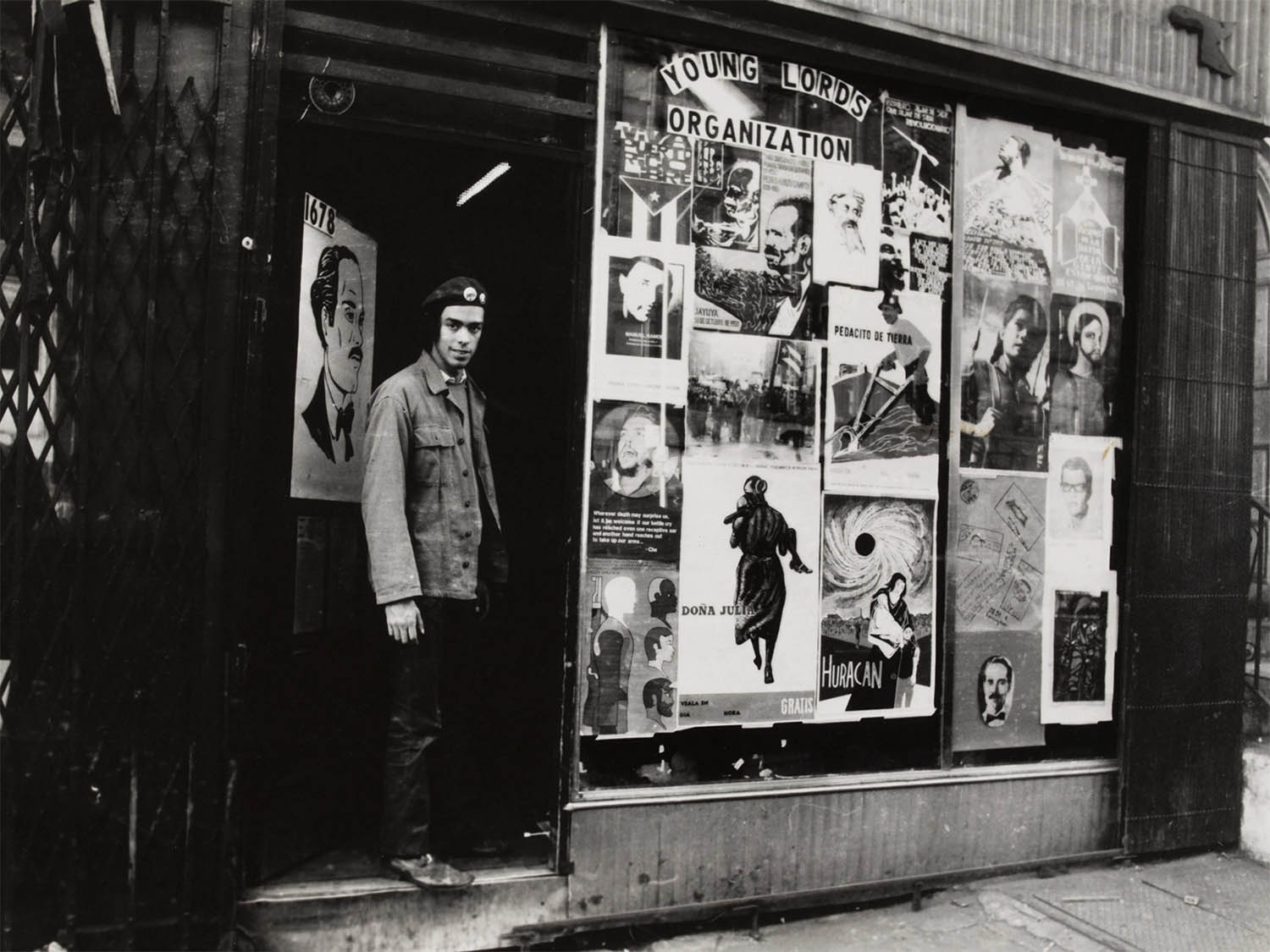
 

Hiram Maristany (American, 1945-2022) 'Juan González, Minister of Information, in the doorway of the first office of the Young Lords' 1969, printed 2021


Hiram Maristany (American, 1945-2022)
Juan González, Minister of Information, in the doorway of the first office of the Young Lords
1969, printed 2021
Gelatin silver print
33 x 46cm (13 x 18 1/8 in.)
National Gallery of Art, Washington
Alfred H. Moses and Fern M. Schad Fund
© Hiram Maristany


Hiram Sebastian Maristany was a Nuyorican American photographer, and director of El Museo del Barrio (a museum in NYC which specialises in Latin American and Caribbean art, with an emphasis on works from Puerto Rico and the Puerto Rican community in New York City) from 1975 to 1977. He was known for his association with, and documentation of, the Young Lords chapter in Harlem, which he co-founded in 1969.

Juan González was a co-founder of the Young Lords, a radical Puerto Rican rights organisation in New York City, where he helped lead the group in protests for social justice. The Young Lords fought for better healthcare, education, and city services, and against police abuse and Puerto Rico’s colonial status. Following his work with the Young Lords, González became a celebrated journalist, co-hosting Democracy Now! and writing for the New York Daily News.

Texts from the Wikipedia website


What Is the Black Arts Movement? Seven Things to Know

Poet Larry Neal, who coined the term Black Arts Movement, described it as “a cultural revolution in art and ideas.” This movement included poets, playwrights, musicians, filmmakers, photographers, and painters. They came together to make art that advanced civil rights and celebrated Black history, identity, and beauty.

This cultural revolution shook up the art world in the 1950s and ’60s. It embodied the struggle for self-determination championed by global freedom movements. New collectives, workshops, and collaborations emerged. Creatives made art that promoted Black dignity, hope, and freedom. They asked, how could art inspire social and political change? And what would it look like?

Photography was a driving force from the beginning, playing a critical role as both a communications tool and art form. Learn more about the movement and photography’s part in it – major themes in our exhibition Photography and the Black Arts Movement, 1955-1985.

1/ Its origins are in the civil rights movement

Our exhibition begins in 1955, more than a decade before Larry Neal named the Black Arts Movement. That year, several events – and photographs of those events – helped catalyse the civil rights movement.

In September, Jet magazine was one of several publications that printed open-casket photographs of Emmett Till, a 14-year-old boy from Chicago who was lynched in Mississippi. Those disturbing images were seen across the country, including by a woman in Montgomery, Alabama: Rosa Parks. That December, Parks sat in the front, “white only” section of a segregated bus. The driver demanded that she give up her seat to a white passenger. She refused. As she later recounted, Emmett Till was on her mind in that moment.

Parks, in turn, was photographed sitting at the front of the segregated bus. Those images, and others like them, brought widespread awareness to the struggles for equal rights. Organisations like the Student Nonviolent Coordinating Committee (SNCC) encouraged photography of their marches, demonstrations, and acts of nonviolent civil disobedience. SNCC even taught some members to use a camera. Lifelong activist Maria Varela became a SNCC photographer after recognising the need for more images of Black life to support the movement.

2/ Poets, writers, and playwrights led the movement

The beginning of the Black Arts Movement is often pinned to poet, playwright, and writer Amiri Baraka founding the Black Arts Repertory Theatre/School in New York City’s Harlem neighbourhood in 1965. Nikki Giovanni, Gwendolyn Brooks, and Audre Lorde were among the many writers and poets active in the movement. Some collaborated with visual artists, even forming collectives such as the Organization of Black American Culture (OBAC) in Chicago.

OBAC writers, scholars, painters, and photographers collaborated to create the Wall of Respect community mural in 1967. It commemorated key figures in African American history, including W. E. B. Du Bois, Muhammad Ali, and Nina Simone. The mural was like a two-story collage that covered the facade of a building in the city’s South Side neighbourhood. It incorporated paintings by several artists alongside mounted photographs by Roy Lewis and Darryl Cowherd. At the centre was Amiri Baraka’s poem “SOS,” which opens, “Calling all black people.” The mural was demolished in 1972, but photographs by Roy Lewis and Robert Sengstacke continue to spread its message.

3/ It was inspired by jazz

Music was an equally important part of the Black Arts Movement. Musicians John Coltrane and Sun Ra both performed at a fundraiser for Amiri Baraka’s Black Arts Repertory Theatre/School. Their experimental and expressive jazz inspired Black Arts Movement writers and artists.

In Coltrane at the Gate, photographer Adger Cowans depicted the saxophonist’s energy. Ming Smith captured the magic of a Sun Ra performance. For his homage to saxophonist Charlie Parker (who was commonly known as “Bird”), painter Raymond Saunders embraced the spontaneous spirit of jazz. Saunders collaged a newsprint photograph below the word “bird” written in a chalk-like white script.

4/ It celebrated Black beauty

The Black Arts Movement celebrated the “beauty and goodness of being Black,” as Larry Neal put it. Photographer Kwame Brathwaite helped popularise the phrase “Black is beautiful.” Brathwaite was a pioneer of uplifting Black identity. He helped found groups that challenged conventional standards of beauty and celebrated African heritage. They organised fashion shows, created “Black is beautiful” products, and operated a photography studio.

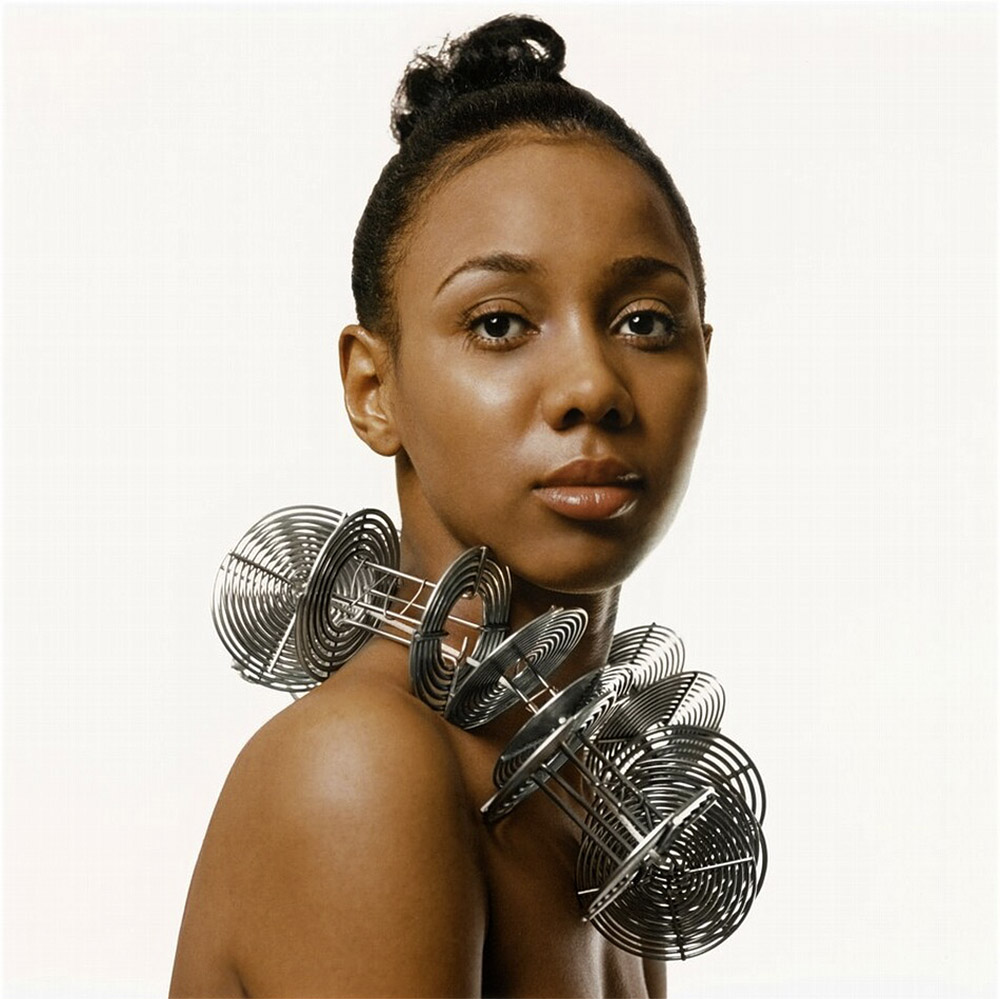
In Untitled (Portrait, Reels as Necklace), Brathwaite adorned the model with a necklace made from film developing reels to “expose” her beauty. More than a decade later, Carla Williams created a self-portrait that echoed Brathwaite’s work. Showing herself in curlers, Williams challenged popular notions of beauty.

5/ It brought artists together

Small collectives of visual artists and photographers came together around the principles of the Black Arts Movement. In New York, the Kamoinge Workshop photography collective met regularly to critique each other’s work, debate photography’s purpose and aesthetics, and share tips. They created a space for their art by developing their own portfolios and exhibitions. The workshop also produced the groundbreaking Black Photographers Annual between 1973 and 1980.

A group of Chicago artists formed AfriCOBRA. The collective’s founders defined their own aesthetic principles, aimed at creating “images that jar the senses and cause movement” and “images designed for mass production.”

6/ It spread across the Atlantic

The Black Arts Movement made an impact beyond the United States. In Great Britain, Raphael Albert organised and photographed Black beauty pageants in London. James Barnor focused on style, migration, and Black city life in London and in Accra, Ghana. Horace Ové photographed the British Black Power Movement. He also captured scenes of the West African and West Indian communities in London, like his Walking Proud, Notting Hill Carnival.

Samuel Fosso opened his first photography studio in Bangui, Central African Republic, at age 13. After finishing with clients, Fosso would use his studio to experiment with self-portraits. He wore an array of costumes and adopted personas, often taking inspiration from the pictures of Black Americans he saw in magazines shared by American Peace Corps volunteers.

7/ It influenced generations of artists

By the end of the 1970s, the literary arm of the Black Arts Movement had waned, but a new generation of artists and photographers carried on its spirit. Coming out of art school, photographers such as Carrie Mae Weems and Lorna Simpson explored more personal, metaphorical, and conceptual ideas.

In her Family Pictures and Stories series, Weems made her own family the subjects. The intimate photographs presented a counterargument to claims that many Black Americans faced poverty and struggle as a result of weak family structures. Weems paired the photographs with brief stories about each family member.

Text from the National Gallery of Art website


Herbert Randall (American, born 1936) 'Untitled (Bed-Stuy, New York)' 1960s


Herbert Randall (American, b. 1936)
Untitled (Bed-Stuy, New York)
c. 1960s
Gelatin silver print
22.8 x 15.6cm (9 x 6 1/8 in.)
National Gallery of Art, Washington
Alfred H. Moses and Fern M. Schad Fund, 2022.89.1
© Herbert Randall


Herbert Randall (American, b. 1936)

Herbert Eugene Randall, Jr. is an American photographer who had documented the effects of the Civil Rights Movement. Randall is of Shinnecock, African-American and West Indian ancestry.

Randall studied photography under Harold Feinstein in 1957. From 1958 to 1966, he worked as a freelance photographer for various media organizations. His photographs were used by the Associated Press, United Press International, Black Star, various television stations, and other American and foreign publications. Randall was also a founding member of the Kamoinge Workshop, a collective of African-American photographers, in New York City in 1963.

In 1964, Sanford R. Leigh, the Director of Mississippi Freedom Summer’s Hattiesburg project, persuaded Randall to photograph the effects of the Civil Rights Movement in Hattiesburg, Mississippi. Randall had a Whitney Fellowship for that year, and had been looking for a project. He spent the entire summer photographing solely in Hattiesburg, among the African-American community and among the volunteers in area projects such as the Freedom Schools, Voter Registration, and the Mississippi Freedom Democratic Party campaign.

Only five of Randall’s photographs were published in the summer of 1964. One seen worldwide was the bloodied, concussed Rabbi Arthur Lelyveld, head of a prominent Cleveland congregation and former conscientious objector to World War II. However, most of his photographs sat in a file at the Shinnecock Reservation, on Long Island, New York.

Text from the Wikipedia website
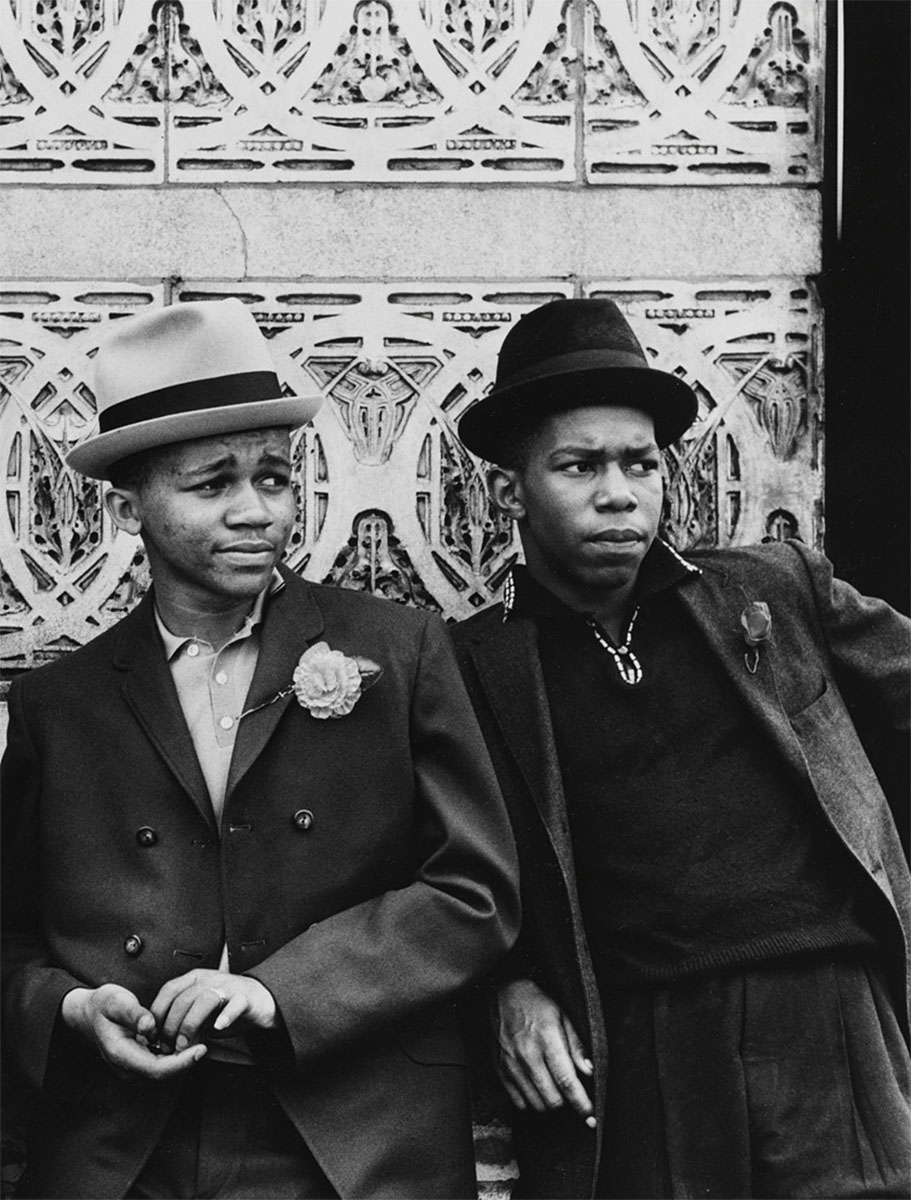
 

Billy Abernathy (Fundi) (American, 1939-2016) 'Mother's Day' from the series "Born Hip" 1962


Billy Abernathy (Fundi) (American, 1939-2016)
Mother’s Day from the series “Born Hip”
1962
gelatin silver print
17.5 x 13.3cm (6 7/8 x 5 1/4 in.)
The Art Institute of Chicago, Gift of the Illinois Arts Council
Photo: The Art Institute of Chicago / Art Resource, NY


Billy Abernathy (Fundi) (American, 1939-2016)

Photographer Billy (Fundi) Abernathy was known for creating images that defined Black confidence, elegance, and style. This work extended to his collaborations with his wife, Sylvia (Laini) Abernathy, with whom he designed album covers for Delmark Records in the 1960s. Around that time, the poet and author Amiri Baraka (LeRoi Jones) encountered Abernathy’s photographs of Chicago and proposed a book project that would combine his poetry with Abernathy’s images. The resulting collaboration, In Our Terribleness (Some Elements and Meaning in Black Style), was designed by Laini and published in 1970. In 1971 the New York Times hailed the book as “an example of the new direction that black art is taking.”

Text from The Art Institute of Chicago website
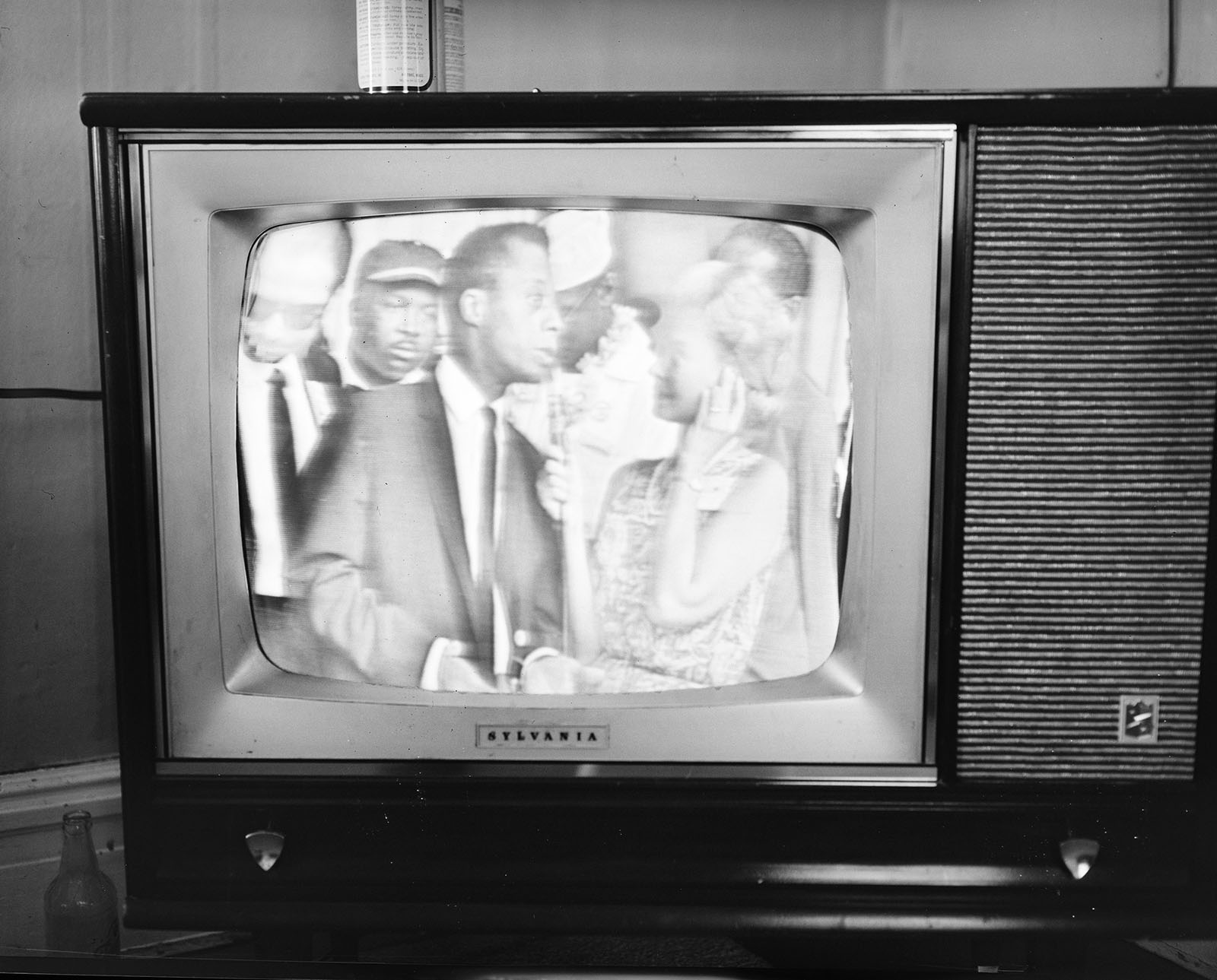
 

Charles "Teenie" Harris (American, 1908-1998) 'A television playing coverage of James Baldwin at the March for Freedom and Jobs in Washington, DC' 1963/2025


Charles “Teenie” Harris (American, 1908-1998)
A television playing coverage of James Baldwin at the March for Freedom and Jobs in Washington, DC
1963/2025
Gelatin silver print
National Gallery of Art, Washington


African American artist Charles “Teenie” Harris, captured “the essence of daily African-American life in the 20th century. For more than 40 years, Harris – as lead photographer of the influential Pittsburgh Courier newspaper – took almost 80,000 pictures of people from all walks: presidents, housewives, sports stars, babies, civil rights leaders and even cross-dressing drag queens.”

See the Art Blart posting on the exhibition Teenie Harris, Photographer: An American Story at Carnegie Museum of Art, Pittsburgh, Pennsylvania, October 2011 – April 2012
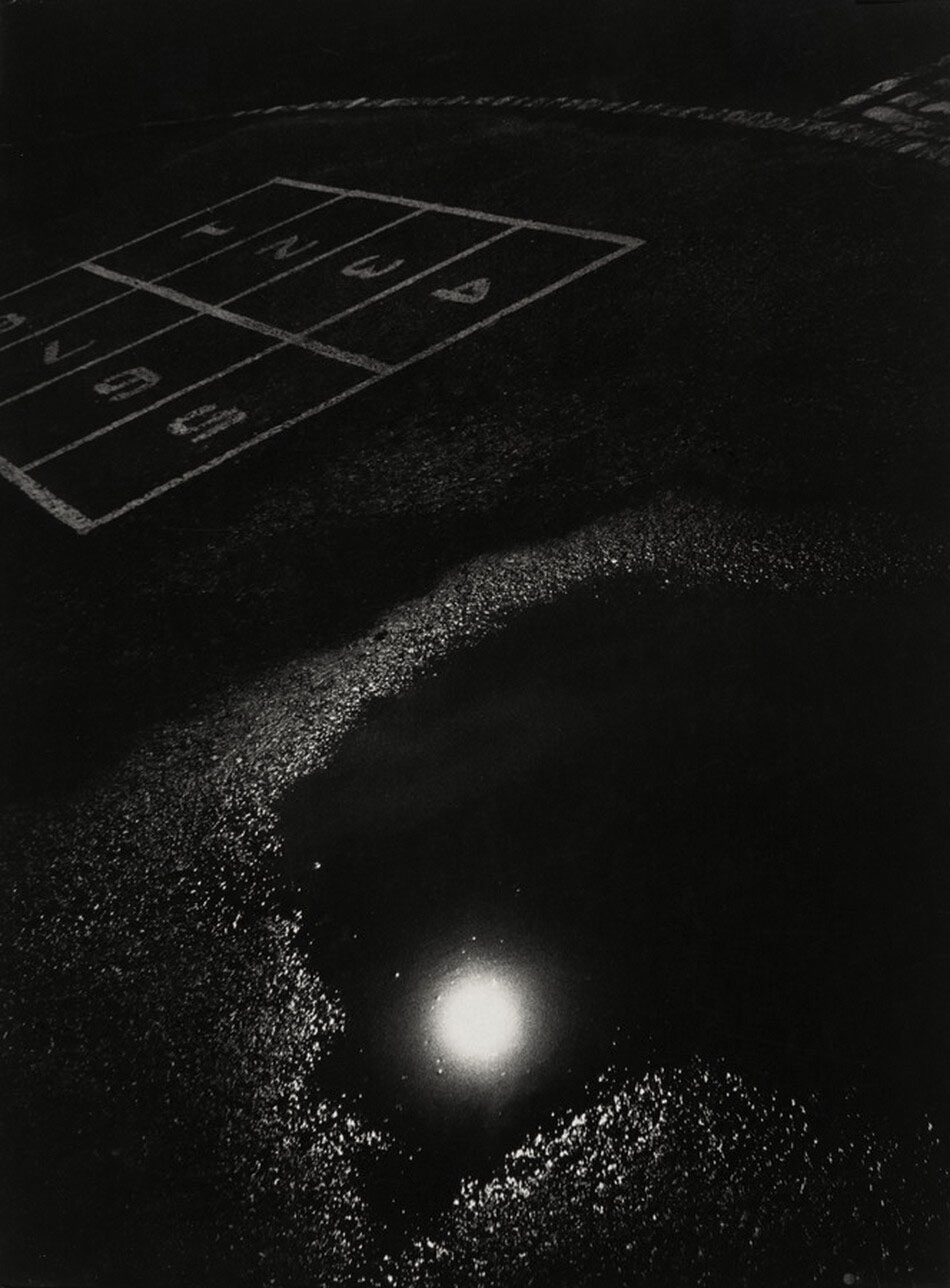
 

Louis Draper (American, 1935-2002) 'Untitled (Playground)' from the "Playground Series" c. 1965


Louis Draper (American, 1935-2002)
Untitled (Playground) from the “Playground Series”
c. 1965
Gelatin silver print
25.7 x 19.1cm (10 1/8 x 7 1/2 in.)
National Gallery of Art, Washington
Alfred H. Moses and Fern M. Schad Fund
© Draper Preservation Trust, Nell D. Winston, Trustee


Louis Draper (American, 1935-2002)

In 1953, he enrolled at the historically Black college in Petersburg, which was not far from his hometown of Richmond. He began working as a reporter for the school paper, and during that time Draper’s father, who was an amateur photographer himself, sent Louis his first camera. By 1956, Draper’s title at the paper had changed to cameraman. After his revelatory first experience with The Family of Man, a catalogue that accompanied the 1955 photography exhibition at The Museum of Modern Art, he decided to leave school during his final semester and move to New York City to become a photographer. Once there, Draper enrolled in a photography workshop led by Harold Feinstein, and was mentored by W. Eugene Smith, one of the most prominent American photojournalists.

In 1963, the same year as the March on Washington, Draper became a founding member of the Kamoinge Workshop, a New York-based collective of Black photographers. Workshop members met regularly to discuss one another’s work, produced group portfolios, exhibitions, and publications, and mentored young people all over the city. Draper emerged as one of the group’s teachers, which began his long career as an educator (he worked in numerous teaching roles, including at Pratt Institute and Mercer County Community College). The collective aimed to “create the kind of images of our communities that spoke of the truth we’d witnessed and that countered the untruths we’d all seen in mainline publications.” Kamoinge members wanted to avoid the racial stereotypes prevalent in the media and the violence that was typical of journalistic coverage of the Civil Rights Movement, working instead to represent their communities in a positive light.

Jane Pierce, Carl Jacobs Foundation Research Assistant, Department of Photography, “Louis Draper,” on the MoMA website 2021 [Online] Cited 27/11/2025
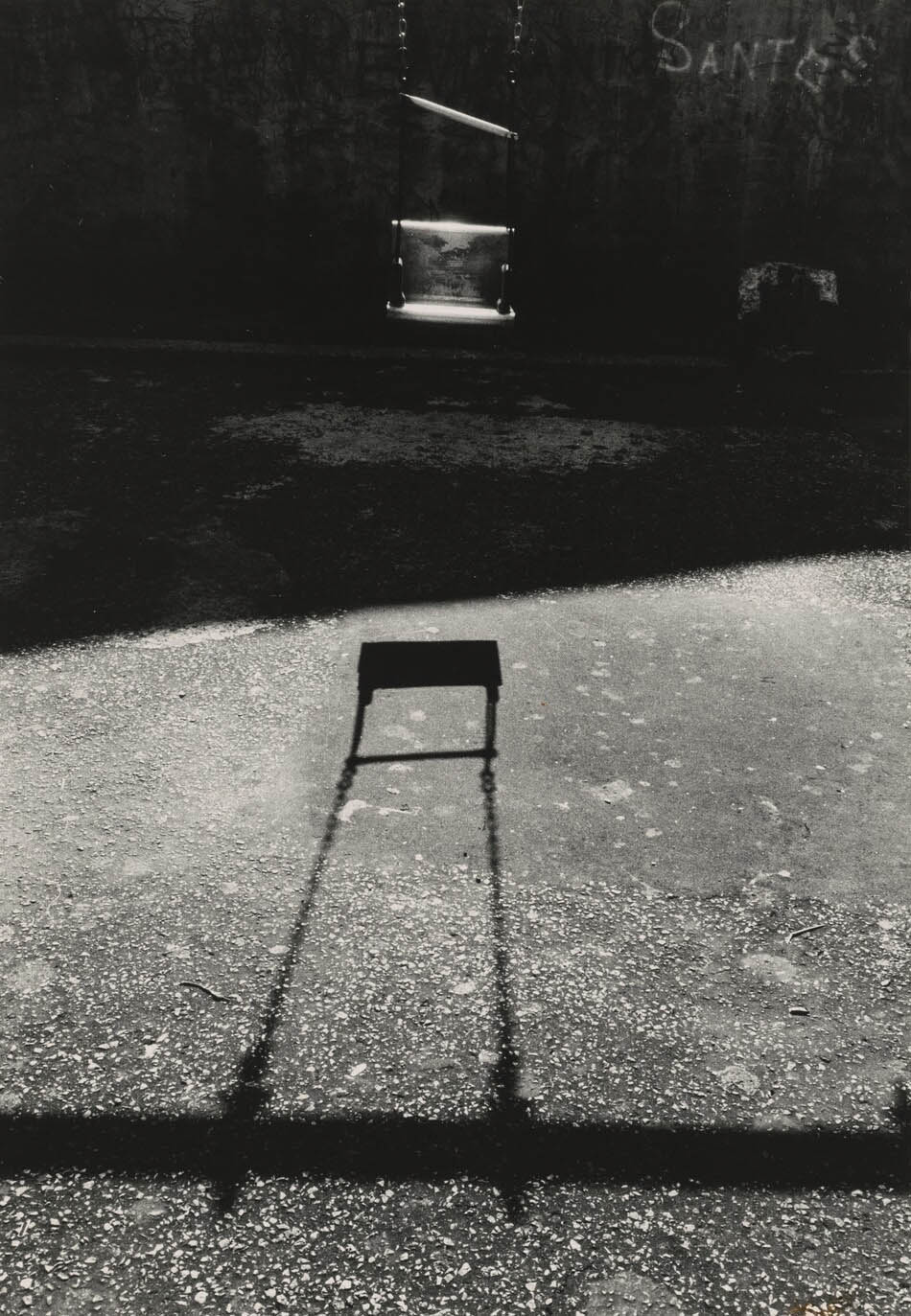
 

Louis Draper (American, 1935-2002) 'Untitled (Santos)' from the "Playground Series" 1967


Louis Draper (American, 1935-2002)
Untitled (Santos) from the “Playground Series”
1967
Gelatin silver print
32.9 x 22.8cm (12 15/16 x 9 in.)
National Gallery of Art, Washington
Pepita Milmore Memorial Fund
© Draper Preservation Trust, Nell D. Winston, Trustee
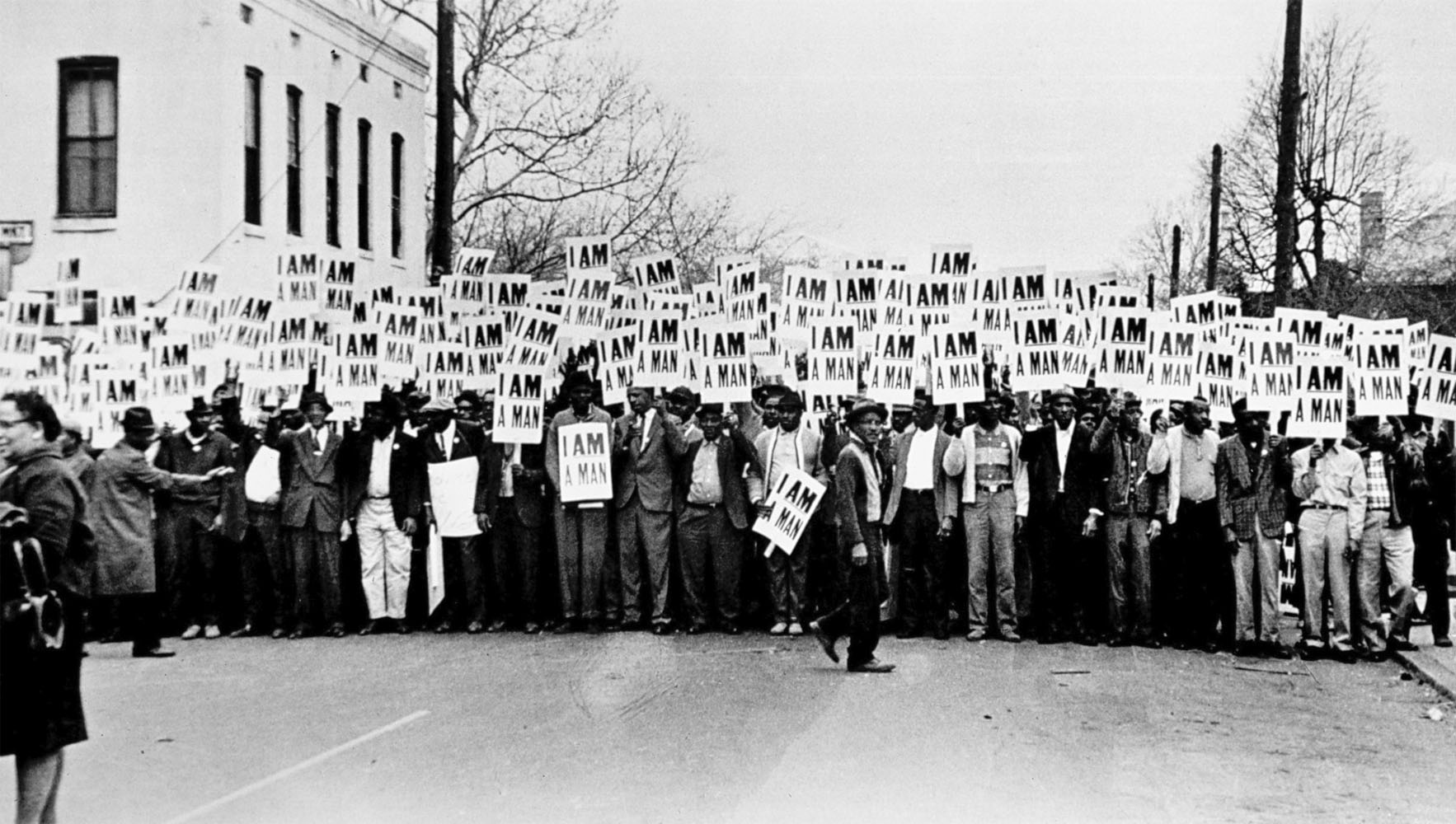
 

Ernest C. Withers (American, 1922-2007) 'I Am A Man, Sanitation Workers Strike, Memphis, Tennessee' March 28, 1968


Ernest C. Withers (American, 1922-2007)
I Am A Man, Sanitation Workers Strike, Memphis, Tennessee
March 28, 1968
Gelatin silver print
19 × 32.6cm (7 1/2 × 12 13/16 in.)
National Gallery of Art, Washington
Alfred H. Moses and Fern M. Schad Fund


Ernest C. Withers (American, 1922-2007)

Photojournalist Ernest C. Withers was born on August 7, 1922, in Memphis, Tennessee. Withers got his start as a military photographer while serving in the South Pacific during World War II. Upon returning to a segregated Memphis after the war, Withers chose photography as his profession.

In the 1950s, Withers helped spur the movement for equal rights with a self-published photo pamphlet on the Emmitt Till murder. Over the next two decades, Withers formed close personal relationships with Dr. Martin Luther King, Jr., Medgar Evers, and James Meredith. Withers’s pictures of key civil rights events from the Montgomery Bus Boycott to the strike of Memphis sanitation workers are historic. Indeed, Withers was often the only photographer to record these scenes, many of which were not yet of interest to the mainstream press.

Withers photographed more than the southern Civil Rights Movement. Whether Jackie Robinson, Willie Mays, and other Negro League baseball players, or those jazz and blues musicians who frequented Memphis’ Beale Street, Withers photographed the famous and not-so famous. Withers’s collection includes pictures of early performances of Elvis Presley, B.B. King, Ike and Tina Turner, Ray Charles, and Aretha Franklin.

Text from The History Makers website
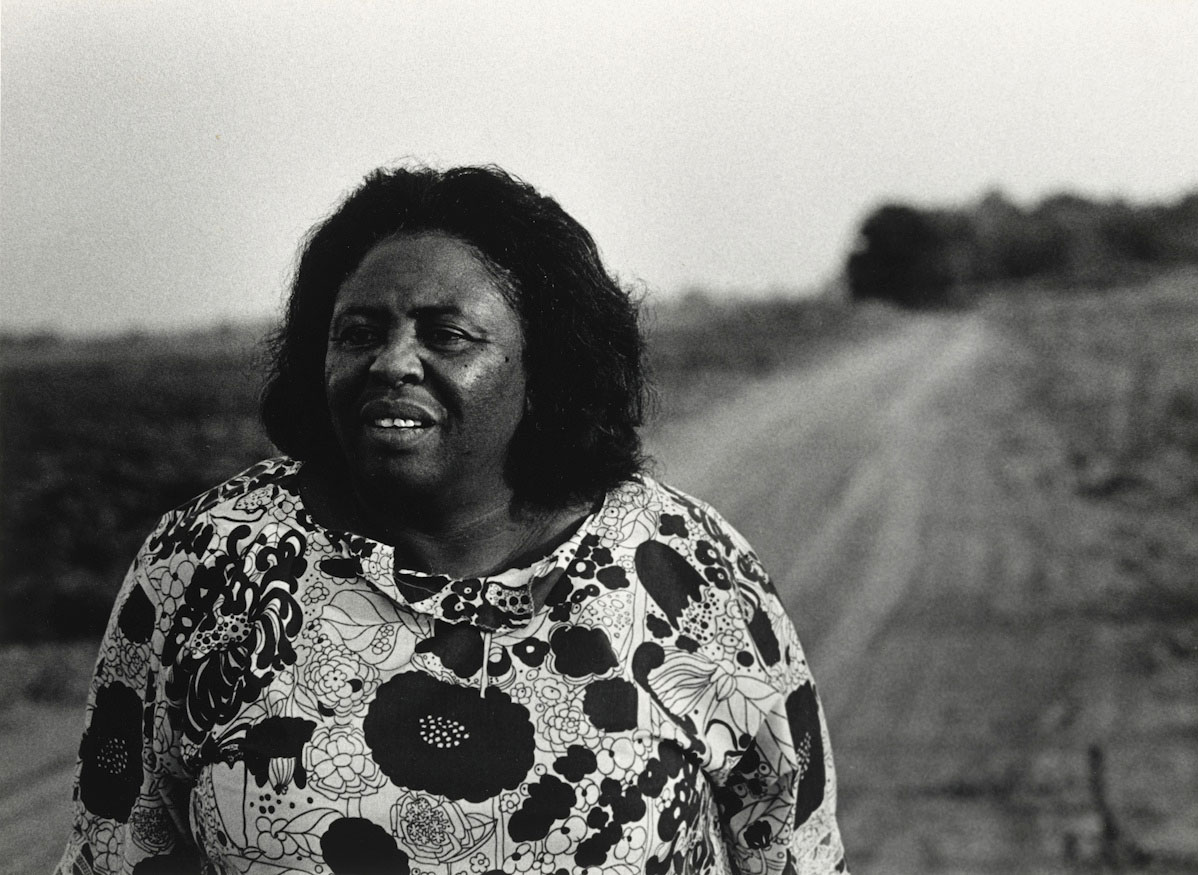
 

Louis Draper (American, 1935-2002) 'Fannie Lou Hamer, Mississippi' July 1971


Louis Draper (American, 1935-2002)
Fannie Lou Hamer, Mississippi
July 1971
Gelatin silver print
21.5 x 29.2cm (8 7/16 x 11 1/2 in.)
National Gallery of Art, Washington
Alfred H. Moses and Fern M. Schad Fund
© Draper Preservation Trust, Nell D. Winston, Trustee


First-of-Its-Kind Exhibition Opening at the National Gallery of Art Explores Photography’s Role in the Black Arts Movement

Never-before-seen photographs alongside images of cultural icons reveal the medium’s central role during a pivotal era of creative expression

The National Gallery of Art presents Photography and the Black Arts Movement, 1955-1985, an exhibition exploring the work of American and Afro-Atlantic diaspora photographers in developing and fostering a distinctly Black visual culture and identity. The first presentation to investigate photography’s role in the Black Arts Movement, a creative initiative comparable to the Harlem Renaissance in its scope and impact, which evolved concurrently to the civil rights and international freedom movements, the exhibition reveals how artists developed strategies to engage communities and encourage self-representation in media, laying a foundation for socially engaged art practices that continue today. Photography and the Black Arts Movement will be on view in the West Building from September 21, 2025, to January 11, 2026, before traveling to California and Mississippi.

Photography and the Black Arts Movement brings together approximately 150 works spanning photography, video, collage, painting, installation, and other photo-based media, some of which have rarely or never been on view. Among the over 100 artists included in the exhibition are Billy Abernathy (Fundi), Romare Bearden, Dawoud Bey, Frank Bowling, Kwame Brathwaite, Roy DeCarava, Louis Draper, David C. Driskell, Charles Gaines, James E. Hinton, Danny Lyon, Gordon Parks, Adrian Piper, Nellie Mae Rowe, Betye Saar, Raymond Saunders, Jamel Shabazz, Lorna Simpson, and Carrie Mae Weems.

This expansive selection of work showcases the broad cultural exchange between writers, musicians, photographers, filmmakers, and other visual artists of many backgrounds, who came together during the turbulent decades of the mid-20th century to grapple with social and political changes, the pursuit of civil rights, and the emergence of the Pan-African movement through art. The exhibition also includes art from Africa, the Caribbean, and Great Britain to contextualize the global engagement with the social, political, and cultural ideas that propelled the Black Arts Movement.

“Working on many fronts – literature, poetry, jazz and new music, painting, sculpture, performance, film, and photography – African American artists associated with the Black Arts Movement expressed and exchanged their ideas through publications, organisations, museums, galleries, community centres, theatres, murals, street art, and emerging academic programs. While focusing on African American photography in the United States, the exhibition also includes works by artists from many communities to consider the extensive interchange between North American artists and the African diaspora. The exhibition looks at the important connections between America’s focus on civil rights and the emerging cultural movements that enriched the dialog,” said Philip Brookman, cocurator of the exhibition and consulting curator of the department of photographs at the National Gallery of Art.

“Photography and photographic images were crucial in defining and giving expression to the Black Arts Movement and the civil rights movement. By merging the social concerns and aesthetics of the period, Black artists and photographers were defining a Black aesthetic while expanding conversations around community building and public history,” said Deborah Willis, guest cocurator, university professor and chair of the department of photography and imaging at the Tisch School of the Arts and founding director of the Center for Black Visual Culture at New York University. “The artists and their subjects helped to preserve compelling visual responses to this turbulent time and their images reflect their pride and determination.”

About the Exhibition

The exhibition draws significantly from the National Gallery’s collection – including more than 50 newly acquired works by Dawoud Bey, Kwame Brathwaite, Louis Draper, Ray Francis, Jeanne Moutoussamy-Ashe, Horace Ové, Jamel Shabazz, Malik Sidibé, Ming Smith, and Carrie Mae Weems, among others – and from lenders in the US, Great Britain, and Canada. Photography and the Black Arts Movement, 1955–1985 presents the cultural and political titans of the era, including civil rights leaders, artists, and musicians, as well as everyday people, scenes of daily life, and fashion and commercial photography. Structured around nine thematic sections – including explorations of the self, community, fashion and beauty, the media, and ritual – the exhibition weaves a holistic vision of the period and its cultural impact.

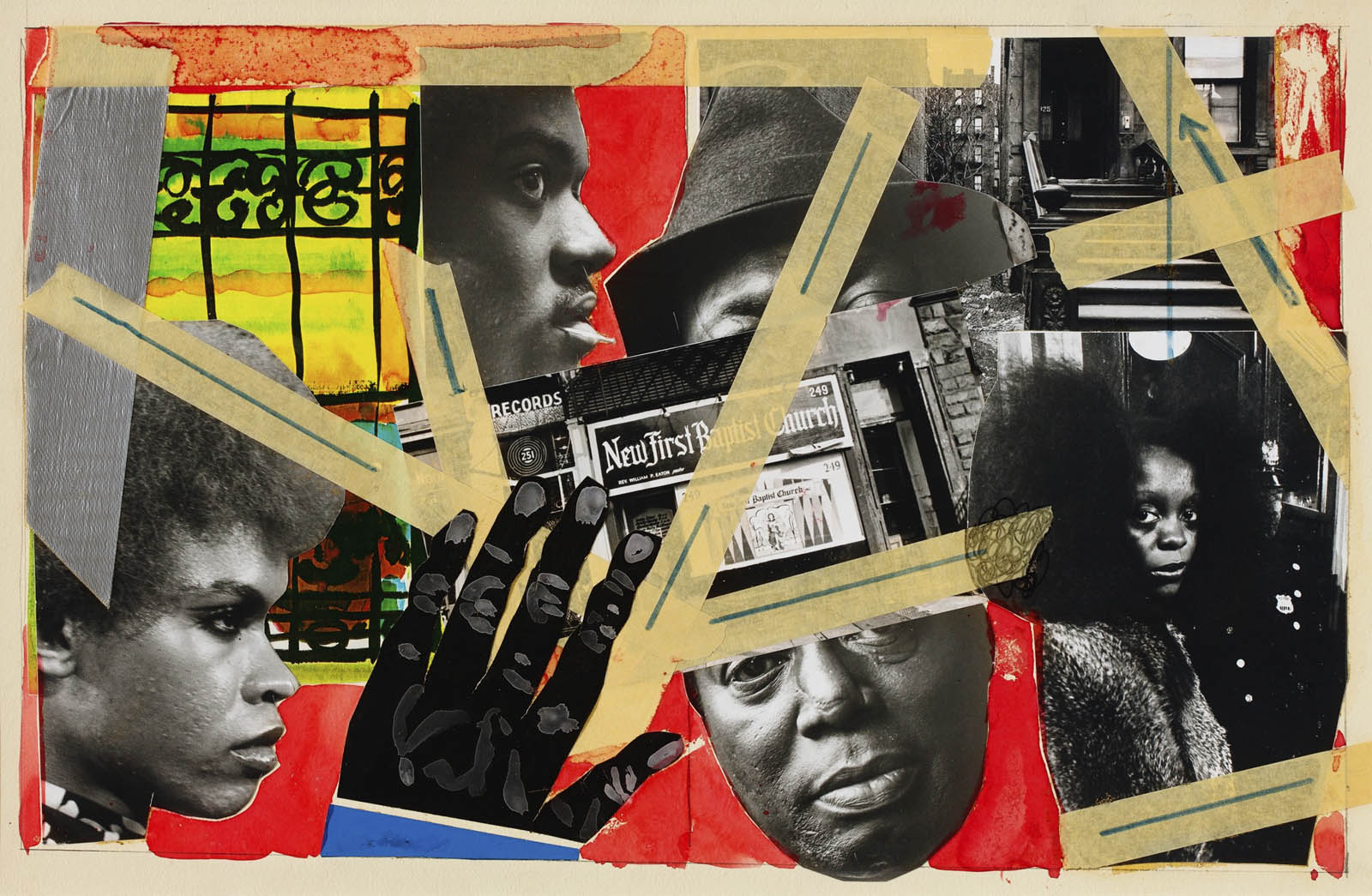
Among the works in the first section of the exhibition is a collage by Romare Bearden, 110th Street Harlem Blues (1972). A dynamic mixture of painted paper and photographs, the work illustrates the ongoing vitality of Harlem’s community, echoing the vibrancy and social content of the Harlem Renaissance, which Bearden was exposed to in his early life. Moving into the section titled Picturing the Self / Picturing the Movement, self-portraits by Coreen Simpson, Alex Harsley, and Barkley L. Hendricks underscore a central theme of the exhibition: artists asserting their presence within the broader narrative of the movement and the era, along with the importance of self-representation in their art. A highlight of Representing the Community – a section filled with everyday scenes of people at work and at rest – is Ralph Arnold’s Soul Box (1969), a mixed-media assemblage of found objects and collage, serving as a time capsule that captures stories of the Black Arts Movement.

Photographs were a crucial tool used to communicate the events of the civil rights movement to a national audience. Artists and news media understood the power of photographs to address inequality and advocate for civil and human rights, and some works in the exhibition are by photojournalists who captured the speeches, marches, and sit-ins that defined the era. A rarely seen 1965 photograph by Frank Dandridge captures Dr. Martin Luther King Jr. watching President Lyndon B. Johnson’s televised address following the Selma, Alabama, marches – events that would ultimately lead to the passage of the Voting Rights Act. Depicting Dr. King in a private, domestic moment, the image underscores not just the personal gravity of the moment but the television’s growing role in shaping public understanding of the era’s historic events. One of several works featured in the In the News section, it reflects how photographers responded to the shifting landscape of news media – from still photography to the rise of television.

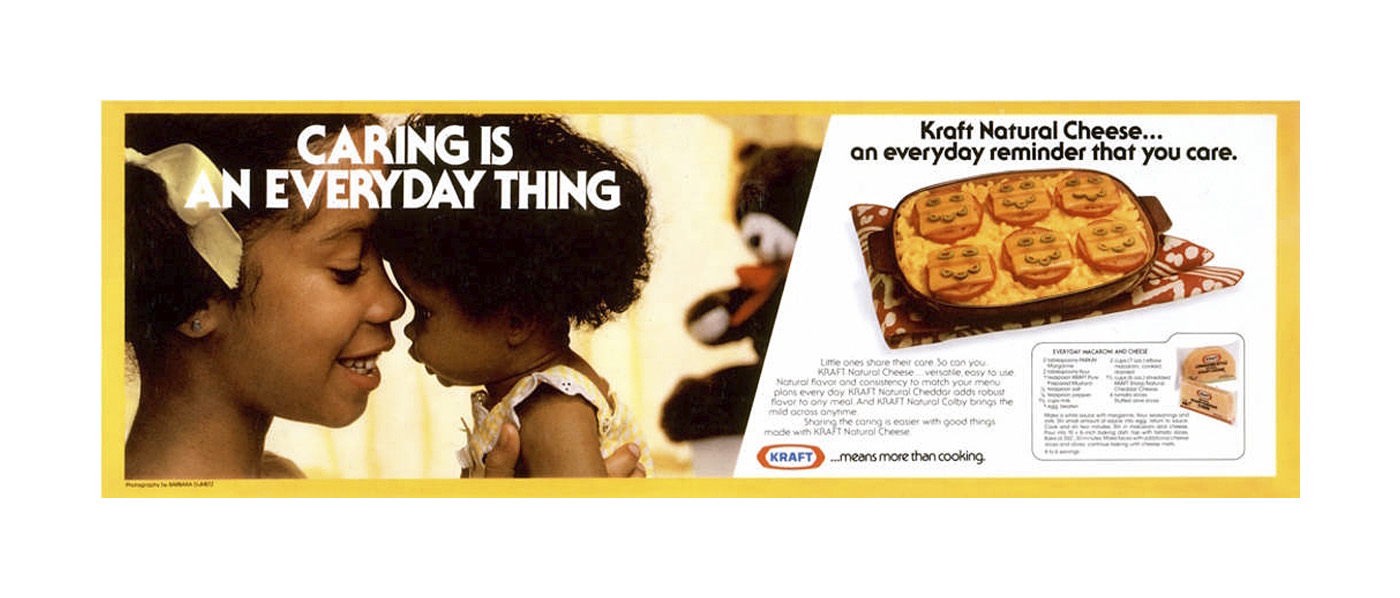
The Black Arts Movement was instrumental in reshaping fashion, advertising, and media as tools of self-representation and cultural empowerment. A Kraft Foods advertisement (1977), photographed by Barbara DuMetz and featuring a young Black girl holding her doll, illustrates how the movement prompted advertisers to engage Black audiences more thoughtfully by hiring Black photographers and models in their campaigns. It is among the highlights of the Fashioning the Self section, along with an editorial photograph by Kwame Brathwaite, the photographer who helped coin the “Black is Beautiful” movement, and many depictions of women in beauty shops, showing the importance of these spaces to forming identity and community.

The exhibition’s concluding section, Transformations in Art and Culture, reflects a shift in the Black Arts Movement’s purpose – from its earlier focus on civil rights to a younger generation’s engagement with more historical and conceptual ideas, while still drawing on the movement’s visual language. Highlights include multimedia and time-based works by Ulysses Jenkins, Charles Gaines, and Lorna Simpson, which explore new and experimental ways to explore Black identity.

Exhibition Publication

Published in association with Yale University Press, the fully illustrated catalog accompanying the exhibition examines the vital role photography played in the evolution of the Black Arts Movement, which brought together writers, filmmakers, and artists as they explored ways of using art to advance civil rights and Black self-determination. Edited by Philip Brookman and Deborah Willis, with a preface by Angela Y. Davis and contributions by Makeda Best, Margo Natalie Crawford, Romi Crawford, Cheryl Finley, Sarah Lewis, and Audrey Sands, this book reveals how photographs operated across art, community building, journalism, and political messaging to contribute to the development of a distinctly Black art and culture. Essays by these distinguished scholars focus on topics such as women and the movement, community, activism, and Black photojournalism, and consider the complex connections between American artists and the African diaspora, and the dynamic interchange of Pan-African ideas that propelled the movement.

Press release from the National Gallery of Art
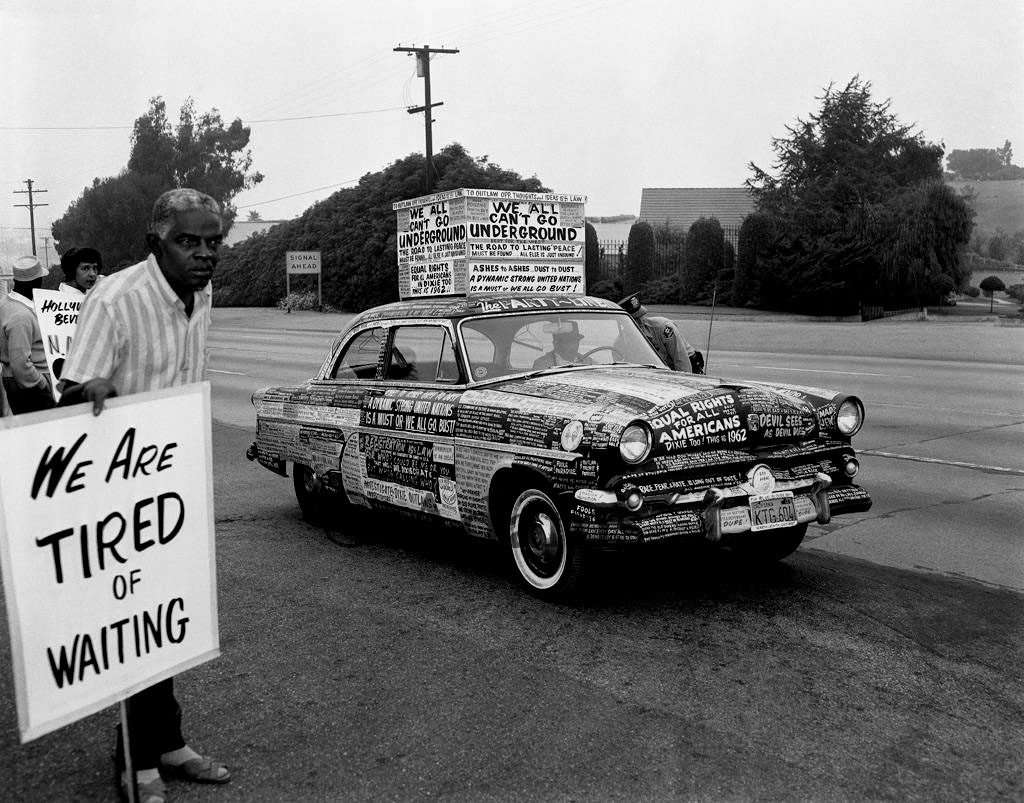
 

Harry Adams (American, 1918-1985) 'Protest Car, Los Angeles' 1962, printed 2024


Harry Adams (American, 1918-1985)
Protest Car, Los Angeles
1962, printed 2024
Inkjet print
27.5 x 35.4 cm (11 x 13 15/16 in.)
Tom & Ethel Bradley Center, California State University, Northridge, Harry Adams Archive
© Harry Adams. All rights reserved and protected.
Courtesy of the Tom & Ethel Bradley Center at California State University, Northridge

Harry Adams (American, 1918-1985)

Harry Adams, also known as “One Shot Harry,” was one of the best-known members of the Los Angeles African American community. Having access to the city’s inner circle, he became known for his images of politicians, entertainers, and society figures. Adams worked as a freelancer for the California Eagle and Los Angeles Sentinel for 35 years and had a number of churches and lawyers as clients. His collection is particularly rich in its documentation of African American social life including images of social organisations, churches, schools, civil rights organisations, protests and cultural events. …

The collection of images for the period 1950-1985 is rich in its depiction of the unique lives of African Americans in and around the Los Angeles area. There are many images of important black political leaders, such as Dr. Martin Luther King, Jr., Rev. Ralph Abernathy, Malcolm X, and many others.

Text from the California State University Northridge website
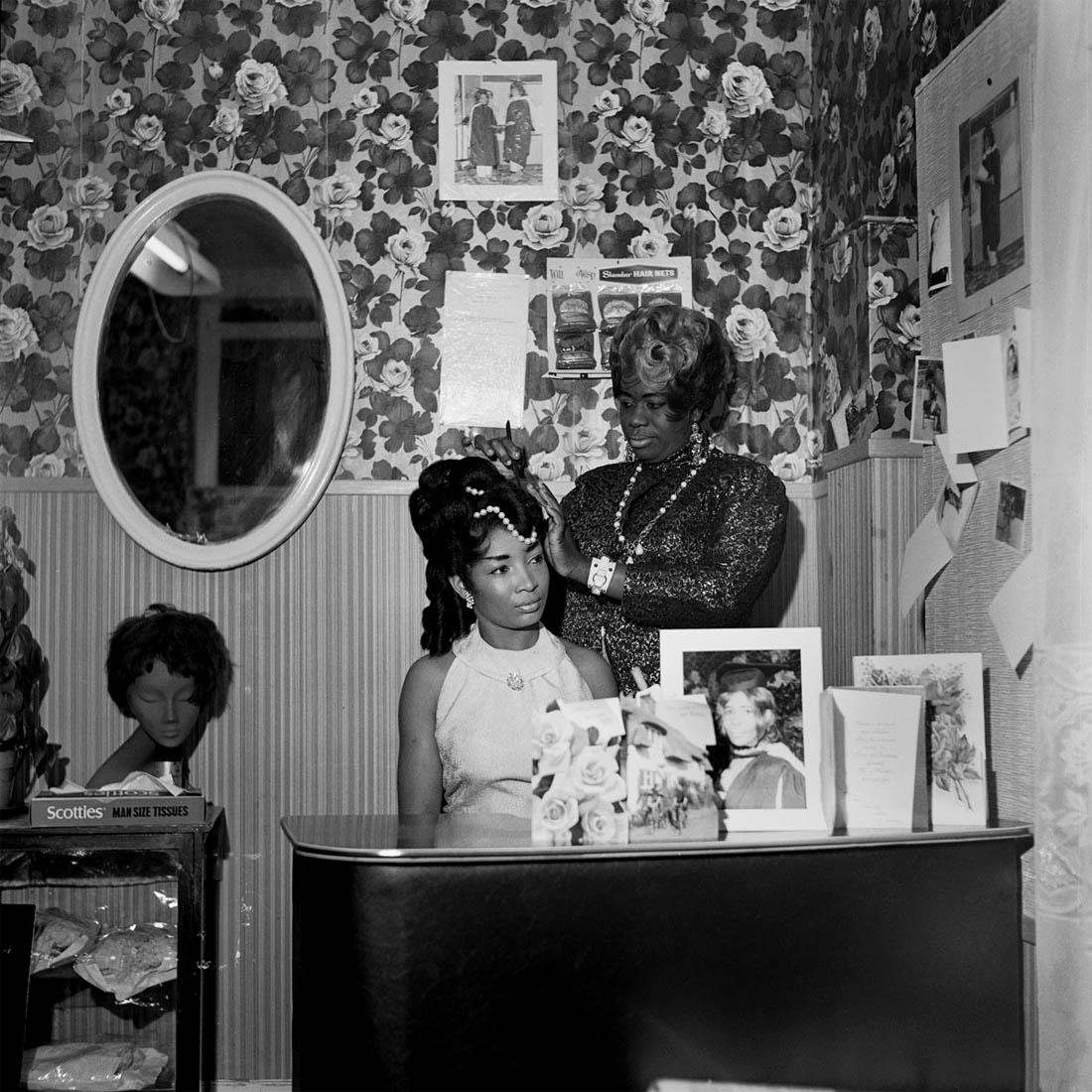
 

Raphael Albert (British born Grenada, 1939-2009) 'Beauty Salon, London' c. 1960s


Raphael Albert (British born Grenada, 1939-2009)
Beauty Salon, London
c. 1960s
Gelatin silver print
27.3 x 27.3cm (10 3/4 x 10 3/4 in.)
Collection of Autograph, London
© Raphael Albert


Between the late 1960s and the early 1990s, the cultural promoter, entrepreneur and photographer Raphael Albert organised and documented numerous black beauty pageants and other cultural events in London. His long and successful career as a promoter and chronicler of pageants included the establishment of Miss Black and Beautiful, Miss West Indies in Great Britain, and Miss Grenada.

These competitions celebrated the global ‘Black is Beautiful’ aesthetic in a local west London context: paired with the obligatory bathing costumes and high heels, Albert’s contestants often sported large Afro hairstyles, inventing and reinventing themselves on stage while articulating a particular and multifaceted black femininity as part of a widely contested and ambiguous cultural performance.

Text from the Autograph website
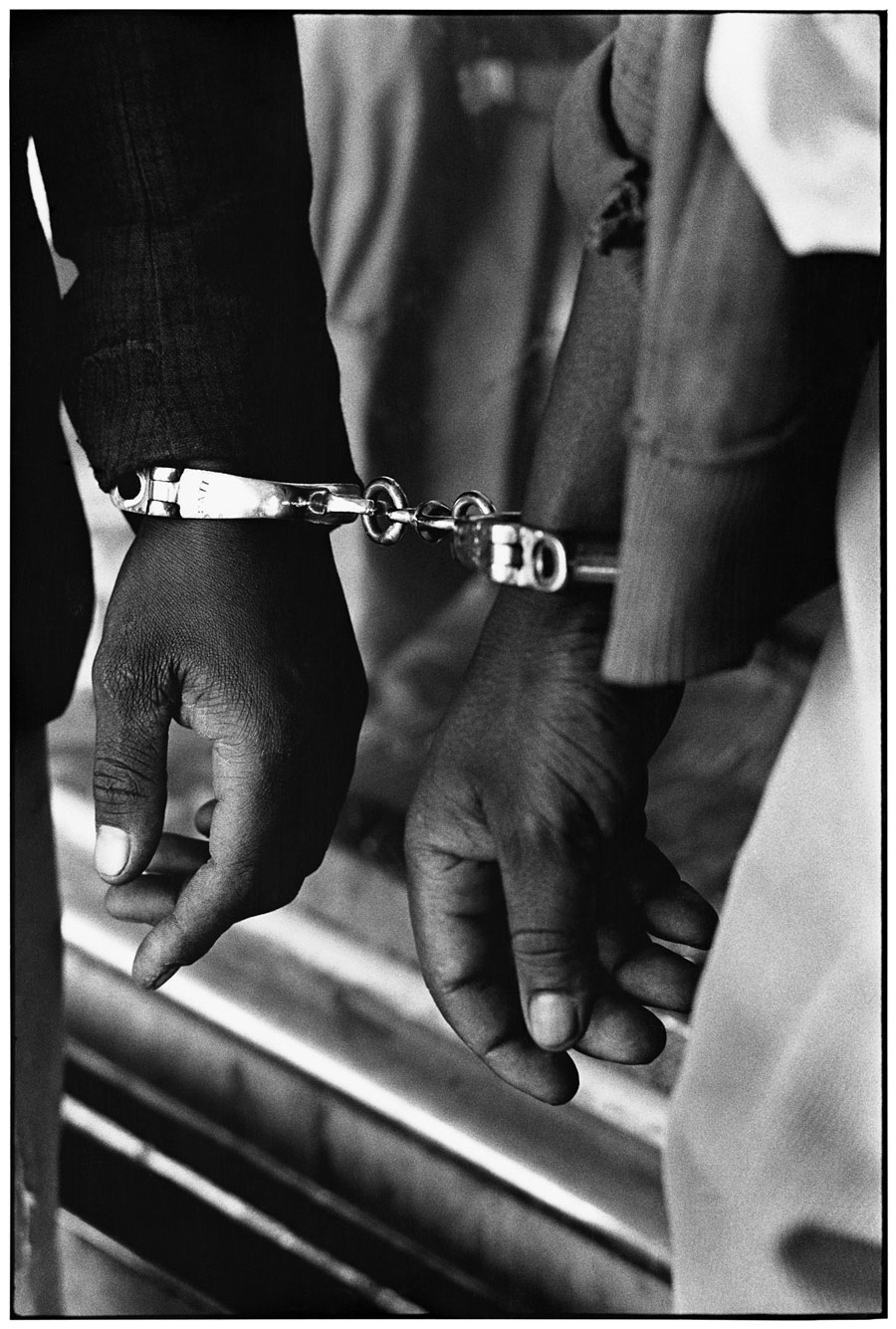
 

Ernest Cole (South African, 1940-1990) 'Handcuffed blacks were arrested for being in white area illegally' 1960-1966


Ernest Cole (South African, 1940-1990)
Handcuffed blacks were arrested for being in white area illegally
1960-1966
Gelatin silver print
Image/sheet: 24.5 x 16.5 cm (9 5/8 x 6 1/2 in.)
National Gallery of Art, Washington
Alfred H. Moses and Fern M. Schad Fund, 2022.102.2
© Ernest Cole / Magnum Photos

~ Exhibition: ‘Ernest Cole: House of Bondage’ at Foam, Amsterdam, January – June 2023
~ Text/Exhibition: “Ernest Cole: Journeys through Photojournalism, Social Documentary Photography and Art,” on the exhibition ‘Ernest Cole Photographer’ at The Fowler Museum at UCLA, Los Angeles, April – July 2013
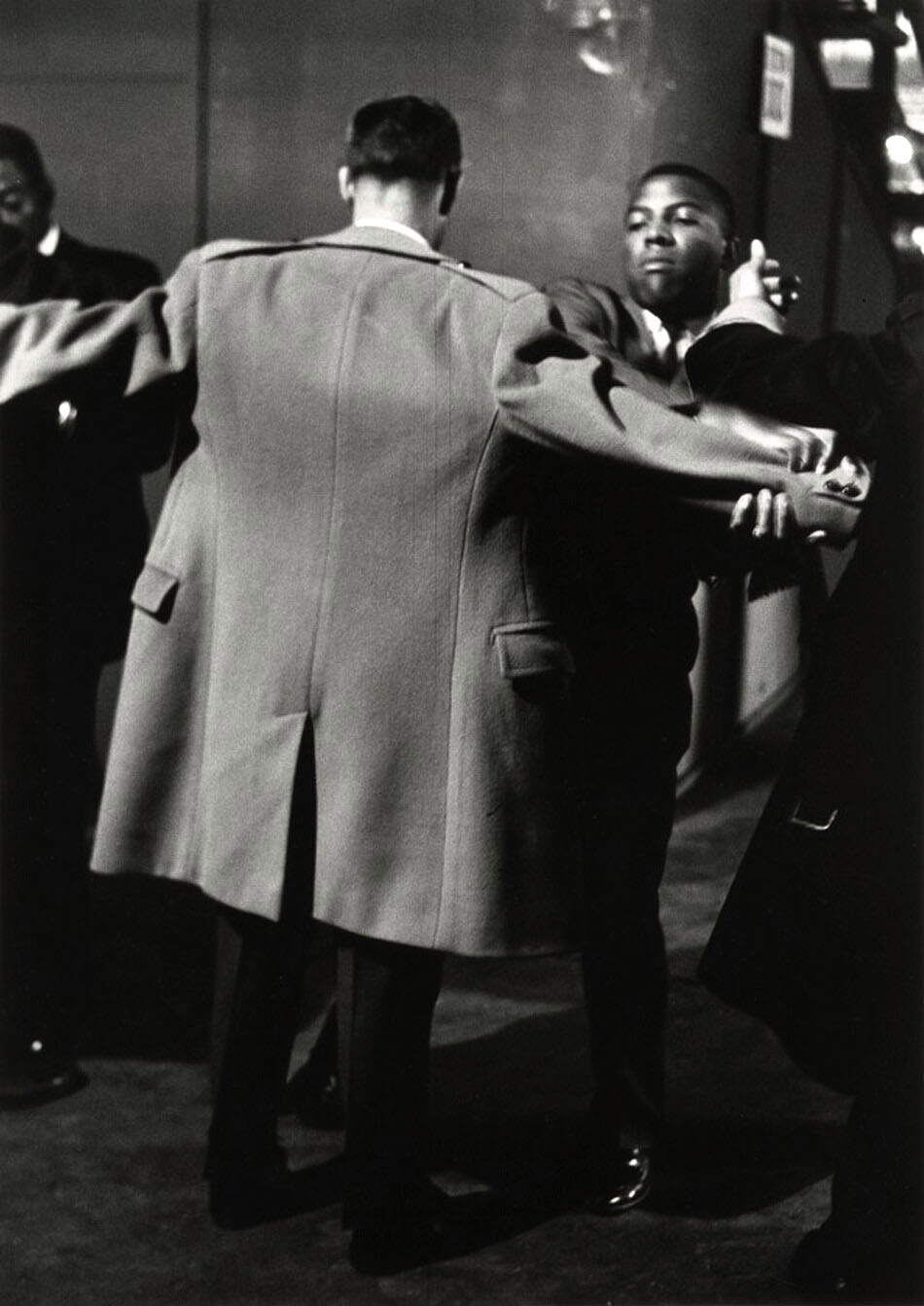
 

Gordon Parks (American, 1912-2006) 'Newsman Being Frisked at Muslim Rally in Chicago' 1963, printed 1997


Gordon Parks (American, 1912-2006)
Newsman Being Frisked at Muslim Rally in Chicago
1963, printed 1997
Gelatin silver print
47.3 x 33.7cm (18 5/8 x 13 1/4 in.)
National Gallery of Art, Washington
Corcoran Collection (The Gordon Parks Collection)


~ Text/Exhibition: “Visible Man / Invisible photographer” on the exhibition Gordon Parks: Stokely Carmichael and Black Power at the Museum of Fine Arts, Houston, October 2022 – January 2023
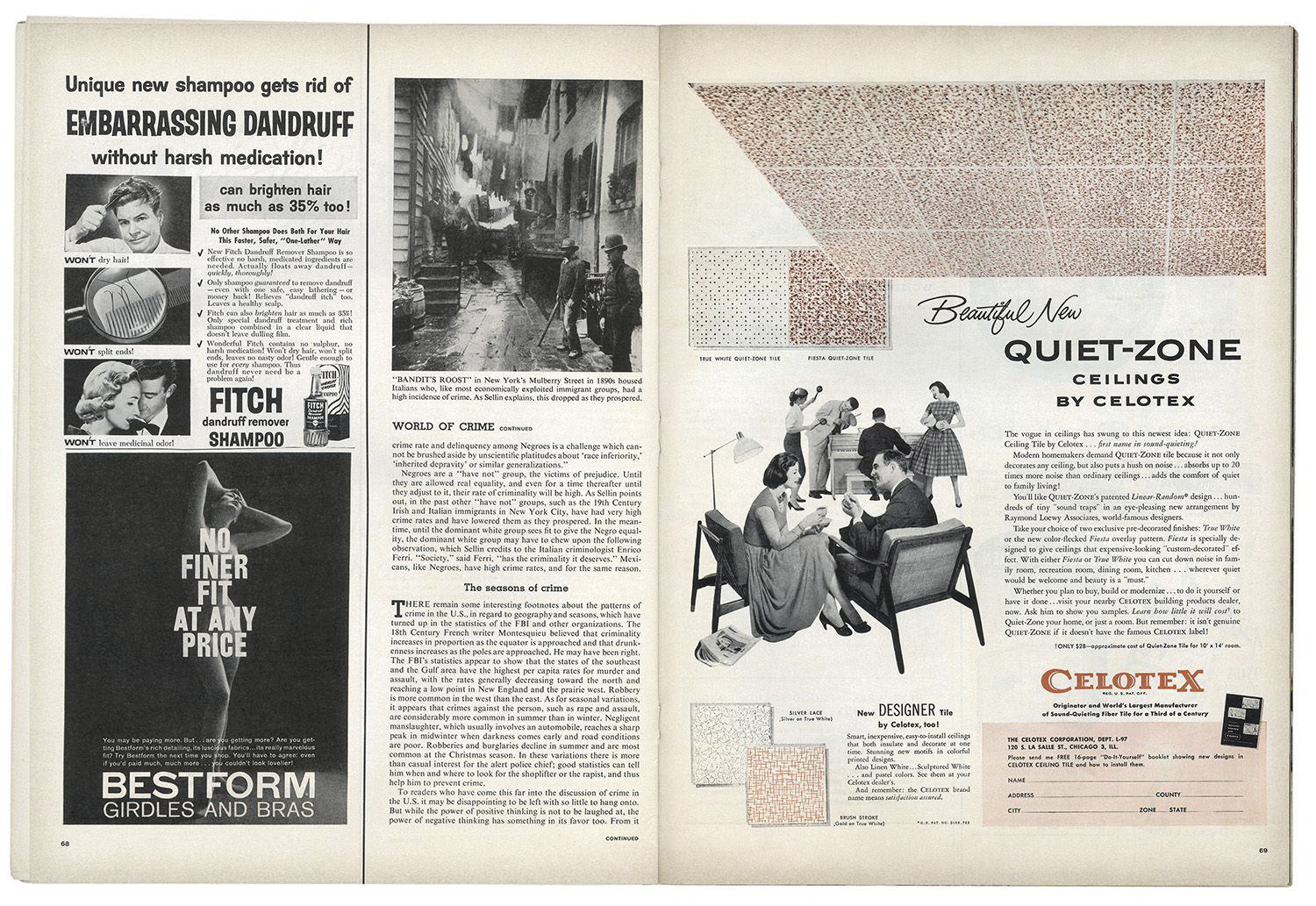
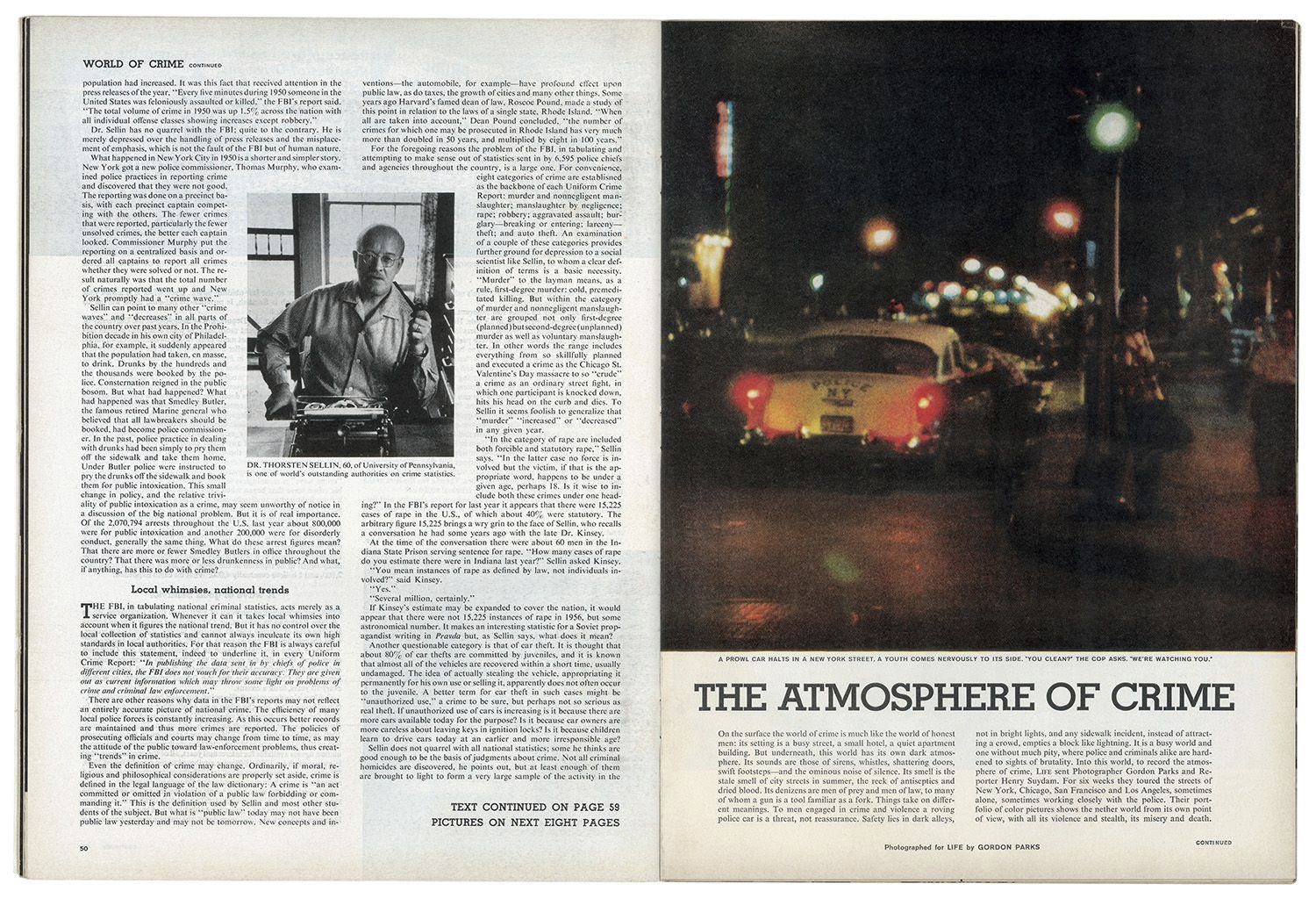
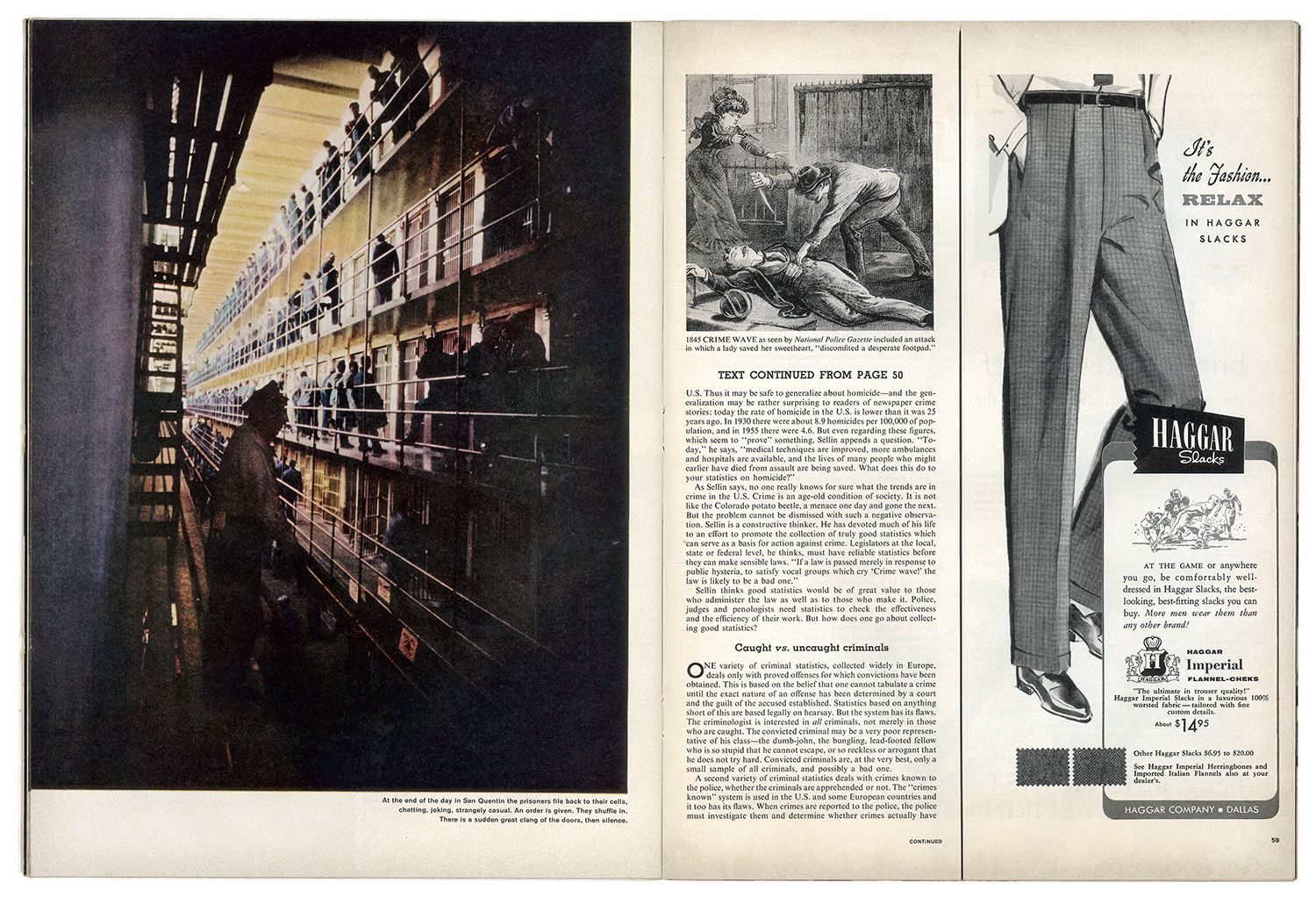
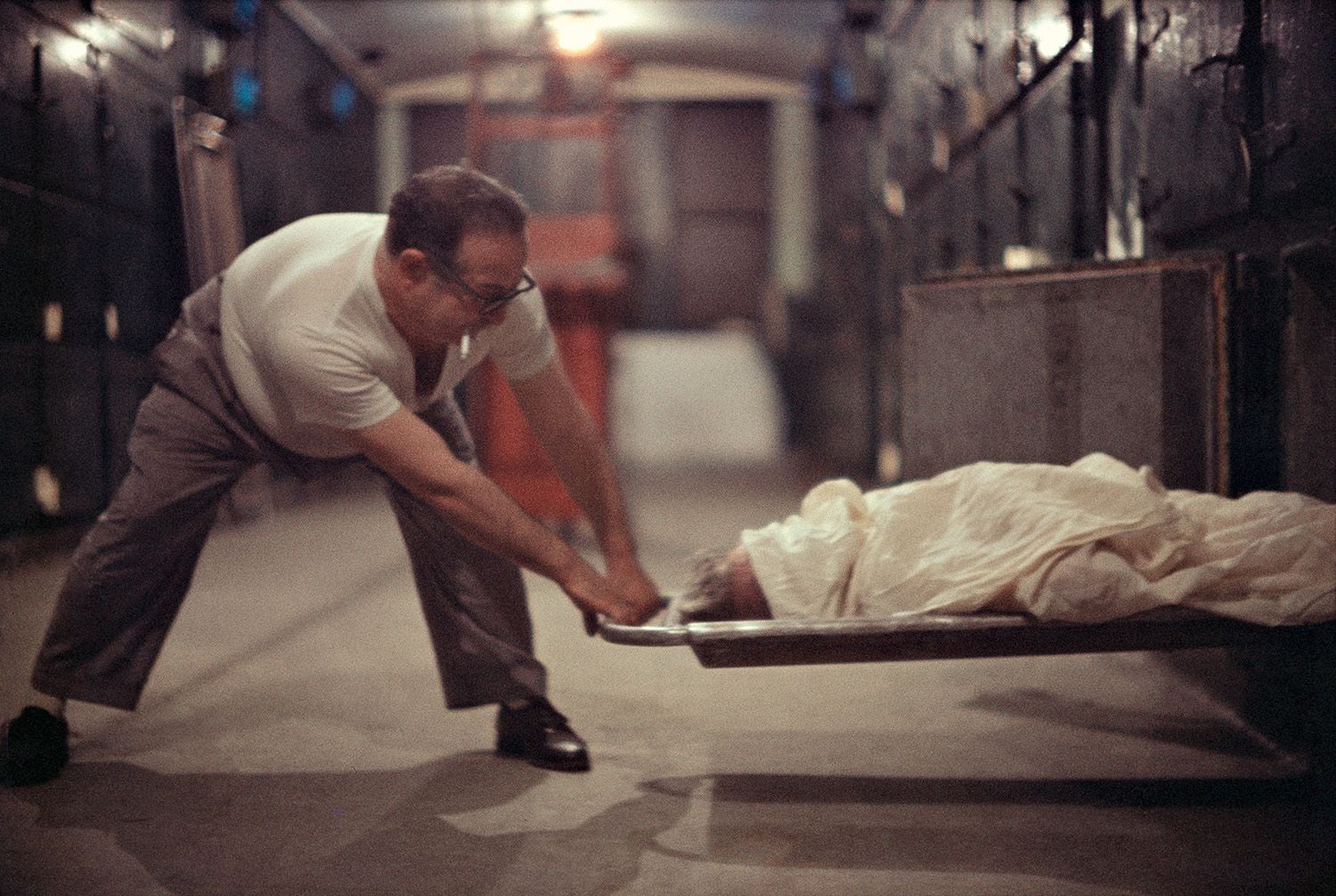
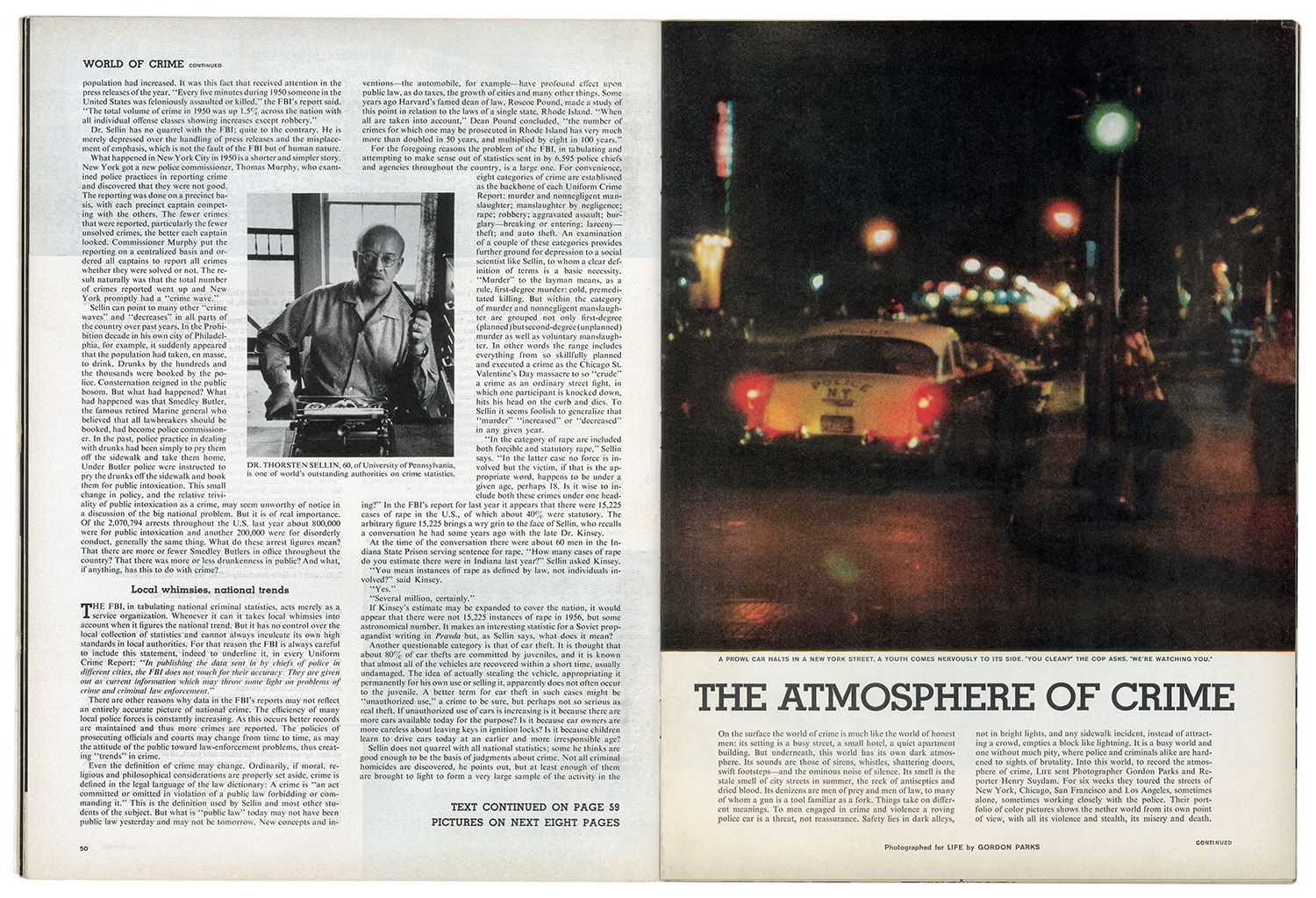
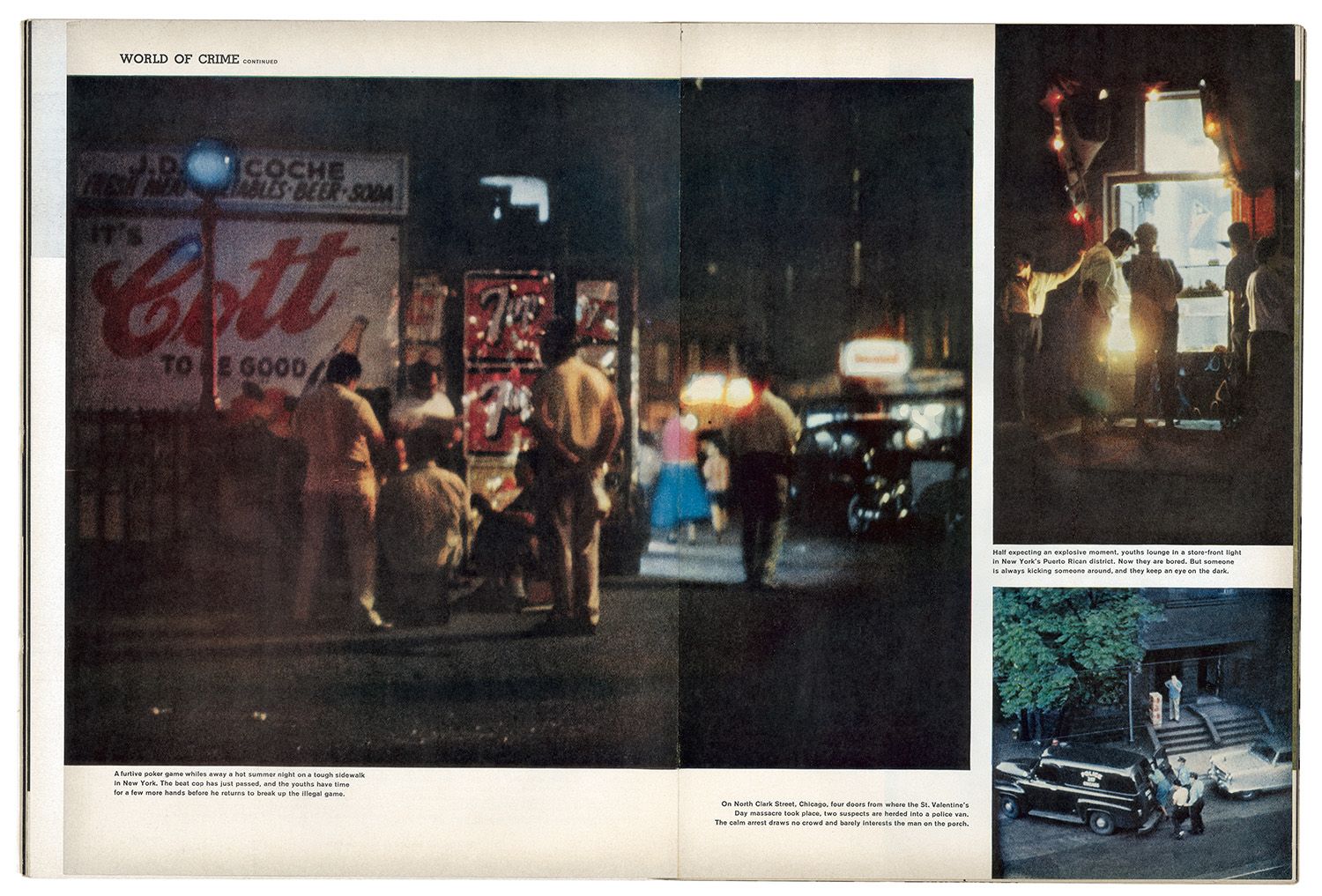
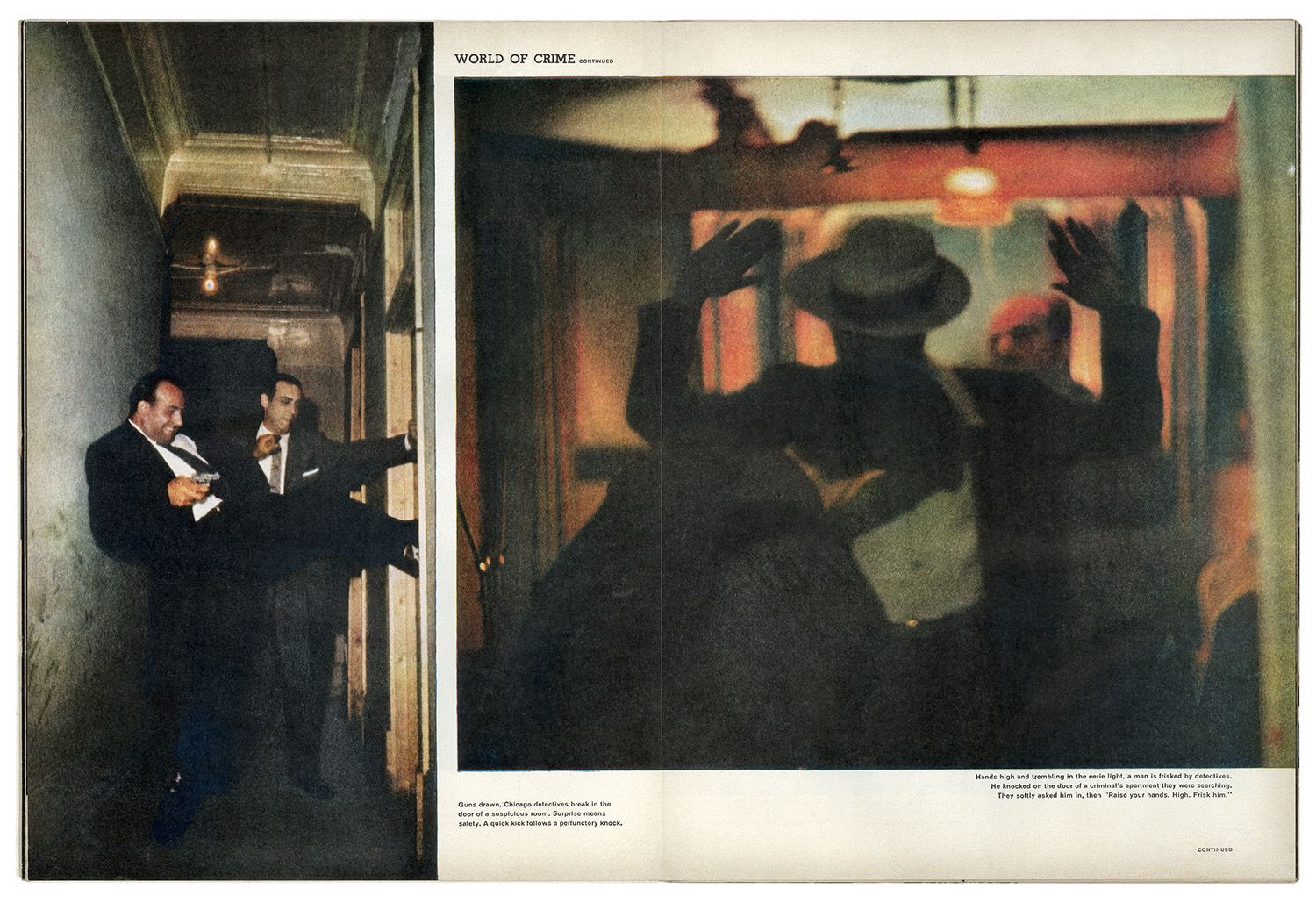
~ Exhibition: ‘Gordon Parks and “The Atmosphere of Crime”‘ at the Museum of Modern Art (MoMA), New York, February 2021 ongoing
~ Photographs: Gordon Parks “The Atmosphere of Crime”, 1957 February 2020
~ Exhibition: ‘Gordon Parks: The Flávio Story’ at the J. Paul Getty Museum, Getty Center, Los Angeles, July – November 2019
~ Exhibition: ‘Gordon Parks: Back to Fort Scott’ at the Museum of Fine Arts, Boston, January – September 2015
~ Exhibition: ‘Gordon Parks: Segregation Story’ at the High Museum of Art, Atlanta, November 2014 – June 2015
~ Exhibition: ‘Gordon Parks: The Making of an Argument’ at The New Orleans Museum of Art, September 2013 – January 2014
~ Exhibition: ‘Gordon Parks: 100 Moments’ at New York State Museum, January – May 2013
~ Exhibition: ‘Gordon Parks: Centennial’ at Jenkins Johnson Gallery, San Francisco, February – April 2013
~ Exhibition: ‘Bare Witness: Photographs by Gordon Parks’ at the Phoenix Art Museum, August – November 2011


Herman Howard (American, 1942-1980) 'Sweet as a Peach, Harlem, New York City' 1963


Herman Howard (American, 1942-1980)
Sweet as a Peach, Harlem, New York City
1963
Gelatin silver print
16 x 23.1cm (6 5/16 x 9 1/8 in.)
National Gallery of Art, Washington
Alfred H. Moses and Fern M. Schad Fund


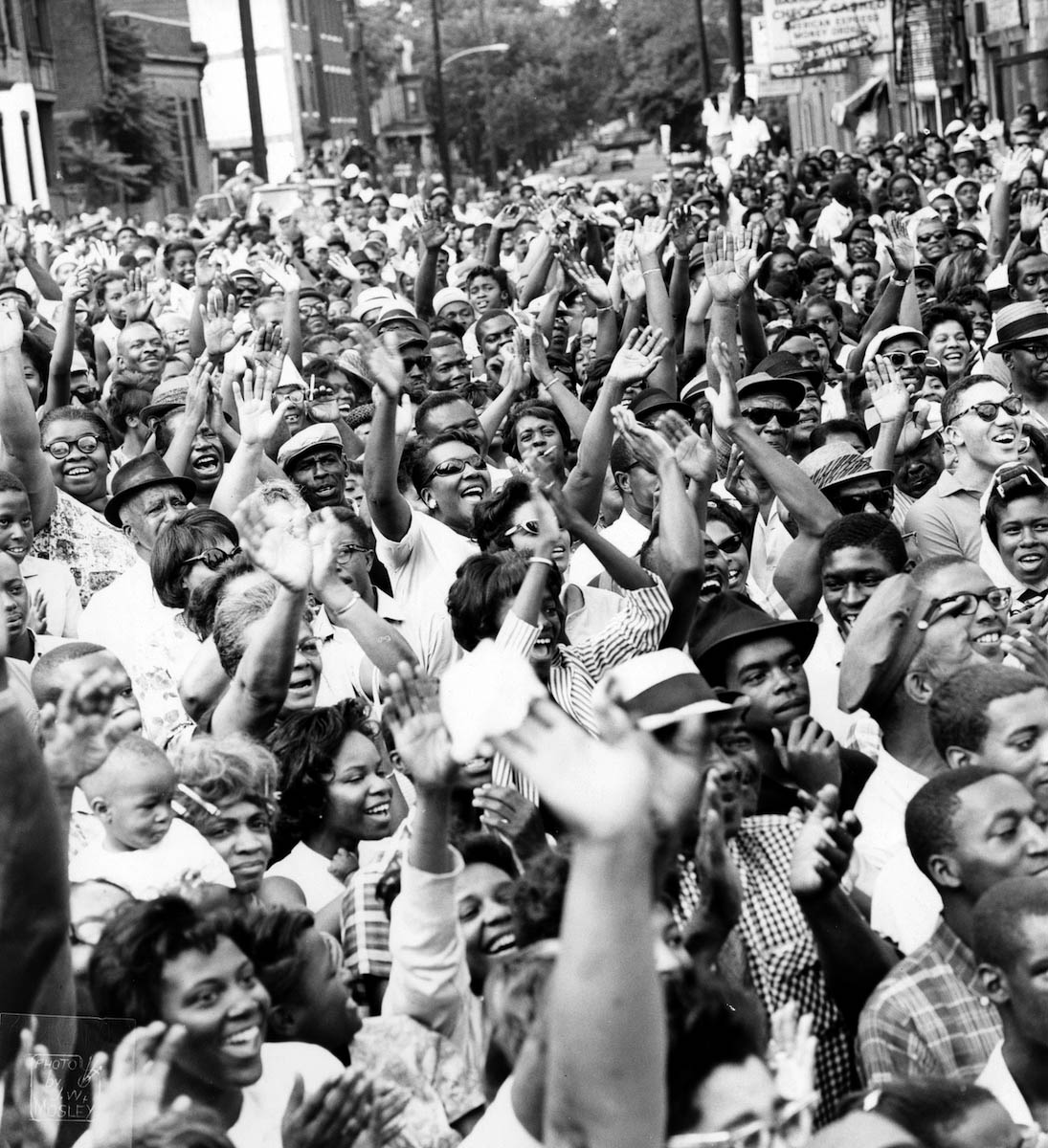
John W. Mosley (American, 1907-1969) 'View of the crowd as Dr. Martin Luther King Jr. addresses civil rights demonstrators at 40th Street and Lancaster Avenue, Philadelphia' August 3, 1965


John W. Mosley (American, 1907-1969)
View of the crowd as Dr. Martin Luther King Jr. addresses civil rights demonstrators at 40th Street and Lancaster Avenue, Philadelphia
August 3, 1965
Gelatin silver print
24.8 x 19.7cm (9 3/4 x 7 3/4 in.)
John W. Mosley Photograph Collection, Charles L. Blockson Afro-American Collection, Temple University Libraries


John W. Mosley (American, 1907-1969)

John W. Mosley (May 19, 1907 – October 1, 1969) was a self-taught photojournalist who extensively documented the everyday activities of the African-American community in Philadelphia, Pennsylvania, for more than 30 years, a period including both World War II and the civil rights movement. His work was published widely in newspapers and magazines including The Philadelphia Tribune, The Pittsburgh Courier and Jet magazine.

Mosley has been called a “cultural warrior” for preserving a record of African-American life in Philadelphia and Pennsylvania, one which combats “negative stereotypes and false interpretations of African-American history and culture”. …

Mosley flourished in his career as a photographer from the 1930s to the 1960s. He was known to photograph as many as four events a day, seven days a week. He traveled around Philadelphia on public transit, carrying his cameras and other equipment.

Mosley shot in black and white film. He used a large-format Graflex Speed Graphic camera. and a medium-format Rollieflex.

Proud of his heritage, Mosley chose to portray the black community positively at family, social, and cultural events that were part of daily life. He photographed individuals and families at weddings, picnics, churches, segregated beaches, sporting events, concerts, galas, and civil rights protests. During a time of racism and segregation, he emphasised the achievements of black celebrities, athletes, and political leaders.

Text from the Wikipedia website


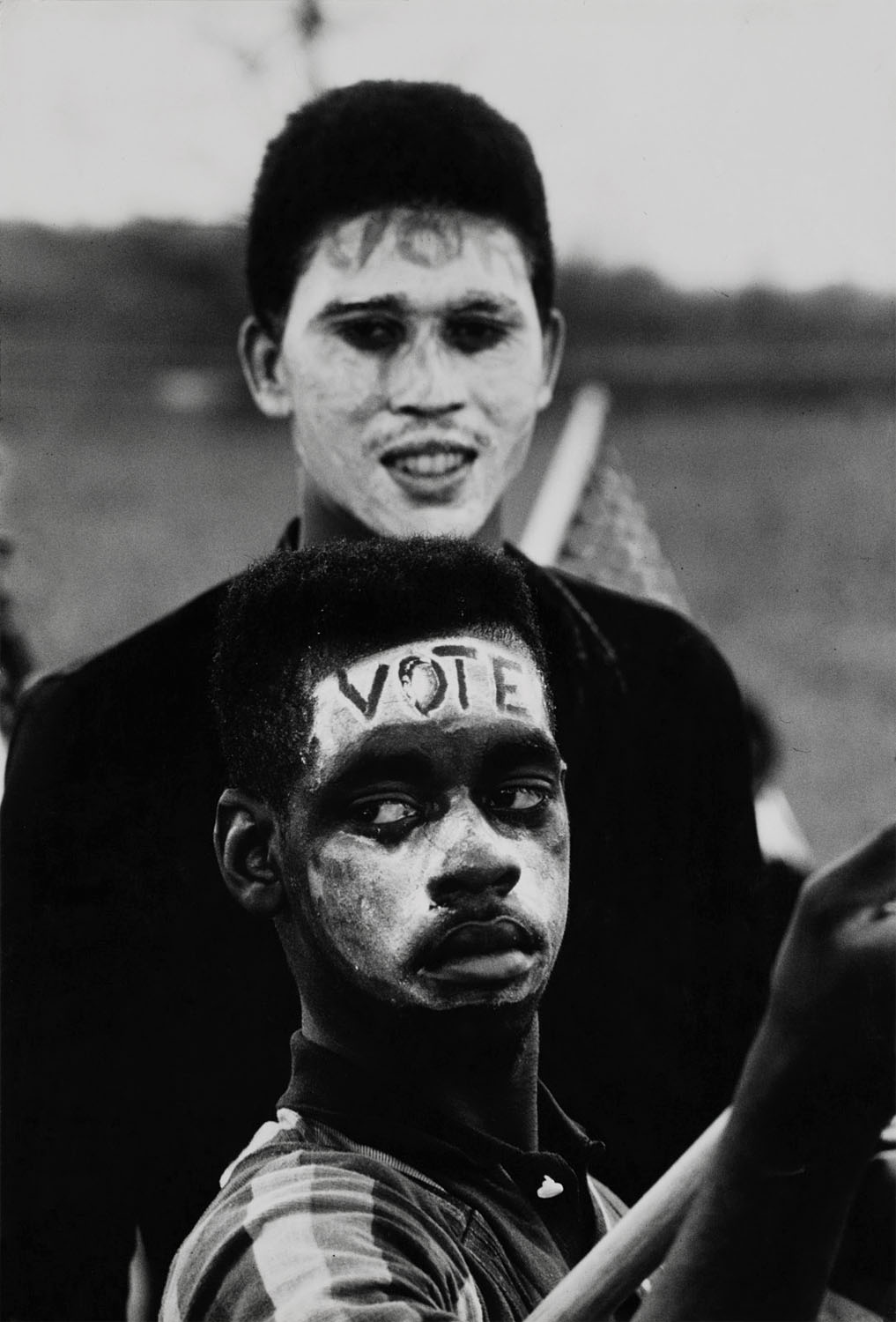
Moneta Sleet Jr. (American, 1926-1996) 'Two Teenaged Supporters of the Selma March' 1965, printed c. 1970


Moneta Sleet Jr. (American, 1926-1996)
Two Teenaged Supporters of the Selma March
1965, printed c. 1970
Gelatin silver print
43.3 x 29.5cm (17 1/16 x 11 5/8 in.)
Saint Louis Art Museum, Gift of the Johnson Publishing Company
© Johnson Publishing Company Archive. Courtesy J. Paul Getty Trust and Smithsonian National Museum of African American History and Culture. Made possible by the Ford Foundation, J. Paul Getty Trust, John D. and Catherine T. MacArthur Foundation, The Andrew W. Mellon Foundation, and Smithsonian Institution


“During the Civil Rights Movement, I was a participant just like everybody else. I just happened to be there with my camera, and I felt and firmly believed that my mission was to photograph and show the side of it that was the right side.”

~ Moneta Sleet Jr.


During Sleet’s 41 years at Ebony, he worked by Martin Luther King Jr.’s side for 13 years, capturing historical moments of the civil rights movement.

Sleet began working for Ebony magazine in 1955. Over the next 41 years, he captured photos of young Muhammad Ali, Dizzy Gillespie, Stevie Wonder, Emperor Haile Selassie I, Jomo Kenyatta, former ambassador Andrew Young in a blue leather jacket and jeans in his office at the United Nations, Ghana’s Kwame Nkrumah, Liberia’s William Tubman and Billie Holiday. He gained the affection and esteem of many civil rights leaders, many of whom called on him by name. When Coretta Scott King found out that no African American photographers had been assigned to cover her husband’s funeral service, she demanded that Sleet be a part of the press pool. If he was not, she threatened to bar all photographers from the service. Besides his photo of Coretta Scott King, he also captured grieving widow Betty Shabazz at the funeral of her husband Malcolm X.

Text from the Wikipedia website


Kwame Brathwaite (American, 1938-2023) 'Untitled (Charles Peaker Street Speaker, head of ANPM, after Carlos Cooks passed away, on 125th Street)' c. 1968, printed 2016


Kwame Brathwaite (American, 1938-2023)
Untitled (Charles Peaker Street Speaker, head of ANPM, after Carlos Cooks passed away, on 125th Street)
c. 1968, printed 2016
Inkjet print
37.2 x 37.2 cm (14 5/8 x 14 5/8 in.)
National Gallery of Art, Washington
Alfred H. Moses and Fern M. Schad Fund and Pepita Milmore Memorial Fund


Kwame Brathwaite (American, 1938-2023)

Black Is Beautiful.

From Marcus Garvey to the Black Panther Party, these three words powered the political dreams and material possibilities of generations of Black people living in the United States. Over the course of seven decades, the recently departed photographer Kwame Brathwaite constructed a glorious visual lexicon to articulate a Pan-Africanist argument. Whether through his rhythmic documentation of the jazz scene in Harlem and the Bronx, or his cofounding of the African Jazz-Art Society & Studios (AJASS), Brathwaite positioned photography at the nexus of Black artistic, political, and musical expression. Moving between concert halls and boxing rings, portrait studios and protest movement scenes – his Hasselblad in hand – Brathwaite chronicled self-determination and creativity that celebrated Blackness in all of its forms. Each of his photographs brims with bombastic flare and undeniable elegance. Their narrative potential is still transfixing.

“Black Is Beautiful was my directive,” Brathwaite said. “It was a time when people were protesting injustices related to race, class, and human rights around the globe. I focused on perfecting my craft so that I could use my gift to inspire thought, relay ideas, and tell stories of our struggle, our work, our liberation…. Oppression still exists today, and we must keep fighting, keep on pushing until we are free. A luta continua, a vitória é certa – the struggle continues, victory is certain.”

Oluremi C. Onabanjo, Esther Adler, Roxana Marcoci, Marilyn Nance, David Hartt, Michael Famighetti. “Remembering Kwame Brathwaite (1938-2023),” on the MoMA website, Dec 26, 2023 [Online] Cited 30/11/2025


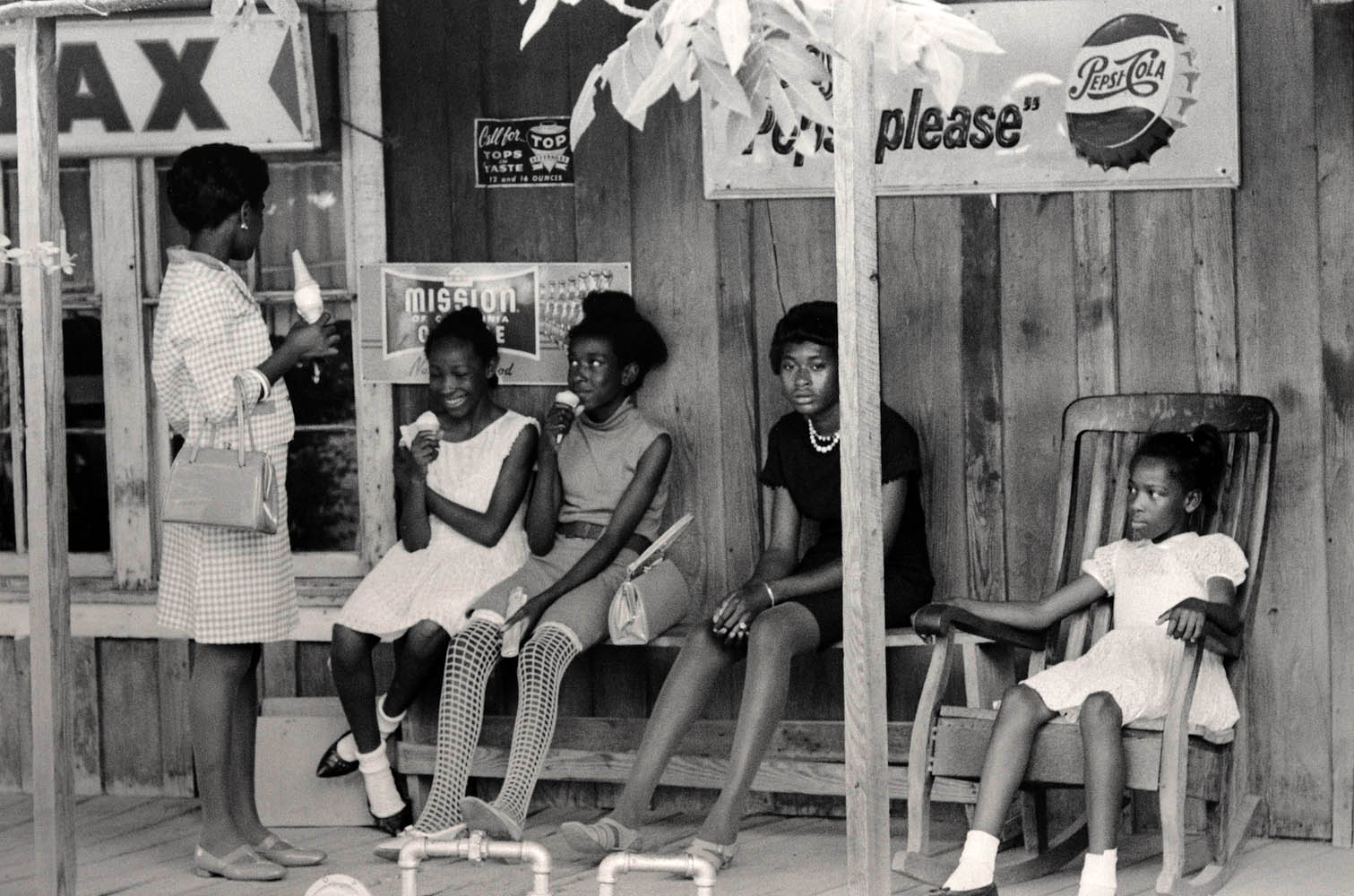
Doris A. Derby (American, 1939-2022) 'Black-owned Grocery Store, Sunday, Mileston, Mississippi' 1968


Doris A. Derby (American, 1939-2022)
Black-owned Grocery Store, Sunday, Mileston, Mississippi
1968
Gelatin silver print
21.9 x 32.7cm (8 5/8 x 12 7/8 in.)
National Gallery of Art, Washington
Gift of David Knaus
© Doris A. Derby


While the Black Arts Movement is generally pegged to the 1960s and ’70s, the point of departure for Willis and Brookman was the work of photographer Roy DeCarava, who in 1955, on the cusp of the civil rights movement, released a book titled The Sweet Flypaper of Life. The book featured portraits of Black life in Harlem activated by a fictitious character named Mary Bradley, a narrative invention of Harlem Renaissance writer Langston Hughes.

In the book, Sister Mary’s musings unfold within DeCarava’s photographic landscape. The exhibition includes an image from the book featuring bassist Edna Smith, whose face is partially illuminated by a single light in the distance. Her downward gaze conveys a sense of somberness that’s echoed by the shadows that surround her, while the single glint of light coming off her wristwatch draws attention to the bass like the beacon from a lighthouse.

Published decades following the Harlem Renaissance, one year after Brown v. Board of Education and months after the murder of Emmitt Till, DeCarava’s book came at a critical moment in art history, a time when photography became more broadly recognised as fine art through groundbreaking exhibitions like “The Family of Man” at the Museum of Modern Art, also in 1955. With that recognition, Black artists seized an opportunity to compose compelling visual narratives. “The collaboration between Langston Hughes and Roy De Carava was influential for so many photographers and artists, in part because De Carava and Hughes were looking at their respective communities, and they put together a story that was looking inward,” says Brookman.

Colony Little. “A Show at the National Gallery Highlights the Role of Photography in the Black Arts Movement,” on the ARTnews website November 20, 2025 [Online] Cited 24/11/2025


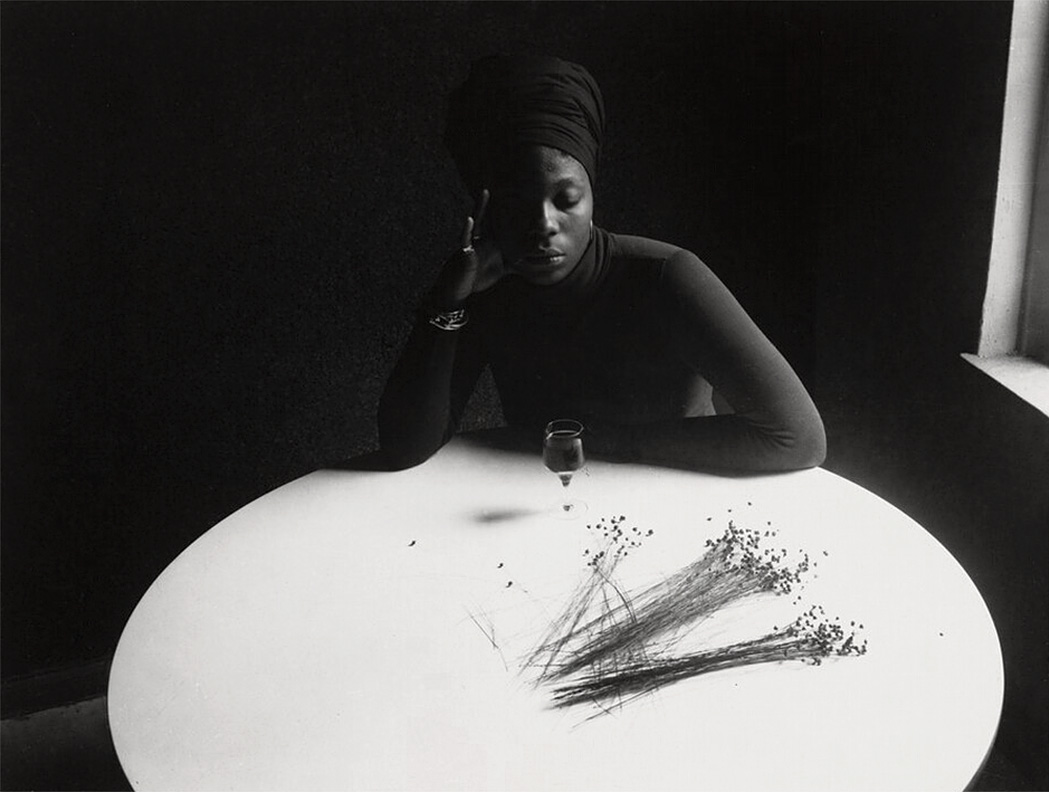
Ray Francis (American, 1937-2006) 'Genie' 1971


Ray Francis (American, 1937-2006)
Genie
1971
Gelatin silver print
13.97 × 17.78cm (5 1/2 × 7 in.)
National Gallery of Art, Washington
Alfred H. Moses and Fern M. Schad Fund


Ray Francis (American, 1937-2006)

Ray Francis was a founding member of the Kamoinge Workshop. He received his first camera in 1952, at the age of 15. In 1961 he met Louis Draper, with whom he formed Group 35. In 1963 Group 35 merged with other photographers to create Kamoinge, where Francis contributed significantly by creating a darkroom for the group and working as a photo editor for the Black Photographers Annual.

His photographic work spanned still life, portraiture, and landscape, often using dramatic light and shadow, influenced by Johannes Vermeer’s use of composition. Francis also made contributions as an educator, teaching at the Bedford-Stuyvesant Neighborhood Youth Corps (1966–1969) and later serving as director of the New York City Board of Education’s photography program for Intermediate School 201 from 1970 to 1974.

Text from the National Gallery of Art website


Kwame Brathwaite (American, 1938-2023) 'Untitled (Portrait, Reels as Necklace)' c. 1972, printed later


Kwame Brathwaite (American, 1938-2023)
Untitled (Portrait, Reels as Necklace)
c. 1972, printed later
Inkjet print
74.93 × 74.93cm (29 1/2 × 29 1/2 in.)
National Gallery of Art, Washington
Gift of Funds from Renée Harbers Liddell and Alfred H. Moses and Fern M. Schad Fund
© Kwame Brathwaite


Kwame Brathwaite, [was] a photographer, musician and African American activist who was a unique politico-aesthete. With his brother Elombe Brath, he virtually invented the phrase “Black Is Beautiful” in the 1960s by photographing the Grandassa Models in Harlem: young African American women who became the sensational template for beauty, doing away with the usual cosmetic products and the usual white standard of femininity.

Black Is Beautiful became a radical rallying cry, an inspired three-word prose poem and manifesto for change. Simply to assert that black people were beautiful was a liberating force in art, politics and culture, and Brathwaite became a part of Black power’s pan-Africanist movement by photographing Muhammad Ali before his Rumble in the Jungle fight in Zaire in 1974. He was the exclusive photographer for the Jackson 5’s African tour, and became the house photographer for the Apollo theatre, building an amazing archive of black musicians, and with Elombe was the driving force behind bringing Nelson Mandela to speak in Harlem.

Peter Bradshaw. “Black Is Beautiful: The Kwame Brathwaite Story – exhilarating record of game-changing photographer,” on The Guardian website Fri 10 Oct 2025 [Online] Cited 30/11/2025


Romare Bearden (American, 1911-1988) '110th Street Harlem Blues' 1972


Romare Bearden (American, 1911-1988)
110th Street Harlem Blues
1972
Collage
© Romare Bearden Foundation


African-American artist, activist, and writer Romare Bearden was close friends with film producer and photographer Sam Shaw, and he often drew inspiration from Shaw’s creative projects. The portraits incorporated into this collage feature outtakes of extras from a movie Shaw may have documented as set photographer. ⁠ ⁠

Bearden’s work reflects his improvisational approach to his practice. He considered his process akin to that of jazz and blues composers. Starting with an open mind, he would let an idea evolve spontaneously. “You have to begin somewhere,” he once said, “so you put something down. Then you put something else with it, and then you see how that works, and maybe you try something else and so on, and the picture grows in that way.”

Text from the Fraenkel Gallery Facebook page via DC Gallery, New York


Other works of art in the show are a testament to the medium’s lasting influence on established visual artists. Among these was Romare Bearden, who in the mid-1960s began exploring photographic collage; it would become an art form he used to create his most influential works. “Romare Bearden has always been integral to understanding the Black Arts Movement,” says Brookman. “By using photographs in his collages, he makes a direct connection between photography in all of its forms and the Black Arts Movement. That was something I had not seen or thought a lot about before, how much photography is incorporated into his visual art, including painting, during that time.”

Colony Little. “A Show at the National Gallery Highlights the Role of Photography in the Black Arts Movement,” on the ARTnews website November 20, 2025 [Online] Cited 24/11/2025


Chester Higgins (American, b. 1946) 'Father prays over son on Osu Beach, Accra, Ghana' 1973


Chester Higgins (American, b. 1946)
Father prays over son on Osu Beach, Accra, Ghana
1973
Gelatin silver print
22.8 x 34cm (9 x 13 3/8 in.)
National Gallery of Art, Washington
Alfred H. Moses and Fern M. Schad Fund
© Chester Higgins. All Rights Reserved. Courtesy Bruce Silverstein Gallery


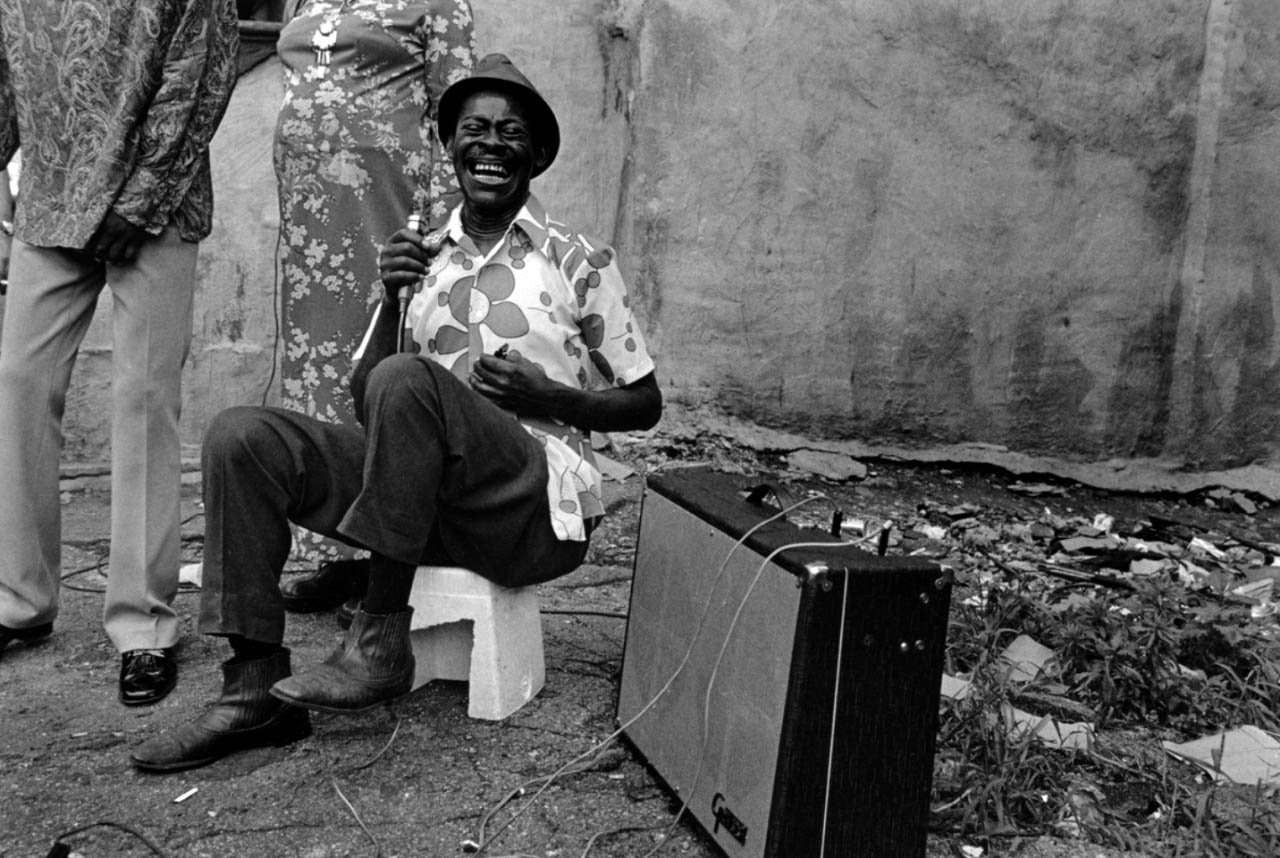
Dawoud Bey (American, b. 1953) 'The Blues Singer, Harlem, NY' 1976


Dawoud Bey (American, b. 1953)
The Blues Singer, Harlem, NY
1976
Gelatin silver print
22.1 x 32.7 cm (8 11/16 x 12 7/8 in.)
National Gallery of Art, Gift of the Charina Endowment Fund in memory of Robert B. Menschel


~ Text/Exhibition: “Street cred,” on the exhibition Dawoud Bey: Street Portraits at Denver Art Museum, November 2024 – May 2025
~ Exhibition: ‘Dawoud Bey & Carrie Mae Weems: In Dialogue’ at the J. Paul Getty Museum, Los Angeles, April – July 2023
~ Exhibition: ‘Dawoud Bey: An American Project’ at the Whitney Museum of American Art, New York, April – October 2021
~ Exhibition: ‘Dawoud Bey: An American Project’ at the High Museum of Art, Atlanta, November 2020 – March 2021


Barbara DuMetz (American, b. 1947) 'Kraft Foods advertisement' 1977


Barbara DuMetz (American, b. 1947)
Kraft Foods advertisement
1977


Barbara DuMetz (American, b. 1947)

Barbara DuMetz (born 1947) is an American photographer and pioneer in the field of commercial photography. She began working in Los Angeles as a commercial photographer in the 1970s, when very few women had established and maintained successful careers in the field, especially African-American women. Over the course of her career, “she made a major contribution to diversifying the landscape of images that defined pop culture in the United States.”

DuMetz is known for her work with African-American celebrities, corporations and images of everyday life in African-American communities. …

DuMetz has been a professional photographer for more than four decades. Over the course of her career, she has produced award-winning images for advertising agencies including Burrell Advertising, J. P. Martin Associates and InterNorth Corporation. Her photographs have appeared in African-American publications including Black Enterprise, Ebony, Essence, Jet and The Crisis. She has taken commercial photographs for corporations including The Coca-Cola Company, Delta Air Lines and McDonald’s Corporation.

DuMetz ran and maintained three different photography studios located in the Los Angeles area where she was contracted by department stores, record companies, graphic design studios, advertising agencies, public relations firms, film production companies, actors and business professionals. DuMetz’s has shot photo layouts of celebrities and artists and personalities including Maya Angelou, Ernie Barnes, Bernie Casey, Pam Grier, Kareem Abdul-Jabbar, Quincy Jones, Samella Lewis, Ed McMahan, Thelonious Monk, Lou Rawls, Della Reese, Richard Roundtree, Betye Saar, Charles Wilbert White, and Nancy Wilson. Her show The Creators: Photographic Images of Literary, Music and Visual Artists, at the Southwest Arts Center in Atlanta, Georgia, in 2015, included images of over two dozen African-American artists whom she has photographed.

Text from the Wikipedia website


Ming Smith (American, b. 1950) 'Sun Ra Space II' 1978


Ming Smith (American, b. 1947)
Sun Ra Space II, New York, New York
1978
Gelatin silver print
15.24 × 22.4cm (6 × 8 13/16 in.)
National Gallery of Art, Washington
Charina Endowment Fund


“You don’t make art for money, especially as a Black artist. You do it because there is that need to create – and that has been part of my survival; that has helped me survive.”

“My work as a photographer was to record, culturally, the period of time in which I lived – and I recorded it as an artist.”

“Oh no, it’s all discovery, it’s all improvisation. It’s like when jazz musicians solo. They improvise, and photography is definitely that, for me.”

“Whether I’m photographing a person on the street, someone I know, or on an assignment, I’m doing it because I admire them. I like the sense of exchange – they’re giving and I’m taking, but I’m also giving them something back. There were certain people who would understand what I was looking for and would try to give me a photograph by posing. Whatever I’m shooting, whether it’s a portrait or a place, my intention is to capture the feeling I have about that exchange and that energy.”


Ming Smith


Coreen Simpson (American, b. 1942) 'Self-Portrait' 1978


Coreen Simpson (American, b. 1942)
Self-Portrait
1978
Gelatin silver print
21.6 x 16.8cm (8 1/2 x 6 5/8 in.)
National Gallery of Art, Washington
Alfred H. Moses and Fern M. Schad Fund
© Coreen Simpson


Simpson’s career launched when she became editor for Unique New York magazine in 1980, and she began photographing to illustrate her articles. She then became a freelance fashion photographer for the Village Voice and the Amsterdam News in the early 1980s, and covered many African-American cultural and political events in the mid-1980s. She is also noted for her studies of Harlem nightlife. She constructed a portable studio and brought it to clubs in downtown Manhattan, barbershops in Harlem, and braiding salons in Queens. Her work’s ability to present a wide variety of subjects with “depth of character and dignity” has been compared to that of Diane Arbus and Weegee.

Text from the Wikipedia website


Simpson became a photographer after noticing that she could make better images than the ones used to illustrate her stories as a freelance lifestyle writer. She took the chance to start creating the images she wanted to see. In 1976, she contacted her friend Walter Johnson, a street photographer who worked at a photo lab in Manhattan, with whom she had been acquainted from her modeling days, and asked if he could teach her how to use a camera. He showed her how to use it, and as soon as she got a hold of it, she became unstoppable.

She argues that great images are the key to having a successful published story. “You have to feel good about yourself, and good about the article that you’re presenting to the public,” she says. “So what makes it good? It’s the visuals. The visuals make it good.”

Briana Ellis-Gibbs. “Photographer Coreen Simpson’s illustrious career capturing Toni Morrison and Muhammad Ali: ‘I’ve never gotten bored’,” on The Guardian website Tue 21 Oct 2025 [Online] Cited 30/11/2025


Anthony Barboza (American, b. 1944) 'Grace Jones, New York City' 1970s


Anthony Barboza (American, b. 1944)
Grace Jones, New York City
1970s
Gelatin silver print
27 × 23.7cm (10 5/8 × 9 5/16 in.)
National Gallery of Art, Washington
Alfred H. Moses and Fern M. Schad Fund


Anthony Barboza (American, b. 1944)

Anthony Barboza (born 1944 in New Bedford, Massachusetts) is a photographer, historian, artist and writer. With roots originating from Cape Verde, and work that began in commercial art more than forty years ago, Barboza’s artistic talents and successful career helped him to cross over and pursue his passions in the fine arts where he continues to contribute to the American art scene.

Barboza has a prolific and wide range of both traditional and innovative works inspired by African-American thought, which have been exhibited in public and private galleries, and prestigious museums and educational institutions worldwide. He is well known for his photographic work of jazz musicians from the 1970s – ’80s. Many of these works are in his book Black Borders, published in 1980 with a grant from the National Endowment for the Arts. In an article printed in 1984 in The City Sun, he said, “When I do a portrait, I’m doing a photograph of how that person feels to me; how I feel about the person, not how they look. I find that in order for the portraits to work, they have to make a mental connection as well as an emotional one. When they do that, I know I have it.” Many of his photographs achieve his signature effect through the careful use of lighting and shadows, manipulation of the backdrop, measured adjustments to shutter speeds, composition, and many other techniques and mediums at his command.

Text from the Wikipedia website


Nellie Mae Rowe (American, 1900-1982) 'God Loves us All' 1978


Nellie Mae Rowe (American, 1900-1982)
God Loves Us All
1978
Marker on silver gelatin print
15.9 x 29.2cm (6 1/4 x 11 1/2 in.)
Smithsonian American Art Museum, Museum purchase through the Luisita L. and Franz H. Denghausen Endowment and the American Women’s History Initiative Acquisitions Pool, administered by theSmithsonian American Women’s History Initiative
© 2025 Estate of Nellie Mae Rowe / Artists Rights Society (ARS), New York


Nellie Mae Rowe was born in Georgia, in the last year of the nineteenth century – to a once-enslaved father and mother born the year of Emancipation. Rowe laboured as a child, married young, was widowed twice, and worked much of her adult life as a uniformed “domestic” in white households. Although her early life was shaped by segregation and oppression, Rowe’s desire to define herself sparked a joyful and colourful body of art that suffused her home and yard. This undeniable and contagious positivity made Rowe one of the first Black self-taught women to be celebrated for her art. 

Rowe saw art-making as a God-given way to convey gratitude and recover a girlhood lost to labor and poverty. She transformed her property into an enriched realm she called her “Playhouse,” embellished with artworks and found objects that brought a heightened animation to her surroundings. Amid a society that rarely featured Black women in works of art and cast them as demeaning stereotypes in popular culture, Rowe took control of the narrative. She depicted friends, neighbours, and herself in drawings and hand-coloured photographs, confident images of Black beauty and free-spirited joy. In a radical act of reclamation, she crafted a world where cultural pride, personal style, and a bit of the unexpected embody the richness of life.

(We Are Made of Stories: Self-Taught Artists in the Robson Family Collection, 2022)

Text from the Smithsonian American Art Museum website


Carrie Mae Weems (American, b. 1953) 'Mom at Work' 1978-1984


Carrie Mae Weems (American, b. 1953)
Mom at Work
1978-1984
Gelatin silver print
60.96 × 92.71cm (24 × 36 1/2 in.)
National Gallery of Art, Washington
Alfred H. Moses and Fern M. Schad Fund


~ Exhibition: ‘Carrie Mae Weems. The Heart of the Matter’ at Gallerie d’Italia, Turin, April – September, 2025
~ Exhibition: ‘Dawoud Bey & Carrie Mae Weems: In Dialogue’ at the J. Paul Getty Museum, Los Angeles, April – July 2023
~ Exhibition: ‘Carrie Mae Weems: Three Decades of Photography and Video’ at The Solomon R. Guggenheim Museum, New York, January – May 2014


Jeanne Moutoussamy-Ashe (American, b. 1951) 'Jake with His Boat Arriving on Daufuskie's Shore, Daufuskie Island, South Carolina' 1978, printed 2007


Jeanne Moutoussamy-Ashe (American, b. 1951)
Jake with His Boat Arriving on Daufuskie’s Shore, Daufuskie Island, South Carolina
1978, printed 2007
Gelatin silver print
31.1 x 46.6cm (12 1/4 x 18 3/8 in.)
National Gallery of Art, Washington
Gift of Funds from Diana and Mallory Walker


Jeanne Moutoussamy-Ashe (American, b. 1951)

Jeanne Moutoussamy-Ashe (b. 1951, USA) is an American photographer, photojournalist and AIDS activist. Beginning photography at the age of 18, she trained with American street photographer Garry Winogrand before graduating from the Cooper Union School of Art with a BFA in 1975, completing a year of independent photographic study in West Africa. Her 1977 photograph ‘Black Man, White Woman, Johannesburg, South Africa’ emblematised the visual narrative of apartheid at that time, recalling the institutionalised racism Jeanne had herself experienced as an African-American photographer.

Jeanne’s experience in South Africa informed her later work, encouraging her to focus on the contemporary experience of Blackness through humanist street photography. More recently, her photobook Daddy and Me: A Photo Story of Arthur Ashe and His Daughter, Camera (1993), which captures the last year of her husband Arthur Ashe’s life, has been praised as a sensitive record of family and mortality which demystifies AIDS. Following the tragedy of Ashe’s death, Jeanne has become a spokesperson for further AIDS research.

Text from the Hundred Heroines website


Barkley L. Hendricks (American, b. 1940) 'Self-Portrait with Red Sweater' 1980, printed 2023


Barkley L. Hendricks (American, 1940-2017)
Self-Portrait with Red Sweater
1980, printed 2023
Chromogenic print
24.8 × 15.5cm (9 3/4 × 6 1/8 in.)
National Gallery of Art, Washington
Alfred H. Moses and Fern M. Schad Fund


Barkley L. Hendricks (American, 1940-2017)

Barkley L. Hendricks (American, 1940-2017) was an American painter and photographer who revolutionised portraiture through his realist and post-modern oil paintings of Black Americans living in urban areas, beginning in the 1960s and 1970s. 

Hendricks’ depictions of the Black figure exude attitude and style. The artist culled subjects for his hagiographic portraits from sartorially minded friends and acquaintances he encountered around the world, including travels to Jamaica, his hometown of Philadelphia, and Connecticut where he last lived and worked. He applied intense focus to his subjects while painting, allowing him to capture their unique personalities. Steeped in pop culture and balanced with exquisite detail, the cast of characters in Hendricks’ work inhabits an unconventional realism united by painterly mastery.

While the directness of his subjects’ gaze could be piercing, Hendricks invoked humour through the titling of his pieces, mitigating the gravity of the message and allowing for an opening into the work. His paintings are distinctly of their time, grounded in the style of their contemporary present, and simultaneously emphatically timeless. They are a direct engagement with art history, the tradition of portraiture, and a confrontation of institutional portrayal of the black subject. 

Hendricks was first a photographer before taking up painting. Beyond his portraiture, he also made distinct works on paper and painted landscapes and still lifes, including an early series of Basketball paintings that explored abstraction and colour theory. Throughout his career, Hendricks refused to be boxed into a medium, and his practice is commanding, bold, and without limitations to media or form.

Text from the Jack Shainman website


Gordon Parks (American, 1912-2006) 'Miles Davis' 1981


Gordon Parks (American, 1912-2006)
Miles Davis
1981
Gelatin silver print
22.9 x 34.1cm (9 x 13 7/16 in.)
National Gallery of Art, Washington
Corcoran Collection (The Gordon Parks Collection)


Carla Williams (American, b. 1965) 'Untitled (curlers) #1.2' 1984-1985


Carla Williams (American, b. 1965)
Untitled (curlers) #1.2
1984-1985
Gelatin silver print
27.31 × 34.93cm (10 3/4 × 13 3/4 in.)
National Gallery of Art, Washington
Pepita Milmore Memorial Fund


Carla Williams (American, b. 1965)

Los Angeles native Carla Williams is a photographer and curator known for her exploration of identity, race, gender, and representation.

She first encountered photography in 1983 during her sophomore year at Princeton University, studying under Emmet Gowin. Her early work in self-portraiture began at Princeton, where she used the large-format camera to explore her own image. The focus of renewed scholarship, these works reflected on the lack of visibility of African American women in photographic history. Williams earned an MFA in photography from the University of New Mexico in 1991, where her thesis project focused on the themes of self-representation and identity. After graduating, she worked as a curator of photography at institutions in Los Angeles and New York.

Text from the National Gallery of Art website


Juan Sánchez (American, b. 1954) 'Mixed Statement' 1984


Juan Sánchez (American, b. 1954)
Mixed Statement
1984
Oil and metallic paint, pencil, colored pencil, oil pastel, marker, paper money, fabric, thread, leaves, painted, printed, torn, and cut-and-pasted coloured paper, and gelatin silver prints on canvas, 3 panels
137.16 x 243.84cm (54 x 96 in.)
The Museum of Modern Art, New York. Gift of Harry Torczyner (by exchange), 2024
Digital Image © The Museum of Modern Art / Licensed by SCALA / Art Resource, NY


Juan Sánchez, the influential Nuyorican visual artist, teacher, writer, and curator once declared “Political art is a medium used as a weapon to hopefully recapture or regain the positive energy of celebration – to regain the goodness of humanity.” Sánchez, the child of Puerto Rican immigrants, was born and raised in Brooklyn. Encompassing a variety of mediums and techniques, including collage, painting, printmaking, photography, and video, his work is informed by his activism and engagement with issues of colonialism and its legacy, race, class, cultural identity, equality, social justice, and self-determination. At the same time, he has maintained a consistent focus on communities, families, and both personal and political histories in his work.

 Text from The Metropolitan Museum of Art website


National Gallery of Art
National Mall between 3rd and 7th Streets
Constitution Avenue NW, Washington

Opening hours:
Daily 10.00am – 5.00pm

National Gallery of Art website

LIKE ART BLART ON FACEBOOK

Back to top

Exhibition: ‘Georgia O’Keeffe, Photographer’ at the Cincinnati Art Museum

Exhibition dates: 3rd February – 7th May, 2023

Originating curator: Lisa Volpe
Cincinnati Art Museum curator: Nathaniel M. Stein


Georgia O'Keeffe (American, 1887-1986) 'Chrysler Building from the Window of the Waldorf Astoria, New York' c. 1960 from the exhibition 'Georgia O'Keeffe, Photographer' at the Cincinnati Art Museum, February - May, 2023


Georgia O’Keeffe (American, 1887-1986)
Chrysler Building from the Window of the Waldorf Astoria, New York
c. 1960
Gelatin silver print
Georgia O’Keeffe Museum, Santa Fe
© Georgia O’Keeffe Museum


O’Keeffe was unconcerned with creating perfect photographic prints and none of these photographs by Georgia O’Keeffe are memorable but the photographs help inform her art practice, acting as a form of documentary sketch rather than being about the art of photography. Perhaps for O’Keeffe it’s about a clarity of looking, and then looking again at the pictorial plane, in order to abrogate in her paintings a photographic reality that is always unreal in the first place.

Form, light, perspective and place in photographs are all reframed through O’Keeffe’s intuitive mind’s eye resulting in the physical painting so conceived. They inform her creative reimag(in)ings and expressive compositions of the landscape. The formal elements of the photographs, their light and shade, their depth and weight, are rendered – depicted artistically, become, made, translated, performed, surrendered – abstractly in the medium of paint, substituting one perceived reality for another. But the paradox is, what is being seen here, what does O’Keeffe see in her relations with the camera?

“To apprehend myself as seen is, in fact, to apprehend myself as seen in the world and from the standpoint of the world. The look does not carve me out in the universe; it comes to search for me at the heart of my situation and grasps me only in irresolvable relations with instruments. If I am seen as seated, I must be seen as “seated-on-a-chair,” … But suddenly the alienation of myself, which is the act of being-looked-at, involves the alienation of the world which I organise. I am seated on this chair with the result that I do not see it at all, that it is impossible for me to see it …”1

Everything (photography, painting, self, world) is in dis/agreement, everything is up for negotiation – as nothing is “in fact”. What did you say?

Dr Marcus Bunyan


1/ Jean-Paul Satre. Being and Nothingness (trans. Hazel Barnes). London: Methuen, 1966, p. 263.


Many thankx to the Cincinnati Art Museum for allowing me to publish the photographs in the posting. Please click on the photographs for a larger version of the image.


How well do we know iconic American artist, Georgia O’Keeffe? Scholars have examined her paintings, home, library, letters, and even her clothes. Yet, despite O’Keeffe’s long and complex association with the American photographic avant-garde, no previous exhibition has explored her work as a photographer.

Georgia O’Keeffe, Photographer presents nearly 100 photographs by the artist, together with a complementary selection of paintings and drawings. These works illuminate O’Keeffe’s use of the camera to further her modernist vision, showing how she embraced photography as a unique artistic practice and took ownership of her relationship with the medium. Discover, for the first time, O’Keeffe’s eloquent and perceptive photographic vision.


Through Another Lens: Georgia O’Keeffe’s Photography

Georgia O’Keeffe is revered for her iconic paintings of flowers, skyscrapers, animal skulls, and Southwestern landscapes. Her photographic work, however, has not been explored in depth until now. Originating exhibition curator Lisa Volpe joins us from The Museum of Fine Arts, Houston, to discuss O’Keeffe’s relationship to and personal use of photography, the research that brought this history to light, and the discoveries still waiting to be made.


“There’s an incredible clarity in the way that she thought about composition and the way that forms fill a space the most beautifully… That was her primary concern, and that’s what she’s interested in photographing. It’s not about making a pretty picture or even showing what her dogs look like or any of those things. It’s about what the image looks like as a picture.”


Nathaniel Stein, Cincinnati Art Museum curator of photography


'Georgia O'Keeffe's Spotting Kit' Late 1910s - late 1940s from the exhibition 'Georgia O'Keeffe, Photographer' at the Cincinnati Art Museum, February - May, 2023


Georgia O’Keeffe’s Spotting Kit
Late 1910s – late 1940s
Various materials
Georgia O’Keeffe Museum, Santa Fe
Gift of Juan and Anna Marie Hamilton
© Georgia O’Keeffe Museum


Before the advent of digital retouching, flaws in a photographic print, such as dust spots or scratches, were covered on the print surface with a brush and spot tone dye. “Spotting” is a demanding process that requires patience, precision, and a sensitivity to tone. O’Keeffe first learned the technique while assisting Alfred Stieglitz (1864-1946) in the late 1910s. Decades later, she used her kit again, to eliminate visual interference in the perfect tonal masses and shapes in her own photographs. O’Keeffe’s mastery of painting easily translated to spotting – her touch-ups are so fine that they are almost imperceptible.

Large print label to the exhibition


Most people know renowned artist Georgia O’Keeffe as a painter. What they probably don’t know? O’Keeffe was also a passionate photographer. Soon, visitors can see a selection of her photographs at the exhibition Georgia O’Keeffe, Photographer, coming to the Cincinnati Art Museum February 3 – May 7, 2023.

In the first major investigation of O’Keeffe’s 30-year engagement with photography, Cincinnati Art Museum visitors can gain a rare, new understanding of the artist. More than 100 photographs and a complementary selection of paintings, drawings and objects from O’Keeffe’s life tell the story of her eloquent use of the camera to pursue her singular artistic vision.

“For me, an exciting facet of this project is how it shifts the paradigm for multiple audiences,” states Cincinnati Art Museum Curator of Photography Nathaniel M. Stein, PhD. “Photography buffs are learning her relationship with photography was larger and more complicated than we knew. I think those audiences will be surprised by the sophistication and rigour of O’Keeffe’s own exploration of photographic seeing, even as they have to let go of an assumption that she would be making photographs in service of her painting practice. On the other hand, audiences arriving out of admiration for O’Keeffe as a painter are coming to know the artist’s vision in an entirely new way, seeing her digest the world more clearly and gaining an understanding of elemental tenets of photographic composition and form through her eyes.”

Exhibition overview

Georgia O’Keeffe is the widely admired “Mother of American Modernism” who has long been examined by scholars for her paintings of flowers, skulls, and desert landscapes. Despite being one of the most significant artists of the 20th century, no previous exhibition has explored her work as a photographer … until now.

The exhibition is accompanied by a richly illustrated catalogue containing new scholarship by Museum of Fine Arts, Houston Curator of Photography Lisa Volpe and a contribution from Georgia O’Keeffe Museum Curator of Fine Arts Ariel Plotek. The catalogue will significantly broaden readers’ understanding of one of the most innovative artists of the 20th century. It will be available soon for purchase from the museum shop in person and online.

Press release from the Cincinnati Art Museum


Alfred Stieglitz (American, 1864-1946) 'Georgia O'Keeffe' 1933 from the exhibition 'Georgia O'Keeffe, Photographer' at the Cincinnati Art Museum, February - May, 2023


Alfred Stieglitz (American, 1864-1946)
Georgia O’Keeffe
1933
Gelatin silver print
The Museum of Fine Arts, Houston: The Target Collection of American Photography
Museum purchase funded by Target Stores
© Georgia O’Keeffe Museum


Gallerist, publisher, and photographer Alfred Stieglitz made his first portrait of O’Keeffe in 1917 at the beginning of their romantic relationship. Over the next 20 years, he photographed her more than 300 times. Due in large part to Stieglitz’s epic portrait project and his outsized legacy in the American art world, historians have assumed that O’Keeffe’s relationship to photography was passive – that of a sitter, assistant, or spectator. However, O’Keeffe’s photographs prove that she developed her own visionary practice behind the camera.

Large print label to the exhibition


“It is only by selection, by elimination, by emphasis that we get at the real meaning of things.”


Georgia O’Keeffe


American artist Georgia O’Keeffe (1887-1986) strived to give visual form to “the unexplainable thing in nature that makes me feel the world is big far beyond my understanding … to find the feeling of infinity on the horizon line or just over the next hill.”

After nearly thirty years rendering the vistas of the Southwest on canvas, O’Keeffe still sought new ways to express the beauty and essential forms of the land in all its cycles. She produced more than 400 photographs of her New Mexico home, its surrounding landscape, and other subjects in the 1950s, 60s, and 70s. Photography offered a new means of artistic engagement with her world. Revisiting subjects she painted years or even decades earlier, O’Keeffe explored new formal and expressive possibilities with the camera.

Like her work in other media, O’Keeffe’s photographs demonstrate an acute attention to composition and passion for nature. Her photography provides a window into an artistic practice based on tireless looking and reconsideration. O’Keeffe used the camera to capture both momentary impressions and sustained investigations over the course of days, seasons, and years. Alongside her better-known paintings and drawings, O’Keeffe’s photographs open new insight into her unending dialogue with the world around her.

Introduction

From the mid-1950s until the 1970s, Georgia O’Keeffe (1887-1986) produced more than 400 photographic images, focused primarily on her New Mexico home and the surrounding landscape. After rendering the vistas of the Southwest on canvas and paper for over 25 years, the artist still sought new ways to express the beauty of the land in all its cycles and forms. Photography offered O’Keeffe a new means of artistic engagement with her world. Revisiting subjects she painted years, or even decades, earlier, the artist’s photographs explored new formal and expressive possibilities.

Her photographs reveal the same passion for nature and acute attention to composition that we see in her paintings and drawings. Through photography, O’Keeffe captured multiple momentary impressions and recorded sustained investigations over the course of days, seasons, and years. Alongside her better-known paintings and drawings, O’Keeffe’s photographs reveal her unending, unique dialogue with the natural world.

A Life in Photography

O’Keeffe was no stranger to photography. Family photos and travel snapshots marked her early decades. Sophisticated photographers – including her husband, Alfred Stieglitz (1864-1946) – were drawn to picture the enigmatic artist throughout her life. O’Keeffe’s approach to the medium was informed by past encounters, but principally guided by her own interests. O’Keeffe dedicated her life to expressing her unique perspective, whether through her clothing, home décor, paintings, or photographs. By the time she began her photographic practice in earnest in the mid-1950s, O’Keeffe brought her singular, fully formed identity and artistic vision to her camera work.


Unknown Photographer. 'Georgia O'Keeffe and Friends in a Boat' 1908


Unknown Photographer
Georgia O’Keeffe and Friends in a Boat
1908
Gelatin silver print
Georgia O’Keeffe Museum, Santa Fe Museum Purchase


By 1890, the Eastman Company had sold millions of $1 Kodak Brownie cameras and photography was part of daily life for many people. Family photographs, studio portraits, and snapshots taken by O’Keeffe and her friends mark the artist’s earliest decades.

Born in Wisconsin, O’Keeffe studied and worked in Virginia, Illinois, New York, South Carolina, and Texas before she was 30. As she moved from place to place, she kept her close friendships in part by trading snapshots. Her friend Anita Pollitzer wrote, “Won’t you send me a Kodak picture… of you?” O’Keeffe responded with her own request, noting, “I want to know what you are looking like this fall.” O’Keeffe continued this practice when she began photographing with a clear artistic intention in the late 1950s, sending her photos to family and friends.

Large print label to the exhibition


Between 1907-1908, Georgia O’Keeffe attended the Art Students League in New York and studied with William Merritt Chase, F. Luis Mora, and Kenyon Cox. In June of 1908, she was awarded League’s Still Life Scholarship and attended the League’s Outdoor School at Lake George, New York.

O’Keeffe’s years as a young student were marked by the release of the first easy-to-use handheld cameras that made photography more widely available. This amateur photograph shows a 21-year-old O’Keeffe enjoying the day on a boat with her friends.

Text from the Georgia O’Keeffe Museum Instagram website


Georgia O'Keeffe (American, 1887-1986) 'Stieglitz at Lake George' c. 1923


Georgia O’Keeffe (American, 1887-1986)
Stieglitz at Lake George
c. 1923
Gelatin silver print
Georgia O’Keeffe Museum, Santa Fe Museum


This double exposure – produced when two images are captured on the same frame of film – shows two views of the Stieglitz family property at Lake George, New York. In the vertical image, Alfred Stieglitz walks ahead on a path, while the horizontal image shows an expanse of the family’s summer residence. Though the double exposure was probably unintentional, O’Keeffe kept this photograph for more than 60 years, suggesting she found the image noteworthy even though it was the result of operator error. Her later photographic practice also demonstrated a sense of certainty in her own visual instincts over and above the rules of technique.

Large print label to the exhibition


Georgia O'Keeffe (American, 1887-1986) 'The Black Place' c. 1970


Georgia O’Keeffe (American, 1887-1986)
The Black Place
c. 1970
Black-and-white Polaroid
Georgia O’Keeffe Museum, Santa Fe
Georgia O’Keeffe Papers


Georgia O'Keeffe (American, 1887-1986) 'Small Purple Hills' 1934


Georgia O’Keeffe (American, 1887-1986)
Small Purple Hills
1934
Oil on panel
Crystal Bridges Museum of American Art, Bentonville, Arkansas


Beginning in 1929, O’Keeffe spent part of almost every year in New Mexico until moving there permanently in 1949. Her beloved Southwestern landscape was a continual source of inspiration. “I never seem to get over my excitement in walking about here – I always find new places or see the old ones differently,” she wrote in 1943. O’Keeffe’s paintings, such as Small Purple Hills, conveyed her pleasure in the forms and colours of New Mexico. These same vistas would become the subjects of her photographs. In photography, O’Keeffe continued the formal exploration of those places that had ignited her artistic passions.

Large print label to the exhibition


Georgia O'Keeffe (American, 1887-1986) 'Red Hill and White Shell' 1938


Georgia O’Keeffe (American, 1887-1986)
Red Hill and White Shell
1938
Oil on canvas
The Museum of Fine Arts, Houston Gift of Isabel B. Wilson in memory of her mother, Alice Pratt Brown


Red Hill and White Shell embodies O’Keeffe’s experiments with the fresh colours and dynamism of the natural world. Using the dual elements of a massive sandstone mesa and a small iridescent shell, the painting expresses attentiveness to environmental forms, both great and small. O’Keeffe’s careful abstractions in both painting and photography strove for a perfect union of aesthetic order and emotional expression. She wrote, “It is only by selection, by elimination, by emphasis that we get at the real meaning of things.”

Large print label to the exhibition


LIFE magazine (publisher) "Georgia O'Keeffe Turns Dead Bones to Live Art" February 14, 1938


LIFE magazine (publisher)
“Georgia O’Keeffe Turns Dead Bones to Live Art”
February 14, 1938
The Museum of Fine Arts, Houston: Courtesy of the Hirsch Library


During O’Keeffe’s lifetime, articles in newspapers and magazines made her face as recognisable to the public as her art, linking O’Keeffe, the woman, to the landscapes and objects she painted. This LIFE essay from 1938 juxtaposes the artist’s Horse’s Head with Pink Rose (1930) with three photos of her handling bones from New Mexico, presenting her art and her life as synonymous.

Large print label to the exhibition


Georgia O'Keeffe (American, 1887-1986) 'Untitled (Ghost Ranch Cliffs)' About 1940


Georgia O’Keeffe (American, 1887-1986)
Untitled (Ghost Ranch Cliffs)
About 1940
Graphite on paper
Georgia O’Keeffe Museum, Santa Fe
Gift of the Georgia O’Keeffe Foundation
© Georgia O’Keeffe Museum


Like her photographs, Ghost Ranch Cliffs reveals O’Keeffe’s restless experimentation with composition. Drawing upon lessons from her teacher, Arthur Wesley Dow, O’Keeffe would frame and reframe her landscape sketches, searching for the most expressive arrangement of forms. Accustomed to framing on paper, O’Keeffe’s transition to framing with a camera was a natural one.

Large print label to the exhibition


Todd Webb (American, 1905-2000) 'Georgia O'Keeffe in Salita Door' July 1956, printed later and Georgia O'Keeffe (American, 1887-1986) 'Todd Webb in the Salita Door' July 1956, printed later


Todd Webb (American, 1905-2000)
Georgia O’Keeffe in Salita Door
July 1956, printed later
Inkjet print
Courtesy of the Todd Webb Archive

Georgia O’Keeffe (American, 1887-1986)
Todd Webb in the Salita Door
July 1956, printed later
Inkjet print
The Museum of Fine Arts, Houston Museum
Purchases funded by the Director’s Accessions Endowment


In 1955 O’Keeffe’s interest in beginning a photographic practice was sparked by a visit from her friend, photographer Todd Webb. Over the next few summers, Webb visited O’Keeffe in New Mexico, and the pair photographed together, often trading his cameras back and forth. Here, the friends took turns posing for each other in O’Keeffe’s Abiquiú courtyard. “As you can see, you are a very good portrait photographer,” Webb wrote encouragingly to O’Keeffe. “I like the one of me in the doorway very much.”

Large print label to the exhibition


Georgia O'Keeffe (American, 1887-1986) 'Seagram Building, New York' 1958-1965


Georgia O’Keeffe (American, 1887-1986)
Seagram Building, New York
1958-1965
Gelatin silver print
Georgia O’Keeffe Museum, Santa Fe
© Georgia O’Keeffe Museum


Like her paintings of New York, many of O’Keeffe’s photographs of the city explore aspects of its monumentality and modernity. “One can’t paint New York as it is, but rather as it is felt,” she noted. O’Keeffe took this photo of the architect Ludwig Mies van der Rohe’s minimalist Seagram Building soon after it opened. Her dramatic, low camera angle presents the structure’s innovative vertical beams as endless lines stretching into the sky. Her view of the Chrysler Building [see first image in the posting] seems to grapple with a related experience, as a sense of quiet intimacy coexists with the vast scale and loftiness of the modern urban environment.

Large print label to the exhibition


Todd Webb (American, 1905-2000) 'Georgia O'Keeffe Reviewing Photographs' 1961, printed later


Todd Webb (American, 1905-2000)
Georgia O’Keeffe Reviewing Photographs
1961, printed later
Inkjet print
Courtesy of the Todd Webb Archive
© Todd Webb Archive, Portland, Maine, USA


Unlike most photographers, O’Keeffe was unconcerned with creating perfect photographic prints. More interested in the image than the final print, she used her instant Polaroid camera, printed her work at drugstores, or asked Todd Webb to create test prints or enlarged contact sheets of her pictures. These approaches did not align with the norms of contemporary art photography, yet they match O’Keeffe’s larger artistic practice.

Text from the Denver Art Museum website


Reframing

Georgia O'Keeffe (American, 1887-1986) 'Sugar Cane Fields and Clouds' March 1939


Georgia O’Keeffe (American, 1887-1986)
Sugar Cane Fields and Clouds
March 1939
Gelatin silver print
Georgia O’Keeffe Museum, Santa Fe
© Georgia O’Keeffe Museum


In 1939, O’Keeffe accepted an invitation from an advertising company to go to Hawaii to produce paintings for the Hawaiian Pineapple Company. She kept these photographs for the remaining five decades of her life. The “Hawaii snaps,” as she referred to them, capture subject matter that is quintessentially O’Keeffe – dramatic landforms and perfect flower blooms.

Large print label to the exhibition


Georgia O'Keeffe (American, 1887-1986) 'Lava Arch, Wai'anapanapa State Park' March 1939


Georgia O’Keeffe (American, 1887-1986)
Lava Arch, Wai’anapanapa State Park March
1939
Gelatin silver prints
Georgia O’Keeffe Museum, Santa Fe
© Georgia O’Keeffe Museum


O’Keeffe made her first significant body of photographs on her 1939 trip to Hawaii. These photographs make clear that O’Keeffe had an intuitive interest in the photographic frame. Later, reframing would become a central tool in her sustained exploration of the medium.

Large print label to the exhibition


Though a handful of scattered snapshots made before 1939 can be attributed to O’Keeffe, her trip to Hawaii that year produced her first significant body of photographs. From this group of images, you can see O’Keeffe already framing and reframing the same landscape. These early photographs reveal that reframing was a method she intuitively brought to the medium and not one she learned from others nearly two decades later.

Text from the Denver Art Museum website


Georgia O'Keeffe (American, 1887-1986) 'Natural Stone Arch near Leho'ula Beach, 'Aleamai' March 1939

Georgia O'Keeffe (American, 1887-1986) 'Natural Stone Arch near Leho'ula Beach, 'Aleamai' March 1939


Georgia O’Keeffe (American, 1887-1986)
Natural Stone Arch near Leho’ula Beach, ‘Aleamai
March 1939
Gelatin silver prints
Georgia O’Keeffe Museum, Santa Fe
© Georgia O’Keeffe Museum


Here, O’Keeffe uses subtle reframing to seek an ideal expression of her experience of the place. She works with four boldly simplified elements – arch, water, sky, and coast – within a square picture area. In the top image, O’Keeffe uses the shoreline to bisect the middle of the picture plane, resulting in a composition that feels natural and balanced. In the bottom image, she has raised the shoreline within the frame, compressing the ocean, arch, and sky. How does your experience of the picture change because of her compositional choices?

Large print label to the exhibition


Georgia O'Keeffe (American, 1887-1986) 'Black Lava Bridge, Hana Coast No. 2' 1939


Georgia O’Keeffe (American, 1887-1986)
Black Lava Bridge, Hana Coast No. 2
1939
Oil paint on canvas
Honolulu Museum of Art: Gift of the Georgia O’Keeffe Foundation, 1994, 7893.1. © Georgia O’Keeffe Museum


O’Keeffe’s small oil painting Black Lava Bridge, Hana Coast No. 2 depicts the same coastline as her nearby photographs. Compared to the square pictures, the painting’s wider, lateral format emphasises the massy character of the rock formation itself, drawing our attention to its horizontality and relationship with the water.

Large print label to the exhibition


Georgia O'Keeffe (American, 1887-1986) 'Wai'anapanapa Black Sand Beach' March 1939

Georgia O'Keeffe (American, 1887-1986) 'Wai'anapanapa Black Sand Beach' March 1939


Georgia O’Keeffe (American, 1887-1986)
Wai’anapanapa Black Sand Beach
March 1939
Gelatin silver prints
Georgia O’Keeffe Museum, Santa Fe
© Georgia O’Keeffe Museum


In many of her letters home from Maui, O’Keeffe described her desire to photograph the island’s landscape and vistas. “The black sands of Hawaii – have something of a photograph about them,” she wrote. Perhaps the artist was responding to the chromatic simplicity of lacy white sea foam on black sand. Yet, there is also a notable relationship between O’Keeffe’s attraction to reframing and the constantly changing, expressive compositions created by nature as the edges of waves skim over the beach. Here, she seems to explore exactly that visual potential.

Large print label to the exhibition


Todd Webb (American, 1905-2000) 'Georgia O'Keeffe with Camera' 1959, printed later


Todd Webb (American, 1905-2000)
Georgia O’Keeffe with Camera
1959, printed later
Inkjet print
Todd Webb Archive
© Todd Webb Archive, Portland, Maine, USA


In 1940, O’Keeffe purchased a cottage on Ghost Ranch, northwest of Abiquiú, New Mexico. Ghost Ranch would become her summer and fall home – a place of solitude where she concentrated on painting. In 1945 she purchased a home in Abiquiú, where she would spend the winter and spring seasons. She moved to the Southwest permanently in 1949. In the mid-1950s, O’Keeffe took up the camera in earnest to continue her relentless search for ideal artistic expression. She made most of her photographs on or near her Abiquiú property.

Large print label to the exhibition


Georgia O'Keeffe (American, 1887-1986) 'Garage Vigas and Studio Door' July 1956


Georgia O’Keeffe (American, 1887-1986)
Garage Vigas and Studio Door
July 1956
Gelatin silver print
Metropolitan Museum of Art, New York. Anonymous Gift, 1977
© 2022 Georgia O’Keeffe Museum / Artists Rights Society (ARS), New York


Georgia O'Keeffe (American, 1887-1986) 'Studio Door' July 1956


Georgia O’Keeffe (American, 1887-1986)
Studio Door
July 1956
Gelatin silver print
Metropolitan Museum of Art, New York. Anonymous Gift, 1977
© 2022 Georgia O’Keeffe Museum / Artists Rights Society (ARS), New York


The Abiquiú studio door is a subject unique to O’Keeffe’s photography. In this series of photographs, she explored ways to visually compress the subject into two dimensions using the arrangement of forms within the frame. Photographing her studio door from a vantage point inside her garage (which is located across an open courtyard), she positioned her camera to include more or less of the garage ceiling. The linear pattern of vigas (round roof beams) and latillas (ceiling slats) change the way space seems to work in the picture, moving from three-dimensional depth to increasingly flattened planes of form.

Large print label to the exhibition


Georgia O'Keeffe (American, 1887-1986) Salita Door, Patio 1956-1957


Georgia O’Keeffe (American, 1887-1986)
Salita Door, Patio
1956-1957
Gelatin silver print
Museum of Fine Arts, Boston, the Lane Collection
© Georgia O’Keeffe Museum
Image © Museum of Fine Arts, Boston


“As I climbed and walked about in the ruin, I found a patio with a very pretty well house and bucket to draw up water. It was a good-sized patio with a long wall with a door on one side. That wall with a door in it was something I had to have.”

~ Georgia O’Keeffe


On many occasions, O’Keeffe claimed that the dark salita door – the door leading into her salita, or sitting room – was the reason she purchased her Abiquiú home. She depicted this door in her work with notable frequency, producing 23 paintings and drawings from 1946 until 1960 and numerous photographs beginning in 1956. “It’s a curse – the way I feel I must continually go on with that door,” she noted.

Text from the Denver Art Museum website


Georgia O'Keeffe (American, 1887-1986) Salita Door, Patio 1956-1957


Georgia O’Keeffe (American, 1887-1986)
Salita Door, Patio
1956-1957
Gelatin silver print
Metropolitan Museum of Art, New York
Anonymous Gift, 1977
© Georgia O’Keeffe Museum


On many occasions, O’Keeffe claimed that the salita door was the reason she purchased her Abiquiú property. This interior door separates the central patio from the salita, or sitting room. O’Keeffe used the salita as a workroom and storage space for her paintings, making the door a physical and metaphorical link between her home and her art. “I’m always trying to paint that door – I never quite get it,” O’Keeffe wrote. Her 23 paintings and drawings of the door were followed by a series of photographs.

Large print label to the exhibition


This door separates the central patio from the salita, or sitting room, which O’Keeffe used as a workroom and storage space for her paintings. The door can be seen as a physical and metaphorical link between her home and her art. “I’m always trying to paint that door – I never quite get it,” O’Keeffe wrote.

Text from the Denver Art Museum website


Georgia O'Keeffe (American, 1887-1986) 'Patio and Zaguan' 1956-1957


Georgia O’Keeffe (American, 1887-1986)
Patio and Zaguan
1956-1957
Gelatin silver print
Georgia O’Keeffe Museum, Santa Fe
© Georgia O’Keeffe Museum


The multiple doors and windows of the central patio in O’Keeffe’s Abiquiú home lent themselves to experiments in reframing. By moving the position and orientation of her camera, the artist could explore a huge variety of precise compositions in her own domestic space. Here, she turned toward the entryway of the zaguan – a central passage between the interior courtyard and the exterior of the house. O’Keeffe’s reflection, sometimes visible in a window at the left of the frame, captures the artist carefully framing the scene.

Large print label to the exhibition


Georgia O'Keeffe (American, 1887-1986) 'Salita Door' 1956-1958


Georgia O’Keeffe (American, 1887-1986)
Salita Door
1956-1958
Gelatin silver print
Metropolitan Museum of Art, New York
Anonymous Gift


One of O’Keeffe’s first photographs of her Abiquiú, New Mexico home was a carefully and beautifully rendered image of the salita door in her courtyard. In the picture, the dark rectangle of the door breaks the adobe wall. A long, sleek shadow cuts diagonally through the frame, and a silvery sage bush fills the bottom left corner.

Large print label to the exhibition


Georgia O'Keeffe (American, 1887-1986) 'Ladder against Studio Wall in Snow' 1959-1960


Georgia O’Keeffe (American, 1887-1986)
Ladder against Studio Wall in Snow
1959-1960
Gelatin silver print
Georgia O’Keeffe Museum, Santa Fe, N.M.
© Georgia O’Keeffe Museum


Georgia O'Keeffe (American, 1887-1986) 'Big Sage (Artemisia tridentata)' 1957


Georgia O’Keeffe (American, 1887-1986)
Big Sage (Artemisia tridentata)
1957
Gelatin silver prints
Georgia O’Keeffe Museum, Santa Fe
© Georgia O’Keeffe Museum


In 1957, O’Keeffe produced a group of eight photographs of big sagebrush (Artemisia tridentata) near Barranca, New Mexico. She pictured the three, tightly grouped shrubs at close range, in contrast to the rolling horizon, or framed against the packed ground. Moving her camera with each capture, she altered the arrangement of the forms and changed the overall organisation of the scene. The resulting images are radically different, though each contains the same basic elements.

Large print label to the exhibition


Georgia O'Keeffe (American, 1887-1986) 'Big Sage (Artemisia tridentata)' 1957


Georgia O’Keeffe (American, 1887-1986)
Big Sage (Artemisia tridentata)
1957
Gelatin silver print
Georgia O’Keeffe Museum, Santa Fe
© Georgia O’Keeffe Museum


Georgia O'Keeffe (American, 1887-1986) 'White House Overlook' and 'Spider Rock' July 1957


Georgia O’Keeffe (American, 1887-1986)
White House Overlook
Spider Rock
July 1957
Gelatin silver prints
Georgia O’Keeffe Museum, Santa Fe
© Georgia O’Keeffe Museum


While O’Keeffe organised most of her photographic compositions within single film frames, a few noteworthy examples demonstrate her interest in testing that limitation. In July 1957, O’Keeffe visited Canyon de Chelly, Arizona, making three images at White House Overlook. Together, the images form a panorama, moving from the starburst form of a crag, through the winding canyon below, to the tall sandstone spire of Spider Rock. O’Keeffe’s choice to use vertical frames to capture a sweeping horizontal vista is distinctive. What might have interested her about this approach?

Large print label to the exhibition


In July 1957, O’Keeffe visited Canyon de Chelly, Arizona, and produced three images at White House Overlook. Together, the three images form a panorama, moving from the starburst form of a crag, through the winding canyon below, to the tall sandstone spire of Spider Rock. O’Keeffe’s choice to capture a sweeping, horizontal vista through three vertical photos is another characteristic of her photography.

Text from the Denver Art Museum website


Light


Georgia O'Keeffe (American, 1887-1986) 'Dark Rocks' 1938


Georgia O’Keeffe (American, 1887-1986)
Dark Rocks
1938
Oil on canvas
The Museum of Fine Arts, Houston
Gift of Patricia Barrett Carter


The painting Dark Rocks exemplifies O’Keeffe’s talent for abstracting natural forms. Her rendering of stacked rocks includes precisely placed areas of highlight and shadow. These formal elements result in an ambiguous relationship between positive and negative space. What is solid and what is mere shadow? This play of depth and weight is also evident in O’Keeffe’s photographs of her chow chows, which she rendered in her art as abstract round forms – much like these rocks. O’Keeffe often used light and dark to explore the qualities of form, dimension, and depth.

Large print label to the exhibition


Georgia O'Keeffe (American, 1887-1986) 'Bo II (Bo-Bo)' 1960-1961


Georgia O’Keeffe (American, 1887-1986)
Bo II (Bo-Bo)
1960-1961
Gelatin silver print
Georgia O’Keeffe Museum, Santa Fe


In these photographs, O’Keeffe’s chow Bo II (also known as Bo-Bo) curls up on sun-bleached tree trunks outside the artist’s studio door. The dog’s body is a dark, weighty form juxtaposed in various ways against the light cylindrical forms of the tree trunks. At the same time, the shadow of a ladder suggests the dog’s form could read as a shadow – a negative space without depth or weight.

Large print label to the exhibition


Georgia O'Keeffe (American, 1887-1986) 'Untitled (Dog)' 1951


Georgia O’Keeffe (American, 1887-1986)
Untitled (Dog)
1951
Graphite on paper
Georgia O’Keeffe Museum, Santa Fe
Gift of the Georgia O’Keeffe Foundation


O’Keeffe owned eight chow chows – seven blue and one red – over the course of more than 20 years. She received her first two, Bo and Chia, as Christmas presents in 1951. O’Keeffe often described her dogs in formal terms. She wrote to her sister Claudia, “I have two new chow puppies – half grown… not quite blue and against the half snow has a frosty colour – very pretty.” The artist appreciated the dogs’ dark fur in contrast to the bright New Mexico environment and their ambiguous shape when they lay curled on the ground.

Large print label to the exhibition


Georgia O'Keeffe (American, 1887-1986) 'Forbidding Canyon, Glen Canyon' September 1964


Georgia O’Keeffe (American, 1887-1986)
Forbidding Canyon, Glen Canyon
September 1964
Black-and-white Polaroids
Georgia O’Keeffe Museum, Santa Fe


During her second trip to Glen Canyon in Utah and Arizona, O’Keeffe and her group camped for four nights at a picturesque location near Forbidding Canyon. There, the monumental form of two cliffs meeting in a “V” shape provided a spectacular view each morning. The strong morning light turned one cliff into a bright white form, while the other, cast in shade, became a dark mass. As the sun moved across the morning sky, the shadows quickly shifted. O’Keeffe’s Polaroids tracked the changing proportions of dark and light in this dynamic scene, much like she had looked at the surf on the black sands of Maui 25 years earlier.

Large print label to the exhibition


Georgia O'Keeffe (American, 1887-1986) 'In the Patio VIII' 1950


Georgia O’Keeffe (American, 1887-1986)
In the Patio VIII
1950
Oil on canvas
Georgia O’Keeffe Museum, Santa Fe
Gift of the Burnett Foundation and the Georgia O’Keeffe Foundation
© Georgia O’Keeffe Museum


In the Patio VIII depicts the interior courtyard of O’Keeffe’s Abiquiú home. In the painting, she uses a bold band of a shadow to pick out the geometry of the space. The dark angular shape cuts across the lower half of the painting, differentiating the planes of walls and ground. It is as if the shadow lends the space a three-dimensional nature. For O’Keeffe, shadows were entities that could define a composition.

Large print label to the exhibition


Georgia O'Keeffe (American, 1887-1986) 'North Patio Corridor' 1956-1957


Georgia O’Keeffe (American, 1887-1986)
North Patio Corridor
1956-1957
Gelatin silver print
Georgia O’Keeffe Museum, Santa Fe
© Georgia O’Keeffe Museum


The door, wall, and sagebrush at the north corner of O’Keeffe’s Abiquiú patio presented the artist with an eye-catching array of lines, shadows, and shapes. Characteristically, she used these features of her environment relentlessly to search for the perfect arrangement of forms.

Large print label to the exhibition


Georgia O'Keeffe (American, 1887-1986) 'Ladder against Studio Wall with White Bowl' and 'Ladder against Studio Wall with Black Chow (Bo-Bo)' 1959-1960


Georgia O’Keeffe (American, 1887-1986)
Ladder against Studio Wall with White Bowl
Ladder against Studio Wall with Black Chow (Bo-Bo)
1959-1960
Gelatin silver prints
Georgia O’Keeffe Museum, Santa Fe
© Georgia O’Keeffe Museum


O’Keeffe produced these two photographs in rapid succession. Often, she rendered light as a bright white form and shadow as a weighty dark object. By placing a white bowl to the left of the ladder in one frame and one of her pet dogs to the right in the other, O’Keeffe created startlingly different compositions through one minor change.

Large print label to the exhibition


Georgia O'Keeffe (American, 1887-1986) 'Ladder against Studio Wall with White Bowl' 1959-1960


Georgia O’Keeffe (American, 1887-1986)
Ladder against Studio Wall with White Bowl
1959-1960
Gelatin silver prints
Georgia O’Keeffe Museum, Santa Fe
© Georgia O’Keeffe Museum


Georgia O'Keeffe (American, 1887-1986) 'Skull, Ghost Ranch' 1961-1972


Georgia O’Keeffe (American, 1887-1986)
Skull, Ghost Ranch
1961-1972
Chromogenic print
Georgia O’Keeffe Museum, Santa Fe, N.M.
© Georgia O’Keeffe Museum


O’Keeffe shared her photographs with family and friends, often mailing prints with handwritten notes on the back. For the artist, these photographs provided her friends with glimpses of her home and artistic world. Skull, Ghost Ranch was printed multiple times. On the verso of one print, O’Keeffe hand wrote to an unknown acquaintance, “Another present this is. It is beside the Studio door. Pretty isn’t it!”

“It never occurs to me that [skulls] have anything to do with death. They are very lively,” O’Keeffe noted. “I have enjoyed them very much in relation to the sky.” For O’Keeffe, the artistry in rendering skulls lay in juxtaposition. The harmonious relation of the skull’s form to other elements resulted in an artistic play of light and shadow and positive and negative space that sustained her interest.

Large print label to the exhibition


Georgia O'Keeffe (American, 1887-1986) 'Goat's Head' 1957


Georgia O’Keeffe (American, 1887-1986)
Goat’s Head
1957
Oil on canvas
McNay Art Museum, San Antonio
Gift of the Estate of Tom Slick


Skulls were a favourite subject for O’Keeffe, appearing in her paintings from the 1930s until the 1960s and in her photographs until the 1970s. These bones, however, were never depicted in isolation. O’Keeffe’s skulls were always juxtaposed with other elements: cloth backgrounds, desert landscapes, architectural forms, and blue skies. In Goat’s Head, O’Keeffe presents the skull against alternating planes of light and shadow, suggesting a retreating desert landscape. The careful cropping of the composition, like a photograph, unites the forms of the skull and landscape and encourages a comparison of bone and background.

Large print label to the exhibition


Georgia O'Keeffe (American, 1887-1986) 'Roofless Room' 1959-1960


Georgia O’Keeffe (American, 1887-1986)
Roofless Room
1959-1960
Gelatin silver print
Georgia O’Keeffe Museum, Santa Fe
© Georgia O’Keeffe Museum


Georgia O'Keeffe (American, 1887-1986) 'Roofless Room' 1959-1960


Georgia O’Keeffe (American, 1887-1986)
Roofless Room
1959-1960
Gelatin silver print
Georgia O’Keeffe Museum, Santa Fe
© Georgia O’Keeffe Museum


Streaked by morning shadows, O’Keeffe’s photographs of her “roofless room” at Abiquiú are stunning studies of the dimensional quality of shadows. As the sun’s position changed throughout the day, the shadows cast by the latillas (ceiling slats) crept down the walls and across the bare floor, reframing the scene. In each image, O’Keeffe uses these dramatic shadows to articulate the planes and angles of the room.

Large print label to the exhibition


Seasons

In the Southwest, each season brings subtle and dramatic shifts in the quality of sunlight and the appearance of the landscape. While full, leafy trees cast deep shadows in the summer, the same place offers bare branches and evenly lit, snowy ground in the low sun of winter. O’Keeffe photographed her environment in all seasons, allowing the change in nature to act as an inherent formal characteristic in her artwork.


Georgia O'Keeffe (American, 1887-1986) 'Road from Abiquiú' 1964-1968


Georgia O’Keeffe (American, 1887-1986)
Road from Abiquiú
1964-1968
Black-and-white Polaroids
Georgia O’Keeffe Museum, Santa Fe


“The valley is wide and flat with a row of bare trees on the far side – masking the river that I do not see because of them – then a very fine long mountain rises beyond. It is all frosty this morning – The sun this time of year hits the mountain first – then the trees – with a faint touch of pink – then spreads slowly across the valley as sun light.” O’Keeffe’s sensitivity to the seasonal change outside her bedroom windows is evident in her multiple photographs of those views, which capture the landscape in winter, spring, summer, and fall.

Large print label to the exhibition


Georgia O'Keeffe (American, 1887-1986) 'Road out Bedroom Window' Probably 1957

Georgia O'Keeffe (American, 1887-1986) 'Road out Bedroom Window' Probably 1957


Georgia O’Keeffe (American, 1887-1986)
Road out Bedroom Window

Probably 1957
Gelatin silver prints
Metropolitan Museum of Art, New York
Anonymous Gift, 1977


Several extant photographs of the mesa and road outside O’Keeffe’s east window track the view at different times of the year. In addition to overtly reframing the scene, the artist allowed nature’s changes to alter the relationships of form and light within the composition. The strong summer sun cast hard shadows onto the silvery road in one photograph, while in another, the diffuse light of spring highlights the new growth of the thin foliage.

Large print label to the exhibition


Georgia O'Keeffe (American, 1887-1986) 'Road Past the View' 1964


Georgia O’Keeffe (American, 1887-1986)
Road Past the View
1964
Oil on canvas
Collection of Carl & Marilynn Thoma


In her 1976 Viking Press book, titled Georgia O’Keeffe, the artist included the following text next to the seductive painting Road Past the View: “The road fascinates me with its ups and downs and finally its wide sweep as it speeds toward the wall of my hilltop to go past me. I had made two or three snaps of it with a camera.” It is notable that this anecdote about photography was included in a book with limited text covering an impressive 60-year career. O’Keeffe was sure to write photography into her story.

Large print label to the exhibition


Todd Webb (American, 1905-2000) 'Georgia O'Keeffe Photographing the Chama River' 1961, printed later


Todd Webb (American, 1905-2000)
Georgia O’Keeffe Photographing the Chama River
1961, printed later
Inkjet print
Courtesy of the Todd Webb Archive


In 1957 Todd Webb wrote to O’Keeffe, “Will we stand on the bridge and watch the Chama in flood?” The pair often visited this spot, located between O’Keeffe’s Ghost Ranch property and her main house in Abiquiú. In these three frames, Webb captured O’Keeffe as she moved along the rise, reframing the river view with her camera.

Large print label to the exhibition


Georgia O’Keeffe and Todd Webb met in 1946. That year she was the first woman to be honored with a retrospective exhibition at the Museum of Modern Art (MoMA). Webb, a photographer and protégé of the artist’s husband Alfred Stieglitz, documented the exhibition. That same year, Webb’s urban scenes were shown at the Museum of the City of New York, curated by influential photographic historian Beaumont Newhall. Despite these professional accomplishments, it was also a time of loss as Stieglitz died in July of that year. They went on to have a long friendship and Webb visited O’Keeffe in New Mexico multiple times. Their friendship is documented in a series of photographs on exhibit alongside works by O’Keeffe.

In 1961, O’Keeffe traveled with Lucille and Todd Webb along with a dozen other friends on a ten-day raft trip down the Colorado River to Glen Canyon, Utah. After the trip, Webb presented O’Keeffe with an album of photographs from their shared experience. With his camera focused on the artist, he also framed the extraordinary beauty of the canyons accessible only on the water…

In a 1981 letter to the photographer, O’Keeffe remembered a day in 1946 which solidified their friendship. She was packing artwork for her MoMA exhibition. “I had the world to myself to pack up thirty or forty paintings to go. It looked like quite a formidable task… When you saw the problem you started right in to help me. I may have seen you before, talking with Stieglitz, but I never spoke with you. However, I will never forget your helping me for hours – a person, almost a stranger – till we had everything packed and ready to go.”

Anonymous. “Todd Webb,” on the Georgia O’Keeffe Museum website 2016 [Online] Cited 07/04/2023


Georgia O'Keeffe (American, 1887-1986) 'Chama River' 1957-1963


Georgia O’Keeffe (American, 1887-1986)
Chama River
1957-1963
Gelatin silver prints
Georgia O’Keeffe Museum, Santa Fe


Located between O’Keeffe’s Abiquiú home and Ghost Ranch, this south-facing elevation overlooks the Chama River as it makes a tight bend. O’Keeffe photographed the view in a variety of seasons, capturing the changing depth of the rushing water, the density of foliage, and the deepness of shadows throughout the year.

Large print label to the exhibition


Georgia O'Keeffe (American, 1887-1986) 'Jimsonweed (Datura stramonium)' 1964-1968


Georgia O’Keeffe (American, 1887-1986)
Jimsonweed (Datura stramonium)
1964-1968
Black-and-white Polaroid
Georgia O’Keeffe Museum, Santa Fe
© Georgia O’Keeffe Museum


O’Keeffe’s photographs of jimsonweed flowers exemplify her interest in seasonal change. The trumpet-like flowers of the jimsonweed began blooming around her home in late summer and continued through the first frost. The flowers obey both the cycle of the seasons and a shorter daily cycle, opening in the afternoon and closing with the rising sun the next day.

O’Keeffe’s many photographs of jimsonweed present the bright white flower in contrast to its dark surrounding leaves. Individually or in groups of blooms, jimsonweed signals O’Keeffe’s ongoing fascination with nature’s transformation in all its forms.

“Well – I made you take time to look at what I saw and when you took time to really notice my flower you hung all your own associations with flowers on my flower and you write about my flower as if I think and see what you think and see of the flower – and I don’t,” O’Keeffe scolded. For the artist, her renderings of flowers were about detail, light and shade, and formal juxtaposition. Though many critics read other meanings into these works, O’Keeffe maintained that they signified only the artistic potential of flowers. Here, she distills their potential not with pencil or paint, but with her camera.

Large print label to the exhibition


Georgia O'Keeffe (American, 1887-1986) 'White Flower' 1929


Georgia O’Keeffe (American, 1887-1986)
White Flower
1929
Oil on canvas
The Cleveland Museum of Art, Hinman B. Hurlbut Collection


Georgia O’Keeffe is perhaps best known for her paintings of flowers. Their magnified structures fill the canvas and absorb the viewer in her unique vision of nature. She magnified her painted flowers so that people would “be surprised into taking time to look at it.” O’Keeffe rendered her blooms at their peak, capturing this fleeting view of nature in enveloping detail.

Large print label to the exhibition


Cincinnati Art Museum
953 Eden Park Drive
Cincinnati, Ohio 45202
Phone: (513) 721-ARTS (2787)

Opening hours:
Open Tuesday – Sunday 11am – 5pm
Closed Mondays

Cincinnati Art Museum website

LIKE ART BLART ON FACEBOOK

Back to top

Exhibition: ‘Gordon Parks: Stokely Carmichael and Black Power’ at the Museum of Fine Arts, Houston

Exhibition dates: 16th October, 2022 – 16th January, 2023


'Gordon Parks: Stokely Carmichael and Black Power' book cover


Gordon Parks: Stokely Carmichael and Black Power book cover


Visible Man / Invisible photographer

Only five of Black American Gordon Parks’ photographs of controversial young activist Stokely Carmichael were published in Life magazine in May 1967 in a photo essay with text by Parks titled “Whip of Black Power” out of the 700 photographs that he had actually taken for the assignment. This exhibition dives into these unseen photographs.

“”Whip of Black Power” recounts Parks’s travels with Carmichael from fall 1966 to spring 1967. While the Life essay contained only five photographs, this exhibition presents 53 of Parks’s images from those critical months, a time that coincided with larger social shifts within the civil rights movement and a rising resistance to the Vietnam War. Parks challenged the disparaging view of Carmichael in the mass media, presenting him as a multifaceted and honourable character.”1

“…Parks’s text and photo essay for Life conveyed the nuanced range of Carmichael as a person – not only his anger at America’s deeply rooted racism, but his self-effacing humour, his private moments with family, and his own feelings of dismay that the justice he and the movement sought would not be attained in his lifetime – all part of a “truth,” as Parks described, “the kind that comes through looking and listening.”2

As chairman of the Student Nonviolent Coordinating Committee, the charismatic Carmichael had “issued the call for Black Power in a speech in Mississippi in June 1966, eliciting national headlines, and media backlash.” “For once, black people are going to use the word they want to use – not just the words whites want to hear. And they will do this no matter how often the press tries to stop the use of the slogan by equating it with racism or separatism.” (Stokely Carmichael) The call for Black Power was consistently misunderstood and misrepresented in the press. “What Carmichael was advocating in his call for Black Power was not revolution but the goal of self-determination: “The goal of black self-determination and black self-identity – Black Power,” Carmichael and Hamilton wrote, “is full participation in the decision-making processes affecting the lives of black people, and recognition of the virtues in themselves as black people.”3

What Parks’ photographs accomplish is to put a human face to Stokely Carmichael the revolutionary firebrand and the culture of black protest, process and progress in which he is embedded, “presenting the complexities and tensions in the ongoing struggle for civil rights and highlighting photography’s capacity to present a powerful statement against hate and fear.”4 Parks’ photographs confront “the inequalities and brutalities of our society” whilst “thrusting forth its images of hope, human fraternity, and individual self-realization.”5 Here, living, a valuable and fruitful life whilst discovering an authentic personal identity, and fighting for personal and collective freedom was the objective.

Black people have their own history, traditions and rituals that form a cohesive and complex culture which is the source of a full sense of identity. “As a photographer – through his studies of crime and gang violence to his profiles of black nationalism – Parks illuminated the diversity and richness of black life while also exposing the absurd, systemic injustice that defined the United States. Alongside his photographs, Parks’s writing encourages us to see the complexity of black life, which though demeaned by white racist institutions and behaviors is not reducible to some uniform Black experience. Rather, his own political perspective, which is decidedly more liberal than the black political figures he chose as subjects, is a testament to the diverse strivings, political positions, and discrete prerogatives that have defined black political life during and after Jim Crow.”6

The quest for a viable identity is a universal human challenge which is not dependent on colour, race or religion. As the Black American writer Ralph Ellison observes when quoted in an article by Anne Seidlitz, “black and white culture were inextricably linked, with almost every facet of American life influenced and impacted by the African-American presence – including music, language, dance, folk mythology, clothing styles and sports. Moreover, he [Ellision] felt that the task of the writer is to “tell us about the unity of American experience beyond all considerations of class, of race, of religion.”7

This is what I am hammering on about here: whilst the civil rights movement and the call for Black Power promoted a new politics of black autonomy and militancy which embodied a new politics of black self-assertion and meaningful self-determination, everything is linked together… nothing can be seen other than within a nexus of networked links which inform and affect each other. In this sense Parks’ text and images, together, present a multi-dimensional profile of this charismatic leader, this complex character – as a portrait of his perseverance, gentleness, frustration, despair, joy, anger, laughter, enthusiasm, energy, and passion – sketching the musical and rhythmic character of Stokely Carmichael embedded within the history of interconnected moments, in the contexts of the times, seen through multiple openings in the space / time continuum as the camera lens opens and closes. Parks photographs “put the viewer exactly at the moment of capture letting us be there at the scene.” And they make Stokely Carmichael visible, then and now. At the time the photographer was nearly invisible.

“Now, it’s interesting to note that when I [Lisa Volpe] would share the photos with those men and women captured in them [Parks’ photographs], they all had a very similar reaction. Each one of them remembered the scene. They remembered that meeting, or that lecture, they remembered what was being discussed and how they felt. They really had perfect recall for pretty much everything within the frame … but what was interesting was that they were all shocked to see the photographs. Not a single person I talked to remembered Gordon Parks ever being in the room. Now… when he was on assignment he truly became a fly on the wall in order to get the most truthful images possible. And yes, even speaking to these ladies [in the photograph Sanamu Nyeusi (left) and Hasani Soto (right) of the US Organization at the Watts rally, Will Rogers Park, Los Angeles (1966,below)], they did not even notice Gordon Parks probably three feet in front of them taking their photo.”8

As the recognition of Parks as a photographer has risen over the last 10 years (see the many exhibition postings on Art Blart below), with specialist exhibitions like this that analyse and promote previously hidden aspects and bodies of his work, now at last the invisible photographer stands before us, his portrait of Stokely Carmichael finally revealed in all its subtlety and complexity, intuition and com/passion. In this exhibition for example, all Parks’ negatives on the Life contact sheets were in the wrong order, and / or where from different roll of negatives on the same contact sheet (see video below).9 Through research and the reordering of the negatives we can finally see and feel what images Parks thought were important to the story that he wanted to tell about this man and his crusade (A crusader is a person who works hard or campaigns forcefully for a cause). And through this enunciation of his vision, we the viewer may come to better know what an insightful and compassionate photographer Gordon Parks was… as he now stands before us in the evident presence and generosity of his photographs.

Dr Marcus Bunyan


Footnotes

1/ Text from the Museum of Fine Arts, Houston website

2/ Text from the press release from the Museum of Fine Arts, Houston

3/ Cedric Johnson. “Luminous Exposures: Gordon Parks, Stokely Carmichael, and the Birth of Black Politics,” in Lisa Volpe. Gordon Parks: Stokely Carmichael and Black Power. Steidl / The Gordon Parks Foundation / The Museum of Fine Arts, Houston, 2022, p. 28-34

4/ Gordon Parks Introduction wall text

5/ Anne Seidlitz. “Ralph Ellison: An American Journey,” on the PBS American Masters website 19/02/2002 [Online] Cited 30/12/2022

6/ Cedric Johnson, Op cit.,

7/ Anne Seidlitz, Op cit.,

8/ Text from the video of Lisa Volpe, curator of photography, discussing acclaimed photographer Gordon Parks and offering an overview of the exhibition. Lecture | Gordon Parks: Stokely Carmichael and Black Power on the YouTube website 8th January 2023 [Online] Cited 14/01/2022

9/ Ibid.,


Postings about Gordon Parks on Art Blart

1/ Exhibition: ‘Gordon Parks and “The Atmosphere of Crime”‘ at the Museum of Modern Art (MoMA), New York, February 2021 ongoing

2/ Photographs: Gordon Parks “The Atmosphere of Crime”, 1957 February 2020

3/ Exhibition: ‘Gordon Parks: The Flávio Story’ at the J. Paul Getty Museum, Getty Center, Los Angeles, July – November 2019

4/ Exhibition: ‘Gordon Parks: Back to Fort Scott’ at the Museum of Fine Arts, Boston, January – September 2015

5/ Exhibition: ‘Gordon Parks: Segregation Story’ at the High Museum of Art, Atlanta, November 2014 – June 2015

6/ Exhibition: ‘Gordon Parks: The Making of an Argument’ at The New Orleans Museum of Art, September 2013 – January 2014

7/ Exhibition: ‘Gordon Parks: 100 Moments’ at New York State Museum, January – May 2013

8/ Exhibition: ‘Gordon Parks: Centennial’ at Jenkins Johnson Gallery, San Francisco, February – April 2013

9/ Exhibition: ‘Bare Witness: Photographs by Gordon Parks’ at the Phoenix Art Museum, August – November 2011
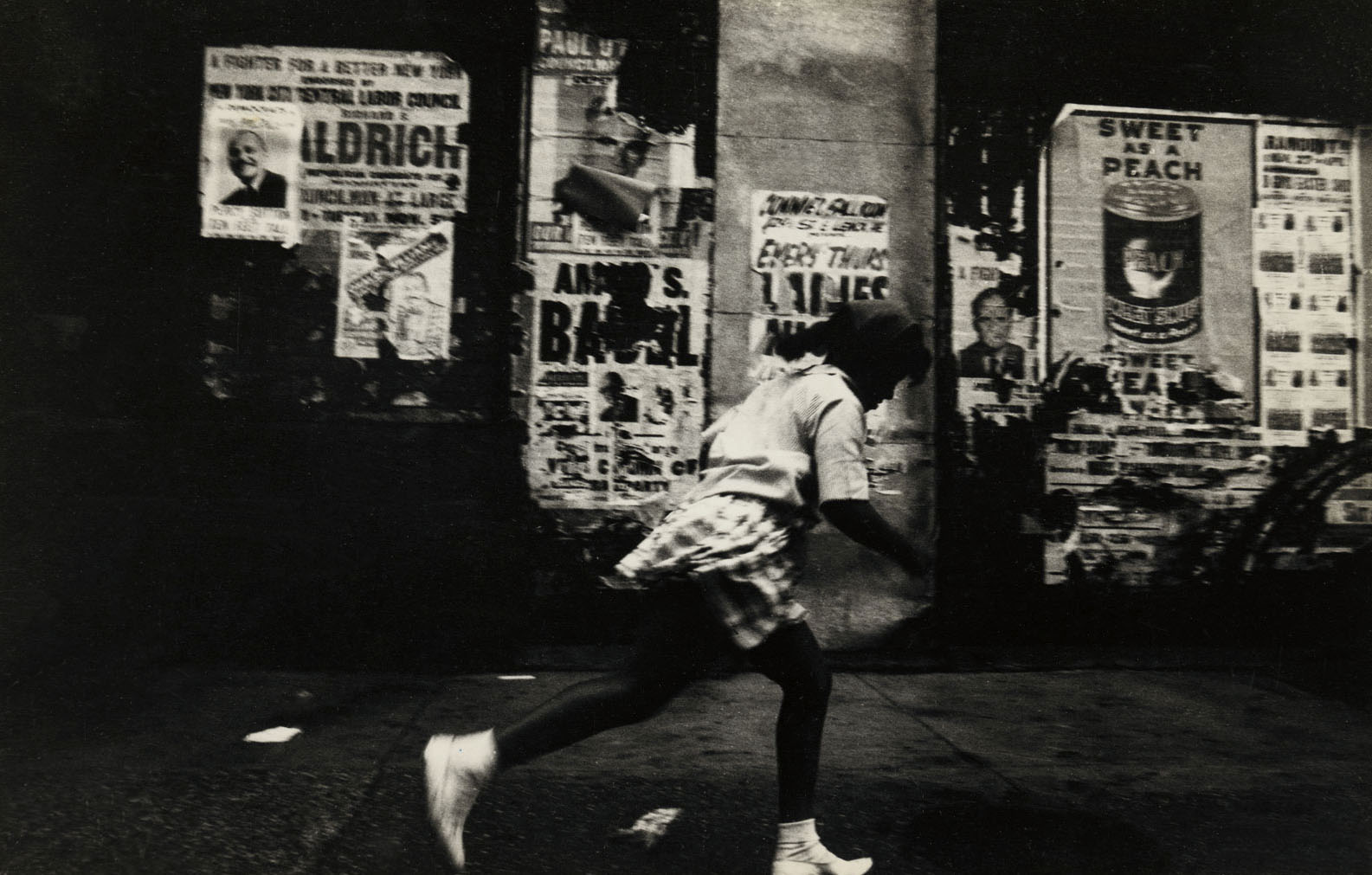

Many thankx to the Museum of Fine Arts, Houston for allowing me to publish the photographs in the posting. Please click on the photographs for a larger version of the image.


In 1967, Life magazine published photographer Gordon Parks’ groundbreaking images and profile of Stokely Carmichael, the young and controversial civil-rights leader who, as chairman of the Student Nonviolent Coordinating Committee, issued the call for Black Power in a speech in Mississippi in June 1966, eliciting national headlines, and media backlash. On the road with Carmichael and the SNCC that fall and into the spring of 1967, Parks took more than 700 photographs as Carmichael addressed Vietnam War protesters outside the U.N. building in New York, with Martin Luther King, Jr.; spoke with supporters in a Los Angeles living room; went door to door in Alabama registering Black citizens to vote; and officiated at his sister’s wedding in the Bronx. In his finely drawn sketch of a charismatic leader and his movement, Parks, then the first Black staff member at Life, reveals his own advocacy of Black Power and its message of self-determination.


Gordon Parks: Stokely Carmichael and Black Power at the Museum of Fine Arts, Houston exhibition walk through


Lecture | Gordon Parks: Stokely Carmichael and Black Power

Lisa Volpe, curator of photography, discusses acclaimed photographer Gordon Parks and offers an overview of the exhibition, which captures the civil-rights movement and activist Stokely Carmichael in the 1960s.


Gordon Parks: Stokely Carmichael and Black Power book cover


Gordon Parks: Stokely Carmichael and Black Power book cover


Installation view of the exhibition 'Gordon Parks: Stokely Carmichael and Black Power' at the Museum of Fine Arts, Houston

Installation view of the exhibition 'Gordon Parks: Stokely Carmichael and Black Power' at the Museum of Fine Arts, Houston

Installation view of the exhibition 'Gordon Parks: Stokely Carmichael and Black Power' at the Museum of Fine Arts, Houston

Installation view of the exhibition 'Gordon Parks: Stokely Carmichael and Black Power' at the Museum of Fine Arts, Houston

Installation view of the exhibition 'Gordon Parks: Stokely Carmichael and Black Power' at the Museum of Fine Arts, Houston

Installation view of the exhibition 'Gordon Parks: Stokely Carmichael and Black Power' at the Museum of Fine Arts, Houston

Installation view of the exhibition 'Gordon Parks: Stokely Carmichael and Black Power' at the Museum of Fine Arts, Houston

Installation view of the exhibition 'Gordon Parks: Stokely Carmichael and Black Power' at the Museum of Fine Arts, Houston

Installation view of the exhibition 'Gordon Parks: Stokely Carmichael and Black Power' at the Museum of Fine Arts, Houston

Installation view of the exhibition 'Gordon Parks: Stokely Carmichael and Black Power' at the Museum of Fine Arts, Houston

Installation view of the exhibition 'Gordon Parks: Stokely Carmichael and Black Power' at the Museum of Fine Arts, Houston

Installation view of the exhibition 'Gordon Parks: Stokely Carmichael and Black Power' at the Museum of Fine Arts, Houston


Installation views of the exhibition Gordon Parks: Stokely Carmichael and Black Power at the Museum of Fine Arts, Houston


"'What Their Cry Means to Me' – A Negro's Own Evaluation" 'Life', May 31, 1963


“‘What Their Cry Means to Me’ – A Negro’s Own Evaluation”
Life, May 31, 1963
Text and photographs by Gordon Parks


Gordon Parks (American, 1912-2006) 'Untitled, Chicago, Illinois' 1963 from the exhibition 'Gordon Parks: Stokely Carmichael and Black Power' at the Museum of Fine Arts, Houston, Oct 2022 - Jan 2023


Gordon Parks (American, 1912-2006)
Untitled, Chicago, Illinois
1963
Gelatin silver print
Courtesy of and © The Gordon Parks Foundation


"'I Was a Zombie Then – Like All Muslims, I Was Hypnotized'" 'Life', March 5, 1965


“‘I Was a Zombie Then – Like All Muslims, I Was Hypnotized'”
Life, March 5, 1965
Text by Gordon Parks
Photographs by Ted Russell, Bob Gomel, Henri Dauman, and Greg Harris


Gordon Parks 'Born Black' 1971


Gordon Parks, Born Black, J. B. Lippincott Company, 1971.


Gordon Parks. 'Muhammad Ali' 1966 from the exhibition 'Gordon Parks: Stokely Carmichael and Black Power' at the Museum of Fine Arts, Houston, Oct 2022 - Jan 2023


Gordon Parks (American, 1912-2006)
Muhammad Ali
1966
Gelatin silver print
Courtesy of and © The Gordon Parks Foundation


The MFAH exhibition centres on Gordon Parks’s five iconic images of controversial young activist Stokely Carmichael, published in Life magazine in May 1967. Organised with the Gordon Parks Foundation, the show presents dozens more photographs from Parks’s series that have never before been published or exhibited

Fifty-five years ago today, Life magazine published photographer Gordon Parks’s groundbreaking images and profile of Stokely Carmichael, the young and controversial civil-rights leader who, as chairman of the Student Nonviolent Coordinating Committee, issued the call for Black Power in a speech in Mississippi in June 1966, eliciting national headlines, and media backlash. On the road with Carmichael and the SNCC that fall and into the spring of 1967, Parks took more than 700 photographs as Carmichael addressed Vietnam War protesters outside the U.N. building in New York, with Martin Luther King, Jr.; spoke with supporters in a Los Angeles living room; went door to door in Alabama registering Black citizens to vote; and officiated at his sister’s wedding in the Bronx. In Parks’s finely drawn sketch of a charismatic leader and his movement, Parks, the first Black staff member at Life, reveals his own advocacy of Black Power and its message of self-determination.

On view only at the Museum of Fine Arts, Houston (October 16, 2022, to January 16, 2023), the exhibition Gordon Parks: Stokely Carmichael and Black Power will present the five images from Parks’s 1967 Life article, in the context of nearly 50 additional photographs and contact sheets that have never before been published or exhibited, as well as footage of Carmichael’s speeches and interviews.

“Extending the Museum’s commitment to photography from the civil-rights era, and following our presentation of the exhibition Soul of a Nation in 2020, which included Gordon Parks’s famous 1942 American Gothic, I am very pleased that we are able to present Parks’s landmark project for Life magazine, in collaboration with the Gordon Parks Foundation,” commented Gary Tinterow, Director and Margaret Alkek Williams Chair of the MFAH. “Parks is well known as one of America’s most important 20th-century photographers; this exhibition will further illuminate his accomplishments as a writer and journalist, as well.”

Commented Lisa Volpe, exhibition curator and MFAH curator of photography, “Gordon Parks’s portrayal of Stokely Carmichael illustrates Parks’s unmatched talent in producing illuminating and sensitive profiles. Through dynamic photographs and a personal text, he sketches both his subject and the complexities and tensions inherent in the ongoing struggle for civil rights. It is as relevant to our current moment as it was to Life‘s readers in 1967. I am grateful to the Gordon Parks Foundation for the opportunity to present these never-before-seen works and to celebrate Parks’s legacy.”

Exhibition Background

Parks met Stokely Carmichael (later, Kwame Ture) in September 1966, as Carmichael’s rallying cry for “Black Power” was grabbing national attention. Parks was a prominent contributor to Life magazine, photographing and writing essays that chronicled, with his characteristic humanity, Benedictine monks and Black Muslims; a Harlem family and a teenage gang member. Carmichael, then 25 and a recent graduate with a philosophy degree from Howard University, was consistently in the news, whether publishing his own writing in the New York Review of Books or being profiled in Esquire and Look magazines.

As chair of the Student Nonviolent Coordinating Committee (SNCC), Carmichael was the figure most identified with the call for Black Power, and was routinely depicted as a representative of anger and separatism. But Parks’s text and photo essay for Life, “Whip of Black Power,” conveyed the nuanced range of Carmichael as a person – not only his anger at America’s deeply rooted racism, but his self-effacing humour, his private moments with family, and his own feelings of dismay that the justice he and the movement sought would not be attained in his lifetime – all part of a “truth,” as Parks described, “the kind that comes through looking and listening.”

Exhibition Organisation and Catalogue

This exhibition is organised by the Museum of Fine Arts, Houston, in collaboration with the Gordon Parks Foundation.

The accompanying catalogue, Gordon Parks: Stokely Carmichael and Black Power, published by Steidl, explores Parks’s groundbreaking presentation of Carmichael, and provides detailed analysis of Parks’s images and accompanying text. The book is the latest instalment in a series that highlights Parks’s bodies of work throughout his career, published by the Gordon Parks Foundation and Steidl. Essays by Lisa Volpe, MFAH associate curator of photography, and Cedric Johnson, professor of African American studies and political science at the University of Illinois at Chicago, shed critical new light on the subject: Volpe explores Parks’s nuanced understanding of the movement and its image, and Johnson frames Black Power within the heightened social and political moment of the late 1960s. Carmichael’s September 1966 essay in the New York Review of Books, “What We Want,” is reproduced in the book.

Gordon Parks

Parks (1912-2006) was one of the 20th century’s preeminent American photographers. Beginning in the 1940s and through the early 2000s, he created work that focused on social justice, race relations, the civil-rights movement, and the African American experience. Born into poverty and segregation in Fort Scott, Kansas, Parks won a Julius Rosenwald Fund fellowship in 1942, and went on to create groundbreaking work for the Farm Security Administration and magazines such as Ebony, Vogue, and Life, where he was staff photographer for more than two decades. Beyond his work in photography, Parks was a respected film director, composer, memoirist, novelist, and poet.

Stokely Carmichael

Carmichael (1941-1998) was born in Trinidad; he moved to New York City’s Harlem neighbourhood when he was 11 and became a naturalised U.S. citizen two years later. An effortless orator, a brilliant student, and a captivating leader, Carmichael found his calling as an activist. While an undergraduate at Howard University, he joined the Freedom Riders on several trips. After graduation, he was a field organiser for the Student Nonviolent Coordinating Committee (SNCC) and became national chairman in 1966. Carmichael heralded a new chapter in the civil-rights movement when he called for Black Power. In 1969 he moved to Conakry, Guinea, where, having adopted the name Kwame Ture, he dedicated his work to Pan-Africanism and liberation movements worldwide.

The Gordon Parks Foundation

The Foundation permanently preserves the work of Gordon Parks; makes it available to the public through exhibitions, books, and digital media; and supports artistic and educational activities that advance what Parks described as “the common search for a better life and a better world.”

Press release from the Museum of Fine Arts, Houston


Gordon Parks Interprets Ralph Ellison’s “Invisible Man” | UNIQLO ARTSPEAKS

A prelude to the Civil Rights movement. Naeem Douglas, a content producer on the Creative Team (at MoMA), finds contemporary resonance in a selection of photographs – including 1952’s “Emerging Man, Harlem, New York” – that Gordon Parks created to celebrate Ralph Ellison’s “Invisible Man.”


Gordon Parks (American, 1912-2006) 'Stokely Carmichael, Lowndes County, Alabama' 1966, printed 2022 from the exhibition 'Gordon Parks: Stokely Carmichael and Black Power' at the Museum of Fine Arts, Houston, Oct 2022 - Jan 2023


Gordon Parks (American, 1912-2006)
Stokely Carmichael, Lowndes County, Alabama
1966, printed 2022
Gelatin silver print
Courtesy of and © The Gordon Parks Foundation


Carmichael on the road in Lowndes County, Alabama, 1966

In defiance of the governing party’s symbol – a white rooster with the phrase “White supremacy for the right” above it – Lowndes County Freedom Organization (LCFO) chose a black panther as its symbol, an animal that becomes ferocious when cornered.

Carmichael proudly wore his Black Panther sweatshirt when he was working in Lowndes County. Taken from a low angle, Parks’s portrait presents Carmichael as a heroic figure, fighting for the rights emblazoned on his shirt: freedom and justice.

Label text from the exhibition


Gordon Parks (American, 1912-2006) 'Watts Community Alert Patrol flyer at SNCC's Atlanta headquarters' 1966


Gordon Parks (American, 1912-2006)
Watts Community Alert Patrol flyer at SNCC’s Atlanta headquarters
1966
Gelatin silver print
Courtesy of and © The Gordon Parks Foundation


Gordon Parks (American, 1912-2006) 'Student Nonviolent Coordinating Committee pamphlet' 1966


Student Nonviolent Coordinating Committee pamphlet
1966


Gordon Parks (American, 1912-2006) 'Untitled, Atlanta, Georgia' 1966, printed 2022


Gordon Parks (American, 1912-2006)
Untitled, Atlanta, Georgia
1966, printed 2022
Gelatin silver print
Courtesy of and © The Gordon Parks Foundation


Carmichael at his desk at SNCC’s Atlanta headquarters, 1966

In his profile of Carmichael, Parks aimed to combat the mass media’s one-sided depictions of the civil rights leader by capturing his complex character and emotions. At SNCC headquarters in Atlanta, Georgia, Parks documented Carmichael in a moment of weary frustration. A portrait of Malcolm X, photographs of Lowndes County residents, and SNCC pamphlets hang above the modest desk. Carefully composed, Parks’s photo guides viewers to a more holistic understanding of Carmichael. The view of the slumped leader with images above him also recalls scenes of religious pilgrims at an altar, deep in thought and prayer.

Label text from the exhibition


Gordon Parks Introduction wall text

In fall 1966 the American photographer and writer Gordon Parks (1912-2006) was contracted by Life magazine to profile 25-year-old Stokely Carmichael, one of the most maligned and misunderstood men in America.

Carmichael, the newly elected chairman of the Student Nonviolent Coordinating Committee (SNCC, pronounced “snick”), issued the first public call for Black Power on June 16, 1966, in Greenwood, Mississippi. This robust vision for a Black, self-determined future combined Black unity for social and political advancement, the breaking of psychological barriers to self-love, and self-defence when necessary. Yet, media organisations dissected and defined Black Power for white audiences with various levels of prejudice and fear, and Carmichael was cast as a figure of racial violence – a distortion of his character and his message.

“Whip of Black Power,” recounts Parks’s travels with Carmichael from fall 1966 to spring 1967. While the Life essay contained only five photographs, this exhibition presents 53 of Parks’s images from those critical months, a time that coincided with larger social shifts within the civil rights movement and a rising resistance to the Vietnam War. Parks challenged the disparaging view of Carmichael in the mass media, presenting him as a multifaceted and honourable character.

Produced more than 40 years ago, Gordon Parks’s revealing profile on Stokely Carmichael is as relevant to our current moment as it was in 1967, presenting the complexities and tensions in the ongoing struggle for civil rights and highlighting photography’s capacity to present a powerful statement against hate and fear.

Unless otherwise noted, all works are by Gordon Parks (American, 1912-2006) and are courtesy of The Gordon Parks Foundation.

Text from the Museum of Fine Arts, Houston


Gordon Parks (American, 1912-2006) 'Carmichael (bottom) speaking to SNCC members and staff of The Movement, including Terry Cannon (top right, wearing glasses) and Bobbi Ricca (top right), San Francisco' 1966


Gordon Parks (American, 1912-2006)
Carmichael (bottom) speaking to SNCC members and staff of ‘The Movement’, including Terry Cannon (top right, wearing glasses) and Bobbi Ricca (top right), San Francisco
1966, printed 2022
Gelatin silver print
Courtesy of and © The Gordon Parks Foundation


Gordon Parks (American, 1912-2006) 'Carmichael speaking to SNCC members and staff of The Movement, San Francisco' 1966


Gordon Parks (American, 1912-2006)
Carmichael speaking to SNCC members and staff of ‘The Movement’, San Francisco
1966, printed 2022
Gelatin silver print
Courtesy of and © The Gordon Parks Foundation


Student Nonviolent Coordinating Committee poster, 1966


Student Nonviolent Coordinating Committee poster
1966


Gordon Parks (American, 1912-2006) 'Carmichael with Charles V. Hamilton reading a profile of Stokely in the January 1, 1967, issue of Esquire, Oxford, Pennsylvania' 1966


Gordon Parks (American, 1912-2006)
Carmichael with Charles V. Hamilton reading a profile of Stokely in the January 1, 1967, issue of Esquire, Oxford, Pennsylvania
1966, printed 2022
Gelatin silver print
Courtesy of and © The Gordon Parks Foundation


“We were in the home of [Carmichael’s] friend and adviser Charles V. Hamilton, chairman of the political science department, located near Oxford, PA,” Parks noted in his Life essay. Parks captured Carmichael and Hamilton writing and editing portions of the book, Black Power: The Politics of Liberation in America, published in October 1967. The text was one of many attempts to clarify the meaning of Black Power for a larger audience. Parks’s images from one writing session show the authors alternating between moments of intense concentration and overwhelming joy.

Label text from the exhibition


Gordon Parks (American, 1912-2006) 'Watts Community Alert Patrol providing transportation for the Watts rally, Los Angeles' 1966


Gordon Parks (American, 1912-2006)
Watts Community Alert Patrol providing transportation for the Watts rally, Los Angeles
1966, printed 2022
Gelatin silver print
Courtesy of and © The Gordon Parks Foundation


The Community Alert Patrol (CAP) was formed in the aftermath of the 1965 Watts Uprising. Ron Wilkins, whose car is pictured in the background, noted, “CAP volunteers constituted the first community organisation in the U.S. whose members put their lives on the line to police the police in an effort to end law enforcement’s campaign of terror against Black people.” Fearing police interference, CAP members drove Stokely Carmichael and Gordon Parks to the Watts rally in 1966.

Label text from the exhibition


Gordon Parks Section Panels

Lowndes County, Alabama, and Atlanta, Georgia

Although 80 percent of Lowndes County was Black, by 1965, not one Black resident was registered to vote. That year, Carmichael created the Lowndes County Freedom Organization (LCFO), a political party formed of Black residents with candidates and an agenda drawn from the community. Carmichael was certain, “If we can break Lowndes County, the rest of Alabama will fall into line.” The young leader set a dizzying schedule throughout the end of 1966 and start of 1967, travelling between Lowndes and SNCC events across the nation. Gordon Parks documented his efforts along the way, revealing Carmichael’s adaptability and charisma.

Watts, California

The Watts Uprising took place in August 1965 in a Black neighbourhood of South Central Los Angeles. It began with the arrest of a local man, Marquette Frye, by a highway patrol officer and ended with 4,000 arrests, 1,000 injuries, and 34 deaths. Carmichael spoke to thousands of residents one year later at the Watts rally. In a speech that resonates today, Carmichael declared, “We have to have community alert patrols, not to patrol our neighbourhoods, but to patrol the policeman.” Gordon Parks recorded the jubilant reactions of the community in words and pictures and opened his Life photo-essay by describing the energetic scene.

Across the Country

At a press conference following his election as chairman in May 1966, Carmichael found the white press members vehemently opposed to SNCC’s call for Black Power. He recalled, “[It was] as though they were stuck in 1960 with the student sit-ins and we were speaking in unknown tongues… [They] missed that the new direction was simply a necessary response to current political realities.” To clarify the position, Carmichael wrote persuasive articles, oversaw hundreds of press releases, agreed to dozens of interviews, and spoke across the country. Despite these efforts, Black Power was consistently misunderstood and misrepresented in the press. Carmichael noted the only fair assessment was Gordon Parks’s Life photo-essay.

New York, New York

On April 15, 1967, outside the United Nations headquarters, Dr. Martin Luther King, Jr., Harry Belafonte, Dr. Benjamin Spock, Stokely Carmichael, and others addressed a massive crowd at the Spring Mobilization against the War in Vietnam. Carmichael’s rousing speech at the anti–Vietnam War demonstration inspired Parks to write, “[Carmichael] was on fire, spitting his heat into the crowd.” Parks’s photographs from the event similarly depict Carmichael as a fiery figure, leaning toward his audience, his gaze direct and burning, his open coat thrashing the air like licking flames.

Houston, Texas

Just days after Gordon Parks’s photo-essay “Whip of Black Power” was printed in Life magazine, Stokely Carmichael visited Houston. He delivered speeches at the University of Houston (UH) and at Texas Southern University (TSU). “We will define ourselves as we see fit. We will use the term that will gather momentum for our movement,” Carmichael said, addressing public critiques of Black Power. The speeches were part of a SNCC nationwide campus tour. Yet, Carmichael’s appearance in Houston was auspiciously timed. Spring 1967 was a time of heightened social unrest in the city, and local universities were hubs of civil rights activism.

Text from the Museum of Fine Arts, Houston


Black Panther Party pamphlet 1966


Black Panther Party pamphlet
1966


Gordon Parks (American, 1912-2006) 'Untitled, Watts, California' 1967, printed 2022


Gordon Parks (American, 1912-2006)
Untitled, Watts, California
1967, printed 2022
Gelatin silver print
Courtesy of and © The Gordon Parks Foundation


Members of the US Organization, including James Doss-Tayari (left), Tommy Jaquette-Mfikiri (behind Carmichael), and Ken Seaton-Msemaji (right), walking with Carmichael to the Watts rally, Los Angeles, 1966.

Parks had little control over the final pictures and captions chosen by Life‘s editors. However, his role as both a writer and photographer allowed him more influence than most. With knowledge gained through experience, Parks carefully crafted a statement in words and pictures that was less vulnerable to the editing process. The largest of only five images published in Life, this photo was like many others in the press at the time, presenting Carmichael as cocky and determined. Yet, the vast majority of Parks’s other images captured him in tender and humanising moments, bringing out the full character of this public figure.

Label text from the exhibition


Gordon Parks (American, 1912-2006) 'Crowd at the Watts rally, Will Rogers Park, Los Angeles' 1966


Gordon Parks (American, 1912-2006)
Crowd at the Watts rally, Will Rogers Park, Los Angeles
1966, printed 2022
Gelatin silver print
Courtesy of and © The Gordon Parks Foundation


Gordon Parks (American, 1912-2006) 'Untitled, Los Angeles, California' 1966, printed 2022


Gordon Parks (American, 1912-2006)
Untitled, Los Angeles, California
1966, printed 2022
Gelatin silver print
Courtesy of and © The Gordon Parks Foundation


Carmichael addresses the Watts crowd from a truck bed, Los Angeles 1966

In the essay, Parks quotes Carmichael, “Black Power means black people coming together to form a political force either electing representatives or forcing their representatives to speak their needs. It’s an economic and physical bloc that can exercise its strength in the black community instead of letting the job go to the Democratic or Republican parties or a white-controlled black man set up as a puppet to represent black people. Black Power doesn’t mean anti-white, violence, separatism, or any other racist things the press says it means. It’s saying. ‘Look, buddy, we’re not laying a vote on you unless you lay so many schools, hospitals, playground and jobs on us.'”

Label text from the exhibition


Gordon Parks (American, 1912-2006) 'Sanamu Nyeusi (left) and Hasani Soto (right) of the US Organization at the Watts rally, Will Rogers Park, Los Angeles' 1966


Gordon Parks (American, 1912-2006)
Sanamu Nyeusi (left) and Hasani Soto (right) of the US Organization at the Watts rally, Will Rogers Park, Los Angeles
1966, printed 2022
Gelatin silver print
Courtesy of and © The Gordon Parks Foundation


Members of civil rights organisations across Southern California came together to present a panel of speakers at the Watts rally in November 1966, culminating in a keynote speech from Stokely Carmichael. Parks was struck by the intensity of those gathered and chose to focus on the energy of the crowd both in his Life essay and in his numerous photographs from the day. In this photograph, members of the cultural nationalist organisation “Us” react to Carmichael’s fiery speech. Their yellow sweatshirts bearing the image of Malcolm X were a reminder to unite in brotherhood.

Label text from the exhibition


Gordon Parks (American, 1912-2006) 'Carmichael leaving the Watts rally in a Community Alert Patrol car, Los Angeles' 1966, printed 2022


Gordon Parks (American, 1912-2006)
Carmichael leaving the Watts rally in a Community Alert Patrol car, Los Angeles
1966, printed 2022
Gelatin silver print
Courtesy of and © The Gordon Parks Foundation


Parks wrote in his essay, “On the way out [of the Watts rally], groups of boys and girls rushed the car. Stokely waved at them. … ‘People think I’m militant. Wait until those kids grow up! There are young cats around here that make me look like a dove of peace.'”

Label text from the exhibition


Gordon Parks (American, 1912-2006) 'Carmichael continuing the campaign for voter registration in Lowndes County, Alabama' 1966, printed 2022


Gordon Parks (American, 1912-2006)
Carmichael continuing the campaign for voter registration in Lowndes County, Alabama
1966, printed 2022
Gelatin silver print
Courtesy of and © The Gordon Parks Foundation


Parks shadowed Carmichael as he went door to door to register voters in Lowndes County, marveling at the young activist’s ability to “adjust to any environment,” and noting how Carmichael changed his manner of dress and speech to put his audience at ease. While Carmichael’s tireless efforts recommended him for the role of chairman of the Student Nonviolent Coordinating Committee (SNCC), he always felt more suited for community organising. He revealed to Parks that he was “anxious to return” to field work and resigned from leadership in May 1967, just days before Parks’s photo-essay was published in Life.

Label text from the exhibition


Gordon Parks (American, 1912-2006) 'Contact sheet of Carmichael in Lowndes County, Alabama' 1966, printed 2022


Gordon Parks (American, 1912-2006)
Contact sheet of Carmichael in Lowndes County, Alabama
1966, printed 2022
Gelatin silver print
Courtesy of and © The Gordon Parks Foundation


This contact sheet shows nine of Gordon Parks’s photographs of Stokely Carmichael walking at daybreak through Lowndes County. Each image bears a striking resemblance to the opening photograph of the 1948 Life photo-essay “Country Doctor,” by W. Eugene Smith. In that famous image, Dr. Ernest Ceriani walks through a field at dawn to reach a sick patient. Here, Parks harnessed the temperamental skies, rural setting, and lone figure to intentionally echo Smith’s image. By doing so, Parks cast Carmichael, like the Country Doctor, as a selfless local hero, working for the benefit of others.

Label text from the exhibition


Gordon Parks (American, 1912-2006) 'Untitled' 1966, printed 2022


Gordon Parks (American, 1912-2006)
Untitled
1966, printed 2022
Gelatin silver print
Courtesy of and © The Gordon Parks Foundation


Gordon Parks (American, 1912-2006) 'Untitled, Bronx, New York' 1967


Gordon Parks (American, 1912-2006)
Untitled, Bronx, New York
1967
Gelatin silver print
Courtesy of and © The Gordon Parks Foundation


Mary Charles Carmichael serving her children Lynette and Stokely at Lynette’s wedding dinner in the Bronx, 1966

Weddings were a frequent subject in Life‘s photographs. Parks knowingly exposed several rolls of film at Carmichael’s sister’s wedding in December 1966. The variety, amount, and quality of the images would have encouraged the editors to add one of the photos to the final printed essay. Parks knew that showing Carmichael as part of this conservative tradition would contradict the popular impression of him as an anarchist and outsider.

Label text from the exhibition


Gordon Parks (American, 1912-2006) 'Carmichael speaking at a private home, Los Angeles' 1966, printed 2022


Gordon Parks (American, 1912-2006)
Carmichael speaking at a private home, Los Angeles
1966, printed 2022
Gelatin silver print
Courtesy of and © The Gordon Parks Foundation


In “Whip of Black Power,” Parks wrote, “In the four months that I traveled with him I marvelled at his ability to adjust to any environment. Dressed in overalls, he tramped the backlands of Lowndes County, Alabama, urging Negroes, in a Southern-honey drawl, to register and vote. The next week, wearing a tight dark suit and Italian boots, he was in Harlem lining up ‘cats’ for the cause… A fortnight later, jumping from campuses to intellectual salons, where he was equally damned and lionised, he spoke with eloquence and ease about his cause, quoting Sartre, Camus and Thoreau.”

Label text from the exhibition


Gordon Parks (American, 1912-2006) 'Carmichael at a SNCC gathering, Los Angeles' 1966, printed 2022


Gordon Parks (American, 1912-2006)
Carmichael at a SNCC gathering, Los Angeles
1966, printed 2022
Gelatin silver print
Courtesy of and © The Gordon Parks Foundation


Luminous Exposures: Gordon Parks, Stokely Carmichael, and the Birth of Black Politics

Cedric Johnson

Gordon Parks’s 1967 Life magazine article on Stokely Carmichael, “Whip of Black Power,” still radiates more than a half century since its publication. It is an invaluable artifact of black political life during the sixties, but so much more. In images and words, Parks depicted the warmth and generous spirit of Carmichael, the youthful civil rights activist morphing into celebrity. In hindsight, the essay also effectively captures Carmichael in political twilight, at the height of his political relevance. Parks’s essay portends the triumphs and new social contradictions set in motion by Black Power militancy. Within a few years of Parks’s Life article, Carmichael would go into exile, taking up residence in the Guinean capital of Conakry, and rather than stoking revolution on American soil, the Black Power slogan he popularized would produce broad, unprecedented black political and economic integration into American society.

Stokely Standiford Churchill Carmichael was born on June 29, 1941, in Port of Spain, Trinidad. His early years were spent among a large extended family on the island, and at age eleven he joined his parents in New York City. Carmichael’s father, Adolphus, was a master carpenter who also worked as a taxi driver and at various odd jobs. Carmichael often said his father died of hard work, suffering a heart attack in his forties. Carmichael’s mother, Mabel, a native of Montserrat, supported the family through domestic work and as a passenger ship stewardess. She remained a dominant influence for Carmichael. “This little dynamo of a woman,” he wrote, “was the stable moral presence, the fixed center around which the domestic life of this migrant African family revolved. … We children quickly learned to see her as tireless, omnipresent, and all-seeing, the ever vigilant enforcer of order and family standards, whose displeasure was to be avoided at all costs.”1 Carmichael was, for a time, the sole black member of the Morris Park Dukes, a youth gang in the mostly Jewish and Italian Tremont section of the Bronx, and he was also among the most promising students admitted to the prestigious Bronx High School of Science. Acclaimed science fiction writer and fellow Bronx Science alumnus Samuel R. Delany, who met Carmichael in freshman gym class, recalled him as someone who “had always been quick with banter and repartee with the gym teacher, who’d alternated between enjoying it and being frustrated by it.”2 When the two students once spent detention together, Carmichael held court with the teacher assigned to supervise them and managed to soften him up to the point of laughter. Carmichael’s capacity to win people over with humor and charisma would serve him well when he dove deeper into political life in his twenties.

As a boy in Trinidad, Carmichael had expressed a precocious interest in politics, and his friendship with Gene Dennis, Jr., a classmate at Bronx Science and a red-diaper baby [a child of parents who were members of the United States Communist Party (CPUSA) or were close to the party or sympathetic to its aims], further politicized the young Carmichael, introducing him to the world of the New York left and acquaintances such as socialist and civil rights strategist Bayard Rustin [American, 1912-1987, an African American leader in social movements for civil rights, socialism, nonviolence, and gay rights]. Although he was initially skeptical and at times dismissive of desegregation protests, Carmichael was eventually drawn to the gathering southern movement, and after he witnessed the heroism of lunch counter protesters in 1960, as he described it, “something happened to me. Suddenly I was burning.”3 The next year, while a freshman at Howard University, he traveled as a Freedom Rider to Mississippi, where he was arrested and detained at the notorious Parchman Farm prison for forty-nine days [Mississippi State Penitentiary (MSP), also known as Parchman Farm, is a maximum-security prison farm located in unincorporated Sunflower County, Mississippi, in the Mississippi Delta region]. During his time at Howard, Carmichael spent three summers working for the Student Nonviolent Coordinating Committee (SNCC, pronounced “snick”), organizing voter registration drives, and in 1966, after graduating, he became chairman of the organization. Concurrent with his new leadership position, Carmichael’s political development tracked the transition from the southern campaigns against Jim Crow to the increasingly militant protests of late-sixties urban rebellions and anti-Vietnam mobilizations.

In “Whip of Black Power,” Parks summed up Carmichael’s charismatic manner and the new politics of black autonomy and militancy: “Cool, outwardly imperturbable, Stokely gives the impression he would stroll through Dixie in broad daylight using the Confederate flag for a handkerchief.”4 Parks’s images present Carmichael in all his glory. Youthful, confident, hip, and exuberant, Carmichael embodied a new politics of black self-assertion. His words were sharp, witty, and playful, yet deadly serious in their indictment of American racism and imperialism. But Parks also sensed naivete and disingenuous motives in the new black militancy, later writing that many younger activists seemed “obsessed with a hunger for danger.”5

The Origins of Black Power

By the time Parks’s photo essay was published in Life, Carmichael was widely seen as the progenitor of Black Power. The slogan had emerged from the ranks of SNCC activists, propelled in part by longer-standing, simmering tensions over strategy and tactics, interracialism, and the promise of liberal democracy, which sharpened as the movement produced historic victories in the form of national civil rights legislation. Even in the aftermath of historic reform, white vigilante retaliation against the southern movement tested the resolve of SNCC cadre, with some increasingly embracing black political autonomy and armed self-defense, in stark contrast to the interracialist and nonviolent commitments of the organization’s founding.

After the March 1965 murder of Viola Liuzzo, a white NAACP member who had traveled from Michigan to join the Selma-to-Montgomery marches, SNCC activists began organizing in Lowndes County, Alabama. At the time, the county was 86 percent black but had no black registered voters, reflecting the pervasive disfranchisement through the cotton counties of the Black Belt on the eve of the Voting Rights Act. Carmichael and other SNCC activists formed the Lowndes County Freedom Organization to register voters and elect the area’s first black political candidates. Members adopted the image of a pouncing black panther as the organization’s logo.6 One of the more striking pictures in Parks’s 1967 article is of Carmichael staring plaintively on a gravel road in Lowndes, smartly dressed, his hands in his back pockets, his sweatshirt emblazoned with the panther symbol.

Carmichael came to head SNCC through a contentious process. In early 1966, John Lewis, a soft-spoken Alabama native, was reelected as chairman, but at the end of a late-night meeting and after many staff members had gone home, Lewis’s election was overturned by the remaining attendees, and Carmichael was installed. As historian Clayborne Carson and others have noted, Carmichael made a choice in the ensuing months between, on one hand, continuing the grounded political work SNCC had conducted in places like Lowndes, and on the other, “becoming preoccupied with rhetorical appeals for the unification of black people on the basis of separatist ideals.”7 This development would be tragic for SNCC, which, along with the Congress of Racial Equality (CORE), proceeded to expel white members. Carmichael and some SNCC members embraced more militant posturing and drifted further away from the local organizing campaigns that had won real victories for black southerners, and what resulted was the precipitous decline and political irrelevance of the organization.

Some SNCC members used the slogan “Black Power for Black People” during the Alabama voting rights campaigns of 1965. In Harlem, leaders including Congressman Adam Clayton Powell, Jr., and tenant organizer Jesse Gray had also used the phrase “Black Power,” as had Richard Wright, who published a travelogue of his time in newly independent Ghana with that title.8 It was SNCC activist Willie Ricks, however, who began using the phrase in speeches throughout the South, often asking from the podium, “What do you want?” to audiences, who shouted back, “Black Power!”

The slogan reached national consciousness amid the 1966 Meredith March Against Fear. In June 1966, James Meredith, who had integrated the University of Mississippi, set out on a lone march from Memphis, Tennessee, to Jackson, Mississippi, through the staunchly segregationist Delta counties. He was shot in ambush on the second day of his journey and had to be hospitalized. Martin Luther King, Jr., and the Southern Christian Leadership Conference, as well as the younger, more militant CORE and SNCC, decided to continue the march on Meredith’s behalf. During an overnight stop in Greenwood, Mississippi, Carmichael used the chant Ricks had developed, sparking excitement from the crowd, consternation from the civil rights establishment, and hysteria from the white press. In the wake of the Meredith March, Black Power militancy reoriented black political life, igniting public debate, new mobilizations and local campaigns, and heightened scrutiny of the established leadership, strategies, and goals that had defined the postwar civil rights movement.

The demand for Black Power, intended to build real power for the most dispossessed working-class denizens of black southern towns and northern ghettos, had many unintended consequences. Black poverty would be cut in half in the years after major civil rights reforms, and the ranks of the black middle class would expand greatly through antipoverty measures, access to higher education, and public employment, but real, meaningful self-determination for those trapped at the bottom of the nation’s socioeconomic ladder would remain elusive.

Seeing Black Political Life with Gordon Parks

Representation of the growing Black Power movement in the popular press was key to both its successes and its failures. Although Parks was among several photographers whose images of the movement throughout its evolution influenced its perception, his position as a black photographer working for a publication targeted at a predominantly white audience placed him in a unique position. He was among America’s greatest twentieth-century intellectuals, a designation denied to him by the yoke of Jim Crow that dominated that century. As a photographer – through his studies of crime and gang violence to his profiles of black nationalism – Parks illuminated the diversity and richness of black life while also exposing the absurd, systemic injustice that defined the United States. Alongside his photographs, Parks’s writing encourages us to see the complexity of black life, which though demeaned by white racist institutions and behaviors is not reducible to some uniform Black experience. Rather, his own political perspective, which is decidedly more liberal than the black political figures he chose as subjects, is a testament to the diverse strivings, political positions, and discrete prerogatives that have defined black political life during and after Jim Crow. His voice, especially in the context of his work on black nationalism, adds a critical-sympathetic view of this political alternative to the postwar civil rights movement.

In his writings on black nationalism – ranging from his 1963 Life article on the Nation of Islam, “‘What Their Cry Means to Me,'” to his 1967 essay on Carmichael – we find Parks, like many black people at the time, cautious, curious, and not always in full agreement, but certainly inspired by the example of these black nationalist figures and movements. As Parks said of Malcolm X in the wake of his murder, “He was brilliant, ambitious and honest. And he was fearless. He said what most of us black folk were afraid to say publicly.”9 In many ways, Parks’s politics were undoubtedly closer to those of the vast majority of black people living through the end of Jim Crow. His commitment to work for a mainstream magazine was criticized by his black peers, at a time when many were touting black cultural autonomy and the formation of separate institutions. His choice to use the Life magazine platform reflected the liberal democratic spirit of the civil rights movement and prefigured the unprecedented integration of black actors, writers, musicians, and producers into the culture industry in the closing decades of the twentieth century.

Parks’s work remains sympathetic to black nationalism, however, in as much as he provides an antidote to the slander, fear mongering, and “black domination” narratives that defined mainstream press coverage, such as The Hate That Hate Produced, the 1959 CBS documentary co-produced by Mike Wallace and black journalist Louis Lomax. Parks’s photographs and essays during the sixties reflect the optimism and surging sense of political efficacy coursing through black life at the time, as well as lurking social and political contradictions.

In his exchanges with Carmichael, we find Parks reflective and at times skeptical. In an especially poignant, self-effacing conclusion to his 1967 “Whip of Black Power” article, Parks momentarily compares Carmichael’s position on the Vietnam War to that of his own son, David, who was serving as an Army tank gunner. Carmichael had expressed the increasingly popular view in black communities that Vietnam was not their war. “Our stake will come from the struggle against white supremacy here at home,” Carmichael said. “I’d rather die fighting here tomorrow than live 20 years fighting over there. Why should I go help the white man kill other dark people while he’s still killing us here at home?”10 Parks’s son David had been awarded the Purple Heart medal for bravery in combat, but in the face of Carmichael’s sharp criticism, Parks now “wondered which boy was giving himself to a better cause.”11 “There was no immediate answer,” he concluded. “But in the face of death, which was so possible for both of them, I think Stokely would surely be more certain of why he was about to die.”12

The Meaning of Black Power

The same year “Whip of Black Power” was published, Carmichael and political scientist Charles V. Hamilton published Black Power: The Politics of Liberation in America, an attempt to operationalize the political slogan. They rejected reactionary claims that Black Power meant “racism in reverse” and “black supremacy.” Although Carmichael’s public rhetoric constantly evoked a coming revolution, the actual definition of Black Power he and Hamilton provided was something tamer, the pursuit of black empowerment in the mold of urban ethnic politics. “The goal of black self-determination and black self-identity – Black Power,” Carmichael and Hamilton wrote, “is full participation in the decision-making processes affecting the lives of black people, and recognition of the virtues in themselves as black people.” Black Power, they continue, meant that “in Lowndes County, Alabama, a black sheriff can end police brutality. A black tax assessor and tax collector and county board of revenue can lay, collect, and channel tax monies for the building of better roads and schools serving black people.”13

National legislation and demographic changes made the pursuit of this black ethnic politics touted by Carmichael and Hamilton possible in various locales from northern urban centers to the majority-black rural counties of the southern Black Belt. The Black Power slogan emerged from the internal debates over strategy and organizing approaches within SNCC as members sought to empower black southerners who had endured a long winter of disfranchisement and dispossession. The national popularity of Black Power, however, was propelled by the political possibilities created by the victories of the Second Reconstruction, the restoration of black suffrage rights and passage of anti-discrimination and antipoverty legislation under the Johnson administration. In terms of urban investments, the 1964 Economic Opportunity Act and, later, the Model Cities program channeled federal grants to local jurisdictions, and these policy initiatives had the longer-term effect of cultivating and empowering a post-segregation generation of black urban political leadership.14 In addition, the demography of many American cities was changing rapidly due to suburbanization, and as whites vacated old-ethnic enclaves in the urban core, many cities became majority or near-majority black.

Black Power as employed by Carmichael and Hamilton advanced two political myths that remain prevalent and dangerous into our own times – that interracial coalitions are ineffective and doomed to failure, and that black unity is a necessary part of black political life. Both notions are predicated on the false assumption that political interests are synonymous with racial affinity. Surely, practical black solidarity was central to the local boycotts, lunch counter sit-ins, and other demonstrations that would defeat Jim Crow, but the political triumphs of the postwar civil rights movement were always interracial in composition, with Americans of diverse racial and ethnic backgrounds and classes contributing to the movement as donors, volunteers, legal counsel, activists, trainers, participants, lobbyists, legislators, and supporters. And both of those anti-interracialist notions run counter to the basic majoritarian premise of liberal democratic society, where broad coalitions and mass pressure have been fundamental to whatever real social justice has ever been accomplished in the United States.

While Carmichael would leave the United States for West Africa and become the leading spokesperson for the All-African People’s Revolutionary Party after the death of its founder, deposed Ghanaian president Kwame Nkrumah, many of his SNCC comrades would enter institutional politics in the United States. John Lewis would go on to become a long-serving congressman from Georgia, Eleanor Holmes Norton was the District of Columbia’s nonvoting delegate in Congress, and Marion Barry would win multiple terms as a city councilman and as Washington, D.C.’s first elected black mayor. Other SNCC veterans would play important roles as campaign organizers and politicos, with many former SNCC members migrating to the nation’s capital in the seventies. In contrast, Carmichael for the rest of his life would remain a political outsider and an evangelist for anticapitalist revolution and Pan-African unity, even after many of the Third World left regimes that inspired such politics had long collapsed into dictatorship, civil war, and underdevelopment.

Waiting for Revolution

Parks’s 1967 photographs and text convey the impressive stamina of Carmichael and his movement comrades, and equally, the tremendous physical and psychological toll of their work. “In the four months that I traveled with him,” Parks recalled of Carmichael, “I marveled at his ability to adjust to any environment.”15 Carmichael was chameleon-like, shifting in ways to effectively connect and communicate with his audience: “Dressed in bib overalls, he tramped the backlands of Lowndes County, Alabama, urging Negroes, in a Southern-honey drawl, to register and vote. The next week, wearing a tight dark suit and Italian boots, he was in Harlem lining up ‘cats’ for the cause, using the language they dig most – hip and very cool. A fortnight later, jumping from campuses to intellectual salons, where he was equally damned and lionized, he spoke with eloquence and ease about his cause, quoting Sartre, Camus and Thoreau.”16

The Life magazine article depicts Carmichael in a moment when he is moving quickly from grounded political organizing within a powerful social movement to becoming an enduring symbol of black radicalism, though sadly lacking any real constituency. Mass media played a powerful role in amplifying, influencing, and, in part, undoing the black movements of the fifties and sixties. In the wake of Emmett Till’s murder in Money, Mississippi, in 1955, black journalists were crucial in building opposition to Jim Crow after the teen’s mother, Mamie Till, decided to hold an open-casket funeral so everyone could see what racist vigilantes had done to her son. Throughout the southern campaigns, television broadcasts and the images of well-dressed black marchers being bludgeoned by white police and attacked with dogs and firehoses helped shift public sentiment against the perpetuation of Jim Crow. And yet the same media coverage bore negative consequences, contributing to processes of leadership certification that proved divisive, antidemocratic, and careerist, by too often elevating more telegenic personalities, breeding internal tensions, and shifting priorities away from the grounded politics that had been so central to the movement’s successes.17 Parks clearly sought to cast a different light on Carmichael against the popular white anxieties conjured by the Black Power slogan.

The broader machinery of publicity, however, took its toll on Carmichael and the internal lives of movement organizations, heightening rivalries and fueling overinflated rhetoric and posturing that ran counter to building effective political power – the goal of any movement worthy of the name. Parks’s article captures some of these sharpening tensions within the nascent Black Power movement, when he discusses the friction between the US Organization and other black political formations in Los Angeles over providing security for Carmichael during his visit. The FBI and local police would aggravate existing cleavages within and between black groups like US and the Black Panther Party, instigating and inflaming conflicts that would ultimately destroy lives, optimism, and political momentum.

Carmichael spent the decades after the sixties touring the world and lecturing at universities and in community centers, unwavering in his commitment to revolutionary Pan-Africanism [a worldwide movement that aims to encourage and strengthen bonds of solidarity between all Indigenous and diaspora peoples of African ancestry]. I had a chance to meet him briefly during one of those stateside tours, in the fall of 1989, when I was a first-year student at Southern University-Baton Rouge, at the time the largest historically black college in the United States. Carmichael delivered an afternoon talk in Stewart Hall, which then housed the Junior Division, essentially a community college within the university that repaired the damage wrought by poorly funded public schools whence many of our students hailed. His Afro and goatee were graying, but his wide grin, quick wit, and gregarious manner recalled the youthful activist, his slim mod suit now replaced with a brocade dashiki. Since his exile, he had taken the name Kwame Ture, an homage to the anti-colonial revolutionaries Kwame Nkrumah and Sékou Touré. The room was only about half full, but that didn’t dissipate Carmichael’s energy. We matched his enthusiasm, laughing and shouting at various turns. Carmichael was in vogue again for our cohort, the sons and daughters of the civil rights generation now suffering the waning years of the Reagan-Bush administration. We were living through a prolonged period of urban implosion, the social chaos of the crack cocaine crisis, rising gun violence, and the ramped-up policing and imprisonment of black men – what we would later come to know as mass incarceration. We were drawn to the rhetorical style of Carmichael, Malcolm X, and the Panthers and the criticisms they leveled against white supremacy and the goal of racial integration still promoted by the old civil rights vanguard. Carmichael’s criticisms of capitalism resonated with us in a town where the smokestacks of petrochemical refineries dominated the skyline, their stench filling the North Baton Rouge air day and night. After the talk, I stood around with a handful of other students engaging Carmichael. He seemed to take all our questions, however errant they might have been, with seriousness. He didn’t appear bored or impatient, and he tarried with us for some time.

In his memoir Dreams from My Father, Barack Obama characterized Carmichael in disparaging terms after a similar collegiate encounter with him – “his eyes glowed inward as he spoke, the eyes of a madman or a saint.”18 As he ascended to national leadership, Obama often disassociated from black radicalism and socialist politics. Recall how he publicly rejected his one time pastor, the Reverend Jeremiah Wright, the man who officiated at his wedding, once that association became a political liability on the campaign trail. It is not surprising that Carmichael’s damning criticism of American hypocrisy and empire rattled the young Obama. For those of us confined to underfunded and failing urban school districts and equally maligned black colleges, and angered by the bipartisan decimation of the welfare state, Carmichael’s words were like manna, affirming our sense that we were not failures, but that the society itself had failed to live up to its most basic promises.

Carmichael was neither madman nor saint. Since 1969 he was something more tragic – a revolutionary without a revolution. His decades-long exile estranged him from the very political constituencies responsible for his fame, and the world itself had changed dramatically in the same period. The defeat and collapse of socialist and progressive- left postcolonial regimes across Africa, Latin America, the Caribbean, and Asia, the end of the Cold War, and limited but very real cultural and political changes hewn by the Second Reconstruction in the United States rendered his calls for revolutionary Pan-Africanism simultaneously alluring, overly nostalgic, and tragically out of step with the world we lived in. His criticisms still echoed loudly in the lecture hall but did not offer black laboring classes grappling with day-to-day existence under austerity and resurgent capitalist class power any legitimate, workable political alternative. What was needed then and now wasn’t so much the correct ideological line, a favorite diversion of the American left for decades, but rather a politics that returned to the beginning, to places like Lowndes County, where Carmichael once went house to house, patiently conversing with black sharecroppers about their needs and hopes, gaining their trust, and, in careful and protracted collaboration, building effective popular power.

Carmichael’s longtime friend Michael Thelwell, a SNCC veteran and novelist, provides a touching elegy, reminding us how even as his body was ravaged by cancer, Carmichael’s spirit burned ever brighter. In the waning days of his illness, after he had returned to Guinea for the last time, Carmichael was met with a steady stream of visitors, “humble folk and dignitaries alike,” Thelwell recalled.19 One such group included Mozambican amputees who had traveled to Conakry, prompting Thelwell to ask: What motive “could have brought simple farmers and old soldiers so great a distance?” They were, he came to understand, propelled by a deep sense of gratitude. When Carmichael learned of the horrible consequences of war and land mines wrought on these men and their communities, he appealed to the Cuban embassy, which responded with a supply of prosthetics.

Carmichael stands alongside King, Rustin, Liuzzo, Ella Baker, James Forman, Fannie Lou Hamer, Rosa Parks, E. D. Nixon, and a broad pantheon of activists, martyrs, and forgotten figures who defeated Jim Crow and ushered unprecedented black political progress. Parks’s images and impressions of Carmichael should remind us of his historical significance, his limitations, virtues, and sacrifices, and the decisive role that mass political pressure has played in making concrete progressive advances in American society. And what role popular social movements must play again if we want to build on this progress and effectively abolish the myriad injustices in our midst.

Cedric Johnson. “Luminous Exposures: Gordon Parks, Stokely Carmichael, and the Birth of Black Politics,” in Volpe, Lisa. Gordon Parks: Stokely Carmichael and Black Power. Steidl / The Gordon Parks Foundation / The Museum of Fine Arts, Houston, 2022, p. 28-34


Footnotes

1/ Stokely Carmichael with Ekwueme Michael Thelwell, Ready for Revolution: The Life and Struggles of Stokely Carmichael (Kwame Ture) (New York: Scribner, 2005), 49.
2/ Samuel R. Delany, The Motion of Light in Water: Sex and Science Fiction Writing in the East Village (Minneapolis: University of Minnesota Press, 2004), 85.
3/ Gordon Parks, “Whip of Black Power,” Life, May 19, 1967, 80.
4/ Parks, “Whip of Black Power,” 78.
5/ Gordon Parks, Voices in the Mirror: An Autobiography (New York: Nan A. Talese/Doubleday, 1990), 238.
6/ Hasan Kwame Jeffries, Bloody Lowndes: Civil Rights and Black Power in Alabama’s Black Belt (New York: New York University, 2009).
7/ Clayborne Carson, In Struggle: SNCC and the Black Awakening of the 1960s (Cambridge, MA, and London: Harvard University Press, 1981), 206.
8/ Richard Wright, Black Power: A Record of Reactions in a Land of Pathos (New York: Harper & Brothers, 1954).
9/ Gordon Parks, “‘I Was a Zombie Then – Like All Muslims, I Was Hypnotized,'” Life, March 5, 1965, 30.
10/ Parks, “Whip of Black Power,” 82.
11/ Parks, “Whip of Black Power,” 82.
12/ Parks, “Whip of Black Power,” 82.
13/ Stokely Carmichael and Charles V. Hamilton, Black Power: The Politics of Black Liberation in America (New York: Vintage Books, 1992 [1967]), 47.
14/ Kent B. Germany, New Orleans After the Promises: Poverty, Citizenship and the Search for the Great Society (Atlanta: University of Georgia, 2007); Adolph Reed, Jr., Stirrings in the Jug: Black Politics in the Post-segregation Era (Minneapolis: University of Minnesota Press, 1999).
15/ Parks, “Whip of Black Power,” 78.
16/ Parks, “Whip of Black Power,” 78.
17/ Todd Gitlin, The Whole World Is Watching: Mass Media in the Making and Unmaking of the New Left (Berkeley: University of California Press, 1980).
18/ Barack Obama, Dreams from My Father: A Story of Race and Inheritance (New York: Crown, 2004), 140.
19/ Carmichael with Thelwell, Ready for Revolution, 783.


Gordon Parks (American, 1912-2006) 'Carmichael before an appearance on KTTV, Los Angeles' 1966, printed 2022


Gordon Parks (American, 1912-2006)
Carmichael before an appearance on KTTV, Los Angeles
1966, printed 2022
Gelatin silver print
Courtesy of and © The Gordon Parks Foundation


National Mobilization Committee to End the War in Vietnam poster with photograph by Maury Englander 1967


National Mobilization Committee to End the War in Vietnam poster with photograph by Maury Englander
1967


Gordon Parks (American, 1912-2006) 'Martin Luther King, Jr., at Spring Mobilization to End the War in Vietnam, New York City' 1967, printed 2022


Gordon Parks (American, 1912-2006)
Martin Luther King, Jr., at Spring Mobilization to End the War in Vietnam, New York City
1967, printed 2022
Gelatin silver print
Courtesy of and © The Gordon Parks Foundation


Gordon Parks (American, 1912-2006) 'Carmichael speaking at Spring Mobilization to End the War in Vietnam, New York City' 1967, printed 2022


Gordon Parks (American, 1912-2006)
Carmichael speaking at Spring Mobilization to End the War in Vietnam, New York City
1967, printed 2022
Gelatin silver print
Courtesy of and © The Gordon Parks Foundation


"Whip of Black Power," Life Magazine Photographs and Text by Gordon Parks

"Whip of Black Power," Life Magazine Photographs and Text by Gordon Parks


“Whip of Black Power,” Life Magazine
Photographs and Text by Gordon Parks
Introduction by Life Editors, May 19, 1967


Museum of Fine Arts, Houston
1001 Bissonnet Street
Houston, TX 77005

Opening hours:
Wednesday 11am – 5pm
Thursday 11am – 9pm
Friday 11am – 6pm
Saturday 11am – 6pm
Sunday 12.30pm – 6pm
Closed Monday and Tuesday, except Monday holidays
Closed Thanksgiving Day and Christmas Day

Museum of Fine Arts, Boston website
LIKE ART BLART ON FACEBOOK

Back to top

Exhibition: ‘Life Magazine and the Power of Photography’ at the Museum of Fine Arts, Boston (MFA)

Exhibition dates: 9th October, 2022 – 16th January, 2023

Curators: Kristen Gresh, Estrellita and Yousuf Karsh Senior Curator of Photographs at the MFA; Katherine A. Bussard, Peter C. Bunnell Curator of Photography at Princeton University Art Museum; and Alissa Schapiro, an independent curator and doctoral candidate in art history at Northwestern University


Margaret Bourke‑White (American, 1904-1971) 'Flame Burner Ann Zarik' 1943, printed about 2000 from the exhibition 'Life Magazine and the Power of Photography' at the Museum of Fine Arts, Boston (MFA), Oct, 2022 - Jan, 2023


Margaret Bourke‑White (American, 1904-1971)
Flame Burner Ann Zarik
1943, printed about 2000
Gelatin silver print
Princeton University Art Museum
© LIFE Picture Collection.
Courtesy Museum of Fine Arts, Boston


Continuing the illustrated magazine theme from the last Bill Brandt post, here presented are images, cover and photo essay by major photographers such as Robert Capa, Alfred Eisenstaedt, Margaret Bourke‑White, Henri Cartier‑Bresson and Gordon Parks which appeared in the influential American magazine Life (1926-1972).

“This exhibition takes a closer look at the creation and impact of the carefully selected images found in the pages of Life – and the precisely crafted narratives told through these pictures – in order to reveal how the magazine shaped conversations about war, race, technology, national identity, and more in the 20th-century United States. The photographs on view capture some of the defining moments – celebratory and traumatic alike – of the last century, from the Birmingham civil rights demonstrations to the historic Apollo 11 moon landing. Far from simply nostalgic and laudatory, the exhibition critically reconsiders Life‘s complex, and sometimes contradictory, approach to such stories through works by photographers from different backgrounds and perspectives who captured difficult images of ethnic discrimination and racialised violence, from the Holocaust to white supremacist terror of the 1960s.” (Exhibition text)

Of particular interest in the posting is the contact sheet to Eisenstaedt’s famed set of the sailor kissing the nurse and other images of the Times Square VJ‑Day celebrations (1945, below) … in order to note how the artist chose that particular negative out of the four (good exposure, less confusing background to the central characters); how he marked the contact sheet with the usual red pencil that black and white photographers use to indicate his negative preference and the cropping of the image that was required (notice the arrow at bottom left, a crop which was not heeded in the final print); and how the final print is much darker than the contact sheet (notice the dark pavement and lack of detail in the sailors outfits).

In the final print the negative has been cropped up from the bottom to tension the lifting of the nurse’s raised leg as it floats above the ground (here, the distance from the bottom of the shoe to the bottom of the image is critical in order to make the shoe “float”), the man at right now makes half an appearance, and the man at far left has been included and “burnt in” under the enlarger so that he recedes from and does not detract from the importance of the figures in the foreground. The background figures form a triangle behind the sailor and the nurse, forming a stage for them, and a supporting and encircling cast of characters. The vanishing point of the image and the buildings does the rest.

Dr Marcus Bunyan


Many thankx to the Museum of Fine Arts Boston for allowing me to publish the photographs in the posting. Please click on the photographs for a larger version of the image.


Margaret Bourke‑White (American, 1904-1971) 'Mrs. Nelson and her two children outside her laundry which she operates without running water' 1936 from the exhibition 'Life Magazine and the Power of Photography' at the Museum of Fine Arts, Boston (MFA), Oct, 2022 - Jan, 2023


Margaret Bourke‑White (American, 1904-1971)
Mrs. Nelson and her two children outside her laundry which she operates without running water
1936
Gelatin silver print
The Howard Greenberg Collection – Museum purchase with funds donated by the Phillip Leonian and Edith Rosenbaum Leonian Charitable Trust
© LIFE Picture Collection
Courtesy Museum of Fine Arts, Boston


Margaret Bourke‑White (American, 1904-1971) 'At the Time of the Louisville Flood' 1937 from the exhibition 'Life Magazine and the Power of Photography' at the Museum of Fine Arts, Boston (MFA), Oct, 2022 - Jan, 2023


Margaret Bourke‑White (American, 1904-1971)
At the Time of the Louisville Flood
1937
Gelatin silver print
The Howard Greenberg Collection – Museum purchase with funds donated by the Phillip Leonian and Edith Rosenbaum Leonian Charitable Trust
© LIFE Picture Collection
Courtesy Museum of Fine Arts, Boston


Margaret Bourke‑White (American, 1904-1971) 'Fort Peck Dam, Montana' 1936


Margaret Bourke‑White (American, 1904-1971)
Fort Peck Dam, Montana
1936
Gelatin silver print
Life Picture Collection
© LIFE Picture Collection.
Courtesy Museum of Fine Arts, Boston


'Life', November 23, 1936 (Cover photograph by Margaret Bourke-White) 1936


Life Magazine (1883-1972)
Life, November 23, 1936 (Cover photograph by Margaret Bourke-White)
1936
Illustrated periodical
Life Picture Collection
Photo by Life Magazine
© LIFE Picture Collection.
Courtesy Museum of Fine Arts, Boston


In the period from the Great Depression to the Vietnam War, the majority of photographs printed and consumed in the U.S. appeared on the pages of illustrated magazines. Among them, Life – published weekly from 1936 to 1972 – was both extraordinarily popular and visually revolutionary. Estimates for pass-along readership – the number of people who shared each copy of Life in spaces like waiting rooms and offices – suggest that the magazine may have regularly reached about one in four people in the country. The photographers who worked for Life bore witness to some of the most defining moments of the 20th century – and the magazine’s use of photography shaped the way many Americans experienced, perceived and remembered these events. Co-organised by the Museum of Fine Arts, Boston (MFA), and the Princeton University Art Museum, Life Magazine and the Power of Photography offers a revealing look at the collaborative processes behind many of the publication’s most recognisable, beloved and controversial images and photo essays. The exhibition brings together more than 180 objects, including original press prints, contact sheets, shooting scripts, internal memos and layout experiments – drawing on unprecedented access to Life‘s picture and paper archives. Added to the exhibition for its presentation at the MFA, Life Magazine and the Power of Photography also incorporates works by contemporary artists Alexandra Bell, Alfredo Jaar and Julia Wachtel, whose critical reflections on photojournalism and the politics of images frame urgent conversations about implicit biases and systemic racism in contemporary media.

Life Magazine and the Power of Photography is on view at the MFA from October 9, 2022 through January 16, 2023 in the Ann and Graham Gund Gallery. Member Preview takes place October 5-8. Timed-entry exhibition tickets, which include general admission, are required for all visitors and can be reserved on mfa.org starting September 14 for MFA members and September 20 for the general public.

Life Magazine and the Power of Photography is sponsored by Bank of America. Generously supported by Patti and Jonathan Kraft, with additional support from Kate Moran Collins and Emi M. and William G. Winterer. With gratitude to the Phillip Leonian and Edith Rosenbaum Leonian Charitable Trust for its generous support of Photography at the MFA. The exhibition is co-organised by the Museum of Fine Arts, Boston and the Princeton University Art Museum.

“This major exhibition is an invitation for our visitors to experience a time when photographs first began to influence world events and narratives – and how they continue to do so today,” said Matthew Teitelbaum, Ann and Graham Gund Director. “Life‘s groundbreaking use of photography shaped important 20th-century dialogues in the U.S. around war, race, technology, art and national identity. Through a generous collaboration with the Princeton University Art Museum, we are exploring this process in a more critical and complex way than ever done before, and at a moment when technologies of distribution have evolved and disrupted the recording of history.”

Life Magazine and the Power of Photography was curated by Kristen Gresh, Estrellita and Yousuf Karsh Senior Curator of Photographs at the MFA; Katherine A. Bussard, Peter C. Bunnell Curator of Photography at Princeton University Art Museum; and Alissa Schapiro, an independent curator and doctoral candidate in art history at Northwestern University. In 2016 the curators were among the first to delve deeply into the Time Inc. Records Archive, which was newly available at the New-York Historical Society. In 2019, the MFA and Princeton University Art Museum became the first museums to be granted full access to the LIFE Picture Collection, the magazine’s photographic archive. (The exhibition debuted at Princeton in February 2020, but closed after three weeks due to the COVID-19 pandemic.). The exhibition and the accompanying book grew out of these unparalleled research opportunities, which helped to advance new scholarly perspectives on Life’s pictorial journalism. The book was named the 2021 recipient of the Alfred H. Barr Jr. Award for museum scholarship.

“I am thrilled to be adding three contemporary moments to the exhibition in Boston. Through powerful and provocative works by Alexandra Bell, Alfredo Jaar and Julia Wachtel, who each interrogate news media through their practice, viewers are invited to reflect on contemporary media consumption and our inherited historical narratives,” said Gresh.

Exhibition Overview

Among the over 30 photographers featured in Life Magazine and the Power of Photography are Margaret Bourke-White, Robert Capa, Henri Cartier-Bresson, Frank Dandridge, Alfred Eisenstaedt, Charles Moore, Gordon Parks and W. Eugene Smith. The exhibition also emphasises the contributions of women to the magazine’s success – not only photographers such as Bourke-White, whose monumental image of the Fort Peck Dam graced the first issue, but also negative and picture editors such as Peggy Sargent and Natalie Kosek. Additionally, Life Magazine and the Power of Photography considers the ways in which the magazine – through the vision of its founder, Henry R. Luce, its editorial teams’ points of view and the demographics of its readers – promoted a predominantly white, middle-class perspective on politics, daily life and culture, even when documenting the country’s reckoning with racism and xenophobia. The exhibition makes a point to trace Life‘s complex, and sometimes contradictory, approach to such stories through the inclusion of works by photographers from different backgrounds and perspectives that captured difficult images of ethnic discrimination and racialised violence, ranging from the Holocaust to white supremacist violence of the 1960s.

The exhibition is divided into three historical sections, interspersed with immersive contemporary moments. The first section, “Getting the Picture,” focuses on the creation of Life photographs, exploring multiple factors such as the details of the assignment, the idea for the story developed by the editorial staff, the selection of a particular photographer for the job, and the photographer’s own decisions about how to best capture the images needed to construct a story. Once a photographer completed an assignment, his or her undeveloped rolls of film and notes were sent to Life‘s offices, where editorial teams selected images and determined how to adapt them for the printed page. The second section, “Crafting Photo Stories,” examines the making of a photo-essay, a format with stunning visuals and minimal text that Life claimed to have invented. The complex process involved negative editors, picture editors, art directors, layout artists, writers, researchers and fact-checkers in the construction of each page. The third section, “Life‘s Photographic Impact,” considers the power and reach of the magazine, whose circulation peaked at 8.5 million in 1969. Here, the exhibition explores not only responses from readers – who wrote letters to the editor and even offered assistance to individuals profiled in the magazine – but also how Life perpetuated its own influence by repackaging its photographs and using technical sophistication and business savvy to outpace its competitors.

Contemporary works by Alfredo Jaar (born Santiago, Chile, 1956), Alexandra Bell (born 1983) and Julia Wachtel (1956) appear in immersive moments installed between the three historical sections. Jaar questions the ethics of representation and the politics of images in his photography, installations, films and new media works. The exhibition features Real Pictures (1995) from his Rwanda Project and the U.S. debut of his multimedia installation The Silence of Nduwayezu (1997) from the same series. It also includes the triptych Life Magazine, April 19, 1968 (1995), in which he manipulates the magazine’s iconic photograph of Dr. Martin Luther King Jr.’s funeral procession to point to the disproportionate number of Black mourners relative to white ones. Similarly, works from Bell’s Counternarratives series (2017-2018) highlight racial biases in annotated pages from The New York Times. Finally, in a newly commissioned work by the MFA, Wachtel directly responds to photographs from Life and engages in deep critical discourse about popular culture and politics, as well as media consumption.

Publication

The accompanying 336-page book, published by the Princeton University Art Museum and distributed by Yale University Press, examines Life‘s groundbreaking role in mid-20th-century American culture and the history of photography by considering the complexity of the magazine’s image-making and publishing enterprise. The book includes essays and contributions by the three co-curators and 22 additional scholars of art history, American studies, history and communication studies. It was the winner of the College Art Association’s 2021 Alfred H. Barr Jr. Award, praised for “bring[ing] a new complexity to Life‘s legendary picture-making enterprise and suggest[ing] why Life‘s signal role in fostering consensus and collective memory is ripe for further unpacking.”

Press release from the Museum of Fine Arts , Boston


Gjon Mili (American born in Albania, 1904-1984) 'Stroboscopic image of intercollegiate champion gymnast Newt Loken doing floor leaps' 1942


Gjon Mili (American born in Albania, 1904-1984)
Stroboscopic image of intercollegiate champion gymnast Newt Loken doing floor leaps
1942
Gelatin silver print
Life Picture Collection
© LIFE Picture Collection.
Courtesy Museum of Fine Arts, Boston


Margaret Bourke‑White (American, 1904-1971) 'Blast furnace cleaner Bernice Daunora, part of the top gang at Carnegie‑Illinois Steel Corp., wearing protective breathing apparatus fr. escaping gas fumes' 1943


Margaret Bourke‑White (American, 1904-1971)
Blast furnace cleaner Bernice Daunora, part of the top gang at Carnegie‑Illinois Steel Corp., wearing protective breathing apparatus fr. escaping gas fumes
1943
Gelatin silver print
Life Picture Collection
© LIFE Picture Collection
Courtesy Museum of Fine Arts, Boston


Robert Capa (American born in Hungary, 1913-1954) 'Normandy Invasion on D‑Day, Soldier Advancing through Surf' 1944


Robert Capa (American born in Hungary, 1913-1954)
Normandy Invasion on D‑Day, Soldier Advancing through Surf
1944
Gelatin silver print
The Howard Greenberg Collection – Museum purchase with funds donated by the Phillip Leonian and Edith Rosenbaum Leonian Charitable Trust
© International Center of Photography / Magnum Photos
Courtesy Museum of Fine Arts, Boston


Carl Mydans (American, 1907-2004) '(Young man playing guitar in the stockade, Tule Lake Internment Camp, Newell, California)' 1944


Carl Mydans (American, 1907-2004)
(Young man playing guitar in the stockade, Tule Lake Internment Camp, Newell, California)
1944
Gelatin silver print
International Center of Photography, the LIFE Magazine Collection, 2005
© LIFE Picture Collection
Courtesy Museum of Fine Arts, Boston


Alfred Eisenstaedt (German active in the United States, 1898-1995) 'Contact sheet w. frames from photographer Alfred Eisenstaedt's famed set of the sailor kissing the nurse and other images of the Times Square VJ‑Day celebrations' 1945


Alfred Eisenstaedt (German active in the United States, 1898-1995)
Contact sheet w. frames from photographer Alfred Eisenstaedt’s famed set of the sailor kissing the nurse and other images of the Times Square VJ‑Day celebrations
1945
Gelatin silver print, contact sheet
Life Picture Collection
© LIFE Picture Collection.
Courtesy Museum of Fine Arts, Boston


Alfred Eisenstaedt (German active in the United States, 1898-1995) 'Contact sheet w. frames from photographer Alfred Eisenstaedt's famed set of the sailor kissing the nurse and other images of the Times Square VJ‑Day celebrations' 1945 (detail)


Alfred Eisenstaedt (German active in the United States, 1898-1995)
Contact sheet w. frames from photographer Alfred Eisenstaedt’s famed set of the sailor kissing the nurse and other images of the Times Square VJ‑Day celebrations (detail)
1945
Gelatin silver print, contact sheet
Life Picture Collection
© LIFE Picture Collection.
Courtesy Museum of Fine Arts, Boston


Alfred Eisenstaedt (German active in the United States, 1898-1995) 'Contact sheet w. frames from photographer Alfred Eisenstaedt's famed set of the sailor kissing the nurse and other images of the Times Square VJ‑Day celebrations' 1945 (detail)


Alfred Eisenstaedt (German active in the United States, 1898-1995)
Contact sheet w. frames from photographer Alfred Eisenstaedt’s famed set of the sailor kissing the nurse and other images of the Times Square VJ‑Day celebrations (detail)
1945
Gelatin silver print, contact sheet
Life Picture Collection
© LIFE Picture Collection.
Courtesy Museum of Fine Arts, Boston


Alfred Eisenstaedt (German active in the United States, 1898-1995) 'VJ Day in Times Square' 1945


Alfred Eisenstaedt (German active in the United States, 1898-1995)
VJ Day in Times Square
1945
Gelatin silver print
Alan and Susan Solomont
© LIFE Picture Collection
Courtesy Museum of Fine Arts, Boston


Reconsidering the pictures we remember. Revealing the stories we don’t know.

From the Great Depression to the Vietnam War, almost all of the photographs printed for consumption by the American public appeared in illustrated magazines. Among them, Life magazine – published weekly from 1936 to 1972 – was both wildly popular and visually revolutionary, with photographs arranged in groundbreaking dramatic layouts known as photo-essays. This exhibition takes a closer look at the creation and impact of the carefully selected images found in the pages of Life – and the precisely crafted narratives told through these pictures – in order to reveal how the magazine shaped conversations about war, race, technology, national identity, and more in the 20th-century United States. The photographs on view capture some of the defining moments – celebratory and traumatic alike – of the last century, from the Birmingham civil rights demonstrations to the historic Apollo 11 moon landing. Far from simply nostalgic and laudatory, the exhibition critically reconsiders Life‘s complex, and sometimes contradictory, approach to such stories through works by photographers from different backgrounds and perspectives who captured difficult images of ethnic discrimination and racialised violence, from the Holocaust to white supremacist terror of the 1960s.

Drawing on unprecedented access to Life magazine’s picture and paper archives as well as photographers’ archives, the exhibition brings together more than 180 objects, including vintage photographs, contact sheets, assignment outlines, internal memos, and layout experiments. Visitors can trace the construction of a Life photo-essay from assignment through to the creative and editorial process of shaping images into a compelling story. This focus departs from the historic fascination with the singular photographic genius and instead celebrates the collaborative efforts behind many now-iconic images and stories. Particular attention is given to the women staff members of Life, whose roles remained forgotten or overshadowed by the traditional emphasis on men at the magazine. Most photographs on view are original working press prints – made to be used in the magazine’s production – and represent the wide range of photographers who worked for Life, such as Margaret Bourke-White, Larry Burrows, Henri Cartier-Bresson, Frank Dandridge, Gordon Parks, and W. Eugene Smith.

Interspersed throughout the exhibition, three immersive contemporary “moments” feature works by artists active today who interrogate news media through their practice. A multimedia installation by Alfredo Jaar, screen prints by Alexandra Bell, and a new commission by Julia Wachtel frame larger conversations for visitors about implicit biases and systemic racism in contemporary media.

Life Magazine and the Power of Photography offers a revealing look at the collaborative processes behind many of Life‘s most recognisable, beloved, and controversial images and photo-essays, while incorporating the voices of contemporary artists and their critical reflections on photojournalism.

The exhibition is accompanied by a multi-authored catalogue, winner of the College Art Association’s 2021 Alfred H. Barr Jr. Award.

Text from the Museum of Fine Arts, Boston website


Gordon Parks (American, 1912-2006) 'Red Jackson, Harlem, New York' 1948


Gordon Parks (American, 1912-2006)
Red Jackson, Harlem, New York
1948
Gelatin silver print
Princeton University Art Museum
Courtesy of and copyright The Gordon Parks Foundation
Courtesy Museum of Fine Arts, Boston


Life Magazine (1883-1972) '[Harlem Gang Leader opening spread]' 1948


Life Magazine (1883-1972)
[Harlem Gang Leader opening spread]
1948
From LIFE Magazine, November 1, 1948, pages 96-97
Illustrated periodical
Princeton University Art Museum
Photograph by Gordon Parks. Courtesy of and copyright The Gordon Parks Foundation
Text © 1948 LIFE Picture Collection
Courtesy Museum of Fine Arts, Boston


Henri Cartier‑Bresson (French, 1908-2004) 'Untitled (Peiping)' 1948


Henri Cartier‑Bresson (French, 1908-2004)
Untitled (Peiping)
1948
Gelatin silver print
Life Picture Collection
© Fondation Henri Cartier-Bresson / Magnum Photos
Courtesy Museum of Fine Arts, Boston


Jay Eyerman (American, 1906-1985) '3-D Movie Contact Sheet' 1952


Jay Eyerman (American, 1906-1985)
3-D Movie Contact Sheet
1952
Gelatin silver print, contact sheet
Life Picture Collection
© LIFE Picture Collection
Courtesy Museum of Fine Arts, Boston


Jay Eyerman (American, 1906-1985) 'Audience watches movie wearing 3‑D spectacles' 1952


Jay Eyerman (American, 1906-1985)
Audience watches movie wearing 3‑D spectacles
1952
Gelatin silver print
The Howard Greenberg Collection – Museum purchase with funds donated by the Phillip Leonian and Edith Rosenbaum Leonian Charitable Trust
© LIFE Picture Collection
Courtesy Museum of Fine Arts, Boston


Fritz Goro (American born in Germany, 1901-1986) 'Red laser light focused through a lens blasts a pin‑point hole through a razor blade in a thousandth of a second' 1962


Fritz Goro (American born in Germany, 1901-1986)
Red laser light focused through a lens blasts a pin‑point hole through a razor blade in a thousandth of a second
1962
Photograph, colour transparency
Life Picture Collection
© LIFE Picture Collection.
Courtesy Museum of Fine Arts, Boston


National Aeronautics and Space Administration (NASA) 'Vintage NASA Photograph of the Apollo 11 Moon Landing' 1969


National Aeronautics and Space Administration (NASA)
Vintage NASA Photograph of the Apollo 11 Moon Landing
1969
Photograph, chromogenic print
Abbott Lawrence Fund
Courtesy Museum of Fine Arts, Boston


Alfredo Jaar (Chilean living New York, b. 1956) 'Life Magazine, April 19, 1968' 1995


Alfredo Jaar (Chilean living New York, b. 1956)
Life Magazine, April 19, 1968
1995
Suite of three pigment prints on Innova paper
© Alfredo Jaar
Courtesy Alfredo Jaar and Galerie Lelong & Co., New York
Courtesy Museum of Fine Arts, Boston


Alfredo Jaar (Chilean living New York, b. 1956) 'The Silence of Nduwayezu' 1997

Alfredo Jaar (Chilean living New York, b. 1956) 'The Silence of Nduwayezu' 1997


Alfredo Jaar (Chilean living New York, b. 1956)
The Silence of Nduwayezu
1997
One million slides, light table, magnifiers, illuminated wall text
78 7/10 × 118 1/10 in. (200 × 300cm)


One million slides featuring eyes in close-up of boy who witnessed murder of his parents.

“In 1994, in the face of what he described as “the criminal, barbaric indifference of the so-called world community”, Jaar travelled to Rwanda to witness the horrific aftermath of one of history’s most violent conflicts. Three months prior, an estimated one million Rwandans had been systematically killed during one hundred days of civil unrest. The artist dedicated six years to this project in which he seeks to bring attention to personal stories to pay tribute to the victims of the genocide.

The centrepiece of the exhibition is an installation titled The Silence of Nduwayezu, which comprises one million slides featuring a pair of eyes in close-up. The eyes belong to Nduwayezu, a five year old Tutsi boy who Jaar met at a refugee camp in Rubavu. Like many Rwandan children, Nduwayezu had witnessed the killing of his own parents, a trauma so deep it affected his ability to speak.

“The installation tangibly represents the steadily escalating number of Tutsis killed in the massacre by showing one million identical slides of Nduwayezu’s eyes piled high on a giant light table. […] By borrowing Nduwayezu’s eyes and making them stare at us as if we were gazing in a mirror, Jaar reminds us of the silence of the international community – the absence of images – that exacerbated the calamity and consequences experienced by the people of Rwanda. […] The Silence of Nduwayezu fills the information void left by the silence of the international community, yet at the same time, it is also a meditative gesture, casting doubt on the ability of photographs to ever relay the enormity of raw human experience, or to make it part of the viewer’s world.”

Anonymous text. “Alfredo Jaar: 25 Years Later,” on the Goodman Gallery website January 2022 [Online] Cited 06/12/2022. No longer available online


Alexandra Bell (American, b. 1983) 'Gang Leader' 2019


Alexandra Bell (American, b. 1983)
Gang Leader
2019
Screenprint, chine colle on paper and archival pigment print on paper
25 x 44 inches each
Courtesy of the Artist
Photograph © Museum of Fine Arts, Boston


“It’s imperative to show how a turn of phrase or a misplaced photo has real consequences for people at the margins who are still suffering under the weight of unfair and biased representation.” ~ Alexandra Bell


Presented as a series of boldly reworked New York Times articles, each of the six works exhibited in Counternarratives perform visual examinations that reveal news media’s complicity in perpetuating racial prejudice in America. Through redactions of original text, revised headlines, and margins replete with red sharpie annotations, Bell reveals the implicit biases that control how narratives involving communities of colour are depicted and in turn disseminated under the aegis of journalistic ‘objectivity.’ Bell identifies misleading frameworks and false equivalencies in journalism’s coverage of events like the murder of the unarmed 18-year-old Michael Brown by Ferguson, MO police officer, Darren Wilson in 2014, which is explored in her work “A Teenager With Promise.” The series demonstrates the extent to which white-centered, sympathetic news coverage remains pervasive within even liberal news organisations. By arguing back and calling out these inequities, Bell gives voice to the ways in which power operates through language to articulate our lived, bodily experiences in the world.

Anonymous text. “Alexandra Bell: Counternarratives,” on the Charlie James Gallery website 2019 [Online] Cited 07/12/2022


Alexandra Bell (American, b. 1983) 'A Teenager with Promise (Annotated)' 2018


Alexandra Bell (American, b. 1983)
A Teenager with Promise (Annotated)
2018
Screenprint, chine colle on paper and archival pigment print on paper
44 x 35 inches/each
Courtesy of the Artist
Photograph © Museum of Fine Arts, Boston


Museum of Fine Arts, Boston
Avenue of the Arts
465 Huntington Avenue
Boston, Massachusetts

Opening hours:
Saturday – Monday, Wednesday 10am – 5pm
Thursday – Friday 10am – 10pm
Tuesday closed

Museum of Fine Arts, Boston website

LIKE ART BLART ON FACEBOOK

Back to top

Exhibition: Gordon Parks and “The Atmosphere of Crime” at the Museum of Modern Art (MoMA), New York

Collection 1940s-1970s, Room 409
From ‘New art from wall to wall’ ongoing

Please note: this posting contains disturbing images of murder and death. Please do not look if you are of a sensitive nature.


Gordon Parks (American, 1912-2006) 'Shooting Victim in Cook County Morgue, Chicago, Illinois' 1957 from the exhibition 'Gordon Parks and "The Atmosphere of Crime"' at the Museum of Modern Art (MoMA), New York, ongoing


Gordon Parks (American, 1912-2006)
Shooting Victim in Cook County Morgue, Chicago, Illinois
1957
Pigmented inkjet print, printed 2019
11 7/8 × 17 15/16″ (30.1 × 45.6cm)
The Museum of Modern Art, New York
The Family of Man Fund
© 2021 Gordon Parks Foundation


As you can imagine, with the tragic situation of the ongoing COVID-19 pandemic around the world at the moment, there are few photography exhibitions on view.

This selection of images comes from the collection 1940s-1970s at the Museum of Modern Art (MoMA) in an ongoing display. Please note that not all Gordon Parks photographs shown here are on display, but I include them to give the viewer an overview, a greater understanding of the breadth of photographs included in Parks’ cinematic photo-essay.

Can you imagine the fortitude of this man: “born into poverty and segregation in Fort Scott, Kansas, in 1912. An itinerant labourer, he worked as a brothel pianist and railcar porter, among other jobs, before buying a camera at a pawnshop, training himself and becoming a photographer. He evolved into a modern-day Renaissance man, finding success as a film director, writer and composer.” “The first Black member of the Farm Security Administration’s storied photo corps; the first Black photographer for the U.S. Office of War Information; the first Black photographer for Vogue; the first Black staff photographer at the weekly magazine Life; and, years later, the first Black filmmaker to direct a motion picture (Shaft) for a major Hollywood studio.” As a photographer he learnt his craft shooting dresses for department stores, taking portraits of society women in Chicago, and studying “the Depression-era images of photographers like Dorothea Lange”. Before joining them as a member of the FSA.

This body of work is remarkable for its non-judgemental gaze, a felt response to a subject which was an assignment for LIFE magazine: an objective reporter with a subjective heart as Parks proclaimed, one who had a certain kind of empathy, “expressing things for people who can’t speak for themselves… the underdogs… in that way I speak for myself.” Park’s photographic strategy was to use colour (rare and expensive in those days), and to close in on detail. Rarely if at all are there any mid to long shots in the photo-essay, placing the photograph in a particular location, the exception being the Untitled street scene under the Chicago “L” (short for “elevated”) rapid transit system and the night-time shot of an illuminated Alcatraz Island – remote, forbidding, isolated.

Photographed with candour – using low depth of field, silhouette, chiaroscuro, natural light, low light, night photography, no blur, little flash and challenging perspective, aesthetically a mixture of Dorothea Lange, Weegee and the colour images of Saul Leiter – other intimate images in the series create an “atmosphere” of everyday life on the streets and in the prisons, capturing how the disenfranchised, the desperate and the destitute are controlled and processed by force. “Parks coaxed his camera to record reality so vividly and compellingly that it would allow Life’s readers to see the complexity of these chronically oversimplified situations.” In Raiding Detectives, Chicago, Illinois (1957) we see two detectives of Italian descent raiding a dingy run-down tenement, busting the door open unannounced, guns drawn. In the photograph underneath in the posting, taken inside the oh so red room with floral curtains, one of the detectives questions a black suspect smoking a cigarette, while on the table covered with newspapers sits a burning candle probably providing the only illumination. Cowering in the shadows is a black women, almost unnoticed until you really look at the photograph. This is what abject poverty looks like. In another photograph, Untitled, New York, New York (1957), black and white men emerge from a police van – about the only time black and white men would have sat together in the segregated society of the time (other than being in prison). Can you imagine the atmosphere inside the paddy wagon, the looks, the conversation or lack of it?

Parks’ beautiful photographs, for they are that, include challenging depictions of death, drug use and nonchalantly displayed items such as guns and knuckledusters. Violence and the outcomes of it are an ever present theme in Parks’ documentation of the policing and criminalisation of marginalised people and communities. The photographs are frequently heartbreaking, such as the scars on the legs of a Black American; or devastating, such as the photograph Knifing Victim I (1957). Park’s compresses the space of the action, attacking the nitty gritty of the mise en scène but with no rush to judgement, just telling it how it is. As Sebastian Smee so eloquently observes, “If all of this were mere history – a series of episodes confined to the past – it would be one thing. But Parks’s photographs are alive to the many ways in which crime in the 1950s was a continuation of this legacy [of slavery, of lynching]. Sixty years after he took these photographs, it’s difficult to deny the conclusion that today’s crime-related inequities, from mass incarceration to police brutality, are likewise an extension of this racist legacy.”

And so it goes, both for the marginalised in America and for Indigenous Australians. “According to the U.S. Bureau of Justice Statistics (BJS) in 2018 Black males accounted for 34% of the total male prison population, white males 29%, and Hispanic males 24%” (Wikipedia) while the percentage of US population that is black is 14%. “As of September 2019, Aboriginal and Torres Strait Islander prisoners represented 28% of the total adult prisoner population, while accounting for 3.3% of the general population.” (Wikipedia)

Dr Marcus Bunyan


Many thankx to MoMA for allowing me to publish the photographs in posting. Please click on the photographs for a larger version of the image. All photographs are used for the purposes of education and research under fair use conditions.


“I’m an objective reporter with a subjective heart,” proclaimed Gordon Parks. “I can’t help but have a certain kind of empathy… It’s more or less expressing things for people who can’t speak for themselves… the underdogs… in that way I speak for myself.” For over half a century, from the 1940s to the 2000s, Gordon Parks captured American life with his powerful photographs. After getting his first camera at the age of 25, he used this “weapon of choice” to attack issues including racism, poverty, urban life, and injustice. He became the first African American staff photographer at Life magazine – an immensely influential platform in the golden age of photo-illustrated magazines that not only allowed his art to be seen by many but also brought a critical, nuanced and, importantly, a Black perspective to the stories and depictions that he shared. For a 1957 assignment, he crisscrossed the streets of New York, Chicago, Los Angeles, and San Francisco, producing vivid colour images addressing the perceived rise in crime in the US. This series, “The Atmosphere of Crime,” challenged stereotypical images of delinquency, drug use, and corruption.


Text from the Gordon Parks Foundation website


“I don’t know that there is any one thing called “the Black experience,” but the way ‘Life magazine’ used Gordon Parks’ photographs for me actually reinscribed some of those notions of Black pathology, such as a story about a gang member (who was actually a pretty normal young man) or extreme poverty and social disenfranchisement. Parks was a much more complex photographer than that, as we came to fully know after his death, but that’s how we came to know him through ‘Life magazine’.”


Dawoud Bey quoted in Gail O’Neill. “Q&A: How Dawoud Bey uses photography to amplify his voice in the world,” on the ‘ARTS ATL’ website November 6, 2020 [Online] Cited 01/03/2021


In 1957, Life staff photographer Gordon Parks traversed New York, Chicago, Los Angeles, and San Francisco capturing crime scenes, police precincts, and prisons for “The Atmosphere of Crime,” as his photo essay was titled when it appeared in the magazine. Rather than identify or label “the criminal,” Parks – a fierce advocate for civil rights and a firm believer in photography as a catalyst for change – documented the policing and criminalisation of marginalised people and communities.

Here, Parks’s series is presented in relation to a long history of picturing criminality. In the nineteenth century, mug shots relied on photography’s supposed objectivity as the basis of their value for identification and surveillance. In the twentieth, more sensational images of victims, raids, and arrests circulated in newspapers and tabloids. In contrast, Parks urges us to look beyond individual people and events, to consider the forces of state and police power that are inextricable from any history of crime – a lesson as essential now as ever.

Text from the MoMA website


Sarah Meister, curator in the Department of Photography, looks at images from Gordon Parks’s 1957 photo essay “The Atmosphere of Crime” (1957) and is moved by the power (and, sadly, continued relevance) of his ability to confront “the great social evils of his time” with an “incredible artistic sensibility.”


Gordon Parks (American, 1912-2006) 'Untitled, Chicago, Illinois' 1957 from the exhibition 'Gordon Parks and "The Atmosphere of Crime"' at the Museum of Modern Art (MoMA), New York, ongoing


Gordon Parks (American, 1912-2006)
Untitled, Chicago, Illinois
1957
Pigmented inkjet print, printed 2019
11 7/8 × 17 15/16″ (30.1 × 45.6cm)
The Museum of Modern Art, New York
The Family of Man Fund
© 2021 Gordon Parks Foundation


Closing in on a known criminal on Chicago’s South Side, police in a scout car check tensely by radio with headquarters. City lights rainbow the storm-splattered windshield as the car approaches the hideout.

Text from LIFE magazine, September 9, 1957, p. 46.


Gordon Parks (American, 1912-2006) 'Raiding Detectives, Chicago, Illinois' 1957


Gordon Parks (American, 1912-2006)
Raiding Detectives, Chicago, Illinois
1957
Pigmented inkjet print, printed 2019
11 7/8 × 17 15/16″ (30.1 × 45.6cm)
The Museum of Modern Art, New York
The Family of Man Fund
© The Gordon Parks Foundation


Gordon Parks (American, 1912-2006) 'Untitled, Chicago, Illinois' 1957


Gordon Parks (American, 1912-2006)
Untitled, Chicago, Illinois
1957
Pigmented inkjet print, printed 2019
11 7/8 × 17 15/16″ (30.1 × 45.6cm)
The Museum of Modern Art, New York
The Family of Man Fund
© 2021 Gordon Parks Foundation


Gordon Parks (American, 1912-2006) 'Drug Search, Chicago, Illinois' 1957


Gordon Parks (American, 1912-2006)
Drug Search, Chicago, Illinois
1957
Pigmented inkjet print, printed 2019
11 7/8 × 17 15/16″ (30.1 × 45.6cm)
The Museum of Modern Art, New York
The Family of Man Fund
© 2021 Gordon Parks Foundation


Gordon Parks (American, 1912-2006) 'Drug Search, Chicago, Illinois' 1957


Gordon Parks (American, 1912-2006)
Drug Search, Chicago, Illinois
1957
Pigmented inkjet print, printed 2019
11 7/8 × 17 15/16″ (30.1 × 45.6cm)
The Museum of Modern Art, New York
The Family of Man Fund
© 2021 Gordon Parks Foundation


Gordon Parks (American, 1912-2006) 'Untitled, Chicago, Illinois' 1957


Gordon Parks (American, 1912-2006)
Untitled, Chicago, Illinois
1957
Pigmented inkjet print, printed 2019
11 7/8 × 17 15/16″ (30.1 × 45.6cm)
The Museum of Modern Art, New York
The Family of Man Fund
© 2021 Gordon Parks Foundation


Gordon Parks (American, 1912-2006) 'Untitled, Chicago, Illinois' 1957


Gordon Parks (American, 1912-2006)
Untitled, Chicago, Illinois
1957
Pigmented inkjet print, printed 2019
13 3/4 × 21″ (35 × 53.3cm)
The Museum of Modern Art, New York
The Family of Man Fund
© 2021 Gordon Parks Foundation


Gordon Parks (American, 1912-2006) 'Untitled, Chicago, Illinois' 1957 (detail)


Gordon Parks (American, 1912-2006)
Untitled, Chicago, Illinois (detail)
1957
Pigmented inkjet print, printed 2019
13 3/4 × 21″ (35 × 53.3cm)
The Museum of Modern Art, New York
The Family of Man Fund
© 2021 Gordon Parks Foundation


Gordon Parks (American, 1912-2006) 'Untitled, Chicago, Illinois' 1957


Gordon Parks (American, 1912-2006)
Untitled, Chicago, Illinois
1957
Pigmented inkjet print, printed 2019
11 7/8 × 17 15/16″ (30.1 × 45.6cm)
The Museum of Modern Art, New York
The Family of Man Fund
© 2021 Gordon Parks Foundation


Gordon Parks (American, 1912-2006) 'Untitled, Chicago, Illinois' 1957


Gordon Parks (American, 1912-2006)
Untitled, Chicago, Illinois
1957
Pigmented inkjet print, printed 2019
11 7/8 × 17 15/16″ (30.1 × 45.6cm)
The Museum of Modern Art, New York
The Family of Man Fund
© 2021 Gordon Parks Foundation


Gordon Parks (American, 1912-2006) 'Untitled' 1957


Gordon Parks (American, 1912-2006)
Untitled, Chicago, Illinois
1957
Pigmented inkjet print, printed 2019
11 7/8 × 17 15/16″ (30.1 × 45.6cm)
The Museum of Modern Art, New York
The Family of Man Fund
© 2021 Gordon Parks Foundation


Gordon Parks (American, 1912-2006) 'Untitled, Chicago, Illinois' 1957


Gordon Parks (American, 1912-2006)
Untitled, Chicago, Illinois
1957
Pigmented inkjet print, printed 2019
11 7/8 × 17 15/16″ (30.1 × 45.6cm)
The Museum of Modern Art, New York
The Family of Man Fund
© 2021 Gordon Parks Foundation


Gordon Parks (American, 1912-2006) 'Narcotics Addict, Chicago, Illinois' 1957


Gordon Parks (American, 1912-2006)
Narcotics Addict, Chicago, Illinois
1957
Pigmented inkjet print, printed 2019
11 7/8 × 17 15/16″ (30.1 × 45.6cm)
The Museum of Modern Art, New York
The Family of Man Fund
© 2021 Gordon Parks Foundation


Gordon Parks (American, 1912-2006) 'Untitled, New York, New York' 1957


Gordon Parks (American, 1912-2006)
Untitled, New York, New York
1957
Pigmented inkjet print, printed 2019
13 3/4 × 21″ (35 × 53.3cm)
The Museum of Modern Art, New York
The Family of Man Fund
© 2021 Gordon Parks Foundation


Gordon Parks (American, 1912-2006) 'Untitled' 1957


Gordon Parks (American, 1912-2006)
Untitled
1957
Pigmented inkjet print, printed 2019
11 7/8 × 17 15/16″ (30.1 × 45.6cm)
The Museum of Modern Art, New York
The Family of Man Fund
© 2021 Gordon Parks Foundation


Gordon Parks (American, 1912-2006) 'San Quentin, California' 1957


Gordon Parks (American, 1912-2006)
San Quentin, California
1957
Pigmented inkjet print, printed 2019
11 7/8 × 17 15/16″ (30.1 × 45.6cm)
The Museum of Modern Art, New York
The Family of Man Fund
© 2021 Gordon Parks Foundation


Gordon Parks (American, 1912-2006) 'Untitled (Alcatraz Island), San Francisco, California' 1957


Gordon Parks (American, 1912-2006)
Untitled (Alcatraz Island), San Francisco, California
1957
Pigmented inkjet print, printed 2019
11 7/8 × 17 15/16″ (30.1 × 45.6cm)
The Museum of Modern Art, New York
The Family of Man Fund
© 2021 Gordon Parks Foundation


Gordon Parks: The Atmosphere of Crime 1957

Gordon Parks’ ethically complex depictions of crime in New York, Chicago, San Francisco, and Los Angeles, with previously unseen photographs.

When Life magazine asked Gordon Parks to illustrate a recurring series of articles on crime in the United States in 1957, he had already been a staff photographer for nearly a decade, the first African American to hold this position. Parks embarked on a six-week journey that took him and a reporter to the streets of New York, Chicago, San Francisco, and Los Angeles.

Unlike much of his prior work, the images made were in colour. The resulting eight-page photo-essay The Atmosphere of Crime was noteworthy not only for its bold aesthetic sophistication but also for how it challenged stereotypes about criminality then pervasive in the mainstream media. They provided a richly hued, cinematic portrayal of a largely hidden world: that of violence, police work and incarceration, seen with empathy and candour.

Parks rejected clichés of delinquency, drug use, and corruption, opting for a more nuanced view that reflected the social and economic factors tied to criminal behaviour and afforded a rare window into the working lives of those charged with preventing and prosecuting it. Transcending the romanticism of the gangster film, the suspense of the crime caper and the racially biased depictions of criminality then prevalent in American popular culture, Parks coaxed his camera to record reality so vividly and compellingly that it would allow Life‘s readers to see the complexity of these chronically oversimplified situations. The Atmosphere of Crime, 1957 includes an expansive selection of never-before-published photographs from Parks’ original reportage.

Anonymous. “Gordon Parks: The Atmosphere of Crime 1957,” on the Exibart Street website [Online] Cited 07/02/2021


Gordon Parks (American, 1912-2006) 'Crime Suspect with Gun, Chicago, Illinois' 1957


Gordon Parks (American, 1912-2006)
Crime Suspect with Gun, Chicago, Illinois
1957
Pigmented inkjet print, printed 2019
17 15/16 × 11 7/8″ (45.6 × 30.1cm)
The Museum of Modern Art, New York
The Family of Man Fund
© 2021 Gordon Parks Foundation


Gordon Parks (American, 1912-2006) 'Police Raid, Chicago, Illinois' 1957


Gordon Parks (American, 1912-2006)
Police Raid, Chicago, Illinois
1957
Pigmented inkjet print, printed 2019
17 15/16 × 11 7/8″ (45.6 × 30.1cm)
The Museum of Modern Art, New York
The Family of Man Fund
© 2021 Gordon Parks Foundation


Gordon Parks (American, 1912-2006) 'Untitled, Chicago, Illinois' 1957


Gordon Parks (American, 1912-2006)
Untitled, Chicago, Illinois
1957
Pigmented inkjet print, printed 2019
17 15/16 × 11 7/8″ (45.6 × 30.1cm)
The Museum of Modern Art, New York
The Family of Man Fund
© 2021 Gordon Parks Foundation


Gordon Parks (American, 1912-2006) 'Untitled' 1957


Gordon Parks (American, 1912-2006)
Untitled
1957
Pigmented inkjet print, printed 2019
17 15/16 × 11 7/8″ (45.6 × 30.1cm)
The Museum of Modern Art, New York
The Family of Man Fund
© 2021 Gordon Parks Foundation


Gordon Parks (American, 1912-2006) 'Untitled, New York, New York' 1957


Gordon Parks (American, 1912-2006)
Untitled, New York, New York
1957
Pigmented inkjet print, printed 2019
17 15/16 × 11 7/8″ (45.6 × 30.1cm)
The Museum of Modern Art, New York
The Family of Man Fund
© 2021 Gordon Parks Foundation


Gordon Parks (American, 1912-2006) 'Untitled, New York, New York' 1957


Gordon Parks (American, 1912-2006)
Untitled, New York, New York
1957
Pigmented inkjet print, printed 2019
11 7/8 × 17 15/16″ (30.1 × 45.6cm)
The Museum of Modern Art, New York
The Family of Man Fund
© 2021 Gordon Parks Foundation


Gordon Parks (American, 1912-2006) 'Untitled' 1957


Gordon Parks (American, 1912-2006)
Untitled
1957
Pigmented inkjet print, printed 2019
17 15/16 × 11 7/8″ (45.6 × 30.1cm)
The Museum of Modern Art, New York
The Family of Man Fund
© 2021 Gordon Parks Foundation


Gordon Parks (American, 1912-2006) 'Checking In Suspect, Chicago, Illinois' 1957


Gordon Parks (American, 1912-2006)
Checking In Suspect, Chicago, Illinois
1957
Pigmented inkjet print, printed 2019
17 15/16 × 11 7/8″ (45.6 × 30.1cm)
The Museum of Modern Art, New York
The Family of Man Fund
© 2021 Gordon Parks Foundation


Gordon Parks (American, 1912-2006) 'Detectives Grilling a Suspect, Chicago, Illinois' 1957


Gordon Parks (American, 1912-2006)
Detectives Grilling a Suspect, Chicago, Illinois
1957
Pigmented inkjet print, printed 2019
17 15/16 × 11 7/8″ (45.6 × 30.1cm)
The Museum of Modern Art, New York
The Family of Man Fund
© 2021 Gordon Parks Foundation


Gordon Parks (American, 1912-2006) 'Fingerprinting Addicts for Forging Prescription, Chicago, Illinois' 1957


Gordon Parks (American, 1912-2006)
Fingerprinting Addicts for Forging Prescription, Chicago, Illinois
1957
Pigmented inkjet print, printed 2019
17 15/16 × 11 7/8″ (45.6 × 30.1cm)
The Museum of Modern Art, New York
The Family of Man Fund
© 2021 Gordon Parks Foundation


Gordon Parks (American, 1912-2006) 'Untitled, Chicago, Illinois' 1957


Gordon Parks (American, 1912-2006)
Untitled, Chicago, Illinois
1957
Pigmented inkjet print, printed 2019
17 15/16 × 11 7/8″ (45.6 × 30.1cm)
The Museum of Modern Art, New York
The Family of Man Fund
© 2021 Gordon Parks Foundation


Gordon Parks (American, 1912-2006) 'Untitled' 1957


Gordon Parks (American, 1912-2006)
Untitled
1957
Pigmented inkjet print, printed 2019
The Museum of Modern Art, New York
The Family of Man Fund
© 2021 Gordon Parks Foundation


Gordon Parks (American, 1912-2006) 'Cops Bring In Knifing Victim, Chicago, Illinois' 1957


Gordon Parks (American, 1912-2006)
Cops Bring In Knifing Victim, Chicago, Illinois
1957
Pigmented inkjet print, printed 2019
21 × 13 3/4″ (53.3 × 35cm)
The Museum of Modern Art, New York
The Family of Man Fund
© 2021 Gordon Parks Foundation


A sidewalk puddle reflects a common tragedy. A police van drives up to a Chicago hospital’s emergency door with a knifing victim. Tired attendants, once compassionate, sit idly by.

Text from LIFE magazine, September 9, 1957


Gordon Parks (American, 1912-2006) 'Police Bring in Victim, Chicago, Illinois' 1957


Gordon Parks (American, 1912-2006)
Police Bring in Victim, Chicago, Illinois
1957
Pigmented inkjet print, printed 2019
The Museum of Modern Art, New York
The Family of Man Fund
© 2021 Gordon Parks Foundation


Gordon Parks (American, 1912-2006) 'Untitled, New York, New York' 1957


Gordon Parks (American, 1912-2006)
Untitled, New York, New York
1957
Pigmented inkjet print, printed 2019
21 × 13 3/4″ (53.3 × 35cm)
The Museum of Modern Art, New York
The Family of Man Fund
© 2021 Gordon Parks Foundation


Gordon Parks (American, 1912-2006) 'Untitled, New York, New York' 1957


Gordon Parks (American, 1912-2006)
Untitled, New York, New York
1957
Pigmented inkjet print, printed 2019
The Museum of Modern Art, New York
The Family of Man Fund
© 2021 Gordon Parks Foundation


A prowl car halts in a New York street, a youth comes nervously to its side. “You clean?” the cop asks. “We’re watching you.”

Text from “The Atmosphere of Crime” photographed for LIFE by Gordon Parks. LIFE magazine, September 9, 1957, p. 50.


Gordon Parks (American, 1912-2006) 'Knifing Victim I, Chicago, Illinois' 1957


Gordon Parks (American, 1912-2006)
Knifing Victim I, Chicago, Illinois
1957
Pigmented inkjet print, printed 2019
17 15/16 × 11 7/8″ (45.6 × 30.1cm)
The Museum of Modern Art, New York
The Family of Man Fund
© 2021 Gordon Parks Foundation


Gordon Parks (American, 1912-2006) 'Untitled, Chicago, Illinois' 1957


Gordon Parks (American, 1912-2006)
Untitled, Chicago, Illinois
1957
Pigmented inkjet print, printed 2019
17 15/16 × 11 7/8″ (45.6 × 30.1cm)
The Museum of Modern Art, New York
The Family of Man Fund
© 2021 Gordon Parks Foundation


Gordon Parks (American, 1912-2006) 'Untitled, Chicago, Illinois' 1957


Gordon Parks (American, 1912-2006)
Untitled, Chicago, Illinois
1957
Pigmented inkjet print, printed 2019
17 15/16 × 11 7/8″ (45.6 × 30.1cm)
The Museum of Modern Art, New York
The Family of Man Fund
© 2021 Gordon Parks Foundation


Gordon Parks (American, 1912-2006) 'Morgue Photos of Dope Peddler Killed by Cops, Chicago, Illinois' 1957


Gordon Parks (American, 1912-2006)
Morgue Photos of Dope Peddler Killed by Cops, Chicago, Illinois
1957
Pigmented inkjet print, printed 2019
17 15/16 × 11 7/8″ (45.6 × 30.1cm)
The Museum of Modern Art, New York
The Family of Man Fund
© 2021 Gordon Parks Foundation


Gordon Parks (American, 1912-2006) 'Untitled, San Quentin, California' 1957


Gordon Parks (American, 1912-2006)
Untitled, San Quentin, California [Pre-execution report]
1957
Pigmented inkjet print, printed 2019
17 15/16 × 11 7/8″ (45.6 × 30.1cm)
The Museum of Modern Art, New York
The Family of Man Fund
© 2021 Gordon Parks Foundation


Gordon Parks (American, 1912-2006) 'Untitled, Chicago, Illinois' 1957


Gordon Parks (American, 1912-2006)
Untitled, Chicago, Illinois
1957
Pigmented inkjet print
16 × 20″ (40.6 × 50.8 cm)
Gift of The Gordon Parks Foundation


The left hand of a man who knows the ropes nonchalantly dangles a cigaret through the bars of a Chicago prison. But the man’s right hand, grasping the bars below, betrays him: he is frustrated and locked in.

Text from LIFE magazine, September 9, 1957


MoMA acquires historic Gordon Parks series The Atmosphere of Crime

The photographs will go on view in the New York museum’s permanent collection galleries in May, along with a selection of works by other artists and a clip from the classic 1971 film Shaft

The Museum of Modern Art (MoMA) in New York has acquired a full set of photographs by Gordon Parks from The Atmosphere of Crime series, a photographic essay examining crime in America he created on assignment with Life magazine in 1957. Along with 55 modern colour inkjet prints created from Parks’s transparencies, selected and bought in consultation with the Gordon Parks Foundation, the foundation has gifted a vintage gelatin silver print that matches a work already in MoMA’s collection, given by the photographer in 1993. Around 15 pieces from the series will go on view in a dedicated gallery on the fourth floor in May, along with an excerpt from his classic 1971 film Shaft and works by other artists from the collection, as part of the next reinstallation of the permanent galleries.

The acquisition comes through years of conversations with the Gordon Parks Foundation, which has been organising in-depth exhibitions of the photographer’s work at major museums since his death in 2006. “When Sarah Meister [MoMA’s curator of photography] and I began speaking a few years ago about how the museum could make a major acquisition, it was about what body of work would really have the most impact to what’s going on in the current world,” says Peter Kunhardt, Jr, the foundation’s executive director. “And we both felt that The Atmosphere of Crime was so relevant, not only because so much hasn’t changed today in our criminal justice system and with police brutality and violence, but also because the work is in colour.”

Colour photography was prohibitively expensive to produce outside of commercial projects at the time Parks first shot the series, Meister explains, and only a selection of images from the series were printed in colour in Life. “The transparencies that Gordon Parks made have been held back for a number of years for the right institution to thoughtfully put together an exhibition and book,” Kunhardt adds. The catalogue, published by Steidl with essays by Meister, Bryan Stevenson, the founder of the Equal Justice Initiative, and the art historian Nicole Fleetwood, who also wrote Marking Time: Art in the Age of Mass Incarceration, includes all the images from the acquisition.

Extract from Helen Stoilas. “MoMA acquires historic Gordon Parks series The Atmosphere of Crime,” on The Art Newspaper website 11 February 2020 [Online] Cited 07/02/2021


Installation view of the Collection 1940s-1970s, Room 409: 'Gordon Parks and "The Atmosphere of Crime"' at the Museum of Modern Art (MoMA), New York

Installation view of the Collection 1940s-1970s, Room 409: 'Gordon Parks and "The Atmosphere of Crime"' at the Museum of Modern Art (MoMA), New York

Installation view of the Collection 1940s-1970s, Room 409: 'Gordon Parks and "The Atmosphere of Crime"' at the Museum of Modern Art (MoMA), New York

Installation view of the Collection 1940s-1970s, Room 409: 'Gordon Parks and "The Atmosphere of Crime"' at the Museum of Modern Art (MoMA), New York

Installation view of the Collection 1940s-1970s, Room 409: 'Gordon Parks and "The Atmosphere of Crime"' at the Museum of Modern Art (MoMA), New York

Installation view of the Collection 1940s-1970s, Room 409: 'Gordon Parks and "The Atmosphere of Crime"' at the Museum of Modern Art (MoMA), New York


Installation views of the Collection 1940s-1970s, Room 409: Gordon Parks and “The Atmosphere of Crime” at the Museum of Modern Art (MoMA), New York


None of these images is crude or cliched. A few, it’s true, are brutally direct, in the spirit of Robert Lowell (“Yet why not say what happened?”) or Walker Evans (“If the thing is there, why there it is.”). But others are oddly – and arrestingly – tentative. They’re optically blurred, obscured by visual impediments, as if filtered through the artist’s melancholy, his pity, his black-of-night bewilderment. Looking at them, you feel that something others might rush to – judgment, sentencing, finality – has been deliberately withheld. …

The presence of the word “atmosphere” in the title is apt. It captures both the cumulative impact of the imagery and the complexity of crime’s causes and effects. Park’s use of blur, his unexpected vantage points and his embrace of pooling darkness all elevate his feeling for complication and suffering over the usual simplistic story lines that crowd to the subject of crime. …

Between 1880 and 1950, lynchings were committed in open defiance of the law, terrorising a Black population that proceeded to escape to the ghettos of the North in massive numbers.

If all of this were mere history – a series of episodes confined to the past – it would be one thing. But Parks’s photographs are alive to the many ways in which crime in the 1950s was a continuation of this legacy. Sixty years after he took these photographs, it’s difficult to deny the conclusion that today’s crime-related inequities, from mass incarceration to police brutality, are likewise an extension of this racist legacy.

Big-city street crime has been in steady decline for three decades now. And yet the complexities and inequities of American crime still hinge on race and are still crudely narrated in the media.

Extract from Sebastian Smee. “With his camera, Gordon Parks humanized the Black people others saw as simply criminals,” on The Washington Post website August 5, 2020 [Online] Cited 07/02/2021


LIFE magazine, September 9, 1957


LIFE magazine, September 9, 1957 front cover


Robert Wallace. "Crime in the U.S." LIFE magazine, September 9, 1957, pp. 46-47.


Robert Wallace. “Crime in the U.S.” LIFE magazine, September 9, 1957, pp. 46-47. Photograph by Gordon Parks.


LIFE magazine 'Crime in the U.S.'

Robert Wallace. "Crime in the U.S." LIFE magazine, September 9, 1957

Robert Wallace. "Crime in the U.S." LIFE magazine, September 9, 1957


Robert Wallace. “Crime in the U.S.” LIFE magazine, September 9, 1957. Photographs by Gordon Parks.


Robert Wallace. "Crime in the U.S." LIFE magazine, September 9, 1957, pp. 68-69.


Robert Wallace. “Crime in the U.S.” LIFE magazine, September 9, 1957, pp. 68-69.


“BANDIT’S ROOST” in New York’s Mulberry Street in 1890s housed Italians who, like most economically exploited immigrant groups, had a high incidence of crime. As Sellin explains, this dropped as they prospered.

Unattributed photograph by Jacob Riis (see below).


Jacob Riis (Danish-American, 1849-1914) 'Bandit's Roost at 59½ Mulberry Street' 1888


Jacob Riis (American born Denmark, 1849-1914)
Bandit’s Roost at 59½ Mulberry Street
1888
From How the Other Half Lives


This image is Bandit’s Roost at 59½ Mulberry Street, considered the most crime-ridden, dangerous part of New York City.


Jacob Riis (American born Denmark, 1849-1914)

Jacob August Riis (1849-1914) was a Danish-American social reformer, “muckraking” journalist and social documentary photographer. He contributed significantly to the cause of urban reform in America at the turn of the twentieth century. He is known for using his photographic and journalistic talents to help the impoverished in New York City; those impoverished New Yorkers were the subject of most of his prolific writings and photography. He endorsed the implementation of “model tenements” in New York with the help of humanitarian Lawrence Veiller. Additionally, as one of the most famous proponents of the newly practicable casual photography, he is considered one of the fathers of photography due to his very early adoption of flash in photography.

While living in New York, Riis experienced poverty and became a police reporter writing about the quality of life in the slums. He attempted to alleviate the bad living conditions of poor people by exposing their living conditions to the middle and upper classes. …

Photography

Bandit’s Roost (1888) by Jacob Riis, from How the Other Half Lives. This image is Bandit’s Roost at 59½ Mulberry Street, considered the most crime-ridden, dangerous part of New York City. Riis had for some time been wondering how to show the squalor of which he wrote more vividly than his words could express. He tried sketching, but was incompetent at this. Camera lenses of the 1880s were slow as was the emulsion of photographic plates; photography thus did not seem to be of any use for reporting about conditions of life in dark interiors. In early 1887, however, Riis was startled to read that “a way had been discovered to take pictures by flashlight. The darkest corner might be photographed that way.” The German innovation, by Adolf Miethe and Johannes Gaedicke, flash powder was a mixture of magnesium with potassium chlorate and some antimony sulfide for added stability; the powder was used in a pistol-like device that fired cartridges. This was the introduction of flash photography.

Recognising the potential of the flash, Riis informed a friend, Dr. John Nagle, chief of the Bureau of Vital Statistics in the City Health Department who was also a keen amateur photographer. Nagle found two more photographer friends, Henry Piffard and Richard Hoe Lawrence, and the four of them began to photograph the slums. Their first report was published in the New York newspaper The Sun on February 12, 1888; it was an unsigned article by Riis which described its author as “an energetic gentleman, who combines in his person, though not in practice, the two dignities of deacon in a Long Island church and a police reporter in New York”. The “pictures of Gotham’s crime and misery by night and day” are described as “a foundation for a lecture called ‘The Other Half: How It Lives and Dies in New York.’ to give at church and Sunday school exhibitions, and the like.” The article was illustrated by twelve line drawings based on the photographs.

Riis and his photographers were among the first Americans to use flash photography. Pistol lamps were dangerous and looked threatening, and would soon be replaced by another method for which Riis lit magnesium powder on a frying pan. The process involved removing the lens cap, igniting the flash powder and replacing the lens cap; the time taken to ignite the flash powder sometimes allowed a visible image blurring created by the flash.

Riis’s first team soon tired of the late hours, and Riis had to find other help. Both his assistants were lazy and one was dishonest, selling plates for which Riis had paid. Riis sued him in court successfully. Nagle suggested that Riis should become self-sufficient, so in January 1888 Riis paid $25 for a 4×5 box camera, plate holders, a tripod and equipment for developing and printing. He took the equipment to the potter’s field cemetery on Hart Island to practice, making two exposures. The result was seriously overexposed but successful.

For three years, Riis combined his own photographs with others commissioned of professionals, donations by amateurs and purchased lantern slides, all of which formed the basis for his photographic archive.

Because of the nighttime work, he was able to photograph the worst elements of the New York slums, the dark streets, tenement apartments, and “stale-beer” dives, and documented the hardships faced by the poor and criminal, especially in the vicinity of notorious Mulberry Street. …

Social attitudes

Riis’s concern for the poor and destitute often caused people to assume he disliked the rich. However, Riis showed no sign of discomfort among the affluent, often asking them for their support. Although seldom involved with party politics, Riis was sufficiently disgusted by the corruption of Tammany Hall to change from being an endorser of the Democratic Party to endorse the Republican Party. The period just before the Spanish-American War was difficult for Riis. He was approached by liberals who suspected that protests of alleged Spanish mistreatment of the Cubans was merely a ruse intended to provide a pretext for US expansionism; perhaps to avoid offending his friend Roosevelt, Riis refused the offer of good payment to investigate this and made nationalist statements.

Riis emphatically supported the spread of wealth to lower classes through improved social programs and philanthropy, but his personal opinion of the natural causes for poor immigrants’ situations tended to display the trappings of a racist ideology. Several chapters of How the Other Half Lives, for example, open with Riis’ observations of the economic and social situations of different ethnic and racial groups via indictments of their perceived natural flaws; often prejudices that may well have been informed by scientific racism.

Criticism

Riis’s sincerity for social reform has seldom been questioned, but critics have questioned his right to interfere with the lives and choices of others. His audience comprised middle-class reformers, and critics say that he had no love for the traditional lifestyles of the people he portrayed. Stange (1989) argues that Riis “recoiled from workers and working-class culture” and appealed primarily to the anxieties and fears of his middle-class audience. Swienty (2008) says, “Riis was quite impatient with most of his fellow immigrants; he was quick to judge and condemn those who failed to assimilate, and he did not refrain from expressing his contempt.” Gurock (1981) says Riis was insensitive to the needs and fears of East European Jewish immigrants who flooded into New York at this time.

Libertarian economist Thomas Sowell (2001) argues that immigrants during Riis’s time were typically willing to live in cramped, unpleasant circumstances as a deliberate short-term strategy that allowed them to save more than half their earnings to help family members come to America, with every intention of relocating to more comfortable lodgings eventually. Many tenement renters physically resisted the well-intentioned relocation efforts of reformers like Riis, states Sowell, because other lodgings were too costly to allow for the high rate of savings possible in the tenements. Moreover, according to Sowell, Riis’s own personal experiences were the rule rather than the exception during his era: like most immigrants and low-income persons, he lived in the tenements only temporarily before gradually earning more income and relocating to different lodgings.

Riis’s depictions of various ethnic groups can be harsh. In Riis’s books, according to some historians, “The Jews are nervous and inquisitive, the Orientals are sinister, the Italians are unsanitary.”

Riis was also criticised for his depiction of African Americans. He was said to portray them as falsely happy with their lives in the “slums” of New York City. This criticism didn’t come until much later after Riis had died. His writing was overlooked because his photography was so revolutionary in his early books.

Text from the Wikipedia website


"The Atmosphere of Crime" photographed for LIFE by Gordon Parks. LIFE magazine, September 9, 1957, p. 50.


“The Atmosphere of Crime” photographed for LIFE by Gordon Parks. LIFE magazine, September 9, 1957, p. 50.


Gordon Parks' photo essay 'The Atmosphere of Crime' in 'Life Magazine', September 9, 1957


Gordon Parks’ photo essay “The Atmosphere of Crime” in Life Magazine, September 9, 1957, pp. 58-59.


Because this year marks the 50th anniversary of his groundbreaking 1971 film, “Shaft”; because two fine shows of his pioneering photojournalism are on view at the Jack Shainman galleries in Chelsea; because a suite from his influential 1957 series, “The Atmosphere of Crime,” is a highlight of “In and Around Harlem,” on view at the Museum of Modern Art; and because, somehow, despite the long shadow cast by a man widely considered the preeminent Black American photographer of the 20th century, he is too little known, the time seems right to revisit some elements of the remarkable life, style and undimmed relevance of Gordon Parks.


Last born of 15 children, he made a career of firsts

Born Gordon Roger Alexander Buchanan Parks in Fort Scott, Kansas, on Nov. 30, 1912, he attended segregated schools where he was prohibited from playing sports and was advised not to aim for college because higher education was pointless for people destined to be porters and maids.

Once, he was beaten up for walking with a light-skinned cousin. Once, he was tossed into the Marmaton River by three white boys fully aware that he could not swim. Once, he was thrown out of a brother-in-law’s house where he was sent to live after his mother’s death. This was in St. Paul, at Christmas. He rode a trolley all night to keep warm.

The road to fame had plenty of detours

At various points in his early years, Parks played the piano in a brothel, was a janitor in a flophouse and was a dining car waiter on the cross-country railroad. He survived these travails to become, following a route that was anything but direct, the first Black member of the Farm Security Administration’s storied photo corps; the first Black photographer for the U.S. Office of War Information; the first Black photographer for Vogue; the first Black staff photographer at the weekly magazine Life; and, years later, the first Black filmmaker to direct a motion picture for a major Hollywood studio. By the standards of a Jim Crow era, Parks’ perseverance rose to the level of the biblical.

He got his break shooting dresses

As passengers have done everywhere and always, those on the North Coast Limited between Chicago and Seattle tossed their onboard reading when they were done. Parks scavenged the well-thumbed magazines and, taking them home, discovered both the Depression-era images of photographers like Dorothea Lange and the exotic spheres depicted in Vogue.

He bought his first camera at a pawnshop in Seattle in 1937 and taught himself how to use it. Returning to the Minneapolis area where he had lived for a time, he scouted work shooting for local department stores. All except one rebuffed him.

This, as it happened, was Frank Murphy, the most fashionable boutique in the city, a shop with a running fountain, a resident parrot and a clientele that ran to women from the Pillsbury, Ordway and Dayton dynasties and who relied on the buyers there to supply them with things like “telephone dresses,” for those who considered it unseemly to take calls in dishabille.

By legend, it was the owner’s wife, Madeleine, who insisted that her husband hire the fledgling photographer despite his inexperience, for reasons never made clear. The bet paid off, though, since the images Parks produced promptly resulted in more work, a local exhibition and a telephone call from Marva Louis, then the wife of the world heavyweight boxing champion, Joe Louis, who encouraged him to relocate to Chicago, where he began taking portraits of society women. It was a career transit compressed in a sequence of events so implausible as to seem cinematic. Yet, for Parks, it was just a beginning.

“From the start, Parks knew how to make a beautiful picture,” photography critic Vince Aletti said. And it is true that, long after Parks established his reputation with unflinching photographic series on the civil rights movement, Harlem gangs, the Black Panthers, Malcolm X and the Nation of Islam, he continued to move easily between photojournalism and the fashion work for which he maintained a lifelong regard – and which, along with his access to elements of Black life largely invisible to white readers, was among the reasons he was hired in the first place by Life.

© 2021 The New York Times Company


Unknown photographer. 'Untitled (Pages from an album of mugshots)' 1870s-1880s


Unknown photographer
Untitled (Pages from an album of mugshots)
1870s-80s
Albumen silver prints
Each 9 1/8 × 4 7/16″ (23.2 × 11.2cm)


Times Wide World Photos. "Ms. Ruth Snyder as She Looks Today" April 1927


Times Wide World Photos
“Ms. Ruth Snyder as She Looks Today”
April 1927
Gelatin silver print
9 7/8 × 7 1/2″ (25.1 × 19.1cm)
The New York Times Collection
© 2021 Times Wide World Photos


Ruth Brown Snyder (March 27, 1895 – January 12, 1928) was an American murderer. Her execution in the electric chair at New York’s Sing Sing Prison in 1928 for the murder of her husband, Albert Snyder, was recorded in a well-publicised photograph.


Associated Press. "Mob Foiled in Attempted Lynching" 1934


Associated Press
“Mob Foiled in Attempted Lynching”
1934
Gelatin silver print
6 1/2 × 8 3/8″ (16.5 × 21.3cm)
The New York Times Collection
© 2021 Associated Press


Weegee (Arthur Fellig) (American, 1899-1968) 'Charles Sodokoff and Arthur Webber Use Their Top Hats to Hide Their Faces' 1942


Weegee (Arthur Fellig) (American, 1899-1968)
Charles Sodokoff and Arthur Webber Use Their Top Hats to Hide Their Faces
1942
Gelatin silver print
10 5/16 × 13 3/16″ (26.2 × 33.5cm)
The Family of Man Fund
© 2021 Weegee/ICP/Getty Images


Associated Press, Roger Higgins. 'Ethel and Julius Rosenberg on Their Way to Jail in New York' March 29, 1951


Associated Press, Roger Higgins
Ethel and Julius Rosenberg on Their Way to Jail in New York
March 29, 1951
Gelatin silver print
6 1/2 × 8 7/16″ (16.5 × 21.4cm)
The New York Times Collection
© 2021 Associated Press


Julius Rosenberg and Ethel Rosenberg were American citizens who were convicted of spying on behalf of the Soviet Union. The couple was accused of providing top-secret information about radar, sonar, jet propulsion engines, and valuable nuclear weapon designs; at that time the United States was the only country in the world with nuclear weapons. Convicted of espionage in 1951, they were executed by the federal government of the United States in 1953 in the Sing Sing correctional facility in Ossining, New York, becoming the first American civilians to be executed for such charges and the first to suffer that penalty during peacetime.

Other convicted co-conspirators were sentenced to prison, including Ethel’s brother, David Greenglass (who had made a plea agreement), Harry Gold, and Morton Sobell. Klaus Fuchs, a German scientist working in Los Alamos, was convicted in the United Kingdom.

For decades, the Rosenbergs’ sons (Michael and Robert Meeropol) and many other defenders maintained that Julius and Ethel were innocent of spying on their country and were victims of Cold War paranoia. After the fall of the Soviet Union, much information concerning them was declassified, including a trove of decoded Soviet cables (code-name: Venona), which detailed Julius’s role as a courier and recruiter for the Soviets. Ethel’s role was as an accessory who helped recruit her brother David into the spy ring and she worked in a secretarial manner typing up documents for her husband that were given to the Soviets. In 2008, the National Archives of the United States published most of the grand jury testimony related to the prosecution of the Rosenbergs.

Text from the Wikipedia website


Dorothea Lange (American, 1895-1965) 'Black Maria, Oakland' 1957


Dorothea Lange (American, 1895-1965)
Black Maria, Oakland
1957
Gelatin silver print
10 15/16 × 9 13/16″ (27.9 × 24.9cm)
Gift of the artist


Meyer Liebowitz (American, 1906-1976) / The New York Times. 'Umberto (Albert) Anastasia Shot to Death in Barber's Chair' October 25, 1957


Meyer Liebowitz (American, 1906-1976) / The New York Times
Umberto (Albert) Anastasia Shot to Death in Barber’s Chair
October 25, 1957
Gelatin silver print
7 5/8 × 8 7/16″ (19.4 × 21.4cm)
The New York Times Collection
© 2021 The New York Times


Umberto “Albert” Anastasia (1902-1957) was an Italian-American mobster, hitman, and crime boss. One of the founders of the modern American Mafia and a co-founder and later boss of the Murder, Inc. criminal collective, Anastasia eventually rose to the position of boss in what became the modern Gambino crime family. He was also in control of the New York waterfront for most of his criminal career, including the dockworker unions. He was murdered on October 25, 1957, on the orders of Vito Genovese and Carlo Gambino; Gambino subsequently became boss of the family.

Anastasia was one of the most ruthless and feared organised crime figures in American history; his reputation earned him the nicknames “The One-Man Army”, “Mad Hatter” and “Lord High Executioner”. …

Assassination

On the morning of October 25, 1957, Anastasia entered the barber shop of the Park Sheraton Hotel, at 56th Street and 7th Avenue in Midtown Manhattan. Anastasia’s driver parked the car in an underground garage and then took a walk outside, leaving him unprotected. As Anastasia relaxed in the barber’s chair, two men – scarves covering their faces – rushed in, shoved the barber out of the way, and fired at Anastasia. After the first volley of bullets, Anastasia reportedly lunged at his killers. However, the stunned Anastasia had actually attacked the gunmen’s reflections in the wall mirror of the barber shop. The gunmen continued firing until Anastasia finally fell dead on the floor.

The Anastasia homicide generated a tremendous amount of public interest and sparked a high-profile police investigation. Per The New York Times journalist and Five Families author Selwyn Raab, “The vivid image of a helpless victim swathed in white towels was stamped in the public memory”. However, no one was charged in the case. Speculation on who killed Anastasia has centred on Profaci crime family mobster Joe Gallo, the Patriarca crime family of Providence, Rhode Island, and certain drug dealers within the Gambino family. Initially, the NYPD concluded that Anastasia’s homicide had been arranged by Genovese and Gambino and that it was carried out by a crew led by Gallo. At one point, Gallo boasted to an associate of his part in the hit, “You can just call the five of us the barbershop quintet”. Elsewhere, Genovese had traditionally strong ties to Patriarca boss Raymond L. S. Patriarca.

Anastasia’s funeral service was conducted at a Brooklyn funeral home; the Roman Catholic Diocese of Brooklyn had refused to sanction a church burial. Anastasia was interred in Green-Wood Cemetery in Greenwood Heights, Brooklyn, attended by a handful of friends and relatives. It is marked “Anastasio”. In 1958, his family emigrated to Canada, and changed the name to “Anisio”.

Text from the Wikipedia website


Danny Lyon (American, b. 1942) 'Dominoes, Walls Unit, Texas' 1967-1969


Danny Lyon (American, b. 1942)
Dominoes, Walls Unit, Texas
1967-1969
Gelatin silver print
11 × 14″ (28 × 35.6cm)
Gift of Mr. and Mrs. James Hunter
© 2021 Danny Lyon


John Hubbard / Black Star Publishing Company. "Kennedy Car off Bridge to Chappaquiddick Island, Massachusetts" July 19, 1969


John Hubbard / Black Star Publishing Company
“Kennedy Car off Bridge to Chappaquiddick Island, Massachusetts”
July 19, 1969
Gelatin silver print
6 13/16 × 9 15/16″ (17.3 × 25.2cm)
The New York Times Collection
© 2021 John Hubbard/Black Star Publishing Co.


The Chappaquiddick incident (popularly known as Chappaquiddick) was a single-vehicle car crash that occurred on Chappaquiddick Island in Massachusetts some time around midnight between Friday, July 18, and Saturday, July 19, 1969. The crash was caused by Senator Edward M. (Ted) Kennedy’s negligence and resulted in the death of his 28-year-old passenger Mary Jo Kopechne, who was trapped inside the vehicle.

Kennedy left a party on Chappaquiddick at 11:15 p.m. Friday, with Kopechne. He maintained his intent was to immediately take Kopechne to a ferry landing and return to Edgartown, but that he accidentally made a wrong turn onto a dirt road leading to a one-lane bridge. After his car skidded off the bridge into Poucha Pond, Kennedy swam free, and maintained he tried to rescue Kopechne from the submerged car, but he could not. Kopechne’s death could have happened any time between about 11:30 p.m. Friday and 1 a.m. Saturday, as an off-duty deputy sheriff maintained he saw a car matching Kennedy’s at 12:40 a.m. Kennedy left the scene and did not report the crash to police until after 10 a.m. Saturday. Meanwhile, a diver recovered Kopechne’s body from Kennedy’s car shortly before 9 a.m. Saturday.

At a July 25, 1969, court hearing, Kennedy pled guilty to a charge of leaving the scene of an accident and received a two-month suspended jail sentence. In a televised statement that same evening, he said his conduct immediately after the crash “made no sense to me at all”, and that he regarded his failure to report the crash immediately as “indefensible”. A January 5, 1970, judicial inquest concluded Kennedy and Kopechne did not intend to take the ferry, and that Kennedy intentionally turned toward the bridge, operating his vehicle negligently, if not recklessly, at too high a rate of speed for the hazard which the bridge posed in the dark. The judge stopped short of recommending charges, and a grand jury convened on April 6, 1970, returning no indictments. On May 27, 1970, a Registry of Motor Vehicles hearing resulted in Kennedy’s driver’s license being suspended for a total of sixteen months after the crash.

The Chappaquiddick incident became national news that influenced Kennedy’s decision not to run for President in 1972 and 1976, and it was said to have undermined his chances of ever becoming President. Kennedy ultimately decided to enter the 1980 Democratic Party presidential primaries, but earned only 37.6% of the vote and lost the nomination to incumbent President Jimmy Carter.

Text from the Wikipedia website


Leonard Freed (American, 1929-2006) 'New York: Woman killed by her boyfriend at her place of employment' 1972


Leonard Freed (American, 1929-2006)
New York: Woman killed by her boyfriend at her place of employment
1972
Gelatin silver print
15 5/8 × 23 9/16″ (39.7 × 59.8cm)
Acquired through the generosity of Thomas L. Kempner, Jr.
© 2021 Leonard Freed/Magnum Photos


The Museum of Modern Art
11 West 53 Street
New York, NY 10019
Phone: (212) 708-9400

Opening hours:
10.30am – 5.30pm
Open seven days a week

MoMA website

LIKE ART BLART ON FACEBOOK

Back to top

Photographs: Gordon Parks “The Atmosphere of Crime” 1957

February 2020


Gordon Parks (American, 1912-2006) 'Untitled, New York, New York' 1957 from Gordon Parks' "The Atmosphere of Crime" 1957


Gordon Parks (American, 1912-2006)
Untitled, New York, New York
1957
Pigmented inkjet print, printed 2019
13 3/4 x 21″ (35 × 53.3 cm)
The Museum of Modern Art, New York. The Family of Man Fund
© The Gordon Parks Foundation


The photo essay as haunting and elegiac poem: “a richly-hued, cinematic portrayal of a largely hidden world: that of violence, police work and incarceration, seen with empathy and candour.”

Parks is one of my favourite photographers. He continues to astound me with his experimentation and percipience, his sensitive insight, into his subjects becoming: “a more nuanced view that reflected the social and economic factors tied to criminal behaviour and a rare window into the working lives of those charged with preventing and prosecuting it.” All captured by his probing camera – using natural light, flash, low depth of field, blur, high angles, low angles, perspective,  transience, informality and chiaroscuro.

Two photographs in the posting suffice to speak of the photographers art: pointing figure, veins, clenched first and revelation, the blue fairy of light, in the beautiful Narcotics Addict, Chicago, Illinois; and body carriage interior, overweight man, braced, shadow, fag hanging out of mouth, pulling – all dreams laid bare. The photographer crouching at the same level. Shooting Victim in Cook County Morgue, Chicago, Illinois.

Wonderful to see the layout of the Life Magazine photo essay as well. Notice how Raiding Detectives, Chicago, Illinois is cropped claustrophobically tight, giving little sense of the passage of the tenement. Similarly, the hand and cigarette in Untitled, Chicago, Illinois (cover for the new book about the series), is bound by the cropping and shadows. Other images from the shoots Drug Search, Chicago, Illinois and Untitled, San Quentin, California are also used, expanding the context of the scene.

His photographs “give shape to the ground against which poverty, addiction, and race become criminalised,” allowing “Life’s readers to see the complexity of these chronically oversimplified situations.” They also enable us to enter a liminal space, where we feel both the mundane horror and specular beauty of life in medias res.

Dr Marcus Bunyan


Many thankx to the Museum of Modern Art for allowing me to publish some of the photographs in the posting. Please click on the photographs for a larger version of the image.


Gordon Parks (American, 1912-2006) 'Untitled, Chicago, Illinois' 1957 from Gordon Parks' "The Atmosphere of Crime" 1957


Gordon Parks (American, 1912-2006)
Untitled, Chicago, Illinois
1957
Pigmented inkjet print, printed 2019
11 7/8 x 17 15/16″ (30.1 x 45.6cm)
The Museum of Modern Art, New York. The Family of Man Fund
© The Gordon Parks Foundation


Gordon Parks (American, 1912-2006) 'Untitled, Chicago, Illinois' 1957 from Gordon Parks' "The Atmosphere of Crime" 1957


Gordon Parks (American, 1912-2006)
Untitled, Chicago, Illinois
1957
Pigmented inkjet print, printed 2019
13 3/4 x 21″ (35 x 53.3cm)
The Museum of Modern Art, New York. The Family of Man Fund
© The Gordon Parks Foundation


Gordon Parks (American, 1912-2006) 'Raiding Detectives, Chicago, Illinois' 1957


Gordon Parks (American, 1912-2006)
Raiding Detectives, Chicago, Illinois
1957
Pigmented inkjet print, printed 2019
11 7/8 x 17 15/16″ (30.1 × 45.6cm)
The Museum of Modern Art, New York. The Family of Man Fund
© The Gordon Parks Foundation


MoMA Acquires 56 Photographs from Gordon Parks’s Groundbreaking 1957 Series “The Atmosphere of Crime”

The Museum of Modern Art has acquired 56 prints from American artist Gordon Parks’s series of colour photographs made in 1957 for a Life magazine photo essay titled “The Atmosphere of Crime.” The Museum and The Gordon Parks Foundation collaborated closely on the selection of 55 modern colour prints that MoMA purchased from the Foundation, and the Foundation has also given the Museum a rare vintage gelatin silver print (a companion to a print Parks himself gave the Museum in 1993). A generous selection of these prints will go on view in May 2020 as part of the first seasonal rotation of the Museum’s newly expanded and re-envisioned collection galleries. The collection installation Gordon Parks and “The Atmosphere of Crime” will be located on the fourth floor, with Parks’s work as an anchor for exploring representations of criminality in photography, with a particular focus on work made in the United States.

One of the preeminent photographers of the mid-20th century, Gordon Parks (1912-2006) left behind a body of work that documents American life and culture from the early 1940s to the 2000s. Born in Fort Scott, Kansas, Parks worked as a youth in St. Paul, Minnesota, before discovering photography in 1937. He would come to view it as his “weapon of choice” for attacking issues including race relations, poverty, urban life, and injustice. After working for the US government’s Farm Security Administration in the early 1940s, Parks found success as a fashion photographer and a regular contributor to Ebony, Fortune, Glamour, and Vogue before he was hired as the first African American staff photographer at Life magazine in 1948.

In 1957, Life assigned Parks to photograph for the first in a series of articles addressing the perceived rise of crime in the US. With reporter Henry Suydam, Parks traversed the streets of New York, Chicago, Los Angeles, and San Francisco, producing a range of evocative colour images, 12 of which were featured in the debut article, “The Atmosphere of Crime,” on September 9, 1957. Parks’s empathetic, probing views of crime scenes, police precincts, hospitals, morgues, and prisons do not name or identify “the criminal,” but instead give shape to the ground against which poverty, addiction, and race become criminalised. Shot using available light, Parks’s atmospheric photographs capture mysterious nocturnal activity unfolding on street corners and silhouetted figures with raised hands in the murky haze of a tenement hallway.

A robust selection from this acquisition will anchor a display within a fourth-floor collection gallery, titled Gordon Parks and “The Atmosphere of Crime.” Using Parks’s work as a point of departure, the installation will draw from a range of other works in the Museum’s collection, offering varied representations of crime and criminality. Since the 1940s, the Museum has collected and exhibited photographs of crime as represented in newspapers and tabloids, exemplified by the dramatic, flash-lit work of Weegee, complemented by 19th-century precedents such as mug shots, whose purported objectivity was expected to facilitate the identification of criminals, as well as acquisitions across media that point to subsequent investigations and more contemporary concerns.

While Parks’s work was first displayed at MoMA in 1948, and was included in the landmark exhibition The Family of Man in 1955, it wasn’t until 1993 that five of his photographs were approved for the Museum’s collection (including a large-scale gelatin silver print from the 1957 series on crime mentioned above). The Museum has since supported the acquisition of additional vintage prints in 2011 and 2014 (including Harlem Newsboy, currently on view on the Museum’s fifth floor).

“As an artist of the highest order and a passionate advocate for civil rights, Parks made iconic photographs that continue to speak poignantly to the complexity of cultural politics and racial bias in the United States,” said Sarah Meister, curator in MoMA’s Department of Photography. “This acquisition substantially improves the Museum’s holdings of Gordon Parks’s achievement, reflecting our commitment to the artist and fostering the possibility of situating his work within a broad range of contemporary concerns. His enduring impact on the history of photography and representation cannot be overstated.”

“MoMA’s acquisition reinforces the significance of Gordon Parks as an artist whose practice continues to inspire future generations,” said Peter W. Kunhardt, Jr., executive director of The Gordon Parks Foundation. “Parks knew that his camera could be a powerful weapon, more potent than violence, and that pictures and words could further social change. The Atmosphere of Crime series remains as timeless and relevant today as when the photographs were made more than 50 years ago.”

Sarah Meister has also collaborated on The Gordon Parks Foundation’s forthcoming publication Gordon Parks: The Atmosphere of Crime, 1957, to be published by Steidl in spring 2020. The book’s expansive selection of never-before-published photographs from Parks’s original reportage was selected and sequenced by Meister, and her illustrated text situates this critically important photo essay within both Parks’s career and historic representations of crime and criminality. Other contributors include Bryan Stevenson, founder of the Equal Justice Initiative and author of Just Mercy (Spiegel & Grau, 2014), and Nicole Fleetwood, Professor of American studies and art history at Rutgers University and author of Marking Time: Art in the Age of Mass Incarceration (Harvard University Press, 2020). The book also features a foreword by MoMA’s director Glenn D. Lowry and The Gordon Parks Foundation’s executive director, Peter W. Kunhardt, Jr.

Press release from MoMA


Gordon Parks (American, 1912-2006) 'Drug Search, Chicago, Illinois' 1957


Gordon Parks (American, 1912-2006)
Drug Search, Chicago, Illinois
1957
Pigmented inkjet print, printed 2019
11 7/8 x 17 15/16″ (30.1 × 45.6cm)
The Museum of Modern Art, New York. The Family of Man Fund
© The Gordon Parks Foundation


Gordon Parks (American, 1912-2006) '"Wrong Place at the Wrong Time," Chicago, Illinois' 1957


Gordon Parks (American, 1912-2006)
“Wrong Place at the Wrong Time” Chicago, Illinois
1957
Pigmented inkjet print, printed 2019
The Museum of Modern Art, New York. The Family of Man Fund
© The Gordon Parks Foundation


Gordon Parks (American, 1912-2006) 'Untitled, San Quentin, California' 1957


Gordon Parks (American, 1912-2006)
Untitled, San Quentin, California
1957
Pigmented inkjet print, printed 2019
11 7/8 x 17 15/16″ (30.1 x 45.6cm)
The Museum of Modern Art, New York. The Family of Man Fund
© The Gordon Parks Foundation


Gordon Parks (American, 1912-2006) 'Detectives Grilling a Suspect, Chicago, Illinois' 1957


Gordon Parks (American, 1912-2006)
Detectives Grilling a Suspect, Chicago, Illinois
1957
Pigmented inkjet print, printed 2019
The Museum of Modern Art, New York. The Family of Man Fund
© The Gordon Parks Foundation


Gordon Parks (American, 1912-2006) 'Knifing Victim I, Chicago, Illinois' 1957


Gordon Parks (American, 1912-2006)
Knifing Victim I, Chicago, Illinois
1957
Pigmented inkjet print, printed 2019
The Museum of Modern Art, New York. The Family of Man Fund
© The Gordon Parks Foundation


When Life magazine asked Gordon Parks to illustrate a recurring series of articles on crime in the United States in 1957, he had already been a staff photographer for nearly a decade, the first African American to hold this position. Parks embarked on a six-week journey that took him and a reporter to the streets of New York, Chicago, San Francisco and Los Angeles. Unlike much of his prior work, the images made were in colour. The resulting eight-page photo-essay “The Atmosphere of Crime” was noteworthy not only for its bold aesthetic sophistication, but also for how it challenged stereotypes about criminality then pervasive in the mainstream media. They provided a richly-hued, cinematic portrayal of a largely hidden world: that of violence, police work and incarceration, seen with empathy and candour.

Parks rejected clichés of delinquency, drug use and corruption, opting for a more nuanced view that reflected the social and economic factors tied to criminal behaviour and a rare window into the working lives of those charged with preventing and prosecuting it. Transcending the romanticism of the gangster film, the suspense of the crime caper and the racially biased depictions of criminality then prevalent in American popular culture, Parks coaxed his camera to do what it does best: record reality so vividly and compellingly that it would allow Life‘s readers to see the complexity of these chronically oversimplified situations. The Atmosphere of Crime, 1957 includes an expansive selection of never-before-published photographs from Parks’ original reportage.

Co-published with The Gordon Parks Foundation and The Museum of Modern Art. Text by Nicole Fleetwood and Bryan Stevenson.

Text from the Steidl website [Online] Cited 16/02/2020


Gordon Parks (American, 1912-2006) 'Narcotics Addict, Chicago, Illinois' 1957


Gordon Parks (American, 1912-2006)
Narcotics Addict, Chicago, Illinois
1957
Pigmented inkjet print, printed 2019
The Museum of Modern Art, New York. The Family of Man Fund
© The Gordon Parks Foundation


Gordon Parks (American, 1912-2006) 'Police Bring in Victim, Chicago, Illinois' 1957


Gordon Parks (American, 1912-2006)
Police Bring in Victim, Chicago, Illinois
1957
Pigmented inkjet print, printed 2019
The Museum of Modern Art, New York. The Family of Man Fund
© The Gordon Parks Foundation


Gordon Parks (American, 1912-2006) 'Shooting Victim in Cook County Morgue, Chicago, Illinois' 1957


Gordon Parks (American, 1912-2006)
Shooting Victim in Cook County Morgue, Chicago, Illinois
1957
Pigmented inkjet print, printed 2019
The Museum of Modern Art, New York. The Family of Man Fund
© The Gordon Parks Foundation


Gordon Parks' photo essay 'The Atmosphere of Crime' in 'Life Magazine', September 9, 1957

Gordon Parks' photo essay 'The Atmosphere of Crime' in 'Life Magazine', September 9, 1957

Gordon Parks' photo essay 'The Atmosphere of Crime' in 'Life Magazine', September 9, 1957

Gordon Parks' photo essay 'The Atmosphere of Crime' in 'Life Magazine', September 9, 1957

Gordon Parks' photo essay 'The Atmosphere of Crime' in 'Life Magazine', September 9, 1957


Gordon Parks’ photo essay The Atmosphere of Crime in Life Magazine September 9, 1957


Gordon Parks (American, 1912-2006) 'Untitled, Chicago, Illinois' 1957


Gordon Parks (American, 1912-2006)
Untitled, Chicago, Illinois
1957
Gelatin silver print
19 1/4 x 13″ (48.9 × 33cm)
The Museum of Modern Art, New York. Gift of the Gordon Parks Foundation
© The Gordon Parks Foundation


'The Atmosphere of Crime, 1957' (cover)


The Atmosphere of Crime, 1957 (cover)
Text by Nicole Fleetwood and Bryan Stevenson
Series edited by Peter W. Kunhardt, Jr.
Edited by Sarah Hermanson Meister
168 pages, 70 images
Hardback / Half-linen
25 x 29cm
English
ISBN 978-3-95829-696-1
Published Spring 2020


The Museum of Modern Art
11 West 53 Street
New York, NY 10019
Phone: (212) 708-9400

Opening hours:
10.30am – 5.30pm
Open seven days a week

Museum of Modern Art website

LIKE ART BLACK ON FACEBOOK

Back to top

European photographic research tour exhibition: ‘The Photojournalist Robert Capa II’ at the Robert Capa Contemporary Photography Center, Budapest

Permanet exhibition
Visited September 2019 posted November 2019

First gallery


Installation view of the exhibition 'The Photojournalist Robert Capa II' at the Robert Capa Contemporary Photography Center, Budapest


Installation view of the exhibition The Photojournalist Robert Capa II at the Robert Capa Contemporary Photography Center, Budapest
Photo: Marcus Bunyan


I didn’t have time on my European photographic research tour to post about this exhibition at the Robert Capa Contemporary Photography Center, Budapest.

Let me say right off bat, that I’m not a great fan of Capa’s work and the larger, 1990s non-vintage prints presented in this exhibition were unimpressive.

I admire Capa’s courage in order to get the shot (“If your photographs aren’t good enough, you’re not close enough”), but his photographs leave me cold. I can’t quite put my finger on it, but his objectivity, his reportage, is just that. Looking back 80 years later, we must remember how raw, how radical and confronting these photographs would have been when viewed in Life magazine and Picture Post at the time: authentic representations of war and death straight from the front. But in terms of the image, what you see is what you get. The framing is not particularly good, the angles are pretty conventional and front on, the occurrences direct and focused. The immediacy of the image, that is their strength.

For me they don’t leave a lasting impression, never have done. Yes, the D-Day landings because he was there; The death of a Loyalist militiaman because it is so famous; the shaving of the women collaborators heads because they are so vile … but you wonder, does his greatness come from the fact that, time and time again, he got the job done and produced the goods (as in a saleable image). That and the reality that he was a great self promoter: labelled the ‘Greatest War Photographer in the World’ by Picture Post in 1938. But was he a good image maker?

They are what they are. That’s really all you can say.

Dr Marcus Bunyan


Many thankx to the Robert Capa Contemporary Photography Center for allowing me to publish the photographs in the posting. Please click on the photographs for a larger version of the image. All installation images © Dr Marcus Bunyan


Installation view of the exhibition 'The Photojournalist Robert Capa II' at the Robert Capa Contemporary Photography Center, Budapest

Installation view of the exhibition 'The Photojournalist Robert Capa II' at the Robert Capa Contemporary Photography Center, Budapest

Installation view of the exhibition 'The Photojournalist Robert Capa II' at the Robert Capa Contemporary Photography Center, Budapest

Installation view of the exhibition 'The Photojournalist Robert Capa II' at the Robert Capa Contemporary Photography Center, Budapest

Installation view of the exhibition 'The Photojournalist Robert Capa II' at the Robert Capa Contemporary Photography Center, Budapest

Installation view of the exhibition 'The Photojournalist Robert Capa II' at the Robert Capa Contemporary Photography Center, Budapest


Installation views of the exhibition The Photojournalist Robert Capa II at the Robert Capa Contemporary Photography Center, Budapest
Photos: Marcus Bunyan


"La Guerre Civile en Espagne," in 'Vu Magazine' No. 445 September 23, 1936

"La Guerre Civile en Espagne," in 'Vu Magazine' No. 445 September 23, 1936 (detail)


“La Guerre Civile en Espagne,’ in Vu Magazine No. 445 September 23, 1936

Caption: “Le jarret vif, la poitrine au vent, fusil au poing, il dévalaient la pente couverte d’un chaume raide… Soudain l’essor est brisé, une balle a siffle – une balle fratricide – et leur sang est bu par la terre natale … “

“His step quick, his chest to the wind, his rifle in his hand, he hurtled down the steep slope. Suddenly the boom was broken, a bullet whistled – a fratricidal bullet – and their blood is drunk by the homeland … “

The caption as published in LIFE magazine: “Robert Capa’s camera catches a Spanish soldier the instant he is dropped by a bullet through the head in front of Cordoba.”

Installation views of the exhibition The Photojournalist Robert Capa II at the Robert Capa Contemporary Photography Center, Budapest
Photos: Marcus Bunyan


Robert Capa (American-Hungarian, 1913-1954) 'September 5, 1936. The death of a Loyalist militiaman' 1936


Robert Capa (American-Hungarian, 1913-1954)
September 5, 1936. The death of a Loyalist militaman
1936
Gelatin silver print


"The Spanish War Kills Its First Woman Photographer," in 'LIFE' magazine (Gerda Taro, July 1937)


“The Spanish War Kills Its First Woman Photographer,” in LIFE magazine (Gerda Taro, July 1937)
Photo: Marcus Bunyan


Gerda Taro (1910-1937)

Gerta Pohorylle (1 August 1910 – 26 July 1937), known professionally as Gerda Taro, was a German Jewish war photographer active during the Spanish Civil War. She is regarded as the first woman photojournalist to have died while covering the frontline in a war.

Taro was the companion and professional partner of photographer Robert Capa. The name “Robert Capa” was originally an alias that Taro and Capa (born Endre Friedmann) shared, an invention meant to mitigate the increasing political intolerance in Europe and to attract the lucrative American market. A significant amount of what is credited as Robert Capa’s early work was actually made by Taro.

Coverage of the Spanish Civil War

When the Spanish Civil War broke out in 1936, Taro travelled to Barcelona, Spain, to cover the events with Capa and David “Chim” Seymour. Taro acquired the nickname of La pequeña rubia (“The little blonde”). They covered the war together in northeastern Aragon and in the southern Córdoba province. Always together under the common and using the bogus signature of Robert Capa, they succeeded in publishing through important publications (the Swiss Zürcher Illustrierte, the French Vu). Their early war photographs are distinguishable since Taro used a Rollei camera which rendered squared photographs while Capa produced rectangular pictures using a Contax camera[citation needed] or a Leica camera. However, for some time in 1937 they each produced similar 35 mm pictures under the label of Capa&Taro.

Subsequently, Taro attained some independence. She refused Capa’s marriage proposal. Also, she became publicly related to the circle of anti-fascist European and intellectuals (such as Ernest Hemingway and George Orwell) who crusaded particularly for the Spanish Republic. fr:Ce Soir, a communist newspaper of France, signed her for publishing Taro’s works only. Then, she began to commercialise her production under the Photo Taro label. Regards, Life, Illustrated London News and Volks-Illustrierte (the exile edition of Arbeiter-Illustrierte-Zeitung) were amongst the publications that used her work.

Reporting the Valencia bombing alone, Taro obtained the photographs which are her most celebrated. Also, in July 1937, Taro’s photographs were in demand by the international press when, alone, she was covering the Brunete region near Madrid for Ce Soir. Although the Nationalist propaganda claimed that the region was under its control, the Republican forces had in fact forced that faction out. Taro’s photographs were the only testimony of the actual situation.

Text from the Wikipedia website


“So nobody will forget your unconditional struggle for a better world” (epitaph in French and Catalan on her tomb in Père Lachaise Cemetery, Paris)


"The Spanish War Kills Its First Woman Photographer," in 'LIFE' magazine (Gerda Taro, July 1937) (detail)

"The Spanish War Kills Its First Woman Photographer," in 'LIFE' magazine (Gerda Taro, July 1937) (detail))


“The Spanish War Kills Its First Woman Photographer,” in LIFE Magazine (Gerda Taro, July 1937)
Photos: Marcus Bunyan


Robert Capa

(Endre Ernő Friedmann)
22 October 1913, Budapest, Hungary – 25 May 1954, Thái Bình, Vietnam

He never avoided challenges – he brought his restless, adventurous spirit and toughness from Hungary. He hardly had anything else in his luggage when he left his native country in 1931. He made photo-history with his war reportage on the Spanish Civil War, WWII, China, and Vietnam. His stories and, in particular, his slogan – “if your photographs aren’t good enough, you’re not close enough” – made him a legendary person. But he made a mistake in Thái Bình. He went too close.

His brother wrote about him: “He lived a lot and suffered a lot during his short life. He was born poor and died poor. He bequeathed us the chronicle of his unique career along with the visual proof of his conviction: not only can mankind endure a lot but it is able to win every now and then.”

His parents – Júlia Berkovits and Dezső Friedmann – were tailors, who ran a prosperous show-room in Budapest. Their first child was László, followed by Endre and five years later by Kornél. After a Lutheran elementary school, Robert Capa went to study at Madách Secondary School. Inspierd by Lajos Kassák, he became interested in journalism in 1929, one year before his matriculation. After 1930, he was a photographer.

He was a good friend of Suzanne Szász, i.e. Székely Zsuzsa, already in Budapest. He lived at the same house as Éva Besnyő, who was his first childhood love.

He was shortly imprisoned because of his leftist connections and his participation in a leftist demonstration on 1 September 1930. In prison, he learnt the methods of the infamous investigator Péter Hain, who beat him so hard that he lost consciousness. He was released through his parents’ connections and he almost immediately left the country.

According to one of the legends, he only had a stick of salami in his luggage when he left. His train ticket to Vienna was paid by the Jewish Community of Pest, from there he went on to Prague through Brno and somehow he eventually arrived in Berlin. He left in July 1931 and it took him two or three weeks to get to the German capital. He studied journalism at the German Political College (Deutsche Hochschule für Politik). Since his parents were becoming poor and were not able to support him, he went to work as a photo lab assistant at the photo agency Dephot (Deutscher Photodienst). In the beginning, almost everybody spoke Hungarian at Dephot. No wonder since it was founded by Simon Guttmann and its financial manager was László Fekete, known as Ladislaus Glück at that time.

There were László Czigány (Taci) and György Markos among his fellow-workers and friends. He received his first camera at this time, a Voigtländer 6×9 from György Kepes. Later he got a Leica from Guttmann to carry out smaller assignments.

In 1932, he was sent by Guttmann to make the report which made him famous: he took the photo of Leon Trotsky at the Socialist Congress in Copenhagen. He was the only one to succeed in taking a photo of Trotsky, since photography was strictly forbidden at the meeting. The photo was published by Weltspiegel on a full page.

He was assisted in adapting himself to the foreign city and culture by his friends from Budapest, György Kepes and Éva Besnyő. They often invited him for dinner at their home, actively contributing to his subsistence besides his spiritual development. (At this time he stealthily ate the everyday roast-meat chop of his landlady’s dachshund.) He had to leave Berlin in 1933, which became more and more dangerous for left-wing Jewish intellectual immigrants. He went to Vienna and from there to Budapest by boat. He went to court schoolgirls at Lajos Pécsi’s studio in Dorottya Street almost everyday with his friends from the Munka-kör (Work Circle), among them Lajos Kassák. He worked for photographer Ferenc Veres in Budapest, taking photos of Budapest for touristic leaflets and publications. But he did not do it just howsoever! He did it by the metre. The photographer bought the exposed and developed Leica-films by 26 frames, i.e. by the metre from Endre Friedmann. We do not know what happened to these pictures or those he made in 1933 at the World Scout Jamboree in Gödöllő. Some of them were certainly taken to Paris, where a photographer friend of his tried to sell them to French photo agencies – without any success.

He moved to Paris in September 1933, still not as Capa, but neither as Bandi Friedmann any more; he tried to sell his photos under his new name André Friedman – with little success. He was starving more often than eating well. The young Hungarian with many names yet being actually an unknown photographer was helped by André Kertész with work, connections, his friendship and – knowing Capa – certainly with some money, too. (Later – already in America – he designed Capa’s book titled Death in the Making (Így készül a halál) from Gerda Taro’s and Capa’s photos taken in Spain.) He came into contact with Gisèle Freund, Hans Namuth and Chim at this time. Soon after he made friends with Henri Cartier-Bresson.

His first photo report was published in 1934 in Vu Magazine. He changed his name to Capa around this time almost together with his girlfriend Gerda Pohorylle, whose name became Gerda Taro. Foreign literature wrongly put together the name of Robert Capa from those of Robert Taylor and Frank Capra, but, to our knowledge, he was called Cápa (shark) because of his big mouth and pushy behaviour already at secondary school in Budapest. All he did abroad was to make it sound English by dropping the accent. The change of his name was also motivated by financial interests, since Gerda was able to sell the photos of a successful American photographer at a price three times higher than those of André. His appearance was also significantly transformed together with the change of his name. He had his long hair cut and he began to wear well-ironed suits, believing that it would be the seal of his success. However, it was difficult for him to work up the change of his name and the radical transformation of his appearance mentally.

He went to record the Spanish Civil War in 1936/37 together with Gerda Taro (whom he taught photography), assigned by Regards, a leftist French weekly magazine. And why should he not have received accreditation when his commissioner, Regards had a Hungarian editor, Pál Aranyossy writing under the name of Falus? Dezső Hoffmann was also working here at this time. Gerda died during an air-raid, but Spain became the springboard to world-wide fame for Capa since his photo titled “The Falling Soldier” irrevocably became a classic.

He worked in London, Paris and returned to Spain to take photos at the fall of Barcelona. He was everywhere where the sky was resounding. Besides the weekly magazine Regards, his photos were also published in LIFE. A countless number of his photos were published by Stefan Lorant in his journals, in Weekly Illustrated and in Picture Post. Lorant coined the slogan “The Greatest War Photographer in the World: Robert Capa,” which accompanied him all through his life.

He spent six months in China with film director Joris Ivens and cameraman John Fernhout during the Japanese occupation. He learnt English from the Dutch in the middle of China and he taught them songs of Hungarian highwaymen in exchange. By the way, Fernhout was Éva Besnyő’s first husband, whom she met earlier in the Spanish Civil War.

Capa returned to Paris, then went back to Spain again to take the series of photos published on 11 pages in Picture Post, two pages in LIFE and five pages in Regards.

After his father died in Budapest, he had nothing else binding him to Europe, so he moved to the United States in 1939 following his mother and his younger brother. Not only his photography, but also the typical Hungarian “lecho” (lecsó) dish cooked by Júlia Friedmann became a legend in the larger group of their friends. He preserved his Hungarian bonds: in his writing “Why have I left home?” he wrote about the conspiracy with his secondary schoolmates under the pillars of the Chain Bridge in Budapest. At the time, he mostly made reportage for LIFE, for example about the presidential elections in Mexico, where he met Kati Deutsch again, a former pupil of Hungarian photographer Lajos Pécsi.

He authored a book in 1941 together with writer Diana Forbes-Robertson about the air battle of London, entitled The Battle of Waterloo Road. After Hungary’s declaration of war, for being a citizen of an enemy state, he was not allowed to leave a ten-mile range of New York and he was also forbidden to take photos. However, in a rather short time, as perhaps the only alien enemy, he achieved to be accredited by the U. S. Army. He only had these personal documents at that time: U. S. residence permit, a Hungarian passport and letters of assignment from various journals. It did not pose an unsolvable problem to him, since he already succeeded in crossing international borders with an expired passport and a nicely decorated Hungarian restaurant menu – and with his big talk – already ten years earlier.

He took photos in England, North Africa, Sicily and in other parts of Italy. He landed with the first American troops on D-Day. He covered the last German offensive in Belgium and took photos about the fall of Leipzig. In the last day of the war he was asked by the Paris correspondent of the American Army’s radio to read an appeal in Hungarian on the air to persuade the population of besieged Budapest to turn against the Germans. Capa accepted to do it; however, by this time his Hungarian had become so rusty that he had to give it up in disgrace. After this incident, his friends were teasing him unmercifully about being a fake Hungarian. At this time Hemingway’s saying became a classic: “Capa speaks seven languages, but all of them poorly.”

At the end of the war, he was about to have a business-card printed with the title “Robert Capa, war photographer, unemployed.” Being aware of the course of world history since that time and Capa’s life story, he could hardly have distributed a lot of these cards. He received U. S. citizenship after the war, officially under the name of Robert Capa.

He went to the Soviet Union in 1947 with John Steinbeck, who wrote about him: “Capa was able to see and use what he had discovered. He was able to show the whole population’s hatred on a child’s face… Capa’s work is the proof of his great heart and his exuberant compassion… I frequently travelled and worked with Capa. He may have had much closer friends but nobody liked him as much as I did. He liked to seem to be easy and carefree in his work. But he was not. His photos are not accidental.”

In the same year, he founded Magnum in New York with Henri Cartier-Bresson, David Seymour, George Rodger, Maria Eisner, William Vandivert and his wife. Organising the agency, getting clients and making money took much of his time. He wrote to Maria Eisner around 1950: “I enjoy so much to be able to take photos again that I think I will get into to the habit.” After his death, Magnum was taken on and managed by his younger brother, Kornél Friedmann – or as he is better known: Cornell Capa.

In 1947, Robert Capa went to Turkey with a 16 mm film camera. A little bit later he covered the birth of the State of Israel. In Tel Aviv he met a lot of Hungarian acquaintances and then, guided by Paul Goldmann, a photographer of Hungarian origins, he took pictures of the heroic defence at the Kibbutz Negba in the Negev Desert. He also recorded the immigrant Hungarian battalion fighting for the liberation of Jerusalem.

In 1948, he spent six weeks in Hungary, taking photos of the war-torn country with the more and more evident signs of communist influence. At this time reconstruction works were implemented under the first three-year plan. He was accompanied by György Markos, his friend in Berlin and then in Paris. He took photos at the Ganz Shipyard, he recorded the first rice harvest in Békés County and the city of Budapest reviving from the ruins. “The day before I left, I went to get my exit visa. The sergeant who handled foreigners studied my passport very thoroughly. After stamping my exit visa, he asked me which school I went to. I told him the name of my secondary school in Budapest and he promptly listed my teachers and found out the year of my matriculation. He attended the same school, which he finished two years later than me. He gave back my passport and said: “If you had been born two years later with your talent, you either would not be alive today or you would be a secretary of a minister. This way, however, you are only a troubled Western liberal. This is historical materialism.”” This story, entitled “Conversation in Budapest” was published a year later in Holiday Magazine.

Until 1952, he mostly reported about his travels on assignment by Holiday Magazine, often writing the articles as well. Although he never grew rich, he was always full of ideas hiding opportunities to make a lot of money. Once he said: “I will never make millions. You make millions if you have one good idea. When you have twenty a day, you have to share them.” He was proud of his shrewdness that he attributed to being Hungarian. He reversed the well-known slogan from Hollywood, quoted earlier. In his version he said: “It is not enough to have talent, you also have to be Hungarian.”

In 1954, he was sent to Indochina by LIFE to cover the French colonies. On 25 May, he stepped on a land-mine and died. He was honoured with a posthumous Croix de Guerre by General René Cogny.

Capa’s memory has not faded – neither in Hungary, nor abroad. This is, not the least, due to his younger brother who, after the deaths of Capa, Bischof and Chim, felt that he did not have a more important task in his life than ensuring eternal life for these geniuses of photography. His zeal is attested by several exhibitions and books. His work was not without success: almost thirty years after Capa’s death, one of the best Hungarian writers, Ferenc Karinthy wrote about the photographer in his book The End of the World (Vége a világnak). Also András Simor wrote a poem as an homage to the photographer and to the soldier he made immortal. Film director Miklós Jancsó wrote an essay for the fortieth anniversary of Thái Bình. And above all: there is no photographic history or textbook without mentioning both of their names with Robert Capa on the top.

Károly Kincses (2005) “Robert Capa,” on the Robert Capa Contemporary Photography Center website [Online] Cited 03/11/2019


Please note: according to Capa’s birth entry his fathers name was Dávid Friedman (one n) and he was named Endre Ernő Friedman (one n). According to my friend György Németh whom this information came from, he later used his name with two N. As György says, it’s a bit of a mess as he used all kind of spelling throughout his life. Thank you György!


Robert Capa's birth entry


Robert Capa’s birth entry


Second gallery


Installation view of the exhibition 'The Photojournalist Robert Capa II' at the Robert Capa Contemporary Photography Center, Budapest


Installation view of the exhibition The Photojournalist Robert Capa II at the Robert Capa Contemporary Photography Center, Budapest
Photo: Marcus Bunyan


Robert Capa (American-Hungarian, 1913-1954) 'Fountain rubble in city square, Stalingrad, USSR' August 1-31, 1947 (installation view)


Robert Capa (American-Hungarian, 1913-1954)
Fountain rubble in city square, Stalingrad, USSR (installation view)
August 1-31, 1947
Gelatin silver print, printed 1990s
50 x 40cm
Photo: Marcus Bunyan


Robert Capa (American-Hungarian, 1913-1954) 'Student civil-defense volunteers assisting the wounded, Guangzhou, China' July-September 1938 (installation view)


Robert Capa (American-Hungarian, 1913-1954)
Student civil-defense volunteers assisting the wounded, Guangzhou, China (installation view)
July-September 1938
Gelatin silver print, printed 1990s
40 x 50cm
Photo: Marcus Bunyan


Installation view of the exhibition 'The Photojournalist Robert Capa II' at the Robert Capa Contemporary Photography Center, Budapest

Installation view of the exhibition 'The Photojournalist Robert Capa II' at the Robert Capa Contemporary Photography Center, Budapest

Installation view of the exhibition 'The Photojournalist Robert Capa II' at the Robert Capa Contemporary Photography Center, Budapest

Installation view of the exhibition 'The Photojournalist Robert Capa II' at the Robert Capa Contemporary Photography Center, Budapest

Installation view of the exhibition 'The Photojournalist Robert Capa II' at the Robert Capa Contemporary Photography Center, Budapest


Installation views of the exhibition The Photojournalist Robert Capa II at the Robert Capa Contemporary Photography Center, Budapest
Photos: Marcus Bunyan


Robert Capa (American-Hungarian, 1913-1954) 'Funeral procession for victim killed on the day of the presidential elections, Mexico City, Mexico' July 9, 1940 (installation view)


Robert Capa (American-Hungarian, 1913-1954)
Funeral procession for victim killed on the day of the presidential elections, Mexico City, Mexico (installation view)
July 9, 1940
Gelatin silver print, printed 1990s
40 x 50cm
Photo: Marcus Bunyan


Robert Capa (American-Hungarian, 1913-1954) 'Man and cat outside an air-raid shelter, London, UK' June-July 1941


Robert Capa (American-Hungarian, 1913-1954)
Man and cat outside an air-raid shelter, London, UK
June-July 1941
Gelatin silver print, printed 1990s
40 x 50cm


Installation view of the exhibition 'The Photojournalist Robert Capa II' at the Robert Capa Contemporary Photography Center, Budapest

Installation view of the exhibition 'The Photojournalist Robert Capa II' at the Robert Capa Contemporary Photography Center, Budapest


Installation views of the exhibition The Photojournalist Robert Capa II at the Robert Capa Contemporary Photography Center, Budapest
Photos: Marcus Bunyan


Robert Capa (American-Hungarian, 1913-1954) 'Medical transport craft for men wounded in the first wave of American troops landing on D-Day, off Omaha Beach, near Colelville-sur-Mer, Omaha Beach, Normandy, France' June 6, 1944 (installation view)


Robert Capa (American-Hungarian, 1913-1954)
Medical transport craft for men wounded in the first wave of American troops landing on D-Day, off Omaha Beach, near Colelville-sur-Mer, Omaha Beach, Normandy, France (installation view)
June 6, 1944
Gelatin silver print, printed 1990s
50 x 40cm
Photo: Marcus Bunyan


Robert Capa (American-Hungarian, 1913-1954) 'German soldiers captured by American forces burying some of the men killed during the D-Day landings, near Colelville-sur-Mer, Omaha Beach, Normandy, France' June 1944


Robert Capa (American-Hungarian, 1913-1954)
German soldiers captured by American forces burying some of the men killed during the D-Day landings, near Colelville-sur-Mer, Omaha Beach, Normandy, France
June 1944
Gelatin silver print, printed 1990s
50 x 40cm


Robert Capa (American-Hungarian, 1913-1954) 'American soldiers guard a group of captured Germans, southwest of Saint-Lð, Normandy, France' July 26-30, 1944


Robert Capa (American-Hungarian, 1913-1954)
American soldiers guard a group of captured Germans, southwest of Saint-Lð, Normandy, France
July 26-30, 1944
Gelatin silver print, printed 1990s
40 x 50cm


Robert Capa (American-Hungarian, 1913-1954) 'Cow in the middle of a street lined with ruined buildings, Normandy, France' June-July 1944 (installation view)


Robert Capa (American-Hungarian, 1913-1954)
Cow in the middle of a street lined with ruined buildings, Normandy, France (installation view)
June-July 1944
Gelatin silver print, printed 1990s
40 x 50cm
Photo: Marcus Bunyan


Robert Capa (American-Hungarian, 1913-1954) 'Soldiers leading a French woman who had collaborated with the Germans to the Préfecture de Police to have her head shaved, Chartres, France' August 18, 1944 (installation view)


Robert Capa (American-Hungarian, 1913-1954)
Soldiers leading a French woman who had collaborated with the Germans to the Préfecture de Police to have her head shaved, Chartres, France (installation view)
August 18, 1944
Gelatin silver print, printed 1990s
40 x 50cm
Photo: Marcus Bunyan


Installation view of the exhibition 'The Photojournalist Robert Capa II' at the Robert Capa Contemporary Photography Center, Budapest

Installation view of the exhibition 'The Photojournalist Robert Capa II' at the Robert Capa Contemporary Photography Center, Budapest

Installation view of the exhibition 'The Photojournalist Robert Capa II' at the Robert Capa Contemporary Photography Center, Budapest


Installation view of the exhibition The Photojournalist Robert Capa II at the Robert Capa Contemporary Photography Center, Budapest
Photos: Marcus Bunyan


Robert Capa (American-Hungarian, 1913-1954) 'German soldiers captured by American forces during the Battle of the Bulge, south of Bastogne, Belgium' December 23-26, 1944 (installation view)


Robert Capa (American-Hungarian, 1913-1954)
German soldiers captured by American forces during the Battle of the Bulge, south of Bastogne, Belgium (installation view)
December 23-26, 1944
Gelatin silver print, printed 1990s
50 x 40cm
Photo: Marcus Bunyan


Robert Capa Contemporary Photography Center, Budapest
8 Nagymező Street, 1065 Budapest, Hungary
Phone: +36 1 413 1310

Opening hours:
Tuesday – Friday: 1pm – 6pm
Saturday – Sunday: 10am – 6pm

Robert Capa Contemporary Photography Center, Budapest website

LIKE ART BLACK ON FACEBOOK

Back to top

Exhibition: ‘Gordon Parks: The Flávio Story’ at the J. Paul Getty Museum, Getty Center, Los Angeles

Exhibition dates: 9th July – 10th November, 2019

Curators: Amanda Maddox, associate curator of photographs at the J. Paul Getty Museum and Paul Roth, director of the Ryerson Image Centre


Gordon Parks (American, 1912-2006) 'Flavio' 1978


Gordon Parks (American, 1912-2006)
Flavio
1978
Paper Closed: 21.6 × 15.1cm (8 1/2 × 5 15/16 in.)
Collection of the Ryerson Image Centre
© The Gordon Parks Foundation


Playing God can be a tricky business


“Playing God can be a tricky business”

There are some heartbreaking images (in particular by French/Brazilian photographer Henri Ballot), but in Parks photographs we never seem to hear Flavio’s voice – just his representation through the image. Despite Parks coming from a similar background of poverty and disenfranchisement and wanting the best for the boy, one can only wonder about the psychological effects of showing him the promised land and then having it all taken away.

The only time we come close to hearing Flavio’s wishes and his voice is in a snippet: “In spite of his wish to remain in the United States, Flávio was sent back to Brazil in 1963. Now 70 years old, he has never returned to the United States.”

Dr Marcus Bunyan


Many thankx to the J. Paul Getty Museum for allowing me to publish the photographs in the posting. Please click on the photographs for a larger version of the image.


On assignment to document poverty in Brazil for Life magazine, American photographer Gordon Parks encountered one of the most important subjects of his career: Flávio da Silva. Parks featured the resourceful, ailing boy from an impoverished Rio favela (Portuguese for shantytown) and his family in the heart-rending 1961 photo essay “Freedom’s Fearful Foe.” It resulted in donations from Life readers but sparked controversy in Brazil. This exhibition explores the celebrated photo essay, tracing the extraordinary chain of events it triggered and Parks’ representation of Flávio over several decades.


Gordon Parks (American, 1912-2006) 'Untitled (Flávio da Silva), Rio de Janeiro, Brazil' 1961 from the exhibition Exhibition: 'Gordon Parks: The Flávio Story' at the J. Paul Getty Museum, Getty Center, Los Angeles, July - Nov, 2019


Gordon Parks (American, 1912-2006)
Untitled (Flávio da Silva), Rio de Janeiro, Brazil
1961
Gelatin silver print
Image (approx.): 35.6 × 27.9cm (14 × 11 in.)
The Gordon Parks Foundation
© The Gordon Parks Foundation


Gordon Parks (American, 1912-2006) 'Family's Day Begins, Rio de Janeiro, Brazil' Negative 1961, printed later from the exhibition Exhibition: 'Gordon Parks: The Flávio Story' at the J. Paul Getty Museum, Getty Center, Los Angeles, July - Nov, 2019


Gordon Parks (American, 1912-2006)
Family’s Day Begins, Rio de Janeiro, Brazil
Negative 1961, printed later
Gelatin silver print
Image: 27.3 × 35.6cm (10 3/4 × 14 in.)
The J. Paul Getty Museum, Los Angeles, Purchased with funds provided by the Photographs Council
© The Gordon Parks Foundation


Gordon Parks (American, 1912-2006) 'Untitled (The da Silva Children Climbing the Hillside), Rio de Janeiro, Brazil' 1961 from the exhibition Exhibition: 'Gordon Parks: The Flávio Story' at the J. Paul Getty Museum, Getty Center, Los Angeles, July - Nov, 2019


Gordon Parks (American, 1912-2006)
Untitled (The da Silva Children Climbing the Hillside), Rio de Janeiro, Brazil
1961
Gelatin silver print
Image: 33.7 × 23.2cm (13 1/4 × 9 1/8 in.)
The J. Paul Getty Museum, Los Angeles, Purchased in part with funds provided by the Photographs Council, Trish and Jan de Bont, Daniel Greenberg and Susan Steinhauser, Manfred Heiting, Lyle and Lisi Poncher, and Devon Susholtz and Stephen Purvis
© The Gordon Parks Foundation


Gordon Parks (American, 1912-2006) 'Mário da Silva, Crying after Being Bitten by Dog, Rio de Janeiro, Brazil' Negative 1961, printed later


Gordon Parks (American, 1912-2006)
Mário da Silva, Crying after Being Bitten by Dog, Rio de Janeiro, Brazil
Negative 1961, printed later
Gelatin silver print
Image: 20 × 13.3cm (7 7/8 × 5 1/4 in.)
The J. Paul Getty Museum, Los Angeles, Purchased with funds provided by the Photographs Council
© The Gordon Parks Foundation


Gordon Parks (American, 1912-2006) 'Catacumba Favela, Rio de Janeiro, Brazil' Negative 1961, printed later


Gordon Parks (American, 1912-2006)
Catacumba Favela, Rio de Janeiro, Brazil
Negative 1961, printed later
Gelatin silver print
Image: 17.9 × 18.7cm (7 1/16 × 7 3/8 in.)
The J. Paul Getty Museum, Los Angeles, Purchased with funds provided by the Photographs Council
© The Gordon Parks Foundation


Gordon Parks (American, 1912-2006) 'Flávio da Silva, Rio de Janeiro, Brazil' 1961


Gordon Parks (American, 1912-2006)
Flávio da Silva, Rio de Janeiro, Brazil
1961
Gelatin silver print
Image: 33.7 × 22.2cm (13 1/4 × 8 3/4 in.)
The J. Paul Getty Museum, Los Angeles, Purchased with funds provided by the Photographs Council
© The Gordon Parks Foundation


Gordon Parks (American, 1912-2006) 'Isabel da Silva, Rio de Janeiro, Brazil' Negative 1961, printed later


Gordon Parks (American, 1912-2006)
Isabel da Silva, Rio de Janeiro, Brazil
Negative 1961, printed later
Gelatin silver print
Image: 32.7 × 22.2cm (12 7/8 × 8 3/4 in.)
The J. Paul Getty Museum, Los Angeles, Purchased with funds provided by the Photographs Council
© The Gordon Parks Foundation


Gordon Parks (American, 1912-2006) 'Abia and Isabel da Silva, Rio de Janeiro, Brazil' Negative 1961, printed later


Gordon Parks (American, 1912-2006)
Abia and Isabel da Silva, Rio de Janeiro, Brazil
Negative 1961, printed later
Gelatin silver print
Image: 23 × 29.9cm (9 1/16 × 11 3/4 in.)
The J. Paul Getty Museum, Los Angeles, Purchased with funds provided by the Photographs Council
© The Gordon Parks Foundation


Gordon Parks (American, 1912-2006) 'Untitled (Nair da Silva, Holding Zacarias), Rio de Janeiro, Brazil' Negative 1961, printed later


Gordon Parks (American, 1912-2006)
Untitled (Nair da Silva, Holding Zacarias), Rio de Janeiro, Brazil
Negative 1961, printed later
Gelatin silver print
Image: 30.5 × 22.9cm (12 × 9 in.)
The J. Paul Getty Museum, Los Angeles, Purchased with funds provided by the Photographs Council
© The Gordon Parks Foundation


Paulo Muniz (Brazilian, 1918-1994) 'Untitled (Gordon Parks and Flávio da Silva at Airport, Soon to Fly to United States), Rio de Janeiro, Brazil' Negative July 5, 1961, printed later


Paulo Muniz (Brazilian, 1918-1994)
Untitled (Gordon Parks and Flávio da Silva at Airport, Soon to Fly to United States), Rio de Janeiro, Brazil
Negative July 5, 1961, printed later
Gelatin silver print
Framed: 72.9 × 57.6cm (28 11/16 × 22 11/16 in.)
The Gordon Parks Foundation Courtesy of the artist’s estate/IMS


Unknown maker. 'Untitled (Four Officials Inspect Catacumba Favela)' August 7, 1967


Unknown maker
Untitled (Four Officials Inspect Catacumba Favela)
August 7, 1967
Gelatin silver print
Image: 18.1 × 24cm (7 1/8 × 9 7/16 in.)
Diários Associados Collection-Rio de Janiero/Instituto Moreira Salles


Unknown maker. 'Untitled (Removal of Residents' Possessions, Catacumba Hill, Avenida Epitácio Pessoa)' October 15, 1970


Unknown maker
Untitled (Removal of Residents’ Possessions, Catacumba Hill, Avenida Epitácio Pessoa)
October 15, 1970
Gelatin silver print
Image: 24.1 × 18cm (9 1/2 × 7 1/16 in.)
Diários Associados Collection-Rio de Janiero/Instituto Moreira Salles


José Gonçalves (American, b. 1927) 'Flávio Catches His First Fish, Denver, Colorado' Negative about 1962, print about 1977


José Gonçalves (American, b. 1927)
Flávio Catches His First Fish, Denver, Colorado
Negative about 1962, print about 1977
Gelatin silver print
Sheet: 25.4 × 20.3cm (10 × 8 in.)
The Gordon Parks Foundation
© José Gonçalves


José Gonçalves (American, b. 1927) 'Untitled (Snapshot of Flávio da Silva and the Gonçalves Family)' Negative 1961-63; printed 1976


José Gonçalves (American, b. 1927)
Untitled (Snapshot of Flávio da Silva and the Gonçalves Family)
Negative 1961-1963; printed 1976
Chromogenic print
Sheet: 12.7 × 8.9cm (5 × 3 1/2 in.)
The Gordon Parks Foundation
© José Gonçalves


José Gonçalves (American, b. 1927) 'Untitled (Snapshot of Flávio da Silva and the Gonçalves Family)' Negative 1961-63; printed 1976


José Gonçalves (American, b. 1927)
Untitled (Snapshot of Flávio da Silva and the Gonçalves Family)
Negative 1961-1963; printed 1976
Chromogenic print
Sheet: 8.9 × 12.4cm (3 1/2 × 4 7/8 in.)
The Gordon Parks Foundation
© José Gonçalves


José Gonçalves (American, b. 1927) 'Flávio Waves Goodbye to the Gonçalves Family from the Train That Will Take Him to New York, Denver, Colorado' Negative July 27, 1963, print about 1977


José Gonçalves (American, b. 1927)
Flávio Waves Goodbye to the Gonçalves Family from the Train That Will Take Him to New York, Denver, Colorado
Negative July 27, 1963, print about 1977
Gelatin silver print
Sheet: 20.3 × 25.4cm (8 × 10 in.)
The Gordon Parks Foundation
© José Gonçalves


The J. Paul Getty Museum announced today an exhibition of photographs by celebrated artist Gordon Parks (American, 1912-2006). On view July 9-November 10, 2019 at the J. Paul Getty Museum, Getty Center, Gordon Parks: The Flávio Story explores one of the most important photo essays Parks produced for Life magazine and traces how its publication prompted an extraordinary sequence of events over several decades. The exhibition is co-organised by the Getty and the Ryerson Image Centre in Toronto, Canada in partnership with Instituto Moreira Salles, Brazil, and The Gordon Parks Foundation, New York.

“Gordon Parks’ photographs chronicling social justice, civil rights, and the African-American experience in the United States are both a vital historical document and a compelling body of artistic work,” says Timothy Potts, director of the J. Paul Getty Museum. “And, of all his varied projects, Parks considered the photographs of Flávio among his most important achievements. The great impact that it had, and still has today, can only be appreciated by presenting these photographs in their full socio-political context, which is what this exhibition does for the first time.”

An accomplished filmmaker, composer, writer and poet, Parks is best remembered for his prolific career as a photographer. He became the first African-American photographer on staff at Life magazine, where he covered subjects ranging from fashion to social injustice. In 1961 the magazine sent him to Brazil with a specific assignment: to document poverty in Rio de Janeiro for a special series on Latin America. Told to photograph the hardworking father of a large, impoverished household, Parks all but disregarded these instructions and turned his attention instead to one resident in particular – an industrious, severely asthmatic twelve-year-old boy named Flávio da Silva who lived in Catacumba, one of Rio’s working class neighbourhoods known as favelas.

Over the course of several weeks Parks photographed Flávio as he performed household chores and entertained his seven brothers and sisters – daily activities that were often interrupted by debilitating asthma attacks. Having himself grown up in abject poverty in Kansas, Parks felt deep sympathy for his subject and forged an emotional bond with him. Ultimately Parks advocated for a comprehensive photo essay dedicated to Flávio’s story in the pages of Life; editors responded by publishing a twelve-page piece, titled “Freedom’s Fearful Foe: Poverty,” in June 1961. The exhibition will include images from this spread, as well as outtakes from the assignment.

Within days of its publication in the magazine, Flávio’s story emerged as a blockbuster. Moved by Parks’ heartbreaking coverage, Life‘s readers wrote thousands of letters and spontaneously donated money to support the da Silva family and the revitalisation of the favela. Upon seeing the images, the president of the Children’s Asthma Research Institute and Hospital (CARIH) in Denver, Colorado offered to treat Flávio as a patient, free of charge. In July 1961, Life sent Parks back to Rio as part of the magazine’s follow-up efforts. After helping to move the da Silva family from Catacumba, Parks accompanied Flávio from Rio to the United States. For the next two years Flávio lived and received treatment at CARIH but spent most weekends with a Portugeuse-speaking host family who introduced him to various aspects of American culture.

Anticipating a compelling story about Flávio’s medical progress and experience in the U.S., Life assigned a local photographer, Hikaru “Carl” Iwasaki, to document the boy’s arrival in Denver, admission to the hospital, and acclimation at school. A selection of these images will be on view in the exhibition, including some that Life never published, alongside snapshots made by Flávio’s host father in Denver, José Gonçalves. In spite of his wish to remain in the United States, Flávio was sent back to Brazil in 1963. Now 70 years old, he has never returned to the United States.

When published in 1961, “Freedom’s Fearful Foe: Poverty” was also met with criticism, particularly within the Brazilian press. Outraged and determined to retaliate against Life‘s negative portrayal of the Catacumba favela and its residents, the Brazilian magazine O Cruzeiro sent staff photographer Henri Ballot to report on poverty in New York, where Life was headquartered. While exploring the Lower East Side in Manhattan, Ballot documented an immigrant family from Puerto Rico – Felix and Esther Gonzalez and their children – who lived in a derelict one-bedroom apartment. Arguing that poverty was equally endemic in the United States, O Cruzeiro published Ballot’s photographs in October 1961 in the photo essay “Nôvo recorde americano: Miséria” (New American Record: Misery). Photographs from this story, as well as from an investigative exposé on Parks’ reportage also published in O Cruzeiro in 1961, will be on view in the exhibition.

Over the years Parks periodically returned to Flávio as a subject. In 1976 he published Flávio, which recounted and updated the story through words and pictures. In the book’s introduction, Parks provided insight into his own conflicted engagement with certain photographic assignments that focused on people like the da Silva family, acknowledging that he “was perhaps playing God” by digging “deeper and deeper into the privacy of these lives, hoping … to reshape their destinies into something much better.” Following this admission, Parks returned to Brazil only once in the 1990s; it marked the last time Parks and Flávio saw each other prior to Parks’ death in 2006.

“Parks regarded poverty as ‘the most savage of all human afflictions,’ in no small part because he was born into destitution,” says Amanda Maddox, co-curator of the exhibition and an associate curator at the Getty Museum. “As a photographer he consciously wielded his camera as a weapon – his chosen term – in an attempt to combat economic and racial inequality. Viewed in this context, his documentation of Flávio da Silva – for Life and beyond – reveals the complexity of his empathetic approach and the inherent difficulties of representing someone else’s personal story – a story that resonated with many people over many years – in any form.”

In addition to more than 100 photographs, the exhibition will also include original issues of Life that featured Flávio’s story, previously unseen ephemera related to Flávio’s time in Denver, and private memos, correspondence, and records held by Life and Parks.

Gordon Parks: The Flávio Story is on view July 9-November 10, 2019 at the J. Paul Getty Museum, Getty Center. The exhibition is co-curated by Amanda Maddox, associate curator of photographs at the J. Paul Getty Museum, and Paul Roth, director of the Ryerson Image Centre. An accompanying book is available, published by Steidl Verlag, with essays by Maddox and Roth, as well as Sergio Burgi, curator at Instituto Moreira Salles; Beatriz Jaguaribe, professor of comparative communications, School of Communications, Universidade Federal do Rio de Janeiro; and Maria Alice Rezende de Carvalho, professor of sociology, Catholic University of Rio de Janeiro.

Press release from the J. Paul Getty Museum Cited 27/10/2019


Henri Ballot (French / Brazilian, 1921-1997) 'Ely-Samuel Gonzalez on His Bed, Manhattan, New York' 1961


Henri Ballot (French / Brazilian, 1921-1997)
Ely-Samuel Gonzalez on His Bed, Manhattan, New York
1961
Gelatin silver print
Image: 23.5 × 15.8cm (9 1/4 × 6 1/4 in.)
Henri Ballot/Instituto Moreira Salles Collection


Henri Ballot (French/Brazilian, 1921-1997) 'Apartment Building Where the Gonzalez Family lives, Manhattan, New York' 1961


Henri Ballot (French/Brazilian, 1921-1997)
Apartment Building Where the Gonzalez Family lives, Manhattan, New York
1961
Gelatin silver print
Image: 16 × 23.9cm (6 5/16 × 9 7/16 in.)
Henri Ballot/Instituto Moreira Salles Collection


Henri Ballot (French/Brazilian, 1921-1997) 'Child Playing Surrounded by Trash, Manhattan, New York' 1961


Henri Ballot (French/Brazilian, 1921-1997)
Child Playing Surrounded by Trash, Manhattan, New York
1961
Gelatin silver print
Image: 16 × 24cm (6 5/16 × 9 7/16 in.)
Henri Ballot/Instituto Moreira Salles Collection


Henri Ballot (French/Brazilian, 1921-1997) 'Bedroom in the Gonzalez Family Apartment, Manhattan, New York' 1961


Henri Ballot (French/Brazilian, 1921-1997)
Bedroom in the Gonzalez Family Apartment, Manhattan, New York
1961
Gelatin silver print
Image: 18.3 × 24cm (7 3/16 × 9 7/16 in.)
Henri Ballot/Instituto Moreira Salles Collection


Henri Ballot (French/Brazilian, 1921-1997) 'Child Crying at the Window, Manhattan, New York' 1961


Henri Ballot (French/Brazilian, 1921-1997)
Child Crying at the Window, Manhattan, New York
1961
Gelatin silver print
Image: 24.2 × 18cm (9 1/2 × 7 1/16 in.)
Henri Ballot/Instituto Moreira Salles Collection


Henri Ballot (French/Brazilian, 1921-1997) 'Photographer Henri Ballot with Ely-Samuel (on the Left) and His Brothers, Manhattan, New York' 1961


Henri Ballot (French/Brazilian, 1921-1997)
Photographer Henri Ballot with Ely-Samuel (on the Left) and His Brothers, Manhattan, New York
1961
Gelatin silver print
Image: 17.8 × 24.4cm (7 × 9 5/8 in.)
Henri Ballot/Instituto Moreira Salles Collection


Henri Ballot (French/Brazilian, 1921-1997) 'Maria Penha da Silva, Flávio's Grandmother, and Her Other Grandchildren, Reading 'Life', Guadalupe, Rio de Janeiro, Brazil' 1961


Henri Ballot (French/Brazilian, 1921-1997)
Maria Penha da Silva, Flávio’s Grandmother, and Her Other Grandchildren, Reading ‘Life’, Guadalupe, Rio de Janeiro, Brazil
1961
Gelatin silver print
Image: 16 × 24cm (6 5/16 × 9 7/16 in.)
Henri Ballot/Instituto Moreira Salles Collection


Henri Ballot (French/Brazilian, 1921-1997) 'Aracy, a Neighbour of the da Silva Family, Pointing out Where the Photographs for Gordon Parks's Reportage Were Taken in the da Silvas' Former Home, Catacumba Hill, Rio de Janeiro, Brazil' 1961


Henri Ballot (French/Brazilian, 1921-1997)
Aracy, a Neighbour of the da Silva Family, Pointing out Where the Photographs for Gordon Parks’s Reportage Were Taken in the da Silvas’ Former Home, Catacumba Hill, Rio de Janeiro, Brazil
1961
Gelatin silver print
Image: 23.8 × 15.9cm (9 3/8 × 6 1/4 in.)
Henri Ballot/Instituto Moreira Salles Collection


Gordon Parks (American, 1912-2006) 'Untitled (The da Silva Family), Rio de Janeiro, Brazil' Negative 1976, printed later


Gordon Parks (American, 1912-2006)
Untitled (The da Silva Family), Rio de Janeiro, Brazil
Negative 1976, printed later
Gelatin silver print
Image: 22.9 × 34cm (9 × 13 3/8 in.)
The J. Paul Getty Museum, Los Angeles, Purchased with funds provided by the Photographs Council
© The Gordon Parks Foundation


Gordon Parks (American, 1912-2006) 'Untitled (Flávio da Silva), Rio de Janeiro, Brazil' Negative 1976, printed later


Gordon Parks (American, 1912-2006)
Untitled (Flávio da Silva), Rio de Janeiro, Brazil
Negative 1976, printed later
Gelatin silver print
Image: 34.3 × 23.5cm (13 1/2 × 9 1/4 in.)
The J. Paul Getty Museum, Los Angeles, Purchased with funds provided by the Photographs Council
© The Gordon Parks Foundation


Gordon Parks (American, 1912-2006) 'Untitled (Flávio da Silva), Rio de Janeiro, Brazil' 1976


Gordon Parks (American, 1912-2006)
Untitled (Flávio da Silva), Rio de Janeiro, Brazil
1976
Gelatin silver print
Sheet: 35.6 × 27.9cm (14 × 11 in.)
The Gordon Parks Foundation
© The Gordon Parks Foundation


Gordon Parks (American, 1912-2006) 'Flávio da Silva Looking at Gordon Parks's Book 'Moments Without Proper Names', Rio de Janeiro, Brazil' 1976


Gordon Parks (American, 1912-2006)
Flávio da Silva Looking at Gordon Parks’s Book ‘Moments Without Proper Names’, Rio de Janeiro, Brazil
1976
Gelatin silver print
Sheet: 35.6 × 27.9cm (14 × 11 in.)
The Gordon Parks Foundation
© The Gordon Parks Foundation


Gordon Parks (American, 1912-2006) 'Untitled (Flávio and Cleuza da Silva), Rio de Janeiro, Brazil' 1976


Gordon Parks (American, 1912-2006)
Untitled (Flávio and Cleuza da Silva), Rio de Janeiro, Brazil
1976
Gelatin silver print
Sheet: 35.6 × 27.9cm (14 × 11 in.)
The Gordon Parks Foundation
© The Gordon Parks Foundation


Gordon Parks (American, 1912-2006) 'Untitled (Flávio da Silva), Rio de Janeiro, Brazil' 1999


Gordon Parks (American, 1912-2006)
Untitled (Flávio da Silva), Rio de Janeiro, Brazil
1999
Gelatin silver print
Image: 20.3 × 25.4cm (8 × 10 in.)
The Gordon Parks Foundation
© The Gordon Parks Foundation


Gordon Parks (American, 1912-2006) 'Untitled (Flávio da Silva), Rio de Janeiro, Brazil' 1999


Gordon Parks (American, 1912-2006)
Untitled (Flávio da Silva), Rio de Janeiro, Brazil
1999
Gelatin silver print
Sheet: 25.4 × 20.3cm (10 × 8 in.)
The Gordon Parks Foundation
© The Gordon Parks Foundation


The J. Paul Getty Museum
1200 Getty Center Drive
Los Angeles, California 90049

Opening hours:
Tuesday – Friday, Sunday 10am – 5.30pm
Saturday 10am – 8pm
Monday Closed

The J. Paul Getty Museum website

LIKE ART BLACK ON FACEBOOK

Back to top

Exhibition: ‘Dave Heath: Dialogues with Solitudes’ at The Photographers’ Gallery, London

Exhibition dates: 8th March – 2nd June, 2019

Curator: Diane Dufour, Director of LE BAL


Dave Heath (Canadian born United States, 1931-2016) 'California' 1964 from the exhibition 'Dave Heath: Dialogues with Solitudes' at The Photographers' Gallery, London, March - June, 2019


Dave Heath (Canadian born United States, 1931-2016)
California
1964
Gelatin silver print
© Dave Heath / Courtesy of Howard Greenberg Gallery, New York, and Stephen Bulger Gallery, Toronto


The master of what we see / visions of the self

In which the visions (ghosts?) in these haunting photographs live, breathe, and barely exist in a strange closed world. Where the subjects seem so vulnerable.

In which there is little sentimentality. The portraits emit a deep sense of melancholy in their re/pose, in the subjects temporal existence separated out from time. Heath photographs people as they are. He projects himself, not his ego, into this vision of vulnerable humanity.

In which this vision of truth illuminates the complex relationship between human nature and reality through emotional energy.

Dr Marcus Bunyan


Many thankx to The Photographers’ Gallery for allowing me to publish the photographs in the posting. Please click on the photographs for a larger version of the image.


“… the conundrum of the title is a reference about how to navigate the terrain of solitude one wishes to experience (to be alone), but also how to make that extend into a conversation with the subjects in front of you that will eventually become a single body of work for many to view (to be of more than one). This is of course conditional to your position within the world at large and how you view your presence within the greater universal ether. You must carry your solipsism like a rusty bucket of dirty brown well water. In Heath’s case, the solitary monologue and the ramble of the flaneur become something of a mantra – an incessant need to repeat, to be part of the cacophony of the worship of modern life in which the self and the crowd / city are forced to adjust to one another, but at safe distance with impassioned and yearning eyes.”


Extract from Brad Feuerhelm. “David Heath: “Dialogues With Solitudes”,” on the ASX website November 23, 2018 [Online] Cited 26/05/2019


“”A Dialogue with Solitude” is a self-portrait in which the artist himself never really appears, but is revealed and interpreted by every detail. Its revolt is alive with sympathy and acceptance of man’s modern placement in the world, mated with contradictory realization and resistance which deny and combat the absurdities of existence. This is expressed with a sincere poetry which is never shocked out of countenance by reality.”


Edwards, exh. label for A Dialogue of Solitude, 1963, on file in the Photography Department, Art Institute of Chicago quoted in Hugh Edwards. “Dave Heath,” on the Art Institute of Chicago website [Online] Cited 26/05/2019


The first major UK exhibition dedicated to the work of this hugely influential American photographer.

Heath’s psychologically charged images both reflect and respond to the alienation particularly prevalent in post war North American society. He was one of the first of a new generation of artists seeking new ways to try and make sense of the increasing sense of isolation and vulnerability that typified the age.

Predominantly self-taught, Heath was nonetheless extremely informed and versed in the craft, theory and history of photography and taught extensively throughout his life. Although greatly influenced by W. Eugene Smith and the photographers of the Chicago School, including Aaron Siskind and Harry Callahan, Heath cannot be neatly pigeonholed as either a documentary or experimental photographer. His work feels more at home within a narrative or poetic tradition, where an interior reality takes precedence.

Taking his masterwork and first publication, A Dialogue With Solitude, as a point of departure, this exhibition highlights Heath’s preoccupations with solitude and contemplation and further makes explicit the importance of sequencing in his practice. Heath was clear that “the central issue of my work is sequence” and held the belief that the relativity and rhythm of images offered a truer way of conveying a universal psychological state than a single image. He perfected a form of montage, often blending text and image to create visual poems, which captured the mood of the decade in a manner akin to a photographic protest song.

Heath’s photographs are shown in dialogue with cult American films from the 1960s similarly focused on themes of solitude and alienation. These include: Portrait of Jason by Shirley Clarke (1966); Salesman by Albert and David Maysles and Charlotte Mitchell Zwerin (1968); and The Savage Eye by Ben Maddow, Sidney Meyers and Joseph Strick (1960).

“The fact that I never had a family, a place or a story that defined me, inspired a need in me to join the community of mankind. I did so by inventing a poetic form linking this community, at least symbolically, in my imagination, through this form.” ~ Dave Heath


Curated by Diane Dufour, Director of LE BAL. Exhibition conceived by LE BAL with the support of Stephen Bulger Gallery (Toronto), Howard Greenberg Gallery (New York), Archive of Modern Conflict (London) and Les Films du Camélia (Paris).

Text from the Photographers’ Gallery website [Online] Cited 25/05/2019


Dave Heath (Canadian born United States, 1931-2016) 'Sesco Corée' 1953-1954 from the exhibition 'Dave Heath: Dialogues with Solitudes' at The Photographers' Gallery, London, March - June, 2019


Dave Heath (Canadian born United States, 1931-2016)
Sesco, Corée
1953-1954
Gelatin silver print
© Dave Heath / Courtesy of Howard Greenberg Gallery, New York, and Stephen Bulger Gallery, Toronto


Dave Heath (Canadian born United States, 1931-2016) 'Carl Dean Kipper, Korea' 1953-1954


Dave Heath (Canadian born United States, 1931-2016)
Carl Dean Kipper, Korea
1953-1954
Gelatin silver print
© Dave Heath / Courtesy of Howard Greenberg Gallery, New York, and Stephen Bulger Gallery, Toronto


Dave Heath (Canadian born United States, 1931-2016) 'New York City, 1958-1959


Dave Heath (Canadian born United States, 1931-2016)
New York City
1958-1959
Gelatin silver print
© Dave Heath / Courtesy of Howard Greenberg Gallery, New York, and Stephen Bulger Gallery, Toronto


Dave Heath (Canadian born United States, 1931-2016) 'Janine Pommy Vega, Seven Arts Coffee Gallery, New York' 1959


Dave Heath (Canadian born United States, 1931-2016)
Janine Pommy Vega, Seven Arts Coffee Gallery, New York
1959
Gelatin silver print
© Dave Heath / Courtesy of Howard Greenberg Gallery, New York, and Stephen Bulger Gallery, Toronto


Dave Heath (Canadian born United States, 1931-2016) 'Washington Square, New York City' 1960


Dave Heath (Canadian born United States, 1931-2016)
Washington Square, New York City
1960
Gelatin silver print
© Dave Heath / Courtesy of Howard Greenberg Gallery, New York, and Stephen Bulger Gallery, Toronto


Dave Heath (Canadian born United States, 1931-2016) 'Washington Square, New York City' 1960


Dave Heath (Canadian born United States, 1931-2016)
Washington Square, New York City
1960
Gelatin silver print
© Dave Heath / Courtesy of Howard Greenberg Gallery, New York, and Stephen Bulger Gallery, Toronto


Dave Heath (Canadian born United States, 1931-2016) 'Washington Square, New York City' 1960


Dave Heath (Canadian born United States, 1931-2016)
Washington Square, New York City
1960
Gelatin silver print
© Dave Heath / Courtesy of Howard Greenberg Gallery, New York, and Stephen Bulger Gallery, Toronto


Dave Heath (Canadian born United States, 1931-2016) 'Washington Square, New York City' 1960


Dave Heath (Canadian born United States, 1931-2016)
Washington Square, New York City
1960
Gelatin silver print
© Dave Heath / Courtesy of Howard Greenberg Gallery, New York, and Stephen Bulger Gallery, Toronto


Dave Heath (Canadian born United States, 1931-2016) 'Erin Freed, New York City' 1963


Dave Heath (Canadian born United States, 1931-2016)
Erin Freed, New York City
1963
Gelatin silver print
© Dave Heath / Courtesy of Howard Greenberg Gallery, New York, and Stephen Bulger Gallery, Toronto


Dave Heath (Canadian born United States, 1931-2016) 'New York City (Young Couple Kissing)' 1962


Dave Heath (Canadian born United States, 1931-2016)
New York City (Young Couple Kissing)
1962
Gelatin silver print
© Dave Heath / Courtesy of Howard Greenberg Gallery, New York, and Stephen Bulger Gallery, Toronto


Dave Heath (Canadian born United States, 1931-2016) 'New York City' 1960


Dave Heath (Canadian born United States, 1931-2016)
New York City
1960
Gelatin silver print
© Dave Heath / Courtesy of Howard Greenberg Gallery, New York, and Stephen Bulger Gallery, Toronto


The Photographers’ Gallery, in collaboration with LE BAL Paris, presents Dave Heath: Dialogues with Solitudes; the first major UK exhibition dedicated to the work of this hugely influential American photographer (b. 1931 USA, d. 2016 Canada).

Heath’s psychologically charged images both reflect and respond to the alienation particularly prevalent in post war North American society. He was one of the first of a new generation of artists seeking new ways to try and make sense of the increasing sense of isolation and vulnerability that typified the age. Predominantly self-taught, Heath was nonetheless extremely informed and versed in the craft, theory and history of photography and taught extensively throughout his life. Although greatly influenced by W. Eugene Smith and the photographers of the Chicago School, including Aaron Siskind and Harry Callahan, Heath cannot be neatly pigeonholed as either a documentary or experimental photographer. His work feels more at home within a narrative or poetic tradition, where an interior reality takes precedence.

Heath was born in Philadelphia in 1931 and had a turbulent childhood, abandoned by his parents at the age of four and consigned to a series of foster homes before being placed in an orphanage. He first became interested in photography as a teenager, and joined an amateur camera club. He was fascinated by the photo essays in Life Magazine and cites one in particular as having a decisive impact on his future. Bad Boy’s Story by Ralph Crane, charted the emotional landscape of a young orphan. Not only did Heath identify with the protagonist, he immediately recognised the power of photography as a means of self expression and as a way of connecting to others. In the following years he trained himself in the craft, taking courses in commercial art, working in a photo processing lab, and studying paintings at the Philadelphia Museum of Art. While stationed in Korea with the US Army, he began to photograph his fellow soldiers, eschewing the drama of the battlefield for quiet and private moments of subdued reflection.

On his return, Heath dedicated himself to photography, continuing his interest with capturing an “inner landscape” and training his lens on anonymous strangers whom he identified as similarly lost or fragile. Although he photographed in mostly public spaces, on the streets of Chicago and New York (where he moved to in 1957), his subjects seem detached from their physical context, shot in close-up, articulated by their isolation. His frames possess an intensity of concentration, showing single figures or close-knit couples entirely wrapped up in their own world. An occasional sidelong glance conveys a momentary awareness of being photographed, but for the most part Heath is an unobserved, unobtrusive witness. By concentrating on the fragility of human connection, focusing on the personal over the political, Heath gave ‘voice’ to those largely unheard and joined a growing community of artists searching for alternative forms of expression. His work was pivotal in depicting the fractured feeling of societal unease just prior to the rise of the civil rights movement and opposition to the Vietnam War and his ground-breaking approaches to narrative and image sequence, his exquisite printing techniques, handmade book maquettes, multimedia slide presentations culminated in his poetic masterwork, A Dialogue with Solitude, 1965. This sensitive exploration of loss, pain, love and hope reveals Heath as one the most original photographers of those decades.

After 1970, Dave Heath devoted much of his time to teaching (in particular at Ryerson University, Toronto) in Canada, where he later became a citizen. He died in 2016.

Press release from The Photographers’ Gallery website [Online] Cited 25/05/2019


Dave Heath (Canadian born United States, 1931-2016) 'Philadelphia, 1952'


Dave Heath (Canadian born United States, 1931-2016)
Philadelphia
1952
Gelatin silver print
© Dave Heath / Courtesy of Howard Greenberg Gallery, New York, and Stephen Bulger Gallery, Toronto


Dave Heath (Canadian born United States, 1931-2016) 'Washington Square, New York City' 1960


Dave Heath (Canadian born United States, 1931-2016)
Washington Square, New York City
1960
Gelatin silver print
© Dave Heath / Courtesy of Howard Greenberg Gallery, New York, and Stephen Bulger Gallery, Toronto


Dave Heath (Canadian born United States, 1931-2016) 'Washington Square, New York City' 1960


Dave Heath (Canadian born United States, 1931-2016)
Washington Square, New York City
1960
Gelatin silver print
© Dave Heath / Courtesy of Howard Greenberg Gallery, New York, and Stephen Bulger Gallery, Toronto


Dave Heath (Canadian born United States, 1931-2016) 'Untitled' c. 1960


Dave Heath (Canadian born United States, 1931-2016)
Untitled
c. 1960
Gelatin silver print
© Dave Heath / Courtesy of Howard Greenberg Gallery, New York, and Stephen Bulger Gallery, Toronto


Dave Heath (Canadian born United States, 1931-2016) 'Elevated in Brooklyn, New York City' 1963


Dave Heath (Canadian born United States, 1931-2016)
Elevated in Brooklyn, New York City
1963
Gelatin silver print
© Dave Heath / Courtesy of Howard Greenberg Gallery, New York, and Stephen Bulger Gallery, Toronto


The Photographers’ Gallery
16-18 Ramillies Street
London
W1F 7LW

Opening hours:
Mon – Wed: 10.00 – 18.00
Thursday – Friday: 10.00 – 20.00
Saturday: 10.00 – 18.00
Sunday: 11.00 – 18.00

The Photographers’ Gallery website

LIKE ART BLART ON FACEBOOK

Back to top

Exhibition: ‘Robert Doisneau – Photographs. From Craft to Art’ at Martin-Gropius-Bau, Berlin

Exhibition dates: 9th December, 2016 – 5th March, 2017


Robert Doisneau (French, 1912-1994) 'Le Baiser de l'Hôtel de Ville' (The Kiss by the Hôtel de Ville) Paris, 1950 from the exhibition 'Robert Doisneau – Photographs. From Craft to Art' at Martin-Gropius-Bau, Berlin, Dec 2016 - March 2017


Robert Doisneau (French, 1912-1994)
Le Baiser de l’Hôtel de Ville (The Kiss by the Hôtel de Ville)
Paris, 1950
© Atelier Robert Doisneau, 2016


I have waited nearly ten years to do a posting on this artist and his “humanist photography” (he was part of Steichen’s Family of Man exhibition). Of itself, that says enough, that there are so few exhibitions of his work.

I admit that he is not one of my favourites. His photographs, while containing a good dose of humour and occasional irony, seem to lack panache; his simply crafted ‘imperfect of the objective’ never really cuts it against Cartier-Bresson’s ‘imagination, from life’, or the wonder of artists like Walker Evans (from an earlier era) and the incomparable Helen Levitt.

His juggling act – “juggler, tightrope walker, illusionist to achieve even more realism” – leaves most of the work feeling brittle, over controlled with a salutary sense of stage fright.

Dr Marcus Bunyan


Many thankx to Martin-Gropius-Bau for allowing me to publish some of the photographs in the posting. Please click on the photograph for a larger version of the image.


“People like my photos because they see in them what they would see if they stopped rushing about and took the time to enjoy the city…”


Robert Doisneau


“Doisneau always approached his work with a little self mockery, perhaps it was his antidote to the anguish of not being a jester, a tight-rope walker, a magician as he was too much of a realist: and here lies the paradox of one who wished to carry out his work like a street artist, with the chaste joy and fun of an artist malgré lui [in spite of himself] ….

There was a real bond between him and Henri Cartier-Bresson; if they were equally childlike in their joking, they were just as ready to consult each other on professional questions. ‘Our friendship is lost in the darkness of time’, wrote Cartier-Bresson in 1995. ‘We will no longer have his laugh, full of compassion, nor his hard-hitting retorts, so funny and profound. Never told twice: each time a surprise. But his deep kindness, his love for all beings and for a simple life will always exist in his work’. They did not have the same conception of photography, given the difficulty of ‘conjugating’ Doisneau’s ‘imperfect of the objective’ (imparfait de l’objectif) with the ‘imagination, from life’ (imaginaire d’après nature) of Cartier-Bresson, who was more inclined to rigour, influenced by painting and drawing and averse to reframing…

Doisneau always took an ironic approach to his work, which for him was only an antidote to the anxiety of not being. Juggler, tightrope walker, illusionist to achieve even more realism: such is the deceptive paradox of someone who wanted to ‘carry off his tricks like the sidewalk artists’, with the modest lucidity of an artist in spite of himself.”


Anonymous text. “Views & Reviews: Imperfect of the Objective, From Craft to Art, Robert Doisneau Photography,” on the Bint Phootbooks on Internet website 19 May 2016 [Online] Cited 20/11/2021


Robert Doisneau (French, 1912-1994) 'The Melted Car' 1944 from the exhibition 'Robert Doisneau – Photographs. From Craft to Art' at Martin-Gropius-Bau, Berlin, Dec 2016 - March 2017


Robert Doisneau (French, 1912-1994)
The Melted Car
1944
© Atelier Robert Doisneau, 2016


Robert Doisneau (French, 1912-1994) 'Les 20 ans de Josette' 1947


Robert Doisneau (French, 1912-1994)
Les 20 ans de Josette (20 years of Josette)
1947
© Atelier Robert Doisneau, 2016


Robert Doisneau (French, 1912-1994) 'Les tabliers de la Rue de Rivoli' 1978


Robert Doisneau (French, 1912-1994)
Les tabliers de la Rue de Rivoli
1978
© Atelier Robert Doisneau, 2016


Dustjacket of Robert Doisneau's 'La Banlieue de Paris' (The Suburbs of Paris) 1949


Dust jacket of Robert Doisneau’s La Banlieue de Paris (The Suburbs of Paris)
1949


Robert Doisneau (French, 1912-1994) 'African Games' 1945


Robert Doisneau (French, 1912-1994)
African Games
1945
© Atelier Robert Doisneau, 2016


Robert Doisneau (French, 1912-1994) 'Mademoiselle Anita' 1951


Robert Doisneau (French, 1912-1994)
Mademoiselle Anita
1951
© Atelier Robert Doisneau, 2016


Robert Doisneau (French, 1912-1994) 'Les frères, rue du Docteur Lecène, Paris' (The brothers, street of Doctor Lecène, Paris) 1934


Robert Doisneau (French, 1912-1994)
Les frères, rue du Docteur Lecène, Paris (The brothers, street of Doctor Lecène, Paris)
1934
© Atelier Robert Doisneau, 2016


Robert Doisneau (French, 1912-1994) 'Le nez au carreau' 1953


Robert Doisneau (French, 1912-1994)
Le nez au carreau (The nose against the pane)
1953
© Atelier Robert Doisneau, 2016


Robert Doisneau (French, 1912-1994) 'Le cadran scolaire, Paris' 1956


Robert Doisneau (French, 1912-1994)
Le cadran scolaire, Paris (The school clock, Paris)
1956
© Atelier Robert Doisneau, 2016


Robert Doisneau (French, 1912-1994) 'La concierge aux lunettes, Rue Jacob' (The concierge with the glasses, Rue Jacob) 1945


Robert Doisneau (French, 1912-1994)
La concierge aux lunettes, Rue Jacob (The concierge with the glasses, Rue Jacob)
1945
© Atelier Robert Doisneau, 2016


Robert Doisneau (French, 1912-1994) 'La mariée chez Gégène' (The bride at Gégène) 1946


Robert Doisneau (French, 1912-1994)
La mariée chez Gégène (The bride at Gégène)
1946
© Atelier Robert Doisneau, 2016


Robert Doisneau (French, 1912-1994) 'Hommages respectueux' (Respectful tribute) 1952


Robert Doisneau (French, 1912-1994)
Hommages respectueux (Respectful tribute)
1952
© Atelier Robert Doisneau, 2016


Robert Doisneau (French, 1912-1994) 'Jacques Prevert au guéridon' (Jacques Prevert and table) 1955


Robert Doisneau (French, 1912-1994)
Jacques Prevert au guéridon (Jacques Prevert and table)
1955
© Atelier Robert Doisneau, 2016


Robert Doisneau (French, 1912-1994) 'La dernière valse du 14 juillet' (The last waltz of 14 July) 1949


Robert Doisneau (French, 1912-1994)
La dernière valse du 14 juillet (The last waltz of 14 July)
1949
© Atelier Robert Doisneau, 2016


Very few photographers have become famous through a single picture. “Le Baiser de l’Hôtel de Ville” (The Kiss by the Hôtel de Ville) is such a picture, which Robert Doisneau (1912-1994) took in March 1950 in front of a Parisian street café in the Rue de Rivoli. The image of the couple kissing was a work commissioned by LIFE magazine. Although it was staged, it contains an entire story: It became the symbol of Paris as the “city of love”. It is one of the iconic photographs of the 20th century.

However, Doisneau’s oeuvre is much deeper and more complex. It is comprised of approximately 350,000 photographs, including professionally crafted shots and others which have the force and charisma of an artistic solitaire. He worked as a photojournalist for the major magazines such as Vogue, Paris Match, Le Point and LIFE. His most famous photographs were shot while wandering through the French metropolis. The exhibition provides an inside view of Doisneau’s work with around 100 selected photographs most of them taken during the 1940s and 50s. It shows his fascination for the normal, for the petit bourgeois and for the melancholic and fragile.

During the first half of the 20th century, Paris was one of the leading art metropolises of the world. The French capital attracts artists from all nations as it is multi-faceted and an ideal environment to capture in snapshots. Artists such as Henri Cartier-Bresson, Brassaï, André Kertész, Martin Munkácsi, Germaine Krull, Robert Doisneau, use the new technical features of a camera with short exposure time and cultivate a photography of the moment. They focus on people and on a parallel trend, illustrating the increasing invasion of public life into the private sphere and making the private, intimate and personal visually public. Achieving this moment requires new aesthetic value measures. The relegation of the remaining is no longer the focal point of attention but rather the beauty of spontaneity becomes more and more noticeable.

Doisneau’s clients were photo agencies, fashion magazines and revues. They looked for photojournalists whose photographs can convey a momentary event comprehensively and with their own impressions. Doisneau delivered.

He prowled around the centre and outskirts of Paris with his Rolleiflex in his spare time. He was concerned with securing evidence. He did this less systematically than his great role model Eugène Atget (1857-1927), who catalogued street by street with his unwieldy large-format camera. Doisneau, however, was concerned with the atmosphere itself. He photographed building facades, interior rooms, quays, children playing, passers-by, wedding couples and moments that are often condensed into a sentimental story. He befriended intellectuals, journalists and poets like Robert Giraud (1921-1997), Jacques Prévert (1900-1977) and Blaise Cendrars (1887-1961). They took him with them to bars and music halls. In 1949, he published the book “La Banlieue de Paris” (The Suburbs of Paris) with Blaise Cendrars.

Doisneau was born in the suburb in the small village of Gentilly southwest of Paris in 1912. He finished his studies at the École Estienne in Paris in 1928 with a diploma in lithography and engraving. He first worked as an assistant to the “Encyclopédie photographique de l’art” photographer and publisher André Vigneau (1892-1968) in 1931 and then as a factory photographer for the car manufacturer Renault between 1934 and 1939. He stopped working for Renault to become a freelance photojournalist at the renowned Rapho Agency. During the Second World War, he documented daily life in occupied and later liberated Paris. He wanted his work to be understood as an encouragement to life.

To this day, Robert Doisneau stands for what is called “humanist photography”: a photography, which turns to people in their everyday life. The surprising moments of everyday life in the big city of Paris made him one of the most important chroniclers of the 20th century.

Text from the Martin-Gropius-Bau


Robert Doisneau (French, 1912-1994) 'Palm Springs' 1960


Robert Doisneau (French, 1912-1994)
Palm Springs
1960


Robert Doisneau (French, 1912-1994) 'Palm Springs' 1960


Robert Doisneau (French, 1912-1994)
Palm Springs
1960


Robert Doisneau (French, 1912-1994) 'Palm Springs' 1960


Robert Doisneau (French, 1912-1994)
Palm Springs
1960


Robert Doisneau (French, 1912-1994) 'Palm Springs' 1960


Robert Doisneau (French, 1912-1994)
Palm Springs
1960


Robert Doisneau (French, 1912-1994) 'Palm Springs' 1960


Robert Doisneau (French, 1912-1994)
Palm Springs
1960


Robert Doisneau (French, 1912-1994) 'Palm Springs' 1960


Robert Doisneau (French, 1912-1994)
Palm Springs
1960


Martin-Gropius-Bau Berlin
Niederkirchnerstraße 7
Corner Stresemannstr. 110
10963 Berlin
Phone: +49 (0)30 254 86-0

Opening hours:
Wednesday to Monday 10 – 19 hrs
Tuesday closed

Martin-Gropius-Bau website

LIKE ART BLART ON FACEBOOK

Back to top