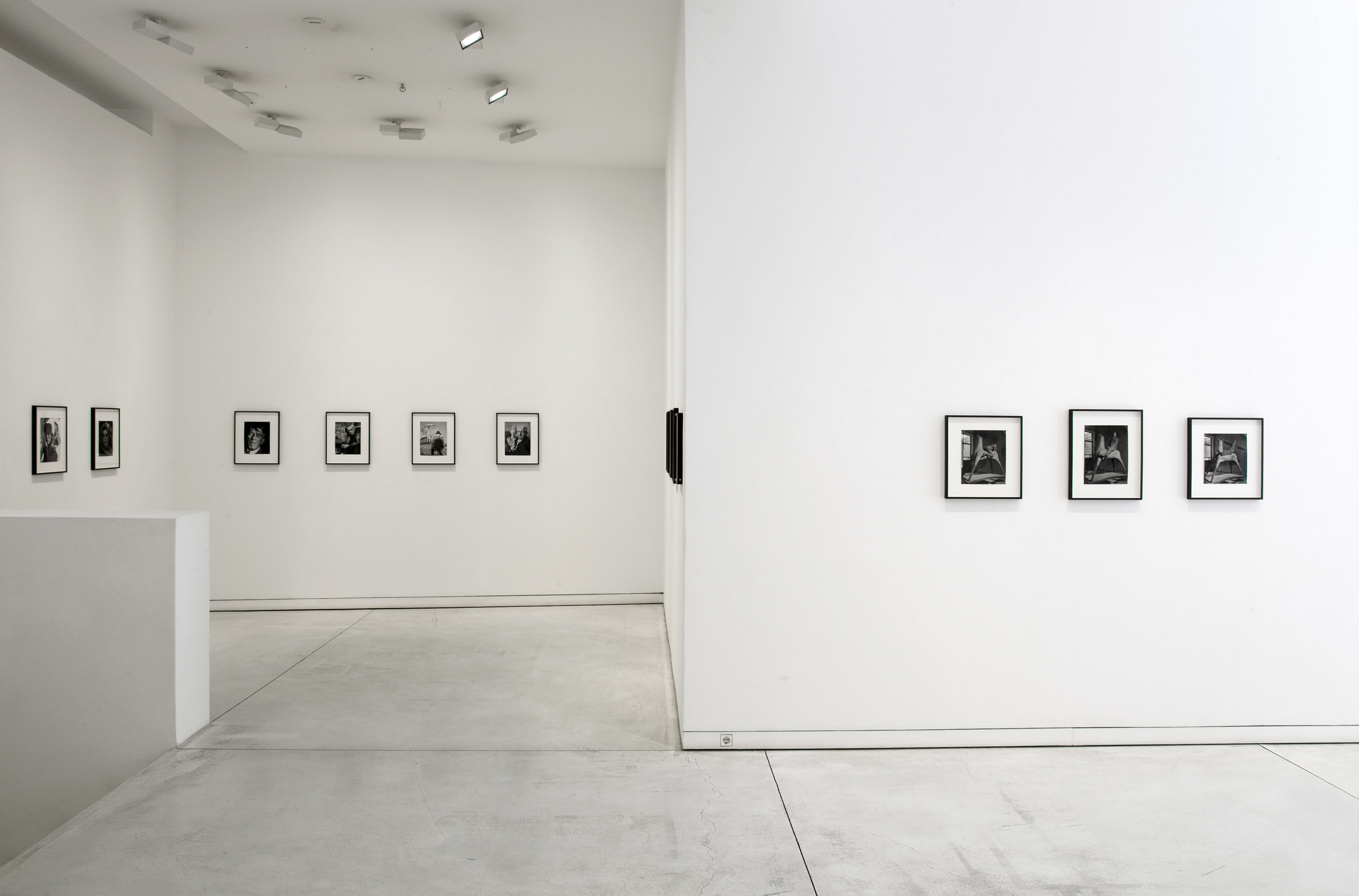
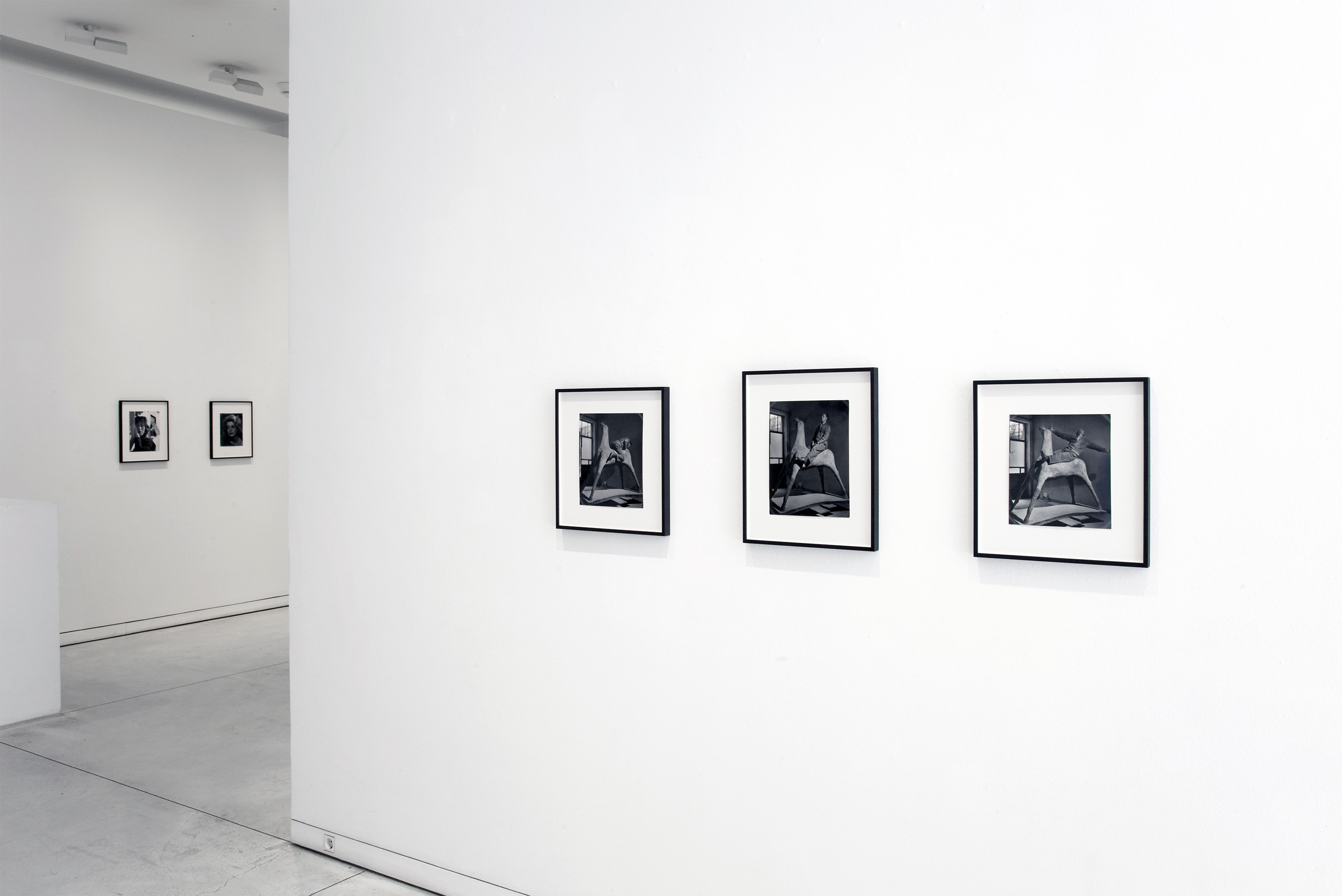
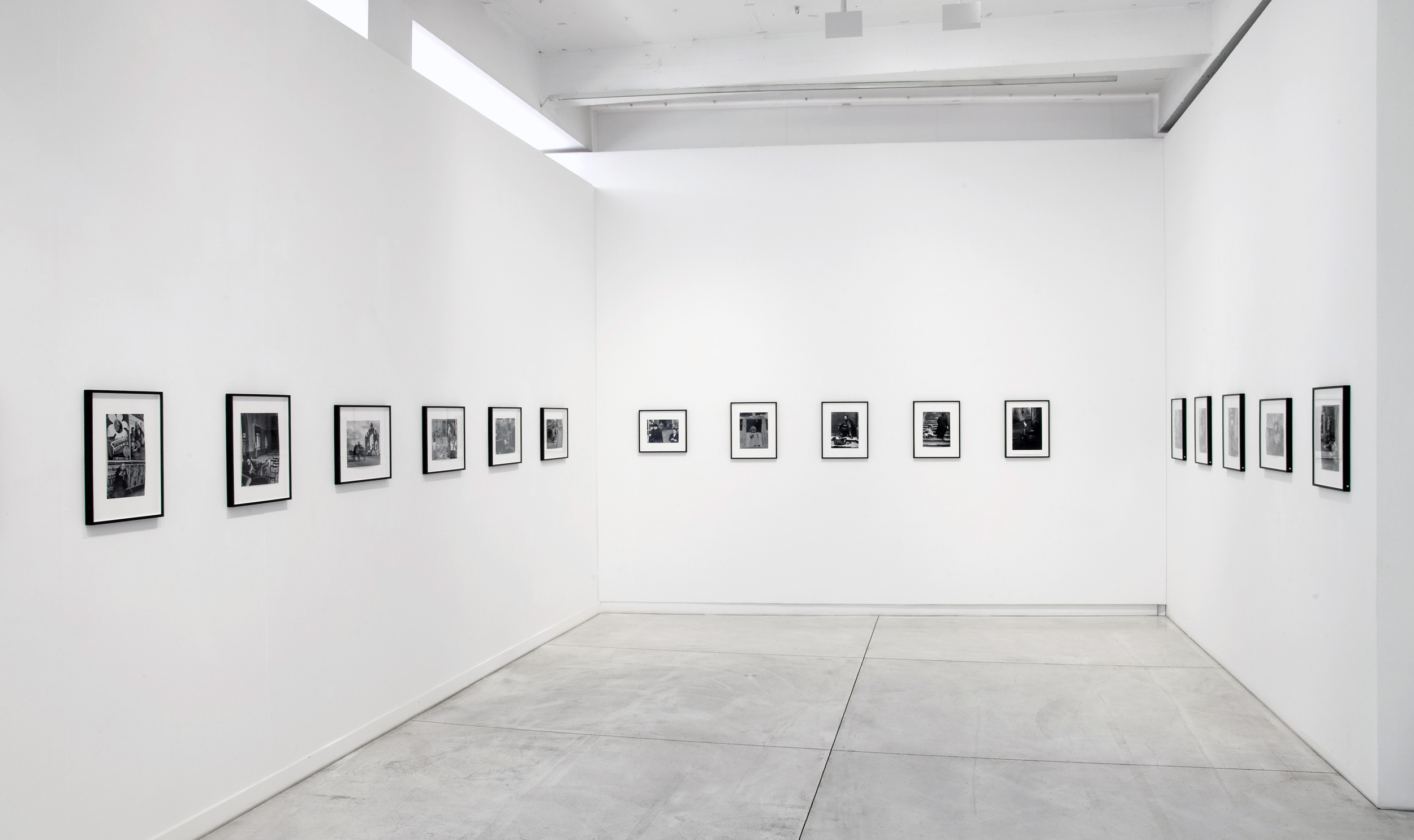
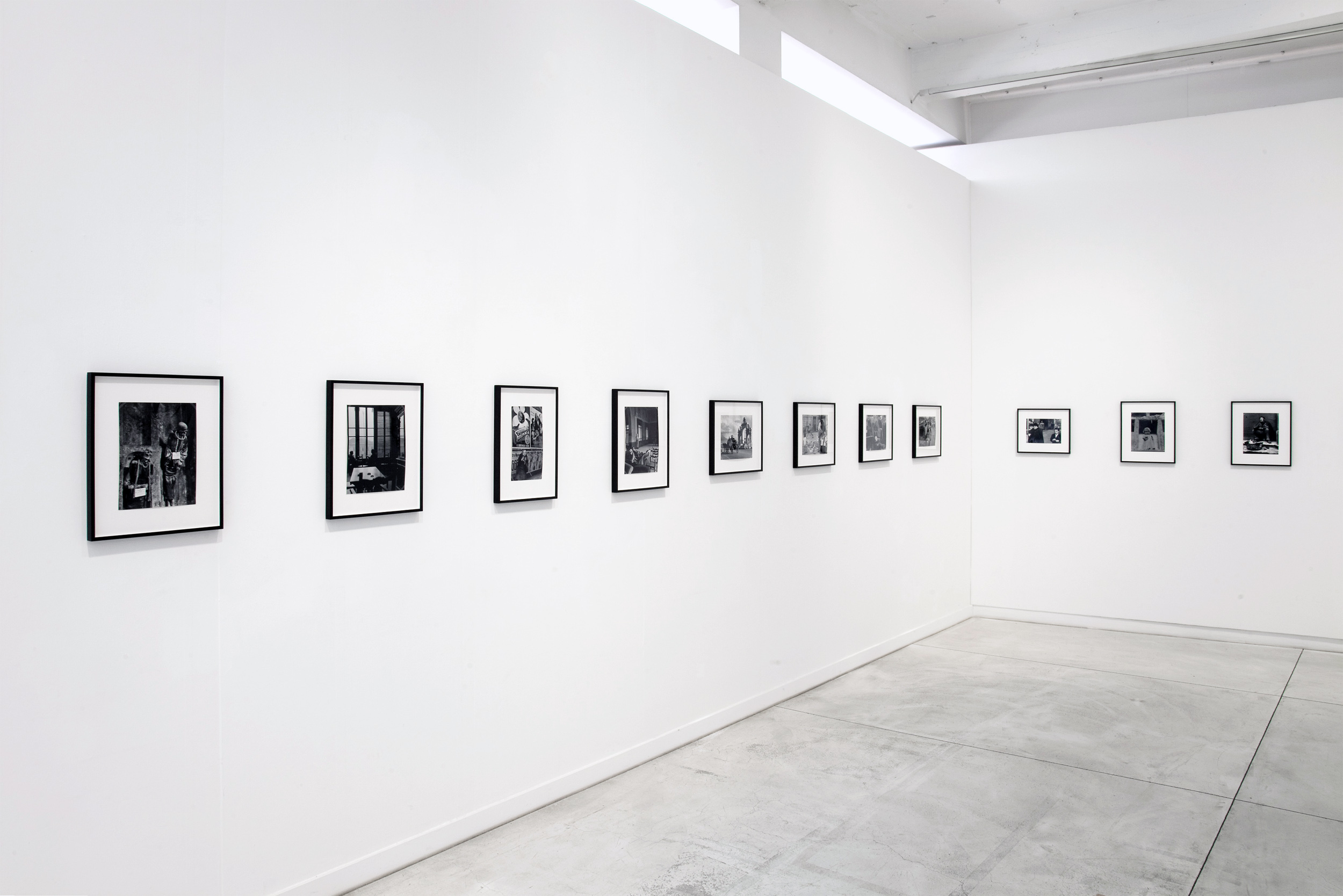
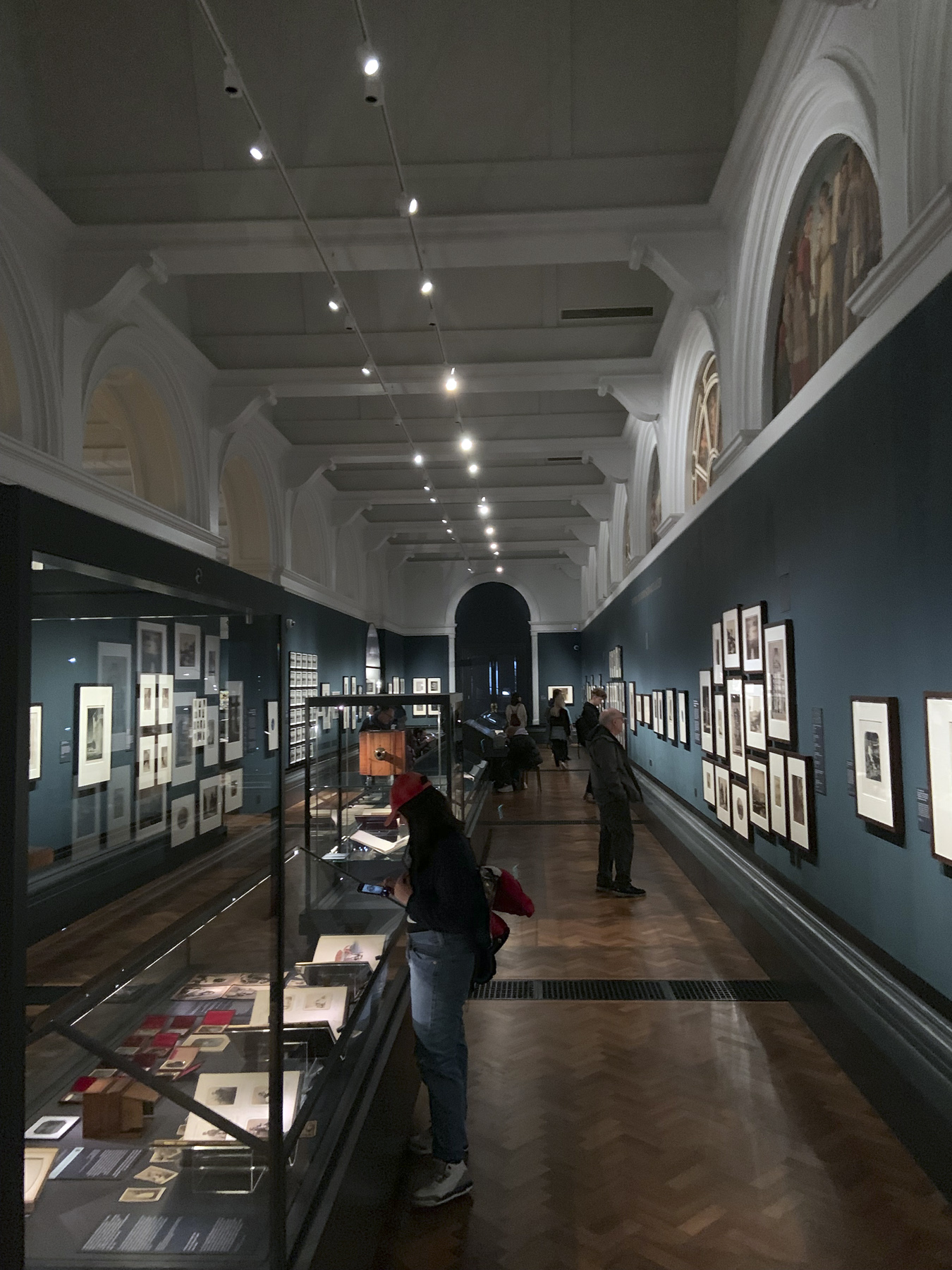
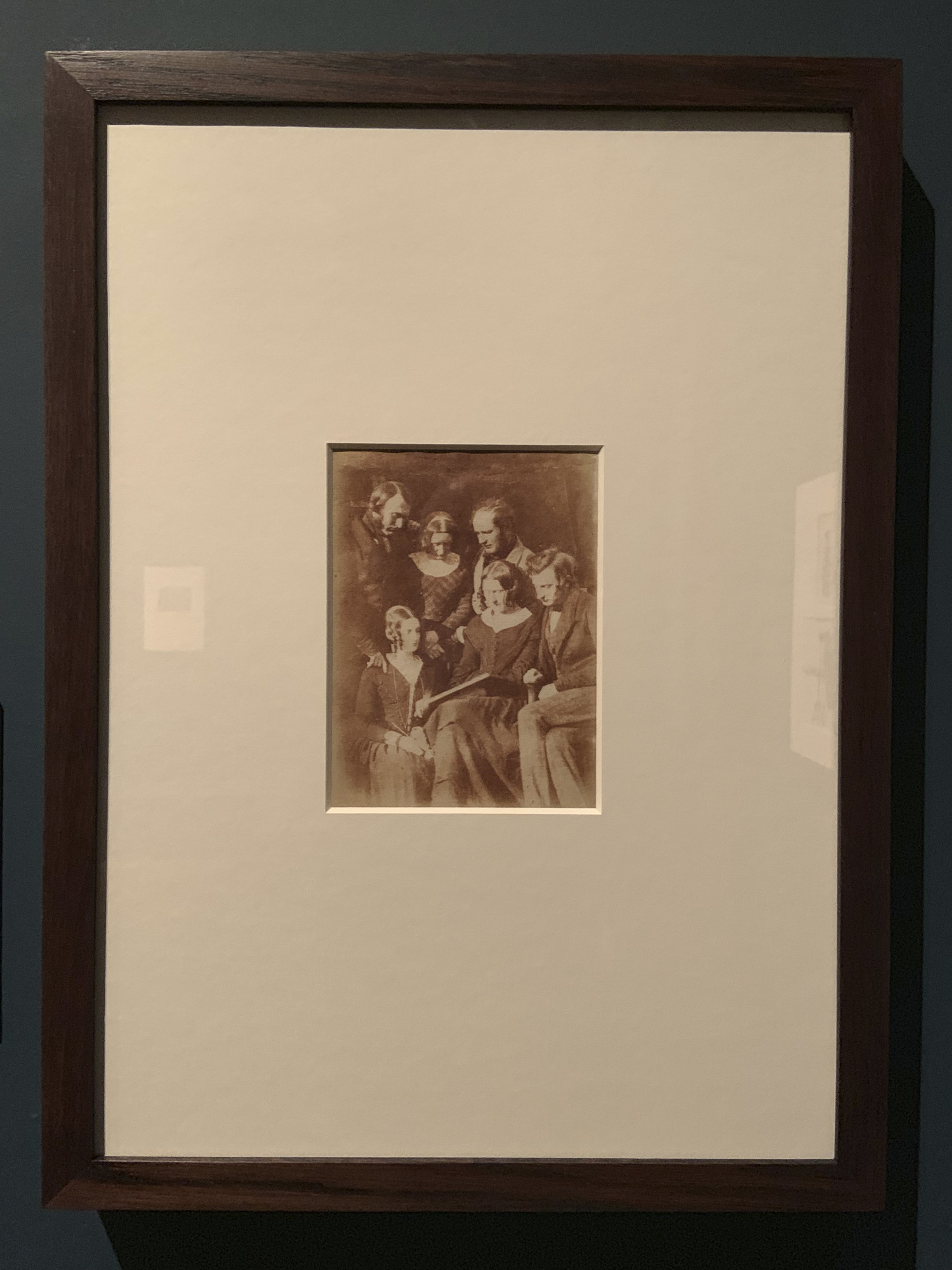
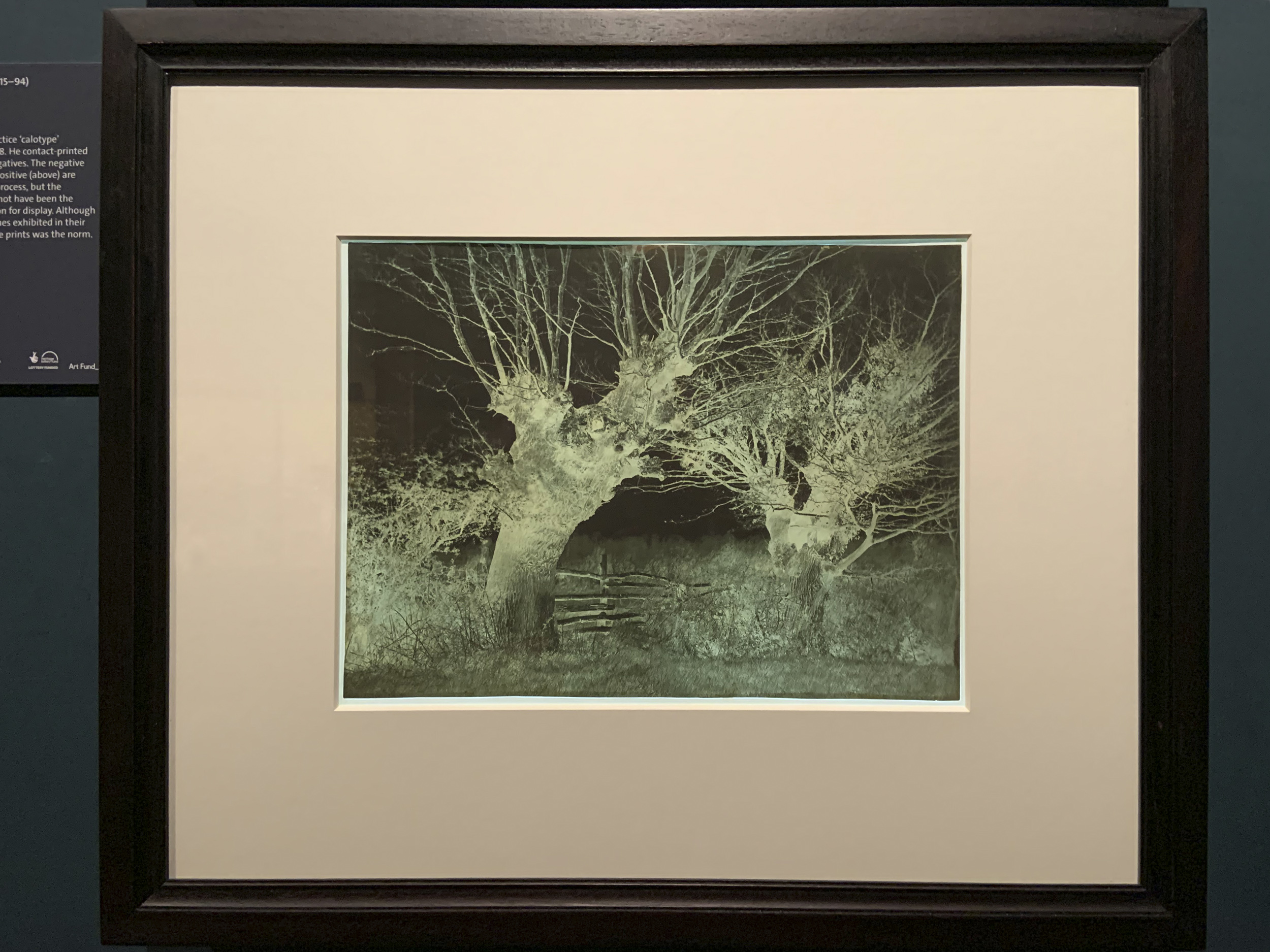
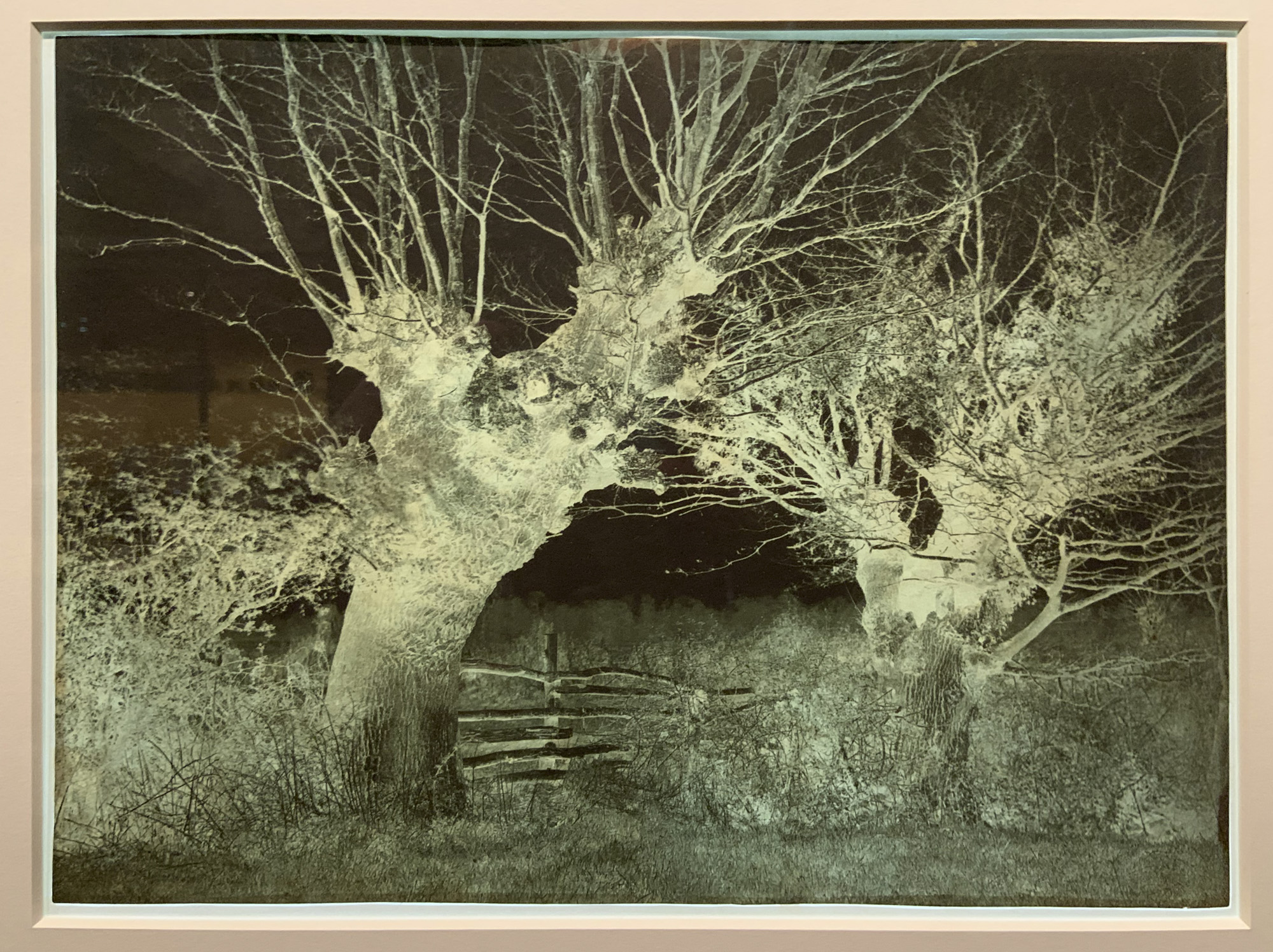
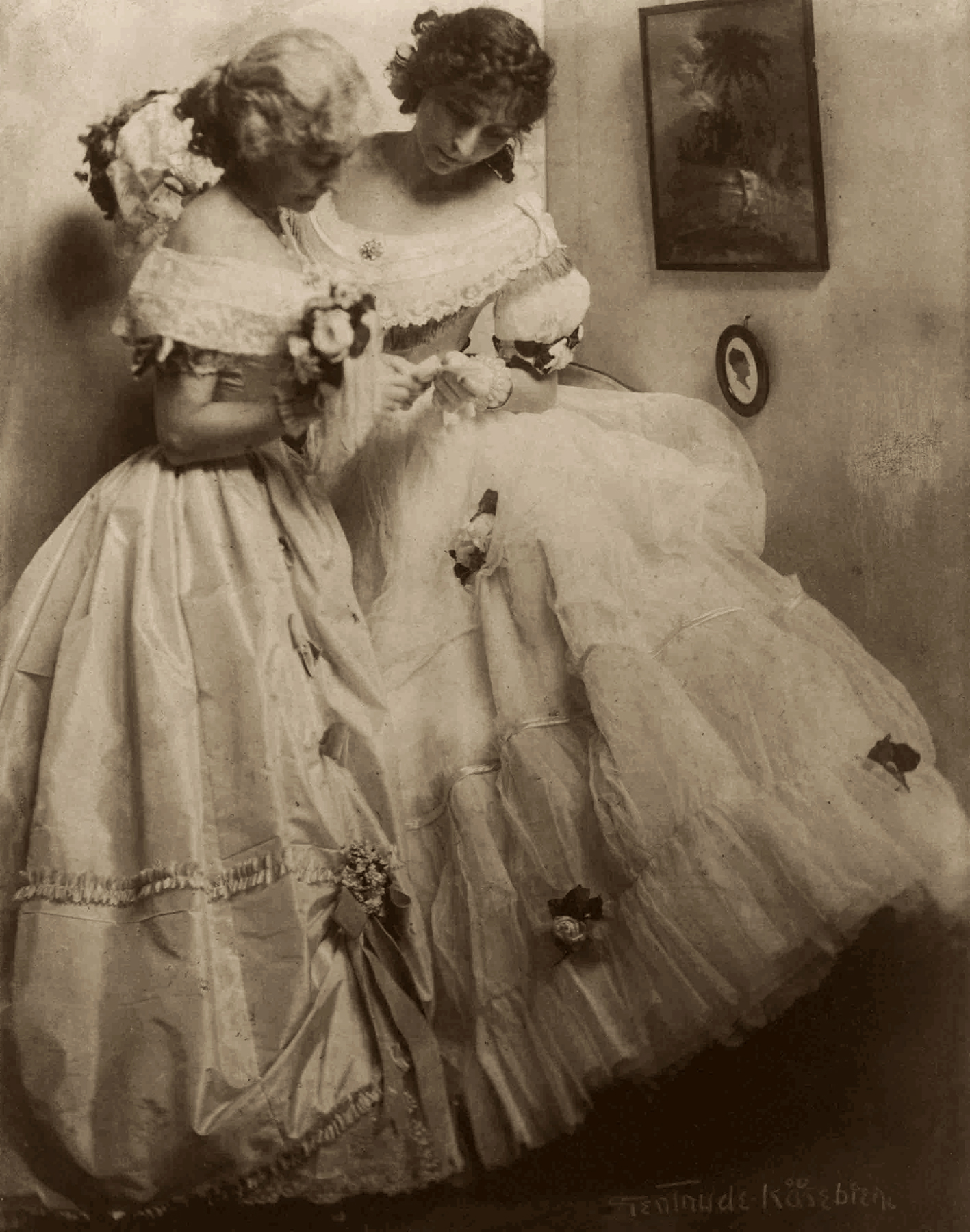
Exhibition: ‘In Lady Barclay’s Salon – Art and Photography around 1900’ at Moderna Museet, Stockholm

Exhibition dates: 19th June, 2021 – 9th January, 2022

Curator: Anna Tellgren

Artists represented in the exhibition: Anna Boberg, Helmer Bäckström, Julia Margaret Cameron, Uno Falkengren, Gustaf Fjæstad, Ferdinand Flodin, Henry B. Goodwin, John Hertzberg, Gösta Hübinette, Eugène Jansson, Nicola Perscheid and Ture Sellman.


Otto. 'Girl in Chair' c. 1892 from the exhibition 'In Lady Barclay's Salon – Art and Photography around 1900' at Moderna Museet, Stockholm, June 2021 - Jan 2022


Otto
Girl in Chair
c. 1892
Reproduction photo: Prallan Allsten/Moderna Museet


Apologies, a short text today… my lower back is not very good and I am not feeling that well.

Another “niche” exhibition that Art Blart likes to promote, one that fills a gap in our greater knowledge of world art and artists. But why the distinction in the title of the exhibition between art and photography? That old chestnut rears its ugly head again… why not just ‘art around 1900’?

My particular favourites in the posting are the muscular yet translucent Anna Boberg painting A Quiet Evening. Study from North Norway (Nd); the gossamer wispiness and beauty of Ferdinand Flodin’s Portrait of a young lady (1922); and the velvety softness and light of Ture Sellman’s Untitled landscape (c. 1915).

I have added detail of the artists and sitters where possible and information on early photographic processes.

Enjoy!

Dr Marcus Bunyan


Many thankx to the Moderna Museet for allowing me to publish the photographs and the text in the posting. Please click on the photographs for a larger version of the image.


Moderna Museet highlights Pictorialism – a movement in photography that arose around 1900. The exhibition In Lady Barclay’s Salon – Art and Photography Around 1900 also includes paintings from the same period, treating visitors to a selection of nearly 300 works from the collections of Moderna Museet and Nationalmuseum.

This exhibition is based on the rich collections of Moderna Museet and Nationalmuseum, with art and photography dating from the late 1800s to the First World War. During this period, pictorialism was a style that many prominent photographers worked in; it was inspired by impressionism, symbolism and naturalism.

Pictorialism was the first international art photography movement, with many active practitioners throughout Europe and the USA. Sweden was on the periphery of this movement, but the style became popular here too among several influential amateur and professional photographers. This was a pivotal period in painting, where the younger artists who went abroad and were inspired by a freer approach broke with the more conservative academic painters. This exhibition will highlight works by famous photographers and painters from the years around the turn of the century.

Dark haired, almond eyed, and irresistibly charming, Lady Sarita Enriqueta Barclay was an influential figure of Stockholm’s Pictorialism movement. Captivated by the experimental nature of Swedish art during the fin de siècle, she hosted elaborate viewings and events, and was photographed often. Known for diffused light, sepia tones, and romanticism, the impressionistic photographs of the era capture a cultural moment in Swedish history.


Look into Lady Barclays Salon: Live curator talk

Look into Lady Barclay’s salon and discover Pictorialism, the first art photo stream. Many prominent photographers worked in the style that prevailed from the 1890s and a few decades onwards. Anna Tellgren, curator and Karin Malmquist, program curator, talk about Pictorialism and some of the approximately 300 paintings and photographs that you can see in the exhibition “In Lady Barclays Salon”.


August Strindberg (Swedish, 1849-1912) 'Underlandet' (The Wonderland) 1894 from the exhibition 'In Lady Barclay's Salon – Art and Photography around 1900' at Moderna Museet, Stockholm, June 2021 - Jan 2022


August Strindberg (Swedish, 1849-1912)
Underlandet (The Wonderland)
1894
Oil on cardboard
72.5cm (28.5 in) x 52cm (20.4 in)
Nationalmuseum (Stockholm)


Johan August Strindberg

Johan August Strindberg (22 January 1849 – 14 May 1912) was a Swedish playwright, novelist, poet, essayist and painter. A prolific writer who often drew directly on his personal experience, Strindberg’s career spanned four decades, during which time he wrote more than sixty plays and more than thirty works of fiction, autobiography, history, cultural analysis, and politics. A bold experimenter and iconoclast throughout, he explored a wide range of dramatic methods and purposes, from naturalistic tragedy, monodrama, and history plays, to his anticipations of expressionist and surrealist dramatic techniques. From his earliest work, Strindberg developed innovative forms of dramatic action, language, and visual composition. He is considered the “father” of modern Swedish literature and his The Red Room (1879) has frequently been described as the first modern Swedish novel. In Sweden, Strindberg is known as an essayist, painter, poet, and especially as a novelist and playwright, but in other countries he is known mostly as a playwright. …

Strindberg, something of a polymath, was also a telegrapher, theosophist, painter, photographer and alchemist. Painting and photography offered vehicles for his belief that chance played a crucial part in the creative process.

Strindberg’s paintings were unique for their time, and went beyond those of his contemporaries for their radical lack of adherence to visual reality. The 117 paintings that are acknowledged as his were mostly painted within the span of a few years, and are now seen by some as among the most original works of 19th-century art.

Today, his best-known pieces are stormy, expressionist seascapes, selling at high prices in auction houses. Though Strindberg was friends with Edvard Munch and Paul Gauguin, and was thus familiar with modern trends, the spontaneous and subjective expressiveness of his landscapes and seascapes can be ascribed also to the fact that he painted only in periods of personal crisis.

Text from the Wikipedia website


Joseph Mallard William Turner (British, 1775-1851) 'A View of Deal' Nd


Joseph Mallard William Turner (British, 1775-1851)
A View of Deal
Nd
Oil on paper on panel
32 x 24cm (12.6 x 9.6 inches)
Nationalmuseum (Stockholm)


The years from 1890 to the first World War were a golden era for the arts in Sweden. This exhibition presents beautiful Pictorialist photographs and selected paintings from this period. The more than 300 works from the rich collections of Moderna Museet and Nationalmuseum give us an insight into art at the time.
In Lady Barclay’s Salon, we imagine a meeting between photographers and painters, their friends and the public. Lady Sarita Enriqueta Barclay (1891-1985) was married to a British diplomat, and they both lived in Stockholm for a few years around 1921. She was portrayed several times in the studio of the photographer Henry B. Goodwin. We can assume that she was prominent in the city’s social life and went to previews, dinners and other events.

This exhibition is an opportunity to see a selection of some 300 works by famous photographers and painters in the Moderna Museet and Nationalmuseum collections, including Anna Boberg, Helmer Bäckström, Julia Margaret Cameron, Uno Falkengren, Gustaf Fjæstad, Ferdinand Flodin, Henry B. Goodwin, John Hertzberg, Gösta Hübinette, Eugène Jansson, Nicola Perscheid and Ture Sellman.

Around the end of the previous century

In the years around 1900, a number of colourful personalities emerged in literature, music, art and architecture, and patrons such as Prince Eugen and Ernest Thiel were building major art collections. The Art and Industry Exhibition in Stockholm in 1897 and the Baltic Exhibition in Malmö in 1914 had sections for art and photography.

The exhibition “In Lady Barclay’s Salon” gives a picture of the visual culture at the time. It features mainly Swedish material, with a few international highlights. The works date from the late-19th century to 1930, a period when Pictorialism was emerging in photography. The style was inspired by impressionism, symbolism and naturalism, and there were lively debates on how to make photography more artistic.

Unlike the increasing number of amateur and professional photographers – who had gained access to the medium thanks to technological progress – the Pictorialists emphasised craftsmanship. Their images are characterised by soft focus and with colours ranging from brown, earthy tones to strong reds and blues. They worked with a variety of processes with the purpose of creating or “painting” on light-sensitive paper. This was the first international art photography movement, and it had many prominent practitioners throughout Europe and the USA.

A pivotal time for painting

This was a pivotal period in painting, when the younger artists who travelled abroad and were inspired by a freer approach broke with the more conservative academic painters. The French painter Paul Gauguin and the Pont-Aven school had a strong influence on Swedish artists who adopted symbolist or synthetist approaches. Images were reproduced and distributed more widely in books, posters and magazines, making it easier to share ideas. No longer was it necessary to visit other countries to see the latest art, but Paris was still a mecca for art students. Towards the end of the century, however, Paris was rivalled by Berlin, Munich, Dresden and Hamburg. Copenhagen, with its international relations and exhibitions, also offered a natural meeting place for Swedes.

Text from the Moderna Museet website


Ferdinand Flodin (Swedish, 1863-1935) 'View from My Window over Skeppsholmen, Stockholm' 1929


Ferdinand Flodin (Swedish, 1863-1935)
View from My Window over Skeppsholmen, Stockholm
1929
Bromoil print mounted on board
Moderna Museet
Reproduction photo: Prallan Allsten/Moderna Museet


Eugène Jansson (Swedish, 1862-1915) 'Hornsgatan nattetid' (Hornsgatan at night) 1902


Eugène Jansson (Swedish, 1862-1915)
Hornsgatan nattetid (Hornsgatan at night)
1902
Oil on canvas
152cm (59.8 in) x 182cm (71.6 in)
National Museum (Stockholm)


Moderna Museet highlights Pictorialism – a movement in photography that arose around 1900. The exhibition In Lady Barclay’s Salon – Art and Photography Around 1900 also includes paintings from the same period, treating visitors to a selection of nearly 300 works from the collections of Moderna Museet and Nationalmuseum.

Lady Sarita Enriqueta Barclay (1891-1985) became a prominent figure on the Stockholm arts scene after her husband, a British diplomat, had been posted to Stockholm. Lady Barclay frequently hosted cultural gatherings and events in the five years following the end of the First World War when she lived here. The photographer Henry B. Goodwin (1878-1931) portrayed Lady Barclay on several occasions, and his pictures show her as a stylish woman with a cosmopolitan air – an emblem of Sweden’s flourishing arts scene at the time.

In the years around 1900, a number of colourful personalities emerged in literature, music, art and architecture, and patrons such as Prince Eugen and Ernest Thiel were building major art collections. The Art and Industry Exhibition in Stockholm in 1897, and the Baltic Exhibition in Malmö in 1914, included separate sections for art and photography.

The exhibition In Lady Barclay’s Salon gives a picture of the visual culture at the time, and consists mainly of Swedish material, with a few international highlights. The works date from the late-19th century to 1930, a period when Pictorialism was emerging in photography. The style embraced inspiration from impressionist, symbolist and naturalism, and there was a lively debate on how to make photography more artistic. Unlike the increasing number of amateur and professional photographers – who had gained access to the medium thanks to technological progress – the Pictorialists emphasised craftsmanship. Their images are characterised by soft focus and with colours ranging from brown, earthy tones to strong reds and blues. They worked with a variety of processes with the purpose of creating or “painting” on light-sensitive paper.

Painting also moved into a new phase around 1900. While the older members of the artist federation Konstnärsförbundet, founded in 1886, maintained their dominance, a younger generation was beginning to step in at the turn of the century. The French artist Paul Gauguin and the Pont-Aven school had a strong influence on Swedish artists who adopted symbolist or synthetist approaches. Ideas could be shared more easily with mass-produced images in books, posters and magazines.

In Lady Barclay’s Salon presents a fictive encounter between photographers and painters, their friends and the audience. The exhibition features some 300 works from the collections of Moderna Museet and Nationalmuseum, including works by Anna Boberg, Helmer Bäckström, Julia Margaret Cameron, Uno Falkengren, Gustaf Fjæstad, Ferdinand Flodin, Henry B. Goodwin, John Hertzberg, Gösta Hübinette, Eugène Jansson, Nicola Perscheid and Ture Sellman.

“This is an opportunity to discover a less well-known part in the history of photography, where the artistic aspects of the medium were discussed fervently, and where there are many intriguing links to painting at the time,” says the exhibition’s curator, Anna Tellgren. “The exhibition highlights both famous and unknown photographers and artists who were practising around 1900, and reveals some fantastic visual treasures from our collection.”

Press release from Moderna Museet


Prince Eugen, Duke of Närke (Swedish, 1865-1947) 'Tidig vintermorgon' (Early winter morning) 1906-1907


Prince Eugen, Duke of Närke (Swedish, 1865-1947)
Tidig vintermorgon (Early winter morning)
1906-1907
Oil on canvas
77cm (30.3 in) x 89cm (35 in)
Nationalmuseum (Stockholm)


Prince Eugen

After finishing high school, Prince Eugen studied art history at Uppsala University. Although supported by his parents, Prince Eugen did not make the decision to pursue a career in painting easily, not least because of his royal status. He was very open-minded and interested in the radical tendencies of the 1880s. The Duke became one of the era’s most prominent landscape painters. He was first trained in painting by Hans Gude and Wilhelm von Gegerfelt.

Between 1887 and 1889, he studied in Paris under Léon Bonnat, Alfred Philippe Roll, Henri Gervex and Pierre Puvis de Chavannes. Puvis de Chavannes’s classical simplicity had the greatest influence on Prince Eugen’s work. The Duke devoted himself entirely to landscape painting. He was mainly interested in the lake Mälaren, the countryside of Stockholm (such as Tyresö, where he spent his summers), Västergötland (most notably Örgården, another summer residence) and Skåne (especially Österlen).

Text from the Wikipedia website


Henry B. Goodwin (Swedish born Germany, 1878-1931) 'Bragevägen Stockholm's loveliest street' 1917


Henry B. Goodwin (Swedish born Germany, 1878-1931)
Bragevägen Stockholm’s loveliest street
1917
Reproduction photo: Prallan Allsten/Moderna Museet


About the exhibition In Lady Barclay’s Salon

The exhibition “In Lady Barclay’s Salon – Art and Photography around 1900” highlights the period from 1890 and up to the First World War. It was a golden age for the arts in Sweden. A number of noteworthy figures appear within the fields of literature, music, art and architecture. Among them are Verner von Heidenstam, Ellen Key, Selma Lagerlöf and August Strindberg.

Art patrons Prince Eugen and Ernest Thiel acquired large art collections, that can still be admired in their respective homes: Waldermarsudde and Thielska Galleriet on Djurgården. Both buildings were designed by the architect Ferdinand Boberg, who included Renaissance, oriental and late Jugend style elements.

The renowned artist Eva Bonnier was another important figure. Better communications in the form of railways and telephone networks contributed to the development of cities, and a growing, export-oriented industry in Sweden. The 1897 Art and Industry Exposition in Stockholm and, a few years later, the 1914 Baltic Exhibition in Malmö, were manifestations of this progressive outlook. Both included sections that showed art and photography.

It was a time of Scandinavianism, and many Nordic collaborations and groups were formed. The women’s movement gained momentum, and in 1919 women were finally given the right to vote. For the first time, after a long struggle, they were able to cast their vote in the 1921 lower house election – exactly one hundred years ago.

Pictorialism developed as a photographic movement

This exhibition offers a glimpse of visual culture from this period by means of some 300 works from the rich collections of Moderna Museet and National museum. While most of these are Swedish in origin, there are some international examples.

The works span a period from the late 19th century to 1930. During this period, Pictorialism developed as a distinct movement that took a different direction from amateur and professional photography. Technical advances, the arrival of roll film for example, made photography accessible to a wider circle of practitioners. The Pictorialists, however, were interested in the craft of photography.

The style was inspired by impressionism, symbolism and naturalism, and there was a heated debate on how to develop photography as an art form. The monochrome portrait paintings of the symbolist Eugène Carrière, for example, clearly influenced art photography around 1900.

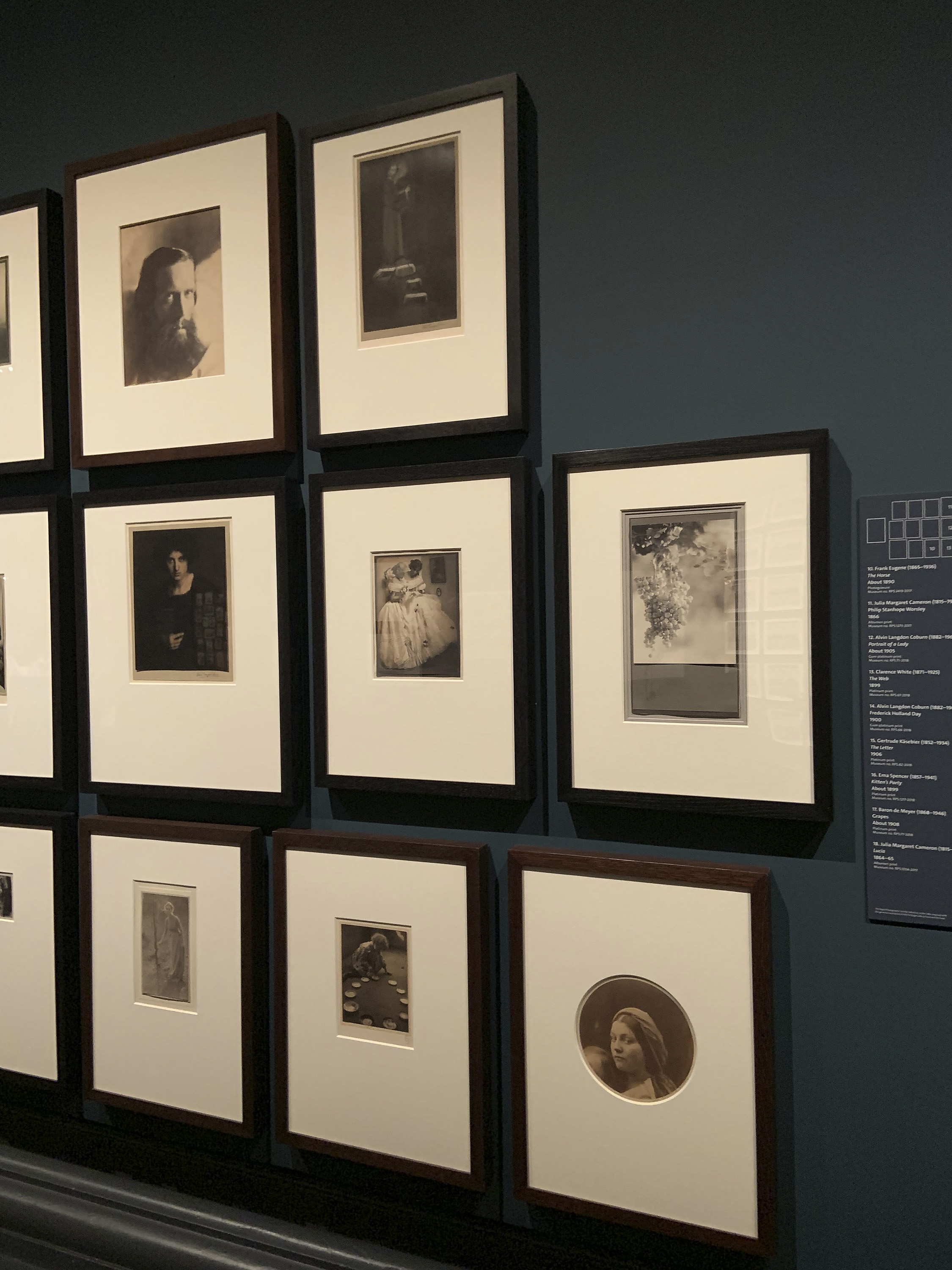
The Pictorialists’ images are characterised by soft focus and a palette that ranges from brown, earthy tones to strong reds and blues. They worked with a variety of processes such as gum bichromate, platinum and bromoil printing with the purpose of creating or “painting” on light-sensitive paper.

This was the first international art photography movement to have a large number of prominent practitioners across Europe and the United States. Clubs were formed to promote this new art photography, among them were the Wiener Camera-Club, the Photo-Club de Paris and the Photo-Secession in New York, with famous members such as Alfred Stieglitz and Edward Steichen. The works were judged in competitions and shown in galleries and museums and at international salons. The style thus spread to Belgium, Holland, Italy, Poland, Russia, Spain and the Nordic countries.

The artistic period

Sweden was on the periphery of this movement, but it found a following here too, with a number of talented photographers. This period is known as the “artistic period” (konstnärstiden), a term coined in an article by the keen Pictorialist Professor Helmer Bäckström. Bäckström was also an active member of Fotografiska Föreningen (the Photographic Association), a Swedish version of the clubs abroad. The association was established in 1888. Its purpose was to organise meetings and dinners where photography was discussed.

In the 1890s, the professional photographer Herman Hamnqvist was an important introducer of Pictorialism. He promoted artistic photography in his many articles and lectures. Other colourful representatives were Uno Falkengren, Ferdinand Flodin, John Hertzberg, Gösta Hübinette and Ture Sellman.

In Sweden, these new ideas were first picked up by the older generation. They were followed by a younger generation of photographers who introduced and disseminated Pictorialism. This second wave includes Henry B. Goodwin, a major figure in Sweden and the Nordic countries. Goodwin was renowned for his expressive, subdued portraits and his many Stockholm cityscapes.

He also kept up with what went on abroad; among his contacts was the well-known portrait photographer Nicola Persheid, who was active in Berlin for many years. Women photographers disappeared from the history of photography during this period. The networking that took place in clubs and associations seems to have excluded many women, even if they had their own successful studios.

Atmospheric style typical of the period

Around 1900, painters entered a new, exciting era. The older members of Konstnärsförbundet (the Artists’ Association), established in 1886, continued to dominate, but a new generation came to the fore around the turn of the century. The French artist Paul Gaugin and the Pont-Aven school were important influences among the Swedish artists.

Helmer Osslund was able to visit Gauguin’s studio, and he later put this experience to practice in his northern landscapes. Carl Wilhelmson was known for his many portraits with motifs from his native West Coast. He taught at the Valand art school in Gothenburg and had a major influence on many artists. Maja and Gustaf Fjæstad founded an artists’ colony by Lake Racken in Värmland where a style in line with current national romanticism tendencies developed. Several local circles or schools in a similar vein were formed across Sweden.

Other important artists at the time were Richard Bergh, Eugène Jansson, Nils Kreuger and Karl Nordström, who all represented and developed an atmospheric style typical of the period. New ideas were now rapidly disseminated via mass-produced pictures in books, volumes of prints and magazines. The artists did not always have to travel abroad in order to find inspiration. However, study trips to Paris, the current art hub, were still important, although Berlin, Munich, Dresden and Hamburg were taking over that role at the end of the 1800s. To Swedish artists, Copenhagen, with its international outlook and exhibitions, became a natural place to gather.

New ways of framing and cropping

Japanese art, especially colour woodcuts, which reached Europe via the impressionists were fashionable and encouraged painters and photographers to try new ways of cropping and framing their motifs. The ornamental details and undulating lines that are typical of the Jugend (Art Noveau) period also inspired many painters. Eccentrics such as Ivar Arosenius and Olof Sager-Nelson (see below) were renowned for their sensitive, almost fairy tale-like portraits.

The author August Strindberg (see above) experimented with both painting and photography, which has been studied closely in recent years. Around the turn of the last century, an intermediary generation were overshadowed by great national artists such as Bruno Liljefors, Carl Larsson and Anders Zorn. However, they became an important link to the emerging expressionism and other modernist movements that came to the fore in the first decades of the 20th century.

Lady Barclay’s Salon

In Lady Barclay’s Salon we have created a fictional encounter between photographers, painters, their friends and audiences. Sarita Barclay was married to a British diplomat, and the couple lived in Stockholm for a few years around 1921. During these years she attended several portrait sittings with Henry B. Goodwin. We can assume she visited exhibition openings, dinners and other society events.

Social circles do not seem to have mixed a great deal, but there is clear evidence of links between painting and photography. Portraits are a common motif, but the many landscapes, cityscapes, dancers and nudes also offer us information about and a glimpse of the past.

Text from the Moderna Museet website


Ferdinand Flodin (Swedish, 1863-1935) 'Greta Gustavsson Garbo' 1923


Ferdinand Flodin (Swedish, 1863-1935)
Greta Gustavsson Garbo
1923
Reproduction photo: Prallan Allsten/Moderna Museet


Greta Garbo

Greta Garbo (born Greta Lovisa Gustafsson 18 September 1905 – 15 April 1990) was a Swedish-American actress. She was known for her melancholic, somber persona due to her many portrayals of tragic characters in her films and for her subtle and understated performances. In 1999, the American Film Institute ranked Garbo fifth on its list of the greatest female stars of classic Hollywood cinema. She was nicknamed “The Divine” because of her whimsical attitude and her willingness to avoid the press. Garbo launched her career with a secondary role in the 1924 Swedish film The Saga of Gösta Berling.


James Bourn (Swedish) 'No title' 1905 


James Bourn (Swedish, Gothenburg)
No title
1905


Herrman Sylwander (Swedish, 1883-1948) 'Tora Teje in 'Inom lagens gränser'' (Tora Teje in 'Within the Limits of the Law') 1914 


Herrman Sylwander (Swedish, 1883-1948)
Tora Teje in ‘Inom lagens gränser’ (Tora Teje in ‘Within the Limits of the Law’)
1914


Tora Teje (17 January 1893 – 30 April 1970) was a Swedish theatre and silent film actress. She appeared in ten films between 1920 and 1939.


Photographic Processes and Materials around 1900

In 1888, Kodak launched the first roll-film hand camera. It revolutionised the market and turned photography into something everyone could enjoy. The specially constructed cameras were sent back to the factory where the pictures were processed. In 1900, Kodak introduced the popular Brownie, a classic box camera.
Another aspect of the increased interest in and use of photographs was that mass produced pictures were now easy to publish in books, volumes of prints and magazines. One example is photogravure, but there were many other processes. The Pictorialists used various processing methods and materials, some of which were closer to printmaking and painting, and they avoided regular photographic materials. The craft of making photographs was important, which was in line with an interest in and revival of older techniques as industrialism gained momentum during the Jugend period.

Professional photographers engaged in portrait photography and took on other commissions for their customers. Among the most prominent Pictorialists, many had second jobs. The tension between, or the different preconditions for photographers who embraced a more artistic form of expression and those who were forced to earn a living from selling their photographs is relevant to this day. There were many conflicts between members of Fotografiska Föreningen (the Photographers’ Association) – which to begin with only accepted amateurs – and the industry association Svenska Fotografers Förbund (the Association of Professional Photographers). At the same time, there are many examples of contacts and collaborations between different types of photographers around the turn of the last century.

Terminology was often translated from German and English, and in older literature you often find processes described in Swedish as gummitryck (gum print), pigmenttryck (pigment print) or oljetryck (oil print). However, the process is not strictly “printing”; the images were developed on light-sensitive paper. Instead of using the most common type of photographic paper with light-sensitive coating of silver salts in gelatine or albumin, the Pictorialists worked with other light-sensitive solutions. The image was often contact printed under a negative, which resulted in a picture with the same dimensions as the negative. The Pictorialists’ images are characterised by soft focus and often a grainy, print-like texture in hues that go from earthy browns to strong reds and blues.

Carbon print

A pigment, potassium bichromate and gelatine emulsion on thin paper is subjected to natural light in contact with a negative. The image is formed with the help of pigment in the desired colour. After exposure, the image is transferred to a new paper. This is the original. The image stands out in clear relief and is reversed, which can be corrected by repeating the transfer process onto a new paper. The tone is often dark brown or black, but it varies depending on the type of pigment used. Factory-made paper by Bühler and Höchheimer were sensitised in alcohol. This process is called carbon print, especially when it features black pigment. It was in use between 1864 until the end of the 1930s.
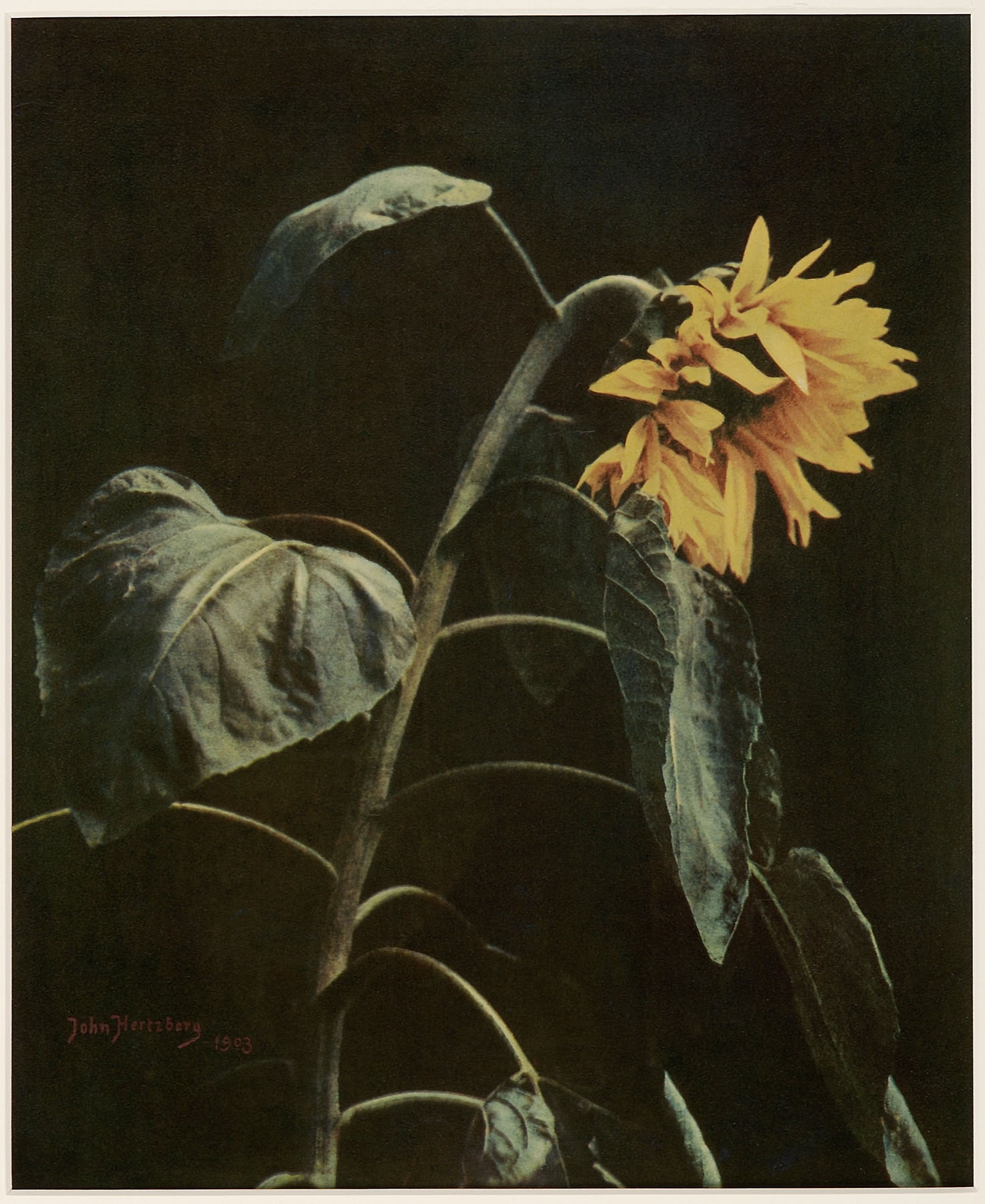
 

John Hertzberg (Swedish, 1871-1935) 'No title' 1903


John Hertzberg (Swedish, 1871-1935)
No title
1903
Gum Bichromate Print


Gum Bichromate print

The gum bichromate process was invented in 1894. It is achieved by applying a solution of pigment, potassium bicharbonate and gum arabic to paper. The components are mixed in water and brushed on. When the coat has dried, it is light-sensitive, and the areas under the negative that are not exposed to light is stabilised. The rest is rinsed off in water. The colour range is very limited. The motif is often built up through multiple coats, erasures and applications of colour. The images are generally monochrome, reminiscent of charcoal or pastels. It is necessary to use a coarse-grained or uneven paper for the emulsion to adhere, which enhances the graphic qualities of the image. Custom-made paper for this method was marketed by Höchheimer, Bühler and Fresson.


Ture Sellman (Swedish, 1888-1969) 'Landskap' (Landscape) c. 1913


Ture Sellman (Swedish, 1888-1969)
Landskap (Landscape)
c. 1913
Pigment print mounted on board
27.5 × 21.4​cm


Oil print

An emulsion consisting of potassium bichromate and gelatine is applied to paper and exposed to light. It results in an almost invisible gelatine image in relief. The gelatine absorbs and repels greasy pigments, which can be fixed by means of a rubber roller or brush. This method gives a grainy image that resembles art prints and drawings.


Olof Sager-Nelson (Swedish, 1868–1896) 'Flickhuvud II' (A Girl's Head II) 1902


Olof Sager-Nelson (Swedish, 1868–1896)
Flickhuvud II (A Girl’s Head II)
1902
Oil on canvas
41cm (16.1 in) x 33cm (12.9 in)
Nationalmuseum (Stockholm)


Ebba-Lisa Roberg (Swedish, 1904-1993) 'No title' 1927


Ebba-Lisa Roberg (Swedish, 1904-1993)
No title
1927
Bromoil print


Bromoil print

Colour pigments on a silver, potassium bichromate and gelatine emulsion on paper. A silver bromide image on paper is sensitised by means of potassium bichromate with an addition of copper sulphate and potassium bromide, then fixer is added. The image is soaked in water, and a gelatine relief is produced, which can be coloured multiple times by brushing or rolling on greasy ink. The tone is determined by the pigments in the ink. A variation is achieved when the wet, tinted gelatine relief is pressed against a paper and the ink is transferred. The image is reversed with a matt finish and pressure marks from the original print. This method was used between 1907 and the 1940s.


Uno Falkengren (Swedish, 1889-1964) 'Nöd'. Arranged dance group with Anna Behle in the middle, Stockholm 1917


Uno Falkengren (Swedish, 1889-1964)
Nöd. Arranged dance group with Anna Behle in the middle, Stockholm
1917
Sepia platinum type mounted on paper
23.7 x 24.2cm


Platinum print

A paper is given a coat of a potassium chloropatinate and iron oxalate. It is then exposed to daylight through a negative. The image is developed as potassium oxalate dissolves the iron salts and transform the platinum salts to metallic platinum embedded in the paper fibres. This process offers few opportunities for manual manipulation. Platinum prints are characterised by a smooth, neutral greyscale. Platinum was relatively inexpensive before the First World War, and prepared papers were readily available. Today, platinum is used in combination with palladium. The method was used as far back as in 1873.

Photogravure

Colour pigment on paper. A paper base coated in potassium bichromates in gelatine are exposed to UV light in contact with a transparent positive. The gelatine coating is thereby stabilised and is then transferred face down to a copper plate. When ink is applied to the plate, it adheres to the etched areas after which the image is printed on paper in a printing press. Photogravures have a clearly defined depression from the edges of the plate, and each print is an original. Shadows are similar to charcoal pigment and highlights match the colour of the paper. This method is classified as a photomechanical print and is not in fact a true photograph. It has been used since the 1880s.


Nils Kreuger (Swedish, 1838-1930) 'Vårafton' (Spring evening) 1896


Nils Kreuger (Swedish, 1838-1930)
Vårafton (Spring evening)
1896
Oil on mahogany panel
48.5cm (19 inches) x 60.1cm (23.6 inches)
Nationalmuseum (Stockholm)


Nils Edvard Kreuger

Nils Edvard Kreuger (11 October 1858 – 11 May 1930) was a Swedish painter. He specialised in landscapes and rural scenes.

In 1874, he began his studies at the Royal Swedish Academy of Fine Arts, but was forced to discontinue them due to illness. In 1878, he was able to resume studying at the private painting school of Edvard Perséus. He then went to Paris, in 1881, and studied with Jean-Paul Laurens at the Académie Colarossi. Much of his time was spent painting en plein air in Grez-sur-Loing. As his style progressed, he showed a preference for painting at dawn or dusk, in haze or rain. His first exhibition at the Salon came in 1882.

After 1885, he was a supporter of the “Opponenterna [sv]”, a group that was opposed to the outmoded teaching methods at the Royal Academy. He was also active in creating the Konstnärsförbundet [sv] (Artists’ Union). At this time, he abandoned painting en plein air in favour of Romantic nationalism. In 1886, he married Bertha Elisabeth von Essen (1857-1932), the daughter of an army officer, and settled in Bourg-la-Reine.

In 1887, he returned to Sweden, looking for a quiet place to paint, and chose Varberg, where he worked with Richard Bergh and Karl Nordstrom to establish what came to be known as the Varbergsskolan [sv]; a term coined by Prince Eugen, himself an amateur artist. It was a reaction to the prevailing realistic style of landscape painting and may have been inspired by Bergh’s attraction to the works of Paul Gauguin. He was also influenced by Van Gogh, whose paintings were exhibited in Copenhagen in 1893.

In 1896, he moved to Stockholm, but visited Öland in the summers, where he painted cows and horses. After 1900, his palette lightened and he began adding dots to his work. He also did illustrations, designed furniture and produced some humorous paintings called the “historiska baksidor” (historic backs), showing famous rulers from behind. Between 1904 and 1905, he executed some large wall paintings at the Engelbrektsskolan [sv]. In his final years, he had problems with his eyesight, but was able to continue painting.

Text from the Wikipedia website


Gösta Hübinette (Swedish, 1897-1980) 'Forntida' (Ancient) 1928


Gösta Hübinette (Swedish, 1897-1980)
Forntida (Ancient)
1928
Gelatine Silver Print


Gelatine silver print

The most common form of black and white photography in the 20th century. A photo paper with a coating of light-sensitive silver halogens in gelatine are exposed and developed. There are many varieties of this process with different texture and glossiness, dynamic range and contrast. The result depends on the types of paper, developer and additive tones that are used.

Bibliography

Håkan Petersson, “Photographic materials”, Another Story. Photography from the Moderna Museet Collection, ed. Anna Tellgren, Stockholm: Moderna Museet and Göttingen: Steidl, 2011, pp. lxi-lxiii.

Pär Rittsel and Rolf Söderberg, “Konstnärstidens metoder”, Den svenska fotografins historia 1840–1940, Stockholm: Bonnier Fakta Bokförlag AB, 1983, p. 240-241.

Lena Johannesson, Den massproducerade bilden. Ur bildindustrialismens historia, Stockholm: Almqvist & Wiksell Förlag AB, 1978.

Impressionist Camera. Pictorial Photography in Europe, 1889-1918, ed. Philip Prodger, London/New York: Merrell Publishers Limited, 2006, pp. 322-324.

Text from the Moderna Museet website


Henry B. Goodwin (Swedish born Germany, 1878-1931) 'Carin' 1920


Henry B. Goodwin (Swedish born Germany, 1878-1931)
Carin
1920
Reproduction photo: Prallan Allsten/Moderna Museet


Henry B. Goodwin (Swedish born Germany, 1878-1931)

Henry B. Goodwin, born in Munich as Henry Buergel, was the most successful representative of Pictorialism. He arrived in Sweden in 1905 in order to teach German at Uppsala University. Some ten years later, in 1914, he moved to Stockholm where he opened a studio, Kamerabilder, which was popular with painters and artists.

His many superb portraits were achieved with small means: the subject is captured against a dark, neutral backdrop. His soft, smoky Stockholm cityscapes have been collected in a series of special editions, and Goodwin’s keen interest in gardening was expressed through meticulously arranged close-ups of plants.

Goodwin enjoyed a large, international network and launched the term bildmässig (pictorial) photography as an alternative to artistic photography. It was a term that came to be used frequently in the photographic debate.

Text from the Moderna Museet website


Julia Margaret Cameron (British, 1815-1879) 'The Mountain Nymph, Sweet Liberty' 1866


Julia Margaret Cameron (British, 1815-1879)
The Mountain Nymph, Sweet Liberty
1866


Julia Margaret Cameron (British, 1815-1879)

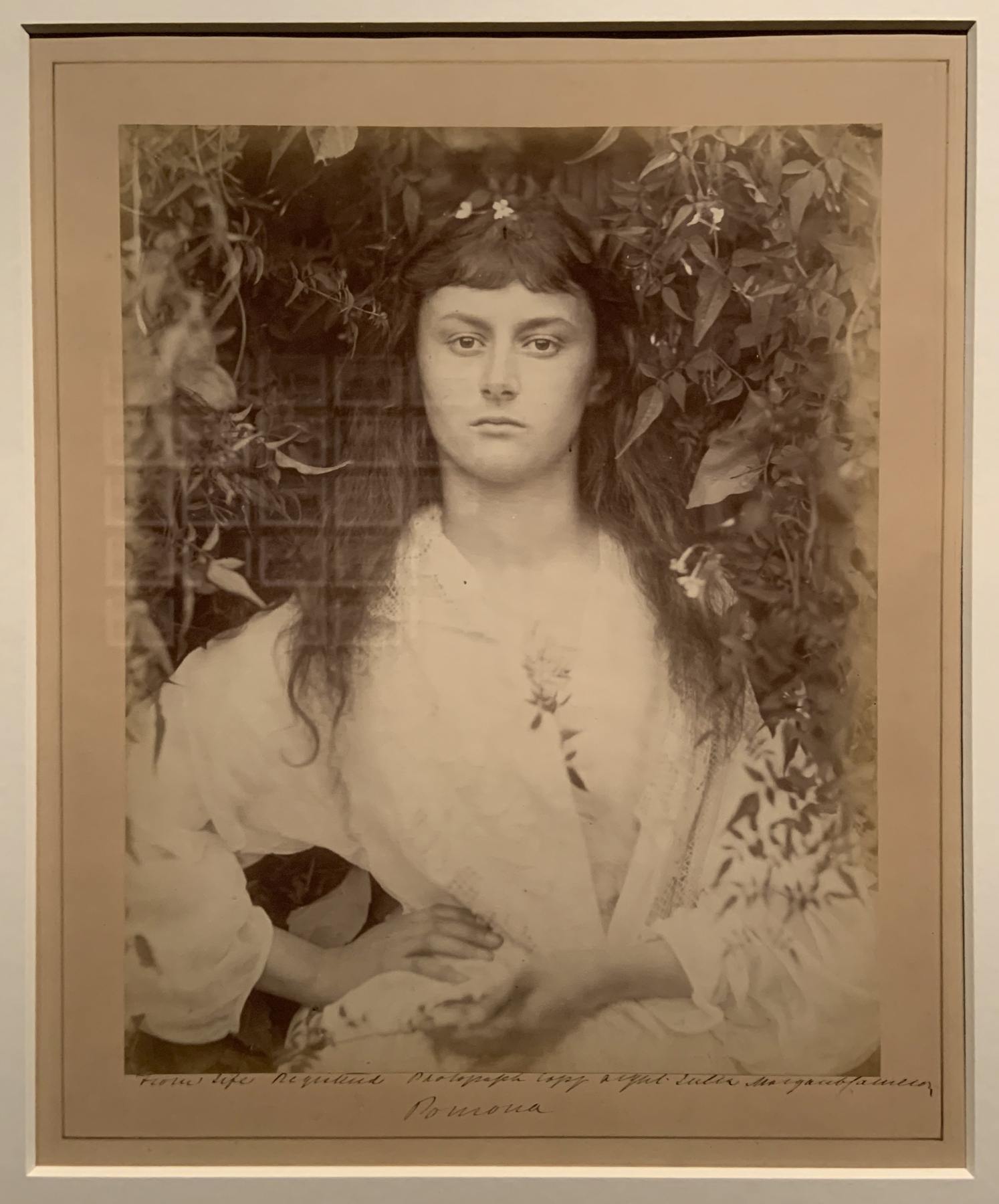
A small pioneering group of photographers in Victorian England were the first to experiment with, and who attempted to formulate, an aesthetic around artistic photography. Julia Margaret Cameron was part of this group. She left behind a wonderful collection of intimate portraits of members of her family and large circle of friends. She was an amateur, predominantly active during the 1860s and 1870s.

Cameron specialised in expressive soft-focus photographs of staged motifs borrowed from mythology, the Bible or English literature, as in her rendering of Alfred Tennyson’s famous poem “Maud” from 1855.

Cameron’s photographs evoke the Pre-Raphaelites with their penchant for the Middle Ages and Renaissance painting. She was a precursor of the photographers that a few decades later formed part of the pictorial movement.

Text from the Moderna Museet website


Helmer Bäckström (Swedish, 1891-1964) 'Segel till tork' (Drying sails) 1923


Helmer Bäckström (Swedish, 1891-1964)
Segel till tork (Drying sails)
1923


Helmer Bäckström (Swedish, 1891-1964)

Helmer Bäckström was an important member of Fotografiska Föreningen (the Photographic Association). The association, which was formed in 1888, organised meetings where photography was discussed. A library of books on photography was accumulated, but most important were the photo competitions. Bäckström was a researcher, collector, historian and photographer. In 1948, he was appointed professor of photography at the Royal Institute of Technology. Throughout his career, he wrote about early photography and technical innovations in a series of articles entitled “Samlingar till kamerans och fotografins svenska historia” (Collections of the Swedish History of Cameras and Photography). They were published in the association’s journal, “Nordisk Tidskrift för Fotografi”.

Bäckström was also a Pictorialist; studies of flora and fauna were his favourite motifs. His large collection of photographs was acquired by the Swedish state in 1965. It has been part of the Moderna Museet collection since 1971.

Text from the Moderna Museet website


Anna Boberg (Swedish, 1864-1935) 'Stilla afton. Studie från Nordlandet' (A Quiet Evening. Study from North Norway) Nd


Anna Boberg (Swedish, 1864-1935)
Stilla afton. Studie från Nordlandet (A Quiet Evening. Study from North Norway)
Nd
40.5 x 70.5cm
Nationalmuseum (Stockholm)


Anna Boberg (Swedish, 1864-1935)

Anna Scholander’s family was part of the Stockholm elite. She was well educated and moved with ease in the salons of Paris and other cities. In Paris she met Ferdinand Boberg, who was to become one of Sweden’s leading architects. They were married in 1888. The couple dedicated their lives to work and travel.

Anna Boberg was highly versatile. She designed textiles, glass and Jugend pottery – one example is the elegant peacock vase from around 1897 for Rörstrand. In 1901, she made a life-changing trip to northern Norway where she fell in love with the rocky landscape around Lofoten, which seemed to rise out of the sea. It woke in her an irresistible urge to paint.

Anna Boberg returned to this location over a period of thirty years. Contrary to her life as a society lady, she embarked on strenuous expeditions on foot and by sea, and she made oil sketches of what she saw which she later used as inspiration in her studio.

Text from the Moderna Museet website


Ferdinand Flodin (Swedish, 1863-1935) 'Portrait of a young lady' 1922


Ferdinand Flodin (Swedish, 1863-1935)
Portrait of a young lady
1922


Ferdinand Flodin (Swedish, 1863-1935)

One of the foremost portrait photographers of the period was Ferdinand Flodin. During his long career he tried all the different processes that were typical of Pictorialism, and he became a highly skilled photographer. As a young man, he travelled to the United States, and for a number of years he worked in Worcester near Boston. After his return in 1889, he opened a studio in Stockholm where he received celebrities associated with the theatre, art, politics and science.

Besides portraits, his large body of work includes a number of beautiful cityscapes in different colour tones. Flodin continued to travel; he was interested in the international scene and he knew a great deal about early photography. He went on to build a collection of historical photographs, later acquired by Helmer Bäckström. Flodin was active in Svenska Fotografers Förbund (the Swedish Association of Professional Photographers) for many years, and he regularly wrote about technical and financial matters in the association’s journal.

Text from the Moderna Museet website
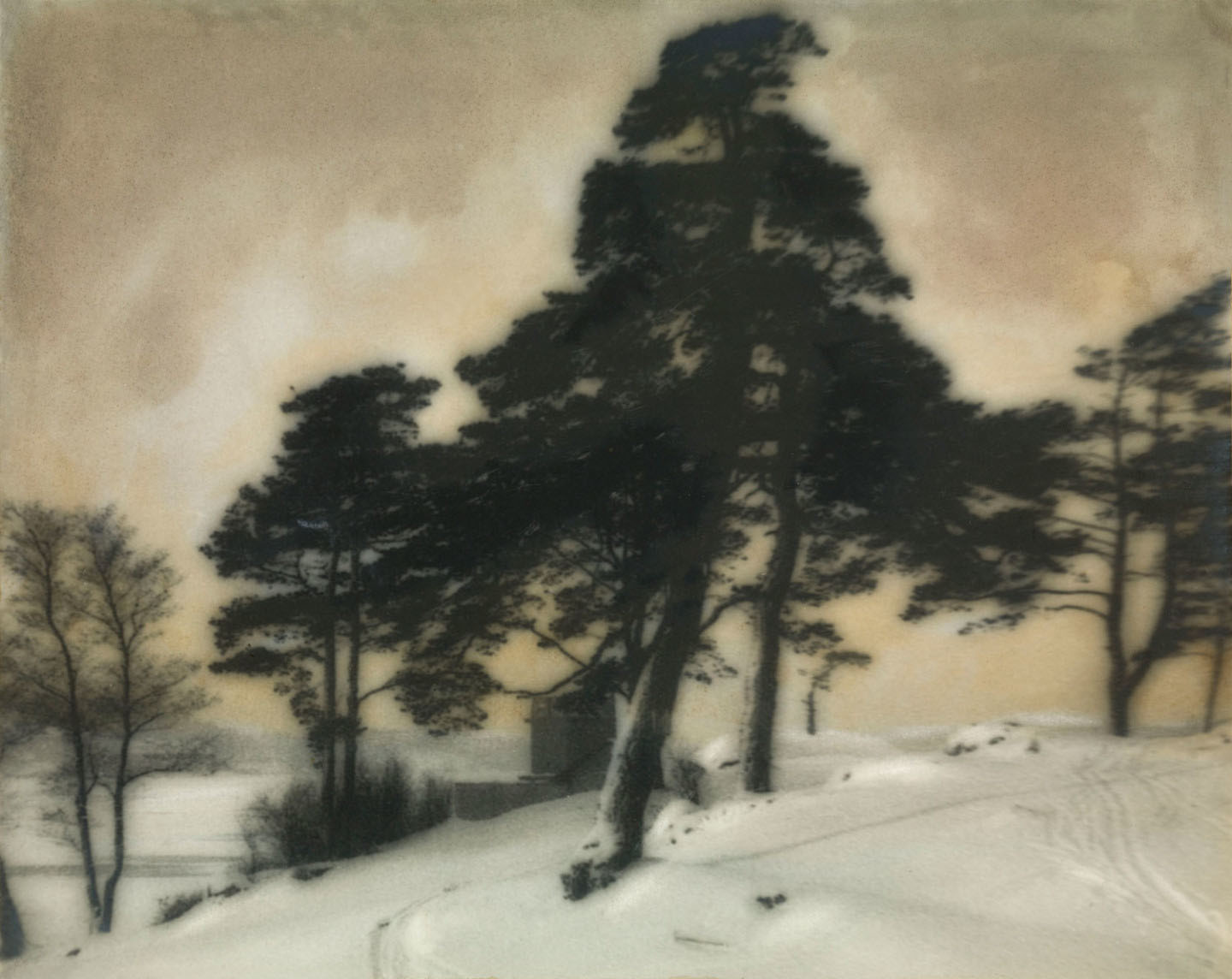
 

Gösta Hübinette (Swedish, 1897-1980) 'Japanskt' c. 1925


Gösta Hübinette (Swedish, 1897-1980)
Japanskt
c. 1925


Gösta Hübinette (Swedish, 1897-1980)

With their more independent position and experimental approach, amateur photographers were fundamental to the development of the pictorial movement in Sweden and internationally. Gösta Hübinette was interested in art from an early age, but on his family’s advice he studied business administration, and he worked at the carpet business, Myrstedts Matthörna, until he retired. He practiced several disciplines, including painting, but he was most successful as a photographer. Hübinette was part of the circle around Henry B. Goodwin, and in the 1920s he often took part in exhibitions and the important photo competitions.

Hübinette’s photographs are testament to his proficiency in painting, drawing and printmaking. With delicate works such as “Japanskt” (c. 1925) he is also one of the Swedish photographers for whom Japanese woodcuts served as inspiration.

Text from the Moderna Museet website
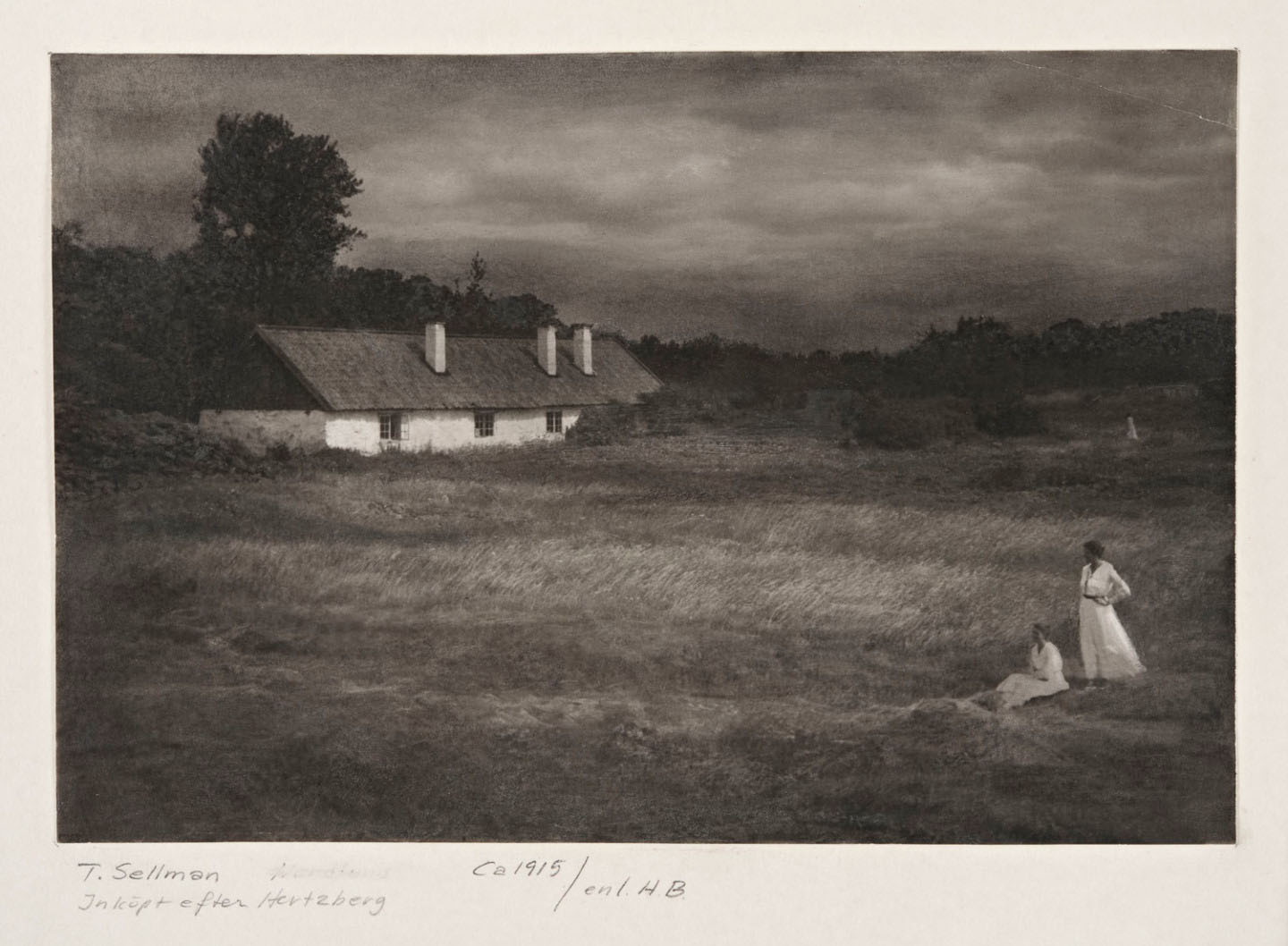
 

Ture Sellman (Swedish, 1888-1969) 'No title' c. 1915


Ture Sellman (Swedish, 1888-1969)
No title
c. 1915


Ture Sellman (Swedish, 1888-1969)

As an architect, Ture Sellman had his own approach to photography. He was well acquainted with the compositional and technical aspects and was therefore an important figure who also gave lectures. He later became an astute critic. Sellman was among the most vociferous advocates of photography as an artistic medium. His early Bromoil prints are some of the most graphic examples of Swedish Pictorialism.

After having experimented with different artisan processes, Sellman did a complete U-turn in 1920 and became a supporter of the straight photography expression, but his interest in tonality and composition are still visible in his soft-focus photographs from the 1920s.

Sellman designed some seventy buildings, and many of his photographs are testament to his eye for architecture.

Text from the Moderna Museet website


Nicola Perscheid (German, 1864-1930) 'No title' c. 1920


Nicola Perscheid (German, 1864-1930)
No title
c. 1920


Nicola Perscheid (German, 1864-1930)

Nicola Perscheid was one of the international figures that came to have a major influence on Pictorialism in Sweden. In the autumn of 1913, he arrived in Stockholm in order to conduct what we would today call a workshop. It was enormously popular. His fame had reached Sweden partly via his former pupil, Henry B. Goodwin.

Perscheid was against retouching, which meant he spend a great deal of time on preparations. Among his portraits are many full-length and half-length photographs of distinguished men and nameless women. Especially his expansive, pared down photographs of women with their soft lines and ornamental jewellery and flowers evoke the pictorial language of symbolism, but also older painting practices.

The Perscheid lens was launched in 1920. This soft-focus lens became especially popular in Europe and Japan.

Text from the Moderna Museet website


Uno Falkengren (Swedish, 1889-1964) 'Nöd'. Arranged dance group with Anna Behle in the middle, Stockholm 1917


Uno Falkengren (Swedish, 1889-1964)
Nöd. Arranged dance group with Anna Behle in the middle, Stockholm
1917
Sepia platinum type mounted on paper
23.7 x 24.2cm


Uno Falkengren (Swedish, 1889-1964)

Uno Falkengren belonged to the inner circle around Henry B. Goodwin. Goodwin was also instrumental in allowing Falkengren to study under the distinguished German photographer Nicola Perscheid in Berlin. It was a formative period during which Falkengren developed a minimalistic, elegant style. Among his works are a number of interesting portraits of famous dancers in expressive scenes and groups.

In 1916, he was appointed head of the Nordiska Kompaniet studio. He then worked at his own studio for a few years until he moved to Berlin in 1924. Only a year later, he returned to Stockholm and gave up photography completely. On account of his homosexuality, Falkengren lived an itinerant, partly secret, life. There are elements of queer culture within Pictorialism, as practitioners were often attracted to alternative settings or artists’ communities.

Text from the Moderna Museet website


Anna Behle (Swedish, 1876-1966)

Anna Charlotta Behle (Stockholm, August 9, 1876 – Gothenburg, October 2, 1966) was a Swedish dancer and dance teacher. Considered a pioneer of modern dance in Sweden, she first became interested in the art after watching Isadora Duncan perform. She was born to unwed parents, and was adopted, along with her brother August, by the Granbäck family, who ensured that she had a full education. After initial studies in singing with Eugène Crosti and Emile Wartel in Paris, she studied dance with Duncan and with Emile Jacques-Dalcroze; later she would open her own school in Stockholm.

Text from the Wikipedia website


John Hertzberg (Swedish, 1871-1935) 'No title' 1903


John Hertzberg (Swedish, 1871-1935)
No title
1903
Gum Bichromate Print


John Hertzberg (1871-1935)

John Hertzberg was a technically accomplished photographer. He developed colour photography in Sweden. He was educated in Vienna and was later offered to teach at the Royal Institute of Technology where he was later senior lecturer in photography. He was thereby a key figure in photographic circles.

When Nils Strindberg’s rolls of film were discovered on Kvitøya in the Svalbard archipelago thirty years after S. A. Andrée’s failed balloon Arctic Expedition in 1897, Hertzberg was given the prestigious task of developing the exposed films. He was also editor of the journal “Nordisk Tidskrift för Fotografi” for many years and chairman of Fotografiska Föreningen.

He experimented with different techniques and groups of motifs in a style typical of the time. These include pictures of Stockholm from the water as well as compositions of clouds and shadows.

Text from the Moderna Museet website


Eugène Jansson (Swedish, 1862-1915) 'Hornsgatan nattetid' (Hornsgatan at night) 1902


Eugène Jansson (Swedish, 1862-1915)
Hornsgatan nattetid (Hornsgatan at night)
1902
Oil on canvas
152cm (59.8 in) x 182cm (71.6 in)
National Museum (Stockholm)


Eugène Jansson (Swedish, 1862-1915)

Eugène Jansson became a member of the Konstnärsförbundet association of artists in 1886. Inspired by periods spent in France, they painted plein air, impressionist landscapes. Jansson was influenced by these movements from early on. However, he soon progressed to depicting moods rather than the concrete objects he observed.

Many know him from his blue, early evening panoramas of south Stockholm, where he moved in the mid-1890s. In “Hornsgatan nattetid” (1902), everything seems to merge into a blue vision where houses, gas lights and sky form a synthesis.

When Eugène Jansson embarked on a new phase a few years into the 20th century, his motifs were athletic, sun-lit, bathing men. Many found these paintings offensive. Eugène Jansson was a homosexual man at a time when sexual activity between men was against the law.

Text from the Moderna Museet website


Gustaf Fjæstad (Swedish, 1868-1948) 'Vinterafton vid en älv' (Winter evening by a river) 1907


Gustaf Fjæstad (Swedish, 1868-1948)
Vinterafton vid en älv (Winter evening by a river)
1907
Oil on canvas
150cm (59 in) x 185cm (72.8 in)
Nationalmuseum (Stockholm)


Gustaf Fjæstad (Swedish, 1868-1948)

After having attended art school in Stockholm, Gustaf Fjæstad settled by Lake Racken in Värmland where he founded an artists’ colony. The collective had no common programme, but they supported each other and exhibited their work together. There was also an idea of not distinguishing art from craft.

Fjæstad was not only a painter, he also designed furniture and textiles. “Vinterafton vid en älv” (Winter Evening at the River Bank, 1907) is testament to Fjæstad’s interest in Japanese woodcuts. The painting communicates a strong sense of nature and existential intensity. The surface is accentuated by fields of colour and a Jugend-inspired linear pattern. The motif is a seemingly random section of the river. The trees are cropped at the top of the canvas but touch the water where the eddies evoke the growth rings of the wood.

Text from the Moderna Museet website


Henry B. Goodwin (Swedish born Germany, 1878-1931) 'Lady Barclay' 1921


Henry B. Goodwin (Swedish born Germany, 1878-1931)
Lady Barclay
1921


Lady Sarita Enriqueta Barclay (British, 1891-1985)

The portraits that Henry B. Goodwin took of Lady Barclay between 1920 and 1922 show a fashion-conscious society woman. Sarita Barclay moved to Stockholm just after the end of the First World War with her husband, Sir Colville Barclay, and their three children. Her husband was Minister to Sweden, a high-ranking British diplomat.

During the five years that Lady Barclay lived in Stockholm she hosted various events, including a dinner in conjunction with an exhibition of French art at the Liljevalchs art gallery at the initiative of Prince Eugen in 1923. Sarita was the daughter of the British sculptor Herbert Ward.

After the death of her first husband, she married Robert Vansittart, a diplomat who spoke out against Nazism before and during the Second World War.

Text from the Moderna Museet website


Moderna Museet, Stockholm

Moderna Museet is ten minutes away from Kungsträdgården, and twenty minutes from T-Centralen or Gamla Stan. Walk past Grand Hotel and Nationalmuseum on Blasieholmen, opposite the Royal Palace. After crossing the bridge to Skeppsholmen, continue up the hill. The entrance to Moderna Museet and Arkitekturmuseet is on the left-hand side.

Opening hours:
Tuesday – Sunday 11 – 18
Monday closed
Moderna Museet website

LIKE ART BLART ON FACEBOOK

Back to top

Exhibition: ‘Tobias Zielony: The Fall’ at Museum Folkwang, Essen

Exhibition dates: 25th June – 26th September, 2021


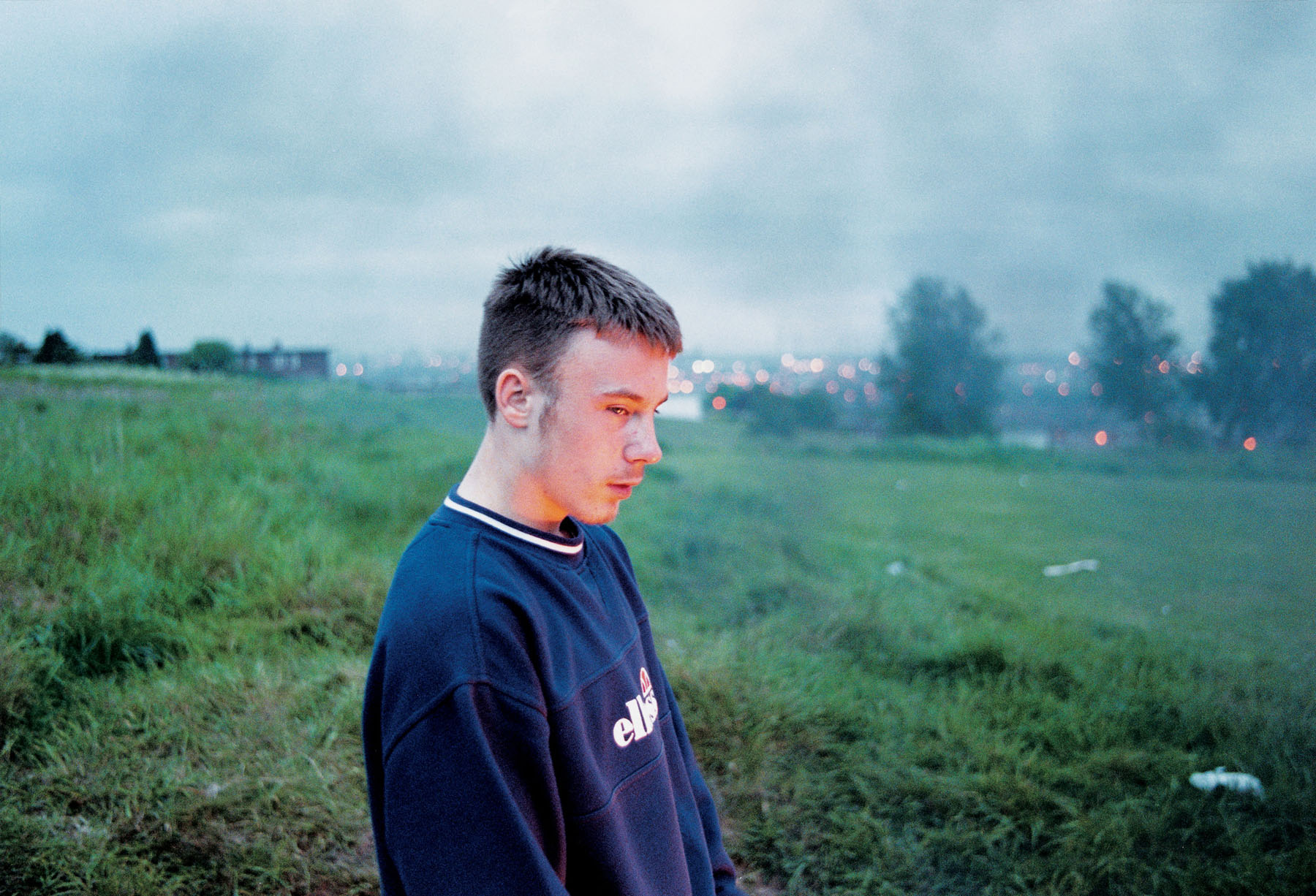
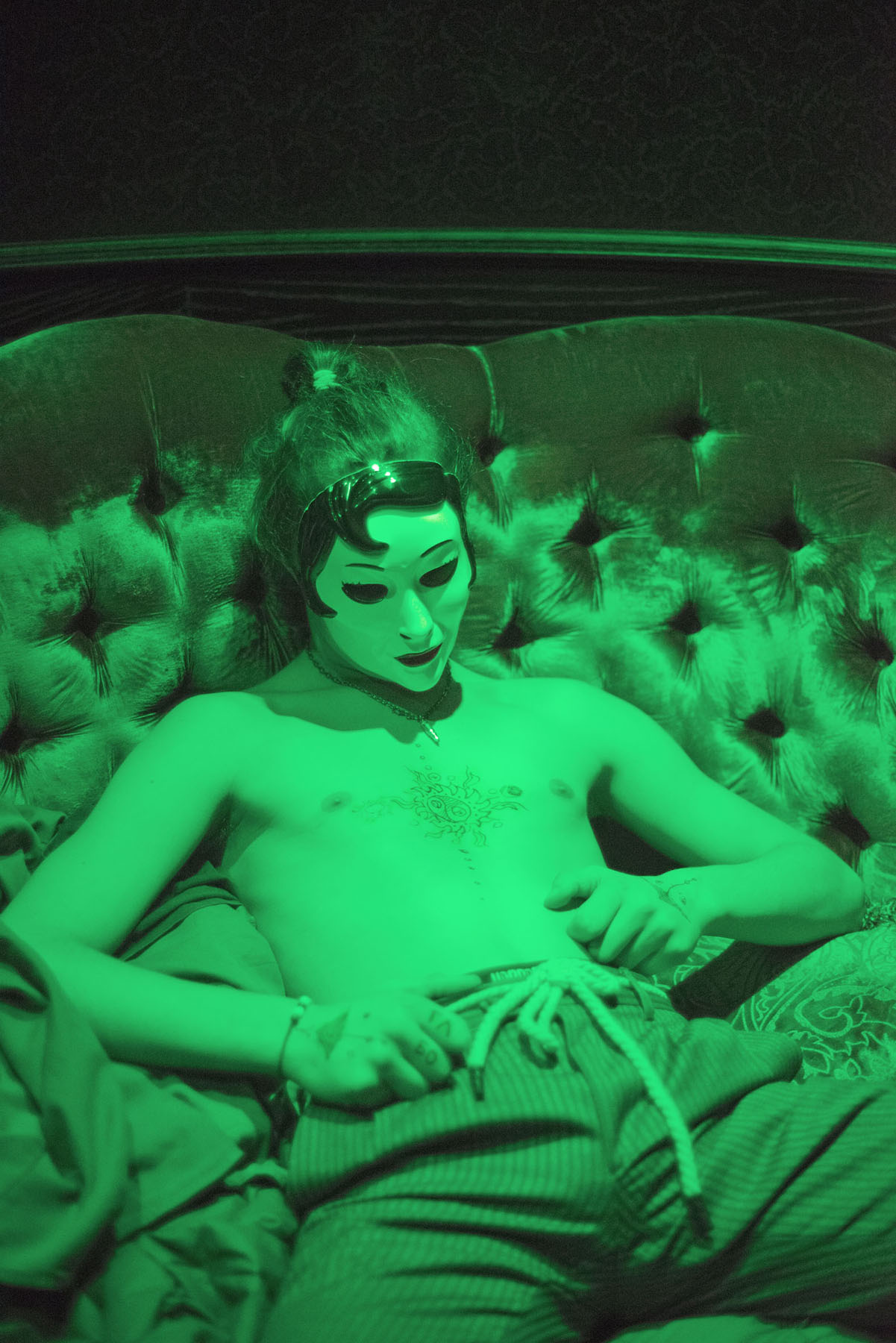
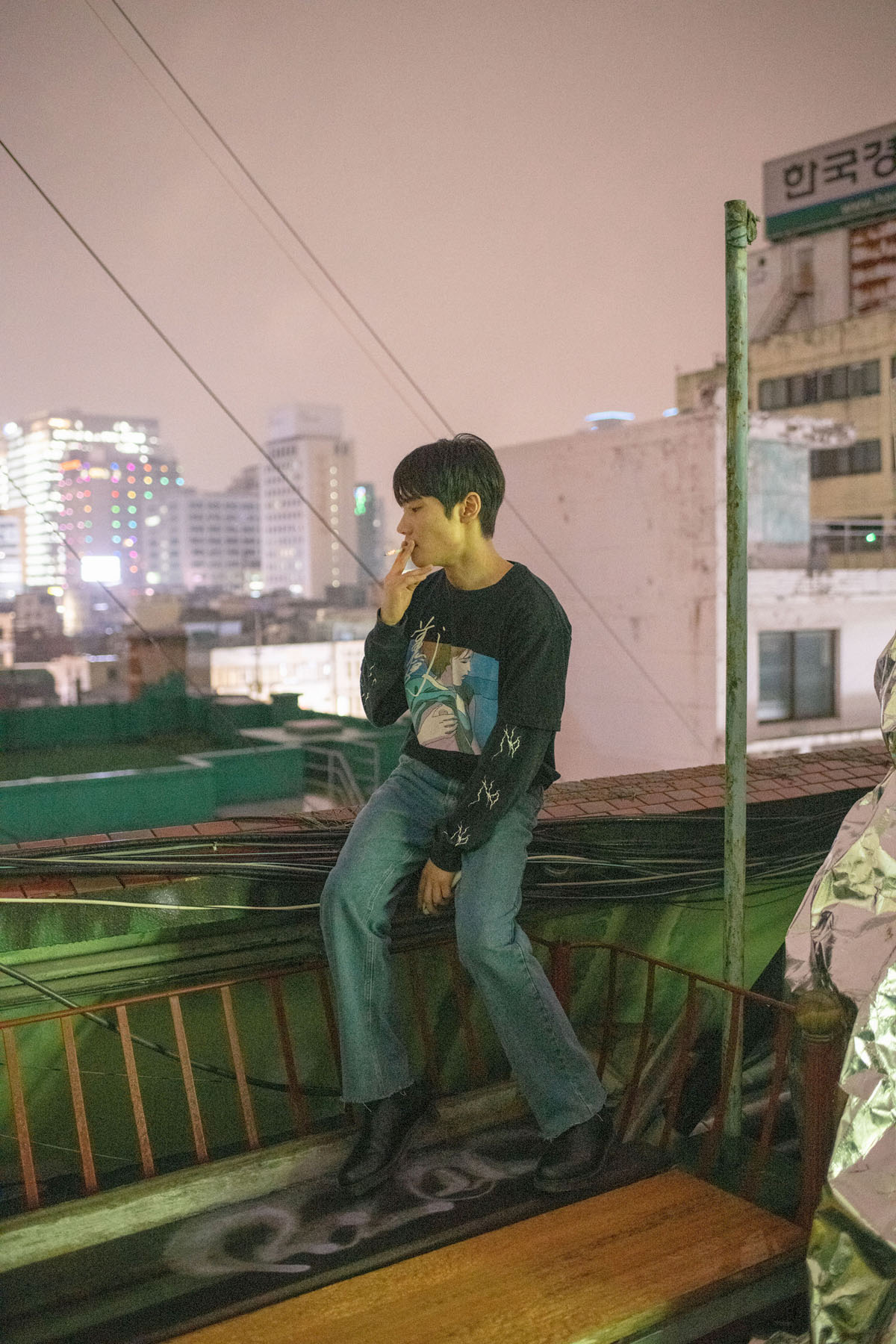
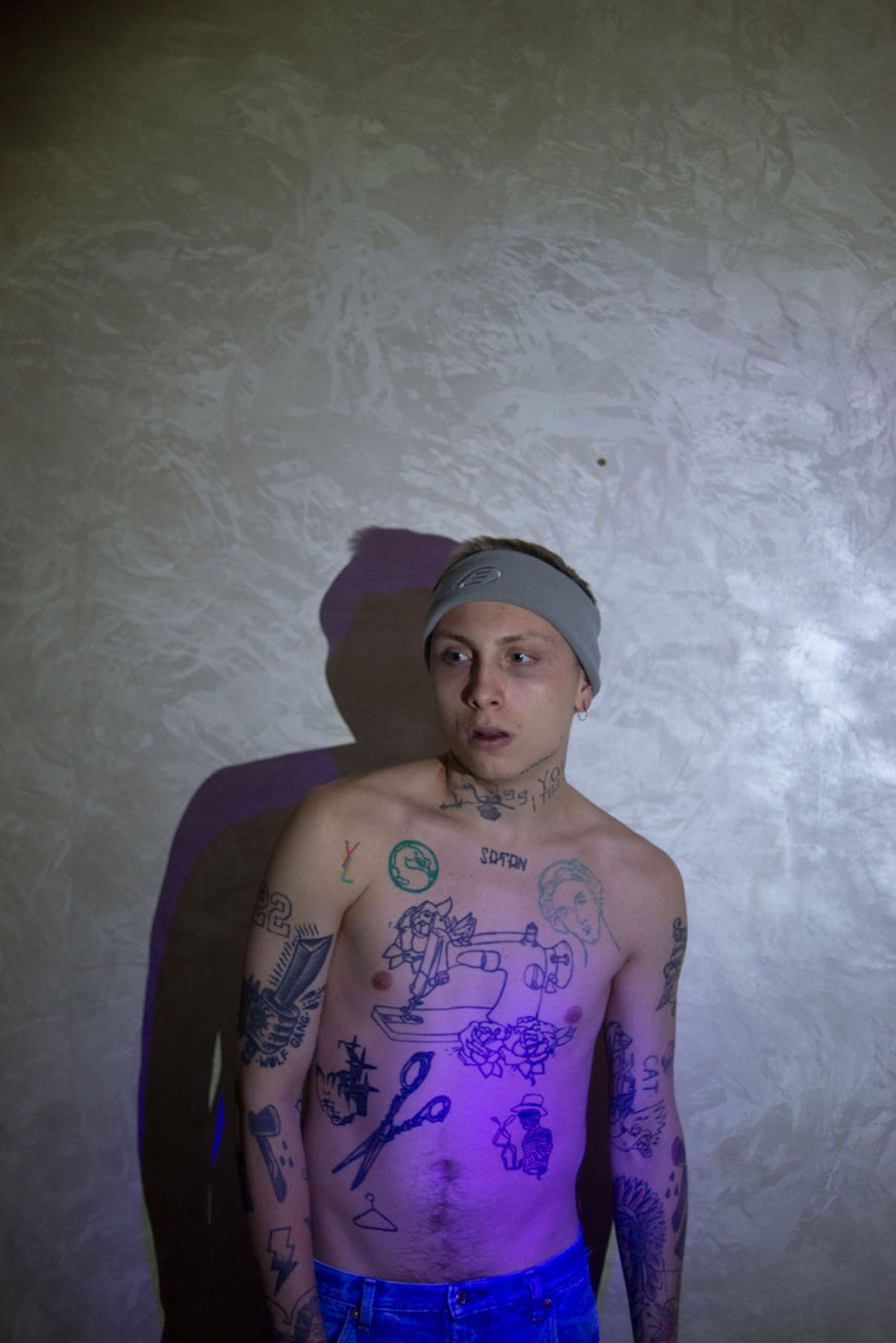
Tobias Zielony (German, b. 1973) 'Andrej' 2016 from the exhibition 'Tobias Zielony: The Fall' at Museum Folkwang, Essen, June - Sept, 2021


Tobias Zielony (German, b. 1973)
Andrej
2016
Courtesy KOW, Berlin
© Tobias Zielony


A German artist who pictures the intersection between youth culture, identity and (self) representation.

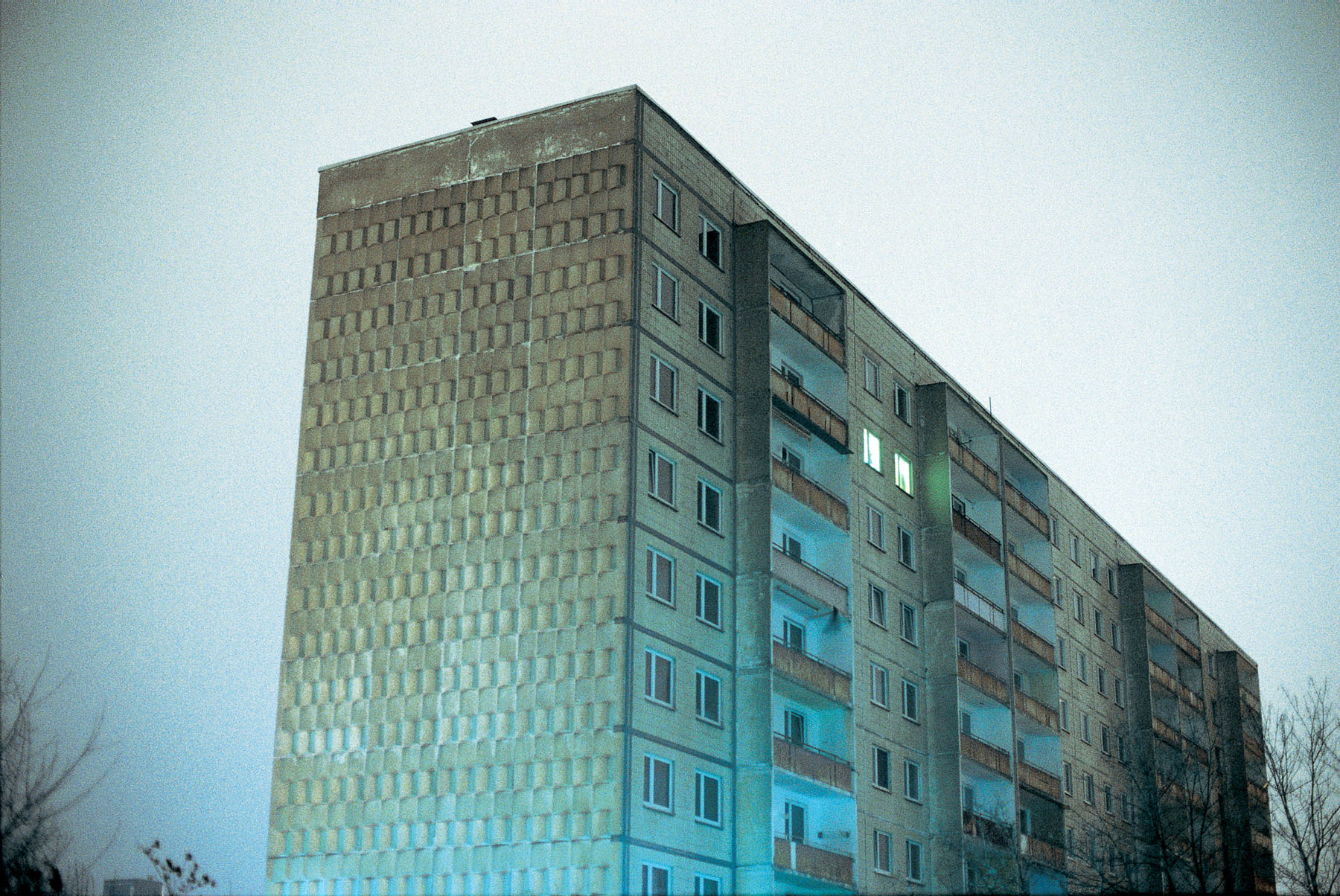
Unlike the work of Michael Schmidt with that artist’s intimate association with the city of Berlin, Zielony’s photographs could have been taken anywhere in the world. With their contextless backgrounds Zielony’s figures – whether strangely lit and configured automatons, eerie apartment blocks that inhabit an alien world or anonymous humanoids fixed in mundane urban spaces – seem to be more about the artist and how he perceives the world than about the subject itself.

Having said that, these memorable photographs of introspective youths seem to hover in space between the preter/natural – suspended between the mundane and the miraculous.

Dr Marcus Bunyan

PS. My friend and mentor said to me, “What I am interested in, is how Zielony came to make such interesting aesthetic decisions – his work is the most interesting in terms of appearance for a long time. It is so easy to make things messy but he manages to remain so clean. What does he do, what does he say to himself to make this happen?”


Many thankx to the Museum Folkwang for allowing me to publish the photographs in the posting. Please click on the photographs for a larger version of the image.


TOBIAS ZIELONY. The Fall – Trailer

With The Fall, the Folkwang Museum is showing the first overview exhibition of works by the photo and video artist Tobias Zielony (b. 1973 in Wuppertal). A total of eleven video works, seven photo series, two room installations and a digital slide show with around 150 photographs alone allow for the first time a comprehensive look at Zielony’s artistic work over the past twenty years.

In his work, Tobias Zielony repeatedly deals with the concept of youth culture in relation to origin, representation and fashion and the associated definition of identity in the changing media reality. The emergence of social networks and the exchange of countless photographic images have fundamentally changed the idea of ​​the self and the forms of (self) representation. Zielony shows his protagonists: inside as self-confident participants in this interplay, who act despite cultural and social differences in a global cosmos of social codes and self-portraits.

Tobias Zielony stands in a long line of tradition in artistic photography and is considered by many younger picture makers to be pioneering. Few photographers of his generation have observed social and media developments as carefully and translated them into a contemporary visual language as he has. For the first time, “The Fall” offers the opportunity to read Zielony’s imagery, which is located in the most diverse regions of the world, as global phenomena in their specific forms.


Tobias Zielony (German, b. 1973) 'Glow' 2001 from the exhibition 'Tobias Zielony: The Fall' at Museum Folkwang, Essen, June - Sept, 2021


Tobias Zielony (German, b. 1973)
Glow
2001
From Curfew, Bristol, Newport
C-print
41.4 x 42cm
Courtesy KOW, Berlin
© Tobias Zielony


Tobias Zielony (German, b. 1973) 'Hochhaus' 2003


Tobias Zielony (German, b. 1973)
Hochhaus
2003
From Ha Neu
C-print
46 x 69cm
Museum Folkwang, Essen
© Tobias Zielony


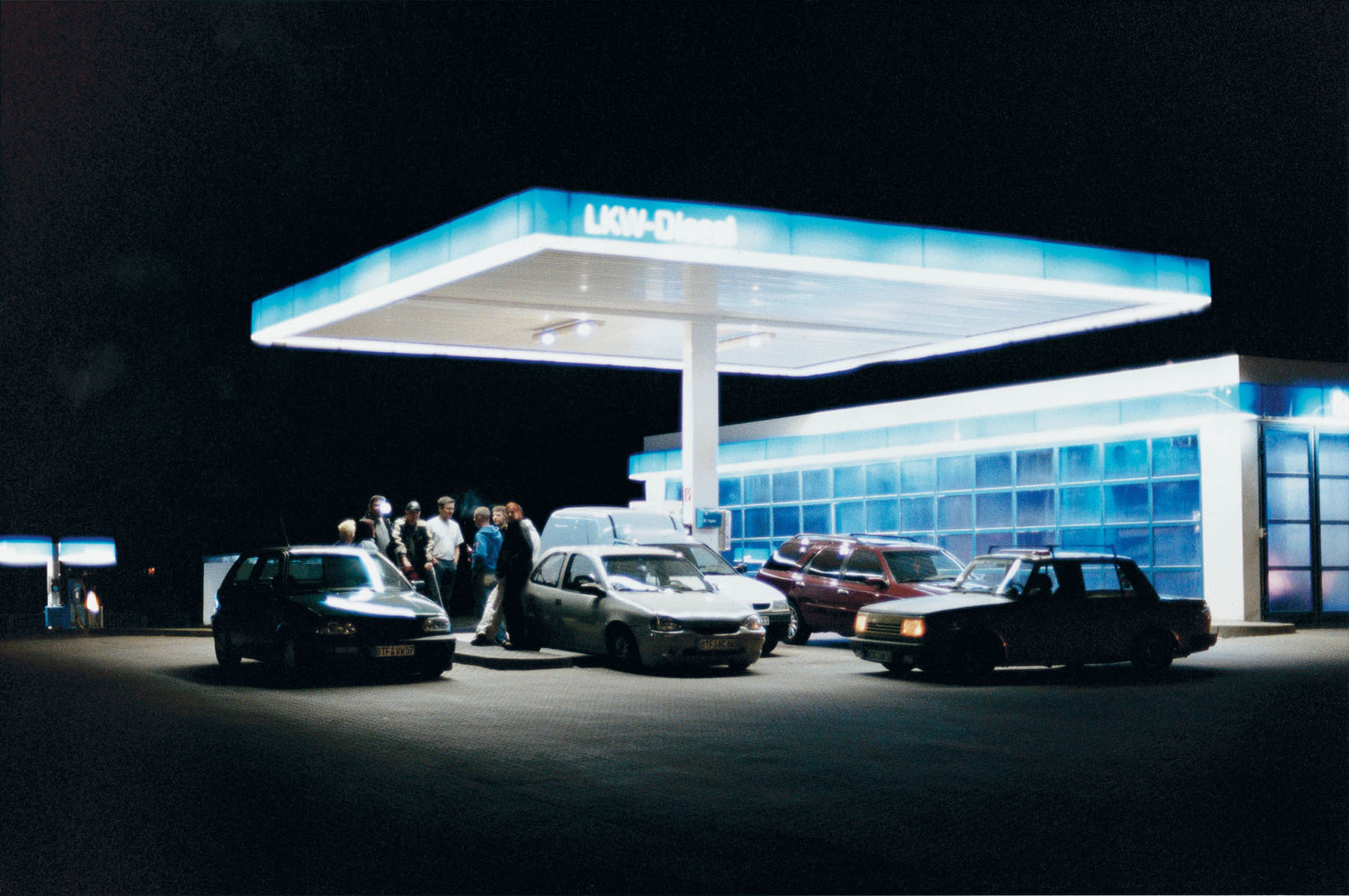
Tobias Zielony (German, b. 1973) 'Aral-1' 2004


Tobias Zielony (German, b. 1973)
Aral-1
2004
From Tankstelle
C-Print
48 x 72cm
Courtesy KOW, Berlin
© Tobias Zielony


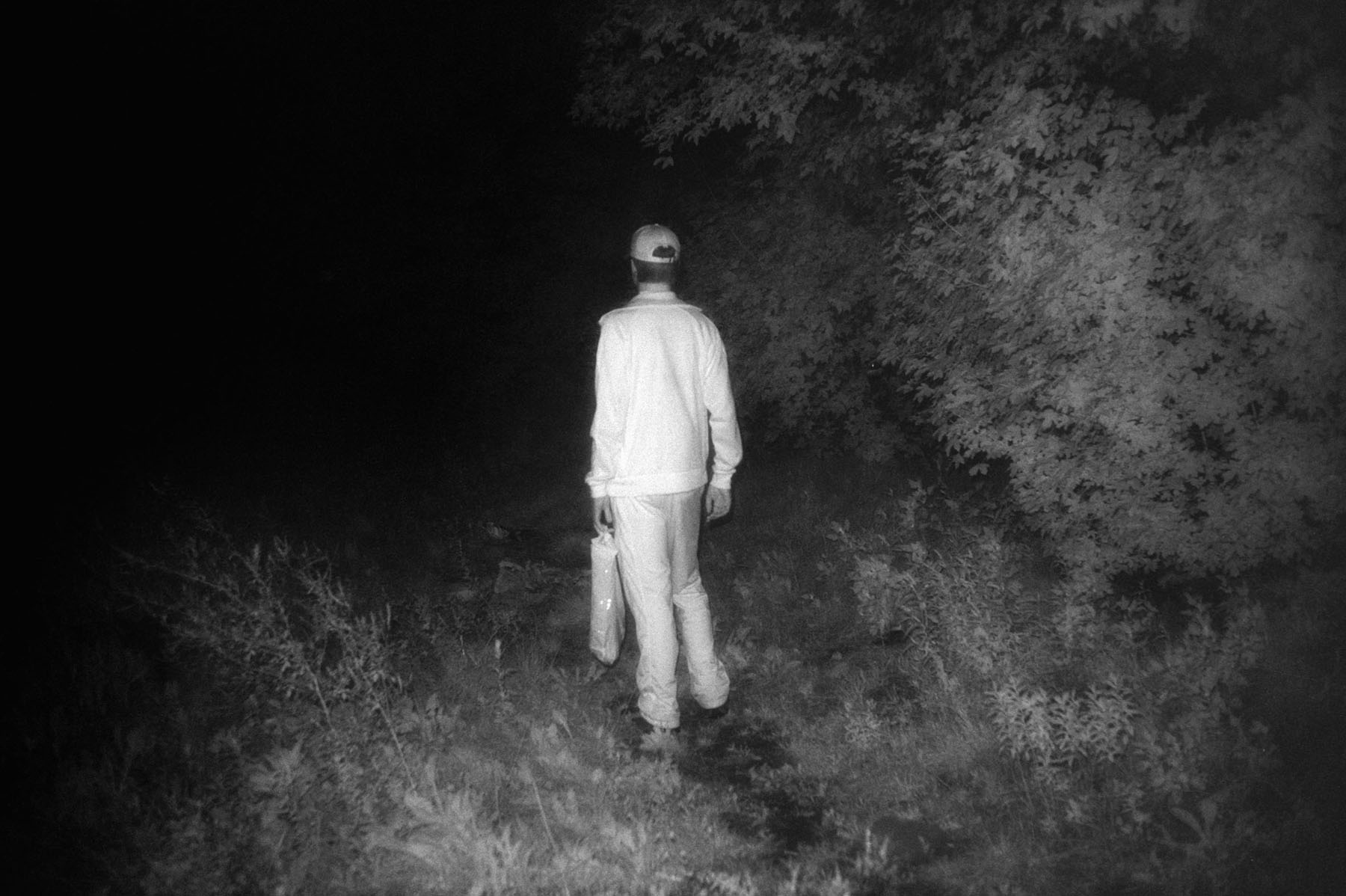
Tobias Zielony (German, b. 1973) 'Park' 2006


Tobias Zielony (German, b. 1973)
Park
2006
From Big Sexyland
C-print
67 x 100cm
Museum Folkwang, Essen
© Tobias Zielony


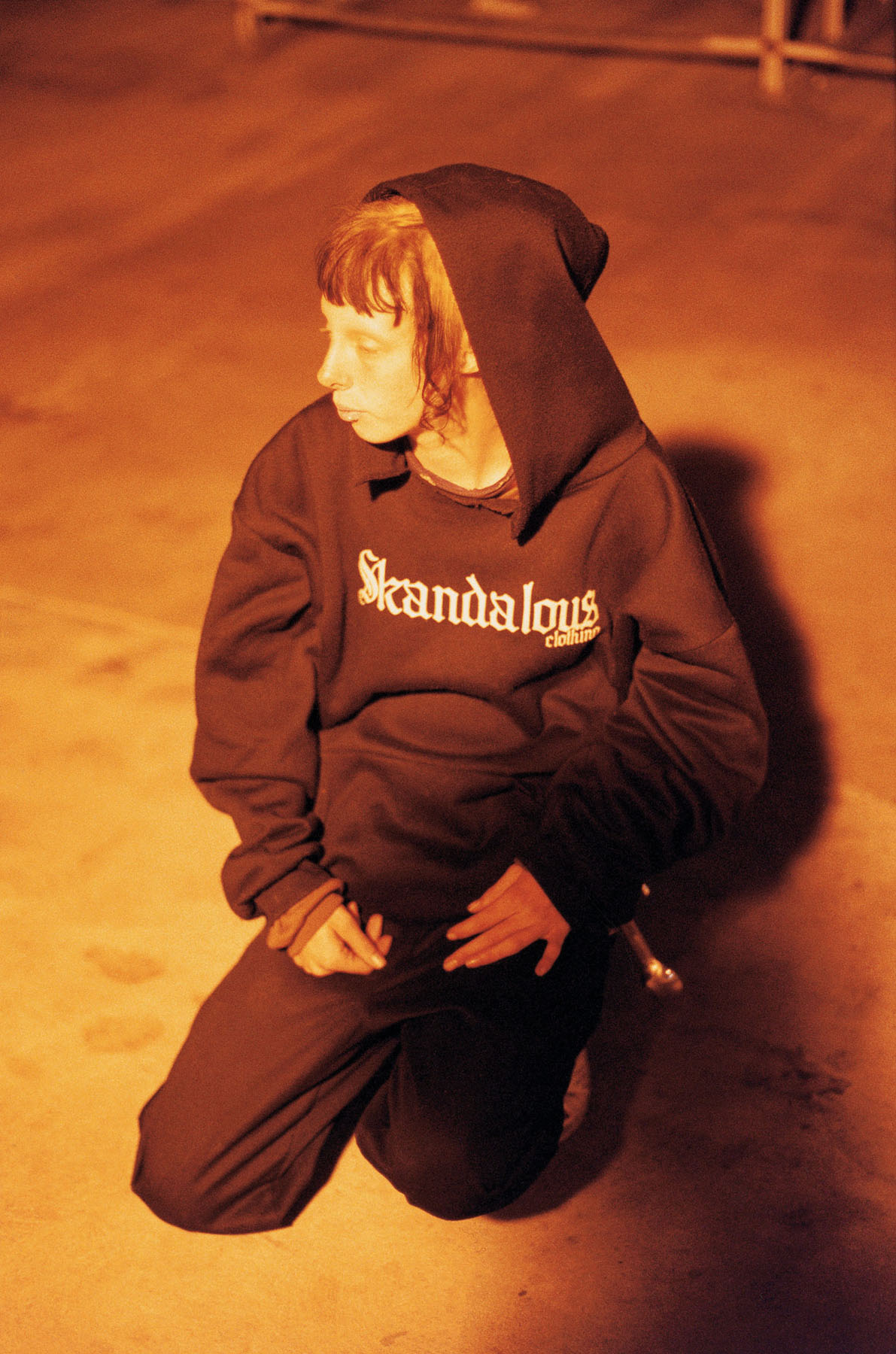
Tobias Zielony (German, b. 1973) 'Skandalous' 2007


Tobias Zielony (German, b. 1973)
Skandalous
2007
From The Cast
C-print
84 x 56cm
Courtesy KOW, Berlin
© Tobias Zielony


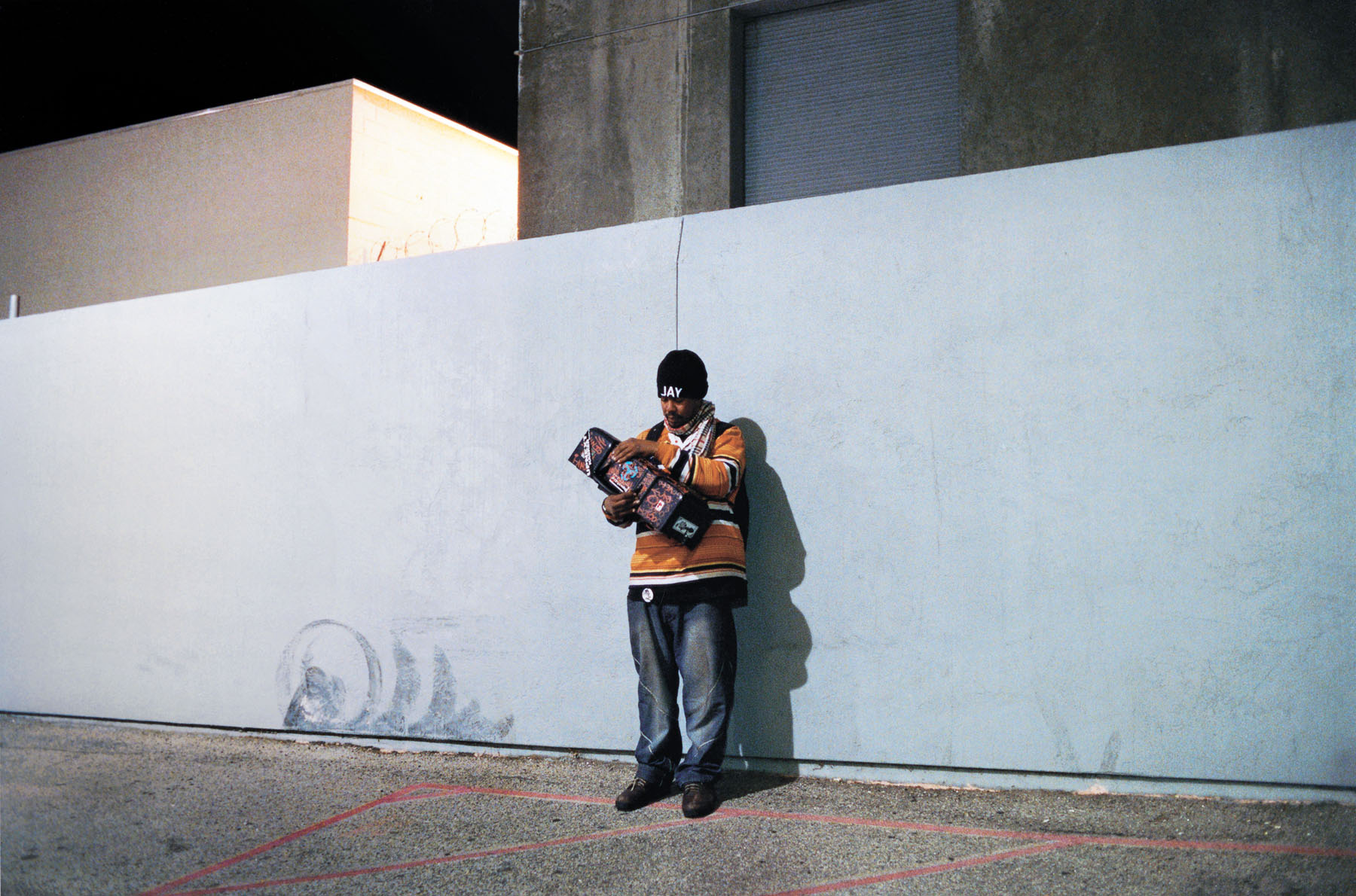
Tobias Zielony (German, b. 1973) 'Jay' 2007


Tobias Zielony (German, b. 1973)
Jay
2007
From The Cast
C-print
56 x 84cm
Courtesy KOW, Berlin
© Tobias Zielony


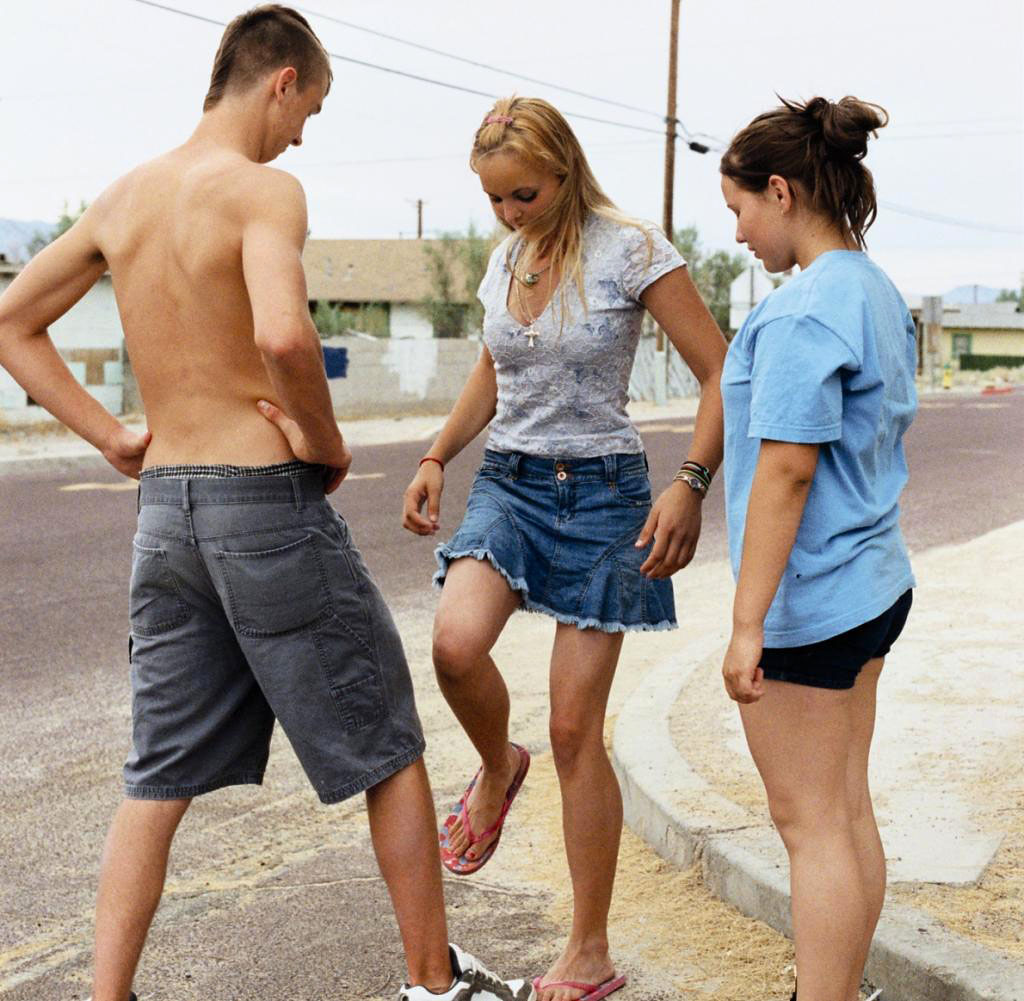
Tobias Zielony (German, b. 1973) 'Untitled' 2008


Tobias Zielony (German, b. 1973)
Untitled
2008
From the series Trona Armpit of America
Courtesy KOW, Berlin
© Tobias Zielony


Tobias Zielony (German, b. 1973) 'Dirt Field' 2008


Tobias Zielony (German, b. 1973)
Dirt Field
2008
From the series Trona Armpit of America
C-print
56 x 84cm
Courtesy KOW, Berlin
© Tobias Zielony


Tobias Zielony (German, b. 1973) 'Two boys' 2008


Tobias Zielony (German, b. 1973)
Two boys
2008
From the series Trona Armpit of America
C-print
56 x 84cm
Courtesy KOW, Berlin
© Tobias Zielony


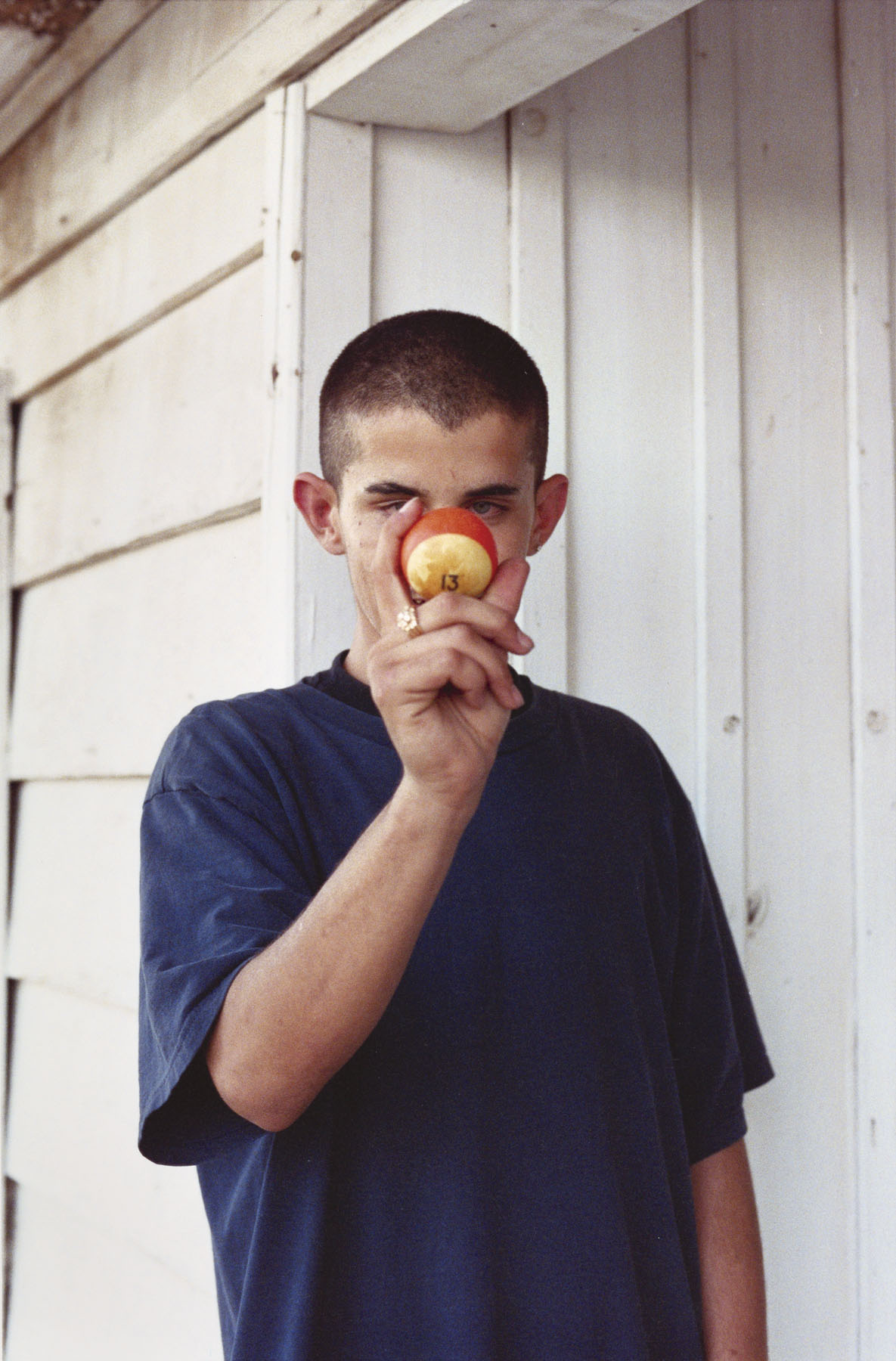
Tobias Zielony (German, b. 1973) 'Ball 13' 2008


Tobias Zielony (German, b. 1973)
Ball 13
2008
From the series Trona Armpit of America
C-print
84 x 56cm
Courtesy KOW, Berlin
© Tobias Zielony


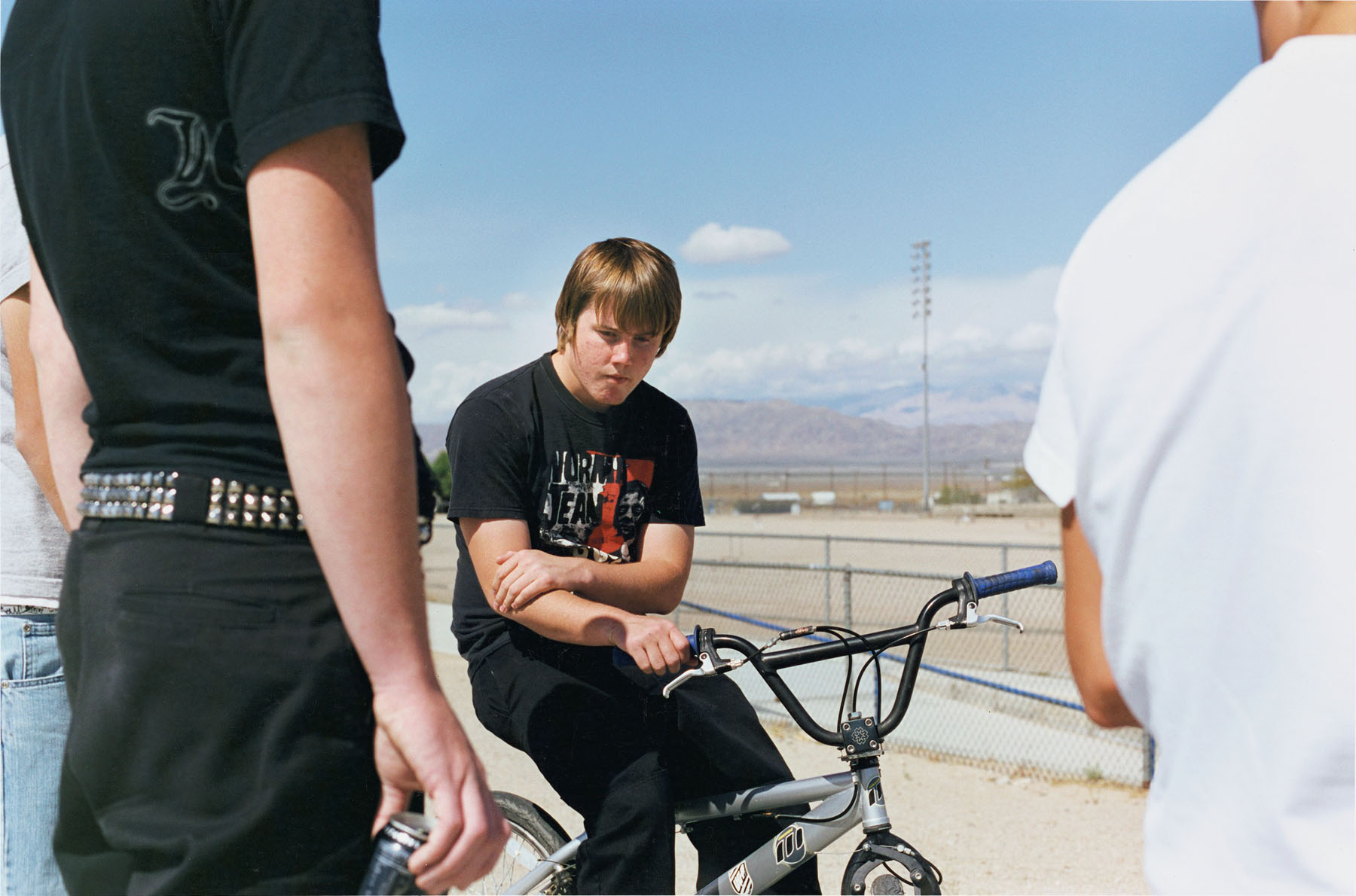
Tobias Zielony (German, b. 1973) 'BMX' 2008


Tobias Zielony (German, b. 1973)
BMX
2008
From the series Trona Armpit of America
C-Print
56 x 84cm
Courtesy KOW, Berlin
© Tobias Zielony


Tobias Zielony (German, b. 1973) 'Vela Azzurra' 2010


Tobias Zielony (German, b. 1973)
Vela Azzurra
2010
From the series Vele
C-print
150 x 120cm
Courtesy KOW, Berlin
© Tobias Zielony


With The Fall, Museum Folkwang is presenting the first major overview exhibition of the work of Tobias Zielony (June 25 – September 26, 2021). Zielony stands in a long lineage of artistic photography. His visual world is seen as paving the way for a younger generation. Few photographers have observed developments in society and the media as keenly and translated these into a contemporary visual language as he has. His work The Citizen, on the topic of migration, was shown in the German Pavilion at the 2015 Venice Biennial and viewed by a broad international public. The largest presentation of his photographs and video works to date offers a comprehensive insight into Zielony’s work of the last 20 years.

The people and spaces that attract Tobias Zielony are not on the margins of society, but the places in deprived areas where adolescents meet, hang out and show off: be this in Wuppertal, Trona, Naples, Osaka, Halle-Neustadt or Kiev. The youths and young adults whom Zielony accompanies with his camera as a confidant and observer belong to the Techno, LGBTQIT*​ or skater scene, amongst others. Zielony operates globally and allows himself to be guided by his curiosity, which affords him ever new encounters with young people in their respective social contexts. In all of this he explores the intersection between fictional and documentary assertions and investigates the political and aesthetic potential as well as the boundaries of authentic self-representation. His photographic works and films are characterised by a critical understanding of the genre and the quest for self-determination and emancipation of those portrayed in them.

The show The Fall combines well-known photography series and early video works ranging from Curfew (2001), Big Sexyland (2006), the well-known stop-motion videos Vele (2009-2010), Maskirovka (2016-2017), to the video work Hansha (2019) created in Japan. The exhibition is the first to bring together Zielony’s visual worlds from different parts of the world and show them as global phenomena with specific characteristics. A symbolic city space is created in the exhibition;s central space, which offers a space to meet and sojourn. Encounters, situations and places exist alongside and enter into relationship with each other, and in their spatial consolidation cite the ever-present flood of images on social media.

In his work, Tobias Zielony has time and again addressed youth culture with a view to background, representation and fashion and the definition of identity in a world changing in terms of the media used. Social networks and the exchange of photographic images they entail have fundamentally changed the notion of the self and the forms of (self-)representation. Everyone – and this includes his protagonists – now uses the photographic medium with their smart phone in order to send and receive images. In this interplay, Zielony shows his subjects as confident participants acting in a global cosmos of social codes and self-portraits – in spite of cultural and social differences.

Spector Books is publishing a series of essays: selected works by Tobias Zielony are paired with texts by Sophia Eisenhut, Joshua Groß, Dora Koderhold, Enis Maci, Mazlum Nergiz and Jakob Nolte.

Press release from the Museum Folkwang


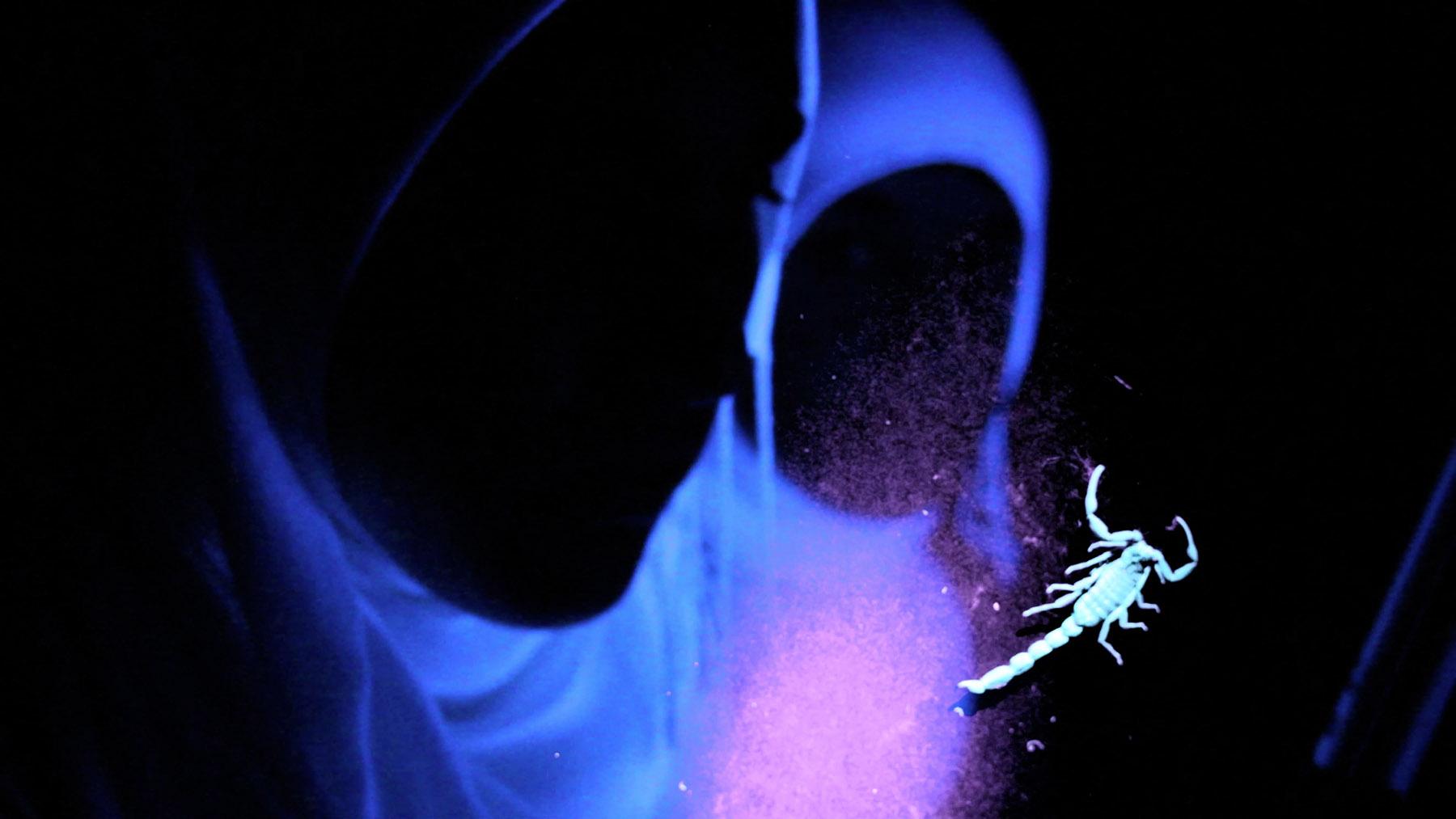
Tobias Zielony (German, b. 1973) 'Al-Akrab' (filmstill) 2014


Tobias Zielony (German, b. 1973)
Al-Akrab (filmstill)
2014
HD Video & Stop Motion, 4:52 min
Courtesy KOW, Berlin
© Tobias Zielony


Tobias Zielony (German, b. 1973) 'The Citizen' 2015


Tobias Zielony (German, b. 1973)
The Citizen
2015
Courtesy KOW, Berlin
© Tobias Zielony


Tobias Zielony (German, b. 1973) 'The Citizen' 2015


Tobias Zielony (German, b. 1973)
The Citizen
2015
Courtesy KOW, Berlin
© Tobias Zielony


Tobias Zielony (German, b. 1973) 'Cover' 2017


Tobias Zielony (German, b. 1973)
Cover
2017
From Maskirovka
Inkjet print
84 x 56cm
Courtesy KOW, Berlin
© Tobias Zielony


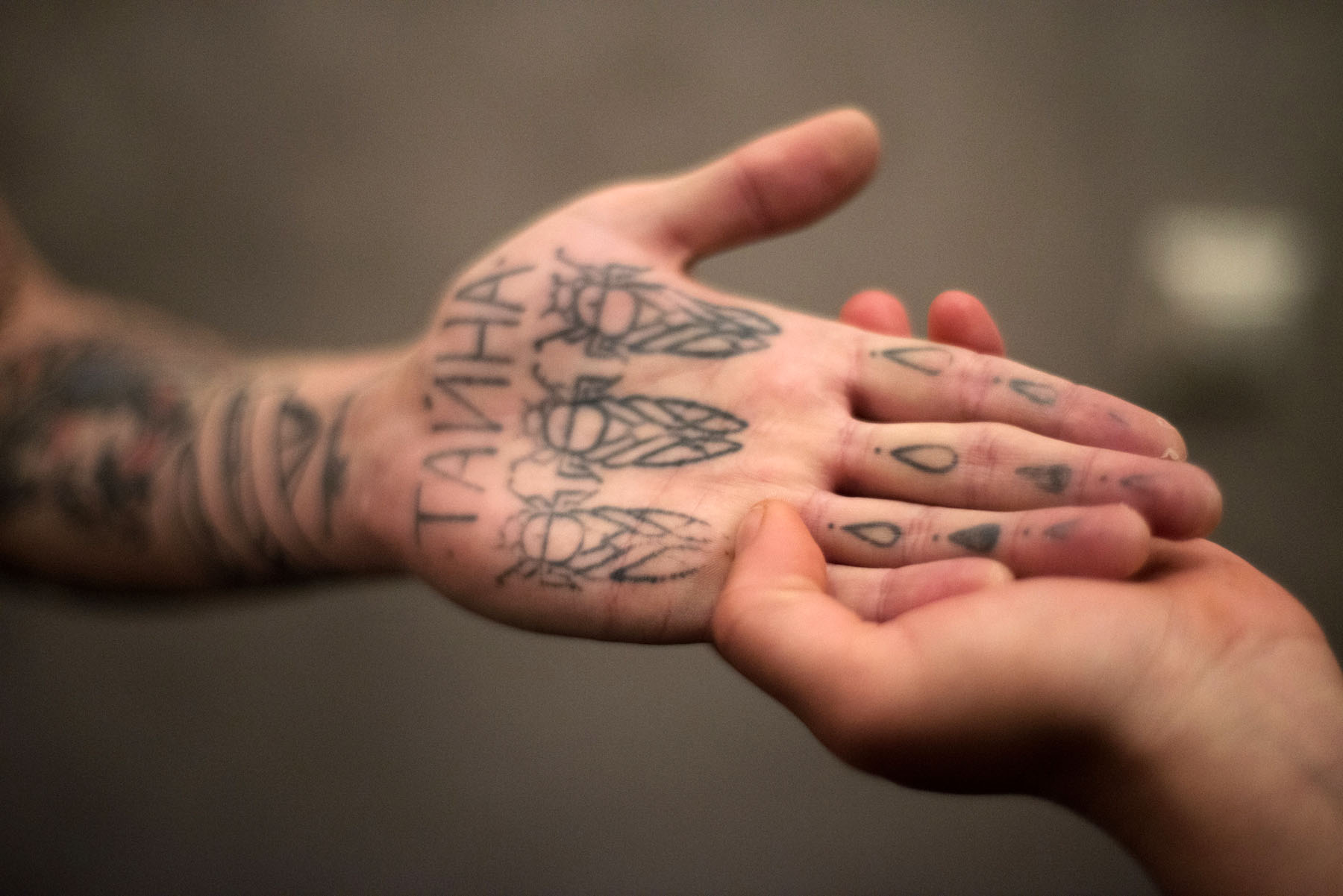
Tobias Zielony (German, b. 1973) 'Secret' 2017


Tobias Zielony (German, b. 1973)
Secret
2017
From Maskirovka
Inkjet print
56 x 84cm
Courtesy KOW, Berlin
© Tobias Zielony


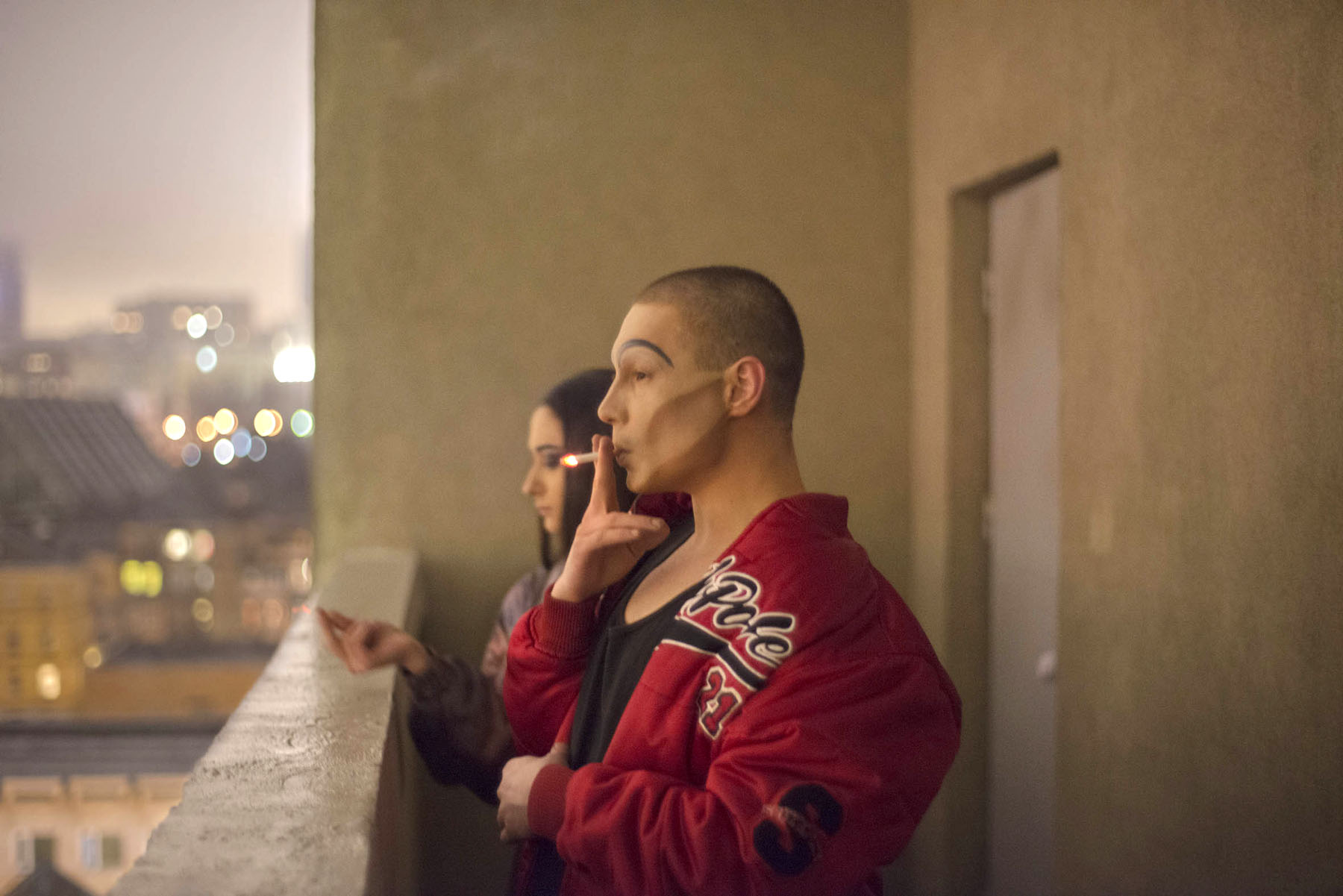
Tobias Zielony (German, b. 1973) 'Make Up' 2017


Tobias Zielony (German, b. 1973)
Make Up
2017
From Maskirovka
Inkjet print
70 x 105cm
Courtesy KOW, Berlin
© Tobias Zielony


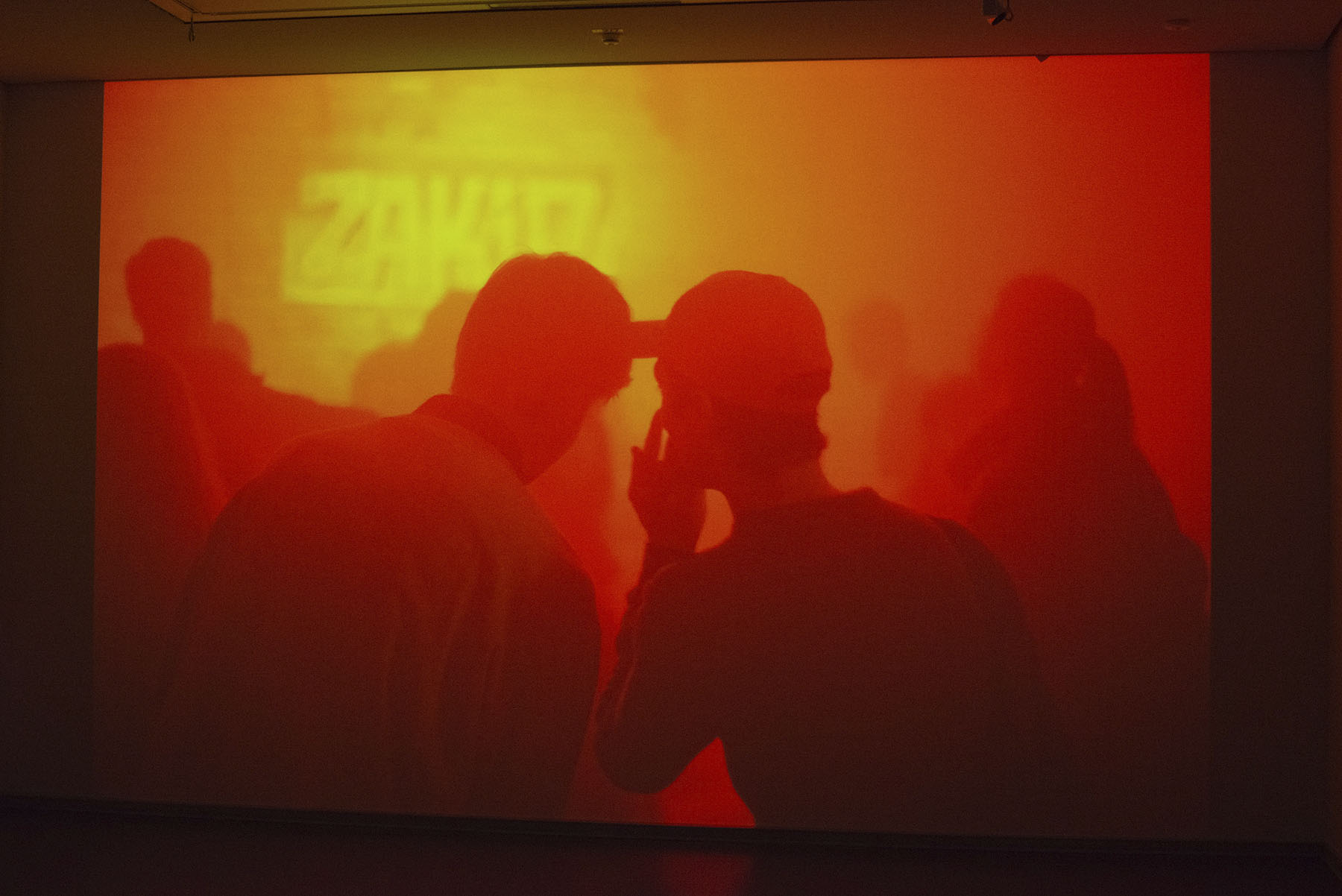
Tobias Zielony (German, b. 1973) 'Maskirovka' 2017 (installation view)


Tobias Zielony (German, b. 1973)
Maskirovka (installation view)
2017
HD Video, Stop Motion, 8:46 min
Courtesy KOW, Berlin
© Tobias Zielony


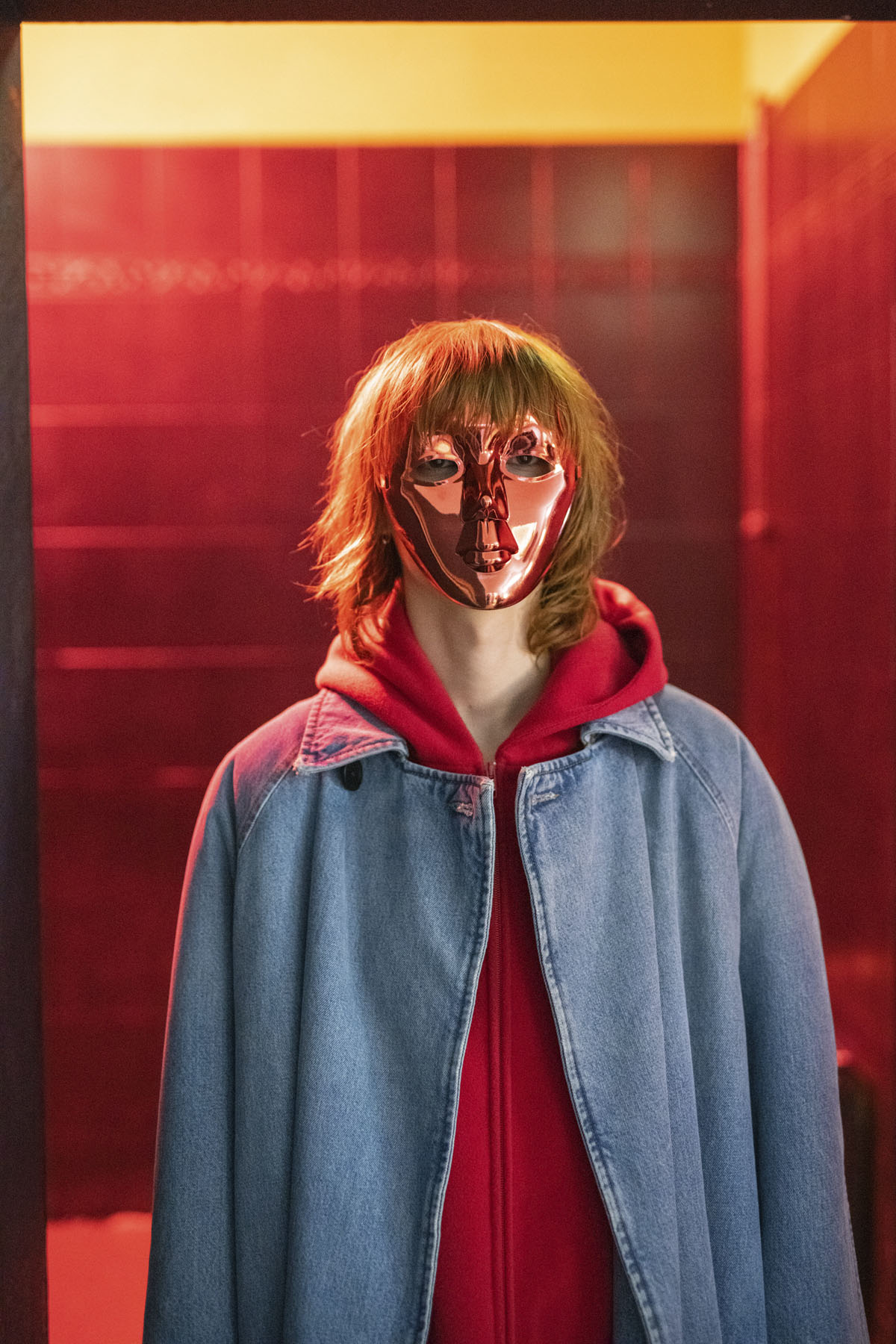
Tobias Zielony (German, b. 1973) 'Red Mask' 2019


Tobias Zielony (German, b. 1973)
Red Mask
2019
Inkjet print
100 x 75cm
Courtesy KOW, Berlin
© Tobias Zielony


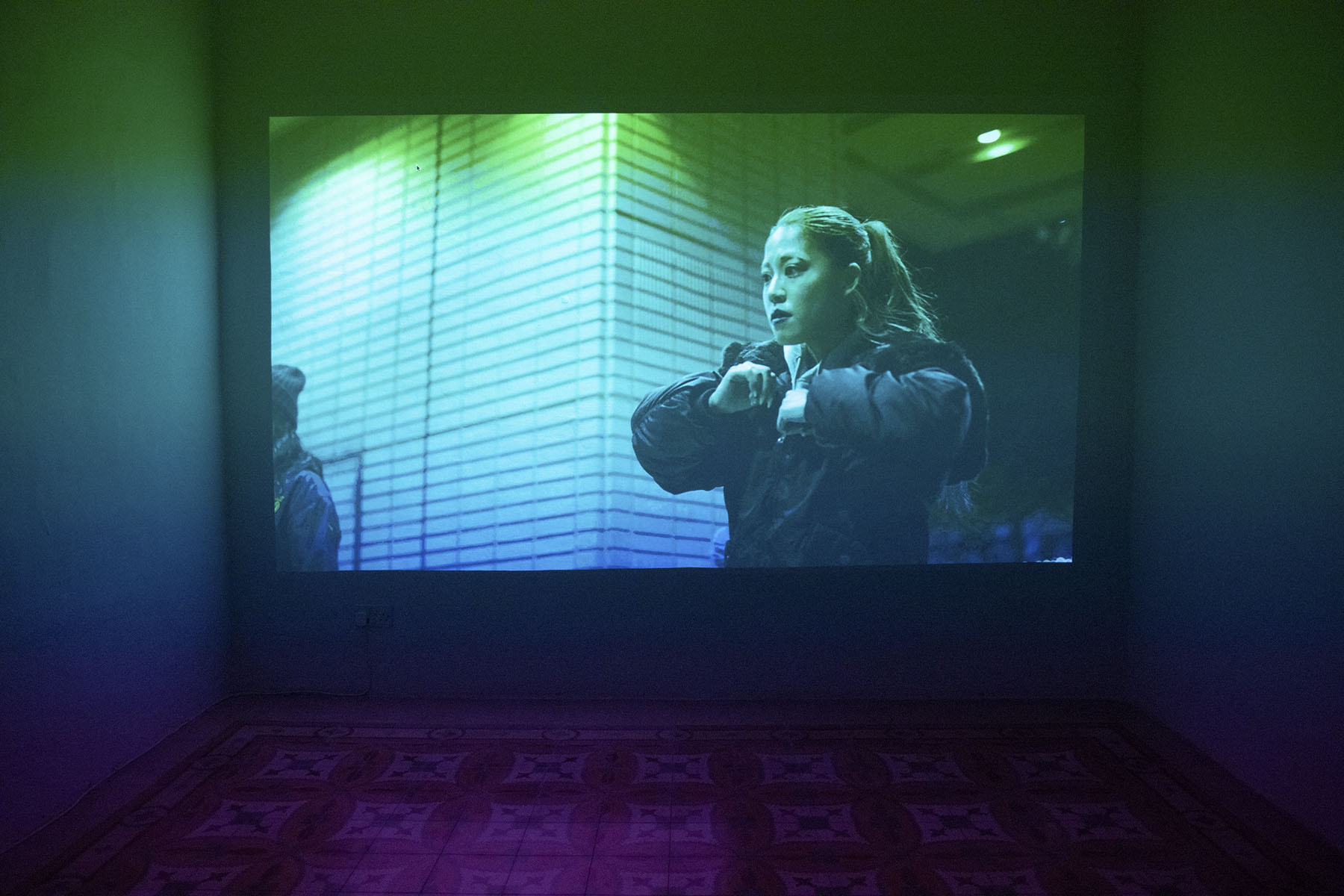
Tobias Zielony (German, b. 1973) 'Hansha' 2019 (installation view)


Tobias Zielony (German, b. 1973)
Hansha (installation view)
2019
HD Video, 6:01 min
Courtesy KOW, Berlin
© Tobias Zielony


Tobias Zielony (German, b. 1973) 'Snakepool' 2020


Tobias Zielony (German, b. 1973)
Snakepool
2020
Inkjet print
120 x 80cm
Courtesy KOW, Berlin
© Tobias Zielony


Tobias Zielony (German, b. 1973) 'Yusuke' 2020


Tobias Zielony (German, b. 1973)
Yusuke
2020
Inkjet print
120 x 80cm
Courtesy KOW, Berlin
© Tobias Zielony


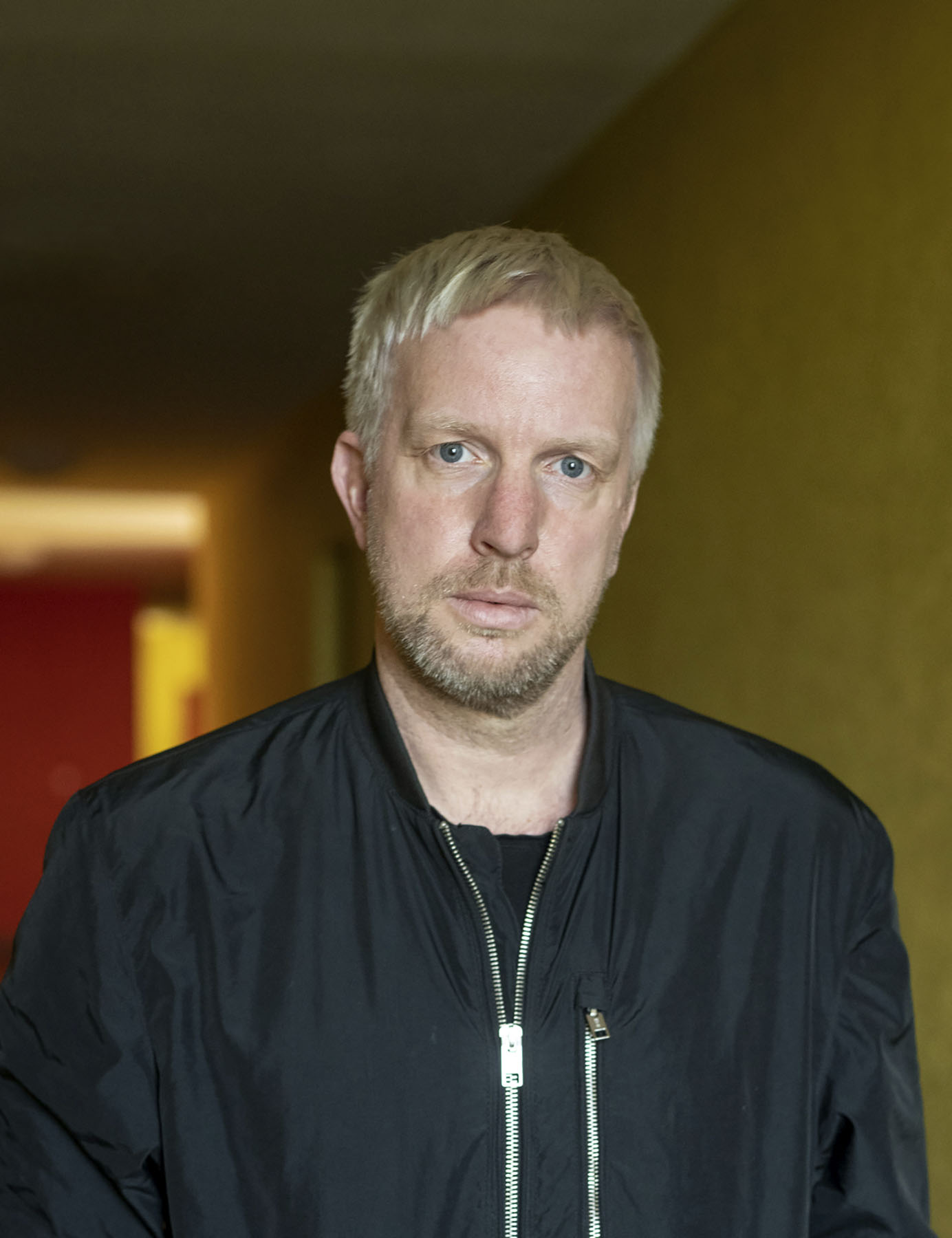
Halina Kliem. 'Portrait of Tobias Zielony' 2021


Halina Kliem
Portrait of Tobias Zielony
2021


Museum Folkwang
Museumsplatz 1, 45128 Essen

Opening hours:
Tuesday – Sunday 10am – 6pm
Thursday – Friday 10am – 8pm

Museum Folkwang website

LIKE ART BLART ON FACEBOOK

Back to top

Exhibition: ‘Michael Schmidt: A new German Perspective’ at Jeu de Paume, Paris

Exhibition dates: 8th June – 29th August, 2021

Curators: Thomas Weski and Laura Bielau


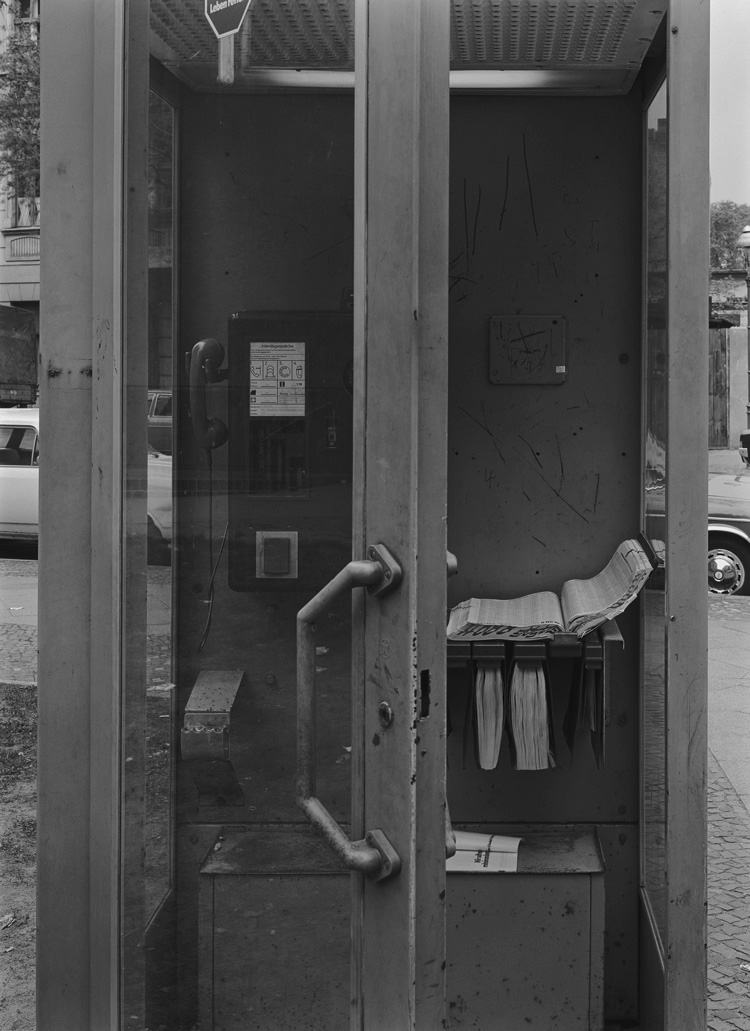
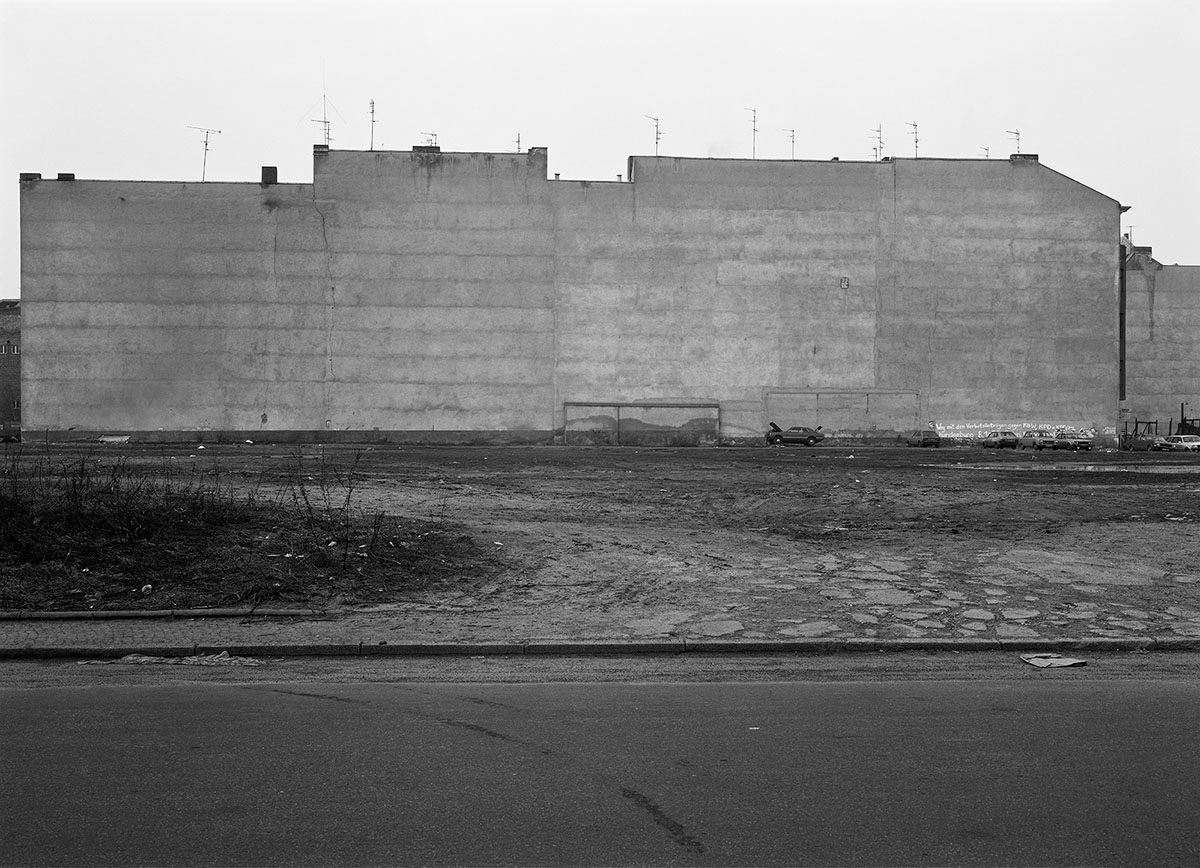
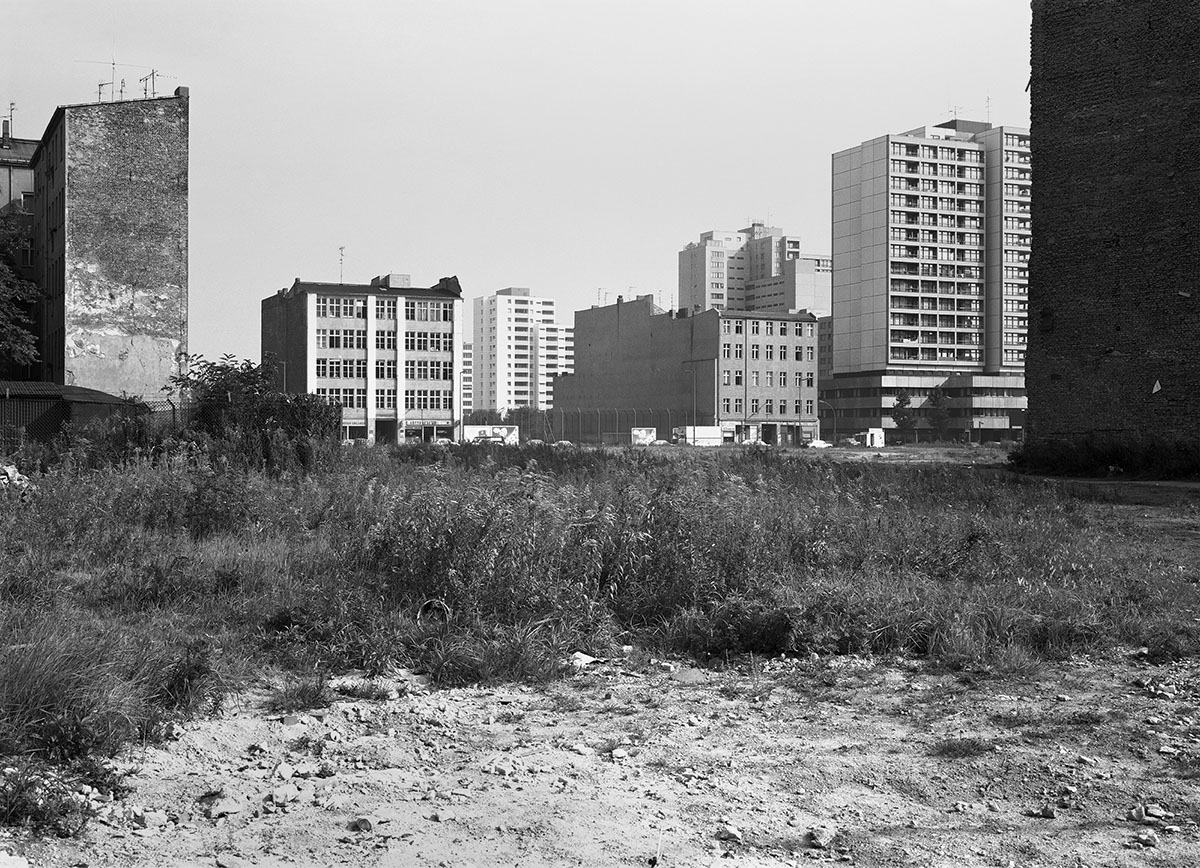
Michael Schmidt (German, 1945-2014) 'Untitled, Berlin-Kreuzberg. Stadtbilder' 1981-1982 from the exhibition 'Michael Schmidt: A new German Perspective' at Jeu de Paume, Paris, June - August, 2021


Michael Schmidt (German, 1945-2014)
Untitled, Berlin-Kreuzberg. Stadtbilder (Berlin-Kreuzberg. Cityscapes)
1981-1982
© Michael Schmidt, Foundation for Photography and Media Art with the Michael Schmidt Archive


Dark atmosphere of a grey reality

The contribution of German photographers to the development of photography in the 20th century cannot be underestimated. When we think of quantum leaps in the development of the medium and its languages, we can think of Wilhelm von Gloeden, August Sander, Lisette Model, Germaine Krull, Ilse Bing, Erich Salomon, Albert Renger-Patzsch, Bernd and Hiller Becher, Wolfgang Tillmans, Aenne Biermann, Erwin Blumenfeld, Bill Brandt, Candida Höfer, Andreas Gursky, Thomas Ruff, Thomas Demand and many more too numerous to mention. And then we have the (mainly Jewish) photographers of the German diaspora of the 1920s-1940s who emigrated to all parts of Europe, South America, America and Australia and who went on to influence photographers in their adopted countries.

Perhaps there is something inherent in the German psyche which promotes a certain awareness, a certain understanding of the mechanics of photography. Perhaps this is a link between German psychology (such as Urformen: the original, archetypal form1), psychoanalysis (such as Freud’s term Das Unheimliche: “the uncanny” in the sense of something that produces unease and is disturbing) and photography – a relationship which promotes objective seeing, seeing things in new and unexpected ways. Perhaps this ability to perceive in new ways has something to do with Germany’s European roots and that continent’s history of war, destruction and reclamation, where the archetypes are constantly being dissolved and constructed – in a circle which leads us back to the roots of German psychology. These are only thoughts which are slowly forming, nascent thoughts in a long process of research, which could possibly be interesting, or not.

Added to these many German photographers is another intelligent, inventive artist that I admire – an artist that also redefined the language of photography in the 20th century. His name is Michael Schmidt.

Much as Bill Brandt considered “atmosphere” a term fundamental in his images (“I only know it is a combination of elements … which reveals the subject as familiar and yet strange”) in order to capture the very essence of a place, so Schmidt’s inimitable understanding of his environment and its people, namely his beloved Berlin, allowed him to dissect and disseminate the dystopian “atmosphere” and habitus of its inhabitants.

Schmidt (and here I précis a lot of people) perceives and reacts to the world, offering through “fragmentation, condensation, abstraction” a “sense of space distorted in depth”, in which “existence is hollowed out to its extremes” that “take his subjects out of their historical anchorage” to offer a “harsh and completely unique view of the fragility of human existence” – “a subjective, deeply felt work of the life and suffering of people in the shadow of Berlin.”

“This is the strength of Michael Schmidt’s work. An ability to transcend the present – its present – and to fragment it in order to better represent it. Creations with shallow backgrounds, which play with nuances and break free from simple black and white to offer a shade of grey, evoking the rainy sky of Berlin. A true love letter, tortured, raw, deep and complex, to the city where it was born, grew and disappeared.”2

As Joe Lloyd has observed of Schmidt’s masterpiece Waffenruhe (Ceasefire) (1985-1987) “It is difficult to imagine a future for these anxious youths, whose lives are encircled by an evil empire on the cusp of dissolution. The Berlin Wall appears on the verge of subsiding. Vegetation grows unbidden, new life to replace the old. Schmidt turns his camera on the city’s insignificant minutiae, a shadowy realm between the sights and, in doing so, captures its liminality.”3

Liminality is one of the key words I associate with the work of Michael Schmidt… the other being language.

Liminality is a term used to describe the psychological process of transitioning across boundaries and borders. The term “limen” comes from the Latin for threshold; it is literally the threshold separating one space from another. It is the place in the wall where people move from one room to another.4

As he probed and prodded the threshold of existence in his photography, Schmidt transited the line between representation and abstraction, photographing the ever mutable spaces of Berlin and the people that were stationed there, under the Wall – even as the subject matter he chose transitioned from dour city to blank officer workers, from women to children, old people and disaffected youths.

Schmidt sought new ways to transition across the boundaries and borders of both the city and his mind in order to create a “new reality” of visual language, not to reproduce real things as he said, but to show how things really are. As the curator Thomas Weski has observed, “”Every time he finished a series, he went through periods of turmoil where he looked for new ways to approach reality…”5

The liminal, interstitial spaces the artist creates, these fragments of time, these “shards of reality” are tough, gritty photographs – of love, desire, work, destitution, despair, loneliness, sadness and fortitude – realities expressed in sombre tones of grey that recite a sense of foreboding. Forty years after the end of the war, the clash of cultures between stoicism and rebellion, between rich and poor, between communism and freedom is still in full flight in a divided Berlin… for here (unlike Brandt’s photographs where the fragments are part of the whole) there is no unity, no ceasefire, no holistic healing, there is only a language of dissolution and despair. Here, there is no way hope can be deployed to distort one’s relationship with reality.

Schmidt’s relationship between photography and subject is always about the artist metaphorically “becoming naked” and open, pushing the boundaries of the possible when looking for new ways to approach reality. Schmidt’s language of the fragmentation bomb shows the benefits of working on language to break any self-imposed limits – to picture the ‘deep time’6 so intimately linked with the life of the city.

Dr Marcus Bunyan


Footnotes

1/ “The original, archetypal form… the first form of a narrative from which all known variants emerged; the archetype version that provides a model and pattern for all variants (alternatively, Urform). The term comes from the German Urform (plural Urformen), meaning primitive form, original form, or archetype, and is derived from Ur, the mythological first city.
Randal S. Allison. “Ur-Form,” in Thomas A. Green (ed.,). Folklore: An Encyclopedia of Beliefs, Customs, Tales, Music and Art Volume 1, ABC-CLIO, 1997, p. 823.

2/ Lou Tsatsas. “Michael Schmidt décompose Berlin au Jeu de Paume,” on the Fisheye Magazine website June 2021 [Online] Cited 12/08/2021

3/ Joe Lloyd. “Michael Schmidt Retrospective: Photographs 1965-2014,” on the Studio International website 12/10/202 [Online] Cited 12/08/2021

4/ Larson, P. “Liminality,” in Leeming, D.A. (eds). Encyclopedia of Psychology and Religion. Springer, Boston, MA, 2014

5/ Thomas Weski quoted in Laure Etienne. “Michael Schmidt: A New German Perspective,” on the Bind Magazine website 17 June 2021 [Online] Cited 12/08/2021.

6/ “As the Anangu people of Uluru explain, the land contains proof of a spoken narrative, like a photograph. The land’s markings are the archives, the inscriptions revealing and proving deep history stories.”
Ann McGrath. “‘All things will outlast us’: how the Indigenous concept of deep time helps us understand environmental destruction,” on The Conversation website, August 19, 2020 [Online] Cited 29/08/2021.


Many thankx to Jeu de Paume for allowing me to publish the photographs in the posting. Please click on the photographs for a larger version of the image.


“Realism consists not in reproducing real things, but in showing how things really are.”

“Black and white are always the darkest grey and the lightest grey.”


Michael Schmidt


“His language is a language of precision and his tool is the most simple one: a small, 35mm camera, and a few rolls of films. His pictures look simple at first glance, and their anti-sentimentality, their refusal of all the tricks of the usual seduction, their concision and their clarity, give them great efficiency. They show what they show but they manage to retain an opacity, a mystery, and they become a support for our imagination.”

“Schmidt does not accuse, he simply reveals, and the interpretation is left to the viewer. He can do so because he has confidence in the power of his medium and confidence in the intelligence of the viewer.”


Luc Delahaye


“His photography no longer follows a means of pure documentation, but rather formulates a dystopian attitude towards the life of a generation shortly before the fall of the wall in surprising image contexts. Schmidt develops a world of breaks and gaps that defies any claim to a sovereign overview.”


Einar Schleef


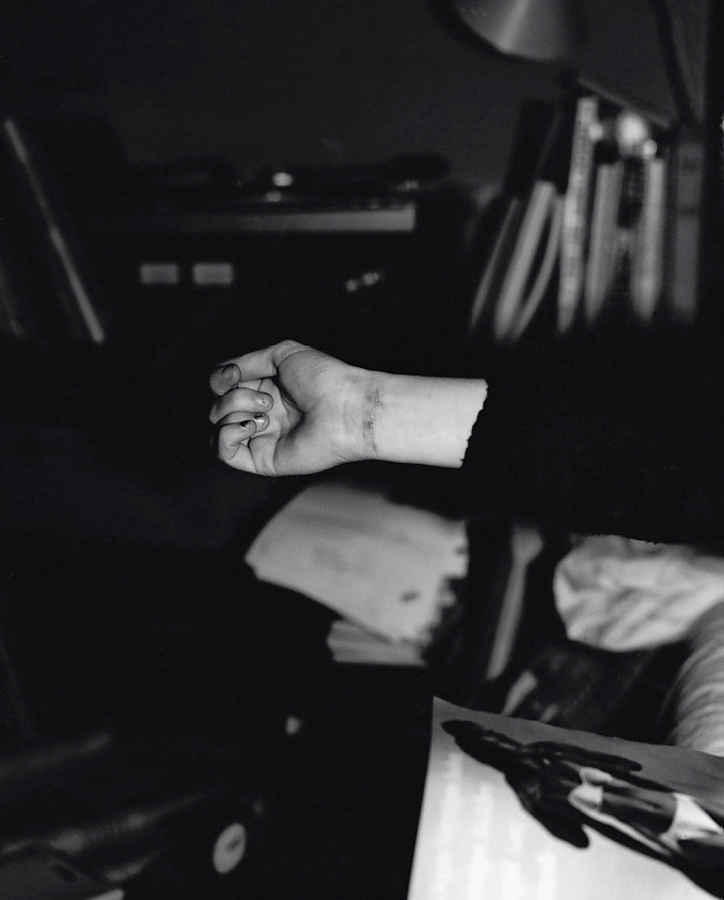
“Amongst the pages of photographer Michael Schmidt’s seminal book, ‘Waffenruhe’ – a fragmented psychological portrait of West Berlin shot between 1985 and 1987 – is an image of an outstretched wrist, the camera’s flash igniting a jagged scar across its milky skin. The space opposite is obscured with a blank pull-out page that expands to reveal a tree in full bloom, bright flowers swelling between branches. The Berlin Wall looms in the background, like a shadow sunshine can’t dispel. In Schmidt’s Waffenruhe, life and death cohabitate – existence is hollowed out to its extremes. Four decades after the end of World War II, Waffenruhe (German for “ceasefire”) captured the gloom of a bisected city as it waited for the smoke to clear.”


Ashleigh Kane. “Why Michael Schmidt is the perfect photographer for our dystopia,” on the Highsnobiety website February 2021 [Online] Cited 12/08/2021


Exposition “Michael Schmidt. Une autre photographie allemande” 


Berlin-Wedding 1976-1978


Michael Schmidt (German, 1945-2014) 'Müller-Ecke Seestrasse, Berlin-Wedding' (Berlin-Wedding) 1976-1978 from the exhibition 'Michael Schmidt: A new German Perspective' at Jeu de Paume, Paris, June - August, 2021


Michael Schmidt (German, 1945-2014)
Müller-Ecke Seestrasse, Berlin-Wedding (Berlin-Wedding)
1976-1978
© Michael Schmidt, Foundation for Photography and Media Art with the Michael Schmidt Archive


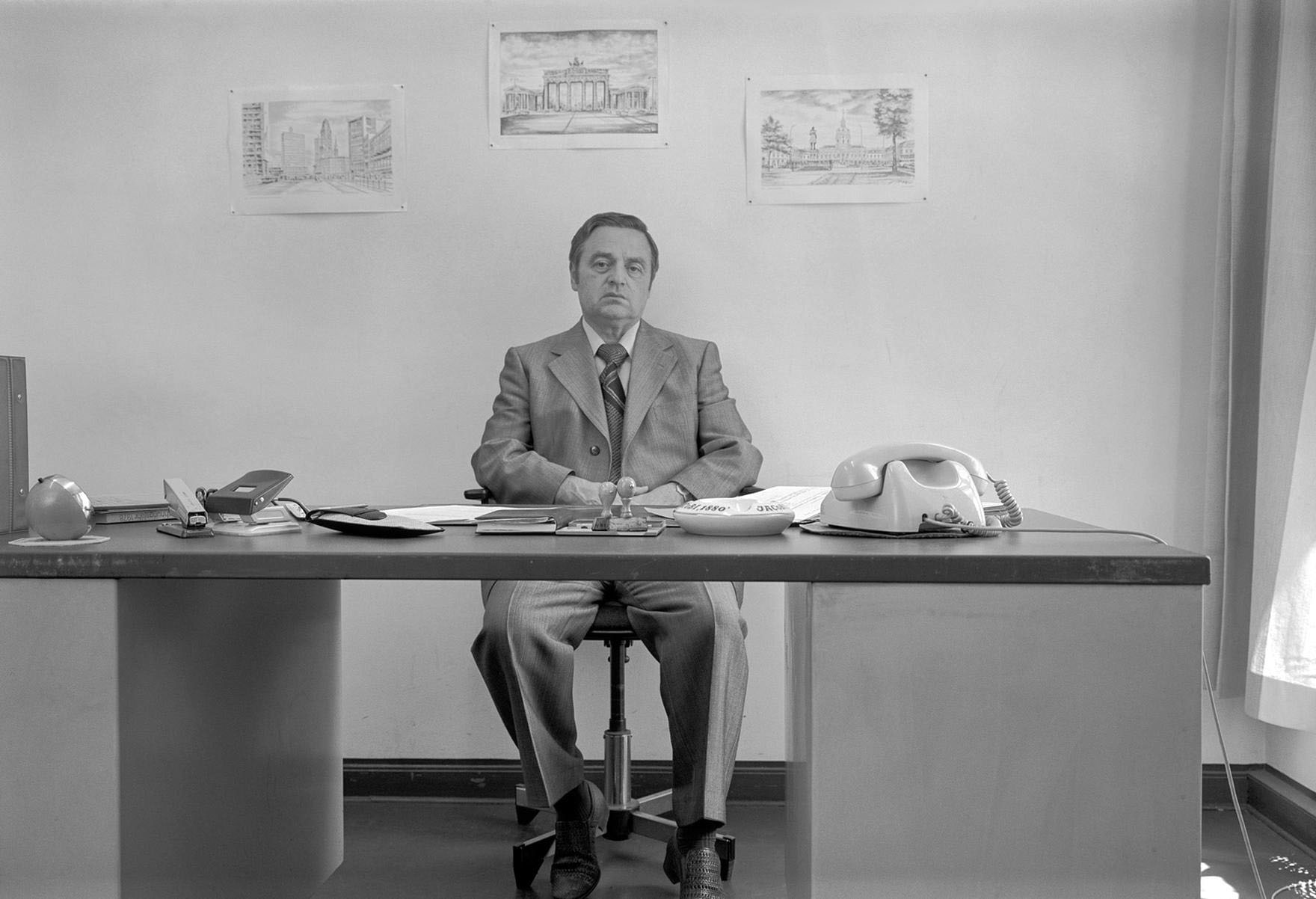
Michael Schmidt (German, 1945-2014) 'City Inspector at the Wedding District Office' 1976-1978


Michael Schmidt (German, 1945-2014)
City Inspector at the Wedding District Office
1976-1978
From Berlin-Wedding
Silver gelatin print
43.4 x 46cm
© Michael Schmidt, Foundation for Photography and Media Art with the Michael Schmidt Archive


Michael Schmidt (German, 1945-2014) 'City Inspector at work in his Wedding District Office' 1976-1978


Michael Schmidt (German, 1945-2014)
City Inspector at work in his Wedding District Office
1976-1978
From Berlin-Wedding
Silver gelatin print
43.4 x 46cm
© Michael Schmidt, Foundation for Photography and Media Art with the Michael Schmidt Archive


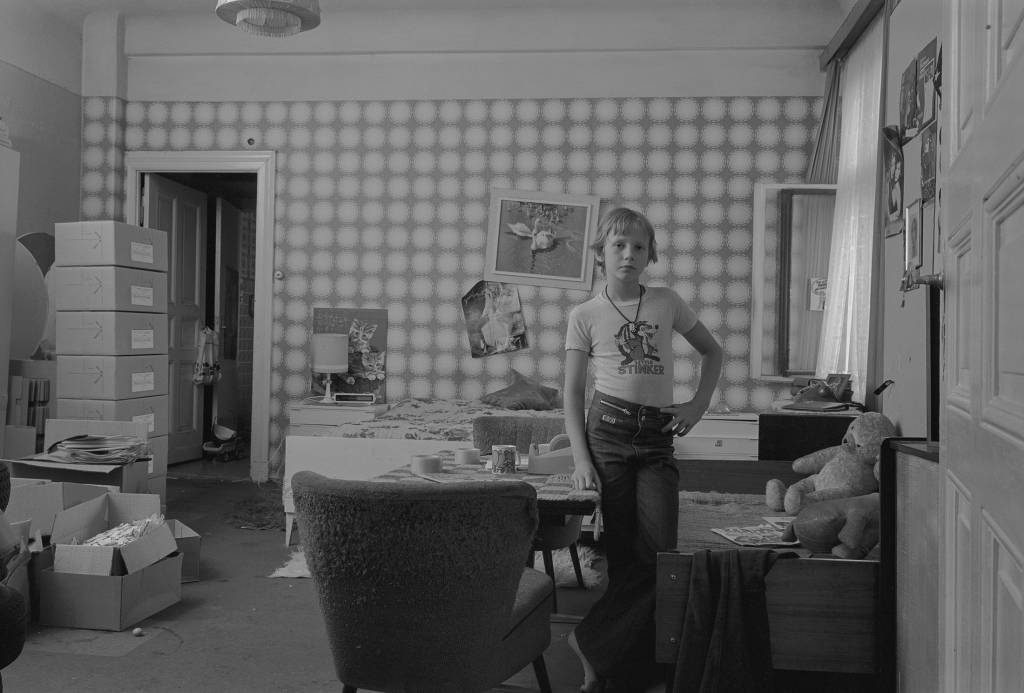
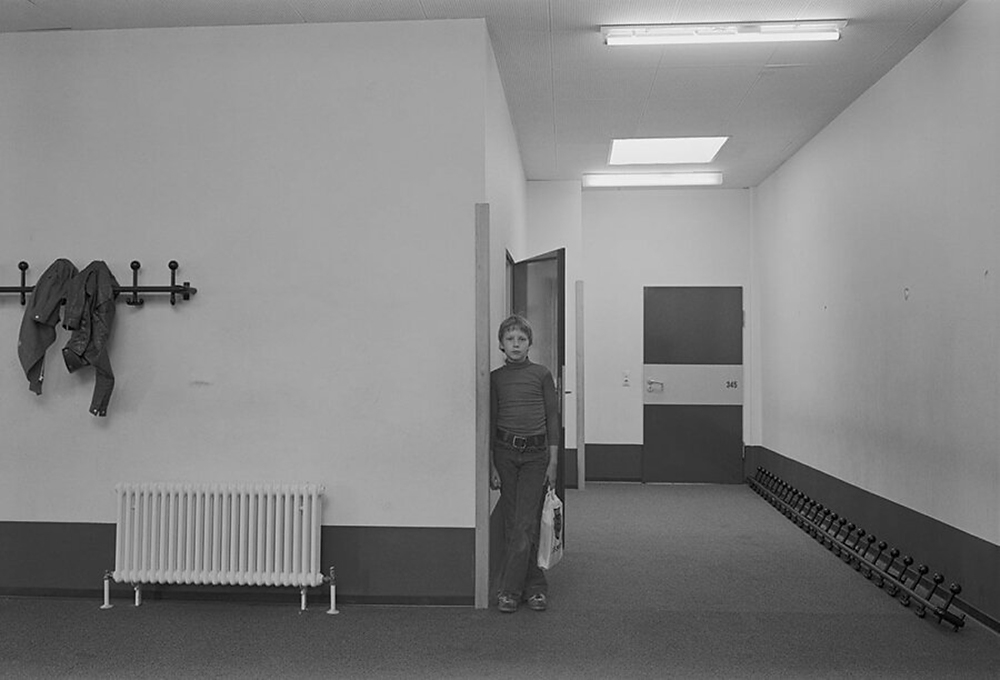
Michael Schmidt (German, 1945-2014) 'Schüler der 4. Klasse, Grundschule, Berlin-Wedding' (Pupil, elementary school, Berlin-Wedding) 1976-1978


Michael Schmidt (German, 1945-2014)
Schüler der 4. Klasse, Grundschule, Berlin-Wedding (Pupil, elementary school, Berlin-Wedding)
1976-1978
From Berlin-Wedding
Silver gelatin print
© Michael Schmidt, Foundation for Photography and Media Art with the Michael Schmidt Archive


Michael Schmidt (German, 1945-2014) 'Schüler der 4. Klasse, Grundschule, Berlin-Wedding' (CM1 pupil, primary school, Berlin-Wedding) 1976-1978


Michael Schmidt (German, 1945-2014)
Schüler der 4. Klasse, Grundschule, Berlin-Wedding (CM1 pupil, primary school, Berlin-Wedding)
1976-1978
From Berlin-Wedding
Silver gelatin print
© Michael Schmidt, Foundation for Photography and Media Art with the Michael Schmidt Archive


Michael Schmidt (German, 1945-2014) 'Untitled' from 'Berlin-Wedding' 1976-1978


Michael Schmidt (German, 1945-2014)
Untitled from Berlin-Wedding
1976-1978
Silver gelatin print
24 x 30cm
© Michael Schmidt, Foundation for Photography and Media Art with the Michael Schmidt Archive


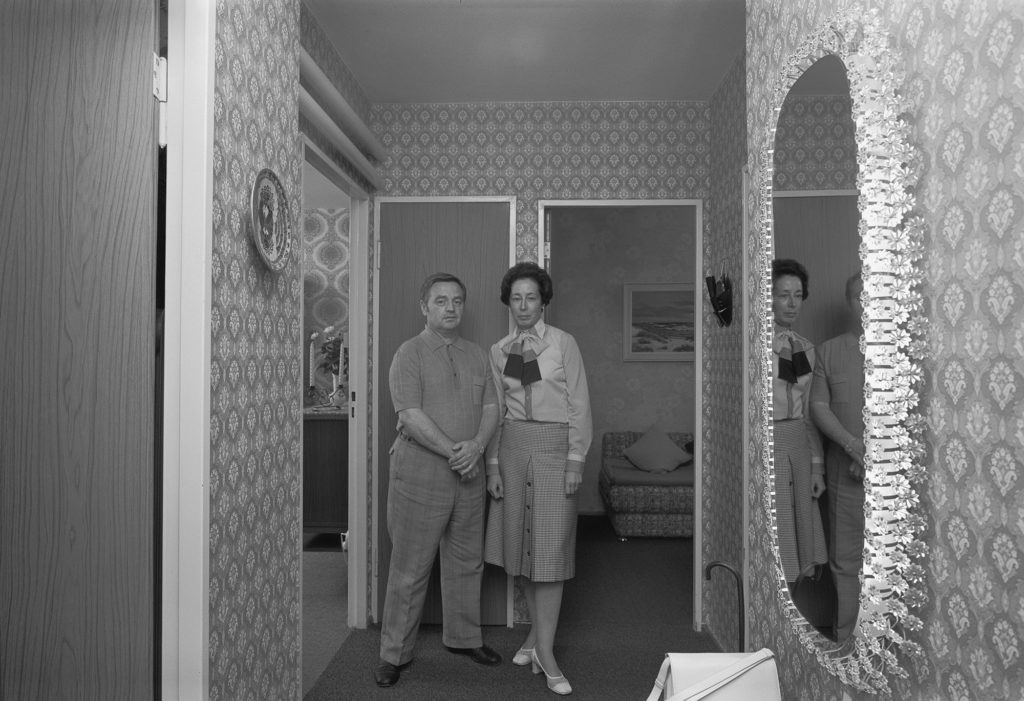
Jeu de Paume in Paris is the second venue of the major retrospective of Michael Schmidt’s work. Michael Schmidt (1945-2014) occupies a unique position in contemporary German photography and internationally. Born in Berlin and with no formal training in photography, he discovered the medium as a mode of artistic expression in the mid-1960s. For each of his themes he developed his own approach to reality. His oeuvre owing to continual exploration and innovation has been seminal for a younger generation of photographers. The exhibition, the most comprehensive to date, offers a complete overview of his oeuvre from 1965 to 2014.

After the presentation at Jeu de Paume, Paris (2021) and Hamburger Bahnhof – Museum für Gegenwartskunst Berlin (2020), the exhibition will be on view at the Museo Nacional Centro de Arte Reina Sofia in Madrid (September 22 – February 28, 2022) and the Albertina Museum in Vienna (March 24 – June 12, 2022).

Michael Schmidt (1945-2014) occupies a unique position in contemporary German photography. Born in Berlin, he was self-taught, adopting photography as his artistic medium in the mid-1960s. For each of his themes, he developed his own approach to reality. The Michael Schmidt retrospective at the Jeu de Paume, the most comprehensive to date, offers a complete overview of his oeuvre from 1965 to 2014.

Press release from Jeu de Paume


“At the end of the 1970s, with the series ‘Berlin-Wedding’, Michael Schmidt imposed a very rigid set of rules on himself in order to achieve a form of neutrality, if such a thing is possible… He later said he felt like he had pushed himself into a corner with these rules, and in the early 1980s he struggled to relax them. He went back to shooting spontaneously, camera in hand and no longer on a tripod. This led to “Waffenruhe (Ceasefire),” where he broke free from those rules. It became less a question of delivering a precise description than of communicating a feeling.”


Thomas Weski quoted in Laure Etienne. “Michael Schmidt: A New German Perspective,” on the Bind Magazine website 17 June 2021 [Online] Cited 12/08/2021.


“Every time he finished a series, he went through periods of turmoil where he looked for new ways to approach reality… He described himself as a “dead-end photographer” who would get into one lane and needed a long time to get out of it. “


Thomas Weski quoted in Laure Etienne. “Michael Schmidt: A New German Perspective,” on the Bind Magazine website 17 June 2021 [Online] Cited 12/08/2021.


“Michael Schmidt’s raw, harsh, and fragmented photographs of Waffenruhe are less documents of the existing situation at that time than they are creating a certain dark atmosphere, which echoed the ‘no future’-feeling of my generation.”


Thomas Weski


“Man is at the centre of the environment. He is shaped by it and he shapes it… As such, I don’t want to show him isolated, but in his environment, I want to show how he lives, where he works, what he does in his free time.”


Michael Schmidt quoted in Laure Etienne. “Michael Schmidt: A New German Perspective,” on the Bind Magazine website 17 June 2021 [Online] Cited 12/08/2021.


Berlin nach 1945


Michael Schmidt (German, 1945-2014) 'Berlin nach 1945' (Berlin after 1945) 1980


Michael Schmidt (German, 1945-2014)
Berlin nach 1945 (Berlin after 1945)
1980
Silver gelatin print
23.4 x 29.2cm
© Michael Schmidt, Foundation for Photography and Media Art with the Michael Schmidt Archive


In 1980 Michael Schmidt photographed his series “Berlin after 1945”. West Berlin already had a reputation as a young and rebellious city. Schmidt portrayed his hometown quite differently: grey on grey, barren, if not dreary. With his approach of portraying the human-shaped living environment instead of untouched nature, Schmidt became a representative of the New Topographics movement, which had recently emerged in the USA: these photographers no longer focused on an ideal conception of landscape, but rather on human intervention.

Google translated from Michael Schmidt. “So fühlte sich das Leben in Berlin an,” on the Zeit Online website 17 October 2020 [Online] Cited 12/08/2021.


Michael Schmidt (German, 1945-2014) 'Berlin nach 1945' (Berlin after 1945) 1980


Michael Schmidt (German, 1945-2014)
Berlin nach 1945 (Berlin after 1945)
1980
Silver gelatin print
© Michael Schmidt, Foundation for Photography and Media Art with the Michael Schmidt Archive


Michael Schmidt (German, 1945-2014) 'Berlin nach 1945' (Berlin after 1945) 1980


Michael Schmidt (German, 1945-2014)
Berlin nach 1945 (Berlin after 1945)
1980
Silver gelatin print
© Michael Schmidt, Foundation for Photography and Media Art with the Michael Schmidt Archive


Berlin-Kreuzberg. Stadtbilder 1981/82


Michael Schmidt (German, 1945-2014) 'No title, Berlin-Kreuzberg. Stadtbilder' 1981-1982


Michael Schmidt (German, 1945-2014)
No title, Berlin-Kreuzberg. Stadtbilder (Berlin-Kreuzberg. Urban views)
1981/82
© Michael Schmidt, Foundation for Photography and Media Art with the Michael Schmidt Archive


How Schmidt broke away from the strict image structure of his photographs can be seen in his series “Berlin-Kreuzberg. Stadtbilder 1981/82”. The camera moves closer to the sitter and no longer locks them in a strict composition.

Google translated from Michael Schmidt. “So fühlte sich das Leben in Berlin an,” on the Zeit Online website 17 October 2020 [Online] Cited 12/08/2021.


Michael Schmidt (German, 1945-2014) 'No title, Berlin-Kreuzberg. Stadtbilder' (Berlin-Kreuzberg. Urban views) 1982


Michael Schmidt (German, 1945-2014)
No title, Berlin-Kreuzberg. Stadtbilder (Berlin-Kreuzberg. Urban views)
1982
© Michael Schmidt, Foundation for Photography and Media Art with the Michael Schmidt Archive


Michael Schmidt (German, 1945-2014) 'No title, Berlin-Kreuzberg. Stadtbilder' 1981-1982


Michael Schmidt (German, 1945-2014)
No title, Berlin-Kreuzberg. Stadtbilder (Berlin-Kreuzberg. Urban views)
1981/82
© Michael Schmidt, Foundation for Photography and Media Art with the Michael Schmidt Archive


Michael Schmidt (German, 1945-2014) 'No title, Berlin-Kreuzberg. Stadtbilder' 1981-1982


Michael Schmidt (German, 1945-2014)
No title, Berlin-Kreuzberg. Stadtbilder (Berlin-Kreuzberg. Urban views)
1981/82
© Michael Schmidt, Foundation for Photography and Media Art with the Michael Schmidt Archive


Michael Schmidt (German, 1945-2014) 'No title, Berlin-Kreuzberg. Stadtbilder' 1981-82


Michael Schmidt (German, 1945-2014)
No title, Berlin-Kreuzberg. Stadtbilder (Berlin-Kreuzberg. Urban views)
1981/82
© Michael Schmidt, Foundation for Photography and Media Art with the Michael Schmidt Archive


The bulk of Schmidt’s work in the 70s and early 80s was commissioned by local authorities, and served as a survey of West Berlin’s crumbing Wall-side districts. If they wanted straightforward documentation, they should have turned elsewhere. In Kreuzberg, Schmidt captured two tree trunks rising from the ground as if a pair of legs, and in Wedding an empty phone box, the pages of its directory left open. Schmidt’s Berlin is riddled with holes. We see a row of tenements from behind, naked and exposed by the loss of their adjoining street. A similar – or perhaps the same – row is glimpsed diagonally through a gap in a scaffolding platform. This is a city scrambled, quite unlike the straight-ahead perspectives of Struth’s near-contemporaneous Unconscious Places series. When we see council employees, the walls of their chintzy apartments and spartan offices seem like armour against the bleak outside.

Text from Joe Lloyd. “Michael Schmidt Retrospective: Photographs 1965-2014,” on the Studio International website 12/10/202 [Online] Cited 12/08/2021.


Michael Schmidt (German, 1945-2014) 'No title, Berlin-Kreuzberg' (Berlin-Kreuzberg) 1969-1973


Michael Schmidt (German, 1945-2014)
No title, Berlin-Kreuzberg (Berlin-Kreuzberg)
1969-1973
© Michael Schmidt, Foundation for Photography and Media Art with the Michael Schmidt Archive


Foreword

Michael Schmidt (1945-2014) occupies a unique position in contemporary German photography. Born in Berlin, he was self-taught, adopting photography as his artistic medium in the mid- 1960s. For each of his themes, he developed his own approach to reality. The Michael Schmidt retrospective at the Jeu de Paume, the most comprehensive to date, offers a complete overview of his oeuvre from 1965 to 2014.

Schmidt initially focused on Berlin in his work, receiving commissions in the early 1970s from district offices and from the Berlin Senate on districts such as Kreuzberg and Wedding and on social themes. The Waffenruhe (Ceasefire) book and exhibition project, a visually stunning psychological study of the still divided city, which was shown in Berlin for the first time in 1987, brought Schmidt international renown. With Ein-heit / U-ni-ty, a group of works examining the unification process, he shifted his focus away from the world of his native city.

Schmidt’s oeuvre comprises portraits, self-portraits, landscapes and still lifes. His work highlights the importance of urban space, the continued relevance of history, female identity, the role of the province and the significance of nature. In his last project, he highlighted the contemporary food industry.

In addition to providing a glimpse of sometimes very rich ensembles through original prints, this retrospective also includes work prints, book projects and archive documents. As far as possible, it respects Schmidt’s own approach to presenting and displaying his works. His career was exemplary for the way he endlessly refined his photographic practice and explored new publication formats. The exhibition thus reveals a unique approach to photography in the context of German post-war and contemporary photography, at odds with the Subjective Photography of Otto Steinert and the Düsseldorf School centred around Bernd and Hilla Becher. Schmidt’s oeuvre is now seen as one of the outstanding pillars of photography in the history of German twentieth-century art. As well as celebrating the work he produced in the course of his lifetime, the exhibition seeks to cover the development of photography as a mode of artistic expression since the 1970s.

Thomas Weski, curator of the exhibition


Introduction

On the occasion of the reopening, Jeu de Paume offers for the first time in France a large dedicated exhibition to photographer Michael Schmidt, considered one of the major figures of 20th century German art. This large chronological retrospective pays tribute to the artist through original prints, unpublished works and a vast corpus of archives that illustrate the evolution of his work spanning nearly five decades.

A Model

Michael Schmidt wrote a section of the history of photography. Through his work as a photographer and teacher he notably influenced artists like Andreas Gursky, with whom he befriends at the end of the 1970s. He is still a model for a whole generation of young photographers.

West Berlin

Self-taught photographer born in Berlin in 1945, Michael Schmidt devoted most of from his photography to his hometown, more particularly in West Berlin, where he will live until his death in 2014. The districts of Kreuzberg and, more particularly Wedding, were his favourite places. Initially portrayed in a purely documentary style (most often of order), Schmidt will detach himself from traditional visual language and in the 1980s look for a more daring vocabulary.

Postwar

Beginning in the middle of 1960s the postwar work of Michael Schmidt can be considered as a process of the quest for artistic identity, and also as an illustration of the development artistic photography in postwar Germany.

Grey

In the late 1970s, grey becomes the chromatic element central to the photographer’s work, which he considers a full colour. Wishing to describe the world around him, the artist cannot be limited to the use of black and white, who are too Manichean for his taste. The world is undefined, not so neat and clear. Schmidt is looking for more nuance, he has need a wider palette. He draws, then, in these grey tones that we find in the skies of Berlin, the cityscapes and interior views where characters appear weakly illuminated.


On the occasion of the 75th anniversary of the birth of Michael Schmidt, Jeu de Paume presents a large retrospective of this artist, considered one of the major pillars of the history of 20th century German art.

A tribute to a great photographer, this exhibition will present originals, unpublished work prints, book projects and other archives illustrating the evolution of his artistic work. The exhibition also highlights the process of recognising photography as a form of artistic expression in Germany and Europe from the 1970s.

Like Bernd and Hilla Becher, Michael Schmidt is among the most influential post-war photographers. He tirelessly developed his work for five decades. Through the publication of his work in the form of books and installations, always in dialogue with their place of exhibition, he developed different types of innovative presentation. By the incessant renewal of its formal language and by the choice of its themes, Michael Schmidt wrote a part of the history of photography and is today a role model for a whole generation of young photographers.

Born in Berlin on October 6, 1945, it was in this city that he lived and worked until his death in 2014. This autodidact works as a photographer from the mid-1970s, initially exclusively in his hometown. This is where the series dedicated to Kreuzberg and Wedding saw the light of day, – two districts of West Berlin –, which already go beyond the simple description of a neighbourhood, taking on a broader meaning. It is with the project, book and exhibition developed in collaboration with the director and playwright Einar Schleef, Waffenruhe (Ceasefire), first presented in Berlin in 1987, that Michael Schmidt does undeniably artistic work.

This series is made up of raw images with a loaded atmosphere, which draw a very personal portrait of the city near the end of the cold war – and of its youth – a city still cut in half, shortly before the change of epoch.

Michael Schmidt abandons this focus on the thematic universe of Berlin with the series Ein-heit (Uni-té), in which he explores the visual languages ​​of the different forms of society and different political systems that marked Germany in the 20th century. He uses on this occasion already mediatised images that he mixes with photographs taken by himself, publishing everything in a book without text. The first exhibition of this series is in 1996 at the Museum of Modern Art, New York.

Schmidt was thus the first German photographer for decades to have personal exposure in this place. Subsequently, he devotes other work to the image of the woman, to the role of regions and the importance of nature. His last big series, Lebensmittel (Foodstuffs), in which he explores contemporary food production, has earned him the Pictet Prize just a few days before his death.


The exhibition

First photographs, commissioned works and series, 1965-1985

Michael Schmidt discovered an interest in photography when he was working in the West Berlin police force. Although he joined amateur photography clubs, he was chiefly self-taught, working hard to improve his technique. In the mid-1960s, he took the first photographs that he did not reject later on. Although the motifs in these early photographs vary greatly, they all defy the quick readability that is usually associated with the medium.

From his earliest photographic work of the mid-1960s to Germany’s reunification, Schmidt chose his native city of Berlin as his main subject, examining it from various angles. By 1973 he was working as a professional photographer, having been commissioned by the district office in Kreuzberg to do a book on the neighbourhood. It was published in the same year, with a second edition being printed almost immediately. It was followed by commissions from other city districts and Berlin’s Senate. In Die berufstätige Frau in Kreuzberg (The Working Woman in Kreuzberg) he depicted a typical day in the life of two women juggling work and leisure.

In the early 1970s he began teaching photography courses at colleges of further education. In 1976, he founded the Werkstatt für Photographie (Workshop for Photography) at the Volkshochschule Kreuzberg, which continued until 1986. Works by contemporary American photographers were exhibited there that had not previously been accessible to the German public. From 1976 to 1978, he photographed the Berlin-Wedding district and its inhabitants in a strictly documentary style. He made prints in rich shades of grey and published the series in 1978.

Between 1978 and 1980 he photographed Berlin’s Friedrichstadt neighbourhood in the south of the city, which was badly damaged during the Second World War. These photographs capture the mood of post-war West Berlin, a city scarred by gaps between buildings, brownfield sites and fire walls. Dominant motifs include urban wastelands and utility buildings, which he photographed in diffuse light using a large plate camera. In these works, Schmidt found pictorial solutions that straddle the boundary between documentation and abstraction. His Berlin nach 45 (Berlin after 1945) was not published until 2005, twenty-five years after the photographs were taken.

In 1980 in another project funded by the Berlin Senate he documented the everyday lives of four people dealing with chronic illness or disability. This work was published under the title Benachteiligt (Disadvantaged).

With the photo book Berlin-Kreuzberg. Stadtbilder, published in 1983, he began turning away from the traditional documentary idiom, experimenting with a more subjective approach.

In the mid-1990s, Schmidt identified his archive as a potent new source for reinterpreting earlier work. It assumed growing importance for him and he returned to it with increasing regularity in order to subject his early work to a critical re-examination and to make new prints. In the late 1990s, for example, for his project Menschenbilder (Ausschnitte) (Pictures of People (Excerpts)), he presented re-framed versions of an older series of portraits. Divorced from their previous context, the portraits became emblems of the human condition.

At that time, Schmidt also published Selbst (Self), a series of self-portraits dating from the mid-1980s, in which he appeared directly and unsparingly, in a self-critical attitude.

Waffenruhe (Ceasefire), 1985-1987

Unlike the studiedly sober photos of his earlier series, the portrait of the still divided city that Schmidt created in the mid-1970s in the book and exhibition project Waffenruhe, with its condensed, fragmentary, strongly contrasting black and white photographs, is highly subjective and multifaceted. With this work group, the photographer used a more evocative approach to convey the complex and moribund political situation in Berlin.

Here Schmidt eschewed a documentary approach in favour of unexpected pictorial sequences that express the dystopian attitude of a generation living before the fall of the Wall. Schmidt creates a picture of a world marked by fragmentation and discontinuity which remains open to interpretation. The photographs in the artist’s book are interwoven with a text by theatre director and writer Einar Schleef, which offers a very personal and uncompromising take on the fragility of human existence.

The project, funded with public money as part of the celebrations marking Berlin’s 750th anniversary, was first shown in the Berlinische Galerie at the Martin-Gropius-Bau in the immediate vicinity of the Wall. When the Waffenruhe series was included in a group exhibition at MoMA in New York, in 1988, it brought Schmidt immediate international notoriety.

Portraits, 1987-1994
Natur (Nature), 1987-1997
89/90, 1989-1990
Architektur (Architecture), 1989-1991

In between his major series, Michael Schmidt created work of more modest scope, which afforded him more artistic freedom and enabled him to hone his photographic method and pictorial language. The works that followed Waffenruhe (Ceasefire) are characterised by their tight framing, shallow depth of field and formats that were unusually large for the time. In them Schmidt focused increasingly on architecture and portraiture, unrestrained by any concern for intelligibility. Motifs became detached from their urban or personal contexts, functioning as emblems of metropolitan life, history and society. The series Architektur (Architecture) and Portraits are distinguished by the presence and materiality of their objects and the immediacy of encounter.

In 1989, Schmidt turned his attention to his native city for one last time, recording visual traces of German unification. He found many of his motifs in what used to be the border zone between the wall and no man’s land. This work, entitled 89/90, was not published until 2010.

Similarly, the photos he was taking around the same time of the rural landscape near his second home in Lower Saxony were not published until much later, when he assembled them in the artist book Nature shortly before his death. The book testifies to the importance he attached to landscape during this part of his life.

Ein-heit (U-ni-ty), 1989-1994

This series, which took shape during reunification, is concerned with history and the universal symbolism of the dominant social systems in Germany since 1933: National Socialism, Socialism and Democracy. This is the context for the photographer’s examination of the individual’s essential role in society and the stand they choose to take.

For Schmidt, a published image was an integral part of objective reality and no less worthy of being photographed than, say, a person or a building. In Ein-heit/U-ni-ty, he took this approach further. His photographs of photographs, which account for roughly one third of this series, comprise severely cropped and occasionally inverted photographs together with straightforward renderings of existing photographic material, which he typically combined with his own photographs. In so doing, Schmidt reformulates the content of the original photographs for his own purposes, depriving them of their unambiguousness and added further layers of possible meaning. He also used the technique of repeating and varying motifs he had deployed in some of his early works. Arranged in this way, the photographs form the grammar of a unique visual idiom, one that is challenging for viewers, but rich in associations. Ein-heit/U-ni-ty premiered in 1996 at MoMA in New York, where it was the first solo exhibition devoted to a German photographer for several decades.

Frauen (Women), 1997-1999

In the late 1990s, Michael Schmidt embarked on a series of portraits of young men and women. He eventually focused on women from the younger generation, shooting portraits and photographs of their bodies, both fully dressed and in the nude. In Schmidt’s view, these young women’s own sense of self-worth was increasingly reflected in their relationship to their own bodies. His photographs examined how a sense of individuality was being affected by socially mediated norms and ideals. The phenomenon made itself felt in a wide range of spheres, from the choice of outer garments and underwear to the stylisation of the body, even the private parts. He reveals the traces left by this growing imposition of uniformity on physical appearance in the form of posture and bearing, scars and lesions.

Schmidt interpreted these phenomena as the formative collective experience of an entire generation, as was evident in his exhibitions of the Frauen group of works. He presented the works as a block or tableau, emphasising what this age group had in common instead of the individual. Closer inspection reveals that this group of works added another facet to the photographer’s preoccupation with the role of the individual in society.

In 2000, Schmidt published the Frauen series in an eponymous artist’s book. At the 6th Berlin Biennale in 2010, he showed extracts in the form of full-page ads in a national newspaper and as posters in public spaces.

Irgendwo (Somewhere), 2001-2004
Lebensmittel (Foodstuff), 2006-2010

Following Germany’s reunification, Michael Schmidt never photographed Berlin again. Instead, he developed an interest in provincial scenes, as these were in his view both interchangeable and conducive to a sense of identity. Having acquired a caravan, he and his wife set off on tours across Germany – sixteen in all. He published the resulting images in an artist’s book entitled Irgendwo (Somewhere). They were exhibited outside Germany’s big cities. The experiences he gained on these trips and his increasing interest in eating and drinking, mirroring that of German society as a whole, led to a series entitled Lebensmittel (Foodstuff). For this, Schmidt carried out research in Germany, Norway, the Netherlands, Austria, Italy and Spain, where he visited sausage, pasta and cheese factories, fish farms, fruit and vegetable farms, fattening farms and abattoirs, green houses, olive plantations, insect farms and food processing plants.

In Lebensmittel (Foodstuff), Michael Schmidt used colour for the first time in his work, in addition to his customary black and white. The pictures are untitled and make no reference to location, making it impossible to pin them down geographically. Schmidt developed further the method he first used in Ein-heit/U-ni-ty, creating unsettling works that sometimes fuse two different halves or contain repeated images or shapes, or else variations of motifs. The result undermines belief in the documentary power of photography and the universal validity of the isolated shot.

Often it remains unclear what foodstuff is actually being presented. Both failsafe identification and seasonality have become things of the past, with production now oriented towards standardisation, alienation and globalisation rather than individuality, transparency and regional context. Schmidt critiques the excesses of an economic system that is notorious for its wastefulness. Today’s crises make it clear that we have arrived at the limits of agricultural growth. Schmidt’s photographs reflect this fact and the loss of confidence in the idea of permanent growth.

For this series, he was awarded the prestigious Prix Pictet only a few days before his death in 2014.


Waffenruhe (Ceasefire), 1985-1987


Michael Schmidt (German, 1945-2014) 'Untitled' from 'Waffenruhe' (Ceasefire) 1985-1987


Michael Schmidt (German, 1945-2014)
Untitled from Waffenruhe (Ceasefire)
1985-1987
Silver gelatin print
90 x 69.6cm
© Michael Schmidt, Foundation for Photography and Media Art with the Michael Schmidt Archive


Waffenruhe (Ceasefire) (1985-1987), inaugurated the second act of Schmidt’s career. It remains his masterpiece, and one of the most intoxicating photographic projects of the late-20th century. Laying aside the realism of his first two decades, Schmidt instead shot voraciously without quarter, before embarking on an intensive process of editing and ordering. The final works were then exhibited like a continuous reel, a sequence whose parts combine in the mind to construct a place, an atmosphere and narratives. …

This is the Berlin of Wim Wenders’ Wings of Desire, except without that film’s passage to hope. Schmidt’s greyscale world never erupts into technicolour. It is difficult to imagine a future for these anxious youths, whose lives are encircled by an evil empire on the cusp of dissolution. The Berlin Wall appears on the verge of subsiding. Vegetation grows unbidden, new life to replace the old. Schmidt turns his camera on the city’s insignificant minutiae, a shadowy realm between the sights and, in doing so, captures its liminality.

Text from Joe Lloyd. “Michael Schmidt Retrospective: Photographs 1965-2014,” on the Studio International website 12/10/202 [Online] Cited 12/08/2021


“This is the strength of Michael Schmidt’s work. An ability to transcend the present – its present – and to fragment it in order to better represent it. Creations with shallow backgrounds, which play with nuances and break free from simple black and white to offer a shade of grey, evoking the rainy sky of Berlin. A true love letter, tortured, raw, deep and complex, to the city where it was born, grew and disappeared.”

Lou Tsatsas. “Michael Schmidt décompose Berlin au Jeu de Paume,” on the Fisheye Magazine website June 2021 [Online] Cited 12/08/2021


Michael Schmidt (German, 1945-2014) 'Untitled' from 'Waffenruhe' (Ceasefire) 1985-1987


Michael Schmidt (German, 1945-2014)
Untitled from Waffenruhe (Ceasefire)
1985-1987
Silver gelatin print
90 x 69.6cm
© Michael Schmidt, Foundation for Photography and Media Art with the Michael Schmidt Archive


With “Waffenruhe” from 1985-1987, Schmidt moved away from the documentary and found a new photographic language. He blocked the viewer’s view of the subject – here with a black line – and made the visual obstacle itself the motif. Schmidt continued to take photos in Berlin, only that his photographs increasingly irritated the view of the city.

Google translated from Michael Schmidt. “So fühlte sich das Leben in Berlin an,” on the Zeit Online website 17 October 2020 [Online] Cited 12/08/2021.


Michael Schmidt (German, 1945-2014) 'Untitled' from 'Waffenruhe' (Ceasefire) 1985-1987


Michael Schmidt (German, 1945-2014)
Untitled from Waffenruhe (Ceasefire)
1985-1987
Silver gelatin print
90 x 69.6cm
© Michael Schmidt, Foundation for Photography and Media Art with the Michael Schmidt Archive


Schmidt also revised the imagery of his portraits in the “Ceasefire” series: the surroundings disappear, and the direct expression of the sitter takes its place. The blurring reinforces the impression that this is a spontaneous snapshot.

Google translated from Anonymous. “Michael Schmidt. So fühlte sich das Leben in Berlin an,” on the Zeit Online website 17 October 2020 [Online] Cited 12/08/2021.


Michael Schmidt (German, 1945-2014) 'Untitled' from 'Waffenruhe' (Ceasefire) 1985-1987


Michael Schmidt (German, 1945-2014)
Untitled from Waffenruhe (Ceasefire)
1985-1987
Silver gelatin print
90 x 69.6cm
© Michael Schmidt, Foundation for Photography and Media Art with the Michael Schmidt Archive


Schmidt increasingly photographed surfaces and materials such as the many graffiti that have long characterised Berlin’s aesthetics. He was interested in how people and time inscribe themselves on it.

Google translated from Anonymous. “Michael Schmidt. So fühlte sich das Leben in Berlin an,” on the Zeit Online website 17 October 2020 [Online] Cited 12/08/2021.


Michael Schmidt (German, 1945-2014) 'Untitled' from 'Waffenruhe' (Ceasefire) 1985-1987


Michael Schmidt (German, 1945-2014)
Untitled from Waffenruhe (Ceasefire)
1985-1987
Silver gelatin print
90 x 69.6cm
© Michael Schmidt, Foundation for Photography and Media Art with the Michael Schmidt Archive


Michael Schmidt (German, 1945-2014) 'Untitled' from 'Waffenruhe' (Ceasefire) 1985-1987


Michael Schmidt (German, 1945-2014)
Untitled from Waffenruhe (Ceasefire)
1985-1987
Silver gelatin print
90 x 69.6cm
© Michael Schmidt, Foundation for Photography and Media Art with the Michael Schmidt Archive


“Through Schmidt’s dramatic perspective and keen eye for telling details and subtle nuances, he creates an air of inconsolable emptiness in his images of the Wall and those affected by it. These photographs will leave you speechless.”


Martin Parr. The Photobook: A History Volume 2 2006


In the following decades, his approach became more impressionistic. He would shoot thousands of frames for each project without thinking too much about the end result, which would emerge later out of rigorous editing. Increasingly, he was drawn to series over single images, atmosphere over documentary representation. The Berlin that emerges out of Waffenruhe is a darkly atmospheric place, where nothing is quite what it seems and everything – a bandaged tree, a bank of earth beneath a wall, a stuffed toy criss-crossed by barbed wire – is loaded with ominous suggestion. The Wall is a looming presence, but there are images that evoke an altogether more intimate kind of dislocation, not least the stark portraits of Schmidt’s sad-looking daughter – in one, she has a bandaged wrist.

Sean O’Hagan. “Michael Schmidt obituary,” on the Guardian website 29 May, 2014 [Online] Cited 12/08/2021


Michael Schmidt (German, 1945-2014) 'Untitled' from 'Waffenruhe' (Ceasefire) 1985-1987


Michael Schmidt (German, 1945-2014)
Untitled from Waffenruhe (Ceasefire)
1985-1987
Silver gelatin print
90 x 69.6cm
© Michael Schmidt, Foundation for Photography and Media Art with the Michael Schmidt Archive


Michael Schmidt (German, 1945-2014) 'Untitled' from 'Waffenruhe' (Ceasefire) 1985-1987


Michael Schmidt (German, 1945-2014)
Untitled from Waffenruhe (Ceasefire)
1985-1987
Silver gelatin print
© Michael Schmidt, Foundation for Photography and Media Art with the Michael Schmidt Archive


Michael Schmidt (German, 1945-2014) 'Untitled' from 'Waffenruhe' (Ceasefire) 1985-1987


Michael Schmidt (German, 1945-2014)
Untitled from Waffenruhe (Ceasefire)
1985-1987
Silver gelatin print
© Michael Schmidt, Foundation for Photography and Media Art with the Michael Schmidt Archive


Michael Schmidt (German, 1945-2014) 'Untitled' from 'Waffenruhe' (Ceasefire) 1985-1987


Michael Schmidt (German, 1945-2014)
Untitled from Waffenruhe (Ceasefire)
1985-1987
Silver gelatin print
© Michael Schmidt, Foundation for Photography and Media Art with the Michael Schmidt Archive


Michael Schmidt (German, 1945-2014) 'Untitled' from 'Waffenruhe' (Ceasefire) 1985-1987


Michael Schmidt (German, 1945-2014)
Untitled from Waffenruhe (Ceasefire)
1985-1987
Silver gelatin print
© Michael Schmidt, Foundation for Photography and Media Art with the Michael Schmidt Archive


Michael Schmidt (German, 1945-2014) 'Untitled' from 'Waffenruhe' (Ceasefire) 1985-1987


Michael Schmidt (German, 1945-2014)
Untitled from Waffenruhe (Ceasefire)
1985-1987
Silver gelatin print
90 x 69.6cm
© Michael Schmidt, Foundation for Photography and Media Art with the Michael Schmidt Archive


Waffenruhe swerved any explicit documentation of West Berlin’s political stasis for haunting photographs of its dilapidated buildings, unkempt nature, a defaced Swastika, the inside of a watchtower, cityscapes obscured by shadowy figures, and portraits of disillusioned young people. While the wall is occasionally present, its presence is unwavering. Waffenruhe was a collaboration with Einar Schleef, a playwright and theatre director who left East for West Germany in 1976. For his part, Schleef penned the inner thoughts of a divorced man living with his estranged daughter’s rabbit in the now-empty family house. As historian and fellow photographer Janos Frecot writes in the book’s closing pages: “The text itself does not simply tell a story, but instead narrates a finding, a wounding, a consciousness of a dully nagging pain in an apparent stillness: Berlin 1987.” Structured as one long-running paragraph, Schleef’s text cuts through the book’s centre, like the wall itself. The lack of white space around the text is oppressive, almost suffocating.


Michael Schmidt (German, 1945-2014) 'Untitled' from 'Waffenruhe' (Ceasefire) 1985-1987


Michael Schmidt (German, 1945-2014)
Untitled from Waffenruhe (Ceasefire)
1985-1987
Silver gelatin print
© Michael Schmidt, Foundation for Photography and Media Art with the Michael Schmidt Archive


Michael Schmidt (German, 1945-2014) 'Untitled' from 'Waffenruhe' (Ceasefire) 1985-1987


Michael Schmidt (German, 1945-2014)
Untitled from Waffenruhe (Ceasefire)
1985-1987
Silver gelatin print
© Michael Schmidt, Foundation for Photography and Media Art with the Michael Schmidt Archive


Portraits 1987-1994


Michael Schmidt (German, 1945-2014) 'No title, Portraits' (Portraits) 1987-1994


Michael Schmidt (German, 1945-2014)
No title, Portraits (Portraits)
1987-1994
Silver gelatin print
© Michael Schmidt, Foundation for Photography and Media Art with the Michael Schmidt Archive


Schmidt’s portraits from the 1980s are reminiscent of private photos. Their meaning does not arise from complex picture contexts, but from the direct expression, the presence of the portrayed and the associations of the viewers.

Google translated from Anonymous. “Michael Schmidt. So fühlte sich das Leben in Berlin an,” on the Zeit Online website 17 October 2020 [Online] Cited 12/08/2021.


Michael Schmidt (German, 1945-2014) 'No title, Portraits' (Portraits) 1989


Michael Schmidt (German, 1945-2014)
No title, Portraits (Portraits)
1989
Silver gelatin print
© Michael Schmidt, Foundation for Photography and Media Art with the Michael Schmidt Archive


Architektur 1989-1991


Michael Schmidt (German, 1945-2014) 'No title, Architektur' (Architecture) 1989-1991


Michael Schmidt (German, 1945-2014)
No title, Architektur (Architecture)
1989-1991
Silver gelatin print
© Michael Schmidt, Foundation for Photography and Media Art with the Michael Schmidt Archive


Ein-heit (Uni-ty) 1991-1994


Michael Schmidt (German, 1945-2014) 'No title, Ein-heit' (Uni-ty) 1991-1994


Michael Schmidt (German, 1945-2014)
No title, Ein-heit (Uni-ty)
1991-1994
Silver gelatin print
© Michael Schmidt, Foundation for Photography and Media Art with the Michael Schmidt Archive


For U-nit-y, made between 1991 and 1994, Schmidt turned his eye on his newly reunited city, this time using found images from newspapers, magazines and propaganda material from Nazi and communist pamphlets alongside his own photographs. The end result is a highly personal evocation of a reborn city still haunted by unresolved issues from the recent past and a collective anxiety about the future. His images evoke both the weight of history and the pulse of the everyday, summoning up a Berlin of the imagination that is both solid and dreamlike.

Sean O’Hagan. “Michael Schmidt obituary,” on the Guardian website 29 May, 2014 [Online] Cited 12/08/2021


Michael Schmidt (German, 1945-2014) 'No title, Ein-heit (Uni-ty)' 1991-1994


Michael Schmidt (German, 1945-2014)
No title, Ein-heit (Uni-ty)
1991-1994
Silver gelatin print
© Michael Schmidt, Foundation for Photography and Media Art with the Michael Schmidt Archive


Michael Schmidt (German, 1945-2014) 'No title, Ein-heit (Uni-ty)' 1991-1994


Michael Schmidt (German, 1945-2014)
No title, Ein-heit (Uni-ty)
1991-1994
Silver gelatin print
© Michael Schmidt, Foundation for Photography and Media Art with the Michael Schmidt Archive


Although unforeseen at the time, two years after Waffenruhe was published, the Berlin Wall was torn down. For Schmidt’s next book, he explored East and West Germany’s reunification in Ein-heit (or U-Ni-Ty) – signalled to in its split title. The country was beginning to heal from its deep and bloody ideological divisions, five decades after the Nazis took power in 1933. Ein-heit, made between 1991 and 1994, surveyed the relationship between the individual and the state, and the grappling of national identity. For the first time in his career, Schmidt moved beyond Berlin and reckoned with Germany’s past and present through found and new photography (around half of the Ein-heit‘s 163 images were repurposed from old newspapers, propaganda materials, and magazine clippings).

Ashleigh Kane. “Why Michael Schmidt is the perfect photographer for our dystopia,” on the Highsnobiety website February 2021 [Online] Cited 12/08/2021


Michael Schmidt (German, 1945-2014) 'No title, Ein-heit (Uni-ty)' 1991-1994


Michael Schmidt (German, 1945-2014)
No title, Ein-heit (Uni-ty)
1991-1994
Silver gelatin print
© Michael Schmidt, Foundation for Photography and Media Art with the Michael Schmidt Archive


Michael Schmidt (German, 1945-2014) 'No title, Ein-heit (Uni-ty)' 1991-1994


Michael Schmidt (German, 1945-2014)
No title, Ein-heit (Uni-ty)
1991-1994
Silver gelatin print
© Michael Schmidt, Foundation for Photography and Media Art with the Michael Schmidt Archive


Michael Schmidt (German, 1945-2014) 'No title, Ein-heit (Uni-ty)' 1991-1994


Michael Schmidt (German, 1945-2014)
No title, Ein-heit (Uni-ty)
1991-1994
Silver gelatin print
© Michael Schmidt, Foundation for Photography and Media Art with the Michael Schmidt Archive


Michael Schmidt (German, 1945-2014) 'No title, Ein-heit (Uni-ty)' 1991-1994


Michael Schmidt (German, 1945-2014)
No title, Ein-heit (Uni-ty)
1991-1994
Silver gelatin print
© Michael Schmidt, Foundation for Photography and Media Art with the Michael Schmidt Archive


Biography

1945

Born in Berlin-Kreuzberg on 6 October.

1950

His family moves several times between West Berlin and Erkner, which is near East Berlin.

1963

Joins the West Berlin riot police.

1965

Starts taking photographs.

1969

Teaches a photography course at the Volkshochschule Kreuzberg, a local adult education centre.

1970

Teaches photography courses at adult education centres, with an emphasis on encouraging personal expression in his students.

1973

Leaves the police force and starts working as a freelance photographer while continuing to teach at various adult education centres. His exhibition Kreuzberger Motive is organised by the Berlin Museum and the Bezirksamt Kreuzberg (district office). His book Berlin Kreuzberg is published.

1974

He organises the exhibition Ausländische Mitbürger (Foreign Fellow Citizens in Kreuzberg), which features his own work together with photographs submitted by Kreuzberg residents from migrant backgrounds. Commission for a book on his hometown, which is published in 1978 under the title Berlin. Stadlandschaft und Menschen (Berlin. Urban Landscape and People).

1975

Exhibits his series Senioren in Berlin (Senior Citizens in Berlin), commissioned by the Berlin Senate, in a U-Bahn station. Develops the concept for his Werkstatt für Photographie (Photography Workshop) in West Berlin. He is assigned by the Senate to photograph Die berufstätige Frau in Kreuzberg (The Working Woman in Kreuzberg), which is exhibited at the Rathaus Kreuzberg.

1976

Stops working in the field of applied photography in order to focus on his own photographic projects. Opens the Werkstatt für Photographie at the adult education centre in Kreuzberg, taking over artistic and organisational management. With its intensive programme of exhibitions, workshops and specialised courses, the Werkstatt achieves international renown. It would host the first solo exhibitions in Germany, and in some cases Europe, of American photographers like Robert Adams, Diane Arbus, Lewis Baltz, Larry Clark, William Eggleston and John Gossage.

1977

Quits as director of the Werkstatt für Photographie, but continues to teach and give advice there.

1978

His series Berlin-Wedding is shown at the Rathaus Wedding, in conjunction with the release of his book Berlin-Wedding. 1979 Teaches courses in documentary photography at the University of Essen. 1980 He applies to the Senate to photograph people with disabilities and is accepted. The series is published in a small book titled Benachteiligt (Disadvantaged). Photographs post-war architecture in the area around Anhalterbahnhof, West Berlin, which suffered massive destruction in the war. The topic would be the focus of the Internationale Bauausstellung (International Building Exposition) in 1984. Berlin nach 45 would not be published until 2005.

1981

Stops his activities at the Werkstatt für Photographie, which closes in 1986.

1984

Receives the Alfried Krupp von Bohlen und Halbach – Foundation Grant for Contemporary Photography.

1985-1988

Teaches at the Hochschule für Bildende Künste (Academy of Fine Arts), Berlin.

1987

His book Waffenruhe (Ceasefire), a collaboration with theatre director and writer Einar Schleef, is published and the work group is exhibited at Martin-Gropius-Bau as part of the 750th anniversary celebrations of Berlin.

1988

Waffenruhe is shown as part of the group exhibition New Photography 4 at the Museum of Modern Art in New York.

1989

He starts working on a project, in which he examines the repercussions of reunification and which he later titled Ein-heit/U-ni-ty.

1995

First retrospective of his photographic career at the Museum Folkwang, Essen. He uses the exhibition to go through his archive spanning his life’s work and selecting works that are of particular importance to him. In the future, he returns regularly to his archive in order to generate new works.

1996

Ein-heit/U-ni-ty is exhibited at the Museum of Modern Art, New York, and published as an artist’s book. It is the first solo exhibition of a German photographer at MoMA for several decades.

1999

Appointed to the Akademie der Künste (Academy of Arts), Berlin. He co-founds the Foundation for Photography and Media Art with the Michael Schmidt Archive.

2000

Publishes his portrait series Frauen (Women).

2005

Exhibits and publishes Irgendwo (Somewhere), which he photographed on 16 trips across Germany examining the relevance of the provinces.

2006

Takes part in the 5th Berlin Biennale and shows Ein-heit at Kunst-Werke, Berlin.

2010

Is invited to participate in the 6th Berlin Biennale and shows Frauen in public and in the media in the form of placards and full-page advertisements. Major exhibition Grau als Farbe. Fotografien bis 2009 (Grey as colour. Photographs until 2009) at the Haus der Kunst, Munich.

2013

Exhibits Lebensmittel as part of the main exhibition Il Palazzo Enciclopedico at the Venice Biennale. After returning to Berlin, he is diagnosed with cancer. While receiving treatment he edits and designs the artist’s book Natur (Nature).

2014

Wins the Fifth Prix Pictet Award, the prestigious international award for photography and sustainability. Michael Schmidt dies on 24 May in Berlin.


Jeu de Paume
1, Place de la Concorde
75008 Paris
métro Concorde
Phone: 01 47 03 12 50

Opening hours:
Tuesday – Sunday 11am – 7pm
Closed Mondays

Jeu de Paume website

LIKE ART BLART ON FACEBOOK

Back to top

Exhibition: ‘Friedrich Seidenstücker – Life in the City: Photographs from the 1920s to 1940s’ at the Käthe Kollwitz Museum, Cologne

Exhibition dates: 21st May – 15th August, 2021


Friedrich Seidenstücker (German, 1882-1966) 'Family tandem' 1947 from the exhibition 'Friedrich Seidenstücker – Life in the City: Photographs from the 1920s to 1940s' at the Käthe Kollwitz Museum, Cologne, May - Aug, 2021


Friedrich Seidenstücker (German, 1882-1966)
Family tandem
1947
© Stiftung Ann und Jürgen Wilde, Bayerische Staatsgemäldesammlungen, München


Recognising small diversions

A photographer I knew nothing about. Now I do.

The museum supplied me with 15 media images – hardly enough to give an overview of a life’s work – so I have supplemented them with more images, the best I could find, to give a broader idea of this artist’s work. Unfortunately, there are hardly any large photographs of his nudes or his important photographs of the destruction of Berlin directly after the war online.

An anonymous text on the The Wall Street Journal website (see below) observes that Seidenstücker’s pre- and post war photographs of Berlin “can seem a bit like moral disengagement when one recalls that the era saw the Nazis’ rise, World War II and the dismembering of Berlin itself… Even his shots of postwar rubble work hard to avoid the abyss. Kids and picnickers make the best of the ruins, napping amid the broken bricks or heaping them into playful piles.”

This is hardly true from the photographs I have seen. With a twinkle in his eye and a delicious sense of humour, Seidenstücker documents the mass and form of “the hardships and travail, but also of the longings, the small diversions, and the pleasures of life in the city.” Here is hard work and exhaustion, happiness and poverty, beauty and the ungainly. Impoverished Jewish women gather while coal porters trudge… and in the small photographs of his postwar ‘ruins’ work that I have viewed, hardly a picnicker can be observed.

Seidenstücker was a ‘Momentknipser’ (capturer of the moment) who “documents people in the social fabric of the modern metropolis with an attentive eye and keen intuition”. Which poses the question… does every photograph have to be political? Does every photograph have to be reinterpreted many years later for hidden ‘manifestations of will’ in which the artist knowingly or unknowingly made decisions about what, and who, to photograph?

Or can a photograph exist not only in the moment it was taken, but in the extension of that moment into present and future time just as it is? Can we simply accept that the artist captured what he was interested in through a process of Purpose – Aim – Goal – Valuation – Motivation – Intention, in “empathy, that is, the capacity to enter, so to speak, into the skin of others, and by means of intuitive imagination, become aware of the effects our words and acts may produce.”

Photographs are declarative, they make information known. To take a photograph of the world is not to image in reduction, in simplification – everything is political – for this act in itself is a form of interpretive fascism. Thus, we cannot prescribe a way for them to be interpreted much as we cannot prescribe a way for them to be taken.

As he strolls through the city Seidenstücker’s considered urges to action (the taking of photographs) arrive in the form of superconscious “illuminations” of everyday life. Through his intuitions and inspirations he records ostensibly incidental events and occurrences. These incidental events and occurrences, these puddle jumpers, can only be seen if the mind and will of the excursionist (those that run) are attuned and receptive, are empathetic to the wor(l)ds of others.

Dr Marcus Bunyan


Many thankx to the Käthe Kollwitz Museum for allowing me to publish the photographs in the posting. Please click on the photographs for a larger version of the image.


Friedrich Seidenstücker (German, 1882-1966) 'Stettiner Bahnhof railway station' 1930 from the exhibition 'Friedrich Seidenstücker – Life in the City: Photographs from the 1920s to 1940s' at the Käthe Kollwitz Museum, Cologne, May - Aug, 2021


Friedrich Seidenstücker (German, 1882-1966)
Stettiner Bahnhof railway station
1930
© Stiftung Ann und Jürgen Wilde, Bayerische Staatsgemäldesammlungen, München


“Friedrich Seidenstücker (1882-1966) is the flaneur among Berlin photographers. As a 22 year-old trained mechanical engineer, he came to the German capital where he worked as an airplane constructor with Zeppelin AG in Potsdam during the First World War. He cultivated his eye for detail in another regard as well, as a precise chronicler with the camera. At 32, he began another course of studies in sculpture, but always kept turning back to his other passion, photography, which he finally made a profession in 1930 upon signing a contract with Ullstein publishing. From then on, he worked for magazines such as Der Querschnitt (The Profile), Illustrierte Zeitung (Illustrated Newspaper), UHU, Die Neue Linie (The New Line), Die Dame (The Lady) and Die Woche (The Weekly). Above all, Seidenstücker became famous for his awareness of every day life, pictures from the Berliner zoo and nude photographs. Similar to Herbert List in Munich, Richard Peter in Dresden or Hermann Claasen in Cologne, he strikingly documented the post-war ruins of Berlin. What interested him overridingly was the unspectacular, the charm of the second glance.”

Dr Boris von Brauchitsch. “Friedrich Seidenstücker,” on the Lumas website [Online] Cited 20/06/2021


“Friedrich Seidenstücker (1882-1966) didn’t sell his first photograph until he was 46. Trained as a sculptor, he never lost his eye for mass and form. His photographs of Berlin daily life during the 1920s, ’30s and ’40s freeze passersby in poses either accidentally graceful or, more frequently, droll and ungainly. In Shine (1925), four women clamber out of a swimming pool; the title refers to the wet gleam of the fabric on their behinds… Seidenstücker relished confounding man and beast, as in the image of a curious rhino peering at a seemingly captive zookeeper. On a trip to Copenhagen, he snapped a man whose splay-footed waddle evokes nothing so much as a penguin – indeed, he is dragging a box of fish down the sidewalk. But the irony on display … can seem a bit like moral disengagement when one recalls that the era saw the Nazis’ rise, World War II and the dismembering of Berlin itself. ‘This entire period did not agree with me’ was Seidenstücker’s understated explanation – though during the war he sustained a Jewish friend with gifts of food. Even his shots of postwar rubble work hard to avoid the abyss. Kids and picnickers make the best of the ruins, napping amid the broken bricks or heaping them into playful piles.”

Anonymous. “Photo-Op: Zoo View,” on The Wall Street Journal website [Online] Cited 20/06/2021


Friedrich Seidenstücker (1882-1966) is one of the most important chroniclers of everyday life in Berlin during the Weimar Republic. His atmospheric photographs, mostly taken on his strolls through the city, tell of ostensibly incidental events and occurrences: of Sunday fun and everyday work, of children playing in the street and the goings-on at railway stations and in the zoo. Seidenstücker shows – often from a humorous perspective – the people and life in the metropolis. At the same time, his photographs make the hardships of big-city existence visible and, in the background, repeatedly allow the contrasts of social reality in the interwar years to shine through.

The exhibition featuring 100 works from the Ann and Jürgen Wilde Foundation, Bavarian State Painting Collections, Munich, invites you to follow Friedrich Seidenstücker on his walks through Berlin 100 years ago.

The art of the moment

With few exceptions, the ‘Momentknipser’ (capturer of the moment), as he called himself, found his motifs outside on the street. As visual metaphors, his famous photographs of ‘Pfützenspringerinnen’ (puddle-leapers) represent metropolitan modernity and urban life. With a portable camera and a light-sensitive lens, he instinctively documented many other scenes and figures – including small tradesmen such as porters, coachmen, and travelling salesmen, as well as nannies, rubbish collection workers, and newspaper vendors – in their daily activities, but also while waiting or resting.

“I am an excursionist / I’m a day tripper

Seidenstücker characterised himself thusly and set out to accompany his models to the Wannsee beach or to see the cherry blossoms in Werder. His favourite place, however, was the Berlin Zoological Garden. In his photographs taken here, it is not only the enthusiasm of the zoo visitors that becomes visible – occasionally, the observer and the observed seem to reverse their roles: Are the animals also interested in the people?

Seidenstücker’s photographs from the 1920s to the ’40s are images of everyday life, early street photography that documents people in the social fabric of the modern metropolis with an attentive eye and keen intuition. With a twinkle in his eye, he created images that give us today an idea of the hardships and travail, but also of the longings, the small diversions, and the pleasures of life in the city.

The exhibition was organised in special cooperation and with the scientific support of the Ann and Jürgen Wilde Foundation, Bavarian State Painting Collections, Munich.

Press release from Käthe Kollwitz Museum translated from the German by Google Translate


Friedrich Seidenstücker (German, 1882-1966) 'Puddle jumpers' 1925


Friedrich Seidenstücker (German, 1882-1966)
Puddle jumpers
1925
© Stiftung Ann und Jürgen Wilde, Bayerische Staatsgemälde, München


Friedrich Seidenstücker (German, 1882-1966) 'Children in the city' 1928


Friedrich Seidenstücker (German, 1882-1966)
Children in the city
1928
© Stiftung Ann und Jürgen Wilde, Bayerische Staatsgemäldesammlungen, München


Friedrich Seidenstücker (German, 1882-1966) 'Dog painter' 1928


Friedrich Seidenstücker (German, 1882-1966)
Dog painter
1928
© Stiftung Ann und Jürgen Wilde, Bayerische Staatsgemäldesammlungen, München


Friedrich Seidenstücker (German, 1882-1966) 'Encounters in the zoo' 1926


Friedrich Seidenstücker (German, 1882-1966)
Encounters in the zoo
1926
© Stiftung Ann und Jürgen Wilde, Bayerische Staatsgemäldesammlungen, München


Friedrich Seidenstücker (German, 1882-1966) 'Lastenträger' (Load carrier) 1928


Friedrich Seidenstücker (German, 1882-1966)
Lastenträger (Load carrier)
1928
© Stiftung Ann und Jürgen Wilde, Bayerische Staatsgemäldesammlungen, München


Friedrich Seidenstücker (German, 1882-1966) 'Hotel servant' 1930


Friedrich Seidenstücker (German, 1882-1966)
Hotel servant
1930
© Stiftung Ann und Jürgen Wilde, Bayerische Staatsgemäldesammlungen, München


Friedrich Seidenstücker (German, 1882-1966) 'Potsdamer Platz' After 1931


Friedrich Seidenstücker (German, 1882-1966)
Potsdamer Platz
After 1931
© Stiftung Ann und Jürgen Wilde,
Bayerische Staatsgemäldesammlungen, München


Friedrich Seidenstücker (German, 1882-1966) 'Celebrities snapped, Berlin Zoological Garden' 1930


Friedrich Seidenstücker (German, 1882-1966)
Celebrities snapped, Berlin Zoological Garden
1930
© Stiftung Ann und Jürgen Wilde, Bayerische Staatsgemäldesammlungen, München


Friedrich Seidenstücker (German, 1882-1966) 'Photo school' 1920-1930s


Friedrich Seidenstücker (German, 1882-1966)
Photo school, amateur photographers, Berlin
1920-1930s
© Stiftung Ann und Jürgen Wilde, Bayerische Staatsgemäldesammlungen, München


Friedrich Seidenstücker (German, 1882-1966) 'Berlin Nord im Wedding' 1923


Friedrich Seidenstücker (German, 1882-1966)
Berlin Nord im Wedding
1923
© Stiftung Ann und Jürgen Wilde, Bayerische Staatsgemäldesammlungen, München


Friedrich Seidenstücker (German, 1882-1966) 'Zebras' 1920-1930s


Friedrich Seidenstücker (German, 1882-1966)
Zebras
1920-1930s
© Stiftung Ann und Jürgen Wilde, Bayerische Staatsgemäldesammlungen, München


Friedrich Seidenstücker (German, 1882-1966) 'In his father's trousers' c. 1950


Friedrich Seidenstücker (German, 1882-1966)
In his father’s trousers
c. 1950
© Stiftung Ann und Jürgen Wilde, Bayerische Staatsgemäldesammlungen, München


Friedrich Seidenstücker (German, 1882-1966) 'Self-portrait with camera' c. 1925


Friedrich Seidenstücker (German, 1882-1966)
Self-portrait with camera
c. 1925
© Archiv Ann und


Seidenstücker poster for the special exhibition


Poster for the special exhibition
Design: Michael Krupp
Motif: Friedrich Seidenstücker, family tandem, 1947
© Ann and Jürgen Wilde Foundation, Bayerische Staatsgemäldesammlungen, Munich


More photographs


Friedrich Seidenstücker (German, 1882-1966) 'Untitled (Sch)' 1930


Friedrich Seidenstücker (German, 1882-1966)
Untitled (Sch)
1930


Friedrich Seidenstücker. 'Untitled' c. 1930


Friedrich Seidenstücker (1882-1966)
Untitled
c. 1930
Vintage print
6 15/16 x 5 1/16 in. (17.6 x 12.9cm)
Galerie Berinson, Berlin
Photo: Galerie Berinson, Berlin


Friedrich Seidenstücker (1882-1966) is noted for his atmospheric photographs of everyday life in Berlin during the Weimar Republic. Thanks to his compassionate studies of animals, he has an almost legendary reputation among animal and zoo lovers, and his haunting pictures of Berlin in ruins are a precious source of material for historians. His images seem to be spontaneous, sympathetic examples of the kind of photography that excels at capturing the moment. They are free of any exaggeration or extravagance, and display a sense of humour rarely found in photography. His work is buoyed by a fundamental optimism, yet it does not ignore the harshness, poverty, and suffering that prevailed at that time.


Friedrich Seidenstücker (German, 1882-1966) 'Potsdamer Bahnhof, Berlin' 1932


Friedrich Seidenstücker (German, 1882-1966)
Potsdamer Bahnhof, Berlin
1932


Friedrich Seidenstücker (German, 1882-1966) 'Alexanderplatz, Berlin' 1928


Friedrich Seidenstücker (German, 1882-1966)
Alexanderplatz, Berlin
1928


Friedrich Seidenstücker (1882-1966) 'Two walruses emerging from water' 1925-1935


Friedrich Seidenstücker (German, 1882-1966)
Two walruses emerging from water
1925-1935


Friedrich Seidenstücker (1882-1966) 'Polar bear, Berlin Zoo' 1929


Friedrich Seidenstücker (German, 1882-1966)
Polar bear, Berlin Zoo
1929


Polar bear perspective: who is actually behind bars here? Photographer Seidenstücker often seemed to have been closer to animals than to humans – this is the impression made by many of his photographs, such as those from 1929 at the Berlin Zoo.


Friedrich Seidenstücker (1882-1966) 'Pelican, Berlin Zoo' 1928


Friedrich Seidenstücker (German, 1882-1966)
Pelican, Berlin Zoo
1928


Friedrich Seidenstücker (1882-1966) 'Berlin Zoo' 1933


Friedrich Seidenstücker (German, 1882-1966)
Berlin Zoo
1933


Friedrich Seidenstücker (1882-1966) 'Berlin Zoo' 1936


Friedrich Seidenstücker (German, 1882-1966)
Berlin Zoo
1936


Friedrich Seidenstücker (1882-1966) 'Curious goat' 1920s-1930s


Friedrich Seidenstücker (German, 1882-1966)
Curious goat
1920s-1930s


Friedrich Seidenstücker (1882-1966) 'Monday morning, Oberbaumbrücke, Berlin' 1930


Friedrich Seidenstücker (German, 1882-1966)
Monday morning, Oberbaumbrücke, Berlin
1930


Friedrich Seidenstücker (1882-1966) 'Posing javelin thrower' 1932-1938


Friedrich Seidenstücker (German, 1882-1966)
Posing javelin thrower
1932-1938


Friedrich Seidenstücker (1882-1966) 'Berlin' 1925


Friedrich Seidenstücker (German, 1882-1966)
Berlin
1925


Friedrich Seidenstücker (1882-1966) 'Kleines Mädchen malt mit Kreide auf den Straßenasphalt' (Little girl paints with chalk on the asphalt road) 1925-1930


Friedrich Seidenstücker (German, 1882-1966)
Kleines Mädchen malt mit Kreide auf den Straßenasphalt (Little girl paints with chalk on the asphalt road)
1925-1930


Friedrich Seidenstücker (1882-1966) 'Elderly couple in Berlin' 1929


Friedrich Seidenstücker (German, 1882-1966)
Elderly couple in Berlin
1929


Friedrich Seidenstücker (1882-1966) 'At the Waterpump' 1927


Friedrich Seidenstücker (German, 1882-1966)
At the Waterpump
1927


Friedrich Seidenstücker (1882-1966) 'Woman Jumping Puddle, Berlin' 1925


Friedrich Seidenstücker (German, 1882-1966)
Woman Jumping Puddle, Berlin
1925


Friedrich Seidenstücker (1882-1966) 'Puddle Jumper' 1925


Friedrich Seidenstücker (German, 1882-1966)
Puddle Jumper
1925


Friedrich Seidenstücker (1882-1966) 'Puddle Jumpers' 1930


Friedrich Seidenstücker (German, 1882-1966)
Puddle Jumpers
1930


Friedrich Seidenstücker (1882-1966) 'Faschingsfigur' (Carnival figure) 1925


Friedrich Seidenstücker (German, 1882-1966)
Faschingsfigur (Carnival figure)
1925


Friedrich Seidenstücker (1882-1966) 'The front stairs are scrubbed' 1928


Friedrich Seidenstücker (German, 1882-1966)
The front stairs are scrubbed
1928


Friedrich Seidenstücker (1882-1966) 'Vor dem Bäckerladen' 1929


Friedrich Seidenstücker (German, 1882-1966)
Vor dem Bäckerladen
1929


Friedrich Seidenstücker (1882-1966) 'Ice cream after school' 1931


Friedrich Seidenstücker (German, 1882-1966)
Ice cream after school
1931


Friedrich Seidenstücker (1882-1966) 'Verarmte Jüdinnnen in de Grenadierstraße' (Impoverished Jewish women in de Grenadierstrasse) c. 1930


Friedrich Seidenstücker (German, 1882-1966)
Verarmte Jüdinnnen in de Grenadierstraße (Impoverished Jewish women in de Grenadierstrasse)
c. 1930


Friedrich Seidenstücker (1882-1966) 'Konzentration vor dem Abschuß des Pfeils' (Concentration before the arrow is fired) 1932


Friedrich Seidenstücker (German, 1882-1966)
Konzentration vor dem Abschuß des Pfeils (Concentration before the arrow is fired)
1932


Friedrich Seidenstücker (1882-1966) 'Stove-fitter' 1930-1935


Friedrich Seidenstücker (German, 1882-1966)
Stove-fitter
1930-1935


Friedrich Seidenstücker (1882-1966) 'Coal porter' 1930


Friedrich Seidenstücker (German, 1882-1966)
Coal porter
1930


Friedrich Seidenstücker (1882-1966) 'Next to Wertheim' c. 1935


Friedrich Seidenstücker (German, 1882-1966)
Next to Wertheim
c. 1935


Friedrich Seidenstücker (1882-1966) 'Jungfernbrücke an der Friedrichsgracht' (Maiden Bridge on the Friedrichsgracht) 1946


Friedrich Seidenstücker (German, 1882-1966)
Jungfernbrücke an der Friedrichsgracht (Maiden Bridge on the Friedrichsgracht)
1946


Friedrich Seidenstücker (1882-1966) 'Ein rollstuhlfahrer passiert die ruine des stadtschlosses' (A wheelchair user passes the ruins of the city palace) 1947


Friedrich Seidenstücker (1882-1966)
Ein rollstuhlfahrer passiert die ruine des stadtschlosses (A wheelchair user passes the ruins of the city palace)
1947


The Hohenzollern residence, located in the eastern sector, bore the legend, “remove war criminals from all positions!!!”


Friedrich Seidenstücker (1882-1966) 'Untitled (Bismarck)' 1946


Friedrich Seidenstücker (German, 1882-1966)
Untitled (Bismark)
1946


Friedrich Seidenstücker (1882-1966) 'The Twins, Hilde und Helga Fischer' 1948


Friedrich Seidenstücker (1882-1966)
The Twins, Hilde und Helga Fischer
1948


Friedrich Seidenstücker (1882-1966) 'Aufstieg der Begabten, Berlin' (Rise of the gifted, Berlin) 1950


Friedrich Seidenstücker (German, 1882-1966)
Aufstieg der Begabten, Berlin (Rise of the gifted, Berlin)
1950


Friedrich Seidenstücker (German, 1882-1966) 'Pachyderms: Zoo visitors at the elephant enclosure in Berlin' 1950


Friedrich Seidenstücker (German, 1882-1966)
Pachyderms: Zoo visitors at the elephant enclosure in Berlin
1950


Friedrich Seidenstücker (German, 1882-1966) 'Autumn in the Zoo, African Rhinoceros' c. 1955


Friedrich Seidenstücker (German, 1882-1966)
Autumn in the Zoo, African Rhinoceros
c. 1955


Friedrich Seidenstücker (1882-1966) 'Nude' Nd


Friedrich Seidenstücker (German, 1882-1966)
Nude
Nd


Friedrich Seidenstücker (German, 1882-1966) 'Untitled (Self-portrait with dove)' 1952


Friedrich Seidenstücker (German, 1882-1966)
Untitled (Self-portrait with dove)
1952


Käthe Kollwitz Museum Köln
Neumarkt 18-24 / Neumarkt Passage
50667 Köln
Phone: +49 (0)221 227 2899
Phone: +49 (0)221 227 2602

Opening hours:
Tuesday – Sunday 11am – 6pm

Käthe Kollwitz Museum Cologne website

LIKE ART BLART ON FACEBOOK

Back to top

Exhibition: ‘Herbert List: Italia’ at Galerie Karsten Greve, Cologne

Exhibition dates: 20th May – 31st July, 2021


Herbert List (German, 1903-1975) 'Orco, Sacro Bosco – Garden of Pier Francesco Orsini, Bomarzo, (Lazio), Italy' 1952 from the exhibition 'Herbert List: Italia' at Galerie Karsten Greve, Cologne, May - July, 2021


Herbert List (German, 1903-1975)
Orco, Sacro Bosco – Garden of Pier Francesco Orsini, Bomarzo, (Lazio), Italy
1952
Vintage gelatin silver print
30.4 x 24cm
© Herbert List Estate, Hamburg, Germany
Courtesy Galerie Karsten Greve, Cologne Paris St. Moritz


Every kind of pleasure

I feel that Herbert List is a very underrated photographer.

While celebrated socialites and fashion, architectural and urban(e) photographers in their day, the fame of List (together with his compatriots George Hoyningen-Huene and Horst P. Horst) has largely waned.

Is this because of the photographs aesthetic beauty and classical forms, their austerity and stillness, or their allusion to Romantic realism? Or is it because all three are gay and their homoerotic photographs of youthful masculinity still possess a residual stigma that clings to photographs of young men?

Whatever the reason this is a great pity for they are, all, superb photographers.

In his Self-Portrait in a Mirror, Rome, Italy (1955, below), List can be seen as an illusionist.

With seeming simplicity but utmost dexterity, List constructs magical spaces within the image plane – enchanted openings into other worlds that are actually present in the here and now: The Enchanted – At the Villa Magica, Rome Italy (1949, below); Painter in the Forum Romanum, Rome, Italy (1949, below).

His photographs play (there is the critical word) with how the camera pictures the reality of life on earth.

At a fundamental level of existence, this is magic (realism)1 played out on a global scale that investigates the fabric and structure of existence itself.

As a song I love titled “Dreams” by the group Nuages reflects:


“… and you understand black implies white

self implies other

life implies death

you can feel yourself

not as a stranger in the world

not as something here on probation

not as something that has arrived here by fluke

but you can begin to feel your own existence as absolutely fundamental

what you are basically

deep deep down

far far in

is simply the fabric and structure of existence itself.


Dr Marcus Bunyan


1/ The existence of fantastic elements in the real world provides the basis for magical realism. Writers do not invent new worlds, but rather, they reveal the magical in the existing world, as was done by Gabriel García Márquez, who wrote the seminal work One Hundred Years of Solitude. In the world of magical realism, the supernatural realm blends with the natural, familiar world. List’s style of fotografia metafisica, which pictured dream states and fantastic imagery, is related to magic realism.


Many thankx to Galerie Karsten Greve for allowing me to publish the photographs in the posting. Please click on the photographs for a larger version of the image.


“The lens is not objective. Otherwise photography would be useless as an artistic medium.”


Herbert List. “Photografie als künstlerisches Ausdrucksmittel,” in List, H. (1985). Herbert List. München: Christian Verlag., p. 36.


Herbert List (German, 1903-1975) 'Boys Playing Soccer, Naples, Italy' 1950 from the exhibition 'Herbert List: Italia' at Galerie Karsten Greve, Cologne, May - July, 2021


Herbert List (German, 1903-1975)
Boys Playing Soccer, Naples, Italy
1950
Vintage gelatin silver print
23 x 29.5cm
© Herbert List Estate, Hamburg, Germany
Courtesy Galerie Karsten Greve, Cologne Paris St. Moritz


Herbert List (German, 1903-1975) 'Painter in the Forum Romanum, Rome, Italy' 1949


Herbert List (German, 1903-1975)
Painter in the Forum Romanum, Rome, Italy
1949
Vintage gelatin silver print
29.1 x 22.4cm
© Herbert List Estate, Hamburg, Germany
Courtesy Galerie Karsten Greve, Cologne Paris St. Moritz


Herbert List (German, 1903-1975) 'Ottavio Russo – The Vagabond, Naples, Italy' 1961


Herbert List (German, 1903-1975)
Ottavio Russo – The Vagabond, Naples, Italy
1961
Vintage gelatin silver print
29 x 22cm
© Herbert List Estate, Hamburg, Germany
Courtesy Galerie Karsten Greve, Cologne Paris St. Moritz


Installation view of the exhibition 'Herbert List Italia' at Galerie Karsten Greve, Cologne


Installation view of the exhibition Herbert List: Italia at Galerie Karsten Greve, Cologne showing at right, Fight in Trastevere (1953)


Herbert List (German, 1903-1975) 'Fight in Trastevere, Trastevere, Rome, Italy' 1953


Herbert List (German, 1903-1975)
Fight in Trastevere, Trastevere, Rome, Italy
1953
Vintage gelatin silver print
29.3 x 23.2cm


Galerie Karsten Greve is presenting an exhibition dedicated to one of the major photographers of the 20th century: Herbert List Italia. This is a debut for Herbert List at Karsten Greve’s Cologne gallery space. Photo essays, photo reports, and portraits from the artist’s estate are on show, including around 80 vintage gelatin silver prints, based on photographs taken during Herbert List’s stays in Italy between 1934 and 1961. As much a bon vivant and educational traveler as an artist, professional photographer, and a collector of 16th to 18th-century Italian Old Master drawings, Herbert List felt closely connected to Italy.

Born in Hamburg in 1903, the son of Felix List of coffee importers List & Heineken, Herbert List started an apprenticeship with a Heidelberg coffee wholesaler in 1921 while studying art history and literature at Heidelberg University, attending lectures, for instance, given by Friedrich Gundolf, a professor of German philology, Goethe scholar, and member of the George circle. His encounter with photographer Andreas Feininger, who introduced him to the reflex camera (Rolleiflex), inspired Herbert List to take up photography in 1930. Influenced by Surrealism and the Bauhaus, he began shooting still life and portraits. In 1936, he emigrated to London and Paris; most of the time between 1937 and 1941, he spent in Greece. In 1941, to avoid internment, he fled to Munich where the American military government eventually admitted him as a photo reporter after he had been forbidden to officially publish or work in Germany. Being drafted into the Wehrmacht, the German armed forces, in 1944, he served in Norway until the end of the war. In 1946, he took photos of the ruins in bombed-out Munich. He became art editor of Heute magazine. In 1952, he joined Magnum, the international photographic cooperative, in Paris and traveled Italy. He completed several book projects. From the mid-1960s, he devoted himself almost entirely to his collection of Italian Old Master drawings. Herbert List died in Munich in 1975.

The artist’s estate, formerly in the care of Max Scheler from 1975 to 2003, is currently managed by Peer-Olaf Richter in Hamburg. Since Herbert List’s first solo exhibition in Paris in 1937, his oeuvre has been shown in numerous international exhibitions and published in internationally renowned magazines. His works are held in notable public collections, including the Metropolitan Museum of Art in New York, the Museum of Fine Art, Boston, Kunsthaus Zürich, the Photography Museum (now Photography Collection) at Münchner Stadtmuseum, Munich, the Museum für Kunst und Gewerbe Hamburg, Museum Ludwig in Cologne, and the Musée Picasso in Paris.

In the 1930s, creating works of homoerotic sensuality in line with classical aesthetics, Herbert List took photographs of vigorous boys worshiping the sun on the beaches and coasts of Liguria, and on the islands of Capri and Ischia. He dealt with age, loneliness, and death in a 1938 picture essay about Casa Verdi, the old age residence and final destination for many singers and musicians at La Scala in Milan. List’s photographs taken in the catacombs of Palermo’s Capuchin monastery (Le Catacombe dei Cappuccini) with skeletons wrapped in robes whose bizarre facial expressions gain an uncanny presence thanks to close vision and lighting effects, date from 1939. Another grotesque photographic essay shows the monster monuments overgrown with moss and leaves in the Sacro Bosco of Bomarzo (province of Viterbo, Lazio), which is used as a pasture and playground. In the jaws of Orcus, the personified throat of hell, stands a shepherd boy trying to survey his flock of grazing sheep. The ingenious gardens designed by architects Pirro Ligorio and Giacomo Barozzi da Vignola on behalf of the Roman condottiero and patron of the arts Pier Francesco (called Vicinio) Orsini between 1552 and 1585 are unique and full of puzzles.

Herbert List uncovers, and, at the same time, ironically comments on, the monumental character of architecture in Rome, the Eternal city, by juxtaposing it with people or animals: the giant marble hand of the Colossus of Emperor Constantine points its index finger towards Heaven behind a monk’s head; a cat poses under a monumental head of Jupiter. In 1952, the camera artist first used a 35 mm camera (Leica) with a telephoto lens to candidly capture events on the piazza in the Trastevere district for his View from a Window series. For a photo report about Naples, Herbert List went on photographic forays through the city starting in 1957. His sympathy was with the local residents: fishermen, traders, craftsmen, seamstresses, and laundresses, but also nuns and priests, idlers and singers, and, in particular, with the street urchins. A native of Naples, director and actor Vittorio De Sica interviewed the people List portrayed. Their collaboration resulted in Napoli, an illustrated book published in 1962; featuring photographs of authentic everyday occurrences and quotations from the people shown, it provides an overall picture of the southern Italian metropolis interspersed with social criticism.

As a specialty of Herbert List’s photography, the exhibition presents vintage gelatin silver prints of portraits of contemporary artists, writers, and intellectuals from List’s circle of acquaintances, including Giorgio de Chirico and Giorgio Morandi, Anna Magnani, Wystan H. Auden, Pier Paolo Pasolini and Benedetto Croce, to name just a few of these character studies that are considered among the outstanding achievements of 20th century portrait photography.

Accompanying the exhibition, a publication on Herbert List published by Galerie Karsten Greve is available: HERBERT LIST Italia, text: Matthias Harder, Galerie Karsten Greve, Paris, 2020, 12.00 euros.

Text from the Galerie Karsten Greve website


Installation view of the exhibition 'Herbert List Italia' at Galerie Karsten Greve, Cologne

Installation view of the exhibition 'Herbert List Italia' at Galerie Karsten Greve, Cologne

Installation view of the exhibition 'Herbert List Italia' at Galerie Karsten Greve, Cologne

Installation view of the exhibition 'Herbert List Italia' at Galerie Karsten Greve, Cologne

Installation view of the exhibition 'Herbert List Italia' at Galerie Karsten Greve, Cologne

Installation view of the exhibition 'Herbert List Italia' at Galerie Karsten Greve, Cologne

Installation view of the exhibition 'Herbert List Italia' at Galerie Karsten Greve, Cologne

Installation view of the exhibition 'Herbert List Italia' at Galerie Karsten Greve, Cologne

Installation view of the exhibition 'Herbert List Italia' at Galerie Karsten Greve, Cologne

Installation view of the exhibition 'Herbert List Italia' at Galerie Karsten Greve, Cologne

Installation view of the exhibition 'Herbert List Italia' at Galerie Karsten Greve, Cologne


Installation views of the exhibition Herbert List: Italia at Galerie Karsten Greve, Cologne


Born in Hamburg in 1903, the son of Felix List of coffee importers List & Heineken, Herbert List started an apprenticeship with a Heidelberg coffee wholesaler in 1921 while studying art history and literature at Heidelberg University, attending lectures, for instance, given by Friedrich Gundolf, a professor of German philology, Goethe scholar, and member of the George circle. His encounter with photographer Andreas Feininger, who introduced him to the reflex camera (Rolleiflex), inspired Herbert List to take up photography in 1930. Influenced by Surrealism and the Bauhaus, he began shooting still life and portraits. In 1936, he emigrated to London and Paris; most of the time between 1937 and 1941, he spent in Greece. In 1941, to avoid internment, he fled to Munich where the American military government eventually admitted him as a photo reporter after he had been forbidden to officially publish or work in Germany. Being drafted into the Wehrmacht, the German armed forces, in 1944, he served in Norway until the end of the war. After his return to Germany, the American military government eventually admitted him as a photo reporter after he had been forbidden to officially publish or work in Germany.  He became art editor of Heute magazine. In 1952, he joined Magnum, the international photographic cooperative, in Paris and traveled Italy. He completed several book projects. From the mid-1960s, he devoted himself almost entirely to his collection of Italian Old Master drawings. Herbert List died in Munich in 1975.

The artist’s estate, formerly in the care of Max Scheler from 1975 to 2003, is currently managed by Peer-Olaf Richter in Hamburg. Since Herbert List’s first solo exhibition in Paris in 1937, his oeuvre has been shown in numerous international exhibitions and published in internationally renowned magazines. His works are held in notable public collections, including the Metropolitan Museum of Art in New York, the Museum of Fine Art, Boston, Kunsthaus Zürich, the Photography Museum (now Photography Collection) at Münchner Stadtmuseum, Munich, the Museum für Kunst und Gewerbe Hamburg, Museum Ludwig in Cologne, and the Musée Picasso in Paris.

In the 1930s, creating works of homoerotic sensuality in line with classical aesthetics, Herbert List took photographs of vigorous boys worshiping the sun on the beaches and coasts of Liguria, and on the islands of Capri and Ischia. He dealt with age, loneliness, and death in a 1938 picture essay about Casa Verdi, the old-age residence and final destination for many singers and musicians at La Scala in Milan. List’s photographs taken in the catacombs of Palermo’s Capuchin monastery (Le Catacombe dei Cappuccini) with skeletons wrapped in robes whose bizarre facial expressions gain an uncanny presence thanks to close vision and lighting effects, date from 1939. Another grotesque photographic essay shows the monster monuments overgrown with moss and leaves in the Sacro Bosco of Bomarzo (province of Viterbo, Lazio), which is used as a pasture and playground. In the jaws of Orcus, the personified throat of hell, stands a shepherd boy trying to survey his flock of grazing sheep. The ingenious gardens designed by architects Pirro Ligorio and Giacomo Barozzi da Vignola on behalf of the Roman condottiero and patron of the arts Pier Francesco (called Vicinio) Orsini between 1552 and 1585 are unique and full of puzzles.

Herbert List uncovers, and, at the same time, ironically comments on, the monumental character of architecture in Rome, the Eternal city, by juxtaposing it with people or animals: the giant marble hand of the Colossus of Emperor Constantine points its index finger towards Heaven behind a monk’s head; a cat poses under a monumental head of Jupiter. In 1952, the camera artist first used a 35 mm camera (Leica) with a telephoto lens to candidly capture events on the piazza in the Trastevere district for his View from a Window series. For a photo report about Naples, Herbert List went on photographic forays through the city starting in 1957. His sympathy was with the local residents: fishermen, traders, craftsmen, seamstresses, and laundresses, but also nuns and priests, idlers and singers, and, in particular, with the street urchins. A native of Naples, director and actor Vittorio De Sica interviewed the people List portrayed. Their collaboration resulted in Napoli, an illustrated book published in 1962; featuring photographs of authentic everyday occurrences and quotations from the people shown, it provides an overall picture of the southern Italian metropolis interspersed with social criticism.

As a specialty of Herbert List’s photography, the exhibition presents vintage gelatin silver prints of portraits of contemporary artists, writers, and intellectuals from List’s circle of acquaintances, including Giorgio de Chirico and Giorgio Morandi, Anna Magnani, Wystan H. Auden, Pier Paolo Pasolini and Benedetto Croce, to name just a few of these character studies that are considered among the outstanding achievements of 20th century portrait photography.

Text from the Galerie Karsten Greve website


Installation view of the exhibition 'Herbert List: Italia' at Galerie Karsten Greve, Cologne showing at right, 'Italian Painter Giorgio de Chirico #4' (1951)


Installation view of the exhibition Herbert List: Italia at Galerie Karsten Greve, Cologne showing at right, Italian Painter Giorgio de Chirico #4 (1951)


Herbert List (German, 1903-1975) 'Italian Painter Giorgio de Chirico #4, Rome, Italy' 1951


Herbert List (German, 1903-1975)
Italian Painter Giorgio de Chirico #4, Rome, Italy
1951
Vintage gelatin silver print
30 x 22 .7cm
© Herbert List Estate, Hamburg, Germany
Courtesy Galerie Karsten Greve, Cologne Paris St. Moritz


Italian Painter Giorgio di Chirico in his Atelier and Home at Piazza di Spagna


Herbert List (German, 1903-1975) 'Girls playing in a Passageway, Naples, Italy' 1959


Herbert List (German, 1903-1975)
Girls playing in a Passageway, Naples, Italy
1959
Vintage gelatin silver print
28.9 x 21.6cm
© Herbert List Estate, Hamburg, Germany
Courtesy Galerie Karsten Greve, Cologne Paris St. Moritz


Installation view of the exhibition Herbert List: Italia at Galerie Karsten Greve, Cologne showing at left, 'The Enchanted – At the Villa Magica' (1949)


Installation view of the exhibition Herbert List: Italia at Galerie Karsten Greve, Cologne showing at left, The Enchanted – At the Villa Magica (1949)


Herbert List (German, 1903-1975) 'The Enchanted – At the Villa Magica, Rome Italy' 1949


Herbert List (German, 1903-1975)
The Enchanted – At the Villa Magica, Rome Italy
1949
Vintage gelatin silver print
29.4 x 23.8cm
© Herbert List Estate, Hamburg, Germany
Courtesy Galerie Karsten Greve, Cologne Paris St. Moritz


Herbert List (German, 1903-1975) 'View from a window: Little Garibaldi – Boy with Italian flag, Rome, Trastevere, Italy' 1953


Herbert List (German, 1903-1975)
View from a window: Little Garibaldi – Boy with Italian flag, Rome, Trastevere, Italy
1953
Vintage gelatin silver print
22.5 x 29cm
© Herbert List Estate, Hamburg, Germany
Courtesy Galerie Karsten Greve, Cologne Paris St. Moritz


Herbert List (German, 1903-1975) 'Finger of God - Capuchin Monk in front of a fragment of the Statua Colossale di Costantino, Italy, Rome' 1949


Herbert List (German, 1903-1975)
Finger of God – Capuchin Monk in front of a fragment of the Statua Colossale di Costantino, Italy, Rome
1949
Vintage gelatin silver print
28.8 x 22.2cm
© Herbert List Estate, Hamburg, Germany
Courtesy Galerie Karsten Greve, Cologne Paris St. Moritz


Herbert List (German, 1903-1975) 'Balloons at the Trevi Fountain, Rome, Italy' 1950


Herbert List (German, 1903-1975)
Balloons at the Trevi Fountain, Rome, Italy
1950
Vintage gelatin silver print
28.9 x 23.7cm
© Herbert List Estate, Hamburg, Germany
Courtesy Galerie Karsten Greve, Cologne Paris St. Moritz


Herbert List (German, 1903-1975) 'Conversation on a Rose' 1950


Herbert List (German, 1903-1975)
Conversation on a Rose
1950
Vintage gelatin silver print
Image: 23 x 29.6cm
Frame: 37.4 x 45.4 x 2.8cm
© Herbert List Estate, Hamburg, Germany
Courtesy Galerie Karsten Greve, Cologne Paris St. Moritz


Herbert List (German, 1903-1975) 'Togliatti Poster, Rome Trastevere, Italy' 1953


Herbert List (German, 1903-1975)
Togliatti Poster, Rome Trastevere, Italy
1953
Vintage gelatin silver print
Image: 21.3 x 29cm
Frame: 37.4 x 45.4 x 2.8cm
© Herbert List Estate, Hamburg, Germany
Courtesy Galerie Karsten Greve, Cologne Paris St. Moritz


Herbert List (German, 1903-1975) 'View from the Window: Shadows of Houses, Rome Trastevere, Italy' 1953


Herbert List (German, 1903-1975)
View from the Window: Shadows of Houses, Rome Trastevere, Italy
1953
Vintage gelatin silver print
Image: 25.3 x 18.3cm
Frame: 39.4 x 34.4 x 2.8cm
© Herbert List Estate, Hamburg, Germany
Courtesy Galerie Karsten Greve, Cologne Paris St. Moritz


Herbert List (German, 1903-1975) 'Self-Portrait in a Mirror, Rome, Italy' 1955


Herbert List (German, 1903-1975)
Self-Portrait in a Mirror, Rome, Italy
1955
Vintage gelatin silver print
15.9 x 21.6cm
© Herbert List Estate, Hamburg, Germany
Courtesy Galerie Karsten Greve, Cologne Paris St. Moritz


Galerie Karsten Greve
Drususgasse 1-5
50667 Cologne
Germany
Phone: +49 (0)221 257 10 12

Opening hours:
Tuesday – Friday 10am – 6.30pm
Saturday 10am – 6pm

Galerie Karsten Greve website

LIKE ART BLART ON FACEBOOK

Back to top

Exhibition: ‘Timm Rautert and the Lives of Photography’ at Museum Folkwang, Essen

Exhibition dates: 19th February – 16th May, 2021


Timm Rautert (German, b. 1941) 'Tokaido Express, Tokyo' 1970 from the exhibition 'Timm Rautert and the Lives of Photography' at Museum Folkwang, Essen, Feb - May, 2021


Timm Rautert (German, b. 1941)
Tokaido Express, Tokyo
1970
Gelatine silver print
45.5 x 59cm
Museum Folkwang
© Timm Rautert


What an admirable artist.

Unfortunately with a limited number of media images available one cannot cover in any depth the many bodies of work of this fine artist. I would have liked to have seen more photographs from Rautert’s series The Amish and The Hutterites, and some photographs from his series on Thalidomide victims (none are available anywhere online). Very few of his portraits (only two are included here) or homeless series are available as well.

Particularly intriguing is work from the series Image-Analytical Photography in which Rautert explores “the fundamental conditions of photographic work – from the photographic act and the development of photographic images under an enlarger in the lab to the various possibilities of presentation”, using “black-and-white photographs, passport photos, lab experiments, combinations of selected photo prints with their negatives … but also non-photographic material such as a grey card (used for measuring light mainly in photo studios), postcards and graphic manuals” in order to understand “what photography means as a medium, what is expected from it, and how it has shaped the perception of the world.” Very few of these investigative images can be found online and only two are included in this posting. The second is a cracker.

Through the simple expedient of turning the camera upside down and photographing himself doing it coupled with the photographic outcome of the resulting picture we – the viewer, the looker, the seeker (of “truth”) – are so eloquently made aware that the camera is a machine, that it has a monocular perspective, and that every photo the camera takes is a construct. As Rautert asks in the quote below, “what is photography? what is light? what is time? what is space? how does one tell great stories? what means what?”

An excellent example of this enquiry is the series Gehäuse des Unsichtbaren (Houses of the Invisible) which depicts “working environments in the automobile and computer industries, creating a long-term chronicle of the transformation of the workplace in the wake of industrial automation.” In these conceptual but documentary, applied but artistic photographs, the human is masked, occluded and / or dwarfed by the humungous complexity and size of the machine – becoming an invisible attendant (a small cog in the wheel) of the mighty mechanism (think Metropolis, 1927). A solid story with a social and conceptual form.

There seems to be a strong eye and a whip sharp mind at work here: inquiring and questioning, ethical and creative, telling great stories through the lives of photography. An admirable artist indeed.

Dr Marcus Bunyan


Many thankx to Museum Folkwang Essen for allowing me to publish the photographs in the posting. Please click on the photographs for a larger version of the image.


“I thought to myself: what is photography actually? What is it really?
I decided to develop a kind of grammar for photography:
What is light? What is time? What is space?
How does one tell great stories?
What means what?”


Timm Rautert


“Timm Rautert’s work forges links between applied and artistic photography. It reflects man in his time as much as the worlds created by man: the factories and machines, cultural highlights and the social fringe, heaven and hell of modern society. For many years Rautert has worked as a socially critical photographer and engaged himself in different long term projects.”


Till May 16, 2021, Museum Folkwang presents a comprehensive retrospective of photographer Timm Rautert’s oeuvre. The exhibition Timm Rautert and the Lives of Photography spans five decades of his artistic production: beginning with Rautert’s experimental early work as a student of Otto Steinert, it shows his famous portrait series such as “Deutsche in Uniform (Germans in Uniform)” or “Eigenes Leben (Own Life),” as well as his artwork collages and his 2015 photographic installation work L’Ultimo Programma. The nearly 400 works illustrate not only the thematic and methodological versatility of Rautert’s oeuvre, but can also be read as documents of photography’s long journey into the museum and the art canon.


Installation view of the exhibition 'Timm Rautert and the Lives of Photography' at Museum Folkwang, Essen

Installation view of the exhibition 'Timm Rautert and the Lives of Photography' at Museum Folkwang, Essen

Installation view of the exhibition 'Timm Rautert and the Lives of Photography' at Museum Folkwang, Essen showing at left, photographs from The Final Program, Campo S. Angelo, Venezia (2014)


Installation views of the exhibition Timm Rautert and the Lives of Photography at Museum Folkwang, Essen showing at bottom left, photographs from The Final Program, Campo S. Angelo, Venezia (2014)
Fotos: Jens Nober


Timm Rautert (German, b. 1941) 'The Final Program, Campo S. Angelo, Venezia' 2014 from the exhibition 'Timm Rautert and the Lives of Photography' at Museum Folkwang, Essen, Feb - May, 2021


Timm Rautert (German, b. 1941)
The Final Program, Campo S. Angelo, Venezia
2014
Black and white photograph, bromide silver gelatine
Sheet size 50.8 x 40.5cm


Timm Rautert (German, b. 1941) 'The Final Program, Campo S. Angelo, Venezia' 2014


Timm Rautert (German, b. 1941)
The Final Program, Campo S. Angelo, Venezia
2014
Black and white photograph, bromide silver gelatine
Sheet size 50.8 x 40.5cm


To mark the 80th birthday of the photographer Timm Rautert, Museum Folkwang is organising a comprehensive retrospective covering half a century of his artistic work.

Timm Rautert (born in 1941 in Tuchola, then West Prussia) is considered one of Germany’s preeminent contemporary photographers. Over the decades he has succeeded not only in anticipating the most important trends in photography, but has also played a major role in shaping them: as a studio photographer for galleries, as a photojournalist, as a chronicler of changing work environments and, finally, as a university lecturer, he has influenced ensuing generations.

As a student under Otto Steinert at what was then the Folkwangschule in Essen-Werden, Rautert quickly developed solid foundations for a committed, social-documentary photography. Alongside this, he explored the fundamentals of photography and developed his “image-analysis photography”, which has methodically permeated his artistic work to this day. For Rautert, alternating between applied and artistic elements is not a contradiction, but an expression of resolute photographic authorship.

In 1970, Rautert travelled to the USA and photographed figures such as Franz Erhard Walther, Andy Warhol and Walter de Maria. In Osaka, he documented the World’s Fair and the deeply traditional Japanese society of the time. From the mid-1970s, Rautert worked together with the journalist Michael Holzach on joint reportages for ZEITMagazin. For over a decade he produced social documentary reportages on migrant workers, the homeless, or previously inaccessible communities like The Hutterites (1978) and The Amish (1974).

In the 1980s, Rautert turned to documenting working environments in the automobile and computer industries, creating a long-term chronicle of the transformation of the workplace in the wake of industrial automation. Around 70 photographs from the series Gehäuse des Unsichtbaren (Houses of the Invisible) with photographs of research and manufacturing sites such as the Max Planck Institute (1988) or Siemens AG (1989) are being presented for the first time in a digital double projection, which Rautert developed specially for the exhibition at Museum Folkwang.

Artist portraits have been a recurring theme in Rautert’s work; his first was that of the Czech photographer Josef Sudek made for an exhibition of work by Otto Steinert and his students. It was followed by portraits of Otl Aicher, Pina Bausch, André Heller, Jasper Morrison and Éric Rohmer. Rautert focused not only on the subject, but also on their surroundings and actions; capturing their sphere of influence as part of their identity.

After being appointed professor of photography at the Hochschule für Grafik und Buchkunst Leipzig (1993-2008), Rautert dedicated himself to his own work. His focus is on re-examining, restructuring and reshooting past projects. His students include Viktoria Binschtok, Falk Haberkorn, Harry (Grit) Hachmeister, Margret Hoppe, Sven Johne, Ricarda Roggan, Adrian Sauer, Sebastian Stumpf and Tobias Zielony.

In 2008, Timm Rautert was the first photographer to receive the Lovis Corinth Prize for his life’s work.

Text from the Museum Folkwang website [Online] Cited 18/04/2021


Installation view of the exhibition 'Timm Rautert and the Lives of Photography' at Museum Folkwang, Essen showing photographs from 'Deutsche in Uniform' (1974)


Installation view of the exhibition Timm Rautert and the Lives of Photography at Museum Folkwang, Essen showing photographs from Deutsche in Uniform (1974)
Fotos: Jens Nober


Timm Rautert (German, b. 1941) 'Liane Schneider, 33, Ground Hostess, Deutsche Lufthansa' 1974


Timm Rautert (German, b. 1941)
Liane Schneider, 33, Ground Hostess, Deutsche Lufthansa
1974
From Germans in Uniform
C-Print
28.7 x 22cm
Courtesy of the Artist
© Timm Rautert


Timm Rautert (German, b. 1941) 'Otto Koniezny, 39 Jahre, Bundesbahnschaffner' (Federal Railroad conductor) From the series 'Deutsche in Uniform' 1974


Timm Rautert (German, b. 1941)
Otto Koniezny, 39 Jahre, Bundesbahnschaffner (Federal Railroad conductor)
From the series Deutsche in Uniform
1974
© Timm Rautert


Timm Rautert (German, b. 1941) 'Fräulein Monika Powileit, 33 Jahre, Diakonieschwester' (deaconry sister) From the series 'Deutsche in Uniform' 1974


Timm Rautert (German, b. 1941)
Fräulein Monika Powileit, 33 Jahre, Diakonieschwester (deaconry sister)
From the series Deutsche in Uniform
1974
© Timm Rautert


Timm Rautert (German, b. 1941) 'Herr Konrad Benden, 61 Jahre, Tambourmajor im Stadttambourchor, St. Maximilian 04, Düsseldorf' (drum major in the city drum choir, St. Maximilian 04, Düsseldorf) From the series 'Deutsche in Uniform' 1974


Timm Rautert (German, b. 1941)
Herr Konrad Benden, 61 Jahre, Tambourmajor im Stadttambourchor, St. Maximilian 04, Düsseldorf (drum major in the city drum choir, St. Maximilian 04, Düsseldorf)
From the series Deutsche in Uniform
1974
© Timm Rautert


Timm Rautert (German, b. 1941) 'Herr Werner Kudszus, 47 Jahre, Oberstleutnant, Kommandeur eines Feldjägerbataillons' (Lieutenant Colonel, commander of a military police battalion) From the series 'Deutsche in Uniform' 1974


Timm Rautert (German, b. 1941)
Herr Werner Kudszus, 47 Jahre, Oberstleutnant, Kommandeur eines Feldjägerbataillons (Lieutenant Colonel, commander of a military police battalion)
From the series Deutsche in Uniform
1974
© Timm Rautert


Timm Rautert (German, b. 1941) 'Herr Peter Müller, 22 Jahre, Oberwachtsmeister im Bundesgrenzschutz Bonn' (chief sergeant in the Federal Border Police in Bonn) From the series 'Deutsche in Uniform' 1974


Timm Rautert (German, b. 1941)
Herr Peter Müller, 22 Jahre, Oberwachtsmeister im Bundesgrenzschutz Bonn (chief sergeant in the Federal Border Police in Bonn)
From the series Deutsche in Uniform
1974
© Timm Rautert


Timm Rautert (German, b. 1941) 'Claudia Krüll, 17, German Red Cross Helper' 1974


Timm Rautert (German, b. 1941)
Claudia Krüll, 17, German Red Cross Helper
From the series Deutsche in Uniform
1974
© Timm Rautert


Timm Rautert (German, b. 1941) 'Herr Wolfgang Markgraf, 28 Jahre, Pfarrer, Evangelische Friedens-Kirchengemeinde' (pastor, Evangelical Peace Church Congregation) From the series 'Deutsche in Uniform' 1974


Timm Rautert (German, b. 1941)
Herr Wolfgang Markgraf, 28 Jahre, Pfarrer, Evangelische Friedens-Kirchengemeinde (pastor, Evangelical Peace Church Congregation)
From the series Deutsche in Uniform
1974
© Timm Rautert


Timm Rautert (German, b. 1941) 'Herr Jürgen Lobert, Frau Marlene Lobert, 30 und 31 Jahre, Schützen regiments könig und Königin' (rifle regiment king and queen) From the series 'Deutsche in Uniform' 1974


Timm Rautert (German, b. 1941)
Herr Jürgen Lobert, Frau Marlene Lobert, 30 und 31 Jahre, Schützen regiments könig und Königin (rifle regiment king and queen)
From the series Deutsche in Uniform
1974
© Timm Rautert


Timm Rautert’s 1974 series “Germans in Uniform”, presenting a range of Germans in their professional attire in both a sociological and ironic manner, was first published in German by Steidl in 2006, and is now available in English in this expanded version.

For his project Rautert invited a range of public servants and officials to his Düsseldorf studio, where he photographed them in their work clothes – from a pastor, monk, Red Cross helper and hotel valet, to a more flamboyant drum major, forest warden and even a Santa Claus. Rautert depicts his subjects before the same neutral backdrop with similar framing and perspective, thus emphasising how they reveal their characters beyond their uniforms. Below each photo are the subject’s name, age and profession; at times personal quotes from conversations with Rautert during the shoot are also included. The result today is at once a complex portrait of post-war Germany, a nostalgic historical document, and an expression of the interplay between uniformity and personality that continues to shape society. In contrast to today’s professional clothing … the uniforms photographed by Rautert reflect a time of social upheaval. This documentary project was followed by the 1976 series entitled Die Letzten ihrer Zunft (The Last of this Profession) about the extinction of certain trades and professions.

Anonymous text from the Steidl website [Online] Cited 18/04/2021


In shooting these landmark 1974 portraits of Deutsche in Uniform, Timm Rautert met his subjects in their own territories, but then set them against a neutral background, separating them from their work aesthetics. This portable studio setting gives special significance to the moment of representation, when the subject is captured as a symbol of the state or an occupational group. By using not only names and job titles but also quotes from interviews, Rautert also prompts observers to focus on the subject or the connection between the individual’s gestures and his official work clothes. In contrast to today’s professional clothing, which is transformed into outfits by logos, the uniforms he photographed reflect a time of social upheaval.

Anonymous text from the Amazon website [Online] Cited 18/04/2021


Timm Rautert (German, b. 1941) 'Swiss Pavilion' 1970


Timm Rautert (German, b. 1941)
Swiss Pavilion
1970
From: Expo ’70 – Osaka
Gelatine silver print
50 x 56cm
Museum Folkwang
© Timm Rautert


Timm Rautert (German, b. 1941) From the series 'The Amish' 1974


Timm Rautert (German, b. 1941)
From the series The Amish
1974
Gelatine silver print
17.4 x 26.8cm
Courtesy of the Artist
© Timm Rautert


In 1974 the young Timm Rautert travelled to Pennsylvania to photograph those who normally don’t allow themselves to be photographed: the Amish, a group of Anabaptist Protestant communities. Four years later Rautert returned to America, this time to the Hutterites who live so stringently by the Ten Commandments and the bible’s restrictions on images that they have their identity cards issued without photographs. Both these two series were influential on Rautert’s later work…


Timm Rautert (German, b. 1941) photographs from the book 'No Photographing' (Steidl, Hardcover, 2011)

Timm Rautert (German, b. 1941) photographs from the book 'No Photographing' (Steidl, Hardcover, 2011)

Timm Rautert (German, b. 1941) photographs from the book 'No Photographing' (Steidl, Hardcover, 2011)

Timm Rautert (German, b. 1941) photographs from the book 'No Photographing' (Steidl, Hardcover, 2011)

Timm Rautert (German, b. 1941) photographs from the book 'No Photographing' (Steidl, Hardcover, 2011)

Timm Rautert (German, b. 1941) photographs from the book 'No Photographing' (Steidl, Hardcover, 2011)

Timm Rautert (German, b. 1941) photographs from the book 'No Photographing' (Steidl, Hardcover, 2011)


Timm Rautert (German, b. 1941) photographs from the book No Photographing (Steidl, Hardcover, 2011)


Timm Rautert (German, b. 1941) 'Homeless II' 1973


Timm Rautert (German, b. 1941)
Homeless II
from the series In Germany’s Homeless Shelters
1973
Gelatine silver print
47.8 x 32cm
Courtesy of the Artist
© Timm Rautert


Timm Rautert. 'Homeless due to housing shortage' 1973


Timm Rautert (German, b. 1941)
Homeless due to housing shortage
from the series In Germany’s Homeless Shelters
1973
Gelatine silver print
Courtesy of the Artist
© Timm Rautert


Timm Rautert. 'Socio-educational scheme, Cologne' 1974


Timm Rautert (German, b. 1941)
Socio-educational scheme, Cologne
1974
Gelatine silver print
Courtesy of the Artist
© Timm Rautert


Timm Rautert. 'Social work in Cologne' 1977


Timm Rautert (German, b. 1941)
Social work in Cologne
1977
Gelatine silver print
Courtesy of the Artist
© Timm Rautert


Timm Rautert (German, b. 1941) 'Otto Steinert, Essen' 1968


Timm Rautert (German, b. 1941)
Otto Steinert, Essen
1968
Gelatine silver print
39.8 x 27.1cm
Courtesy of the Artist
© Timm Rautert


The Powerlessness of Photographs

When television moved into people’s living rooms in the 1950s, many predicted the moving picture would spell the end of still photography. Yet it is not films but photographs with their capacity to eternalise individual moments, freeze them in time and, by bringing things to a halt, compel viewers to look at them and think, that continue to define our collective memory today. Buzz Aldrin on the moon, children fleeing a napalm attack in Vietnam, the student in front of the army tanks in Tiananmen Square, victims of torture at Abu Ghraib – these are the images that are said to have changed the world.

Timm Rautert began his career as a photojournalist. Inspired by the belief that photography could change the world, he addressed social issues on behalf of major magazines and newspapers. His work took him to Japan, Russia and the USA, and led him to the homeless, the jobless and to Thalidomide victims. He wanted to use his camera to get to the heart of things, and draw the viewer’s attention to injustice in the long term through his haunting series of images. But it turned out that the power of these images and their influence on society was limited: “My images haven’t change a thing,” was Timm Rautert’s sobering realisation some years later.

His interest in social and moral issues continued unabated. But his photographic style changed, becoming more conscious and more reflective. Increasingly, Timm Rautert straddled the boundary between applied and artistic photography. But he still put the message of his images above their aesthetic quality: “Photography is an important medium to understanding the world; it is such a waste to use it only as art.” Nevertheless, he combined form and content in the knowledge that his work could only ever show his personal perspective on things.

His teacher, Otto Steinert, had a profound influence on this approach. The founder of subjective photography claimed it was impossible to depict reality objectively. The mere presence of the camera distorted the situation for everyone involved and therefore the image – including the photographer himself. Timm Rautert, too, sees the camera as standing between himself and reality – biasing his view of life.

Text from the Deutsche Börse Photography Foundation website [Online] Cited 18/04/2021


Timm Rautert (German, b. 1941) 'Mensch in einem Photoautomaten' (Human in a photo booth) New York, 1969


Timm Rautert (German, b. 1941)
Mensch in einem Photoautomaten (Human in a photo booth)
New York, 1969
From the series New York
© Timm Rautert


Timm Rautert (German, b. 1941) 'Gotham City NY' New York, 1969


Timm Rautert (German, b. 1941)
Gotham City NY
New York, 1969
From the series New York
© Timm Rautert


Timm Rautert (German, b. 1941) 'New York (Wellington Hotel)' 1969


Timm Rautert (German, b. 1941)
New York (Wellington Hotel)
1969
From the series New York
© Timm Rautert


Timm Rautert. 'New York' 1969


Timm Rautert (German, b. 1941)
New York
1969
From the series New York
© Timm Rautert


Timm Rautert. 'New York' 1969


Timm Rautert (German, b. 1941)
New York
1969
From the series New York
© Timm Rautert


Timm Rautert (German, b. 1941) 'Self with Camera Turned (by. 0° 180°)' 1972


Timm Rautert (German, b. 1941)
Self with Camera Turned (by. 0° 180°)
1972
From Image-Analytical Photography
Gelatine silver print
20.4 x 26.9cm
Staatliche Kunstsammlung, Dresden
© Timm Rautert


Timm Rautert (German, b. 1941) 'Self with Camera Turned (by. 0° 180°)' 1972


Timm Rautert (German, b. 1941)
Self with Camera Turned (by. 0° 180°)
1972
From Image-Analytical Photography
Negative mounting, on cardboard
Staatliche Kunstsammlung, Dresden
© Timm Rautert/SKD
Foto: Herbert Boswank


‘I Started as a Scientist and Finished as an Artist’ | Interview with Timm Rautert

“I thought to myself: what is photography actually? What is it really?
I decided to develop a kind of grammar for photography: What is light? What is time? What is space? How does one tell great stories? What means what?”


Timm Rautert’s Bildanalytische Photographie (Image-Analytical Photography), from 1968 to 1974, highlights the fundamental conditions of photographic work – from the photographic act and the development of photographic images under an enlarger in the lab to the various possibilities of presentation. A systematically elaborated ensemble of analogue black-and-white and colour photographs, of image-text compilations, and of manuals and photographic material provokes elementary questions about what photography means as a medium, what is expected from it, and how it has shaped the perception of the world. Scenic black-and-white photographs, passport photos, lab experiments, combinations of selected photo prints with their negatives are found here among Rautert’s 56 works, but also non-photographic material such as a grey card (used for measuring light mainly in photo studios), postcards and graphic manuals. Each work becomes an element of “analysis” showing the numerous potential scenarios of photography.


Timm Rautert (German, b. 1941) from 'Variation' 1967


Timm Rautert (German, b. 1941)
from Variation
1967
C-Print
39.3 x 29.7cm
Courtesy of the Artist
© Timm Rautert


Installation view of the exhibition 'Timm Rautert and the Lives of Photography' at Museum Folkwang, Essen


Installation view of the exhibition Timm Rautert and the Lives of Photography at Museum Folkwang, Essen showing work from the series Houses of the Invisible
Foto: Jens Nober


Timm Rautert (German, b. 1941) 'Siemens AG, Munich' 1989


Timm Rautert (German, b. 1941)
Siemens AG, Munich
1989
From Houses of the Invisible
Digital projection, variable size
Courtesy of the Artist
© Timm Rautert


Timm Rautert (German, b. 1941) 'Messerschmitt-Bölkow-Blohm GmbH, Ottobrunn' 1989


Timm Rautert (German, b. 1941)
Messerschmitt-Bölkow-Blohm GmbH, Ottobrunn
1989
From Houses of the Invisible
Digital projection, variable size
Courtesy of the Artist
© Timm Rautert


Timm Rautert (German, b. 1941) 'Fraunhofer Institut für Mikroelektronik, Duisburg' 1986


Timm Rautert (German, b. 1941)
Fraunhofer Institut für Mikroelektronik, Duisburg
1986
From Gehäuse des Unsichtbaren (Houses of the Invisible)
Digital projection, variable size
Courtesy of the Artist
© Timm Rautert


Timm Rautert (German, b. 1941) 'Rolf Deininghaus & Maxmillian Oesterling, Dortmund' 1994


Timm Rautert (German, b. 1941)
Rolf Deininghaus & Maxmillian Oesterling, Dortmund
1994
From A life of one’s own
Gelatine silver print
57 x 44.2cm
Courtesy the Artist
© Timm Rautert


Timm Rautert (German, b. 1941) 'Mona Lisa' 2010


Timm Rautert (German, b. 1941)
Mona Lisa
2010
Mixed Media Farbcollage, Offsetdruck, Tonpapier
80.5 x 63cm
Courtesy of the Artist
© Timm Rautert


Museum Folkwang
Museumsplatz 1, 45128 Essen

Opening hours:
Tuesday – Sunday 10am – 6pm
Thursday – Friday 10am – 8pm

Museum Folkwang website

LIKE ART BLART ON FACEBOOK

Back to top

Exhibition: ‘Faces. The Power of the Human Visage’ at the Albertina, Vienna

Exhibition dates: 12th February – 20th June, 2021

Artists: Gertrud Arndt, Marta Astfalck-Vietz, Irene Bayer, Aenne Biermann, Erwin Blumenfeld, Max Burchartz, Suse Byk, Paul Citroen, Carl Theodor Dreyer, Andreas Feininger, Werner David Feist, Trude Fleischmann, Jozef Glogowski, Paul Edmund Hahn, Lotte Jacobi, Grit Kallin-Fischer, Edmund Kesting, Rudolf Koppitz, Kurt Kranz, Anneliese Kretschmer, Germaine Krull, Erna Lendvai-Dircksen, Helmar Lerski, László Moholy-Nagy, Lucia Moholy, Oskar Nerlinger, Erich Retzlaff, Hans Richter, Leni Riefenstahl, Franz Roh, Werner Rohde, Ilse Salberg, August Sander, Franz Xaver Setzer, Robert Siodmak, Anton Stankowski, Edgar G. Ulmer, Umbo, Robert Wiene, Willy Zielke.


Helmar Lerski (Swiss, 1871-1956) 'Metamorphosis, 588' 1935-1936 from the exhibition 'Faces. The Power of the Human Visage' at the Albertina, Vienna, Feb - June, 2021


Helmar Lerski (Swiss, 1871-1956)
Metamorphosis, 588
1935-1936
Gelatin silver print
The ALBERTINA Museum, Vienna © Estate Helmar Lerski – Museum Folkwang, Essen


There is a limited number of media images from Faces. The Power of the Human Visage at the Albertina, Vienna, an exhibition which investigates how 1920s and ’30s saw photographers radically renew the conventional understanding of the classic portrait during the Weimar Republic. From a distance, the overall selection of artists seems slightly ad hoc: mainly German or Austrian, with Swiss, Polish, Danish and American thrown in for good measure. Surely then, you would include luminaries such as Claude Cahun, Florence Henri and Eva Besnyö for example.

The standouts in the posting are August Sander and Herman Lerski, both from opposing camps. Peter Pfrunder observes that Lerski’s earlier subjects, “showed portraits of anonymous people from the underclass of the Berlin society, presenting them as theatrical figures so that professional titles such as “chamber maid”, “beggar” or “textile worker” appeared as arbitrarily applied roles” that reveal the inner face of the photographer (his imagination) – whereas the work of Sander, who was at the same time working on his project “Menschen des 20. Jahrhunderts”, was an objective, social taxonomy of various representatives of the Weimar society.

Lerksi’s is the more esoteric enterprise, as he sought to provide proof “”that the lens does not have to be objective, that the photographer can, with the help of light, work freely, characterise freely, according to his inner face.” Contrary to the conventional idea of the portrait as an expression of human identity, Lerski used the human face as a projection surface for the figures of his imagination.” The Howard Greenberg gallery suggests that the “portraits” reflect a search for the photographers own wandering soul.

For me Lerki’s project Metamorphosis through Light (1935/36) – 137 “photographs of a man” taken by the artist on a Tel Aviv rooftop using natural sunlight and the help of up to 16 mirrors and filters – is a meditation on the mutability of the human face, identity and psyche, a brooding contemplation on the ever changing nature of the human spirit pictured through the face, over time. In this case, a compressed time atop a rooftop in Tel Aviv using an out-of-work structural draughtsman and light athlete, Leo Uschatz, as a stand-in for the artist himself.

Our face becomes us. It is our presentation to the world of who we are. The worry lines, the grey hair and the broken nose are all hard-earned signs of the life that we have led. The iconography of the face. Lerski captures this outer reflection of our inner self in a series of transcendent, abstract, modernist visages [the manifestation, image, or aspect of something] – that are among the most powerful representations of the human face that have ever been captured on film.

In their very context less being, in their very transposition from prophet, to peasant, to dying soldier, to old woman, to monk, they transgress [go beyond the limits of, and become an aspect of something else] what is normally seen and recognised of what Erwin Goffman calls ‘facework’,1 our interaction through our face with the outside world. They go beyond saving face: “Because in the face the corporeal surface makes visible something of the movements of the soul, ideally.”2

In light, through time, their transmutation is the transformation of our lives, compressed, condensed, communicated.

Dr Marcus Bunyan

PS. For more information on the face, please see my writing Facile, Facies, Facticity (2014)


1/ Facework theory is concerned with the ways in which we construct and preserve our self images, or the image of someone else. See Goffman, Erving. (1955) “On face-work: An analysis of ritual elements in social interaction,” in ‘Psychiatry: Journal for the Study of Interpersonal Processes 18, pp. 213-231.

2/ Georges Didi-Huberman. Invention of Hysteria: Charcot and the Photographic Iconography of the Salpetriere (trans. Alisa Hartz). Cambridge, Mass.: MIT Press, 2003, p. 49.


Many thankx to the Albertina for allowing me to publish the photographs in the posting. Please click on the photographs for a larger version of the image.


“For heaven’s sake, dear Mr. Meidner, you aren’t going to throw down your brush and palette and become a photographer, are you? … Don’t take offence at the machine. Here too, it’s the spirit that creates value… Photography is something great. It doesn’t do any good to step back and cry. Join in, but hurry! Photography marches on!”


Helmar Lerski to the painter Ludwig Meidner, 1930


“His model, he [Lerski] told me in Paris, was a young man with a nondescript face who posed on the roof of a house. Lerski took over a hundred pictures of that face from a very short distance, each time subtly changing the light with the aid of screens. Big close-ups, these pictures detailed the texture of the skin so that cheeks and brows turned into a maze of inscrutable runes reminiscent of soil formations, as they appear from an airplane. The result was amazing. None of the photographs recalled the model; and all of them differed from each other.

Out of the original face there arose, evoked by the varying lights, a hundred different faces, among them those of a hero, a prophet, a peasant, a dying soldier, an old woman, a monk. Did these portraits, if portraits they were, anticipate the metamorphoses which the young man would undergo in the future? Or were they just plays of light whimsically projecting on his face dreams and experiences forever alien to him? Proust would have been delighted in Lerski’s experiment with its unfathomable implications.”


Siegfried Kracauer. ‘Theory of Film’. Oxford University Press, 1960, p. 162


“‘Facies’ simultaneously signifies the singular ‘air’ of a face, the particularity of its aspect, as well as the ‘genre’ or ‘species’ under which this aspect should be subsumed. The facies would thus be a face fixed to a synthetic combination of the universal and the singular: the visage fixed to the regime of ‘representation’, in a Helgian sense.

Why the face? – Because in the face the corporeal surface makes visible something of the movements of the soul, ideally. This also holds for the Cartesian science of the expression of the passions, and perhaps also explains why, from the outset, psychiatric photography took the form of an art of the portrait.”


Georges Didi-Huberman. ‘Invention of Hysteria: Charcot and the Photographic Iconography of the Salpetriere’ (trans. Alisa Hartz). Cambridge, Mass.: MIT Press, 2003, p. 49


Starting from Helmar Lerski’s outstanding photo series Metamorphose – Verwandlungen durch Licht (Metamorphosis through Light) (1935/36), the exhibition Faces presents portraits from the period of the Weimar Republic.

The 1920s and ’30s saw photographers radically renew the conventional understanding of the classic portrait: their aim was no longer to represent an individual’s personality; instead, they conceived of the face as material to be staged according to their own ideas. In this, the photographed face became a locus for dealing with avant-garde aesthetic ideas as well as interwar-period social developments. And it was thus that modernist experiments, the relationship between individual and general type, feminist roll-playing, and political ideologies collided in – and thereby expanded – the general understanding of portrait photography.


Helmar Lerski (Swiss, 1871-1956) 'Metamorphosis, 536' 1935-1936 from the exhibition 'Faces. The Power of the Human Visage' at the Albertina, Vienna, Feb - June, 2021


Helmar Lerski (Swiss, 1871-1956)
Metamorphosis, 536
1935-1936
Gelatin silver print
The ALBERTINA Museum, Vienna © Estate Helmar Lerski – Museum Folkwang, Essen


Helmar Lerski (Swiss, 1871-1956) 'Metamorphosis, 537' 1935-1936


Helmar Lerski (Swiss, 1871-1956)
Metamorphosis, 537
1935-1936
Gelatin silver print
The ALBERTINA Museum, Vienna © Estate Helmar Lerski – Museum Folkwang, Essen


But Lerski’s pictures were only partly in line with the maxims of the New Photography, and they questioned the validity of pure objectivity. The distinguishing characteristics of his portraits included a theatrical-expressionistic, sometimes dramatic use of lighting inspired by the silent film. Although his close-up photographs captured the essential features of a face – eyes, nose and mouth –, his primary concern was not individual appearance or superficial likeness but the deeper inner potential: he emphasised the changeability, the different faces of an individual. Lerski, who sympathised with the political left wing, thereby infiltrated the photography of types that was practised (and not infrequently misused for racist purposes) by many of Lerski’s contemporaries.

In his book “Köpfe des Alltags” (Everyday Faces) (1931), a milestone in the history of photographic books, Lerski clearly expressed his convictions: he showed portraits of anonymous people from the underclass of the Berlin society, presenting them as theatrical figures so that professional titles such as “chamber maid”, “beggar” or “textile worker” appeared as arbitrarily applied roles. Thus his photographs may be interpreted as an important opposite standpoint to the work of August Sander, who was at the same time working on his project “Menschen des 20. Jahrhunderts” – that large-scale attempt at a social localisation of various representatives of the Weimar society.

But Helmar Lerski’s attitude was at its most radical in his work entitled “Metamorphosis”. This was completed within a few months at the beginning of 1936 in Palestine, to where Lerski and his second wife Anneliese had immigrated in 1932. In “Verwandlungen durch Licht” (this is the second title for this work), Lerski carried his theatrical talent to extremes. With the help of up to 16 mirrors and filters, he directed the natural light of the sun in constant new variations and refractions onto his model, the Bernese-born, at the time out-of-work structural draughtsman and light athlete Leo Uschatz. Thus he achieved, in a series of over 140 close-ups “hundreds of different faces, including that of a hero, a prophet, a peasant, a dying soldier, an old woman and a monk from one single original face” (Siegfried Kracauer). According to Lerski, these pictures were intended to provide proof “that the lens does not have to be objective, that the photographer can, with the help of light, work freely, characterise freely, according to his inner face.” Contrary to the conventional idea of the portrait as an expression of human identity, Lerski used the human face as a projection surface for the figures of his imagination. We are only just becoming aware of the modernity of this provocative series of photographs.

Peter Pfrunder. “Helmar Lerski: Metamorphosis,” on the Fotostiftung Schweiz website 2005 [Online] Cited 17/04/2021.


Lerski led a nomadic existence, driven by the events that splintered Europe and the Holy Lands throughout his life. His life was a sequence of transportations without a central resting place. It might be assumed that his thematic focus in photography, as pictured in his books Köpfe des Alltags, Les Juifs (of the “Jewish Heads” series) and Metamorphosis Through Light was of an external fascination with the human face and gesture but really reflects a search for his own self. The constant exposure to anti-Semitism and its horrible repercussions resulted in an acknowledgment of his own Judaism and for an historical identity. Ultimately, Lerski’s penetrating vision of others is a mirror of his own wandering soul.

Anonymous text on the Howard Greenberg website [Online] Cited 17/04/2021.


Helmar Lerski (Swiss, 1871-1956) 'Metamorphosis, 604' 1935-1936


Helmar Lerski (Swiss, 1871-1956)
Metamorphosis, 604
1935-1936
Gelatin silver print
The ALBERTINA Museum, Vienna © Estate Helmar Lerski – Museum Folkwang, Essen


Marta Astfalck-Vietz (German, 1901-1994) 'Ohne Titel (Marta Vietz, Akt mit Spitze)' c. 1927


Marta Astfalck-Vietz (German, 1901-1994)
Ohne Titel (Marta Vietz, Akt mit Spitze) (Marta Vietz, nude with lace)
c. 1927
Gelatin silver print
Dietmar Katz/Berlinische Galerie © VG Bild-Kunst, Bonn
Dietmar Katz/Berlinische Galerie


Almost all of her archive was lost when her Berlin home was bombed in 1943. What remains was discovered by the curator Janos Frecot in 1989 and is now housed at the Berlinische Galerie in Berlin.


August Sander (German, 1876-1964) 'Handlanger' (Bricklayer / Handyman) 1928


August Sander (German, 1876-1964)
Handlanger (Bricklayer / Handyman)
1928
Gelatin silver print
© Die Photographische Sammlung/SK Stiftung Kultur – August Sander Archiv, Köln; BILDRECHT, Wien, 2020


Later in the 1920s Sander shot what was to become one of his most iconic works, ‘Handlanger (Bricklayer)’. This photograph belongs to ‘The Skilled Tradesman’, one of seven chapters within his People of the 20th Century project. The title and subject of this photograph form an archetype of Sander’s sociological documentation of people from a variety of occupations and social classes. Formally, the portrait’s centrality, flat background and conventional framing demonstrate Sander’s investment in photography as a ‘truth-telling’ device; one which represents reality as it is, without formal experimentation and within the boundaries of the history of photographic portraiture. Sander wrote in his seminal lecture ‘Photography as a Universal Language’ that photography was the medium most able to best reflect the ‘physical path to demonstrable truth and understand physiognomy’.

Anonymous text from the Hauser and Wirth website [Online] Cited 07/04/2021


August Sander’s Handlanger is one of the photographer’s definitive images from his epic series, Menschen des 20. Jahrhunderts (Men of the Twentieth Century). Sander also selected this image for publication in Antlitz der Zeit, his seminal 1929 book of portraits of the German people. Although very much of-a-piece with the portraits in this book, Handlanger stands out for the intensity of its subject’s gaze and for Sander’s strongly symmetrical composition. The photograph is an archetypal portrait of the working man, emanating capability and strength.

Titled simply Handlanger (hod-carrier, or handyman), this image took its place in Antlitz der Zeit (Face of Our Time) alongside portraits of farmers, bureaucrats, students, political radicals, artists, and others, most identified only by their occupation or type. Sander’s purpose was to create a collective portrait of the German populace that was thoroughly objective, unsentimental, and unprejudiced. His stated goal was nothing less than ‘… to be honest and tell the truth about our age and its people.’ Sander’s project and its inclusive scope, however, brought him to the attention of the German authorities. In 1934, the Reich Chamber of Arts ordered the destruction of the printing plates for Antlitz der Zeit and the seizure of all copies, effectively halting Sander’s picture-making.

Anonymous text from the Sothebys website [Online] Cited 07/04/2021


August Sander (German, 1876-1964) 'Jungbauern' (Young Farmers) 1914


August Sander (German, 1876-1964)
Jungbauern (Young Farmers)
1914
Gelatin silver print
© Die Photographische Sammlung/SK Stiftung Kultur – August Sander Archiv, Köln; BILDRECHT, Wien, 2020


What This Photo Doesn’t Show


Irene Bayer-Hecht (American, 1898-1991) 'Andor Weininger as Clown' 1926


Irene Bayer-Hecht (American, 1898-1991)
Andor Weininger as Clown
1926
Gelatin silver paper
Museum Folkwang, Essen
© Museum Folkwang, Essen


Chicago-born but raised in Hungary, Irene Bayer-Hecht studied commercial art in Berlin. After seeing the Bauhaus exhibition in 1923, she decided to concentrate on fine art. In 1925 she married Herbert Bayer and moved to Dessau, where she studied photography at the Bauhaus in order to assist him in his work. Her own photographs were mostly of people, both portraits and formal studies. Bayer’s work was included in the landmark Film und Foto exhibition in 1929 in Stuttgart. After moving back to the United States in 1938, Bayer gave up photography and became a translator.

Anonymous text from the J. Paul Getty website [Online] Cited 07/04/2021


An international figure, Irene Bayer-Hecht was born in Chicago, grew up in Hungary, and studied at the Academy of Fine Arts, Berlin, and the Sorbonne and École de Beaux-Arts, Paris. In 1923 she visited the first large Bauhaus exhibition in Weimar, where she met Herbert Bayer, whom she married in 1925. This allowed her to attend the Bauhaus’s Vorkurs (foundation course) that year without formally enrolling at the school. At the same time she attended photography courses at the Academy of Graphic Arts and Book Publishing in Leipzig. She took her own photographs and also used her technical training to support Bayer’s photographic work. The couple separated in 1928. Beyer-Hecht’s photographs feature experimental approaches and candid views of life at the Bauhaus; these pictures were included in the exhibition Film und Foto, in 1929. In 1938 she returned to the United States, abandoning photography and working instead as a translator.

Mitra Abbaspour on the MoMA website [Online] Cited 07/04/2021


Gertrud Arndt (German, 1903-2000) 'Maskenselbstbildnis Nr. 22' (Mask self-portrait No. 22) 1930


Gertrud Arndt (German, 1903-2000)
Maskenselbstbildnis Nr. 22 (Mask self-portrait No. 22)
1930
Silbergelatinepapier
Museum Folkwang, Essen
© Bildrecht, Wien 2020


Gertrud Arndt (born Gertrud Hantschk in Upper Silicia) set out to become an architect, beginning a three-year apprenticeship in 1919 at the architecture firm of Karl Meinhardt in Erfurt, where her family lived at the time. While there, she began teaching herself photography by taking pictures of buildings in town. She also attended courses in typography, drawing, and art history at the Kunstgewerbeschule (School of design). Encouraged by Meinhardt, a friend of Walther Gropius, Arndt was awarded a scholarship to continue her studies at the Bauhaus in Weimar. Enrolled from 1923 to 1927, Arndt took the Vorkurs (foundation course) from László Moholy-Nagy, who was a chief proponent of the value of experimentation with photography. After her Vorkurs, Georg Muche, leader of the weaving workshop, persuaded her to join his course, which then became the formal focus of her studies. Upon graduation, in March 1927, she married fellow Bauhaus graduate and architect Alfred Arndt. The couple moved to Probstzella in Eastern Germany, where Arndt photographed buildings for her husband’s architecture firm. In 1929, Hannes Meyer invited Alfred Arndt to teach at the Bauhaus, where Arndt focused her energy on photography, entering her period of greatest activity, featuring portraits of friends, still-lifes, and a series of performative self-portraits, as well as At the Masters’ Houses (MoMA 1607.2001), which shows the influence of her studies with Moholy-Nagy as well as her keen eye for architecture. After the Bauhaus closed, in 1932, the couple left Dessau and moved back to Probstzella. Three years after the end of World War II the family moved to Darmstadt; Arndt almost completely stopped making photographs.

Mitra Abbaspour on the MoMA website [Online] Cited 07/04/2021


In 1930, Gertrud Arndt, a Bauhaus-taught weaver and textile designer, took forty-three portraits of herself in only a few days. Adopting a style which was in direct contrast with the functional Bauhaus aesthetic – indeed, it was a “welcome break” from it –, Arndt slipped into the rôles of different eras and cultural circles and captured these mises en scène with her camera. They were private photographs, photographs intended purely as a means of coming to terms with her own self, not for publication.


Max Burchartz (German, 1887-1961) 'Lotte (Auge)' 1928


Max Burchartz (German, 1887-1961)
Lotte (Auge)
1928
Silbergelatinepapier
Museum Folkwang, Essen
© Bildrecht, Wien 2020


Max Burchartz (1887-1961) studied painting at the Akademie der Künste in Düsseldorf and came into contact with the Bauhaus in Weimar during the 1920s. In 1924 together with Johannes Canis he opened an advertising agency in Bochum, which gained a reputation for creating innovative advertising campaigns with photography and typography. Until 1932 Burchartz taught photography and commercial art at the Folkwangschule für Gestaltung in Essen. One of his students was Anton Stankowski. After Hilter came to power in 1933 Burchartz joined the Nazi Party and voluntarily joined the German army which he remained in until the end of the war. In 1949 he was reappointed to the Folkwangschule, where he taught until 1955, publishing books on design theory such as Schule des Schauens in 1962.


Two pages from the book 'Faces. The Power of the Human Visage'


Two pages from the book Faces. The Power of the Human Visage. Hirmer Verlag GmbH Hardcover – 25 May 2021


Oskar Nerlinger (German, 1893-1969) 'Kopf mit Taschenlampe' (Head with flashlight) c. 1928


Oskar Nerlinger (German, 1893-1969)
Kopf mit Taschenlampe (Head with flashlight)
c. 1928
Silbergelatinepapier
Galerie Berinson, Berlin
© Sigrid Nerlinger


Excluded & yet entangled in two dictatorships: The political constructivist Oskar Nerlinger 10/02/2021

Oskar Nerlinger (1893-1969) was one of the most important artists of the committed art scene in the Weimar Republic. He was a member of the Association of Proletarian Revolutionary Art (ASSO for short), which was founded in 1928 and belonged to the KPD, which cooperated with the Soviet avant-garde artist group Oktober. At that time there was no conflict between positions of aesthetic modernism and KPD politics. In 1932 the political and artistic avant-garde in the Soviet Union fell apart, with serious consequences for left-wing artists in Germany. Almost at the same time, the Nazi system broke with all forms of modernity. With his idea of art suddenly doubly isolated within his own party, which followed Stalin’s art verdict, and within Germany through the Nazi art policy, Nerlinger went into so-called “inner emigration”, but behaved in a very contradictory manner and adapted his artistic language to the Nazi aesthetics. After 1945 he joined the SED and followed the given political norms of socialist realism as part of the formalism campaign.

The twofold turning point in 1932 and 1933 left lasting traces in Oskar Nerlinger’s art. With this transition from innovation to regression, Nerlinger stands for a whole generation of politically committed artists in the Weimar Republic who, blindly believing in the doctrines of the communist party, gave up their own aesthetic and moral convictions. In a paradoxical way, Nerlinger was marginalised and at the same time entangled in two dictatorships.


Erich Retzlaff (German, 1899-1993) 'Bride's Traditional Dress from Kleines Walsertal' before 1936


Erich Retzlaff (German, 1899-1993)
Bride’s Traditional Dress from Kleines Walsertal
before 1936
From German Folk Costumes
17.6 × 12.3cm
Gelatin silver print on supporting cardboard
The Albertina Museum, Vienna – Permanent loan from the Österreichische Ludwig-Stiftung für Kunst und Wissenschaft)
© Volker Graf Bethusy-Huc


Erich Max Wilhelm Retzlaff was born in Reinfeld in Schleswig Holstein, Germany on October 9th 1899. He came from a prosperous protestant middle class background. His father, Friedrich, was the noted author of the definitive Handbuch für die Polizei im Reich (German police handbook) published in 1892. The young Erich grew up in the twilight of the Wilhelmine era and enlisted enthusiastically into the German army in 1916 to fight in the First World War. Retzlaff served as a machine gunner on the western front (Flanders), was very badly wounded and subsequently spent over a year in a military hospital. He received the Iron Cross (second class).

After the conclusion of the war he drifted into work in civilian life eventually completing a business apprenticeship in a paint factory in Düsseldorf. With help from one of his former army officers, Retzlaff was able to secure a position as a supplies buyer for a factory in Hamburg. He began to earn a decent salary and became a patron of the arts, visiting many exhibitions and associating with artists to the point that he contemplated a creative career himself. But Retzlaff was unable to pursue painting; his wounds during the war had left his hand permanently damaged. Instead, Retzlaff began to experiment with photography, initially as an amateur enthusiast and then ultimately as a career, starting up a small photographic portrait studio on the Königsallee (Düsseldorf). By the late 1920s Retzlaff moved to larger premises on the Kaiserstrasse as custom increased and the business grew. His circle of friends and associates widened and by the late 1930s included painters such as Werner Peiner, Emil Nolde, the photographer Paul Wolff and the Norwegian author Knut Hamsun. A passionate German Nationalist, Retzlaff became a member of Hitler’s National Socialist party in 1932 (No.1014457).

Retzlaff moved his studio several times during the 1930s and 1940s working in a number of locations including locations in Düsseldorf and Berlin. He also expanded his oeuvre as commercial needs demanded and as well as his portraits he photographed traditional German regional costumes, landscapes and industrial scenes. However, at the heart of his portfolio was Retzlaff’s interest in photographing in a physiognomic way. Physiognomy is a belief that one can read a face to discover the personality and character of the individual. Physiognomy was hugely popular as a means of evaluating people and their lives in Germany after the First World War. During the Hitler years this interest continued with an added emphasis on race. The focus of Retzlaff’s photographs from this period was making images that applied a physiognomic parascience within a political and ideological framework.

After 1945 Retzlaff continued to make his living as a photographer and his work was still widely published. His portfolio from the post-war period includes fashion photography, landscapes, portraits of prominent Germans (such as Chancellor Konrad Adenauer), and dramatic images of West German industry. However, in a general sense, the photographs he made after 1945 are less dynamic than the work made in the 1930s and 40s. The images tend to lack the punch and bite of the earlier Retzlaff. The ideology is gone and with it the personal sense of purpose that his earlier images possessed.

These biographical details are drawn from the transcript of Professor Doctor Rolf Sachsse’s 1979 recorded interview with Erich Retzlaff and from additional biographical information provided to me by Retzlaff’s son Herr Jürgen Retzlaff and his daughter Bettina Retzlaff-Cumming.

Text on the Aberystwyth University website [Online] Cited 07/04/2021


Franz Roh (German, 1890-1965) 'Masquerade' 1928-1933


Franz Roh (German, 1890-1965)
Masquerade
1928-1933
Gelatin silver print
Münchner Stadtmuseum – Nachlass Franz Roh, München


The 1920s are the decade of masquerade in the history of modern art. Was it the coming of the cinema, that “Hades of the Living”, in which the protagonists forever assume new identities and “the shadows already become immortal while still alive”31, or was it first and foremost the psychological consequences of the profound social changes following the First World War which made masks, disguises and rôle-playing the favourite means of self-stylisation and self-discovery among artists and writers of both sexes? For the psychoanalyst Joan Rivière, masquerade was one of the essential features of womanliness, which – she wrote in 1929 – “could be assumed and worn as a mask”, both to hide the possession of masculinity and to avert the reprisals expected if she was found to possess it. […] The reader may now ask how I define womanliness or where I draw the line between genuine womanliness and the ‘masquerade’. My suggestion is not, however, that there is any such difference; whether radical or superficial, they are the same thing.”32 Gender rôle-playing, hitherto reserved in the 19th century for the very close circles of male-attired lesbians, became a fashion phenomenon with the arrival of the “garçonne” in the 1920s.33 The poetess Else Lasker-Schüler, who would frequently masquerade as the Prince of Thebes in the literary cafés of Berlin, was written about as follows: “Disguise was an aid to becoming a person. It symbolises the ego in the process of either developing or disintegrating. […] Disguise is both the secret and the prediction of a person who seeks himself or herself in the game of (mis)taken identities; one who is versatile in the art of transformation, who can condense into many different persons again and again, but never into a tangible personality.”34 Thus photography was the ideal means of objectifying these transformations and of viewing one’s other self from a distance.

Extract from Herbert Molderings and Barbara Mülhens-Molderings. “Mirrors, Masks and Spaces. Self-portraits by Women Photographers in the twenties and thirties,” on the Jeu de Paume website 03/06/2011 [Online] Cited 07/04/2021. No longer available online


Franz Roh (21 February 1890 – 30 December 1965), was a German historian, photographer, and art critic. Roh is perhaps best known for his 1925 book Nach Expressionismus: Magischer Realismus: Probleme der neuesten europäischen Malerei (“After expressionism: Magical Realism: Problems of the newest European painting”) he coined the term magic realism.

Roh was born in Apolda (in present-day Thuringia), Germany. He studied at universities in Leipzig, Berlin, and Basel. In 1920, he received his Ph.D. in Munich for a work on Dutch paintings of the 17th century. As a photographer and critic, he absolutely hated photographs that mimicked painting, charcoal, or drawings. During the Nazi regime, he was isolated and briefly put in jail for his book Foto-Auge (Photo-Eye); he used his jail time he used to write the book Der Verkannte Künstler: Geschichte und Theorie des kulturellen Mißverstehens (“The unrecognised artist: history and theory of cultural misunderstanding”). After the war, in 1946, he married art historian Juliane Bartsch. He died in Munich.

Text from the Wikipedia website


An art historian, photographer, and art critic, Franz Roh deplored photographs that were derived from painting or pretended to be drawings or charcoal sketches. His writings brought him close to avant-garde artists, who inspired many of his photographs. In 1929 he co-published and co-edited a book, Foto-Auge (Photo-Eye), with graphic designer Jan Tschichold. Asserting that photographs were an effective weapon against “the mechanisation of spirit” and one of the world’s greatest physical, chemical, and technological wonders, Roh and Tschichold based the book on a film and photography exhibition held in Stuttgart. The book’s progressive stance led to Roh’s brief imprisonment by the government censors, who forbade him to continue writing. In 1946 he was awarded a professorship at the University of Munich, a position he held for the remainder of his life.

Anonymous text from the J.Paul Getty website [Online] Cited 07/04/2021


Two pages from the book 'Faces. The Power of the Human Visage'


Two pages from the book Faces.The Power of the Human Visage. Hirmer Verlag GmbH Hardcover – 25 May 2021


Lotte Jacobi (American, 1896-1990) 'Head of the Dancer Niura Norskaya' 1929


Lotte Jacobi (American, 1896-1990)
Head of the Dancer Niura Norskaya
1929


Lotte Jacobi (August 17, 1896 – May 6, 1990) was a leading American portrait photographer and photojournalist, known for her high-contrast black-and-white portrait photography, characterised by intimate, sometimes dramatic, sometimes idiosyncratic and often definitive humanist depictions of both ordinary people in the United States and Europe and some of the most important artists, thinkers and activists of the 20th century.


Two pages from the book 'Faces. The Power of the Human Visage'


Two pages from the book Faces. The Power of the Human Visage. Hirmer Verlag GmbH Hardcover – 25 May 2021


Cover from the book 'Faces. The Power of the Human Visage'


Cover from the book Faces. The Power of the Human Visage featuring Helmar Lerski (Swiss, 1871-1956) Metamorphosis, 537 1935-1936


Albertina
Albertinaplatz 1
1010 Vienna, Austria
Phone: +43 (0)1 534 83-0

Opening hours:
Daily 10am – 6pm
Wednesday and Fridays 10am – 9pm

Albertina website

LIKE ART BLART ON FACEBOOK

Back to top

Exhibition: ‘Thomas Ruff’ at Kunstsammlung Nordrhein-Westfalen, Düsseldorf

Exhibition dates: 12th September, 2020 – 7th February, 2021


Thomas Ruff (German, b. 1958) 'press++01.38' 2015 from the exhibition 'Thomas Ruff' at Kunstsammlung Nordrhein-Westfalen, Düsseldorf, Sept 2020 - Feb 2021


Thomas Ruff (German, b. 1958)
press++01.38
2015
C-Print
© VG Bild-Kunst, Bonn 2020


Thomas Ruff is the true Renaissance man of contemporary photography. No greater compliment can be given.

His career in photography, as evidenced through the numerous bodies of work seen in this posting, has been an inquiry into the conceptualisation, status, presence, presentation, and representation of photographs in different contexts and media, through different technologies. A meditation on, and mediation into, the origins and purposes of photography and the interventions human beings enact to affect their outcomes.

His work “explores the most diverse genres and historical varieties of photography…”. For example, in the series press he combines front and back of an image, disrupting the reading of the image with contemporary hieroglyphs. In Zeitungsfotos he investigates the power of press photos and their deconstruction through the dot structure of the image. In Tableaux chinois he examines the use of photographs in political propaganda and looks at the artistic stylisation of the image. In one of my favourite series, jpeg, Ruff focuses on the pixellation and deconstruction of the image in compressed JPEG format photographs where, at a distance, the whole is more than the sum of the parts. This reminds me of the technique I witnessed when visiting Monet’s huge canvases of waterlilies at the Musée de l’Orangerie in Paris – how when you got up close to the canvases, there were huge daubs and mounds of paint accreted on the surface of the paintings which made no sense at close range. It was only when you stepped back that it all made sense.

In essence this is what grounds the work of Thomas Ruff: that he digs and unearths the hidden strands, the interweaving, that lies beneath the surface of photographies. He intervenes in the negative, the print, the newspaper photograph, the light, the camera and the physicality of the print. He turns these literally hidden connections into lateral images – side views of the familiar that touch the human and the machine from different points of view.

To think of all these ideas, concepts, and then to develop them and bring them together in holistic bodies of work that the viewer remembers – and there is the rub, for so much contemporary photography is unremarkable, mortal – lifts Ruff’s photographs beyond the realm of time and space. In their distortions, their sublime beauty, their critical thinking, they become i/mortal. They become the complexity that is us.

Dr Marcus Bunyan


Many thankx to the Kunstsammlung Nordrhein-Westfalen for allowing me to publish the photographs in the posting. Please click on the photographs for a larger version of the image.


“To understand how a pictorial genre actually works, I have to produce a series; I want to uncover the secret behind image generation.”


Thomas Ruff


Thomas Ruff (b. 1958) is one of the internationally most important artists of his generation. Already as a student in the class of the photographers Bernd and Hilla Becher at the Düsseldorf Academy of Art in the early 1980s, he chose a conceptual approach to photography, which continues to determine his handling of the most diverse pictorial genres and historical possibilities of photography to this day.

Thomas Ruff’s contribution to contemporary photography thus consists in a special way in the development of a form of photography created without a camera: He uses images that have already been taken and that have already been distributed and optimised for specific purposes in other, largely non-artistic contexts. Ruff’s image sources for these series range from photographic experiments of the nineteenth century to photographs taken by space probes. He examined the archive processes of large image agencies and the pictorial politics of the People’s Republic of China. But also pornographic and catastrophic images from the Internet form starting points for his own series of works created over the past twenty years that have increasingly been developed on the computer.

They originate from newspapers, magazines, books, archives, and collections or were simply accessible to everyone on the Internet. In each series, Ruff explores the technical conditions of photography in the confrontation with these different pictorial worlds. At the same time, he focuses on the afterlife of images in publications, archives, databases, and on the Internet.

Short Biography Thomas Ruff

Thomas Ruff was born in Zell am Harmersbach in 1958 and studied with Bernd and Hilla Becher at the Düsseldorf Academy of Art from 1977 to 1985. From 2000 to 2005, he was himself Professor of Photography there. He first received international attention in 1987 with his series of larger-than-life portraits of friends and acquaintances who, as in passport photographs, gazed apathetically into the camera. In 1995, he represented Germany at the 46th Venice Biennale, together with Katharina Fritsch and Martin Honert. His works are collected internationally and are represented in numerous institutional collections.

Press release from the Kunstsammlung Nordrhein-Westfalen


Camera-less Photography

Thomas Ruff (b. 1958) is one of the internationally most important artists of his generation. Already as a student of the photographers Bernd and Hilla Becher at the Düsseldorf Academy of Art in the early 1980s, he chose a conceptual approach to photography. His work, which explores the most diverse genres and historical varieties of photography, represents one of the most versatile and surprising positions within contemporary art. The comprehensive exhibition at K20 focuses on series of pictures from two decades in which the artist hardly ever used a camera himself. Instead, he appropriated existing photographic material from a wide variety of sources for his often large-format pictures.


Thomas Ruff (German, b. 1958) 'Zeitungsfoto 014' 1990 from the exhibition 'Thomas Ruff' at Kunstsammlung Nordrhein-Westfalen, Düsseldorf, Sept 2020 - Feb 2021


Thomas Ruff (German, b. 1958)
Zeitungsfoto 014
1990
C-Print
16.8 x 42.4cm
© VG Bild-Kunst, Bonn 2020


The Power of Press Photos

Where do we use photos? What happens when photos are printed? How do aesthetics and statements change?

The artist explores these questions in various series, in which he draws on image material from other photographers, processes this, and thematises contexts. For his series Zeitungsfotos, the artist collected and processed newspaper photos to test the familiarity with the motifs and their reliability as carriers of information. In the series press++, he reveals the work traces of newspaper staff in conflict with the photos that were taken especially for use in the newspaper. In his new series, Tableaux chinois, he examines the use of photographs in political propaganda and reveals the artistic stylisation of the photos with reference to the feasibility and time-related aesthetics of the printed products.


Thomas Ruff (German, b. 1958) 'Zeitungsfoto 060' 1990


Thomas Ruff (German, b. 1958)
Zeitungsfoto 060
1990
C-Print
17.3 x 13.4cm
© VG Bild-Kunst, Bonn 2020


Zeitungsfotos

The works in the series Zeitungsfotos (Newspaper Photos) were created between 1990 and 1991 as colour prints framed with passe-partouts. They are based on a collection of images which the artist cut out of German-language daily and weekly newspapers between 1981 and 1991. The selected motifs from politics, business, sports, culture, science, technology, history, or contemporary events reflect in their entirety the collective pictorial world of a particular generation. The artist had the selected images reproduced without the explanatory captions and printed in double column width. In this way, he questions the informational value of the photographs and directs our attention to the rasterisation of newspaper print.


Thomas Ruff (German, b. 1958) 'press++21.11' 2016


Thomas Ruff (German, b. 1958)
press++21.11
2016
C-Print, Edition 02/04
260 x 185cm
© VG Bild-Kunst, Bonn 2020


press++

Black-and-white press photographs from the 1930s to the 1980s, which were taken primarily from American newspaper and magazine archives, are the source material for the press++ series. Thomas Ruff has been working on this series since 2015, scanning the front and back sides of the archive images and combining the two sides so that the partially edited photograph of the front side is fused with all the texts, remarks, and traces of use on the back side. When printed in large format, the often disrespectful handling of this type of photography becomes visible.


Thomas Ruff (German, b. 1958) Kunstsammlung NRW, Düsseldorf 2020 showing photographs from Ruff's series 'press++' (installation view)


Thomas Ruff (German, b. 1958)
Kunstsammlung NRW, Düsseldorf 2020 showing photographs from Ruff’s series press++ (installation view)
WG Bildkunst 2020
Photo: WDR / Thomas Köster


Thomas Ruff (German, b. 1958) 'press++ 60.10' 2017


Thomas Ruff (German, b. 1958)
press++ 60.10
2017
C-Print
225 x 185cm
© VG Bild-Kunst, Bonn 2020


Going Digital

How are pictures made today? How do photos printed on paper differ from photos viewed on the Internet? Where are photos stored?

The investigation into the various pictorial genres leads to the archives and image stores of the past and present. The Internet offers seemingly inexhaustible sources of images by providing fast access to digitised, originally analog image material from older times and digitally created photographic material. As a researching artist, Thomas Ruff also finds here material for his studies, image production, and reflection.

His large-format photos of the series nudes draw on motifs and forms of presentation of thumb nail galleries (compilations of small images as previews) with pornographic images as they can be found on the Internet. By making the coarse pixel structure of the Internet images of the turn of the millennium into a pictorial principle, he thematises the technical conditions of the photographic images in his works. With the series jpeg, he continued these investigations and connected his selection of media images with the question of a collective memory for images and contemporary history. In his latest series of Tableaux chinois, pixel structures create visual tension and irritation alongside the offset screens of the digitised printed products of Chinese propaganda of the Mao era – and suggest the question of the technical conditions of images at the time they were created.


Thomas Ruff (German, b. 1958) 'nudes pea10' 1999


Thomas Ruff (German, b. 1958)
nudes pea10
1999
C-Print, Edition 1/2AP
102 x 129cm
© VG Bild-Kunst, Bonn 2020


nudes

An Internet research into the genre of nudes drew Thomas Ruff’s attention to the field of pornography and the images that were freely available on the World Wide Web at the turn of the millennium. The motifs and the special formal features that characterised the state of the art at that time became the starting points for new works. The found pictures had a rough pixel structure, which had already aroused the artist’s interest before. Thomas Ruff processed the found pictures in such a way that their pixel structure was just barely visible in print. By using motion blur and soft focus, by varying the colours and removing details, he gave the “obscene” pictures a painterly appearance and directed the eye to the pictorial structure and composition. The artist selected his source images according to compositional aspects. The choice of motifs shows a broad spectrum of sexual fantasies and practices.

The Internet 20 years ago

Thomas Ruff began working on the series nudes in 1999. In the 1990s and early 2000s, the transmission rates of the World Wide Web were still relatively low. Although dial-up modems had been around since the 1970s, devices with a speed of 56 kBit/s did not come onto the market until 1998. Even dial-up via ISDN, which was available at much higher prices from 1989 onwards, only allowed 64 kBit/s. It was not until July 1999 that Deutsche Telekom switched on the first ADSL connections, enabling transmission rates of up to 768 kBit/s. Although two million households were already connected by the end of 2001, slow Internet remained the general rule, above all outside the metropolitan regions. Until well into the 2000s, website operators thus relied on the offering of highly compressed images.

As a result, photographic images found wide and rapid distribution, but always initially in a highly compressed, reduced form. Thomas Ruff was one of the first to deal artistically with the question of the status of photography in the age of the Internet, with the series nudes from 1999 onwards and the series jpeg from 2004 onwards.


Thomas Ruff (German, b. 1958) Kunstsammlung NRW, Düsseldorf 2020 showing work from Ruff's 'nudes' (installation view)


Thomas Ruff (German, b. 1958)
Kunstsammlung NRW, Düsseldorf 2020 showing work from Ruff’s nudes (installation view)
WG Bildkunst 2020
Photo: WDR / Thomas Köster


Thomas Ruff (German, b. 1958) 'jpeg ny01' 2004


Thomas Ruff (German, b. 1958)
jpeg ny01
2004
C-Print, Edition 1/1AP
256 x 188 cm
© VG Bild-Kunst, Bonn 2020


Thomas Ruff. 'jpeg msh01' 2004


Thomas Ruff (German, b. 1958)
jpeg msh01
2004
C-Print
© VG Bild-Kunst, Bonn 2020


jpeg

Images distributed worldwide through the Internet, as well as scanned postcards and illustrations from photobooks, are the visual starting point of the jpeg series, on which Thomas Ruff has been working since 2004. In it, he focuses attention on a feature that determines all images compressed in JPEG format and becomes visible at high magnification. By intensifying the pixel structure and simultaneously enlarging the overall image, he creates a new image that resembles a geometric colour pattern when viewed closely but becomes a photographic image when viewed from a greater distance. Here, Ruff uses ideas from the painting of late Impressionism and combines these with the digital possibilities of the twenty-first century. By using the entire range of images published globally and simultaneously discussed in recent decades, he allows the series to become almost a visual lexicon of media imagery and a reflection of its characteristics determined by the medium.


Thomas Ruff (German, b. 1958) Installation view K20, Kunstsammlung Nordrhein-Westfalen showing work from Ruff's 'jpeg' series


Thomas Ruff (German, b. 1958)
Installation view K20, Kunstsammlung Nordrhein-Westfalen showing work from Ruff’s jpeg series
Photo: Achim Kukulies
© VG Bild-Kunst, Bonn 2020


Propaganda Images

What are photos used for? Which reality do photos depict? How do photos affect reality?

In addition to the motifs and the formal as well as technical possibilities of photography, Thomas Ruff examines the possible uses of photos. With his adaptations of images from Chinese propaganda material, he makes the ideological appropriation and manipulative character of the images his theme.


Thomas Ruff (German, b. 1958) Installation view K20, Kunstsammlung Nordrhein-Westfalen showing work from Ruff's 'tableaux chinois' series


Thomas Ruff (German, b. 1958)
Installation view K20, Kunstsammlung Nordrhein-Westfalen showing work from Ruff’s tableaux chinois series
Photo: Achim Kukulies
© VG Bild-Kunst, Bonn 2020


Thomas Ruff (German, b. 1958) 'tableau chinois_03' 2019


Thomas Ruff (German, b. 1958)
tableau chinois_03
2019
C-Print, Edition 01/04
240 x 185cm
© VG Bild-Kunst, Bonn 2020


Thomas Ruff (German, b. 1958) 'tableau chinois_01' 2019


Thomas Ruff (German, b. 1958)
tableau chinois_01
2019
C-Print
240 x 185cm
© VG Bild-Kunst, Bonn 2020


Tableaux chinois

For many years, Thomas Ruff has been preoccupied with the subject of propaganda imagery. For Tableaux chinois, the artist scanned images from books on Mao published in China, as well as from the magazine‚ La Chine, published and distributed worldwide by the Chinese Communist Party. He stored them in such a way that the offset raster screen was preserved. He then duplicated the images and converted the offset raster of the duplicates into a large pixel structure. As a result of a long editing process on the computer, a composition is created which brings together the characteristics of the various time-related media and exposes the propaganda image as manipulated.


Thomas Ruff (German, b. 1958) Installation view K20, Kunstsammlung Nordrhein-Westfalen showing work from Ruff's 'tableaux chinois' series


Thomas Ruff (German, b. 1958)
Installation view K20, Kunstsammlung Nordrhein-Westfalen showing work from Ruff’s tableaux chinois series
Photo: Achim Kukulies
© VG Bild-Kunst, Bonn 2020


Thomas Ruff (German, b. 1958) 'r.phg.07_II' 2013


Thomas Ruff (German, b. 1958)
r.phg.07_II
2013
C-Print
© VG Bild-Kunst, Bonn 2020


On Par with the Pioneers

What is a negative? How have photographic techniques changed in the course of history? Does a digital image look different from an analog photo?

The transition from analog to digital photography took place in the 1990s, at a time when Thomas Ruff was already successful on an international level. In addition to the characteristics of digitally processed and circulated photos, he examined the special features of the production and processing of analog photography. The exhibited photo series reveal Ruff’s engagement with nearly 170 years of photographic history and technology.

The series Negative pays tribute to the function and particular aesthetics of the negative, which recorded the image information in the light-sensitive coating of a transparent plate and had to be exposed again on prepared paper. The works in the series Tripe focus on the specific possibilities of working with the variant of paper negatives. Ruff reconstructs and explores the effect of pseudo-solarisation – as the great image magicians and experimenters of the 1920s and 1930s explored and used this – with analog and digital means in the series flower.s.


Thomas Ruff (German, b. 1958) 'r.phg.08_II' 2015


Thomas Ruff (German, b. 1958)
r.phg.08_II
2015
C-Print
185 x 281cm
© VG Bild-Kunst, Bonn 2020


Thomas Ruff. Installation view K20, Kunstsammlung Nordrhein-Westfalen showing work from Ruff's 'photograms' series


Thomas Ruff (German, b. 1958)
Installation view K20, Kunstsammlung Nordrhein-Westfalen showing work from Ruff’s photograms series
Photo: Achim Kukulies
© VG Bild-Kunst, Bonn 2020


Thomas Ruff. Kunstsammlung NRW, Düsseldorf 2020 (installation view) WG Bildkunst 2020


Thomas Ruff (German, b. 1958)
Installation view K20, Kunstsammlung Nordrhein-Westfalen showing at right a work from Ruff’s photograms series
WG Bildkunst 2020
Photo: WDR / Thomas Köster


Fotogramme

Fascinated by photograms of the 1920s, Thomas Ruff decided to explore the genre and develop a contemporary version of these camera-less photographs. Beyond the limitations of analog photograms, the artist has been developing his versions of photograms since 2012, using a virtual darkroom to simulate a direct exposure of objects on photosensitive paper.

With this, he was able to place objects (lenses, rods, spirals, paper strips, spheres, and other objects) generated with the help of a 3D program on or over a digital paper, correct their position, and in some cases expose them to coloured light. He could thus control the projection of the objects on the background in virtual space and print the image calculated by the computer in the size he wanted. In this way, he succeeded in capturing the concepts and aesthetics of the pioneers of “kameralosen Fotografie” in the 1910s and 1920s, generating images with light and transporting them into the twenty-first century using a technique appropriate to his own time.

Digital photograms with many different coloured light sources and transparent objects could not be produced with the equipment available to Thomas Ruff in 2014. The computing process required such high capacities that Ruff’s computers would have needed over a year for each image. In 2014, he was given the opportunity to have photograms calculated by a mainframe computer at the Supercomputing Centre of the Forschungszentrum Jülich. This required roughly eighteen terabytes of data for each image.


Thomas Ruff. Installation view K20, Kunstsammlung Nordrhein-Westfalen showing at left a work from Ruff's 'photograms' series


Thomas Ruff (German, b. 1958)
Installation view K20, Kunstsammlung Nordrhein-Westfalen showing at left a work from Ruff’s photograms series
WG Bildkunst 2020
Photo: WDR / Thomas Köster


Thomas Ruff. 'neg◊lapresmidi_01' 2016


Thomas Ruff (German, b. 1958)
neg◊lapresmidi_01
2016
C-Print
23.4 x 31.4cm
© VG Bild-Kunst, Bonn 2020


Negative

In 2014, Thomas Ruff began to work more intensively on the visual appearance of the source material of analog photography, the “negative”. In order to make its photographic reality and pictorial quality visible, he transformed historical photographs into “digital negatives” In the process, not only the light-dark distribution in the image changed; the brownish hue of the photographs printed on albumin paper also became a cool, artificial blue tone.

The aim of the processing was to highlight the photographic “negative”, which, in analog photography, was never the object of observation, but always a means to an end. In this series, it is treated as an “original” worth viewing, from which a photographic print is made, and which is in danger of disappearing completely due to digital photography.

The series covers the entire spectrum of historical black-and-white photography and is divided into different subgroups. On display are the series neg◊lapresmidi and neg◊marey.

L’Après-midi d’un faune

For more than ten years, Stephane Mallarmé worked on his poem‚ L’Après-midi d’un faune (The Afternoon of a Faun), which was published in 1876. This complex Symbolist poem tells of the encounter of a faun with a group of nymphs. In the end, the nymphs disappear. What remains is their shadow in the form of writing: the poem itself.

The work inspired the composer Claude Debussy to write his radical symphonic poem‚ Prélude à l’Après-midi d’un faune in 1894. Debussy did not want to illustrate the poem, but rather to evoke an enraptured mood that corresponds to the drowsiness of Mallarmé’s faun. At the same time, he referred structurally to the 110-line poem: Debussy’s‚ Prélude also has 110 bars.

1912 saw the premiere of‚ L’Après-midi d’un faune, the first scandalous choreography by the ballet dancer Vaslav Nijinsky. The dancers moved to Debussy’s music almost continuously in profile and along particular planes. The movements were consciously intended to be reminiscent of the linear concept of Greek vase painting.

For the series neg◊lapresmidi, Thomas Ruff used photographs taken by Adolphe de Meyer during a performance of the ballet in 1912. In a sense, three turning points of the avant-garde culminate in Adolphe de Meyer’s photographs: the Symbolist poetry of Mallarmé, on which the ballet was based, the music of Debussy, and the choreography of Nijinski. Ruff’s inversions of Adolphe de Meyer’s photographs enrapture and alienate this moment and at the same time allow it to shine with particular intensity.

Capturing time

The series neg◊marey focuses on photographs taken by the physician Étienne-Jules Marey in the 1870s. At the time, he tried to take pictures of moving people and animals in order to better understand their movements. Almost simultaneously, the British-American photographer Eadweard Muybridge was working on similar experiments. While Muybridge devised elaborate constructions with which he captured individual moments of movement with several cameras connected in series, Marey developed a process in which movements from a single camera with interrupted exposure could be brought onto a single plate. By placing reflective dots on the test subject or animal, the movements could be captured precisely and in the same proportion as the interrupted exposure. This approach was reminiscent of the graphic method previously invented by Marey, which allowed the first continuous recordings of the pulse and the assignment of individual sections of the pulse curve to the respective heart activities.


Thomas Ruff. 'neg◊marey_02' 2016


Thomas Ruff (German, b. 1958)
neg◊marey_02
2016
C-Print
22.4 x 31.4cm
© VG Bild-Kunst, Bonn 2020


Thomas Ruff. Installation view K20, Kunstsammlung Nordrhein-Westfalen showing 'flower.s_10' from Ruff's series 'flower.s'


Thomas Ruff (German, b. 1958)
Installation view K20, Kunstsammlung Nordrhein-Westfalen showing flower.s_10 from Ruff’s flower.s series
Photo: Achim Kukulies
© VG Bild-Kunst, Bonn 2020


“Actually from time to time I try to take a photograph of a flower or several flowers but it just looks boring, it doesn’t work, so it seems that I cannot take photographs of flowers.”


Thomas Ruff


flower.s

Flower photograms by Lou Landauer (1897-1991), which Thomas Ruff had acquired, as well as the work on the photograms, gave him the idea of working with another photographic technique that has been used since the mid-nineteenth century: pseudo-solarisation (also called the Sabattier effect). This is a technique discovered by chance, in which the negative / positive is subjected to a diffuse second exposure during exposure in the darkroom, resulting in a partial reversal of light and shadow areas in the photographic image. For his series flower.s, which he has been working on since 2018, Ruff first photographs flowers or leaves with a digital camera, which he had arranged on a light table. During the subsequent processing on the computer, he applies the Sabattier effect.


Thomas Ruff. 'flower.s_10' 2019


Thomas Ruff (German, b. 1958)
flower.s_10
2019
C-Print
139 x 119cm
© VG Bild-Kunst, Bonn 2020


Thomas Ruff. 'tripe_12 Seeringham. Munduppum inside gateway' 2018


Thomas Ruff (German, b. 1958)
tripe_12 Seeringham. Munduppum inside gateway
2018
C-Print, Edition 02/06
123.5 x 159.5cm
© VG Bild-Kunst, Bonn 2020


Tripe

Paper negatives, which Captain Linnaeus Tripe (1822-1902) had produced on behalf of the British government in Burma and Madras between 1856 and 1862 and that are now in the archives of the Victoria & Albert Museum in London, were the starting point for the series Tripe.

Thomas Ruff was able to view the existing negatives and selected several of these for his own work. All of them showed clear signs of ageing or damage. Ruff had the negatives digitally reproduced and then converted them into a positive, inverting the brownish hue of the negative into cyan blue.

He duplicated these positives and altered the coloration of the duplicate to the brown tone of the negative. He superimposed the two positive images as digital layers and removed parts of the layer of the brownish image, so that the coloration of the bluish image partially shines through. In a second step, he enlarged the images so that the texture of the paper, as well as all edits, damages, and changes become visible.


Thomas Ruff (German, b. 1958) Installation view K20, Kunstsammlung Nordrhein-Westfalen showing the work 'tripe_15 Madura. The Blackburn Testimonial' (2018) from the 'tripe' series


Thomas Ruff (German, b. 1958)
Installation view K20, Kunstsammlung Nordrhein-Westfalen showing the work tripe_15 Madura. The Blackburn Testimonial (2018) from the tripe series
Photo: Achim Kukulies
© VG Bild-Kunst, Bonn 2020


Thomas Ruff (German, b. 1958) 'tripe_15 Madura. The Blackburn Testimonial' 2018


Thomas Ruff (German, b. 1958)
tripe_15 Madura. The Blackburn Testimonial
2018
C-Print
123.5 x 159.5 cm
© VG Bild-Kunst, Bonn 2020


Thomas Ruff (German, b. 1958) '3D_m.a.r.s 16' 2013


Thomas Ruff (German, b. 1958)
3D_m.a.r.s 16
2013
C-Print
255 x 185cm
© VG Bild-Kunst, Bonn 2020


A Different Dimension

How do scientists use photographs? Does the tradition of travel photography still exist? Who invents new pictorial landscapes?

Photographs are used in many different areas. In space research, satellite photos are a basis for scientific knowledge about places that were previously inaccessible to humans. In the processing by the artist Thomas Ruff, these photographs become images of never-seen worlds and studies of the imagination, feasibility, and credibility of images.


Thomas Ruff (German, b. 1958) Installation view K20, Kunstsammlung Nordrhein-Westfalen showing work from Ruff's 'ma.r.s' series


Thomas Ruff (German, b. 1958)
Installation view K20, Kunstsammlung Nordrhein-Westfalen showing work from Ruff’s ma.r.s series
Photo: Achim Kukulies
© VG Bild-Kunst, Bonn 2020


ma.r.s.

During his research on photographs from outer space, Thomas Ruff came across photographs of Mars. These were taken by a camera within a probe sent into outer space by NASA in August 2005 and has been sending detailed images of the surface of the planet Mars to Earth since March 2006. The images are intended to enable scientists to obtain more precise knowledge of the surface, atmosphere, and water distribution of Mars.

For his series, created between 2010 and 2014, the artist processed these very naturalistic yet strange images in several steps; among other things, he transformed the black-and-white transmitted images, which were photographed vertically top-down, into an oblique view and then coloured them so that the surface of the distant planet appears accessible and almost familiar. The works of the subgroup “3D-ma.r.s.” illustrated here are photographs of the surface of Mars which were produced using the so-called anaglyph process. When viewed with red-green glasses, a spatial, three-dimensional image is created in the brain.

The raw material for Thomas Ruff’s series ma.r.s. is derived from HiRISE (High Resolution Imaging Science Experiment), a high-performance camera on board the Mars Reconnaissance Orbiter, a probe that has been transmitting images from the surface of Mars to Earth since 2006.


Thomas Ruff (German, b. 1958) Installation view K20, Kunstsammlung Nordrhein-Westfalen showing work from Ruff's 'ma.r.s' series


Thomas Ruff (German, b. 1958)
Installation view K20, Kunstsammlung Nordrhein-Westfalen showing work from Ruff’s ma.r.s series
WG Bildkunst 2020
Photo: WDR / Thomas Köster


Thomas Ruff (German, b. 1958) 'Retusche 01-09' 1995


Thomas Ruff (German, b. 1958)
Retusche 01-09
1995
C-Print
14.7 x 10cm
© VG Bild-Kunst, Bonn 2020


Retouching and Colour

How do photos become colourful? Why did photographers in the nineteenth century retouch their photos?

Since the early days of photography, monochrome and multicolour retouching has been used or images have been coloured. Thomas Ruff explores one possibility in his series Retusche (Retouching) as a form of embellishment and an approach to an ideal. His machines are heightened and isolated by colouring the motifs with typical colours of industrial production. For the work groups m.n.o.p. and w.g.l., the artist partially coloured photos of exhibition situations in order to highlight forms of presentation in museums and design intentions in exhibition practice.


Thomas Ruff (German, b. 1958) 'Retusche 03' 1995


Thomas Ruff (German, b. 1958)
Retusche 03
1995
C-Print, handkoloriert mit pigmentfreier Retuschierfarbe, Edition 01/01
14.7 x 10cm
© VG Bild-Kunst, Bonn 2020


Retusche (Retouching)

A colour photograph of Sophia Loren, which Thomas Ruff had seen at an exhibition in Venice in 1995, drew his attention to a practice of representation as old as photography itself: the colouring of photographs. Whereas in the photograph of Sophia Loren, a star was “embellished”, by the additional colour, Ruff decided in 1995 to apply this practice to ten portraits he had seen in the medical textbook‚ Das Gesicht des Herzkranken (The Face of the Cardiac Patient) by Jörgen Schmidt-Voigt from the 1950s. He applied “make up” to the faces with a brush and protein glaze paint, applying eye shadow, rouge, and lipstick.


Thomas Ruff (German, b. 1958) '0946' 2003


Thomas Ruff (German, b. 1958)
0946
2003
C-Print
150 x 195cm
© VG Bild-Kunst, Bonn 2020


Maschinen (Machinery)

Around 2000, Thomas Ruff acquired roughly 2,000 photographs on glass negatives from the 1930s. These comprise the image archive of the former Rohde & Dörrenberg company from Düsseldorf-Oberkassel, which produced machines and machine parts. The photographs were originally taken for the production of the company catalog and reflect the company’s entire product range. To facilitate the manual cropping of the illustrated object at that time, the respective products were often photographed individually against a white background; the print was then retouched and further processed for final printing. Ruff emphasised this extremely elaborate preparation and image processing – the analog counterpart of digital processing by Photoshop – by colouring individual areas of the digitised images by means of deliberately set colours, similar to retouching, for the works in his series created between 2003 and 2005.

Catalog Illustrations

In the 1930s, the Rohde & Dörrenberg company from Düsseldorf Oberkassel published a catalog of its drills and milling machines. It also offered machines with which the customer could service the tools, such as sharpening apparatus, grinding machines, and the tip-tapering machine illustrated here. The images in the product catalog are hardly recognisable as photographs. The processing steps of cropping, retouching, and re-photographing resulted in an image that is more reminiscent of a technical drawing than a photograph of a machine in a workshop. Thomas Ruff’s series of pictures of machines thematise this elaborate path from photography to illustration in the product catalog and draws attention to the possibilities of staging and stylising objects in photography.


Thomas Ruff (German, b. 1958) Installation view at Kunstsammlung NRW, Düsseldorf 2020 showing work from Ruff's 'Maschinen' (Machinery) series including at right, '0946' (2003)


Thomas Ruff (German, b. 1958)
Installation view at Kunstsammlung NRW, Düsseldorf 2020 showing work from Ruff’s Maschinen (Machinery) series including at right, 0946 (2003)
WG Bildkunst 2020
Photo: WDR / Thomas Köster


Thomas Ruff (German, b. 1958) 'm.n.o.p.01' 2013


Thomas Ruff (German, b. 1958)
m.n.o.p.01
2013
C-Print, Edition 01/06
47.3 x 60cm
© VG Bild-Kunst, Bonn 2020


m.n.o.p.
w.g.l.

Two series by Thomas Ruff are based on black-and-white photographs from famous museum presentations of the 1940s and 1950s in New York and London. Thomas Ruff partially coloured the installation photographs digitally with a colour scheme reminiscent of the 1950s and enlarged them. While the artworks were left untouched – out of respect for the artists and their works – he coloured the carpets, the walls covered with fabric, and the ceilings. Through this treatment, he underscored the exhibition aesthetic of the 1940s to the 1960s and, with the resulting abstract coloured surface compositions, emphasised the design work of the exhibition organisers.

All of this emphasises the contrast to today’s widespread notion of the exhibition space as a “white cube”. m.n.o.p. (2013) presents processed installation views of the presentation of the Museum of Non-Objective Painting in New York (now the Solomon R. Guggenheim Museum) with works by Wassily Kandinsky, Rudolf Bauer, and other artists from the collection, which took place in the first museum building on 24 East 54th Street in 1948. The motifs from w.g.l. (2017) were taken from the exhibition‚ Jackson Pollock 1912-1956, one of the most important exhibitions in terms of the mediation of contemporary art, which was presented at the Whitechapel Gallery in London in 1958.


Thomas Ruff (German, b. 1958) Kunstsammlung NRW, Düsseldorf 2020 (installation view) WG Bildkunst 2020


Thomas Ruff (German, b. 1958)
Kunstsammlung NRW, Düsseldorf 2020 (installation view)
WG Bildkunst 2020
Photo: WDR / Thomas Köster


With the exhibition Thomas Ruff, the Kunstsammlung Nordrhein-Westfalen presents a comprehensive overview of one of the most important representatives of the Düsseldorf School of Photography. The exhibition ranges from series from the 1990s, which document Ruff’s unique conceptual approach to photography, to a new series that is now being shown for the first time at K20: For Tableaux chinois, Ruff drew on Chinese propaganda photographs. Parallel to Thomas Ruff’s exhibition, the Kunstsammlung Nordrhein-Westfalen is also presenting highlights from the collection at K20 under the title Technology Transformation. Photography and Video in the Kunstsammlung, which also deals with artistic photography and technical imaging processes in art.

“With his manipulations of photographs from many different sources, Thomas Ruff comments in an incredibly clever way on how we see images in a digitalised world. Through his virtuoso handling of digital image processing, he confronts us with a critical examination of the image material he uses and its historical, political, and epistemological significance. Some of his most important series are represented in our collection, and we are very proud to dedicate a large-scale exhibition at K20 to this prominent representative of the Düsseldorf School of Photography,” states Susanne Gaensheimer, Director of the Kunstsammlung Nordrhein-Westfalen.

Thomas Ruff (b. 1958) is one of the internationally most important artists of his generation. Already as a student in the class of the photographers Bernd and Hilla Becher at the Düsseldorf Academy of Art in the early 1980s, he chose a conceptual approach to photography which is evident in all the workgroups within his multifaceted oeuvre and determines his approach to the most diverse pictorial genres and historical possibilities of photography. In order not to tie his investigations in the field of photography to the individual image found by chance, but rather to examine these in terms of image types and genres, Thomas Ruff works in series: “A photograph,” Ruff explains, “is not only a photograph, but an assertion. In order to verify the correctness of this assertion, one photo is not enough; I have to verify it on several photos.” The exhibition at K20 focuses on series of pictures from two decades in which the artist hardly ever used a camera himself. Instead, he appropriated existing photographic material from a wide variety of sources for his often large-format pictures.

Thomas Ruff’s contribution to contemporary photography thus consists in a special way in the development of a form of photography created without a camera. He uses images that have already been taken and that have already been disseminated in other, largely non-artistic contexts and optimised for specific purposes. The modus operandi and the origin of the material first became the subject of Ruff’s own work in the series of newspaper photographs, which were produced as early as 1990. The exhibition focuses precisely on this central aspect of his work. The pictorial sources that Ruff has tapped for these series range from photographic experiments of the nineteenth century to photo taken by space probes. He has questioned the archive processes of large picture agencies and the pictorial politics of the People’s Republic of China. Documentations of museum exhibitions, as well as pornographic and catastrophic images from the Internet, are starting points for his own series of works, as are the product photographs of a Düsseldorf-based machine factory from the 1930s. They originate from newspapers, magazines, books, archives, and collections or were simply available to everyone on the Internet. In each series, Ruff explores the technical conditions of photography in the confrontation with these different pictorial worlds: the negative, digital image compression, and even rasterisation in offset printing. At the same time, he also takes a look at the afterlife of images in publications, archives, databases, and on the Internet.

For Tableaux chinois, the latest series, which is being shown for the first time at K20, Ruff drew on Chinese propaganda photographs: products of the Mao era driven to perfection, which he digitally processed. In his artistic treatment of this historical material, the analog and digital spheres overlap; and in this visible overlap, Ruff combines the image of today’s highly digitalised China with the Chinese understanding of the state in the 1960s and its manipulative pictorial politics.

From the ma.r.s. series created between 2010 and 2014, there are eight works on view that have never been shown before, for which Ruff used images of a NASA Mars probe. Viewed through 3D glasses, the rugged surface of the red planet folds into the space in front of and behind the surface of the large-format images. Moving through the exhibition space and comprehending how the illusion is broken and tilted, one is introduced to Ruff’s concern to understand photography as a construction of reality that first and foremost represents a surface – a surface that is, however, set in a historical framework of technology, processing, optimisation, transmission, and distribution.

His hitherto oldest image sources are the paper negatives of Captain Linnaeus Tripe. When Tripe began taking photographs in South India and Burma, today’s Myanmar, for the British East India Company in 1854, he provided the first images of a world that was, for the British public, both far away and unknown. Since then, the world has become a world that has always been photographed. It is this already photographed world that interests the artist Thomas Ruff and for which he has also been called a ‘historian of the photographic’ (Herta Wolf). The exhibition therefore not only provides an overview of Ruff’s work over the past decades, but also highlights nearly 170 years of photographic history. In each series, Ruff formulates highly complex perspectives on the photographic medium and the world that has always been photographed.

Further series in the exhibition are the two groups of works referring to press photography, Zeitungsfotos (1990/91) and press++ (since 2015), the series nudes (since 1999) and jpeg (since 2004), which refer to the distribution of photographs on the Internet, as well as Fotogramme (since 2012), Negatives (since 2014), Flower.s (since 2019), Maschinen (2003/04), m.n.o.p. (2013), and w.g.l. (2017) – and, with Retouching (1995), a rarely shown series of unique pieces.

Text from the press kit from the Kunstsammlung Nordrhein-Westfalen


Thomas Ruff (German, b. 1958) 'm.n.o.p.08' 2013


Thomas Ruff (German, b. 1958)
m.n.o.p.08
2013
C-Print
47.3 x 60cm
© VG Bild-Kunst, Bonn 2020


Thomas Ruff (German, b. 1958) 'w.g.l.01' 2017


Thomas Ruff (German, b. 1958)
w.g.l.01
2017
C-Print
42.6 x 60cm
© VG Bild-Kunst, Bonn 2020


Kunstsammlung Nordrhein-Westfalen
K20, Grabbeplatz 5
40213 Düsseldorf

Opening hours:
Tuesday – Friday 10am – 6pm
Saturday, Sunday, public holiday 11am – 6pm
The Kunstsammlung Nordrhein-Westfalen is closed on December 24, 25 and 31
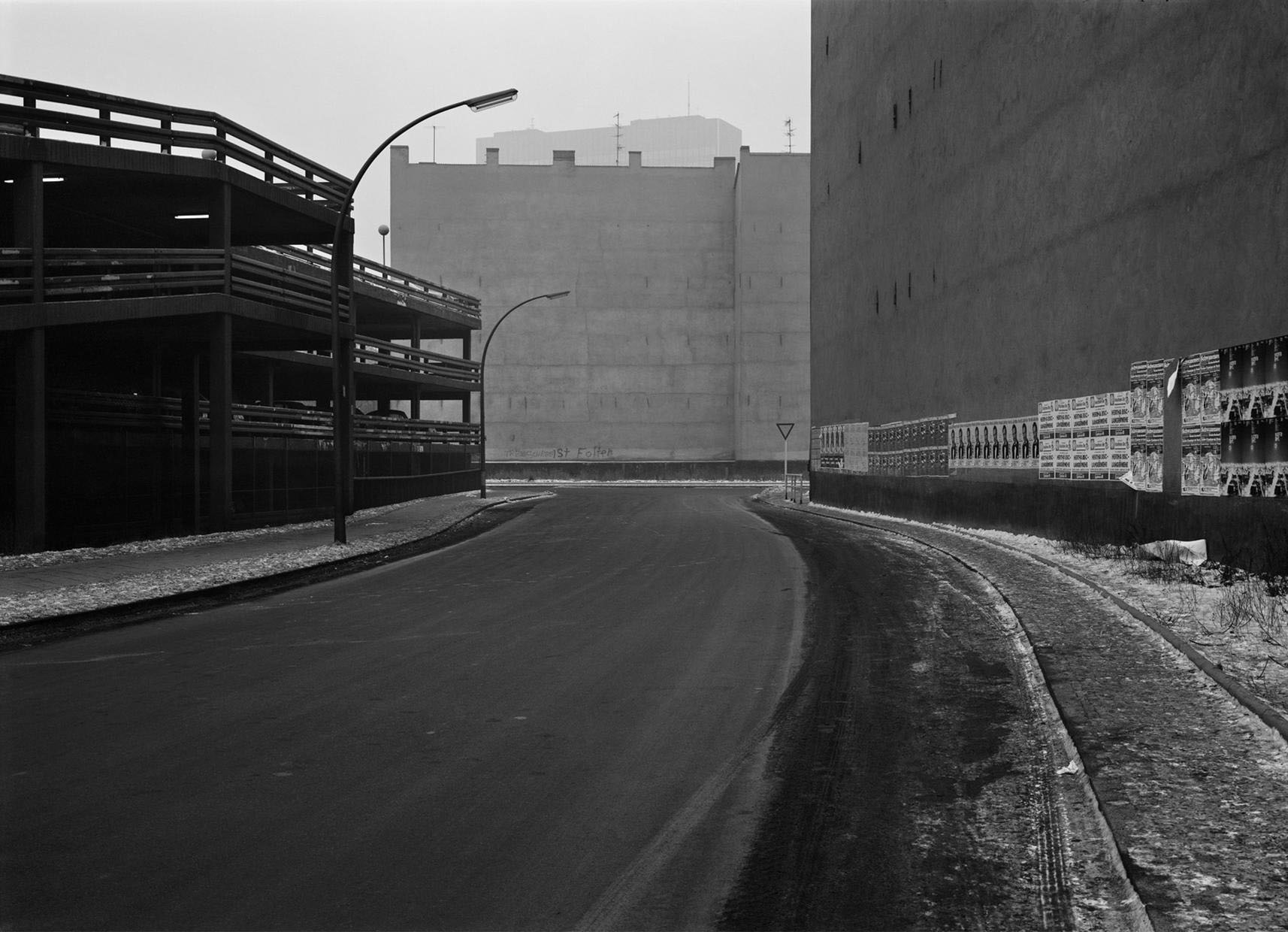
Kunstsammlung Nordrhein-Westfalen website

LIKE ART BLART ON FACEBOOK

Back to top

European photographic research tour: Vintage August Sander photographs at Galerie Julian Sander, Cologne

Visited September 2019 posted July 2020


Tamara Könen of the gallery (left) and Kristina Engels from August Sander Stiftung – at Galerie Julian Sander, standing in front of August Sander's photographs


Tamara Könen of the gallery (left) and Kristina Engels from August Sander Stiftung – at Galerie Julian Sander, standing in front of August Sander’s photographs.


On my European photographic research tour in late 2019, I had a memorable visit to Galerie Julian Sander to see some vintage and later prints from the August Sander Archive / August Sander Stiftung with Tamara Könen from the gallery (left) and Kristina Engels from August Sander Stiftung.

It was a privilege to be able to see about 10 prints… the highlights being a stunning 1929-1930 vintage landscape, a vintage carnivalesque image of the Cologne avant-garde and a later print by his son of Painter’s Wife [Helene Abelen] 1926. The vintage landscape, like the vintage prints of Sudek, possessed no true black or white, the tonal range prescribed between zones 2-8.
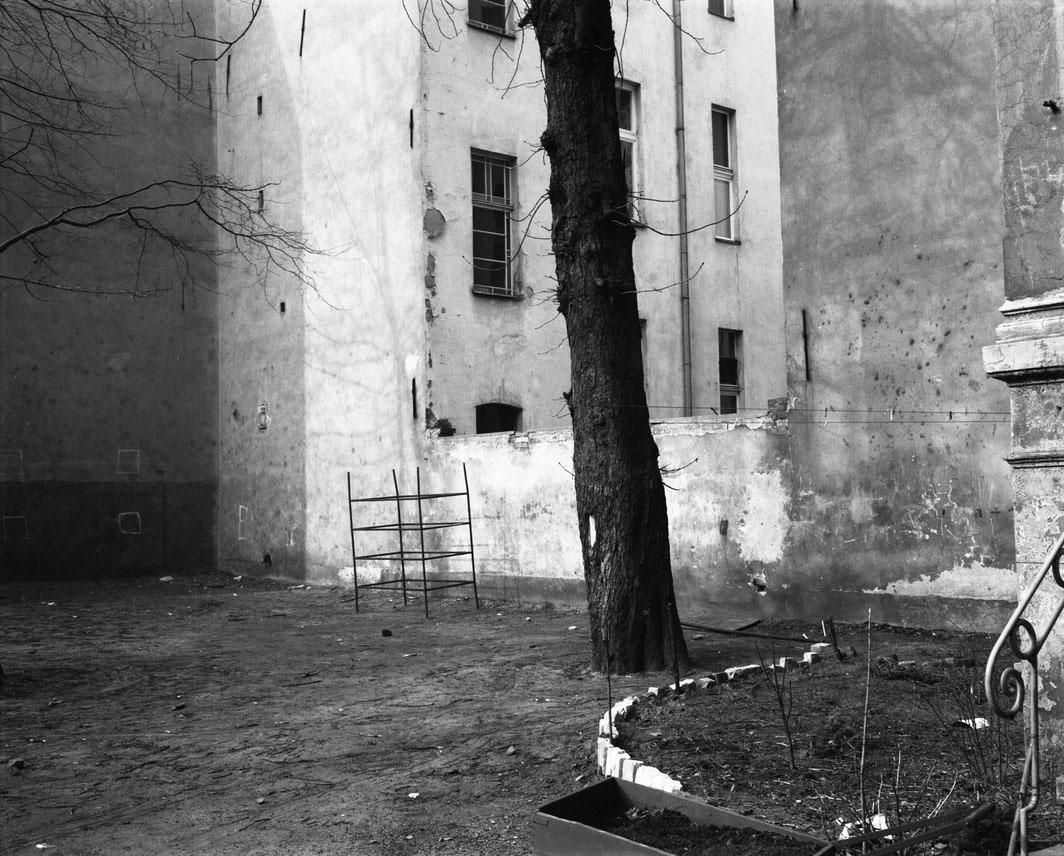
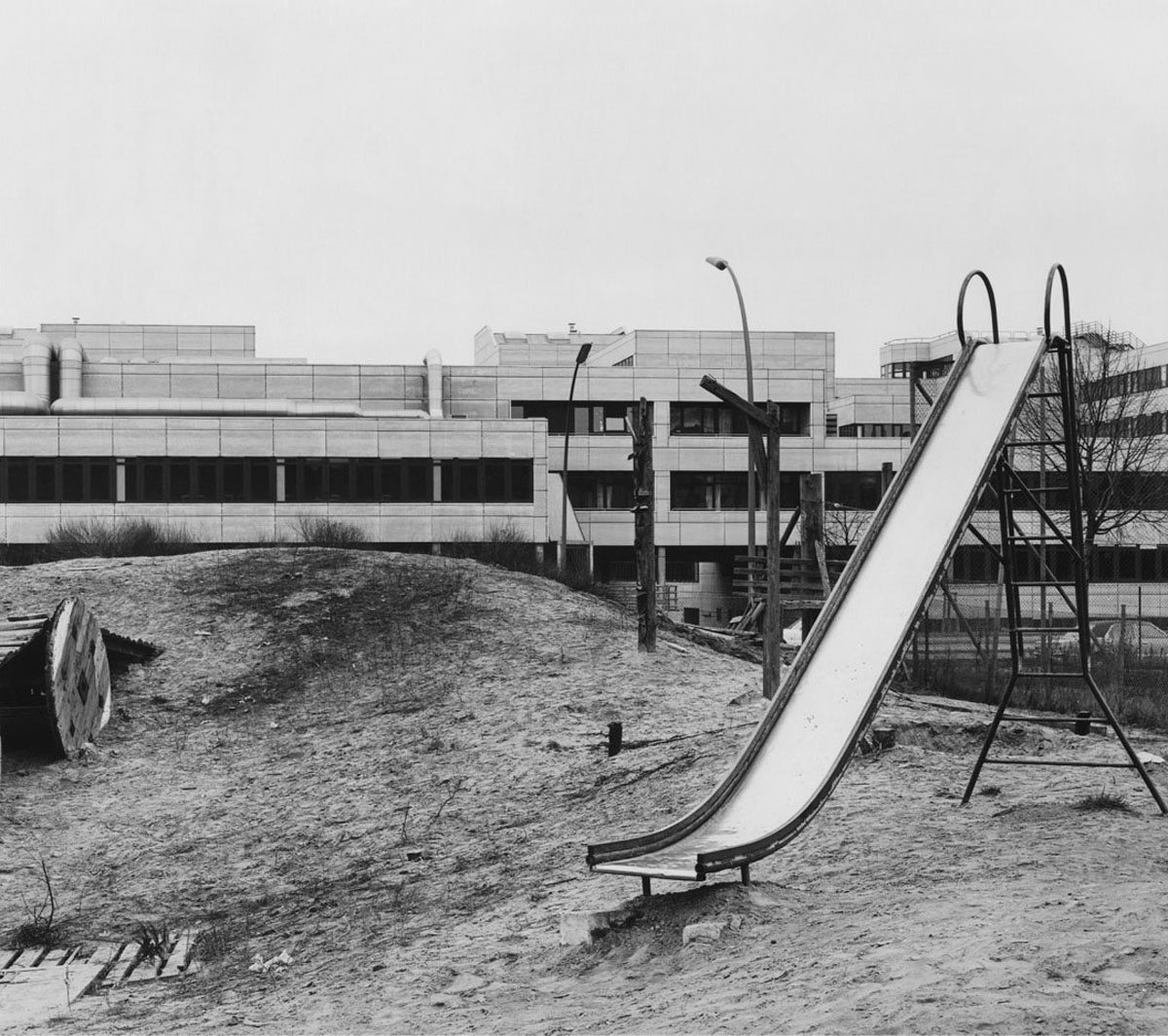
The use of low depth of field in the portraits was outstanding. For example the shoes of Helene are completely out of focus whereas her hands are as crisp and clear as a summer breeze. Most astonishing was the panache of the bohemians, with the outstretched arm top left… printed on matt brown toned paper with a thin gold edge.
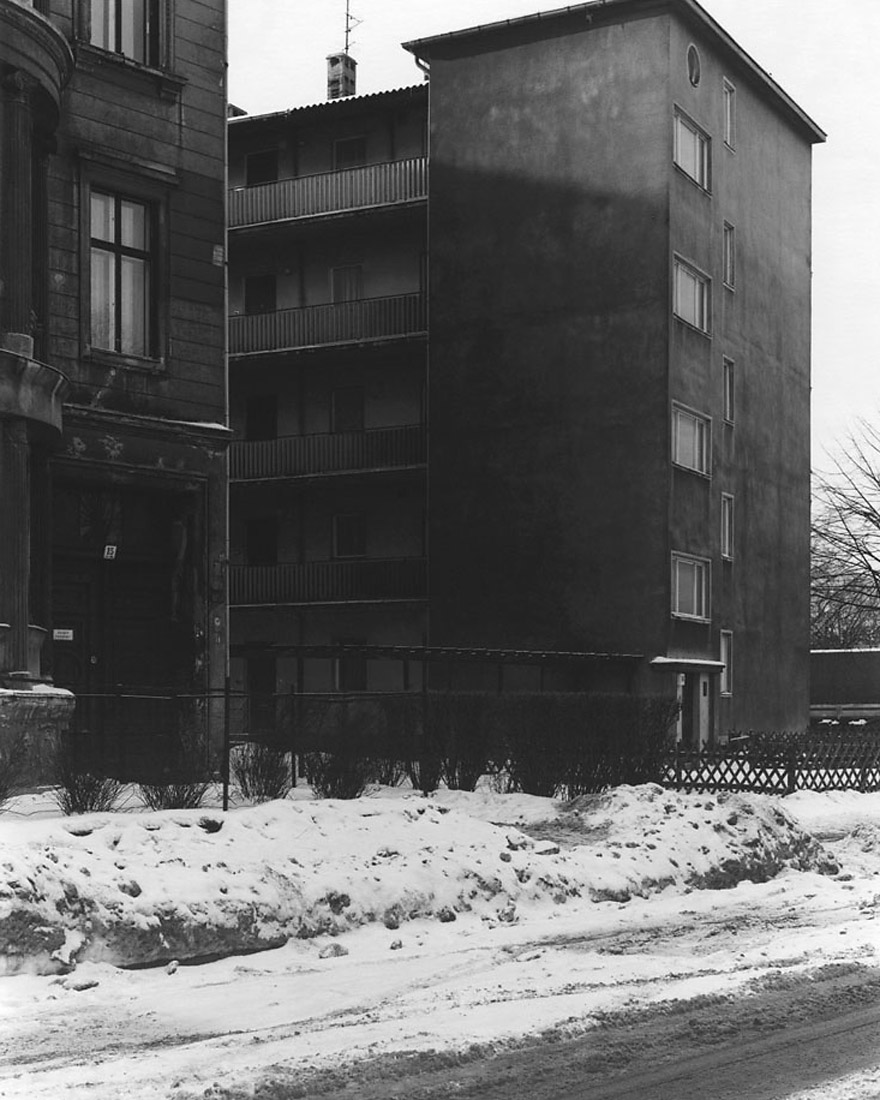
Another vintage print that showed selective depth of field was the photograph of a man with his dog, Junglehrer (Young Teacher) 1928. The dog’s lower legs were completely out of focus (Sander tilting his large format camera) making this oh so German photograph seem so surreal!

Other prints had a thin black edge and the vintage press print landscape (c. 1920s) was printed on thin single weight paper, while the vintage photograph of the sculptor Professor Ludwig Benh shows an original Sander mount – the print mounted behind an artist cut window. All prints were enlargements from 4×5” glass negatives or German equivalent size.

Such a wonderful learning experience! Thank you to the gallery for their time and knowledge.

Dr Marcus Bunyan


Please click on the photographs for a larger version of the image. Most photographs © Marcus Bunyan and Galerie Julian Sander


3 vintage prints, the left one with black edge floating free of the backboard; the second c .1920s of a Communist rally; and the third of an industrialist (Großindustrieller / The Industrialist, 1927)


3 vintage silver gelatin prints, the left one with black edge floating free of the backboard; the second c. 1920s of a Communist rally; and the third of an industrialist (Großindustrieller / The Industrialist, 1927)
Galerie Julian Sander, Cologne
Photo: Marcus Bunyan


August Sander (German, 1876-1964). 'Das Siebengebirge: Blick vom Rolandsbogen' [The Siebengebirge: view from the Rolandsbogen] 1929-30 (center) and 'Untitled [Remagen Bridge on the Rhine]' c. 1930 (right)


August Sander (German, 1876-1964)
Das Siebengebirge: Blick vom Rolandsbogen [The Siebengebirge: view from the Rolandsbogen] 1929-1930 (center) and Untitled [Remagen Bridge on the Rhine] c. 1930 (right)
Galerie Julian Sander, Cologne
Photo: Marcus Bunyan


August Sander (German, 1876-1964) 'Das Siebengebirge: Blick vom Rolandsbogen' [The Siebengebirge: view from the Rolandsbogen] 1929-1930


August Sander (German, 1876-1964)
Das Siebengebirge: Blick vom Rolandsbogen [The Siebengebirge: view from the Rolandsbogen]
1929-1930
Vintage gelatin silver print
Also titled:
Siebengebirge von der linken Rheinseite gesehen [Siebengebirge seen from the left side of the Rhine]
Blick vom Rolandsbogen auf das Siebengebirge mit Drachenfels [View from Roland Arch on the Siebengebirge with Drachenfels]
Galerie Julian Sander, Cologne
Photo: Marcus Bunyan


August Sander (German, 1876-1964) 'Das Siebengebirge: Blick vom Rolandsbogen' [The Siebengebirge: view from the Rolandsbogen] 1929-1930


August Sander (German, 1876-1964)
Das Siebengebirge: Blick vom Rolandsbogen [The Siebengebirge: view from the Rolandsbogen]
1929-1930
Vintage gelatin silver print
Also titled:
Siebengebirge von der linken Rheinseite gesehen [Siebengebirge seen from the left side of the Rhine]
Blick vom Rolandsbogen auf das Siebengebirge mit Drachenfels [View from Roland Arch on the Siebengebirge with Drachenfels]
Galerie Julian Sander, Cologne
Photo:
Marcus Bunyan


August Sander (German, 1876-1964) 'Das Siebengebirge: Blick vom Rolandsbogen' [The Siebengebirge: view from the Rolandsbogen] 1929-1930


August Sander (German, 1876-1964)
Das Siebengebirge: Blick vom Rolandsbogen [The Siebengebirge: view from the Rolandsbogen]
1929-1930
Vintage gelatin silver print


August Sander (German, 1876-1964) 'Untitled [Remagen Bridge on the Rhine]' c. 1930


August Sander (German, 1876-1964)
Untitled [Remagen Bridge on the Rhine]
c. 1930
Vintage gelatin silver press print
Galerie Julian Sander, Cologne
Photo: Marcus Bunyan


August Sander (German, 1876-1964) 'Untitled [Bohemians: avant-garde of Cologne]' 1920s (left) and 'Professor Ludwig Behn' 1920s (right)


August Sander (German, 1876-1964)
Untitled [Bohemians: avant-garde of Cologne] 1920s (left) and Professor Ludwig Behn 1920s (right)
Vintage gelatin silver print with gold edge printed on matt warm toned paper
Galerie Julian Sander, Cologne
Photo: Marcus Bunyan


August Sander (German, 1876-1964) 'Untitled [Bohemians: avant-garde of Cologne]' 1920s


August Sander (German, 1876-1964)
Untitled [Bohemians: avant-garde of Cologne]
1920s
Vintage gelatin silver print with gold edge printed on matt warm toned paper
Galerie Julian Sander, Cologne
Photo: Marcus Bunyan


August Sander (German, 1876-1964) 'Untitled [Bohemians: avant-garde of Cologne]' 1920s


August Sander (German, 1876-1964)
Untitled [Bohemians: avant-garde of Cologne]
1920s
Vintage gelatin silver print with gold edge printed on matt warm toned paper
Galerie Julian Sander, Cologne
Photo: Marcus Bunyan


August Sander (German, 1876-1964) 'Professor Ludwig Behn, Bildhaver, Munich' 1920s


August Sander (German, 1876-1964)
Professor Ludwig Behn, Bildhaver, Münich
1920s
Gelatin silver print


August Sander (German, 1876-1964) 'Professor Ludwig Behn, Bildhaver, Munich' 1920s (detail)


August Sander (German, 1876-1964)
Professor Ludwig Behn, Bildhaver, Münich
1920s
Vintage gelatin silver print with original Sander mount
Galerie Julian Sander, Cologne
Photo: Marcus Bunyan


August Sander (German, 1876-1964) 'Painter's Wife [Helene Abelen]' 1926


August Sander (German, 1876-1964)
Painter’s Wife [Helene Abelen]
1926
Later gelatin silver print by Sander’s son
Galerie Julian Sander, Cologne
Photo: Marcus Bunyan


This photograph shows Helene Abelen, wife of the Cologne painter, Peter Abelen. During the 1920s August Sander befriended many Cologne artists because of his involvement with the Cologne Progressive Artists Group (Gruppe Progressiver Künstler Köln). In 1926 Sander was asked by Peter Abelen to create a portrait of his young wife. With her short, slicked-back hair, collared shirt, thin necktie and trousers, Frau Abelen is presented as a distinctly androgynous figure. Her masculine garb and haircut, as well as the cigarette held between her teeth, signal a defiance of traditional gender roles. Staring determinedly out at the viewer Helene Abelen’s animated expression is unusual for a Sander portrait and falls somewhere between bravado and agitation.

This portrait reflects the so-called ‘new woman’ of the Weimar Republic. The concept of the ‘new woman’ dates from before the First World War but became firmly rooted during it when women were mobilised in the workforce. Within Germany this created considerable anxiety about women’s roles, particularly in relation to the family. In 1928, on the tenth anniversary of the end of the war, the Münchner Illustrierte Presse showed on its cover a photograph of a young woman, with short hair and skirt, astride a motorcycle with a lit cigarette in hand, with the heading, ‘Only ten years – a different world’. Like this magazine image, Sander’s portrait of Helene Abelen reflected a consciousness about the blurring of gender roles in the wake of the ‘new woman’.
Painter’s Wife represents an anomaly in Sander’s work. For the most part, his depictions of women show them as wives and mothers, as the soul of the home and the family. Contrary to appearances, this portrait should not be taken to represent an unqualified vision of female independence. The costume Helene Abelen is wearing was created for her by Peter Abelen and the haircut she sports was also his choice. Her daughter later commented of this work: ‘This was the creation of my father. He wanted her to look like this. He always did our dresses’ (quoted in Greenberg 2000, p. 121).

Matthew Macaulay
November 2011

Text from the Tate website [Online] Cited 24/06/2020


August Sander (German, 1876-1964) 'Junglehrer' (Young Teacher) 1928
 

August Sander (German, 1876-1964)
Junglehrer (Young Teacher)
1928
Vintage gelatin silver print with black edge
Galerie Julian Sander, Cologne
Photo: Marcus Bunyan


August Sander (German, 1876-1964) 'Junglehrer' (Young Teacher) 1928


August Sander (German, 1876-1964)
Junglehrer (Young Teacher)
1928
Vintage gelatin silver print with black edge
Galerie Julian Sander, Cologne
Photo: Marcus Bunyan


Galerie Julian Sander
Cäcilienstr. 48
50667 Cologne
Germany
Phone: +49 (0) 221 170 50 70

Opening hours:
Tuesday – Friday 12.00 – 18.00

Galerie Julian Sander website

LIKE ART BLART ON FACEBOOK

Back to top

European photographic research tour: V&A Photography Centre, London

Visited October 2019 posted May 2020


Unknown photographer. 'Photograph of Allied War exhibition, Serbian Section, V&A' 1917 (installation view)


Unknown photographer
Photograph of Allied War exhibition, Serbian Section, V&A (installation view)
1917
Gelatin silver print
The Royal Photographic Society Collection at the V&A Museum
Photo: Marcus Bunyan


The older I grow, the more exponentially I appreciate and love these early photographs. Imagine having a collection like this!

Wonderful to see Edward Steichen’s Portrait – Lady H (1908, below) as I have a copy of Camera Work 22 in my collection.

Dr Marcus Bunyan


All iPhone images © Dr Marcus Bunyan. Please click on the photographs for a larger version of the image.


The V&A has been collecting photographs since 1856, the year the Museum was founded, and it was one of the first museums to present photography exhibitions. Since then the collection has grown to be one of the largest and most important in the world, comprising around 500,000 images. The V&A is now honoured to have added the Royal Photographic Society (RPS) collection to its holdings, which contains around 270,000 photographs, an extensive library, and 6,000 cameras and pieces of equipment associated with leading artists and photographic pioneers.

Take a behind-the-scenes look at our world class photography collection following the transfer of the Royal Photographic Society (RPS) Collection, which has enabled a dramatic reimagining of the way photography is presented at the V&A. The photographs curators introduce a series of five highlights that are on display in the new Photography Centre, which opened on 12th October 2018. The first phase of the centre will more than double the space dedicated to photography at the Museum.

Text from the V&A and YouTube websites


Unknown photographer. 'Photograph of Allied War exhibition, Serbian Section, V&A' 1917


Unknown photographer
Photograph of Allied War exhibition, Serbian Section, V&A (installation view)
1917
Gelatin silver print
The Royal Photographic Society Collection at the V&A Museum
Photo: Marcus Bunyan


The V&A has been collecting and exhibiting photographs since the 1850s. This image shows part o a photographic exhibition held over 100 years ago in the same galleries you are standing in today. The exhibition presented a densely packed display of images depicting the Allied Powers during the First World War.


Installation view of the V&A Photography Centre, London

Installation view of the V&A Photography Centre, London

Installation view of the V&A Photography Centre, London

Installation view of the V&A Photography Centre, London

Wall text from the V&A Photography Centre, London

Installation view of the V&A Photography Centre, London


Installation views of the V&A Photography Centre, London
Photos: Marcus Bunyan


Joseph Nicéphore Niépce (French, 1765-1833) 'Christ Carrying his Cross' 1827 (installation view)

Joseph Nicéphore Niépce (French, 1765-1833) 'Christ Carrying his Cross' 1827 (installation view)


Joseph Nicéphore Niépce (French, 1765-1833)
Christ Carrying his Cross (installation views)
1827
Heliograph on pewter plate
The Royal Photographic Society Collection at the V&A Museum
Photos: Marcus Bunyan


The French inventor Niépce made the earliest surviving photographic images, which he called ‘heliographs’ or ‘sun-writing’. Only 16 are thought to still exist. Although Niépce experimented with light-sensitive plates inside a camera, he made most of his images, including this one, by placing engravings of works by other artists directly onto a metal plate. He would probably have had the resulting heliographs coated in ink and printed.


Joseph Nicéphore Niépce (French, 1765-1833) 'Christ Carrying his Cross' 1827 (installation view)


Joseph Nicéphore Niépce (French, 1765-1833)
Christ Carrying his Cross (installation view)
1827
Heliograph on pewter plate
The Royal Photographic Society Collection at the V&A Museum
Photo: Marcus Bunyan


David Octavius Hill (Scottish, 1802-70) and Robert Adamson (Scottish, 1821-48) 'The Adamson Family' 1843-1845 (installation view)


David Octavius Hill (Scottish, 1802-1870) and Robert Adamson (Scottish, 1821-1848)
The Adamson Family (installation view)
1843-1845
Salted paper print
The Royal Photographic Society Collection at the V&A Museum
Photo: Marcus Bunyan


The partnership between Scottish painter Hill and chemist Adamson merged the art and science of photography. The pair initially intended to create preliminary studies for Hill’s paintings, but soon recognised photography’s artistic potential. With Hill’s knowledge of composition and lighting, and Adamson’s considerable sensitivity and dexterity in handling the camera, together they produced some of the most accomplished photographic portraits of their time.


William Henry Fox Talbot (British, 1800-77) 'The Haystack' 1844 from  the V&A Photography Centre, London 2019


William Henry Fox Talbot (British, 1800-1877)
The Haystack
1844
From The Pencil of Nature
Salted paper print
The Royal Photographic Society Collection at the V&A Museum


Benjamin Brecknell Turner (British, 1815-94) 'Hedgerow Trees, Clerkenleap' 1852-1854 (installation view)

Benjamin Brecknell Turner (British, 1815-94) 'Hedgerow Trees, Clerkenleap' 1852-1854 (installation view)


Benjamin Brecknell Turner (British, 1815-1894)
Hedgerow Trees, Clerkenleap (installation views)
1852-1854
Albumen print; Calotype negative
The Royal Photographic Society Collection at the V&A Museum
Photos: Marcus Bunyan


Turner took out a licence to practice ‘calotype’ photography from Talbot in 1848. He contact-printed positive images from paper negatives. The negative (below) and its corresponding positive (above) are reunited here to illustrate this process, but the pairing as you see them would not have been the photographer’s original intention for display. Although unique negatives were sometimes exhibited in their own right, only showing positive prints was the norm.


Benjamin Brecknell Turner (British, 1815-94) 'Hedgerow Trees, Clerkenleap' 1852-1854 (installation view)


Benjamin Brecknell Turner (British, 1815-1894)
Hedgerow Trees, Clerkenleap (installation view)
1852-1854
Albumen print; Calotype negative
The Royal Photographic Society Collection at the V&A Museum
Photo: Marcus Bunyan


Gustave Le Gray (French, 1820-84) 'The Road to Chailly, Forest of Fontainebleau' 1852 (installation view)


Gustave Le Gray (French, 1820-1884)
The Road to Chailly, Forest of Fontainebleau (installation view)
1852
Albumen print from a collodion glass negative
Bequeathed to the V&A by Chauncey Hare Townshend
Photo: Marcus Bunyan


Installation view of the V&A Photography Centre, London

Installation view of the V&A Photography Centre, London

Wall text from the V&A Photography Centre, London


Installation views of the V&A Photography Centre, London
Photos: Marcus Bunyan


Gustave Le Gray (French, 1820-84) 'The Marseillaise (The Departure of the Volunteers of 1792), by Francois Rude, 1833-35, Arc de Triomphe de l’Etoile, Paris' 1852 (installation view)


Gustave Le Gray (French, 1820-1884)
The Marseillaise (The Departure of the Volunteers of 1792), by Francois Rude, 1833-35, Arc de Triomphe de l’Etoile, Paris (installation view)
1852
Albumen print
Bequeathed to the V&A by Chauncey Hare Townshend
Photo: Marcus Bunyan


Gustave Le Gray (French, 1820-1884) 'The Marseillaise (The Departure of the Volunteers of 1792), by Francois Rude, 1833-1835, Arc de Triomphe de l’Etoile, Paris' 1852 (installation view)


Gustave Le Gray (French, 1820-1884)
The Marseillaise (The Departure of the Volunteers of 1792), by Francois Rude, 1833-35, Arc de Triomphe de l’Etoile, Paris (installation view)
1852
Albumen print
Bequeathed to the V&A by Chauncey Hare Townshend
Photo: Marcus Bunyan


Roger Fenton (British, 1819-1869) 'Parian Vase, Grapes and Silver Cup' 1860 (installation view)


Roger Fenton (British, 1819-1869)
Parian Vase, Grapes and Silver Cup (installation view)
1860
Albumen print
The Royal Photographic Society Collection at the V&A Museum
Photo: Marcus Bunyan


Fenton was one of the most versatile and technically brilliant photographers of the 19th century. He excelled at many subjects, including war photography, portraiture, architecture and landscape. He also made a series of lush still lives. Here, grapes, plums and peaches are rendered in exquisite detail, and the silver cup on the right reflects a camera tripod.


Roger Fenton (British, 1819-1869) 'Parian Vase, Grapes and Silver Cup' 1860 (installation view)


Roger Fenton (British, 1819-1869)
Parian Vase, Grapes and Silver Cup (installation view)
1860
Albumen print
The Royal Photographic Society Collection at the V&A Museum
Photo: Marcus Bunyan


Roger Fenton (British, 1819-1869) 'Parian Vase, Grapes and Silver Cup' 1860 (installation view)


Roger Fenton (British, 1819-1869)
Parian Vase, Grapes and Silver Cup (installation view)
1860
Albumen print
The Royal Photographic Society Collection at the V&A Museum
Photo: Marcus Bunyan


Roger Fenton (British, 1819-1869) 'Parian Vase, Grapes and Silver Cup' 1860 (installation view detail)


Roger Fenton (British, 1819-1869)
Parian Vase, Grapes and Silver Cup (installation view detail)
1860
Albumen print
The Royal Photographic Society Collection at the V&A Museum
Photo: Marcus Bunyan


Roger Fenton (British, 1819-1869) 'Still Life with Fruit and Decanter' 1860 from the V&A Photography Centre, London 2019


Roger Fenton (British, 1819-1869)
Still Life with Fruit and Decanter
1860
Albumen print
The Royal Photographic Society Collection at the V&A Museum


Oscar Gustaf Rejlander (British born Sweden, 1813-1875) 'Head of St John the Baptist on a Charger' c. 1856 (installation view)


Oscar Gustaf Rejlander (British born Sweden, 1813-1875)
Head of St John the Baptist on a Charger (installation view)
c. 1856
Albumen print
The Royal Photographic Society Collection at the V&A Museum
Photo: Marcus Bunyan


Rejlander probably intended this photograph to be part of a larger composition telling the biblical story of Salome, in which the severed head of John the Baptist was presented to her on a plate. Rejlander never made the full picture, however, and instead produced multiple prints of the head alone.


Oscar Gustaf Rejlander (British born Sweden, 1813-75) 'Head of St John the Baptist on a Charger' c. 1856 (installation view)


Oscar Gustaf Rejlander (British born Sweden, 1813-1875)
Head of St John the Baptist on a Charger (installation view)
c. 1856
Albumen print
The Royal Photographic Society Collection at the V&A Museum


Francis Frith (British, 1822-1898) 'Th', from Egypt, Sinai, and Jerusalem: A Series of Twenty Photographic Views by Francis Frith 1858 (published 1860 or 1862) (installation view)


Francis Frith (British, 1822-1898)
The Pyramids of Dahshoor [Dahshur], from the East, from Egypt, Sinai, and Jerusalem: A Series of Twenty Photographic Views by Francis Frith (installation view)
1858 (published 1860 or 1862)
Albumen print
The Royal Photographic Society Collection at the V&A Museum
Photo: Marcus Bunyan


Frith’s photographs were popular and circulated widely, both because of their architectural interest and because they often featured sites mentioned in the Bible. Photographs of places described in biblical stories brought a new level of realism to a Christian Victorian audience, previously only available through the interpretations of a painter or illustrator.


Francis Frith (British, 1822-1898) 'Th', from Egypt, Sinai, and Jerusalem: A Series of Twenty Photographic Views by Francis Frith 1858 (published 1860 or 1862) (installation view)


Francis Frith (British, 1822-1898)
The Pyramids of Dahshoor [Dahshur], from the East, from Egypt, Sinai, and Jerusalem: A Series of Twenty Photographic Views by Francis Frith (installation view)
1858 (published 1860 or 1862)
Albumen print
The Royal Photographic Society Collection at the V&A Museum
Photo: Marcus Bunyan


Francis Frith (British, 1822-98) 'The Pyramids of Dahshoor [Dahshur], from the East, from Egypt, Sinai, and Jerusalem: A Series of Twenty Photographic Views by Francis Frith' 1858 (published 1860 or 1862) from the V&A Photography Centre, London 2019


Francis Frith (British, 1822-1898)
The Pyramids of Dahshoor [Dahshur], from the East, from Egypt, Sinai, and Jerusalem: A Series of Twenty Photographic Views by Francis Frith
1858 (published 1860 or 1862)
Albumen print
The Royal Photographic Society Collection at the V&A Museum
Photo: Marcus Bunyan


Installation view of the V&A Photography Centre, London


Installation view of the V&A Photography Centre, London
Photo: Marcus Bunyan


Gustave Le Gray (French, 1820-1884) 'Solar Effect in the Clouds – Ocean' 1856-1859 (installation view)


Gustave Le Gray (French, 1820-1884)
Solar Effect in the Clouds – Ocean (installation view)
1856-1859
Albumen Print
Bequeathed to the V&A by Chauncey Hare Townshend
Photo: Marcus Bunyan


Gustave Le Gray (French, 1820-1884) 'Solar Effect in the Clouds – Ocean' 1856-1859


Gustave Le Gray (French, 1820-1884)
Solar Effect in the Clouds – Ocean
1856-1859
Albumen Print
Art Institute of Chicago
Creative Commons Zero (CC0)


Gustave Le Gray (French, 1820-1884) 'The Imperial Yacht, La Reine Hortense, Le Havre' 1856-1857 (installation view)


Gustave Le Gray (French, 1820-1884)
The Imperial Yacht, La Reine Hortense, Le Havre (installation view)
1856-1857
Albumen print
Bequeathed to the V&A by Chauncey Hare Townshend
Photo: Marcus Bunyan


Gustave Le Gray (French, 1820-1884) 'The Imperial Yacht, La Reine Hortense, Le Havre' 1856-1857 (installation view)


Gustave Le Gray (French, 1820-1884)
The Imperial Yacht, La Reine Hortense, Le Havre (installation view)
1856-1857
Albumen print
Bequeathed to the V&A by Chauncey Hare Townshend
Photo: Marcus Bunyan


Gustave Le Gray (French, 1820-1884) 'The Imperial Yacht, La Reine Hortense, Le Havre' 1856-1857


Gustave Le Gray (French, 1820-1884)
The Imperial Yacht, La Reine Hortense, Le Havre
1856-1857
Albumen print
The Metropolitan Museum of Art
Public domain


Gustave Le Gray (French, 1820-1884) 'Pavilion Richelieu, Louvre, Paris' 1857-1859 (installation view)


Gustave Le Gray (French, 1820-1884)
Pavilion Richelieu, Louvre, Paris (installation view)
1857-1859
Albumen print
Bequeathed to the V&A by Chauncey Hare Townshend
Photo: Marcus Bunyan


Gustave Le Gray (French, 1820-1884) 'Pavilion Richelieu, Louvre, Paris' 1857-1859 (installation view)


Gustave Le Gray (French, 1820-1884)
Pavilion Richelieu, Louvre, Paris (installation view)
1857-1859
Albumen print
Bequeathed to the V&A by Chauncey Hare Townshend
Photo: Marcus Bunyan


Roger Fenton (British, 1819-1869) 'Balaclava from Guard’s Hill, the Crimea' 1855 (installation view)


Roger Fenton (British, 1819-1869)
Balaclava from Guard’s Hill, the Crimea (installation view)
1855
Albumen print
Bequeathed to the V&A by Chauncey Hare Townshend
Photo: Marcus Bunyan


Roger Fenton (British, 1819-1869) 'Balaclava from Guard’s Hill, the Crimea' 1855 (installation view)


Roger Fenton (British, 1819-69)
Balaclava from Guard’s Hill, the Crimea (installation view)
1855
Albumen print
Bequeathed to the V&A by Chauncey Hare Townshend
Photo: Marcus Bunyan


Julia Margaret Cameron (British born India, 1815-1879) 'Lucia' 1864-1865 (installation view)


Julia Margaret Cameron (British, born India, 1815-1879)
Lucia (installation view)
1864-1865
Albumen print
The Royal Photographic Society Collection at the V&A Museum
Photo: Marcus Bunyan


Charles Lutwide Dodgson (also known as Lewis Carroll)(British, 1832-1898) 'Tea Merchant (On Duty)' and 'Tea Merchant (Off Duty)' 1873 (installation view)


Charles Lutwide Dodgson (also known as Lewis Carroll)(British, 1832-1898)
Tea Merchant (On Duty) and Tea Merchant (Off Duty) (installation view)
1873
Albumen prints
The Royal Photographic Society Collection at the V&A Museum
Photo: Marcus Bunyan


Lewis Carroll is best known as the author of Alice’s Adventures in Wonderland, but he was also an accomplished amateur photographer. Approximately half of his photographs are portraits of children, sometimes wearing foreign costumes or acting out scenes. Here, Alexandra ‘Xie’ Kitchen, his most frequent child sitter, poses in Chinese dress on a stack of tea chests.


Charles Lutwide Dodgson (also known as Lewis Carroll)(British, 1832-1898) 'Tea Merchant (On Duty)' 1873 (installation view)


Charles Lutwide Dodgson (also known as Lewis Carroll)(British, 1832-1898)
Tea Merchant (On Duty) (installation view)
1873
Albumen prints
The Royal Photographic Society Collection at the V&A Museum
Photo: Marcus Bunyan


Charles Lutwide Dodgson (also known as Lewis Carroll)(British, 1832-1898) 'Tea Merchant (Off Duty)' 1873 (installation view)


Charles Lutwide Dodgson (also known as Lewis Carroll)(British, 1832-1898)
Tea Merchant (Off Duty) (installation view)
1873
Albumen prints
The Royal Photographic Society Collection at the V&A Museum
Photo: Marcus Bunyan


Julia Margaret Cameron (British, born India, 1815-1879) 'Pomona' 1887 (installation view)


Julia Margaret Cameron (British, born India, 1815-1879)
Pomona (installation view)
1887
Albumen print
The Royal Photographic Society Collection at the V&A Museum
Photo: Marcus Bunyan


The South Kensington museum (now the V&A) was the only museum to collect and exhibit Julia Margaret Cameron’s during her lifetime. This is one of several studies she made of Alice Liddell, who as a child had modelled for the author and photographer Lewis Carroll and inspired his novel Alice’s Adventures in Wonderland. Cameron, Carroll and Liddell moved in overlapping artistic and intellectual circles. Here, surrounded by foliage, a grown-up Alice poses as the Roman goddess of orchards and gardens.


Julia Margaret Cameron (British, born India, 1815-1879) 'Pomona' 1887 (installation view)


Julia Margaret Cameron (British, born India, 1815-1879)
Pomona (installation view)
1887
Albumen print
The Royal Photographic Society Collection at the V&A Museum
Photo: Marcus Bunyan


Installation view of the V&A Photography Centre, London


Installation view of the V&A Photography Centre, London
Photo: Marcus Bunyan


Alvin Langdon Coburn (American 1882-1966) 'Frederick Holland Day' 1900 (installation view)


Alvin Langdon Coburn (American 1882-1966)
Frederick Holland Day (installation view)
1900
Gum platinum print
The Royal Photographic Society Collection at the V&A Museum
Photo: Marcus Bunyan


The British-American photographer Alvin Langdon Coburn enjoyed success on both sides of the Atlantic. Active in the early 20th century, he gained recognition from a young age as a talented photographer. His style ranged from the painterly softness of Pictorialism to the unusual vantage points and abstraction of Modernism. As well as being a practising photographer, Coburn was an avid collector. In 1930 he donated over 600 photographs to the Royal Photographic Society. The gift included examples of Coburn’s own work alongside that of his contemporaries, many of whom are now considered to be the most influential of their generation. Coburn also collected historic photographs, and was among the first in his time to rediscover and appreciate the work of 19th-century masters like Julia Margaret Cameron and Hill and Adamson.


Fredrick Holland Day (American, 1864-1933) 'Head of a Girl, Hampton, Virginia' 1905 (installation view)


Fredrick Holland Day (American, 1864-1933)
Head of a Girl, Hampton, Virginia (installation view)
1905
Gum platinum print
The Royal Photographic Society Collection at the V&A Museum
Photo: Marcus Bunyan


Day made this portrait when he visited the Hampton Institute in Virginia, which was founded after the American Civil War as a teacher-training school for freed slaves. The institute’s camera club invited Day to visit the school and critique the work of its students. Day’s friend and fellow photographer, Frederick Evans, donated this strikingly modern composition to the Royal Photographic Society in 1937.


Fredrick Holland Day (American, 1864-1933) 'Head of a Girl, Hampton, Virginia' 1905 (installation view)


Fredrick Holland Day (American, 1864-1933)
Head of a Girl, Hampton, Virginia (installation view)
1905
Gum platinum print
The Royal Photographic Society Collection at the V&A Museum
Photo: Marcus Bunyan


Fredrick Holland Day (American, 1864-1933) 'Head of a Girl, Hampton, Virginia' 1905 (installation view)


Fredrick Holland Day (American, 1864-1933)
Head of a Girl, Hampton, Virginia (installation view)
1905
Gum platinum print
The Royal Photographic Society Collection at the V&A Museum
Photo: Marcus Bunyan


Fredrick Holland Day (American, 1864-1933) 'Head of a Girl, Hampton, Virginia' 1905


Fredrick Holland Day (American, 1864-1933)
Head of a Girl, Hampton, Virginia
1905
Gum platinum print
The Royal Photographic Society Collection at the V&A Museum


Gertrude Käsebier (American, 1852-1934) 'The Letter' 1906


Gertrude Käsebier (American, 1852-1934)
The Letter
1906
Platinum print
The Royal Photographic Society Collection at the V&A Museum


Käsebier studied painting before opening a photography studio in New York. Her Pictorialist photographs often combine soft focus with experimental printing techniques. These sisters were dressed in historic costume for a ball, but their pose transforms a society portrait into a narrative picture. In a variant image, they turn to look at the framed silhouette on the wall.


Installation view of the V&A Photography Centre, London

Wall text from the V&A Photography Centre, London


Installation views of the V&A Photography Centre, London
Photo: Marcus Bunyan


Francis James Mortimer (British, 1874-1944) 'Alvin Langdon Coburn at the Opening of His One-Man Exhibition the Royal Photographic Society, London' 1906 (installation view)


Francis James Mortimer (British, 1874-1944)
Alvin Langdon Coburn at the Opening of His One-Man Exhibition the Royal Photographic Society, London (installation view)
1906
Carbon print
The Royal Photographic Society Collection at the V&A Museum
Photo: Marcus Bunyan


Annie Wardrope Brigman (American, 1869-1950) 'The Spirit of Photography' c. 1908


Annie Wardrope Brigman (American, 1869-1950)
The Spirit of Photography
c. 1908
Platinum print
The Royal Photographic Society Collection at the V&A Museum


Alvin Langdon Coburn (American 1882-1966) 'Kensington Gardens' 1910 (installation view)


Alvin Langdon Coburn (American 1882-1966)
Kensington Gardens (installation view)
1910
Platinum print
The Royal Photographic Society Collection at the V&A Museum
Photo: Marcus Bunyan


Cover of 'Camera Work'


Cover of Camera Work Number XXVI (installation view)
Photo: Marcus Bunyan


Edward Steichen (American, 1879-1973) 'Portrait – Lady H' 1908 from 'Camerwork 22'


Edward Steichen (American, 1879-1973)
Portrait – Lady H (installation view)
1908
Camera Work 22
1908
Photogravure
The Royal Photographic Society Collection at the V&A Museum
Photo: Marcus Bunyan


Edward Steichen (American, 1879-1973) 'Portrait – Lady H' 1908 from 'Camerwork 22'


Edward Steichen (American, 1879-1973)
Portrait – Lady H
1908
Camera Work 22
1908
Photogravure
The Royal Photographic Society Collection at the V&A Museum


Paul Strand (American, 1890-1976) 'New York' 1916 from 'Camerwork 48' (installation view)


Paul Strand (American, 1890-1976)
New York (installation view)
1916
Camera Work 48
1916
Photogravure
The Royal Photographic Society Collection at the V&A Museum
Photo: Marcus Bunyan


Alfred Stieglitz (American, 1864-1946) was an American photographer, publisher, writer and gallery owner. From 1903-1917, he published the quarterly journal Camera Work, which featured portfolios of exquisitely printed photogravures (a type of photograph printed in ink), alongside essays and reviews. Camera Work promoted photography as an art form, publishing the work of Pictorialist photographers who drew inspiration from painting, and reproducing 19th-century photographs. It also helped to introduce modern art to American audiences, including works by radical European painters such as Matisse and Picasso.


Alvin Langdon Coburn (American 1882-1966) 'Vortograph' 1917 (installation view)


Alvin Langdon Coburn (American 1882-1966)
Vortograph (installation view)
1917
Bromide print
The Royal Photographic Society Collection at the V&A Museum
Photo: Marcus Bunyan


Rudolph Koppitz. 'Movement Study' 1925


Rudolph Koppitz (American, 1884-1936)
Bewegungsstudie (Movement Study)
1926
Carbon print
The Royal Photographic Society Collection at the V&A Museum


Koppitz was a leading art photographer in Vienna between the two World Wars, as well as a master of complex printing processes, including the pigment, gum and broccoli process of transfer printing. Tis dynamic and sensual composition captures dancers from the Vienna State Opera Ballet frozen mid-movement.


Herbert Bayer (Austrian American, 1900-1985) 'Shortly Before Dawn' 1932-1939 (installation view)


Herbert Bayer (Austrian American, 1900-85)
Shortly Before Dawn (installation view)
1932-39
Gelatin silver print
The Royal Photographic Society Collection at the V&A Museum
Photo: Marcus Bunyan


Bayer had a varied and influential career as a designer, painter, photographer, sculptor, art director and architect. He taught at the Bauhaus school in Dessau, Germany, and later began to use photomontage, both in his artistic and advertising work. Using this process, he combined his photographs with found imagery, producing surreal or dreamlike pictures.


Herbert Bayer (Austrian American, 1900-1985) 'Shortly Before Dawn' 1932-1939 (installation view)


Herbert Bayer (Austrian American, 1900-85)
Shortly Before Dawn (installation view)
1932-39
Gelatin silver print
The Royal Photographic Society Collection at the V&A Museum
Photo: Marcus Bunyan


Bernard Eilers (Dutch, 1878-1951) 'Reguliersbreestraat, Amsterdam' 1934 (installation view)


Bernard Eilers (Dutch, 1878-1951)
Reguliersbreestraat, Amsterdam (installation view)
1934
Foto-choma Eilers
Given by Joan Luckhurst Eilers
Photo: Marcus Bunyan


In the 1930s, the Dutch photographer Bernard Eilers developed an experimental new photographic colour separation process known as ‘Foto-chroma Eilers’. Although the process was short-lived, Eilers successfully used this technique to produce prints like this of great intensity and depth of colour. Here, the misty reflections and neon lights create an atmospheric but modern view of a rain-soaked Amsterdam at night.


Bernard Eilers (Dutch, 1878-1951) 'Reguliersbreestraat, Amsterdam' 1934 (installation view)


Bernard Eilers (Dutch, 1878-1951)
Reguliersbreestraat, Amsterdam (installation view)
1934
Foto-choma Eilers
Given by Joan Luckhurst Eilers
Photo: Marcus Bunyan


Edward Weston (American, 1886-1958) 'Valentine to Charis' 1935 (installation view)


Edward Weston (American, 1886-1958)
Valentine to Charis (installation view)
1935
Gelatin silver print
The Royal Photographic Society Collection at the V&A Museum
Photo: Marcus Bunyan


When Weston met the model and writer Charis Wilson in 1934, he was immediately besotted. This valentine to her contains a cluster of objects arranged as a still life, including the photographer’s camera lens and spectacles. Some of the objects seem to hold a special significance that only the lovers could understand. The numbers on the right possibly refer to their ages – there were almost thirty years between them.


Horst P. Horst (German-American, 1906-1999) 'Portrait of Gabrielle ('Coco') Chanel' 1937 (installation view)


Horst P. Horst (German-American, 1906-1999)
Portrait of Gabrielle (‘Coco’) Chanel
1937
Gelatin silver print
The Royal Photographic Society Collection at the V&A Museum

Variant, American Vogue, 1 December 1937, p. 86: ‘Fashion: Mid-Season Prophecies’

Caption reads: Chanel in her fitted, three-quarters coat / Mademoiselle Chanel, in one of her new coats that are making the news – a three quarters coat buttoned tightly and trimmed with astrakham like her cap. 01/12/1937


Nickolas Muray (American, 1892-1965) 'Women with headscarf, 'McCall’s' Cover, July 1938' 1938 (installation view)


Nickolas Muray (American, 1892-1965)
Women with headscarf, McCall’s Cover, July 1938 (installation view)
1938
Tricolour carbro print
The Royal Photographic Society Collection at the V&A Museum


Berenice Abbott (American, 1898-1991) 'Hardware Store' 1938 (installation view)


Berenice Abbott (American, 1898-1991)
Hardware Store (installation view)
1938
Gelatin silver print
The Royal Photographic Society Collection at the V&A Museum
Photo: Marcus Bunyan


Between 1935 and 1939, the Federal Art Project emptied Abbott to make a series of photographs entitled Changing New York, documenting the rapid development and urban transformation of the city. This picture shows the facade of a downtown hardware store, its wares arranged in a densely-packed window display with extend onto the pavement.


Berenice Abbott (American, 1898-1991) 'Hardware Store' 1938 (installation view)


Berenice Abbott (American, 1898-1991)
Hardware Store (installation view)
1938
Gelatin silver print
The Royal Photographic Society Collection at the V&A Museum
Photo: Marcus Bunyan


Berenice Abbott (American, 1898-1991) 'Hardware Store' 1938


Berenice Abbott (American, 1898-1991)
Hardware Store
1938
Gelatin silver print
The Royal Photographic Society Collection at the V&A Museum


Walker Evans (American, 1903-1975) 'Photographs of African masks, from an exhibition entitled African Negro Art at the Museum of Modern Art, New York' 1935 (installation view)


Walker Evans (American, 1903-75)
Photographs of African masks, from an exhibition entitled African Negro Art at the Museum of Modern Art, New York (installation view)
1935
Gelatin silver prints
The Royal Photographic Society Collection at the V&A Museum
Photo: Marcus Bunyan


In 1935, the Museum of Modern Art commissioned Evans to photograph objects in its major exhibition of African art. Using his 8 x 10 inch view camera, he highlighted the artistry and detail of the objects, alternating between front, side and rear views. In total, Evans produced 477 images, and 17 complete sets of them were printed. Several of these sets were donated to colleges and libraries in America, and the V&A bought one set in 1936 to better represent African art in its collection.

The term ‘negro’ is given here in its original historical context.


Walker Evans (American, 1903-1975) 'Photograph of African mask, from an exhibition entitled African Negro Art at the Museum of Modern Art, New York' 1935 (installation view)


Walker Evans (American, 1903-75)
Photograph of African mask, from an exhibition entitled African Negro Art at the Museum of Modern Art, New York (installation view)
1935
Gelatin silver prints
The Royal Photographic Society Collection at the V&A Museum
Photo: Marcus Bunyan


Walker Evans (American, 1903-1975) 'Photograph of African mask, from an exhibition entitled African Negro Art at the Museum of Modern Art, New York' 1935 (installation view)


Walker Evans (American, 1903-75)
Photograph of African mask, from an exhibition entitled African Negro Art at the Museum of Modern Art, New York (installation view)
1935
Gelatin silver prints
The Royal Photographic Society Collection at the V&A Museum
Photo: Marcus Bunyan


Walker Evans (American, 1903-1975) 'Photograph of African mask, from an exhibition entitled African Negro Art at the Museum of Modern Art, New York' 1935 (installation view)


Walker Evans (American, 1903-75)
Photograph of African mask, from an exhibition entitled African Negro Art at the Museum of Modern Art, New York (installation view)
1935
Gelatin silver prints
The Royal Photographic Society Collection at the V&A Museum
Photo: Marcus Bunyan


Bill Brandt (British, 1904-1983) 'Dubuffet’s Right Eye, Alberto Giacometti’s Left Eye, Louise Nevelson’s Eye, Max Ernst’s Left Eye' 1960-1963 (installation view)


Bill Brandt (British, 1904-1983)
Dubuffet’s Right Eye
Alberto Giacometti’s Left Eye
Louise Nevelson’s Eye
Max Ernst’s Left Eye (installation view)
1960-1963
Gelatin silver print
The Royal Photographic Society Collection at the V&A Museum
Photo: Marcus Bunyan


Bill Brandt (British, 1904-1983) 'Dubuffet’s Right Eye' 1960-1963 (installation view)


Bill Brandt (British, 1904-83)
Dubuffet’s Right Eye (installation view)
1960-1963
Gelatin silver print
The Royal Photographic Society Collection at the V&A Museum
Photo: Marcus Bunyan


German-born Brandt moved to London in the 1930s. In his long and varied career, he made many compelling portraits of people including Ezra Pound, Dylan Thomas, the Sitwell family, Robert Graves and E.M. Forster. For this series he photographed the eyes of well-known artists over several years, creating a substantial collection of intense and unique portraits. The pictures play upon ideas of artistic vision and the camera lens, which acts as a photographer’s ‘mechanical eye’.


Josef Sudek (Czech, 1896-1976) 'Simple Still Life, Egg' 1950 (installation view)


Josef Sudek (Czech, 1896-1976)
Simple Still Life, Egg (installation view)
1950
Gelatin silver print
The Royal Photographic Society Collection at the V&A Museum
Photo: Marcus Bunyan


Throughout his career, Sudek used various photographic styles but always conveyed an intensely lyrical vision of the world. Here, his formal approach to a simple still life presents a poetic statement, and evokes an atmosphere of contemplation. Sudek’s motto and advice to his students – ‘hurry slowly’ – encapsulates his legendary patience and the sense of meditative stillness in his photographs.


Otto Steiner (German, 1915-1978) 'Luminogram' 1952 (installation view)


Otto Steiner (German, 1915-1978)
Luminogram (installation view)
1952
Gelatin silver print
The Royal Photographic Society Collection at the V&A Museum
Photo: Marcus Bunyan


Otto Steiner (German, 1915-1978) 'Luminogram' 1952 (installation view)


Otto Steiner (German, 1915-1978)
Luminogram (installation view)
1952
Gelatin silver print
The Royal Photographic Society Collection at the V&A Museum
Photo: Marcus Bunyan


Mark Cohen (American, b. 1943) 'True Color' 1974-1987 (installation view)

Mark Cohen (American, b. 1943) 'True Color' 1974-1987 (installation view)


Mark Cohen (American, b. 1943)
True Color (installation views)
1974-1987
Portfolio of thirty dye transfer prints, printed in 2007
American Friends of the V&A through the generosity of The Michael G. and C. Jane Wilson 2007 Trust
Photos: Marcus Bunyan


Known for his dynamic street photography, Cohen’s work presents a fragmented, sensory image of his hometown of Wiles-Barre, Pennsylvania. This set of pictures was taken at a time when colour photography was just beginning to be recognised as a fine art. Until the 1970s, colour had largely been associated with other advertising or family snapshots, and was not thought of as a legitimate medium for artists. Cohen and other photographers like William Eggleston transferred this perception using the dye-transfer printing process. Although complicated and time-consuming, the technique results in vibrant and high quality colour prints.


Mark Cohen (American, b. 1943) 'True Color' 1974-1987 (installation view detail)


Mark Cohen (American, b. 1943)
True Color (installation view detail)
1974-1987
Portfolio of thirty dye transfer prints, printed in 2007
American Friends of the V&A through the generosity of The Michael G. and C. Jane Wilson 2007 Trust
Photo: Marcus Bunyan


Mark Cohen (American, b. 1943) 'True Color' 1974-1987 (installation view detail)


Mark Cohen (American, b. 1943)
True Color (installation view detail)
1974-1987
Portfolio of thirty dye transfer prints, printed in 2007
American Friends of the V&A through the generosity of The Michael G. and C. Jane Wilson 2007 Trust
Photo: Marcus Bunyan


Graham Smith (British, b. 1947) 'What she wanted & who she got' 1982  (installation view)


Graham Smith (British, b. 1947)
What she wanted & who she got (installation view)
1982
Gelatin silver print
The Royal Photographic Society Collection at the V&A Museum
Photo: Marcus Bunyan


Since the 1980s, Graham Smith has been photographing his hometown of South Bank near Middlesbrough. His images convey his deep sensitivity towards the effects of changing working conditions on the former industrial north-east. In this photograph, despite the suggested humour of the title, we are left wondering who the couple are and what the nature of their relationship might be.


Jan Kempenaers (b. 1968) 'Spomenik #3' 2006


Jan Kempenaers (Belgian, b. 1968)
Spomenik #3
2006
C-type print


The Kosmaj monument in Serbia is dedicated to soldiers of the Kosmaj Partisan detachment from World War II.


Jan Kempenaers (b. 1968) 'Spomenik #4' 2007


Jan Kempenaers (Belgian, b. 1968)
Spomenik #4
2007
C-type print


This monument, authored by sculptor Miodrag Živković, commemorates the Battle of Sutjeska, one of the bloodiest battles of World War II in the former Yugoslavia.


Kempenaers toured the balkans photographing ‘Spomeniks’ – monuments built in former Yugoslavia in the 1960s and ’70s on the sites of Second World War battles and concentration camps. Some have been vandalised in outpourings of anger against the former regime, while others are well maintained. In Kempenaers’ photographs, the monuments appear otherworldly, as if dropped from outer space into a pristine landscape.


Installation view of the V&A Photography Centre, London


Installation view of the V&A Photography Centre, London
Photo: Marcus Bunyan


Victoria and Albert Museum
Cromwell Road
London
SW7 2RL
Phone: +44 (0)20 7942 2000

Opening hours:
Daily 10.00 – 17.45
Friday 10.00 – 22.00

V&A website

V&A Photography Centre website

LIKE ART BLART ON FACEBOOK

Back to top