Marcus Bunyan (Australian, b. 1958) Self-portrait with gryphon and Joan Miró (Head of a Catalan Peasant) tattoo, both by Alex Binnie, London 1998
I have the five elements in tattoos. In the Head of a Catalan Peasant by Joan Miró featured in the posting, the red hat – in the form of a triangle – signifies ‘fire’ in Western occult mythology.
“Surrealism is not a movement. It is a latent state of mind perceivable through the powers of dream and nightmare.”
~ Salvador Dalí
“As beautiful as the chance encounter of a sewing machine and an umbrella on an operating table.”
~ Comte de Lautréamont
“A constant human error: to believe in an end to one’s fantasies. Our daydreams are the measure of our unreachable truth. The secret of all things lies in the emptiness of the formula that guard them.”
~ Floriano Martins
Many thankx to the Scottish National Gallery of Modern Art for allowing me to publish the art work in the posting. Please click on the photographs for a larger version of the image.
Joan Miró (Spanish, 1893-1983) Tête de Paysan Catalan [Head of a Catalan Peasant] 1925 Oil on canvas 92.4 x 73cm Collection: Scottish National Gallery of Modern Art Purchased jointly with Tate, with the assistance of the Art Fund 1999
Francis Picabia (French, 1879-1953) Fille née sans mère [Girl Born without a Mother] c. 1916-1917 Gouache and metallic paint on printed paper 50 x 65cm Collection: Scottish National Gallery of Modern Art, purchased 1990
René Magritte (Belgian, 1898-1967) Au seuil de la liberté (On the Threshold of Liberty) 1930 Oil on canvas 114 x 146cm Collection: Museum Boijmans Van Beuningen, Rotterdam (Formerly collection of E. James), purchased 1966
André Masson (French, 1896-1987) Massacre 1931 Oil on canvas Collection: Hamburger Kunsthalle, Hamburg/ Pietzsche Collection
Max Ernst (German, 1891-1976) La Joie de vivre [The Joy of Life] 1936 Oil on canvas 73.5 x 92.5cm Collection: National Galleries of Scotland Purchased with the assistance of the Heritage Lottery Fund and the Art Fund 1995
Max Ernst (German, 1891-1976) The Fireside Angel (The Triumph of Surrealism) L’ange du foyer (Le triomphe du surréalisme) 1937 Oil on canvas 114 cm x 146cm
Dorothea Tanning (American, 1910-2012) Eine Kleine Nachtmusik [A Little Night Music] 1943 Oil on canvas 40.7 x 61cm Collection: Tate (formerly collection of R. Penrose) Purchased with assistance from the Art Fund and the American Fund for the Tate Gallery 1997
Apart from three weeks she spent at the Chicago Academy of Fine Art in 1930, Tanning was a self-taught artist. The surreal imagery of her paintings from the 1940s and her close friendships with artists and writers of the Surrealist Movement have led many to regard Tanning as a Surrealist painter, yet she developed her own individual style over the course of an artistic career that spanned six decades.
Tanning’s early works – paintings such as Birthday and Eine kleine Nachtmusik (1943, Tate Modern, London) – were precise figurative renderings of dream-like situations. Like other Surrealist painters, she was meticulous in her attention to details and in building up surfaces with carefully muted brushstrokes. Through the late 1940s, she continued to paint depictions of unreal scenes, some of which combined erotic subjects with enigmatic symbols and desolate space. During this period she formed enduring friendships with, among others, Marcel Duchamp, Joseph Cornell, and John Cage; designed sets and costumes for several of George Balanchine’s ballets, including The Night Shadow (1945) at the Metropolitan Opera House; and appeared in two of Hans Richter’s avant-garde films.
Over the next decade, Tanning’s painting evolved, becoming less explicit and more suggestive. Now working in Paris and Huismes, France, she began to move away from Surrealism and develop her own style. During the mid-1950s, her work radically changed and her images became increasingly fragmented and prismatic, exemplified in works such as Insomnias (1957, Moderna Museet, Stockholm). As she explains, “Around 1955 my canvases literally splintered… I broke the mirror, you might say.”
Marcel Duchamp (French, 1887-1968) La Boîte-en-valise (Box in a Suitcase) 1935-1941 Sculpture, leather-covered case containing miniature replicas and photographs of Duchamp’s works 10 x 38 x 40.5cm Collection: Scottish National Gallery of Modern Art, presented anonymously 1989
Paul Delvaux (Belgian, 1897-1994) L’Appel de la Nuit (The Call of the Night) 1938 Oil on canvas 110 x 145cm Collection: Scottish National Gallery of Modern Art Purchased with the support of the Heritage Lottery Fund and the Art Fund 1995
Delvaux’s paintings of the late 1920s and early 1930s, which feature nudes in landscapes, are strongly influenced by such Flemish Expressionists as Constant Permeke and Gustave De Smet. A change of style around 1933 reflects the influence of the metaphysical art of Giorgio de Chirico, which he had first encountered in 1926 or 1927. In the early 1930s Delvaux found further inspiration in visits to the Brussels Fair, where the Spitzner Museum, a museum of medical curiosities, maintained a booth in which skeletons and a mechanical Venus figure were displayed in a window with red velvet curtains. This spectacle captivated Delvaux, supplying him with motifs that would appear throughout his subsequent work. In the mid-1930s he also began to adopt some of the motifs of his fellow Belgian René Magritte, as well as that painter’s deadpan style in rendering the most unexpected juxtapositions of otherwise ordinary objects.
Delvaux acknowledged his influences, saying of de Chirico, “with him I realised what was possible, the climate that had to be developed, the climate of silent streets with shadows of people who can’t be seen, I’ve never asked myself if it’s surrealist or not.” Although Delvaux associated for a period with the Belgian surrealist group, he did not consider himself “a Surrealist in the scholastic sense of the word.” As Marc Rombaut has written of the artist: “Delvaux … always maintained an intimate and privileged relationship to his childhood, which is the underlying motivation for his work and always manages to surface there. This ‘childhood,’ existing within him, led him to the poetic dimension in art.”
The paintings Delvaux became famous for usually feature numbers of nude women who stare as if hypnotised, gesturing mysteriously, sometimes reclining incongruously in a train station or wandering through classical buildings. Sometimes they are accompanied by skeletons, men in bowler hats, or puzzled scientists drawn from the stories of Jules Verne. Delvaux would repeat variations on these themes for the rest of his long life…
Photograph album: International Surrealist Exhibition, London 1936 Made 1936-1939 Images taken by Chancery. Images titled by Roland Penrose 32.00 x 26.00cm Collection: Scottish National Gallery of Modern Art Photo: Antonio Reeve
Leonora Carrington (Mexican born Britain, 1917-2011) The House Opposite 1945 Tempera on board 33 x 82cm West Dean College, part of the Edward James Foundation
“I painted for myself… I never believed anyone would exhibit or buy my work.”
Leonora Carrington was not interested in the writings of Sigmund Freud, as were other Surrealists in the movement. She instead focused on magical realism and alchemy and used autobiographical detail and symbolism as the subjects of her paintings. Carrington was interested in presenting female sexuality as she experienced it, rather than as that of male surrealists’ characterisation of female sexuality. Carrington’s work of the 1940s is focused on the underlying theme of women’s role in the creative process.
Masterpieces from four of the finest collections of Dada and Surrealist art ever assembled will be brought together in this summer’s major exhibition at the Scottish National Gallery of Modern Art (SNGMA). Surreal Encounters: Collecting the Marvellous will explore the passions and obsessions that led to the creation of four very different collections, which are bound together by a web of fascinating links and connections, and united by the extraordinary quality of the works they comprise.
Surrealism was one of the most radical movements of the twentieth century, which challenged conventions through the exploration of the subconscious mind, the world of dreams and the laws of chance. Emerging from the chaotic creativity of Dada (itself a powerful rejection of traditional values triggered by the horrors of the First World War) its influence on our wider culture remains potent almost a century after it first appeared in Paris in the 1920s. World-famous works by Salvador Dalí, Joan Miró, René Magritte, Leonora Carrington, Giorgio de Chirico, André Breton, Man Ray, Pablo Picasso, Max Ernst, Dorothea Tanning, Yves Tanguy, Leonor Fini, Marcel Duchamp and Paul Delvaux will be among the 400 paintings, sculptures, prints, drawings, artist books and archival materials, to feature in Surreal Encounters. The exhibition has been jointly organised by the SNGMA, the Museum Boijmans Van Beuningen, Rotterdam and the Hamburger Kunsthalle, where it will be shown following its only UK showing in Edinburgh.
Dalí’s The Great Paranoiac (1936), Lobster Telephone (1938) and Impressions of Africa (1938); de Chirico’s Two Sisters (1915); Ernst’s Pietà or Revolution by Night (1923) and Dark Forest and Bird (1927), and Magritte’s The Magician’s Accomplice (1926) and Not to be Reproduced (1937) will be among the highlights of this exceptional overview of Surrealist art. The exhibition will also tell the personal stories of the fascinating individuals who pursued these works with such dedication and discernment.
The first of these – the poet, publisher and patron of the arts, Edward James (1907-84) and the artist, biographer and exhibition organiser, Roland Penrose (1900-84) – acquired the majority of the works in their collections while the Surrealist movement was at its height in the interwar years, their choices informed by close associations and friendships with many of the artists. James was an important supporter of Salvador Dalí and René Magritte in particular, while Penrose was first introduced to Surrealism through a friendship with Max Ernst. The stories behind James’s commissioning of works such as Dalí’s famous Mae West Lips Sofa (1938) and Magritte’s The Red Model III (1937) and the role of Penrose in the production of Ernst’s seminal collage novel Une Semaine de Bonté (1934) will demonstrate how significant these relationships were for both the artists and the collectors. Other celebrated works on show that formed part of these two profoundly important collections include Tanning’s Eine Kleine Nachtmusik (1943); Magritte’s On the Threshold of Liberty (1937); Miró’s Head of a Catalan Peasant (1925); and The House Opposite (c. 1945) by Leonora Carrington.
While the Penrose and James collections are now largely dispersed, the extraordinary collection of Dada and Surrealist art put together by Gabrielle Keiller (1908-95), was bequeathed in its entirety to the SNGMA on her death in 1995, the largest benefaction in the institution’s history. Keiller devoted herself to this area following a visit to the Venice home of the celebrated American art lover Peggy Guggenheim in 1960, which proved to be a pivotal moment in her life. She went on to acquire outstanding works such as Marcel Duchamp’s La Boîte-en-Valise (1935-41), Alberto Giacometti’s Disagreeable Object, to be Thrown Away (1931) and Girl Born without a Mother (c. 1916-17) by Francis Picabia. Recognizing the fundamental significance of Surrealism’s literary aspect, Keiller also worked assiduously to create a magnificent library and archive, full of rare books, periodicals, manifestos and manuscripts, which makes the SNGMA one of the world’s foremost centres for the study of the movement.
The exhibition will be brought up to date by the inclusion of works from the collection of Ulla and Heiner Pietzsch, who have spent more than 40 years in their quest to build up an historically balanced collection of Surrealism, which they have recently presented to the city of Berlin, where they still live. The collection features many outstanding paintings by Francis Picabia, Pablo Picasso, André Masson, Leonor Fini, Ernst, Tanguy, Magritte and Miró; sculptures by Hans Arp and Hans Bellmer; and works by André Breton, the leader of the Surrealists. Highlights include Masson’s Massacre (1931), Ernst’s Head of ‘The Fireside Angel’ (c. 1937), Picasso’s Arabesques Woman (1931) and Arp’s sculpture Assis (Seated) (1937).
The exhibition’s curator in Edinburgh, Keith Hartley, who is Deputy Director of the SNGMA, has said, “Surrealist art has captured the public imagination like perhaps no other movement of modern art. The very word ‘surreal’ has become a by-word to describe anything that is wonderfully strange, akin to what André Breton, the chief theorist of Surrealism, called ‘the marvellous’. This exhibition offers an exceptional opportunity to enjoy art that is full of ‘the marvellous’. It brings together many important works which have rarely been seen in public, by a wide range of Surrealist artists, and creates some very exciting new juxtapositions.”
Max Ernst (German, 1891-1976) Pieta or Revolution by Night 1923 Oil on canvas
René Magritte (Belgian, 1898-1967) The Magician’s Accomplice 1926 Oil on canvas
René Magritte (Belgian, 1898-1967) L’Esprit comique (The Comic Spirit) 1928 Oil on canvas 75 x 60cm Collection: Hamburger Kunsthalle, Hamburg/ Pietzsche Collection
Pablo Picasso (Spanish, 1881-1973) Femme aux arabesques (Arabesque Woman) 1931 Oil on canvas, 100 x 81cm Hamburger Kunsthalle, Hamburg/ Pietzsche Collection
Max Ernst (German, 1891-1976) Jeune homme intrigué par le vol d’une mouche non-euclidienne [Young Man Intrigued by the Flight of a Non-Euclidean Fly] 1942-1947 Oil and paint on canvas 82 x 66cm Collection: Hamburger Kunsthalle, Hamburg/ Pietzsche Collection
Max Ernst (German, 1891-1976) Une semaine de bonté [A Week of Kindness] 1934 Collage graphic novel
Une semaine de bonté [A Week of Kindness] is a graphic novel and artist’s book by Max Ernst, first published in 1934. It comprises 182 images created by cutting up and re-organising illustrations from Victorian encyclopaedias and novels.
The 184 collages of Une semaine de bonté [A Week of Kindness] were created during the summer of 1933 while Max Ernst was staying at Vigoleno, in northern Italy. The artist took his inspiration from wood engravings, published in popular illustrated novels, natural science journals or 19th century sales catalogues. With infinite care, he cut out the images that interested him and assembled them with such precision as to bring his collage technique to a level of incomparable perfection. Without seeing the original illustrations, it is difficult to work out where Max Ernst intervened. In the end, each collage forms a series of interlinked images to produce extraordinary creatures which evolve in fascinating scenarios and create visionary worlds defying comprehension and any sense of reality.
After La Femme 100 têtes [The Woman with one Hundred Heads] (1929) and Rêve d’une petite fille qui voulut entrer au Carmel [A Little Girl dreams of taking the Veil] (1930), Une semaine de bonté was Max Ernst’s third collage-novel. Ernst had originally intended to publish it in seven volumes associating each book with a day of the week. Moreover, the title referred to the seven days in Genesis. Yet it was also an allusion to the mutual aid association ‘La semaine de la bonté’ [The Week of Kindness], founded in 1927 to promote social welfare. Paris was flooded with posters from the organisation seeking support from everyone. Like the elements making up the collages, the title was also “borrowed” by Max Ernst.
The first four publication deliveries did not, however, achieve the success that had been anticipated. The three remaining ‘days’ were therefore put together into a fifth and final book. The books came out between April and December 1934, each having been bound in a different colour: purple, green, red, blue and yellow. In the final version, two works were taken out. The edition therefore consists of only 182 collages.
Anonymous text from the Musée D’Orsay website [Online] Cited 07/09/2016. No longer available online
Yves Tanguy (French, 1900-1955) Sans titre, ou Composition surréaliste (Untitled, or Surrealist Composition) 1927 Oil on canvas 54.5 x 38cm Hamburger Kunsthalle, Hamburg/ Pietzsche Collection
Tanguy’s paintings have a unique, immediately recognisable style of nonrepresentational surrealism. They show vast, abstract landscapes, mostly in a tightly limited palette of colours, only occasionally showing flashes of contrasting colour accents. Typically, these alien landscapes are populated with various abstract shapes, sometimes angular and sharp as shards of glass, sometimes with an intriguingly organic look to them, like giant amoebae suddenly turned to stone.
Jean (Hans) Arp (French-German, 1886-1996) Assis (Seated) 1937 Limestone 29.5 x 44.5 x 16cm Collection: Hamburger Kunsthalle, Hamburg/ Pietzsche Collection
Joan Miró (Spanish, 1893-1983) Peinture (Painting) 1925 Oil on canvas 130 x 97cm Hamburger Kunsthalle, Hamburg/ Pietzsche Collection
Joan Miró (Spanish, 1893-1983) Peinture [Painting] 1927 Oil on canvas 33 x 24.1 cm Collection: National Galleries of Scotland Bequeathed by Gabrielle Keiller 1995
René Magritte (Belgian, 1898-1967) Le Modèle rouge III (The Red Model III) 1937 Oil on canvas 206 x 158 x 5cm Collection: Museum Boijmans Van Beuningen, Rotterdam (Formerly collection of E. James) Purchased with the support of The Rembrandt Association (Vereniging Rembrandt), Prins Bernhard Fonds, Erasmusstichting, Stichting Bevordering van Volkskracht Rotterdam Museum Boymans-van Beuningen Foundation 1979
If I had to nominate one period of art that is my favourite, it would be European avant-garde art between 1919-1939. The sense of renewed creativity, inventiveness, and sustained enquiry into the nature of things by artists, this texture of reality, just fascinates me. A hyper-sensory, objective sobriety, yes, but more – an opposite, apposite expression of critical, cultural opprobrium that sticks its proboscis into mental and machinic spaces.
The relations between the physical and the psychic are evidenced during this period “as a general movement and multiplicity, rather than just a series of mechanisms.” What surrounds the metaphysical body, its environment, is enacted as a performance upon the body through a “continuous set of relations, multiplicities, speeds, connections. Bodies are only distinguished by certain singularities, which are clarifications of expression drawing together certain multiplicities, under the aegis of an event.” Bodies are (en)acted upon. Conversely, “Just as bodies can be seen as machinic, so too does the machinic depend upon bodies wrought out of vibration [of energy, of ideas] by clarity of expression of events.” They are folded and refolded into each other, in a series of multiplicities and intensities – of architecture and art, of sex and gender, of flagellation and flight – so that there is a ‘synthesis of heterogeneties’, or hetero(gene)ties that evidence the DNA of our becoming, our diverse difference, our heterogeneic alterity. This folding, this vibration of energy, these clear zones of expression and performance produce this dazzling, de(gene)rate art.1
In this huge posting I have tried to sequence the machinic (the spelling auto correct keeps changing it to “mechanic” which is quite ironic) with the figurative, the painting of architecture with the architectural photograph; the photograph of the sewing machine with the painting of the Paper Machine; the distorted, etched face with the photographic war damaged face; the Modernist housing estate with the alienation of the Picture of Industry. You get the picture. One is folded into the other as performance, as vibration of energy, as (destructive, or creative) ritual of re/production. And there we have the gay lovers, the first transgender woman who dies after operations on her body, the climax – in an erotic sense – of the scar on the woman’s leg in Friedrich Seidenstücker’s Untitled (c. 1930, below) or the blood lines of the eyeball in Herbert Ploberger’s Self-Portrait with Ophthalmological Models (c. 1928-1930, below). Or the cool objectiveness of Sander’s photographs – Coal Carrier, Painter’s Wife, The Architect – against the detached titles (The Jeweller, Portrait of a Lawyer, Portrait of an Architect, name of person secondary) but outrageous colours and distortions / elongations of the painted portraits. Fascinating archetypal, subjective / objective correlation.
This is a mad, dangerous, exciting world in which these artists lived, which they mapped and depicted in all its glorious intensity. Flowering one minute, dead the next.
Dr Marcus Bunyan
Many thankx to the Los Angeles County Museum of Art for allowing me to publish the photographs in the posting. Please click on the photographs for a larger version of the image.
1/ Some of these ideas came from Murphie, Andrew. “Computers are not theatre: the machine in the ghost in Gilles Deleuze and Félix Guattari’s thought,” in Genosko, Gary (ed.,). Deleuze and Guattari: Critical Assessments of Leading Philosophers. London, Routledge, 2001, pp. 1311-1312
“German Expressionism is an art which above all, celebrated, inwardness.”
“There’s no contradiction between being a Fascist and being an artist… I’m sorry but there isn’t. It happens that not very many good artists have been Nazis.”
Willie Vicarage, suffering facial wounds in the Battle of Jutland 1916 Naval Battle was one of the first men to receive facial reconstruction using plastic surgery. Doctor Harold Gillies created the “tubed pedicle” technique that used a flap of skin from the chest or forehead and swung it into place over the face. The flap remained attached but was stitched into a tube, keeping the original blood supply intact and dramatically reducing the infection rate.
This photograph is not in the exhibition, but I have included it to show an actual case study of facial reconstruction during WW1. While there were few books in Britain about the war, soldiers injuries and facial reconstruction, Otto Dix produced his seminal portfolio Der Krieg (War)(below).
“Otto Dix was born in 1891 in Untermhaus, Thuringia, the son of an ironworker. He initially trained in Gera and at the Dresden School of Arts and Crafts as a painter of wall decorations and later taught himself how to paint on canvas. He volunteered as a machine-gunner during World War I and in the autumn of 1915 he was sent to the Western Front. He was at the Somme during the major allied offensive of 1916.
After the war he studied at the academies of Dresden and Dusseldorf. Together with George Grosz, he was one of the leading exponents of the artistic movement Die Neue Sachlichkeit (New Objectivity), a form of social realist art which unsentimentally examined the decadence and underlying social inequality of post-war German society. With the rise of the National Socialists in 1933, Dix was dismissed from his teaching post at the Dresden Academy. He moved south to Lake Constance and was only allowed to continue practising as an artist after he agreed to relinquish overtly political subject matter in favour of landscape painting. Dix was conscripted into the army during World War II and in 1945 was captured and put into a prisoner of war camp. He returned to Dresden after the war where his paintings became more religiously reflective of his war-time experiences. He died in 1969.
Der Krieg (War) 1924 arose out of Dix’s own experiences of the horrors of war. As outlined above, he had volunteered for service in the army and fought as a machine-gunner on the Western Front. He was wounded a number of times, once almost fatally. War profoundly affected him as an individual and as an artist, and he took every opportunity, both during his active service and afterwards, to document his experiences. These experiences would become the subject matter of many of his later paintings and are central to the Der Krieg cycle.
Der Krieg itself, as a cycle of prints (51 in total), is consciously modelled on Goya’s (1746-1828) equally famous and equally devastating Los Desastres de la Guerra (The disasters of war). Los Desastres detailed Goya’s own account of the horrors of the Napoleonic invasion and the Spanish War of Independence from 1808 to 1814. Goya’s cycle of 82 etchings, which he worked on for a decade after the Spanish War of Independence were not, however, published until 1863, long after his death.
Like Los Desastres, Der Krieg uses a variety of etching techniques and does so with an equally astonishing facility. Similarly, it exploits the cumulative possibilities of a long sequence of images and mirrors Goya’s unflinching, stark realism in terms of its fundamental presentation. GH Hamilton describes Dix’s cycle as ‘perhaps the most powerful as well as the most unpleasant anti-war statements in modern art… It was truly this quality of unmitigated truth, truth to the most commonplace and vulgar experiences, as well as the ugly realities of psychological experience, that gave his work a strength and consistency attained by no other contemporary artist, not even by (George) Grosz…’ It has become a commonplace to see this cycle as an admonition against the barbarity of war. And there is no doubt that as a human document it is a powerful cautionary work. At a psychological level, however, its truth goes deeper than this. Dix was both horrified and fascinated by the experience of war…
This nightmarish, hallucinatory quality pervades all of the Der Krieg images. Paradoxically, there is also a quality of sensuousness, an almost perverse delight in the rendering of horrific detail, which indicates that there was perhaps, in Dix’s case, an almost addictive quality to the hyper-sensory input of war. In terms of the general corpus of Dix’s work, Der Krieg occupies a central place amongst the large number of paintings and works-on-paper devoted to the theme of war. The work is astonishingly powerful and, as stated above, it remains one of the most powerful indictments of war ever conceived. It is universally regarded as one of the great masterpieces of twentieth century. Dix’s oeuvre as a whole, and Der Krieg in particular, was hugely influential on a number of other twentieth century artist such as Ben Shahn, Pablo Picasso and Robert Motherwell.”
Mark Henshaw. “The Art of War: Otto Dix’s Der Krieg [War] cycle 1924,” on the National Gallery of Australia website [Online] Cited 07/01/2016
The Los Angeles County Museum of Art (LACMA) presents New Objectivity: Modern German Art in the Weimar Republic, 1919-1933, the first comprehensive show in the United States to explore the themes that characterize the dominant artistic trends of the Weimar Republic. Organised in association with the Museo Correr in Venice, Italy, this exhibition features nearly 200 paintings, photographs, drawings, and prints by more than 50 artists, many of whom are little known in the United States. Key figures – Otto Dix, George Grosz, Christian Schad, August Sander, and Max Beckmann – whose heterogeneous careers are essential to understanding 20th century German modernism, are presented together with lesser known artists, including Herbert Ploberger, Hans Finsler, Georg Schrimpf, Heinrich Maria Davringhausen, Carl Grossberg, and Aenne Biermann, among others. Special attention is devoted to the juxtaposition of painting and photography, offering the rare opportunity to examine both the similarities and differences between the movement’s diverse media.
During the 14 years of the Weimar Republic (1919-1933), artists in Germany grappled with the devastating aftermath of World War I: the social, cultural, and economic effects of rapid modernisation and urbanisation; staggering unemployment and despair; shifting gender identities; and developments in technology and industry. Situated between the end of World War I and the Nazi assumption of power, Germany’s first democracy thrived as a laboratory for widespread cultural achievement, witnessing the end of Expressionism, the exuberant anti-art activities of the Dadaists, the establishment of the Bauhaus design school, and the emergence of a new realism.
This new turn to realism, best recognised by a 1925 exhibition in Mannheim, Neue Sachlichkeit (of which New Objectivity is the English translation), has at times been called Post-Expressionism, neo-naturalism, Verism, and Magic Realism. The diverse group of artists associated with this new realism was not unified by manifesto, political tendency, or geography, they shared a skepticism regarding the direction Germany society was taking in the years following World War I and an awareness of the human isolation these changes brought about.
Germany’s financial, sociopolitical, and emotional defeat in WWI took a profound toll on the nation. In contrast to their Expressionist predecessors – who had enthusiastically embraced the war before confronting its harrowing realities on the battlefield – practitioners of the New Objectivity movement were disillusioned with the complex realities of the new Germany. Digressing from Expressionism’s penchant for bold, abstract subjectivity, the Weimar Republic’s burgeoning group of artists favoured realism, precision, objective sobriety, and the appropriation of Old Master painting techniques, including a nostalgic return to portraiture and heightened attention to the appearance of surface…
Born in Munich, Hans Finsler was a gifted teacher of photography in Switzerland from the 1920s to the 1950s, where he taught students the vocabulary of modernism and its strength of vision. Finsler was also well-known for his stylish and innovative commercial work reflecting the contemporary Neue Sachlichkeit (New Vision) aesthetic of describing machinery, architecture and manufactured products with clarity and respect. His private work, however, was more profound and philosophical. He experimented tirelessly with simple and elemental forms, developing theories of motion and stillness with highlights and shadows, often using eggs as his principal subject matter. Finsler’s photographs were exhibited in the important exhibition Film und Foto in Stuttgart in 1929.
Carl Grossberg (German, 1894-1940) The Yellow Boiler (Der Gelbe Kessel) 1933 Oil on wood 37 x 29 in. (94 x 73.7cm) Von der Heydt-Museum Wuppertal, Germany Photo courtesy Von der Heydt-Museum Wuppertal, Germany
Carl Grossberg (German, 1894-1940) The Paper Machine (Die Papiermaschine) 1934 Oil on wood 35 7/16 x 45 11/16 in. (90 x 116cm) Private collection Photo by Benjamin Hasenclever, Munich
Wanda von Debschitz-Kunowski (German, 1870-1935) Sewing Machine (Nähmaschine) c. 1930 Photograph 7 7/16 x 5 5/16 in. (18.9 x 15.1cm) Galerie Berinson, Berlin Photo: Galerie Berinson, Berlin
Wanda von Debschitz-Kunowski was a German portrait photographer based in Munich. From 1902 through 1914, she worked at the Debschitz School, first in the metal workshop (1902-1905) and later teaching photography (1905-1914). By 1921, she had opened her own photography studio in Berlin. Her work included nudes, and dancers.
“We still don’t sufficiently appreciate the opportunity to capture the magic of material things. The structure of wood, stone, and metal can be shown with a perfection beyond the means of painting… To do justice to modern technology’s rigid linear structure… only photography is capable of that.”
So wrote Albert Renger-Patzsch in 1927 about the camera’s innate ability to depict the Industrial Age. Here he studied the materials of identically shaped, finished wooden handles and industrially produced steel heads, while also representing the flatirons as an army of tools standing at attention like bowling pins. Renger-Patzsch’s photograph celebrates the beauty of the commonplace object.
Text from the J. Paul Getty Museum website
Albert Renger-Patzsch(German, 1897-1966)
Renger-Patzsch was born in Würzburg and began making photographs by age twelve.After military service in the First World War he studied chemistry at Dresden Technical College. In the early 1920s he worked as a press photographer for the Chicago Tribune before becoming a freelancer and, in 1925, publishing a book, The choir stalls of Cappenberg. He had his first museum exhibition in 1927. A second book followed in 1928, Die Welt ist schön (The World is Beautiful). This, his best-known book, is a collection of one hundred of his photographs in which natural forms, industrial subjects and mass-produced objects are presented with the clarity of scientific illustrations. The book’s title was chosen by his publisher; Renger-Patzsch’s preferred title for the collection was Die Dinge (“Things”).
In its sharply focused and matter-of-fact style his work exemplifies the aesthetic of The New Objectivity that flourished in the arts in Germany during the Weimar Republic. Like Edward Weston in the United States, Renger-Patzsch believed that the value of photography was in its ability to reproduce the texture of reality, and to represent the essence of an object.He wrote: “The secret of a good photograph – which, like a work of art, can have aesthetic qualities – is its realism … Let us therefore leave art to artists and endeavour to create, with the means peculiar to photography and without borrowing from art, photographs which will last because of their photographic qualities.”
Lachnit was born in the small town of Gittersee; his family moved to Dresden in 1906. He studied at the Kunstgewerbeschule Dresden under Richard Guhr, and later at the Dresden Academy of Fine Arts, where he was acquainted with and influenced by Otto Dix, Conrad Felixmüller, and Otto Griebel. He joined the Communist Party of Germany in 1924 and was active in producing various forms of Agitprop throughout the 1920s. He co-founded the “Neue Gruppe” with Hans Grundig, Otto Griebel, and Fritz Skade; successful exhibitions in Paris, Düsseldorf, Ansterdam, and Dresden followed.
After the Nazis seized power in 1933, Lachnit’s work was declared “degenerate” and confiscated by authorities. During this period he was not allowed to make art and worked as an exhibition designer. Much of his confiscated work was destroyed during the February 1945 firebombing of Dresden. His 1923 watercolours Man and Woman in the Window and “Girl at Table” were found in the 2012 Nazi loot discovery.
Hans Mertens (German, 1906-1944) Still Life with Household Appliances (Stilleben mit Hausgeräten) 1928 Oil on canvas 25 5/8 x 27 9/16 in. (65 x 70cm) Sprengel Museum Hannover Photo: bpk, Berlin/Sprengel Museum/Aline Gwose/Art Resource, NY
Hans Mertens (German, 1906-1944)
Hans Mertens (January 2, 1906 – August 18, 1944) was a German painter associated with the New Objectivity. Mertens was born in Hanover and had his artistic training there at the School of Arts and Crafts during 1925-1926. He found work as a restorer, first in the Provinzialmuseum and then in the Kestner-Museum in Hanover. He was a friend of Carl Buchheister and Kurt Schwitters.
During the 1920s, Mertens painted still lifes, landscapes, and figurative subjects in a controlled style. A Constructivist tendency is visible in his painting Card Players (1926): the imposition of geometric order onto organic forms causes the man’s hair part, shirtfront, and cards to align with an edge of a background wall. Still Life with Household Articles (1928, above) is typical of much New Objectivity painting in its dispassionate rendering of mundane objects.
Mertens remained dependent on work as a commercial artist to make a living. In 1933 he married Hanna Vogel. In 1939 he was called to military service. Many of his works were destroyed when his studio was bombed by Allied forces in 1943. In 1944 Mertens was killed in action at Albi.
Karl Völker (17 October 1889 – 28 December 1962) was a German architect and painter associated with the New Objectivity movement. He was born in Halle, Saxony-Anhalt. After an apprenticeship as an interior decorator from 1904 to 1910, he studied in 1912-1913 at the Dresden School of Arts and Crafts where Richard Guhr was his teacher. His first solo exhibition was in 1918 at the Halle Kunstverein.
Völker was the director of the Halle Artists Group, founded in 1919 and associated with the Berlin November Group. In the early years of the Weimar Republic he contributed many articles and prints to newspapers of the KPD (Communist Party of Germany).
He joined the Berlin “Red Group” in 1924 and was a contributor to the journal Das Wort. His early paintings, such as Industriebild (Picture of Industry, 1923 above) are in a constructivist style. His painting Railroad Station (1924) celebrates both the station – newly built by Halle’s KPD government – and the unity of the massed workers descending the stairs.
He worked as an architect until 1933, when Hitler took power. Declared a degenerate artist by the Nazis, he was forced to support himself from 1933 to 1943 performing architectural conservation work. After military service in World War II he resumed working as an architect and painter. In 1949 he had a retrospective exhibition at the Moritzburgmuseum in Halle. He died in Halle in 1962.
Unknown photographer Karl Völker early 1930s Silver gelatin photograph
This photograph is not in the exhibition. The portrait looks like the man at left in the painting Picture of Industry (Industriebild) (c. 1924, above). Therefore, it could be a self-portrait of the artist in the painting.
“In Grosz’s Germany, everything and everybody is for sale. All human transactions, except for the class solidarity of the workers, are poisoned. The world is owned by four breeds of pig: the capitalist, the officer, the priest and the hooker, whose other form is the sociable wife. He was one of the hanging judges of art.”
~ Robert Hughes
Degenerate Art – 1993, The Nazis vs. Expressionism
This is a documentary from 1993 by David Grubin (written, produced, and directed) about the art exhibit under the Nazi regime of what they considered to be the most corrupting and corrosive examples of what they called ‘Entartete Kunst’ or ‘Degenerate Art.’ The exhibit, which opened in July of 1937, was meant to be laughed at and despised. I ran across it in a class on Modernism and Post-Modernism. The film is not generally available at the time of this writing (other than on VHS). Personally, I could think of no better backdrop for the ideas and pathos of expressionist art than Nazi Germany, shown by a great deal of actual footage (most provided by the Los Angeles County Museum of Art – they had an exhibit of their own based on the event that same year). The music is similarly striking, including Schoenberg, Hindemith, and Wagner.
“You know, one of the, most grotesque kind of, unintended results of this… I remember seeing as a kid one of the newsreels of the liberation of the camps… I never forgot that shot of the bulldozer rolling the mass of starved corpses, the typhoid dead, the murdered, into this mass grave… and it always comes back to me strangely enough when I look at the distortion and elongation in German, in certain German expressionist pictures… as though the, uh, the aesthetic distortions of expressionism had been made real, absolute and concrete on the real suffering human body by the Nazis, you know as though this was some kind of climactic work of art which ended up mimicking what they had attempted to suppress. This is a very superficial way of looking at it, I know, because it leaves out the actual content of the suffering, but for a, a gentile boy seeing that in Australia, forty-some years ago… uh, on a grainy movie – I compare the two images and I can’t help thinking of it.”
In 1934-1935 Räderscheidt lived in Berlin. He fled to France in 1936, and settled in Paris, where his work became more colourful, curvilinear and rhythmic. He was interned by the occupation authorities in 1940, but he escaped to Switzerland. In 1949 he returned to Cologne and resumed his work, producing many paintings of horses shortly before adopting an abstract style in 1957.
Anton Räderscheidt (German, 1892-1970)
Anton Räderscheidt (October 11, 1892 – March 8, 1970) was a German painter who was a leading figure of the New Objectivity.
Räderscheidt was born in Cologne. His father was a schoolmaster who also wrote poetry. From 1910 to 1914, Räderscheidt studied at the Academy of Düsseldorf. He was severely wounded in the First World War, during which he fought at Verdun. After the war he returned to Cologne, where in 1919 he cofounded the artists’ group Stupid with other members of the local constructivist and Dada scene. The group was short-lived, as Räderscheidt was by 1920 abandoning constructivism for a magic realist style. In 1925 he participated in the Neue Sachlichkeit (“New Objectivity”) exhibition at the Mannheim Kunsthalle.
Many of the works Räderscheidt produced in the 1920s depict a stiffly posed, isolated couple that usually bear the features of Räderscheidt and his wife, the painter Marta Hegemann. The influence of metaphysical art is apparent in the way the mannequin-like figures stand detached from their environment and from each other. A pervasive theme is the incompatibility of the sexes, according to the art historian Dennis Crockett. Few of Räderscheidt’s works from this era survive, because most of them were either seized by the Nazis as degenerate art and destroyed, or were destroyed in Allied bombing raids. His work was also part of the painting event in the art competition at the 1932 Summer Olympics.
His marriage to Marta ended in 1933. In 1934-1935 he lived in Berlin. He fled to France in 1936, and settled in Paris, where his work became more colourful, curvilinear and rhythmic. He was interned by the occupation authorities in 1940, but he escaped to Switzerland. In 1949 he returned to Cologne and resumed his work, producing many paintings of horses shortly before adopting an abstract style in 1957.
Räderscheidt was to return to the themes of his earlier work in some of his paintings of the 1960s. After suffering a stroke in 1967, he had to relearn the act of painting. He produced a penetrating series of self-portraits in gouache in the final years of his life. Anton Räderscheidt died in Cologne in 1970.
During the 1920s and ’30s Mantz photographed functionalist architecture such as houses, factories, bridge constructions and motorways. The pictures are extremely detailed, and with their bold cropping and angles they profit from architecture’s geometric and modern idiom. Mantz later moved to the Netherlands where he set up a portrait studio.
A Kodak Brownie camera launched Werner Mantz’s photographic career. As an adolescent, he photographed Cologne and the surrounding landscape and later studied photography at the Bavarian State Academy in Munich. He returned to Cologne, set up a studio and began a freelance career. Mantz soon distinguished himself as an architectural photographer, receiving numerous commissions. In 1932 he moved to Maastricht, in the Netherlands near the German border. He opened a second studio there and closed the Cologne studio in 1938. Mantz received public and private commissions throughout his career and retired in 1971.
Franz Radziwill was a German painter best known for his use of haunting, dream-like imagery. The artist often depicted apocalyptic cityscapes, overcome by war, death, and extreme weather, inspired by his service in both World War I and World War II.
Radziwill spent most of his life in the North Sea resort Dangast at Varel on Jadebusen. During the period of National Socialism he had repeatedly been banned from exhibiting, three of his early works were shown in the exhibition “Entartete Kunst”.Despite the exhibition ban he was committed to Nazism and was a functionary of the Nazi Party.He addressed the tension between art and nature.
Aenne Biermann (German, 1898-1933) Ficus elastic: Rubber Plant (Ficus elastic: Gummibaum) c. 1927 Gelatin silver print 18 2/5 x 13 3/4 in. (46.7 x 35cm) Bayerische Staatsgemäldesammlungen, Munich, Pinakothek der Moderne Photo: Bayerische Staatsgemäldesammlungen, Fotoarchiv
Aenne Biermann(German, 1898-1933)
Biermann’s photographs of minerals transformed her practice from the early personal views of her children to the close-up, direct studies of form that would define her photographs of plants and people that followed and make her a central figure in New Objectivity photography. Thus 1926 began a period of intense productivity for Biermann that lasted until her untimely death, from liver disease, at the age of thirty-five, in 1933.
A self-taught photographer, Aenne Biermann was born Anna Sibilla Sternfeld into a wealthy mercantile family in Goch, on the Lower Rhine, where she received an education in culture and music. In 1920 she married Herbert Joseph Biermann, a prosperous textile merchant and art lover whose family was a founding member of the Jewish community in Goch; following their wedding, they moved to the progressive town of Gera. The couple soon had two children, Helga (born 1921) and Gershon (born 1923), who were the photographer’s first subjects. An avid amateur mineralogist, it was through her collection of rocks that in 1926 she met the geologist Rudolf Hundt, who commissioned her to photograph his specimens the following year for his scientific work. Her photographs of minerals transformed her practice from the early personal views of her children to the close-up, direct studies of form that would define her photographs of plants and people that followed and make her a central figure in New Objectivity photography.
Thus 1926 began a period of intense productivity for Biermann that lasted until her untimely death, from liver disease, at the age of thirty-five, in 1933. In those years, Biermann published in international photography journals and participated in numerous exhibitions, including a solo show in 1929 at the Kunstkabinett, Munich, as well as the influential exhibitions Fotografie der Gegenwart in Essen and Film und Foto in Stuttgart, the same year. This exposure led to art historian Franz Roh’s choice to feature her work in the monograph 60 Fotos: Aenne Biermann (1930), the second (and, ultimately, final) volume in his Fototek series, securing her place in the photographic discourse of the era.
New Objectivity: Modern German Art in the Weimar Republic, 1919-1933 is organised into five thematic sections: Life in Democracy and the Aftermath of the War examines both the polar conditions dividing Germany’s rising bourgeoisie and those who suffered most from the war’s aftereffects, including maimed war veterans, the unemployed, prostitutes, and victims of political corruption and violence; The City and the Nature of Landscape addresses the growing disparity between an increasingly industrialised urbanity and nostalgic longing for the pastoral; Still Life and Commodities highlights a new form of the traditional still life in which quotidian objects – often indicative of mass production – are staged to create object-portraits; Man and Machine looks to artists’ attempts to reconcile the transformative yet dehumanising effects of rapid industrialisation; and lastly, New Identities: Type and Portraiture showcases a new trend in portraiture in which subjects are rendered as social typecasts rather than individual subjects.
Stephanie Barron, Exhibition Curator and Senior Curator of Modern Art at LACMA, said, “Close examinations of this period still yield new insights into a complicated chapter in modern German art. With very different backgrounds, these artists – some among the most well-known artists of the century, while others are virtually unknown outside Germany – eschewed emotion, gesture, and ecstasy, and sought instead to record and unmask the world around them with a close, impersonal, restrained gaze. Together, they created a collective portrait of a society in uneasy transition, in images that are as striking today as they were in their own time.”
“Contemporary art and popular culture alike are preoccupied with documenting ‘the real,’ and it is worth taking a fresh look at how artists in the 1920s dealt with the uses of realism in a time of postwar uncertainty,” said Michael Govan, LACMA CEO and Wallis Annenberg Director. “We hope that New Objectivity: Modern German Art in the Weimar Republic, 1919-1933 will shed new light on this important intersection of art, politics, and modernisation that marks one of the most crucial periods of the 20th century.”
Installation photograph, New Objectivity: Modern German Art in the Weimar Republic, 1919-1933, showing photographs by August Sander.
Installation photograph, New Objectivity: Modern German Art in the Weimar Republic, 1919-1933, showing Aenne Biermann, Woman with Monocle (Dame mit Monokel), c. 1928 at left, with photographs by Friedrich Seidenstücker (right top) and Franz Roh (right bottom)
Exhibition themes
New Objectivity is divided into five sections that address the competing and, at times, conflicting approaches that the adherents to this new realism applied to the turbulent and ever-changing Weimar years.
The first section, Life in the Democracy and the Aftermath of the War, highlights the disparity between victims of the Weimar Republic and the growing bourgeoisie that benefited from the deprivation of that period. Artists such as Max Beckmann, Otto Dix, George Grosz, August Sander, and Heinrich Maria Davringhausen, portrayed urban landscapes highlighting postwar outcasts and their environs: the unemployed, disfigured, victims of violence, and prostitutes are set amid backdrops of bordellos, street corners and other scenes fraught with menace. In contrast, the Weimar Republic’s burgeoning upper class was often depicted as corrupt and ruthless. Davringhausen’s The Profiteer (1920-1921), for example, caricatures a common social type of the early Weimar era: the exploitative businessman making his fortune during the period of hyperinflation. Davringhausen places his profiteer on the top floor of a skyscraper in a long, narrow room filled with windows that appear to be left open, as if there may be the danger of falling out. The brick red walls add to the psychological intensity of the hyper-modern space, in which the well-dressed businessman sits at his desk, enjoying a glass of wine and a cigar as he stares out dispassionately, avoiding the viewer’s gaze.
In The City and the Nature of Landscape, artists respond to the tensions caused by the effects of industrialisation, which bled from cities into rural areas. As factories and jobs proliferated, Germany experienced a mass migration of its population from the countryside to urban areas. The notion of the city became associated with the future while the rural was nostalgically regarded as the past, and those who experienced the transition of migration were subject to feelings of displacement. The complex relationship between the urban and rural reflected the disparate conditions of the Weimar Republic. In addition to artists such as Leonhard Schmidt, Gustav Wunderwald, Erich Wegner, Georg Scholz, and Anton Räderscheidt, this section features Arthur Köster, whose photographs of architect Otto Haesler’s Georgsgarten Siedlung represented architectural spaces using high-contrast lighting and experimental framing. In St. Georgs-Garten Siedlung, Architekt Otto Haesler, Köster’s human subjects, dwarfed by the buildings’ geometric rigour and frozen in the composition’s overriding sense of stillness, suggest an apprehension toward the new, modernised Germany; meanwhile, his images portraying the green spaces of Georgsgarten Siedlung distill nature through the lens of industry.
Still Life and Commodities proposes a new form of the still life, meticulously staged compositions that might be called object-portraits. Zeroing in on disparate, banal objects of everyday life, these images represent things as markers of modernity and mass production. This section sees a recurring motif of cacti and rubber plants – “exotic” plants that were common in households at the time – and includes work by Aenne Biermann, Georg Scholz, Albert Renger-Patzsch, and Finsler, among others.
Man and Machine, the penultimate section of New Objectivity, highlights artists’ attention to the Weimar Republic’s advancements in technology and industry. While some were skeptical about the lack of humanity found within networks of new machinery, others acknowledged the transformative power of technologies and sought new ways of conceiving man’s relationship to industry. Photography plays a key role in this section, not only commenting on its newly accepted position as an art form, but also serving as a key influence for painters such as Carl Grossberg, who executed paintings of factories with photographic precision as seen in Paper Machine (1934). Additionally, some artists, such as Renger-Patzch, attempted to bridge the psychological divide between the natural and the industrial by drawing structural parallels between machinery and botany.
The final section of New Objectivity is dedicated to New Identities: Type and Portraiture, which examines the way artists including Beckmann, Dix, Schad, and their peers turned to portraiture. While diverse in approach, the portraits featured numerous commonalities, including social typecasting, unsentimental renderings, and self-portraiture. Dominating these portraits are depictions of other artists, writers, and performers, the working class, and marginalsed members of society as well as newly established types specific to the period, such as the war veteran and the “new woman.” One of the most iconic images to derive from this new trend informal realism is Max Beckmann’s Self-Portrait in Tuxedo (1927) in which he wears a smoking jacket and its class connotations like a costume and stares brazenly at the viewer. Another of the most important practitioners of this new portraiture is August Sander, who photographed his many subjects in somber, unexpressive poses, which he then arranged according to profession. The faces captured in his unfinished series – his subjects are only rarely identified by name – form an indelible archive of Weimar society.
Text from the LACMA press release
Die Insel (The Island), L-R: June 1928, July 1930, April 1931 Schwules Museum, Berlin Photo by Nana Bahlmann
Die Freundin (The Girlfriend), September 1932, and Liebende Frauen (Women in Love), 1929 Spinnboden Berlin Photo by Nana Bahlmann
Niels Hoyer (editor) Lili Elbe. Ein Mensch wechseit sein Geschlecht (Man into Woman The First Sex Change) 1932 Los Angeles County Museum of Art Photo by Nana Bahlmann
Lili Elbe (Danish, 1882-1931)
Lili Ilse Elvenes, better known as Lili Elbe (28 December 1882 – 13 September 1931), was a Danish transgender woman and one of the first identifiable recipients of sex reassignment surgery.Elbe was born Einar Magnus Andreas Wegenerand was a successful artist under that name. She also presented as Lili, sometimes spelled Lily, and was publicly introduced as Einar’s sister. After transitioning, however, she made a legal name change to Lili Ilse Elvenesand stopped painting.
Elbe met Gerda Gottlieb at the Royal Danish Academy of Fine Arts in Copenhagen,and they married in 1904, when Gottlieb was 19 and Wegener was 22.The two of them worked as illustrators, with Elbe specialising in landscape paintings, while Gottlieb illustrated books and fashion magazines. They both travelled through Italy and France, eventually settling in Paris in 1912, where Elbe could live openly as a woman, and Gottlieb a lesbian.Elbe received the Neuhausens prize in 1907 and exhibited at Kunstnernes Efterårsudstilling (the Artists Fall Exhibition), at the Vejle Art Museum, and in the Saloon and Salon d’Automme in Paris. She is represented at Vejle Art Museum in Denmark.
Elbe started dressing in women’s clothes one day filling in for Gottlieb’s absentee model; she was asked to wear stockings and heels so her legs could substitute for those of the model. Elbe felt surprisingly comfortable in the clothing.Over time, Gottlieb became famous for her paintings of beautiful women with haunting almond-shaped eyes dressed in chic fashions. In 1913, the unsuspecting public was shocked to discover that the model who had inspired Gottlieb’s depictions of petites femmes fatales was in fact Gottlieb’s spouse, “Elbe”.
In 1930, Elbe went to Germany for sex reassignment surgery, which was experimental at the time. A series of four operations was carried out over a period of two years.The first surgery, removal of the testicles, was made under the supervision of sexologist Magnus Hirschfeld in Berlin.The rest of Elbe’s surgeries were carried out by Kurt Warnekros, a doctor at the Dresden Municipal Women’s Clinic.The second operation was to implant an ovary onto her abdominal musculature, the third to remove the penis and the scrotum,and the fourth to transplant a uterus and construct a vaginal canal. At the time of Elbe’s last surgery, her case was already a sensation in newspapers of Denmark and Germany. A Danish court invalidated the Wegeners’ marriage in October 1930,and Elbe managed to get her sex and name legally changed, including receiving a passport as Lili Ilse Elvenes…
In June 1931, Elbe had her fourth operation, which consisted of a uterus transplant and the construction of a vagina, both of which were new and experimental procedures at that time.She died three months after the surgery due to heart paralysis caused by the uterus transplant.
Der Eigene (The Unique) 1925 Schwules Museum, Berlin Photo by Nana Bahlmann
Der Eigene was one of the first gay journals in the world, published from 1896 to 1932 by Adolf Brand in Berlin. Brand contributed many poems and articles; other contributors included writers Benedict Friedlaender, Hanns Heinz Ewers, Erich Mühsam, Kurt Hiller, Ernst Burchard, John Henry Mackay, Theodor Lessing, Klaus Mann, and Thomas Mann, as well as artists Wilhelm von Gloeden, Fidus, and Sascha Schneider. The journal may have had an average of around 1500 subscribers per issue during its run, but the exact numbers are uncertain.
Christian Schad (August 21, 1894 – February 25, 1982) was a German painter associated with Dada and the New Objectivity movement. Considered as a group, Schad’s portraits form an extraordinary record of life in Vienna and Berlin in the years following World War I.
Schad’s art was not condemned by the Nazis in the way that the work of Otto Dix, George Grosz, Max Beckmann, and many other artists of the New Objectivity movement was; this may have been because of his lack of commercial success. He became interested in Eastern philosophy around 1930, and his artistic production declined precipitously.After the crash of the New York stock market in 1929, Schad could no longer rely on his father’s financial support, and he largely stopped painting in the early 1930s. In 1937, unknown to him, the Museum of Modern Art showed three Schadographs, given by Tristan Tzara, in a show about Dada and Surrealism. The same year, Nazis included Schad in Great German Art, their antidote to the Degenerate Art show.
Schad lived in obscurity in Germany through the war and after it. After the destruction of his studio in 1943 Schad moved to Aschaffenburg. The city commissioned him to copy Matthias Grünewald’s Virgin and Child (Stuppach, parish church), a project on which he worked until 1947. Schad continued to paint in the 1950s in Magic Realist style and returned in the 1960s to experiments with photograms.Schad’s reputation did not begin to recover until the 1960s, when a couple of shows in Europe dovetailed with the rise of Photorealism.
Meeting of Fetishists and Maniacal Flagellants (1921) is a group fantasy of clothed males, half-naked women, old men masturbating and young women with knee-high boots flashing what Mick Jagger once called “far away eyes”.
Rudolf Schlichter (German, 1890-1955)
Rudolf Schlichter (or Rudolph Schlichter) (December 6, 1890 – May 3, 1955) was a German painter and one of the most important representatives of the Neue Sachlichkeit (New Objectivity) movement.
Schlichter was born in Calw, Württemberg. After an apprenticeship as an enamel painter at a Pforzheim factory he attended the School of Arts and Crafts in Stuttgart. He subsequently studied under Hans Thoma and Wilhelm Trübner at the Academy in Karlsruhe. Called for military service in World War I, he carried out a hunger strike to secure early release, and in 1919 he moved to Berlin where he joined the Communist Party of Germany and the “November” group. He took part in a Dada fair in 1920 and also worked as an illustrator for several periodicals.
A major work from this period is his Dada Roof Studio, a watercolour showing an assortment of figures on an urban rooftop. Around a table sit a woman and two men in top hats. One of the men has a prosthetic hand and the other, also missing a hand, appears on closer scrutiny to be mannequin. Two other figures in gas masks may also be mannequins. A child holds a pail and a woman wearing high button shoes (for which Schlichter displayed a marked fetish) stands on a pedestal, gesturing inexplicably.
In 1925 Schlichter participated in the “Neue Sachlichkeit” exhibit at the Mannheim Kunsthalle. His work from this period is realistic, a good example being the Portrait of Margot (1924) now in the Berlin Märkisches Museum. It depicts a prostitute who often modelled for Schlichter, standing on a deserted street and holding a cigarette.
When Adolf Hitler took power, bringing to an end the Weimar period, his activities were greatly curtailed. In 1935 he returned to Stuttgart, and four years later to Munich. In 1937 his works were seized as degenerate art, and in 1939 the Nazi authorities banned him from exhibiting. His studio was destroyed by Allied bombs in 1942.
At the war’s end, Schlichter resumed exhibiting works. His works from this period were surrealistic in character. He died in Munich in 1955.
Gert Wollheim (German, 1894-1974) Untitled (Couple) (Ohne Titel [Paar]) 1926 Oil on canvas 39 1/2 x 29 1/2 in. (100.3 x 74.9cm) The Jewish Museum, New York, gift of Charlotte Levite in memory of Julius Nassau, 1990-1930 Photo: The Jewish Museum, New York/Art Resource, NY by John Parnell
Gert Wollheim (German, 1894-1974)
Immediately after Hitler’s seizure of power in 1933 his works were declared degenerate art and many were destroyed.He fled to France and became active in the Resistance. He was one of the co-founders of the artists’ federation, the Union des Artistes Allemandes Libres, an organisation of exiled German artists founded in Paris in autumn 1937.In that same year, he became the companion of the dancer Tatjana Barbakoff. Meanwhile, in Munich, three of his pictures were displayed in the defamatory Nazi exhibition Entartete Kunst (Degenerate Art) in 1937.
From Paris, he fled to Saarbrücken and later to Switzerland. He was arrested in 1939 and held in a series of labor camps in France (Vierzon, Ruchard, Gurs and Septfonds) until his escape in 1942, after which he and his wife hid in the Pyrénées with the help of a peasant woman.At war’s end in 1945 he returned to France, and in 1947 moved to New York and became an American citizen. He died in New York in 1974.
Homosexuality was invented in Germany? While this might at first sound like a rather preposterous proposition, the idea of an identity based on a fixed sexual orientation did indeed originate in Germany. The public discourse and political movement supporting this idea also started in Germany, in Berlin in particular, and not, as one might assume, in London or New York. As Robert Beachy describes in his recent groundbreaking book Gay Berlin: Birthplace of a Modern Identity (2014), even the term HOMOSEXUALITÄT itself was a German invention, first appearing in a German language pamphlet in 1869. Although the origins of the movement date back to the 19th century, it was during the Weimar Republic (1919-1933), with its new social and democratic freedoms, that gay life experienced its unprecedented heyday. Despite the fact that sexual acts between men (women were simply not addressed) were still criminalized by Paragraph 175 of the penal code, homosexual men and women were able to express their identity more visibly than ever before. By the mid-1920s, around fifty thousand gays and lesbians lived in Berlin. With its countless nightclubs and meeting points for homosexuals, bisexuals, or transvestites, the city became a true “Eldorado” for this growing and vibrant community.
Our exhibition, New Objectivity: Modern German Art in the Weimar Republic, 1919-1933 (on view until January 18, 2016), devotes a whole section to these new social identities of the Weimar Republic. Here you will find stunning paintings and photographs depicting the so-called New Woman, with her bob, monocle, cigarette, and overall masculine demeanor, next to striking renderings of even more androgynous types, whose gender identity is ambiguous and even inscrutable at times. Look at Gert Wollheim’s Couple (1926, above), for instance, who might have come straight out of the popular nightclub Eldorado. With its transvestite hostesses, the infamous establishment attracted an illustrious crowd from all over Europe and featured performances by the likes of Marlene Dietrich. A contemporary visitor described the clientele of the famous cabaret as follows: “… you had lesbians looking like beautiful women, lesbians dressed exactly like men and looking like men. You had men dressed like women so you couldn’t possibly recognise they were men (…) Then you would see couples dancing and wouldn’t know anymore what it was.”
Or look at Christian Schad’s extraordinary Boys in Love (1929, above). This exquisite silverpoint drawing is a rare rendering of male homosexuality. The tenderness of the embrace is astonishing and congruent with the delicate subject matter. The loving intimacy between men so sensitively represented here seems even more provocative than a more explicit depiction of homosexual acts.
To illustrate the vast and far-reaching discourse surrounding the new identities of the Weimar Republic and to introduce the main protagonists defining and steering the movement, we are presenting books, magazines, and other ephemeral objects alongside the artworks. The vitrines in the exhibition include publications by the influential physician and sexologist Magnus Hirschfeld, a pioneer and principal advocate of homosexual and transgender rights. The so-called “Einstein of Sex” founded the Scientific Humanitarian Committee, the first gay-rights organisation and gathered more than five thousand signatures to overturn Paragraph 175. His prolific empirical research resulted in the publication of several anthologies examining gender and sexual identity and in the founding of the Institute for Sexual Research in Berlin, a museum, clinic, meeting point, and research centre. There, in 1930, the first sex reassignment surgery in history was performed on Lili Elbe (previously Einar Wegener). This process is chronicled in the book Man into Woman, also displayed in the exhibition and the basis for the film The Danish Girl directed by Tom Hooper, which is currently playing in theatres across America.
Shining a light on the various publications – over thirty at the time – for homosexuals, bisexuals, transsexuals, and transvestites, a selection of the most important gay and lesbian magazines is also presented in these vitrines. They include Der Eigene (The Unique), the first gay journal in the world. Published from 1896 until 1932 by Adolf Brand, it featured texts about politics and homosexual rights, literature, art, and culture, as well as aesthetic nude photography. Der Eigene was followed by many other gay magazines like Friedrich Radzuweit’s Die Insel (The Island). Surprisingly, these publications were displayed publicly and sold at newsstands alongside other mainstream papers. They included advertisements and announcements for various kinds of nightspots and meeting points, catering to the respective preferences of their readers.
Throughout the 1920s, Radzuweit, who was also an important homosexual rights activist and author, established a publishing network for gay and lesbian magazines. In 1924 he issued Die Freundin (The Girlfriend: Journal for Ideal Friendship between Women), the first lesbian magazine, for instance, and later Das dritte Geschlecht (The Third Gender). After his death in 1932, his son Martin took over the business. Other lesbian magazines presented here are Liebende Frauen (Women in Love), and Frauenliebe (Women Love).
With Hitler’s assumption of power in 1933, the vibrant movement came to an abrupt and brutal end. The Nazis immediately raided Hirschfeld’s Institute for Sexual Research and burned its archives. Wisely, Hirschfeld had not returned from a speaking tour and remained in exile until his death in 1935. Gay publications and organisations were banned and homosexuals were incarcerated, sent to concentration camps, or murdered; the Nazis eradicated the achievements and memories of this pioneering movement in Germany. We are happy to bring it back to life here in our exhibition at LACMA.
Georg Schrimpf (13 February 1889 – 19 April 1938) was a German painter and graphic artist. Along with Otto Dix, George Grosz and Christian Schad, Schrimpf is broadly acknowledged as a main representative of the art movement Neue Sachlichkeit (usually translated New Objectivity), which developed, in Weimar Germany, from 1919 to 1933, as an outgrowth of Expressionism. Schrimpf was listed as a producer of Degenerate Art by the German National Socialist government in the 1930s.
Friedrich Seidenstücker (German, 1882-1966) Untitled c. 1930 Vintage print 6 15/16 x 5 1/16 in. (17.6 x 12.9cm) Galerie Berinson, Berlin Photo: Galerie Berinson, Berlin
Friedrich Seidenstücker (1882-1966) is noted for his atmospheric photographs of everyday life in Berlin during the Weimar Republic. Thanks to his compassionate studies of animals, he has an almost legendary reputation among animal and zoo lovers, and his haunting pictures of Berlin in ruins are a precious source of material for historians. His images seem to be spontaneous, sympathetic examples of the kind of photography that excels at capturing the moment. They are free of any exaggeration or extravagance, and display a sense of humour rarely found in photography. His work is buoyed by a fundamental optimism, yet it does not ignore the harshness, poverty, and suffering that prevailed at that time.
“We have to lay our hearts bare, to the cries of people who have been lied to.”
~ Max Beckmann
Max Beckmann (German, 1884-1950)
Unlike several of his avant-garde contemporaries, Beckmann rejected non-representational painting; instead, he took up and advanced the tradition of figurative painting. He greatly admired not only Cézanne and Van Gogh, but also Blake, Rembrandt, and Rubens, as well as Northern European artists of the late Middle Ages and early Renaissance, such as Bosch, Bruegel, and Matthias Grünewald. His style and method of composition are partially rooted in the imagery of medieval stained glass.
Engaging with the genres of portraiture, landscape, still life, and history painting, his diverse body of work created a very personal but authentic version of modernism, one with a healthy deference to traditional forms. Beckmann reinvented the religious triptych and expanded this archetype of medieval painting into an allegory of contemporary humanity.
From his beginnings in the fin de siècle to the period after World War II, Beckmann reflected an era of radical changes in both art and history in his work. Many of Beckmann’s paintings express the agonies of Europe in the first half of the 20th century. Some of his imagery refers to the decadent glamor of the Weimar Republic’s cabaret culture, but from the 1930s on, his works often contain mythologized references to the brutalities of the Nazis. Beyond these immediate concerns, his subjects and symbols assume a larger meaning, voicing universal themes of terror, redemption, and the mysteries of eternity and fate.
Sander’s Face of our Time was published in 1929. It contains a selection of 60 portraits from his series People of the 20th Century, and is introduced by an essay by Alfred Döblin titled “On Faces, Pictures, and their Truth.” Under the Nazi regime, his work and personal life were greatly constrained. His son Erich, who was a member of the left wing Socialist Workers’ Party (SAP), was arrested in 1934 and sentenced to 10 years in prison, where he died in 1944, shortly before the end of his sentence. Sander’s book Face of our Time was seized in 1936 and the photographic plates destroyed. Around 1942, during World War II, he left Cologne and moved to a rural area, allowing him to save most of his negatives. His studio was destroyed in a 1944 bombing raid. Thirty thousand of Sander’s roughly forty-thousand negatives survived the war, only to perish in an accidental fire in Cologne in 1946. Sander practically ceased to work as a photographer after World War II. He died in Cologne in 1964.
Wilhelm Schnarrenberger (June 30, 1892 – April 12, 1966) was a German painter associated with the New Objectivity. He was born in Buchen. From 1911 to 1916 he studied at the Munich School of Arts and Crafts. He had his first solo exhibition in 1916 at Hans Goltz’ gallery in Munich. In that same year he began a period of military service.
By 1920 he had returned to Munich, where he contributed illustrations to magazines such as Simplicissimus and Wieland. In 1921 he was made a professor of commercial art at the Karlsruhe Academy and joined the “Rih” group of artists that included Karl Hubbuch, Rudolph Schlichter, and Georg Scholz. At about this time, he published a series of lithographs of meticulously rendered landscape scenes.
The influence of Henri Rousseau is evident in Schnarrenberger’s work of the early 1920s. Paintings such as Old Men Going for a Walk (1922) adopt a deliberately naive approach to composition and the depiction of the figures. By 1924, when Schnarrenberger painted The Friends, his work fully exemplified the New Objectivity style in its sharp-edged, dispassionate rendering of a prosaic contemporary scene. According to art historian Sergiusz Michalski, “Schnarrenberger almost demonstratively refrains from portraying an emotional link between the persons in the picture.”
In 1925 Schnarrenberger’s paintings were included in the Neue Sachlichkeit (“New Objectivity”) exhibition organised by Gustav Friedrich Hartlaub at the Kunsthalle in Mannheim. By 1929, Schnarrenberger had begun to paint in a looser style. His work met with official disfavour during the Nazi era: In 1933 he was dismissed from his teaching job, and in 1937 he was declared a degenerate artist. From 1938 until 1947 he lived in Lenzkirch. In 1947 he regained his position as a professor the Karlsruhe Academy, and he relocated to Karlsruhe in 1948. In 1955 he began exhibiting with the Baden-Wurttemberg Federation of Artists. He was awarded the Hans Thoma State Prize [de] in 1962. Schnarrenberger died in Karlsruhe in 1966.
Aenne Biermann (German, 1898-1933) Woman with Monocle (Dame mit Monokel) c. 1928 Gelatin silver print 7 1/4 x 5 1/5 in. (18.4 x 13cm) Bayerische Staatsgemäldesammlungen, Munich, Pinakothek der Moderne Photo: Bayerische Staatsgemäldesammlungen, Fotoarchiv
Jeanne Mammen (21 November 1890 – 22 April 1976) was a German painter and illustrator of the Weimar period. Her work is associated with the New Objectivity and Symbolism movements. She is best known for her depictions of strong, sensual women and Berlin city life.
Perhaps the best-known work from Davringhausen’s New Objectivity period is Der Schieber (The Black-Marketeer), a Magic realist painting of 1920-1921, which is in the Kunstmuseum Düsseldorf im Ehrenhof. Painted in acidulous colours, it depicts a glowering businessman seated at a desk in a modern office suite that foreshortens dramatically behind him. Although Davringhausen rarely presented social criticism in his work, in Der Schieber “the artist created the classic pictorial symbol of the period of inflation that was commencing.”
Love this period in photographic history and this type of work, love them all. Dora Maar your a star!
Dr Marcus Bunyan
Many thankx to the Cleveland Museum of Art for allowing me to publish the photographs in the posting. Please click on the photographs for a larger version of the image.
“Often wild and recalcitrant, the images presented in Forbidden Games have been somewhat bridled by the curators who present them in broadly structured theme-based spaces. These categories include Advertising and the Picture Magazine, Collage, City, Natural World, Body, Mannequin, Night Life, and Abstraction. The curatorial rubrics guide the visitor through the exhibition and ease the appreciation of “the eye in its wild state” (l’oeil à l’état sauvage), the museum’s declared leitmotif for the show. Three additional spaces highlight the work of individual artists Marcel Lefranq (1916-1974), Georges Hugnet (1906-1974), and Dora Maar (1907-1997) …
It is not difficult to engage in a personal way with a number of photographs in this exhibition. In sharp contrast to the monumental scale of many late twentieth-century and millennial museum photographs, which often seem designed to engulf and visually overwhelm the viewer, these comparatively ‘small scale’ works radiate a quiet integrity often lacking in the former. The photographs on view are powerful, yet neither dominate the room nor repel the viewer. Instead, and refreshingly so, they are the whispered testimonial of artists who practiced unhurried looking and seeing. These images must be approached without haste; only then, do they yield their subtle beauty and secrets.”
Julie Nero, from her excellent review “Forbidden Games: Surrealist and Modern Photography” on the ArtHopper website [Online] Cited 02/01/2015. No longer available online
Man Ray (French born America, 1890-1976) Emak Bakia 1926
Photo of collector, David Raymond Photo credit: Elena Dorfman
The Cleveland Museum of Art presents Forbidden Games: Surrealist and Modernist Photography, a fascinatingly varied group of over 160 surrealist and modernist photographs from the 1920s through the 1940s. The exhibition and accompanying catalogue of the extraordinary vintage prints, acquired by the museum in 2007-2008 from the renowned collection of filmmaker David Raymond, represent the collection’s first appearance in print or at a museum. The exhibition will also include six short films and two books. Forbidden Games will be on view at the Cleveland Museum of Art from October 19, 2014, through January 11, 2015.
Through 167 photographs and illustrated books, the Raymond collection tells two stories: one of a radical moment in early twentieth-century art and the other of an impassioned collector whose adventurous spirit and vision harmonised perfectly with his subject. Beginning in the 1990s, art collector and filmmaker David Raymond judiciously sought out vintage prints from the 1920s through the 1940s that reflect “the eye in its wild state” (l’oeil a l’état sauvage), remaining true to the spirit of André Breton, a founder of surrealism. Raymond’s holdings of surrealist and modernist photography were distinguished by their quality, breadth, and rarity of subject matter. In 2007, the Cleveland Museum of Art made a major, transformative acquisition by procuring that collection, one of the most important holdings of twentieth-century surrealist photography that remained in private hands.
Vertiginous camera angles, odd croppings, and exaggerated tones and perspectives are hallmarks of the two principal photographic movements of the period, surrealism and modernism. As with surrealist efforts in other media, artists making photographs also aimed to explore the irrational and the chance encounter – magic and the mundane – filtered through the unconscious defined by Sigmund Freud. Eventually, photography became a preeminent tool of surrealist visual culture.
Artists from fourteen countries, representing diverse artistic pathways and divergent attitudes toward photography, come together in this collection. Many of the photographs reflect Parisian circles, with masterful works by Man Ray, Brassaï, Maurice Tabard, and Roger Parry. Soviet Russia is represented by Alexander Rodchenko and El Lissitzky; Germany by László Moholy-Nagy and Erwin Blumenfeld, among others. In addition to these notable artists, the collection features many photographers whose work is not as well known in the United States, including Horacio Coppola of Argentina, Emiel van Moerkerken of Holland, and Marcel-G. Lefrancq of Belgium. A highlight of the collection is a grouping of 23 works by Dora Maar, a female photographer with a strong voice in surrealist Paris.
“We are proud to celebrate this important acquisition with the first in-depth examination of a segment of our increasingly important collection of photography,” said Dr. William M. Griswold, museum director. “David Raymond is a judicious and passionate collector who assembled his collection with astute judgment and connoisseurship, seeking out works that reflect l’oeil à l’état sauvage – the eye in its wild state, a tenet of surrealism supplied by André Breton, founder of the first surrealist group in Paris.”
“The Cleveland Museum of Art made a major, transformative acquisition by procuring the David Raymond collection, one of the most important holdings of twentieth-century surrealist photography that remained in private hands,” said Barbara Tannenbaum, the museum’s curator of photography. “Forbidden Games offers the public its first chance to view Raymond’s collection and through it, to vicariously experience an exhilarating, sometimes harrowing period of revolutionary social and cultural change.”
Forbidden Games is accompanied by a 240-page catalogue by Tom Hinson, curator emeritus, who tells the story of how the collection came to the museum and discusses the philosophy and the psychology behind Raymond’s collecting style; photo historian Ian Walker of the University of South Wales, who sets the photographs into historical and historiographic contexts; and independent curator Lisa Kurzner, who delves into topics of special interest ranging from examinations of techniques such as photograms and photo collage to explications of the symbolism of the mannequin and biographical studies of Maar and Hugnet. The catalogue, distributed by Yale University Press (Hard cover / $39.95, soft cover / $29.95.)
This exhibition is supported by a grant from the Robert Mapplethorpe Foundation and was developed in part through the generosity of Mark Schwartz and Bettina Katz. The Cleveland Museum of Art is generously funded by Cuyahoga County residents through Cuyahoga Arts and Culture. The Ohio Arts Council helped fund this exhibition with state tax dollars to encourage economic growth, educational excellence, and cultural enrichment for all Ohioans.
Photographed by Raoul Ubac, André Masson’s Mannequin (1938) was one of sixteen artist-decorated dress-shop dummies on view at the 1938 Paris Exposition Internationale du Surréalisme. Probably the most well-known mannequin of the infamous installation, the head of Masson’s dummy is framed in a wicker bird-cage. Nearby, in the same area devoted to the “Mannequin,” a theme addressed ubiquitously in countless surrealist works, Hans Bellmer’s dismembered Poupée (1936, below) is on view. While both works symbolically objectify and victimise the female ‘body,’ Bellmer’s disturbing Poupée, unlike Masson’s somewhat playful Mannequin, darkly insinuates sexual torture and murder.
Erwin Blumenfeld (American, 1897-1969) Boxers over New York 1920 Photomontage
A 1920 photo-collage of boxers fighting over New York, an aerial shot of the city overlaid with silver print cut-outs of Jack Johnson and Jim Jeffries, the Great White Hope, duking it out like gods in the sky. It was made by Erwin Blumenfeld, who signed the work Blumenfeldada. (Many of these artists cut and pasted their names as readily as they cut and pasted images.)
Edward Quigley (American, 1898-1977) Photogram (Number 9) 1931 Gelatin silver print, photogram 20.7 x 16.6cm The Cleveland Museum of Art, John L. Severance Fund
Thurman Rotan (American, 1903-1991) New York Montage 1928 Gelatin silver print, montage 11.5 x 8.2cm The Cleveland Museum of Art, John L. Severance Fund
In Double Portrait with Hat (1936-1937), Dora Maar radically altered and reconfigured photographic materials to generate an image. In her quietly gripping self-portrait, Maar cut and scraped directly into two negatives to create a heavy and forbidding halo above a torn and divided self. Works such as these… explore the formal definition and limits of photographic ‘content’ and anticipate the experiments of non-narrative filmmakers Stan Brakhage and Jonas Mekas of the 1960s and 1970s.
Text by Julie Nero
Dora Maar (French, 1907-1997) Mendiant aveugle (Blind Beggar) 1934 Vintage gelatin silver print 30 x 23.9cm
The Second Spanish Republic fascinated many of the photographers active in the international context during the first half of the 20th century, such as Henri Cartier-Bresson, Man Ray and Dora Maar. The latter travelled to Barcelona in the summer of 1933; there, imbued with the spirit of the flâneur (Baudelaire’s stroller looking for chance encounters), she wandered through the city taking photographs of anonymous characters. In Mendiant aveugle (Blind Beggar), Dora Maar felt drawn to blindness, a motif that had been recurrent in photography from its very beginnings, because of the paradox of capturing the image of someone who cannot see. Dora Maar plays a game that is both conceptual and aesthetic, by combining elements that seek symbolic efficacy, in harmony with the interests of Surrealism: the subject’s open eyes, which preserve the gesture of seeing but not the sense of sight, the mysterious wrapped object the beggar is holding in his lap (probably a stringed instrument) and the lowered metallic blinds that serve as a backdrop to the character’s drama. This image is evidence of the affinity that Dora Maar felt with the surrealist group; in the opinion of its early theorists, André Breton and Paul Éluard, artists should “train one’s eyes by closing them” in order to shape their gaze and direct it towards the alternative reality associated with the unconscious mind.
Text by Almudena Cruz Yábar
Dora Maar (French, 1907-1997) Jeux interdits (Forbidden Games) 1935 Photomontage
Many thankx to Martin-Gropius-Bau, Berlin for allowing me to publish the art work in the posting. Please click on the photographs for a larger version of the image.
Marcus
“One can also pursue politics with art.
Everything that intervenes in the processes of life, and transforms them, is politics.”
Hans Richter
The oeuvre of Hans Richter (1888-1976) spanned nearly seven decades. Born in Berlin, he was one of the most significant champions of modernism. Berlin, Paris, Munich, Zurich, Moscow and New York were the major stations of his life. He was a painter and draughtsman, a Dadaist and a Constructivist, a film maker and a theoretician, as well as a great teacher. His great scroll collages remain icons of art history to this day. His work is characterised by a virtually unparalleled interpenetration of different artistic disciplines. The link between film and art was his major theme. Many of the most famous artists of the first half of the twentieth century were among his friends.
Hans Richter Ghosts Before Breakfast – 1929 German DaDa silent film
Hans Richter created the film Ghosts Before Breakfast (Vormittagsspuk) in 1928. This was a silent experimental avant-garde film and it was the fifth film that he had made. The film is considered to be one of the first surrealist films ever made. Richter’s interest in Dadaism is shown directly in this work as he challenges the art standards of the time by presenting a theme of obscurity and fantasy. Clocks, legs, ladders, hats, and people undergo total irrational happenings in unusual settings. Men have beards magically appear and disappear before the viewer’s eyes. All strange manner of things are brought together by associative logic. The flying hats perform this function by continually reappearing in the sequence of shots to tie the film together. Richter tries to increase the viewer’s knowledge of reality of showing them surrealist fantasy. He accomplished this through his use of rhythm, and his use of the camera.
Rhythm is a very important element in all of Richter’s works. In this film rhythm is shown in the use of movement in the characters. All of the characters seem to move at the same space distance from one another and at the same speed. This clarifies a sense of rhythm and intensifies a sense of stability within the frame. The same number of characters or items also seems to preserve rhythm… if there are three hats then in the next shot there are three men. The numbers do fluctuate, but a number would remain constant throughout a couple of shots. Shapes in the film also preserve rhythm. This can be seen in Richter’s bulls-eye scene, where the circles of the bulls-eye fill the screen and are spaced equally apart from one another. The target then breaks up and the circles the spread out in the frame to relocate in different areas continuing the rhythm.
The original score, attributed to Paul Hindemith, was destroyed in the Nazi purge of ‘degenerate art’.
Dreams That Money Can Buy 1947 (Fantasy Film) Hans Richter, Max Ernst, Marcel Duchamp, Man Ray
A young man discovers he can create dreams and sells them to others. The film as a whole is an exploration of the subconscious mind and the interplay between dreams and reality. This frame story serves as a link between several dream sequences created by leading visual artists. An attempt to bring the work of surrealist artists to a wider public. The avant-garde / surrealism / dadaism artists who contributed to the film include Max Ernst, Marcel Duchamp, Man Ray, Alexander Calder, Fernand Léger, and Richter himself.
Text from the YouTube website
Dreams That Money Can Buy excerpt – John Cage dream sequence
Joe/Narcissus (Jack Bittner) is an ordinary man who has recently signed a complicated lease on a room. As he wonders how to pay the rent, he discovers that he can see the contents of his mind unfolding whilst looking into his eyes in the mirror. He realises that he can apply his gift to others (“If you can look inside yourself, you can look inside anyone!”), and sets up a business in his room, selling tailor-made dreams to a variety of frustrated and neurotic clients. Each of the seven surreal dream sequences in the diegesis is in fact the creation of a contemporary avant-garde and / or surrealist artist (such as Marcel Duchamp, Alexander Calder, Max Ernst et al). Joe’s waiting room is full within minutes of his first day of operation, “the first instalment of the 2 billion clients” according to the male narrator in voiceover, whose voice is the only one we hear in the non-dream sequences.
Hans Richter (1888-1976) life’s work spans nearly 70 years. Born in Berlin, he is one of the most important protagonists of modernity. Berlin, Paris, Munich, Zurich, Moscow and New York are stages of his life. He was a painter and draftsman, Dadaist and Constructivist, filmmakers and theorists, and also a great teacher. His great scroll collages remain icons of art history to this day. His work is characterised by a virtually unparalleled interpenetration of different artistic disciplines. The link between film and art was his major theme. Many of the most famous artists of the first half of the 20th Century were his friends.
Hans Richter: Encounters from Dada to the Present is the title of one of his books, published in the 1970s. By that time in the West in postwar Germany there had been a rediscovery of this important artist, outlawed by the Nazis, whose work was shown in 1937 in the infamous exhibition “Degenerate Art”. For the first time since the 1980s, this big Berlin artist has a dedicated exhibition in his home town, with over 140 works, including his important films and about 50 works of those artists who were influenced by Hans Richter. Hans Richter worked with multimedia in an era when this term hadn’t even been invented. The movie he saw as part of Modern Art: “Film absolutely opens your eyes to what the camera is and what it can and wants to do.”
The Los Angeles County Museum of Art has developed the exhibition with the Martin-Gropius-Bau and the Centre Pompidou Metz. Timothy Benson has curated it. The program explains how Richter understood his cross-disciplinary work and what effect his work had on the art of the 20th century. In ten chapters, the exhibition describes the extensive work of the artist: Early Portraits / War and Revolution / Dada / Richter and Eggeling / Magazine “G” / Malevich and Richter / Film and Photo (FIFO) / Painting / Series / Confronting the Object. Important works of the avant-garde as well as films, photographs, and extensive documentary material make this exhibition an important artistic event.
Hans Richter was active in the broad field of the European avant-garde beginning in the 1910s. Not only art, but also the new medium of film interested him from the very start of his artistic career. In 1908 Hans Richter began his studies at the School of Fine Arts in Berlin. He switched to Weimar the following year. In 1910 he studied at the Académie Julian in Paris. Starting in 1913 he was associated with Herwarth Walden’s gallery Der Sturm and became acquainted with the artists of the “Brücke” and the “Blauer Reiter”. He distributed Marinetti’s “Futurist Manifesto” to hackney drivers in Berlin. In 1914 he also drew for Franz Pfemfert’s magazine Die Aktion and was called up to military service in the summer of that year. In 1916, having suffered severe wounds, he travelled to Zurich (“an island in a sea of fire, steel and blood”) where, together with Tristan Tzara, Hugo Ball and others, he founded the Dada movement, about which he would one day write: ” … it was a storm that broke over the art of that time just as the war broke over the peoples.”
In 1918 he met Viking Eggeling, with whom he conducted his first film experiments as precursors of “abstract film”. Both dreamt of discovering a universal language within film which could promote peace among human beings. In 1919 Richter served as chairman of the “Action Committee for Revolutionary Artists” in the Munich Soviet Republic. He was arrested shortly after the entry of Reichswehr troops. His mother Ida secured his release.
Richter’s first film, Rythmus 21 in 1921 [see below], was a scandal – the audience attempted to beat up the pianist. Moholy-Nagy regarded it as “an approach to the visual realisation of a light-space-continuum in the movement thesis”. The film, which is now recognised as a classic, also attracted the attention of Theo van Doesburg, who invited Richter to work on his magazine De Stijl. In 1922 Richter attended two famous congresses where many of the most significant avant-gardists of the era assembled: The Congress of International Progressive Artists in Düsseldorf and the International Congress of Constructivists and Dadaists – the Dada movement was dismissed on this occasion. In 1923 Richter and other artists founded the short-lived but celebrated Magazine G: Material zur Elementaren Gestaltung (G: Materials for Elemental Form-Creation) (G for “Gestaltung”, i.e. design), which sought to build a bridge between Dadaism and Constructivism. Prominent contributors included Arp, Malevich, El Lissitzky, Mies van der Rohe, Schwitters and van Doesburg.
In 1927 Richter worked with Malevich, who was then visiting Berlin for his first large exhibition, on a – naturally, “suprematist” – film, which, however, was never completed due to the political situation.
Text from Martin-Gropius-Bau website
Rhythmus 21 (1921) | MoMA
Hans Richter was convinced that he invented abstract cinema with Rhythmus 21. He didn’t, but he was an important early figure who quickly became one of the biggest names among the avant-garde, producing an impressive body of work that continuously pushed the boundaries of cinema for more than 40 years. Richter believed that film appealed more to the sense of sight than painting could, and he used his roots as a Cubist painter to explode the rectangle of the film frame.
The first in Richter’s series of animated “rhythm” shorts, Rhythmus 21 plays with form and depth, as squares and rectangles pulse and change size in comparison both to one another and to the film frame itself. Animated completely by hand, the work sets the stage for Richter’s subsequent explorations of the time-based medium of film – and for the burgeoning field of experimental animation and the artists who would come after him, such as Len Lye, Oskar Fischinger, and John and Faith Hubley. Additionally, Richter’s creative, radical use of light, shadow, and shape were a markedly different viewing experience for 1910s and ’20s audiences accustomed to seeing newsreels, serials, and narrative films, and whose exposure to animation would likely have been limited to nickelodeons and cartoons based on comic strips, like Gertie the Dinosaur. Richter embraced the Dadaist ethos of collaboration and worked with many Dada artists – most famously with Marcel Duchamp, Max Ernst, Fernand Léger, and Man Ray in Dreams That Money Can Buy – while inspiring younger experimental filmmakers like Shirley Clarke.
Text from the YouTube website
Hans Richter’s first truly surrealist film was Rhythmus 21. Richter broke from conventions of the time when rather than attempting to visually orchestrate formal patterns, he focused instead on the temporality of the cinematic viewing experience. He emphasised movement and the shifting relationship of form elements in time. His major creative breakthrough, in other words, was the discovery of cinematic rhythm…
For Richter, rhythm, “as the essence of emotional expression”, was connected to a Bergsonian life force:
Rhythm expresses something different from thought. The meaning of both is incommensurable. Rhythm cannot be explained completely by thought nor can thought be put in terms of rhythm, or converted or reproduced. They both find their connection and identity in common and universal human life, the life principle, from which they spring and upon which they can build further. (Richter, Hans. “Rhythm,” in Little Review, Winter 1926, p. 21)
Completed by using stop motion and forward and backward printing in addition to an animation table, the film consists of a continuous flow of rectangular and square shapes that “move” forward, backward, vertically, and horizontally across the screen (Gideon Bachmann and Jonas Mekas. “From Interviews With Hans Richter during the Last Ten Years,” in Film Culture, No. 31, Winter 1963-1964, p. 29). Syncopated by an uneven rhythm, forms grow, break apart and are fused together in a variety of configurations for just over three minutes (at silent speed). The constantly shifting forms render the spatial situation of the film ambivalent, an idea that is reinforced when Richter reverses the figure-background relationship by switching, on two occasions, from positive to negative film. In so doing, Richter draws attention to the flat rectangular surface of the screen, destroying the perspectival spatial illusion assumed to be integral to film’s photographic base, and emphasising instead the kinetic play of contrasts of position, proportion and light distribution. By restricting himself to the use of square shapes and thus simplifying his compositions, Richter was able to concentrate on the arrangement of the essential elements of cinema: movement, time and light. Disavowing the beauty of “form” for its own sake, Rhythmus ’21 instead expresses emotional content through the mutual interaction of forms moving in contrast and relation to one another. Nowhere is this more evident than in the final “crescendo” of the film, in which all of the disparate shapes of the film briefly coalesce into a Mondrian-like spatial grid before decomposing into a field of pure light.
Suchenski, Richard. “Hans Richter” on the Senses of Cinema website [Online] Cited 19/06/2014. Used under fair use conditions for the purposes of education and research
“Influenced by cubism and its search for structure, but not satisfied with what it offered, I found myself between 1913-1918 increasingly faced with the conflict of suppressing spontaneous expression in order to gain an objective understanding of a fundamental principle with which I could control the ‘heap of fragments’ inherited from the cubists. Thus I gradually lost interest in the subject – in any subject – and focused instead on the positive-negative (white-black) opposition, which at least gave me a working hypothesis whereby I could organise the relationship of one part of a painting to the other.”
Richter, Hans. “Easel-Scroll-Film,” in Magazine of Art, No. 45 (February 1952), p. 82.
In 1929 Richter curated the film section of the famous FiFo exhibition (Film und Foto), a milestone in the history of the cinematic and photographic arts. More than 1,000 photos were presented – curated by, among others, Edward Weston and Edward Steichen for the USA and El Lissitzky for the USSR. More than sixty silent films were shown, including works by Duchamp, Egeling, Léger, Man Ray and Chaplin. This important exhibition, initiated by the German Werkbund (which was founded in 1907), was also shown in the Martin-Gropius-Bau, which in those days was called “the former Museum of Applied Arts” – a fact that is rarely mentioned in current photographic histories. On this occasion, Richter published his first film book: Film Enemies of Today, Film Friends of Tomorrow.
That same year, the first Congress of Independent Film was held in the remote Swiss castle of “La Sarraz”: Hans Richter was invited along with Sergei Eisenstein, Bela Balazs, Walter Ruttmann and others. He made a film with Eisenstein, which has since been lost. The Congress is still regarded as the first festival dedicated solely to film. Back then, the still young art of film-making had to struggle for recognition. Also in 1929 the SA (“Sturmabteilung” or Nazi “Brown Shirts”) declares him the first time a “Kulturbolschewisten” – a “cultural Bolshevik”.
In 1930 he travelled to Moscow to make the film Metal. But objections by the Soviet government prevented its completion. In 1933, when the Nazis seized power and Richter was living in Moscow, storm troopers sacked his Berlin flat and made off with his art collection. Fearing for his life, he was soon forced to flee Moscow without a penny to his name. In the Netherlands he made advertising films for Philips. He also worked for a number of chemical companies that were eager to invest in film as an advertising medium. He sought permanent residency in France and Switzerland. In Switzerland, he and Anna Seghers cooperated on a script, and in 1939 Jean Renoir arranged for him to create a major film project in Paris. But the outbreak of war prevented this film as well.
When the Swiss Foreign Police ask him to leave the country he succeeds in 1941, with emigration to the United States. Hilla Rebay, artist and once a member of Ricther’s famous Berlin “November Group” is at this time advisor to the New York art patron Solomon Guggenheim. With his help they can implement their idea of a “Temple of Non-Objectivity” – the Museum of Non-Objective Painting (1939), later the Guggenheim. The museum provided Richter with the necessary invitation and a Jewish support fund for refugees sponsored his long journey. In 1942 Richter became a teacher for film – and later director – at the Institute of Film Techniques at the College of the City of New York. Until 1956 he trained students who were later counted among the great figures of American independent film, including Stan Brackhage, Shirley Clarke, Maya Deren and Jonas Mekas.
In 1940s America, after a fifteen-year pause, Richter began painting again. In 1943/44 he created his great scroll paintings and collages about the war: Stalingrad, Invasion and Liberation of Paris. After the war he made the episodic film Dreams That Money Can Buy, working alongside five of the most famous artists of the twentieth century: Léger, Ernst, Calder, Ray and Duchamp. In 1946 he presented his first great American art exhibition in Peggy Guggenheim’s Art of This Century gallery.
In the 1950s, Richter returned to Europe for the first time following his emigration to deliver lectures. Portions of his art collection, which he had left behind in Germany following his move to Moscow, were returned to him. Numerous exhibitions led to the rediscovery of Hans Richter’s works in Western Europe as well. He worked in Connecticut during the summers and spent his winters in Ascona near his artist friends. Richter experienced an extraordinarily prolific creative phase during which – after he set aside his painting utensils in the late 1960s – many works appeared using special collage techniques. In 1971 he became a member of the Berlin Academy of the Arts. By the time of his death in Switzerland in 1976, his work was shown and appreciated in many exhibitions in Western Europe. Now, for the first time in over thirty years, Hans Richter can be rediscovered in an exhibition from Los Angeles.
Curator: Hilarie Faberman (Cantor Arts Center), Nancy J. Troy (Stanford University), and Janet Bishop, Caitlin Haskell, and Corey Keller from SFMOMA
Featured artists include Margaret Bourke-White, Constantin Brancusi, Giorgio de Chirico, Salvador Dalí, Marcel Duchamp, Germaine Krull, Fernand Léger, Wyndham Lewis, László Moholy-Nagy, Piet Mondrian, Man Ray, Alexander Rodchenko, and Charles Sheeler, among others.
Many thankx to the San Francisco Museum of Modern Art (SFMOMA) and the Cantor Arts Center at Stanford University for allowing me to publish the art work in the posting. Please click on the art work for a larger version of the image.
“I am young, I am twenty years old; yet I know nothing of life but despair, death, fear, and fatuous superficiality cast over an abyss of sorrow. I see how peoples are set against one another, and in silence, unknowingly, foolishly, obediently, innocently slay one another. I see that the keenest brains of the world invent weapons and words to make it yet more refined and enduring. And all men of my age, here and over there, throughout the whole world see these things; all my generation is experiencing these things with me. What would our fathers do if we suddenly stood up and came before them and proffered our account? What do they expect of us if a time ever comes when the war is over? Through the years our business has been killing; – it was our first calling in life. Our knowledge of life is limited to death. What will happen afterwards? And what shall come out of us?”
Erich Maria Remarque. All Quiet on the Western Front, 1929
Germaine Krull (29 November 1897 – 31 July 1985), was a photographer, political activist, and hotel owner. Her nationality has been categorised as German, Polish, French, and Dutch, but she spent years in Brazil, Republic of the Congo, Thailand, and India. Described as “an especially outspoken example” of a group of early 20th-century female photographers who “could lead lives free from convention”, she is best known for photographically-illustrated books such as her 1928 portfolio Métal…
Having met Dutch filmmaker and communist Joris Ivens in 1923, she moved to Amsterdam in 1925. After Krull returned to Paris in 1926, Ivens and Krull entered into a marriage of convenience between 1927 and 1943 so that Krull could hold a Dutch passport and could have a “veneer of married respectability without sacrificing her autonomy.”
In Paris between 1926 and 1928, Krull became friends with Sonia Delaunay, Robert Delaunay, Eli Lotar, André Malraux, Colette, Jean Cocteau, André Gide and others; her commercial work consisted of fashion photography, nudes, and portraits. During this period she published the portfolio Métal (1928) which concerned “the essentially masculine subject of the industrial landscape.” Krull shot the portfolio’s 64 black-and-white photographs in Paris, Marseille, and Holland during approximately the same period as Ivens was creating his film De Brug (“The Bridge”) in Rotterdam, and the two artists may have influenced each other. The portfolio’s subjects range from bridges, buildings and ships to bicycle wheels; it can be read as either a celebration of machines or a criticism of them. Many of the photographs were taken from dramatic angles, and overall the work has been compared to that of László Moholy-Nagy and Alexander Rodchenko. In 1999-2004 the portfolio was selected as one of the most important photobooks in history.
By 1928 Krull was considered one of the best photographers in Paris, along with André Kertész and Man Ray. Between 1928 and 1933, her photographic work consisted primarily of photojournalism, such as her photographs for Vu, a French magazine. Also in the early 1930s, she also made a pioneering study of employment black spots in Britain for Weekly Illustrated (most of her ground-breaking reportage work from this period remains immured in press archives and she has never received the credit which is her due for this work). Her book Études de Nu (“Studies of Nudes”) published in 1930 is still well-known today.
Lazar Markovich Lissitzky (November 23, 1890 – December 30, 1941), better known as El Lissitzky, was a Russian artist, designer, photographer, typographer, polemicist and architect. He was an important figure of the Russian avant garde, helping develop suprematism with his mentor, Kazimir Malevich, and designing numerous exhibition displays and propaganda works for the Soviet Union. His work greatly influenced the Bauhaus and constructivist movements, and he experimented with production techniques and stylistic devices that would go on to dominate 20th-century graphic design.
Lissitzky’s entire career was laced with the belief that the artist could be an agent for change, later summarised with his edict, “das zielbewußte Schaffen” (goal-oriented creation). Lissitzky, of Jewish origin, began his career illustrating Yiddish children’s books in an effort to promote Jewish culture in Russia, a country that was undergoing massive change at the time and that had just repealed its antisemitic laws. When only 15 he started teaching; a duty he would stay with for most of his life. Over the years, he taught in a variety of positions, schools, and artistic media, spreading and exchanging ideas. He took this ethic with him when he worked with Malevich in heading the suprematist art groupUNOVIS, when he developed a variant suprematist series of his own, Proun, and further still in 1921, when he took up a job as the Russian cultural ambassador to Weimar Germany, working with and influencing important figures of the Bauhaus and De Stijl movements during his stay. In his remaining years he brought significant innovation and change to typography, exhibition design, photomontage, and book design, producing critically respected works and winning international acclaim for his exhibition design. This continued until his deathbed, where in 1941 he produced one of his last works – a Soviet propaganda poster rallying the people to construct more tanks for the fight against Nazi Germany. In 2014, the heirs of the artist, in collaboration with Van abbemuseum and the leading worldwide scholars, the Lissitzky foundation was established, to preserve the artist’s legacy and prepare a catalogue raisonné of the artists oeuvre.
Raoul Ubac (31 August 1910, Cologne – 24 March 1985, Dieudonne, Oise) was a French painter, sculptor, photographer and engraver. Ubac’s mother’s family ran a tannery and his father was a magistrate. In his early years he traveled through some parts of Europe on foot. He originally intended to become a waterways and forestry inspector. His interest in art was aroused when he made his first visit to Paris in 1928 and met several artists, including Otto Freundlich.
After returning to Malmédy he read the Manifeste du Surréalisme (1924) by André Breton. He met that document’s author André Breton and other leading Surrealists in 1930, and dedicated himself to capturing the movement’s dream aesthetic in photography after settling in Paris, attending the first showing of Luis Buñuel’s film L’Age d’or (1931). He attended the Faculté des Lettres of the Sorbonne briefly but soon left to frequent the studios of Montparnasse. About 1933-34 he attended the Ecole des Arts Appliqués for more than a year, studying mainly drawing and photography. In the course of a visit to Austria and the Dalmatian coast in 1933, he visited the island of Hvar where he made some assemblages of stones, which he drew and photographed, for example Dalmatian Stone (1933). Disillusioned with Surrealism, Ubac abandoned photography after the Second World War in favour of painting and sculpture, and died in France in 1985.
Text from various sources
Co-organised by the San Francisco Museum of Modern Art (SFMOMA) and the Cantor Arts Center at Stanford University, Flesh and Metal: Body and Machine in Early 20th-Century Art presents more than 70 artworks that explore a central dynamic of art making in Europe and the Americas between the 1910s and the early 1950s. On view from November 13, 2013 to March 16, 2014 at the Cantor Arts Center, the exhibition includes a rich group of paintings, sculptures, photographs, drawings, prints, and illustrated books from the collection of SFMOMA. Taken together, the works offer a fresh view of how artists negotiated the terrain between the mechanical and the bodily – two oppositional yet inextricably bound forces – to produce a wide range of imagery responding to the complexity of modern experience.
The exhibition is part of the collaborative museum shows and extensive off-site programming presented by SFMOMA while its building is temporarily closed for expansion construction. From the summer of 2013 to early 2016, SFMOMA is on the go, presenting a dynamic slate of jointly organised and traveling exhibitions, public art displays and site-specific installations, and newly created education programs throughout the Bay Area.
“We are thrilled to pair SFMOMA’s world-class collection with Stanford’s renowned academic resources,” said Connie Wolf, the John and Jill Freidenrich Director of the Cantor Arts Center. “Cantor curators and the distinguished chair of the Department of Art and Art History guided seminars specifically for this exhibition, with students examining art of the period, investigating themes, studying design and display issues, and developing writing skills. The students gained immeasurably by this amazing experience and added new research and fresh perspectives to the artwork and to the exhibition. We are proud of the results and delighted to present a unique and invaluable partnership that will enrich the Stanford community, our museum members, and our visitors.”
SFMOMA’s Curator of Photography Corey Keller concurred: “The opportunity to work with our colleagues at Stanford has been a remarkable experience both in the galleries and in the classroom. We couldn’t be prouder of the exhibition’s unique perspective on a particularly rich area of SFMOMA’s collection that resulted from our collaboration.”
Exhibition overview
The exhibition is organised into four thematic sections dealing with the human figure, the imagination, the urban landscape, and the object, which together reveal a range of artists’ responses to the conditions of modernity. At the beginning of the 20th century, many hailed the machine as a symbol of progress. “Speed” and “efficiency” entered the vocabularies of art movements such as Futurism (in Italy), Purism (in France), Vorticism (in England), and Constructivism (in Russia), all of which adapted the subject matter and formal characteristics of the machine. Factories and labourers were presented positively as emblems of modernity, and mechanisation became synonymous with mobility and the possibility of social improvement. Countering this utopian position were proponents of the Dada and Surrealist movements (based largely in Germany and France), who found mechanical production problematic. For many of these artists who had lived through the chaos and destruction of World War I, the machine was perceived as a threat not only to the body, but to the uniquely human qualities of the mind as well. These artists embraced chance, accident, dream, and desire as new paths to freedom and creativity, in contrast to their counterparts who maintained their faith in an industrially enhanced future.
Though art from the first half of the 20th century is often viewed as representing an opposition between the rational, impersonal world of the machine and the uncontrollable, often troubling realm of the human psyche, the work in this exhibition suggests a more nuanced tension. In fact, artists regularly perceived these polarities in tandem. The codes of the bodily and the industrial coalesce in Fernand Léger’s machine aesthetic, on view in his 1927 painting Two Women on a Blue Backgound and an untitled collage from 1925. For his “rayographs,” Man Ray made use of mass-produced objects, but deployed them in a lyrical and imaginative manner – placing them on photosensitised paper and exposing it to light. Constantin Brancusi’s The Blond Negress (1927) and Jacques Lipchitz’s Draped Woman (1919) update the tradition of the cast bronze figure by introducing impersonal geometries. And even the seemingly formulaic surfaces of Piet Mondrian’s abstract paintings eventually reveal the artist’s sensitive hand.”
Press release from SFMOMA and the Cantor Arts Center
Hans Bellmer (13 March 1902 – 23 February 1975) was a German artist, best known for the life sized pubescent female dolls he produced in the mid-1930s. Historians of art and photography also consider him a Surrealist photographer.
Bellmer was born in the city of Kattowitz, then part of the German Empire (now Katowice, Poland). Up until 1926, he’d been working as a draftsman for his own advertising company. He initiated his doll project to oppose the fascism of the Nazi Party by declaring that he would make no work that would support the new German state. Represented by mutated forms and unconventional poses, his dolls were directed specifically at the cult of the perfect body then prominent in Germany. Bellmer was influenced in his choice of art form by reading the published letters of Oskar Kokoschka (Der Fetisch, 1925).
Bellmer’s doll project is also said to have been catalysed by a series of events in his personal life. Hans Bellmer takes credit for provoking a physical crisis in his father and brings his own artistic creativity into association with childhood insubordination and resentment toward a severe and humourless paternal authority. Perhaps this is one reason for the nearly universal, unquestioning acceptance in the literature of Bellmer’s promotion of his art as a struggle against his father, the police, and ultimately, fascism and the state. Events of his personal life also including meeting a beautiful teenage cousin in 1932 (and perhaps other unattainable beauties), attending a performance of Jacques Offenbach’s Tales of Hoffmann (in which a man falls tragically in love with an automaton), and receiving a box of his old toys. After these events, he began to actually construct his first dolls. In his works, Bellmer explicitly sexualised the doll as a young girl. The dolls incorporated the principle of “ball joint”, which was inspired by a pair of sixteenth-century articulated wooden dolls in the Kaiser Friedrich Museum.
Bellmer produced the first doll in Berlin in 1933. Long since lost, the assemblage can nevertheless be correctly described thanks to approximately two dozen photographs Bellmer took at the time of its construction. Standing about fifty-six inches tall, the doll consisted of a modelled torso made of flax fibre, glue, and plaster; a mask-like head of the same material with glass eyes and a long, unkempt wig; and a pair of legs made from broomsticks or dowel rods. One of these legs terminated in a wooden, club-like foot; the other was encased in a more naturalistic plaster shell, jointed at the knee and ankle. As the project progressed, Bellmer made a second set of hollow plaster legs, with wooden ball joints for the doll’s hips and knees. There were no arms to the first sculpture, but Bellmer did fashion or find a single wooden hand, which appears among the assortment of doll parts the artist documented in an untitled photograph of 1934, as well as in several photographs of later work.
Bellmer’s 1934 anonymous book, The Doll (Die Puppe), produced and published privately in Germany, contains 10 black-and-white photographs of Bellmer’s first doll arranged in a series of “tableaux vivants” (living pictures). The book was not credited to him, as he worked in isolation, and his photographs remained almost unknown in Germany. Yet Bellmer’s work was eventually declared “degenerate” by the Nazi Party, and he was forced to flee Germany to France in 1938. Bellmer’s work was welcomed in the Parisian art culture of the time, especially the Surrealists around André Breton, because of the references to female beauty and the sexualization of the youthful form. His photographs were published in the Surrealist journal Minotaure, 5 December 1934 under the title “Poupée, variations sur le montage d’une mineure articulée” (The Doll, Variations on the Assemblage of an Articulated Minor).
He aided the French Resistance during the war by making fake passports. He was imprisoned in the Camp des Milles prison at Aix-en-Provence, a brickworks camp for German nationals, from September 1939 until the end of the Phoney War in May 1940. After the war, Bellmer lived the rest of his life in Paris. Bellmer gave up doll-making and spent the following decades creating erotic drawings, etchings, sexually explicit photographs, paintings, and prints of pubescent girls… Of his own work, Bellmer said, “What is at stake here is a totally new unity of form, meaning and feeling: language-images that cannot simply be thought up or written up … They constitute new, multifaceted objects, resembling polyplanes made of mirrors … As if the illogical was relaxation, as if laughter was permitted while thinking, as if error was a way and chance, a proof of eternity.
With zippers for eyes and a filmstrip collar around its neck, this figure composes an anxious portrait, but its tactile surface of black cloth, faded red velvet, and zippers is charged with the eroticism of imagined touch. Jean originally called this work Secret of the Gardenia after an old movie reel he discovered, along with the velvet stand, at a Paris flea market. As the artist later recalled, Surrealism’s leader André Breton “always pressed his friends to center their interest on Surrealist objects,” and “he made a certain number himself.” Chance discoveries like the movie reel and velvet stand that inspired this work provided a trove of uncanny items for Surrealists to include, combine, and transform in their works.
Text from the MoMA website [Online] Cited 01/03/2014
Another fascinating exhibition and a bumper posting to boot (pardon the pun!)
A panoply of famous photographers along with a few I had never heard of before (such as Georges Hugnet) are represented in this posting. As the press blurb states, through “key photographic projects, experimental films, and photobooks, The Shaping of New Visions offers a critical reassessment of photography’s role in the avant-garde and neo-avant-garde movements, and in the development of contemporary artistic practices.”
The large exhibition seems to have a finger in every pie, wandering from the birth of the 20th-century modern metropolis, through “New Vision” photography in the 1920s, experimental film, Surrealism, Constructivism and New Objectivity, Dada, Rayographs, photographic avant-gardism, photocollages, photomontages, street photography of the 1960s, colour slide projection performance, through New Topographics, self-published books, and conceptual photography, featuring works that reevaluate the material and contextual definitions of photography. “The final gallery showcases major installations by a younger generation of artists whose works address photography’s role in the construction of contemporary history.”
Without actually going to New York to see the exhibition (I wish!!) – from a distance it does seem a lot of ground to cover within 5 galleries even if there are 250 works. You could say this is a “meta” exhibition, drawing together themes and experiments from different areas of photography with rather a long bow. Have a look at the The Shaping of New Visions exhibition checklist to see the full listing of what’s on show and you be the judge. There are some rare and beautiful images that’s for sure. From the photographs in this posting I would have to say the distorted “eyes” have it…
Dr Marcus Bunyan
Many thankx to MoMA for allowing me to publish the photographs in the posting. Please click on the photographs for a larger version of the image.
In 1920 Paul Strand and artist Charles Sheeler collaborated on Manhatta, a short silent film that presents a day in the life of lower Manhattan. Inspired by Walt Whitman’s book Leaves of Grass, the film includes multiple segments that express the character of New York. The sequences display a similar approach to the still photography of both artists. Attracted by the cityscape and its visual design, Strand and Sheeler favoured extreme camera angles to capture New York’s dynamic qualities. Although influenced by Romanticism in its view of the urban environment, Manhatta is considered the first American avant-garde film.
Aleksandr Rodchenko (Russian, 1891-1956) Sovetskoe foto (Soviet Photo) No. 10
October 1927
Letterpress
10 3/8 x 7 1/4″ (26.3 x 18.4cm) Publisher: Ogonek, Moscow
The Museum of Modern Art, New York. Gift of the Judith Rothschild Foundation
Dziga Vertov (Russian, 1896-1954) Chelovek s kinoapparatom (Man with a Movie Camera) (still) 1929
35mm film
65 min ( black and white, silent)
The Museum of Modern Art, New York
Department of Film
Dziga Vertov (Russian, 1896-1954) Chelovek s kinoapparatom (Man with a Movie Camera)
1929
Film
1 hr 6 mins 49 secs
Excerpt from a camera operators diary
ATTENTION VIEWERS:
This film is an experiment in cinematic communication of real events
Without the help of Intertitles
Without the help of a story
Without the help of theatre
This experimental work aims at creating a truly international language of cinema based on its absolute separation from the language of theatre and literature
Man with a Movie Camera (Russian: Человек с киноаппаратом (Chelovek s kinoapparatom) is an experimental 1929 silent documentary film, with no story and no actors by Soviet-Russian director Dziga Vertov, edited by his wife Elizaveta Svilova.
Vertov’s feature film, produced by the film studio VUFKU, presents urban life in the Soviet cities of Kiev, Kharkov, Moscow and Odessa. From dawn to dusk Soviet citizens are shown at work and at play, and interacting with the machinery of modern life. To the extent that it can be said to have “characters,” they are the cameramen of the title, the film editor, and the modern Soviet Union they discover and present in the film.
This film is famous for the range of cinematic techniques Vertov invents, deploys or develops, such as double exposure, fast motion, slow motion, freeze frames, jump cuts, split screens, Dutch angles, extreme close-ups, tracking shots, footage played backwards, stop motion animations and self-reflexive visuals (at one point it features a split-screen tracking shot; the sides have opposite Dutch angles).
In the British Film Institute’s 2012 Sight & Sound poll, film critics voted Man with a Movie Camera the 8th best film ever made. In 2014 Sight & Sound also named it the best documentary of all time.
Text from the YouTube website
László Moholy-Nagy (Hungarian, 1895-1946) Ein Lichtspiel: schwarz weiss grau (A Lightplay: Black White Gray) (excerpt)
1930
This short film made by László Moholy-Nagy is based on the shadow patterns created by his Light-Space Modulator, an early kinetic sculpture consisting of a variety of curved objects in a carefully choreographed cycle of movements. Created in 1930, the film was originally planned as the sixth and final part of a much longer work depicting the new space-time.
Georges Hugnet (French, 1906-1974) Untitled [Surrealist beach collage]
c. 1935
Collage of photogravure, lithograph, chromolithograph and gelatin silver prints on gelatin silver print
11 7/8 x 9 7/16″ (30.2 x 24cm)
The Museum of Modern Art, New York
Gift of Timothy Baum in memory of Harry H. Lunn, Jr.
William Klein (American, 1928-2022) Gun, Gun, Gun, New York
1955
Gelatin silver print
10 1/4 x 13 5/8″ (26 x 34.6cm)
The Museum of Modern Art, New York
Gift of Arthur and Marilyn Penn
Martha Rosler (American, b. 1943) Red Stripe Kitchen
1967-1972
From the series Bringing the War Home: House Beautiful
Pigmented inkjet print, printed 2011
23 3/4 x 18 1/8″ (60.3 x 46cm)
The Museum of Modern Art, New York
Purchase and The Modern Women’s Fund
The Museum of Modern Art draws from its collection to present the exhibition The Shaping of New Visions: Photography, Film, Photobook on view from April 18, 2012, to April 29, 2013. Filling the third-floor Edward Steichen Photography Galleries, this installation presents more than 250 works by approximately 90 artists, with a focus on new acquisitions and groundbreaking projects by Man Ray, László Moholy-Nagy, Aleksandr Rodchenko, Germaine Krull, Dziga Vertov, Gerhard Rühm, Helen Levitt, Robert Frank, Daido Moriyama, Robert Heinecken, Edward Ruscha, Martha Rosler, Bernd and Hilla Becher, Philip-Lorca diCorcia, Paul Graham, and The Atlas Group / Walid Raad. The exhibition is organised by Roxana Marcoci, Curator, Department of Photography, The Museum of Modern Art.
Punctuated by key photographic projects, experimental films, and photobooks, The Shaping of New Visions offers a critical reassessment of photography’s role in the avant-garde and neo-avant-garde movements, and in the development of contemporary artistic practices. The shaping of what came to be known as “new vision” photography in the 1920s bore the obvious influence of “lens-based” and “time-based” works. The first gallery begins with photographs capturing the birth of the 20th-century modern metropolis by Berenice Abbott, Edward Steichen, and Alfred Stieglitz, presented next to the avant-garde film Manhatta (1921), a collaboration between Paul Strand and Charles Sheeler.
The 1920s were a period of landmark constructions and scientific discoveries all related to light – from Thomas Edison’s development of incandescent light to Albert Einstein’s theory of relativity and light speed. Man Ray began experimenting with photograms (pictures made by exposing objects placed on photosensitive paper to light) – which he renamed “rayographs” after himself – in which light was both the subject and medium of his work. This exhibition presents Man Ray’s most exquisite rayographs, alongside his first short experimental film, Le Retour à la raison (Return to Reason, 1923), in which he extended the technique to moving images.
In 1925, two years after he joined the faculty of the Bauhaus school in Weimar Germany, László Moholy-Nagy published his influential book Malerei, Fotografie, Film (Painting, Photography, Film) – part of a series that he coedited with Bauhaus director Walter Gropius – in which he asserted that photography and cinema are heralding a “culture of light” that has overtaken the most innovative aspects of painting. Moholy-Nagy extolled photography and, by extension, film as the quintessential medium of the future. Moholy-Nagy’s interest in the movement of objects and light through space led him to construct Light-Space Modulator, the subject of his only abstract film, Ein Lichtspiel: schwarz weiss grau (A Lightplay: Black White Gray, 1930), which is presented in the exhibition next to his own photographs and those of Florence Henri.
The rise of photographic avant-gardism from the 1920s to the 1940s is traced in the second gallery primarily through the work of European artists. A section on Constructivism and New Objectivity features works by Paul Citroën, Raoul Hausmann, Florence Henri, Germaine Krull, El Lissitzky, Albert Renger-Patzsch, and August Sander. A special focus on Aleksandr Rodchenko underscores his engagement with the illustrated press through collaborations with Vladimir Mayakovsky and Sergei Tretyakov on the covers and layouts of Novyi LEF, the Soviet avant-garde journal of the “Left Front of the Arts,” which popularised the idea of “factography,” or the manufacture of innovative aesthetic facts through photomechanical processes. Alongside Rodchenko, film director Dziga Vertov redefined the medium of still and motion-picture photography with the concept of kino-glaz (cine-eye), according to which the perfectible lens of the camera led to the creation of a novel perception of the world. The exhibition features the final clip of Vertov’s 1929 experimental film Chelovek s kinoapparatom (Man with a Movie Camera), in which the eye is superimposed on the camera lens to form an indivisible apparatus fit to view, process, and convey reality, all at once. This gallery also features a selection of Dada and Surrealist works, including rarely seen photographs, photocollages, and photomontages by Hans Bellmer, Claude Cahun, George Hugnet, André Kertész, Jan Lukas, and Grete Stern, alongside such avant-garde publications as Documents and Littérature.
The third gallery features artists exploring the social world of the postwar period. On view for the first time is a group of erotic and political typo-collages by Gerhard Rühm, a founder of the Wiener Gruppe (1959-1960), an informal group of Vienna-based writers and artists who engaged in radical visual dialogues between pictures and texts. The rebels of street photography – Robert Frank, William Klein, Daido Moriyama, and Garry Winogrand – are represented with a selection of works that refute the then prevailing rules of photography, offering instead elliptical, off-kilter styles that are as personal and controversial as are their unsparing views of postwar society. A highlight of this section is the pioneering slide show Projects: Helen Levitt in Color (1971-1974). Capturing the lively beat, humour, and drama of New York’s street theatre, Levitt’s slide projection is shown for the first time at MoMA since its original presentation at the Museum in 1974.
Photography’s tradition in the postwar period continues in the fourth gallery, which is divided into two sections. One section features “new topographic” works by Robert Adams, Bernd and Hilla Becher, Stephen Shore, and Joel Sternfeld, along with a selection of Edward Ruscha’s self-published books, in which the use of photography as mapmaking signals a conceptual thrust. This section introduces notable works from the 1970s by artists who embraced photography not just as a way of describing experience, but as a conceptual tool. Examples include Eleanor Antin’s 100 Boots (1971-1973), Mel Bochner’s Misunderstandings (A theory of photography) (1970), VALIE EXPORT’s Einkreisung (Encirclement) (1976), On Kawara’s I Got Up… (1977), and Gordon Matta-Clark’s Splitting (1974), all works that reevaluate the material and contextual definitions of photography. The other section features two major and highly experimental recent acquisitions: Martha Rosler’s political magnum opus Bringing the War Home (1967-1972), developed in the context of her anti-war and feminist activism, for which the artist spliced together images of domestic bliss clipped from the pages of House Beautiful with grim pictures of the war in Vietnam taken from Life magazine; and Sigmar Polke’s early 1970s experiments with multiple exposures, reversed tonal values, and under-and-over exposures, which underscore the artist’s idea that “a negative is never finished.” The unmistakably cinematic turn that photography takes in the 1980s and early 1990s is represented with a selection of innovative works ranging from Robert Heinecken’s Recto/Verso (1988) to Philip-Lorca diCorcia’s breakthrough Hustler series (1990-1992).
The final gallery showcases major installations by a younger generation of artists whose works address photography’s role in the construction of contemporary history. Tapping into forms of archival reconstitution, The Atlas Group / Walid Raad is represented with My Neck Is Thinner Than a Hair: Engines (1996-2004), an installation of 100 pictures of car-bomb blasts in Beirut during the Lebanese civil war (1975-1990) that provokes questions about the factual nature of existing records, the traces of war, and the symptoms of trauma. A selection from Harrell Fletcher’s The American War (2005) brings together bootlegged photojournalistic pictures of the U.S. military involvement in Southeast Asia, throwing into sharp focus photography’s role as a documentary and propagandistic medium in the shaping of historical memory. Jules Spinatsch’s Panorama: World Economic Forum, Davos (2003), made of thousands of still images and three surveillance video works, chronicles the preparations for the 2003 World Economic Forum, when the entire Davos valley was temporarily transformed into a high security zone. A selection of Paul Graham’s photographs from his major photobook project a shimmer of possibility (2007), consisting of filmic haikus about everyday life in today’s America, concludes the exhibition.
Helen Levitt (American, 1913-2009) Projects: Helen Levitt in Color (detail)
1971-1974
40 colour slides shown in continuous projection
Originally presented at The Museum of Modern Art, New York, September 26-October 20, 1974
On Kawara (Japanese, 1932-2014) I Got Up At…
1974-1975
(Ninety postcards with printed rubber stamps)
The semi autobiographical I Got Up At… by On Kawara is a series of postcards sent to John Baldessari. Each card was sent from his location that morning detailing the time he got up. The time marked on each card varies drastically from day to day, the time stamped on each card is the time he left his bed as opposed to actually waking up. Kawara’s work often acts to document his existence in time, giving a material form to which is formally immaterial. The series has been repeated frequently sending the cards to a variety of friends and colleagues.
Atlas Group, Walid Raad My Neck is Thinner Than a Hair: Engines (detail)
1996-2004
100 pigmented inkjet prints
9 7/16 x 13 3/8″ (24 x 34cm) each
The Museum of Modern Art, New York
Fund for the Twenty-First Century
The Museum of Modern Art 11 West 53 Street
New York, NY 10019 Phone: (212) 708-9400
Opening hours:
10.30am – 5.30pm
Open seven days a week
Exhibition dates: 25th November 2011 – 4th March 2012
Irene Bayer (American, 1898-1991) No title (Man on stage)
c. 1927
Gelatin silver photograph
Printed image 10.6 h x 7.6 w cm
Purchased 1983 National Gallery of Australia, Canberra
This is one of the best exhibitions this year in Melbourne bar none. Edgy and eclectic the work resonates with the viewer in these days of uncertainty: THIS should have been the Winter Masterpieces exhibition!
The title of the exhibition, The mad square (Der tolle Platz) is taken from Felix Nussbaum’s 1931 painting of the same name where “the ‘mad square’ is both a physical place – the city, represented in so many works in the exhibition, and a reference to the state of turbulence and tension that characterises the period.” The exhibition showcases how artists responded to modern life in Germany in the interwar years, years that were full of murder and mayhem, putsch, revolution, rampant inflation, starvation, the Great Depression and the rise of National Socialism. Portrayed is the dystopian, dark side of modernity (where people are the victims of a morally bankrupt society) as opposed to the utopian avant-garde (the prosperous, the wealthy), where new alliances emerge between art and politics, technology and the mass media. Featuring furniture, decorative arts, painting, sculpture, collage and photography in the sections World War 1 and the Revolution, Dada, Bauhaus, Constructivism and the Machine Aesthetic, Metropolis, New Objectivity and Power and Degenerate Art, it is the collages and photographs that are the strongest elements of the exhibition, particularly the photographs. What a joy they are to see.
There is a small 2″ x 3″ contact print portrait of Hanna Höch by Richard Kauffmann, Penetrate yourself or: I embrace myself (1922) that is an absolute knockout. Höch is portrayed as the ‘new women’ with short bobbed hair and loose modern dress, her self-image emphasised through a double exposure that fragments her face and multiplies her hands, set against a contextless background. The ‘new women’ fragmented and broken apart (still unsure of herself?). The photograph is so small and intense it takes your breath away. Similarly, there is the small, intimate photograph No title (Man on Stage) (c. 1927) by Irene Bayer (see above) that captures performance as ‘total art’, a combination of visual arts, dance, music, architecture and costume design. In contrast is a large 16 x 20″ photograph of the Bauhaus balconies (1926) by László Moholy-Nagy (see below) where the whites are so creamy, the perspective so magnificent.
No title (Metalltanz) (c. 1928-1929) by T. Lux Feinenger, a photographer that I do not know well, is an exceptional photograph and print. Again small, this time dark and intense, the image features man as dancer performing gymnastics in front of reflective, metal sculptures. The metal becomes an active participant in the Metalltanz or ‘Dance in metal’ because of its reflective qualities. The print, from the J. Paul Getty Museum in Los Angeles is luminous. In fact all the prints from the Getty in this exhibition are of the most outstanding quality, a highlight of the exhibition for me. Another print from the Getty that features metal and performance is Untitled(Spiral Costume, from the Triadic Ballet) by T Grill c. 1926-1927 (see below) where the spiral costume becomes an extension of the body, highlighting its form. Also highlighting form, objectivity and detachment is a wonderful 3 x 5″ photograph of the New Bauhaus Building, Dessau (1926) by Lucia Moholy from the Getty collection, the first I have ever seen in the flesh by this artist. Outstanding.
Following, we have 4 photograms by Lucia’s husband, László Moholy-Nagy which display formalist experimentation “inspired by machine aesthetic, exploring a utopian belief that Constructivism and abstract art could play a role in the process of social reform.” Complimenting these photograms is a row of six, yes six! Moholy-Nagy including Dolls (Puppen)1926-1927 (Getty), The law of the series 1925 (Getty), Lucia at the breakfast table 1926 (Getty), Spring, Berlin 1928 (George Eastman House), Berlin Radio Tower1928 (Art Institute of Chicago) and Light space modulator1930 (Getty). All six photographs explore the fascinating relationship between avant-garde art and photography, between they eye and perspective, all the while declaiming what Moholy-Nagy called the “new vision”; angles, shadows and geometric patterns that defy traditional perspective “removing the space from associations with the real world creating a surreal, disjointed image.” This topographic mapping flattens perspective in the case of the Berlin radio tower allowing the viewer to see the world in a new way.
Finally two groups of photographs that are simply magnificent.
First 8 photographs in a row that focus on the order and progressive nature of the modern world, the inherent beauty of technology captured in formalist studies of geometric forms. The prints range from soft pictorialist renditions to sharp clarity. The quality of the prints is amazing. Artists include the wonderful E. O. Hoppé, Albert Renger-Patzsch (an outstandingly beautiful photograph, Harbour with cranes 1927 that is my favourite photograph in the exhibition, see below), Two Towers 1937-1938 by Werner Mantz and some early Wolfgang Sievers before he left Germany for Australia in 1938 (Blast furnace in the Ruhr, Germany 1933, see below). These early Sievers are particularly interesting, especially when we think of his later works produced in Australia. Lucky were many artists who survived in Germany or fled from Nazi persecution at the last moment, including John Heartfield who relocated to Czechoslovakia in 1933 and then fled to London in 1938 and August Sander whose life and work were severely curtailed under the Nazi regime and whose son died in prison in 1944 near the end of his ten year sentence (Wikipedia).
August Sander. Now there is a name to conjure with. The second magnificent group are 7 photographs that are taken from Sander’s seminal work People of the 20th Century. All the photographs have soft, muted tones of greys with no strong highlights and, usually, contextless backgrounds. The emphasis is on archetypes, views of people who exist on the margins of society – circus performers, bohemians, artists, the unemployed and blind people. In all the photographs there is a certain frontality (not necessarily physical) to the portraits, a self consciousness in the sitter, a wariness of the camera and of life. This self consciousness can be seen in the two photographs that are the strongest in the group – Secretary at West German radio in Cologne, 1931 and Match seller 1927 (see below).
There is magic here. Her face wears a somewhat quizzical air – questioning, unsure, vulnerable – despite the trappings of affluence and fashionability (the smoking of the cigarette, the bobbed hair). He is wary of the camera, his face and hands isolated by Sander while the rest of his body falls into shadow. His right hand is curled under, almost deformed, his shadow falling on the stone at right, the only true brightness in this beautiful image the four boxes of matches he clutches in his left hand: as Sander titles him ironically, The Businessman.
Working as I do these days with lots of found images from the 1940s-1960s that I digitally restore to life, I wonder what happened to these people during the dark days of World War 2. Did they survive the cataclysm, the drop into the abyss? I want to know, I want to reach out to these people to send them good energy. I hope that they did but their wariness in front of the camera, so intimately ‘taken’ by Sander, makes me feel the portent of things to come. How differently we see images armed with the hindsight of history!
In conclusion, this is a fantastic exhibition that will undoubtedly be in my top ten of the year for Melbourne in 2011.
Dr Marcus Bunyan
Many thankx to Michael Thorneycroft for his help and The National Gallery of Victoria for allowing me to publish the accredited photographs in the posting. Please click on the photographs for a larger version of the image.
Felix Nussbaum (German, 1904 – after September 1944) The mad square (Der tolle Platz)
1931
Oil on canvas
97 x 195.5cm
Berlinische Galerie
Public domain
Over the winter and spring of 1927-1928, Bauhaus professor László Moholy-Nagy took a series of perhaps nine views looking down from the Berlin Radio Tower, one of the most exciting new constructions in the German capital. Moholy had already photographed the Eiffel Tower in Paris from below, looking up through the tower’s soaring girders. In Berlin, however, Moholy turned his camera around and pointed it straight down at the ground. This plunging perspective showed off the spectacular narrowness of the Radio Tower, finished in 1926, which rose vertiginously to a height of 450 feet from a base seven times smaller than that of its Parisian predecessor (which opened in 1889). Moholy attached exceptional importance to this, his boldest image: he hung it just above his name in a room devoted to his work at the Berlin showing of Film und Foto, a mammoth traveling exhibition that he had helped to prepare. Moholy also chose this view and one other to offer Julien Levy, the pioneering art dealer, when Levy visited him in Berlin in 1930. The following year the pictures went on view at the Levy Gallery in New York, in Moholy’s first solo exhibition of photographs.
The Light-Space Modulator is the most spectacular and complete realisation of László Moholy-Nagy’s artistic philosophy. Machine parts and mechanical structures began to appear in his paintings after his emigration from Hungary, and they are also seen in the illustrations he selected for the 1922 Buch neuer Künstler (Book of new artists), which includes pictures of motorcars and bridges as well as painting and sculpture. Many contemporary artists incorporated references to machines and technology in their work, and some, like the Russian Constructivist Vladimir Tatlin, even designed plans for fantastic structures, such as the ambitious Monument to the Third International, a proposed architectural spiral of glass and steel with moving tiers and audiovisual broadcasts. (See Tatlin’s Tower.)
In the Light-Space Modulator, Moholy-Nagy was able to create an actual working mechanism. Although he censured capitalism’s inhumane use of technology, he believed it could be harnessed to benefit mankind and that the artist had an important role in accomplishing this. Moholy had made preliminary sketches for kinetic sculptures as early as 1922 and referred to the idea for a light machine in his writings, but it was not until production was financed by an electric company in Berlin in 1930 that this device was built, with the assistance of an engineer and a metalsmith. It was featured at the Werkbund exhibition in Paris the same year, along with the short film Light Display Black-White-Gray, made by Moholy-Nagy to demonstrate and celebrate his new machine.
The Light-Space Modulator is a Moholy-Nagy painting come to life: mobile perforated disks, a rotating glass spiral, and a sliding ball create the effect of photograms in motion. With its gleaming glass and metal surfaces, this piece (now in the collection of the Busch-Reisinger Museum at Harvard University) is not only a machine for creating light displays but also a sculptural object of beauty, photographed admiringly by its creator.
Albert Renger-Patzsch (American born Hungary, 1895-1946) Harbour with crane
c. 1927
Gelatin silver photograph
Printed image 22.7 h x 16.8 w cm
Purchased 1983 National Gallery of Australia, Canberra
Wolfgang Sievers (Germany 1913 – Australia 2007) Blast furnace in the Ruhr, Germany
1933
Gelatin silver photograph
27.5 h x 23 w cm
Purchased 1988 National Gallery of Australia, Canberra
The Ruhr region was at the centre of the German acceleration of industry in pre-war Germany, with rapid economic growth creating a heavy demand for coal and steel. In keeping with Modernist trends in photography, Sievers shot this blast furnace – the mechanism that transforms ore into metal – from an unusual, dynamic angle. It dominates the frame, appearing menacing and strange. Despite being imprisoned and beaten by the Gestapo, Sievers studied and taught at a progressive private art school until graduation in 1938. In that year he escaped Germany after being called up for military service, ending up in Australia.
August Sander (German, 1876-1964) Match seller
1927
From the portfolio People of the 20th century, IV Classes and Professions, 17 The Businessman
Robert Wiene, Director (German 1873-1938)
Still from from the Cabinet of Dr Caligari 1919
5 min excerpt, 35mm transferred to DVD, Black and White, silent, German subtitles
Courtesy Transit Film GmbH
Production still courtesy of the British Film Institute and Transit Film GmbH
Hannah Höch (German, 1889-1978) Love 1931
From the series Love Photomontage
21.8 x 21cm
National Gallery of Australia, Canberra
Purchased, 1983
Hannah Höch made some of the most interesting Dada collages and photomontages, including Love, an image of two strange composite female. Höch’s technique of pasting images together from magazine clippings and advertisements was a response to the modern era of mass media, and a way of criticising the bourgeois taste for ‘high art’. In many of her works, Höch explores the identity and changing roles of women in modern society.
The Mad Square takes its name from Felix Nussbaum’s 1931 painting which depicts Berlin’s famous Pariser Platz as a mad and fantastic place. The ‘mad square’ is both a physical place – the city, represented in so many works in the exhibition, and a reference to the state of turbulence and tension that characterises the period. The ‘square’ can also be a modernist construct that saw artists moving away from figurative representations towards increasingly abstract forms.
The exhibition features works by Max Beckman, Otto Dix, George Grosz, Christian Schad, Kurt Schwitters and August Sander. This group represents Germany’s leading generation of interwar artists. Major works by lesser known artists including Karl Hubbuch, Rudolf Schlichter and Hannah Höch are also presented in the exhibition in addition to works by international artists who contributed to German modernism.
The Mad Square brings together a diverse and extensive range of art, created during one of the most important and turbulent periods in European history, offering new insights into the understanding of key German avant‐garde movements including – Expressionism, Dada, Bauhaus, Constructivism, and New Objectivity were linked by radical experimentation and innovation, made possible by an unprecedented freedom of expression.
World War 1 and the Revolution
The outbreak of war in 1914 was met with enthusiasm by many German artists and intellectuals who volunteered for service optimistically hoping that it would bring cultural renewal and rapid victory for Germany. The works in this section are by the generation of artists who experienced war first hand. Depictions of fear, anxiety and violence show the devastating effects of war – the disturbing subjects provide insight into tough economic conditions and social dysfunction experienced by many during the tumultuous early years of the Weimar Republic following the abdication of the Kaiser
Dada
The philosophical and political despair experienced by poets and artists during World War 1 fuelled the Dada movement, a protest against the bourgeois conception of art. Violent, infantile and chaotic, Dada took its name from the French word for a child’s hobbyhorse or possibly from the sound of a baby’s babble. Its activities included poetry readings and avant‐garde performances, as well as creating new forms of abstract art that subverted all existing conditions in western art. Though short‐lived, in Germany the Dada movement has profoundly influenced subsequent developments in avant-garde art and culture. The impact of the Dada movement was felt throughout Europe – and most powerfully in Germany from 1917-21.
Bauhaus
The Bauhaus (1919‐1933) is widely considered as the most important school of art and design of the 20th century, very quickly establishing a reputation as the leading and most progressive centre of the international avant‐garde. German architect Walter Gropius founded the school to do away with traditional distinctions between the fine arts and craft, and to forge an entirely new kind of creative designer skilled in both the conceptual aesthetics of art and the technical skills of handicrafts. The Bauhaus was considered to be both politically and artistically radical from its inception and was closed down by the National Socialists in 1933
Constructivism and the Machine Aesthetic
Having emerged in Russia after World War I, Constructivism developed in Germany as a set of ideas and practices that experimented with abstract or non-representational forms and in opposition to Expressionism and Dada. Constructivists developed works and theories that fused art and with technology. They shared a utopian belief in social reform, and saw abstract art as playing a central role in this process.
Metropolis
By the 1920s Berlin has become the cultural and entertainment capital of the world and mass culture played an important role in distracting a society traumatised by World War 1, the sophisticated metropolis provided a rich source of imagery for artists, it also come to represent unprecedented sexual and personal freedom. In photography modernity was emphasised by unusual views of the metropolis or through the representation of city types. The diverse group of works in this section portray the uninhibited sense of freedom and innovation experienced by artists throughout Germany during the 1920s
New Objectivity
By the mid 1920s, a new style emerged that came to be known as Neue Sachlichkeit or New Objectivity. After experiencing the atrocities of World War 1 and the harsh conditions of life in postwar Germany, many artists felt the need to return to the traditional modes of representation with portraiture becoming a major vehicle of this expression, with its emphasis on the realistic representation of the human figure
Power and Degenerate Art
After the seizure of power by the National Socialists in 1933 modern artists were forbidden from working and exhibiting in Germany, with their works confiscated from leading museums and then destroyed or sold on the international art market. Many avant‐garde artists were either forced to leave Germany or retreat into a state of ‘inner immigration’.
The Degenerate art exhibition, held in Munich in 1937, represented the culmination of the National Socialists’ assault on modernism. Hundreds of works were selected for the show which aimed to illustrate the mental deficiency and moral decay that had supposedly infiltrated modern German art. The haphazard and derogatory design of the exhibition sought to ridicule and further discredit modern art. Over two million people visited the exhibition while in contrast far fewer attended the Great German art exhibition which sought to promote what the Nazis considered as ‘healthy’ art.
Karl Grill (German active Donaueschingen, Germany 1920s) Untitled (Spiral Costume, from the Triadic Ballet)
c. 1926-1927
Gelatin silver print
22.5 x 16.2cm
J. Paul Getty Museum, Los Angeles
In 1922, Oskar Schlemmer premiered his “Triadic Ballet” in Germany. He named the piece “Triadic” because it was literally composed of multiples of three: three acts, colours, dancers, and shapes. Concentrating on its form and movement, Schlemmer explored the body’s spatial relationship to its architectural surroundings. Although an abstract design, the spiral costume derived from the tutus of classical ballet.
~ Berlin’s population doubles to two million people
1911
~ Expressionists move from Dresden to Berlin
1912
~ Social Democratic Party (SPD) the largest party in the Reichstag
1913
~ Expressionists attain great success with their city scenes
1914
~ World War I begins
~ George Grosz, Oskar Schlemmer, Otto Dix, Ludwig Hirschfeld Mack, Ernst Ludwig Kirchner, Max Beckmann and Franz Marc enlist in the army
1915
~ Grosz declared unfit for service, Beckmann suffers a breakdown and Schlemmer wounded
1916
~ Marc dies in combat
~ Dada begins at Cabaret Voltaire in Zurich
1917
~ Lenin and Trotsky form the Soviet Republic after the Tzar is overthrown
1918
~ Richard Huelsenbeck writes a Dada manifesto in Berlin
~ Kurt Schwitters creates Merz assemblages in Hanover
~ Revolutionary uprisings in Berlin and Munich
~ Kaiser Wilhelm II abdicates and flees to Holland
~ Social Democratic Party proclaims the Weimar Republic
~ World War I ends
1919
~ Freikorps assassinates the Spartacist leaders, Karl Leibknecht and Rosa Luxemburg
~ Bauhaus established in Weimer by Walter Gropius
~ Cologne Dada group formed
~ Treaty of Versailles signed
1920
~ Berlin is the world’s third largest city after New York and London
~ Inflation begins in Germany
~ National Socialist German Workers Party (NSDAP) founded
~ Kapp Putsch fails after right‐wing forces try to gain control over government
~ First International Dada fair opens in Berlin
1921
~ Hitler made chairman of the NSDAP
1922
~ Schlemmer’s Triadic ballet premiers in Stuttgart
~ Hyperinflation continues
1923
~ Hitler sentenced to five years imprisonment for leading the Beer Hall Putsch
~ Inflation decreases and a period of financial stability begins
1924
~ Hitler writes Mein Kampf while in prison
~ Reduction of reparations under the Dawes Plan
1925
~ New Objectivity exhibition opens at the Mannheim Kunsthalle
~ The Bauhaus relocates to Dessau
1926
~ Germany joins the League of Nations
1927
~ Fritz Lang’s film Metropolis released
~ Unemployment crisis worsens
~ Nazis hold their first Nuremburg party rally
1928
~ Bertolt Brecht and Kurt Weill’s The threepenny opera premieres in Berlin
~ Hannes Meyer becomes the second director of the Bauhaus
1929
~ Street confrontations between the Nazis and communists in Berlin
~ Young Plan accepted, drastically reducing reparations
~ Stock market crashes on Wall Street, New York
~ Thomas Mann awarded the Nobel Prize for literature
1930
~ Resignation of Chancellor Hermann Müller’s cabinet ending parliamentary rule
~ Minority government formed by Heinrich Brüning, leader of the Centre Party
~ Nazis win 18% of the vote and gain 95 seats in the National elections
~ Ludwig Miles van der Rohe becomes the third director of the Bauhaus
~ John Heartfield creates photomontages for the Arbeiter‐Illustrierte Zeitung (AIZ)
1931
~ Unemployment reaches five million and a state of emergency is declared in Germany
1932
~ Nazis increase their representation in the Reichstag to 230 seats but are unable to form a majority coalition
~ Miles van der Rohe moves the Bauhaus to Berlin
~ Grosz relocates to New York as an exile
1933
~ Hindenberg names Hitler as Chancellor
~ Hitler creates a dictatorship under the Nazi regime
~ The first Degenerate art exhibition denouncing modern art is held in Dresden
~ Miles van der Rohe announces the closure of the Bauhaus
~ Nazis organise book burnings in Berlin
~ Many artists including Gropius, Kandinski and Klee flee Germany
~ Beckmann, Dix and Schlemmer lose their teaching positions
1934
~ Fifteen concentration camps exist in Germany
1935
~ The swastika becomes the flag of the Reich
1936
~ Spanish civil war begins
~ Germany violates the Treaty of Versailles
~ Olympic Games held in Garmisch‐Partenkirchen and Berlin
~ Thomas Mann deprived of his citizenship and emigrates to the United States
1937
~ German bombing raids over Guernica in Spain in support of Franco
~ The Nazi’s Degenerate art exhibition opens in Munich and attracts two million visitors
~ Beckmann, Kirchner and Schwitters leave Germany
~ Purging of ‘degenerate art’ from German museums continues 1
1/ Timeline credit: Chronology compiled by Jacqueline Strecker and Victoria Tokarowski from the following sources:
~ Catherine Heroy ‘Chronology’ in Sabine Rewald, Glitter and Doom: German portraits from the 1920s, Metropolitan Museum of Art, New York, exh cat, 2006, pp. 39‐46
~ Anton Kaes, Martin Jay and Edward Dimendberg, eds, ‘Political chronology’, The Weimar Republic sourcebook, Berkely 1994, pp. 765‐71
~ Jonathan Petropoulos and Dagmar Lott‐Reschke ‘Chronology’ in Stephanie Barron, ‘Degenerate Art’: the fate of the avant‐garde in Nazi Germany, Los Angeles County Museum of Art, exh cat, 1991, pp. 391‐401
László Moholy-Nagy (American born Hungary, 1895-1946) Bauhaus Balconies
1926
Silver gelatin photograph
John Heartfield’s photomontages expose hidden agendas in German politics and economics of the 1920s and 30s. This image was published six months before the National Socialist Party came to power, and shows Hitler with a spine made of coins and his stomach filled with gold. The caption says that he ‘swallows gold’, alluding to generous funding by right-wing industrialists, and ‘spouts rubbish’.
Ernst Ludwig Kirchner (German, 1880-1938) Woman in hat
1911
Oil on canvas
Art gallery of Western Australia, Perth
George Grosz (German, 1893-1959) Suicide (Selbstmörder)
1916
Oil on canvas
100 × 77.5cm
Tate Modern
Public domain
Rudolf Schlichter (German, 1890-1955) Tingle tangel
1919-1920
Oil on canvas
George Grosz (German, 1890-1945) Tatlinesque Diagram
1920
Watercolour, collage and ink on paper
41 x 29.2cm
Museo Nacional Thyssen-Bornemisza, Madrid
Otto Dix (German, 1891-1969) Dr Paul Ferdinand Schmidt
1921
Oil on canvas
63 x 82cm Staatsgalerie, Stuttgart, Germany
El Lissitzky (Russian, 1890-1941) New Man (Neuer) 1923
Color lithograph on wove paper
12 × 12 1/2 in. (30.5 × 31.8cm)
Max Beckmann (German, 1884-1950) The trapeze 1923
Oil on canvas
196.5 x 84cm
Toledo Museum of Art
Purchased with funds from the Libbey Endowment, Gift of Edward Drummond Libbey Photo: Photography Incorporated, Toledo
Installation view of LE MONDE v. DER MOND by Matthew Hale at The Narrows, Melbourne with n.n. (2008) centre bottom, andPage 93 of MIRIAM DIVORCEE (2008) centre right
Below is the only text I could find on the work – some of which was displayed in London earlier this year.
DER MOND v LE MONDE is Mathew Hale’s first solo exhibition in London for five years. It consists of five works: one two-projector and one three-projector slide piece; a constructed painting (that could equally be described as a wall-mounted sculpture); and two large collage works …
Hale’s work has many possible points of departure: a found photograph, a scrap of paper, a page torn from an instructive and obscure book, a bit of out-moded pornography, some anachronistic advertising from the 1970s or 1980s and so forth. Once plucked from a huge collection of such material amassed in his domestic studio space, the work evolves like an unplanned journey – both moving away and turning back on itself … The path of discovery in Hale’s work is the subject of his work, providing it with narrative and process.
With its roots in the collage traditions of political photomontage, dadaist assemblage and free associative surrealism, Hale’s work prioritises process over methodology or style. It activates a complex web of references that takes in history, politics, literature, and philosophy, as much as it does sex, religion, art, architecture and popular culture. To engage with the work is to become carried along by clues that lead to other clues and then circuitously lead somewhere else unexpected yet somehow familiar. Sometimes the clues are visual, sometimes they are language based, often they are both. Even when the work is finished and exhibited it is in a state of flux, the meaning is not fixed. Hale likes slippage of meaning and this constant state of ambiguity and openness for (mis)interpretation or confusion. He explains the title of the show as follows: ‘[in German] … and strikingly weirdly, “der Mond” means “The Moon” and, as we all know, “Le Monde” means “The Earth”. How can a word flip so totally by crossing a border? I am making a work for the show which hinges on their being apparently identical (almost) and yet meaning precisely the opposite – I wonder how it happened.’
Text from the London exhibition of this work (note with title reversed!), on the Peer website [Online] Cited 23/06/2009. No longer available online
Matthew Hale (British, b. 1962) Page 93 of MIRIAM DIVORCEE 2008 Paper collage 69 x 103cm
Matthew Hale (British, b. 1962) Page 150 of MIRIAM DIVORCEE (detail) 2008 Paper collage
Matthew Hale (British, b. 1962) n.n. 2008 Rifle, paper collage 69 x 153cm
Matthew Hale (British, b. 1962) Page 145 of MRS. GILLRAY 2009 Paper collage
Matthew Hale (British, b. 1962) Page 48 of DIE NEUE MIRIAM 2008 Paper collage
Review in Art Monthly, June 2009 from the Peer website [Online] Cited 23/06/2009. No longer available online
Man Ray (American, 1890-1976) Self-portrait 1924 Gelatin silver print
Man Ray (1890-1976) used his camera to turn photography into an art – no mean feat for a man who tried almost all his life to avoid being described as a ‘photographer’. He preferred to be identified with his work in other media: drawings, paintings and Dadaist ready-mades. The exhibition entitled Unconcerned, but not indifferent at the Hague Museum of Photography is a large-scale retrospective of Man Ray’s art and life. It links paintings, drawings and (of course) photographs to personal objects, images and documents drawn from his estate to paint a picture of a passionate artist and – whatever his own feelings about the description – a great photographer.
Unconcerned, but not indifferent is the first exhibition to reveal Man Ray’s complete creative process: from observations, ideas and sketches right through to the final works of art. By establishing the linkage between art and inspiration, it gives a new insight into the work of Man Ray. The three hundred plus items on display are drawn from the estate of the artist, which is managed by the Man Ray Trust. Some of them have never been exhibited since the artist’s death in 1976 while others are on show for the first time ever.
Man Ray’s real name was Emmanuel Radnitzky. He was born in Philadelphia (USA) in 1890. The family soon moved to New York, where his artistic talent became increasingly apparent. Photography was not yet his medium: Man Ray, as he would later call himself, concentrated on painting and became friendly with Dadaist artist Marcel Duchamp, who persuaded him to move to Paris (France). There, Man Ray moved in highly productive artistic circles full of Surrealists and Dadaists. He began taking photographs of his own (and other people’s) works of art and gradually became more interested in the photographic images than in the originals – which he regularly threw away or lost once he had photographed them.
By this time, commercial and art photography had become his main source of income and he was displaying an unbridled curiosity about the potential of the medium. This prompted a great urge to experiment and the discovery or rediscovery of various techniques, such as the famous ‘rayographs’ (photograms made without the use of a camera). Man Ray left Paris to escape the Nazi occupation of France and moved to Los Angeles, where he abandoned commercial photography to concentrate entirely on painting and photographic experimentation. However, his next real surge of creativity occurred only after he returned to Paris with his wife Juliet in 1951. In the last twenty-five years of his life, he regularly harked back to his earlier work and was not afraid to quote himself. In that sense, Man Ray can be seen as a true conceptual artist: the idea behind the work of art always interested him more than its eventual execution. Man Ray died in Paris in 1976 and is buried in Montparnasse. His widow, Juliet, summed up the artist’s life in the epitaph inscribed on his tombstone: Unconcerned, but not indifferent.
The exhibition examines the four separate creative phases in Man Ray’s life. Each is closely connected with the place where he was living (New York, Los Angeles or Paris), his friends at the time and the sources of inspiration around him. Using Man Ray’s artistic legacy and – perhaps more particularly – the everyday objects that were so important to him, Unconcerned, but not indifferent reveals the world as he saw it through the lens of his camera.
The exhibition is being held in cooperation with the Man Ray Trust in Long Island, New York, and La Fábrica in Madrid.
Text from the The Hague Museum of Photography
Many thankx to The Hague Museum of Photography for allowing me to publish the photographs in the posting. Please click on the photographs for a larger version of the image.
Man Ray (American, 1890-1976) Rayograph 1921 Gelatin silver print
Man Ray (American, 1890-1976) Noire et blanche 1926 Gelatin silver print
Man Ray (American, 1890-1976) La priere (Prayer) 1930 Gelatin silver print
Man Ray (American, 1890-1976) Larmes (Tears) 1930 Gelatin silver print
Man Ray (American, 1890-1976) Solarisation 1931 Gelatin silver print
Man Ray (American, 1890-1976) Juliet with Flower [Juliet Browner] 1950s Painted transparency


![Joan Miró (Spanish, 1893-1983) 'Tête de Paysan Catalan' [Head of a Catalan Peasant] 1925 from the exhibition 'Surreal Encounters: Collecting the Marvellous: Works from the Collections of Roland Penrose, Edward James, Gabrielle Keiller and Ulla and Heiner Pietzsch' at the Scottish National Gallery of Modern Art, Edinburgh, June- Sept, 2016](https://artblart.com/wp-content/uploads/2016/08/joan-mirc3b3-tc3aate-de-paysan-catalan-web.jpg "Joan Miró (Spanish, 1893-1983) 'Tête de Paysan Catalan' [Head of a Catalan Peasant] 1925 from the Collections of Roland Penrose, Edward James, Gabrielle Keiller and Ulla and Heiner Pietzsch' at the Scottish National Gallery of Modern Art, Edinburgh, June- Sept, 2016")
![Francis Picabia (French, 1879-1953) 'Fille née sans mère' [Girl Born without a Mother] c. 1916-1917 from the Collections of Roland Penrose, Edward James, Gabrielle Keiller and Ulla and Heiner Pietzsch' at the Scottish National Gallery of Modern Art, Edinburgh, June- Sept, 2016](https://artblart.com/wp-content/uploads/2016/08/francis-picabia-fille-nc3a9e-sans-mc3a8re-web.jpg "Francis Picabia (French, 1879-1953) 'Fille née sans mère' [Girl Born without a Mother] c. 1916-1917 from the Collections of Roland Penrose, Edward James, Gabrielle Keiller and Ulla and Heiner Pietzsch' at the Scottish National Gallery of Modern Art, Edinburgh, June- Sept, 2016")


![Max Ernst (German, 1891-1976) 'La Joie de vivre' [The Joy of Life] 1936](https://artblart.com/wp-content/uploads/2016/08/max-ernst-la-joie-de-vivre-1936-web.jpg "Max Ernst (German, 1891-1976) 'La Joie de vivre' [The Joy of Life] 1936")

![Dorothea Tanning (American, 1910-2012) 'Eine Kleine Nachtmusik' [A Little Night Music] 1943](https://artblart.com/wp-content/uploads/2016/08/dorothea-tanning-eine-kleine-nachtmusik-1943-web.jpg "Dorothea Tanning (American, 1910-2012) 'Eine Kleine Nachtmusik' [A Little Night Music] 1943")


![Salvador Dalí (Spanish, 1904-1989) 'Couple aux têtes pleines de nuages' [Couple with their Heads Full of Clouds] 1936](https://artblart.com/wp-content/uploads/2016/08/salvador-dalc3ad-couple-aux-tc3aates-pleines-de-nuages-web.jpg "Salvador Dalí (Spanish, 1904-1989) 'Couple aux têtes pleines de nuages' [Couple with their Heads Full of Clouds] 1936")


![Pablo Picasso (Spanish, 1881-1973) 'Tête' [Head] 1913](https://artblart.com/wp-content/uploads/2016/08/tc3aate-head-1913-by-pablo-picasso-web.jpg "Pablo Picasso (Spanish, 1881-1973) 'Tête' [Head] 1913")


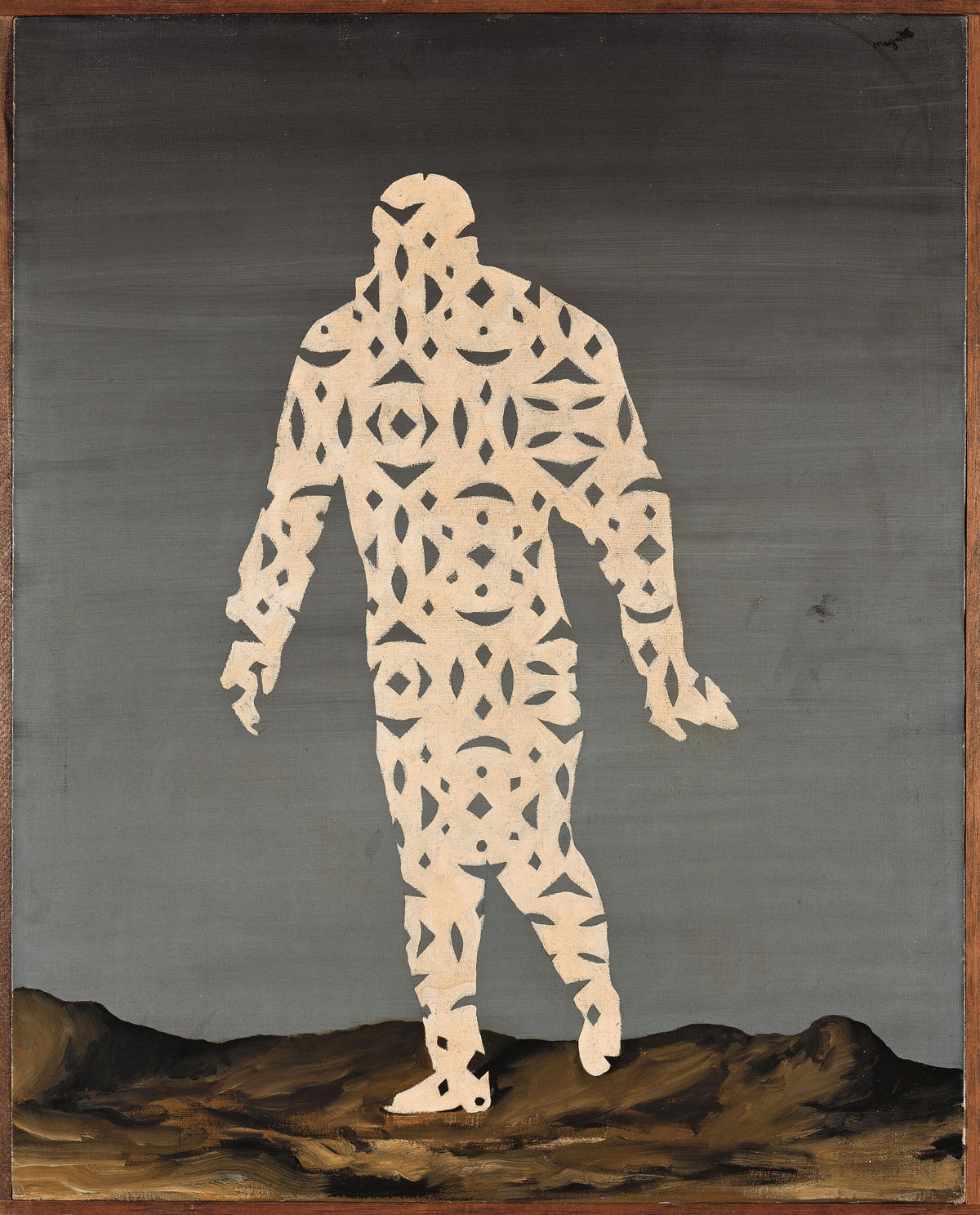
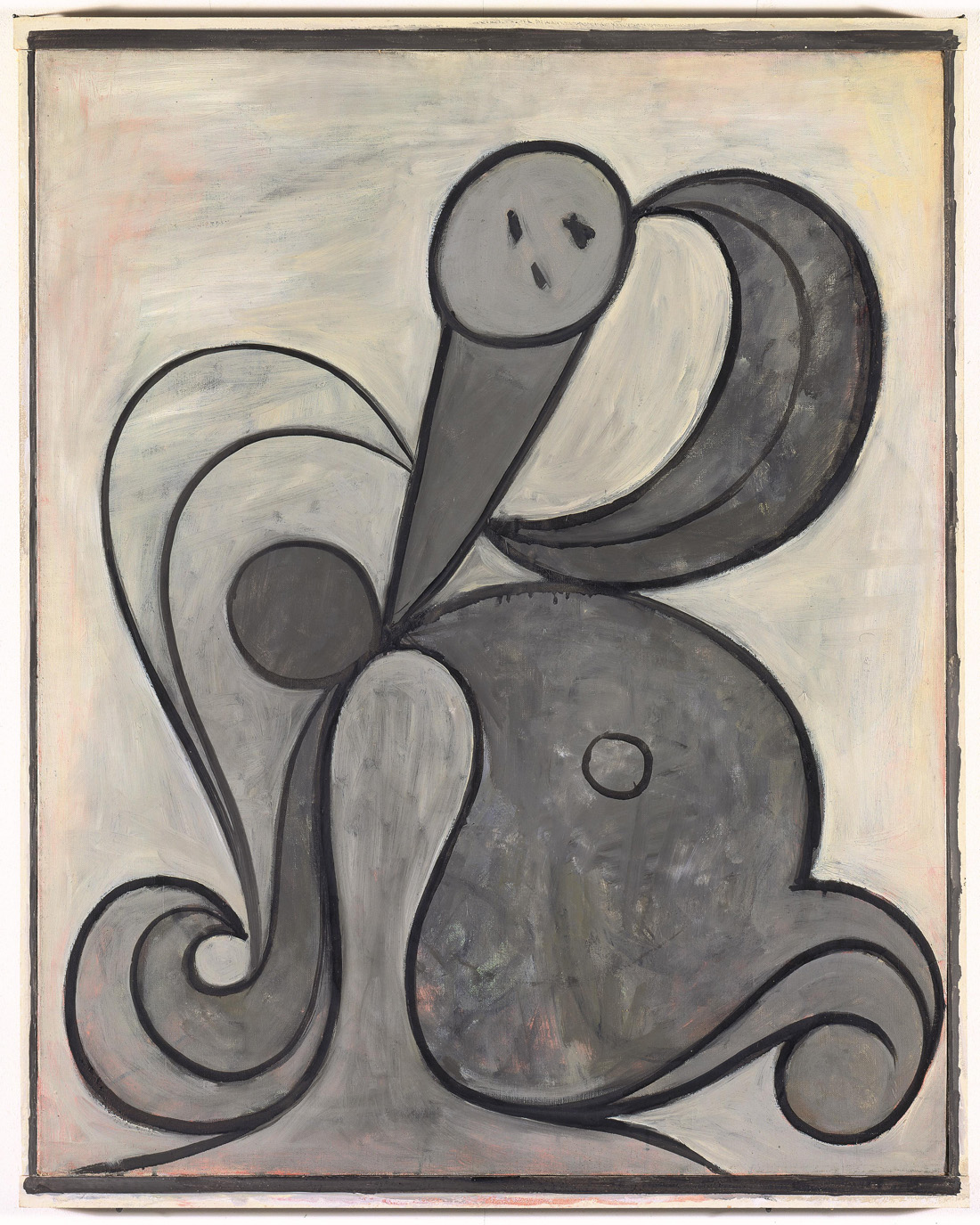
![Max Ernst (German, 1891-1976) 'Jeune homme intrigué par le vol d’une mouche non-euclidienne' [Young Man Intrigued by the Flight of a Non-Euclidean Fly] 1942–1947](https://artblart.com/wp-content/uploads/2016/08/32_ernst-max_jeune-homme-intriguc3a9-1942-47-web.jpg "Max Ernst (German, 1891-1976) 'Jeune homme intrigué par le vol d’une mouche non-euclidienne' [Young Man Intrigued by the Flight of a Non-Euclidean Fly] 1942–1947")
![Max Ernst (German, 1891-1976) 'Une semaine de bonté' [A Week of Kindness] 1934](https://artblart.com/wp-content/uploads/2016/08/ernst-une-semaine-de-bontc3a9-web.jpg "Max Ernst (German, 1891-1976) 'Une semaine de bonté' [A Week of Kindness] 1934")
![Max Ernst (German, 1891-1976) 'Une semaine de bonté' [A Week of Kindness] 1934](https://artblart.com/wp-content/uploads/2016/08/ernst-une-semaine-de-bontc3a9-web2.jpg "Max Ernst (German, 1891-1976) 'Une semaine de bonté' [A Week of Kindness] 1934")


![Alberto Giacometti (Italian, 1901-1966) 'Objet désagréable, à jeter' [Disagreeable Object, to be Thrown away] 1931](https://artblart.com/wp-content/uploads/2016/08/alberto-giacometti-objet-dc3a9sagrc3a9able-web.jpg "Alberto Giacometti (Italian, 1901-1966) 'Objet désagréable, à jeter' [Disagreeable Object, to be Thrown away] 1931")
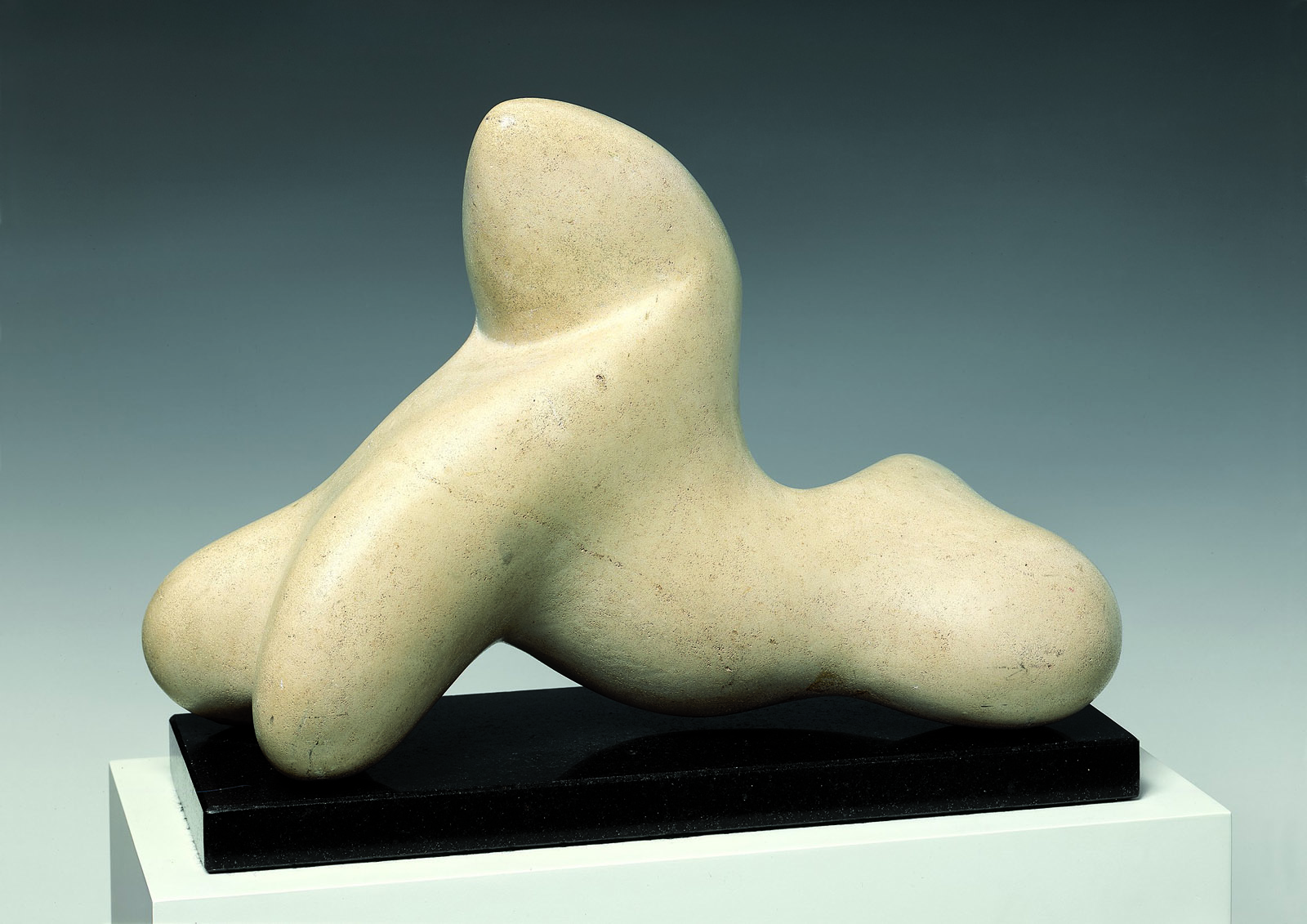


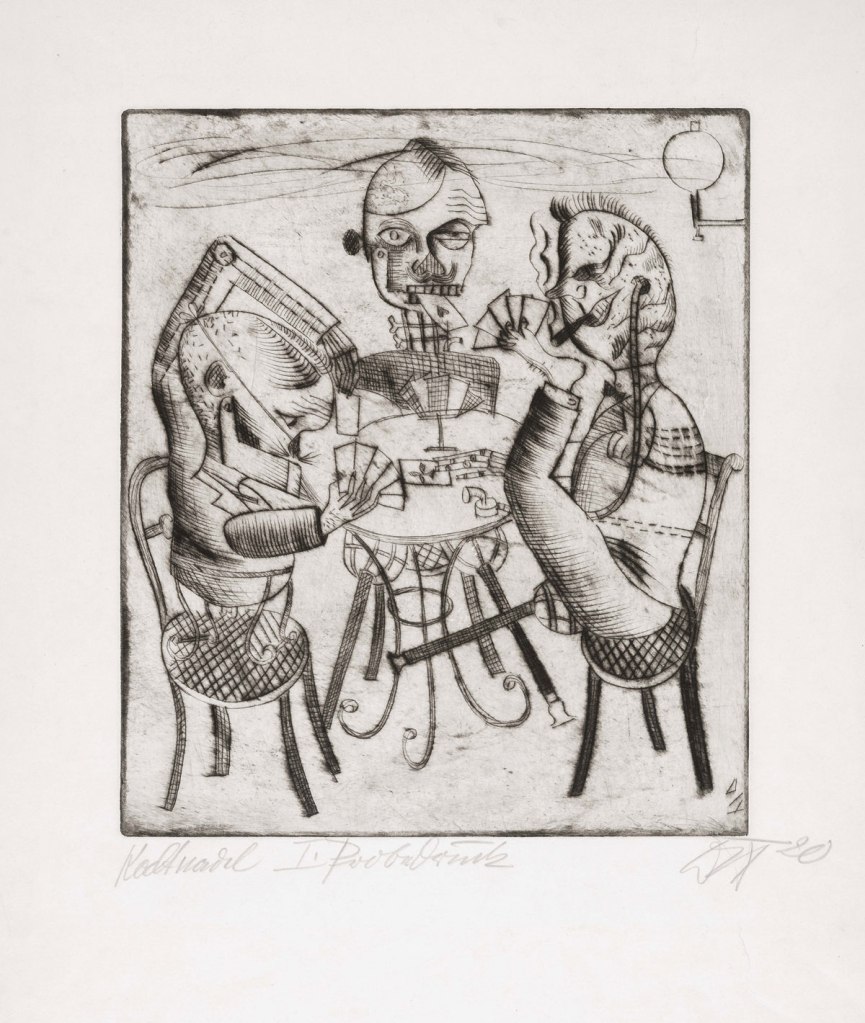
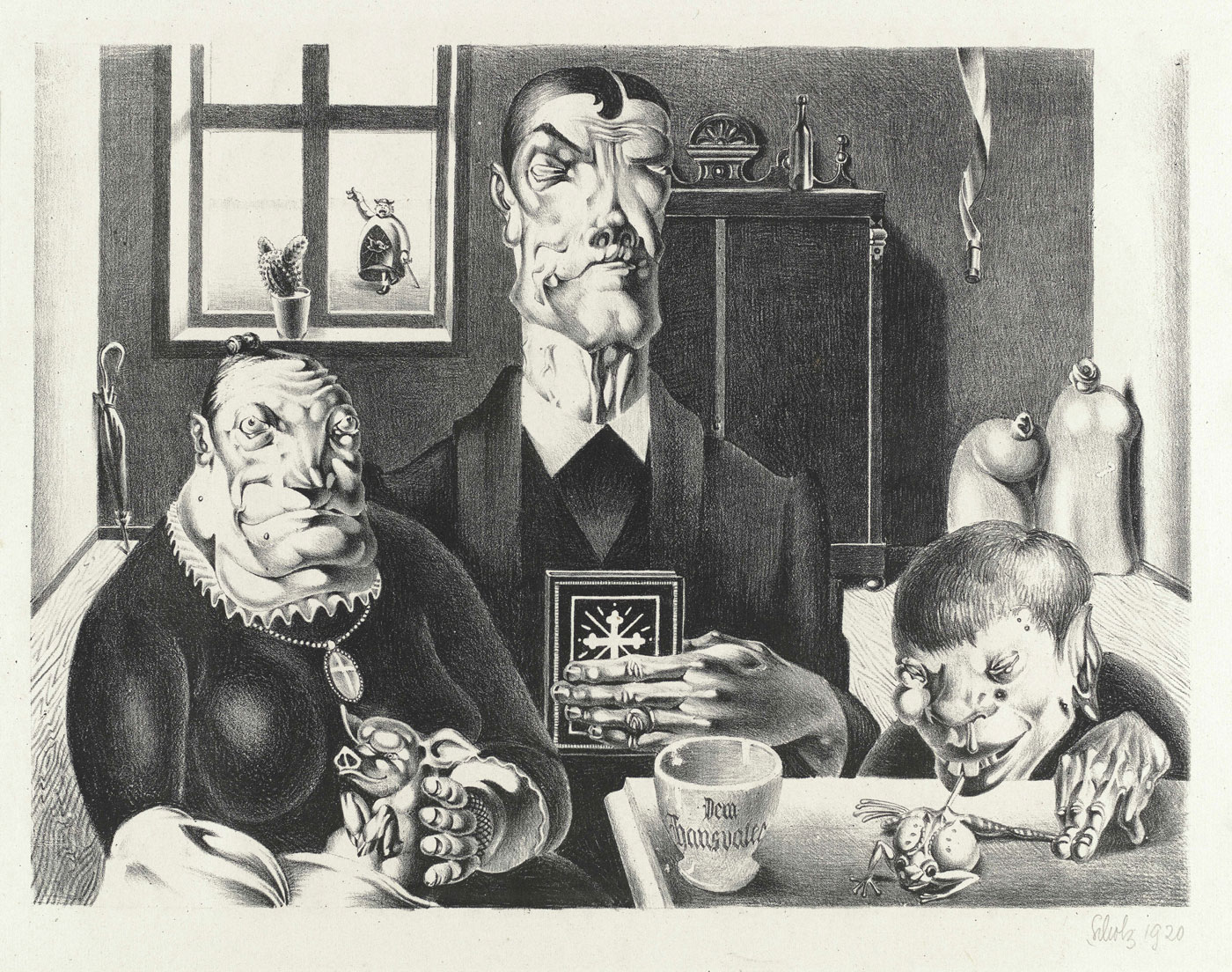

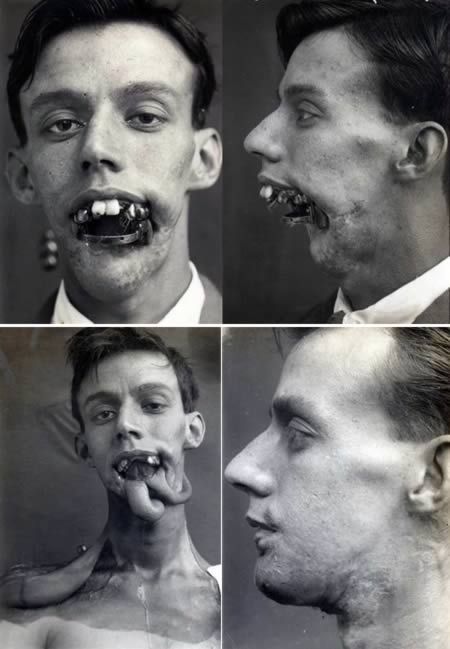
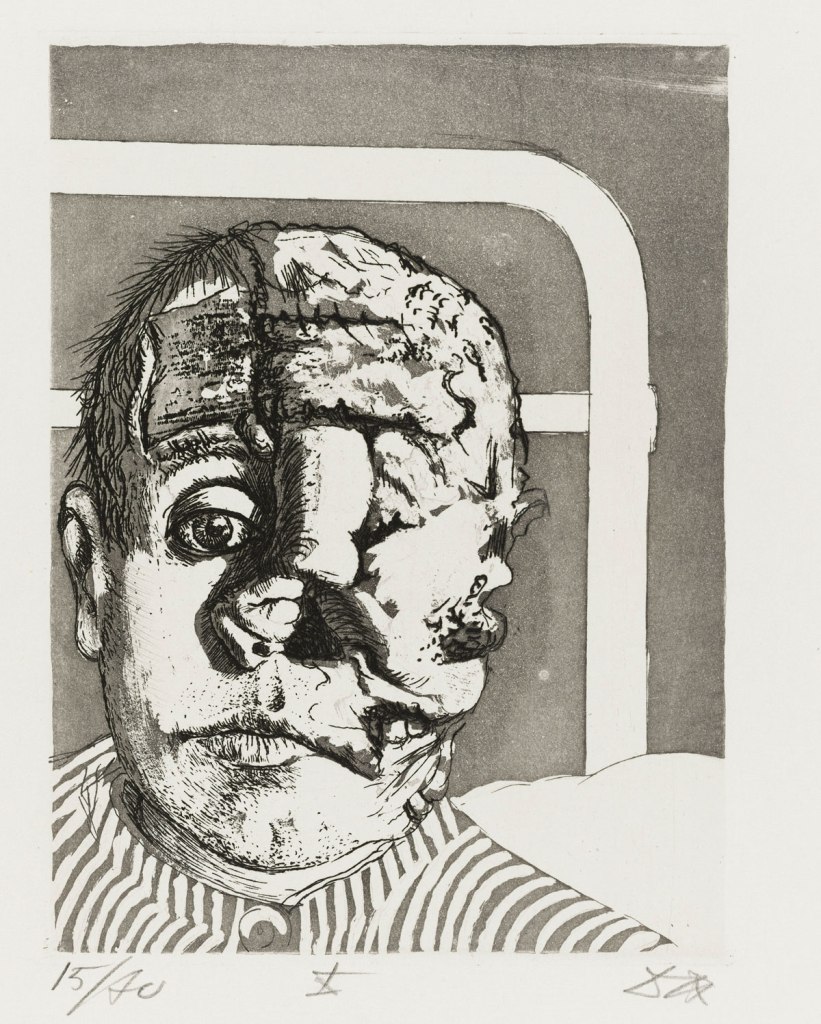

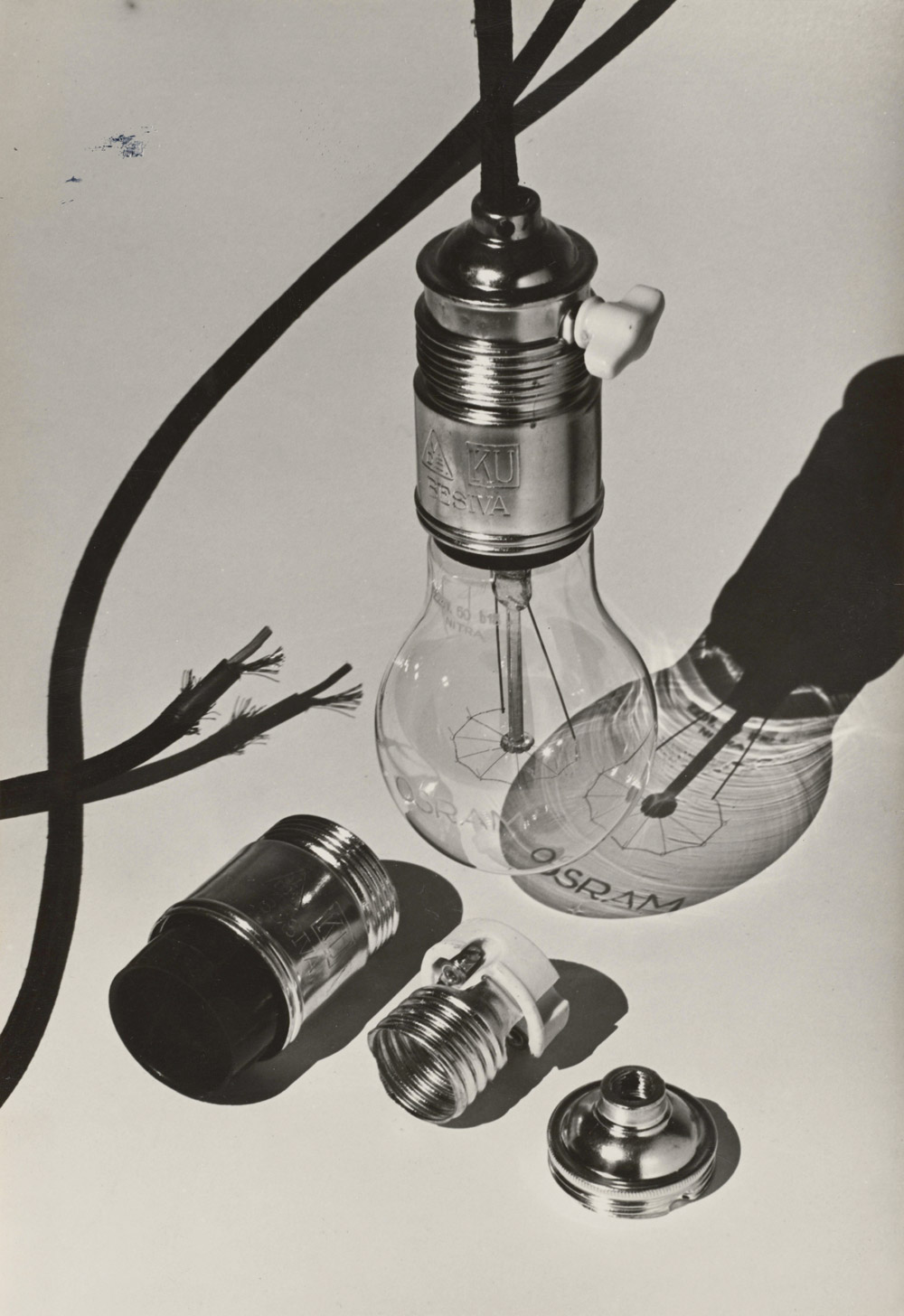
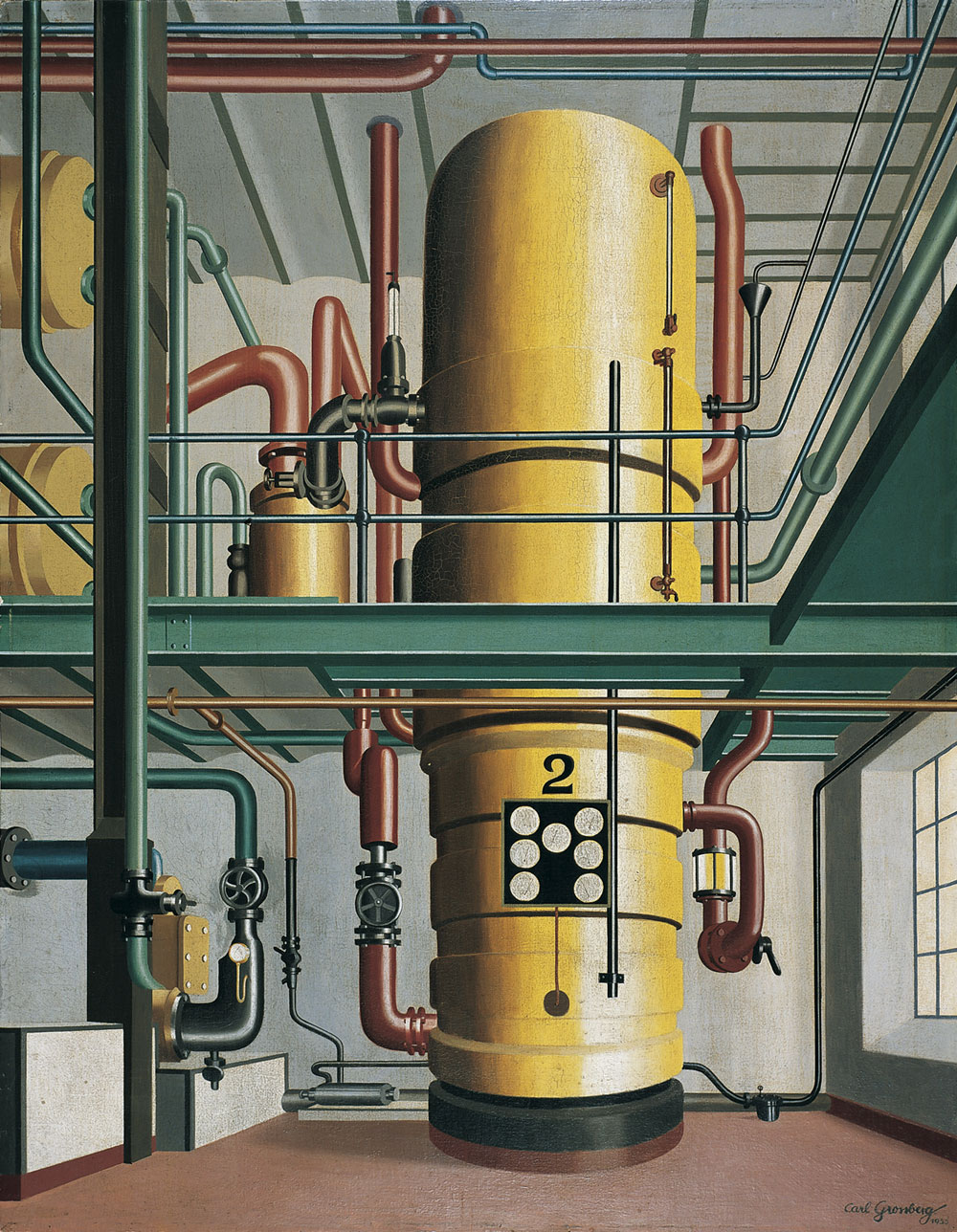

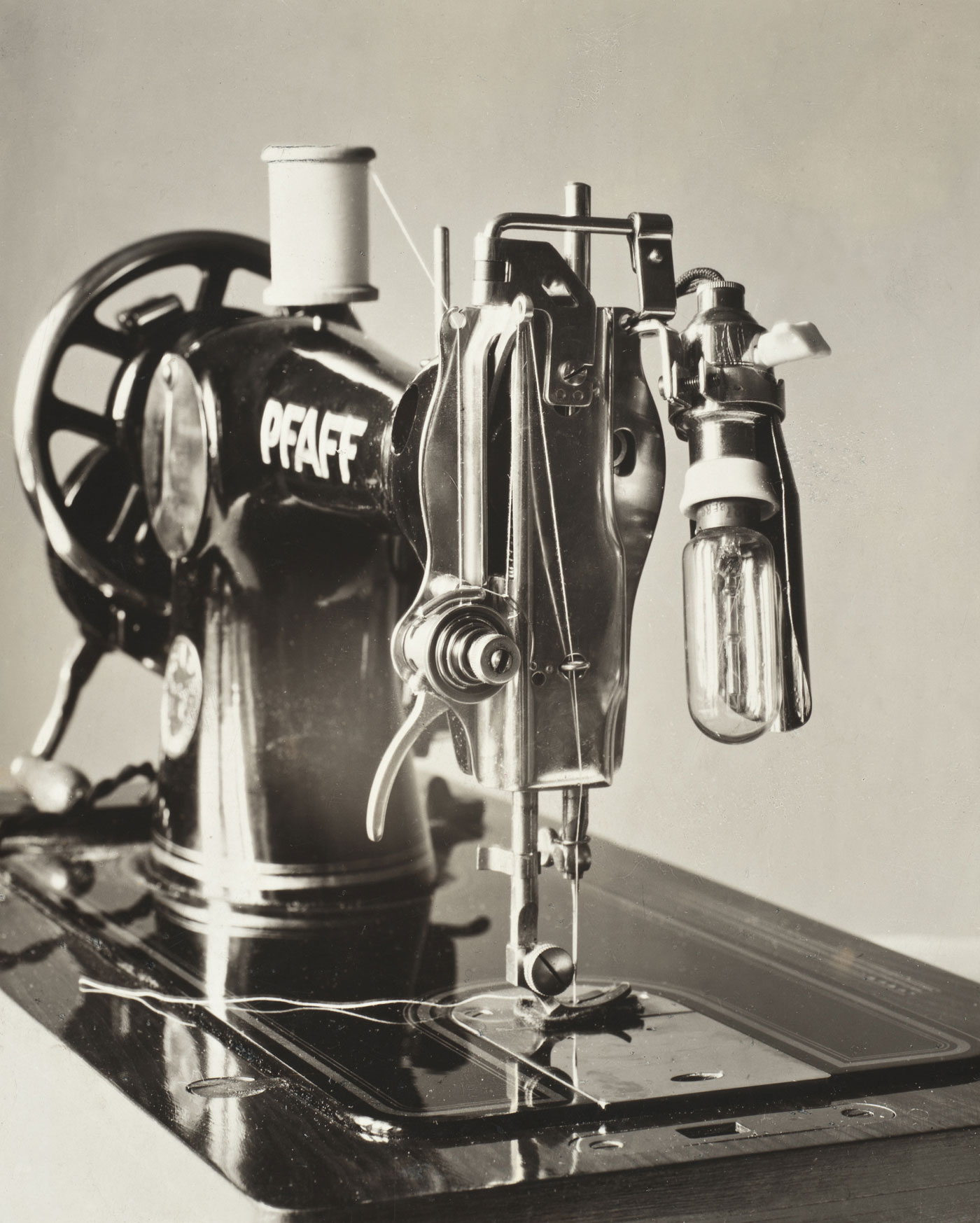


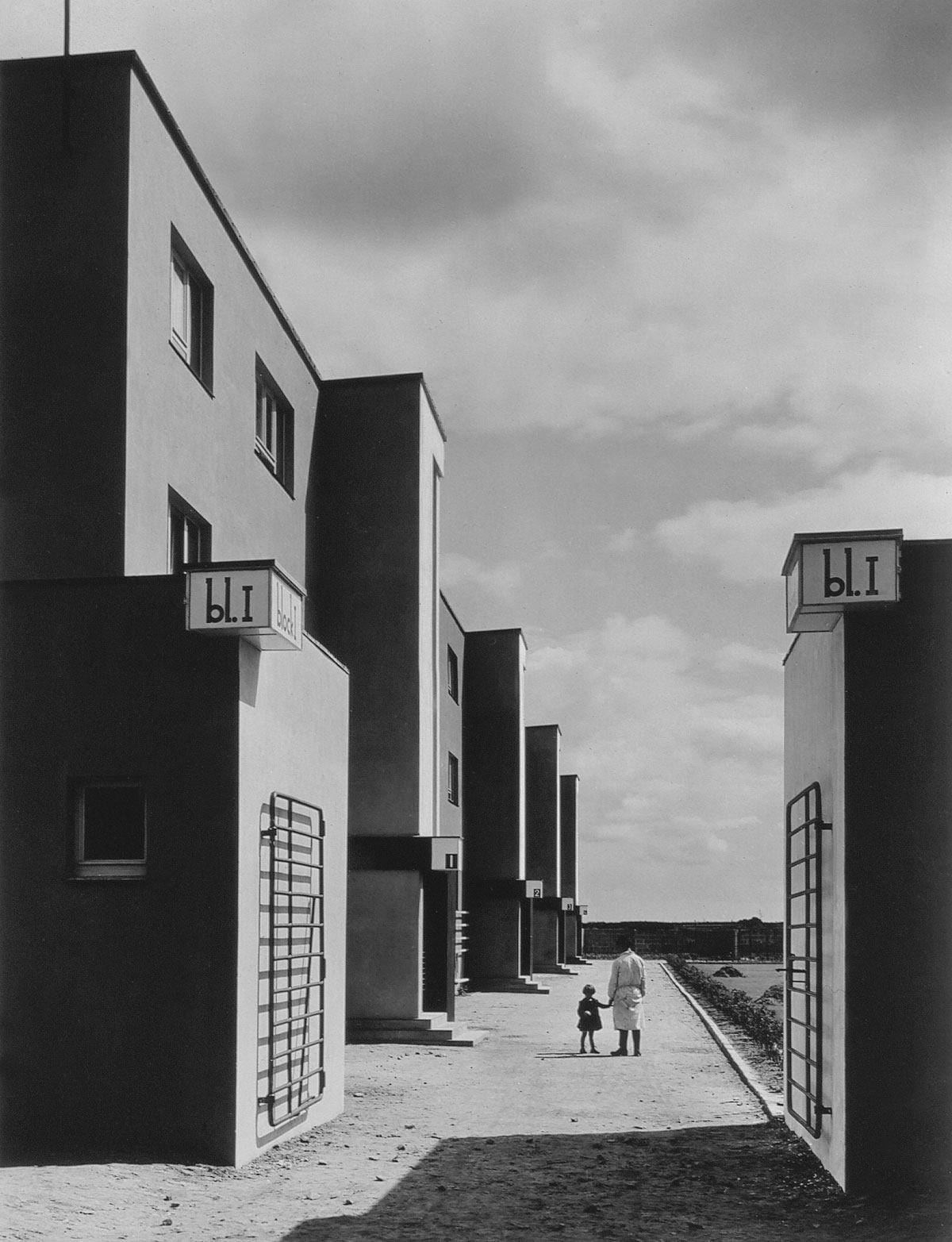


![George Grosz (German, 1893-1959) 'Construction (Untitled)' (Konstruktion [Ohne Titel]), 1920](https://artblart.com/wp-content/uploads/2016/01/grosz-construction.jpg "George Grosz (German, 1893-1959) 'Construction (Untitled)' (Konstruktion [Ohne Titel]), 1920")

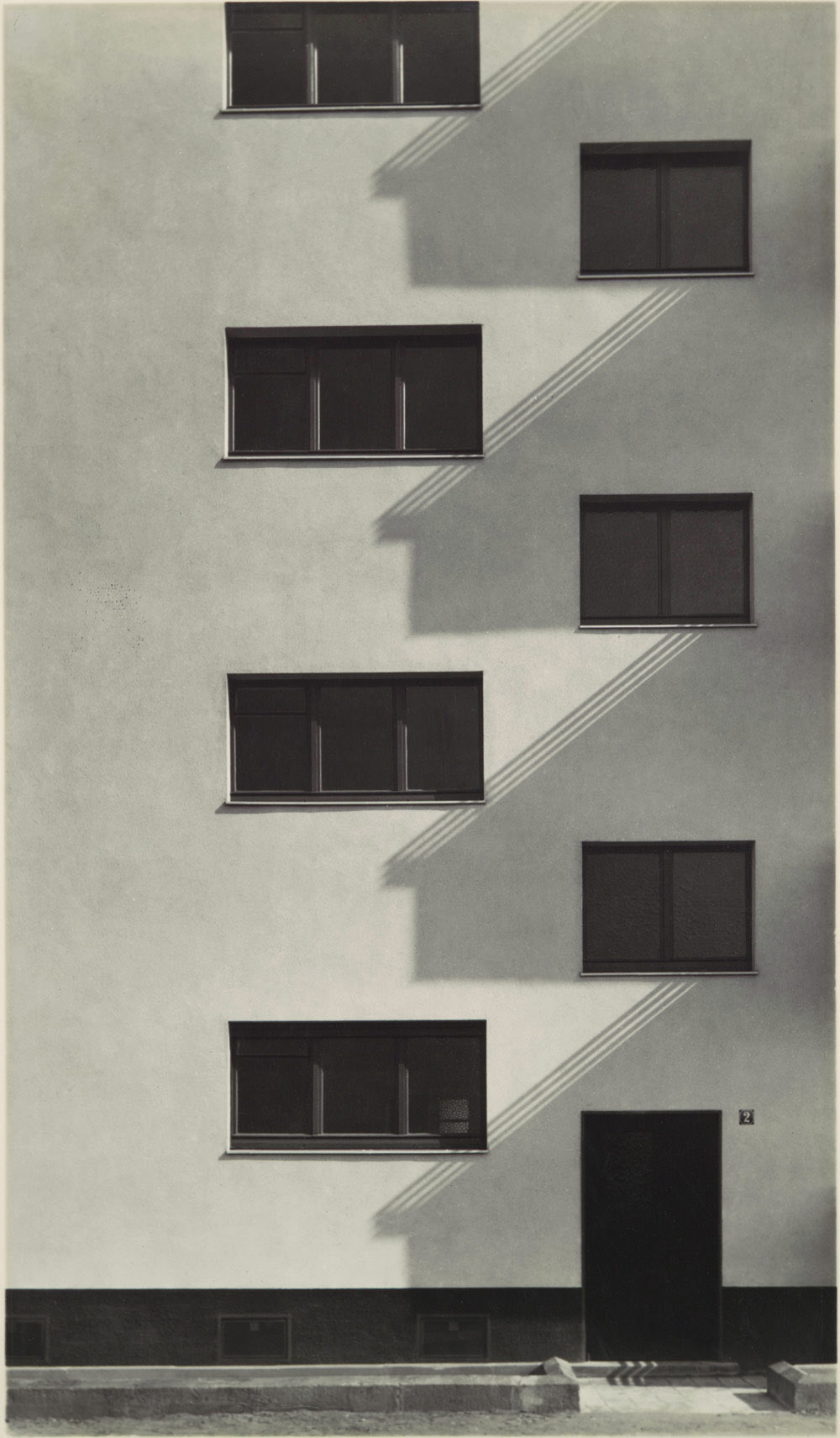

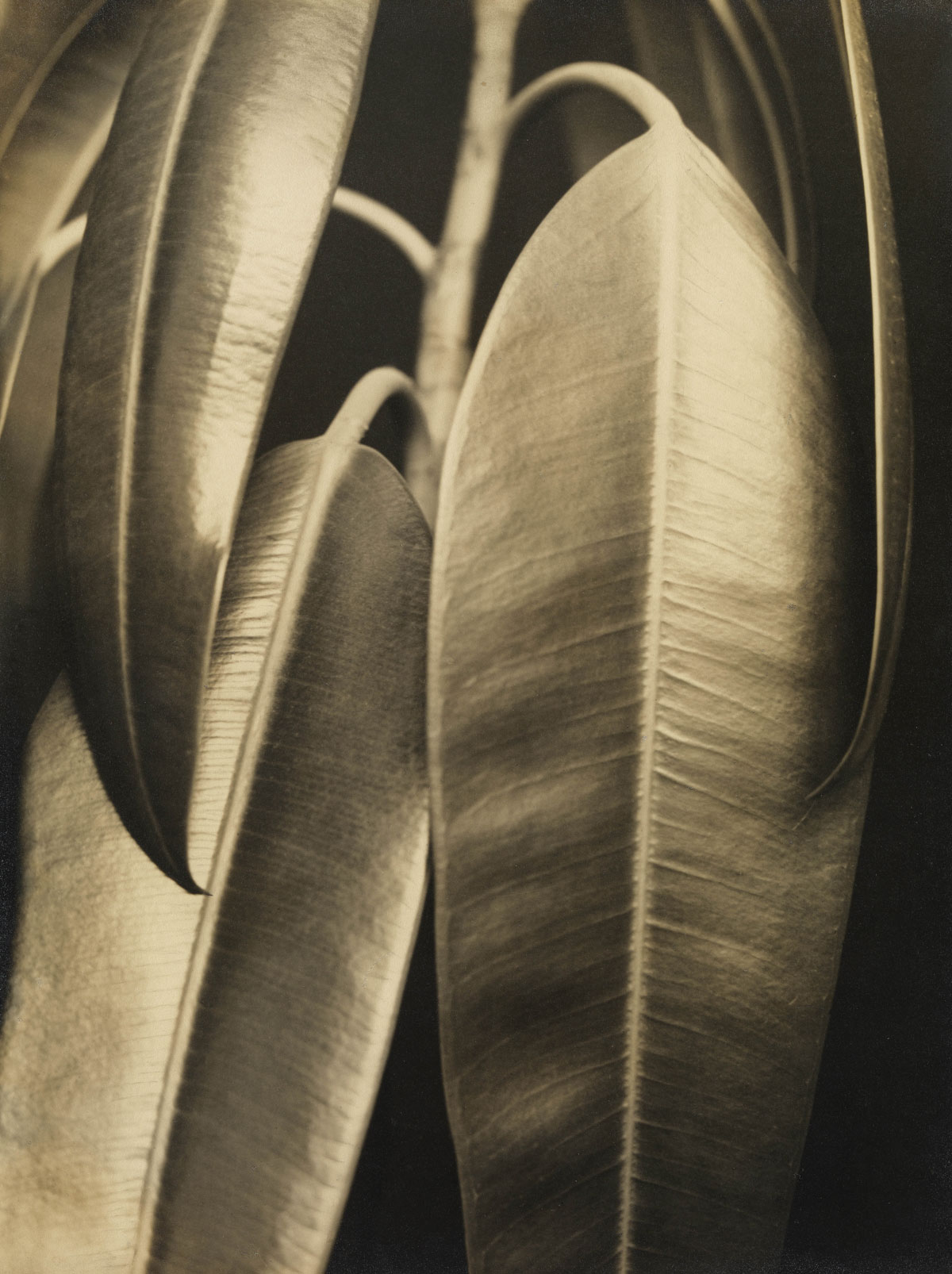


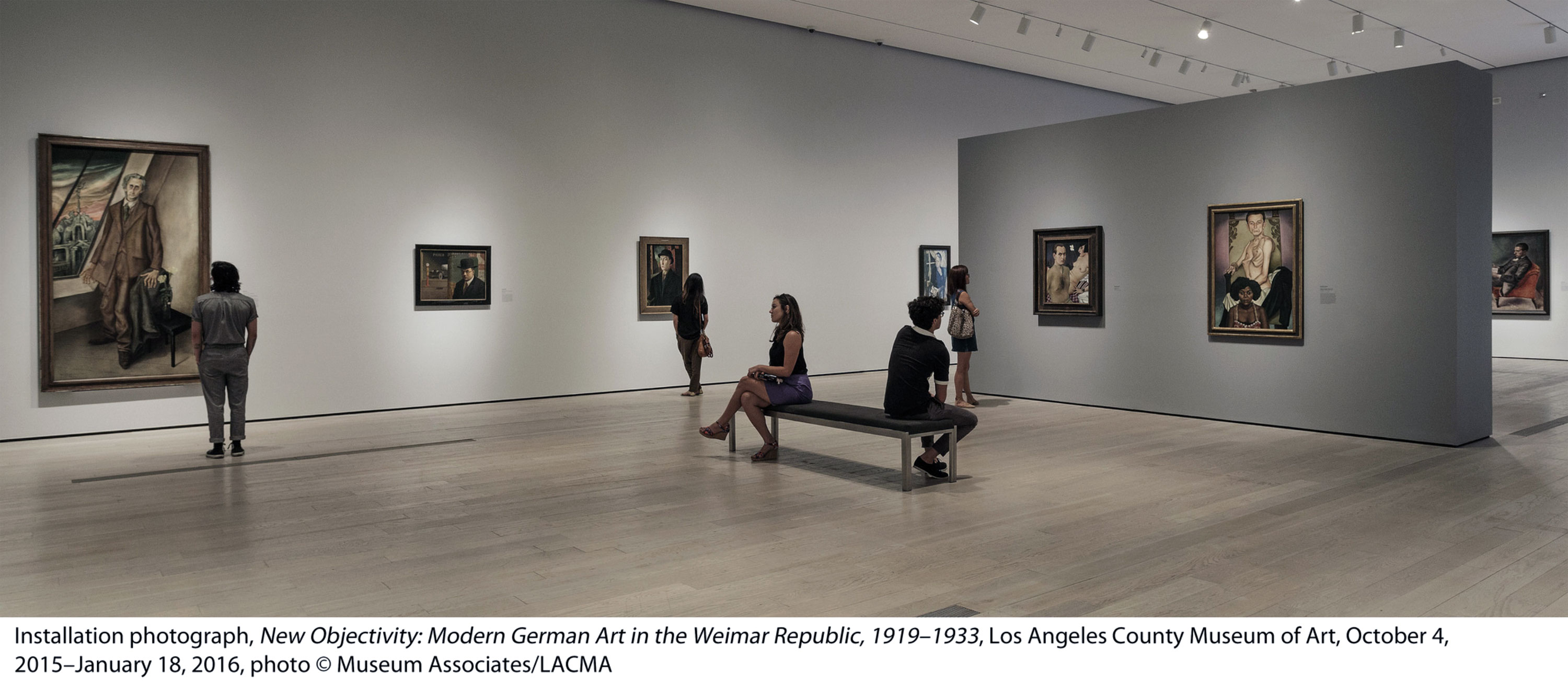
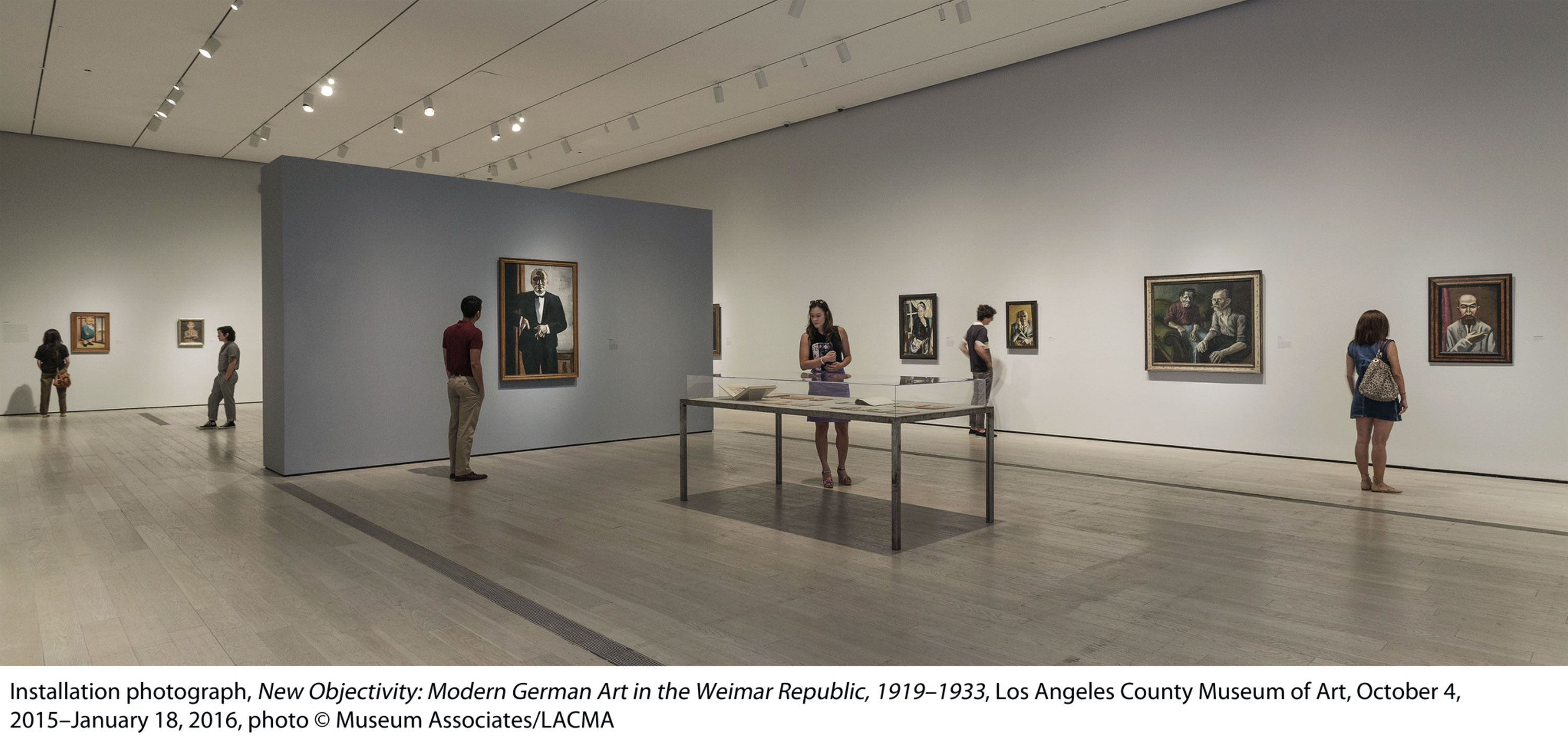
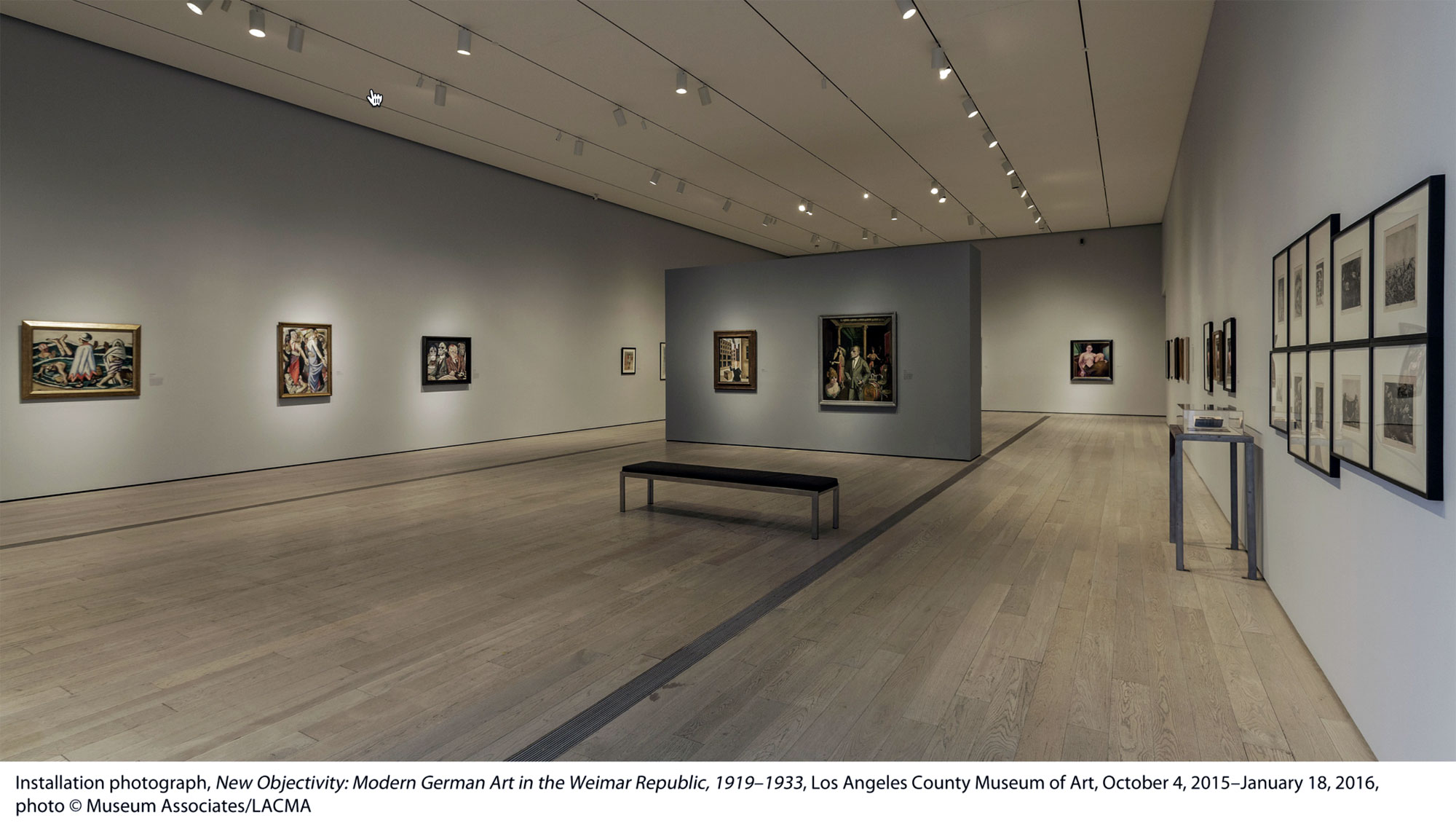
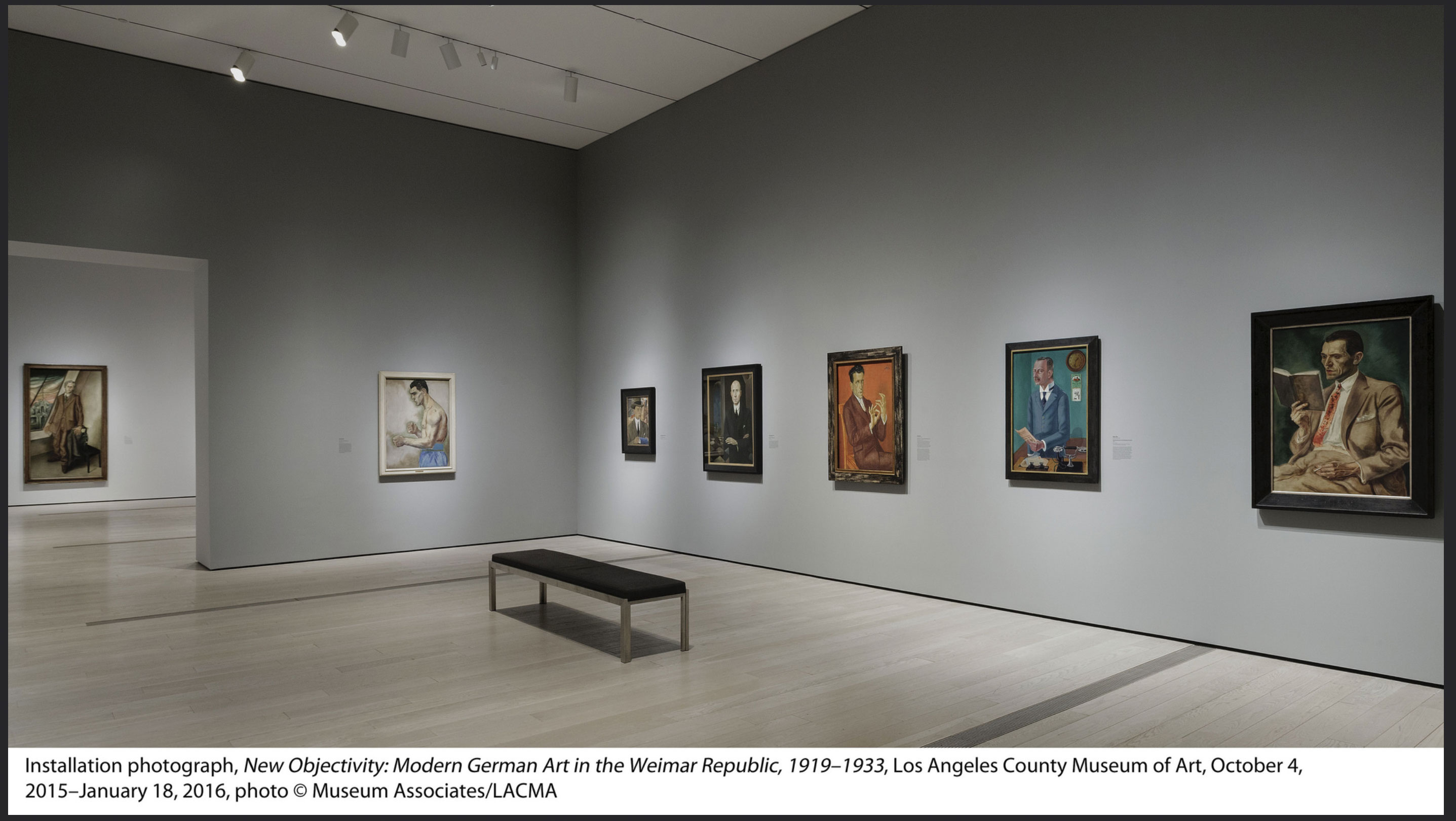
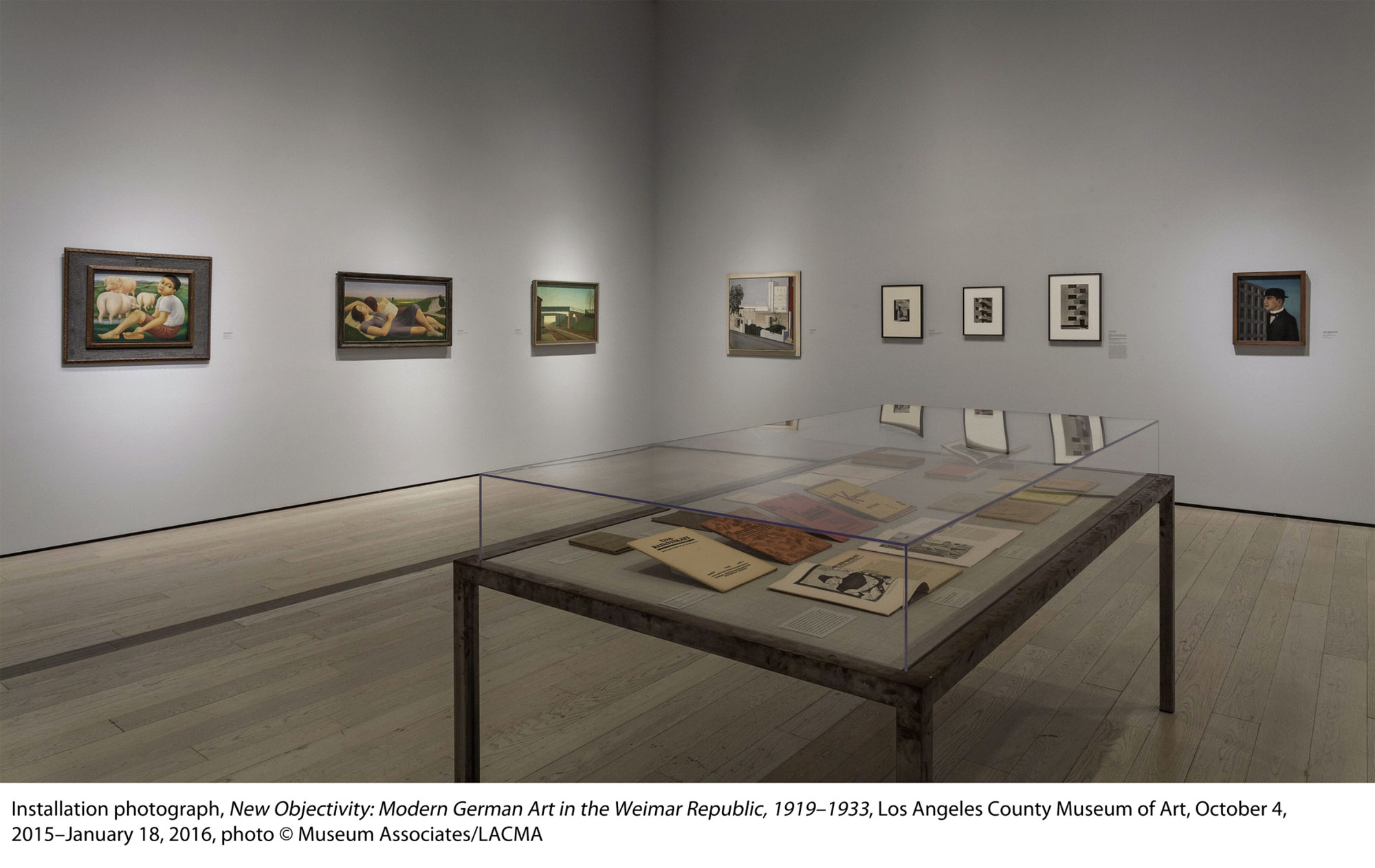
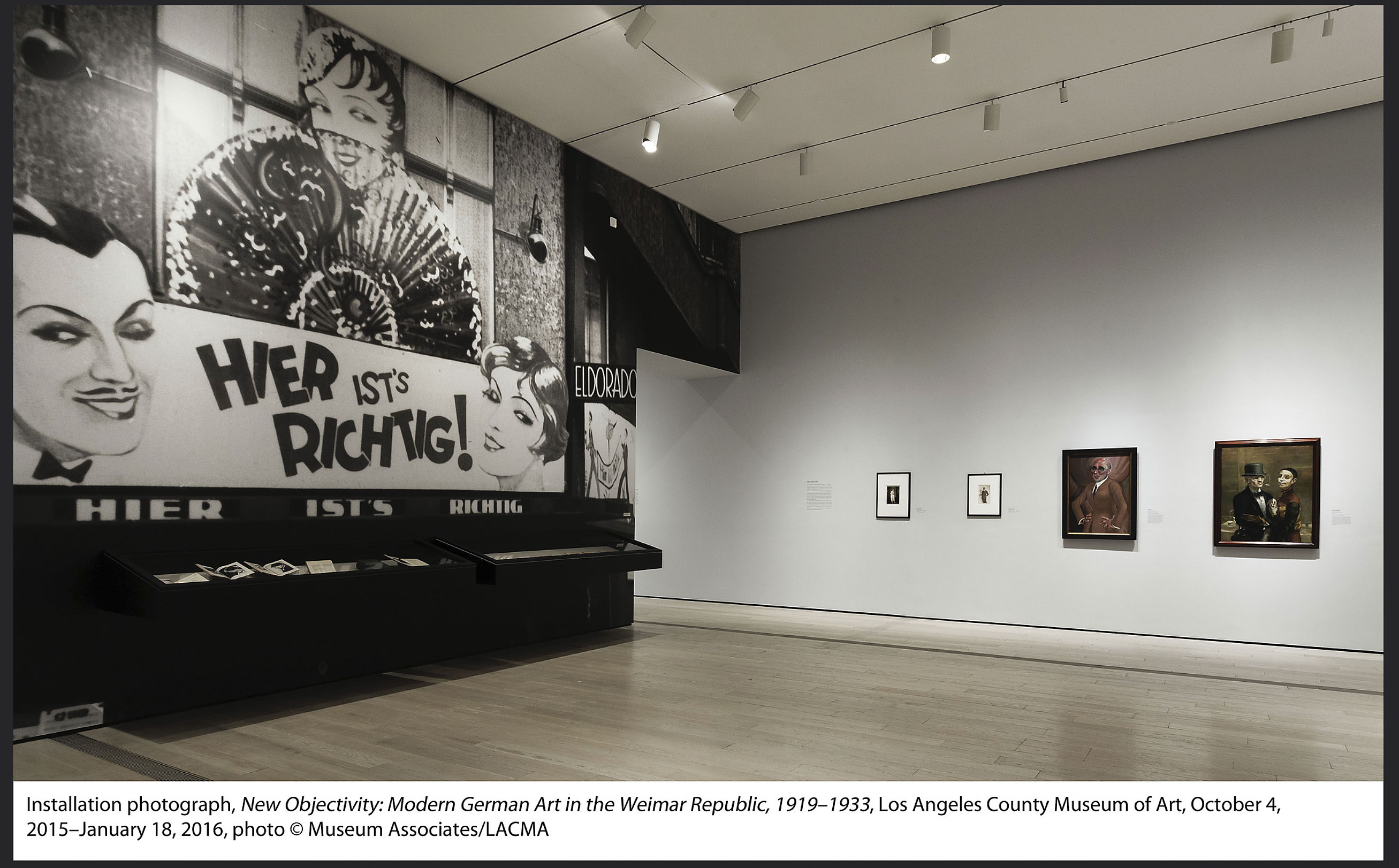
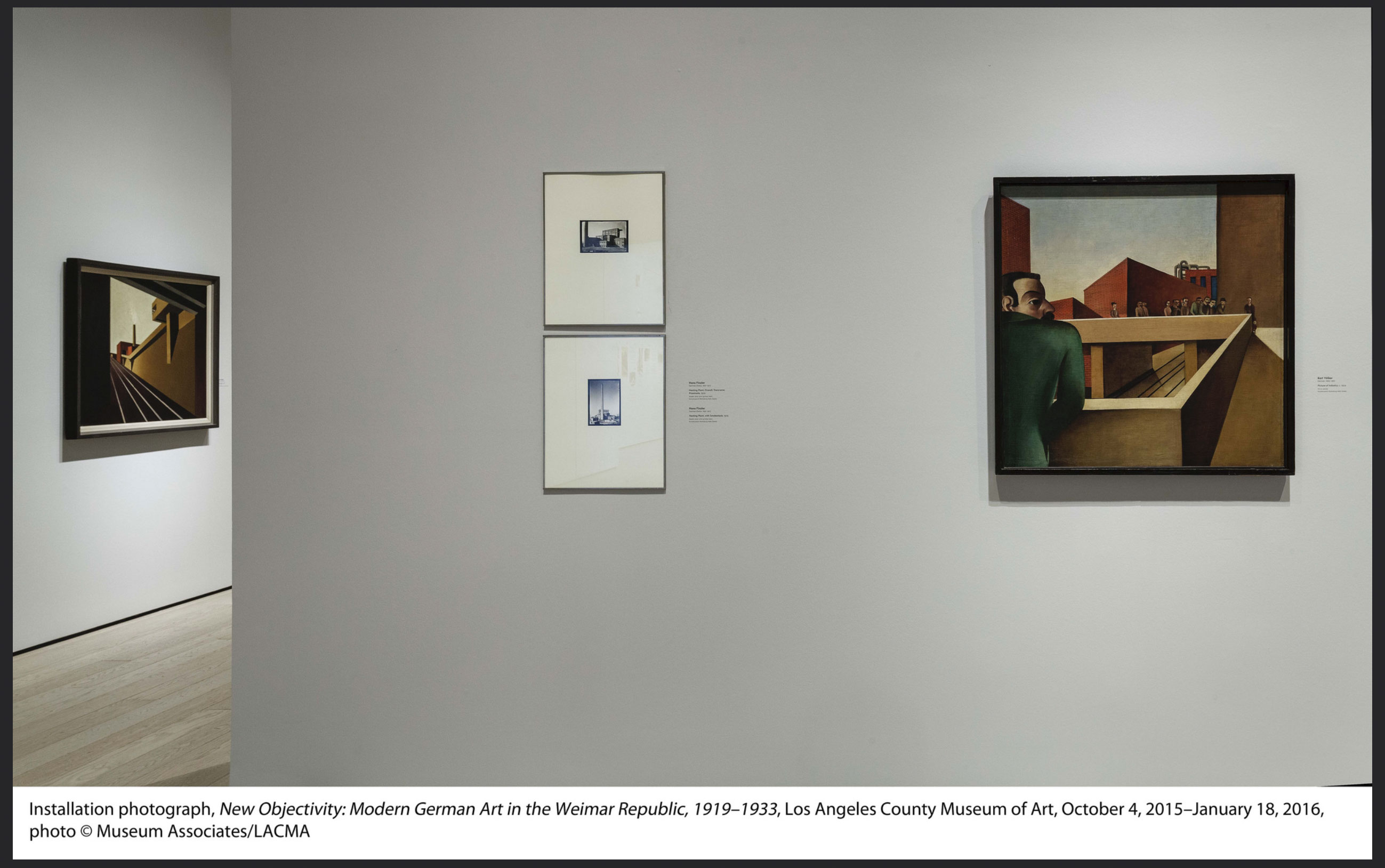
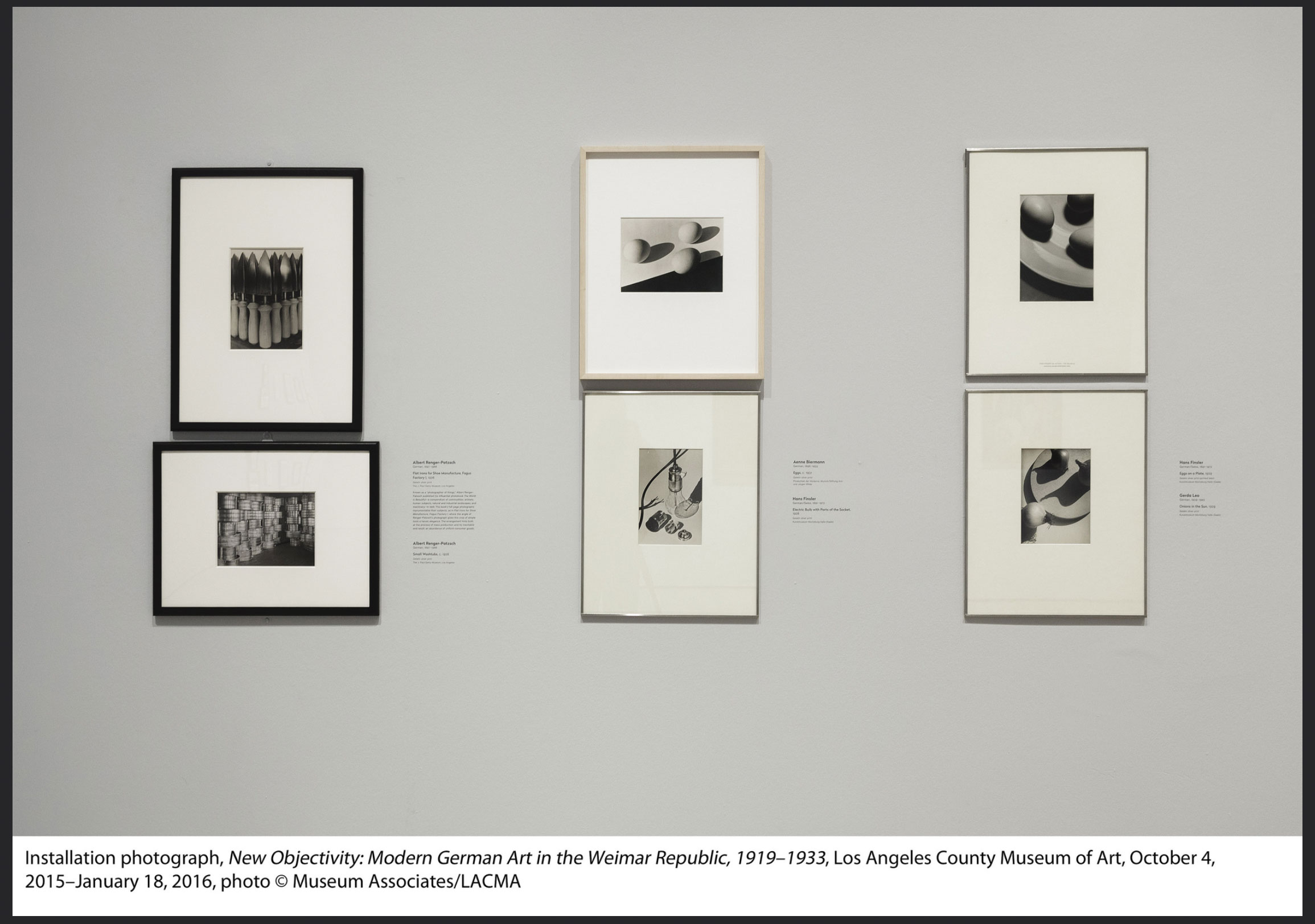
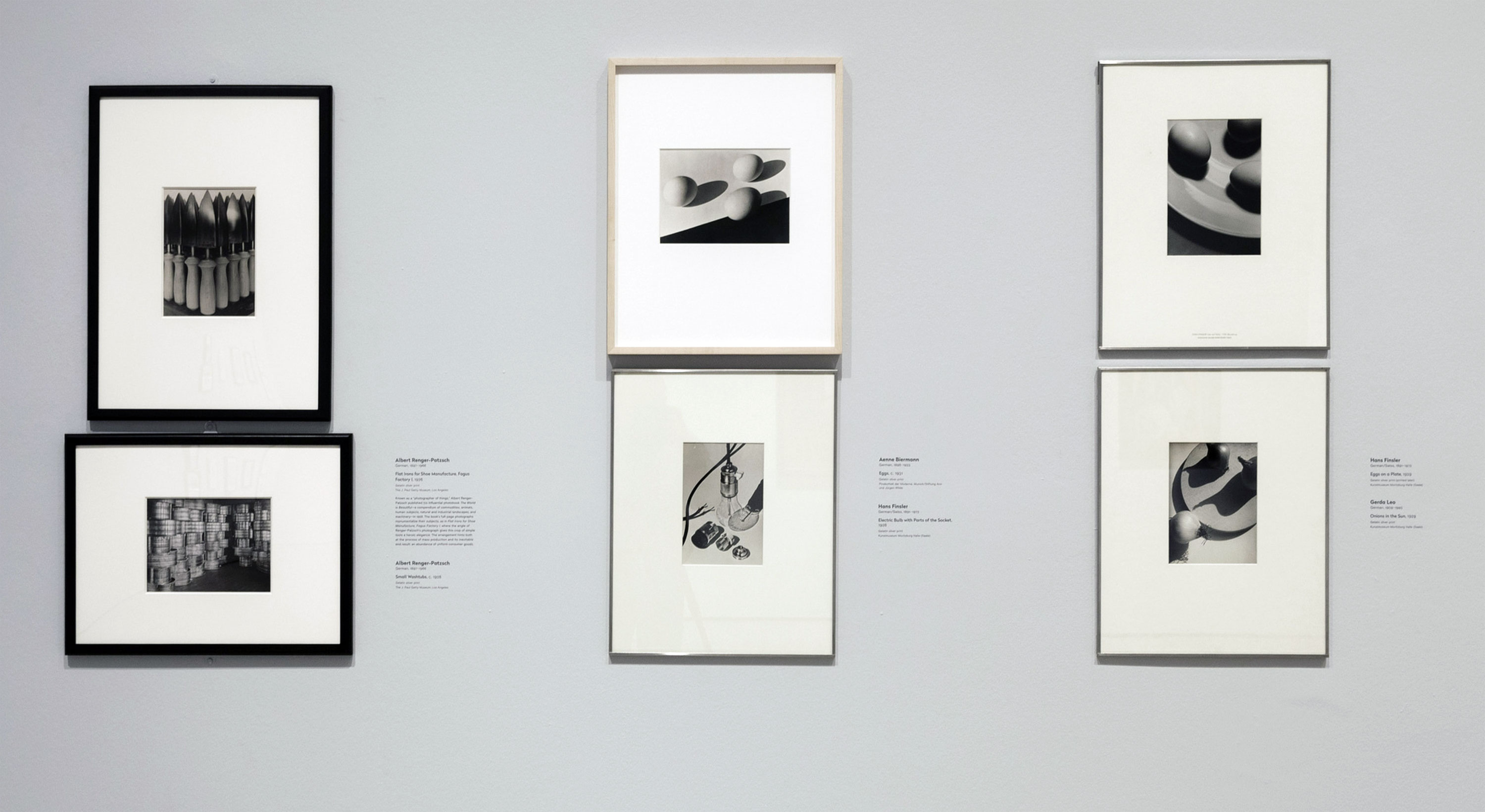
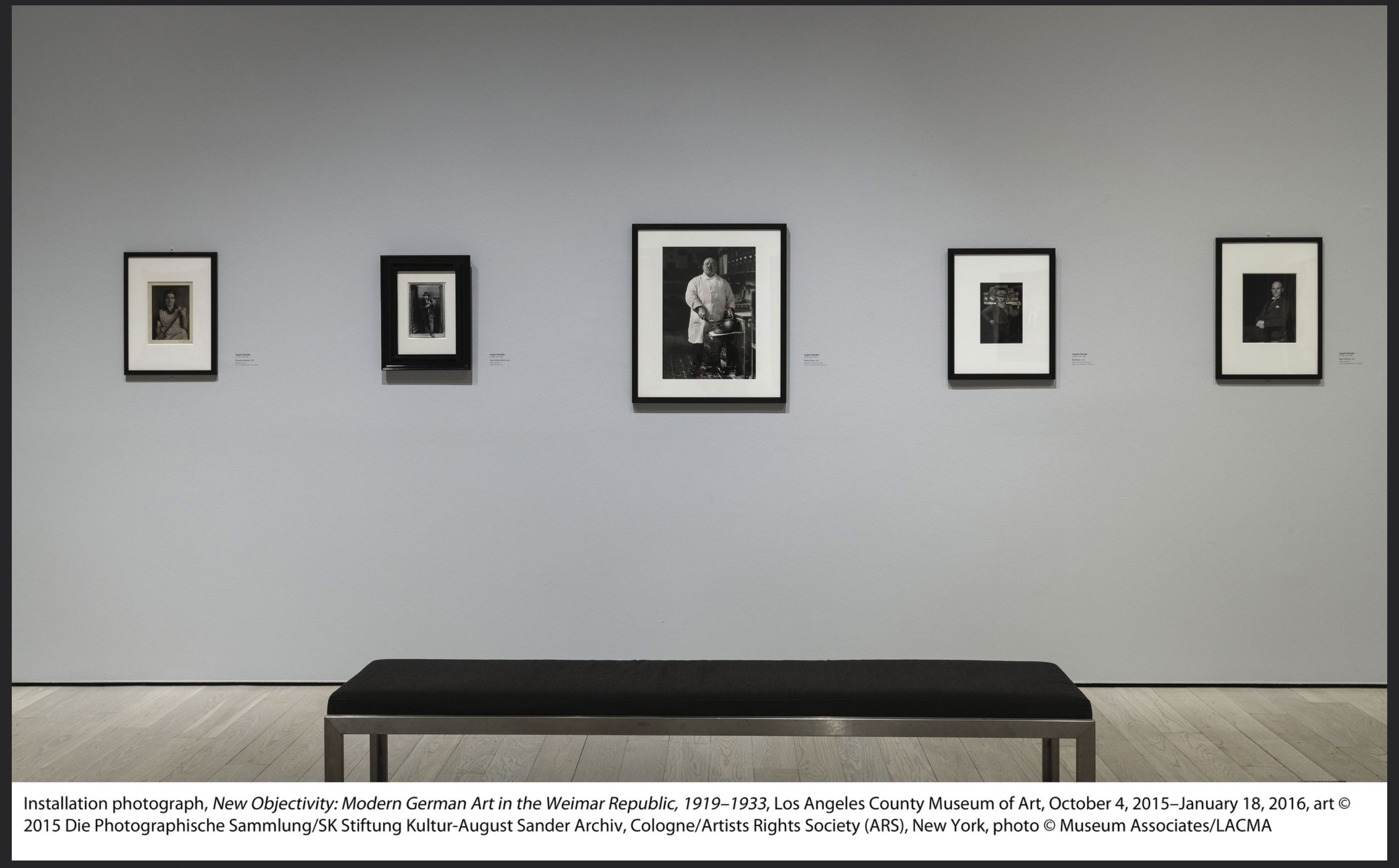
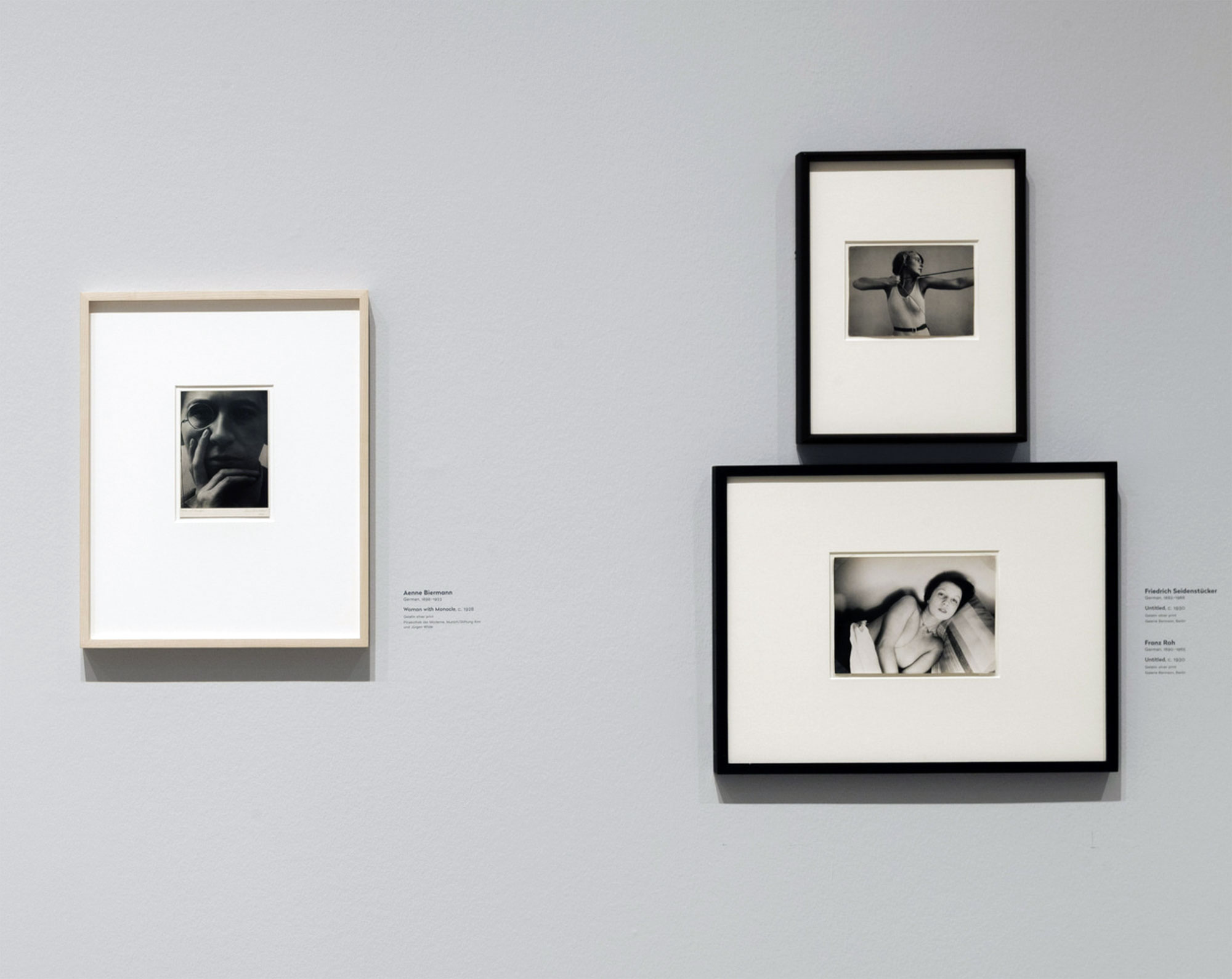
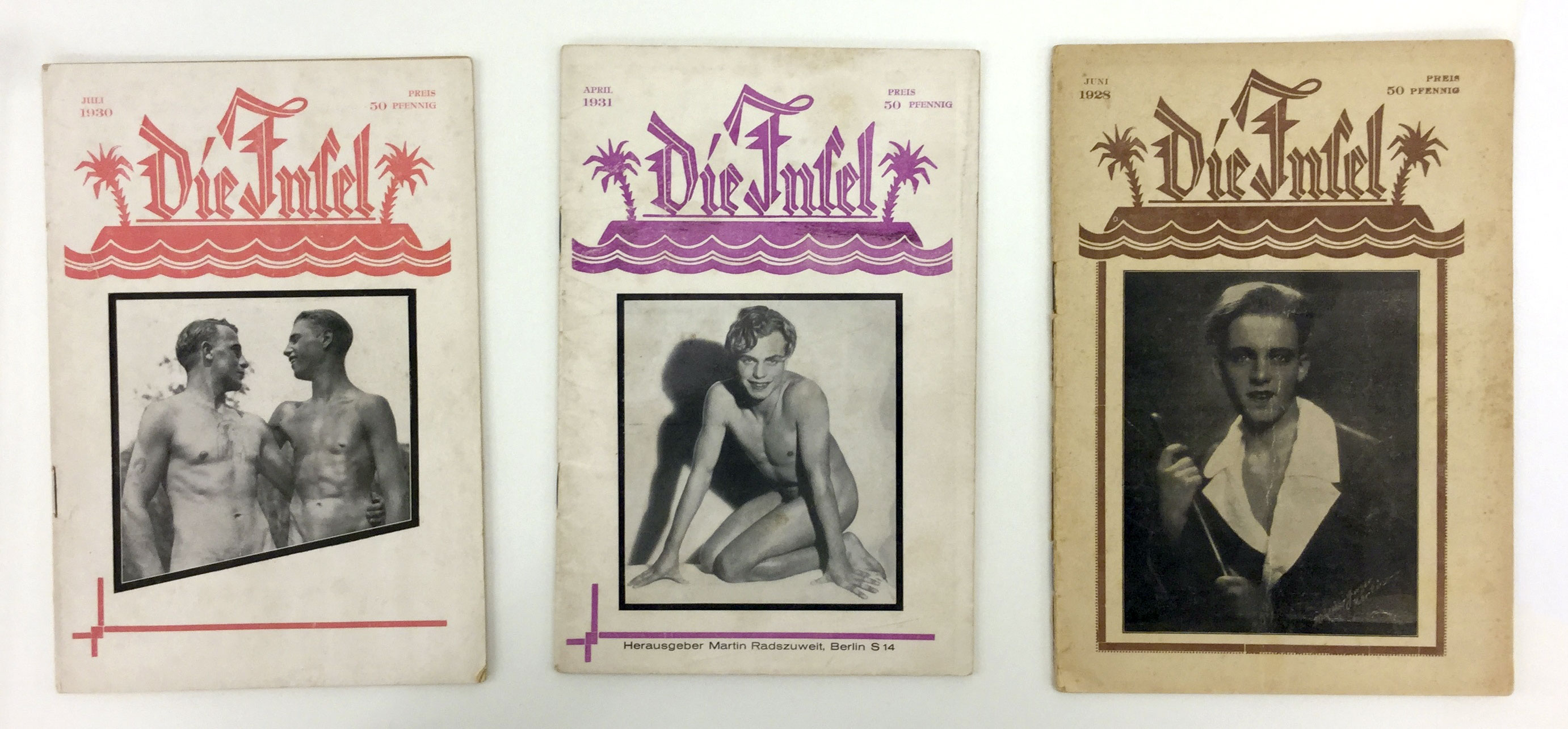
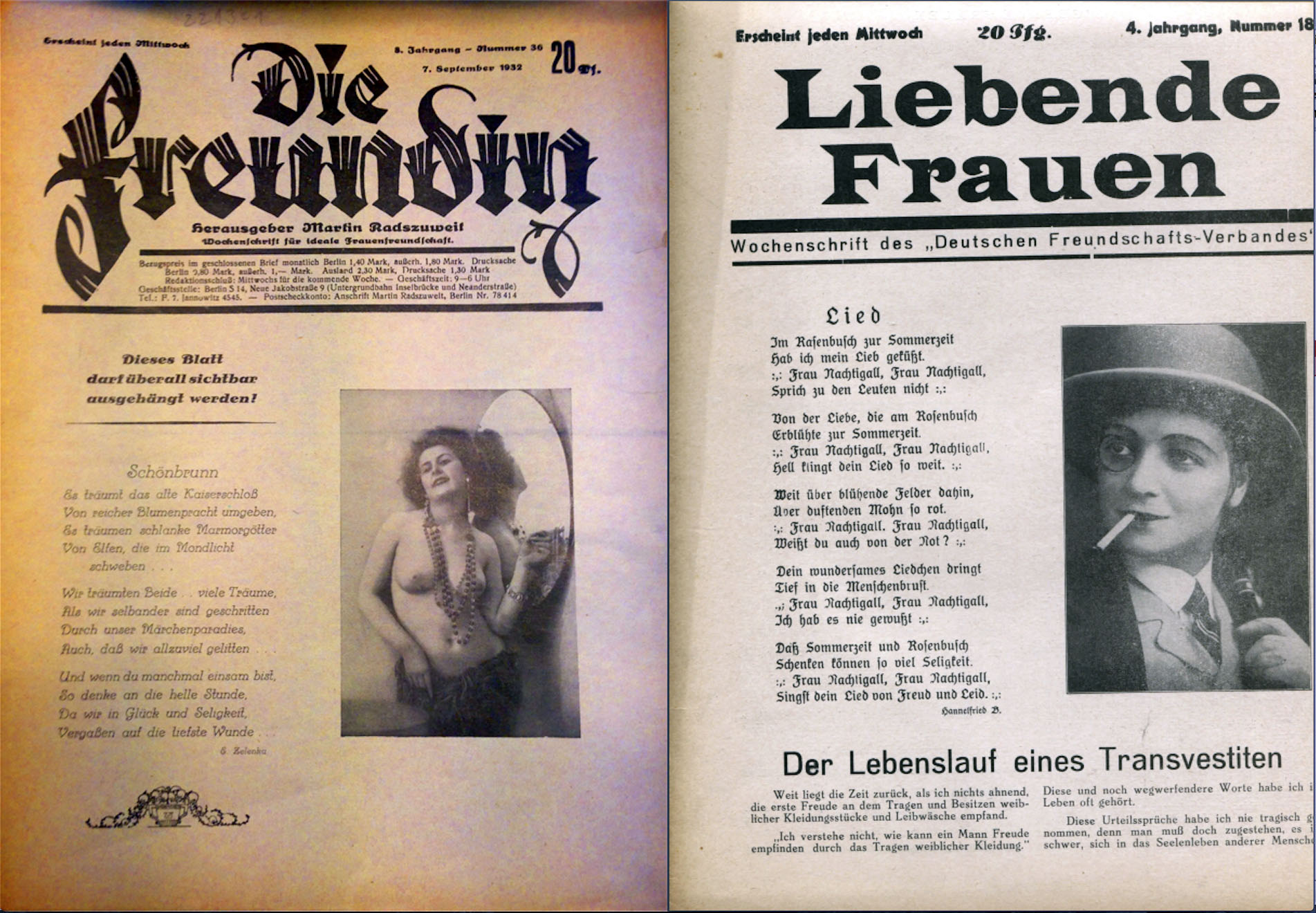

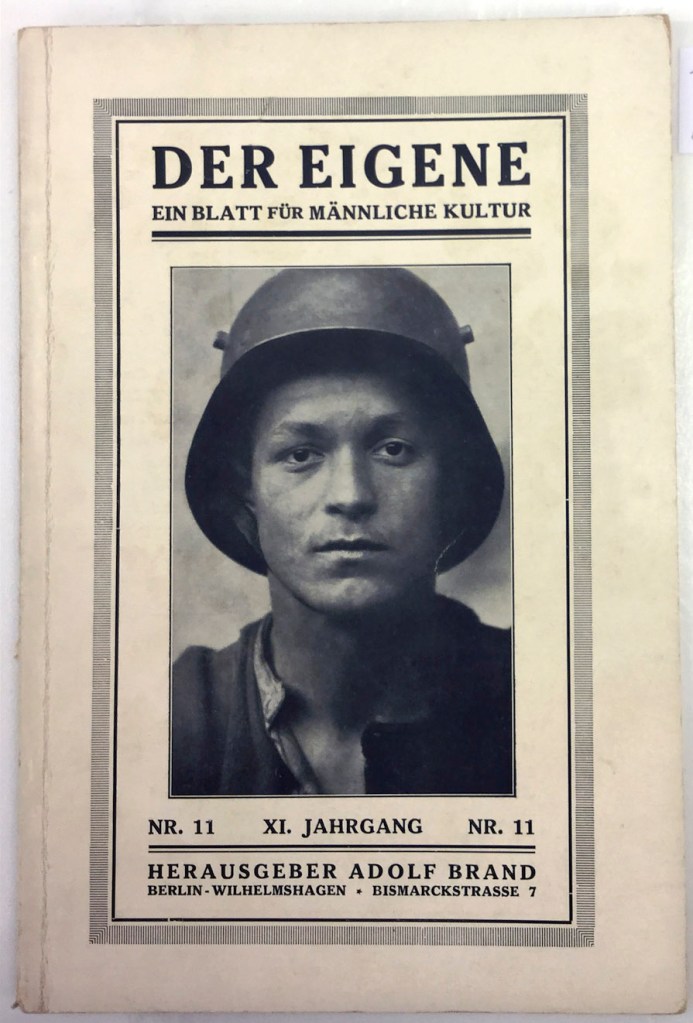
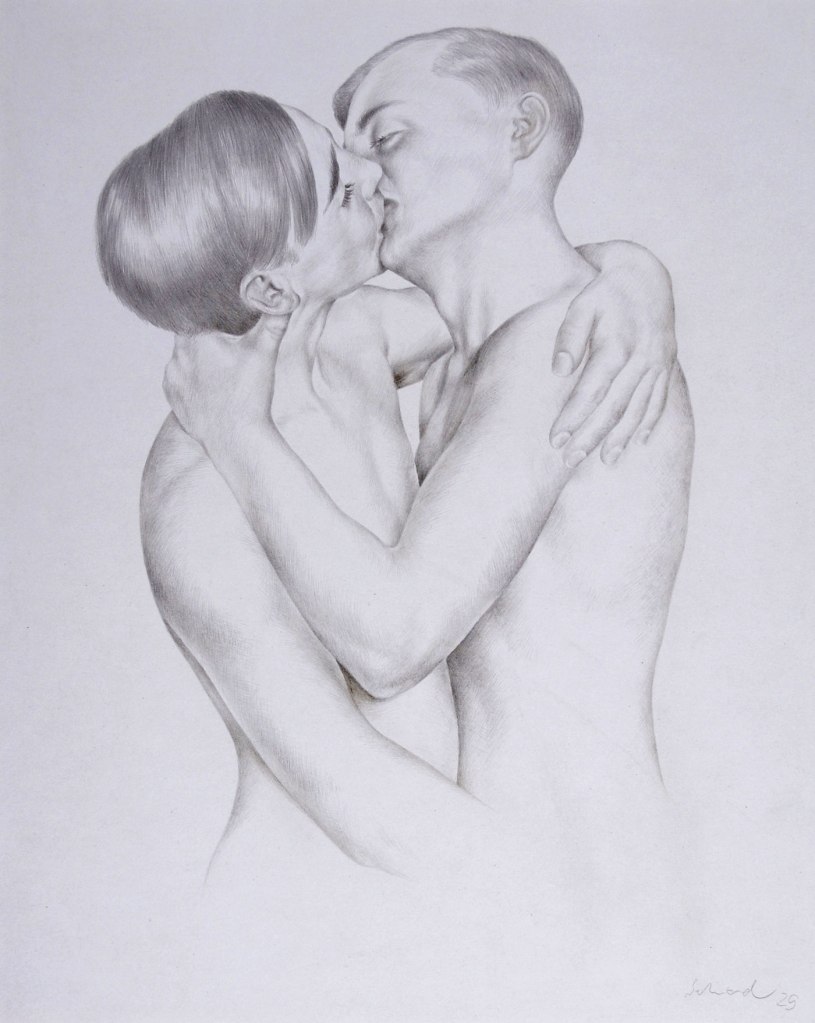
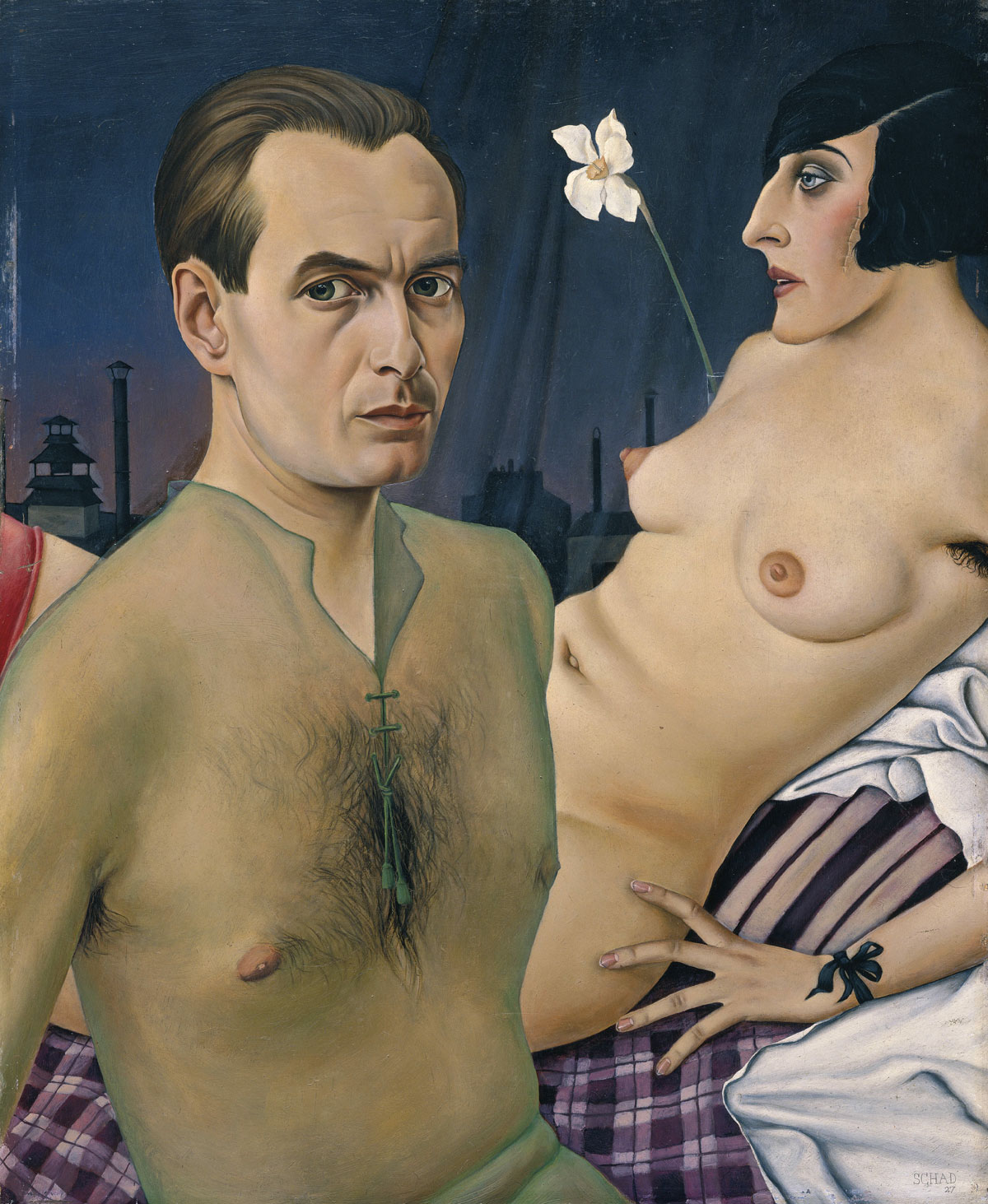

![Gert Wollheim (German, 1894-1974) 'Untitled (Couple)' (Ohne Titel [Paar]), 1926](https://artblart.com/wp-content/uploads/2016/01/wollheim-untitled.jpg?w=757 "Gert Wollheim (German, 1894-1974) 'Untitled (Couple)' (Ohne Titel [Paar]), 1926")
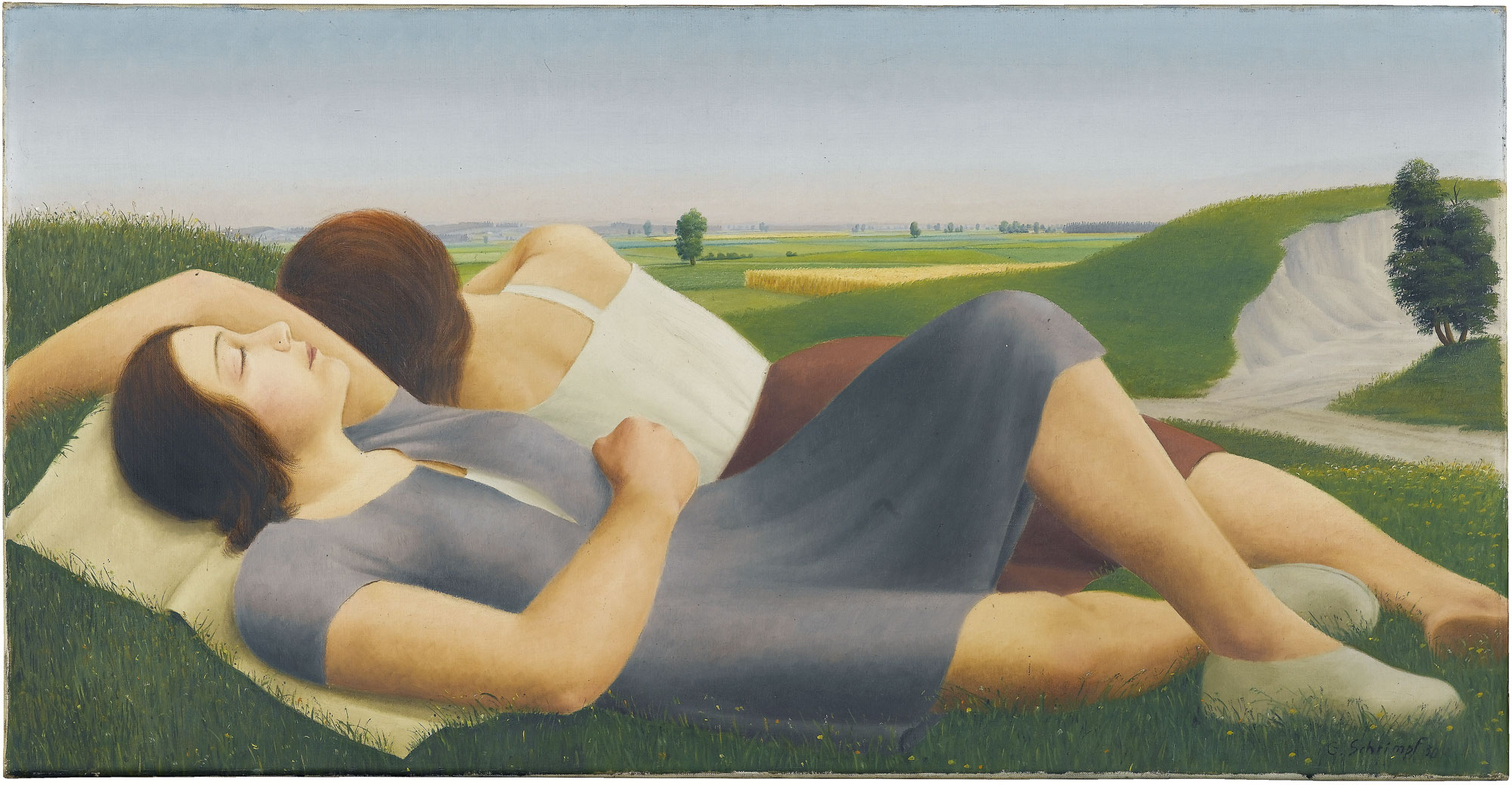

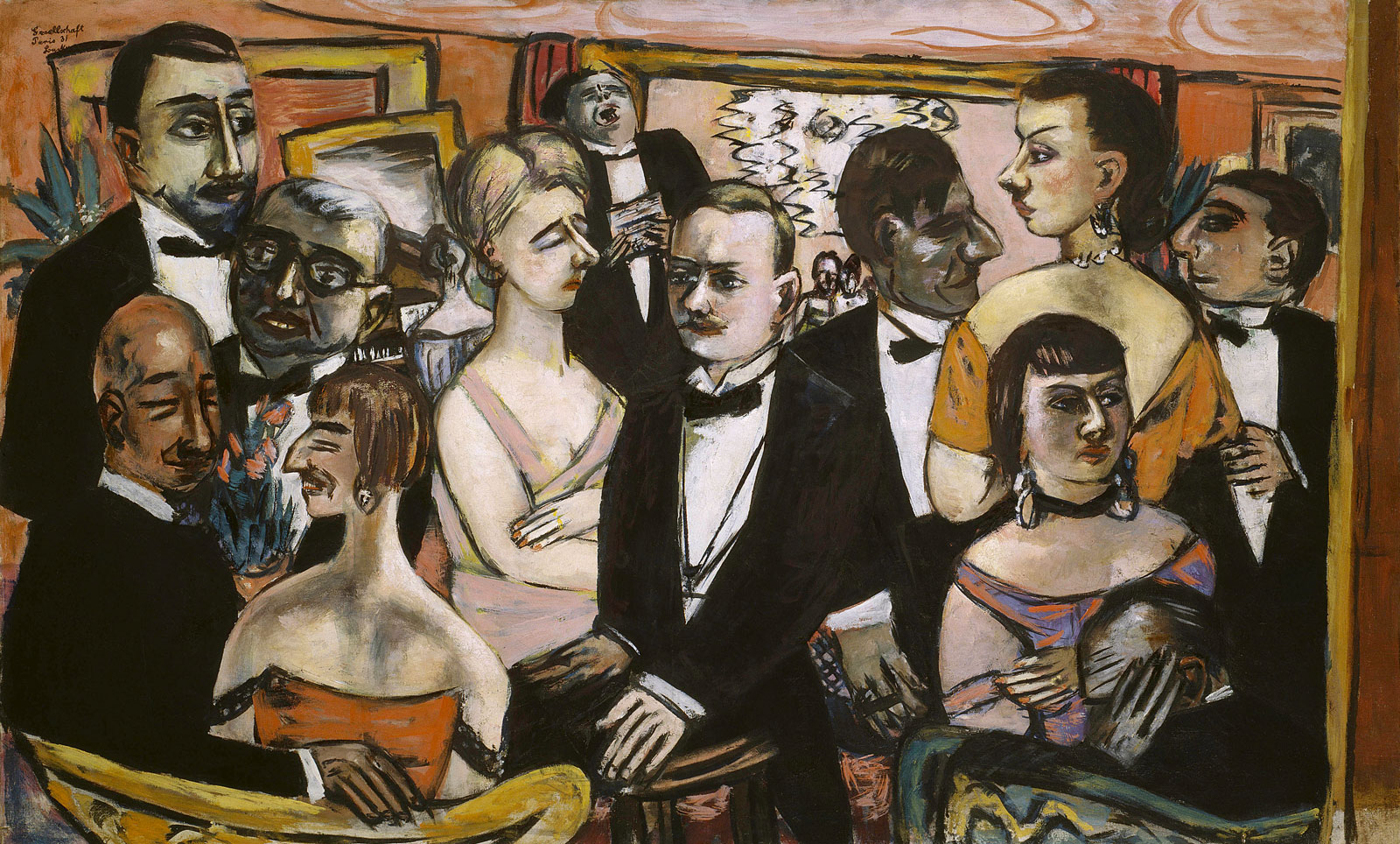
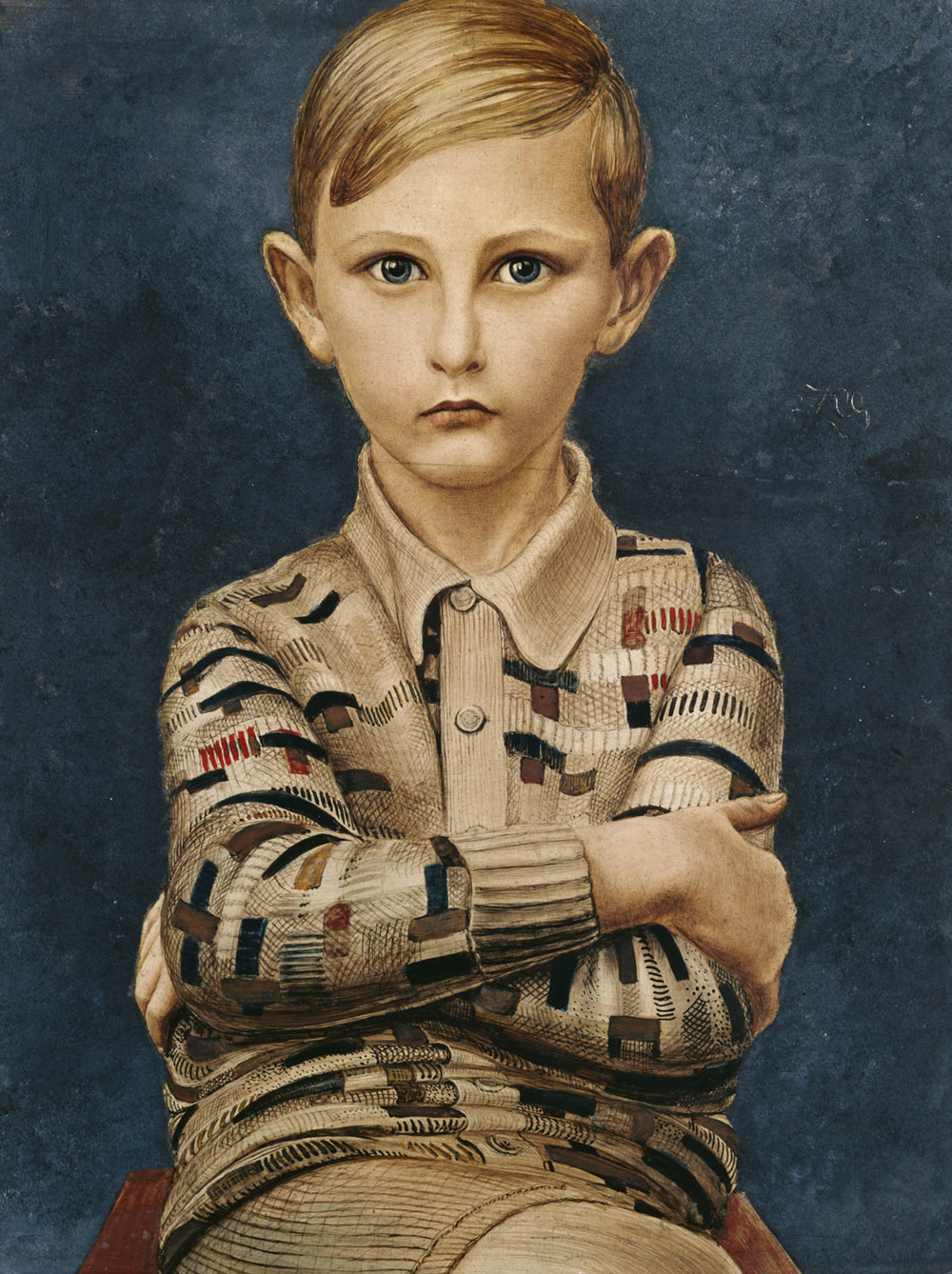


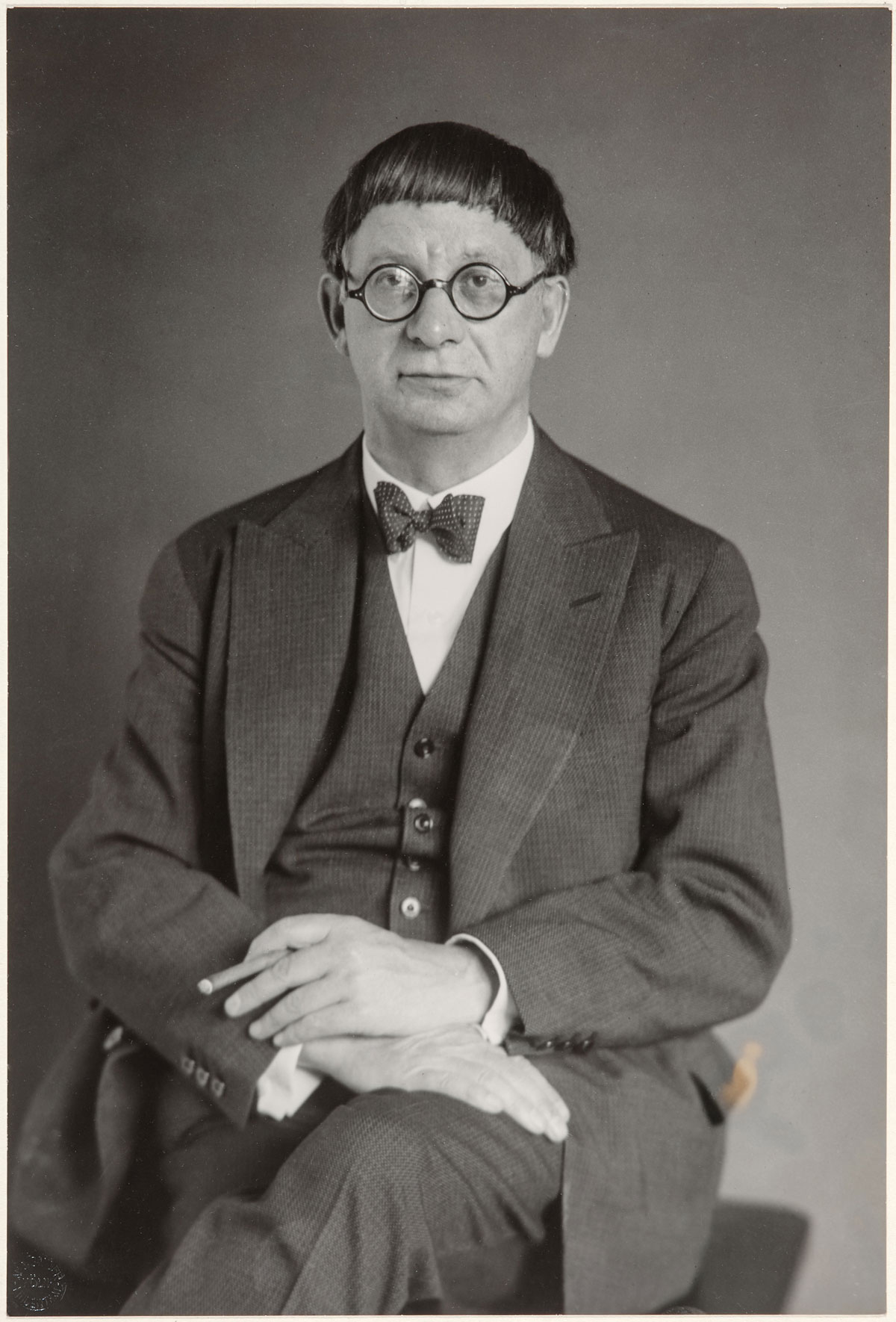


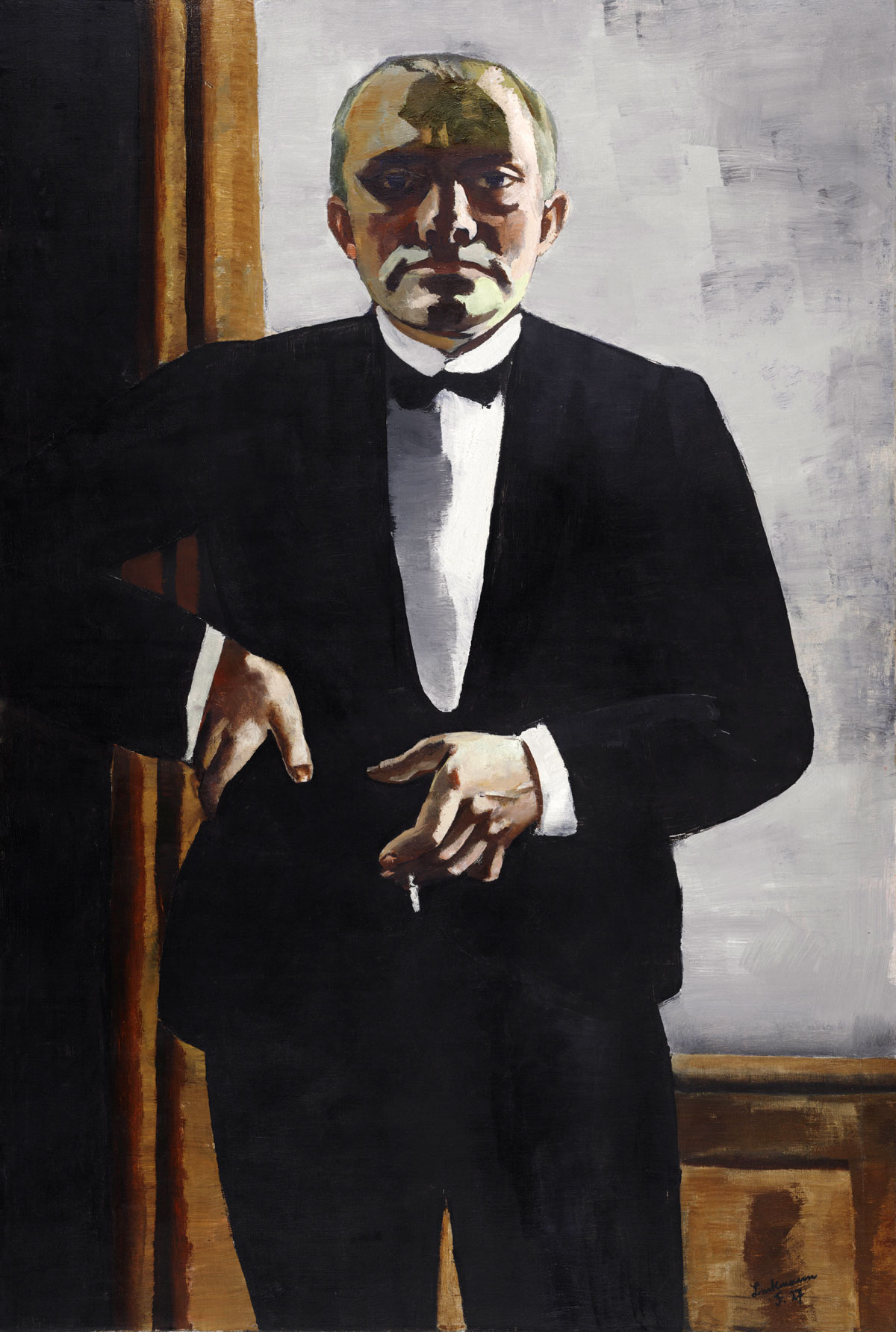

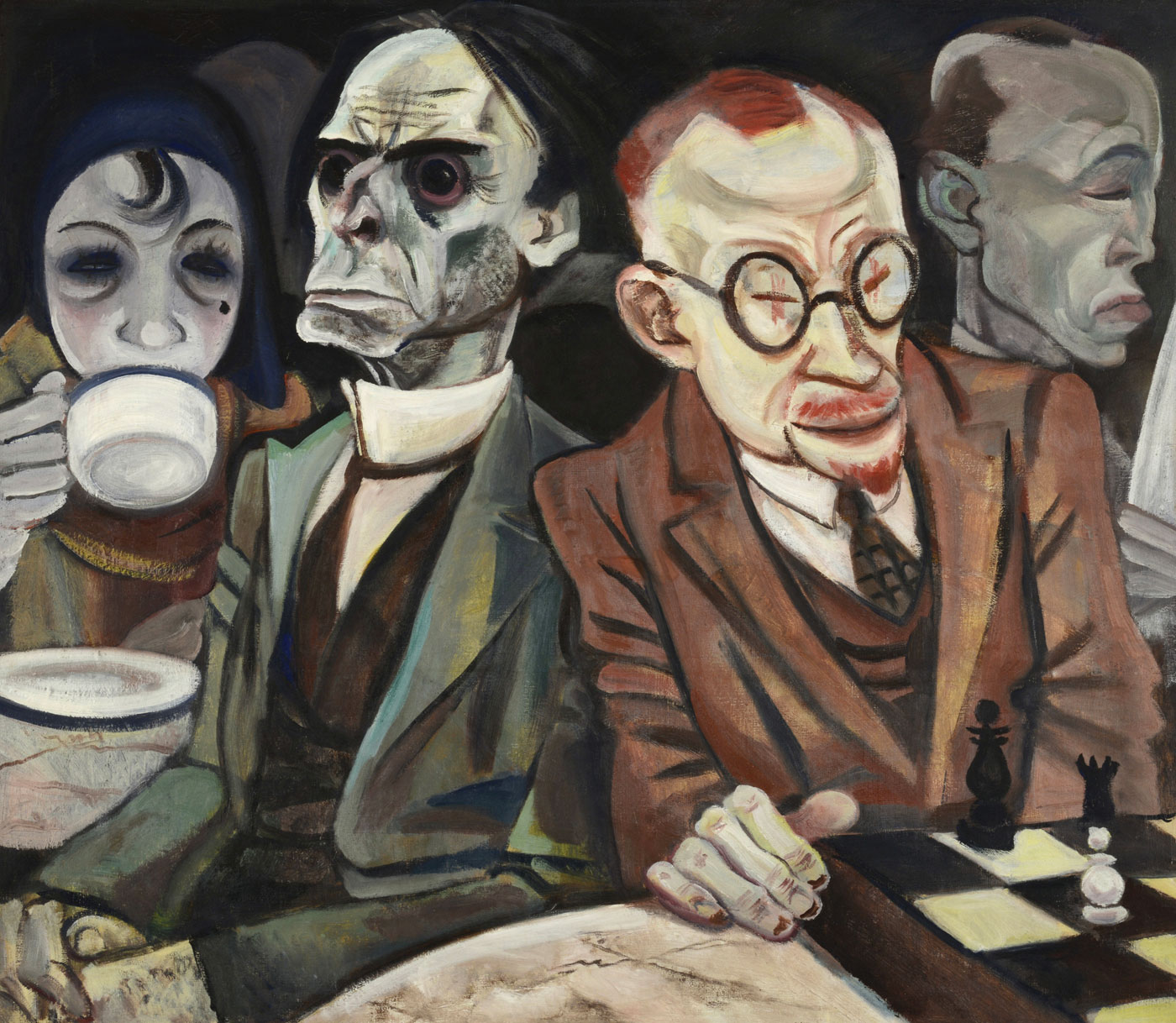

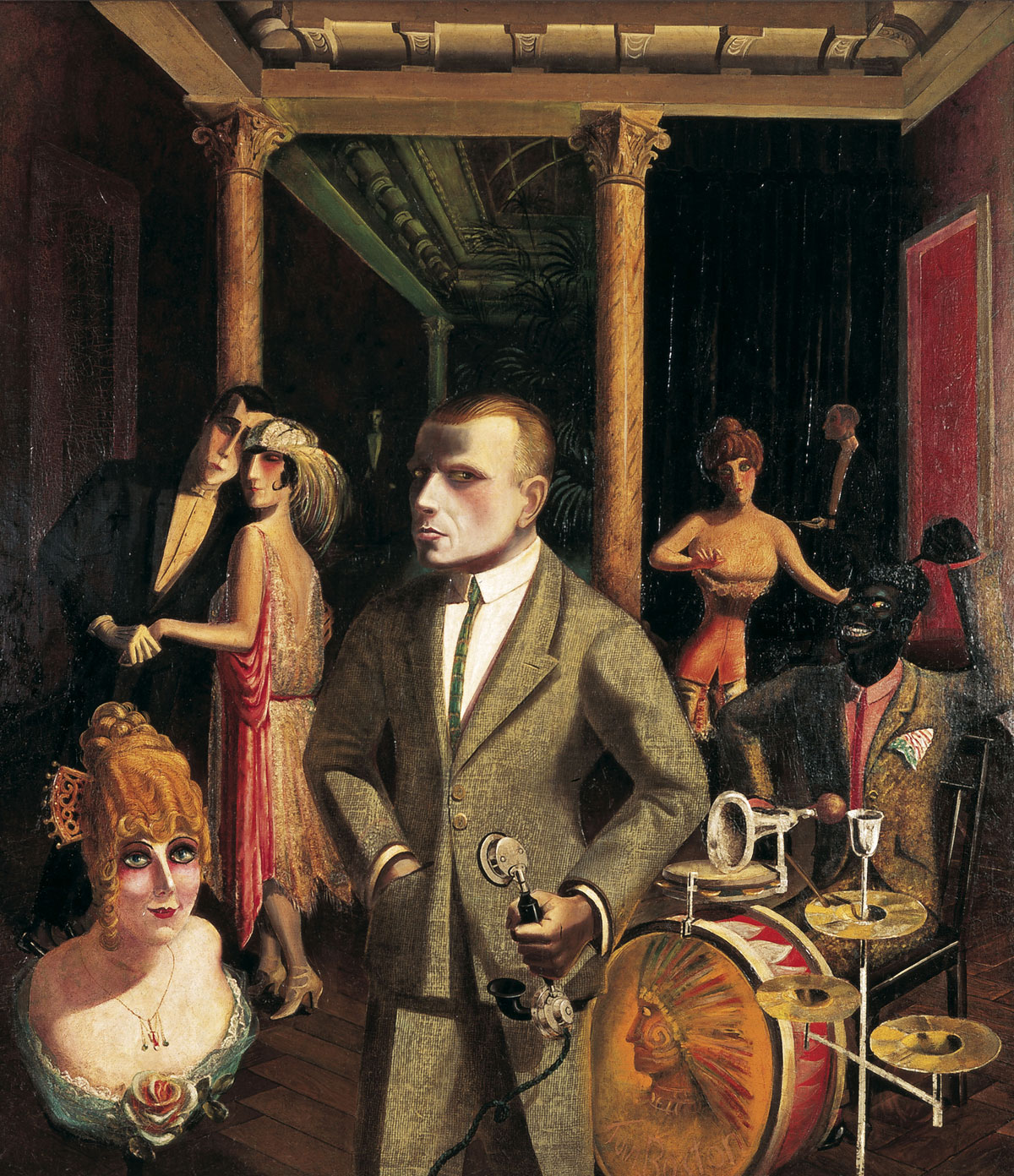


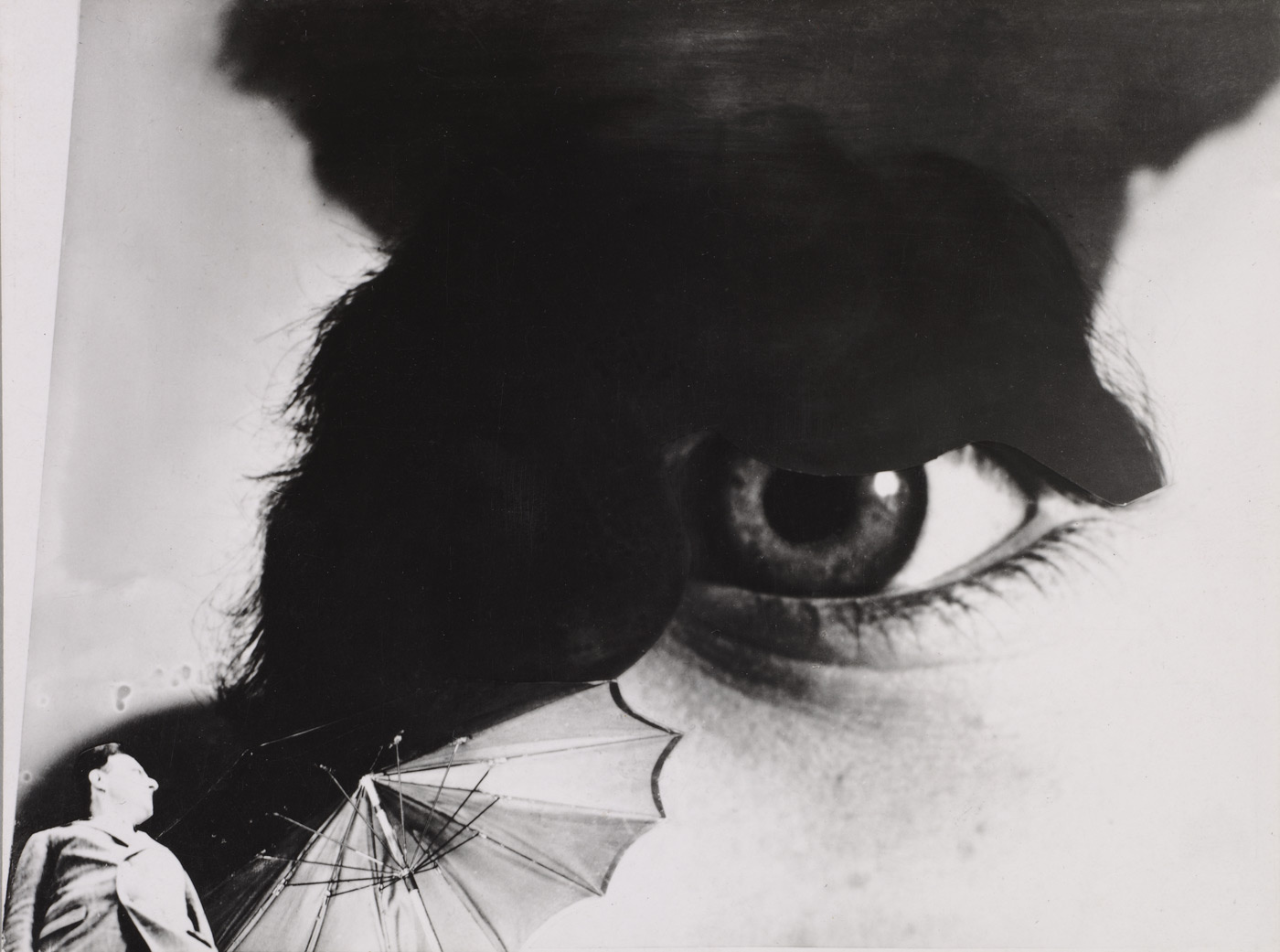
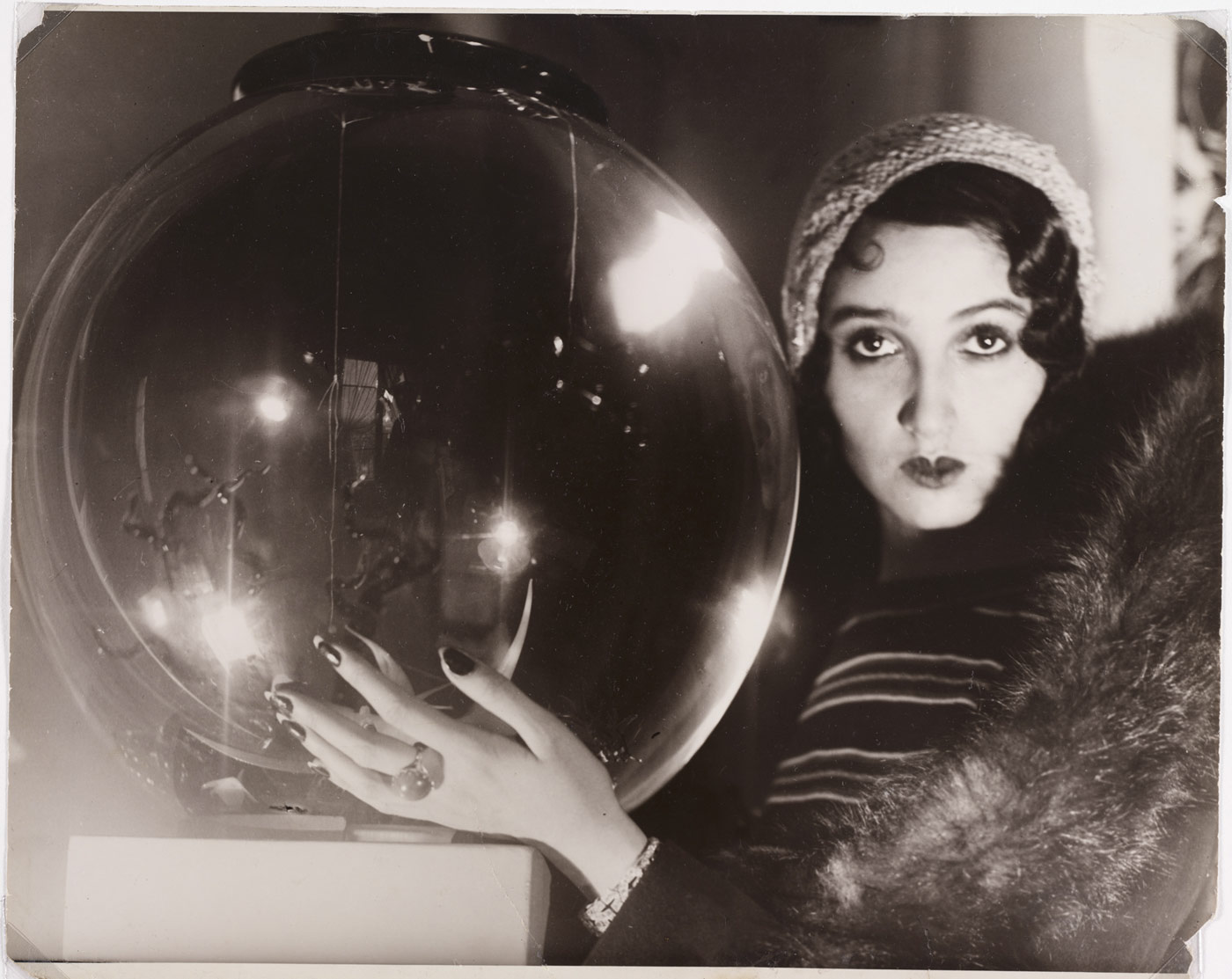

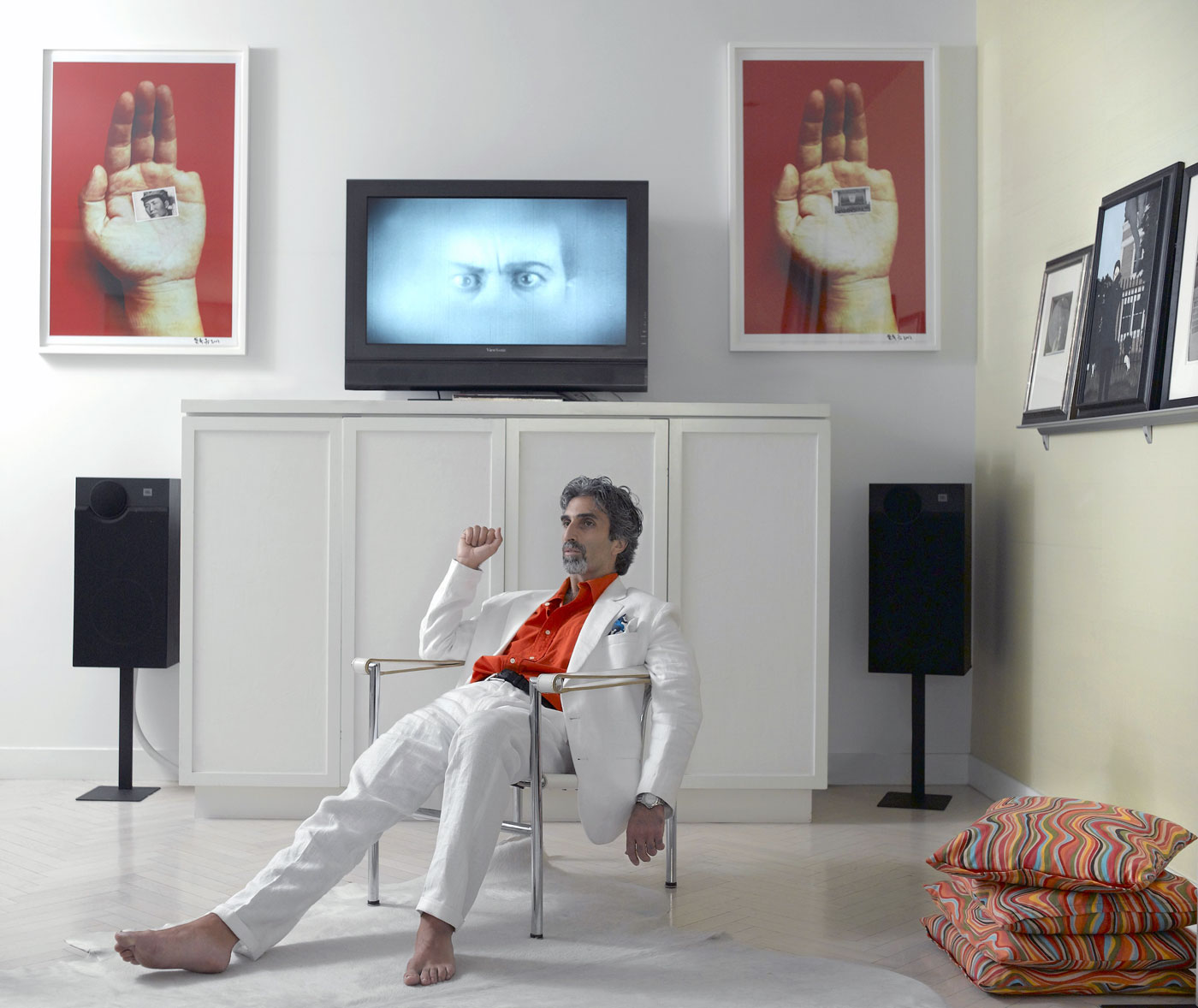
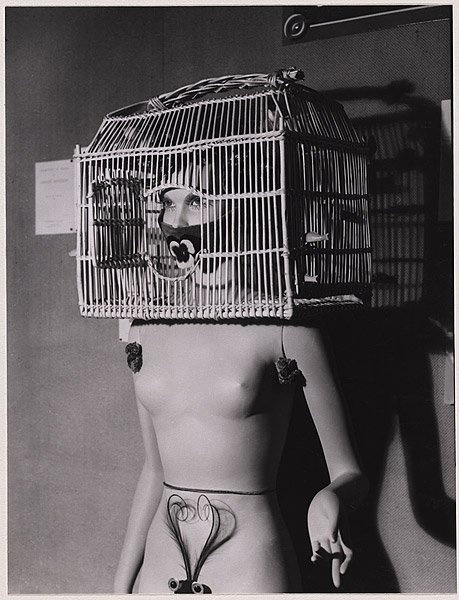
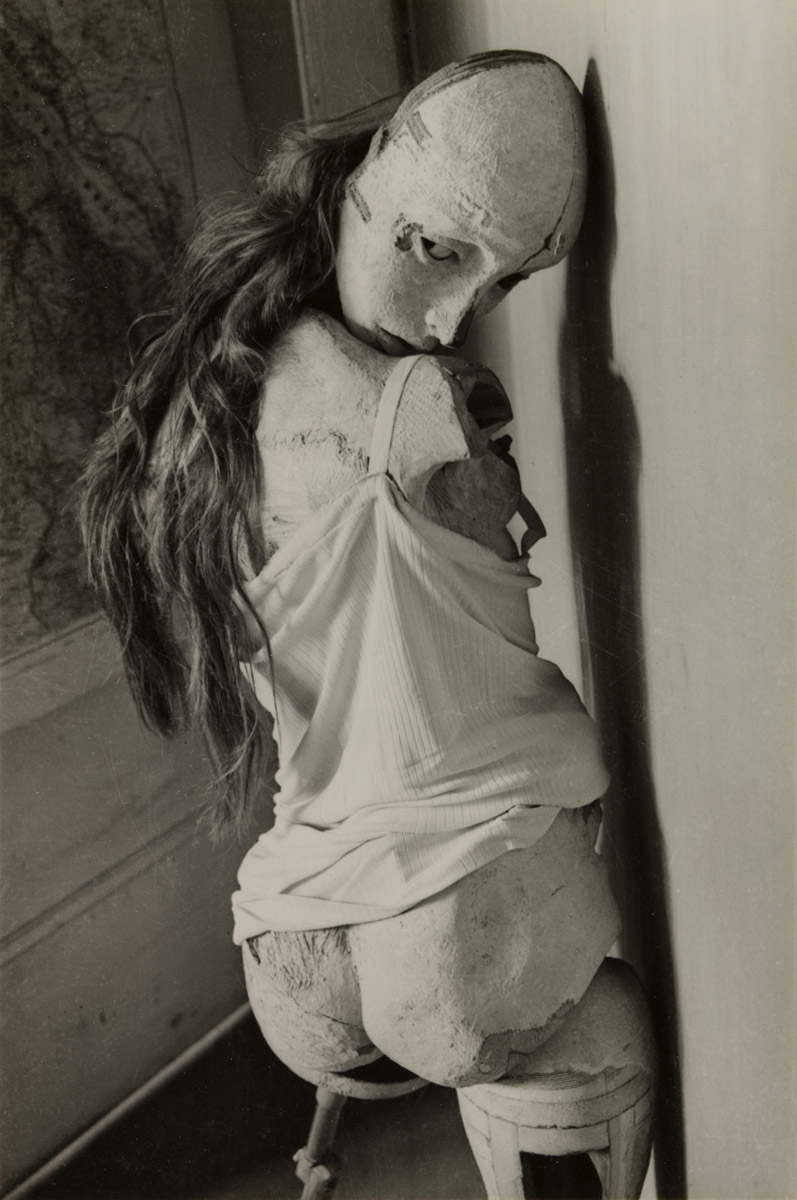
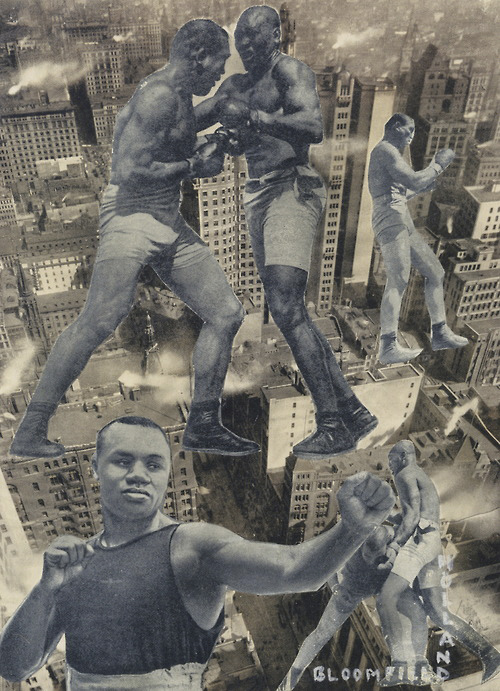
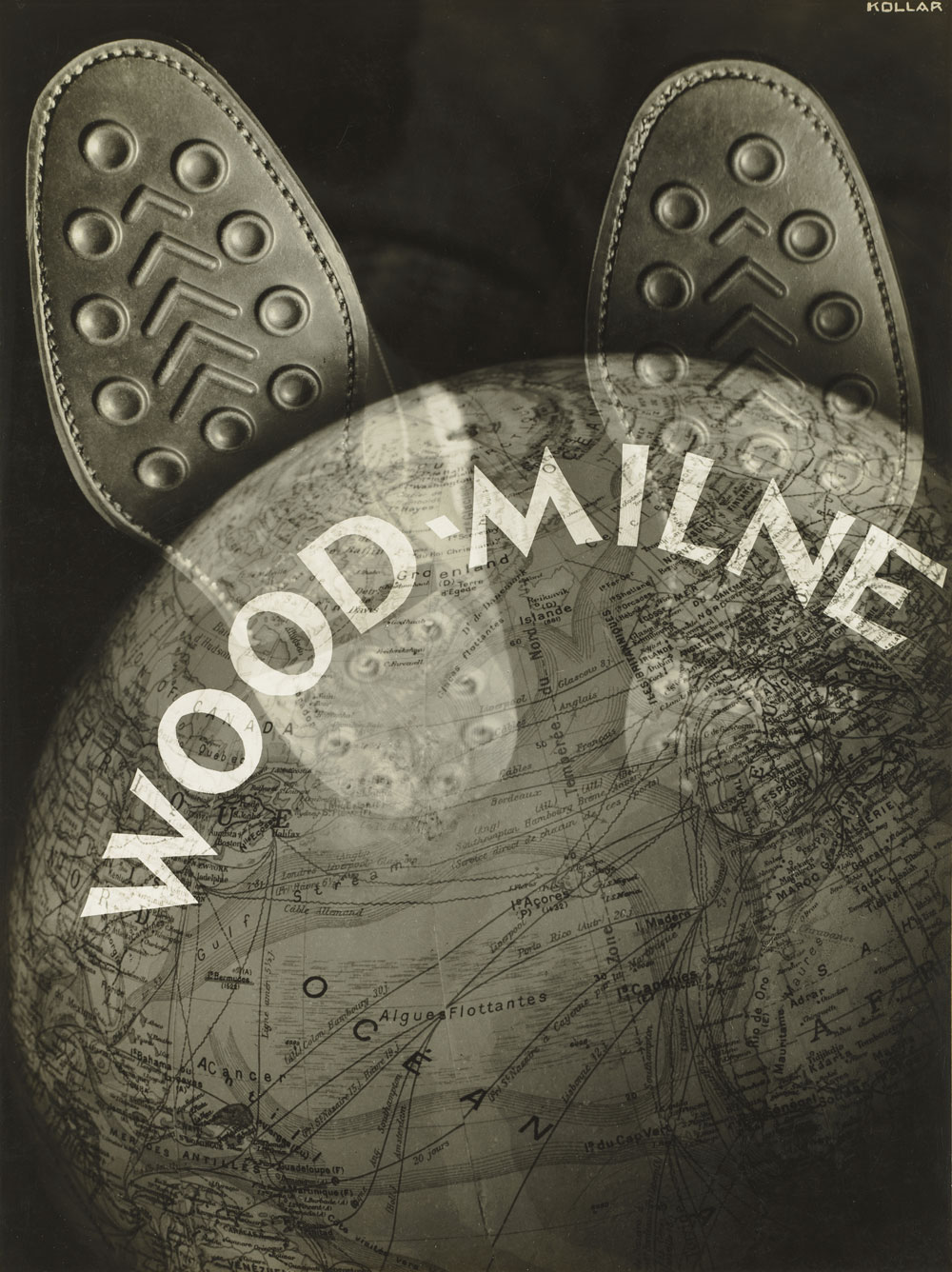
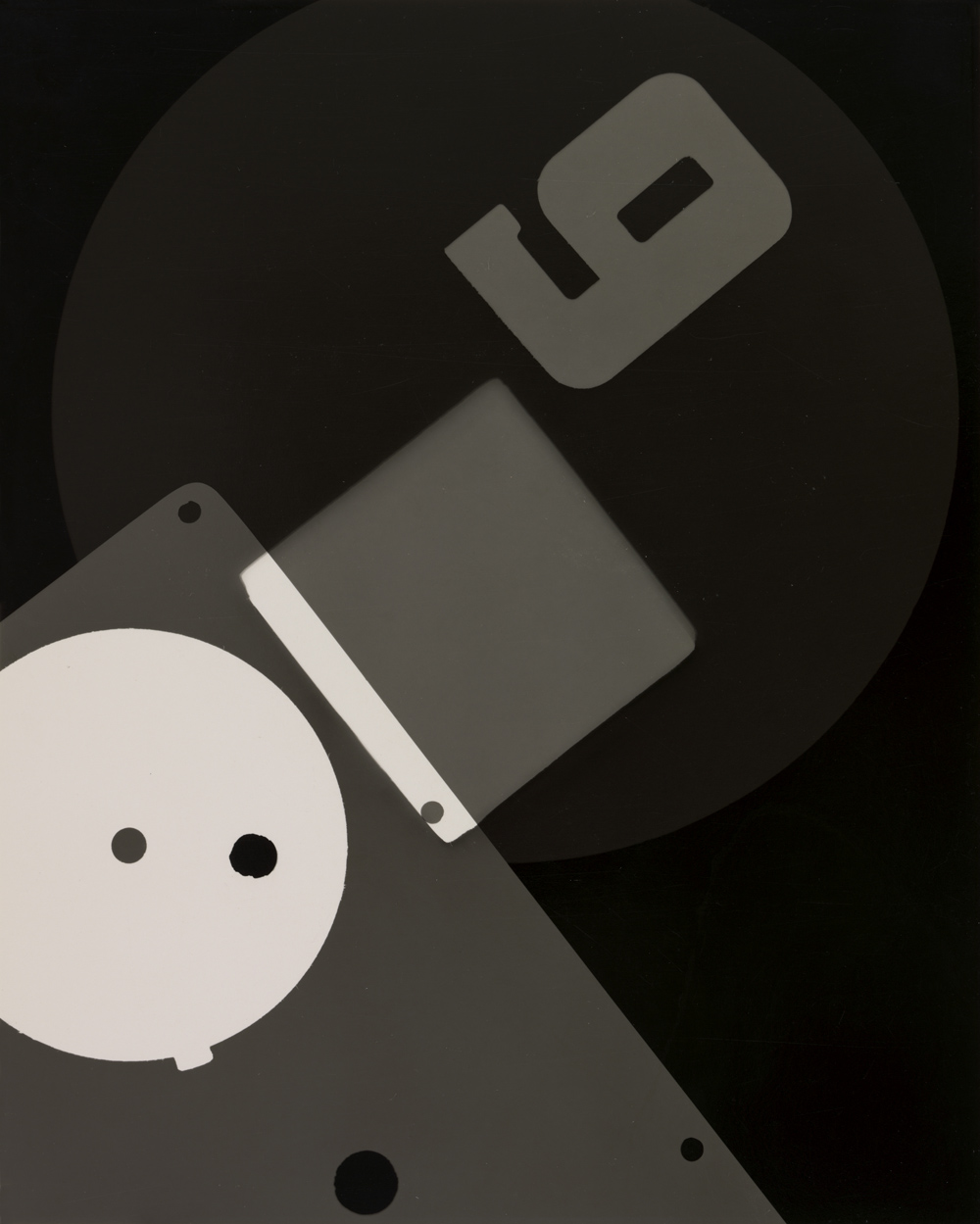
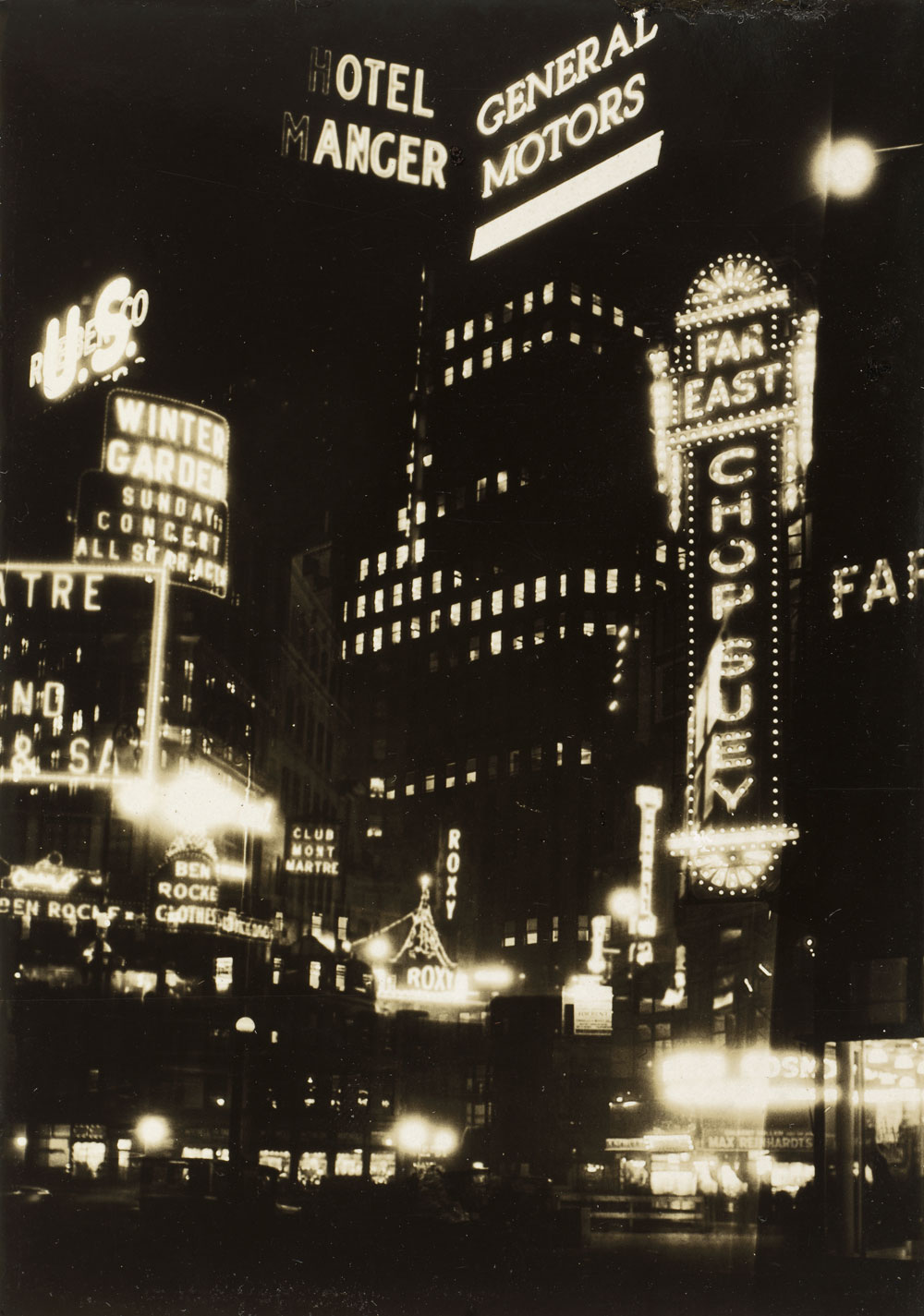
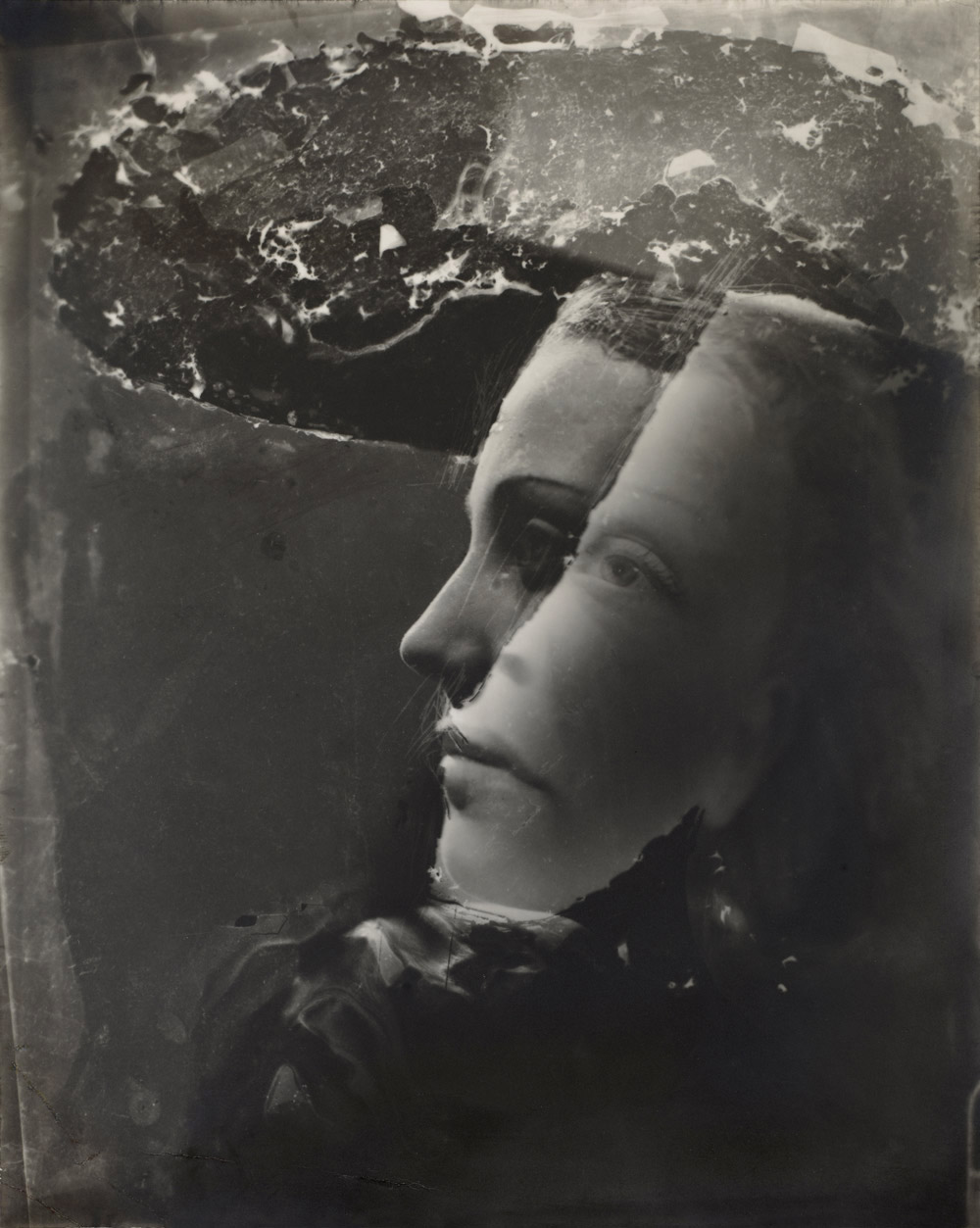
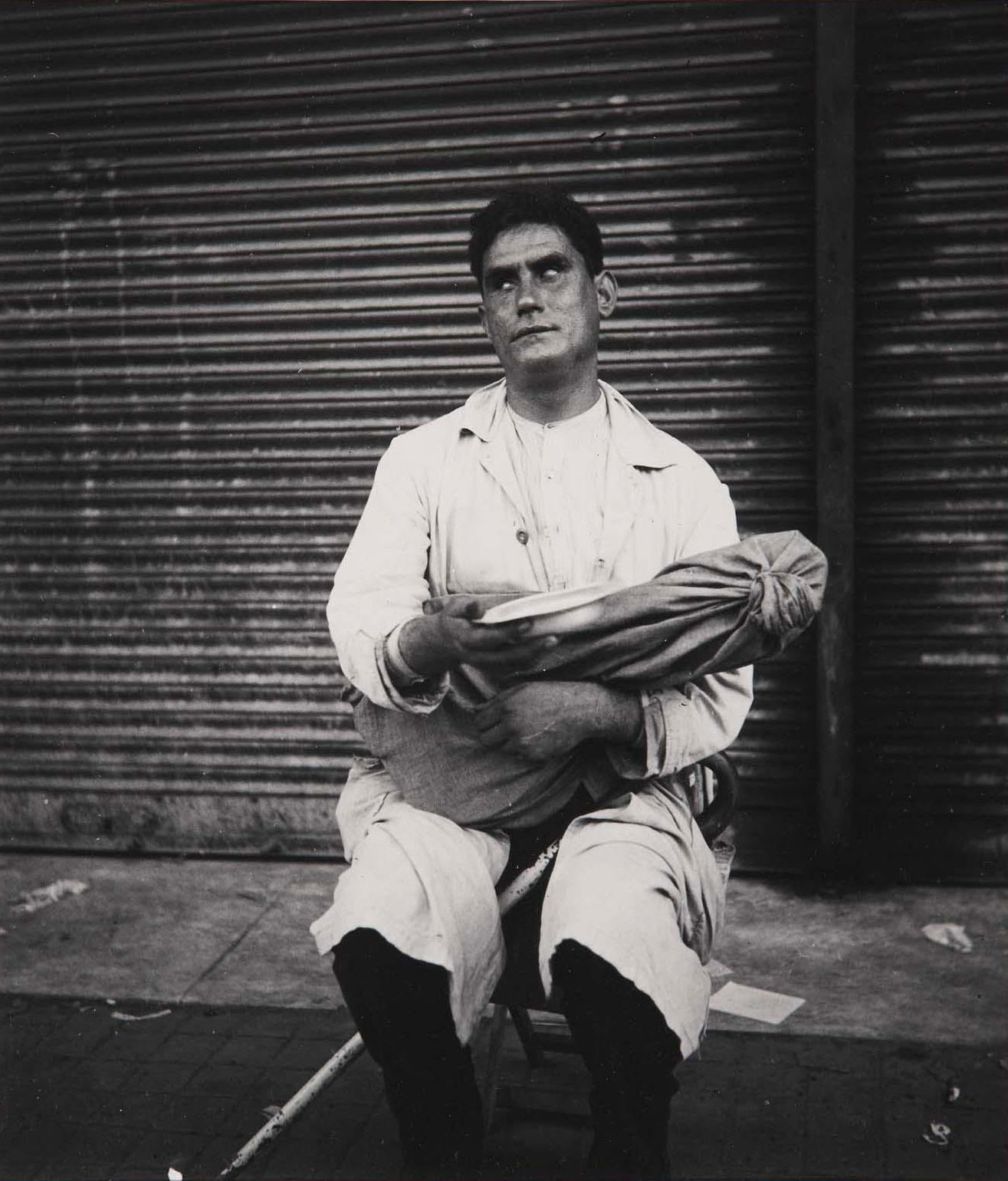
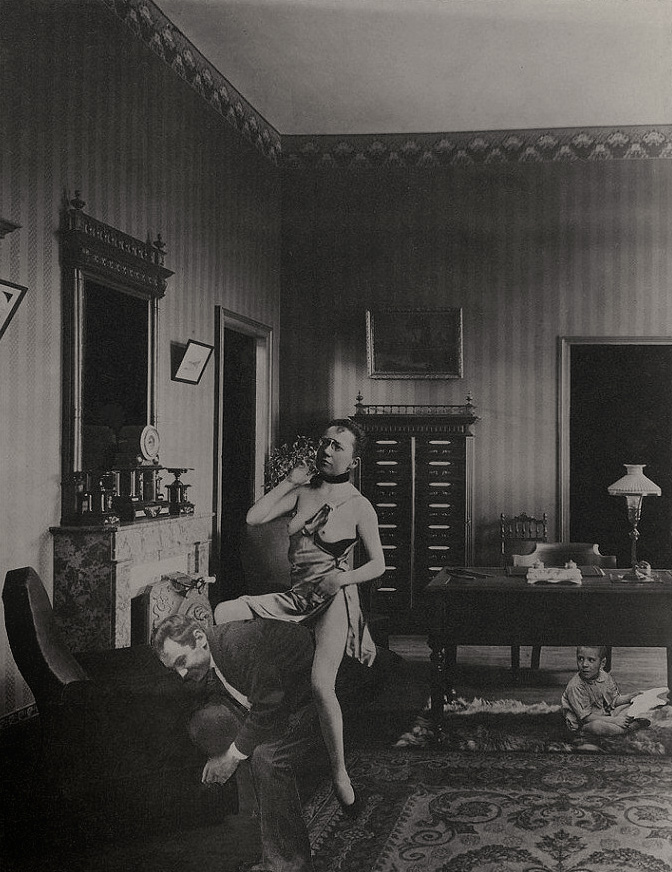
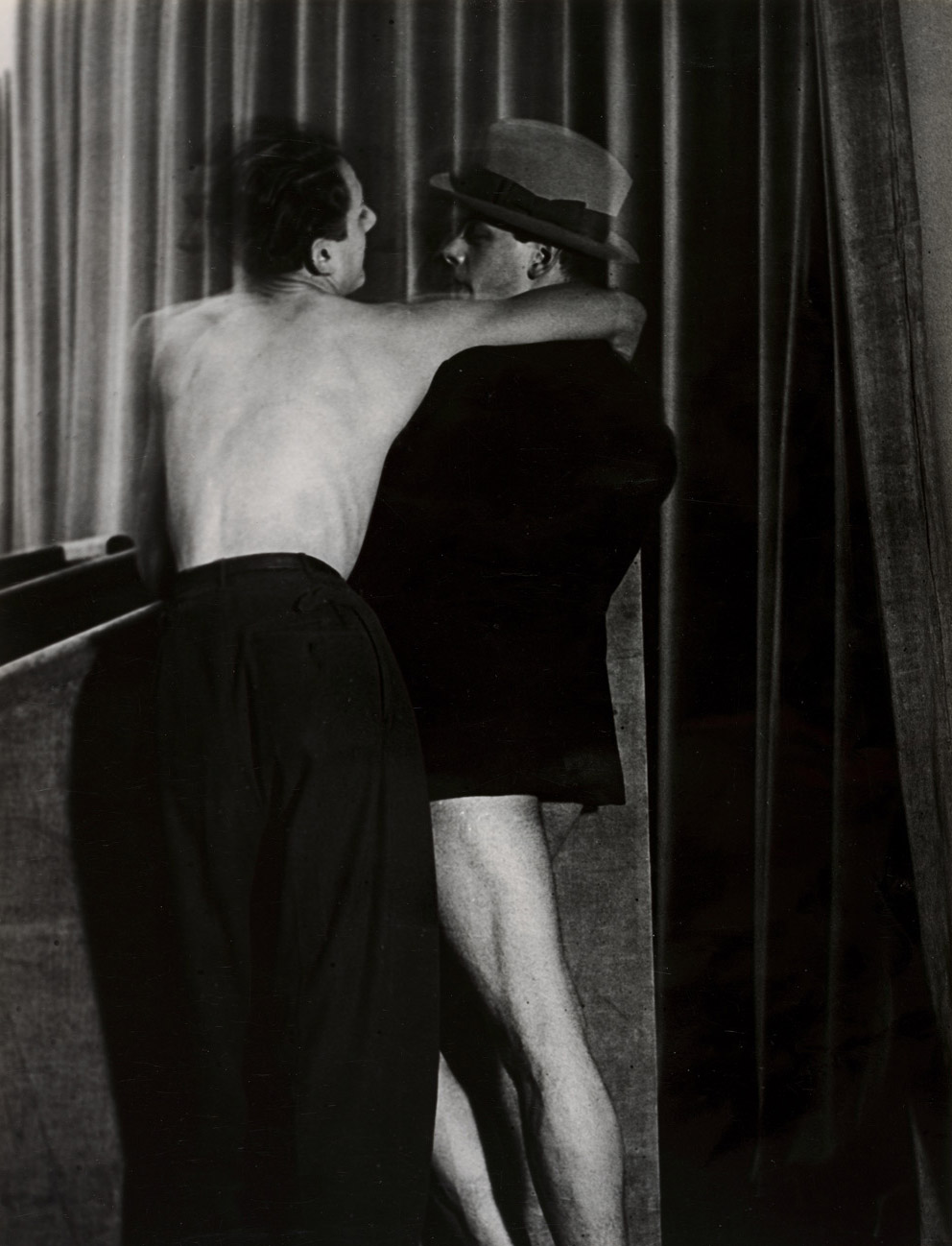
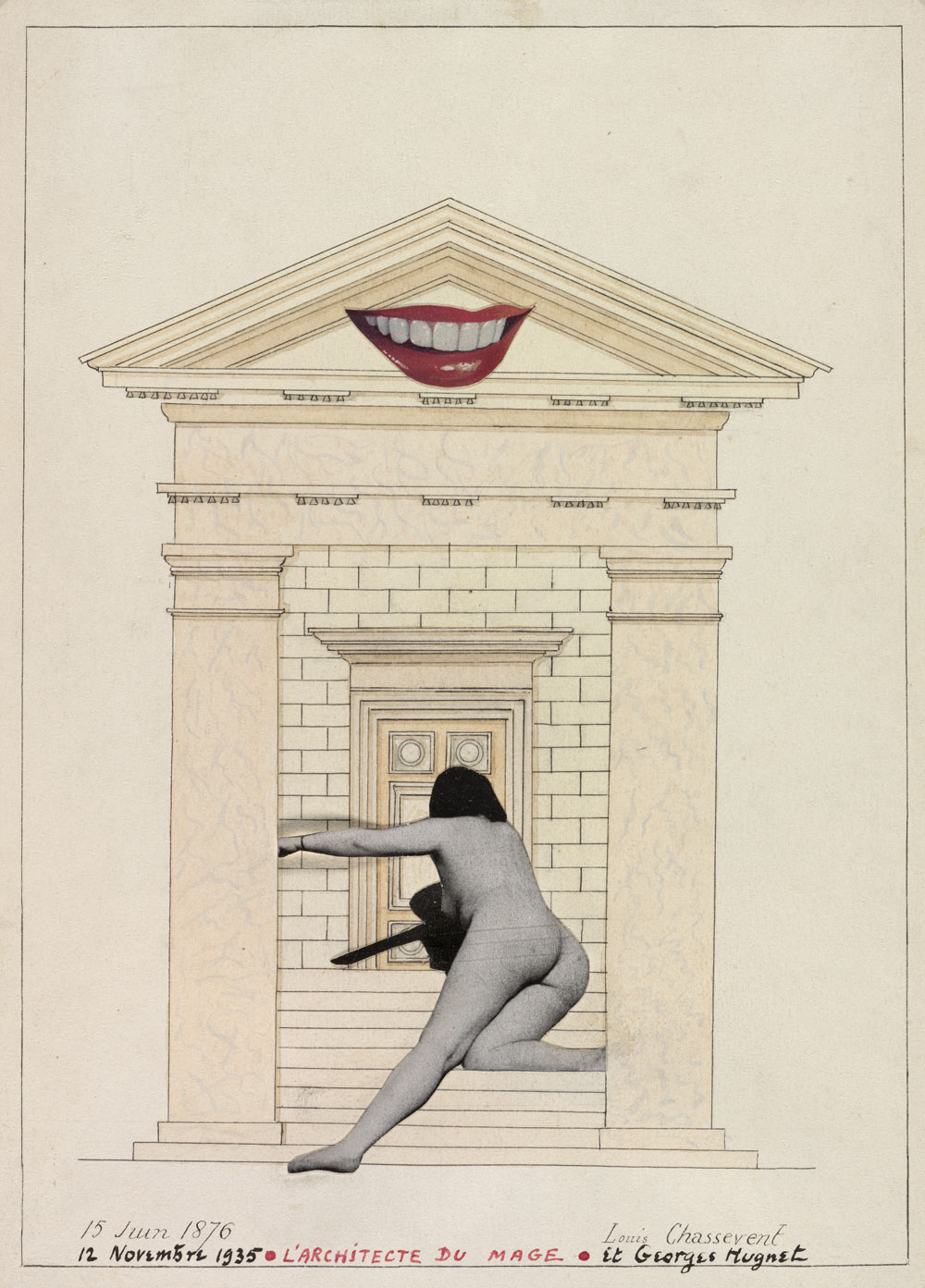


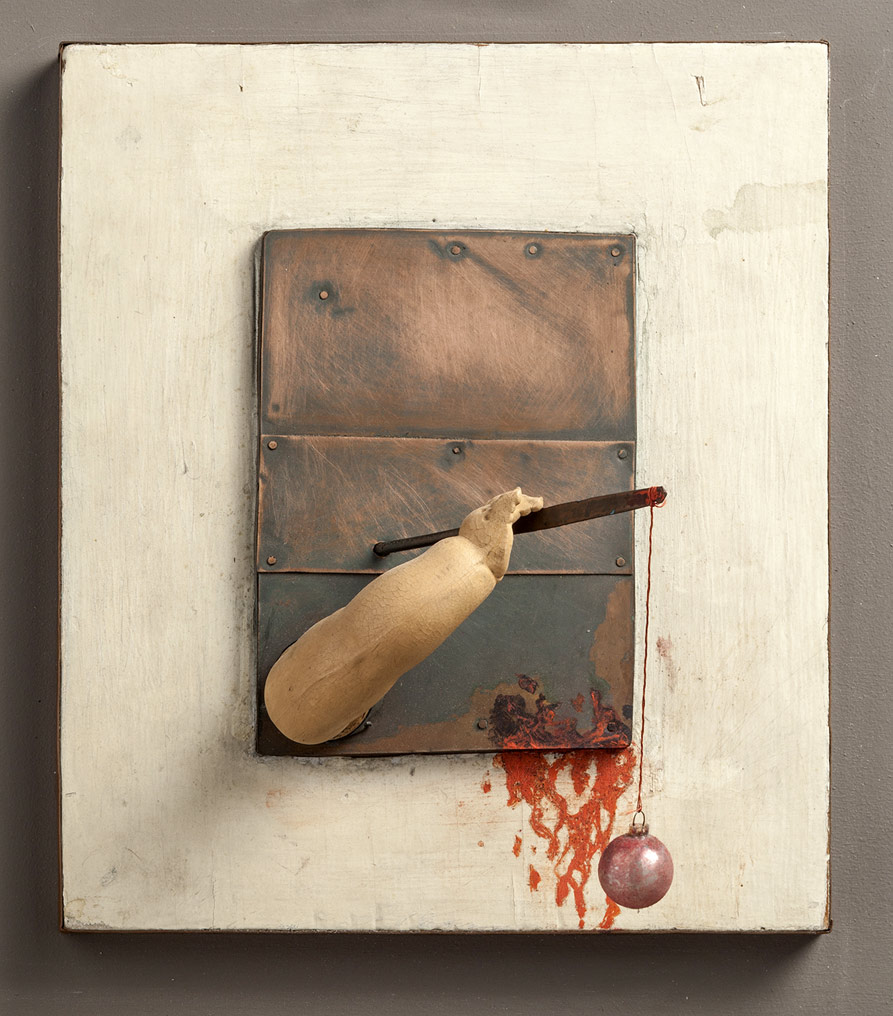


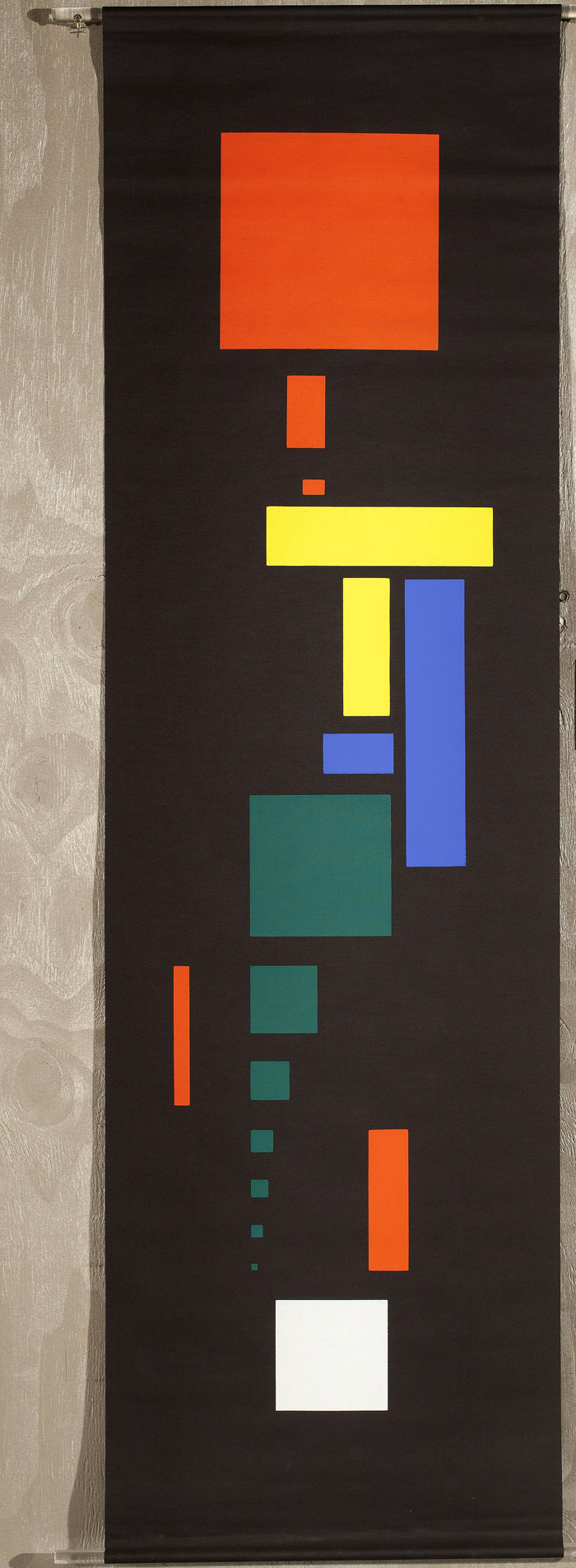


![Hans Bellmer (German, 1902-1975) 'La mitrailleuse en état de grâce' (The Machine Gun[neress] in a State of Grace) 1937](https://artblart.com/wp-content/uploads/2014/02/fleshandmetal_01_bellmer-web.jpg "Hans Bellmer (German, 1902-1975) 'La mitrailleuse en état de grâce' (The Machine Gun[neress] in a State of Grace) 1937")


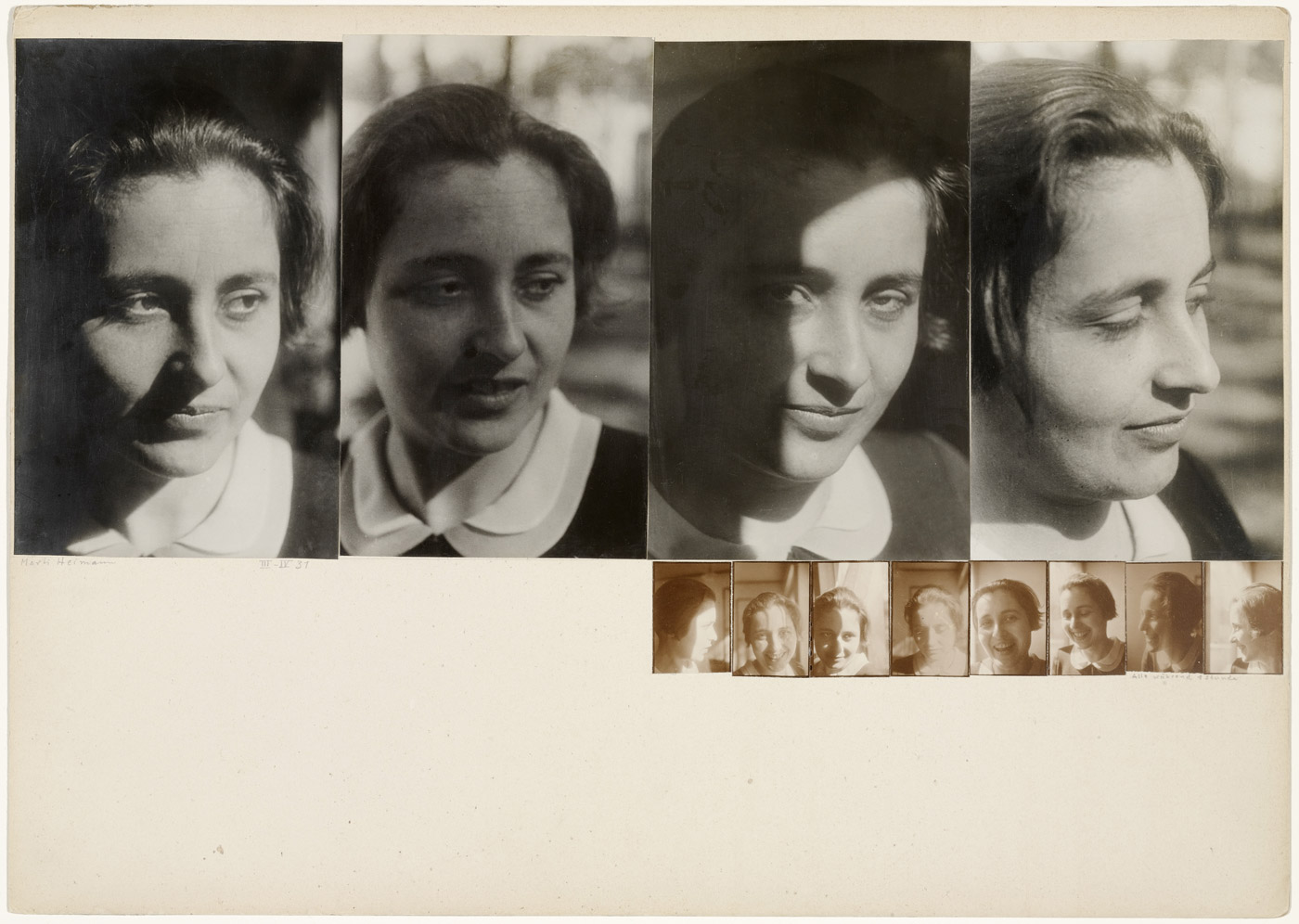

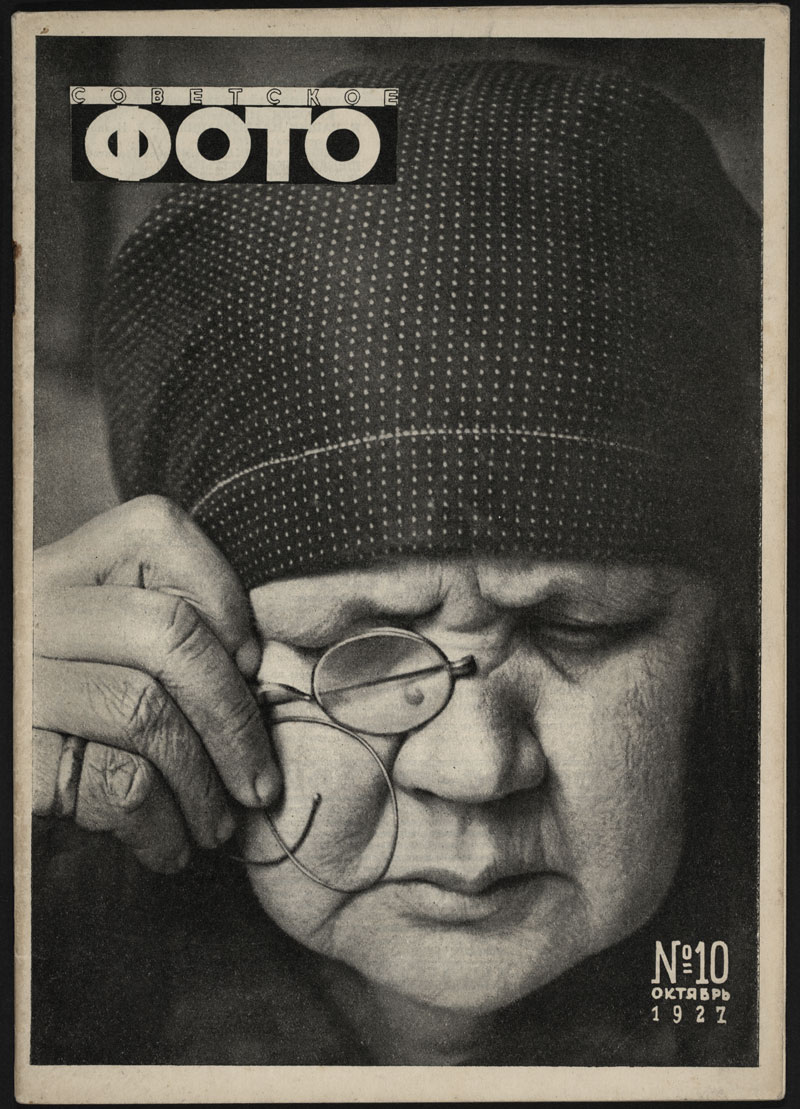


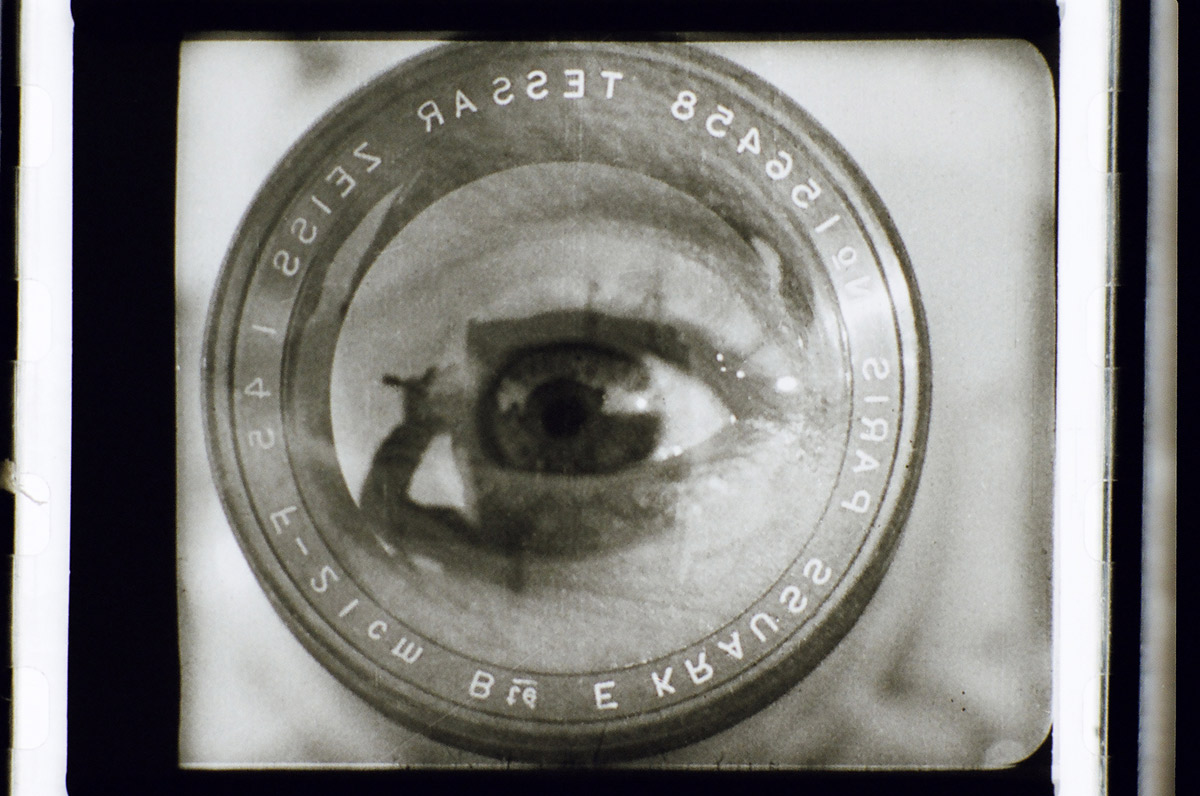

![Georges Hugnet (French, 1906-1974) 'Untitled [Surrealist beach collage]' c. 1935](https://artblart.com/wp-content/uploads/2013/04/georges-hugnet-untitled-surrealist-beach-collage.jpg "Georges Hugnet (French, 1906-1974) 'Untitled [Surrealist beach collage]' c. 1935")
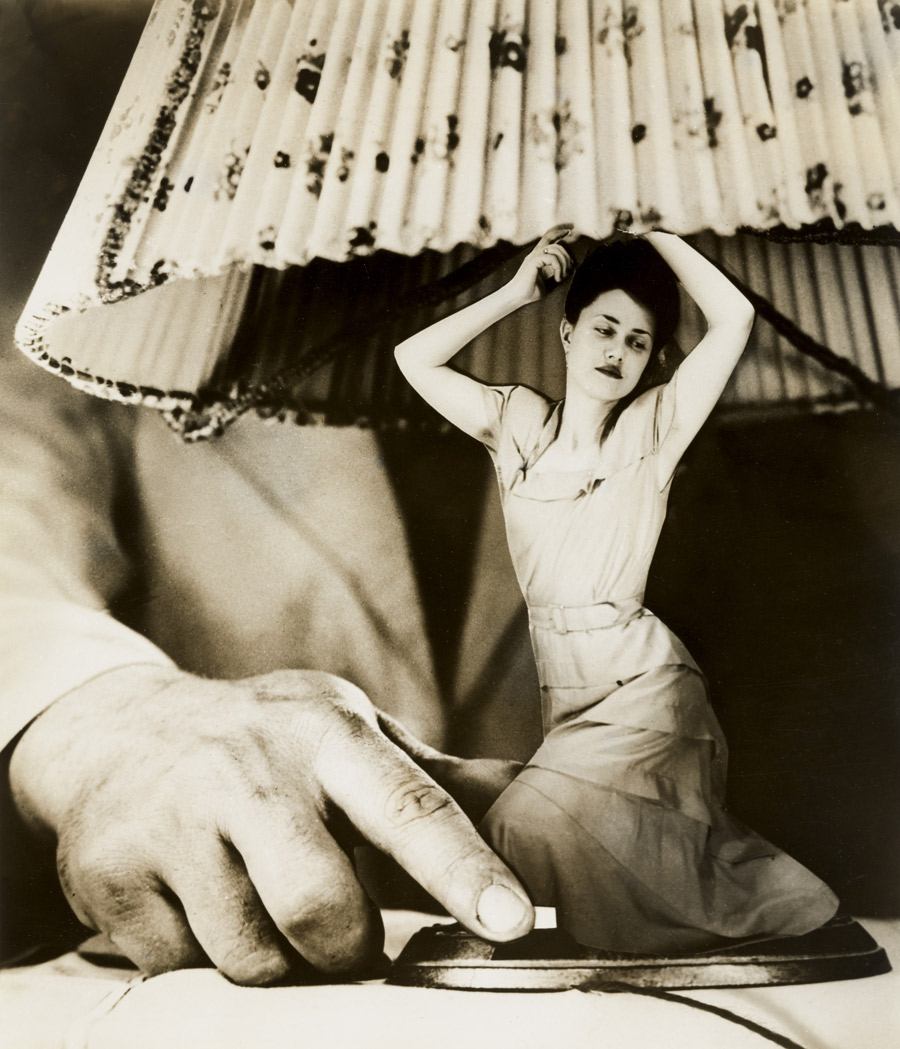
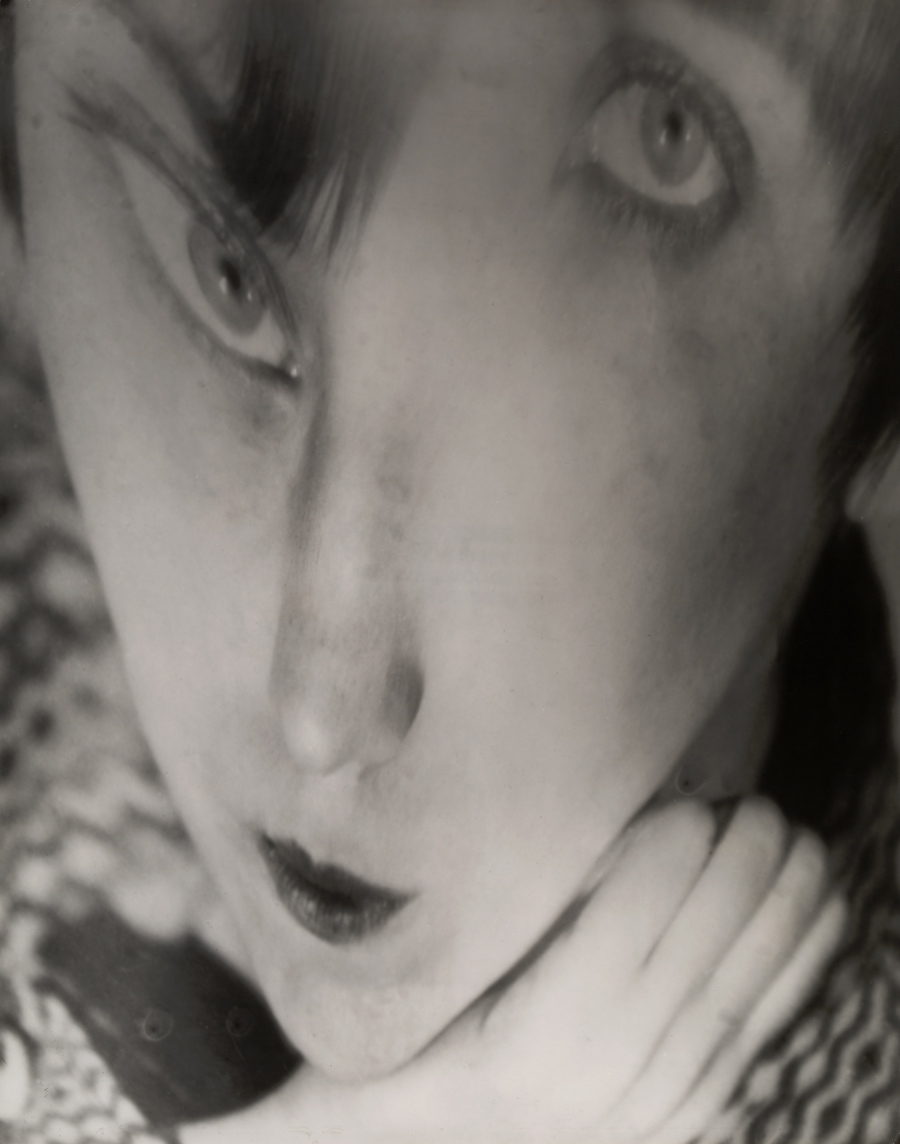
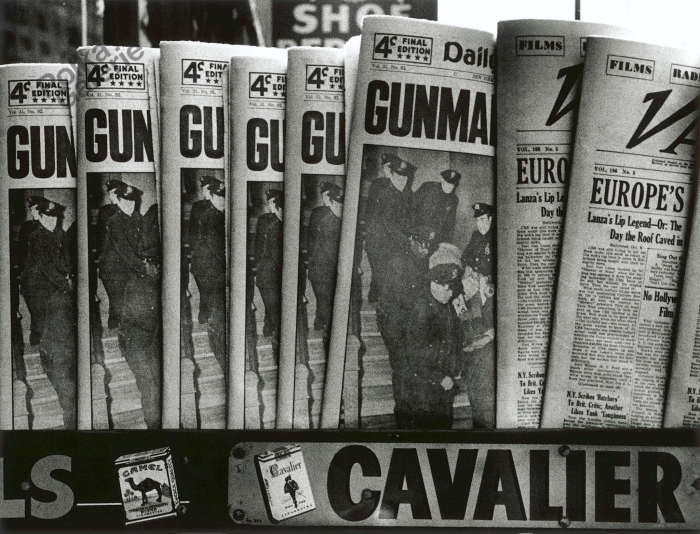
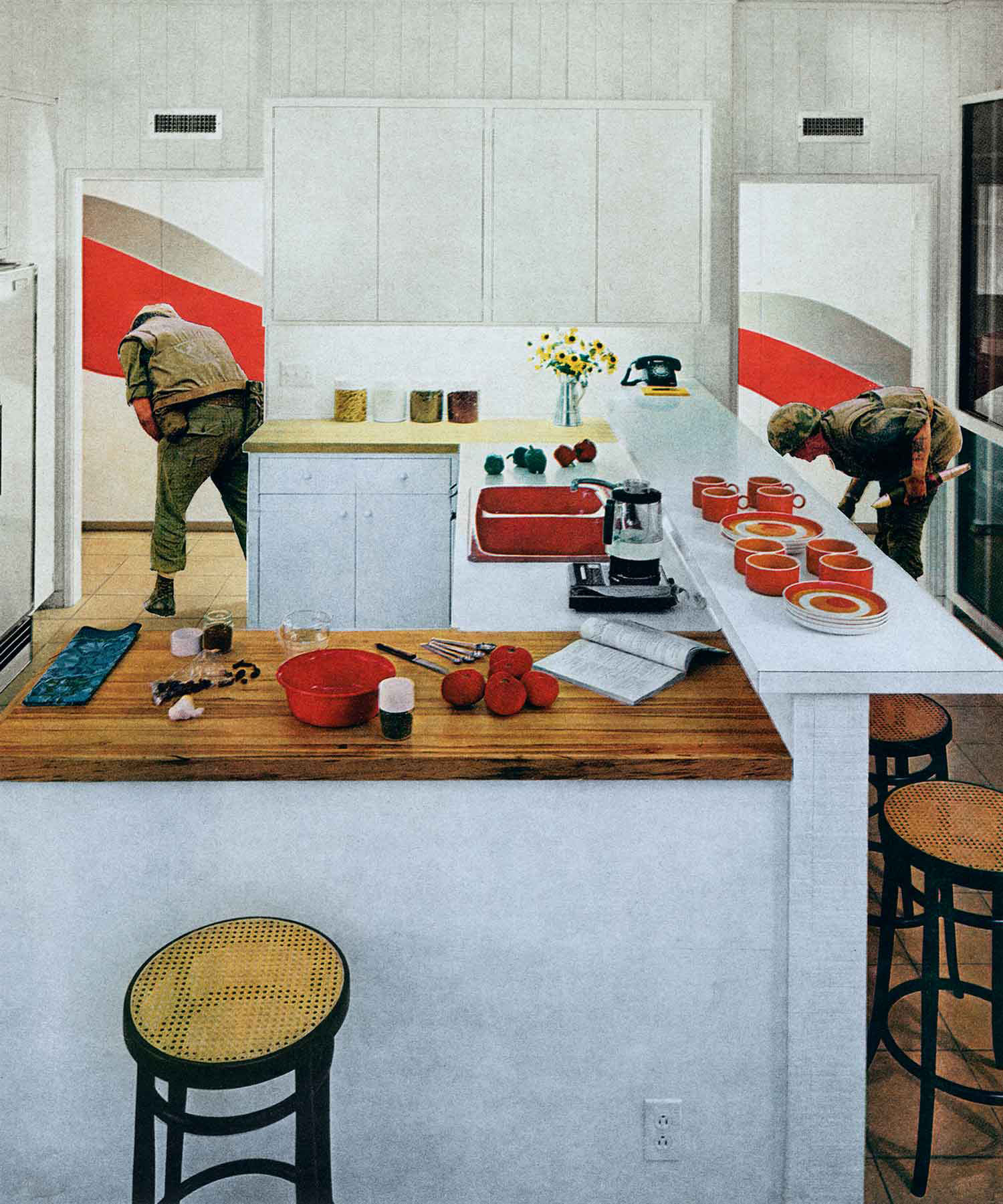




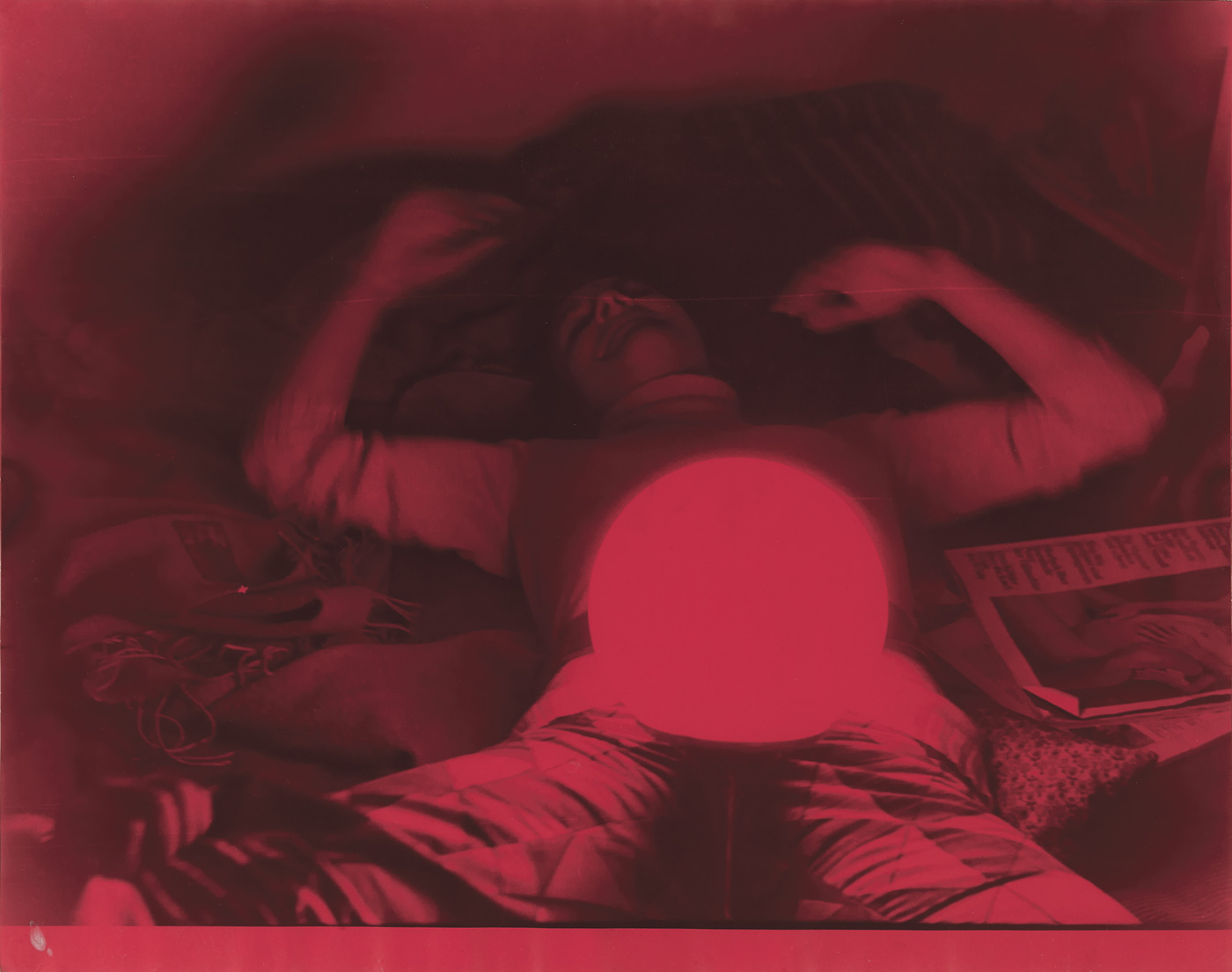
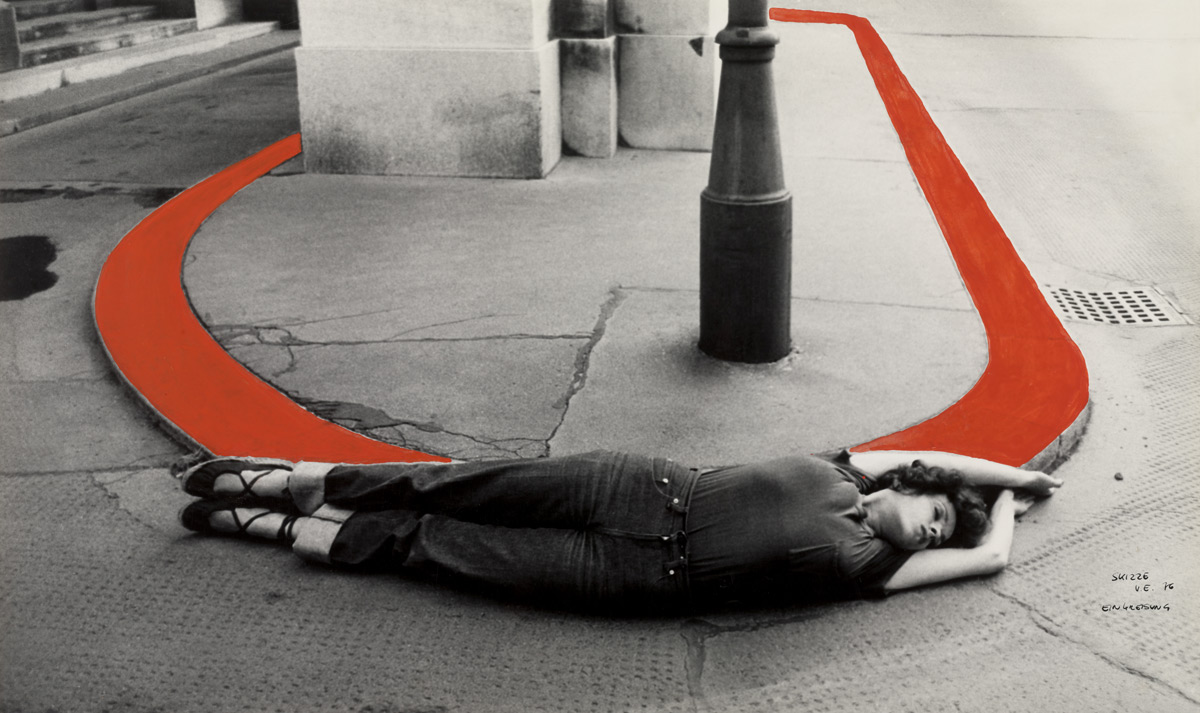
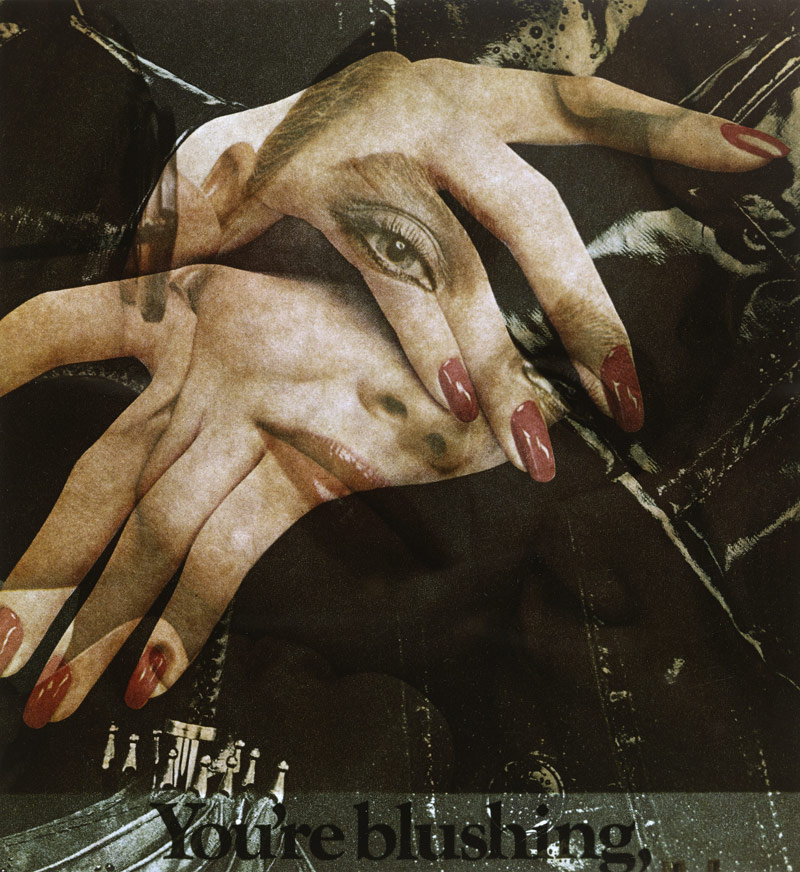
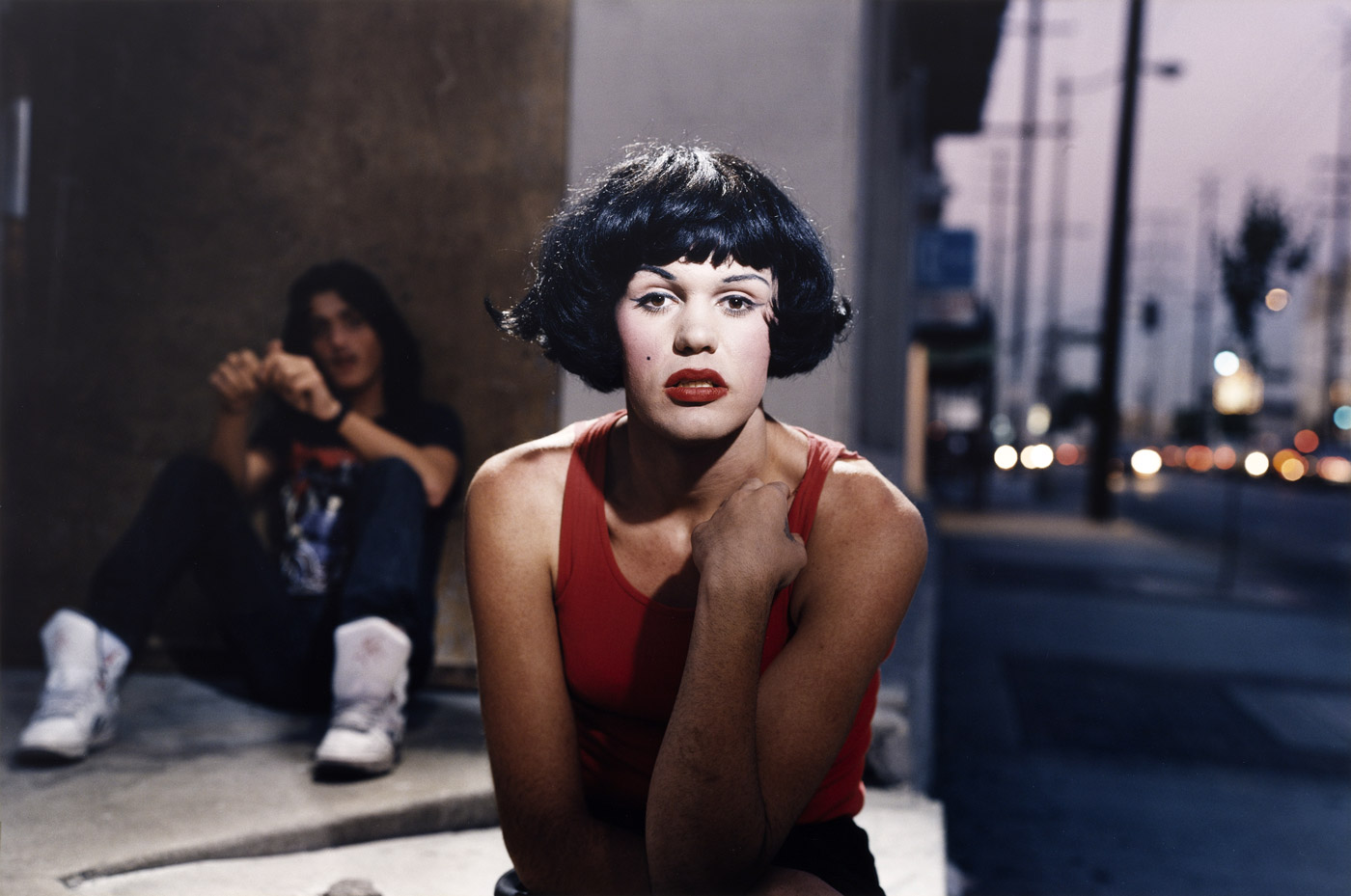
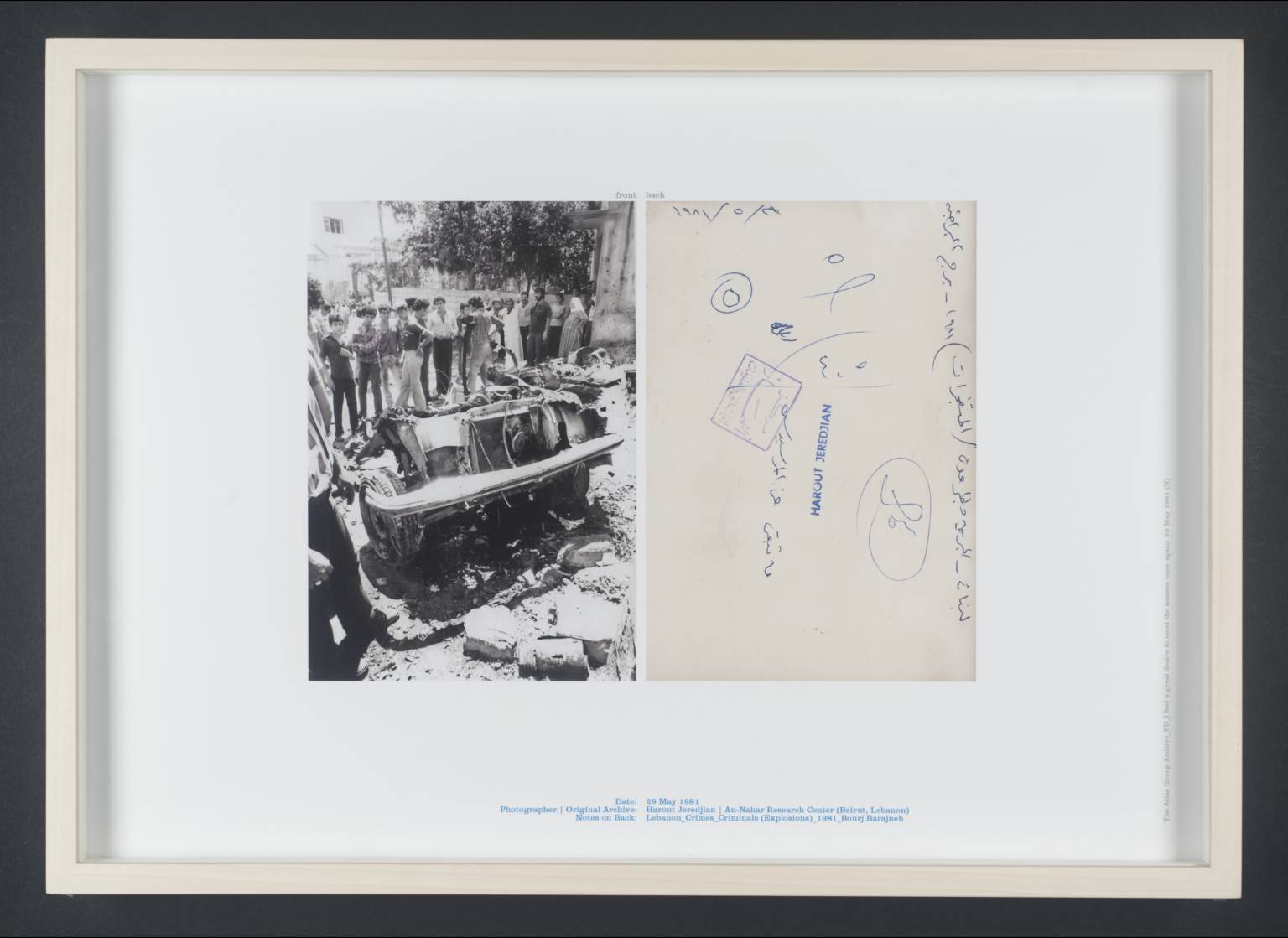


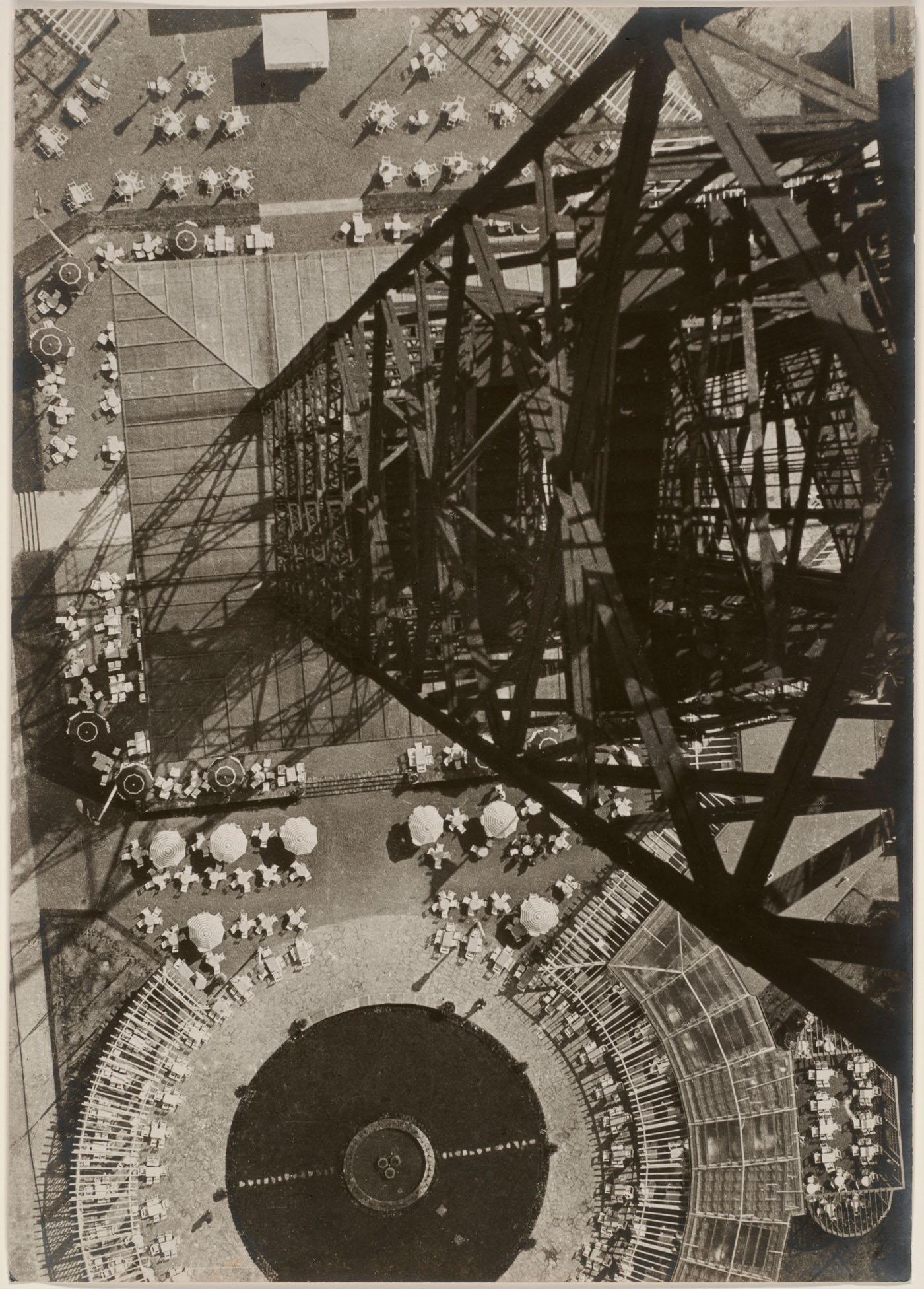
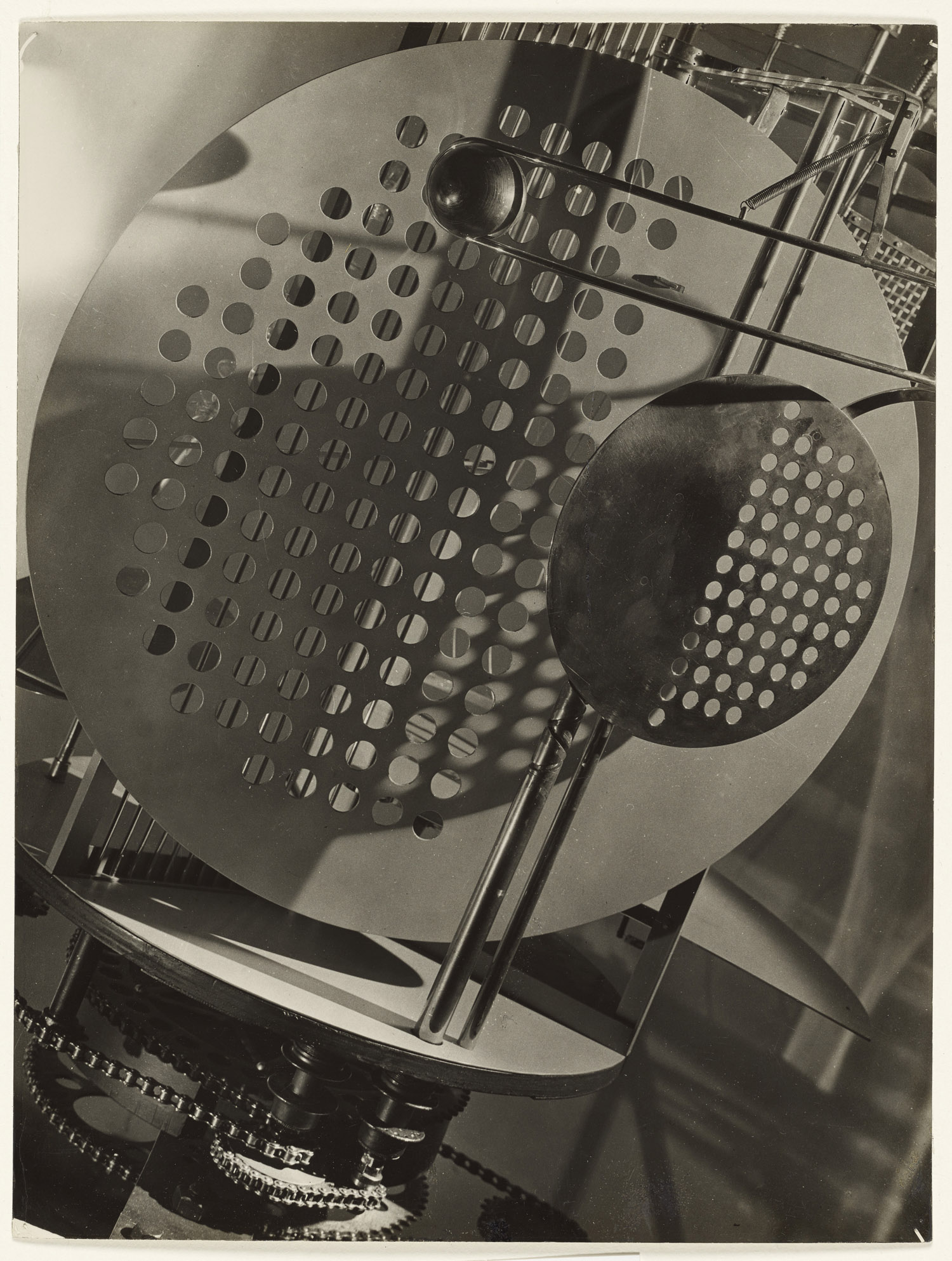
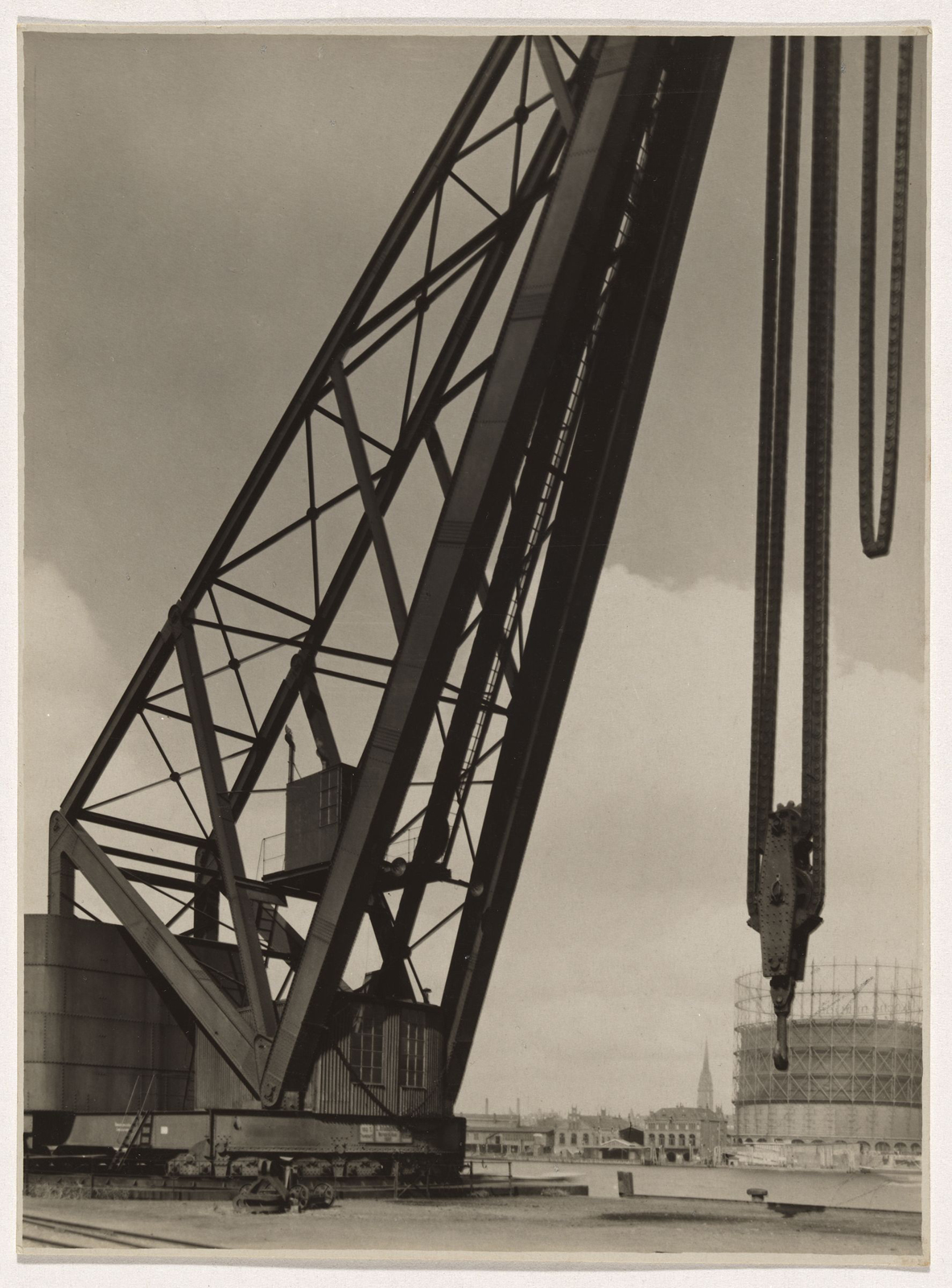

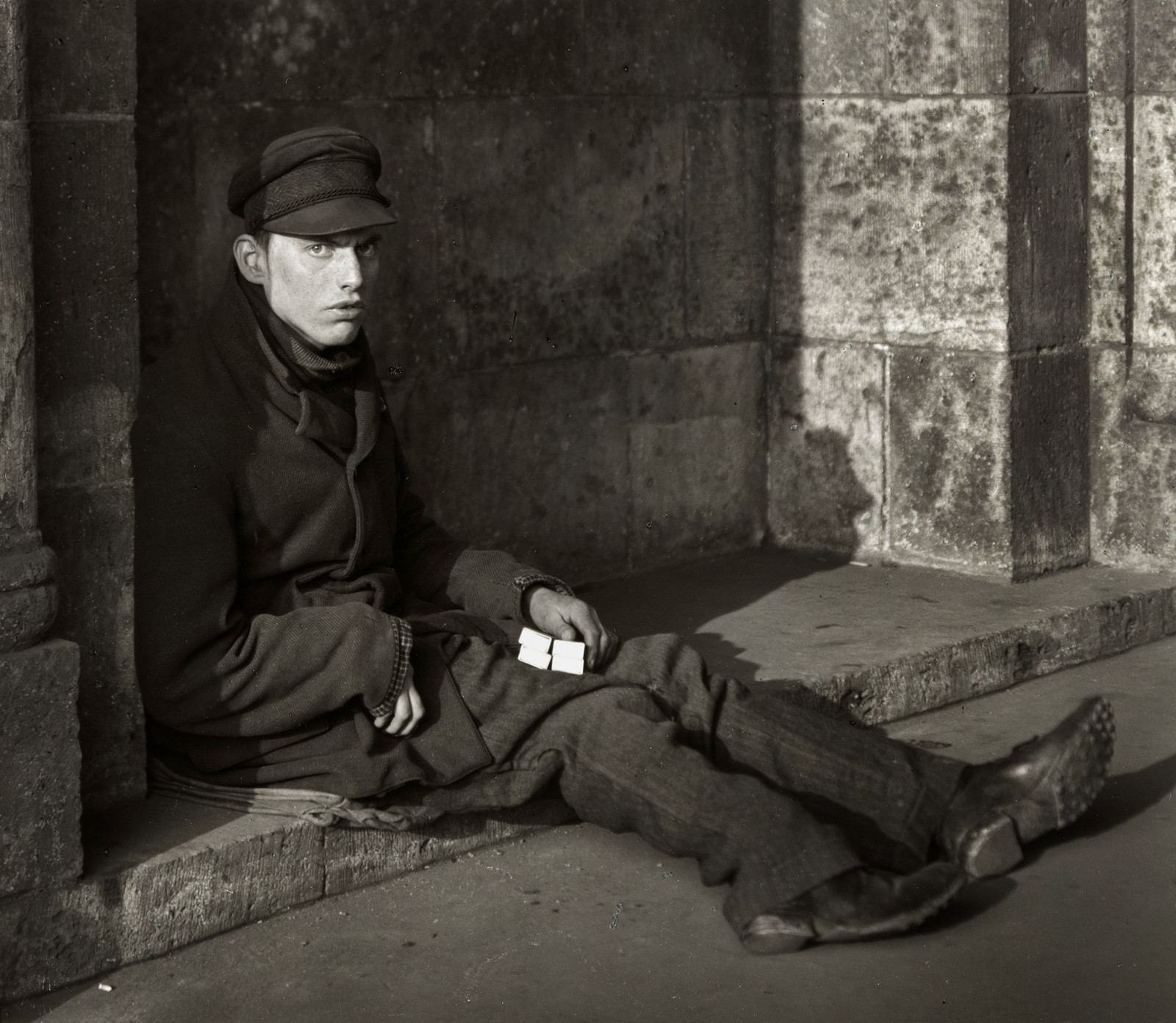


![Karl Grill (German active Donaueschingen, Germany 1920s) 'Untitled [Spiral Costume, from the Triadic Ballet]' c. 1926-1927](https://artblart.com/wp-content/uploads/2011/12/grill-spiral-costume-from-the-triadic-ballet.jpg "Karl Grill (German active Donaueschingen, Germany 1920s) 'Untitled [Spiral Costume, from the Triadic Ballet]' c. 1926-1927")
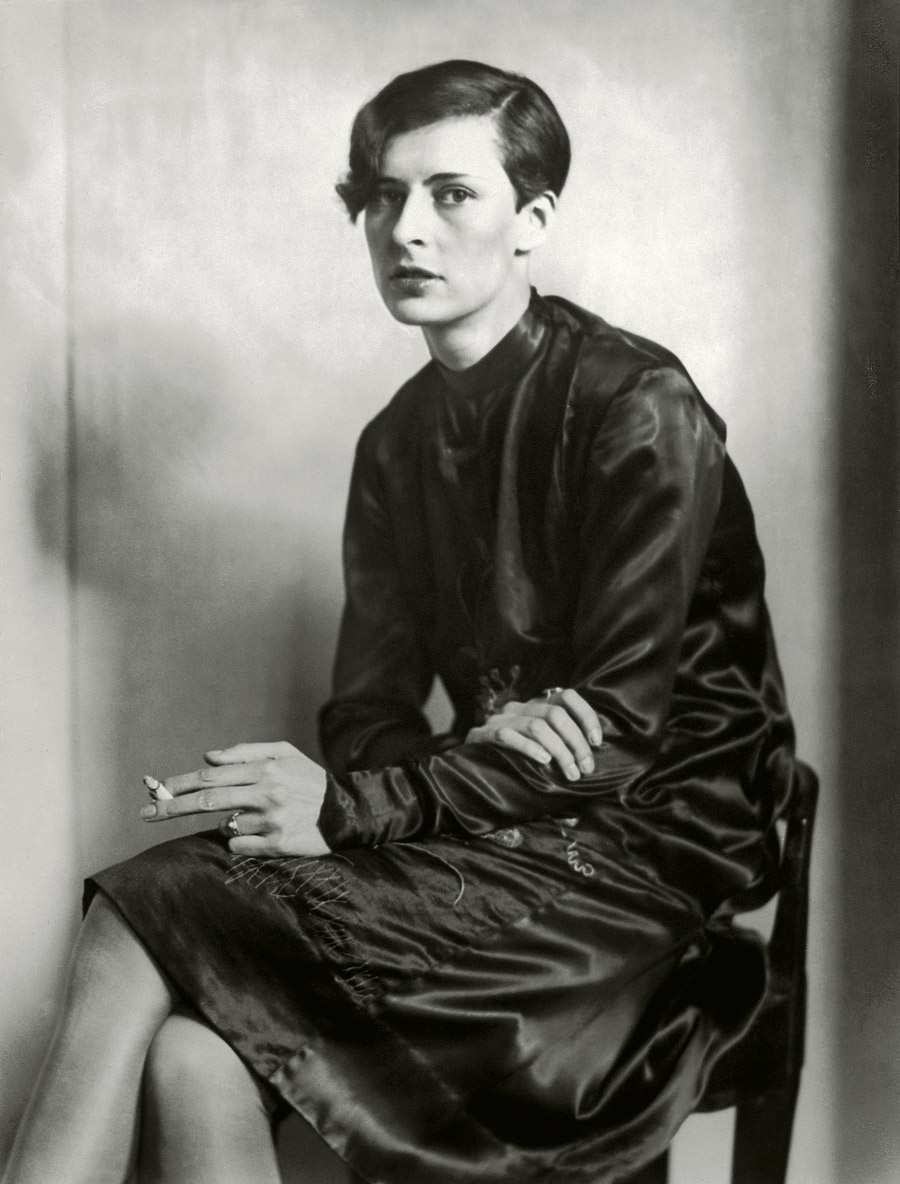
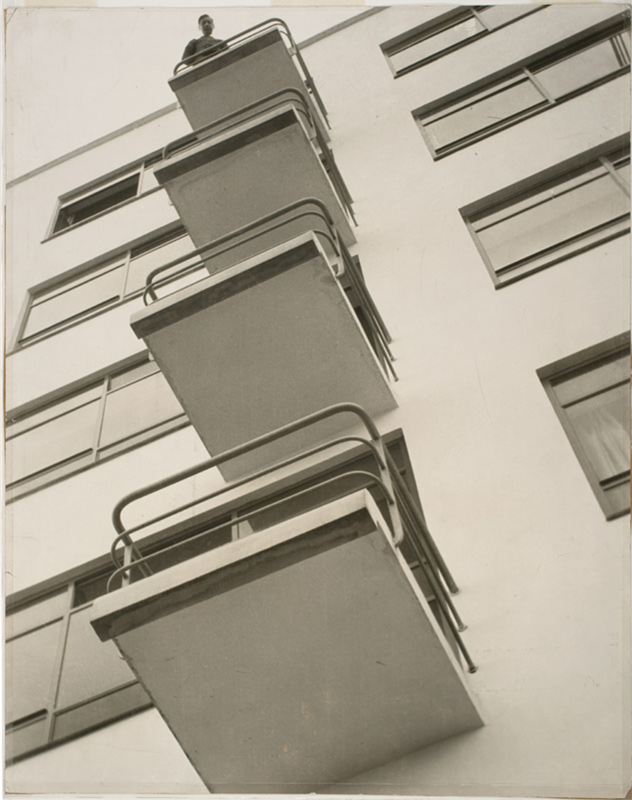
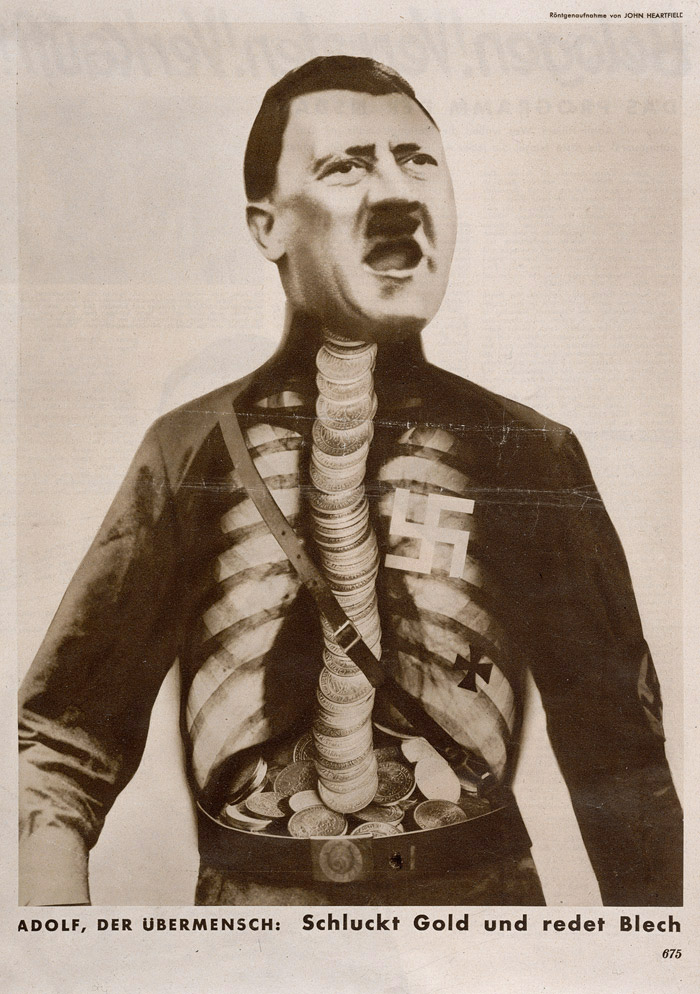
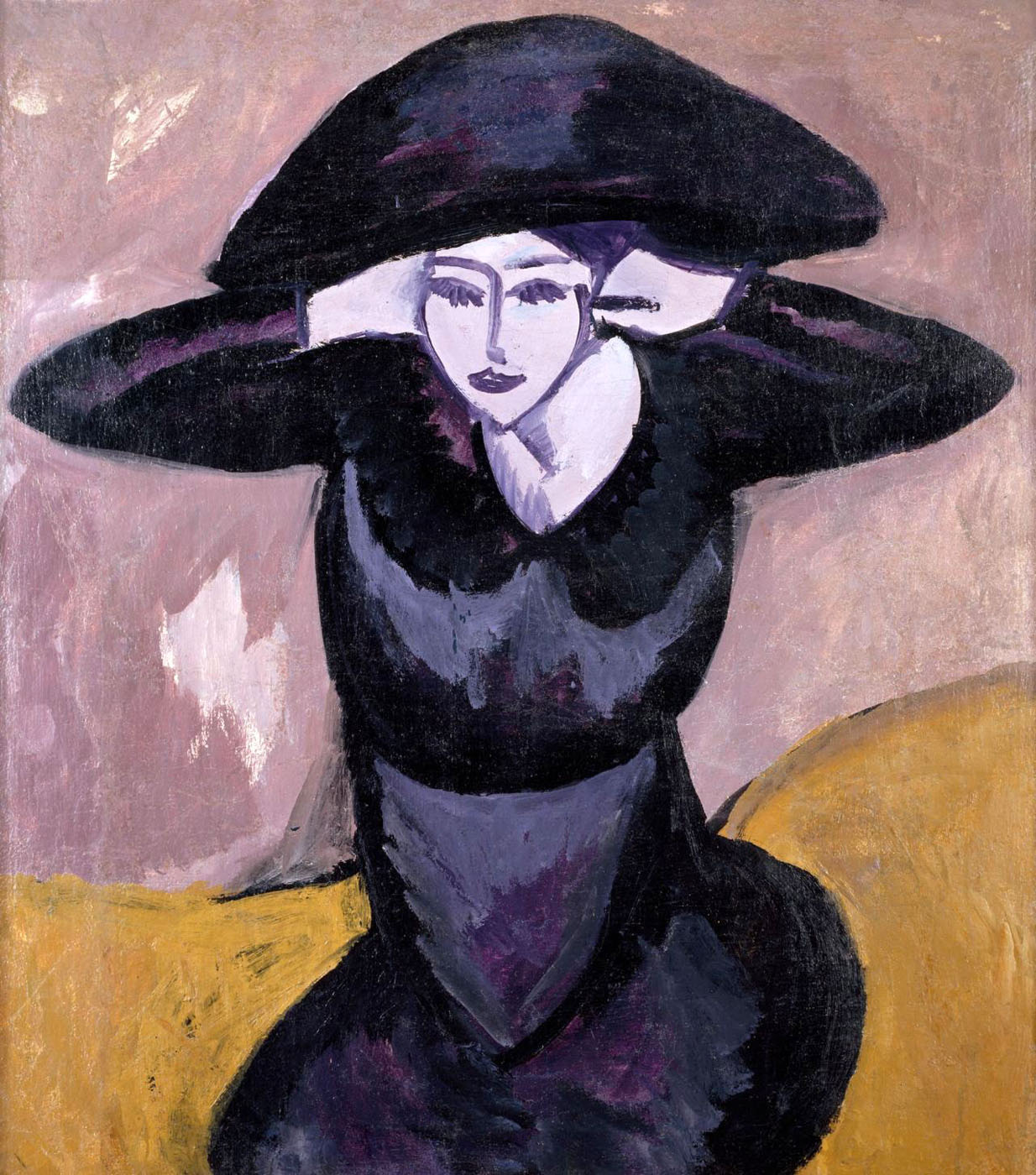
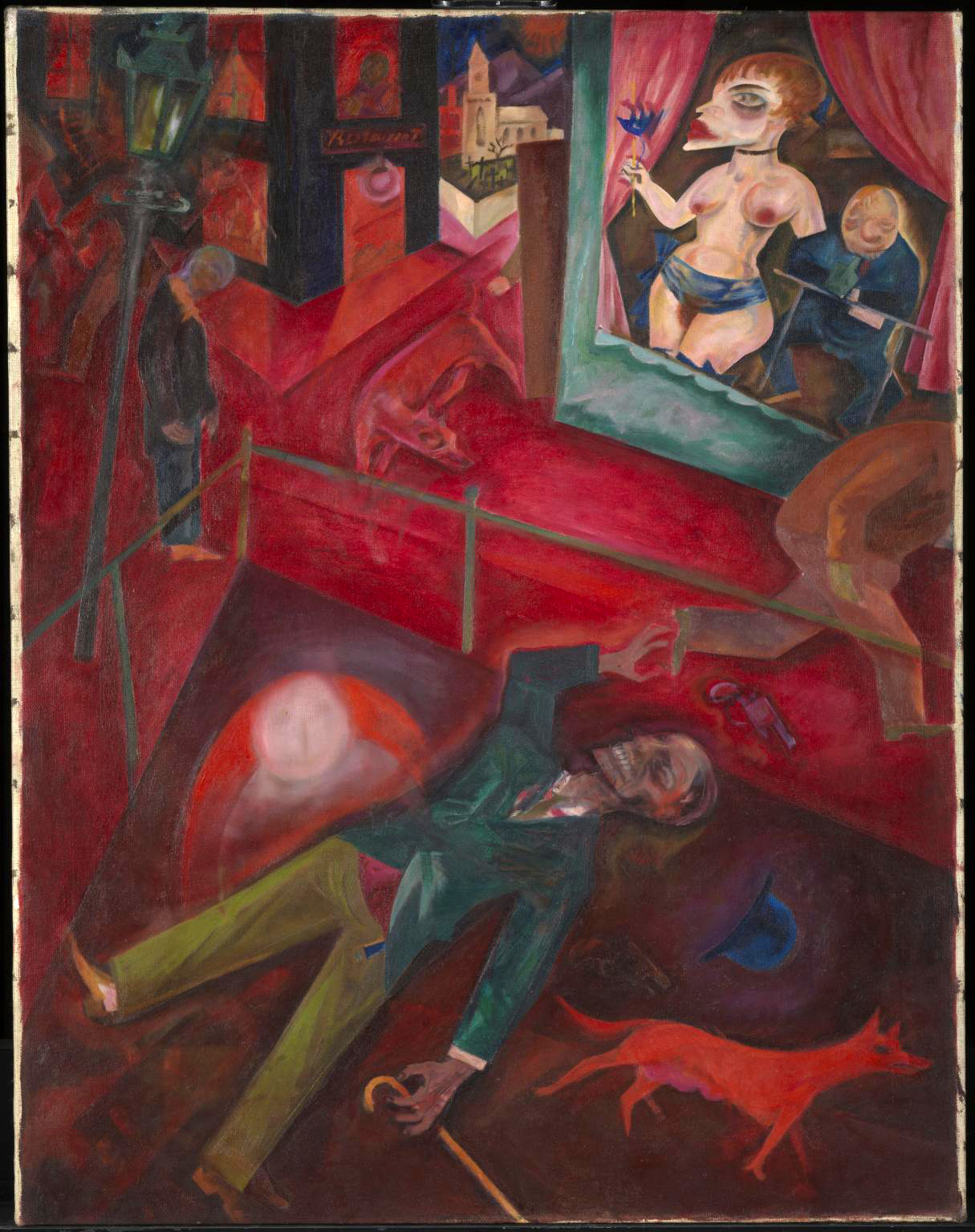
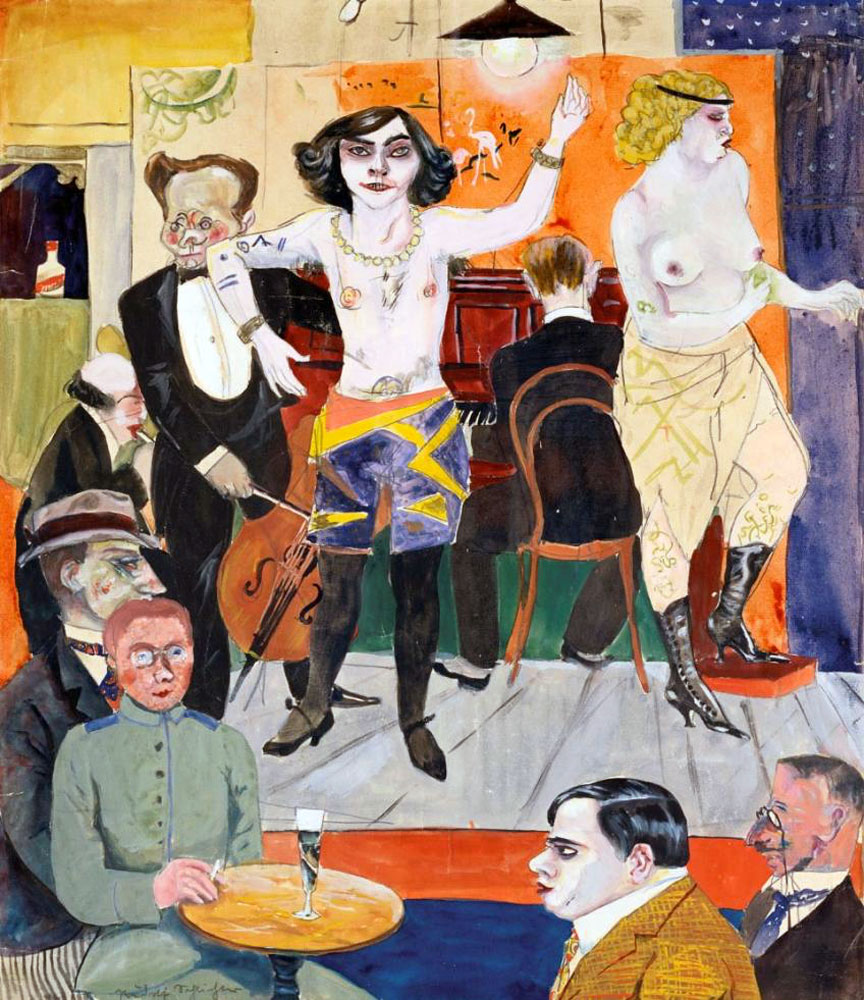
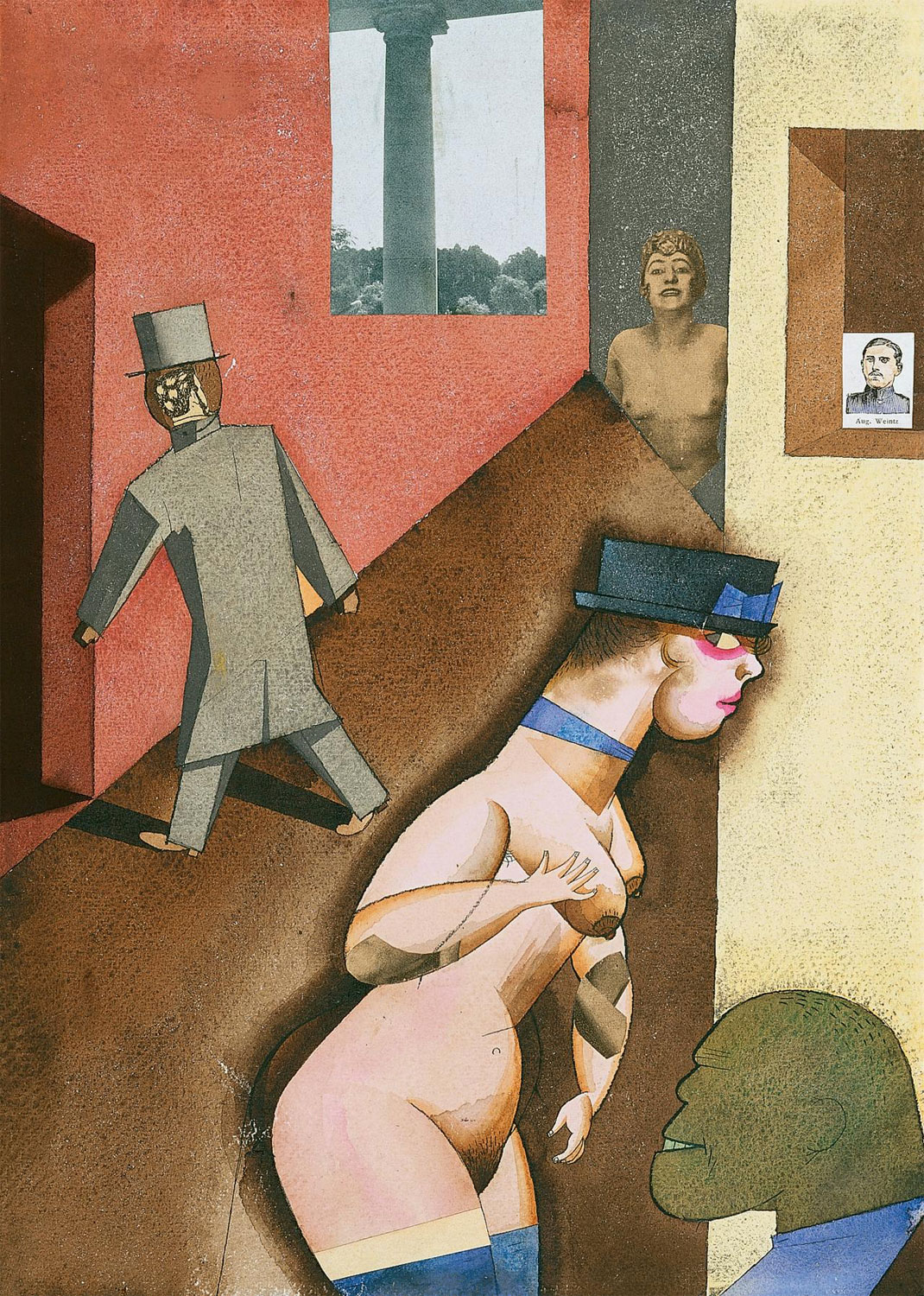


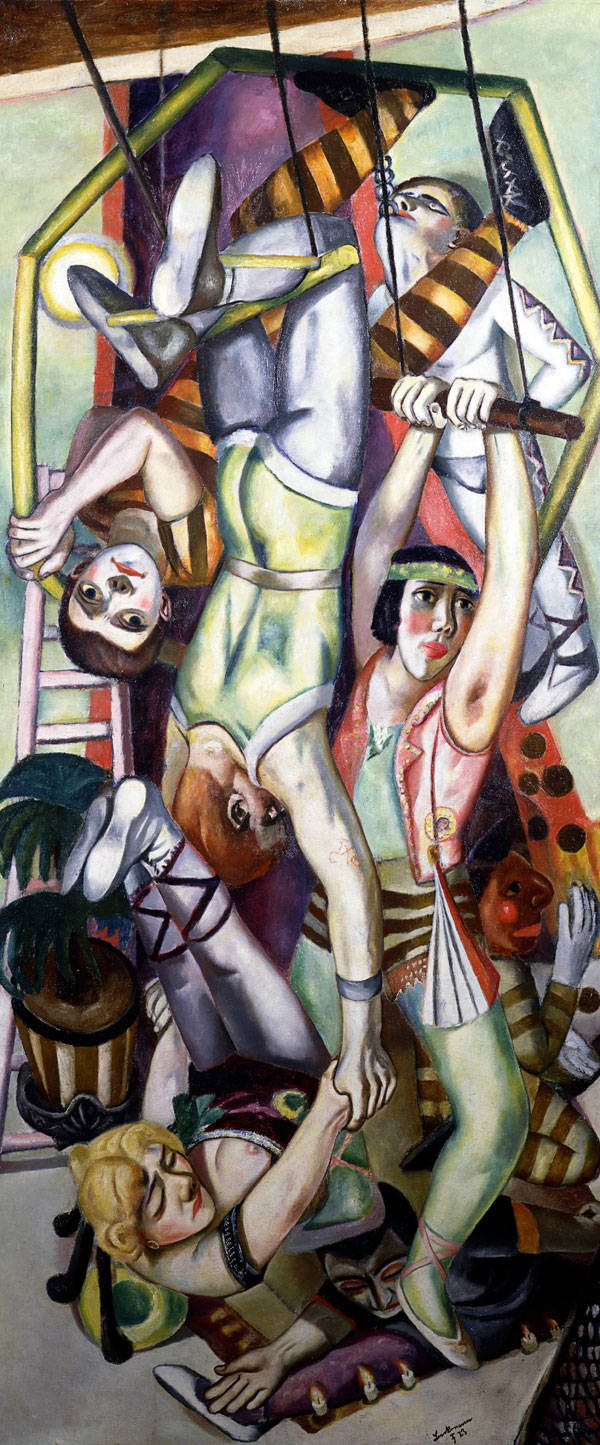
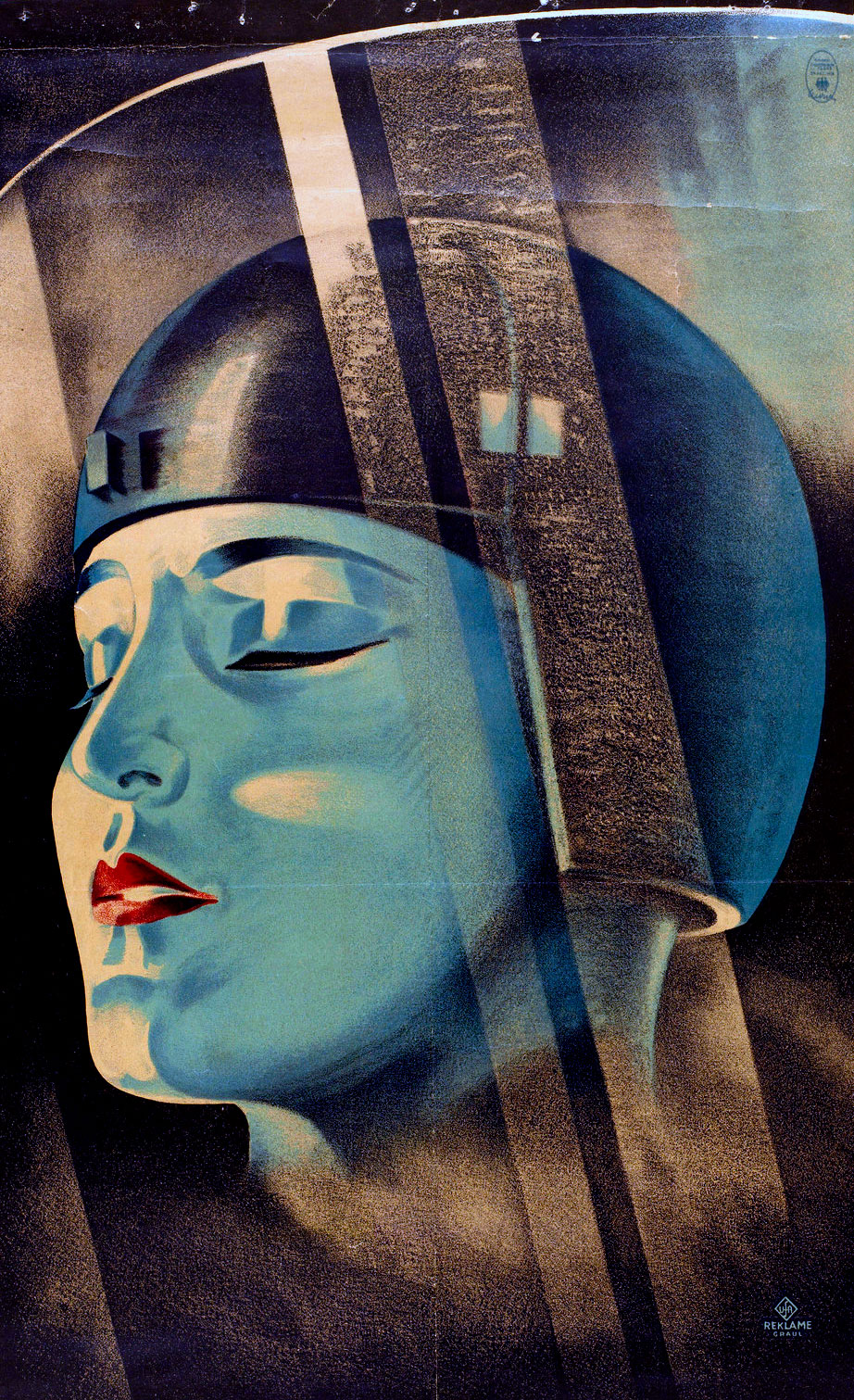
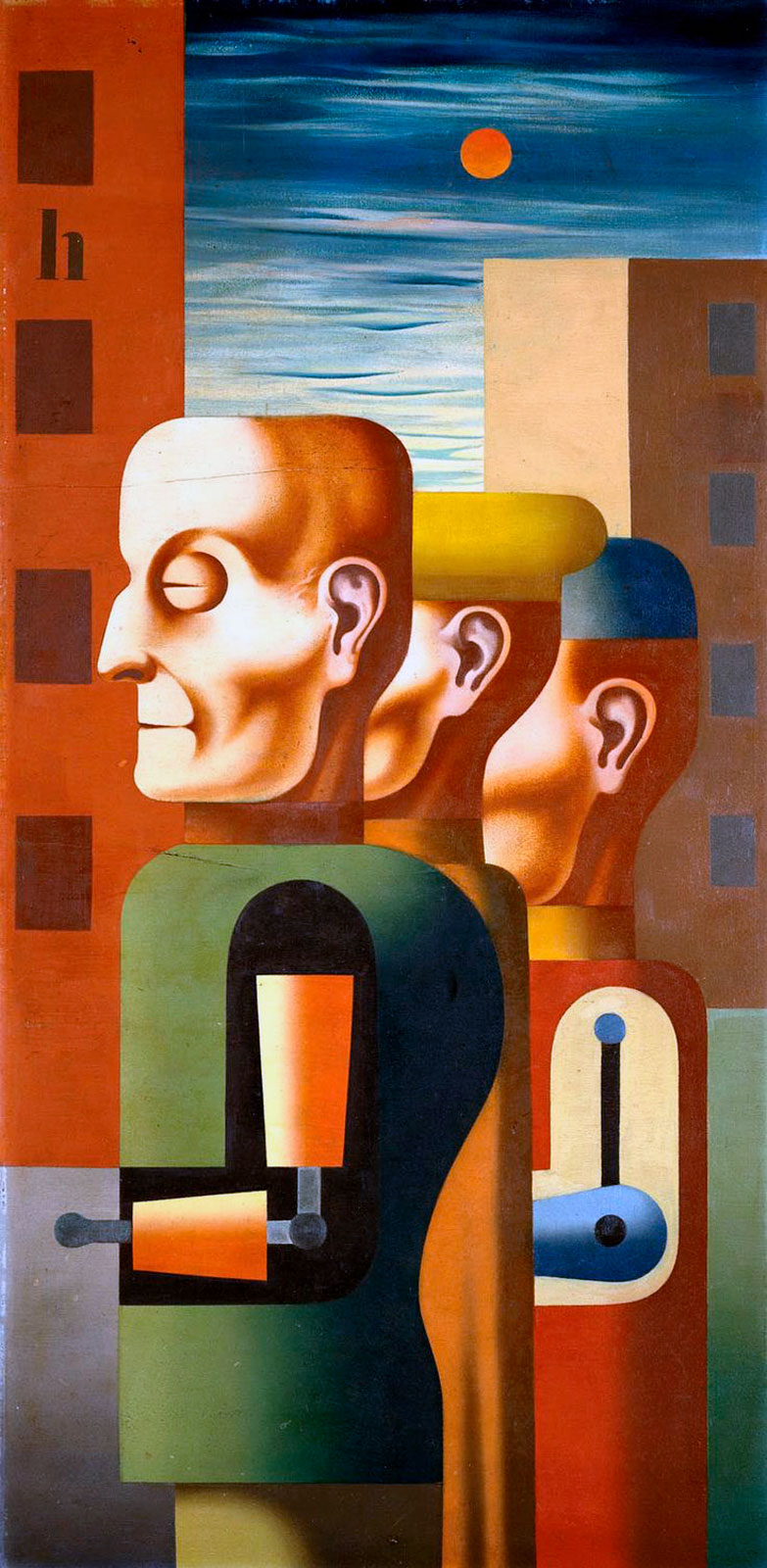




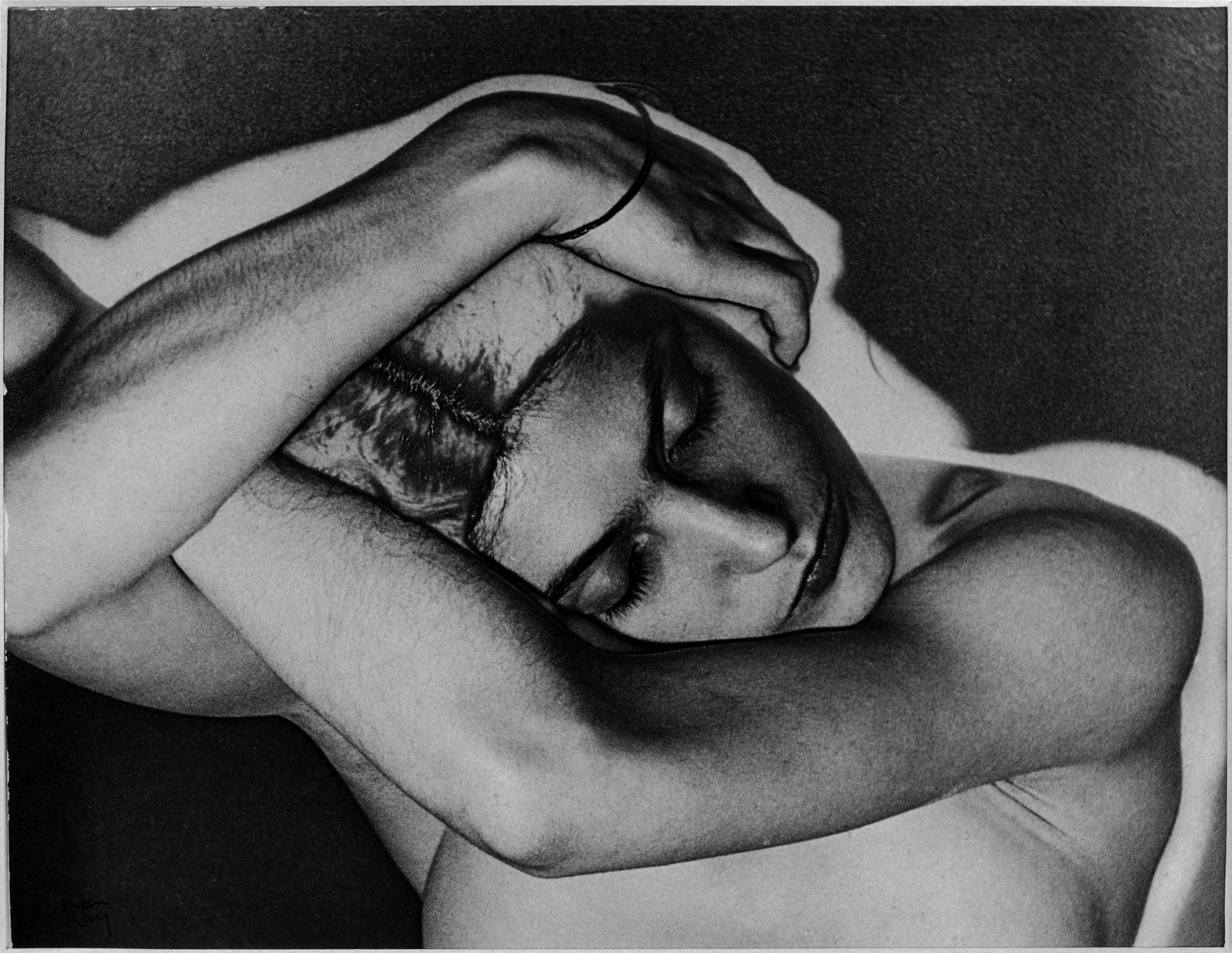
![Man Ray (American, 1890-1976) 'Juliet with Flower' [Juliet Browner] 1950s](https://artblart.com/wp-content/uploads/2009/01/man-ray-juliet-with-flower-1950s.jpg "Man Ray (American, 1890-1976) 'Juliet with Flower' [Juliet Browner] 1950s")
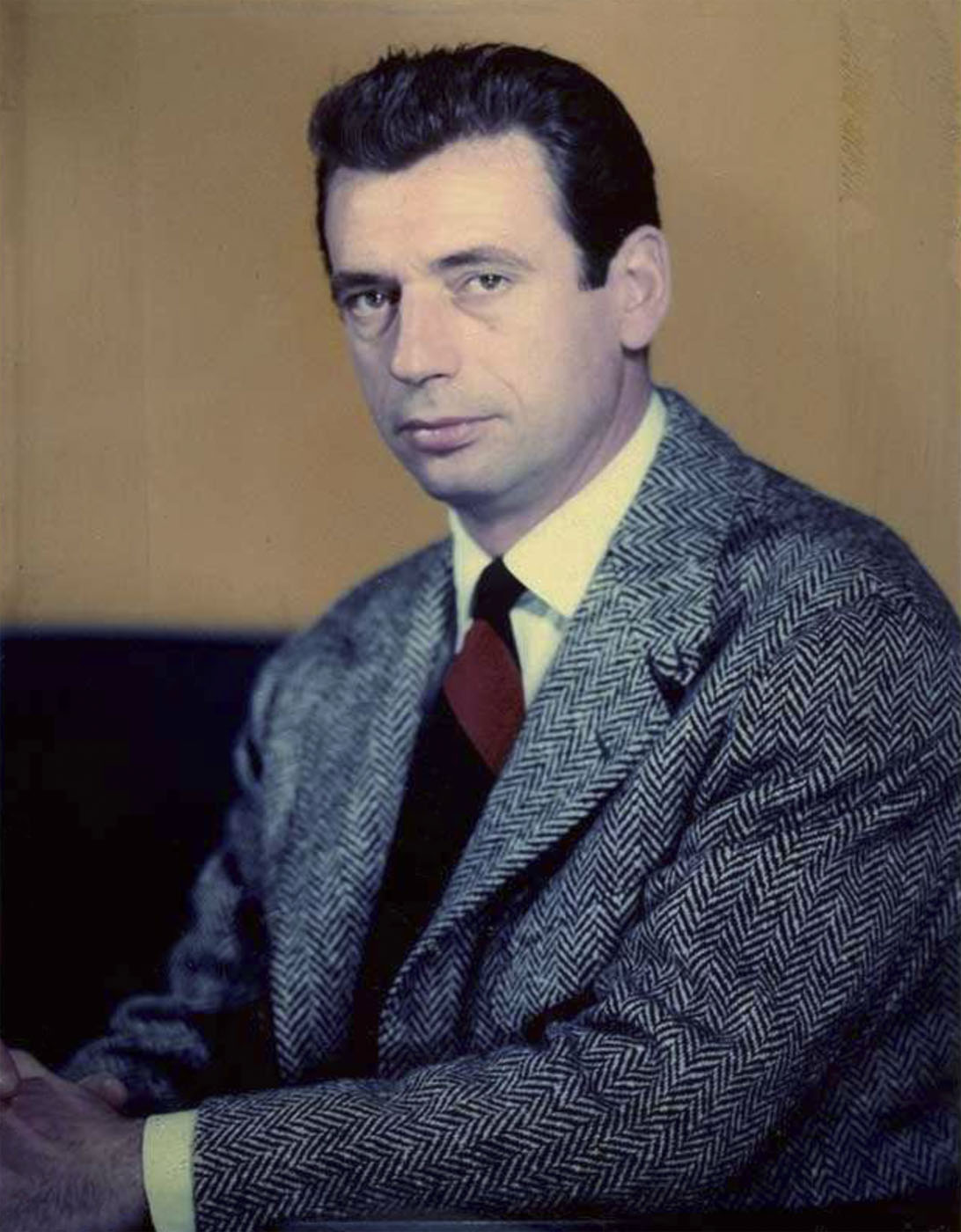


 Art Blart _ art and cultural memory archive
You must be logged in to post a comment.