Exhibition: ‘WAR/PHOTOGRAPHY: Images of Armed Conflict and Its Aftermath’ at the Museum of Fine Arts, Houston Part 2

Exhibition dates: 11th November 2012 – 3rd February 2013


This is the biggest posting on one exhibition that I have ever undertaken on Art Blart!

As befits the gravity of the subject matter this posting is so humongous that I have had to split it into 4 separate postings. This is how to research and stage a contemporary photography exhibition that fully explores its theme. The curators reviewed more than one million photographs in 17 countries, locating pictures in archives, military libraries, museums, private collections, historical societies and news agencies; in the personal files of photographers and service personnel; and at two annual photojournalism festivals producing an exhibition that features 26 sections (an inspired and thoughtful selection) that includes nearly 500 objects that illuminate all aspects of WAR/PHOTOGRAPHY.

I have spent hours researching and finding photographs on the Internet to support the posting. It has been a great learning experience and my admiration for photographers of all types has increased. I have discovered the photographs and stories of new image makers that I did not know and some hidden treasures along the way. I hope you enjoy this monster posting on a subject matter that should be consigned to the history books of human evolution.

**Please be aware that there are graphic photographs in all of these postings.** Part 1Part 3Part 4

Dr Marcus Bunyan


Many thankx to the Museum of Fine Arts, Houston for allowing me to publish some of the photographs in the posting. Please click on the photographs for a larger version of the image.


Photographic Essays

14. Photographic Essays showcases selections from two distinct storylines: Larry Burrows’ Yankee Papa 13, published in Life magazine; and Pulitzer Prize winner Todd Heisler’s series Final Salute, for Denver’s Rocky Mountain News. Burrows follows a man through a rescue attempt in Vietnam; Heisler documents a Marine major assigned to casualty notifications. (12 images, 6 from each photographer, as well as the magazine and newspaper in which the series were published)


Larry Burrows (American, 1926-1971) 'The view from inside Marine helicopter Yankee Papa 13, Vietnam, March 1965' 1965


The view from inside Marine helicopter Yankee Papa 13, Vietnam, March 1965


Larry Burrows (English, 1926-1971) 'The caption that accompanied this photograph in the April 16, 1965, issue of LIFE: "From the downed YP3 in the background, the wounded gunner, Sergeant Owens, races to Yankee Papa 13, where Farley waits in the doorway."' 1965


The caption that accompanied this photograph in the April 16, 1965, issue of LIFE: “From the downed YP3 in the background, the wounded gunner, Sergeant Owens, races to Yankee Papa 13, where Farley waits in the doorway.”


Larry Burrows (English, 1926-1971) 'One Ride with Yankee Papa 13' 1965 The caption that accompanied this photograph in LIFE: "Farley, unable to leave his gun position until YP13 is out of enemy range, stares in shock at YP3's co-pilot, Lieutenant Magel, on the floor."


The caption that accompanied this photograph in LIFE: “Farley, unable to leave his gun position until YP13 is out of enemy range, stares in shock at YP3’s co-pilot, Lieutenant Magel, on the floor.”
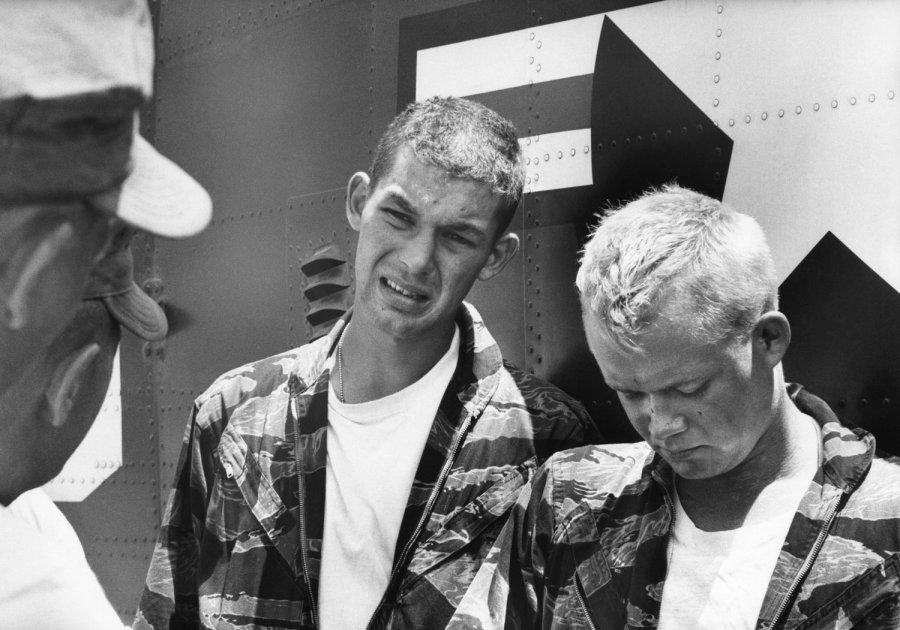
 

Larry Burrows (English, 1926-1971) 'Farley and Hoilien, dead tired, linger beside their helicopter and continue to talk over the mission' 1965


Farley and Hoilien, dead tired, linger beside their helicopter and continue to talk over the mission


Larry Burrows (English, 1926-1971) 'One Ride with Yankee Papa 13' 1965 'In a supply shack, hands covering his face, an exhausted, worn James Farley gives way to grief'


In a supply shack, hands covering his face, an exhausted, worn James Farley gives way to grief


Larry Burrows (English, 1926-1971)
One Ride with Yankee Papa 13
1965
Photo Essay
© Time & Life Pictures/Getty Images


Todd Heisler (American, b. 1972) 'Untitled' 2005 From the series 'Final Salute'


Todd Heisler (American, b. 1972)
Untitled
2005
From the series Final Salute
© Todd Heisler/Rocky Mountain News


The night before the burial of her husband’s body, Katherine Cathey refused to leave the casket, asking to sleep next to his body for the last time. The Marines made a bed for her, tucking in the sheets below the flag. Before she fell asleep, she opened her laptop computer and played songs that reminded her of “Cat,” and one of the Marines asked if she wanted them to continue standing watch as she slept. “I think it would be kind of nice if you kept doing it,” she said. “I think that’s what he would have wanted.”


Executions

15. Executions are among the frequent photographs in wartime: Officials and the public seek confirmation that the enemy is dead; the executioners often forcefully request images to signify their power. An 1867 photograph by François Aubert shows the bloodied shirt of Maximilian I after the Austro-Hungarian archduke was shot by a nationalist firing squad in Mexico. Eddie Adams’ Pulitzer Prize-winning photograph of the Vietnamese police chief shooting a Viet Cong prisoner came to symbolise the brutality of the Vietnam War. Jahangir Razmi’s Firing Squad in Iran (1979) also won a Pulitzer; Razmi’s newspaper, Ettela’at, ran the photograph without credit, in order to protect him. He was not recognised until a 2006 Wall Street Journal article. (20 images)


Francois Aubert (French, 1829-1906) 'The Shirt of the Emperor, Worn during His Execution, Mexico' 1867


Francois Aubert (French, 1829-1906)
The Shirt of the Emperor, Worn during His Execution, Mexico
1867
Albumen print
The Metropolitan Museum of Art, Gilman Collection, gift of the Howard Gilman Foundation, 2005
© The Metropolitan Museum of Art / Art Resource, NY


Eddie Adams (American, 1933-2004) 'Saigon Execution (General Nguyen Ngoc Loan executing a Viet Cong prisoner in Saigon)' February 1, 1968


Eddie Adams (American, 1933-2004)
Saigon Execution (General Nguyen Ngoc Loan executing a Viet Cong prisoner in Saigon)
February 1, 1968
Silver gelatin photograph


Although the image brought Adams the Pulitzer Prize, he would express discomfort with it later in life.

“The general killed the Viet Cong; I killed the general with my camera. Still photographs are the most powerful weapon in the world. People believe them; but photographs do lie, even without manipulation. They are only half-truths. … What the photograph didn’t say was, ‘What would you do if you were the general at that time and place on that hot day, and you caught the so-called bad guy after he blew away one, two or three American people?” (Wikipedia)

For Adams, the lie was the omission of context – that the plainclothes Lem had allegedly just been caught having murdered not only South Vietnamese police but their civilian family members; that Loan was a good officer and not a cold-blooded killer… Like any great work of art, Adams’ serendipitous photograph took on a life of its own… and a tapestry of meanings richer than its creator could ever have intended.

Headsman. “1968: Nguyen Van Lem,” on the ExecutedToday website February 1st, 2009 [Online] Cited 03/09/2022


Eddie Adams Talk About The Saigon Execution Photo


Leisure Time

16. Leisure Time is another popular subject. This section features images that range from a 1958 photograph (by Loomis Dean) of an Elvis Presley serenade in the barracks to Stephen Colbert’s 2009 Iraq appearance in a camouflage suit (by Moises Saman). More-intimate moments show an off-duty serviceman sleeping on a cot next to a wall of pinups (by Edouard Gluck) as well as another serviceman listening to music on headphones (by Alvaro Zavala). Army Staff Sergeant Mark Grimshaw captures an American soldier stationed in Iraq, tending grass that the soldier has grown. (The soldier’s wife sent him seeds from the United States, but he couldn’t get the grass to grow until he purchased sod from a local Iraqi farmer.) (21 images) 


Álvaro Ybarra Zavala (Spanish, b. 1979) 'Untitled' 2003 From the series 'Apocalypse'


Álvaro Ybarra Zavala (Spanish, b. 1979)
Untitled
2003
From the series Apocalypse


More images and text from the sequence can be seen at Álvaro Ybarra Zavala’s Projects web page


Mark A. Grimshaw (American, b. 1968) 'First Cut, Iraq' July 2004


Mark A. Grimshaw (American, b. 1968)
First Cut, Iraq
July 2004
Inkjet print, printed 2012
Courtesy of the photographer
© Mark Grimshaw


Support

17. Support features photographs of people planning operations and supplying troops behind the front, from flying troops and supplies to the battlefront, to making bread in factories and building temporary bridges. One iconic 1942 photo by Alfred Palmer shows women aircraft workers polishing the noses of bomber planes. A 1915-18 picture by an unknown photographer depicts two men working early battery-operated phones. In 2001, James Nachtwey captured a firefighter walking over burning rubble at the World Trade Center in New York. (13 images)


Alfred Palmer (American, 1906-1993) 'Women aircraft workers finishing transparent bomber noses for fighter and reconnaissance planes at Douglas Aircraft Co. Plant in Long Beach, California' 1942


Alfred Palmer (American, 1906-1993)
Women aircraft workers finishing transparent bomber noses for fighter and reconnaissance planes at Douglas Aircraft Co. Plant in Long Beach, California
1942
Gelatin silver print
The Museum of Fine Arts, Houston, gift of Will Michels in honor of his sister, Genevieve Namerow


James Nachtwey (American, b. 1948) 'Firefighters search for survivors at Ground Zero' 2001


James Nachtwey (American, b. 1948)
Firefighters search for survivors at Ground Zero
2001
© James Nachtwey


Medicine

18. Medicine, divided into two subsections, presents doctors and nurses at work at the front, and individuals who are surviving with injuries. “Wartime Medicine presents the conditions of medical operations on the battlefield, from Vo Anh Khanh’s photograph of North Vietnam surgeons working in a swamp to Larry Burrows’ emergency dressing station in Vietnam. Subsequent to War showcases survivors. A 2007 photograph by Peter van Agtmael shows a soldier with a prosthetic leg playing with his two sons and light sabres in a field. A 1985 photograph by Michael Coyne pictures a rehabilitation centre stacked with braces and artificial limbs for the victims of war in Iran and Iraq. Nina Berman’s 2004 portrait of PTSD patient Randall Clunen, from the series Purple Hearts, relates the psychic scars of war. (22 images)


Vo Anh Khanh (Vietnamese, 1936-2023) 'A Cambodian guerrilla is carried to an improvised operating room in a mangrove swamp in this Viet Cong haven on the Ca Mau Peninsula' 1970


Vo Anh Khanh (Vietnamese, 1936-2023)
A Cambodian guerrilla is carried to an improvised operating room in a mangrove swamp in this Viet Cong haven on the Ca Mau Peninsula
1970
© National Geographic Society


This scene was an actual medical situation, not a publicity setup.


Peter van Agtmael (American, b. 1981) 'Darien, Wisconsin, October 22, 2007' 2007, printed 2009


Peter van Agtmael (American, b. 1981)
Darien, Wisconsin, October 22, 2007
2007, printed 2009
Chromogenic print, ed. # 1/10
The Museum of Fine Arts, Houston, gift of David and Cindy Bishop Donnelly, John Gaston, Mary and George Hawkins and Mary and Jim Henderson in memory of Beth Block
© Peter van Agtmael / Magnum Photos
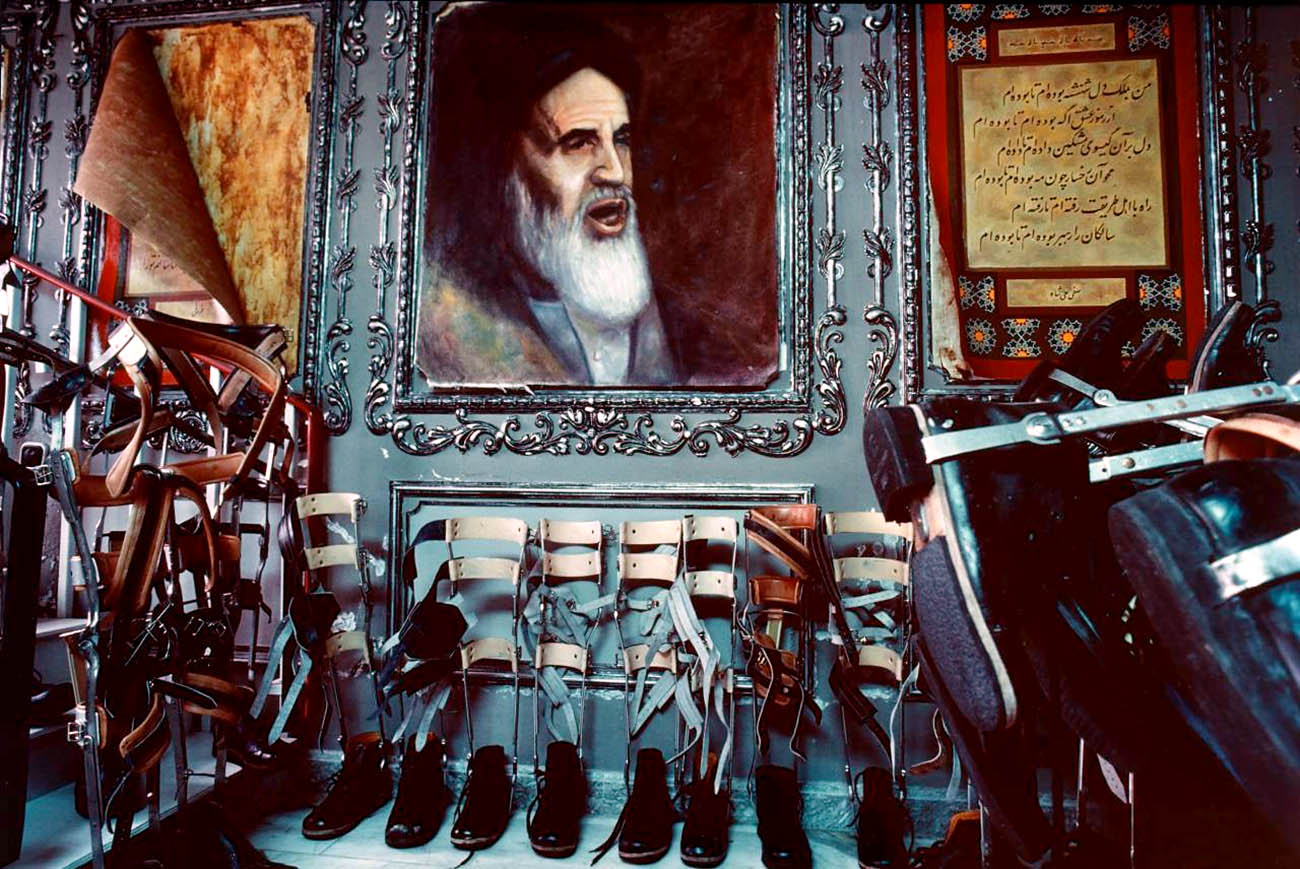
 

Michael Coyne (Australian, b. 1945) 'Rehabilitation Centre – Iran' 1985


Michael Coyne (Australian, b. 1945)
Rehabilitation Centre – Iran
1985
Type C print
55cm x 36.6cm


Nina Berman (American, b. 1960) 'Randall Clunen' 2004 from the series 'Purple Hearts'


Nina Berman (American, b. 1960)
Randall Clunen
2004
From the series Purple Hearts
Pigment print
28 x 28 in.


Faith

19. Faith presents devotion during wartime. The Oath of War (1942), by Mark Markov-Grinberg, taken minutes before a regiment attacked an entrenched German defensive position, shows a soldier kissing his gun. A 1918 image by an unknown photographer depicts a soldier’s grave in France, marked by a wooden cross and the soldier’s helmet, under which his Bible was found. Naval photographer R. Woodward’s 1945 photograph depicts a shipboard service performed after a Japanese plane dropped two bombs on the ship; the officiating chaplain is possibly Father O’Callahan, who subsequently received the Medal of Honor. Three days before the start of the Iraq War in 2003, Hayne Palmour IV captured the baptism of a Marine by a Navy chaplain in Kuwait, in a pool of water constructed from sandbags. (12 images)


Markov-Grinberg Mark Borisovich (Russian, 1907-2003) 'The Oath of War (Soviet soldier kissing his rifle)' 1939


Mark Borisovich Markov-Grinberg (Russian, 1907-2003)
The Oath of War (Soviet soldier kissing his rifle)
1939, printed later
Ferrotyped gelatin silver print


R. Woodward, USNR, American (birth date unknown) 'Religious services under the blasted flight deck of the USS Franklin' March 1945


R. Woodward, USNR, American (birth date unknown)
Religious services under the blasted flight deck of the USS Franklin
March 1945
Gelatin silver print, the Museum of Fine Arts, Houston, gift of St. Paul’s United Methodist Church


Religious services under the blasted flight deck of the USS Franklin (CV-13), for the 807 men killed from two bomb blasts while off the coast of Japan. The only American warship to suffer greater losses was the battleship Arizona at Pearl Harbor. March 1945 by R. Woodward, USNR.

PLEASE NOTE: This information is incorrect. 883 servicemen perished when the heavy cruiser USS Indianapolis was torpedoed and sunk by a Japanese submarine on 30 July 1945 and the survivors were not spotted until three and a half days later. Many succumbed to exposure to the elements, dehydration and shark attacks.


Refugee

20. The focus of Refugee moves away from the combatants’ standpoint and into the perspectives of others, including individuals who have been displaced as well as left behind. This section presents people either fleeing battle or living as expatriates in a new place. The Pulitzer Prize-winning image shot in 1965 by Sawada Kyoichi shows a Vietnamese mother and her children wading across a river to escape from a U.S. napalm strike on their village. An image by Hilmar Pabel depicts a family fleeing across the border in the Bavarian Forest to the West, escaping in the night carrying suitcases. A famous 1993 picture by Gilles Peress, of hands pressing against both sides of a windowpane, documents the evacuation of Jews from Sarajevo. A 1994-1995 portrait by Fazal Sheikh depicts a mother and her two children sitting on the ground somewhere in Tanzania; her newborn’s name, Makantamba, means “one who was born at the time of war.” Jonathan C. Torgovnik’s Valentine with her daughters Amelie and Inez, Rwanda (2006) is taken from the series Intended Consequences. An image by Alexandria Avakian depicts a Lebanese refugee in traditional dress mowing a lawn in suburban Michigan. (8 images)


Sawada Kyoichi (Japanese, 1936-1970) 'Mother and children wade across river to escape U.S. bombing. Qui Nhon, South Vietnam' September 1965


Sawada Kyoichi (Japanese, 1936-1970)
Mother and children wade across river to escape U.S. bombing. Qui Nhon, South Vietnam
September 1965
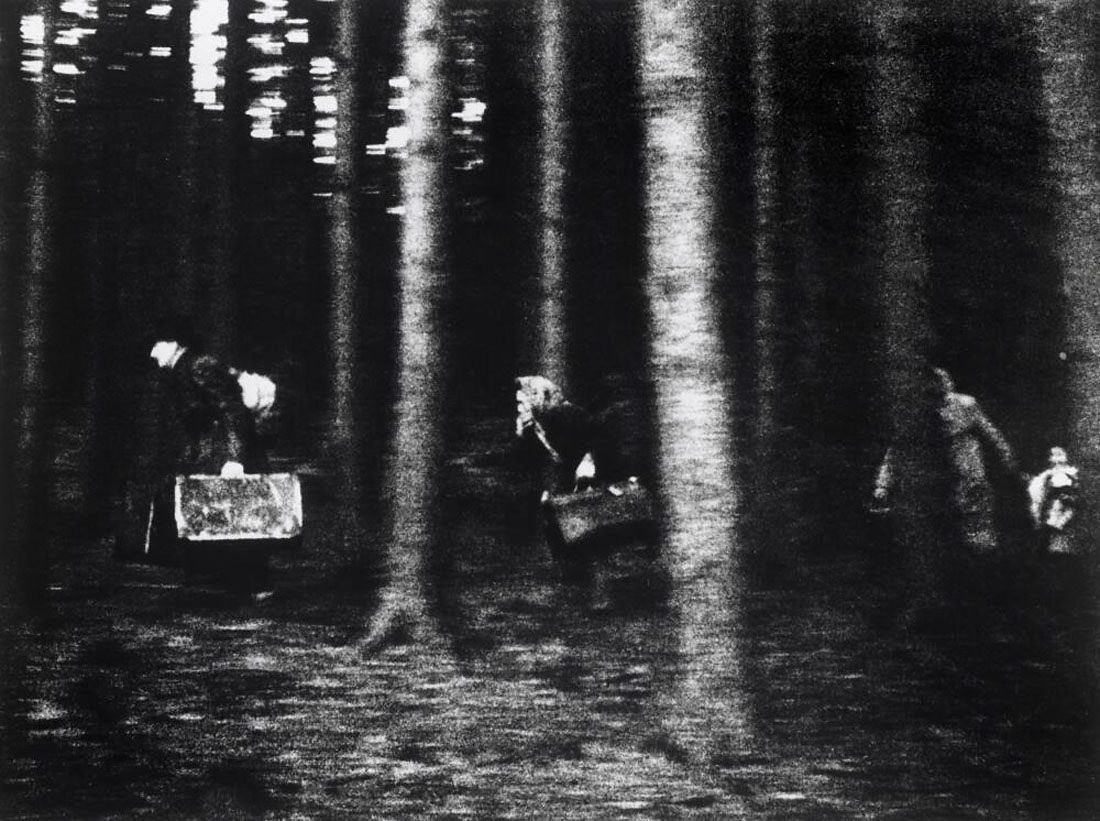
 

Hilmar Pabel (German, 1910-2000) 'A family flees across the border in the Bavarian Forest to the West' 1948-1949


Hilmar Pabel (German, 1910-2000)
A family flees across the border in the Bavarian Forest to the West
1948-1949
Gelatin silver print, printed 1995
Collection of Alan Lloyd Paris
© bpk, Berlin / Art Resource, NY


Gilles Peress (French, b. 1946) 'Evacuation of the Jews, Skanderia, Sarajevo, Bosnia' 1993


Gilles Peress (French, b. 1946)
Evacuation of the Jews, Skanderia, Sarajevo, Bosnia
1993
From the book Farewell to Bosnia, 1994
Gelatin silver print
16 x 20 inches


Alexandria Avakian (American, b. 1960) 'Dearborn, Michigan, June 2002: Tufaha Baydayn, a Lebanese American, fled Lebanon's civil war in the 1970s' 2002


Alexandria Avakian (American, b. 1960)
Dearborn, Michigan, June 2002: Tufaha Baydayn, a Lebanese American, fled Lebanon’s civil war in the 1970s
2002


Jonathan C. Torgovnik (American, b. 1969) 'Valentine with her daughters Amelie and Inez, Rwanda' 2006


Jonathan C. Torgovnik (American, b. 1969)
Valentine with her daughters Amelie and Inez, Rwanda
2006
from the series Intended Consequences
Chromogenic print, ed. #11/25
The Museum of Fine Arts, Houston, gift of the artist
© Jonathan Torgovnik


Exhibition posting continued in Part 3…
Exhibition posting Part 1…


Museum of Fine Arts, Houston
1001 Bissonnet Street
Houston, TX 77005

Opening hours:
Wednesday 11.00 am – 5.00 pm
Thursday 11.00 am – 9.00pm
Friday, Saturday 11.00am – 6.00pm
Sunday 12.30 – 6.00pm
Closed Monday and Tuesday

Museum of Fine Arts, Boston website

LIKE ART BLART ON FACEBOOK

Back to top

Exhibition: ‘Ansel Adams: At the Water’s Edge’ at the Peabody Essex Museum, Salem MA

Exhibition dates: 9th June – 8th October 2012


Many thankx to the Peabody Essex Museum for allowing me to publish the photographs in the posting. Please click on the photographs for a larger version of the image.


Ansel Adams (American, 1902-1984) 'The Tetons and the Snake River, Grand Teton National Park, Wyoming' 1942


Ansel Adams (American, 1902-1984)
The Tetons and the Snake River, Grand Teton National Park, Wyoming
1942
Gelatin silver print
Collection Center for Creative Photography, The University of Arizona
© 2011 The Ansel Adams Publishing Rights Trust


Ansel Adams (American, 1902-1984) 'Reflections at Mono Lake, California' 1948


Ansel Adams (American, 1902-1984)
Reflections at Mono Lake, California
1948
Gelatin silver print
David H. Arrington Collection
© 2011 The Ansel Adams Publishing Rights Trust


Ansel Adams (American, 1902-1984) 'Leaf, Glacier Bay National Monument, Alaska' c. 1948


Ansel Adams (American, 1902-1984)
Leaf, Glacier Bay National Monument, Alaska
c. 1948
From What Majestic Word, In Memory of Russell Varian, Portfolio IV (1963)
Gelatin silver print
© 2010 The Ansel Adams Publishing Rights Trust


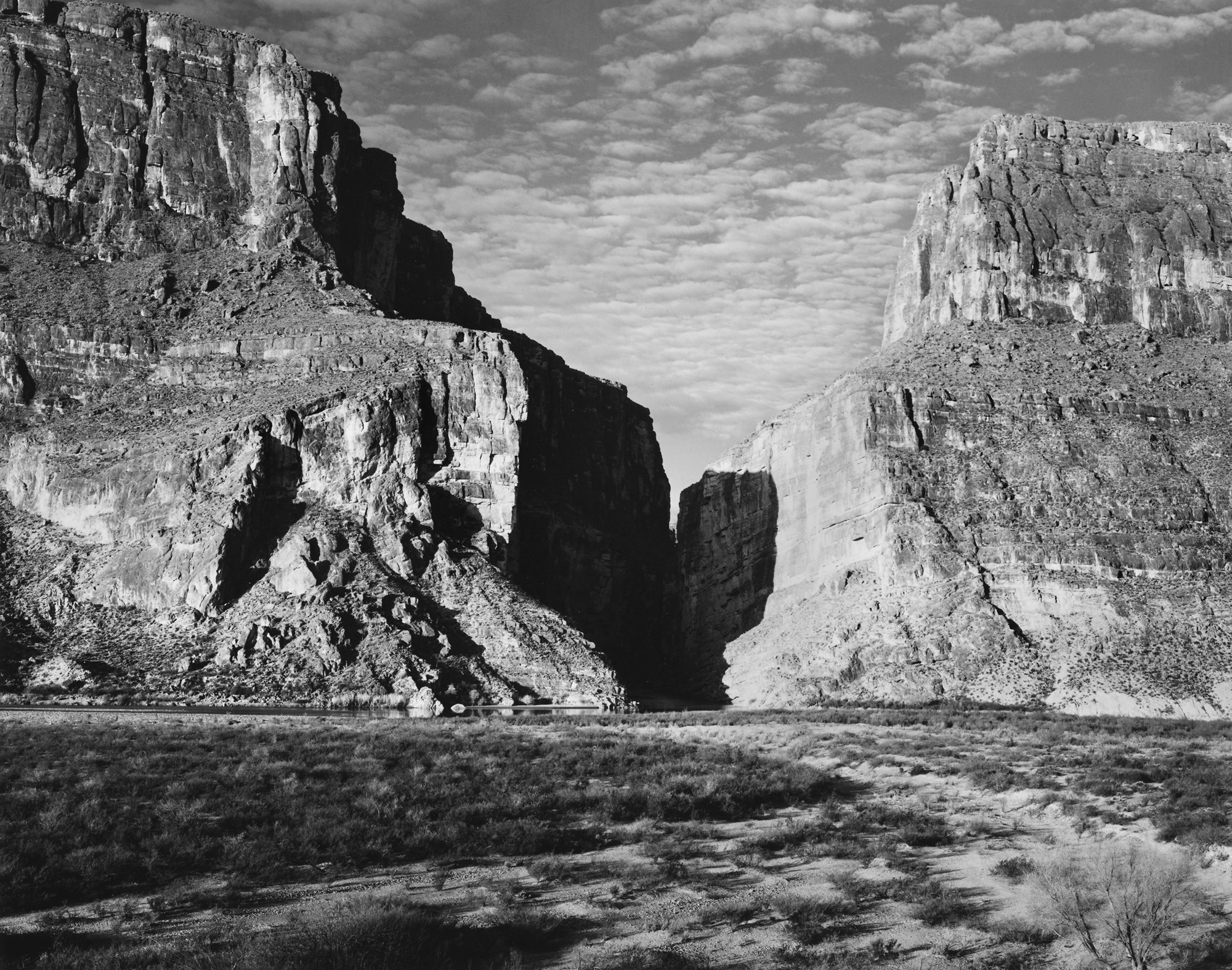
Ansel Adams (American, 1902-1984) 'Santa Elena Canyon, Big Bend National Park, Texas' 1947


Ansel Adams (American, 1902-1984)
Santa Elena Canyon, Big Bend National Park, Texas
1947
Gelatin silver print
© 2010 The Ansel Adams Publishing Rights Trust Amon Carter Museum, Fort Worth, Texas


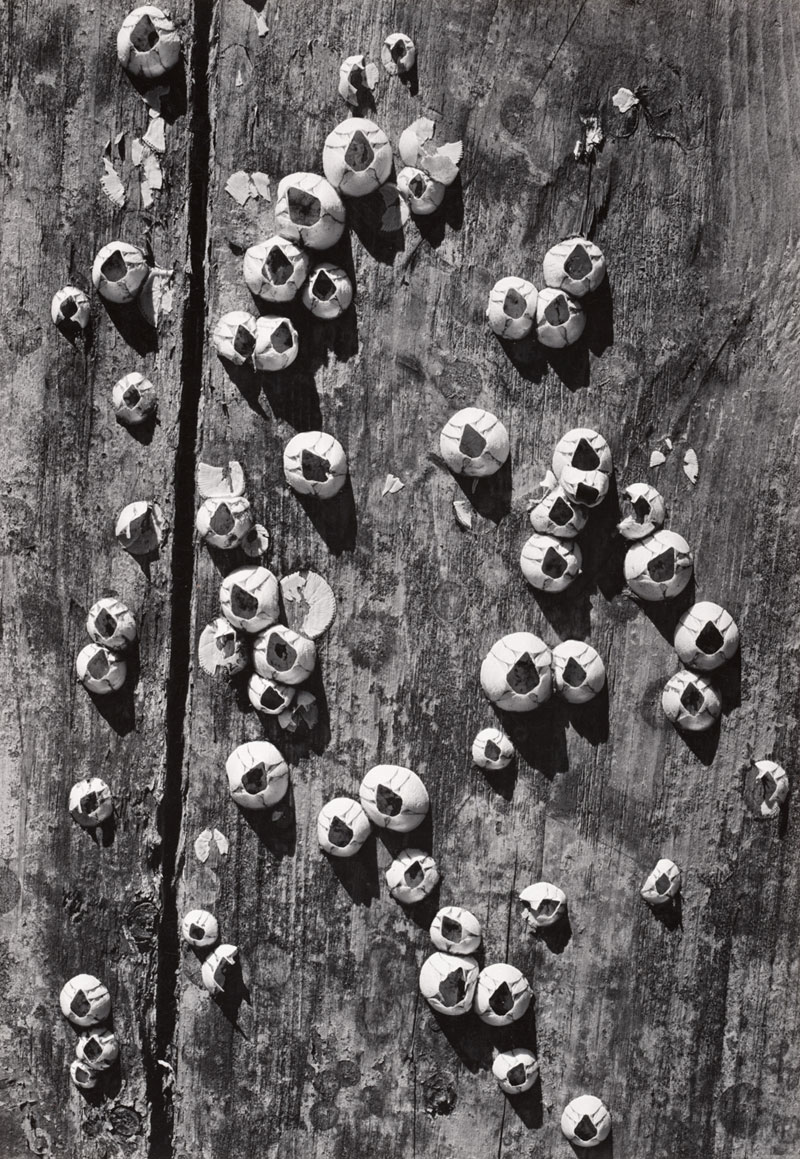
Ansel Adams (American, 1902-1984) 'Barnacles, Cape Cod' 1938


Ansel Adams (American, 1902-1984)
Barnacles, Cape Cod
1938
Gelatin silver print
Collection Center for Creative Photography, The University of Arizona
© 2011 The Ansel Adams Publishing Rights Trust


Ansel Adams (American, 1902-1984) 'The Golden Gate Before the Bridge, San Francisco' 1932


Ansel Adams (American, 1902-1984)
The Golden Gate Before the Bridge, San Francisco
1932
Gelatin silver print
Collection Center for Creative Photography, The University of Arizona
© 2011 The Ansel Adams Publishing Rights Trust


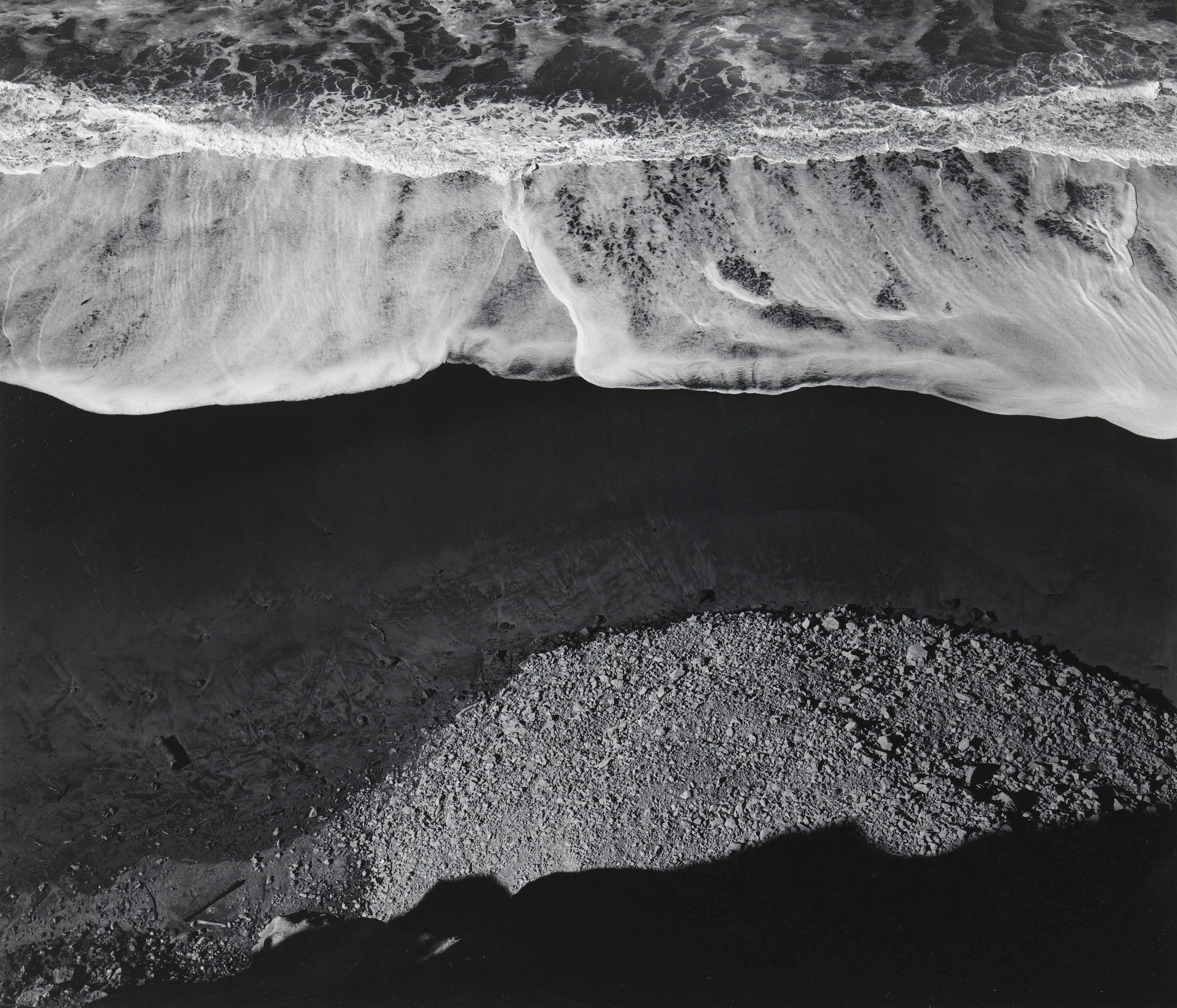
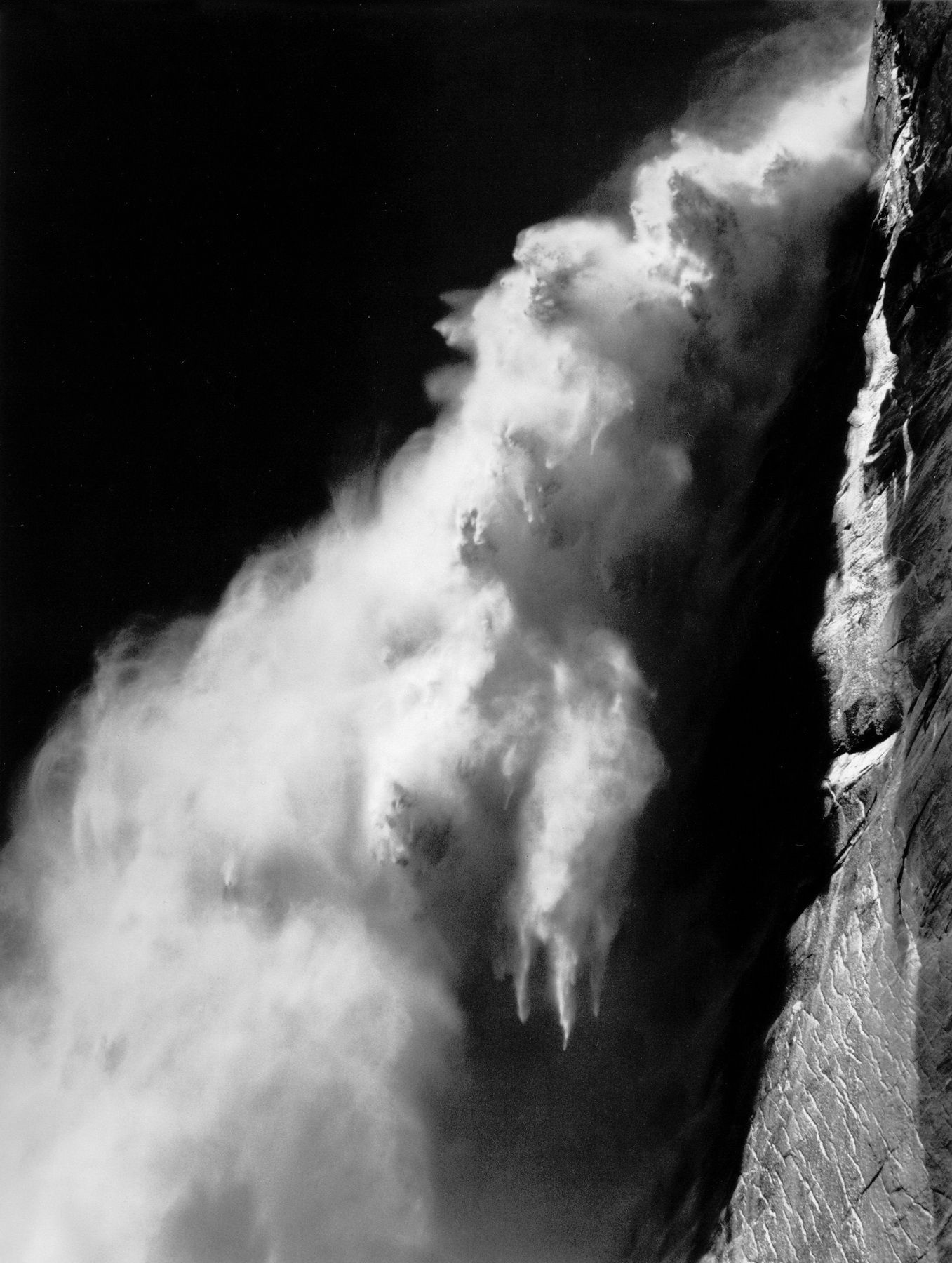
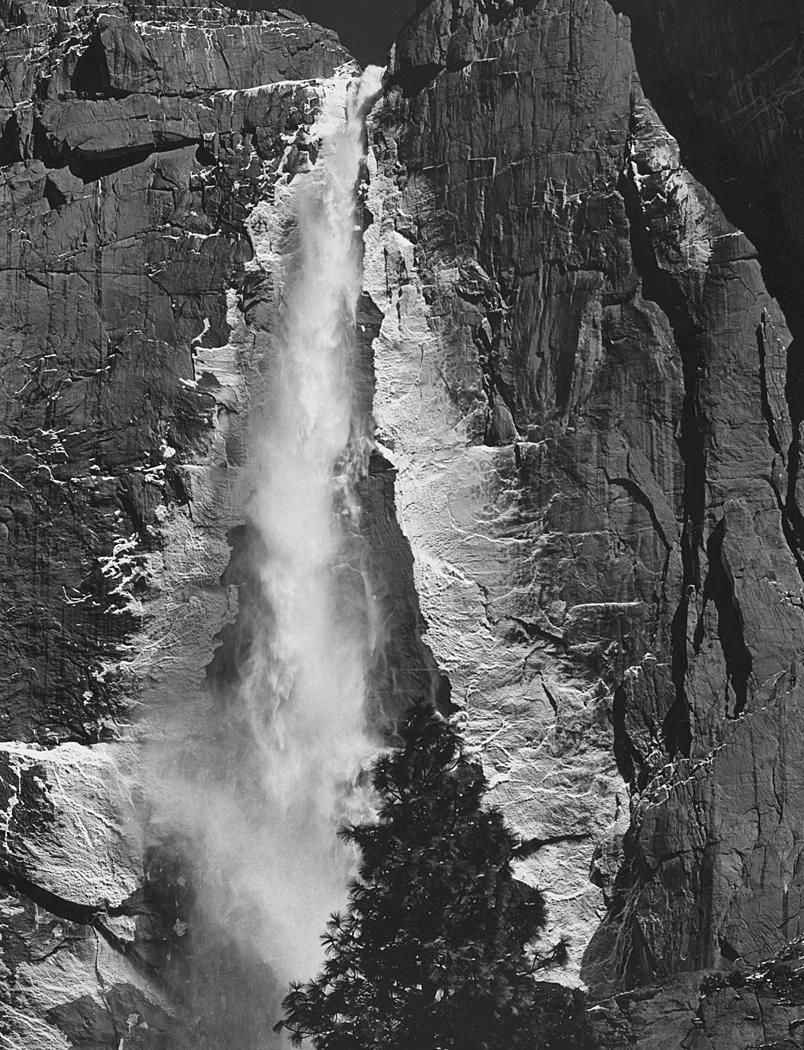
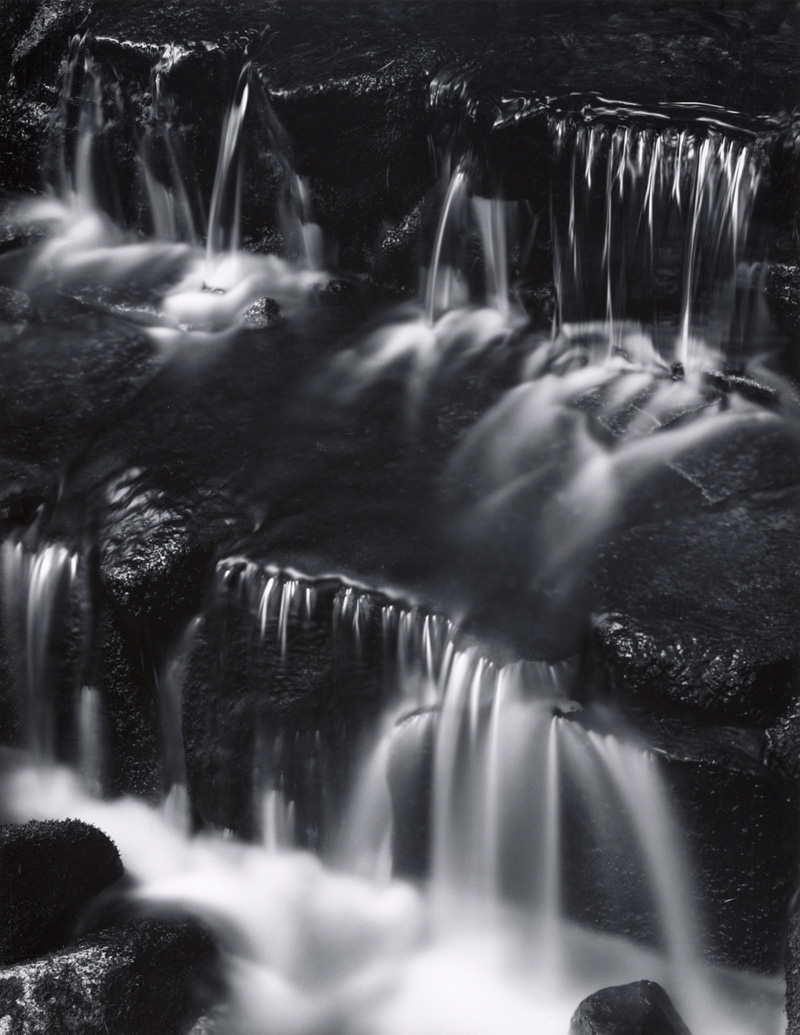
This summer, the Peabody Essex Museum (PEM) will unveil an exhibition shedding new light on one of history’s most iconic and beloved photographers. Ansel Adams: At the Water’s Edge features more than 100 photographs combining famous images with extraordinary lesser-known works that focus on the artist’s treatment and exploration of water in all its forms. Full of energy and dynamism, Adams’ photographs of seascapes, beaches, bays, tide pools, clouds and waterfalls provide a fresh perspective on the artist’s celebrated career. Ansel Adams: At the Water’s Edge was organised by the Peabody Essex Museum where it will be on view for its exclusive U.S. engagement from June 9 through October 8, 2012, and will then travel to the National Maritime Museum in Greenwich, UK.

“Throughout his life, Adams was drawn to the water for its visual potential, exploring where elemental forces meet,” says Phillip Prodger, exhibition curator and PEM’s curator of photography. “As an innovative Modernist, he explored seriality, motion and time, using a range of techniques to capture a definitively fluid and elusive substance.”

In this exhibition, drawn from the Ansel Adams Archive at the Center for Creative Photography at the University of Arizona and other prominent private and institutional collections, viewers will have the opportunity to see the pictures that Adams made for himself. Both grand and intimate at turns, these personal, and sometimes experimental images express his thoughts about the natural world, and often push the boundaries between realism and abstraction. Ranging in size from 3 x 5-inch prints to 10 x 12-foot murals, many will be appearing publicly for the first time at the Peabody Essex Museum. Adams was one of the first photographers to work in the large-scale mural format which has now become standard among contemporary artists.

At the Water’s Edge provides a fresh look at Ansel Adams, as well-known and beloved pictures of rugged mountains, desert landscapes, and rocky cliffs blend with sparkling, spraying, whirling waters in all of their flowing power and reflective nuance. The undeniable attraction of water as a photographic subject captured Adams at an early age. The very first photograph Adams ever made, shown at PEM for the first time, features a watery pool at the Panama Pacific Exhibition of the 1915 World’s Fair, made when Adams was just 14 years old. Over time, his lens claimed the territory between Yosemite National Park and the Pacific, as well as Hawaii and Alaska, where he shot images shown in this exhibition.

Notably, he made a powerful group of photographs of New England, the only coastal location outside of California that Adams photographed steadily. Over a course of decades, he explored the coast from Connecticut to Maine, especially in Massachusetts, making repeated trips to Cape Cod and Boston’s North Shore.

Highlights

Visitors will have the opportunity to see rarely-viewed objects, including the print of Golden Gate before the Bridge that used to hang over Ansel Adams’ desk, and which he considered among his very best photographs. At the same time, stunning, oversized exhibition prints of iconic photographs including Clearing Winter Storm, Yosemite, Tetons and the Snake River, Grand Teton National Park and Stream, Sea, Clouds, Rodeo Lagoo, Marin County, California will be on display, among others.

One of the surprises revealed in At the Water’s Edge is Adams’ interest in using sequential imagery to freeze motion in time. An especially powerful example is the majestic surf sequence, San Mateo County Coast, California, 1940. Adams was possibly the first well-known photographer since Eadweard Muybridge to attempt to use photography in this way, employing seriality and sequence to create a cohesive narrative. Another series of photographs of Old Faithful Geyser, Yellowstone National Park, shows a different approach to sequentiality. A poignant exploration of form, movement and time, they can be viewed as Adams’ version of Monet’s haystacks. As with Monet, Adams visited Old Faithful at different times of day, photographing in varying light and changing atmospheric conditions.

Another unexpected addition is the exceedingly rare Japanese-style screen, Grass and Pool, 1948, dating from a period of tremendous creativity in Adams’ work. Standing on round metal feet, it was designed to be shown directly on the floor in a domestic environment. In subject and treatment, it was inspired by Asian painted screens in which picture planes are flattened and perspectives tilted. The three articulated panels can be angled to catch the light differently, the rhythm of the fold cleverly mirroring the angular pattern of the exposed grass.

For Adams, part of the appeal of creating such a work was thwarting conventional expectations about what a photograph might look like and where and how it could be shown. Like many modernists, Adams considered photographs not just as images but as objects – the craft and sheer physical presence of the work reinforced its significance as a work of art and the focus of contemplation.”

Press release from the Peabody Essex Museum website


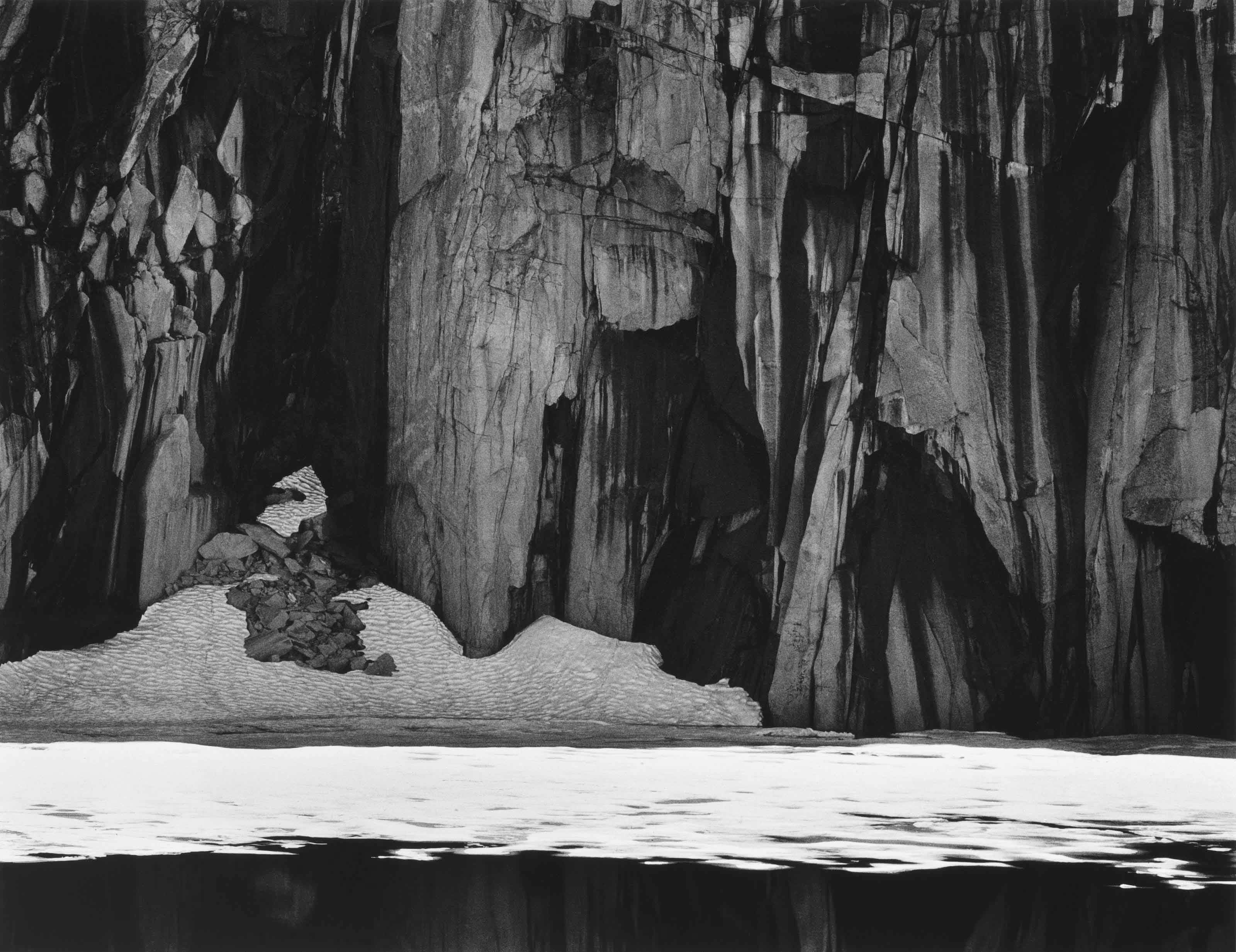
Ansel Adams (American, 1902-1984) 'Frozen Lake and Cliffs, Kaweah Gap, Sierra Nevada, California' 1932


Ansel Adams (American, 1902-1984)
Frozen Lake and Cliffs, Kaweah Gap, Sierra Nevada, California
1932
Gelatin silver print
Collection Center for Creative Photography, The University of Arizona
© 2011 The Ansel Adams Publishing Rights Trust


Ansel Adams (American, 1902-1984) 'Clearing Winter Storm, Yosemite National Park' c. 1937


Ansel Adams (American, 1902-1984)
Clearing Winter Storm, Yosemite, Tetons
c. 1937
Gelatin silver print
Collection Center for Creative Photography, The University of Arizona
© 2011 The Ansel Adams Publishing Rights Trust


Ansel Adams (American, 1902-1984) 'The Tetons and Snake River, Grand Teton National Park, Wyoming' 1942


Ansel Adams (American, 1902-1984)
The Tetons and Snake River, Grand Teton National Park, Wyoming
1942
Gelatin silver print
Collection Center for Creative Photography, The University of Arizona
© 2011 The Ansel Adams Publishing Rights Trust


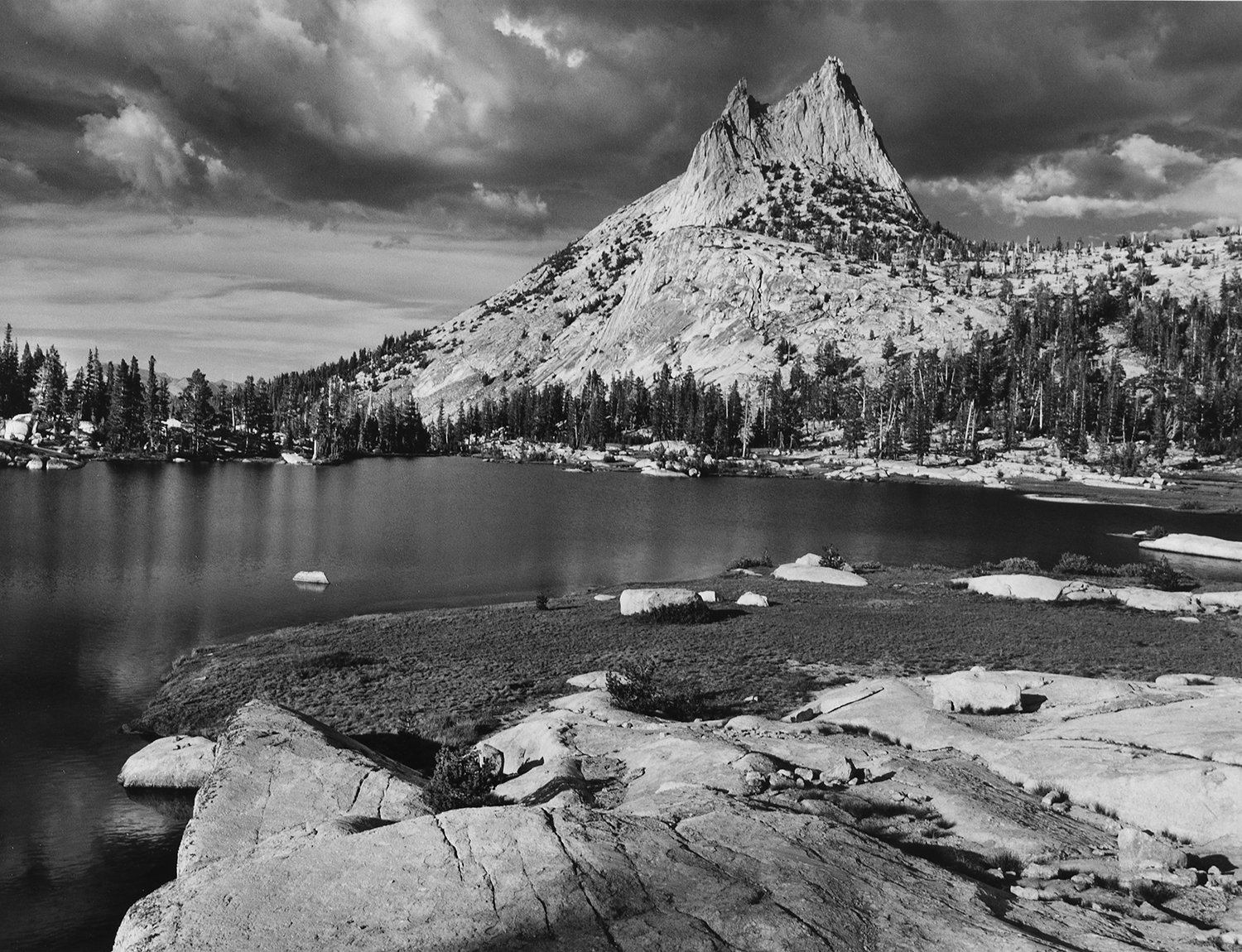
Ansel Adams (American, 1902-1984) 'Cathedral Peak, Tuolumne River' 1944


Ansel Adams (American, 1902-1984)
Cathedral Peak, Tuolumne River
1944
Gelatin silver print
Collection Center for Creative Photography, The University of Arizona
© 2011 The Ansel Adams Publishing Rights Trust


Ansel Adams (American, 1902-1984) 'Surf Sequence #1, San Mateo County Coast, California' 1940


Ansel Adams (American, 1902-1984)
Surf Sequence #1, San Mateo County Coast, California
1940
Gelatin silver print
Collection Center for Creative Photography, The University of Arizona
© 2011 The Ansel Adams Publishing Rights Trust


Ansel Adams (American, 1902-1984) 'Surf Sequence #3, San Mateo County Coast, California' 1940


Ansel Adams (American, 1902-1984)
Surf Sequence #3, San Mateo County Coast, California
1940
Gelatin silver print
Collection Center for Creative Photography, The University of Arizona
© 2011 The Ansel Adams Publishing Rights Trust


Ansel Adams (American, 1902-1984) 'Surf Sequence #4' 1940


Ansel Adams (American, 1902-1984)
Surf Sequence #4, San Mateo County Coast, California
1940
Gelatin silver print
Collection Center for Creative Photography, The University of Arizona
© 2011 The Ansel Adams Publishing Rights Trust


Ansel Adams (American, 1902-1984) 'Photograph of Old Faithful Geyser Erupting in Yellowstone National Park' 1941


Ansel Adams (American, 1902-1984)
Photograph of Old Faithful Geyser Erupting in Yellowstone National Park
1941
Gelatin silver print
Collection Center for Creative Photography, The University of Arizona
© 2011 The Ansel Adams Publishing Rights Trust


Ansel Adams (American, 1902-1984) 'Upper Yosemite Fall' 1946


Ansel Adams (American, 1902-1984)
Upper Yosemite Fall
1946
Gelatin silver print
Collection Center for Creative Photography, The University of Arizona
© 2011 The Ansel Adams Publishing Rights Trust


Ansel Adams (American, 1902-1984) 'Nevada Fall Profile' 1946


Ansel Adams (American, 1902-1984)
Nevada Fall Profile
1946
Gelatin silver print
Collection Center for Creative Photography, The University of Arizona
© 2011 The Ansel Adams Publishing Rights Trust


Ansel Adams (American, 1902-1984) 'Upper Yosemite Fall' 1960


Ansel Adams (American, 1902-1984)
Upper Yosemite Fall
1960
Gelatin silver print
Collection Center for Creative Photography, The University of Arizona
© 2011 The Ansel Adams Publishing Rights Trust


Ansel Adams (American, 1902-1984) 'Fern Spring, Dusk, Yosemite Valley' c. 1961


Ansel Adams (American, 1902-1984)
Fern Spring, Dusk, Yosemite Valley
c. 1961
Gelatin silver print
Collection Center for Creative Photography, The University of Arizona
© 2011 The Ansel Adams Publishing Rights Trust


Ansel Adams (American, 1902-1984) 'Stream, Sea, Clouds, Rodeo Lagoon, Marin County, California' 1962


Ansel Adams (American, 1902-1984)
Stream, Sea, Clouds, Rodeo Lagoon, Marin County, California
1962
Gelatin silver print
Collection Center for Creative Photography, The University of Arizona
© 2011 The Ansel Adams Publishing Rights Trust


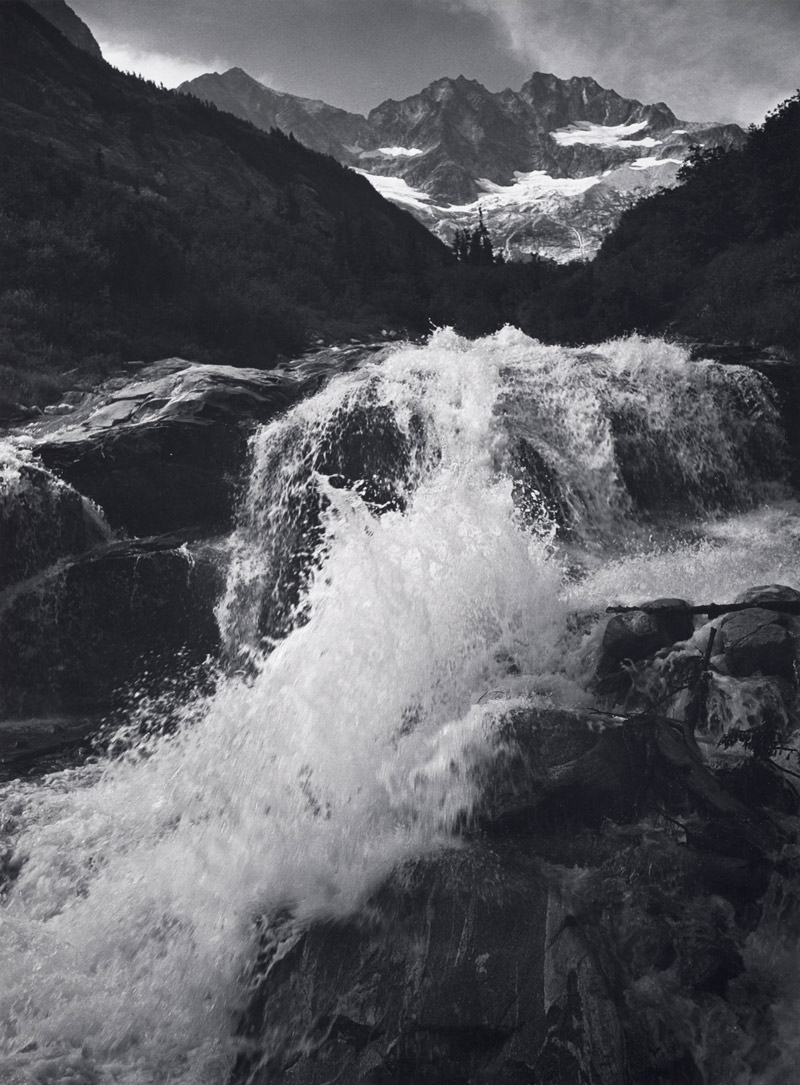
Ansel Adams (American, 1902-1984) 'Waterfall, Northern Cascades, Washington' 1960


Ansel Adams (American, 1902-1984)
Waterfall, Northern Cascades, Washington
1960
Gelatin silver print
Collection Center for Creative Photography, The University of Arizona
© 2011 The Ansel Adams Publishing Rights Trust


Peabody Essex Museum
East India Square
161 Essex Street
Salem, MA 01970-3783 USA
Phone: 978-745-9500, 866-745-1876

Opening hours:
Open Tuesday – Sunday 10am – 5pm
Closed Mondays

Peabody Essex Museum website

LIKE ART BLART ON FACEBOOK

Back to top

Exhibition: ‘Joel Sternfeld: Colour photographs since 1970’ at Albertina, Vienna

Exhibition dates: 27th June – 7th October 2012


Many thankx to the Albertina for allowing me to publish the photographs in the posting. Please click on the photographs for a larger version of the image.


Joel Sternfeld (American, b. 1944) 'A Railroad Artifact, 30th Street, May 2000' 2000


Joel Sternfeld (American, b. 1944)
A Railroad Artifact, 30th Street, May 2000
2000
© Courtesy of the artist, Luhring Augustine, New York and The Friends of the High Line, New York


Joel Sternfeld (American, b. 1944) 'Ken Robson's Christmas Tree, January 2001' 2001


Joel Sternfeld (American, b. 1944)
Ken Robson’s Christmas Tree, January 2001
2001
© Courtesy of the artist, Luhring Augustine, New York and The Friends of the High Line, New York


Joel Sternfeld (American, b. 1944) 'After A Flash Flood, Rancho Mirage, California 1979' 1979


Joel Sternfeld (American, b. 1944)
After A Flash Flood, Rancho Mirage, California 1979
1979
© Courtesy of the artist and Luhring Augustine, New York, 2012


Joel Sternfeld (American, b. 1944) 'Wet 'n Wild Aquatic Theme Park, Orlando, Florida, September 1980' 1980


Joel Sternfeld (American, b. 1944)
Wet ‘n Wild Aquatic Theme Park, Orlando, Florida, September 1980
1980
© Courtesy of the artist and Luhring Augustine, New York, 2012


Joel Sternfeld (American, b. 1944) 'The Space Shuttle Columbia Lands at Kelly Lackland Air Force Base, San Antonio, Texas, March 1979' 1979


Joel Sternfeld (American, b. 1944)
The Space Shuttle Columbia Lands at Kelly Lackland Air Force Base, San Antonio, Texas, March 1979
1979
© Courtesy Buchmann Galerie Berlin, Luhring Augustine, New York and  the artist


Joel Sternfeld (American, b. 1944) 'McLean, Virginia, December 1978' 1978


Joel Sternfeld (American, b. 1944)
McLean, Virginia, December 1978
1978
© Courtesy of the artist and Luhring Augustine, New York, 2012


This exhibition offers the first survey of the US artist Joel Sternfeld’s work in Austria. The Albertina shows eleven series by the photographer dating from between the early 1970s and 2007. Influenced by William Eggleston, but also by the colour theories of the Bauhaus, Joel Sternfeld, who was born in New York in 1944, began to experiment with colour photography in the 1970s and soon developed his own style. He brought colour to bear on a subject that had a long photographic tradition in the United States: the American social landscape. A critical observer, Sternfeld travelled across the USA for years, capturing the country and its inhabitants in all their peculiarities and contradictions. Most of his pictures explore political and social issues by representing their subjects’ relationship to nature or the landscape around them. Sternfeld’s photographs combine a documentary objective with an artist’s view. Their visual language has its predecessors in Walker Evans and Robert Frank, who were advocates of black-and-white photography, though. Seen against this background, Sternfeld’s photographs are to be understood not only as a chronicle of the last forty years’ American history, but also evidence a development process in the course of which colour came to bring forth an entirely specific visual language.

Nags Head

Next to William Eggleston and Stephen Shore, Joel Sternfeld ranks among the most important representatives of New Color Photography, a quite heterogeneous group of photographers who have relied on colour as a stylistic device for artistic photography since the 1970s. A perfectly natural means of expression today, colour was frowned upon in artistic photography in those days. While colour was used in popular photography, like in the fields of advertising and fashion, traditional artistic photographs were black-and-white. William Eggleston’s exhibition in the Museum of Modern Art New York in 1976, which was regarded as scandalous when it opened, proved to be a landmark event for the recognition of colour photography. Dating from 1975, Joel Sternfeld’s series Nags Head clearly testifies to the role of colour as a means of artistic expression. Precise colour areas are as important for the pictures’ composition as the motifs the photographer encountered on the beach of the town Nags Head in North Carolina.

First Pictures

Next to Nags Head, two series of colour photographs from the 1970s, Happy Anniversary Sweetie Face! and Rush Hour, stand for Joel Sternfeld’s early work. Following in the tradition of street photography, these series explore various scenes of American everyday culture in a humorous vein, capturing them in a seemingly spontaneous and random visual language. Supposed exposure mistakes and blurs as well as angles fragmentising the subjects suggest an intuitive and dynamic view of the world. The instantaneous character of the photographs manifests itself in the Rush Hour series in a particularly striking manner. Using a manual flash lighting up the faces of the passers-by for his compositions, Sternfeld emphasises the fleeting moment a photograph snatches from the continuum of time.

Colour proves to be key for the composition. Rich and full colour areas not only rhythmise and structure the arrangement, but represent pictorial values in their own right, which are not integrated in a homogeneous whole. This kind of photography which connects everyday motifs with the autonomy of colour has been influenced not least by William Eggleston, whom Sternfeld got to know in Harvard in 1976.

American Prospects

Sternfeld shot the series American Prospects while travelling through the United States in a Volkswagen bus for some years. Dating from between 1978 and 1987, the pictures explore people’s relationship to the American landscape as formed and informed by them. The microcosm of often bizarre everyday events that becomes visible here does more than just illustrate man’s problematic use and transformation of the landscape: it also offers a possibility for drawing conclusions on contemporary political and social conditions in the United States.

In American Prospects, Sternfeld frequently renders critical contents by relying on the sovereign use of sublime, vivid colour values and contrasts that seem to contradict the depicted serious circumstances. Colour, format, and static composition are grounded in Sternfeld’s use of a large-format camera. While he photographed his early series with a small-format camera, which allowed flexible movements and, thus, a spontaneous visual language, the more complicated handling of a large-format camera slows down the picture-taking process. Sternfeld selected his motifs very carefully and precisely planned his pictures’ composition in advance. Both the composition and the general motif of people in a landscape were essentially inspired by solutions of traditional painting like Pieter Bruegel the Elder’s and Jacob van Ruisdael’s.

Stranger Passing

Photographed within a period of fourteen years starting in 1987, Joel Sternfeld’s series Stranger Passing makes the human portrait its crucial issue. Depicted in situ, the subjects are characterised through their outward appearance, their clothes and poses, and the environs in which they present themselves. The pictures show a wide variety of social groups and milieus and centre on different life styles. Maintaining a reserved and detached view throughout, Sternfeld keeps a visible distance from his motifs and does not express a judgment – an artistic strategy already pursued by August Sander in his famous photographic project Menschen des 20. Jahrhunderts (People of the 20th Century) in the 1920s. But whereas Sander subsumed his models under their professional functions, Sternfeld focuses on representing the portrayed people’s individuality. Their often bizarre (self-) representation visualises comprehensive social contexts which, in total, offer a manifold and differentiated portrait of American society.

On This Site

Between 1993 and 1996, Joel Sternfeld photographed crime scenes hidden behind apparently everyday places. By depicting such places of destiny, Sternfeld has retrieved suppressed, concealed, or deliberately buried events for the collective memory and thus dismantled patriotic self-presentations of the US. The pictures reveal a conceptual approach to documentary photography. The comparatively neutral and detached shots show “only” the crime scenes and do not offer any details on the sequence of events. The particulars of the crime are to be found in a text which is part of the work. Image and text provide different contents, which the viewer is asked to put together.

Oxbow Archive

In Oxbow Archive (2005-2007), Sternfeld has made the scenery his sole subject by photographing an area near Northampton in Massachusetts through the changing seasons. The work explores the tradition of cultural norms and phenomena of US culture: the representation of landscapes in pictures has always been an essential dimension of American identity and cultural self-understanding. Wilderness and pristine nature are frequently depicted in stunning, idealised views – for which Ansel Adams and Edward Weston may be cited as examples. A famous painting by the American artist Thomas Cole from 1836 renders the region shown in Oxbow Archive as a heroic landscape in dramatic weather conditions seen from an elevated point of view. Sternfeld clearly rejects this visual language: he documents the uniqueness of the seasons’ changes beyond the sublime and picturesque of traditional landscape pictures from a low point of view and confronts the viewer with the clearly visible effects of man’s intervention in nature.

When it changed

After Sternfeld’s early series had already been informed by a socio-critical attitude, the projection When it changed unmistakably shows the photographer to be a documentarist with great political engagement. When it changed comprises fifty-three portraits of participants in a United Nations conference on climate change in Montreal in 2005. A text with prognoses and statements on climate change by scientists from the last twenty years provides a comment on the persons’ often serious and pessimistic faces.

Treading on Kings

For his project Treading on Kings Joel Sternfeld photographed the protests during the G8 summit in Genoa in 2001. During this meeting of the eight most powerful industrial nations in the world, which was accompanied by severe clashes between the demonstrators and the police, numerous protesters were wounded and one of the activists, Carlo Giuliani, was killed. Sternfeld’s thirty-three photographs portray the scenes of the confrontation as well as the protesters themselves. Accompanying texts offer statements by various participants of the demonstrations and explain the reasons for their engagement.

Walking the High Line

Walking the High Line (2000-2001) examines landscape as an indicator of ecologic and social transformations from a new perspective. The High Line is an abandoned railroad track in Manhattan, New York, a little over two kilometres long, which the photographer describes as a motific contrast between apparently untouched nature and urban development. While Sternfeld’s earlier series visualise the colonisation of nature by man, the relationship is reverted here. Nature has reconquered an urban space, the only sporadically visible rails hinting at the once busy traffic. In the case of Walking the High Line, the socio-political dimension characteristic of all of Sternfeld’s works has produced concrete results: the disused track was transformed into a public park in 2009 not least because of Sternfeld’s successful photographs.

Sweet Earth

The series Sweet Earth from 2006 shows Joel Sternfeld pursuing his photographic investigation of the American social landscape. Informed by the atmosphere of the 1990s, of the period immediately following the collapse of the Communist states, the photographs confront us with models of alternative communities. Texts provide us with information on the social experiments and their political, ecological, or religious reasons. By visualising historical and contemporary utopias, the artist offers a historical survey spanning from nineteenth-century communities to the counterculture of the 1960s and today’s new forms of living together. By confronting the viewer with heterogeneous life plans, Sternfeld not only fathoms the different values of present-day American society, but also questions the background and development of social norms and conventions.

Press release from the Albertina website


Joel Sternfeld (American, b. 1944) 'Washington D.C., August 1974' 1974


Joel Sternfeld (American, b. 1944)
Washington D.C., August 1974
1974
© Courtesy of the artist and Luhring Augustine, New York, 2012


Joel Sternfeld (American, b. 1944) 'Summer Interns Having Lunch, Wall Street, New York, August 1987' 1987


Joel Sternfeld (American, b. 1944)
Summer Interns Having Lunch, Wall Street, New York, August 1987
1987
© Courtesy of the artist and Luhring Augustine, New York, 2012


Joel Sternfeld (American, b. 1944) 'New York City (#1)' 1976


Joel Sternfeld (American, b. 1944)
New York City (#1)
1976
© Courtesy of the artist and Luhring Augustine, New York, 2012


Joel Sternfeld (American, b. 1944) 'Young Man Gathering Shopping Carts, Huntington, New York, July 1993' 1993


Joel Sternfeld (American, b. 1944)
Young Man Gathering Shopping Carts, Huntington, New York, July 1993
1993
© Courtesy of the artist and Luhring Augustine, New York, 2012


Joel Sternfeld (American, b. 1944) 'A Woman at Home in Malibu After Exercising, California, August 1988' 1988


Joel Sternfeld (American, b. 1944)
A Woman at Home in Malibu After Exercising, California, August 1988
1988
© Courtesy of the artist and Luhring Augustine, New York, 2012


Joel Sternfeld (American, b. 1944) 'A Woman Out Shopping with Her Pet Rabbit, Santa Monica, California, August 1988' 1988


Joel Sternfeld (American, b. 1944)
A Woman Out Shopping with Her Pet Rabbit, Santa Monica, California, August 1988
1988
© Courtesy of the artist and Luhring Augustine, New York, 2012


Albertina
Albertinaplatz 1
1010 Vienna, Austria
Phone: +43 (0)1 534 83-0

Opening hours:
Daily 10am – 6pm

Albertina website

LIKE ART BLART ON FACEBOOK

Back to top

Exhibition: ‘True Stories: American Photography from the Sammlung Moderne Kunst’ at Pinakothek der Moderne, Munich

Exhibition dates: 2nd March – 20th September 2012


Lewis Baltz (American, 1945-2014) 'Greenbrae' 1968


Lewis Baltz (American, 1945-2014)
Greenbrae
1968
from the series The Prototype Works
Vintage gelatin silver print
13.1 x 21.4cm
Sammlung Moderne Kunst in the Pinakothek der Moderne Munich, Acquired in 2011 by PIN. Freunde der Pinakothek der Moderne e.V.
© Lewis Baltz


You can’t get much better than this to start a posting: Baltz, Friedlander, Winogrand, Nixon, Baldessari, Eggleston and Shore. I recall seeing my first vintage Stephen Shore at the American Dreams exhibition at the Bendigo Art Gallery last year. What a revelation. At the time I said,

“Two Stephen Shore chromogenic colour prints from 1976 where the colours are still true and have not faded. This was incredible – seeing vintage prints from one of the early masters of colour photography; noticing that they are not full of contrast like a lot of today’s colour photographs – more like a subtle Panavision or Technicolor film from the early 1960s. Rich, subtle, beautiful hues.”

You can get an idea of those colours in the image posted here. Like an early Panavision or Technicolor feature film.

Perhaps there is something to this analogue photography that digital will never be able to capture, let alone reproduce…

Dr Marcus Bunyan


Many thankx to Pinakothek der Moderne for allowing me to publish the photographs in the posting. Please click on the photographs for a larger version of the image.


Lee Friedlander (American, b. 1934) 'T.V. in hotel room – Galax, Virginia' 1962


Lee Friedlander (American, b. 1934)
T.V. in hotel room – Galax, Virginia
1962
From the portfolio 15 Photographs
Gelatin silver print
© Lee Friedlander


Lee Friedlander (American, b. 1934) 'Untitled (Self-Portrait Reflected in Window, New Orleans)' c. 1965


Lee Friedlander (American, b. 1934)
Untitled (Self-Portrait Reflected in Window, New Orleans)
c. 1965
Gelatin silver print
© Lee Friedlander


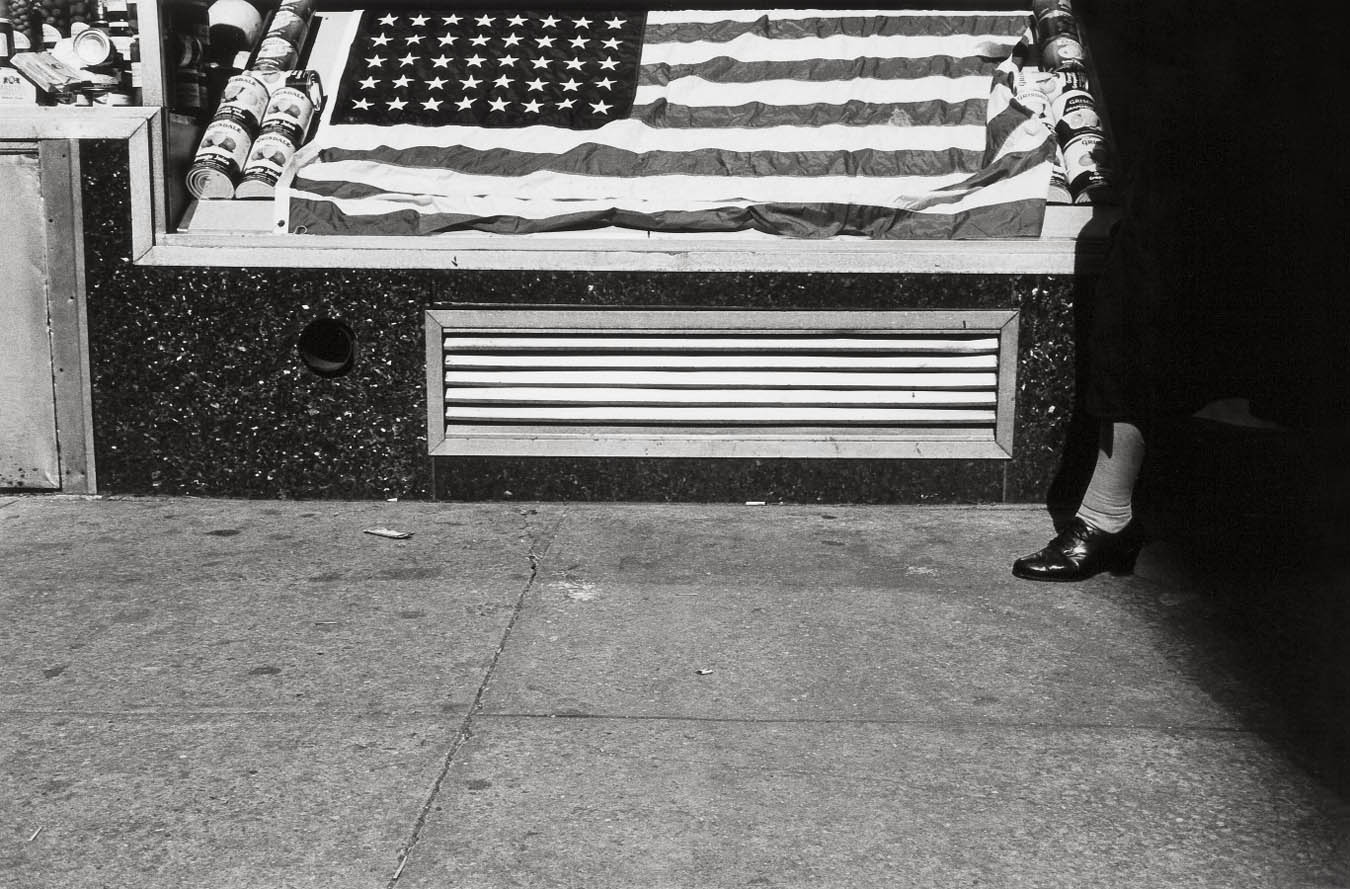
Lee Friedlander (American, b. 1934) 'Flag, New York City' 1965


Lee Friedlander (American, b. 1934)
Flag, New York City
1965
Gelatin silver print
© Lee Friedlander


Lee Friedlander (American, b. 1934) 'New York City' 1966


Lee Friedlander (American, b. 1934)
New York City
1966
Gelatin silver print
Baryt paper (card)
21.9 x 32.8cm
On permanent loan from Siemens AG, Munich, to the Sammlung Moderne Kunst since 2003
© Lee Friedlander


Lee Friedlander (American, b. 1934) 'Provincetown, Massachusetts' 1968


Lee Friedlander (American, b. 1934)
Provincetown, Massachusetts
1968
Gelatin silver print
© Lee Friedlander


Lee Friedlander (American, b. 1934) 'Route 9W, New York' 1969


Lee Friedlander (American, b. 1934)
Route 9W, New York
1969
Gelatin silver print, Baryt paper (card)
20.4 x 30.5cm
On permanent loan from Siemens AG, Munich, to the Sammlung Moderne Kunst since 2003
© Lee Friedlander


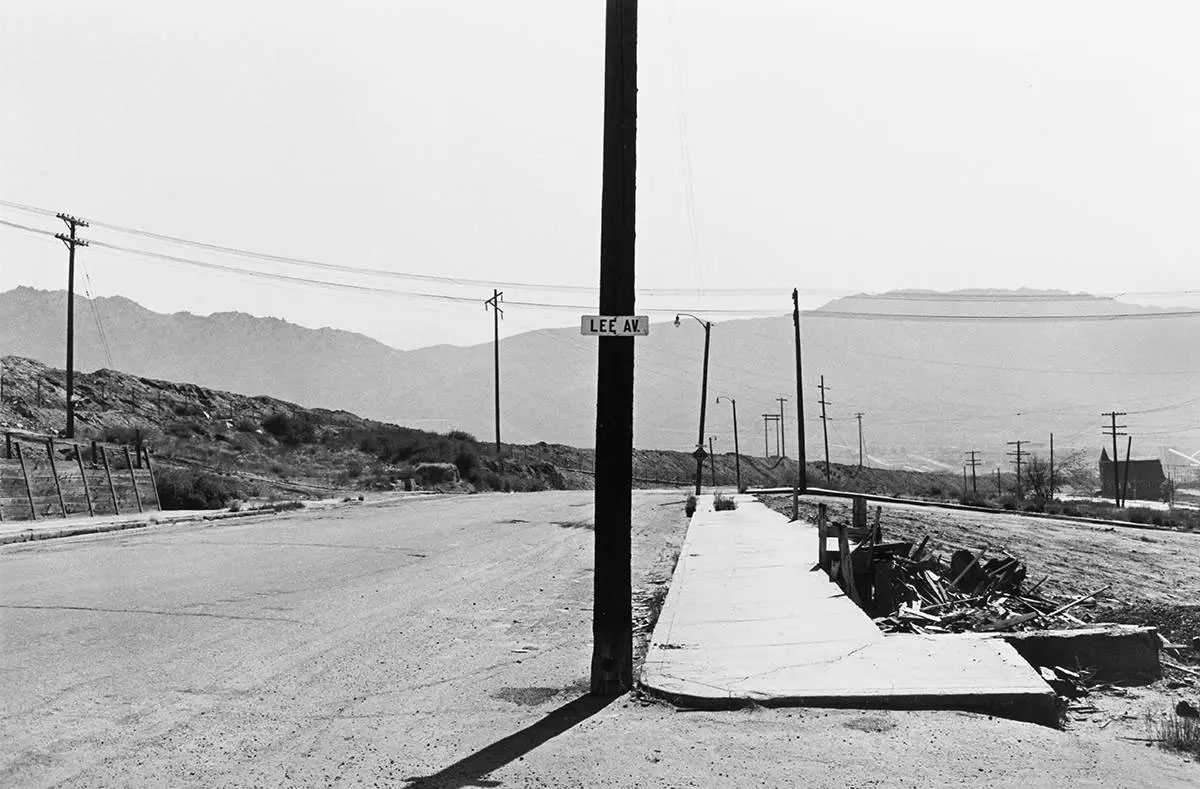
Lee Friedlander (American, b. 1934) 'Lee Ave., Butte, Montana' 1970


Lee Friedlander (American, b. 1934)
Lee Ave., Butte, Montana
1970
Gelatin silver print on baryta paper
© Lee Friedlander


Garry Winogrand (American, 1928-1984) 'New York World's Fair' 1964


Garry Winogrand (American, 1928-1984)
New York World’s Fair
1964
Gelatin silver print
© Estate of Garry Winogrand


Garry Winogrand (American, 1928-1984) 'Los Angeles, California' 1969


Garry Winogrand (American, 1928-1984)
Los Angeles, California
1969
Gelatin silver print (pre 1984)
21.8 x 32.8cm
On permanent loan from Siemens AG, Munich, to the Sammlung Moderne Kunst since 2003
© Estate of Garry Winogrand


Garry Winogrand (American, 1928-1984) 'New York City' 1969


Garry Winogrand (American, 1928-1984)
New York City
1969
Gelatin silver print
© Estate of Garry Winogrand


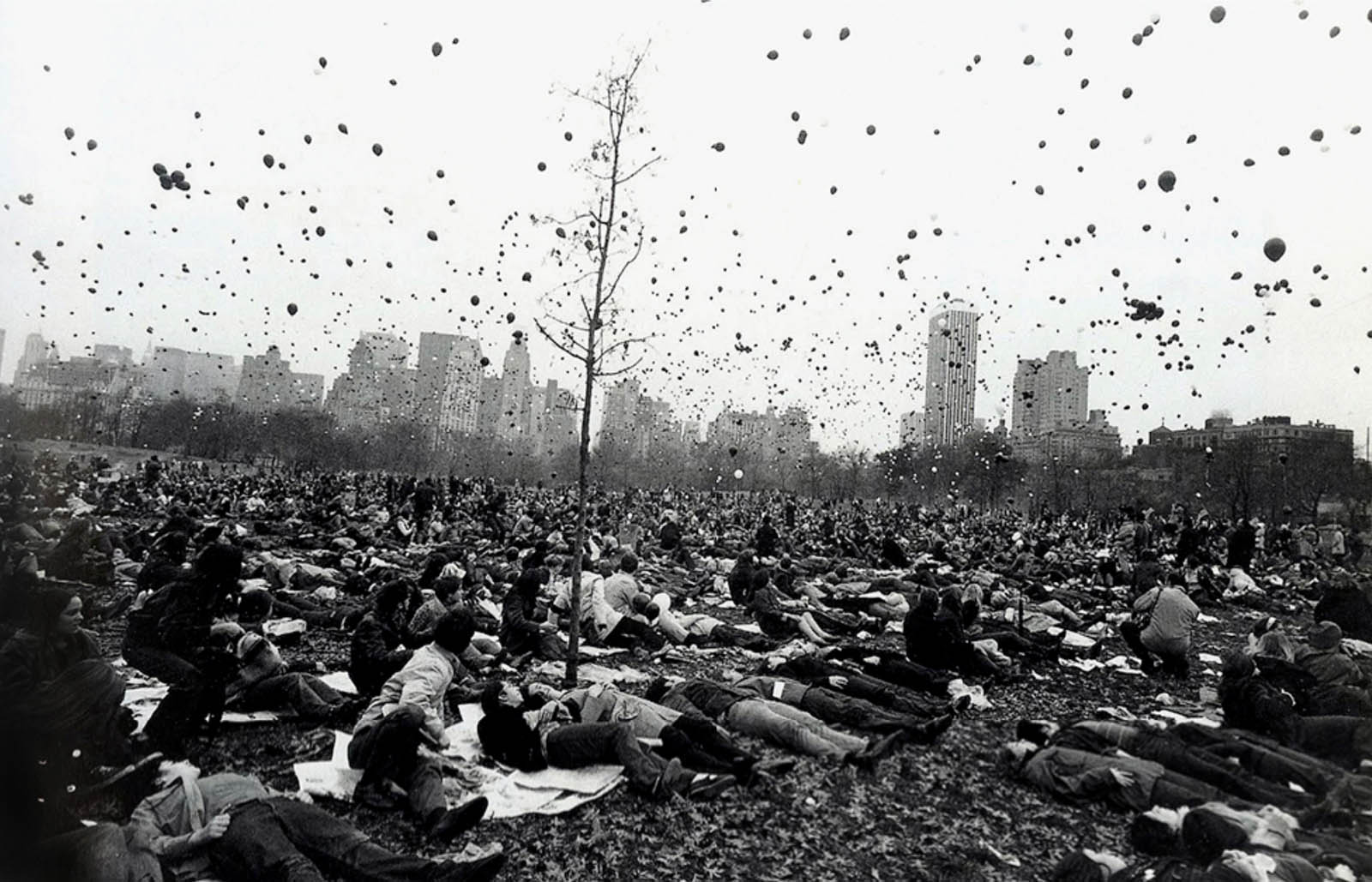
Garry Winogrand (American, 1928-1984) 'Peace Demonstration, Central Park, New York' 1970


Garry Winogrand (American, 1928-1984)
Peace Demonstration, Central Park, New York
1970
Gelatin silver print
© Estate of Garry Winogrand


Nicholas Nixon (American, b. 1947) 'Buildings on Tremont Street, Boston' 1975


Nicholas Nixon (American, b. 1947)
Buildings on Tremont Street, Boston
1975
From the series Boston Views 1974-1976
Gelatin silver print, Baryt paper (card)
© Nicholas Nixon


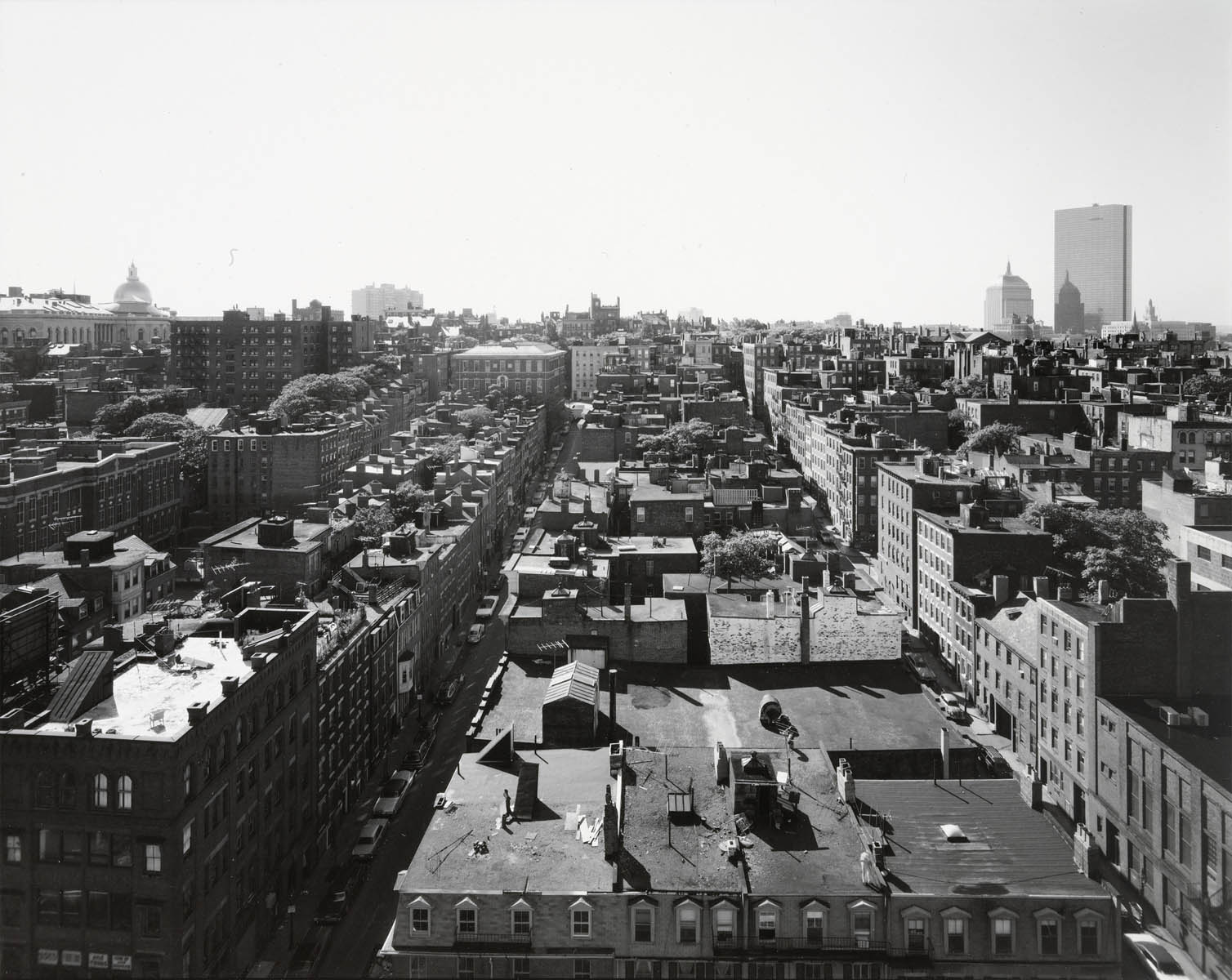
Nicholas Nixon (American, b. 1947) 'View of Beacon Hill, Boston' 1975


Nicholas Nixon (American, b. 1947)
View of Beacon Hill, Boston
1975
From the series Boston Views 1974-1976
Gelatin silver print, Baryt paper (card)
© Nicholas Nixon


Nicholas Nixon (American, b. 1947) 'View of State Street, Boston' 1976


Nicholas Nixon (American, b. 1947)
View of State Street, Boston
1976
From the series Boston Views 1974-1976
Gelatin silver print, Baryt paper (card)
20.3 x 25.2cm
On permanent loan from Siemens AG, Munich, to the Sammlung Moderne Kunst since 2003
© Nicholas Nixon


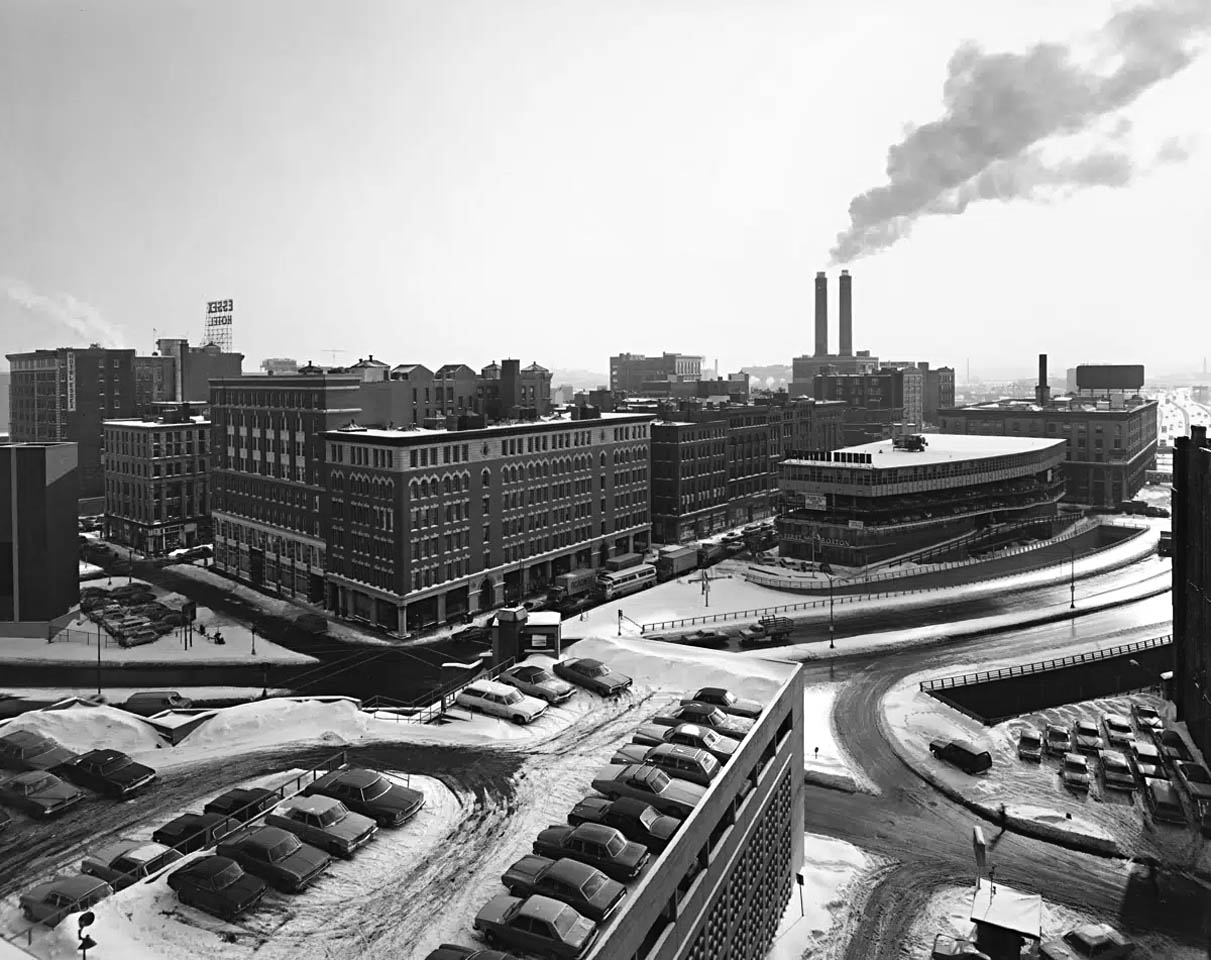
Nicholas Nixon (American, b. 1947) 'View of Essex Street and Downtown Entrance to the Massachusetts Turnpike, Boston' 1976


Nicholas Nixon (American, b. 1947)
View of Essex Street and Downtown Entrance to the Massachusetts Turnpike, Boston
1976
From the series Boston Views 1974-1976
Gelatin silver print, Baryt paper (card)
© Nicholas Nixon


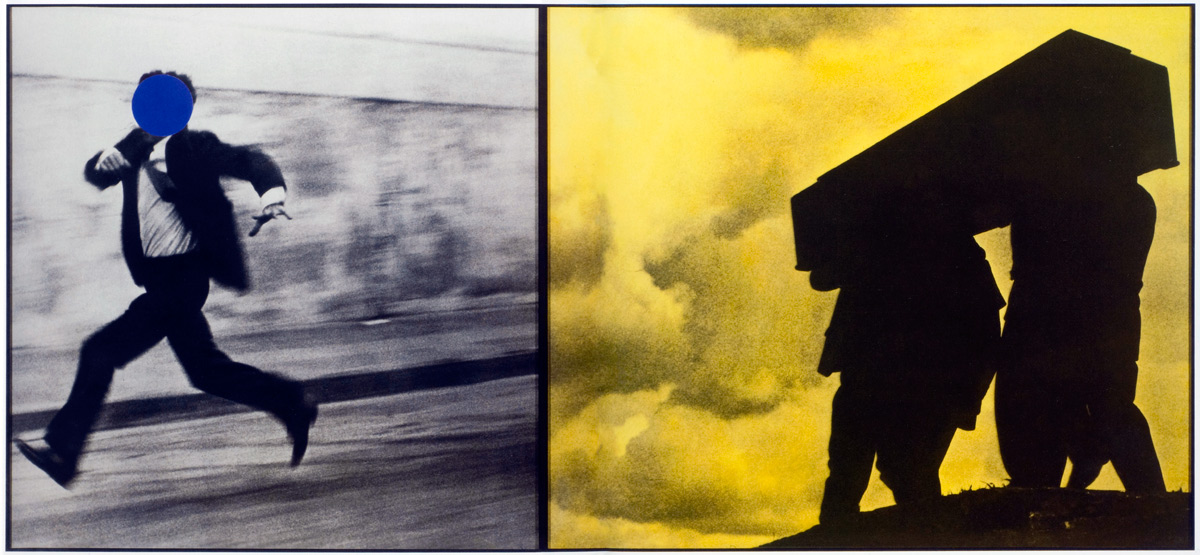
John Baldessari (American, 1931-2020) 'Man Running/Men Carrying Box' 1988-1990


John Baldessari (American, 1931-2020)
Man Running/Men Carrying Box
1988-1990
Gelatin silver prints, vinyl paint and shading in oil
Part 1: 121.3 x 118.6cm; Part 2: 121.3 x 146.6cm
On permanent loan from Siemens AG, Munich, to the Sammlung Moderne Kunst since 2003
© John Baldessari


William Eggleston (American, b. 1939) 'Untitled' 1970-1973 From the portfolio 'Troubled Waters'


William Eggleston (American, b. 1939)
Untitled
1970-1973
From the portfolio Troubled Waters 1980
© Eggleston Artistic Trust


William Eggleston (American, b. 1939) 'Untitled' 1980 From the portfolio 'Troubled Waters' 1980


William Eggleston (American, b. 1939)
Untitled
1980
From the portfolio Troubled Waters 1980
© Eggleston Artistic Trust


William Eggleston (American, b. 1939) 'Untitled' 1970-1973 From the portfolio 'Troubled Waters' 1980


William Eggleston (American, b. 1939)
Untitled
1970-1973
From the portfolio Troubled Waters 1980
© Eggleston Artistic Trust


William Eggleston (American, b. 1939) 'Untitled' 1980


William Eggleston (American, b. 1939)
Untitled
1980
The first of 15 works from the portfolio Troubled Waters
Dye transfer print
29 x 44cm
On permanent loan from Siemens AG, Munich, to the Sammlung Moderne Kunst since 2003
© Eggleston Artistic Trust


William Eggleston (American, b. 1939) 'Tennessee (Gulf Sign)' 1971


William Eggleston (American, b. 1939)
Tennessee (Gulf Sign)
1971
Dye transfer print
© Eggleston Artistic Trust


William Eggleston (American, b. 1939) from 'Southern Suite' (10-part series) 1981


William Eggleston (American, b. 1939)
from Southern Suite (10-part series)
1981
Dye transfer print
25.0 x 38.2cm
Sammlung Moderne Kunst in the Pinakothek der Moderne Munich. Acquired in 2006 through PIN. Freunde der Pinakothek der Moderne e.V.
© Eggleston Artistic Trust


American photography forms an extensive and simultaneously top-quality focal point in the collection, of which a selected overview is now being exhibited for the first time. The main interest of young photographers, who have been examining changes in political, social and ecological aspects of everyday American life since the late 1960s, has been the American social landscape. They have developed new pictorial styles that define stylistic devices perceived as genuinely American while at the same time being internationally recognised. Whereas Lee Friedlander, Garry Winogrand, Robert Adams, Lewis Baltz and Larry Clark, who are now considered classical modern photographers, have remained true to black-and-white photography, William Eggleston and Stephen Shore in particular have established colour photography as an artistically independent form of expression. The exhibition brings together around 100 works that, thanks to the Siemens Photography Collection and through acquisitions, bequests and donations, are now part of the museum’s holdings. True stories covers a spectrum from the street photography of the late 1960s to New Topographics and pictures by the New York photographer Zoe Leonard, taken just a few years ago.

“A new generation of photographers has directed the documentary approach toward more personal ends. Their work betrays a sympathy for the imperfection and frailties of society. Their aim has been not to reform life but to know it.” With the exhibition New Documents in spring 1967, John Szarkowski, the influential curator of photography at the Museum of Modern Art in New York, rang in a new era in American photography. Those photographers represented, including Lee Friedlander and Garry Winogrand in addition to Diane Arbus, stood for a change in attitude within documentary photography that was conditioned exclusively by the subjective viewpoint of an individual’s reality. The object of photographic interest lay in the American social landscape and its conditions. It was less concerned with the natural landscape and its increasingly cultural reshaping than with the urban or urbanised space and how people move within it. In so doing, the New Documentarians rejected any obviously explanatory impetus, turning instead to the everyday and commonplace.

The exhibition New Topographics: Photographs of a Man-Altered Landscape that was staged in the mid 1970s at the International Museum of Photography in Rochester, represented a countermovement to this subjective form of expression. Their protagonists, including Robert Adams, Lewis Baltz, Nicholas Nixon and Stephen Shore, also pleaded for a documentary approach and were influenced by figures such as Walker Evans und Robert Frank, but considered themselves rooted in the tradition of 19th-century topographical photography in particular. The prime initiator of this working method, that was expressly not governed by style, is the Los Angeles-based artist Ed Ruscha. Their central aim is a distanced and seemingly analytical depicition, free of judgement; their topic, the landscape altered by mankind. It is the image of the American West in particular, so much conditioned by myths and dreams but long since brought back to reality as a result of commercial and ecological exploitation, that is visible in their works.

The decisive quantum leap to establishing the position of colour photography was made by the Southerner William Eggleston in his exhibition in 1976, also held at the Museum of Modern Art in New York, and the publication of the William Eggleston’s Guide. The harsh public criticism of his pictures was not to do with his use of colour but the fact that Eggleston photographed things and everyday situations – on the spur of the moment and in a seemingly careless manner – that, until then, had not been considered worthy of being photographed turning them into exquisite prints using the expensive and complicated dye-transfer process. In Eggleston’s cosmos of images that is strongly influenced by motifs and the light of the Mississippi Delta, colour constitutes the picture. The “rush of colour” championed by this exhibition led to the comprehensive implementation of colour photography in the field of artistic photography in the years that followed, starting in the USA and then in Europe – and especially in Germany.

An artistic attitude became established at the end of the 1970s that, with recourse to existing picture material from art, film, advertising and the mass media, formulated new pictorial concepts and, in the same breath, opened up traditional artistic and art-historical categories such as authorship, originality, uniqueness, intellectual property and authenticity to discussion. Appropriation Art owes its decisive influences to the artist John Baldessari, who lives and teaches in California. One of its most famous representatives is Richard Prince, who became famous in particular as a result of his artistic adaptation of advertising images. Concept art in the 1960s and ’70s similarly makes use of photography, both as part of an artistic practice using the most varied of materials and as a unique medium for documenting campaigns, happenings and performances. As works by Dan Graham and Zoe Leonard clearly show, the previously precisely delineated boundaries between photography that alludes to its own intrinsically, media-related history and the use of photography as an artistic strategy, have become more fluid.

Press release from the Pinakothek der Moderne website


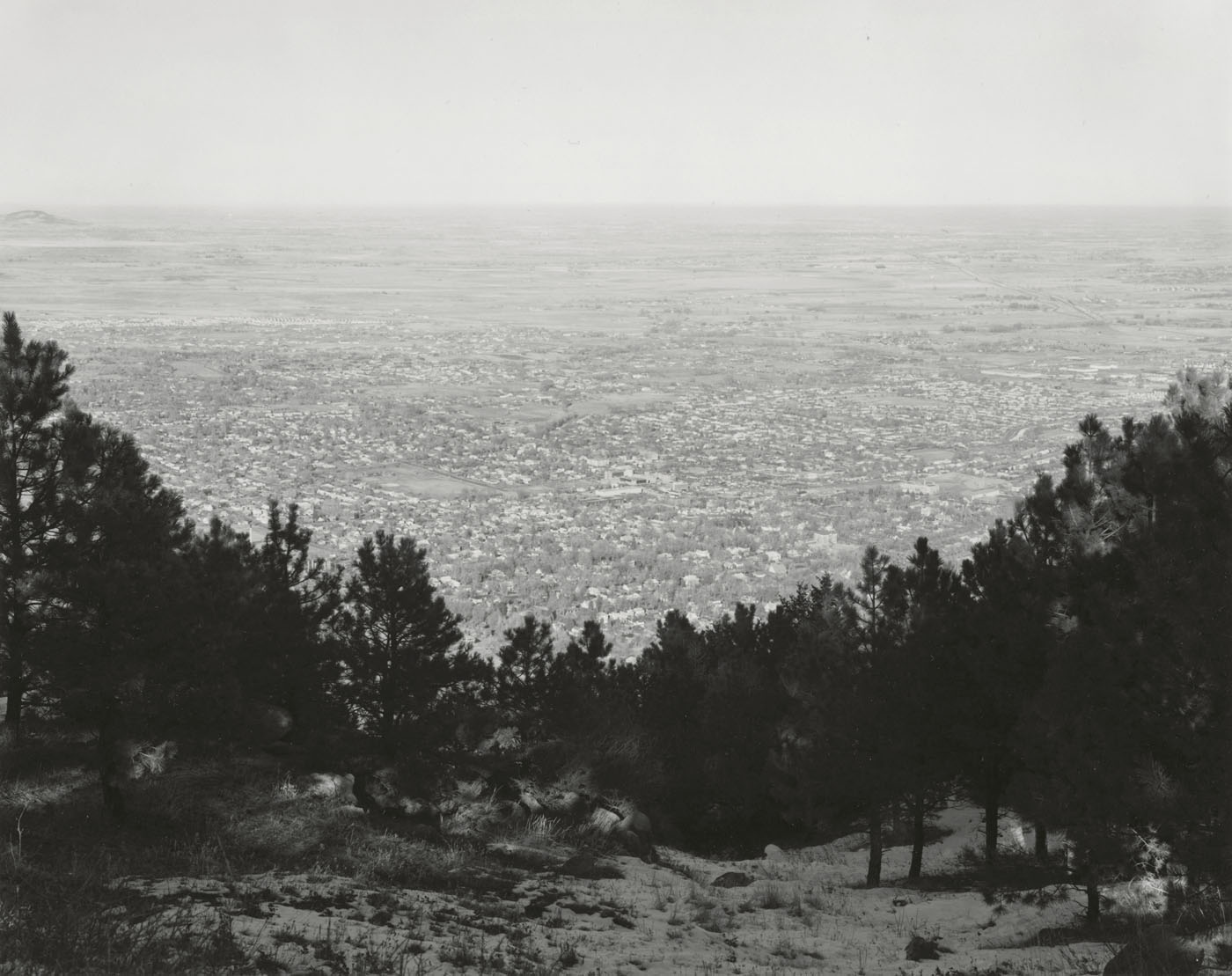
Robert Adams (American, b. 1937) 'East from Flagstaff Mountain, Boulder County, Colorado' 1975


Robert Adams (American, b. 1937)
East from Flagstaff Mountain, Boulder County, Colorado
1975
Gelatin silver print
Courtesy Fraenkel Gallery, San Francisco
© Robert Adams


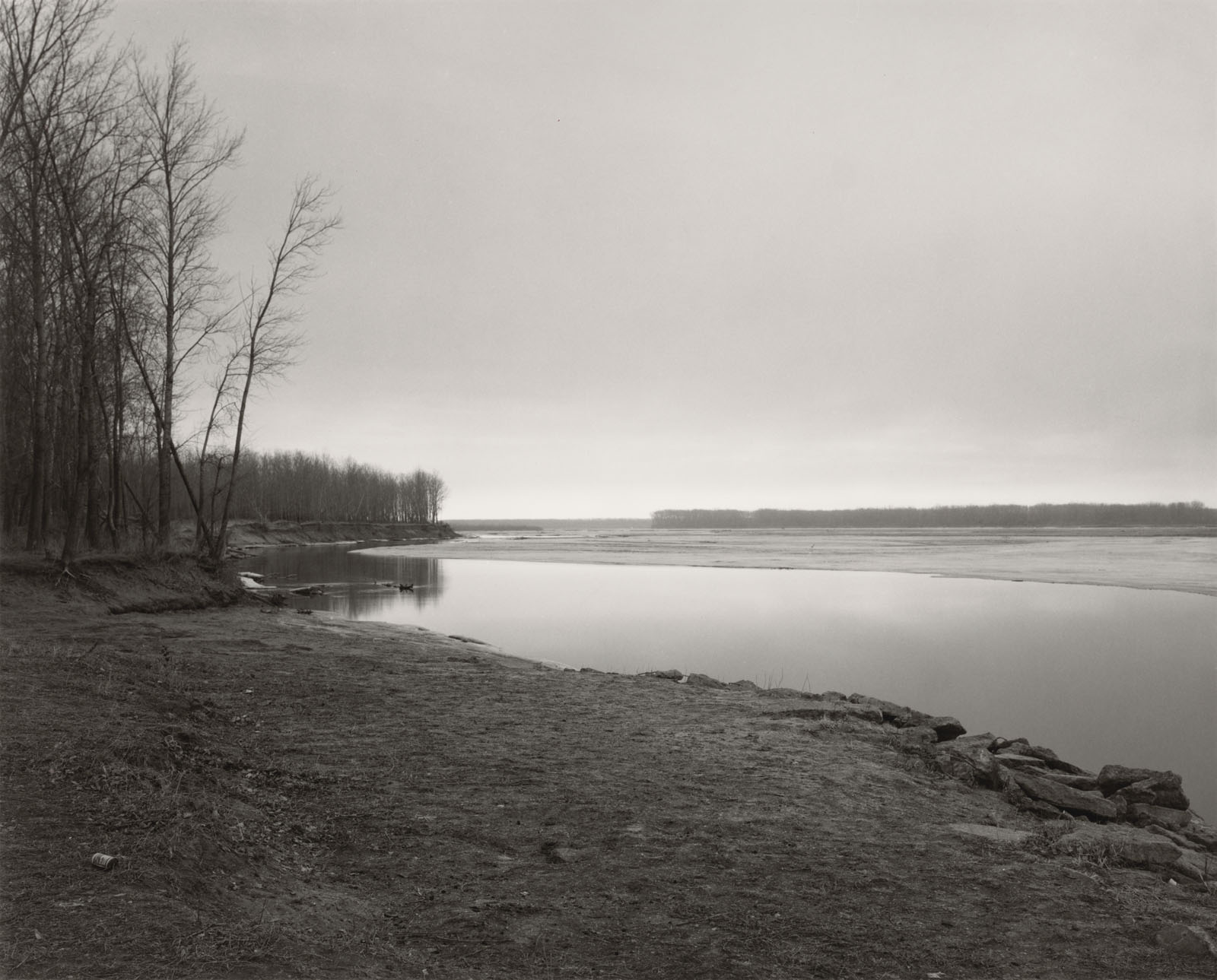
Robert Adams (American, b. 1937) 'Missouri River, Clay County, South Dakota' 1977


Robert Adams (American, b. 1937)
Missouri River, Clay County, South Dakota
1977
Gelatin silver print
Courtesy Fraenkel Gallery, San Francisco
© Robert Adams


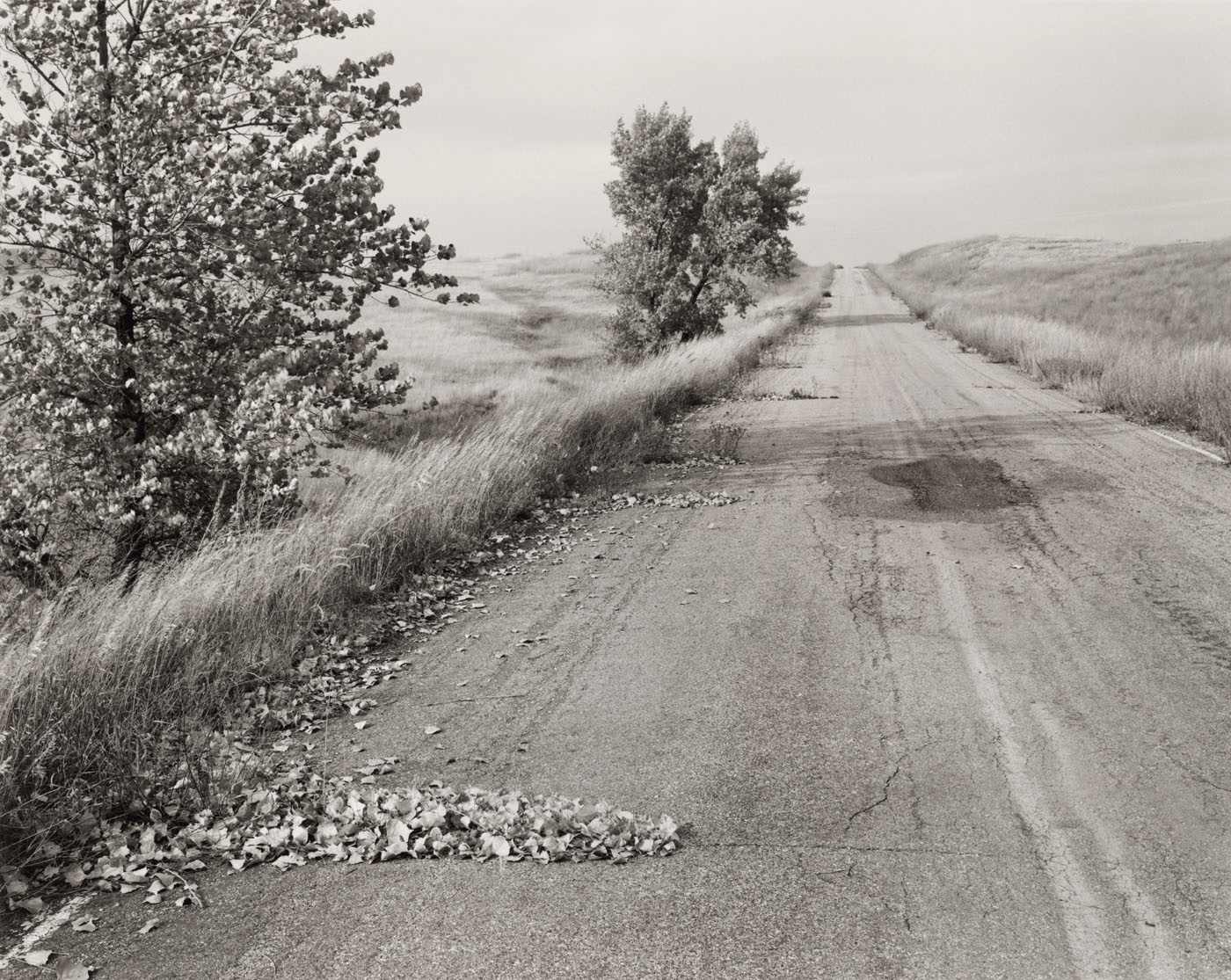
Robert Adams (American, b. 1937) 'Nebraska State Highway 2, Box Butte County, Nebraska' 1978, printed 1991


Robert Adams (American, b. 1937)
Nebraska State Highway 2, Box Butte County, Nebraska
1978, printed 1991
Gelatin silver print
Courtesy Fraenkel Gallery, San Francisco
© Robert Adams


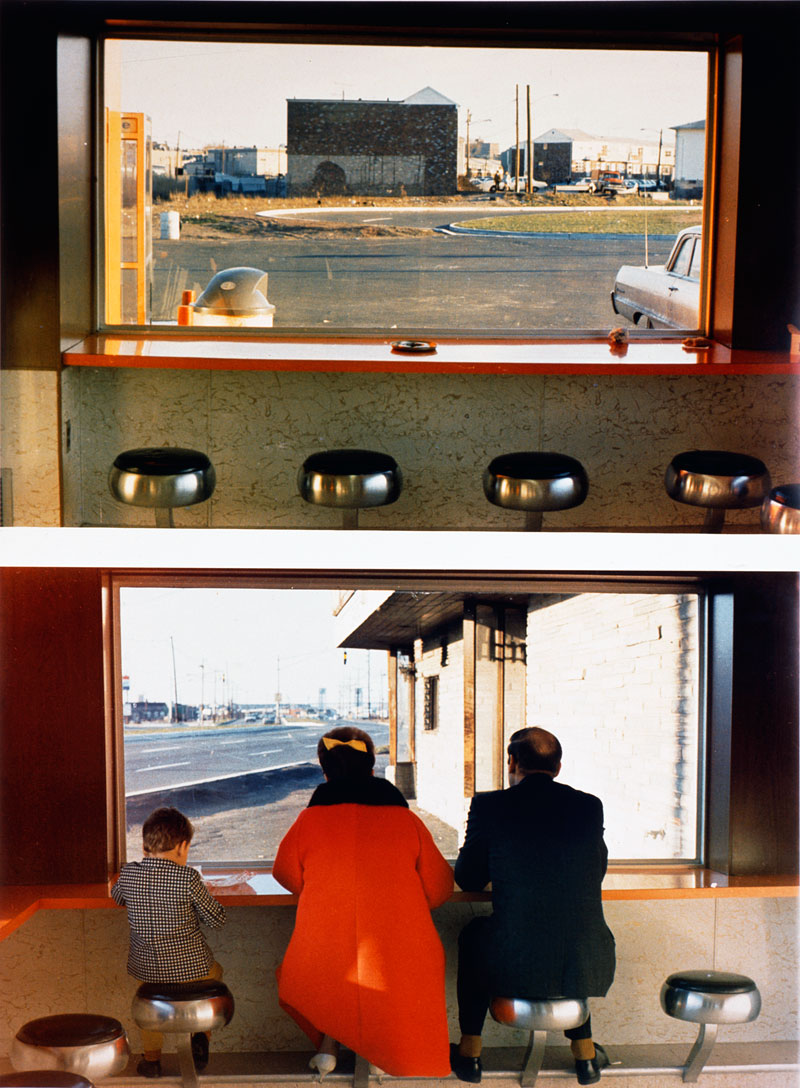
Dan Graham (American, b. 1942) 'View Interior, New Highway Restaurant, Jersey City, N.J.,' 1967 (detail)


Dan Graham (American, b. 1942)
View Interior, New Highway Restaurant, Jersey City, N.J., (detail)
1967 (printed 1996)
C-prints
Each 50.6 x 76.2cm
On permanent loan from Siemens AG, Munich, to the Sammlung Moderne Kunst since 2003
© Dan Graham


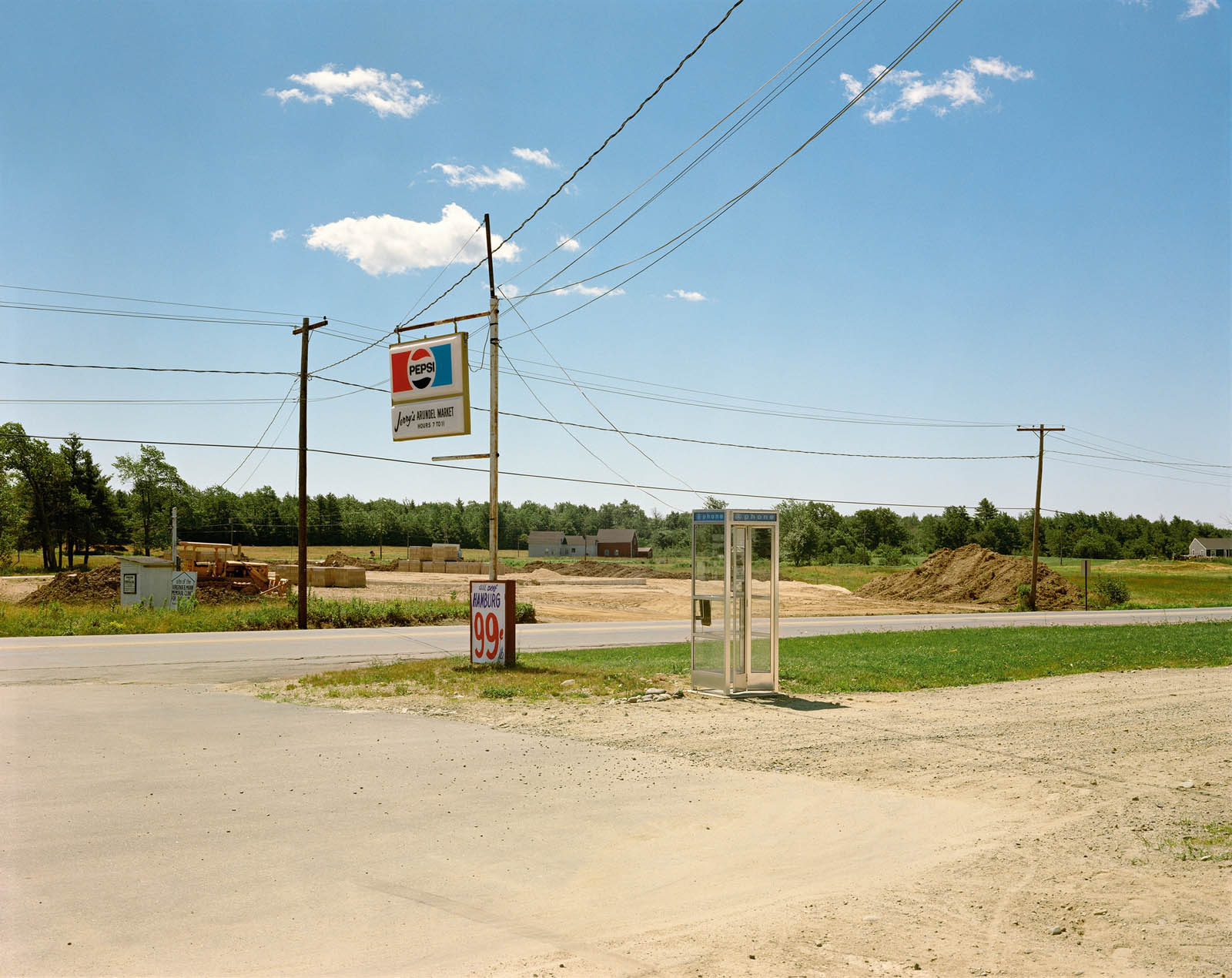
Stephen Shore (American, b. 1947) 'U.S. 1, Arundel, ME.' 1974


Stephen Shore (American, b. 1947)
U.S. 1, Arundel, ME.
1974
Chromogenic print
© Stephen Shore


Stephen Shore (American, b. 1947) 'Wilde Street and Colonization Avenue, Dryden, Ontario' 1974


Stephen Shore (American, b. 1947)
Wilde Street and Colonization Avenue, Dryden, Ontario
1974
Chromogenic print
© Stephen Shore


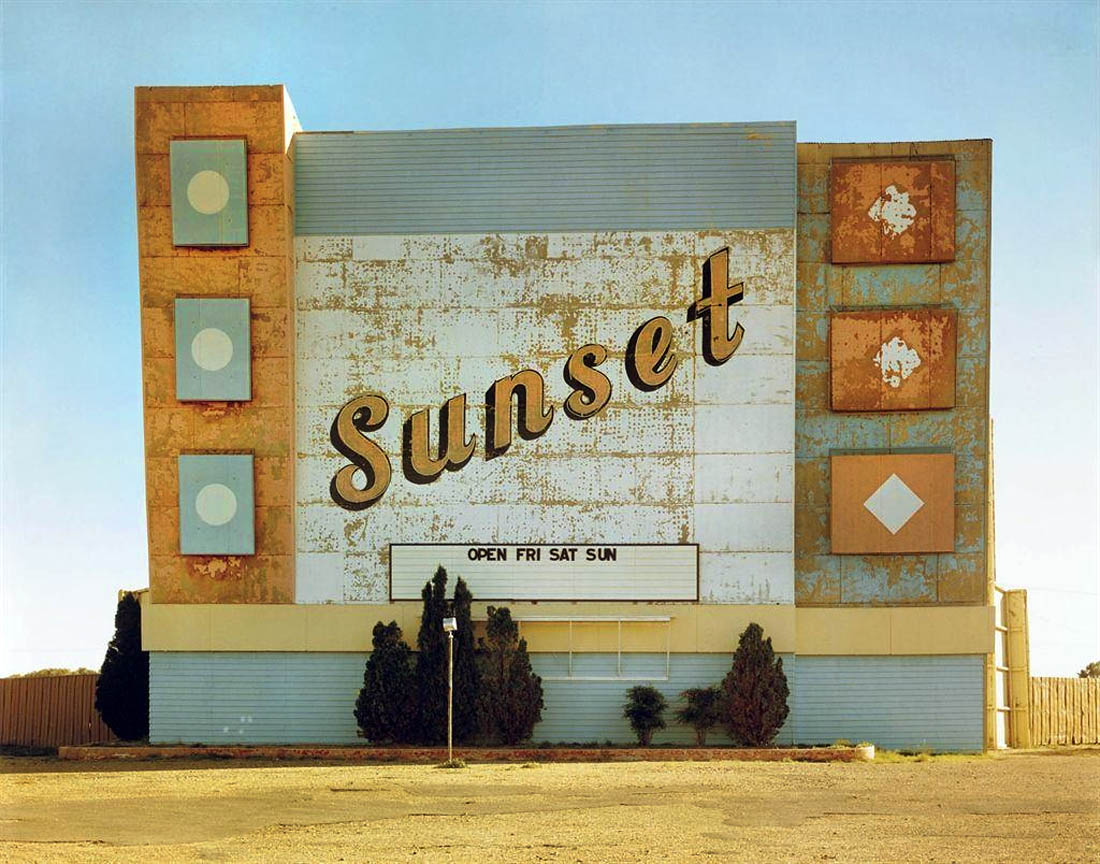
Stephen Shore (American, b. 1947) 'West 9th Avenue, Amarillo, Texas' 1974


Stephen Shore (American, b. 1947)
West 9th Avenue, Amarillo, Texas
1974
Dye coupler print
© Stephen Shore


Shore was a consummate New York City boy who dropped out of high school when he was 17 and instead spent his time watching and making films and photographing Andy Warhol and his compatriots at his studio, the Factory. But a 1969 trip to Amarillo, Texas, to visit the family of his friend Michael Marsh set him on a new path, spurring a decade of road trips exploring the United States. His itineraries usually included Amarillo, and its people and buildings appear throughout his photographs from the time. “I loved Amarillo, not just what it looked like but the way people hung out – the pace of the life, the car culture, the barbecue joints,” he said. This stark, frontal portrait of the Sunset drive-in conveys the withering Texas heat that has peeled the facade’s paint, as well as a sense of forlornness and neglect that proved prescient when the drive-in closed two years later.

Text taken from the Carter Handbook (2023) on the American Carter Museum of American Art website


Stephen Shore (American, b. 1947) 'La Brea Avenue & Beverly Boulevard, Los Angeles, California' 1975


Stephen Shore (American, b. 1947)
La Brea Avenue & Beverly Boulevard, Los Angeles, California
1975
Chromogenic print, Kodak professional paper (1998)
20.4 x 25.5cm
On permanent loan from Siemens AG, Munich, to the Sammlung Moderne Kunst since 2003
© Stephen Shore


Larry Clark (American, b. 1943) 'Billy Mann Dead 1970' 1968


Larry Clark (American, b. 1943)
Billy Mann Dead 1970
1968
From the series Tulsa
Gelatin silver print
© Larry Clark


Larry Clark (American, b. 1943) 'Tulsa' 1972


Larry Clark (American, b. 1943)
Tulsa
1972
Gelatin silver print
20.3 x 25.4cm (sheet)
Sammlung Moderne Kunst in the Pinakothek der Moderne Munich. Acquired in 2003 by PIN. Freunde der Pinakothek der Moderne
© Larry Clark


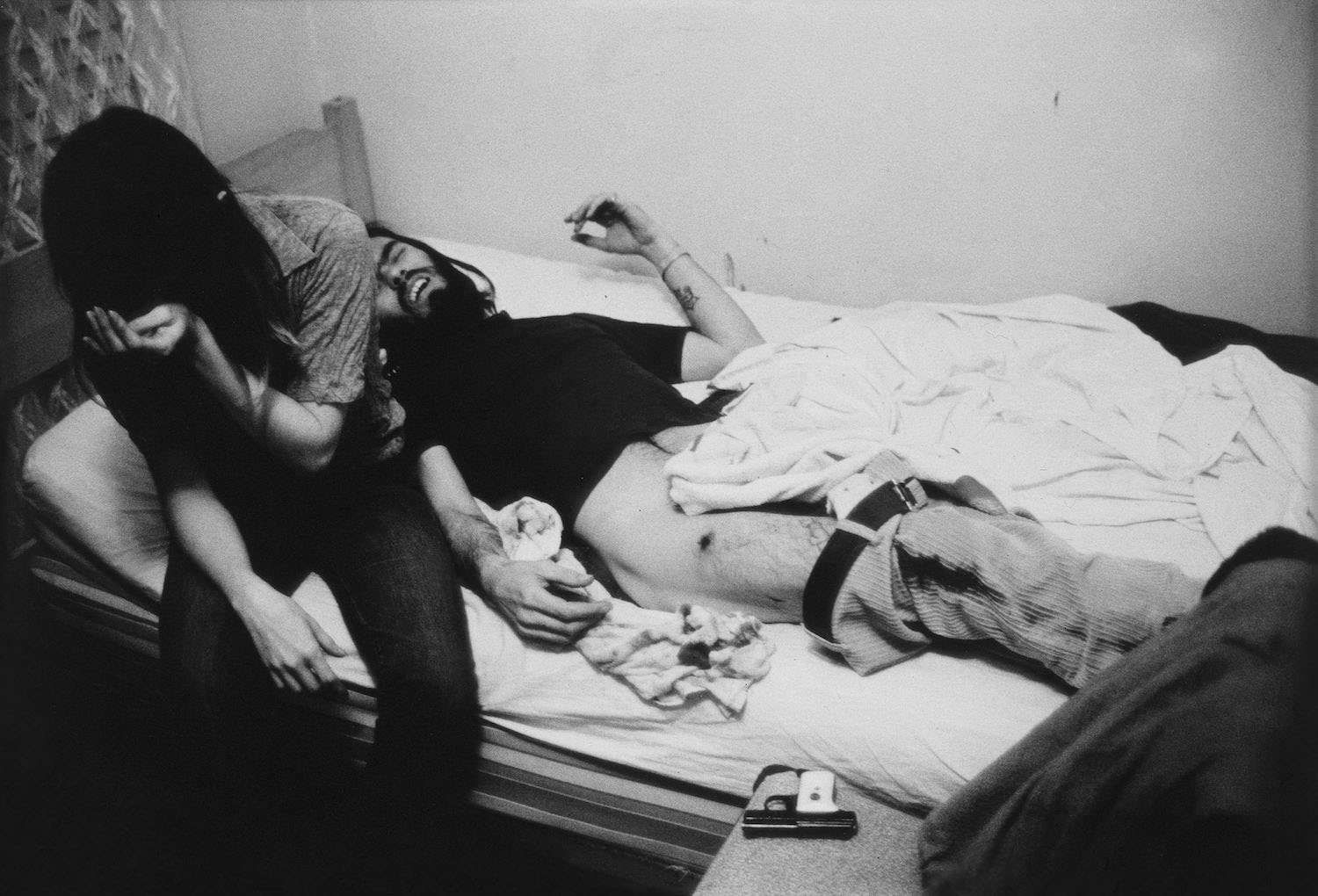
Larry Clark (American, b. 1943) 'Accidental Gunshot Wound' 1971


Larry Clark (American, b. 1943)
Accidental Gunshot Wound
1971
Gelatin silver print
© Larry Clark


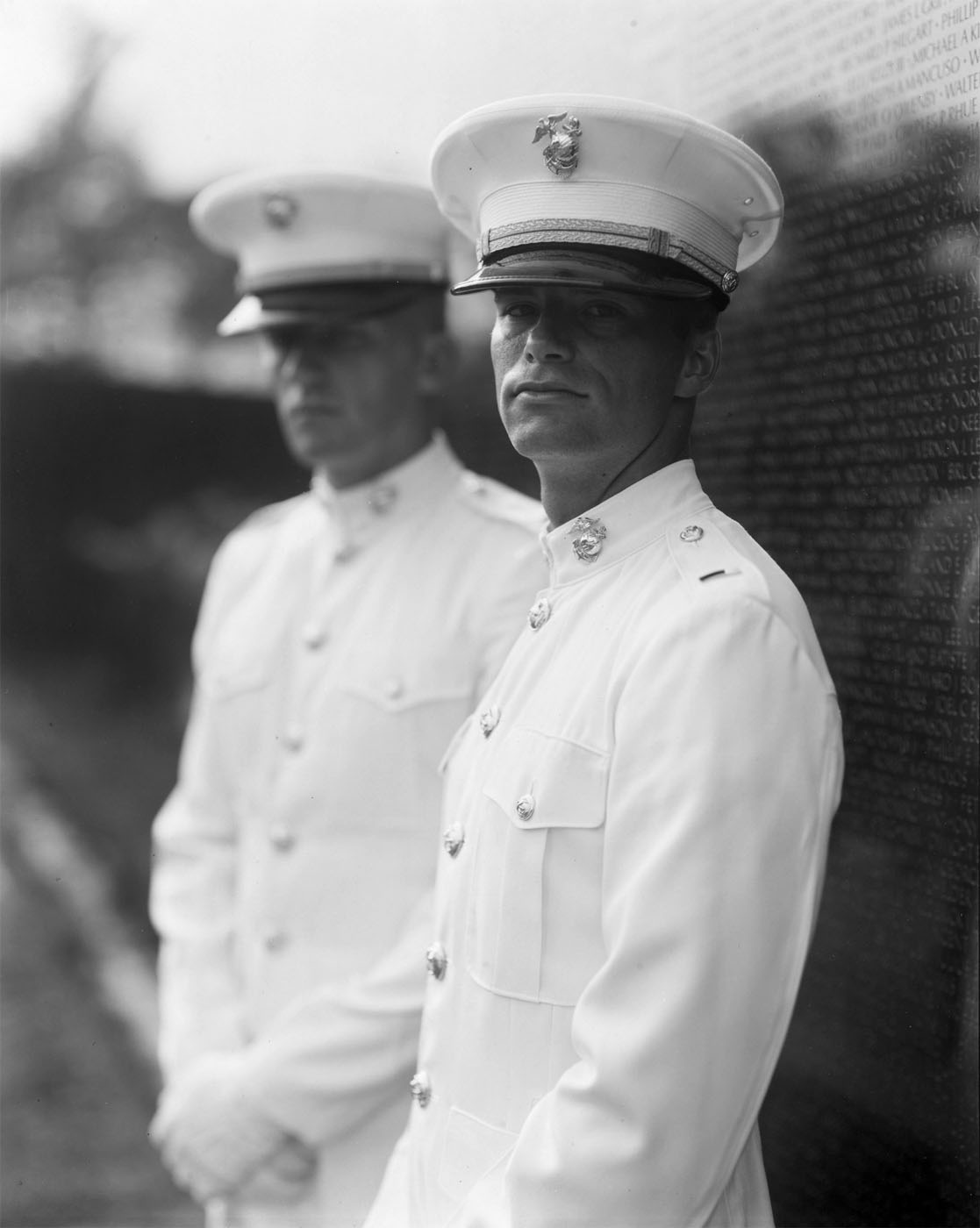
Judith Joy Ross (American, b. 1946) 'Untitled' 1984 from the series 'Portraits at the Vietnam Veterans Memorial, Washington, D.C.'


Judith Joy Ross (American, b. 1946)
Untitled
1984, printed 1996
From the series Portraits at the Vietnam Veterans Memorial, Washington, D.C. 1983-1984
Gelatin silver print on daylight printing-out paper, shading in gold
25.2 x 20.2cm
On permanent loan from Siemens AG, Munich, to the Sammlung Moderne Kunst since 2003
© Judith Joy Ross


Judith Joy Ross (American, b. 1946) 'Untitled' 1984, printed 1996 From the series 'Portraits at the Vietnam Veterans Memorial, Washington, D.C.'


Judith Joy Ross (American, b. 1946)
Untitled
1984, printed 1996
From the series Portraits at the Vietnam Veterans Memorial, Washington, D.C. 1983-1984
Gelatin silver print on daylight printing-out paper
© Judith Joy Ross


Judith Joy Ross (American, b. 1946) 'Untitled' 1984, printed 1996 From the series 'Portraits at the Vietnam Veterans Memorial, Washington, D.C.'


Judith Joy Ross (American, b. 1946)
Untitled
1984, printed 1996
From the series Portraits at the Vietnam Veterans Memorial, Washington, D.C. 1983-1984
Gelatin silver print on daylight printing-out paper
© Judith Joy Ross


John Gossage (American, b. 1946) 'EL NEGRITO' 1997


John Gossage (American, b. 1946)
EL NEGRITO
1997
From the series There and Gone
Gelatin silver print, Baryt paper, screen print on photo mount card
55.4 x 45.0 cm
On permanent loan from Siemens AG, Munich, to the Sammlung Moderne Kunst since 2003
© John Gossage


Pinakothek Der Moderne
Barer Strasse 40
Munich

Opening hours:
Daily except Monday 10am – 6pm
Thursday 10am – 8pm

Pinakothek der Moderne website

LIKE ART BLART ON FACEBOOK

Back to top

Exhibition: ‘Pacific Standard Time: Art in Los Angeles 1950-1980’ at Martin-Gropuis-Bau Berlin

Exhibition dates: 15th March – 10th June 2012

List of artists represented: Peter Alexander, John Altoon, Chuck Arnoldi, John Baldessari, Larry Bell, Billy Al Bengston, Karl Benjamin, Ed Bereal, Tony Berlant, Wallace Berman, Marjorie Cameron, Cameron, Vija Celmins, Judy Chicago, Mary Corse, Ronald Davis, Richard Diebenkorn, Laddie John Dill, Melvin Edwards, Frederick Eversley, Lorser Feitelson, Llyn Foulkes, Sam Francis, Joe Goode, Robert Graham, Frederick Hammersley, George Herms, David Hockney, Stephan von Huene, Craig Kauffman, Edward Kienholz, Helen Lundeberg, John Mason, Allan McCollum, John McLaughlin, Ron Miyashiro, Ed Moses, Lee Mullican, Bruce Nauman, Helen Pashgian, Ken Price, Noah Purifoy, Ed Ruscha, Betye Saar, Henry Takemoto, DeWain Valentine, Gordon Wagner, Norman Zammitt.


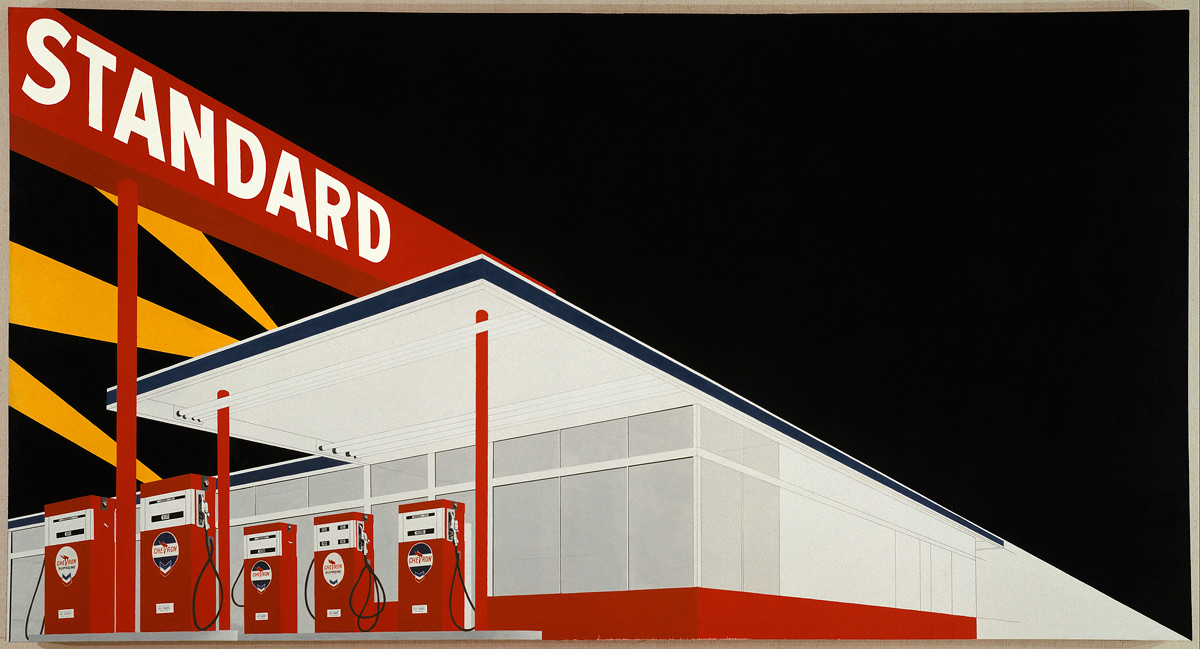
Ed Ruscha (American, b. 1937) 'Standard Station, Amarillo, Texas' 1963


Ed Ruscha (American, b. 1937)
Standard Station, Amarillo, Texas
1963
Oil on Canvas
Hood Museum of Art, Dartmouth College, Hanover, New Hampshire
Gift of James Meeker, Class of 1958, in memory of Lee English, Class of 1958, scholar, poet, athlete and friend to all


What a bumper posting – so much to enjoy and something for everyone!

Marcus


Many thankx to Martin-Gropuis-Bau for allowing me to publish the artwork in the posting. Please click on the photographs for a larger version of the image.


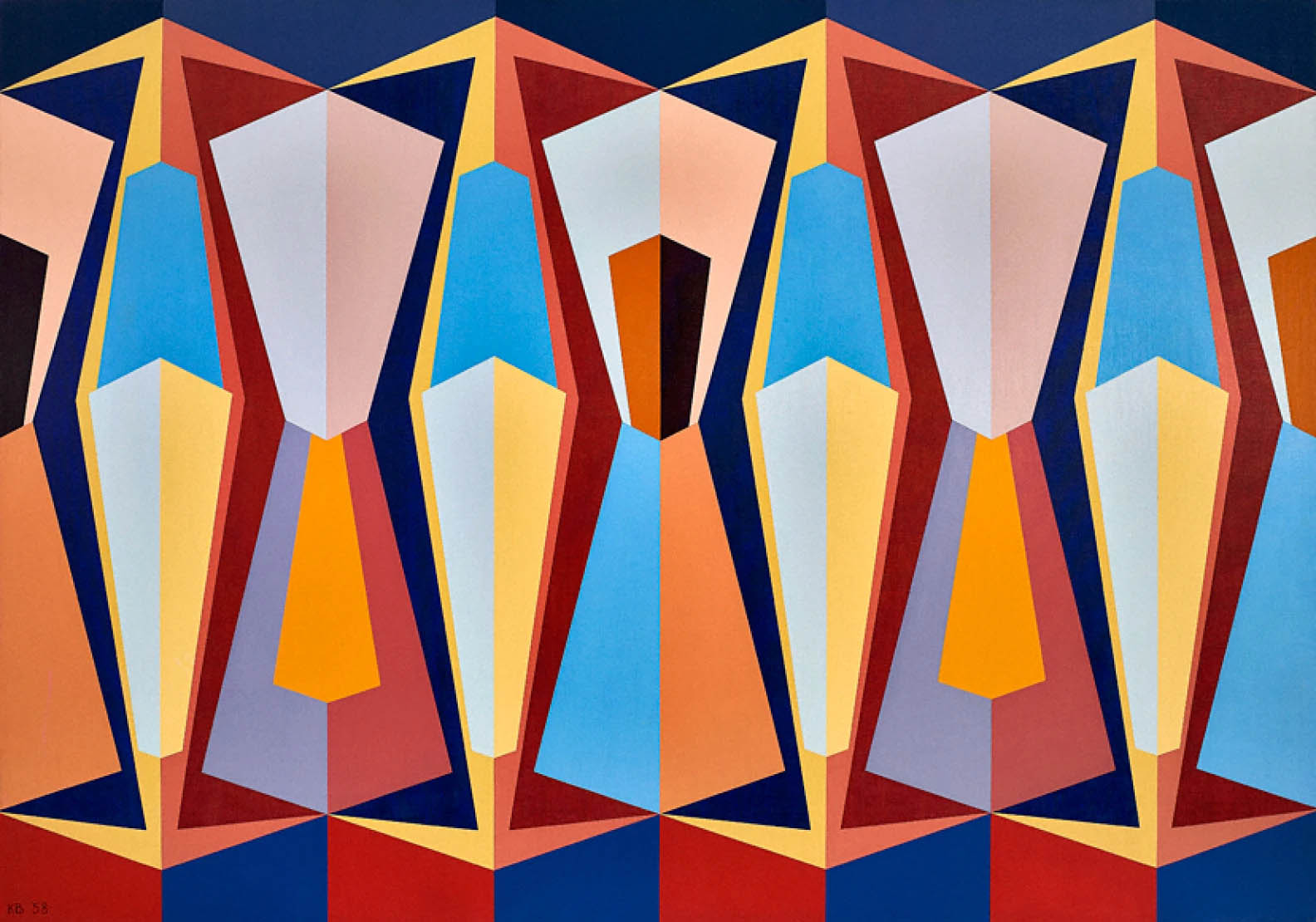
Karl Benjamin (American, 1925-2012) 'Stage II' 1959 


Karl Benjamin (American, 1925-2012)
Stage II
1959
Oil on canvas
50 x 70 inches; 127 x 177.8cm


Karl Stanley Benjamin (December 29, 1925 – July 26, 2012[1]) was an American painter of vibrant geometric abstractions, who rose to fame in 1959 as one of four Los Angeles–based Abstract Classicists and subsequently produced a critically acclaimed body of work that explores a vast array of color relationships. Working quietly at his home in Claremont, California, he developed a rich vocabulary of colors and hard-edge shapes in masterful compositions of tightly balanced repose or high-spirited energy. At once intuitive and systematic, the artist was, in the words of critic Christopher Knight, “a colorist of great wit and inventiveness.”

Text from the Wikipedia website


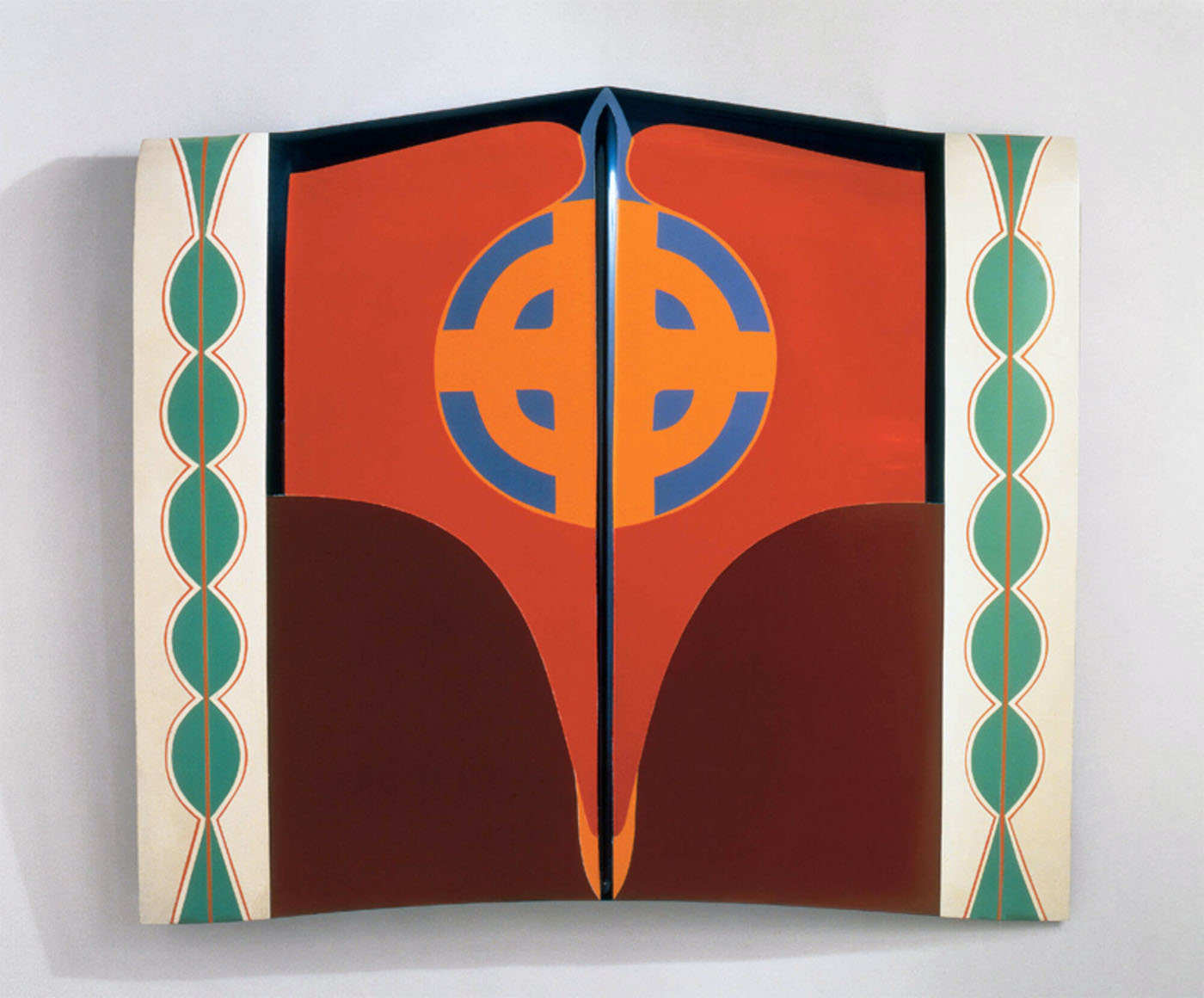
Judy Chicago (American, b. 1939) 'Car Hood' 1964


Judy Chicago (American, b. 1939)
Car Hood
1964
Sprayed acrylic and lacquer on car hood
109 x 125 x 11cm


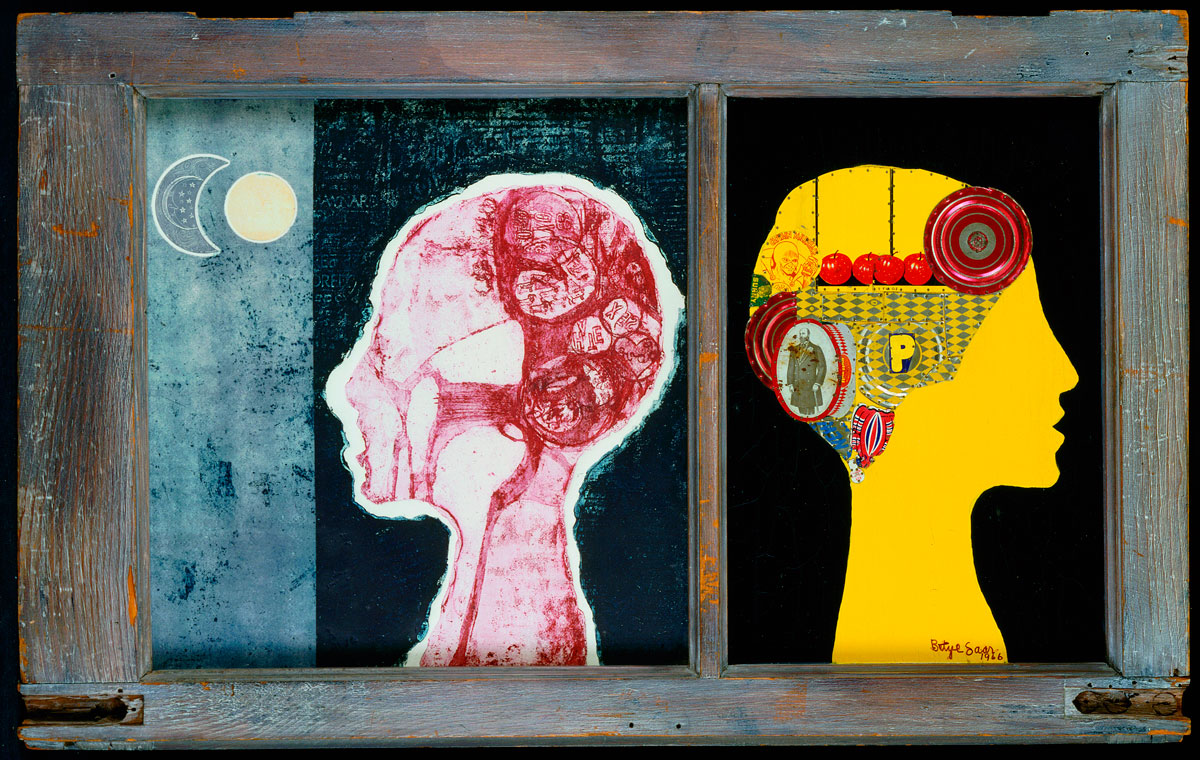
Betye Saar (African-American, b. 1926) 'The Phrenologer's Window' 1966


Betye Saar (African-American, b. 1926)
The Phrenologer’s Window
1966
Assemblage of two panel wood frame with print and collage
Private Collection; courtesy of Michael Rosenfeld Gallery, LLC, New York, NY


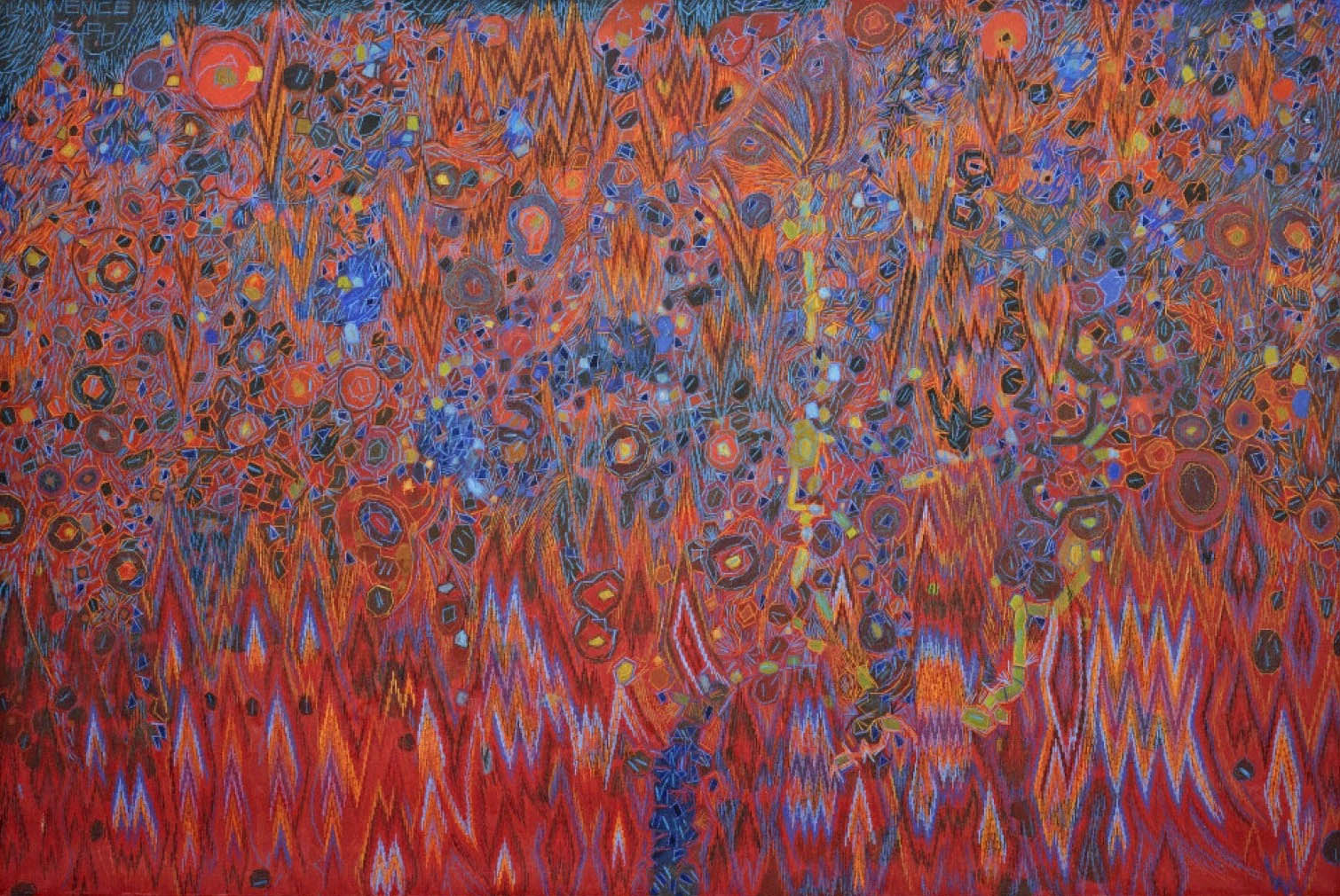
Lee Mullican (American, 1919-1998) 'Untitled (Venice)' 1967


Lee Mullican (American, 1919-1998)
Untitled (Venice)
1967
Oil on canvas


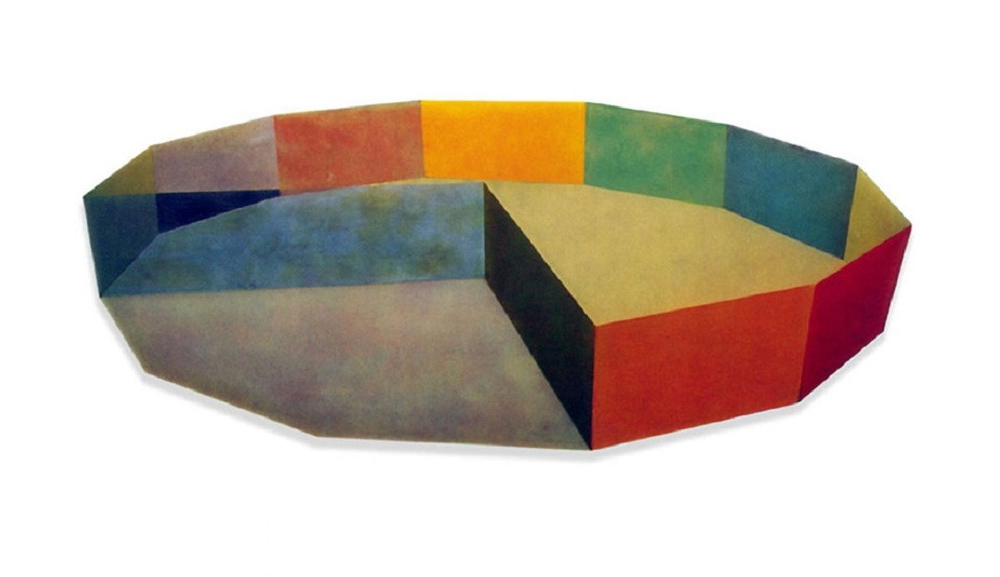
Ronald Davis (American, b. 1937) 'Vector' 1968


Ronald Davis (American, b. 1937)
Vector
1968
Polyester Resin and Fiberglass
60 1/2 x 132 inches (shaped)
Tate Gallery, London


Ronald “Ron” Davis (born 1937) is an American painter whose work is associated with geometric abstraction, abstract illusionism, lyrical abstraction, hard-edge painting, shaped canvas painting, color field painting, and 3D computer graphics. He is a veteran of nearly seventy solo exhibitions and hundreds of group exhibitions.


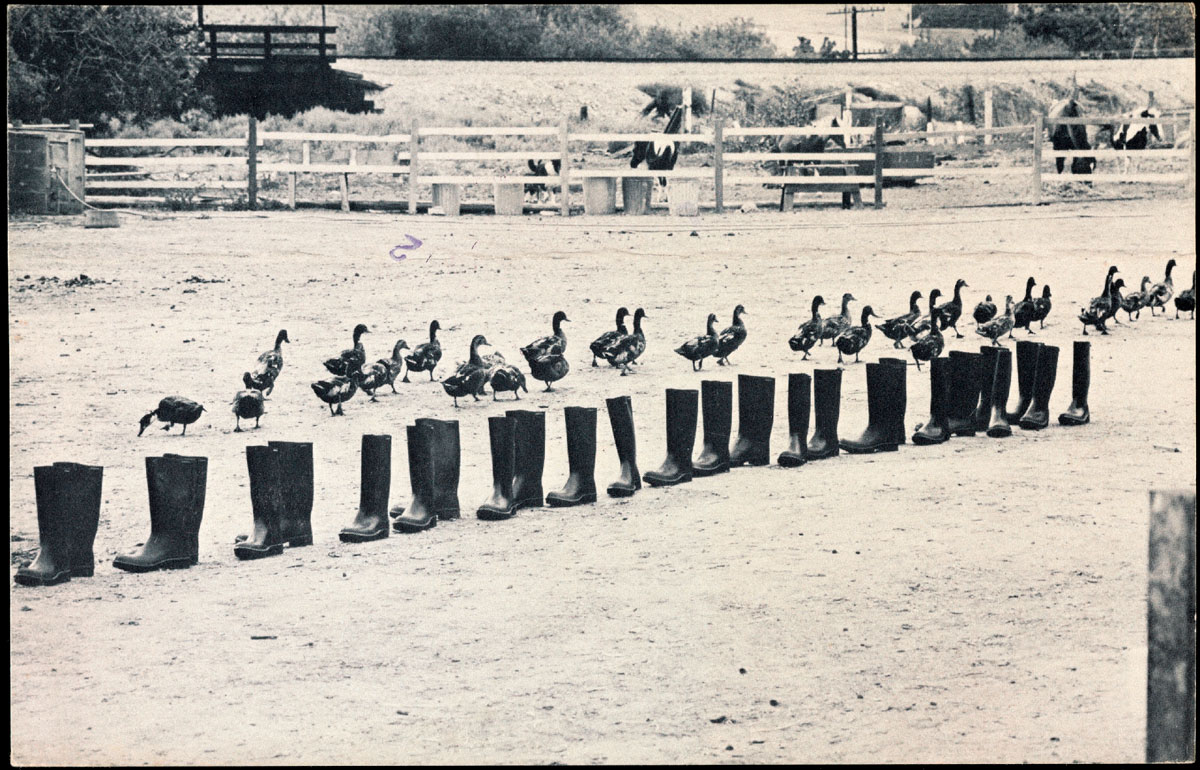
Eleanor Antin (American, b. 1935) '100 BOOTS Move On' 1971-1973


Eleanor Antin (American, b. 1935)
100 BOOTS Move On
1971-1973
Halftone reproduction
Getty Research Institute, Los Angeles, CA
© Eleanor Antin


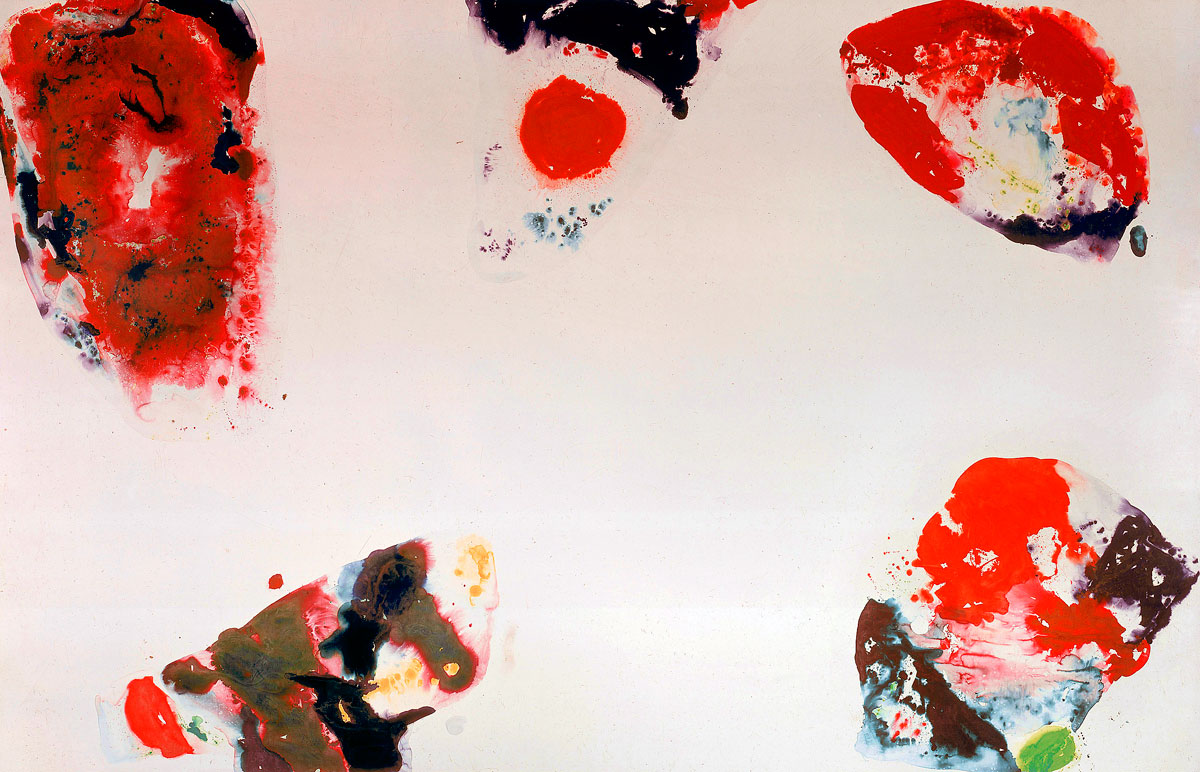
Sam Francis (American, 1923-1994) 'Berlin Red' 1969-1970


Sam Francis (American, 1923-1994)
Berlin Red
1969-1970
Acrylic on canvas
Nationalgalerie, Staatliche Museen zu Berlin
© Sam Francis Foundation, Cailfornia / VG Bild-Kunst, Bonn 2012
Foto: bpk / Nationalgalerie, SMB / Jörg P. Anders


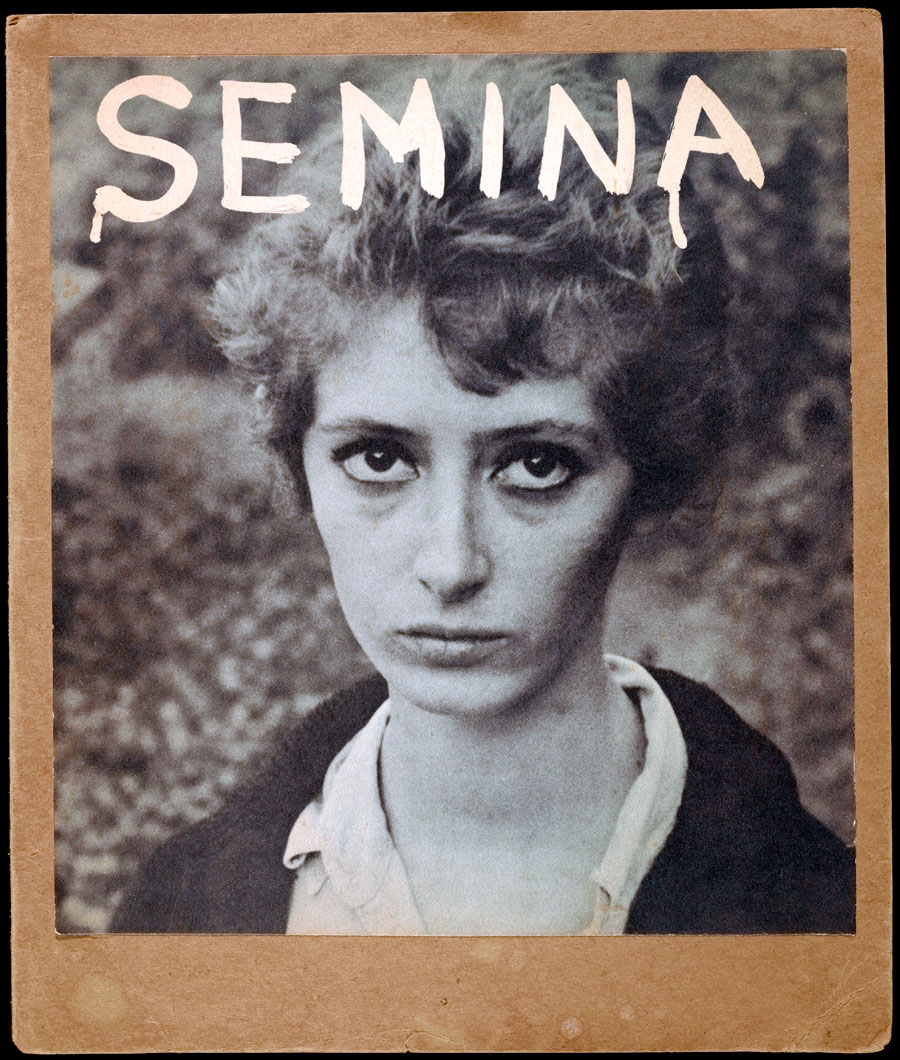
Wallace Berman (American, 1926-1976) 'Semina Cover with Wife (Photograph of Shirley Berman)' 1959


Wallace Berman (American, 1926-1976)
Semina Cover with Wife (Photograph of Shirley Berman)
1959
Halftone reproduction on cardstock
Getty Research Institute, Los Angeles, CA


The exhibition project Pacific Standard Time – Art in Los Angeles, 1950-1980 traces the development of the Los Angeles art scene during the post-war period, when the city on the Pacific hosted an impressively varied and versatile art scene, thus proving that it was more than Hollywood and a sprawling metropolis in the land of sunshine and palm trees. Pacific Standard Time features such internationally esteemed artists as John Baldessari, David Hockney, Edward Kienholz or Ed Ruscha as well as protagonists that are yet to be discovered like the abstract painters Helen Lundeberg and Karl Benjamin, the ceramicists Ken Price and John Mason, and sculptors such as De Wain Valentine.

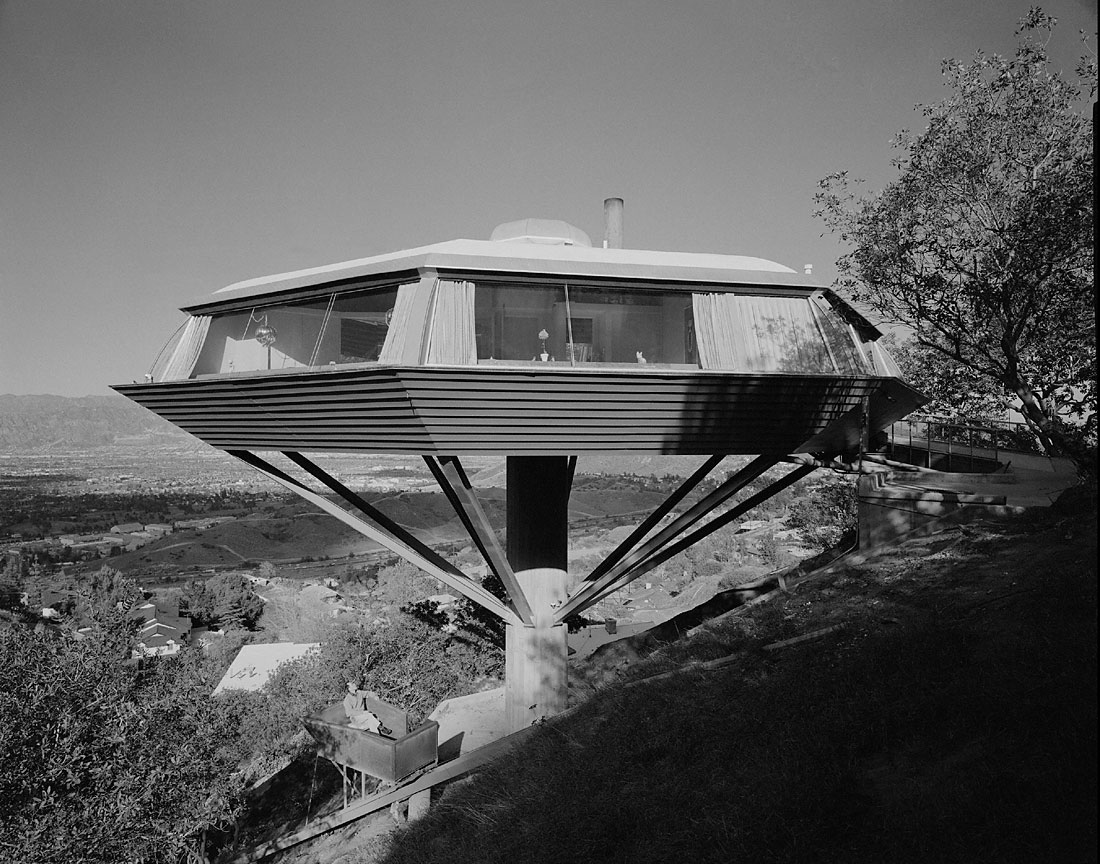
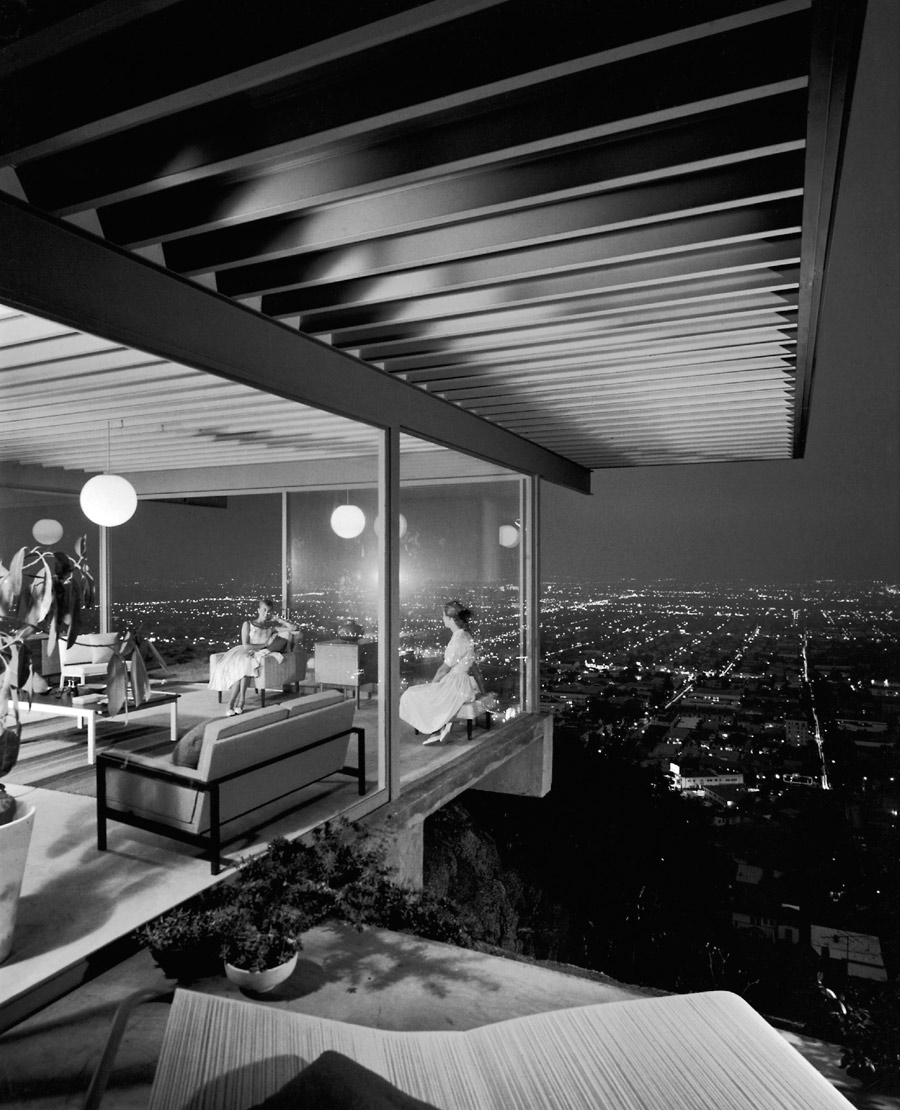
The mega show – over 60 institutions and galleries in Los Angeles were involved – is taking the two main core exhibitions of the Getty Museum and the Getty Research Institute to Europe. The sole European venue is the Martin-Gropius-Bau in Berlin. The section of the exhibition that was to be seen in Los Angeles’ Getty Museum under the title of Crosscurrents in L.A. – Painting and Sculpture, 1950-1970, presents painting and sculpture. In the second part that was to be seen in Los Angeles under the title of Greetings from L.A. – Artists and Publics, 1950-1980, posters, artists’ catalogues, postcards, invitation cards and other memorabilia are shown which offer a deeper insight into the networks of the Los Angeles art scene at that time. For Berlin the show has been supplemented to include photographs by Julius Shulman, whose architectural shots defined the image of the Californian lifestyle in the 1950s. His incomparable sensibility and intuitive feel for composition and the ‘critical moment’ established him as a master of his craft.

Part One: Crosscurrents

The first part of the Berlin show brings together more than 70 works by over 50 artists and traces the rise of the Southern Californian art scene between 1945 and 1980. The list of names reads like a Who’s Who of today’s internationally esteemed artists, as people like John Baldessari, David Hockney, Edward Kienholz, Bruce Nauman or Ed Ruscha began their careers here.

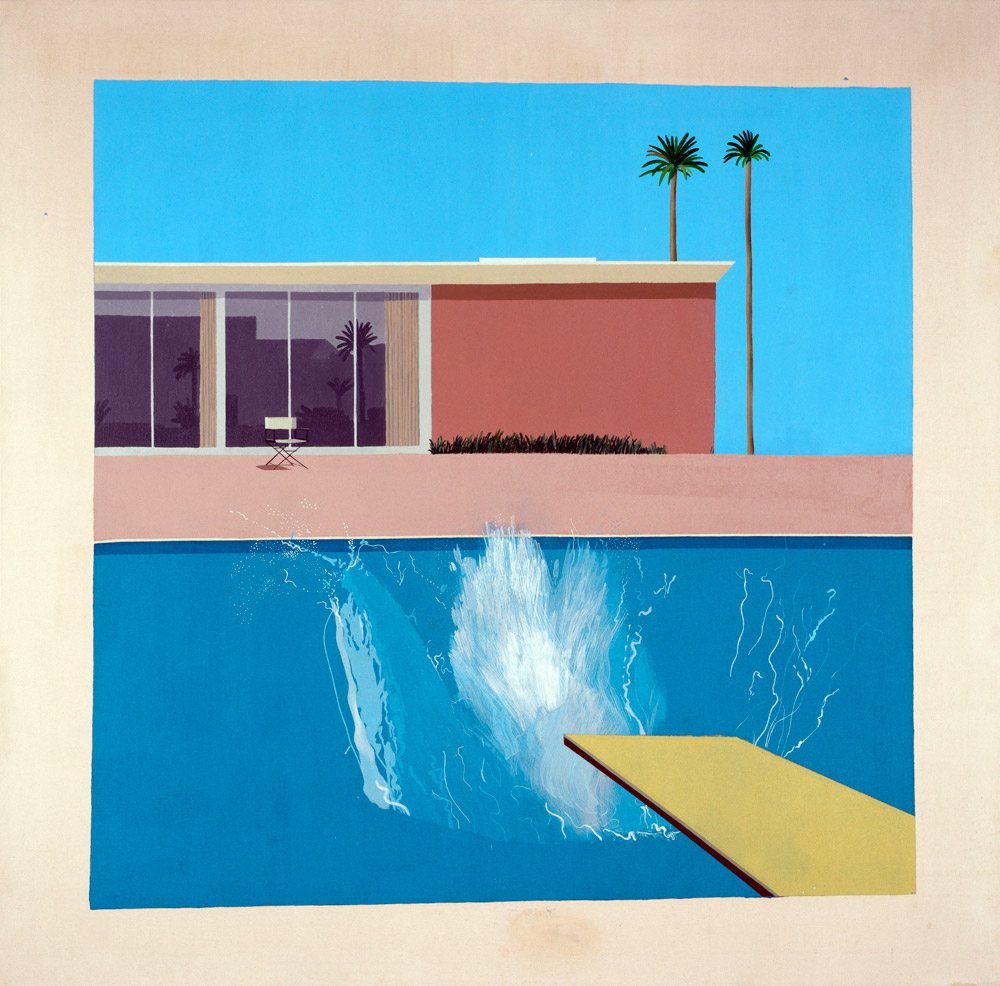
The entrée into Pacific Standard Time begins with British artist David Hockney’s iconic painting A Bigger Splash from the year 1967. It is one of the key pictures of the exhibition and stands for the hedonistic life under palm trees with permanent sunshine and never-ending parties.

The exhibition is structured both chronologically and thematically, comprising six sections that reflect the entire spectrum of the art trends that sprang up simultaneously in Los Angeles. Abstract works – ceramic sculptures and paintings of bleak clarity – are to be seen in the first section. The second section shows assemblage sculptures and collages by artists like George Herms, Wallace Berman and Ed Bereal, who paved the way for this artistic approach in the 1950s, and their successors, including many African-American artists. The third section documents the rise of Los Angeles to become an important art centre, while the fourth shows paintings by internationally recognised Los Angeles artists as Richard Diebenkorn, David Hockney and Ed Ruscha. It becomes clear that Southern California was one of the leading centres for large-format pop art and abstract painting in the 1960s. The fifth section examines how, at a time when painting was growing in significance on the Atlantic Coast of the USA, artists on the West Coast were beginning to extend their notions of traditional painting and sculpture, with perceptual phenomena and the material processes of artistic production coming to the fore. Here we find works that have arisen out of a collision between art and technology, such as a sculpture by De Wain Valentine, who uses industrial materials like polyester casting resin, or a canvas by Mary Corse, into which the smallest, high-grade reflecting glass microspheres have been worked. We are also introduced to a group of artists whose works show traces of their creation, such as those of Joe Goode, Allan McCollum, Ed Moses and Peter Alexander.

Berlin is supplementing the Getty exhibition by devoting a special room to the early international perception of art in Los Angeles. It will feature the works Berlin Red by Sam Francis, a 8 x 12 metre painting that was commissioned by Berlin’s Neue Nationalgalerie in 1969, and Volksempfängers (People’s Wireless) by Edward Kienholz. As a DAAD scholar Kienholz often lived in Berlin from 1973 on.

Another distinctive feature of the exhibition are the various room installations, including Stuck Red and Stuck Blue by James Turrell and Four Corner Piece by Bruce Nauman. In 1966 Turrell began working on his Light Room installations. In the work displayed in the Martin-Gropius-Bau that he designed in 1970, he uses light to dissolve the borders of spatial structures and transform them. In his Four Corner Piece from 1971 Bruce Nauman creates a particular spatial experience through the interplay of physical information vs. visual information.

Part Two: Greetings from L. A.

In the second part of the exhibition, elaborated by the Getty Research Institute, the Martin-Gropius-Bau shows over 200 objects – photographs, artists’ catalogues, books, posters, postcards, invitations, letters and artworks, of which many are on public view for the first time. We are given a sense of how Californian artists, through the involvement of a wide audience, brought art into contact with the general public. We also see how intensely the international networks linking groups of artists functioned.

Greetings from L.A. begins with Making the Scene and describes the gallery scene in Los Angeles from the 1950s to the 1970s. We are introduced to art dealers and collectors of the kind who congregated at La Cienega Boulevard – Rolf Nelson, Riko Mizuno and Betty Asher. On this gallery-lined boulevard, which crosses the Sunset Boulevard immortalised by Ed Ruscha, the reputation of Los Angeles as a city of modern and contemporary art was made.

Public Disturbances, the second section of the show, is devoted to three important exhibitions which drew fierce criticism and even led to arrests. Wallace Berman’s 1957 exhibition in the Ferus Gallery was closed down by the police. Violent controversies were triggered by the War Babies exhibition (1961) in the Huysman Gallery. There were also strong differences of opinion between the Los Angeles County Museum of Art (LACMA) and the Los Angeles County Board of Supervisors over the inclusion of Kienholz’s installation Back Seat Dodge ’38 (1964) in his grand retrospective of 1966.

The Private Assembly section of the exhibition focuses on the works created by Wallace Berman, George Herms, Charles Brittin and their circle in the 1950s and 1960s. The intimacy of these objects is explained not only by the unmistakable traces of artistic authorship they bear, but also by the fact that they were only accessible to a select, non-public audience. Mainly active outside the commercial gallery scene, this group of assemblage artists concentrated their energies on private artworks, which they handed over personally or sent by mail as a token of friendship.

The fourth section, Mass Media, introduces artists who selected the mass media as a model for their own art. Ed Ruscha, Allen Ruppersberg and Chris Burden occupied themselves with popular culture and mass production as alternative means of production and distribution. They used impersonal forms, such as those of objects or advertising materials commercially produced and sold as consumer goods. By avoiding conventional exhibition rooms, these artists reached a new public. They often exhibited anonymously, thus making the identity of artist and work secondary.

Art School as Audience, the fifth section of the exhibition, sheds light on the important role of art schools in the development of contemporary art forms. They served as the static pole, because in them artists constituted the audience of other fellow artists. The California Institute of the Arts, commonly known as CalArts, and its predecessor, the Chouinard Art Institute, were key venues for important groups of artists, as can be seen from the works of such students as Ed Ruscha and Joe Goode, and such teachers as John Baldessari, Miriam Schapiro and Judy Chicago. Other important forums were the new art faculties that came into existence at the universities and other higher education facilities in Los Angeles County. At the campuses of Irvine or San Diego in particular there was a stimulating audience for the experiments of such artists as Martha Rosler, Barbara Smith and Eleanor Antin.

The last section, The Art of Protest, examines how social and political developments mobilised artists to display their works in the street. In the 1960s Los Angeles became the scene of the first protests led by artists against the Vietnam War. This gave rise in 1966 to the construction of a Peace Tower at the corner of La Cienega and Sunset Boulevards. In the following decade it was feminism that moved many artists to become social activists, as can be seen from the work of Suzanne Lacy and Leslie Labowitz-Starus In Mourning and in Rage 1977, a highly esteemed protest performed on the steps of City Hall.

Greetings from L.A. offers a new look at art in Southern California by showing how the artists of this region changed the conventional relations between art and public and developed alternatives for a public role of art and its place in society.

The exhibition affords glimpses into some recently acquired archives, like those of Betty Asher, Hal Glicksman, George Herms, Wolfgang Stoerchle, High Performance magazine, the galleries of Rolf Nelson, Mizuno and Jan Baum as well as of the papers of Charles Brittin and Edmund Teske. These are supplemented by material from archives not normally associated with Southern California, such as the papers of the critics Irving Sandler, Barbara Rose and Lawrence Alloway of New York; of Marcia Tucker, the founder and curator of New York’s New Museum of Contemporary Art; and of the Kasmin Gallery, London.

Part Three: Julius Shulman

The last part of the Berlin exhibition shows over 50 photographs by Julius Shulman – the most important American photographer of architecture in the post-war period. For more than thirty years he photographed Modernist houses – built by Richard Neutra, Frank Lloyd Wright, or Frank Gehry – thus making many of them into architectural icons. The exhibition shows some of his key works.

Press release from Martin-Gropuis-Bau website


Julius Shulman (American, 1910-2009) 'Malin Residence, "Chemosphere”' 1960


Julius Shulman (American, 1910-2009)
Malin Residence, “Chemosphere”
1960
Gelatin silver print
Getty Research Institute, Los Angeles, CA
© J. Paul Getty Trust


Julius Shulman (American, 1910-2009) 'Case Study House #22' 1960


Julius Shulman (American, 1910-2009)
Case Study House #22
1960
Gelatin silver print
Getty Research Institute, Los Angeles, CA
© J. Paul Getty Trust


Charles Brittin (American, 1928-2011) 'Peace Tower' 1966


Charles Brittin (American, 1928-2011)
Peace Tower
1966
Silver-dye bleach print
Getty Research Institute, Los Angeles, CA
© J. Paul Getty Trust


Peter Alexander (American 1939-2020) 'Cloud Box (Large)' 1966


Peter Alexander (American 1939-2020)
Cloud Box (Large)
1966
Cast polyester resin
Janis Horn and Leonard Feldman
© Peter Alexander
Foto: Brian Forrest


Jerry McMillan (American, b. 1936) 'Ed Bereal in His Studio' c. 1961


Jerry McMillan (American, b. 1936)
Ed Bereal in His Studio
c. 1961
Gelatin silver print mounted on board
Getty Research Institute, Los Angeles, CA
Gift of George Herms
© Jerry McMillan


David Hockney (British, b. 1937) 'A Bigger Splash' 1967


David Hockney (British, b. 1937)
A Bigger Splash
1967
Acrylic on canvas
96″ x 96″
© David Hockney
Tate Gallery, London, 2011


Wallace Berman (American, 1926-1976) 'Untitled (Verifax Collage)' 1969


Wallace Berman (American, 1926-1976)
Untitled (Verifax Collage)
1969
Verifax collage on board
Collection of Michael D. Fox, Berkeley CA, Courtesy Steven Wolf Fine Arts, San Francisco CA
© Courtesy of the Estate of Wallace Berman and Michael Kohn Gallery, Los Angeles
Foto: Joe Schopplein


Martin-Gropius-Bau Berlin
Niederkirchnerstraße 7
Corner Stresemannstr. 110
10963 Berlin
Phone: +49 (0)30 254 86-0

Opening Hours:
Wednesday to Monday 10 – 19hrs
Tuesday closed

Martin-Gropius-Bau website

LIKE ART BLART ON FACEBOOK

Back to top

Exhibition: ‘Robert Adams: The Place We Live, a retrospective selection of photographs’ at Los Angeles County Museum of Art (LACMA)

 Exhibition dates: 11th March – 3rd June 2012


Robert Adams (American, b. 1937) 'Interstate 25, Eden Colorado' 1968


More photographs from this fabulous retrospective, different images from the two previous postings. More images from the retrospective can be found in these postings when the exhibition appeared at the Denver Art Museum (DAM), September 2011 – Jan 2012 and the Vancouver Art Gallery, September 2010 – January 2011.

Marcus


Many thankx to the Los Angeles County Museum of Art (LACMA) for allowing me to publish the photographs in the posting. Please click on the photographs for a larger version of the image.


“Over the years I have come to believe… that we live in several landscapes at once, among them the landscape of hope, and that though we must usually focus on what is characteristic of the immediate and troubled present, it is rash to say that other geographies are unimportant or even finally separate.”


Robert Adams


“Southern California was, by the reports of those who lived there at the turn of the century, beautiful; there were live oaks on the hills, orchards across the valleys, and ornamental cypress, palms, and eucalyptus lining the roads. Even now we can almost extrapolate an Eden from what has lasted – from the architecture of old eucalyptus trunks, for example, and from the astringent perfume of the trees’ flowers as it blends with the sweetness of orange blossoms.

What citrus remain today, however, are mostly abandoned, scheduled for removal, and large eucalyptus have often been vandalized, like the hundreds west of Fontana that have been struck head high with shotgun fire. Whether those trees that stand are reassuring is a question for a lifetime. All that is clear is the perfection of what we were given, the unworthiness of our response, and the certainty, in view of our current deprivation, that we are judged.”


Robert Adams 1986


Robert Adams (American, b. 1937) 'Edge of Timoteo Canyon, looking toward Los Angeles, Redlands, California' 1978


The Los Angeles County Museum of Art (LACMA) presents Robert Adams: The Place We Live, A Retrospective Selection of Photographs, an exhibition that showcases the artistic legacy of American photographer Robert Adams (b. 1937) and his longstanding engagement with the contemporary Western landscape. Featuring nearly three hundred photographs and a key selection of the artist’s publications, the retrospective weaves together four decades of Adams’s work into an epic narrative of American experience in the late twentieth and early twenty first centuries. Adams’s work reflects his dedication to describing the changing Western landscape – the growth of its built environment and the lives of its inhabitants – contemplating the presence of trees, the open plains, the Pacific Ocean, and the deforestation of the Pacific Northwest. At LACMA, the exhibition highlights Adams’s extraordinary portrayal of the terrain of the Los Angeles region.

“It is hard to envision the American West without the extraordinary achievements of Robert Adams. Adams conveys the often sharp luminosity and inky shadows of western geography like no other. Yet it is in his reckoning with man’s fraught presence that Adams’s spare and terribly beautiful photographs continue to challenge us,” said Edward Robinson, associate curator of the Wallis Annenberg Photography Department, who organised LACMA’s presentation.

Exhibition overview

With nearly three hundred gelatin silver prints, the exhibition features the photographer’s major projects, from early pictures of quiet buildings and monuments erected by settlers of his native Colorado, to his most recent images of oceans and migratory birds in the Pacific Northwest. Accompanying the photographs in the exhibition are texts drawn from

Adams’s own published writings that total more than forty books to date. The reach of Adams’s work has been felt equally through his publications, which are an indispensable element of the artist’s creative practice. A selection of these books will be displayed; copies will also be available in a reading area and digitally on iPads in the exhibition, enabling visitors to experience Adams’s masterly use of the photographic book as a poetic medium in its own right.

Press release from the LACMA website


Robert Adams (American, b. 1937) 'Edge of San Timoteo Canyon, Redlands, California' 1978


Robert Adams (American, b. 1937)
Edge of San Timoteo Canyon, Redlands, California
1978
Yale University Art Gallery, purchased with a gift from Saundra B. Lane, a grant from the Trellis Fund, and the Janet and Simeon Braguin Fund
© 2012 Robert Adams


Robert Adams (American, b. 1937) 'Abandoned windbreak, West of Fontana, California' 1982


Robert Adams (American, b. 1937) 'New development on a former citrus-growing estate, Highland, California' 1983


Robert Adams (American, b. 1937) 'Cottonwood, Longmont, Colorado' 1973-1975


Robert Adams (American, b. 1937)
Cottonwood, Longmont, Colorado
1973-1975
Gelatin silver print
Yale University Art Gallery, purchased with a gift from Saundra B. Lane, a grant from the Trellis Fund, and the Janet and Simeon Braguin Fund
© 2012 Robert Adams


Robert Adams (American, b. 1937) 'Pikes Peak, Colorado Springs, Colorado' 1969


Robert Adams (American, b. 1937)
Pikes Peak, Colorado Springs, Colorado
1969
Yale University Art Gallery, purchased with a gift from Saundra B. Lane, a grant from the Trellis Fund, and the Janet and Simeon Braguin Fund
© 2012 Robert Adams


Robert Adams (American, b. 1937) 'Cottonwood' 1973-1975


Robert Adams (American, b. 1937)
Cottonwood
1973-1975
Gelatin silver print
Yale University Art Gallery, purchased with a gift from Saundra B. Lane, a grant from the Trellis Fund, and the Janet and Simeon Braguin Fund
© 2012 Robert Adams


Robert Adams (American, b. 1937) 'East from Flagstaff Mountain, Boulder County, Colorado' 1975


Robert Adams (American, b. 1937)
Northeast from Flagstaff Mountain, Boulder County, Colorado
1975
Gelatin silver print
Yale University Art Gallery, purchased with a gift from Saundra B. Lane, a grant from the Trellis Fund, and the Janet and Simeon Braguin Fund
© 2012 Robert Adams


Robert Adams (American, b. 1937) 'Quarried Mesa Top, Pueblo County, Colorado' 1978


Robert Adams (American, b. 1937)
Quarried Mesa Top, Pueblo County, Colorado
1978
Gelatin silver print
Yale University Art Gallery, purchased with a gift from Saundra B. Lane, a grant from the Trellis Fund, and the Janet and Simeon Braguin Fund
© 2012 Robert Adams


Robert Adams (American, b. 1937) 'On Signal Hill, Overlooking Long Beach, California' 1983


Robert Adams (American, b. 1937)
On Signal Hill, overlooking Long Beach, California
1983
Gelatin silver print
Yale University Art Gallery, purchased with a gift from Saundra B. Lane, a grant from the Trellis Fund, and the Janet and Simeon Braguin Fund
© 2012 Robert Adams


Robert Adams (American, b. 1937) 'Southwest from the South Jetty, Clatsop County, Oregon' 1992


Robert Adams (American, b. 1937)
Southwest from the South Jetty, Clatsop County, Oregon
1992
Yale University Art Gallery, purchased with a gift from Saundra B. Lane, a grant from the Trellis Fund, and the Janet and Simeon Braguin Fund
© 2012 Robert Adams


Robert Adams (American, b. 1937) 'In a New Subdivision, Colorado Springs, Colorado' 1969


Robert Adams (American, b. 1937)
In a New Subdivision, Colorado Springs, Colorado
1969
Yale University Art Gallery, purchased with a gift from Saundra B. Lane, a grant from the Trellis Fund, and the Janet and Simeon Braguin Fund
© 2012 Robert Adams


Los Angeles County Museum of Art (LACMA)
5905 Wilshire Boulevard (at Fairfax Avenue)
Los Angeles, CA, 90036
Phone: 323 857-6000

Opening hours:
Monday, Tuesday, Thursday: 11am – 6pm
Friday: 11am – 8pm
Saturday, Sunday: 10am – 7pm
Closed Wednesday

LACMA website

LIKE ART BLART ON FACEBOOK

Back to top

Exhibition: ‘In Focus: Los Angeles, 1945-1980’ at the J. Paul Getty Museum, Los Angeles

Exhibition dates: 20th December 2011 – 6th May 2012


Anthony Friedkin (American, b. 1949) 'Clockwork Malibu' 1978


Anthony Friedkin (American, b. 1949)
Clockwork Malibu
1978
Gelatin silver print
11 15/16 x 18 5/16 in
The J. Paul Getty Museum, Los Angeles
Gift of Sue and Albert Dorskind
© Anthony Friedkin


While Anthony Friedkin has documented subjects as diverse as the marginalised gay community of San Francisco, convicts at Folsom Prison, and brothels in New York, it is the Southern California coastline that has remained a recurrent theme throughout his forty-five-year career. The Los Angeles native took up photography about the same time he learned to surf. His images of waves deftly communicate the primordial power and elusive mysteries that he ascribes to the ocean. This photograph of surfer Rick Dano on an early morning drive up the coast conveys a mood of quiet, anticipatory harmony.

Text from Pacific Standard Time at the Getty


I have never particularly liked Los Angeles as a city. There seems to be something unappealing about the place, some energy lurking just beneath the surface that you can’t quite put your finger on. Maybe it is the comparison with the vivacious San Francisco just up the coast, the awful public transport or, more spookily, the lack of people on the street. People never walk anywhere in LA, it’s a car town. When I did walk on the street I felt vulnerable and surveyed with suspicion by people in cars, like a rabbit caught in the headlights.

These photographs confirm this feeling. Unlike the visual acoustics of the architectural photographs of Julius Shulman (photographs that mythologised this urban metropolis and then exported that idealised presence and Californian mid-century design to the rest of the world) these photographs have an unbelievably desolatory nature to them. They seem to be joyless and sorrowful, devoid of warmth, comfort, or hope – as though the human and the city were separated, as if we are separated from a loved one.

The row after row of tinderbox houses, the ubiquitous cars, the sense of emptiness, hopelessness and menace (see Gary Winogrand Los Angeles 1964, below – if looks could kill this would be it, the bandaged broken nose just perfect for the photograph) all paint a picture of despair. Even the supposedly quiet, anticipatory harmony of the photograph of surfer Rick Dano by Anthony Friedkin (1978, below top) is, to me, full of unresolved tension. The mist in the background hanging over the rocks, blocking out the view, the filthy hands and the bandaged little finger of the right hand, the downcast eyes, the impossibly long cigarette handing from his lips and most importantly the empty distance between the figure and the safety of the automobile. The tension in that distance and the downcast eyes says nothing to me of harmony but of isolation, sadness and regret.

Los Angeles is not my favourite city but it is a fascinating place none the less, as these photographs do attest.

Dr Marcus Bunyan


Many thankx to the J. Paul Getty Museum for allowing me to publish the photographs in the posting. Please click on the photographs for a larger version of the image.


Max Yavno (American, 1911-1985) 'High School Beach' 1945


Max Yavno (American, 1911-1985)
High School Beach
1945
Gelatin silver print
22.1 x 34.4cm
The J. Paul Getty Museum, Los Angeles
Gift of Marjorie and Leonard Vernon
© 1988 Centre for Creative Photography, The University of Arizona Foundation


Anthony Hernandez (American, b. 1947) 'Automotive Landscapes #5, Los Angeles' 1978


Anthony Hernandez (American, b. 1947)
Automotive Landscapes #5: Los Angeles
1978
Gelatin silver print
11 3/4 x 17 1/8 in
The J. Paul Getty Museum, Los Angeles
Purchased in part with funds provided by the Photographs Council of the J. Paul Getty Museum
© Anthony Hernandez


Hernandez started photographing what he refers to as “automotive landscapes” in 1977, using a 35mm camera until he realised that a large-format camera loaded with 5 x 7-inch negative film would provide the detail he desired. Taken from a slightly elevated vantage point, Hernandez’s image of an immobilised truck and its lone mechanic in front of a repair shop presents a sobering view of Los Angeles’s car-dominant culture.

Text from Pacific Standard Time at the Getty


Gary Winogrand (American, 1928-1984) 'Los Angeles' 1964


Gary Winogrand (American, 1928-1984)
Los Angeles
1964
Gelatin silver print
9 x 13 7/16 in
The J. Paul Getty Museum, Los Angeles
© 1984 The Estate of Gary Winogrand


This image of a couple seated in a parked convertible in front of a nightclub on Sunset Boulevard simultaneously captures the glamour and seediness associated with Hollywood. Evoking a 1940s or ’50s film noir crime drama, a seeming tough guy and femme fatale continue their heated conversation, apparently oblivious to the traffic around them – and to the photographer observing them. A native of New York City, Winogrand studied painting at Columbia University and photography at the New School for Social Research before doing freelance commercial work. He photographed incessantly, using a 35mm camera to create wide-angled or tilted shots that are densely composed and layered with meaning. More than 2,500 rolls of film remained undeveloped at the time of his death in 1984.

Text from Pacific Standard Time at the Getty


As part of the region-wide Pacific Standard Time: Art in L.A., 1945-1980 initiative, The J. Paul Getty Museum presents In Focus: Los Angeles, 1945-1980, an exhibition of photographs from the permanent collection made by artists whose time in Los Angeles inspired them to create memorable images of the city, on view at the Getty Center from December 20, 2011 – May 6, 2012.

This exhibition features both iconic and relatively unknown work by artists whose careers are defined by their association with Los Angeles, who may have lived in the city for a few influential years, or who might have visited only briefly,” said Virginia Heckert, curator, Department of Photographs, the J. Paul Getty Museum, and curator of the exhibition.

The photographs are loosely grouped around the themes of experimentation, street photography, architectural depictions, and the film and entertainment industry. Works featured in the exhibition are from artists such as Jo Ann Callis, Robert Cumming, Joe Deal, Judy Fiskin, Anthony Friedkin, Robert Heinecken, Anthony Hernandez, Man Ray, Edmund Teske, William Wegman, Garry Winogrand, and Max Yavno. Two of the works in the exhibition by Anthony Hernandez and Henry Wessel Jr. were acquired with funds from the Getty Museum Photographs Council. Drawn from the Museum’s permanent collection, including several recent acquisitions inspired by the Pacific Standard Time initiative, the exhibition offers visitors the opportunity to familiarise themselves with a broad range of approaches to the city of Los Angeles as a subject and to the photographic medium itself.

One of the most well-known works in the exhibition is Garry Winogrand’s photograph of two women walking towards the landmark theme building designed by Charles Luckman and William Pereira that has come to symbolise both Los Angeles International Airport and mid-century modern architecture in popular culture. Though a quintessential New Yorker, Winogrand made some of his most memorable photographs in Los Angeles, where he chose to settle in the final years of his life. Also included in the exhibition is Diane Arbus’ dreamily lit photograph of Sleeping Beauty Castle at Disneyland park in Anaheim. Although technically not located in either the city or the county of Los Angeles, Disneyland – and Arbus’ photograph – continues to capture the notion of entertainment and fantasy that has come to be so intrinsically associated with the city.

Other photographers in the In Focus: Los Angeles exhibition who produced the majority of their most creative work in the city include Edmund Teske, with his experimentation in the darkroom and his complex double solarisation process; Robert Heinecken, with images that are equally complex but often incorporate existing printed materials, such as negatives; Anthony Hernandez, whose portraits of Angelenos on the street emphasise the isolation of the individual in an urban environment; and Anthony Friedkin, who combines his passions for surfing and the Southland beaches in his photographs. The inclusion of three photographs from Judy Fiskin’s earliest photographic series, Stucco (1973-1976), provided the impetus for a monographic presentation of the artist’s complete photographic work by Getty Publications. Entitled Some Aesthetic Decisions: The Photographs of Judy Fiskin and featuring an introductory essay by curator Virginia Heckert, the book will be published concurrently with this exhibition.

Press release from the J. Paul Getty Museum website


Man Ray (Emmanuel Radnitsky)(American, 1890-1976) 'Juliet with Mud Mask' 1945


Man Ray (Emmanuel Radnitsky)(American, 1890-1976)
Juliet with Mud Mask
1945
Gelatin silver print
35.6 x 27.1cm
The J. Paul Getty Museum, Los Angeles
© Man Ray Trust


William Garnett (American, 1916-2006) 'Foundations and Slabs, Lakewood, California' 1950


William Garnett (American, 1916-2006)
Foundations and Slabs, Lakewood, California
1950
Gelatin silver print
18.9 x 23.8cm
The J. Paul Getty Museum, Los Angeles
© Estate of William A. Garnett


William Garnett (American, 1916-2006) 'Framing, Lakewood, California' 1950


William Garnett (American, 1916-2006)
Framing, Lakewood, California
1950
Gelatin silver print
18.4 x 24.1cm
The J. Paul Getty Museum, Los Angeles
© Estate of William A. Garnett


William Garnett (American, 1916-2006) 'Plaster and Roofing, Lakewood, California' 1950


William Garnett (American, 1916-2006)
Plaster and Roofing, Lakewood, California
1950
Gelatin silver print
18.4 x 24.1cm
The J. Paul Getty Museum, Los Angeles
© Estate of William A. Garnett


William A. Garnett (American, 1916-2006) 'Finished Housing, Lakewood, California' 1950


William A. Garnett (American, 1916-2006)
Finished Housing, Lakewood, California
1950
Gelatin silver print
7 3/8 x 9 7/16 in
The J. Paul Getty Museum, Los Angeles
© Estate of William A. Garnett


The reduced scale and regular spacing of shapes lend a toy-like quality to Garnett’s suite of prints depicting construction phases of tract housing in the Los Angeles County suburb of Lakewood. The deep shadows, overall patterning, and dramatic diagonals that slice through each composition introduce a sophisticated sense of design and abstraction. After studying photography at Art Center College of Design and military service during World War II, William Garnett learned to fly so that he could photograph his subjects from his Cessna 170-B airplane. Although he was hired by developers to document the construction of 17,500 affordable single-family residences in Lakewood, the majority of his aerial photographs depict the beauty of America’s landscape.

Text from Pacific Standard Time at the Getty


Diane Arbus (American, 1923-1971) 'A Castle in Disneyland' Negative, 1962; print, 1973


Diane Arbus (American, 1923-1971)
A Castle in Disneyland
Negative, 1962; print, 1973
Gelatin silver print
24 x 24cm
The J. Paul Getty Museum, Los Angeles
© Estate of Diane Arbus


Grant Mudford (Australian, b. 1944) 'Los Angeles (US 257/10a)' negative, 1976; print, 1980


Grant Mudford (Australian, b. 1944)
Los Angeles (US 257/10a)
Negative, 1976; print, 1980
Gelatin silver print
19 1/4 x 13 1/8 in
© Grant Mudford


After working for ten years as a commercial photographer, Sydney native Grant Mudford received funding from the Australia Council for the Arts, enabling him to travel throughout the United States to pursue personal work. Mudford’s love of architecture – particularly the vernacular, often anonymous structures of urban America – is evident in the photographs he produced. His head-on depictions of the façades of simple commercial buildings are enlivened by signage, the play of light and shade, the placement of doors and windows, or, as in this image, the rich variety of textures.

Text from Pacific Standard Time at the Getty


Joe Deal (American, 1947-2010) 'Backyard, Diamond Bar, California' 1980


Joe Deal (American, 1947-2010)
Backyard, Diamond Bar, California
1980
Gelatin silver print
11 3/16 x 11 1/4 in
The J. Paul Getty Museum, Los Angeles
© Joe Deal


Joe Deal rose to prominence in the mid-1970s when work he made as a graduate student at the University of New Mexico was included in the exhibition New Topographics: Photographs of a Man-Altered Landscape (1975). From 1976 to 1989, he taught photography at the University of California, Riverside, where he was instrumental in establishing a photography program and developing the university-affiliated California Museum of Photography. His photographs of Diamond Bar feature backyards of this primarily residential suburb located at the junction of the Pomona and Orange freeways in eastern Los Angeles County. Deal’s implementation of a slightly elevated perspective that eliminates the horizon line and provides a view into neighbouring yards effectively conveys the close quarters of life in a master-planned community.

Text from Pacific Standard Time at the Getty


Robert Heineken (American, 1931-2006) 'Untitled (Studies #7)' 1970


Robert Heineken (American, 1931-2006)
Untitled (Studies #7)
1970
Gelatin silver print
9 15/16 x 7 15/16 in.
The J. Paul Getty Museum, Los Angeles
© The Estate of Robert Heineken


Garry Winogrand (American, 1928-1984) 'Los Angeles International Airport' 1964


Garry Winogrand (American, 1928-1984)
Los Angeles International Airport
1964
Gelatin silver print
The J. Paul Getty Museum, Los Angeles
© 1984 The Estate of Garry Winogrand


“It is immediately apparent that no city has ever been produced by such an extraordinary mixture of geography, climate, economics, demography, mechanics and culture; nor is it likely that an even remotely similar mixture will ever occur again.” ~ Reyner Banham, Los Angeles: The Architecture of Four Ecologies, 1971

This exhibition features photographs – made between 1945 and 1980 – from the Museum’s collection that represent diverse responses to the city of Los Angeles as a subject and to photography as a medium for documentary and creative expression. It is loosely grouped around the themes of experimental photography, vernacular architecture, car culture, and fantasy and the film industry.

Both iconic and relatively unknown works are included. One of the best known is Garry Winogrand’s image of two women walking towards the Theme Building at L.A. International Airport (see image above). Though a quintessential New Yorker, Winogrand settled in Los Angeles near the end of his life.

Experimental Photography

With its reclining figure set against a patterned background, Robert Heineken’s image recalls the odalisques of French painter Henri Matisse (see image above). To Heineken, however, traditional subjects and techniques were of little interest. He created this camera-less photograph by using a page torn from a magazine as the negative. This allowed light to pass through and merge depictions on both sides of the page into a single image with reversed tones.

In 1963, Heineken founded the photography program at the University of California, Los Angeles. He forged new directions in photography, utilising strategies of manipulation and appropriation to address themes of consumer culture and sexual politics.

Vernacular Architecture

Judy Fiskin’s propensity to backlight her subjects makes it difficult to read the details in the modest examples of vernacular architecture found in Westside neighbourhoods of Los Angeles that she photographed for her Stucco series. Viewers may be inclined to squint against the harsh light of Southern California that Fiskin makes so palpable. Nevertheless, the small scale of her images, contained by the black edges of the negative, encourages close viewing.

After completing graduate studies in art history at UCLA, Fiskin joined the faculty of the California Institute of Arts in 1977.

Car Culture

A native of Los Angeles, following two years of study at East Los Angeles College and two years of service in the U.S. Army, Anthony Hernandez took up photography in earnest around 1970.

For this image, Hernandez preset his 35mm camera so that objects within a specific range would be in focus. Then, while walking the streets of downtown Los Angeles, he swung the camera to his eye for a fraction of a second to capture fellow pedestrians as well as the ambient mood of a city more typically experienced from the driver’s seat (see image below).

Fantasy and the Film Industry

Los Angeles native Anthony Friedkin took up photography about the same time he learned to surf, and was already an accomplished photographer by age 16. He then studied at Art Center College of Design and the University of California, Los Angeles.

Friedkin began working as a still photographer for motion pictures in 1975. His depiction of row after row of film cans might be viewed as a historical document of a medium that has been replaced by new technology (see image below).

Anonymous. “In Focus: Los Angeles, 1945-1980,” on the J. Paul Getty Museum website Nd [Online] Cited 18/10/2024


Anthony Hernandez (American, b. 1947) 'Los Angeles #3' 1971


Anthony Hernandez (American, b. 1947)
Los Angeles #3
1971
Gelatin silver print
7 3/4 x 11 13/16 in
The J. Paul Getty Museum, Los Angeles
Purchased in part with funds provided by the Photographs Council
© Anthony Hernandez


Following two years of study at East Los Angeles College and two years of service in the U.S. Army, Anthony Hernandez took up photography in earnest around 1970. For this image, he preset his 35mm camera so that objects within a specific range would be in focus. Then, while walking the streets of downtown Los Angeles, he swung the camera to his eye for a fraction of a second to capture fellow pedestrians as well as the ambient mood of a city more typically experienced from the driver’s seat. A native of Los Angeles, Hernandez has continued to photograph the city, addressing issues of community, shelter, and survival in his work.

Text from Pacific Standard Time at the Getty


Anthony Friedkin (American, b. 1949) 'Film Can Library, Universal Studios' 1978


Anthony Friedkin (American, b. 1949)
Film Can Library, Universal Studios
1978
Gelatin silver print
12 x 17 11/16 in
The J. Paul Getty Museum, Los Angeles
Gift of Sue and Albert Dorskind
© Anthony Friedkin


Anthony Friedkin began taking photographs at a young age and had already published his work by the time he was 16. He nonetheless found it important to study photography seriously and did so at Art Center College of Design and the University of California, Los Angeles. Employment as a still photographer for motion pictures beginning in 1975 undoubtedly prepared him to create a portfolio of images of Universal Studios a few years later. His depiction of row after row of film cans might be viewed as a historical document of a medium that has been replaced by new technology. Friedkin’s continued commitment to shooting black-and-white film that he develops and prints in his own darkroom has become increasingly rare.

Text from Pacific Standard Time at the Getty


Darryl J. Curran (American, b. 1935) 'Cocktails with Heinecken' about 1974


Darryl J. Curran (American, b. 1935)
Cocktails with Heinecken
about 1974
Gelatin silver print
9 1/4 x 14 in
The J. Paul Getty Museum, Los Angeles
Gift of Darryl J. Curran
© Darryl J. Curran


After completing his undergraduate degree in design at the University of California, Los Angeles, Darryl Curran entered the school’s newly established photography program, studying with Robert Heinecken, who is positioned toward the center of this image in a black turtleneck. The repeated printing of two frames is typical of Curran’s approach to the photographic medium and the ease with which he employs techniques and strategies derived from his background in printmaking and design. Another form of “mirroring” occurs in the placement of a Heineken beer bottle opposite Heinecken the artist. Curran founded the Department of Photography at California State University, Fullerton, where he taught from 1967 to 2001.

Text from Pacific Standard Time at the Getty


Henry Wessel Jr. (American, 1942-2018) 'Los Angeles' 1971


Henry Wessel Jr. (American, 1942-2018)
Los Angeles
1971
Gelatin silver on Dupont Veragam paper print
7 15/16 x 11 7/8 in
The J. Paul Getty Museum, Los Angeles
Purchased with funds provided by the Photographs Council of the J. Paul Getty Museum
© Henry Wessel


Henry Wessel began taking photographs while majoring in psychology at Pennsylvania State University in the mid-1960s. Travel throughout the United States in subsequent years led him to direct his gaze increasingly to details of human interaction with the natural and man-made environment. Wessel’s move to the West Coast in the early 1970s inspired him to incorporate light and climate into his work. His inclusion in the seminal exhibition New Topographics: Photographs of a Man-Altered Landscape, organised in 1975 by the George Eastman House in Rochester, New York, solidified his reputation as a keen observer of the American topography. In this image, electrical and telephone lines tether a row of modest residences to a single utility pole.

Text from Pacific Standard Time at the Getty


The J. Paul Getty Museum
1200 Getty Center Drive
Los Angeles, California 90049

Opening hours:
Daily 10am – 5pm

The J. Paul Getty Museum website

LIKE ART BLART ON FACEBOOK

Back to top

Exhibition: ‘Light Years: Conceptual Art and the Photograph, 1964-1977’ at the Art Institute of Chicago

Exhibition dates: 13th December 2011 – 11th March 2012


Many thankx to the Art Institute of Chicago for allowing me to publish the photographs in the posting. Please click on the photographs for a larger version of the image.


Marcel Broodthaers (Belgian, 1924-1976) 'Portrait of Maria Gilissen with Tripod' 1967


Marcel Broodthaers (Belgian, 1924-1976)
Portrait of Maria Gilissen with Tripod
1967
Gelatin silver emulsion on canvas with tripod
Approx. 66 x 43 x 24 inches


Mel Bochner (American, b. 1940) 'Surface Dis/Tension' 1968


Mel Bochner (American, b. 1940)
Surface Dis/Tension
1968
Gelatin silver print on aluminum mount
48 x 46″


John Baldessari (American, born 1931). 'The California Map Project Part I: California', 1969, exhibition copy 2011


John Baldessari (American, 1931-2020)
The California Map Project Part I: California
1969, exhibition copy 2011
Twelve inkjet prints of images and a typewritten sheet
Each image, 20.3 x 25.4cm (8 x 10 in); sheet, 21.6 x 27.9cm (8 1/2 x 11 in)
Courtesy of the artist and Marian Goodman Gallery, New York and Paris
© John Baldessari


Lothar Baumgarten (German, 1944-2018) 'The Origin of Table Manners' 1971


Lothar Baumgarten (German, 1944-2018)
The Origin of Table Manners
1971
Chromogenic print
45 x 57.5cm
Collection Sanders, Amsterdam


One of Baumgarten’s early works, The Origin of Table Manners is a wry illustration of the way in which colonial conquerors conflated Western notions of civility with notions of the civilised as part of their alibi for domination. Inspired by a text of the same name by the structuralist anthropologist Claude Levi-Strauss, the work consists of a table draped in a crisp, white tablecloth and set with fine china, with porcupine quills and the feathers of large birds standing in for silverware. When it was first shown, it was installed in a tony French restaurant near Baumgarten’s Paris gallery.

Chris Wiley. “Exhibition Review – Lothar Baumgarten at Marian Goodman Gallery” Nd on the Daylight Books website [Online] Cited 07/11/2024


Eleanor Antin (American, born 1935) '100 Boots' 1971-73


Eleanor Antin (American, b. 1935)
100 Boots
1971-1973
Fifty-one photolithographic postcards
Each 11.1 x 17.8cm (4 3/8 x 7 in)
The Art Institute of Chicago, Margaret Fisher Endowment
Courtesy Ronald Fedlman Fine Arts, New York, NY
© Eleanore Antin


Eleanor Antin (American, born 1935) '100 Boots' 1971-1973


Eleanor Antin (American, b. 1935)
100 Boots
1971-1973
Fifty-one photolithographic postcards
Each 11.1 x 17.8cm (4 3/8 x 7 in)
The Art Institute of Chicago, Margaret Fisher Endowment
Courtesy Ronald Fedlman Fine Arts, New York, NY
© Eleanore Antin


Ger van Elk (Dutch, b. 1941) 'The Rose more Beautiful than Art, but Difficult, therefore Art is Splendid' 1972


Ger van Elk (Dutch, b. 1941)
The Rose more Beautiful than Art, but Difficult, therefore Art is Splendid
1972
Slide projection, elven chromogenic slides projected onto watercolour in wooden frame
9 4/5 × 12 2/5 in | 25 × 31.5cm
Courtesy of the artist


John Baldessari (American, b. 1931) 'Throwing Three Balls in the Air to Get a Straight Line (Best of Thirty-Six Attempts)' 1973


John Baldessari (American, 1931-2020)
Throwing Three Balls in the Air to Get a Straight Line (Best of Thirty-Six Attempts)
1973
Portfolio of fourteen photolithographs
Each 24.7 x 32.7cm (9 11/16 x 12 7/8 in)
Museum of Contemporary Photography at Columbia College Chicago
© John Baldessari


Anselm Kiefer (German, b. 1945) 'Ausbrennen des Landkreises Buchen' (The Burning of the Rural District of Buchen) 1974


Anselm Kiefer (German, b. 1945)
Ausbrennen des Landkreises Buchen (The Burning of the Rural District of Buchen)
1974
Bound gelatin silver prints with ferric oxide and oil on woodchip paper
62 x 45cm
Hall colleciton


The 1960s and 1970s are recognised as the defining era of the Conceptual Art movement, a period in which centuries held assumptions about the nature of art itself were questioned and dissolved. Until now, the pivotal role that photography played in this movement has never been fully examined. The Art Institute of Chicago has organised the first major survey of influential artists of this period who used photography in ways that went far beyond its traditional definitions as a medium – and succeeded thereby in breaking down the boundaries of all mediums in contemporary art. Light Years: Conceptual Art and the Photograph, 1964-1977  on view December 13, 2011 through March 11, 2012 – is the first exhibition to explore how artists of this era used photography as a hybrid image field that navigated among painting and sculpture, film, and book arts as well as between fine art and the mass media. More than 140 works by 57 artists will fill the Art Institute’s Regenstein Hall in this major exhibition that will be seen only in Chicago.

Bringing to the fore work from the Italian group Arte Povera as well as artists from Eastern Europe who are rarely shown in the United States, Light Years also includes many pieces that have not been on public display in decades by such major artists as Mel Bochner, Tony Conrad, Michael Heizer, Gordon Matta-Clark, and Emilio Prini. To open the exhibition, the Art Institute has arranged a special outdoor screening of Andy Warhol’s Empire, an eight-hour film of the Empire State Building. In a first for the United States, Warhol’s Empire will be projected from the Modern Wing’s third floor to be seen on the exterior of the Aon Center on Friday, December 9.

The acceptance of photography as fine art was an evolutionary process. Early 20th-century avant-garde movements such as Dada, Surrealism, and Constructivism articulated a new set of standards for art in which photography played a major role. By the 1930s, modernist photography found a small but influential niche in museum exhibitions and the art market, and vernacular forms such as photojournalism and amateur snapshots became a source of artistic inspiration. Engagement with mass media, exemplified in Pop Art, became prominent in the 1950s. Yet only with the advent of Conceptual Art did artists with training in painting, sculpture, and the graphic arts begin to make and exhibit their own photographs or photographic works as fine art.

Some Conceptual artists, such as Bruce Nauman, Ed Ruscha, and Valie Export took up photography seriously only for a few key months or years; others, like Eleanor Antin, John Baldessari, Jan Dibbets, and Annette Messager have worked in photography their entire careers. Photography showed the way forward from Minimal Art, Pop Art, and other movements in painting and sculpture. But it came with its own set of questions that these artists addressed with tremendous innovation. Questions of perspective, sequence, scale, and captioning which have a rich history in photography, were answered in entirely new ways and made into central concerns for art in general.

Photography in these artists’ hands was the antithesis of a separate and definable “medium.” It became instead “unfixed”: photobooks, photolithographs, photo canvases, photo grids, slide and film pieces, and even single prints all counted as valid creative forms. The variety of work showcased in Light Years is crucial to conveying the greatest contribution of the Conceptual era: to turn contemporary art into a field without a medium.

Light Years showcases a great number of works that have not been seen together – or at all – since the years around 1970. Victor Burgin’s Photopath, a life-size print of a 60-foot stretch of flooring placed directly on top of the floor that it records, has not been shown in more than 20 years and never in the United States. Likewise being shown for the first time in the U.S. are pieces by Italian artists Gilberto Zorio, Emilio Prini, Giulio Paolini, and others associated with the classic postwar movement Arte Povera. Paolini’s early photo-canvas Young Man Looking At Lorenzo Lotto (1967), an icon of European conceptualism, has only rarely been shown at all after entering a private collection in the early 1970s. Mel Bochner’s Surface Dis/Tension: Blowup (1969) has not been seen since its presentation at Marian Goodman Gallery in the now legendary 1970 exhibition Artists and Photographs, from which no visual documentation survives. Equally rare and important early works by Laurie Anderson, Marcel Broodthaers, Francesco Clemente, Tony Conrad, Gilbert & George, Dan Graham, Michael Heizer, and many others make the show a revelation for those interested in key figures of new art in the 1960s and ’70s. A special emphasis is placed on artists from Hungary, a centre for photoconceptual activity that has long been overlooked in Western Europe and the United States.

Press release from the Art Institute of Chicago


Alighiero Boetti (Italian, 1940-1994) 'AW:AB =L:MD (Andy Warhol: Alighiero Boetti = Leonardo: Marcel Duchamp)' 1967


Alighiero Boetti (Italian, 1940-1994)
AW:AB =L:MD (Andy Warhol: Alighiero Boetti = Leonardo: Marcel Duchamp)
1967
Silk screen print with graphite on paper
58.8 x 58.8cm (23 5/16 x 23 5/16 in)
Colombo Collection, Milan
© Artists Rights Society (ARS)


Alighiero Boetti (Italian, 1940-1994) 'Twins (Gemelli)' September 1968


Alighiero Boetti (Italian, 1940-1994)
Twins (Gemelli)
September 1968
Gelatin silver postcard
15.2 x 11.2cm (6 x 4 3/8 in)
Private Collection
© Artists Rights Society (ARS)


Bruce Nauman (American, b. 1941) 'Light Trap for Henry Moore No. 1' 1967


Bruce Nauman (American, b. 1941)
Light Trap for Henry Moore No. 1
1967
Gelatin silver print
157.5 x 105.7cm (62 x 41 5/8 in)
Glenstone
© Artists Rights Society (ARS).


Dennis Oppenheim (American, 1938-2011) 'Stage 1 and 2. Reading Position for 2nd Degree Burn Long Island. N.Y. Material... Solar Energy. Skin Exposure Time. 5 Hours June 1970' 1970


Dennis Oppenheim (American, 1938-2011)
Stage 1 and 2. Reading Position for 2nd Degree Burn Long Island. N.Y. Material… Solar Energy.  Skin Exposure Time. 5 Hours June 1970
1970
Two chromogenic photographic prints, plastic labelling tape, mounted together on green board with graphite annotations
Overall: 81 x 66cm (31 7/8 x 26 in)
Top photo: 20.1 x 25.8cm
Bottom photo: 20.2 x 25.5cm
Image/text area: 41.8 x 25.8cm
Dorothy and Herbert Vogel Collection
© Dennis Oppenheim Estate


The Art Institute of Chicago
111 South Michigan Avenue
Chicago, Illinois 60603-6404
Phone: (312) 443-3600

Opening hours:
Thursday – Monday 11am – 5pm
Closed Tuesdays and Wednesdays

The Art Institute of Chicago website

LIKE ART BLART ON FACEBOOK

Back to top

Exhibition: ‘Helios: Eadweard Muybridge in a Time of Change’ at the San Francisco Museum of Modern Art (SFMOMA)

Exhibition dates: 26th February – 7th June, 2011


Eadweard Muybridge (English-American, 1830-1904) 'Ruins of a Church, Antigua, Guatemala' 1875


Eadweard Muybridge (English-American, 1830-1904)
Ruins of a Church, Antigua, Guatemala
1875
Albumen print
Collection Centre Canadien d’Architecture/Canadian Centre for Architecture, Montreal


While rightly famous for his work on animal locomotion it is the first group of photographs in this posting that shine most brightly. It is often overlooked how magnificent a photographer Eadweard Muybridge was and what a brilliant eye he had. The top three photographs, especially the first one (above), are knockouts – radiant jewels in which the tensional points of the composition and the atmosphere of the scene are captured magnificently. I also love the use of human figures to give scale to the scene.

It is rare to find Eadweard Muybridge photographs other than his locomotion studies on the Internet (do a search under Google and see for yourself!), so it is a particular pleasure to post these photographs. It is something I have been wanted to do for quite a while now and finally it has come to pass; earlier iterations of this exhibition had few press images so I must heartily thank the San Francisco Museum of Modern Art (SFMOMA) for allowing me to publish the photographs in the posting.

Dr Marcus Bunyan


Many thankx to the San Francisco Museum of Modern Art (SFMOMA) for allowing me to publish the photographs in the posting. Please click on the photograph for a larger version of the image.


Eadweard Muybridge (English-American, 1830-1904) 'The Ramparts, Funnel Rock, Hole in the Wall, Pyramid, Sugar Loaf, Oil House, and Landing Cove on Fisherman's Bay, South Farallon Island (4150)' 1871


Eadweard Muybridge (English-American, 1830-1904)
The Ramparts, Funnel Rock, Hole in the Wall, Pyramid, Sugar Loaf, Oil House, and Landing Cove on Fisherman’s Bay, South Farallon Island (4150)
1871
Albumen print
U.S. Coast Guard Historian’s Office


Eadweard Muybridge (English-American, 1830-1904) 'Ruins of the Church of San Domingo, Panama' 1875


Eadweard Muybridge (English-American, 1830-1904)
Ruins of the Church of San Domingo, Panama
1875
Albumen print
Image courtesy The Board of Trustees, National Gallery of Art, Washington


Eadweard Muybridge (English-American, 1830-1904) 'Bridge on the Porto Bello, Panama' 1875


Eadweard Muybridge (English-American, 1830-1904)
Bridge on the Porto Bello, Panama
1875
Albumen print
Department of Special Collections, Charles E. Young Research Library, UCLA


Eadweard Muybridge (English-American, 1830-1904) 'Tenaya Canyon. Valley of the Yosemite. From Union Point. No. 35,'1872


Eadweard Muybridge (English-American, 1830-1904)
Tenaya Canyon. Valley of the Yosemite. From Union Point. No. 35
1872
Albumen print
Collection National Gallery of Art, Washington, DC


Eadweard Muybridge (English-American, 1830-1904) 'First-Order Lighthouse at Punta de los Reyes, Seacoast of California, 296 Feet Above Sea (4136)' 1871


Eadweard Muybridge (English-American, 1830-1904)
First-Order Lighthouse at Punta de los Reyes, Seacoast of California, 296 Feet Above Sea (4136)
1871
Albumen print
U.S. Coast Guard Historian’s Office


Eadweard Muybridge (English-American, 1830-1904) Pi-Wi-Ack. Valley of the Yosemite. (Shower of Stars) “Vernal Fall.” 400 Feet Fall. No. 29, 1872


Eadweard Muybridge (English-American, 1830-1904)
Pi-Wi-Ack. Valley of the Yosemite. (Shower of Stars) “Vernal Fall.” 400 Feet Fall. No. 29
1872
Albumen print
Collection San Francisco Museum of Modern Art; gift of Jeffrey Fraenkel and Frish Brandt


From February 26 through June 7, 2011, the San Francisco Museum of Modern Art (SFMOMA) will showcase the first-ever retrospective examining all aspects of artist Eadweard Muybridge’s pioneering photography. Helios: Eadweard Muybridge in a Time of Change brings together more than 300 objects created between 1857 and 1893, including Muybridge’s only surviving zoopraxiscope – an apparatus he designed in 1879 to project motion pictures. Originally organised by Philip Brookman, Corcoran Gallery of Art chief curator and head of research, the San Francisco presentation is organised by SFMOMA Associate Curator of Photography Corey Keller.

Helios: Eadweard Muybridge in a Time of Change includes numerous vintage photographs, albums, stereographs, lantern slides, glass negatives and positives, patent models, zoopraxiscope discs, proof prints, notes, books, and other ephemera. The works have been brought together from 38 different collections and include a number of Muybridge’s photographs of Yosemite Valley, including dramatic waterfalls and mountain views from 1867 and 1872; images of Alaska and the Pacific coast; an 1869 survey of the Central Pacific and Union Pacific Railroads in California, Nevada, and Utah; pictures from the Modoc War, pictures from Panama and Guatemala; and urban panoramas of San Francisco. The exhibition also includes examples from Muybridge’s experimental series of sequential stop-motion photographs such as Attitudes of Animals in Motion (1881) and his later masterpiece Animal Locomotion (1887).

The exhibition is organised in a series of thematic sections that present the chronology of Muybridge’s career, the evolution of his unique sensibility, the foundations of his experimental approach to photography, and his connections to other people and events that helped guide his work. The sections include: Introduction: The Art of Eadweard Muybridge (1857-1887); The Infinite Landscape: Yosemite Valley and the Western Frontier (1867-1869); From California to the End of the Earth: San Francisco, Alaska, the Railroads, and the Pacific Coast (1868-1872); The Geology of Time: Yosemite and the High Sierra (1872); Stopping Time: California at the Crossroads of Perception (1872-1878); War, Murder, and the Production of Coffee: the Modoc War and the Development of Central America (1873-1875); Urban Panorama (1877-1880); The Horse in Motion (1877-1881); Motion Pictures: the Zoopraxiscope (1879-1893); and Animal Locomotion (1883-1893).

Muybridge and San Francisco

Best known for his groundbreaking studies of animals and humans in motion, Muybridge (1830-1904) was also an innovative and successful landscape and survey photographer, documentary artist, inventor, and war correspondent. Born in Kingston upon Thames, England, in 1830, Muybridge immigrated to the United States around 1851. He worked as a bookseller in New York and San Francisco and returned to London in 1860 following a serious injury. Muybridge learned photography in Britain and by 1867 returned to the United States, where began his career as a photographer in San Francisco. He gained recognition through innovative landscape photographs, which showed the grandeur and expansiveness of the American West. Between 1867 and 1871, these were published under the pseudonym “Helios.”

Muybridge spent most of his career in San Francisco and Philadelphia during a time of rapid industrial and technological growth. In the 1870s he developed new ways to stop motion with his camera. Muybridge’s legendary sequential photographs of running horses helped change how people saw the world. His projected animations inspired the early development of cinema, and his revolutionary techniques produced timeless images that have profoundly influenced generations of photographers, filmmakers, and visual artists.

Press release from the San Francisco Museum of Modern Art (SFMOMA) website [Online] Cited 02/06/2011 no longer available online


Eadweard Muybridge (English-American, 1830-1904) Savings and Loan Society, Clay Street (340), 1869


Eadweard Muybridge (English-American, 1830-1904)
Savings and Loan Society, Clay Street (340)
1869
albumen stereograph
Collection of Leonard A. Calle


Eadweard Muybridge (English-American, 1830-1904) Contemplation Rock, Glacier Point (1385), 1872


Eadweard Muybridge (English-American, 1830-1904)
Contemplation Rock, Glacier Point (1385)
1872
Albumen stereograph
Collection of California Historical Society


Eadweard Muybridge (English-American, 1830-1904) 'Group of Indians (489)' 1868


Eadweard Muybridge (English-American, 1830-1904)
Group of Indians (489)
1868
Albumen stereograph
Collection of Leonard A. Walle


Eadweard Muybridge (English-American, 1830-1904) 'The Brandenburg Album of Bradley & Rolufson "Celebrities" and Muybridge Photographs, page 104' 1874


Eadweard Muybridge (English-American, 1830-1904)
The Brandenburg Album of Bradley & Rolufson “Celebrities” and Muybridge Photographs, page 104
1874
Albumen prints
Iris & B. Gerald Cantor Center for Visual Arts at Stanford University, Museum Purchase Fund


Eadweard Muybridge (English-American, 1830-1904) 'Cockatoo; flying. Plate 759' 1887


Eadweard Muybridge (English-American, 1830-1904)
Cockatoo; flying. Plate 759
1887
Collotype
Corcoran Gallery of Art, Washington, D.C.


Eadweard Muybridge (English-American, 1830-1904) 'Boxing; open-hand. Plate 340' 1887


Eadweard Muybridge (English-American, 1830-1904)
Boxing; open-hand. Plate 340
1887
Collotype
Corcoran Gallery of Art, Washington, D.C.


Eadweard Muybridge (English-American, 1830-1904) 'Horses. Running. Phryne L. Plate 40, 1879, from 'The Attitudes of Animals in Motion'' 1881


Eadweard Muybridge (English-American, 1830-1904)
Horses. Running. Phryne L. Plate 40
1879
From The Attitudes of Animals in Motion, 1881
Albumen print
Image courtesy The Board of Trustees, National Gallery of Art, Washington, Gift of Mary and Dan Solomon


Eadweard Muybridge (English-American, 1830-1904) 'Studies of Foreshortenings. Horses. Running. Mahomet. Plates 143-144, 1879, from 'The Attitudes of Animals in Motion'' 1881


Eadweard Muybridge (English-American, 1830-1904)
Studies of Foreshortenings. Horses. Running. Mahomet. Plates 143-144
1879
From The Attitudes of Animals in Motion, 1881
Albumen print
Chrysler Museum of Art, Norfolk, VA


Eadweard Muybridge (English-American, 1830-1904) 'Leland Stanford, Jr. on his pony “Gypsy” - Phases of a Stride by a Pony While Cantering' 1879


Eadweard Muybridge (English-American, 1830-1904)
Leland Stanford, Jr. on his pony “Gypsy” – Phases of a Stride by a Pony While Cantering
1879
Collodion positive on glass
Wilson Centre for Photography


Eadweard Muybridge (English-American, 1830-1904) 'General view of experiment track, background and cameras, Plate F, from The Attitudes of Animals in Motion' 1881


Eadweard Muybridge (English-American, 1830-1904)
General view of experiment track, background and cameras, Plate F
1881
From The Attitudes of Animals in Motion, 1881
Albumen print
Courtesy Special Collections, Stanford University Libraries


San Francisco Museum of Modern Art (SFMOMA)
151 Third Street (between Mission + Howard)
San Francisco CA 94103

Opening hours:
Friday – Tuesday 10 am – 5 pm and Thursday 10 am – 9 pm
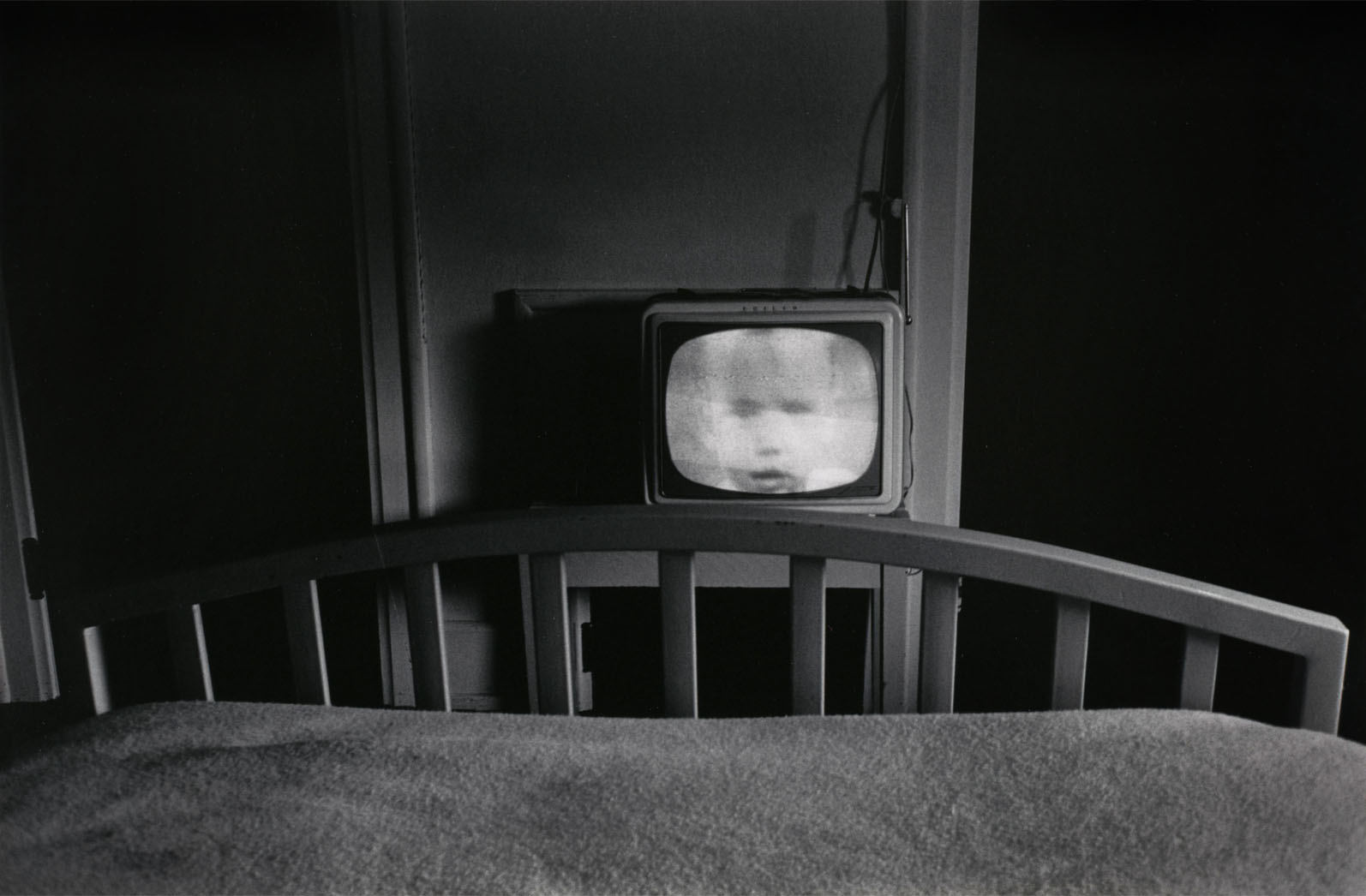
Wednesday Closed

San Francisco Museum of Modern Art website

LIKE ART BLART ON FACEBOOK

Back to top

Exhibition: ‘Staging Action: Performance in Photography Since 1960’ at The Museum of Modern Art (MoMA), New York

Exhibition dates: 26th January – 9th May 2011

Curators: Roxana Marcoci, Curator, and Eva Respini, Associate Curator, Department of Photography, The Museum of Modern Art


Many thank to The Museum of Modern Art, New York for allowing me to publish the photographs in the posting. Please click on the photographs for a larger version of the image.


William Wegman (American, b. 1943) 'Foamy Aftershave (L-Foamy; R-Aftershave)' 1982


William Wegman (American, b. 1943)
Foamy Aftershave (L-Foamy; R-Aftershave)
1982
28 1/2 x 22″ (72.4 x 55.9cm) each
The Museum of Modern Art, New York
Gift of Robert and Gayle Greenhill
© 2010 William Wegman


Laurel Nakadate (American, b. 1975) 'Lucky Tiger #151' 2009


Laurel Nakadate (American, b. 1975)
Lucky Tiger #151
2009
Chromogenic colour print with ink fingerprints
4 x 6″ (10.2 x 15.2cm)
The Museum of Modern Art, New York
Acquired through the generosity of the Peter Norton Family Foundation
© 2010 Laurel Nakadate


Laurel Nakadate (American, b. 1975) 'Lucky Tiger #181' 2009


Laurel Nakadate (American, b. 1975)
Lucky Tiger #181
2009
Chromogenic colour print with ink fingerprints
4 x 6″ (10.2 x 15.2cm)
The Museum of Modern Art, New York
Acquired through the generosity of the Peter Norton Family Foundation
© 2010 Laurel Nakadate


Gilbert & George (British) 'The Red Sculpture' 1975


Gilbert & George (British)
The Red Sculpture
1975
Chromogenic colour print with text
9 1/8 x 13 7/8″ (23.2 x 35.2cm)
The Museum of Modern Art, New York
Art & Project/Depot VBVR Gift
© 2010 Gilbert & George


Matthew Barney (American, b. 1967) 'Drawing Restraint 9: Shimenawa' 2005


Matthew Barney (American, b. 1967)
Drawing Restraint 9: Shimenawa
2005
Chromogenic colour print in self-lubricating plastic frame
The Museum of Modern Art, New York
Gift of Barbara Gladstone
© 2010 Matthew Barney


Installation view of the exhibition 'Staging Action: Performance in Photography Since 1960' at The Museum of Modern Art (MoMA)


Installation view of the exhibition Staging Action: Performance in Photography Since 1960 at The Museum of Modern Art (MoMA), New York showing at right, George Maciunas Performing for Self-Exposing Camera, New York 1966


George Maciunas (American, born Lithuania, 1931-1978) 'George Maciunas Performing for Self-Exposing Camera, New York' 1966


George Maciunas (American born Lithuania, 1931-1978)
George Maciunas Performing for Self-Exposing Camera, New York
1966
Gelatin silver print


Focusing on a wide range of images of performances that were expressly made for the artist’s camera, Staging Action: Performance in Photography Since 1960 draws together approximately 50 works from the Museum’s collection, and is on view from January 28 to May 9, 2011. Though performances are often intended to be experienced live, in real time, with photography playing an ancillary function in recording them, these works function as independent, expressive pictures, often staged in the absence of a public audience. At the center of these pictures is a performer (often the artist), posing or enacting an action conceived for the photographic lens. Among the works on view, approximately half are recent acquisitions by MoMA, including pieces by Laurel Nakadate, Rong Rong, Ai Weiwei, Huang Yan, and La Monte Young. Staging Action is organised by Roxana Marcoci, Curator, and Eva Respini, Associate Curator, Department of Photography, The Museum of Modern Art.

Beginning with Fluxus artists in the 1960s, Staging Action includes the work of George Maciunas, an artist who engaged the production of the self as positional rather than fixed and often played with transvestism. According to personal reminiscences of the American poet Emmett Williams, a friend, Maciunas’s closets were full of prom dresses that he scavenged from the Salvation Army. In his 1966 cross-dressing striptease, George Maciunas Performing for Self-Exposing Camera, New York, he reinforced the active construction of identity through gender indeterminacy. The participation of the camera as accomplice to the artist’s actions was also a constant theme in Vito Acconci’s work of the early 1970s. In Conversions I: Light, Reflections, Self-Control (1970-1971), Acconci tried to feminize his male body by plucking hair from his chest and navel area, pushing his pectorals together to mimic breasts, and hiding his genitals between his legs. Performances that explored gender play were soon embraced by other artists. A few years later, Richard Prince and Cindy Sherman collaborated on a photo shoot in which they sported identical suits and red-haired wigs, each playing androgynous double to the other.

Staging Action continues with artists who experimented with the camera to test the physical and psychological limits of the body. Reacting against the post-World War II repressive sexual and political atmosphere of Austrian society, the group known as the Vienna Actionists – including Günter Brus, Otto Muehl, Herman Nitsch, and Rudolf Schwarzkogler – staged highly provocative actions that were mostly ritualistic, incorporating elements such as wine and animal blood from Dionysian rites and Christian ceremonies in an attempt to free human instincts that had been repressed by society. In the early 1990s, numerous artists living in Beijing’s East Village artist community actively engaged in endurance-based performances. On view is East Village, Beijing No. 22 (1994) by Rong Rong, an iconic picture of the now seminal performance known as 12 Square Meters, which takes its title from the size of the public urinal where the action took place. The artist Zhang Huan covered himself in fish guts and honey and sat motionless for an hour in the heat of a summer day as flies gathered on his body, while the photographer Rong Rong captured the gritty performance.

The face as a site for alteration and extreme expression is of particular interest to several artists in the exhibition. In his five-part work, Studies for Holograms (1970), Bruce Nauman poked, pulled, pinched, and kneaded his mouth, neck, and cheeks in extreme and cartoonish ways. For her 1972 work (Untitled) Facial Cosmetic Variations, Ana Mendieta used tape and make-up to mould and manipulate her face to create, at turns, disturbing and humorous results that reference the cosmetic changes women inflict upon themselves in the name of beauty. Lucas Samaras’s transformations in a series of self-portrait Polaroids from 1969-1971 suggest the plasticity or mutability of identity itself. For these works, the artist utilised an array of wigs, pancake make-up, and props to transform himself into grotesque characters for the camera.

Other performances required a sustained, emotional engagement on the part of the artist. Bas Jan Ader’s particular brand of existential-based Conceptualism is crystallised in I’m too sad to tell you (1970), in which the artist cried in front of the camera. In 1971, Adrian Piper performed a time-lapse piece titled Food for Spirit. Inspired by an assignment to write a text on Immanuel Kant’s Critique of Pure Reason, Piper began fasting in order to isolate herself into a state of self-transcendence, and took pictures of herself in front of a mirror to insure reconnaissance of her own body. The ability of the camera to both freeze and extend a moment in time was also instrumental to the Japanese artist Mieko Shiomi. In Disappearing Music for Face (1966), Shiomi sequenced a series of film stills focusing on the mouth of Yoko Ono as her smile intermittently faded into a neutral facial expression. In Laurel Nakadate’s pictures from the Lucky Tiger series that she conceived of in 2009 during a road trip through the American West, the artist is seen riding a horse in a cropped T-shirt, doing a backbend in cowboy boots by the Grand Canyon, and striking a Playboy pose in her “lucky tiger” bikinis, rehashing photographic conventions inspired by 1950s-style “cheesecake” and camera-club pictures. Lorna Simpson’s multi-part work, May, June, July, August ’57 / ’09 (2009) also responds to the photographic conventions of posing for the camera. Simpson turned to the photographic archive as source material, combining found photographs of a young African-American woman who posed for hundreds of pin-up pictures in 1957 in Los Angeles with her own performative self-portraits, in which she replicates every outfit, pose, and setting of the original photographs. Through juxtaposition, repetition, and de-contextualization, a historical fiction arises, whereby the two women, despite the many differences that separate them, seem to be joined through a shared identity.

The exhibition includes both off-the-cuff and staged performative gestures of political dissent. Ai Weiwei’s photographic series Study of Perspective (1995-2003) reveals a spirited irreverence toward national monuments. Traveling to various landmarks – from the Eiffel Tower to Tiananmen Square to the White House – the artist photographed his own arm extended in front of the camera’s lens as he gave each marker the middle finger. Robin Rhode’s pictures, presented sequentially in storyboard format, record situations in which the artist interacts with a set of objects that he has drawn, erased and redrawn in black charcoal on dilapidated walls. Untitled, (Dream House) (2005) comprises a sequence of 28 colour photographs in which Rhode mimics the act of struggling to catch a television set, a chair, and a car that appear to have been thrown at him from above. In reality, these items are drawn in cartoonish lines on an exterior wall. Referencing the South African New Year custom of tossing out old objects, the artist identifies society’s two opposing poles: consumerism and dispossession. Rhode’s pictures, like those of the other artists in Staging Action, attest to the myriad ways in which photography constitutes – not just documents – performance as a conceptual exercise.

Press release from the MoMA website


Installation view of the exhibition 'Staging Action: Performance in Photography Since 1960' at The Museum of Modern Art (MoMA)


Installation view of the exhibition Staging Action: Performance in Photography Since 1960 at The Museum of Modern Art (MoMA), New York showing at right, Rong Rong’s East Village, Beijing, No. 81 1994


Rong Rong (Chinese, b. 1968) 'East Village, Beijing, No. 81' 1994


Rong Rong (Chinese, b. 1968)
East Village, Beijing, No. 81
1994
Gelatin silver print
The Museum of Modern Art, New York
Acquired through the generosity of Peter and Susan MacGill
© 2010 Rong Rong


Rong Rong (Chinese, b. 1968) 'East Village, Beijing, No. 22' 1994


Rong Rong (Chinese, b. 1968)
East Village, Beijing, No. 22
1994
Gelatin silver print
21 7/16 x 14 5/8″ (54.5 x 37.2cm)
The Museum of Modern Art, New York
The Family of Man Fund
© 2010 Rong Rong


Robert Gober (American, b. 1954) 'Untitled' 1992-1993


Robert Gober (American, b. 1954)
Untitled
1992-1993
Gelatin silver print
16 3/4 x 12 5/8″ (42.5 x 32.1cm)
The Museum of Modern Art, New York
Gift of Werner and Elaine Dannheisser
© 2010 Robert Gober


Günter Brus (Austrian, 1938-2024) 'Self-Painting 1' 1964


Günter Brus (Austrian, 1938-2024)
Self-Painting 1
1964
Gelatin silver print
15 7/8 x 11 15/16″ (40.4 x 30.4cm)
The Museum of Modern Art
Gift of Steven Johnson and Walter Sudol
© 2010 Günter Brus


Arnulf Rainer (Austrian, b. 1929) 'Braids' 1966


Arnulf Rainer (Austrian, b. 1929)
Braids
1966
Photograph, oil stick, crayon, and pencil on paper
11 1/2 x 10″ (29.2 x 25.1cm)
Gift of The Cosmopolitan Arts Foundation
© 2010 Arnulf Rainer


Installation view of the exhibition 'Staging Action: Performance in Photography Since 1960' at The Museum of Modern Art (MoMA)


Installation view of the exhibition Staging Action: Performance in Photography Since 1960 at The Museum of Modern Art (MoMA), New York showing at left, Ana Mendieta’s Facial Cosmetic Variations 1972; at centre, the work of Rudolf Schwarzkogler; and at right, VALIE EXPORT with Peter Hassmann’s Action Pants: Genital Panic (1969, below)


VALIE EXPORT (Austrian, b. 1941) with Peter Hassmann (photographer) 'Action Pants: Genital Panic' 1969 (detail)


VALIE EXPORT (Austrian, b. 1941) with Peter Hassmann (photographer)
Action Pants: Genital Panic (detail)
1969
Screenprints
Each 26 3/8 × 19 5/8″ (67 × 49.8cm)
Museum of Modern Art, New York
The Modern Women’s Fund
© 2025 VALIE EXPORT / Artists Rights Society (ARS), New York / VBK, Austria


This series of screenprints relates to a performance in which EXPORT reportedly walked into an experimental art-film house in Munich wearing crotchless trousers and a tight leather jacket, with her hair teased wildly, and roamed through the rows of seated spectators, her exposed genitalia level with their faces. Challenging the public to engage with a “real woman” instead of with images on a screen, she illustrated her notion of “expanded cinema,” in which the artist’s body activates the live context of watching. EXPORT’s defiant feminist action was memorialised in a picture taken the following year by the photographer Peter Hassmann in Vienna. EXPORT had the image, in which she holds a machine gun, screenprinted in a large edition and fly-posted it in public squares and on the street.

Gallery label from From the Collection: 1960-69, March 26, 2016 – March 12, 2017

Text from the MoMA website


Ana Mendieta (American born Cuba, 1948-1985) 'Untitled (Facial Cosmetic Variations)' January-February, 1972


Ana Mendieta (American born Cuba, 1948-1985)
Untitled (Facial Cosmetic Variations) (detail)
January – February, 1972
Four chromogenic color prints, printed 1997
Each 19 1/4 x 12 3/4″ (48.9 x 32.4cm)
Acquired through the generosity of The Contemporary Arts
Council of The Museum of Modern Art, in honour of Barbara Foshay
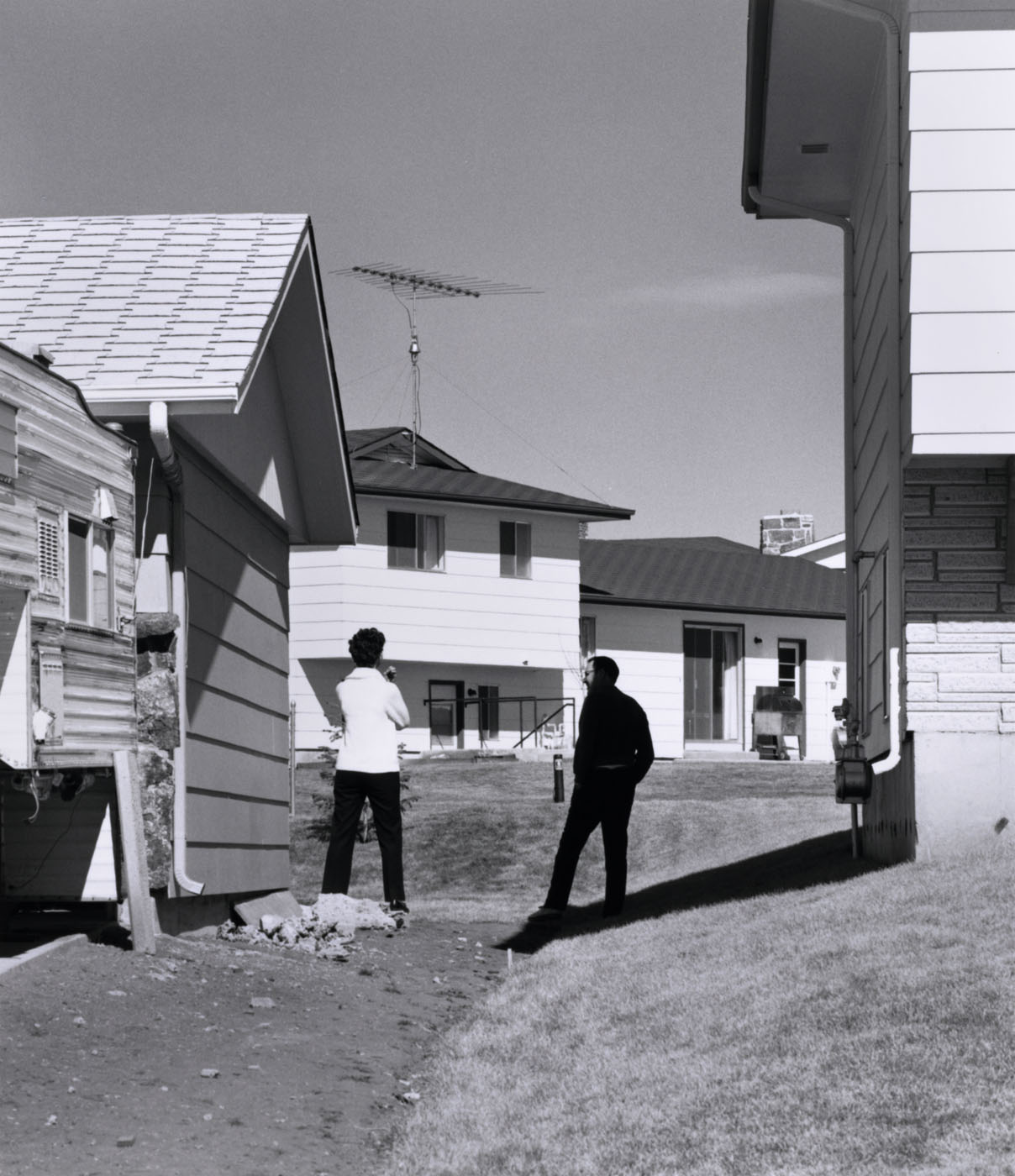
© The Estate of Ana Mendieta Collection Courtesy Galerie Lelong, New York


Bas Jan Ader (Dutch, 1942-1975) 'I'm Too Sad to Tell You' 1970


Bas Jan Ader (Dutch, 1942-1975)
I’m Too Sad to Tell You
1970
Gelatin silver print
Art & Project/Depot VBVR Gift
© 2019 The Estate of Bas Jan Ader


Lee Friedlander (American, b. 1934) 'California' 1997


Lee Friedlander (American, b. 1934)
California
1997
Gelatin silver print
14 15/16 x 14 13/16″ (37.7 x 37.2cm)
The Museum of Modern Art, New York
Robert and Joyce Menschel Fund
© 2010 Lee Friedlander


Installation view of the exhibition 'Staging Action: Performance in Photography Since 1960' at The Museum of Modern Art (MoMA), New York showing at left, Bruce Nauman's 'Studies for Holograms' (1970); and at right, Lorna Simpson's 'May, June, July, August '57/'09 #8' (2009)


Installation view of the exhibition Staging Action: Performance in Photography Since 1960 at The Museum of Modern Art (MoMA), New York showing at left, Bruce Nauman’s Studies for Holograms (1970); and at right, Lorna Simpson’s May, June, July, August ’57/’09 #8 (2009, below)


Lorna Simpson (American, b. 1960)
'May, June, July, August '57/'09 #8'
2009


Lorna Simpson (American, b. 1960)
May, June, July, August ’57/’09 #8
2009
Twelve gelatin silver prints
Each 5 × 5″ (12.7 × 12.7cm)
Museum of Modern Art, New York
Acquired through the generosity of The Contemporary Arts Council of The Museum of Modern Art
© 2025 Lorna Simpson


Lorna Simpson describes 1957-2009 as “a project that happened kind of by accident.” Since she often works with vintage photographs, advertisements, and magazines, she was on eBay in search of material, when she came across a couple of black-and-white photographs of a young black woman posing alluringly. As it turned out, these were part of a much larger album of photographs, featuring this woman, and, occasionally, a young black man, in attractively staged poses. The sellers offered the entire album to Simpson. Struck by the images, though not yet sure what to do with them, she bought it.

When the album arrived, she hung the photographs in her studio, where they remained for months. Taken in 1957, in modest domestic and outdoor settings, most of them appeared to be inspired by the pin-up, mass-produced images of seductively posed actresses and models, widely circulated in the 1940s and 50s. But the identities of the photographer, the woman, and the man were unknown. Ultimately, Simpson decided to restage these images. Using herself as her model, she mimicked the settings, clothing, hairstyles, and poses of both the woman and the man and photographed herself using black-and-white film. She then paired her own photographs with the originals (for a total of 307 individually framed images) and has displayed them together in various arrangements.

As with much of her work, it is up to viewers to draw their own conclusions about the identities of the subjects of 1957-2009. A feminist and an African American woman, Simpson has been concerned with black female identity since the beginning of her career. By providing little or no information about the people who appear in her images, she poses challenging questions about how we perceive and make assumptions about others based upon their appearance – and upon stereotypes associated with aspects of identity like skin colour, hair, gender, and clothing.

Text from the MoMA website


The Museum of Modern Art
11 West 53rd Street
New York, NY 10019
(212) 708-9400

Opening hours:
Sun – Fri 10.30am – 5.30pm
Sat 10.30am – 7.00pm

The Museum of Modern Art website

LIKE ART BLART ON FACEBOOK

Back to top