Edgar Finlay (Australian, 1893-1974) Untitled Streetscape 1919 Oil on board 32.2 x 27.2cm
This is a near perfect exhibition of Australian Tonalist paintings from the John and Peter Perry Collection at the Town Hall Gallery, Hawthorn, Melbourne.
From the beautiful colour of the gallery walls which compliments the art work to the subtle grouping of the paintings to the individual nuances in style of each artist’s work … this is a stunning exhibition which envelops the viewer in the paintings sublime, minimalist intimacies.
From portrait to landscape, from cityscape to still life, I was enraptured by the presence of each painting. Blow Monet or Cezanne, here is Australian colour, context, identity, place, perspective at its suffused finest!
I have always adored the work of Clarice Beckett (Australian, 1887-1935) ever since I saw her paintings at Lauraine Diggins Fine Art way back in 2015, and normally she would be the start of the show … but not here. Here she is surrounded by visions / visionaries of equal stature, led by the redoubtable painter and teacher Max Meldrum (Australian, 1875-1955).
The wall of five of his paintings of trees (see installation photo below) including The Glade, Eltham (c. 1920, below), The Pool (1923, below), The Bottom of the Hill (Eltham Reserve) (1925, below) is one of the most rigorous conceptual investigations into that subject I have seen in Australian painting, yet at the same time I was emotionally moved by their subtle nuances of form, tone and inhabitation. It was as though the artist had internalised the transcendence of his subject.
Believe me when I say that I inhaled the canvases in this exhibition, I breathed their suffused glow.
It was a real privilege to see the exhibition and to be able to construct this post. There are not many reproductions of Australian Tonalist paintings online by many of these artists so here is a record their achievement, and that of John and Peter Perry for having the foresight and perspicacity to collect them.
Enveloped in a pall of opaque density I see clearly.
Installation view of the exhibition Australian Tonalism: A selection from the John and Peter Perry Collection at the Town Hall Gallery, Hawthorn, Melbourne, May – July, 2025 showing at left, George Coates’ portrait of Max Meldrum, c. 1895 (below); at centre, Edgar Finlay’s Untitled Streetscape 1919 (above); and at right, three paintings by Clarice Beckett (below)
Australian Tonalism
Australian Tonalism is characterised by a particular “misty” or atmospheric quality created by the Meldrum painting method of building “tone on tone”. Tonalism developed from Meldrum’s “Scientific theory of Impressions”; claiming that social decadence had given artists an exaggerated interest in colour and, to their detriment, were paying less attention to tone and proportion. Art, he said, should be a pure science based on optical analysis; its sole purpose being to place on the canvas the first ordered tonal impressions that the eye received. All adornments and narrative and literary references should be rejected.
Tonalism opposed Post-Impressionism and Modernism, and is now regarded as a precursor to Minimalism and Conceptualism. The whole movement had been under fierce controversy and they were without doubt the most unpopular group of artists, in the eyes of most other artists, in the history of Australian art. Influential Melbourne artist and teacher George Bell described Australian Tonalism as a “cult which muffles everything in a pall of opaque density”.
George Coates (Australian, 1869-1930) Max Meldrum c. 1895 Oil on canvas 49.7 x 39.5cm
Clarice Beckett (Australian, 1887-1935) The Solitary Bathing Box c. 1933 Oil on beaver board 22.7 x 30cm
Clarice Beckett (Australian, 1887-1935) Street Scene (Collins Street) c. 1931 Oil on canvas board 17.6 x 24cm
Clarice Beckett (Australian, 1887-1935) (Beaumaris Coast) c. 1927 Oil on academy board 17.7 x 23.5cm
Wall text from the exhibition Australian Tonalism: A selection from the John and Peter Perry Collection at the Town Hall Gallery, Hawthorn, Melbourne, May – July, 2025
Installation view of the exhibition Australian Tonalism: A selection from the John and Peter Perry Collection at the Town Hall Gallery, Hawthorn, Melbourne, May – July, 2025 showing the work of Carl Hampel
Carl Hampel (Australian, 1891-1940) At Eltham 1920 Oil on prepared board 30.5 x 23cm
Carl Hampel (Australian, 1891-1940) Coming Light c. 1924 Evening 1920
Installation view of the exhibition Australian Tonalism: A selection from the John and Peter Perry Collection at the Town Hall Gallery, Hawthorn, Melbourne, May – July, 2025 showing at left in the bottom image the work of A E Newbury
A E Newbury (Australian, 1891-1941) White Gum and Pines 1919 Morning Light 1919 The Old Garden 1919
A E Newbury (Australian, 1891-1941) The Old Garden 1919 Oil on prepared board 30.5 x 23cm
Installation view of the exhibition Australian Tonalism: A selection from the John and Peter Perry Collection at the Town Hall Gallery, Hawthorn, Melbourne, May – July, 2025 showing the work of William Frater
William Frater (Scottish, 1890-1974) Untitled Landscape c. 1920 Oil on canvas 30 x 41.5cm
William Frater (Scottish, 1890-1974) Olympus c. 1928 Oil on canvas on board 32 x 46cm
William Frater (Scottish, 1890-1974) Tree forms on the Yarra c. 1926 Oil on canvas on board 30.5 x 39cm
William Frater (Scottish, 1890-1974) The River (Homage to Cezanne) 1930 Oil on board 43 x 54.5cm
Installation views of the exhibition Australian Tonalism: A selection from the John and Peter Perry Collection at the Town Hall Gallery, Hawthorn, Melbourne, May – July, 2025
Discover the artistic legacy of Max Meldrum (1875-1955) in this exhibition showcasing the lifelong dedication of John and Peter Perry to collecting works by this pioneering Australian artist and his influential school. Meldrum, a key figure in 20th-century Australian art, revolutionised the painting scene between the two World Wars, creating a distinctive style that has left a lasting imprint on the nation’s artistic landscape.
The exhibition features a selection of works from a collection of over 320 pieces, including paintings, sculptures, drawings, and etchings. Highlights include landscapes from both France and Australia, still lifes, portraits and animal studies – all embodying the unique approach of Meldrum and his followers. The ‘Meldrumites’ – a talented group of artists such as A M E Bale, Clarice Beckett, Colin Colahan and Polly Hurry – were deeply influenced by Meldrum’s teachings, and their works are also prominently featured. Many of these artists either lived or worked in the area now known as the City of Boroondara.
Also on display are fascinating studio artifacts, including plaster casts, palettes and photographs, offering a deeper insight into the artists’ creative processes. The exhibition will be accompanied by a limited-edition publication, providing further context and reflection on this significant collection.
Featuring: A M E Bale, Clarice Beckett, Colin Colahan, Archie and Amalie Colquhoun, Polly Hurry, John Farmer, Alma Figuerola, Justus Jorgensen, William Frater, Carl Hampel, Percy Leason, Max Meldrum, Jim Minogue, A E Newbury, Arnold Shore and others.
Text from the Boroondara Arts website
Installation view of the exhibition Australian Tonalism: A selection from the John and Peter Perry Collection at the Town Hall Gallery, Hawthorn, Melbourne, May – July, 2025
A D Colquhoun (Australian, 1894-1983) Self Portrait c. 1922 Oil on oak panel 21 x 15.8cm
L August Cornehls (Australian, 1887-1962) Self Portrait c. 1924 Oil on canvas on cardboard 26.7 x 22cm (oval)
Alma Figuerola (Australian, 1902-1970) Self Portrait c. 1926 Oil on cardboard 19.5 x 15cm
John Farmer (Australian, 1897-1989) Self portrait c. 1926 Oil on canvas 20.5 x 15.3cm
Australian Tonalism wall text Meldrum’s Painting Theory
Installation views of the exhibition Australian Tonalism: A selection from the John and Peter Perry Collection at the Town Hall Gallery, Hawthorn, Melbourne, May – July, 2025 showing the work of Max Meldrum
Max Meldrum (Scottish, 1875-1955) Brume (Mist) c. 1907 Study, Le Clocher c. 1908
Max Meldrum (Scottish, 1875-1955) Lever de Soleil (Sunrise) 1910 Oil on canvas 35 x 26.8cm
Max Meldrum (Scottish, 1875-1955) Chene et Peupliers (Oak Tree and Poplars) c. 1907 Oil on canvas 33.5 x 32cm
Max Meldrum (Scottish, 1875-1955) Esquisse (Sketch) c. 1904 Haystacks, Brittany c. 1908
Australian Tonalism wall text Meldrum in France
Max Meldrum (Scottish, 1875-1955) Pont de Grenelle, Paris 1929 Oil on canvas sketching panel 33.3 x 40.5cm
Installation view of the exhibition Australian Tonalism: A selection from the John and Peter Perry Collection at the Town Hall Gallery, Hawthorn, Melbourne, May – July, 2025 showing the work of Max Meldrum
Max Meldrum (Scottish, 1875-1955) The Glade, Eltham c. 1920 Oil on canvas on board 44 x 42cm
Max Meldrum (Scottish, 1875-1955) The Pool 1923 Oil on canvas on board 34 x 37.5cm
Max Meldrum (Scottish, 1875-1955) The Bottom of the Hill (Eltham Reserve) 1925 Oil on canvas on board 32.5 x 42cm
Installation view of the exhibition Australian Tonalism: A selection from the John and Peter Perry Collection at the Town Hall Gallery, Hawthorn, Melbourne, May – July, 2025
Max Dupain (Australian, 1911-1992) Photograph of Max Meldrum 1937 Gelatin silver photograph 47.5 x 33.7cm (image)
Installation views of the exhibition ‘Australian Tonalism: A selection from the John and Peter Perry Collection’ at the Town Hall Gallery, Hawthorn, Melbourne, May – July, 2025 showing the work of Colin Colahan
Colin Colahan (Australian, 1897-1987) Bridge Road, Evening c. 1929 Oil on linen on board 33 x 40.8cm
Colin Colahan (Australian, 1897-1987) Untitled (Streetscape) 1919 Oil on cardboard 32.2 x 23cm
Colin Colahan (Australian, 1897-1987) Kings Road, Chelsea 1940 Oil on board 46 x 38cm
Colin Colahan (Australian, 1897-1987) The Green Fence 1930 Oil on canvas on board 45.3 x 38cm
Colin Colahan (Australian, 1897-1987) Swanston Street, Melbourne c. 1930 Oil on canvas on board 45 x 37.7cm
Colin Colahan (Australian, 1897-1987) Swanston Street, Melbourne (detail) c. 1930 Oil on canvas on board 45 x 37.7cm
Tone, Proportion and Colour: A Brief Overview of the Exhibition
John R. Perry, March 2025
In 1974 Peter and I purchased a small sketch of a Brittany sunset by Max Meldrum. We have continued collecting works by Meldrum and painters associated with him for over forty-five years. Our aim has been to develop a representative, well composed collection of quality work by Australian Tonalists. The emphasis has been on Meldrum’s earlier works and those of his early associates. His work was at its most sensitive and his influence greatest in this period.
We have in this exhibition some of Meldrum’s rare early French landscapes including several by his brother-in-law Charles Nitsch. There are also works which I believe to be the first truly modern Australian paintings, produced at Eltham in 1917. Meldrum developed a simplified approach to his art and two works, The Three Trees (1917) and Cloudy Summer Afternoon, Eltham (1917) illustrate this progress. They give a true sense of space and atmosphere, all the more striking when seen with what a direct and simple means these effects are obtained. These compact and luminous studies show us the first evidence of the painter putting his perceptual theory into practice.
William Frater and Arnold Shore were major figures in the development of the modern movement in Melbourne and are included in this exhibition to illustrate the influence Meldrum had on these two under-appreciated painters…
The works of Clarice Beckett and Polly Hurry are generally one of soft-focus, for these lovers of mist and crepuscular fogs pay homage to the painters Eugene Carriere and James McNeill Whistler. The works of John Farmer, A E Newbury and to some degree Richard McCann, evolved into their respective personal styles which owe more to Camille Corot than to Meldrum. Their landscapes of subtle delicacy and feathery texture elicit many comparisons with the work of the great French Barbizon School painters…
Having both decided early on our collecting paths, that conventional collecting was not for us, we decided to be more objective, learning to appreciated and admire the work of the Australian Tonalists. As our collection grew, we were willing to leave the beat track, avoiding art dealers, art writers and critics, committing ourself to dealing directly with those painters associated with the Tonalist movement.
Like John Constable, Meldrum believed that, “… in such an age as this, painting should be understood, not looked on with blind wonder, nor considered only as a poetic aspiration, but as a pursuit legitimate, scientific and mechanical.”2
John Constable, quoted in The Letters of John Constable, ed. by R.B. Beckett (London: Longmans, Green and Co., 1955), p. 530.
Alice Marian Ellen Bale (Australian, 1875-1955) Self portrait 1925 Oil on canvas 75 x 62.5cm Town hall Gallery Collection
Australian Tonalism Alice Bale self portrait wall text
Installation view of the exhibition Australian Tonalism: A selection from the John and Peter Perry Collection at the Town Hall Gallery, Hawthorn, Melbourne, May – July, 2025 showing the work of A M E Bale
A M E Bale (Australian, 1876-1955) Interior (83 Walpole Street, Kew) c. 1928 Oil on board 31 x 23.5cm
A M E Bale (Australian, 1876-1955) Pompon Dahlias c. 1936 Oil on canvas 56 x 46cm
A M E Bale (Australian, 1876-1955) In Castlemaine Gardens (The Wall of Poplars) 1922 Oil on canvas 28.5 x 23cm
Richard McCann (Australian, 1889-1970) The Cottage 1919 Eltham c. 1920 Heyington from Hawthorn 1927 Pont Neuf & Henri IV, Paris 1924
Richard McCann (Australian, 1889-1970) Eltham c. 1920 Oil on academy board 24.5 x 39.5cm
Richard McCann (Australian, 1889-1970) Heyington from Hawthorn 1927 Oil on cedar panel 24 x 35cm
Richard McCann (Australian, 1889-1970) The Cottage 1919 Oil on academy board 24 x 30.5cm
Justus Jorgensen (Australian, 1893-1975) On the way to Toulon, Cassis 1927 Oil on canvas on flyboard 32.5 x 40.5cm
Justus Jorgensen (Australian, 1893-1975) Cassis 1927 Oil on canvas on board 40.5 x 33cm
John Rowell (Australian, 1894-1973) The Roadway c. 1920 Oil on canvas on flyboard 21.7 x 21.5cm
William Rowell (Australian, 1898-1946) The Barn 1926 Oil on academy board 28.5 x 30.5cm
Charles Nitsch (French, 1882-1972) Picherit’s Farm, Pace, Brittany c. 1910 Oil on cotton on board 32.5 x 40cm
Australian Tonalism wall text Charles Nitsch
A D Colquhoun (Australian, 1894-1983) The Avenue de l’Observatoire 1925 The Fountain in the Luxembourg Gardens c. 1925
A D Colquhoun (Australian, 1894-1983) The Avenue de l’Observatoire 1925 Oil on wood panel 16 x 21.6cm
A D Colquhoun (Australian, 1894-1983) The Fountain in the Luxembourg Gardens c. 1925 Oil on board 15.8 x 21.5cm
John Farmer (Australian, 1897-1989) Misty Morning, London (detail) 1934 Oil on canvas on board 19 x 24cm
Town Hall Gallery 360 Burwood Road Hawthorn VIC 3122 Phone: (03) 9278 4770
tongue, long flickering tongue drenched in blood scours inside the cup rapacious for more blood thirsty luck sucks souls of men thorn and star spirit of insect bizarre–unique cannibal
“A lot of humans forget we are organic entities, the same as every other creature on the planet, and we’ve only been here for a short time. I am very pessimistic about the plight of beings. We don’t learn much, I mean, we’ve been wreaking havoc as they did in the Middle Ages. We also have bigger weapons. One thing I am not pessimistic about is the ability of nature to heal itself.”
Peter Booth quoted in Ashley Crawford View from the Booth blog 29 November 2003
PETER BOOTH at TarraWarra Museum of Art
Introductory wall text from the exhibition
Installation view of the exhibition Peter Booth at TarraWarra Museum of Art showing at left Painting 1974, and at centre Painting 1975 1975 Photo: Marcus Bunyan
While the TarraWarra survey features a collection of Booth’s works from the 1970s to the 2000s, it opens with a work in the ‘Doorway’ series: Painting, 1974. It’s a canvas covered with shades of black. As the curator says, “Just near the top, there’s this very thin horizon line of red, and it feels like there’s this massive magma just behind the surface that’s starting to seep through.” I’m told that written on the back of some ‘Doorway’ paintings is an instruction: “Never hang more than six inches from the floor.” As Fitzpatrick explains, “If you hang the work a little lower for the viewer … it becomes more immersive, and this painting is the opening work in the exhibition with the idea of the doorway as a threshold.”
This minimalism is compelling. “The ‘Doorway’ series could be about nothingness, or it could be a void,” says Fitzpatrick, “but voids are also where things are generated from – so they could be about an idea of fullness … you could almost see them as a kind of dark mirror.” In a rare interview with Australian artist, writer and curator Peter Hill, Booth humbly discusses how the ‘Doorway’ series was “influenced by what was going on in the art world at the time, in reduction, minimalism and colour field painting”.
With its shrouded figure standing before a highly volatile and fiery landscape, Painting 1977 conveys a forceful and undeniably apocalyptic vision. The painting finds a literary counterpart in the work of one of Booth’s favourite writers at the time, the novelist Doris Lessing with whom he found an affinity in their shared dystopian outlook. With its powerful blend of fantasy and reality, her 1971 novel Briefing for a Descent into Hell recounts the tale, vividly narrated in the first person, of a psychiatric patient’s hallucinatory journey through a dangerous and disturbing world of environmental despoliation, societal collapse, violent conflict and cosmic cataclysm.
Wall text from the exhibition
Doris Lessing (British-Zimbabwean born Iran, 1919-2013) Briefing for a Descent into Hell 1971 Vintage book cover published 1981
Peter Booth (Australian born England, b. 1940, Australia from 1958) Untitled (Daughters) c. 1976 Ink on paper 11 x 12.5cm Private collection
Untitled (Daughters), c. 1976, is a composition which originated in Booth’s visits to an inner-city park in Melbourne where he would take his young daughters to play. Here, through the intense rhythms of his lifework and cross hatching in black ink, and the introduction of symbolic forms such as a whirlpool and arrowhead, this everyday scene is imaginatively transformed into a mysterious, nocturnal realm. While his daughters play in the foreground, the artist has turned to face a rising moon on the horizon and there is a sense that he is being magnetically compelled to embark on the path which leads in its direction.
Text from the TarraWarra Museum of Art Facebook page
Installation view of the exhibition Peter Booth at TarraWarra Museum of Art showing at centre, Painting 1978 Photo: Marcus Bunyan
Installation view of Peter Booth Painting 1978 from the exhibition Peter Booth at TarraWarra Museum of Art Photo: Marcus Bunyan
Peter Booth became known for his black, minimal ‘doorway’ paintings of 1970-74. Yet by 1977 he had given up this style and begun to record the world of his dreams and nightmares in a series of apocalyptic, visionary landscapes. Booth’s paintings suggest that we are on the edge of another dark age. His paintings are brutal representations of his bleak dreams and fantasies. In an age of nuclear threat Booth’s work has a monumentality which is evocative of the final conflagration mentioned in The Book of Revelations. Painting 1978, challenges and disturbs the viewer by the artist’s choice of colour and method of painting. The dramatic black and red, yellow and white composition suggests both an industrial and a natural wasteland. The heavy impasto paint texture describes, with vigour and intensity, flames, explosions, and unidentified nightmarish images. Contradictory forces pull us into the central inferno below the glacial mountain peaks, and showers of rock explode towards us. Is it the artist himself who stands with his back to us, mesmerised by the scene, while grotesque metamorphosing figures stare out at us?
Booth’s subject matter largely concerns the Australian landscape, both urban and rural, and the relationship between environment and individual, as well as the individual’s capacity to create and destroy. And also what the world will be like in the future, humans as mutants.
Booth’s landscapes are charged with emotion and symbolic meaning. Memories of his childhood in the blackened industrial landscape of Sheffield seem to infuse the work, especially his well-known apocalyptic figurative paintings, which look like images of the end of the world; illustrations for The Book of Revelation. These images contain an intense image of anxiety, evoking the aftermath of some terrible destruction, vividly pictured with menacing forms and agitated, heavily applied brushstrokes.
An example is Painting 1978 which has been described as challenging and disturbing the viewer by the artist’s choice of colour and method of painting. “The dramatic black and red, yellow and white composition suggests both an industrial and a natural wasteland”. The heavy impasto paint texture describes, with vigour and intensity, flames, explosions, and unidentified nightmarish images. Contradictory forces pull us into the central inferno below the glacial mountain peaks, and showers of rock explode towards us.
Is it the artist himself who stands with his back to us, mesmerised by the scene, while grotesque metamorphosing figures stare out at us?” Peter Booth has centred many of his paintings around his childhood in Sheffield England where he grew up during the war years and their aftermath.
Anonymous. “Peter Booth,” on the Art History Essay website Nd [Online] Cited 07/02/2023
Peter Booth (Australian born England, b. 1940, Australia from 1958) Drawing (Figure with Insect Tail) 1982 Pastel and casein on paper 17.3 x 12.5cm National Gallery of Victoria, Melbourne Purchase, Victorian Foundation of Living Australian Artists, 2010
More than just figures of fantasy, Booth’s curious amalgams and mutated figures often express his personal insights into the interrelatedness of all living beings. With his closed eyes and restful expression, the metamorphic figure in Drawing (Figure with Insect Tail) appears contented with his hybrid condition, affirming the artist’s belief that humans “share something with these creatures … we are part of the same thing.”
Text from the TarraWarra Museum of Art Facebook page
William Blake (British, 1757-1827) The Ghost of a Flea c. 1819 Tempera heightened with gold on mahogany 214 x 162 mm Tate Bequeathed by W. Graham Robertson 1949
Another physiognomic “vision” – “the stuff of delirium and nightmare, [which] taps into the unconscious, internalised sublime” – was the painting The Ghost of a Flea (c. 1819) used to illustrate John Varley’s Treatise on Zodiacal Physiognomy (1828). In studying the work of Blake for this posting, I found it instructive to look at Blake’s preparatory sketches for his works which can be found online. They give you a good idea of the spontaneity of the drawing and the ideas that arise, transformed into the finished work. Here in the graphite on paper drawing of The Ghost of a Flea we can see Blake’s initial vision, a more static, pensive figure with serrated wings which morphs into a muscular, blood sucking monster set on a cosmic stage, of life framed by curtains and a shooting star. As the vision appeared to Blake he is said to have cried out: ‘There he comes! his eager tongue whisking out of his mouth, a cup in his hand to hold blood, and covered with a scaly skin of gold and green.’
Marcus Bunyan. “Visions of divine damnation” on the exhibition William Blake at Tate Britain, London Part 2, February 2020 on the Art Blart website [Online] Cited 09/02/2023
Artist and astrologer John Varley encouraged Blake to sketch the figures, called ‘visionary heads’, who populated his visions. This image is the best known. While sketching the flea, Blake claimed it told him that fleas were inhabited by the souls of bloodthirsty men, confined to the bodies of insects because, if they were the size of horses, they would literally drain the population. Their bloodthirsty nature is shown by the eager tongue flicking at the ‘blood’ cup it carries. This intense disorientating image, the stuff of delirium and nightmare, taps into the unconscious, internalised sublime.
William Blake, “The Ghost of a Flea c. 1819-20,” in Nigel Llewellyn and Christine Riding (eds.), The Art of the Sublime, Tate Research Publication, January 2013
Wall text from the exhibition
Installation view of the exhibition Peter Booth at TarraWarra Museum of Art showing from left to right, Painting Two 1984, Painting 1984 and Leadman 1986 Photo: Marcus Bunyan
In the blasted landscape of Painting Two we are presented with a vision of a volatile world in the process of unnatural mutation. As an artist who has always been keenly attuned to what’s happening environmentally and politically, this painting forcefully conveys the fallout of a colossal act of destruction, reflecting widespread concerns in the 1980s over the dramatic escalation of the nuclear arms race between the United States and the Soviet Union and the threat of atomic warfare.
In this work a hulking grey figure, with his fierce determination and body braced for battle, appears to be biologically adapted for survival in a desolated terrain. As the title suggests, this unrelentingly bleak and polluted atmosphere has eventuated from the unbridled destructive ambitions of the toxic Leadman who has transformed the world in his own image.
Wall text from the exhibition
Installation view of the exhibition Peter Booth at TarraWarra Museum of Art showing from left to right, Leadman 1986, Painting 1984 and Painting 2012 Photos: Marcus Bunyan
William Blake (English, 1757-1827) Thenot Remonstrates with Colinet Thenot Under a Fruit Tree Thenot Remonstrates with Colinet, Lightfoot in the Distance Colinet Departs in Sorrow, a Thunder-Scarred Tree on the Right Blasted Tree and Blighted Crops The Good Shepherd Chases Away the Wolf Sabrina’s Silvery Flood Colinet’s Fond Desire Strange Lands to Know 1821 From The Pastorals of Virgil adapted by R.J. Thornton, 3rd edition. F.C. & J. Rivington et al., London 1921 Wood engravings on thin, white handmade wove paper National Gallery of Victoria, Melbourne Purchased 1960 Photo: Marcus Bunyan
William Blake (English, 1757-1827) Blasted tree and blighted crops 1821 From The Pastorals of Virgil adapted by R.J. Thornton, 3rd edition. F.C. & J. Rivington et al., London 1921 Wood engraving on thin, white handmade wove paper National Gallery of Victoria, Melbourne Purchased 1960
William Blake (English, 1757-1827) The Good Shepherd Chases Away the Wolf 1821 From The Pastorals of Virgil adapted by R.J. Thornton, 3rd edition. F.C. & J. Rivington et al., London 1921 Wood engraving on thin, white handmade wove paper National Gallery of Victoria, Melbourne Purchased 1960
William Blake (English, 1757-1827) Colinet’s Fond Desire Strange Lands to Know 1821 From The Pastorals of Virgil adapted by R.J. Thornton, 3rd edition. F.C. & J. Rivington et al., London 1921 Wood engraving on thin, white handmade wove paper National Gallery of Victoria, Melbourne Purchased 1960
Cabinet text from the exhibition Photo: Marcus Bunyan
A survey exhibition of the work of the renowned Australian artist Peter Booth
With a remarkable career spanning several decades, Melbourne-based Booth is a unique voice in Australian art. This new survey of paintings and works on paper is the first major public gallery exhibition of Peter Booth’s work since the NGV retrospective in 2003 and features a number of the artist’s most significant works from the 1970s to 1990s, alongside important recent works from the past two decades.
The exhibition is presented thematically, honing in on and highlighting particular motifs, subjects and moods which have become hallmarks of Booth’s expansive oeuvre: stillness and turbulence, alterity and alienation, mutation and hybridity, the absurd and the grotesque, the road and the ruin, and the despoliation and the resilience of nature.
A small group of abstract paintings from the mid-1970s at the start of the exhibition provide a prelude to an important series of gestural paintings which mark the beginning of the artist’s journey into the highly expressive landscape and figure subjects which have characterised his practice since that time.
The exhibition progresses through Booth’s vivid imaginings of an apocalyptic world characterised by grotesque, unsettling, and at times absurd scenes of human and hybrid figures in varying states of apprehension, aggression and conflict. These works will be accompanied by a small selection of prints by William Blake, James Ensor, Francisco Goya, and Samuel Palmer, visionary artists who have been important touchstones for Booth and with whom he shares a number of affinities.
This survey also brings together important works from the past three decades to convey humanity’s often fraught and ambiguous relationship to the natural world, revealing Booth’s extraordinary capacity to transmute his intensely personal perceptions of the mysteries and forces of nature and the folly and hubris of human endeavours, into exceptional and deeply compelling paintings and drawings.
PETER BOOTH, curated by Anthony Fitzpatrick, is generously supported by The Balnaves Foundation.
Text from the TarraWarra Museum of Art website
Installation view of the exhibition Peter Booth at TarraWarra Museum of Art showing from left to right, Untitled 1997, Painting 1982 and Painting 1981 Photo: Marcus Bunyan
In Doris Lessing’s 1974 novel, The Memoirs of a Survivor, in the aftermath of an unspecified disaster, civilisation gradually disintegrates into anarchy as hordes of people form ad hoc tribes in the city streets to increase their chances of survival. In this dystopian narrative, Lessing describes the irrational and aggressive behaviour that can be unleashed within the safety and obscurity of a large group. This same sense of apprehension is one that Booth shares in many of his depictions of crowds. In Untitled, 1997, a large throng of men forms a single, impenetrable wall, gathered together to cheer on the spectacle of a violent struggle. Disturbing and absurd in equal measure, this work graphically portrays the violent actions that can be incited by a mob.
Wall text from the exhibition
Doris Lessing (British-Zimbabwean born Iran, 1919-2013) The Memoirs of a Survivor 1974 Penguin Random House book cover published 1988
Another scene of demonic possession enacted under the spell of a fiendish presence, Painting 1982, confronts the viewer with a deeply disturbing vision of human cannibalism. With its visceral imagery of mutilation and dismemberment, parallels have been drawn to the atrocities depicted in Goya’s series of etchings The Disasters of War, 1810-1815, while the highly theatrical quality of the painting suggests a more recent connection to George A. Romero’s cult zombie film Night of the Living Dead, 1968. When the work was first exhibited critics responded to what the painting conveyed about the current state of western mass culture, finding in its brutal imagery a powerful metaphor for greed and material consumption. Whichever way one choses to interpret this work, one thing remains clear, whenever a large group of men get together in Booth’s painting, there is always the potential for danger.
Wall text from the exhibition
Francisco Goya (Spanish, 1746-1828) Saturn Devouring His Son c. 1819-1823 Mixed media mural transferred to canvas 143.5 cm × 81.4cm (56.5 in × 32.0 in) Museo del Prado, Madrid
Saturn Devouring His Son is a painting by Spanish artist Francisco Goya. It is traditionally interpreted as a depiction of the Greek myth of the Titan Cronus (known as Saturn in Roman mythology) eating one of his offspring. Fearing a prophecy foretold by Gaea that predicted he would be overthrown by one of his children, Saturn ate each one upon their birth. The work is one of the 14 so-called Black Paintings that Goya painted directly on the walls of his house sometime between 1819 and 1823. It was transferred to canvas after Goya’s death and is now in the Museo del Prado in Madrid. …
Various interpretations of the meaning of the picture have been offered: the conflict between youth and old age, time as the devourer of all things, the wrath of God and an allegory of the situation in Spain, where the fatherland consumed its own children in wars and revolution. There have been explanations rooted in Goya’s relationships with his own son, Xavier, the only of his six children to survive to adulthood, or with his live-in housekeeper and possible mistress, Leocadia Weiss; the sex of the body being consumed cannot be determined with certainty. If Goya made any notes on the picture, they have not survived, as he never intended the picture for public exhibition.
In Painting 1981 a blindfolded boor is accompanied by a red-eyed, pointy-eared imp who appears to have just whispered a cosmic joke or secret in his ear. Situated in a bleak and desolate terrain, this disquieting scenario recalls the German legend of Faust in which, following the protagonist’s pact to sell his soul to the Devil in exchange for unlimited knowledge, Mephistopheles appears as his demonic guide. In this light, Booth’s painting can be seen as a powerful reimagining of this cautionary tale of how blind ambition and human hubris can lead to inner corruption and the unleashing of dangerous, irrational impulses.
A survey exhibition of the work of major Australian artist Peter Booth will be held at TarraWarra Museum of Art, 26 November 2022 – 13 March 2023.
With a remarkable career spanning several decades, Melbourne-based Booth is a unique voice in Australian painting and is considered by many to be one of the most significant contemporary artists working in Australia today.
This new survey of paintings and works on paper will be the first major public gallery exhibition of Peter Booth’s work since the NGV retrospective in 2003 and will feature a number of the artist’s most significant works from the 1970s to 1990s, alongside important recent works from the past two decades.
Curated by TarraWarra’s Anthony Fitzpatrick, the exhibition will be presented thematically, honing in on and highlighting particular motifs, subjects and moods which have become hallmarks of Booth’s expansive oeuvre: stillness and turbulence; alterity and alienation; mutation and hybridity; the absurd and the grotesque; the road and the ruin; and the despoilation and the resilience of nature.
“This exhibition will reveal Booth’s extraordinary capacity to transmute his intensely personal perceptions of the mysteries and forces of nature, and the folly and hubris of human endeavours, into exceptional and deeply-compelling paintings and drawings,” Mr Fitzpatrick said.
A small group of abstract paintings from the mid-1970s at the start of the exhibition provide a prelude to an important series of gestural paintings which mark the beginning of the artist’s journey into a neo-expressionist figurative style.
The exhibition progresses through Booth’s vivid imaginings of an apocalyptic world characterised by grotesque, unsettling, and at times absurd scenes of human and hybrid figures in varying states of apprehension, aggression and conflict.
These works will be accompanied by a small selection of prints by William Blake, James Ensor, Francisco Goya, and Samuel Palmer, visionary artists who have been important touchstones for Booth and with whom he shares a number of affinities.
This survey will also bring together important works from the past three decades to convey humanity’s often fraught and ambiguous relationship to the natural world.
“Initially Booth’s highly visceral paintings of fiery, turbulent environments were the stage for confronting and, at times, violent human encounters. Since the 1990s, many of the scenes he has painted have become increasingly depopulated, implicating the viewer who is called to contemplate and navigate their own subjective relationship to these vivid landscapes.
“Most recently, the artist has returned to the apocalyptic imagery that characterised his first forays into figuration, with large-scale paintings of desolate and devastated scenes of a world in a cataclysmic state of collapse. This is art for a time of ecological and existential crisis in which anthropogenic impacts have driven the planet, and its intricate web of ecosystems, to the brink of utter catastrophe,” Mr Fitzpatrick said.
Press release from the TarraWarra Museum of Art
Installation view of the exhibition Peter Booth at TarraWarra Museum of Art showing at second right, Painting 2022 (below) Photo: Marcus Bunyan
Acheron Way is named after a long snaking road which rises steeply through the rainforest of the Yarra Ranges between Narbethong and Warburton. Pictured beneath a clear blue sky, this scene of animated trees backlit by a soft, yellow light evokes a sense of energy, growth and even hope. The swaying trunks and tentacular forms of the sprawling limbs of the trees painted in thick swathes of impasto, imbue them with a powerful emotional charge. However, there is a more ambiguous aspect to this work alluded to in its title which not only refers to a real location, but also to an infernal realm of the imagination: Acheron (‘river of pain’) one of the rivers of the Underworld in Greek mythology over which the souls of the dead were ferried. From this perspective, the tangled and twisted forms of these sentinel-like trees seem to be denying us access to the light suffused landscape in the distance, forcing us to linger in their shadow, begging the question: are we in the realm of the living or the dead?
Wall text from the exhibition
Installation view of the exhibition Peter Booth at TarraWarra Museum of Art showing at left Untitled 1998 (below), and at right Painting 2017 (below) Photo: Marcus Bunyan
Peter Booth (Australian born England, b. 1940, Australia from 1958) Painting 2017 Oil on canvas 193.4 x 81.3cm Courtesy of the artist and Milani Gallery, Brisbane
In Painting 2017, as the sun begins to rise over the horizon, new epicormic growth spouts from the pruned limbs of a tree; a potent symbol of resilience and renewal. Peter Booth’s ‘Garden of Eden’ paintings vividly convey his feeling for the elemental and generative qualities found in nature and his fervent empathy for other nonhuman lifeforms. ‘Everything is connected. All life comes from the same source.’
Text from the TarraWarra Museum of Art Facebook page
Installation view of the exhibition Peter Booth at TarraWarra Museum of Art showing at left Acheron Way 1993, at third right Painting 2022, and at right Painting 2014 (below) Photo: Marcus Bunyan
Installation view of the exhibition Peter Booth at TarraWarra Museum of Art showing at second left Winter 1993 (below), and at right Mount Donna Buang 1991 (below) Photo: Marcus Bunyan
Installation view of the exhibition Peter Booth at TarraWarra Museum of Art showing at left Winter 1993 (below), and at right Mount Donna Buang 1991 (below) Photo: Marcus Bunyan
In discussing Winter when it was first exhibited in 1994, Booth revealed: it’s about my childhood, about taking walks with my brothers in the woods in Yorkshire. Triggered by a recent return to Sheffield, this memory is transformed into a richly textured landscape of open forest which has been stilled and silenced by a thick blanket of snow. As the artist later revealed, his younger twin brothers died in tragic circumstances adding particular poignancy to this painting and suggesting that the two very similar trees which occupy the centre of the work, could be seen as symbolic representations of his siblings. In this light, Winter becomes a powerful and deeply personal expression of remembrance and cathartic release.
Installation view of the exhibition Peter Booth at TarraWarra Museum of Art showing at left Painting 2018 (below), and at right Untitled 1995 (below) Photo: Marcus Bunyan
Installation view of the exhibition Peter Booth at TarraWarra Museum of Art showing at left Painting (Figure with bandaged head) 2004 (below), and at right Painting 1998 (below) Photo: Marcus Bunyan
The strength and power of Painting (Man with Bandaged Head), 2004 … is palpable. But like so many of Booth’s images, formulated over years of development, the strength lies not so much in the initial ‘shock’, but with the ensuing waves of other possible readings it evokes…
The tension between our first confrontation with the bandaged figure and the subsequent sensations of pathos for, even some recognition of sensitivity within, the character makes this such a successful work. And as we look upon the painting, venturing into the space behind the bandages, the focus of the work internalises: in reading the mind of the figure we are offered a portal to see within ourselves.
This notion of the mirror to one’s soul, with themes of the nature of power and frailty, desire and control, so deftly captured within Painting (Man with Bandaged Head), 2004 adds a further dimension to the history of this particular painting.
The figure in Untitled, 2007 has averted eyes and stoically sealed lips, suggesting that he has endured great hardship. This feeling is amplified by the rich tonal contrasts and paint texture built with swathes of impasto which transform his wizened face into a blustery landscape. Having taken the troubles and turmoil of the world into himself, this austere figure is imbued with a powerful sense of inner fortitude and resilience.
Text from the TarraWarra Museum of Art Facebook page
Entrance of the exhibition WHO ARE YOU: Australian Portraiture at NGV Australia, Federation Square, Melbourne Photo: Marcus Bunyan
The black and white show
This is a challenging and stimulating exhibition at NGV Australia, Federation Square that attempts to answer the question: “who are you” when coming to terms with what it is to be an Australian.
“WHO ARE YOU: Australian Portraiture is one of the most comprehensive explorations of portraiture ever mounted in Australia and the first exhibition to bring together the collections of the National Gallery of Victoria (NGV) and the National Portrait Gallery, Canberra… [it] considers portraiture in Australia across time and media, as well as the role of the portraiture genre in the development of a sense of Australian national identity… The exhibition also questions what actually constitutes portraiture by examining the surprising and sometimes unconventional ways of representing likeness… Presented across five thematic sections, the exhibition raises challenging and provocative questions about who we are and how we view others – historically, today and into the future…
The exhibition opens by considering the connection between people and place, reflecting on the relationship between artists, sitters and the environment, as well as the personification of the natural world… A further section explores the artistic tradition of the self-portrait and portraits of artists, as well as how this convention has been subverted or challenged by contemporary artists working today… Ideas of intimacy and alienation are juxtaposed through images of family and community presented alongside those of vulnerability and isolation… The exhibition also explores portraiture’s surprising capacity to reveal the inner worlds and mindsets of both the sitter and the artist… The final section of the exhibition interrogates Australian icons, identities and how we construct them.” (Press release)
This is an ambitious agenda for several large exhibitions, let alone cram so many ideas into one exhibition. And in the end the central question “who are you” is unknowable, unanswerable in any definitive way… for it all depends on your ancestry, and from what point of view you are looking and in what context – and these conditions can change from minute to minute, day to day, and era to era. Identity is always partially fixed and fluid at one and the same time. It is always a construction, a work in progress, governed by social and cultural relations.
“Identity is formed by social processes. Once crystallized, it is maintained, modified, or even reshaped by social relations. The social processes involved in both the formation and the maintenance of identity are determined by the social structure. Conversely, the identities produced by the interplay of the organism, individual consciousness and social structure react upon the given social structure, maintaining it, modifying it, or even reshaping it.”1
Identity construction is a self-referential system where identities are produced out of social systems. They (identities) then act upon those very systems to alter them, and then those systems re-act again forming anew, an ever changing identity. “The task of identity formation is to develop a stable, coherent picture of oneself that includes an integration of one’s past and present experiences and a sense of where one is headed in the future.”2 But that identity formation, while seeking to be stable, is both multiple and contestatory. It is through those contests that a future sense of self can challenge hegemonic power differentials. As Judith Butler observes,
“Thus every insistence on identity must at some point lead to a taking stock of the constitutive exclusions that reconsolidate hegemonic power differentials, exclusions that each articulation was forced to make in order to proceed. This critical reflection will be important in order not to replicate at the level of identity politics the very exclusionary moves that initiated the turn to specific identities in the first place … It will be a matter of tracing the ways in which identification is implicated in what it excludes, and to follow the lines of that implication for the map of future community that it might yield.”3
In other words, learn from the mistakes of the past and don’t let them repeat themselves in future identities! Do not exclude others in order to reconsolidate the hegemonic status quo. But people always form identities based on the “norm” – how can you change that? As A. David Napier states, “We rely, sometimes almost exclusively it seems, upon the construction and reconstruction of an evolutionary(?) sequence of events that simultaneously excludes outsiders and provides some basis for justifying our social rules and actions. Thus, we minimize diversity by reflecting on who we are, by achieving, that is, a self-conscious state that is not only accepted but considered desirable…”4
Critical reflection is thus so important in challenging who we are, both individually and collectively. In this sense, an exhibition like WHO ARE YOU is important in helping to reshape social relations, helping to challenge hegemonic power differentials, which in turn affects our personal identity construction by reflecting on who we are and changing our point of view, so that we become more informed, and more empathetic, towards different cultures and different people. So that we do not exclude other people and other points of view.
But all is not roses and light in this exhibition with regard to exclusion.
Whilst a lot of people acknowledge and empathise with First Nations people we can have NO IDEA of the ongoing pain and hurt centuries of invasion, disenfranchisement, genocide, massacres, Stolen Generation, lack of health care, massive incarceration, suicide rates and shorter life expectancy, land loss, cultural loss that the violence of the white Anglo gaze has inflicted on the oldest living culture on Earth. While there are moves afoot (as there have been for years) for Aboriginal constitutional recognition through a Voice to Parliament, a permanent body representing First Nations people that would advise government on Indigenous policy; and a treaty that would help secure sovereignty and self-determination, enabling First Nations people make their own decisions and control their own lives, economy and land, free from the effects of changing governments – personally I believe until there is a complete acknowledgement of the pain invasion has caused Aboriginal people by the whole of Australia, nothing will ever change.
Having said that, contemporary Australia is now the most multicultural country it as ever been. According to the Australian Bureau of Statistics 2021 Census, 27.6 per cent of the population were born overseas and the top 5 countries of birth (excluding Australia) were, in order, England, India, China, New Zealand and the Philippines.5 In Australia, 812,000 people identified as Aboriginal and/or Torres Strait Islander in the 2021 Census of Population and Housing. Aboriginal and Torres Strait Islander people represented 3.2% of the population.6
It is interesting to note that when looking through the art works in this exhibition – nearly all of which can be seen in this posting – how much of it is (historical) white art and how much of it is contemporary Aboriginal art, with a sop being made to art made by, or mentioning, other people including Chinese, Afghan, Muslim and Sudanese. Chinese people have been living in Australia for centuries, Afghan people similarly. Greek and Italian people arrived in droves in the 1950s-1960s, Vietnamese boat people in the 1970s, Sudanese, Indian and Sri Lankan people in the late 20th century. More (historical and contemporary) work from these people was needed in this exhibition because they inform the construction of modern Australian identities.
Obviously the inclusion of so much contemporary Aboriginal work is a deliberate curatorial decision, but its disproportionate representation in this exhibition makes it feel like a “catch all”. Why do the curators feel the need to include so much Indigenous work? Is that how they truly see Australian identity? Also, does the inclusion of this art mean it is the best contemporary art that is available in Australia at the moment, or does its inclusion simply exclude other voices from different nationalities and ethnic and religious backgrounds that are just as important in the construction of contemporary Australian identities? While there is no denying the historical significance of invasion there needs to be a balance in such representation, especially in an exhibition purporting to investigate “who are you” over a broad range of references. As it stands the inclusion of so much Indigenous work feels like an agenda, a set point of departure, perhaps even an apologia for white guilt. As the critic John McDonald noted recently, we are living “at a time when museums and commercial galleries have gone completely gaga for such [that is, Aboriginal] work.”
Personally, I would have liked to have seen a greater range of voices expressing themselves in this exhibition. It struck me that the inclusion of so much (historical) white art and so much contemporary Aboriginal art formed a rather limited framework in which to examine “who are you”. Rather, I would have liked a more balanced representation through art of the many voices that contribute to the formation of evolving Australian identities, which ultimately could lead to a greater insight into the construction of our own self-portrait. That is the truly important aspect of any navel gazing exercise.
Dr Marcus Bunyan
Word count: 1,450
1/ Peter Berger and Thomas Luckmann. The Social Construction of Reality: A Treatise in the Sociology of Knowledge. Allen Lane, London, 1967, p. 194.
2/ Erickson, E. Identity: Youth in Crisis. Norton, New York, 1968
3/ Judith Butler. Bodies That Matter. Routledge, New York, 1993, pp. 118-119
4/ A. David Napier. Foreign Bodies: Performance Art, and Symbolic Anthropology. University of California press, Berkeley, 1992, p.143
5/ “Cultural diversity: Census” 2021 on the Australian Bureau of Statistics website 28/06/2022 [Online] Cited 12/08/2022
Installation view of the exhibition WHO ARE YOU: Australian Portraiture at NGV Australia, Federation Square, Melbourne showing from left to right, Polixeni Papapetrou’s Magma Man (2012, below); Karla Dickens’ Mrs Woods and ‘Ere (2013, below); and Kaylene Whiskey’s Seven Sisters Song (2021, below) Photo: Marcus Bunyan
Polixeni Papapetrou’s series The Ghillies shows the artist’s son wearing extreme camouflage costumes that are used by the defence forces to blend in with their environment. The photographs reflect on the passing of childhood, and the journey out of a maternally centred world into a wider existence. Papapetrou proposes that this is a significant moment for many young men as they seek to separate themselves from their mothers, and assume the costumes and identities of masculine stereotypes, often hiding themselves in the process. Papapetrou photographed her children fro most of her career, and explored a range of stereotypes that surround childhood. These works examine the placement of children and adolescents in a society which is determined and defined by adults.
Tjayanka Woods (c. 1935-2014) was a senior Pitjantjatjara artist, born near Kalaya Pirti (Emu Water) near Mimili and Wataru, South Australia. She was a cultural custodian, leader and held significant knowledges regarding cultural law and medicine. As an artist, Woods often referred to the Kungkarrangkalpa Tjurkurpa (Seven Sisters) within her artworks. The Kungkarrangkalpa Tjurkurpa is an epic and ancient creation story revolving around the start cluster, also known as Pleiades. In 2013, Wiradjuri artist Karla Dickens, spent several weeks with Woods and other senior Pitjantjatjara artists research the creation story. During her time in Pitjantjatjara Country, Dickens photographed Woods as the aware and intelligent cultural leader she was, with dignity and strength.
Kaylene Whiskey seamlessly combines references to daily life in Indulkana with popular culture. Painted on an old road sign, Seven Sisters Song celebrates Whiskey’s witty sense of humour and personal reflection of Kungkarangkalpa Tjukurpa, the Seven Sisters creation story. Imbued within the work themes of sisterhood and kinship bonds, Whiskey brings together two vastly different worlds. Strong female characters including Wonder Woman, Whoopi Goldberg and Dolly Parton are situated within a desert landscape and seen interacting with native plants and wildlife, including traditional Anangu activities like hunting, collecting bush tucker, and cultivating mingkulpa (a native tobacco plant).
Wall text from the exhibition
Johannes Heyer (Australian, 1872-1945) William Barak at work on the drawing ‘Ceremony’ at Coranderrk 1902 Gelatin silver photograph, sepia toned on paper 8.7 x 8.7cm National Portrait Gallery, Canberra Purchased with the assistance of the Australian Decorative and Fine Arts Society 2000
Wurundjeri artist and ngurungaeta (Head Man) William Barak was an important cultural leader, diplomat and activist. Barak lived near Coranderrk Aboriginal Station, near Healesville, from 1863 until 1903, becoming an influential spokesman for the rights of his people and an informant on Wurundjeri cultural lore. The people of Coranderrk, however, were officially forbidden from observing traditional practices, so Barak began recording them in drawings, often using ochre and charcoals to depict ceremonies and aspects of Wurundjeri culture before colonisation. His artworks are significant expressions of cultural practice, and he is regarded as an important figure int he history of Indigenous Australian art.
Wall text from the exhibition
Beruk (William Barak) (1824-1903), an elder of the Wurundjeri clan of the Woi-worung, was the most famous Aboriginal person in Victoria in the 1890s. After attending the Reverend George Langhorne’s mission school, Barak joined the Native Police in 1844 and remained there until at least 1851. From 1863 until his death he lived at the government reserve at Coranderrk, at a site near the Yarra River in Victoria. The history of the reserve is one of official interference and mismanagement, and Barak played a significant part in representing the wishes of his community to the government. In the decade of the 1880s he made many paintings and artefacts, mostly of Aboriginal ceremonial subjects.
Beruk (1824-1903), artist, activist, leader and educator, was a Wurundjeri man of the Woiwurrung people, one of the five Kulin Nations whose Country encompasses Narrm (Melbourne). It is said that Beruk was present at the signing of the so-called treaty with which John Batman reckoned he’d acquired 240,000 hectares of Wurundjeri land in 1835. In reality, the men with whom Batman negotiated, including one of Beruk’s uncles, had not transferred ownership, but merely given Batman permission to stay temporarily. Beruk was given the name William Barak (a European mispronunciation) in 1844 when he joined the Native Police. He was among the group of people from across Victoria who were the first to join the settlement at Coranderrk, near Healesville, established by the Aboriginal Protection Board in 1863 following several years of petitioning by community leaders. Beruk emerged as a leader at Coranderrk, which developed into a self-sufficient agricultural settlement. Following the passing of his cousin Simon Wonga in 1874, Beruk became Ngurungaeta (head man) of the Wurundjeri people. During the same period, when European pastoral interests started lobbying for Coranderrk to be broken up and sold off, Beruk led the campaign to prevent the settlement’s closure. It was gazetted as a ‘permanent reservation’ in 1881.
By this time, Beruk was recognised as a leader of his people and as a revered custodian of language and cultural knowledge. As the people at Coranderrk were officially forbidden from observing their traditional ceremonies, including corroborees, Beruk began recording his knowledge in drawings, utilising introduced methods and materials including paper, cardboard, and watercolour to preserve and communicate important stories and aspects of culture and spirituality. On the one hand, his drawings and the artefacts he made functioned as a commodity and were sold as souvenirs to increasing numbers of tourists. Museums in Europe began acquiring examples of his work in the late nineteenth century. On the other hand, and more significantly, Beruk’s drawings represent a profound assertion of pride in his heritage and identity, and the survival of a rich and complex culture in the face of concerted attempts to diminish it. As Wurundjeri elder and Beruk’s great-great niece Aunty Joy Wandin Murphy says: “We believe that what he wanted was for people to remember those ceremonies, so that if he painted them … then people would always know about the ceremonies on Coranderrk and of Wurundjeri people.”
This photograph of Beruk was taken by Johannes Heyer, a Presbyterian clergyman called to the parish of Yarra Glen and Healesville in 1900. The drawing that Beruk is shown working on in the photograph is now in the collection of the Art Gallery of South Australia, Adelaide.
David Moore (Australia 1927-2003) Migrants arriving in Sydney 1966 Gelatin silver print National Gallery of Victoria, Melbourne Purchased, 1961
WHO ARE YOU: Australian Portraiture is the first exhibition to comprehensively bring together the rich portrait holdings of both the National Gallery of Victoria, Melbourne, and the National Portrait Gallery, Canberra. Revealing the artistic synergies and contrasts between the two institutions’ collections, this co-curated exhibition considers portraiture in Australia across time and media.
Through the examination of diverse and sometimes unconventional ways of representing likeness, WHO ARE YOU will question what actually constitutes portraiture – historically, today and into the future. Examples of some of the more abstract notions of portraits in the exhibition include John Nixon’s Self-portrait, (1990), and Boris Cipusev’s typographic portrait of Jeff from The Wiggles, titled Jeff the wiggle, 2009-2013. Polixeni Papapetrou’s Magma man, 2013, a photograph that merges sitter and landscape until the two are almost indecipherable, and Shirley Purdie’s multi-panelled evocation of biography and Country, Ngalim-Ngalimbooroo Ngagenybe, 2018, further challenge the conventions of the genre and touch upon the intimate connection between artist, sitter and land. NGV Collection highlights include new acquisitions: Kaylene Whiskey’s Seven Sisters Song, 2021 – a playful take on portraiture by a living artist and Joy Hester’s Pauline McCarthy,1945, a rare example of Hester producing a portrait in oil.
WHO ARE YOU is the largest exhibition of Australian portraiture ever mounted by either the NGV or NPG, and is the first time the two galleries have worked collaboratively on such a large-scale project.
Text from the NGV International website
Installation view of the exhibition WHO ARE YOU: Australian Portraiture at NGV Australia, Federation Square, Melbourne showing Lloyd Rees’ Portrait of some rocks (1948, below) Photo: Marcus Bunyan
One of Australia’s leading landscape artists of the mid-twentieth century, Lloyd Rees studied at Brisbane Technical College before moving to Sydney in 1917, where he worked as a commercial illustrator. In the early 1930s he concentrated solely on drawing, particularly the rocky landscapes around Sydney, but by the late 1930s he began painting in an increasingly romantic manner. Rocks were a meaningful subject for Rees because they evoked permanency and represented the constitution of the earth. Rees humanises his subject matter by using the word ‘portrait’ in the title, which suggests the rocks have shifted from inorganic to animate objects.
Wall text from the exhibition
Installation view of the exhibition WHO ARE YOU: Australian Portraiture at NGV Australia, Federation Square, Melbourne showing at right, Marshall Claxton’s An emigrant’s thoughts of home (1859, below) Photo: Marcus Bunyan
Installation view of the exhibition WHO ARE YOU: Australian Portraiture at NGV Australia, Federation Square, Melbourne showing at right, Marshall Claxton’s An emigrant’s thoughts of home (1859, below) Photo: Marcus Bunyan
Marshall Claxton (English, 1813-1881, worked in Australia 1850-1854) An emigrant’s thoughts of home 1859 Oil on cardboard 60.7 × 47.0cm National Gallery of Victoria, Melbourne Presented by the National Gallery Women’s Association, 1974
Immigration underlies the European history of Australia. Between 1815 and 1840, more than 58,000 people, predominately from the British Isles, came to Australia in search of a better life. Women migrants were also assisted to curb a gender imbalance in the colonies, to work as domestic servants and to foster marriages and childbirth.
Text from the National Gallery of Victoria website
Immigration is central to the history of Australia. The wistful tilt of this young woman’s head and her thoughtful expression are powerful symbols of the intense nostalgia and fear of the unknown experienced by those in search of a new homeland. Despite its apparent simplicity and sentimentality, the painting captures the issues of poverty, deprivation and emigration that people, especially women, faced in the middle decades of the nineteenth century.
Monga Khan was a hawker, and one of the thousands of people who applied for an exemption to the White Australia Policy, a law which came into effect in 1901. Exemptions were considered for cameleers, hawkers and other traders who were considered essential workers. Drew created this poster and others in the Aussie series using photographs from the National Archives of Australia, and pasted them around Australia’s cities.
He explains: ‘When you address the public through the street you’re entering into a tradition that emphasises our fundamental freedom of expression, over the value of property. I enjoy examining our collective identities and my aim is always to emphasise the connections that bind us, rather than the fractures that divide us’.
Wall text from the exhibition
Installation view of the exhibition WHO ARE YOU: Australian Portraiture at NGV Australia, Federation Square, Melbourne showing at left, Maree Clarke’s Walert – gum barerarerungar (2020-2021, below); and at right, Uta Uta Tjangala’s Ngurrapalangu (1989, below) Photo: Marcus Bunyan
Uta Uta Tjangala (Australian / Puntupi, c. 1926-1990) Ngurrapalangu (installation view) 1989 Synthetic polymer paint on canvas National Gallery of Victoria, Melbourne Presented through the NGV Foundation by Elizabeth and Colin Laverty, Governors, 2001 Photo: Marcus Bunyan
Uta Uta Tjangala forged a new art form at Papunya during 1971-1972 with startling works such as this one. Working for the first time on a discarded scrap of composition board, artists at Papunya rendered visible and permanent ephemeral designs, formerly made only for use in closed and secret ceremonial contexts on bodies, objects or the ground. The painted designs are closely connected to the artist’s cultural identity, his understanding of Country, and of sacred men’s business, unknowable to uninitiated members of the community.
Wall text from the exhibition
Maree Clarke (Australian / Mutti Mutti/Wamba Wamba/Yorta Yorta/Boonwurrung, b. 1961) Walert – gum barerarerungar: Tipperary, Ireland Dunstable, Britain Yorta Yorta Trawlwoolway Boonwurrung, Muttu Mutti, Wamba Wamba (installation view) 2020-2021 Possum pelts National Gallery of Victoria, Melbourne Purchase, Victorian Foundation for Living Australian Artists, 2021 Photo: Marcus Bunyan
Maree Clarke is recognised as one of the most respected possum skin cloak makers and teachers in the world. This work represents the first time Clarke produced a cloak to represent her own ancestral identity. Depicted on the cloak are seven important places, which her ancestors come from: Yorta Yorta Country, Trawlwoolway Country, Boonwurrung Country, Muttu Mutti Country and Wamba Wamba Country, as well as Tiperrary in Ideland, and Dunstable in Britain. Clarke has used a rare green ochre to represent her European ancestors. Together, these seven ancestral sites of significance inform Clarke’s identity.
Wall text from the exhibition
Maree Clarke (Australian / Mutti Mutti/Wamba Wamba/Yorta Yorta/Boonwurrung, b. 1961) Walert – gum barerarerungar: Tipperary, Ireland Dunstable, Britain Yorta Yorta Trawlwoolway Boonwurrung, Muttu Mutti, Wamba Wamba (installation view detail) 2020-2021 Possum pelts National Gallery of Victoria, Melbourne Purchase, Victorian Foundation for Living Australian Artists, 2021 Photo: Marcus Bunyan
Portraiture
In its uniting of artist and sitter, the self-portrait is an intriguing facet of portraiture. The self-reflection is a format that appears to grant the viewer the assurance of revelation and intimate access to the artist’s psyche. However, what the artist intends to communicate to their audience through portraiture is highly varied, and the message each artist conveys is as individual as the artist themselves. Additionally, there is room for the viewer to question how the artist has chosen to depict their image.
Self-portraiture is a diverse genre: there are myriad ways an artist can present themselves. A typical way for the artist to portray themselves is in the role of ‘the artist’, including in the work a visual clue to their profession – for instance holding a brush or paint palette – or showing themselves at work in the studio. As part of an investigation of self, these representations can also communicate the complexities of status and gender. This selection of works explores what the artists intend to reveal or exclude about themselves through their self-representations, considering he environment in which the artists are placed, and the props and imagery they choose to include in the works.
Wall text from the exhibition
Pamela See (Australian, b. 1979) Making Chinese Shadows (sixteen silhouette portraits) (installation view) 2018 Twelve of sixteen papercut silhouette drawings National Portrait Gallery, Canberra Purchased 2019 Photo: Marcus Bunyan
Brisbane-born Pamela See (Xue Mei-Ling) studied at the Queensland College of Art from 1997 to 1999. She began papercutting during a period when she was without access to a studio, and was subsequently awarded grants that enabled her to study the technique in several centres throughout China. Her method and style resemble Foshan papercutting, which is widely practices in the home of her maternal grandparents, in Guangdong province. These papercuts are from a series investigating the lives of Chinese-Australians who flourished prior to the introduction of the White Australia policy. The works connect and juxtapose European silhouette portraiture and Chinese papercutting traditions, exploring the notion that a silhouette profile provides a means of ‘measuring’ a sitter’s character with the totemic and floral symbols evoking personal narratives, identity and professions.
Wall text from the exhibition
Pamela See (Australian, b. 1979) Making Chinese Shadows (sixteen silhouette portraits) (installation view detail) 2018 Twelve of sixteen papercut silhouette drawings National Portrait Gallery, Canberra Purchased 2019 Photo: Marcus Bunyan
Various unknown photographers (Australian) William and Martha Mary Robertson and their children (installation views) 1860s-1870s Eight cartes de visite, hand-coloured, contained in red leather presentation case National Portrait Gallery, Canberra Gift of Malcolm Robertson in memory of William Thomas Robertson 2018 Donated through the Australian Government’s Cultural Gifts Program Photos: Marcus Bunyan
Popular in nineteenth-century Australia, stereographs gave the illusion of three dimensions when placed in a handheld viewer. In this work, Liu Xiao Xian enlarges a typical example of this historical form of photographic portraiture and replaces the sitter’s face with his own on one side. Through this double-take, and the playful invitation to imagine an ‘other life’ for this sitter, this work is both a subtle self-portrait and a pointed reminder of the invisibility of the Chinese migrant experience in mainstream conceptions of Australian history and identity.
Brush in hand, there is no mistaking A. D. Colquhoun’s occupation or the studio setting. The young, glamorous model is an essential part of this carefully orchestrated self-portrayal. By also including his painting of the model on the easel, Colquhoun presents himself in the company of not one, but two women whose presence asserts his own dominant masculinity. The artist’s gaze meets the viewer, placing them as the subject of the painter’s attention, creating a complex network of visual relationships between the artist, model and viewer.
Wall text from the exhibition
Installation view of the exhibition WHO ARE YOU: Australian Portraiture at NGV Australia, Federation Square, Melbourne showing at right, Shirley Purdie’s Ngalim-Ngalimbooroo Ngagenybe (2018, below) Photo: Marcus Bunyan
Shirley Purdie (b. 1947) is a senior Gija artist at the Warmun Art Centre who has been painting for more than twenty years. Purdie has lived on her Country, Western Australia’s East Kimberley, all her life. Inspired by senior Warmun artists, including her late mother, Madigan Thomas, she began to paint sites and narratives associated with her Country in the early 1990s. A prominent leader in the Warmun community, her cultural knowledge and artistic skill allow her to pass on Gija stories and language to the younger generations.
In 2018, Purdie was selected to contribute to the National Portrait Gallery’s 20th anniversary exhibition, So Fine: Contemporary Women Artists Make Australian History. Composed of 36 paintings, Purdie’s self-portrait Ngalim-Ngalimbooroo Ngaginbe is an eloquent and stunning visualisation of personal history, identity and connection to Country. ‘It’s good to learn from old people. They keep saying when you paint you can remember that Country, just like to take a photo … When the old people die, young people can read the stories from the paintings. They can learn from the paintings and maybe they want to start painting too.’ Using richly textured ochres collected on her Country, Purdie’s work is a kaleidoscope of traditional Gija stories and Ngarranggarni passed down to her.
Shirley Purdie is senior Gija woman and a prominent leader within the Warmup Community in Western Australia’s East Kimberley. Combining her cultural knowledge with her art, Purdie creates visual depictions of Gija life and culture. Ngalim-Ngalimbooroo Ngagenybe, meaning ‘from my women’, is informed by Aboriginal ways of seeing, knowing and understanding oneself within the world. Each of the thirty-six panels shares a story about personal history, identity and Country to produce a non-representational self-portrait of the artist and her ongoing connection to women’s stories. By drawing on the significant women in her life, their relationships and histories, Purdie describes herself through these cultural connections and stories.
Wall text from the exhibition
Installation view of the exhibition WHO ARE YOU: Australian Portraiture at NGV Australia, Federation Square, Melbourne showing Sam Jink’s Divide (Self portrait) (2011, below) Photo: Marcus Bunyan
Sam Jinks developed a talent for drawing and constructing his ideas alongside his father, a Melbourne cabinetmaker. Jinks worked as an illustrator before turning to sculpture. He worked in film and television special effects before becoming a fabricator for artist Patricia Piccinini. For the last ten years he has sculpted independently, working in silicone, fibreglass, resin and hair – human, animal and synthetic.
Herbert Badham was an artist, writer and teacher who specialised in figures, urban life and beach scenes. Having studied for many years at the Julian Ashton School in the 1920s and 1930s, he produced a body of painting that typified the gentle, realist aspect of Sydney modernism of the prewar years. Head of the intermediate art department at East Sydney Tech from 1938 to 1961, he published the populist Study of Australian Art in 1949, and A Gallery of Australian Art in 1954. Badham’s work underwent a minor revival in the late 1980s, with a retrospective show held in Wollongong and Sydney, and three of his urban scenes were selected for the National Gallery’s Federation exhibition of 2001. Arguably the most interesting of several self-portraits of the artist, this painting was featured on the cover of the catalogue of the 1987 retrospective.
Janet Dawson (b. 1935) is best known for her contribution to abstract art in Australia. Following her family’s relocation from Forbes to Melbourne in the early 1940s, Dawson attended the private art school run by Harold Septimus Power. In 1951, aged sixteen, she enrolled at the National Gallery School and attended night classes with Sir William Dargie. Five years later, Dawson won a National Gallery of Victoria Travelling Scholarship and went to London, where she studied at the Slade School and the Central School. Returning to Melbourne in 1961, she held her first solo exhibition the same year and in 1963 set up an art school and workshop. Dawson was one of only three women included in the influential exhibition of Australian abstraction, The Field, at the National Gallery of Victoria in 1968. Her work is represented in all major public collections in Australia, and has been the subject of exhibitions at the NGV and the National Gallery of Australia.
Outside of her lyrical abstract work, Dawson always practised portraiture and won the Archibald Prize in 1973 with a portrait of her husband, the late writer, actor and playwright Michael Boddy. Painted during an evening class at the National Gallery School, this self portrait shows Dawson wearing an artist’s work shirt over her elegant day clothes, gazing confidently at the viewer.
Installation view of the exhibition WHO ARE YOU: Australian Portraiture at NGV Australia, Federation Square, Melbourne showing at left, Lina Bryans’ The babe is wise (1940, below); at middle, Janet Cumbrae Stewart’s Portrait of Jessie C. A. Traill (1920, below); and at right, Evelyn Chapman’s Self portrait (1911, below) Photo: Marcus Bunyan
Lina Bryans (Australian born Germany, 1909-2000) The babe is wise (installation view) 1940 Oil on cardboard National Gallery of Victoria, Melbourne Gift of Miss Jean Campbell, 1962 Photo: Marcus Bunyan
Lina Bryans was an important part of the modern movement and a member of literary and artistic circles in Melbourne during the late 1930s and 1940s. Her vibrant paintings are characterised by bold brushwork and the expressive use of colour. In 1937, Bryans began painting portraits of her friends. Her most famous work, The babe is wise, is a portrait of the writer Jean Campbell, who had recently published a novel of the same name.
Wall text from the exhibition
Lina Bryans (Australian born Germany, 1909-2000) The babe is wise 1940 Oil on cardboard National Gallery of Victoria, Melbourne Gift of Miss Jean Campbell, 1962
Chiefly known for her use of pastel, Janet Cumbrae Stewart devoted the most significant part of her career to producing sensuous studies of the female nude and portraits of women. Her portrait of fellow artist Jessie Traill shows Traill in the dress uniform of a Queen Alexandra Imperial Nurse. Nursing was one of the few options open to women wanting to serve in the First World War. Traill, who was living in France, volunteered and was stationed in Rouen in Northern France for three and a half years. Cumbrae Stewart and Traill were friends, both having grown up in Brighton, Victoria, and attended the National Gallery School alongside one another in the early 1900s.
Evelyn Chapman, artist, studied with Antonio Dattilo Rubbo in Sydney and travelled overseas to paint in Paris, where she exhibited at the Salon. A few weeks after the end of World War 1 she took up the opportunity to visit the battlefields of France with her father, who was attached to the New Zealand War Graves Commission. Thus, she became the first Australian female artist to depict the devastated battlefields, towns and churches of the western front. Chapman remained overseas with her father, an organist who played in Dieppe, Venice and elsewhere, and married a brilliant organist, George Thalben-Ball, herself. After she married, she gave up painting, but she encouraged her daughter, Pamela, to pursue art. For the rest of her life, Chapman lived in England, only returning to Australia for a visit in 1960. The Art Gallery of New South Wales has her 1911 portrait of Dattilo Rubbo and a number of her paintings of France, Belgium and England. The Australian War Memorial, too, has several of her evocative French scenes.
Installation view of the exhibition WHO ARE YOU: Australian Portraiture at NGV Australia, Federation Square, Melbourne showing at left, William Yang’s Self Portrait #2 (2007, below); and at centre in case, Alan Constable’s earthenware cameras (see below) Photo: Marcus Bunyan
William Yang shares childhood memories in this self-portrait. He recently reflected: ‘… I cal myself Australian, but I claim my Chinese heritage because that’s the way I look. Central to my art practice is my own story, which I tell in performances with projected images and music in theatres. My story is told against a backdrop of the times. This keys into my documentary-style photography. I have done a series of self-portraits of the same stories for exhibition in galleries. So my art and my life have become entwined and they both feed into each other. And I’ve come to terms with the way I look … It’s a great relief to feel comfortable in your own skin’.
Wall text from the exhibition
Installation view of the exhibition WHO ARE YOU: Australian Portraiture at NGV Australia, Federation Square, Melbourne showing at left, Alan Constable’s Green large format camera (2013, below); and at right Alan Constable’s Not titled (Black Mamiya large format camera) (2013, below) Photo: Marcus Bunyan
Alan Constable’s lifelong fascination with cameras began when he was just eight years old, as he sculpted the objects picture on cereal boxes. Legally blind, Constable’s sculptural practice sometimes extends to other optical objects, such as binoculars and video recorders. Constable’s method involves holding the camera millimetres from his eyes, as he scans and feels the object, before quickly rendering his impressions in clay. Constable has worked at Arts Project Australia since 1991 and held his first solo show in 2011. His works speak to the processes of seeing and looking, and self-reflexively capture the objects that capture the image.
Display case text from the exhibition
Christian Thompson (Australian / Bidjara, b. 1978) Authoring the explorer, James Cook 2015, printed 2016 From the Museum of Others series 2015-2016 Type C photograph on metallic paper National Gallery of Victoria, Melbourne Gift of an anonymous donor through the Australian Government’s Cultural Gifts Program, 2017
‘Today, we are still conditioned by historical tropes such as the bust-style portraits of colonial men who had roles in furthering the position of colonial Britain at the height of the imperial pursuit for claiming new frontiers, at the expense of the Indigenous custodians of countries including Australia. However, as famous as these colonial figures still are, I try to demonstrate that it is never too late to pierce, subvert and re-stage the spectres of history to gain agency from the position of the other. Through the work, I am proposing: let us scrutinise your history, your identities, your flaws.’ ~ Christian Thompson, 2017
Wall text from the exhibition
WHO ARE YOU: Australian Portraiture is one of the most comprehensive explorations of portraiture ever mounted in Australia and the first exhibition to bring together the collections of the National Gallery of Victoria (NGV) and the National Portrait Gallery, Canberra. The exhibition will be on display in Melbourne from 25 March to 21 August 2022 and Canberra from 1 October 2022 to 29 January 2023.
Revealing the rich artistic synergies and contrasts between the two institutions’ collections, this co-curated exhibition considers portraiture in Australia across time and media, as well as the role of the portraiture genre in the development of a sense of Australian national identity.
Featuring more than two-hundred works by Australian artists including Patricia Piccinini, Atong Atem, Howard Arkley, Vincent Namatjira and Tracey Moffatt, and featuring sitters including Cate Blanchett, Albert Namatjira, Queen Elizabeth II, Eddie Mabo and David Gulpilil, the exhibition explores our inner worlds and outer selves, as well as issues of sociability, intimacy, isolation, celebrity and ordinariness.
The exhibition also questions what actually constitutes portraiture by examining the surprising and sometimes unconventional ways of representing likeness, such as the abstract self-portrait by John Nixon and Boris Cipusev’s typographic portrait of Jeff from The Wiggles. Polixeni Papapetrou’s Magma Man, a photograph which merges sitter and landscape until the two are almost indecipherable, and Shirley Purdie’s multi-panelled evocation of biography and Country further challenge the conventions of the genre and touch upon the intimate connection between artist, sitter and land. Alongside these works, iconic self-portraits will also be displayed by artists including John Brack, Nora Heysen and William Yang.
Tony Ellwood AM, Director, NGV, said: “This exhibition marks the first major partnership between the NGV and the National Portrait Gallery in Canberra. By combining our respective portraiture collections and curatorial expertise in this area, we have been able to stage the largest thematic portraiture exhibition in the history of either institution. This presentation will no doubt offer audiences an unprecedented insight into the genre and its place in Australian art history.”
Karen Quinlan AM, Director, National Portrait Gallery, said: “The NPG is thrilled to work with the NGV on this extensive exploration of Australian portraiture. The exhibition comes at a time when, in the current global COVID environment, stories from home, about home, and the artists and identities who have shaped and continue to shape our nation are more compelling and important than ever. It is a privilege to be able to present our collection in conversation with the NGV’s and to explore the idea of Australian identity and its many layers and facets through the lens of portraiture.”
Presented across five thematic sections, the exhibition raises challenging and provocative questions about who we are and how we view others – historically, today and into the future. The exhibition opens by considering the connection between people and place, reflecting on the relationship between artists, sitters and the environment, as well as the personification of the natural world. Highlight works include a conceptual map depicting self and Country by Wawiriya Burton, Ngayaku Ngura (My Country) 2009, as well as the NGV’s recent acquisition Seven Sisters Song 2021 by Kaylene Whiskey, a painted road sign that is filled with personally significant, autobiographical references to pop culture.
A further section explores the artistic tradition of the self-portrait and portraits of artists, as well as how this convention has been subverted or challenged by contemporary artists working today. Works include Hari Ho’s Dadang Christanto 2005, which depicts the artist buried to the neck in sand, referencing the brutal killings of Indonesians in the failed military coup of September 1965, and Alan Constable’s Not titled (Green large format camera) 2013, personifying the act of photography with a hand modelled, ceramic camera.
Ideas of intimacy and alienation are juxtaposed through images of family and community presented alongside those of vulnerability and isolation. Works include Pat Larter’s Marty 1995, a graphic collage depicting a male sex worker, challenging the ease with which society consumes images of female nudity, and Naomi Hobson’s Warrior without a weapon 2019, a photographic series in which the artist challenges stereotypes about Indigenous men from her home community in Coen, by using flowers as a metaphor for male vulnerability.
The exhibition also explores portraiture’s surprising capacity to reveal the inner worlds and mindsets of both the sitter and the artist, as exemplified by Eric Thake’s satirical vignettes of figures in dream-like settings, and Hoda Afshar’s Remain 2018, a video exploring Australia’s controversial border protection policy and the human rights of those seeking asylum.
The final section of the exhibition interrogates Australian icons, identities and how we construct them. Works featured in this section include Michael Riley’s Maria 1986 and Polly Borland’s HM Queen Elizabeth II 2002, two works displayed side by side, drawing connections between archetypal imagery of royalty, with negative renderings of ‘otherness’ found in historical ethnographic portraiture.
WHO ARE YOU: Australian Portraiture is presented by the NGV and the National Portrait Gallery and will be on display at The Ian Potter Centre: NGV Australia at Fed Square from 25 March to 21 August 2022 and the National Portrait Gallery, Canberra from 1 October 2022 to 29 January 2023.
WHO ARE YOU: Australian Portraiture is generously supported by Major Partner, Deakin University.
Press release from the National Gallery of Victoria International
Installation view of the exhibition WHO ARE YOU: Australian Portraiture at NGV Australia, Federation Square, Melbourne showing at centre left, Bert Flugelman’s self portrait (1985, below). The legend of the artworks on the wall is below… Photo: Marcus Bunyan
Installation view of the exhibition WHO ARE YOU: Australian Portraiture at NGV Australia, Federation Square, Melbourne Photo: Marcus Bunyan
Herbert ‘Bert’ Flugelman, sculptor, painter and lecturer, came to Australia from his native Vienna in 1938, aged fifteen. In the late 1940s he trained at the National Art School; he travelled and studied overseas through the first half of the 1950s. In 1967 he won first prize at the Mildura Sculpture Triennial with a large cast-iron equestrian piece. His subsequent public commissions include the untitled copper and ceramic mosaic fountain at Bruce Hall at the Australian National University; Spheres 1977 (known locally as Bert’s Balls) for the Rundle Street Mall, Adelaide; and the Dobell Memorial 1978 for Martin Place, Sydney. Controversially, Tumbling cubes (Dice) (Untitled) 1978/1979, originally made for Cameron Offices in Belconnen ACT, was some years ago moved to a nearby park, according to the artist a ‘hopelessly inappropriate site’. Cones 1982 dominates the Sculpture Garden at the National Gallery of Australia, and the Winged figure (Lawrence Hargrave memorial) 1988 towers 6m high at Mt Keira, near Wollongong. Flugelman taught from 1973 to 1983 at the South Australian School of Art, and from 1984 to 1990 at the University of Wollongong, from which he received an honorary doctorate. There was a retrospective exhibition of his five decades’ work at the Drill Hall Gallery, Australian National University in 2009.
Lewis Morley (Hong Kong 125 – Australia 2013, England 1945-1971, Australia from 1971) Self portrait in reflection (installation view) 1973 Gelatin silver photograph National Portrait Gallery, Canberra Gift of the artist 2003 Donated through the Australian Government’s Cultural Gifts Program Photo: Marcus Bunyan
Lewis Morley OAM (1925-2013), photographer, was born in Hong Kong and went to the United Kingdom with his family at the end of World War 2. He studied commercial art in London and spent time in Paris before taking up photography in 1954, initially working for magazines like Tatler, London Life and She. In 1961, he founded Lewis Morley Studios in Peter Cook’s London club, The Establishment. Here, he built his reputation with photographs of the celebrities that defined the hip spirit of London in the 1960s, among them Cook, Dudley Moore, Charlotte Rampling, Twiggy, Vanessa Redgrave and Jean Shrimpton. In 1963, Morley took one of the world’s most famous photographic portraits – that of Christine Keeler, short-term shared mistress of a British politician and a Soviet diplomat, naked on a Scandinavian chair. By 1971, Morley’s magazine and theatre work in London was petering out, and he emigrated to Australia, where, he said, ‘bingo! there was the sixties all over again’. Shooting increasingly in colour, Morley took many photographs for Dolly, POL, Belle and other publications that now afford an evocative record of changing Australian culture through the 1970s and 1980s. Many of Morley’s portraits from this era were shown in the National Portrait Gallery’s retrospective exhibition Lewis Morley: Myself and Eye in 2003. His work was also the subject of a major exhibitions staged by the National Portrait Gallery, London, in 1989-1990; and the Art Gallery of New South Wales in 2006.
William Dargie (Australian, 1912-2003) Albert Namatjira (installation view) 1958 Oil on canvas laid on composition board National Portrait Gallery, Canberra Purchased with funds donated by Marilyn Darling AC and the assistance of Philip Bacon Galleries 2000 Photo: Marcus Bunyan
Albert Namatjira was a descendant of the Western Arrant people of the Northern Territory. Inspired by the spectacular landforms and vivid colours around his home at the Hermannsuburg Mission in the 1930s, Namatjira fused Western-influenced style of watercolour with unique expressions of traditional sites and sacred knowledge. Sir William Dargie CBE described Namatjira as having ‘tremendous inner dignity’ and within this portrait, he located Namatjira in his country in the MacDonnell Ranges. Holding one of his own landscapes, the portrait represents the intrinsic connection between the artist’s painting and identity. Namatjira was, and still is, an important presence in Australian art and a leading figure in the development of Aboriginal rights.
Wall text from the exhibition
William Dargie (Australian, 1912-2003) Albert Namatjira (installation view detail) 1958 Oil on canvas laid on composition board National Portrait Gallery, Canberra Purchased with funds donated by Marilyn Darling AC and the assistance of Philip Bacon Galleries 2000 Photo: Marcus Bunyan
Rennie Ellis (Australian, 1940-2003) Sharpies, Melbourne 1973, printed c. 1977-1978 Gelatin silver print National Gallery of Victoria, Melbourne Purchased NGV Foundation, 2006
‘Rather than capturing the subjects unawares I have encouraged them to pause, and even pose, from the camera. In this way they have an opportunity to communicate directly with me and to project whatever image they believe suits them best.’ ~ Rennie Ellis
Wall text from the exhibition
Max Dupain (Australian, 1911-1992) Hera Roberts (installation view) 1936 Gelatin silver photograph 23.6 cm x 21.4cm Gift of Rex Dupain 2003 Donated through the Australian Government’s Cultural Gifts Program Photo: Marcus Bunyan
Max Dupain (Australian, 1911-1992) Hera Roberts 1936 Gelatin silver photograph 23.6 cm x 21.4cm Gift of Rex Dupain 2003 Donated through the Australian Government’s Cultural Gifts Program
Hera Roberts (life dates unknown) was a painter, illustrator, designer, commercial artist and milliner. During the 1920s and 30s she produced many covers for the Home magazine, and arranged photo spreads for the magazine promoting fashionable interiors and furniture. She designed a complete room for the Burdekin House exhibition of 1929, including furniture, and also designed furniture for her companion Sydney Ure Smith. Roberts was regarded as an authoritative commentator on matters of style. She was the student and cousin of the artist Thea Proctor, who was also part of the network of ‘lady artists’ who were able to make their careers in interior decorating and taste arbitration. Co-owner of a millinery shop in Pitt Street called ‘June’, Roberts was also one of the finest female fencers in the Southern Hemisphere, operating out of the Sydney Swords Club.
Trevor Turbo Brown (Australian / Latje Latje, 1967-2017) Self-portrait, ‘I am the Dingo Spirit’ (installation view) 2015 Synthetic polymer paint on canvas National Gallery of Victoria, Melbourne Photo: Marcus Bunyan
Trevor Turbo Brown, or ‘Turbo’ as he was known, was born in Mildura and grew up on Latje Latje Country. In 1981, Turbo moved to Melbourne were he became a celebrity in the Koori community. He trained as a boxer at the Fitzroy Stars Gym from 1986 to 1991 and would do breakdance street performances throughout Melbourne during the 1980s and 1990s. It was here that he got his nickname. Turbo was a regular character on the streets of Brunswick before he passed away in 2017. In this self-portrait Turbo impinges himself as a dingo, wild and free in the night.
John Brack (Australian, 1920-1999) Self-portrait 1955 Oil on canvas National Gallery of Victoria, Melbourne Purchased with the assistance of the National Gallery Women’s Association, 2000
John Brack created images that explore the social rituals and realities of everyday living. Rendered in a subtle but complex colour scheme, with its subject stripped of vanity and dressed in early-morning attire, Self-portrait is a piercing study of a man engaged in the intimacy of shaving. Although images of women at their toilette have been recently depicted by both male and female Australian artists, it is unusual for men to be shown or to show themselves in this context.
Wall text from the exhibition
Installation view of the exhibition WHO ARE YOU: Australian Portraiture at NGV Australia, Federation Square, Melbourne with second from left, Michael Cook’s Tunnel No. 2 (2014, below); at third from left, Ron Mueck’s Two Women (2005, below) Photo: Marcus Bunyan
Michael Cook (Australian / Bidjara, b. 1968) Tunnel No. 2 (installation view) 2014 From the series Majority Rule Inkjet print National Gallery of Victoria, Melbourne Ybonne Pettengell Bequest, 2014 Photo: Marcus Bunyan
‘In Majority Rule I created staged scenarios that question Australian history and the dominance of those in power. The series features the same anonymous Indigenous Man, multiplied over and over in each image. Australia’s Indigenous population comprises around three or four percent of our total population. My images seek to defy this reality and ask the viewer to speculate about an Australia where Aboriginal people constitute the majority of the country’s population; they paint a picture of a societal structure reversed … The works also serve as reminders fo the lack of Indigenous representation within Parliament, the judicial system and the business world.’ ~ Michael Cook, 2017
Ron Mueck (Australian born England, b. 1958) Two women 2005 Polyester resin, fibreglass, silicone, polyurethane, aluminium, wire, steel, cotton, nylon, synthetic hair, plastic, metal National Gallery of Victoria, Melbourne Purchased, Victorian Foundation for Living Australian Artists, 2007
Ron Mueck (Australian born England, b. 1958) Two women (detail) 2005 Polyester resin, fibreglass, silicone, polyurethane, aluminium, wire, steel, cotton, nylon, synthetic hair, plastic, metal National Gallery of Victoria, Melbourne Purchased, Victorian Foundation for Living Australian Artists, 2007
Installation view of the exhibition WHO ARE YOU: Australian Portraiture at NGV Australia, Federation Square, Melbourne showing at left, Pierre Mukeba’s Impartiality (2018, below); at second right, William Frater’s Reclining nude (c. 1933, below); and at right, Pat Larter’s Marty (1995, below) Photo: Marcus Bunyan
Pierre Mukeba was a child when he fled with his family from the Democratic Republic of the Congo to Zambia, where they lived in a refugee camp before joining family in Zimbabwe. Following the Mugabe regime’s arrest order for non-nationals, the family applied for asylum through the Australian Embassy and relocated to Adelaide in 2006. In this work, Mukeba uses patterned Dutch wax print fabrics commonly perceived as being ‘African’, while in reality, they were appropriated from traditional Javanese bark by Dutch colonisers in the nineteenth century, mass produced in Europe and exported to Africa. This painting is part of a group of works by Mukeba, in which he draws on sociocultural standards of beauty and representations of his community.
Wall text rom the exhibition
William Frater (Australian born Scotland, 1890-1974, Australia from 1913) Reclining nude (installation view) c. 1933 Oil on canvas on cardboard National Gallery of Victoria, Melbourne Purchased, 1950 Photo: Marcus Bunyan
William Frater (Australian born Scotland, 1890-1974, Australia from 1913) Reclining nude (installation view detail) c. 1933 Oil on canvas on cardboard National Gallery of Victoria, Melbourne Purchased, 1950 Photo: Marcus Bunyan
William Frater (Australian born Scotland, 1890-1974) The artist’s wife 1915 Oil on canvas on plywood 47.0 x 32.9cm National Gallery of Victoria, Melbourne The Joseph Brown Collection Presented through the NGV Foundation by Dr Joseph Brown AO OBE, Honorary Life Benefactor, 2004
Pat Larter (Australian born England, 1936-1996, Australia from 1962) Marty (installation view) 1995 Coloured inks, synthetic polymer paint, plastic, glitter and self-adhesive plastic collage on canvas National Gallery of Victoria, Melbourne Purchased, 1997 Photo: Marcus Bunyan
Throughout her career, Pat Larter produced performance art, photography and multimedia images that focus on the consumption of the naked body throughout the media. Often adapting pornographic images to encourage debate on art, the body and censorship, Larter actively looked to challenge society’s ideas of the nude by producing striking, and sometimes humorous images. Marty is part of a series for which Larter visited Sydney’s brothels to photograph male sex workers. By showing the model in a full frontal, active position, Larter reflects on the double standards of how society consumes nudity in art. Images of naked women are viewed with ease, while depictions of naked men cause shock and often outrage.
Wall text from the exhibition
Installation view of the exhibition WHO ARE YOU: Australian Portraiture at NGV Australia, Federation Square, Melbourne showing at left, John Longstaff’s The young mother (1891, below); at centre Patricia Piccinini’s Nest (2006); at second right, a group of four photographs one by each of Jack Cato, Virginie Grange, Olive Cotton and Athol Shmith (see below); and at right Pierre Mukeba’s Impartiality (2018, above) Photo: Marcus Bunyan
John Longstaff (Australian, 1861-1941, France and England 1887-1895, England 1901-1920) The young mother (installation view) 1891 Oil on canvas National Gallery of Victoria, Melbourne Purchased with funds donated by the NGV Women’s Association, Alan and Mavourneen Cowen, Paula Fox, Ken and Jill Harrison and donors to the John Longstaff Appeal, 2013 Photo: Marcus Bunyan
A gifted student, John Longstaff was awarded the National Gallery School’s inaugural travelling scholarship in 1887. Longstaff and Rosa Louisa (Topsy) Crocker married two months before departing to London in September 1887. An intimate depiction of motherhood, The young mother shows Topsy tenderly waving a palm fan over the outstretched arms of her son, Ralph, who was born in 1890. Topsy appears pale and slim after a long winter spent in their one-room apartment, divided by a curtain into sleeping and eating quarters. The subject of the mother and child has its origins in the depiction of the biblical Madonna and Child, and continued to be a popular subject for nineteenth-century artists recoding their personal and secular experiences with tenderness and conviction.
Wall text rom the exhibition
John Longstaff (Australian, 1861-1941, France and England 1887-1895, England 1901-1920) The young mother (installation view detail) 1891 Oil on canvas National Gallery of Victoria, Melbourne Purchased with funds donated by the NGV Women’s Association, Alan and Mavourneen Cowen, Paula Fox, Ken and Jill Harrison and donors to the John Longstaff Appeal, 2013 Photo: Marcus Bunyan
Patricia Piccinini (Australian, b. 1965) Nest (installation view) 2006 Enamel paint on fibreglass, leather, plastic, metal, rubber, mirror, transparent synthetic polymer resin, glass (a-b) 104.2 × 197.0 × 186.4cm (variable) (installation) National Gallery of Victoria, Melbourne Purchased, Victorian Foundation for Living Australian Artists, 2006 Photo: Marcus Bunyan
Installation view of the exhibition WHO ARE YOU: Australian Portraiture at NGV Australia, Federation Square, Melbourne showing at top left, Jack Cato’s No title (Nude model) (c. 1928-1932, below); at top right, Virginie Grange’s Untitled (1990, below); at bottom left, Olive Cotton’s The photographer’s shadow (Olive Cotton and Max Dupain) (c. 1935, below); and at bottom right, Athol Shmith’s No title (Nude portrait of woman on beanbag) (1970s) Photo: Marcus Bunyan
Jack Cato (Australian, 1889-1971) No title (Nude model) c. 1928-1932 Gelatin silver photograph Image and sheet: 44.1 × 33.7cm Support: 49.1 × 37.8cm Gallery of Victoria, Melbourne Presented through the NGV Foundation by John Cato, Fellow, 2005
Olive Cotton (Australian, 1911-2003) The photographer’s shadow (Olive Cotton and Max Dupain) c. 1935 Gelatin silver print 16.6 cm x 15.2cm National Portrait Gallery, Canberra Purchased 2010
Olive Cotton (1911-2003) and Max Dupain OBE (1911-1992) were pioneering modernist photographers. Cotton’s lifelong obsession with photography began at age eleven with the gift of a Kodak Box Brownie. She was a childhood friend of Dupain’s and in 1934 she joined his fledgling photographic studio, where she made her best-known work, Teacup Ballet, in about 1935. Throughout the 1930s, Dupain established his reputation with portraiture and advertising work and gained exposure in the lifestyle magazine The Home. Between 1939 and 1941, Dupain and Cotton were married and she photographed him often; her Max After Surfing is frequently cited as one of the most sensuous Australian portrait photographs. While Dupain was on service during World War II Cotton ran his studio, one of very few professional women photographers in Australia. Cotton remarried in 1944 and moved to her husband’s property near Cowra, New South Wales. Although busy with a farm, a family, and a teaching position at the local high school, Cotton continued to take photographs and opened a studio in Cowra in 1964. In the 1950s, Dupain turned increasingly to architectural photography, collaborating with architects and recording projects such as the construction of the Sydney Opera House. Dupain continued to operate his studio on Sydney’s Lower North Shore until he died at the age of 81. Cotton was in her seventies when her work again became the subject of attention. In 1983, she was awarded a Visual Arts Board grant to reprint negatives that she had taken over a period of forty years or more. The resulting retrospective exhibition in Sydney in 1985 drew critical acclaim and has since assured her reputation.
Installation view of the exhibition WHO ARE YOU: Australian Portraiture at NGV Australia, Federation Square, Melbourne with at second left, Danila Vassielieff’s Young girl (Shirley) (1937, below) Photo: Marcus Bunyan
Ruth Hollick (Australian, 1883-1977) Janet Armstrong, Woodbury Estate, Deniliquin, New South Wales c. 1939 Gelatin silver photograph 21.6 × 28.8cm National Gallery of Victoria, Melbourne Gift of Mrs Lucy Crosbie Morrison, 1992
Danila Vassilieff (Australian born Russia, 1897-1958, Australia 1923-1929, Central and South America, Europe, England, 1929-1935, Australia from 1935) Young girl (Shirley) (installation view) 1937 Oil on canvas on composition board National Gallery of Victoria, Melbourne National Gallery Society of Victoria Century Fund, 1984 Photo: Marcus Bunyan
Danila Vassilieff (Australian born Russia, 1897-1958, Australia 1923-1929, Central and South America, Europe, England, 1929-1935, Australia from 1935) Young girl (Shirley) 1937 Oil on canvas on composition board National Gallery of Victoria, Melbourne National Gallery Society of Victoria Century Fund, 1984
The 1920s saw the advancement of modernism in Australia, due in large part to the dedication of women artists such as Grace Cossington Smith to work in modern styles. Celebrated for her iconic urban images and luminous interiors, Cossington Smith first studied with Antonio Dattilo Rubbo in Sydney, and between 912 and 1914, she toured Germany and England with her family. Following her return to Rubbo’s school, Cossington Smith starting producing work in a cutting-edge Post-Impressionistic style. For several years Cossington Smith worked as a part-time teacher at Turramurra College, a day and boarding school for boys. During this period she developed a painting technique based on the idea that vibrations emanating from colour expressed a spiritual condition as well as optical movement.
Wall text rom the exhibition
Robert Dowling (England 1827-1886, Australia 1834-1857, 1884-1886) Masters George, William and Miss Harriet Ware with the Aborigine Jamie Ware (installation view) 1856 Oil on canvas 63.7 × 76.4cm National Gallery of Victoria, Melbourne Eleanor M. Borrow Bequest, 2007 Photo: Marcus Bunyan
Robert Dowling (England 1827-1886, Australia 1834-1857, 1884-1886) Masters George, William and Miss Harriet Ware with the Aborigine Jamie Ware 1856 Oil on canvas 63.7 × 76.4cm National Gallery of Victoria, Melbourne Eleanor M. Borrow Bequest, 2007
Installation view of the exhibition WHO ARE YOU: Australian Portraiture at NGV Australia, Federation Square, Melbourne with at left, E. Phillips Fox’s Dolly, daughter of Hammond Clegg Esq. (1896, below); at second left, Nora Heysen’s Self portrait (1934, below); and at third right, Florence Fuller’s Paper Boy (1888, below) Photo: Marcus Bunyan
Florence Fuller (Australian born South Africa, 1867-1946, Australia from 1868) (Paper boy) (installation view) 1888 Oil on canvas 61.2 × 45.5cm National Gallery of Victoria, Melbourne Gift of Krystyna Campbell-Pretty AM and Family through the Australian Government’s Cultural Gifts Program, 2020 Photo: Marcus Bunyan
Paper boys were prominent part of street life in nineteenth-century Melbourne. Mostly from disadvantaged circumstances, boys as young as eight would work long hours selling newspapers on the city’s streets, many supporting single mothers or siblings, or working to survive independently. The boys were exposed to crime and exploitation, and were seen as hardened and cheeky, yet Florence Fuller’s portrait is sensitive and nuanced. Her work is often focused on those living in poverty, which provides insight into Melbourne’s social diversity. Fuller worked as a professional artist throughout her life – encouraged by her parents and her uncle, artist Robert Dowling – and exhibited at the Paris Salon and the Royal Academy, London.
Wall text rom the exhibition
Josephine Muntz Adams (Australian, 1862-1950) Italian girl’s head (installation view) 1913 Oil on canvas 51.0 × 42.9cm National Gallery of Victoria, Melbourne Felton Bequest, 1936 Photo: Marcus Bunyan
Josephine Muntz Adams (Australian, 1862-1950) Italian girl’s head 1913 Oil on canvas 51.0 × 42.9cm National Gallery of Victoria, Melbourne Felton Bequest, 1936
Installation view of the exhibition WHO ARE YOU: Australian Portraiture at NGV Australia, Federation Square, Melbourne showing the work of Simon Obarzanek from his series 80 Faces (2002, below) Photo: Marcus Bunyan
The black and white photographs from Simon Obarzanek’s 80 Faces series show frontal portraits of teenagers, captured from the shoulders up with a consistent, neutral backdrop. The sitters are all aged between fourteen and seventeen, the majority from Victoria’s state schools. When capturing their image, the artist only spends five minutes with each sitter, and discusses nothing about their life. In this body of work, Obarzanek explores the idea that the identity or appearance of an individual sitter reveals something new to the audience when viewed as part of a series.
Installation view of the exhibition WHO ARE YOU: Australian Portraiture at NGV Australia, Federation Square, Melbourne showing at left, Maria Brownrigg’s An evening at Yarra Cottage, Port Stephens (1857, below); and at second left, Samuel Metford’s MacKenzie family silhouette (1846, below) Photo: Marcus Bunyan
Maria Brownrigg (Australian born Ireland 1812-1880, South Africa date unknown – c. 1852, Australia from 1852) An evening at Yarra Cottage, Port Stephens (installation view) 1857 Watercolour and collage on paper National Portrait Gallery, Canberra Purchased, 2017 Photo: Marcus Bunyan
Maria Brownrigg (Australian born Ireland 1812-1880, South Africa date unknown – c. 1852, Australia from 1852) An evening at Yarra Cottage, Port Stephens 1857 Watercolour and collage on paper National Portrait Gallery, Canberra Purchased, 2017
Maria Caroline Brownrigg came to New South Wales in 1852, when her husband was appointed superintendent of the Australian Agricultural Company’s operations in the Hunter River district. The family lived at Stroud and subsequently at Port Stephens, where Brownrigg made this portrait of her six children. It is the only known example of Brownrigg’s work. Though ‘amateur’, it is valuable to decorative arts and social historians, for its detailed documentation of an appropriately conducted mid nineteenth-century drawing room, and for what it reveals about Victorian gender ideals and aspirations to gentility.
Wall text rom the exhibition
Samuel Metford (England 1810-1890, lived in United States 1834-1844) MacKenzie family silhouette 1846 Brush and ink, pen and ink, stencil cutout with watercolour highlights on paper 43.2 x 64.0cm National Portrait Gallery, Canberra Gift of the Estate of Nancy Wiseman
Samuel Metford was born in Glastonbury, into a Quaker family. In England he came to specialise in full-length silhouette likenesses, cut from black paper and embellished with gold and white paint. According to the standard text on British silhouettes, Metford made ‘some very fine family groups – Father and Mother surrounded by their children and pets, with hand-painted backgrounds of imposing rooms whose tall windows looked out on wide landscapes, or a seascape with a tall-funnelled steamship in a prominent position.’ Metford moved to America in about 1834, and spent some ten years there, working mostly in Connecticut but also in New York and South Carolina. He returned to England in the early 1840s, and lived there for the rest of his life, although he revisited America in 1869 and 1867. He died at Weston-Super-Mare.
Samuel Metford (1810-1896), specialised in full-length silhouette likenesses on hand-painted watercolour backgrounds, sometimes embellished with gold and white paint or featuring gentrified interiors. Born in Glastonbury, Somerset, he received tuition from French silhouette artist Augustin Edouart, before going to America and working for the next ten years in New York, Philadelphia and Boston. His return to England in the mid-1840s coincided with the downturn in demand for profile portraits occasioned by photography which, by the 1860s, had rendered art forms such as the silhouette passé. This silhouette depicts the family of Francis MacKenzie (1806-1851, seated far right) at Adlington Hall in Standish, Lancashire. Following Francis MacKenzie’s death, his widow, Maria (1810-1874, third from left) emigrated to Australia with her five children. Maria’s eldest son, John (1833-1917, seated, left, at the table), was Examiner of Coalfields in the Illawarra from 1863 and 1865, later becoming Examiner of Coalfields for NSW. Her sons Walter (1835-1886, seated, right, at the table) and Kenneth (d. 1903) are thought to have become clergymen. Her youngest daughter, Maria (1842-1917, second from left), married a doctor, Alexander Morson, in 1875. Another daughter, Caroline (1837-1922, fourth from left), remained unmarried and died at the family property near Dapto in 1922. Other sitters shown in the silhouette are Maria’s mother, Mrs Thomas Edwards (far left); and her youngest child, William, who died, aged six, in 1851. Maria MacKenzie died at Wallerawang in New South Wales in 1874. The silhouette was bequeathed to the Gallery by her great-grandaughter in 2007.
Installation view of the exhibition WHO ARE YOU: Australian Portraiture at NGV Australia, Federation Square, Melbourne showing by unknown artists – at left, Anna Josepha King (c. 1826-1832, below); and at right, Fanny Jane Marlay (c. 1841, below) Photo: Marcus Bunyan
Unknown artist (Australia) Anna Josepha King c. 1826-1832 watercolour and gouache on ivory Frame: 9.7 cm x 8.3cm Sheet: 8.5 cm x 6.5cm Image: 7.0 cm x 5.7cm National Portrait Gallery, Canberra Purchased 2018
Before the early 1840s, when photography began to take hold, portrait miniatures were a favoured means by which people might secure tangible and enduring mementos of their loved ones. Typically executed in watercolour on panels of ivory and contained in petite frames or mounted in pendants, brooches, rings, and lockets, miniatures were designed to be clutched, kissed, carried close to the heart or displayed on a bedside table. Many early Australian colonists brought British-made miniatures with them, but increasing numbers of free settlers from the 1820s onwards soon created demand for miniatures by local, readily-available artists.
Unknown artist (Australia) Fanny Jane Marlay c. 1841 watercolour on ivory Frame: 7.5 cm x 6.3cm National Portrait Gallery, Canberra Purchased 2013
Fanny Jane Marlay (1819-1848) came to Sydney with her free-settler family around 1825. In 1838, she met John Lort Stokes (1812-1885), an explorer, naval officer and surveyor appointed to HMS Beagle, which was then engaged in a surveying voyage of the Australian coast. In the course of it, Stokes charted much of what is now the coast of the Northern Territory; gave Darwin its name (after his former shipmate, Charles Darwin); and surveyed the Gulf of Carpentaria, the Arafura Sea, the Torres Strait, the Western Australian coast, and Bass Strait. He and Fanny married in Sydney in January 1841. Later the same year, Stoke succeeded to the command of the Beagle. Their daughter was born in 1842. Fanny returned with Stokes to England in 1843 and died while en route to Sydney again in 1848. Back in England from 1851, Stokes was eventually promoted to admiral. He died at his home, Scotchwell, in Pembrokeshire, in June 1885, survived by his second wife, Louisa, whom he’d married in 1856, and by his daughter from his marriage to Fanny.
Installation view of the exhibition WHO ARE YOU: Australian Portraiture at NGV Australia, Federation Square, Melbourne Photo: Marcus Bunyan
Ada Whiting (Australian, 1859-1953) The Earl of Linlithgow 1901 Watercolour on ivory 6.6 × 5.0cm National Gallery of Victoria, Melbourne Gift of Mrs Violet Whiting, 1989
Ludwig Becker (Australian born Germany, 1808-1861) Caroline Davidson (installation view) 1854 Watercolour on fictile ivory Image: 5.7 × 4.6cm National Gallery of Victoria, Melbourne Purchased, 1996 Photo: Marcus Bunyan
Unknown artist (Australia) Thomas and John Clarke, bushrangers, photographed in Braidwood gaol 1867 Albumen silver photograph laid down on a section cut from a nineteenth-century album page National Portrait Gallery, Canberra Purchased, 2019
John (c. 1846-1867) (left) and Thomas Clarke (c. 1840-1867), bushrangers, grew up near Braidwood and from a young age were schooled in nefarious activities including horse-theft. John was 17 when he first went to prison and Thomas was purported to have ridden with the infamous Ben Hall. In October 1865, Thomas escaped from gaol while awaiting trial for armed robbery; thereafter, aided by various mates, he embarked on a string of depredations around Braidwood, Araluen and further south. In April 1866, at Nerrigundah, the gang engaged in a hold-up that left a policeman dead. Thomas was outlawed in May, by which time John had joined him. Reports described them as ‘well-mounted, and armed to the teeth’. In September 1866 colonial secretary Henry Parkes sent four special constables to Braidwood ‘for the express purpose of hunting down the desperate marauders’. In January 1867, the four were murdered in an ambush at Jinden. The Clarkes were blamed immediately and the authorities offered rewards of £1000 each, alive or dead. Aided by an effective bush telegraph system, the brothers evaded capture until April 1867, when they were tracked to a hideout near Araluen, apprehended, and taken to Braidwood Gaol. There, an as yet unidentified photographer took portraits that were sold by a Goulburn bookseller for two shillings and sixpence each. The brothers were later tried in Sydney before Sir Alfred Stephen, who in sentencing them to death noted the more than 60 offences, excluding murders, of which they were suspected.
Installation view of the exhibition WHO ARE YOU: Australian Portraiture at NGV Australia, Federation Square, Melbourne showing a selction of cartes de visite: at top left, Freeman Brothers Studio, Sydney (Australia 1854-1900) Maria Windeyer (c. 1865-1868); at second left top, Batchelder & O’Neill (Australia active 1857-1863) Frances Perry (c. 1863); at second right top, Townsend Duryea (Australian born America, 1823-1888) Sarah and Ann Jacob c. 1866; at top right, Batchelder & O’Neill (Australia active 1857-1863) Lady Barkly (1863); at bottom left, James E. Bray (Australia 1832-1891) Madame Sibly, Phrenologist and Mesmerist (c. 1870); at centre bottom, Stephen Edward Nixon (England 1842 – Australia 1910) Catholic clergymen from the Diocese of Adelaide (c. 1862); and at bottom right, Archibald McDonald (Canada c. 1831 – Australia 1873, Australia from c. 1847) Chang the Chinese Giant with his wife Kin Foo and manager Edward Parlett (c. 1871) Photo: Marcus Bunyan
James E. Bray (Australia, 1832-1891) Madame Sibly, Phrenologist and Mesmerist c. 1870 albumen silver carte de visite photograph Mount: 10.1 cm x 6.2cm Image: 9.4 cm x 5.5cm National Portrait Gallery, Canberra Purchased, 2017
Marie Sibly (c. 1830-1894), mesmerist and phrenologist, performed in towns throughout Australia for nearly twenty years. Purportedly French-born, she arrived in Sydney around 1867 and worked as a clairvoyant, making her first stage appearances in 1868. By 1871 she was in Melbourne, ‘manipulating heads’ for packed houses at Weston’s Opera House on Bourke Street before embarking on a tour of Victoria. Through the 1870s she toured New South Wales and Queensland, her shows incorporating séances, phrenological readings and hypnotisms whereby audiences members were induced to fight, dance, sing or behave absurdly. A report of one performance described how she convinced two men to fetch a leg of lamb from the butcher; she then made them think they were dogs and they ate it. Her later repertoire included ‘baby exhibitions’ in which prizes were awarded to the specimens with the best mental and physical capacity. She took up land at Parkes in 1877 but continued touring regardless. By the mid-1880s she was in New South Wales again, performing with her daughter, ‘Zel the Magnetic Lady’, and advertising her range of remedies for conditions such as gout, rheumatism and neuralgia. She was known by various names throughout her career although it is unclear how many husbands she had. Having ‘retired from the platform’ she ran a store at Drake, near Tenterfield, where she died in April 1894.
James E Bray ran a business called the ‘Prince of Wales Photographic Gallery’ on George Street, Sydney, which was sold in late 1865. He then went to Victoria, and by early 1868 was reported as ‘having an extensive gallery built at his place of business, Camp Street, Beechworth’. There, he was enabled to ‘execute Every Variety of Photographic Portraiture’, including ‘Cartes de Viste, Tinted or Fully Colored in Water Colors’. He appears to have stocked portraits of international celebrities (such as the conman Arthur Orton, aka The Tichborne Claimant) in addition to taking likenesses for local citizens. Notably, he was among the photographers who documented the Kelly gang and their off-shoots: such as the 22 men of Irish descent who were banged up in Beechworth Gaol for four months without charge in 1879 on the off-chance they might be Kelly sympathisers. Another of Bray’s cartes shows constable Alexander Fitzpatrick, whose attempt to arrest Dan Kelly had initiated the gang’s formation in the first place. Marie Sibly performed in the Beechworth area on several occasions during Bray’s time there. Her reading of certain gentlemen’s heads in Eldorado in August 1871 was judged so accurate that it was assumed she’d ‘received some private information about the parties’; and at a séance in Wangaratta that year, ‘a young man, while under mesmeric influence’ had ‘rudely seized’ the wife of another chap, who struck said young man with a stick. In winter 1879 Sibly was in Beechworth, Chiltern, Corowa, Bright and other towns, variously causing offence, sensation or consternation, it seems, wherever she went – and thus becoming a ‘sure card’ for photographers.
Ah Xian (Australian born China, b. 1960) Dr John Yu (installation view) 2004 Glazed ceramic 42.0 x 42.0 depth 31.0cm Commissioned with funds provided by Marilyn Darling AC 2004 Photo: Marcus Bunyan
Ah Xian came to Australia from Beijing in 1989, having already gained some recognition and experience as an artist here. His application for permanent residency took many years to process, and he worked for a long time as a house painter. He began casting porcelain busts and painting them with traditional Chinese designs in 1997; an artist-in-residency followed, he sold a bust to Sydney’s Powerhouse Museum, and he held his first solo show in Melbourne in 2000. The following year, he won the National Gallery of Australia’s inaugural National Sculpture Prize with his life-size painted cloisonne enamel figure Human human: “Human Human : Lotus Cloisonne Figure 1 (2000-2001)”.
Dr John Yu (b. 1934), retired paediatrician and hospital administrator, was born in Nanking, China and moved to Australia with his parents when he was three years old. Educated in Sydney, from 1961 he worked at the Royal Alexandra Hospital for Children (which became the New Children’s Hospital, Westmead), becoming Head of Medicine and serving as its Chief Executive for 19 years before retiring in 1997. For many years he chaired and served on diverse bodies related to children’s health, education, medicine and the arts. From 2004 he was Chair of VisAsia, promoting appreciation of Asian visual arts and culture. He has published a number of books and many papers on paediatrics, hospital management and the decorative arts. Accepting his Australian of the Year Award in 1996, Yu said, ‘I am proud of my Chinese heritage but even prouder to be an Australian’.
In his celadon bust, Ah Xian depicts Yu life-size with his eyes closed while four colourful miniature children clamber over him. In Chinese tradition, children indicate great prosperity and happiness. As Yu noted: ‘A lot of Chinese sculptures have young children climbing all over the subject. I was really pleased because it related to and reflected on my life work as a paediatrician.’
Ah Xian celebrates a once-threatened Chinese artisanal tradition of porcelain-ming and decoration. His portraits are a statement of creative freedom and his Chinese-Australian identity, which he shares with his sitter. The mould for this bust was cast in plaster from life – ‘a funny spooky feeling’ according to the subject, who was 1996 Australian of the Year, Dr John Yu. Yu observed of his portrait, ‘people might assume that the first thing that remains me of my heritage is my facial appearance. But it’s not. It’s actually the children … A lot of Chinese sculptures have young children climbing all over the subject. I was really pleased because it related to and reflected on my life work as a paediatrician’.
Ricardo Idagi (Australian / Meriam Mir, b. 1957) False Evidence Appearing Real (installation view) 2012 Earthenware, under glaze, wood, steel, plastic and glassMeasurements 60.0 × 37.0 × 27.0cm National Gallery of Victoria, Melbourne Purchased, Victorian Foundation for Living Australian Artists, 2013 Photo: Marcus Bunyan
Brook Andrew (Australian, b. 1970) I Split Your Gaze 1997, printed 2005 Gelatin silver photograph National Gallery of Victoria, Melbourne Purchased with funds from the Victorian Foundation for Living Australian Artists, 2005
‘I’ve cut the image in half and then reversed it so you can’t actually look at the person straight on. And I suppose that’s what racism is about. It’s about cutting racism down the centre. It’s about cutting differences down the centre. Neither part of the portrait in I split your gaze is whole and in being simultaneously halved and doubled the viewer is forced to stare blankly through the image, rather than making eye contact with the subject. Identity becomes mutable through repetition and we observe the man without really looking at him. The work operates as a metaphor for Australia as a society divided on issues concerning race relations.’ ~ Brook Andrew, 2005
Wall text from the exhibition
Mike Parr (Australian, b. 1945) John Loane (printer) (Australian, b. 1950) 12 untitled self portraits (set 3) (installation view) 1990 Drypoint on 12 sheets of paper, unique state prints on paper National Portrait Gallery, Canberra Gift of Sara Kelly 2010. Donated through the Australian Government’s Cultural Gifts Program Photo: Marcus Bunyan
In the early 1980s Mike Parr embarked no his ‘Self Portrait Project’, exploring representation of the psychological self. An artist who works across live performance, photography, works on paper, sculpture and installation, Parr said: ‘I am constantly finding ways to perform the alienation of likeness’. In this work, Parr’s self-image simultaneously coalesces and violently disintegrates across the drypoint plates. The work’s burrs – jagged edges where the needle has ripped through the metal – record the violence of the printing process. The butts hold more ink, creating the deep black lines and a ferocious visualisation of internal turmoil and chaos.
Wall text from the exhibition
Installation view of the exhibition WHO ARE YOU: Australian Portraiture at NGV Australia, Federation Square, Melbourne showing at centre, Peter Booth’s Painting (1977, below) Photo: Marcus Bunyan
Installation view of the exhibition WHO ARE YOU: Australian Portraiture at NGV Australia, Federation Square, Melbourne showing at left, Selina Ou’s Anita ticket seller (2002m below); and at right, Peter Booth’s Painting (1977, above) Photo: Marcus Bunyan
Installation view of the exhibition WHO ARE YOU: Australian Portraiture at NGV Australia, Federation Square, Melbourne showing at second left, Petrina Hicks‘ Lauren (2003, below); at third right, Christian Waller‘s Destiny (1916, below); at second right, Charles Dennington‘s Adut Akech (2018, below); and at right, Tony Kearney‘s Gill Hicks (2016, below) Photo: Marcus Bunyan
In this series, Petrina Hicks draws on the tension between perfection and imperfection, the ideal and the real. The model, Lauren, has a look of serenity and otherworldliness – her pale skin, white hair and angelic pose are suggestive of a sculptural marble bust. However, what appears to be a picture of absolute perfection, is a skilfully manipulated image using complex studio lighting and digital technologies, techniques common to glamour and celebrity portraiture that subtly manipulate and remove physical imperfections. The result is a face that appears both fundamentally ‘real’ yet with a flawless quality, resulting in an uncanny and eerie element to the work.
Wall text from the exhibition
Christian Waller (Australian, 1894-1954) Destiny 1916 Oil on canvas National Gallery of Victoria, Melbourne Purchased with funds donated from the Estate of Ouida Marston, 2011
Destiny, personified by a female figure, blows gently into a large bowl of water in which can be seen hundreds of tiny need figures floating within fragile bubbles. An allegory of unpredictable foreign, Destiny would have had a particular relevance in the early years of the First World War, a time when Australians were becoming aware of the scale of loss of life the war would bring. Painted in 1916 soon after the artist’s marriage to Napier Waller in late 1915, and in the same years that Waller left for active service in France, Destiny may also have had more personal associations for the artist.
Adut Akech Bior (b. 1999), supermodel, was born in South Sudan and spent the first several years of her life in the UN’s Kakuma refugee camp in north-west Kenya, after her family fled from civil war. They came to Australia in 2008 and settled in Adelaide. Her break-out modelling assignment came at the age of sixteen, when she walked the runway for Yves Saint Laurent at Paris Fashion Week 2016. In 2017, she became only the second woman of colour to model bridal gowns for Chanel. The following year she featured in the Pirelli calendar, and made 33 appearances at Paris Fashion Week. She was selected by the Duchess of Sussex to feature in British Vogue’s ‘Forces for Change’ edition in 2019, which profiled her activism on humanitarian issues, the rights of asylum seekers, and racial and gender equality.
Charles Dennington’s portrait of Akech was originally taken for the December 2018 issue of Vogue Australia. Dennington discussed plans for the shoot with Akech in advance, giving him a deeper insight into the model’s personal life. This conceptual portrait is one of a group of images that present a funky and upbeat glimpse of the Sudanese-Australian model and her family at home in Adelaide.
Gill Hicks AM MBE (b. 1968) is a peace advocate, author, musician and artist. Having grown up in Adelaide, she moved to London in 1991 and worked as publishing director for architectural magazine Blueprint and as a senior curator with the Design Council. On 7 July 2005 Hicks set out for work as usual; within hours, she was the last living casualty rescued from one of three Underground trains attacked by terrorists in the ‘7/7’ London bombings. Having lost 80 per cent of her blood, she was not expected to live. Both her legs were amputated below the knee. As soon as she was able to walk on prosthetics, Hicks visited Beeston, where three of the bombers had come from, and met members of their community, who embraced her. She returned to Adelaide in 2012, where she has continued her work within the arts, launching a studio and online business, M.A.D Minds.
Tony Kearney took this photograph of Hicks in a dark basement in one of Port Adelaide’s old woolstores. Although she was in pain, Kearney notes: ‘We worked together for more than two hours, Gill uncomplaining and cheerful. Sometimes she would need to sit absolutely still for up to sixteen seconds in order to achieve the right exposure.’
James Gleeson (Australian, 1915-2008) We inhabit the corrosive littoral of habit (installation detail) 1940 Oil on canvas National Gallery of Victoria, Melbourne Anonymous gift, 1941 Photo: Marcus Bunyan
As an artist, writer and curator, James Gleeson was a key exponent of Surrealism in Australia. In 1937 he studied at Sydney Teachers’ College where he encountered the psychoanalytical theory of Sigmund Freud, and developed an interest in the art and literature of European artists associated with the Dada and Surrealist movements. He produced his first Surrealist paintings and poem-drawings soon after, in 1938. Although his style and subject matter continued to transform, Gleeson was committed to Surrealism throughout his sixty-year career and unsettling, dreamlike imagery remained a consistent thread in his work.
Wall text from the exhibition
Del Kathryn Barton (Australian, b. 1972) inside another land 13 (installation view) 2017 Synthetic polymer paint on inkjet print National Gallery of Victoria, Melbourne Purchased, Victorian Foundation for Living Australian Artists, 2018 Photo: Marcus Bunyan
In this montage, Del Kathryn Barton creates post-human imagery where the female body is both human and plant. Artists belonging to the early twentieth century art movement Dadaism used collage to access the Freudian domain of the unconscious mind, and the great Dada artist Hannah Höch was a key proponent of photomontage in her exploration of the role of women in a changing world. Similarly, Barton uses collage to critique the illusion of an orderly world, in favour of absurdity. The visual delirium induces a kind of hallucinatory experience in which new creatures seem possible. In part, Barton incorporates imagery of the flower as a widely understood symbol of female sexuality: their physical resemblance to women’s genitalia is coupled with an associate significance in their blooming, invoking the creation of new life.
Wall text from the exhibition
Del Kathryn Barton (Australian, b. 1972) inside another land 13 2017 Synthetic polymer paint on inkjet print National Gallery of Victoria, Melbourne Purchased, Victorian Foundation for Living Australian Artists, 2018
Rona Panangka Rubuntja joined the Hermannsberg Potters in 1988 and has since established herself as a prominent ceramic artist. This work celebrates legendary AFL star Nicky Winmar, who in 1993 defiantly protested racial taunts by pointing to his skin colour. Winner’s action held widespread attention across Australian media and called to action the ongoing issues of racism in Australian sport. As the artist recalls, ‘I remember when Nicky Winmar lifted his shirt to show that he was black. We will always support Nicky Winmar’.
Wall text from the exhibition
Installation view of the exhibition WHO ARE YOU: Australian Portraiture at NGV Australia, Federation Square, Melbourne showing at left, Adelaide Perry‘s Rachel Roxburgh (1939, below); at second left, Joy Hester‘s Pauline McCarthy (1945, below); at second right, Sybil Craig‘s Peggy (c. 1932, below); and at right, Constance Stokes‘ Portrait of a woman in a green dress (1930, below) Photo: Marcus Bunyan
Installation view of the exhibition WHO ARE YOU: Australian Portraiture at NGV Australia, Federation Square, Melbourne showing at left, Adelaide Perry‘s Rachel Roxburgh (1939, below); at second left, Joy Hester‘s Pauline McCarthy (1945, below) Photo: Marcus Bunyan
Adelaide Perry (Australian 1891-1973) Rachel Roxburgh 1939 Oil on canvas Frame:77.0 cm x 67.0cm National Portrait Gallery, Canberra Purchased 2018
Adelaide Perry held her first solo exhibition in Sydney in 1927, when she was described by Art in Australia magazine as ‘better equipped perhaps than any of the artist of her generation in this country’. The recipient, in 1920, of the National Gallery of Victoria Travelling Scholarship, Perry had studied in Paris and at the Royal Academy Schools, and became a founding member of the Contemporary Group after settling in Sydney in 1926. In 1933 she established the Adelaide Perry School of Art. Artist and conservationist Rachel Roxburgh studies there and, like Perry, exhibited with the Society of Artists, the Contemporary Group and at the Macquarie Galleries in the 1930s.
Wall text from the exhibition
Rachel Roxburgh BEM (1915-1991), artist, educator, conservationist, and heritage campaigner, was born in Sydney and studied at East Sydney Technical College and the Adelaide Perry Art School in the early 1930s. Subsequently, she exhibited with the Contemporary Group, the Society of Artists and at the Macquarie Galleries, and in 1940 organised an exhibition in aid of the Sydney Artists’ and Journalists’ Fund. During World War II she joined a Voluntary Aid Detachment and qualified as a nurse at Sydney Hospital. After the war she spent time in Europe, furthering her studies at the London Central and Hammersmith Art Schools and travelling and sketching in France, Italy, Spain and south-west England. She held her first solo exhibition after returning to Sydney in 1956 and the same year became a member of the newly-formed Potters Society with whom she also exhibited. During the same period she joined the National Trust of Australia (NSW), later becoming a member of its council (1961-1976) and executive (1961-1963). She also served on the Trust’s women’s committee and as a member of the survey committee worked to identify and classify the colonial architectural heritage of New South Wales. A school art teacher for over twenty years, Roxburgh also wrote several articles and books on colonial Australian architecture.
Joy Hester is known for her distinctive style of portraiture, charged with great emotion and dramatic feeling. Hester’s preferred techniques were drawing and brush and ink, and this portrait of Pauline McCarthy is a rare painting in oils by the artist. From 1938 until 1947 Hester was part of the circle of artists now known as the Angry Penguins and was associated with the group who gathered at the home of Sunday and John Reed. Hester was also a regular visitor to Pauline and Jack McCarthy’s Fitzroy bookshop and private lending library, Kismet. When Hester was diagnosed with Hodgkin’s disease at the age of twenty-seven, McCarthy provided her with both emotional and physical support. Hester died from the illness at forty years of age.
Constance Stokes (Australian, 1906-1991) Portrait of a woman in a green dress (installation view) 1930 Oil on canvas National Gallery of Victoria, Melbourne Bequest of Michael Niall, 2019 Photo: Marcus Bunyan
Installation view of the exhibition WHO ARE YOU: Australian Portraiture at NGV Australia, Federation Square, Melbourne showing at second left, Polly Borland’s HM Queen Elizabeth II (2002, below); at second right, Atong Atem’s Adut (2015, below); and at right, Treahna Hamm’s Barmah Forest breastplate (2005) Photo: Marcus Bunyan
‘The Studio series … has developed into an exploration of my blackness and my identity and culture through African cultural iconography, black visual languages, and diasporic traditions represented in the act of posing for a photograph. The photos are traditional, staged studio photographs similar to those found in my family albums and the photo albums of many people in the diaspora – they’re bright, colourful and depict a very precarious moment in African history between traditionalism and cultural changes brought on by colonialism … This Studio series responds to the ethnographic gaze of colonial photographs of black people and speaks to the importance of creating and owning one’s own narrative and depictions.’ ~ Atong Atem, 2019
I’m interested in people and their stories, and how someone from today is connected with the past. I like to paint people who are famous, and paint them here in my community. Painting them in the desert puts them into an unexpected place. Having just a little bit of humour can take the power out of a serious situation, whether something is happening to you right now, or it happened long ago – it lets you be in a little bit of control again, you can get a bit of cheeky revenge. A sense of humour and a paintbrush is a powerful thing.’ ~ Vincent Namatjira
Installation view of the exhibition WHO ARE YOU: Australian Portraiture at NGV Australia, Federation Square, Melbourne showing centre on the pedestal, Charles Summers’ Edmund FitzGibbon and Sarah FitzGibbon (1877); at left, Howard Arkley’s Nick Cave (1999, below); at second left, Julie Dowling’s Federation 1901-2001 series (2001, below and at second right, Julie Rrap’s Persona and shadow: Madonna (1984, below) Photo: Marcus Bunyan
Julie Dowling’s Federation series: 1901-2001 is a series of history paintings produced in response to the Centenary of Federation. The work registers Dowling’s dismay that the Australian Constitution did not included First Nations people when the country was declared a Federation. The narrative cycle of ten canvases, each symbolising a particular diva, presents a profound and multidimensional First Peoples history of the twentieth century. Like a family tree of resilience, the series portrays the faces of ten individual members of Dowling’s family, each affected by policies and events of history.
Installation view of the exhibition WHO ARE YOU: Australian Portraiture at NGV Australia, Federation Square, Melbourne showing at second left, Brenda L. Croft‘s Matilda (Ngambri) (2020, below); at third right, William Buelow Gould‘s John Eason (1838); at second right, Augustus Earle‘s Captain Richard Brooks (1826-1827); and at right, Augustus Earle‘s Mrs Richard Brooks (1826-1827) Photo: Marcus Bunyan
Ngambri woman, Dr Matilda House, is an activist who has dedicated her life to the pursuit of social justice and equity for First Nations peoples since the 1960s. Dr House is renowned for her work in establishing the Aboriginal Legal Service in Queanbeyan and her ongoing support for the Aboriginal Tent Embassy. Using a photographic technique known as a collodion wet plate process, Dr Brenda L. Croft created a powerful series honouring the spirit of Cammeraygal woman, Barangaroo (c. 1750-1791) – one of the Eora Nations earliest influential figures. This portrait of Dr House forms part of the suite, and like Barangaroo, her resilience, cultural authority and fiercely held connection to place continues to inspire many contemporary First Nations women.
Installation view of the exhibition WHO ARE YOU: Australian Portraiture at NGV Australia, Federation Square, Melbourne showing at left, William Buelow Gould‘s John Eason (1838); at centre, Augustus Earle‘s Captain Richard Brooks (1826-1827); and at right, Augustus Earle‘s Mrs Richard Brooks (1826-1827) Photo: Marcus Bunyan
Installation view of the exhibition WHO ARE YOU: Australian Portraiture at NGV Australia, Federation Square, Melbourne showing at second left background, AñA Wojak‘s Acacius (Stigmata) – Tony Carden (1991, below); at centre background, Julie Rrap‘s Persona and shadow: Madonna (1984, below); and at centre on pedestal, Charles Summers‘ Edmund FitzGibbon and Sarah FitzGibbon (1877) Photo: Marcus Bunyan
Installation view of the exhibition WHO ARE YOU: Australian Portraiture at NGV Australia, Federation Square, Melbourne showing at centre on pedestal, Charles Summers‘ Edmund FitzGibbon and Sarah FitzGibbon (1877); at centre background, AñA Wojak‘s Acacius (Stigmata) – Tony Carden (1991, below); and at right, Julie Rrap‘s Persona and shadow: Madonna (1984, below) Photo: Marcus Bunyan
AñA Wojak describes themselves as a ‘cross-disciplinary artist working in performance, painting, assemblage, installation and theatre design, with a particular interest in site-specificity, ritual and altered states’. Born in Australia, they studied in Gdansk, Poland in the period of martial law, attaining a master’s degree in fine arts in 1983. Wojak has been an Archibald finalist twice, a Portia Geach finalist several times and a Sculpture by the Sea finalist four times; they won the Blake Prize for religious art in 2004.
Anthony Carden (1961-1995), activist, studied acting in New York in the early 1980s before returning home to work in theatre, film and television in Sydney and Melbourne. After being diagnosed with AIDS, he joined ACTUP (AIDS Coalition to Unleash Power) and became a lobbyist for better standards of medical care, improved hospital facilities, and effective safe sex education. An activist against discrimination in all its forms, he was a prominent advocate for people living with HIV/AIDS. With Clover Moore, then the Member for Bligh in the New South Wales Legislative Assembly, he helped raise $1 million for the refurbishment of St Vincent’s Hospital’s Ward 17 South, Australia’s first dedicated ward for HIV/AIDS patients. He died five years after his diagnosis.
AñA Wojak met Carden at an ACTUP meeting in 1991, at which time the artist had begun working on a series exploring ideas of sainthood and martyrdom. Wojak painted Carden in the guise of Saint Acacius, an early Christian martyr, as he was ‘someone who was working for the rights of others whilst at the same time suffering himself’. Employing gold leaf and a blue paint derived from lapis lazuli, the work is intended to evoke Byzantine icons and Italian Renaissance altarpieces. The portrait was displayed in Don’t Leave Me This Way: Art in the Age of AIDS at the National Gallery of Australia in 1994-1995; at Carden’s wake; and later in Ward 17 South before being purchased by Carden’s mother, Lesley Saddington.
Julie Rrap dissects and subverts conventional visions of women in art history, so often depicted as ‘the Madonna’. This work is from a series called Persona and Shadow in which Rrap responded to her experience of seeing so few women artists represented in major contemporary art shows in Europe during the early 1980s. Rap takes outlines from work by Edvard Munch and incorporates a fractured photographic self-portrait. Her resulting vision personally and powerfully counters the dominant narrative of women in the art world.
Wall text from the exhibition
Installation view of the exhibition WHO ARE YOU: Australian Portraiture at NGV Australia, Federation Square, Melbourne showing at second left, John Citizen’s Eddie Mabo (after Mike Kelley’s ‘Booth’s Puddle’ 1985, from Plato’s Cave, Rothko’s Chapel, Lincoln’s Profile) No. 3 (1996, below); at third right, TextaQueen’s Creature from the Black Platoon starring Gary Foley 2011 (2011, below); and at right, Guido Maestri’s Geoffrey Gurrumul Yunupingu (2009, below) Photo: Marcus Bunyan
John Citizen is the artistic alter ego of Australian artist Gordon Bennett (1955-2014), painter and multi-media artist, addressed issues of identity and power in a postcolonial context. Within two years of graduating from the Queensland College of Art in 1988 he was awarded the prestigious Moët and Chandon Fellowship. He had numerous solo exhibitions and was represented in many travelling exhibitions within Australia and overseas. Of indigenous Australian and Anglo-Celtic descent, he was concerned with the use of language in delineating ethnocentric boundaries, viewing his work as ‘history painting’ in that it indicated the ways in which history is constructed after the event. Bennett is represented under both John Citizen and Gordon Bennett in many state, regional and tertiary collections.
Koiki (Eddie) Mabo (1937-1992), Torres Strait Islander man, initiated a legal case for native title against the State of Queensland in 1982. Along with his fellow Meriam people, Mabo was convinced that he owned his family’s land on Murray Island (Mer) in Torres Strait. By contrast, Queensland Crown lawyers argued that on annexation in 1879, all the land had become the property of the Crown. In 1992, the seven Justices of the High Court found 6-1 in favour of Mabo and his co-plaintiffs, overturning the accepted view that Australia had been terra nullius (empty land) before white settlement. Mabo died before the historic decision, which was to lead to the Land Title Act of 1993, and permanently to alter the way Australians think about Aboriginal land ownership.
John Citizen is the artistic alter ego of Australian artist Gordon Bennett (1955-2014). Bennett, who worked under his own name and that of John Citizen, grew up in Nambour, Queensland and only learned of his mother’s Indigenous heritage in his early teens. He went to art school as a mature student. Stating early in his career that ‘the bottom line of my work is coming to terms with my Aboriginality,’ he continued to engage with questions of cultural and personal identity, interrogating Australia’s colonial past and postcolonial present through a succession of allusive postmodern works. He won the John McCaughey Memorial Art Prize of the National Gallery of Victoria in 1997, and the NGV mounted a touring exhibition, Gordon Bennett, in 2007-2008. Bennett said that when he began to think about Eddie Mabo he ‘could not think of him as a real person … I only [knew] the Eddie Mabo of the “mainstream” news media, a very two-dimensional “copy” of the man himself.’ In making his portrait of Mabo, he used a newspaper image and headlines from newspaper articles about the Native Title furore, and combined them with an image by the American artist Mike Kelley. ‘To me the image of Eddie Mabo stood like the eye of a storm,’ Bennett said, ‘calmly asserting his rights while all around him the storm, a war of words and rhetoric, raged.’
TextaQueen (Australian, b. 1975) Creature from the Black Platoon starring Gary Foley 2011 (installation view) 2011 From the series We don’t need another hero Fibre-tipped pen on paper Frame: 119.0 x 135.0cm Sheet: 97.5 x 127.2cm National Portrait Gallery, Canberra Purchased, 2011 Photo: Marcus Bunyan
Through a series of fictional movie posters, TextaQueen explores a re-writing of colonial history by subverting roles of power. This work combines film posters to subvert the original leading white film cast, creating a mash-up of Gary Foley as a powerful Blak militia. Foley is a renowned Indigenous activist, known for his involvement in the black Power Movement in Australia, which saw the formation of the Aboriginal Legal Service and Medical Service Redfern in the 1970s to counter the problem of police harassment. Here, TextQueen poses Foley as an outlaw of his post-apocalypse, representing him as a survivor while simultaneously creating a platform for the Indigenous experiences of colonisation and racism to be acknowledged and recognised.
Wall text from the exhibition
Gary Foley (b. 1950) Indigenous activist and historian, has written extensively on Indigenous political movements and maintains the Koori History Website, an intensive history archive and education resource. Of Gumbainggir descent, at seventeen Foley moved from his native Grafton to Sydney. There, inspired by the biography of African-American human rights activist Malcolm X, he was instrumental in establishing Sydney’s Aboriginal Legal Service and Aboriginal Medical Service, and in 1972 he came to the Aboriginal Tent Embassy in Canberra. The first Indigenous Director of the Aboriginal Arts Board, he was Senior Curator for Southeastern Australia at Museum Victoria from 2001 to 2005. Since 2005 Foley has lectured and undertaken postgraduate research at the University of Melbourne.
TextaQueen’s (b. 1975) portrait of Gary Foley is from a series featuring ‘people of colour as outlaws of their post-apocalypse, drawn as if posters for fictional movies. As an artist of colour … I’ve sought out peers from various sociocultural and racial backgrounds to propose characters, costumes, and fictional surrounds to represent themselves as survivors of their Armageddon.’ Gary Foley launched the exhibition of the series in Melbourne.
Guido Maestri (Australian, b. 1974) Geoffrey Gurrumul Yunupingu (installation view) 2009 Oil on linen National Portrait Gallery, Canberra Gift of the artist 2011 Donated through the Australian Government’s Cultural Gifts Program Photo: Marcus Bunyan
Born blind, Geoffrey Gurrumul Yunupingu (1970-2017), was a talented musician with an extraordinary voice. Gurrumul was a self-taught instrumentalist, playing guitar, piano, drunks and yidaki. Growing up on the remote island of Gallwin’ku (Elcho Island), Gurrumul was taught all Yolngu culture in song, dance, art and ceremony. His gentle songs draw reference to these teachings of sacred animals, the sea and seasons, ancestors and reverence for the land. Guido Maestri’s portrait of the musician was created after the artist saw Gurrumul perform in Sydney on New Year’s Eve 2008. Using just one colour and applied by building upon layers of thin oil paint, this portrait plays homage ad respect to one of Australia’s most influential musicians.
Wall text from the exhibition
Guido Maestri (Australian, b. 1974) Geoffrey Gurrumul Yunupingu 2009 Oil on linen National Portrait Gallery, Canberra Gift of the artist 2011 Donated through the Australian Government’s Cultural Gifts Program
Ricky Maynard (Australian / Big River/Ben Lomond, b. 1953) Arthur, Wik elder 2000 From the series Returning to places that name us Gelatin silver photograph 96.1 × 121.3cm irreg. National Gallery of Victoria, Melbourne Gift of Milton and Penny Harris, 2007
Ricky Maynard (Australian / Big River/Ben Lomond, b. 1953) Wik Elder, Gladys Tybingoomba 2000 From the series Returning to places that name us Gelatin silver photograph 95.5 × 123.0cm National Gallery of Victoria, Melbourne Gift of Milton and Penny Harris, 2007
These intimate portraits of Wik Elders from the community of Aurukun, Far North Queensland, were inspired by the hard-fought battle for custodianship and recognition of the Wik people’s connection to traditional land and waterways. In this image, Maynard documents cultural leader and activist Gladys Tybingoompa, who is remembered today as a prolific figure in the Wik vs Queensland Case and a trailblazer for Indigenous land rights across Australia.
Wall text from the exhibition
Installation view of the exhibition WHO ARE YOU: Australian Portraiture at NGV Australia, Federation Square, Melbourne showing at left, Peter Corlett’s The connoisseur II (1984); at second left, Howard Arkley’s Nick Cave (1999, below) Photo: Marcus Bunyan
Anne Zahalka is best known for her photographs that address issues such as racial stereotyping, gender and difference. Using images largely drawn from art historical sources to create elaborately constructed sets, Zahalka’s work raises questions about identity, place and nationhood. The daughter of European immigrants displaced during the war, themes of belonging and national identity are intrinsic to Zahalka’s practice, allowing her to comment on the changing role migration and multiculturalism have had in Australia throughout history. The surfers challenge stereotypical representations of Australian beach-goers, presenting them against a painted backdrop of surf and sand.
One of Australia’s most acclaimed contemporary artists, Tracey Moffatt grew up in Brisbane and moved to Sydney after studying at the Queensland College of Art. She worked in photography, video and filmmaking, helped establish the Boomalli Aboriginal Artists Cooperative, and was part of the group of creatives engaged in reshaping the representation of First Nations peoples in the visual and performing arts. When Moffatt photographed him in 1985, Yolngu man David Gulpilil AM (1953-2021) had already appeared in several major film and television productions, including Walkabout (1971), Storm Boy (1976), The Last Wave (1977) and The Timeless Land (1980). This portrait of him was shown in NADOC ’86, which Wiradjuri / Kamilaroi artist Michael Riley described as the first exhibition where Aboriginal artists ‘were dictating … how they wanted to show images of their own people.’ Moffatt’s image of Gulpilil lazing at Bondi Beach might seem benignly tongue-in-cheek, but in fact makes an incisive reference to colonialism and the dispossession on which Australia’s supposedly egalitarian, laid-back lifestyle is based.
This work and Moffatt’s portrait of Nunukul and Yugambeh dancer Russell Page (1968-2002) were the first two photographs acquired by the National Portrait Gallery.
Installation view of the exhibition WHO ARE YOU: Australian Portraiture at NGV Australia, Federation Square, Melbourne showing photographs from Brenda L. Croft’s A man bout town series (2004, below) Photo: Marcus Bunyan
Brenda L. Croft (Australian / Gurindji/Mutpurra, b. 1965) A hostile landscape (installation view) 2003, printed 2004 From A man about town series 2004 84.0 × 124.8cm National Gallery of Victoria, Melbourne Purchased with funds arranged by Loti Smorgon for Contemporary Australian Photography, 2004 Photo: Marcus Bunyan
Brenda Croft stumbled upon the two photographs A hostile landscape and A man about town in 1997, while sorting the material possessions of her late father. As Croft has written, ‘I carried these images around in my mind for the next seven years, returning to them often and wondering about the city and countryscapes, the period in which they were set and the anonymous people in them’. The two photographs show Croft’s father as a solitary figure in the urban landscape. These depictions contrast with typical representations of the ‘businessman’ within society, which portray a white, middle-class man. These photographs also work to reposition prevailing imagery of Aboriginal Australians living purely in remote areas, as opposed to city environments.
Wall text from the exhibition
Brenda L. Croft (Australian / Gurindji/Mutpurra, b. 1965) A man about town 2003, printed 2004 From A man about town series 2004 84.0 × 124.8cm National Gallery of Victoria, Melbourne Purchased with funds arranged by Loti Smorgon for Contemporary Australian Photography, 2004
Edward Schafer & Co., Melbourne (retailer) Belt buckle c. 1900 15 ct gold, garnets, enamel (a-b) 6.2 x 8.3 x 1.8cm (overall) National Gallery of Victoria, Melbourne The Altmann Collection of Australian Silver Presented through The Art Foundation of Victoria by John and Jan Altmann, Founder Benefactors, 1986
Curator: AGSA Curator of Australian Art and Exhibition Curator Tracey Lock
Clarice Beckett (Australia, 1887-1935) Solitude c. 1932 Melbourne Oil on board Gift of Alastair Hunter OAM and the late Tom Hunter in memory of Elizabeth through the Art Gallery of South Australia Foundation 2019 Art Gallery of South Australia, Adelaide
Realist structuralist illusionist
The only four words that you really need to know are this: I bought the catalogue.
Beckett’s story of tragedy and redemption is briefly told. Trained as a painter under Max Meldrum in the modernist Australian tonalist school (which she far surpassed). Painted the hazy, misty suburbs of Melbourne en plein air in all weather conditions, usually in the early morning or at dusk. Worked incredibly hard at her art but, as with a lot of artists, had little recognition during her brief career despite numerous solo exhibitions. Died at a young age of double pneumonia after an outdoor painting session. Work lost to the mists of time until the art historian Rosalind Hollinrake salvaged a mere 369 paintings – 1,600 were beyond repair – from an open sided barn in country Victoria. Sadness at the loss of a young life cut short, of so many paintings lost to the elements and possums, but a deep gratitude that we still have what remains of her reality, as seen through her paintings. Now become, in my humble opinion, one of the greatest Australian painters of all time.
In her review of the exhibition Catherine Speck observes that Beckett’s works are a “study in transience”; another commentary has her as the “master of the half-light”; curator Tracey Lock has said her work is “luminous, ethereal, and very gentle… producing some of the most radically minimalist landscapes of the period … atmospheric abstractions of the commonplace.” All true.
Beckett had studied theosophy – a belief in divine wisdom via mysticism – and had read Madame Blavatsky’s book The Voice of Silence. Blavatsky urged her followers to seek spiritual knowledge beyond sensory experience – a sense of “limitless” and expanse. As John MacDonald observes, Beckett “explored the spiritual dimension of modernism” but only in so far “as a function of the open-minded, open-hearted way she approached the subject of a painting.” Again, all true.
But I find there is something more grounded in Beckett’s work than just smoke and mirrors.
While Beckett’s work can be seen as both radically minimalist landscapes and “atmospheric abstractions”, if you really look at these paintings – seemingly just daubs of paint over layers of thin background washes – there is an incredible draughtsmanship and structure to all of her paintings. The underpinning of these transient paintings are anything but random tones applied to the canvas. A foundation built on sand cannot last, cannot sustain such a penetrating inquiry.
In many ways I see Beckett as much a structuralist as a modernist or tonalist. Following Meldrum’s ideas about the rational analytic observation of subtle visual patterns of tones and accents, we can say that Beckett worked to uncover the structures that underlie all the things that humans do, think, perceive, and feel in the immediacy of her painting, in her painting outdoors, in her inner vision of a reality that she felt and saw. In the phenomena of her life she envisaged, intimately, her interrelations with the world, and understood that below the surface phenomena there are constant laws of abstract structure.
How she evinces that structure in the solitude of a man in a boat, or passing trams, the warmth of the setting sun, or motor car lights in rain shows her “characteristic ability to catch the spontaneity of a lived moment.” As with a legion of great artists – van Gogh’s bedroom, Cezanne’s still life, Hooper’s diner at night – it is her ability to make the ordinary extraordinary that sets her apart from the rest. “She found a distinctive beauty in the ordinary objects such as telegraph poles, strips of road, trams, cars, buses and the daily activity taking place in the street.”
In paintings such as The Red Bus (Nd), Morning Ride (Nd), Out Walking (c. 1928-1929), The Bus Stop (1930), Evening light, Beaumaris (c. 1925), Beach Road after the rain (Street scene) (c. 1927), Walking home (1931) and Dusk (Nd) it is the spatial distance between objects, not just physically but mentally – that leap of faith that the viewer must make into the space of the painting – that draws you in, that immerses you into that time and space that Beckett observed so truthfully. Poetic and lyrical yes, but also grounded and spatial, opening out this vista in front of you … humans as colourful accretions of paint (in)distinct in their existence, placed in fleeting moments, caught on the wind.
MacDonald notes, “If this show were being staged at Tate Modern or the Museum of Modern Art, Beckett would be hailed as a figure of world renown.” I heartily concur. Much as the Swedish artist Hilma af Klint (1862-1944) – whose lyrical abstract canvases were hidden for 20 years after her death – has recently had blockbuster exhibitions at Moderna Museet Malmö, Solomon R. Guggenheim Museum, New York and coming to the Art Gallery of New South Wales Sydney later in 2021, so I believe that Clarice Beckett will be recognised as an important world artist.
You really can’t pick out a bad painting by Beckett. Each has its own personality and seduction. I am ravished by them all.
Dr Marcus Bunyan
Many thankx to the Art Gallery of South Australia for allowing me to publish the photographs in the posting. Please click on the photographs for a larger version of the image.
“To give a sincere and truthful representation of a portion of the beauty of Nature, and to show the charm of light and shade, which I try to give forth in correct tones so as to give as nearly as possible an exact illusion of reality.”
Clarice Beckett
“It sometimes sounds as though [Max] Meldrum actually invented the idea of tone, but artists had understood this quality since the days of Leonardo da Vinci and Velasquez. In brief, it refers to the lightness or darkness of colours and the way they relate to each other in a composition. Meldrum’s innovation was to make tone the defining feature of painting – the inflexible standard to which every other aspect of a work must conform.”
John MacDonald. “Misty Moderns,” on the Sydney Morning Herald website, November 21, 2009 [Online] Cited 19/03/2021
“The facts of Beckett’s life may be told in short order. She was born in 1887 into a well-heeled, middle-class family. She had a passion for art and literature and would go on to study drawing under Fred McCubbin at the National Gallery School, then spend nine months attending the independent art school run by the outspoken Max Meldrum. It was an experience that would help mould her technique and views on art, although not so much as many have presumed. Although Beckett had admirers, she turned down several offers of marriage and would end her life living at home in the bayside suburb of Beaumaris, having spent years looking after her invalid mother.
In 1935, shortly after her mother’s death, Beckett caught double pneumonia and passed away at the age of 48. What happened next is just as tragic, as her father burnt paintings that he didn’t consider finished or good enough. Her sister, Hilda, would store the remaining 2000 canvases in an open-sided shed in the countryside near Benalla. When Hollinrake tracked them down in 1970, only 369 were salvageable. The weather and the possums had laid waste to the rest.
The loss of so many works ranks as one of the great disasters of Australian art history. We may all be thankful that Hollinrake saved what she could.”
John MacDonald. “This exhibition is so phenomenal I saw it three days in row,” on the Sydney Morning Herald website, March 25, 2021 [Online] Cited 29/03/2021
“Modern science maintains that all colours in the universe are founded in three elements: hue (colour), saturation (chroma) and tone (value). Hue refers to the spectral colours such as red, green, blue, and so on, that are visibly distinct from each other…
Saturation represents the intensity, or quantity, of colour… The best way to understand this is if you take a can of blue paint and gradually stir in some white, rather than getting a new colour, the result is a lighter blue. An exception to this rule is that by adding white to red, we make pink. Red is a highly saturated pink; they are of the same hue but the quantity of red colour is less in pink.
Tone refers to how light or dark a colour is. On a scale of 0 to 10, 0 is colourless (or white), 5 is a medium grey [think Zone V in the black and white zone system] and 10 is black. So, as the tone increases, it intensifies the darkness [of the colour]. Tone begins to impact the saturation … once it reaches a percentage high enough to overpower it. This percentage varies with each colour, just as the saturation range varies with hues. For example, saturation in a yellow … may reach as high as ninety percent, whilst in a blue … it may only reach three percent, with the result that a small percentage increase in tone on a blue … would have a far greater impact on the blue, resulting in the grey becoming more noticeable. [Colours] with a higher saturation, such as yellow, would require correspondingly higher levels of tone for the brown to be observed. When the percentage of tone exceeds the saturation, the brown or grey will actually become the body (primary) colour and the hue the modifier, for example bluish-grey.”
Hamish Sharma. “Colour: How we see diamonds and gemstones,” in the Leonard magazine, Issue 90, February – March 2021 Cited 19/03/2021.
Featuring the artist’s luscious and distinctive soft focus, the Art Gallery of South Australia’s newly opened Clarice Beckett exhibition, curated by Tracey Lock, presents her paintings as a sensorium – with colour, music and video to enhance the experience.
Each room in the gallery’s exhibition space is dedicated to her paintings of specific times of the day, from sunrise, to early morning, then midday and sunset, concluding with the nocturnes. She was fascinated with temporal change. The exhibition is very much an experiential journey. Viewers enter through an elliptical portal to an immersive rounded space filled with magnified projections of her paintings, and music from Simone Slattery’s specially commissioned soundscape.
Beckett was musical too. The transcendence to another realm has begun. The mood changes with each room in the exhibition.
A sad loss but precious works remain
The poignant Clarice Beckett story is known by many. She died from pneumonia in 1935 at 48 years of age, and left behind a large cache of work. It was stored for a number of years in an open-side shed in rural Victoria, only to be discovered in the late 1960s, in a poor state of repair, by art historian Rosalind Hollinrake. She salvaged a mere 369 paintings – 1,600 were beyond repair.
Hollinrake guided the artist’s rediscovery at a time when numerous women artists were reinserted into the canon. The impetus for this exhibition is the generous donation by Alastair Hunter of a large collection of Beckett’s work previously held by Hollinrake.
Mysticism meets science
Theosophy – a belief in divine wisdom via mysticism – was a major influence on her approach to painting. Like others around the world, Beckett came under the popular esoteric movement’s spell in the early years of the 20th century. She owned a well-thumbed copy of Madame Blavatsky’s seminal occult text The Voice of Silence, attended spiritualist meetings and moved in artistic circles where post-dinner seances were often held.
But Beckett also took on board painter Max Meldrum’s quasi-scientific ideas about rational analytic observation of subtle visual patterns of tones and accents. She studied with him for nine months, although it is widely accepted she surpassed him with her brilliant tonal landscapes. This is the hybrid intellectual and artistic milieu she moved in, supplemented by an interest in Eastern philosophy and Freud.
For Beckett, painting was as much about performing her spiritual beliefs as it was about portraying that which was observable. Her friends in the Melbourne Society of Women Painters and Sculptors, to which she belonged, recall she loved talking about theories behind her work.
What emerges in the exhibition is her finely honed and daring visual language.
Artist without a studio
A curatorial coup is achieved with the installation of a domestic kitchen in the exhibition space. Her father had declined her request for a studio to work in. He suggested she use the kitchen table instead.
While most of her paintings were completed outdoors, she did paint still life and portraits, and finish off larger en plein air works at home. This work was indeed done on the kitchen table, which is so tellingly included in the exhibition, surrounded by her still life paintings including Marigolds (1925).
Catherine Speck. “Clarice Beckett exhibition is a sensory appreciation of her magical moments in time,” on The Conversation website March 1, 2021 [Online] Cited 06/03/2021.
Clarice Beckett (Australia, 1887-1935) Passing trams c. 1931 Oil on board 48.60 mm (1.91 in); Width: 44.20 mm (1.74 in) Art Gallery of South Australia Public domain, Google Art Project
Clarice Beckett (Australia, 1887-1935) Summer fields 1926 Naringal, Western District, Victoria Oil on board Gift of Alastair Hunter OAM and the late Tom Hunter in memory of Elizabeth through the Art Gallery of South Australia Foundation 2019 Art Gallery of South Australia, Adelaide
Clarice Beckett (Australia, 1887-1935) The plains 1926 Naringal, Western District, Victoria Oil on board; Gift of Alastair Hunter OAM and the late Tom Hunter in memory of Elizabeth through the Art Gallery of South Australia Foundation 2019 Art Gallery of South Australia, Adelaide
Clarice Beckett (Australia, 1887-1935) Wet sand, Anglesea 1929 Victoria Oil on board Gift of Alastair Hunter OAM and the late Tom Hunter in memory of Elizabeth through the Art Gallery of South Australia Foundation 2019 Art Gallery of South Australia, Adelaide
Clarice Beckett (Australia, 1887-1935) The boatshed 1929 Melbourne Oil on board Gift of Alastair Hunter OAM and the late Tom Hunter in memory of Elizabeth through the Art Gallery of South Australia Foundation 2019 Art Gallery of South Australia, Adelaide
Clarice Beckett (Australia, 1887-1935) October morning c. 1927 Melbourne Oil on board Gift of Alastair Hunter OAM and the late Tom Hunter in memory of Elizabeth through the Art Gallery of South Australia Foundation 2019 Art Gallery of South Australia, Adelaide
Clarice Beckett (Australia, 1887-1935) Walking home c. 1931 Oil on board Gift of Alastair Hunter OAM and the late Tom Hunter in memory of Elizabeth through the Art Gallery of South Australia Foundation 2019 Art Gallery of South Australia, Adelaide
The Art Gallery of South Australia is presenting the most comprehensive retrospective ever staged of Clarice Beckett, one of Australia’s most enigmatic and admired modernist painters. Clarice Beckett: The present moment, sees nearly 130 works by the artist on display as part of the 2021 Adelaide Festival in February 2021.
Associated with a legendary story of rediscovery, Clarice Beckett is today celebrated for her ethereal, atmospheric landscape paintings that capture the commonplace. In 1935 Clarice Beckett died at the age of forty-eight, and for the next thirty-five years her work vanished from art history before being rescued by Dr Rosalind Hollinrake. Hollinrake salvaged 369 of the artist’s neglected canvases from a remote, open-sided shed in rural Victoria. Hollinrake’s extensive research and promotion led to Beckett’s recognition as a major force in Australian modernism.
The present moment includes many of the salvaged paintings, as well as her master works drawn from national public collections as well as private collections including Russell Crowe and Ben Quilty. Misunderstood in her lifetime, The present moment presents Beckett as a visionary mystic who saw nature as all powerful and as an artist driven by spiritual impulses rather than worldly success.
Her timeless and incidental everyday scenes have been curated to chart the chronology of one single day. The present moment exhibition will take visitors on a sensory journey from the first breath of sunrise, through to the hush of sunset and finally a return into the enveloping mists of nightfall.
AGSA Curator of Australian Art and Exhibition Curator Tracey Lock says, ‘Audiences experience an affinity with the art of Clarice Beckett. On one level Beckett represents the triumph of the spirit over adversity and certainly the ideal of an artist driven by something beyond worldly success. On a deeper level they sense a profound humanity, something that has united the world in such adversity over the past year.
‘There is a certain magnetism to her paintings: an experiential quality of sound, sight or feeling that transcends language. Enveloped in diffused light and exuding peacefulness, her paintings invite a sense of stillness that points to a healing, spiritual quality.’
AGSA Director Rhana Devenport ONZM says, ‘The Art Gallery of South Australia is thrilled to stage this important exhibition which was initiated following the significant acquisition of 21 paintings by Clarice Beckett early in 2020, made possible thanks to the extraordinary generosity of Alastair Hunter OAM.’
Press release from the Art Gallery of South Australia
Clarice Beckett (Australia, 1887-1935) Sandringham Beach c. 1933 Oil on canvas 55.8 x 50.9cm National Gallery of Australia
Centre painting in the second installation image below.
Clarice Beckett’s Sandringham Beach is a dynamic and modern composition of sand, bathing boxes and beach walkers. Beckett depicted the scene from an unusual perspective – from a cliff looking down onto the beach. Captured in the glare of a summer day, the smooth body of sand appears to shimmer with ‘white heat’. Backing onto scruffy vegetation, the brightly coloured striped roofs of the bathing boxes are the most solid aspects of the composition.
The ocean occupies a small portion of Beckett’s view, with beachgoers strolling along the water’s edge and a game of beach cricket taking place. The bright modern swimsuits and exposed skin of the walkers have been brushed onto the canvas with soft dabs of colour. The playful atmosphere of Sandringham Beach encapsulates Australian’s love of the beach as a key site of recreation and relaxation.
Beckett first studied in Ballarat, and then from 1914 to 1916 with Frederick McCubbin at the National Gallery School. In 1917 she attended Max Meldrum’s public lecture on tonal painting at Melbourne’s Athenaeum Theatre and, impressed by his theories, enrolled in his classes. While Beckett was considered a ‘Meldrumite’ – a devotee of her teacher’s theories of tonal values as the best means of depicting nature – she adapted his ideas to create her own lyrical vision of the Australian landscape.
Clarice Beckett (Australia, 1887-1935) Beach Scene 1932 Oil on canvas 52.1 x 62.0cm Cbus art collection
Second left painting in the second installation image below.
Installation view of the exhibition Clarice Beckett: The present moment, Art Gallery of South Australia, Adelaide, 2021 Photos: Saul Steed
It may be that a dash of Meldrum had a beneficial effect on artists who took only what they wanted and never became followers. By contrast, those who bought the full package seem to belong to a single family, sharing the same DNA. The true Meldrumites in this show are Colin Colahan, Clarice Beckett, Percy Leason, A.D.Colquhoun, Hayward Veal, Justus Jorgensen, A.E.Newbury, John Farmer and Polly Hurry. Most took part in the first group exhibitions of the Meldrum School held in 1919, 1920 and 1921, in which paintings were exhibited in uniform black frames and identified only by numbers. A photograph in the catalogue shows pictures crammed together like items on a supermarket shelf.
This was not simply a way of submerging the ego of the student into that of the great God, Meldrum, it was intended to demonstrate the futility of any personal, subjective approach. For Meldrum, learning to paint was largely synonymous with learning to look. In his first major public lecture, given in 1917, he argued: “The art of painting is a pure science – the science of optical analysis.”
Needless to say there were numerous techniques to master, all of them expounded at great length in an anthology of 1950, titled The Science of Appearances – which has been freshly issued in a new (but expensive) paperback edition. The Meldrumite palette was restricted to only five tones, with outlines being strictly forbidden. This was one of the master’s articles of faith from his earliest days. …
Meldrum’s famous method required a lot of squinting and stepping back from the canvas to compare one’s impression with the true tones of the motif. Some students wore sunglasses to get the appropriate frisson, some put their palettes on trolleys that could be wheeled back and forth. They cared so little for the subject that detractors thought the School motto should be: “Anything’ll do.”
The paintings that resulted were remarkably similar in their blurred edges and smudgy, atmospheric surfaces. Looking at a large number of these works side by side one begins to see the world as a dim, misty, melancholy place. Even though Meldrum despised the word, this penchant for gloom seems to have been a temperamental preference among his students. They liked to paint on rainy, overcast days, which may explain why Melbourne remained the heartland of the movement.
Despite the self-imposed bondage of Meldrum’s method many of these artists were exceptionally talented. Painting in a doctrinaire style that eschewed individuality, squinting at the most ordinary scenery in the rain, they still managed to produce beautiful and poetic pictures.
Following her rediscovery in recent decades, Clarice Beckett is firmly established as a significant figure in Australian modern art. By almost universal assent she is now considered the greatest of the Meldrumites; her previous obscurity being caused by her early death at the age of forty-eight in 1935 and the misfortune of having many of her works in storage eaten by possums.
John MacDonald. “Misty Moderns,” on the Sydney Morning Herald website, November 21, 2009 [Online] Cited 19/03/2021.
Installation view of the exhibition Clarice Beckett: The present moment featuring Tea Gardens by Clarice Beckett, c. 1933, Gift of Sir Edward Hayward 1980, Art Gallery of South Australia, Adelaide, 2021 Photos: Saul Steed
Clarice Beckett (Australia, 1887-1935) Hawthorn Tea Gardens 1933 Oil on canvas laid on pulpboard 51.0 x 43.7cm Gift of Sir Edward Hayward 1980 Art Gallery of South Australia
Installation view of the exhibition Clarice Beckett: The present moment featuring Zinnias (Flower piece) by Clarice Beckett, 1927, Private collection, Art Gallery of South Australia, Adelaide, 2021 Photos: Saul Steed
Australian tonalism
Australian tonalism was an art movement that emerged in Melbourne during the 1910s. Known at the time as tonal realism or Meldrumism, the movement was founded by artist and art teacher Max Meldrum, who developed a unique theory of painting, the “Scientific Order of Impressions”. He argued that painting was a pure science of optical analysis, and believed that a painter should aim to create an exact illusion of spatial depth by carefully observing in nature tone and tonal relationships (shades of light and dark) and spontaneously recording them in the order that they had been received by the eye.
Meldrum’s followers – among the most notable being Clarice Beckett, Colin Colahan and William Frater – began staging group exhibitions at the Melbourne Athenaeum in 1919. They favoured painting in adverse weather conditions, and often went out together in the morning or towards evening in search of fog and wintry wet surfaces, which provided increased spatial effects. Their subtle, “misty” depictions of Melbourne’s beaches and parks, as well as its everyday, unadorned suburbia, show an interest in the interplay between softness and structure, nature and modernity.
The movement peaked during the interwar period, and its lingering influence can be seen in experimental works by other Australian artists, such as Lloyd Rees and Roland Wakelin. Although dismissed by many of their art world contemporaries, today the Australian tonalists are well-represented in Australia’s major public art galleries. The minimum of means they used to distil the essence of their subjects has drawn comparisons to the haiku form of poetry, and the movement has been described as prefiguring the late modernist style minimalism. [Tonalism opposed Post-Impressionism and Modernism and is now regarded as a precursor to Minimalism and Conceptualism.]
Clarice Beckett (Australia, 1887-1935) Evening, after Whistler c. 1931 Melbourne Oil on board Gift of Alastair Hunter OAM and the late Tom Hunter in memory of Elizabeth through the Art Gallery of South Australia Foundation 2019 Art Gallery of South Australia, Adelaide
Clarice Beckett (Australia, 1887-1935) Motor lights 1929 Melbourne Oil on board Gift of Alastair Hunter OAM and the late Tom Hunter in memory of Elizabeth through the Art Gallery of South Australia Foundation 2019 Art Gallery of South Australia, Adelaide
Clarice Beckett (Australia, 1887-1935) Tranquility c. 1933 Melbourne Oil on board Gift of Alastair Hunter OAM and the late Tom Hunter in memory of Elizabeth through the Art Gallery of South Australia Foundation 2019 Art Gallery of South Australia, Adelaide
Clarice Beckett (Australia, 1887-1935) Sea Drift c. 1930 Melbourne Oil on canvas on board Gift of Alastair Hunter OAM and the late Tom Hunter in memory of Elizabeth through the Art Gallery of South Australia Foundation 2019 Art Gallery of South Australia, Adelaide
Clarice Beckett
Clarice Marjoribanks Beckett (21 March 1887 – 7 July 1935) was an Australian artist and a key member of the Australian tonalist movement. Her works are featured in the collections of Australia’s major public galleries, including the National Gallery of Australia, National Gallery of Victoria and the Art Gallery of South Australia. …
Work
Beckett is recognised as one of Australia’s most important modernist artists, though some have classified her as a ‘daughter of Monet’. In his review of the first of two exhibitions held at the Rosalind Humphrey Gallery in 1971 and 1972, Patrick McCaughey described Beckett as a remarkable Modernist, because of the ‘flatness of the surface in her painting’. Despite a talent for portraiture and a keen public appreciation for her still lifes, the subject matter favoured by her teacher Meldrum, Beckett preferred the solo, outdoor process of painting landscapes. She persistently and diligently painted sea and beachscapes, rural and suburban scenes, often enveloped in the atmospheric effects of early mornings or evening. Candice Bruce describes “a sense of an ever-present melancholy: a vulnerability mixed with a calm that, even if one were in total ignorance of the details of the artist’s life, would still be felt.” Her subjects were often drawn from the Beaumaris area, where she lived for the latter part of her life. She was one of the first of her group to use a painting trolley, or mobile easel to make it easier to paint outdoors in different locations.
Formal qualities and reception
In her mid-thirties, Beckett elucidated her artistic aims in the catalogue accompanying the sixth annual exhibition of the Twenty Melbourne Painters in 1924:
To give a sincere and truthful representation of a portion of the beauty of Nature, and to show the charm of light and shade, which I try to give forth in correct tones so as to give as nearly as possible an exact illusion of reality.
…
By 1931, however, Percy Leason, writing a long review in Table Talk, draws comparison with Rembrandt, Whistler and Corot to say;
Miss Beckett’s work has so much in common with them: there is a like success in achieving the first essential, a convincing illusion of actual space and air and light; the same refinement and delicacy of true colour; the same regard for true form and character; and the same complete indifference to conventions and the mere clever handling of paint for the sake of it. (Leason in the next issue of Table Talk reiterated his praise, calling the show “one of the best exhibitions of the year.”)
However, like her female contemporaries, Beckett faced considerable prejudice from conservative male artists. Meldrum, commenting as late as 1939 on Nora Heyson’s receiving the Archibald Prize, expressed his opinion on women’s capacity to be great artists; “Men and women are differently constituted. Women are more closely attached to the physical things of life, and to expect them to do some things equally as well as men is sheer lunacy […] A great artist has to tread a lonely road. He becomes great only by exerting himself to the limit of his strength the whole time. I believe that such a life is unnatural and impossible for a women,” an attitude he qualified in relation to his favourite pupil Beckett, announcing in the event of her death that “Beckett had done work of which any nation should be proud.”
During her lifetime no Beckett work was purchased for a public collection, though now almost every major Australian gallery holds examples. By 2001 her paintings had achieved six figures at auction.
Australian Tonalism
Tonalism opposed Post-Impressionism and Modernism, but is now regarded as a precursor to Minimalism. The whole movement had been under fierce controversy and they were unpopular amongst other artists and derided as “Meldrumites”. Influential Melbourne artist and teacher George Bell described Australian Tonalism as a “cult which muffles everything in a pall of opaque density”.
Meldrum blamed social decadence for artists’ exaggerated interest in colour over tone and proportion. Beckett’s painting however represents a departure from Meldrum’s strict principles which dictated that tone should take precedence over colour, as commented upon in a newspaper critique of her 1931 solo exhibition. A reviewer of her 1932 Atheneum show expressed her particular version of this as “an adaptation of art to nature, which belongs neither to the realm of the orthodox normalist or the avowed modern, but is a purely individual expression of certain sensations in light, form and colour…” Rosalind Hollinrake, who was largely responsible for Beckett’s revival, notes a use colour to reinforce form, and more daring design, in the later years of the artist’s short life.
Clarice Beckett (Australia, 1887-1935) Luna Park 1919 Melbourne Oil on board Gift of Alastair Hunter OAM and the late Tom Hunter in memory of Elizabeth through the Art Gallery of South Australia Foundation 2019 Art Gallery of South Australia, Adelaide
Clarice Beckett (Australia, 1887-1935) Bathing boxes, Brighton 1933 Melbourne Oil on board Gift of Alastair Hunter OAM and the late Tom Hunter in memory of Elizabeth through the Art Gallery of South Australia Foundation 2019 Art Gallery of South Australia, Adelaide
Clarice Beckett (Australia, 1887-1935) The red sunshade 1932 Melbourne Oil on board Gift of Alastair Hunter OAM and the late Tom Hunter in memory of Elizabeth through the Art Gallery of South Australia Foundation 2019 Art Gallery of South Australia, Adelaide
Clarice Beckett (Australia, 1887-1935) Wet day, Brighton c. 1928 Melbourne Oil on board Gift of Alastair Hunter OAM and the late Tom Hunter in memory of Elizabeth through the Art Gallery of South Australia Foundation 2019 Art Gallery of South Australia, Adelaide
Clarice Beckett (Australia, 1887-1935) Bathing boxes in the storm 1934 Melbourne Oil on board Gift of Alastair Hunter OAM and the late Tom Hunter in memory of Elizabeth through the Art Gallery of South Australia Foundation 2019 Art Gallery of South Australia, Adelaide
Clarice Beckett (Australia, 1887-1935) Bathing boxes after the storm 1934 Melbourne Oil on board Gift of Alastair Hunter OAM and the late Tom Hunter in memory of Elizabeth through the Art Gallery of South Australia Foundation 2019 Art Gallery of South Australia, Adelaide
During the 1920s and 1930s Clarice Beckett surrendered to the sensory impressions of her everyday world with such intensity that the force of her painted observations created an entirely new visual language. The extreme economy of her painting tested her Australian audiences, and yet distinguished her as working at the avant-garde of international modernism. Drawn from national public and private collections, highlights include the artist’s famed ethereal images of commonplace motifs such as lone figures, waves, trams and cars.
Driven by spiritual impulses beyond worldly success, she was a visionary mystic that saw nature as all powerful. Through veils of natural light she captured the eternal in the temporal. Accordingly, the 130 paintings in The present moment will be thematically displayed around shifts in time that chart the chronology of one single day. The exhibition will take visitors on a sensory journey from the first breath of sunrise, through to the hush of sunset and finally a return into the enveloping mists of nightfall.
The Art Gallery of South Australia is renowned for collecting, displaying and publishing the work of modern Australian women artists. Clarice Beckett: The present moment showcases Alastair Hunter OAM’s recent support of the acquisition of 21 Clarice Beckett paintings and proudly announces the AGSA’s ongoing commitment to the promotion and celebration of the work of great Australian women artists.
Text from the Art Gallery of South Australia website [Online] Cited 19/03/2021
Clarice Beckett (Australia, 1887-1935) Pavlova, the dying swan 1929 Melbourne Oil on board Gift of Alastair Hunter OAM and the late Tom Hunter in memory of Elizabeth through the Art Gallery of South Australia Foundation 2019 Art Gallery of South Australia, Adelaide
Clarice Beckett (Australia, 1887-1935) Pavlova, the dying swan 1929 Melbourne Oil on board Gift of Alastair Hunter OAM and the late Tom Hunter in memory of Elizabeth through the Art Gallery of South Australia Foundation 2019 Art Gallery of South Australia, Adelaide
Clarice Beckett (Australia, 1887-1935) The cottage San Remo c. 1931 Melbourne Oil on board Gift of Alastair Hunter OAM and the late Tom Hunter in memory of Elizabeth through the Art Gallery of South Australia Foundation 2019 Art Gallery of South Australia, Adelaide
Clarice Beckett (Australia, 1887-1935) Sunset Nd Melbourne Oil on card Gift of Alastair Hunter OAM and the late Tom Hunter in memory of Elizabeth through the Art Gallery of South Australia Foundation 2019 Art Gallery of South Australia, Adelaide
Clarice Beckett (Australia, 1887-1935) Across the Yarra c. 1931 Oil on cardboard 32.5 × 45.9cm National Gallery of Victoria, Melbourne Purchased through The Art Foundation of Victoria with the assistance of the Marjorie Webster Memorial, Governor, 1985
Clarice Beckett (Australia, 1887-1935) Marigolds c. 1925 Oil on board 40.5 x 30.5cm
Unknown photographer Portrait of Clarice Beckett Nd Art Gallery of South Australia
Further works by Clarice Beckett
Clarice Beckett (Australia, 1887-1935) (Phillip Island from San Remo) c. 1930-1933 Oil on cardboard 18.6 × 23.7cm National Gallery of Victoria, Melbourne Gift of Jennifer Rogers in memory of her father, Ron Lilburne, 2008
Clarice Beckett (Australia, 1887-1935) Taxi rank c. 1931 Oil on canvas on board 58.5 x 51.0cm National Gallery of Australia
Clarice Beckett (Australia, 1887-1935) The Red Bus Nd Oil on canvas on composition board 36.5 x 44cm
The Red Bus is an excellent example of one of Clarice Beckett’s outer Melbourne suburban street scenes. It expresses her characteristic ability to catch the spontaneity of a lived moment, in an intensely lyrical and poetic manner. She found a distinctive beauty in the ordinary objects such as telegraph poles, strips of road, trams, cars, buses and the daily activity taking place in the street.
In this painting the everyday scene is made extraordinary by an atmospheric dreamlike slice of landscape which in turn is contrasted with the subtle feeling of action. This comes from the sensation of the motion of the bus travelling uphill in opposition to the gently felt abstract figures moving away downhill. Beckett’s use of the enveloping haze does not detract from the effect of the fresh atmosphere of a bright sunny morning in this painting, but serves to unify the scene and evoke a sense of quiet calm.
Beckett achieves this with her famed use of soft dissolving edges, a difficult technical feat employed to create an atmospheric reality of emotional content, a characteristic of her modernist style. The lumbering red bus moves towards the viewer and alerts our attention with its bright colour and dark windows which eerily suggest no visible driver. This creates an eerie feeling of uncertainty and mystery which is reminiscent of the paintings of Edward Hopper who worked at a similar time to Beckett although half a world away. Beckett’s modernism lies in her minimalist aesthetic and her ability to arouse an emotional response with her images.
She was hailed for making the tarred road artistically acceptable and as the critic Mervyn Skipper wrote in The Bulletin 29 October 1930: “She has become the most original painter. She has merely abandoned conventions which earlier artists brought from Europe, has in fact done quite quietly and as if by accident what Australian poets and writers are only just beginning to do.”
Beckett was an innovative and extremely important figure in Australia’s art history during the 1920’s and early 30’s. Her work is seldom found in auction rooms or galleries, and The Red Bus is a part of the first private collection to have ever come up for sale. Her influence and inspiration has been wide in contemporary Australian art beginning fifty years after her death. Her original label of artist’s artist continues to be vindicated, although a more receptive public now are beginning to appreciate the beauty and allure of her ability to capture transient moments of life and the calming effect of her beautiful meditative images.
Clarice Beckett (Australia, 1887-1935) Winter Morning, Beaumaris c. 1927-1931 Oil on canvas 39.3 x 55cm
Beckett was renowned for her innovative compositions, her remarkable poetic lyricism and the dramatic intensity she was able to create. This work shows the essence of the atmospheric moment as well as creating an illusion of the actual temperature and a sense of atmospheric space all characteristic traits of the artist.
Winter Morning Beaumaris has a typically Melbourne winter mood and is a very strong image due to the compositional choice where the image is dramatically strengthened by a stark tree trunk which contrasts with Zen-like meditative softness of shifting fog shrouding the headland and flora. Subtle in its poetic style, it holds the wonderful sense of the mysterious unknown that sea fog brings to the landscape. Another characteristic of Beckett’s work was her ability to create a sense of place and a sense of the actual temperature of the subject. This was due to her ability to mix the finest degrees of tonal range that the landscape before her held and her ability to run her soft edges into each other to form a unified and genuine sense of airy atmosphere. This is even difficult to achieve in a studio environment.
This large size work is a rare example of a limited number (approx. 10) paintings on canvas and stretcher that survived the destruction of at least 60 works of this size and even larger which were burnt straight after her death. The challenge of painting an impression of nature en plein air on this size canvas is immense. Fleeting sunsets, sunrises and gathering dusk and moving sea fogs last for only minutes and the image and tones in a landscape changes constantly. The painter must work with enormous speed and a great knowledge of tones, being able to know what colours to mix to achieve the perfect reflection of what is being painted. Incredible skill with handling the paint and keeping a freedom of the impression is evident in this image. Beckett was greatly admired for achieving all those requirements of painting to achieve a sense of living breathing elusive reality.
This work was painted from Beckett’s favourite haunts on the cliff tops along the foreshore looking out to Port Phillip Bay. It shows her classic poetic lyricism and a contemporary daring with her sparing use of paint and her paring back of form.
Rosalind Hollinrake on the Lauraine Diggins Fine Art website [Online] Cited 08/03/2021.
Clarice Beckett (Australia, 1887-1935) Out Walking c. 1928-1929 Oil on canvas on board 29 x 34.5cm
Out Walking, c. 1928-29, depicts a view close to Clarice Beckett’s home in the Melbourne bay-side suburb of Beaumaris. Beckett moved there from Casterton, near Bendigo, in 1919 with her parents whose health was failing; and the suburb is aptly named, being a truncation of the French ‘beau marais’, meaning ‘beautiful marsh’. Following Melbourne’s European settlement, Beaumaris became a popular holiday destination noted for its winding coastal trails, atmospheric tangles of ti-tree and capacious views over Port Phillip Bay. At the base of the weathered sandstone cliffs lie secluded beaches and rock ledges full of fossils. Beckett would return to these familiar sites many times throughout her career – and in all weathers – to such an extent that it is impossible to walk the same territory today and not see it through her eyes.
The family lived at ‘St. Enoch’s’ in Dalgetty Road, and Out Walking shows that street’s intersection with Beach Road, with the shimmering blue of the bay beyond. Beckett would already have been a familiar sight to locals, as she walked the paths with her hand-built painting trolley. Her painting technique was aligned to the group of artists called the ‘tonalists’ who gathered around Max Meldrum; and the trolley, in fact, had a particular use beyond mere transport. ‘Tonalist works were created to be viewed, when complete, from a distance of about six metres (approximately twenty feet). The painting process required much to-ing and fro-ing between the subject and the observation point by both the painter and the painting … Consequently to assist with this process, many of the artists constructed custom-built wheeled easels or painting trolleys. Clarice Beckett was one of the first to adopt a trolley.’1 This description of the dedicated process involved in constructing such images belies the spontaneous sensation given by Out Walking, that of a snapshot briefly glimpsed before being captured in a hurried application of paint. As noted by the curator Ted Gott, ‘Beckett’s compositions have an elusive, phantasmic mystique. [By comparison] everything in our world today is sharp, crystal clear, hard and fast.’2 Not surprisingly, critics often attached the term ‘Whistler-ian’ to her work.
Judging by the long coats, Out Walking was painted on an early Spring morning, with the overcast sky punctured at points by sunshine which illuminates patches of the sandy road and grassed verge. To the left, a carer in a blue coat watches a red-caped girl as she rushes towards the intersection. Two older ladies in grey hats and coats walk the other way, deep in conversation; and, crunching the unsealed road between them, the hand-propelled cart in the middle-centre. The rows of telegraph poles create a frame within the frame, anchored horizontally by the white fence line indicating the cliff path. To the left, a flash of muted red indicates an emergency box, a tiny detail of colour which links visually to the girl’s cape and the man’s cart. Like the companion work with the same title,3 Beckett’s paintings of pedestrians are predominantly solo studies, making this version of Out Walking one of the rarer compositions to include small groups of people.
We are grateful to Rosalind Hollinrake for her assistance with this catalogue entry.
Andrew Gaynor. “Clarice Beckett, Out Walking, c. 1928-29,” on the Invaluable website [Online] Cited 08/03/2021.
1/ Lock-Weir, T. Misty Moderns: Australian tonalists 1915-1950, Art Gallery of South Australia, Adelaide, 2008, p. 46
2/ Gott, T. ‘Foreword’, Clarice Beckett: 1887-1935, Niagara Galleries, Melbourne, 29 February – 1 April 2000, p. 5
3/ Rosalind Hollinrake describes this alternate version as being of Beckett’s young niece Patricia walking along the cliff top path
Clarice Beckett (Australia, 1887-1935) Silent Approach c. 1924 Oil on board 48.0 x 58.0cm National Gallery of Australia
Clarice Beckett, like the visual arts equivalent of a haiku master, was able to distil the essence of her subjects with a minimum of means. Silent approach is a particularly fine example of the strength and delicacy of Beckett’s approach in which no mark is wasted. While the painting exudes a pervasive stillness, the green vegetation in the foreground appears to have a vitality of its own, extending out to the shadowy figure. This fluid organic form is balanced by the vertical power pole (with echoes of the form receding into the distance), a classic Beckett subject indicating modernity. The interplay between structure and softness gives way on the left to the foggy atmosphere in which space itself is the dominant aspect.
A magical aspect of Silent approach is that, for all the restraint of Beckett’s palette, subtle tonalities and subject matter, it is full of presence and imbued with an inner life. In 1919, Beckett moved with her parents to the bayside suburb of Beaumaris, an environment that provided her with evocative inspiration. Despite many challenges, she was driven to paint every day and in all weathers. She also exhibited regularly. While each work is self-sufficient, she felt considerable pleasure in seeing the cumulative effects of her paintings shown together – each illuminating the other.
Beckett’s interest in a tonal approach was informed by Max Meldrum, an influential teacher in Melbourne who espoused a theory of Tonalism. Meldrum considered her his star pupil and, before long, her independent vision shone through – a fact that he acknowledged in a tribute to her at a memorial exhibition at the Athenaeum Gallery in 1936. Tragically, she died far too early, at the age of forty-seven, from pneumonia after catching a chill while painting in inclement weather.
After Beckett’s death, a large number of her paintings were left to deteriorate in a barn and were unsalvageable. Thanks to the great generosity of a number of donors, the Gallery has been able to add Silent approach, one of her most accomplished remaining works, to the national collection.
Deborah Hart, Senior Curator of Australian Painting and Sculpture post 1920 in artonview, issue 80, Summer 2014.
Clarice Beckett (Australia, 1887-1935) Princes Bridge Station c. 1928 Oil on board 25.0 x 35.0cm Private collection
Clarice Beckett (Australia, 1887-1935) Chestnut Avenue, Ballarat Gardens c. 1927 Oil on canvas board 30.5 x 40.5cm Private collection
Clarice Beckett’s connection with Ballarat was more than that of a happy visit to its beautiful lakeside gardens in 1927. Born in Casterton, she attended school in Ballarat at Queen’s College and also studied charcoal drawing under a Miss Eva Hopkins, before her family moved to Melbourne in 1904. Some years later, in 1914 she returned to art, studying drawing under Frederick McCubbin at the National Gallery School, and then painting with Max Meldrum from 1917. While she became Meldrum’s ‘star’ pupil, the poetic and philosophical inclination of her art was, no doubt, encouraged by McCubbin, whose philosophising had led to him being dubbed ‘The Proff’ by his friends. From 1919, when her parents retired to the Melbourne suburb of Beaumaris, its beach sides and surrounds became a major inspiration for her paintings. Captured early and late in the day, in different seasons, and focused on the everyday of unglamorous roads and telegraph poles, or bathing boxes, through her art the ordinary was metamorphosed into paintings of profound beauty. Evening Light, Beaumaris, c.1925, in the collection of the National Gallery of Victoria, Melbourne, and Sandringham Beach, c. 1933, in the National Gallery of Australia, Canberra are captivating examples of the prosaic transformed into the poetic. In Melbourne city she painted light-filled streets on wet nights and tranquil views across the Yarra River, often embraced by the spans of its most handsome bridges. One such major work, Princes Bridge, 1930, was sold by Deutscher and Hackett in Melbourne on 29 April 2009, lot 100.
Paintings of foggy mornings, dreamy sunsets, Collins Street, the Dandenongs and Olinda were among the sixty works that made up Beckett’s 1927 exhibition, which included Chestnut Walk, Avenue Gardens, c. 1927. There were only two other Ballarat subjects in the show – Ballarat Gardens and Ash Tree, Ballarat Gardens, clearly rare examples in her oeuvre. Ballarat Botanical Gardens would have appealed to Beckett both through recollections from childhood and in their own right as highly significant cool climate gardens. Established in 1858, they are noted for their many mature trees, the avenue of Horse Chestnuts being one of the four main axes running north south through the gardens.1 Beckett captures the quiet, natural grandeur of the avenue in Chestnut Walk, Avenue Gardens, greens contrasted with terracottas, verticals with horizontals, classic in balance. The shadows are as substantial as the trees that cast them, adding a sense of drama within the harmony of forms and colours wrapped in stillness. According to Beckett scholar and curator, Rosalind Hollinrake, one of the most striking features of Beckett’s art is her sense of place, which ‘… became heightened by the growing intimacy she developed for certain locations’.2 While this has been noted in her Beaumaris works, Chestnut Walk, Avenue Gardens captures perfectly the stately feel and calm of the place. Its sense of time past is touched by the universal through a seemingly disarming simplicity that invites contemplation of its profundity. Of art, Beckett said her aim was: ‘To give a sincere and truthful representation of a portion of the beauty of Nature, and to show the charm of light and shade, which I try to set forth in correct tones so as to give as nearly as possible an exact illusion of reality’.3
David Thomas on the Invaluable website [Online] Cited 13/03/2021
1/ Since 1940 this avenue has also accommodated the avenue of Prime Ministers’ bronze busts. The Botanical Gardens are rich in earlier sculptures, especially Italian marble figures donated by Thomas Stoddart in 1884 and the later Flight from Pompeii and others in the Statuary Pavilion of 1887
2/ Hollinrake, R., Clarice Beckett: Politically Incorrect, The Ian Potter Museum of Art, The University of Melbourne, Melbourne, 1999, p. 21
Clarice Beckett (Australia, 1887-1935) Beaumaris Foreshore Nd Oil on board 37 x 29cm
Clarice Beckett (Australia, 1887-1935) Evening landscape c. 1925 Oil on cardboard 35.5 x 40.7cm Purchased 1974 National Gallery of Australia
Clarice Beckett (Australia, 1887-1935) From the Boatshed Roof Nd
Clarice Beckett (Australia, 1887-1935) The Bus Stop 1930 Oil on canvas 41 x 34cm
Clarice Beckett (Australia, 1887-1935) Early Morning (The Fishermen) c. 1930 Oil on canvas on board 45.5 x 38cm
Clarice Beckett (Australia, 1887-1935) Evening light, Beaumaris c. 1925 Oil on canvas on cardboard 0.3 × 40.2cm National Gallery of Victoria, Melbourne Presented by the National Gallery Society of Victoria to mark the retirement of Paton Forster, General Secretary of the Society (1968-1989), 1989
‘For an artist of her time, and especially a woman artist, it must have been a leap of faith on her part to paint four ‘ordinary’ poles as revered and exalted lyrical subject matter. This was not only innovative, it was nothing short of daring.’
Painting ordinary elements of modern suburban life which included wet roads, telegraph poles, motor vehicles, bathing boxes and petrol bowsers was unique for its time. In contrast to the popular idealised views of rural landscapes often painted in panoramic scale, Beckett showed a sensitivity to beauty in the everyday in her modestly scaled paintings. In Evening light Beaumaris (c. 1925), seen above, she has taken a humble telegraph pole and turned it into something worthy of contemplation.
Hollinrake, Rosalind. ‘Clarice Beckett’, The Ordinary Instant, The Gallery at Bayside Arts and Cultural Centre: Melbourne, 2016, p. 11 quoted in Anonymous. “Her Own Path: Clarice Beckett,” in the Bayside City Council website [Online] Cited 08/03/2021.
Clarice Beckett (Australia, 1887-1935) Evening on the Yarra from Alexandra Avenue Nd Oil on pulpboard 29 x 39.5cm
Clarice Beckett (Australia, 1887-1935) Dusk Nd Oil on canvas on pulpboard 24.5 x 34.5cm
Clarice Beckett (Australia, 1887-1935) Anglesea 1929 Oil on pulpboard 24.5 x 34.5cm
An uncharacteristically sun-drenched work, this scene depicts Beckett’s companions on the foreshore in front of what is now the Anglesea Caravan Park. A land of rich resources for the Wathaurong people, the area had been popular with campers from Geelong since the 1860s. Like all of Beckett’s outdoor images, it was painted in one plein air session, capturing her friends on a perfect summer’s day without a cloud in the sky, and only a single distant yacht sharing the experience. Beckett has utilised broad, simplified bands of colour – caramel and blue highlighted by white – with the only pronounced brush stokes representing the waves rolling to the shore and the casual poses of the figures. Anglesea, is also an environmental record of the time for the foreshore has been much changed by ninety years of storms and erosion. The beach remains but the ochre-coloured limestone cliffs have crumbled leaving the shore strewn with large boulders. Beckett included a group of Anglesea paintings in her solo exhibition at the Athenaeum Gallery in October 1930.
Andrew Gaynor. “Anglesea, 1929,” on the Invaluable website [Online] Cited 08/03/2021
Clarice Beckett (Australia, 1887-1935) Beach Road after the rain (Street scene) c. 1927 Oil on cardboard 35.7 × 25.5cm National Gallery of Victoria, Melbourne Bequest of Harriet Minnie Rosebud Salier, 1984
Clarice Beckett (Australia, 1887-1935) Sunset across Beaumaris Bay c. 1930-1931 Oil on composition board Bayside City Council Art and Heritage Collection Purchased 2014
In 1919, her father retired due to ill health and the Beckett family moved to the Bayside suburb of Beaumaris, living in a newly built weatherboard house on the corner of Beach Road and Tramway Parade. Built without any consideration for Clarice’s painting practice, the new house had no space for an art studio, however she cleverly constructed a small cart which would hold her easel and painting equipment which she could transport to the sites she was to paint around the area. She had a relentless work ethic, painting most days of her life and became a known character in Beaumaris, wearing her dowdy art clothes as she painted the foreshore and suburban streets, occasionally selling a work to a local passer-by.
Aside from a brief stint teaching art at a girl’s school in Mount Macedon in 1927 and yearly painting trips to San Remo with fellow Meldrumites, Beckett was to remain in Beaumaris for the rest of her life and many of her paintings are synonymous with the area.
Anonymous. “Her Own Path: Clarice Beckett,” in the Bayside City Council website [Online] Cited 08/03/2021.
Clarice Beckett (Australia, 1887-1935) Cliff path c. 1929 Oil on composition board Bayside City Council Art and Heritage Collection Purchased 2000
Clarice Beckett (Australia, 1887-1935) Ship at sea or Warship on the Bay c. 1925 Oil on canvas on board 30 x 41.2cm Courtesy Cruthers Collection of Women’s Art, The University of Western Australia
Clarice Beckett (Australia, 1887-1935) Reflected Lights, Beaumaris Bay c. 1930-1931 Oil on composition board Bayside City Council Art and Heritage Collection Purchased 2014
Max Meldrum believed that the tonal values (areas of dark and light) of a subject were of utmost importance and privileged them over detailed draughtsmanship or the use of colour. Despite being criticised for it, Beckett embraced Meldrum’s theories and her work shows his influence in their limited colour and handling of tone.
In Reflected lights, Beaumaris Bay (c. 1930-1931), seen above, through an economy of brushstrokes and paint, Beckett has captured the hazy quality of her nocturnal coastal scene. Here Beckett records the atmosphere and unique evocation of the reflected lights rather than focusing on details.
Anonymous. “Her Own Path: Clarice Beckett,” in the Bayside City Council website [Online] Cited 08/03/2021.
Clarice Beckett (Australia, 1887-1935) (Summer Day, Beaumaris) c. 1933 Oil on canvas on board 55 x 45cm
Writing in the catalogue of the sixth annual exhibition of the Twenty Melbourne Painters in 1924, Clarice Beckett defined her artistic aim as being ‘To give a sincere and truthful representation of a portion of the beauty of Nature, and to show the charm of light and shade, which I try to give forth in correct tones so as to give as nearly as possible an exact illusion of reality’.1 A student of the Melbourne tonal realist painter Max Meldrum, whose theory and teaching of art as a science based on optical analysis upset conservative art circles and presented a direct challenge to the strict academic approach of the National Gallery School, Beckett absorbed his methods but developed a personal style and distinctive range of subject matter that made her work unique within early twentieth century Australian art. As curator Rosalind Hollinrake has noted, ‘She saw in soft focus and there were no edges in her work. She was concerned with achieving an harmonic atmospheric unity … While many paintings were completed in situ, many others were worked upon indoors, taken from colour notations, sketches and memory with later imaginative touches.’2
Beckett and her family moved to Beaumaris in 1919, the Melbourne bayside suburb where they had previously spent many summer holidays. The streets and surrounding coastal landscape of this and other nearby areas including Black Rock, Sandringham and Brighton soon became favourite subjects for her painting. In a vivid expression of her determination to succeed as a professional artist, Beckett responded to her father’s refusal to build a dedicated studio by constructing a small cart to house her painting materials which she wheeled around as she worked, using the lid of her painting box as a mobile easel.3 Her first solo exhibition was held at the Athenaeum Gallery, Melbourne in 1923 and in another measure of her drive and commitment, Beckett continued to exhibit there annually throughout the next decade before her premature death from pneumonia in 1935. During these years she reportedly painted almost every day, six hours in the morning and another six in the evening when, like so many other female artists, she worked at the kitchen table.
A gift from the artist to a friend which is still housed in its original Thallon frame, (Summer Day, Beaumaris), c. 1933 is classic Clarice Beckett. Tall gnarled trees shaped by their coastal environment and a row of bathing boxes – a familiar feature of Melbourne’s bayside beaches that appears frequently in her work – provide the backdrop for a trio of figures walking along the beach. The heat is palpable, glimpses of the pale bleached blue sky appear as part of a scene that has been recorded quickly and viewed through the haze of a hot summer afternoon. Her mature colour sense comes to the fore in this work, the muted tones of the trees enlivened by the subtle play of the pinks, brown and ochres of the bathing boxes and the brilliant flashes of blue and yellow that attract the eye to the movement of the foreground figures. Beckett found a seemingly endless array of inspiration in her immediate surrounds and when asked why she didn’t travel overseas replied, ‘Why would I wish to go somewhere else … I’ve only just got the hang of painting Beaumaris.’4
Kirsty Grant on the Invaluable website [Online] Cited 13/03/2021
1/ Beckett, C., Twenty Melbourne Painters 6th Annual Exhibition Catalogue, 1924 quoted in Hollinrake, R., Clarice Beckett: Politically Incorrect, exhibition catalogue, The Ian Potter Museum of Art, Melbourne, 1999, p. 19
2/ Hollinrake, R., ibid., p. 17
3/ Op. cit., pp. 14-15
4/ Mundy, A., quoted in interview with Hollinrake, R., op. cit., p. 24.
Clarice Beckett (Australia, 1887-1935) (At Rickett’s Point, Beaumaris) Nd Oil on canvas on composition board 35.5 x 45.5cm
Clarice Beckett (Australia, 1887-1935) Rose and Grey c. 1928-1929 Oil on pulpboard 27.5 x 37.5cm
Clarice Beckett (Australia, 1887-1935) After Sunset c. 1929 Oil on canvas on board 26 x 29cm
Clarice Beckett (Australia, 1887-1935) Evening on the Yarra Nd Oil on board 35 x 39.5cm
Clarice Beckett (Australia, 1887-1935) Evening Calm c. 1928 Oil on board 40.5 x 30.5cm
Clarice Beckett (Australia, 1887-1935) Saturday Nd Oil on pulpboard 30.5 x 23.7cm
Clarice Beckett (Australia, 1887-1935) Collins Street Nd Oil on board 39.5 x 29.5cm
Time has been Clarice Beckett’s friend both in terms of her art and her reputation. Largely overlooked during her lifetime, her posthumous recognition as one of Australia’s leading modernists has now far surpassed her initial cool reception at the hands of critics. Beckett’s interest in the everyday features of modern life were long captured through the poetic and ephemeral half-light of dusk and dawn or the soft darkness of the evening light.
To great effect, Beckett employs a rose-gold ambient light in City Street, Melbourne c. 1925 to reveal the dual realities of her hometown where cars share the road with a horse-led delivery cart and a pedestrian in transit – not an uncommon sight, but perhaps also the artist’s subtle signifier of transition as Melbourne transforms itself into the metropolis we know it as today.
Clarice Beckett (Australia, 1887-1935) The Yarra, Sunset c. 1930 Oil on board 30.5 x 35.5cm
‘When we look back at the 20th century from a vantage point in the next, certain Australian artists stand out, not just for the aesthetic quality of their work, but also for their significant contribution to our understanding of what constitutes the Australian identity. Clarice Beckett is one such artist. Her works capture the essence of Australian city life, in particular that of Melbourne and more specifically that of the bayside suburbs, at a time between the World Wars when the advent of the modern age was signified by the motor car and the ubiquitous telegraph pole’.1
Although enjoying universal admiration and acclaim today, Clarice Beckett’s highly evocative works that celebrated modernity and the quiet beauty of suburbia were nevertheless challenging for her time. Not only was the momentous task of expressing Australian values in landscape painting a distinctly male prerogative, with flower pieces and indoor scenes the only subject matter deemed suitable for women artists. Moreover, the ridicule and critical denigration she frequently encountered in reviews of her paintings was the direct result of her association with her teacher, tonal realist painter Max Meldrum a ferociously argumentative man whose theory and teaching of art as a science based upon exact optical analysis upset conservative art circles and undermined the strict academic approach endorsed by the National Gallery School. Indeed, that Beckett never compromised her unique vision, continuing to paint ‘against all odds’ and that today her legacy endures despite near obscurity at the time of her death in 1935 and the vast destruction of her works subsequently poignantly highlights the compelling and inspirational nature of her achievements.
Recalling Whistler’s lyrical nocturnes, The Yarra, Sunset, c. 1930 offers one of the most exquisite elaborations of the artist’s signature motif the city enveloped in a rosy toned, transparent veil of luminosity evoking the last moments of twilight. Painted on the Richmond side of the Yarra River, from a position near the Chapel Street bridge, the composition features the railway bridge still present today (although altered in appearance) that carries busy suburban trains to and from the city, with the tall gothic spires of the city churches, Scots and the Independent, just perceptible in the palest silhouette of the background. Although conveying a very definite sense of time and place Melbourne of the 1930s paradoxically the work also bears an unmistakable sense of the universal, of silence within its stillness. Rich in lyricism and beauty, it encapsulates the artist’s preference for early evening subjects which, importantly, was not simply to enhance poetic effect. Rather, Beckett delighted in the technical challenge of capturing the essence of her subject within the fleeting moment of observing the transient, atmospheric effects of light to develop delicate tonal nuances that blurred the boundaries between reality and illusion. As the artist herself aptly elucidated in the catalogue accompanying the sixth annual exhibition of the Twenty Melbourne painters in 1924, her artistic aim was always ‘To give a sincere and truthful representation of a portion of the beauty of Nature, and to show the charm of light and shade, which I try to give forth in correct tones so as to give as nearly as possible an exact illusion’.
No author. Text from the Invaluable website [Online] Cited 13/03/2021
Clarice Beckett (Australia, 1887-1935) Yacht at Sunset c. 1928 Oil on board 38 x 32cm
Clarice Beckett (Australia, 1887-1935) The Old Model T Ford Nd Oil on board 43 x 52cm
Clarice Beckett (Australia, 1887-1935) Sunset Glow 1928 Oil on pulpboard 24.5 x 34.5cm
Clarice Beckett (Australia, 1887-1935) Path to the Beach Nd Oil on board 49 x 43.5cm
Clarice Beckett (Australia, 1887-1935) Morning Ride Nd Oil on canvas on composition board 31 x 36cm
Clarice Beckett (Australia, 1887-1935) Dusk Nd Oil on board 28 x 41cm
Clarice Beckett (Australia, 1887-1935) Evening, St Kilda Road c. 1930 Oil on board 35.5 x 40.5cm
Times of transience and soft-focus realism unite in the art of Clarice Beckett, suited ideally to sunrises and sunsets, foggy days and heat haze. Evening, St Kilda Road, c. 1930 provides the perfect moment as Beckett cloaks the city scene in a diaphanous veil, highlighted by lights and anchored in the darker forms of cars and trams. Its aesthetic appeal is enormous. But there is twofold pleasure in the reminiscence of a scene well known to Melburnians from a time less crowded than today. The absence of narrative allows for the better presentation of beauty, like music, free from the demands of verisimilitude. As Beckett once said, ‘My pictures like music should speak for themselves.’1 The likeness was appreciated in her own time, as witness The Bulletin art critic, who said, when reviewing her solo exhibition at the Athenaeum Hall in 1930, ‘Her counterpoint is so simple in its elements that the intrusion of the slightest false accent would destroy the harmony.’2 Therein lies a happy paradox. The stillness which envelops her paintings, allies itself to silence, leitmotifs wherein comes so much of the magic of her art. In painting, as in music, there is harmony, rhythm, and colour. Painting gives you its pleasures in a moment, its realms of silence are unique. The seeming simplicity with which Beckett creates profoundly moving visual statements is disarming. While her subjects are the everyday, her creativity transforms the pedestrian into poetic vision.
While Beckett painted many scenes of Melbourne’s bayside beaches – Silver Morning (Near Beaumaris), c. 1931 or Sandringham Beach, c. 1933 (National Gallery of Australia, Canberra) – she found the city of Melbourne rich in subject matter, especially the River Yarra and its bridges. City street scenes include Collins Street, Evening, 1931 (National Gallery of Australia) and Taxi Rank, c. 1931. The latter, with its lights reflecting on wet roads, is so free and painterly that it might pass for a work of lyric abstraction. As in Evening, St Kilda Road, the illusion of depth is halted either by reflection or string of lights, with paint thin, and sky and ground similar in tone to maintain a flatness of the picture plane. Beckett seeks no illusion of reality, preferring the beauty of creativity and its inner harmonies. St Kilda Road and the suburb of St Kilda itself featured often as a sources of inspiration, as in St Kilda Road, Wet Night, and from her 1923 exhibition Sand Pump, Foreshore, St Kilda and Grey Morning, St Kilda. The mellifluous luminosity and handling of tone in Evening, St Kilda Road recalls the lyricism of Whistler in a nocturne, mellow of poesy, and dreamily romantic.
David Thomas on the Invaluable website [Online] Cited 13/03/2021
1/ Beckett, quoted in R. Hollinrake, Clarice Beckett: Politically Incorrect, Ian Potter Museum of Art, University of Melbourne, 1999, p. 19
2/ The Bulletin, Sydney, 29 October 1930, p. 33
Clarice Beckett (Australia, 1887-1935) Warm Shallows c. 1930 Oil on card 21 x 25cm
Clarice Beckett (Australia, 1887-1935) Summer Morning, Beaumaris Nd Oil on pulpboard 22 x 31cm
Clarice Beckett (Australia, 1887-1935) Moonrise Beaumaris, Sunset and Trees Nd Oil on pulpboard 17.5 x 19.5cm
Clarice Beckett (Australia, 1887-1935) Wet Evening c. 1927 25.7 x 30.4cm Oil on cardboard Castlemaine Art Museum, Maud Rowe Bequest, acq. 1937
Clarice Beckett (Australia, 1887-1935) Boatshed, Beaumaris c. 1928 Oil on cardboard 30.5 x 36.0cm Castlemaine Art Museum, Maud Rowe Bequest, acq. 1937
Art Gallery of South Australia North Terrace Adelaide Public information: 08 8207 7000
Unknown artist. Cover of the pamphlet Australian Aboriginal Art, National Museum of Victoria, 1952
I found this rare pamphlet in an op shop (charity shop). I have decided to publish it on Art Blart as part of a historical record, so that it is available to researchers into Indigenous Australian culture and art. While I believe that the text and images contain no information of secret sacred importance, if anyone has any concerns please contact me at bunyanth@netspace.net.au.
What is fascinating about the text is that it was originally published by the National Museum of Victoria in 1929, and then reprinted verbatim for this pamphlet in 1952. In other words, no new scholarship had taken place in the intervening 23 years that was noteworthy enough for the Museum to feel it needed to update the text. Other interesting facts are that Aboriginal Art was housed within the Australian Ethnology section, art as an outcome of the study of the characteristics of different people, and that it was known as “primitive art” made by “primitive peoples”. Even the National Gallery of Australia had a “primitive art” gallery up until the 1980s!
Of course, the texts are of their time. In the first text “The Primitive Artist” by Charles Barrett, he questions the quality, authenticity and age of the rock paintings at Mootwingee – whether they are a few centuries old or of old antiquity it – and apparently, it makes no difference. Barrett then praises the magic making art of Indigenous Australians, while at the same time encouraging us to look upon their art as merely pictures (Barrett, p. 11). He seems to be equally attracted and repulsed by “primitive art”, as an expression of man’s artistic tendency, in cave paintings and rock-carvings whose forms are grotesque and even repulsive.
Barrett admits that their finest decorations, on weapons and sacred objects, are magic: “Here is a magic truly; no “Art for Art’s sake.” (Barrett, p. 12). And then in the next paragraph, while extolling that we should have more interest in the Australian race, and learn its culture, he announces that Indigenous Australians are “living fossils” and are failing. Using the terminology of Edward S. Curtis (who photographed the First Nations Peoples of America in the early 20th century), they are The Vanishing Race(1904), the title of his photograph of Navajo riding off into an indeterminate distance. Destined for extinction. Further, Barrett states that every “relic” of the Aboriginals is worth preserving, as though all Indigenous people were already a historical artefact, no longer living. The use of the word relic is informative: its derivation comes from Old French relique (originally plural), from Latin reliquiae, the latter mid 17th century Latin, feminine plural (used as a noun) of reliquus ‘remaining’, based on linquere ‘to leave’. In other words, they remain and leave at one and the same time, the remainder only a husk of the original.
In the second text “The Art of the Australian Aboriginal” by A.S. Kenyon, the researcher and psychologist into Indigenous art is urged, indeed must, divest themselves of all civilised conceptions and mentality and assume those of a prehistoric man – or that of a child. “Prior or the British settlement of Eastern Australia – to be precise, prior to Governor Phillip establishing his colony at Port Jackson, there appears to be no record of aboriginal paintings or carvings.” (A.S. Kenyon, p. 22) What Kenyon seems to be suggesting is that it is only through the influence of the “civilised” Europeans that Indigenous Australians begin painting and carving. A description of the various representational techniques of Indigenous Australian art making follows, the art divided into two classes: fixed and portable. “In the first class, those of fixed objects, we have (a) rock-paintings; (b) rock-carvings; (c) tree-carvings; (d) tree-paintings; (e) ground-paintings; (f) ground-models. In the second, or portable class, there are (a) figures or models; (b) weapons, implements and utensils, decorated either by painting or carving; (c) ceremonial objects; (d) ornaments or personal adornment; (e) bark-paintings. (A.S. Kenyon, p. 27)
I believe it is important to have these texts (which are less than 100 years old), and the paradoxical historical attitudes towards Australian Indigenous culture and art they contain, published online. The pamphlet recognises Aboriginal culture yet also rules a ledger under it. (Professor Tom Griffiths’ observations on Geoffrey Blainey’s book Triumph of the Nomads). The attitude was that while this “primitive art” was worthy of study, ultimately it belonged to an archaic, fragile culture which was destined to be consigned to history.
I am so glad that this spiritual culture (and the changing Western understanding of Australian Indigenous art and culture) has proved the authors wrong.
Dr Marcus Bunyan
Please click on the photographs for a larger version of the image.
Title page of the pamphlet Australian Aboriginal Art with texts by Charles Barrett and A.S. Kenyon (text reprinted from the 1929 exhibition), National Museum of Victoria, 1952
Preface of the pamphlet Australian Aboriginal Art with texts by Charles Barrett and A.S. Kenyon (text reprinted from the 1929 exhibition), National Museum of Victoria, 1952
“The Primitive Artist” by Charles Barrett in the pamphlet Australian Aboriginal Art with texts by Charles Barrett and A.S. Kenyon (text reprinted from the 1929 exhibition), National Museum of Victoria, 1952, p. 5
“The Primitive Artist” by Charles Barrett in the pamphlet Australian Aboriginal Art with texts by Charles Barrett and A.S. Kenyon (text reprinted from the 1929 exhibition), National Museum of Victoria, 1952, p. 6-7
Unknown photographer. “Mootwingee Rock Carvings. Pecked Type,” in “The Primitive Artist” by Charles Barrett from the pamphlet Australian Aboriginal Art with texts by Charles Barrett and A.S. Kenyon (text reprinted from the 1929 exhibition), National Museum of Victoria, 1952, p. 6
Unknown photographer. “Great Rock Shelter at Mootwingee, New South Wales,” in “The Primitive Artist” by Charles Barrett from the pamphlet Australian Aboriginal Art with texts by Charles Barrett and A.S. Kenyon (text reprinted from the 1929 exhibition), National Museum of Victoria, 1952, p. 7
Unknown photographer. “Rock Engraving, Mootwingee,” in “The Primitive Artist” by Charles Barrett from the pamphlet Australian Aboriginal Art with texts by Charles Barrett and A.S. Kenyon (text reprinted from the 1929 exhibition), National Museum of Victoria, 1952, p. 7
“The Primitive Artist” by Charles Barrett in the pamphlet Australian Aboriginal Art with texts by Charles Barrett and A.S. Kenyon (text reprinted from the 1929 exhibition), National Museum of Victoria, 1952, p. 8-9
“Painted Shields from North Queensland,” in “The Primitive Artist” by Charles Barrett from the pamphlet Australian Aboriginal Art with texts by Charles Barrett and A.S. Kenyon (text reprinted from the 1929 exhibition), National Museum of Victoria, 1952, p. 9
“The Primitive Artist” by Charles Barrett in the pamphlet Australian Aboriginal Art with texts by Charles Barrett and A.S. Kenyon (text reprinted from the 1929 exhibition), National Museum of Victoria, 1952, p. 10-11
“Bark Drawing. Northern Territory. Native in canoe spearing crocodile,” in “The Primitive Artist” by Charles Barrett from the pamphlet Australian Aboriginal Art with texts by Charles Barrett and A.S. Kenyon (text reprinted from the 1929 exhibition), National Museum of Victoria, 1952, p. 11
“The Primitive Artist” by Charles Barrett in the pamphlet Australian Aboriginal Art with texts by Charles Barrett and A.S. Kenyon (text reprinted from the 1929 exhibition), National Museum of Victoria, 1952, p. 12-13
“Rock Painting, South Africa,” in “The Primitive Artist” by Charles Barrett from the pamphlet Australian Aboriginal Art with texts by Charles Barrett and A.S. Kenyon (text reprinted from the 1929 exhibition), National Museum of Victoria, 1952, p. 12
“The Art of the Australian Aboriginal” by A.S. Kenyon in the pamphlet Australian Aboriginal Art with texts by Charles Barrett and A.S. Kenyon (text reprinted from the 1929 exhibition), National Museum of Victoria, 1952, p. 14-15
“Native Corroboree. Drawn by Tommy Barnes, a Mission Aboriginal, showing European influence,” in “The Art of the Australian Aboriginal” by A.S. Kenyon from the pamphlet Australian Aboriginal Art with texts by Charles Barrett and A.S. Kenyon (text reprinted from the 1929 exhibition), National Museum of Victoria, 1952, p. 14.
“The Art of the Australian Aboriginal” by A.S. Kenyon in the pamphlet Australian Aboriginal Art with texts by Charles Barrett and A.S. Kenyon (text reprinted from the 1929 exhibition), National Museum of Victoria, 1952, p. 16-17
“Prehistoric Rock Painting, Spain. Showing superimposed figures,” in “The Art of the Australian Aboriginal” by A.S. Kenyon from the pamphlet Australian Aboriginal Art with texts by Charles Barrett and A.S. Kenyon (text reprinted from the 1929 exhibition), National Museum of Victoria, 1952, p. 16
“Stone Churingas from Central Australia. Showing symbolic and totemic figures,” in “The Art of the Australian Aboriginal” by A.S. Kenyon from the pamphlet Australian Aboriginal Art with texts by Charles Barrett and A.S. Kenyon (text reprinted from the 1929 exhibition), National Museum of Victoria, 1952, p. 17
“The Art of the Australian Aboriginal” by A.S. Kenyon in the pamphlet Australian Aboriginal Art with texts by Charles Barrett and A.S. Kenyon (text reprinted from the 1929 exhibition), National Museum of Victoria, 1952, p. 18-19
“The Art of the Australian Aboriginal” by A.S. Kenyon in the pamphlet Australian Aboriginal Art with texts by Charles Barrett and A.S. Kenyon (text reprinted from the 1929 exhibition), National Museum of Victoria, 1952, p. 20-21
“Rock Paintings. Prince Regent River, North-west Australia. Superimposed figures,” in “The Art of the Australian Aboriginal” by A.S. Kenyon from the pamphlet Australian Aboriginal Art with texts by Charles Barrett and A.S. Kenyon (text reprinted from the 1929 exhibition), National Museum of Victoria, 1952, p. 21
“The Art of the Australian Aboriginal” by A.S. Kenyon in the pamphlet Australian Aboriginal Art with texts by Charles Barrett and A.S. Kenyon (text reprinted from the 1929 exhibition), National Museum of Victoria, 1952, p. 22-23
“Bark drawing representing Settler’s Homestead, Lake Tyrrell, Victoria,” in “The Art of the Australian Aboriginal” by A.S. Kenyon from the pamphlet Australian Aboriginal Art with texts by Charles Barrett and A.S. Kenyon (text reprinted from the 1929 exhibition), National Museum of Victoria, 1952, p. 23
“The Art of the Australian Aboriginal” by A.S. Kenyon in the pamphlet Australian Aboriginal Art by Charles Barrett and A.S. Kenyon (text reprinted from the 1929 exhibition), National Museum of Victoria, 1952, p. 24-25
“Rock Carvings, Port Jackson, New South Wales. Grooved type,” in “The Art of the Australian Aboriginal” by A.S. Kenyon from the pamphlet Australian Aboriginal Art with texts by Charles Barrett and A.S. Kenyon (text reprinted from the 1929 exhibition), National Museum of Victoria, 1952, p. 25
“The Art of the Australian Aboriginal” by A.S. Kenyon in the pamphlet Australian Aboriginal Art with texts by Charles Barrett and A.S. Kenyon (text reprinted from the 1929 exhibition), National Museum of Victoria, 1952, p. 26-27
“Rock Painting, Prince Regent River, North-west Australia. From Bradshaw’s original sketch,” in “The Art of the Australian Aboriginal” by A.S. Kenyon from the pamphlet Australian Aboriginal Art with texts by Charles Barrett and A.S. Kenyon (text reprinted from the 1929 exhibition), National Museum of Victoria, 1952, p. 26
“The Art of the Australian Aboriginal” by A.S. Kenyon in the pamphlet Australian Aboriginal Art with texts by Charles Barrett and A.S. Kenyon (text reprinted from the 1929 exhibition), National Museum of Victoria, 1952, p. 28-29
Unknown photographer. “Stencilled Hands in the Cave of Hands, Victoria Range, Victoria,” in “The Art of the Australian Aboriginal” by A.S. Kenyon from the pamphlet Australian Aboriginal Art with texts by Charles Barrett and A.S. Kenyon (text reprinted from the 1929 exhibition), National Museum of Victoria, 1952, p. 29
“The Art of the Australian Aboriginal” by A.S. Kenyon in the pamphlet Australian Aboriginal Art with texts by Charles Barrett and A.S. Kenyon (text reprinted from the 1929 exhibition), National Museum of Victoria, 1952, p. 30-31
“Rock Painting, Cave of the Serpent, Langi Ghiran, Victoria,” in “The Art of the Australian Aboriginal” by A.S. Kenyon from the pamphlet Australian Aboriginal Art with texts by Charles Barrett and A.S. Kenyon (text reprinted from the 1929 exhibition), National Museum of Victoria, 1952, p. 30
“The Art of the Australian Aboriginal” by A.S. Kenyon in the pamphlet Australian Aboriginal Art with texts by Charles Barrett and A.S. Kenyon (text reprinted from the 1929 exhibition), National Museum of Victoria, 1952, p. 32-33
Edmund Milne. “Carved Tree. From a photograph by Edmund Milne,” in “The Art of the Australian Aboriginal” by A.S. Kenyon from the pamphlet Australian Aboriginal Art with texts by Charles Barrett and A.S. Kenyon (text reprinted from the 1929 exhibition), National Museum of Victoria, 1952, p. 32
“The Art of the Australian Aboriginal” by A.S. Kenyon in the pamphlet Australian Aboriginal Art with texts by Charles Barrett and A.S. Kenyon (text reprinted from the 1929 exhibition), National Museum of Victoria, 1952, p. 34-35
“Decorated Shields, Carved and Painted,” in “The Art of the Australian Aboriginal” by A.S. Kenyon from the pamphlet Australian Aboriginal Art with texts by Charles Barrett and A.S. Kenyon (text reprinted from the 1929 exhibition), National Museum of Victoria, 1952, p. 34
“The Art of the Australian Aboriginal” by A.S. Kenyon in the pamphlet Australian Aboriginal Art with texts by Charles Barrett and A.S. Kenyon (text reprinted from the 1929 exhibition), National Museum of Victoria, 1952, p. 36-37
“Painted Bark Bags, Northern Territory,” in “The Art of the Australian Aboriginal” by A.S. Kenyon from the pamphlet Australian Aboriginal Art with texts by Charles Barrett and A.S. Kenyon (text reprinted from the 1929 exhibition), National Museum of Victoria, 1952, p. 36
“The Art of the Australian Aboriginal” by A.S. Kenyon in the pamphlet Australian Aboriginal Art with texts by Charles Barrett and A.S. Kenyon (text reprinted from the 1929 exhibition), National Museum of Victoria, 1952, p. 38-39
“Bark Paintings, Alligator River, Northern Territory,” in “The Art of the Australian Aboriginal” by A.S. Kenyon from the pamphlet Australian Aboriginal Art with texts by Charles Barrett and A.S. Kenyon (text reprinted from the 1929 exhibition), National Museum of Victoria, 1952, p. 38
Unknown photographer. “Making Tracings of Rock Paintings, Glen Isla Rock Shelter, Victoria Range, Victoria,” in “The Art of the Australian Aboriginal” by A.S. Kenyon from the pamphlet Australian Aboriginal Art with texts by Charles Barrett and A.S. Kenyon (text reprinted from the 1929 exhibition), National Museum of Victoria, 1952, p. 39
Dale Cox (Australian, b. 1969) Usurper Ruminant 2016 Acrylic on gold enamel on board 120cm x 90cm
Clarion call
The sky is blue, the sun is shining and yet, in this era of the Anthropocene, the Earth is in deep shit. Through the activities of a virus, a contagion that infests the planet… that is – the ego, the selfishness of the individual human and, collectively, of the human race – “we are perhaps amongst the first to contemplate not just our own finite existence, but the doomed fate of the Earth itself.”
My friend Dale Cox’s exhibition Inner Logic at Australian Galleries dissects this situation in a most intelligent and imaginative manner. Instead of didactic protest, Cox uses the language of Australian pastoral landscape, iconic edifice and stratigraphic cross section to make ironic comment on popular culture, history and religion. As you dissect the various influences and concepts within the work you chuckle to yourself at the artist’s inventiveness and humour.
Mixing the tight style and formal, classical beauty of Australian colonial painting (with reference in particular to the work of John Glover) with the uncanny sense of reality and precision found in the paintings of Jeffrey Smart, Cox twists his realities and points of view. Shopping trolleys have a strange perspective when filled with Australian colonial landscapes; aircraft stairs seem strangely twisted as they lead to a geological cross-section topped with verdant greenery (a journey through time); clouds in the burning landscape look like that of an atomic bomb; an Uluru-like profile of Elvis in the Australian bush is dotted with tents and encampments; and Australian ute’s of unlikely shape sit at the base of a constructed Elvis edifice, the most prominent thing to my mind in the painting being the four air conditioning units at the base of the construction cabin, sitting in an absolutely barren landscape. The perspicacity of Cox’s (re)marks is exemplary.
My favourite works in the exhibition are the Usurper paintings. Here Cox condenses the customs, traditions and rituals of the human race (colonisation, farming, habitation – power, possession, destruction and modification of the environment and its animals) onto the body of the (b)ovine family, the livestock “genetically modified over time through the artificial selection of desirable traits by humans, with a view to increasing the docility of the animals, their size and productivity, their quality as agricultural products, and other culturally desired features,”1 to serve humans who are substantially dependent on their livestock for sustenance and other purposes. These artificial bodies, these illegitimate usurpers, float on a sea of gold enamel and wood grain form.
Cox’s declamations, his inner logic if you like, document in the most inventive way the liturgy of errors of the human race. His work is a clarion call for humans to be better custodians (for that is what we are) of the Earth. Through his subversive paintings, the artist “challenges the myopic tendency for us humans to fixate on ourselves in a way that bodes poorly for our ability to see the bigger picture and act as stewards for the entire planet rather than as self serving, selfish species.” (Email to the author, 28 July 2018). His humors (basic substances which are in balance when a person, or in this case the Earth, is healthy) add to the raised voices against the naysayers of global warming, the backward looking fossil fuel industry, the power of nations and corporations, and the vested interests of the rich and powerful, mainly men. It’s time for the dreamers, the artists, and the spiritual to confront these dinosaurs of the past, so that they may shape the future. So that the human race can cast aside their shadow and learn to walk on the Earth without leaving tracks.
Dr Marcus Bunyan
Many thankx to Dale Cox for allowing me to publish the text and the photographs in the posting. Please click on the photographs for a larger version of the image.
Shaman
“There are two kinds of people in this world.
There are those who are dreamers and those who are being dreamed.
There comes a time in every mans life when he must encounter his past.
For those that are dreamed, who have no more than a passing acquaintance with power, this moment is usually played out on their death beds as they try to bargain with fate for a few more moments of life time.
But for the dreamer, the person of power, this moment takes place alone, before a fire, when he calls upon the spectres of his personal past to stand before him like witnesses before the court…
I am not speaking of remembering the past. Anyone can remember the past, and in remembering we frame it to serve and justify the present. Remembering is a conscious act and therefore subject to embellishment. Remembering is easy.
The person of power sits alone before the fire and confronts his past. He hears the testimony of these spectres and he dismisses them one by one. He acquits himself of his past. If you comprehend this, the man of power has no past. No history that can claim him. He has cast aside his shadow and learnt to walk in the snow without leaving tracks.”
Dr Alberto Villoldo
Dale Cox (Australian, b. 1969) Usurper Transplant 2016 Acrylic on gold enamel on board 120cm x 90cm
Dale Cox (Australian, b. 1969) Usurper Glover 2016 Acrylic on gold enamel on board 120cm x 90cm
John Glover (England 1767 – Australia 1849, Australia from 1831) The River Nile, Van Diemen’s Land, from Mr Glover’s farm 1837 Oil on canvas 76.4 x 114.6cm National Gallery of Victoria, Melbourne Felton Bequest, 1956
John Glover’s colonial landscapes can be divided into two groups: pastoral scenes of the land surrounding his own property, and pre-contact Aboriginal Arcadias. Although the Aboriginal figures are at times generic, they are shown as active participants in the landscape. Such scenes were, however, entirely imagined, as Glover encountered very few Tasmanian Aboriginal people while in the colony. Glover had not experienced the conflict or witnessed the violence between Tasmanian Aboriginal resistance fighters and white settlers during the 1820s. By the time of his arrival in 1831, the Tasmanian Aboriginal survivors had been forced to leave Country and relocate to Flinders Island.
Dale Cox (Australian, b. 1969) Tract 38 (Burning landscape) 2012 Acrylic on canvas 102 x 152cm
Dale Cox (Australian, b. 1969) Tract 38 (Burning landscape) (detail) 2012 Acrylic on canvas 102 x 152cm
Dale Cox (Australian, b. 1969) Flight SQ2118 to Thailand 2018 Acrylic on board 81 x 122cm
Dale Cox (Australian, b. 1969) Rewilding II 2018 Acrylic on board 81 x 122cm
Dale Cox (Australian, b. 1969) Anticolonial 2018 Acrylic on board 81 x 122cm
Inner Logic 2018
The motifs and elements in this exhibition are all related to our human predicament; to this era of the Anthropocene and our unique capacity amongst living things to contemplate our own mortality. While we have grappled with our impermanence for thousands of years, we are perhaps amongst the first to contemplate not just our own finite existence, but the doomed fate of the Earth itself. A kind of double death.
It’s a lot to take on board.
Perhaps, unsurprisingly, we are well practiced at diversion, denial and a kind of wishful thinking when it comes to our fate. Religion has served us rather well as a kind of ‘soft landing’ into the unknown; furnishing us cradle to grave with a reassuring framework towards a life after death.
It is an intoxicating idea that when we die we go elsewhere. Anything but death seems like a plan. Indeed, many opine that a belief in an afterlife is essential to the very fabric of humanity, that our lives would be meaningless if it simply ended. Perhaps there is an inner logic to this: Is there a point to a life that simply ends?
Our aversion to annihilation runs deep, and in light of some fairly compelling arguments that it is so, humanity is slow to accept the deal. And now that we are facing mounting evidence that we are hurtling towards an environmental collapse of our own making, it seems the all too human ability to simply avert our gaze is once again at play. Desperate times call for desperate measures in collective denial, and so it seems we enter the post-truth era.
There are myriad ways in which we pull off this practised art of self-delusion. Central to it is our unerring fascination with ourselves, our own species. ‘Anthropocentricity’ has served us for millennia as an essential tool of survival by strengthening our ties as family units, tribes, villages and, by extension, nations. The gods we created invariably took a patriarchal form, and we still cling to these heroic manifestations of our own image.
Even our innate altruism appears limited to all things ‘us’. We seem ill-equipped as stewards of the planet of being capable of seeing the bigger picture, of accommodating the survival of all species. All animals are necessarily hardwired to fixate on their own collective survival at the expense of other species, but it is humans alone who can progress that exclusivity to global obliteration.
I generalise, of course. Many manage to stare reality squarely in the face, and many more understand the importance of the broader environment. And it will get harder to remain wilfully ignorant, as the ecological collapse is well underway, overtaking even the gloomiest of predictive models. It is in plain sight and will only become harder to ignore.
The environmental problems we face appear too colossal for individuals to consider; it all seems too overwhelming, too daunting. These are not ‘human-sized’ problems after all. But if we can apply the same collective fervour and inventiveness we applied to bettering our human lot, if we can find a global will to turn our remarkable capacity for enterprise in science, technology and innovation to repairing the planet as a whole, we may have just cause for hope.
Dale Cox
Dale Cox (Australian, b. 1969) The Bungle Bungles 2018 Acrylic on board 122 x 244cm
Dale Cox (Australian, b. 1969) Always on my mind 2018 Acrylic on board 101 x 244cm
Anthropocene definition
Relating to or denoting the current geological age, viewed as the period during which human activity has been the dominant influence on climate and the environment.
Evolutionary psychology definition
Evolutionary psychology is a theoretical approach to psychology that attempts to explain useful mental and psychological traits – such as memory, perception, or language – as adaptations, i.e., as the functional products of natural selection.
The purpose of this approach is to bring the functional way of thinking about biological mechanisms such as the immune system into the field of psychology, and to approach psychological mechanisms in a similar way.
In short, evolutionary psychology is focused on how evolution has shaped the mind and behaviour. Though applicable to any organism with a nervous system, most research in evolutionary psychology focuses on humans.
Evolutionary psychologists argue that much of human behaviour is the output of psychological adaptations that evolved to solve recurrent problems in human ancestral environments…
Evolutionary psychologists hold that behaviours or traits that occur universally in all cultures are good candidates for evolutionary adaptations including the abilities to infer others’ emotions, discern kin from non-kin, identify and prefer healthier mates, and cooperate with others.
A short piece of writing, especially on a religious or political subject, that is intended to influence other people’s opinions; a large area of land; a major passage in the body, large bundle of nerve fibres, or other continuous elongated anatomical structure or region.
Usurper definition
A usurper is an illegitimate or controversial claimant to power, often but not always in a monarchy. In other words, a person who takes the power of a country, city, or established region for themselves without any formal or legal right to claim it as their own. Usurpers are both those who overtake a region by often unexpected physical force, as well as individuals or organisations who overtake a region through political influence and subterfuge – though the word “usurper” denotes a single person; either an individual who acted alone, or the leader of a group which supported their controversial claim.
Dale Cox (Australian, b. 1969) Untitled (Lunar lander of wood) 2012 Acrylic on board 51 x 77cm
Dale Cox (Australian, b. 1969) Cold War Reliquary 2014 Mixed media Wood acrylics gold enamel metal rock glass Dimensions variable Created for the Blake Prize
Cold War Reliquary 2015-2016
A reliquary (also referred to as a shrine or by the French term châsse) is a container for relics. These may be the purported physical remains of saints, such as bones, pieces of clothing, or some object associated with saints or other religious figures. (Wikipedia definition)
. My sculpture is a vessel – a craft, a portal, a reliquary. Like many Religious objects its serves as a nexus, a transport between Earth and Heaven. The Apollo Lunar Module carried the first Human to the Moon landing on July 20 1969. I was 3 months old. Russia had landed an unmanned craft safely on the moon ten years earlier. The ‘Space Race’ was chiefly an assertion of Ideological superiority between Communism and Capitalism, and the most symbolic battlefield of the ‘Cold War’.
I have long thought of mans tentative forays into space as a kind of membrane piercing journey into the Spiritual – the body released of its Earthly mass and transcended into the Heavens. The reference to a Religious Relic and object of Art – a reliquary for the precious moon rock it houses within the glass dome, elevates a Mechanical Machine to the status of a Religious Relic and is intended to supplant and parody the Christian Canon that asserts our ascension to Heaven (or Hell) upon death.
The essential role of Science as the facilitator of Space Exploration is significant, and as such the Spacecraft itself is venerated here as a Religious object.
The use of Quasi Religious painted panels directly references early Christian Art, whilst most of the Latin Inscriptions are direct translations of NASA Radio Transcripts between (Earth) Base Command and the Astronauts during the critical stages of the Moon landing, and the first historic moments upon landing. Buzz Aldrins remark as he first set foot on the moon was “Beautiful, beautiful. Magnificent desolation.” In Latin Magnificus in desertum.
Dale Cox
Cold War Reliquary
The Cold War Reliquary is a vessel – a spacecraft, and a Holy Relic. Like many Religious objects, it serves as a nexus, a transport between Earth and Heaven. I have long thought of man’s forays into space as a kind of membrane piercing journey into the Spiritual – the body released of its Earthly mass and transcended into the Heavens. This reliquary for the precious moon rock it houses within a glass dome, elevates a Mechanical Machine to the status of a Religious Relic and playfully parodies the Space Race as the era in which Science finally transcended Religion.
Inner Logic continues Dale Cox’s insightful and evocative explorations into environmental, spiritual and anthropological themes; investigating the impact of humankind on this planet and our collective search for meaning.
“The motifs and elements within the current exhibition of my paintings all are in some way or another related to our human predicament and this era of the anthropocene and our unique capacity amongst living things to contemplate our own mortality,” says Cox, “We humans have been grappling with our own mortality for thousands of years. Are we today, however amongst the first generations to contemplate not just our own finite existence, but also the doomed fate of the Earth itself? A kind of double death…”
Inner Logic presents a dynamic series of recent paintings in Dale Cox’s highly distinctive visual language, in which elements from the natural world and icons from popular, religious, industrial and historical culture are assembled in precarious, yet harmonious balance upon a backdrop of the vast unknown. Meticulously executed in acrylic paint, these works are visually intricate and conceptually dense, yet the clarity and significance of their message resonates with immediacy and power.
Dale Cox is equally proficient in sculpture as he is in painting and works across a wide range of media. This exhibition presents the artist’s compelling Cold War Reliquary (Finalist in the 64th Blake Prize); a magnificent recreation of the Lunar Lander spacecraft realised as a gilded religious receptacle, “My sculpture is a vessel – a spacecraft, a portal, a reliquary. Like many religious objects its serves as a nexus, a transport between Earth and Heaven. I have long thought of man’s forays into space as a kind of membrane piercing journey into the spiritual – the body released of its Earthly mass and transcended into the Heavens. This reliquary for the precious moon rock it houses within a glass dome, elevates a Mechanical Machine to the status of a Religious Relic and playfully parodies and challenges the Christian Church.” Dale Cox, 2018
Press release from Australian Galleries
Dale Cox (Australian, b. 1969) Art Mart 2018 Acrylic on board 120 x 89cm
Dale Cox (Australian, b. 1969) Albert 2018 Acrylic on board 160 x 122cm
Dale Cox (Australian, b. 1969) The wonder of you 2018 Acrylic on board 120 x 90cm
Dale Cox (Australian, b. 1969) The wonder of you (detail) 2018 Acrylic on board 120 x 90cm
Artists: Pamela Bain and Carolyn Lewens Curator:Stephanie Sacco
Installation view of gallery one at the exhibition Deeper Darker Brighter at Town Hall Gallery, Hawthorn Arts Centre, Melbourne Photo:Christian Capurro
It is a great pleasure to be able to post on my friend Carolyn Lewens’ joint exhibition with Pamela Bains, DEEPER DARKER BRIGHTER at Town Hall Gallery, Hawthorn Arts Centre, both Visiting Fellows at Swinburne University’s Centre for Astrophysics and Supercomputing.
I have known Carolyn since we were both studying photography at Brighton Tech under the tutelage of Peter Barker in 1989. Nearly 30 years later, we are both still making art and writing about art, which says a lot for our perseverance and perspicacity as both artists and human beings. There are not a lot of us left from those days, photographers who are still being creative, still following the path of enquiry with dedication and insight into the condition of (our) becoming.
In this latest iteration, an exhibition which investigates our place in the universe, Carolyn and Pamela offer a “creative response to an astrophysics program that is searching for the fastest explosions in the universe… an immersive and stimulating space wherein fresh awareness of the cosmos and science is mediated via aesthetic and conceptual means.” As the catalogue essay by Associate Professor Christopher Fluke observes, “Science and Art are both highly creative endeavours, that cannot succeed without research, experimentation, and an acceptance that some ideas will not work.” And so with this exhibition also. Some ideas work, some ideas do not.
The highlight for me in the first two galleries were the model telescopes, observatories and types of star made by research staff and postgraduate students in weekly workshops with the two artists. It was fascinating to see how modern astronomers see their own building blocks, fantastical human creations, architectural marvels made specifically to capture faint electromagnetic signals from the sky; and stars that can only be “captured” on photographic plates which record features invisible to the human eye. Akin to naive or “outsider” art (I hate that term but there is no better one at present to describe the work), these sculptures possess an essential presence in the “hands on” nature of their construction. Only in the darkened third gallery does the work of the two main artists coalesce, cosmogrify (I know that’s not a real word, but we are “out of this world”, as in cosmography, the branch of science which deals with the general features of the universe) into a satisfying whole. And what an out of this world gallery it is!
Pamela’s wondrous paintings, full of colour and paint splatters, transmogrify their earthly origins into music from the stars, while the paintings themselves are physically transformed and printed as digital photographs: in other words, there is a double transmogrification of concept and aesthetics going on here, moving from hand to universe and from analog to digital. As Fluke states, “The death event and the life giving properties shared between supernovae and our own physical outcome often reside in the subtext of Pam’s work, offering scope for the contemplation of ourselves as celestial entities.” These “creations” are illuminated by spotlights on one side of gallery three, and their multi-hued presence play off Carolyn’s blue cyanotype photogram images digitally printed on cotton rag on the other side of the long gallery – the exchange of constructed cosmos’ making for a truly immersive, quite moving experience.
Carolyn’s camera-less photograms use cyanotype photography, a process invented by astronomer Sir John Herschel in the early 1840s, so this process is entirely appropriate for her investigation into the “metaphors of light and the mysteries of shadows.” As Fluke notes, “The creations that emerge are a direct response to the presence or absence of light, generating a shadowy imprint of more complexity than we can perceive. Links to photosynthesis via the cyanotype process mean her work is more about life than death.” Carolyn uses objects and materials which are often dense – folded and layered – which she then over exposes in order to get detail in some areas of the image. The resultant cyanotypes are then digital remastered (but not manipulated) in Photoshop, so that the resultant prints do not loose that beautiful blue that is the signature of the cyanotype process. Here again, transmogrification becomes a happening concept – an idea, a concept uses photosynthesis, the light of the sun, to create images in an early photographic process which are then scientifically remastered into digital photographs.
In both artists work, there is evidence of the ineffable, the unknowable, which is what makes this exhibition so special. These works have been created out of the explosions of human imagination and creativity (like little big bangs) after observing light from stars millions of miles away, light that may no longer exist since it takes millions of years to reach us here on Earth. The light that these artists and astronomers observe may no longer exist, it is just an after image of a physical presence that may be long gone. To then create these universal emanations as intimations of the retina of the eye, being underwater, in the womb, or being a plant (think the tactile qualities of Karl Blossfeldt’s photographs); or cells of the brain and spermatozoa, is a special thing. The nexus between the works and the universe make these associations quite breathtaking.
Dr Marcus Bunyan
Many thankx to Pamela Bain, Carolyn Lewens and Town Hall Gallery for allowing me to publish the photographs in the posting. Please click on the photographs for a larger version of the image.
Conveying the wonder of science through art, Pamela Bain and Carolyn Lewens explore the universe with Swinburne University’s Centre for Astrophysics and Supercomputing, resulting in an odyssey of aesthetic and sensory experiences.
DEEPER DARKER BRIGHTER is a creative response to an astrophysics program that is searching for the fastest explosions in the universe. The artists, present for real-time space observations, were stimulated by bombardments of astronomical imagery, data and technology that inspired these new bodies of work. The exhibition offers an immersive and stimulating space wherein fresh awareness of the cosmos and science is mediated via aesthetic and conceptual means.
Carolyn Lewens in front of her work In the Photic Zone 2017 at the opening of the exhibition Photo:ImagePlay
Pamela Bain in front of her work Electric Cosmic 2018 at the opening of the exhibition Photo:ImagePlay
THG Artist Interview: Carolyn Lewens & Pamela Bain – DEEPER DARKER BRIGHTER, 12 May – 1 July 2018
Installation views of gallery one at the exhibition Deeper Darker Brighter at Town Hall Gallery, Hawthorn Arts Centre, Melbourne Photos:Christian Capurro
Installation view of Pamela Bain’s work Candidate Light Collective 2018 (watercolour on cotton rag) Photo:ImagePlay
Installation views of gallery two at the exhibition Deeper Darker Brighter at Town Hall Gallery, Hawthorn Arts Centre, Melbourne Photos:Christian Capurro
Augmented visions: the art of the dynamic universe
Associate Professor Christopher Fluke
The consistency of the night sky was important for the development of astronomy: a science of observation, record-keeping and prediction. Across human lifetimes, the stars maintained their positions with respect to an imagined celestial sphere. The planets – literally wandering stars – moved with respect to the fixed stars in their own regular cycles.
Much rarer, and sometimes a cause for alarm, were the unexpected events – an eclipse of the Sun or the sudden appearance of a new star in the immutable heavens. On 4 July 1054, Chinese astronomers recorded a bright light appearing in the constellation Taurus. So luminous that it was visible in the daylight for 20 days, it faded from view over the next two years. The cause of this transient celestial event was the explosion of a star 6500 light years away: a supernova event in our own Galaxy. Today, astronomers search the sky for other exploding stars – but in galaxies far beyond our own. Sophisticated telescopes capture the brief yet spectacular death throes of some of the biggest stars, revealing valuable information about the origin and evolution of all stars. The spark of inspiration for artists Pamela Bain and Carolyn Lewens was the Deeper Wider Faster project: a systematic search for short-lived, transient explosions. Led by Swinburne University of Technology’s Associate Professor Jeff Cooke and PhD student Igor Andreoni, Deeper Wider Faster requires the coordination of multiple observatories distributed around the Earth, all watching the same regions of the sky, waiting to catch a cosmic cataclysm.
While signalling the death of a star, a supernova is also a source of new life. At the heart of the explosion, nuclear processes create gold, silver, and other elements. Billions of years ago, supernovae created the elemental mixture that would collapse and coalesce into our Solar System: the raw materials for life. As Carl Sagan noted “we are made of star-stuff”.
The mutual composition shared by humans and the Universe has influenced Pamela’s work for some time. Her paintings capture the essence of the explosion and the aftermath. The interplay between light and dark and the shadowy in between also reveals a human presence via daubs of colour, paint splatters and brushstrokes amalgamating the artist with the Universe. While technical processes are later integrated, evidence of an organic origin remain. The death event and the life giving properties shared between supernovae and our own physical outcome often reside in the subtext of Pam’s work, offering scope for the contemplation of ourselves as celestial entities.
Many of the great astronomers of the Renaissance were also great artists, perhaps none more so than Galileo Galilei. Although not the first to draw the Moon through a telescope, Galileo’s sketches of the craters and shadows of the Moon were an essential step in overturning the conception that the Moon was a perfect object. Through drawing and illustration, astronomers could share, discuss and debate what was seen via the augmentation of lenses and mirrors. As telescopes grew in size, the increased level of detail they revealed challenged the skills of many astronomers. The quality of the interpretation was only as good as the talents of the astronomer-artist. During the 19th century, a move from subjectivity to objectivity in astronomical imaging took place. While not without their own challenges, photographic plates could record features invisible to the human eye, and the era of the astronomer-artist came to an end. The longer the exposure, the DEEPER and DARKER elements of the Universe could be seen.
The cyanotype photography used by Carolyn was invented by astronomer Sir John Herschel in the early 1840s. While Herschel created the process to make blueprint copies of his notes, Carolyn’s camera-less photograms allow her to “investigate the metaphors of light and the mysteries of shadows.”
Physical engagement with processes of light and materiality is central to Carolyn’s work. The creations that emerge are a direct response to the presence or absence of light, generating a shadowy imprint of more complexity than we can perceive. Links to photosynthesis via the cyanotype process mean her work is more about life than death. There has always been a close connection between art and astronomy. Depictions of the night sky, accompanied by stories of the origin of the Universe, appear throughout human history. Complex motions of the celestial objects were often encoded in architecture. In Peru, the Thirteen Towers of Chankillo encode the Sun’s motion on the horizon throughout the year.
Modern astronomers build architectural marvels to capture faint electromagnetic signals from the sky. Large white domes huddle together on the tops of mountains far from the light pollution of cities, holding mirrors with diameters measured in metres. Elsewhere, an enormous parabolic dish sits incongruously in the Australian countryside, surrounded by sheep and the occasional poisonous snake.
The orchestration of observatories at the heart of Deeper Wider Faster is depicted in an animation in the Gallery, conceived by Pamela and Carolyn, and animated by James Josephides. Connections are made between geographical locations of observatories and their place in the electromagnetic spectrum. Radio waves, X-rays, infrared, ultraviolet and visible light are all the same phenomena. Yet each holds its own secret about the transient, dynamic Universe.
In a return to astronomy’s artistic roots, Pamela and Carolyn led weekly workshops with research staff and postgraduate students from Swinburne’s Centre for Astrophysics & Supercomputing. The opportunity to make model telescopes with Carolyn or learn to paint supernova with Pamela was taken up enthusiastically. Science and Art are both highly creative endeavours, that cannot succeed without research, experimentation, and an acceptance that some ideas will not work. The creative outputs of Swinburne’s astronomers are shown alongside the primary works of the exhibition.
Science and Art are both iterative experiences – it can be hard to say when either has come to an end. DEEPER DARKER BRIGHTER is an aesthetic and sensory response by Pamela Bain and Carolyn Lewens to Deeper Wider Faster. It implores us to reconsider the nature of the Universe, the light and the dark, and the augmented visions that astronomers use to capture the art of the dynamic Universe. This is the era of transient astronomy: the heavens are immutable no more.
Installation views of gallery three at the exhibition Deeper Darker Brighter at Town Hall Gallery, Hawthorn Arts Centre, Melbourne Photos:Christian Capurro
Meaningless talk or activity / a form of words used by a person performing conjuring tricks. Language or ritual causing or intended to cause confusion or bewilderment.
I have never been convinced by the work Del Kathryn Barton and this medium-sized exhibition at NGV Australia does absolutely nothing to change my mind.
Replete with the artist’s usual cacophony of tits, vulva and penises, the works mine various forms: sculpture, drawing, painting, film and collage; have multiple influences: Louise Bourgeois, Max Ernst, Barbara Kruger to name a few; and investigate numerous concepts such as the fluidity of gender, the link between human and animal forms, women’s genitalia and the blooming of flowers, the ornate decoration of species, “the strength of women, the visceral power of female sexuality and … Barton’s multiple interests in feminism, nature and the maternal figure.” Too much she cried!
Barton has a certain facility in the drawing of line, but this is too often overwhelmed by her inability to let negative space speak for itself. Every work is filled to the brim with vacuous detail, then overlaid with multicoloured polka dots in both collages and paintings (see the detail of her work in the face of cosmic odds, 2016 below), as though this device will tie all the works together. Her signature paintings of women have surface presence, are “just so meticulously attractive”, but absolutely lack what Barton is seeking – “so inexplicably intimate, so beyond, so seemingly effortless that there can be no defence. In these moments there is an opening-up within the body, the mind, within all the senses …”
I felt nothing of that when looking at these works – no connection to an inner self or ‘the vast ocean of the collective-consciousness’.
Barton’s inability to engage the viewer in an intimate dialogue of body and mind can be seen in both text and graphic.
“today my body is feeling love you fell into my flesh…… and we are fresh…… again the unflesh are so clean somehow….. and their stirrings inform our smallness….. so that we are still small”
You fell into my flesh and we are fresh again. Please.
Then you look at the line work in volcanic woman (2016, below) as “these women erupt upward, as molten liquid bodies of agency. They display their genitals as though it is from their vaginas that the Earth’s energy spills forth,” and note the caricaturesque drawings lack any sense of intimacy or sensuality despite the subject matter. I think about Barton’s hero Louise Bourgeois and her work “10 AM IS WHEN YOU COME TO ME” (2006, below). Both works are displayed in a grid and produced in the same colour but the difference could not be more stark: Bourgeois’ use of negative space, the quiet sensitivity, eroticism and the superb intimacy of the work is the antithesis of Barton’s sexual megalomania. So often in art, less is more but Barton never seems to understand the adage.
To use Christopher Allen’s turn of phrase about the NGV Triennial, Barton’s works are “frenetically busy, but inherently insipid,” despite the overabundance / reliance on the display of sexual organs and excretions. While the artist desperately wants the viewer to be drawn into an intimate embrace with the supposed psychological and spiritual meanings of the work, the lack of emotional, sensual or erotic sensation negates any feeling towards it. Barton’s meaninglessness talk using confusing iconographies lays a surface trap for the viewer, taken in by decoration and sexual abundance.
But if you look beyond the psychedelic aesthetic and decorative surfaces it’s just a conjuring trick, ritual representation as pseudo-spiritual experience.
Dr Marcus Bunyan
Many thankx to the National Gallery of Victoria for allowing me to publish the photographs in the posting. Please click on the photographs for a larger version of the image.
“The creatures are so gorgeous. They’re just so meticulously attractive, I’m never repulsed. Without the darkness Barton seems to think is there, what is left? Passive psychedelia? I believe Barton feels intensely, but a second-hand trip, like a dream told to a friend, is never as emotional as the teller thinks it is.”
“I had a weak-at-the-knees, tingle-all-over moment when I saw Louise Bourgeois’ work for the first time about fifteen years ago in Los Angeles. Yes I am a CRAZY fan. And, yes, it’s true I lay under her big spider in Tokyo and cried…
These are the releases I hope for in our vast world of art. Encounters when the artwork is somehow so inexplicably intimate, so beyond, so seemingly effortless that there can be no defence. In these moments there is an opening-up within the body, the mind, within all the senses … an experience of recognition, relief and awe that informs one’s deeper creative makeup.”
Del Kathryn Barton
The NGV presents a major solo exhibition of one of Australia’s most popular artists, Del Kathryn Barton. Del Kathryn Barton: The Highway is a Disco reveals the artist’s imaginative and deeply sensuous world, where ornately decorated species – both human and animal – are rendered in seductive line and colour. Del Kathryn Barton: The Highway is a Disco is a survey of new and recent work by the two times Archibald Portrait Prize winner that reveals the breadth of Barton’s practice. Featuring comprehensive displays of recent paintings and drawings for which she is arguably best known, the exhibition also includes collage, sculpture, textiles and film, all drawn together by the artist’s exuberant and psychedelic aesthetic.
In this series of seventy-five montages that combine digital collage with hand painted details, Barton creates post-human visions in which women’s bodies are both human and plant. The Dadaists used collage to access the Freudian domain of the unconscious mind, and the great Dada artist Hannah Höch was a key proponent of photomontage in her exploration of the role of women in a changing world. Like the Surrealists, Barton uses collage as a method to critique the illusion of a defined and orderly world, in favour of absurdity. The visual delirium of these works induces a kind of hallucinatory experience in which new creatures seem possible.
It is widely understood that flowers symbolise female sexuality: their physical resemblance to women’s genitalia is coupled with an associative significance in their blooming, which invokes the creation of new life in birth. The history of floral representation strongly binds femininity and flowers, from the Greek nymph Chloris and her Roman counterpart Flora, who oversaw spring and flowers, to Sigmund Freud who was very clear on the matter: ‘Blossoms and flowers represent the female genitals, or more particularly, virginity. Do not forget that the blossoms are really the genitals of the plants’.
The flexibility of language is revealed in come home to me. Barton loves language but at the same time questions its ability to communicate. The floating words are a strategy for awakening us to the various, infinite and slippery meaning of words. Like poetry, Barton’s fiercely non-didactic texts are open to diverse understandings. There is no wrong or right interpretation of these texts. Without dictating the associations these words create in each of our minds, Barton evokes sensual delights and pleasures of the flesh.
Two-time Archibald prize-winner Del Kathryn Barton is being celebrated in the largest ever exhibition of her work to date at NGV Australia. Del Kathryn Barton: The Highway is a Disco features 150 new and recent works by Barton, including her famed kaleidoscopic portraits, a never-before-seen large-scale sculpture in homage to her mother and Barton’s short film RED, starring Australian actress and Academy Award-winner Cate Blanchett.
‘With a practice spanning art, fashion and film, Barton’s psychedelic images reveal her personal responses to the human experience. She is one of Australia’s most popular artists, renowned for her highly intricate and distinctive hybrid forms, that break down boundaries between humans and nature’, said Tony Ellwood, Director, NGV.
This show is deeply personal for Barton with the debut of her new sculpture, at the foot of your love, which has been created in response to her mother’s terminal illness. Completed in 2017 and comprised of printed silk and Huon pine, the sculpture is reflective of Barton’s reoccurring themes of motherhood and nature. Featuring a wooden conch shell and an enormous silk ‘handkerchief’, the work is symbolic of Barton’s grief for her own mother.
Comprised of five panels and over 10 metres in length, sing blood-wings sing is Barton’s newest and largest painting to date. The painting features a female-focused reimagining of the 1963 Peter, Paul and Mary coming-of-age song, Puff the Magic Dragon. Barton often listens to the folk tune whilst working in her studio as a symbolic reminder to maintain her childlike curiosity through her artistic practice. Barton’s interpretation of the song and its meaning is depicted by four breasted, rainbow coloured dragons. In her signature style, she blurs human, mythological and animal representations in art, encouraging her audience to see how imagination and desire can test traditional forms.
The exhibition also features Barton’s acclaimed film RED, where Cate Blanchett plays a mother re-enacting the redback spider’s deadly mating ritual, alongside actor Alex Russell, Sydney Dance Company’s Charmene Yap and Barton’s own daughter Arella. In RED Barton conveys the strength of women, the visceral power of female sexuality and encapsulates Barton’s multiple interests in feminism, nature and the maternal figure.
Born in Sydney in 1972, Barton graduated with a Bachelor of Fine Arts from the College of Fine Arts, University of New South Wales, Sydney, in 1993. She won her first Archibald prize in 2008 for her self-portrait with her two children and then again in 2013 for her portrait of Australian actor Hugo Weaving.
Del Kathryn Barton: The Highway is a Disco is one of five solo exhibitions by leading Australian artists for NGV Australia’s 2017-18 summer program. The exhibition is on display at the Ian Potter Centre: NGV Australia at Federation Square, Melbourne from 17 November 2017 – 12 March 2018.
at the foot of your love(2017) was made by Barton as she prepared for her mother’s death. The fabric represents a handkerchief for the tears of all children who mourn their mother’s departure. The wooden conch shell is envisaged by the artist as a boat on which to sail into the darkness of eternity and ‘the vast ocean of the collective-consciousness’. It celebrates home and place, since the Huon Pine tree, from which the work is made, is a precious and endangered timber of Australia, subject to decay.
In this work a creature with the head of a wallaby and the tail of a snake looks as though it might suckle from one of the woman’s five breasts. The breast is a dual organ, both of pleasure and sustenance, and multiple breasts suggest abundant life energy. Symbolically, the multi-breasted woman recalls the mythological icon Artemis of Ephesus, goddess of the wilderness, the hunt, wild animals and fertility. In some interpretations of the iconography, the nodes on Artemis’s chest are said to be the testes of bulls sacrificed to her. This fluidity of gender, human and animal forms is a strong current in Barton’s art.
The tangled and lush floral decoration of Barton’s paintings recreates the millefleur (1000 flowers) technique of late Middle Ages to early Renaissance tapestries, distinguished by a lack of uniform pattern. The medieval period is sometimes perceived as a time of pagan superstition when the mysteries of nature and humanity were still full of wonder and darkness, and the unknown and unexplained were revered. Barton’s works evoke this period and direct viewers to a mysteriously interconnected world where spirit, psyche, natural cycles and the body are interconnected in intimate, unknowable relationships.
‘I, too, overflow; my desires have invented new desires, my body knows unheard-of songs. Time and again I, too, have felt so full of luminous torrents that I could burst.’
HÉLÈNE CIXOUS, THE LAUGH OF THE MEDUSA (1975)
In this new series of works, entitled volcanic women, Barton coaxes and melts women into and out of the Earth’s larval core. Bodies flow from the ground, emerging as hot red lines of ink. These women erupt upward, as molten liquid bodies of agency. They display their genitals as though it is from their vaginas that the Earth’s energy spills forth. Barton here celebrates the abundance and generative necessity of women’s desire and sexual vigour. The suppression of women’s sexuality by a culture of fear is melted away in these volcanic works.
“The film is split into sections titled MOTHER, FATHER, LIFE, DEATH and DAUGHTER. When it comes time for the father to feature, he is accompanied by a shot of a car revving. When the spider arrives (in a wonderful dance performed by Charmene Yap), she moves in an incredibly enthralling manner, but she’s writhing on a muscle car. The performance of gender isn’t twisted, it moves straight past the iconic and into the parodic. But it’s not supposed to be a parody of the deadly spider that eats its mate, it’s dead serious. Barton has no intimation of the taboo and genuinely titillating danger that Bourgeois could reproduce in spades. Then it hits me, everything in Barton’s world is conventionally beautiful, yet we’re supposed to find it shocking. I don’t see women reflected in her vision of “hyper-women”, I see great beauties, I see movie stars and high-fashion models.”
Sylvia Plath’s words open Barton’s first short film, RED. The human maternal figure at the heart of this work (played by Cate Blanchett) is interchangeable with a red-back spider. Alongside Blanchett, Barton’s daughter, Arella Plater, and actor Alex Russell portray the nuclear family, and Sydney Dance Company’s Charmene Yap is the arching, writhing spider. The film explores women’s desire and maternal experience. In the realm of recent art history, the mother-spider recalls American sculptor Louise Bourgeois’s massive, looming arachnids. Bourgeois is one of Barton’s greatest influences and represented spiders in a renowned series begun in 1994 and continued until the end of her life in 2010. Like Plath and Bourgeois before her, in this work Barton has rendered the overwhelming complexities and contradictions of motherhood.
Wall text from the exhibition
The Ian Potter Centre: NGV Australia Federation Square Corner of Russell and Flinders Streets, Melbourne
Installation view of the exhibition Brave New World: Australia 1930s at NGVA Photo: Eugene Hyland
Brave New World: Australia 1930s at NGV Australia, Melbourne is a small but stylishly designed exhibition that presents well in the gallery spaces. The look and feel of the exhibition is superb, and it was a joy to see so many works in so many disparate medium brought together to represent a decade in the history of Australia: photography, sculpture, painting, drawing, ceramic art, magazine art, travel posters, Art Deco radios, film, couture, culture, Aboriginal art, and furniture making, to name but a few.
The strong exhibition addresses most of the concerns of the 1930s – The Great Depression, beach and body culture, style, fashion, identity, culture, prelude to WW2, dystopian and utopian cities etc., – but it all felt a little cramped and truncated. Such a challenging time period needed a more expansive investigation. What there is was excellent but one display case on slums or magazine art was not substantive enough. The same can be said for most of the exhibition.
There needed to a lot more about the impact of the Great Depression and people living in poverty, for you get the feeling from this exhibition that everyone was living the Modernist high-life, wearing fashionable frocks and smoking cigarettes sitting around beautifully designed furniture surrounded by geometric textiles. The reality is that this paradigm was the exception rather than the rule. Many people struggled to even feed themselves due to The Great Depression, and it was a time of extreme hardship for people in Australia. Life for many, many people in Australia during the 1930s was a life of disenfranchisement, assimilation, oppression, social struggle, poverty, hunger and a hand to mouth existence.
“After the crash unemployment in Australia more than doubled to twenty-one per cent in mid-1930, and reached its peak in mid-1932 when almost thirty-two per cent of Australians were out of work… The Great Depression’s impact on Australian society was devastating. Without work and a steady income many people lost their homes and were forced to live in makeshift dwellings with poor heating and sanitation.” (Text from “The Great Depression,” on the Australian Government website [Online] Cited 06/10/2017. No longer available online)
New artists and designers may have been emerging, new skyscrapers being built and the new ‘Modern Woman’ may have made her appearance but the changes only affected white, middle and upper social classes. Migrants, particularly those from Italy and southern Europe, were resented because they worked for less wages than others; and only brief mention is made of the White Australia policy in the exhibition but not by name (see text under Indigenous art and culture below). This section was more interested in how white artists appropriated Aboriginal design during this period for their own ends.
With this in mind, it is instructive to read sections of the illustrated handbook (see cover below, handbook not in the exhibition) produced by the National Museum of Victoria (in part, the forerunner of the NGV) to accompany a special exhibition of objects illustrating Australian Aboriginal Art in 1929:
“The subject of aboriginal Art – in this case the Art of the Australian Aboriginal – has to be approached with the utmost caution, for, though it comes directly within the domain of anthropology, it is in an indirect way a very important question in psychology and pedagogies. We possess some knowledge of our own mentality through the kind of offices of psychology; but though we have some – many in certain classes – material relics of our primitive and prehistoric ancestor, the only evidence of evolution of thought and the development of his powers of abstract conception must be derived from his art…
Still it appears possible that the study of primitive man, as represented by our Australian black, will throw some new light on the subject, and even if not more important than the old world pictographs themselves, his art work will enable the efforts of the Aurignacian and Magdalenian artists [cultures of the Upper Paleolithic in western Europe] to be better comprehended, and their import understood. But, for that study to achieve even a modicum of success, it is essential that the inquiring psychologist divest his mind of all civilized conceptions and mentality and assume those of the prehistoric man – or of the infant of the present day.”1
This is the attitude towards Aboriginal art that pervaded major art institutions right across Australia well into the 1950s. That the white has to “divest his mind of all civilised conceptions and mentality and assume those of the prehistoric man” – in other words, he has to become a savage – in order to understand Aboriginal art. It says a lot that the Trustees of the National Museum of Victoria then decided to reprint the illustrated handbook in 1952 without amendment, reprinting the publication originally used for the Exhibition in 1929. Nothing had changed in 22 years!
Other small things in the exhibition rankle. The preponderance of the work of photographer Max Dupain is so overwhelming that from this exhibition, it would seem that he was the only photographer of note working in Australia throughout the decade. While Dupain was the first Modernist photographer in Australia, and a superb artist, Modernist photography was very much on the outer during most of the 1930s… the main art form of photography being that of Pictorialism. None of this under appreciated style of photography makes an appearance in this exhibition because it does not fit the theme of “Brave New World”. This dismisses the work of such people as Cecil Bostock, Harold Cazneaux, Henri Mallard, John Eaton et al as not producing “brave”, or valuable, portraits of a country during this time frame. This is a perspective that needs to be corrected.
Highlights in this exhibition included an earthenware vase by Ethel Blundell; a painting by that most incredible of atmospheric painters, Clarice Beckett (how I long to own one of her paintings!); a wonderful portrait by the underrated Cybil Craig; two stunning Keast Burke photographs; two beautiful stained glass windows of a male and female lifesaver; the slum photographs of F. Oswald Barnett (more please!); and the graphic covers of mostly short-lived radical magazines.
These highlights are worth the price of admission alone. A must see before the exhibition closes.
Dr Marcus Bunyan
Footnotes
1/ A. S. Kenyon. “The Art of the Australian Aboriginal.” in Australian Aboriginal Art. Melbourne: Trustees of the National Museum of Victoria, (1929) reprinted 1952, p. 15.
National Museum of Victoria Australian Aboriginal Art (cover) 1952 (reprint of 1929 illustrated handbook) Brown, Prior, Anderson Pty. Ltd., Melbourne (publishers) Trustees of the National Museum of Victoria 39 pages
The 1930s was a turbulent time in Australia’s history. During this decade major world events, including the Depression and the rise of totalitarian regimes in Europe, shaped our nation’s evolving sense of identity. In the arts, progressive ideas jostled with reactionary positions, and artists brought substantial creative efforts to bear in articulating the pressing concerns of the period. Brave New World: Australia 1930s encompasses the multitude of artistic styles, both advanced and conservative, which were practised during the 1930s. Included are commercial art, architecture, fashion, industrial design, film and dance to present a complete picture of this dynamic time.
The exhibition charts the themes of celebrating technological progress and its antithesis in the nostalgia for pastoralism; the emergence of the ‘New Woman’ and consumerism; nationalism and the body culture movement; the increasing interest in Indigenous art against a backdrop of the government policy of assimilation and mounting calls for Indigenous rights; the devastating effects of the Depression and the rise of radical politics; and the arrival of European refugees and the increasing anxiety at the impending threat of the Second World War. Brave New World: Australia 1930s presents a fresh perspective on the extraordinary 1930s, revealing some of the social and political concerns that were pertinent then and remain so today.
Text from the NGV website
Harold Cazneaux (New Zealand 1878 – Australia 1953, Australia from 1886) No title (Powerlines and chute) c. 1935 Gelatin silver photograph National Gallery of Victoria, Melbourne Purchased through The Art Foundation of Victoria with the assistance of the H. J. Heinz II Charitable and Family Trust, Governor, 1993
In 1934 BHP (Broken Hill Proprietary Company Limited) commissioned leading pictorialist photographer Harold Cazneaux to record their mining and steel operations for a special publication to mark their fiftieth anniversary in 1935. Cazneaux’s dramatic industrial images blended a soft, atmospheric focus with a modernist sense of space, form and geometry. In 1935-36 Australia exported close to 300,000 tonnes of iron ore to Japan; however, after Japan’s invasion of China in 1937 fear of its expansionist aims in the Pacific increased and soon afterwards the federal government announced a ban on the export of all iron ore to Japan.
Fred Ward (designer) (Australian, 1900-1990) E. M. Vary, Fitzroy, Melbourne (attributed to) (manufacturer) active 1920s-1940s
Sideboard c. 1932 Mountain ash (Eucalyptus sp.), painted wood, painted plywood, steel (a-e) 84.0 x 119.7 x 48.7cm (overall) Proposed acquisition
Side table c. 1932 Mountain ash (Eucalyptus sp.), jarrah (Eucalyptus marginata), steel 55.7 x 66.0 x 49.2cm Proposed acquisition
Tray table c. 1932 Mountain ash (Eucalyptus sp.), blackwood (Acacia melanoxylon), steel (a-b) 52.0 x 60.9 x 42.5cm (overall) Proposed acquisition
A new generation of artists and designers
While modern art was a source of debate and controversy throughout the 1930s, modernism in architecture, interior design, industrial design and advertising became highly fashionable. In Melbourne a small group of designers pioneered modern design in Australia. Furniture designer Fred Ward first designed and made furniture for his home in Eaglemont, where he had established a studio workshop. It was admired by friends and he was encouraged to produce furniture for sale. In 1932 Ward opened a shop in Collins Street, Melbourne. There he offered his furniture, as well as linens and Scandinavian glass. The fabrics for curtains and upholstery were printed by Australian designer Michael O’Connell with bold designs that shocked some but were favoured by a new generation looking to create modern interiors.
More than in most periods, in the 1930s art, design and architecture were closely integrated with the changing realities of contemporary life. It was a time when the last vestiges of the conservative art establishment were swept away by a new generation of artists and designers who were to drive Australian art in the second half of the twentieth century.
Installation views of the exhibition Brave New World: Australia 1930s at NGVA with Max Dupain’s Illustration for Kelvinator advertisement at left and Ethel Blundell’s Vase centre on sideboard Photos: Courtesy NGV Photographic Services
Fred Ward was one of the first and most important designers of modern furniture in Australia. He began making furniture around 1930, and in 1932 opened a shop in Collins Street selling his furniture, as well as textiles by Michael O’Connell and other modern design pieces. In 1934 Ward went into partnership with Myer Emporium and established the Myer Design Unit, for which he designed a line of modular ‘unit’ furniture for commercial production. Ward’s simple, functional aesthetic and use of local timbers with a natural waxed finish was in contrast to the luxurious materials and decorative motifs of the contemporary Art Deco style.
The armchair, sideboard and occasional tables were designed by Fred Ward and purchased by Maie Casey in the early 1930s. The wife of R. G. Casey, federal treasurer in the Lyons Government, Maie was a prominent supporter of modern art and design. Moving to Canberra in 1932, she furnished her house at Duntroon in a modern style with furniture by Ward and textiles by Michael O’Connell. The design of Ward’s armchair closely resembles a 1920s armchair by German Bauhaus furniture designer Erich Dieckmann, who was known for his standardised wooden furniture based on geometric designs.
Michael O’Connell designer (England 1898-1976, Australia 1920-1937) Textile c. 1933 Block printed linen National Gallery of Victoria, Melbourne Purchased, 1988
Michael O’Connell pioneered modernist textiles in Melbourne and was an influential advocate of modern design. Working with his wife Ella from his studio in Beaumaris, O’Connell used woodblocks and linocuts to hand print onto raw linens and silks, which were used for fashion garments and home furnishing. O’Connell’s boldly patterned and highly stylised designs were considered startlingly modern. Some of his early fabrics featured ‘jazz age’ scenes of nightclubs and dancing, while later motifs were based on Australian flora and fauna, or derived from Oceanic and Aboriginal art.
Sam Atyeo (Australian, 1910-1990) Album of designs: tables c. 1933 – c. 1936 Album: watercolour, brush and coloured inks, coloured pencils, 14 designs tipped into an album of 16 grey pages, card covers, tape and stapled binding 30.0 x 19.2 cm (page) 30.0 x 20.8 x 0.8cm (closed) National Gallery of Victoria, Melbourne Gift of the artist, 1988
Sam Atyeo was a leading figure in Melbourne’s emerging modernist circles in the early 1930s, the partner of artist Moya Dyring and lover of Sunday Reed. He had studied at the National Gallery School, where he was a brilliant and rebellious student. Around 1932 Atyeo became friendly with Cynthia Reed, who managed Fred Ward’s furniture shop and interior design consultancy on Collins Street. After she opened Cynthia Reed Modern Furnishings in Little Collins Street, Atyeo designed furniture for Reed, that was strongly influenced by Ward’s designs.
Max Dupain (Australia 1911-1992) Illustration for Kelvinator advertisement 1936 Gelatin silver photograph 32.8 x 25.3cm Art Gallery of New South Wales, Sydney Purchased with funds provided by the Photography Collection Benefactors’ Program 2000
Modernity reflected what was new and progressive in Australian urban life. The image of the city became an allegory for this in art, and efficiency and speed became watchwords for modernity. Many artists celebrated the city and technological advancements in works utilising a modern style of hard-edged forms, flat colours and dynamic compositions. The engineering marvel of the Sydney Harbour Bridge, which opened in 1932, was an ongoing source of fascination for artists, as were images of building the city, industry and modern modes of transport.
The skyscraper was also a powerful symbol of modern prosperity, especially when the Great Depression cast doubt on the inevitability of progress; hence the advent of tall buildings in Australian cities was hailed with relief and optimism. In 1932, at the peak of the Depression, the tallest building in Melbourne was opened: the Manchester Unity Building at the corner of Swanston and Collins streets. With its ornamental tower and spire taking its overall height to 64 metres, the building was welcomed by The Age newspaper as ‘a new symbol of enterprise and confidence, undaunted by the “temporary eclipse” of the country’s economic fortune’.
Installation view of the exhibition Brave New World: Australia 1930s at NGVA with Seventh city of the Empire – Melbourne, Victoria at left; and Evening dress at right Photo: Eugene Hyland
Percy Trompf (Australian, 1902-1964) Seventh city of the Empire – Melbourne, Victoria 1930s Colour lithograph printed by J. E. Hackett, Melbourne State Library Victoria, Melbourne Gift of Mr Grant Lee, 2007
Percy Trompf’s poster celebrates Melbourne’s first skyscraper, the iconic Manchester Unity Building on the corner of Swanston and Collins streets. Designed by architect Marcus Barlow in the Art Deco ‘Gothic’ style, it was built at high speed between 1930 and 1932, and provided much needed employment during the Depression. At twelve storeys high and topped with a decorative tower it was Melbourne’s tallest building and contained the city’s first escalators. A powerful symbol of the city’s modernity, it was often featured in images of Melbourne.
Unknown, Australia Evening dress c. 1935 Silk 144cm (centre back), 36cm (waist, flat) National Gallery of Victoria, Melbourne Gift of Miss Irene Mitchell, 1975
Ethel Spowers (Australia 1890-1947, England and France 1921-1924) The works, Yallourn 1933 Colour linocut, ed. 3/50 National Gallery of Victoria, Melbourne The Joseph Brown Collection Presented through the NGV Foundation by Dr Joseph Brown AO OBE, Honorary Life Benefactor, 2004
Ethel Spowers and Eveline Syme were leading figures in modern art in Melbourne. In the 1920s they studied with modernist Claude Flight at the Grosvenor School in London, where they learnt to make colour linocuts that followed Flight’s principles of rhythmic design combined with flat colour. In April 1933 Spowers and Syme visited the Yallourn Power Station in Gippsland, which had been opened in 1928 and was the largest supplier of electricity to the state.
Clarice Beckett (Australian, 1887-1935) Taxi rank c. 1931 Oil on canvas on board Kerry Stokes Collection, Perth
Installation view of Herbert Badham’s George Street, Sydney (1934) from the exhibition Brave New World: Australia 1930s at NGVA Photo: Dr Marcus Bunyan
After serving in the Royal Australian Navy during the First World War, Herbert Badham studied at the Sydney Art School and began exhibiting in 1927. In his paintings he was a keen observer of everyday urban life: streets with shoppers, city workers on their lunch break and drinkers in the pub were painted in a contemporary, hard-edged realist style.
Max Dupain (Australian, 1911-1992) Rush hour in King’s Cross 1938, printed c. 1986 Gelatin silver photograph 41.2 x 40.3cm National Gallery of Victoria, Melbourne Purchased through The Art Foundation of Victoria with the assistance of Mr A.C. Goode, Fellow, 1987
During the 1930s the city provided a rich source of imagery for artists working in modern styles, who celebrated the speed and efficiency of modern transport technology and expanding road and rail networks. Yet as car ownership increased during the 1930s, larger cities began to suffer congestion and the rush hour became part of urban life. Throughout the decade the pace and stress of modern life became a topic of public debate, with conservative commentators decrying this transformation of the Australian lifestyle.
Installation view of the exhibition Brave New World: Australia 1930s at NGVA with Max Dupain’s Rush hour in King’s Cross at right Photo: Courtesy NGV Photographic Services
Installation view of the exhibition Brave New World: Australia 1930s at NGVA with Grace Cossington Smith’s The Bridge in-curve at right Photo: Courtesy NGV Photographic Services
The slow rise of the Sydney Harbour Bridge above the city was recorded by numerous painters, printmakers and photographers, including Sydney modernist Grace Cossington Smith. Her iconic The Bridge-in-curve depicts the bridge just before its two arches were joined in August 1930, and conveys the sense of wonder, achievement and hope that was inspired by this engineering marvel. By painting the emerging, rather than the complete bridge, Cossington Smith also focuses our attention on the energy and ambition required to create it.
Installation view of Frank Hinder’s Trains passing (1940) from the exhibition Brave New World: Australia 1930s at NGVA Photo: Dr Marcus Bunyan
Frank Hinder (Australian, 1906-1992, United States 1927-1934) Trains passing 1940 Oil on composition board National Gallery of Australia, Canberra Purchased 1974
Frank Hinder was one of the first abstract artists in Australia. After living and studying in the United States, Hinder and his wife, the American sculptor Margel, returned to Sydney in 1934. There they became part of a small avant-garde group that included Grace Crowley, Rah Fizelle, Ralph Balson and the German sculptor and art historian Eleanore Lange, all of whom were interested in Cubist, Constructivist and Futurist art. Hinder later said that this work was inspired by seeing Lange, sitting next to him on a train, reflected in the windows of a passing train.
Frank Hinder (Australia 1906-1992, United States 1927-1934) Commuters 1938 Tempera on paper on board Private collection
Victorian Railways, Melbourne (publisher) (Australia, 1856-1976) The Victorian Railways present The Spirit of Progress 1937 Booklet: colour photolithographs and letterpress, 12 pages, cardboard cover printed by Queen City Printers, Melbourne 20.8 x 26.8cm (closed) State Library Victoria, Melbourne
Launched in November 1937, The Spirit of Progress express passenger train was a source of immense pride to Victorians. Built in Newport, Victoria, the train featured many innovations, including all-steel carriages and full air-conditioning. Designed in the Art Deco, streamlined style by architectural firm Stephenson & Turner, the passenger carriages were fitted out to a level of comfort not previously seen in Australia, and included a full dining carriage. The train ran between Melbourne and the New South Wales state border at Albury, the longest non-stop train journey in Australia at that time, at an average speed of 84 kilometres per hour.
Installation view of Ivor Francis’ Speed! from the exhibition Brave New World: Australia 1930s at NGVA Photo: Dr Marcus Bunyan
Ivor Francis (England 1906 – Australia 1993, Australia from 1924) Speed! 1931 Colour process block print Art Gallery of South Australia Adelaide South Australian Government Grant 1986
Randille, Melbourne (maker) active 1930s Night gown c. 1938 Silk (a) 166cm (centre back) 38.9cm (waist, flat) (dress) (b) 121cm (centre back) 38cm (waist, flat) (slip) National Gallery of Victoria, Melbourne Presented by Mrs A. G. Pringle, 1982
Installation view of the exhibition Brave New World: Australia 1930s at NGVA with Max Dupain’s Rush hour in King’s Cross left and Frank Hinder’s Jackhammer third from right and Margel Hinder’s Man with jackhammer second right Photo: Courtesy NGV Photographic Services
Margel Hinder (United States 1906 – Australia 1995, Australia from 1934) Man with jackhammer 1939 Cedar National Gallery of Victoria, Melbourne Purchased through the NGV Foundation with the assistance of J. B. Were & Son, Governor, 2001
American-born Margel Hinder was one of Australia’s leading modernist sculptors. She had studied art in Boston, where she met and married Sydney artist Frank Hinder. In 1934 they moved to Australia and became an important part of Sydney’s small modern art scene. In Man with jackhammer Hinder has simplified and contained the figure within a square frame, the strong diagonal form of the jackhammer creating a sense of compressed energy and force. Man and machine have fused in this celebration of industry and progress.
In the 1930s the new ‘Modern Woman’ made her appearance as a more serious and emancipated version of the giddy 1920s ‘flapper’. A woman who worked, she often lived alone in one of the new city apartment buildings, visited nightclubs and showed less interest in traditional marriage and child rearing. A lean body type became fashionable and was enhanced by the lengthened hemlines and defined waists introduced by French couturier Jean Patou in 1929. This slender silhouette was supported by form-fitting foundation garments by manufacturers such as Berlei.
The Modern Woman became one of the most potent images of contemporary life, being celebrated in women’s magazines such as the ultra-stylish Home and the Australian Women’s Weekly, launched in 1933. While such magazines were congratulating her and promoting new consumer goods to the Modern Woman, at the same time she was criticised by conservative commentators. In 1937 photographer Max Dupain wrote: ‘There must be a great shattering of modern values if woman is to continue to perpetuate the race… In her shred of a dress and little helmet of a hat, her cropped hair, and stark bearing, the modern woman is a sort of a soldier… It is not her fault it is her doom’.
Installation view of the exhibition Brave New World: Australia 1930s at NGVA with Peter Purves Smith’s Maisie left, Cybil Craig’s Peggy second left and Peter Purves Smith’s Lucile at top right Photo: Eugene Hyland
Installation view of the exhibition Brave New World: Australia 1930s at NGVA with Cybil Craig’s Peggy second left and Lina Bryans The babe is wise at right Photo: Courtesy NGV Photographic Services
Peter Purves Smith (Australia 1912-1949, England 1935-1936, England and France 1938-1940) Maisie 1938-1939 Gouache National Portrait Gallery, Canberra Bequest of Lady Maisie Drysdale 2001
In 1937 the striking, auburn-haired Maisie Newbold was a student at the George Bell School in Melbourne, where she met fellow student Peter Purves Smith and his best friend Russell Drysdale. Maisie and Purves Smith were married in 1946, only three years before latter’s premature death from tuberculosis. Purves Smith painted this portrait at the start of their relationship. It depicts Maisie as a stylish woman wearing the latest fashion, the angularity of her features contrasted by the soft fur of her collar and feathers of her hat. Many years later Maisie married Drysdale.
Installation view of Sybil Craig’s work Peggy c. 1932 Photo: Dr Marcus Bunyan
Lina Bryans (Germany (of Australian parents) 1909 – Australia 2000, Australia from 1910) The babe is wise 1940 Oil on cardboard National Gallery of Victoria, Melbourne Gift of Miss Jean Campbell, 1962
Lina Bryans’s portrait of author Jean Campbell is titled after Campbell’s 1939 novel The Babe is Wise, a contemporary story set in Melbourne and in which the main protagonists are European migrants. A well-known figure in Melbourne’s literary circles, Campbell was noted for her ‘quick and slightly audacious wit’. Bryans had begun painting in 1937 with the support of William Frater. In the late 1930s she lived at Darebin Bridge House, which became an informal artists’ colony and meeting place for writers associated with the journal Meanjin.
Peter Purves Smith (Australian, 1912-1949, England 1935-1936, England and France 1938-1940) Lucile 1937 Oil on board Queensland Art Gallery, Brisbane Purchased 2011 with funds raised through the Queensland Art Gallery Foundation Appeal
Nora Heysen (Australian, 1911-2003, England and Italy 1934-1937) Self-portrait 1932 Oil on canvas National Gallery of Australia, Canberra Acquired with the assistance of the Masterpieces for the Nation Fund 2011
During the first decade of her life as a professional artist, Nora Heysen completed numerous self-portraits. In many of these she depicts herself in the act of drawing or painting, holding a palette and brush or with other accoutrements of the artist, and thereby asserting her professional identity. Yet these are also highly charged works in which Heysen scrutinises herself (and the viewer) with an unflinching and unsmiling gaze.
Installation view of the exhibition Brave New World: Australia 1930s at NGVA with Arthur Challen’s Miss Moira Madden above chair Photo: Eugene Hyland
The terrible physical losses and psychological traumas of the First World War changed Australian society and prompted anxious concerns about the direction of the nation. For some this meant an inward-looking isolationism, a desire that Australian culture should develop independently and untouched by the ‘degenerate’ influences of Europe.
The search for rejuvenation frequently involved explorations of the capabilities and vulnerabilities of the human body. In the hands of artists, corporeal forms came to symbolise nationhood, most often expressed through references to the art of Classical Greece and mythological subjects. The evolution of a new Australian ‘type’ was also proposed in the 1930s – a white Australian drawn from British stock, but with an athletic and streamlined shape honed by time spent swimming and surfing on local beaches.
This art often has a distinctive quality to it, which in the light of history can sometimes make for disquieting viewing. With the terrible knowledge of how the Nazi Party in Germany subsequently used eugenics in its systematic slaughter of those with so-called ‘bad blood’, the Australian enthusiasm for ‘body culture’ can now seem problematic. Images of muscular nationalism soon lost their cache in Australia following the Second World War, tainted by undesirable fascistic overtones.
Keast Burke (New Zealand 1896 – Australia 1974, Australia from 1904) Harvest c. 1940 Gelatin silver photograph (25.6 x 30.5cm) National Gallery of Victoria, Melbourne Gerstl Bequest, 2000
Keast Burke (New Zealand 1896 – Australia 1974, Australia from 1904) Husbandry 1 c. 1940 Gelatin silver photograph Art Gallery of New South Wales, Sydney Gift of Iris Burke 1989
Max Dupain (Australian, 1911-1992) Discus thrower 1937, printed (c. 1939) Gelatin silver photograph 38.5 x 37.5cm National Gallery of Victoria, Melbourne Purchased, 2003
Max Dupain (Australian, 1911-1992) Souvenir of Cronulla 1937 Gelatin silver photograph National Gallery of Victoria, Melbourne Purchased through The Art Foundation of Victoria with the assistance of National Australia Bank Limited, Honorary Life Benefactor, 1992
In the 1930s Max Dupain responded to Henri Bergson’s book Creative Evolution (1907) in which he considered creativity and intuition as central to the renewed development of society, and the artist as prime possessor of these powers. Vitalism, as this philosophy was termed, was believed to be expressed through polarised sexual energies. In this work Dupain focuses on the sexually differentiated ‘energies’ of men and women, associating women with the forces of nature.
Installation view of the exhibition Brave New World: Australia 1930s at NGVA with Daphne Mayo’s A young Australian in foreground Photo: Eugene Hyland
Installation view of the exhibition Brave New World: Australia 1930s at NGVA with Dorothy Thornhill’s Neo-classical nudes and Resting Diana at left; Tom Purvis’ Australia’s 150th Anniversary Celebrations (wall print) at centre rear; and Jean Broome-Norton’s Abundance on plinth at right Photo: Courtesy NGV Photographic Services
Tom Purvis (England, 1888-1959) Australia’s 150th Anniversary Celebrations c. 1938 Colour lithograph Courtesy of Josef Lebovic Gallery, Sydney
Installation view of Dorothy Thornhill’s Neo-classical nudes from the exhibition Brave New World: Australia 1930s at NGVA Photo: Dr Marcus Bunyan
Dorothy Thornhill (England 1910 – Australia 1987, New Zealand 1920-1929, Australia from 1929) Resting Diana 1931 Oil on canvas National Gallery of Australia, Canberra Purchased 1977
The invocation of the Classical body as a modern prototype was a powerful idea in the 1930s. The Graeco- Roman goddess Diana, the virgin patron goddess of the hunt, was popularly invoked as an ideal of female perfection, and represented with a slender and athletic physique. Dorothy Thornhill’s Diana is a remarkable visualisation of such a ‘modern Diana’, her angular body and defined musculature reflecting the masculinisation of female bodies at this time. She is a formidable presence, the quiver of arrows slung nonchalantly across her shoulders a trophy of her victory over the male gender.
Jean Broome-Norton (Australian, 1911-2002) Abundance 1934 Plaster, bronze patination National Gallery of Victoria, Melbourne Purchased through The Art Foundation of Victoria with the assistance of ICI Australia Limited, Fellow, 1994
“High-rise buildings, fast trains and engineering feats such as the Sydney Harbour Bridge jostled against the Great Depression, conservatism and a looming Second World War during the 1930s, one of the most turbulent decades in Australian history. The major exhibition at the NGV, Brave New World: Australia 1930s, will explore the way artists and designers engaged with these major issues providing a fresh look at a period characterised by both optimism and despair. The exhibition will present a broad-ranging collection of more than 200 works spanning photography, painting, printmaking, sculpture and decorative arts as well as design, architecture, fashion, graphics, film and dance.
Tony Ellwood, Director, NGV, commented, “Brave New World explores an important period of Australian art history during which Abstraction, Surrealism and Expressionism first emerged, and women artists arose as trailblazers of the modern art movement. It will offer an immersive look at the full spectrum of visual and creative culture of the period, from Max Dupain’s iconic depictions of the Australian body and beach culture to a vast display of nearly 40 Art Deco radios, which were an indispensable item for the Australian home during the 1930s.”
Presented thematically, Brave New World will show how artists and designers responded to major social and political concerns of the 1930s. The Great Depression, which saw Australia’s unemployment rate rise to 32% by 1932, is seen through the eyes of photographer F. Oswald Barnett in his powerful images of poverty-stricken inner Melbourne suburbs such as Fitzroy, Collingwood and Carlton, and in the works of Danila Vassilieff, Yosl Bergner, Arthur Boyd and Albert Tucker who were among the first artists to depict Australia’s working class and destitute.
In contrast, many other artists at the time chose to focus upon the vibrant city streets, cafes and buildings of contemporary Australian cities, such as renowned modernist Grace Cossington Smith with her energetic canvasses of flat colours and abstracted forms. Other artists featured in Brave New World including Hilda Rix Nicholas and Elioth Gruner concentrated on more traditional scenes of the Australian bush, which was seen as a place of respite from the frenetic pace of modern city life.
The exhibition will explore artists’ responses to the growing calls for Indigenous rights during the 1930s, which was accompanied by a rising interest in Aboriginal art and particularly the work of Albert Namatjira, the first Indigenous artist of renown in Australia; and the rise of the ‘modern woman’, a female who favoured urban living, freedom and equality over marriage and child rearing.
The 1930s also saw the idea of the ‘Australian body’, a tanned, muscular archetype shaped by sand and surf, come to the fore of the Australian identity. Artists who engaged with this idea, including Max Dupain, Charles Meere and Olive Cotton, will be presented in Brave New World. The exhibition will be accompanied by a fully-illustrated, 212-page hardback publication, featuring essays by leading writers on each of the exhibition themes. A series of public programs will also be offered including a major symposium, an Art Deco walking tour of Melbourne and a dance performance, recreating Demon machine (1924) by the Bodenweiser company that toured Australia in the late 1930s as well as an original solo by the choreographer, Carol Brown (NZ).
Press release from the NGV
Nanette Kuehn (Germany 1911 – Australia 1980, Australia from 1937) Borislav Runanine and Tamara Grigorieva in Jeux D’Enfants, original Ballets Russes, Australian tour 1939-1940 Gelatin silver photograph Performing Arts Collection, Arts Centre, Melbourne The Australian Ballet Collection. Gift of The Australian Ballet, 1998
The expressive body: dance in Australia
If modern art encapsulated the ideals and conflicting forces of the early twentieth century, then modern dance embodied its restless vitality and the quest for a different kind of subjectivity and expression. To many, modern dance is the pivotal art form for a mid twentieth century concerned with plasticity, the expressive body and tensions between the individual and its collective formation.
The decade of the 1930s is framed by the 1928-1929 tour of Anna Pavlova’s dance company and the three tours of the remnant Ballets Russes companies (1936-1937, 1938-1939,1939-1940) that excited many aspiring modernist artists. These tours sowed the seeds for subsequent ballet narratives in Australia, because the eruption of war in 1939 meant that Ballets Russes dancers, including Helene Kirsova and Edouard Borovansky, stayed in the country and established ballet companies. While trained in Russian dance technique, these artists were also influenced by the aesthetics of change in European art and dance that included new bodily techniques, dynamic movement patterns and modern technologies. It was the individual dancers of modern dance, however, including Louise Lightfoot and Sonia Revid, who produced the expressive intensity of a more autonomous art of movement.
Installation views of the exhibition Brave New World: Australia 1930s at NGVA featuring a wall print of Sonia Revid dancing on Brighton beach c. 1935 by an unknown Australian photographer Photos: Courtesy NGV Photographic Services
Australia, Unknown photographer Sonia Revid dancing on Brighton beach c. 1935 Courtesy of State Library Victoria, Melbourne
Sonia Revid was one of the leading proponents of modern interpretative dance in Melbourne. Born in Latvia, she studied with the great dancer Mary Wigman in Germany before coming to Australia in 1932. Revid is credited with introducing the ‘German Dance’ to Australian audiences, and in the mid 1930s established the Sonia Revid School of Art and Body Culture in Collins Street. She composed her own dances, one of the best known being Bushfire drama (1940), based on the 1939 Victoria Bushfires.
Max Dupain (Australian, 1911-1992) Ballet (Emmy Towsey and Evelyn Ippen, Bodenwieser Dancers performing Waterlilies) 1937, printed (c. 1939) Gelatin silver photograph 44.5 x 33.5cm National Gallery of Victoria, Melbourne Purchased, 2003
Jack Cato (Australia 1889-1971, England 1909-1914, South Africa 1914-1920) Helene Kirsova and Igor Youskevitch in Les Presages, Monte Carlo Russian Ballet 1936-1937 Gelatin silver photograph 24.8 x 19.4cm Performing Arts Collection, Arts Centre, Melbourne The Australian Ballet Collection Gift of The Australian Ballet, 1998
Choreographed by Léonide Massine in 1933, Les Presages (Destiny) was a popular and avant-garde work during the Ballets Russes tours to Australia in 1936-1937. It was one of the first contemporary ballets to be choreographed to an existing musical score, Tchaikovsky’s Fifth Symphony. Portrayed in this picture are two principal dancers from the Monte Carlo Ballets Russes: Hélène Kirsova, who remained in Australia and formed her own ballet company in Sydney in the early 1940s, and Igor Youskevitch, who became a leading American ballet dancer, appearing here in the role of the Hero.
Evelyn Ippen designer and maker active in Australia 1930s Dress for Slavonic Dances 1939 Cotton, silk (velvet) (appliqué), elastic, metal (zip) for a production of the Bodenwieser Ballet, choreographed by Gertrud Bodenwieser Performing Arts Collection, Arts Centre, Melbourne Bodenwieser Collection. Gift of Barbara Cuckson, 2000
The Slavonic Dances were choreographed by Gertrud Bodenwieser to represent what she described as the ‘vigour and passionate feelings of the Slavonic people’, and toured with her first company in Australia in 1939. Loosely using folk-dance motifs, this ensemble work would have been a stylish crowd-pleaser in contrast to more serious dances. The appliqué and colourful flower motifs on this dress are similar to designs by Natalia Goncharova for the Ballets Russes, although the simplified appeal of its ‘red bodice, long, swirling skirt, and gathered white sleeves’ were probably designed by one of the company dancers, Evelyn Ippen.
Max Dupain (Australian, 1911-1992) Tamara Tchinarova in Presages Published in Art in Australia, February 15, 1937 National Gallery of Victoria Melbourne Shaw Research Library
Australia Tunes Into The World
These radios comprise a selection of Australian designed and manufactured tabletop models from the 1930s at a time when this new method of communication became an integral part of every home. They reflect the rapid spread of the streamlined style to Australia from the United States, England and Europe, where industrial designers applied machine-age styling to everyday household appliances. The use of new synthetic plastics (Bakelite) and mass production helped to make radios affordable for ordinary people, even in the depths of the Depression, and radio transmission brought the world into every Australian home. As cheap alternatives to the expensive wooden console in the lounge room, these small, portable radios allowed individual family members to listen to serials, quizzes and popular music in other rooms such as the kitchen, bedroom and verandah, as well as in the workplace.
Radios of the 1930s are now appreciated as quintessential examples of Art Deco styling, and one of the first expressions of art meeting industry. These colourful and elegant radio sets were one of the first pieces of modern styling in the Australian home. They were also a symbol of modern technology and a new future.
Installation view of Australian Art Deco radios from the exhibition Brave New World: Australia 1930s at NGVA Photo: Eugene Hyland
Airzone (1931) Ltd, Sydney (manufacturer) Mullard (white) 1938 Collection of Peter Sheridan and Jan Hatch
Airzone (1931) Ltd, Sydney (manufacturer) Mullard (speckled green) 1938 Collection of Peter Sheridan and Jan Hatch
Installation views of Australian Art Deco radios from the exhibition Brave New World: Australia 1930s at NGVA Photos: Courtesy NGV Photographic Services
Sun and surf
The beach was a complex location in the Australian creative imagination. It was a democratic site in which the trappings of wealth and position were abandoned as people stripped down to their bathers. It was a place of hedonistic pleasures that offered sensuous engagement with sun and surf, and a primitive landscape where natural forces restored the bodies of those depleted by modern life. It was a playground for the tourist that was considered distinctively Australian. As war loomed again in the late 1930s, it was also a pseudo-militaristic zone in which the lifesaver was honed for ‘battle’ in the surf.
The lifesavers that helped protect the beach-going public were regularly praised as physical exemplars who could build the eugenic stock of the nation. As the Second World War approached, the connection of these trained lifesavers to military servicemen also became painfully apparent.
Male lifesavers were used by artists in promoting Australia to tourists: a poster commemorating the opening of the Sydney Harbour Bridge in 1932 positioned the lifesaver as the quintessential representative of Australian manhood. Douglas Annand and Arthur Whitmore’s virile lifesaver proudly gestures towards the new bridge, his muscles as strong and protective as the steel girders that span the harbour.
Max Dupain (Australian, 1911-1992) On the beach. Man, woman, boy 1938 Gelatin silver photograph 39.2 x 47.2cm National Gallery of Australia, Canberra Purchased 1982
Showing a naked family on the beach, Max Dupain’s work is a perfect illustration of social concerns of the times. As Australia moved closer to engagement in another world war, fears about the poor physical fitness of the population were debated, with a ‘national fitness’ campaign instituted by the government in 1938. Dupain’s father, George, was one of the country’s first physical educationalists, opening the Dupain Institute of Physical Education and Medical Gymnastics in 1900 and writing extensively on the subject of health and fitness. Max Dupain attended the gym and was well versed in contemporary concerns about fitness.
Installation view of the exhibition Brave New World: Australia 1930s at NGVA Photo: Eugene Hyland
Installation view of Male lifesaver, window and Female lifesaver, window (both c. 1935) from the exhibition Brave New World: Australia 1930s at NGVA Photo: Dr Marcus Bunyan
Unknown, Melbourne Male lifesaver, window c. 1935 Stained glass, lead 47.5 x 40.8cm Williamstown Swimming and Life Saving Club, Williamstown Donated by C. J Dennis
‘On golden and milky sands, bodily excellence is displayed the year round, clearly defined by the sun in an atmosphere as viewless and benign as the air of Hellas as described by Euripides.’
J. S. Macdonald, 1931
Unknown, Melbourne Female lifesaver, window c. 1935 Stained glass, lead 47.0 x 40.9cm Williamstown Swimming and Life Saving Club, Williamstown Donated by Councillor R. T. Bell
Although much was made of the ‘gods of the golden sand’, as one poet glowingly described lifesavers, lifesaving clubs were not entirely male in membership. Women lifesavers also made their mark, albeit in more limited numbers and with much less recognition. At the Williamstown Lifesaving Club in Melbourne a woman lifesaver was included in this fine and very rare stained glass window that, along with its counterpart featuring a male lifesaver, graced the newly established clubhouse around 1935.
Installation view of the exhibition Brave New World: Australia 1930s at NGVA with the male and female lifesavers (centre); Max Dupain’s The carnival at Bondi (fourth from right); Sydney Bridge celebrations (second right); and Douglas Annand and Max Dupain’s Australia (right) Photo: Courtesy NGV Photographic Services
Max Dupain (Australian 1911-1992) Sunbaker (1938), dated 1937, printed c. 1975 Gelatin silver photograph 38.0 x 43.1cm National Gallery of Victoria, Melbourne Purchased with the assistance of the Visual Arts Board, 1976
Taken on a camping trip near Culburra, on the Shoalhaven River in New South Wales, in January 1938, Max Dupain’s original version of the Sunbaker was a much darker image that existed at the time only in an album gifted to his friend Chris Van Dyke. Dupain lost the original negative and printed this variant version in 1975 for an exhibition. It is an image that is now considered an icon in Australian photography, and has come to represent key values of the interest in ‘body culture’, celebrating health and fitness in the context of the beach.
Max Dupain (Australian, 1911-1992) The carnival at Bondi 1938 Gelatin silver photograph National Gallery of Australia, Canberra Purchased 1982
‘The lifesaving teams … are splendid examples of the physique, resourcefulness and vitality of our youth and manhood. They are typical of the outdoor life which Australians lead and they are living testimonies to the value of surfing and the vigour and stamina of our race.’
DAILY EXAMINER, July 1935
Max Dupain (Australian, 1911-1992) Manly 1938, printed c. 1986 Gelatin silver photograph National Gallery of Victoria, Melbourne Purchased from funds donated by Hallmark Cards Australia Pty Ltd, 1987
Gert Sellheim (Russia (of German parents) 1901 – Australia 1970, Australia from 1926) The seaside calls – go by train – take a Kodak 1930s Colour lithograph Printed by F. W. Niven, Melbourne State Library Victoria, Melbourne Gift of Mr Grant Lee
Gert Sellheim was born to German parents in Estonia, at that time part of the Russian Empire. After studying architecture in Europe he travelled to Western Australia in 1926, before settling in Melbourne in 1931, where he began working as an industrial and commercial designer. Working for the Australian National Travel Association, Sellheim created a series of posters promoting beach holidays, which incorporated Art Deco motifs and typography. His most famous design is the flying kangaroo logo for Qantas, which he created in 1947.
Douglas Annand (attributed to) (Australian, 1903-1976) Follow the sun – Australia’s 150th Anniversary celebrations 1938 Colour lithograph and photolithograph Courtesy of Josef Lebovic Gallery, Sydney
The 1930s were the heyday of the travel poster. Posters were commissioned by railway and tourism groups or shipping companies and airlines to promote Australian holiday destinations, both at home and overseas. The Australian National Travel Association was formed in 1929 to promote Australia to overseas markets. As part of its strategy it commissioned posters from leading graphic artists, such as Percy Trompf, James Northfield and Douglas Annand. From the late 1920s Australia began to actively promote itself to the world by using the beach, sun and surf as motifs.
Installation views of the exhibition Brave New World: Australia 1930s at NGVA with the work of John Rowell, Hilda Rix Nicholas, Gert Sellheim and Percy Trompf on the far wall, and Robert E. Coates Photographs of Australian Pavilion at New York World’s Fair (1939) on the projector screen at left Photos: Courtesy NGV Photographic Services
The Australian Pavilion at the New York World’s Fair projected an image of Australia as a young and healthy nation, a place of industry, sport and tourism. Designed by John Oldham of Sydney architectural firm Stephenson & Turner, the modern design of the building was complemented by Douglas Annand’s interior displays featuring the latest graphic design, and audio-visual and photomontage techniques. These photographs of the Australian Pavilion at the New York World’s Fair were taken by commercial photographer Robert E. Coates.
Installation views of Robert E. Coates’ Photographs of Australian Pavilion at New York World’s Fair (1939) (digital images, looped) Photos: Dr Marcus Bunyan
Pastoral landscapes
Along with the beach, another national myth evolved around the Australian bush. Although most Australians lived in cities, in the years following the First World War the nation became increasingly informed by a mythology centred on the bush and the landscape. For those who considered the modern city a profoundly depleting force, the bush was a touchstone of traditional ‘values’. It was nostalgically conceived of as an idyllic natural realm whose soil, literally and metaphorically, sustained its people. Both the classical Pastoral ideal of a land in which only sheep and cattle roam, and the Georgic tradition, which celebrated the achievements of agriculture, became dominant themes in landscape art.
Pastoral landscapes were admired above all as representing the antithesis of ‘decadent’ modern life. As art critic and gallery director J. S. Macdonald wrote, such art would ‘point the way in which life should be lived in Australia, with the maximum of flocks and the minimum of factories’. With their emphasis on farming and pastoral industries, such works affirmed white landownership, with Indigenous people largely absent.
John Rowell (Australian, 1894-1973) Blue hills c. 1936 Oil on canvas National Gallery of Victoria, Melbourne Felton Bequest, 1936
Gert Sellheim (Russia (of German parents) 1901 – Australia 1970, Australia from 1926) Spring in the Grampians 1930s Colour photolithograph State Library Victoria, Melbourne Purchased 2000
Hilda Rix Nicholas (Australian, 1884-1961, Europe 1911-1918) The fair musterer c. 1935 Oil on canvas Queensland Art Gallery, Brisbane Purchased 1971
As a young artist Hilda Rix Nicholas had a successful career in France before returning to Australia after the First World War. In 1934, several years after the birth of her son, Rix Nicholas returned to painting and depicted her new life living on the family property Knockalong, on the Monaro Plains in New South Wales. Depicting the governess of her young son holding the reins of her horse, dog at her feet, and sheep in the distance, in The fair musterer Rix Nicholas claims for women an active role in the masculine world of pastoral Australia.
Hilda Rix Nicholas (Australian, 1884-1961, Europe 1911-1918) The shepherd of Knockalong 1933 Oil on canvas Collection of Peter Rix, Sydney Courtesy of Deutscher & Hackett
Depicting the artist’s husband and young son, The shepherd of Knockalong is a reminder of the traditional importance of the wool industry to the nation’s economy. With his legs firmly connected to the ground and pictured as a large figure dominating the landscape setting, the farmer is the benign owner and ‘shepherd’ of the land spreading out behind him, the presence of his young son ensuring dynastic succession. At a time when Aboriginal people were confined to reservations and denied citizenship, Hilda Rix Nicholas’s painting can also be considered as an assertion of the British colonisers’ right to ownership of Australia.
Percy Trompf (Australian, 1902-1964) Western Australia c. 1936 Colour lithograph Courtesy of Josef Lebovic Gallery, Sydney
Indigenous art and culture
During the 1930s Aboriginal people were often pejoratively referred to as a ‘dying race’. The Australian Government continued to enforce a ‘divide and rule’ assimilationist policy. Determined by eugenics, this entailed removing Aboriginal people of mixed descent from their families and reserves, and absorbing them into the dominant society, with consequent loss of their own language and customary ritual practices. Increasingly during this period, Aboriginal people formed their own organisations and agitated for full citizenship rights.
This was also a decade that saw increasing awareness of, and interest in, Indigenous art. Albert Namatjira astonished Melbourne audiences at his first solo exhibition at the Athenaeum Gallery in 1938. Comprising forty-one watercolour paintings, all of his works sold within three days of the opening. The following year the Art Gallery of South Australia purchased one of Namatjira’s works. Indigenous art also inspired non-Indigenous artists, including Margaret Preston and Frances Derham who appropriated design elements in their works. The idea of ‘Aboriginalism’, in which settlers sought an Australian identity in the context of Britishness and the Empire, saw artists travelling to the outback to paint and sketch subjects they believed connected them to Indigenous history.
Best known as a progressive educator and advocate of children’s art, Frances Derham was also an active member of the Arts and Crafts Society of Victoria, and with potter Allan Lowe shared Margaret Preston’s interest in the appropriation of Indigenous art. From the mid 1920s Derham began to incorporate Aboriginal motifs into her linocuts and in 1929, synchronous with the exhibition Australian Aboriginal Art at the Museum of Victoria, Derham presented a lecture to the Arts and Crafts Society, entitled ‘The Interest of Aboriginal Art to the Modern Designer’.
Frances Derham (Australian, 1894-1987, New Zealand and Ireland 1902-1908) Kangaroo (at the zoo) c. 1931 Linocut printed in brown ink on Chinese paper National Gallery of Victoria, Melbourne Gift of Mr Richard Hodgson Derham, 1988
Frances Derham (Australia 1894-1987, New Zealand and Ireland 1902-1908) The Aboriginal artist 1931 Colour linocut on Japanese paper National Gallery of Victoria, Melbourne Gift of Mr Richard Hodgson Derham, 1988
During the 1920s Margaret Preston considered Aboriginal art a source of good design in the decoration of household items. In the 1930s her study of Aboriginal culture intensified, as she developed a greater interest in its anthropological and cosmological elements. In 1940 Preston travelled to the Northern Territory to study Aboriginal art. On her return she developed a more explicit Aboriginal style in paintings featuring earthy tones, strong black outlines and patterns of dots and lines.
Unknown Walamangu active (1930s) Dhukurra dhaawu (Sacred clan story) c. 1935 Earth pigments on Stringybark (Eucalyptus sp.), resin 128.3 x 63.9cm The Donald Thomson Collection Donated by Mrs Dorita Thomson to the University of Melbourne and on loan to Museums Victoria, Melbourne
During the late nineteenth and early twentieth centuries, segregation was the main government policy regarding Aboriginal people. It was re-enforced by the 1909 Aborigines Protection Act, which gave the Aborigines Protection Board the power to control where Aboriginal people lived in New South Wales. In 1937 the Commonwealth Government adopted a policy of assimilation, whereby Aboriginal people of mixed descent were henceforth to be assimilated into white society, while others were confined to reserves. In 1931 Arnhem Land was declared an Aboriginal Reserve by the government and non-Indigenous entry into the region was restricted.
Tjam Yilkari Katani Liyagalawumirr active 1930s Wagilag dhaawu (Wagilag Sisters story) (installation view) 1937 Earth pigments on Stringybark (Eucalyptus sp.) The Donald Thomson Collection Donated by Mrs Dorita Thomson to the University of Melbourne and on loan to Museums Victoria, Melbourne Photo: Dr Marcus Bunyan
For Yolgnu people, painting on bark or objects is intimately connected with painting on the body, and the Yolgnu term barrawan means both ‘skin’ and ‘bark’. These paintings are transcriptions of the sacred designs that were painted onto men’s bodies and convey the power of the Yolgnu ancestors whose actions created their world. The Wagilag Sisters Dreaming story chronicles the creative acts of the sisters as they travelled across Arnhem Land. Such stories pass on important knowledge, cultural values and belief systems to later generations.
Arthur Murch (Australian, 1902-1989, Europe 1936-1940) Walila, Pintupi tribe 1934 Pencil National Gallery of Victoria, Melbourne Purchased, 1934
In 1933, on the invitation of Professor H. Whitridge Davies, Sydney artist Arthur Murch accompanied a research team from Sydney University to Hermannsburg Lutheran Mission, south-west of Alice Springs. Murch remained there for six weeks painting the landscapes and making portraits of Indigenous people. These were exhibited in Sydney soon after his return.
Percy Leason (Australia 1888 – United States 1959, United States from 1938) Thomas Foster (installation view) 1934 Oil on canvas State Library Victoria, Melbourne Gift of Mrs Isabelle Leason, 1969 Photo: Dr Marcus Bunyan
Thomas Foster was born at Coranderrk Station in 1882, the son of Edward Foster and Betsy Benfield. Foster’s was one of the last portraits painted by Leason as part of the unfortunately titled exhibition The Last of the Victorian Aborigines. These portraits were debuted on 11 September at the Athenaeum Gallery in Collins Street, Melbourne, to great public acclaim. Foster, like most of Leason’s subjects, appears shirtless, his arms folded behind his back, pushing forward his chest and clearly showing his scarification marks.
Gert Sellheim (Russia (of German parents) 1901 – Australia 1970, Australia from 1926) Corroboree Australia 1934 Colour lithograph printed by F. W. Niven, Melbourne State Library Victoria, Melbourne Gift of the Australian National Travel Association, 1934
Dystopian cities
Australia was hit hard by the Great Depression. The worst year was 1932, when unemployment reached nearly thirty-two per cent, and by the following year almost a third of all unemployed men had been without work for three years. With wages cut and unemployment rising, many families were left struggling to survive and this poverty was most evident in run-down, inner-city areas. Two émigrés, Danila Vassilieff and Yosl Bergner, were the first Australian artists to turn their attention to the plight of the urban poor and the disposed. Their powerful, expressive style was influential upon young artists, including Arthur Boyd and Albert Tucker.
Economic hardship fostered bitterness and political unrest, and membership of radical groups on both the left and right increased. Boundaries between political agendas and art production became porous in this decade, and many artists believed, like Bergner, ‘that by painting we would change the world’. The complex enmeshment of the creative and political became a defining feature of the decade, and art in Australia became increasingly political, with the political realm involving itself with art.
By the end of the decade the worsening political situation overseas and a sense that another world war was inevitable contributed to a growing sense of unease. Many artists expressed this anxiety and foreboding in their works.
Laurence Le Guay (Australian, 1917-1990) No title (War montage with globe) c. 1939 Gelatin silver photograph 30.4 x 24.9cm National Gallery of Victoria, Melbourne Purchased through the NGV Foundation with the assistance of Mrs Mem Kirby, Fellow, 2001
Max Dupain (Australian, 1911-1992) Hot rhythm! 1936 Silver gelatin photograph 24.7 x 17.8cm National Gallery of Victoria, Melbourne William Kimpton Bequest, 2016
In this work, Max Dupain has the shadow of a slide trombone seemingly bisect the naked body of a woman in a photograph that, in the context of his known views, is less an erotic celebration of modern jazz culture and nightlife than a comment on the disruptive nature of modernity.
Max Dupain (Australian, 1911-1992) Doom of youth 1937 Gelatin silver photograph National Gallery of Australia, Canberra Purchased 1982
In Doom of youth – a title taken from Wyndham Lewis’s 1932 polemical book of the same name – Max Dupain creates an allegorical photograph in which a naked male body represents his vision of modern Australia. Using symbols that suggest disempowerment, Dupain implies that the flywheel of mechanisation has doomed youth (the representatives of a nation’s future) to a bleak fate.
Max Dupain (Australian, 1911-1992) Night with her train of stars and her gift of sleep 1936-1937 Gelatin silver photograph National Gallery of Victoria, Melbourne William Kimpton Bequest, 2016
Referring to Edward Hughes’s 1912 Symbolist work of the same name, Max Dupain has replaced the painter’s dark-winged goddess of the night, who tries to calm the putti (or ‘stars’) that cling to her, with an updated modern version in which city lights replace starlight. The symbolism of the giant breast that towers over the electric lights of the urban landscape suggests an inversion of the natural for the man-made. The personification of night refers to the Greek goddess Nyx, a powerful force born of Chaos, and the mother of children including Sleep, Death and Pain. Given his often gloomy assessment of modernity, Dupain’s invocation of Nyx seems appropriate in the context.
Installation views of the exhibition Brave New World: Australia 1930s at NGVA with Herbert Badham’s Paint and morning tea second left and Albert Tucker’s Self-portrait third from right Photos: Courtesy NGV Photographic Services
Installation view of the exhibition Brave New World: Australia 1930s at NGVA with Albert Tucker’s Self-portrait (1937) at left Photo: Eugene Hyland
Installation view of Albert Tucker’s Self-portrait (1937)from the exhibition Brave New World: Australia 1930s at NGVA Photo: Dr Marcus Bunyan
In the late 1930s Albert Tucker’s contact with émigré artists Yosl Bergner and Danila Vassilieff was to provide important encouragement for him to pursue his artistic vocation and to make art that was responsive to the issues of his time. In 1938 Tucker was a founding member of the Contemporary Art Society, and he became one of the most articulate voices in the often bitter debates between modernists and conservatives. In the 1940s, together with his partner Joy Hester, Tucker was a key member of the group of artists and writers that formed around John and Sunday Reed at Heide.
From 1936 until the early 1940s Albert Tucker chronicled himself with numerous painted and drawn self-portraits. In these works we witness a harrowing disintegration of his physical self, which mirrored the artist’s overwrought emotional state. He recalled: ‘It was a period when the whole world, and all the people I knew, seemed to be seething with ideas and energies and experiences; and my own mind was a seething mess … The highly emotional, overwrought expressionist paintings suited my state at the time’.
Installation view of the exhibition Brave New World: Australia 1930s at NGVA with work by Danila Vassilieff on the centre black wall including Street scene with graffiti (left), Truth, Woolloomooloo (second left) and Young girl (Shirley) the large painting at right; and F. Oswald Barnett’s photographs of Melbourne slums in the display cabinet Photos: Courtesy NGV Photographic Services
Installation view of Danila Vassilieff ‘s Street scene with graffiti (1938) from the exhibition Brave New World: Australia 1930s at NGVA Photo: Dr Marcus Bunyan
Danila Vassilieff (Russia 1897 – Australia 1958, Australia from 1923, Central and South America, Europe, England 1929-1934) Truth, Woolloomooloo 1936 Oil on canvas Private collection
It is notable that the first artists to depict the poverty of inner-city slums were two recently arrived émigrés, Danila Vassilieff and Yosl Bergner. Russian-born Vassilieff, who had fought with the white Russian army, first arrived in Australia in 1923 before leaving again in 1929. On his return in 1935 he painted a series of dark streetscapes, depicting the inner suburban areas of Woolloomooloo and Surry Hills in Sydney. Moving to Melbourne, Vassilieff’s expressionist style influenced many young artists, including Lina Bryans, Albert Tucker, Arthur Boyd and Sidney Nolan.
Danila Vassilieff (Russia 1897 – Australia 1958, Australia from 1923, Central and South America, Europe, England 1929-1934) Young girl (Shirley) 1937 Oil on canvas on composition board National Gallery of Victoria, Melbourne National Gallery Society of Victoria Century Fund, 1984
F. Oswald Barnett (Australian, 1883-1972)
Fitzroy. View from the Brotherhood of St Lawrence Fitzroy. Rear view of house North Melbourne. Group of children in Erskine Place West Melbourne. A Dudley Mansion Carlton. Wash-house and bath-room, 48 Palmerston Street North Melbourne. No. 19 Byron Street West Melbourne rubbish tip
c. 1930 – c. 1935 Gelatin silver photograph and typewriting on card State Library Victoria, Melbourne F. Oswald Barnett Collection Gift of Department of Human Services, Victoria 2001
One of the most visible and lasting effects of the Great Depression was the housing crisis in the poor working class areas of Melbourne and Sydney. Many of the nineteenth-century houses had fallen into disrepair, overcrowding was endemic and a great number of families lived in squalid and unhealthy conditions. Throughout the decade ‘slum’ abolition movements in Melbourne and Sydney ran public campaigns to place public housing on the political agenda, leading to the creation of the first state Housing Commissions.
In Melbourne, Methodist layman F. Oswald Barnett led a campaign calling for slum demolition and the rehousing of residents in government-financed housing. He took hundreds of photographs that were used in public lectures and to illustrate the 1937 report of the Housing Investigation and Slum Abolition Board. This led to the creation of the Housing Commission of Victoria in 1938, with its first major project being the Garden City estate at Fishermans Bend. In Sydney a similar campaign led to the Housing Improvement Act of 1936 and the construction of the first fifty-six home units at Erskineville. (NGV)
The photographs in the F. Oswald Barnett Collection were taken by Barnett and other unidentified photographers in the 1930s. Many of them were used to illustrate a government report on slum housing and/or made into lantern slides for lectures in a public campaign. F. Oswald Barnett was born in Brunswick, Victoria. A committed Methodist and housing reformer, he led a crusade against Melbourne’s inner city slums. In 1936 he was appointed to the Slum Abolition Board and from 1938-1948 he was the vice-chair of the Housing Commission. In this position he attempted to shape compassionate public housing policy. He later protested vigorously against proposed high-rise housing (Monash Biographical Dictionary of 20th century Australia).
Scenes from Melbourne during the depression (extract) c. 1935 Black and white film transferred to media player 1 min. 51 sec. silent (looped) Courtesy of National Film and Sound Archive of Australia, Canberra Video: Dr Marcus Bunyan
While there is an abundance of newspaper and documentary photographs which document the 1930s shanty towns, slums, relief and charity works, there is very little moving image recordings available. Instead, the moving image medium at the time was primarily focused on providing entertainment that would allow the audience temporary relief from the Depression. This rare footage depicts slum areas of inner Melbourne, and provides great insight into the horrible living conditions that many Australian families experienced.
Ola Cohn (Australian, 1892-1964, England 1926-1930) The sundowner 1932 Painted plaster National Gallery of Victoria, Melbourne Gift of Jack and Zena Cohn, 2016
Ola Cohn studied sculpture with Henry Moore at the Royal College of Art in London in the 1920s. She returned to Melbourne in 1930, where the following year her solo exhibition established her as a leading proponent of modern sculpture. During the Depression the sight of ‘swagmen’ or ‘sundowners’ became commonplace as unemployed men travelled across the country in order to find work. In 1932 Cohn submitted this maquette of a sundowner to a competition for a full-scale sculpture to be erected in Fitzroy Gardens in Melbourne: unsurprisingly it was not chosen as the winning entry.
Installation view of the exhibition Brave New World: Australia 1930s at NGVA with Bernard Smith’s The advance of Lot and his Brethren at centre and Albert Tucker’s The futile city at right Photo: Eugene Hyland
Installation view of Bernard Smith’s The advance of Lot and his Brethren from the exhibition Brave New World: Australia 1930s at NGVA Photo: Dr Marcus Bunyan
Bernard Smith (Australian, 1916-2011, England and Europe 1948-1951) The advance of Lot and his Brethren 1940 Oil on canvas National Gallery of Australia, Canberra Gift of the artist, 2008
In the early 1930s, artists depicted the city as a modern utopia, a place of triumphant progress and aspiration later in the decades, a new radical iconography of the city as a place of moral decay and corruption appeared. Painted at the start of the Second World War, Lot and his brethren expresses Bernard Smith’s despair at the conflagration that the world had been plunged into. Based on the biblical story of Lot, who fled from God’s destruction of Sodom, Smith depicts Karl Marx as the saviour who leads his people from the burning city.
Albert Tucker (Australian, 1914-1999, Europe and United States 1947-1960) The futile city 1940 Oil on cardboard Heide Museum of Modern Art, Bulleen, Melbourne Purchased from John and Sunday Reed, 1980
At the start of the Second World War Surrealism was an important influence upon Albert Tucker, as were the writings of T. S. Eliot. The futile city was inspired by Eliot’s epic poem The Waste Land (1922): ‘I came on T. S. Eliot, and instantly I recognised a twin soul because here was horror, outrage, despair, futility, and all the images that went with them. He confirmed my own feelings and also became a source … because of the images that would involuntarily form while I was reading the poetry’.
Installation view of the exhibition Brave New World: Australia 1930s at NGVA with Yosl Bergner’s Citizen (c. 1940) at left Photo: Eugene Hyland
Installation view of Yosl Bergner’s Citizen (c. 1940) from the exhibition Brave New World: Australia 1930s at NGVA Photo: Dr Marcus Bunyan
Yosl Bergner was one of approximately 7000-8000 Jewish people, mainly from Germany, Austria and Czechoslovakia, who arrived in Australia between 1933 and 1939 fleeing Nazi persecution. This number included many artists, musicians, architects, writers and intellectuals who were to contribute greatly to Australia’s cultural life. However, government policy remained opposed to large-scale intake of Jewish refugees, and some were met with anti-Semitic sentiments upon their arrival.
Installation view of Yvonne Atkinson The tram stop (1937) from the exhibition Brave New World: Australia 1930s at NGVA Photo: Dr Marcus Bunyan
Max Dupain (Australian, 1911-1992) Brave New World 1938 Gelatin silver photograph 29 x 20cm National Gallery of Victoria, Melbourne William Kimpton Bequest, 2017
In 1935 Max Dupain referred to Aldous Huxley’s book Brave New World (1932) in his photograph of a woman trapped by technology. Dupain was attracted to this biting satire on the ethical dilemmas of social engineering because it appeared to endorse his own fervently held ideas of how modernity was affecting the individual and national body. At the time his choice to directly reference this book was surprisingly provocative: Brave New World had been banned by the Australian customs department, with existing copies rounded up and burned. Dupain returned again to the theme in 1938, producing this variant version.
Installation view of the exhibition Brave New World: Australia 1930s at NGVA with Max Dupain’s Brave New World (wall print) at centre rear with Sideboard and Chest of drawers at right Photo: Eugene Hyland
Installation view of Sideboard and Chest of drawers from the exhibition Brave New World: Australia 1930s at NGVA Photo: Eugene Hyland
Unknown, Australia Sideboard 1920s-1940s Painted wood, wood, tin National Gallery of Victoria, Melbourne Purchased NGV Foundation, 2013
Unknown, Australia Chest of drawers 1920s-1940s Painted wood, wood, tin National Gallery of Victoria, Melbourne Purchased NGV Foundation, 2013
Unknown, Australia Sideboard 1920s-1940s Painted wood, wood, tin National Gallery of Victoria, Melbourne Purchased NGV Foundation, 2013
Unknown, Australia Chest of drawers 1920s-1940s Painted wood, wood, tin National Gallery of Victoria, Melbourne Purchased NGV Foundation, 2013
Working-class people were the most affected by the high levels of unemployment during the Depression. By 1932 more than 60,000 men, women and children were dependent on the susso, a state-based sustenance payment that enabled families to buy only the bare minimum of food. Many families unable to pay their rent were evicted from their homes. For those suffering economic hardship, ‘making do’ became a way of life, and furniture would be constructed from found items such as kerosene tins and packing crates.
J. M. Harcourt (writer) (Australian, 1902-1971) John Long (publisher) Upsurge 1934 London, March 1934 State Library Victoria, Melbourne
Censorship of books was vigorously pursued by federal and state governments during the 1930s. Australia was one of only two countries in the world to ban Aldous Huxley’s Brave New World when it was first published in 1932. Australian author J. M. Harcourt’s novel Upsurge (1934) was the first book to be banned following a recommendation by the newly established Book Censorship Board in 1934. Portraying the lives of Western Australia’s working class during the Depression, it was described by one customs official as ‘thinly disguised propaganda on behalf of Communism and social revolution’.
Activism
During the 1930s a small number of artists became active in the militant working-class struggle through their involvement in social and cultural organisations affiliated with the Communist Party, such as the Friends of the Soviet Union, the Workers’ Art Club and the Workers’ Theatre Group, which were formed in Sydney, Melbourne and other metropolitan centres. A number of these artists were also involved with a variety of mostly short-lived radical magazines, helping with their production, as well as providing covers and illustrations. Linocuts were a preferred medium for these artists, as the materials were inexpensive and the images reproduced well.
Jack Maughan (illustrator) (Australia 1897-1980) Masses Cover illustration for Masses, vol. 1, no. 1, printed by Bright Printing Services, published by the Workers’ Art Club, Melbourne, November 1932 1932 Linocut printed in red and black ink State Library Victoria, Melbourne
Installation view of Herbert McClintock’s cover illustration for Strife, vol. 1, no. 1 (1930) from the exhibition Brave New World: Australia 1930s at NGVA Photo: Dr Marcus Bunyan
Edited by eighteen-year-old communist Judah Waten, with Herbert McClintock as art editor, Strife declared itself ‘an organ of the new culture, destructive and constructive’. The first issue was due for release in October 1930; however, a blasphemous poem by Brian Fitzpatrick published in the magazine prompted a police raid on the Strife office and the editor’s hasty destruction of (most) copies of the issue.
Installation view of cover illustration for Proletariat, vol. 2, no. 1 (1933) by an unknown illustrator from the exhibition Brave New World: Australia 1930s at NGVA Photo: Dr Marcus Bunyan
The Ian Potter Centre: NGV Australia Federation Square Corner of Russell and Flinders Streets, Melbourne
Installation view of the opening room of the exhibition Jan Senbergs: Observation – Imagination at The Ian Potter Centre: NGV Australia Photo: Marcus Bunyan
You only have five days left to catch what I consider to be one of the best exhibitions I have seen this year in Melbourne.
If ever there was a man deserving of a large retrospective, it is Jan Senbergs. This wondrous, intelligent, immersive exhibition by this iconic Australian artist is a joy. Particularly so as you witness the gestation of the artist, the journey from very first exhibition to latest work.
Witness is a particularly apt metaphor for Senbergs – he is a witness to the world who uses his imagination to create, as he says, “maybe something architectonic or machine-like, but not quite: and ambiguous … I was trying to create something irrational, something out of the imagination but belonging to the world.” He belongs to the world but creates things not of the world as we know it. It is a twisted world n/visioned in multiple forms. Twisted labyrinthine structures – mechanistic, naturalistic, humanistic – swirling around in his head, put down as marks on paper, synthetic polymer paint on canvas.
Mark making is important to this man. He maps mechanistic and biomorphic elements, always intelligently informed by sources as diverse as “literature, history, architecture and non-Western art, and finds imagery within obscure technical journals, ancient mythology and illustrated encyclopaedias.” His influences are various – German Expressionism, Max Beckmann, Neo-Expressionist painting of the early 1980s, Brutalism, Eduardo Paolozzi, Pop Art and the writing of American postmodernist author Donald Bartheme – to name but a few. And his perspective is unique, as John Olsen insightfully observes, “not often on the vanishing point, but … more related to the spatial orientation in Chinese or Islamic art. This kind of perspective gives weight to an object; the sensation is abrupt and very blunt, ideally related to his vision.”
Standing in front of the huge six painting wall of Senbergs’ Antarctic paintings you feel the power of that (topographical? analytical? cut-away) vision. I dare you not to.
There are downsides. When they do appear in his paintings, his literal figures and landscapes (such as people, boats and bays), are weak. But that’s not what this artist is about. His screen print work of the mid to late 1970s lead him into a formally stylistic dead end. But he was an intelligent enough artist to recognise it as such and returned to mark making: “But it was a period when I was getting too confident. It was time to leave it alone, go back to the mark.” And his popularist map paintings of Sydney and Melbourne, painted in a brighter colour palette, don’t have the depth of feeling and response to the world that other works possess.
His limited colour palette – all blacks and subdued colours in the early enamel work; green and browns in the 1970s work; greys, blacks and beiges in the early 1980s; blues and greens with splashes of colour for the Antarctic and mining paintings; through to the more colourful map paintings of the 1990s and the recent oranges of the bushfire paintings – has always given weight to the object, weight to his constructed upside-down world, weight to his vision of a place where anything might happen. And frequently does.
Irrational, perhaps (but the irrational can only exist if there is the rational). Something out of the imagination but belonging to the world, indubitably. A world that is neither dysfunctional in vision nor balance.
“I was always interested in painting buildings and things and I tried to make them half human, trying to put figures into them, in the end they blended together as one, the figures, the buildings and the people.”
Jan Senbergs, 1965
“I was always trying to invent new forms, different forms, shapes which were recognisable – maybe something architectonic or machine-like, but not quite: and ambiguous … I was trying to create something irrational, something out of the imagination but belonging to the world.”
Jan Senbergs, 2008
Alan Kilner Jan Senbergs, Melbourne c. 1959 Image courtesy Jan Senbergs
This is the first comprehensive retrospective of renowned Melbourne artist Jan Senbergs. Throughout his long career, Senbergs’ work has been characterised by a fundamental humanist vision, a finely-honed sense of the absurd, and a rigorous studio practice spanning printmaking, drawing and painting. He is considered to be amongst Australia’s leading painters and his large-scale expressive drawings are highly regarded. More recently Senbergs has created labyrinthine views of cities, employing aerial perspectives to present a bird’s eye view of humankind’s endeavours. The exhibition includes paintings, drawings and prints from his first exhibition in 1960 until the present day, borrowed from public and private collections around Australia.
Jan Senbergs is one of Australia’s most distinctive artists. He is both an acute observer and a creator of fantastical imagery. Since his first exhibition in 1960, Senbergs’s work has undergone many transformations of style, technique and subject, yet there have also been recurring themes and motifs. Elements from his very first works have reappeared, reworked and reinterpreted, throughout his career.
Senbergs’s artistic imagination has been fed by many sources, including his love of literature and poetry; his interest in no-Western artistic traditions and the work of outsider artists; journeys to distant locales as well as familiar places close to home. The artist has often referred to himself as a ‘visual scavenger’ of images – photographs, scientific diagrams, maps – which he transforms and incorporates into his own work. Above all, Senbergs’s art reflects his essential humanism, humour and wide-ranging curiosity.
Literature has always been an important source of imagery for Senbergs. This work, one of his earliest, is based upon an episode in The Trial (1925) by Czech writer Franz Kafka. In the painting two figures cower beneath ‘the whipper’, who metes out a brutal punishment to them. This work was included in Senbergs’s second solo exhibition at the Argus Gallery, Melbourne, in 1962.
Jan Senbergs (born Latvia 1939, arrived Australia 1950, died Melbourne 2024) Two heads 1961 Enamel paint on composition board Private collection, Melbourne
“I was always interested in painting buildings and things and I tried to make them half-human, trying to put the figures into them; in the end they blended together as one, the figures and the buildings and the people.”
Jan Senbergs (born Latvia 1939, arrived Australia 1950, died Melbourne 2024) The night parade (installation views) 1966 Enamel paint on composition board Mornington Peninsula Regional Gallery Gift of the artist, 1977 Photos: Marcus Bunyan
At the time of its creation, this was Senbergs’s largest and most ambitious painting to date, and it formed the centrepiece of his 1966 exhibition at Georges Gallery in Melbourne. The triptych format recalls the work of German Expressionist painter Max Beckmann, one of Senbergs’s earliest and ongoing artistic heroes. In his review of the exhibition, critic Allan McCulloch wrote: “Instead of simply looking at abstract pictures we have the feeling of standing on the perimeter of a vast industrial landscape in which hills and slag heaps, factories and cities are relentlessly pushed and jostled by an omni-present parade of silent watchers. The huge triptych “The night parade’ … illustrates the point.”
On his return to Melbourne in late 1967, Senbergs’ work changed dramatically. He ceased painting with enamel on Masonite composition boards, and instead started working with oil or acrylic on canvas and began to incorporate screen printed elements into his paintings. Of his year in Europe he later recalled, “I got a lot out of it, it completely made me revise and rethink a whole lot of things regarding my painting, my work, my attitudes and so on … I felt very refreshed and confident when I came back.”
By the mid 1960s Senbergs’ imagery was becoming increasingly sculptural, merging mechanistic and biomorphic elements, in part stimulated by his interest in the work of Scottish Pop artist Eduardo Paolozzi. Senbergs entered what he refers to as his ‘axle-grease’ period, when his colours became darker and more sombre, which he considered would enhance form in his work.
Installation views of the exhibition Jan Senbergs: Observation – Imagination at The Ian Potter Centre: NGV Australia showing at right, Column and still objects 1 (1968) Photos: Marcus Bunyan
Jan Senbergs (born Latvia 1939, arrived Australia 1950, died Melbourne 2024) Column and still objects 1 (detail) 1968 The Edith Cowan University Art Collection Donated through the Australian Government’s Cultural Gifts Program by Mr Timothy James Bernadt
Jan Senbergs (born Latvia 1939, arrived Australia 1950, died Melbourne 2024) Black garden (detail) 1972 Synthetic polymer paint, oil screenprint on canvas plywood National Gallery of Australia, Canberra Purchased 1973
In 1972 Senbergs exhibition sixteen new paintings at Melbourne’s Gallery A, including Black garden, in which he created ambiguous cityscapes from surrealistic combinations of screen printed fragments of images. With their absurdist sensibility and disjointed fragmentary images, these paintings emulate the writing of American postmodernist author Donald Bartheme, whose short stories Senbergs admired greatly and whom he credits with being a major influence upon him.
The paintings Senbergs created in 1973 in response to his selection to represent Australia at the 12th São Paolo Biennial in Brazil were larger and more imposing than his 1972 paintings, and often incorporated an image of a ramp to suggest entry into the forms. With their realistic modelling of architectural forms set against a horizon line, these works evoke the real world, yet remain defiantly resistant to interpretation.
“The printing technique was very important to me because I was a kind of scavenger of odd sorts of images. I mean a lot of those sort of shapes and forms were things that one saw perhaps in an old engraving book, a little detail of a section of some background somewhere and I’d look into it and see certain sorts of forms there … I was a collector, a scavenger. I used to go to libraries and collect these images and I’d buy a lot of books.”
~ Jan Senbergs
“When I was doing these prints and as I was coming to a conclusion to them, I also realised I was handling it in a more sophisticated way. The prints were becoming more refined, more in control … But it was a period when I was getting too confident. It was time to leave it alone, go back to the mark.”
~ Jan Senbergs 2008
Installation views of the exhibition Jan Senbergs: Observation – Imagination at The Ian Potter Centre: NGV Australia Photos: Marcus Bunyan
While living in Canberra, on his walk home Senbergs would see Parliament House: “I’d see this white glowing dreadnought in the distance … that’s the way it appeared, sort of floating, just this whiteness because it was lit up … This form fascinated me. But also, and on another level, I was there in ’75 when all the political things happened and [after that] it didn’t have that sort of purity and whiteness that it appeared to have beforehand. In a way that gave me more liberty to change the imagery of the building.”
Jan Senbergs (born Latvia 1939, arrived Australia 1950, died Melbourne 2024) Observatory of hard edges (detail) 1976 Synthetic polymer paint, oil screen print on canvas National Gallery of Australia, Canberra Purchased 1976
This is one of Senbergs’ most architectonic images; its massing of asymmetrical forms, pronounced geometry and pale colours bring to mind the contemporaneous style of Brutalist architecture.
Jan Senbergs (born Latvia 1939, arrived Australia 1950, died Melbourne 2024)
Port piers and overpass (top left) 1979 Pastel on paper Courtesy of the artist and Niagara Galleries, Melbourne
Port structure (bottom left) 1979 Pastel on paper Courtesy of the artist and Niagara Galleries, Melbourne
Station Pier (top right) 1980 Pastel on paper Courtesy of the artist and Niagara Galleries, Melbourne
Port signals (bottom right) 1980 Pastel on paper Courtesy of the artist and Niagara Galleries, Melbourne Photo: Marcus Bunyan
“Yesterday I visited Jan Senbergs at his studio in Port Melbourne … I was greatly impressed by what I saw: he has moved away from a photo image to observation, perhaps with [Max] Beckmann as his distant father. His line is slow and sullen and he creates a feeling of junk-heap menace … His perspective is not often on the vanishing point, but is more related to the spatial orientation in Chinese or Islamic art. This kind of perspective gives weight to an object; the sensation is abrupt and very blunt, ideally related to his vision.”
Installation view of the exhibition Jan Senbergs: Observation – Imagination at The Ian Potter Centre: NGV Australia with Sticht’s view to the smelters 1 at right Photo: Marcus Bunyan
Jan Senbergs (born Latvia 1939, arrived Australia 1950, died Melbourne 2024) Sticht’s view to the smelters 1 (installation view) 1982 Synthetic polymer paint on canvas Tasmanian Museum and Art Gallery, Hobart Purchase with funds presented by Renison Goldfields Consolidated, 1983 Photo: Marcus Bunyan
Jan Senbergs (born Latvia 1939, arrived Australia 1950, died Melbourne 2024) Sticht’s view to the smelters 1 (detail) 1982 Synthetic polymer paint on canvas Tasmanian Museum and Art Gallery, Hobart Purchase with funds presented by Renison Goldfields Consolidated, 1983
Robert Carl Sticht was an American metallurgist who in 1897 became general manager of the copper mine at Mount Lyell on the remote and rugged west coast of Tasmania. There he introduced a new technique of smelting which released large amounts of deadly sulphur into the air, one of the principal agents of destruction of the natural environment of the region.
In the Copperopolis – Mt Lyell series, Senbergs moved away from the smooth surfaces and clearly articulated forms of his Port Liardet paintings to a more gestural, painterly mode, in accord with the style of Neo-Expressionist painting of the early 1980s.
Predrag Cancar/NGV Photographic Services Jan Senbergs in his studio 2015
From the vast expanses of Antarctica to labyrinthine Melbourne cityscapes, more than five decades of artist Jan Senbergs’ prolific oeuvre will be revealed in the major retrospective Jan Senbergs: Observation – Imagination.
The exhibition, Senbergs’ first-ever comprehensive survey, will feature over 120 works including large-scale paintings, drawings and prints which depict sprawling aerial views of Australian cities, dystopic industrial landscapes, raging bushfires in the Victorian Otways, the remote deserts of north-Western Australia and more. The exhibition spans Senbergs’ first exhibition in 1960 through to the present day, representing all periods of his career. Recognised for his sheer visual inventiveness and sitting outside any defined artistic trend, Senbergs draws inspiration from a remarkably diverse range of influences; literature, history, architecture and non-Western art, and finds imagery within obscure technical journals, ancient mythology and illustrated encyclopaedias.
Tony Ellwood, Director, NGV, said, “As one of Australia’s leading contemporary artists, Jan Senbergs is an extraordinary inventor of his own visual language, at once simple and bold. From lush landscapes to barren urban spaces, his body of work signifies an artist who has continually experimented with shape, form and motif, and one who to this day continues to push his art in new and unexpected directions. The NGV is pleased to present the first major retrospective of Jan Senbergs’ work and offer visitors the opportunity to experience the full spectrum and constant evolution of his career.”
Senbergs, born in 1939 in Latvia, moved to Melbourne in 1950 following the end of World War II. Among other honours, he represented Australia at the prestigious 12th São Paolo Biennial in 1973 and was appointed to the Visiting Chair in Australian Studies at Harvard University in 1989, the first artist to hold this illustrious post. Observation – Imagination will include key works from Senbergs’ most important and critically acclaimed series including his 1973 São Paolo Biennial paintings, the Copperopolis – Mt Lyell mining landscape series, 1983, and his immense multi-panelled studio drawings of 1993-1995.
Senbergs’ Antarctica series is considered one of the most significant artistic responses to the continent. In 1987, Senbergs spent six weeks with the Australian Antarctic Division, travelling with fellow artists Bea Maddock and John Caldwell, on an annual resupply mission. Observation – Imagination will include key works such as his epic landscapes Mawson and Davis. The exhibition will also present Senbergs’ epic, 4.6 metre long Pulaski Skyway painting, which reflects the post-industrial landscape of the five and a half kilometre freeway that crosses the wasteland of western New Jersey from Newark to Jersey City. In this, Senbergs found a metaphor for the American experience and its splendour and decay.
More recently Senbergs has produced intricate labyrinthine views of cities, combining memory and imagination, and the exhibition will include map-like images of Melbourne, Sydney, Geelong, Wollongong and Port Kembla. The exhibition will also feature works from Senbergs’ recent 2014 Victorian bushfire series, which burst with visual drama and chromatic brilliance. Senbergs often refers to himself as a scavenger and collector of imagery taken from a wide variety of sources, and Observation – Imagination will include an enormous showcase, created by the artist, filled with cut-outs, photographs and personal artefacts that reference the people, places and artworks which have fuelled his visual imagination.
Press release from the National Gallery of Victoria
Installation views of the exhibition Jan Senbergs: Observation – Imagination at The Ian Potter Centre: NGV Australia showing in the top image, Blue angel of Wittenoom at top left (1988, below); and Otway night at bottom right (1994, below) Photos: Marcus Bunyan
The blue angel in the painting refers to the dangers of asbestos in the mining town of Wittenoom.
Wittenoom is a ghost town 1,106 kilometres (687 mi) north-north-east of Perth in the Hamersley Range in the Pilbara region of Western Australia. The area around Wittenoom was mainly pastoral until the 1930s when mining began in the area. By 1939, major mining had begun in Yampire Gorge, which was subsequently closed in 1943 when mining began in Wittenoom Gorge. In 1947 a company town was built, and by the 1950s it was Pilbara’s largest town. During the 1950s and early 1960s Wittenoom was Australia’s only supplier of blue asbestos. The town was shut down in 1966 due to unprofitability and growing health concerns from asbestos mining in the area.
Today, six residents still live in the town, which receives no government services. In December 2006, the Government of Western Australia announced that the town’s official status would be removed, and in June 2007, Jon Ford, the Minister for Regional Development, announced that the townsite had officially been degazetted. The town’s name was removed from official maps and road signs and the Shire of Ashburton is able to close roads that lead to contaminated areas.
The Wittenoom steering committee met in April 2013 to finalise closure of the town, limit access to the area and raise awareness of the risks. Details of how that would be achieved were to be determined but it would likely necessitate removing the town’s remaining residents, converting freehold land to crown land, demolishing houses and closing or rerouting roads. by 2015 six residents remained.
Jan Senbergs (born Latvia 1939, arrived Australia 1950, died Melbourne 2024) Otway night (detail) 1994 Synthetic polymer paint on canvas Art Gallery of New South Wales Purchase with assistance from Ruth Komon, 1994
After purchasing a holiday house at Aireys Inlet, Senbergs became interested in the history of Victoria’s west coast and the story of escaped convict William Buckley, ‘the wild white man’ who lived with the local Wathaurung people from 1803 until 1835 before being integrated back into colonial society.
Jan Senbergs (born Latvia 1939, arrived Australia 1950, died Melbourne 2024) Mawson (detail) 1987 Synthetic polymer paint on canvas Private collection, Melbourne
“As in previous settlements in history, in Antarctica we are again squatting on the edge of yet another continent and bringing our cultural baggage with us. Already there is a sense of history there: architectural, social and visual.”
~ Jan Senbergs, 2002
Installation views of the exhibition Jan Senbergs: Observation – Imagination at The Ian Potter Centre: NGV Australia showing in the bottom image at top left, Bea Maddock being lifted onto the Icebird – Heard Island (1987, below); at top middle, Antarctic night (1989, below); at bottom left, Mawson; and at bottom middle, Platcha (1987, below) Photos: Marcus Bunyan
Senbergs was one of three artists invited by the Australian Antractic Division to take part in the resupply Voyage Six to Antarctica as observers. Leaving Hobart in early January 1987, during their six‐week journey the artists visited Heard Island, Scullin Monolith, Law Base, Davis, Mawson and the Russian base at Mirny. This painting depicts fellow artist Bea Maddock who broke her leg while disembarking at Heard Island and needed to be winched back on board. Unfortunately, she was incapacitated for the remainder of the trip.
“In a “cut-away” view, [Antarctic night] shows the interior of a winterer’s hut with its wall covered in a “tapestry” of pin-up images – from the earliest “pin‐up”, the Venus of Willendorf, to the Playboy centrefolds of the 1950s and 1960s … The more you saw of it, the more it seemed like an Antarctic Pop Art movement.”
Installation view of the exhibition Jan Senbergs: Observation – Imagination at The Ian Potter Centre: NGV Australia Photo: Marcus Bunyan
Installation view of New Guinea sheilas triptych (centre row) and New Guinea male triptych (bottom row) both 1993 Pastel on paper Courtesy of the artist and Niagara Galleries, Melbourne Photo: Marcus Bunyan
Detail view of New Guinea sheilas triptych (centre row) and New Guinea male triptych (bottom row) both 1993 Pastel on paper Courtesy of the artist and Niagara Galleries, Melbourne Photo: Marcus Bunyan
“I enjoy the freedom of drawing, the directness of what I call my “Long Arm Drawing” with a black pastel or an oil stick, where there’s no room for corrections or embellishments – dancing in front of a sheet of paper, keeping a spontaneous line, and if you hesitate, it shows. It’s “unforgiving” drawing and if you’re out of form you lose, and sheets of paper end up in the bin. Like an athlete or a dancer, you’ve got to put in the hours to make the confident mark.”
“[The] map-like images of the city that I’ve developed – of Melbourne, Sydney, Wollongong, Barcelona – they come out of a fascination with map-making, particularly early map-making … I started to look for an imagined way of painting and drawing actual places like Melbourne or Sydney: not exactly what you see in front of you but what you know to be there … It’s like those early maps, imaginary maps where people were drawing what they knew, not what they saw or measured.”
Figures and heads made from mechanistic and architectural elements was one of Senbergs’s earliest subjects. He returned to this motif recently in several monumental paintings, including Paolozzi’s city, 2010, and The elated city, 2009.
In the history of painting, a capriccio refers to an architectural fantasy where buildings and other architectural elements and places come together in imaginary settings. Senbergs’ Melbourne capriccio offers the viewer the pleasure of a bird’s-eye view of familiar landmarks, seen through a rich blend of memory and imagination.
As a young artist in the 1960s, Senbergs greatly admired Scottish Pop artist Edouardo Paolozzi’s strange fusions of machine and organic forms, and explored similar ideas in his own paintings and screen prints. In Paolozzi’s city Senbergs has created a fantastical head out of buildings and roads, and pays homage to one of his first artistic heroes.
“One of the rarest qualities in contemporary painting is wit … Jan Senberg’s ‘Geelong capriccio’ is in every way a painting of wit, its single and absurd proposition as to what the world would look like if Geelong had become the capital and the site of Melbourne remained open paddocks … It seems to be a very Antipodean painting: the upside-down world, which Europe imagined Australia to be, a place where anything might happen.”
Installation view of the opening room of the exhibition Jan Senbergs: Observation – Imagination at The Ian Potter Centre: NGV Australia showing at top, Extended Melbourne labyrinth (2013, above); at left, Geelong capriccio (if Geelong were settled instead of Melbourne) (2010, above); at right Melbourne capriccio 3 Photo: Marcus Bunyan
Installation views of the opening room of the exhibition Jan Senbergs: Observation – Imagination at The Ian Potter Centre: NGV Australia showing at left in both images, The elated city followed by Paolozzi’s city Photo: Marcus Bunyan
In contrast to the enclosed, almost claustrophobic spaces of the studio interiors, by the end of the 1990s Senbergs had embarked upon a new series of map-like paintings, sprawling bird’s-eye view of cities, which continue to occupy him to the present day. Initially inspired by seeing Melbourne from a high-rise building, these works reflect the artist’s long fascination with early and non-Western map-making traditions. Like these maps, Senbergs’ views are not scientifically measured recordings; rather they are imaginative constructions of place based on observation and memory.
At the same time Senbergs began his most extensive group of landscapes, painting the rugged terrain of the Victorian west coast, an area that he knew well. While some of these works depict untouched wilderness, others include roads and townships and employ multiple perspectives to convey the experience of travelling through the landscape. Senbergs’ recent Heat – Fire – Smoke series is a response to the 2014 bushfires in Victoria, a new subject for the artist, in which he reflects on the cycle of destruction and regeneration. (Wall text from the exhibition)
“In January 2014 in Melbourne we had four days of forty-plus degrees of intense heat – with bushfires raging in the countryside casting a pall of acrid smoke over the extended city and all around ominous skies that seemed to portend an inferno that would be all engulfing. That oppressive atmosphere and that sense of threat at the edges of the extended city seemed as if an overwhelming and merciless force was at the gates and ready to break down the barricades.”
~ Jan Senbergs, 2015
The Ian Potter Centre: NGV Australia Federation Square Corner of Russell and Flinders Streets, Melbourne


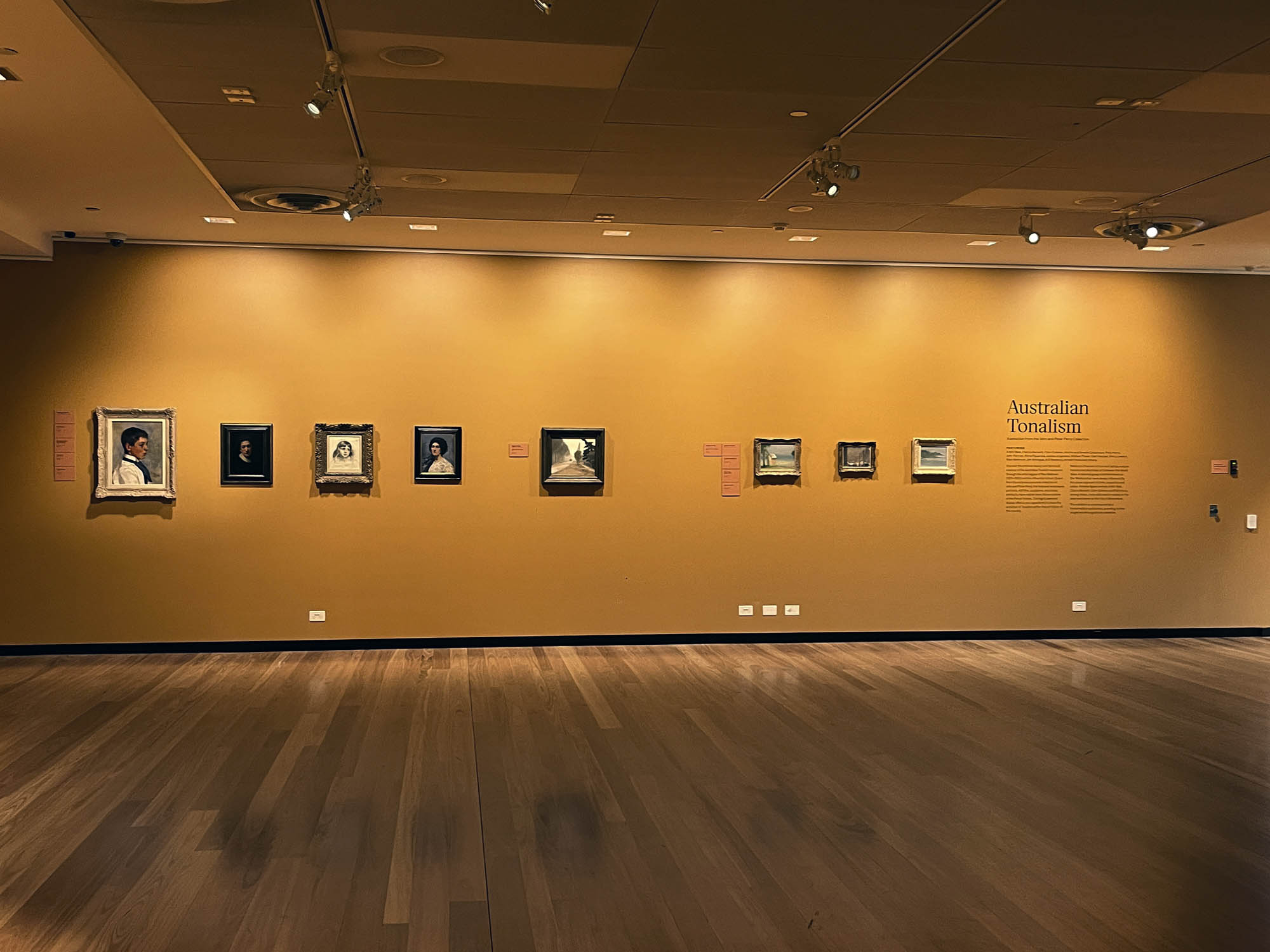

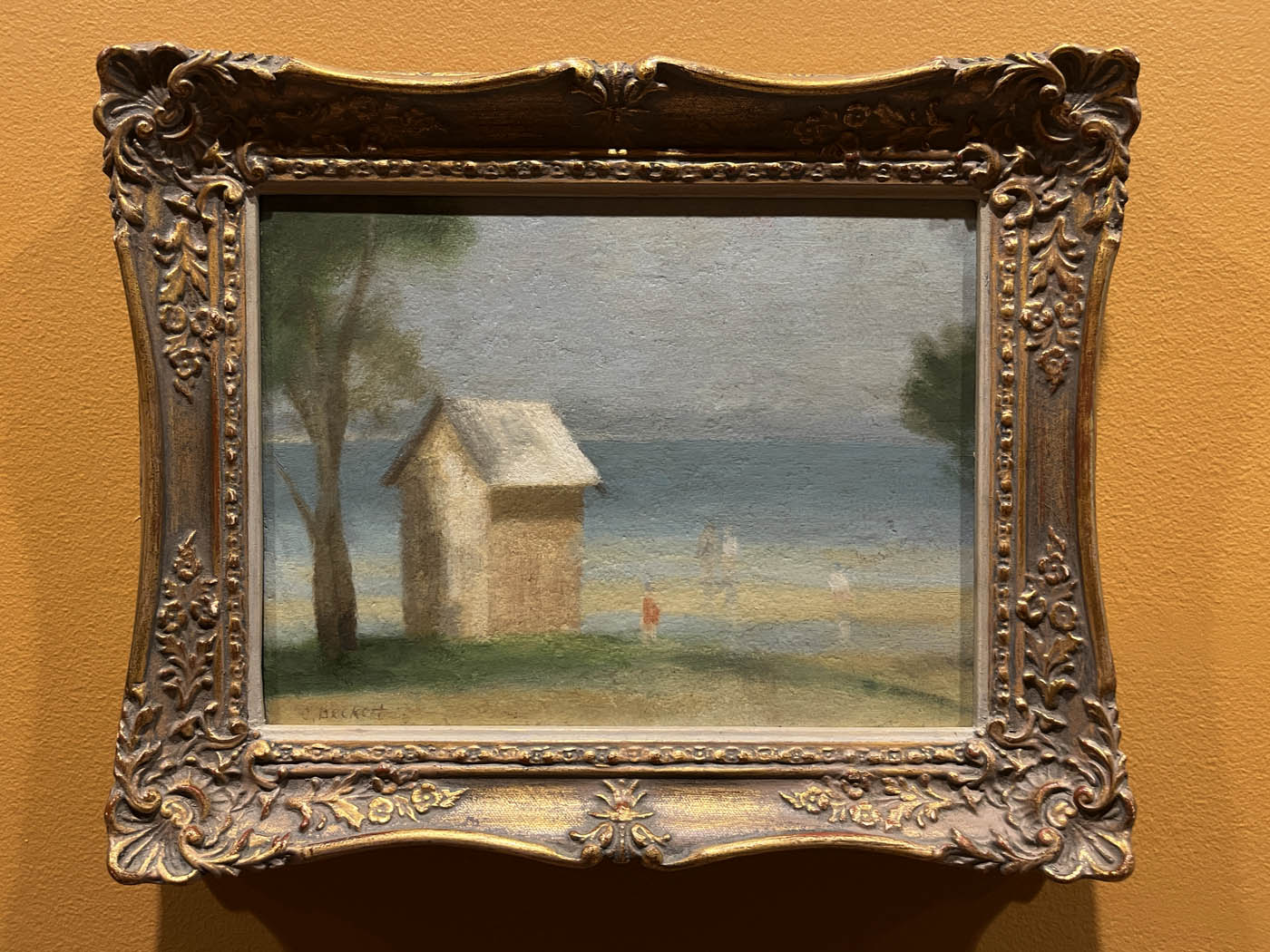

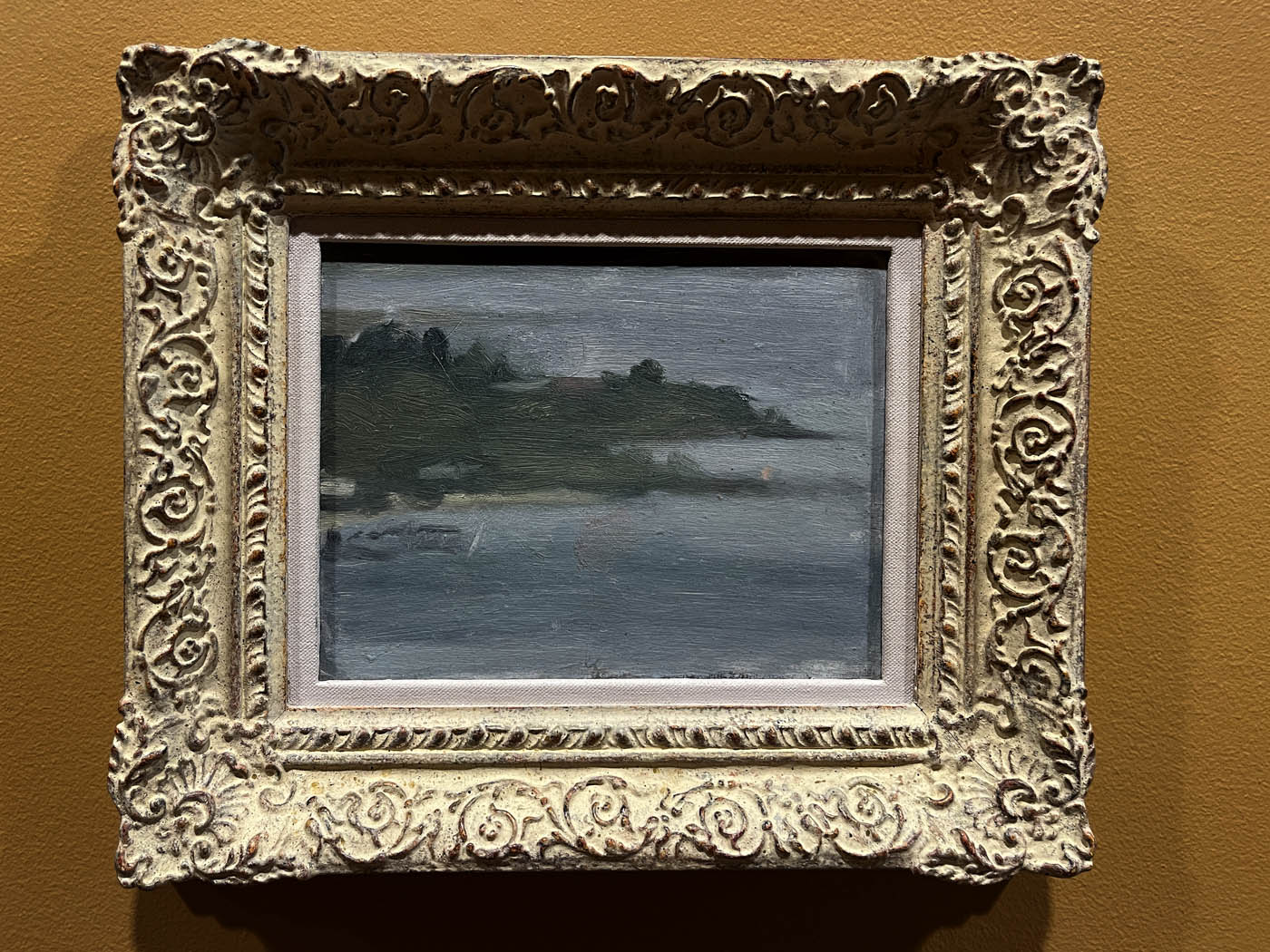
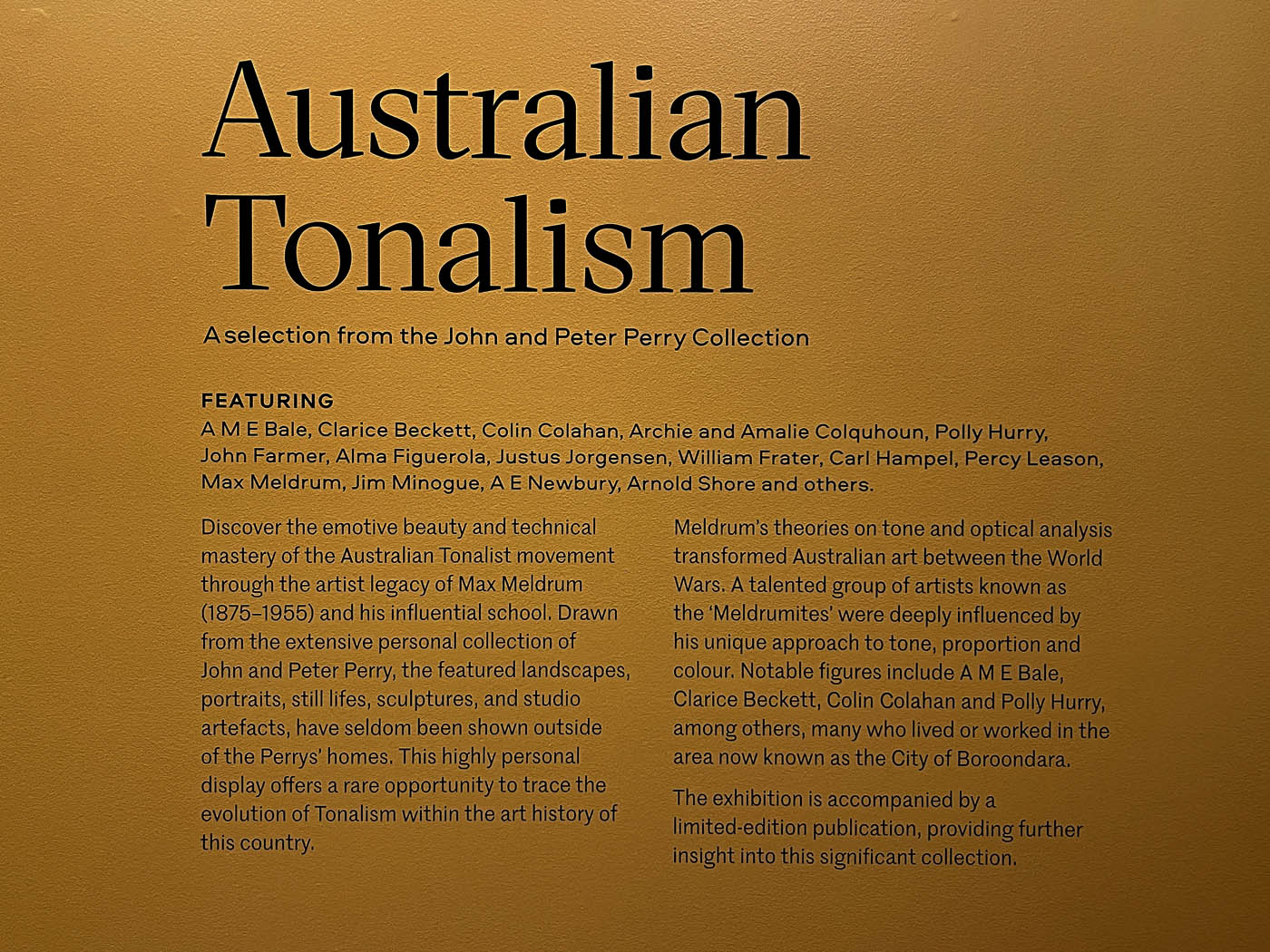
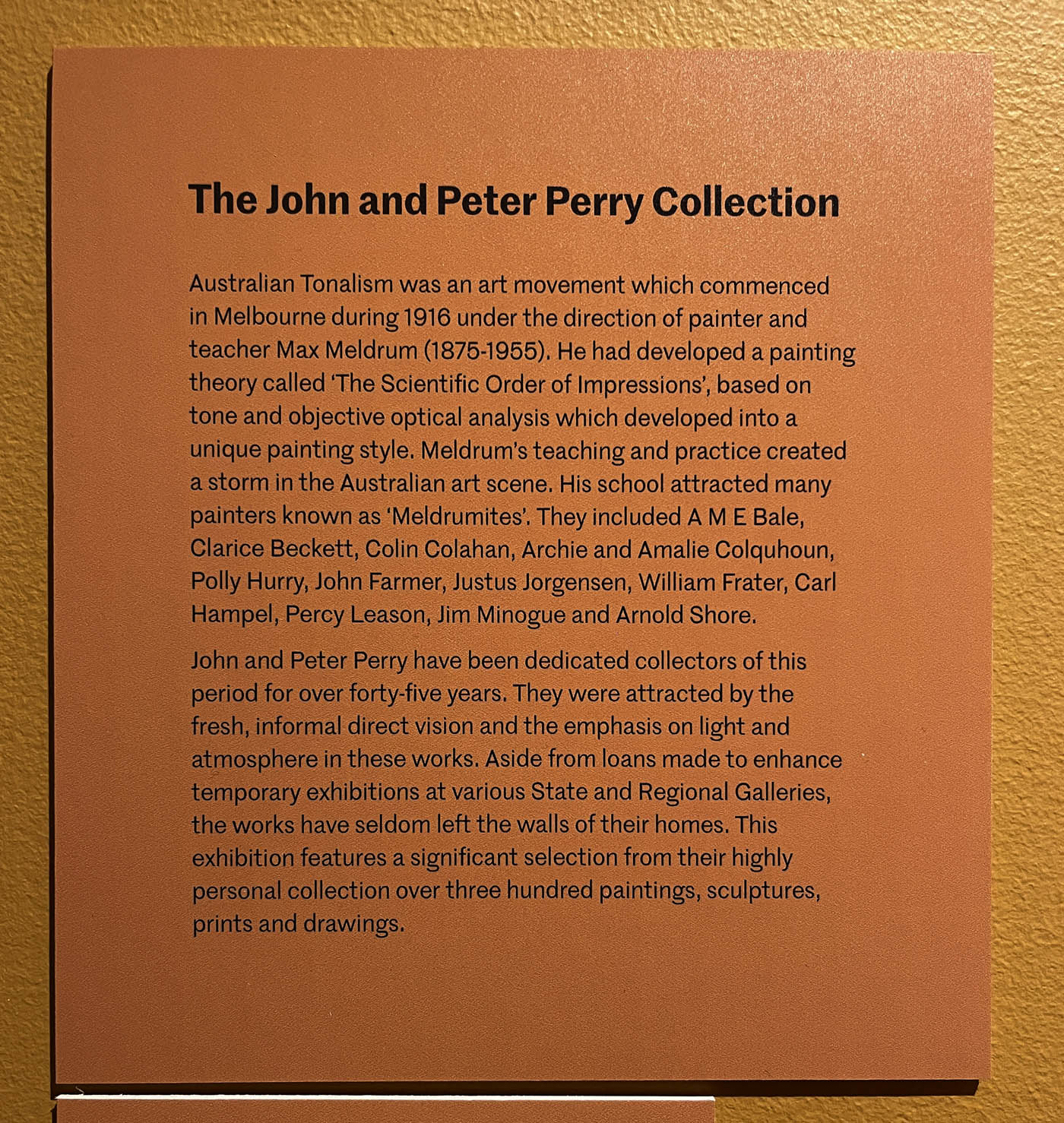
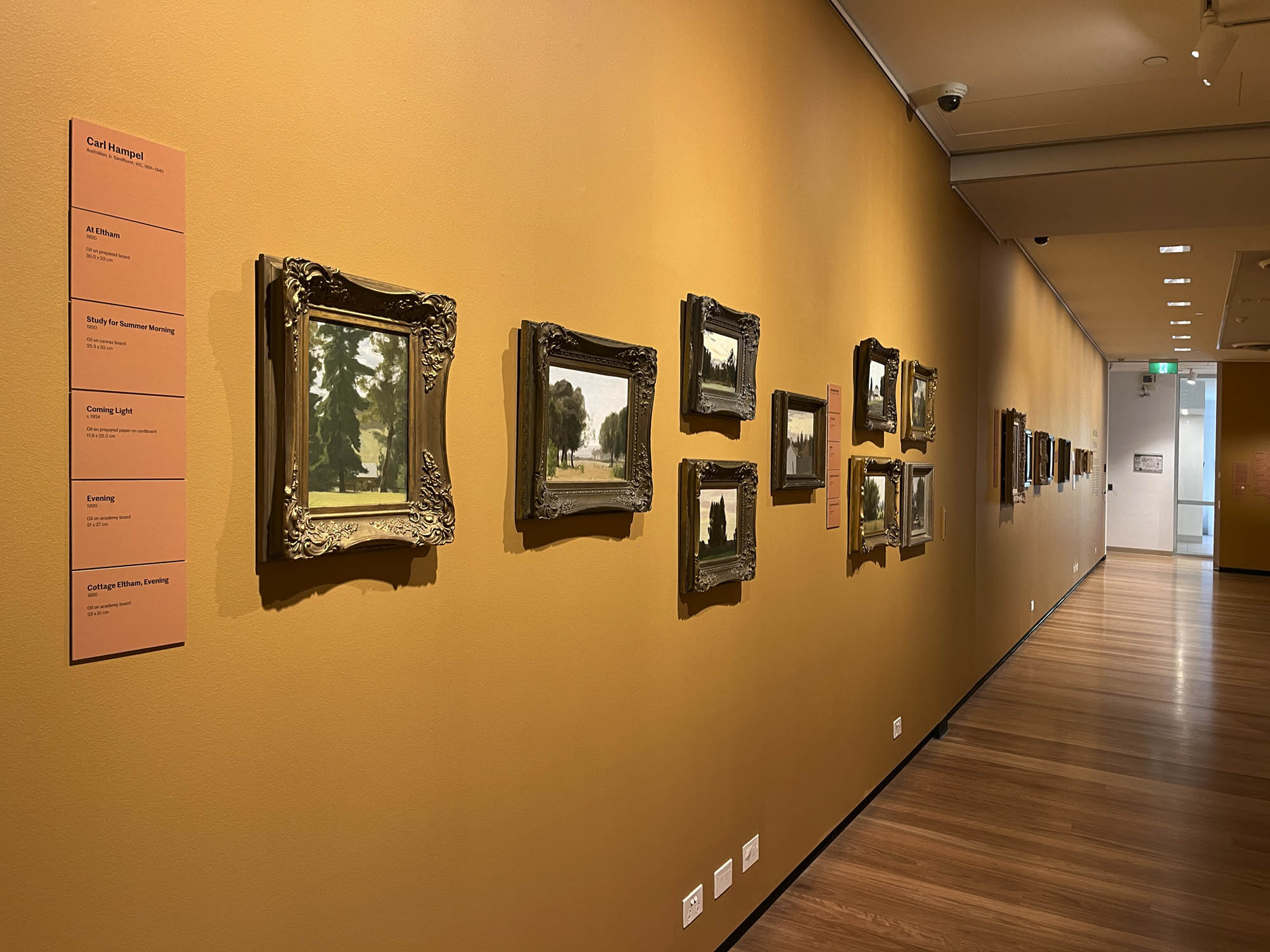
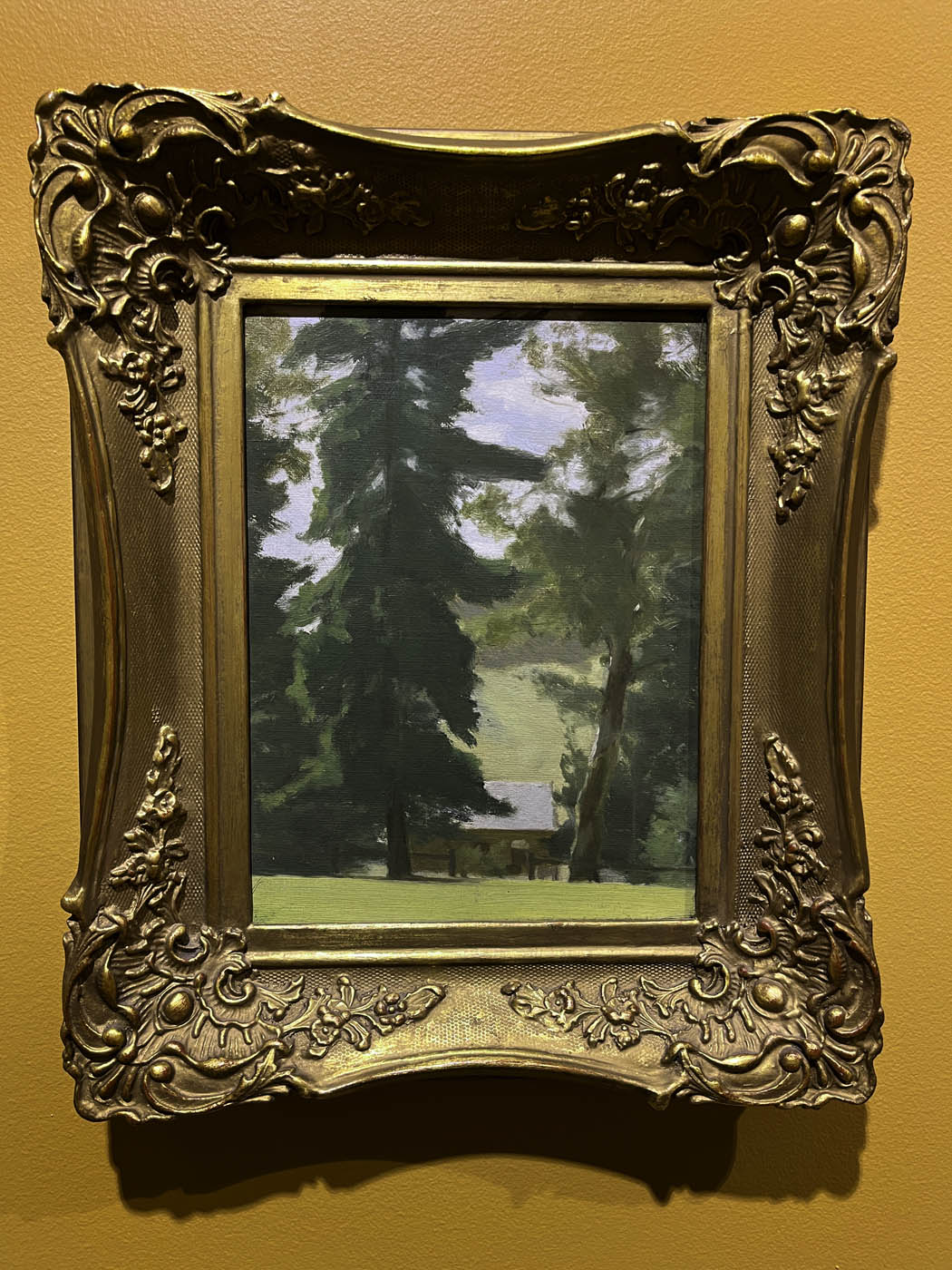
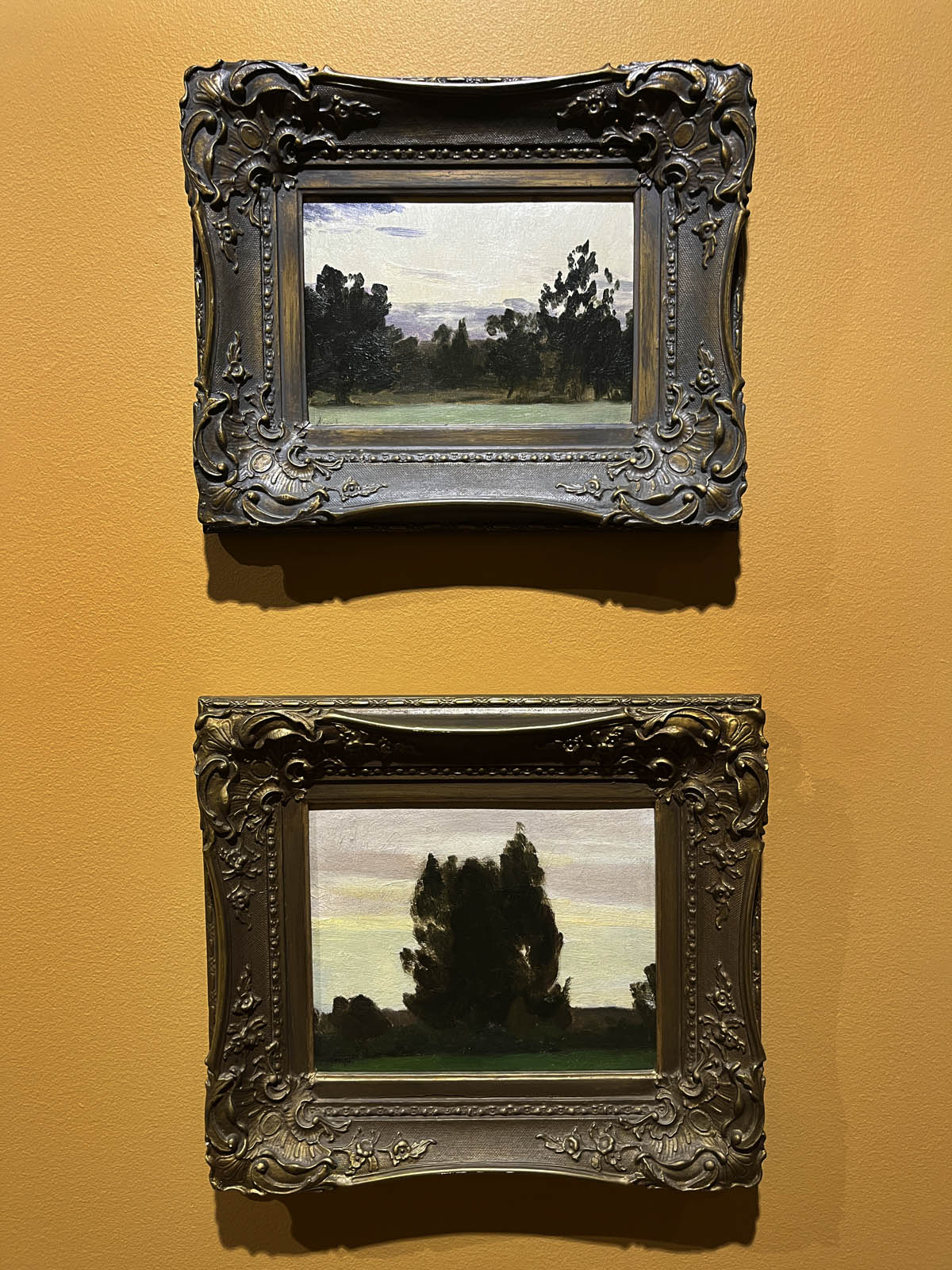
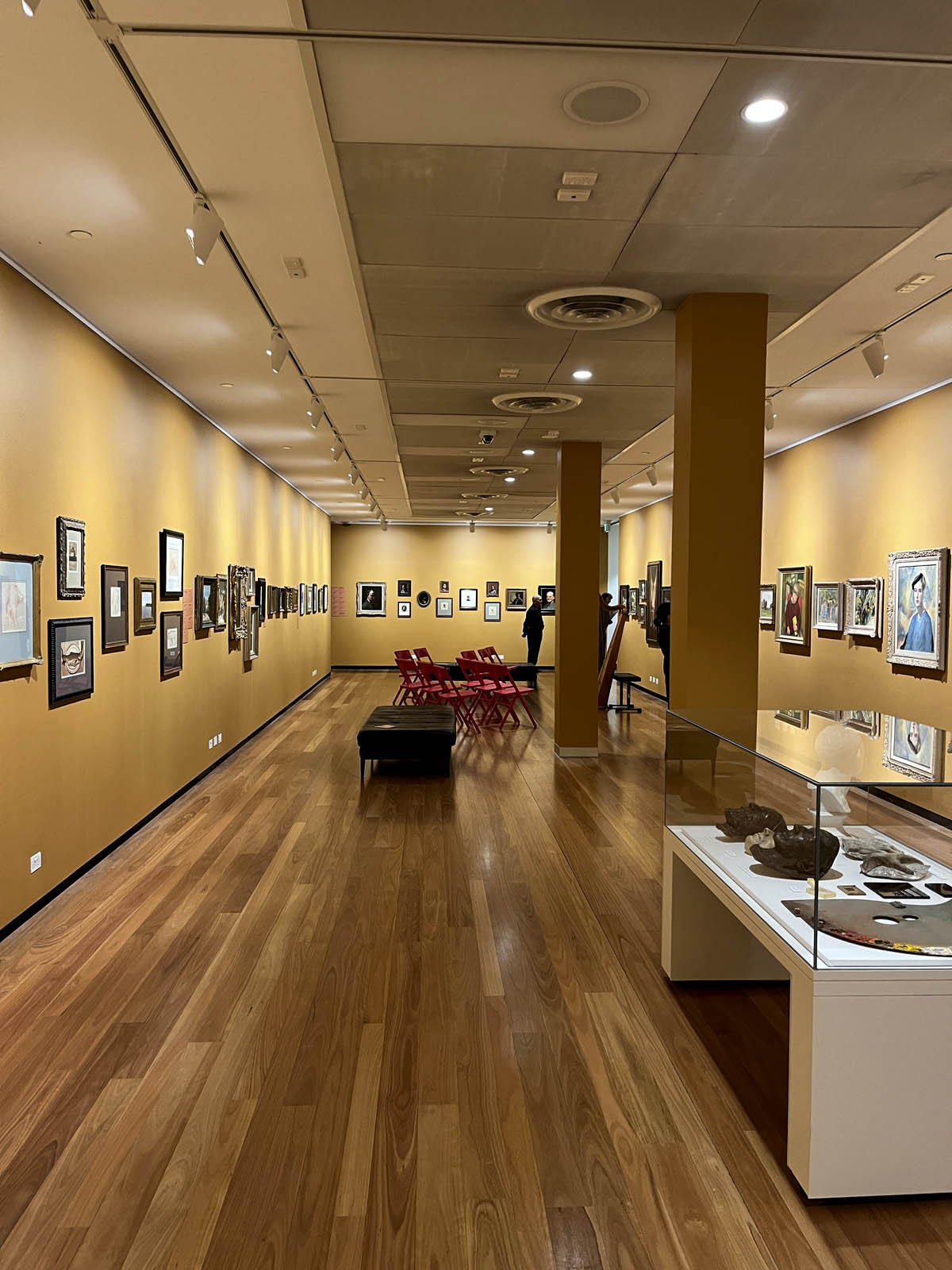


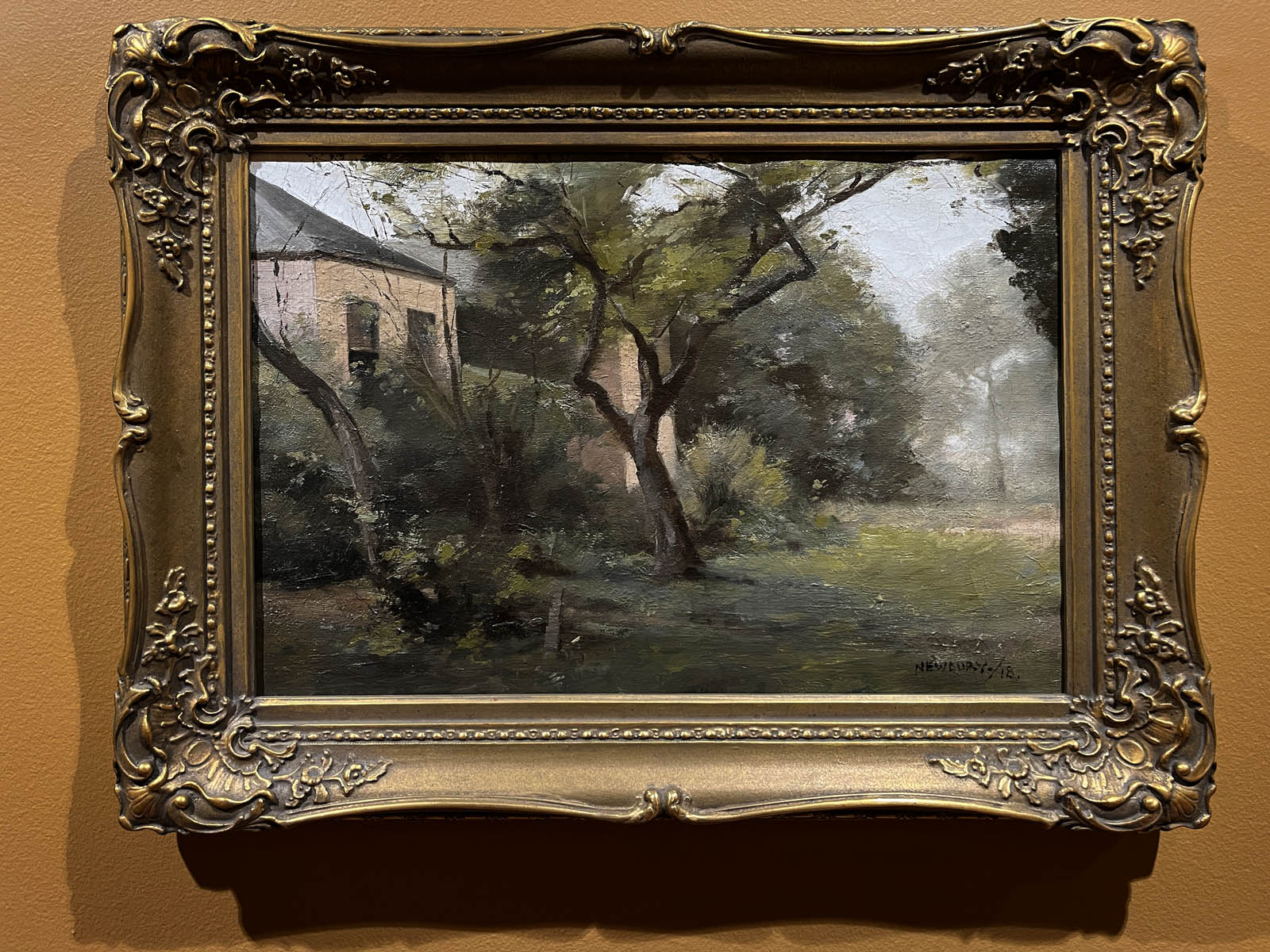

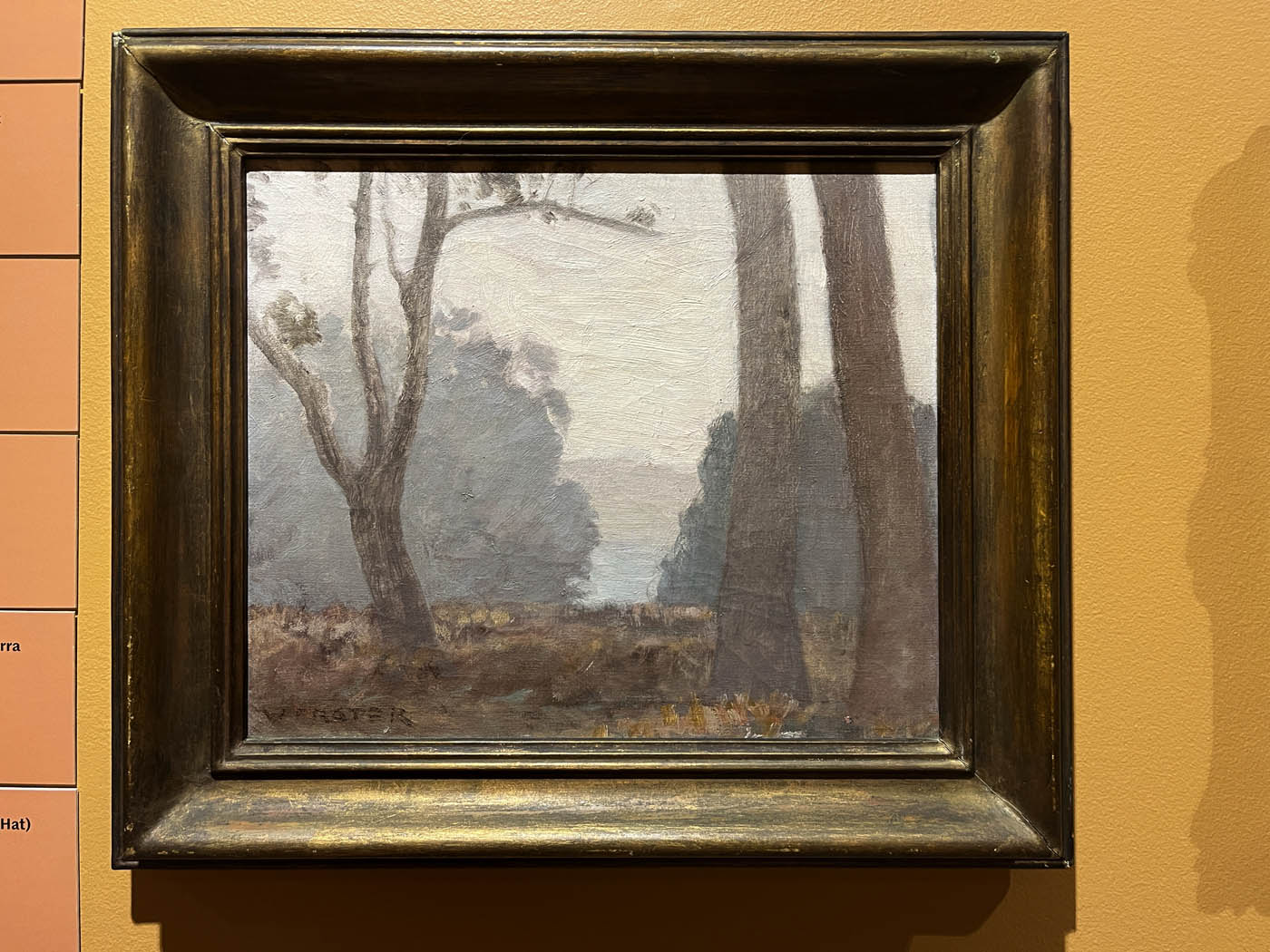
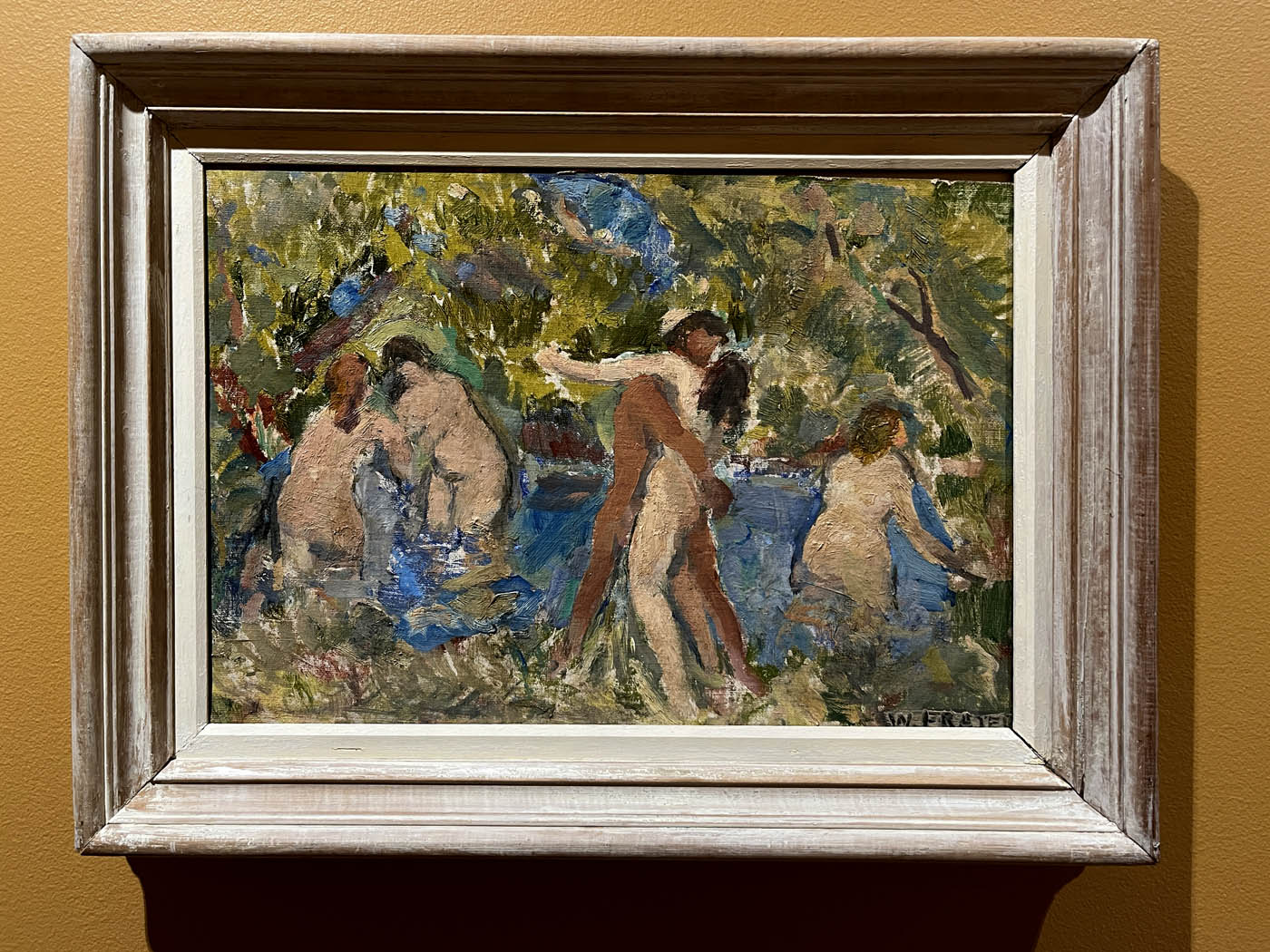
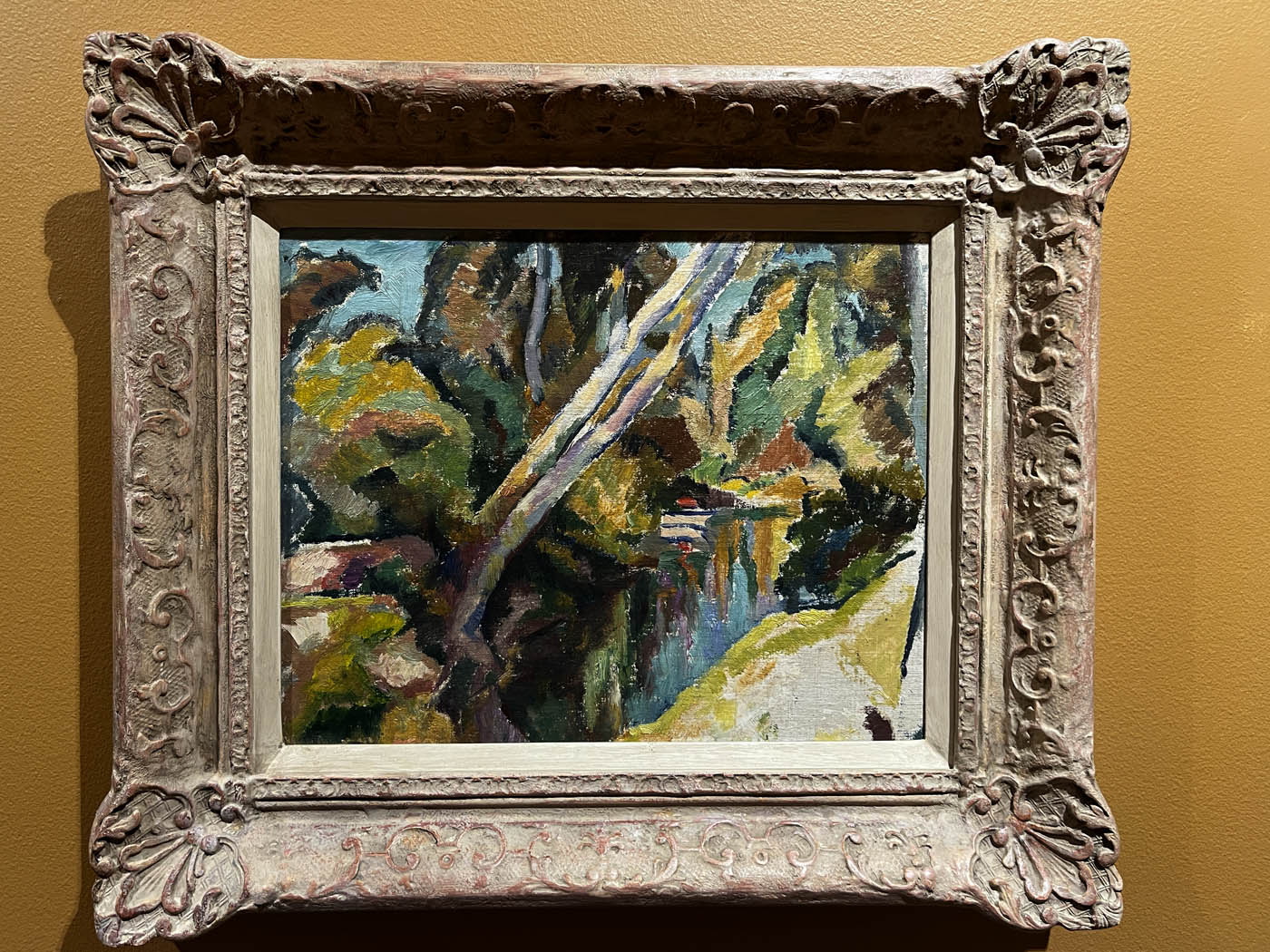
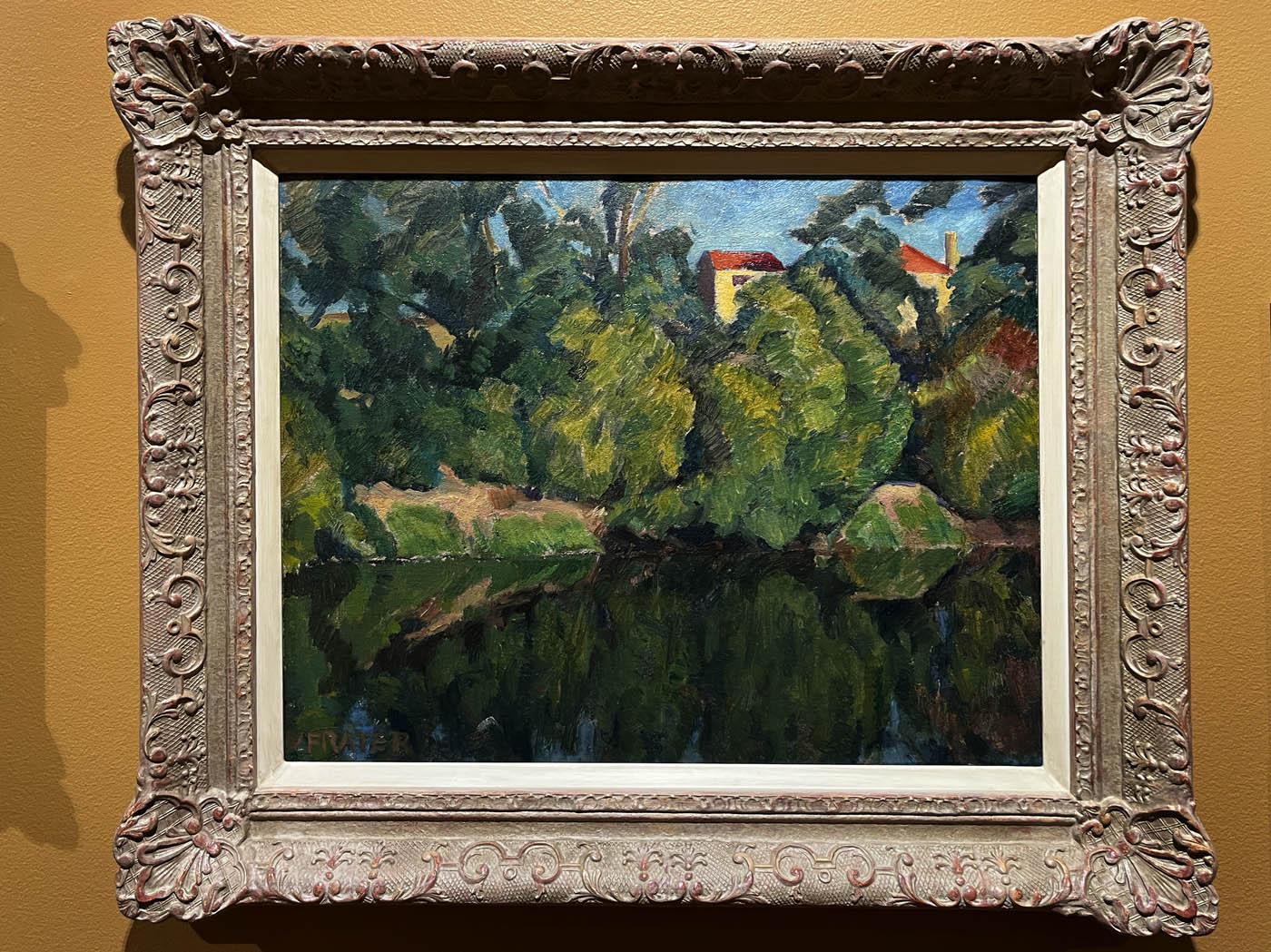

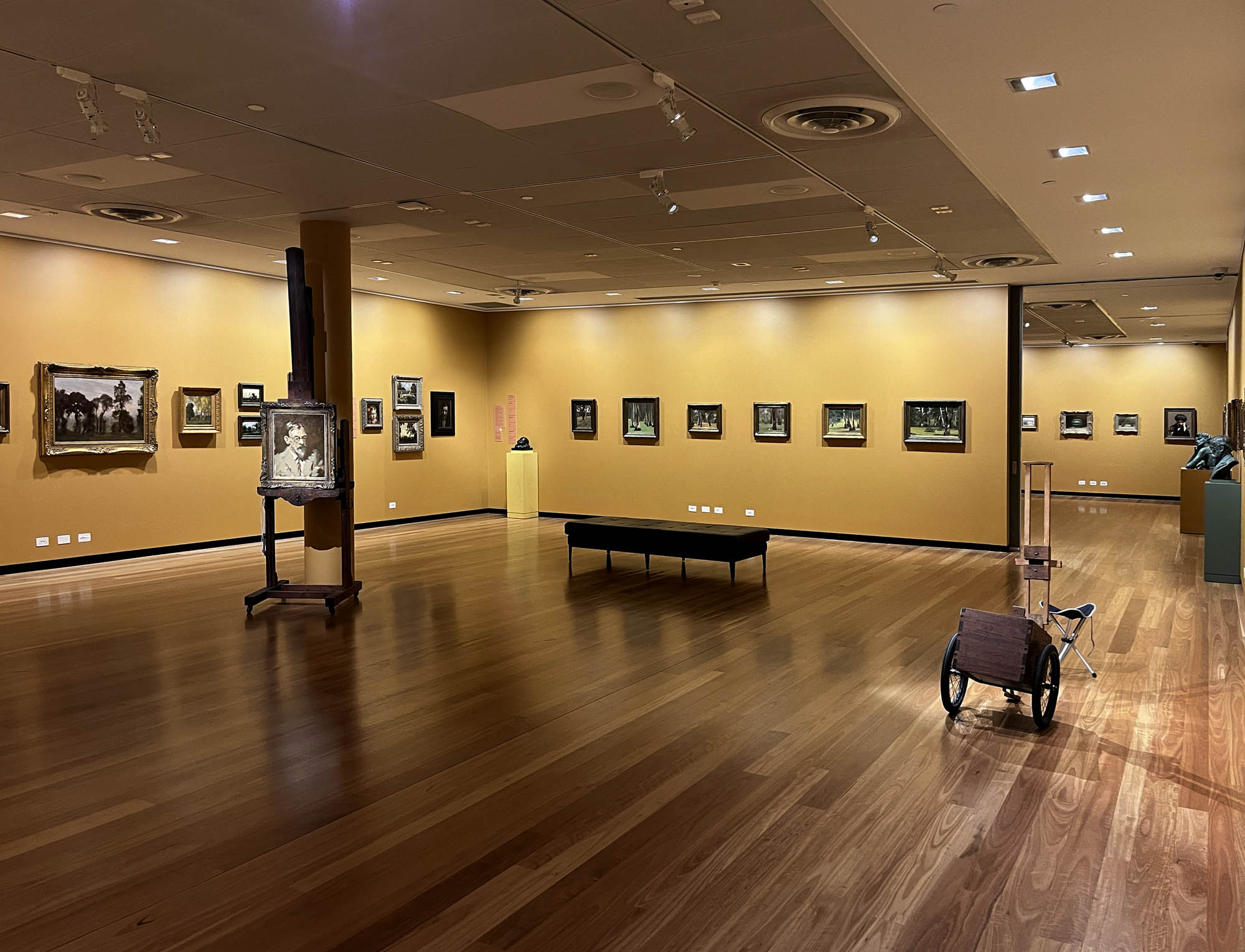
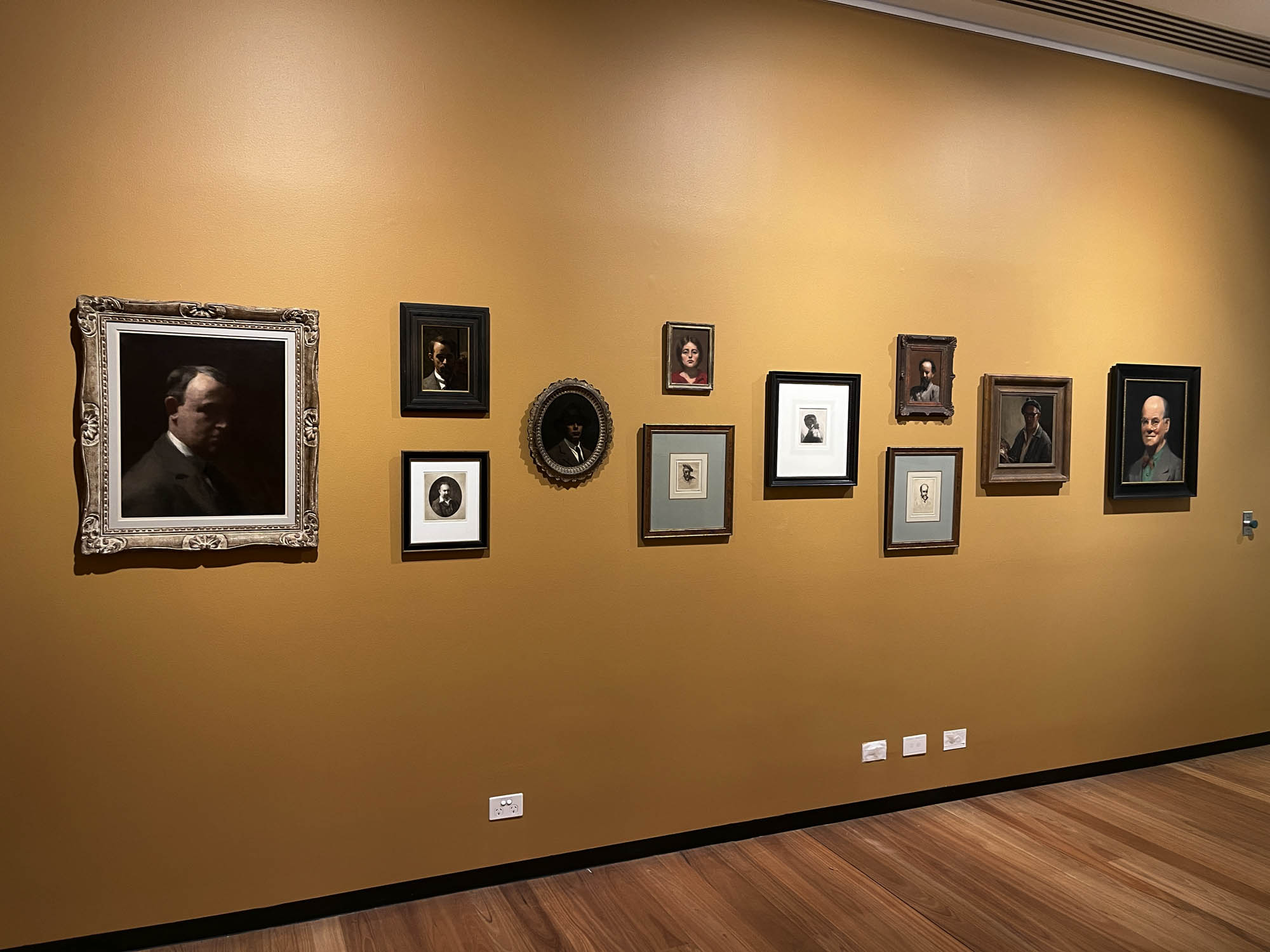
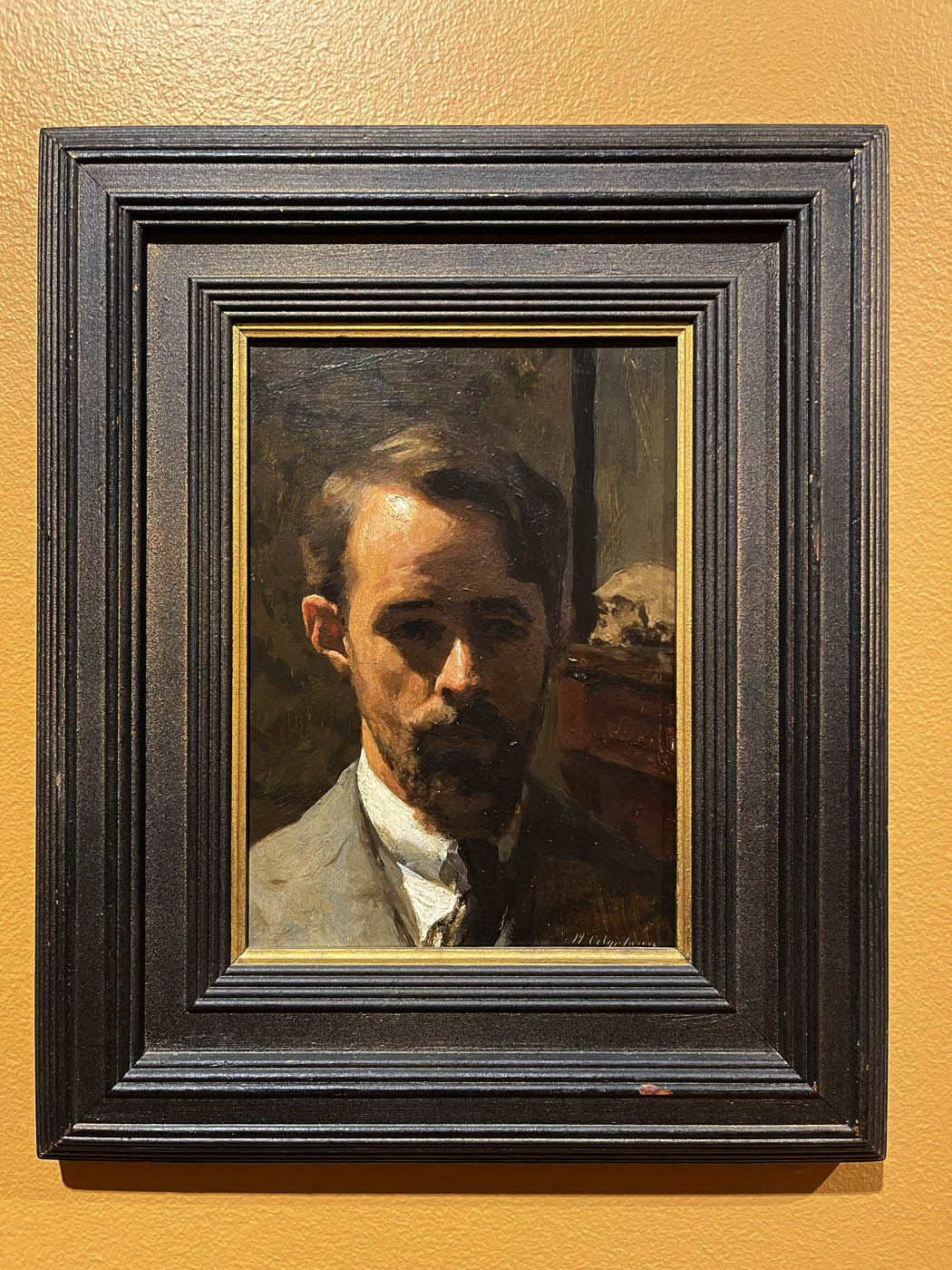
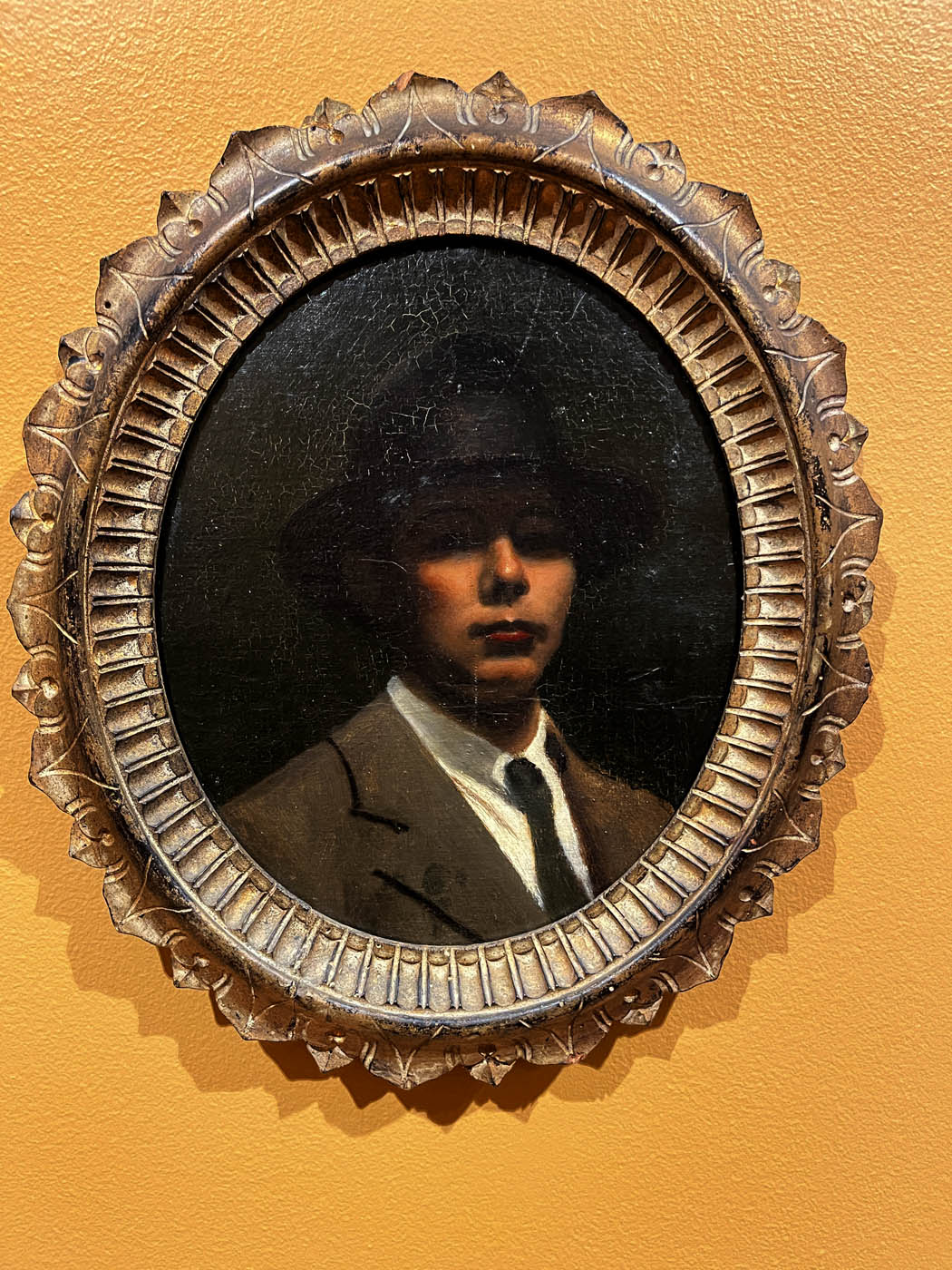
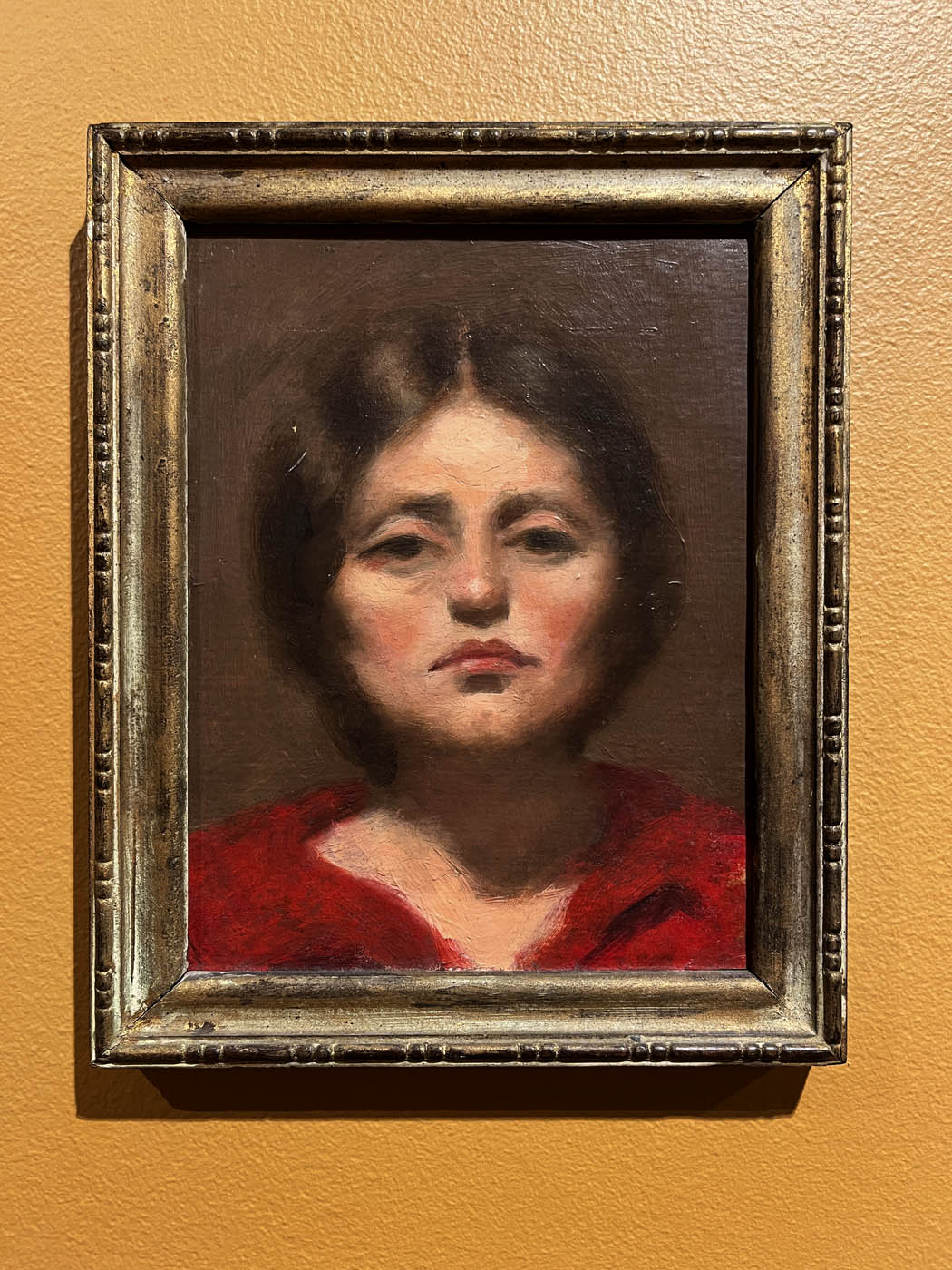
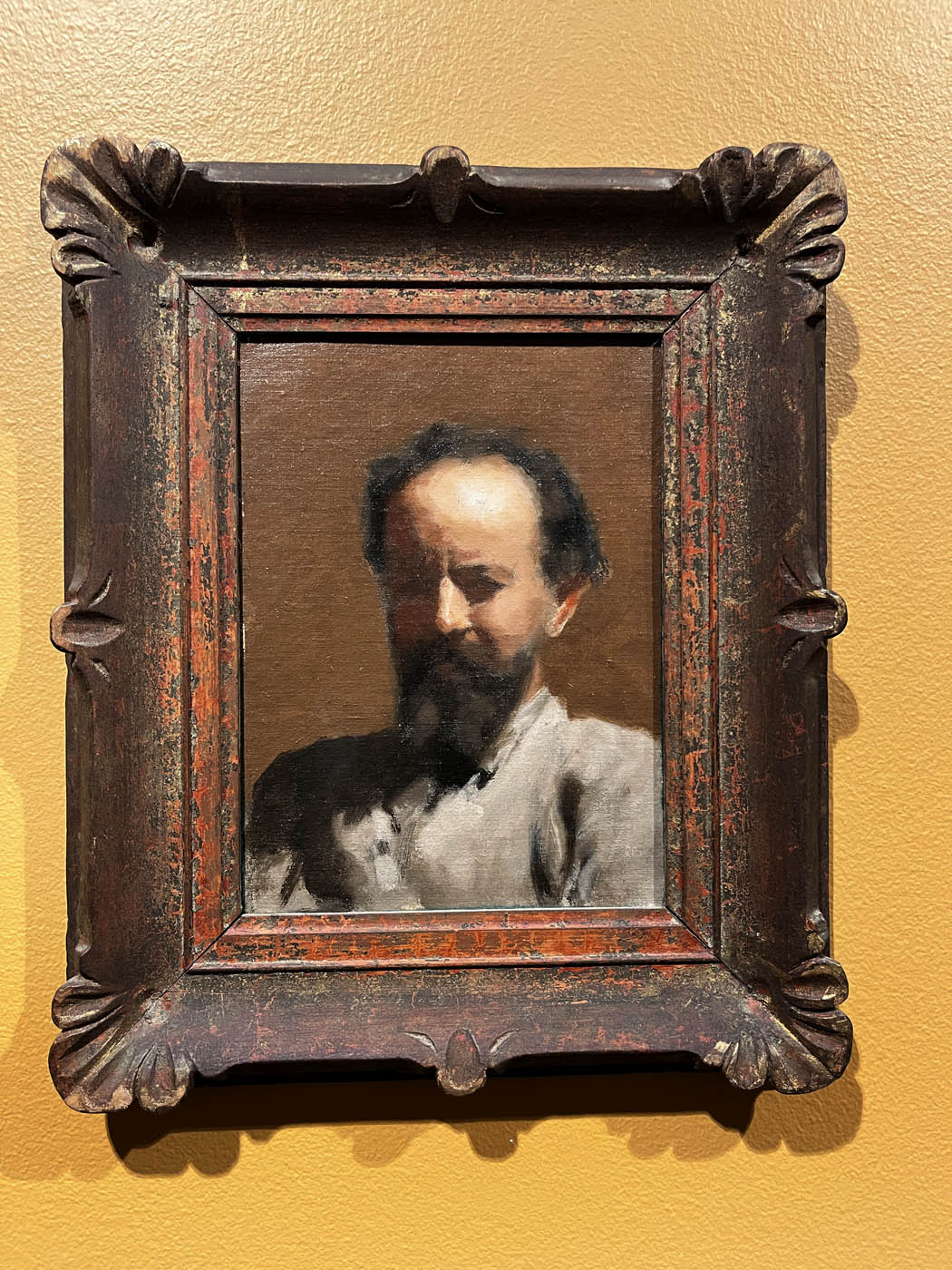
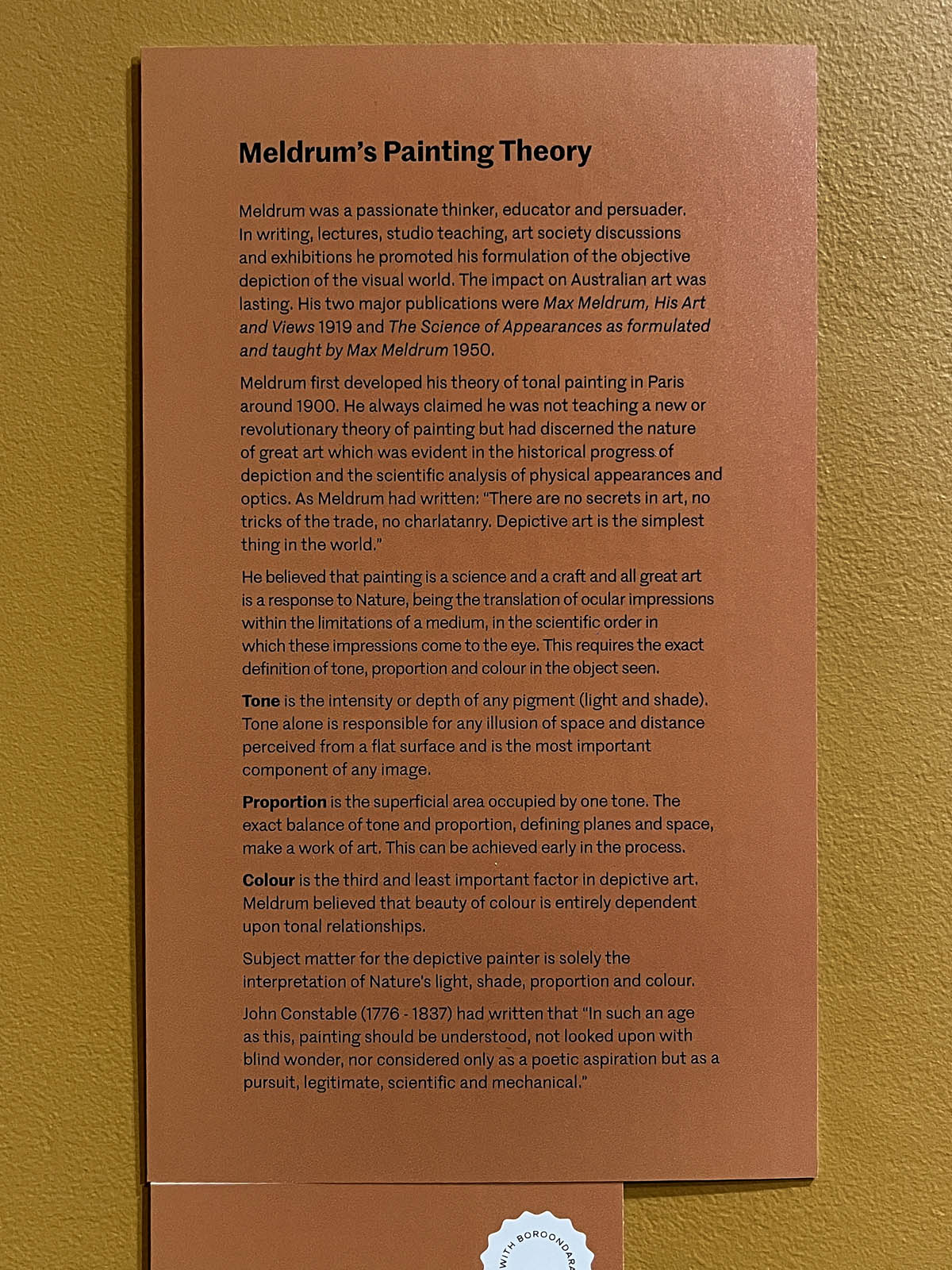

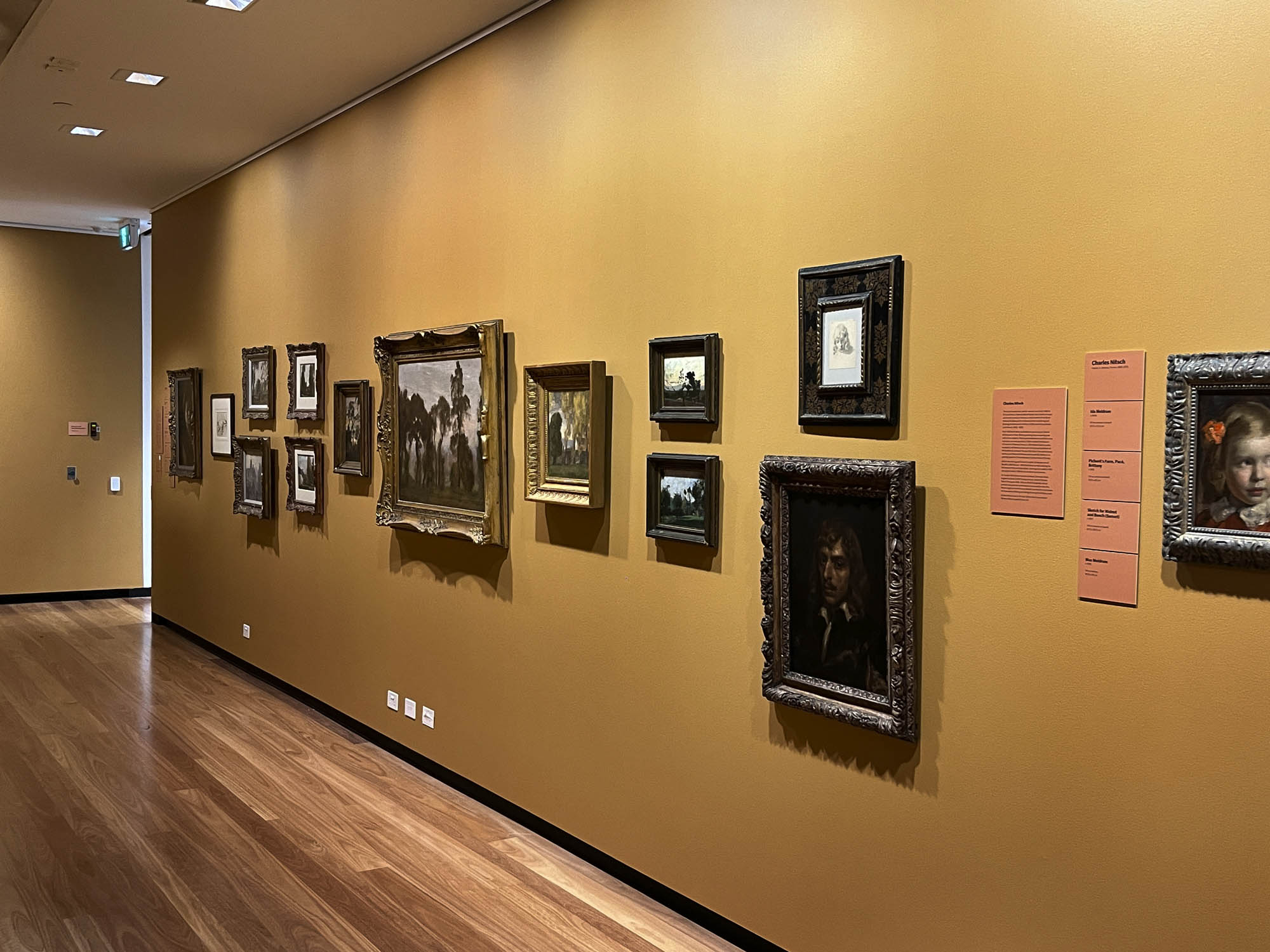
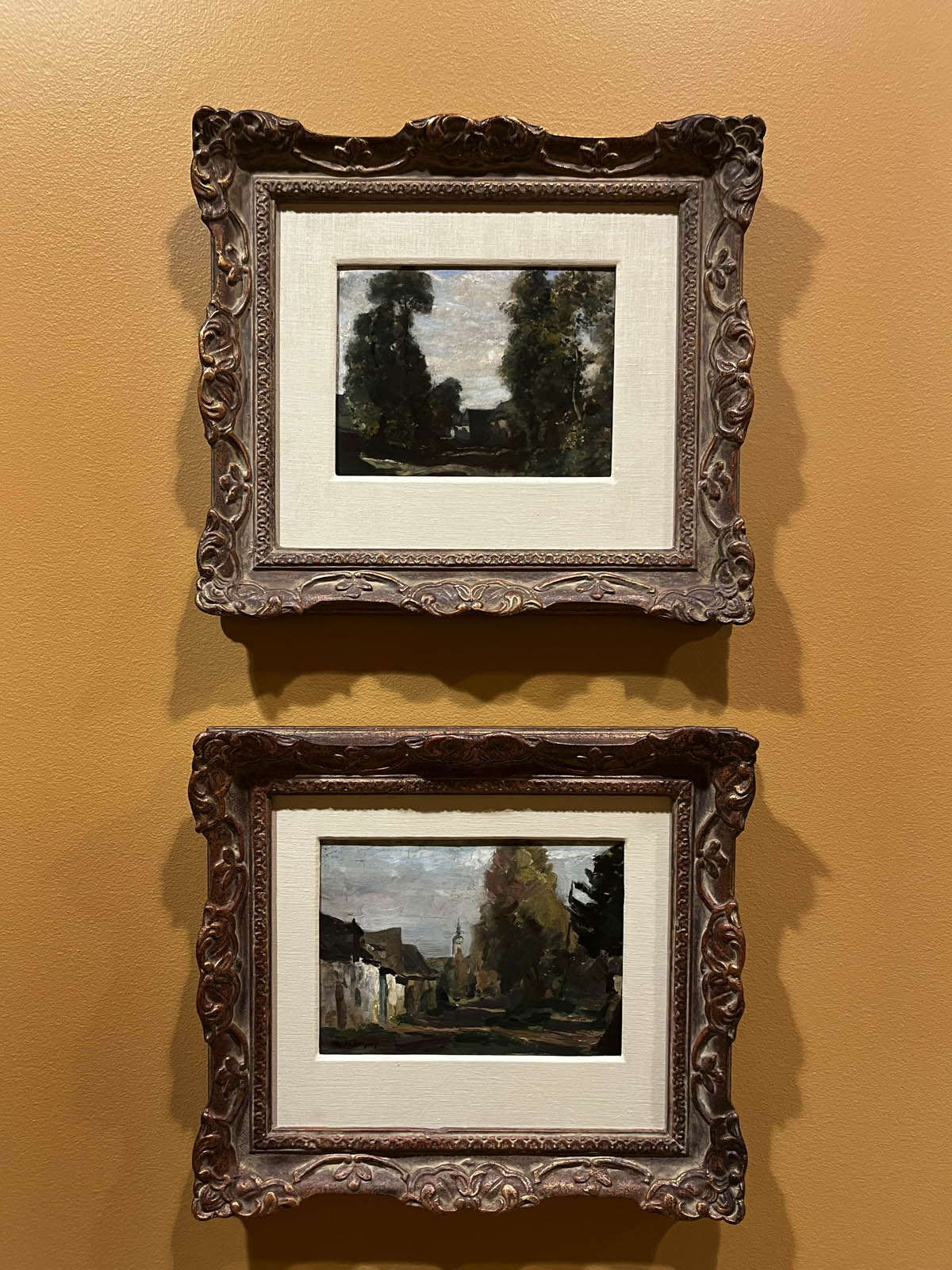
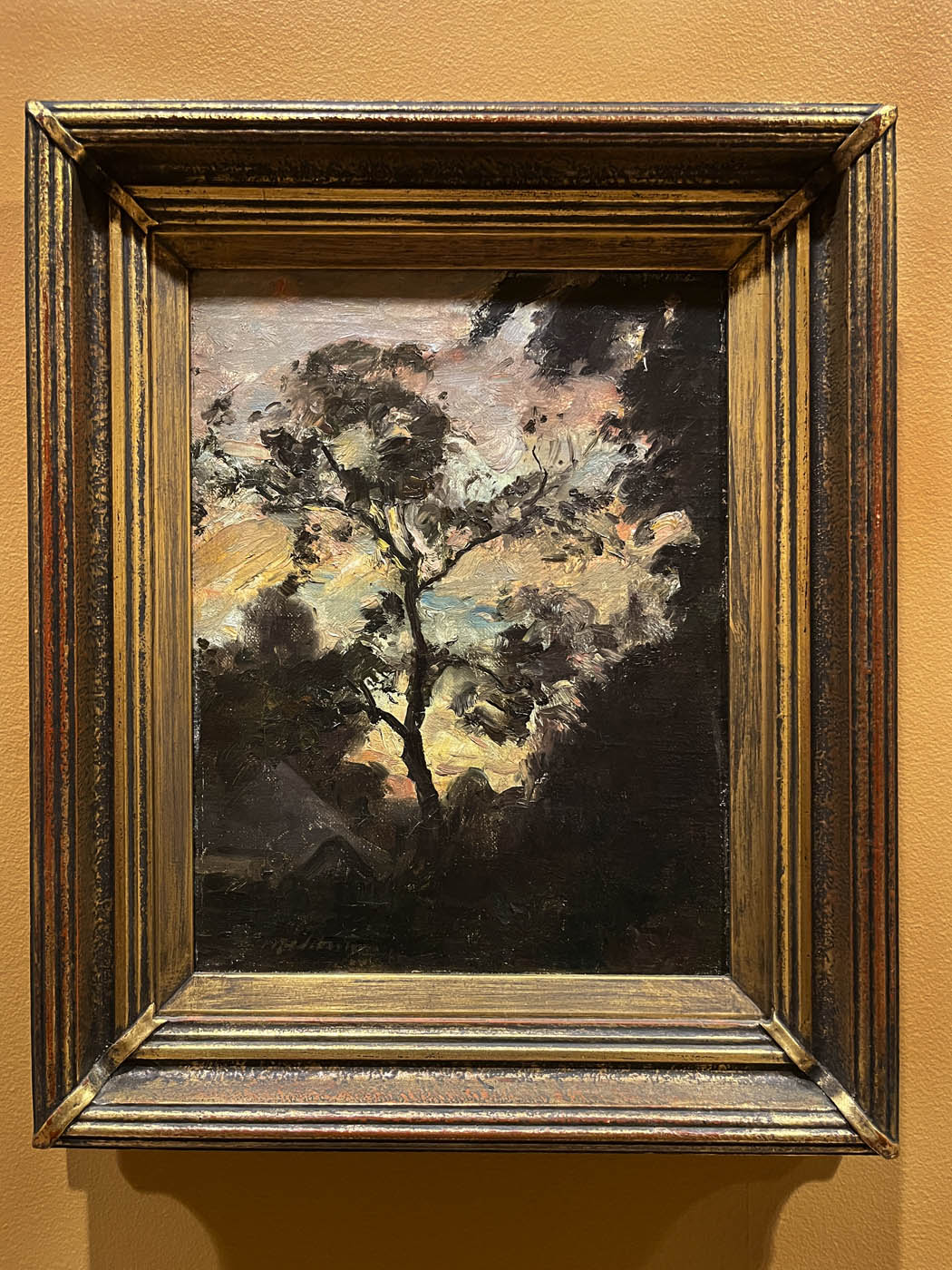
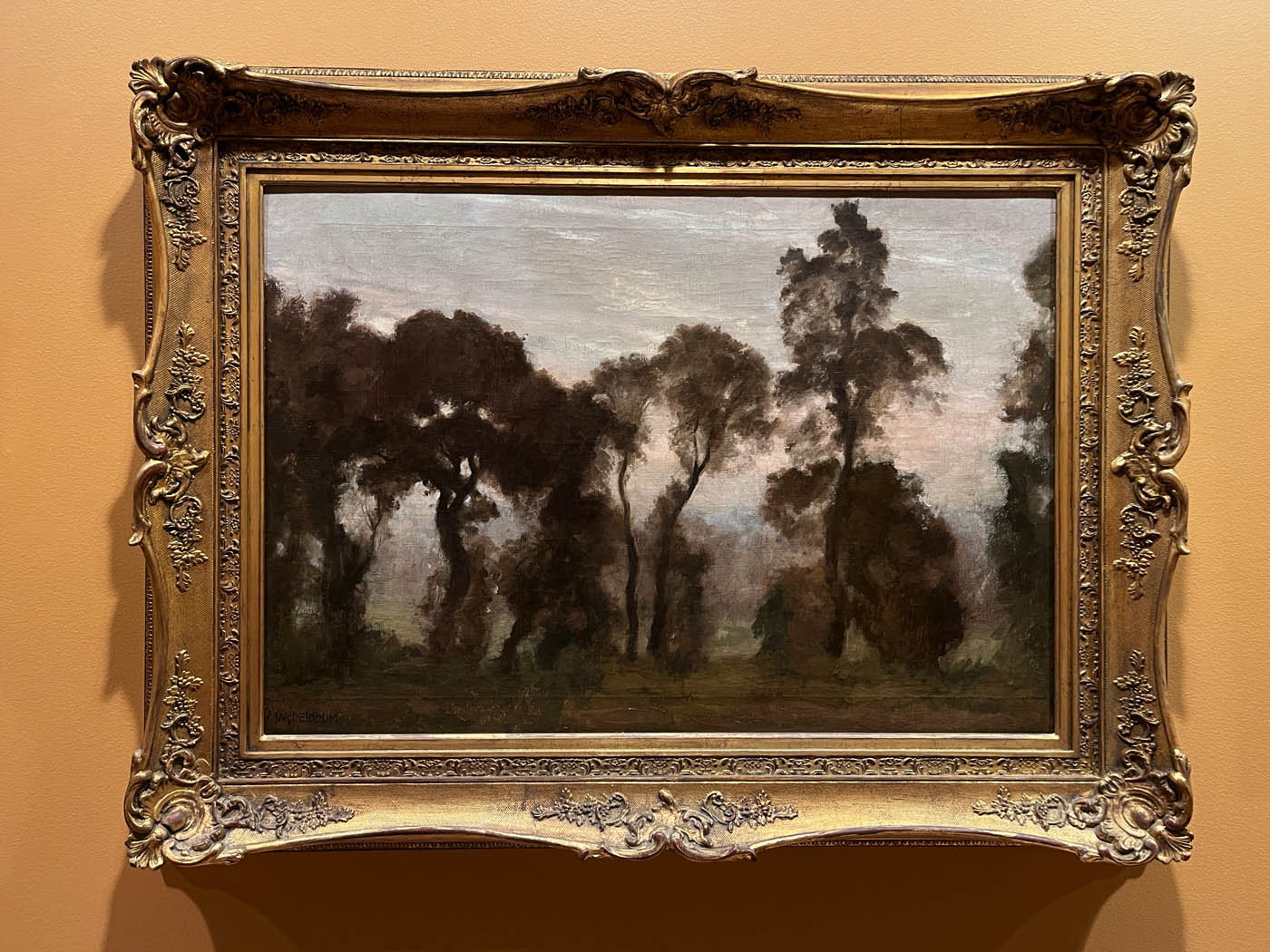
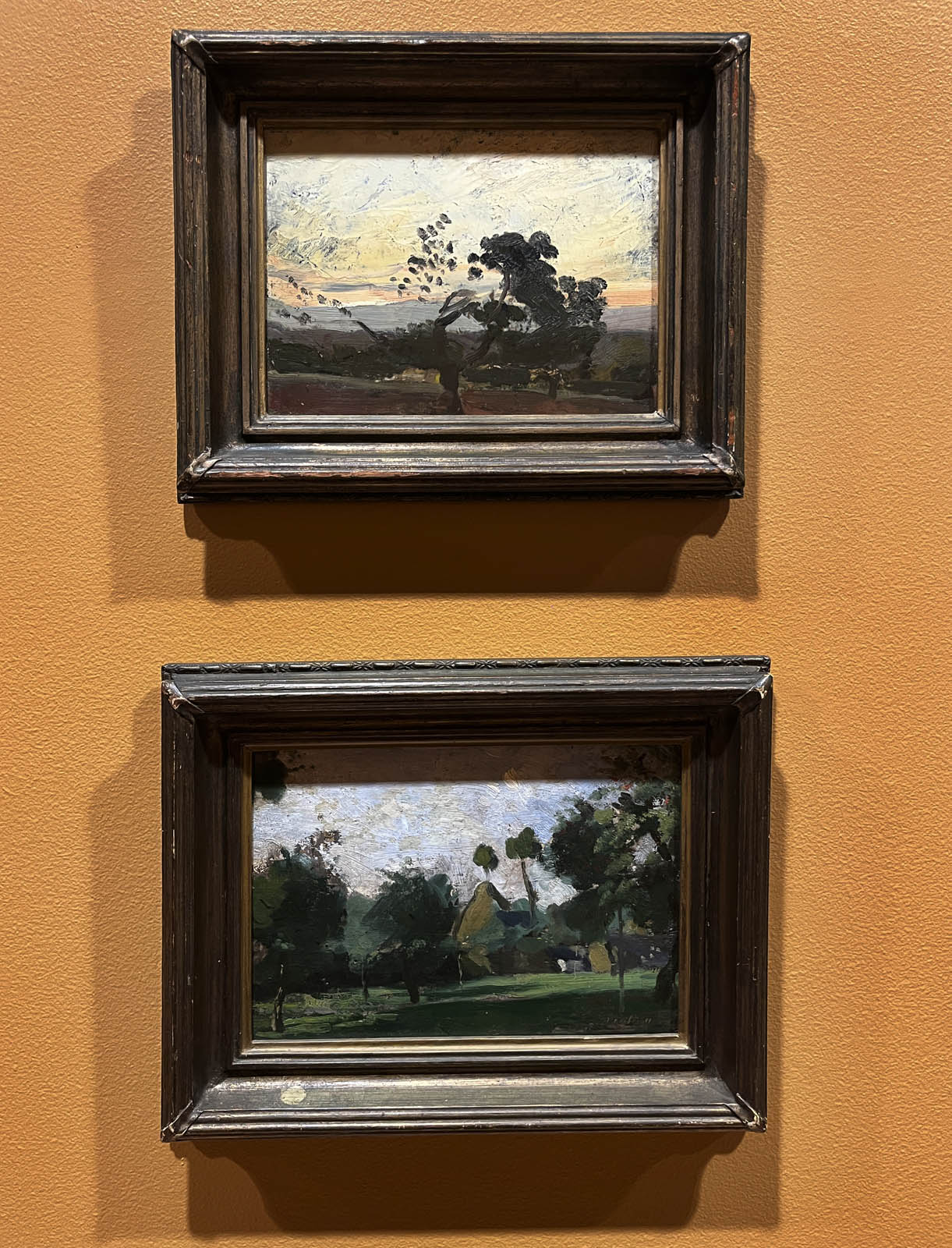
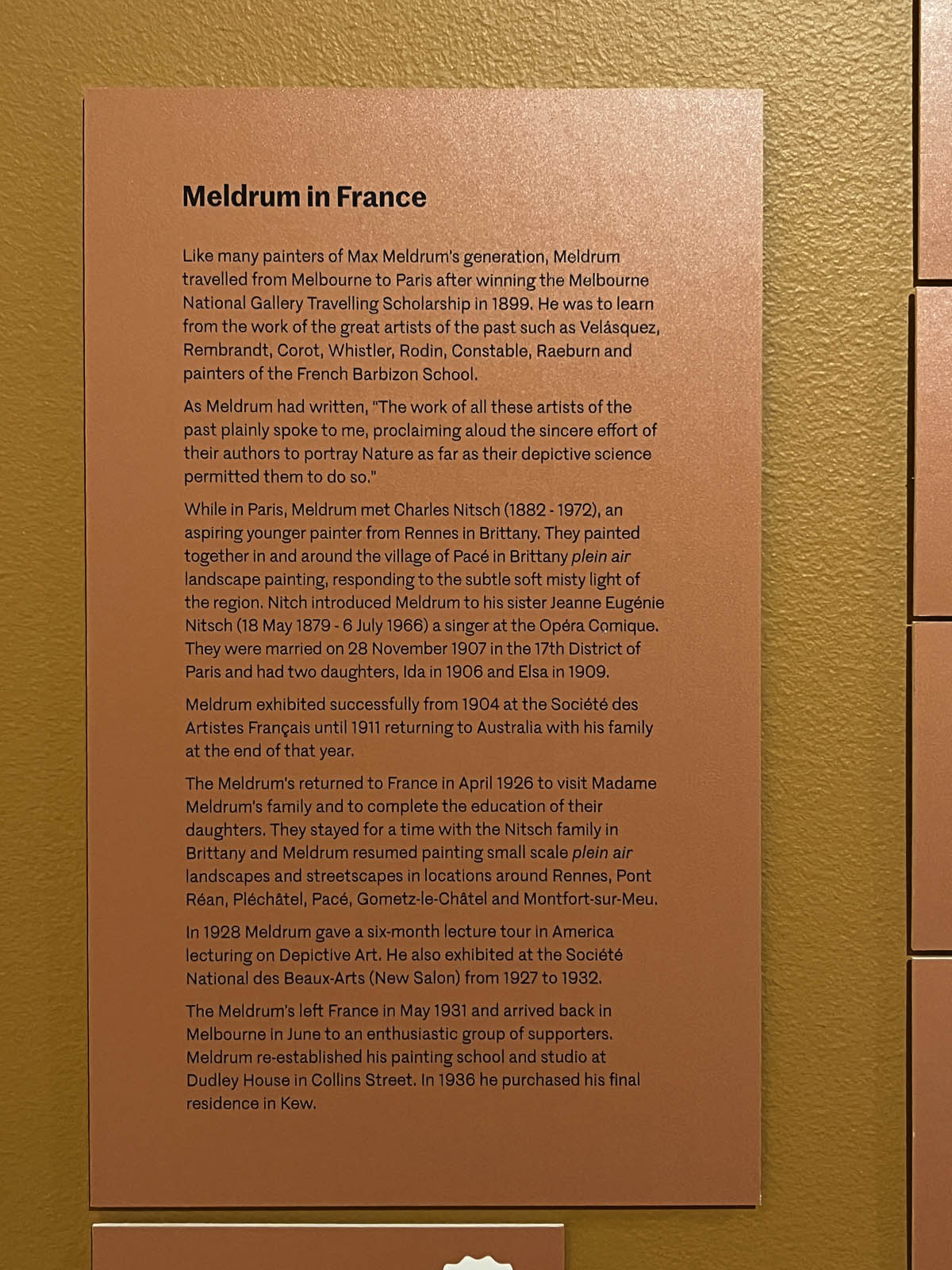
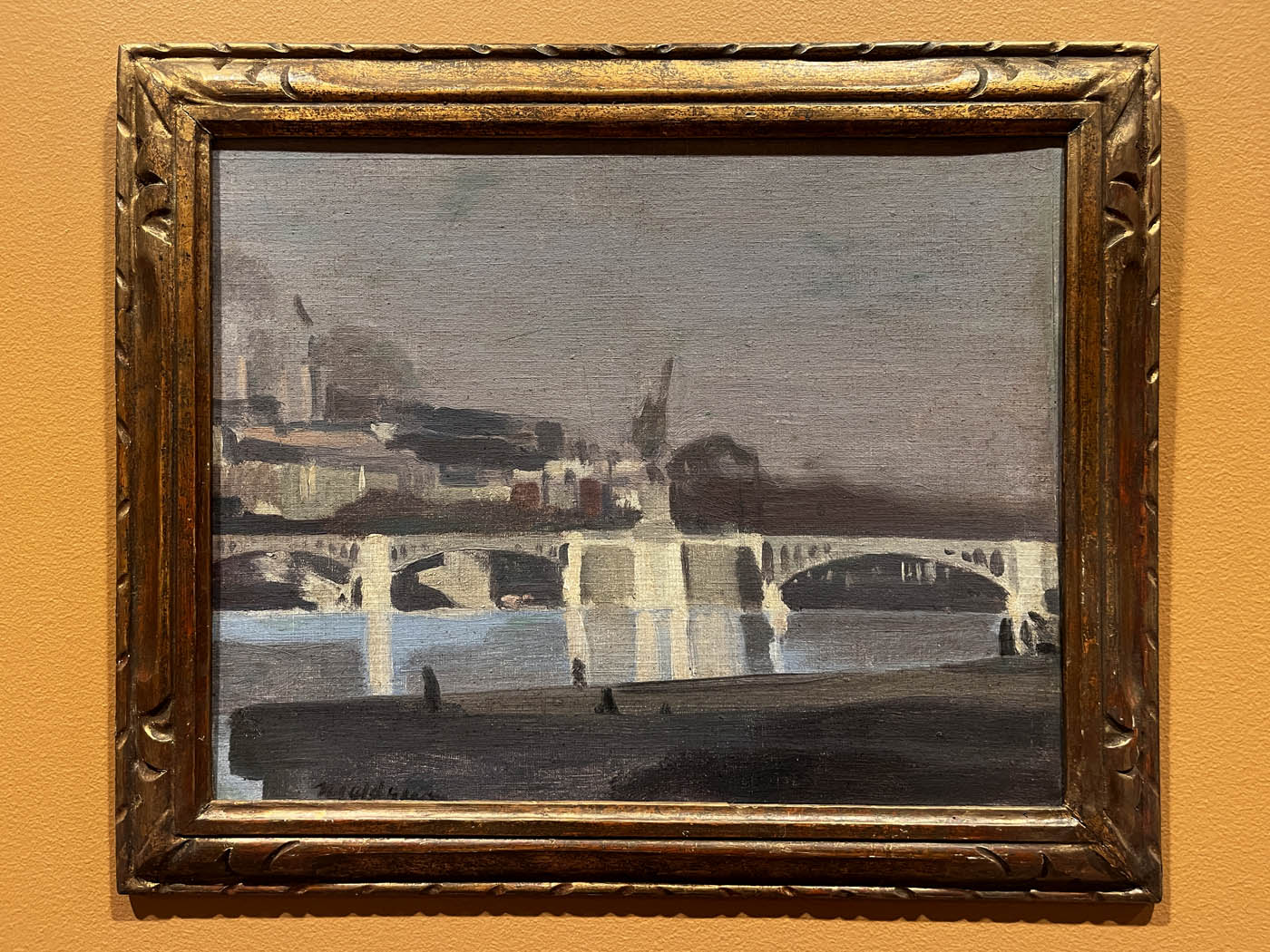
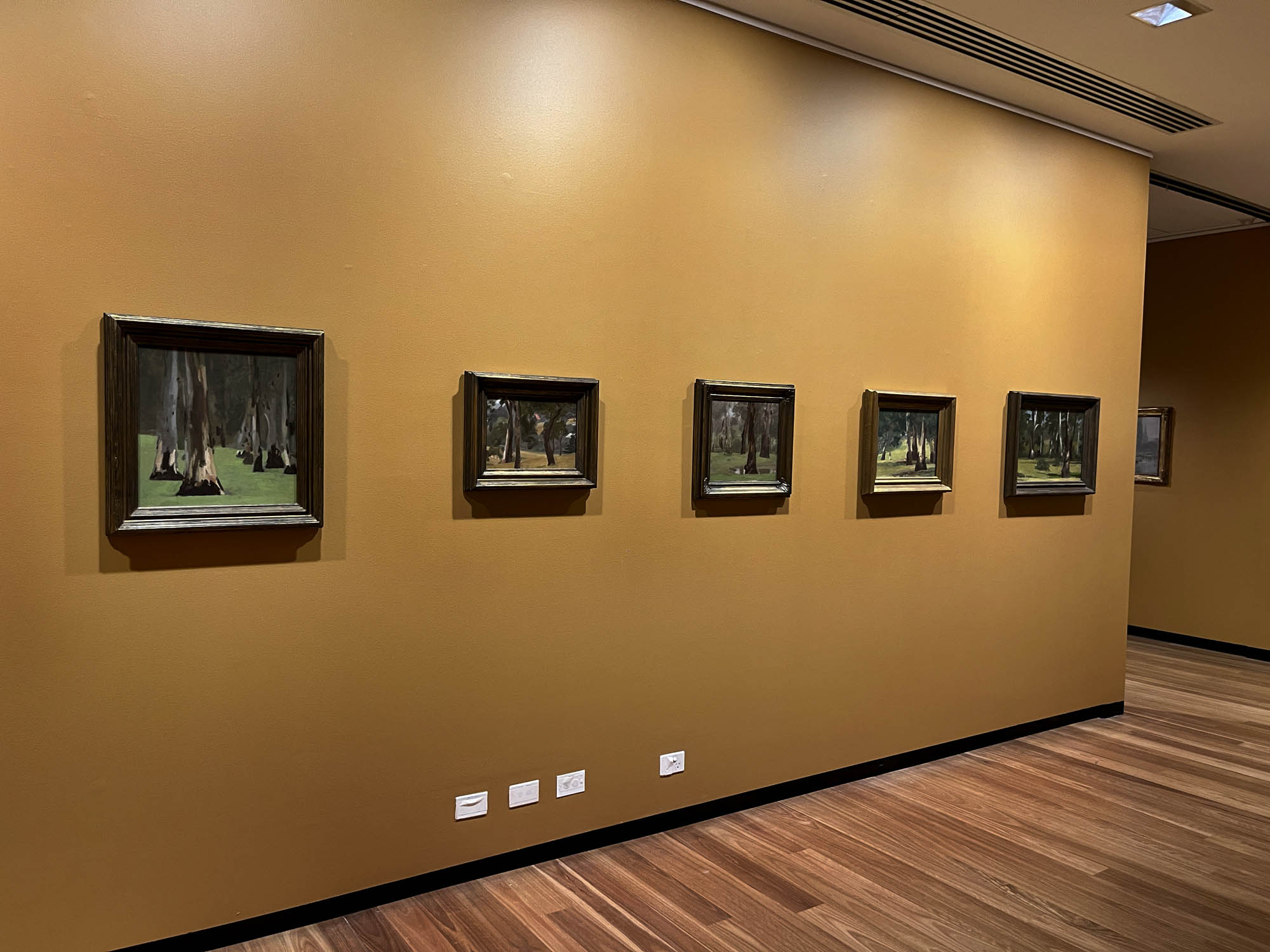
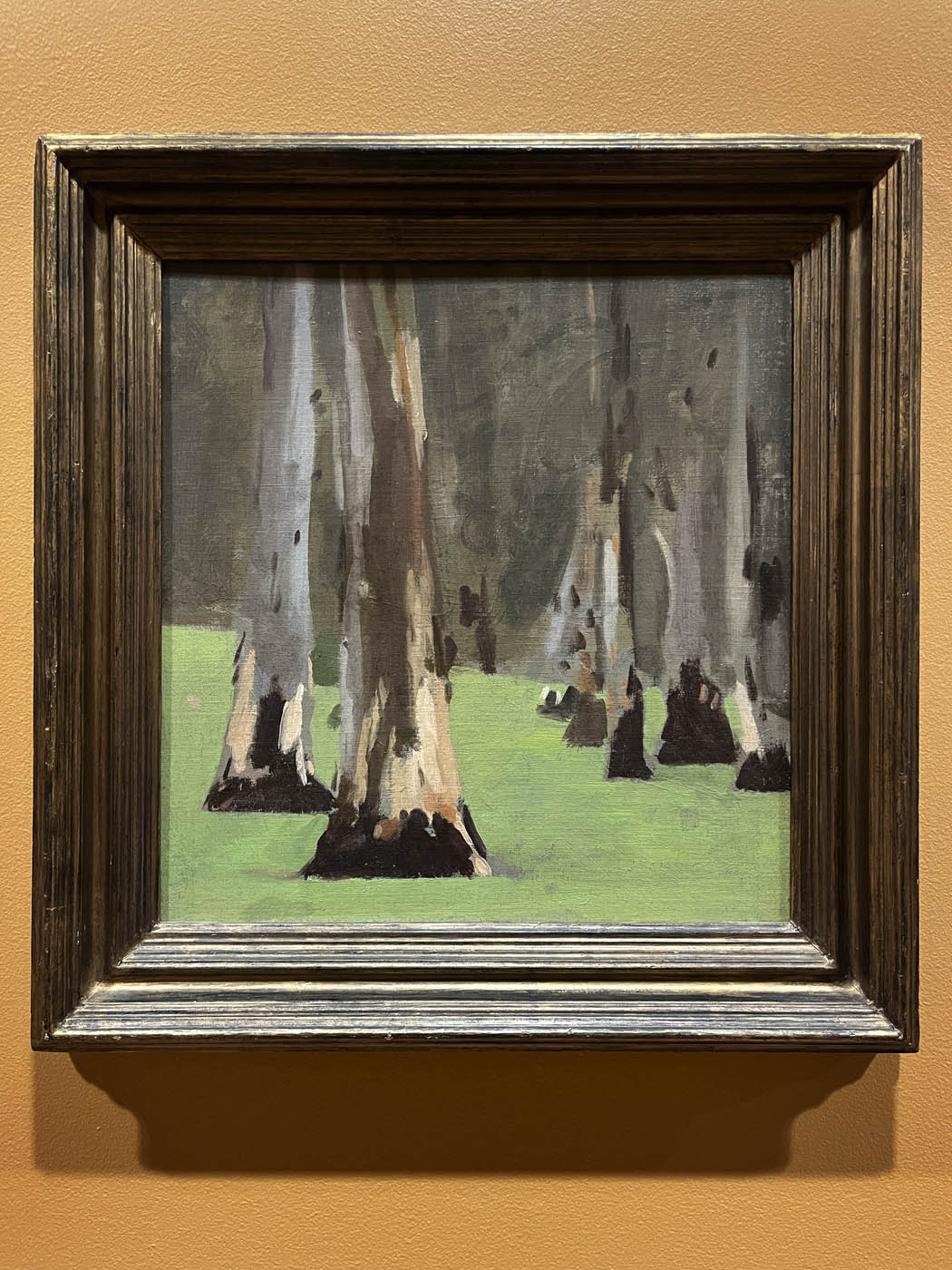
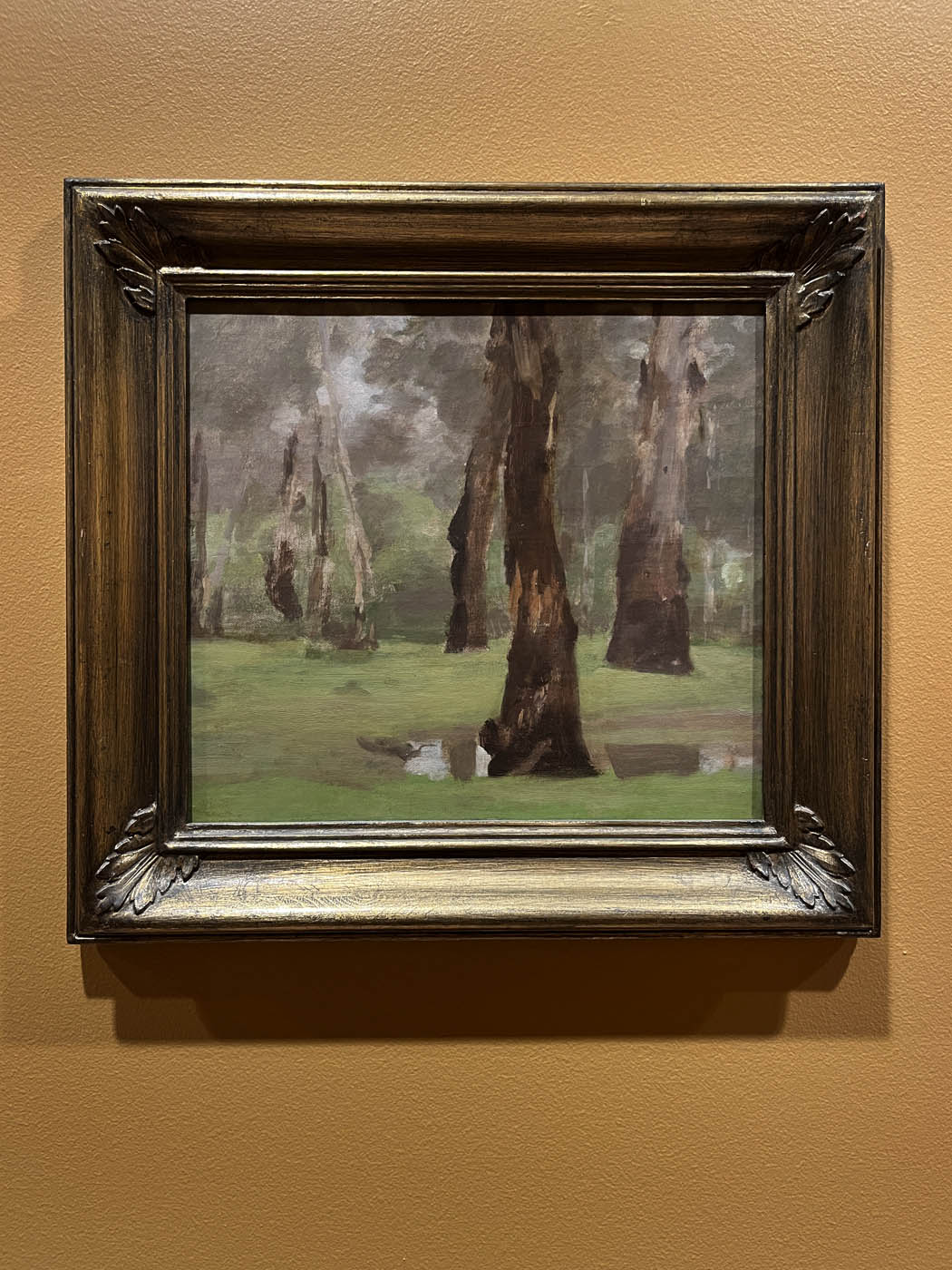
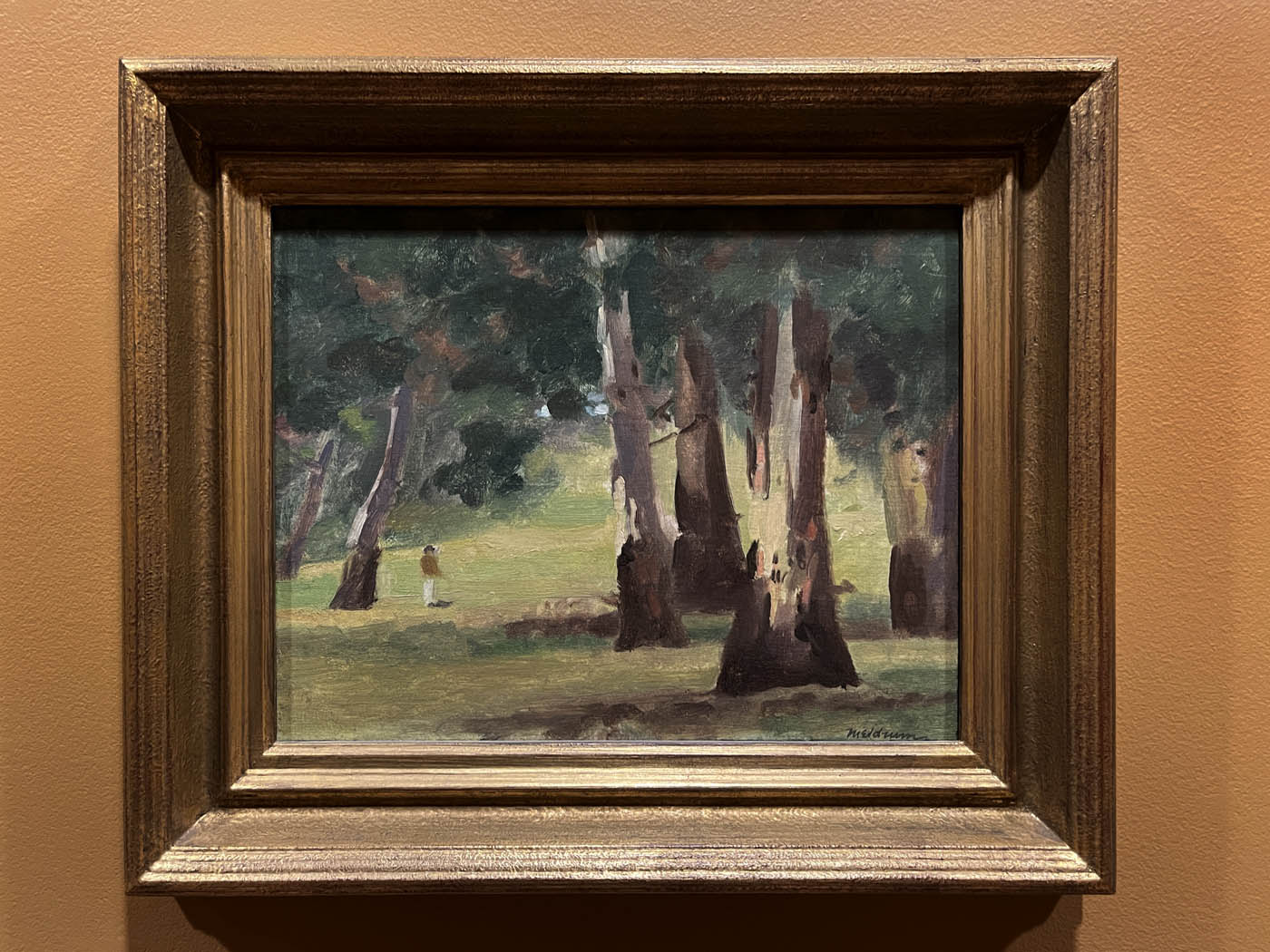
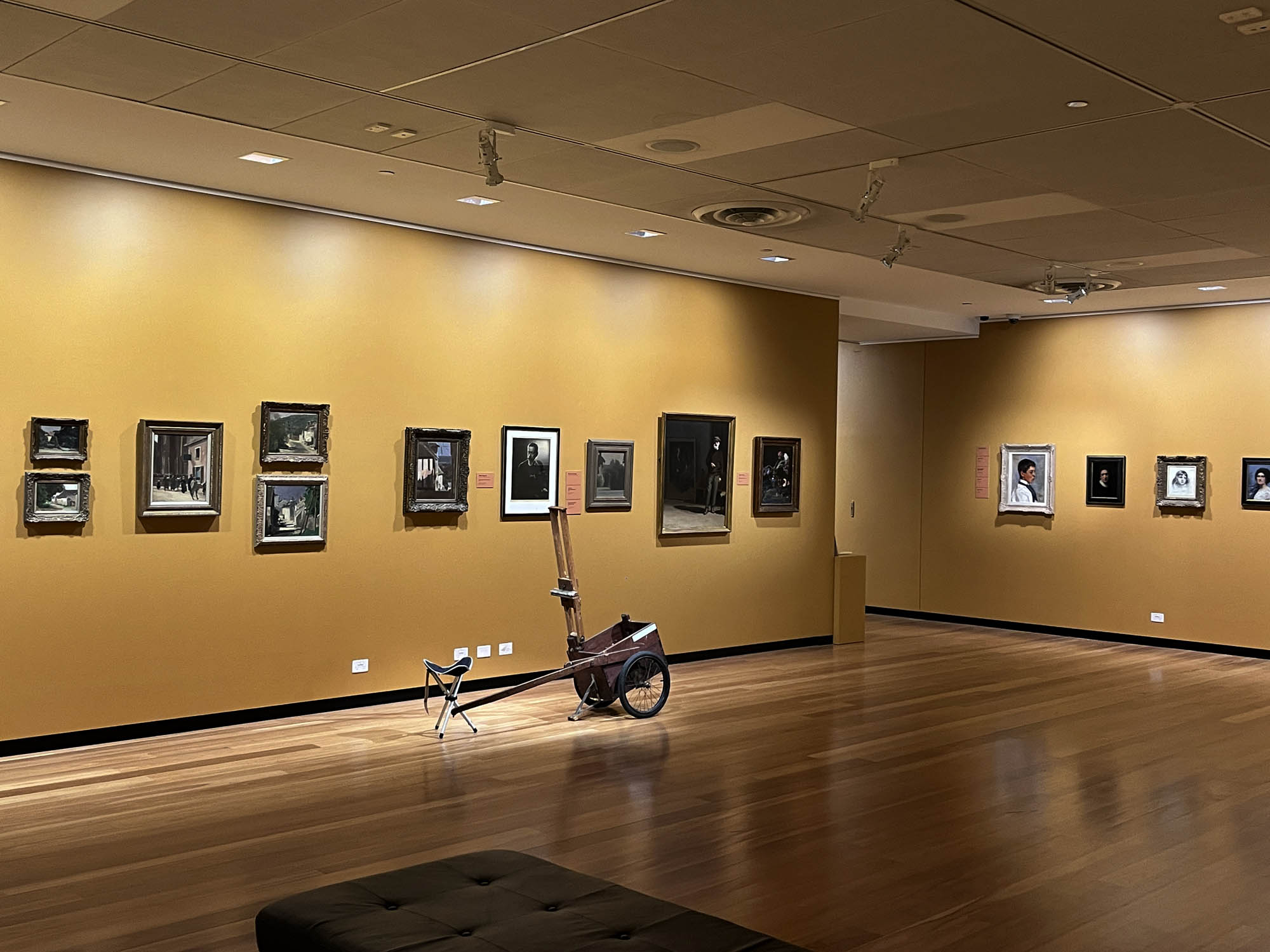
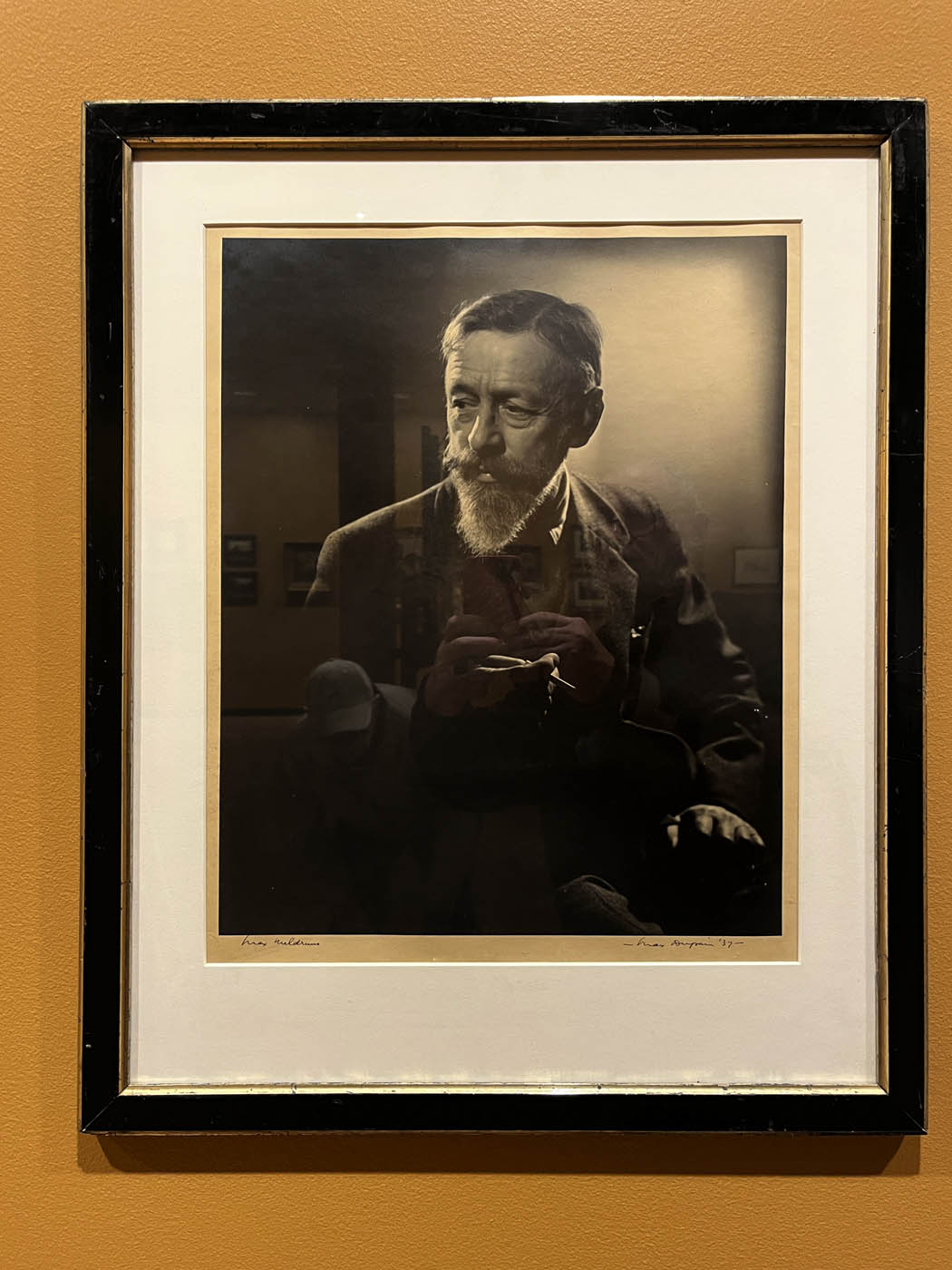

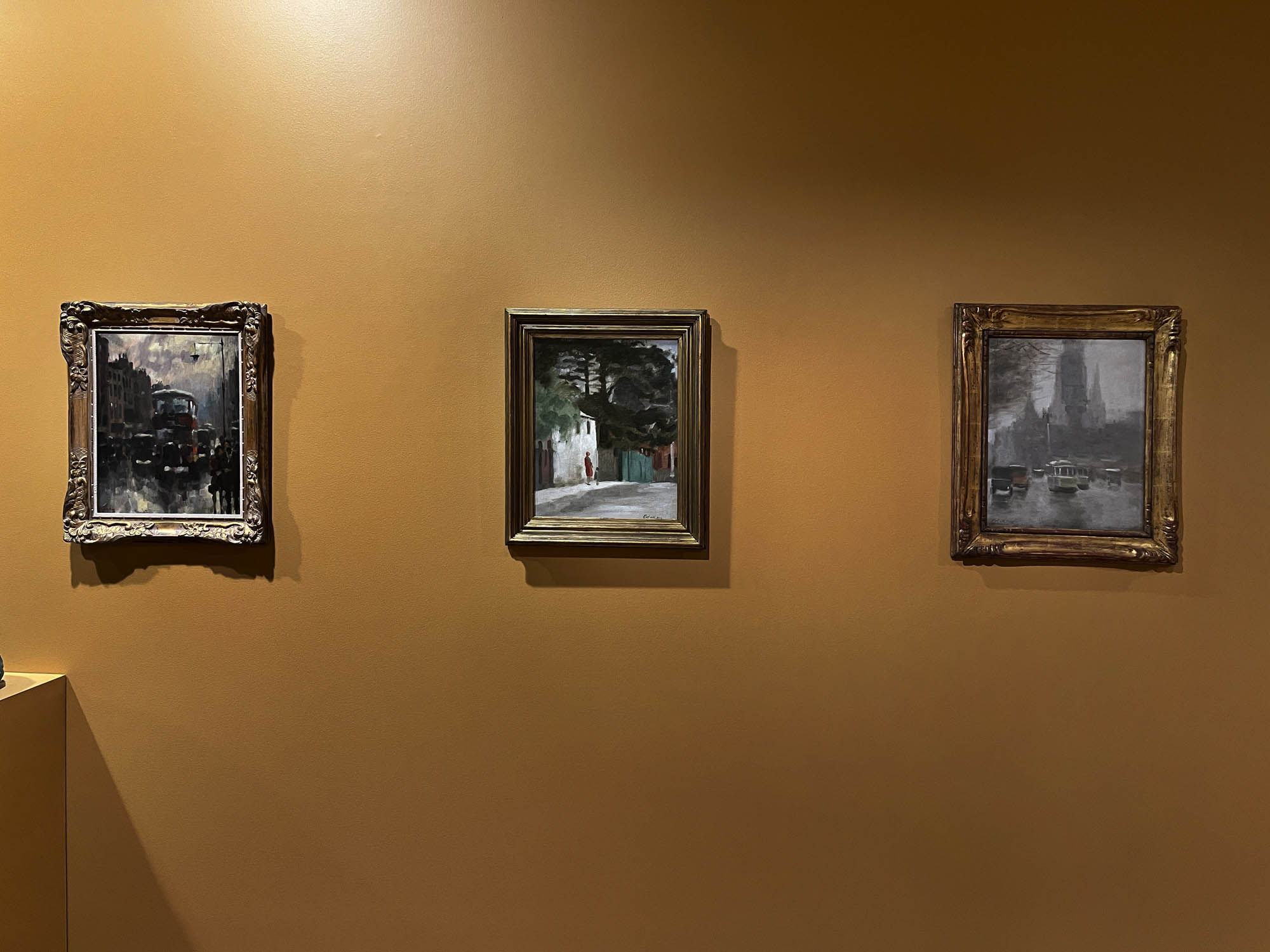

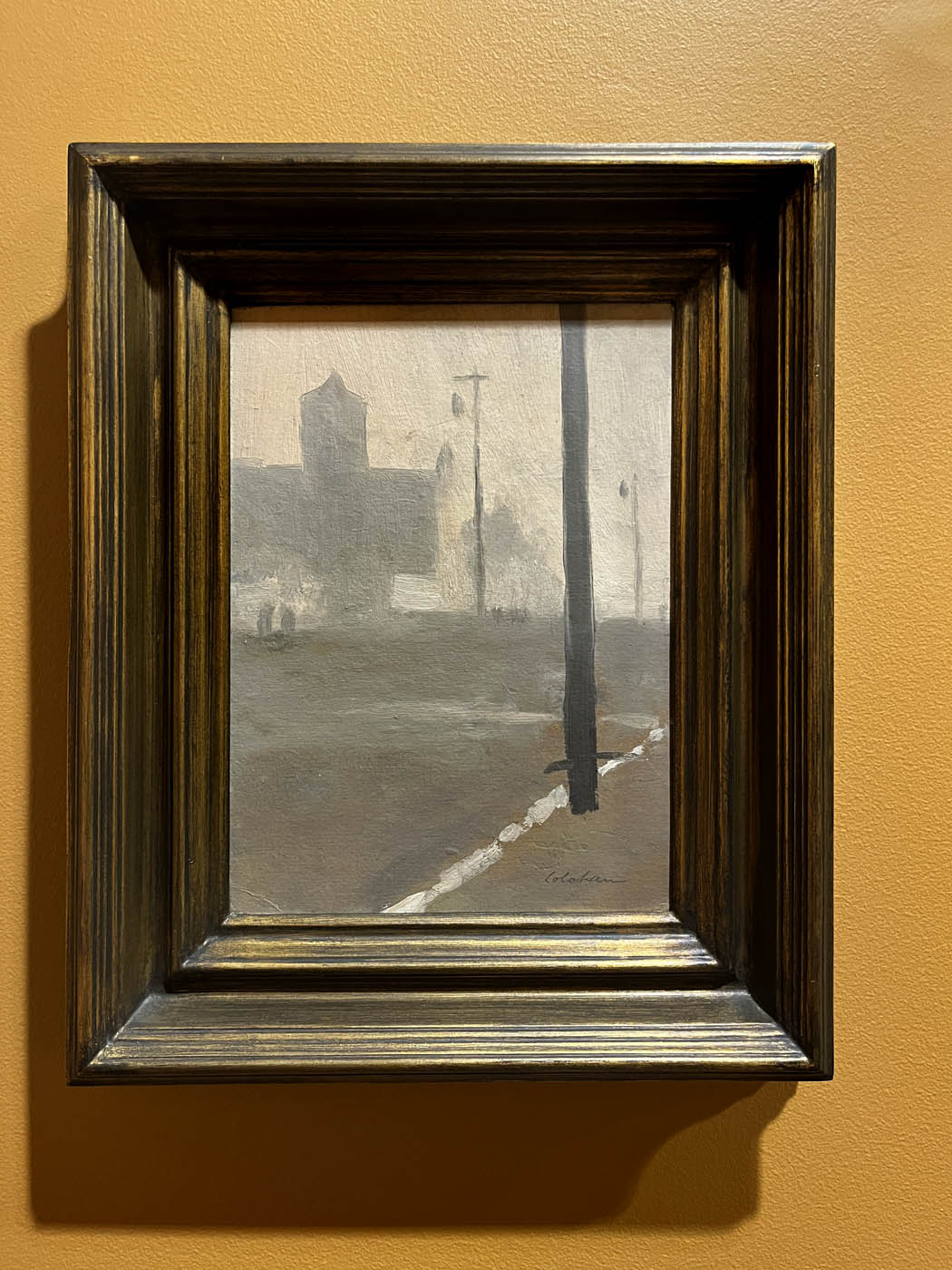
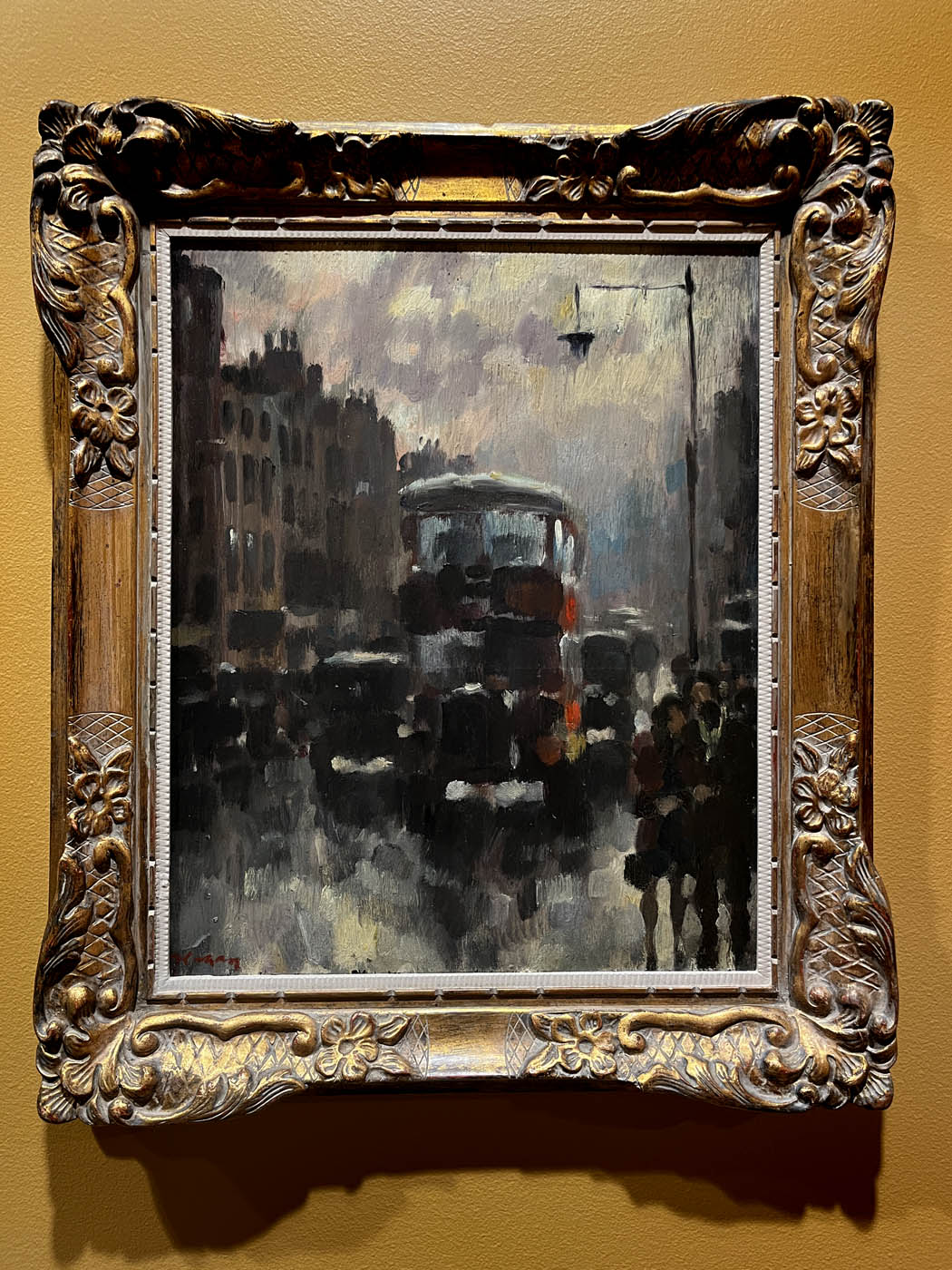
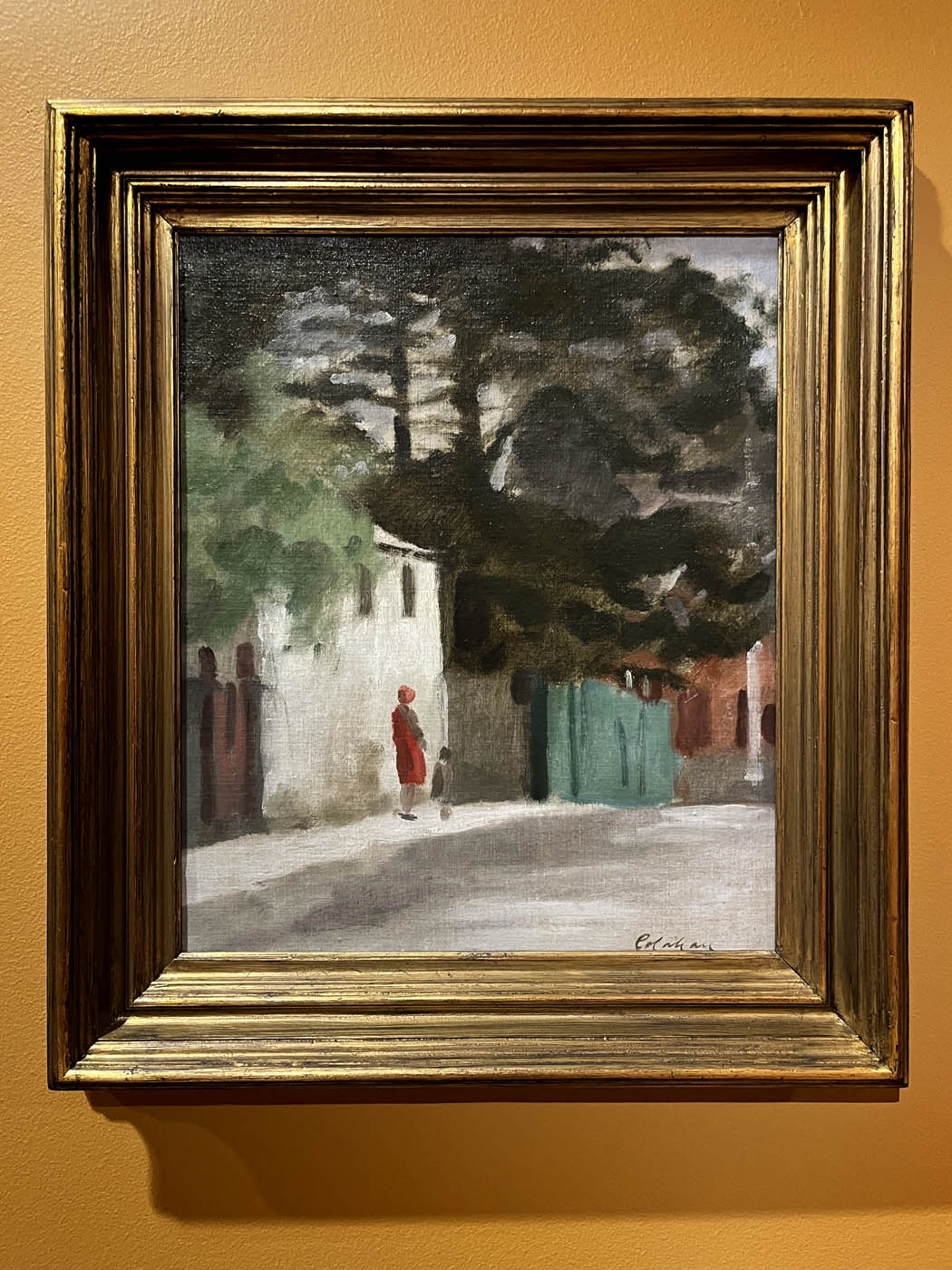

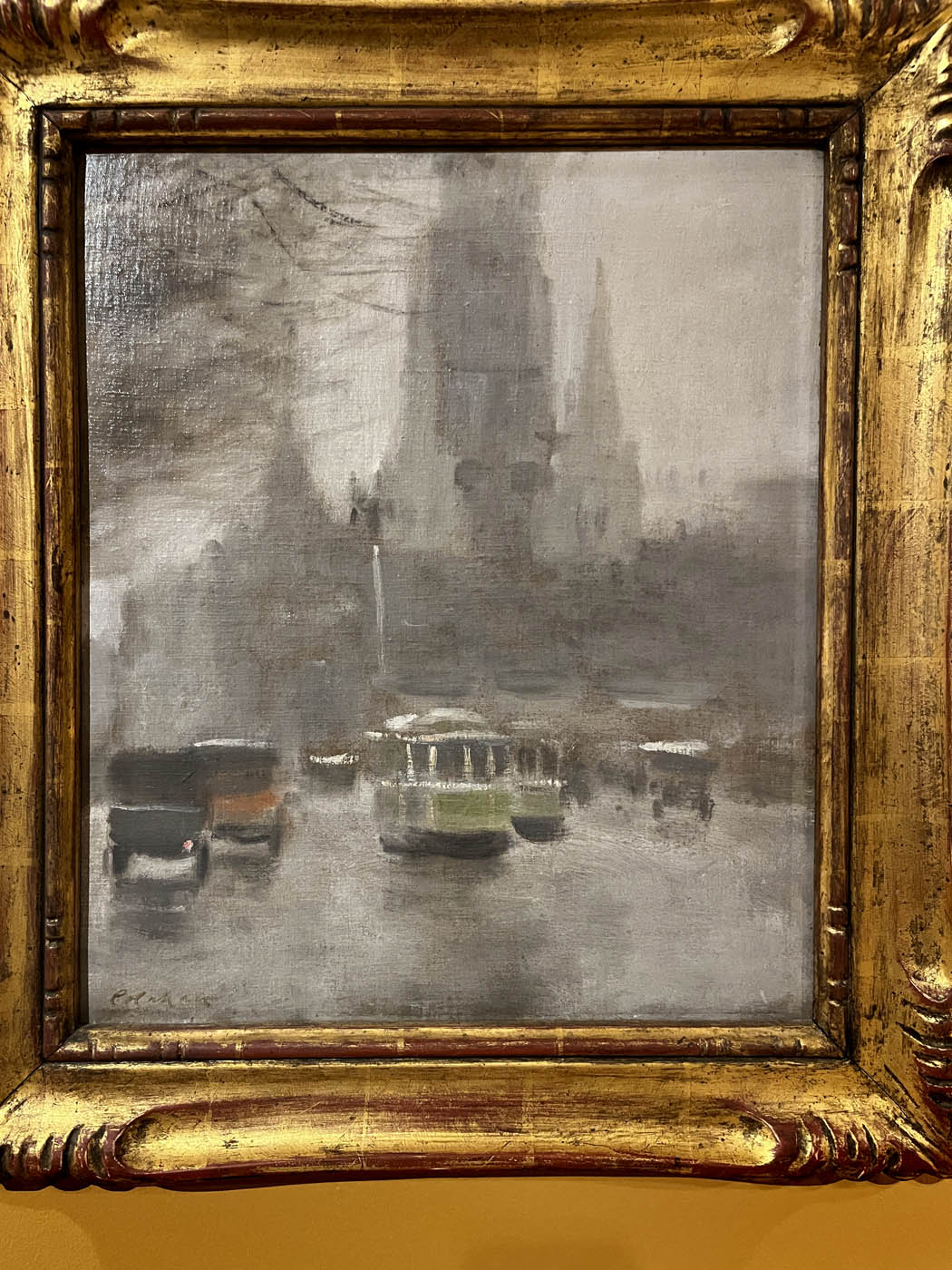
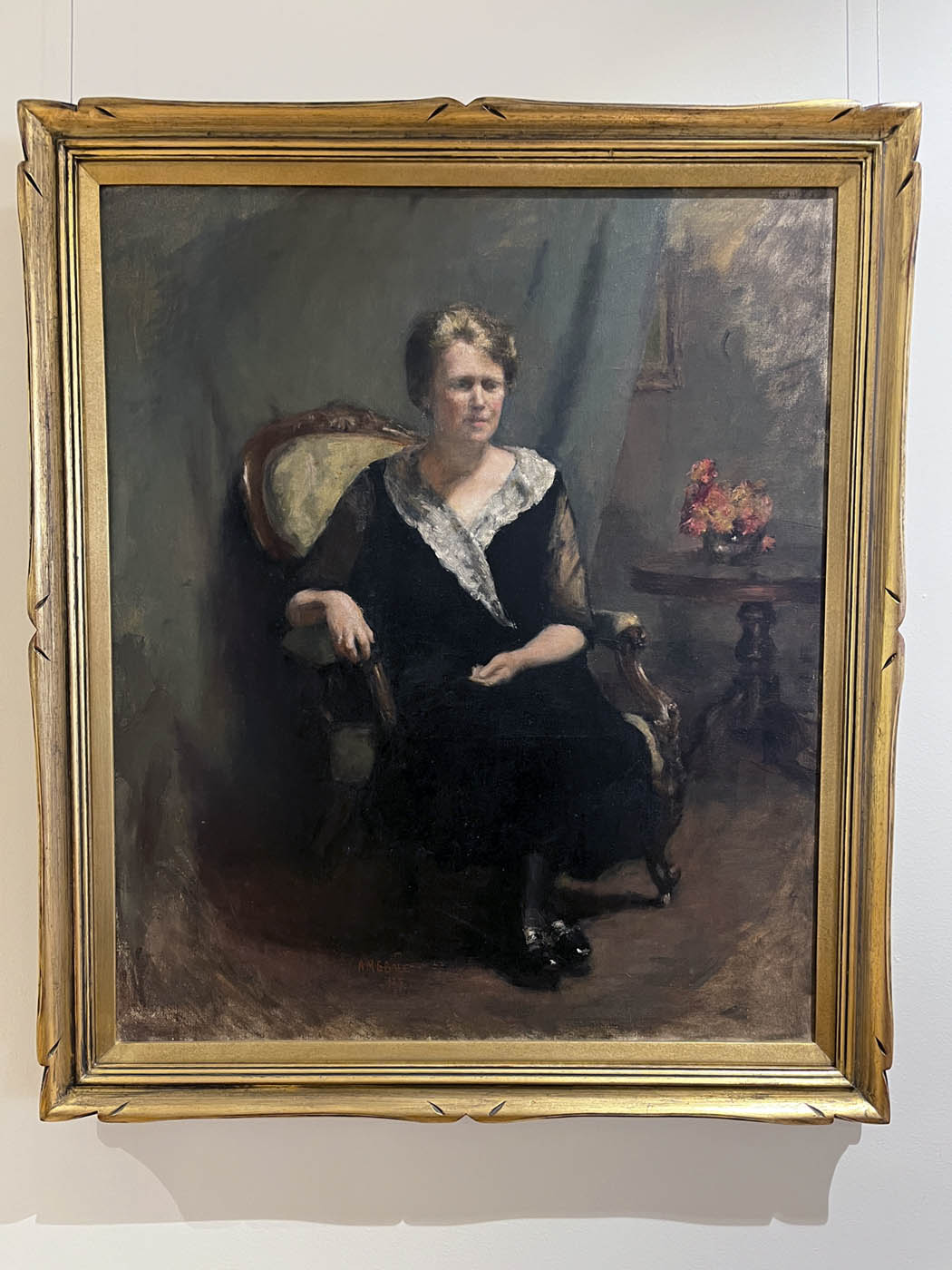
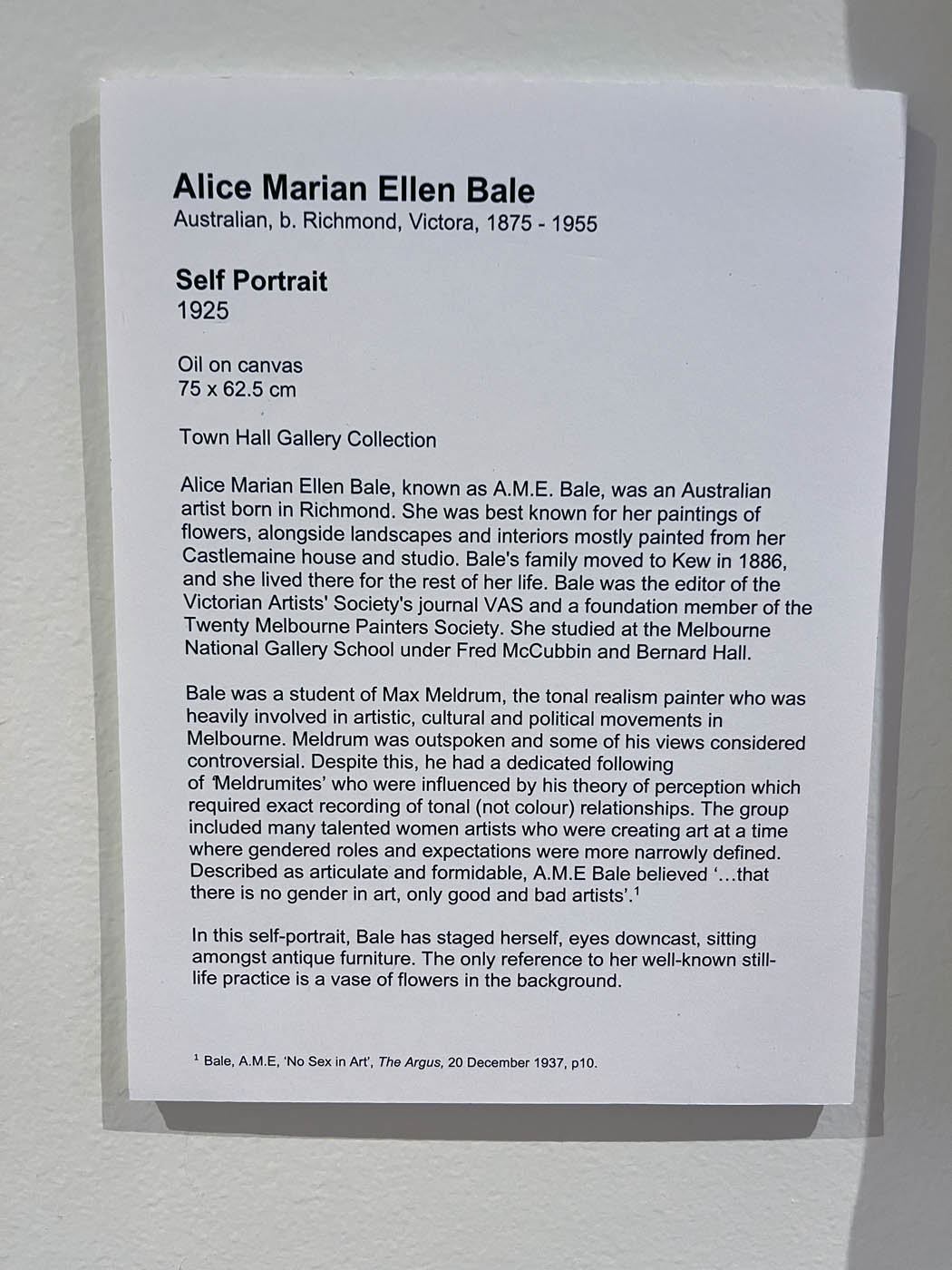
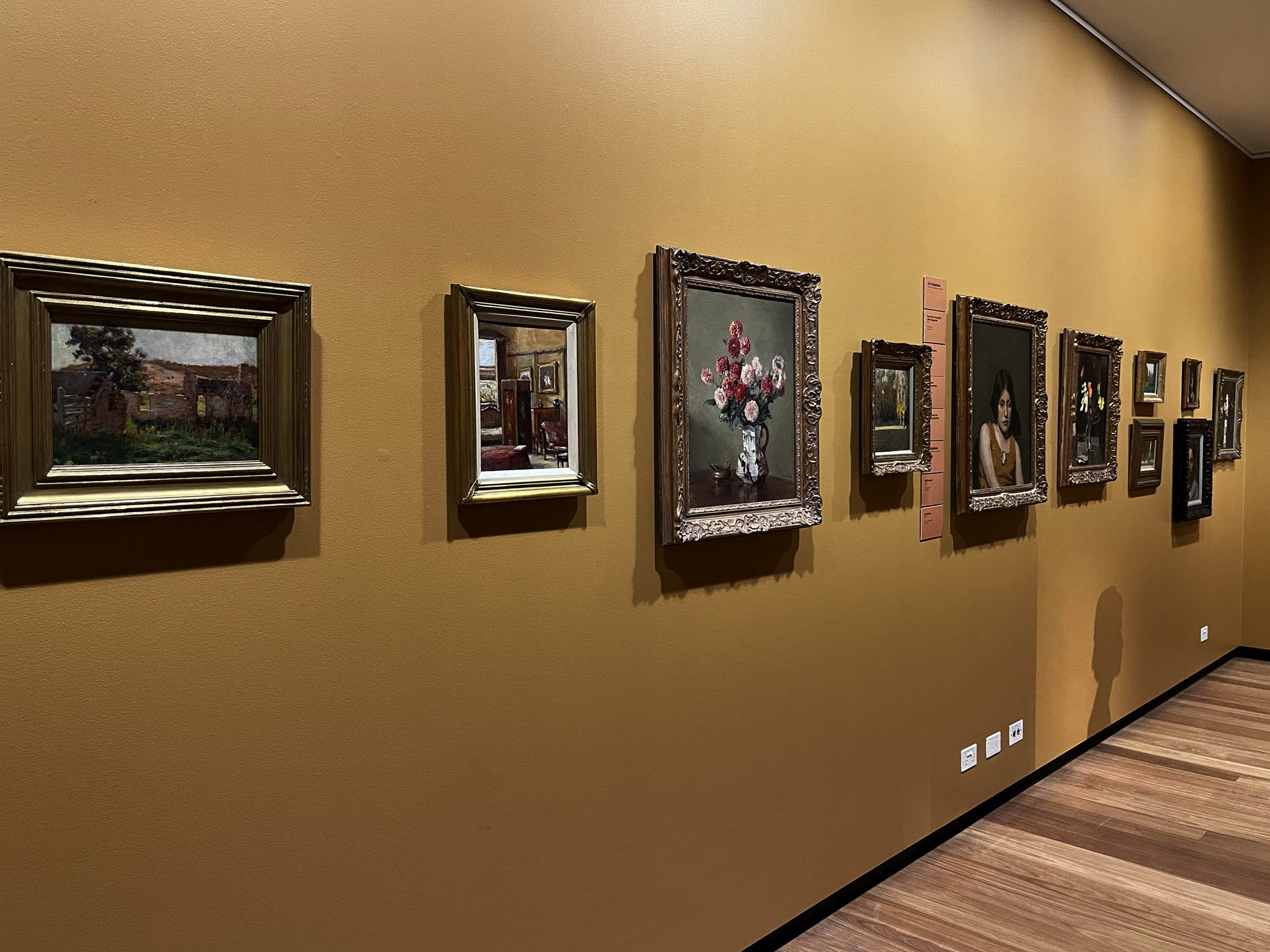
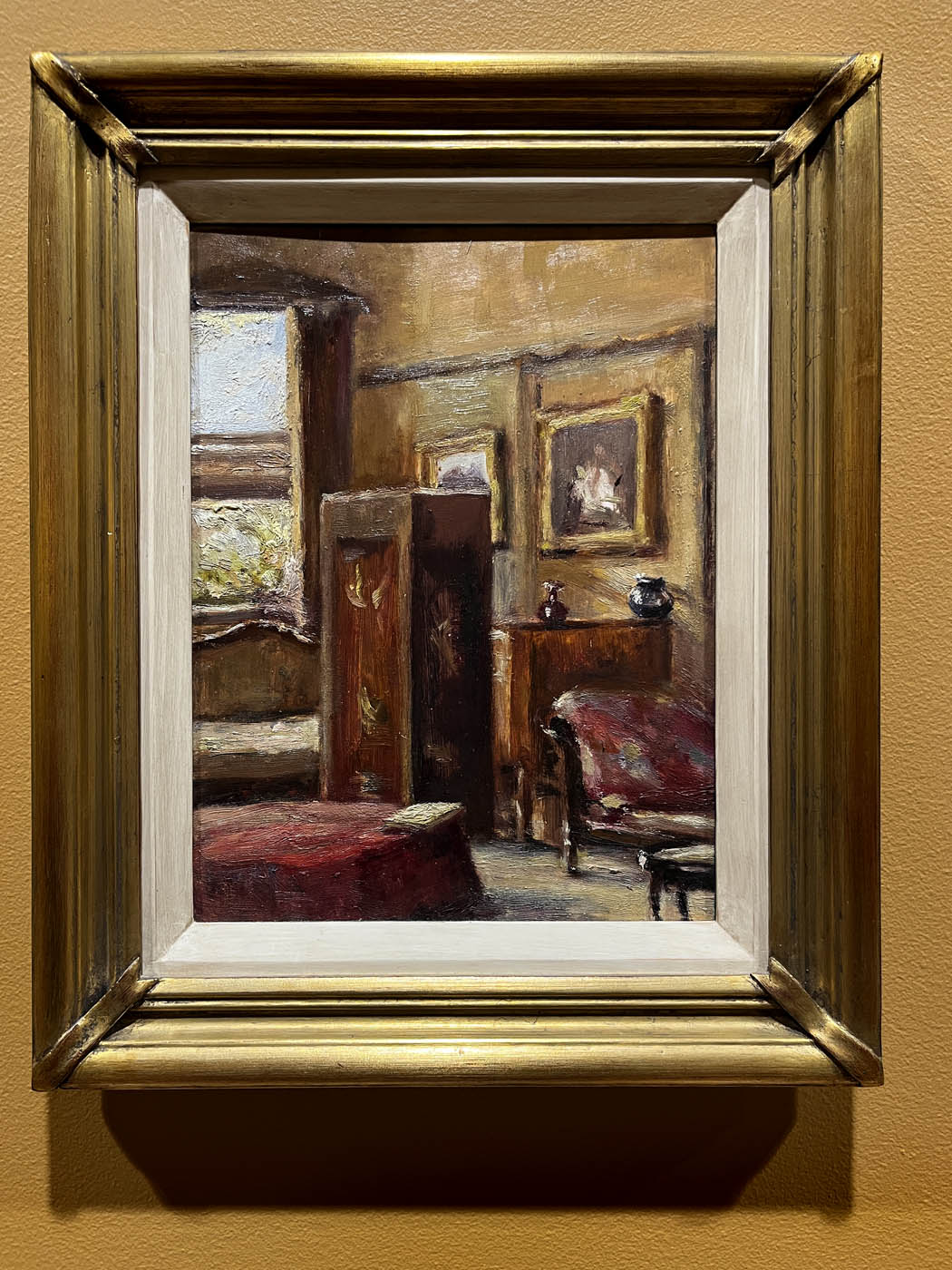
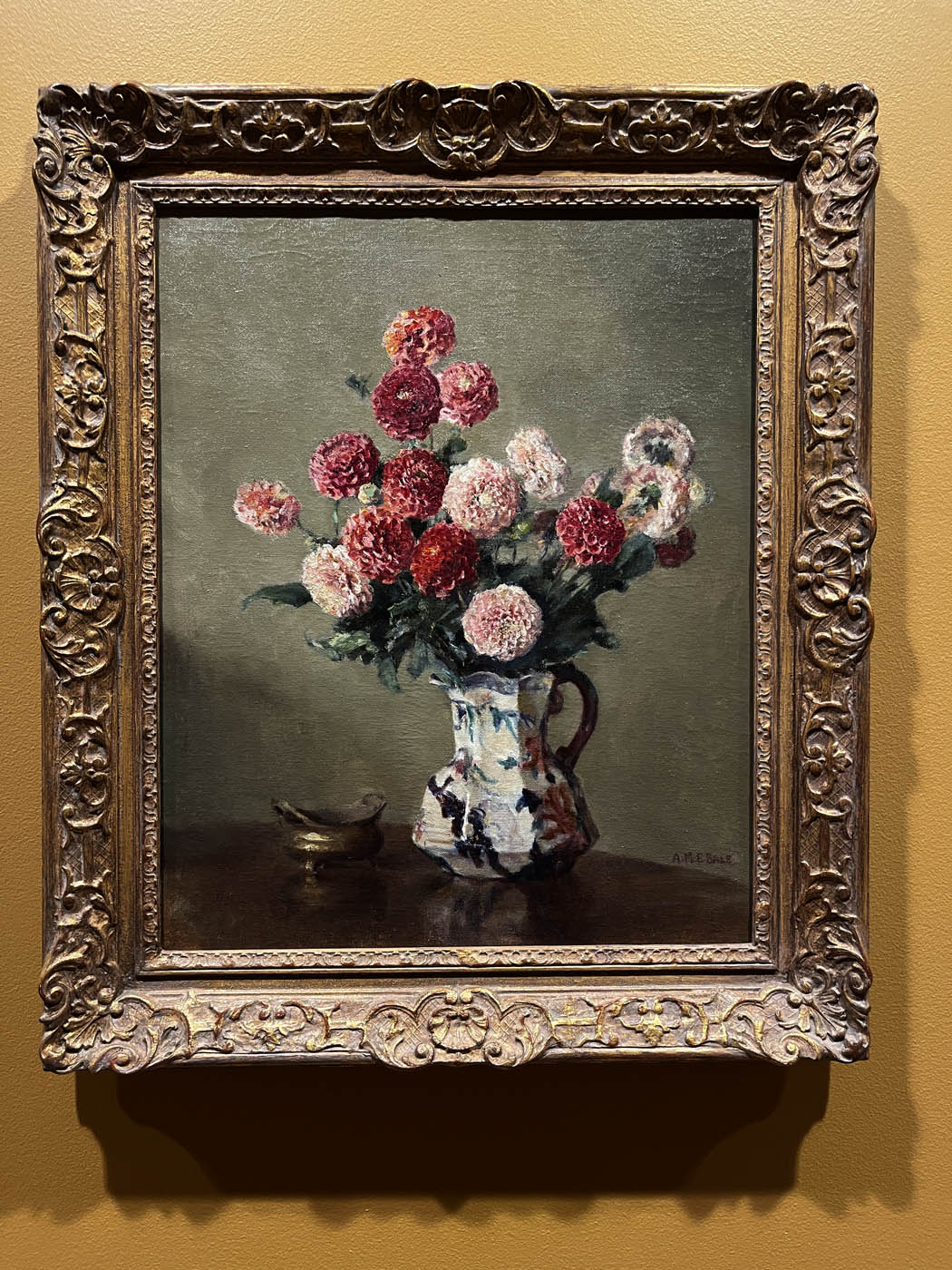
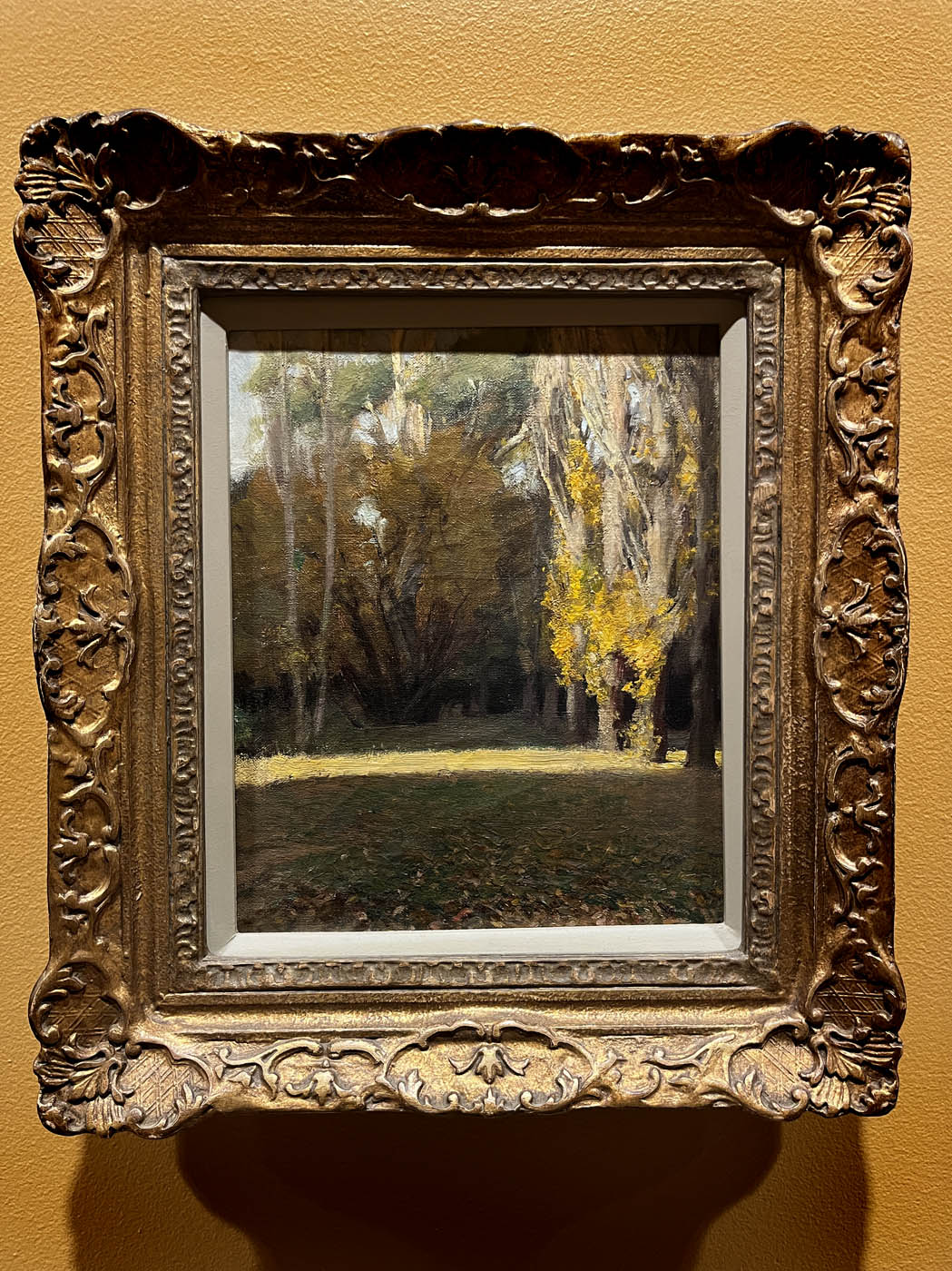
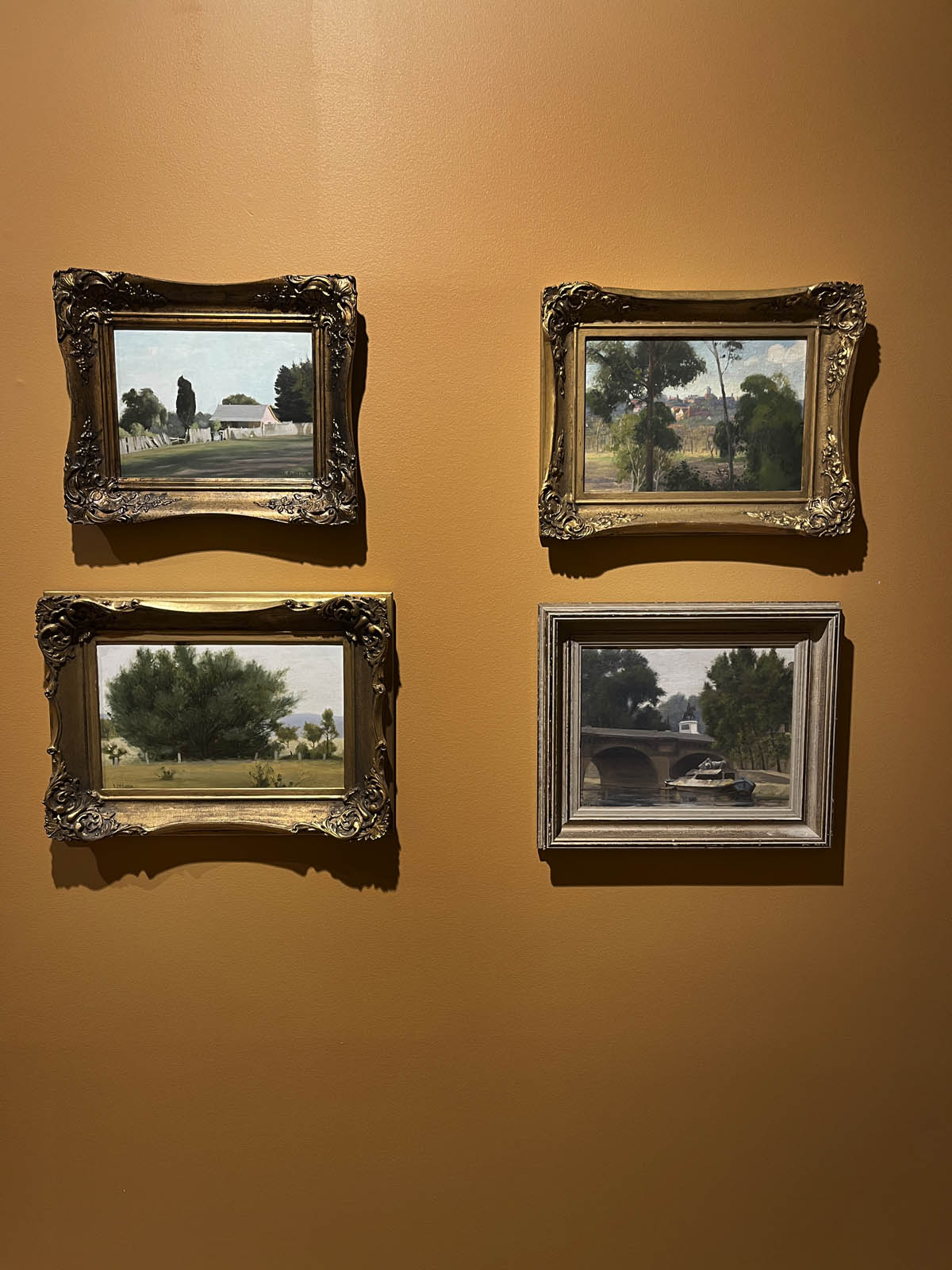
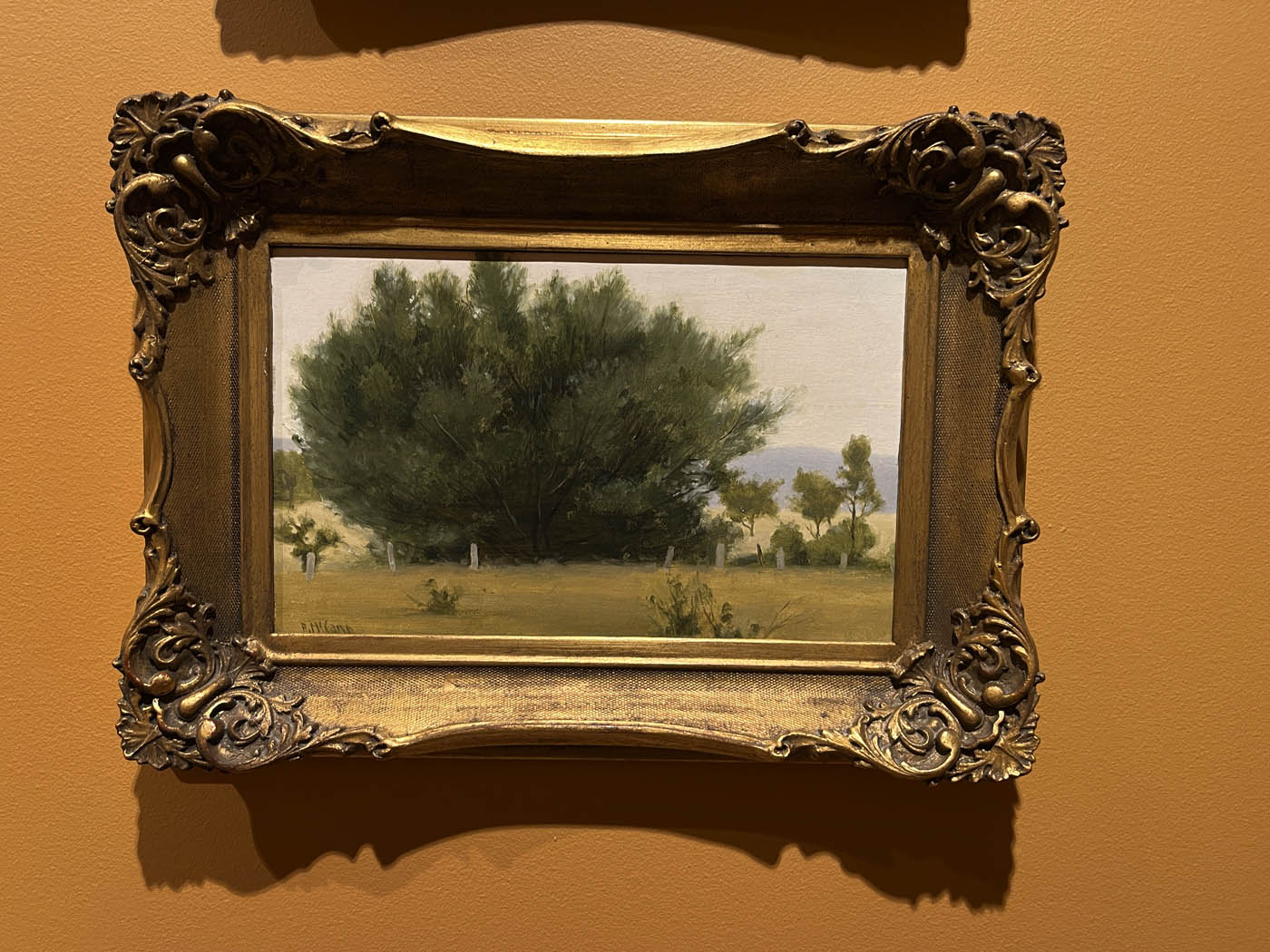
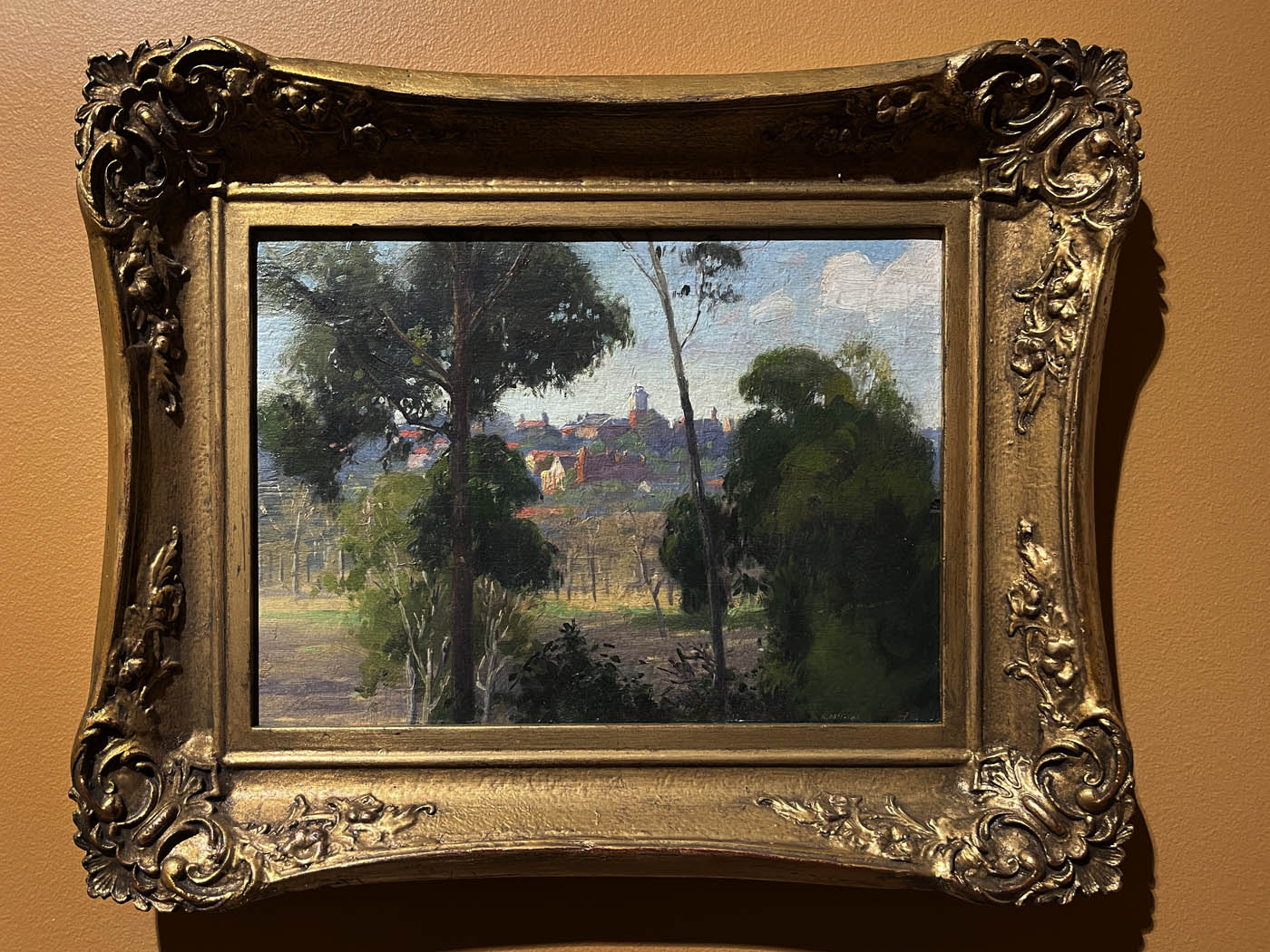
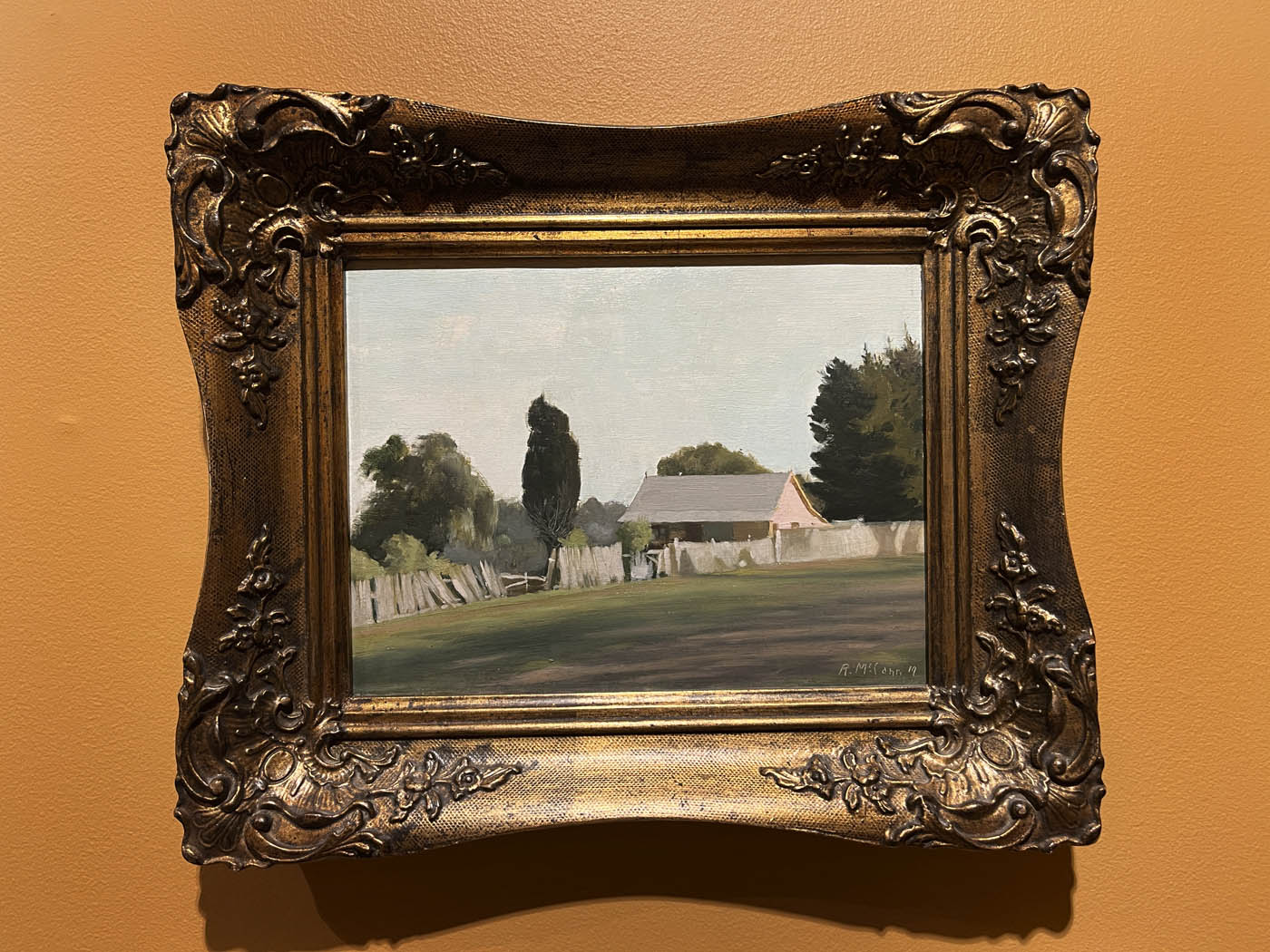
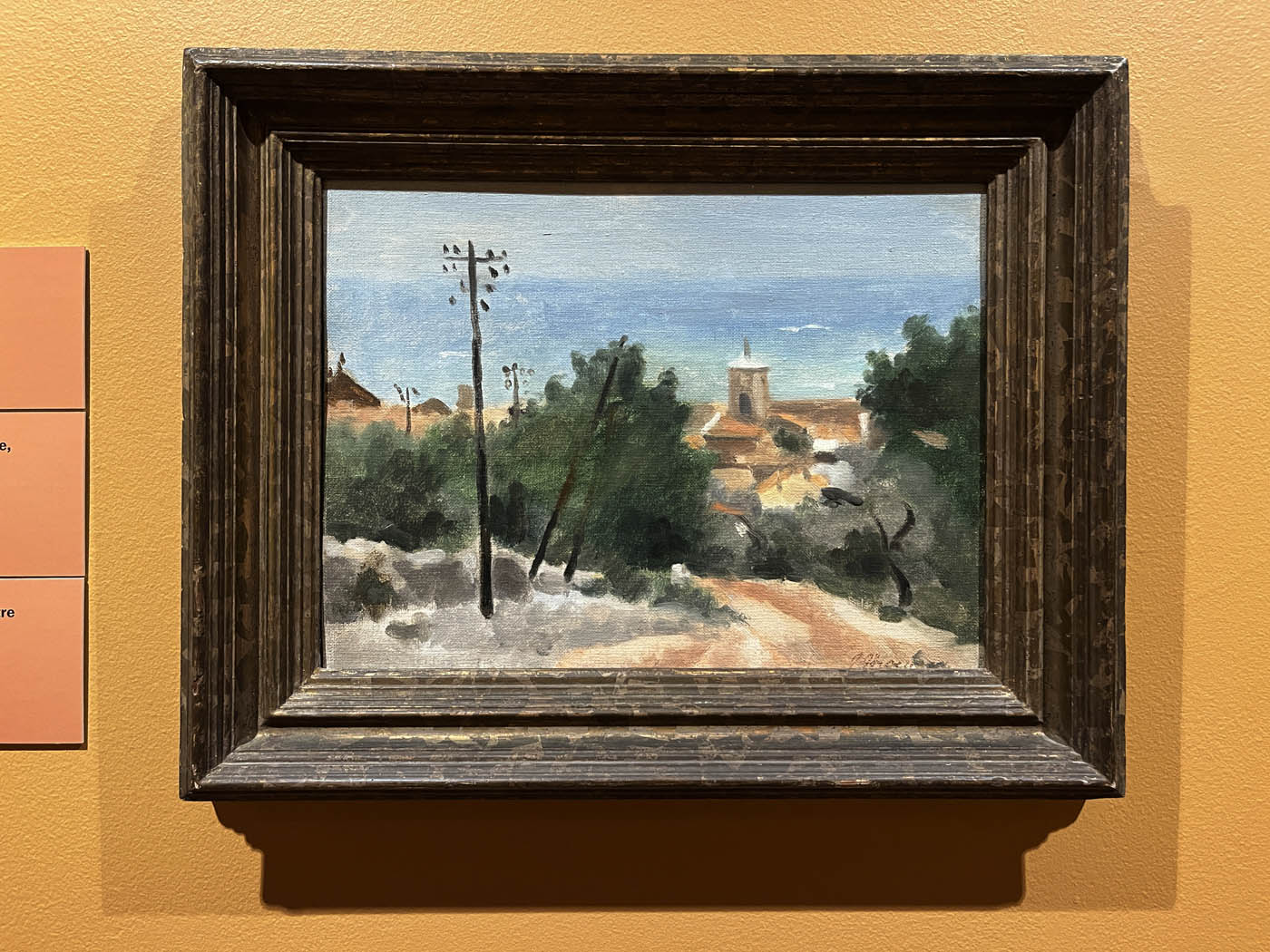


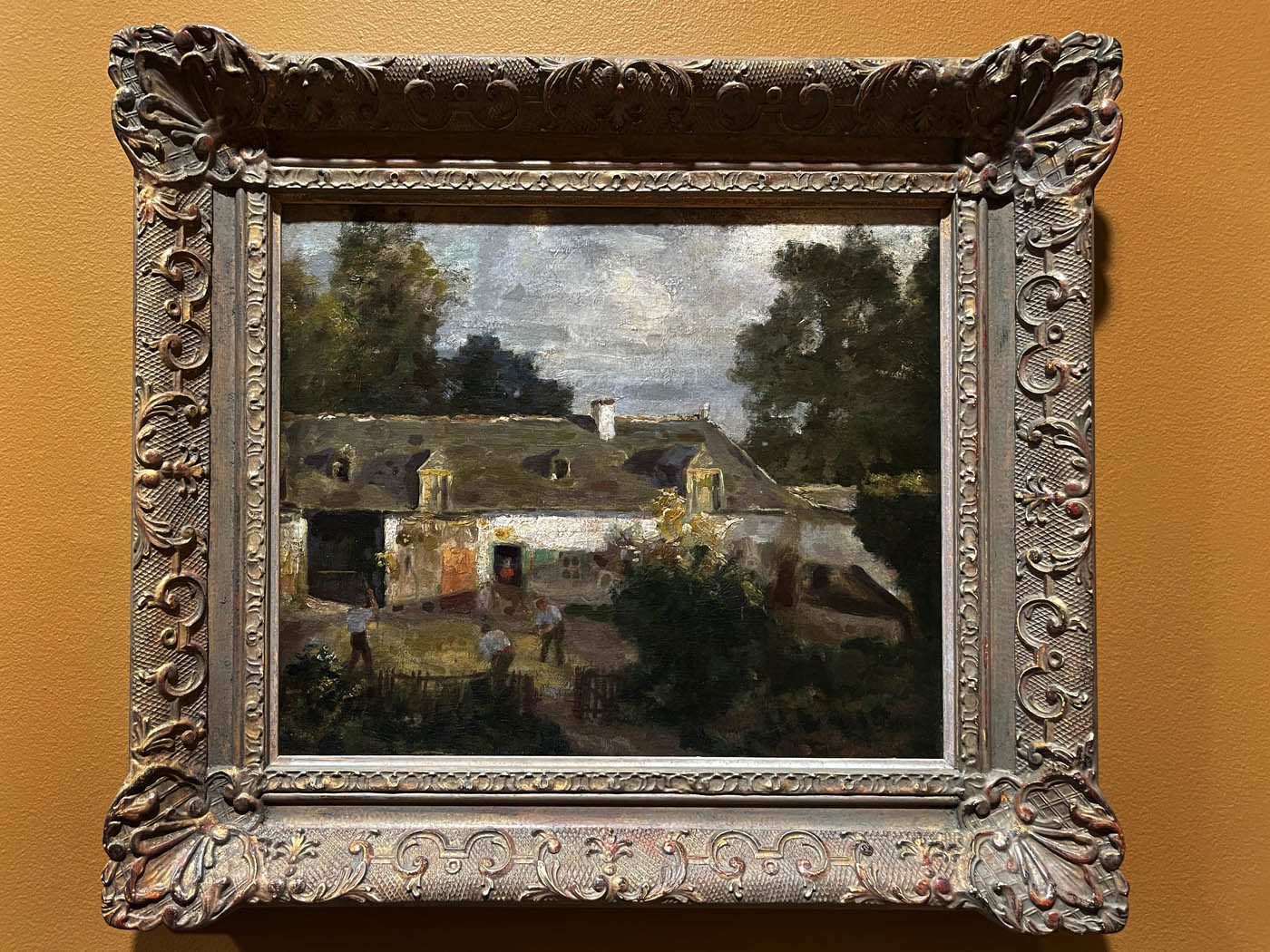
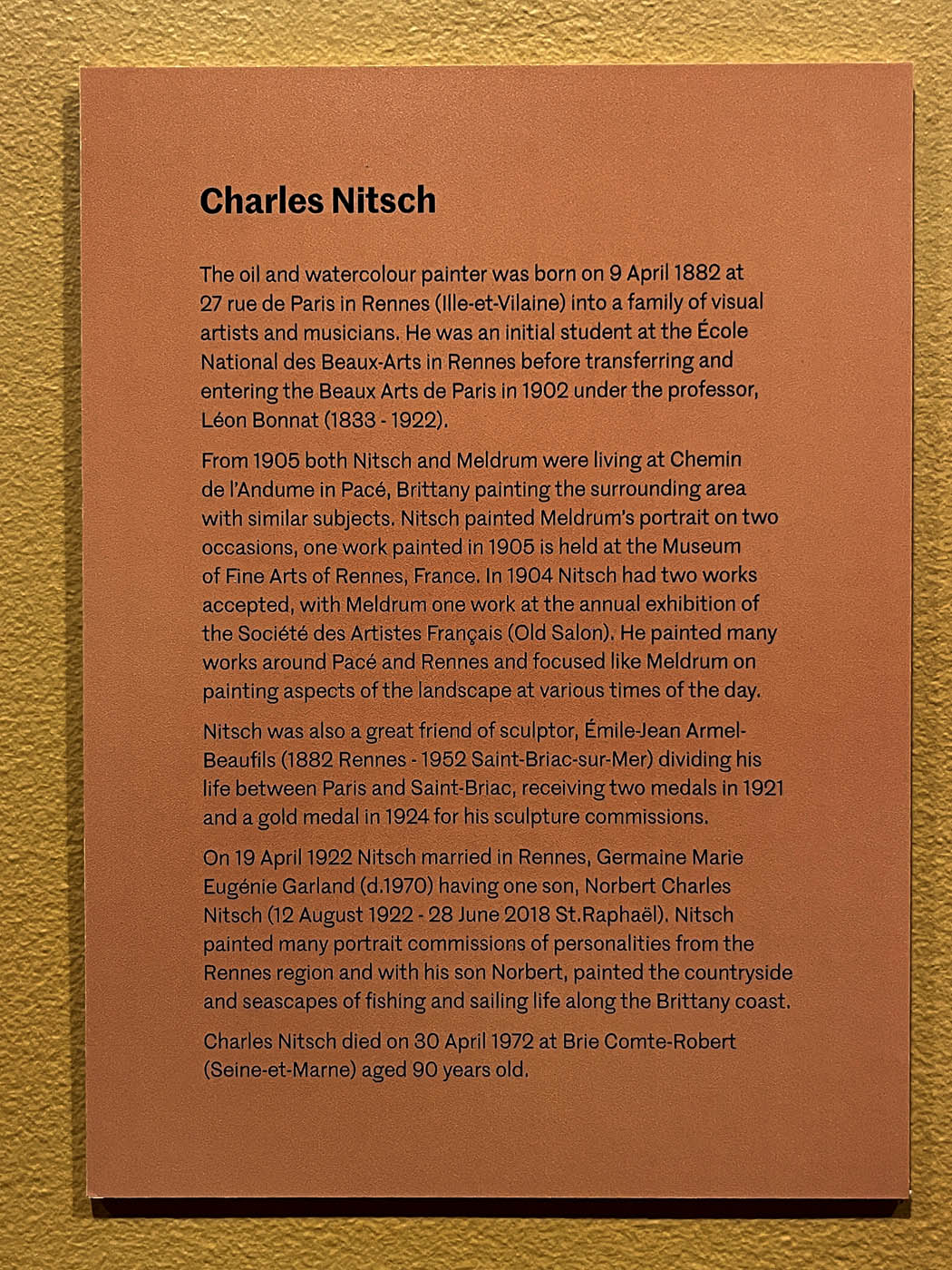
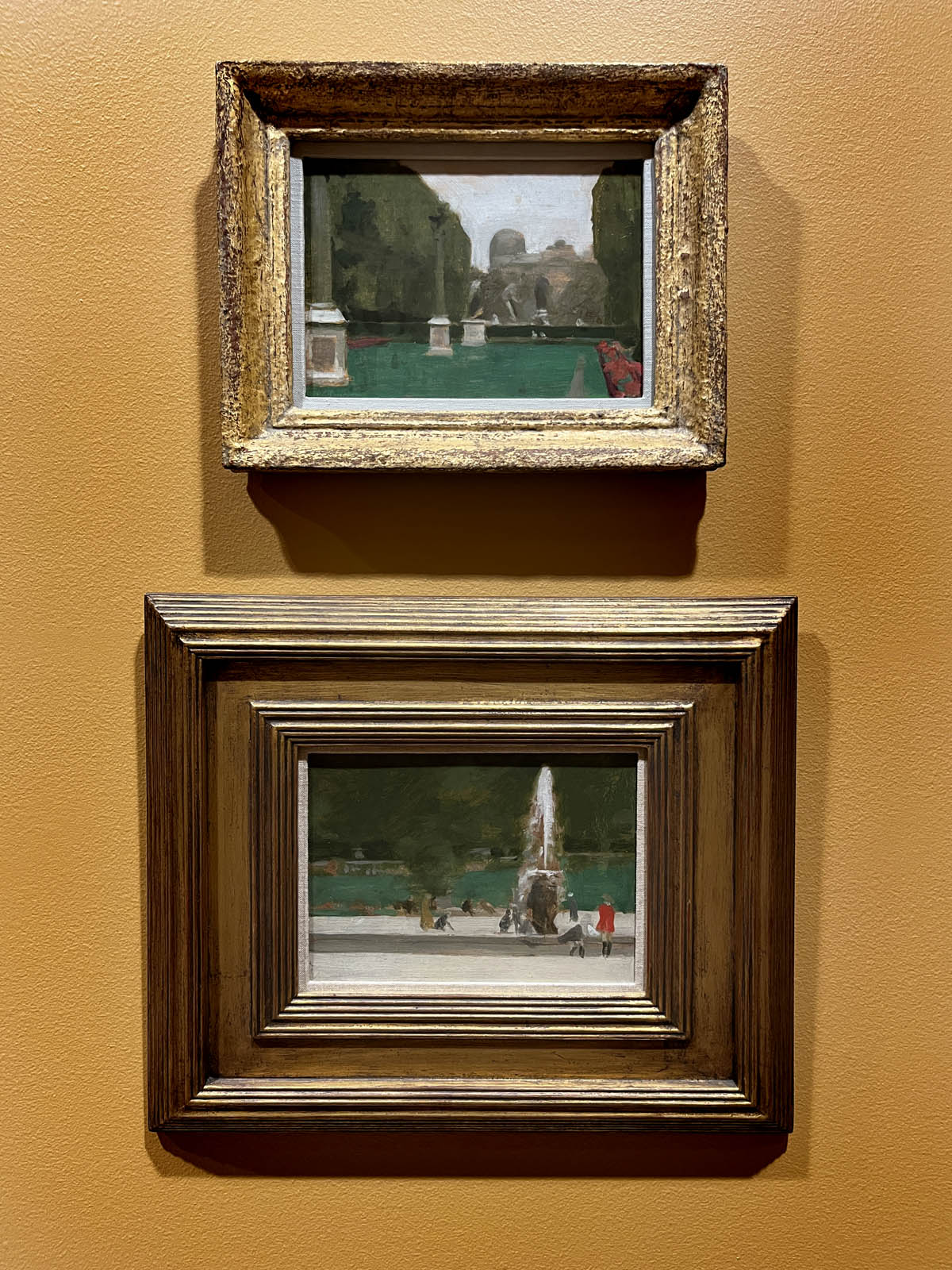
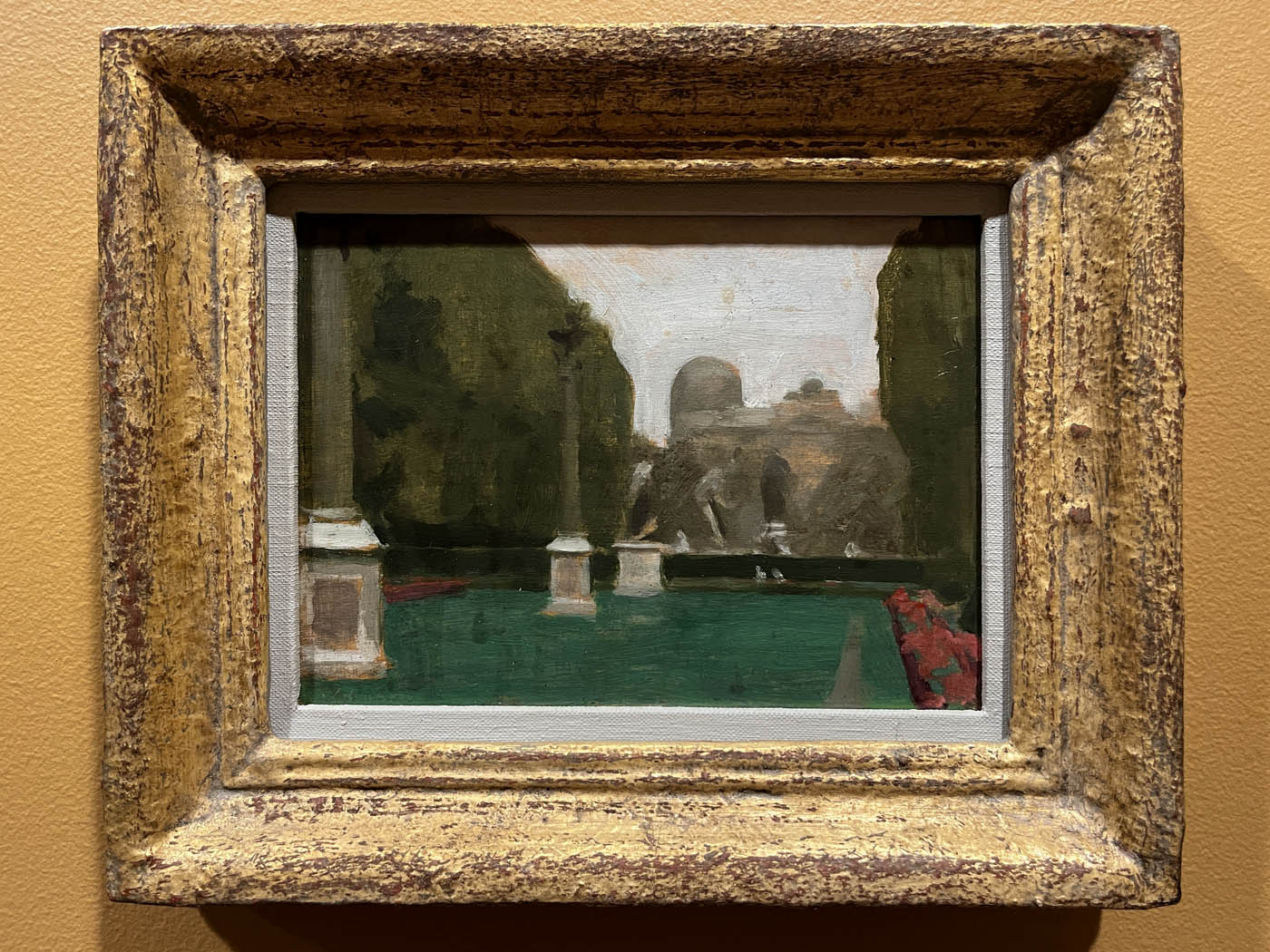
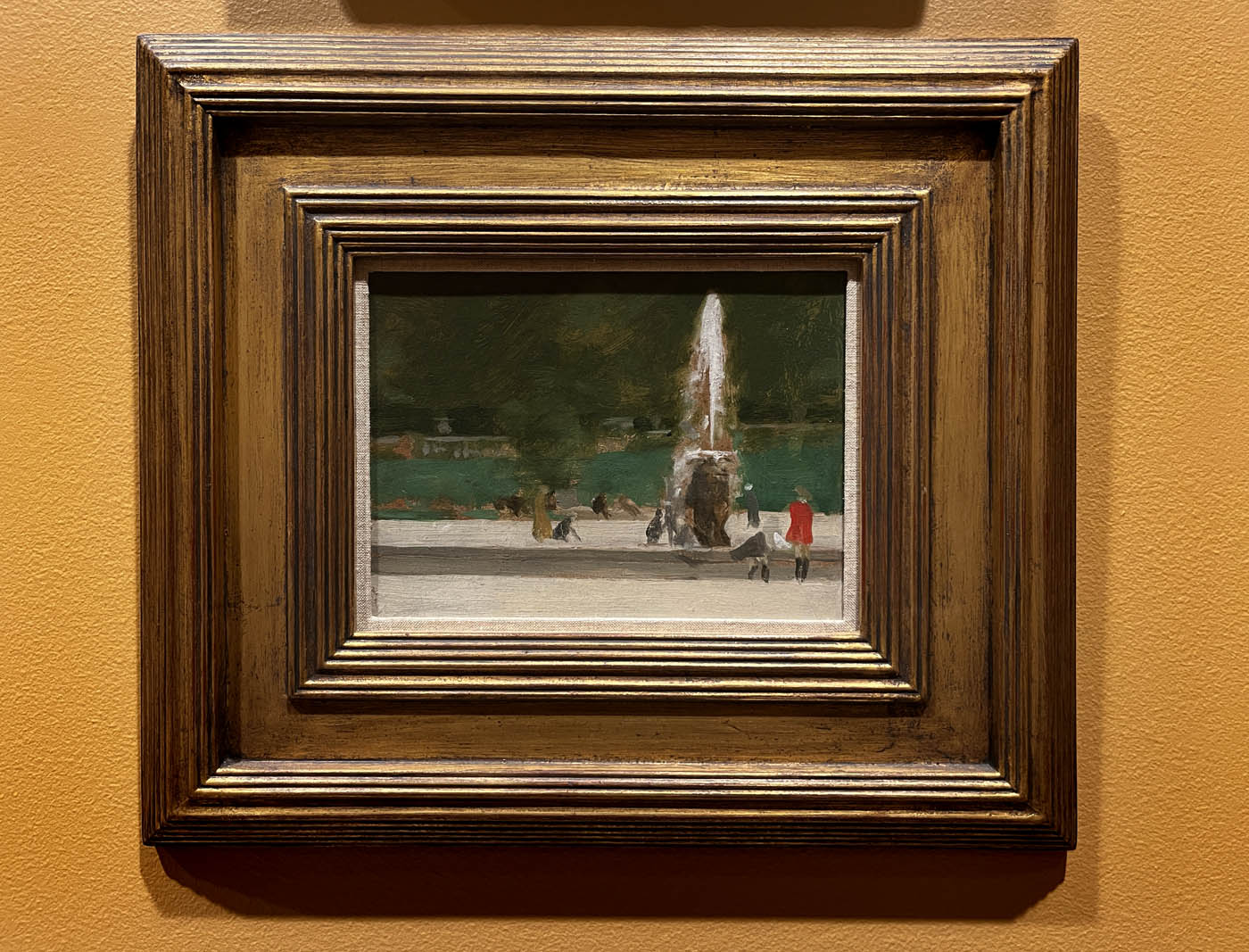
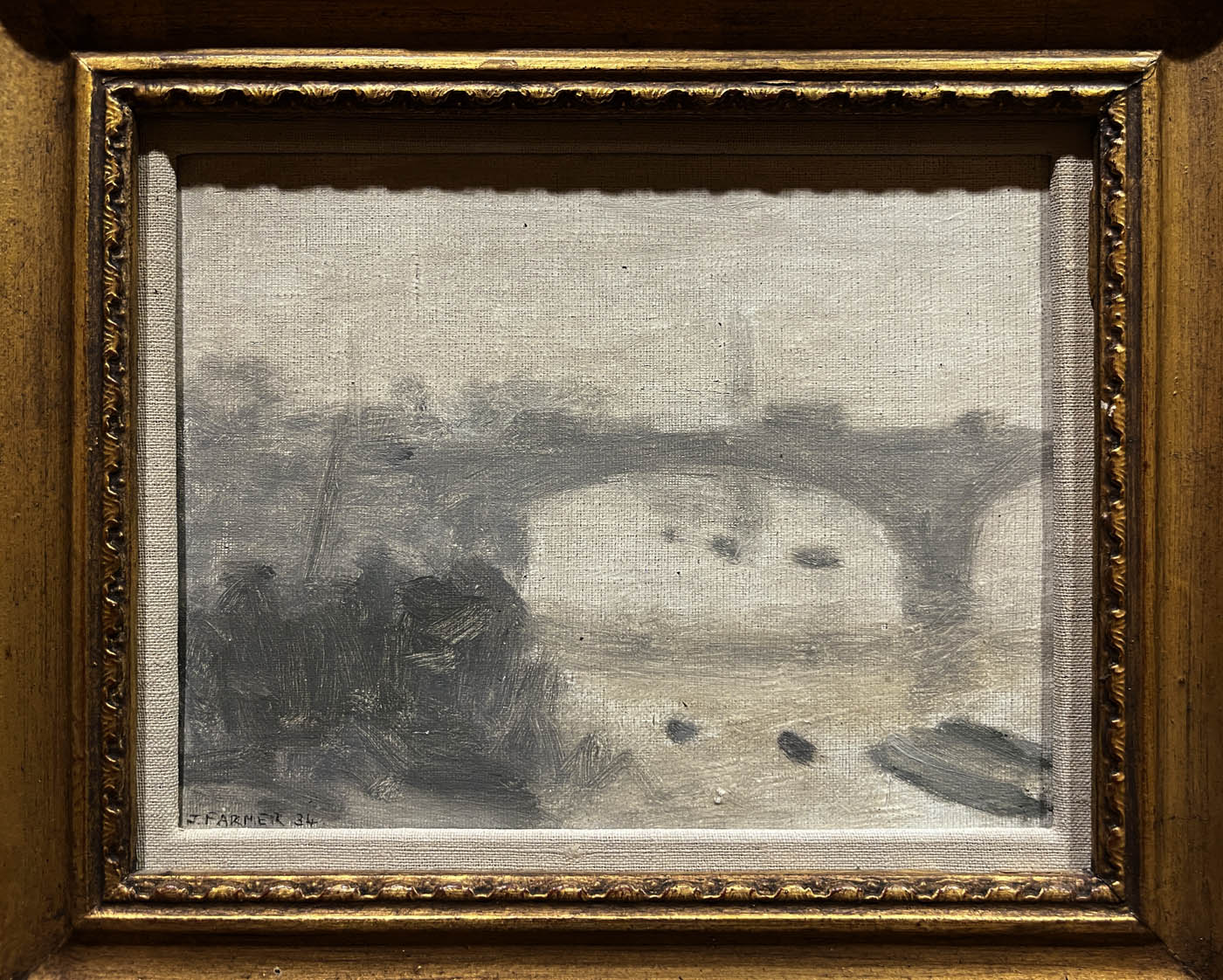
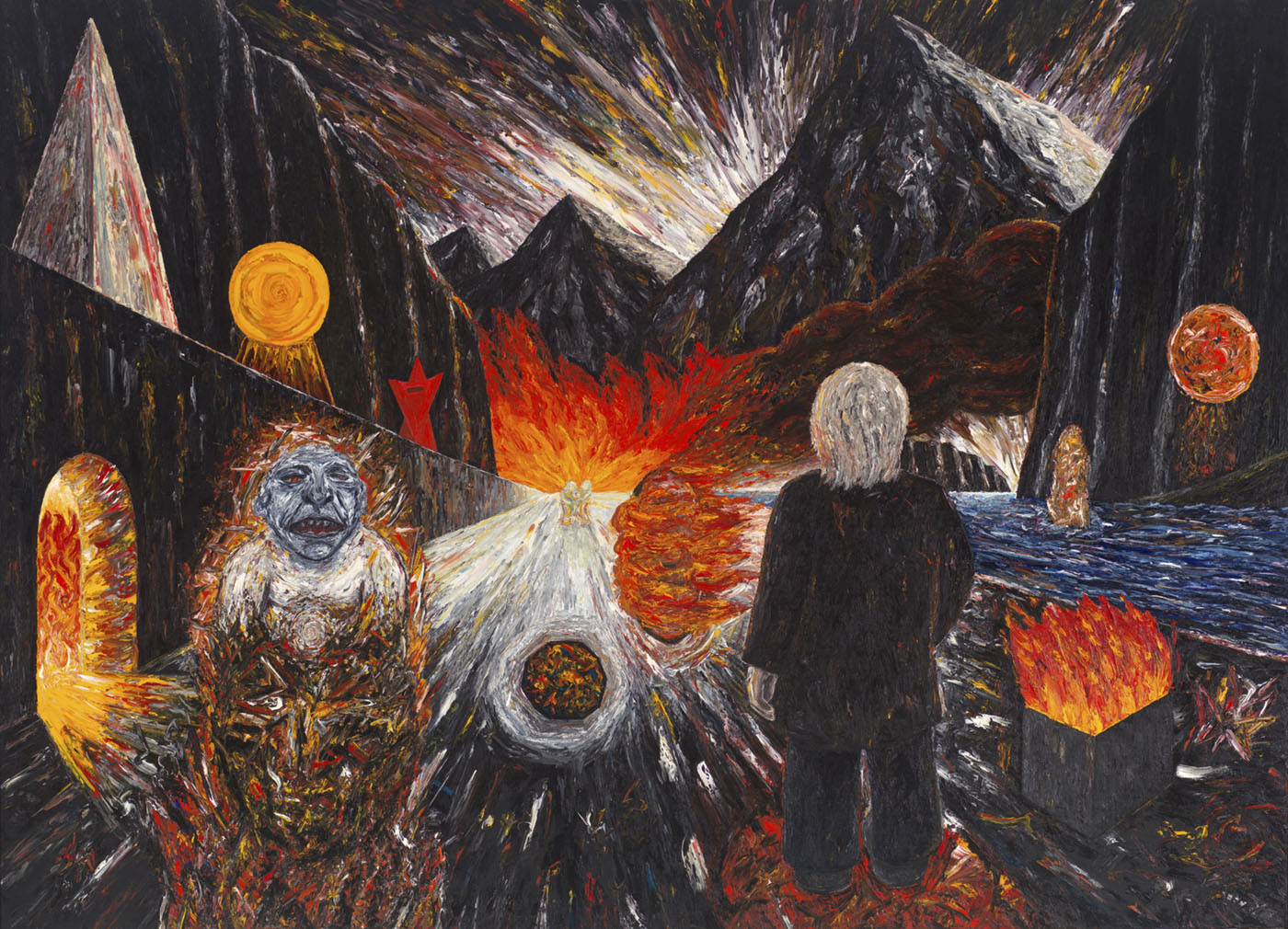
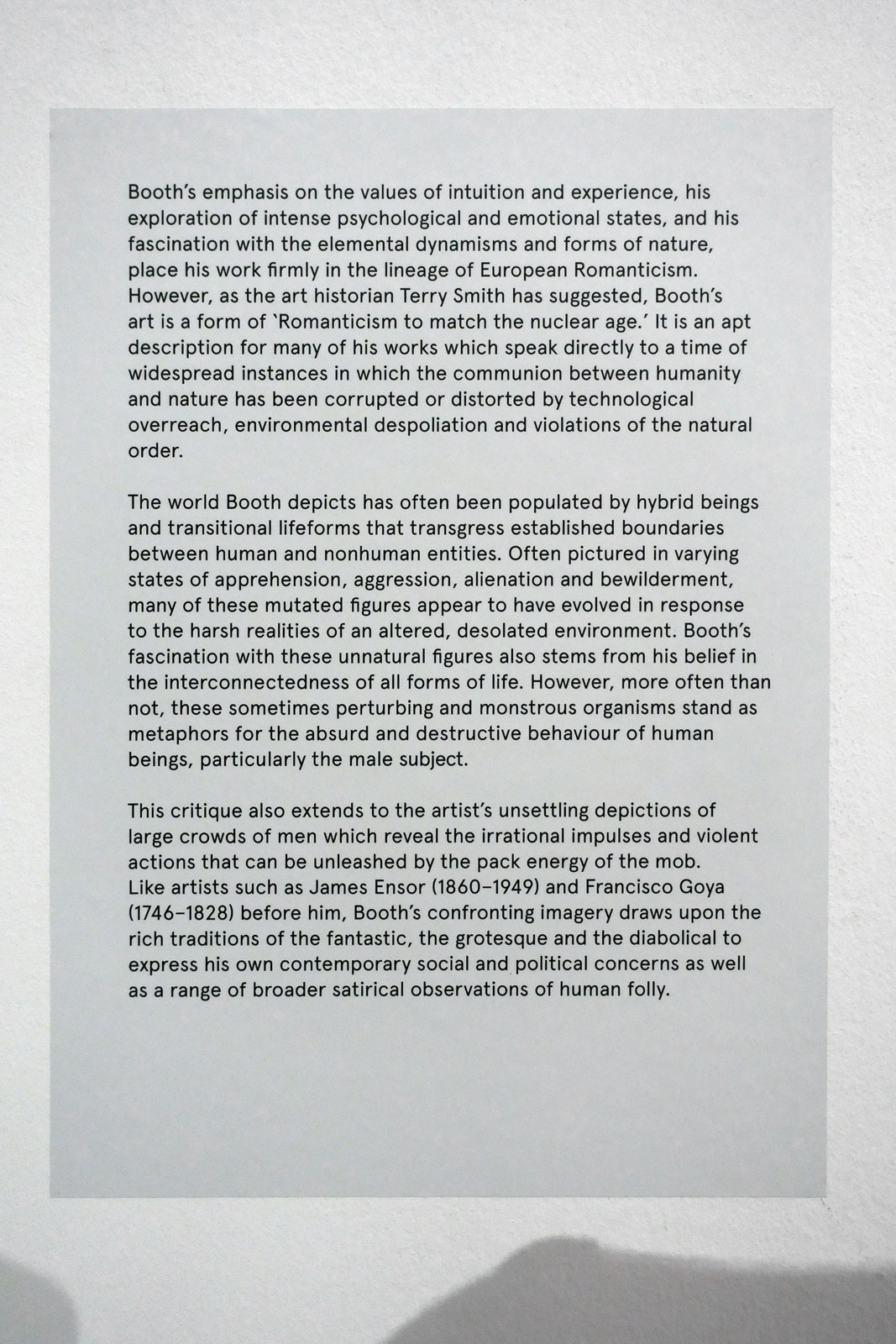
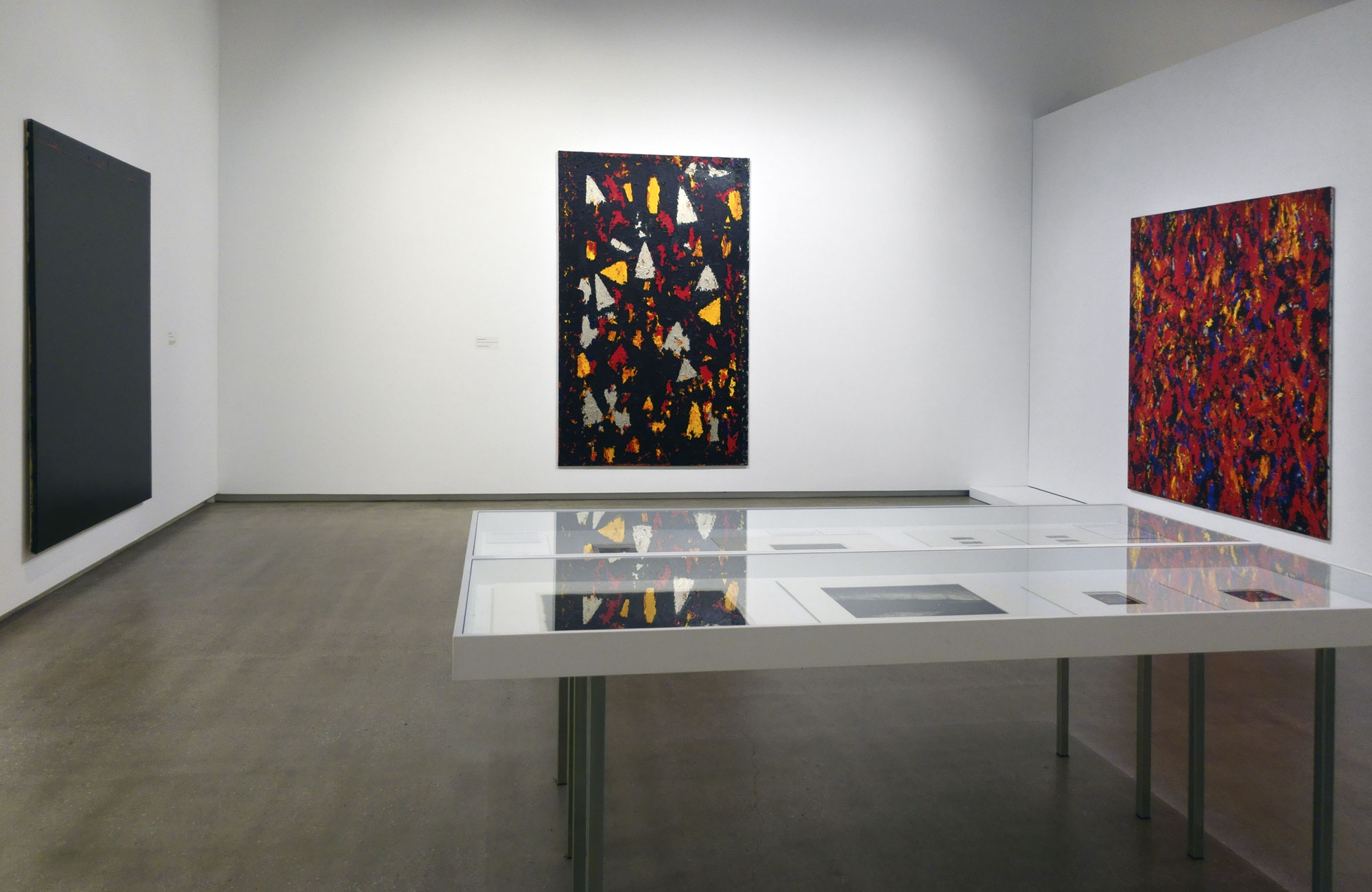
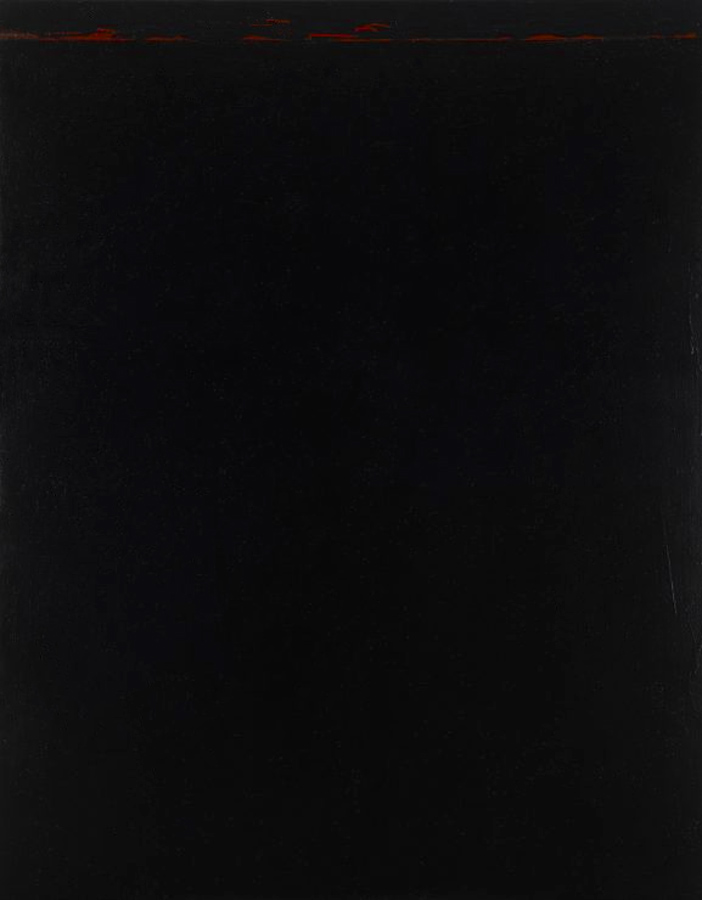
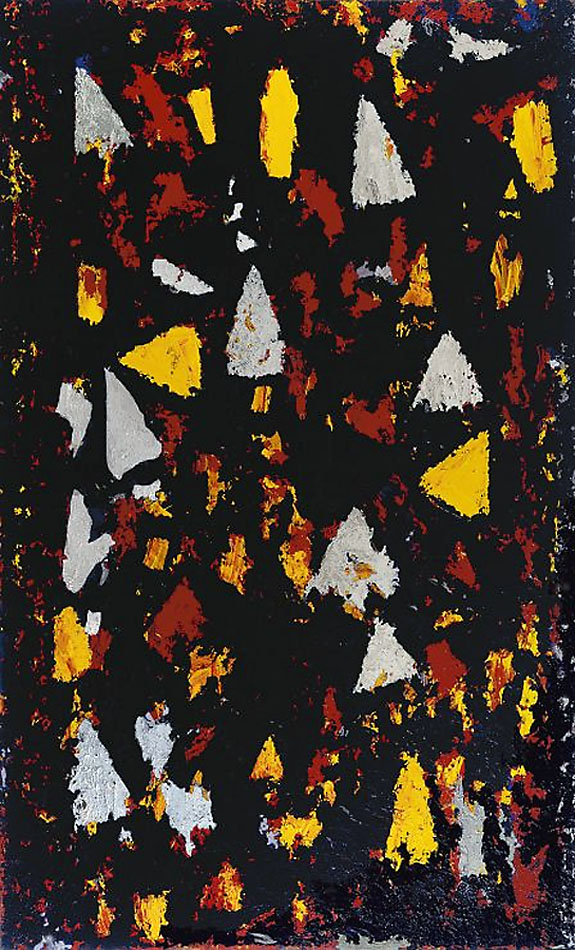
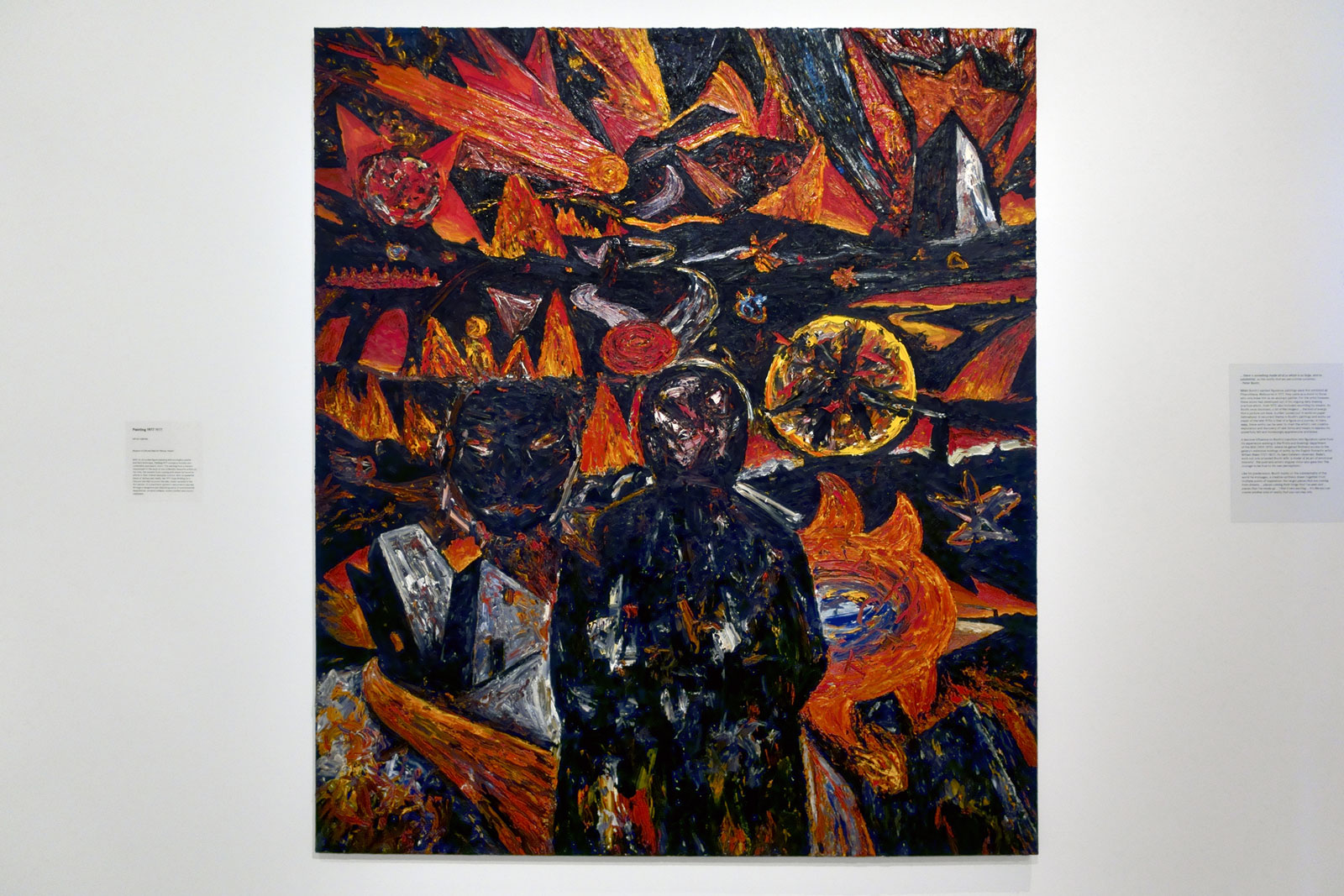
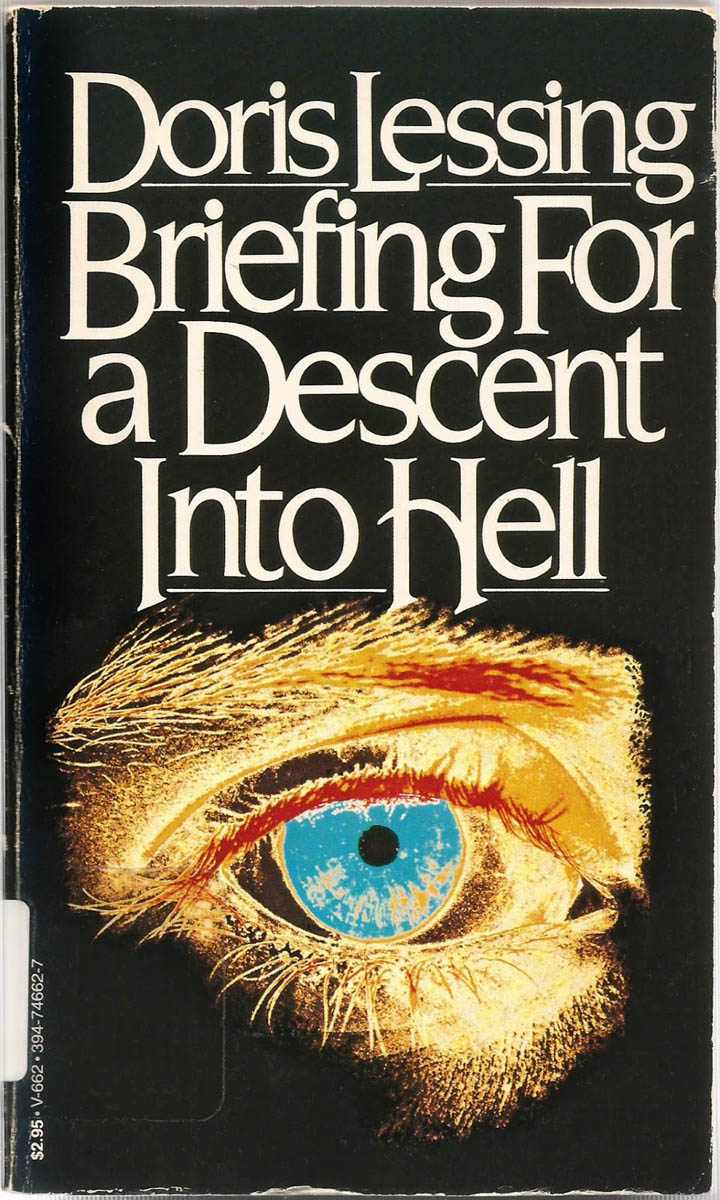
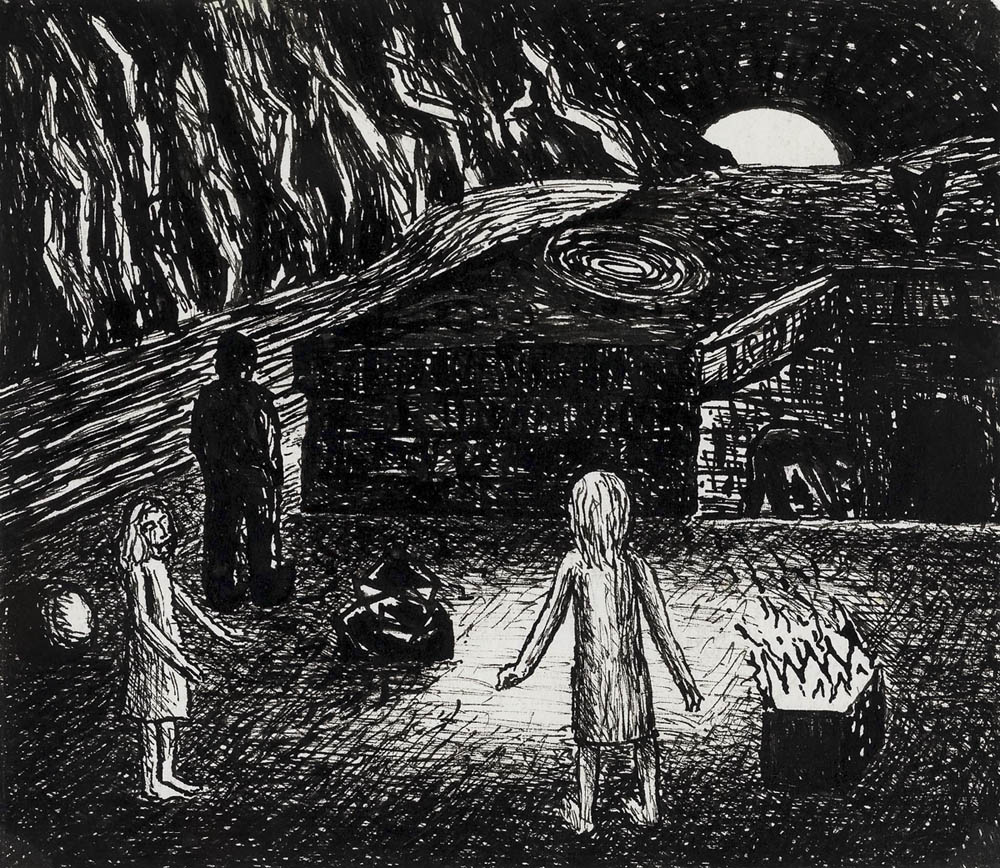
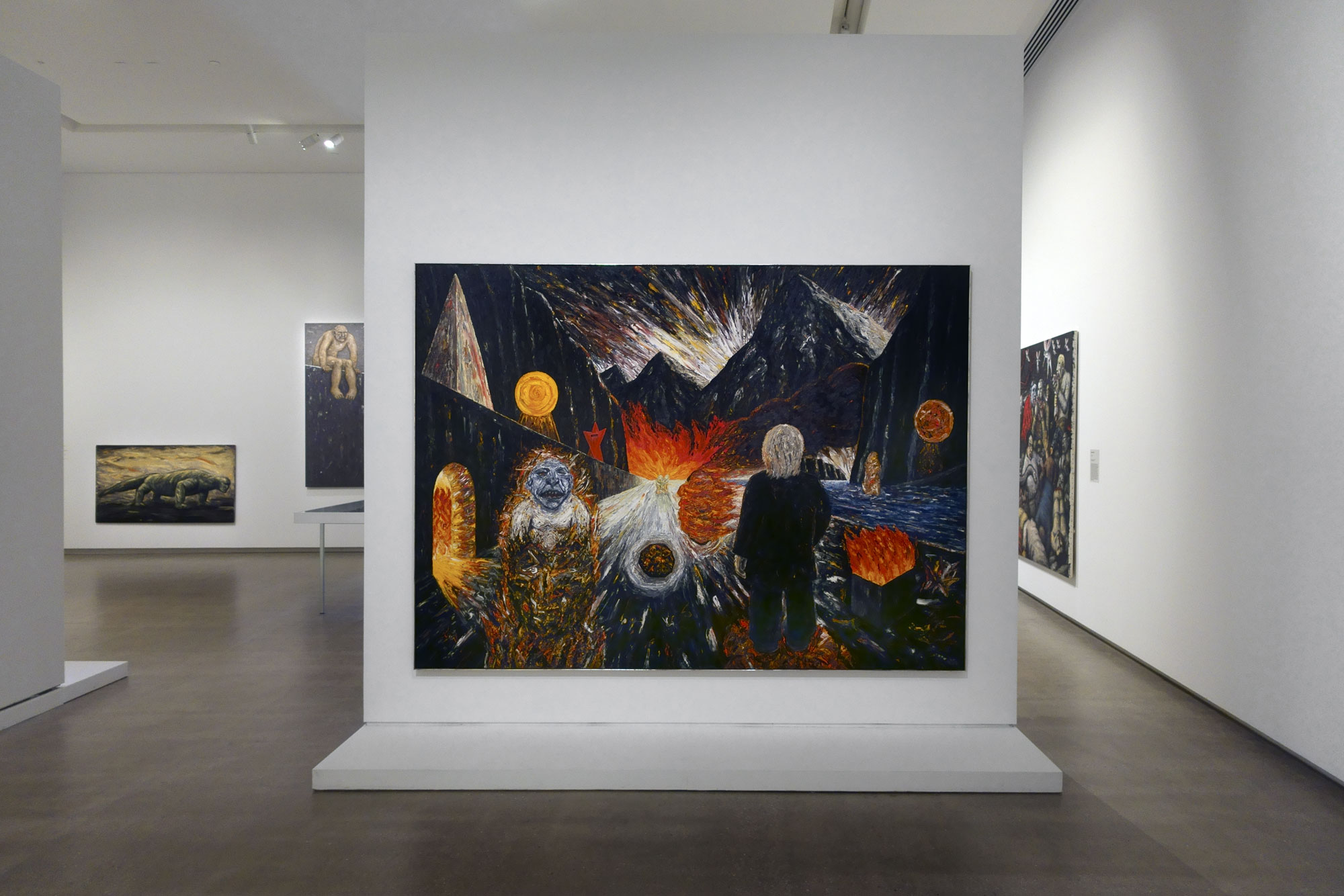
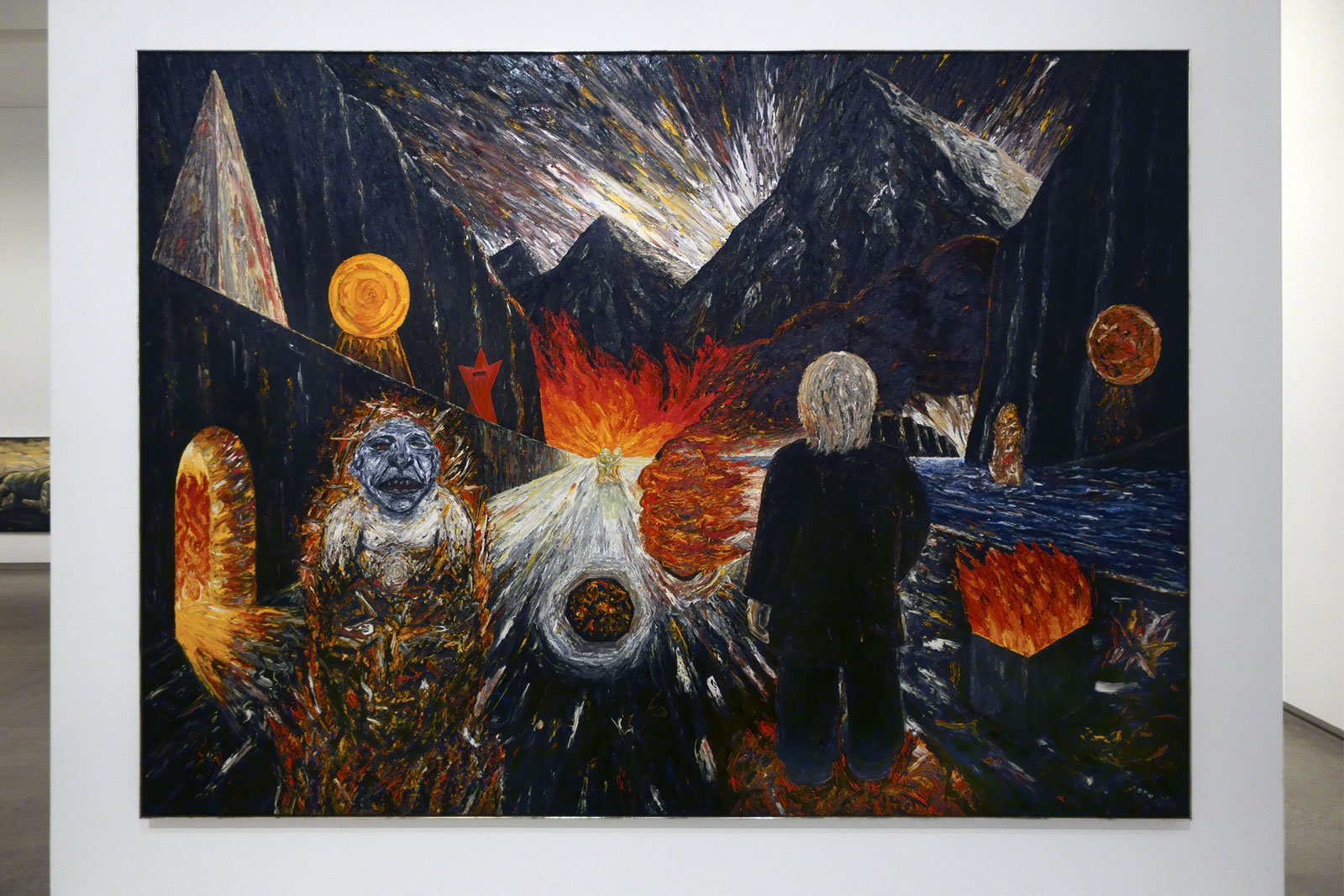
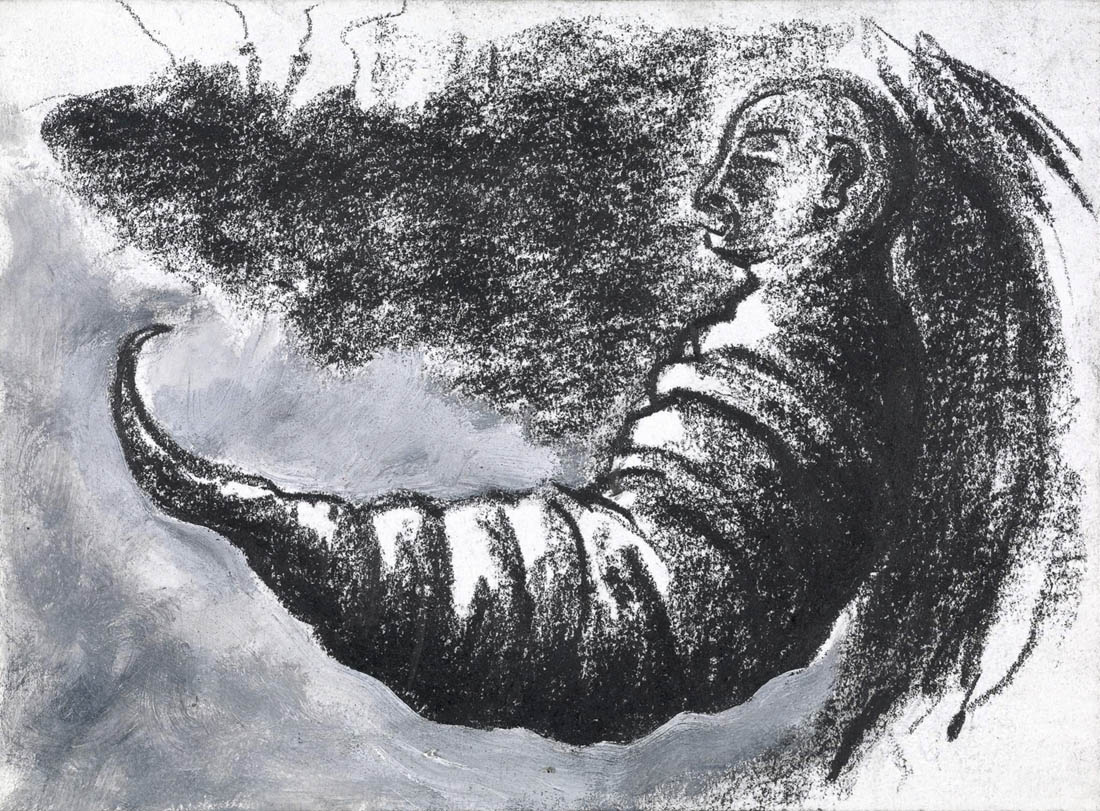
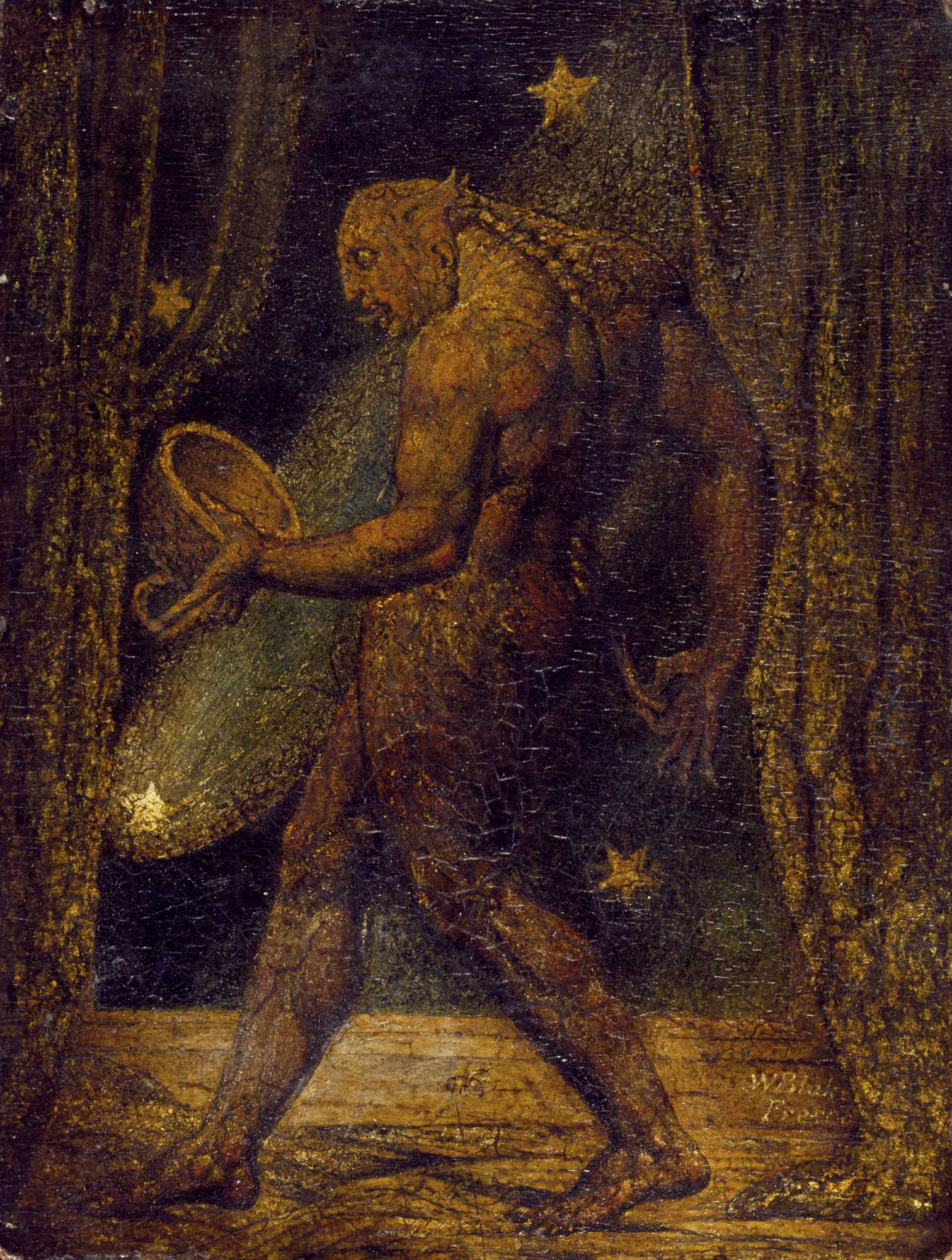

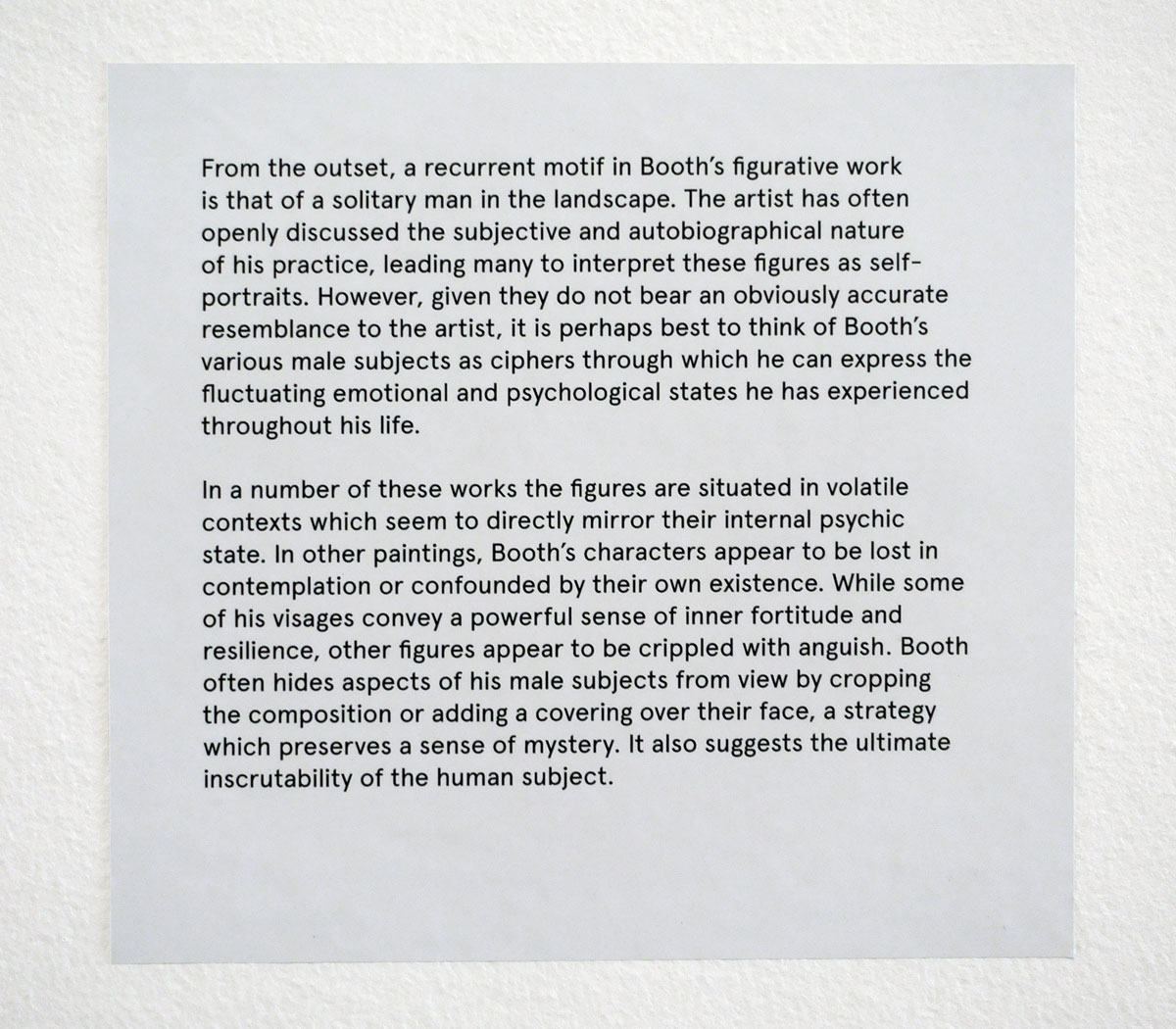
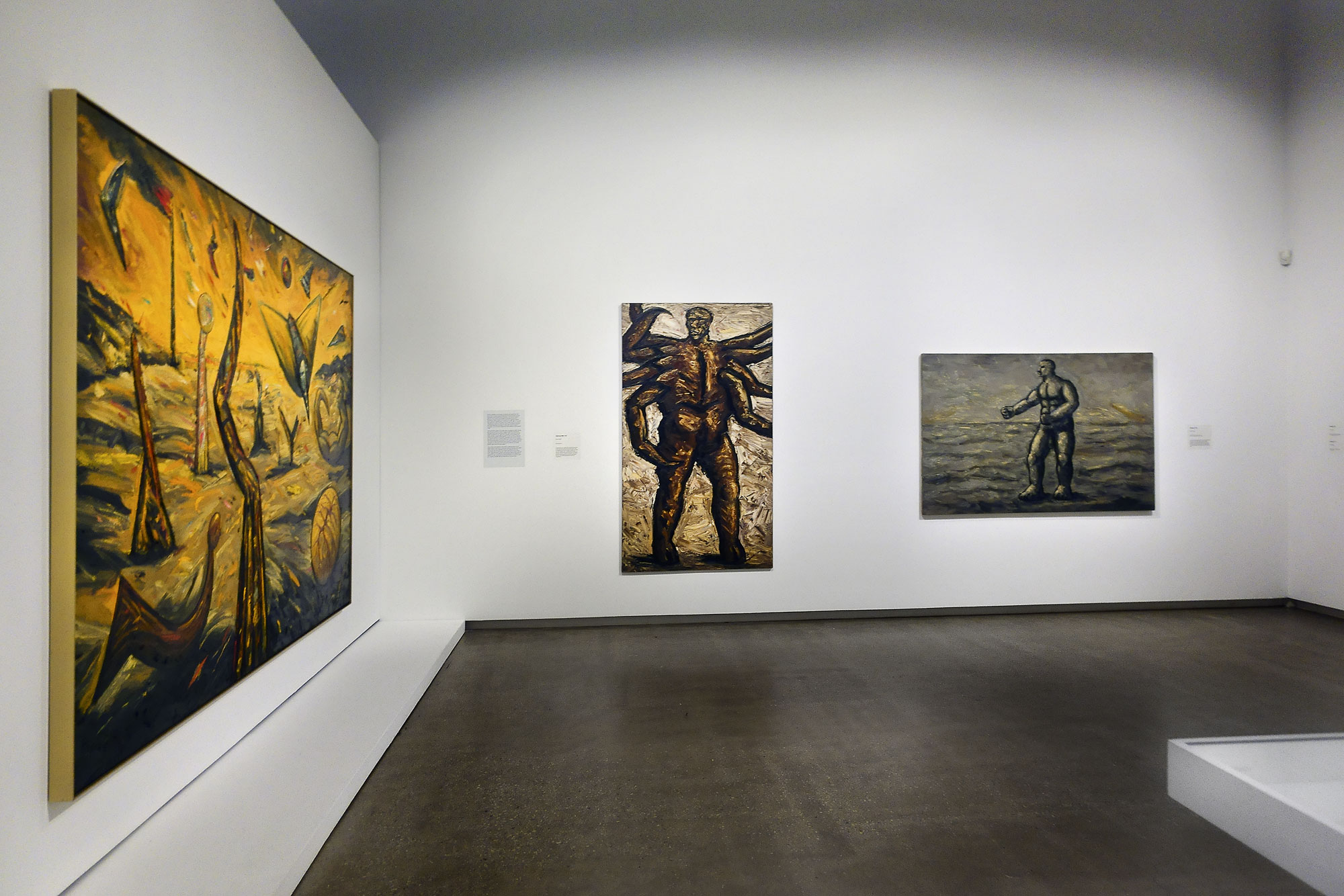
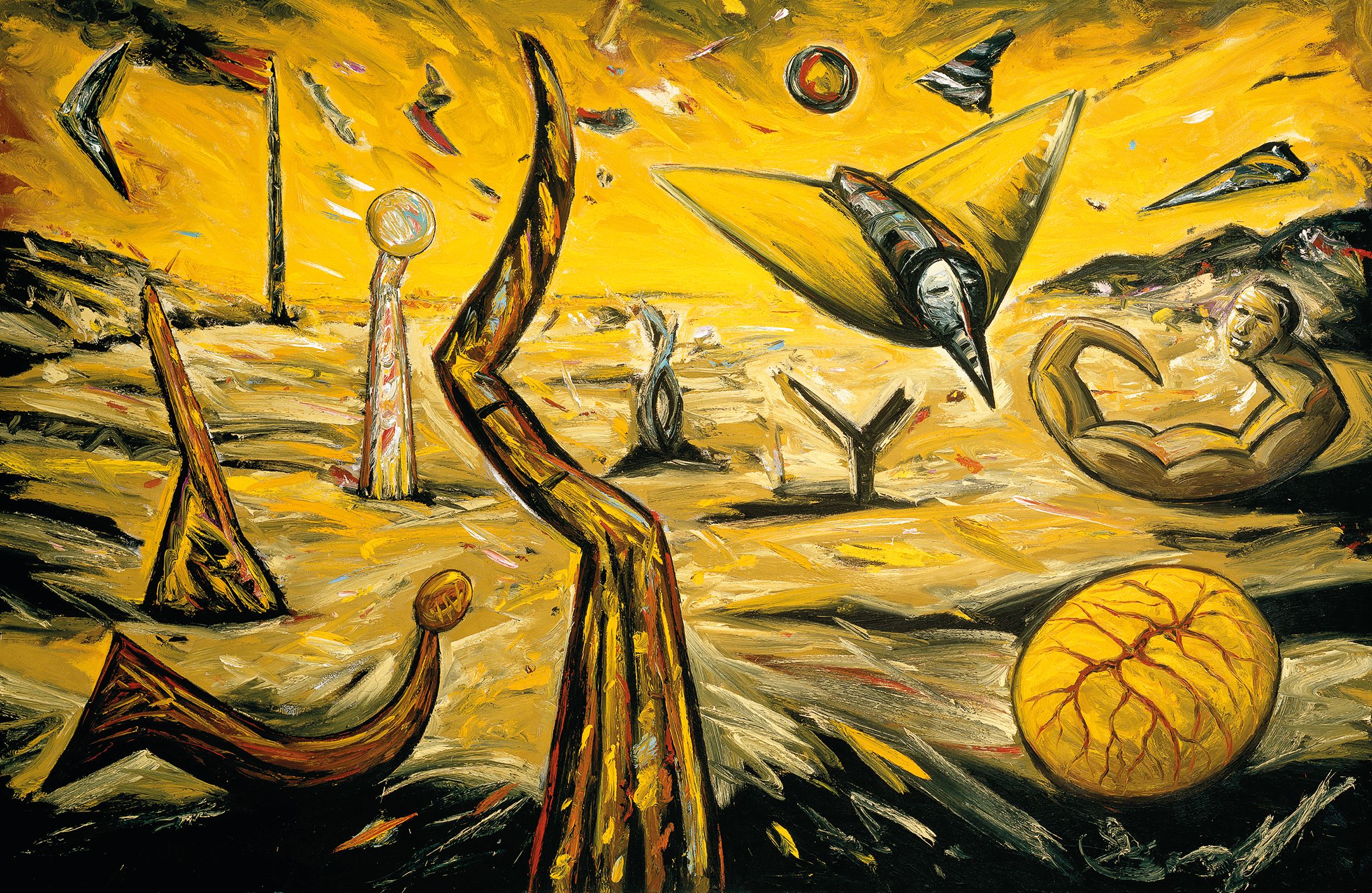
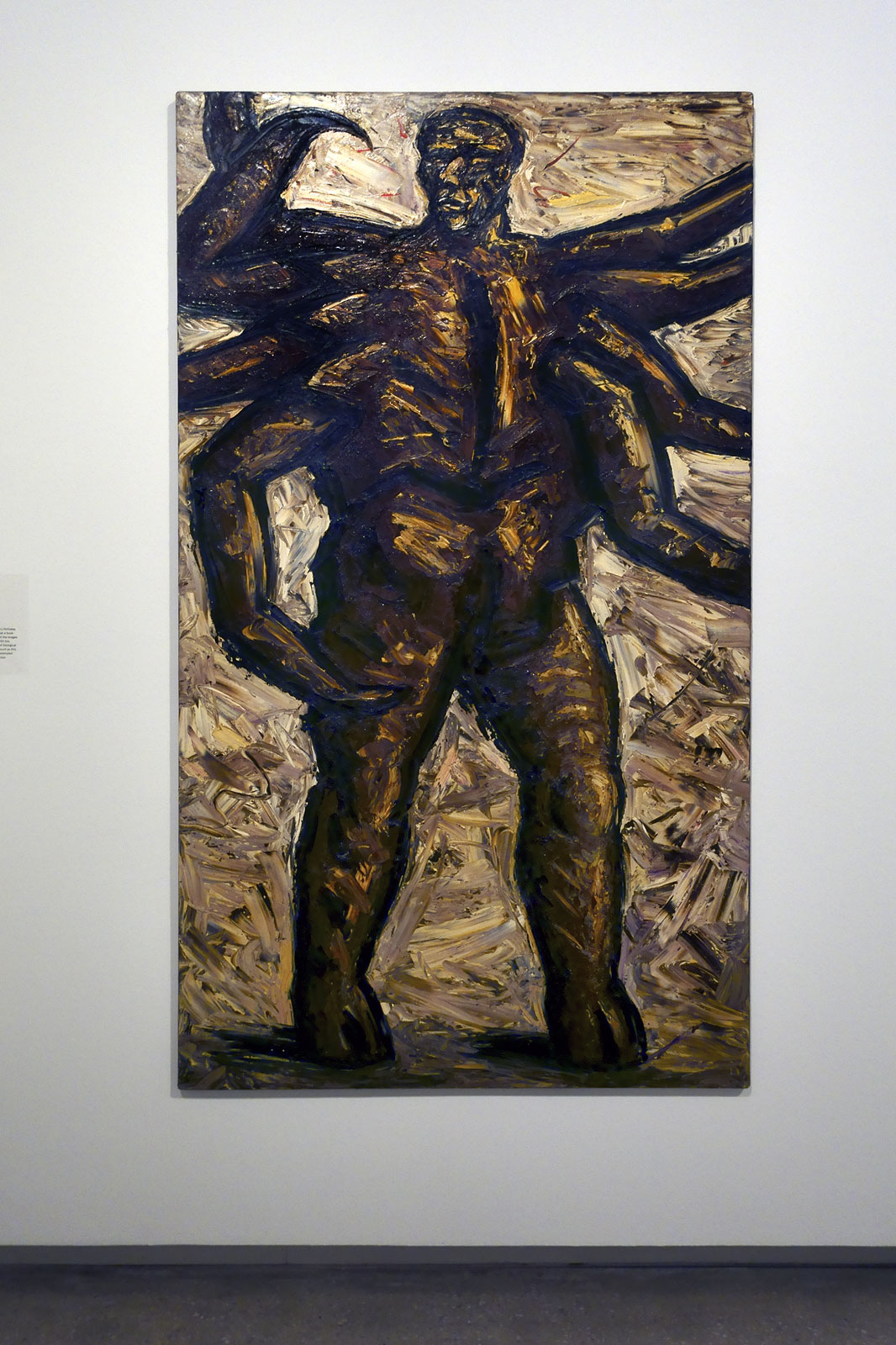
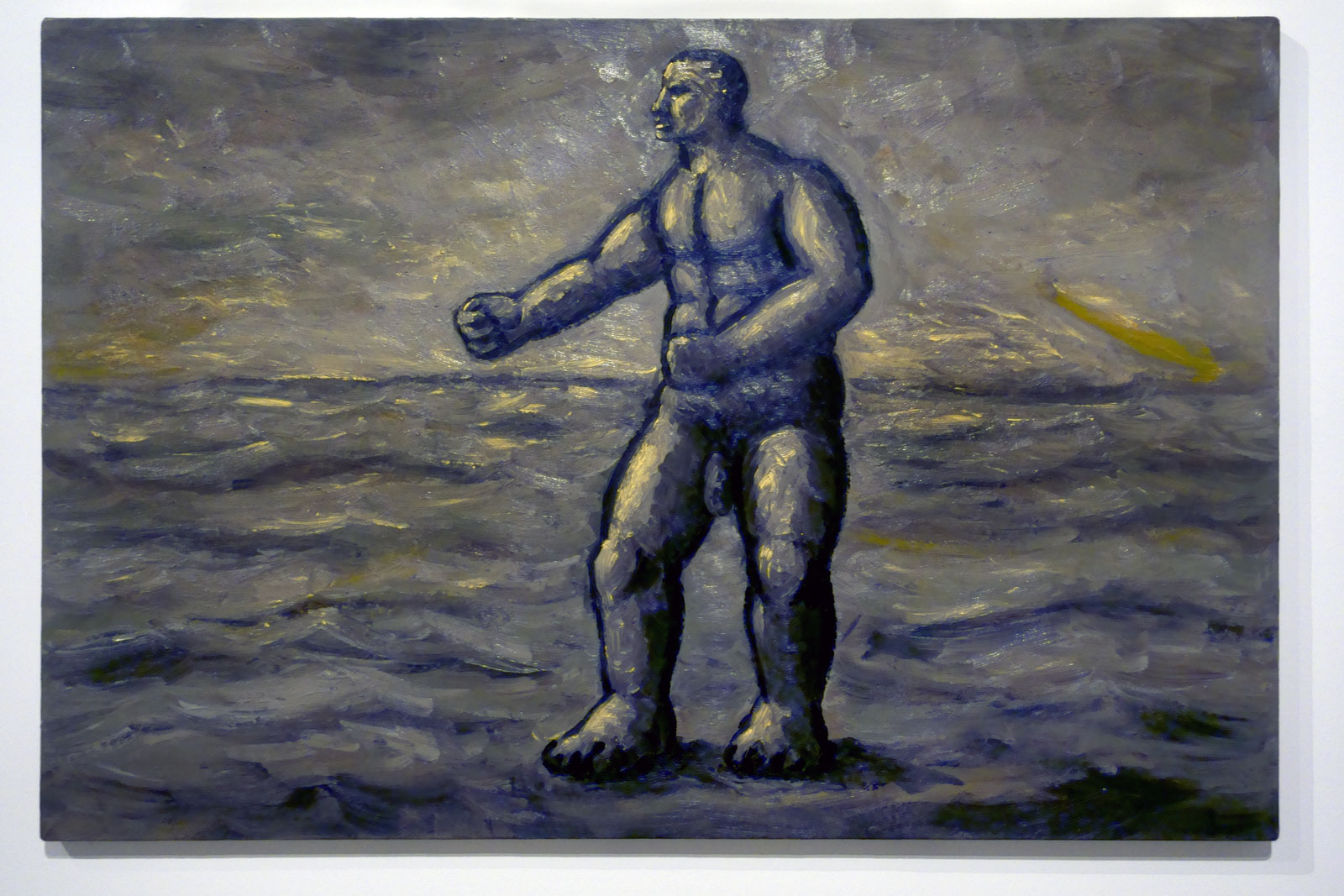
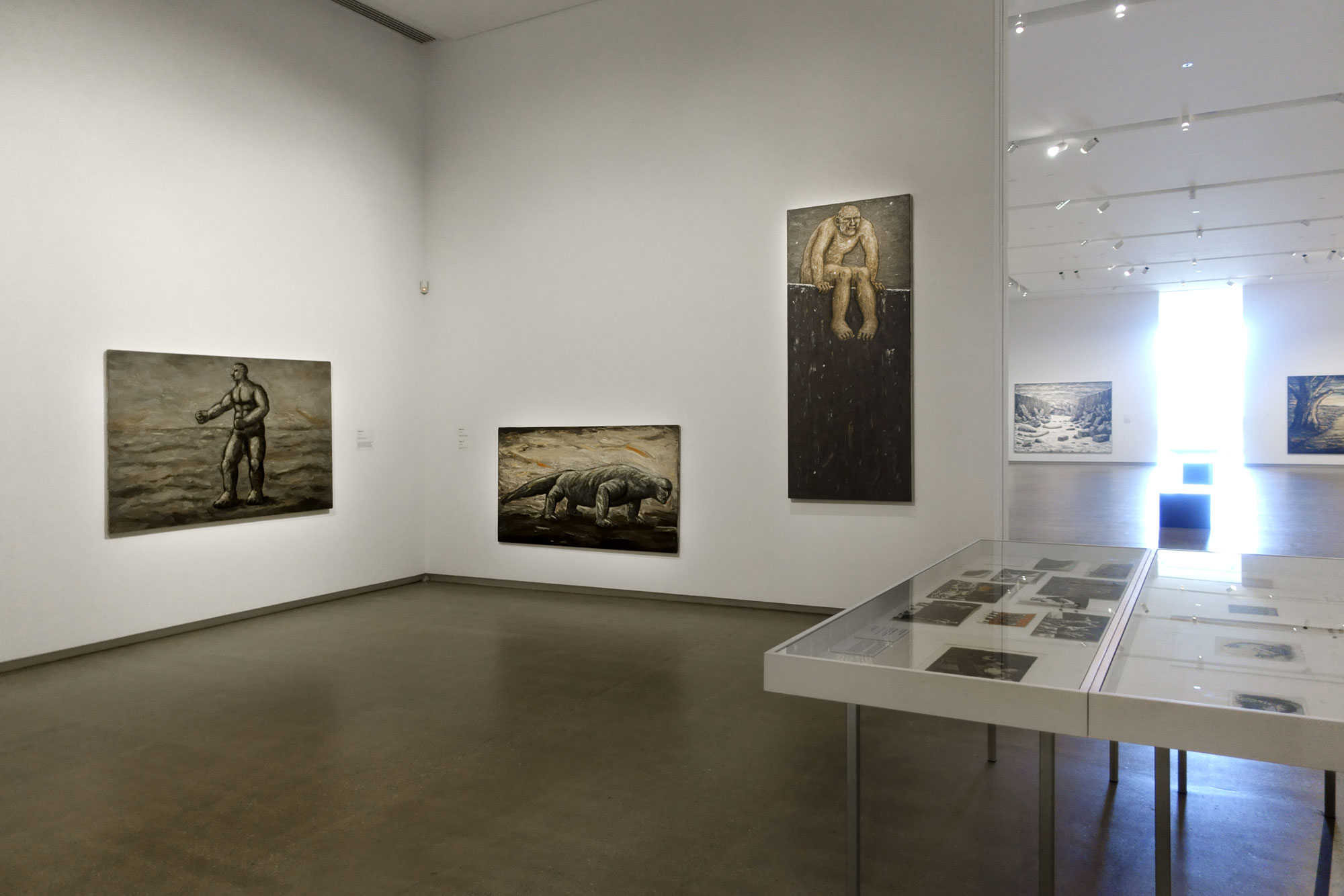
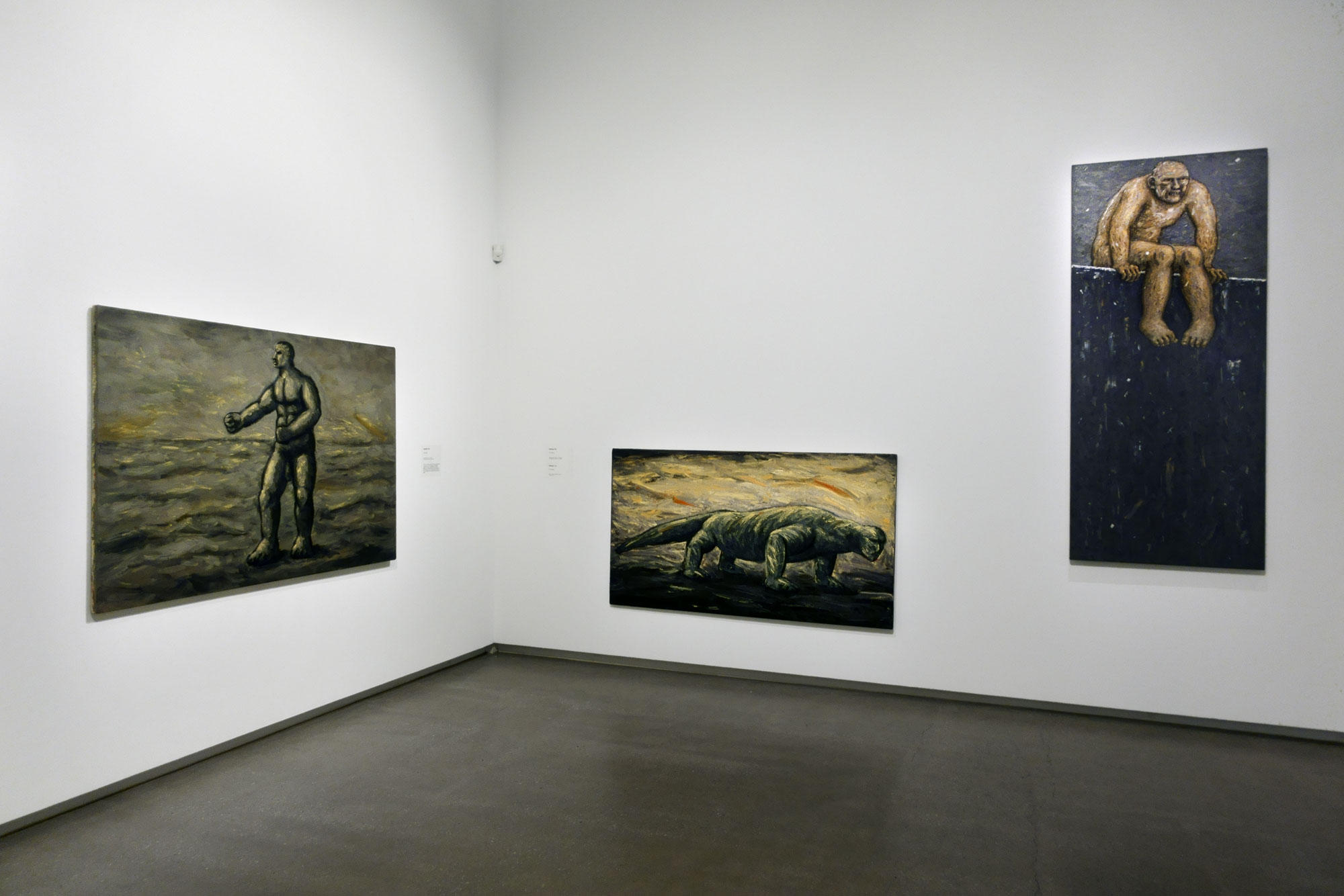
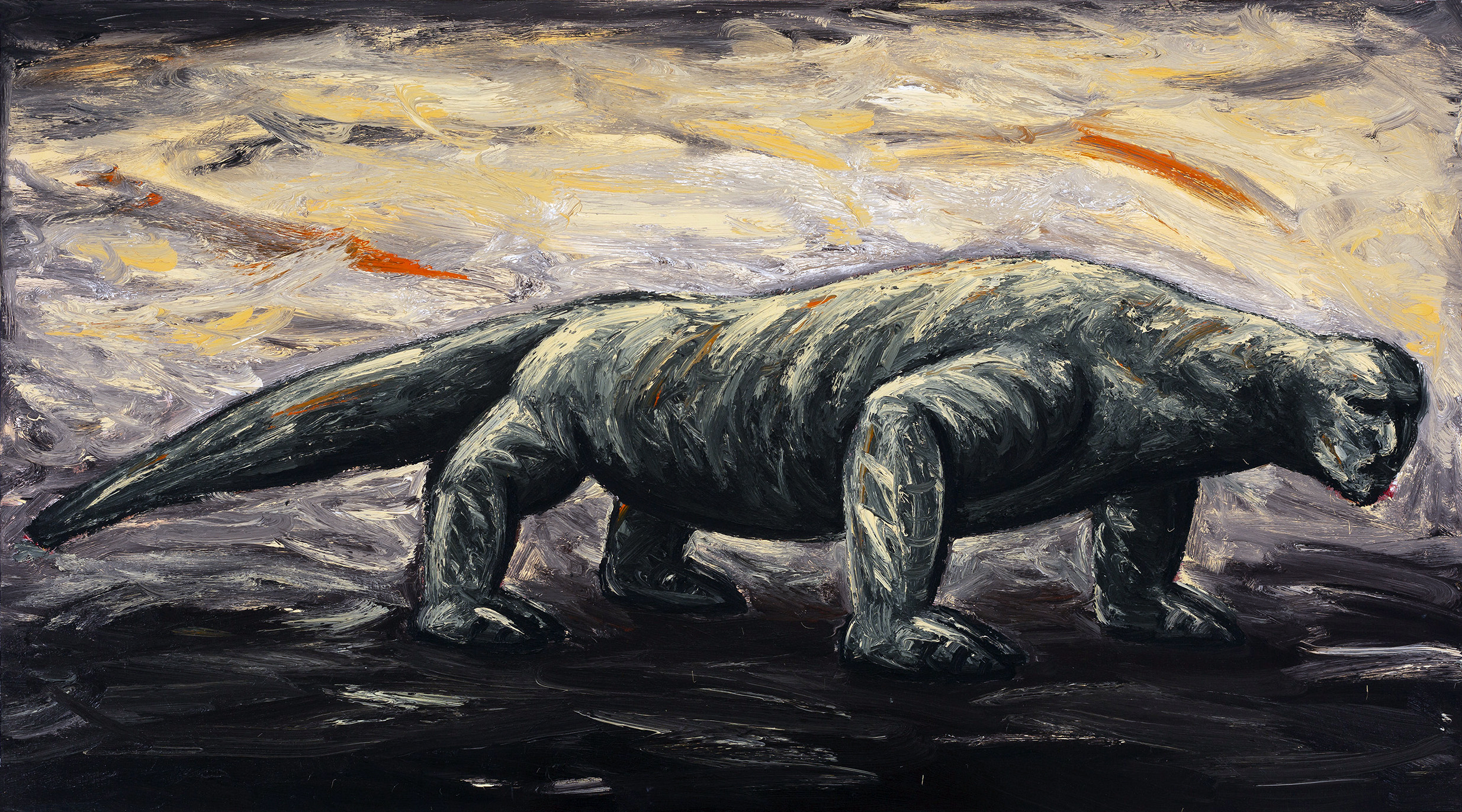
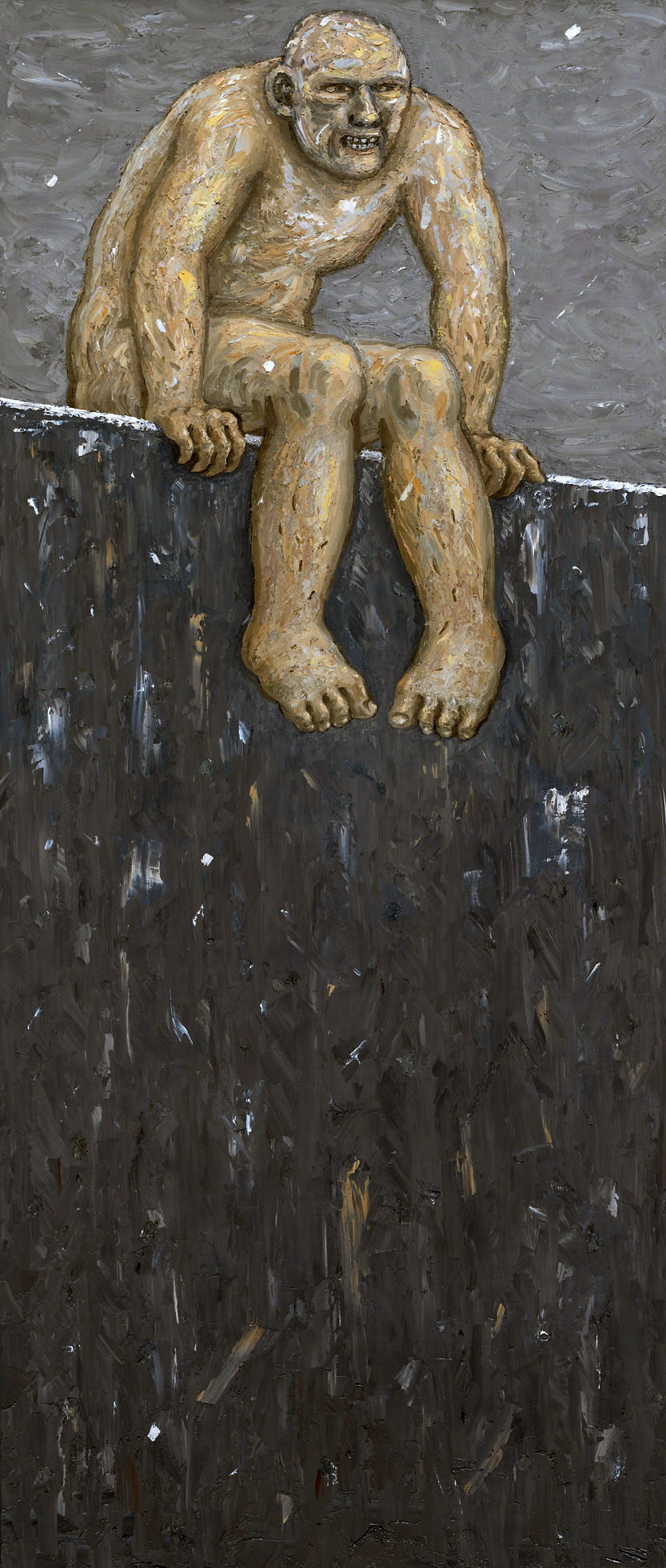
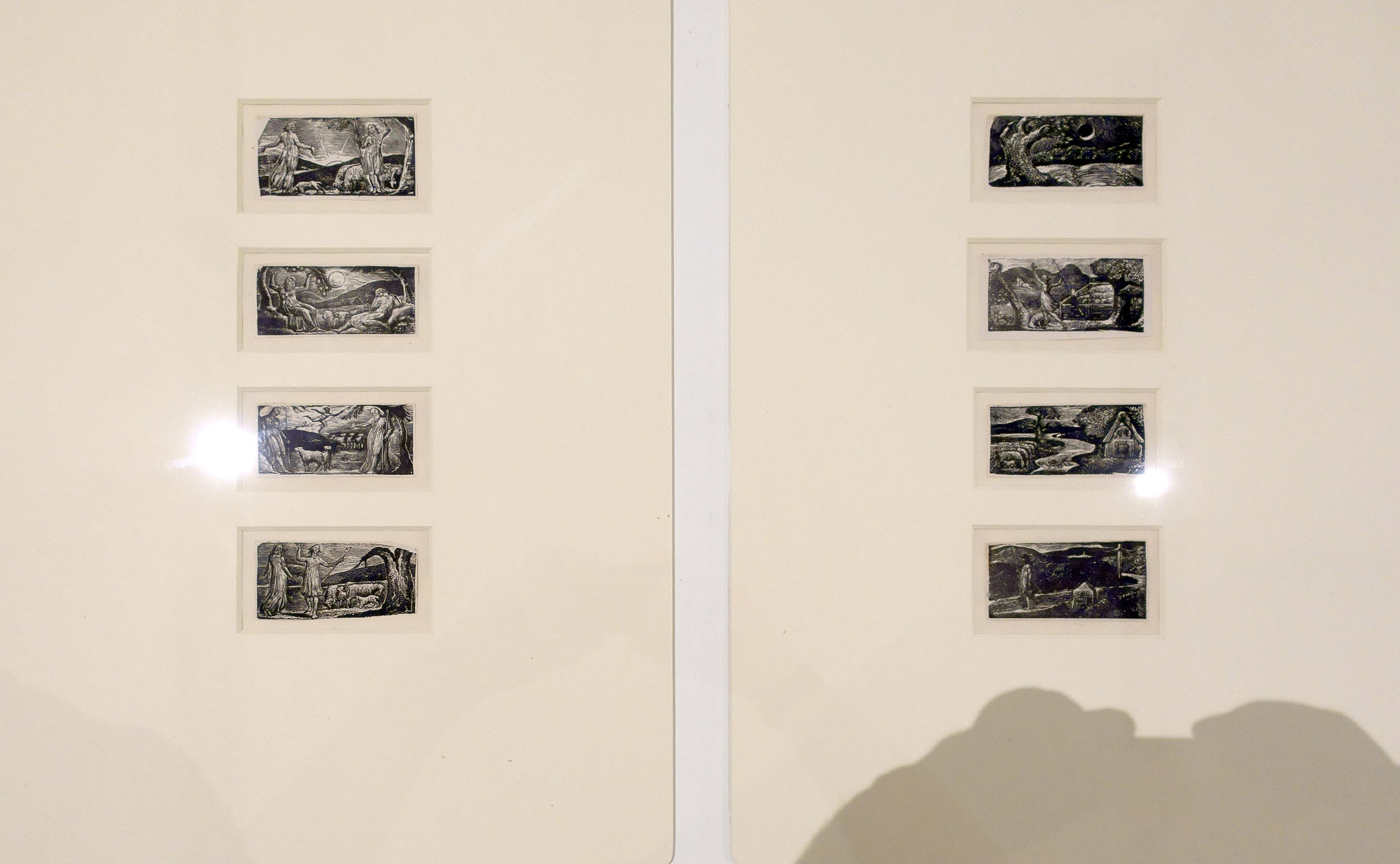
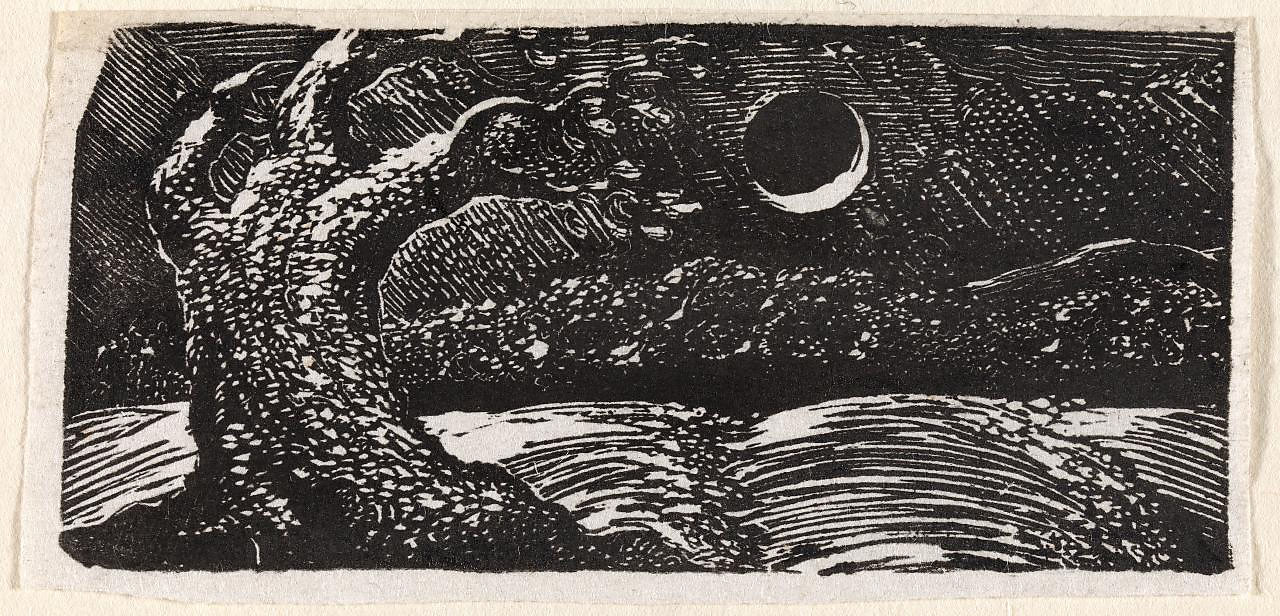
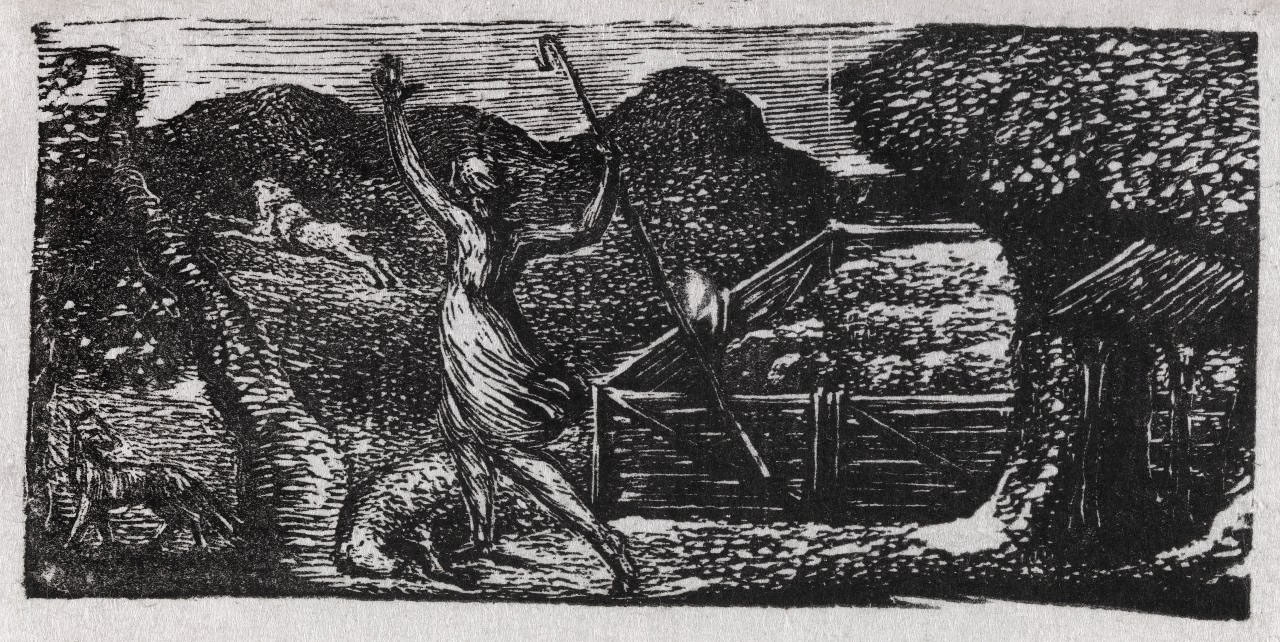
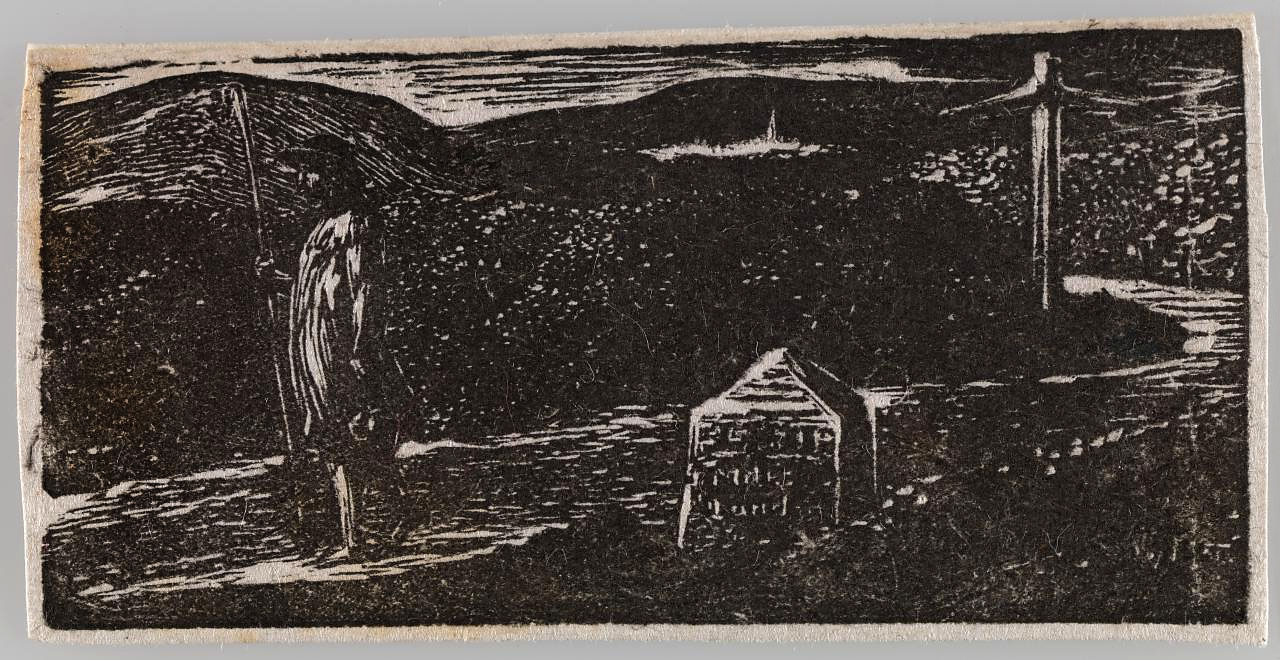
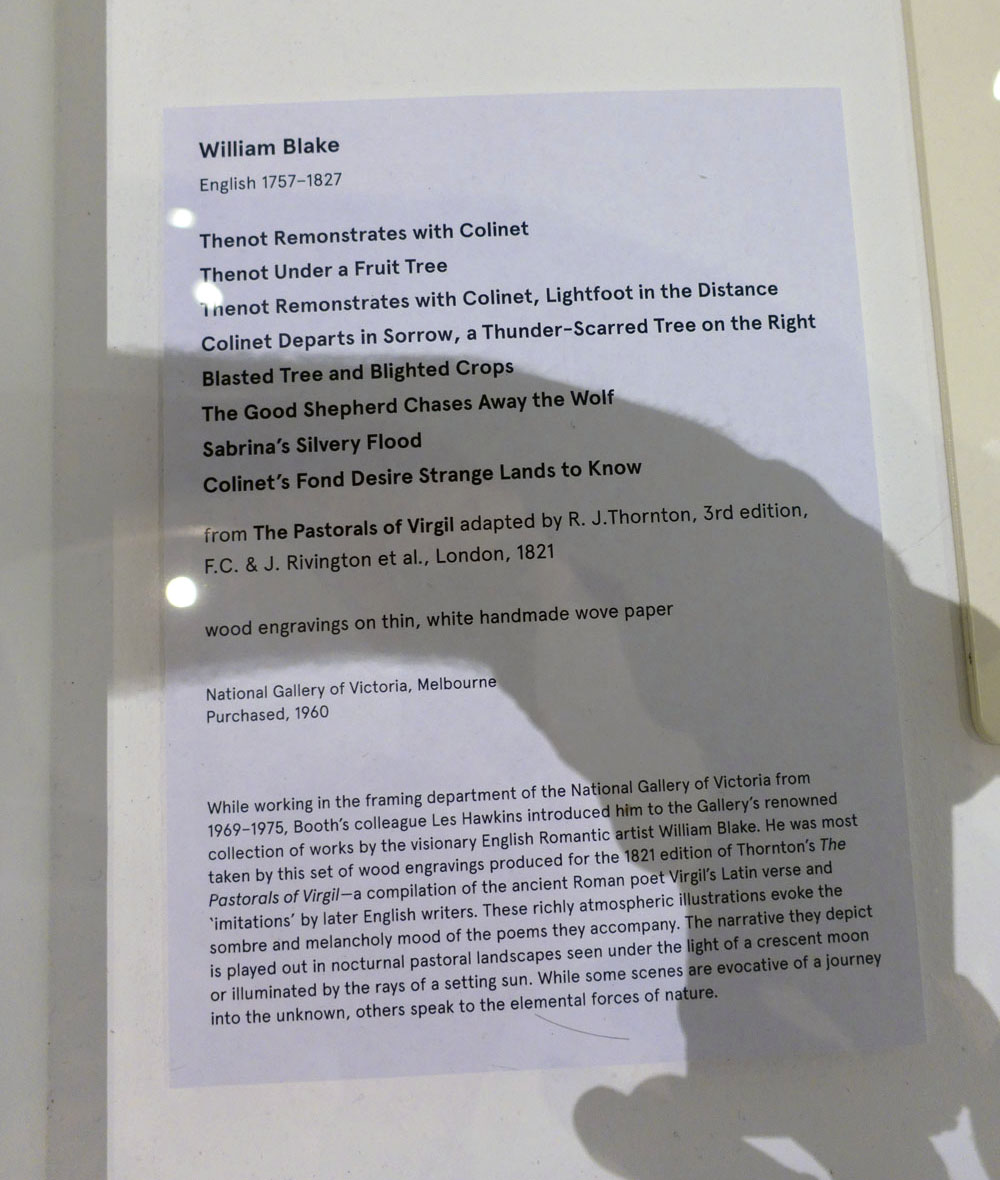
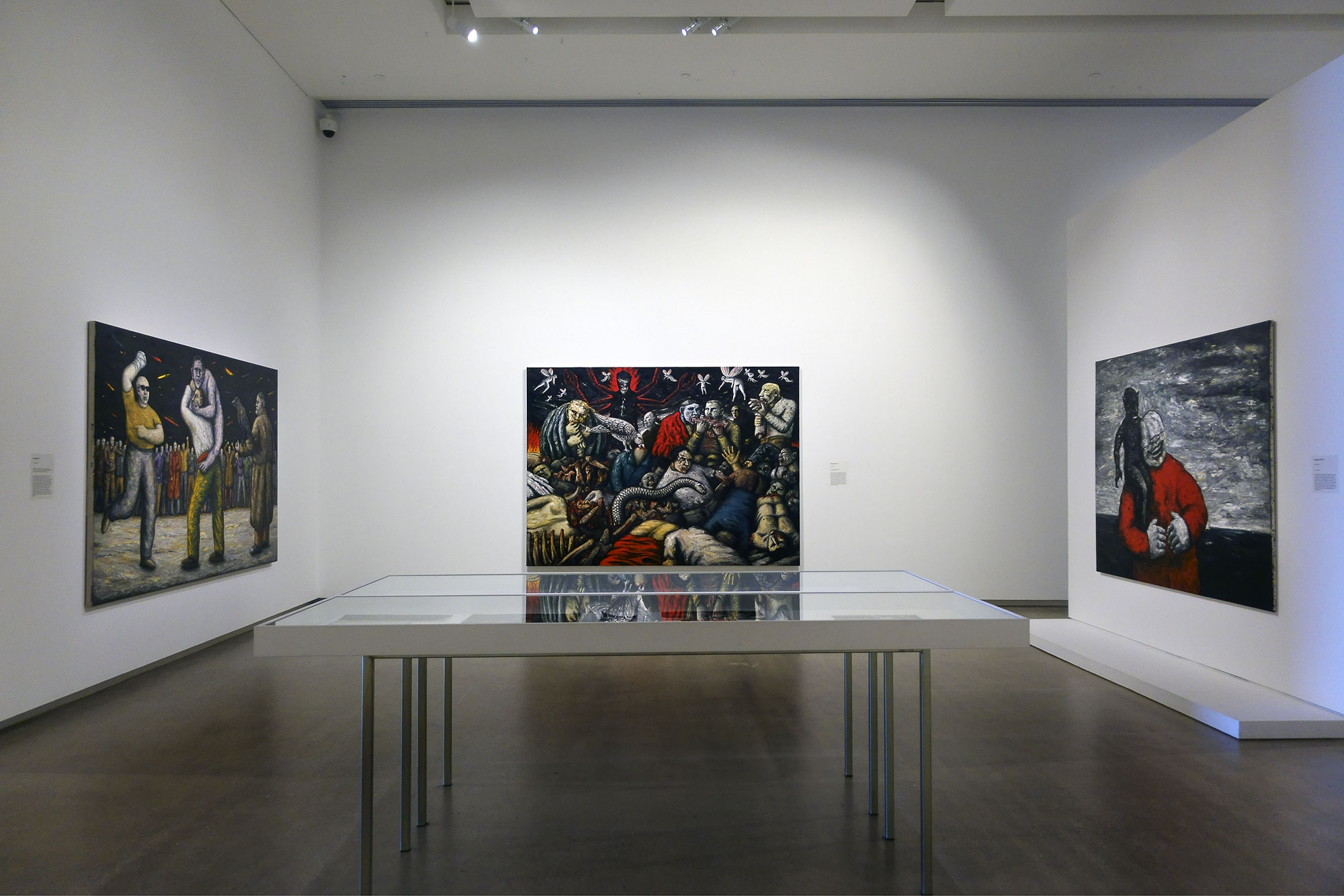
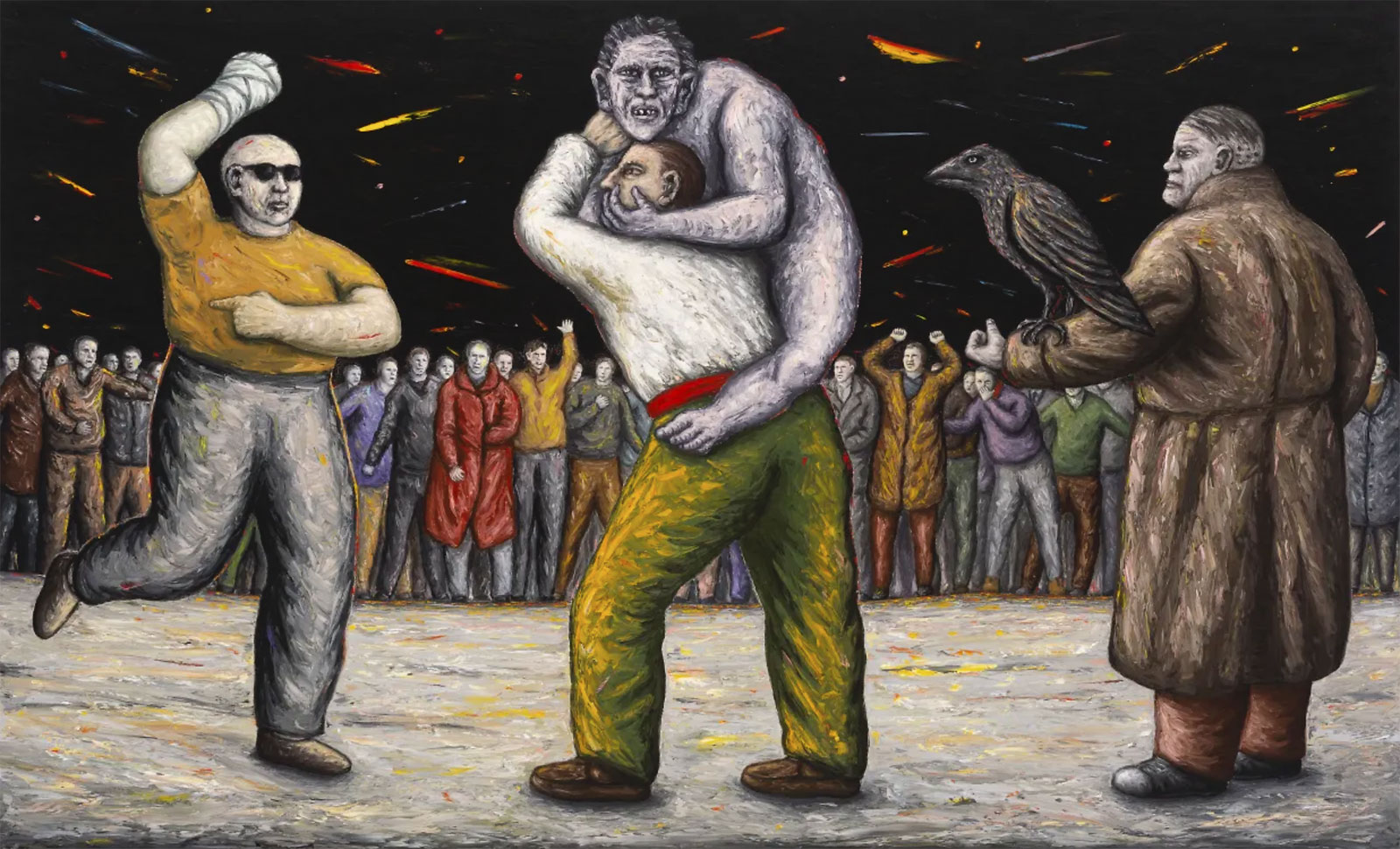
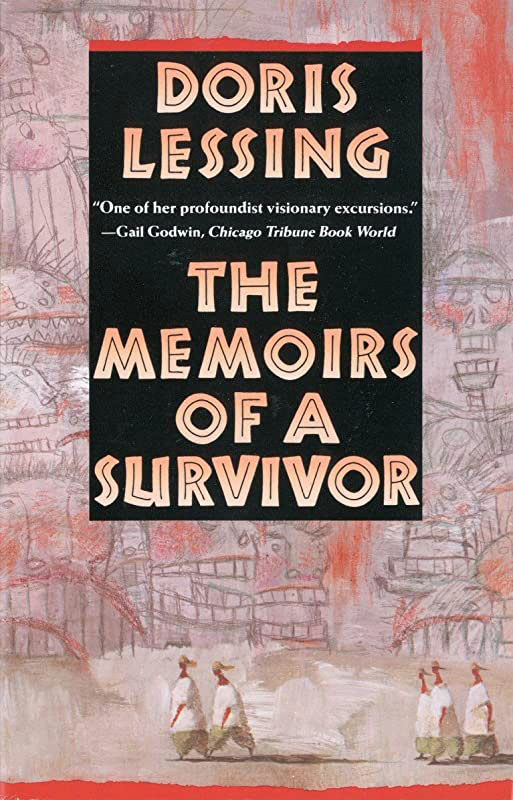
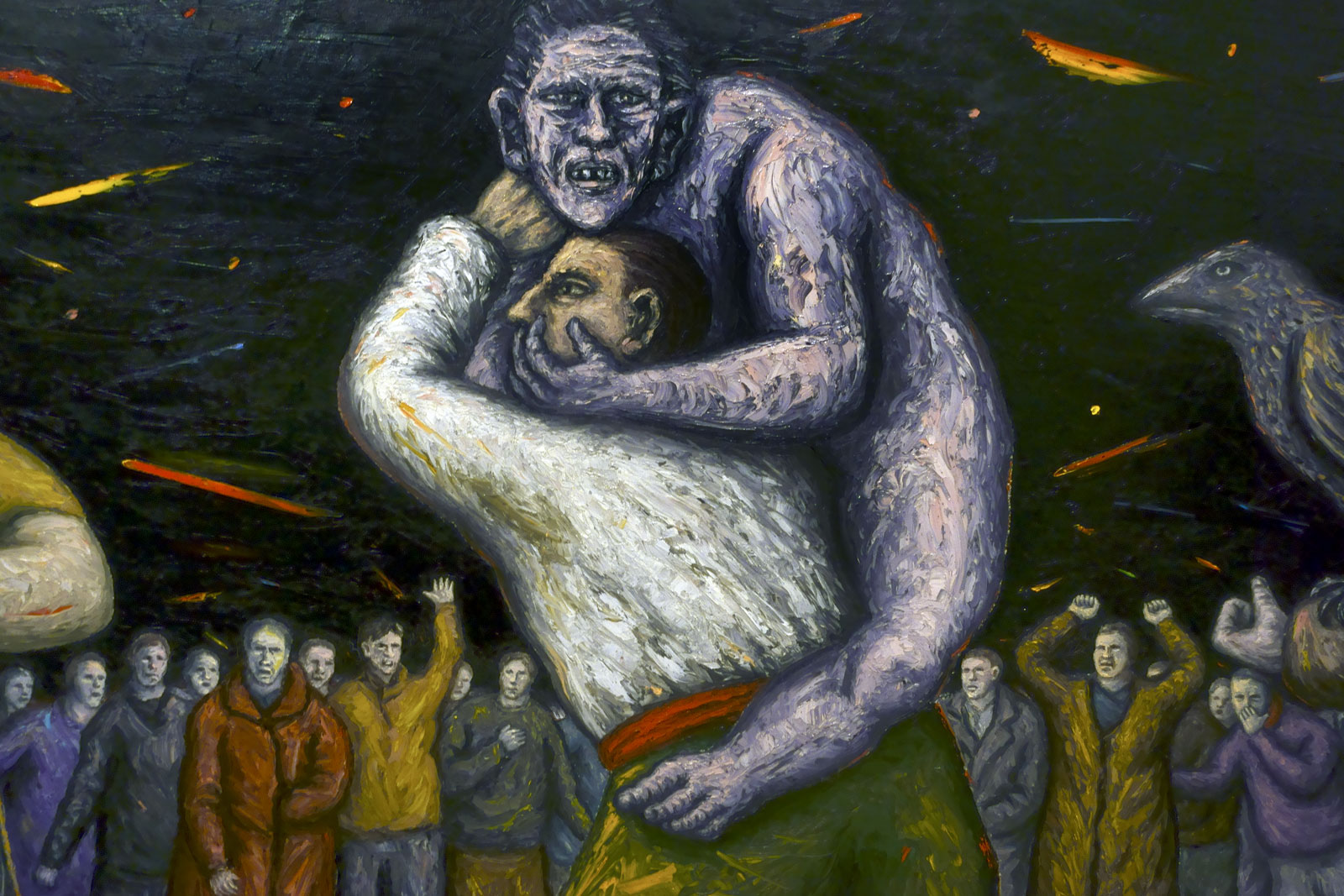
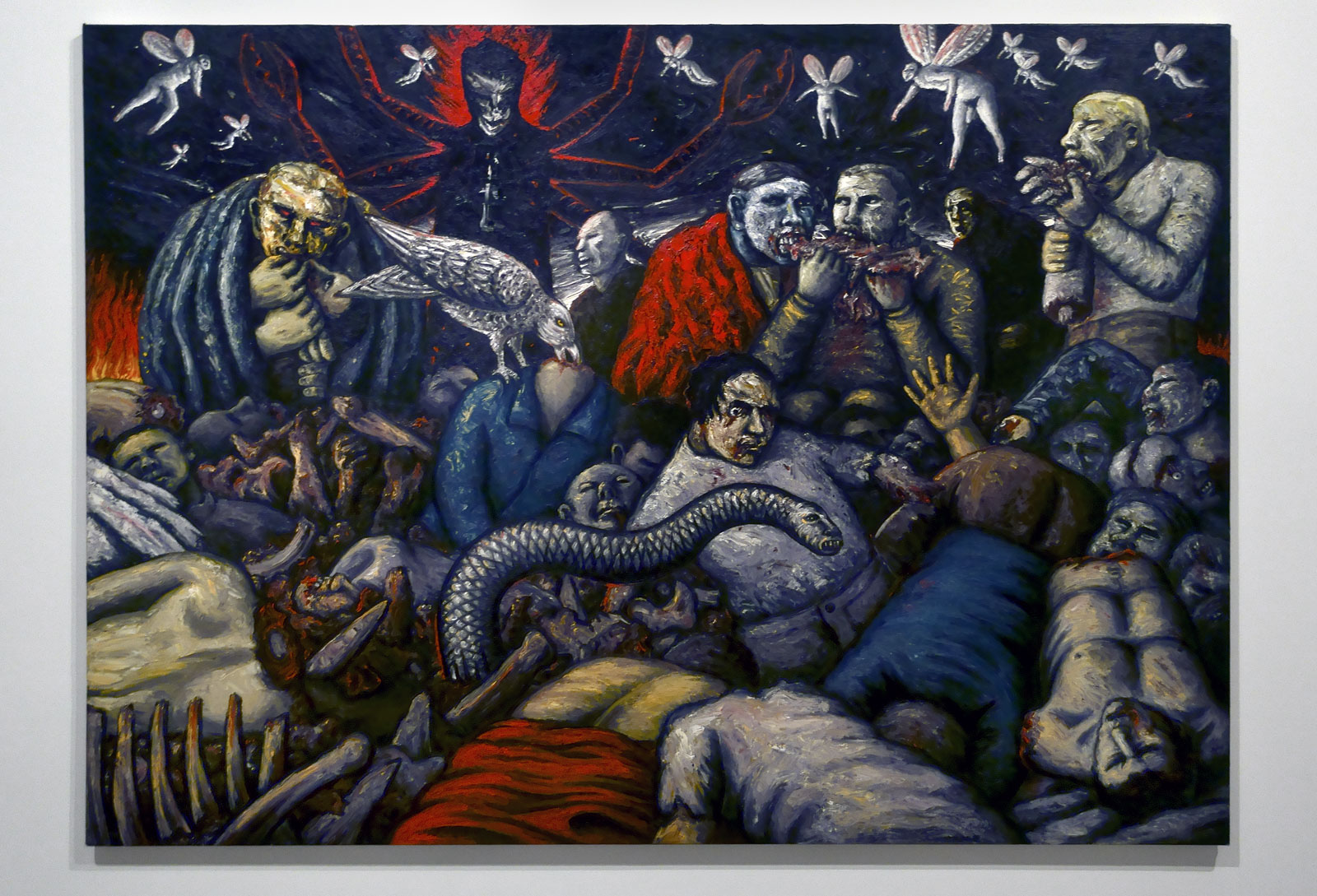
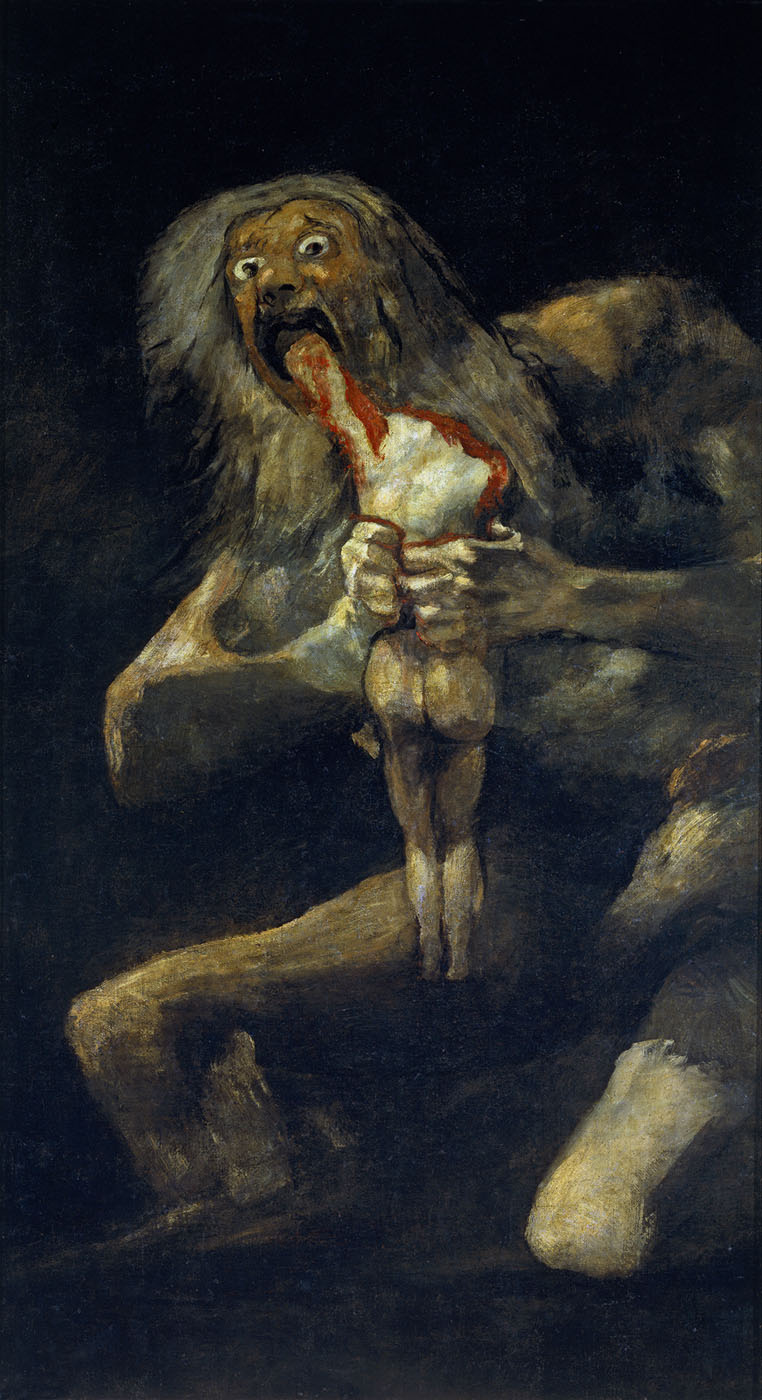
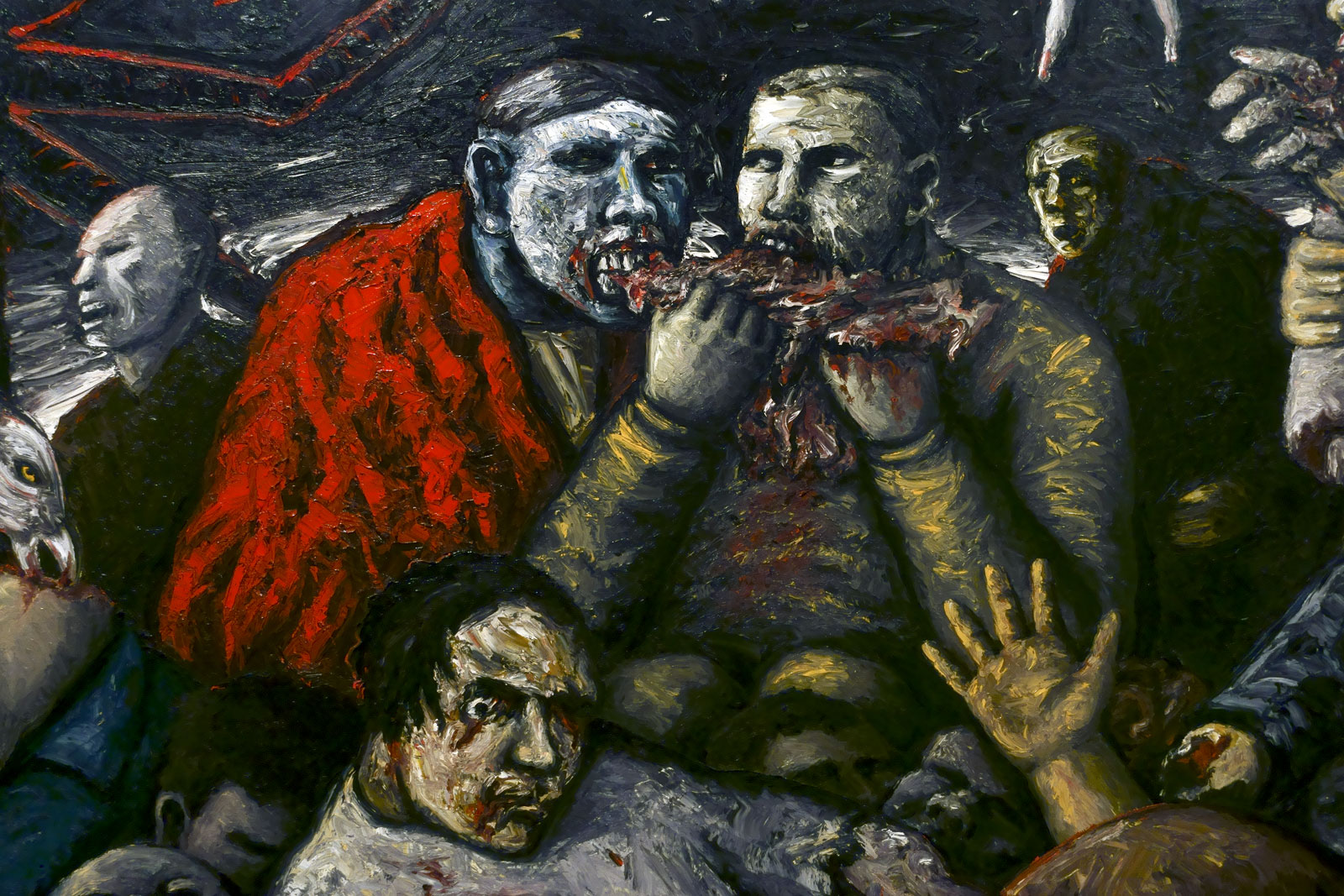
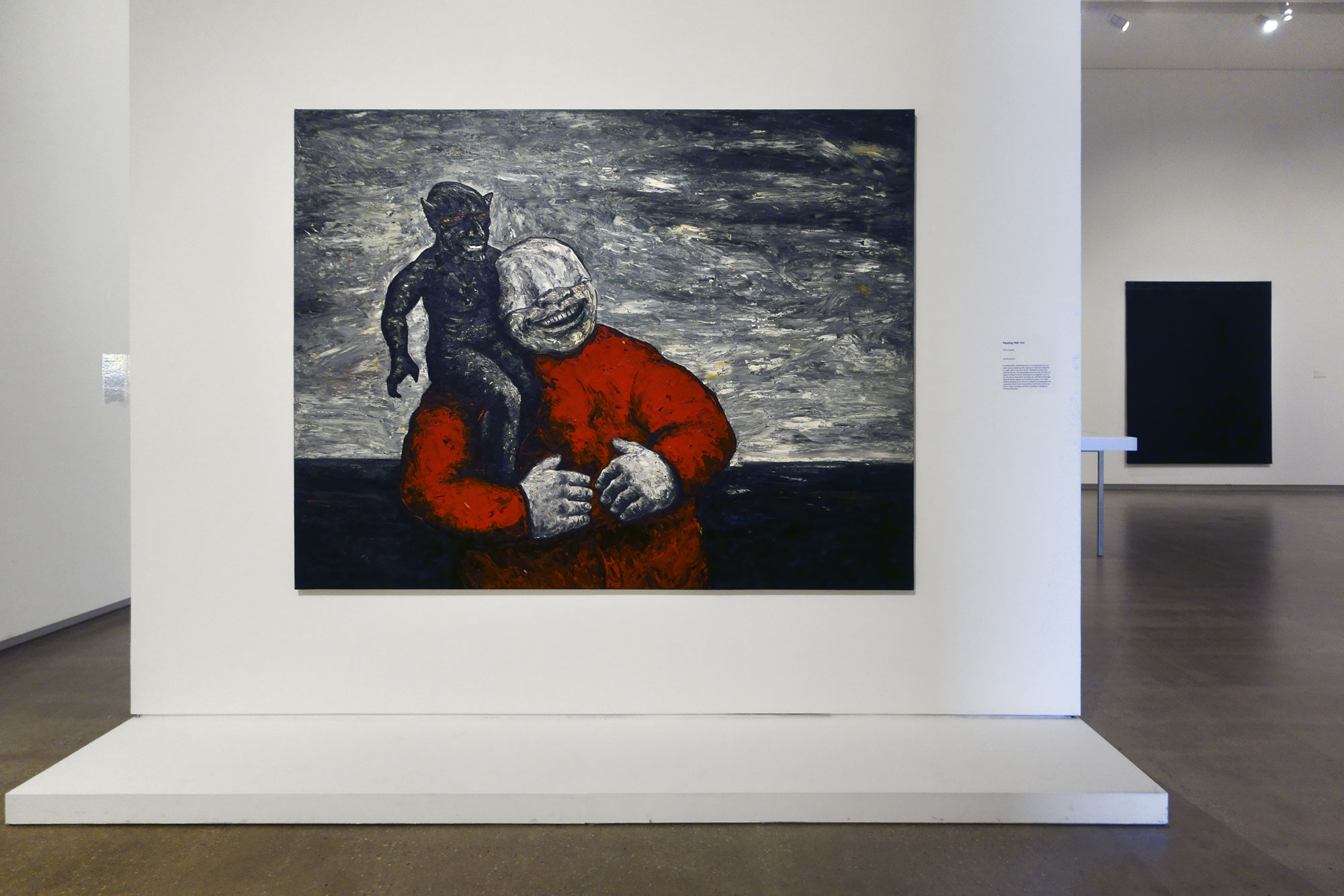
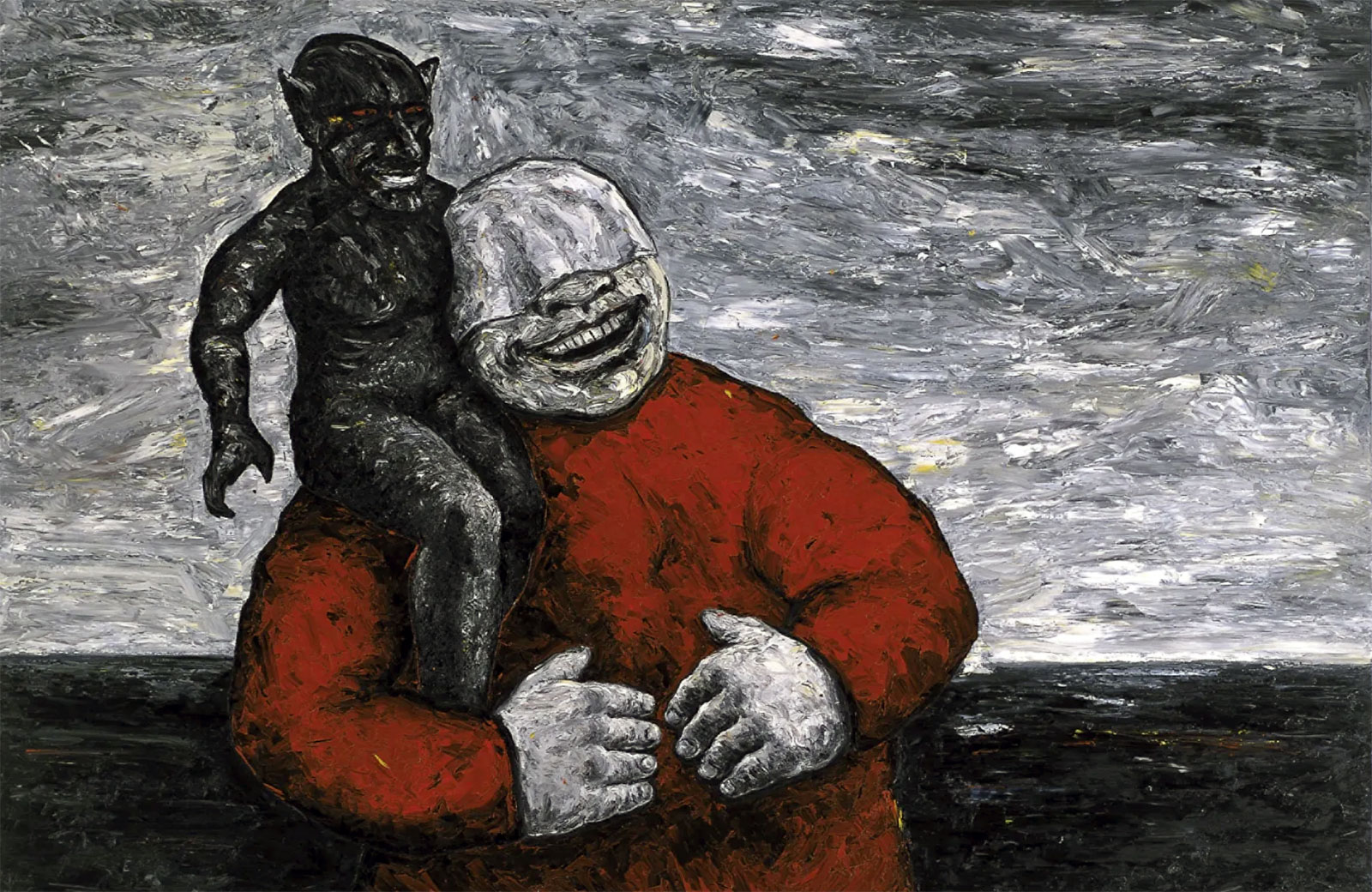
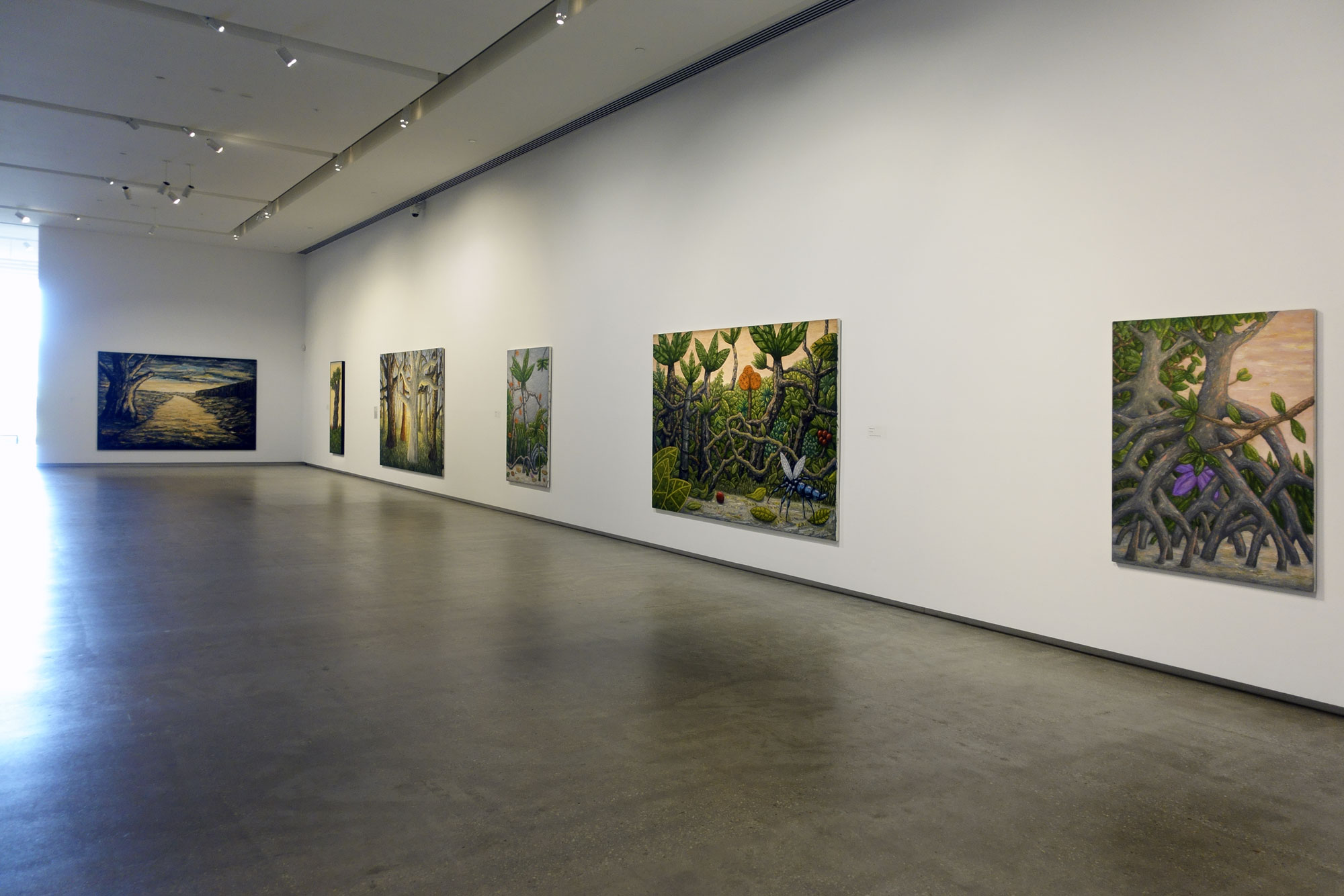
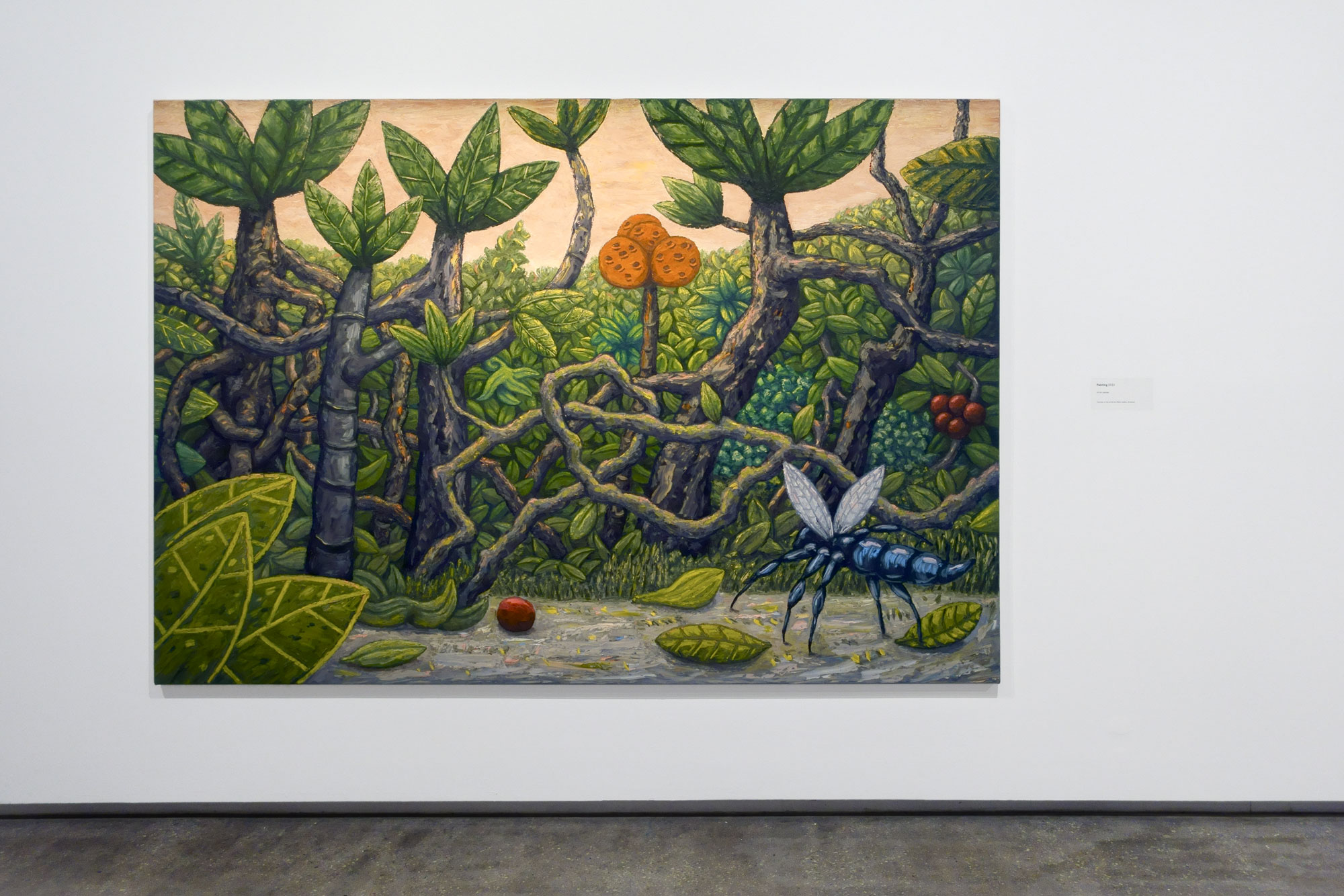
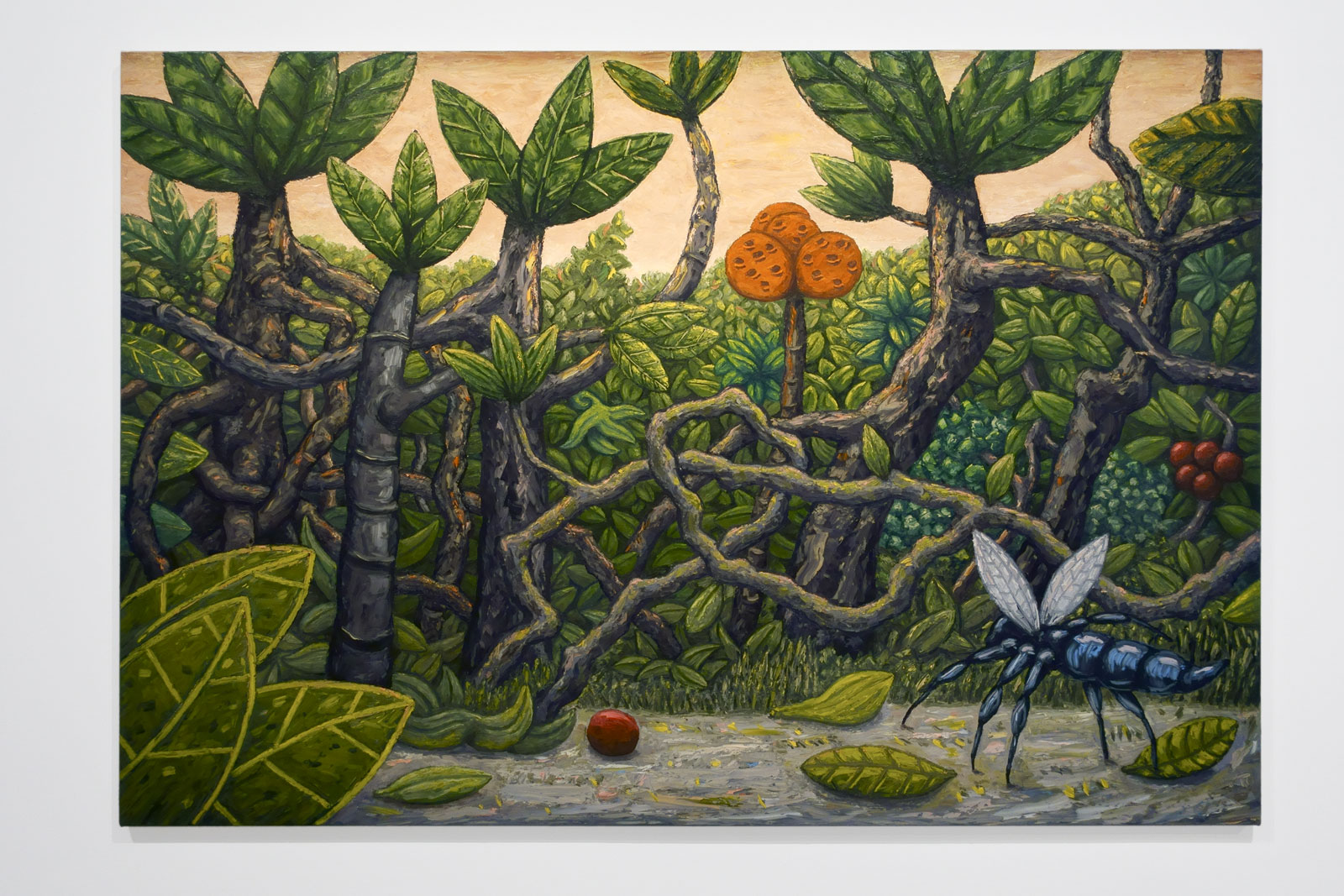
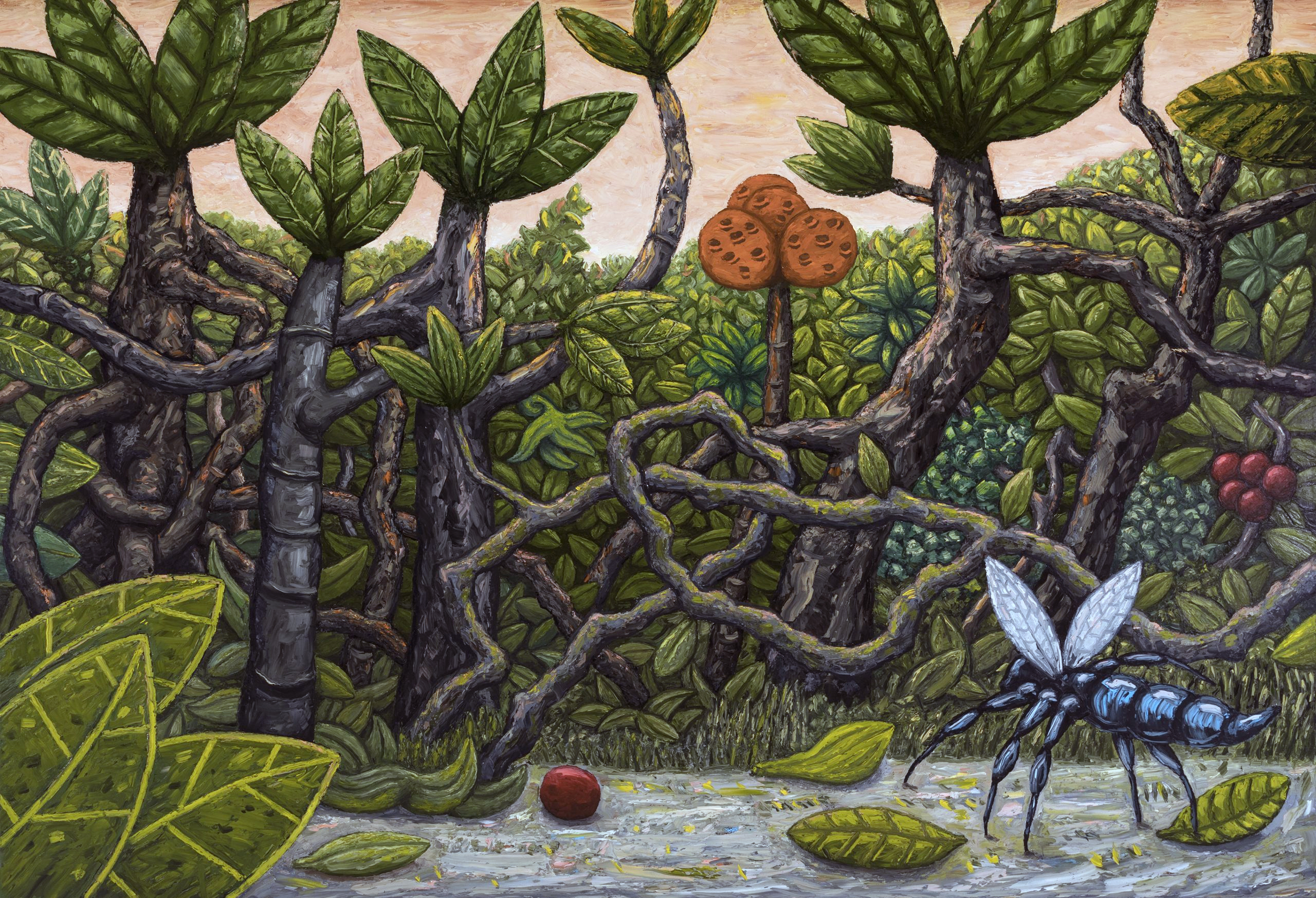
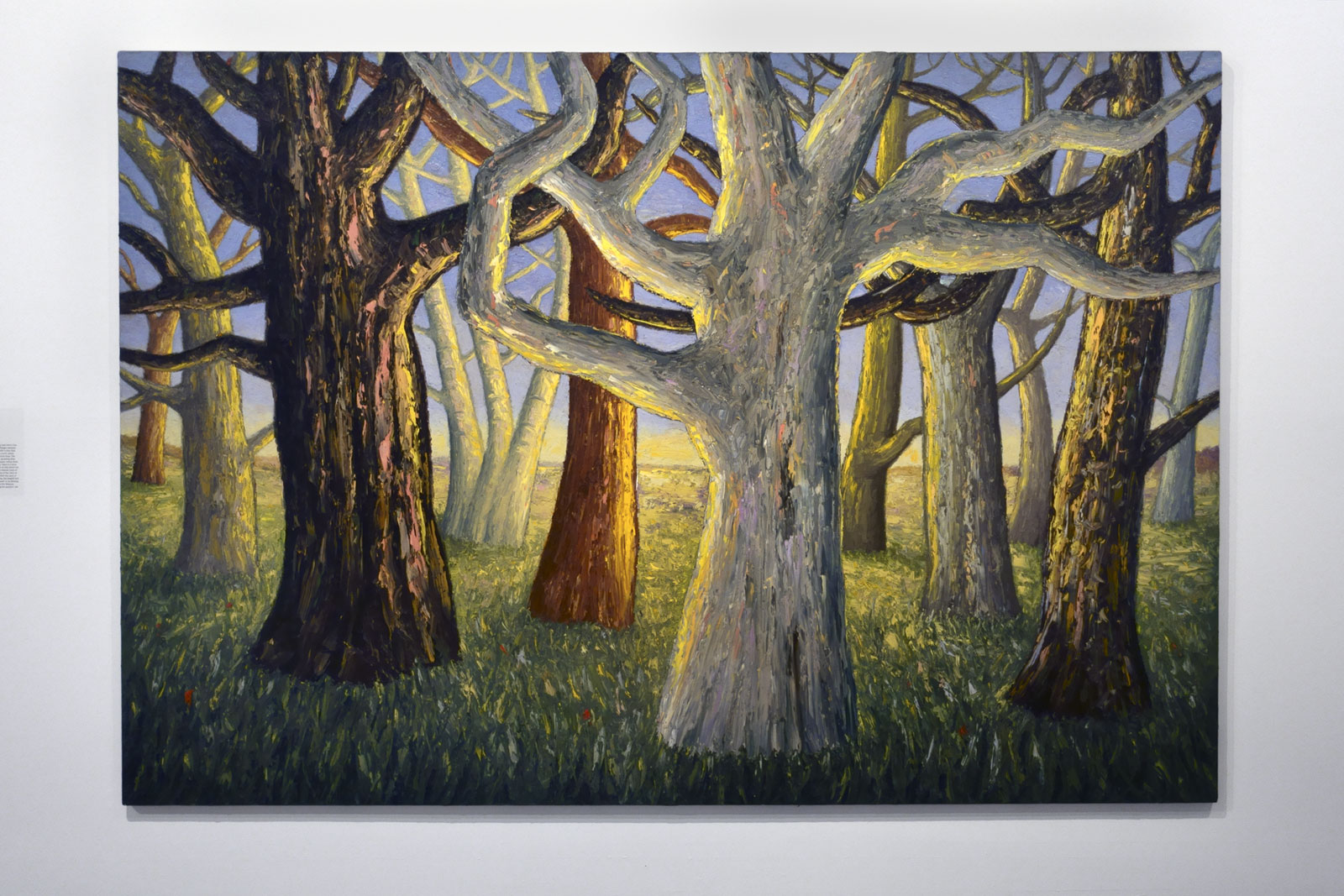
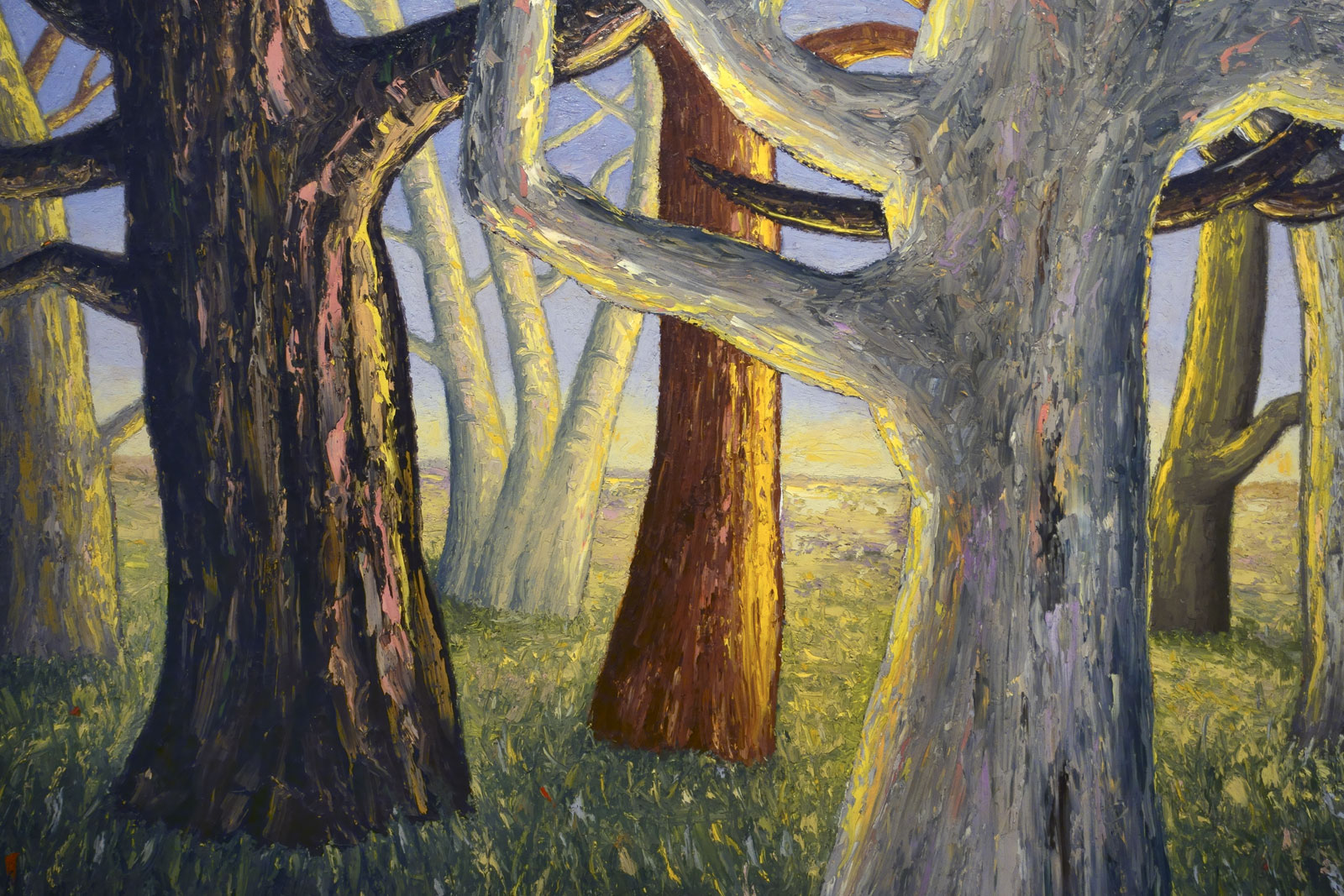
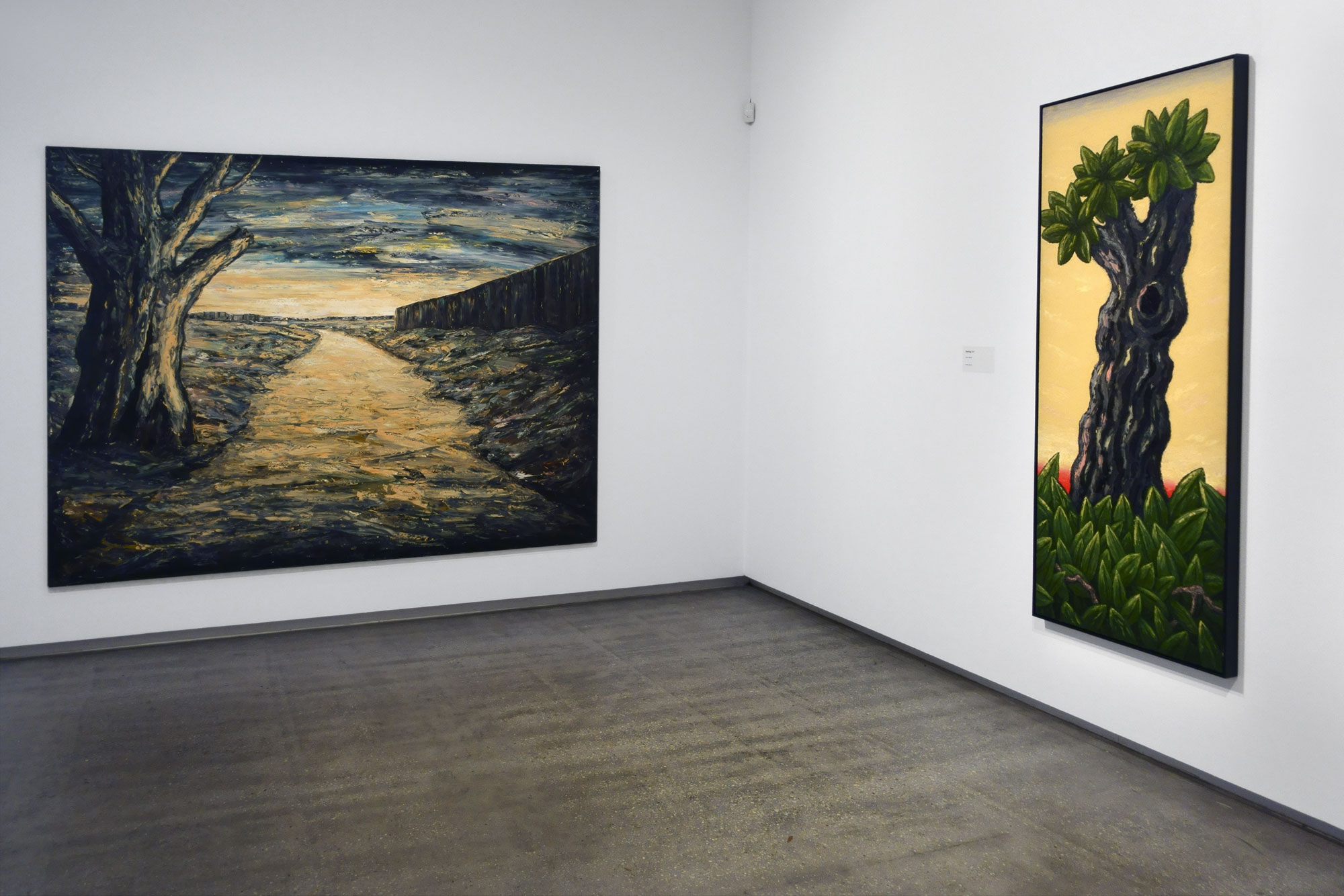
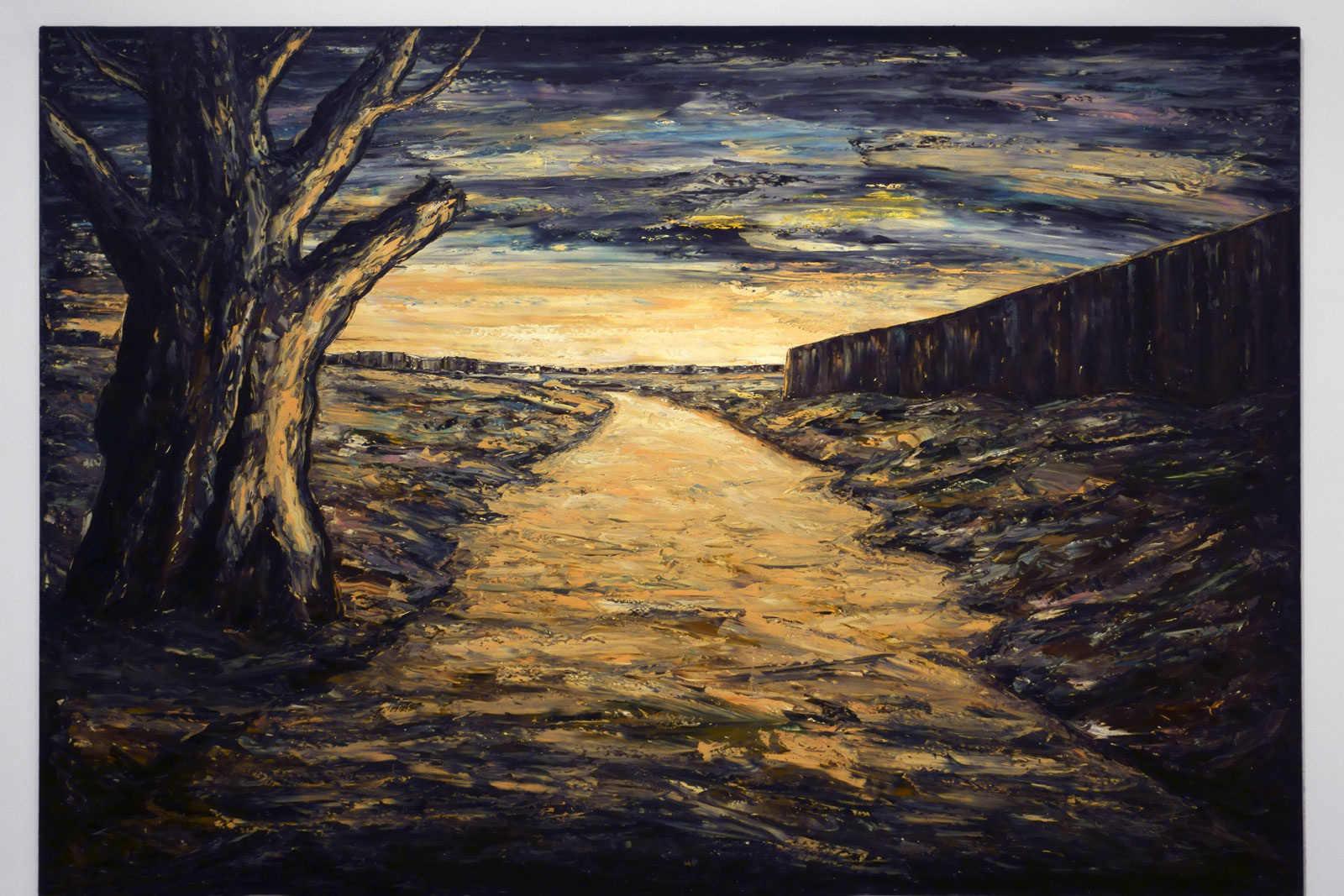
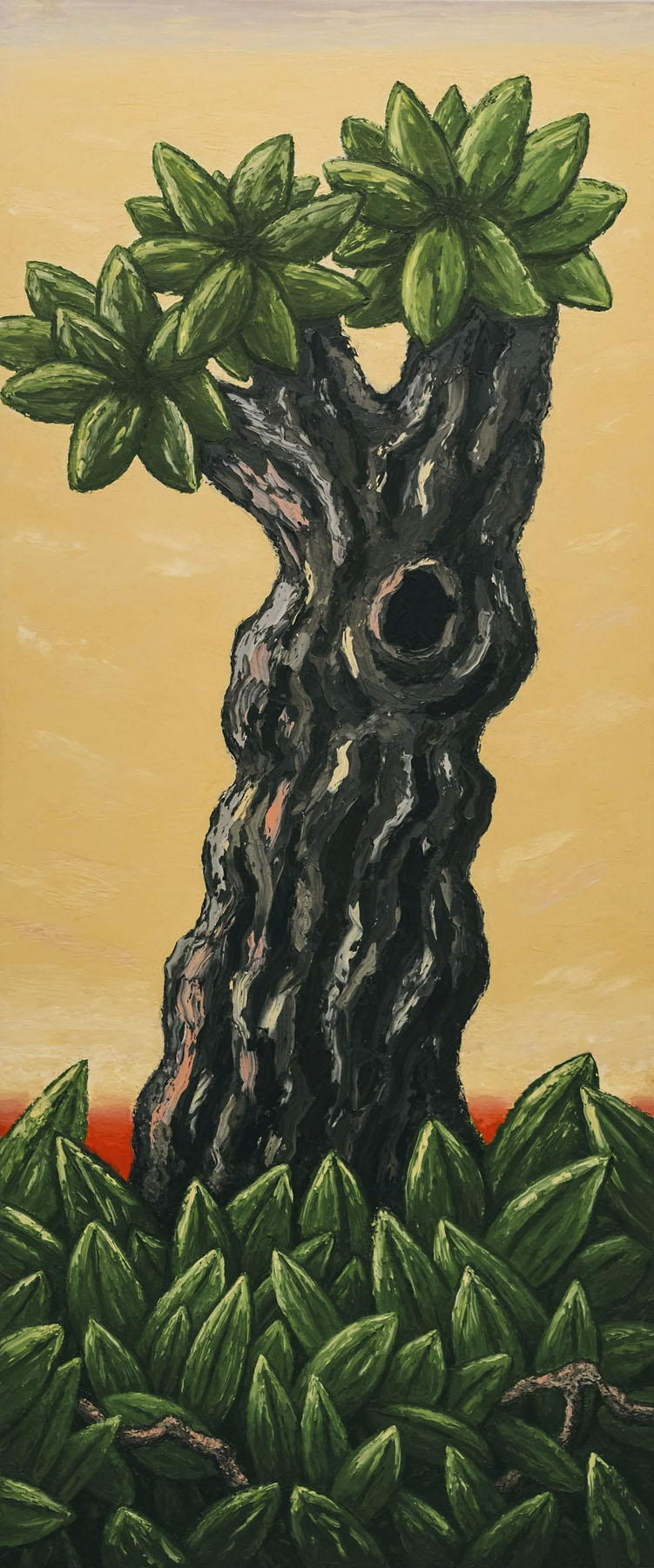
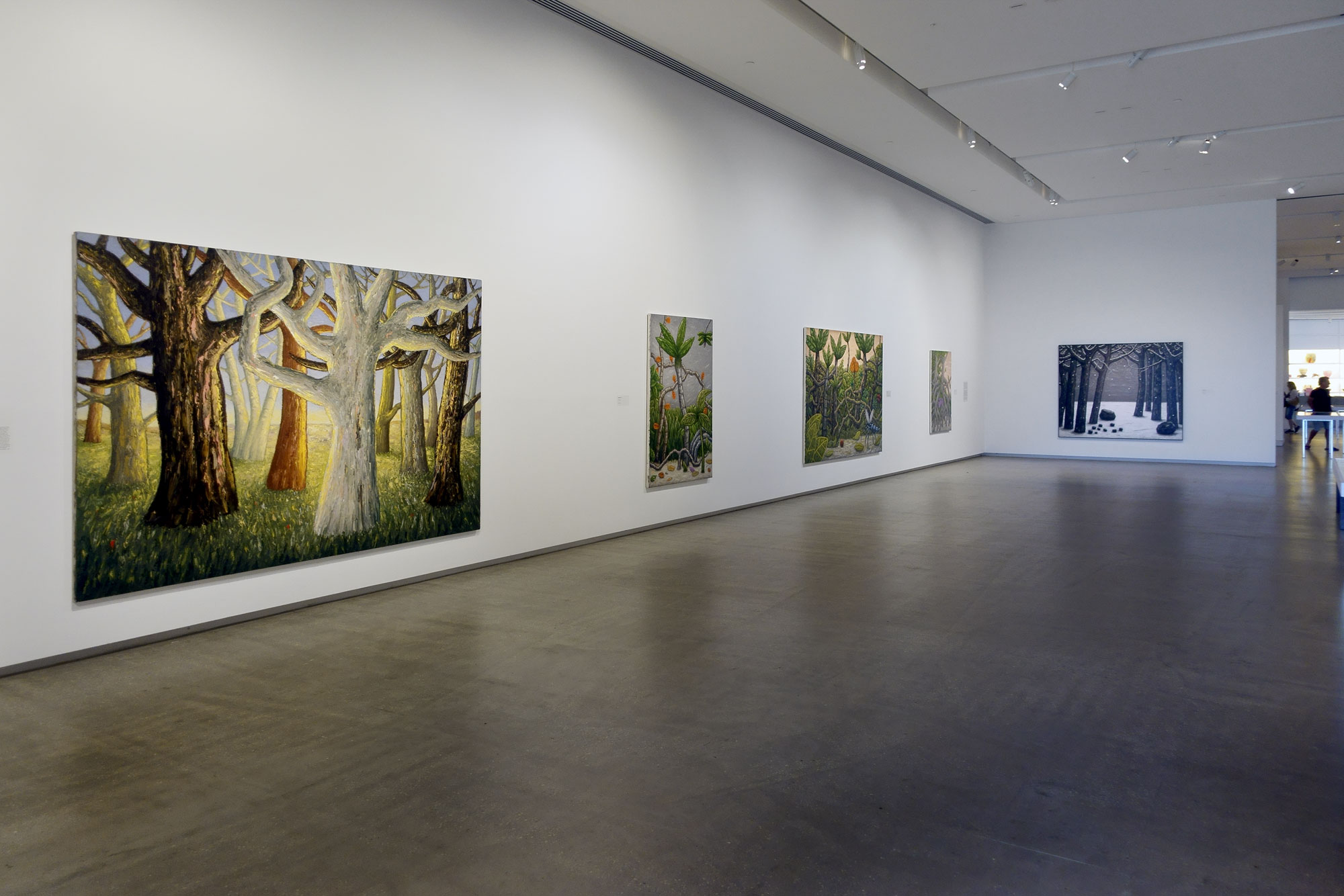
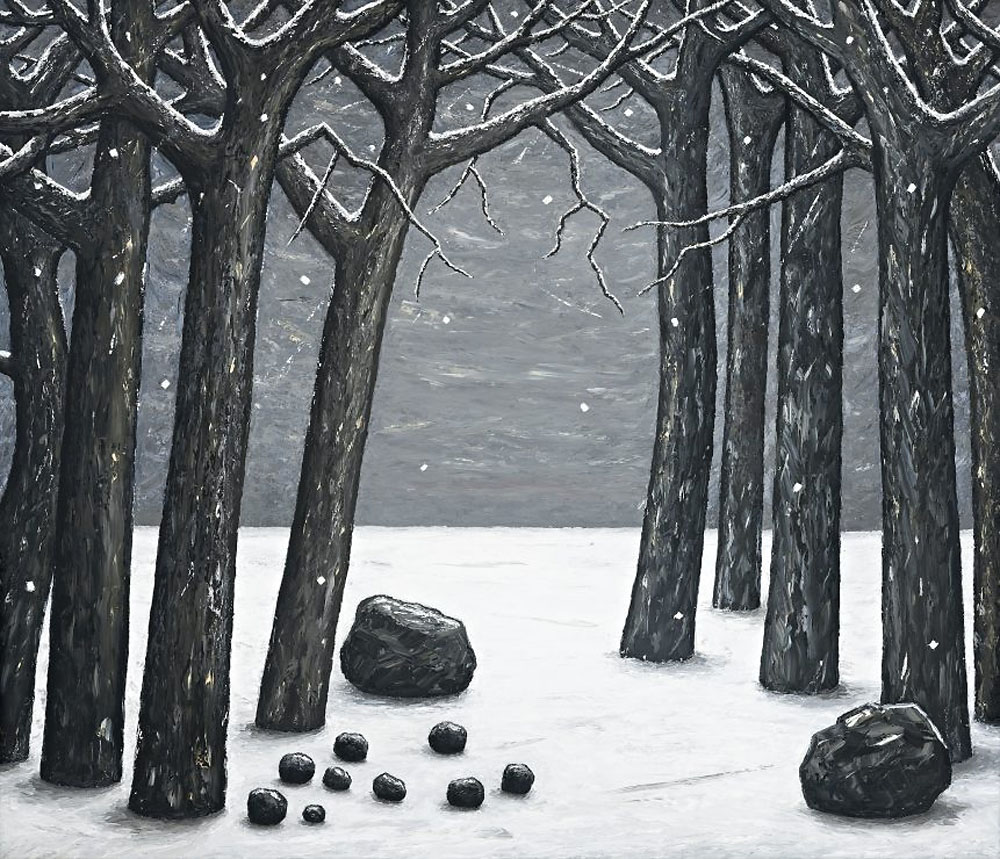
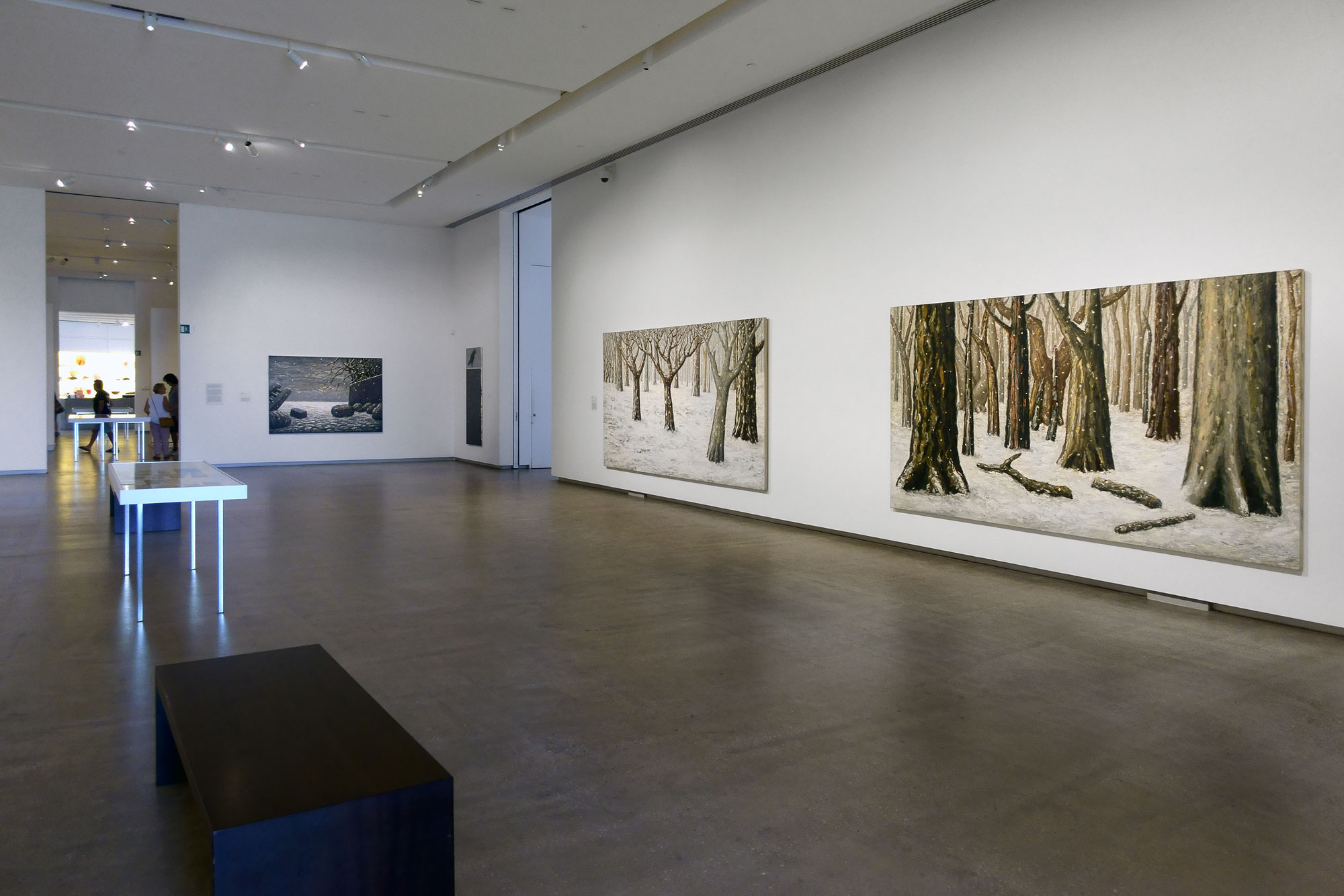
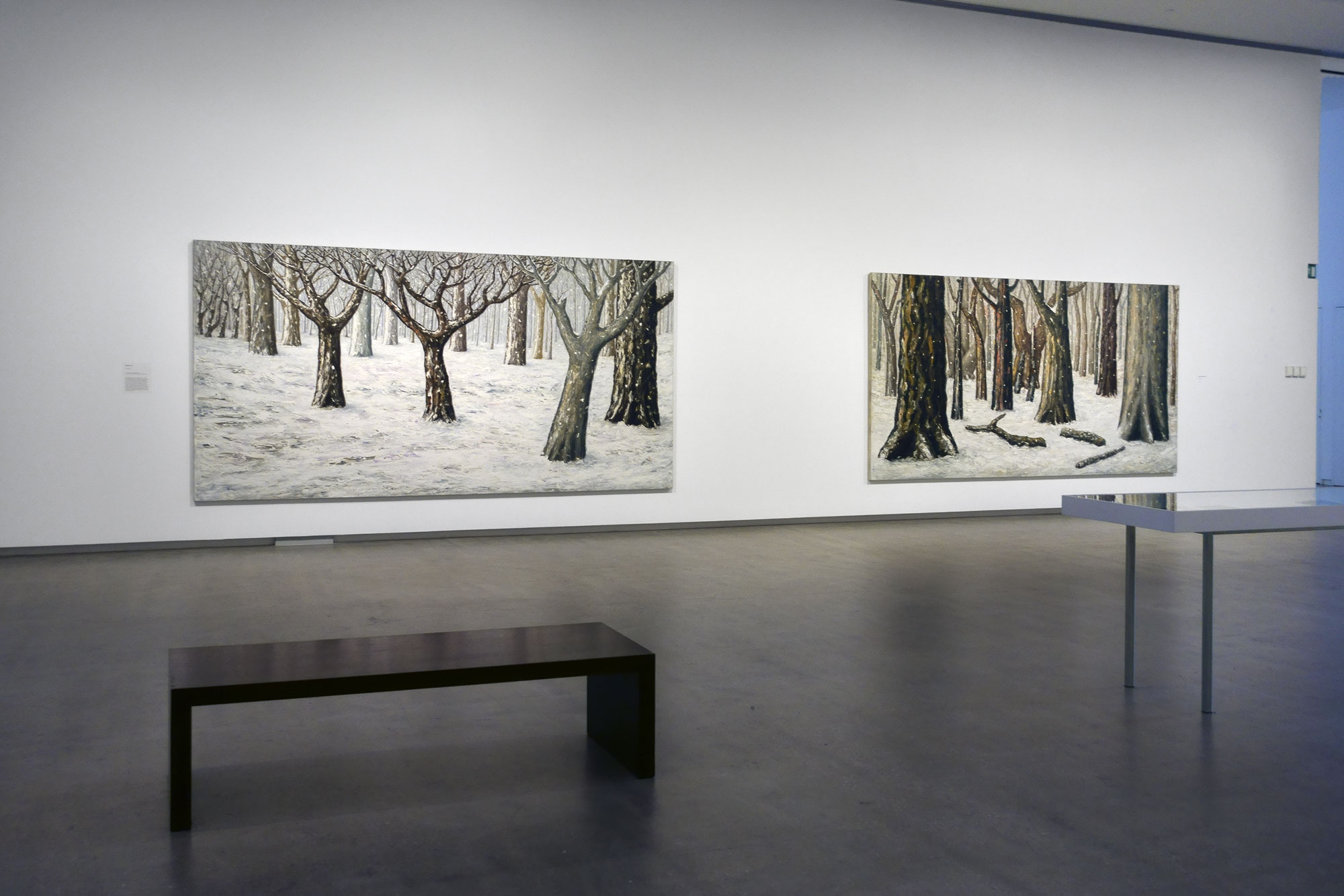
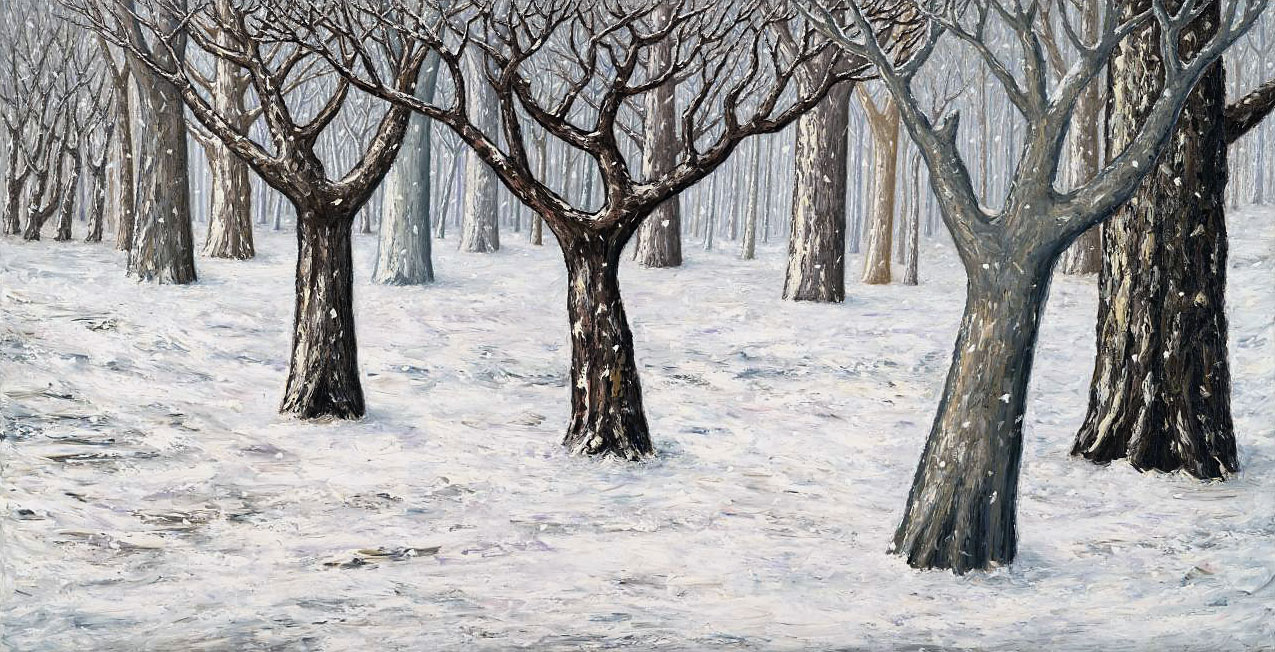
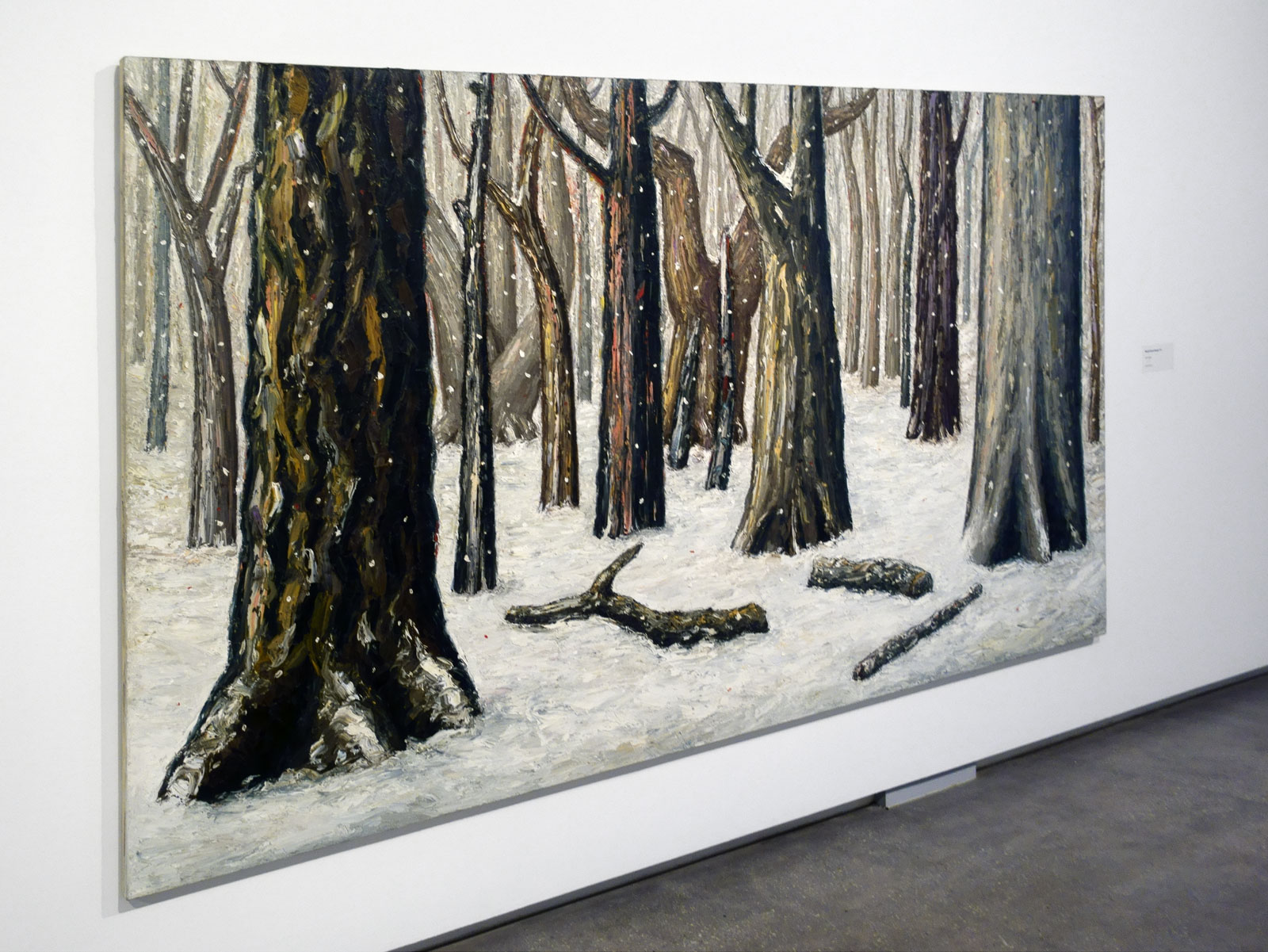
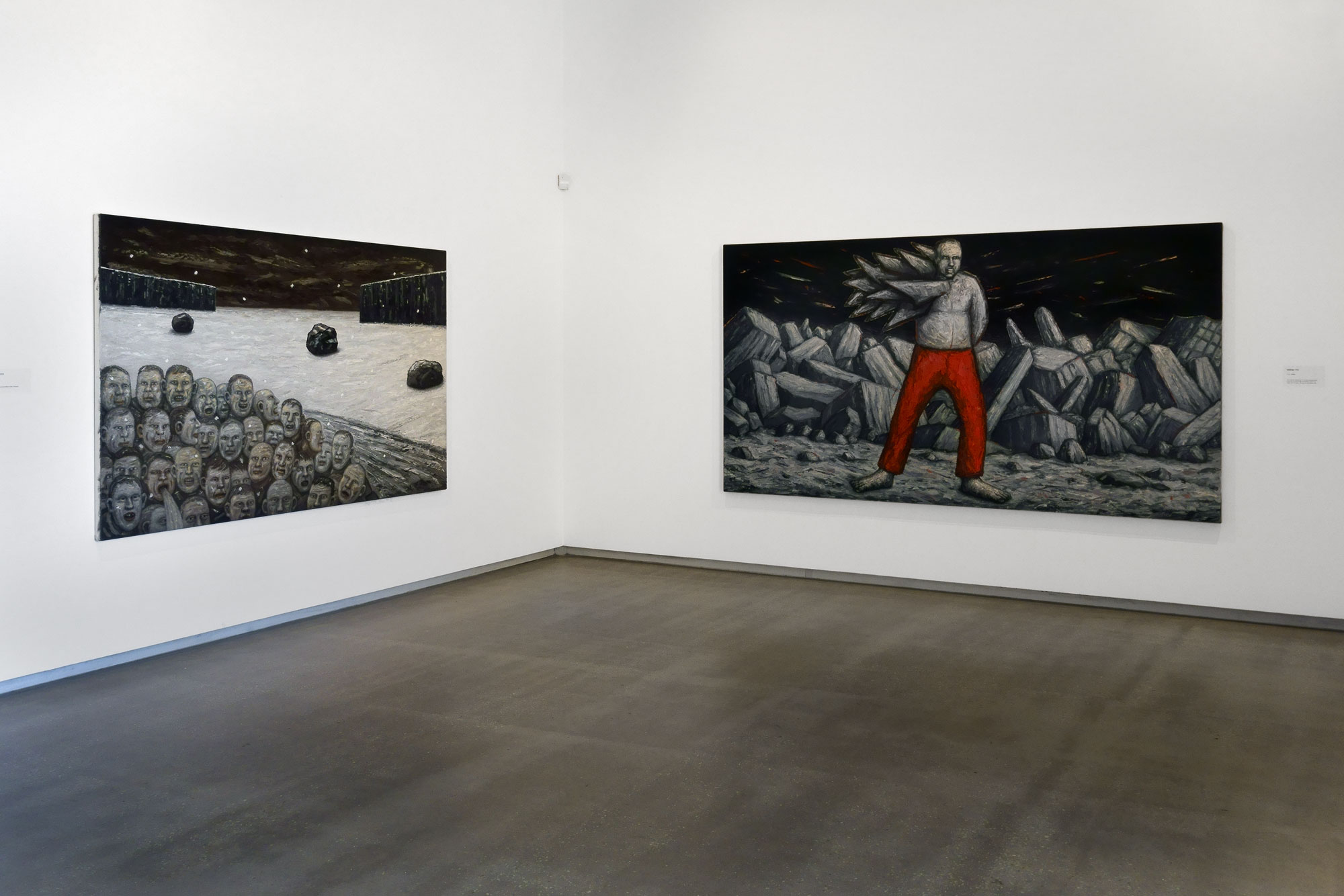
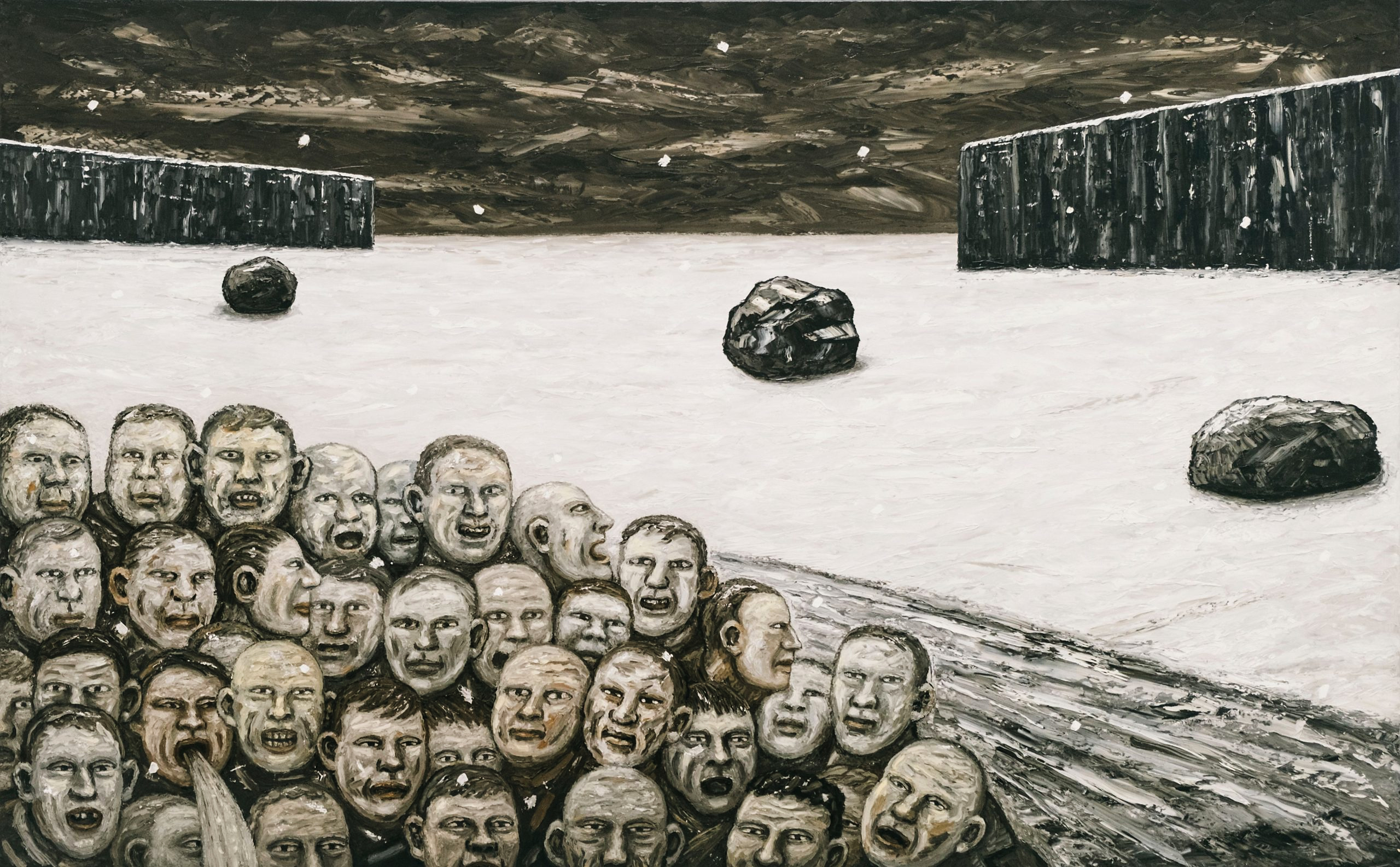
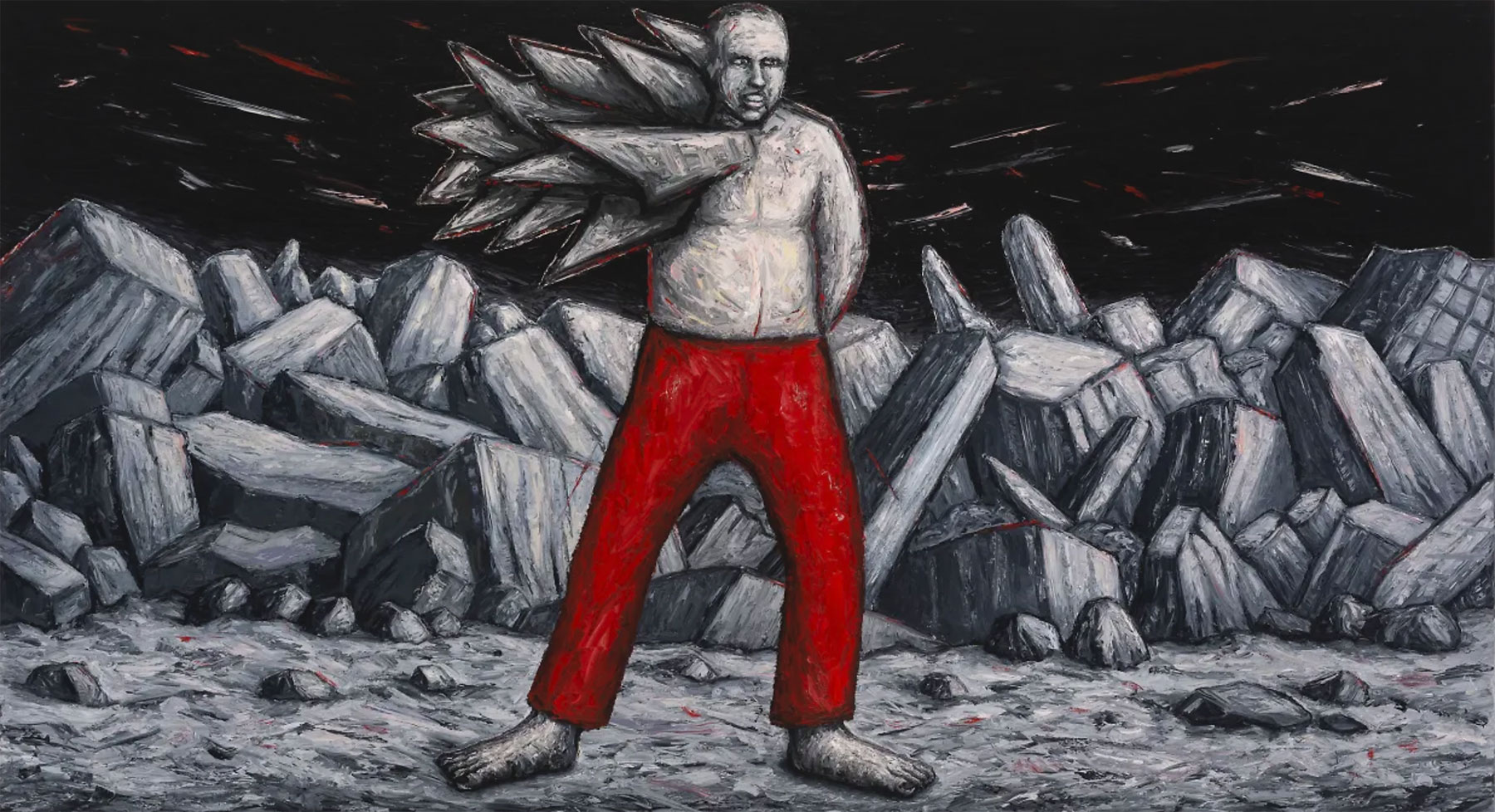
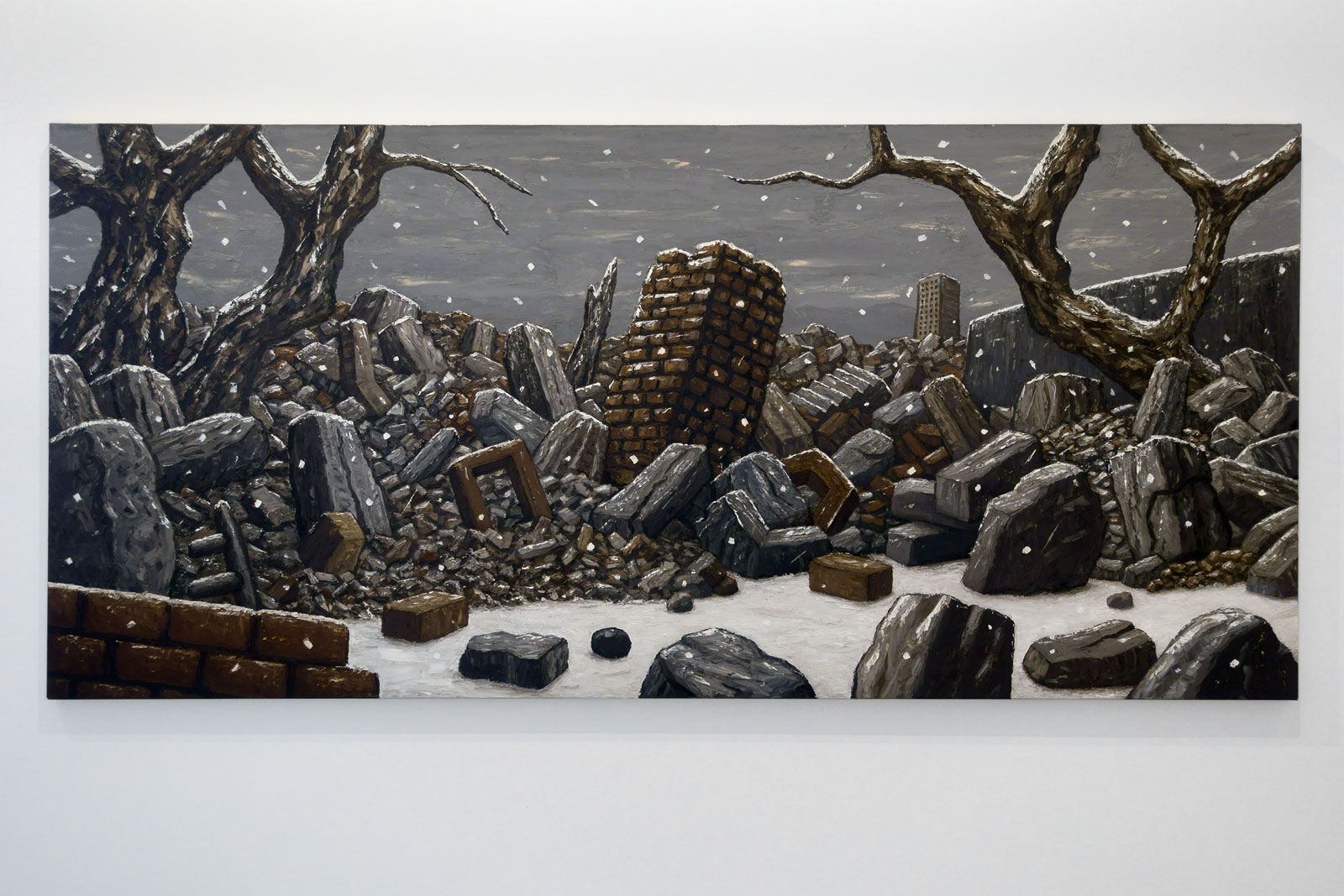
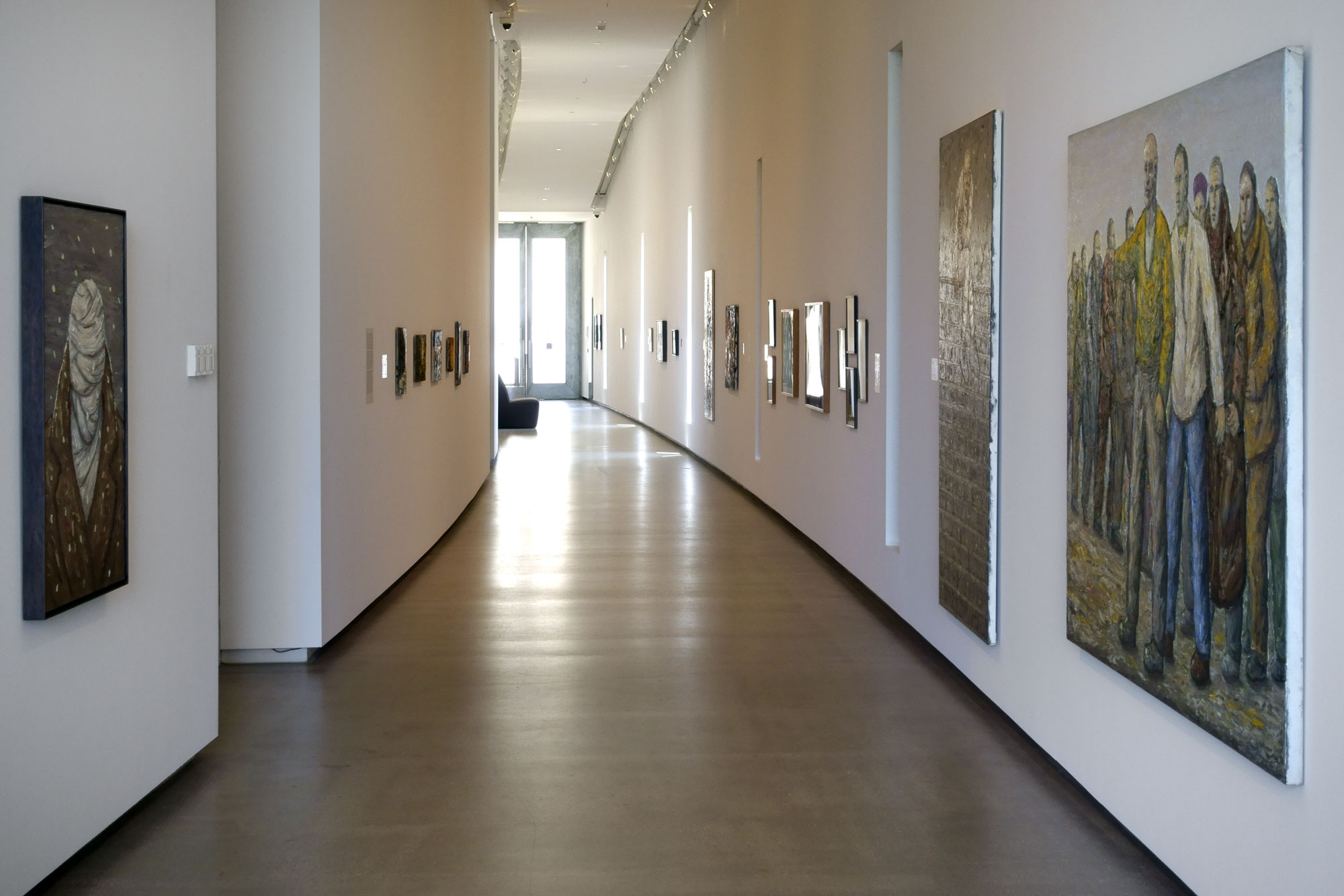
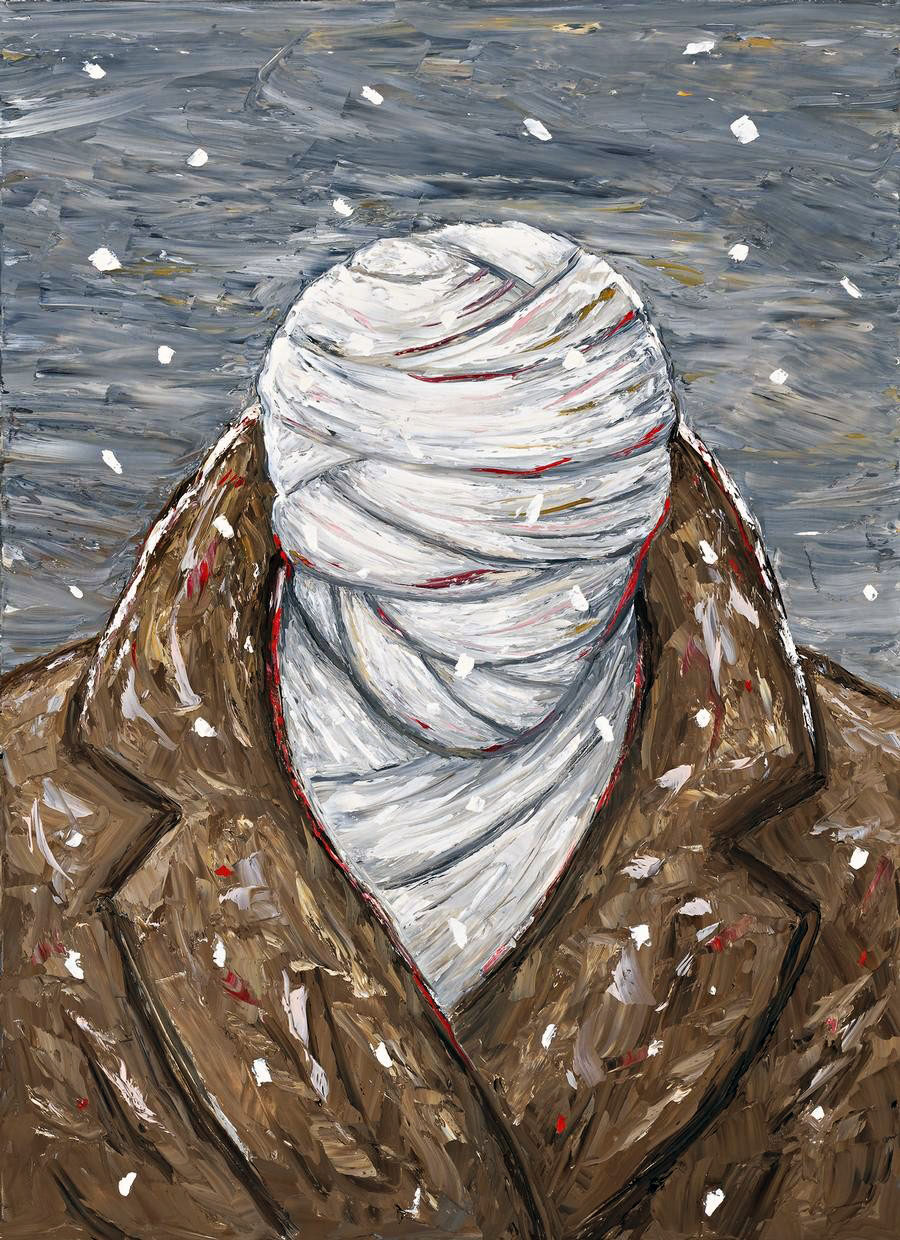
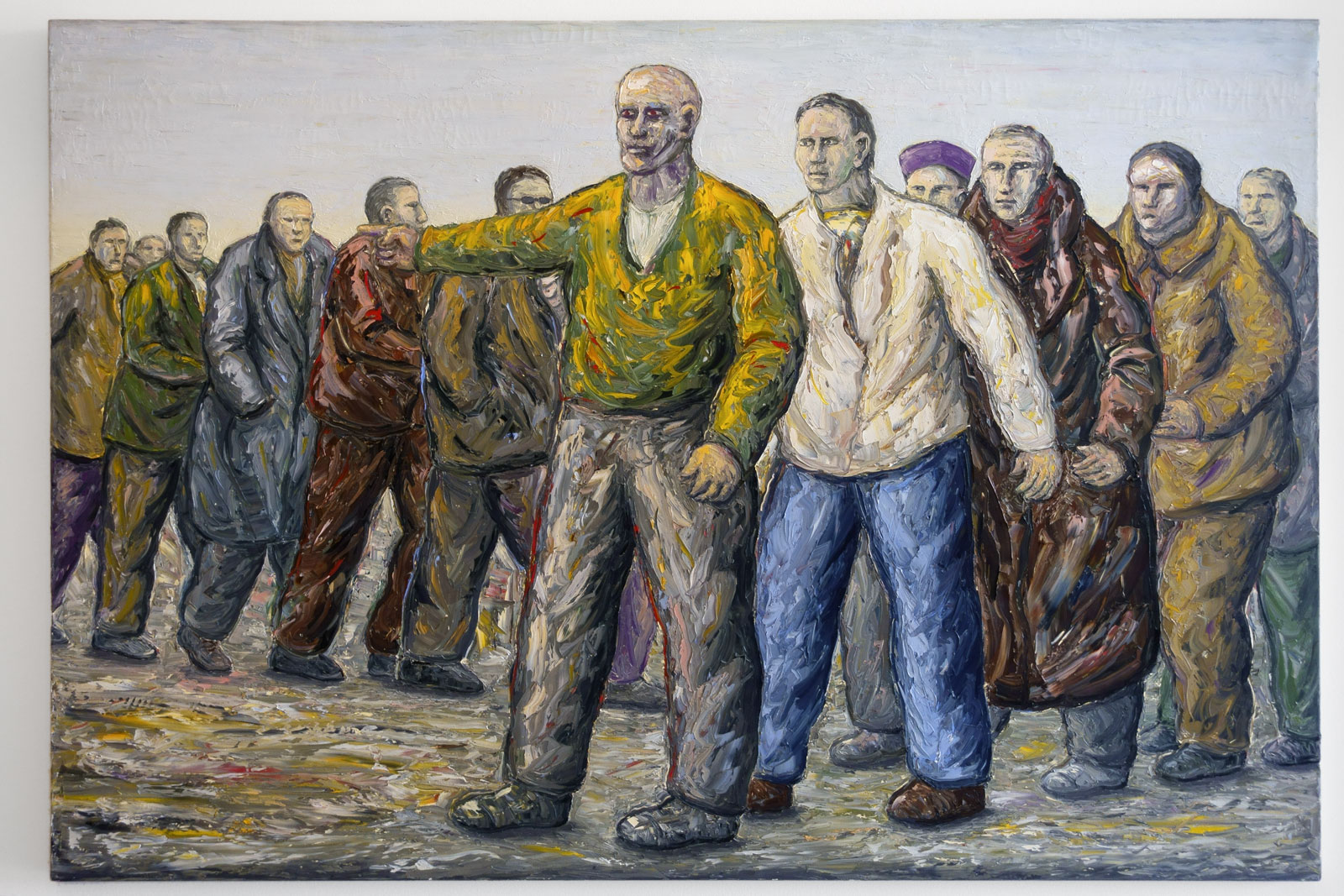
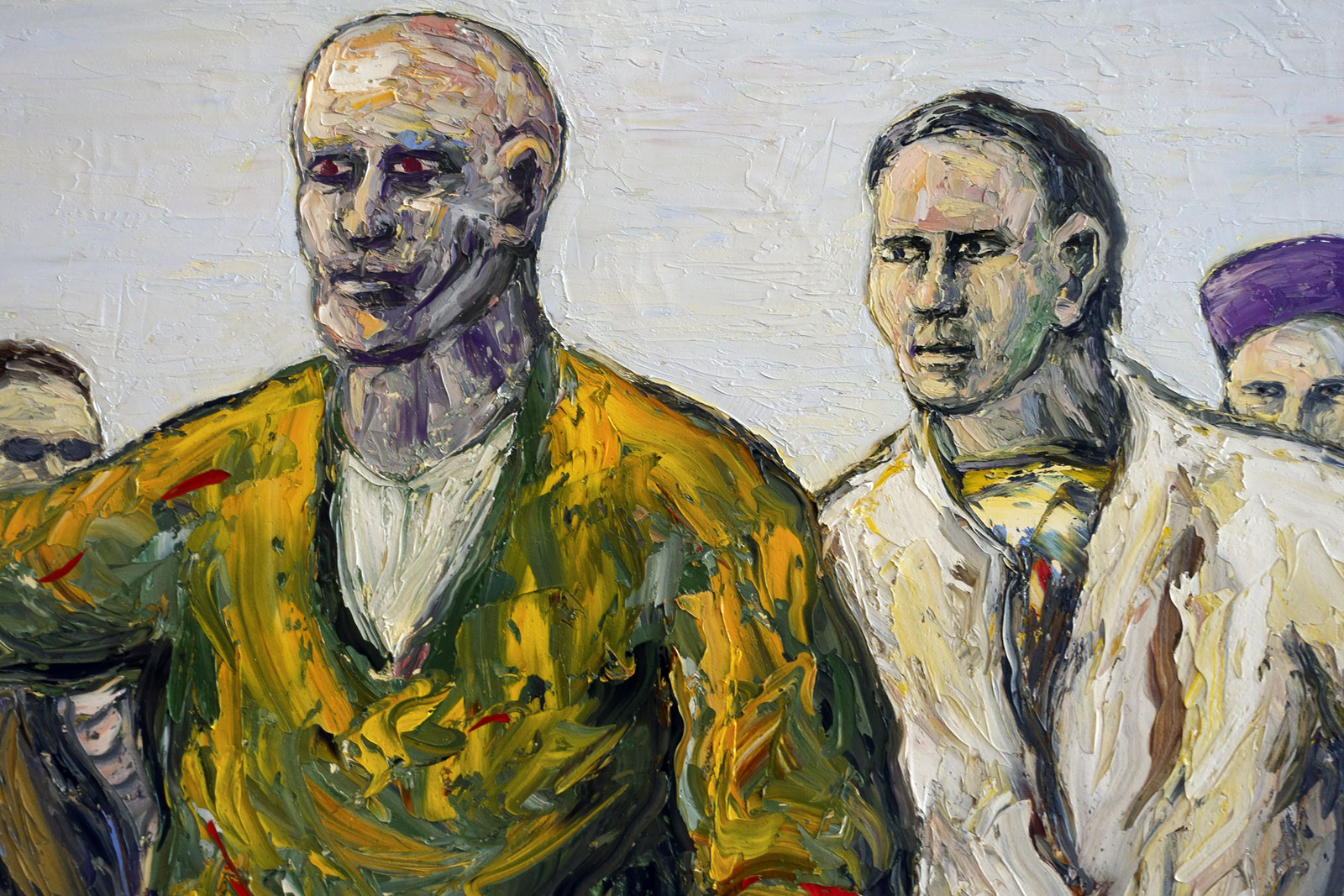
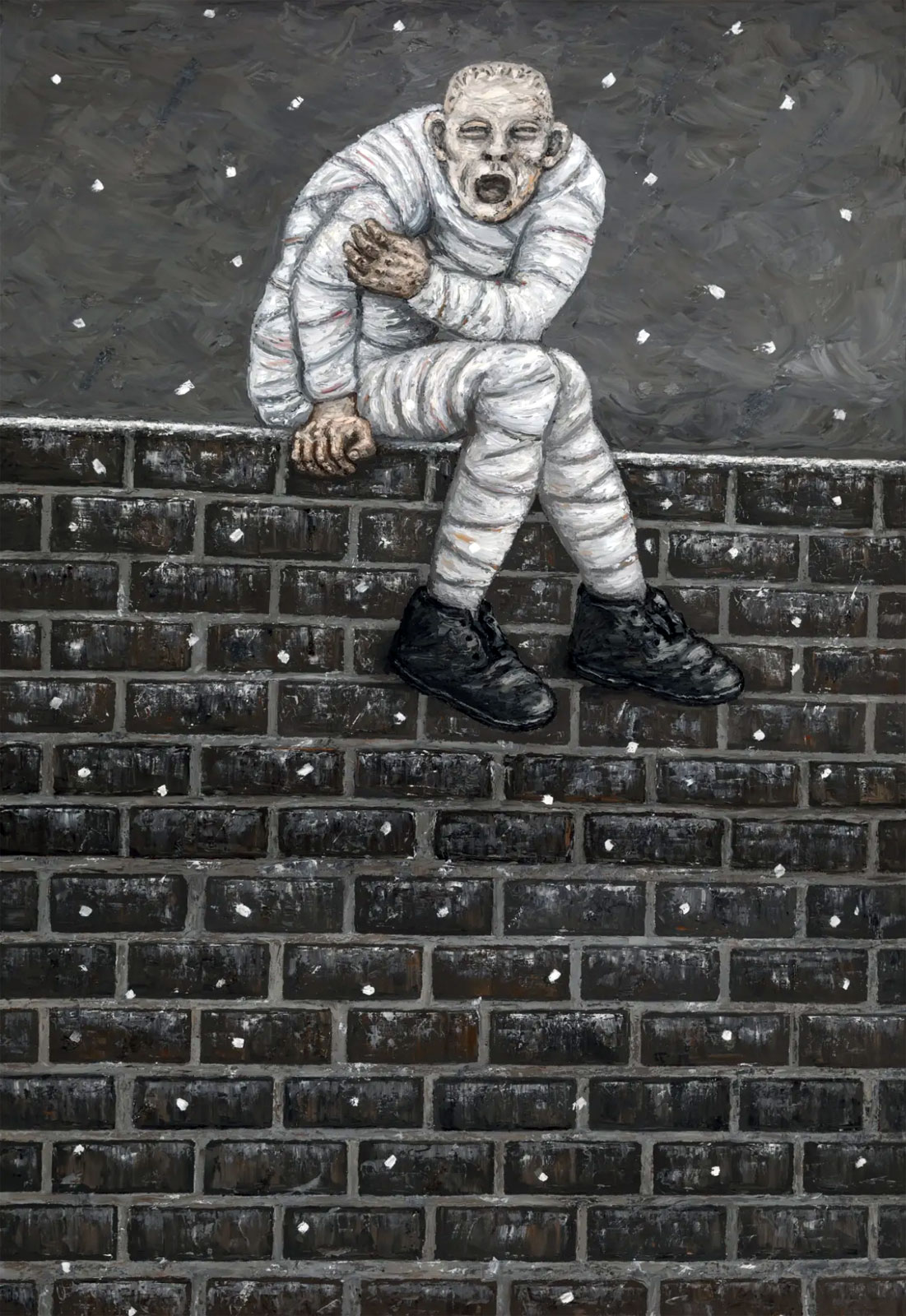
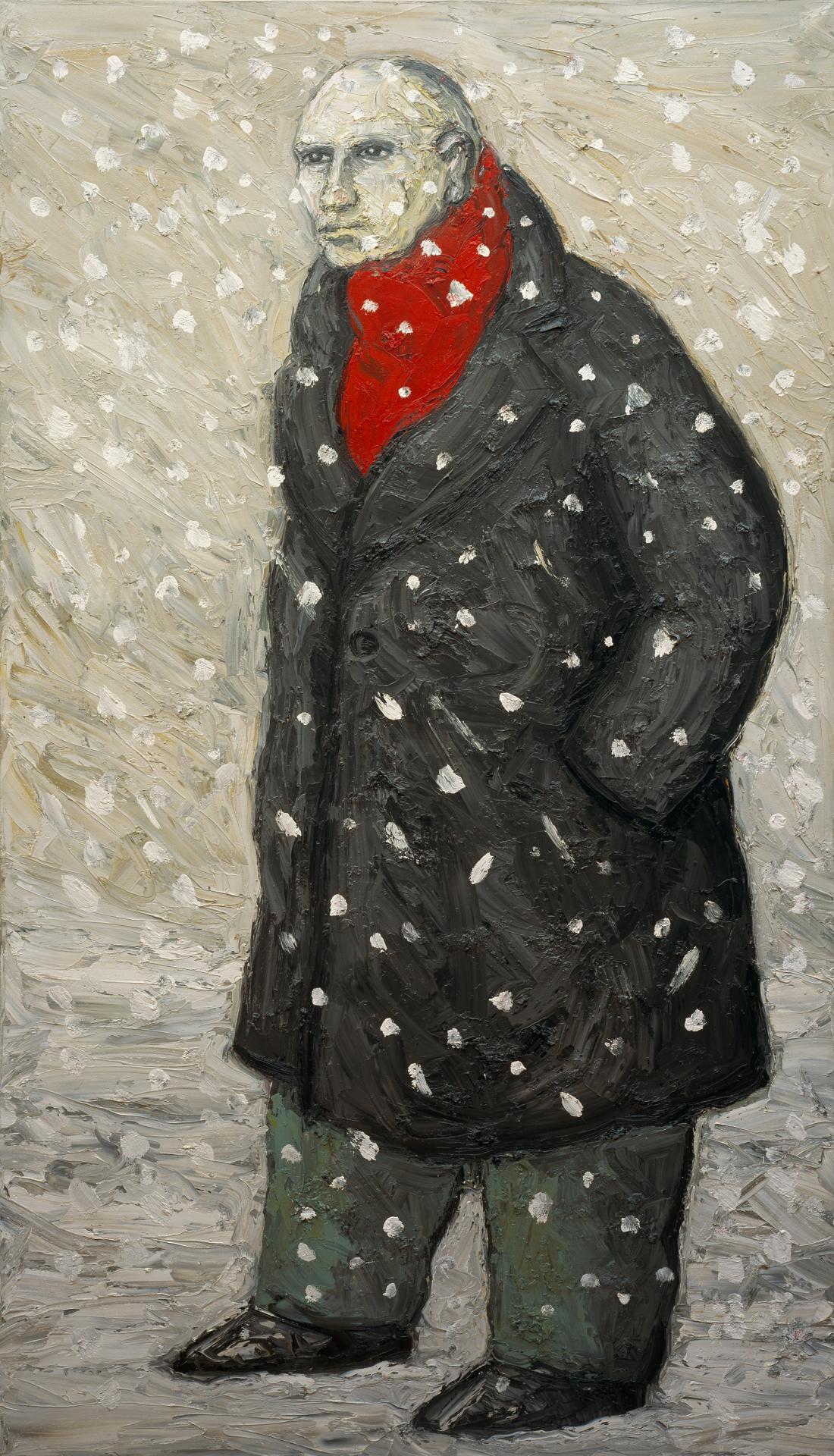
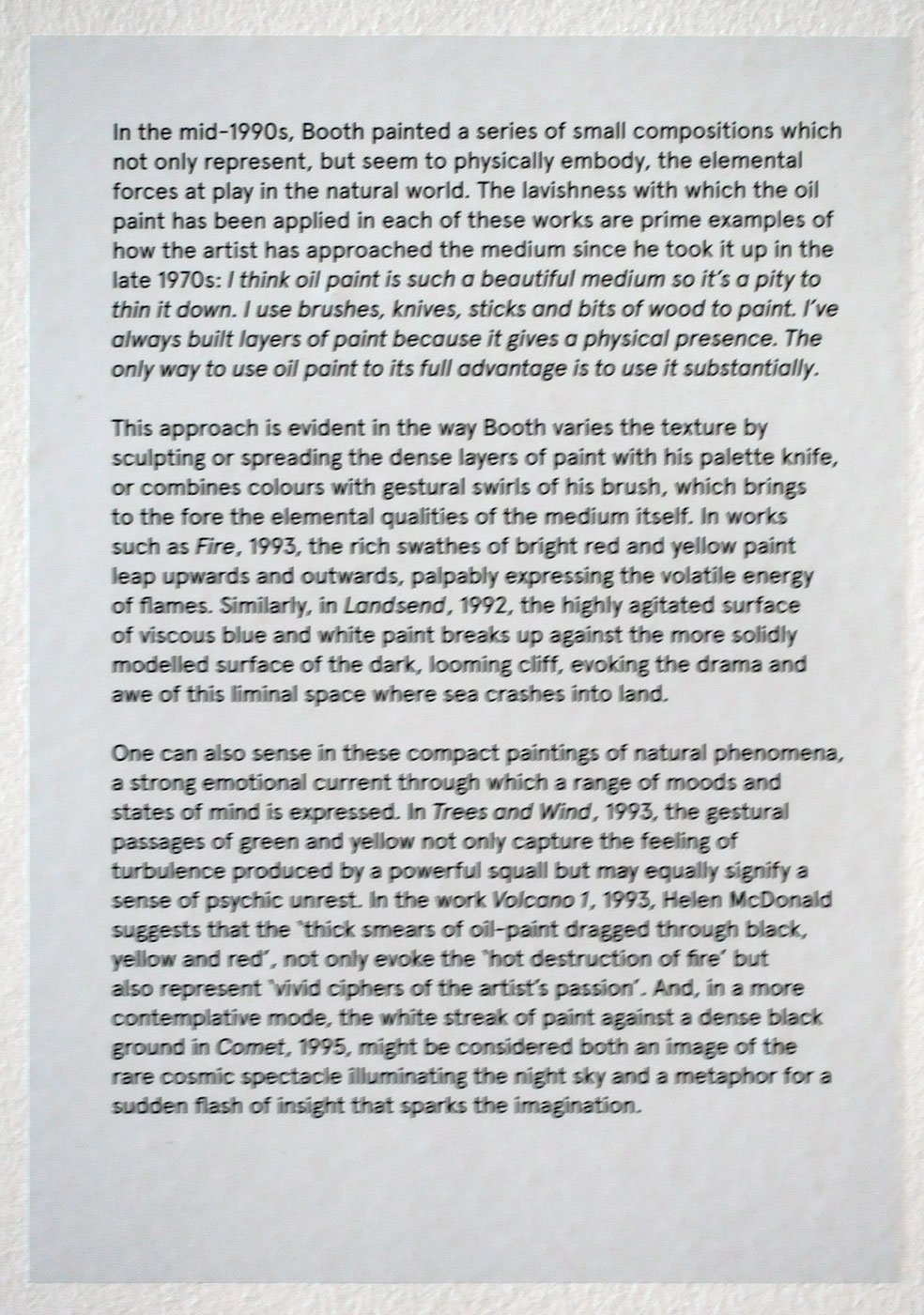
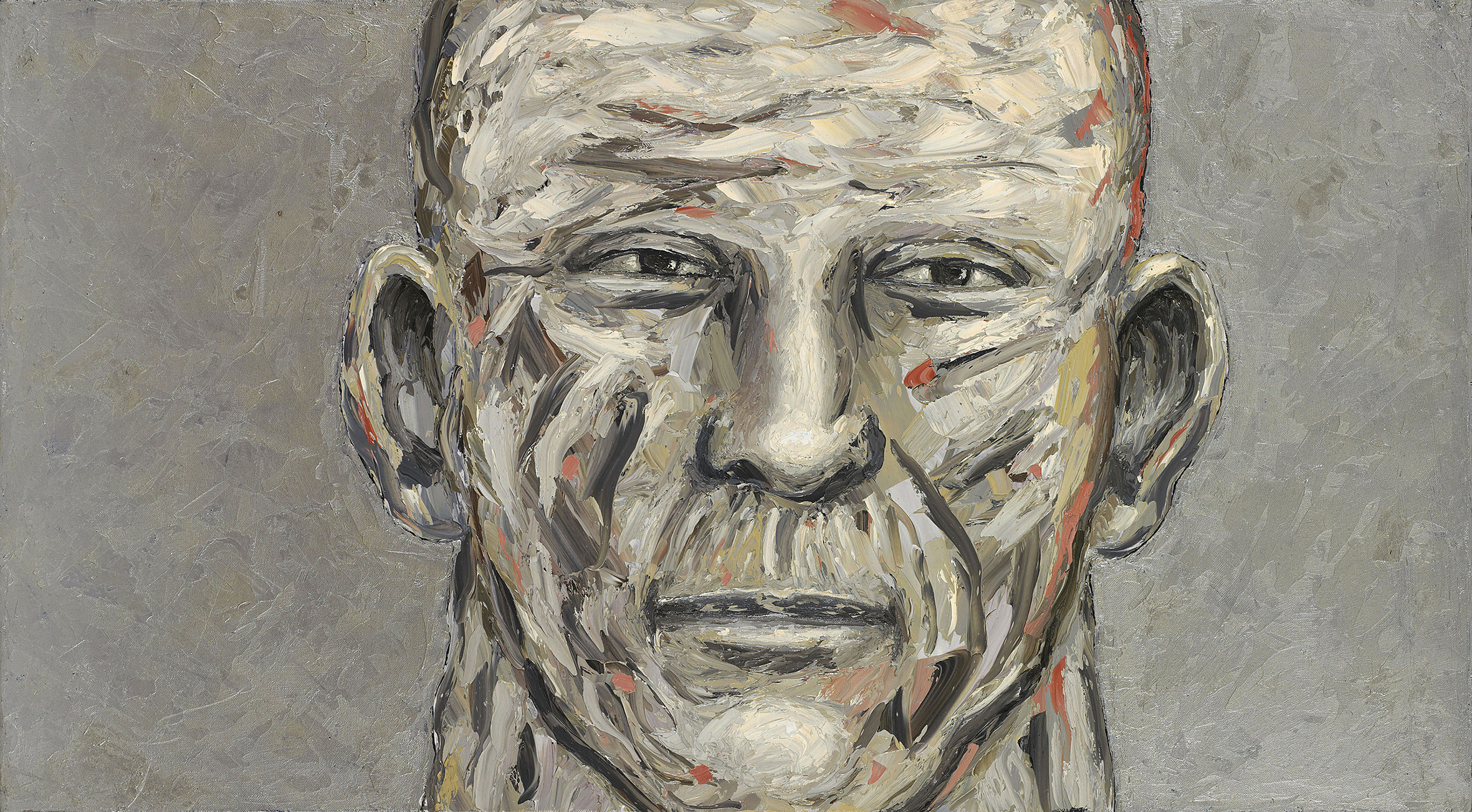
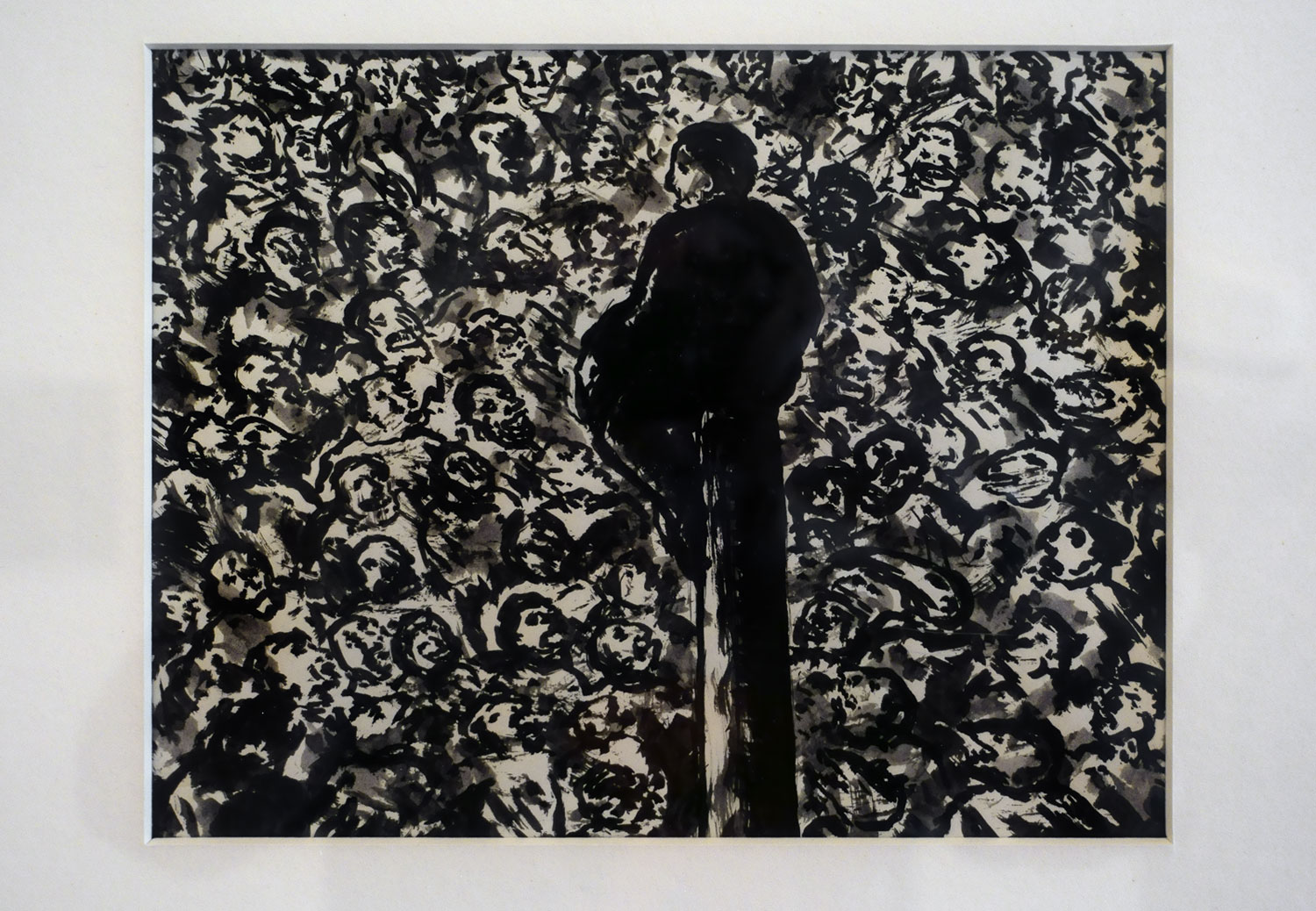
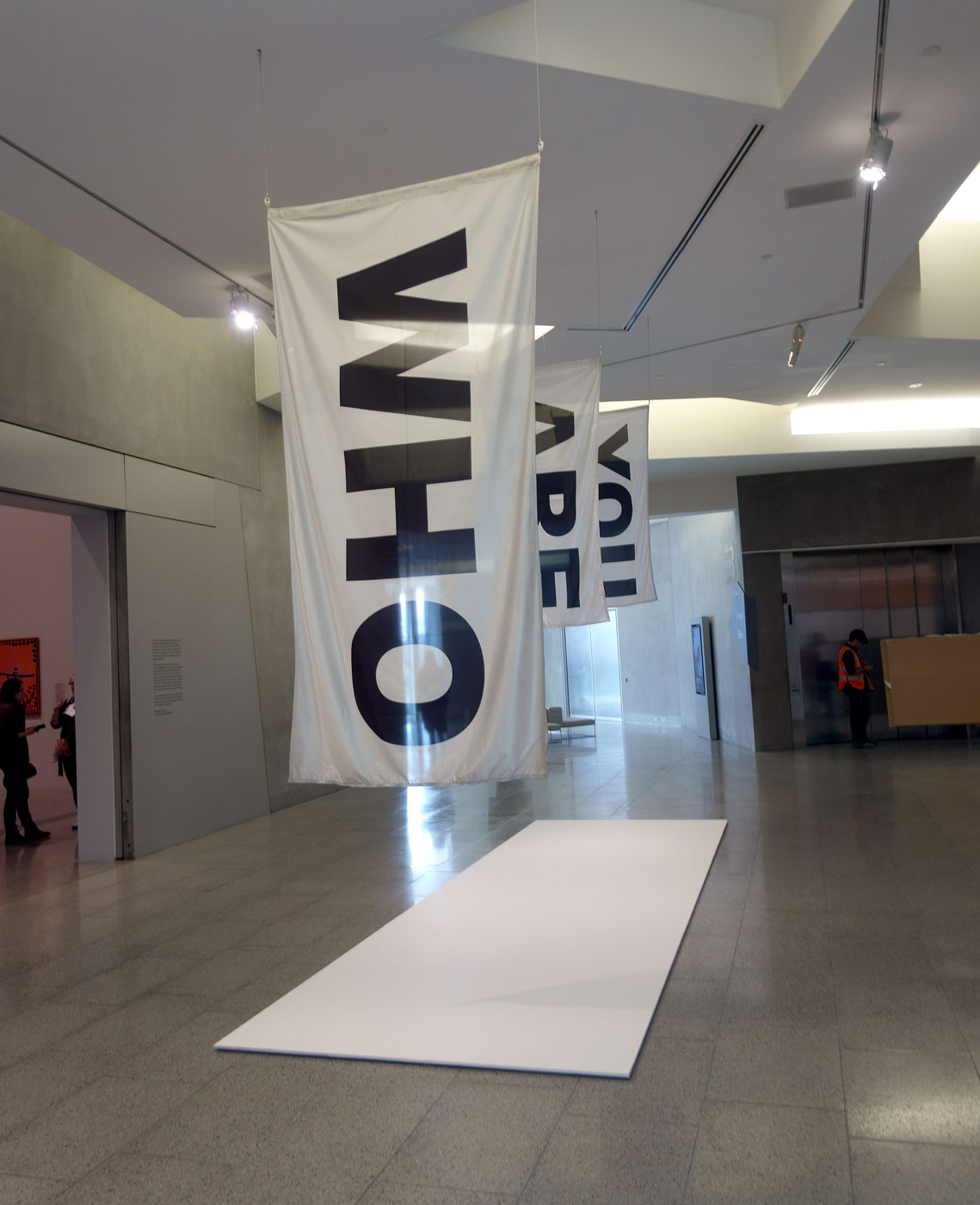
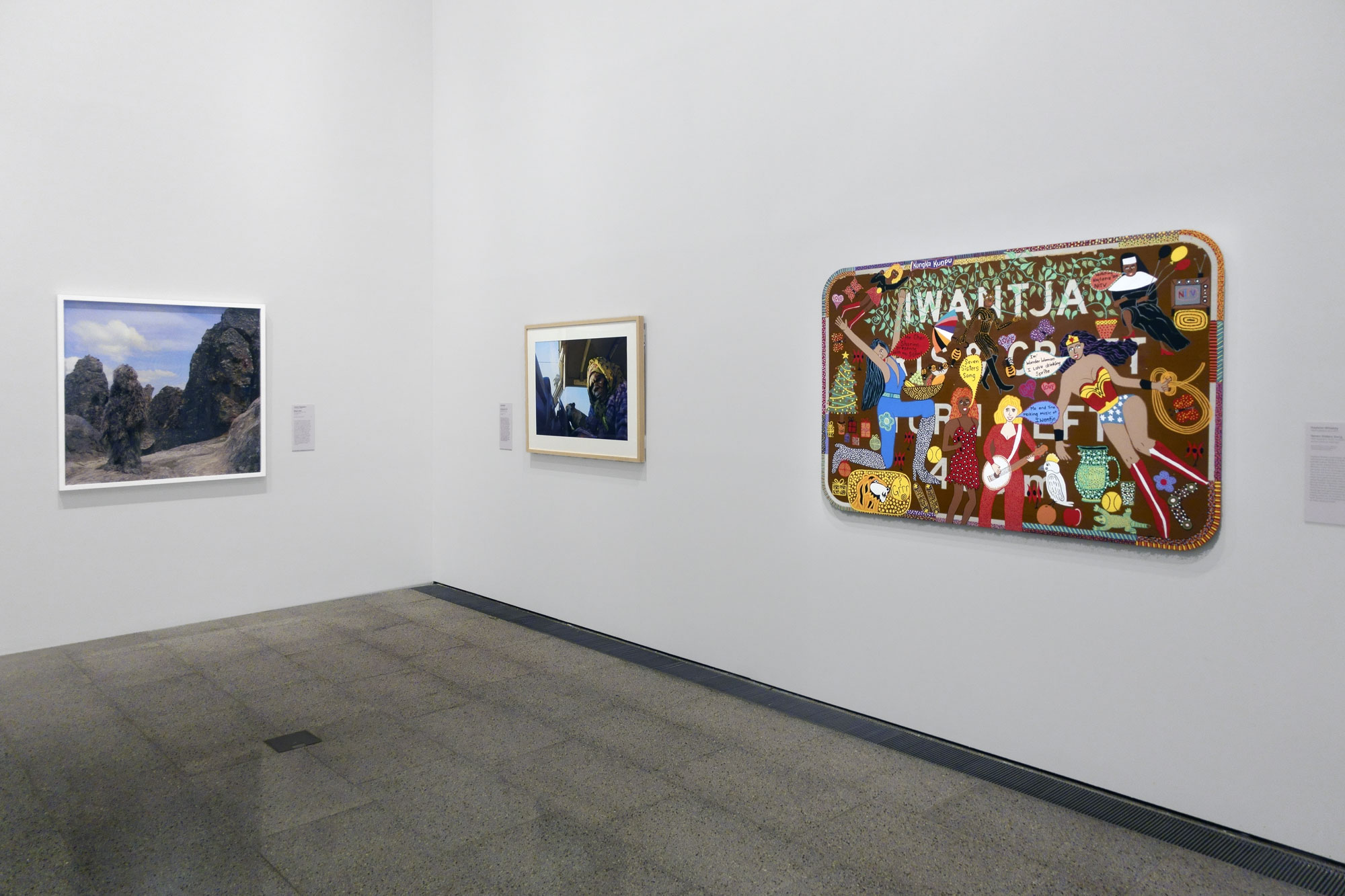
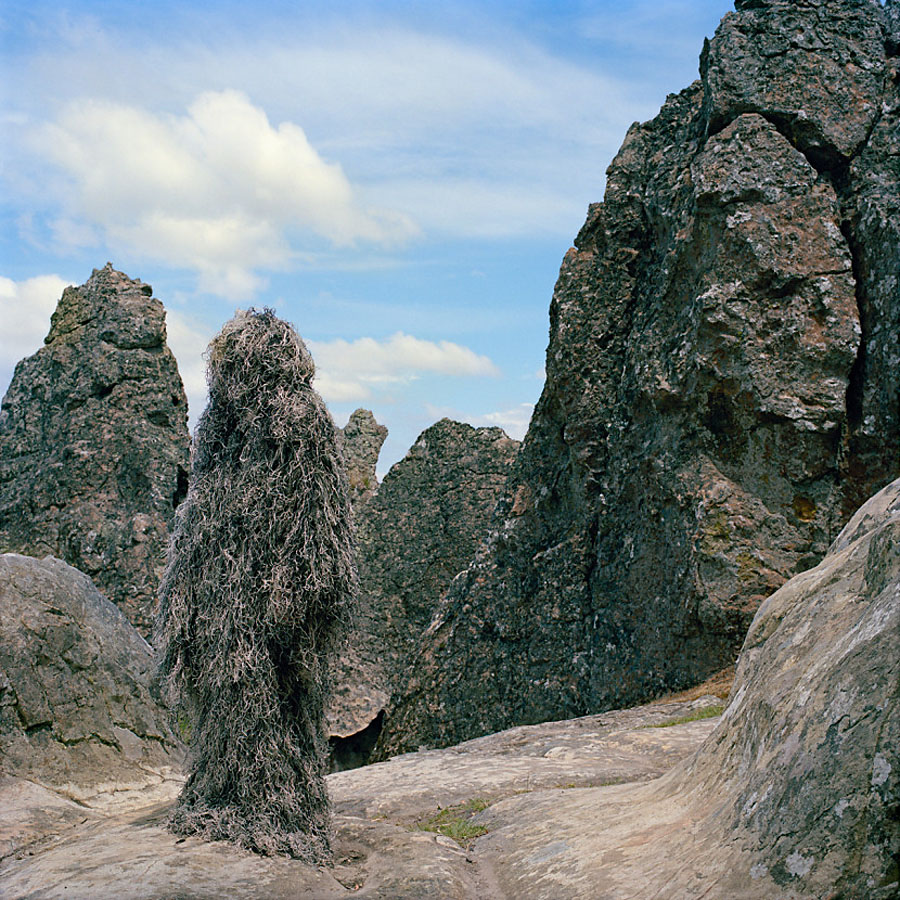


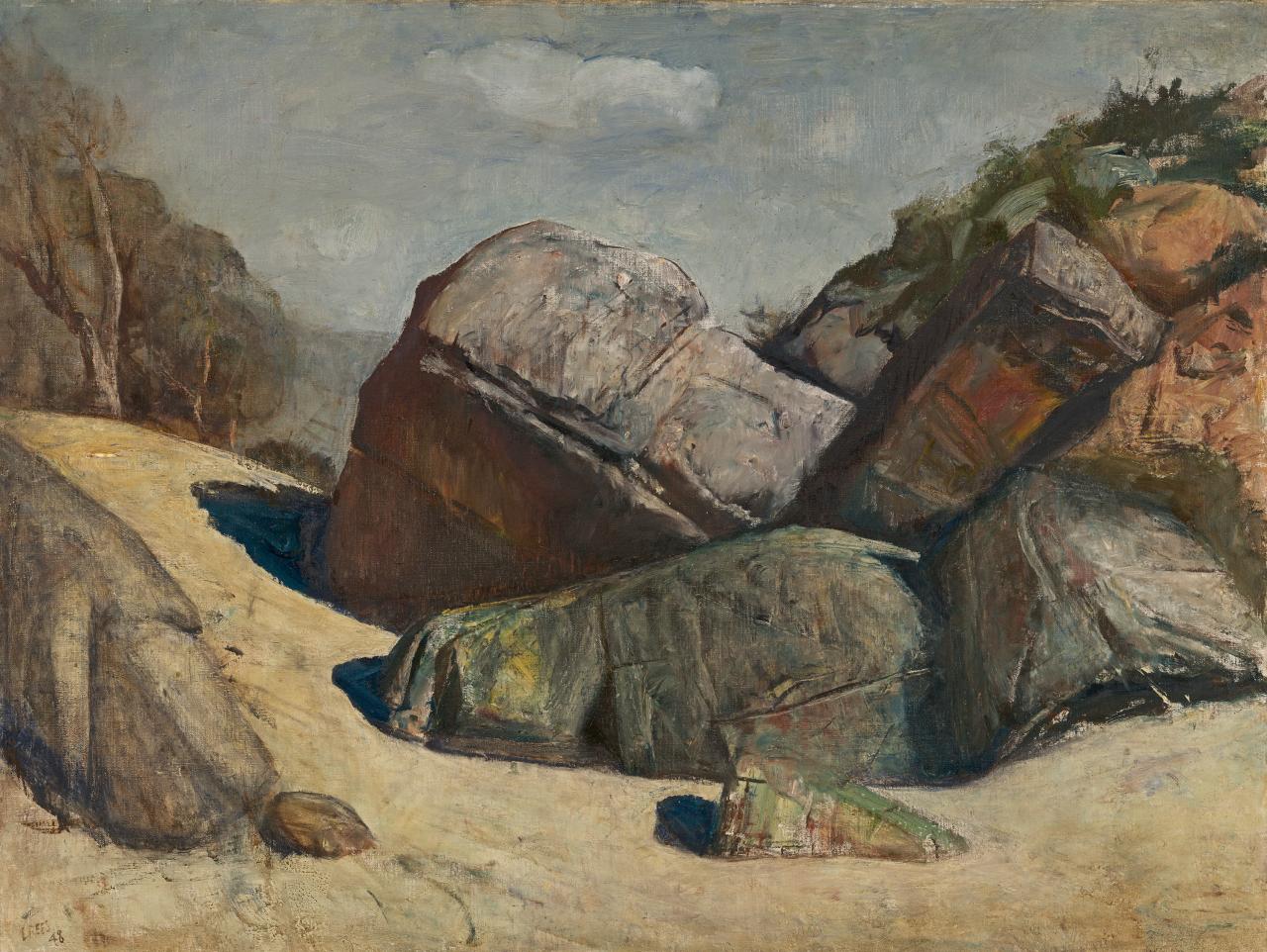


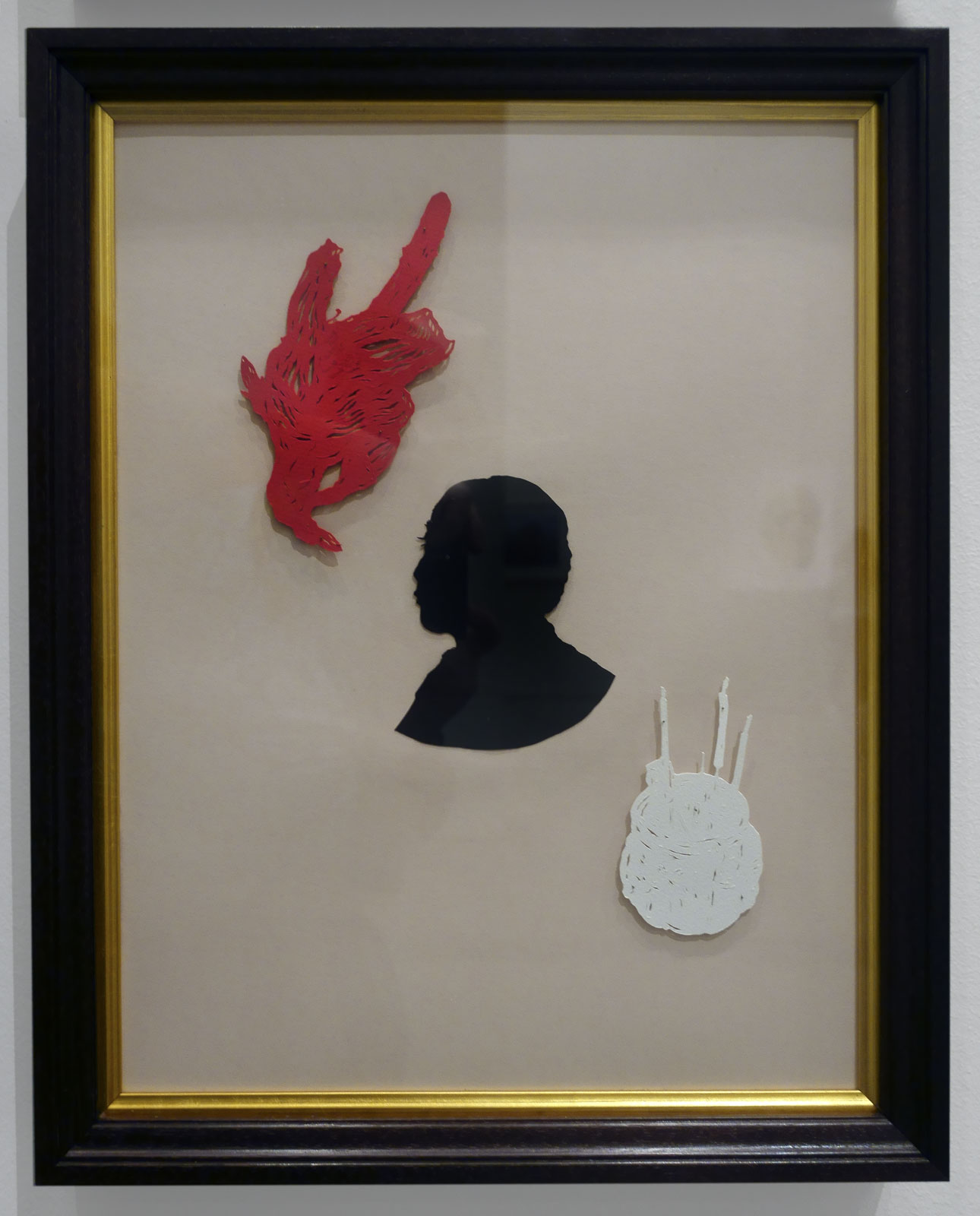


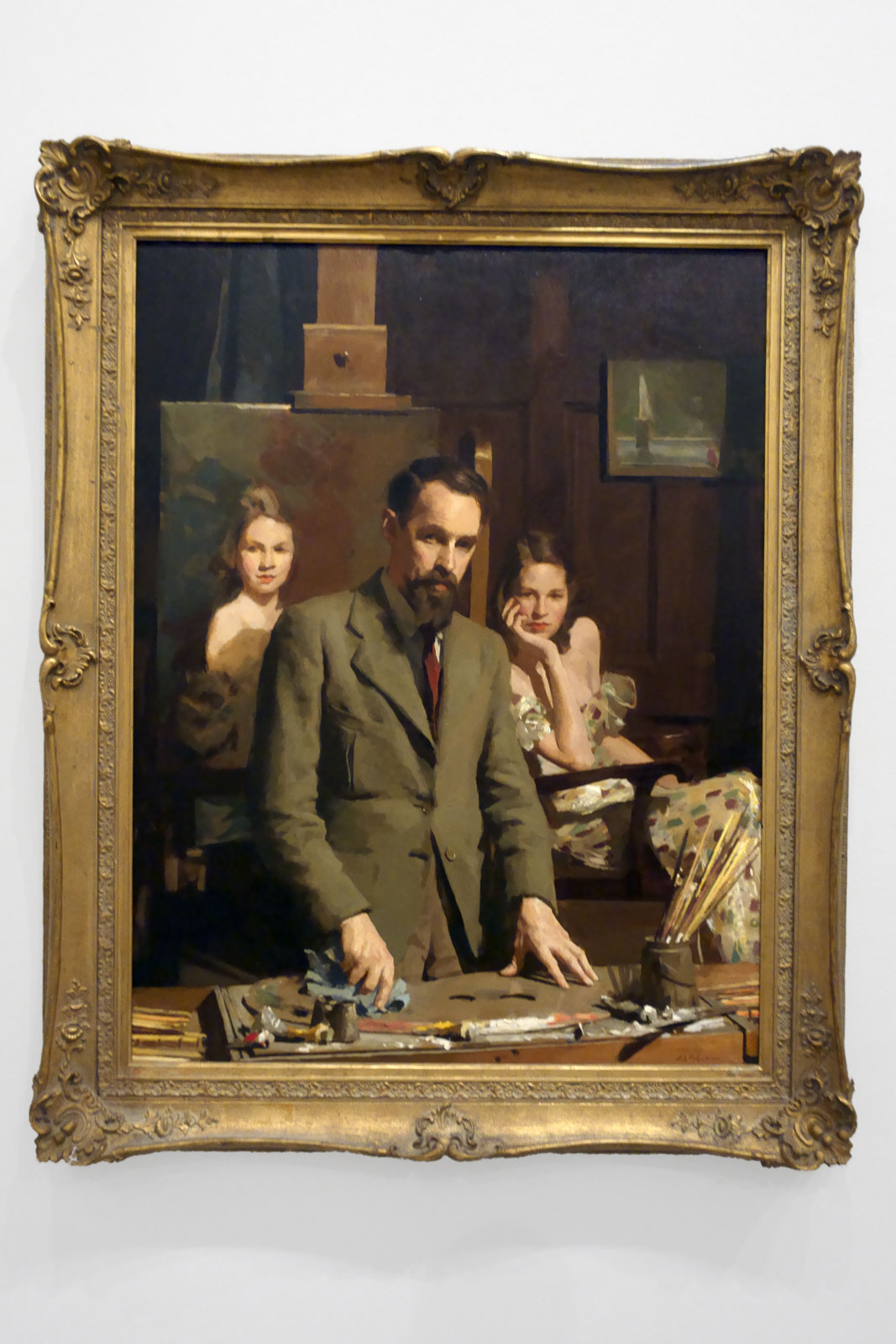


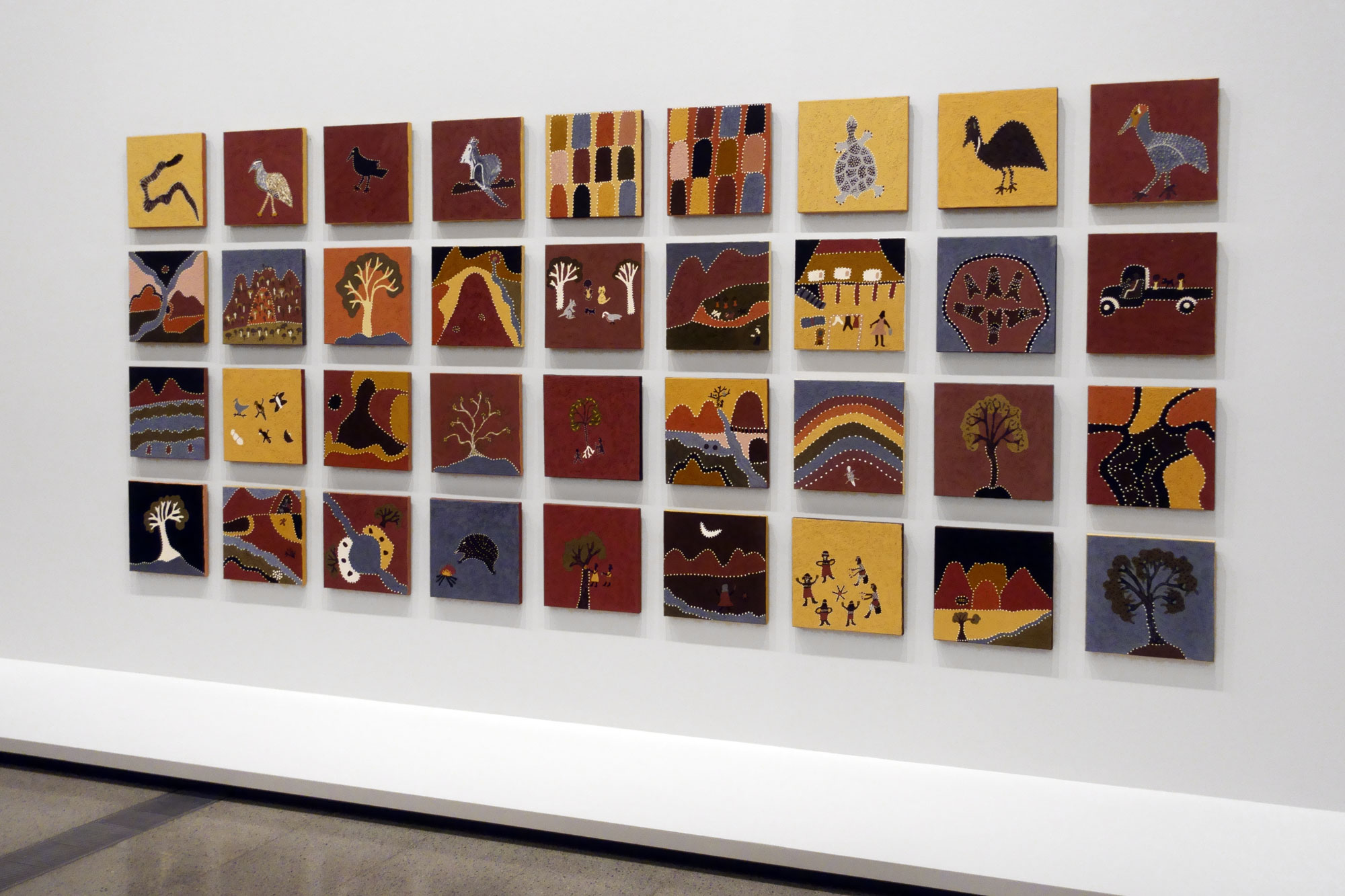


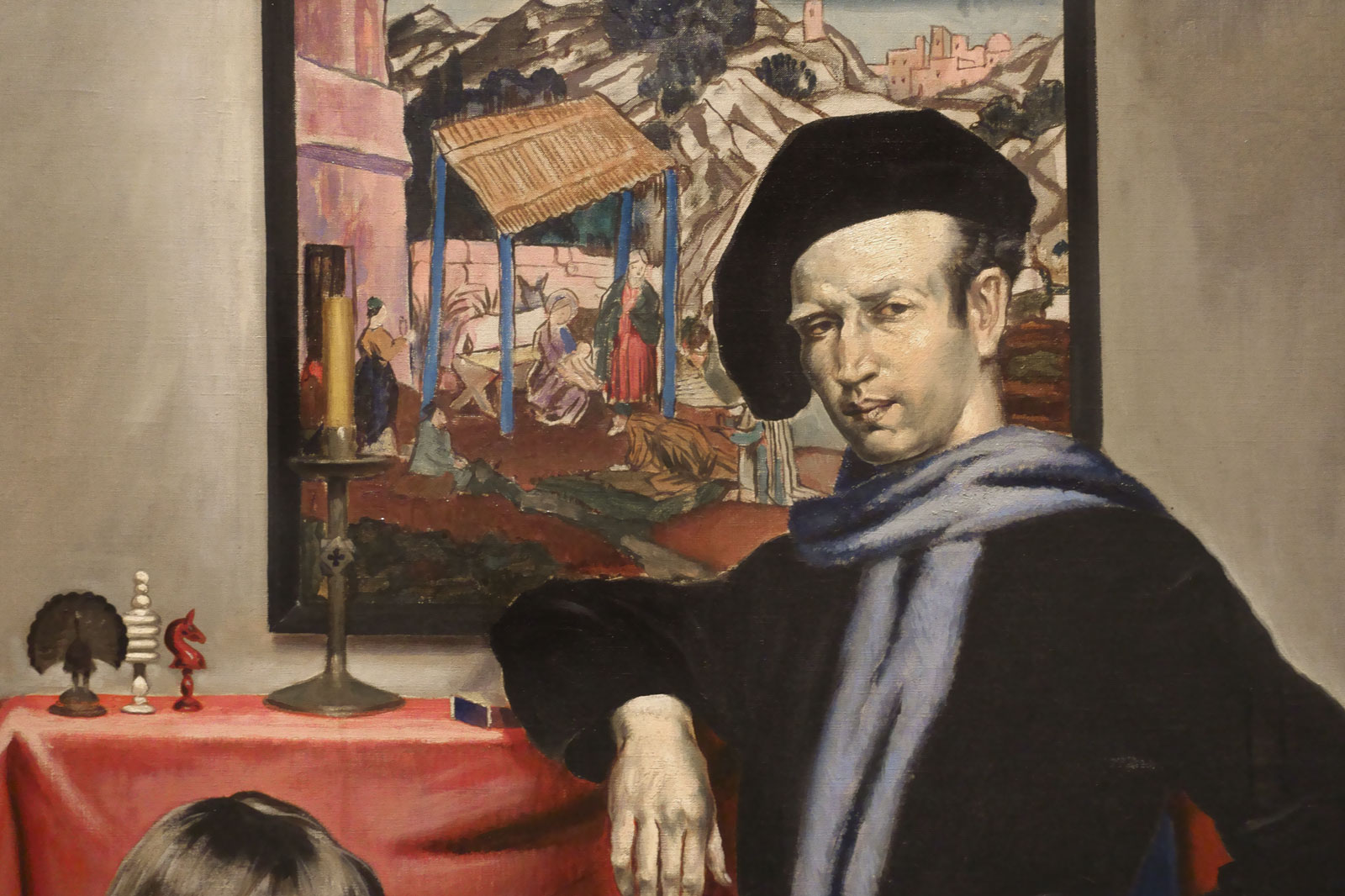
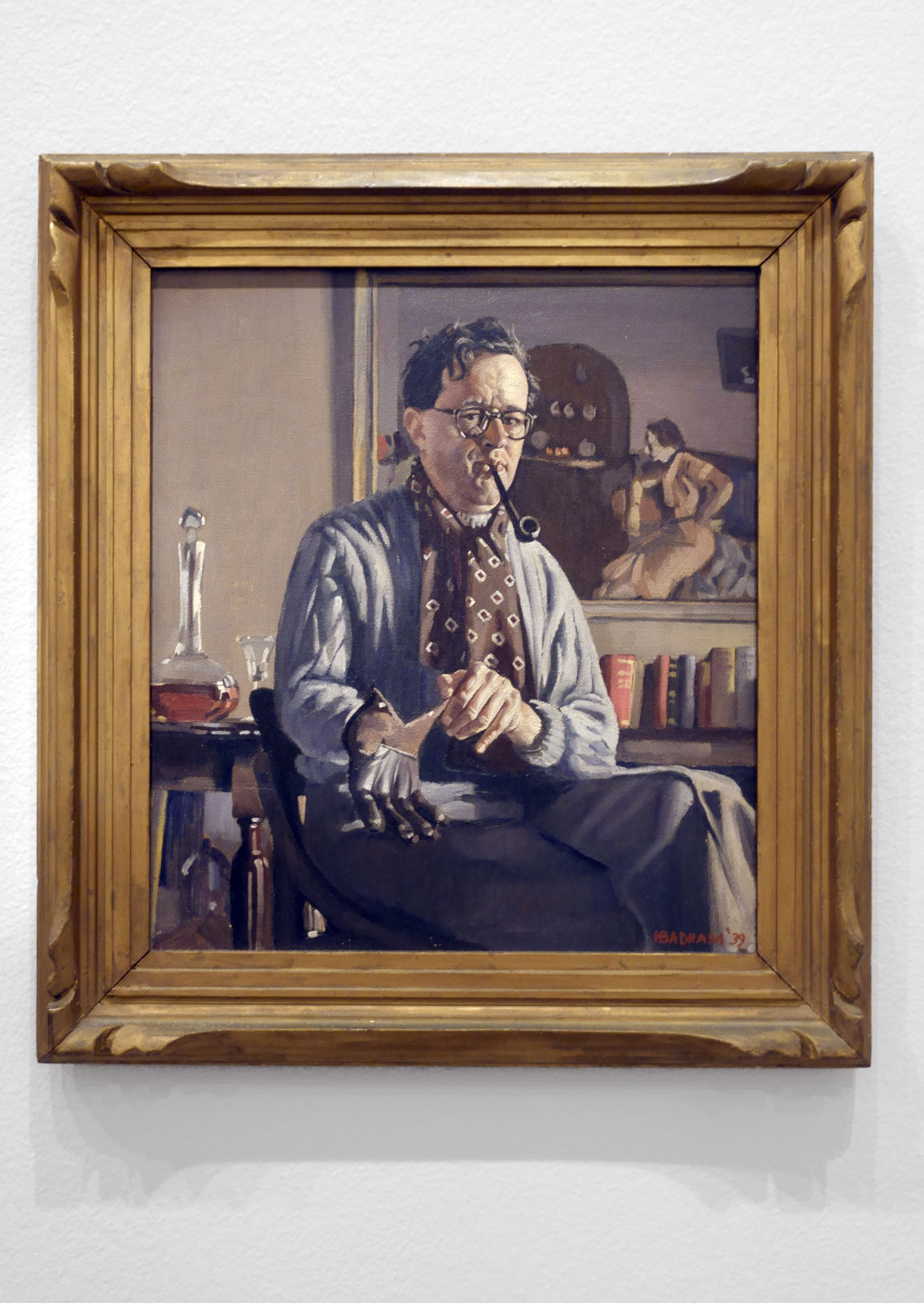


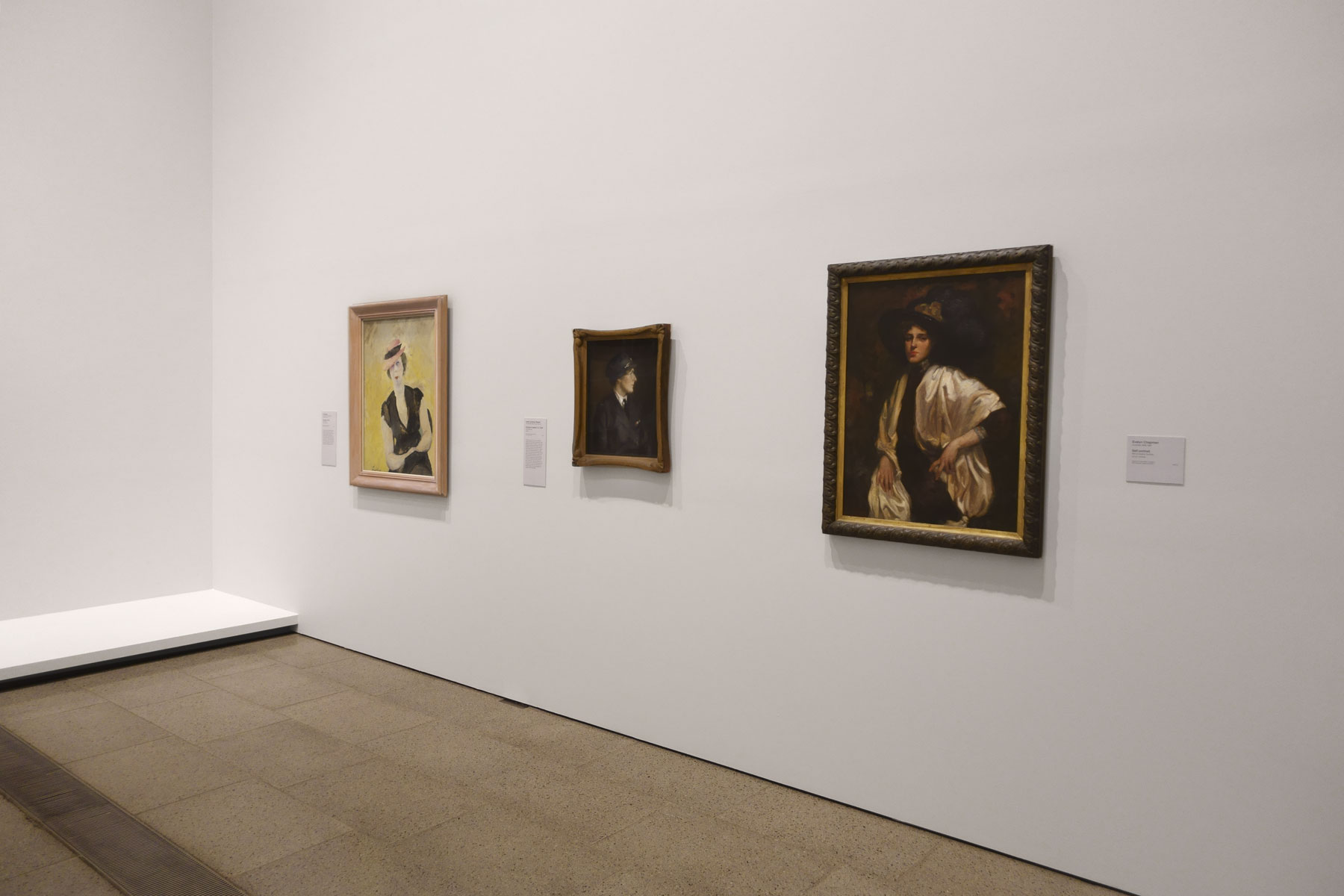


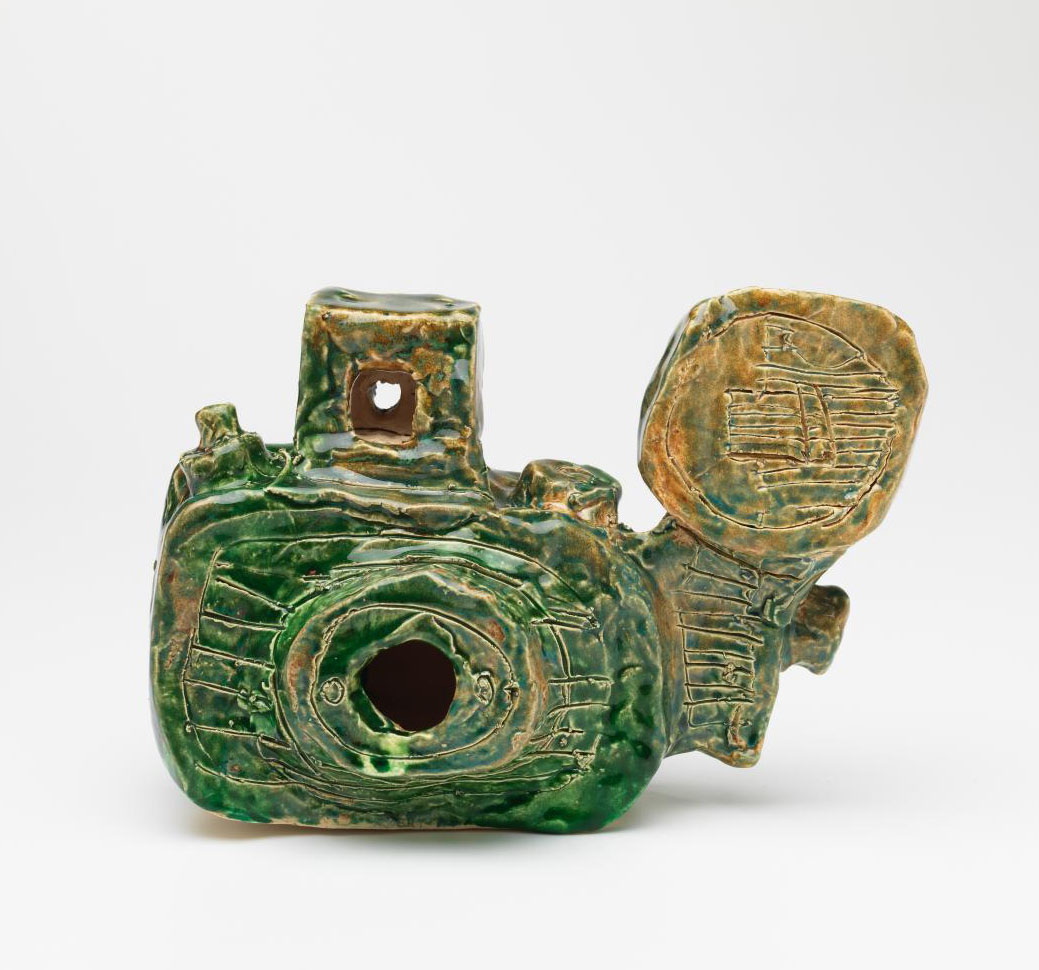
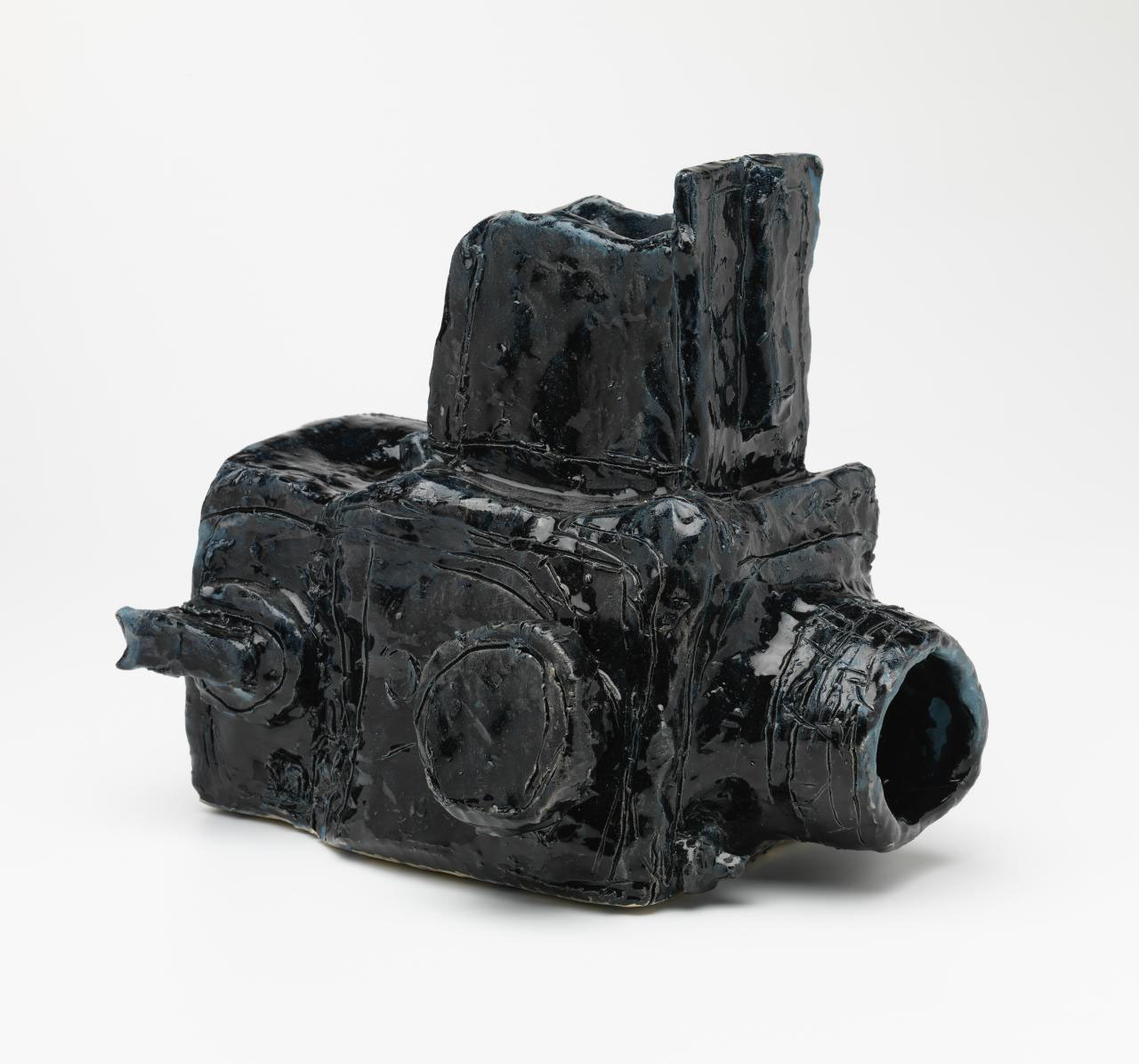


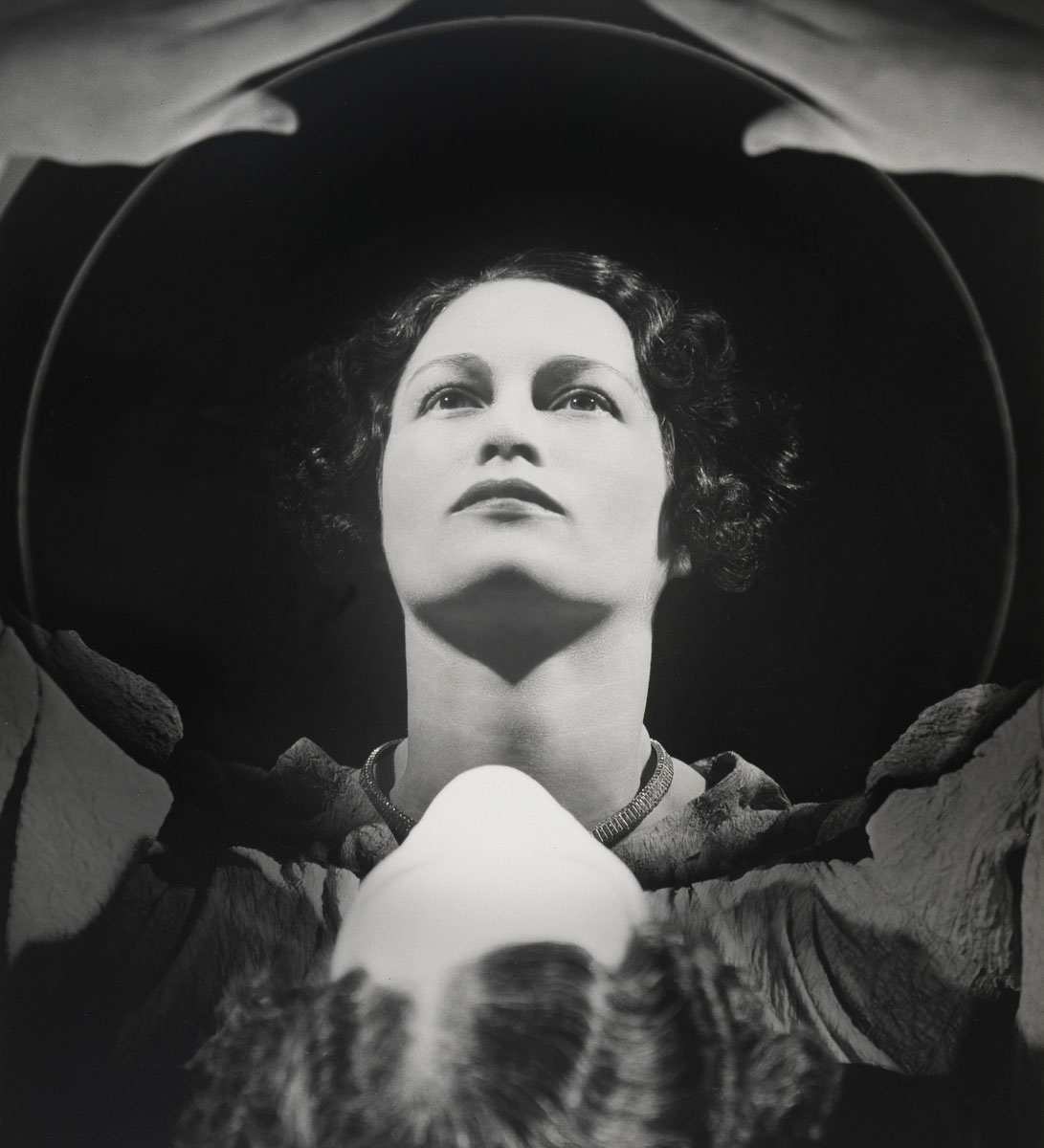

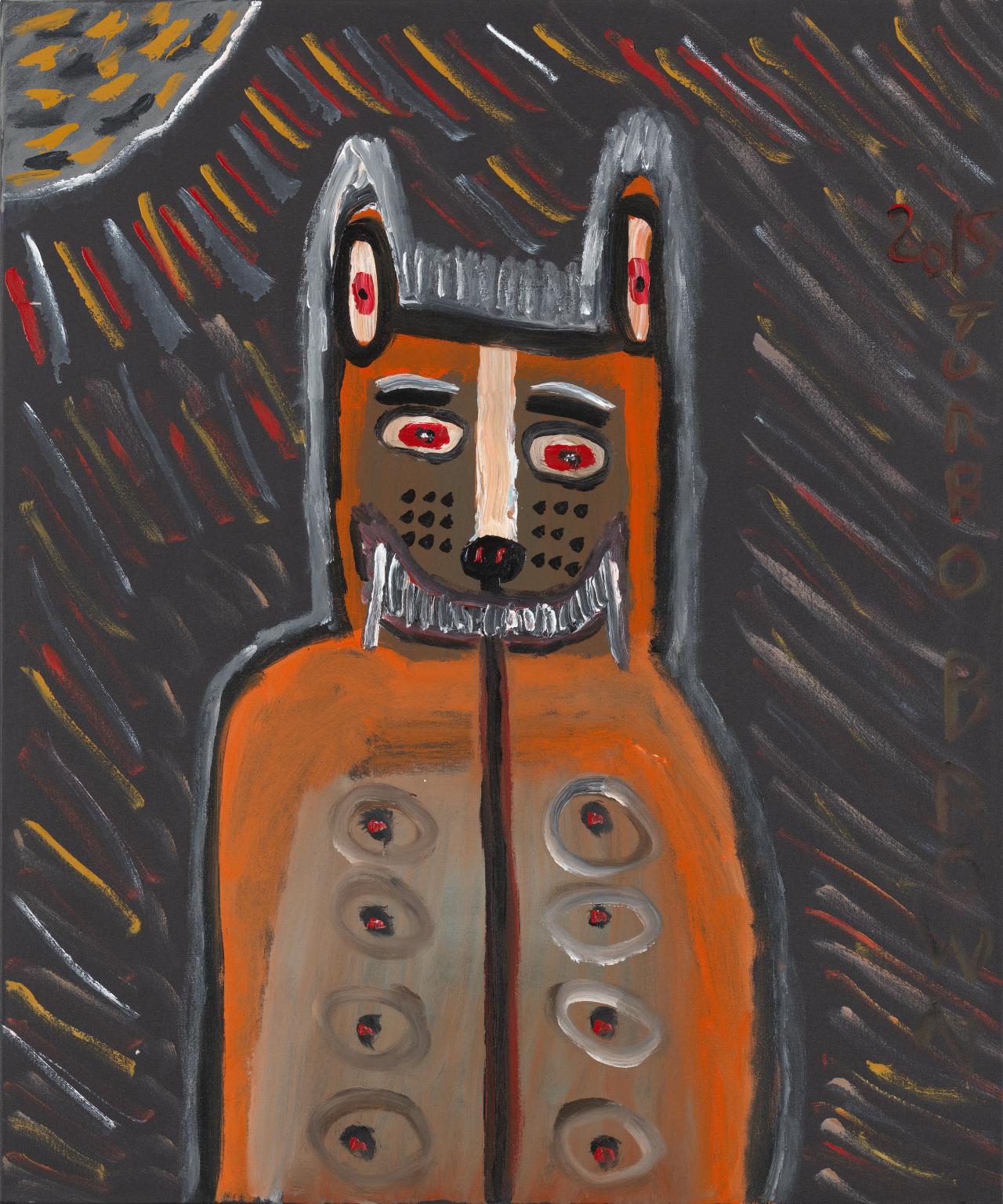

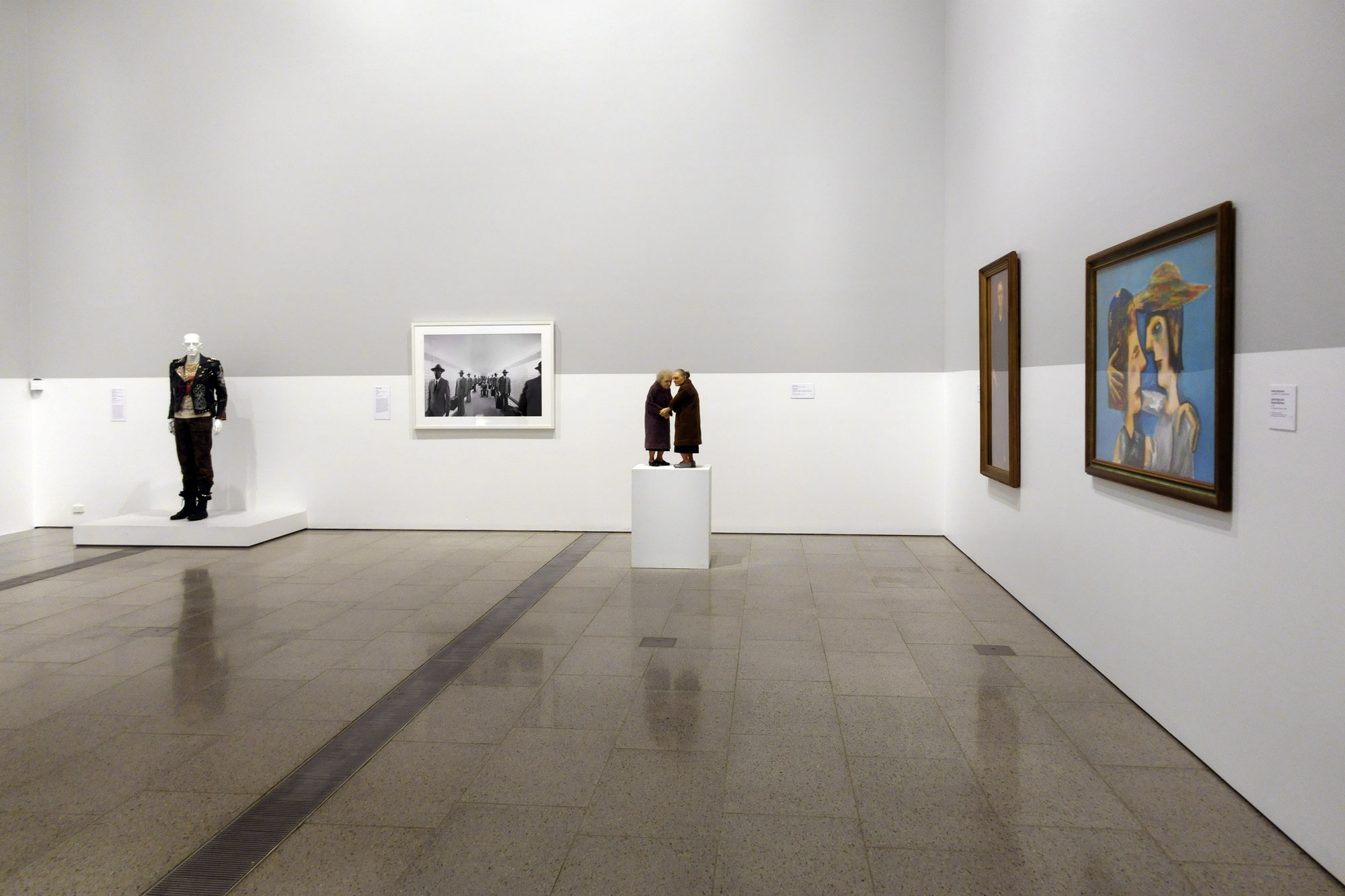


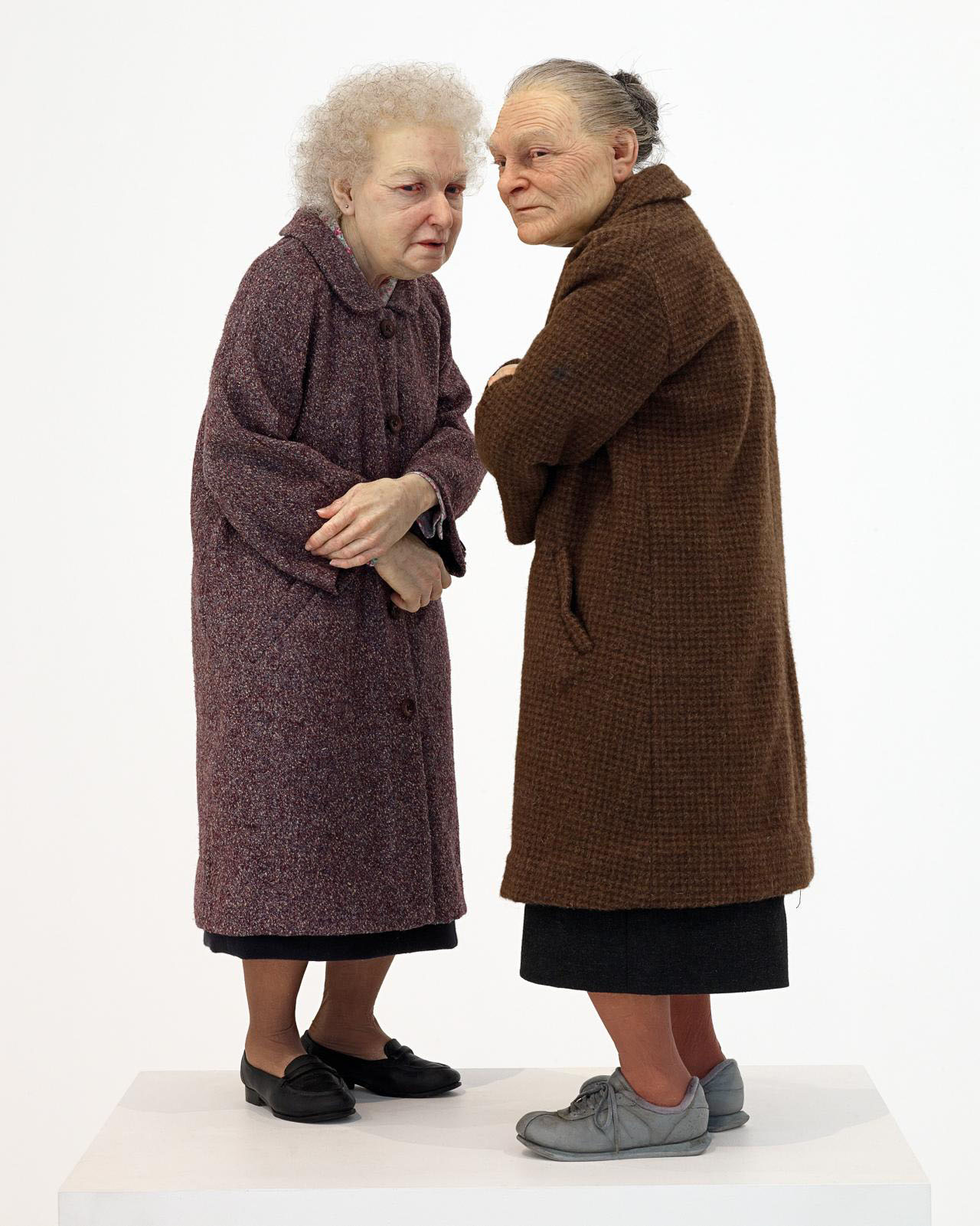


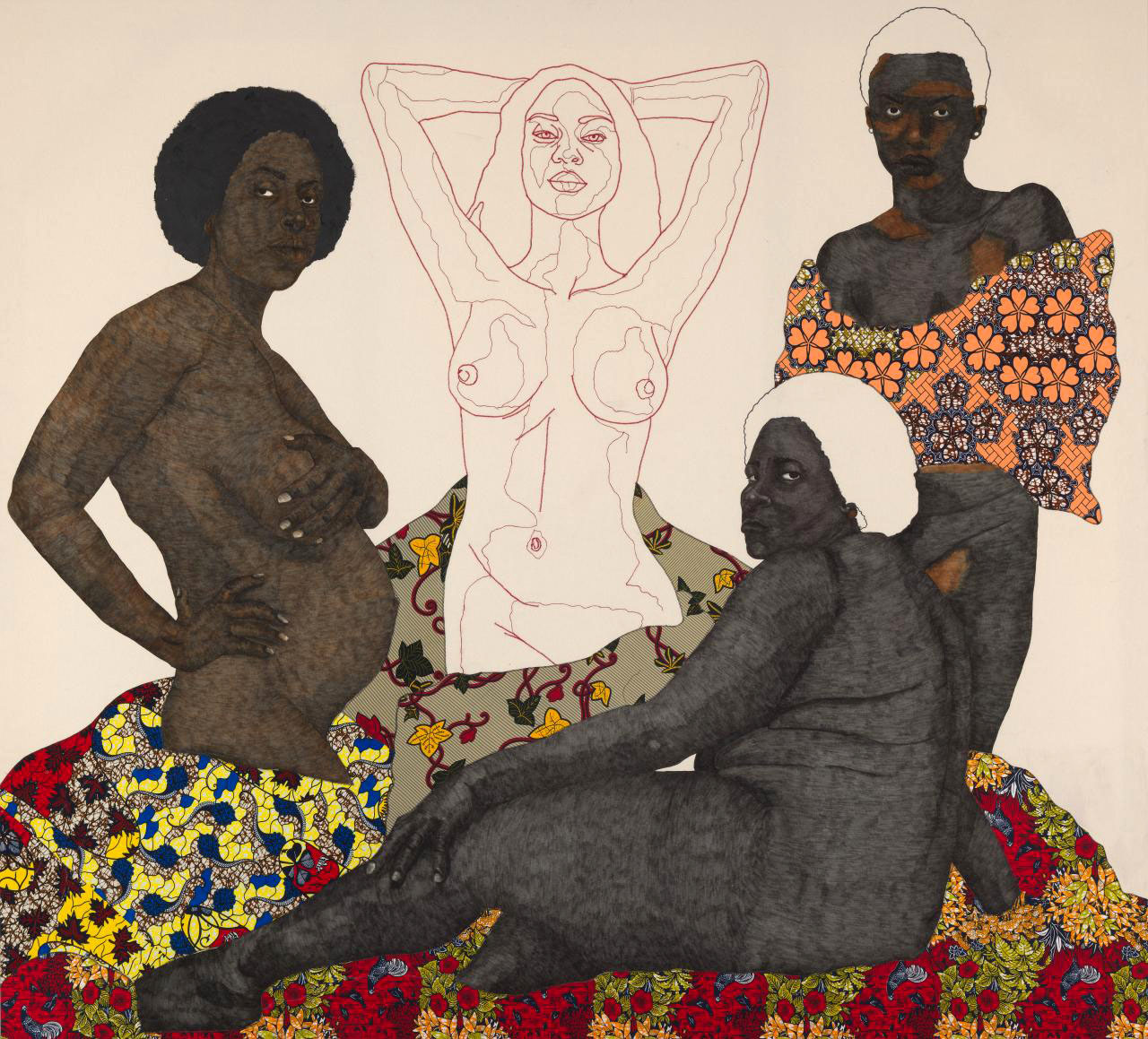


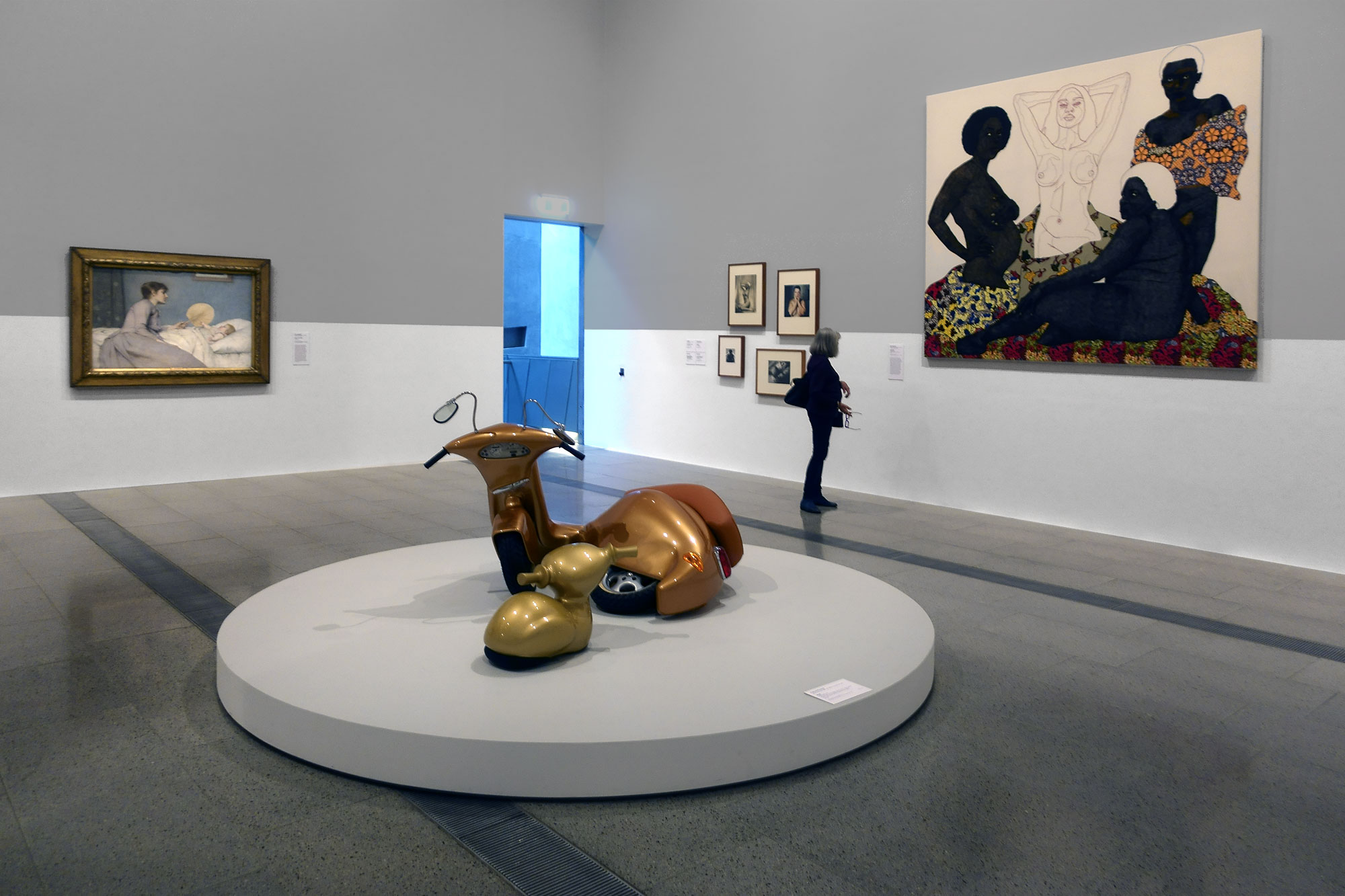


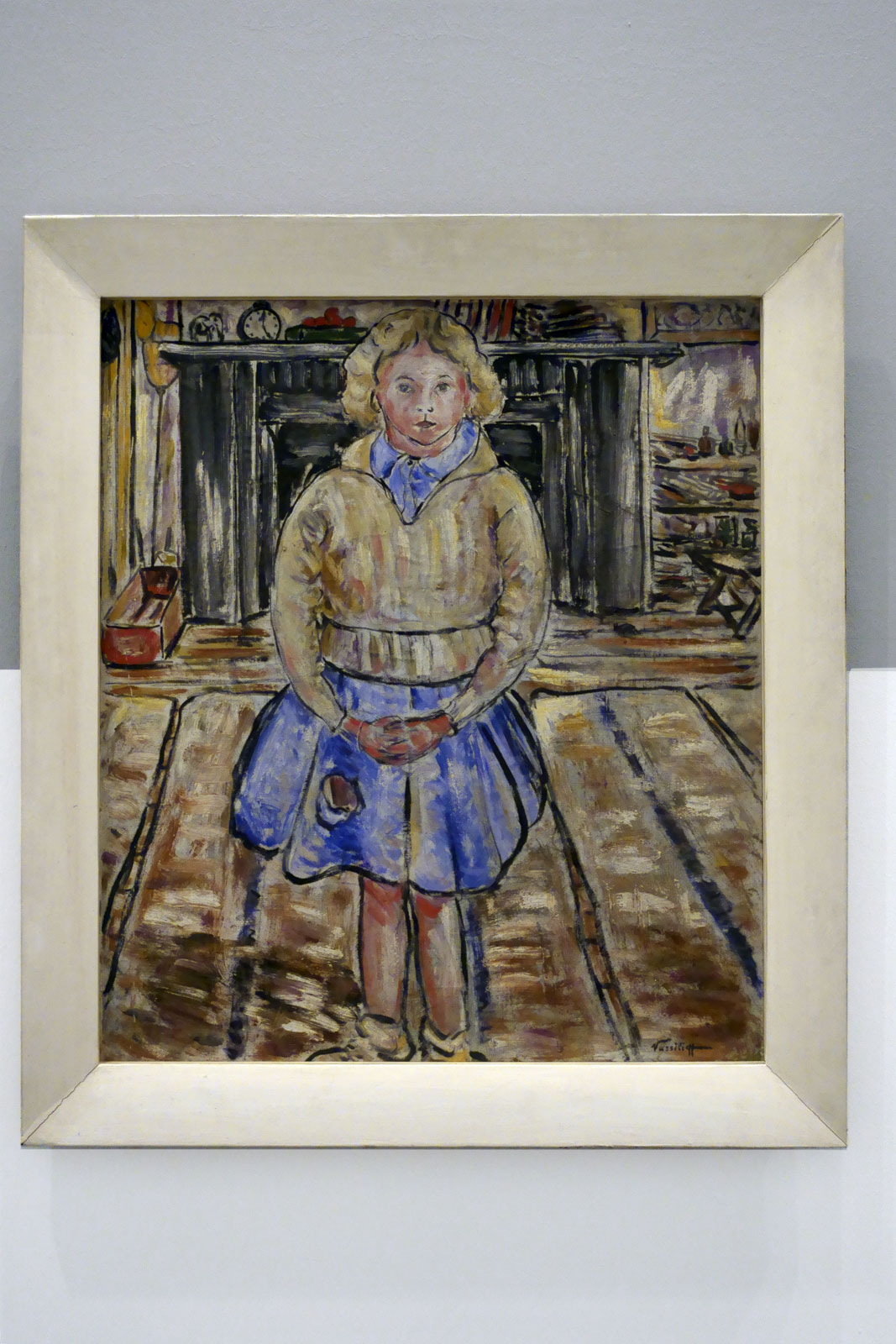
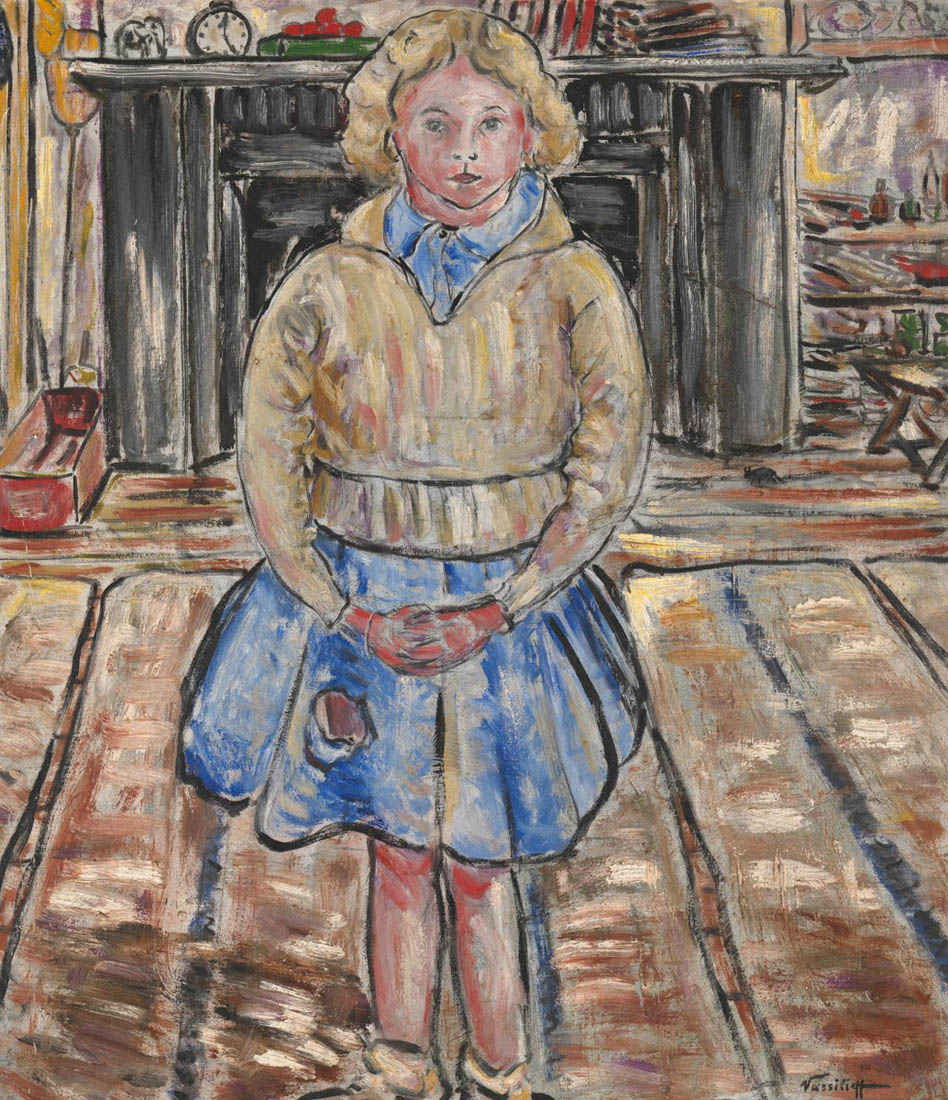


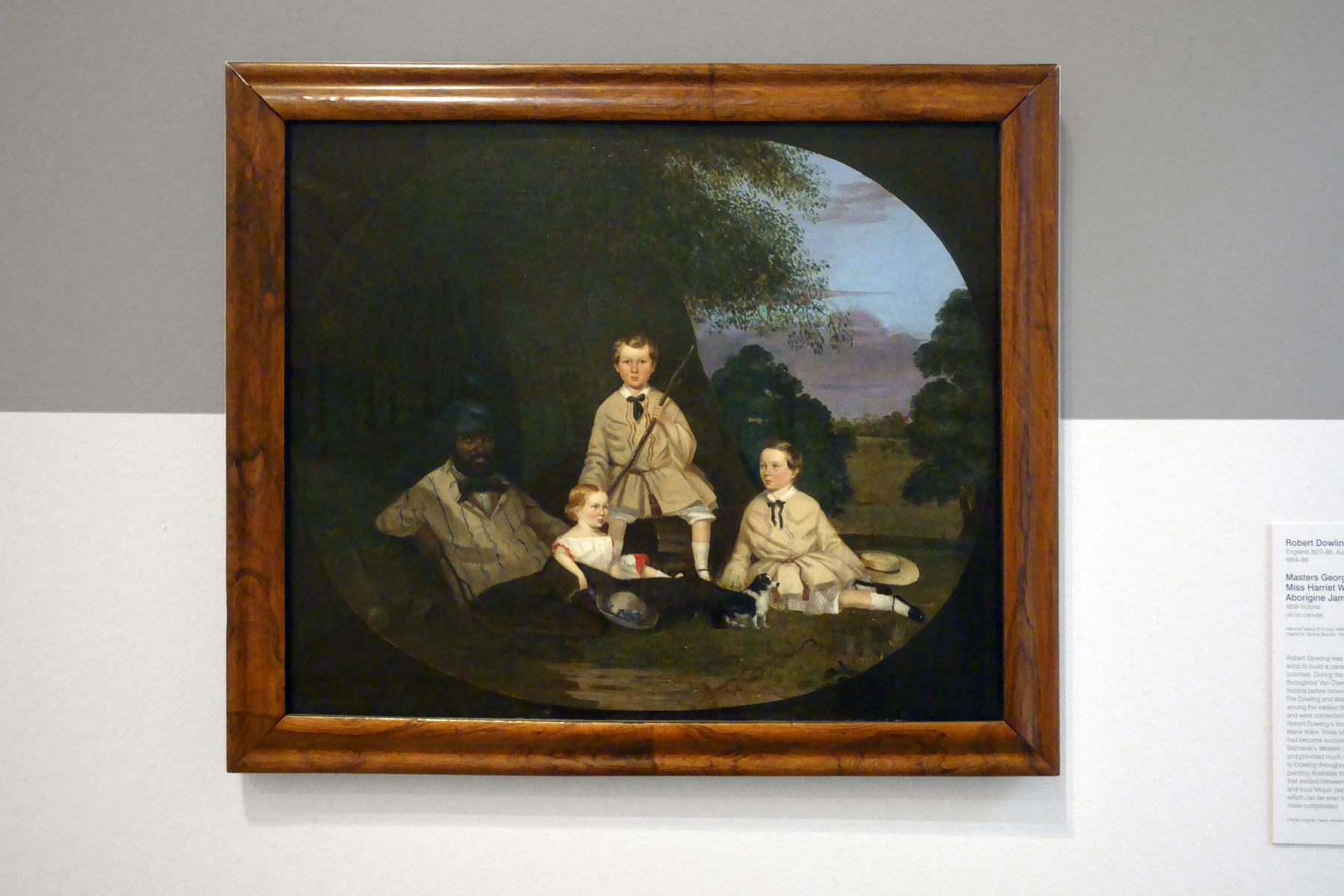


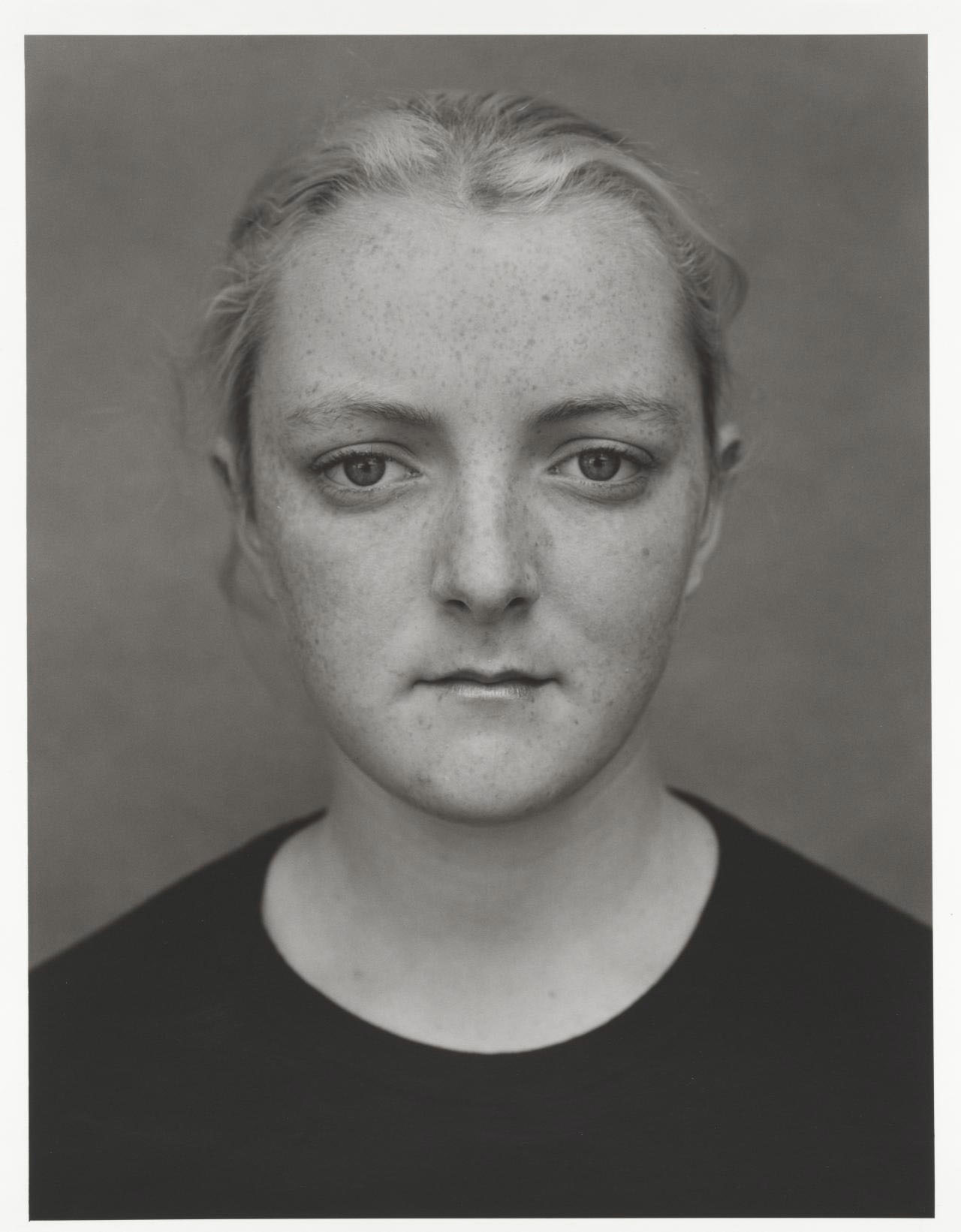
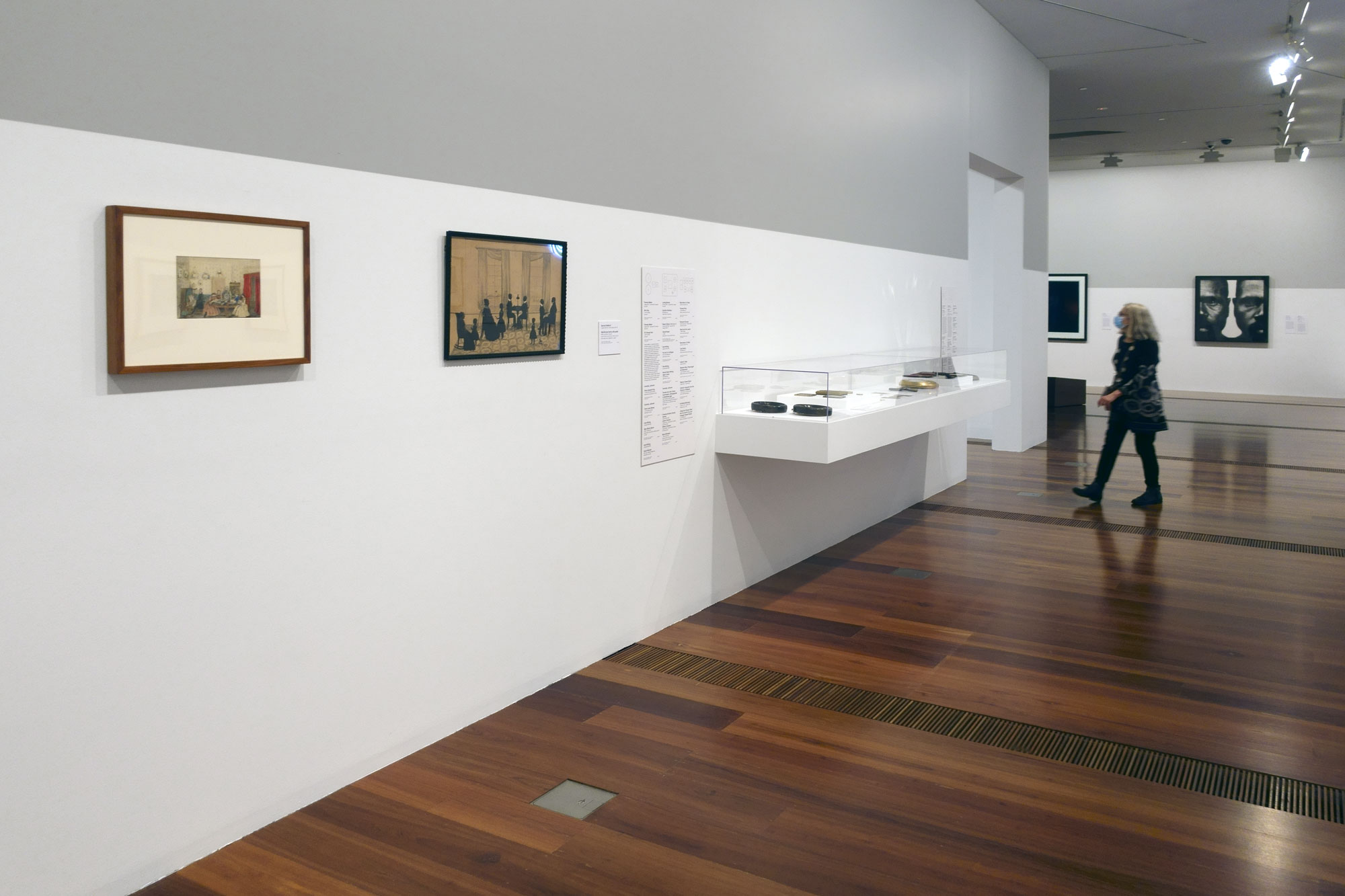


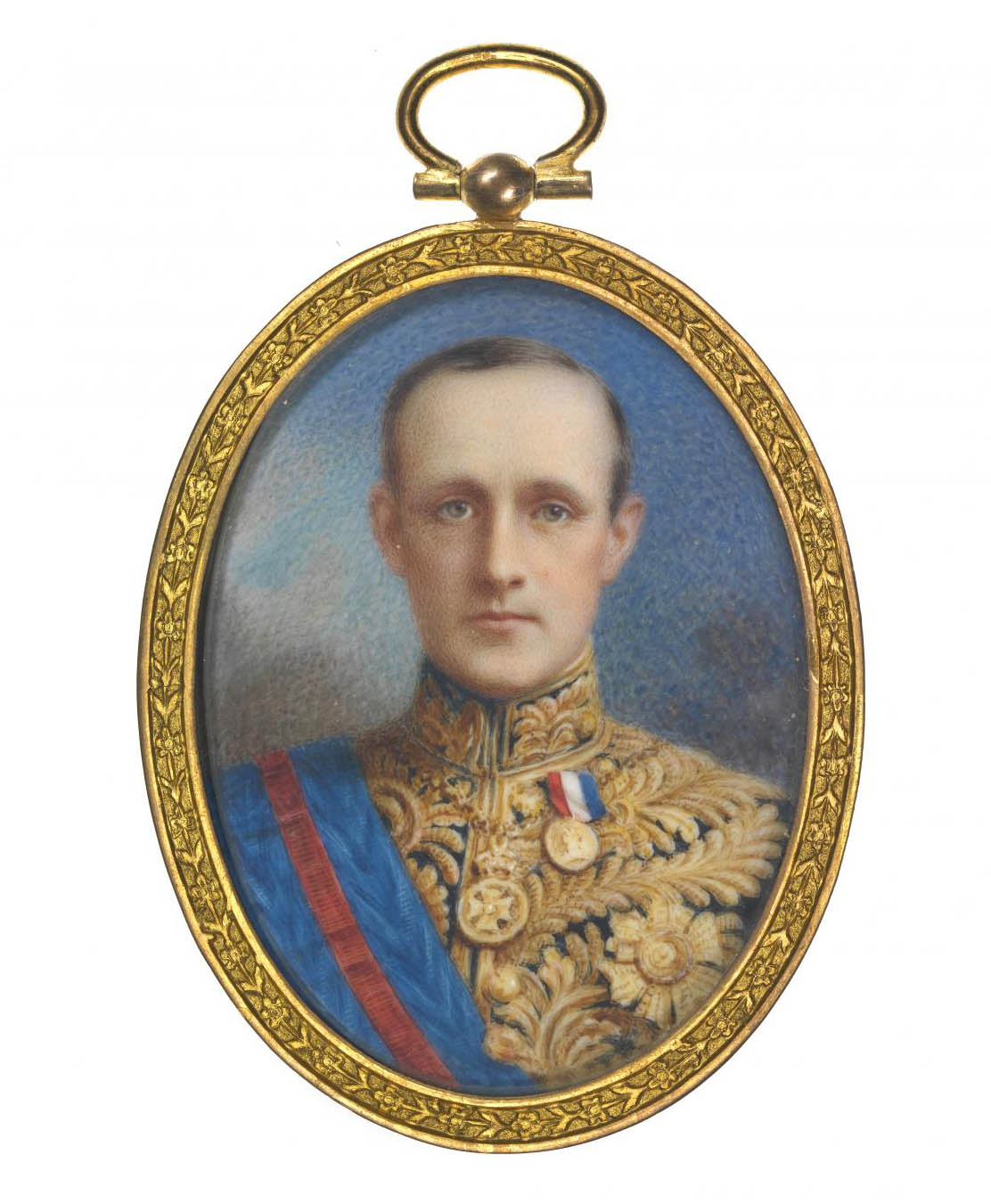
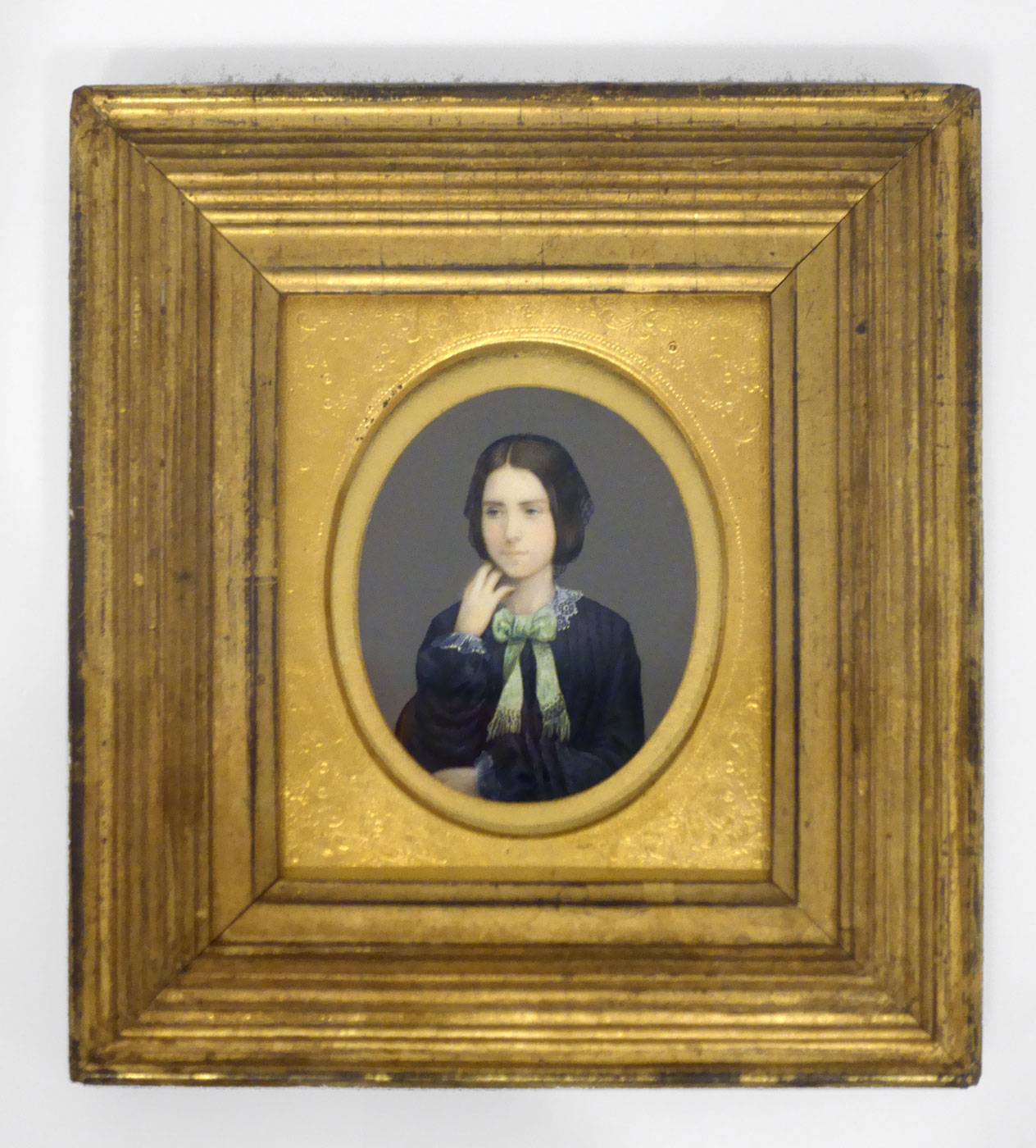


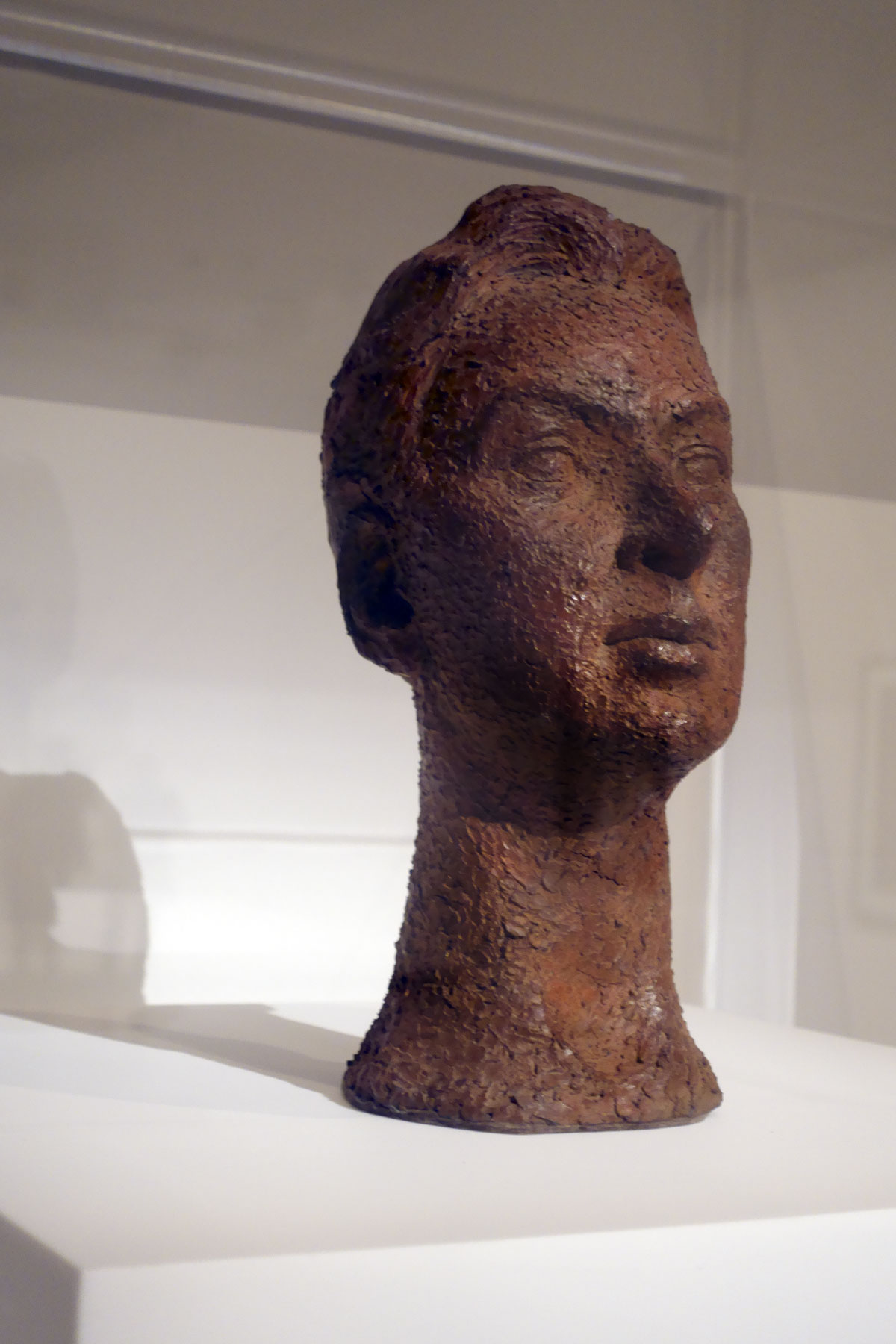


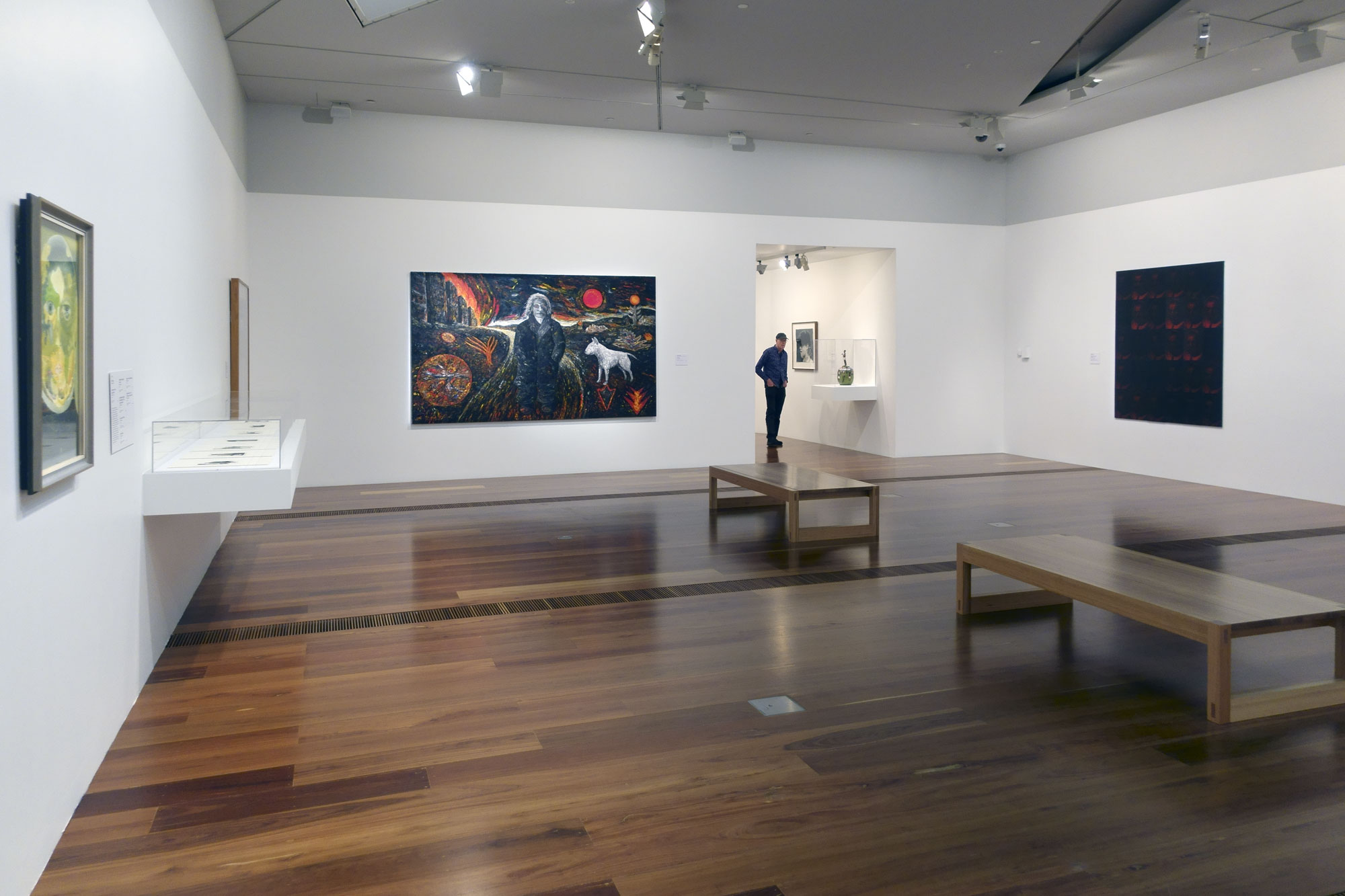


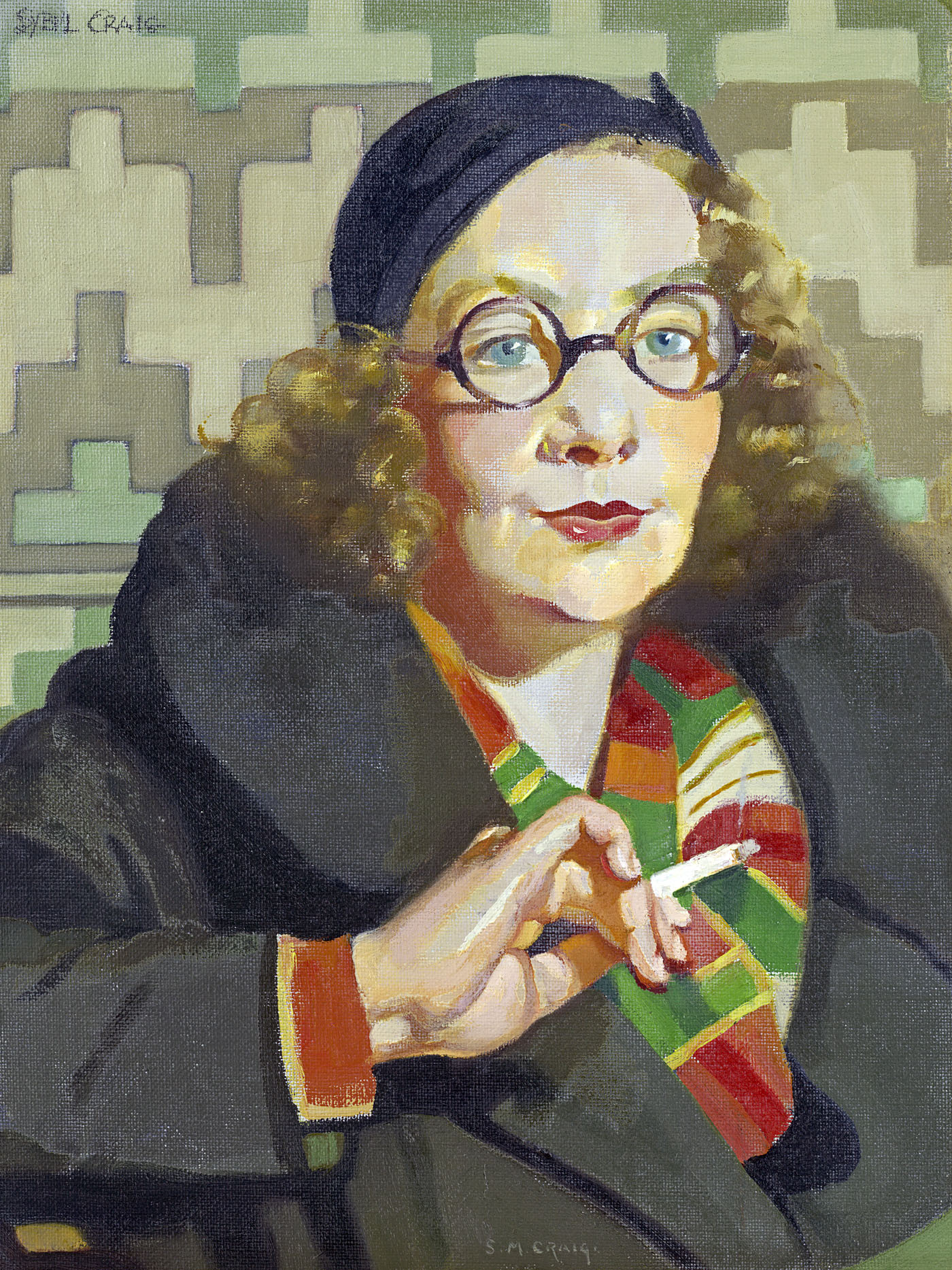


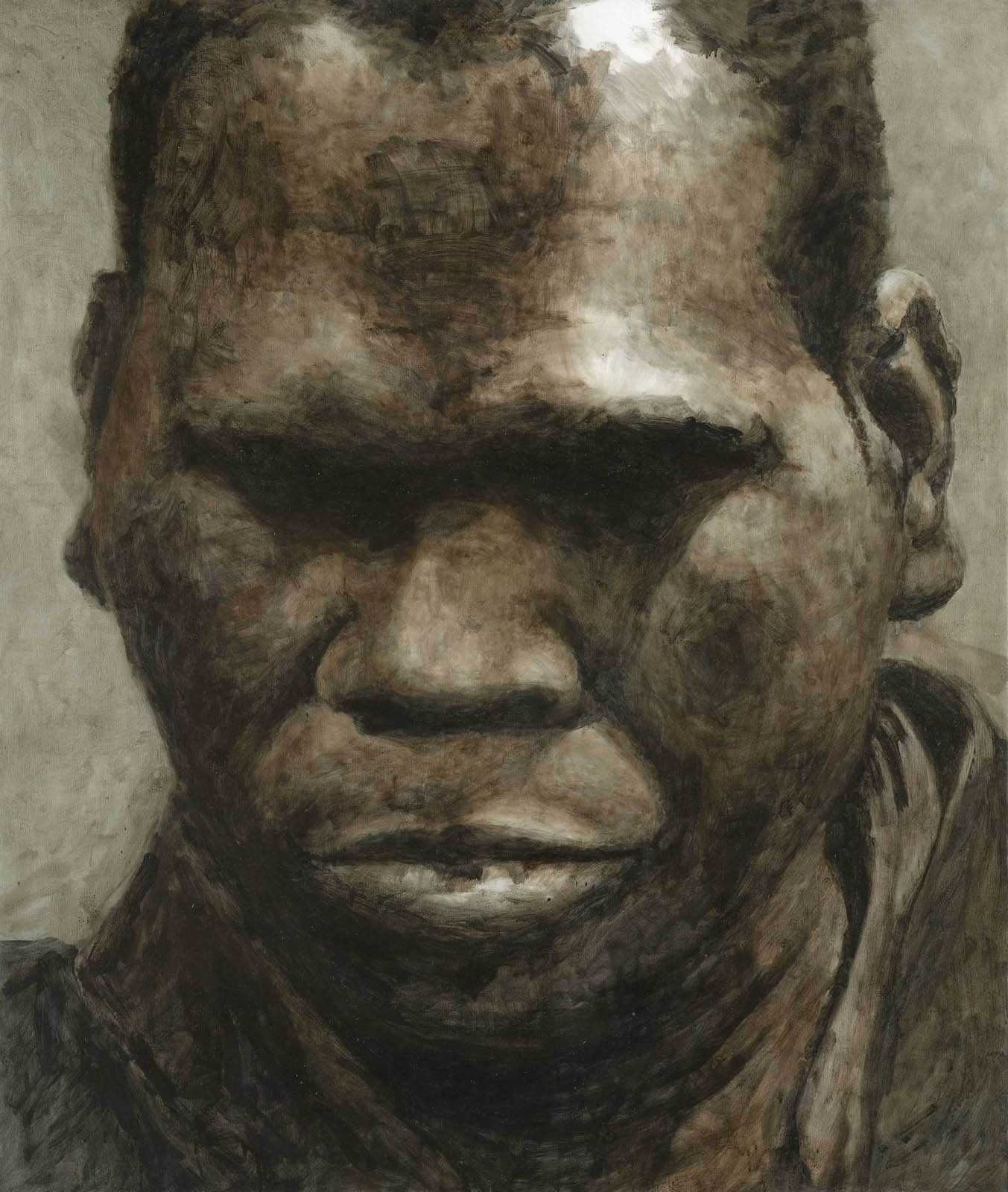


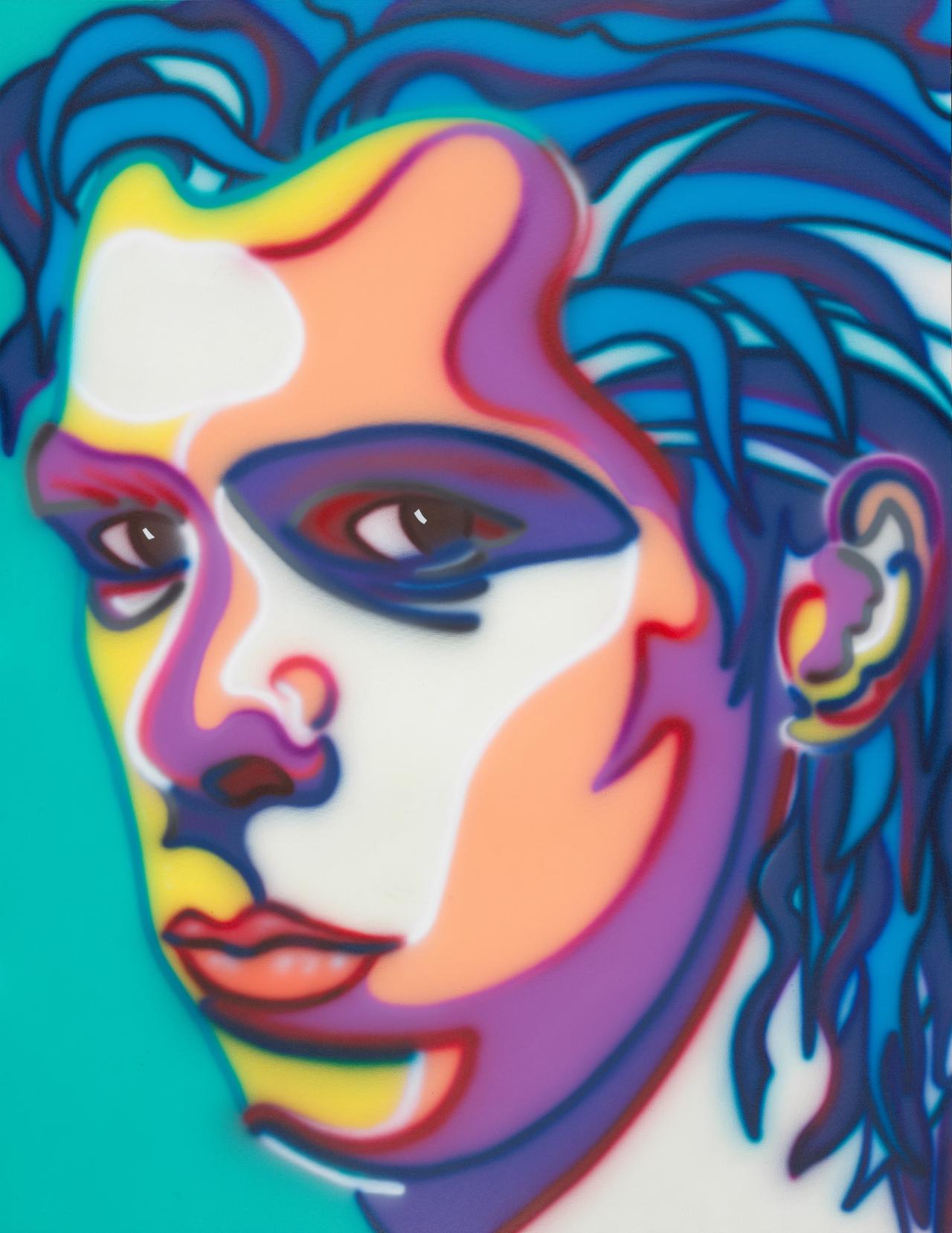

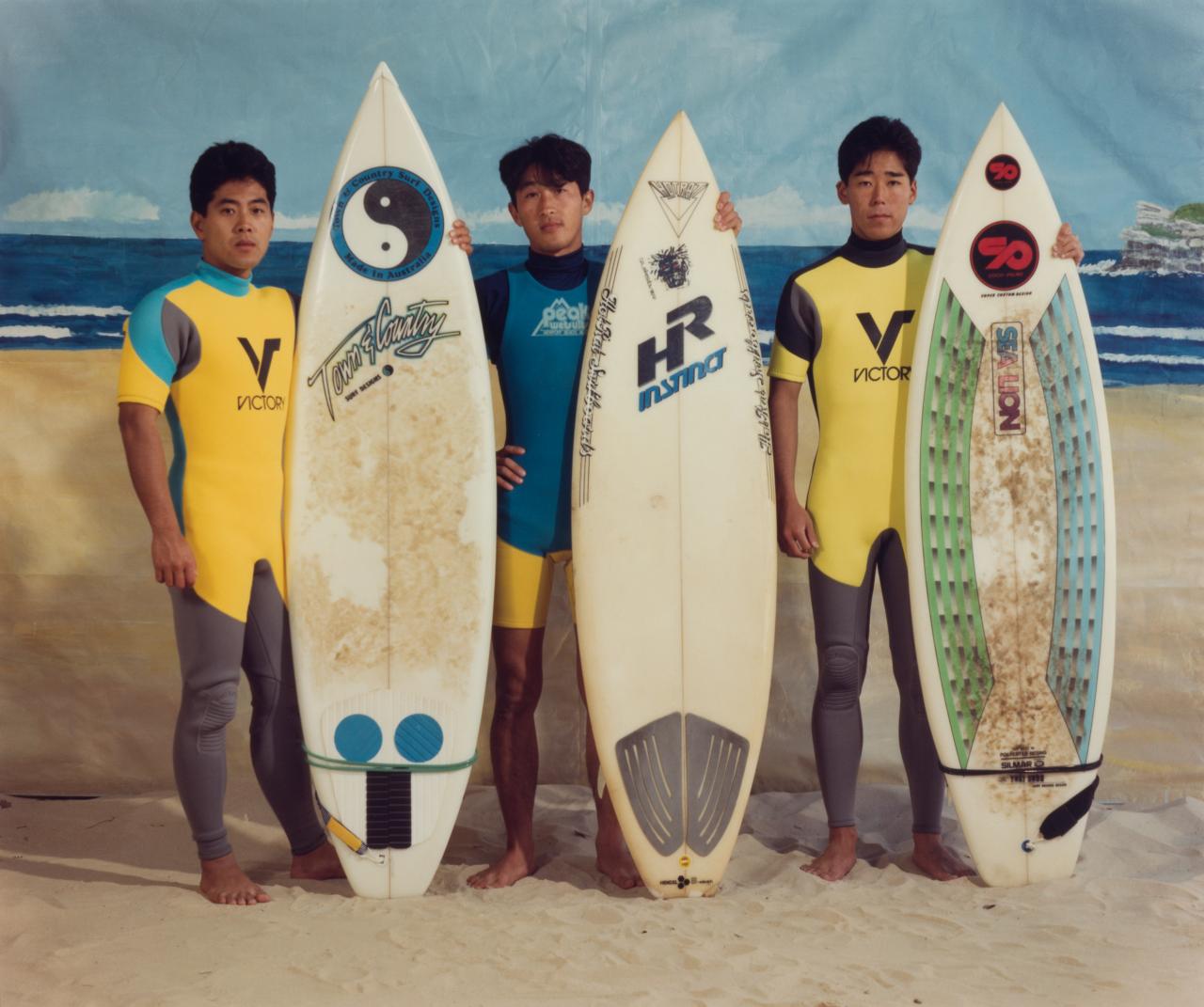


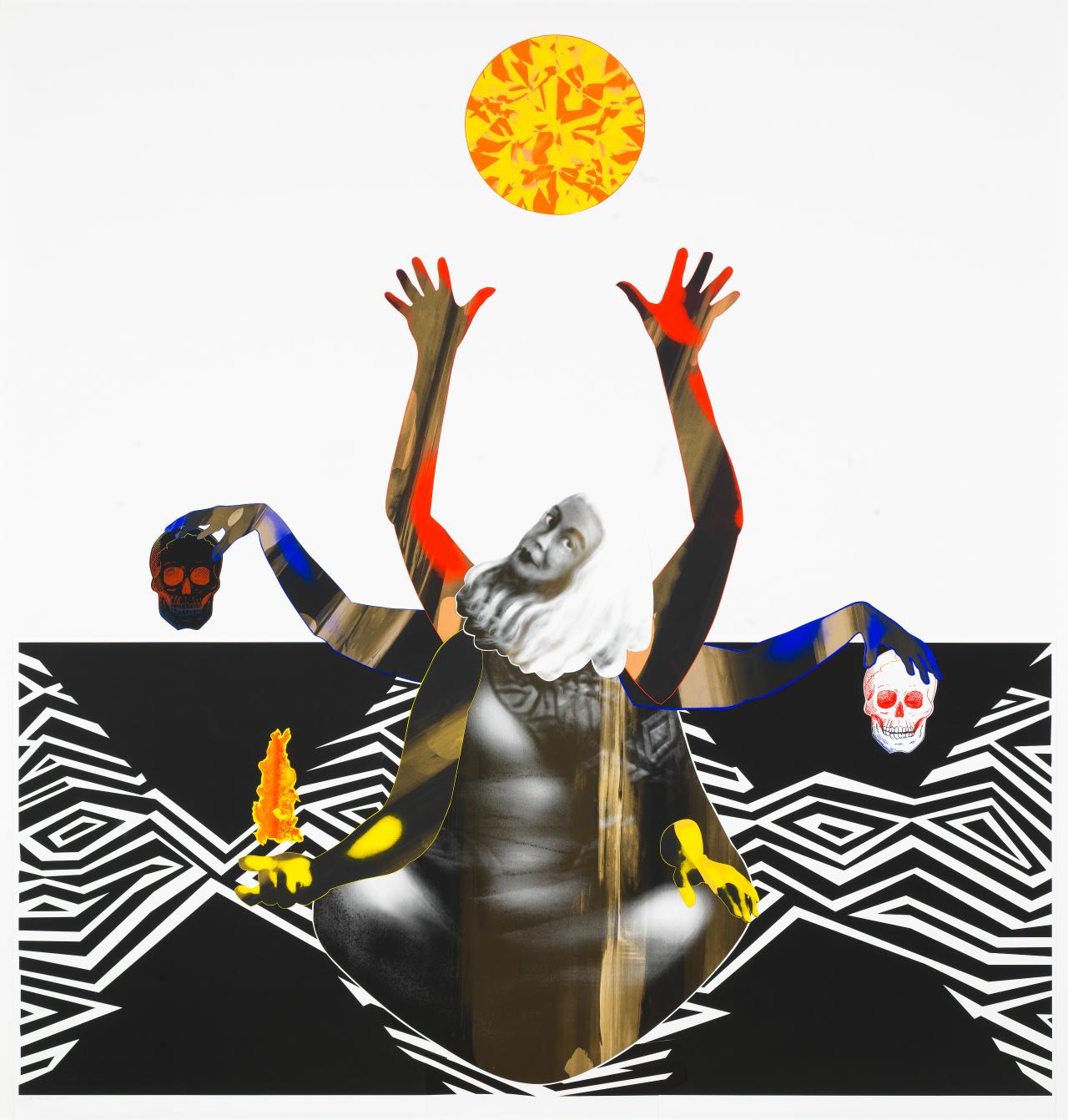

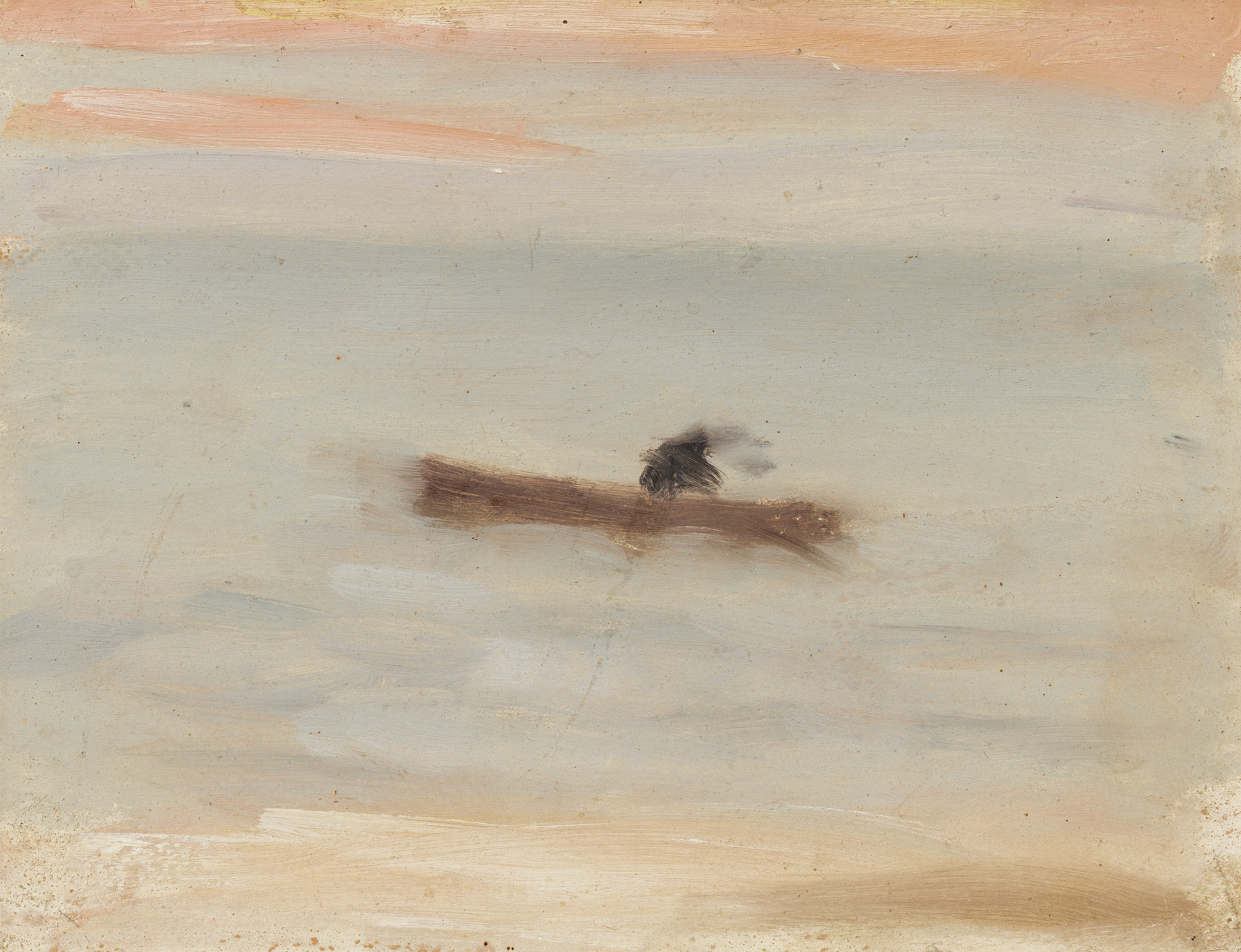
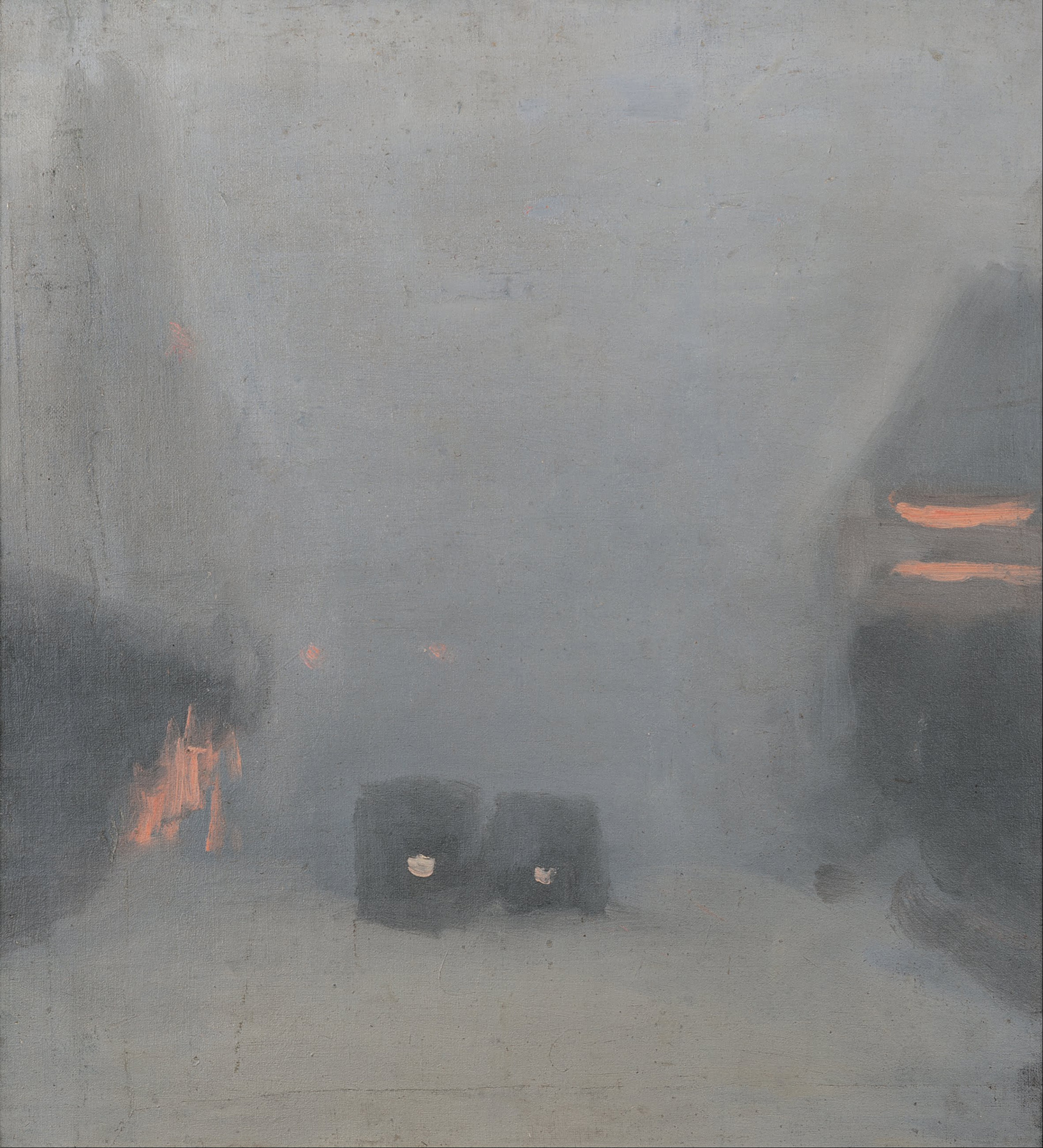
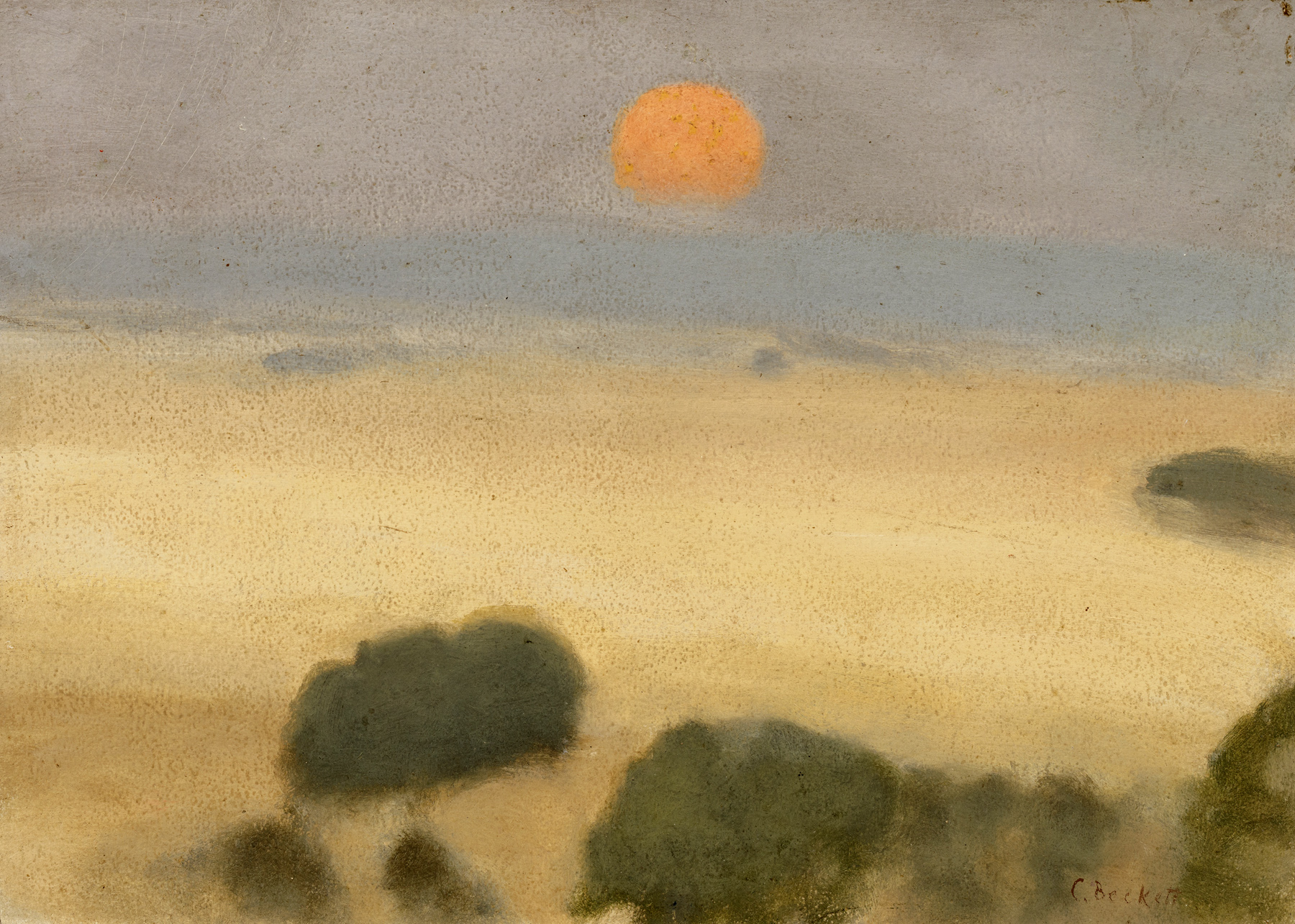
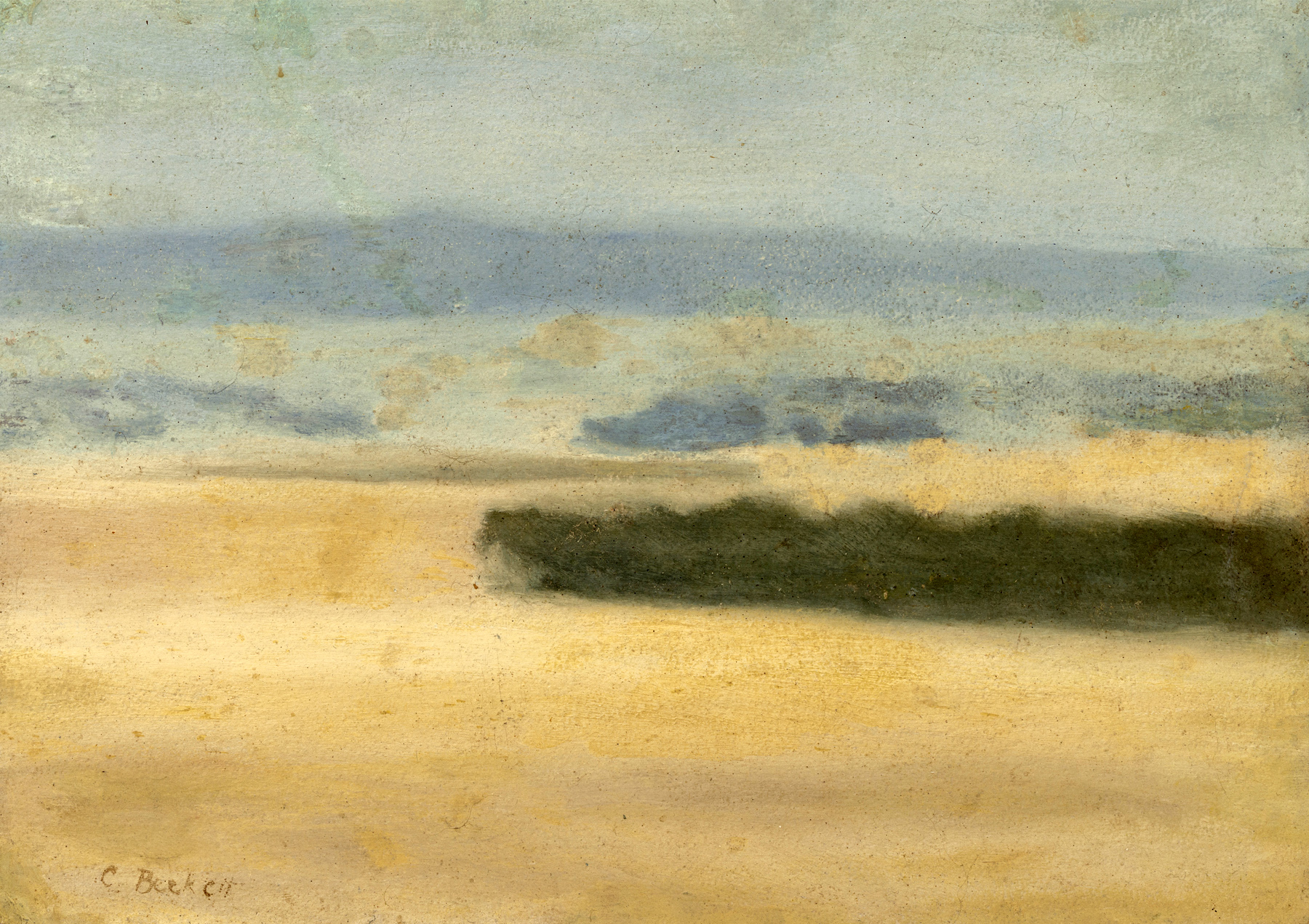
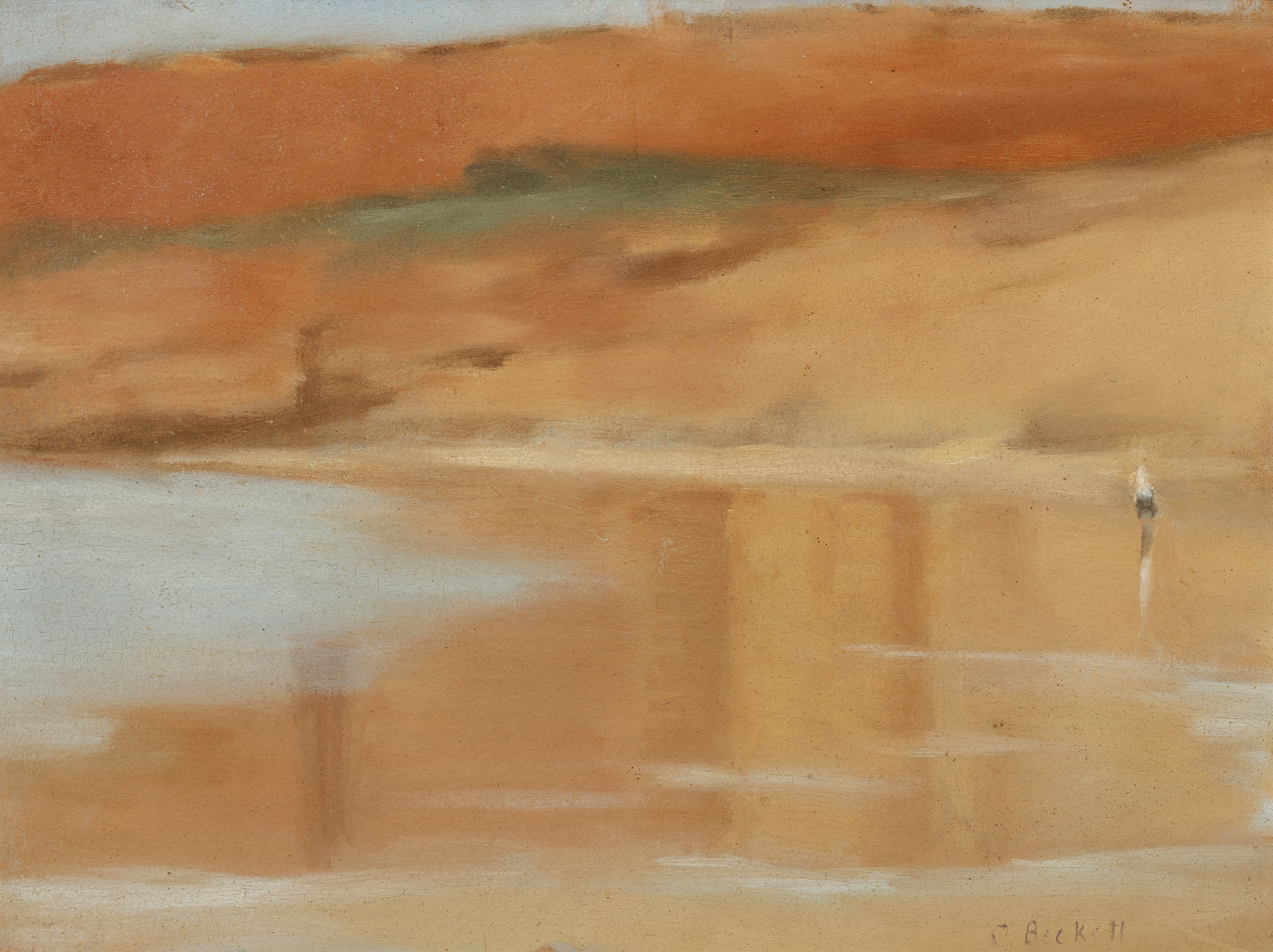
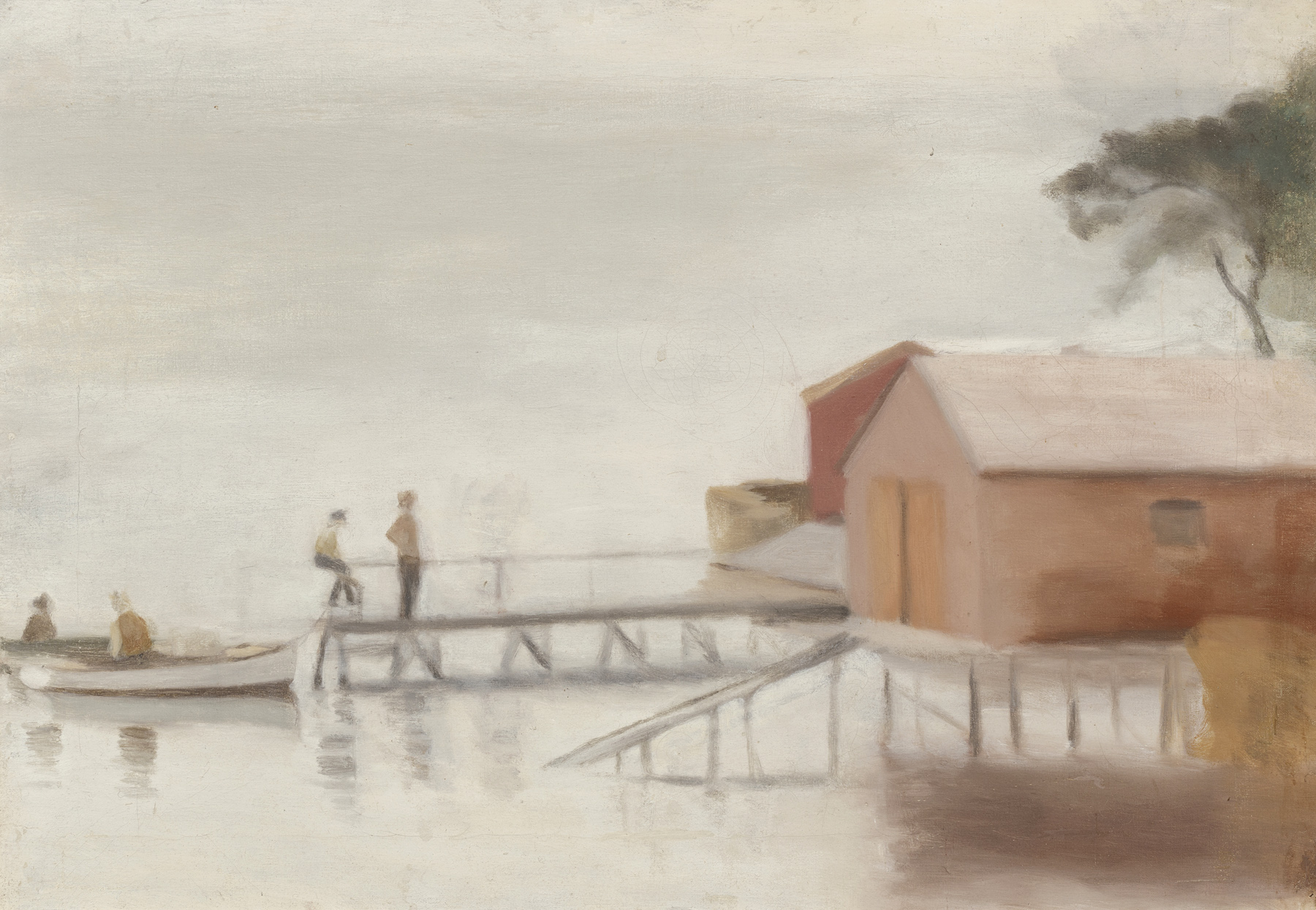
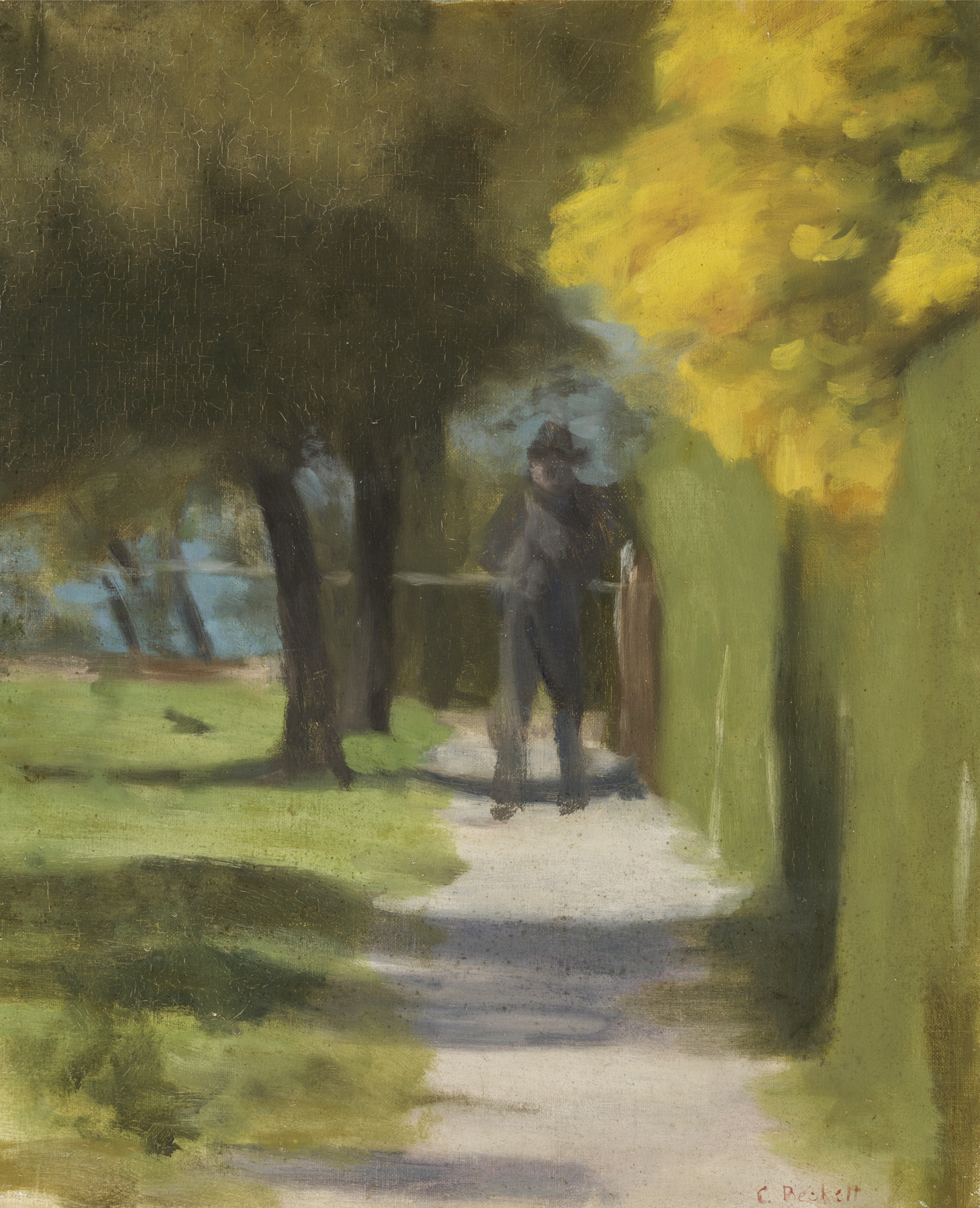
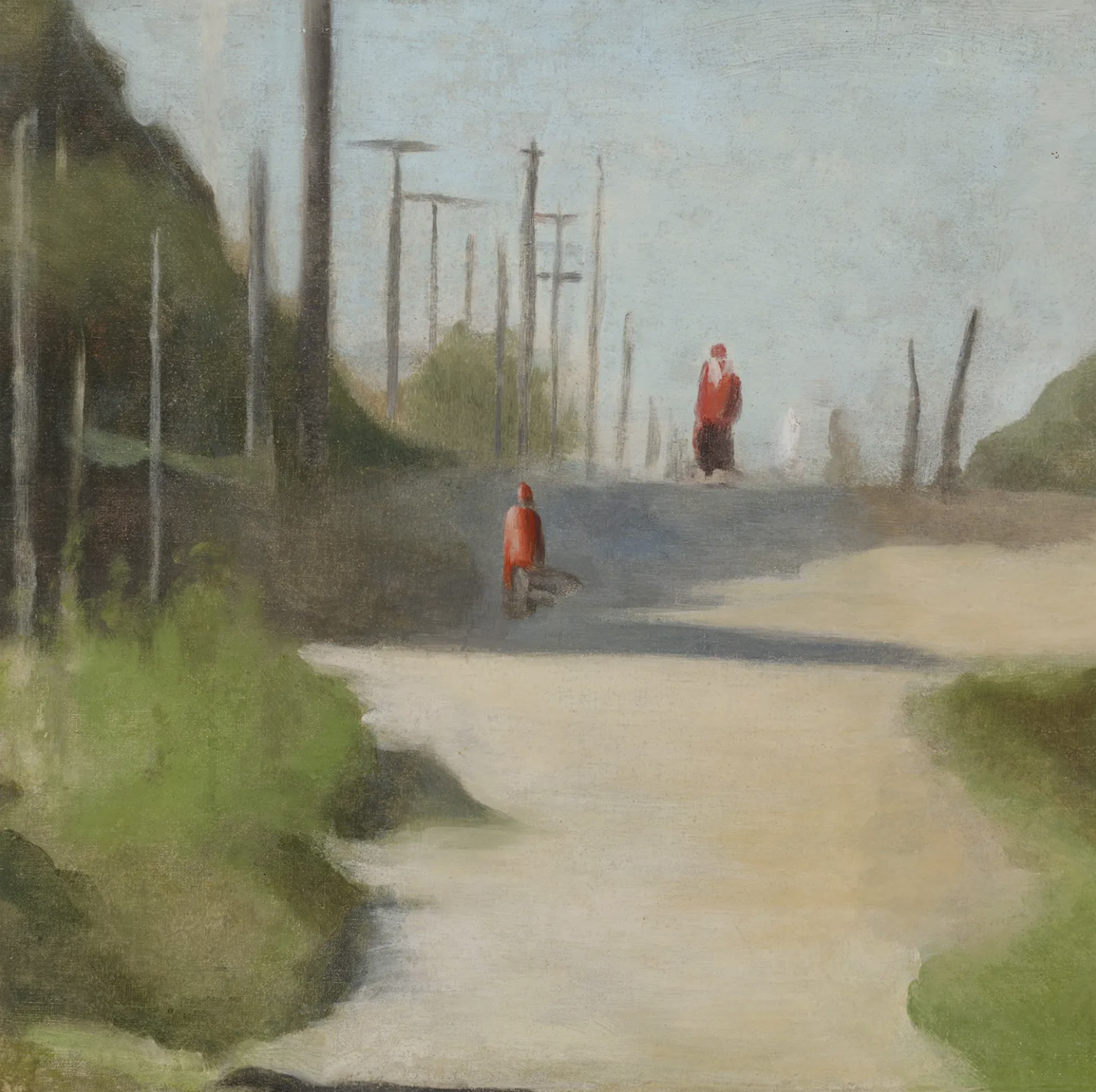
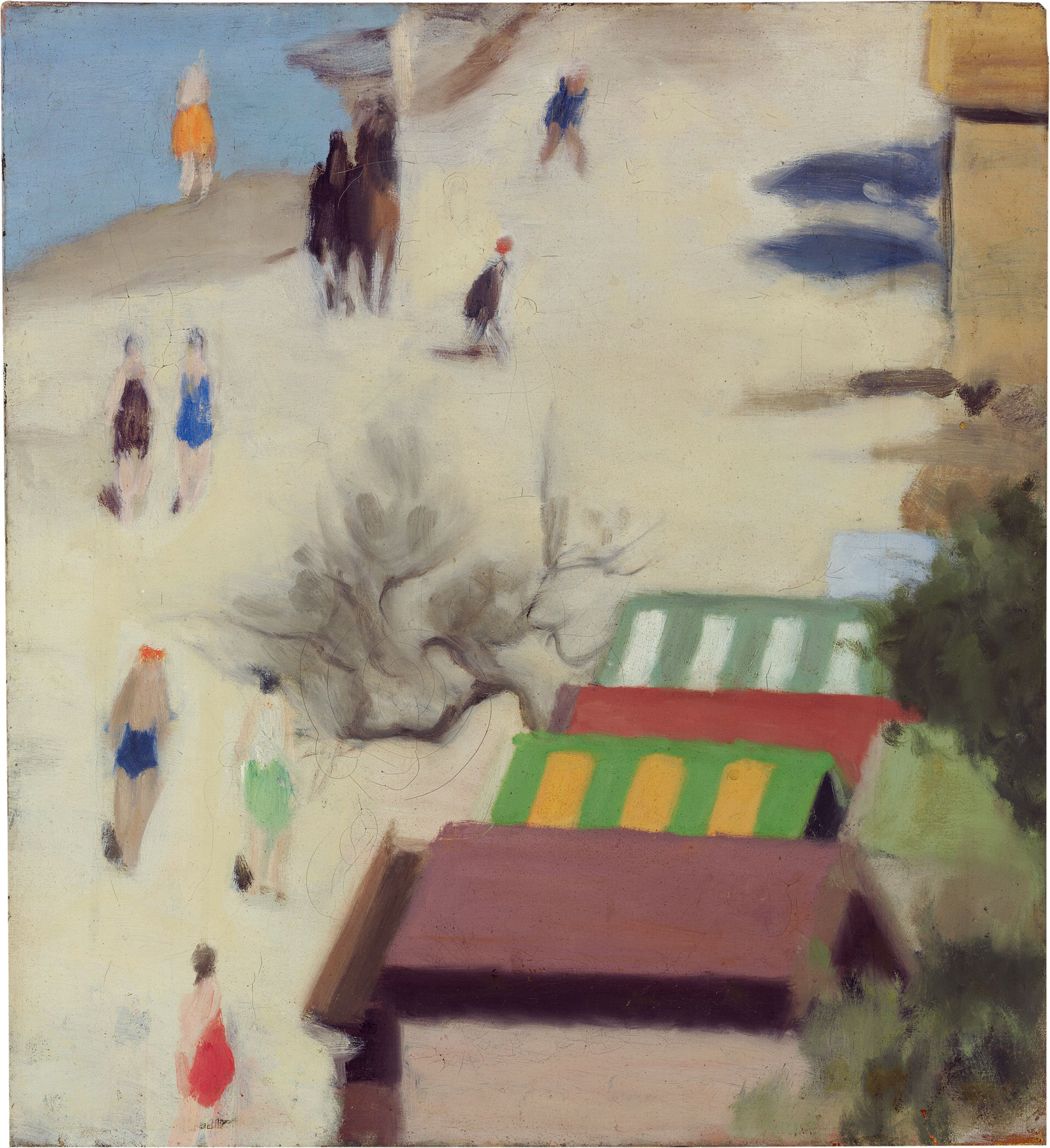
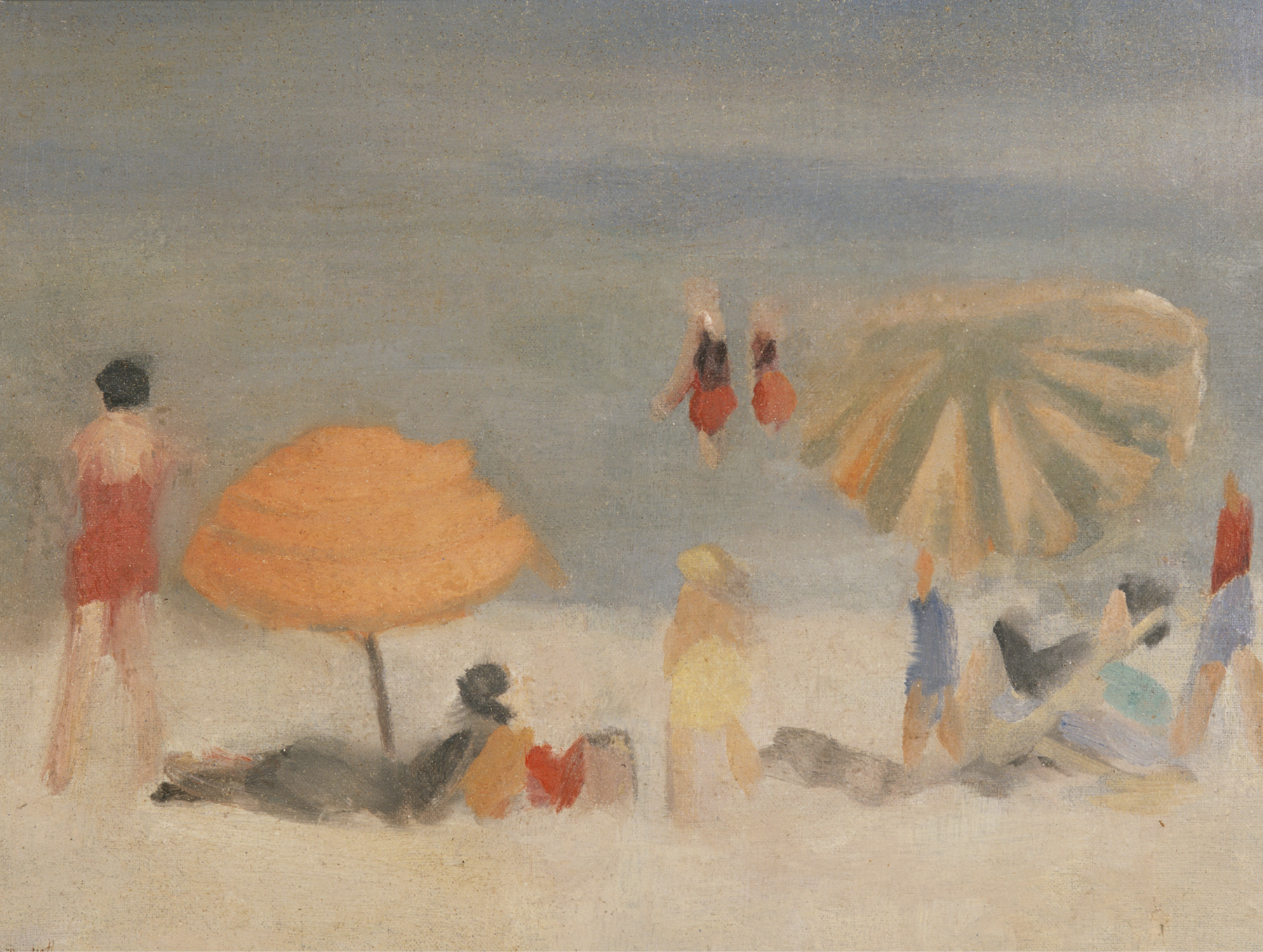
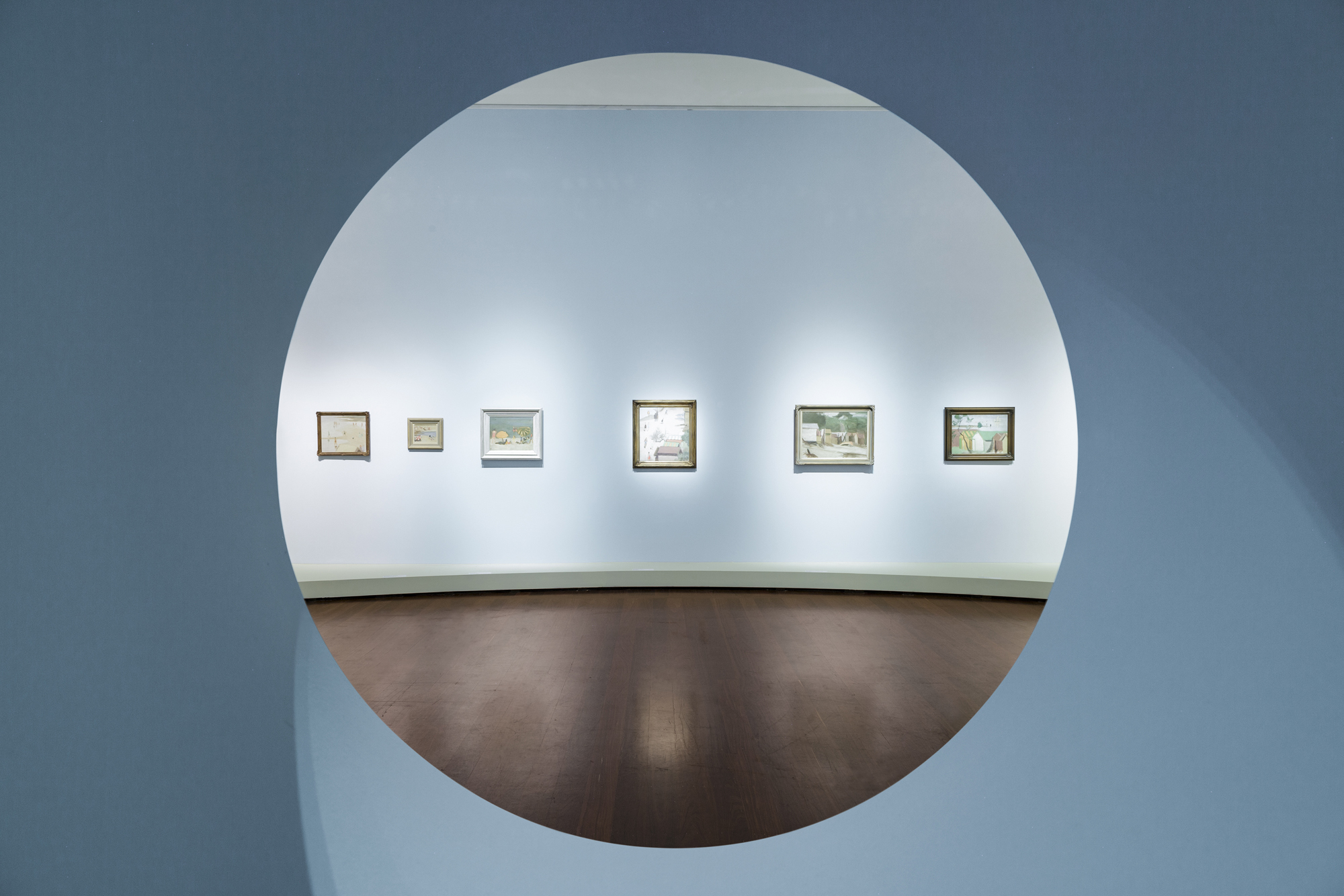
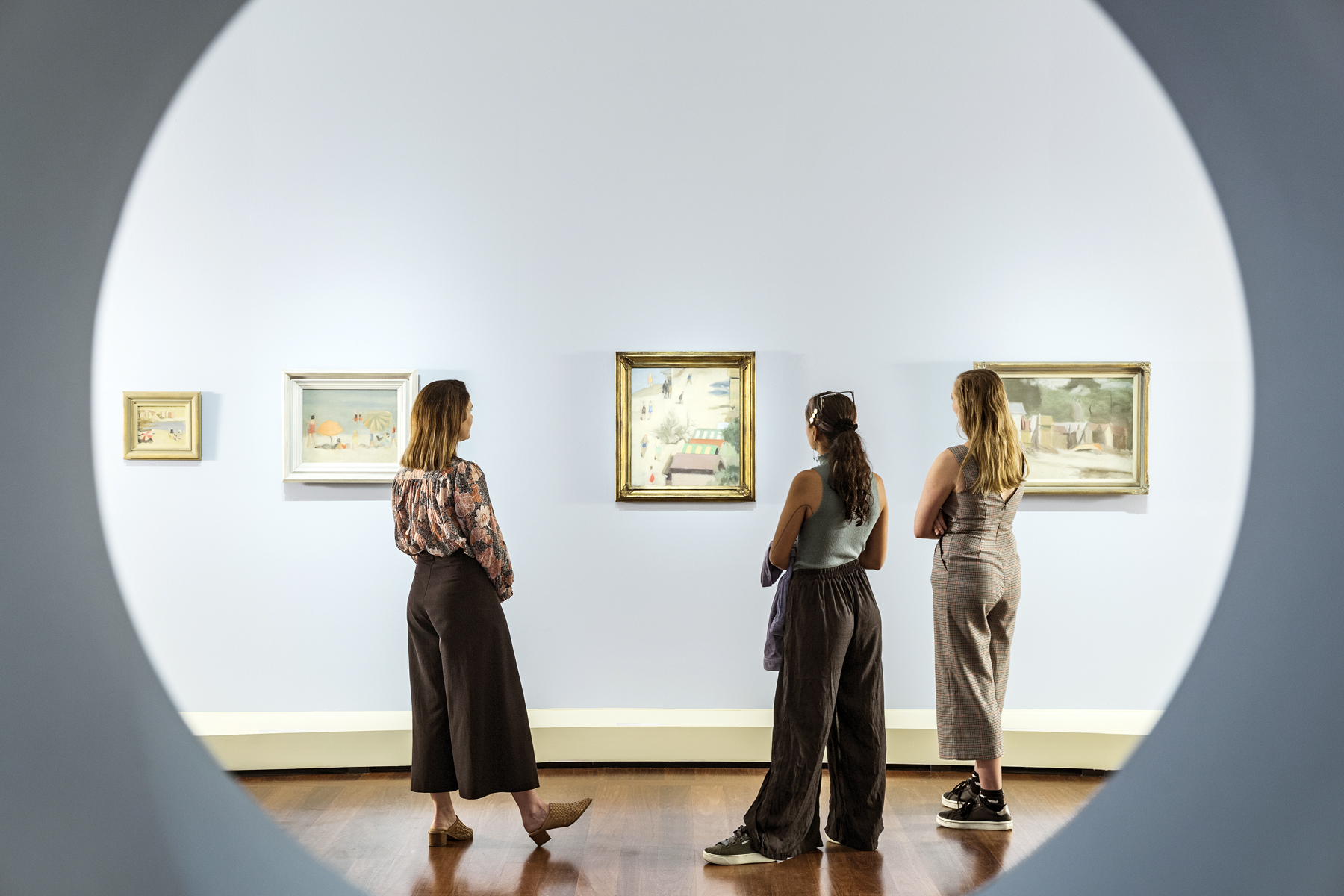
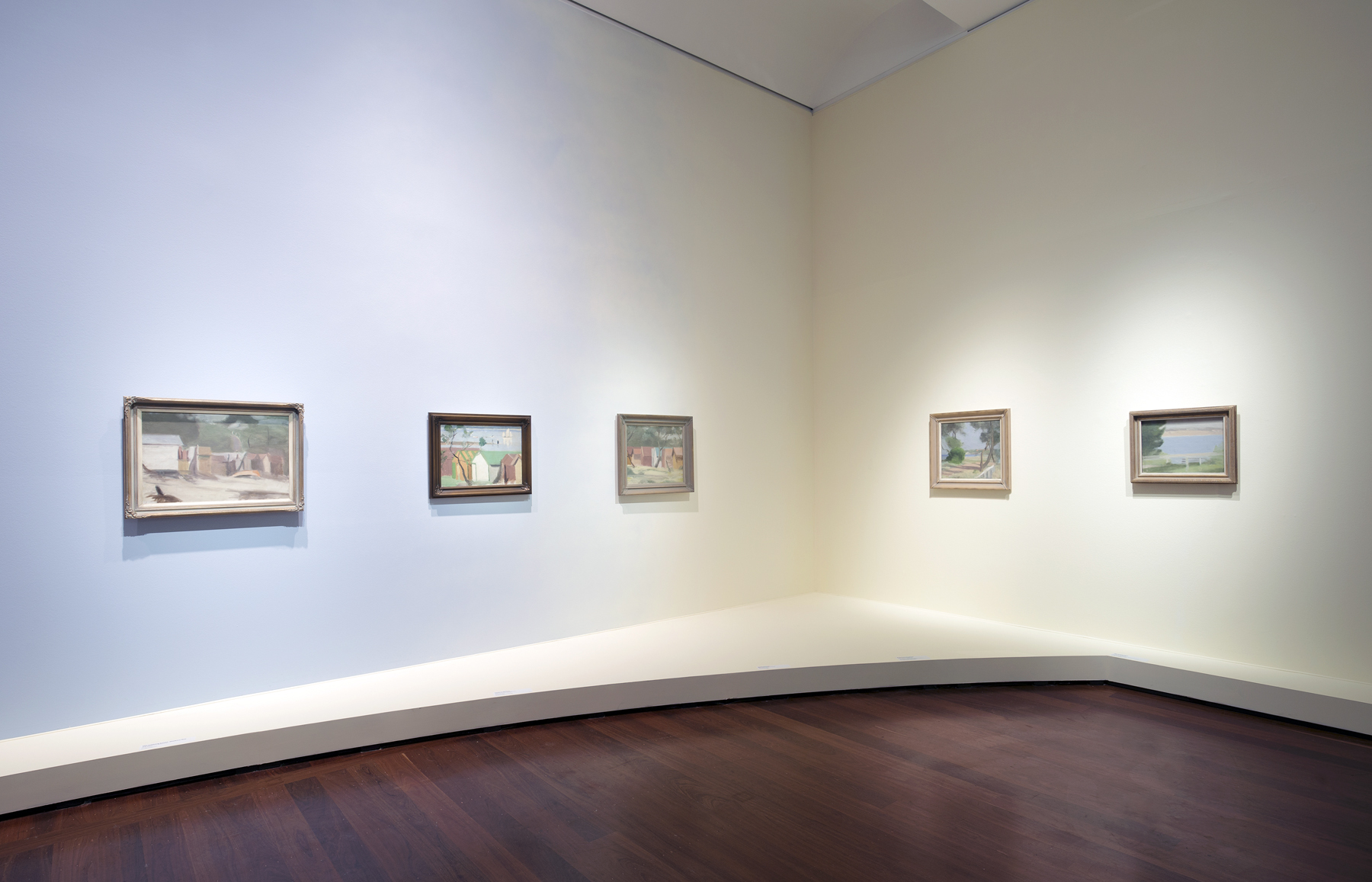
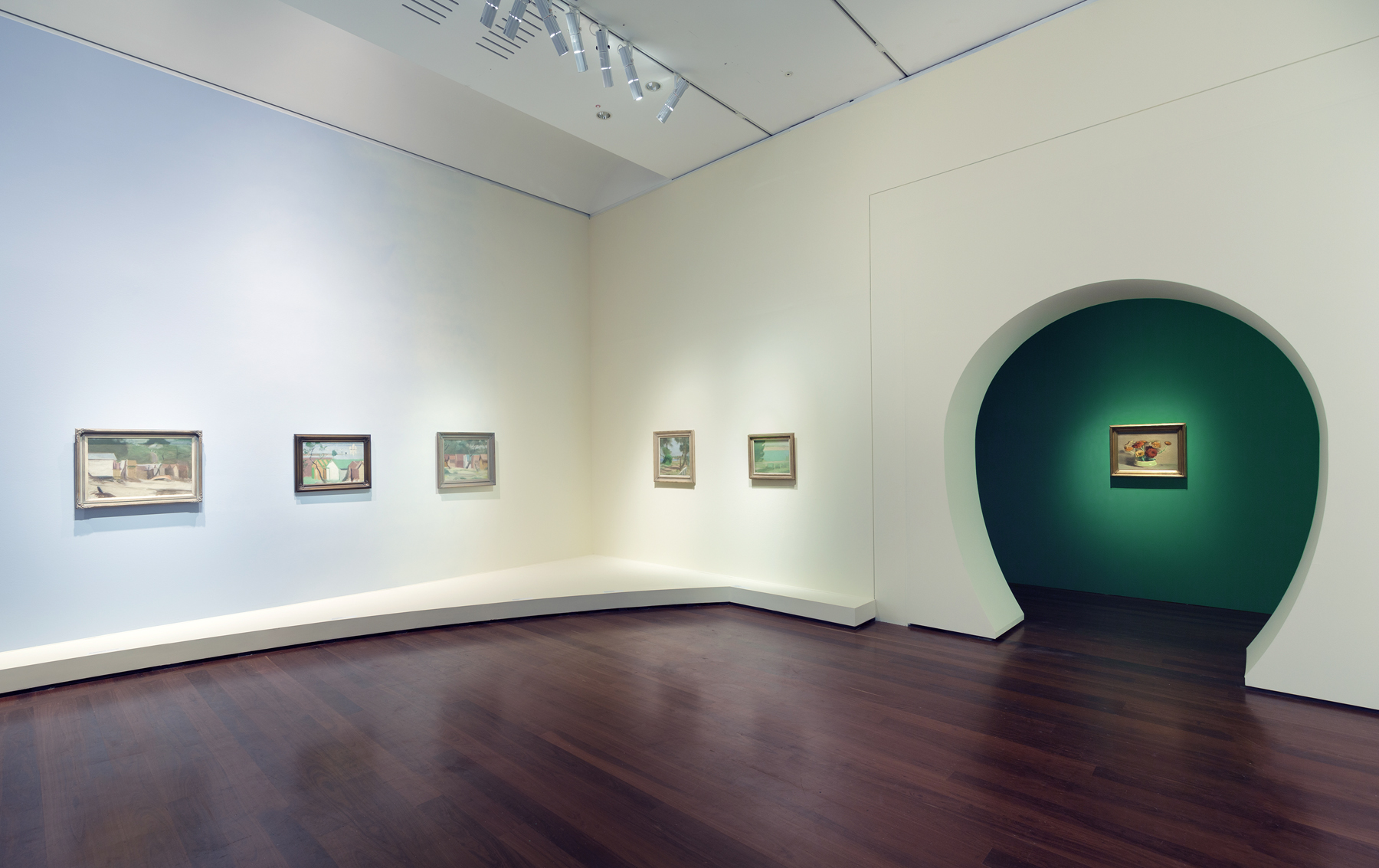
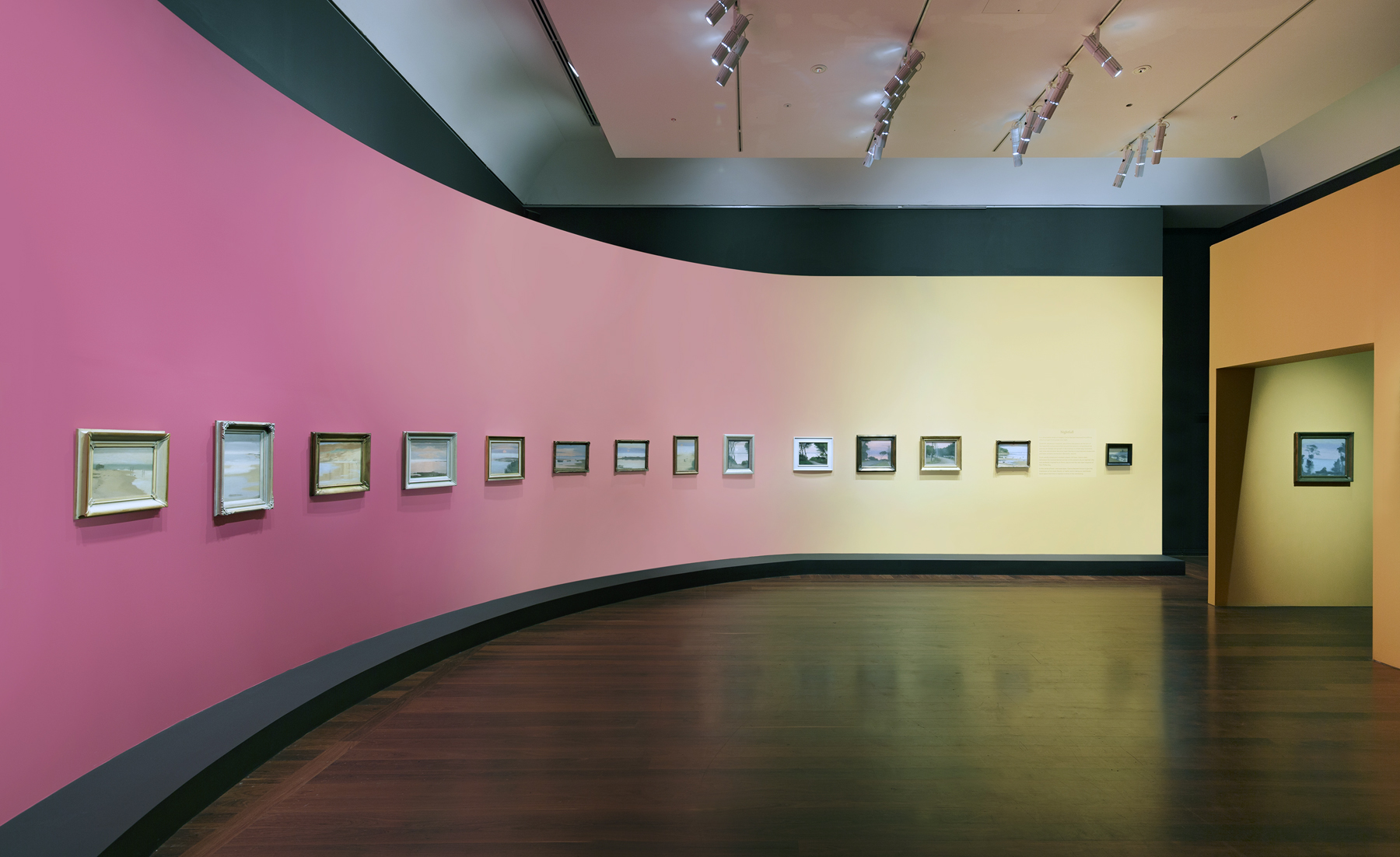
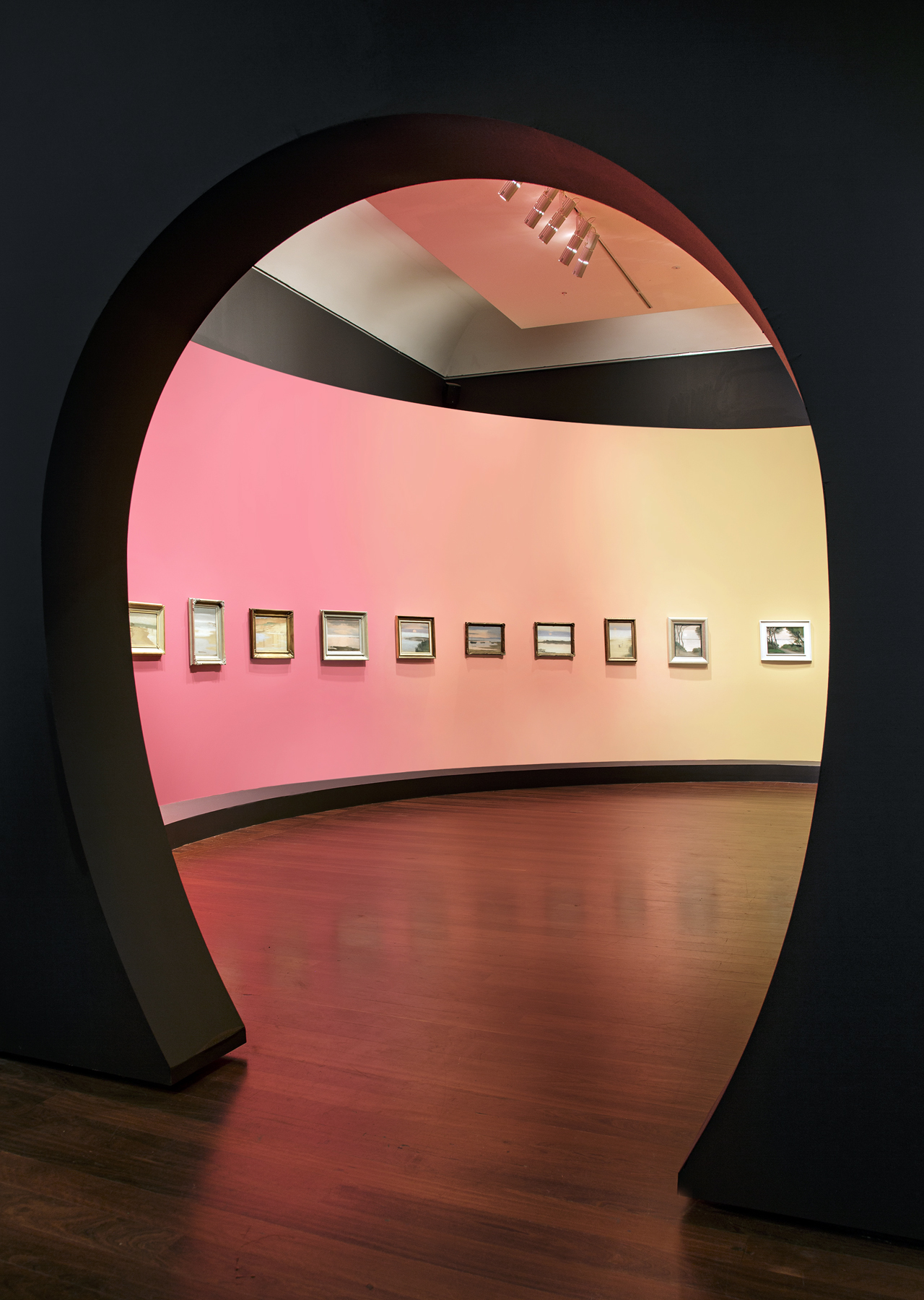
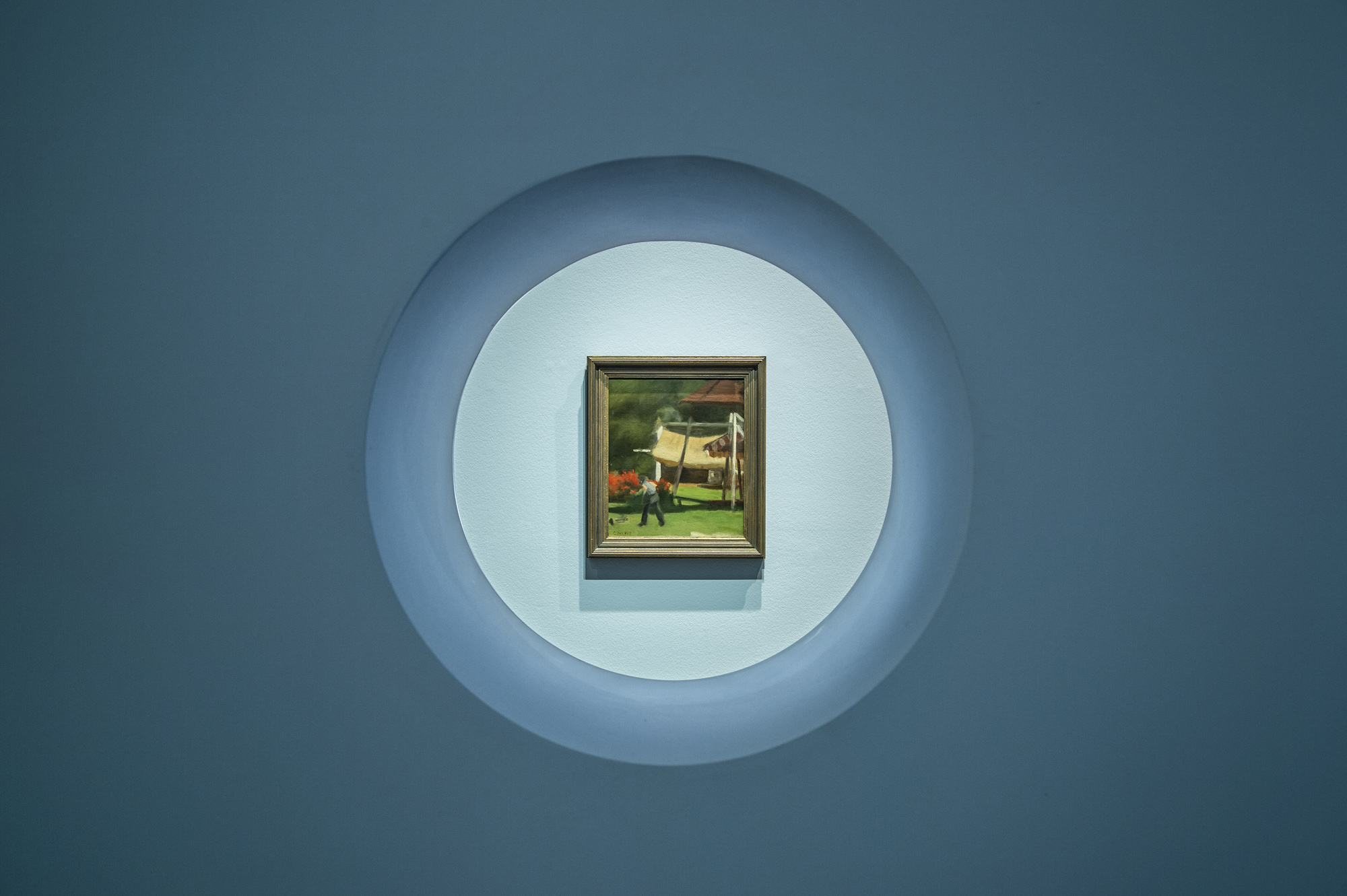
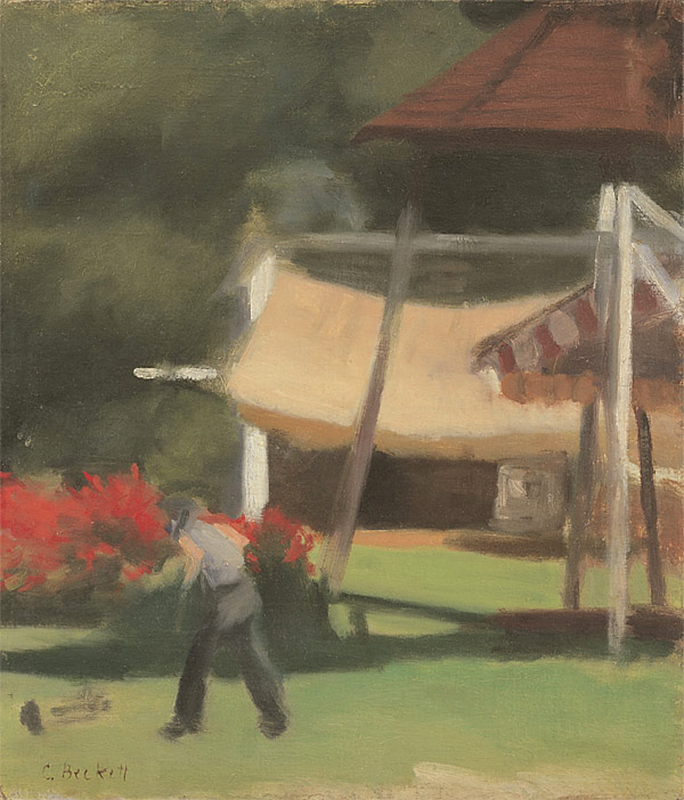
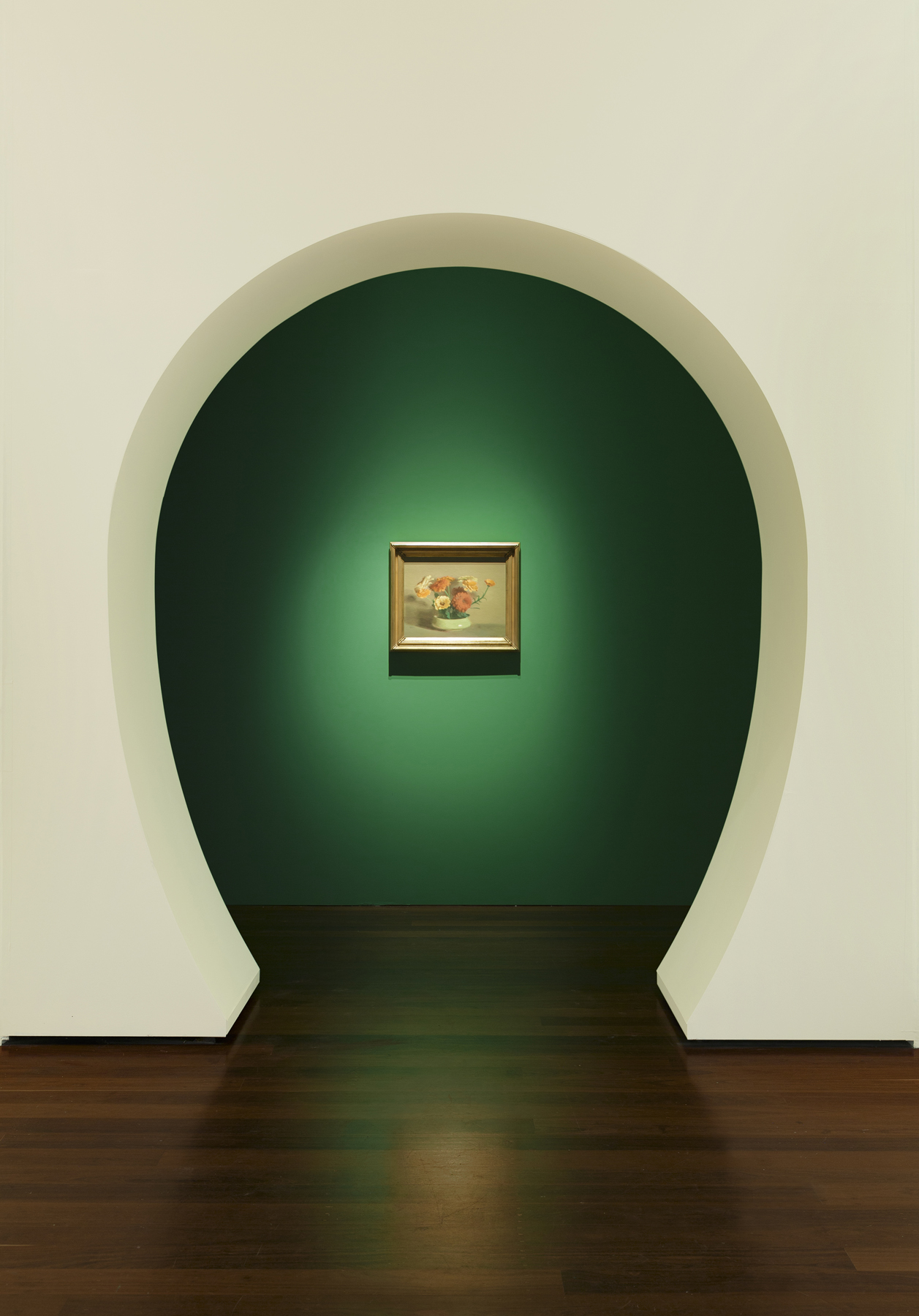
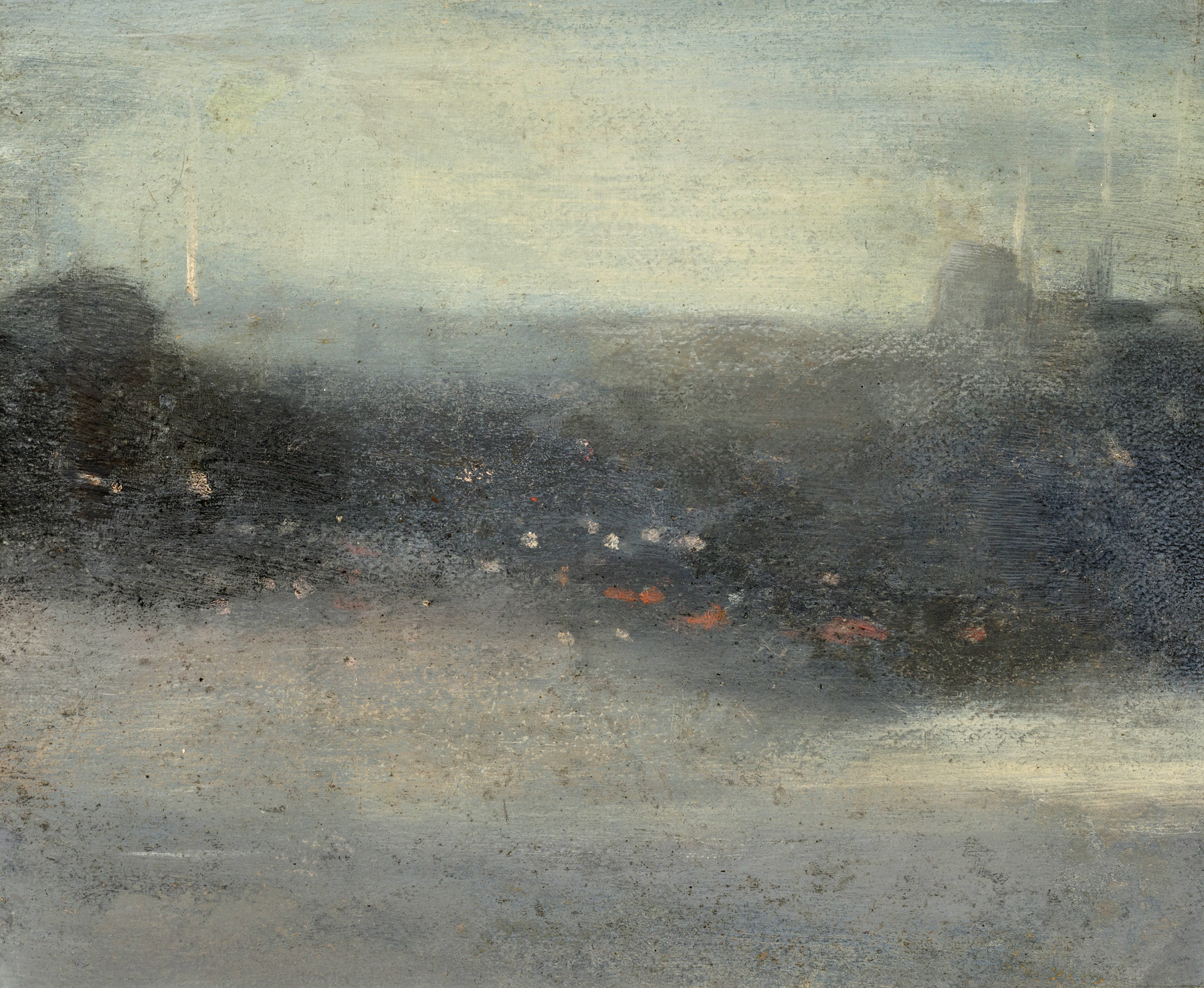
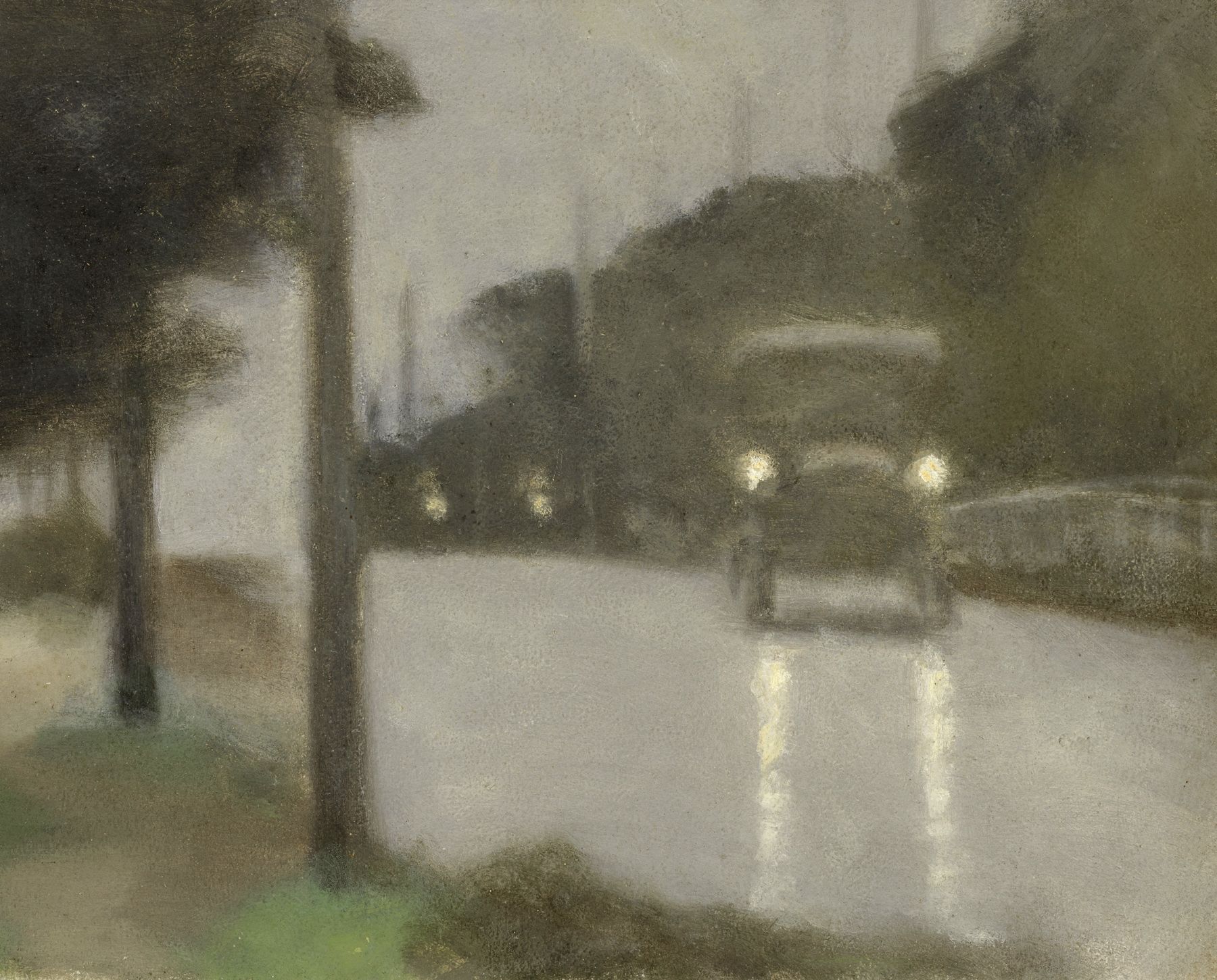
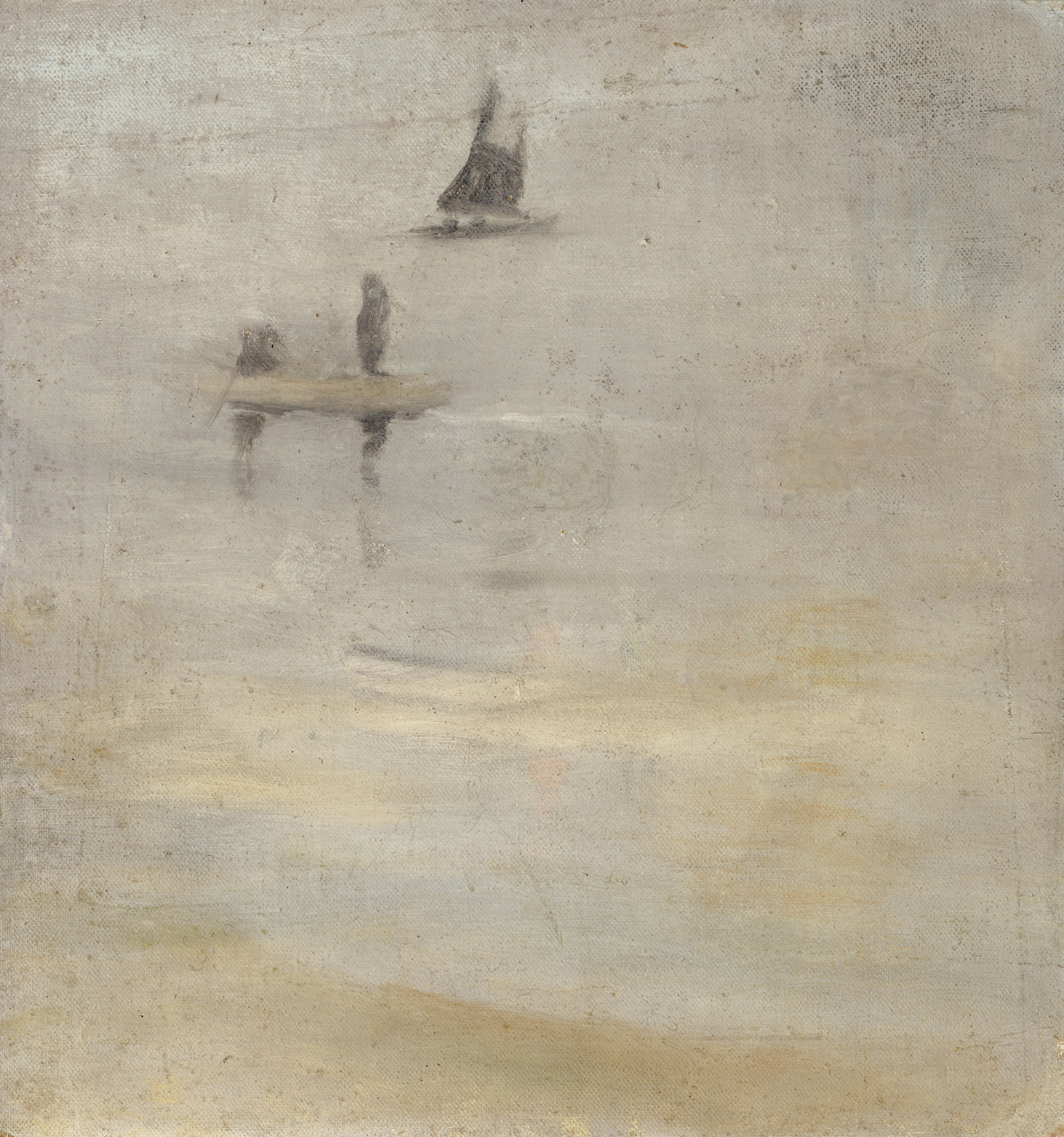
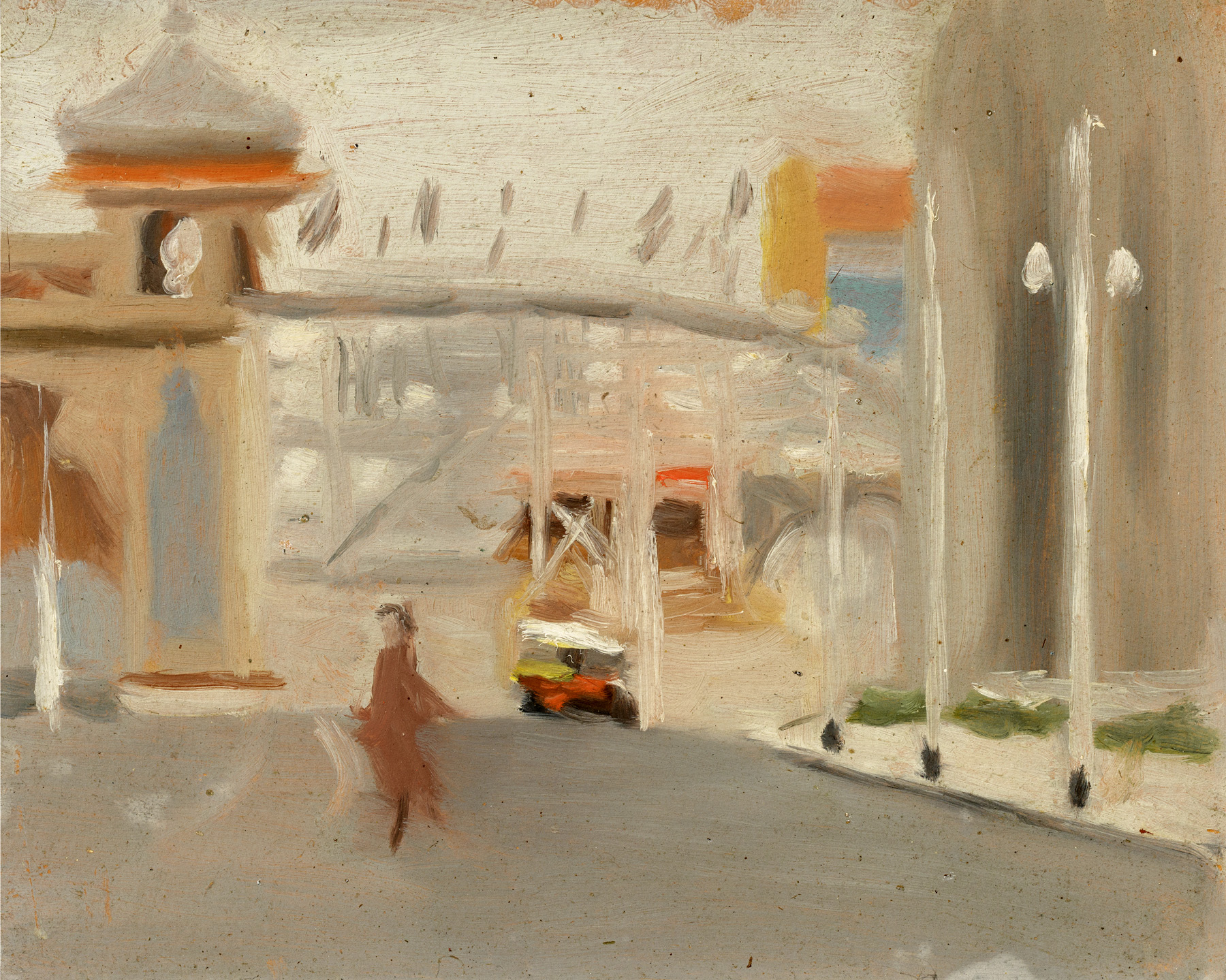
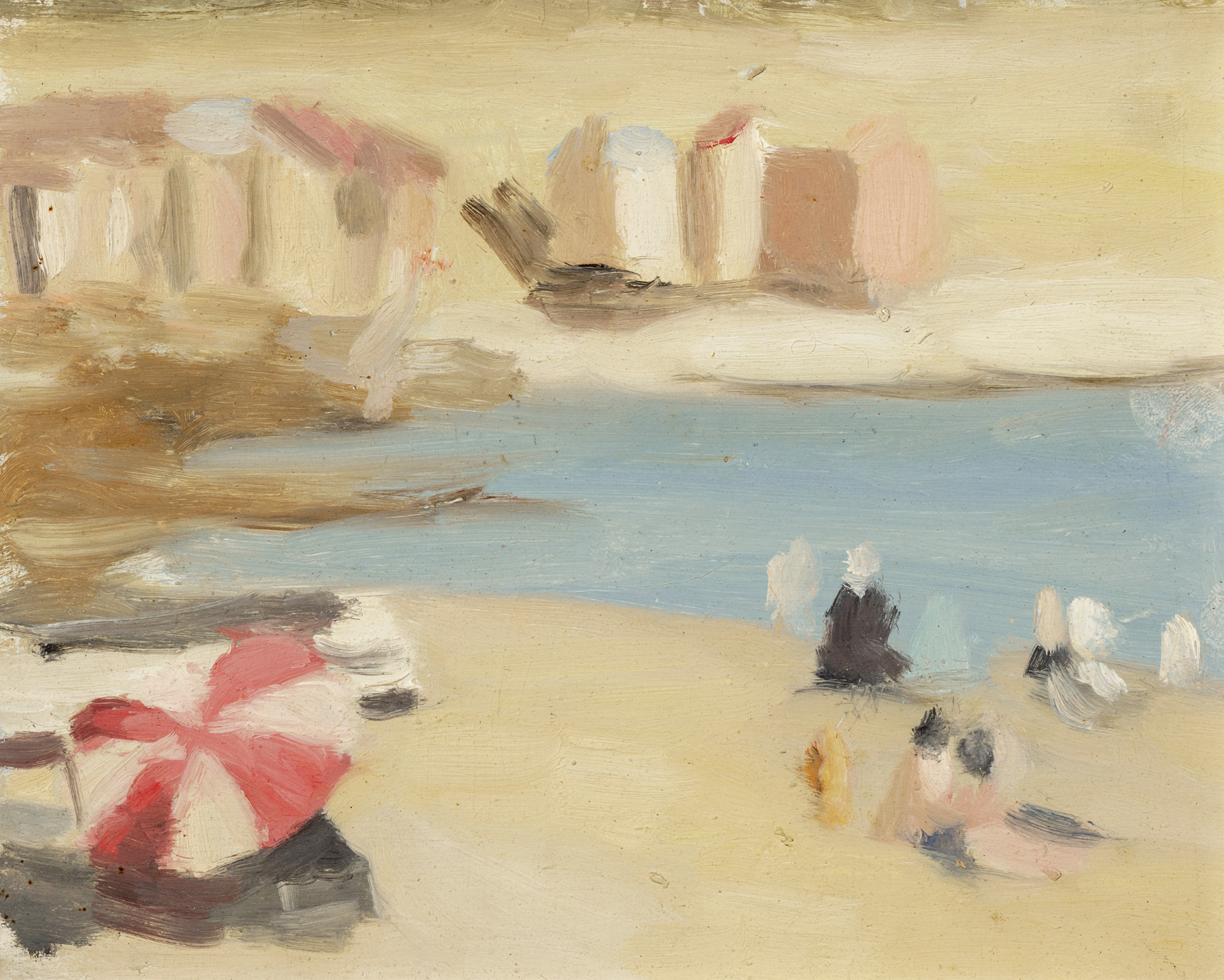
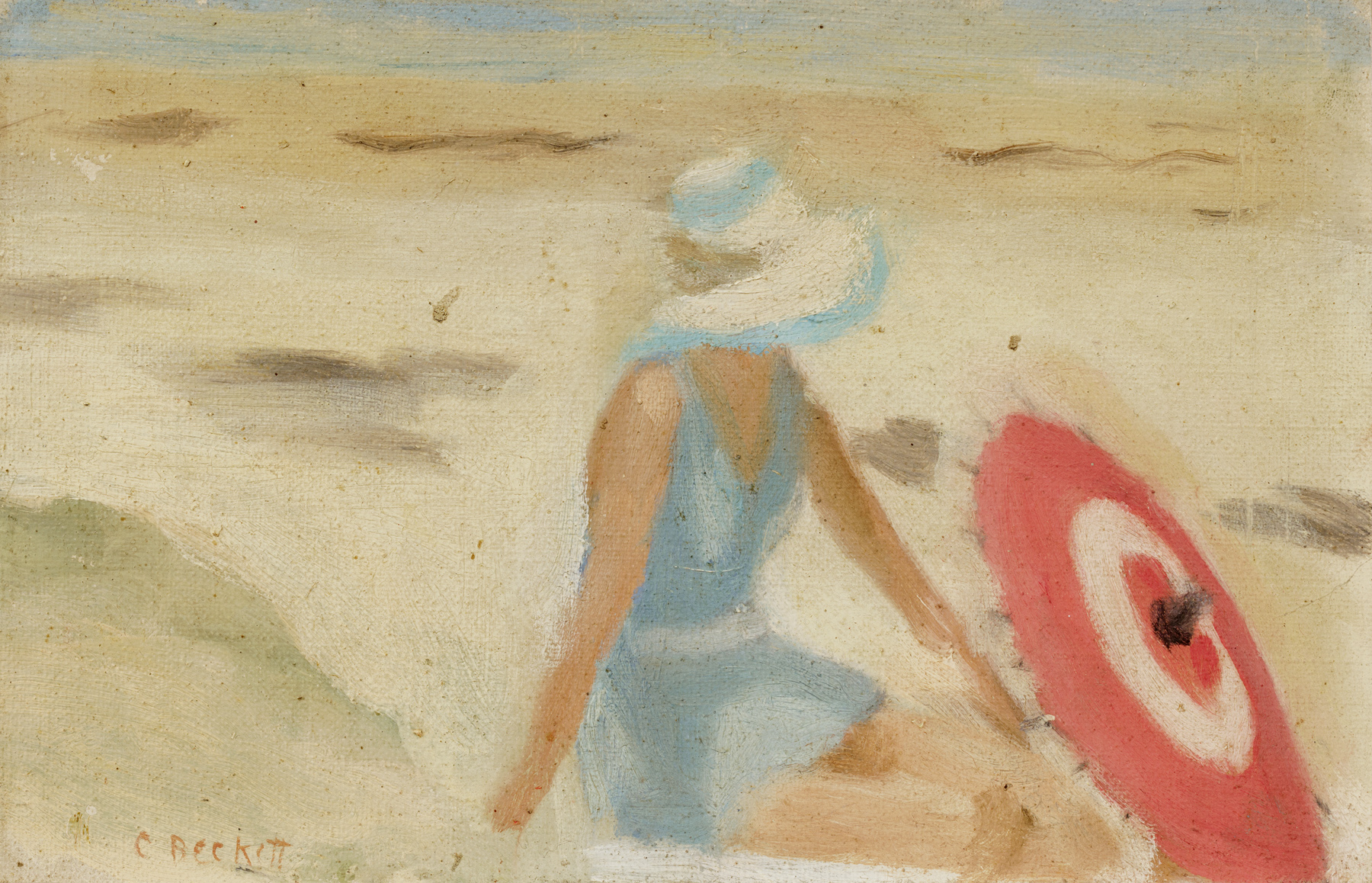
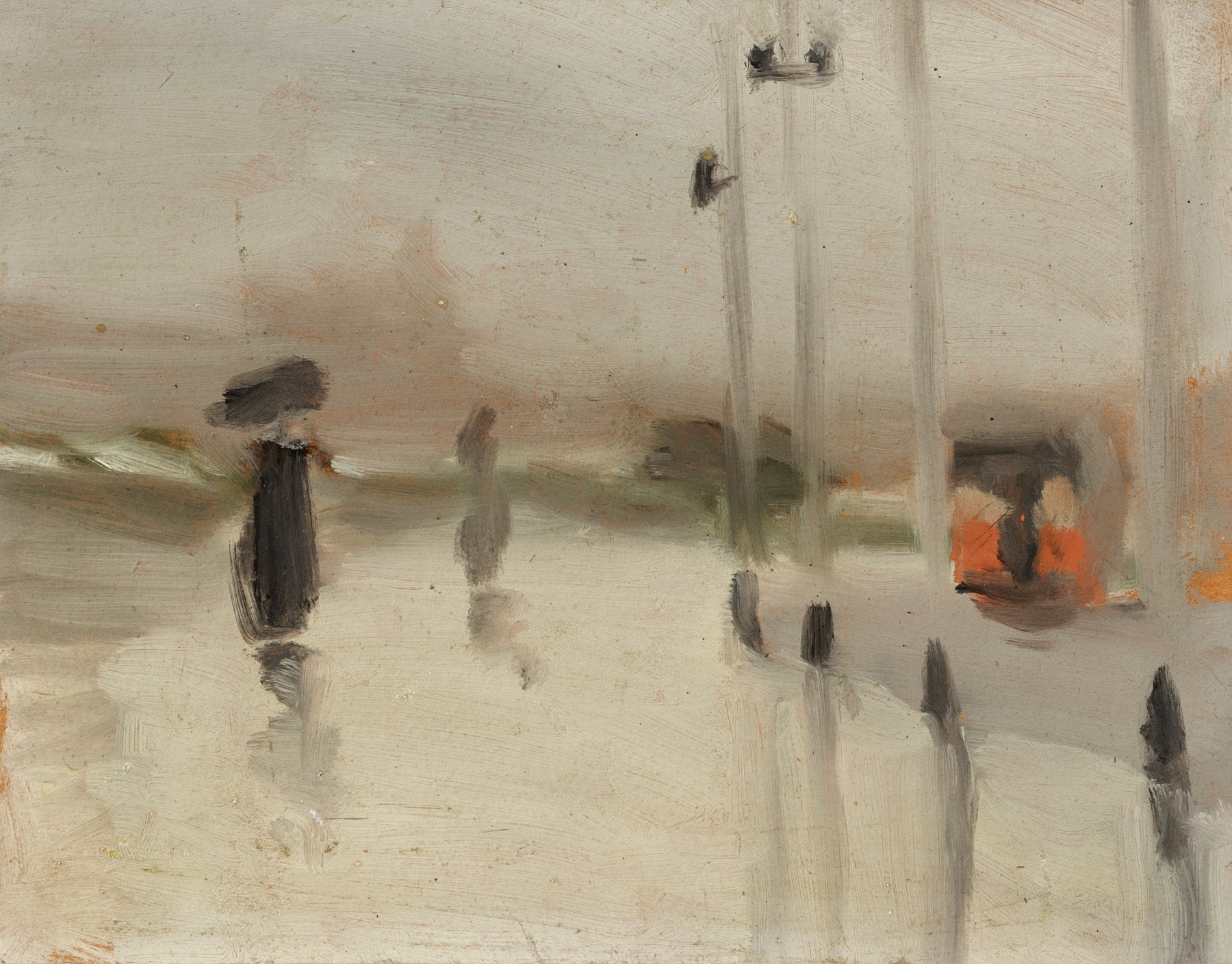
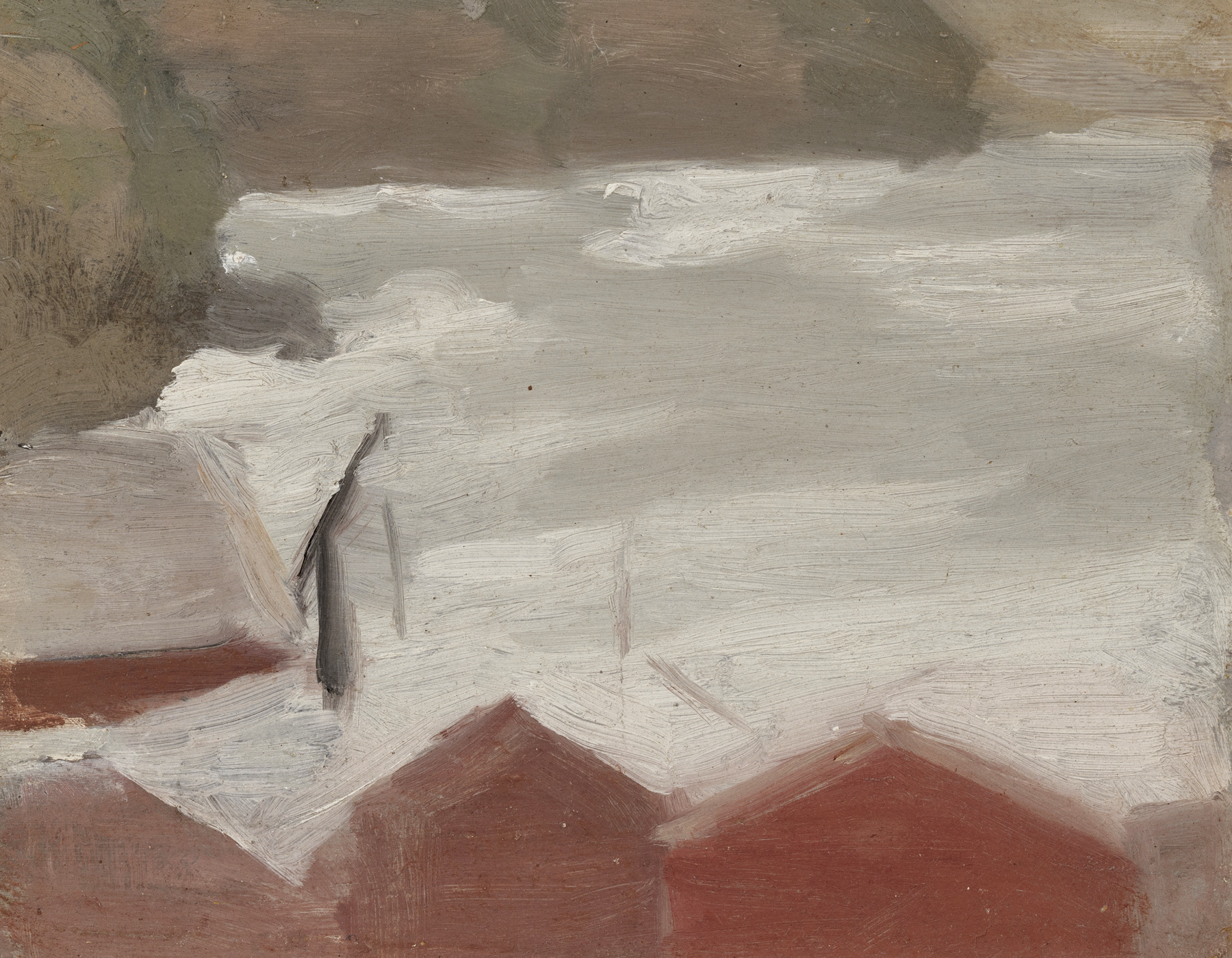
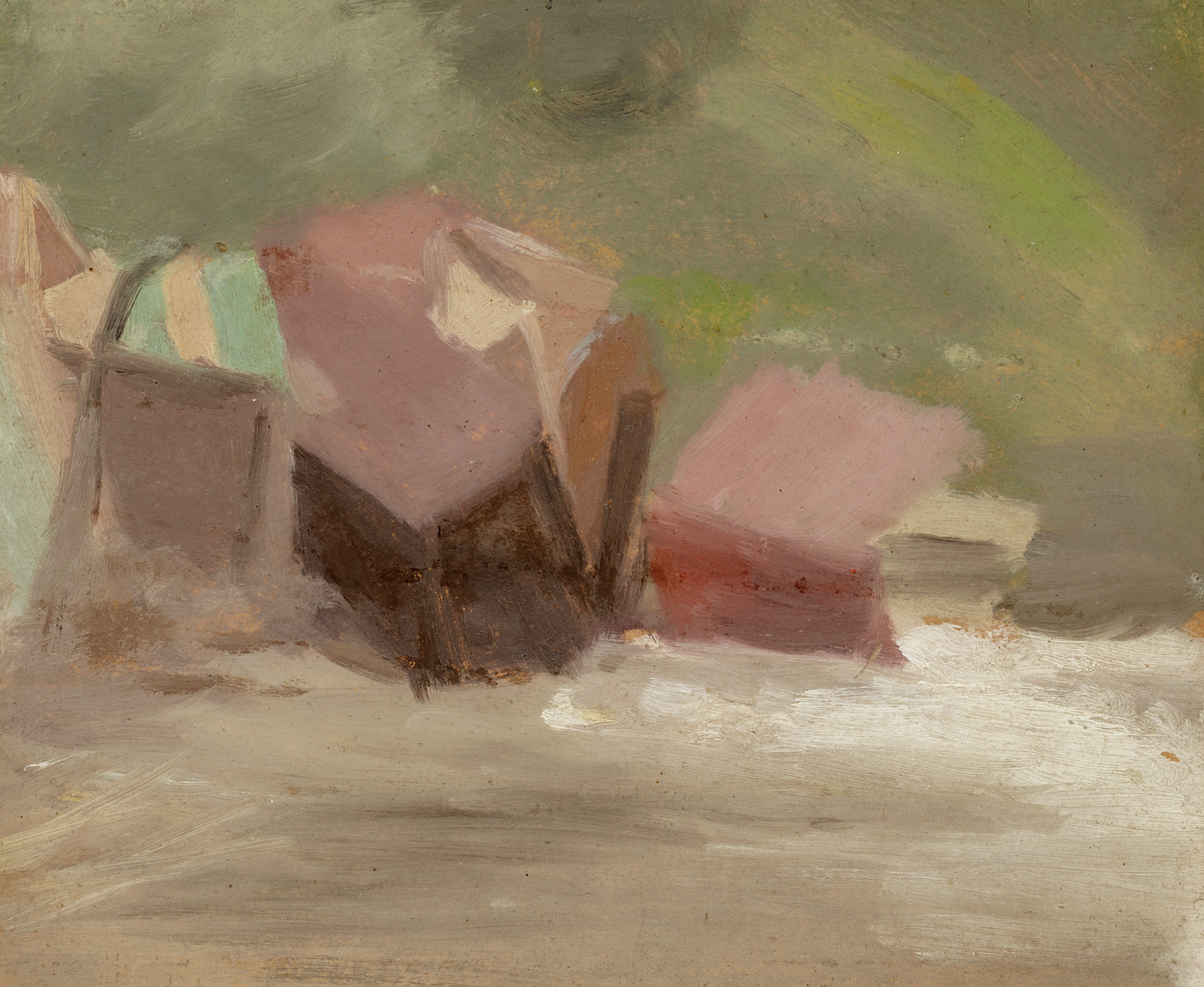
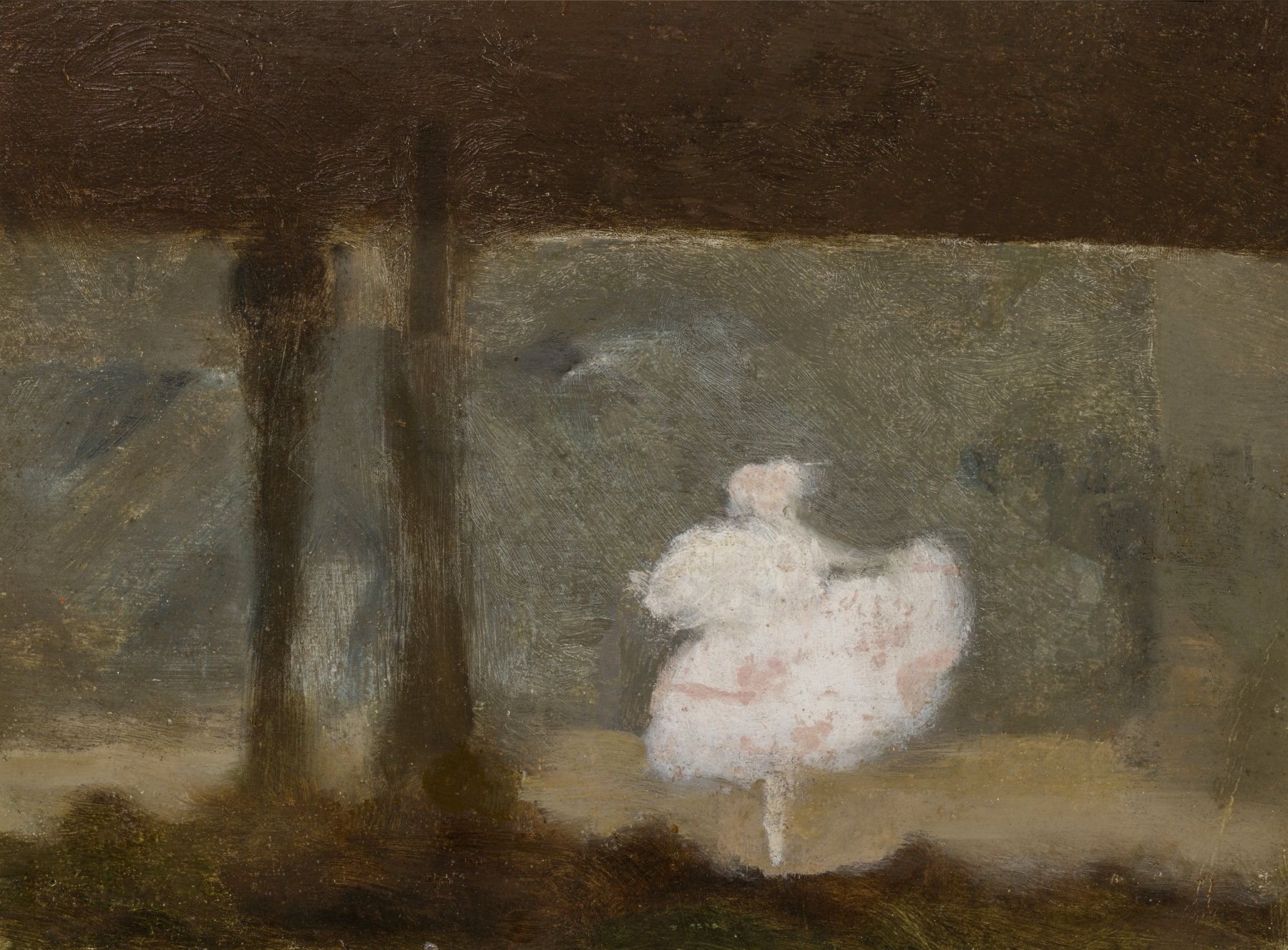
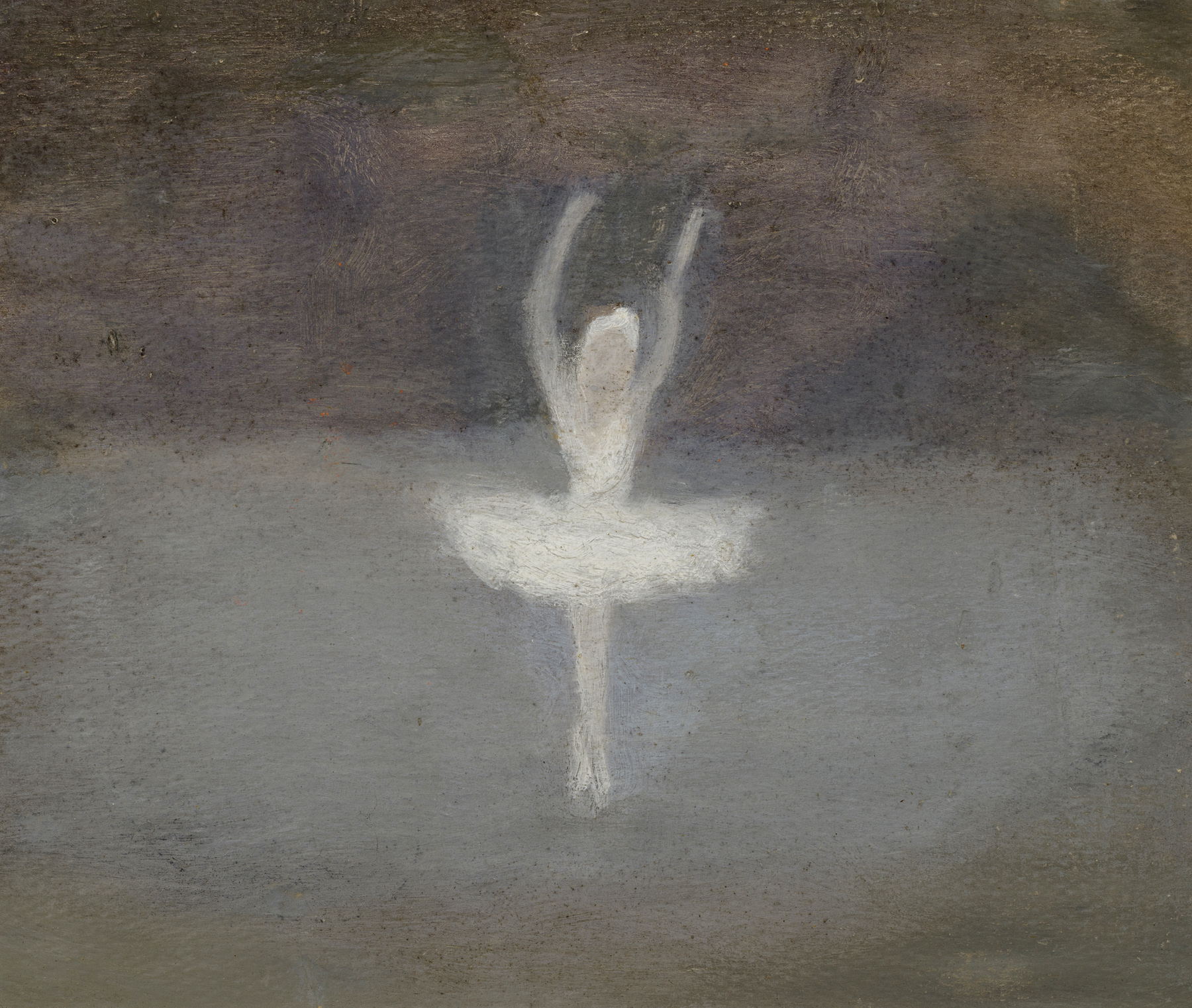
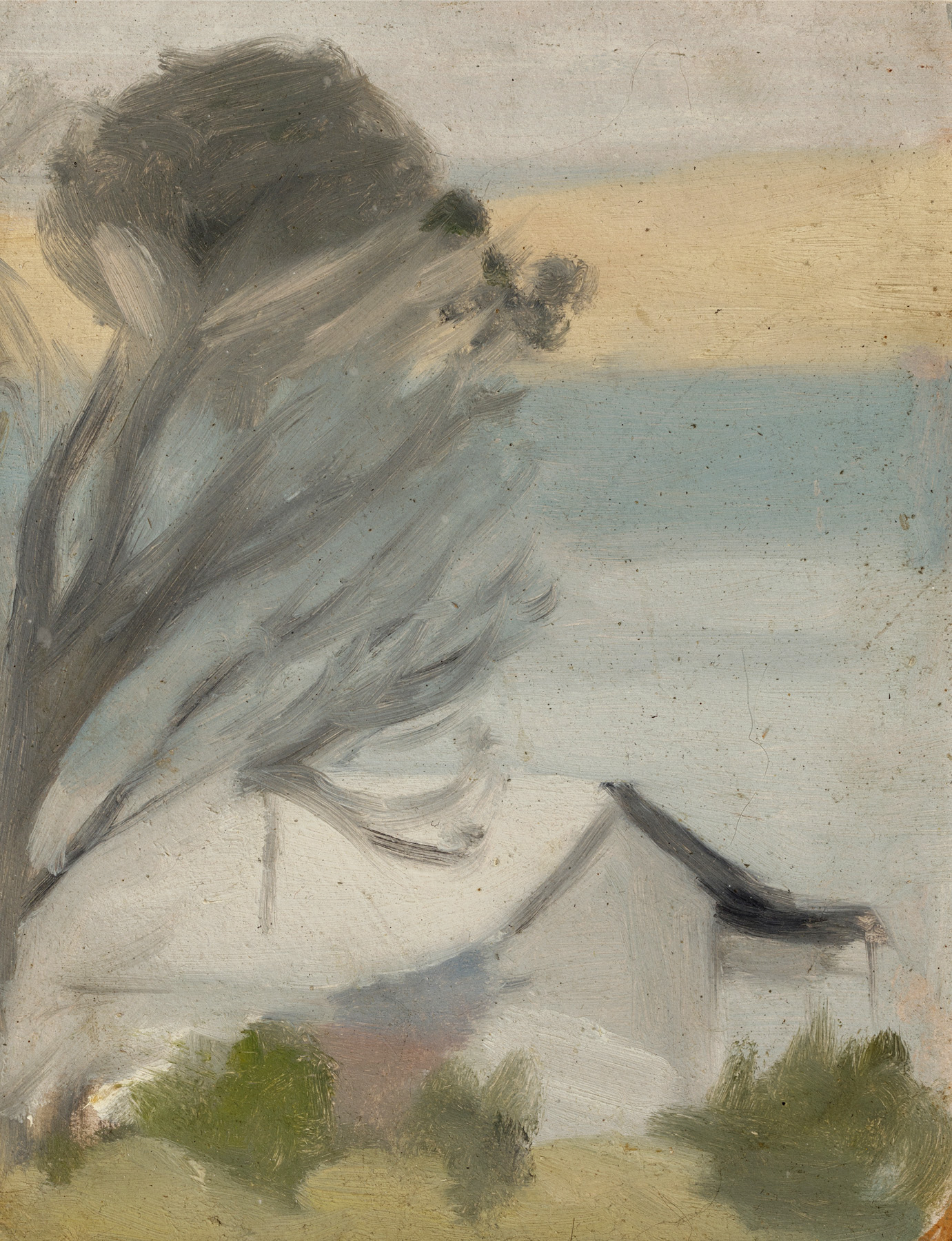
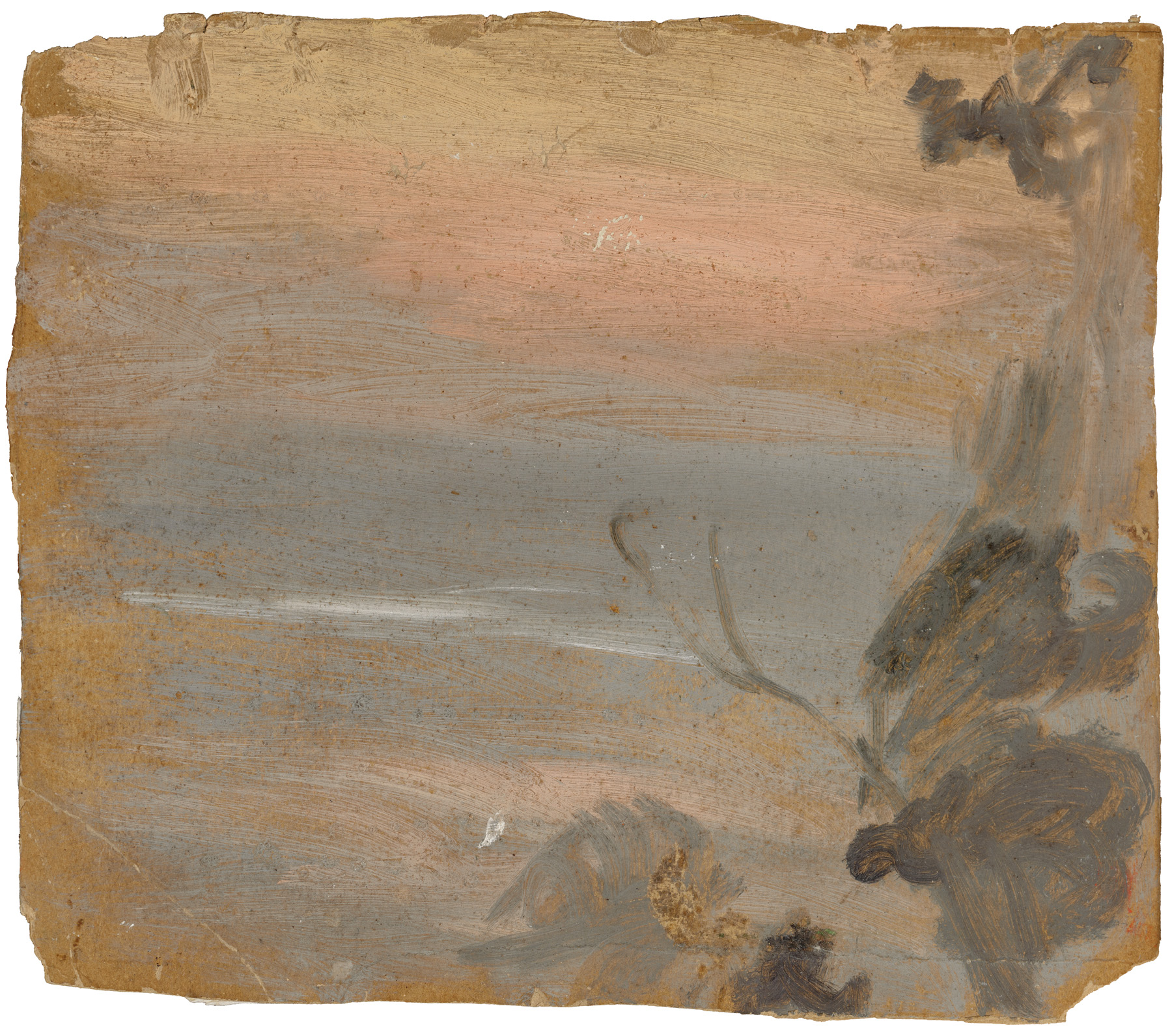
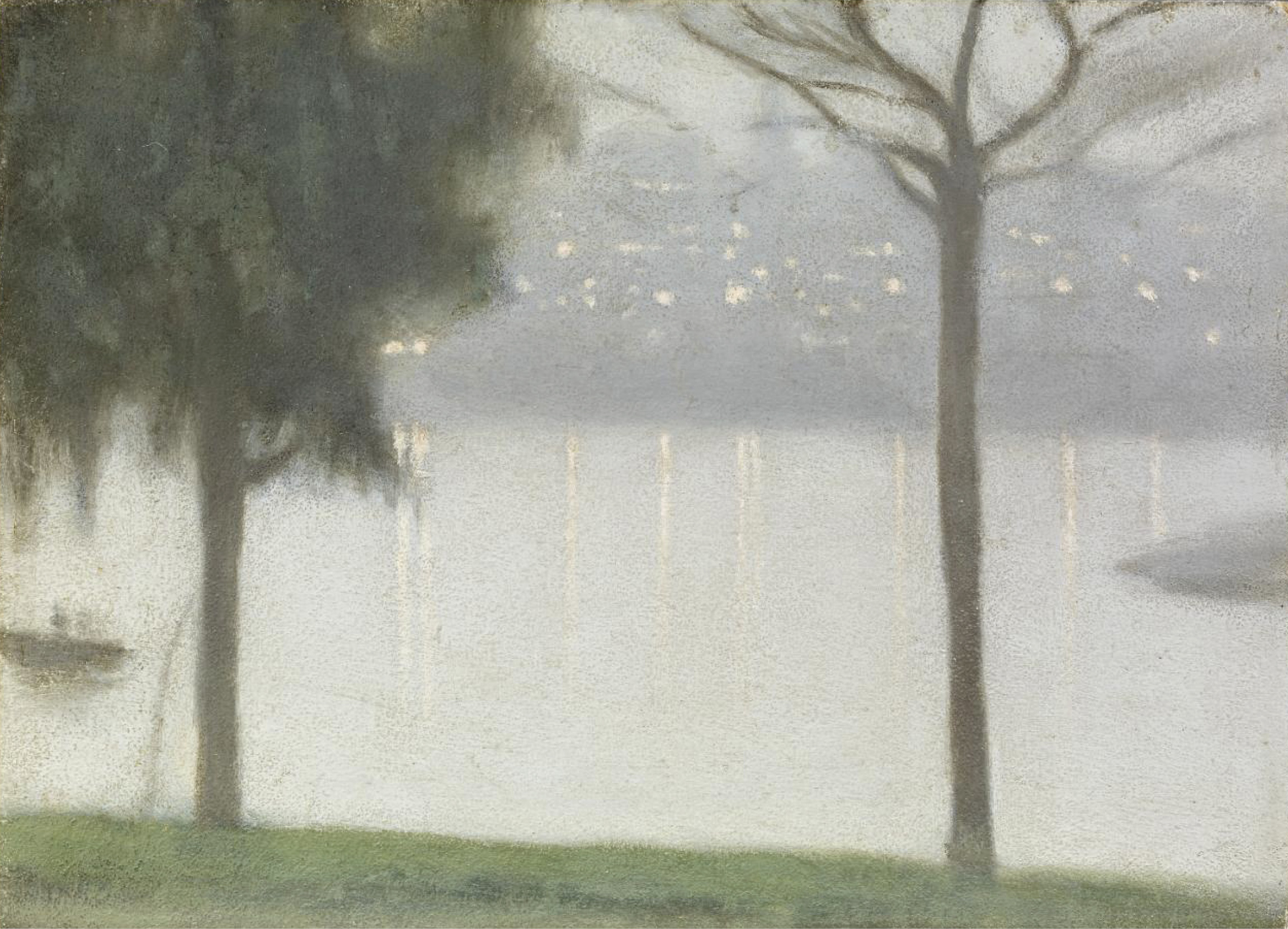
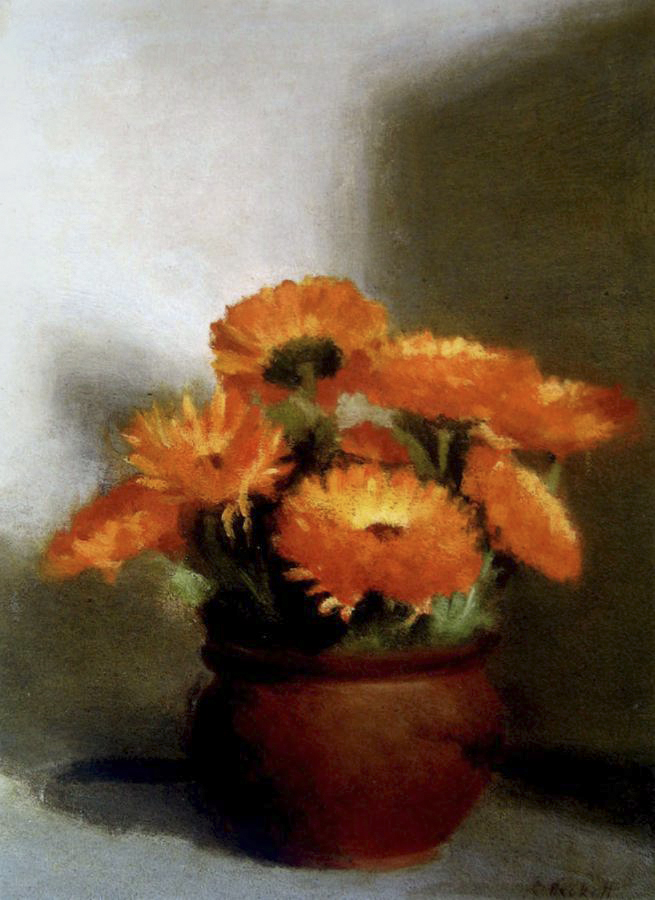
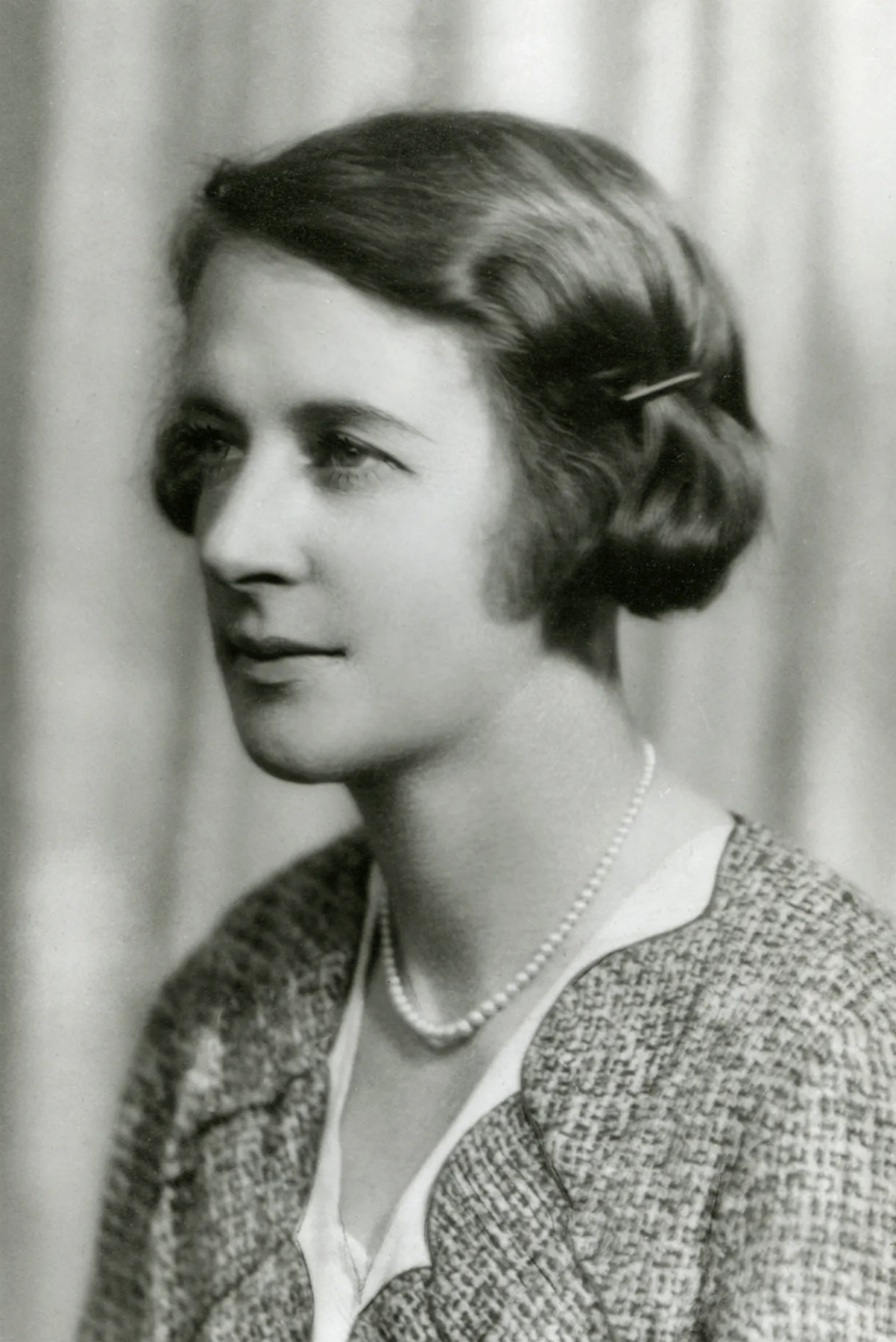
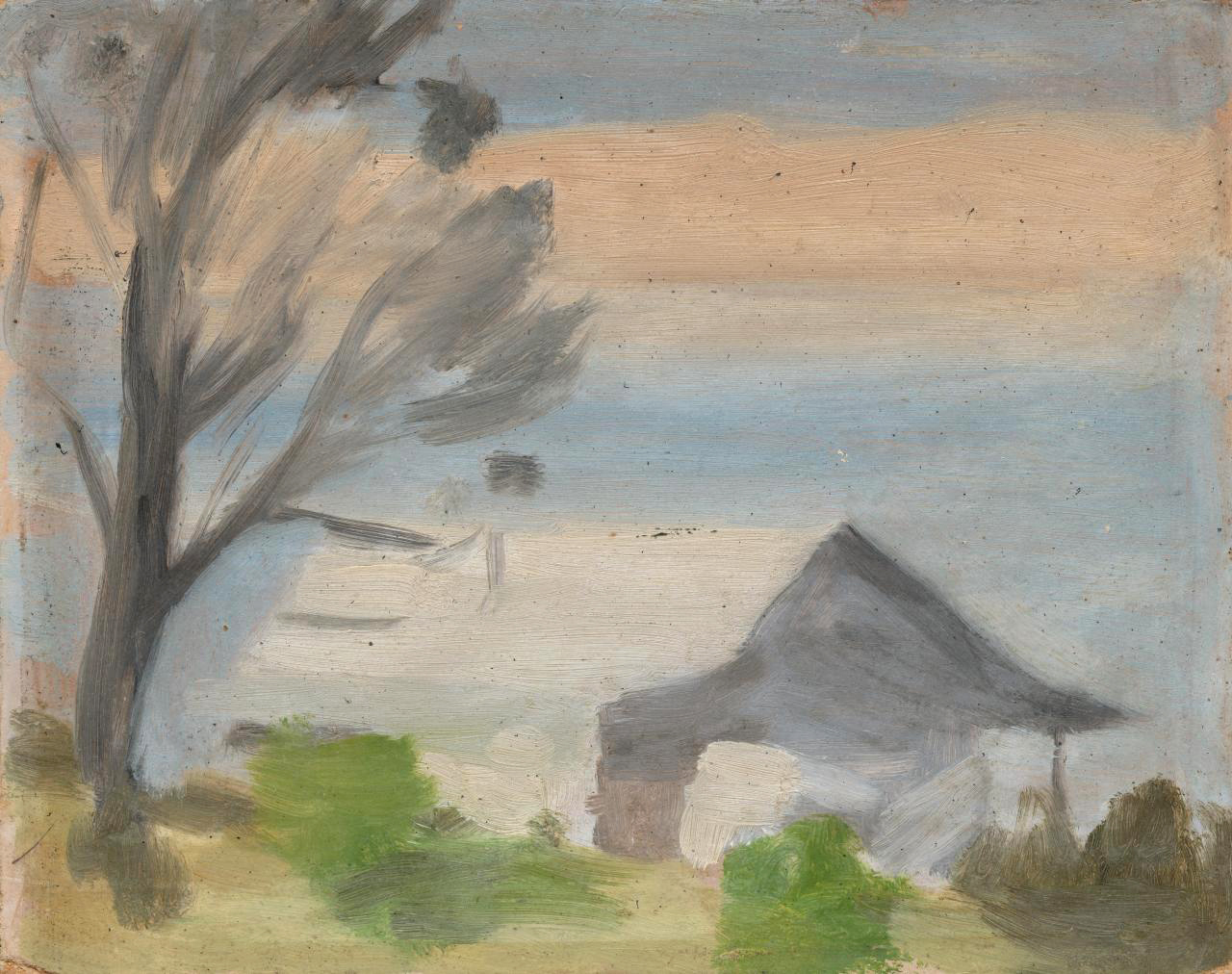

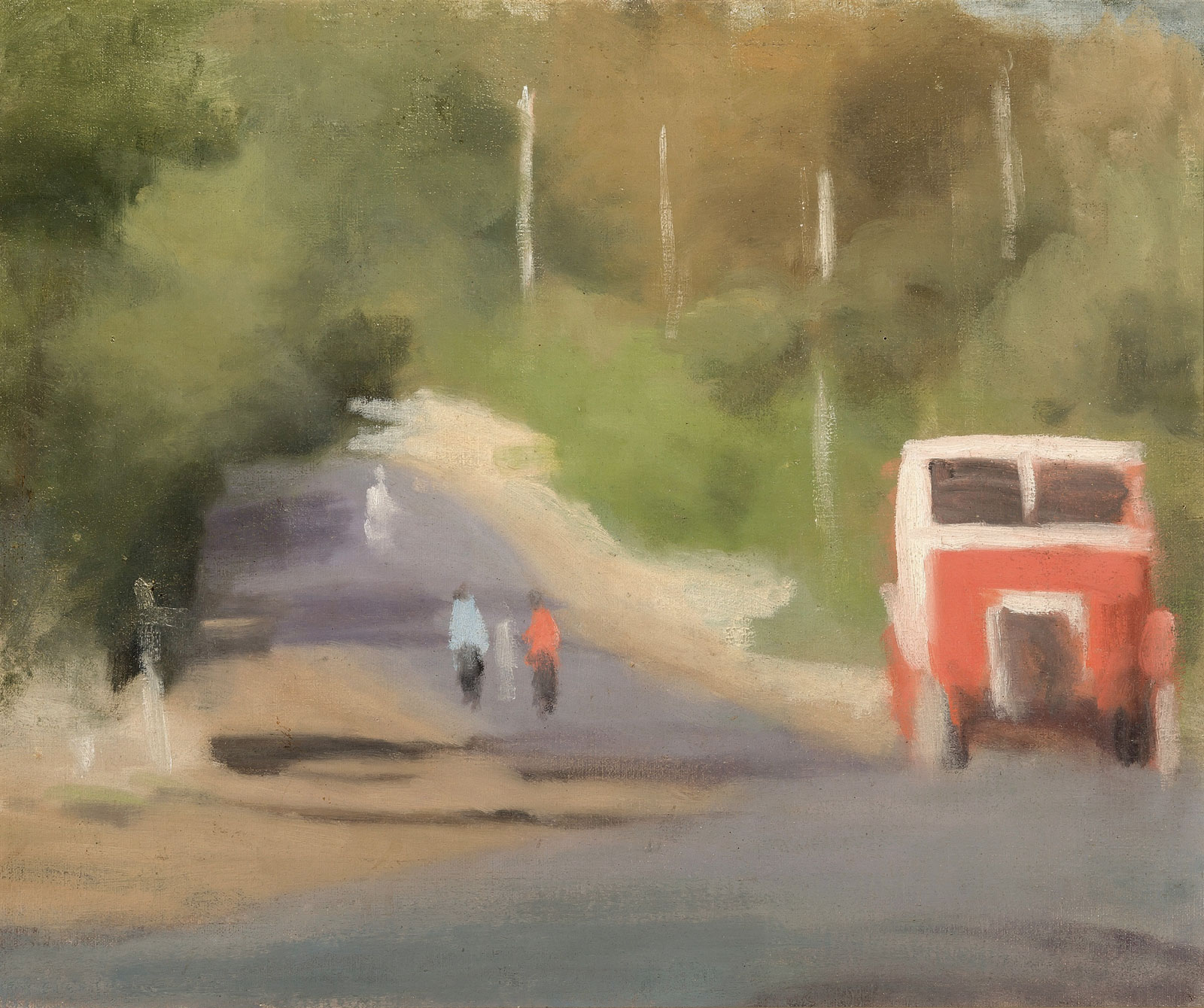
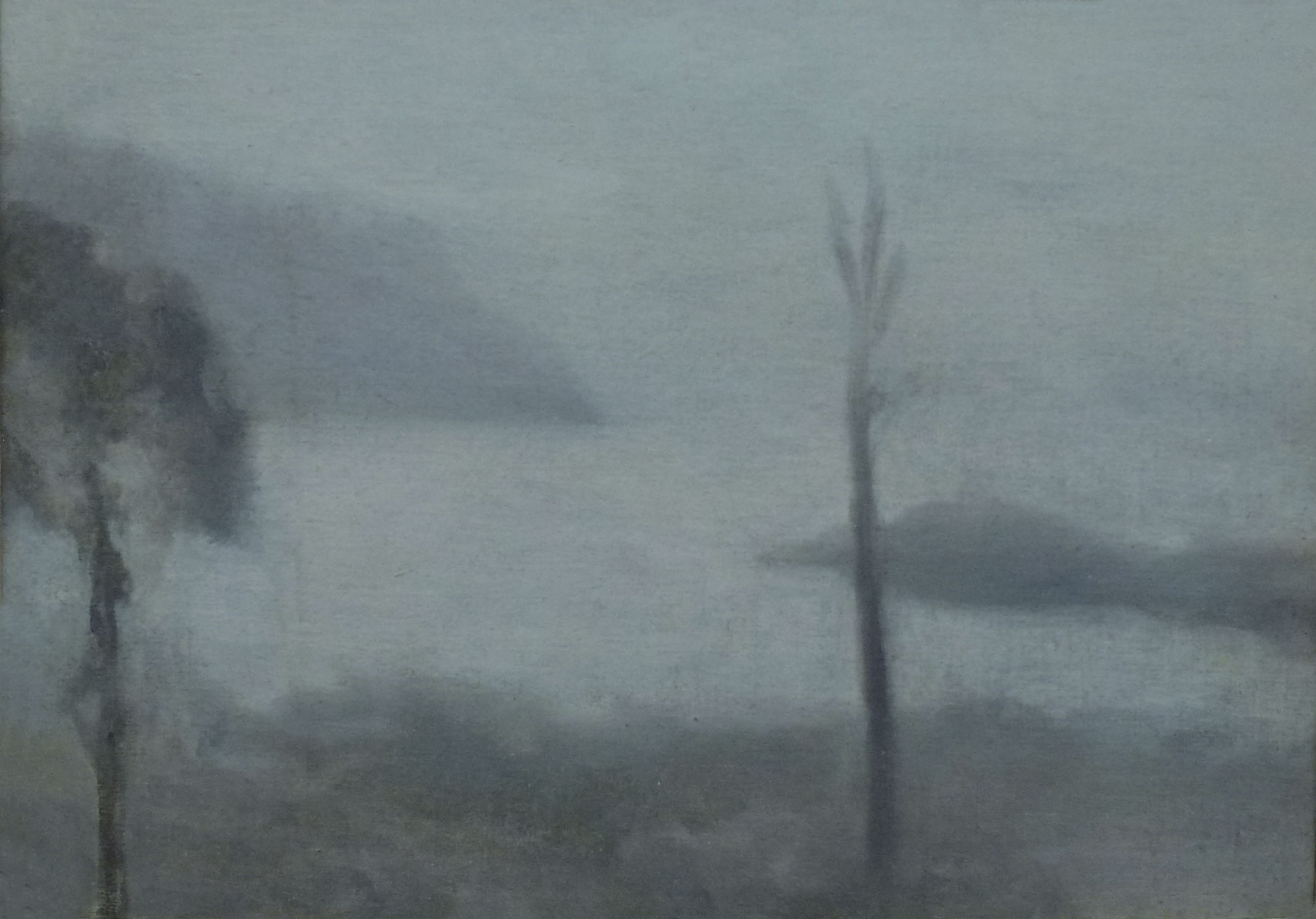
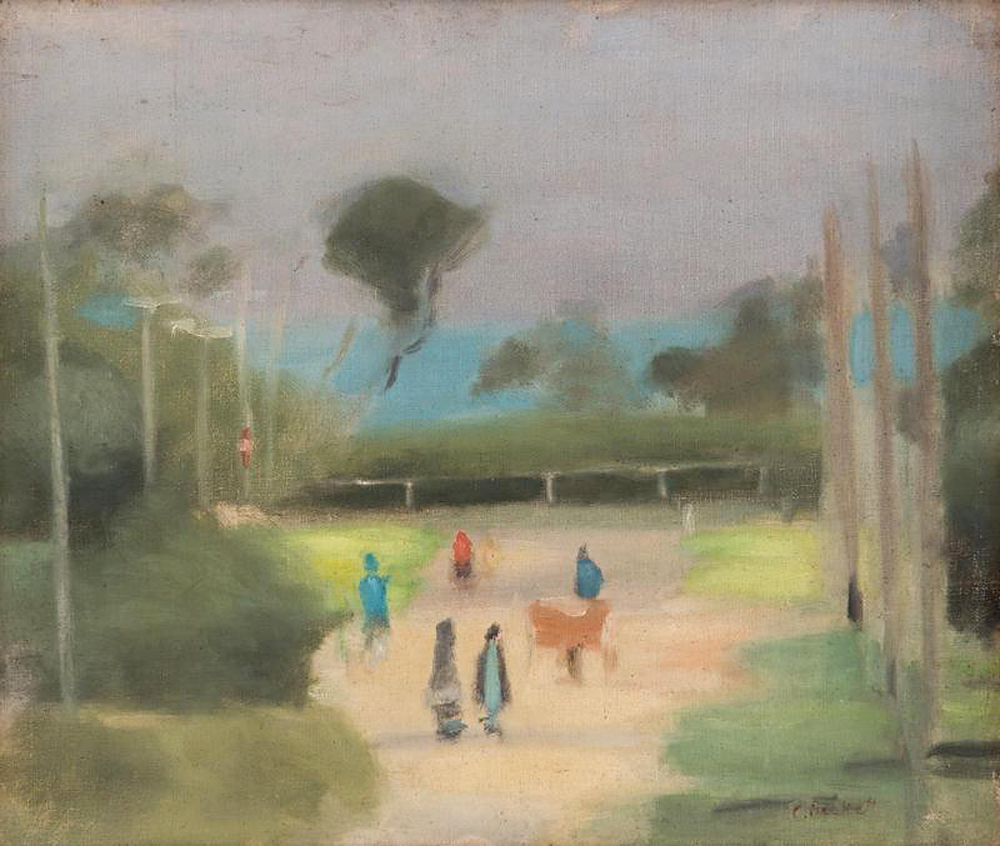
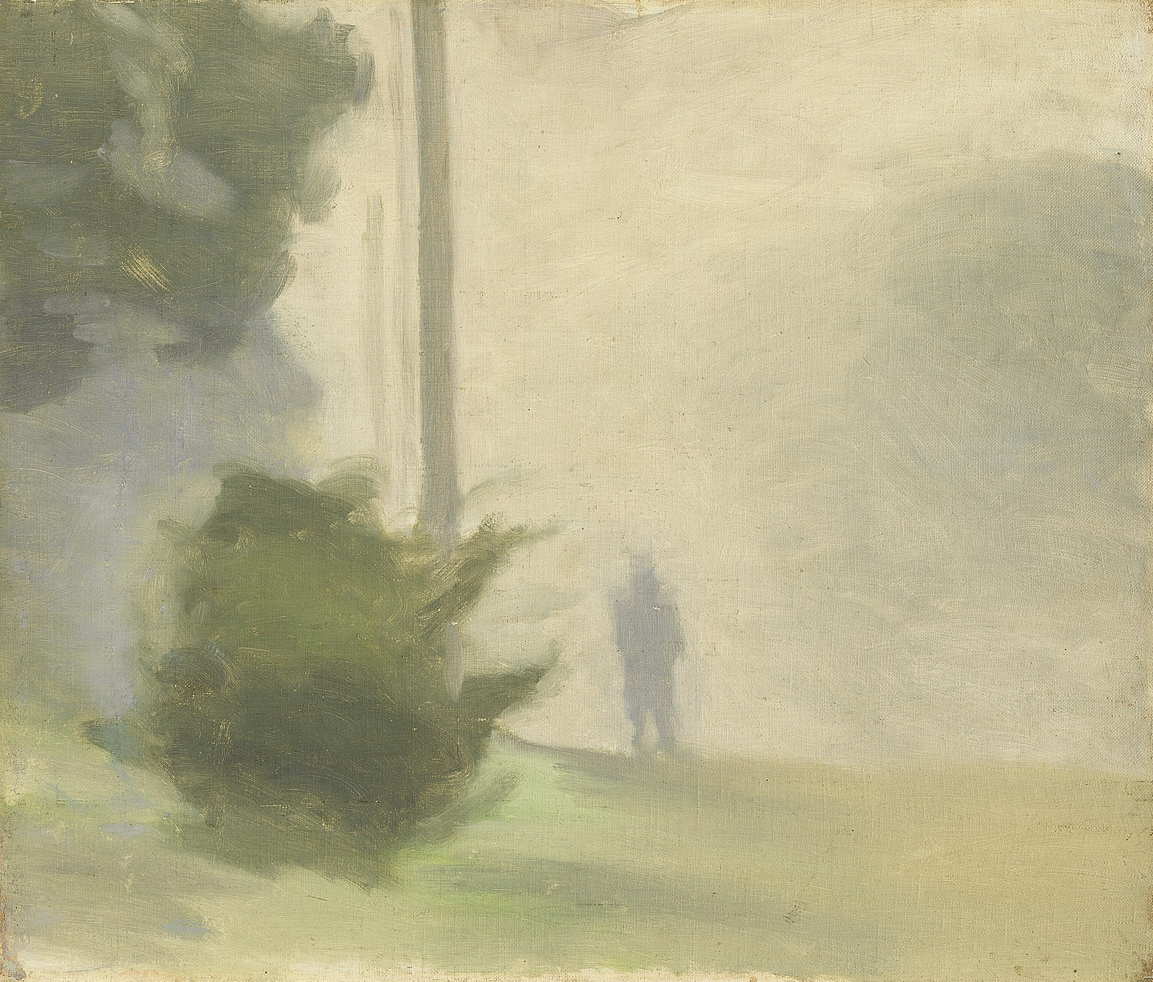
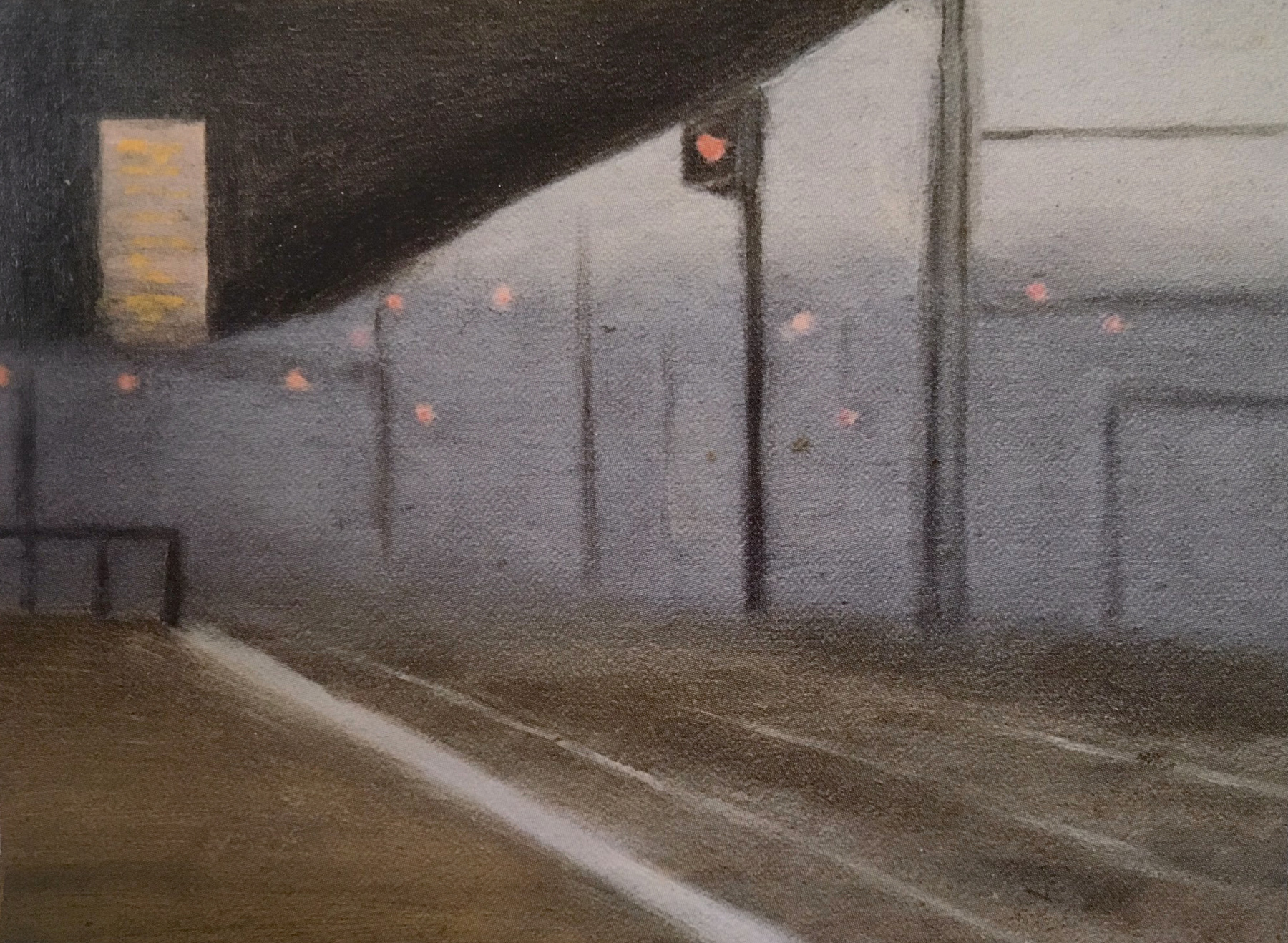
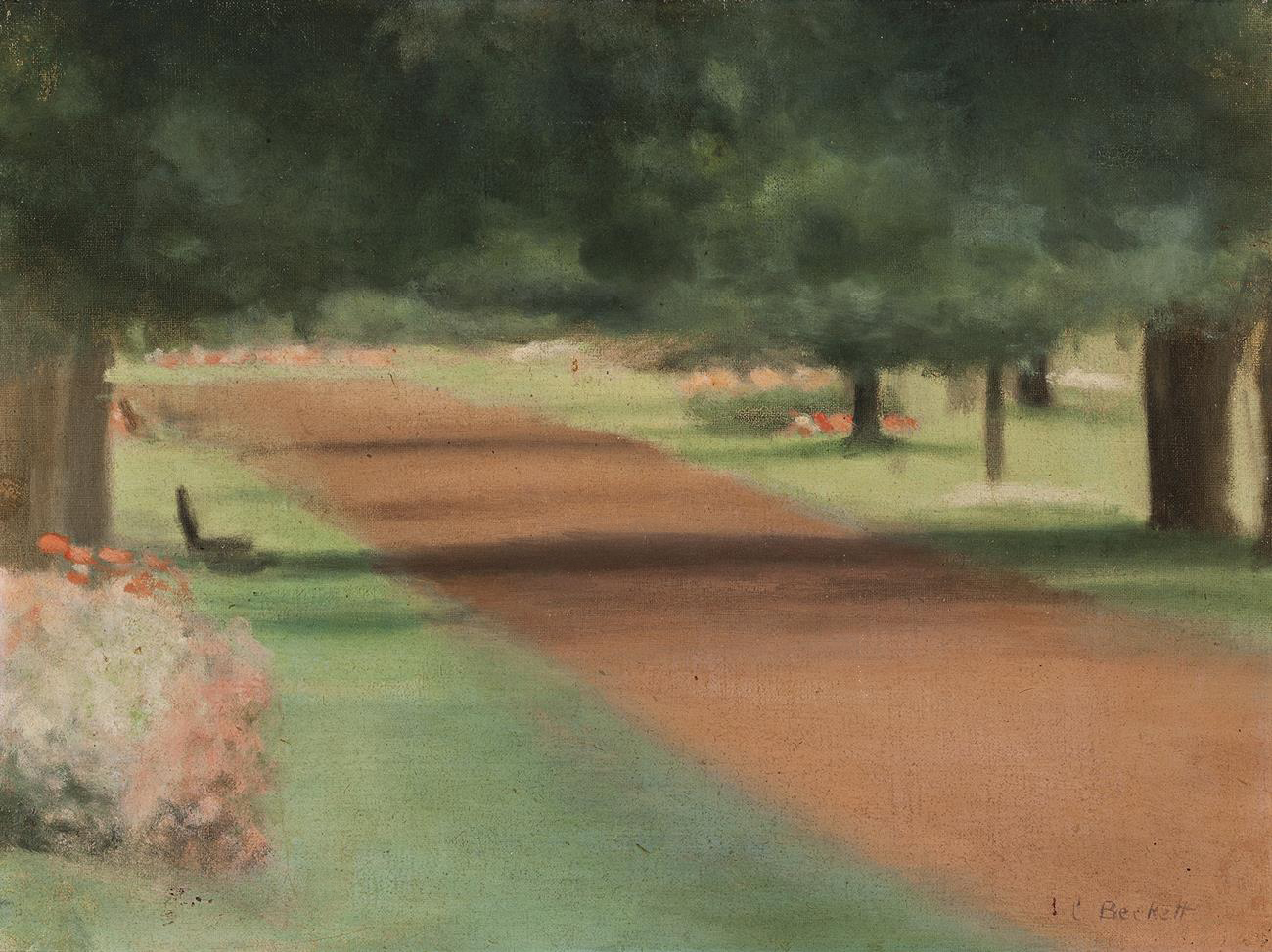
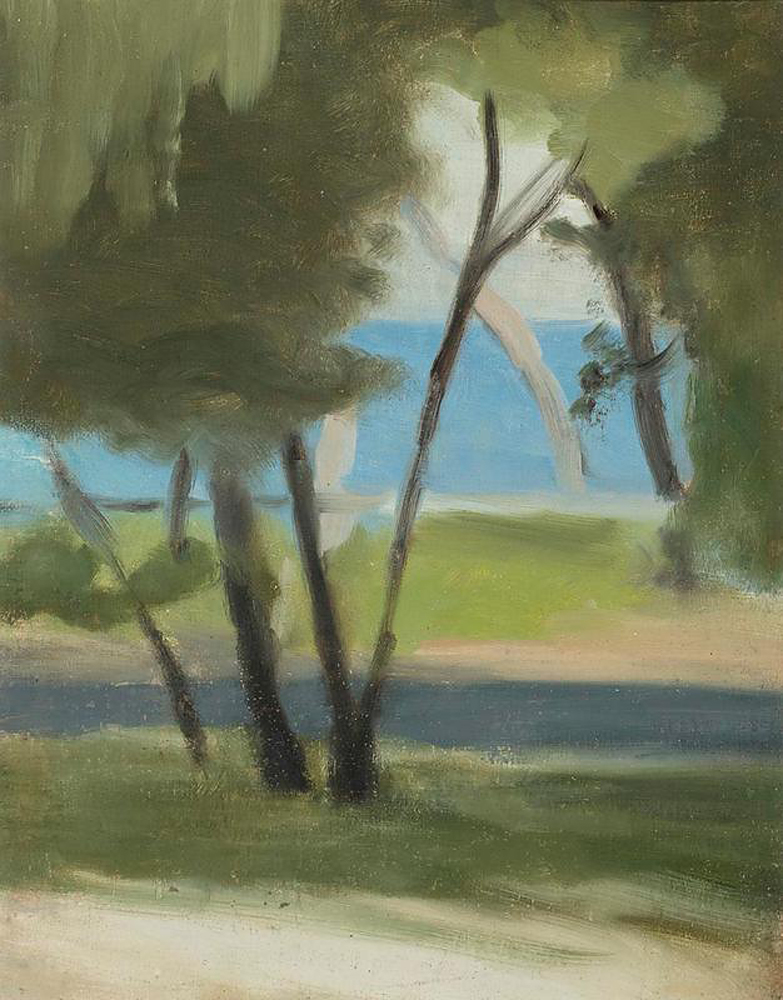
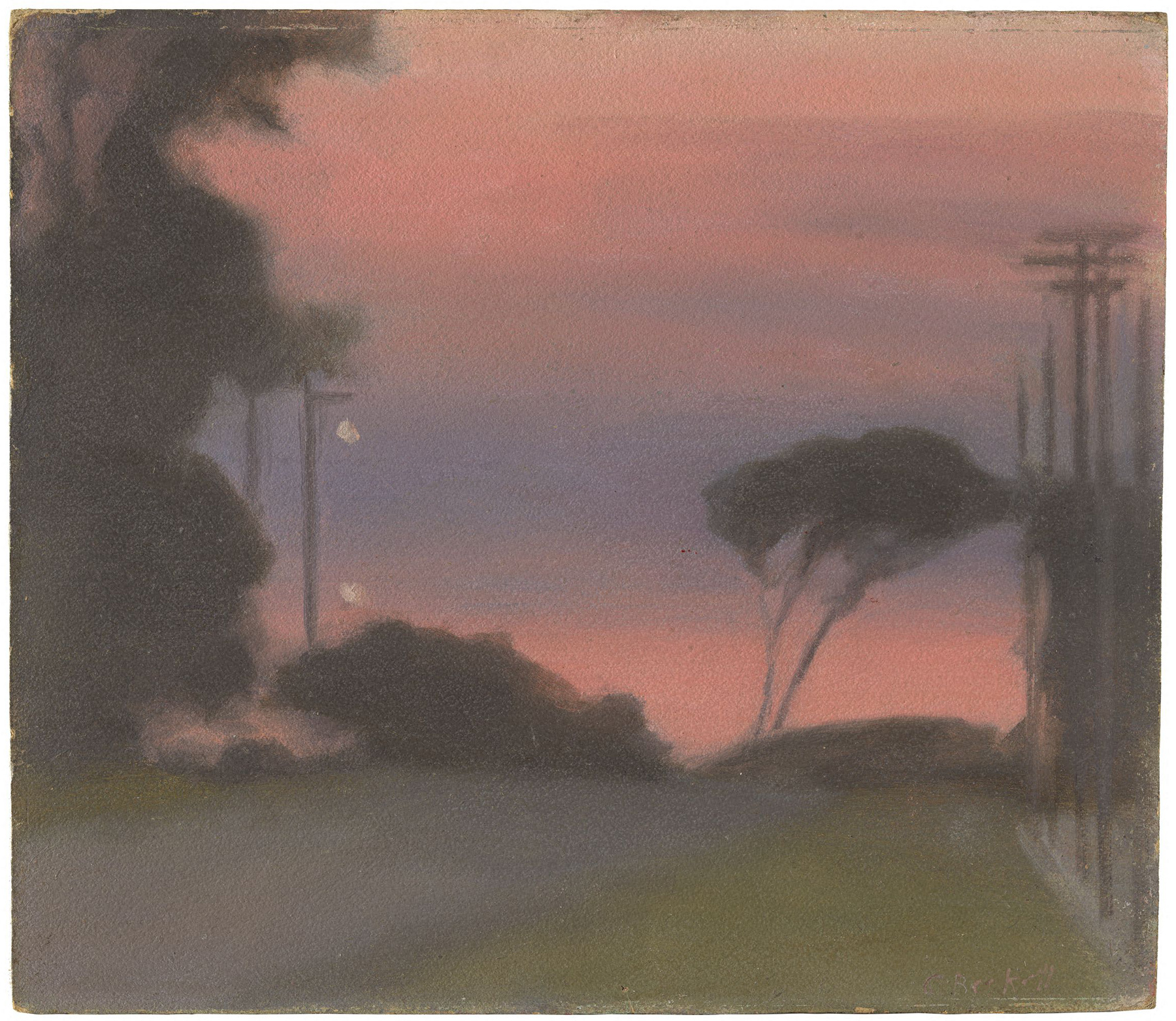
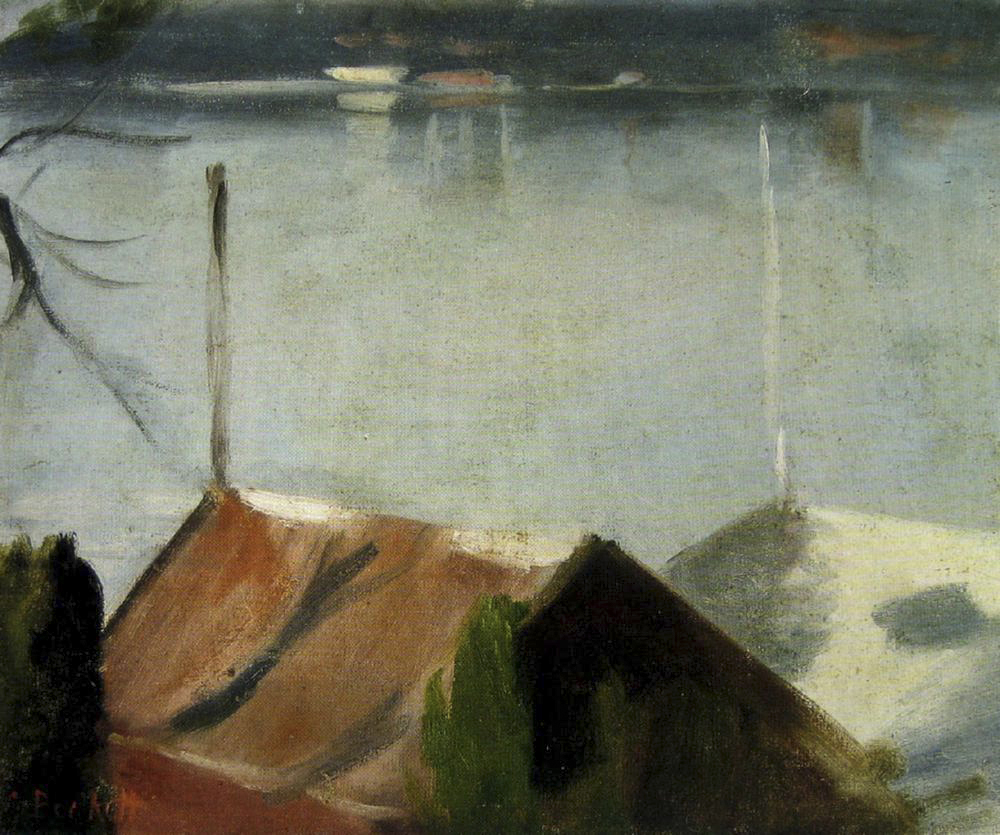
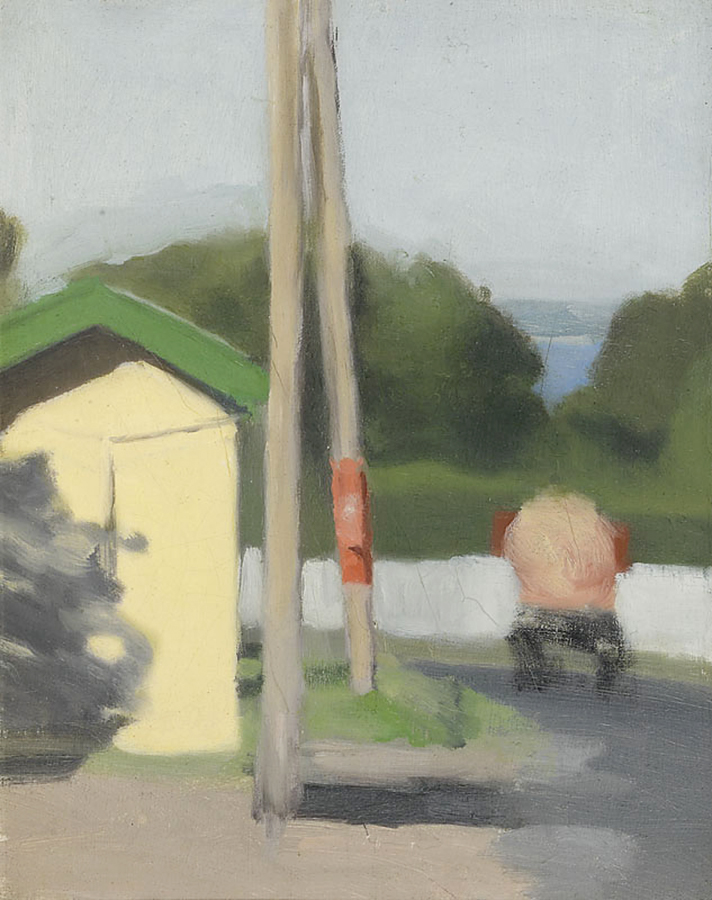
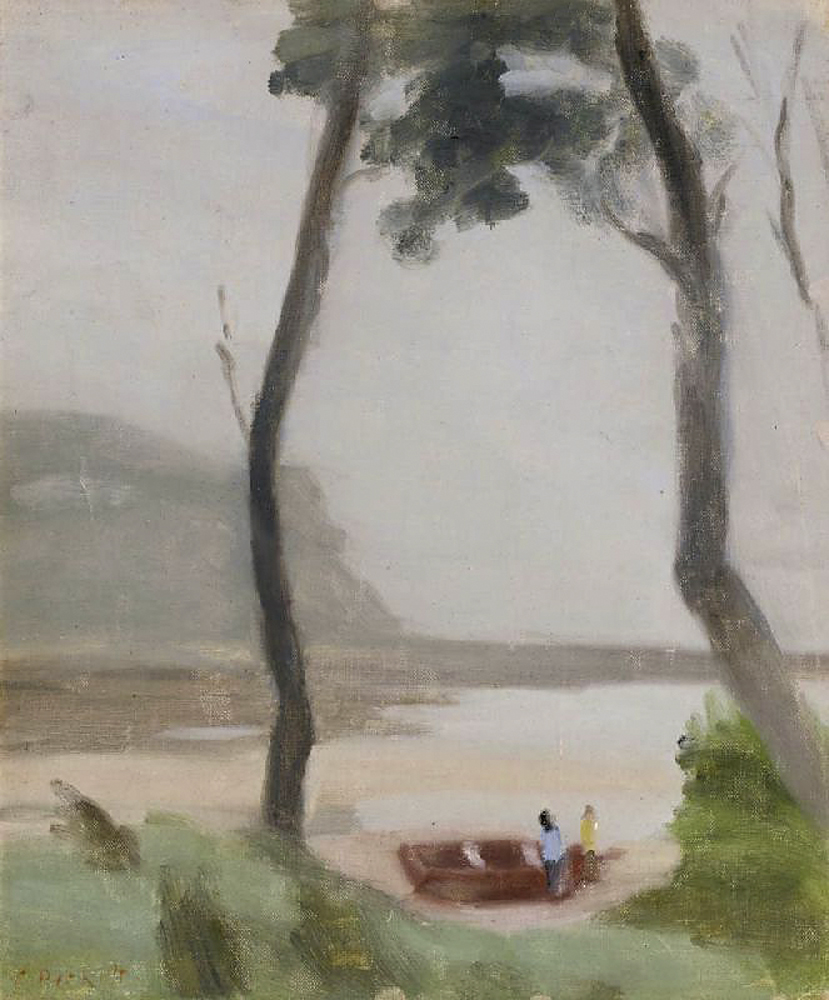
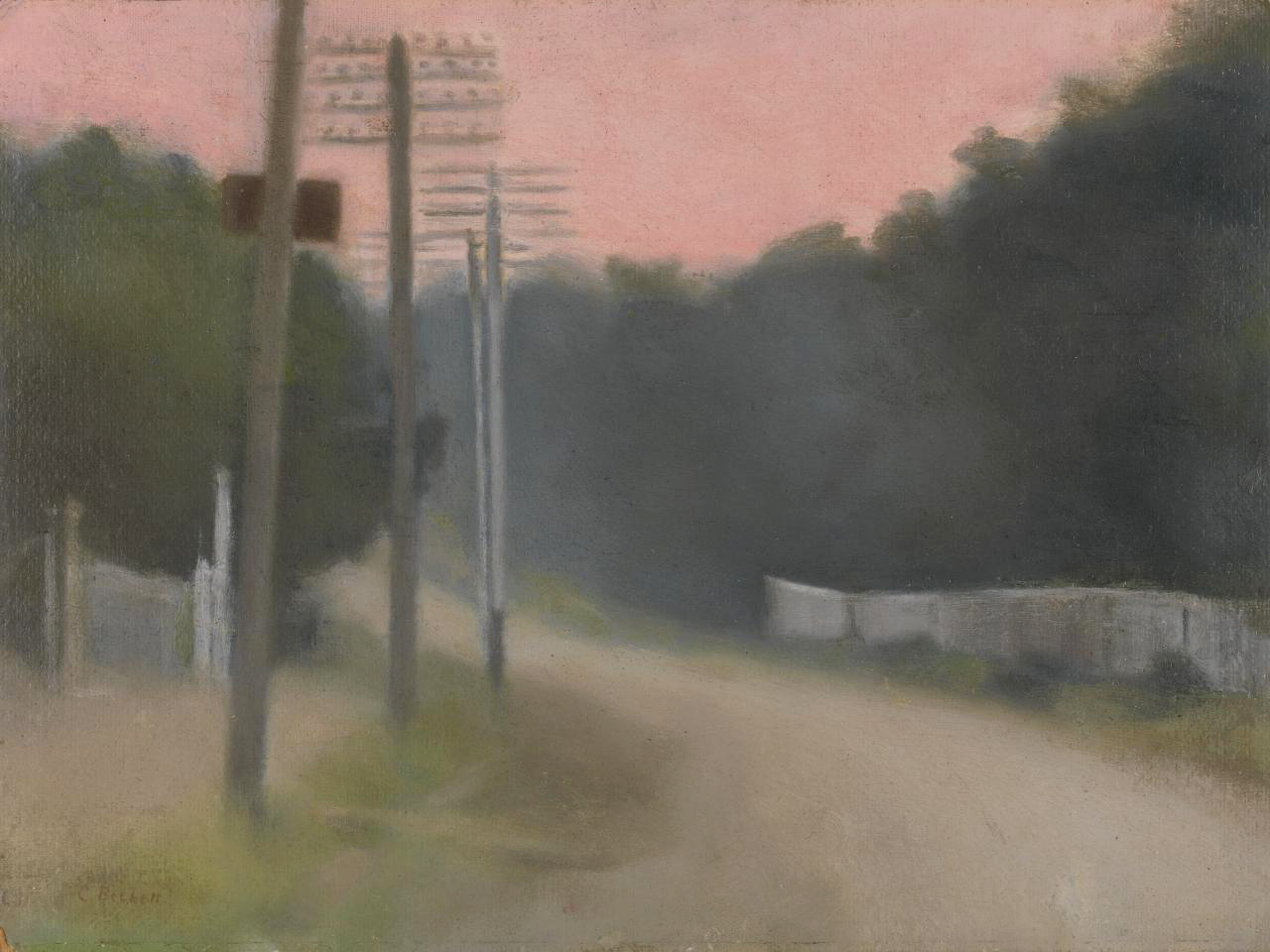
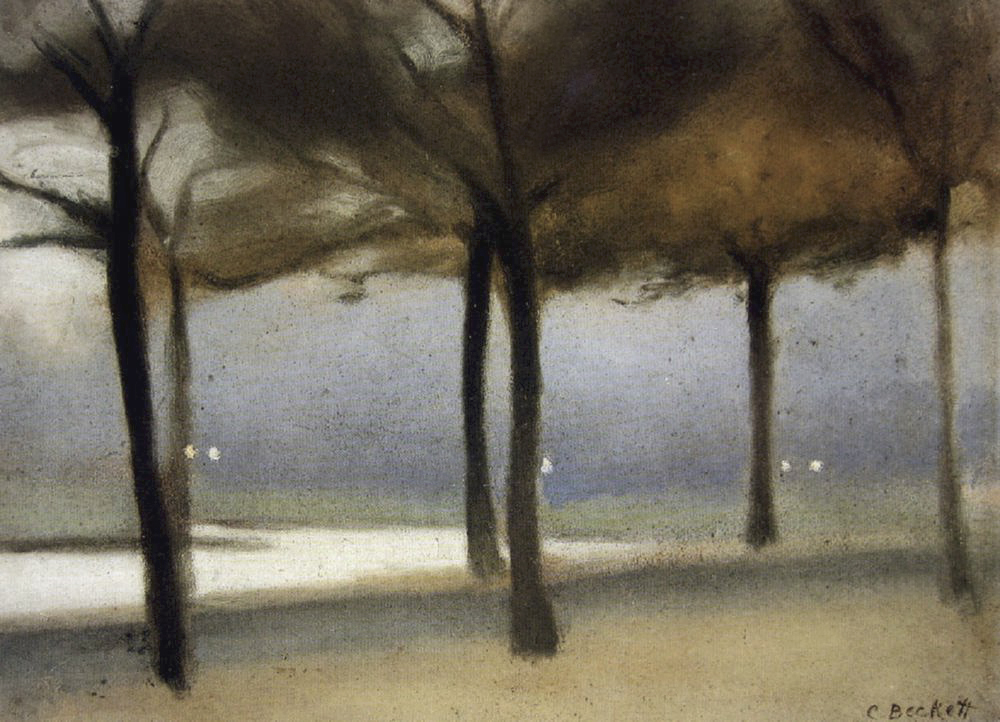
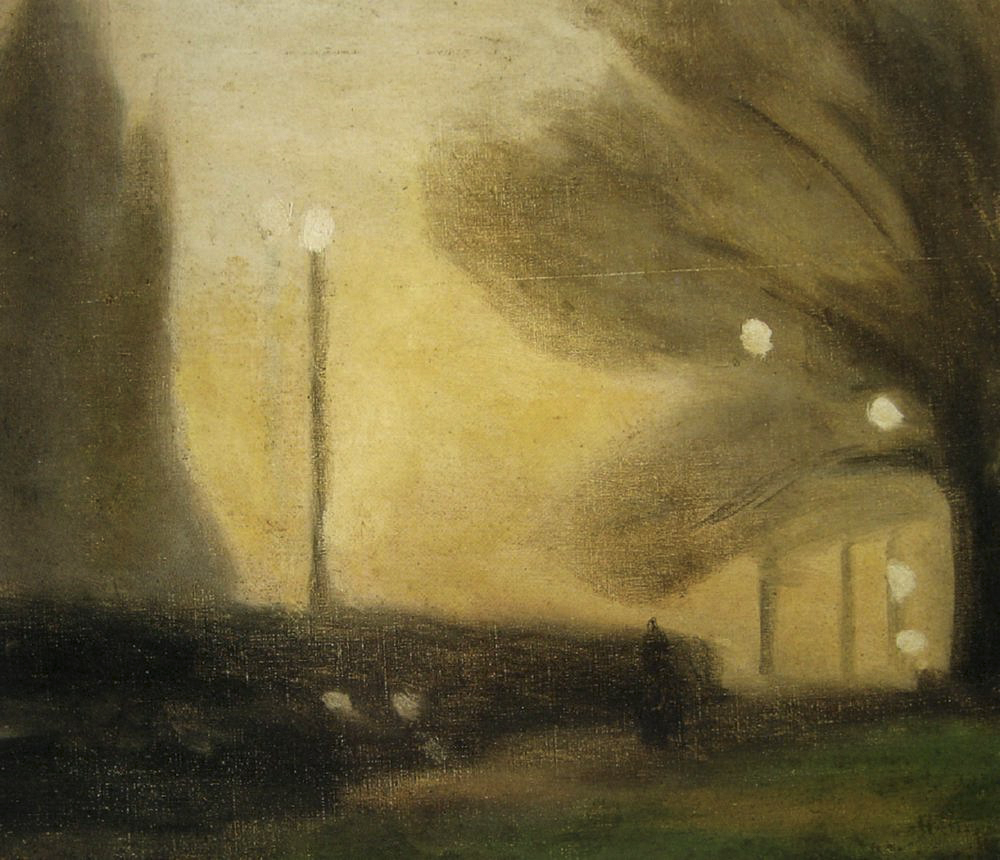
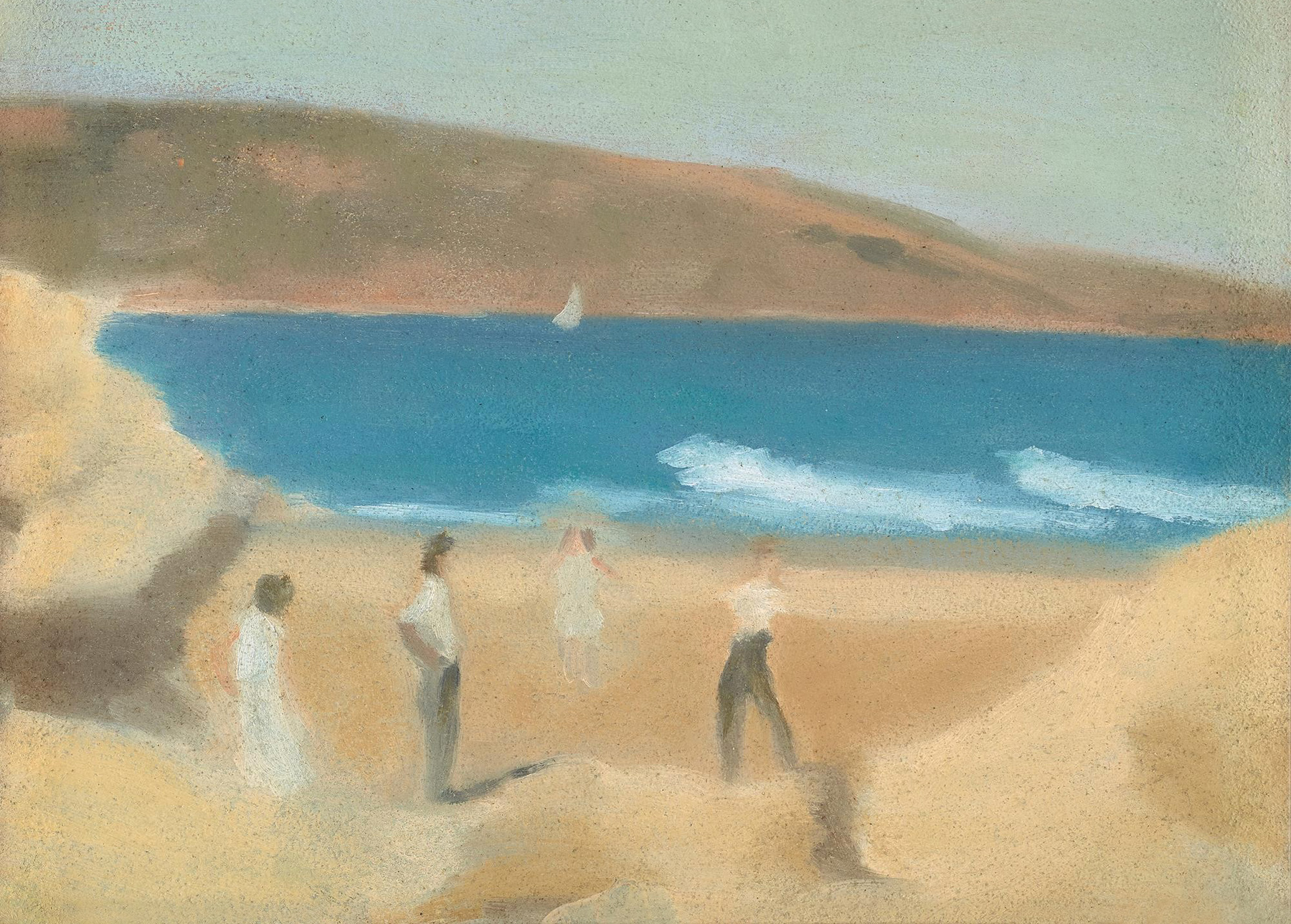
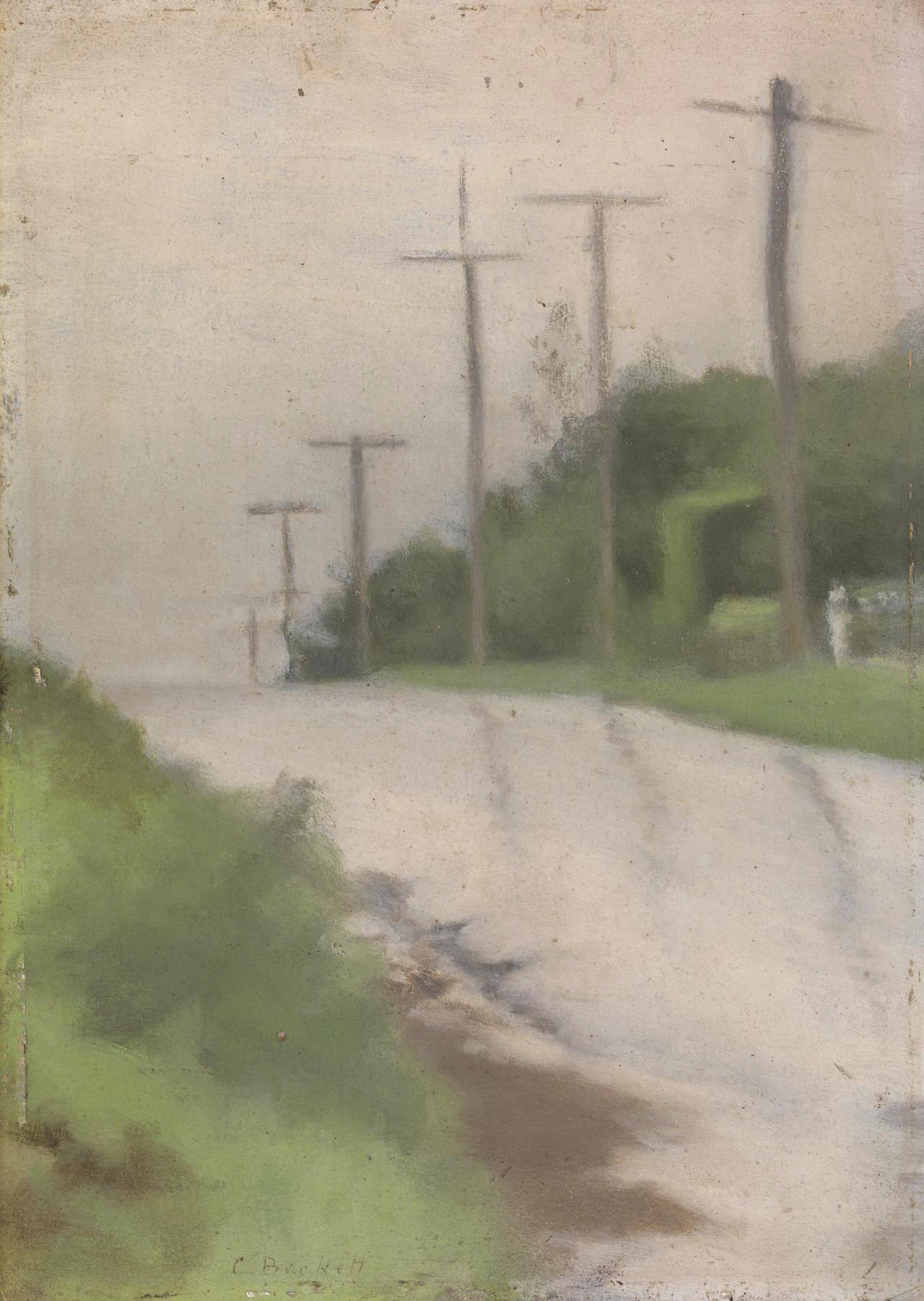
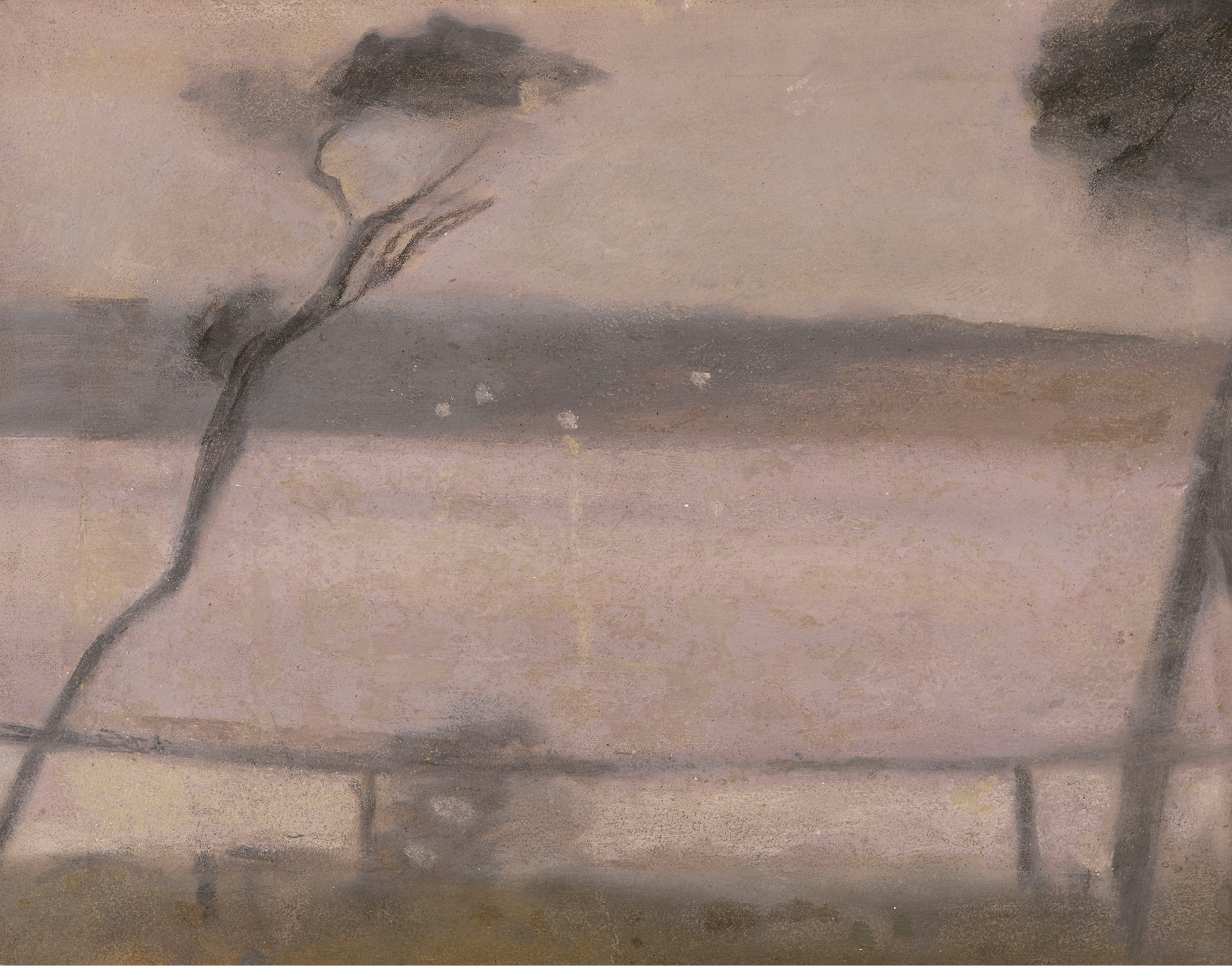
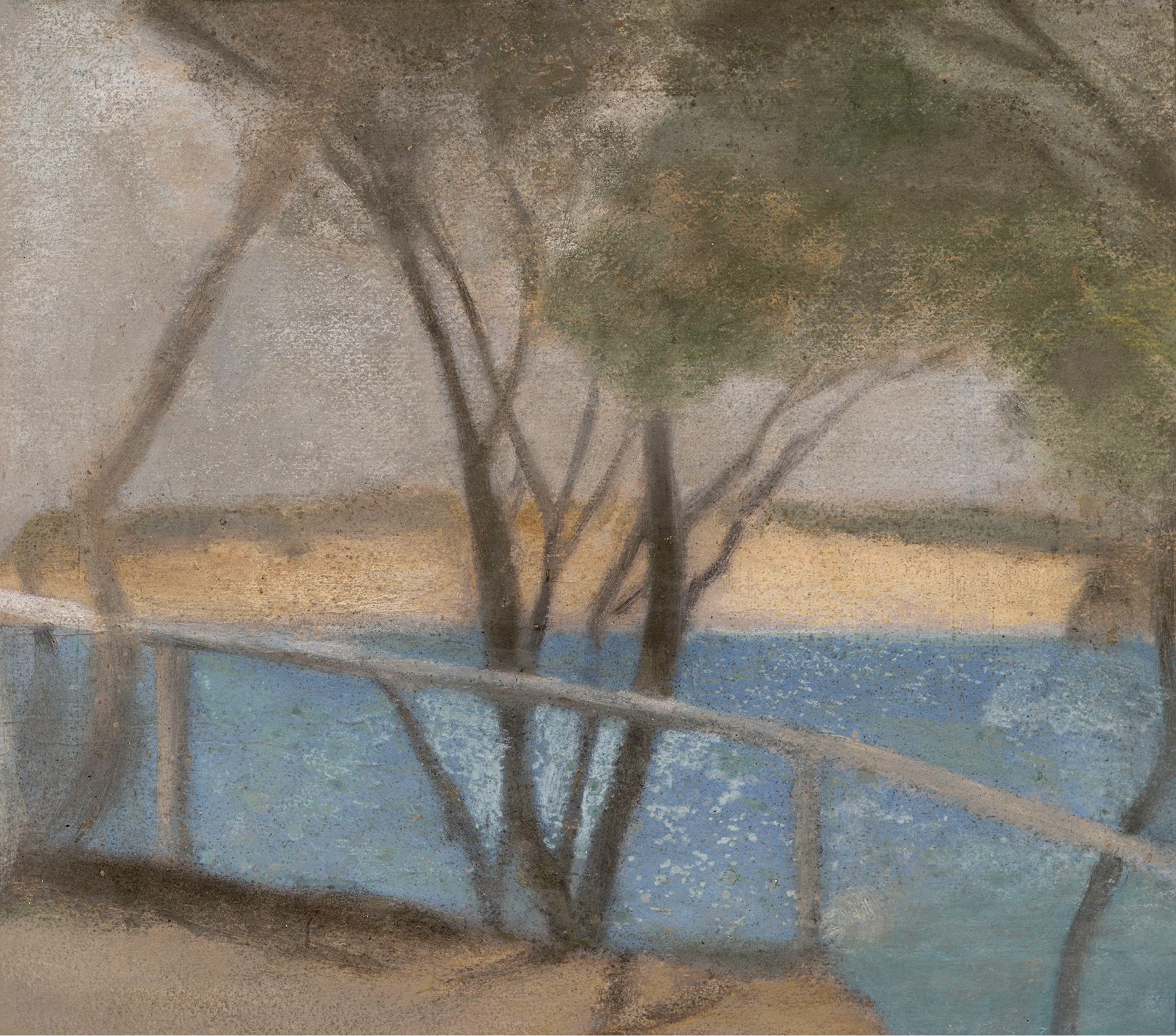
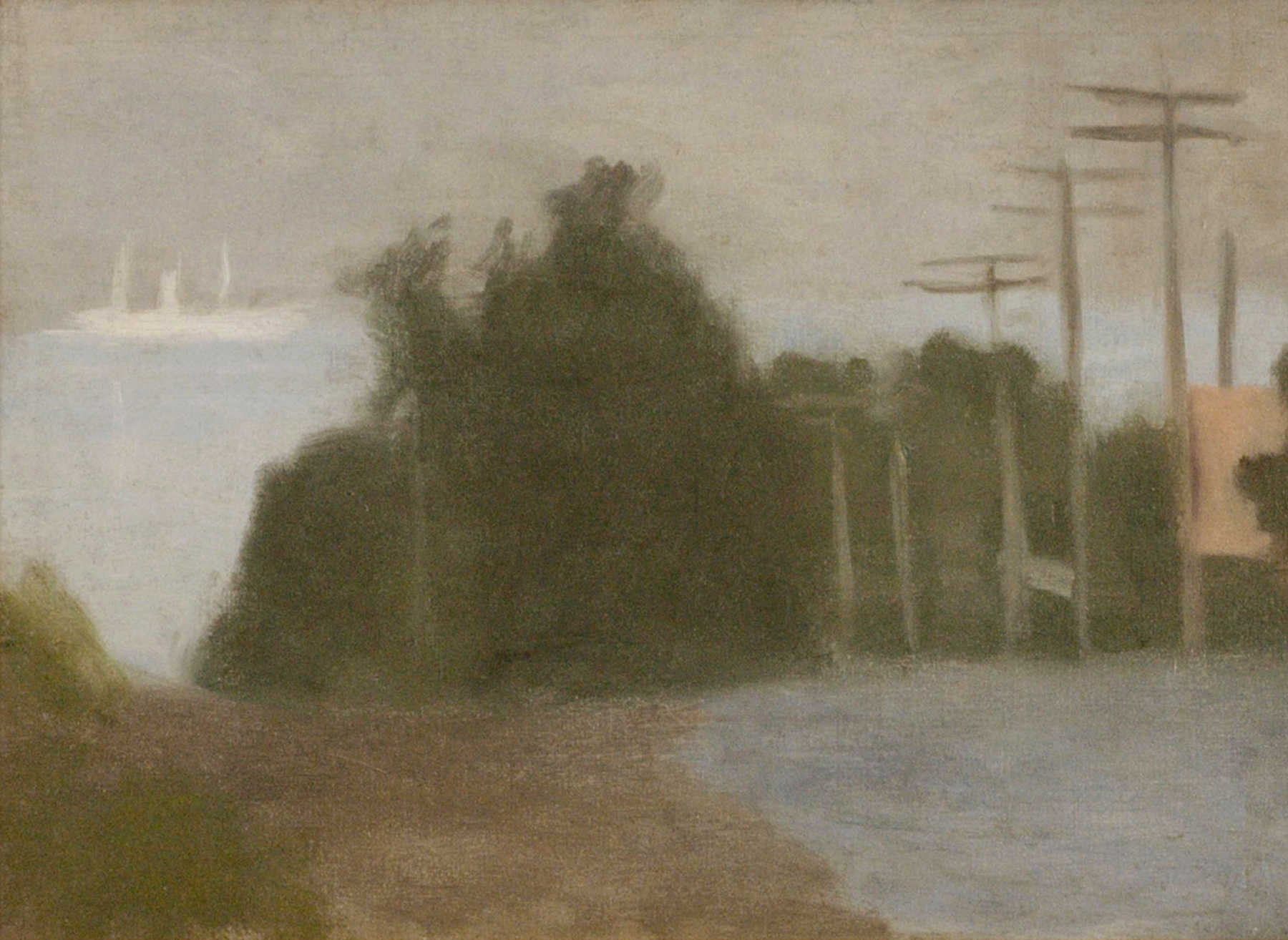
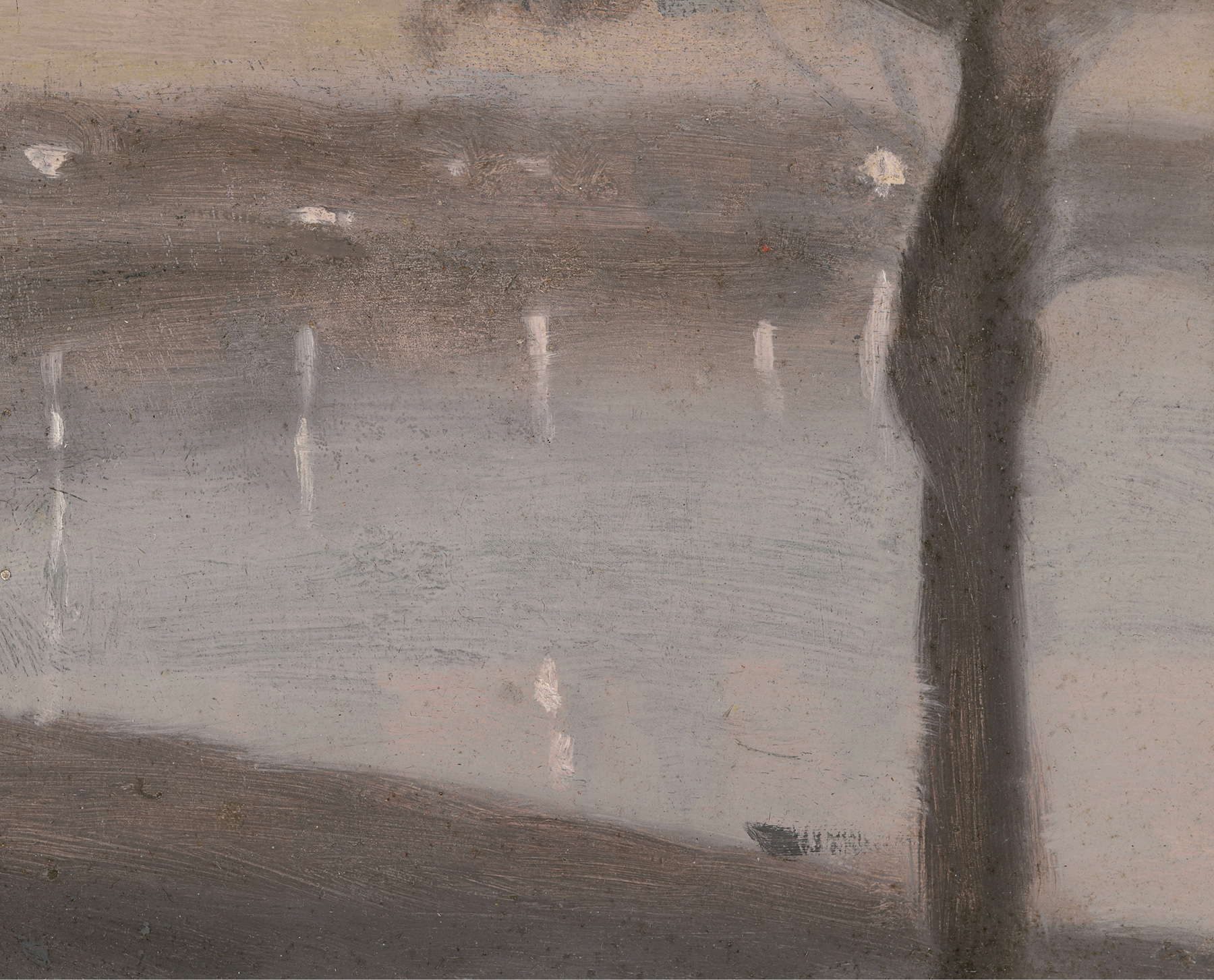
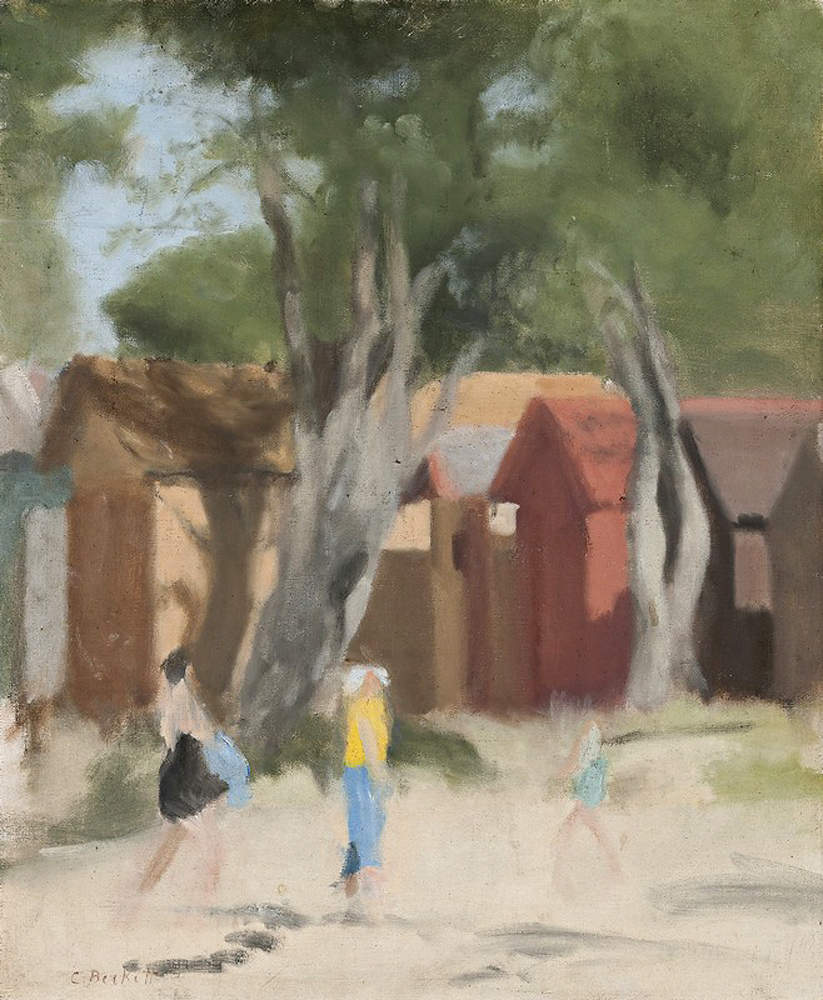
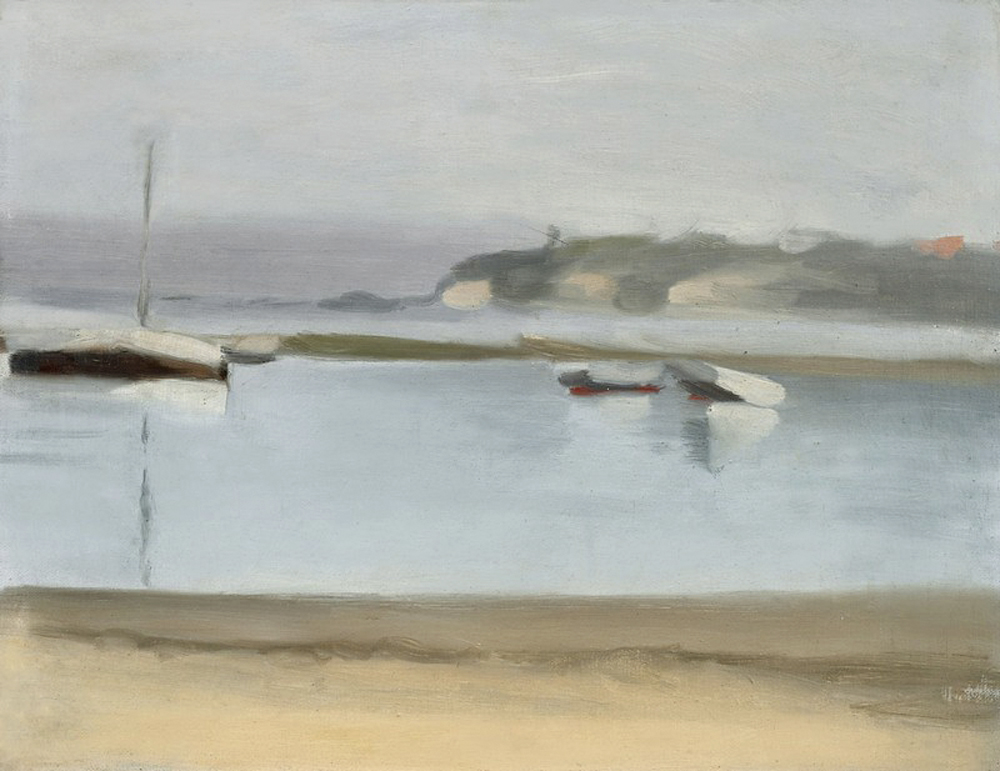
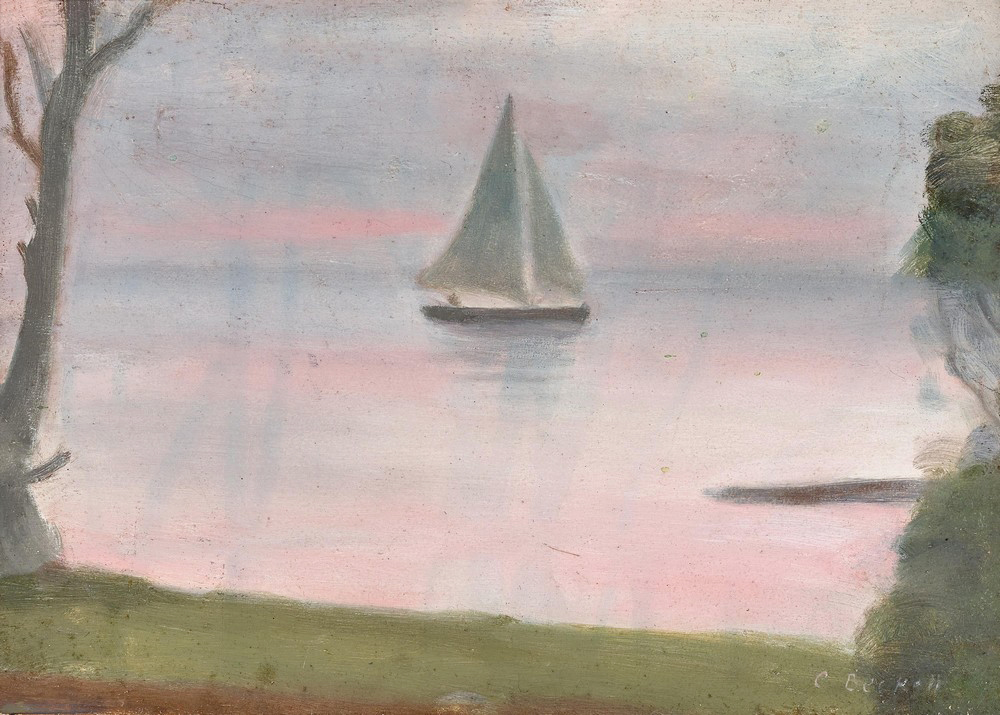
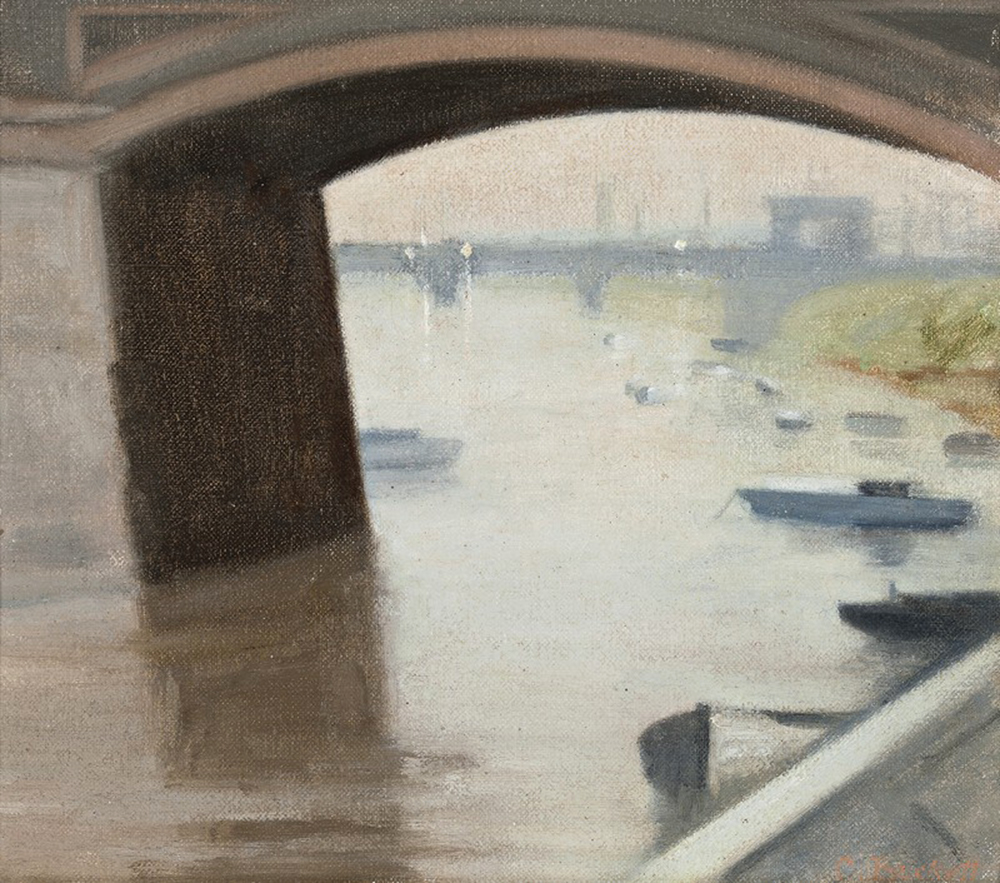
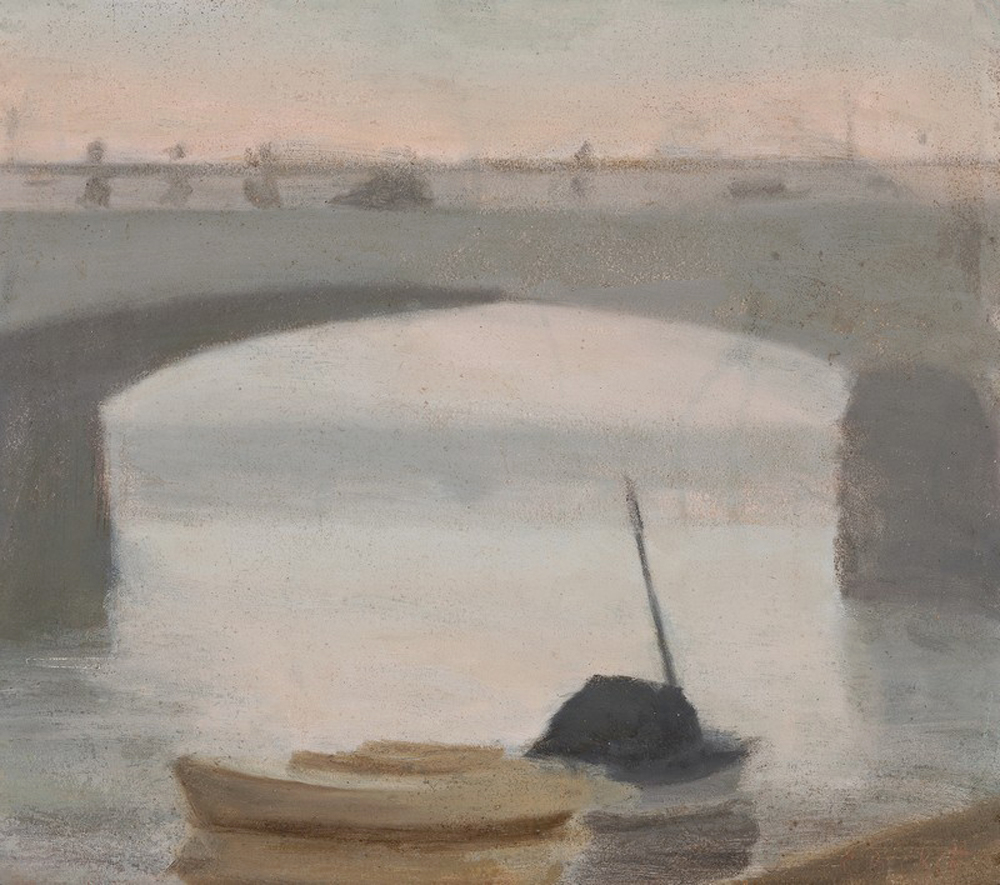
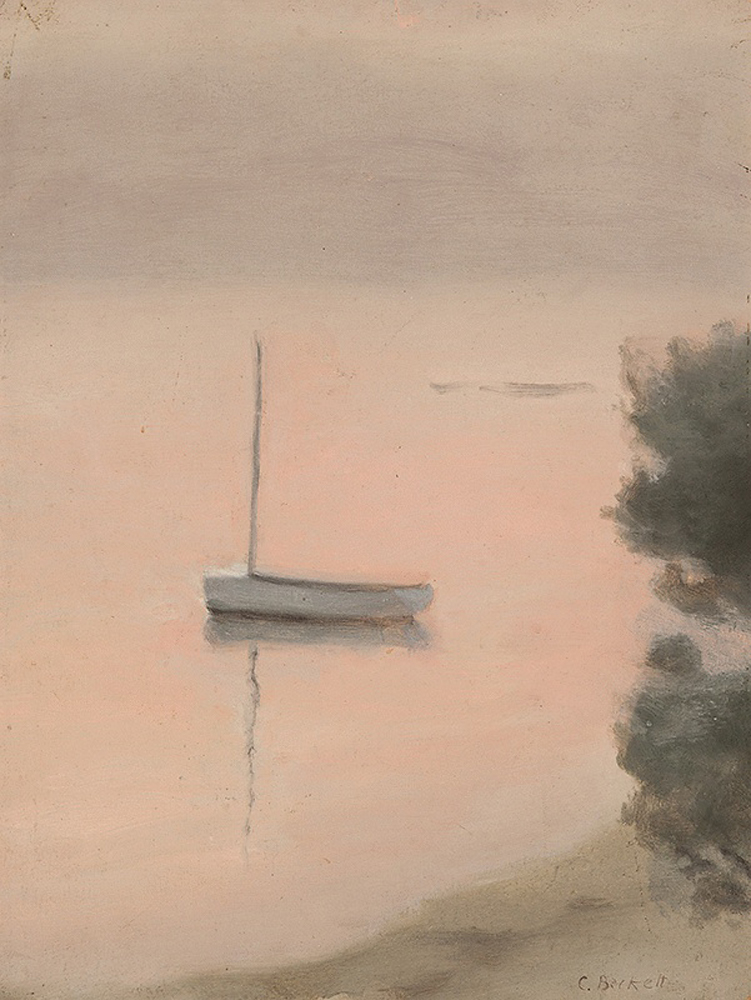
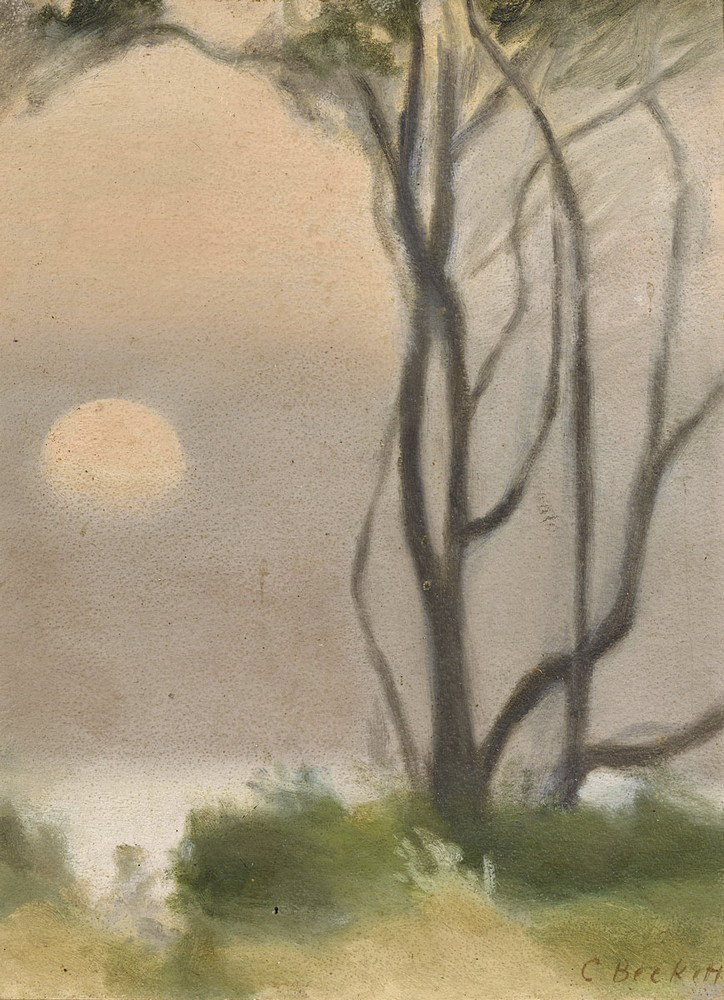
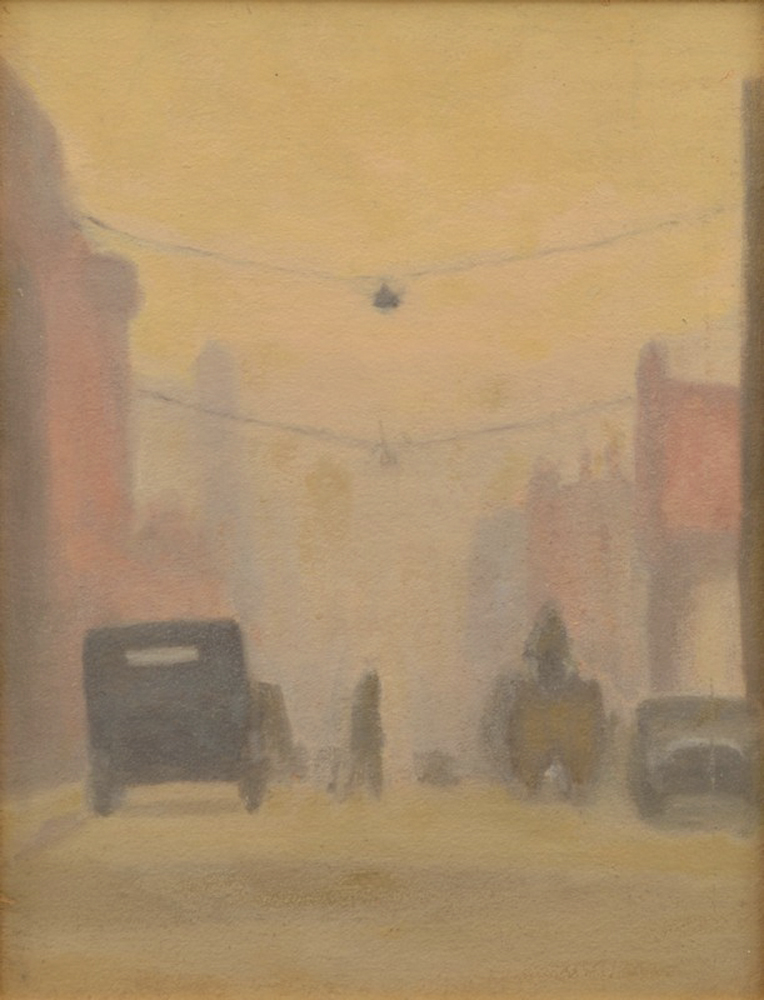
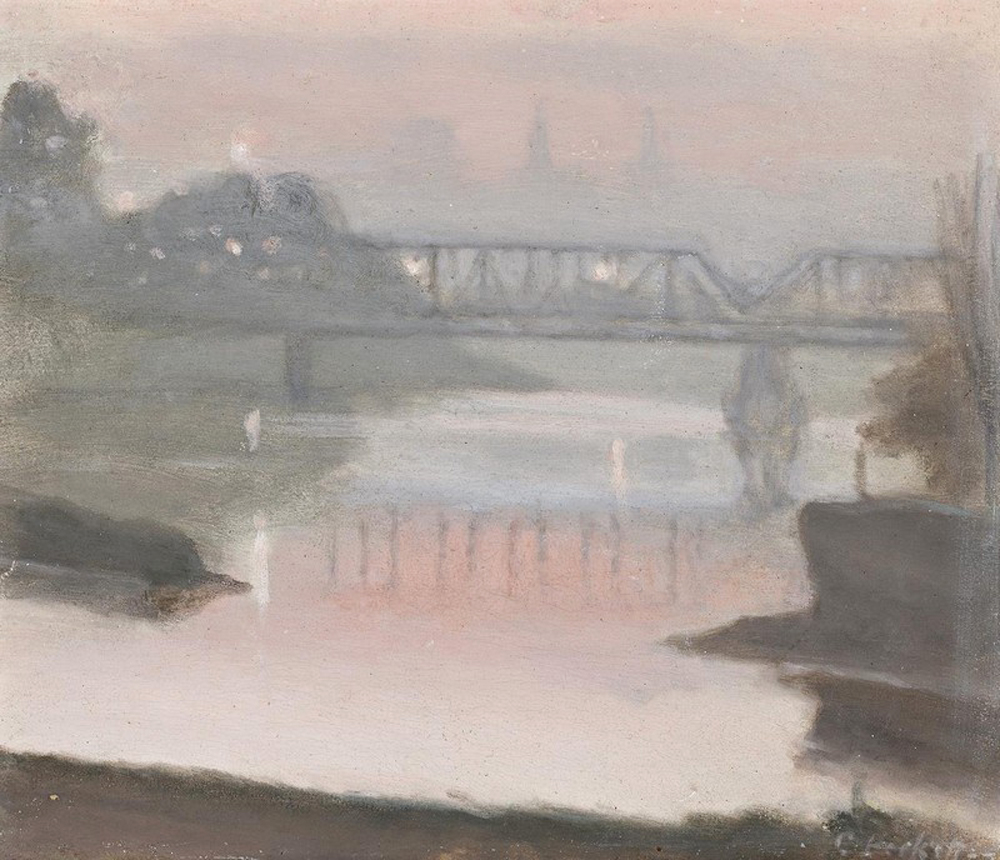
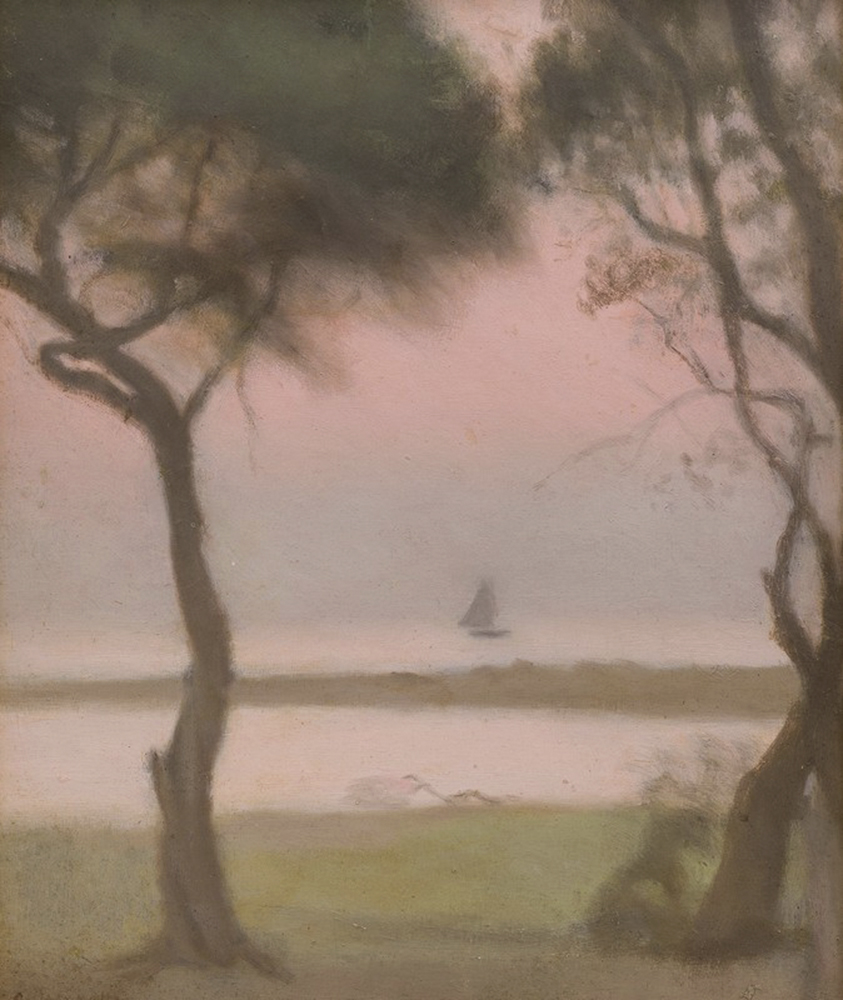
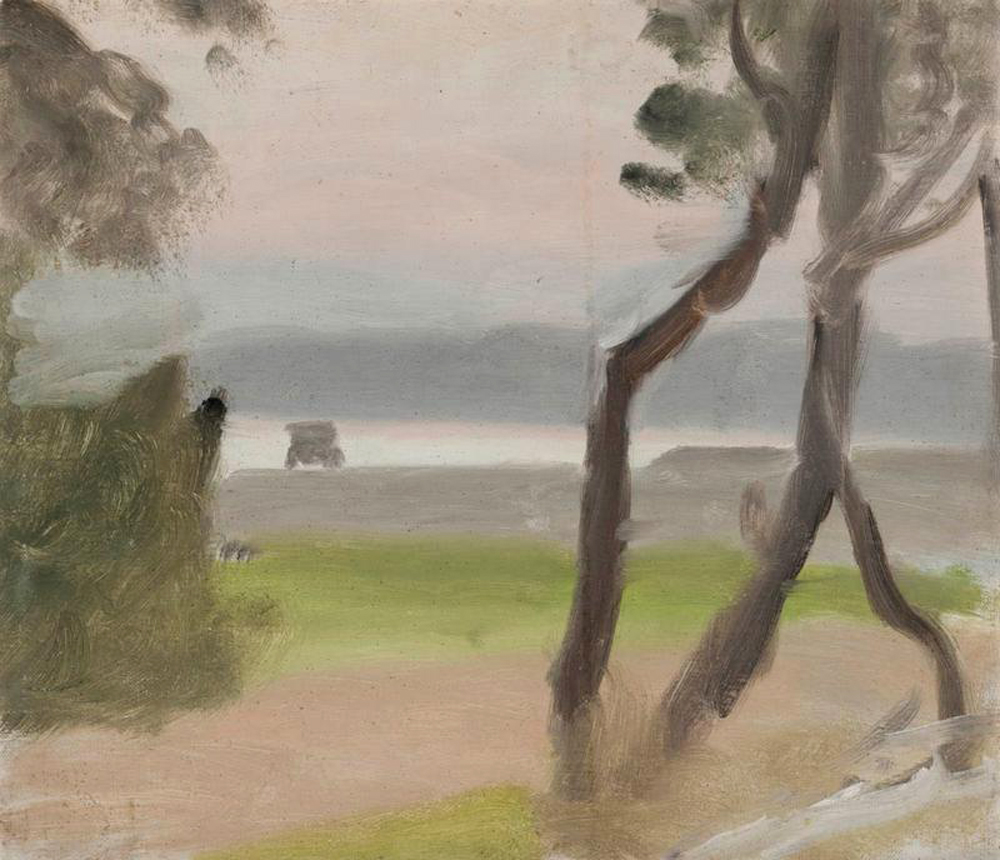
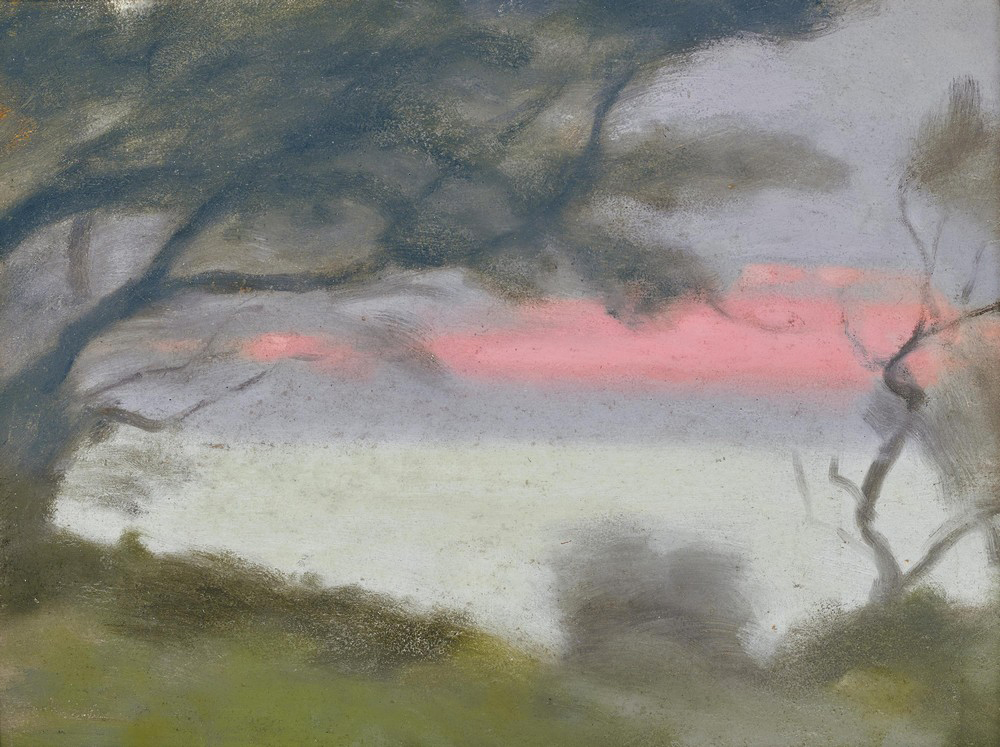
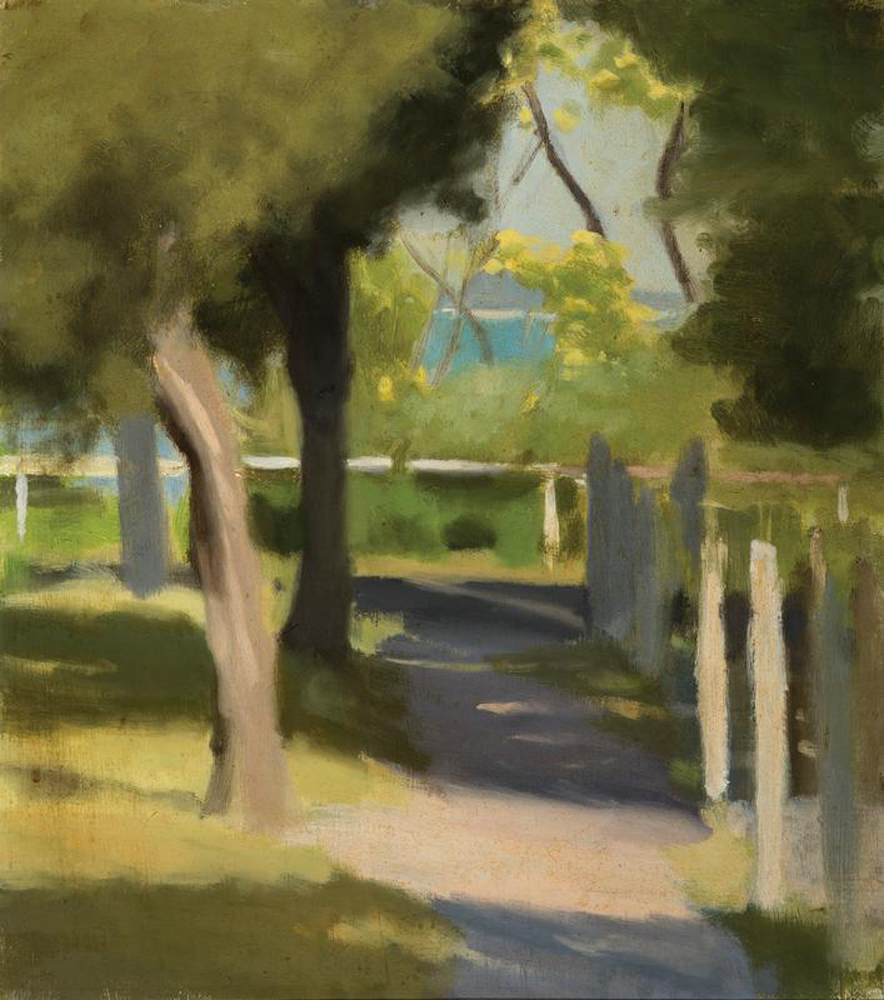
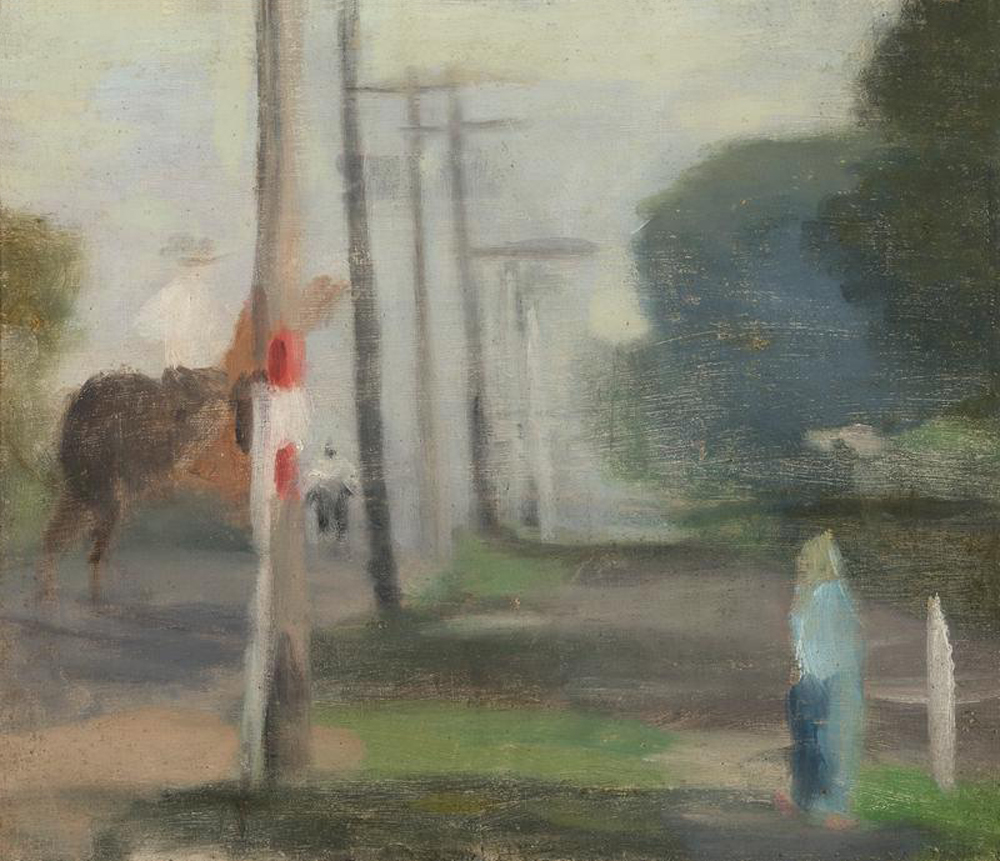
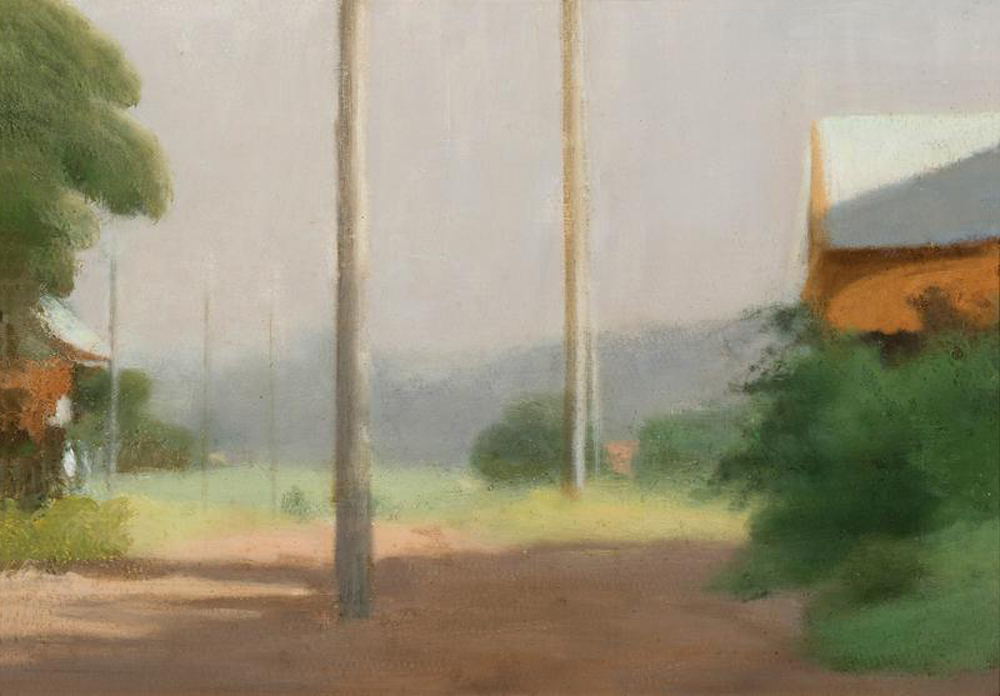
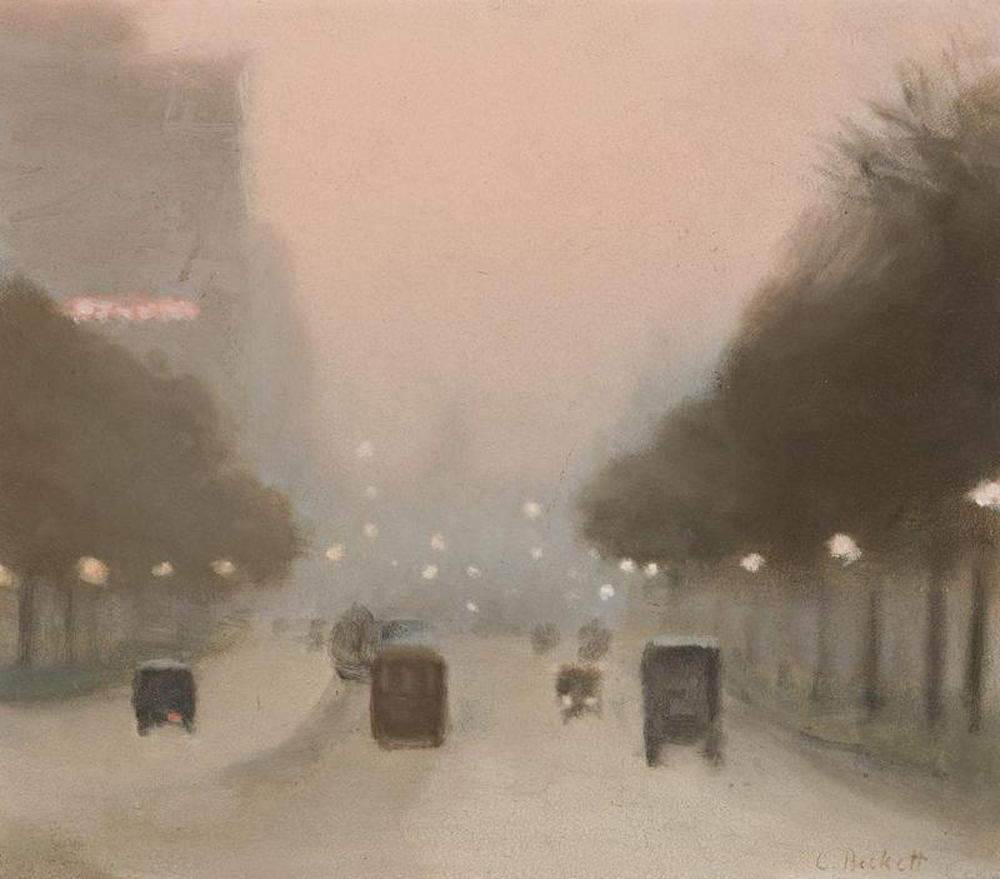
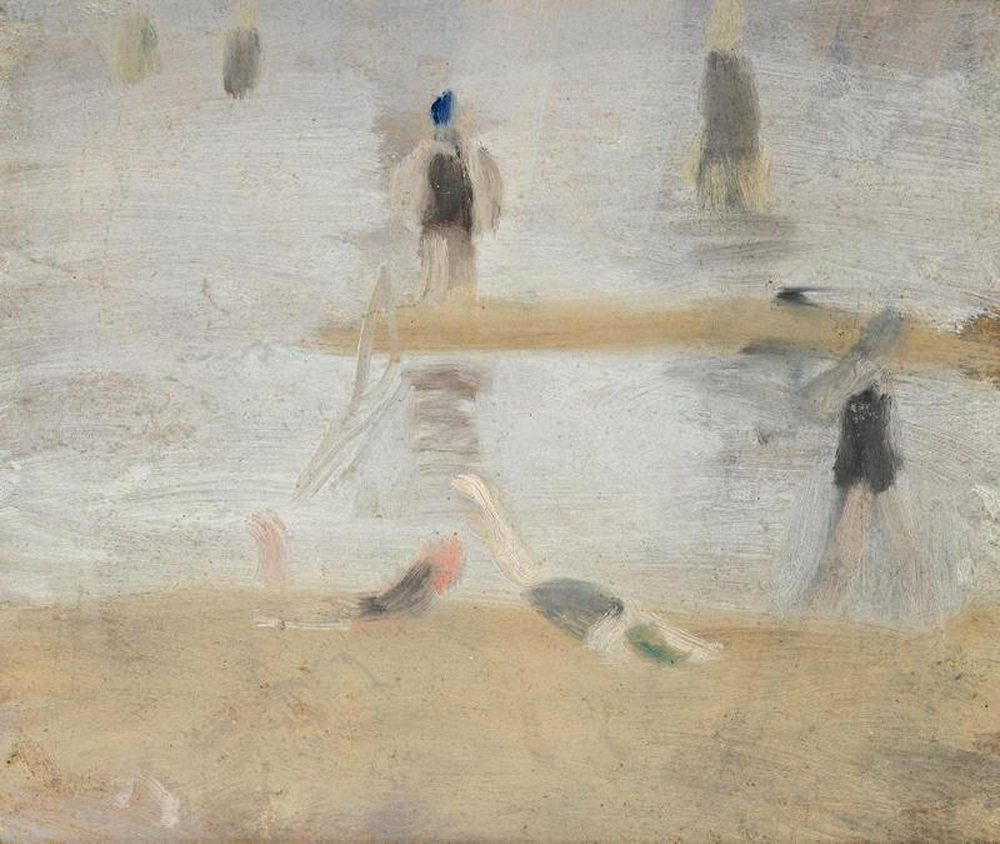
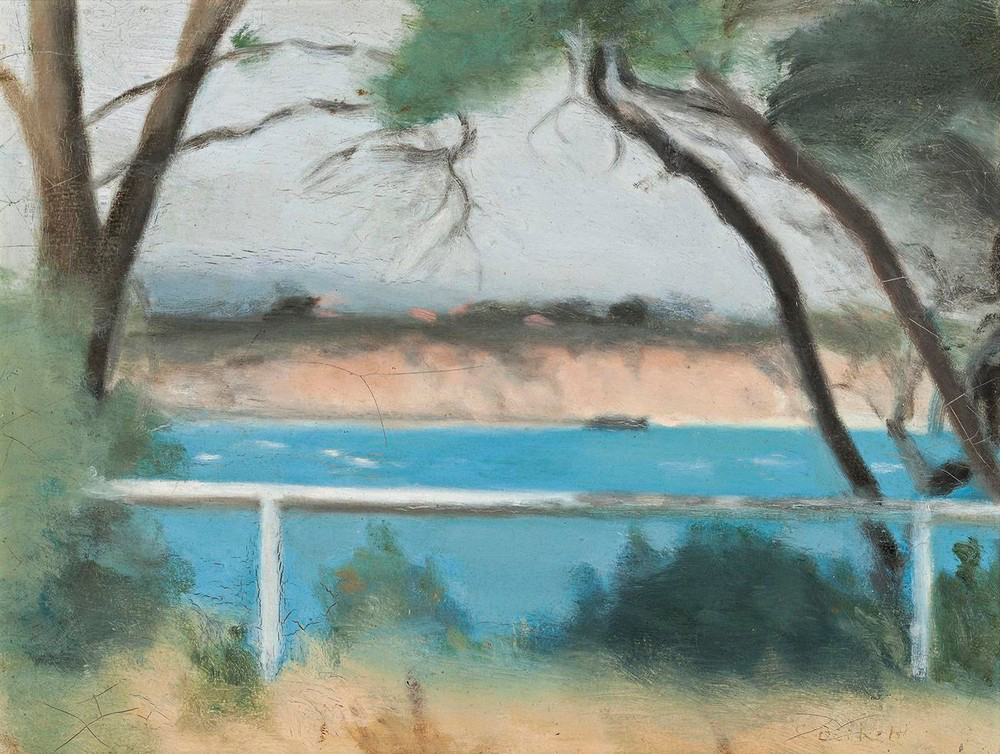
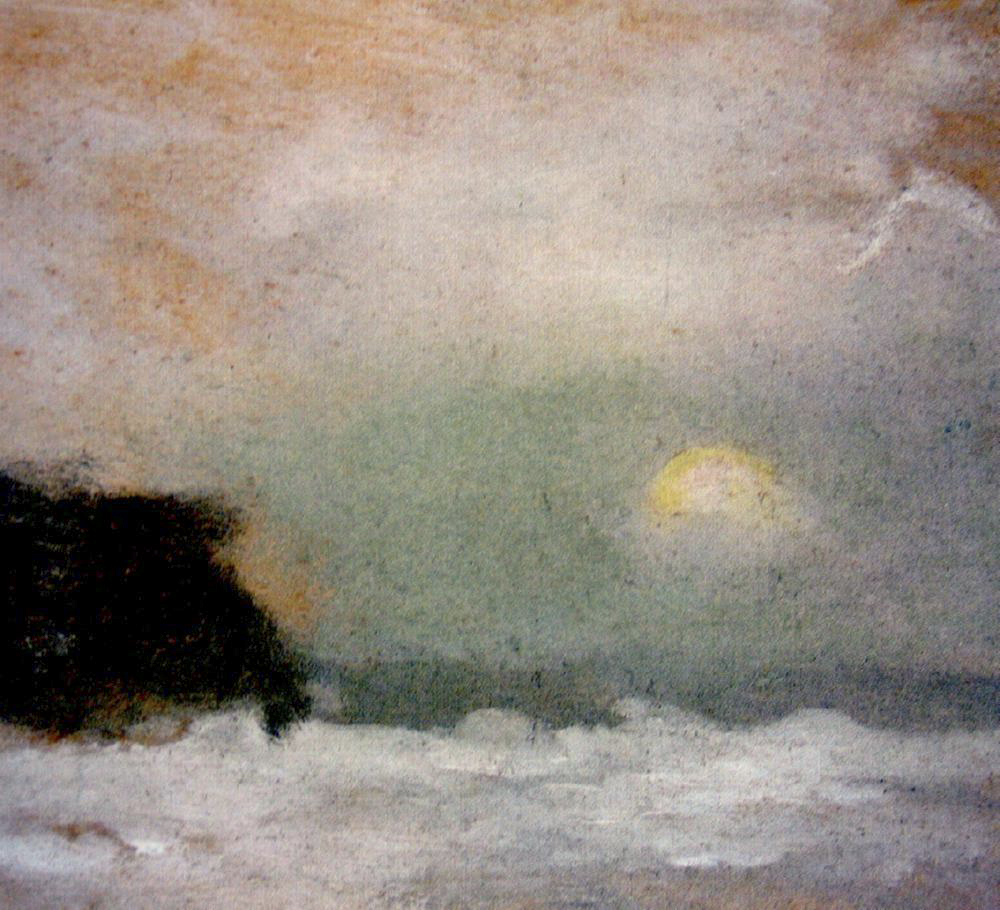
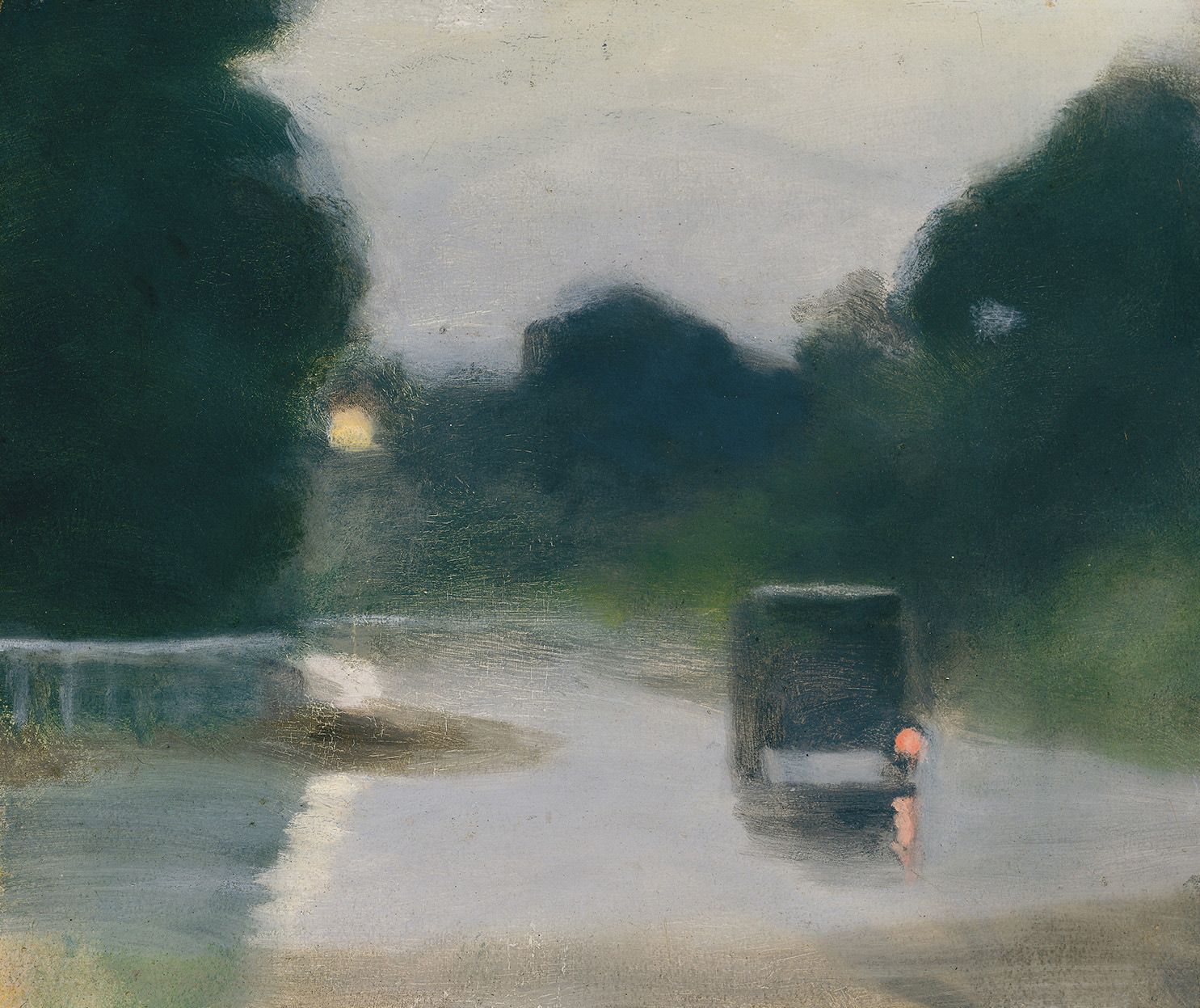
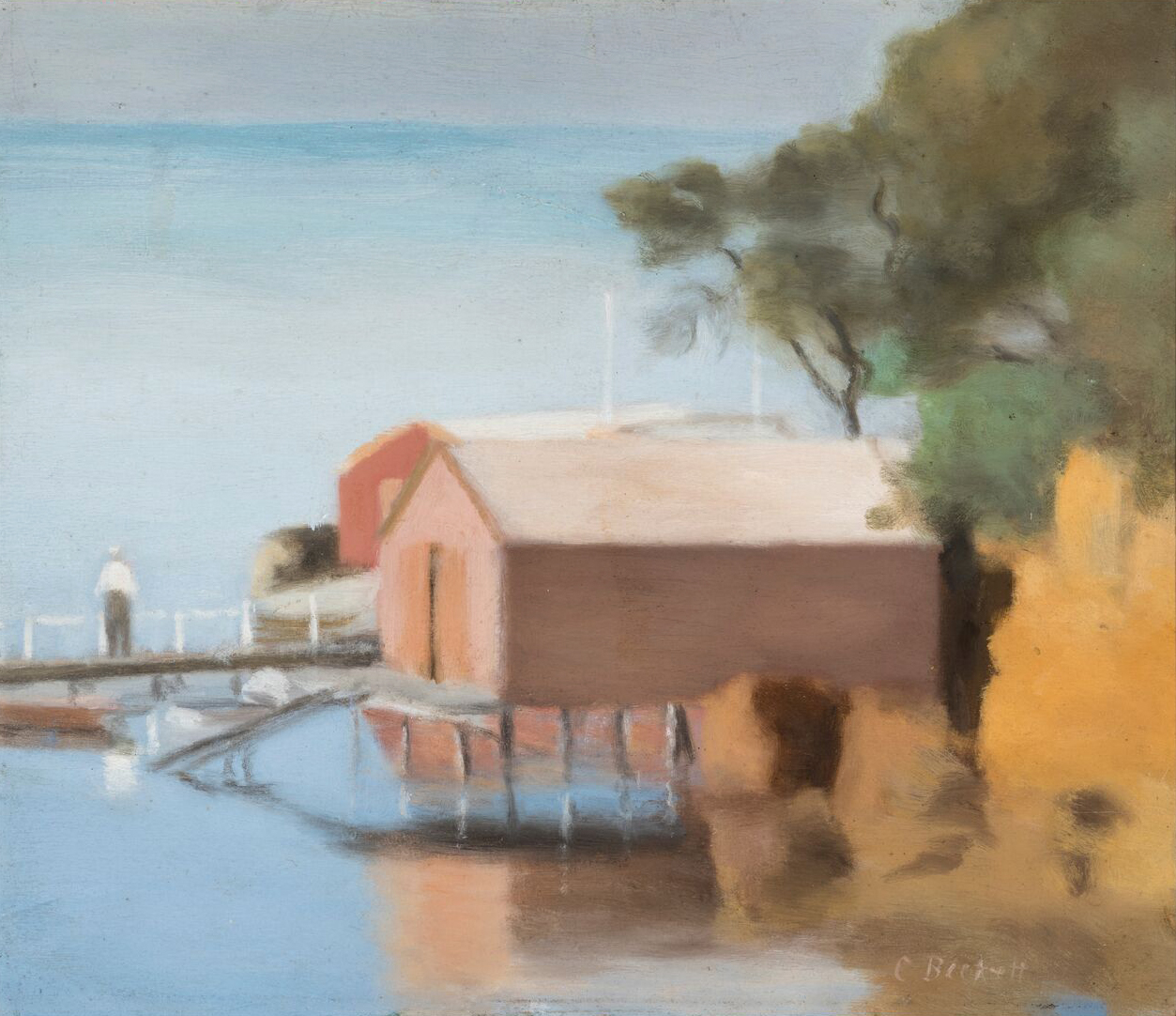


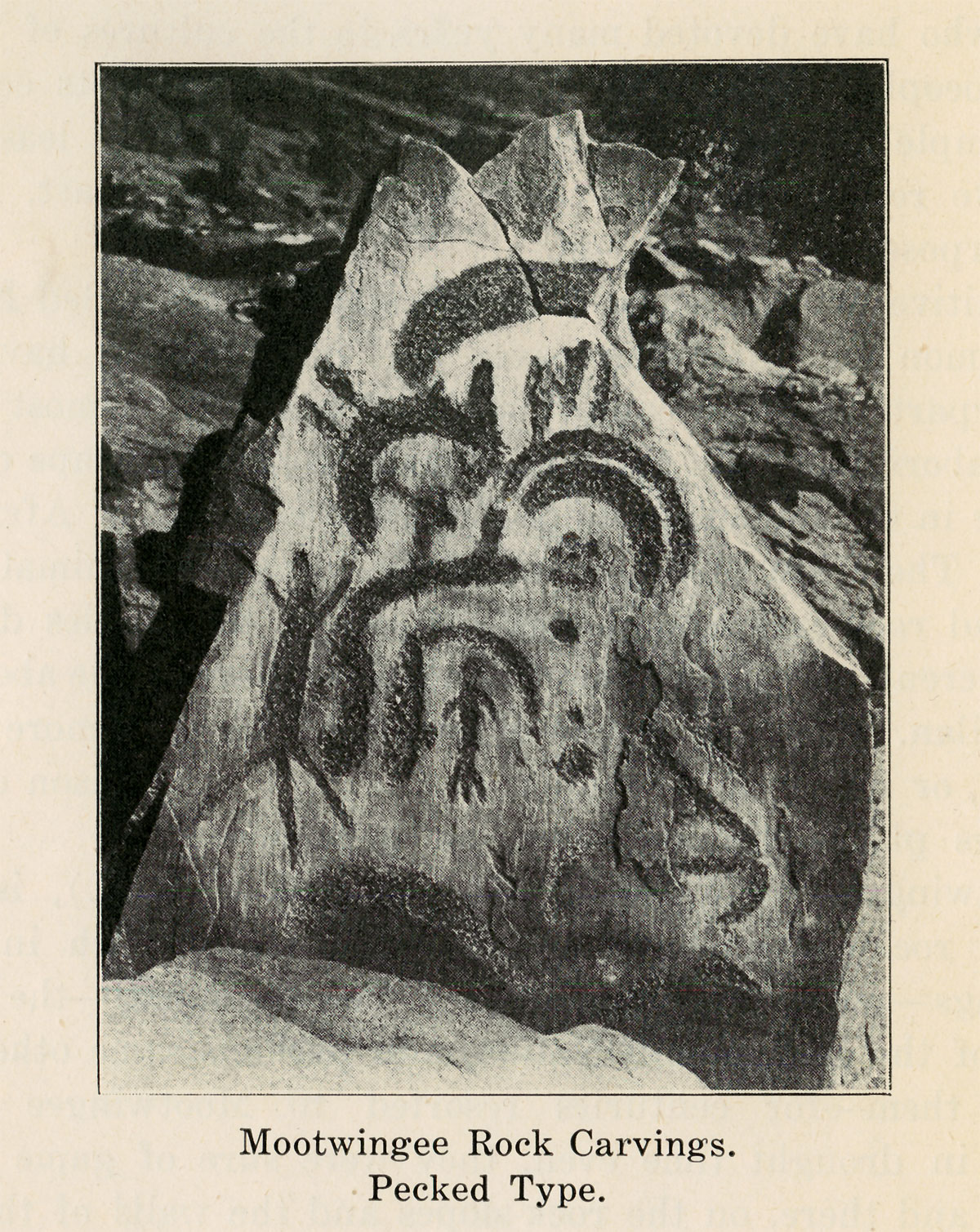
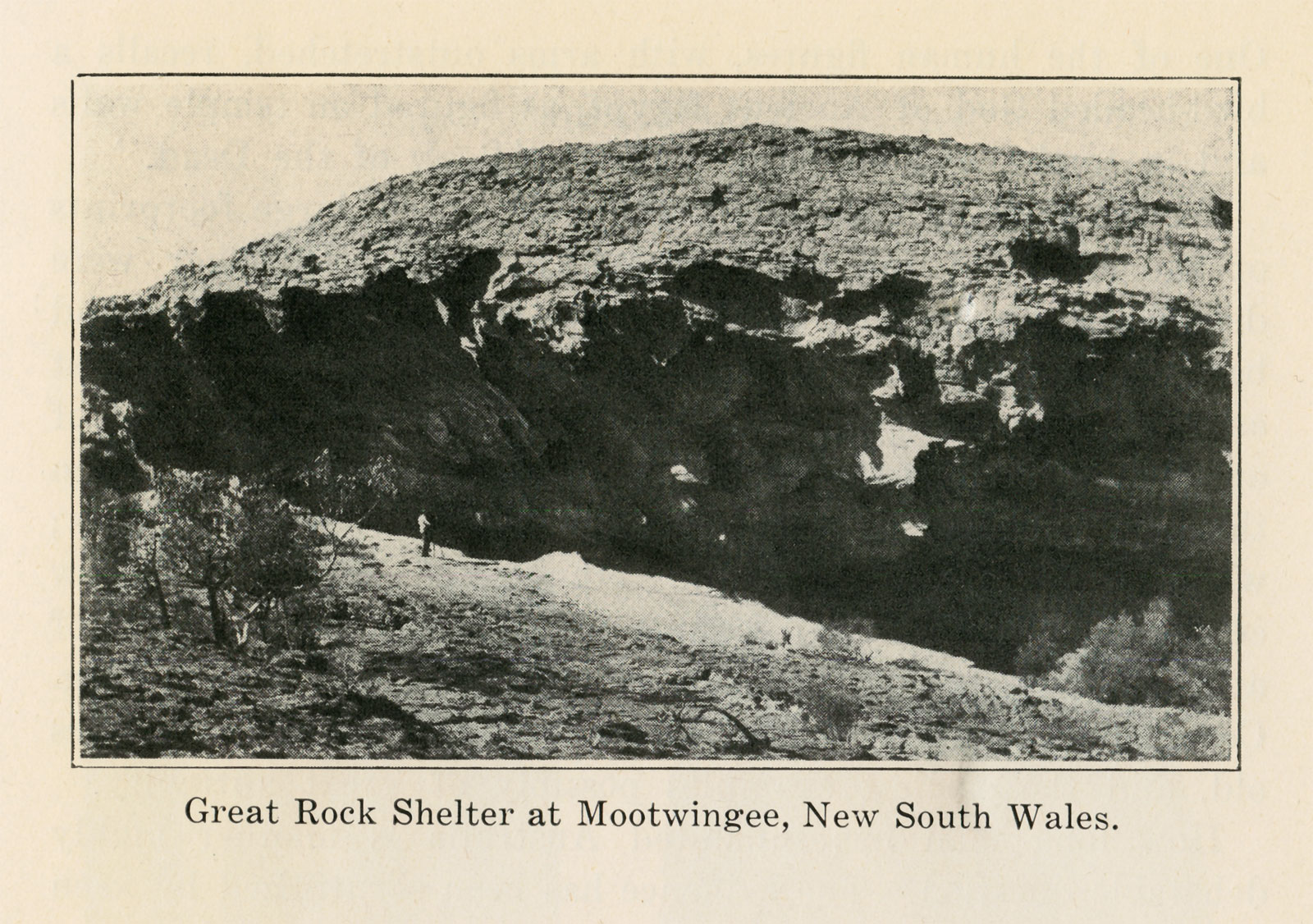

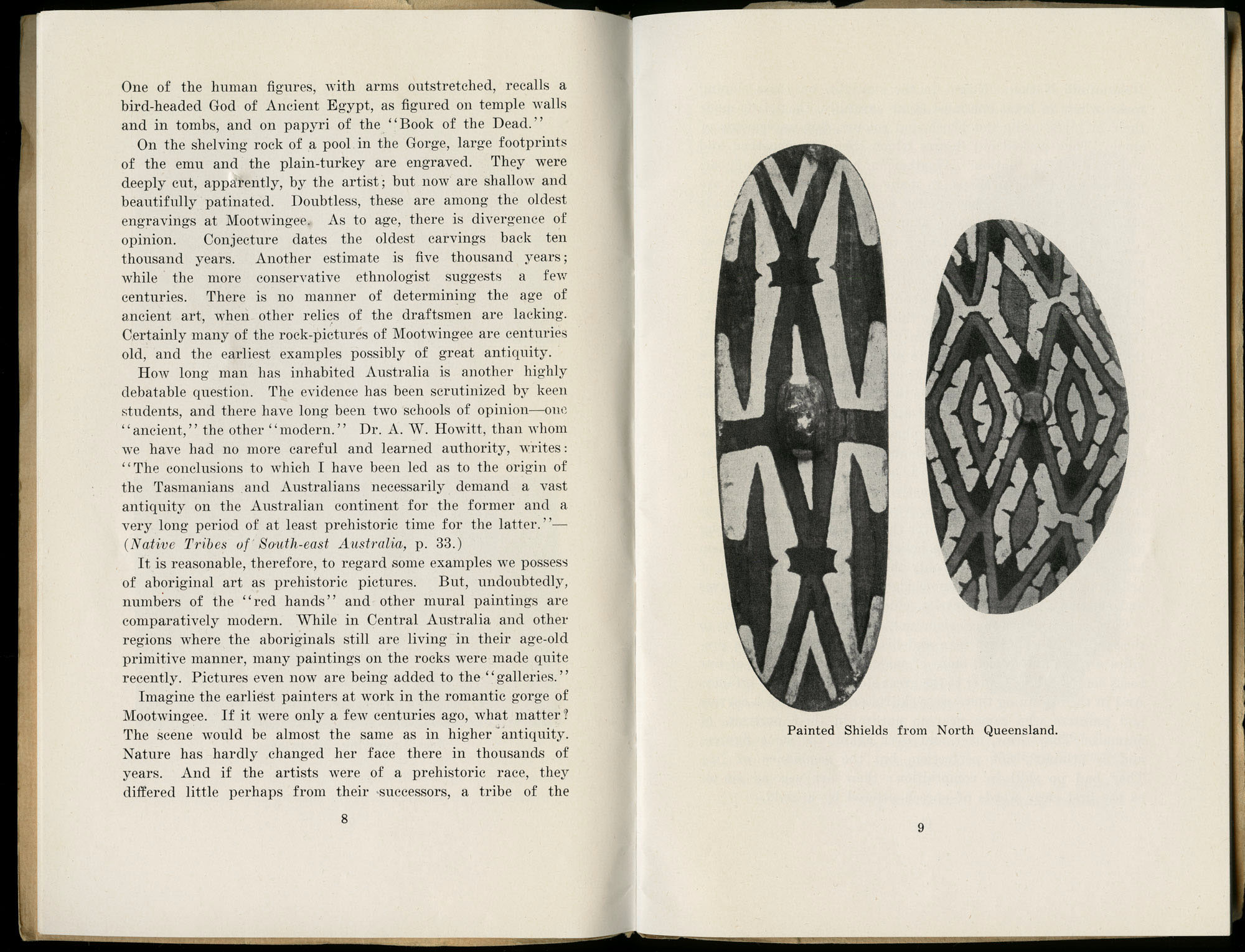

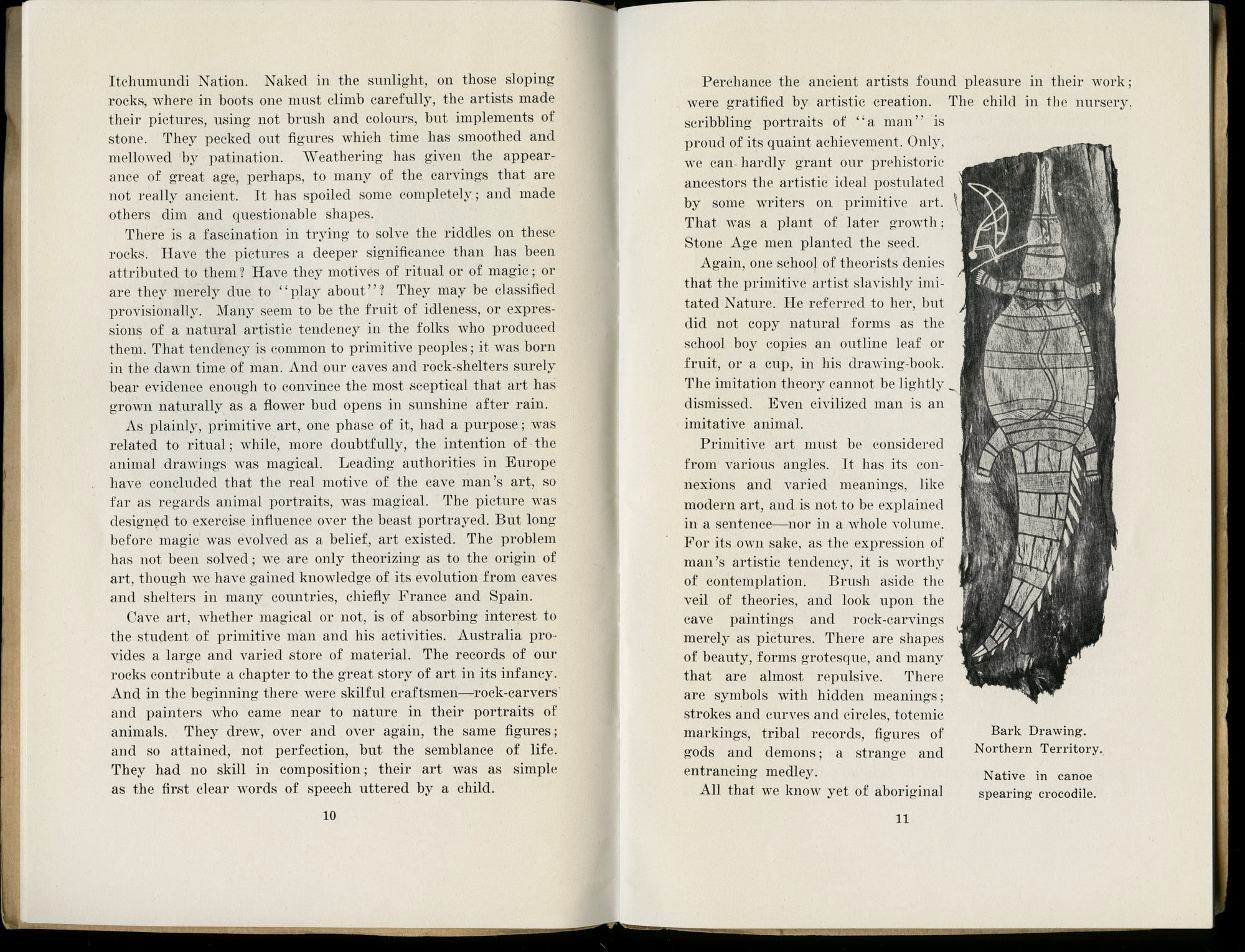
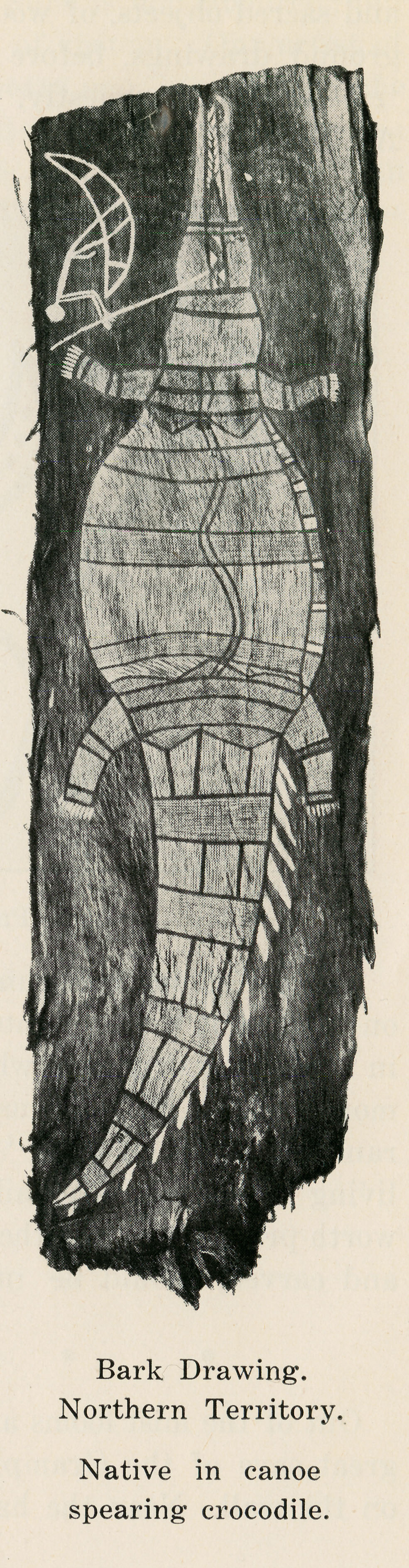
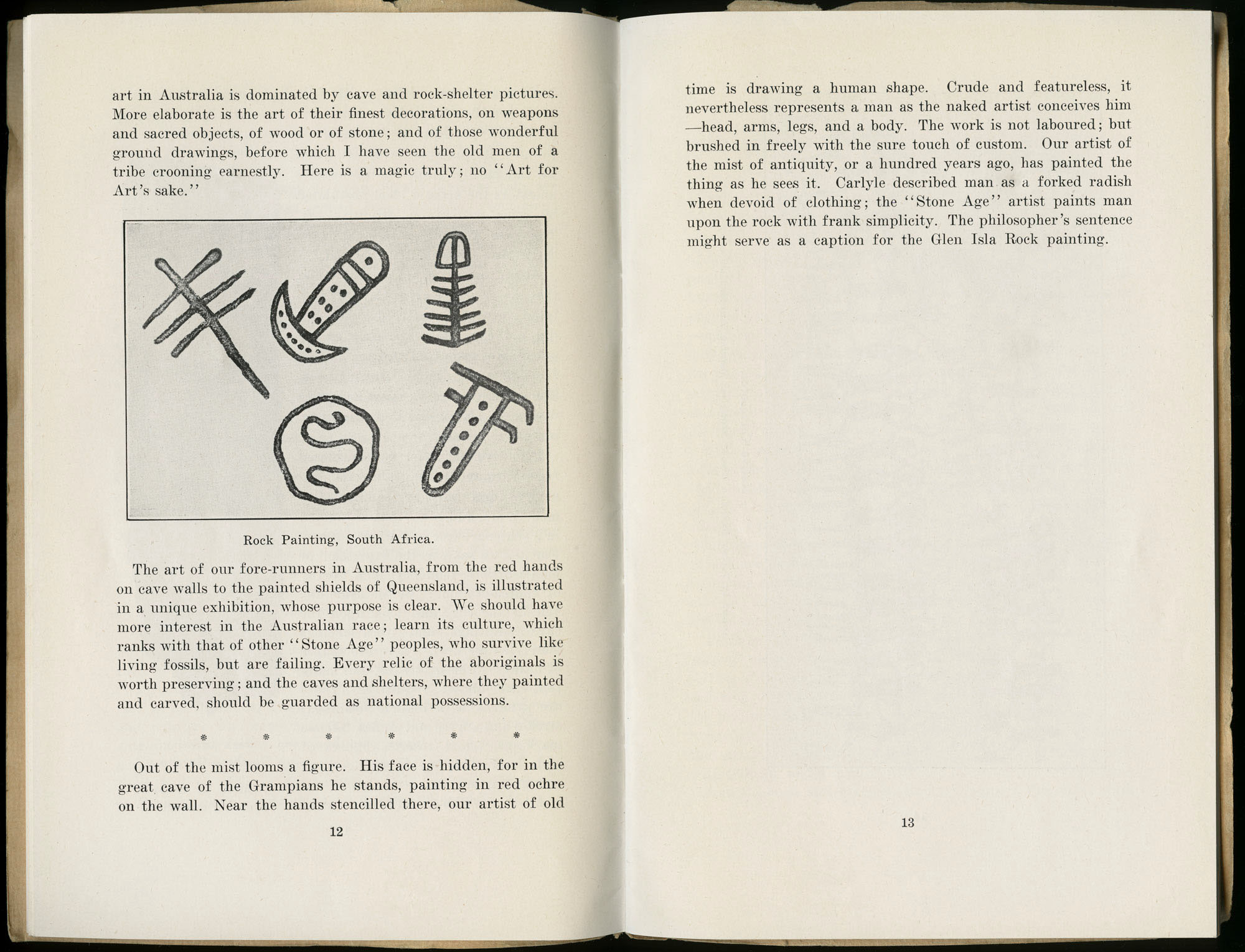

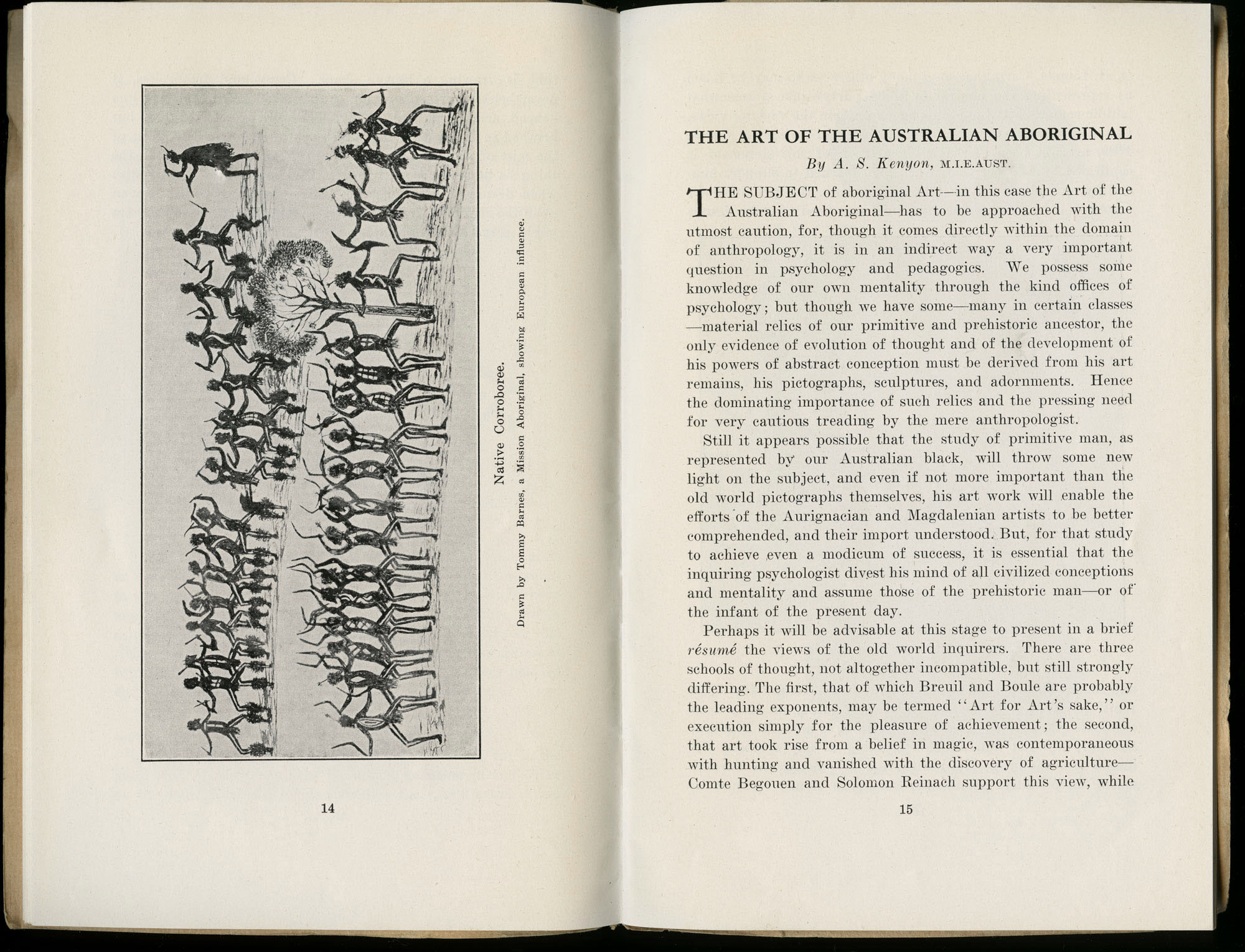

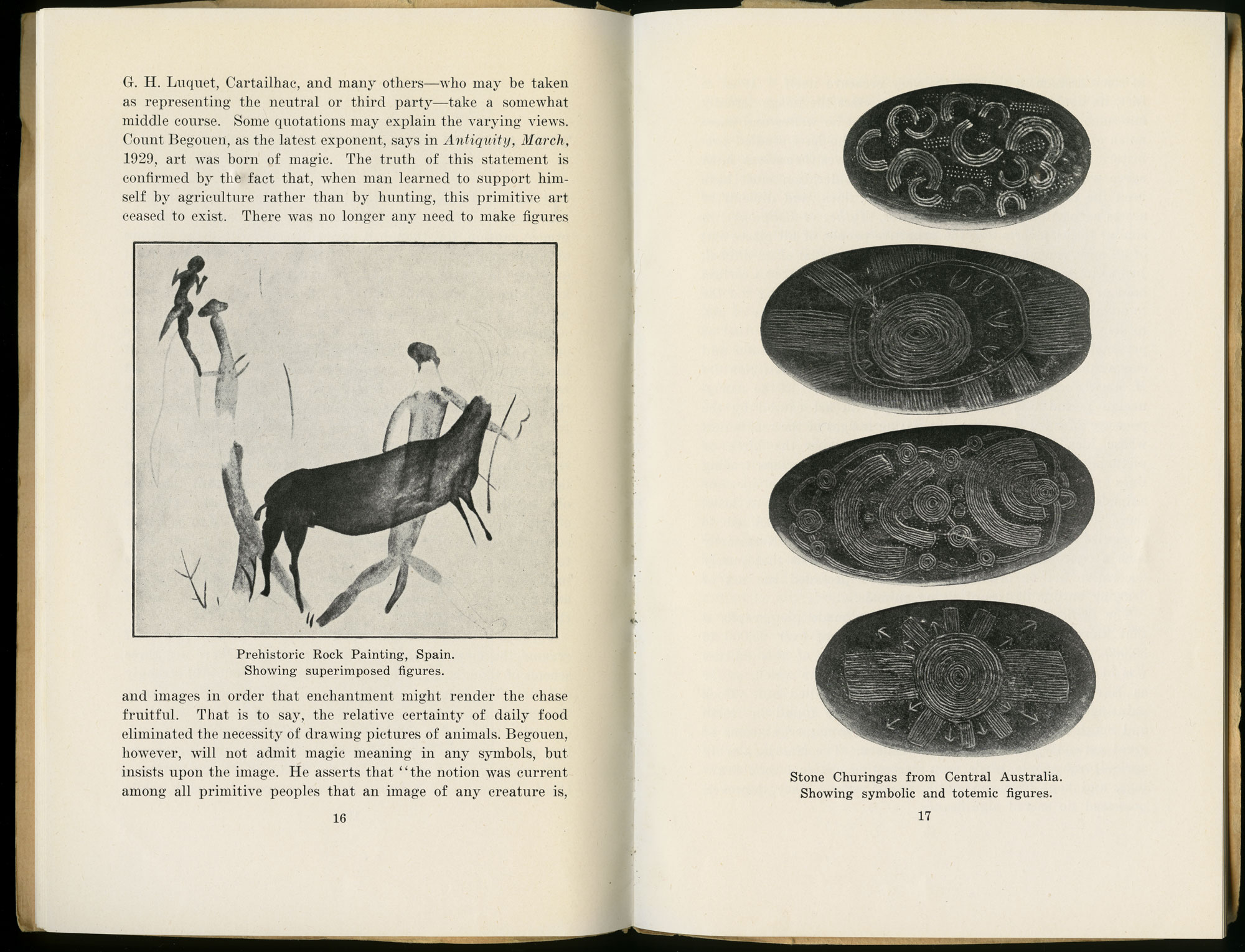
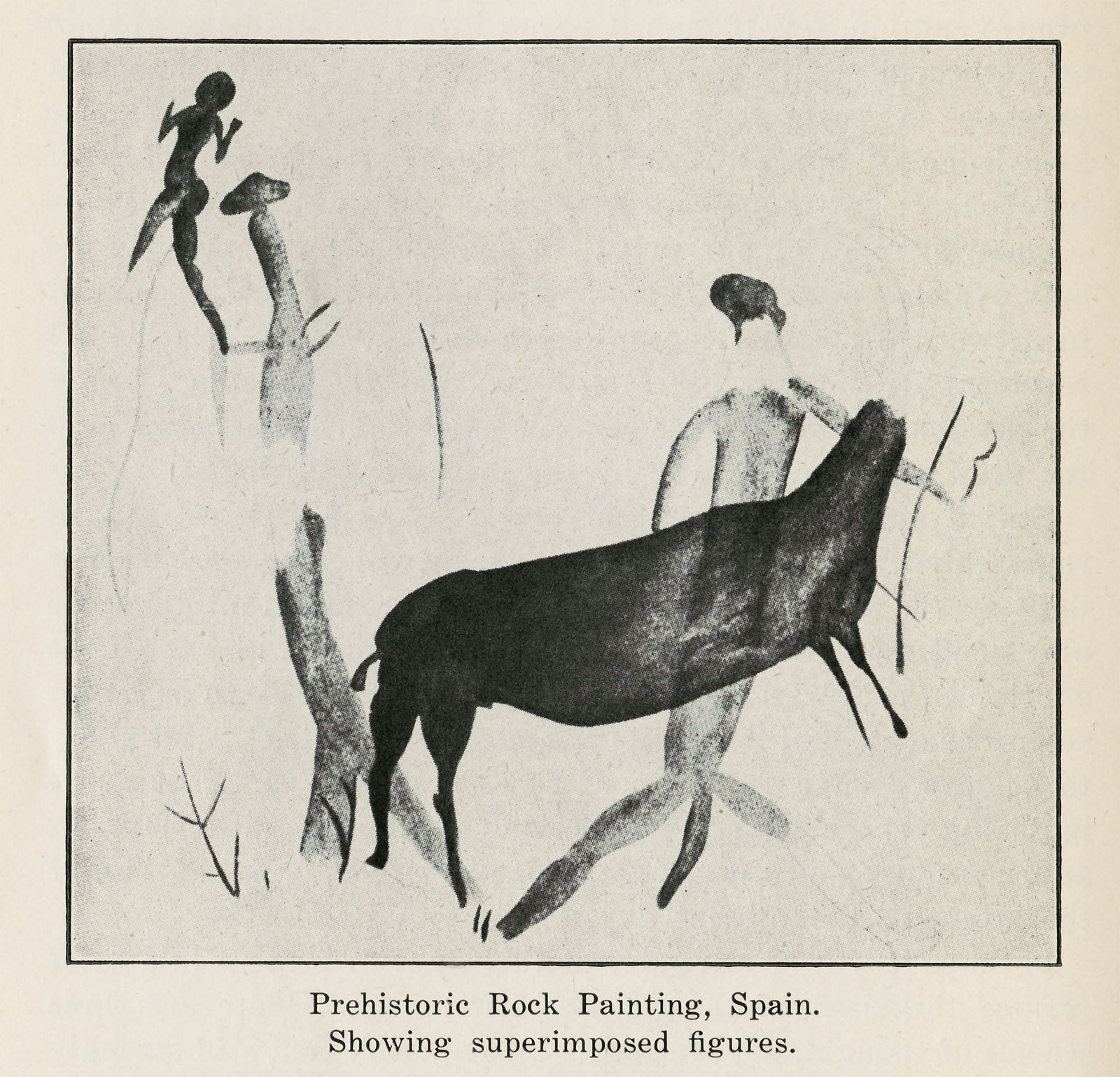


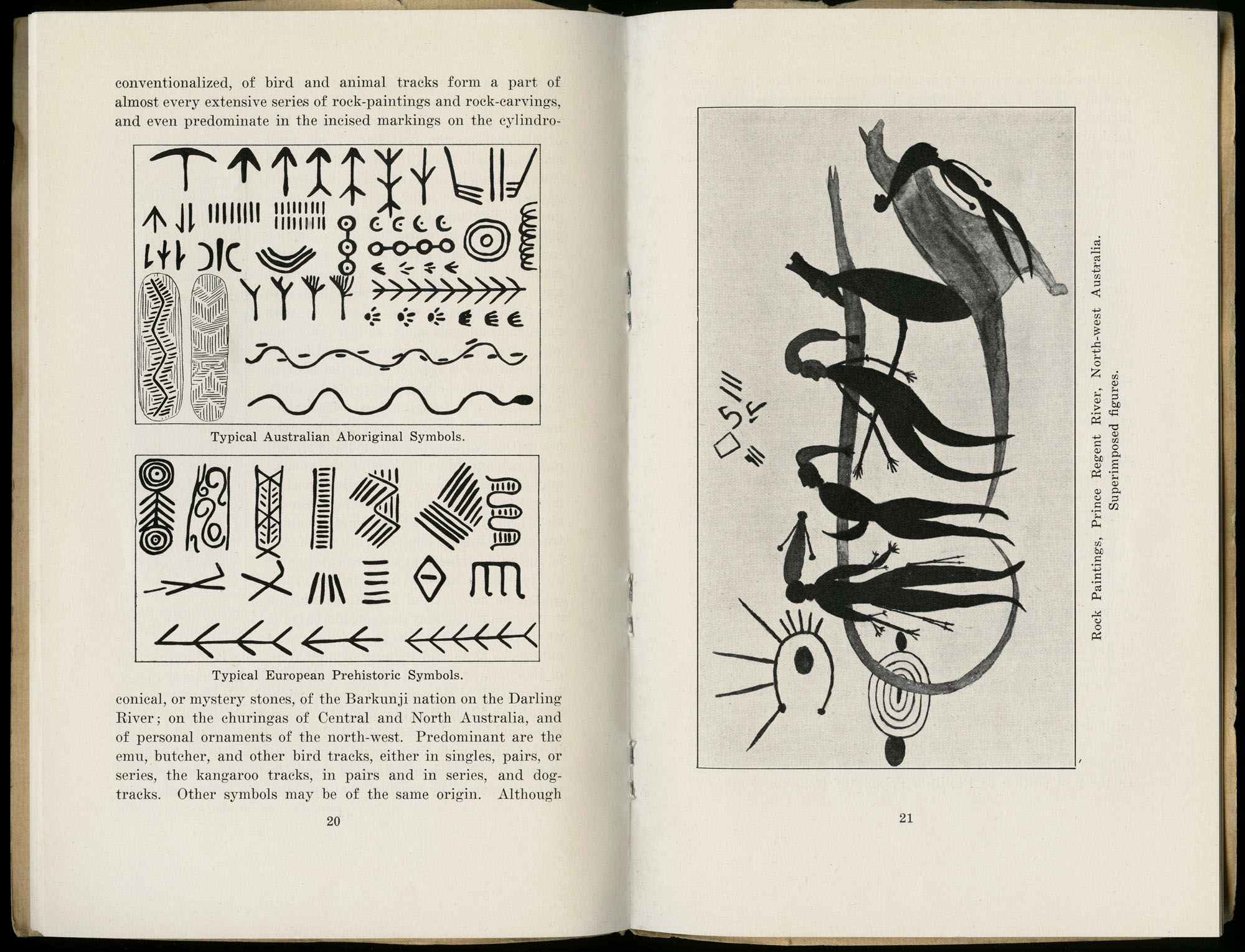
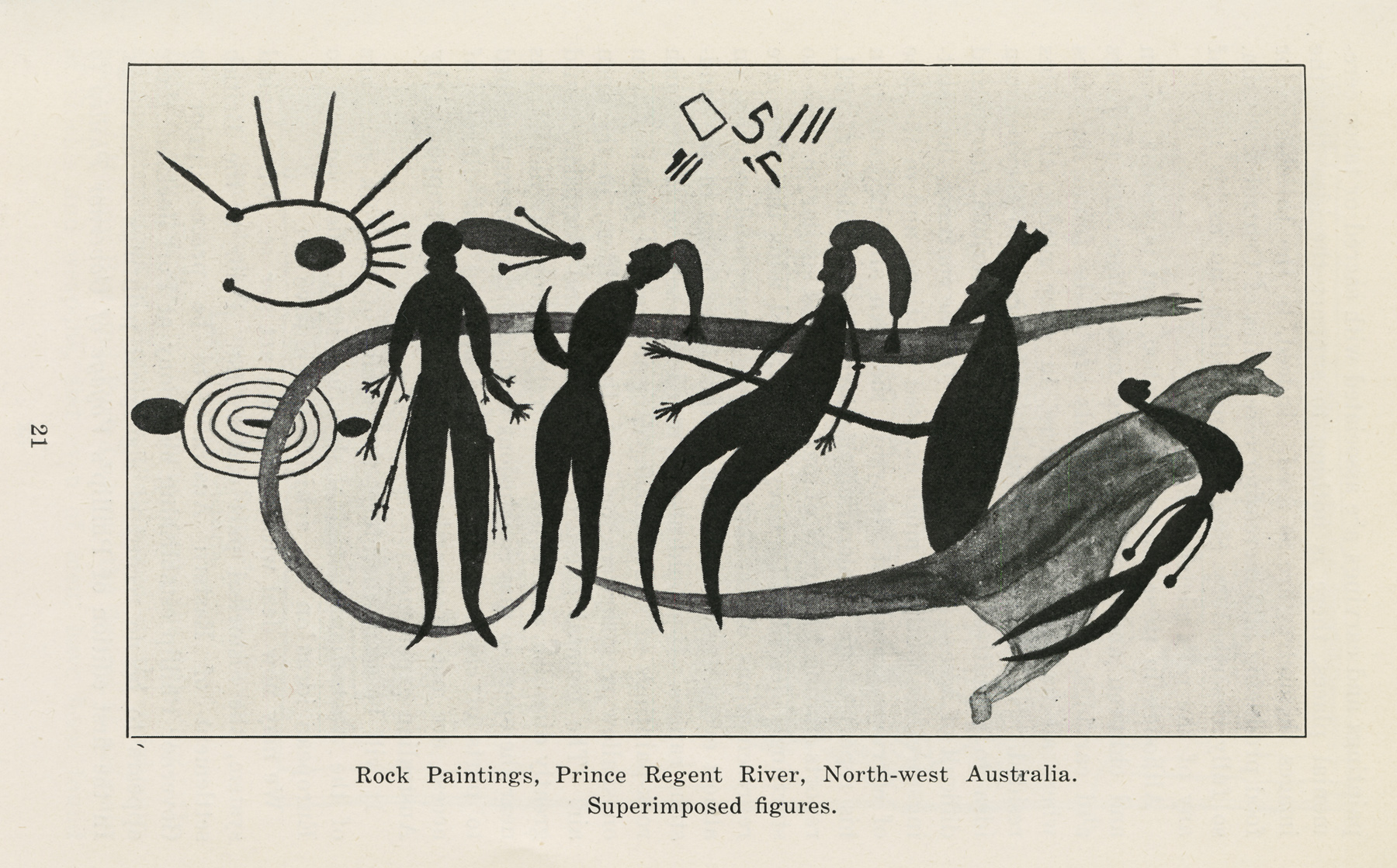


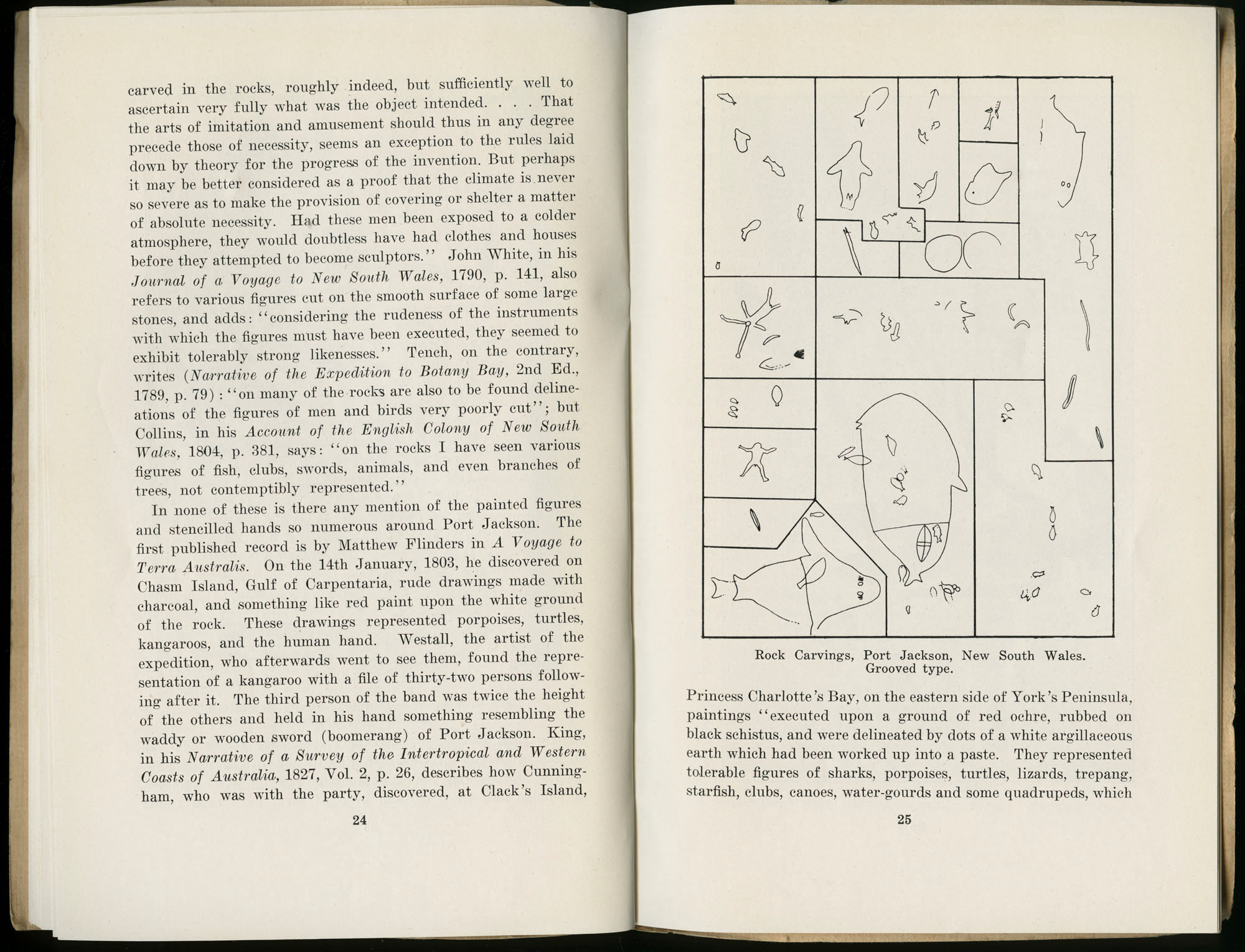

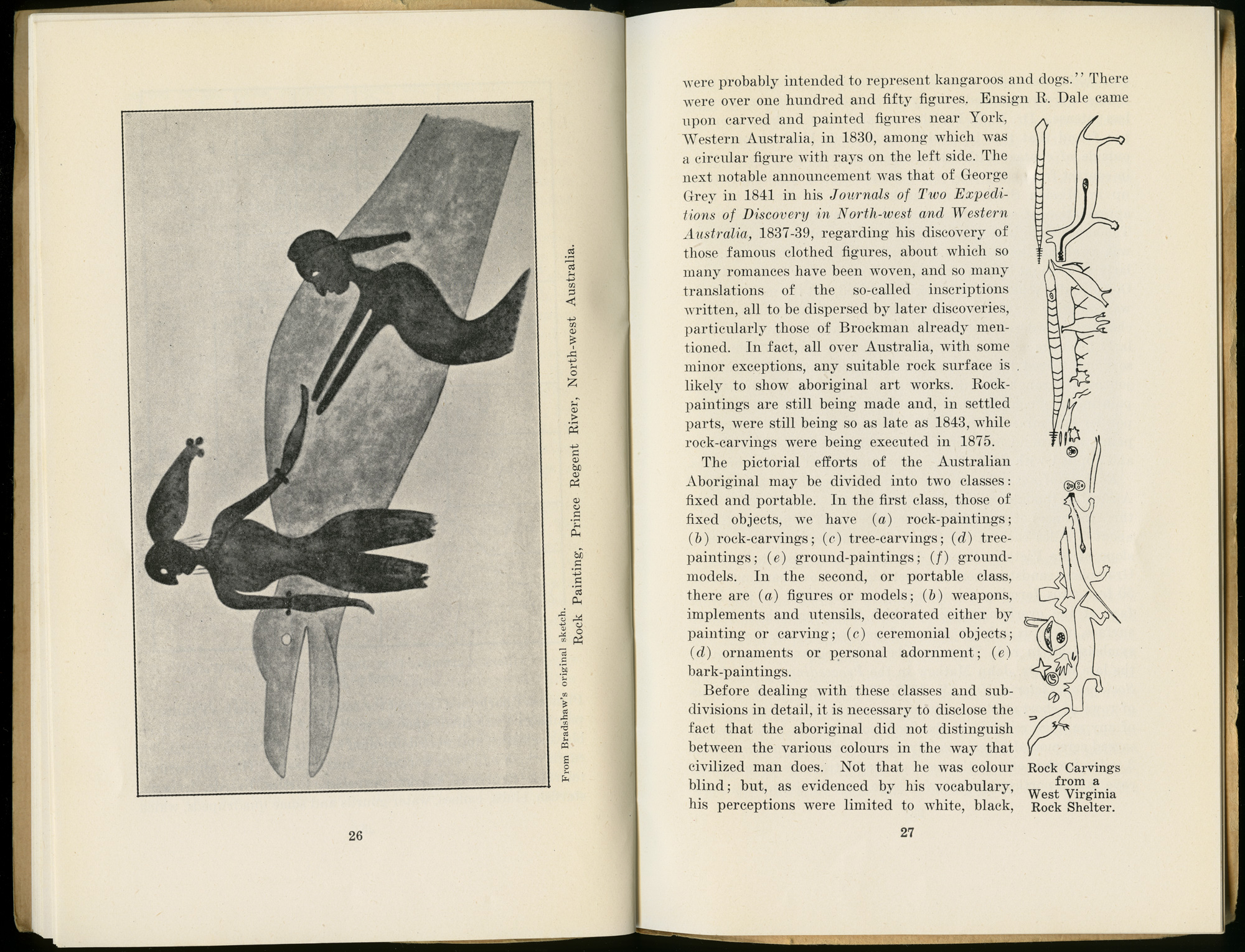
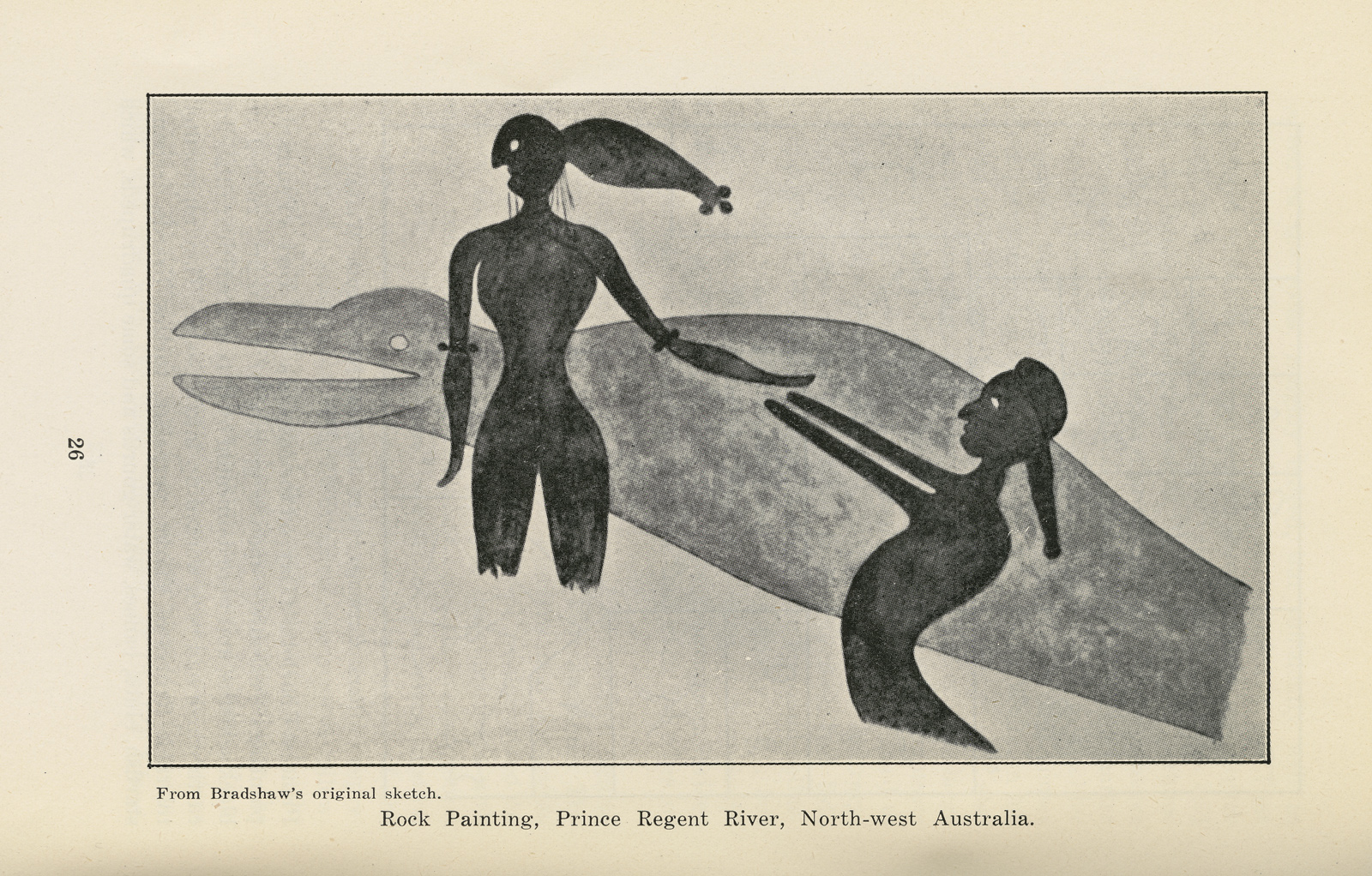

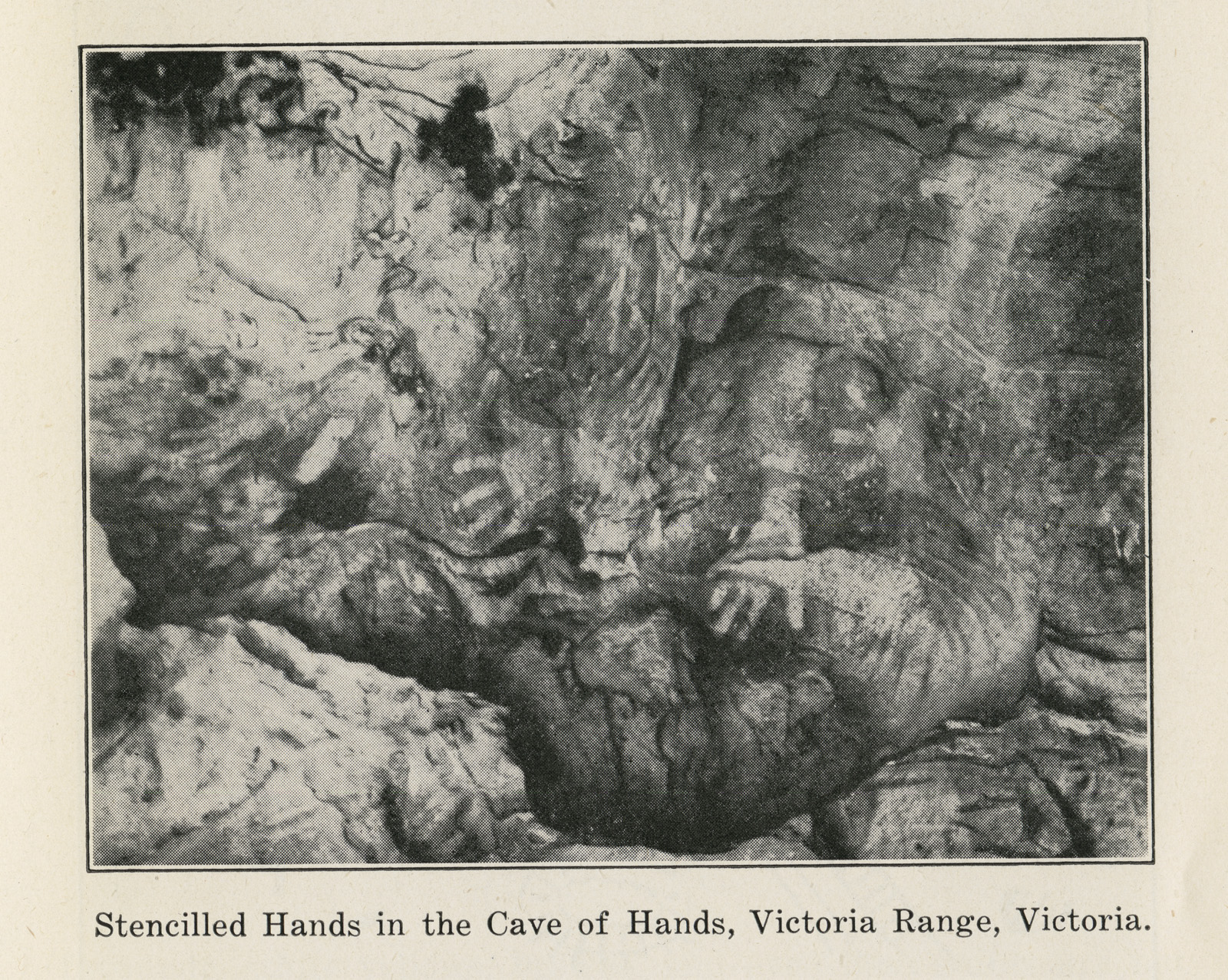


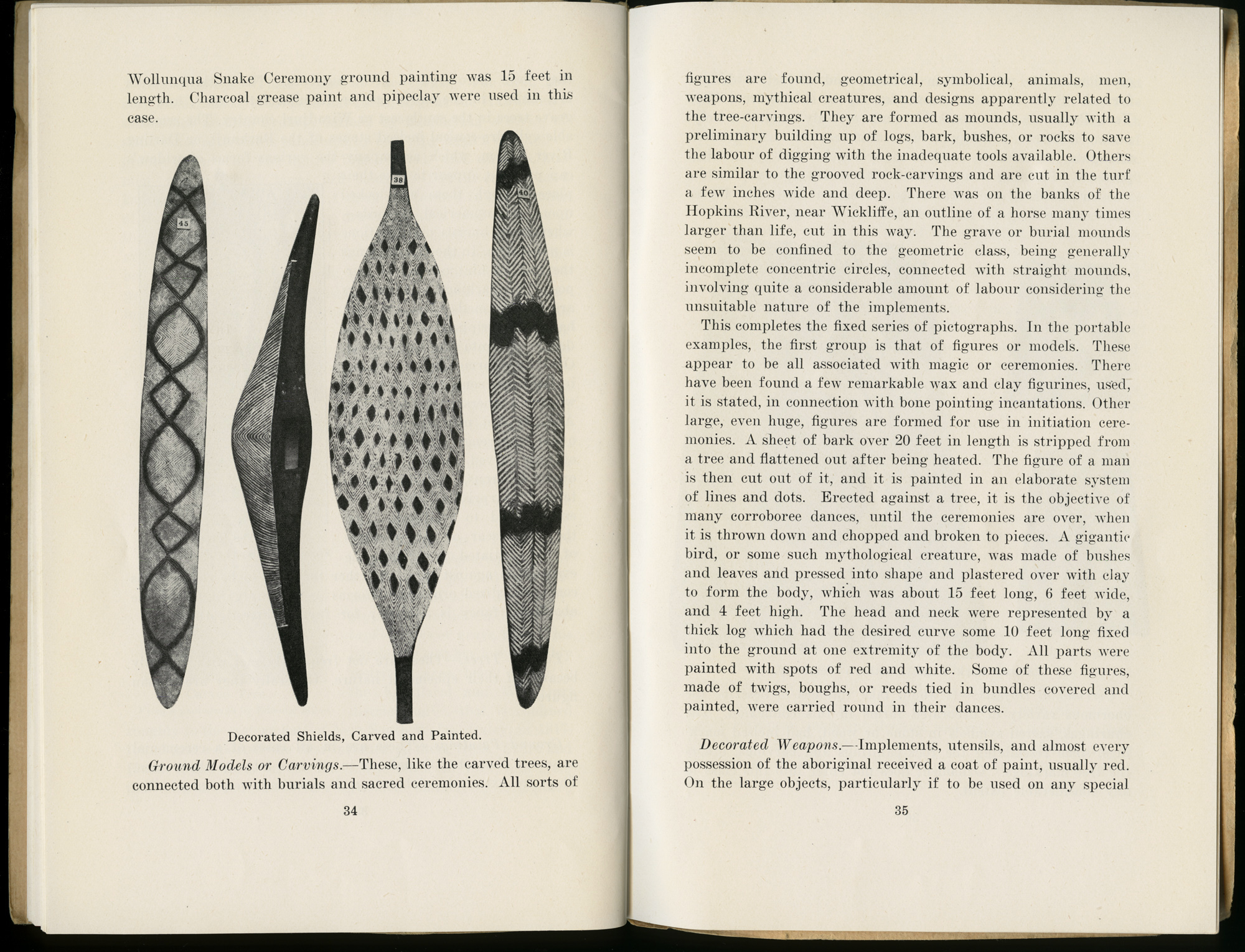





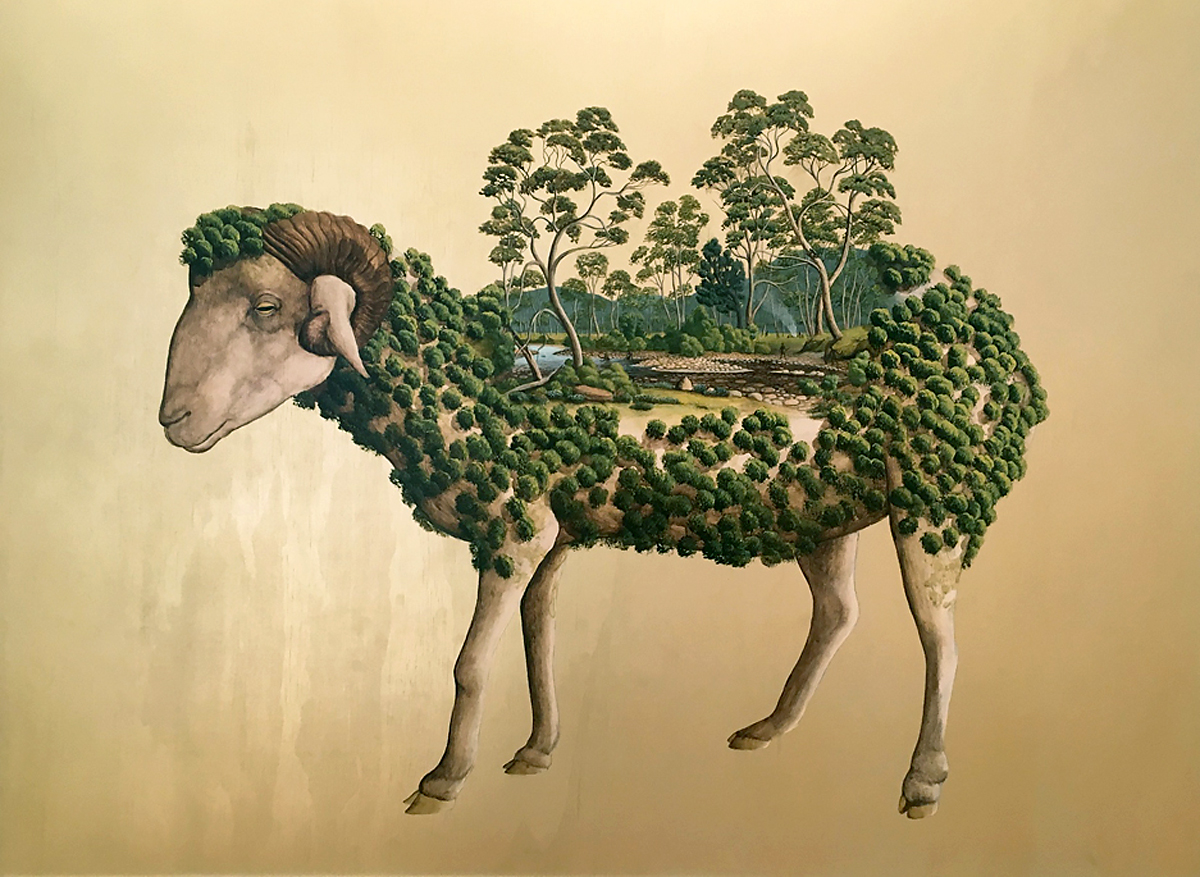
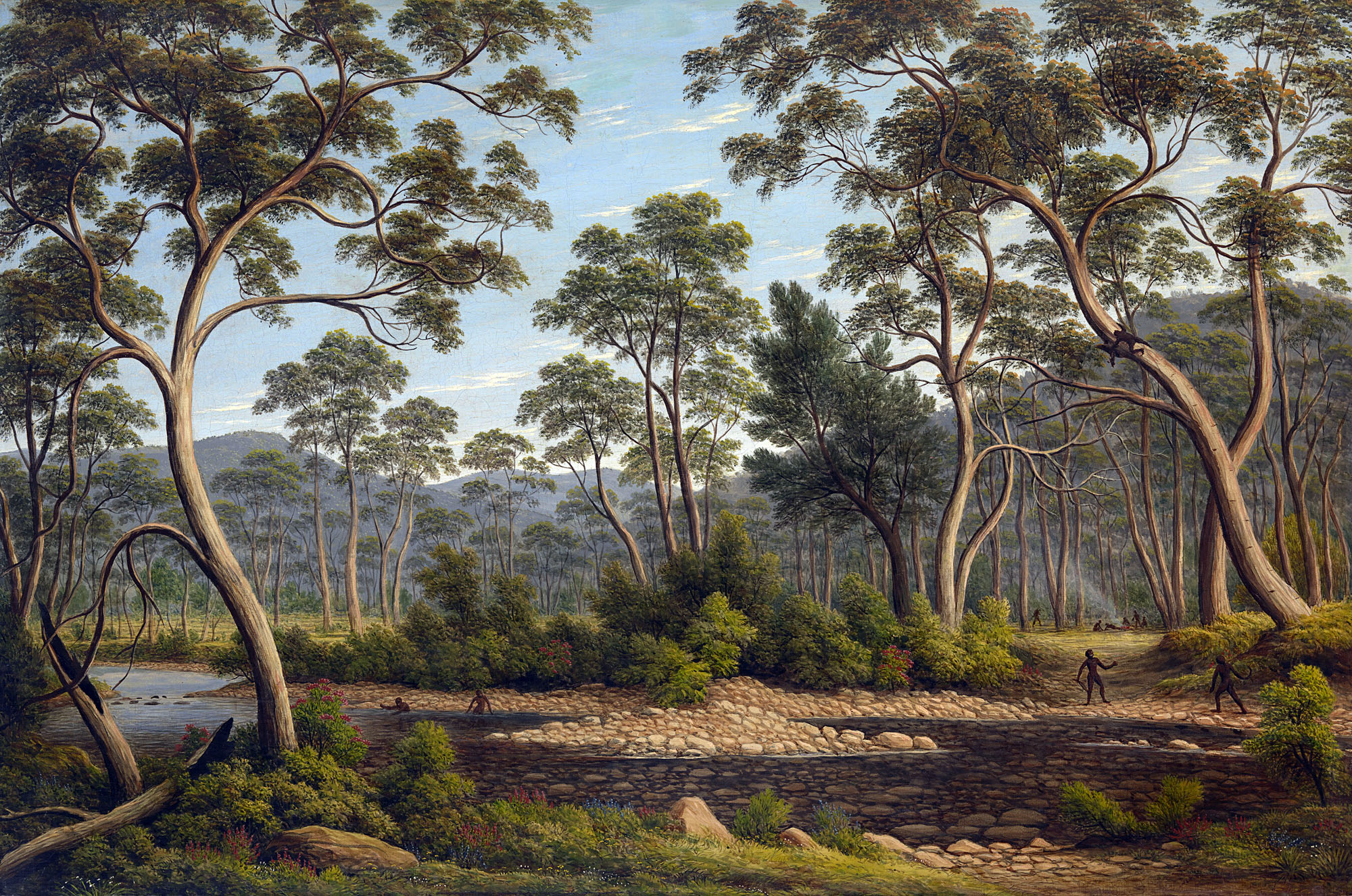
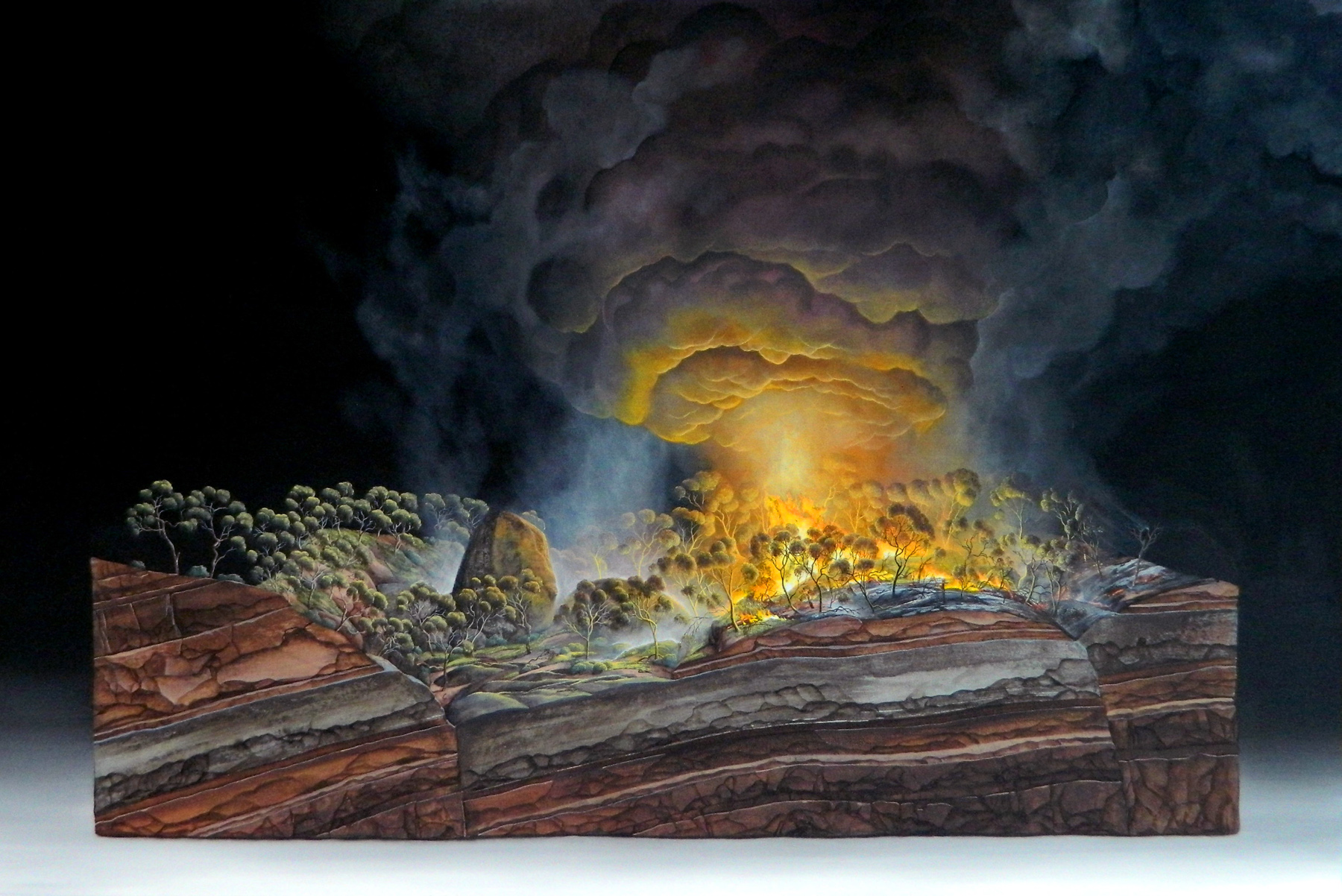

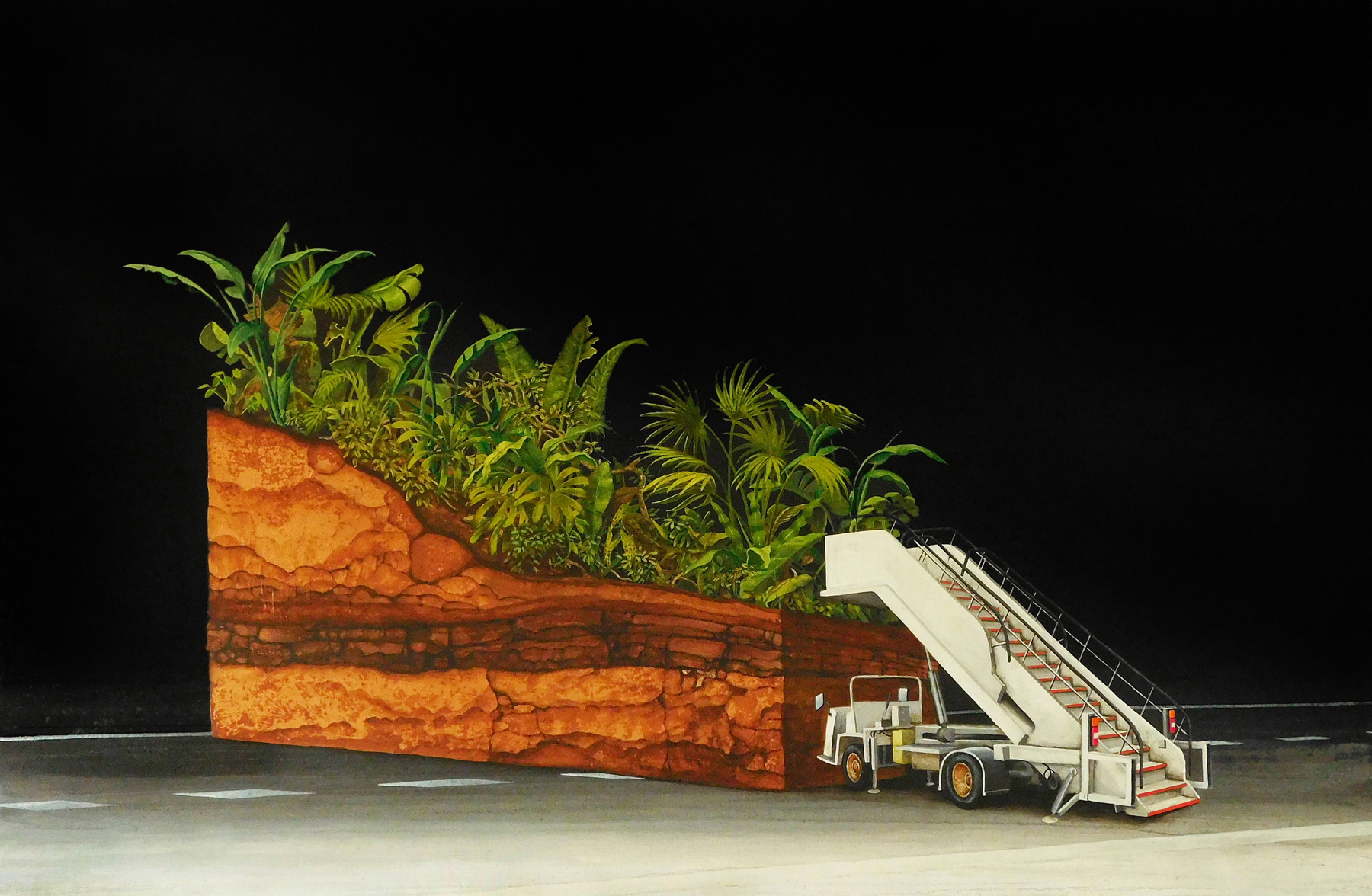

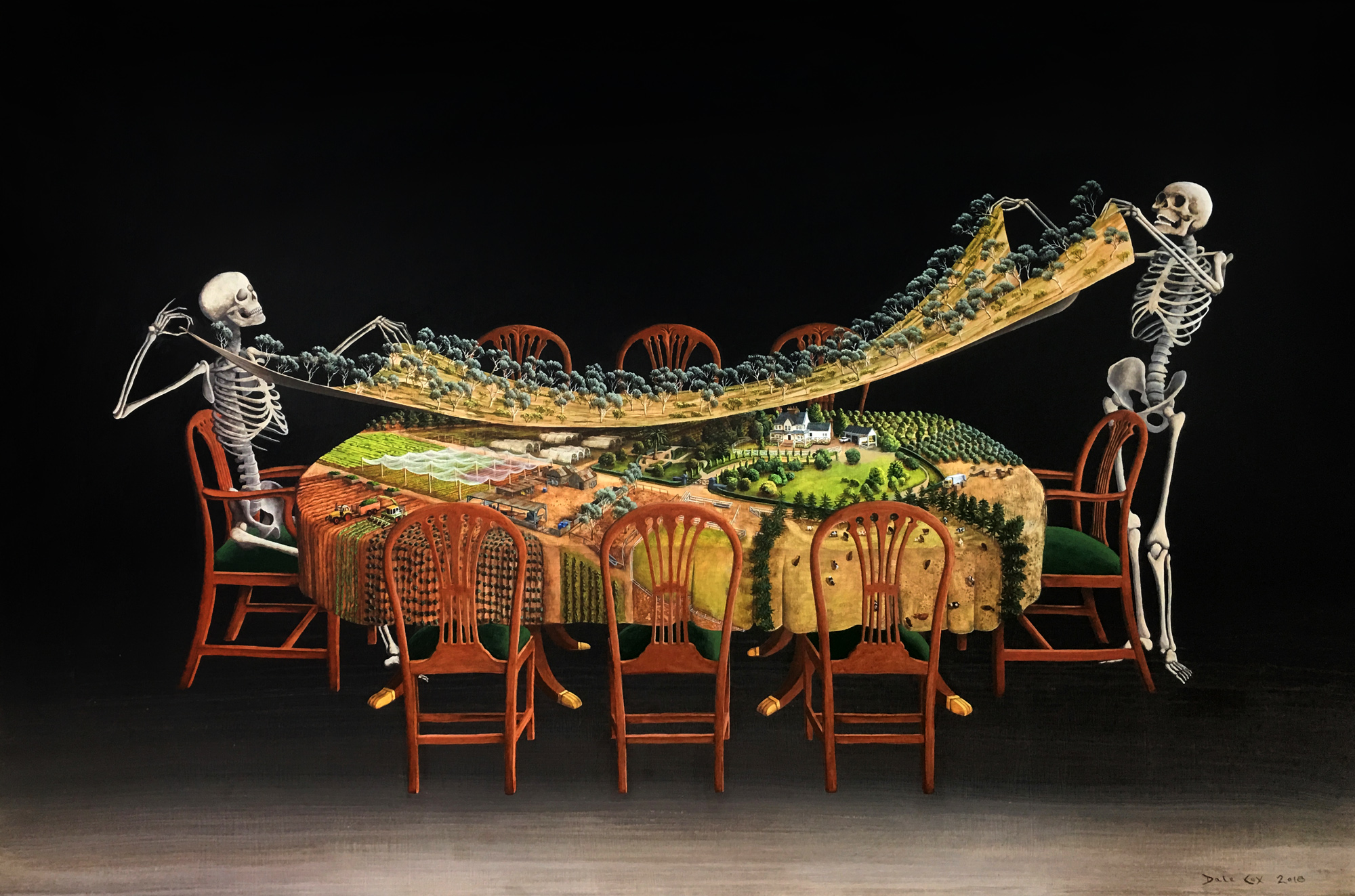
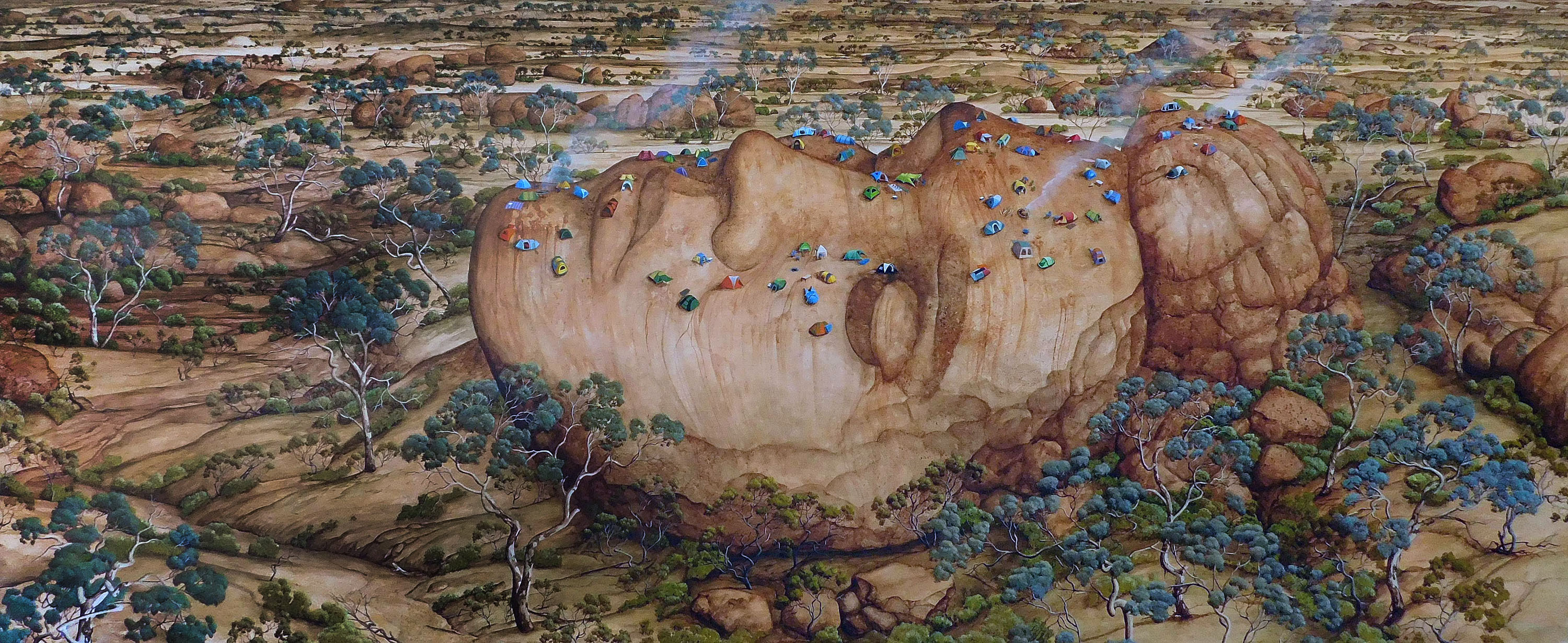


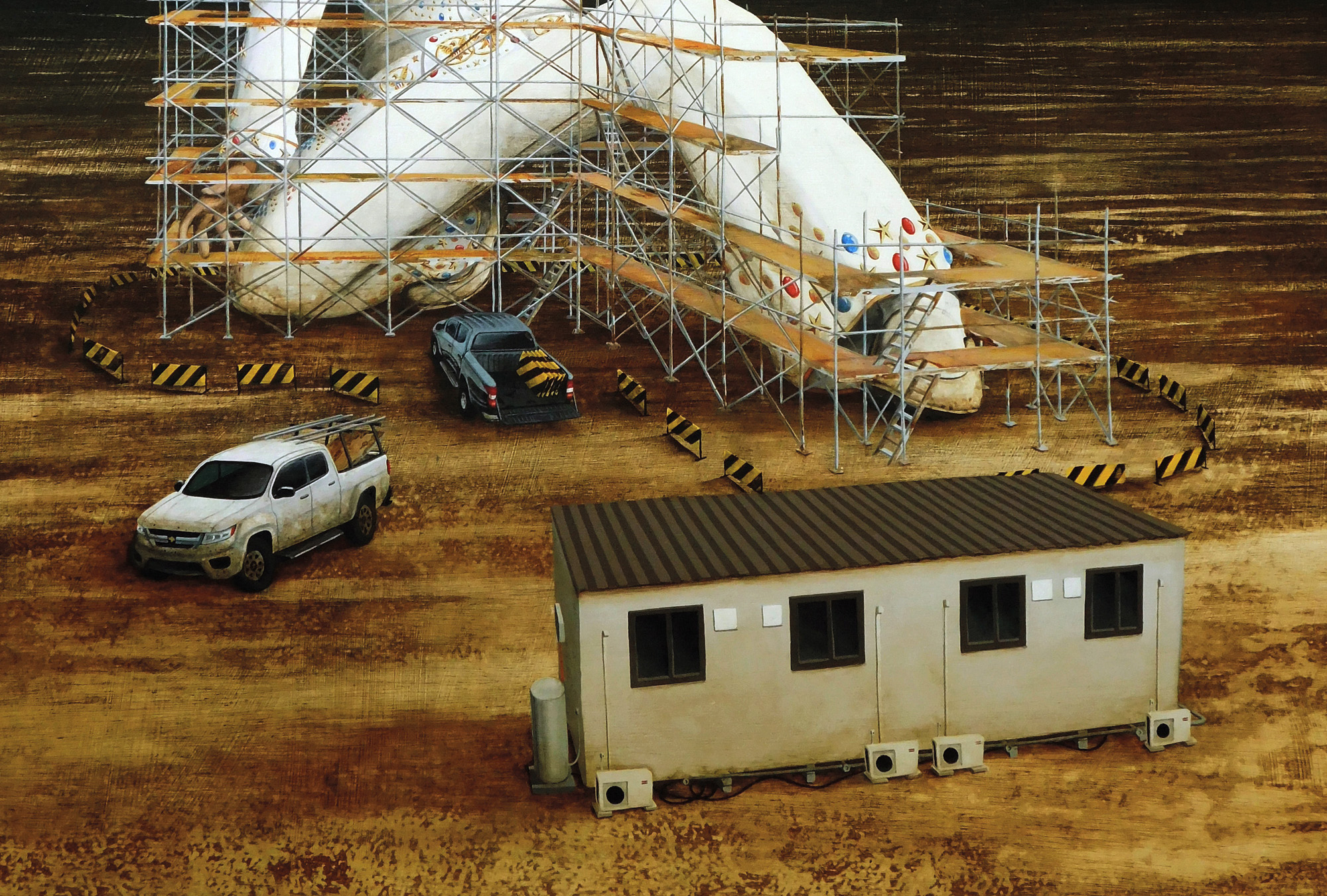


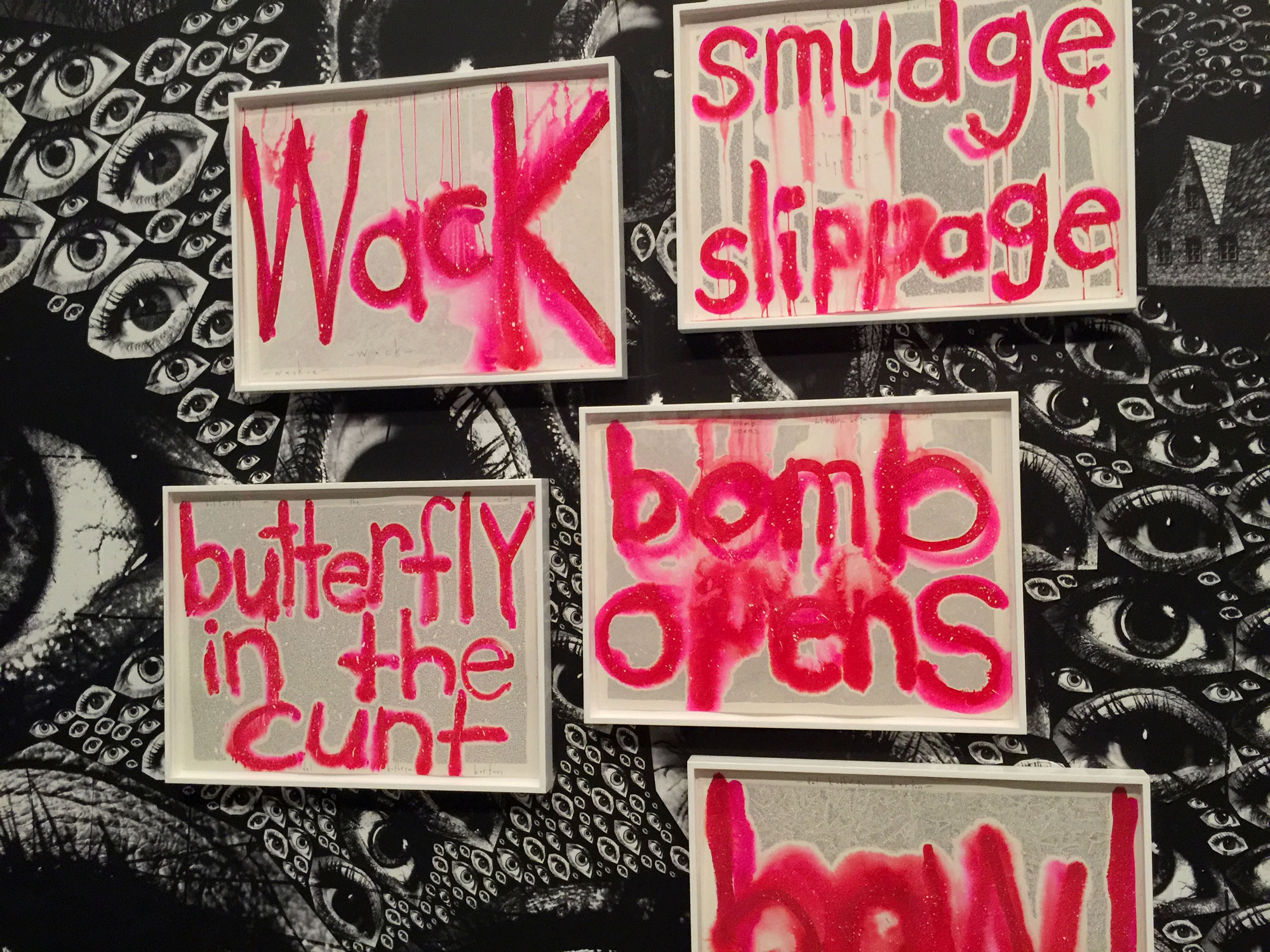


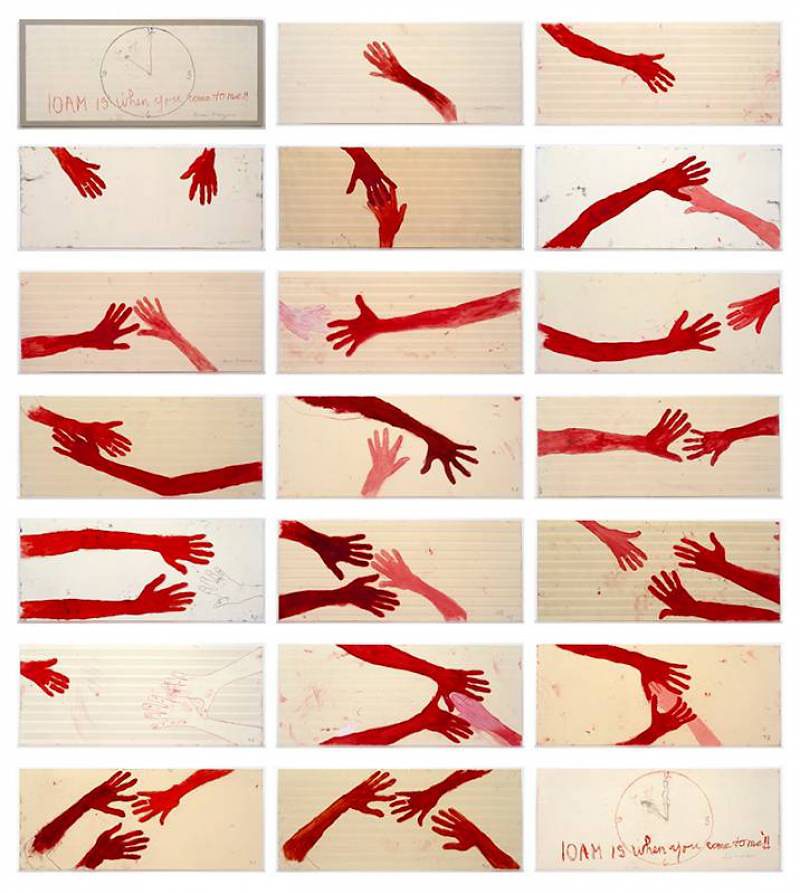


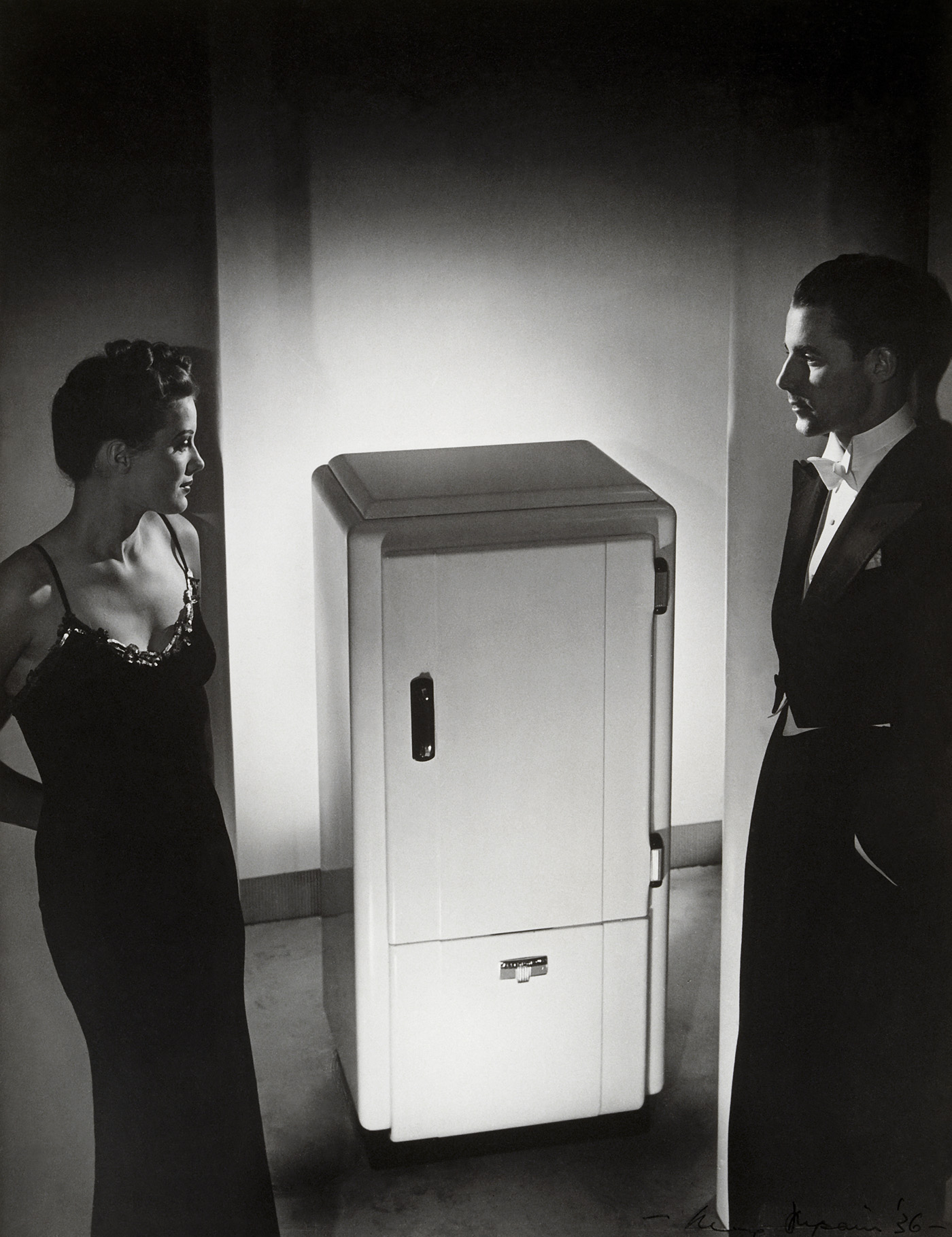

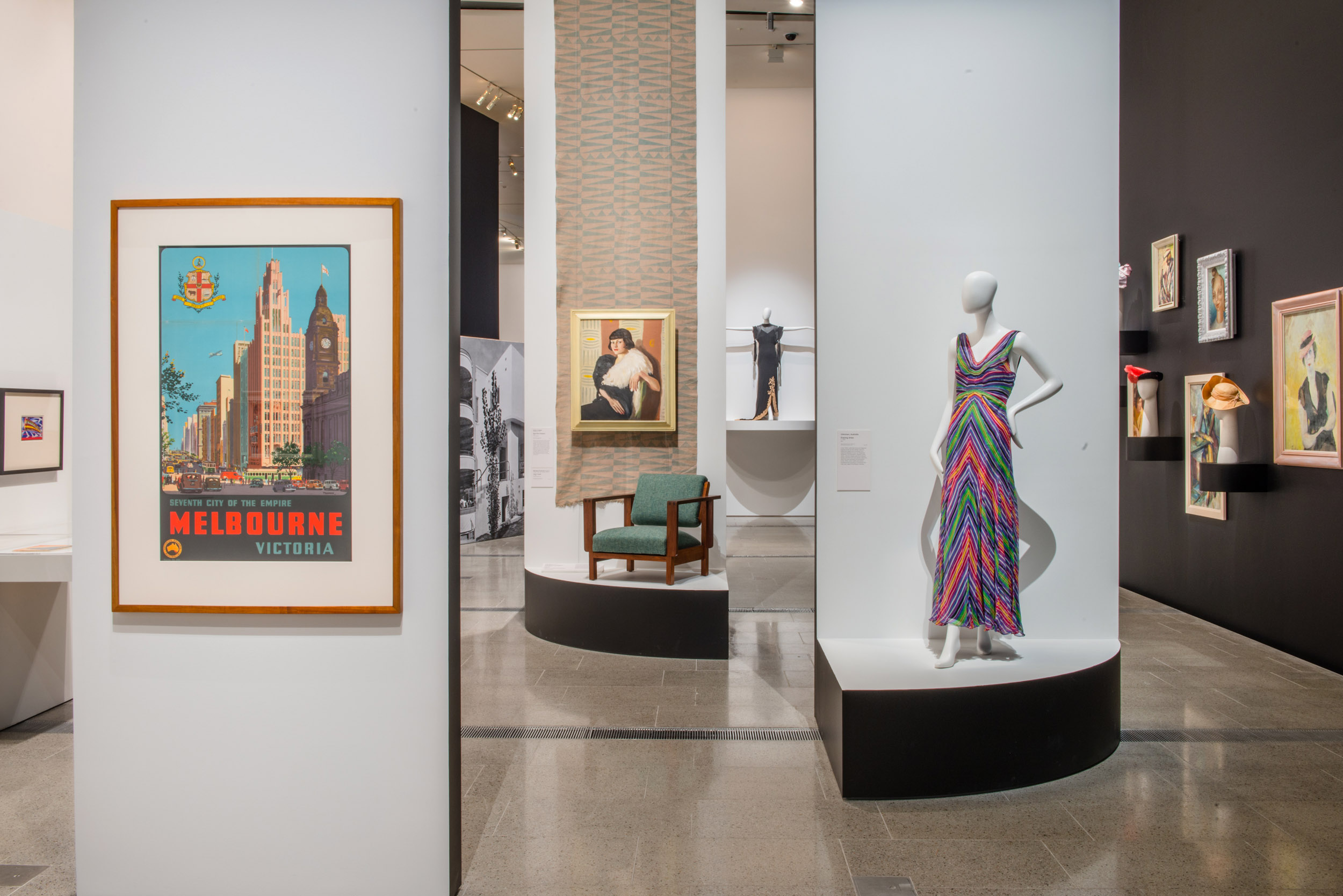


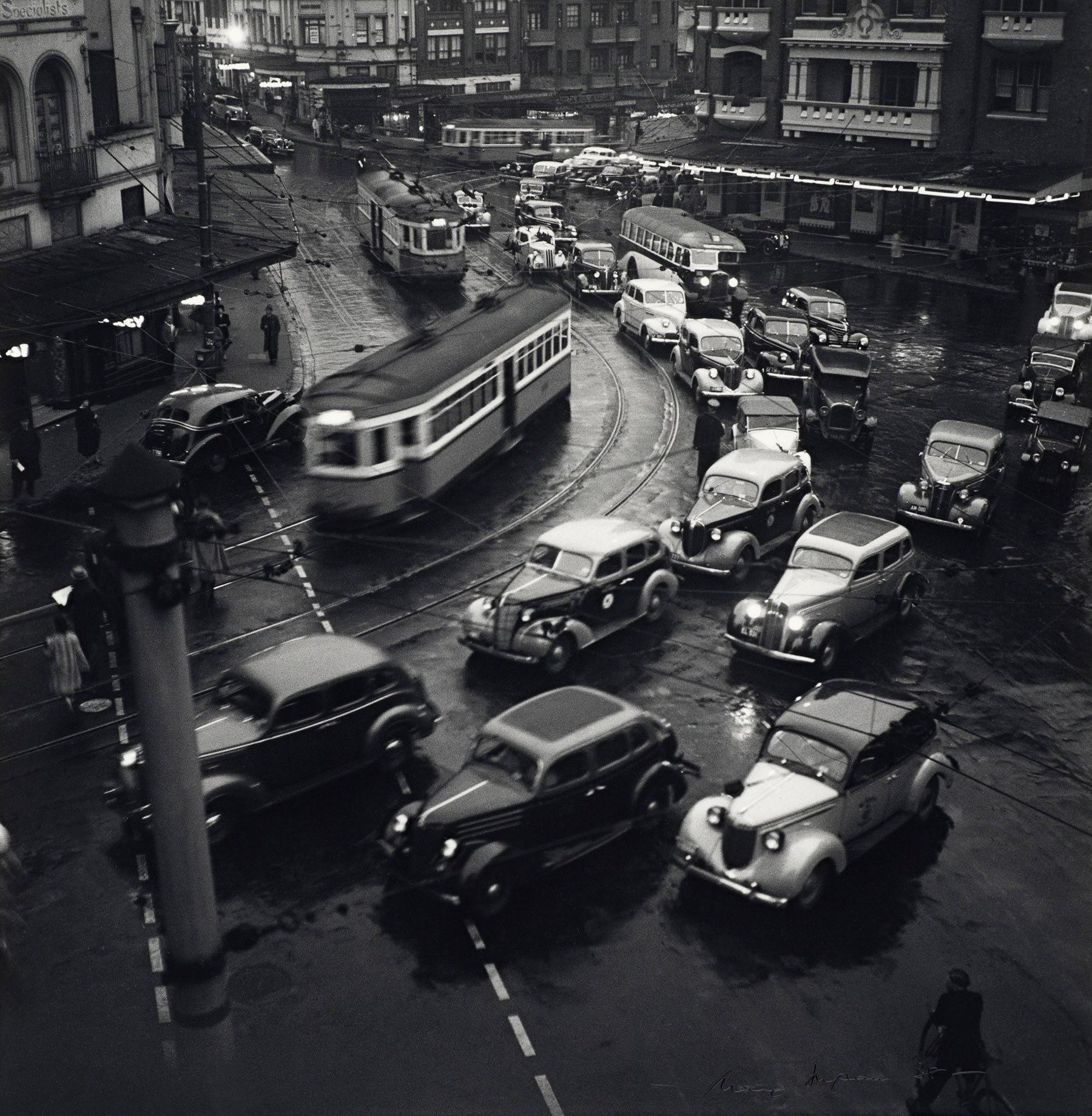
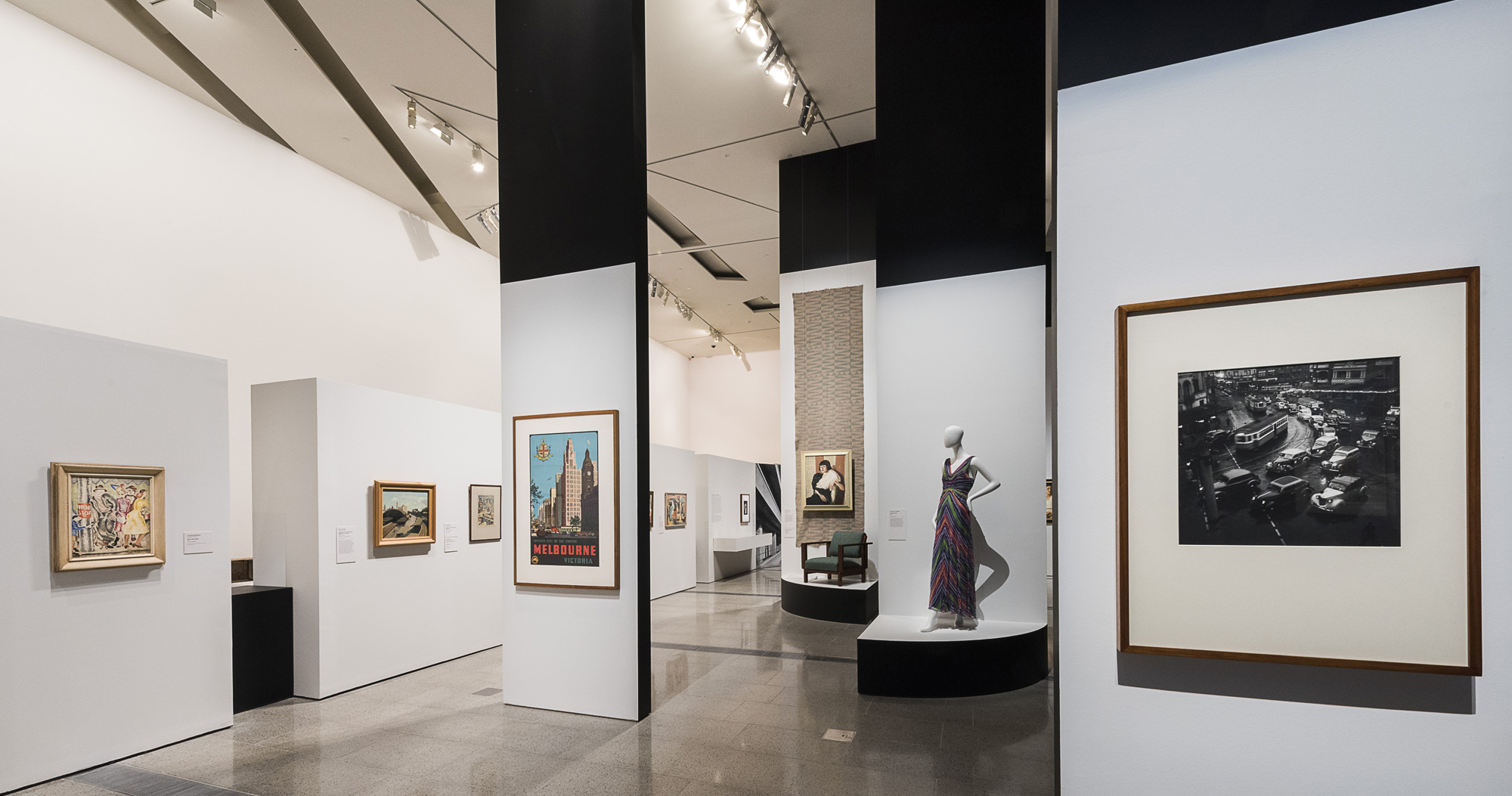


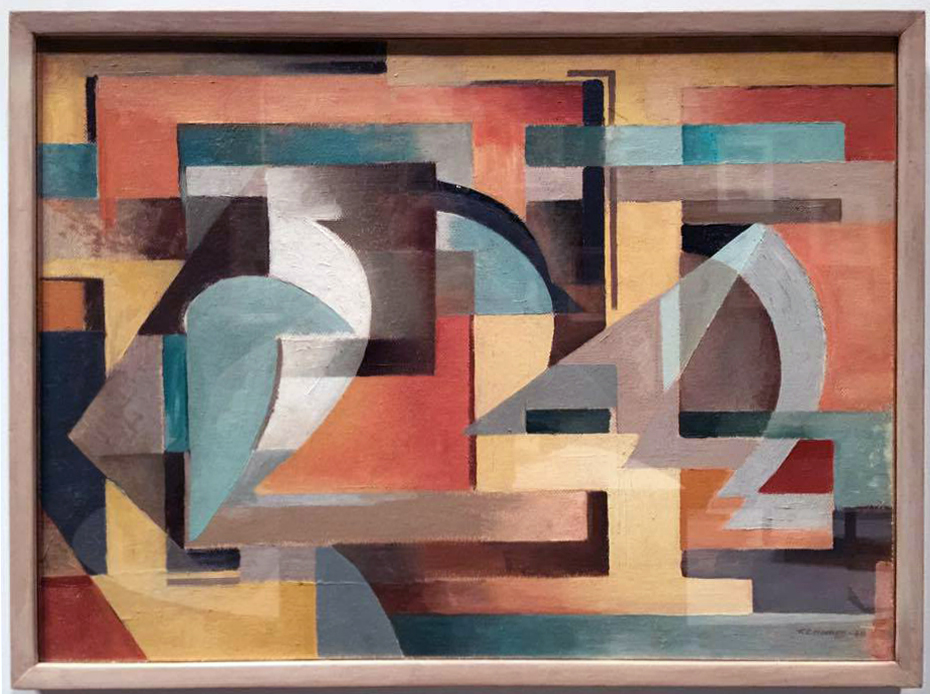


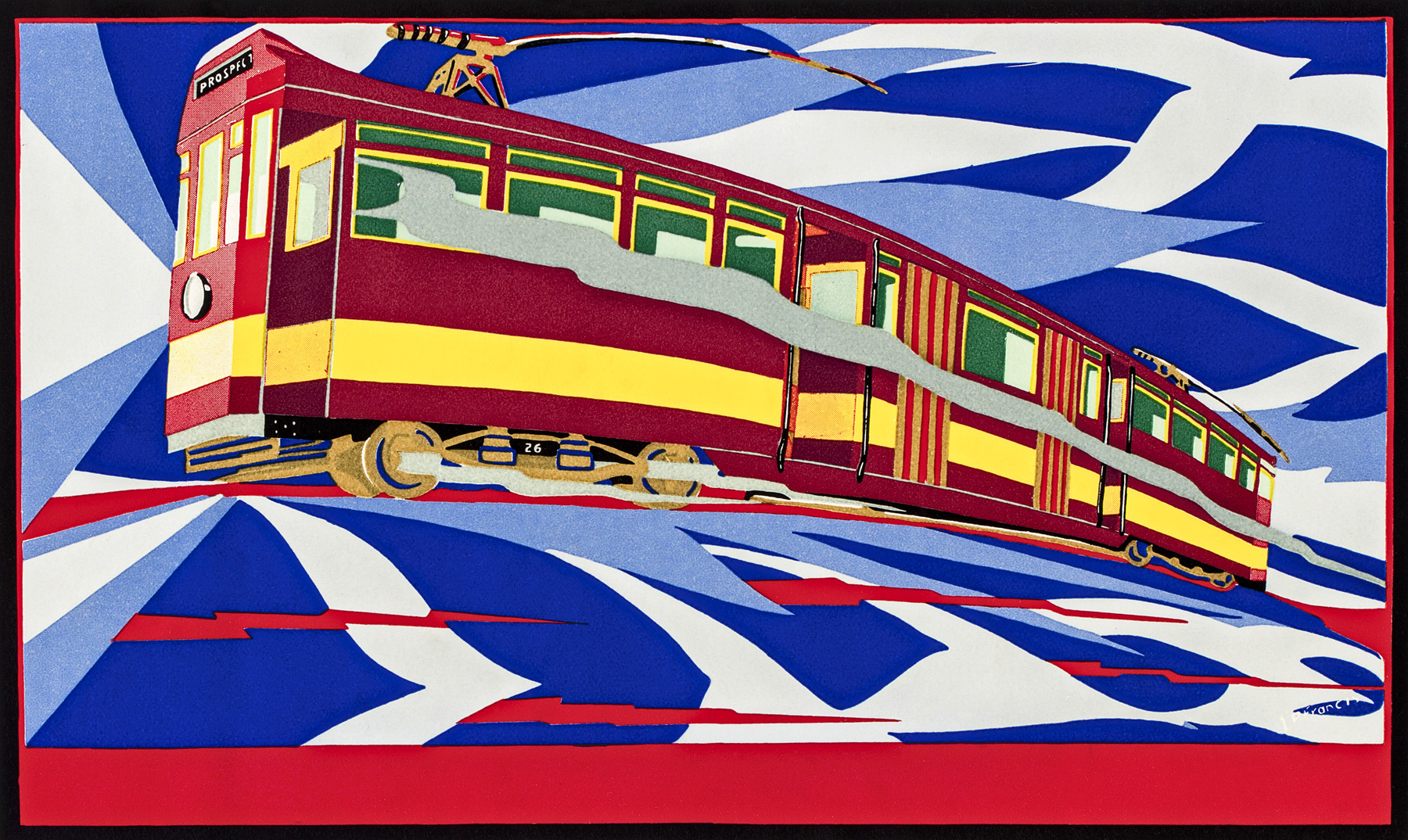


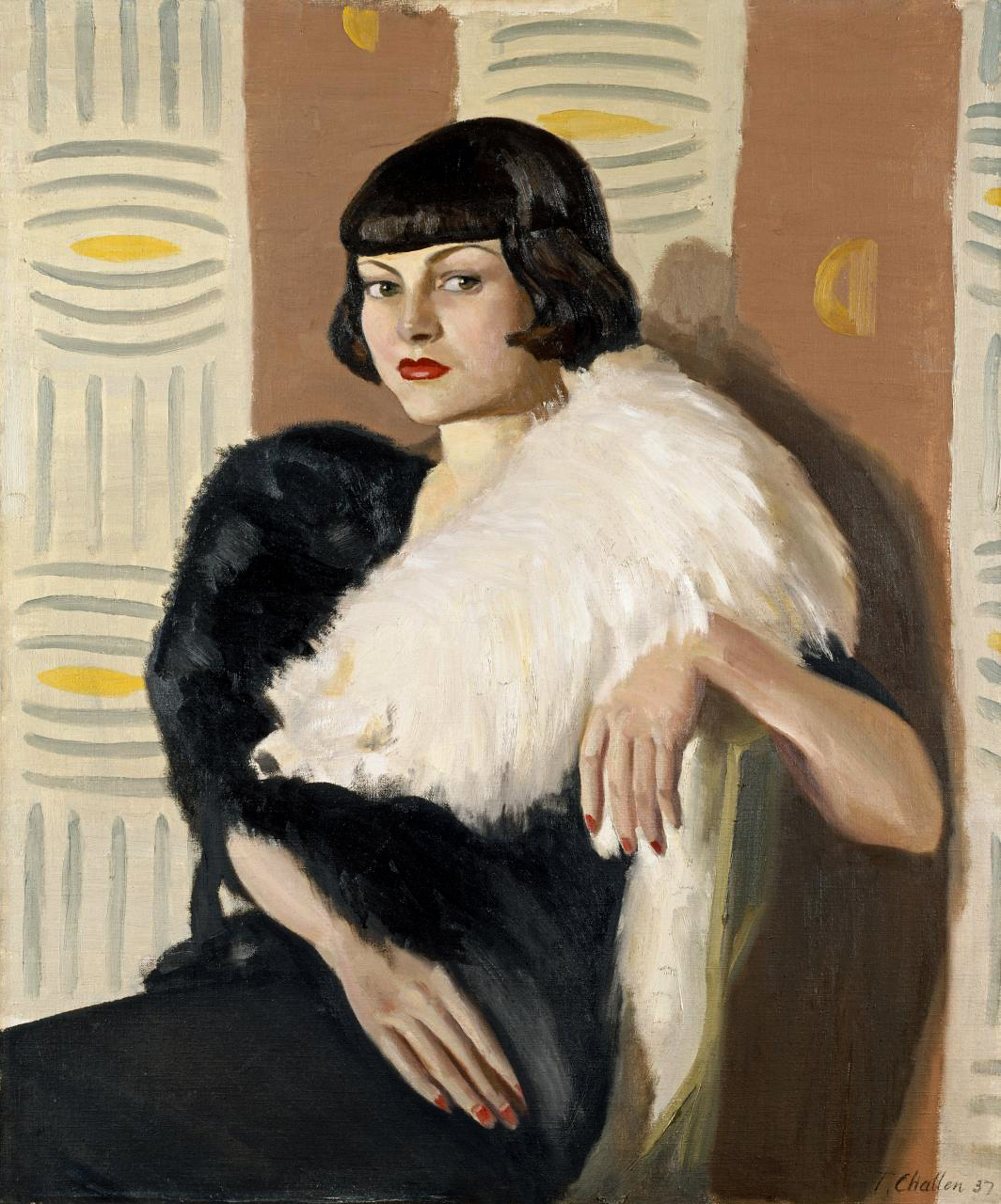
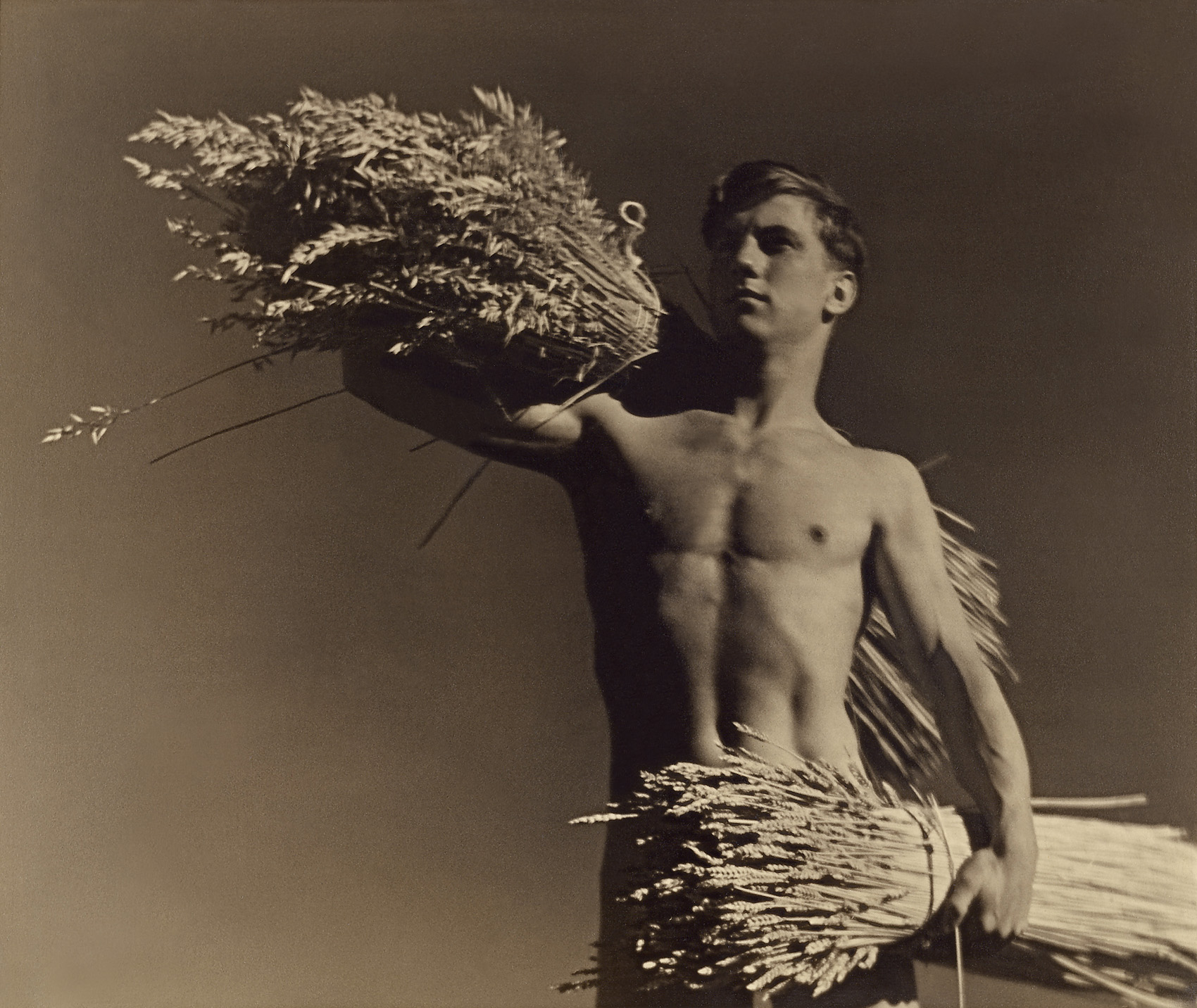
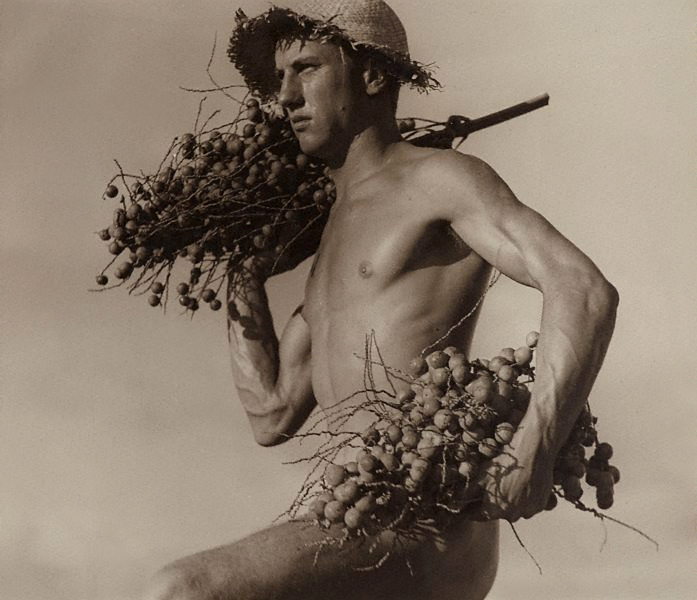

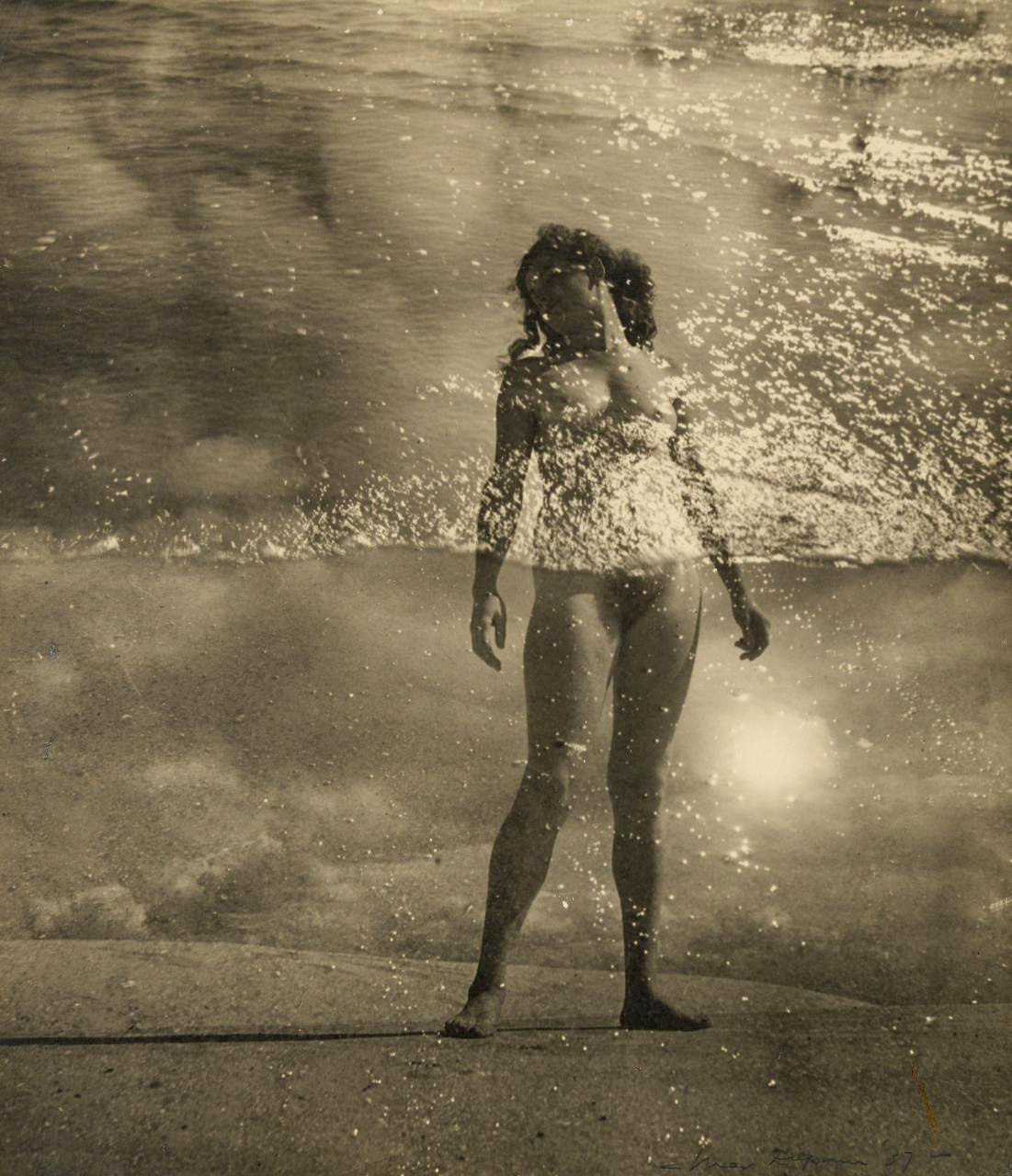
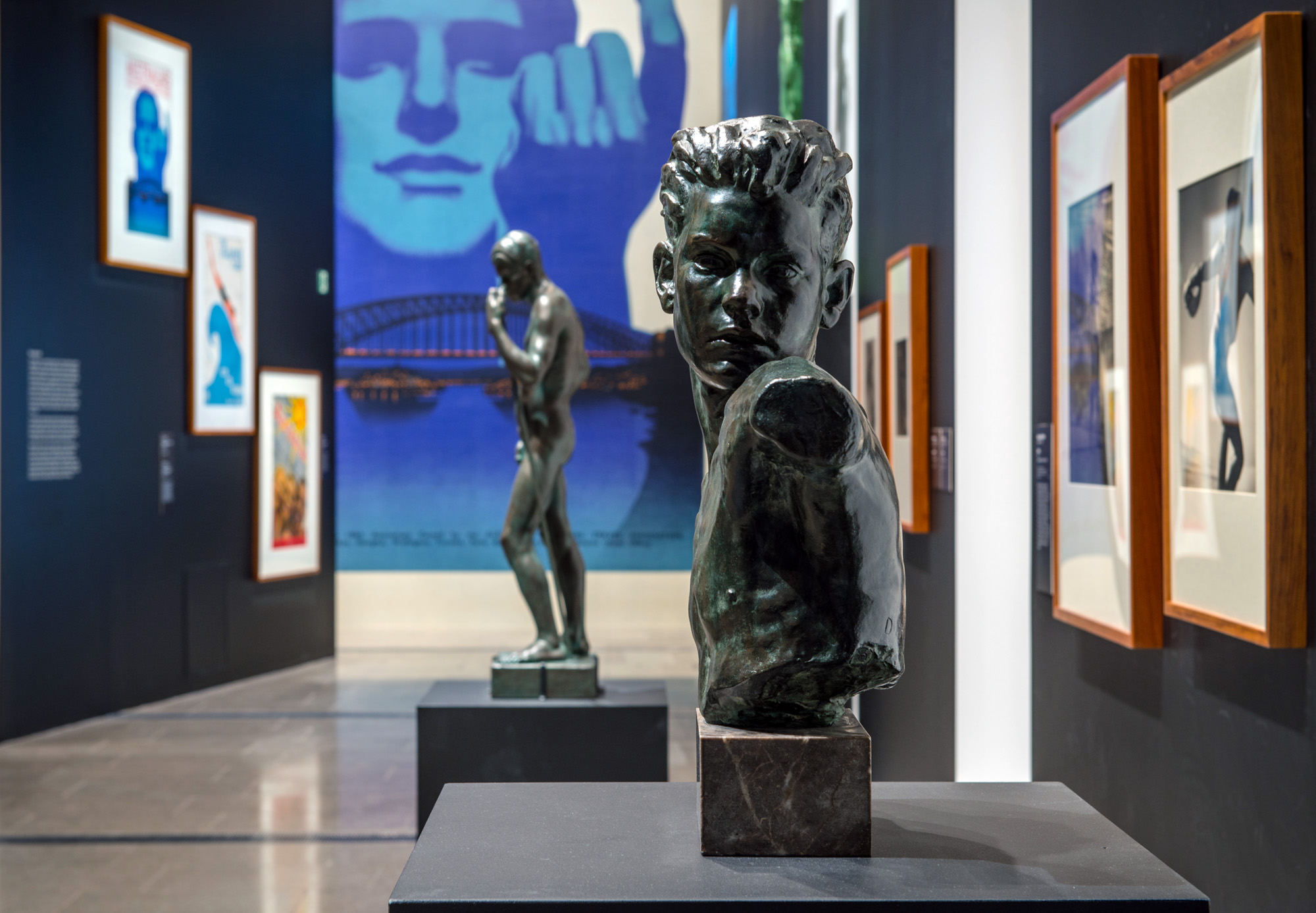
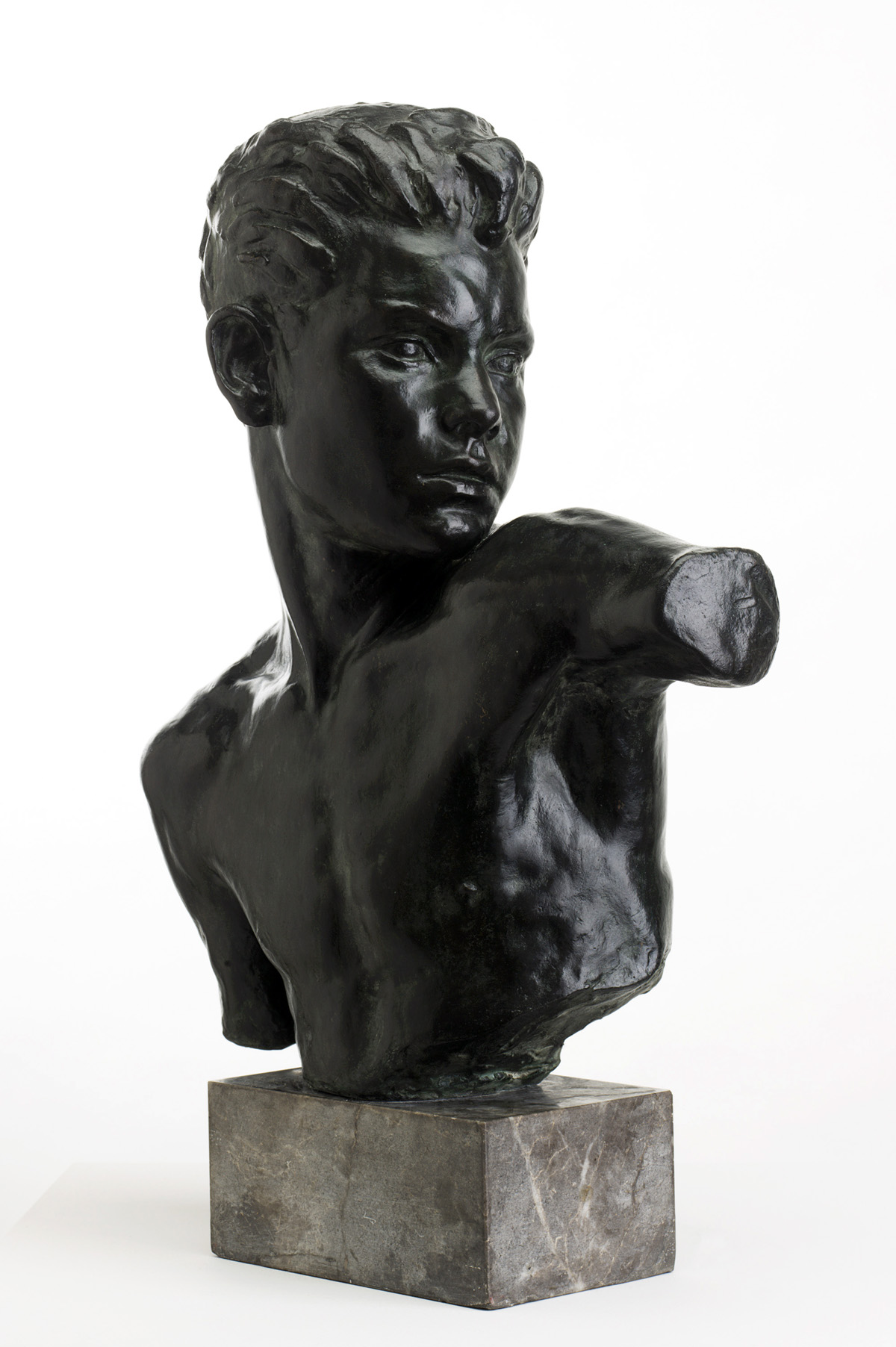








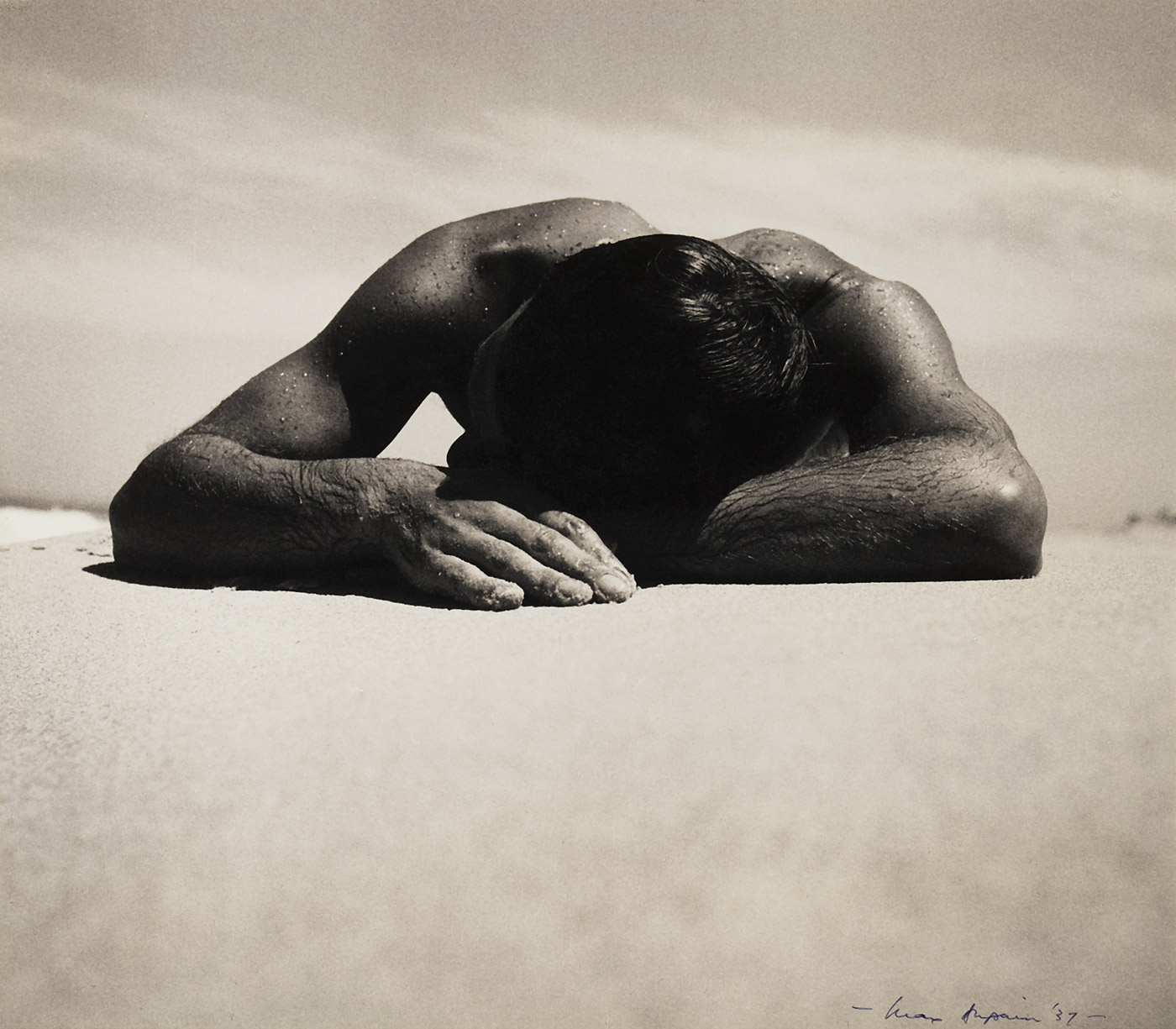


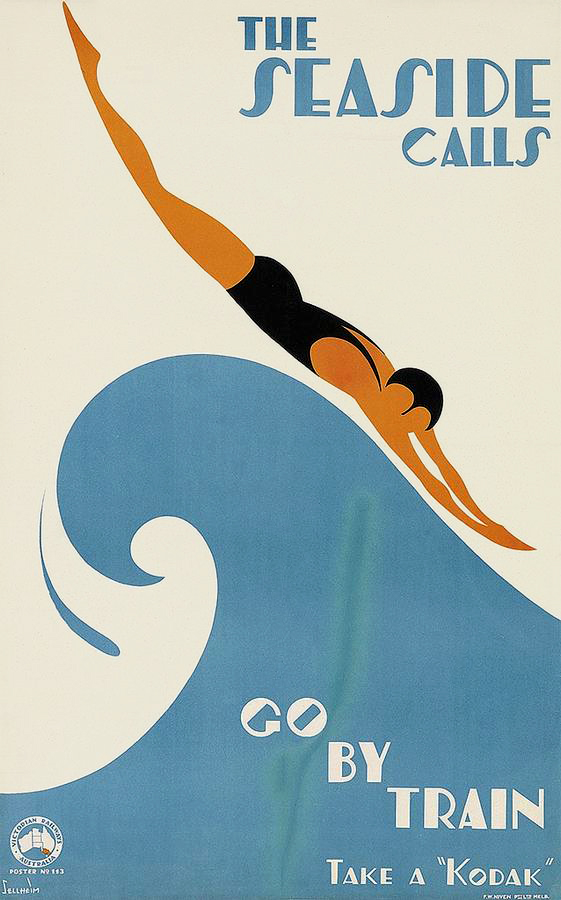


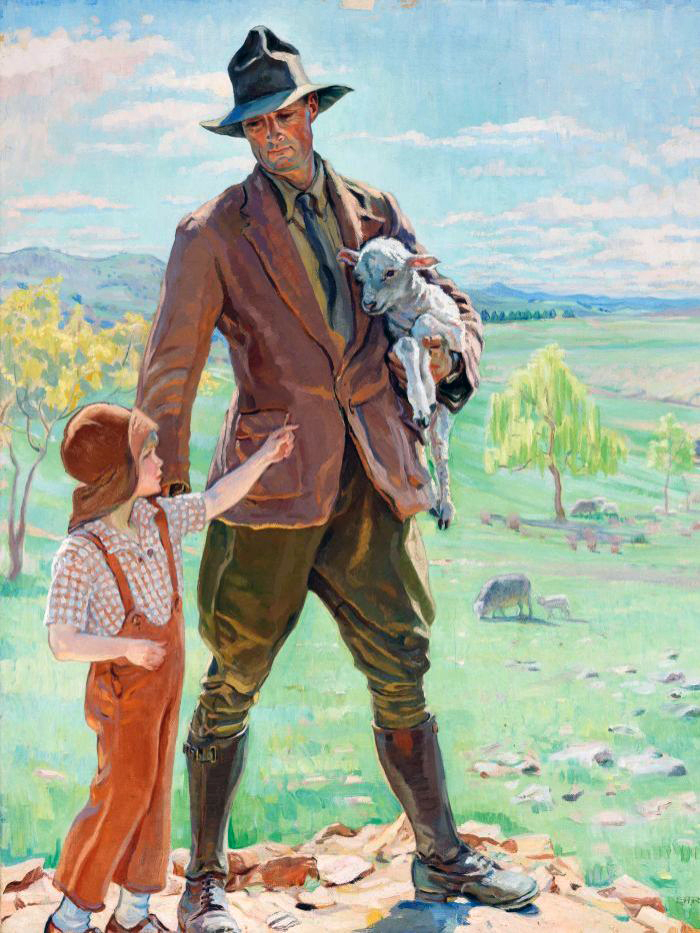


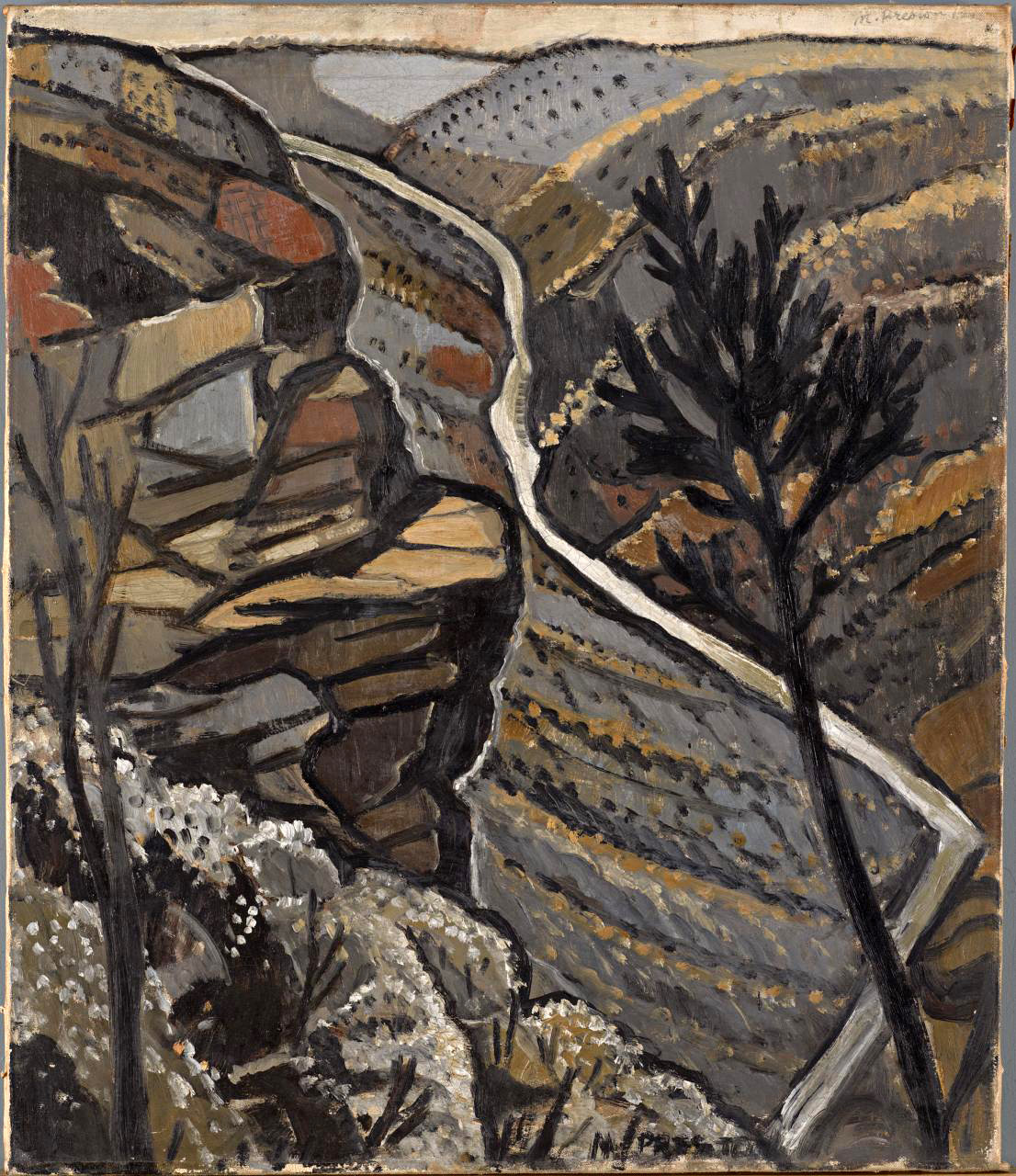


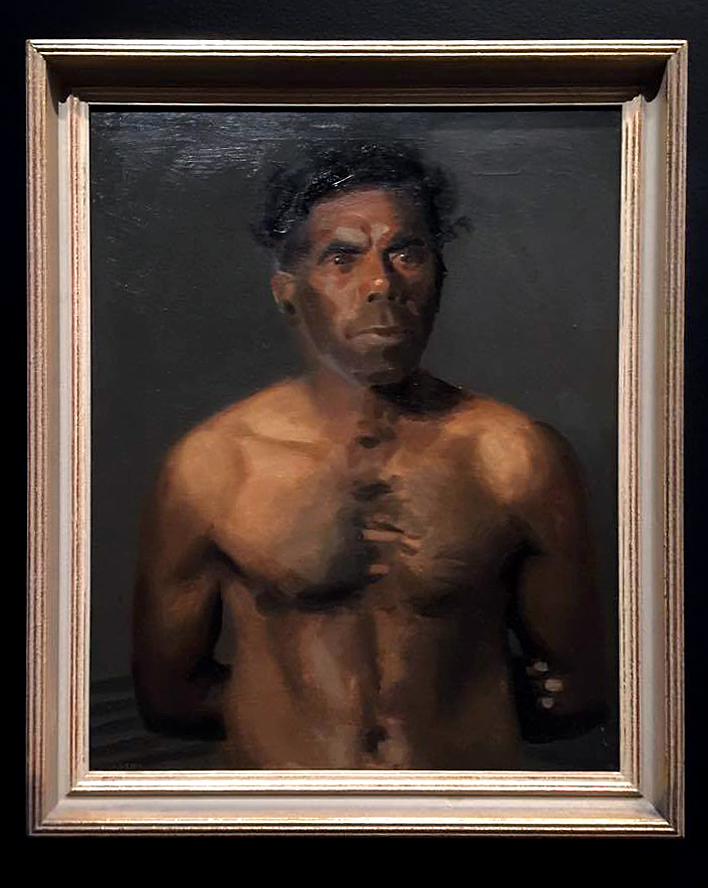



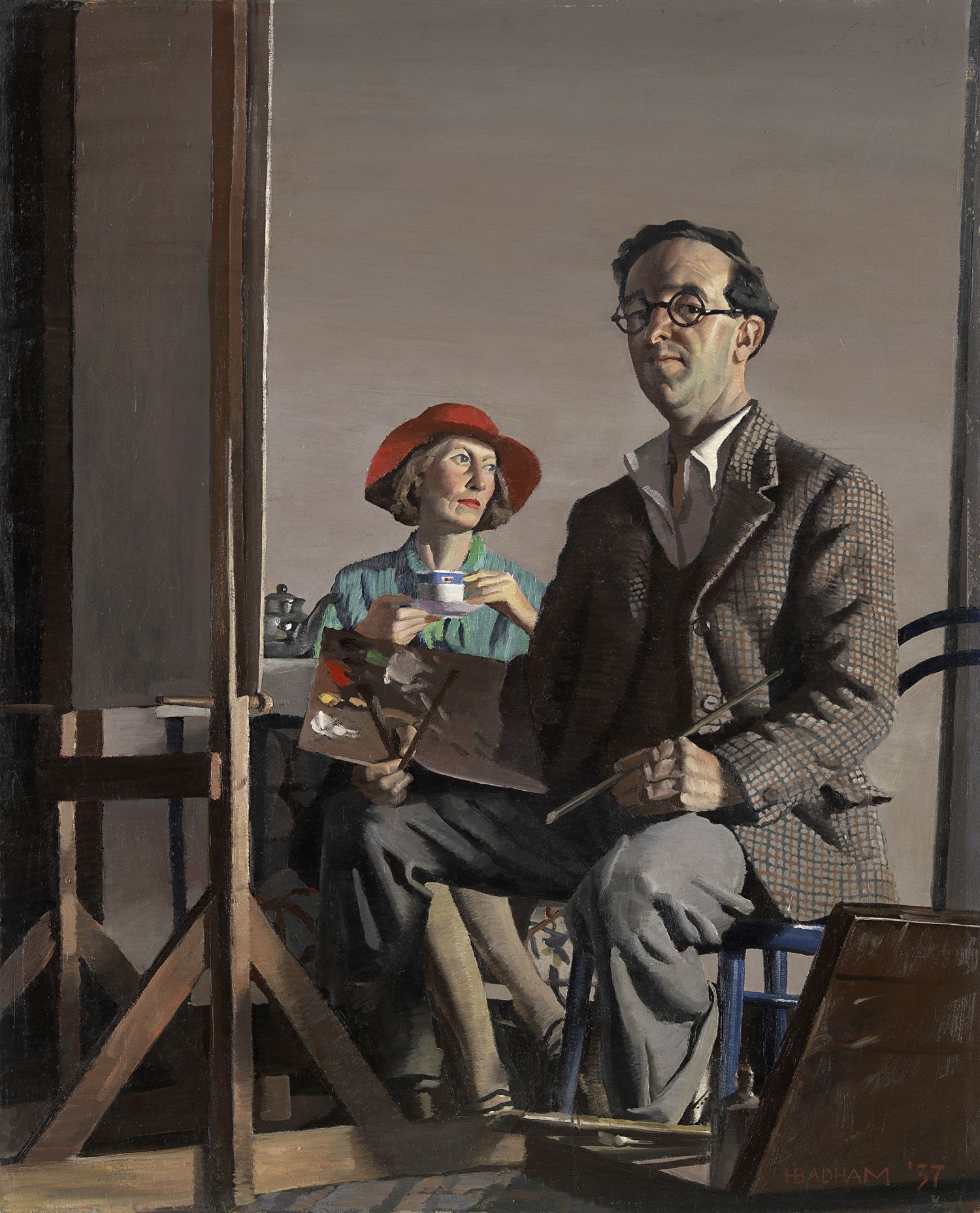


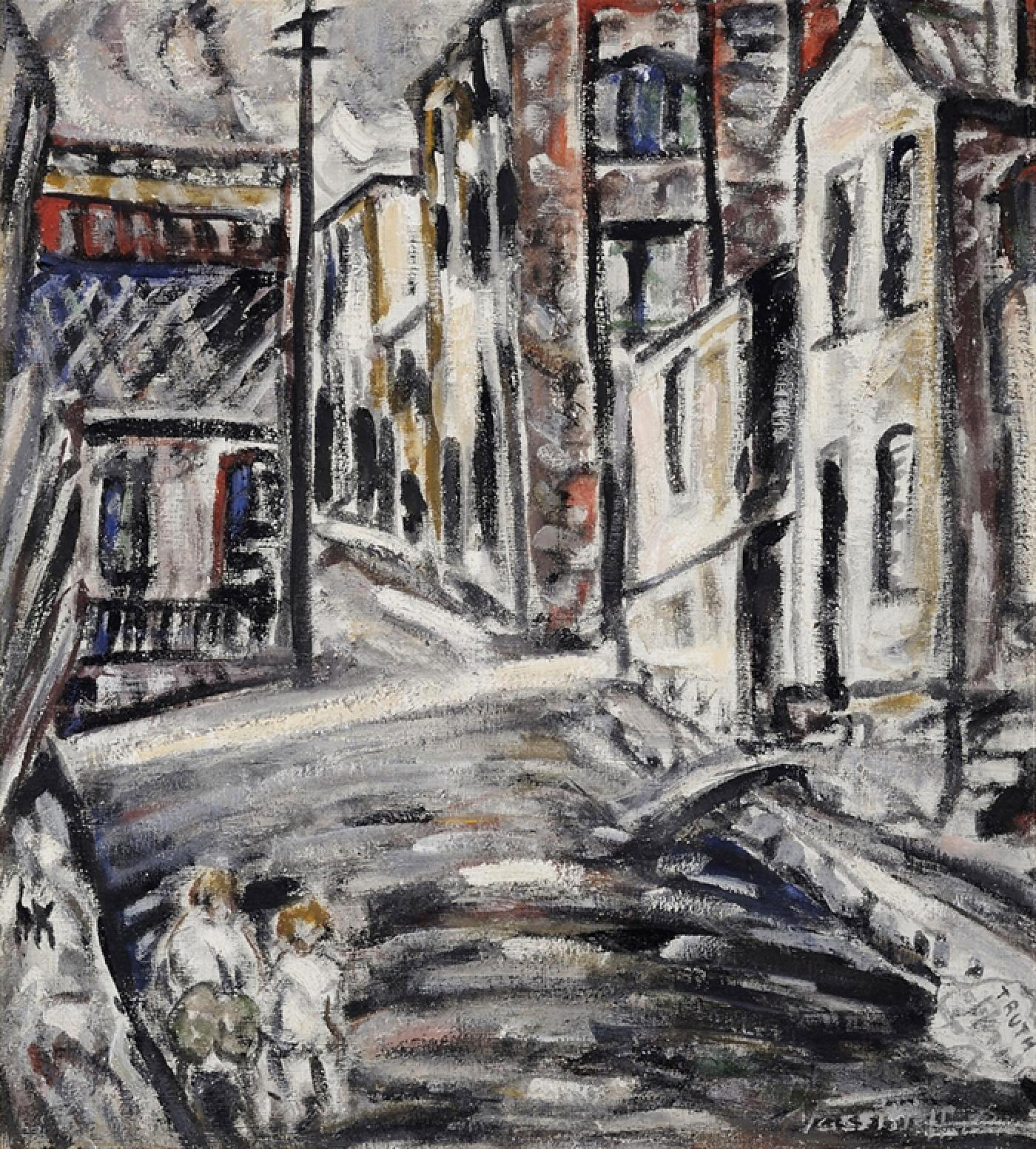







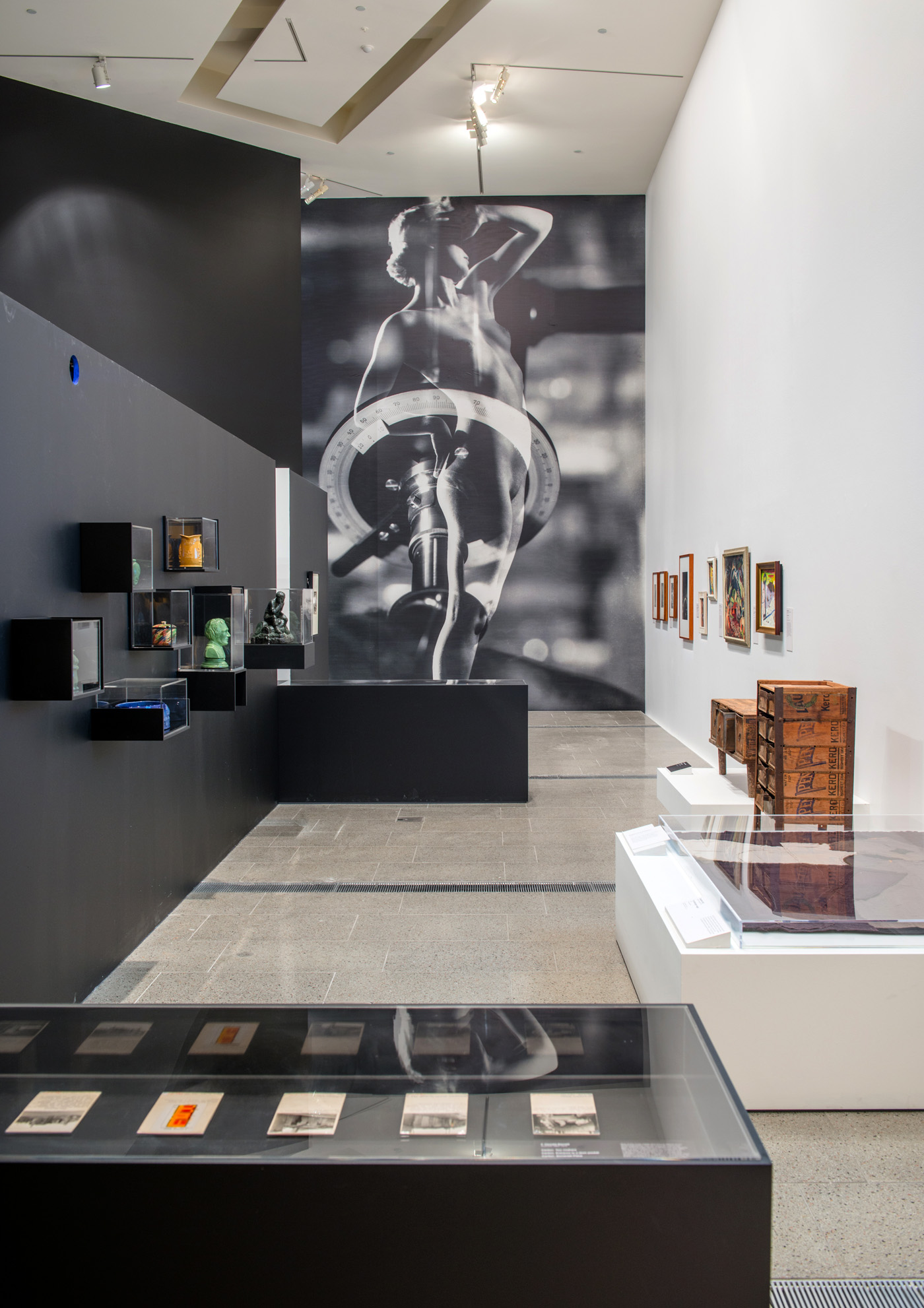




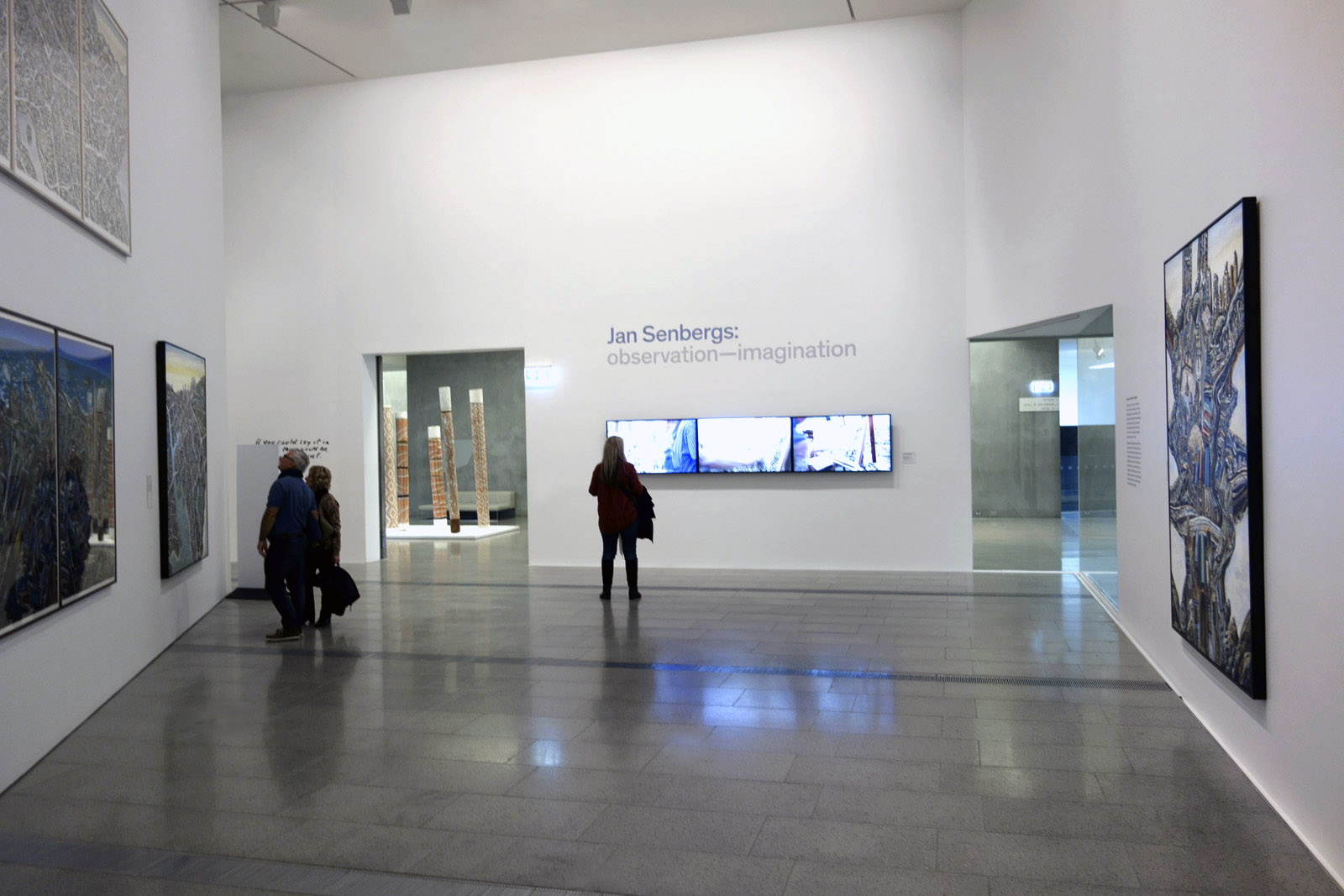
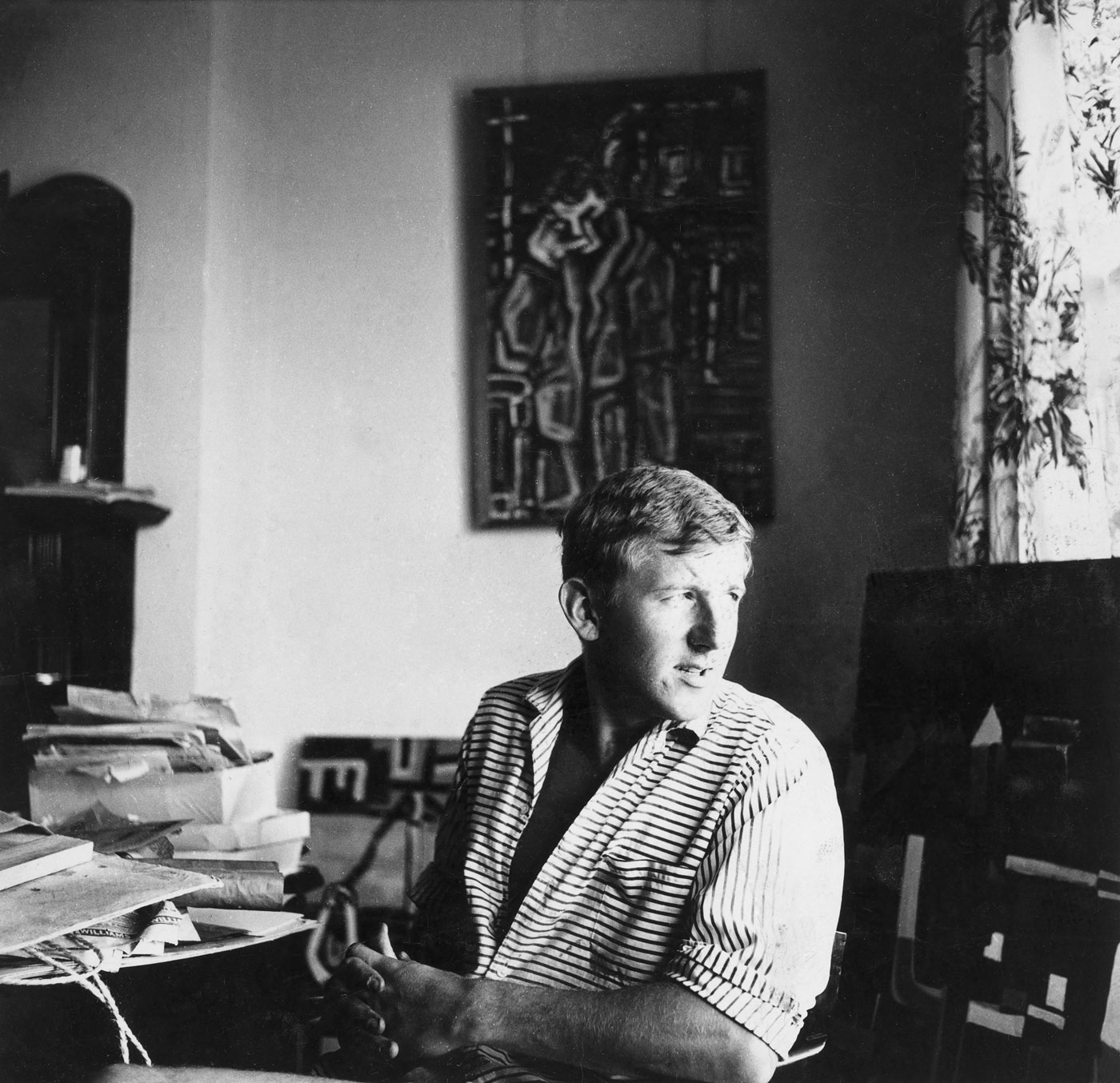
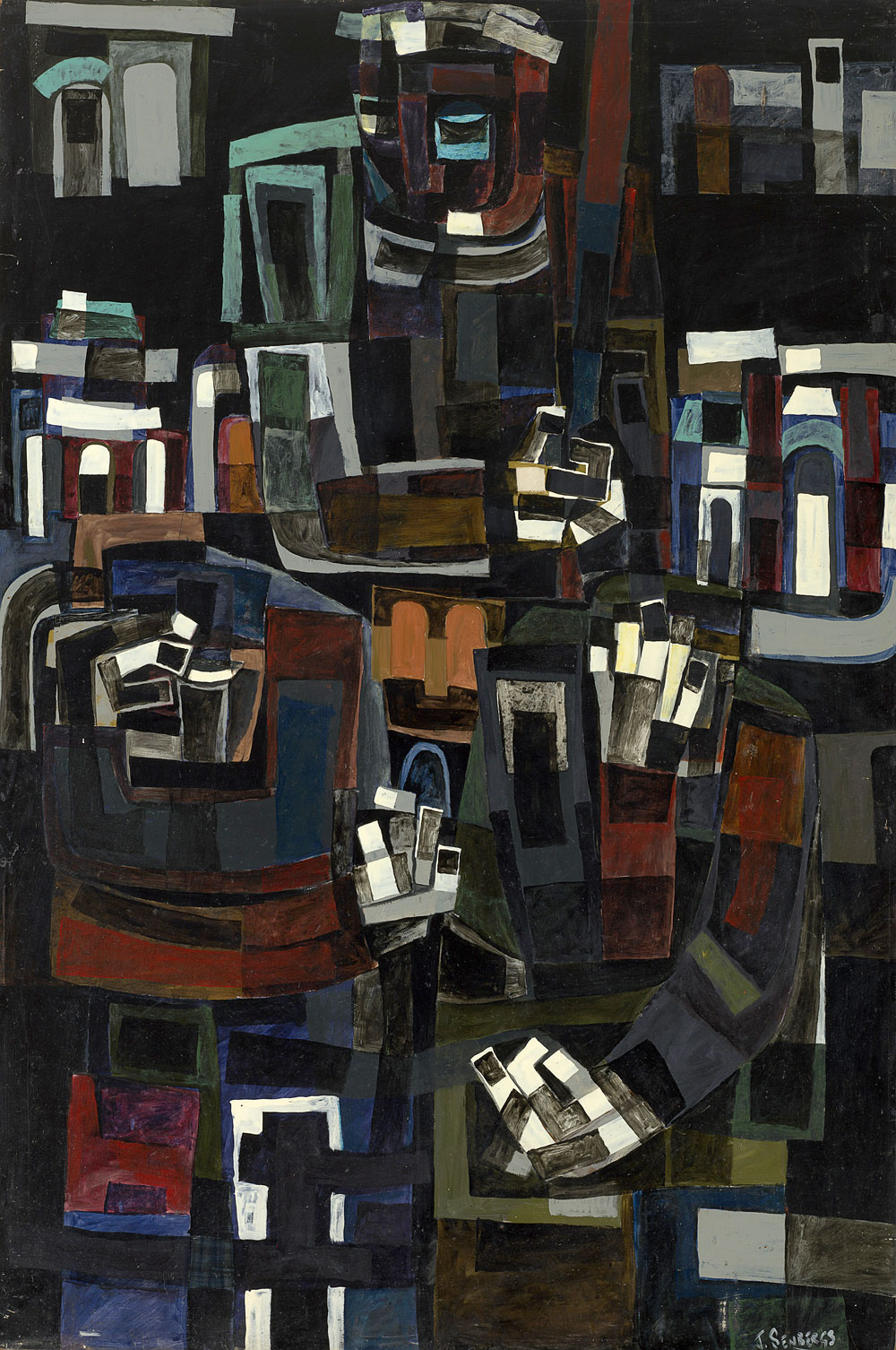


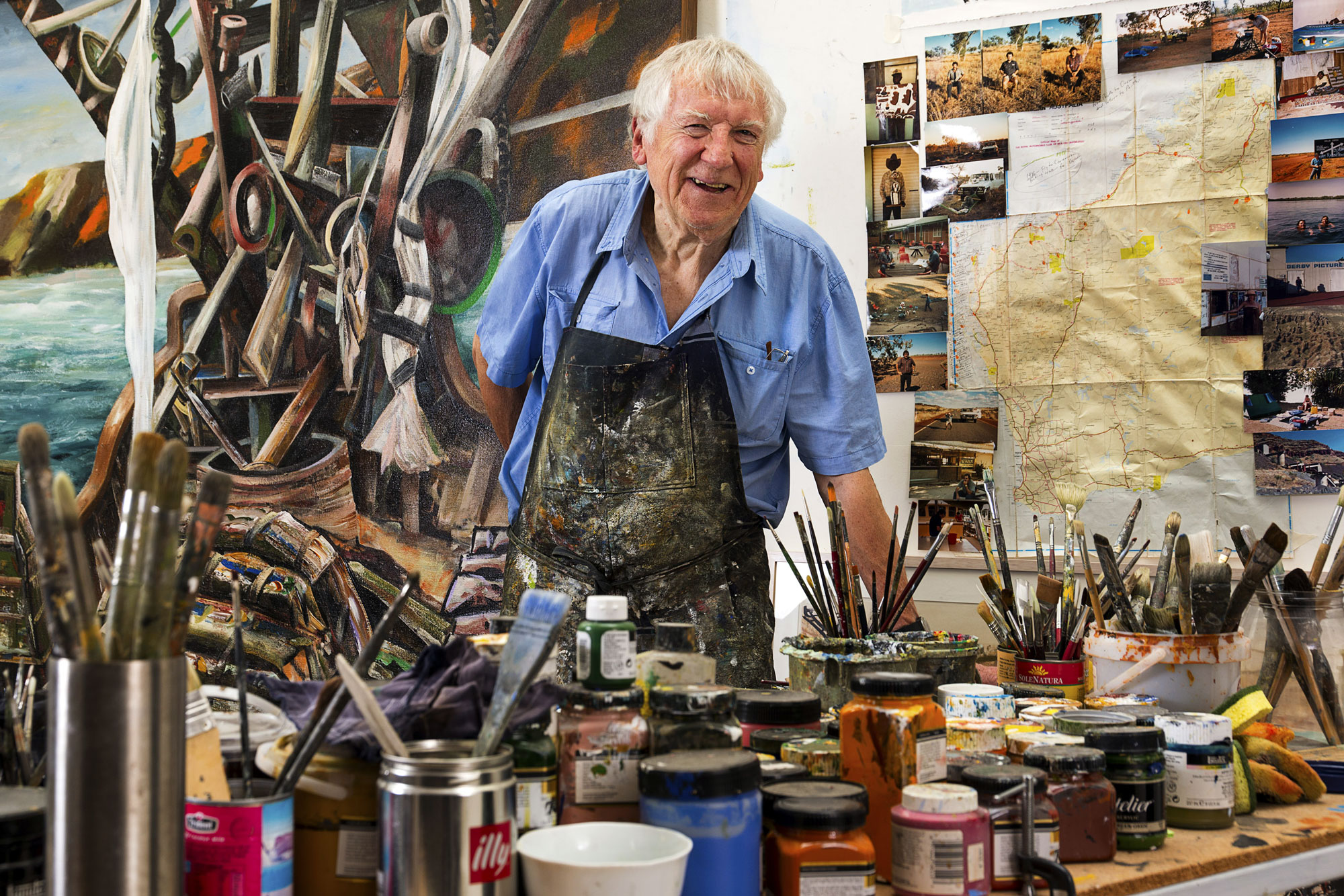
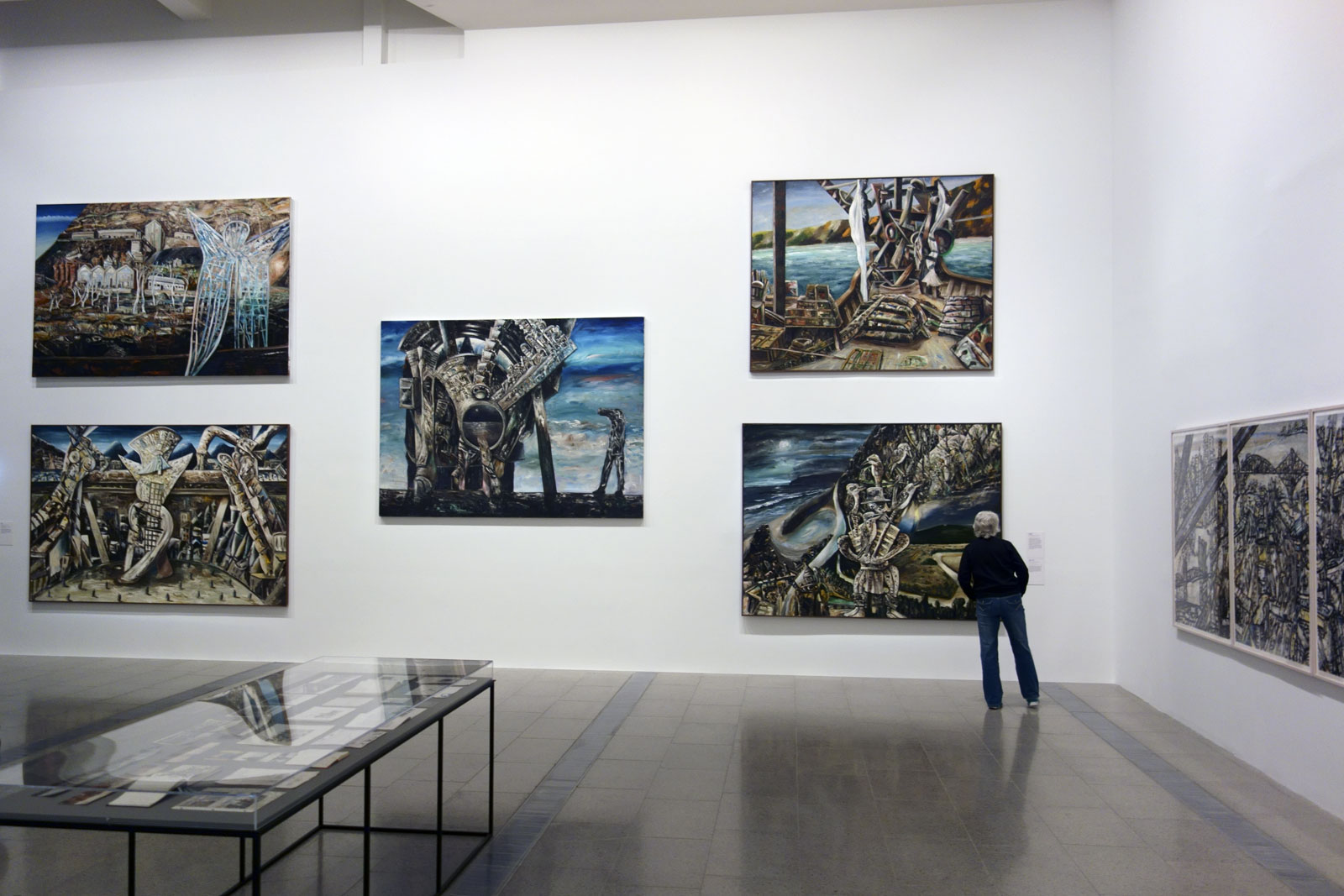
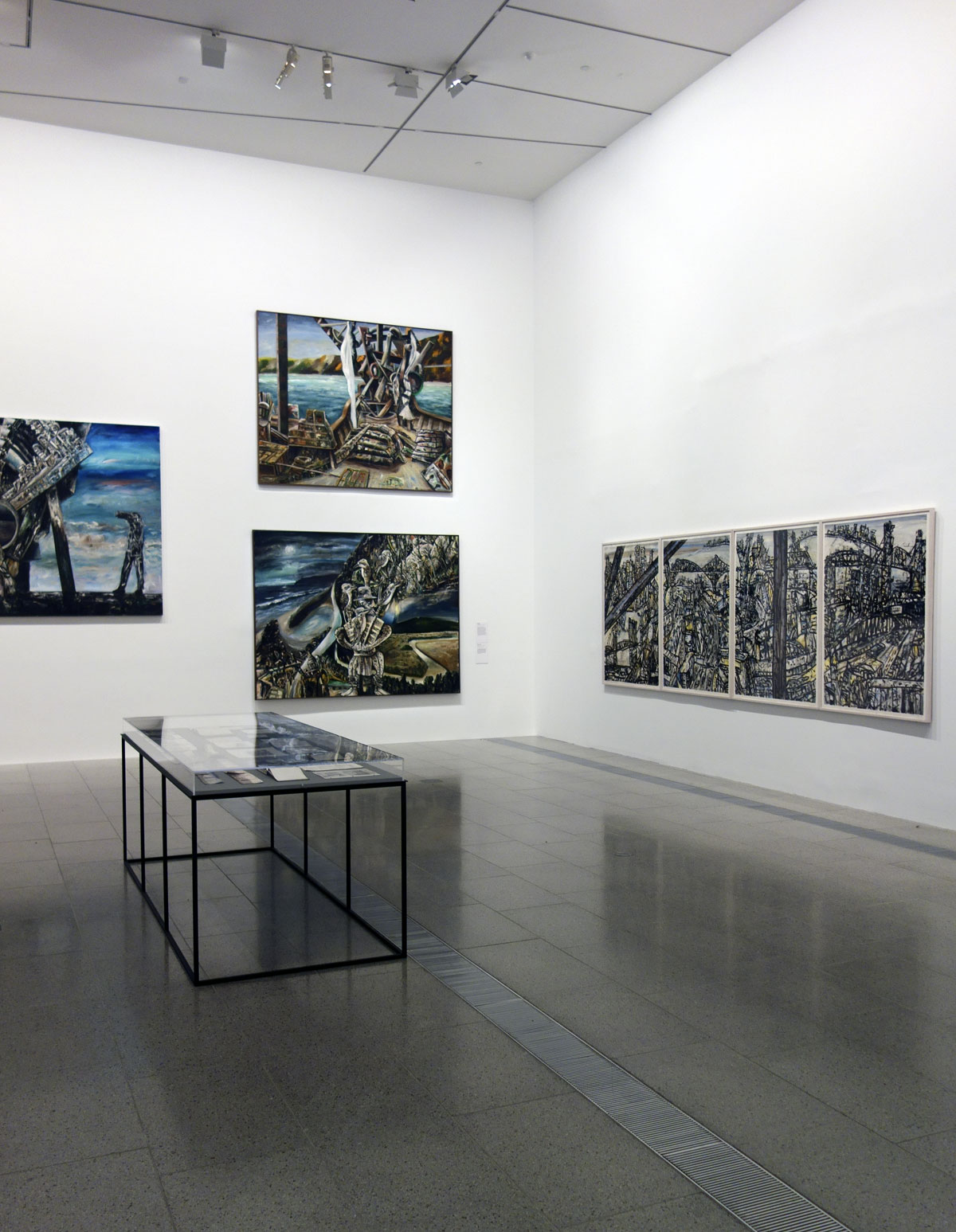
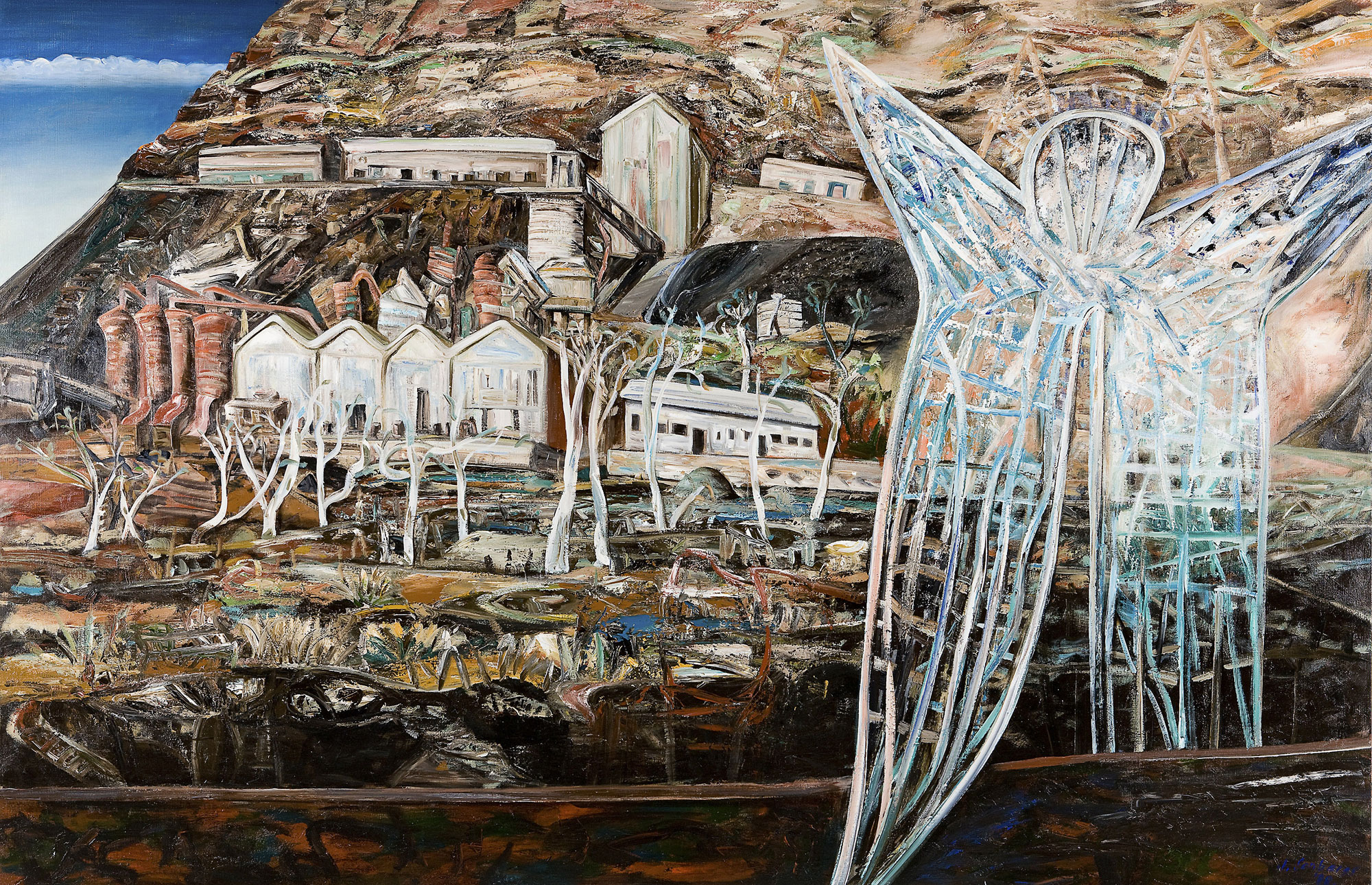
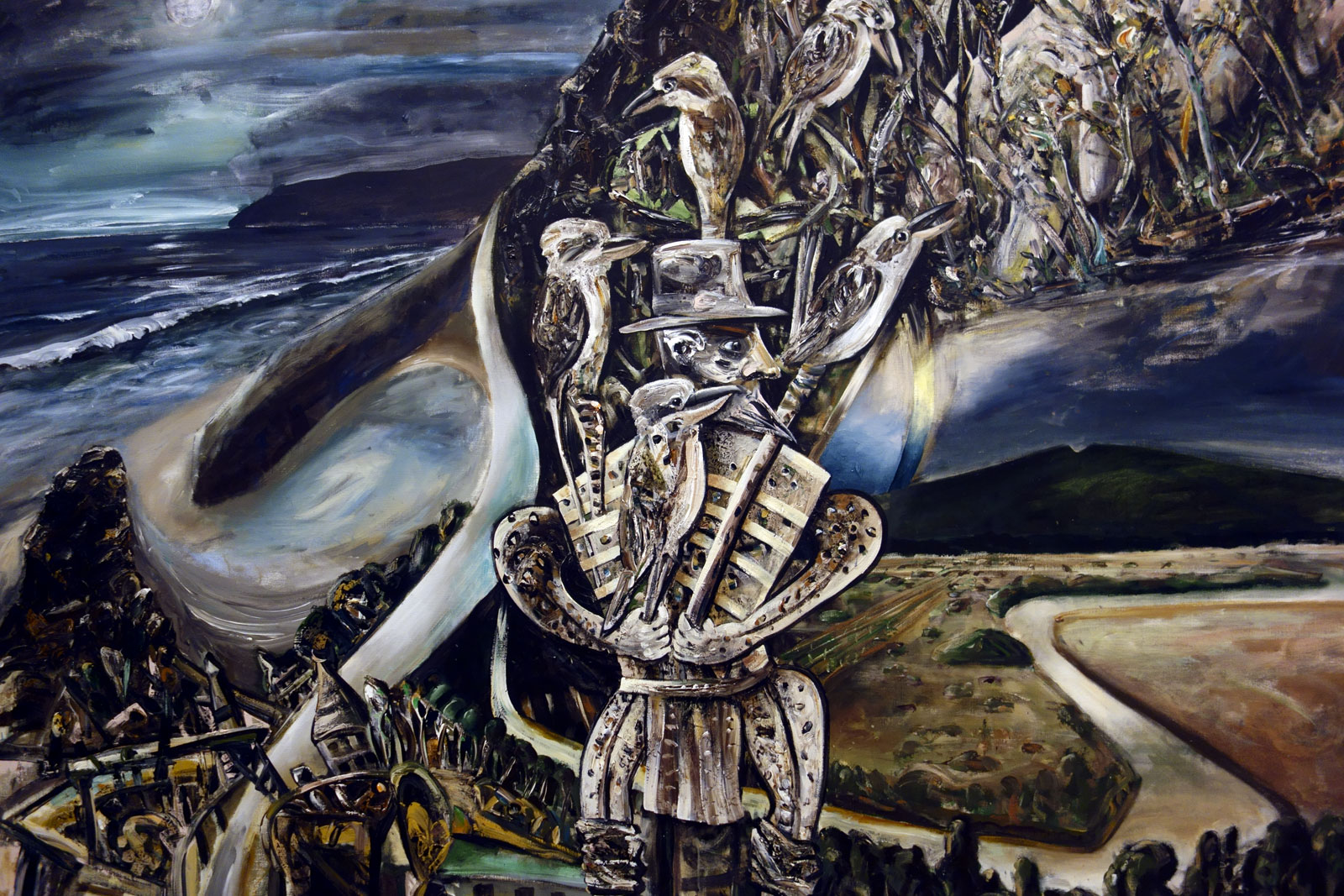
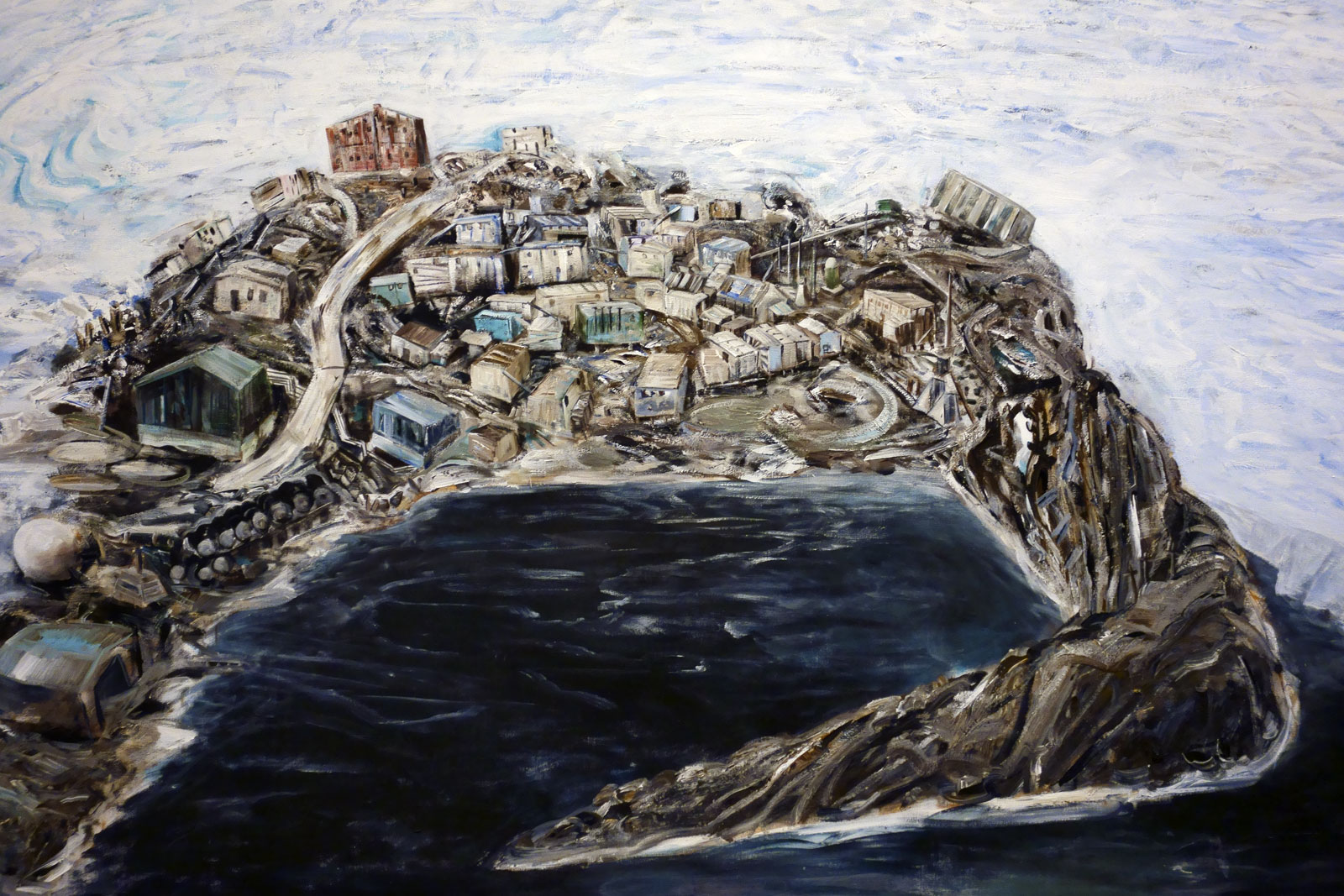
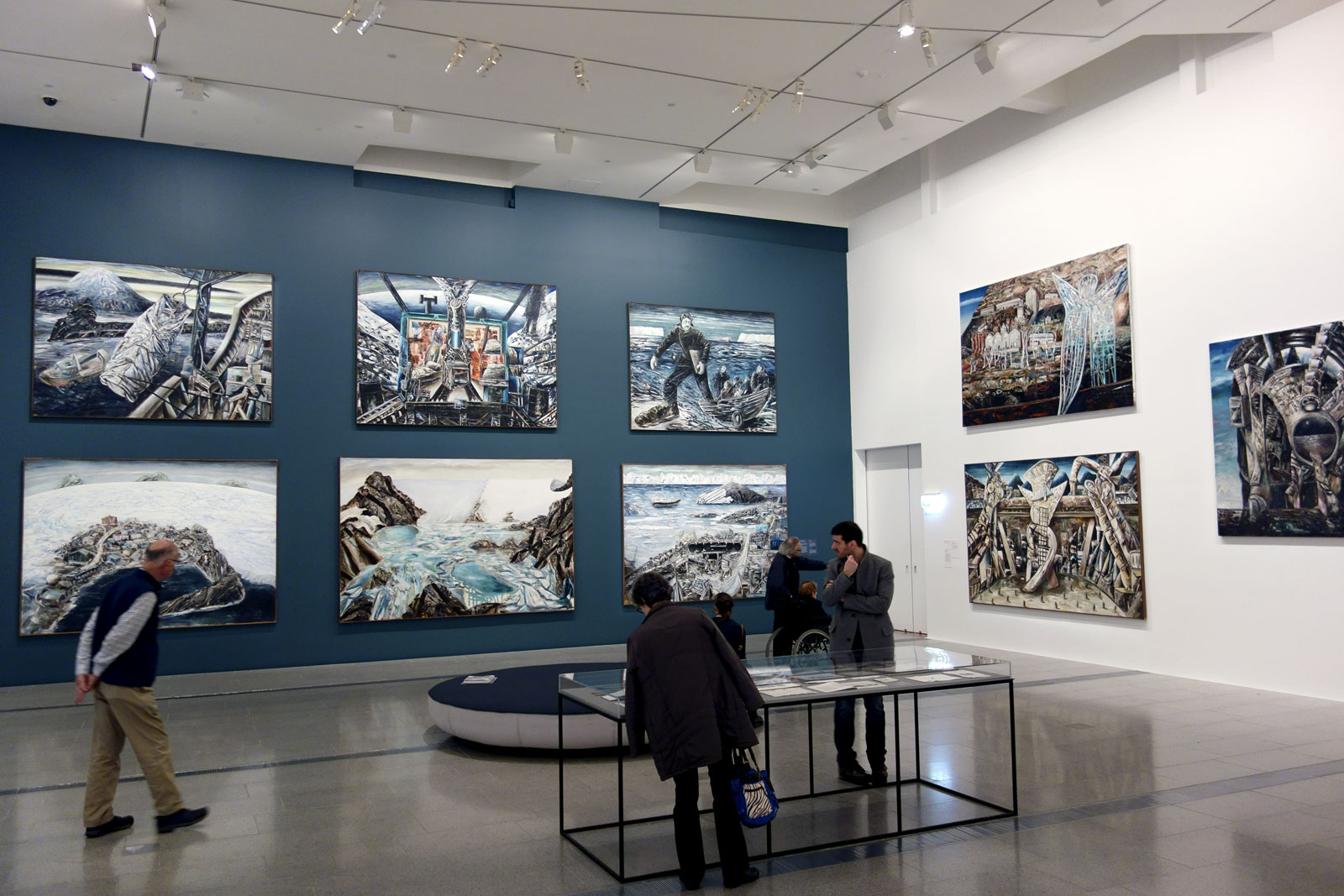
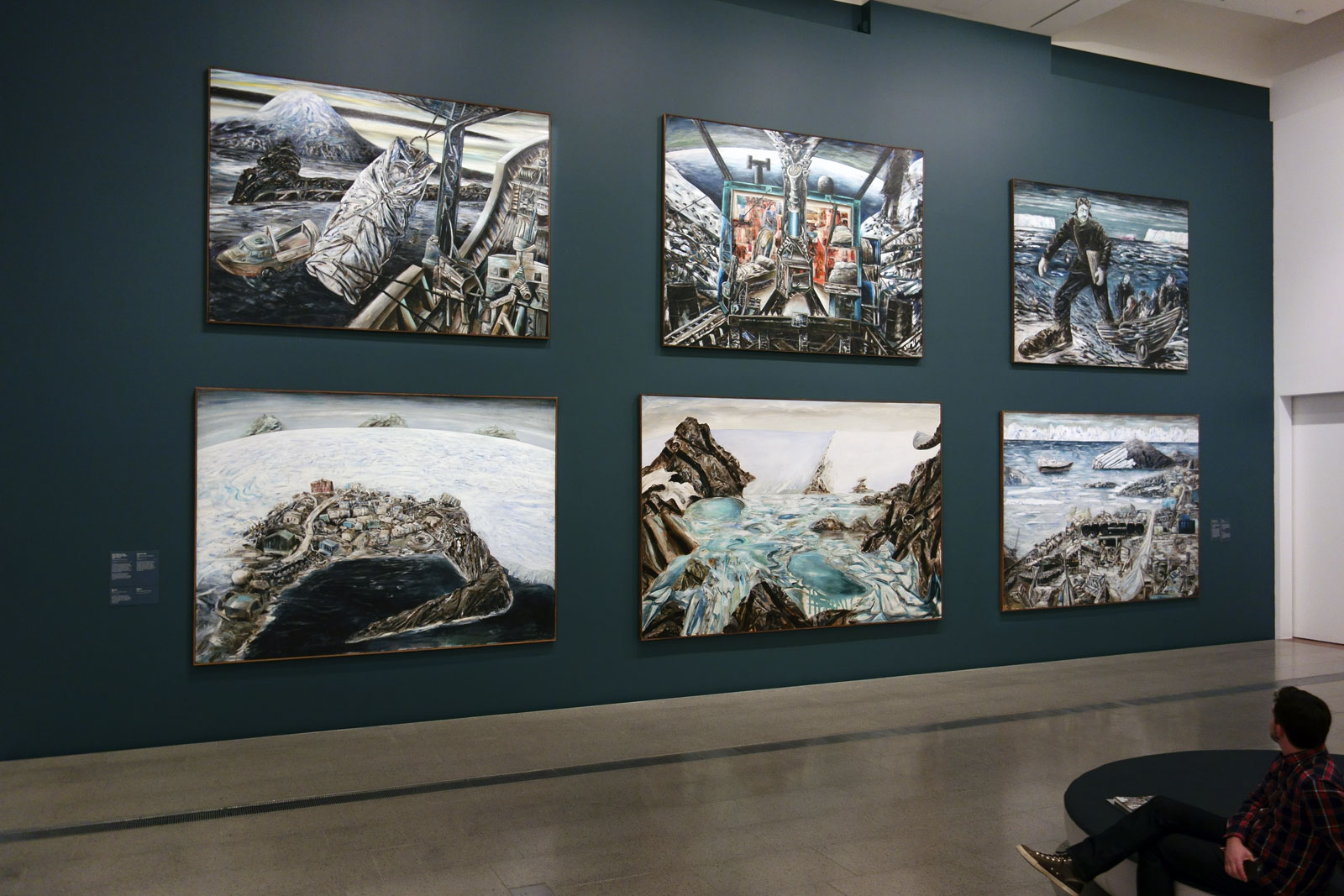



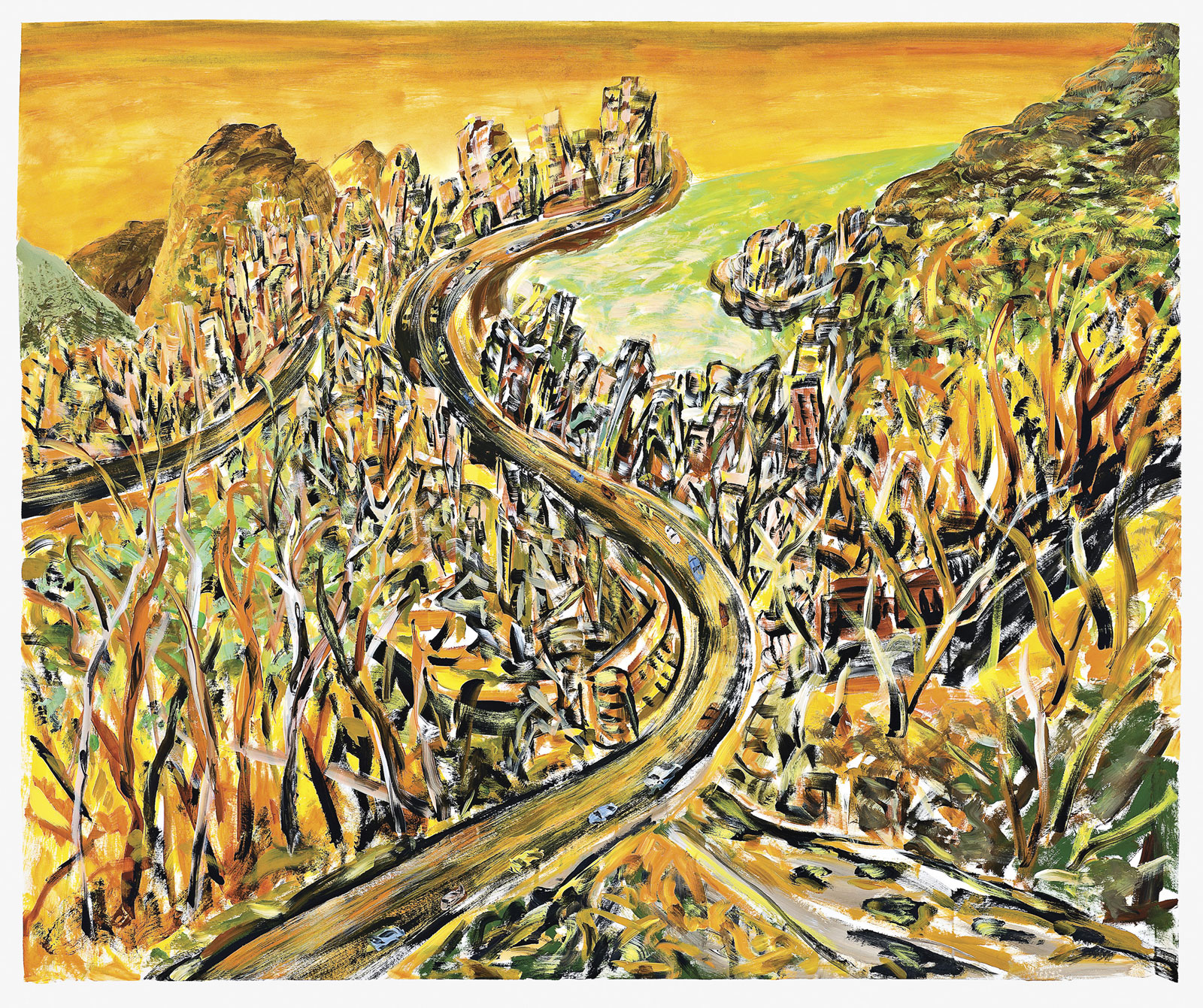
 Art Blart _ art and cultural memory archive
You must be logged in to post a comment.