Exhibition: ‘Robert Frank in America’ at the Cantor Arts Center, Stanford University Part 1

Exhibition dates: 10th September 2014 – 5th January 2015

Curator: Peter Galassi


Robert Frank (American born Switzerland, 1924-2019) 'En route from New York to Washington, Club Car' 1954


Robert Frank (American born Switzerland, 1924-2019)
En route from New York to Washington, Club Car
1954
Gelatin silver print
Cantor Arts Center Collection, Gift of Raymond B. Gary


The lunatic sublime of America

This is the first part of a bumper two-part posting. View Part 2 of the posting.

Robert Frank (1924-2019) is one of the most important photographic artists of the twentieth century. He was born in Switzerland but he emigrated to American in 1947. He soon gained a job as a fashion photographer for Harper’s Bazaar. He honed his craft as a photographer in England where he took formal, classical images of British life during a trip to Europe and South America in 1947.

He became friends with Edward Steichen and Walker Evans, and it was Evans who supported him in his Guggenheim Fellowship application in 1955 which enabled him “to travel across the United States and photograph all strata of its society. Cities he visited included Detroit and Dearborn, Michigan; Savannah, Georgia; Miami Beach and St. Petersburg, Florida; New Orleans, Louisiana;Houston, Texas; Los Angeles, California; Reno, Nevada; Salt Lake City, Utah; Butte, Montana; and Chicago, Illinois. He took his family along with him for part of his series of road trips over the next two years, during which time he took 28,000 shots. 83 of these were selected by him for publication in The Americans.”1

In The Americans, Frank documents, “the tensions between the optimism of the 1950s and the realities of class and racial differences. The irony that Frank found in the gloss of American culture and wealth over this tension gave his photographs a clear contrast to those of most contemporary American photojournalists, as did his use of unusual focus, low lighting and cropping that deviated from accepted photographic techniques.2

Originally published as Les Américains in 1958 by Robert Delpire in Paris, and finally in 1959 in the United States by Grove Press, reaction in America was initially hostile. They American critics did not like Frank’s shoot from the hip style of photography, nor the mirror that was being held up to their society, especially by a Jewish foreigner. Over time The Americans came to be seen as a seminal work of American photography and social history. Like many artists, Frank only took photographs for a relatively short period of time, before moving on to become a filmmaker.

One cannot forget the era in which Frank took these photographs – that of McCarthyism and “the Second Red Scare, lasting roughly from 1950 to 1956 and characterised by heightened political repression against communists, as well as a campaign spreading fear of their influence on American institutions and of espionage by Soviet agents.”3 Americans were suspicious of foreigners, especially ones with cameras, and this was still the era of racial segregation pre the civil rights movement of the 1960s.

With regard to the structure of the photographs, their origin is based in classicism. This was Frank’s training. It was his skill as an artist, his intuitive and prescient vision of America – how he saw America like no one else before him had – that enabled him to ramp up the intensity, shoot from weird angles, low lighting, cropping, depth of field, unusual focus – and focus on the iconography of America as never seen before: jukeboxes, American flags, cars, highways, death, racial segregation – that was so revolutionary. But he could not have done that without his formal training. You only have to look at the comparison between the photographs of Robert Frank and Walker Evans. Formal and elegant in Evans Church Organ and Pews (1936) and Downtown street, New Orleans (December 1935) with lines vertical and clean… and then Frank, with hardly a straight line or neat angle to be seen. But the one does inform the other, otherwise Frank’s photographs would just become snapshots, vernacular photographs with very little meaning. Which they are not.

This is one of the most powerful, lyrical, humanist photo essays of a country that has ever been taken. Critic Sean O’Hagan, writing in The Guardian in 2014, said The Americans “changed the nature of photography, what it could say and how it could say it. […] it remains perhaps the most influential photography book of the 20th century.”4 As an artist, Frank became the great connector for he is the critical link in the chain that stretches from Lewis Hine through Walker Evans… and on to Lee Friedlander, Garry Winogrand and Joel Meyerowitz.

As an artist you marvel at his intuition and inspiration, to look at the world as no one else had done before, to push the boundaries of medium and message. To photograph people, alone and in groups; politics; religion; race; automobiles and the road; and the media and thrust them into the white, bright, happy world of 1950s consumerist America saying: this is what this country is really like, this is my “impression” of you in all your fleeting madness, “America as an often bleak and lonely place.” You only have to look at the “eye” in U.S. 91, leaving Blackfoot, Idaho (1956, below) or look at the photograph of the grave by the side of the road to know that you are in Blue Velvet territory (David Lynch, director 1986, the title is taken from The Clovers’ 1955 song of the same name).

I am not sure yet how one world pierces the other but believe me they surely do.

Dr Marcus Bunyan


Footnotes

1/ “Robert Frank” on the Wikipedia website

2/ Ibid.,

3/ “McCarthyism,” on the Wikipedia website

4/ Sean O’Hagan. “Robert Frank at 90: the photographer who revealed America won’t look back,” on The Guardian website Sat 8 Nov 2014 [Online] Cited 06/07/2021


Many thankx to the Cantor Arts Center for allowing me to publish the photographs in the posting. Please click on the photographs for a larger version of the image.


“It was the vision that emanated from the book that lead not only me, but my whole generation of photographers out into the American landscape, in a sense, the lunatic sublime of America.”


Joel Meyerowitz


“Like a boxer trains for a fight, a photographer by walking the streets, and watching and taking pictures, and coming home and going out the next day, the same thing again, taking pictures. It doesn’t matter how many he takes, or if he takes any at all, it gets you prepared to know what you should take pictures of, or what is the right thing to do and when.”


Robert Frank


Walker Evans (American, 1903-1975) 'Main St., Ossining, New York' 1932


Walker Evans (American, 1903-1975)
Main St., Ossining, New York
1932
Gelatin silver print


Robert Frank (American born Switzerland, 1924-2019) 'Detroit' 1955


Robert Frank (American born Switzerland, 1924-2019)
Detroit
1955
Gelatin silver print
Cantor Arts Center Collection, Gift of Raymond B. Gary


In 1955 and 1956, Swiss-born photographer Robert Frank (b. 1924) traveled throughout the United States on a Guggenheim Fellowship, photographing ordinary people in their everyday lives. His book The Americans – 83 photographs, mostly from those travels, published in 1959 – repudiated the bland good cheer of the magazines with an image of the country that was starkly at odds with the official optimism of postwar prosperity. The book became a landmark of photographic history; but Frank soon turned to filmmaking, and the rest of his early photographic career was largely forgotten. An important group of unknown or unfamiliar photographs in the Cantor Arts Center’s collection provides the core of the exhibition Robert Frank in America, which sheds new light on the making of The Americans and presents, for the first time, Frank’s American photographs from the 1950s as a coherent body of work.

“We are delighted that the Cantor’s collection has provided the basis for a fresh look at one of the great achievements of 20-century photography,” said Connie Wolf, John and Jill Freidenrich Director of the Cantor Arts Center. “We are also deeply grateful to Robert Frank, who has generously contributed to the project.”

The exhibition Robert Frank in America, on view September 10, 2014 through January 5, 2015, features 130 photographs drawn primarily from the Cantor’s collection as well as from other public and private collections and from Frank himself. Peter Galassi, former chief curator of photography at the Museum of Modern Art, New York, is the exhibition’s guest curator and author of the accompanying publication.

The Exhibition’s Development from the Cantor’s Collection

In the summer of 2012, Wolf invited Galassi to offer his thoughts on one of the museum’s hidden treasures: more than 150 photographs by Robert Frank given to the Cantor in the mid-1980s by Stanford alumnus Bowen H. McCoy and his colleague Raymond B. Gary. This remarkable collection spans the full range of Frank’s photographic career before he turned to filmmaking in the early 1960s. It is especially rich in Frank’s American work of the 1950s, including scores of photographs that are unknown or unfamiliar even to scholars. Wolf and Galassi saw an opportunity to share this work with Stanford students, faculty, scholars at large and the general public.

Research began at the National Gallery of Art, Washington, where more than two decades ago the artist established the archive of his photographic career prior to 1970. Studying more than 1,000 contact sheets enabled Galassi to determine the locations and dates of dozens of previously unidentified photographs in the Cantor collection. He then selected works for the exhibition so as to identify Frank’s major themes and artistic strategies. The compelling sequence of The Americans poetically weaves diverse images into a seamless whole, but Robert Frank in America groups related pictures to explore the pictorial strategies that Frank developed as he worked, and also to highlight important subjects – people, alone and in groups; politics; religion; race; automobiles and the road; and the media.

Frank repeatedly photographed isolated figures so that they seemed trapped by pictorial forces, for example. This powerful metaphor for Frank’s vision of lonely individuals imprisoned by social circumstances is announced in the first picture, The Americans, where the flag obliterates a spectator’s face (Parade – Hoboken, New Jersey, 1955). In Robert Frank in America, that photograph is juxtaposed with another that uses the identical pictorial scheme but a different subject; the interior of a bar (New York City, 1955).

“Although The Americans is famous – partly because it is famous – Robert Frank’s American work of the 1950s has never been considered as a whole,” said Galassi. “The full range of the work shows just how Frank turned the vocabulary of magazine photojournalism on its head and used it to speak in a personal, poetic voice.”

Inviting Galassi to organise the exhibition was part of the museum’s renewed commitment to collecting, studying and presenting photography, Wolf says. The Cantor has been adding to its already strong holdings, presenting innovative exhibitions of work by distinguished artists and providing a valuable opportunity for Stanford students and faculty to work directly with photographs. Leland Stanford’s commission more than a century ago for Eadweard Muybridge’s pioneering work on animal locomotion serves as a foundation for the museum’s extensive collection today.

Exhibition catalogue

The major catalogue accompanying this exhibition is published by the Cantor Arts Center in association with international publisher Steidl, with whom Frank has worked closely on most of his books. All 130 photographs in the exhibition are reproduced as full-page tritone plates. Galassi’s extensive essay traces the evolution of Frank’s work from his arrival in the United States in 1947 until he abandoned his first photographic career in the early 1960s. The text provides a thorough outline of the photographic context in which Frank at first sought success as a magazine photojournalist as well as a detailed analysis of the methods and strategies that lie behind The Americans. The essay features 24 illustrations, including an unprecedented map of Frank’s 1955-56 Guggenheim travels, which locates the sites of nearly all of the photographs in The Americans and in Robert Frank in America. The 200-page book, with a foreword by Connie Wolf, is designed by Katy Homans, New York.

Robert Frank

Robert Frank was born in 1924 in Zürich, Switzerland. The conclusion of World War II ended his vulnerability (his father was a German-born Jew) and enabled him to escape what he regarded as a narrow, antiquated culture. Soon after reaching New York in March 1947, he was hired by Harper’s Bazaar, but his distaste for photographing fashion led him to quit after six months. Over the next five or six years, in Europe and the United States, Frank aimed to establish himself as a freelance photojournalist, with limited success. A Guggenheim Fellowship, awarded in March 1955 and renewed a year later, freed him to pursue his work independently, and he soon began to travel in hopes of making a book. Les Américains was published by Robert Delpire in Paris in 1958 and, as The Americans, by Grove Press in New York in 1959. The latter included an introduction by Jack Kerouac, author of On the Road.

Film and video have formed a central aspect of Frank’s work since 1959, when he collaborated with Allen Ginsberg, Jack Kerouac and Alfred Leslie on Pull My Daisy. In 1972, however, he resumed making photographs, often using Polaroid positive-negative materials and incorporating text and multiple images. That same year he published the first of several editions of The Lines of My Hand, a book that surveyed his career in all mediums and initiated reconsiderations of his early photographic career. The first full-scale retrospective of his photographs was organised at the Museum of Fine Arts, Houston, in 1986. In 1990, a major gift by Frank established the Robert Frank Collection at the National Gallery of Art, Washington, which has since presented two major exhibitions, each accompanied by an important book: Robert Frank: Moving Out (1994) and Looking In: Robert Frank’s “The Americans” (2009).

Press release from the Cantor Arts Center


Robert Frank (American born Switzerland, 1924-2019) 'Beaufort, South Carolina' 1955


Robert Frank (American born Switzerland, 1924-2019)
Beaufort, South Carolina
1955
Gelatin silver print
Cantor Arts Center Collection, Gift of Raymond B. Gary


Guggenheim proposal summary

“To photograph freely throughout the United States, using the miniature camera exclusively. The making of a broad, voluminous picture record of things American, past and present. This project is essentially the visual study of a civilization and will include caption notes; but it is only partly documentary in nature: one of its aims is more artistic than the word documentary implies.”

The full statement

“I am applying for a Fellowship with a very simple intention: I wish to continue, develop and widen the kind of work I already do, and have been doing for some ten years, and apply it to the American nation in general. I am submitting work that will be seen to be documentation - most broadly speaking. Work of this kind is, I believe, to be found carrying its own visual impact without much work explanation. The project I have in mind is one that will shape itself as it proceeds, and is essentially elastic. The material is there: the practice will be in the photographer’s hand, the vision in his mind. One says this with some embarrassment but one cannot do less than claim vision if one is to ask for consideration.

“The photographing of America” is a large order - read at all literally, the phrase would be an absurdity. What I have in mind, then, is observation and record of what one naturalized American finds to see in the United States that signifies the kind of civilization born here and spreading elsewhere. Incidentally, it is fair to assume that when an observant American travels abroad his eye will see freshly; and that the reverse may be true when a European eye looks at the United States. I speak of the things that are there, anywhere and everywhere - easily found, not easily selected and interpreted. A small catalog comes to the mind’s eye: a town at night, a parking lot, a supermarket, a highway, the man who owns three cars and the man who owns none, the farmer and his children, a new house and a warped clapboard house, the dictation of taste, the dream of grandeur, advertising, neon lights, the faces of the leaders and the faces of the followers, gas tanks and post offices and backyards.

The uses of my project would be sociological, historical and aesthetic. My total production will be voluminous, as is usually the case when the photographer works with miniature film. I intend to classify and annotate my work on the spot, as I proceed. Ultimately the file I shall make should be deposited in a collection such as the one in the Library of Congress. A more immediate use I have in mind is both book and magazine publication.”


Robert Frank (American born Switzerland, 1924-2019) 'Florida' 1958


Robert Frank (American born Switzerland, 1924-2019)
Florida
1958
Gelatin silver print
Cantor Arts Center Collection, Gift of Raymond B. Gary


“I am grateful to the Guggenheim Foundation for their confidence and the provisions they made for me to work freely in my medium over a protracted period. When I applied for the Guggenheim Fellowship, I wrote: “To produce an authentic contemporary document, the visual impact should be such as will nullify explanation.”

With these photographs, I have attempted to show a cross-section of the American population. My effort was to express it simply and without confusion. The view is personal and, therefore, various facets of American life and society have been ignored. The photographs were taken during 1955 and 1956; for the most part in large cities such as Detroit, Chicago, Los Angeles, New York and in many other places during my Journey across the country. My book, containing these photographs, will be published in Paris by Robert Delpire, 1958.

I have been frequently accused of deliberately twisting subject matter to my point of view. Above all, I know that life for a photographer cannot be a matter of indifference. Opinion often consists of a kind of criticism. But criticism can come out of love. It is important to see what is invisible to others – perhaps the look of hope or the look of sadness. Also, it is always the instantaneous reaction to oneself that produces a photograph.

My photographs are not planned or composed in advance and I do not anticipate that the on-looker will share my viewpoint. However, I feel that if my photograph leaves an image on his mind – something has been accomplished.

It is a different state of affairs for me to be working on assignment for a magazine. It suggests to me the feeling of a hack writer or a commercial illustrator. Since I sense that my ideas, my mind and my eye are not creating the picture but that the editors’ minds and eyes will finally determine which of my pictures will be reproduced to suit the magazines’ purposes.

I have a genuine distrust and “mefiance” toward all group activities. Mass production of uninspired photojournalism and photography without thought becomes anonymous merchandise. The air becomes infected with the “smell” of photography. If the photographer wants to be an artist, his thoughts cannot be developed overnight at the corner drugstore.

I am not a pessimist, but looking at a contemporary picture magazine makes it difficult for me to speak about the advancement of photography, since photography today is accepted without question, and is also presumed to be understood by all – even children. I feel that only the integrity of the individual photographer can raise its level.

The work of two contemporary photographers, Bill Brandt of England and the American, Walker Evans, have influenced me. When I first looked at Walker Evans’ photographs, I thought of something Malraux wrote: “To transform destiny into awareness.” One is embarrassed to want so much for oneself. But, how else are you going to justify your failure and your effort?”

Robert Frank, U.S. Camera Annual, 1958, p. 115


Robert Frank (American born Switzerland, 1924-2019) 'Lusk, Wyoming' 1956


Robert Frank (American born Switzerland, 1924-2019)
Lusk, Wyoming
1956
Gelatin silver print
Cantor Arts Center Collection, Gift of Raymond B. Gary


Robert Frank (American born Switzerland, 1924-2019) 'Main Street - Savannah, Georgia' 1955


Robert Frank (American born Switzerland, 1924-2019)
Main Street – Savannah, Georgia
1955
Gelatin silver print
Cantor Arts Center Collection, Gift of Raymond B. Gary


Walker Evans (American, 1903-1975) 'Downtown street, New Orleans' December 1935


Walker Evans (American, 1903-1975)
Downtown street, New Orleans
December 1935
Gelatin silver print


Robert Frank (American born Switzerland, 1924-2019) 'New York City' 1949


Robert Frank (American born Switzerland, 1924-2019)
New York City
1949
Gelatin silver print
Lent by Peter Steil
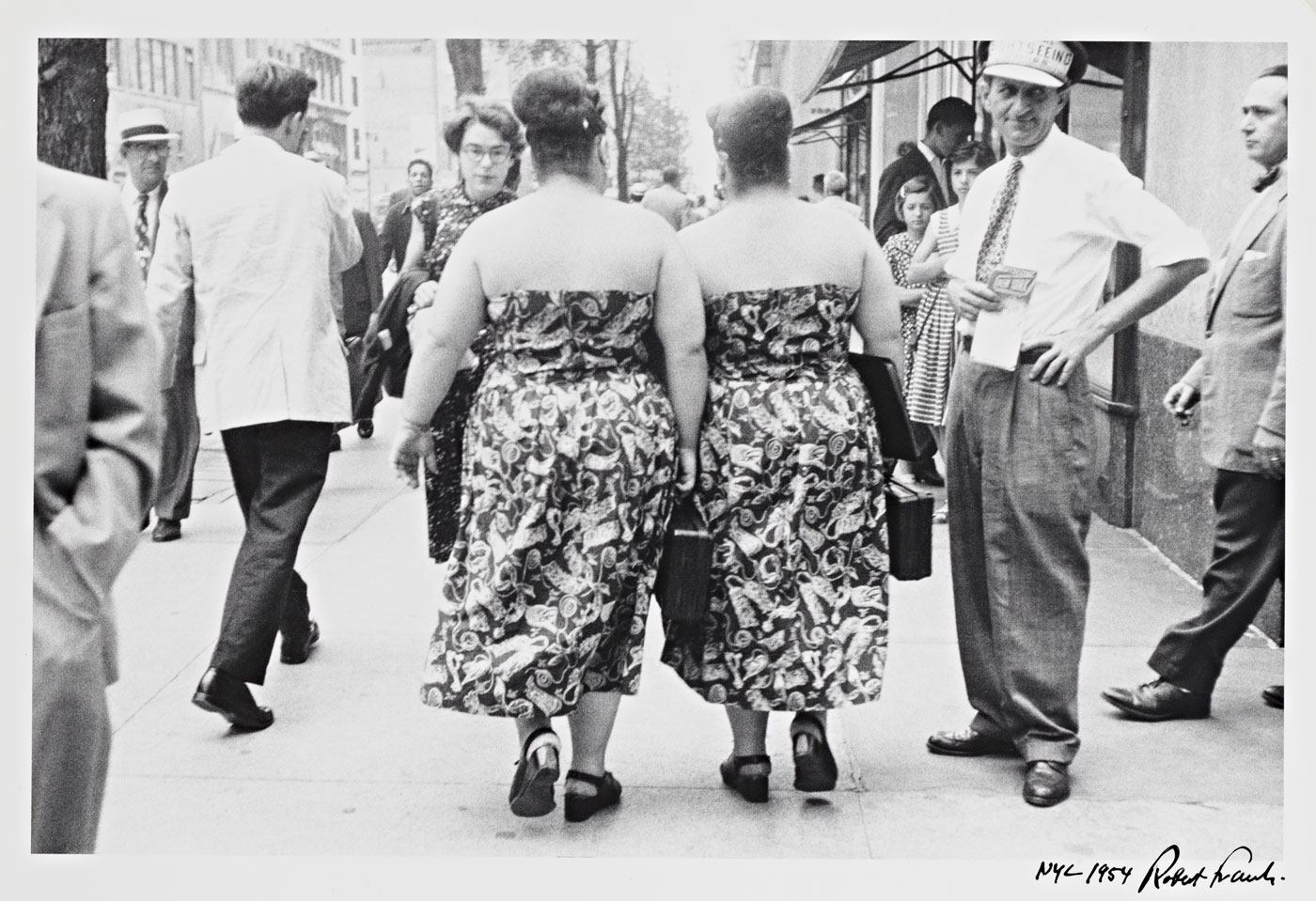
 

Robert Frank (American born Switzerland, 1924-2019) 'New York City' early 1950s


Robert Frank (American born Switzerland, 1924-2019)
New York City
early 1950s
Gelatin silver print
Cantor Arts Center Collection, Gift of Bowen H. McCoy


Cantor Arts Center at Stanford University
328 Lomita Drive at Museum Way
Stanford, CA 94305-5060
Phone: 650-723-4177

Opening hours:
Wednesday – Sunday 11am – 5pm
Closed Monday and Tuesday

Cantor Arts Center at Stanford University website

LIKE ART BLART ON FACEBOOK

Back to top

Exhibition: ‘Edward Weston. Leaves of Grass’ at Museum of Fine Arts, Boston

Exhibition dates: 21st April 2012 – 31st December 2012


Edward Weston (American, 1886-1958) 'Grand Canyon, Arizona' 1941


Edward Weston (American, 1886-1958)
Grand Canyon, Arizona
1941
Gelatin silver print
The Lane Collection
Courtesy, Museum of Fine Arts, Boston


“Not I, nor anyone else can travel that road for you,
You must travel it for yourself.

It is not far, It is within reach,
Perhaps you have been on it since you were born, and did not know,
Perhaps it is every where on water and land.”


Walt Whitman. Part of Song of Myself from Leaves of Grass. 1855


Very little information about this exhibition on the website which is a pity because the photographs are exceptional, even if some do recall the style of other artists of the same era (Charles Sheeler, Berenice Abbott, Ansel Adams, Clarence John Laughlin, and Walker Evans for example).

In 1941, “Weston was commissioned to take photographs for a pricey two-volume edition of “Leaves of Grass.” So over the course of nearly 10 months, Weston and his wife, Charis, drove more than 24,000 miles, through 24 states. Of the nearly 700 photographs he developed, he sent 74 to the publisher. Forty-nine appeared in the book.” (Mark Feney) “Over the course of the project Weston managed to produce some of the most compelling images of his later career that took his photography in a new and important direction. Like Whitman’s epic poems, they draw us into the history of this nation, the beauty of its landscape and the forthrightness of its ordinary citizens.” (Encore)

“Leaves of Grass has its genesis in an essay called The Poet by Ralph Waldo Emerson, published in 1845, which expressed the need for the United States to have its own new and unique poet to write about the new country’s virtues and vices. Whitman, reading the essay, consciously set out to answer Emerson’s call as he began work on the first edition of Leaves of Grass. Whitman, however, downplayed Emerson’s influence, stating, “I was simmering, simmering, simmering; Emerson brought me to a boil.”

The first edition was published in Brooklyn at the Fulton Street printing shop of two Scottish immigrants, James and Andrew Rome, whom Whitman had known since the 1840s, on July 4, 1855. Whitman paid for and did much of the typesetting for the first edition himself. Sales on the book were few but Whitman was not discouraged. The first edition was very small, collecting only twelve unnamed poems in 95 pages. Whitman once said he intended the book to be small enough to be carried in a pocket. “That would tend to induce people to take me along with them and read me in the open air: I am nearly always successful with the reader in the open air.” About 800 were printed, though only 200 were bound in its trademark green cloth cover.

The title Leaves of Grass was a pun. “Grass” was a term given by publishers to works of minor value and “leaves” is another name for the pages on which they were printed. Whitman sent a copy of the first edition of Leaves of Grass to Emerson, the man who had inspired its creation. In a letter to Whitman, Emerson said “I find it the most extraordinary piece of wit and wisdom America has yet contributed.” He went on, “I am very happy in reading it, as great power makes us happy.”” (Amazon website)

Dr Marcus Bunyan


Many thankx to the Museum of Fine Arts, Boston for allowing me to publish the photographs in the posting. Please click on the photographs for a larger version of the image.


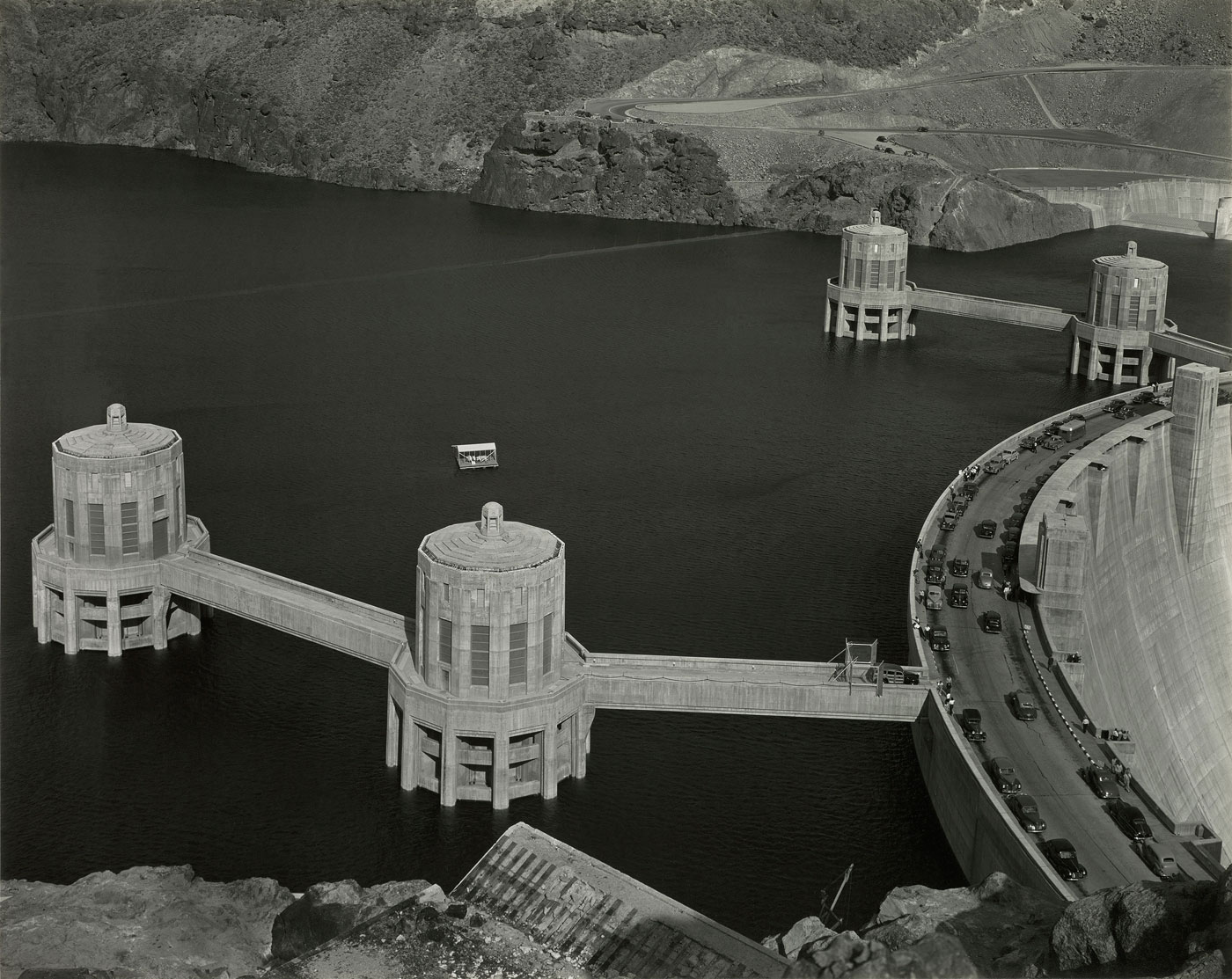
Edward Weston (American, 1886-1958) 'Boulder Dam' 1941


Edward Weston (American, 1886-1958)
Boulder Dam
1941
Gelatin silver print
The Lane Collection
Courtesy, Museum of Fine Arts, Boston


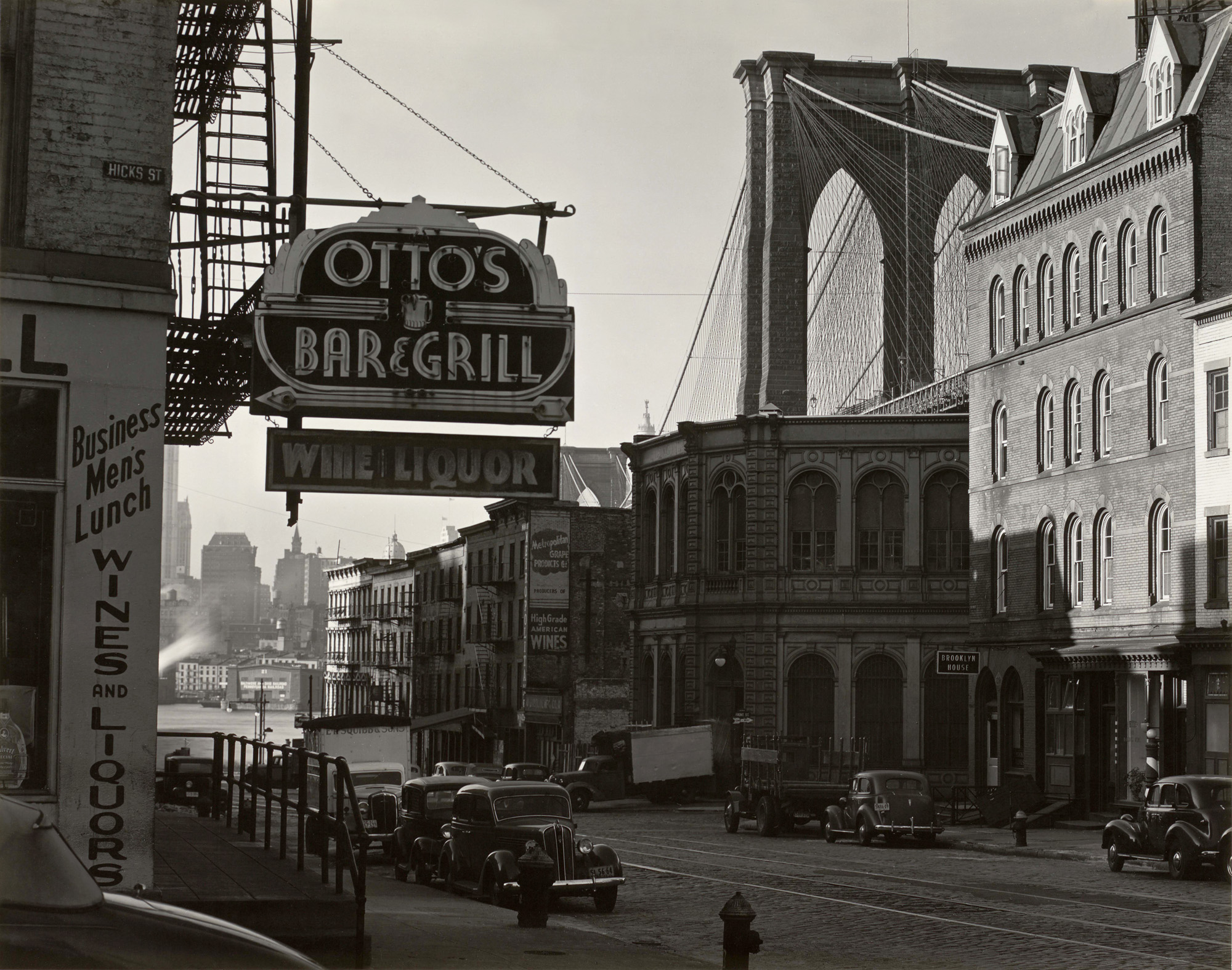
Edward Weston (American, 1886-1958) 'The Brooklyn Bridge' 1941


Edward Weston (American, 1886-1958)
The Brooklyn Bridge
1941
The Lane Collection
Courtesy, Museum of Fine Arts, Boston


Edward Weston (American, 1886-1958) 'From 515 Madison Avenue, New York' 1941


Edward Weston (American, 1886-1958)
From 515 Madison Avenue, New York
1941
Gelatin silver print
The Lane Collection
Courtesy, Museum of Fine Arts, Boston


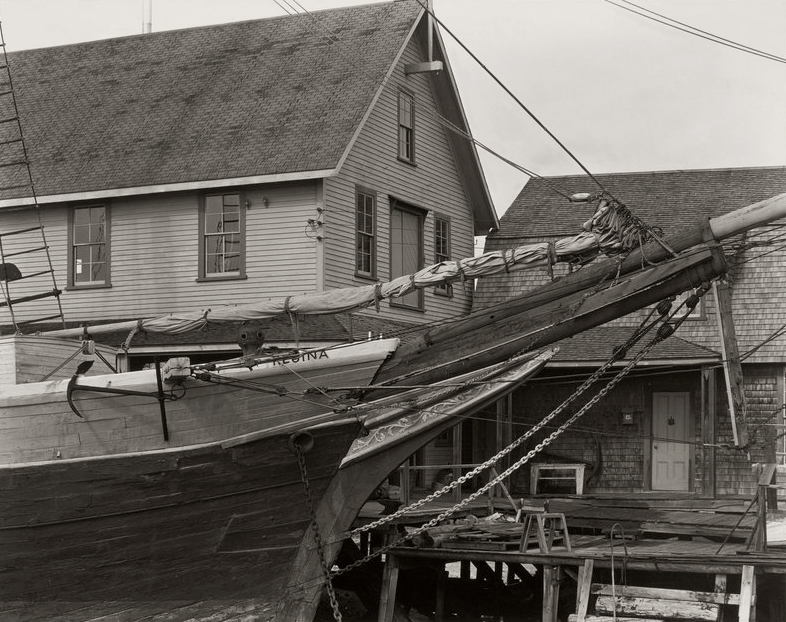
Edward Weston (United States, 1886-1958) 'Schooner, Kennebunkport, Maine' 1941


Edward Weston (American, 1886-1958)
Schooner, Kennebunkport, Maine
1941
Gelatin silver print
Courtesy of the Museum of Fine Arts, Boston


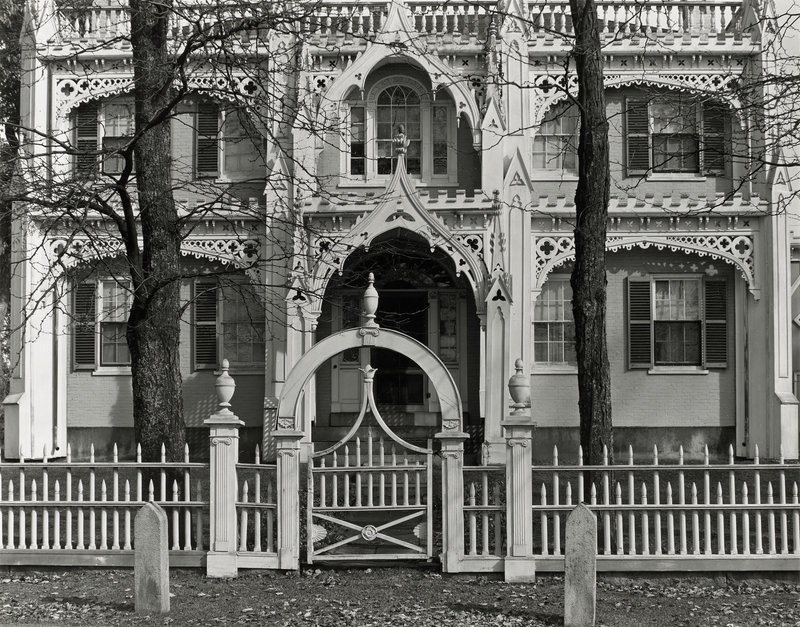
Edward Weston (United States, 1886-1958) 'Wedding Cake House, Kennebunkport, Maine' 1941


Edward Weston (American, 1886-1958)
Wedding Cake House, Kennebunkport, Maine
1941
Gelatin silver print
Courtesy of the Museum of Fine Arts, Boston


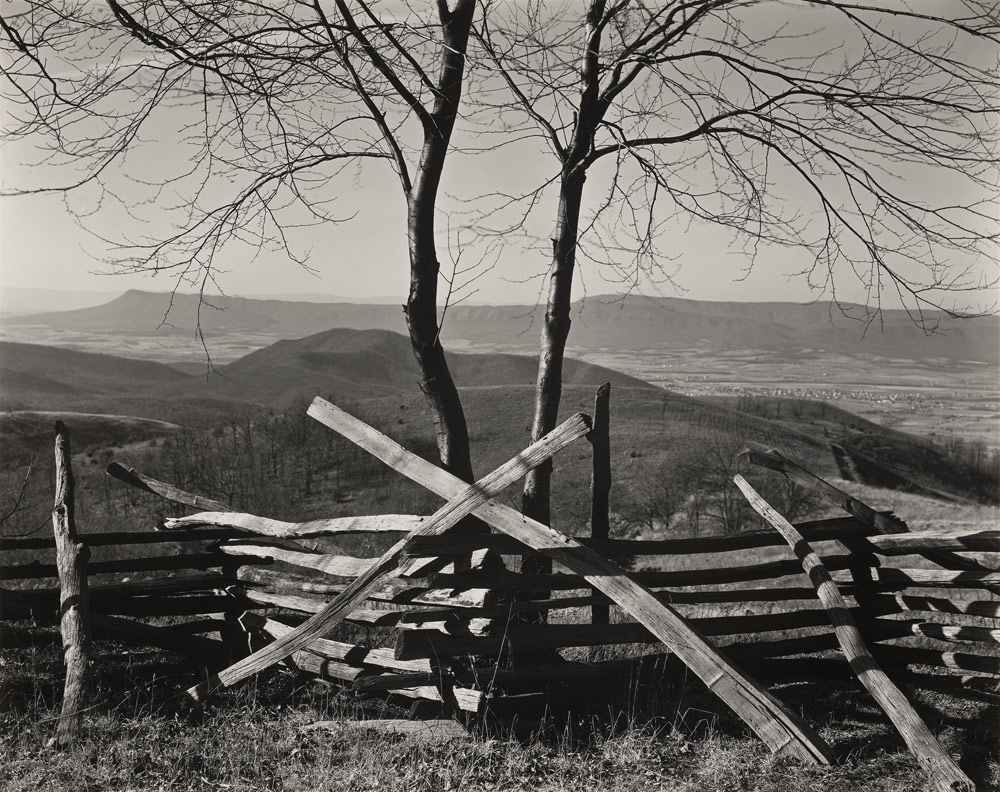
Edward Weston (American, 1886-1958) 'Shenandoah Valley, Virginia' 1941


Edward Weston (American, 1886-1958)

Shenandoah Valley, Virginia
1941
Gelatin silver print
The Lane Collection
Courtesy, Museum of Fine Arts, Boston


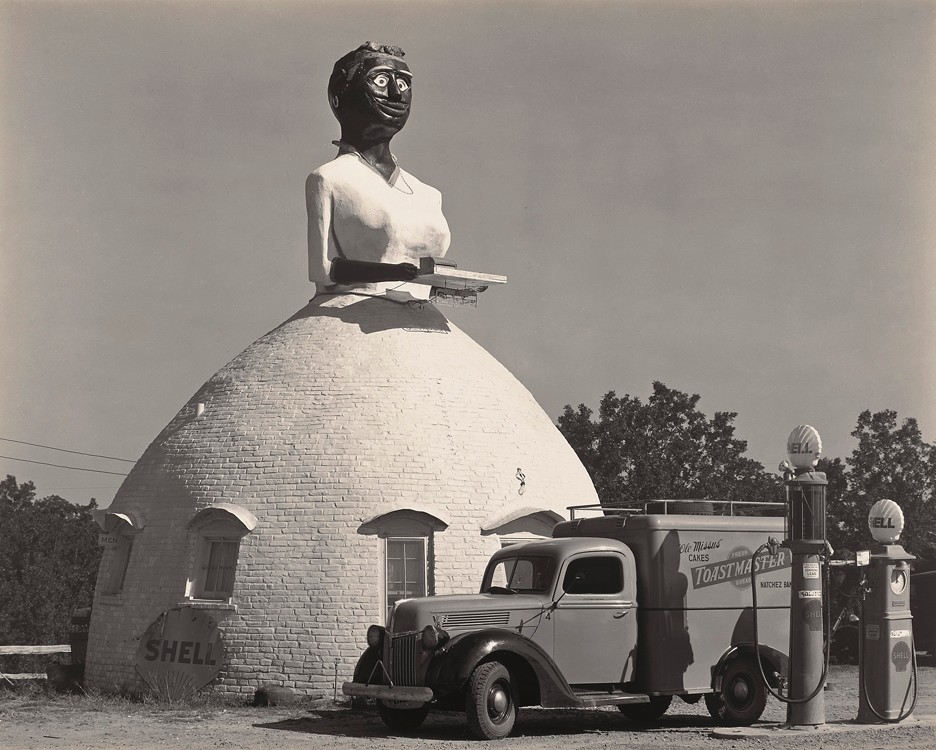
Edward Weston (American, 1886-1958) 'Mammy’s Cupboard, Natchez, Mississippi' 1941


Edward Weston (American, 1886-1958)
Mammy’s Cupboard, Natchez, Mississippi
1941
Gelatin silver print
The Lane Collection
Courtesy, Museum of Fine Arts, Boston


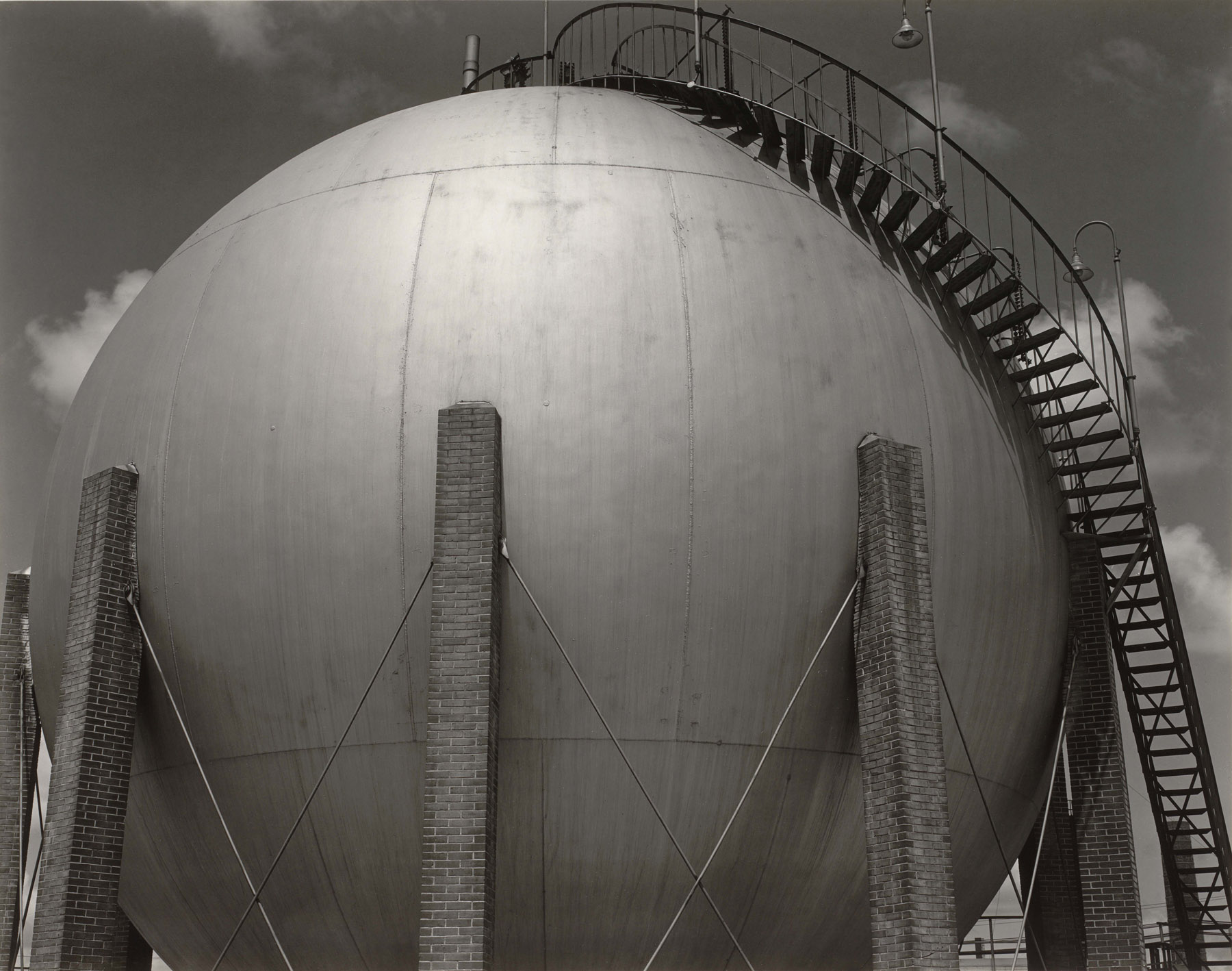
Edward Weston (American, 1886-1958) 'Gulf Oil, Port Arthur, Texas' 1941


Edward Weston (American, 1886-1958)
Gulf Oil, Port Arthur, Texas
1941
Gelatin silver print
The Lane Collection
Courtesy, Museum of Fine Arts, Boston


Edward Weston (American, 1886-1958) 'White Sands, New Mexico' 1941


Edward Weston (American, 1886-1958)
White Sands, New Mexico
1941
Gelatin silver print
The Lane Collection
Courtesy, Museum of Fine Arts, Boston


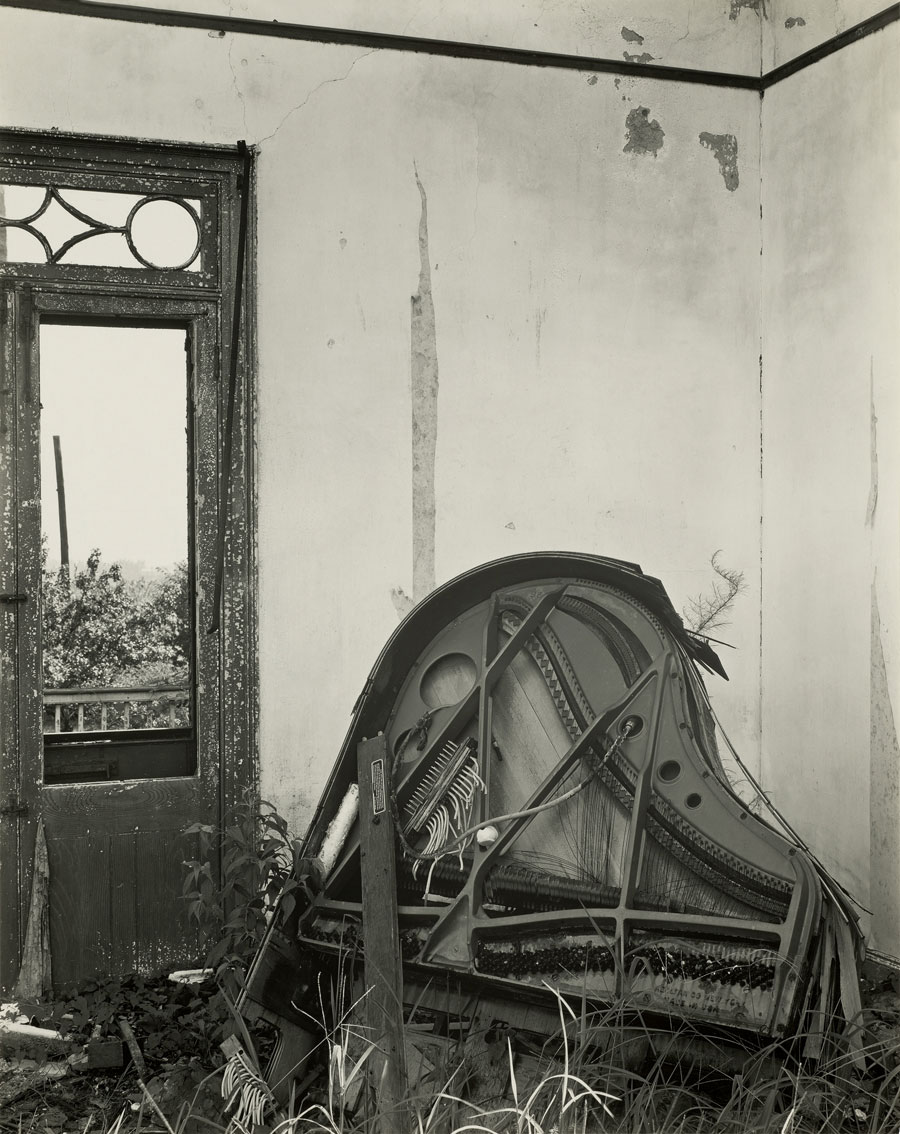
Edward Weston (American, 1886-1958) 'Woodlawn Plantation House, Louisiana' 1941


Edward Weston (American, 1886-1958)
Woodlawn Plantation House, Louisiana
1941
Photograph, gelatin silver print
The Lane Collection
Courtesy, Museum of Fine Arts, Boston


In 1941, the Limited Editions Club of New York invited photographer Edward Weston to illustrate its deluxe edition of Walt Whitman’s epic poem Leaves of Grass. The commission inspired Weston and his wife, Charis, to take a cross-country trip, throughout the South, the Mid-Atlantic states, New England, and back to California, in their trusty Ford, which they nicknamed “Walt.” Weston’s photographs from this project – mostly made with large, 8 x 10 camera – are exceptionally wide-ranging, with a particular focus on urban and man-altered landscapes. Although he never wanted his images to literally reflect Whitman’s text, Weston did relate to the poet’s plainspoken style and his emphasis on the broad spectrum of human experience. Weston wrote of the Whitman book: “I do believe… I can and will do the best work of my life. Of course I will never please everyone with my America – wouldn’t try to.

Text from the MFA Boston website


Edward Weston (American, 1886-1958) 'Girod Cemetery, New Orleans, Louisiana' 1941


Edward Weston (American, 1886-1958)
Girod Cemetery, New Orleans, Louisiana
1941
Gelatin silver print
The Lane Collection
Courtesy, Museum of Fine Arts, Boston


Edward Weston (American, 1886-1958) 'Meraux Plantation House, Louisiana' 1941


Edward Weston (American, 1886-1958)
Meraux Plantation House, Louisiana
1941
Gelatin silver print
The Lane Collection
Courtesy, Museum of Fine Arts, Boston


Edward Weston (American, 1886-1958) 'Belle Grove Plantation House, Louisiana' 1941


Edward Weston (American, 1886-1958)
Belle Grove Plantation House, Louisiana
1941
Gelatin silver print
The Lane Collection
Courtesy, Museum of Fine Arts, Boston


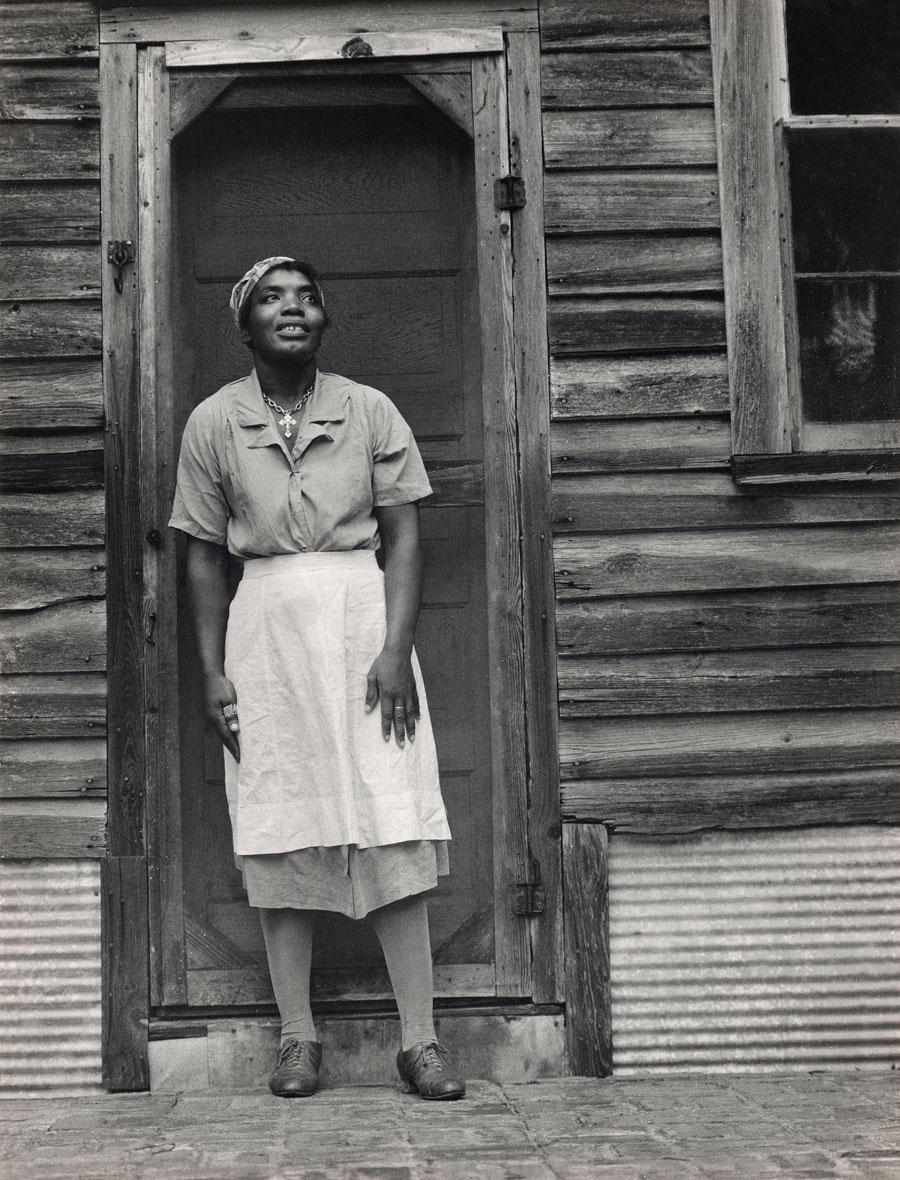
Edward Weston (American, 1886-1958) 'Bessie Jones. St. Simons Island, Georgia' 1941


Edward Weston (American, 1886-1958)
Bessie Jones. St. Simons Island, Georgia
1941
Gelatin silver print
The Lane Collection
Courtesy, Museum of Fine Arts, Boston


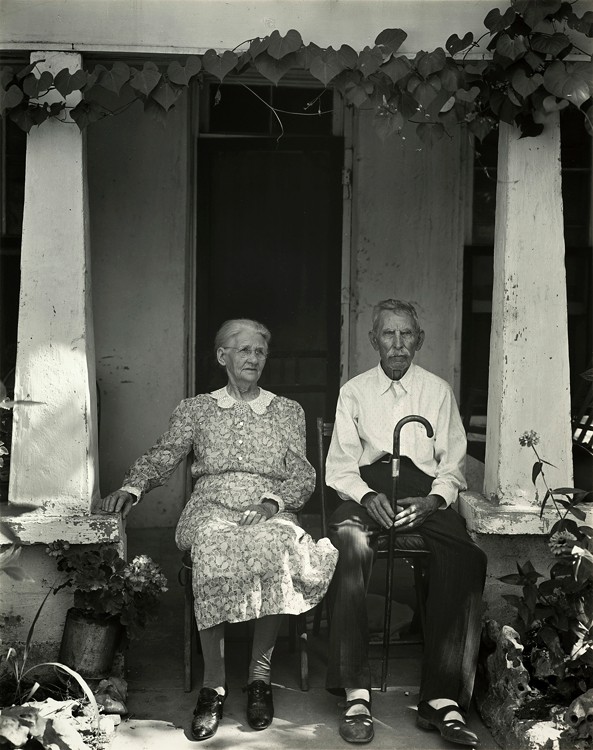
Edward Weston (American, 1886-1958) 'Mr. and Mrs. W. P. Fry, Burnet, Texas' 1941


Edward Weston (American, 1886-1958)
Mr. and Mrs. W. P. Fry, Burnet, Texas
1941
Gelatin silver print
The Lane Collection
Courtesy, Museum of Fine Arts, Boston


Part of Walt Whitman 'Song of Myself' from 'Leaves of Grass' 1855


Walt Whitman (American, 1819-1892)
Part of Song of Myself
from Leaves of Grass
1855


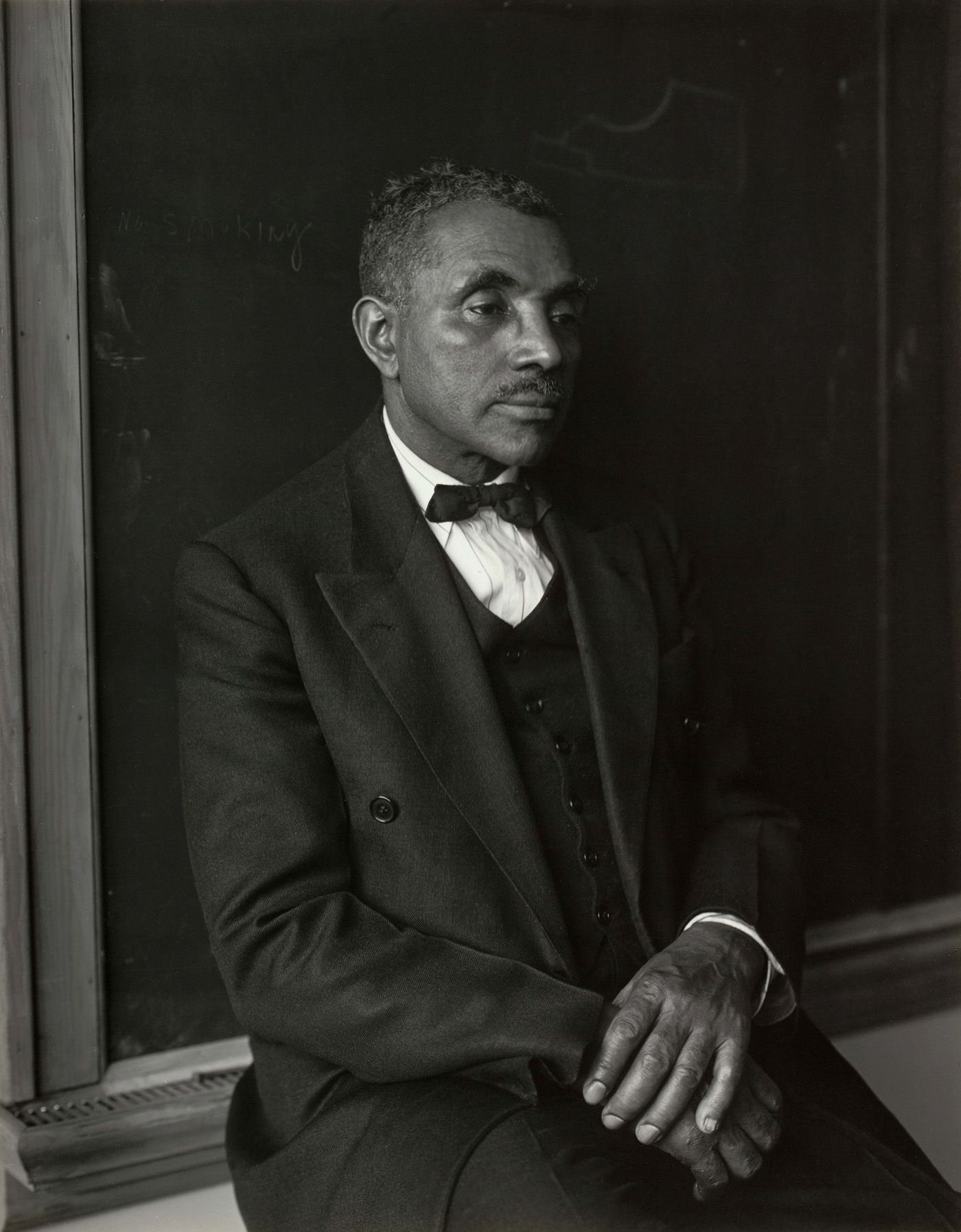
Edward Weston (American, 1886-1958) 'Mr. Brown Jones, Athens, Georgia' 1941


Edward Weston (American, 1886-1958)
Mr. Brown Jones, Athens, Georgia
1941
Gelatin silver print
The Lane Collection
Courtesy, Museum of Fine Arts, Boston


Edward Weston (American, 1886-1958) 'Charis Wilson' 1941


Edward Weston (American, 1886-1958)
Charis Wilson
1941
Photograph, gelatin silver print
The Lane Collection
Courtesy, Museum of Fine Arts, Boston


Museum of Fine Arts, Boston
Avenue of the Arts
465 Huntington Avenue
Boston, Massachusetts

Opening hours:
Wednesday – Sunday 10am – 5pm
Closed Mondays and Tuesdays

Museum of Fine Arts, Boston website

LIKE ART BLART ON FACEBOOK

Back to top

Exhibition: ‘In Focus: Los Angeles, 1945-1980’ at the J. Paul Getty Museum, Los Angeles

Exhibition dates: 20th December 2011 – 6th May 2012


Anthony Friedkin (American, b. 1949) 'Clockwork Malibu' 1978


Anthony Friedkin (American, b. 1949)
Clockwork Malibu
1978
Gelatin silver print
11 15/16 x 18 5/16 in
The J. Paul Getty Museum, Los Angeles
Gift of Sue and Albert Dorskind
© Anthony Friedkin


While Anthony Friedkin has documented subjects as diverse as the marginalised gay community of San Francisco, convicts at Folsom Prison, and brothels in New York, it is the Southern California coastline that has remained a recurrent theme throughout his forty-five-year career. The Los Angeles native took up photography about the same time he learned to surf. His images of waves deftly communicate the primordial power and elusive mysteries that he ascribes to the ocean. This photograph of surfer Rick Dano on an early morning drive up the coast conveys a mood of quiet, anticipatory harmony.

Text from Pacific Standard Time at the Getty


I have never particularly liked Los Angeles as a city. There seems to be something unappealing about the place, some energy lurking just beneath the surface that you can’t quite put your finger on. Maybe it is the comparison with the vivacious San Francisco just up the coast, the awful public transport or, more spookily, the lack of people on the street. People never walk anywhere in LA, it’s a car town. When I did walk on the street I felt vulnerable and surveyed with suspicion by people in cars, like a rabbit caught in the headlights.

These photographs confirm this feeling. Unlike the visual acoustics of the architectural photographs of Julius Shulman (photographs that mythologised this urban metropolis and then exported that idealised presence and Californian mid-century design to the rest of the world) these photographs have an unbelievably desolatory nature to them. They seem to be joyless and sorrowful, devoid of warmth, comfort, or hope – as though the human and the city were separated, as if we are separated from a loved one.

The row after row of tinderbox houses, the ubiquitous cars, the sense of emptiness, hopelessness and menace (see Gary Winogrand Los Angeles 1964, below – if looks could kill this would be it, the bandaged broken nose just perfect for the photograph) all paint a picture of despair. Even the supposedly quiet, anticipatory harmony of the photograph of surfer Rick Dano by Anthony Friedkin (1978, below top) is, to me, full of unresolved tension. The mist in the background hanging over the rocks, blocking out the view, the filthy hands and the bandaged little finger of the right hand, the downcast eyes, the impossibly long cigarette handing from his lips and most importantly the empty distance between the figure and the safety of the automobile. The tension in that distance and the downcast eyes says nothing to me of harmony but of isolation, sadness and regret.

Los Angeles is not my favourite city but it is a fascinating place none the less, as these photographs do attest.

Dr Marcus Bunyan


Many thankx to the J. Paul Getty Museum for allowing me to publish the photographs in the posting. Please click on the photographs for a larger version of the image.


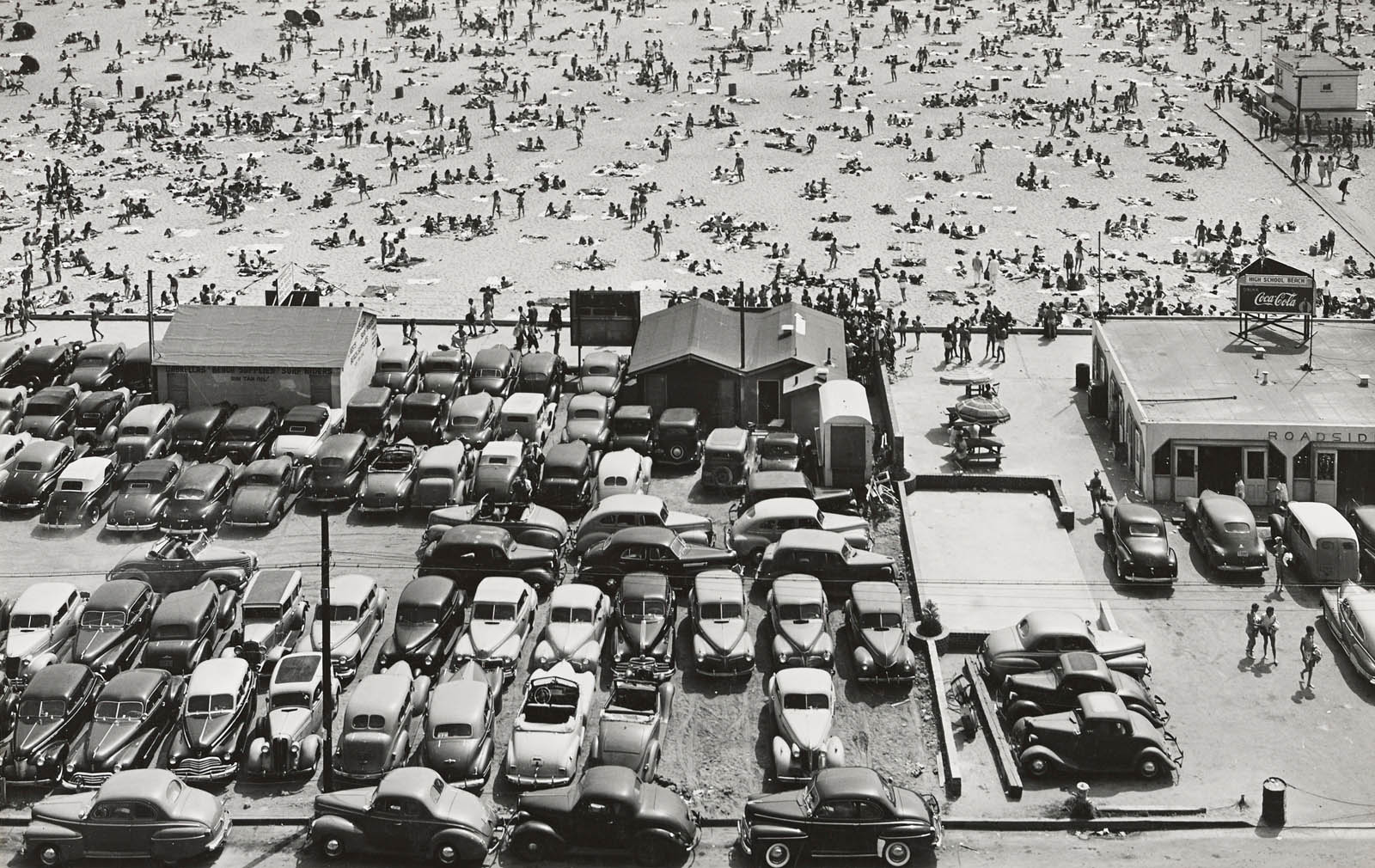
Max Yavno (American, 1911-1985) 'High School Beach' 1945


Max Yavno (American, 1911-1985)
High School Beach
1945
Gelatin silver print
22.1 x 34.4cm
The J. Paul Getty Museum, Los Angeles
Gift of Marjorie and Leonard Vernon
© 1988 Centre for Creative Photography, The University of Arizona Foundation


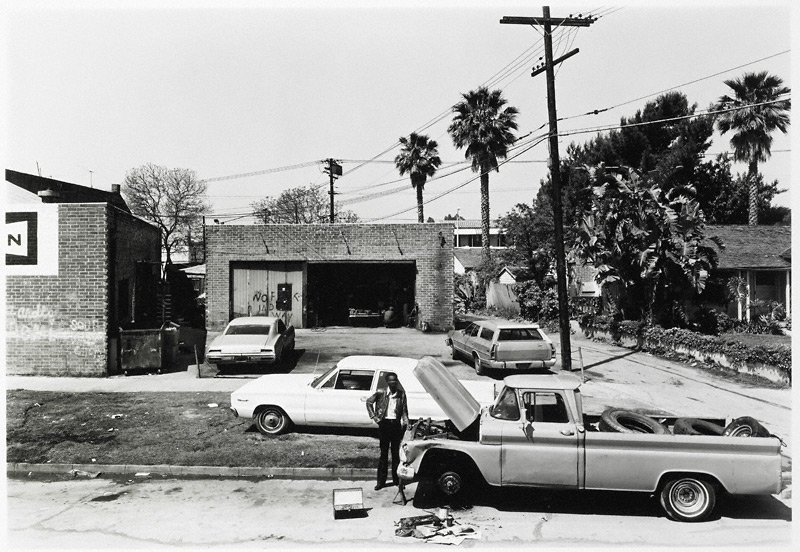
Anthony Hernandez (American, b. 1947) 'Automotive Landscapes #5, Los Angeles' 1978


Anthony Hernandez (American, b. 1947)
Automotive Landscapes #5: Los Angeles
1978
Gelatin silver print
11 3/4 x 17 1/8 in
The J. Paul Getty Museum, Los Angeles
Purchased in part with funds provided by the Photographs Council of the J. Paul Getty Museum
© Anthony Hernandez


Hernandez started photographing what he refers to as “automotive landscapes” in 1977, using a 35mm camera until he realised that a large-format camera loaded with 5 x 7-inch negative film would provide the detail he desired. Taken from a slightly elevated vantage point, Hernandez’s image of an immobilised truck and its lone mechanic in front of a repair shop presents a sobering view of Los Angeles’s car-dominant culture.

Text from Pacific Standard Time at the Getty


Gary Winogrand (American, 1928-1984) 'Los Angeles' 1964


Gary Winogrand (American, 1928-1984)
Los Angeles
1964
Gelatin silver print
9 x 13 7/16 in
The J. Paul Getty Museum, Los Angeles
© 1984 The Estate of Gary Winogrand


This image of a couple seated in a parked convertible in front of a nightclub on Sunset Boulevard simultaneously captures the glamour and seediness associated with Hollywood. Evoking a 1940s or ’50s film noir crime drama, a seeming tough guy and femme fatale continue their heated conversation, apparently oblivious to the traffic around them – and to the photographer observing them. A native of New York City, Winogrand studied painting at Columbia University and photography at the New School for Social Research before doing freelance commercial work. He photographed incessantly, using a 35mm camera to create wide-angled or tilted shots that are densely composed and layered with meaning. More than 2,500 rolls of film remained undeveloped at the time of his death in 1984.

Text from Pacific Standard Time at the Getty


As part of the region-wide Pacific Standard Time: Art in L.A., 1945-1980 initiative, The J. Paul Getty Museum presents In Focus: Los Angeles, 1945-1980, an exhibition of photographs from the permanent collection made by artists whose time in Los Angeles inspired them to create memorable images of the city, on view at the Getty Center from December 20, 2011 – May 6, 2012.

This exhibition features both iconic and relatively unknown work by artists whose careers are defined by their association with Los Angeles, who may have lived in the city for a few influential years, or who might have visited only briefly,” said Virginia Heckert, curator, Department of Photographs, the J. Paul Getty Museum, and curator of the exhibition.

The photographs are loosely grouped around the themes of experimentation, street photography, architectural depictions, and the film and entertainment industry. Works featured in the exhibition are from artists such as Jo Ann Callis, Robert Cumming, Joe Deal, Judy Fiskin, Anthony Friedkin, Robert Heinecken, Anthony Hernandez, Man Ray, Edmund Teske, William Wegman, Garry Winogrand, and Max Yavno. Two of the works in the exhibition by Anthony Hernandez and Henry Wessel Jr. were acquired with funds from the Getty Museum Photographs Council. Drawn from the Museum’s permanent collection, including several recent acquisitions inspired by the Pacific Standard Time initiative, the exhibition offers visitors the opportunity to familiarise themselves with a broad range of approaches to the city of Los Angeles as a subject and to the photographic medium itself.

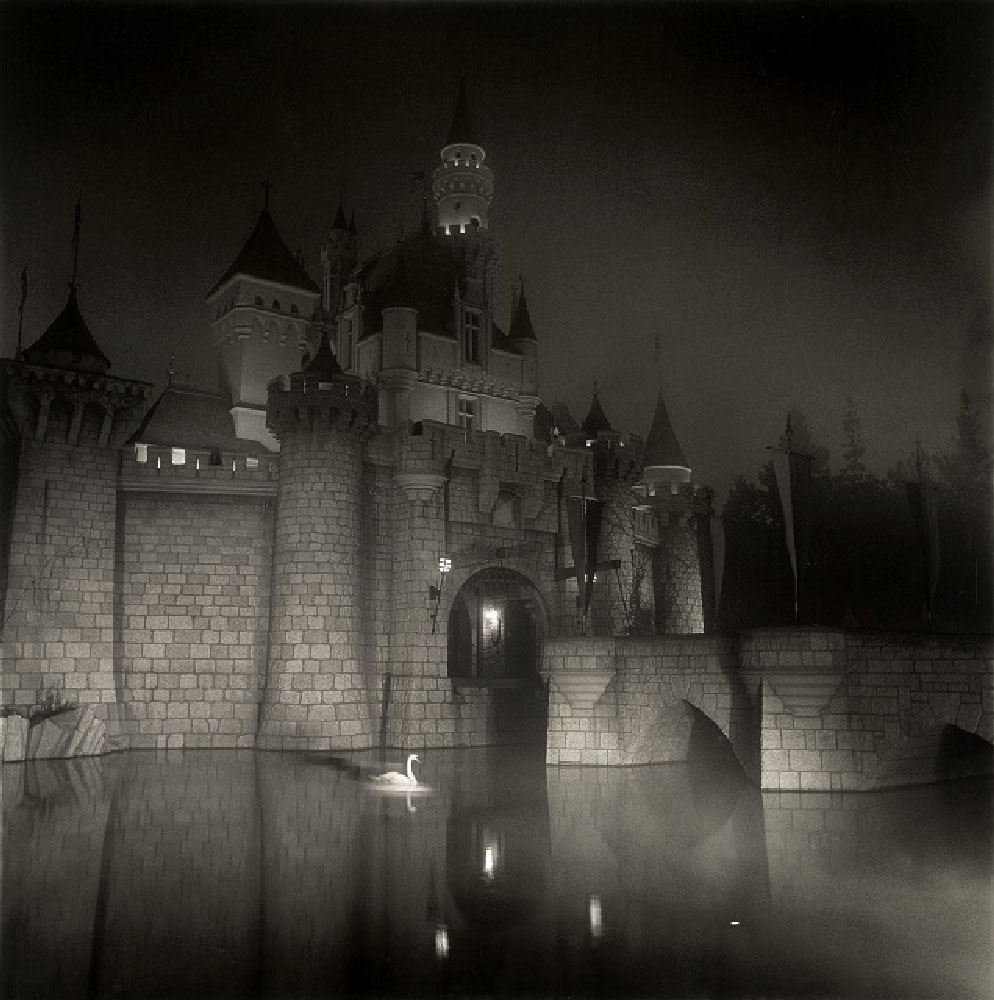
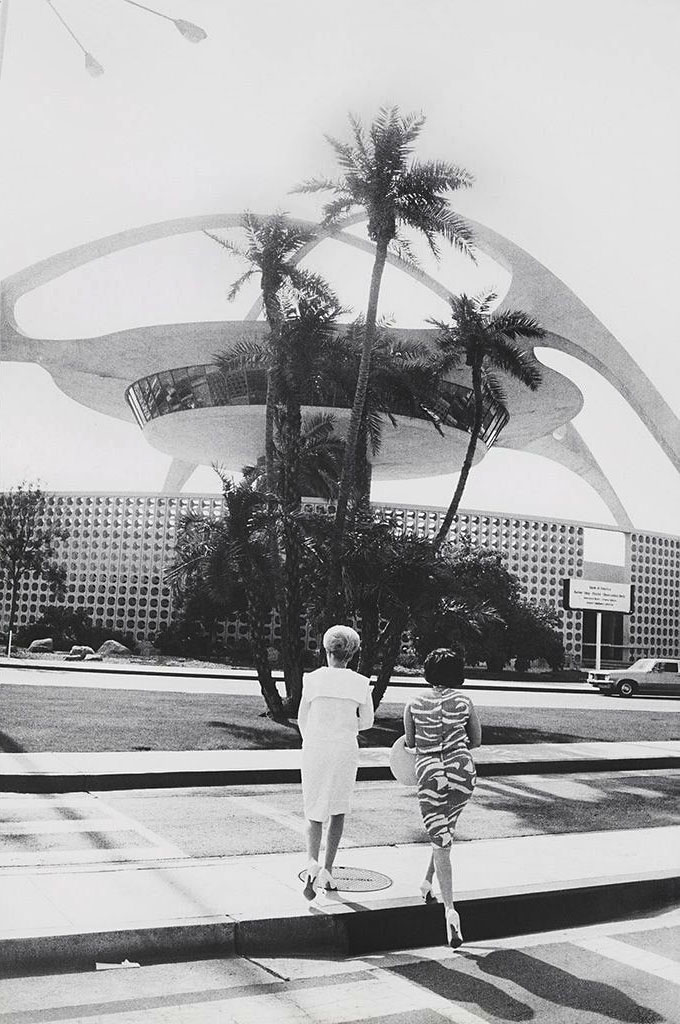
One of the most well-known works in the exhibition is Garry Winogrand’s photograph of two women walking towards the landmark theme building designed by Charles Luckman and William Pereira that has come to symbolise both Los Angeles International Airport and mid-century modern architecture in popular culture. Though a quintessential New Yorker, Winogrand made some of his most memorable photographs in Los Angeles, where he chose to settle in the final years of his life. Also included in the exhibition is Diane Arbus’ dreamily lit photograph of Sleeping Beauty Castle at Disneyland park in Anaheim. Although technically not located in either the city or the county of Los Angeles, Disneyland – and Arbus’ photograph – continues to capture the notion of entertainment and fantasy that has come to be so intrinsically associated with the city.

Other photographers in the In Focus: Los Angeles exhibition who produced the majority of their most creative work in the city include Edmund Teske, with his experimentation in the darkroom and his complex double solarisation process; Robert Heinecken, with images that are equally complex but often incorporate existing printed materials, such as negatives; Anthony Hernandez, whose portraits of Angelenos on the street emphasise the isolation of the individual in an urban environment; and Anthony Friedkin, who combines his passions for surfing and the Southland beaches in his photographs. The inclusion of three photographs from Judy Fiskin’s earliest photographic series, Stucco (1973-1976), provided the impetus for a monographic presentation of the artist’s complete photographic work by Getty Publications. Entitled Some Aesthetic Decisions: The Photographs of Judy Fiskin and featuring an introductory essay by curator Virginia Heckert, the book will be published concurrently with this exhibition.

Press release from the J. Paul Getty Museum website


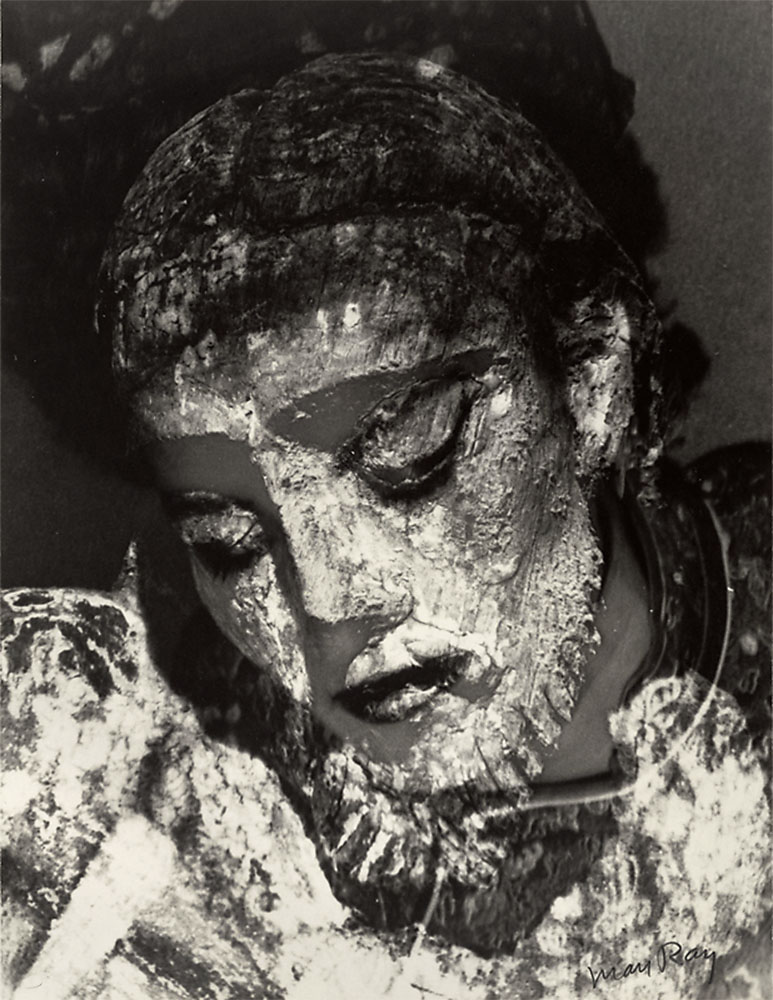
Man Ray (Emmanuel Radnitsky)(American, 1890-1976) 'Juliet with Mud Mask' 1945


Man Ray (Emmanuel Radnitsky)(American, 1890-1976)
Juliet with Mud Mask
1945
Gelatin silver print
35.6 x 27.1cm
The J. Paul Getty Museum, Los Angeles
© Man Ray Trust


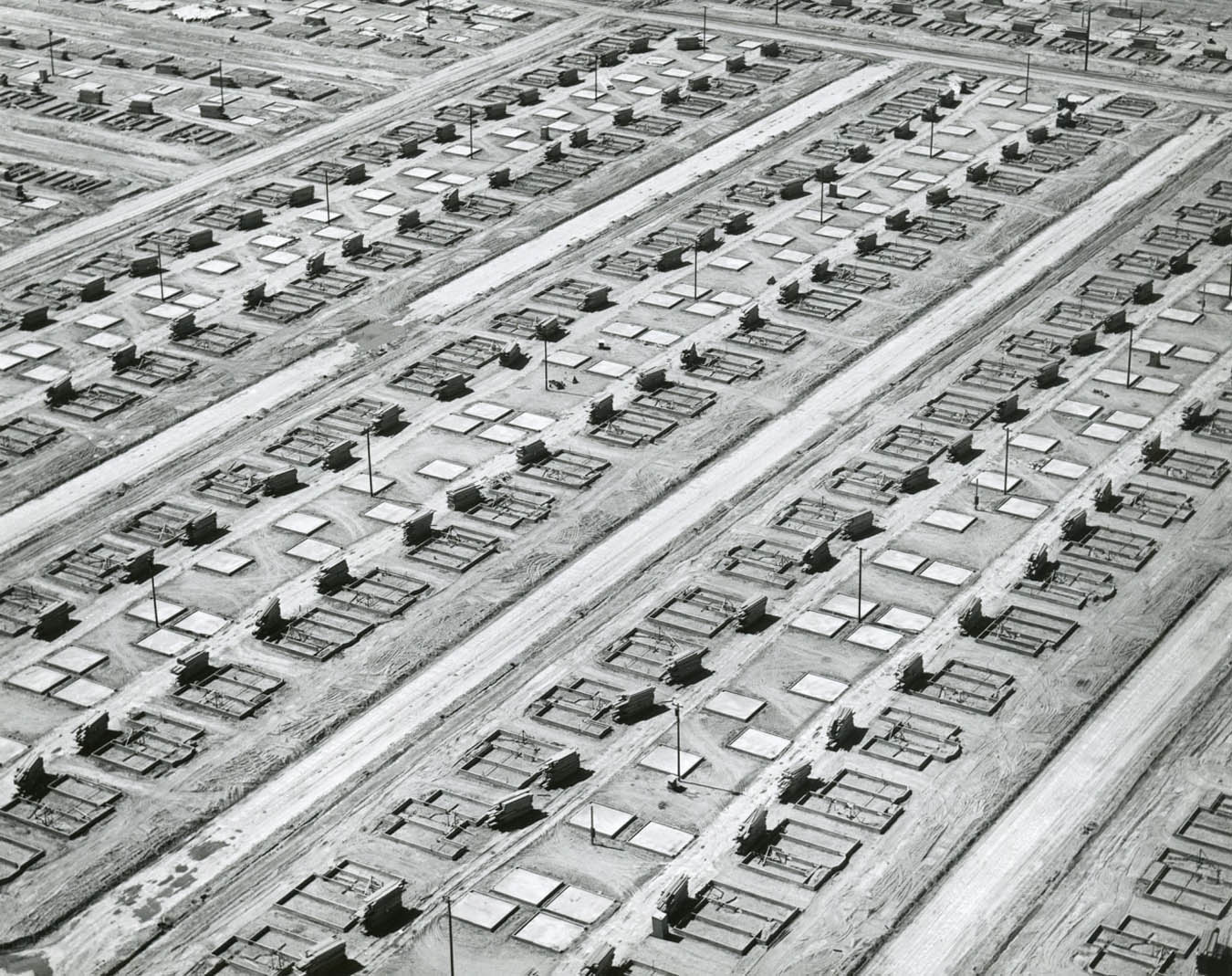
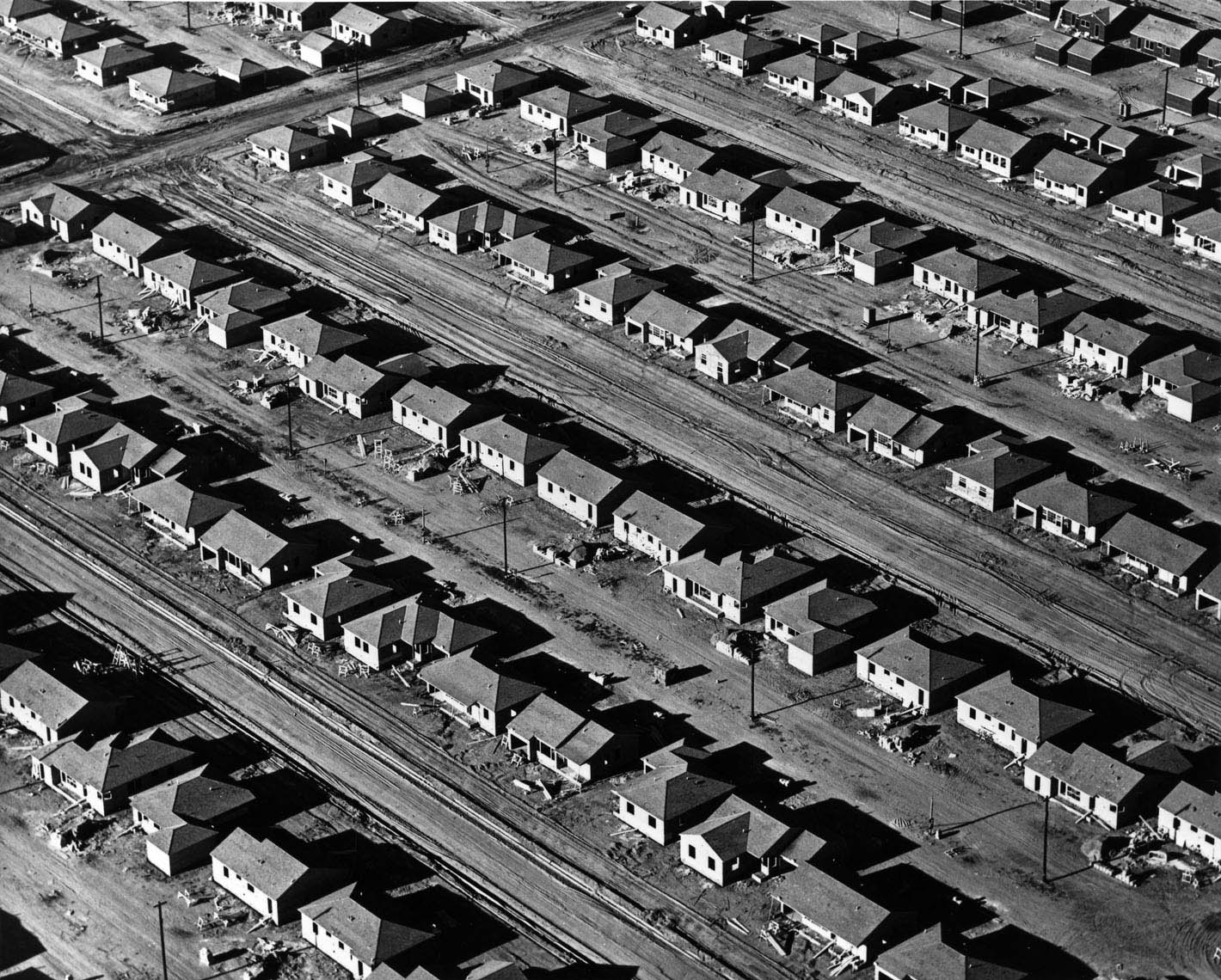
William Garnett (American, 1916-2006) 'Foundations and Slabs, Lakewood, California' 1950


William Garnett (American, 1916-2006)
Foundations and Slabs, Lakewood, California
1950
Gelatin silver print
18.9 x 23.8cm
The J. Paul Getty Museum, Los Angeles
© Estate of William A. Garnett


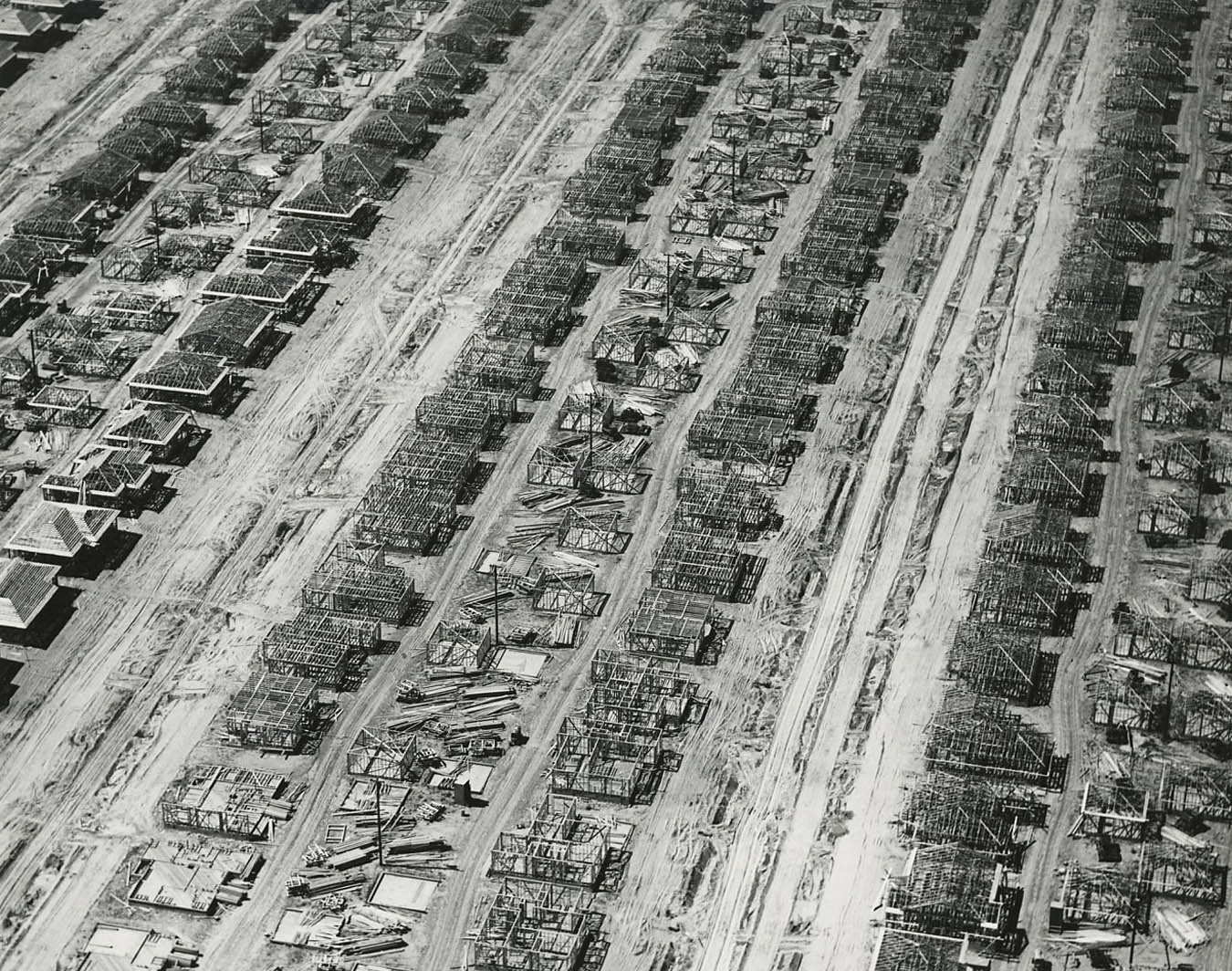
William Garnett (American, 1916-2006) 'Framing, Lakewood, California' 1950


William Garnett (American, 1916-2006)
Framing, Lakewood, California
1950
Gelatin silver print
18.4 x 24.1cm
The J. Paul Getty Museum, Los Angeles
© Estate of William A. Garnett


William Garnett (American, 1916-2006) 'Plaster and Roofing, Lakewood, California' 1950


William Garnett (American, 1916-2006)
Plaster and Roofing, Lakewood, California
1950
Gelatin silver print
18.4 x 24.1cm
The J. Paul Getty Museum, Los Angeles
© Estate of William A. Garnett


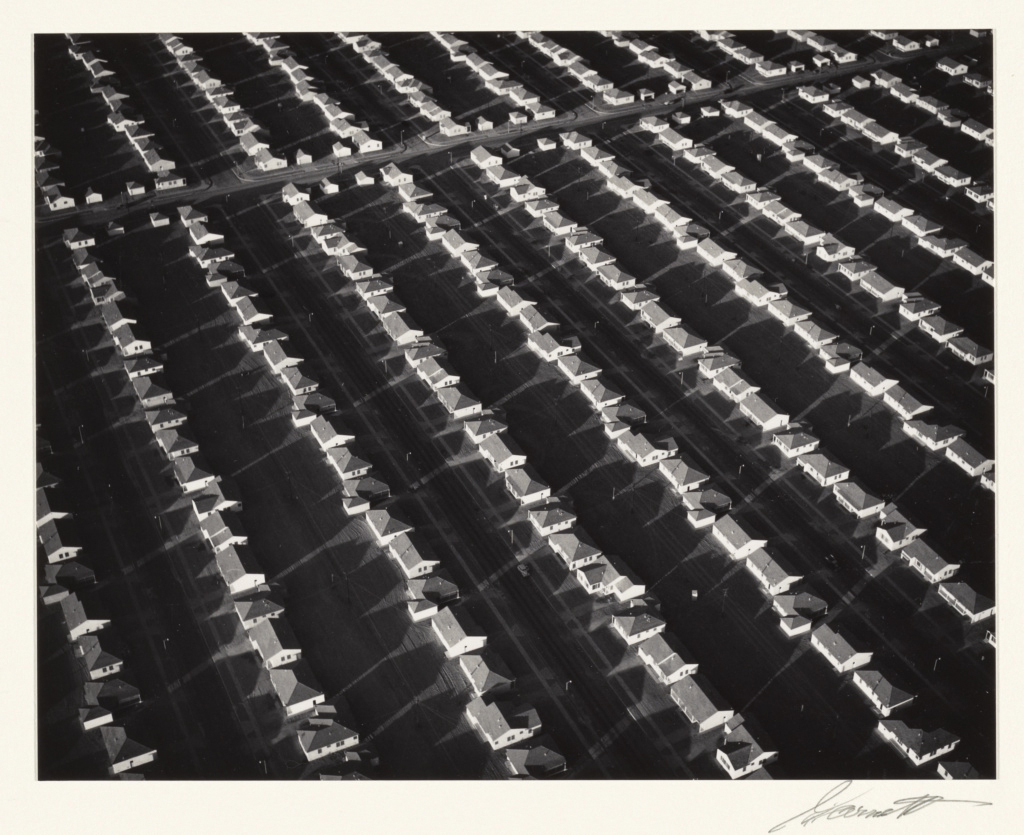
William A. Garnett (American, 1916-2006) 'Finished Housing, Lakewood, California' 1950


William A. Garnett (American, 1916-2006)
Finished Housing, Lakewood, California
1950
Gelatin silver print
7 3/8 x 9 7/16 in
The J. Paul Getty Museum, Los Angeles
© Estate of William A. Garnett


The reduced scale and regular spacing of shapes lend a toy-like quality to Garnett’s suite of prints depicting construction phases of tract housing in the Los Angeles County suburb of Lakewood. The deep shadows, overall patterning, and dramatic diagonals that slice through each composition introduce a sophisticated sense of design and abstraction. After studying photography at Art Center College of Design and military service during World War II, William Garnett learned to fly so that he could photograph his subjects from his Cessna 170-B airplane. Although he was hired by developers to document the construction of 17,500 affordable single-family residences in Lakewood, the majority of his aerial photographs depict the beauty of America’s landscape.

Text from Pacific Standard Time at the Getty


Diane Arbus (American, 1923-1971) 'A Castle in Disneyland' Negative, 1962; print, 1973


Diane Arbus (American, 1923-1971)
A Castle in Disneyland
Negative, 1962; print, 1973
Gelatin silver print
24 x 24cm
The J. Paul Getty Museum, Los Angeles
© Estate of Diane Arbus


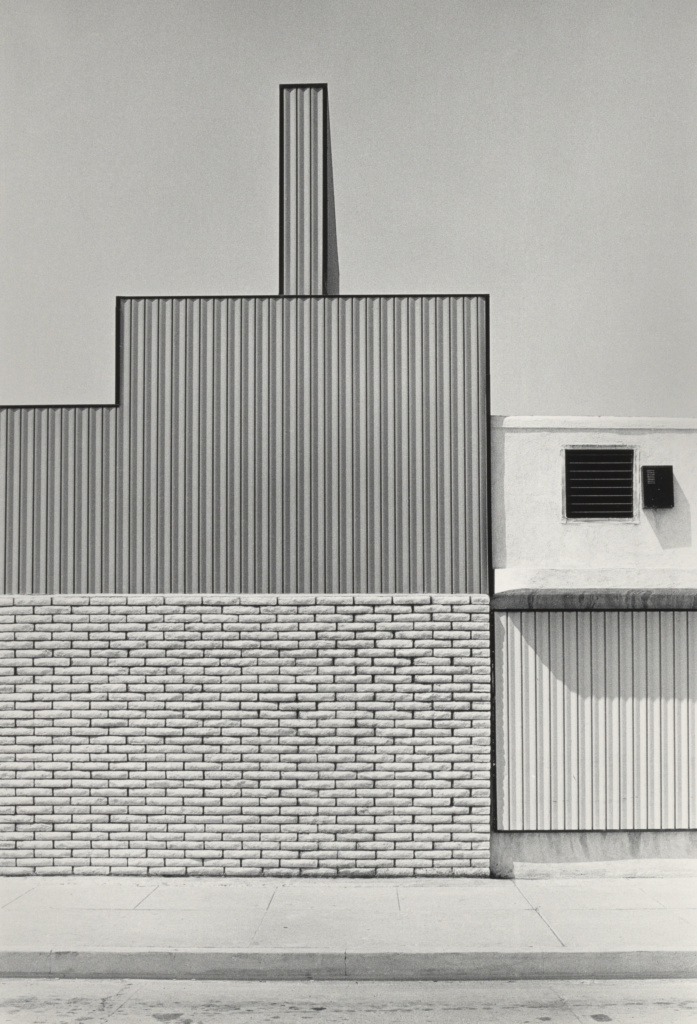
Grant Mudford (Australian, b. 1944) 'Los Angeles (US 257/10a)' negative, 1976; print, 1980


Grant Mudford (Australian, b. 1944)
Los Angeles (US 257/10a)
Negative, 1976; print, 1980
Gelatin silver print
19 1/4 x 13 1/8 in
© Grant Mudford


After working for ten years as a commercial photographer, Sydney native Grant Mudford received funding from the Australia Council for the Arts, enabling him to travel throughout the United States to pursue personal work. Mudford’s love of architecture – particularly the vernacular, often anonymous structures of urban America – is evident in the photographs he produced. His head-on depictions of the façades of simple commercial buildings are enlivened by signage, the play of light and shade, the placement of doors and windows, or, as in this image, the rich variety of textures.

Text from Pacific Standard Time at the Getty


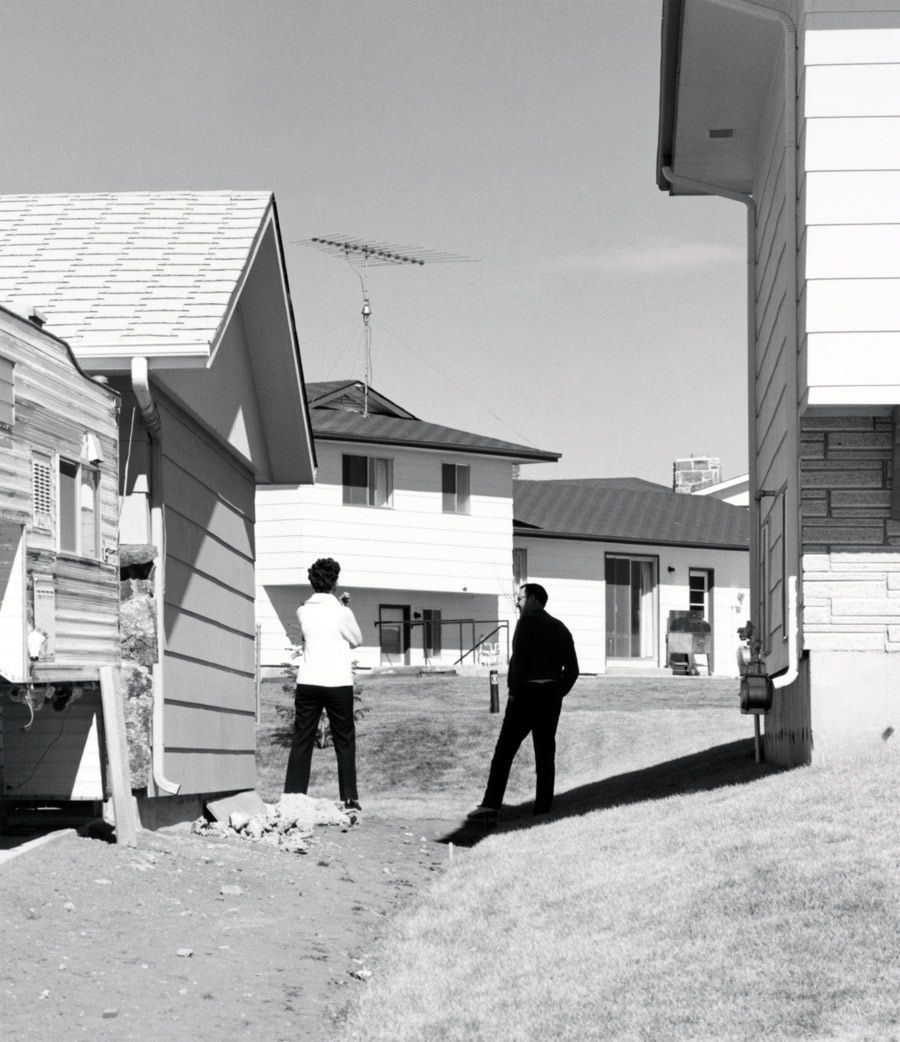
Joe Deal (American, 1947-2010) 'Backyard, Diamond Bar, California' 1980


Joe Deal (American, 1947-2010)
Backyard, Diamond Bar, California
1980
Gelatin silver print
11 3/16 x 11 1/4 in
The J. Paul Getty Museum, Los Angeles
© Joe Deal


Joe Deal rose to prominence in the mid-1970s when work he made as a graduate student at the University of New Mexico was included in the exhibition New Topographics: Photographs of a Man-Altered Landscape (1975). From 1976 to 1989, he taught photography at the University of California, Riverside, where he was instrumental in establishing a photography program and developing the university-affiliated California Museum of Photography. His photographs of Diamond Bar feature backyards of this primarily residential suburb located at the junction of the Pomona and Orange freeways in eastern Los Angeles County. Deal’s implementation of a slightly elevated perspective that eliminates the horizon line and provides a view into neighbouring yards effectively conveys the close quarters of life in a master-planned community.

Text from Pacific Standard Time at the Getty


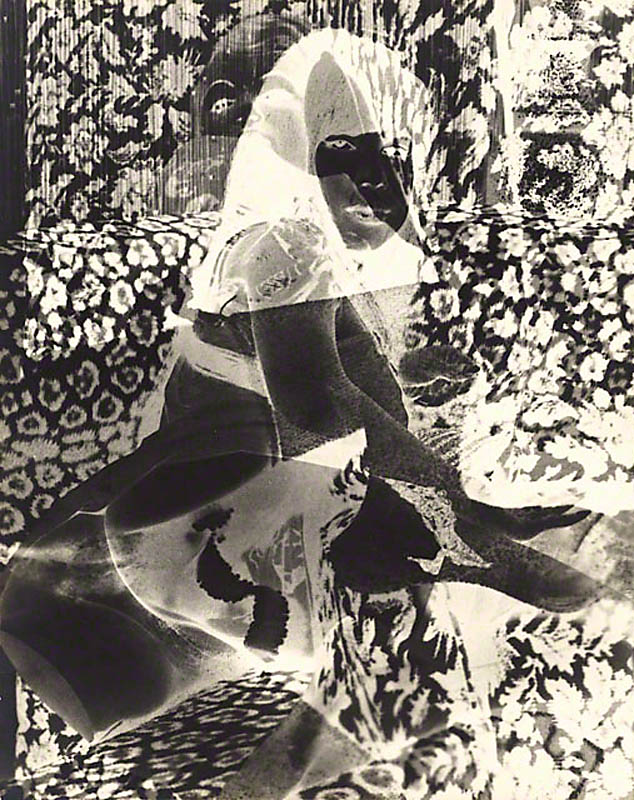
Robert Heineken (American, 1931-2006) 'Untitled (Studies #7)' 1970


Robert Heineken (American, 1931-2006)
Untitled (Studies #7)
1970
Gelatin silver print
9 15/16 x 7 15/16 in.
The J. Paul Getty Museum, Los Angeles
© The Estate of Robert Heineken


Garry Winogrand (American, 1928-1984) 'Los Angeles International Airport' 1964


Garry Winogrand (American, 1928-1984)
Los Angeles International Airport
1964
Gelatin silver print
The J. Paul Getty Museum, Los Angeles
© 1984 The Estate of Garry Winogrand


“It is immediately apparent that no city has ever been produced by such an extraordinary mixture of geography, climate, economics, demography, mechanics and culture; nor is it likely that an even remotely similar mixture will ever occur again.” ~ Reyner Banham, Los Angeles: The Architecture of Four Ecologies, 1971

This exhibition features photographs – made between 1945 and 1980 – from the Museum’s collection that represent diverse responses to the city of Los Angeles as a subject and to photography as a medium for documentary and creative expression. It is loosely grouped around the themes of experimental photography, vernacular architecture, car culture, and fantasy and the film industry.

Both iconic and relatively unknown works are included. One of the best known is Garry Winogrand’s image of two women walking towards the Theme Building at L.A. International Airport (see image above). Though a quintessential New Yorker, Winogrand settled in Los Angeles near the end of his life.

Experimental Photography

With its reclining figure set against a patterned background, Robert Heineken’s image recalls the odalisques of French painter Henri Matisse (see image above). To Heineken, however, traditional subjects and techniques were of little interest. He created this camera-less photograph by using a page torn from a magazine as the negative. This allowed light to pass through and merge depictions on both sides of the page into a single image with reversed tones.

In 1963, Heineken founded the photography program at the University of California, Los Angeles. He forged new directions in photography, utilising strategies of manipulation and appropriation to address themes of consumer culture and sexual politics.

Vernacular Architecture

Judy Fiskin’s propensity to backlight her subjects makes it difficult to read the details in the modest examples of vernacular architecture found in Westside neighbourhoods of Los Angeles that she photographed for her Stucco series. Viewers may be inclined to squint against the harsh light of Southern California that Fiskin makes so palpable. Nevertheless, the small scale of her images, contained by the black edges of the negative, encourages close viewing.

After completing graduate studies in art history at UCLA, Fiskin joined the faculty of the California Institute of Arts in 1977.

Car Culture

A native of Los Angeles, following two years of study at East Los Angeles College and two years of service in the U.S. Army, Anthony Hernandez took up photography in earnest around 1970.

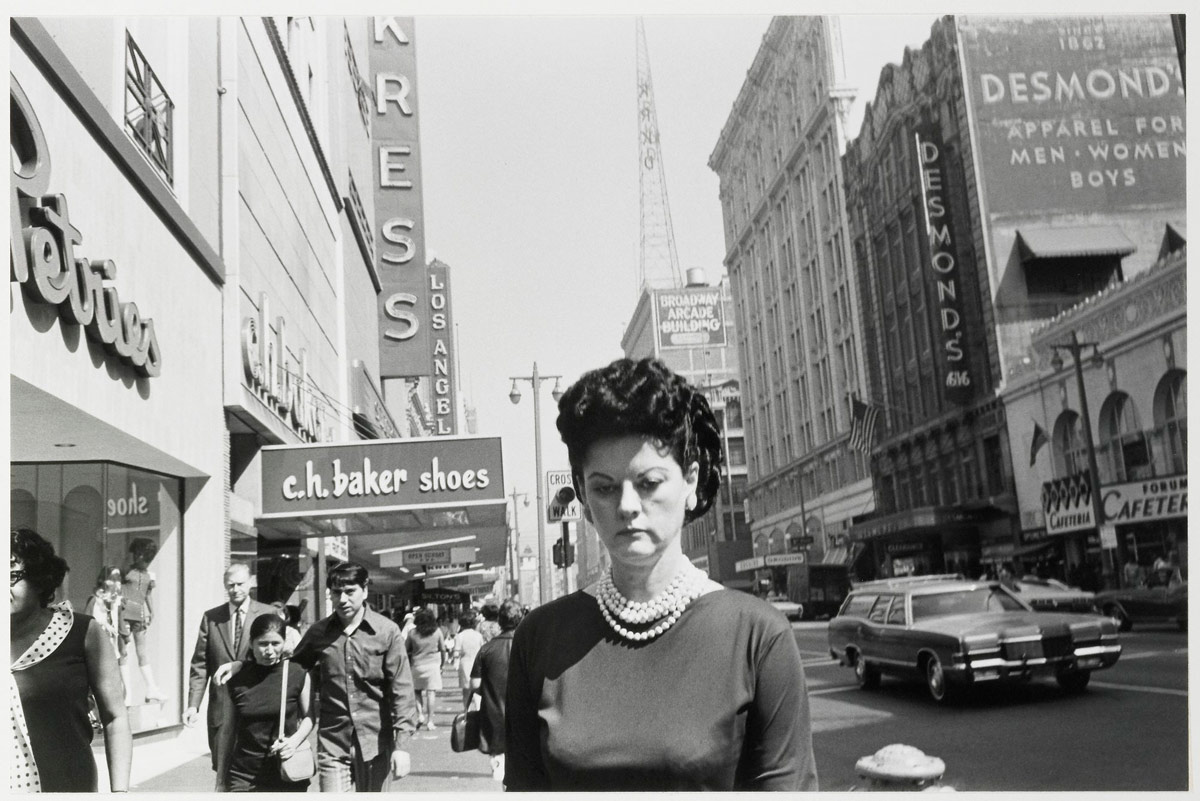
For this image, Hernandez preset his 35mm camera so that objects within a specific range would be in focus. Then, while walking the streets of downtown Los Angeles, he swung the camera to his eye for a fraction of a second to capture fellow pedestrians as well as the ambient mood of a city more typically experienced from the driver’s seat (see image below).

Fantasy and the Film Industry

Los Angeles native Anthony Friedkin took up photography about the same time he learned to surf, and was already an accomplished photographer by age 16. He then studied at Art Center College of Design and the University of California, Los Angeles.

Friedkin began working as a still photographer for motion pictures in 1975. His depiction of row after row of film cans might be viewed as a historical document of a medium that has been replaced by new technology (see image below).

Anonymous. “In Focus: Los Angeles, 1945-1980,” on the J. Paul Getty Museum website Nd [Online] Cited 18/10/2024


Anthony Hernandez (American, b. 1947) 'Los Angeles #3' 1971


Anthony Hernandez (American, b. 1947)
Los Angeles #3
1971
Gelatin silver print
7 3/4 x 11 13/16 in
The J. Paul Getty Museum, Los Angeles
Purchased in part with funds provided by the Photographs Council
© Anthony Hernandez


Following two years of study at East Los Angeles College and two years of service in the U.S. Army, Anthony Hernandez took up photography in earnest around 1970. For this image, he preset his 35mm camera so that objects within a specific range would be in focus. Then, while walking the streets of downtown Los Angeles, he swung the camera to his eye for a fraction of a second to capture fellow pedestrians as well as the ambient mood of a city more typically experienced from the driver’s seat. A native of Los Angeles, Hernandez has continued to photograph the city, addressing issues of community, shelter, and survival in his work.

Text from Pacific Standard Time at the Getty


Anthony Friedkin (American, b. 1949) 'Film Can Library, Universal Studios' 1978


Anthony Friedkin (American, b. 1949)
Film Can Library, Universal Studios
1978
Gelatin silver print
12 x 17 11/16 in
The J. Paul Getty Museum, Los Angeles
Gift of Sue and Albert Dorskind
© Anthony Friedkin


Anthony Friedkin began taking photographs at a young age and had already published his work by the time he was 16. He nonetheless found it important to study photography seriously and did so at Art Center College of Design and the University of California, Los Angeles. Employment as a still photographer for motion pictures beginning in 1975 undoubtedly prepared him to create a portfolio of images of Universal Studios a few years later. His depiction of row after row of film cans might be viewed as a historical document of a medium that has been replaced by new technology. Friedkin’s continued commitment to shooting black-and-white film that he develops and prints in his own darkroom has become increasingly rare.

Text from Pacific Standard Time at the Getty


Darryl J. Curran (American, b. 1935) 'Cocktails with Heinecken' about 1974


Darryl J. Curran (American, b. 1935)
Cocktails with Heinecken
about 1974
Gelatin silver print
9 1/4 x 14 in
The J. Paul Getty Museum, Los Angeles
Gift of Darryl J. Curran
© Darryl J. Curran


After completing his undergraduate degree in design at the University of California, Los Angeles, Darryl Curran entered the school’s newly established photography program, studying with Robert Heinecken, who is positioned toward the center of this image in a black turtleneck. The repeated printing of two frames is typical of Curran’s approach to the photographic medium and the ease with which he employs techniques and strategies derived from his background in printmaking and design. Another form of “mirroring” occurs in the placement of a Heineken beer bottle opposite Heinecken the artist. Curran founded the Department of Photography at California State University, Fullerton, where he taught from 1967 to 2001.

Text from Pacific Standard Time at the Getty


Henry Wessel Jr. (American, 1942-2018) 'Los Angeles' 1971


Henry Wessel Jr. (American, 1942-2018)
Los Angeles
1971
Gelatin silver on Dupont Veragam paper print
7 15/16 x 11 7/8 in
The J. Paul Getty Museum, Los Angeles
Purchased with funds provided by the Photographs Council of the J. Paul Getty Museum
© Henry Wessel


Henry Wessel began taking photographs while majoring in psychology at Pennsylvania State University in the mid-1960s. Travel throughout the United States in subsequent years led him to direct his gaze increasingly to details of human interaction with the natural and man-made environment. Wessel’s move to the West Coast in the early 1970s inspired him to incorporate light and climate into his work. His inclusion in the seminal exhibition New Topographics: Photographs of a Man-Altered Landscape, organised in 1975 by the George Eastman House in Rochester, New York, solidified his reputation as a keen observer of the American topography. In this image, electrical and telephone lines tether a row of modest residences to a single utility pole.

Text from Pacific Standard Time at the Getty


The J. Paul Getty Museum
1200 Getty Center Drive
Los Angeles, California 90049

Opening hours:
Daily 10am – 5pm

The J. Paul Getty Museum website

LIKE ART BLART ON FACEBOOK

Back to top

Exhibition: ‘Robert Adams: The Place We Live, A Retrospective Selection of Photographs’ at the The Denver Art Museum (DAM)

Exhibition dates:  25th September 2011 – 1st January 2012


Many thankx to The Denver Art Museum for allowing me to publish the photographs in the posting. Please click on the photographs for a larger version of the image.


Robert Adams (American, b. 1937) 'Burning oil sludge, north of Denver, Colorado' 1973-1974


Robert Adams (American, b. 1937)
Burning oil sludge, north of Denver, Colorado
1973-1974
Gelatin silver print
Yale University Art Gallery, purchased with a gift from Saundra B. Lane, a grant from the Trellis Fund and the Janet and Simeon Braguin Fund


Robert Adams (American, b. 1937) 'North of Keota, Colorado' 1973


Robert Adams (American, b. 1937)
North of Keota, Colorado
1973 printed 1989
Gelatin silver print
Yale University Art Gallery, purchased with a gift from Saundra B. Lane, a grant from the Trellis Fund and the Janet and Simeon Braguin Fund


Robert Adams (American, b. 1937) 'Mobile home park, north edge of Denver, Colorado' 1973-1974


Robert Adams (American, b. 1937)
Mobile home park, north edge of Denver, Colorado
1973-1974
Gelatin silver print
Yale University Art Gallery, purchased with a gift from Saundra B. Lane, a grant from the Trellis Fund and the Janet and Simeon Braguin Fund


The Denver Art Museum (DAM) is the first U.S. venue for Robert Adams: The Place We Live, A Retrospective Selection of Photographs. The exhibition features more than 200 black-and-white photos spanning Adams’s 45-year career, showcasing the artistic legacy of the American photographer and his longstanding engagement with the contemporary Western landscape. Adams lived and worked in Colorado for nearly 30 years. Many of his most acclaimed images were taken in the Rocky Mountain region and will strike a familiar chord with visitors. The exhibition, organised by the Yale University Art Gallery, will be on view September 25, 2011 – January 1, 2012 in the museum’s Gallagher Family Gallery.

“We’re excited to host the work of one of the foremost photographers of our time,” said Eric Paddock, the DAM’s curator of photography. “Robert Adams’s striking yet quiet photos provoke thought about current economic, political and environmental issues Westerners confront every day. We think visitors will see something very familiar in his work.”

Since becoming a photographer in the mid-1960s, Adams has been widely regarded as one of the most significant and influential chroniclers of the American West. Adams’s photographs and writing insist that the realities of everyday landscapes are as beautiful as idealised scenes from nature. They ask questions about the ways people change and interact with nature, and what it means to live simply and quietly in today’s world. This commitment earned Adams prominence in photography’s “New Topographics” movement of the late 20th century and lends authority to his ongoing work. His photographs of Colorado suburban growth and clear cut forests in the Pacific Northwest, for example, express shock at mainstream social and economic values.

“The Denver Art Museum is pleased to be the first U.S. venue for The Place We Live, showcasing our continued commitment to our photography program,” said Christoph Heinrich, Frederick and Jan Mayer Director of the DAM. “Colorado has a rich photography history and we’re excited to have visitors engage with these artworks that provide a narrative to the American experience and take a fresh look at their surroundings.”

Featuring more than 200 gelatin silver prints, The Place We Live weaves together four decades of Adam’s work into a cohesive, epic narrative of American experience in the late 20th and early 21st centuries. Each of the photographer’s major projects is represented, from early pictures of quiet buildings and monuments erected by prior settlers of his native Colorado to his most recent images of forests and migratory birds in the Pacific Northwest.

Biography

Born in Orange, N.J., in 1937, Robert Adams moved with his family from Madison, Wis., to Denver, Colo., at the age of 15. He earned a doctorate degree from the University of Southern California and, intent on pursuing an academic career, returned to Colorado in 1962 as an assistant professor of English at Colorado College. Disturbed by the rapid transformation of the Colorado Springs and Denver areas, Adams began photographing a landscape transformed by tract housing, highways, strip malls and gas stations. “The pictures record what we purchased, what we paid and what we could not buy,” Adams wrote. “They document a separation from ourselves, and in turn from the natural world that we professed to love.” Since 1997, he has lived and worked in Oregon.”

Press release from The Denver Art Museum


Robert Adams (American, b. 1937) 'Lakewood, Colorado' 1968-1971


Robert Adams (American, b. 1937)
Lakewood, Colorado
1968-1971
Gelatin silver print
Yale University Art Gallery, purchased with a gift from Saundra B. Lane, a grant from the Trellis Fund and the Janet and Simeon Braguin Fund


Robert Adams (American, b. 1937) 'In a New Subdivision, Colorado Springs, Colorado' 1969


Robert Adams (American, b. 1937)
In a New Subdivision, Colorado Springs, Colorado
1969
Gelatin silver print
Yale University Art Gallery, purchased with a gift from Saundra B. Lane, a grant from the Trellis Fund and the Janet and Simeon Braguin Fund


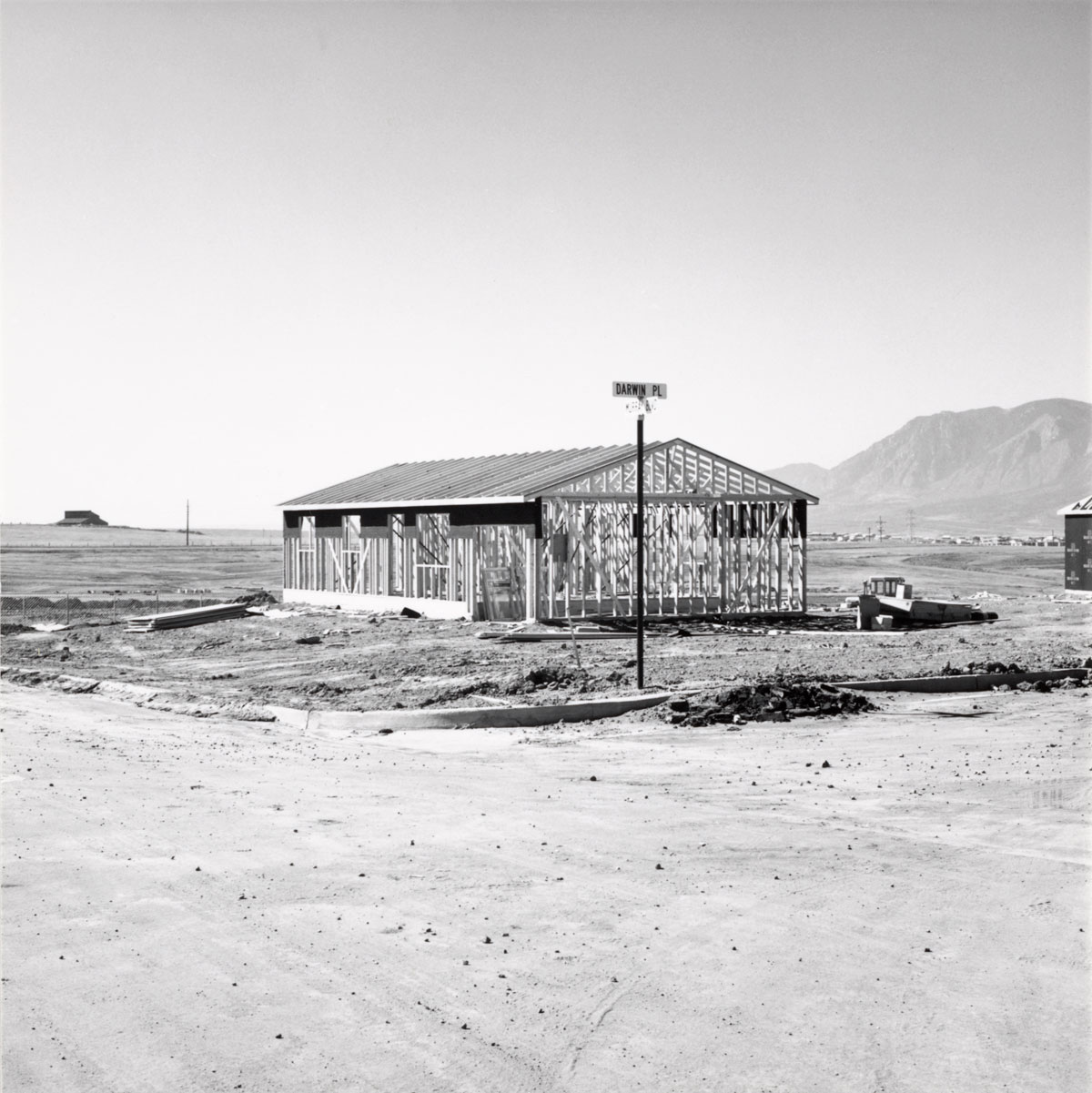
Robert Adams (American, b. 1937) 'Frame for a Tract House, Colorado Springs, Colorado' 1969


Robert Adams (American, b. 1937)
Frame for a Tract House, Colorado Springs, Colorado
1969
Gelatin silver print
Yale University Art Gallery, purchased with a gift from Saundra B. Lane, a grant from the Trellis Fund and the Janet and Simeon Braguin Fund


Robert Adams (American, b. 1937) 'Pikes Peak, Colorado Springs, Colorado' 1969


Robert Adams (American, b. 1937)
Pikes Peak, Colorado Springs, Colorado
1969
Gelatin silver print
Yale University Art Gallery, purchased with a gift from Saundra B. Lane, a grant from the Trellis Fund and the Janet and Simeon Braguin Fund


Robert Adams (American, b. 1937) 'Denver, Colorado' c. 1970


Robert Adams (American, b. 1937)
Denver, Colorado
c. 1970
Gelatin silver print
Yale University Art Gallery, purchased with a gift from Saundra B. Lane, a grant from the Trellis Fund and the Janet and Simeon Braguin Fund


Robert Adams (American, b. 1937) 'Longmont, Colorado' 1973-1974, printed 2007


Robert Adams (American, b. 1937)
Longmont, Colorado
1973-1974, printed 2007
Gelatin silver print
Yale University Art Gallery, purchased with a gift from Saundra B. Lane, a grant from the Trellis Fund and the Janet and Simeon Braguin Fund


Robert Adams (American, b. 1937) 'Eden, Colorado' 1968


Robert Adams (American, b. 1937)
Eden, Colorado
1968
Gelatin silver print
Yale University Art Gallery
Purchased with a gift from Saundra B. Lane, a grant from the Trellis Fund and the Janet and Simeon Braguin Fund


Robert Adams (American, b. 1937) 'Colorado Springs, Colorado' 1974


Robert Adams (American, b. 1937)
Colorado Springs, Colorado
1968
Gelatin silver print
Yale University Art Gallery
Purchased with a gift from Saundra B. Lane, a grant from Trellis Fund, and the Janet and Simeon Braguin Fund


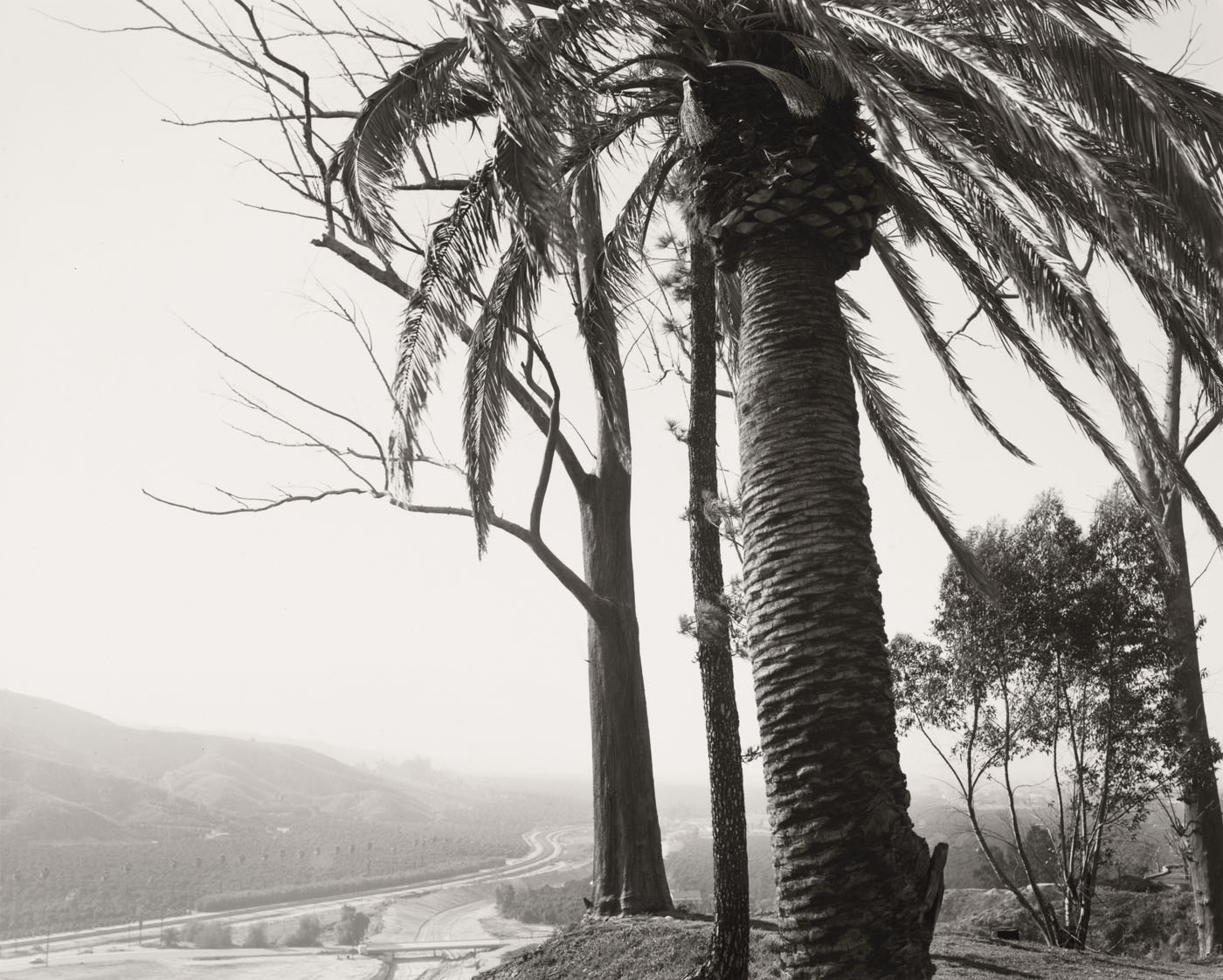
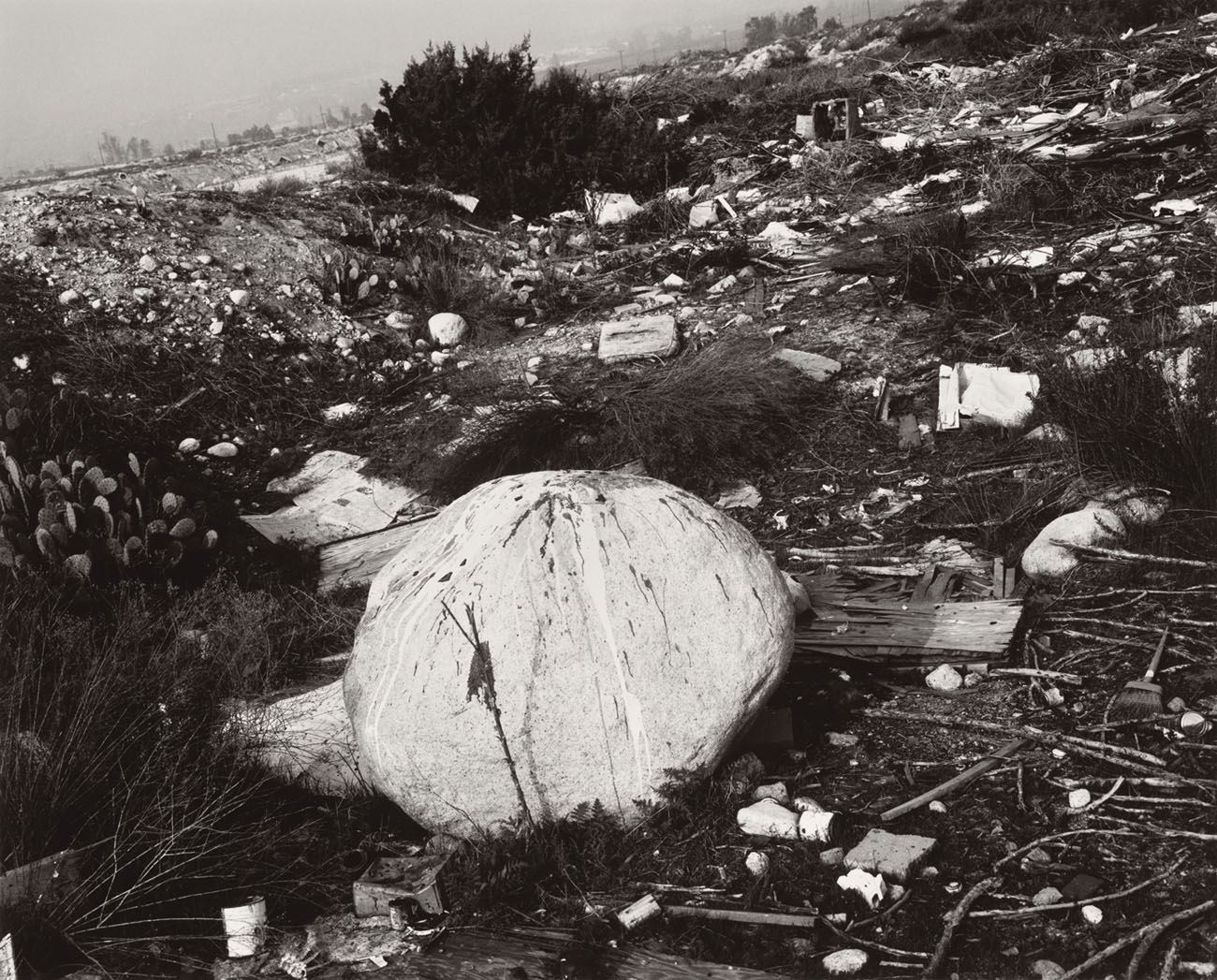
Robert Adams (American, b. 1937) 'Edge of San Timoteo Canyon, Redlands, California' 1978


Robert Adams (American, b. 1937)
Edge of San Timoteo Canyon, looking toward Los Angeles, Redlands, California
1978
Gelatin silver print
Yale University Art Gallery
Purchased with a gift from Saundra B. Lane, a grant from the Trellis Fund and the Janet and Simeon Braguin Fund


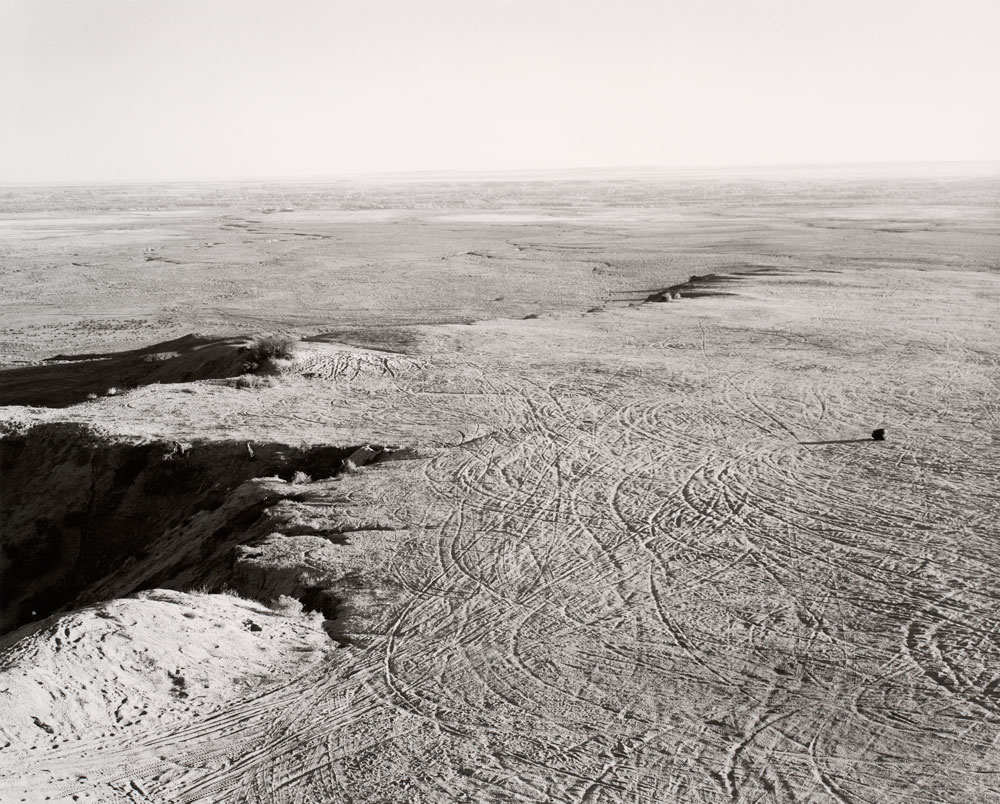
Robert Adams (American, b. 1937) 'Quarried Mesa Top, Pueblo County, Colorado' 1978


Robert Adams (American, b. 1937)
Quarried Mesa Top, Pueblo County, Colorado
1978
Gelatin silver print
Yale University Art Gallery
Purchased with a gift from Saundra B. Lane, a grant from Trellis Fund, and the Janet and Simeon Braguin Fund


Robert Adams (American, b. 1937) 'Longmont, Colorado' 1979, printed 1985


Robert Adams (American, b. 1937)
Longmont, Colorado
1979, printed 1985
Gelatin silver print
Yale University Art Gallery, purchased with a gift from Saundra B. Lane, a grant from the Trellis Fund and the Janet and Simeon Braguin Fund


Robert Adams (American, b. 1937) 'Santa Ana Wash, Redlands, California' 1982


Robert Adams (American, b. 1937)
Santa Ana Wash, Redlands, California
1983, printed 1991
Gelatin silver print
Yale University Art Gallery, purchased with a gift from Saundra B. Lane, a grant from the Trellis Fund and the Janet and Simeon Braguin Fund


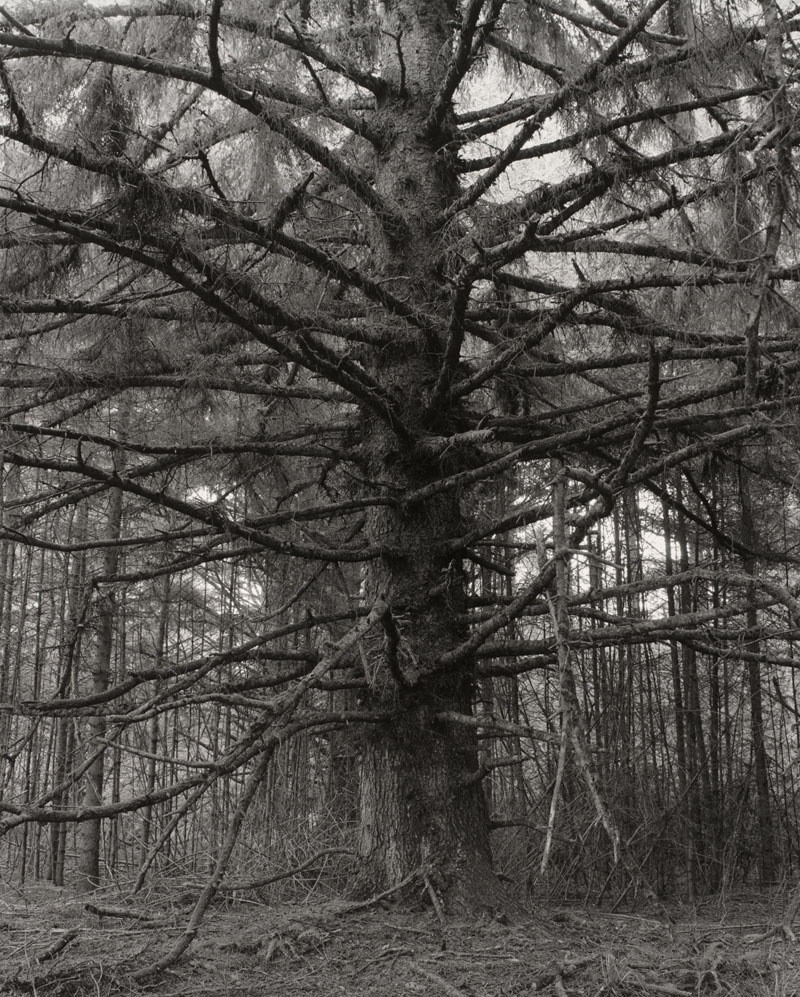
Robert Adams (American, b. 1937) 'Sitka spruce, Cape Blanco State Park, Curry County, Oregon' 1999-2000


Robert Adams (American, b. 1937)
Sitka spruce, Cape Blanco State Park, Curry County, Oregon
1999-2000
Gelatin silver print
Yale University Art Gallery, purchased with a gift from Saundra B. Lane, a grant from the Trellis Fund and the Janet and Simeon Braguin Fund


The Denver Art Museum
Civic Center Cultural Complex
located on 13th Avenue between Broadway and Bannock in downtown Denver

Opening hours:
Daily 10am – 5pm

The Denver Art Museum website

LIKE ART BLART ON FACEBOOK

Back to top

Exhibition: ‘Fourteen Places to Eat: A Narrative Photographing Rural Culture in the Midwest’ by photographer Kay Westhues at the Snite Museum of Art, Notre Dame, Indiana

Exhibition dates: 31st May – 19th July, 2009


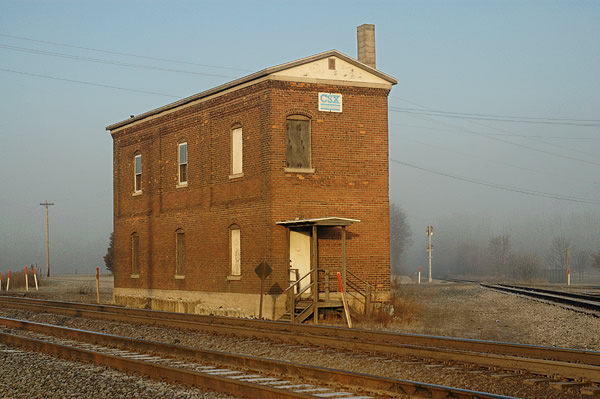
Kay Westhues (American) 'CSX railroad building, Walkerton' 2005


Kay Westhues (American)
CSX railroad building, Walkerton
2005


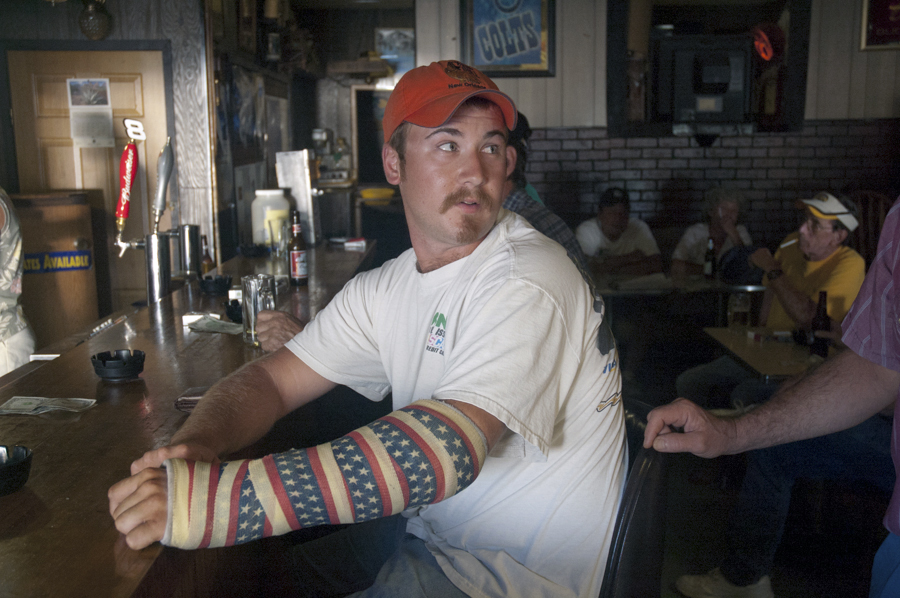
I really like this work. An insightful eye, sensitive, tapped into the community that the artist is documenting. Attuned to its inflections and incongruities, the isolation and loneliness of a particular culture in time and place. There are further strong photographs from the series on the Kay Westhues website. It’s well worth your time looking through these excellent photographs. And observing the wonderful light!

There is an interview with Kay Westhues on the Daily Yonder website.

Dr Marcus Bunyan


All photographs © Kay Westhues with permission and thanks, used under Creative Commons 2.5 License with proper attribution. Please click on the photographs for a larger version of the image.


Kay Westhues (American) 'Man with patriotic cast, Original Famous Fish of Stroh' 2005


Kay Westhues (American)
Man with patriotic cast, Original Famous Fish of Stroh
2005


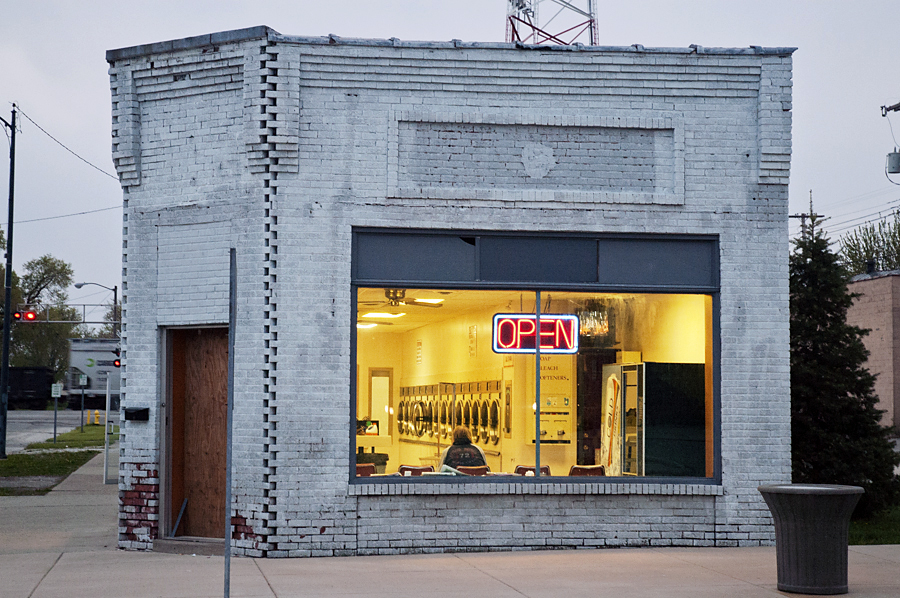
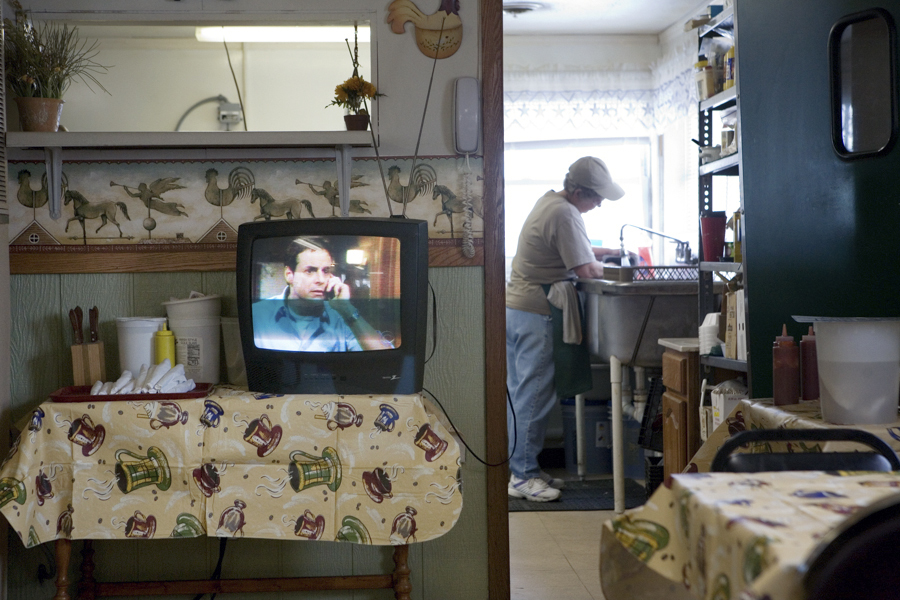
Kay Westhues (American) 'Knox laundromat' 2005


Kay Westhues (American)
Knox laundromat
2005


The Snite Museum of Art announces the opening of the exhibition: Fourteen Places to Eat: a Narrative: Photographing Rural Culture in the Midwest, opening on Sunday, May 31,2009.

Kay Westhues is a photographer who is interested in documenting the ways in which rural tradition and history are interpreted and transformed in the present day. Kay shares her intention for this series of work:

“For the past five years I have been working on a series of photographs depicting rural culture in Indiana and the Midwest. This project was inspired by my memories of growing up on a farm in Walkerton, Indiana, and observing first hand the shifting cultural identity that has occurred over time and through changing economic development. I moved back to Walkerton in order to help care for my ageing parents in 2001.

These photos mirror my personal history, but I am also capturing a people’s history grounded in a sense of place. My intention is to celebrate rural life, without idealising it.

The overall theme since the project’s inception is the effect of the demise of local economies that have historically sustained rural communities. Many of my images contain the remains of an earlier time, when locally owned stores and family farms were the norm. Today chain stores and agribusiness are prevalent in rural communities. These communities are struggling to thrive in the global economy, and my images reflect that reality.

Most recently I have focused on the complex relationship between farmers and domesticated animals. I make many of my images at Animal Swap Meets and sale barns, places where animals are bought and sold. Family farms are quickly being replaced by large-scale food production, and these events still draw smaller farmers and the local people who support them.”

Why fourteen places to eat?

“One of my biggest complaints after moving to Walkerton was that there were not enough places to eat out. Or, rather, practically no places to eat out. So I was happy when news arrived that a new restaurant was opening there. Imagine my surprise when I read a letter to the editor in the local paper against the new restaurant. The letter stated we already had enough places to eat in this town. The writer counted a total of fourteen places to eat, which included four restaurants, three gas stations, four bars, a truck stop, a convenience mart, and a bowling alley.”

Ms. Westhues studied photography at Rhode Island School of Design and Indiana University, Bloomington. She has a BS degree in Photography and Ethnocentrism from the Indiana University Individualised Major Program (1994), and an MS in Instructional Systems Technology at Indiana University (1998). She currently lives in Elkhart, Indiana, and is completing a five-year project photographing rural culture in the Midwest. This series is a visual exploration of the ways rural identity is defined in contemporary society.

Press release from the Snite Museum of Art Cited 20/06/2009. No longer available online


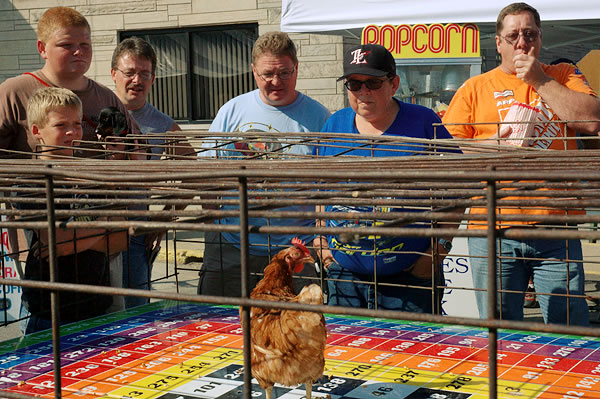
Kay Westhues (American) 'Chicken bingo, Francesville Fall Festival' 2005


Kay Westhues (American)
Chicken bingo, Francesville Fall Festival
2005


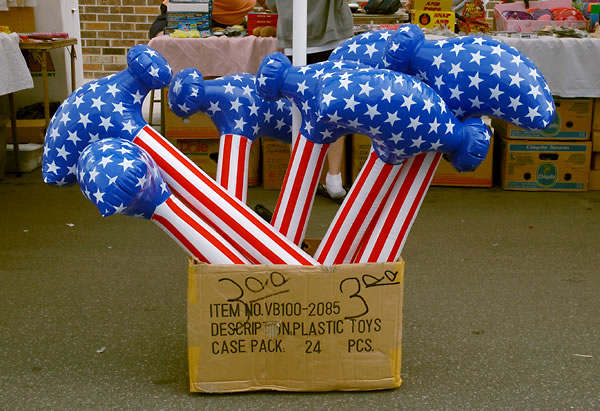
Kay Westhues (American) 'Patriotic hammers ($3.00)' 2005


Kay Westhues (American)
Patriotic hammers ($3.00)
2005


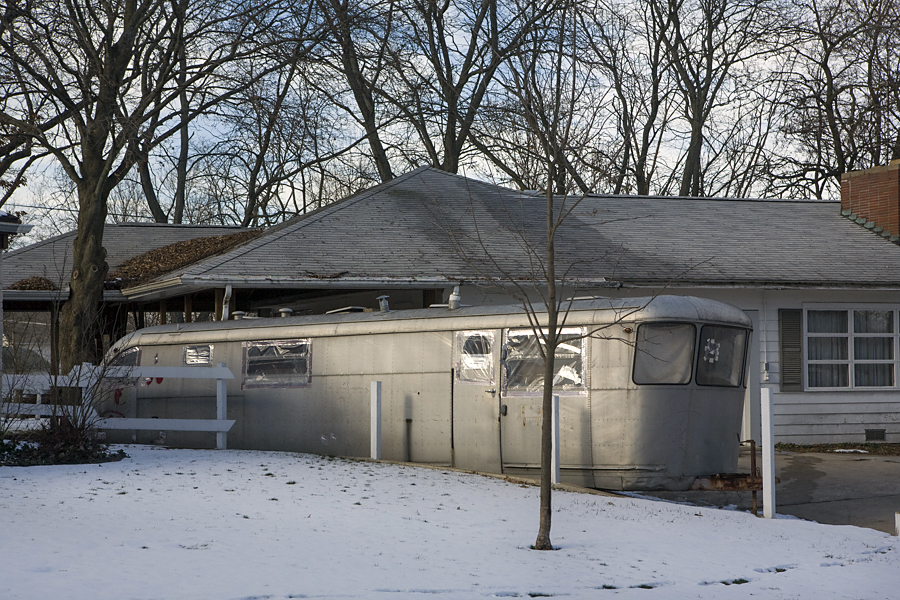
Kay Westhues (American) 'Parked trailer, Ligonier' 2006


Kay Westhues (American)
Parked trailer, Ligonier
2006


Kay Westhues (American) 'Lunch at the Crockpot, Walkerton (The Young and the Restless)' 2007


Kay Westhues (American)
Lunch at the Crockpot, Walkerton (The Young and the Restless)
2007


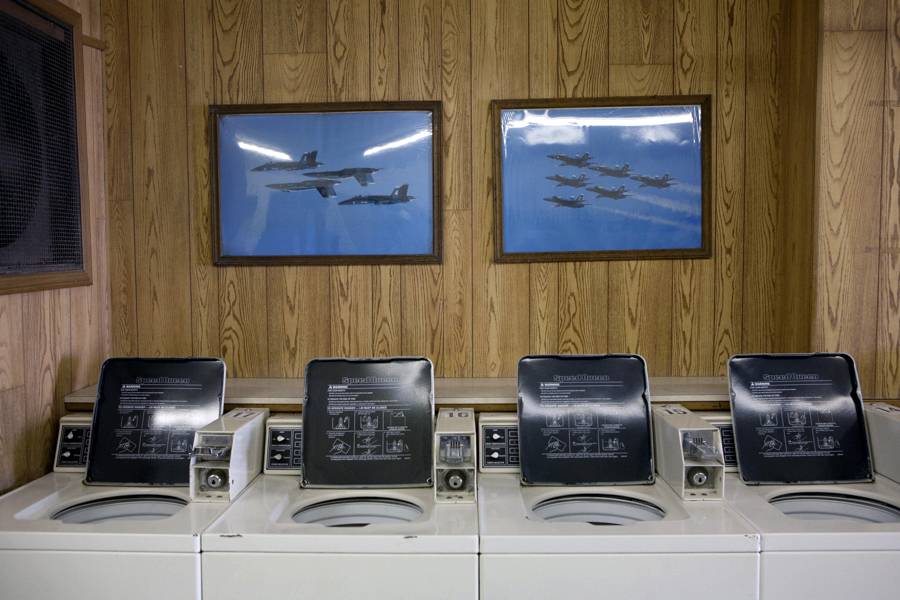
Kay Westhues (American) 'Momence Speed Wash, Momence IL' 2007


Kay Westhues (American)
Momence Speed Wash, Momence IL
2007


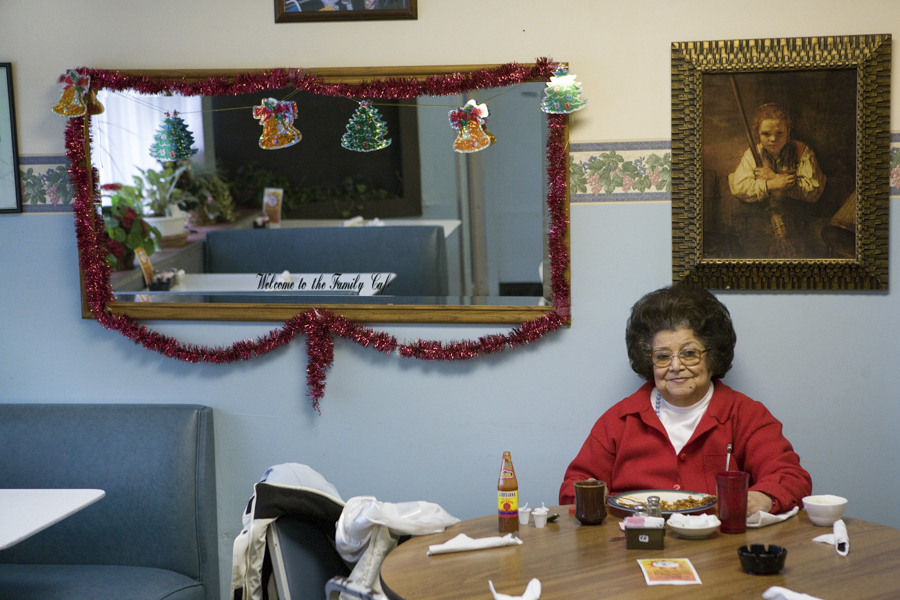
Kay Westhues (American) 'Mary Ann Rubio, Family Cafe, Knox' 2007


Kay Westhues (American)
Mary Ann Rubio, Family Cafe, Knox
2007


The Snite Museum of Art
at University of Notre Dame, Notre Dame, Indiana

Opening hours:
Tuesday – Friday 10.00am – 5pm
Saturday 12.00 – 5.00pm
Closed Sundays and Mondays

The Snite Museum of Art website

Kay Westhues website

LIKE ART BLART ON FACEBOOK

Back to top

Exhibition: ‘Walker Evans’ retrospective at Fotomuseum Winterthur, Zurich

Exhibition dates: 30th May – 23rd August, 2009

Curators: Jeff L. Rosenheim and Carlos Gollonet


Walker Evans (American, 1903-1975) 'West Virginia Living Room' 1935 from the exhibition 'Walker Evans' retrospective at Fotomuseum Winterthur, Zurich, May - Aug, 2009


Walker Evans (American, 1903-1975)
West Virginia Living Room
1935
Gelatin silver print
© Walker Evans archive


Many thankx to the Fotomuseum Winterthur for allowing me to publish the photographs in the posting. Please click on the photographs for a larger version of the image.


With this retrospective of the work of Walker Evans (1903-1975) Fotomuseum Winterthur presents one of the twentieth century’s pre-eminent photographers. His lucid and detailed portrayals of American life, especially his images of rural poverty during the Great Depression, made photographic history and went on to influence countless photographers. Walker Evans took an extremely innovative approach, capturing the very essence of the American way of life.

The exhibition, featuring some 120 works (the majority of which are from the most important private collection of Walker Evans’ works) represents every phase of his career: his early street photographs of the 1920s, his poignant documentation of 1930s America and pre-revolutionary Cuba, his landscapes and architectural photography, his subway portraits, storefronts, signage, the later colour Polaroids and more besides. As early as the 1930s, Walker Evans, in a departure from conventional notions of art and style, sought a new direct approach to reality. It is this that makes him a truly modern photographer.

The exhibition was curated by Jeff L. Rosenheim and Carlos Gollonet. Realisation in Winterthur: Urs Stahel. A cooperation with the Fundación MAPFRE, Madrid.

Text from the Fotomuseum Winterthur website


Walker Evans (American, 1903-1975) 'Negro Barbershop Interior, Atlanta' 1936 from the exhibition 'Walker Evans' retrospective at Fotomuseum Winterthur, Zurich, May - Aug, 2009


Walker Evans (American, 1903-1975)
Negro Barbershop Interior, Atlanta
1936
Gelatin silver print
7 7/16 x 9 1/8″ (18.9 x 23.2cm)
© Walker Evans archive


With this major retrospective of the work of Walker Evans (1903-1975) Fotomuseum Winterthur pays homage to one of the twentieth century’s pre-eminent photographers. His insightful and detailed portrayals of American life, especially his images of rural poverty during the Great Depression, made photographic history and went on to influence countless photographers. The 130 works in this retrospective exhibition represent every phase of his career: his early street photographs of the 1920s, his poignant documentation of 1930s America and pre-revolutionary Cuba, his landscapes and architectural photography, his subway portraits, storefronts, signage, and more besides.

On his return from France, where he had tried unsuccessfully to launch a literary career inspired by his love of Flaubert and Baudelaire, Walker Evans turned to photography. From the very start, with his keen eye for street life and the visual freshness of his unexpected slant on what he saw, his work spoke the language of European Modernism. But it was not long before Evans found his true voice – and it was at once profoundly personal and unequivocally American.

Some years before, the direct, undistorted and innovative gaze of Eugène Atget (1857-1927), whose work Evans knew and admired, had quietly paved the way for the split between documentary auteur photography and the purely descriptive photographic tradition. Atget’s unconventional angles, his de-centralised view and his focus on the seemingly trivial all had a major impact on Evans.

Walker Evans’ work is a far remove from what had, until then, been accepted as art photography. He was not interested in superficial beauty, but in a new objectivity. He subscribed to a style that observed undistorted facts and sought to capture things precisely as they were, seemingly without intervention, emotion or idealisation. For the first time in art photography, there were such unusual subjects as a pair of old boots or a subway passenger lost in thought. The artistic quality was based solely on the clarity, intelligence and authenticity of the photographer’s gaze. In this, Walker Evans’ oeuvre represents both a high point and a turning point in the formal and visual evolution of photography.

As the creator of this new, direct style, often referred to as straight photography, which drew upon scenes of sometimes blatant banality and rolled back the boundaries between the ‘important’ and the ‘trivial’, Walker Evans introduced the aesthetics of Modernism into American photography. This seemingly cold detachment spawned a style rich in expressive substance that was not only capable of embracing the lyricism and complexity of the American tradition, but of doing so without a trace of false romanticism, sentimentality or nostalgia. At long last, there was a forward-looking and enduring alternative to the traditional conventions of photography.

Press release from the Fotomuseum Winterthur website [Online] Cited 05/06/2009. No longer available online


Walker Evans (American, 1903-1975) 'Traffic Arrow' between 1973-1974


Walker Evans (American, 1903-1975)
Traffic Arrow
between 1973-1974
Polaroid
7.9 x 7.9cm (3 1/8 x 3 1/8 in.)
© Walker Evans archive


Walker Evans (American, 1903-1975) '[Detail of Stencilled Lettering on Yellow Railroad Car: "DO NOT HUMP"]' September 16, 1974


Walker Evans (American, 1903-1975)
[Detail of Stencilled Lettering on Yellow Railroad Car: “DO NOT HUMP”]
September 16, 1974
Polaroid
7.9 x 7.9cm (3 1/8 x 3 1/8 in.)
© Walker Evans archive


Installation view of the exhibition 'Walker Evans' at Fotomuseum Winterthur, Zurich showing some of his Polaroid photographs


Installation view of the exhibition Walker Evans at Fotomuseum Winterthur, Zurich showing some of his Polaroid photographs


Installation view of the exhibition 'Walker Evans' at Fotomuseum Winterthur, Zurich

Installation view of the exhibition Walker Evans at Fotomuseum Winterthur, Zurich

Installation view of the exhibition Walker Evans at Fotomuseum Winterthur, Zurich

Installation view of the exhibition Walker Evans at Fotomuseum Winterthur, Zurich


Installation views of the exhibition Walker Evans at Fotomuseum Winterthur, Zurich


Walker Evans (1903-1975) 'Penny Picture Display, Savannah' 1936


Walker Evans (American, 1903-1975)
Penny Picture Display, Savannah
1936
Gelatin silver print
© Walker Evans archive


Walker Evans (American, 1903-1975) 'Subway Passengers, New York' 1938


Walker Evans (American, 1903-1975)
Subway Passengers, New York
1938
Gelatin silver print
© Walker Evans archive


Walker Evans (American, 1903-1975) 'Truck and Sign' 1928-1930


Walker Evans (American, 1903-1975)
Truck and Sign
1928-1930
Gelatin silver print
© Walker Evans archive


Walker Evans (American, 1903-1975) 'Excavation for Lincoln Building, East 42nd Street and Park Avenue' 1929


Walker Evans (American, 1903-1975)
Excavation for Lincoln Building, East 42nd Street and Park Avenue
1929
Gelatin silver print
© Walker Evans archive


Walker Evans (American, 1903-1975) '[Fireplace in Floyd Burrroughs's Bedroom with Bedpost in Foreground, Hale County, Alabama]' 1936


Walker Evans (American, 1903-1975)
[Fireplace in Floyd Burrroughs’s Bedroom with Bedpost in Foreground, Hale County, Alabama]
1936
Gelatin silver print
8 x 10 in.
© Walker Evans archive


Walker Evans (American, 1903-1975) 'Main Street, Saratoga Springs, New York' 1931


Walker Evans (American, 1903-1975)
Main Street, Saratoga Springs, New York
1931
Gelatin silver print
© Walker Evans archive


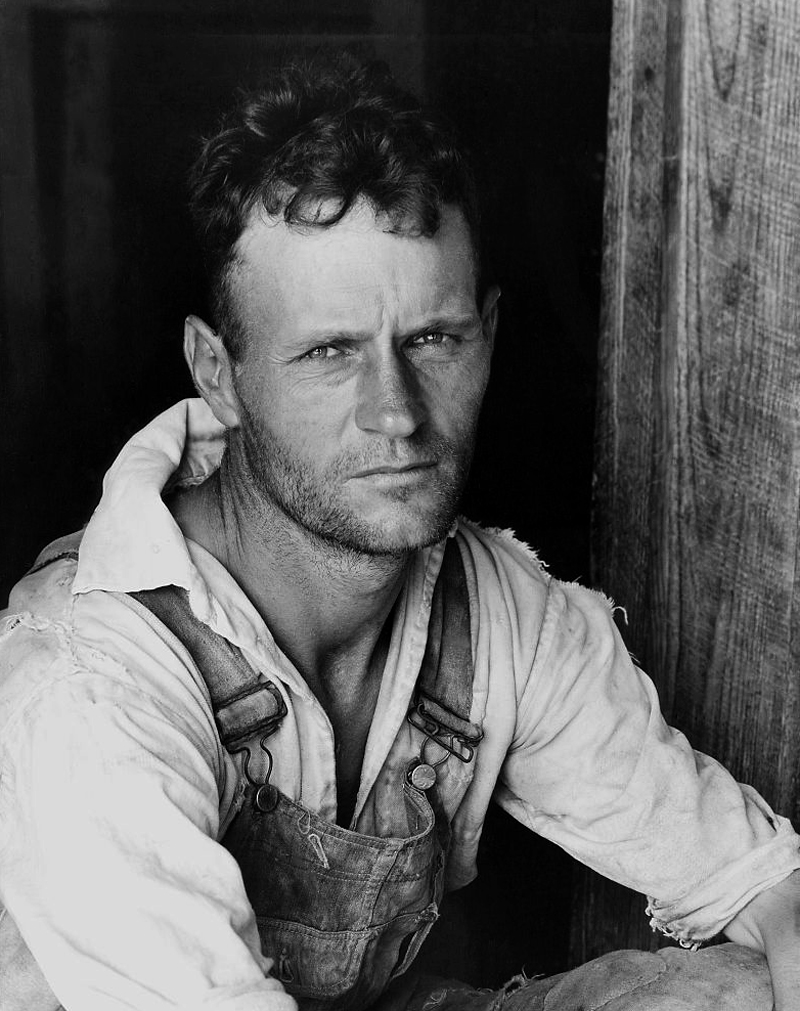
Walker Evans (American, 1903-1975) 'Floyde Burroughs, a cotton sharecropper, Hale County, Alabama' 1936


Walker Evans (American, 1903-1975)
Floyde Burroughs, a cotton sharecropper, Hale County, Alabama
1936
Gelatin silver print
© Walker Evans archive


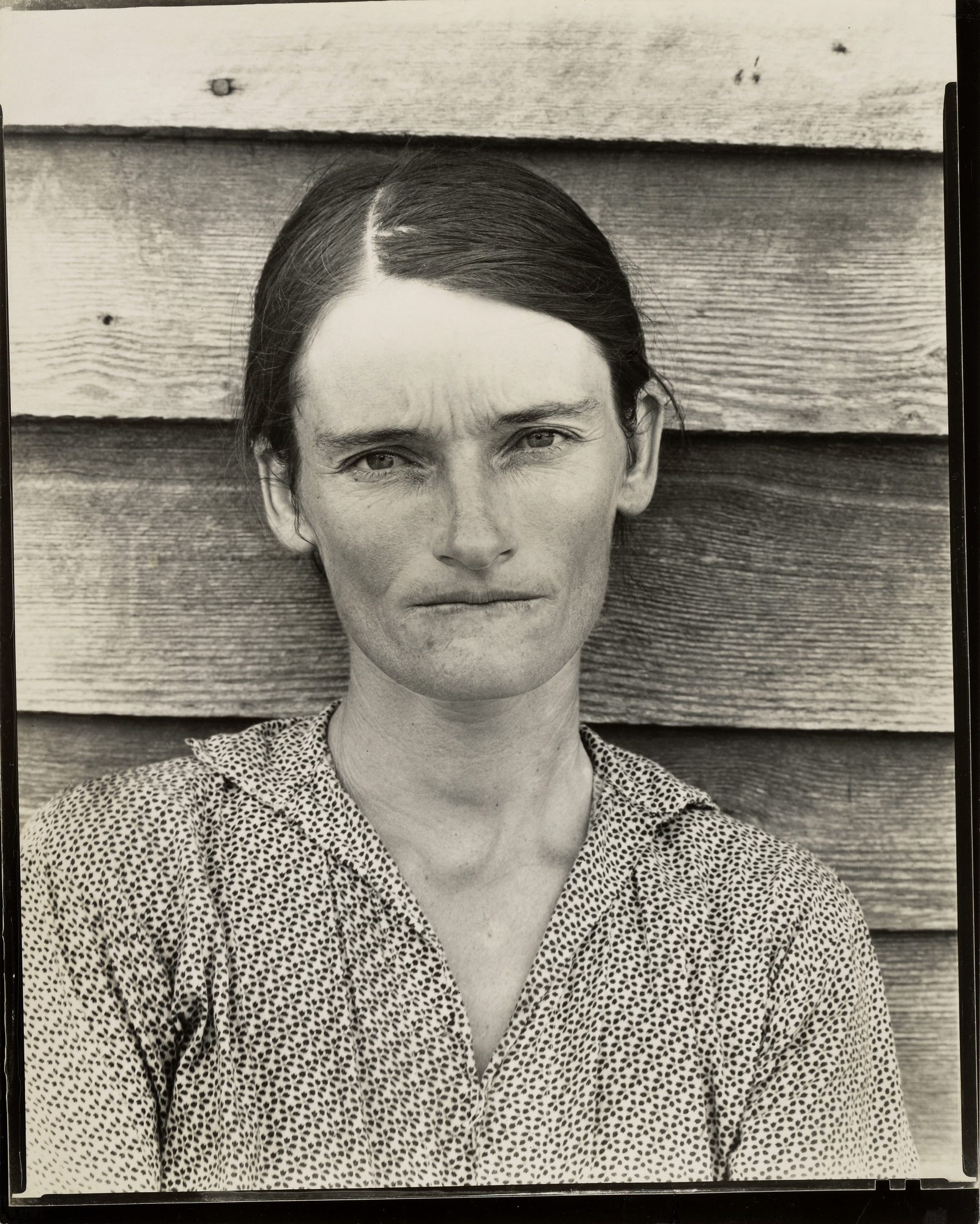
Walker Evans (American, 1903-1975) 'Allie Mae Burroughs, Hale County, Alabama' 1936


Walker Evans (American, 1903-1975)
Allie Mae Burroughs, Hale County, Alabama
1936
Gelatin silver print
© Walker Evans archive


Fotomuseum Winterthur
Grüzenstrasse 44 + 45
CH-8400
Winterthur (Zürich)
Phone: +41 52 234 10 60

Opening hours:
Tuesday – Sunday 11.00 – 18.00
Wednesday 11.00 – 20.00
Monday closed

Fotomuseum Winterthur website

LIKE ART BLART ON FACEBOOK

Back to top

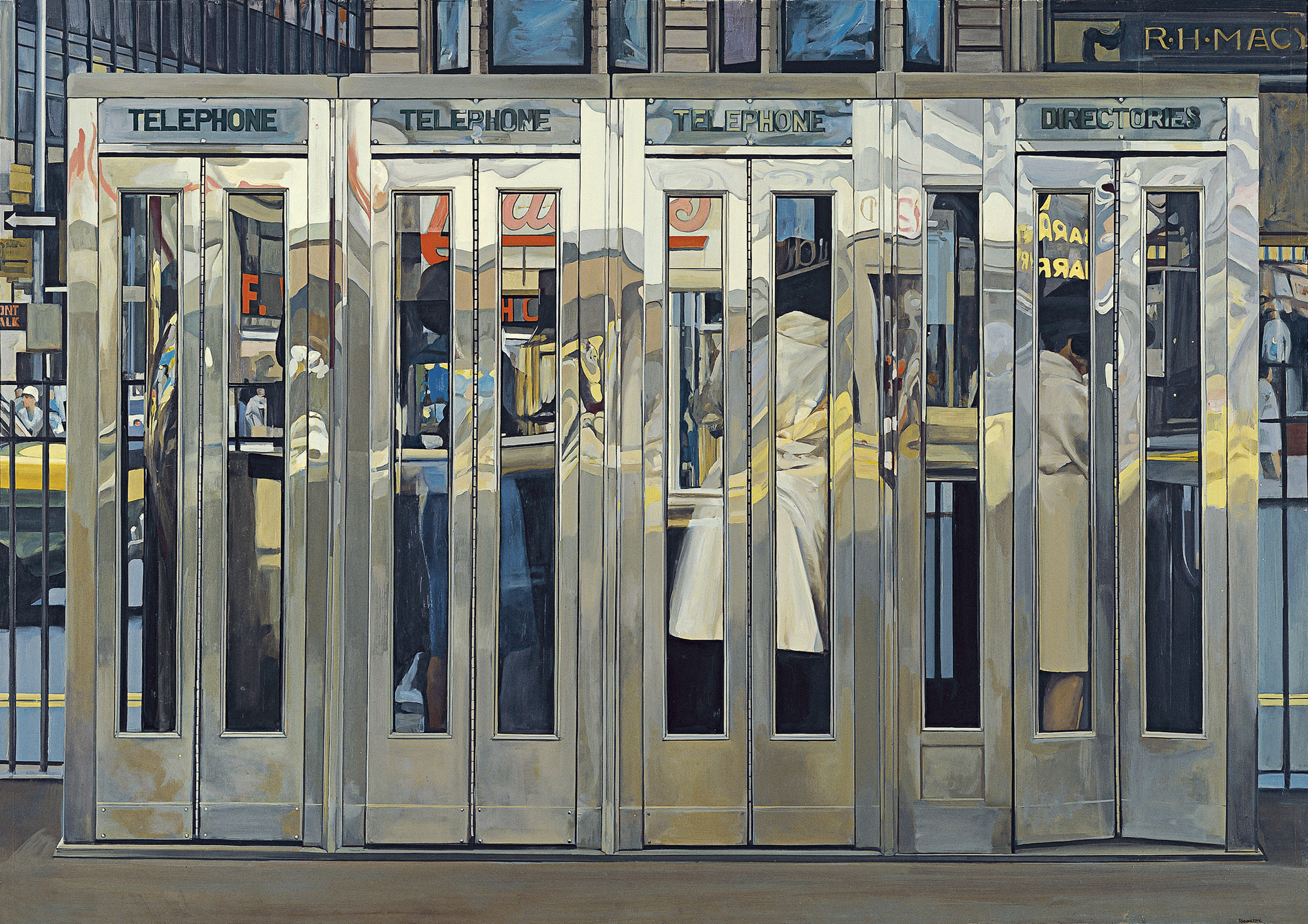
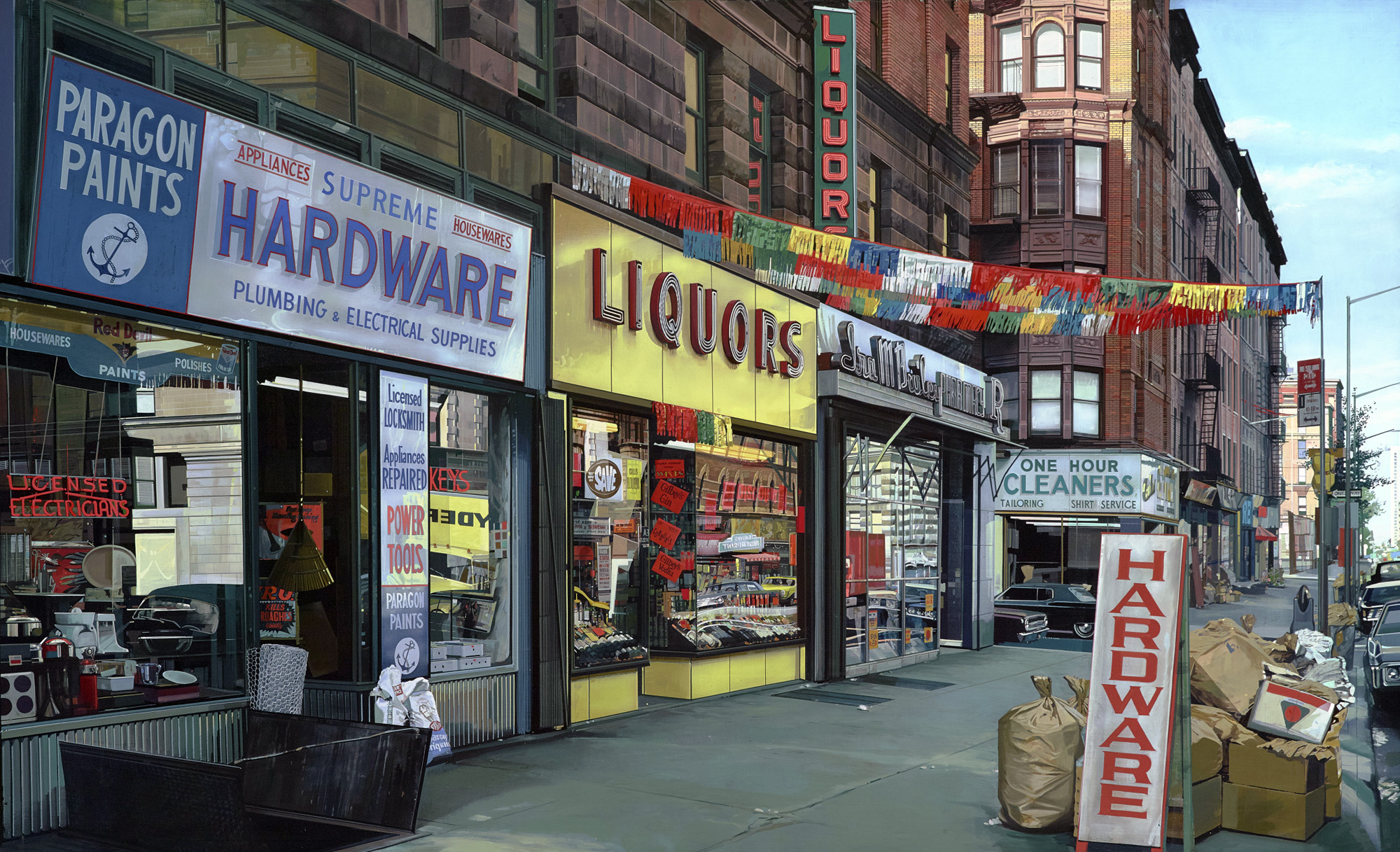
Exhibition: ‘Picturing America: Photorealism in the 1970s’ at Deutsche Guggenheim, Berlin

Exhibition dates: 7th March – 10th May, 2009


Many thankx to the Deutsche Guggenheim for allowing me to publish the art work in the posting. Please click on the art work for a larger version of the image.


“My paintings are about light, about the way things look in their environment and especially about how things look painted. Form, colour and space are at the whim of reality, their discovery and organisation is the assignment of the realist painter.”

~ Ralph Goings


Richard Estes (American, b. 1932) 'Telephone Booths' 1967 from the exhibition 'Picturing America: Photorealism in the 1970s' at Deutsche Guggenheim, Berlin, March - May, 2009


Richard Estes (American, b. 1932)
Telephone Booths
1967


Richard Estes (American, b. 1932) 'Supreme Hardware' 1974 from the exhibition 'Picturing America: Photorealism in the 1970s' at Deutsche Guggenheim, Berlin, March - May, 2009


Richard Estes (American, b. 1932)
Supreme Hardware
1974


Audrey Flack (American, b. 1931) 'Queen' 1976


Audrey Flack (American, 1931-2024)
Queen
1976


Audrey Flack (American, 1931-2024) 'Strawberry Tart' 1974


Audrey Flack (American, 1931-2024)
Strawberry Tart
1974
Oil on canvas
24 x 30 inches


Don Eddy (American, b. 1944) 'Untitled' 1971


Don Eddy (American, b. 1944)
Untitled
1971


Chuck Close (American, 1940-2021) 'Leslie' 1973


Chuck Close (American, 1940-2021)
Leslie
1973


Ralph Goings (American, 1928-2016) 'McDonalds Pick Up' 1970 (installation view)


Ralph Goings (American, 1928-2016)
McDonalds Pick Up (installation view)
1970
41 x 41 inches
Oil on canvas
Collection of Marilyn and Ivan Karp


Ralph Goings (American, 1928-2016) 'Airstream' 1970


Ralph Goings (American, 1928-2016)
Airstream
1970


Ralph Goings (American, 1928-2016) 'Dicks Union General' 1971


Ralph Goings (American, 1928-2016)
Dicks Union General
1971
Oil on canvas


By the end of the 1960s, a number of young artists working in the United States had begun making large-scale realist paintings directly from photographs. With often meticulous detail, they portrayed the objects, places, and people that defined urban and suburban everyday life in America. In contrast to the Pop artists, they did not present their ubiquitous, often mundane, subject matter in a glamorised or ironic manner. They sought instead to achieve a great degree of objectivity and precision in the execution of their work in an effort to stay more or less faithful to the mechanically generated images that served as their source material. They developed various means of systematically translating photographic information onto canvas. In prioritising the way the camera sees over the way the eye sees, they underscored the complexity of the relationship between the reproduction and the reproduced as well as the impact of photography on the perception of both daily life and reality in general.

A number of terms were proposed in quick succession to describe this novel approach to painting, chief among them Super-Realism, Hyperrealism, and Photorealism. The artists identified as Photorealists neither formed a coherent group nor considered themselves to be part of a movement, and a number of them actively challenged their association with the label. Nevertheless, in the late 1960s and 1970s, the seventeen artists in Picturing America: Photorealism in the 1970s – Robert Bechtle, Charles Bell, Tom Blackwell, Chuck Close, Robert Cottingham, Don Eddy, Richard Estes, Audrey Flack, Franz Gertsch, Ralph Goings, Ron Kleemann, Richard McLean, Malcolm Morley, Stephen Posen, John Salt, Ben Schonzeit, and Paul Staiger – were exploring a related set of issues, methods, and subjects that led critics, curators, and art historians to both exhibit and write about their work as a coherent trend in contemporary art. Picturing America focuses on this formative, defining period in the history of Photorealism.

The exhibition includes thirty-one paintings, a number of them the most iconic and masterful works of 1967-1982, for example Richard Estes’s Telephone Booths (1967, above) and Chuck Close’s Leslie (1973, above). Picturing America is divided into four sections, three exploring key themes of Photorealist painting during the 1970s – Reflections on the City, Culture of Consumption, and American Life – and a fourth dedicated to a portfolio of ten lithographs made on the occasion of Documenta 5 in 1972, which featured the first major group showing of Photorealism.

Text from the Deutsche Guggenheim website


Picturing Americas – American Photorealism in the 70s

Vernissage video of “Picturing Americas”, an art exhibition about American Photorealism in the 1970s, presented in Berlin by Deutsche Guggenheim, a joint venture between Deutsche Bank and the Solomon R. Guggenheim Foundation in New York. The exhibition (March – May 2009) was the first major showing of American Photorealism in Germany since “documenta 5” in 1972.

The video includes interviews of Valerie Hillings, Assistant Curator, Solomon R. Guggenheim Museum, and interviews with the following artists: Ron Kleemann, Robert Bechtle, Tom Blackwell. You can also enjoy stills of selected pictures shown at the exhibition. Video courtesy of VernissageTV (VTV).

Text from the YouTube website


Robert Bechtle (American, 1932-2020) 'Foster's Freeze, Escalon' 1975


Robert Bechtle (American, 1932-2020)
Foster’s Freeze, Escalon
1975


Charles Bell (American, 1935-1995) 'Gum Ball No. 10: "Sugar Daddy"'
1975


Charles Bell (American, 1935-1995)
Gum Ball No. 10: “Sugar Daddy”
1975
Oil on canvas
66 x 66 inches


Charles Bell was born in 1935 in Tulsa, Oklahoma. Although Bell became interested in art at a young age, he never received formal training. In 1957, he completed a BBA at the University of Oklahoma, Norman, and did not decide to pursue an artistic career until the early 1960s after touring in the U.S. Navy. At this point in time, he was working in the San Francisco Bay Area, where he was drawn to the vibrantly colored paintings of Richard Diebenkorn and Wayne Thiebaud. Other artistic influences Bell has cited range from Pop art to the realisms of Jan Vermeer and Salvador Dalí. It was through the painter Donald Timothy Flores, however, that Bell learned technique, most notably trompe l’oeil, while working in the former’s San Francisco studio. Under Flores, Bell painted mostly small-scale landscapes and still lifes, which earned him the Society of Western Artists Award in 1968.

In 1967 Bell relocated to New York, where he set up his first studio. Two years later he began showing at New York’s Meisel Gallery run by Louis K. Meisel, who popularized the term “Photorealism” and helped establish the style as a movement. Bell embraced a photo-based technique in his work not only for the way it renders imperceptible details visible, but also for how he saw the close-up photographic view as emblematic of contemporary visual experience steeped in a daily bombardment of media imagery. Bell carried out his Photorealist works by photographing his subjects in still-life compositions and painting from his image. 

Although Photorealism emerged as a national phenomenon, certain general qualities distinguish the coastal approaches to the movement. While the majority of the West Coast Photorealists preferred landscapes, particularly images of cars, trucks, and homes within an overall landscape, Bell, like many of the New York–based Photorealists, focused on still life. Bell transformed everyday subject matter by enlarging ordinary objects like Raggedy Ann dolls and gumball machines to an unusually grand scale. His subjects are typically familiar objects associated with childhood, consumer culture, and play, and thus capable of resonating with a broad audience. By focusing on larger-than-life subjects, Bell’s paintings also deny narrative readings of his work. He has described his approach to selecting subject matter as more of an emotional than intellectual process. The hyperrealistic precision of his technique, combined with an exaggerated scale, produces a sensation that oscillates between familiarity and unfamiliarity, thus engaging the viewer sensually and emotionally. The exploration of light remains a persistent theme throughout Bell’s oeuvre, from his earliest treatments of light on mostly opaque surfaces to his interest in reflected and refracted light on transparent materials, as seen in the gumball machine series (1971-77). These investigations gave way to his subsequent interest in objects illuminated from within, such as pinball machines, which he began in 1977.

Text from the Guggenheim website


Robert Bechtle (American, 1932-2020) 'Alameda Gran Torino' 1974


Robert Bechtle (American, 1932-2020)
Alameda Gran Torino
1974


Ron Kleemann (American, 1937-2014) 'Big Foot Cross' 1977-1978


Ron Kleemann (American, 1937-2014)
Big Foot Cross
1977-1978
Acrylic on canvas
54 x 78 inches


Deutsche Guggenheim

This museum closed in 2013.

LIKE ART BLART ON FACEBOOK

Back to top

Artist’s talk: Photographer Gregory Crewdson to present at the Nelson-Atkins Museum of Art, Kansas City

12th March, 2009


Many thankx to the Nelson-Atkins Museum of Art for allowing me to publish the photographs in the posting. Please click on the photographs for a larger version of the image.


Gregory Crewdson (American, b. 1962) 'Untitled' from the series 'Beneath the Roses' 2006


Gregory Crewdson (American, b. 1962)
Untitled from the series Beneath the Roses
2006
Digital pigment print


Famed photographer Gregory Crewdson will present the inaugural discussion in a series sponsored by the Photography Society of The Nelson-Atkins Museum of Art, Kansas City…

Crewdson’s work has been widely exhibited and reviewed. He makes large-scale photographs of elaborate and meticulously staged tableaux, which have been described as “micro-epics” that probe the dark corners of the psyche. Working in the manner of a film director, he leads a production crew, which includes a director of photography, special effects and lighting teams, casting director and actors. He typically makes several exposures that he later digitally combines to produce the final image.

“Crewdson is one of the most daring and inventive contemporary artists using photography,” said Keith F. Davis, Curator of Photography at the Nelson-Atkins. “His meticulously crafted works are immensely rich in both narrative and psychological terms. They prod us to rethink our ‘usual’ relationship to photographs as physical objects and as records of worldly fact. Crewdson is a genuinely important figure in today’s art world. He has an international reputation and has influenced an entire generation of younger photographic artists.”

Attendance to the program is free.

Text from ArtDaily.org website


Gregory Crewdson (American, b. 1962) 'Untitled' from the series 'Beneath the Roses' 2005


Gregory Crewdson (American, b. 1962)
Untitled from the series Beneath the Roses
2005
Digital pigment print


Gregory Crewdson (American, b. 1962) 'Untitled' from the series 'Beneath the Roses' 2005


Gregory Crewdson (American, b. 1962)
Untitled from the series Beneath the Roses
2005
Digital pigment print


Gregory Crewdson (American, b. 1962) 'Untitled (Sunday Roast)' from the series 'Beneath the Roses' 2005


Gregory Crewdson (American, b. 1962)
Untitled (Sunday Roast) from the series Beneath the Roses
2005
Digital pigment print


Nelson-Atkins Museum of Art
4525 Oak Street
Kansas City, MO 64111

Opening hours:
Thursday – Monday 10am – 5pm
Closed Tuesday and Wednesday

Nelson-Atkins Museum of Art website

Gregory Crewdson on the Gagosian website

LIKE ART BLART ON FACEBOOK

Back to top

Exhibition: ‘The Last Days of W’ by Alec Soth at Gagosian Gallery, New York

Exhibition dates: 20th January – 7th March, 2009


Alec Soth (American, b. 1969) 'Civic Fest, Minneapolis, MN (Presidential office)' 2008 from the exhibition 'The Last Days of W' by Alec Soth at Gagosian Gallery, New York, jan - March, 2009


Alec Soth (American, b. 1969)
Civic Fest, Minneapolis, MN (Presidential office)
2008


Another fantastic group of Americurbana from this wonderful photographer!

Dr Marcus Bunyan


Many thankx to Gagosian Gallery for allowing me to publish the photographs in the posting. Please click on the photographs for a larger version of the image.


“Henri Cartier-Bresson famously said, “The world is going to pieces and people like Adams and Weston are photographing rocks.” But I don’t think the world would have been a better place if these photographers had headed off to a war zone. The question is whether you can be a political photographer while you photograph rocks. My pictures don’t have a specific social commentary but I think they have social and political meaning.”


Alec Soth on the Gagosian Gallery website 2009


Alec Soth (American, b. 1969) 'Dynell, Bemidji, MN (Girl in store)' 2007 from the exhibition 'The Last Days of W' by Alec Soth at Gagosian Gallery, New York, jan - March, 2009


Alec Soth (American, b. 1969)
Dynell, Bemidji, MN (Girl in store)
2007


Alec Soth (American, b. 1969) 'Josh, Joelton, Tennessee' 2004


Alec Soth (American, b. 1969)
Josh, Joelton, Tennessee
2004


Gagosian Gallery is pleased to present The Last Days of W., colour photographs taken by Alec Soth between 2000 and 2008.

Although originally conceived without explicit political intent, in retrospect Soth considers this selected body of work, which spans both terms of George W. Bush’s presidency, to represent “a panoramic look at a country exhausted by its catastrophic leadership.” Soth’s earlier series such as Sleeping by the Mississippi, Niagara, and Dog Days, Bogotá – all subjective narratives containing disenfranchised figures and decaying landscapes – laid the conceptual groundwork for The Last Days of W. It provides a wry commentary on the adverse effects of the national administration, perhaps best exemplified by an unwittingly ironic remark that Bush made in 2000: “I think we can agree, the past is over.”

Following in the humanist tradition established by the great chroniclers of the American experience such as Walker Evans, Robert Frank, and Stephen Shore, Soth captures diverse images of a country disillusioned with, and deceived by, its own identity, from mothers of marines serving in Iraq to teenage mothers in the Louisiana Bayou; from religious propaganda in the American workplace to the mortgage crisis in Stockton, CA. His incisive depiction of contemporary American reality confronts the ideals romanticised in the American Dream with the hastening decline of the American Empire.

Text from the Gagosian Gallery website 2009


Alec Soth 'The Last Days of W' installation view at Gagosian Gallery


The Last Days of W installation view at Gagosian Gallery


Alec Soth (American, b. 1969) 'Home Environment, Billings, MT' 2008


Alec Soth (American, b. 1969)
Home Environment, Billings, MT
2008


Alec Soth (American, b. 1969) 'Republican National Convention, Saint Paul, MN' 2008


Alec Soth (American, b. 1969)
Republican National Convention, Saint Paul, MN
2008


Gagosian Gallery
980 Madison Avenue
New York, NY 10075
Phone: 212.744.2313

Opening hours:
Monday – Saturday 10am – 6pm
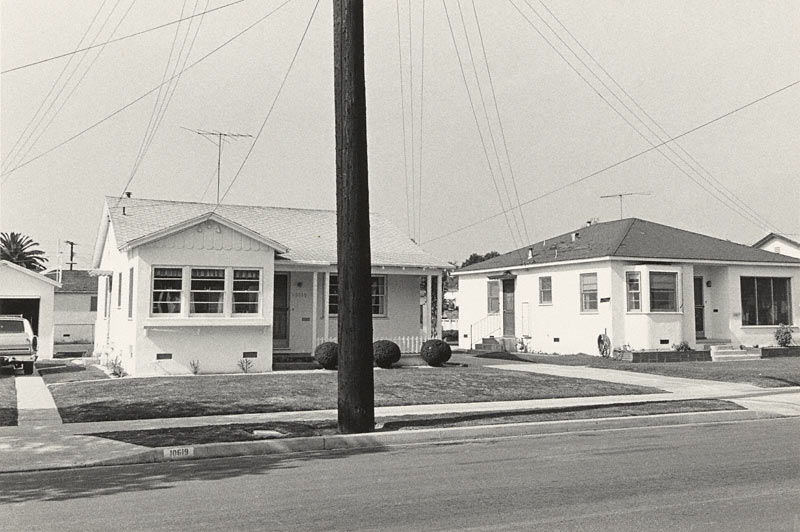
Gagosian Gallery website

LIKE ART BLART ON FACEBOOK

Back to top

Exhibition: ‘William Eggleston: Democratic Camera, Photographs and Video, 1961-2008’ at the Whitney Museum of American Art, New York

Exhibition dates: 7th November, 2008 – 25th January, 2009


William Eggleston (American, b. 1939) 'Untitled' c. 1971-1973 from the exhibition Exhibition: 'William Eggleston: Democratic Camera, Photographs and Video, 1961-2008' at the Whitney Museum of American Art, New York, Nov 2008 - Jan 2009


William Eggleston (American, b. 1939)
Untitled
c. 1971-1973
From Troubled Waters 1980
Dye-transfer print
© Eggleston Artistic Trust


One of the most influential photographers of the last half-century, William Eggleston has defined the history of colour photography. This exhibition is the artist’s first retrospective in the United States and includes both his colour and black-and-white photographs as well as Stranded in Canton, the artist’s video work from the early 1970s.

William Eggleston’s great achievement in photography can be described in a straightforward way: he captures everyday moments and transforms them into indelible images. William Eggleston: Democratic Camera, Photographs and Video, 1961-2008 presents a comprehensive selection from nearly fifty years of image-making.

Born in 1939 in Sumner, Mississippi, a small town in the Delta region, Eggleston showed an early interest in cameras and audio technology. While studying at various colleges in the South, he purchased his first camera and came across a copy of Henri Cartier-Bresson’s book The Decisive Moment (1952). In the early 1960s, Eggleston married and moved to Memphis, where he has lived ever since. He first worked in black-and-white, but by the end of the decade began photographing primarily in colour. Internationally acclaimed and widely traveled, Eggleston has spent the past four decades photographing all around the world, conveying intuitive responses to fleeting configurations of cultural signs and moods as specific expressions of local colour. Psychologically complex and casually refined, bordering on kitsch and never conventionally beautiful, these photographs speak principally to the expanse of Eggleston’s imagination and have had a pervasive influence on all aspects of visual culture. By not censoring, rarely editing, and always photographing, Eggleston convinces us of the idea of the democratic camera.

This exhibition was organised by the Whitney Museum of American Art, New York, in association with Haus der Kunst, Munich.

Text from the Whitney Museum of American Art website


Many thankx to the Whitney Museum of American Art for allowing me to publish the photographs in the posting. Please click on the photographs for a larger version of the image.


William Eggleston (American, b. 1939) 'Untitled' 1973 from the exhibition Exhibition: 'William Eggleston: Democratic Camera, Photographs and Video, 1961-2008' at the Whitney Museum of American Art, New York, Nov 2008 - Jan 2009


William Eggleston (American, b. 1939)
Untitled
1973
Dye-transfer print
© Eggleston Artistic Trust


William Eggleston (American, b. 1939) 'Untitled (Baby Doll Cadillac)' 1973, printed 1996


William Eggleston (American, b. 1939)
Untitled (Baby Doll Cadillac)
1973, printed 1996
From the Los Alamos portfolio
Dye transfer print
11 3/4 × 17 11/16in. (29.8 × 44.9cm)
Whitney Museum of American Art, New York; purchase, with funds from the Photography Committee
© Eggleston Artistic Trust, courtesy Cheim & Read, NYC


William Eggleston (America, born July 27, 1939) 'Memphis' c. 1970


William Eggleston (America, b. 1939)
Memphis
c. 1970
Dye-transfer print
© Eggleston Artistic Trust


William Eggleston video

“This candid interview with photographer William Eggleston was conducted by film director Michael Almereyda on the occasion of the opening of Eggleston’s retrospective William Eggleston: Democratic Camera, Photographs and Video, 1961-2008 at the Whitney Museum of American Art. A key figure in American photography, Eggleston is credited almost single-handedly with ushering in the era of colour photography. Eggleston discusses his shift from black and white to colour photography in this video as, “it never was a conscious thing. I had wanted to see a lot of things in colour because the world is in colour”. Also included in this video are Eggleston’s remarks about his personal relationships with the subjects of many of his photographs.”


The Ending of Stranded in Canton

In 1973, photographer William Eggleston picked up a Sony PortaPak and took to documenting the soul of Memphis and New Orleans. Transvestites, geek men biting off chicken heads, classy blues musicians, and crazed men with guns form the backbone of this documentary look at the “Southern Hipsters” of Louisiana and Mississippi.

Stranded in Canton

In 1973, photographer William Eggleston picked up a Sony PortaPak and took to documenting the soul of Memphis and New Orleans.

“These were the Merry Prankster and “Easy Rider” years, when road trips and craziness were cool, and Mr. Eggleston set out on some hard-drinking picture-taking excursions. He also embarked on repeated shorter expeditions closer to home in the form of epic bar crawls, which resulted in the legendary video “Stranded in Canton.”

Originally existing as countless hours of unedited film and recently pared down by the filmmaker Robert Gordon to a manageable 76 minutes, it was shot in various places in 1973 and 1974. (The new version is in the retrospective.) Mr. Eggleston would show up with friends at favourite bars, turn on his Sony Portapak, push the camera into people’s faces and encourage them to carry on.

And they did. Apart from brief shots of his children and documentary-style filming of musicians, the result is like some extreme form of reality television. Your first thought is: Why do people let themselves be seen like this? Do they know what they look like? You wonder if Mr. Eggleston is deliberately shaping some tragicomic Lower Depths drama or just doing his customary shoot-what’s-there thing, the what’s-there in this case being chemical lunacy. For all the film’s fringy charge there’s something truly creepy and deadly going on, as there is in much of Mr. Eggleston’s art. You might label it Southern Gothic; but whatever it is, it surfaces when a lot of his work is brought together.”

Holland Cotter. “Old South Meets New, in Living Color,” on The New York Times website Nov 6, 2008


William Eggleston (America, b. 1939) 'Untitled' c. 1976


William Eggleston (America, b. 1939)
Untitled
c. 1976
From Election Eve
© Eggleston Artistic Trust
Courtesy Cheim & Read Gallery


William Eggleston (American, born 1939) 'Untitled (Greenwood, Mississippi)' 1980


William Eggleston (American, born 1939)
Untitled (Greenwood, Mississippi)
1980
Dye-transfer print
29.6 x 45.5cm (11 5/8 x 17 15/16 in.)
The Metropolitan Museum of Art
Purchase, Louis V. Bell, Harris Brisbane Dick, Fletcher, and Rogers Funds and Joseph Pulitzer Bequest, and Jennifer and Philip Maritz Gift, 2012
© Eggleston Artistic Trust


William Eggleston (American, b. 1939) 'Untitled' Nd


William Eggleston (American, b. 1939)
Untitled
Nd
Dye-transfer print
From Los Alamos 1965-1968 and 1972-1974 (published 2003)
© Eggleston Artistic Trust


William Eggleston (American, b. 1939) 'Untitled' c. 1975 (Marcia Hare in Memphis Tennessee) c. 1975


William Eggleston (American, b. 1939)
Untitled (Marcia Hare in Memphis Tennessee)
c. 1975
Dye-transfer print
© Eggleston Artistic Trust


William Eggleston (American, b. 1939) 'Huntsville, Alabama' c. 1971


William Eggleston (American, b. 1939)
Huntsville, Alabama
1971
Dye-transfer print
© Eggleston Artistic Trust


William Eggleston (American, b. 1939) 'Untitled (Memphis Tennessee)' 1965


William Eggleston (American, b. 1939)
Untitled (Memphis Tennessee)
1965
Dye-transfer print
© Eggleston Artistic Trust


William Eggleston (American, b. 1939) 'Untitled (Memphis)' c. 1969-1971


William Eggleston (American, b. 1939)
Untitled (Memphis)
c. 1969-1971
Dye-transfer print
© Eggleston Artistic Trust
Courtesy Cheim & Read Gallery


William Eggleston (American, b. 1939) 'Untitled' 1983


William Eggleston (American, b. 1939)
Untitled
1983
From a series of photographs taken at Graceland
Dye-transfer print
© Eggleston Artistic Trust
Courtesy Whitney Museum of American Art


Whitney Museum of American Art
99 Gansevoort Street
New York, NY 10014
Phone: (212) 570-3600

Opening hours:
Mon: 10.30am – 6pm
Tues: Closed
Wed: 10.30am – 6pm
Thurs: 10.30am – 6pm
Fri: 10.30am – 10pm*
Sat: 11am – 6pm
Sun: 11am – 6pm

Whitney Museum of American Art website

William Eggleston exhibition web page

LIKE ART BLART ON FACEBOOK

Back to top