Exhibition: ‘George Tice Lifework: A Tribute, Photographs 1953-2013’ at Joseph Bellows Gallery, La Jolla, California

Exhibition dates: 21st June – 30th July, 2022


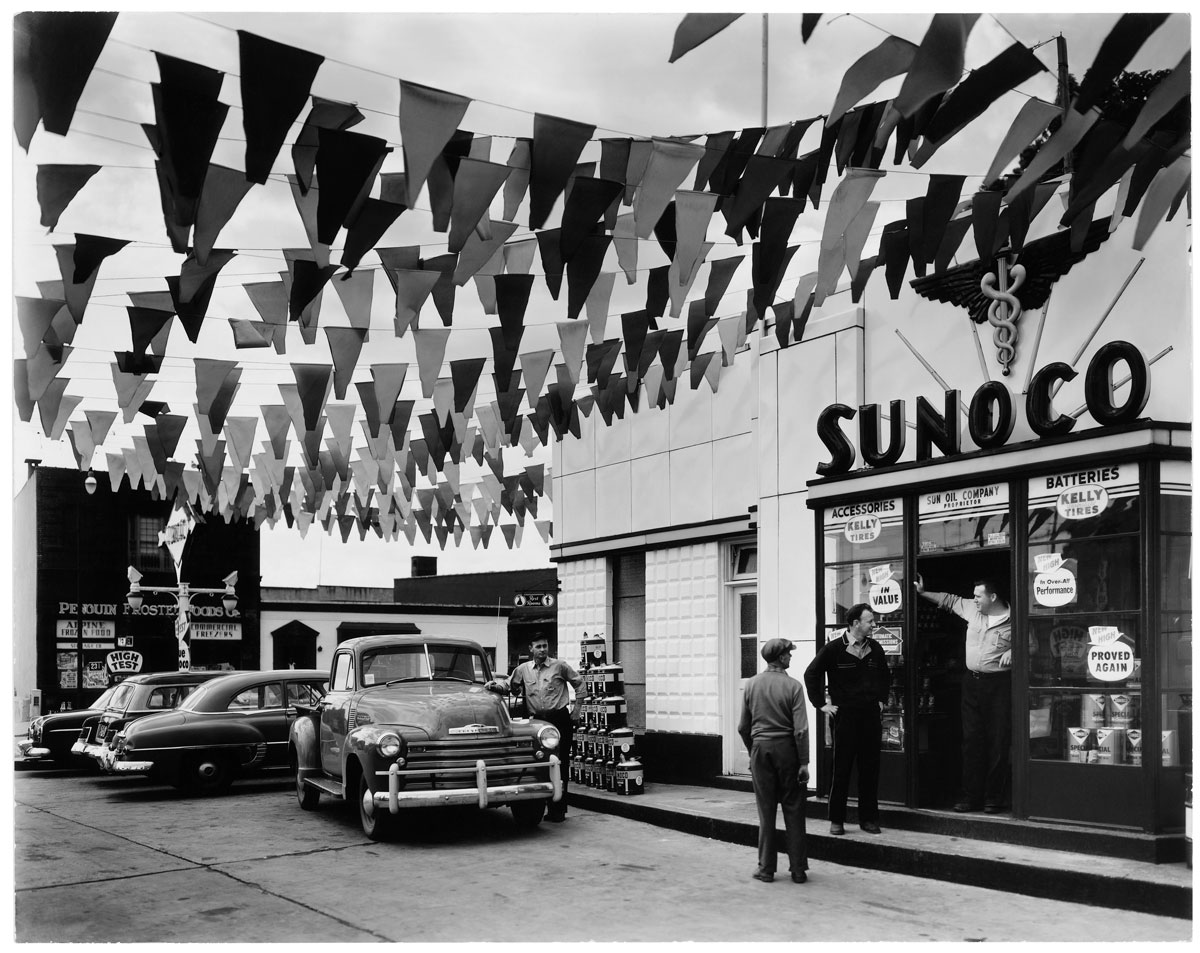
George Tice (American, b. 1938) 'Petit's Mobil Station, Cherry Hill, New Jersey' 1974


George Tice (American, b. 1938)
Petit’s Mobil Station, Cherry Hill, New Jersey
1974
Gelatin silver print
8 x 10 inches


I have always loved the work of George Tice. I have one of his photographs in my collection. I think his work is very underrated.

Tice’s consumate control of the construction of the image plane never gets in the way of the elemental, eternal, and magical aspects of the photograph.

Photographers such as Tice, and Atget, have an innate ability to place the camera in such as position as to reveal the subject matter in a new light. More intuitive, more sensitive to other ways of seeing, these great photographers look at the world from a different point of view.

In this posting, the hovering spaceship that is Petit’s Mobil Station, Cherry Hill, New Jersey (1974, above) is a superb example of this … almost hallucinatory feeling in the image. Other mesmerising photographs include the Cubist Houses and Water Towers, Moorestown, New Jersey (1973, below) and Industrial Landscape, Kearny, New Jersey (1973, below) with its acknowledgment of Alfred Stieglitz’s The Hand of Man (1902, below). Notice how Tice lowers the level of his camera when compared to Stieglitz’s photograph, thus raising the horizon line, so we now follow the bare, ascending train tracks to the massed stacks of the barren industrial landscape instead of looking down on the scene as in The Hand of Man. Here is a master of previsualisation at work.

Other photographs have already been seen in postings on Art Blart, but it is always a pleasure to look at George Tice’s work – especially his dusk and night time photographs such as New International Cinema, New Brunswick, New Jersey (1974, below), Steve’s Diner, Route 130, North Brunswick, New Jersey (1974, below) and Ideal Diner, Perth Amboy, New Jersey (1980, below). There are hints of the intimacies of Walker Evans and the clinical observations of Bernd and Hiller Becker in Tice’s work, but somehow he always makes images which possess his own signature, his own creative writing.

Following on from last week’s posting where I was banging on about the “spiritual” in contemporary photography (and by “spiritual” I mean an energy and feeling for subject matter captured in the negative and then revealed in the image), the photographs I have presented by Tice in this posting are a perfect example of this alternate perspective. As he observes, “The great difficulty of what I attempt is seeing beyond the moment; the everydayness of life gets in the way of the eternal.”

Dr Marcus Bunyan


Many thankx to Joseph Bellows Gallery for allowing me to publish the photograph in the posting. Please click on the photographs for a larger version of the image.


“It takes the passage of time before an image of a commonplace subject can be assessed. The great difficulty of what I attempt is seeing beyond the moment; the everydayness of life gets in the way of the eternal.”


George Tice
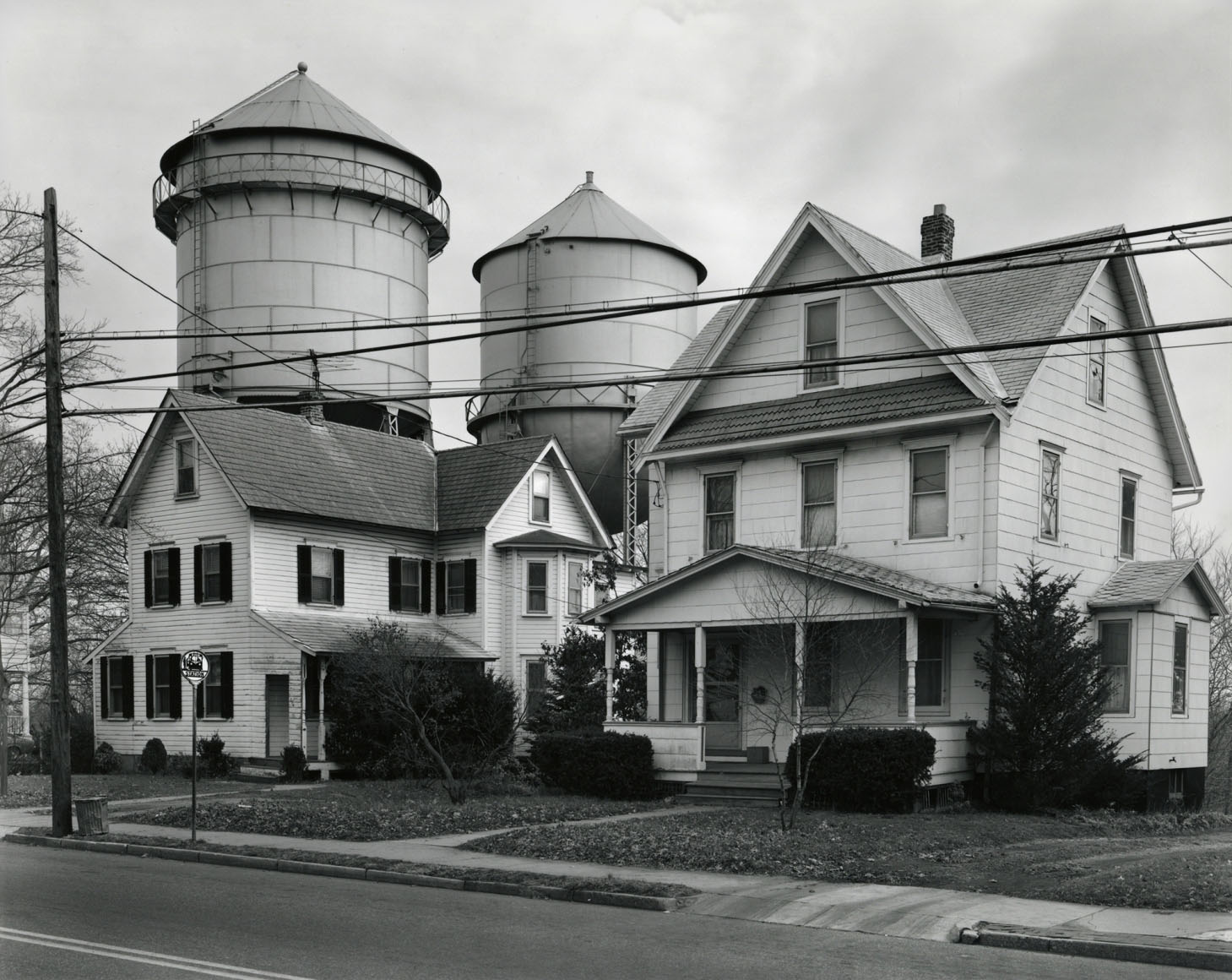


George Tice (American, b. 1938) 'Houses and Water Towers, Moorestown, New Jersey' 1973


George Tice (American, b. 1938)
Houses and Water Towers, Moorestown, New Jersey
1973
Gelatin silver print
11 x 14 inches


George Tice (American, b. 1938) 'Industrial Landscape, Kearny, New Jersey' 1973


George Tice (American, b. 1938)
Industrial Landscape, Kearny, New Jersey
1973
Gelatin silver print
8 x 10 inches


Alfred Stieglitz (American, 1864-1946) 'The Hand of Man' 1902


Alfred Stieglitz (American, 1864-1946)
The Hand of Man
1902
Photogravure
24.1 × 31.8cm (9 1/2 × 12 1/2 in.)
The J. Paul Getty Museum, Los Angeles


A locomotive engine steams toward the camera on its barely visible tracks, wearing a billowing black cloud of smoke like a plumed hat. The criss-crossing lines of tracks beside it snake off toward the horizon, and the telephone poles at the left appear to be making the same march. Alfred Stieglitz’s composition is a treatise on the importance of the machine in the modern Industrial Age. The title of the photograph, The Hand of Man, sets up a comparison between the machine that is depicted and the human artistic impulse that created the image. Stieglitz reproduced this photograph in the January 1903 issue of Camera Work, a journal that he both founded and edited. In the early 1930s he returned to the image and printed additional photographs.

Text from the Google Arts and Culture website
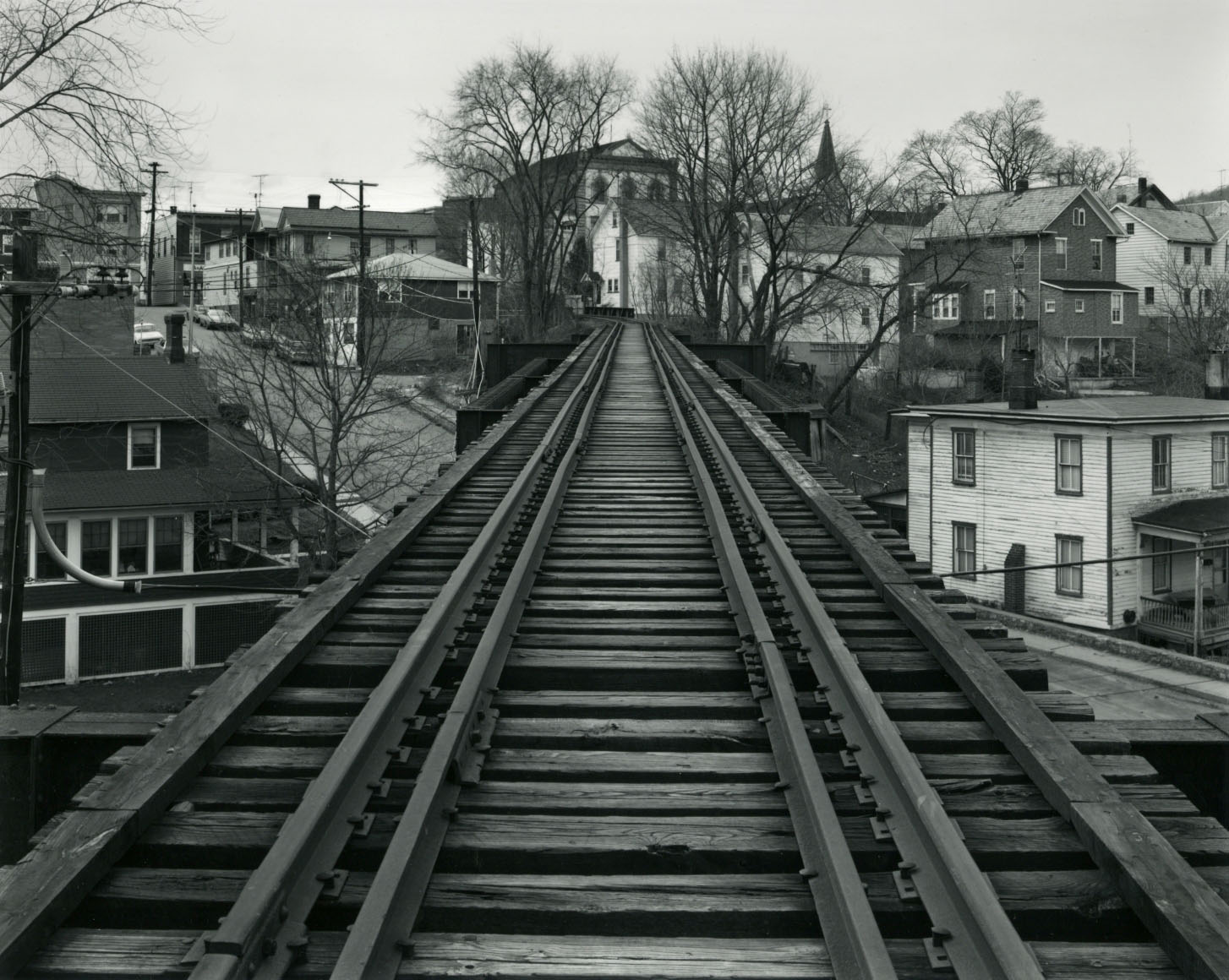
 

George Tice (American, b. 1938) 'Railroad Bridge, High Bridge, New Jersey' 1974


George Tice (American, b. 1938)
Railroad Bridge, High Bridge, New Jersey
1974
Gelatin silver print
8 x 10 inches


George Tice (American, b. 1938) 'Rooftops, 21st and King Street, Paterson, New Jersey' 1969


George Tice (American, b. 1938)
Rooftops, 21st and King Street, Paterson, New Jersey
1969
Vintage gelatin silver print
16 x 20 inches


George Tice (American, b. 1938) 'Tenement Rooftops, Hoboken, New Jersey' 1974


George Tice (American, b. 1938)
Tenement Rooftops, Hoboken, New Jersey
1974
Vintage gelatin silver print
8 x 10 inches


George Tice (American, b. 1938) 'Pulaski Skyway, Jersey City, New Jersey' 1974


George Tice (American, b. 1938)
Pulaski Skyway, Jersey City, New Jersey
1974
Vintage gelatin silver print
8 x 10 inches


George Tice (American, b. 1938) 'Drawbridge, Morgan, New Jersey' 1973


George Tice (American, b. 1938)
Drawbridge, Morgan, New Jersey
1973
Vintage gelatin silver print
8 x 10 inches


The gallery’s current exhibition is a tribute to the lifework of George Tice, including many vintage prints of both famous and lesser-known images. Signed copies of his new book, Lifework, 1953-2013, are also available.

Tice is drawn to vestiges of American culture on the verge of extinction – from people in rural or small-town communities to suburban buildings and neighbourhoods that are often in decline. Although he has photographed throughout the Northwestern United States, he is best known for pictures of his native New Jersey, and the impeccable quality of his black-and-white prints.

Tice was born and raised in Newark, New Jersey – the state in which his ancestors had settled generations earlier. At fourteen, he joined a camera club. A turning point in his self-training happened two years later when a professional photographer critiquing club members’ work praised his picture of an alleyway. Tice briefly studied commercial photography at Newark Vocational and Technical High School; he then joined the Navy. A published image he made of an explosion aboard an American ship caught the eye of photographer Edward Steichen, who purchased it for The Museum of Modern Art. For about a decade, Tice worked as a portrait photographer and helped establish a gallery. That success enabled him to concentrate on personal projects.

In the 1960s, Tice shifted from smaller camera formats to larger ones, which enabled him to craft carefully toned and detailed prints. He portrayed traditional Amish and Shaker communities, as well as the hard lives of fishermen in Maine. In the 1970s, Tice began exploring his home state. Those photographs formed the beginnings of his Urban Landscapes series, which he worked on until the year 2000.

Text from the Joseph Bellows Gallery website
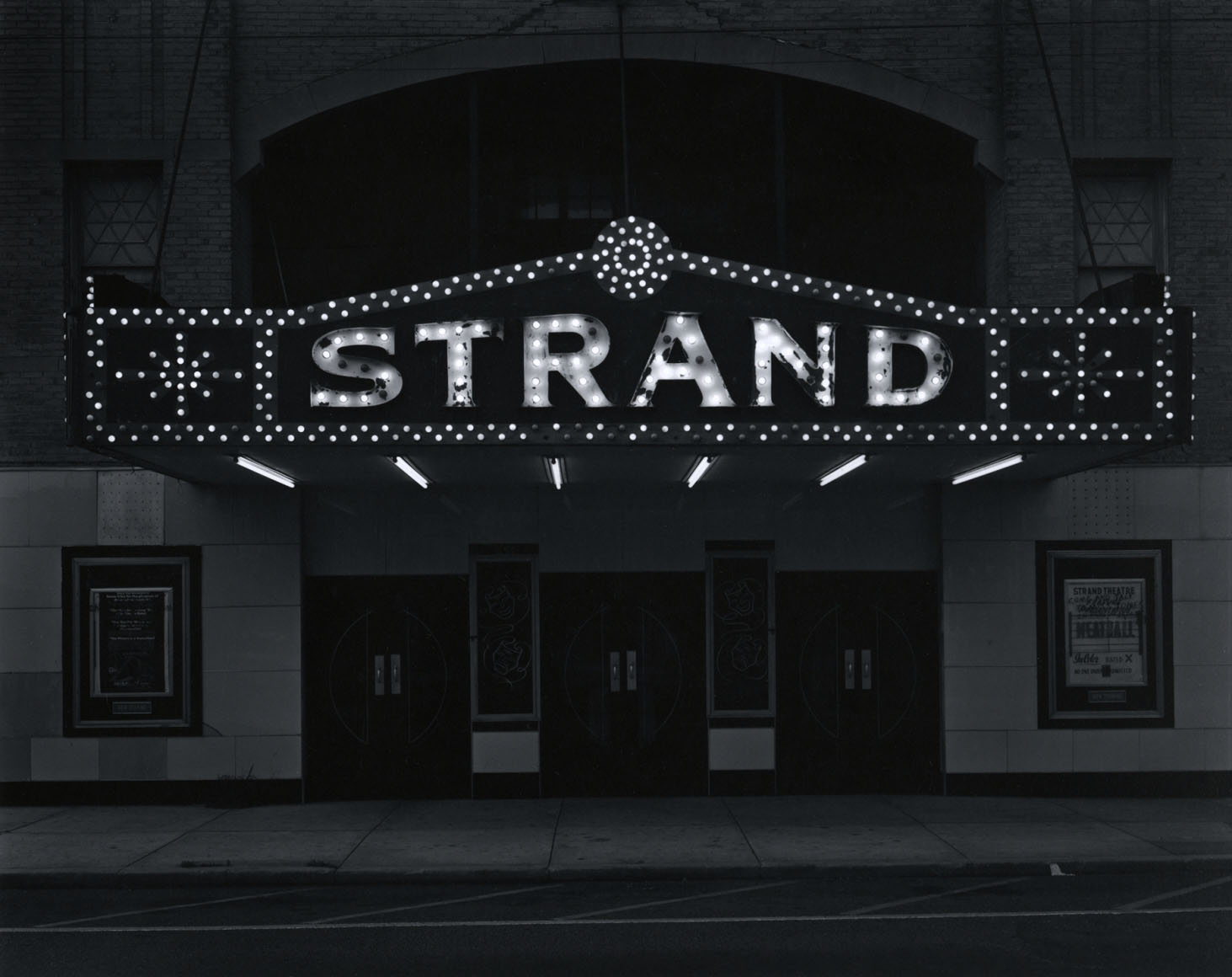
 

George Tice (American, b. 1938) 'Strand Theater, Keyport, New Jersey' 1973


George Tice (American, b. 1938)
Strand Theater, Keyport, New Jersey
1973
Gelatin silver print
16 x 20 inches


George Tice (American, b. 1938) 'New International Cinema, New Brunswick, New Jersey' 1974


George Tice (American, b. 1938)
New International Cinema, New Brunswick, New Jersey
1974
Vintage gelatin silver print
8 x 10 inches


George Tice (American, b. 1938) 'Ideal Diner, Perth Amboy, New Jersey' 1980


George Tice (American, b. 1938)
Ideal Diner, Perth Amboy, New Jersey
1980
Gelatin silver print
11 x 14 inches


George Tice (American, b. 1938) 'Steve's Diner, Route 130, North Brunswick, New Jersey' 1974


George Tice (American, b. 1938)
Steve’s Diner, Route 130, North Brunswick, New Jersey
1974
Vintage gelatin silver print
16 x 20 inches
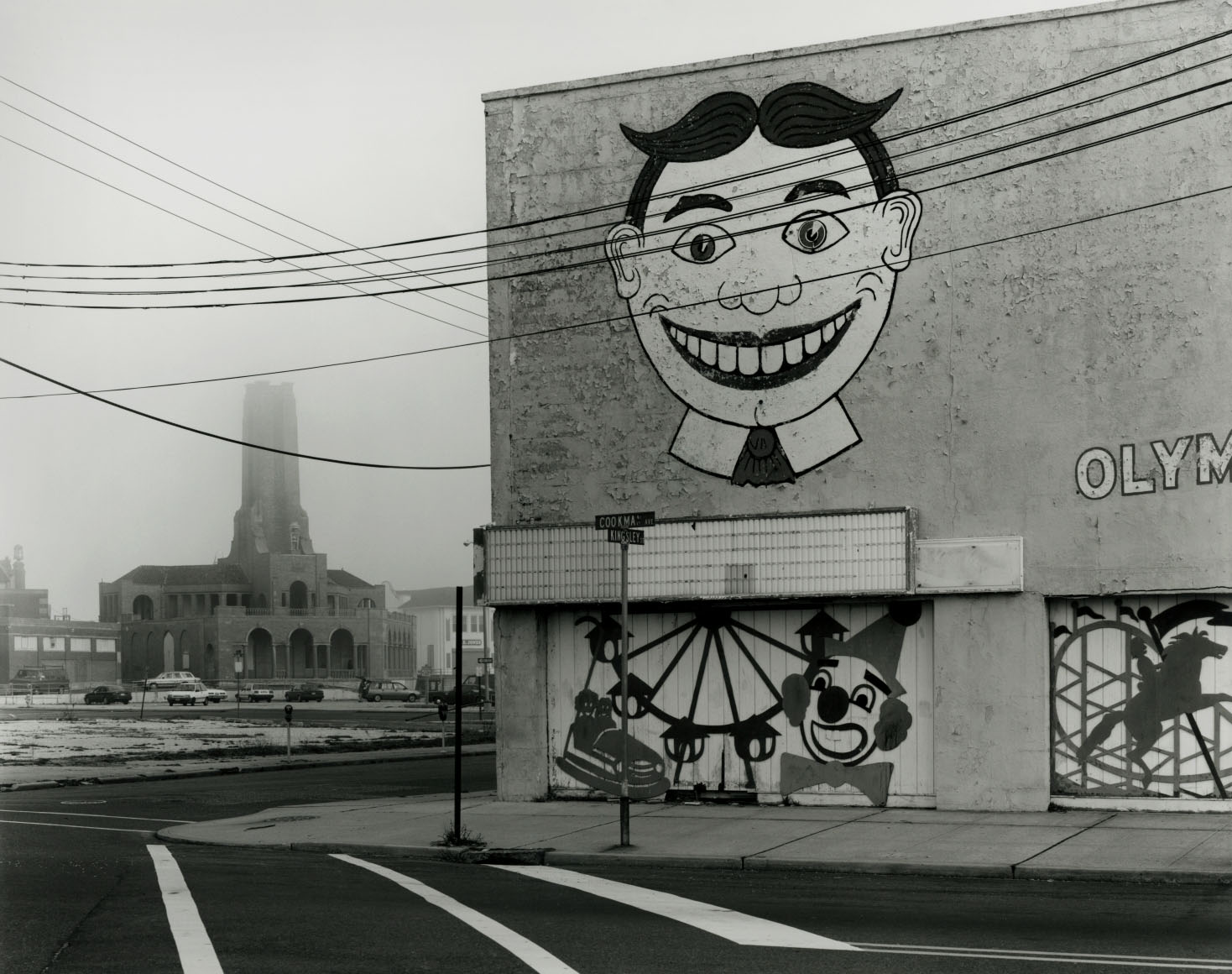
 

George Tice (American, b. 1938) 'Palace Funhouse, Ashbury Park, New Jersey' 1995


George Tice (American, b. 1938)
Palace Funhouse, Ashbury Park, New Jersey
1995
Gelatin silver print
16 x 20 inches
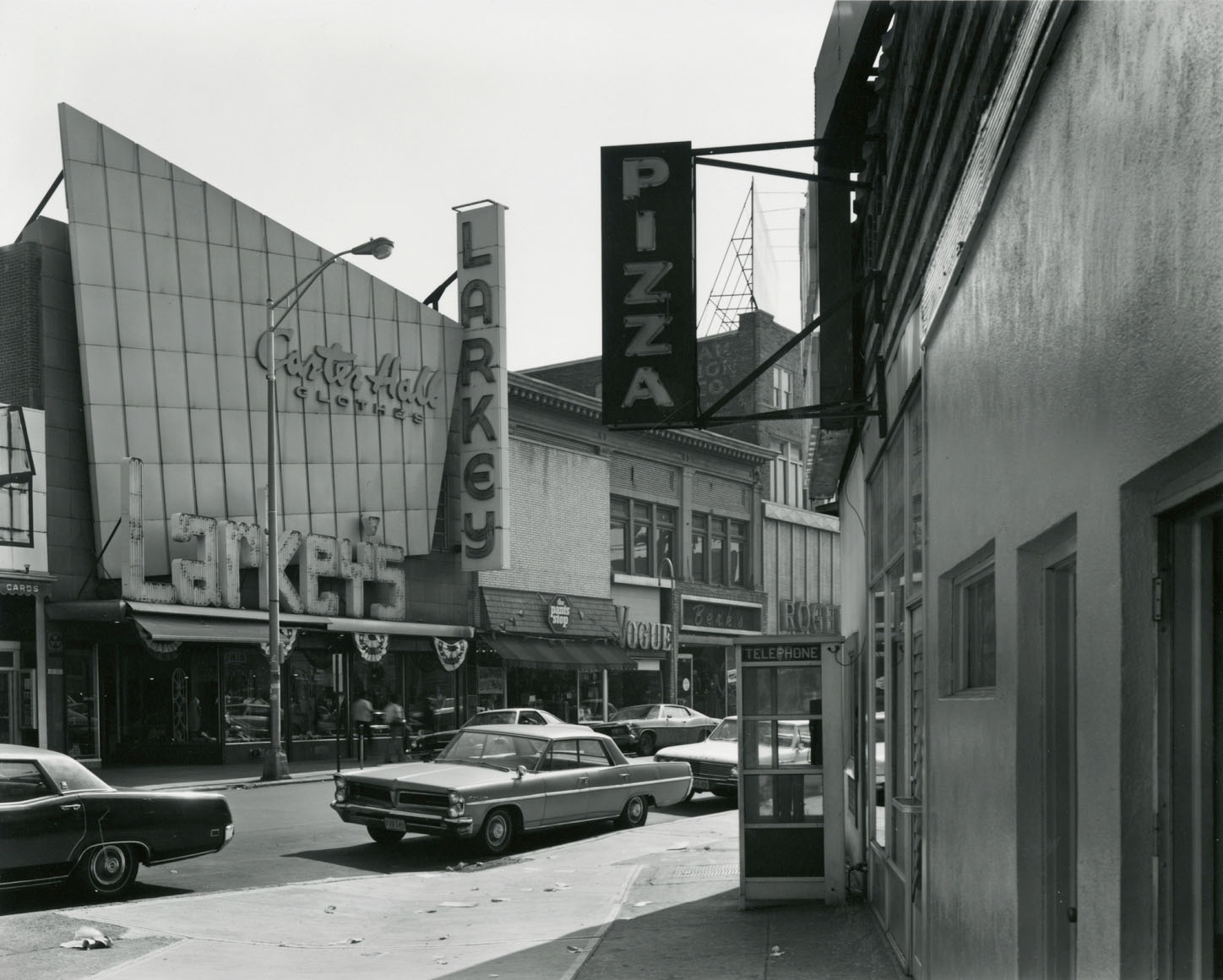
 

George Tice (American, b. 1938) 'Lexington Avenue, Passaic, New Jersey' 1973


George Tice (American, b. 1938)
Lexington Avenue, Passaic, New Jersey
1973
Vintage gelatin silver print
8 x 10 inches


George Tice (American, b. 1938) 'Goldy Pharmacy, Mount Holly, New Jersey' 1974


George Tice (American, b. 1938)
Goldy Pharmacy, Mount Holly, New Jersey
1974
vintage gelatin silver print
8 x 10 inches
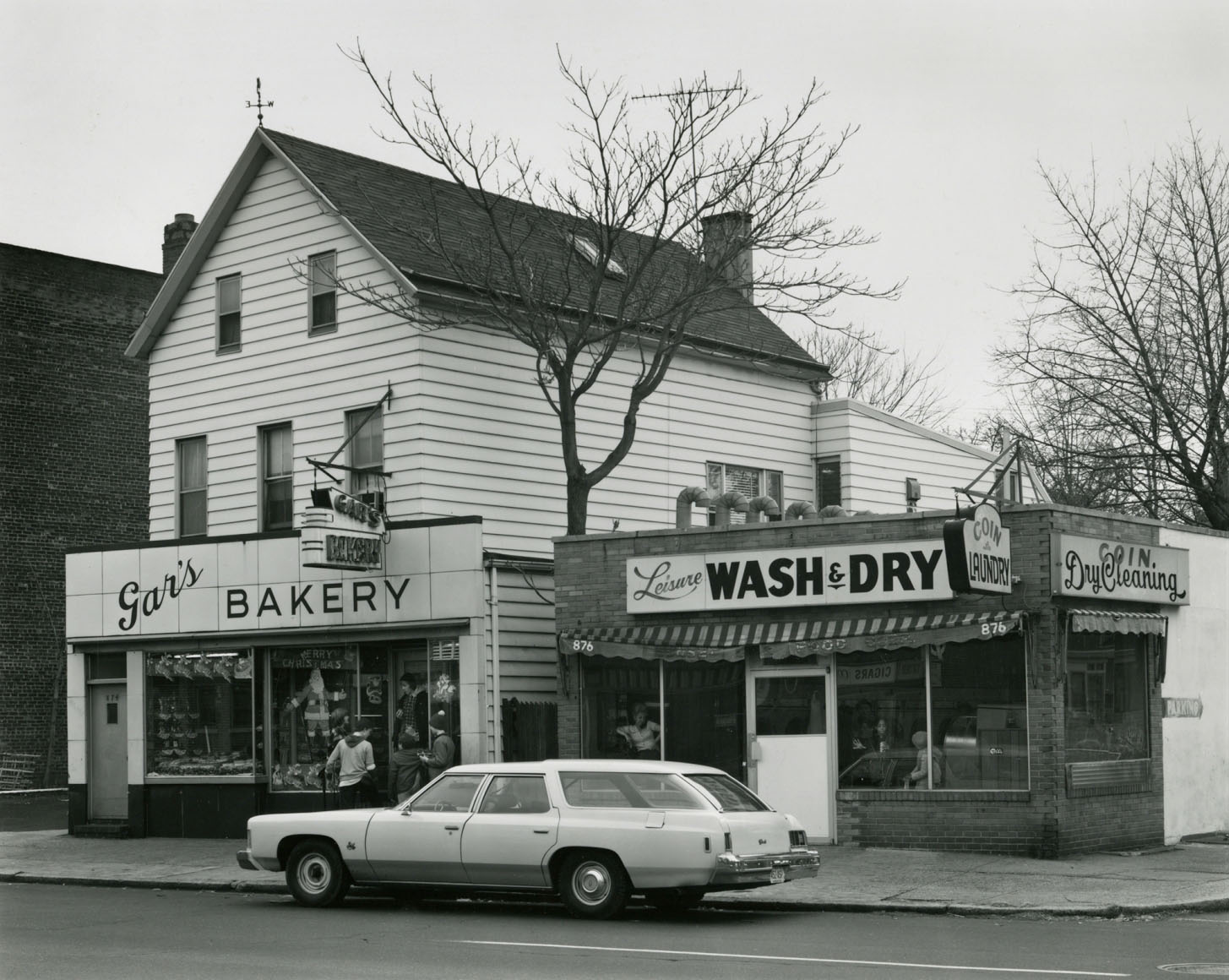
 

George Tice (American, b. 1938) 'Gar's Bakery and Leisure Laundry, Newark, New Jersey' 1974


George Tice (American, b. 1938)
Gar’s Bakery and Leisure Laundry, Newark, New Jersey
1974
Vintage gelatin silver print
8 x 10 inches
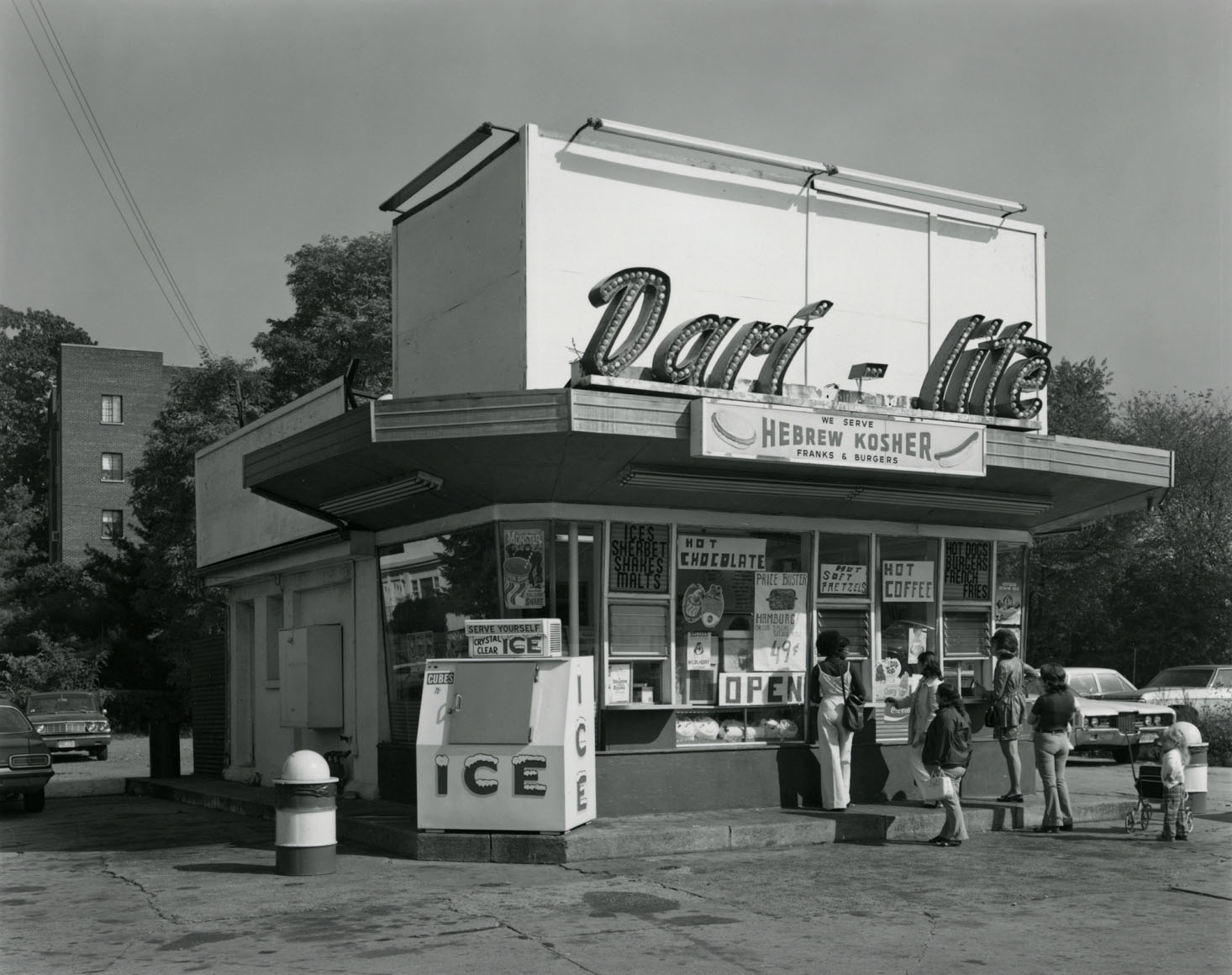
 

George Tice (American, b. 1938) 'Dari O' Lite, Wood Avenue, Linden, New Jersey' 1973


George Tice (American, b. 1938)
Dari O’ Lite, Wood Avenue, Linden, New Jersey
1973
Vintage gelatin silver print
8 x 10 inches
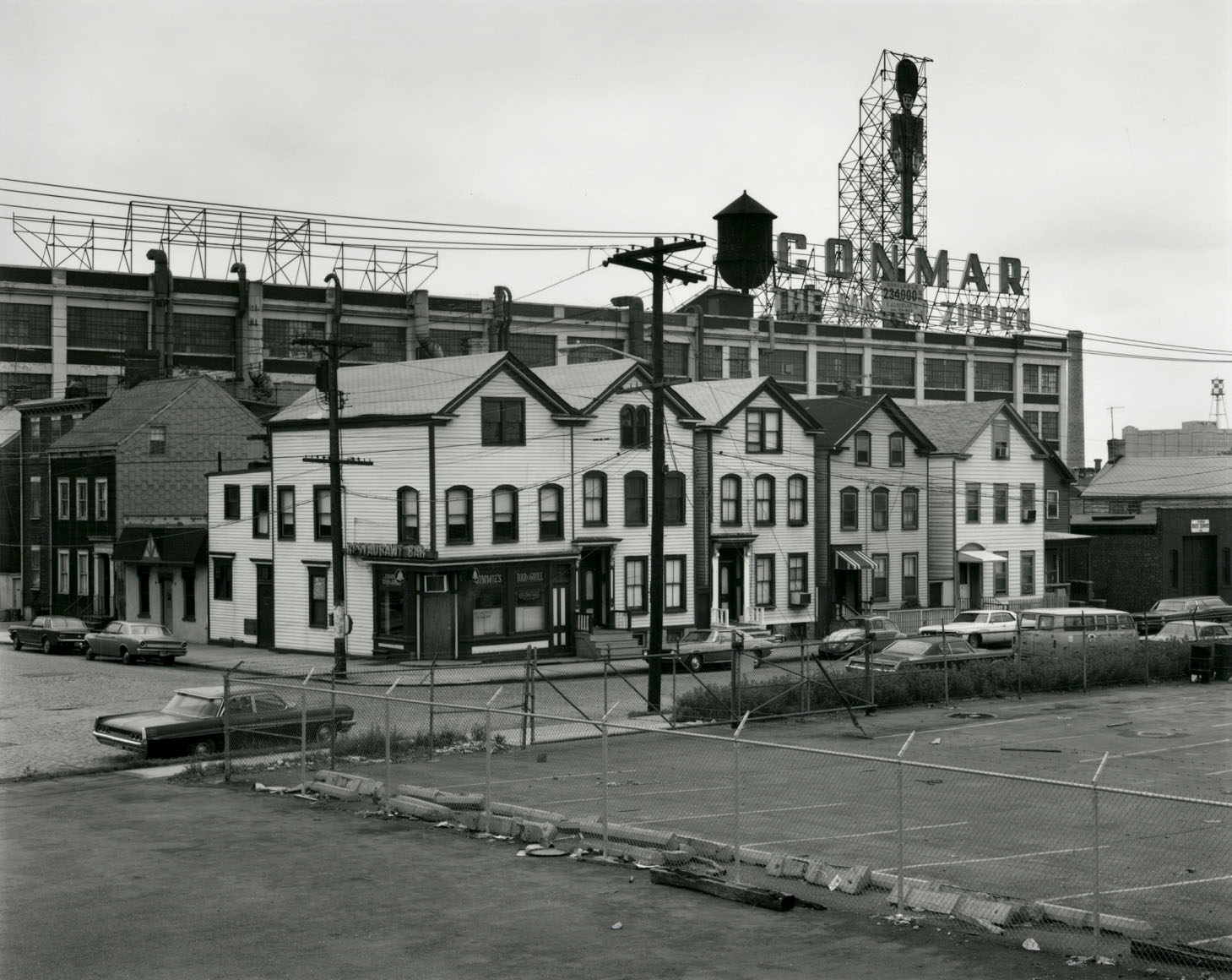
 

George Tice (American, b. 1938) 'Jimmy's Bar and Grill, Newark, New Jersey' 1973


George Tice (American, b. 1938)
Jimmy’s Bar and Grill, Newark, New Jersey
1973
Gelatin silver print
8 x 10 inches
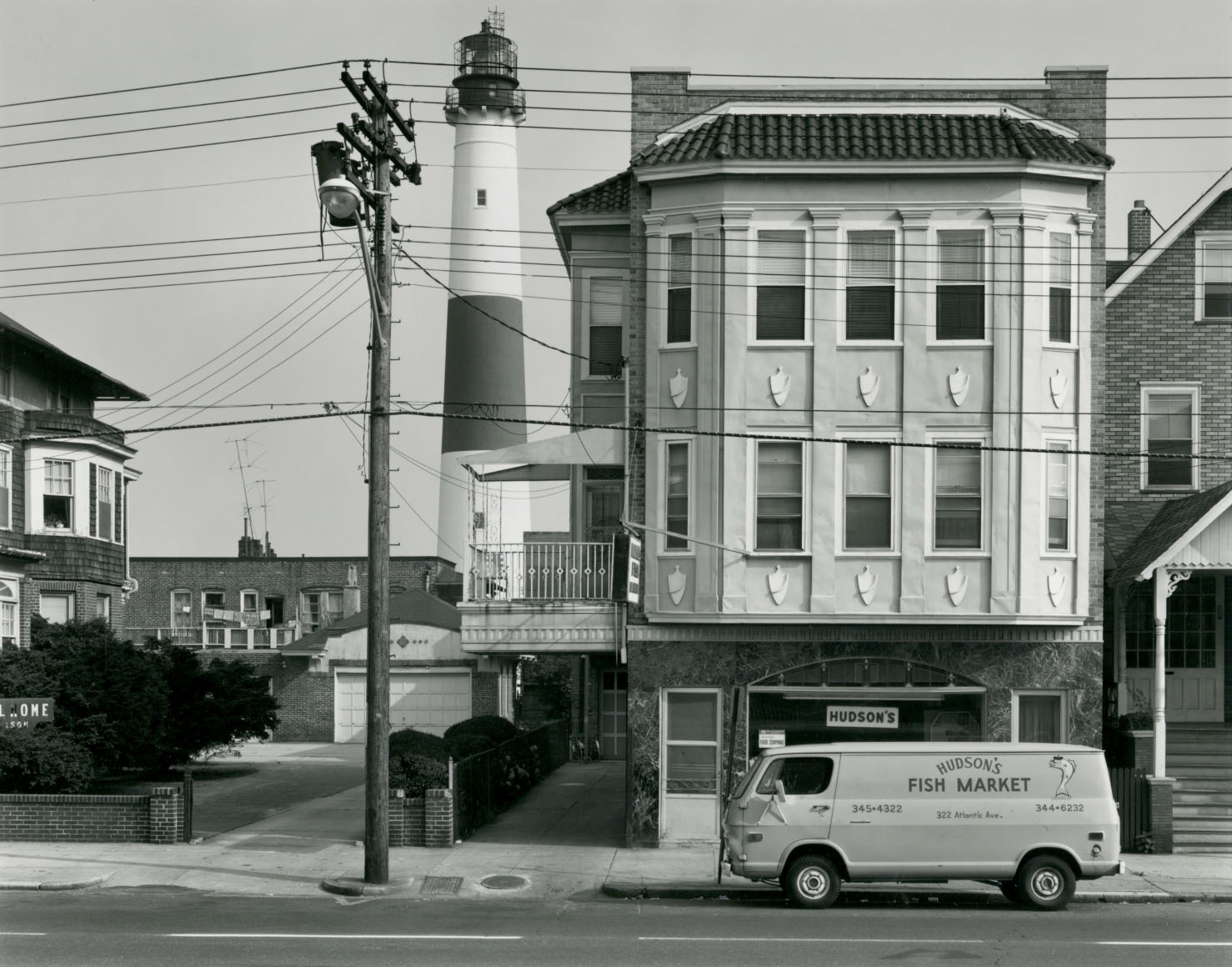
 

George Tice (American, b. 1938) 'Hudson's Fish Market, Atlantic City, New Jersey' 1973


George Tice (American, b. 1938)
Hudson’s Fish Market, Atlantic City, New Jersey
1973
Vintage gelatin silver print
8 x 10 inches


George Tice (American, b. 1938) 'Houses, Ocean Grove, New Jersey' 1974


George Tice (American, b. 1938)
Houses, Ocean Grove, New Jersey
1974
Vintage gelatin silver print
8 x 10 inches
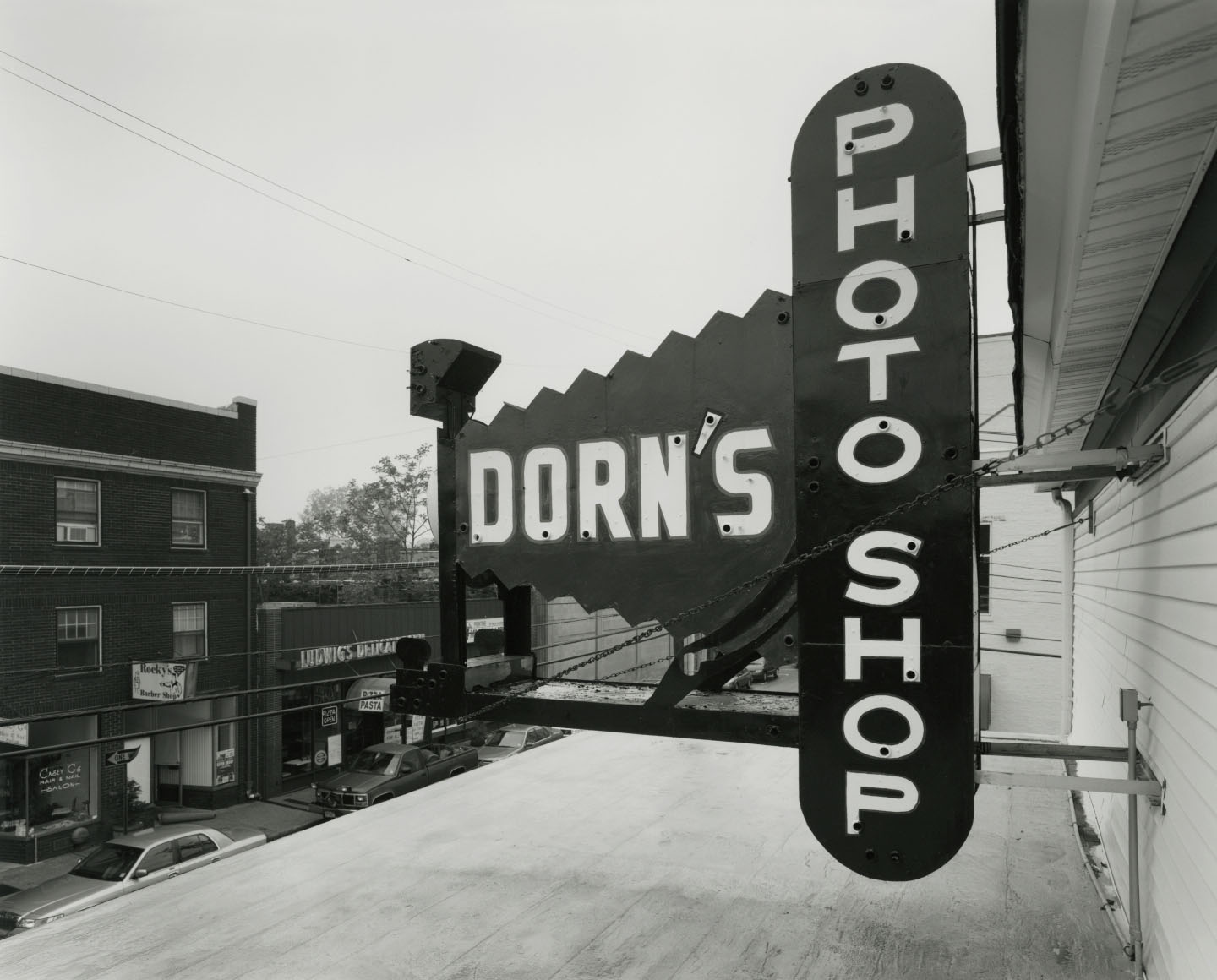
 

George Tice (American, b. 1938) 'Dorn's Photoshop, Red Bank, New Jersey' 1999


George Tice (American, b. 1938)
Dorn’s Photoshop, Red Bank, New Jersey
1999
Gelatin silver print
16 x 20 inches


Joseph Bellows Gallery
7661 Girrard Avenue
La Jolla, California
Phone: 858 456 5620

Opening hours:
Tuesday – Saturday 11am – 5pm and by appointment

Joseph Bellows Gallery website

LIKE ART BLART ON FACEBOOK

Back to top

Exhibition: ‘Gary Krueger’s City of Angels, 1971-1980’ at the Joseph Bellows Gallery, La Jolla, California

Exhibition dates: 18th January – 2nd April, 2021


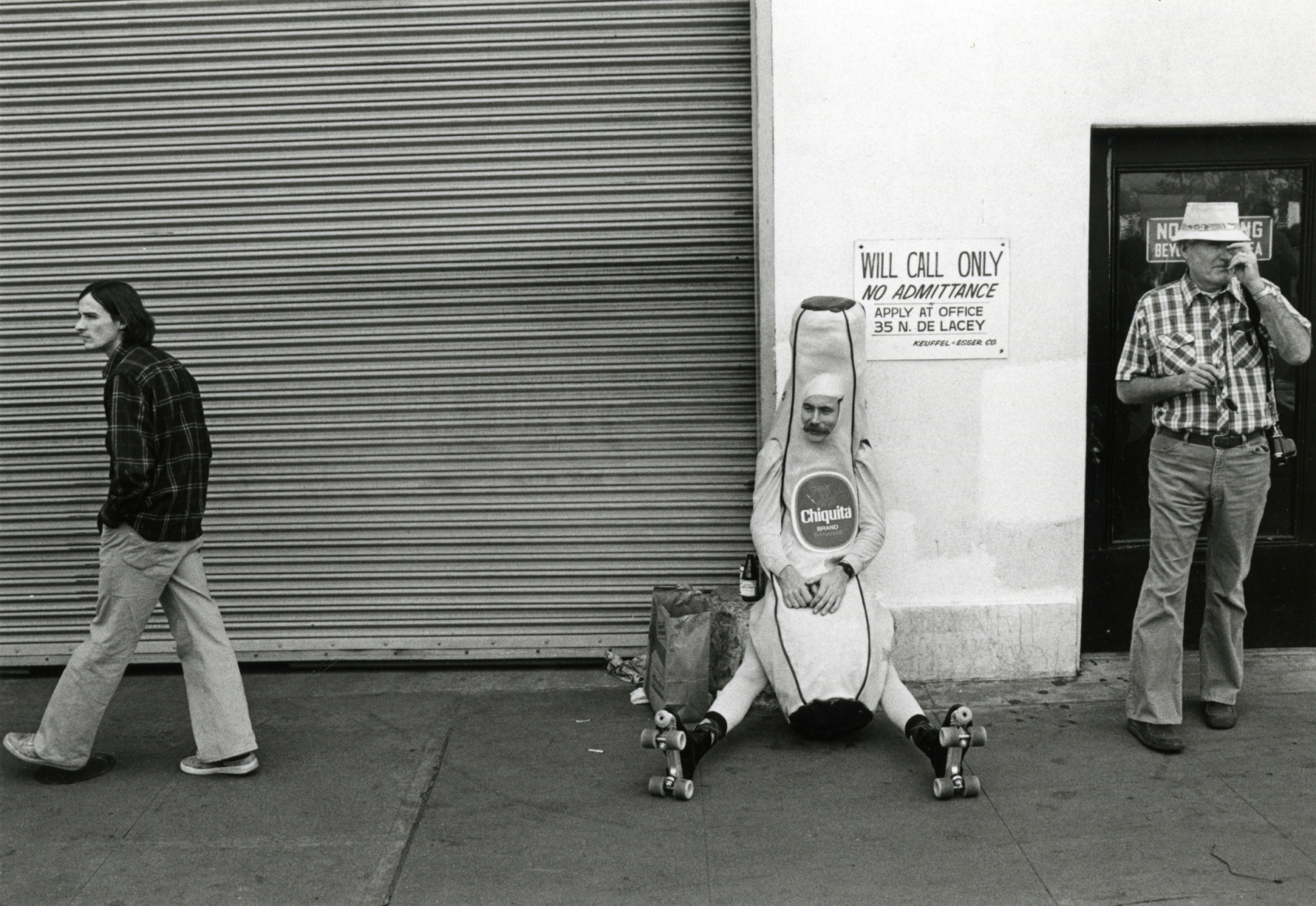
Gary Krueger (American, b. 1945) 'Los Angeles, 1975' 1975 from the exhibition Exhibition: 'Gary Krueger's City of Angels, 1971-1980' at the Joseph Bellows Gallery, La Jolla, California, Jan - April, 2021


Gary Krueger (American, b. 1945)
Los Angeles, 1975
1975
8 x 10 inches
Vintage gelatin silver print
Signed, titled and dated in pencil on verso


Fallen Angels

Love these.

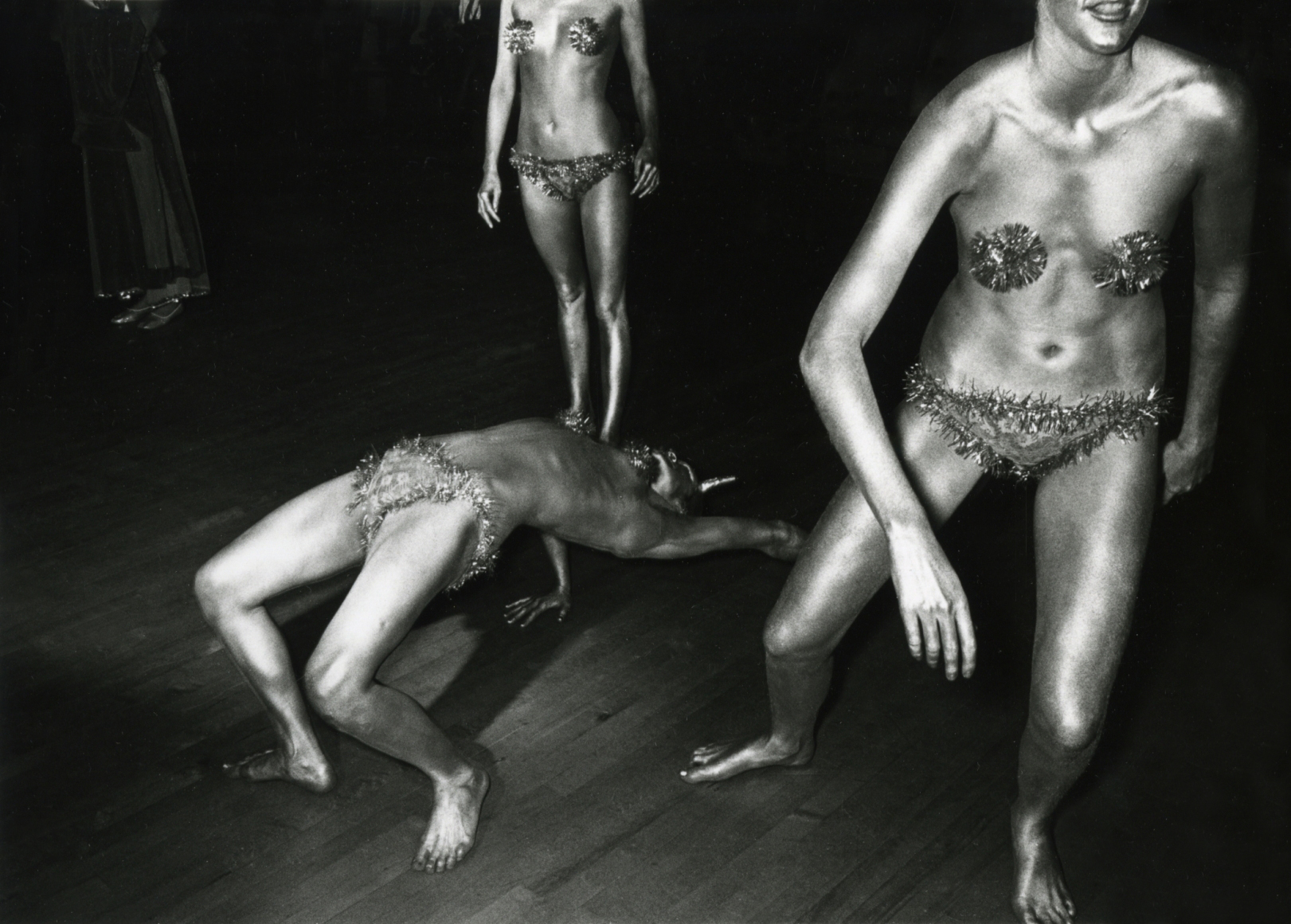
Krueger’s street photography inverts the normal meaning of bathos… in that a silly or very ordinary subject suddenly changes to a beautiful or important one.

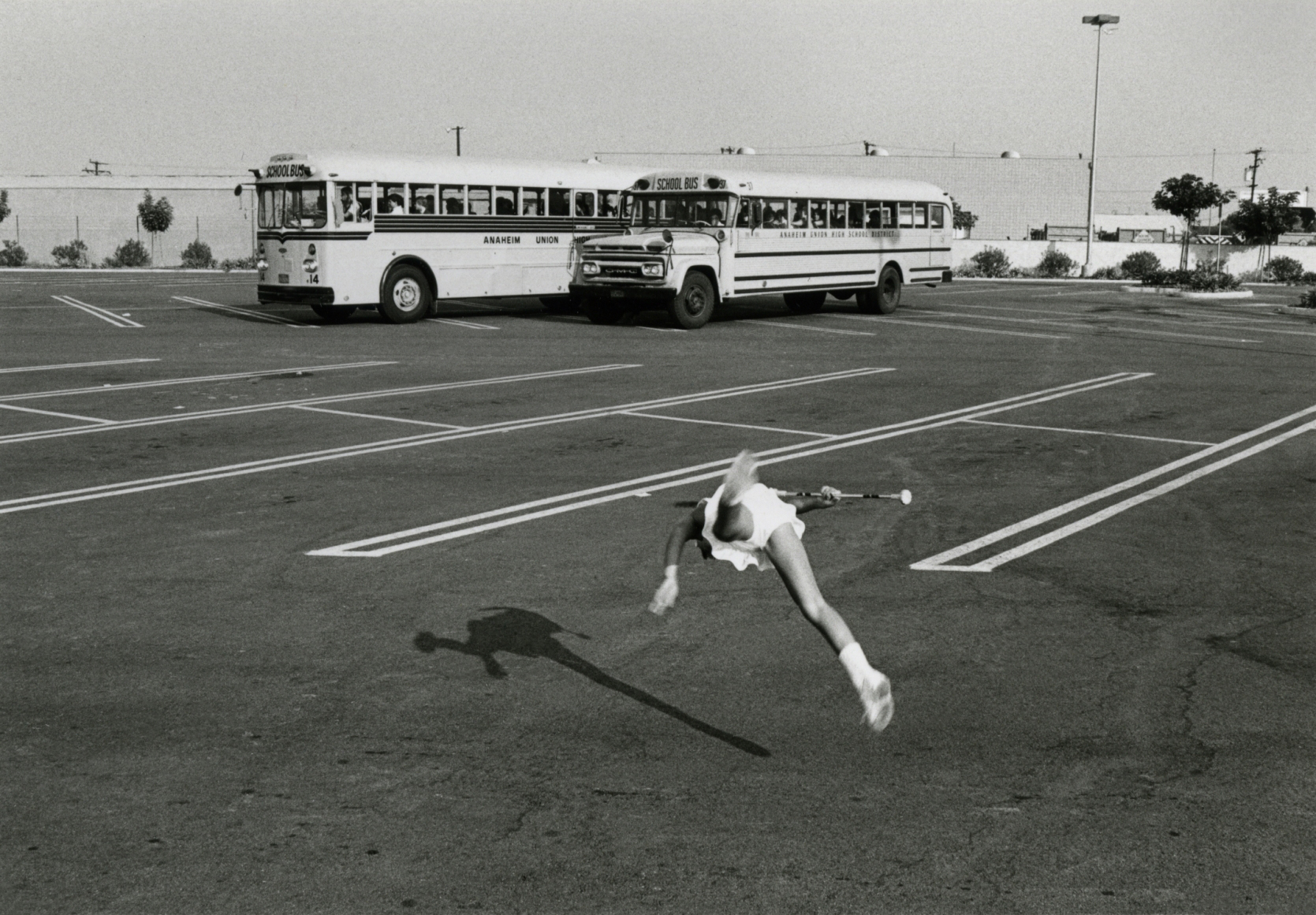
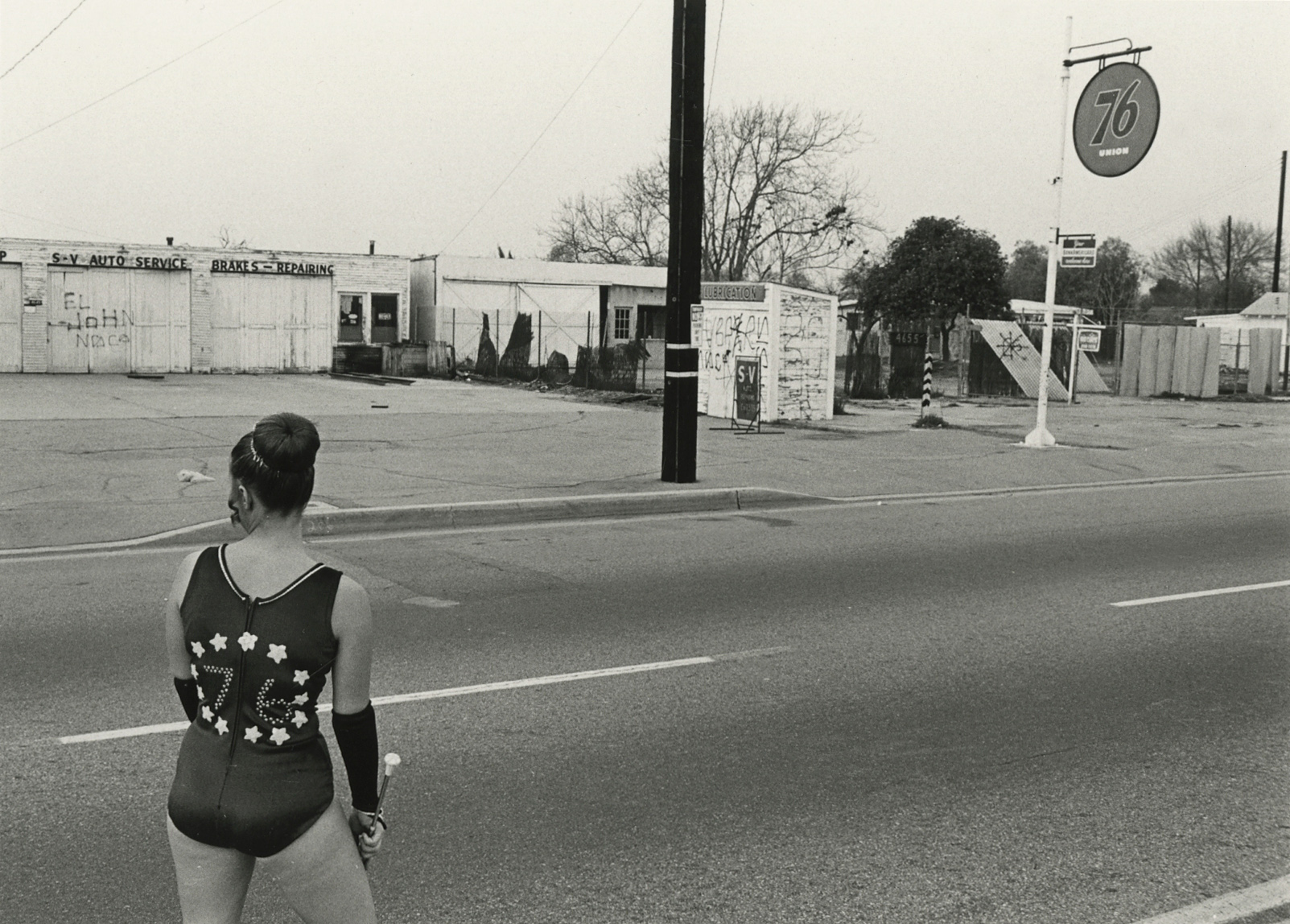
For no reason that we can see, a clown stands in sunlight next to a tree on a street in Los Angeles. What is he doing there? How did he get there? The incongruity of the scene takes on an importance and pathos that is hard to decipher. A pair of 76’s; a snarling dog in a Mustang; the legs of a man on a contraption doing god knows what; and a “majorette” captured mid-air: was she pushed, did she trip, will she fall or recover from this impossible angle, this suspended aerobatic display silently watched by the camera lens and two parked School Buses.

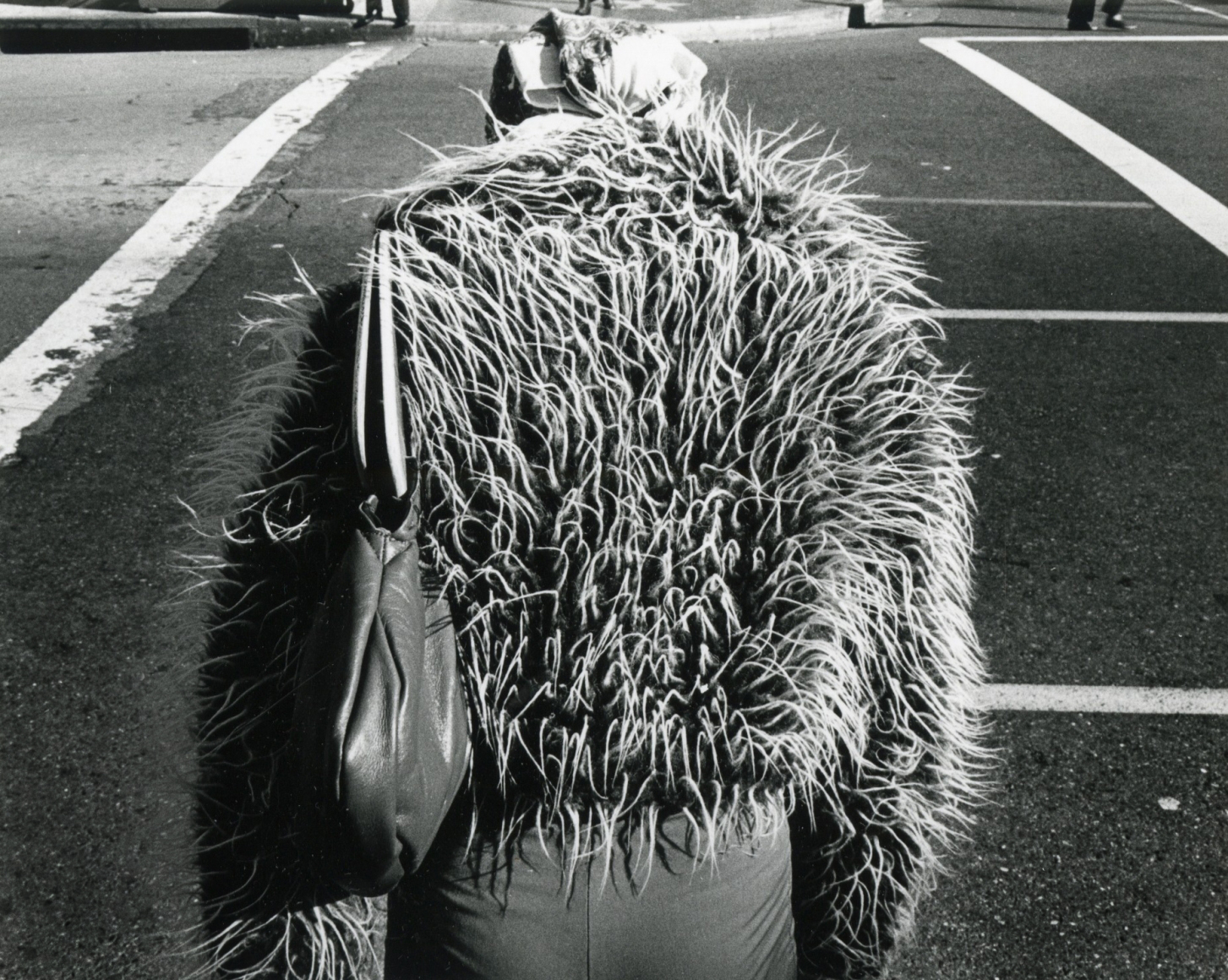
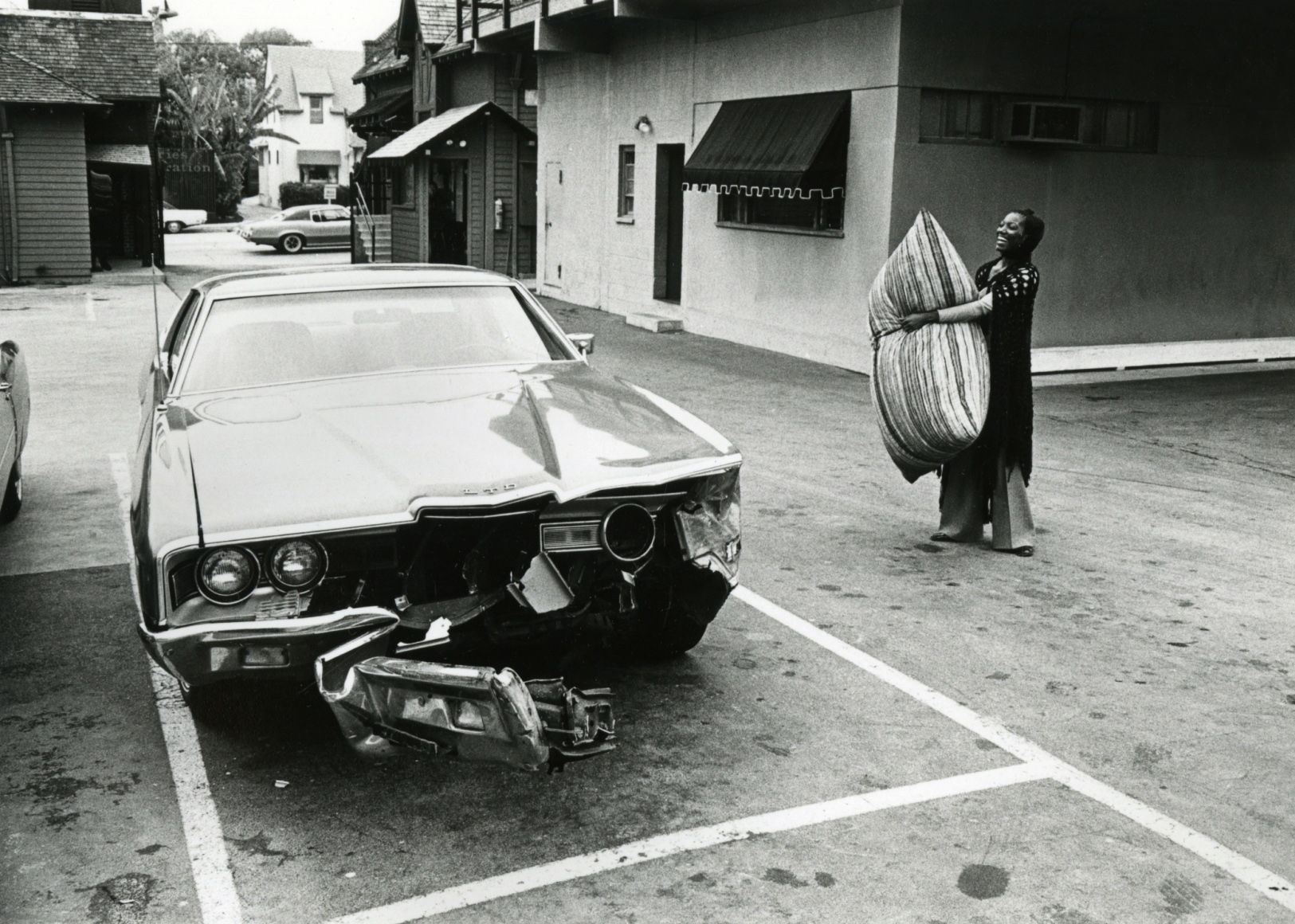
There is black humour aplenty in these photographs, as they picture the happenstance anachronisms of a major American city. They make me think, they make me laugh in that small, tight way when you are not sure you should be laughing at all. The banana on roller skates, the hairy jacket and the man covered in Band Aids, his head wrapped in bandages. What the hell!

Remember what was happening in 1971-80 in Los Angeles. A 6.6-magnitude earthquake centred in Sylmar causes 65 deaths and $505 million in damage; an oil tanker explodes in Los Angeles Harbor killing five people and injuring 50; Los Angeles passes its gay and lesbian civil rights bill; Eula Love, a 39-year-old African-American mother was shot and killed on January 3, 1979 by Los Angeles Police Department (nothing changes!); the Skid Row Stabber (who has never been found) kills 11 homeless people; Los Angeles experiences severe flooding and mudslides; and in 1981 the first case of AIDS appears in Los Angeles County. The man with the Band AIDS seems rather prescient now.

“Through the 20th century, immigrants were attracted by a promised paradise: endless orange groves, a temperate climate and money to be made, as described by aggressively promoted booster campaigns. Families were told to leave the cold, increasingly crowded cities of the east and midwest far behind – the City of Angels was portrayed as a heaven on Earth.” While Neil Simon once described Los Angeles as “like paradise with a lobotomy,” Krueger’s bizarre photographs depict ‘the City of Angels’ as everything and anything but, a utopian paradise.

Dr Marcus Bunyan


Many thankx to Joseph Bellows Gallery for allowing me to publish the photographs and the text (reproduced with permission) in the posting. Please click on the photographs for a larger version of the image.


“It’s not what I put into a photo;

it’s what I take out of a photo.”


Gary Krueger


Gary Krueger (American, b. 1945) 'Los Angeles, 1976' 1976 from the exhibition Exhibition: 'Gary Krueger's City of Angels, 1971-1980' at the Joseph Bellows Gallery, La Jolla, California, Jan - April, 2021


Gary Krueger (American, b. 1945)
Los Angeles, 1976
1976
8 x 10 inches
Vintage gelatin silver print
Signed, titled and dated in pencil on verso


Gary Krueger (American, b. 1945) 'Los Angeles, 1973' 1973


Gary Krueger (American, b. 1945)
Los Angeles, 1973
1973
8 x 10 inches
Vintage gelatin silver print
Signed, titled and dated in pencil on verso


Gary Krueger (American, b. 1945) 'Los Angeles, 1973' 1973


Gary Krueger (American, b. 1945)
Los Angeles, 1973
1973
8 x 10 inches
Vintage gelatin silver print
Signed, titled and dated in pencil on verso


Gary Krueger (American, b. 1945) 'Hollywood, 1971' 1971


Gary Krueger (American, b. 1945)
Hollywood, 1971
1971
8 x 10 inches
Vintage gelatin silver print
Signed, titled and dated in pencil on verso


Gary Krueger (American, b. 1945) 'Los Angeles, 1971' 1971


Gary Krueger (American, b. 1945)
Los Angeles, 1971
1971
8 x 10 inches
Vintage gelatin silver print
Signed, titled and dated in pencil on verso


Gary Krueger (American, b. 1945) 'Los Angeles, 1973' 1973


Gary Krueger (American, b. 1945)
Los Angeles, 1973
1973
8 x 10 inches
Vintage gelatin silver print
Signed, titled and dated in pencil on verso


Gary Krueger (American, b. 1945) 'Los Angeles, 1974' 1974


Gary Krueger (American, b. 1945)
Los Angeles, 1974
1974
8 x 10 inches
Vintage gelatin silver print
Signed, titled and dated in pencil on verso


Joseph Bellows Gallery is pleased to present Gary Krueger’s City of Angels, 1971-1980, a collection of sometimes frenetic and often bizarre photographs of Los Angeles, California. Krueger’s curiosity and instincts helped to create a remarkable body of street photography that he describes as “split-second juxtapositions in life.” After graduating High School in 1963, Gary Krueger (1945- ) drove his 1954 Ford west from Cleveland, Ohio, to study graphic design and photography at the Chouinard Art Institute in Los Angeles from 1964 to 1967. Later Cal Arts, Chouinard was a professional art school founded in 1921 by Nelbert Murphy Chouinard. In 1961, Walt and Roy Disney guided the merger of Chouinard and the Los Angeles Conservatory of Music to establish the California Institute of the Arts. Notable alumni include Ed Ruscha, Larry Bell, Robert Irwin, Joe Goode, and Allen Ruppersberg, with whom Krueger collaborated on Ruppersberg’s narrative photo works, including 23 Pieces (1969) and 24 Pieces (1970). Upon graduation from Chouinard, Krueger was hired by WED, Disney’s “Imagineering” Division to photograph the Park and its events. He eventually left WED to pursue a successful career as a commercial and editorial photographer.

“Gary Krueger’s plain ol’ photographs (unless I’m missing a point) – small, tough, and sharp – are good, granite reportage. Baldessari’s “Fables” and Krueger’s no-nonsense photos cut like a hot ripsaw through the cool, marshmallow quality of both exhibitions.” – Peter Plagens, from a 1973 ARTFORUM review of the exhibition, Southern California: Attitudes 1972, at the Pasadena Art Museum.

Krueger’s work is represented in The Minneapolis Institute of Art, Museum of Fine Arts, Houston, Center for Creative Photography, Tucson, AZ, the Los Angeles County Museum of Art, and the Santa Barbara Museum of Art.

Press release from the Joseph Bellows Gallery [Online] Cited 28/02/2021


Gary Krueger (American, b. 1945) 'Los Angeles, 1972' 1972


Gary Krueger (American, b. 1945)
Los Angeles, 1972
1972
8 x 10 inches
Vintage gelatin silver print
Signed, titled and dated in pencil on verso


Gary Krueger (American, b. 1945) 'Los Angeles, 1970' 1970


Gary Krueger (American, b. 1945)
Los Angeles, 1970
1970
8 x 10 inches
Vintage gelatin silver print
Signed, titled and dated in pencil on verso


Gary Krueger (American, b. 1945) 'Los Angeles, 1974' 1974


Gary Krueger (American, b. 1945)
Los Angeles, 1974
1974
8 x 10 inches
Vintage gelatin silver print
Signed, titled and dated in pencil on verso


Gary Krueger (American, b. 1945) 'Los Angeles, 1971' 1971


Gary Krueger (American, b. 1945)
Los Angeles, 1971
1971
8 x 10 inches
Vintage gelatin silver print
Signed, titled and dated in pencil on verso


Gary Krueger (American, b. 1945) 'Los Angeles, 1971' 1971


Gary Krueger (American, b. 1945)
Los Angeles, 1971
1971
8 x 10 inches
Vintage gelatin silver print
Signed, titled and dated in pencil on verso


Gary Krueger (American, b. 1945) 'Hollywood, CA, 1971' 1971


Gary Krueger (American, b. 1945)
Hollywood, CA, 1971
1971
8 x 10 inches
Vintage gelatin silver print
Signed, titled and dated in pencil on verso


Gary Krueger (American, b. 1945) 'Los Angeles, 1973' 1973


Gary Krueger (American, b. 1945)
Los Angeles, 1973
1973
8 x 10 inches
Vintage gelatin silver print
Signed, titled and dated in pencil on verso


Gary Krueger (American, b. 1945) 'Los Angeles, 1976' 1976


Gary Krueger (American, b. 1945)
Los Angeles, 1976
1976
8 x 10 inches
Vintage gelatin silver print
Signed, titled and dated in pencil on verso


Gary Krueger (American, b. 1945) 'Los Angeles, 1979' 1979


Gary Krueger (American, b. 1945)
Los Angeles, 1979
1979
8 x 10 inches
Vintage gelatin silver print
Signed, titled and dated in pencil on verso


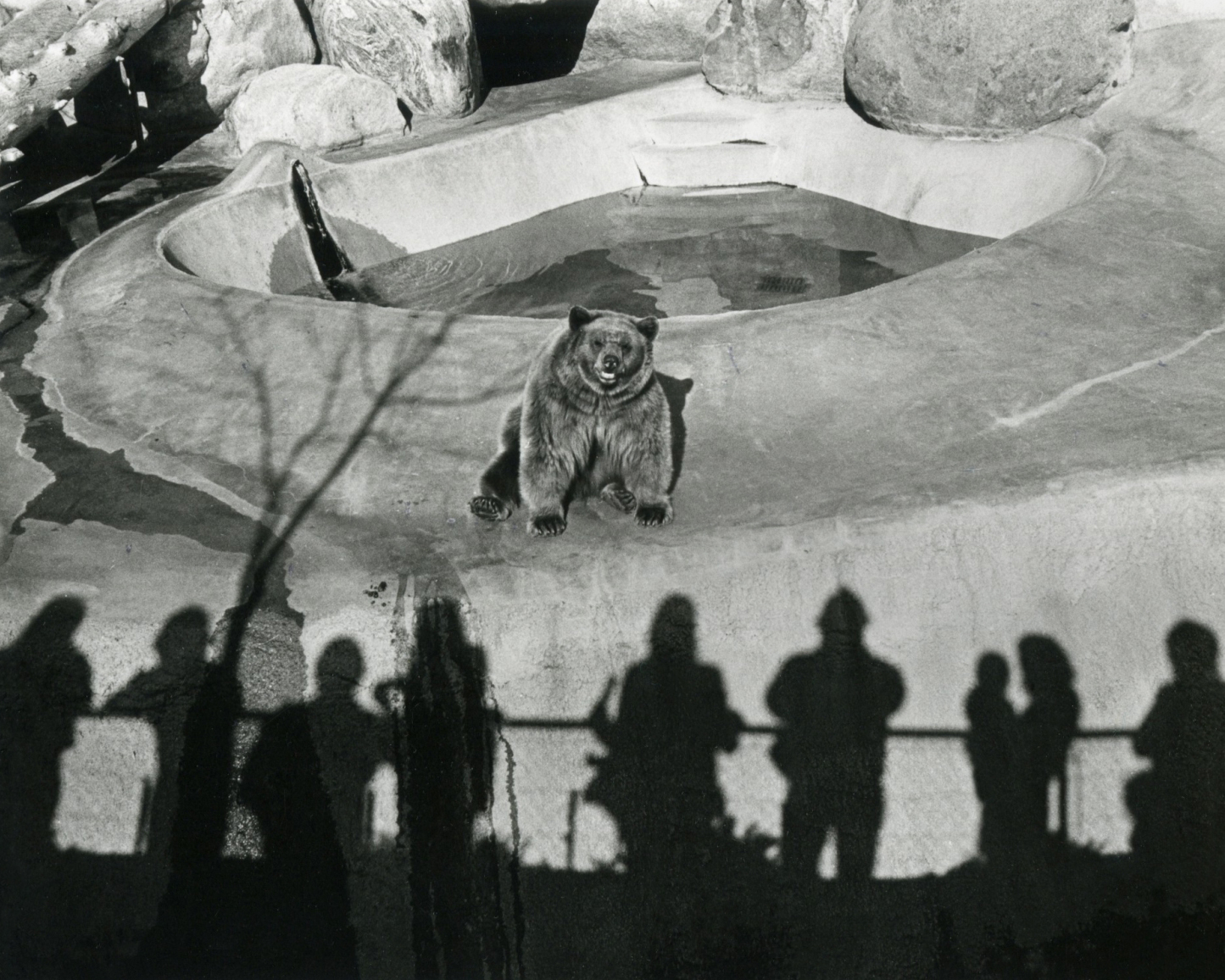
Gary Krueger (American, b. 1945) 'Los Angeles Zoo, 1971' 1971


Gary Krueger (American, b. 1945)
Los Angeles Zoo, 1971
1971
8 x 10 inches
Vintage gelatin silver print
Signed, titled and dated in pencil on verso


Gary Krueger (American, b. 1945) 'Los Angeles, 1980' 1980


Gary Krueger (American, b. 1945)
Los Angeles, 1980
1980
8 x 10 inches
Vintage gelatin silver print
Signed, titled and dated in pencil on verso


Gary Krueger (American, b. 1945) 'Hollywood, 1971' 1971


Gary Krueger (American, b. 1945)
Hollywood, 1971
1971
8 x 10 inches
Vintage gelatin silver print
Signed, titled and dated in pencil on verso


Gary Krueger (American, b. 1945) 'Los Angeles, 1980' 1980


Gary Krueger (American, b. 1945)
Los Angeles, 1980
1980
8 x 10 inches
Vintage gelatin silver print
Signed, titled and dated in pencil on verso


Gary Krueger (American, b. 1945) 'Los Angeles, 1975' 1975


Gary Krueger (American, b. 1945)
Los Angeles, 1975
1975
8 x 10 inches
Vintage gelatin silver print
Signed, titled and dated in pencil on verso


Joseph Bellows Gallery
7661 Girrard Avenue
La Jolla, California
Phone: 858 456 5620

Opening hours:
Tuesday – Saturday 11am – 5pm and by appointment
Joseph Bellows Gallery website

LIKE ART BLART ON FACEBOOK

Back to top

European photographic research tour exhibition: ‘Berenice Abbott: Portraits of Modernity’ at Huis Marseille, Amsterdam Part 2

Exhibition dates: 7th September – 1st December, 2019

Visited September 2019 posted June 2020

Curator: Estrella de Diego, Professor of Modern Art at the Complutense University of Madrid


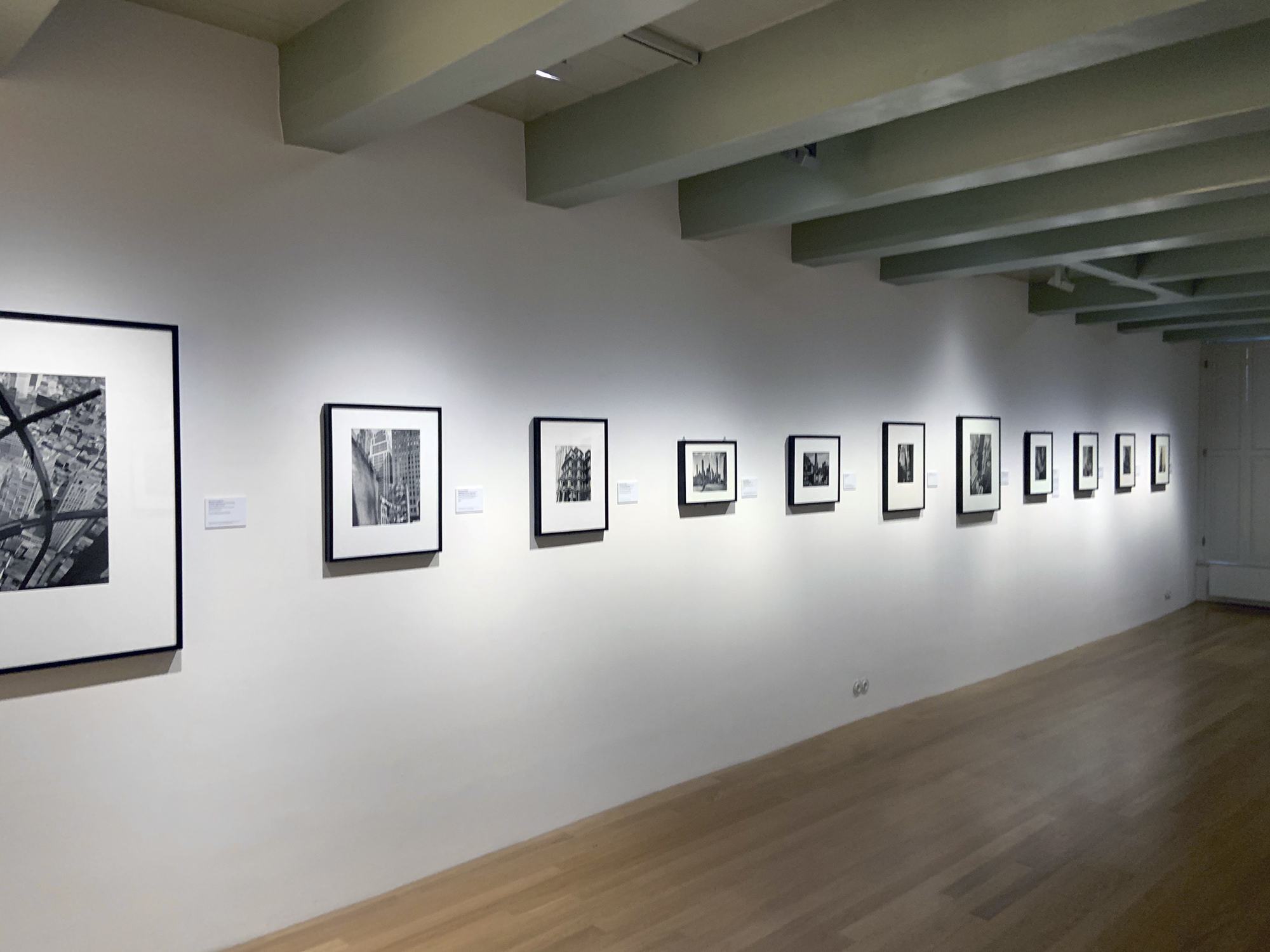
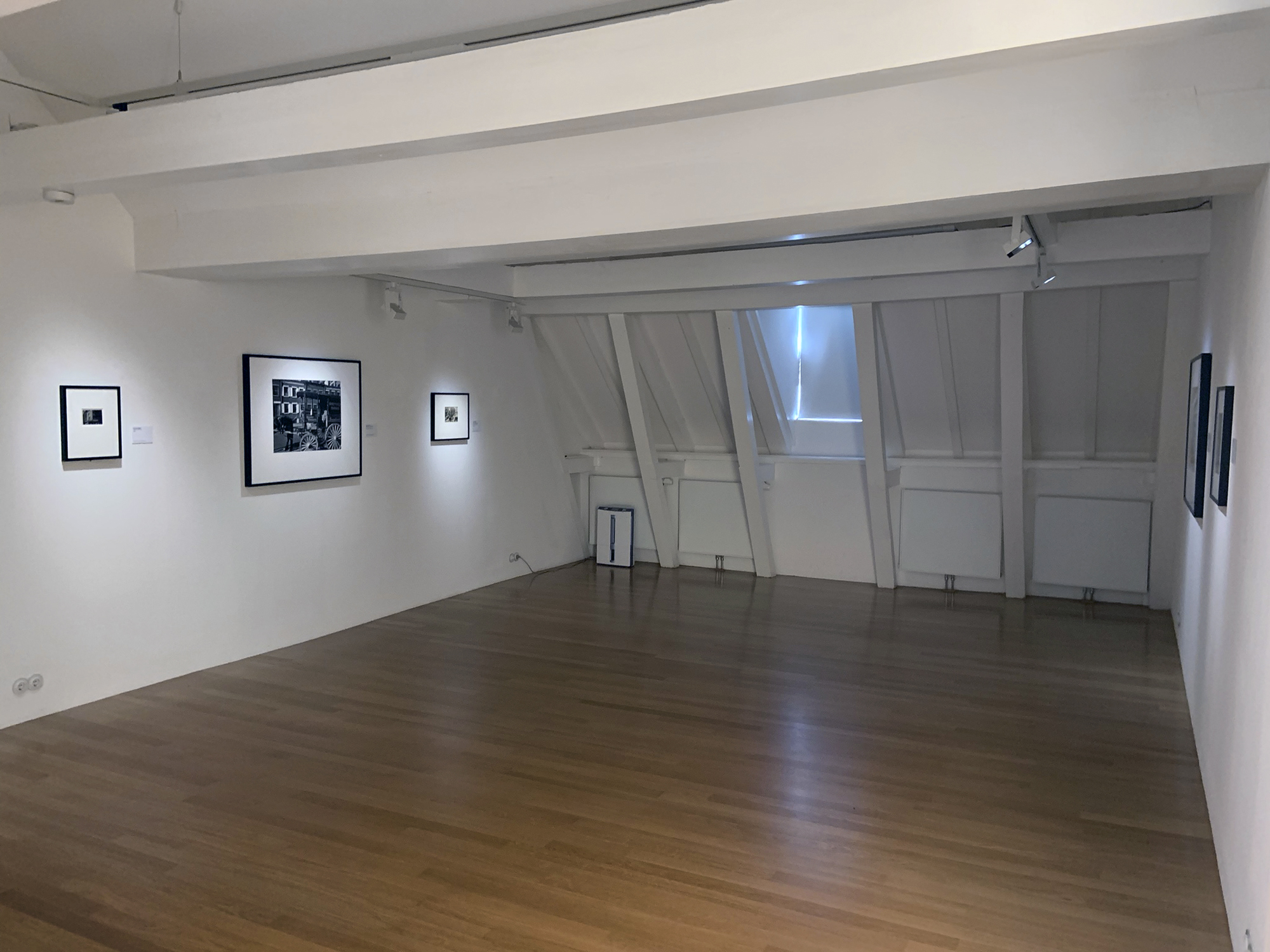
Installation view of the exhibition 'Berenice Abbott: Portraits of Modernity' at Huis Marseille, Amsterdam


Installation view of the exhibition Berenice Abbott: Portraits of Modernity at Huis Marseille, Amsterdam
Photo: Dr Marcus Bunyan


Old New York, new New York

This was an impressive exhibition from this powerhouse of a photographer in that most beautiful of galleries, Huis Marseille in Amsterdam. While her debt to that French master photographer Eugène Atget (1857-1927) is acknowledged through Abbott’s statement that she planned “to do for New York what Atget did for Paris,” Abbott’s photographs and her ‘point of view’ differ significantly to that of her Parisian hero.

Inflections of the influence of the Parisian master are present in the work, but in the project Changing New York Abbott develops a unique visual language through her representation of city life. Her photographs of shop fronts are more static and formal than that of Atget, more interested in the multiplicities of form than they are of reflections in glass, or ghostly people standing in doorways. Further, Atget would never have taken a photograph such as Gunsmith and Police Department, 6 Centre Market Place, Manhattan (1937, below) because the angle of the composition looking upwards is too severe, too modernist. Similarly, the placement by Abbott of the lamppost and U.S. Mail box in Old Law Tenements, 35-47 East 1st Street (1937, below) as the focus of attention, make this photograph uniquely her own.

Abbott photographs the co-mingled elements of old New York and new New York – the crowded tenements, rushing people, and “grand canyons” lined with monolithic skyscrapers of the bustling metropolis – as a city caught in the shadows of a piercing New York light. If you have been to New York you know that the city has that light, a hard, clinical light that bounces off surfaces until it sinks into the deepening shadows and recesses of overshadowed buildings. In her vital, still, intense, renditions of the cityscape Abbott’s photographs capture this light.

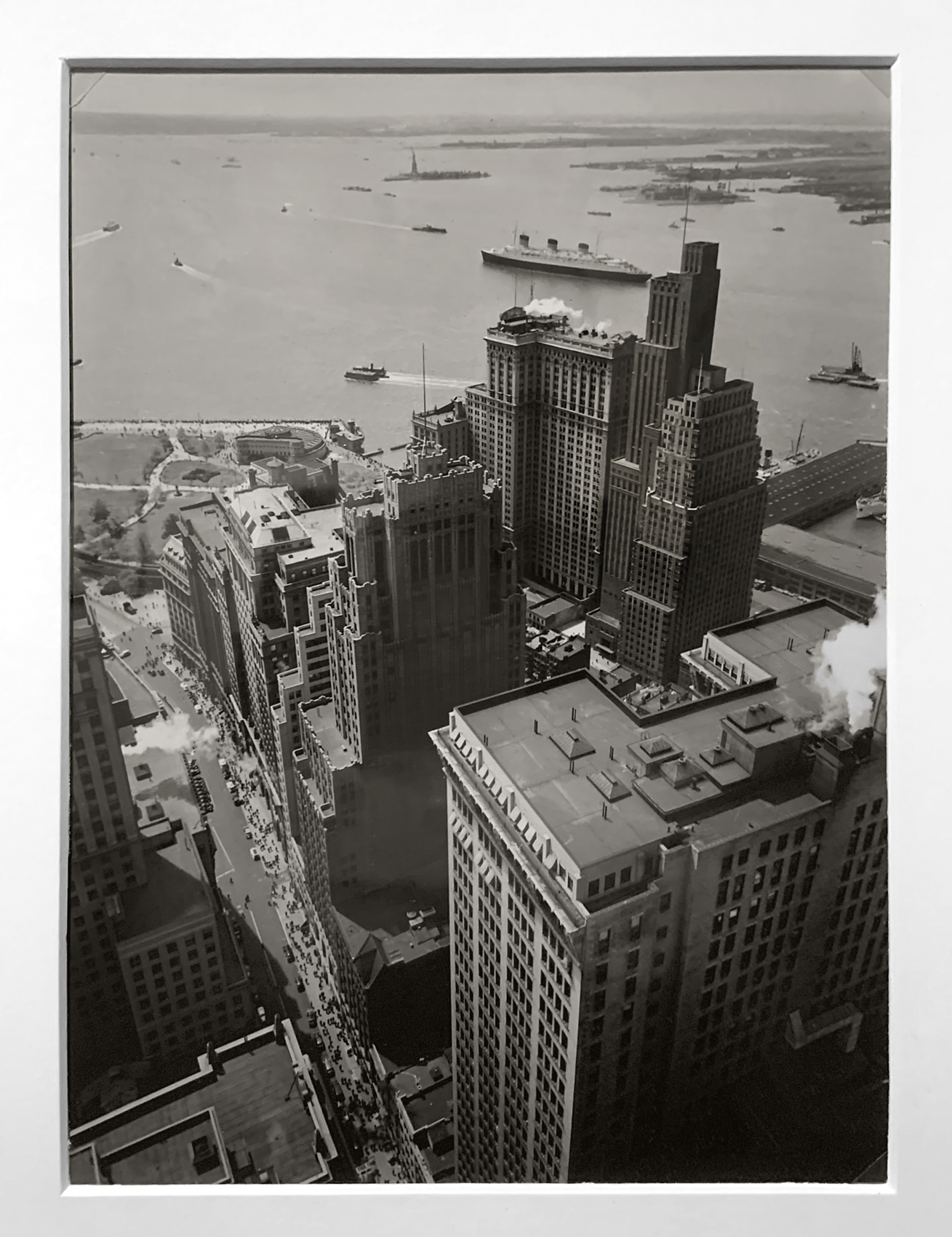
But what really changes her attitude (or altitude you might say) to the city is Abbott’s depiction of those edifices of modernism that are the crowning glory of New York: the skyscraper. Paraphrasing Karen Chambers from her article, “Paris to New York: Photographs by Eugène Atget and Berenice Abbott,” we can say that Abbott’s photographs of skyscrapers are different from the human scale of Atget’s photographs and of Abbott’s of a disappearing New York. Whether looking up from the bowls of the city (Canyon: Broadway and Exchange Place, 1936 below); across at the regimented forms of building (New York Telephone Company’s Lower Broadway Building, 1930-31 below); or down from a God-like perspective (Waterfront, from roof of Irving Trust Company Building, 1938 below), Abbott’s photographs of skyscrapers and the spaces they inhabit perfectly capture the layered forms and walls of isolation of the contemporary working metropolis, complete with Tempo of the City automatons.

Through the meritocracy of her talent, Abbott’s vision soars and plunges, meticulously, into the utopian / dystopian fabric of the city, Atget influences subsumed into American light, form and culture… the brooding hulks of towering skyscrapers; the skeletal form of bridges; and Abbott’s clear persistence of vision – seeing modernity clearly, with focus, in focus.

Dr Marcus Bunyan


All iPhone photographs by Dr Marcus Bunyan. Please click on the photographs for a larger version of the image. See Part 1 of the posting.


“When Abbott returned to New York in 1929, she planned “to do for New York what Atget did for Paris.” The project became known as ‘Changing New York’, and in her application for funding from the Federal Art Project (FAP), a part of the Farm Security Administration, best known for sending photographers, including Dorothea Lange and Walker Evans, into the American heartland to document rural poverty, she wrote that the purpose of the project was “to preserve for the future an accurate and faithful chronicle in photographs of the changing aspect of the world’s greatest metropolis”.”


Karen S. Chambers. “”Paris to New York: Photographs by Eugène Atget and Berenice Abbott,” Taft Museum of Art, through January 20, 2019,” on the AEQAI website October 28th, 2018 [Online] Cited 08/06/2020


Installation view of the exhibition Berenice Abbott: Portraits of Modernity at Huis Marseille, Amsterdam showing Abbott's 'Gunsmith and Police Department Headquarters' 1937


Installation view of the exhibition Berenice Abbott: Portraits of Modernity at Huis Marseille, Amsterdam showing Abbott’s Gunsmith and Police Department Headquarters 1937
Photo: Dr Marcus Bunyan


Berenice Abbott (American, 1898-1991) 'Gunsmith and Police Department Headquarters'  February 4, 1937 (installation view)


Berenice Abbott (American, 1898-1991)
Gunsmith and Police Department Headquarters (installation view)
February 4, 1937
Gelatin silver print
International Center of Photography
Photo: Dr Marcus Bunyan


Berenice Abbott (American, 1898-1991) 'Gunsmith and Police Department, 6 Centre Market Place, Manhattan'  February 4, 1937 from the exhibition 'Berenice Abbott: Portraits of Modernity' at Huis Marseille, Amsterdam, Sept - Dec, 2019


Berenice Abbott (American, 1898-1991)
Gunsmith and Police Department, 6 Centre Market Place, Manhattan 
February 4, 1937
Gelatin silver print
Wikipedia Commons, Public domain


Installation view of the exhibition 'Berenice Abbott: Portraits of Modernity' at Huis Marseille, Amsterdam

Installation view of the exhibition 'Berenice Abbott: Portraits of Modernity' at Huis Marseille, Amsterdam


Installation view of the exhibition Berenice Abbott: Portraits of Modernity at Huis Marseille, Amsterdam
Photos: Dr Marcus Bunyan


Berenice Abbott (American, 1898-1991) 'New York Harbour' 1938 (installation view)


Berenice Abbott (American, 1898-1991)
New York Harbour (installation view)
1938
Gelatin silver print
International Center of Photography
Photo: Dr Marcus Bunyan


Berenice Abbott (American, 1898-1991) 'Waterfront, from roof of Irving Trust Company Building' 1938 (installation view)


Berenice Abbott (American, 1898-1991)
Waterfront, from roof of Irving Trust Company Building (installation view)
1938
Gelatin silver print
The Miriam and Ira D. Wallach Division of Art, Prints and Photographs, Photography Collection
The New York Public Library, Astor, Lenox and Tilden Foundations
Photo: Dr Marcus Bunyan


Berenice Abbott (American, 1898-1991) 'Daily News Building, 42nd Street between 2nd and 3rd Avenues, Manhattan' 1935 (installation view)


Berenice Abbott (American, 1898-1991)
Daily News Building, 42nd Street between 2nd and 3rd Avenues, Manhattan
1935
Gelatin silver print
The Miriam and Ira D. Wallach Division of Art, Prints and Photographs, Photography Collection
The New York Public Library, Astor, Lenox and Tilden Foundations
Photo: Dr Marcus Bunyan


Berenice Abbott (American, 1898-1991) 'Daily News Building, 42nd Street between 2nd and 3rd Avenues, Manhattan' 1935 from the exhibition 'Berenice Abbott: Portraits of Modernity' at Huis Marseille, Amsterdam, Sept - Dec, 2019


Berenice Abbott (American, 1898-1991)
Daily News Building, 42nd Street between 2nd and 3rd Avenues, Manhattan
1935
Gelatin silver print
The Miriam and Ira D. Wallach Division of Art, Prints and Photographs, Photography Collection
The New York Public Library, Astor, Lenox and Tilden Foundations
Wikipedia Commons, Public domain


Berenice Abbott (American, 1898-1991) 'New York Telephone Company’s Lower Broadway Building' 1930-31 (installation view)


Berenice Abbott (American, 1898-1991)
New York Telephone Company’s Lower Broadway Building (installation view)
1930-1931
Gelatin silver print
Courtesy of Howard Greenberg Gallery
Photo: Dr Marcus Bunyan


Berenice Abbott (American, 1898-1991) 'New York Telephone Company Building, 140 West Street, Manhattan' 1936 (installation view)


Berenice Abbott (American, 1898-1991)
New York Telephone Company Building, 140 West Street, Manhattan (installation view)
1936
Gelatin silver print
The Miriam and Ira D. Wallach Division of Art, Prints and Photographs, Photography Collection
The New York Public Library, Astor, Lenox and Tilden Foundations
Photo: Dr Marcus Bunyan


Berenice Abbott (American, 1898-1991) 'Canyon: Broadway and Exchange Place' July 16, 1936


Berenice Abbott (American, 1898-1991)
Canyon: Broadway and Exchange Place
July 16, 1936
Gelatin silver print
The Miriam and Ira D. Wallach Division of Art, Prints and Photographs, Photography Collection
The New York Public Library, Astor, Lenox and Tilden Foundations
Photo: Dr Marcus Bunyan


Installation view of the exhibition 'Berenice Abbott: Portraits of Modernity' at Huis Marseille, Amsterdam

Installation view of the exhibition 'Berenice Abbott: Portraits of Modernity' at Huis Marseille, Amsterdam

Installation view of the exhibition 'Berenice Abbott: Portraits of Modernity' at Huis Marseille, Amsterdam


Installation views of the exhibition Berenice Abbott: Portraits of Modernity at Huis Marseille, Amsterdam
Photos: Dr Marcus Bunyan


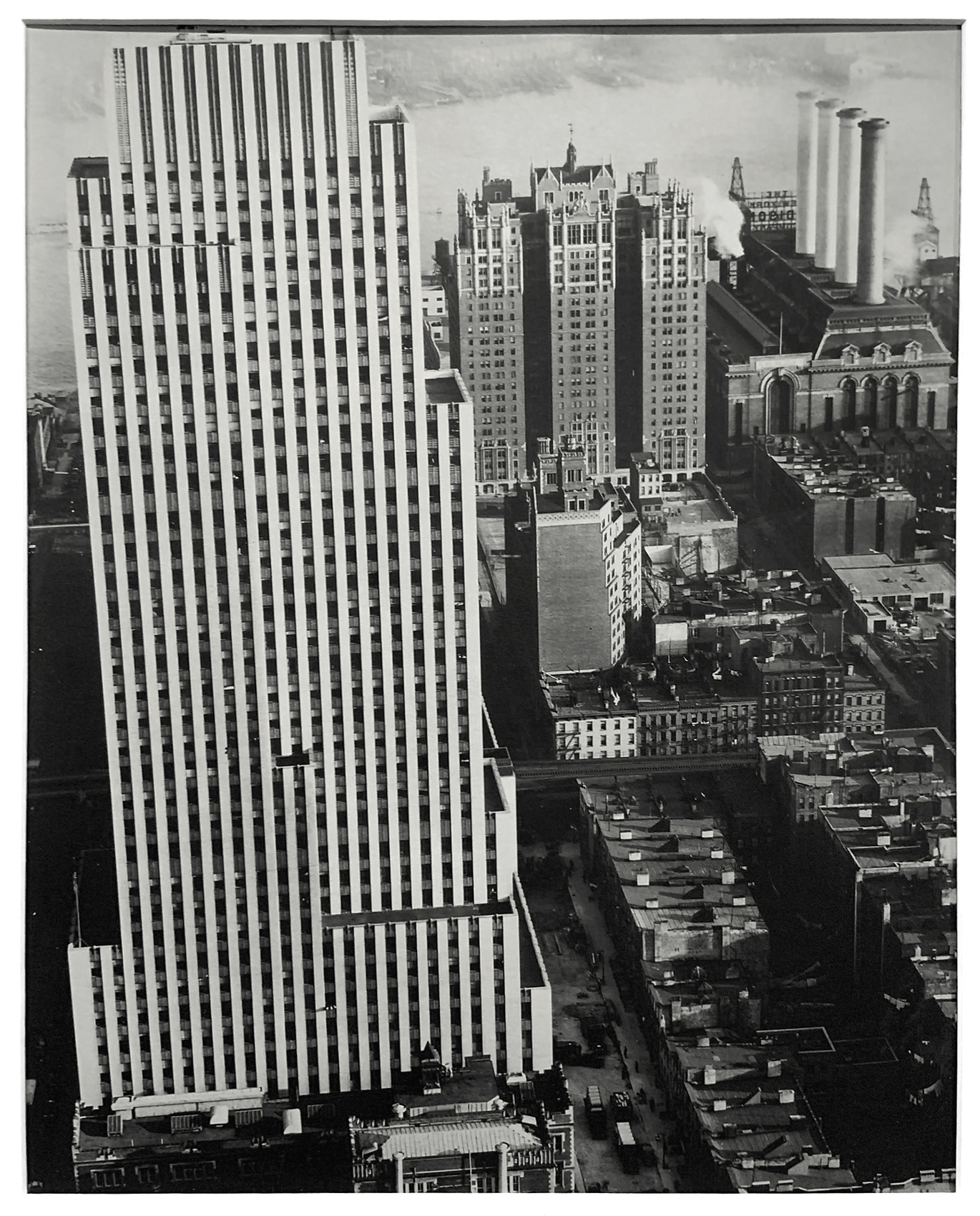
Berenice Abbott (American, 1898-1991) 'R.C.A. building' c. 1932 (installation view)


Berenice Abbott (American, 1898-1991)
R.C.A. building (installation view)
c. 1932 (printed before 1950)
Gelatin silver print
Courtesy of Howard Greenberg Gallery
Photo: Dr Marcus Bunyan


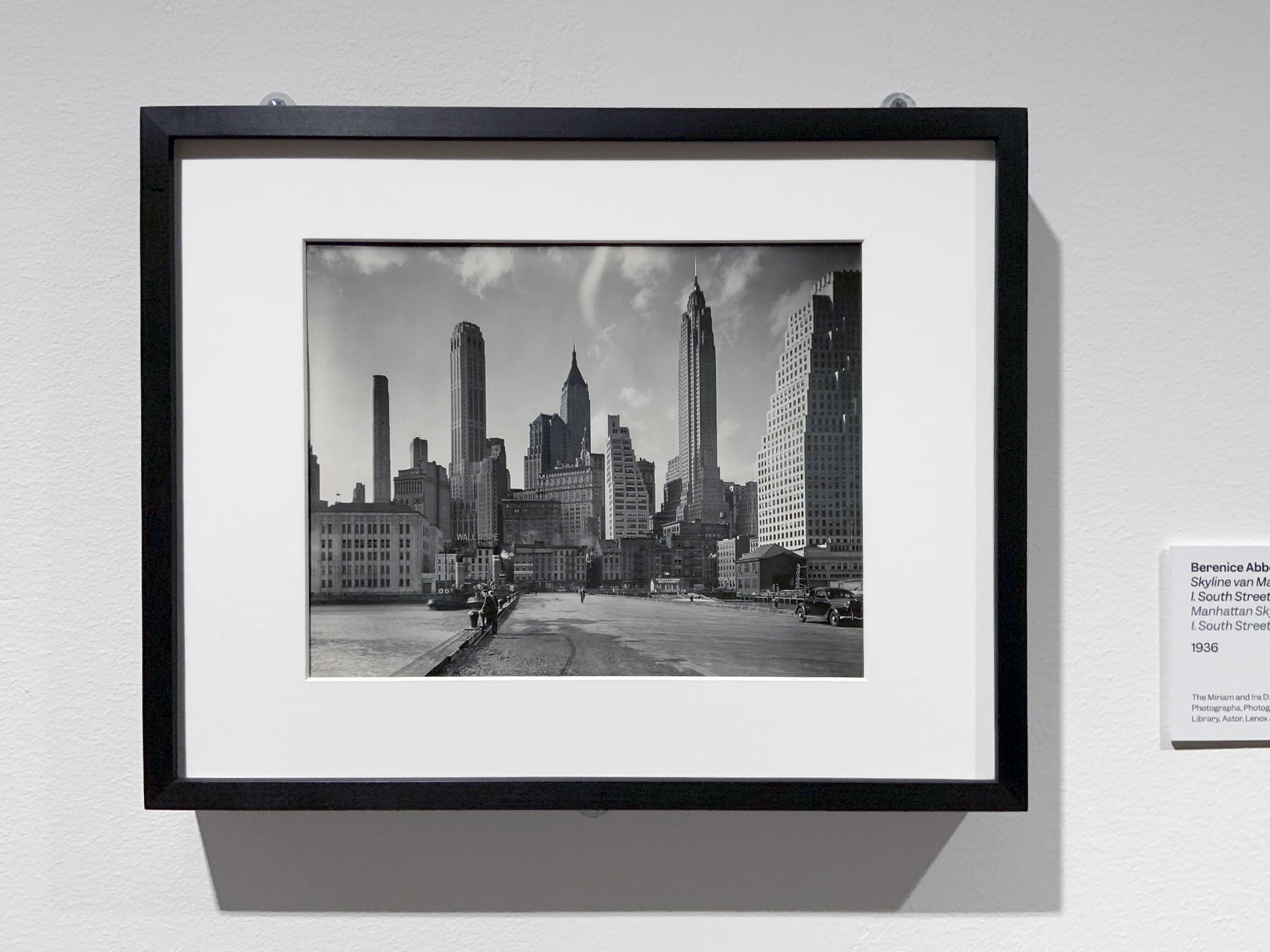
Berenice Abbott (American, 1898-1991) 'Manhattan Skyline: I. South Street and Jones Lane' 1936 (installation view)

Berenice Abbott (American, 1898-1991) 'Manhattan Skyline: I. South Street and Jones Lane' 1936 (installation view)

Berenice Abbott (American, 1898-1991) 'Manhattan Skyline: I. South Street and Jones Lane' 1936 (installation view)


Berenice Abbott (American, 1898-1991)
Manhattan Skyline: I. South Street and Jones Lane (installation views)
1936
Gelatin silver print
The Miriam and Ira D. Wallach Division of Art, Prints and Photographs, Photography Collection
The New York Public Library, Astor, Lenox and Tilden Foundations
Photos: Dr Marcus Bunyan


Berenice Abbott (American, 1898-1991) 'Manhattan Skyline: I. South Street and Jones Lane' 1936


Berenice Abbott (American, 1898-1991)
Manhattan Skyline: I. South Street and Jones Lane
1936
Gelatin silver print
The Miriam and Ira D. Wallach Division of Art, Prints and Photographs, Photography Collection
The New York Public Library, Astor, Lenox and Tilden Foundations
Public domain


Berenice Abbott (American, 1898-1991) 'Old Law Tenements, 35-47 East 1st Street' February 11, 1937 (installation view)


Berenice Abbott (American, 1898-1991)
Old Law Tenements, 35-47 East 1st Street (installation view)
February 11, 1937
Gelatin silver print
Courtesy of Howard Greenberg Gallery
Photo: Dr Marcus Bunyan


Berenice Abbott (American, 1898-1991) 'Old Law Tenements, 35-47 East 1st Street' February 11, 1937


Berenice Abbott (American, 1898-1991)
Old Law Tenements, 35-47 East 1st Street
February 11, 1937
Gelatin silver print
Public domain


Berenice Abbott (American, 1898-1991) 'Shelter on the Waterfront, Coenties Slip, Pier 5, East River, Manhattan' 1938 (installation view)


Berenice Abbott (American, 1898-1991)
Shelter on the Waterfront, Coenties Slip, Pier 5, East River, Manhattan (installation view)
1938
Gelatin silver print
The Miriam and Ira D. Wallach Division of Art, Prints and Photographs, Photography Collection
The New York Public Library, Astor, Lenox and Tilden Foundations
Photo: Dr Marcus Bunyan


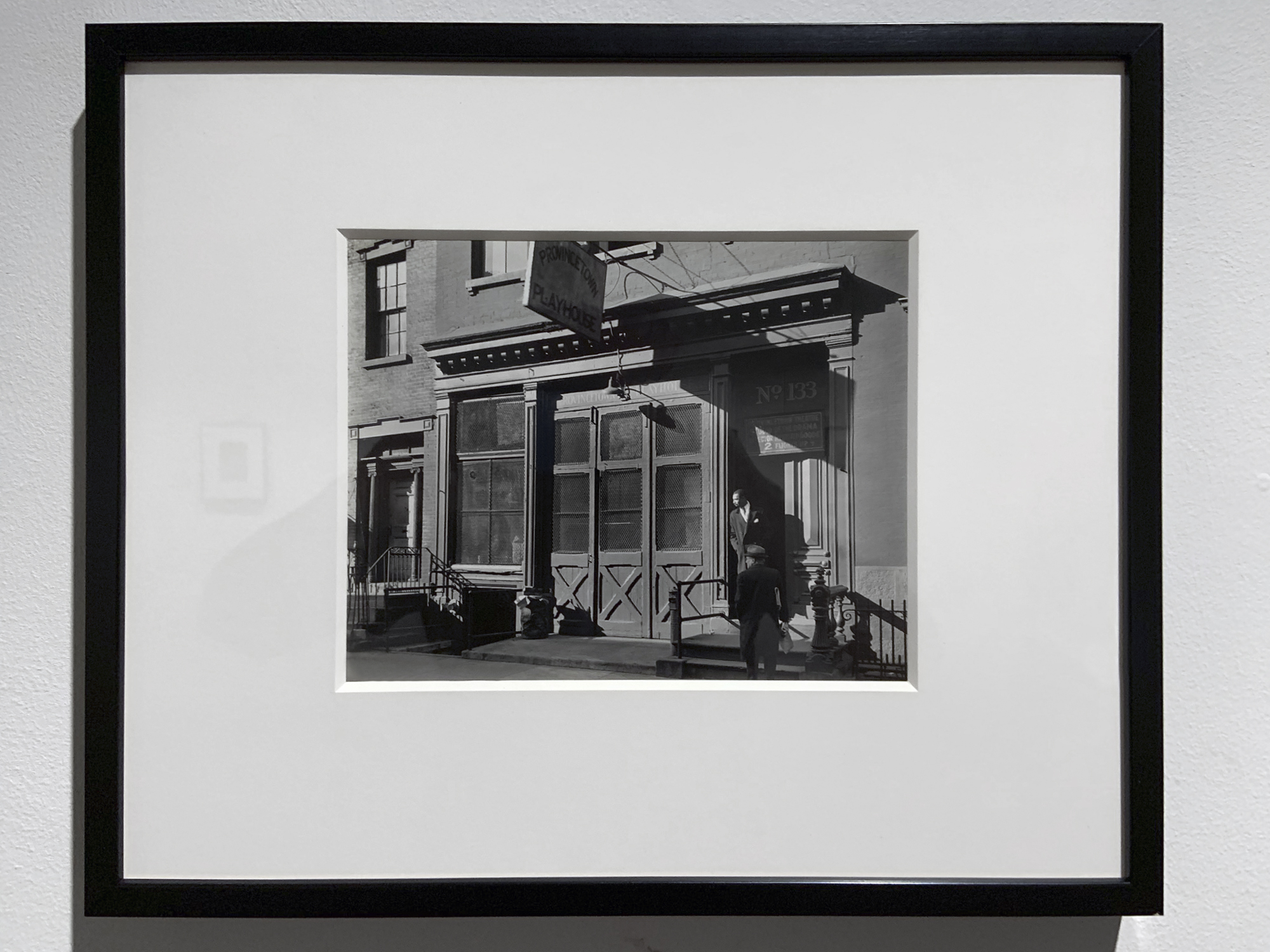
Berenice Abbott (American, 1898-1991) 'Provincetown Playhouse, 133 MacDougal Street, Manhattan' December 29, 1936 (installation view)

Berenice Abbott (American, 1898-1991) 'Provincetown Playhouse, 133 MacDougal Street, Manhattan' December 29, 1936 (installation view)


Berenice Abbott (American, 1898-1991)
Provincetown Playhouse, 133 MacDougal Street, Manhattan  (installation view)
December 29, 1936
Gelatin silver print
Courtesy of Howard Greenberg Gallery
Photos: Dr Marcus Bunyan


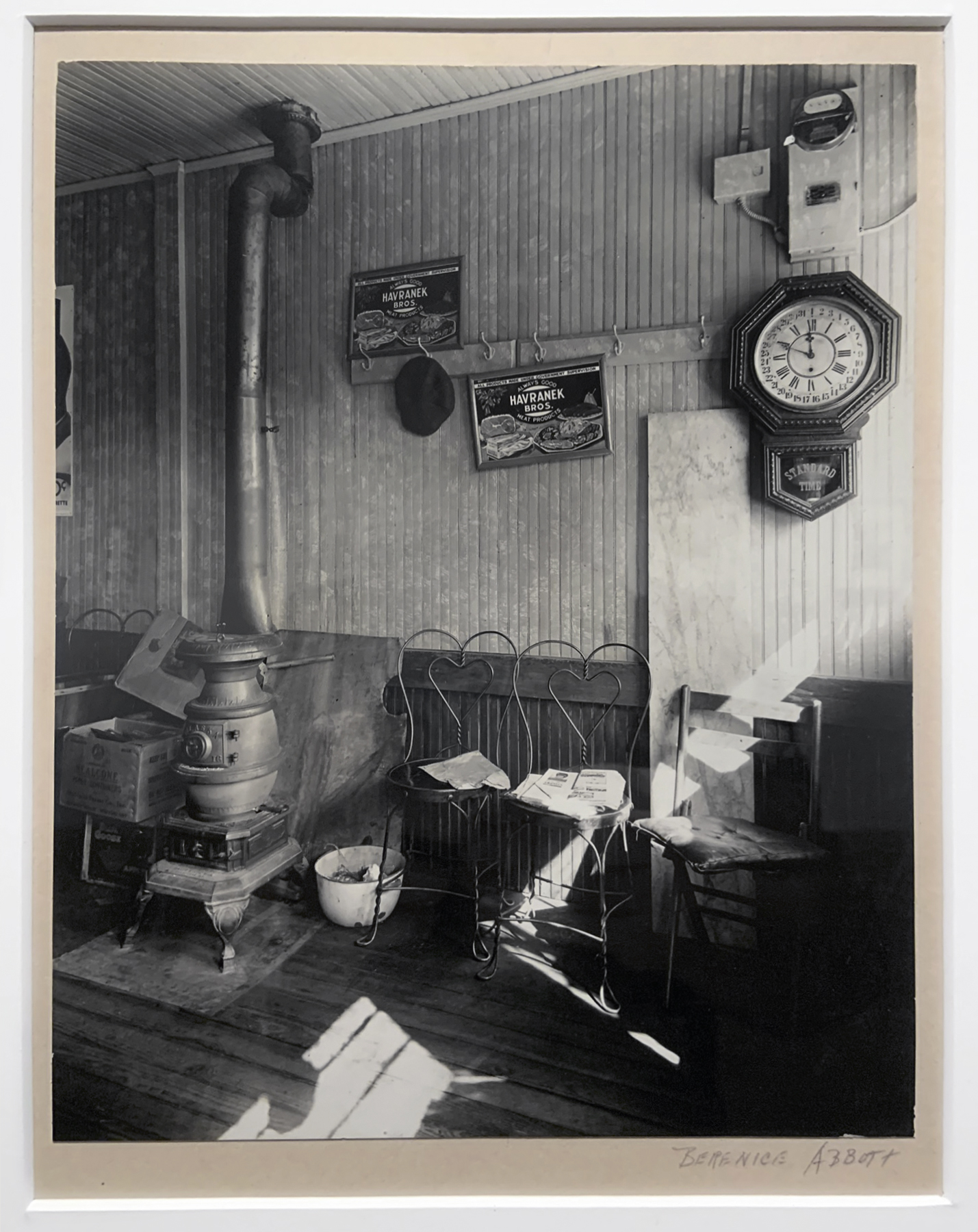
Berenice Abbott (American, 1898-1991) 'Country Store Interior' October 11, 1935 (installation view)

Berenice Abbott (American, 1898-1991) 'Country Store Interior' October 11, 1935 (installation view)


Berenice Abbott (American, 1898-1991)
Country Store Interior (installation view)
October 11, 1935
Gelatin silver print
Gift of the Metropolitan Museum of Art, 1948
Photo: Dr Marcus Bunyan


Berenice Abbott (American, 1898-1991) 'Country Store Interior' October 11, 1935


Berenice Abbott (American, 1898-1991)
Country Store Interior
October 11, 1935
Gelatin silver print
Public domain


Installation view of the exhibition 'Berenice Abbott: Portraits of Modernity' at Huis Marseille, Amsterdam

Installation view of the exhibition 'Berenice Abbott: Portraits of Modernity' at Huis Marseille, Amsterdam


Installation views of the exhibition Berenice Abbott: Portraits of Modernity at Huis Marseille, Amsterdam
Photos: Dr Marcus Bunyan


Berenice Abbott (American, 1898-1991) 'Charles Lane, between West and Washington Street' September 20, 1938 (installation view)


Berenice Abbott (American, 1898-1991)
Charles Lane, between West and Washington Street (installation view)
September 20, 1938
Gelatin silver print
The Miriam and Ira D. Wallach Division of Art, Prints and Photographs, Photography Collection
The New York Public Library, Astor, Lenox and Tilden Foundations
Photo: Dr Marcus Bunyan


Berenice Abbott (American, 1898-1991) 'Charles Lane, between West and Washington Street' September 20, 1938


Berenice Abbott (American, 1898-1991)
Charles Lane, between West and Washington Street
September 20, 1938
Gelatin silver print
The Miriam and Ira D. Wallach Division of Art, Prints and Photographs, Photography Collection
The New York Public Library, Astor, Lenox and Tilden Foundations
Public domain


Berenice Abbott (American, 1898-1991) 'Newsstand, 32nd Street and 3rd Avenue, Manhattan' 1935 (installation view)


Berenice Abbott (American, 1898-1991)
Newsstand, 32nd Street and 3rd Avenue, Manhattan (installation view)
1935
Gelatin silver print
The Miriam and Ira D. Wallach Division of Art, Prints and Photographs, Photography Collection
The New York Public Library, Astor, Lenox and Tilden Foundations
Photo: Dr Marcus Bunyan


Berenice Abbott (American, 1898-1991) 'Newsstand, 32nd Street and 3rd Avenue, Manhattan' 1935


Berenice Abbott (American, 1898-1991)
Newsstand, 32nd Street and 3rd Avenue, Manhattan
1935
Gelatin silver print
The Miriam and Ira D. Wallach Division of Art, Prints and Photographs, Photography Collection
The New York Public Library, Astor, Lenox and Tilden Foundations
Public domain


Berenice Abbott (American, 1898-1991) 'Cheese Store, 276 Bleecker Street, Manhattan' 1937 (installation view)


Berenice Abbott (American, 1898-1991)
Cheese Store, 276 Bleecker Street, Manhattan (installation view)
1937
Gelatin silver print
The Miriam and Ira D. Wallach Division of Art, Prints and Photographs, Photography Collection
The New York Public Library, Astor, Lenox and Tilden Foundations
Photo: Dr Marcus Bunyan


New York must have seem to Abbott extremely photogenic, with its skyscrapers and street vendors on Hester Street on the Lower East Side. It is a city of contrasts; of light and shade, and bustling squares; of all manner of shoes overflowing with bread, bric-a-brac, ricotta in Little Italy, rope, metal objects… Abbott depicts a city that heralds the consumer society and its abundance – its excess, even.


Berenice Abbott (American, 1898-1991) 'Cheese Store, 276 Bleecker Street, Manhattan' 1937


Berenice Abbott (American, 1898-1991)
Cheese Store, 276 Bleecker Street, Manhattan
1937
Gelatin silver print
The Miriam and Ira D. Wallach Division of Art, Prints and Photographs, Photography Collection
The New York Public Library, Astor, Lenox and Tilden Foundations
Public domain


Berenice Abbott (American, 1898-1991) 'A & P (Great Atlantic & Pacific Tea Co.), 246 3rd Avenue, Manhattan' 1936 (installation view)


Berenice Abbott (American, 1898-1991)
A & P (Great Atlantic & Pacific Tea Co.), 246 3rd Avenue, Manhattan (installation view)
1936
Gelatin silver print
The Miriam and Ira D. Wallach Division of Art, Prints and Photographs, Photography Collection
The New York Public Library, Astor, Lenox and Tilden Foundations
Photo: Dr Marcus Bunyan


Berenice Abbott (American, 1898-1991) 'Hardware Store, 316-318 Bowery' 1938 (installation view)


Berenice Abbott (American, 1898-1991)
Hardware Store, 316-318 Bowery (installation view)
1938
Gelatin silver print
Courtesy of Howard Greenberg Gallery
Photo: Dr Marcus Bunyan


Berenice Abbott (American, 1898-1991) 'Pingpank Barber Shop, 413 Bleecker Street, Manhattan' 1938 (installation view)


Berenice Abbott (American, 1898-1991)
Pingpank Barber Shop, 413 Bleecker Street, Manhattan (installation view)
1938
Gelatin silver print
The Miriam and Ira D. Wallach Division of Art, Prints and Photographs, Photography Collection
The New York Public Library, Astor, Lenox and Tilden Foundations
Photo: Dr Marcus Bunyan


Berenice Abbott (American, 1898-1991) 'Pingpank Barber Shop, 413 Bleecker Street, Manhattan' 1938


Berenice Abbott (American, 1898-1991)
Pingpank Barber Shop, 413 Bleecker Street, Manhattan
1938
Gelatin silver print
The Miriam and Ira D. Wallach Division of Art, Prints and Photographs, Photography Collection
The New York Public Library, Astor, Lenox and Tilden Foundations
Public domain


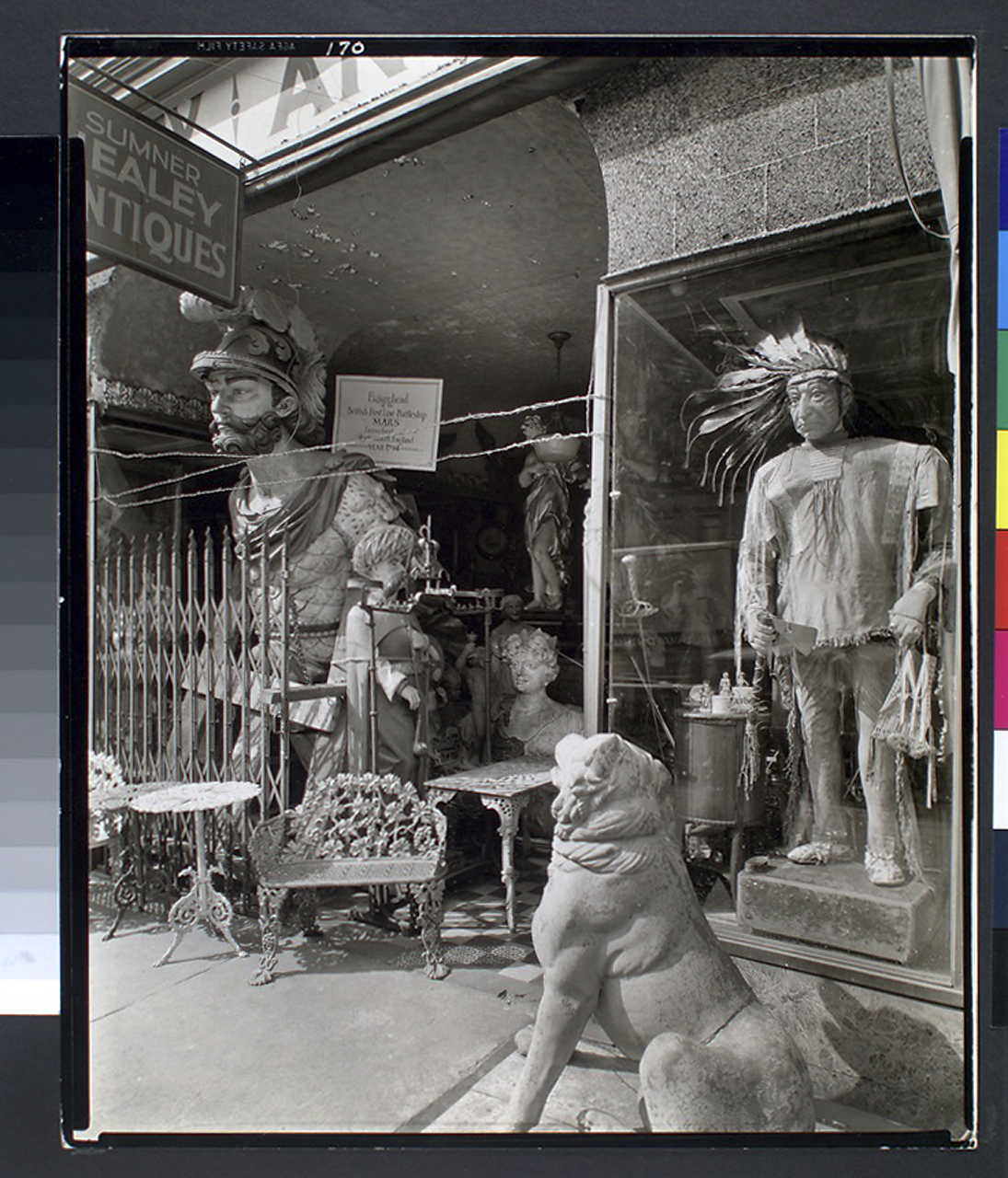
Berenice Abbott (American, 1898-1991) 'Sumner Healey Antique Shop, 942 3rd Avenue and 57th Street, Manhattan' 1936 (installation view)


Berenice Abbott (American, 1898-1991)
Sumner Healey Antique Shop, 942 3rd Avenue and 57th Street, Manhattan (installation view)
1936
Gelatin silver print
The Miriam and Ira D. Wallach Division of Art, Prints and Photographs, Photography Collection
The New York Public Library, Astor, Lenox and Tilden Foundations
Photo: Dr Marcus Bunyan


Berenice Abbott (American, 1898-1991) 'Sumner Healey Antique Shop, 942 3rd Avenue and 57th Street, Manhattan' 1936


Berenice Abbott (American, 1898-1991)
Sumner Healey Antique Shop, 942 3rd Avenue and 57th Street, Manhattan
1936
Gelatin silver print
The Miriam and Ira D. Wallach Division of Art, Prints and Photographs, Photography Collection
The New York Public Library, Astor, Lenox and Tilden Foundations
Public domain


Berenice Abbott (American, 1898-1991) 'Union Square, 14th Street and Broadway, Manhattan' 1936 (installation view)


Berenice Abbott (American, 1898-1991)
Union Square, 14th Street and Broadway, Manhattan (installation view)
1936
Gelatin silver print
The Miriam and Ira D. Wallach Division of Art, Prints and Photographs, Photography Collection
The New York Public Library, Astor, Lenox and Tilden Foundations
Photo: Dr Marcus Bunyan


Berenice Abbott (American, 1898-1991) 'Union Square' July 16, 1936


Berenice Abbott (American, 1898-1991)
Union Square
July 16, 1936
Gelatin silver photograph
6 7/8 x 8 7/8 in. (17.5 x 22.5cm)
Brooklyn Museum, Brooklyn Museum Collection
Public domain


Installation view of the exhibition 'Berenice Abbott: Portraits of Modernity' at Huis Marseille, Amsterdam

Installation view of the exhibition 'Berenice Abbott: Portraits of Modernity' at Huis Marseille, Amsterdam

Installation view of the exhibition 'Berenice Abbott: Portraits of Modernity' at Huis Marseille, Amsterdam

Installation view of the exhibition 'Berenice Abbott: Portraits of Modernity' at Huis Marseille, Amsterdam

Installation view of the exhibition 'Berenice Abbott: Portraits of Modernity' at Huis Marseille, Amsterdam

Installation view of the exhibition 'Berenice Abbott: Portraits of Modernity' at Huis Marseille, Amsterdam


Installation views of the exhibition Berenice Abbott: Portraits of Modernity at Huis Marseille, Amsterdam
Photos: Dr Marcus Bunyan


Berenice Abbott (American, 1898-1991) 'Lewis Hine' 1930 (Installation view)


Berenice Abbott (American, 1898-1991)
Lewis Hine (installation view)
1930
Gelatin silver photograph
International Centre of Photography
Purchase with funds provided by the Lois and Bruce Henkel purchase Fund, 1984
Photo: Dr Marcus Bunyan


Berenice Abbott (American, 1898-1991) 'Edward Hopper' 1949 (installation view)


Berenice Abbott (American, 1898-1991)
Edward Hopper (installation view)
1949
Gelatin silver photograph
International Centre of Photography
Gift of Jonathan A. Berg, 1984
Photo: Dr Marcus Bunyan


Installation view of the exhibition 'Berenice Abbott: Portraits of Modernity' at Huis Marseille, Amsterdam

Installation view of the exhibition 'Berenice Abbott: Portraits of Modernity' at Huis Marseille, Amsterdam

Installation view of the exhibition 'Berenice Abbott: Portraits of Modernity' at Huis Marseille, Amsterdam

Installation view of the exhibition 'Berenice Abbott: Portraits of Modernity' at Huis Marseille, Amsterdam


Installation views of the exhibition Berenice Abbott: Portraits of Modernity at Huis Marseille, Amsterdam
Photos: Dr Marcus Bunyan


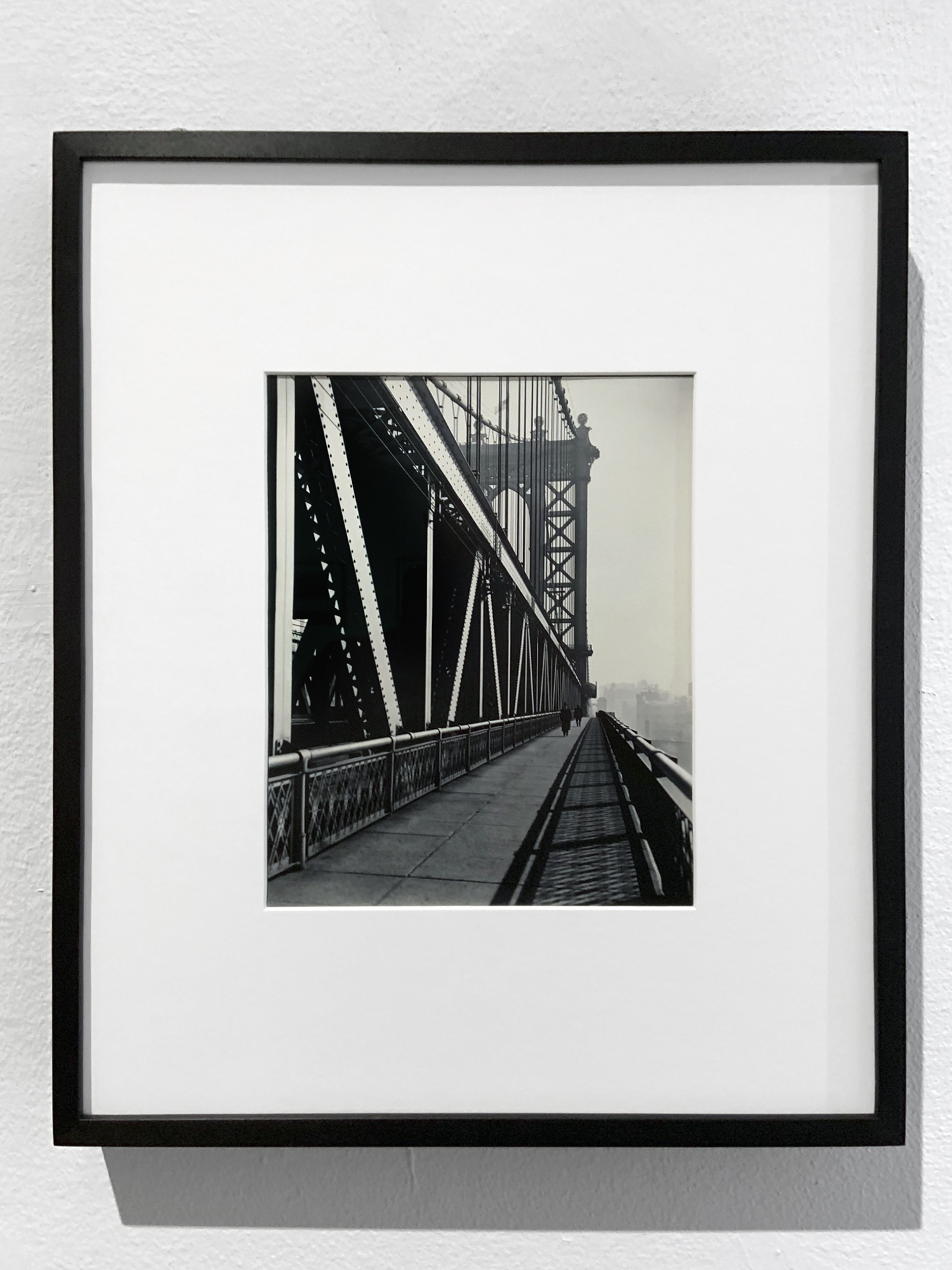
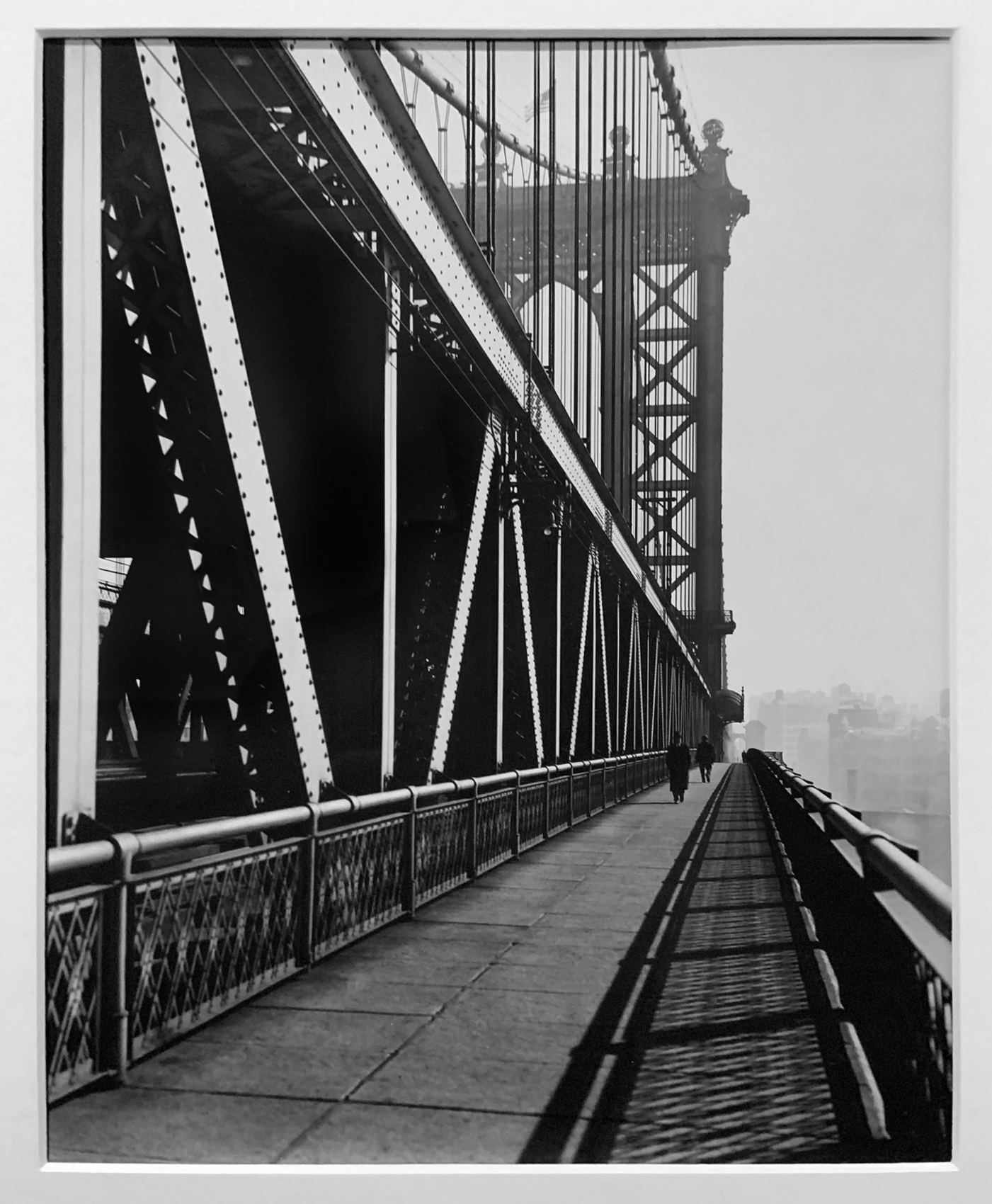
Berenice Abbott (American, 1898-1991) 'Manhattan Bridge, Manhattan' 1935 (installation view)

Berenice Abbott (American, 1898-1991) 'Manhattan Bridge, Manhattan' 1935 (installation view)


Berenice Abbott (American, 1898-1991)
Manhattan Bridge, Manhattan (installation view)
1935
Gelatin silver print
The Miriam and Ira D. Wallach Division of Art, Prints and Photographs, Photography Collection
The New York Public Library, Astor, Lenox and Tilden Foundations
Photos: Dr Marcus Bunyan


Berenice Abbott (American, 1898-1991) 'Penn Station, Manhattan' 1935 (installation view)


Berenice Abbott (American, 1898-1991)
Penn Station, Manhattan (installation view)
1935
Gelatin silver print
The Miriam and Ira D. Wallach Division of Art, Prints and Photographs, Photography Collection
The New York Public Library, Astor, Lenox and Tilden Foundations
Photo: Dr Marcus Bunyan


Berenice Abbott (American, 1898-1991) 'El': 2nd & 3rd Avenue lines, looking W. from Second & Pearl St., Manhattan' 1936


Berenice Abbott (American, 1898-1991)
El’: 2nd & 3rd Avenue lines, looking W. from Second & Pearl St., Manhattan
1936
Gelatin silver print
The Miriam and Ira D. Wallach Division of Art, Prints and Photographs, Photography Collection
The New York Public Library, Astor, Lenox and Tilden Foundations
Public domain


Yousuf Karsh (Armenian-Canadian, 1908-2002) 'Portrait of Berenice Abbott, Monson, Maine' August 1989 (installation view)


Photography Collection, Miriam and Ira D. Wallach Division of Art, Prints and Photographs
The New York Public Library, Astor, Lenox and Tilden Foundations
Gift of the photographer


Huis Marseille
Keizersgracht 401
1016 EK Amsterdam
Phone: +31 20 531 89 89

Opening hours
Tue – Sun, 11 – 18 h

Huis Marseille website

LIKE ART BLART ON FACEBOOK

Back to top

Exhibition: ‘Wayne Sorce: Urban Color’ at Joseph Bellows Gallery, La Jolla, California

Exhibition dates: 21st October – 30th November, 2017


Wayne Sorce (American, b. 1946) 'Vinegar Hill, New York' 1985 from the exhibition 'Wayne Sorce: Urban Color' at Joseph Bellows Gallery, La Jolla, California, October - Nov, 2017


Wayne Sorce (American, b. 1946)
Vinegar Hill, New York
1985
Digital chromogenic print
20 x 24 inches


These remind me very strongly of the 1970s urban Americana colour work of Stephen Shore. Most of them are successful, well seen, well photographed colour images that evince a certain period in the American cultural landscape.

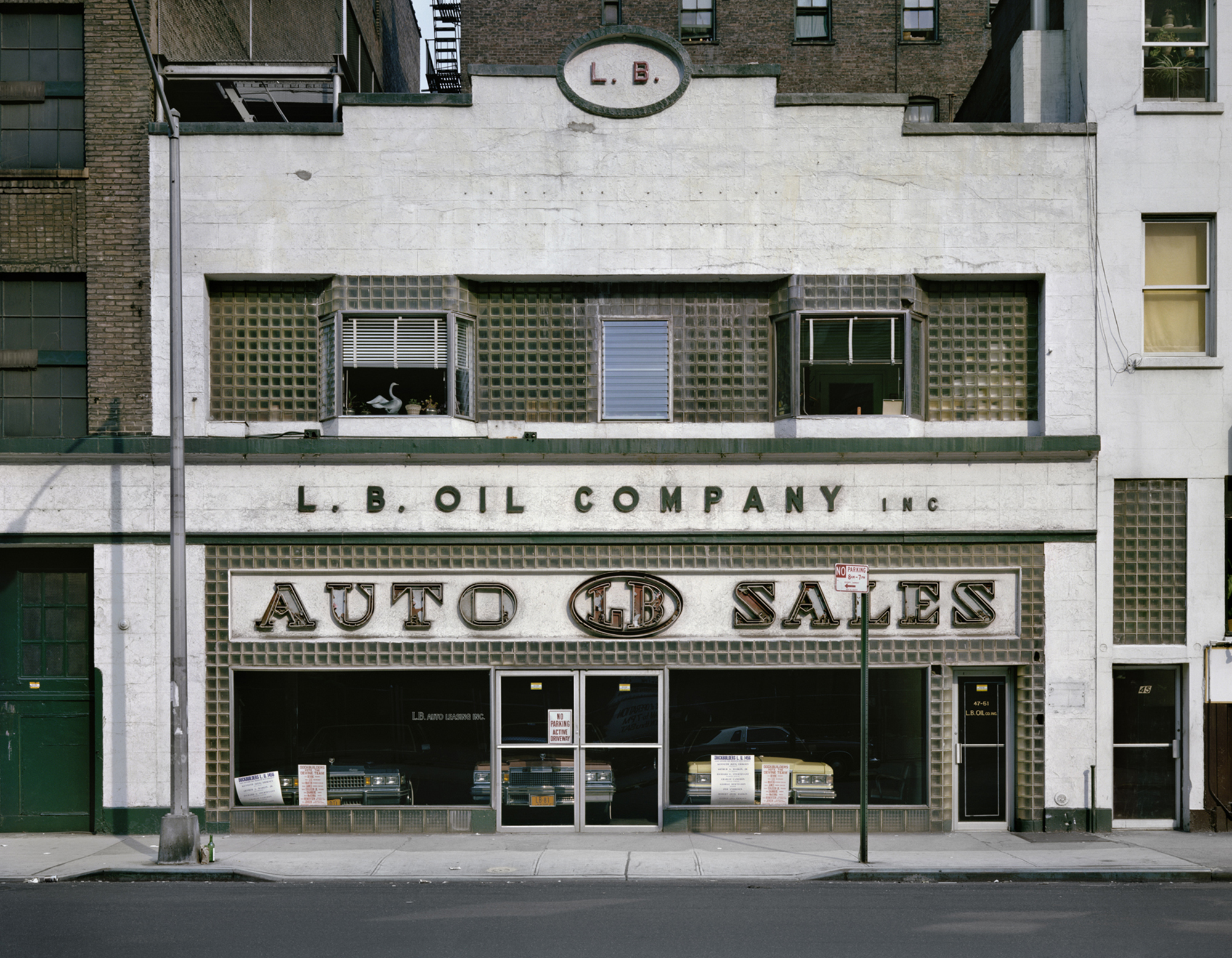
When they work – as in the formal Vinegar Hill, New York (1985, above) or the more abstract Vinegar Hill, New York (1985, below); the colourful, planar Varick Street, New York (1984); the duo-chromatic L.B. Oil, New York (1984); the magnificently shadowed, geometric Halsted Street, Chicago (1978); and my particular favourite (because of the light), Under the EL, Chicago (1978) – they work superbly. When they don’t work – as in Blankets, New York (1986) or Barbers, New York (1985) – they feel a bit flat.

It’s so hard to put a body of photographs together where each image is as strong (but not necessarily the same) as the next and they form a holistic group. Most photographers can put together four images well enough, but the skill is to be able to narrativise a larger body of work, and then do that over a longer period of time.

I believe that over the lifetime of a photographic artist, you can count on the fingers of two hands the truly memorable images they will make, if they are lucky. Other images are valuable in their own right… while others should be quietly singed.

Dr Marcus Bunyan


Many thankx to the Mike and Joseph Bellows Gallery for allowing me to publish the photographs in the posting. Please click on the photographs for a larger version of the image.


Wayne Sorce (American, b. 1946) 'Vinegar Hil, New York' 1985 from the exhibition 'Wayne Sorce: Urban Color' at Joseph Bellows Gallery, La Jolla, California, October - Nov, 2017


Wayne Sorce (American, b. 1946)
Vinegar Hill, New York
1985
Digital chromogenic print
20 x 24 inches


Wayne Sorce (American, b. 1946) 'Varick Street, New York' 1984


Wayne Sorce (American, b. 1946)
Varick Street, New York
1984
Digital chromogenic print
20 x 24 inches


Wayne Sorce (American, b. 1946) 'Halsted Street, Chicago' 1978


Wayne Sorce (American, b. 1946)
Halsted Street, Chicago
1978
Digital chromogenic print
20 x 24 inches


Wayne Sorce (American, b. 1946) 'L.B. Oil, New York' 1984


Wayne Sorce (American, b. 1946)
L.B. Oil, New York
1984
Digital chromogenic print
20 x 24 inches


Wayne Sorce (American, b. 1946) 'Spiral Fire Escape, Chicago' 1975


Wayne Sorce (American, b. 1946)
Spiral Fire Escape, Chicago
1975
Digital chromogenic print
20 x 24 inches


Wayne Sorce (American, b. 1946) 'No Left, Vinegar Hill' 1988


Wayne Sorce (American, b. 1946)
No Left, Vinegar Hill
1988
Digital chromogenic print
20 x 24 inches


Wayne Sorce (American, b. 1946) 'Dave's Restaurant, New York' 1984


Wayne Sorce (American, b. 1946)
Dave’s Restaurant, New York
1984
Digital chromogenic print
20 x 24 inches


Wayne Sorce (American, b. 1946) 'El Platform, Chicago' 1978


Wayne Sorce (American, b. 1946)
EL Platform, Chicago
1978
Digital chromogenic print
20 x 24 inches


Wayne Sorce (American, b. 1946) 'Bee Gee's, New York' 1984


Wayne Sorce (American, b. 1946)
Bee Gee’s, New York
1984
Digital chromogenic print
20 x 24 inches


Wayne Sorce (American, b. 1946) 'Fort Dearborn Coffee, Chicago' 1977


Wayne Sorce (American, b. 1946)
Fort Dearborn Coffee, Chicago
1977
Digital chromogenic print
20 x 24 inches


Wayne Sorce (American, b. 1946) 'East Chicago' 1977


Wayne Sorce (American, b. 1946)
East Chicago
1977
Digital chromogenic print
20 x 24 inches


Wayne Sorce (American, b. 1946) 'Chock Full of Nuts, New York' 1984


Wayne Sorce (American, b. 1946)
Chock Full of Nuts, New York
1984
Digital chromogenic print
20 x 24 inches


Joseph Bellows Gallery is pleased to announce its upcoming solo exhibition,Wayne Sorce: Urban Color. The exhibition will open on October 21st and continue through November 30th, 2017. In conjunction with Sorce’s exhibition will be a group show relating to the city as subject.

Urban Color will present a remarkable selection Sorce’s large-scale colour photographs of urban environments taken in the late 1970’s and early 1980’s in both Chicago and New York City. His urban landscapes describe with a formal exactitude, the light, structures, and palette of these cities within a certain era. For Sorce, the urban landscape is both still and transitory; people appear in the photographs as both inhabitants of the city, as well as sculptural forms relating to a larger composed scene.

Sorce’s photographs are held within the collections of the Art Institute of Chicago, the George Eastman Museum, the Armand Hammer Museum of Art, National Museum of American Art, at the Smithsonian Institution, and the Museum of Modern Art. Complementing Sorce’s exhibition will be a collection of photographs by his contemporaries that describe the city as subject. Work by Bob Thall, George Tice, Bevan Davies, Grant Mudford, and others will be included.

Press release from the Joseph Bellows Gallery


Wayne Sorce (American, b. 1946) 'Under the EL, Chicago' 1978


Wayne Sorce (American, b. 1946)
Under the EL, Chicago
1978
Digital chromogenic print
24 x 20 inches


Wayne Sorce (American, b. 1946) 'Blankets, New York' 1986


Wayne Sorce (American, b. 1946)
Blankets, New York
1986
Digital chromogenic print
24 x 20 inches


Wayne Sorce (American, b. 1946) 'Barbers, New York' 1985


Wayne Sorce (American, b. 1946)
Barbers, New York
1985
Digital chromogenic print
24 x 20 inches


Wayne Sorce (American, b. 1946) 'Greyhound Station' c. 1970's


Wayne Sorce (American, b. 1946)
Greyhound Station
c. 1970’s
Digital chromogenic print
24 x 20 inches


Joseph Bellows Gallery
7661 Girrard Avenue
La Jolla, California
Phone: 858 456 5620

Opening hours:
Tuesday – Saturday 11am – 5pm and by appointment
Joseph Bellows Gallery website

LIKE ART BLART ON FACEBOOK

Back to top

Exhibition: ‘Bevan Davies: New York’ at Joseph Bellows Gallery, La Jolla, California

Exhibition dates: 14th March – 9th May, 2015


Bevan Davies (American, b. 1941) '94 Greene Street, New York' 1975


Bevan Davies (American, b. 1941)
94 Greene Street, New York
1975
Vintage gelatin silver print
16 x 20 inches
© Bevan Davies


This stunning suite of large format photographs emanates from an esteemed lineage: the early morning light of Atget’s photographs of Old Paris during that cities urban renewal; the frontality of Walker Evans and his photographs of Southern churches (with both artist’s attention to the storefront facade); and the formal qualities of the New Topographic movement and the gridded topos of Bernd and Hilla Becher.

While Eugène Atget photographed the vanishing environs of Old Paris, Davies captures the urban decay of New York City, a city that was undergoing serious urban renewal in the 1970s.

The redevelopment of large sections of New York City and New York State by Robert Moses between the 1930s and the 1970s was a notable and prominent example of urban redevelopment. Moses directed the construction of new bridges, highways, housing projects, and public parks. Moses was a controversial figure, both for his single-minded zeal and for its impact on New York City… The Rondout neighbourhood in Kingston, New York (on the Hudson River) was essentially destroyed by a federally funded urban renewal program in the 1960s, with more than 400 old buildings demolished, most of them historic brick structures built in the 19th century. Similarly ill-conceived urban renewal programs gutted the historic centres of other towns and cities across America in the 1950s and 1960s.” (Anon. “Urban Renewal,” on the Wikipedia website)

In Davies’ project (and essential to his task), is the revealing of detail in these undervalued buildings. An ethereal light radiates, almost pulsates from these night time buildings – all rendered in beautifully ferrotyped prints that display a surplus of detail.

The previsualisation in these photographs is excellent. Notice how Davies pushes and pulls the viewer forward and backward in the image plane by using the device of the footpath to frame his compositions. In an image such as 94 Greene Street, New York (1975, above) – one of my favourite in this posting – the artist frames the image to stop at the edge of the pavement, allowing enough room so that the eye is led into the image. In other images, such as Broadway, New York (1976, below) or 425 Broome Street, New York (1976, below), Davies crops right up to the base of the building, forcing the viewer to acknowledge the geometric, cellular structure of the facade and nothing else. In yet other images, such as Column, Mercer Street, New York (1975, below) or 155 West Broadway, New York (1975, below) the artist pulls back from the building, allowing the pavement to anchor the building’s displacement while emphasising the columns grounding within the scene.

These really are magnificent photographs that bring the silence of the city to the fore front of our consciousness. Without the presence of human beings, the buildings take on a majesty that is usually usurped, overlooked or just plain passed by during the humdrum nature of everyday life.

Dr Marcus Bunyan


Many thankx to the Joseph Bellows Gallery for allowing me to publish the photographs in the posting. Please click on the photographs for a larger version of the image.


Bevan Davies (American, b. 1941 '652 Broadway, New York' 1976


Bevan Davies (American, b. 1941)
652 Broadway, New York
1976
Vintage gelatin silver print
16 x 20 inches
© Bevan Davies


Bevan Davies (American, b. 1941) 'Broadway, New York' 1976


Bevan Davies (American, b. 1941)
Broadway, New York
1976
Vintage gelatin silver print
16 x 20 inches
© Bevan Davies


Bevan Davies (American, b. 1941) '425 Broome Street, New York' 1976


Bevan Davies (American, b. 1941)
425 Broome Street, New York
1976
Vintage gelatin silver print
16 x 20 inches
© Bevan Davies


Bevan Davies (American, b. 1941) 'Walker Street., New York' 1976


Bevan Davies (American, b. 1941)
Walker Street., New York
1976
Vintage gelatin silver print
16 x 20 inches
© Bevan Davies


Bevan Davies (American, b. 1941) 'Hudson Street, New York' 1975


Bevan Davies (American, b. 1941)
Hudson Street, New York
1975
Vintage gelatin silver print
16 x 20 inches
© Bevan Davies


Joseph Bellows Gallery is pleased to announce its upcoming solo exhibition, Bevan Davies New York. The exhibition opens on March 14th and will continue through May 9, 2015. An opening reception will be held on Saturday, March 14th, from 6-8 pm. New York will present Davies’ luminous and highly detailed large-format black and white architectural views from the mid 1970’s, along with a selection of his earlier street portraiture from the preceding decade, in the atrium gallery.

Bevan Davies studied photography with Bruce Davidson, at the University of Chicago in early 1960’s and benefitted greatly through mentoring from Diane Arbus later in that decade. After working the street in both daylight and evening hours, photographing people at odds with society, with a hand camera, Davies changed his working methodology to describing the physical environs of the street: the building facades, alleys and streets with a tripod mounted view camera.

This change in subject and approach resulted in Davies most celebrated work. Created in 1975/76 Bevan Davies’ architectural photographs situated themselves wholly within the dictum laid forth by William Jenkins, as “New Topographics”. In fact, Davies writes of his approach as, “an effort being made to let the camera almost see by itself.” This notion was carried further by the late photographer, Lewis Baltz, who in 1976, referred to Davies’ photographs as, “rigorously contemporary, while acknowledging a use of the camera which dates from the inception of the medium.” The New York facades, taken in the early morning hours and devoid of people, describe spaces defined by light and shadow. They depict a specific time and place, as seen by the window dressings and signage, as well as portray a formal grace among the building’s details that are included within Davies’ camera frame. New York is the first comprehensive exhibition of Davies’ photographs in over two decades.

Davies photographs can be found in the collections of the J. Paul Getty Museum, Center for Creative Photography, Art Institute of Chicago, Nelson-Atkins Museum, Minneapolis Institute of the Arts, Museum of Fine Arts, Houston, George Eastman House, Corcoran Gallery of Art, Harry Ransom Center, Metropolitan Museum of Art, and the International Center of Photography.

In 2014, Nazraeli Press released Los Angeles, 1976, a monograph on Davies’ photographs from that region and era. The photographs depict the residential architecture and neighbourhoods through nuanced arrangement and clarity. A forthcoming volume on Davies’ New York photographs is in prepublication.

Press release from the Joseph Bellows Gallery


Bevan Davies (American, b. 1941) '144 Wooster Street, New York' 1976


Bevan Davies (American, b. 1941)
144 Wooster Street, New York
1976
Vintage gelatin silver print
16 x 20 inches
© Bevan Davies


Bevan Davies (American, b. 1941) 'View from 475 Broadway, New York' 1976


Bevan Davies (American, b. 1941)
View from 475 Broadway, New York
1976
Vintage gelatin silver print
16 x 20 inches
© Bevan Davies


Bevan Davies (American, b. 1941) 'Bond Street, Facing North, New York' 1976


Bevan Davies (American, b. 1941)
Bond Street, Facing North, New York
1976
Vintage gelatin silver print
16 x 20 inches
© Bevan Davies


Bevan Davies (American, b. 1941) 'Franklin and West Broadway, New York' 1976


Bevan Davies (American, b. 1941)
Franklin and West Broadway, New York
1976
Vintage gelatin silver print
16 x 20 inches
© Bevan Davies


Bevan Davies (American, b. 1941) '426 West Broadway, New York' 1975


Bevan Davies (American, b. 1941)
426 West Broadway, New York
1975
Vintage gelatin silver print
20 x 16 inches
© Bevan Davies


Bevan Davies (American, b. 1941) 'Column, Mercer Street, New York' 1975


Bevan Davies (American, b. 1941)
Column, Mercer Street, New York
1975
Vintage gelatin silver print
20 x 16 inches
© Bevan Davies


Bevan Davies (American, b. 1941) '11 Mercer Street, New York' 1976


Bevan Davies (American, b. 1941)
11 Mercer Street, New York
1976
Vintage gelatin silver print
20 x 16 inches
© Bevan Davies


Bevan Davies (American, b. 1941) '155 West Broadway, New York' 1975


Bevan Davies (American, b. 1941)
155 West Broadway, New York
1975
Vintage gelatin silver print
20 x 16 inches
© Bevan Davies


Joseph Bellows Gallery
7661 Girrard Avenue
La Jolla, California
Phone: 858 456 5620

Opening hours:
Tuesday – Saturday 11am – 5pm and by appointment

Joseph Bellows Gallery website

LIKE ART BLART ON FACEBOOK

Back to top

Exhibition: ‘Robert Frank in America’ at the Cantor Arts Center, Stanford University Part 1

Exhibition dates: 10th September 2014 – 5th January 2015

Curator: Peter Galassi


Robert Frank (American born Switzerland, 1924-2019) 'En route from New York to Washington, Club Car' 1954


Robert Frank (American born Switzerland, 1924-2019)
En route from New York to Washington, Club Car
1954
Gelatin silver print
Cantor Arts Center Collection, Gift of Raymond B. Gary


The lunatic sublime of America

This is the first part of a bumper two-part posting. View Part 2 of the posting.

Robert Frank (1924-2019) is one of the most important photographic artists of the twentieth century. He was born in Switzerland but he emigrated to American in 1947. He soon gained a job as a fashion photographer for Harper’s Bazaar. He honed his craft as a photographer in England where he took formal, classical images of British life during a trip to Europe and South America in 1947.

He became friends with Edward Steichen and Walker Evans, and it was Evans who supported him in his Guggenheim Fellowship application in 1955 which enabled him “to travel across the United States and photograph all strata of its society. Cities he visited included Detroit and Dearborn, Michigan; Savannah, Georgia; Miami Beach and St. Petersburg, Florida; New Orleans, Louisiana;Houston, Texas; Los Angeles, California; Reno, Nevada; Salt Lake City, Utah; Butte, Montana; and Chicago, Illinois. He took his family along with him for part of his series of road trips over the next two years, during which time he took 28,000 shots. 83 of these were selected by him for publication in The Americans.”1

In The Americans, Frank documents, “the tensions between the optimism of the 1950s and the realities of class and racial differences. The irony that Frank found in the gloss of American culture and wealth over this tension gave his photographs a clear contrast to those of most contemporary American photojournalists, as did his use of unusual focus, low lighting and cropping that deviated from accepted photographic techniques.2

Originally published as Les Américains in 1958 by Robert Delpire in Paris, and finally in 1959 in the United States by Grove Press, reaction in America was initially hostile. They American critics did not like Frank’s shoot from the hip style of photography, nor the mirror that was being held up to their society, especially by a Jewish foreigner. Over time The Americans came to be seen as a seminal work of American photography and social history. Like many artists, Frank only took photographs for a relatively short period of time, before moving on to become a filmmaker.

One cannot forget the era in which Frank took these photographs – that of McCarthyism and “the Second Red Scare, lasting roughly from 1950 to 1956 and characterised by heightened political repression against communists, as well as a campaign spreading fear of their influence on American institutions and of espionage by Soviet agents.”3 Americans were suspicious of foreigners, especially ones with cameras, and this was still the era of racial segregation pre the civil rights movement of the 1960s.

With regard to the structure of the photographs, their origin is based in classicism. This was Frank’s training. It was his skill as an artist, his intuitive and prescient vision of America – how he saw America like no one else before him had – that enabled him to ramp up the intensity, shoot from weird angles, low lighting, cropping, depth of field, unusual focus – and focus on the iconography of America as never seen before: jukeboxes, American flags, cars, highways, death, racial segregation – that was so revolutionary. But he could not have done that without his formal training. You only have to look at the comparison between the photographs of Robert Frank and Walker Evans. Formal and elegant in Evans Church Organ and Pews (1936) and Downtown street, New Orleans (December 1935) with lines vertical and clean… and then Frank, with hardly a straight line or neat angle to be seen. But the one does inform the other, otherwise Frank’s photographs would just become snapshots, vernacular photographs with very little meaning. Which they are not.

This is one of the most powerful, lyrical, humanist photo essays of a country that has ever been taken. Critic Sean O’Hagan, writing in The Guardian in 2014, said The Americans “changed the nature of photography, what it could say and how it could say it. […] it remains perhaps the most influential photography book of the 20th century.”4 As an artist, Frank became the great connector for he is the critical link in the chain that stretches from Lewis Hine through Walker Evans… and on to Lee Friedlander, Garry Winogrand and Joel Meyerowitz.

As an artist you marvel at his intuition and inspiration, to look at the world as no one else had done before, to push the boundaries of medium and message. To photograph people, alone and in groups; politics; religion; race; automobiles and the road; and the media and thrust them into the white, bright, happy world of 1950s consumerist America saying: this is what this country is really like, this is my “impression” of you in all your fleeting madness, “America as an often bleak and lonely place.” You only have to look at the “eye” in U.S. 91, leaving Blackfoot, Idaho (1956, below) or look at the photograph of the grave by the side of the road to know that you are in Blue Velvet territory (David Lynch, director 1986, the title is taken from The Clovers’ 1955 song of the same name).

I am not sure yet how one world pierces the other but believe me they surely do.

Dr Marcus Bunyan


Footnotes

1/ “Robert Frank” on the Wikipedia website

2/ Ibid.,

3/ “McCarthyism,” on the Wikipedia website

4/ Sean O’Hagan. “Robert Frank at 90: the photographer who revealed America won’t look back,” on The Guardian website Sat 8 Nov 2014 [Online] Cited 06/07/2021


Many thankx to the Cantor Arts Center for allowing me to publish the photographs in the posting. Please click on the photographs for a larger version of the image.


“It was the vision that emanated from the book that lead not only me, but my whole generation of photographers out into the American landscape, in a sense, the lunatic sublime of America.”


Joel Meyerowitz


“Like a boxer trains for a fight, a photographer by walking the streets, and watching and taking pictures, and coming home and going out the next day, the same thing again, taking pictures. It doesn’t matter how many he takes, or if he takes any at all, it gets you prepared to know what you should take pictures of, or what is the right thing to do and when.”


Robert Frank


Walker Evans (American, 1903-1975) 'Main St., Ossining, New York' 1932


Walker Evans (American, 1903-1975)
Main St., Ossining, New York
1932
Gelatin silver print


Robert Frank (American born Switzerland, 1924-2019) 'Detroit' 1955


Robert Frank (American born Switzerland, 1924-2019)
Detroit
1955
Gelatin silver print
Cantor Arts Center Collection, Gift of Raymond B. Gary


In 1955 and 1956, Swiss-born photographer Robert Frank (b. 1924) traveled throughout the United States on a Guggenheim Fellowship, photographing ordinary people in their everyday lives. His book The Americans – 83 photographs, mostly from those travels, published in 1959 – repudiated the bland good cheer of the magazines with an image of the country that was starkly at odds with the official optimism of postwar prosperity. The book became a landmark of photographic history; but Frank soon turned to filmmaking, and the rest of his early photographic career was largely forgotten. An important group of unknown or unfamiliar photographs in the Cantor Arts Center’s collection provides the core of the exhibition Robert Frank in America, which sheds new light on the making of The Americans and presents, for the first time, Frank’s American photographs from the 1950s as a coherent body of work.

“We are delighted that the Cantor’s collection has provided the basis for a fresh look at one of the great achievements of 20-century photography,” said Connie Wolf, John and Jill Freidenrich Director of the Cantor Arts Center. “We are also deeply grateful to Robert Frank, who has generously contributed to the project.”

The exhibition Robert Frank in America, on view September 10, 2014 through January 5, 2015, features 130 photographs drawn primarily from the Cantor’s collection as well as from other public and private collections and from Frank himself. Peter Galassi, former chief curator of photography at the Museum of Modern Art, New York, is the exhibition’s guest curator and author of the accompanying publication.

The Exhibition’s Development from the Cantor’s Collection

In the summer of 2012, Wolf invited Galassi to offer his thoughts on one of the museum’s hidden treasures: more than 150 photographs by Robert Frank given to the Cantor in the mid-1980s by Stanford alumnus Bowen H. McCoy and his colleague Raymond B. Gary. This remarkable collection spans the full range of Frank’s photographic career before he turned to filmmaking in the early 1960s. It is especially rich in Frank’s American work of the 1950s, including scores of photographs that are unknown or unfamiliar even to scholars. Wolf and Galassi saw an opportunity to share this work with Stanford students, faculty, scholars at large and the general public.

Research began at the National Gallery of Art, Washington, where more than two decades ago the artist established the archive of his photographic career prior to 1970. Studying more than 1,000 contact sheets enabled Galassi to determine the locations and dates of dozens of previously unidentified photographs in the Cantor collection. He then selected works for the exhibition so as to identify Frank’s major themes and artistic strategies. The compelling sequence of The Americans poetically weaves diverse images into a seamless whole, but Robert Frank in America groups related pictures to explore the pictorial strategies that Frank developed as he worked, and also to highlight important subjects – people, alone and in groups; politics; religion; race; automobiles and the road; and the media.

Frank repeatedly photographed isolated figures so that they seemed trapped by pictorial forces, for example. This powerful metaphor for Frank’s vision of lonely individuals imprisoned by social circumstances is announced in the first picture, The Americans, where the flag obliterates a spectator’s face (Parade – Hoboken, New Jersey, 1955). In Robert Frank in America, that photograph is juxtaposed with another that uses the identical pictorial scheme but a different subject; the interior of a bar (New York City, 1955).

“Although The Americans is famous – partly because it is famous – Robert Frank’s American work of the 1950s has never been considered as a whole,” said Galassi. “The full range of the work shows just how Frank turned the vocabulary of magazine photojournalism on its head and used it to speak in a personal, poetic voice.”

Inviting Galassi to organise the exhibition was part of the museum’s renewed commitment to collecting, studying and presenting photography, Wolf says. The Cantor has been adding to its already strong holdings, presenting innovative exhibitions of work by distinguished artists and providing a valuable opportunity for Stanford students and faculty to work directly with photographs. Leland Stanford’s commission more than a century ago for Eadweard Muybridge’s pioneering work on animal locomotion serves as a foundation for the museum’s extensive collection today.

Exhibition catalogue

The major catalogue accompanying this exhibition is published by the Cantor Arts Center in association with international publisher Steidl, with whom Frank has worked closely on most of his books. All 130 photographs in the exhibition are reproduced as full-page tritone plates. Galassi’s extensive essay traces the evolution of Frank’s work from his arrival in the United States in 1947 until he abandoned his first photographic career in the early 1960s. The text provides a thorough outline of the photographic context in which Frank at first sought success as a magazine photojournalist as well as a detailed analysis of the methods and strategies that lie behind The Americans. The essay features 24 illustrations, including an unprecedented map of Frank’s 1955-56 Guggenheim travels, which locates the sites of nearly all of the photographs in The Americans and in Robert Frank in America. The 200-page book, with a foreword by Connie Wolf, is designed by Katy Homans, New York.

Robert Frank

Robert Frank was born in 1924 in Zürich, Switzerland. The conclusion of World War II ended his vulnerability (his father was a German-born Jew) and enabled him to escape what he regarded as a narrow, antiquated culture. Soon after reaching New York in March 1947, he was hired by Harper’s Bazaar, but his distaste for photographing fashion led him to quit after six months. Over the next five or six years, in Europe and the United States, Frank aimed to establish himself as a freelance photojournalist, with limited success. A Guggenheim Fellowship, awarded in March 1955 and renewed a year later, freed him to pursue his work independently, and he soon began to travel in hopes of making a book. Les Américains was published by Robert Delpire in Paris in 1958 and, as The Americans, by Grove Press in New York in 1959. The latter included an introduction by Jack Kerouac, author of On the Road.

Film and video have formed a central aspect of Frank’s work since 1959, when he collaborated with Allen Ginsberg, Jack Kerouac and Alfred Leslie on Pull My Daisy. In 1972, however, he resumed making photographs, often using Polaroid positive-negative materials and incorporating text and multiple images. That same year he published the first of several editions of The Lines of My Hand, a book that surveyed his career in all mediums and initiated reconsiderations of his early photographic career. The first full-scale retrospective of his photographs was organised at the Museum of Fine Arts, Houston, in 1986. In 1990, a major gift by Frank established the Robert Frank Collection at the National Gallery of Art, Washington, which has since presented two major exhibitions, each accompanied by an important book: Robert Frank: Moving Out (1994) and Looking In: Robert Frank’s “The Americans” (2009).

Press release from the Cantor Arts Center


Robert Frank (American born Switzerland, 1924-2019) 'Beaufort, South Carolina' 1955


Robert Frank (American born Switzerland, 1924-2019)
Beaufort, South Carolina
1955
Gelatin silver print
Cantor Arts Center Collection, Gift of Raymond B. Gary


Guggenheim proposal summary

“To photograph freely throughout the United States, using the miniature camera exclusively. The making of a broad, voluminous picture record of things American, past and present. This project is essentially the visual study of a civilization and will include caption notes; but it is only partly documentary in nature: one of its aims is more artistic than the word documentary implies.”

The full statement

“I am applying for a Fellowship with a very simple intention: I wish to continue, develop and widen the kind of work I already do, and have been doing for some ten years, and apply it to the American nation in general. I am submitting work that will be seen to be documentation - most broadly speaking. Work of this kind is, I believe, to be found carrying its own visual impact without much work explanation. The project I have in mind is one that will shape itself as it proceeds, and is essentially elastic. The material is there: the practice will be in the photographer’s hand, the vision in his mind. One says this with some embarrassment but one cannot do less than claim vision if one is to ask for consideration.
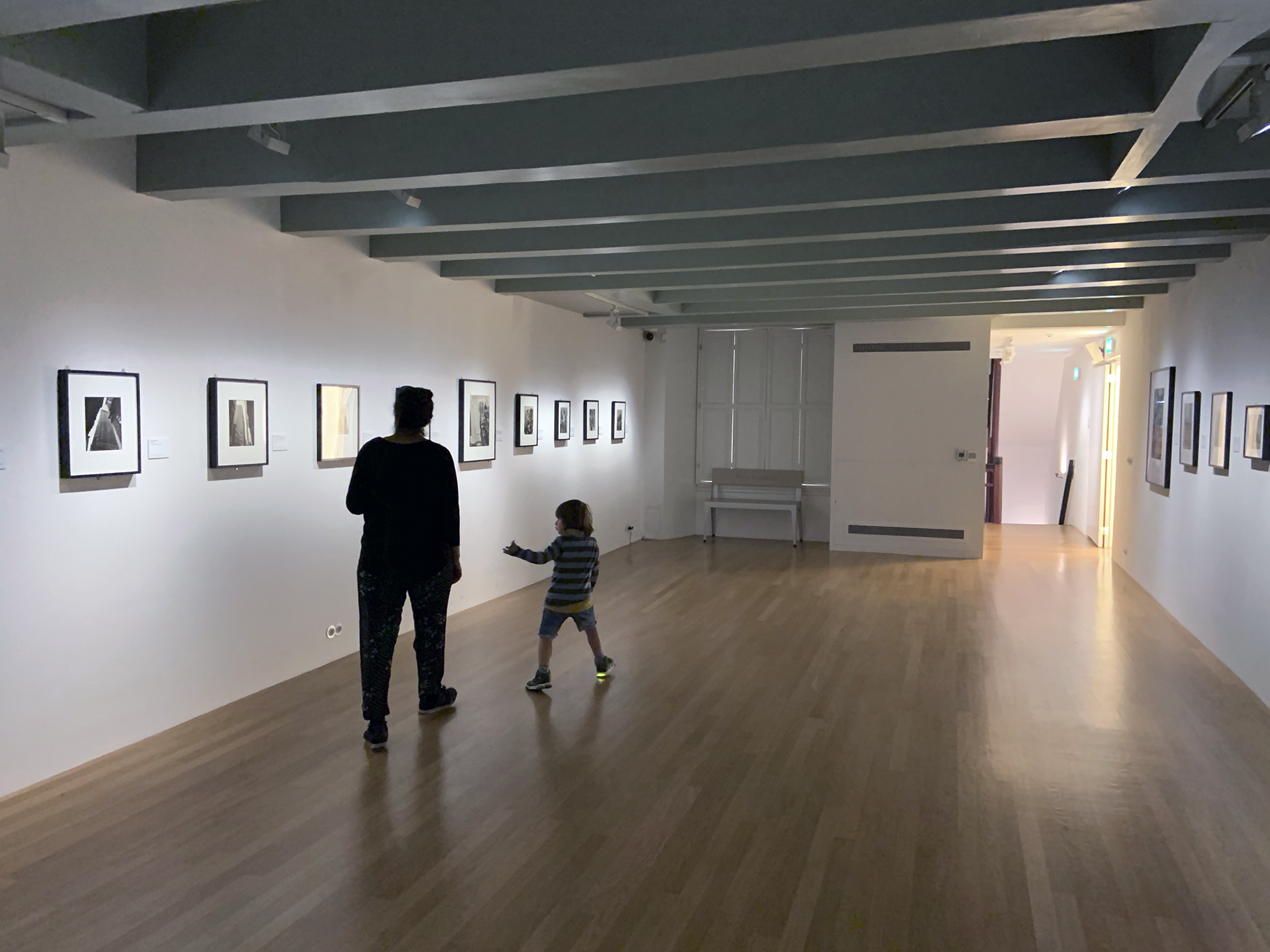
“The photographing of America” is a large order - read at all literally, the phrase would be an absurdity. What I have in mind, then, is observation and record of what one naturalized American finds to see in the United States that signifies the kind of civilization born here and spreading elsewhere. Incidentally, it is fair to assume that when an observant American travels abroad his eye will see freshly; and that the reverse may be true when a European eye looks at the United States. I speak of the things that are there, anywhere and everywhere - easily found, not easily selected and interpreted. A small catalog comes to the mind’s eye: a town at night, a parking lot, a supermarket, a highway, the man who owns three cars and the man who owns none, the farmer and his children, a new house and a warped clapboard house, the dictation of taste, the dream of grandeur, advertising, neon lights, the faces of the leaders and the faces of the followers, gas tanks and post offices and backyards.

The uses of my project would be sociological, historical and aesthetic. My total production will be voluminous, as is usually the case when the photographer works with miniature film. I intend to classify and annotate my work on the spot, as I proceed. Ultimately the file I shall make should be deposited in a collection such as the one in the Library of Congress. A more immediate use I have in mind is both book and magazine publication.”


Robert Frank (American born Switzerland, 1924-2019) 'Florida' 1958


Robert Frank (American born Switzerland, 1924-2019)
Florida
1958
Gelatin silver print
Cantor Arts Center Collection, Gift of Raymond B. Gary


“I am grateful to the Guggenheim Foundation for their confidence and the provisions they made for me to work freely in my medium over a protracted period. When I applied for the Guggenheim Fellowship, I wrote: “To produce an authentic contemporary document, the visual impact should be such as will nullify explanation.”

With these photographs, I have attempted to show a cross-section of the American population. My effort was to express it simply and without confusion. The view is personal and, therefore, various facets of American life and society have been ignored. The photographs were taken during 1955 and 1956; for the most part in large cities such as Detroit, Chicago, Los Angeles, New York and in many other places during my Journey across the country. My book, containing these photographs, will be published in Paris by Robert Delpire, 1958.

I have been frequently accused of deliberately twisting subject matter to my point of view. Above all, I know that life for a photographer cannot be a matter of indifference. Opinion often consists of a kind of criticism. But criticism can come out of love. It is important to see what is invisible to others – perhaps the look of hope or the look of sadness. Also, it is always the instantaneous reaction to oneself that produces a photograph.

My photographs are not planned or composed in advance and I do not anticipate that the on-looker will share my viewpoint. However, I feel that if my photograph leaves an image on his mind – something has been accomplished.

It is a different state of affairs for me to be working on assignment for a magazine. It suggests to me the feeling of a hack writer or a commercial illustrator. Since I sense that my ideas, my mind and my eye are not creating the picture but that the editors’ minds and eyes will finally determine which of my pictures will be reproduced to suit the magazines’ purposes.

I have a genuine distrust and “mefiance” toward all group activities. Mass production of uninspired photojournalism and photography without thought becomes anonymous merchandise. The air becomes infected with the “smell” of photography. If the photographer wants to be an artist, his thoughts cannot be developed overnight at the corner drugstore.

I am not a pessimist, but looking at a contemporary picture magazine makes it difficult for me to speak about the advancement of photography, since photography today is accepted without question, and is also presumed to be understood by all – even children. I feel that only the integrity of the individual photographer can raise its level.

The work of two contemporary photographers, Bill Brandt of England and the American, Walker Evans, have influenced me. When I first looked at Walker Evans’ photographs, I thought of something Malraux wrote: “To transform destiny into awareness.” One is embarrassed to want so much for oneself. But, how else are you going to justify your failure and your effort?”

Robert Frank, U.S. Camera Annual, 1958, p. 115


Robert Frank (American born Switzerland, 1924-2019) 'Lusk, Wyoming' 1956


Robert Frank (American born Switzerland, 1924-2019)
Lusk, Wyoming
1956
Gelatin silver print
Cantor Arts Center Collection, Gift of Raymond B. Gary


Robert Frank (American born Switzerland, 1924-2019) 'Main Street - Savannah, Georgia' 1955


Robert Frank (American born Switzerland, 1924-2019)
Main Street – Savannah, Georgia
1955
Gelatin silver print
Cantor Arts Center Collection, Gift of Raymond B. Gary


Walker Evans (American, 1903-1975) 'Downtown street, New Orleans' December 1935


Walker Evans (American, 1903-1975)
Downtown street, New Orleans
December 1935
Gelatin silver print


Robert Frank (American born Switzerland, 1924-2019) 'New York City' 1949


Robert Frank (American born Switzerland, 1924-2019)
New York City
1949
Gelatin silver print
Lent by Peter Steil


Robert Frank (American born Switzerland, 1924-2019) 'New York City' early 1950s


Robert Frank (American born Switzerland, 1924-2019)
New York City
early 1950s
Gelatin silver print
Cantor Arts Center Collection, Gift of Bowen H. McCoy


Cantor Arts Center at Stanford University
328 Lomita Drive at Museum Way
Stanford, CA 94305-5060
Phone: 650-723-4177

Opening hours:
Wednesday – Sunday 11am – 5pm
Closed Monday and Tuesday

Cantor Arts Center at Stanford University website

LIKE ART BLART ON FACEBOOK

Back to top

Exhibition: ‘In Focus: Ed Ruscha’ at the J. Paul Getty Museum, Getty Center, Los Angeles

Exhibition dates: 9th April – 29th September 2013


Ed Ruscha (American, b. 1937) 'Contact sheet for Pacific Coast Highway' 1974


Ed Ruscha (American, b. 1937)
Contact sheet for Pacific Coast Highway
1974
Inkjet print
32.8 x 48.2cm (12 15/16 x 19 in.)
The Getty Research Institute, Los Angeles
© Edward Ruscha


“Yes, there’s a certain power to a photograph. The camera has a way of disorienting a person, if it wants to and, for me, when it disorients, it’s got real value.”

“My pictures are not that interesting, nor the subject matter. They are simply a collection of “facts”; my book is more like a collection of “Ready-mades”.”


Ed Ruscha


Cultural curiosities. A language of the street.

Dr Marcus Bunyan


Many thankx to the J. Paul Getty Museum for allowing me to publish some of the photographs in the posting. The rest I sourced from the internet (and spent hours cleaning) to make a better posting about the exhibition. Please click on the photographs for a larger version of the image.


Ed Ruscha (American, b. 1937) 'Camera-ready Maquette for Every Building on the Sunset Strip' 1966


Ed Ruscha (American, b. 1937)
Camera-ready Maquette for Every Building on the Sunset Strip
1966
Gelatin silver print on board
63.5 x 92.1cm (24 15/16 x 36 1/4 in.)
The Getty Research Institute, Los Angeles
© Edward Ruscha


Ed Ruscha (American, b. 1937) 'Beeline, Holbrook, Arizona' 1962


Ed Ruscha (American, b. 1937)
Beeline, Holbrook, Arizona
1962
Gelatin silver print
11.7 x 12.1cm
The J. Paul Getty Museum, Los Angeles
© Ed Ruscha


Ed Ruscha (American, b. 1937) 'Shell, Daggett, California' 1962


Ed Ruscha (American, b. 1937)
Shell, Daggett, California
1962
Gelatin silver print
11.9 x 12cm
The J. Paul Getty Museum, Los Angeles
© Ed Ruscha


Ed Ruscha (American, b. 1937) 'Standard, Figueroa Street, Los Angeles' 1962


Ed Ruscha (American, b. 1937)
Standard, Figueroa Street, Los Angeles
1962
Gelatin silver print
12.4 x 14.6cm
The J. Paul Getty Museum, Los Angeles
© Ed Ruscha


Ed Ruscha (American, b. 1937) 'Standard, Amarillo, Texas' 1962


Ed Ruscha (American, b. 1937)
Standard, Amarillo, Texas
1962
Gelatin silver print
11.8 x 12.1cm
The J. Paul Getty Museum, Los Angeles
© Ed Ruscha


In Focus: Ed Ruscha, on view at the J. Paul Getty Museum, at the Getty Center, April 9 – September 29, 2013, offers a concentrated look at Ruscha’s deep engagement with Los Angeles’s vernacular architecture and the urban landscape. The exhibition is part of Pacific Standard Time Presents: Modern Architecture in Los Angeles, and opens simultaneously with Overdrive: L.A. Constructs the Future, 1940-1990, another exhibition presented at the Getty Museum as part of this regional initiative. The Overdrive exhibition also contains images by Ruscha.

One of the most influential American artists working today, Ed Ruscha moved to Los Angeles in 1956 and continues to live and work in the city, incorporating local architecture, streets, and even the city’s attitude into paintings, prints, drawings, and photographs that are known for their graphic directness. Beginning in the 1960s, he began publishing photo books and using photographs to document thoroughfares in the Los Angeles area.

“Throughout his career, photography has played an important role in Ruscha’s exploration of the vernacular architecture, urban landscape, and car culture of Los Angeles,” commented Timothy Potts, director of the J. Paul Getty Museum. “By bringing together photographs from our collection and archival materials from the Getty Research Institute, we have been able to present a much richer understanding of Ruscha’s work and process.”

Highlighting an important joint acquisition of the artist’s work by the J. Paul Getty Museum and the Getty Research Institute in 2011, this exhibition features a selection of vintage prints related to Twentysix Gasoline Stations (1963) and Some Los Angeles Apartments (1965), the original camera-ready maquettes for Every Building on the Sunset Strip (1966), and contact sheets from this documentation of the Pacific Coast Highway (1974). The exhibition is co-­curated by Virginia Heckert, curator in the Department of Photographs at the Getty Museum, and John Tain, assistant curator in Collection Development at the Getty Research Institute.

“Gas stations and apartment buildings are among the quintessentially Southern Californian motifs that feature in Ruscha’s work,” says Heckert. “The Getty Museum’s acquisition of photographs made in conjunction with his photo books of the early 1960s gives us the opportunity to share his enthusiasm for the logos, signage, and language that enliven even the most banal architecture.”

Adds Tain, “What’s exciting about the photography that came out of Ruscha’s documentation of the Sunset Strip is that it really altered the sense of what was possible with street photography, which had always been from the viewpoint of the pedestrian. Today we have the Google Maps roving fleet of camera cars, but Ruscha was doing this kind of photography more than forty years ago.”
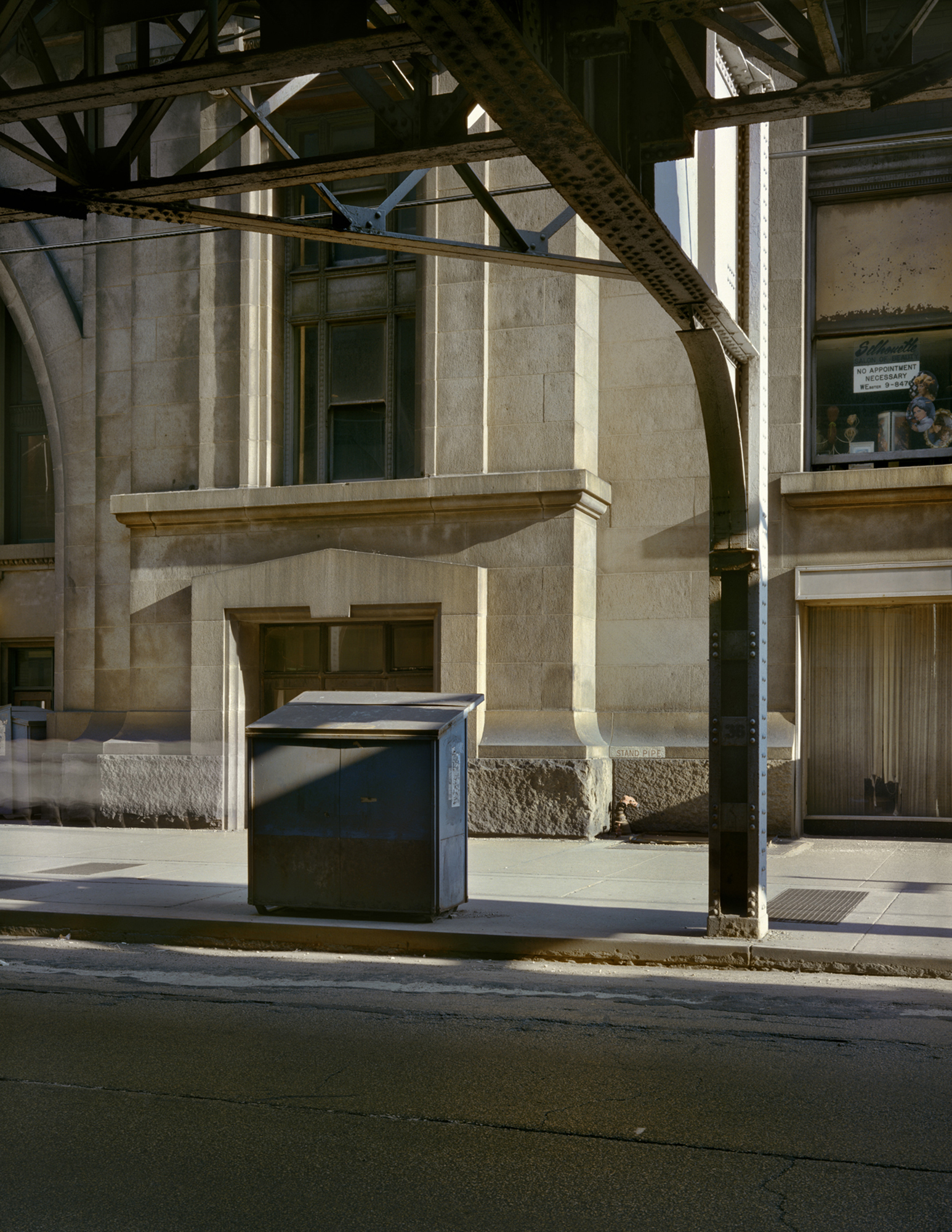
The exhibition gives visitors the opportunity to appreciate Ruscha’s photographs not as halftone reproductions in modest, mass-produced books, but as prints of the period. One of the best known images included in the exhibition is Standard, Amarillo, Texas (1962), which Ruscha used as the basis for his iconic oil painting Standard Station, Amarillo, Texas (1963). Other unpublished images from the iconic series of gasoline stations will be on view as well. Also included are the original camera-ready maquettes and press pulls for Every Building on the Sunset Strip, Ruscha’s fourth and arguably best-known photo book. Due to light sensitive annotations, each panel will be on view for eight weeks. The complete set of three maquettes will be on view during the first week of the exhibition only, April 9-14.

On display for the first time is a selection of contact sheets of the Pacific Coast Highway, representing a small sample of this monumental undertaking. Ruscha’s documentation captures the dramatically different landscapes of both the view west toward the Pacific Ocean and the view east toward the cliffs. The Pacific Coast Highway is just one of several streets that Ruscha has photographed over the past four and a half decades, beginning in 1965 with Sunset Boulevard. These contact sheets are part of Ruscha’s Streets of Los Angeles archive, including thousands of photographic negatives, proof sheets, contact prints, and related documents and ephemera, which was acquired by the Getty Research Institute in 2011. Nearly sixty photographs were acquired by the Getty Museum at the same time, making the Getty a preeminent resource for understanding the role of photography in Ruscha’s practice.

In Focus: Ed Ruscha is co-organised by the J. Paul Getty Museum and the Getty Research Institute, and features 50 works from both collections.

Press release from the J. Paul Getty Museum website


Ed Ruscha (American, b. 1937) '708 S. Barrington Ave. [The Dolphin]' 1965


Ed Ruscha (American, b. 1937)
708 S. Barrington Ave. [The Dolphin]
1965
Gelatin silver print
11.8 x 11.9cm
The J. Paul Getty Museum, Los Angeles
© Ed Ruscha


Ed Ruscha (American, b. 1937) '1018 S. Atlantic Blvd.,' 1965


Ed Ruscha (American, b. 1937)
1018 S. Atlantic Blvd.,
1965
Gelatin silver print
10.8 x 11.1cm
The J. Paul Getty Museum, Los Angeles
© Ed Ruscha


Ed Ruscha (American, b. 1937)'1323 Bronson' 1965


Ed Ruscha (American, b. 1937)
1323 Bronson
1965
Gelatin silver print
11.8 x 12cm
The J. Paul Getty Museum, Los Angeles
© Ed Ruscha


Ed Ruscha (American, born 1937) '1555 Artesia Blvd.,' 1965


Ed Ruscha (American, b. 1937)
1555 Artesia Blvd.,
1965
Gelatin silver print
11.1 x 11.4cm
The J. Paul Getty Museum, Los Angeles
© Ed Ruscha


Ed Ruscha (American, b. 1937) '4489 Murietta Ave.,' 1965


Ed Ruscha (American, b. 1937)
4489 Murietta Ave.,
1965
Gelatin silver print
11.4 x 11.4cm
The J. Paul Getty Museum, Los Angeles
© Ed Ruscha


Ed Ruscha (American, b. 1937) '5947 Carlton Way' 1965


Ed Ruscha (American, b. 1937)
5947 Carlton Way
1965
Gelatin silver print
11.9 x 12cm
The J. Paul Getty Museum, Los Angeles
© Ed Ruscha


Ed Ruscha (American, b. 1937) '6565 Fountain Ave.,' 1965


Ed Ruscha (American, b. 1937)
6565 Fountain Ave.,
1965
Gelatin silver print
11.8 x 11.8cm
The J. Paul Getty Museum, Los Angeles
© Ed Ruscha


Ed Ruscha (American, b. 1937) '10433 Wilshire Blvd.,' 1965


Ed Ruscha (American, b. 1937)
10433 Wilshire Blvd.,
1965
Gelatin silver print
11.7 x 11.8cm
The J. Paul Getty Museum, Los Angeles
© Ed Ruscha


Ed Ruscha (American, b. 1937) '818 Doheny Dr.,' 1965


Ed Ruscha (American, b. 1937)
818 Doheny Dr.,
1965
Gelatin silver print
11.6 x 11.7cm
The J. Paul Getty Museum, Los Angeles
© Ed Ruscha


Ed Ruscha (American, b. 1937) '3919 N. Rosemead Blvd.,' 1965


Ed Ruscha (American, b. 1937)
3919 N. Rosemead Blvd.,
1965
Gelatin silver print
12 x 12cm
The J. Paul Getty Museum, Los Angeles
© Ed Ruscha


The J. Paul Getty Museum
1200 Getty Center Drive
Los Angeles, California 90049

Opening hours:
Tues – Friday 10am – 5.30pm
Saturday 10am – 8pm
Sunday 10am – 5.30pm
Monday closed

The J. Paul Getty Museum website

LIKE ART BLART ON FACEBOOK

Back to top

Exhibition: ‘Arthur Tress: San Francisco 1964’ at the de Young Museum, San Francisco

Exhibition dates:  3rd March – 3rd June 2012


Arthur Tress (American, b. 1940) 'Untitled (Van Ness at Geary Boulevard)' 1964


Arthur Tress (American, b. 1940)
Untitled (Van Ness at Geary Boulevard)
1964, printed 2010-2011
Selenium-toned silver gelatin print
Fine Arts Museums of San Francisco
© 2012 Arthur Tress


These early figurative urbanscapes by Arthur Tress show the beginnings of his later Surrealist pictorial style (do a Google images search on Tress to see what I mean). From the Eggleston-esque tricycle in Untitled (Ocean Beach), the three spooky faces in Untitled (Coit Tower)* to the most prescient, the photograph Untitled (Legion of Honor Museum), there is a direct thematic link to the later, more famous 1970s work. What a beautiful and disturbing photograph Legion of Honor Museum is.

Dr Marcus Bunyan

*Notice the low vantage point of the camera at knee level (as the photographer crouched down) that imparts a monumental, robo-human feel to the sculptures.

Many thankx to the de Young Museum for allowing me to publish the photographs in the posting. Please click on the photographs for a larger version of the image.


Arthur Tress (American, b. 1940) 'Untitled (City Hall)' 1964


Arthur Tress (American, b. 1940)
Untitled (City Hall)
1964, printed 2010-2011
Selenium-toned silver gelatin print
Fine Arts Museums of San Francisco
© 2012 Arthur Tress


Arthur Tress (American, b. 1940) 'Untitled (Coit Tower)' 1964


Arthur Tress (American, b. 1940)
Untitled (Coit Tower)
1964, printed 2010-2011
Selenium-toned silver gelatin print
Fine Arts Museums of San Francisco
© 2012 Arthur Tress


Arthur Tress (American, b. 1940) 'Untitled (Ocean Beach)' 1964


Arthur Tress (American, b. 1940)
Untitled (Ocean Beach)
1964, printed 2010-2011
Selenium-toned silver gelatin print
Fine Arts Museums of San Francisco
© 2012 Arthur Tress


Arthur Tress (American, b. 1940) 'Untitled (Fisherman's Wharf)' 1964


Arthur Tress (American, b. 1940)
Untitled (Fisherman’s Wharf)
1964, printed 2010-2011
Selenium-toned silver gelatin print
Fine Arts Museums of San Francisco
© 2012 Arthur Tress


In the summer of 1964, San Francisco was ground zero for a historic culture clash as the site of both the 28th Republican National Convention (the “Goldwater Convention”) and the launch of the Beatles’ first North American tour. The young photographer Arthur Tress arrived at this opportune moment in the city’s history and found himself in the midst of large-scale civil rights demonstrations and chaotic political pageantry. With a unique sensibility perfectly attuned to this quirky metropolis, he set about to capture the odd spectacle of San Francisco.

Over 70 photographs included in Arthur Tress: San Francisco 1964 range from public gatherings to impromptu street portraits, views of the peculiar contents of shop windows and commercial signs. This is the first museum exhibition of a virtually unknown body of Tress’s early work. Curator James Ganz explains, “This exhibition offers an evocative time capsule of the City by the Bay and makes a fascinating contribution to the region’s rich photographic legacy.” The exhibition runs March 3 to June 3, 2012 at the de Young Museum.

The subject matter of Arthur Tress: San Francisco 1964 breaks down into three broad categories: public gatherings, including civil rights and political rallies; portrait studies of San Franciscans; and views of shop windows, commercial signs and architectural fragments. Often these categories overlap. In photographing events such as the Auto Row demonstrations, Tress was interested in recording passive bystanders, as well as active participants. His candid images of spectators lining the streets of San Francisco, whether isolated or in groups, capture the distinctive fashions, expressions and body language of the era. The frequent incursions of commercial logos and signage add to the contemporary flavour of the photographs, effectively fixing time and place. The exhibition captures the flavour of San Francisco without featuring its most familiar monuments. Tress’s approach to the city was idiosyncratic, generally avoiding popular tourist sites such as the Golden Gate Bridge and Chinatown, while favouring mundane locales like laundromats and coffee shops. Ganz observes, “Tress is a photographer of people rather than landmarks. Given the option of pointing his lens at an attraction like Coit Tower or at a tourist observing the monument, he will always favour the human element over the architectural setting.”

Brief biography

Born in 1940, Arthur Tress was raised in Brooklyn and started experimenting with photography in his teens. After graduating from Bard College in 1962, Tress traveled internationally for four years as an ethnographic and documentary photographer. It was during this international tour that he spent the summer of 1964 in San Francisco focusing his lens on city life. Tress developed his San Francisco negatives in a communal darkroom in the Castro District and mounted two small exhibitions in North Bay galleries that summer. He went on to pursue a long and accomplished career in photography that continues to this day.

Press release from the de Young Museum website


Arthur Tress (American, b. 1940) 'Untitled (Legion of Honor Museum)' 1964


Arthur Tress (American, b. 1940)
Untitled (Legion of Honor Museum)
1964, printed 2010-2011
Selenium-toned silver gelatin print
Fine Arts Museums of San Francisco
© 2012 Arthur Tress


Arthur Tress (American, b. 1940) 'Untitled (Powell Street)' 1964


Arthur Tress (American, b. 1940)
Untitled (Powell Street)
1964, printed 2010-2011
Selenium-toned silver gelatin print
Fine Arts Museums of San Francisco
© 2012 Arthur Tress


Arthur Tress (American, b. 1940) 'Untitled (Union Square)' 1964


Arthur Tress (American, b. 1940)
Untitled (Union Square)
1964, printed 2010-2011
Selenium-toned silver gelatin print
Fine Arts Museums of San Francisco
© 2012 Arthur Tress


Shooting with a large Rolleiflex camera, Tress set out to make a mosaic of the city. He photographed civil rights demonstrations and surreal shop-window displays, Beatles fans and Barry Goldwater supporters, matrons in mink, bikers in black leather, Felliniesque crowd scenes (replete with clowns), signs for doughnuts and foot-long hot dogs.

“Even though I didn’t know it, these were prescient of my later dream images,” says Tress, 71, a small, soft-spoken gent with white hair and amused blue eyes. “You can arrange spaces and tones and textures so they become theatrical in a way, and it becomes a moment that leaps out of the quotidian flow of time.” …

One picture shows a pair of old ladies, wearing hats, glasses and white gloves, casting disdainful glances at a guy on a motorcycle in a Brando-like leather jacket, tight white jeans and black gloves. His hands are crossed just like theirs, repeating the rhythm.

“This is very much within the tradition of street photography, where you contrast different classes and types of people,” Tress says.

That’s what he did in July of ’64, when the Republican National Convention was held at the Cow Palace, a month before the Beatles began their first American tour there. A crowd supporting William Scranton – the Pennsylvania governor drafted as a moderate alternative to Goldwater – held a rally in Union Square. It was disrupted by an unexpected mob of teenage girls carrying “Ringo for President” signs. Tress captured the cultural dissonance, the press of Ringo fans and plume-hatted marching band musicians. …

Like most of these images, it had never been printed or shown. Tress had all but forgotten them until he found them in some boxes in his sister’s home after she died in 2009.

“I realized there was something good here. They were really strong images,” says Tress, who had shown about 25 of them at the old Tides bookstore in Sausalito. “I think these photographs have aged well, because of their formal, slightly dreamlike quality. They transcend their time.”

He took the prints and negatives to Ganz, the curator of the Fine Arts Museums’ Achenbach Foundation for Graphic Arts, which owns a couple of Tress’ better-known surrealist pictures. Ganz was jazzed by what he saw. Tress had new contact sheets made from the negatives, and he and Ganz picked the images that were printed for the show and the accompanying book.

Jesse Hamlin. “‘Arthur Tress: San Francisco 1964’ at the de Young,” on the SFGate website March 22, 2012 [Online] Cited 07/10/2024


Arthur Tress (American, b. 1940) 'Untitled (City Hall)' 1964


Arthur Tress (American, b. 1940)
Untitled (City Hall)
1964, printed 2010-2011
Selenium-toned silver gelatin print
Fine Arts Museums of San Francisco
© 2012 Arthur Tress


Arthur Tress (American, b. 1940) 'Untitled (5th and Market)' 1964


Arthur Tress (American, b. 1940)
Untitled (5th and Market)
1964, printed 2010-2011
Selenium-toned silver gelatin print
Fine Arts Museums of San Francisco
© 2012 Arthur Tress


Arthur Tress (American, b. 1940) 'Untitled' 1964


Arthur Tress (American, b. 1940)
Untitled
1964, printed 2010-2011
Selenium-toned silver gelatin print
Fine Arts Museums of San Francisco
© 2012 Arthur Tress


Arthur Tress (American, b. 1940) 'San Francisco' 1964


Arthur Tress (American, b. 1940)
San Francisco
1964
Selenium-toned silver gelatin print
Fine Arts Museums of San Francisco
© 2012 Arthur Tress


Arthur Tress (American, b. 1940) 'San Francisco' 1964


Arthur Tress (American, b. 1940)
San Francisco
1964
Selenium-toned silver gelatin print
Fine Arts Museums of San Francisco
© 2012 Arthur Tress


Arthur Tress (American, b. 1940) 'San Francisco' 1964


Arthur Tress (American, b. 1940)
San Francisco
1964
Selenium-toned silver gelatin print
Fine Arts Museums of San Francisco
© 2012 Arthur Tress


Arthur Tress (American, b. 1940) 'San Francisco' 1964


Arthur Tress (American, b. 1940)
San Francisco
1964
Selenium-toned silver gelatin print
Fine Arts Museums of San Francisco
© 2012 Arthur Tress


Arthur Tress (American, b. 1940) 'San Francisco' 1964


Arthur Tress (American, b. 1940)
San Francisco
1964
Selenium-toned silver gelatin print
Fine Arts Museums of San Francisco
© 2012 Arthur Tress


Cover of the exhibition catalogue 'Arthur Tress: San Francisco 1964'


Cover of the exhibition catalogue Arthur Tress: San Francisco 1964


Back cover of the exhibition catalogue 'Arthur Tress: San Francisco 1964'


Back cover of the exhibition catalogue Arthur Tress: San Francisco 1964


The de Young Museum
50 Hagiwara Tea Garden Drive
Golden Gate Park
San Francisco

Opening hours:
Tuesday – Sunday 9.30am – 5.15pm
Monday Closed

The de Young Museum website

LIKE ART BLART ON FACEBOOK

Back to top

Exhibition: ‘Berenice Abbott (1898-1991), Photographs’ at Jeu de Paume, Paris

Exhibition dates: 21st February – 29th April 2012

Curator: Gaëlle Morel


Berenice Abbott (American, 1898-1991) 'New York Stock Exchange, New York City' 1933


Berenice Abbott (American, 1898-1991)
New York Stock Exchange, New York City
1933
Gelatin silver print
24 x 19cm
Ronald Kurtz / Commerce Graphics
© Berenice Abbott / Commerce Graphics Ltd, Inc.


It is not her portraits or the road trip photographs, nor her scientific work for which Berenice Abbott will be remembered. Firstly, she will always be remembered as the person who photographed Eugene Atget in 1927 just before he died and who bought the remainder of his negatives (after the French government had bought over 2,000 in 1920 and another 2,000 had been sold after his death). She then tirelessly promoted Atget’s work helping him gain international recognition until her sale of the archive to the Museum of Modern Art in 1968. Secondly, she is remembered for her magnificent photographs of New York City and its urban environs, photographs that show the influence of Atget in their attention to detail and understanding of the placement of the camera, and imaging of old and new parts of the city (much as Atget had photographed old Paris before it was destroyed). However, these photographs are uniquely her own, with their modernist New Vision aesthetic, bold perspectives and use of deep chiaroscuro to enhance form within the photograph. Abbott’s best known project, Changing New York (1935-1939) eventually consisted of 305 photographs that document the buildings of Manhattan, some of which are now destroyed. As the text on Wikipedia insightfully notes:

“Abbott’s project was primarily a sociological study imbedded within modernist aesthetic practices. She sought to create a broadly inclusive collection of photographs that together suggest a vital interaction between three aspects of urban life: the diverse people of the city; the places they live, work and play; and their daily activities. It was intended to empower people by making them realise that their environment was a consequence of their collective behaviour (and vice versa). Moreover, she avoided the merely pretty in favour of what she described as “fantastic” contrasts between the old and the new, and chose her camera angles and lenses to create compositions that either stabilised a subject (if she approved of it), or destabilised it (if she scorned it).”


In the text below Gaëlle Morel observes, “Rather than the kind of nostalgic approach often brought to bear on a city’s landmarks and typical sites, this ensemble offers an exploration of the nature of modernity and focuses on the ways in which the past and future are temporarily linked together. Seeking to reinvent the forms and functions of photography in relation to the practice of documentary, Abbott sets out to capture the “disappearance of the moment” by juxtaposing motifs from a city subject to an unprecedented process of demolition and reconstruction.”

While Abbott’s photographs are definitely modernist in nature I believe that today they can also be seen as deeply nostalgic, emerging as they do in the period after the Great Depression when the economy was on the move again, a peaceful time before the oncoming armageddon of the Second World War, closely followed by the fear of nuclear annihilation and the threat of communist indoctrination. They are timeless portraits of a de/reconstructed city. The images seem to float in the air, breathe in the shadows. This is the disappearance of the moment into the enigma of past, present, future – where the photograph becomes eternal, where the best work of both Atget and Abbott resides.

Dr Marcus Bunyan


Many thankx to Jeu de Paume for allowing me to publish the photographs in the posting. Please click on the photographs for a larger version of the image.


Berenice Abbott (American, 1898-1991) 'Treasury Building, New York City' 1933


Berenice Abbott (American, 1898-1991)
Treasury Building, New York City
1933
Gelatin silver print
51 x 40.5cm
Ronald Kurtz / Commerce Graphics
© Berenice Abbott / Commerce Graphics Ltd, Inc.


Architecture

“The tempo of the city is not that of eternity, nor that of time, but that of the ephemeral. That is why recording it is so important, in both documentary and artistic terms.”

“All the photographs of New York took a long time to make, because the camera had to be carefully positioned. There is nothing fortuitous about these photographs.”


The exhibition features a substantial collection from Abbott’s best known project, Changing New York (1935-1939). Commissioned by the Roosevelt administration as part of its response to the nationwide economic crisis, Abbott saw this piece of work as both a way of documenting the City and as a personal work of art. Eighty of the 305 photographs taken by Abbott are on show here, along with various documents providing insight into the background of this major photographic undertaking, including posters and views of the exhibition organised by the Museum of the City of New York in 1937, sketches and historical notes made by the team of journalists working with Abbott on the project, and proofs and dummies of the layout made by the photographer before she started work.

Abbott homes in on the contrasts between old and new elements in the City’s structure. Her images alternate between a New Vision aesthetic, characterised by an emphasis on details and bold perspectives, and a more documentary style that is frontal and neutral. Rather than the kind of nostalgic approach often brought to bear on a city’s landmarks and typical sites, this ensemble offers an exploration of the nature of modernity and focuses on the ways in which the past and future are temporarily linked together. Seeking to reinvent the forms and functions of photography in relation to the practice of documentary, Abbott sets out to capture the “disappearance of the moment” by juxtaposing motifs from a city subject to an unprecedented process of demolition and reconstruction.

In 1938, hoping to take advantage of the fifty million visitors expected at the New York World’s Fair of 1939, the publisher, E.P. Dutton, offered to bring out a selection of one hundred images from the project accompanied by a text by the renowned art critic Elizabeth McCausland, who also happened to be Abbott’s companion and staunch supporter. Going against the women’s original ideas for an art book, Dutton produced a more standard tourist guide, breaking the City down into a series of tours, from south to north and from the centre outwards. The text, too, was shorn of its poetic and pedagogical dimensions, leaving only informative entries about the buildings in the pictures.

In the exhibition, this set of architectural photographs is rounded out by a selection of pictures of vernacular architecture taken by Abbott during a journey in the southern states of the US in the 1930s and when she was travelling along Route 1 in the 1950s. Here, portraits of farmers and wooden houses alternate with pictures of streets and local events.

Berenice Abbott Petit Journal

With over 120 photographs, plus a selection of books and documents never shown before, this is the first exhibition in France to cover the many different facets of the American photographer Berenice Abbott (1898-1991), who is also famous for her international advocacy of Eugène Atget. She came to Paris in 1921 where she learnt her craft from Man Ray before opening her own studio and embarking on a successful career as a portraitist. Returning to New York City in 1929, she conceived what remains her best‑known project, Changing New York (1935-1939). This was financed by the Works Progress Administration as part of its response to the economic crisis sweeping the country. The photographs she took in 1954 when travelling along the US East Coast on Route 1 (the exhibition presents a previously unseen selection of these images) reflect her ambition to represent the whole of what she called the “American scene.” Furthermore, in the 1950s, she also worked on a set of images for the Massachusetts Institute of Technology (MIT) designed to illustrate the principles of mechanics and light for educational purposes.

A committed member of the avant‑garde from the early 1920s, and a staunch opponent of Pictorialism and the school of Alfred Stieglitz, Abbott spent the whole of her career exploring the limits and nature of documentary photography and photographic realism. This exhibition shows the rich array of her interests and conveys both the unity and diversity of her work.

Portraits

Berenice Abbott moved to New York City in the early 1920s and went about becoming a sculptor. Mixing in the bohemian circles of Greenwich Village, she met writers and artists such as Djuna Barnes, Sadakichi Hartmann and Marcel Duchamp. She also posed for Man Ray. Economic hardship at home and the allure of what then seemed the cultural Eldorado of Europe impelled several of these artists to try their luck in Paris, and Abbott herself joined this group of American expatriates in 1921.

In 1923 she became the assistant of Man Ray, who had opened a portrait studio shortly after his arrival in France in 1921. While a fair portion of the studio’s clients were American tourists, Abbott found herself at the heart of the avant-garde scene – especially that of the Surrealists. Between 1923 and 1926 she thus learnt about darkroom techniques and portrait photography while at the same time picking up a broader intellectual and artistic education. She produced her portraits in Man Ray’s studio before opening her own in 1926. Success soon followed. Her clientele was a mixture of French cultural figures and American expatriates, of bourgeois, bohemians and literary types. Her portraits were on occasion manifestly influenced by Surrealism, and more generally show an interest in masquerade, play and disguise, but sometimes even in their use of overprinting and distortion.

The female models express a kind of sexual ambiguity, notably by their masculine haircut or clothes, deliberately exuding a sense of uncertainty with regard to their identity. In composing her portraits, Abbott developed a distinctive aesthetic, far removed from the usual commercial conventions. The absence of a set, with the background usually no more than a plain wall, helped to focus on the sitter and their posture, the position of their body and their facial expression. The use of a tripod and long-focus lenses placed at eye-height allowed her to avoid distortions and thus heighten the physical presence of the models. In early 1929 Abbott left Paris for New York City. Back in America she continued with the same activities, opening a new portrait studio and taking part in exhibitions of modernist photography, while also promoting the work of Eugène Atget, having bought part of his estate in 1928.

New York City

In the early 1930s, Abbott set about her project for a great documentary portrait of the City of New York, but had no luck when she approached institutions such as the Museum of the City of New York and the New York Historical Society for funding. She assembled her first efforts in an album (eight pages of which are exhibited here) in order to convey the scale of her ambitious undertaking, and in 1934 exhibited her photographs of the City at the Museum of the City of New York in the hope of attracting sponsors. In 1935, support was at last forthcoming from the Federal Art Project, a programme set up to aid artists by the Works Progress Administration as part of the New Deal; she now had the support of a team of researchers who produced an information pack with text and drawings to accompany each image. Entitled Changing New York, she conceived this commission as both a vast documentary record of the City and a personal work of art. Eighty of the 305 photographs constituting this project have been selected for the exhibition. These are accompanied by documents – a poster, exhibition views, sketches and historical notes, proofs, pages from the preparatory album and original editions – that help to convey the concerns and ambitions behind this major photographic undertaking.

Abbott focused on the contrasts and links between old and new in the City’s structure. Her images alternate between a New Vision aesthetic, characterised by an emphasis on details and bold perspectives, and a more documentary style that is frontal and neutral. Rather than the kind of nostalgic approach often brought to bear on a city’s landmarks and typical sites, this ensemble offers an exploration of the nature of modernity and focuses on the ways in which the past and future are temporarily linked together. Seeking to reinvent the forms and functions of photography in relation to the practice of documentary, Abbott sets out to capture the “vanishing instant” by juxtaposing motifs from a city subject to an unprecedented process of demolition and reconstruction.

The upshot of all this work was the publication of a book, Changing New York, in 1939. But there was considerable tension between the publisher, whose concerns were commercial, and the photographer, with her artistic ambitions. In 1938, hoping to take advantage of the fifty million visitors expected at the New York World’s Fair of 1939, the publishing house E.P. Dutton proposed to bring out a selection of one hundred images from the project accompanied by a text from the renowned art critic Elizabeth McCausland, who also happened to be Abbott’s companion and unfailing supporter. Straying far from the project originally envisaged by the two women, Dutton changed the presentation of the photographs and produced what was a standard tourist guide, breaking the City down into a series of tours, from south to north and from the centre outwards. The text, too, was shorn of its poetic and pedagogical dimensions, leaving only information about the buildings in the pictures.

The “American scene”

This set of architectural images is completed by a selection of vernacular photographs. In the summer of 1935, Berenice Abbott went on a road trip down to the Southern US in order to create a portrait of a rural world in crisis. Choosing the kind of documentary style that would be the hallmark of the photographic survey launched by the Farm Security Administration (FSA) that same year, she focused on the modest wooden houses and the farmers. Driving around these states with Elizabeth McCausland, Abbott took some two hundred photographs which the two women saw as part of an ambitious photographic portrait of America in book form, although in the end this was never published. A similar fate befell Abbott’s piece on the small towns and villages along Route 1, which she travelled in 1954. Covering approximately 6,500  kilometres as she followed this road along the East Coast of the US, she took some 2,400 photographs, taking in stalls, shops, portraits of farmers, diners and bars and dance halls. Her photography alternated between the documentary aesthetic and Street Photography. With Route 1, Abbott continued to pursue her ambition of representing the whole of the “American scene.”

Science

Abbott started photographing scientific phenomena in 1939. In 1944 she was recruited by the journal Science Illustrated, where she published some of her own pictures, as head of its photography department. Abbott took a committed, pedagogical approach, seeing her images as a vital bridge between modern science and the general public. In 1957, as a result of the anxiety about national science stirred by the Soviet launch of the Sputnik into outer space, at the height of the Cold War, the National Science Foundation set up a Physical Science Study Committee at Massachusetts Institute of Technology. Its role was to develop new textbooks for the teaching of science in schools and to use innovative photographs to illustrate the principles of quantum mechanics. Abbott was hired by MIT to produce photographs for the popularisation and teaching of the sciences. Using abstract forms to visually express complex mechanical concepts and invisible mechanical laws, she used black grounds to reveal principles such as gravity and light waves. The exhibition features a score of Abbott’s scientific and experimental images, as well as some of the books for which they were used. Harking back to the experiments of the avant-gardes, and in particular the Rayogram technique, she was able to produce visually attractive and surprising images that were also rich in discovery, thus combining documentary information with a sense of wonder.”

Text by Gaëlle Morel, curator of the exhibition, on the Jeu de Paume website


Presentation of the exhibition Berenice Abbott

The exhibition “Berenice Abbott (1898-1991), photographies” reveals for the first time in France the different stages of the career of this American photographer. This retrospective offers more than 120 photographs, original works and a series of unpublished documents. By presenting portraits, architectural photographs and scientific shots, the exhibition shows the multiple facets of a work often reduced to a few images.


Berenice Abbott (American, 1898-1991) 'Triborough Bridge, East 125th Street Approach, New York City, June 29, 1937'


Berenice Abbott (American, 1898-1991)
Triborough Bridge, East 125th Street Approach, New York City, June 29, 1937
1937
Gelatin silver print
24.5 x 19cm
Museum of the City of New York. Gift of the Metropolitan Museum of Art
© Berenice Abbott / Commerce Graphics Ltd, Inc.


Berenice Abbott (American, 1898-1991) 'Broadway to the Battery, New York City, May 4, 1938' 1938


Berenice Abbott (American, 1898-1991)
Broadway to the Battery, New York City, May 4, 1938
1938 
Gelatin silver print
17.5 x 24cm
Museum of the City of New York
Museum Purchase with funds from the Mrs. Elon Hooker Acquisition Fund
© Berenice Abbott / Commerce Graphics Ltd, Inc.


Berenice Abbott (American, 1898-1991) 'Flat Iron Building, Broadway and Fifth Avenue, New York City' 1938


Berenice Abbott (American, 1898-1991)
Flat Iron Building, Broadway and Fifth Avenue, New York City
1938
Gelatin silver print
101.5 x 76cm
Ronald Kurtz / Commerce Graphics
© Berenice Abbott / Commerce Graphics Ltd, Inc.


Berenice Abbott (American, 1898-1991) 'Blossom Restaurant, 103 Bowery, New York City, October 24, 1935' 1935


Berenice Abbott (American, 1898-1991)
Blossom Restaurant, 103 Bowery, New York City, October 24, 1935
1935
Gelatin silver print
19 x 24.5cm
Museum of the City of New York
Gift of the Metropolitan Museum of Art
© Berenice Abbott / Commerce Graphics Ltd, Inc.


Berenice Abbott (American, 1898-1991) 'Sunoco Station, Trenton, New Jersey' 1954


Berenice Abbott (American, 1898-1991)
Sunoco Station, Trenton, New Jersey
1954
Gelatin silver print
19 x 24.5cm
Ronald Kurtz / Commerce Graphics
© Berenice Abbott / Commerce Graphics Ltd, Inc.


Berenice Abbott (American, 1898-1991) 'Park Avenue and 39th Street, New York' 1936


Berenice Abbott (American, 1898-1991)
Park Avenue and 39th Street, New York
1936
Gelatin silver print
19 x 24.5cm
© Berenice Abbott / Commerce Graphics Ltd, Inc.


Berenice Abbott (American, 1898-1991) 'Gunsmith and Police Department Headquarters, 6 Centre Market Place and 240 Centre Street, New York City, February 4, 1937' 1937


Berenice Abbott (American, 1898-1991)
Gunsmith and Police Department Headquarters, 6 Centre Market Place and 240 Centre Street, New York City, February 4, 1937
1937 
Gelatin silver print
19 x 24.5cm
Museum of the City of New York
Gift of the Metropolitan Museum of Art
© Berenice Abbott / Commerce Graphics Ltd, Inc.


Berenice Abbott (American, 1898-1991) 'Happy's Refreshment Stand, Daytona Beach, Florida' 1954


Berenice Abbott (American, 1898-1991)
Happy’s Refreshment Stand, Daytona Beach, Florida
1954
Gelatin silver print
29.5 x 28cm
Ronald Kurtz / Commerce Graphics
© Berenice Abbott / Commerce Graphics Ltd, Inc.


Berenice Abbott. 'Miner, Greenview, West Virginia' 1935


Berenice Abbott (American, 1898-1991)
Miner, Greenview, West Virginia
1935
Gelatin silver print
25 x 19cm
Ronald Kurtz / Commerce Graphics
© Berenice Abbott / Commerce Graphics Ltd, Inc.


Berenice Abbott (American, 1898-1991) 'Jean Cocteau with a revolver' 1926


Berenice Abbott (American, 1898-1991)
Jean Cocteau with a revolver
1926
Gelatin silver print
35.5 x 28cm
Ronald Kurtz / Commerce Graphics.
© Berenice Abbott / Commerce Graphics Ltd, Inc.


Berenice Abbott (American, 1898-1991) 'Eugène Atget' 1927


Berenice Abbott (American, 1898-1991)
Eugène Atget
Paris, 1927
Gelatin silver print
© Berenice Abbott/Commerce Graphics.


Jeu de Paume
1, place de la Concorde
75008 Paris
métro Concorde
Phone: 01 47 03 12 50

Opening hours:
Tuesday – Friday: 12am – 8pm
Saturday and Sunday: 11am – 7pm
Closed Monday

Jeu de Paume website

LIKE ART BLART ON FACEBOOK

Back to top

Exhibition: ‘Saul Leiter Retrospective’ at The House of Photography at Deichtorhallen Hamburg

Exhibition dates: 3rd February – 15th April 2012


Saul Leiter (American, 1923-2013) 'Joanna' c. 1947


Saul Leiter (American, 1923-2013)
Joanna
c. 1947
© Saul Leiter
Courtesy: Saul Leiter, Howard Greenberg Gallery, New York


“I always assumed that I would simply be forgotten and disappear from view.”


Saul Leiter


The second of two postings on the colour photography of Saul Leiter. The first posting was for the exhibition Saul Leiter: New York Reflections at the Jewish Historical Museum, Amsterdam, October 2011 – March 2012. This exhibition is the first major retrospective of his work. At last this artist seems to be getting the recognition he deserves!

The prosaic nature of the titles of the photographs belies their complexity. They remind me of the refractions of Lee Friedlander, the colour fields of Mark Rothko, the emotional intensity of Abstract Expressionism and the impression of spontaneous, subconscious creation that is Surrealism. His photographs are the glorious spirit of the city writ large – unique, atmospheric and with great psychological use of colour and space. I can’t think of any other colour photographer of the era (or for that matter, any era) that occludes the picture plane as much as Leiter does, and to such psychological affect, as in the last two photographs in this posting. The viewer becomes like a Peeping Tom, a voyeur of the world. Leiter deserves to be one of the modern masters of colour photography. I am so glad that he hasn’t disappeared from view. The world would be a poorer place without his visualisation.

Dr Marcus Bunyan


Many thankx to The House of Photography at Deichtorhallen for allowing me to publish the photographs in the posting. Please click on the photographs for a larger version of the image.


Saul Leiter (American, 1923-2013) 'Untitled (Self-portrait)' 1950s


Saul Leiter (American, 1923-2013)
Untitled (Self-portrait)
1950s
© Saul Leiter
Courtesy: Howard Greenberg Gallery, New York


Saul Leiter (American, 1923-2013) 'Phone Call' c. 1957


Saul Leiter (American, 1923-2013)
Phone Call
c. 1957
© Saul Leiter
Courtesy: Saul Leiter, Howard Greenberg Gallery, New York


Saul Leiter (American, 1923-2013) 'Taxi' 1957


Saul Leiter (American, 1923-2013)
Taxi
1957
© Saul Leiter
Courtesy: Saul Leiter, Howard Greenberg Gallery, New York


Saul Leiter (American, 1923-2013) 'Postmen' 1952


Saul Leiter (American, 1923-2013)
Postmen
1952
© Saul Leiter
Courtesy: Saul Leiter, Howard Greenberg Gallery, New York


Saul Leiter (American, 1923-2013) 'Walking' 1956


Saul Leiter (American, 1923-2013)
Walking
1956
© Saul Leiter
Courtesy: Saul Leiter, Howard Greenberg Gallery, New York


Saul Leiter (American, 1923-2013) 'Shopping' c. 1953


Saul Leiter (American, 1923-2013)
Shopping
c. 1953
© Saul Leiter
Courtesy: Saul Leiter, Howard Greenberg Gallery, New York


“Leiter is a rare artist, one whose vision is so encompassing, so refined, so in touch with a certain lyrical undertone, that his best photographs occasionally seem literally to transcend the medium.”


Jane Livingston


House of Photography at Deichtorhallen will from February 3 to April 15, 2012 be highlighting the oeuvre of 88-year-old photographer and painter Saul Leiter in the world’s first major retrospective. The exhibition covers more than 400 works and brings together in marvellous combination his early black-and-white and colour photographs, fashion images, painted-over nude photographs, paintings and his sketchbooks, which have never gone on public view before. Then final chapter in the exhibition is dedicated to Saul Leiter’s most recent photographic works, which he continues to take on the streets in his neighbourhood in New York’s East Village.

 Saul Leiter was born in 1923 in Pittsburgh and it was not until a few years ago that his work received due recognition for its pioneering role in the emergence of colour photography. As early as 1946, and thus well before the representatives of New Color Photography in the 1970s (such as William Eggleston and Stephen Shore) he was one of the first to use colour photography, despite it being despised by artists of the day, for his free artistic shots.

“The older photo-aesthetic views on the hegemony of black-and-white and the dating in photo history of the artistic use of color photography to the early 1970s need to be critically revisited. With Saul Leiter’s oeuvre, the history of photography essentially has to be rewritten,” comments curator Ingo Taubhorn. 

Saul Leiter has always seen himself as both painter and photograph. In his painting and in his photographs he tends clearly to abstraction and a surface feel. Often there are large, deep black surfaces caused by shadows that take up as much as three quarters of the photographs. These are images that do not present passers-by as individuals, but as blurred colour impulses, behind panes of glass or wedges between house walls and traffic signs. He espouses a fluid transition between the abstract and the figurative in his paintings and photographs. Saul Leiter’s street photography, and in this genre his work is quite without precedent, is actually painting that has become photography, as Rolf Nobel writes in the book accompanying the exhibition.

On Saul Leiter

Saul Leiter discovered his passion for art at an early date and started painting as a teenager at the end of the 1940s. His family did not support him in his artistic endeavours as his father, a renowned Talmudic rabbi and scholar, always hoped his son Saul would one day follow him in the family tradition and become a rabbi. Leiter was self-taught, but by no means uneducated. He read and learned a lot about art, such that his knowledge and understanding constantly grew. In this way, he could be certain that his own thought and artistic efforts were duly related to the historical context, as Carrie Springer, curator at the Whitney Museum in New York, points out in the catalog.

 In 1946, shortly after he had moved to New York, Leiter got to know Richard Poussette-Dart, who introduced him to photography, a medium that Leiter found very much to his liking and which he quickly made his own. Leiter soon resolved to make use of photography not only as a means of making art but as a way of earning a living. He started taking fashion photographs and thanks to his good eye, his playful sense of humour, and his pronounced sense of elegance, swiftly emerged as an extraordinary fashion photographer.
 In the 1950s, LIFE magazine brought out the first photo-spreads of Saul Leiter’s first black-and-white images. For example, he took part in the exhibition on Always the young strangers (1953) curated by Edward Steichen at the Museum of Modern Art. From 1958 to 1967, Leiter worked for Harper’s Bazaar. All in all he was to spend some 20 years photographing for both the classic magazines and more recent ones, such as Esquire and Harper’s: Show, Elle, British Vogue, Queen and Nova.

Saul Leiter was born in 1923 in Pittsburgh and has lived since 1946 in New York. For over 40 years, until her death in 2002 New York artist Soames Bantry was his partner. During the preparations for the Hamburg exhibition, Saul Leiter once remarked that he wished that Soames Bantry has received the same attention from the art world as he is now receiving. This spawned the idea of an homage to Soames Bantry, an exhibition in the exhibition at House of Photography that Saul Leiter has himself curated – with over 20 paintings: For Soames with Love Saul. 

In his photographs, the genres of street life, portraiture, still lifes, fashion and architectural photography meld. He comes across his themes, such as shop windows, passers-by, cars, signs and (a recurrent motif) umbrellas, in the direct vicinity of his apartment in New York, where he has now lived for almost 60 years. The lack of clear detail, the blurring of movement and the reduction in depth of field, the compensation for or deliberate avoidance of the necessary light as well as the alienation caused by photographing through windows and by reflections all blend to create a language of colour fuelled by a semi-real, semi-abstract urban space. These are the works of an as good as undiscovered modern master of colour photography of the 1940s and 1950s. The Hamburg exhibition and the major monograph by Kehrer Verlag seek to prevent this happening.

Press release from The House of Photography website


Saul Leiter (American, 1923-2013) 'Red Umbrella' c. 1958


Saul Leiter (American, 1923-2013)
Red Umbrella
c. 1958
© Saul Leiter
Courtesy: Howard Greenberg Gallery, New York


Saul Leiter (American, 1923-2013) 'Snow' 1960


Saul Leiter (American, 1923-2013)
Snow
1960
© Saul Leiter
Courtesy: Saul Leiter, Howard Greenberg Gallery, New York


Saul Leiter (American, 1923-2013) 'Man with Straw Hat' c. 1955


Saul Leiter (American, 1923-2013)
Man with Straw Hat
c. 1955
© Saul Leiter
Courtesy: Howard Greenberg Gallery, New York


Saul Leiter (American, 1923-2013) 'Pizza, Patterson' 1952


Saul Leiter (American, 1923-2013)
Pizza, Patterson
1952
© Saul Leiter
Courtesy: Howard Greenberg Gallery, New York


Saul Leiter (American, 1923-2013) 'Canopy' c. 1957


Saul Leiter (American, 1923-2013)
Canopy
c. 1957
© Saul Leiter
Courtesy: Saul Leiter, Howard Greenberg Gallery, New York


Saul Leiter (American, 1923-2013) 'Through Boards' c. 1957


Saul Leiter (American, 1923-2013)
Through Boards
c. 1957
© Saul Leiter
Courtesy: Saul Leiter, Howard Greenberg Gallery, New York


Deichtorhallen Hamburg
Deichtorstrasse 1-2
20095
Hamburg
Phone: +49 (0)40 32103-0

Opening hours:
Tuesday – Sunday 11am – 6pm
Closed Mondays

Deichtorhallen Hamburg website

LIKE ART BLART ON FACEBOOK

Back to top