Exhibition: ‘Cindy Sherman’ at the Museum of Modern Art (MoMA), New York

Exhibition dates: 26th February – 11th June 2012
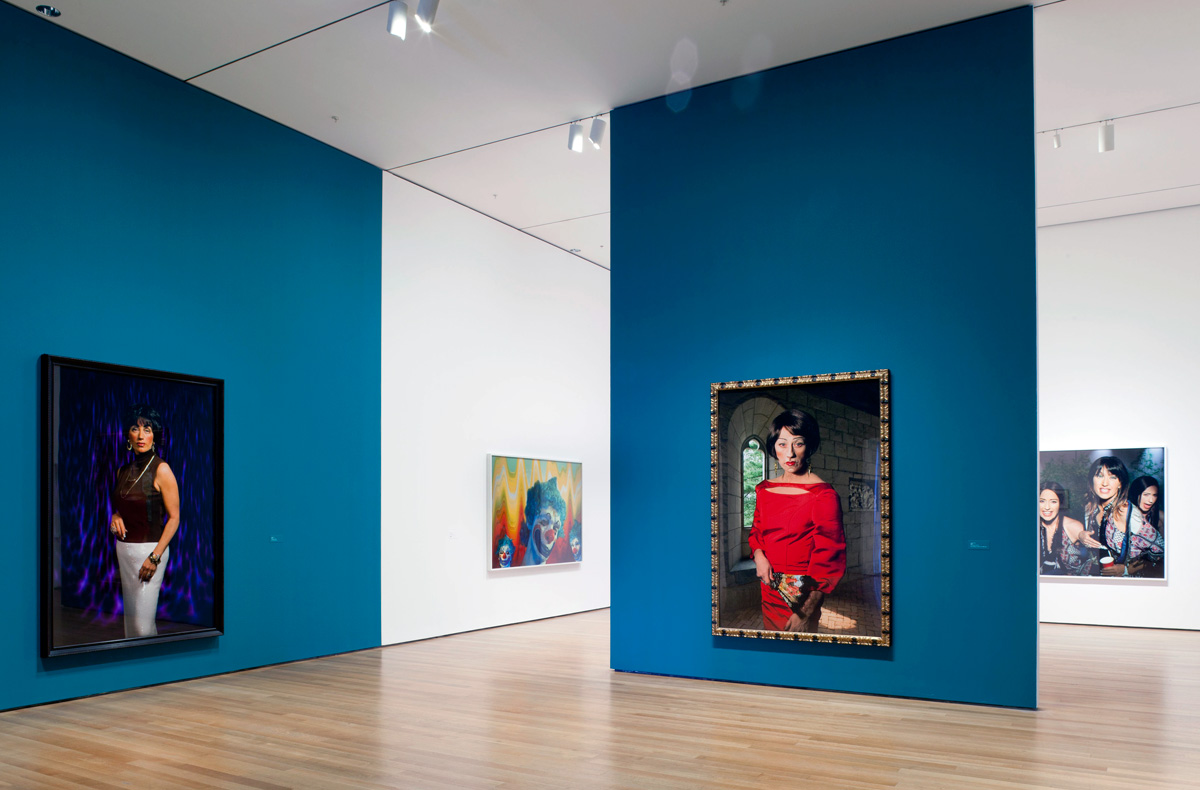
 

Installation view of the exhibition 'Cindy Sherman' at MoMA, New York showing at left and centre, 'Cindy Sherman society portraits' (2008)


Installation view of the exhibition Cindy Sherman at MoMA, New York showing at left and centre, Cindy Sherman society portraits (2008)


Ceaselessly inventive, the bodies (literally) of work of Cindy Sherman are a wonder to behold. From film stills to head shots, from history portrait to society portraits, Sherman constantly reinvents herself, her variations of identity exploring “the complexity of representation in a world saturated with images,” her iterations into the construction of femininity and masculinity constantly “provocative, disparaging, empathetic, and mysterious.”

Where to next? Her recent series of digitally altered landscapes and portraits (Cindy Sherman at Metro Pictures, New York, April – June 2012) seem less resolved than her earlier work, becoming almost a pastiche of themselves. Despite their massive size they seem to lack resolution, the great female impersonator of our time relying for effect on Self as feminine earth (m)Other, tricked up in dubious, quasi-ethnic regalia. Sherman is almost sacrosanct with regard to criticism but it’s about time someone said it: these images are pretty awful.

After so many simulacra, so many layerings and expositions of identity isn’t it about time Sherman got back to basics and ditched these grandiose notions of identity sublime. The sublimation (an unconscious defence mechanism by which consciously unacceptable instinctual drives are expressed in personally and socially acceptable channels) of her/Self, her actual body, the energy of her (non) presence is finally starting to wear thin. Will the real Cindy Sherman (if ever there is such a thing) please stand up and tell us: what do you really stand for, where as a human being, is your spirit really at?

Dr Marcus Bunyan


Many thankx to MoMA for allowing me to publish the photographs in the posting. Please click on the photographs for a larger version of the image.
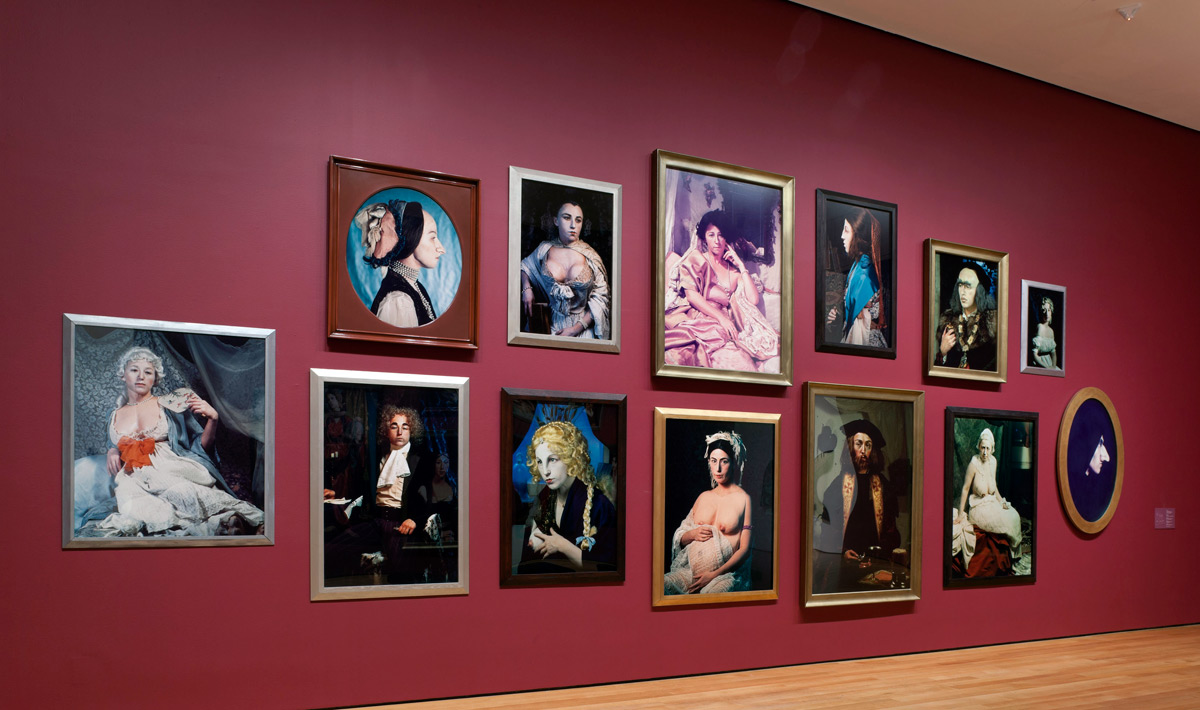


Installation view of the exhibition 'Cindy Sherman' at MoMA, New York showing 'Cindy Sherman history portraits' (1988-1990)


Installation view of the exhibition Cindy Sherman at MoMA, New York showing Cindy Sherman history portraits (1988-1990)
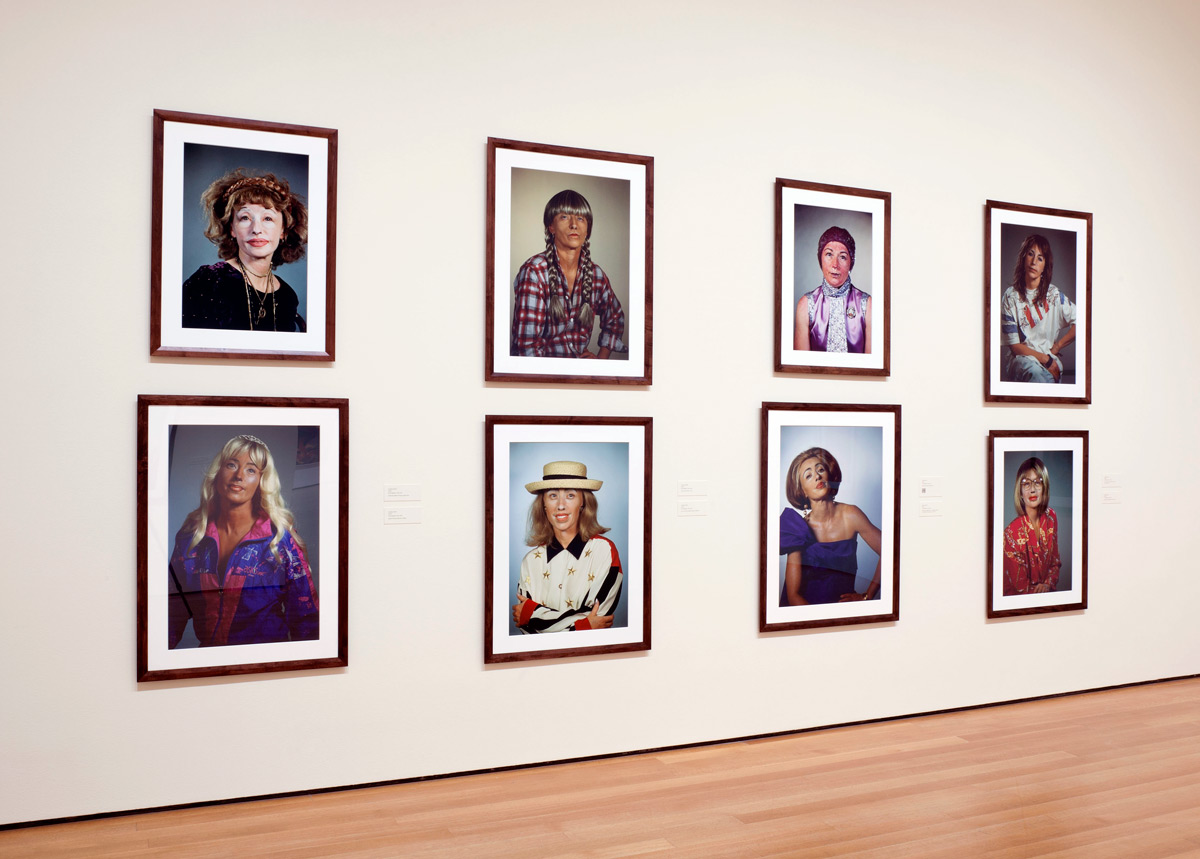
 

Installation view of the exhibition 'Cindy Sherman' at MoMA, New York showing 'Cindy Sherman headshots' (2000-2002)


Installation view of the exhibition Cindy Sherman at MoMA, New York showing Cindy Sherman headshots (2000-2002)


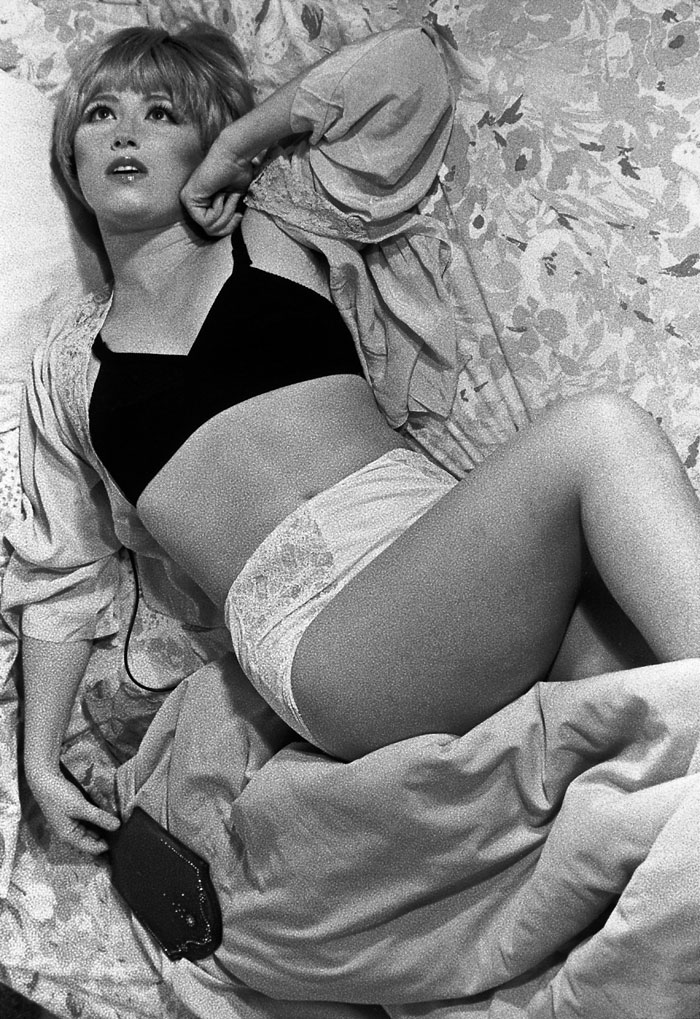
Cindy Sherman (American, b. 1954) 'Untitled Film Still #21' 1978


Cindy Sherman (American, b. 1954)
Untitled Film Still #21 
1978
Gelatin silver print
7 1/2 x 9 1/2″ (19.1 x 24.1cm)
The Museum of Modern Art, New York. Horace W. Goldsmith Fund through Robert B. Menschel
 

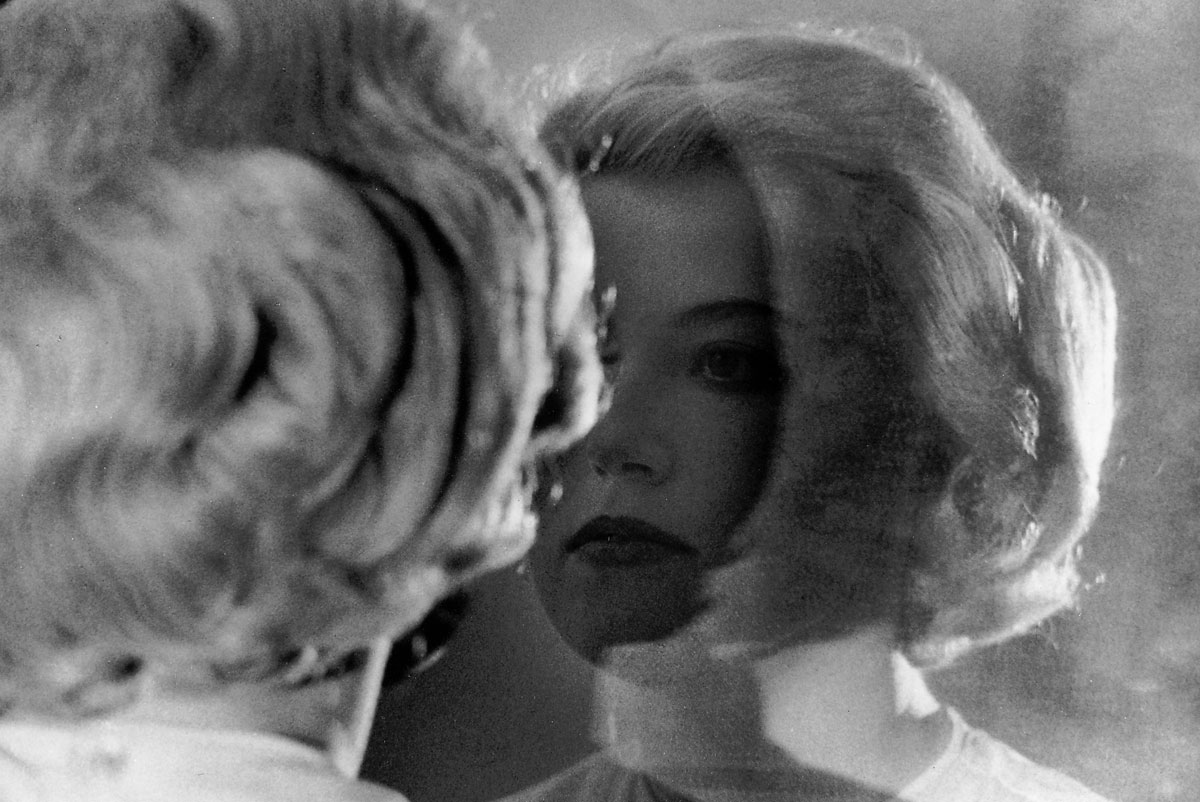
Cindy Sherman (American, b. 1954) 'Untitled Film Still #6' 1977


Cindy Sherman (American, b. 1954)
Untitled Film Still #6 
1977
Gelatin silver print
9 7/16 x 6 1/2″ (24 x 16.5cm)
The Museum of Modern Art, New York
Acquired through the generosity of Jo Carole and Ronald S. Lauder in memory of Eugene M. Schwartz
 

Cindy Sherman (American, b. 1954) 'Untitled Film Still #56' 1980


Cindy Sherman (American, b. 1954)
Untitled Film Still #56 
1980
Gelatin silver print
6 3/8 x 9 7/16″ (16.2 x 24cm)
The Museum of Modern Art, New York
Acquired through the generosity of Jo Carole and Ronald S. Lauder in memory of Mrs. John D. Rockefeller 3rd


Gallery 2

In fall 1977, Sherman began making pictures that would eventually become her groundbreaking Untitled Film Stills. Over three years, the series (presented here in its entirety) grew to comprise a total of seventy black-and-white photographs. Taken as a whole, the Untitled Film Stills – resembling publicity pictures made on movie sets – read like an encyclopaedic roster of stereotypical female roles inspired by 1950s and 1960s Hollywood, film noir, B movies, and European art-house films. But while the characters and scenarios may seem familiar, Sherman’s Stills are entirely fictitious; they represent clichés (career girl, bombshell, girl on the run, vamp, housewife, and so on) that are deeply embedded in the cultural imagination. While the pictures can be appreciated individually, much of their significance comes in the endless variation of identities from one photograph to the next. As a group they explore the complexity of representation in a world saturated with images, and refer to the cultural filter of images (moving and still) through which we see the world.

Wall text from the exhibition
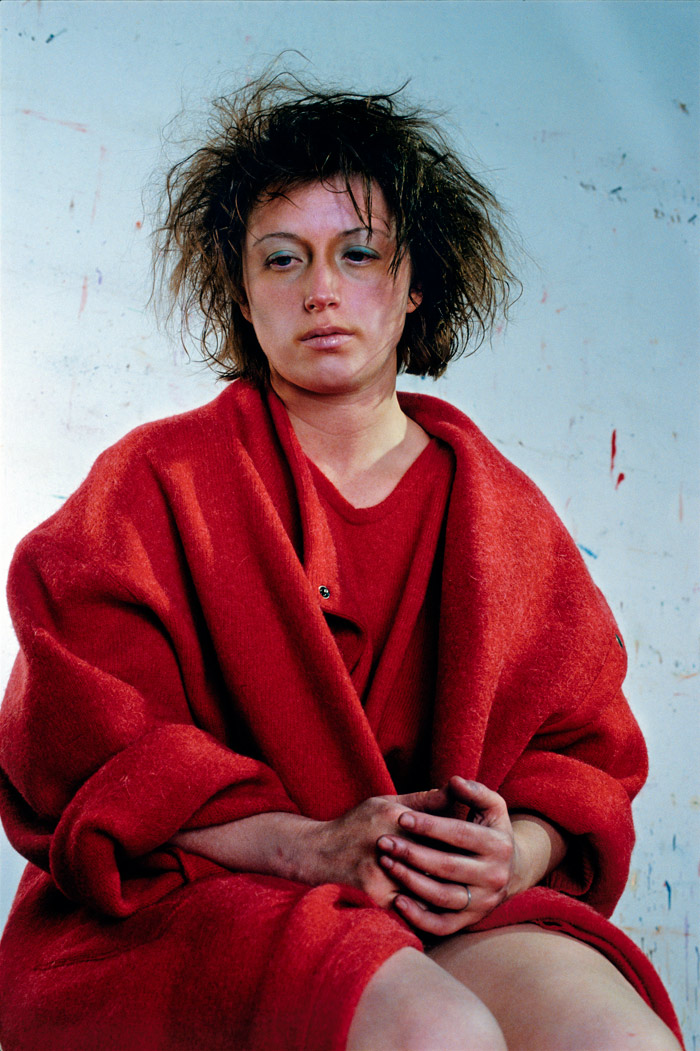
 

Cindy Sherman (American, b. 1954) 'Untitled #137' 1984


Cindy Sherman (American, b. 1954)
Untitled #137 
1984
Chromogenic colour print
70 1/2 x 47 3/4″ (179.1 x 121.3cm)
Philadelphia Museum of Art
Purchased with the Alice Newton Osborn Fund, 1985
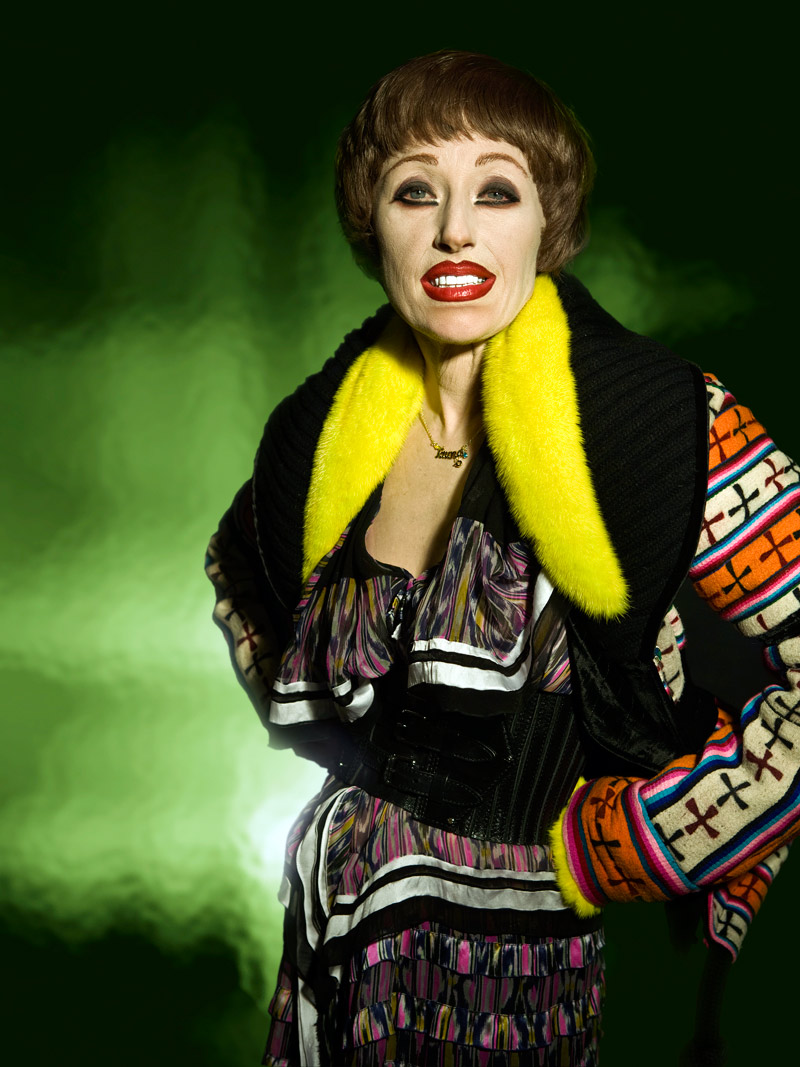
 

Cindy Sherman (American, b. 1954) 'Untitled #458' 2007-2008


Cindy Sherman (American, b. 1954)
Untitled #458 
2007-08
Chromogenic colour print
6′ 5 3/8″ x 58 1/4″ (196.5 x 148cm)
Glenstone


Gallery 3

Fashion – a daily form of masquerade that communicates culture, gender, and class – has been a constant source of inspiration for Sherman and a leading ingredient in the creation of her work. Throughout her career the artist has completed a number of commissions for fashion designers and magazines, and this gallery gathers many of these works. Sherman’s fashion pictures challenge the industry’s conventions of beauty and grace. Her first such commission, made in 1983, parodies typical fashion photography. Rather than projecting glamour, sex, or wealth, the pictures feature characters that are far from desirable – whether goofy, hysterical, angry, or slightly mad. Later commissions resulted in more extreme images of characters with bloodshot eyes, bruises, and scars. These exaggerated figures reached ostentatious heights in a 2007-08 commission, in which fashion victims – including steely fashion editors, PR mavens, assistant buyers, and wannabe fashionistas – wear clothing designed by Balenciaga and ham it up for the camera. Sherman’s interest in the construction of femininity and the mass circulation of images informs much of her work; the projects that take fashion as their subject illustrate the artist’s fascination with fashion images but also her critique of what they represent.

Wall text from the exhibition
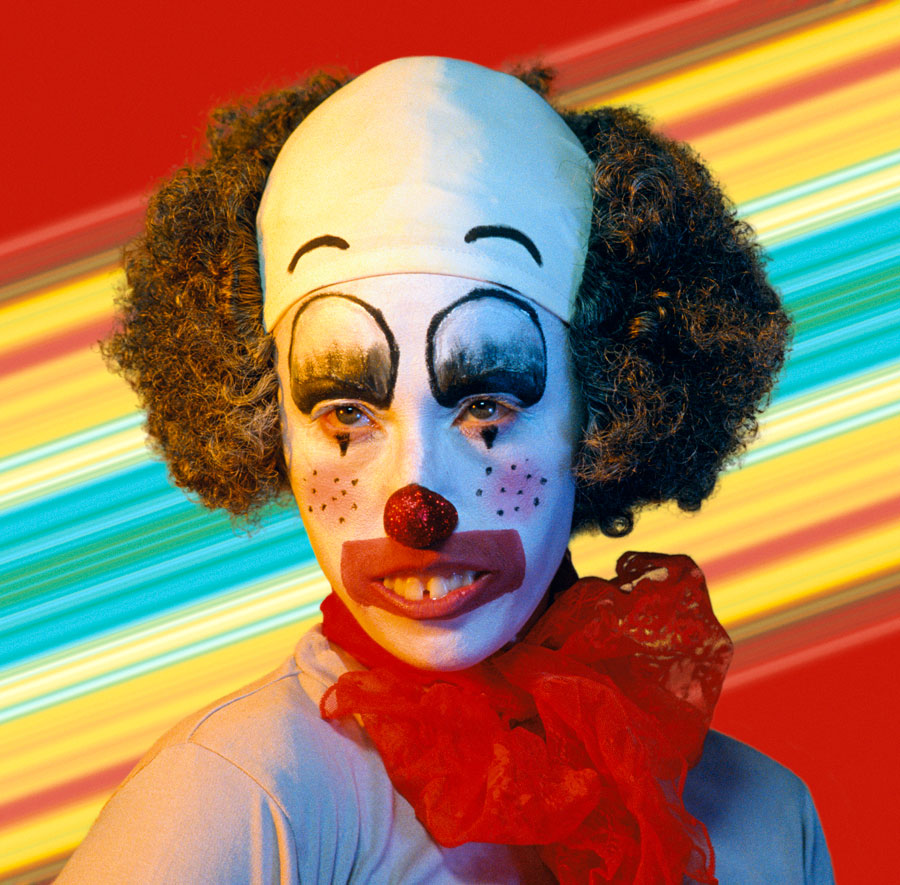
 

Cindy Sherman (American, b. 1954) 'Untitled #424' 2004


Cindy Sherman (American, b. 1954)
Untitled #424 
2004
Chromogenic colour print
53 3/4 x 54 3/4″ (136.5 x 139.1cm)
Holzer Family Collection


Gallery 5

Sherman, who photographs alone in her studio, has used a variety of techniques to suggest different locations and imaginary (sometimes impossible) spaces, extending the narrative possibilities of her images. In her first foray into colour, in 1980, the artist photographed herself in front of rear-screen projections of various cityscapes and landscapes, evoking films from the 1950s and 1960s that used similar techniques to create the illusion of a change in location. In later series, such as the head shots (2000-2002), clowns (2003-04), and society portraits (2008), the artist used digital tools to create a variety of environments. The garish fluorescent colours in a clown picture contribute to the disturbing quality of the portrait, while a fairy tale forest provides a dreamy backdrop for a well-to-do lady.

Wall text from the exhibition


The Museum of Modern Art presents the exhibition Cindy Sherman, a retrospective tracing the groundbreaking artist’s career from the mid-1970s to the present, from February 26 to June 11, 2012. The exhibition brings together 171 key photographs from the artist’s significant series – including the complete Untitled Film Stills (1977-80), the critically acclaimed centerfolds (1981), and the celebrated history portraits (1988-90) – plus examples from all of her most important bodies of work, ranging from her fashion photography of the early 1980s to the breakthrough sex pictures of 1992 to her 2003-04 clowns and monumental society portraits from 2008. In addition, the exhibition features the American premiere of her 2010 photographic mural. An exhibition of films drawn from MoMA’s collection selected by Sherman will also be presented in the Museum’s theatres in April. Cindy Sherman is organised by Eva Respini, Associate Curator, with Lucy Gallun, Curatorial Assistant, Department of Photography, The Museum of Modern Art.

Cindy Sherman is widely considered to be one of the most important and influential artists of our time and her work is the unchallenged cornerstone of post-modern photography. Masquerading as a myriad of characters in front of her own camera, Sherman creates invented personas and tableaus that examine the construction of identity, the nature of representation, and the artifice of photography. Her works speak to an increasingly image-saturated world, drawing on the unlimited supply of visual material provided by movies, television, magazines, the Internet, and art history.

Ms. Respini says, “To create her photographs, Sherman works unassisted in her studio and assumes multiple roles as photographer, model, art director, make-up artist, hairdresser, and stylist. Whether portraying a career girl or a blond bombshell, a fashion victim or a clown, a French aristocrat or a society lady of a certain age, for over 35 years this relentlessly adventurous artist has created an eloquent and provocative body of work that resonates deeply with our visual culture.”

The American premiere of Sherman’s recent photographic mural (2010) will be installed outside the galleries on the sixth floor. The mural represents the artist’s first foray into transforming space through site-specific fictive environments. In the mural Sherman transforms her face via digital means, exaggerating her features through Photoshop by elongating her nose, narrowing her eyes, or creating smaller lips. The characters, who sport an odd mix of costumes and are taken from daily life, are elevated to larger-than-life status and tower over the viewer. Set against a decorative toile backdrop, her characters seem like protagonists from their own carnivalesque worlds, where fantasy and reality merge. The emphasis on new work presents an opportunity for reassessment in light of the latest developments in Sherman’s oeuvre.

Entering the galleries, the exhibition strays from a chronological narrative typical of retrospectives, and groups photographs thematically to create new and surprising juxtapositions and to suggest common threads across several series. A gallery devoted to her work made for the fashion industry brings together commissions from 1983 to 2011. Sherman’s interest in the construction of femininity and mass circulation of images informs much of the work that takes fashion as its subject, illustrating not only a fascination with fashion images but also a critical stance against what they represent. A gallery exploring themes of the grotesque focuses on bodies of work from the mid-1980s through the mid-1990s, including disasters (1986-89) and sex pictures (1992). Sherman’s investigation of macabre narratives followed a trajectory of the physical disintegration of the body, and features prosthetic parts as a stand-in for the human body. A gallery devoted to Sherman’s exploration of myth, carnival, and fairy tales pairs works from her 2003 clowns with her 1985 fairy tales series. These theatrical pictures revel in their own artificiality, with menacing characters and fantastical narratives.

Galleries devoted to single bodies of work are interspersed among the thematic rooms. Sherman’s seminal series the Untitled Film Stills, comprising 70 black-and-white photographs made between 1977 and 1980, are presented in their entirety (the complete series is in MoMA’s collection). Made to look like publicity pictures taken on movie sets, the Untitled Film Stills read like an encyclopaedic roster of female roles inspired by 1950s and 1960s Hollywood, film noir, B movies, and European art-house films. While the characters and scenarios may seem familiar, Sherman’s Stills are entirely fictitious. Her characters represent deeply embedded clichés (career girl, bombshell, girl on the run, housewife, and so on) and rely on the persistence of recognisable manufactured stereotypes that loom large in the cultural imagination.

Other series presented in depth include Sherman’s 1981 series of 12-colour photographs known as the centerfolds. Originally commissioned by Artforum magazine, these send-ups of men’s erotic magazine centerfolds depict characters in a variety of emotional states, ranging from terrified to heartbroken to melancholic. With this series, Sherman plays into the male conditioning of looking at photographs of exposed women, but she turns this on its head by taking on the roles of both (assumed) male photographer and female pinup. The history portraits investigate the relationships between painter and model, and are featured in depth in the exhibition. These theatrical portraits borrow from a number of art historical periods, from Renaissance, Baroque, Rococo, and Neoclassical. This free-association sampling creates an illusion of familiarity, but not with any one specific era or style (just as the Untitled Film Stills evoke generic types, not particular films). The subjects (for the first time, many are men) include aristocrats, Madonna and child, clergymen, women of leisure, and milkmaids, who pose with props, elaborate costumes, and obvious prostheses.

Sherman has explored the experience of ageing in a youth- and status-obsessed society with several bodies of work made since 2000. For her headshots from 2000-2002 (sometimes called Hollywood / Hamptons), the artist conceived a cast of characters of would-be or has-been actors (in reality secretaries, housewives, or gardeners) posing for head shots to get an acting job. With this series, Sherman underscores the transformative qualities of makeup, hair, expression, and pose, and the recognition of certain stereotypes as powerful transmitters of cultural clichés. Her monumental 2008 society portraits feature women “of a certain age” from the top echelons of society who struggle with today’s impossible standards of beauty. The psychological weight of these pictures comes through in the unrelenting honesty of the description of ageing and the small details that belie the attempt to project a certain appearance. In the infinite possibilities of the mutability of identity, these pictures stand out for their ability to be at once provocative, disparaging, empathetic, and mysterious.

Press release from the MoMA website


Cindy Sherman (American, b. 1954) 'Untitled #193' 1989


Cindy Sherman (American, b. 1954)
Untitled #193 
1989
Chromogenic colour print
48 7/8 x 41 15/16″ (124.1 x 106.5cm)
The Doris and Donald Fisher Collection
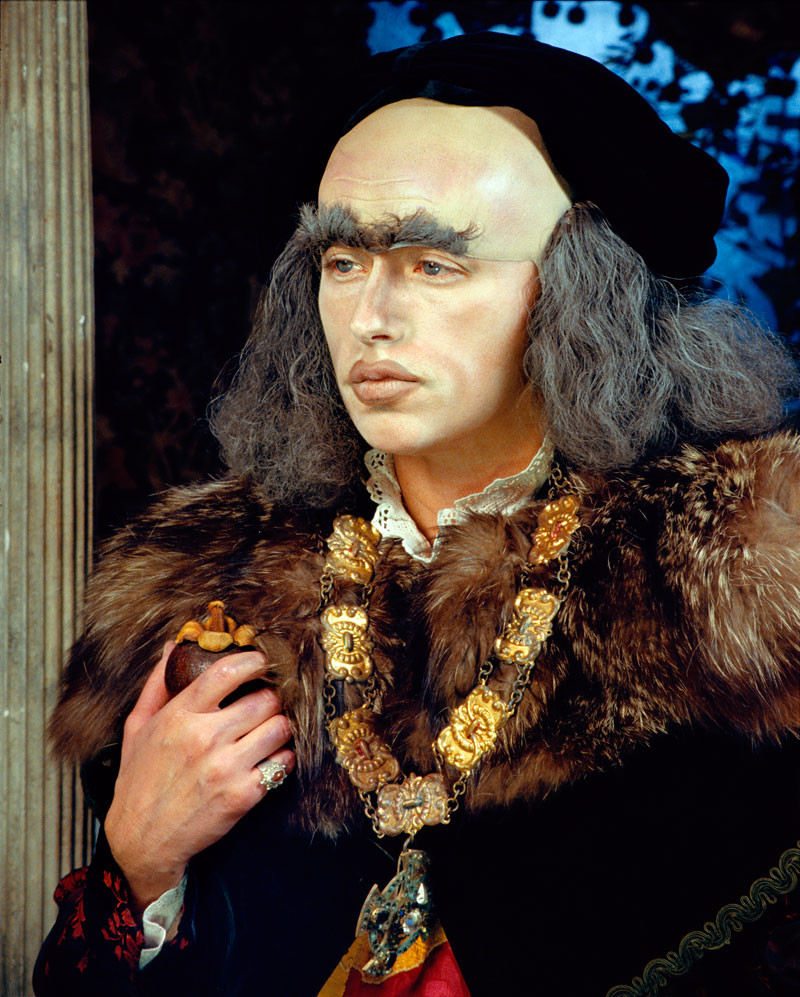
 

Cindy Sherman (American, b. 1954) 'Untitled #213' 1989


Cindy Sherman (American, b. 1954)
Untitled #213 
1989
Chromogenic colour print
41 1/2 x 33″ (105.4 x 83.8cm)
Courtesy the artist and Metro Pictures, New York
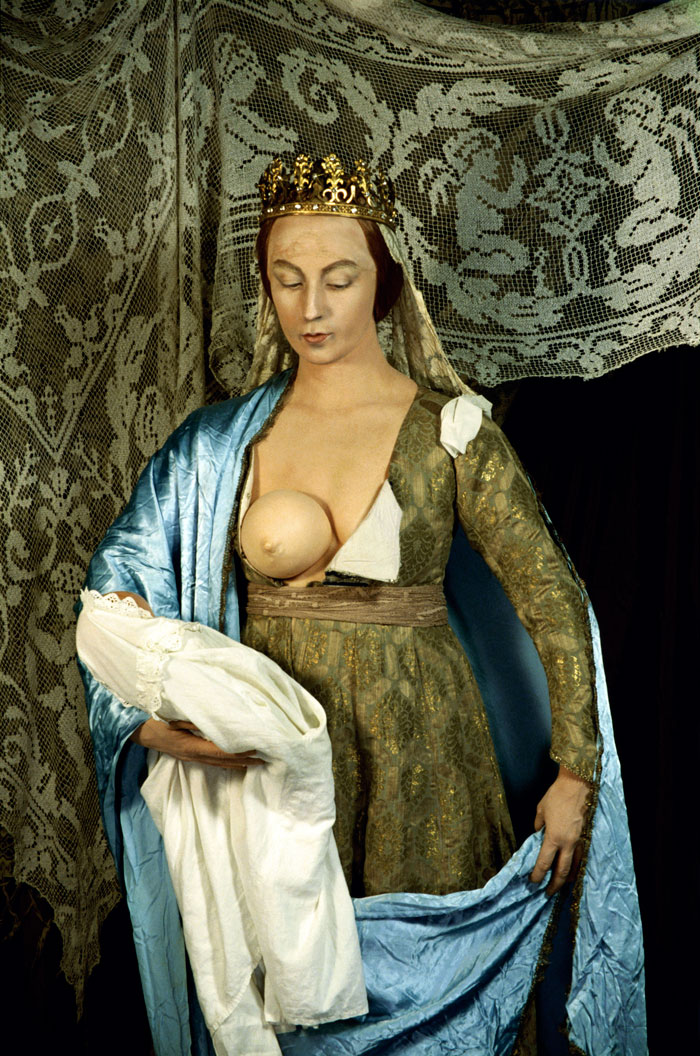
 

Cindy Sherman (American, b. 1954) 'Untitled #216' 1989


Cindy Sherman (American, b. 1954)
Untitled #216 
1989
Chromogenic colour print
7′ 3 1/8″ x 56 1/8″ (221.3 x 142.5cm)
The Museum of Modern Art, New York. Gift of Werner and Elaine Dannheisser


Gallery 7

Sherman’s history portraits (1988-90) investigate modes of representation in art history and the relationship between painter and model. These classically composed portraits borrow from a number of art-historical periods – Renaissance, baroque, rococo, Neoclassical – and make allusions to paintings by Raphael, Caravaggio, Fragonard, and Ingres (who, like all the Old Masters, were men). This free-association sampling creates a sense of familiarity, but not of any one specific era or style. The subjects (for the first time for Sherman, many are men) include aristocrats, Madonnas with child, clergymen, women of leisure, and milk-maids, who pose with props, costumes, and obvious prostheses. Theatrical and artificial – full of large noses, bulging bellies, squirting breasts, warts, and unibrows – the history portraits are poised between humorous parody and grotesque caricature.

A handful of Sherman’s portraits were inspired by actual paintings. Untitled #224 was made after Caravaggio’s Sick Bacchus (c. 1593), which is commonly believed to be a self-portrait of the artist as the Roman god of wine. In Sherman’s reinterpretation, the numerous layers of representation – a female artist impersonating a male artist impersonating a pagan divinity – create a sense of remove, pastiche, and criticality. Even where Sherman’s pictures offer a gleam of art-historical recognition, she has inserted her own interpretation of the canonised paintings, creating contemporary artefacts of a bygone era.

Wall text from the exhibition


Cindy Sherman (American, b. 1954) 'Untitled #359' 2000


Cindy Sherman (American, b. 1954)
Untitled #359 
2000
Chromogenic color print
30 x 20″ (76.2 x 50.8cm)
Collection Metro Pictures, New York


Gallery 8

After almost a decade of staging still lifes with dolls and props, in her 2000-2002 head-shots series Sherman returned to a more intimate scale and to using herself as a model. The format recalls ID pictures, head shots, or vanity portraits made in garden-variety portrait studios by professional photographers. First exhibited in Beverly Hills, the series explores the cycle of desire and failed ambition that permeates Hollywood. Sherman conceived a cast of would-be or has-been female actors posing for head shots in order to get acting jobs; later, for an exhibition in New York, she added East Coast types. Whichever part of the country they’re from, we’ve seen these women before – on reality television, in soap operas, or at a PTA meeting. With these pictures, Sherman underscores the transformative qualities of makeup, hair, expression, and pose, and the power of stereotypes as transmitters of cultural clichés. She projects well-drawn personas: the enormous pouting lips of the woman in Untitled #360 suggest a yearning for youth, while the glittery makeup and purple iridescent dress worn by the character in Untitled #400 indicate an aspiration to reach a certain social status. In her role as both sitter and photographer, Sherman has disrupted the usual power dynamic between model and photographer and created new avenues through which to explore the very apparatus of portrait photography itself.
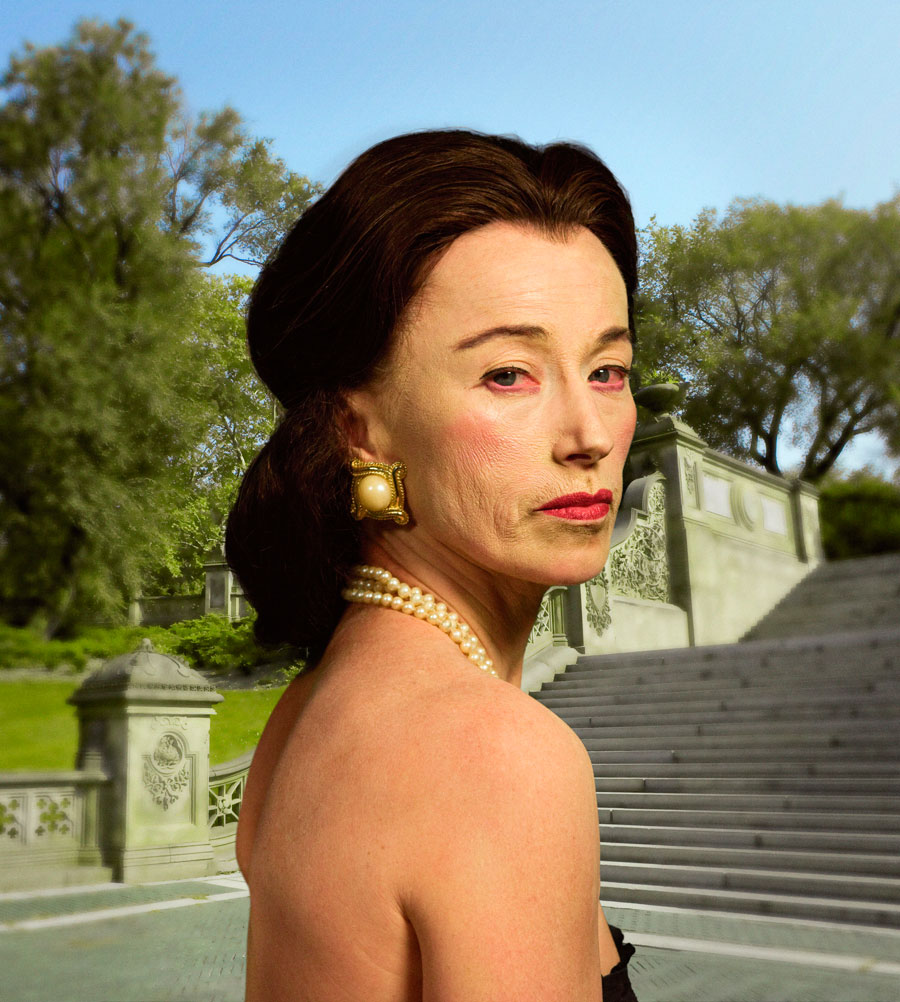
 

Cindy Sherman (American, b. 1954) 'Untitled #465' 2008


Cindy Sherman (American, b. 1954)
Untitled #465 
2008
Chromogenic colour print
63 3/4 x 57 1/4″ (161.9 x 145.4cm)
Whitney Museum of American Art, New York
Purchase, with funds from the Painting and Sculpture Committee and the Photography Committee, 2009
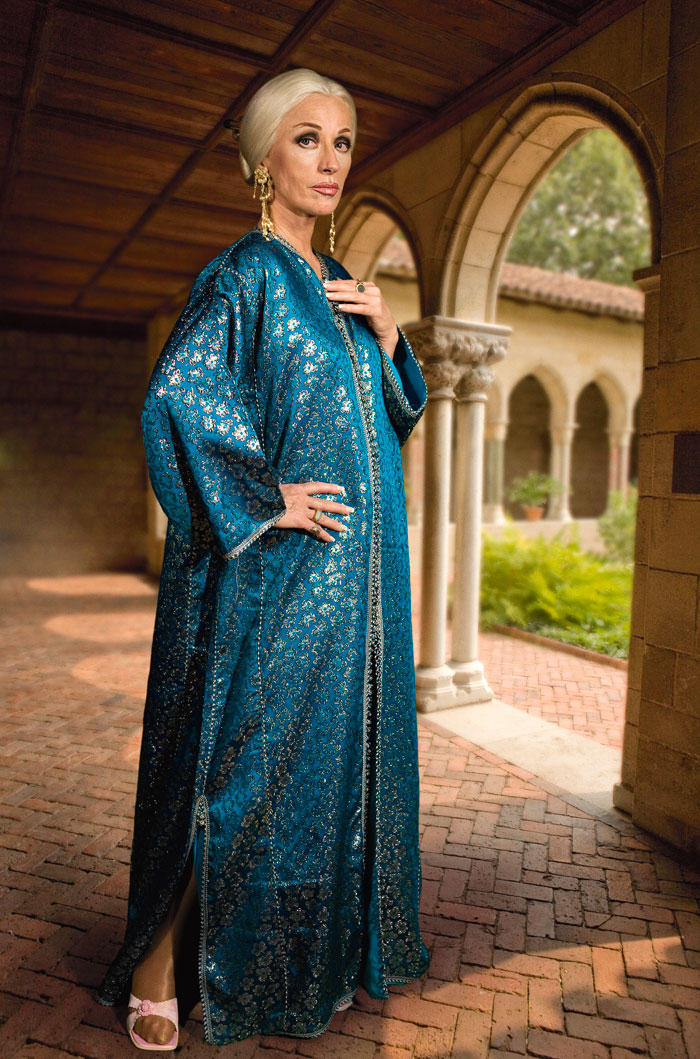
 

Cindy Sherman (American, b. 1954) 'Untitled #466' 2008


Cindy Sherman (American, b. 1954)
Untitled #466
2008
Chromogenic colour print
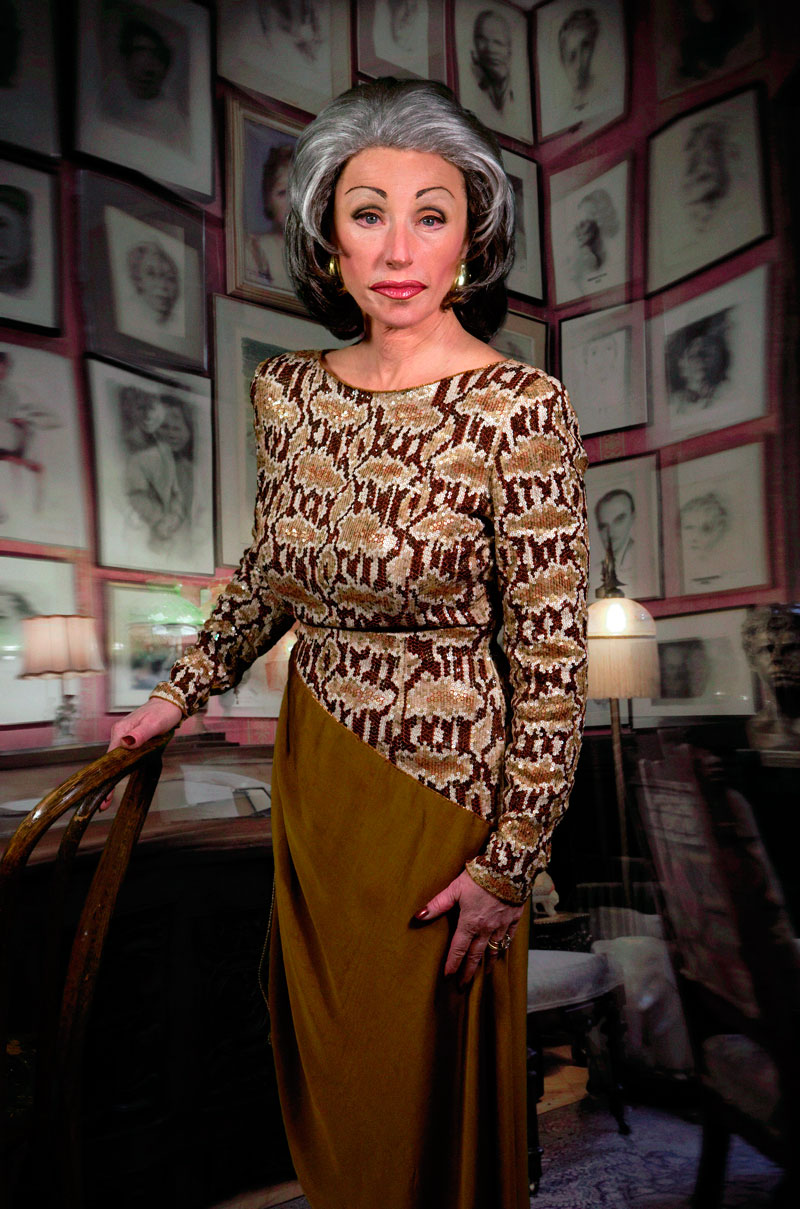
 

Cindy Sherman (American, b. 1954) 'Untitled #474' 2008


Cindy Sherman (American, b. 1954)
Untitled #474 
2008
Chromogenic colour print
7′ 7″ x 60 1/4″ (231.1 x 153cm)
The Museum of Modern Art, New York
Acquired through the generosity of an anonymous donor, Michael Lynne, Charles Heilbronn, and the Carol and David Appel Family Fund


Gallery 10

Set against opulent backdrops and presented in ornate frames, the characters in Sherman’s 2008 society portraits seem at once tragic and vulgar. The figures are not based on specific women, but the artist has made them look entirely familiar in their struggle with the impossible standards of beauty that prevail in a youth – and status – obsessed culture. At this large scale, it is easy to decipher the characters’ vulnerability behind the makeup, clothes, and jewellery. The psychological weight of these pictures comes through the unrelenting honesty of their description of ageing, the tell-tale signs of cosmetic alteration, and the small details that belie the characters’ attempts to project a polished and elegant appearance. Upon careful viewing, they reveal a dark reality lurking beneath the glossy surface of perfection. As with much of her work, in her society portraits Sherman has demonstrated a remarkable capacity to channel the zeitgeist. These well-heeled divas presaged the financial collapse of 2008, the end of an era of opulence – the size of the photographs alone seems a commentary on an age of excess. Among the numerous iterations of contemporary identity, these pictures stand out as at once provocative, disparaging, empathetic, and mysterious.

Wall text from the exhibition


Cindy Sherman (American, b. 1954) 'Untitled #475' 2008


Cindy Sherman (American, b. 1954)
Untitled #475 
2008
Chromogenic colour print
7′ 2 3/8″ x 71 1/2″ (219.4 x 181.6cm)
The Broad Art Foundation, Santa Monica


Gallery 11

Because the majority of Sherman’s pictures feature the artist as model, they showcase a single character. In the 1970s Sherman experimented with cutouts of multiple figures, in her whimsical 1975 stop-motion animated short film Doll Clothes and her rarely seen 1976 collages, which were achieved through a labor-intensive process of cutting and pasting multiple photographs. When Sherman began working digitally in the early 2000s, she was able to more easily incorporate multiple figures in one frame, allowing for a variety of new narrative possibilities. Where the early works chart the movements and gestures of a single character through space, the multiple figures in recent works interact with one another to create tableaus.

Wall text from the exhibition


The Museum of Modern Art
11 West 53 Street
New York, NY 10019
Phone: (212) 708-9400

Opening hours:
10.30am – 5.30pm
Open seven days a week

MoMA website

LIKE ART BLART ON FACEBOOK

Back to top

Exhibition: ‘The Mind’s Eye: 50 Years of Photography by Jerry Uelsmann’ at Peabody Essex Museum, Salem, MA

Exhibition dates: 11th February – 15th July, 2012


Jerry Uelsmann (American, 1934-2022) 'Untitled (Pigeon Hill, Bloomington, Indiana)' 1958–59


Jerry Uelsmann (American, 1934-2022)
Untitled (Pigeon Hill, Bloomington, Indiana)
1958-1959
Gelatin silver print
5 3/8 x 9 1/8 in (13.6 x 23.3cm)
© Jerry Uelsmann


More wonderful photographs from this magnificent photographer as featured in this touring exhibition. It is invaluable to see other images from the artist’s oeuvre (especially early work from the 1950s to observe thematic development), not just the most famous of the surreal montages. Untitled (1966, below) is an absolute ripper that I have never seen before while Untitled (1959, bottom) is as disturbing in a fantastical way as any of Joel-Peter Witkins’ theatrical tableaux vivant.

See my other posting on this exhibition from the Harn Museum of Art, Florida.

Marcus


Many thankx to the Peabody Essex Museum for allowing me to publish the photographs in the posting. Please click on the photographs for a larger version of the image.


Jerry Uelsmann (American, 1934-2022) 'Room #1' 1963


Jerry Uelsmann (American, 1934-2022)
Room #1
1963
Gelatin silver print
9 1/8 x 13 3/4 in (23.3 x 34.8cm)
© Jerry Uelsmann


Jerry Uelsmann (American, 1934-2022) 'Untitled' 1966


Jerry Uelsmann (American, 1934-2022)
Untitled
1966
Gelatin silver print
6 1/2 x 6 5/8 in (16.6 x 16.8cm)
© Jerry Uelsmann


Jerry Uelsmann (American, 1934-2022) 'Untitled' 1962


Jerry Uelsmann (American, 1934-2022)
Untitled
1962
Gelatin silver print
8 1/2 in x 7 3/4 in (21.5 x 19.6cm)
© Jerry Uelsmann


Jerry Uelsmann (American, 1934-2022) 'Bless Our Home and Eagle' 1962


Jerry Uelsmann (American, 1934-2022)
Bless Our Home and Eagle
1962
Gelatin silver print
13 3/8 x 10 1/2 in (33.8 x 26.5cm)
© Jerry Uelsmann


Beautiful and surreal, funny and provocative, the photographs of Jerry Uelsmann are icons of American photo history. The Peabody Essex Museum (PEM) presents the first retrospective of Uelsmann’s work in over 30 years. The Mind’s Eye: 50 Years of Photography by Jerry Uelsmann features 90 works spanning the artist’s celebrated and wide-ranging career, with well-known works shown alongside never-before-seen recent images.

As a pioneer of contemporary photography and master of experimental darkroom technique, Uelsmann has continuously pushed the creative and technical boundaries of photography, revealing new visual possibilities and critical considerations for the medium. In the late 1950s, Uelsmann began experimenting with multiple enlargers and advanced masking, diffusing, burning and dodging techniques, to create imaginary images in the darkroom decades before the advent of Photoshop. Uelsmann’s ingenious work references Surrealists like Rene Magritte, Max Ernst, and Man Ray, as well as Modern photographers such as Edward Weston and Ansel Adams. He has spent his career advocating for the acceptance of experimental photography as an art form.

“For more than half a century, Uelsmann has challenged conventional ideas about what photography can and should do,” said Phillip Prodger, exhibition curator and PEM’s curator of photography. “Uelsmann’s pictures provide a valuable touchstone for understanding new trends in photographic art. His ideas and example have become ever more relevant as photography embraces Photoshop and other computer technologies for altering and manipulating photographs.”

The Mind’s Eye presents works drawn from the artist’s personal archive of vintage materials and, in addition to photographic prints, includes a selection of three-dimensional photographic sculptures, films, artist’s books, albums and work prints to give viewers first-hand insight into Uelsmann’s creative process and expressive range. Through experimental techniques, Uelsmann has explored universal themes of relationships, family, home and politics by creating unexpected and surprising juxtapositions.

“My visual quest is driven by a desire to create a universe capable of supporting feelings and ideas,” said Jerry Uelsmann. “I am drawn to art that challenges one’s sense of reality.”

Born in Detroit in 1934, Uelsmann received a Bachelor of Fine Arts from the Rochester Institute of Technology in 1957 and Master of Science and Master of Fine Arts degrees from Indiana University in 1960. He is recently retired from the faculty of the University of Florida, which he joined in 1960. Uelsmann received a National Endowment for the Arts Fellowship and a Guggenheim Fellowship. In 1967 he had his first solo exhibition at the Museum of Modern Art, New York.

Press release from the PEM website


Jerry Uelsmann (American, 1934-2022) 'Magritte's Touchstone (first version)' 1965


Jerry Uelsmann (American, 1934-2022)
Magritte’s Touchstone (first version)
1965
Gelatin silver print
© Jerry Uelsmann


Jerry Uelsmann (American, 1934-2022) 'Untitled' 1977


Jerry Uelsmann (American, 1934-2022)
Untitled
1977
Gelatin silver print
13 1/8 x 10 5/8 in (33.5 x 27.1cm)
© Jerry Uelsmann


Jerry Uelsmann (American, 1934-2022) 'Untitled' 1996


Jerry Uelsmann (American, 1934-2022)
Untitled
1996
Gelatin silver print
19 5/8 x 14 3/4 in (49.8 x 37.4cm)
© Jerry Uelsmann


Jerry Uelsmann (American, 1934-2022) 'Untitled' 1976


Jerry Uelsmann (American, 1934-2022)
Untitled
1976
Gelatin silver print
19 1/2 x 14 1/2 in (49.5 x 36.9cm)
© Jerry Uelsmann


Jerry Uelsmann (American, 1934-2022) 'Bloomington, Indiana' 1958


Jerry Uelsmann (American, 1934-2022)
Bloomington, Indiana
1958
Gelatin silver print
7 7/8 x 7 1/4 in (19.9 x 18.3cm)
© Jerry Uelsmann


Jerry Uelsmann (American, 1934-2022) 'Untitled' 1959


Jerry Uelsmann (American, 1934-2022)
Untitled
1959
Gelatin silver print
13 1/2 x 5 5/8 in (34.2 x 14.3cm)
© Jerry Uelsmann


Peabody Essex Museum
East India Square
161 Essex Street
Salem, MA 01970-3783 USA
Phone: 978-745-9500, 866-745-1876

Opening hours:
Open Tuesday – Sunday 10am – 5pm
Closed Mondays

Peabody Essex Museum website

LIKE ART BLART ON FACEBOOK

Back to top

Exhibition: ‘Stanley Greene – Black Passport’ at Foam, Amsterdam

Exhibition dates: 16th December 2011 – 5th February 2012


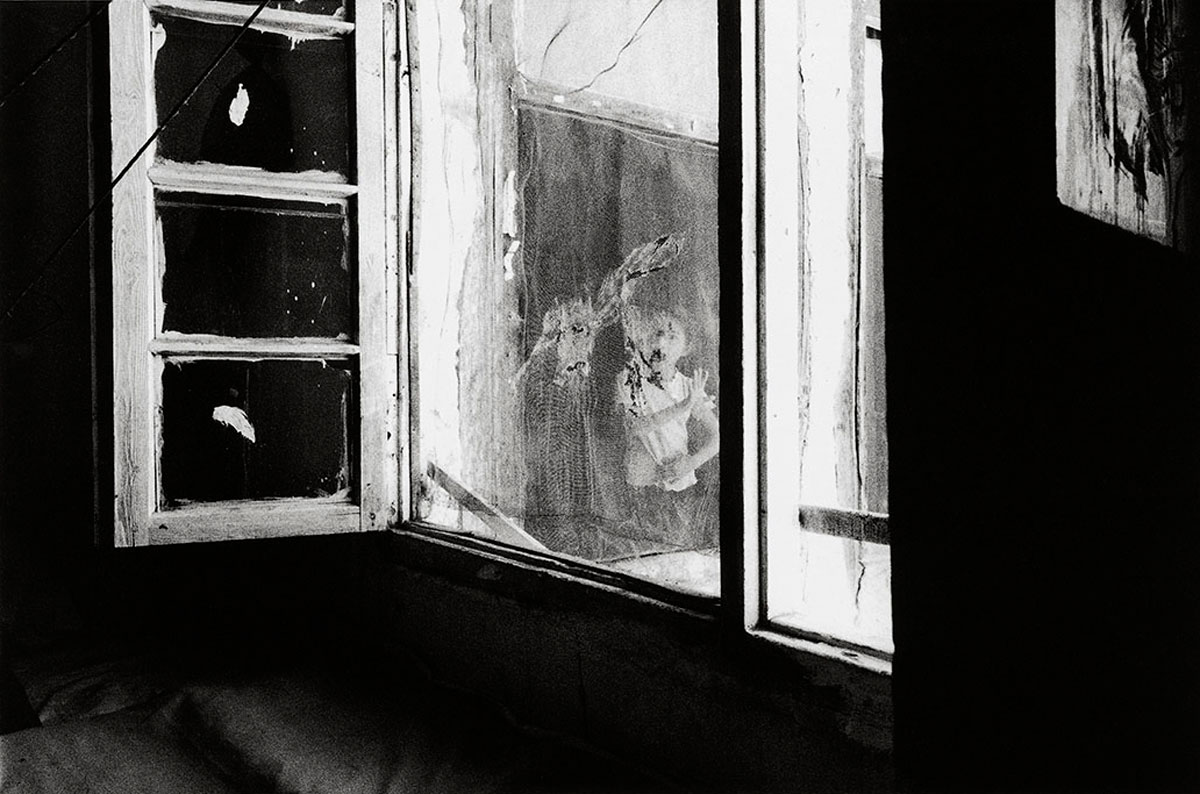
Many thankx to FOAM for allowing me to publish the photographs in the posting. Please click on the photographs for a larger version of the image. All photographs: Black Passport © Stanley Greene / NOOR


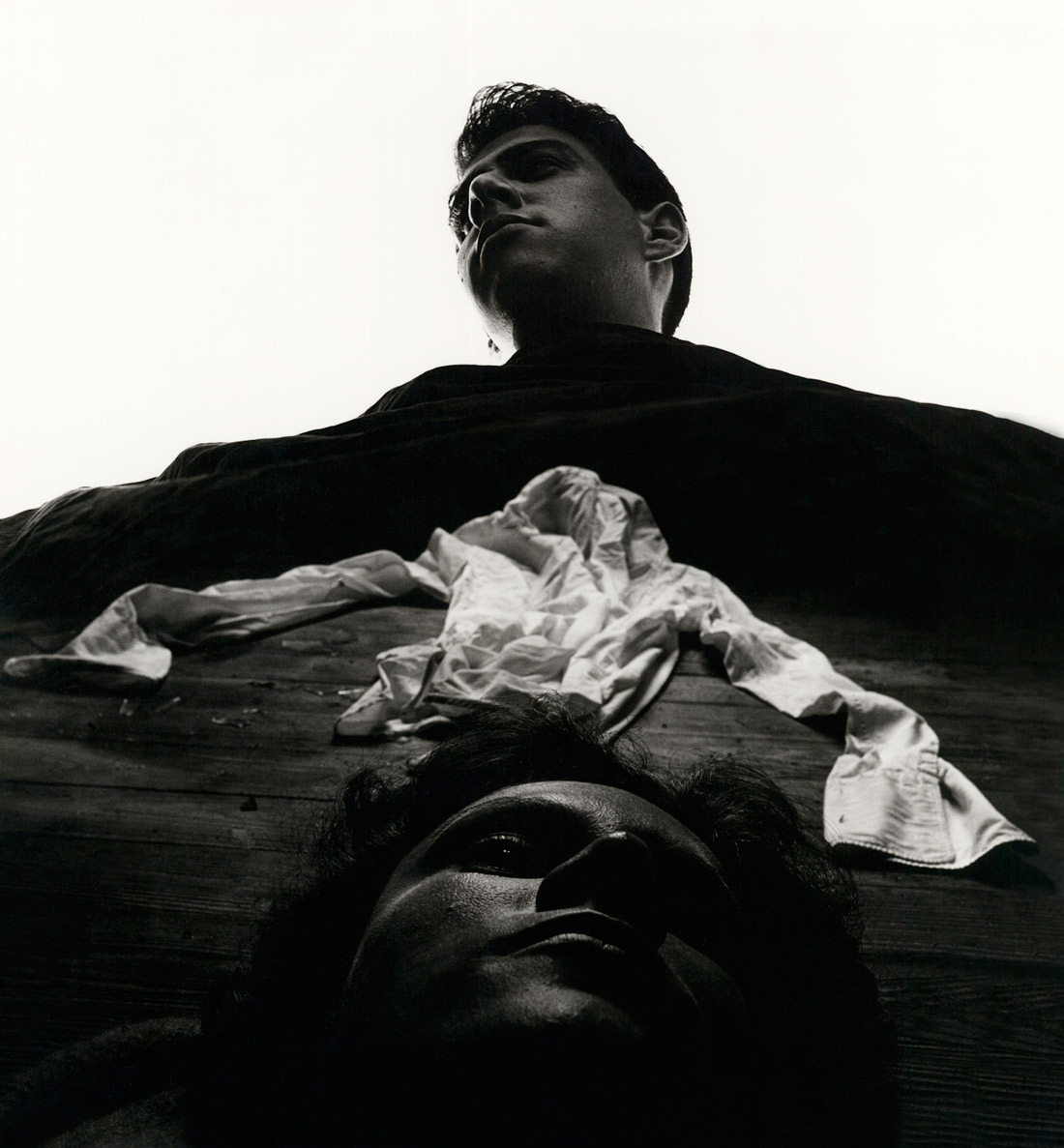
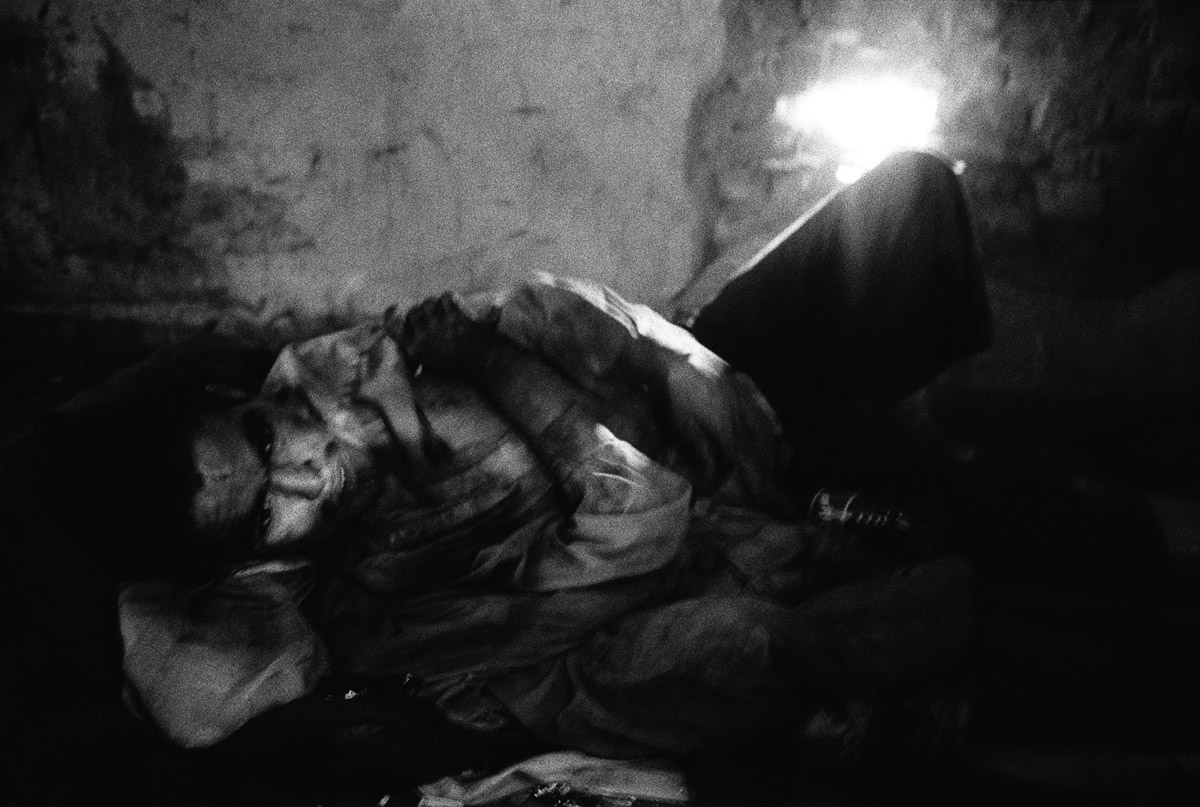
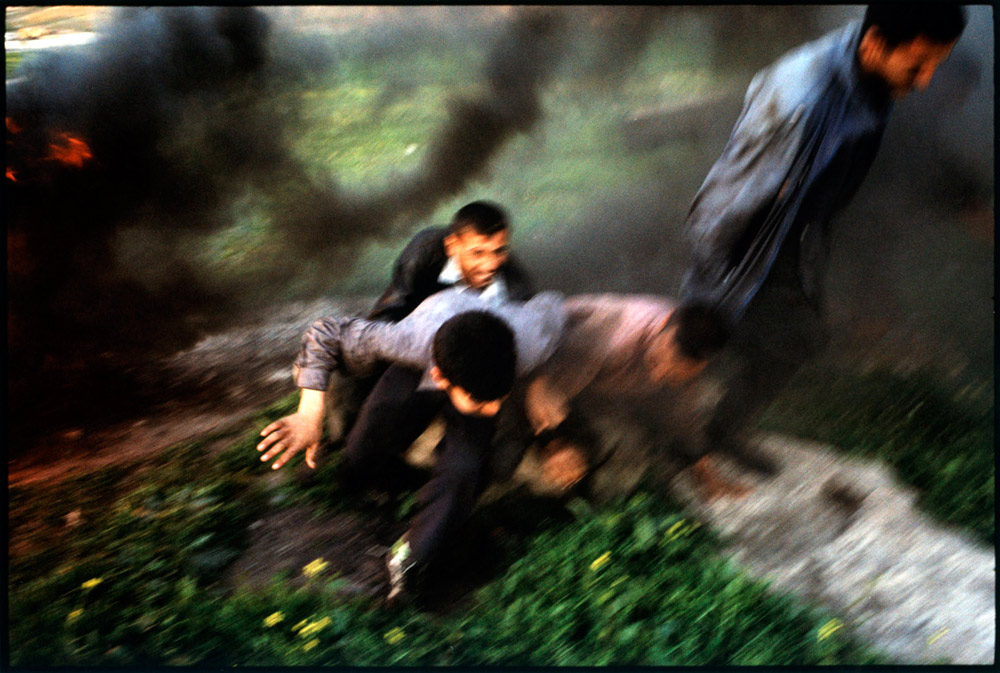
Stanley Greene (American, 1949-2017) 'Madman, Afghanistan' 2008


Stanley Greene (American, 1949-2017)
Madman, Afghanistan
2008
Black Passport © Stanley Greene / NOOR


Black Passport © Stanley Greene / NOOR

Black Passport © Stanley Greene / NOOR


Foam presents Black Passport, a project by and about the American conflict photographer Stanley Greene (New York, 1949-2017). Black Passport shows photos of conflicts and disasters combined with photos of Greene’s  private life. The result is a revealing portrait of a photographer who is addicted to the adrenaline rush of being on the move, but at the same time realises the sacrifices he makes in his personal life. Stanley Greene has photographed in regions such as Chechnya, Iraq, Rwanda and Sudan and is one of the founders of the international photo agency NOOR.

Every day, newspapers and magazines are filled with photos of war, oppression and violence. The photographer that enables us to watch what is happening in the rest of the world from the safety of our own homes, however, usually remains invisible. This is not the case in Black Passport, the biography of war photographer Stanley Greene, which appeared in book form in 2009 and will be exhibited in Foam starting on 16 December. Photos of conflict and disaster regions such as Rwanda, Sudan, Chechnya and Iraq are alternated with photos from the private life of Stanley Greene: photos of Paris and many women. Slide shows will also be presented, interspersed with texts from the book. Greene’s voice resounds through the exhibition space – he is disconcertingly frank: ‘I think you can only keep positive for eight years. If you stay at it longer than that, you turn. And not into a beautiful butterfly.’

Just as Stanley Greene, visitors to the exhibition are poised between the safety of Western life and the horrors of foreign wars. And it is precisely this juxtaposition that causes these photos to stir us more than the stream of bad-news images that inundate us daily. In addition, Black Passport is a fascinating story about what it is like to be a war photographer. Why does someone choose to be continually confronted with death and misery? Is it an escape from everyday reality and a craving for adventure?

Short Biography

Stanley Greene has photographed in the former Soviet Union, Central America, Asia and the Middle East. His work has appeared in publications including Newsweek, The New York Times Magazine, Stern and Paris Match. He has won various World Press Awards and in 2004 the W. Eugene Smith Award. Open Wound: Chechnya 1994-2003 was published in 2004 and his book Black Passport in 2009. Greene is one of the founders of the Amsterdam-based international photo agency NOOR.

Press release from the Foam website


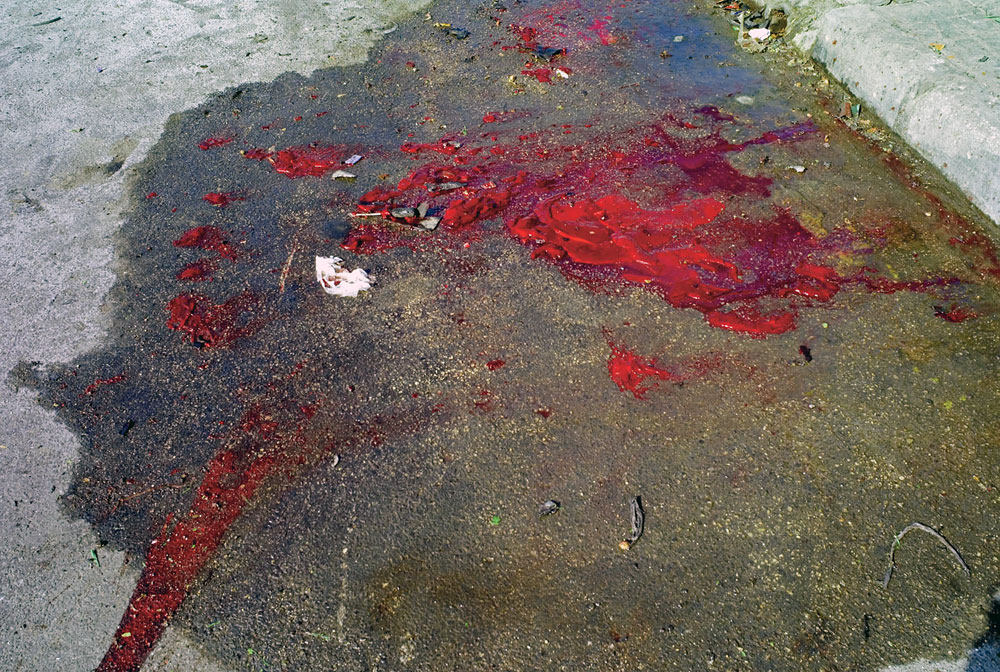
Black Passport © Stanley Greene / NOOR


Stanley Greene (American, 1949-2017)
Iraq, 2004, Road side explosion, Northern Iraq
2004
Black Passport © Stanley Greene / NOOR


“I think you can only do this for eight years. For eight years you can still keep the positive. If you stay at it longer than eight years, you turn. And not into a beautiful butterfly. You really turn. I see it in myself, I see it in all my friends and colleagues. I mean they are all victims of post trauma. We’re not the beautiful butterflies anymore. We become moths. We’re like moths flying to the flame.You know, sometimes your wings get singed or you just burn up. Get killed. Or you burn up inside.The drugs and the alcohol and the party and all of this is to push it away, push it away.”

“I’m an observer, I’m not an objective observer though, but I’m an observer. I feel it’s very important for journalists to go to these hell holes and photograph or write or do radio or whatever because I still believe that the public wants to know.”


Stanley Greene


Stanley Greene (February 14, 1949 – May 19, 2017) was an American photojournalist.

Greene was born to middle class parents in Brooklyn. Both his parents were actors. His father, who was born in Harlem, was a union organiser, one of the first African Americans elected as an officer in the Screen Actors Guild,and belonged to the Harlem Renaissance movement. Greene’s father was blacklisted as a Communist in the 1950s and forced to take uncredited parts in movies. Greene’s parents gave him his first camera when he was eleven years old.

Greene began his art career as a painter, but started taking photos as a means of cataloging material for his paintings. In 1971, when Greene was a member of the anti-Vietnam War movement and the Black Panther Party, his friend photographer W. Eugene Smith offered him space in his studio and encouraged him to study photography at the School of Visual Arts in New York and the San Francisco Art Institute.

Greene held various jobs as a photographer, including taking pictures of rock bands and working at Newsday. In 1986, he shot fashion photographs in Paris. He called himself a “dilettante, sitting in cafes, taking pictures of girls and doing heroin”. After a friend died of AIDS, Greene kicked his drug habit and began to seriously pursue a photography career.

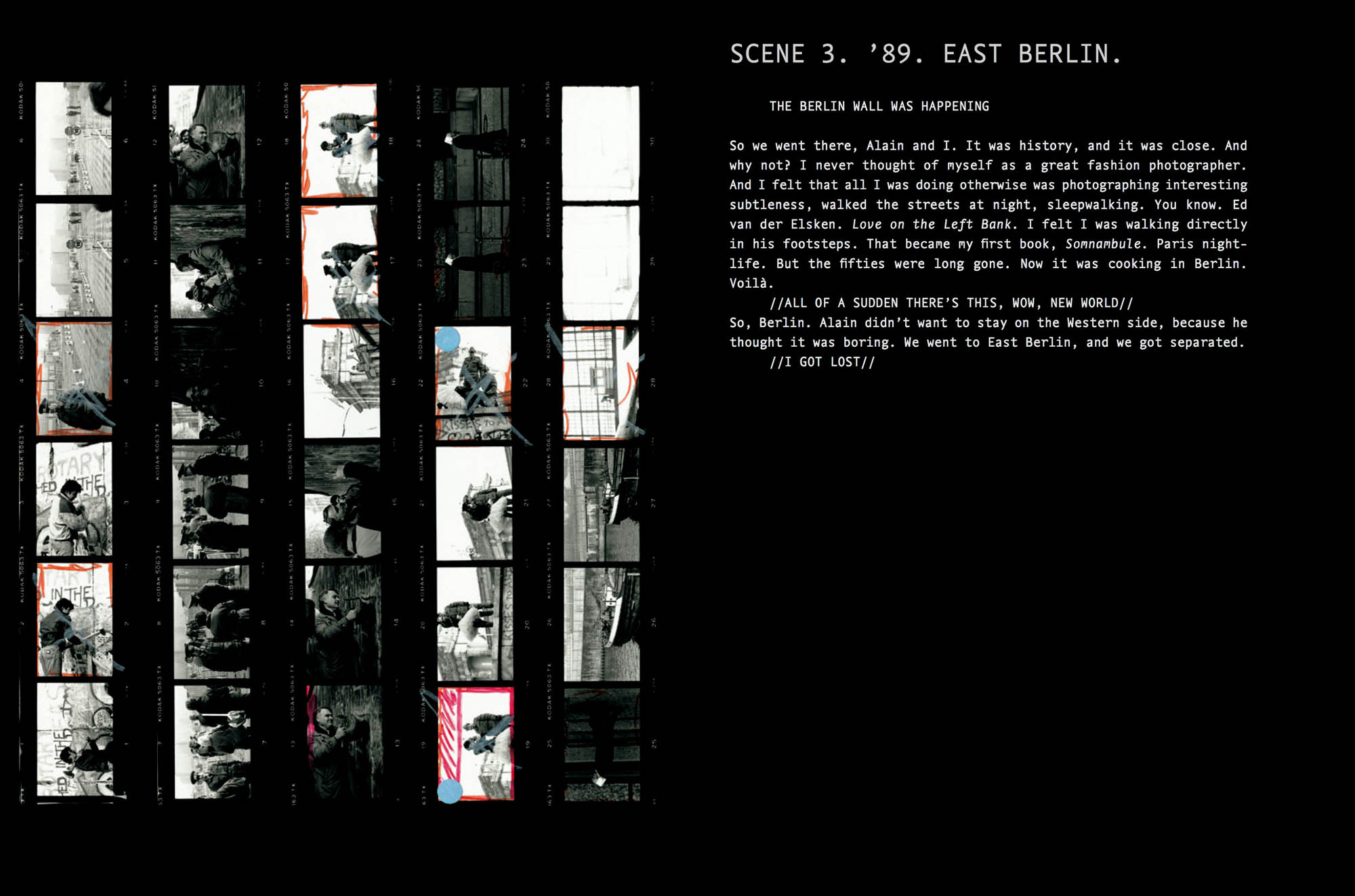
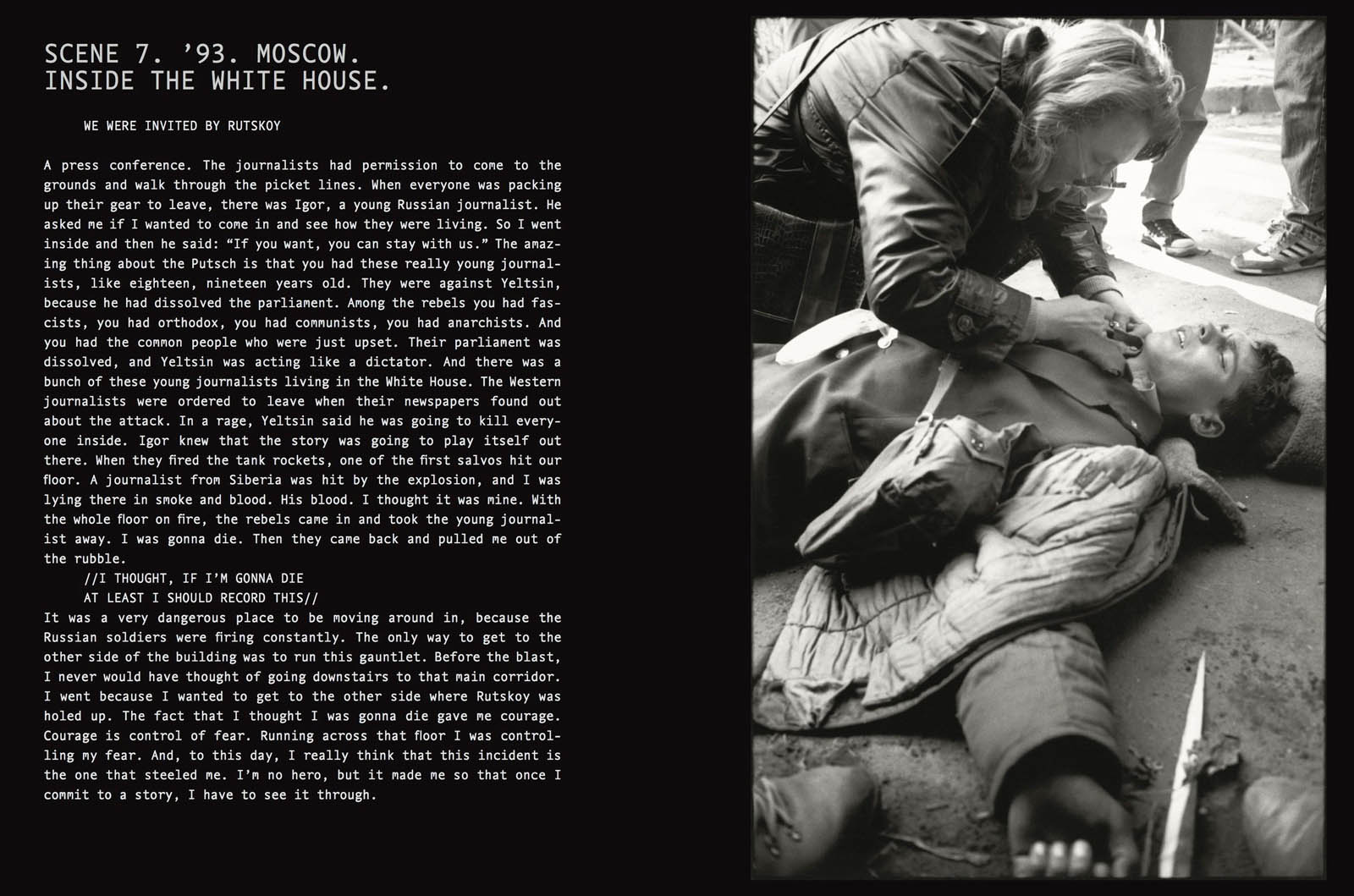
He began photojournalism in 1989, when his image (“Kisses to All, Berlin Wall”) of a tutu-clad girl with a champagne bottle became a symbol of the fall of the Berlin Wall. While working for the Paris-based photo agency Agence Vu in October 1993, Greene was trapped and almost killed in the White House in Moscow during a stand-off between President Boris Yeltsin and the parliament. He covered the war-torn countries Azerbaijan, Bosnia and Herzegovina, Georgia, Iraq, Somalia, Croatia, Kashmir, and Lebanon. He took pictures of the genocide in Rwanda in 1994 and the US Gulf Coast in the aftermath of Hurricane Katrina in 2005.

After 1994, Greene was best known for his documentation of the conflict in Chechnya, between rebels and the Russian Armed Forces, which was compiled in his 2004 book, Open Wound. These photos drew attention to the “suffering that has marked the latest surge in Chechnya’s centuries-long struggle for independence from Russia”.

In 2008, Greene revealed that he had hepatitis C, which he believed he had contracted from a contaminated razor while working in Chad in 2007. After controlling the disease with medication, he traveled to Afghanistan and photographed a story about “the crisis of drug abuse and infectious disease”.

Stanley Greene co-founded NOOR Agency with Kadir van Lohuizen in 2007. They launched their agency with their colleagues on the 7th of September 2007 at Visa Pour L’Image. Greene died in Paris, at the age of 68. He had been undergoing treatment for liver cancer.

Text from the Wikipedia website


Black Passport is the biography of war photographer Stanley Greene, compiled out of hours of interviews by Teun van der Heijden. It shows Stanley’s war images alternated with private images.

Teun van der Heijden:Black Passport started as any other photo book project. At the beginning Stanley did let me know that he was up for ‘something completely different’. While working on the project we had a lot of conversations in which I discovered that there were a lot of similarities between Stanley and me. What is it then that one person becomes a designer, living happily with the same woman for 25 years, being a father of two daughters and the other person becomes a war photographer. This question was the beginning of a series of interviews. Out of the interviews came Black Passport. Black Passport is nominated several times. Some people believe it is the most important photo book of 2010.

Text from the YouTube website


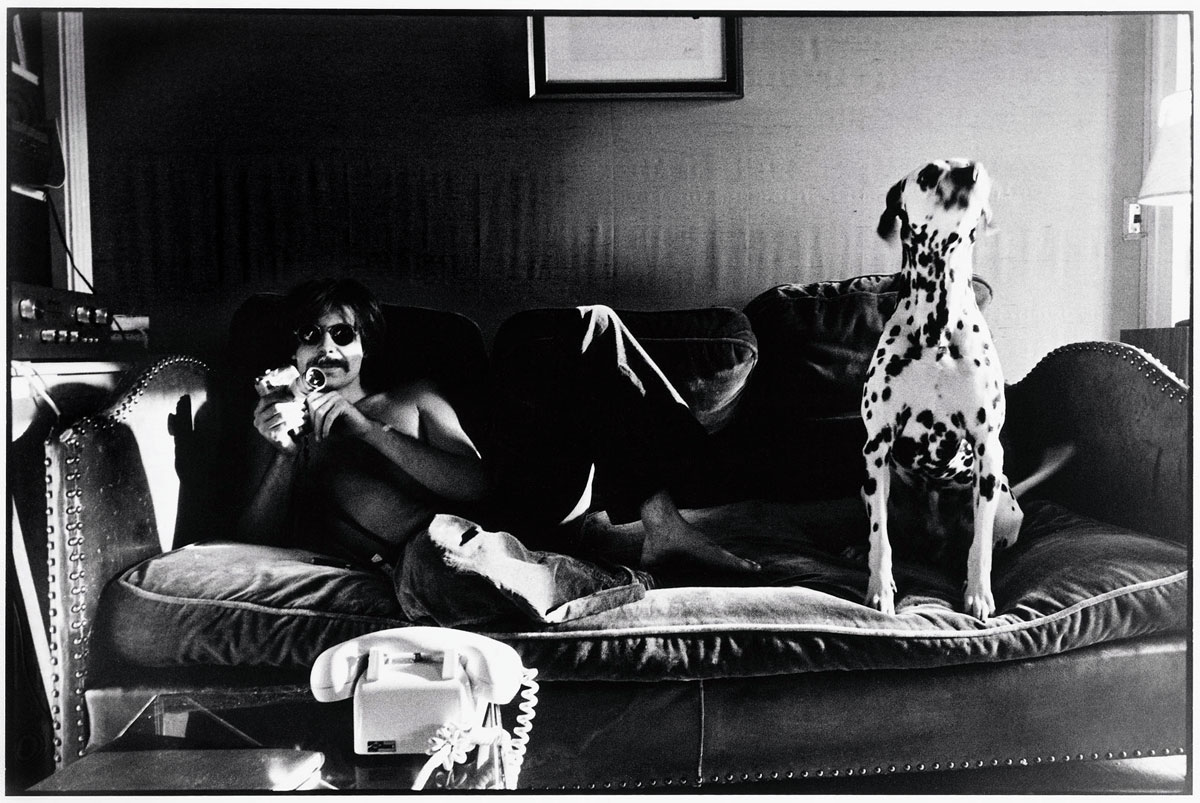
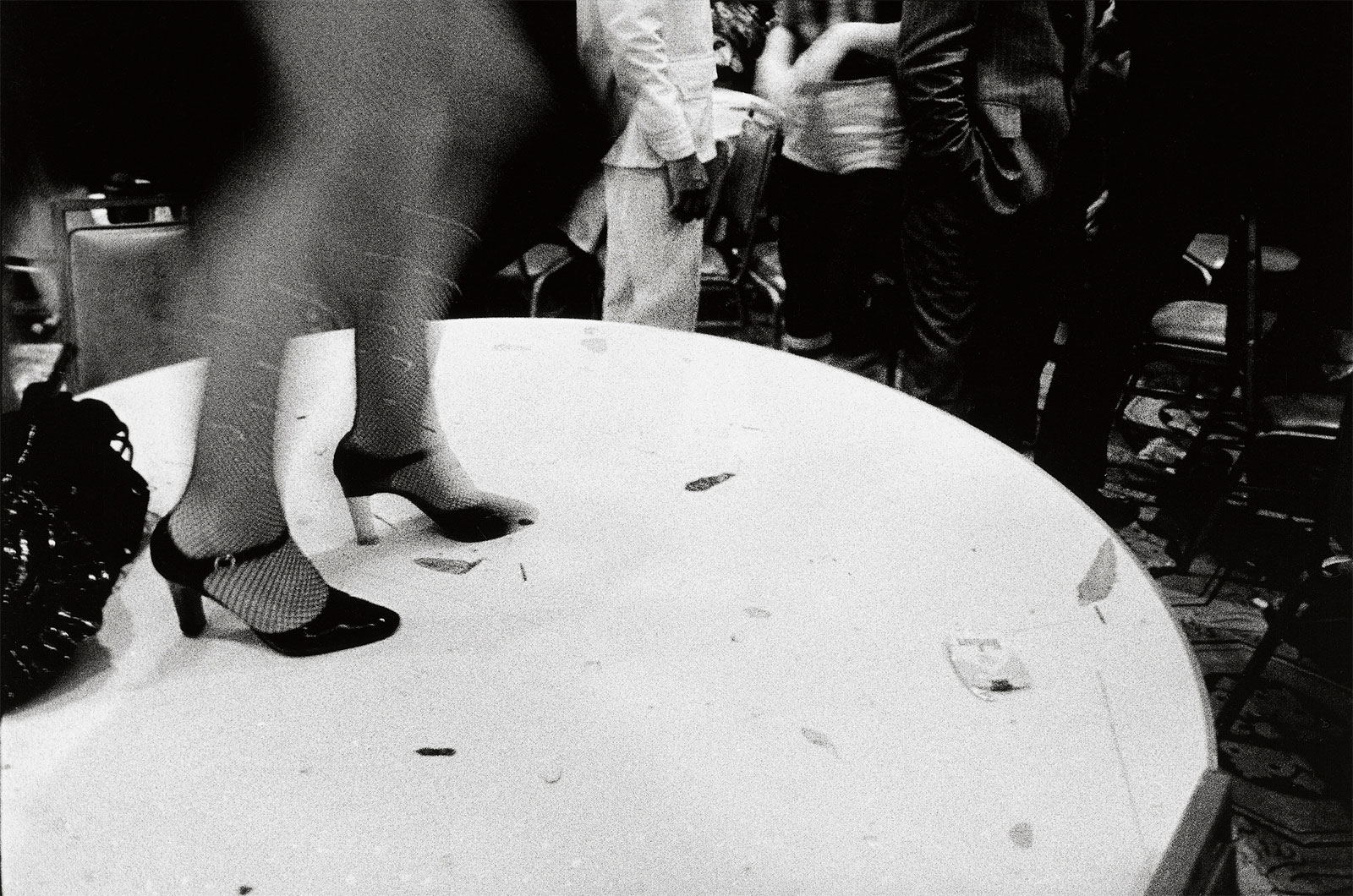
Stanley Greene (American, 1949-2017) 'Fireflies, Paris, France' 2006


Stanley Greene (American, 1949-2017)
Fireflies, Paris, France
2006
Black Passport © Stanley Greene / NOOR


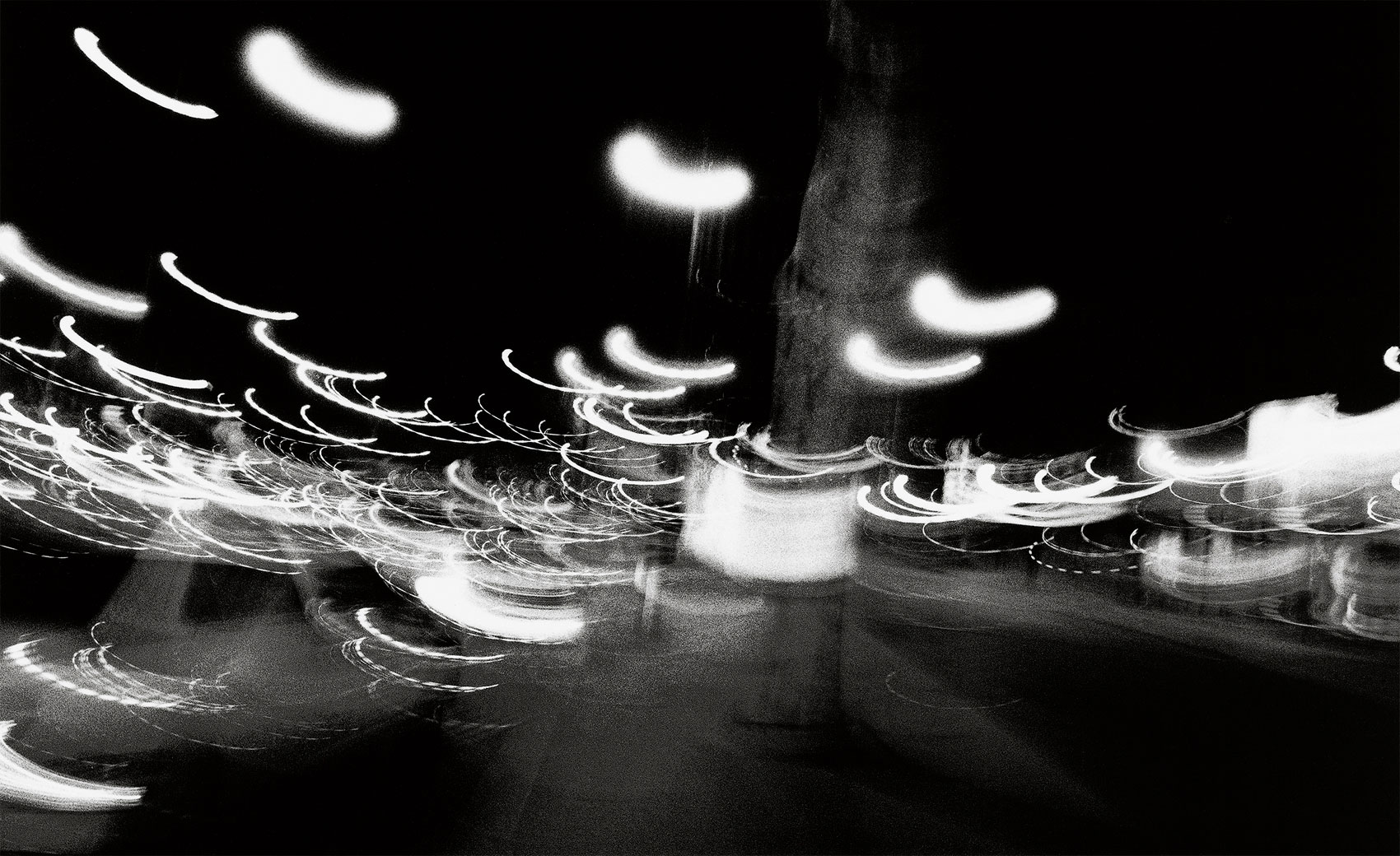
Stanley Greene (American, 1949-2017) 'Black & White Ball, Paris, France' 2006


Stanley Greene (American, 1949-2017)
Black & White Ball, Paris, France
2006
Black Passport © Stanley Greene / NOOR


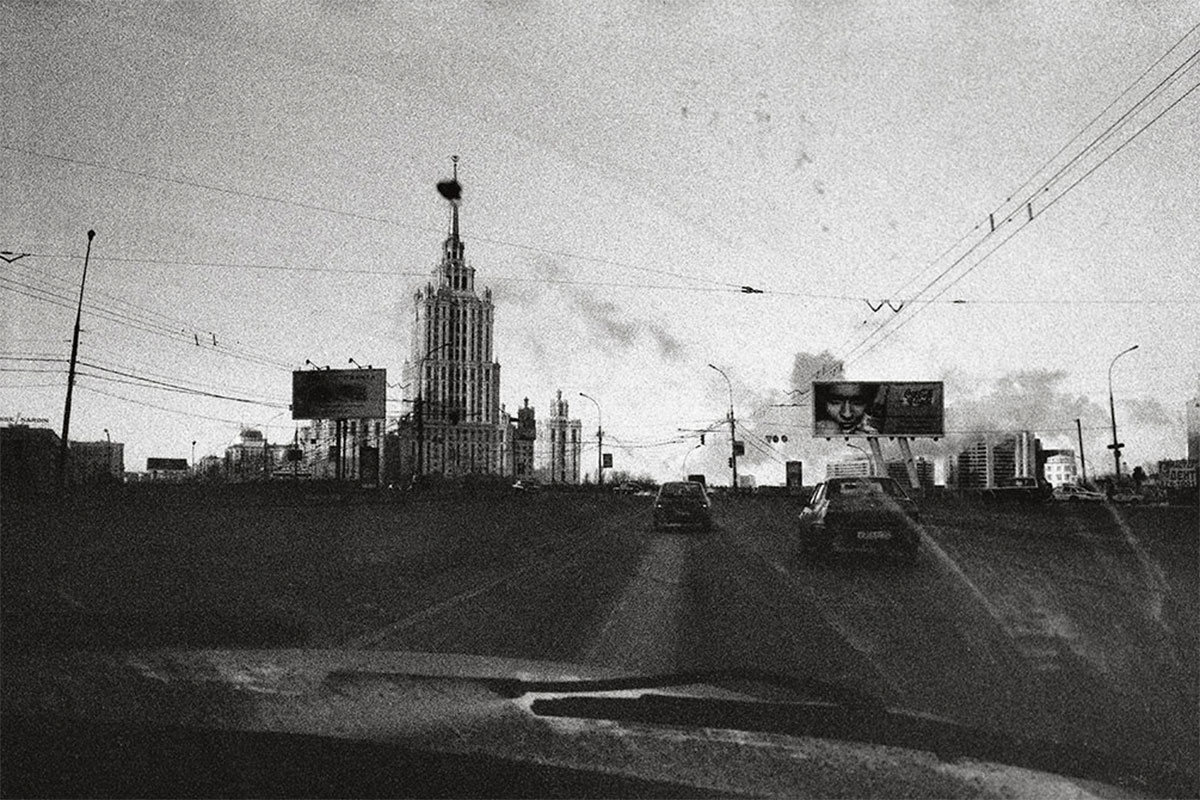
Stanley Greene (American, 1949-2017) 'On the MKAD, on the way to the airport, Moscow, Russia' 2003


Stanley Greene (American, 1949-2017)
On the MKAD, on the way to the airport, Moscow, Russia
2003
Gelatin silver print
Black Passport © Stanley Greene / NOOR


Stanley Greene (American, 1949-2017) 'Kaboul, Afghanistan' 2008


Stanley Greene (American, 1949-2017)
Kaboul, Afghanistan
2008
Gelatin silver print
Black Passport © Stanley Greene / NOOR


Stanley Greene (American, 1949-2017) 'Scene 3. '89. East Berlin'


Stanley Greene (American, 1949-2017)
Scene 3. ’89. East Berlin
From Black Passport © Stanley Greene / NOOR


Stanley Greene (American, 1949-2017) 'Scene 7. '93. Moscow. Inside the White House'


Stanley Greene (American, 1949-2017)
Scene 7. ’93. Moscow. Inside the White House
From Black Passport © Stanley Greene / NOOR


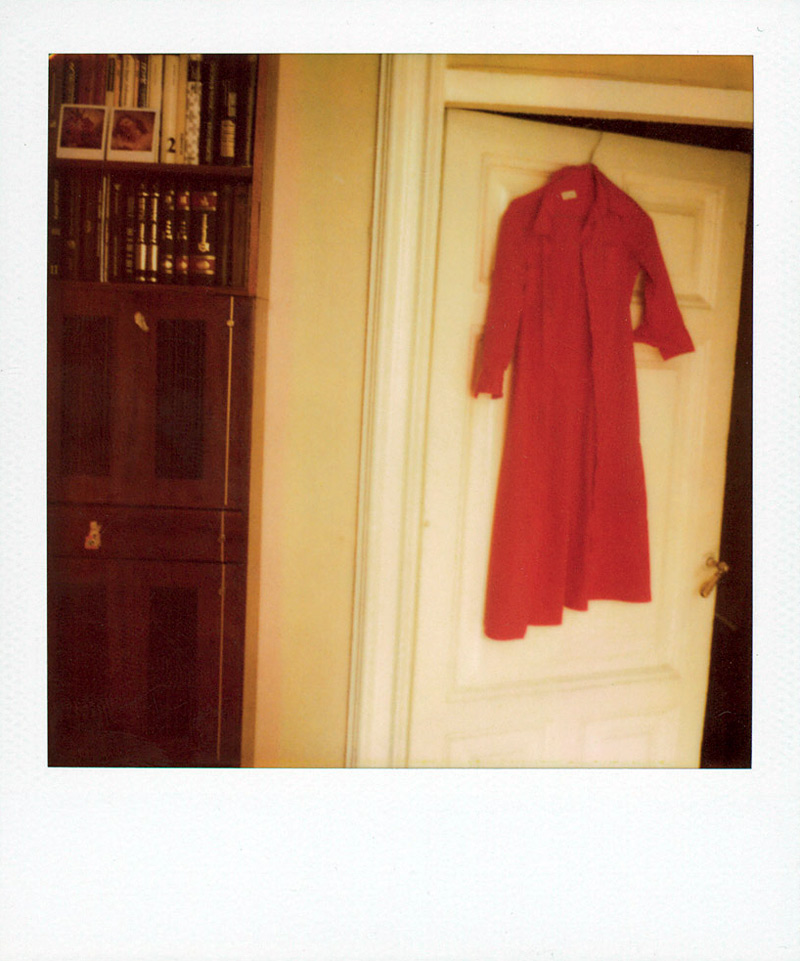
Black Passport © Stanley Greene / NOOR


All photographs: Black Passport © Stanley Greene / NOOR


Foam
Keizersgracht 609
1017 DS Amsterdam
The Netherlands
Phone: + 31 20 5516500

Opening hours:
Mon – Wed 10.00 – 18.00 hrs
Thu – Fri 10.00 – 21.00 hrs
Sat – Sun 10.00 – 18.00 hrs

Foam website

LIKE ART BLART ON FACEBOOK

Back to top

Exhibition: ‘Joel Meyerowitz – Aftermath’ at the Miami Art Museum

Exhibition dates: 19th August – 6th November 2011


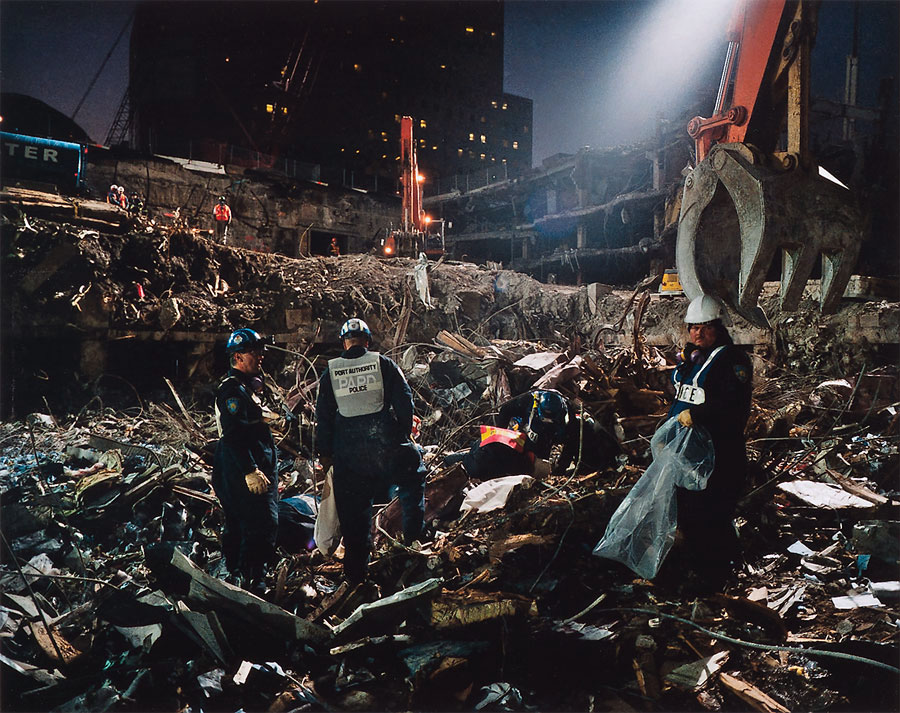
Joel Meyerowitz (American, b. 1938) 'Searchers in Rubble' 2001


Joel Meyerowitz (American, b. 1938)
Searchers in Rubble
2001
Vintage contact print
Collection Miami Art Museum, gift of Steven E. and Phyllis Gross


And do you know what “the world” is to me? Shall I show it to you in my mirror? This world: a monster of energy, without beginning, without end; a firm, iron magnitude of force that does not grow bigger or smaller, that does not expend itself but only transforms itself; as a whole, of unalterable size, a household without expenses or losses, but likewise without increase or income; enclosed by “nothingness” as by a boundary; not something blurry or wasted, not something endlessly extended, but set in a definite space as a definite force, and not a space that might be “empty” here or there, but rather a force throughout, as a play of forces and waves of forces, at the same time one and many, increasing here and at the same time decreasing there …


Frederick Nietzsche, The Will to Power


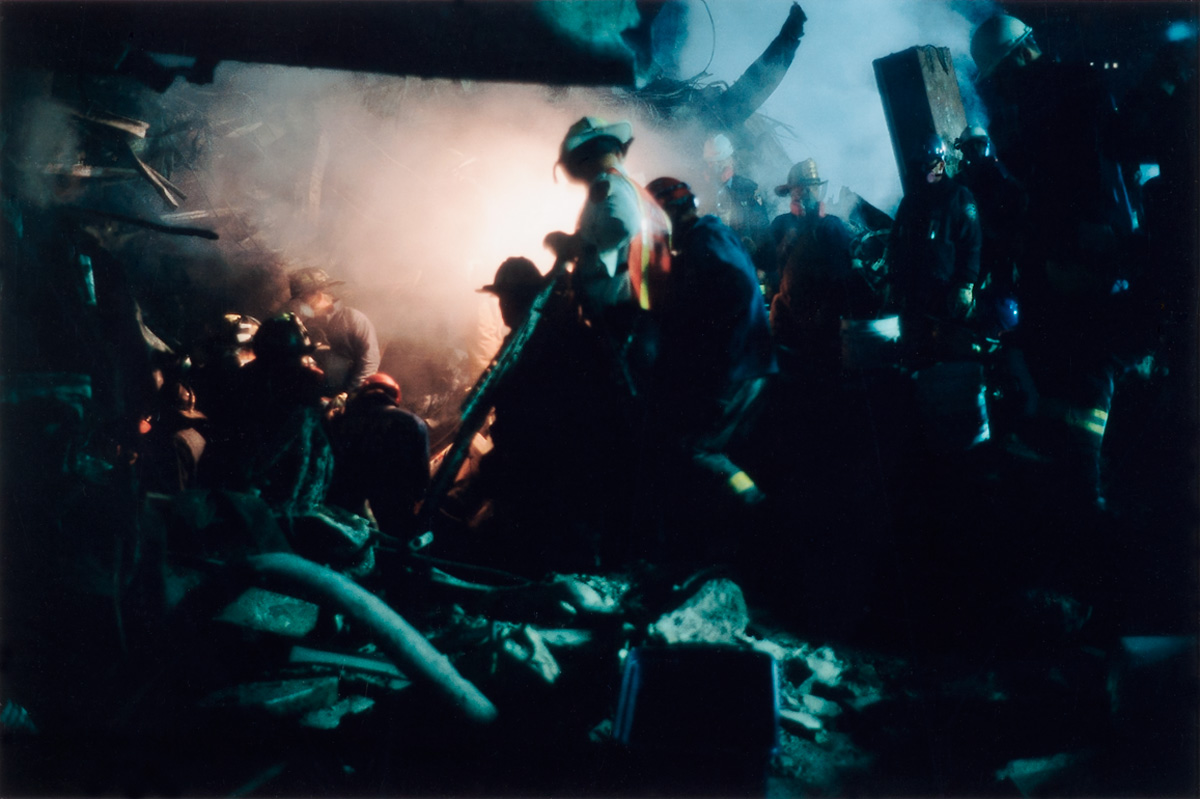
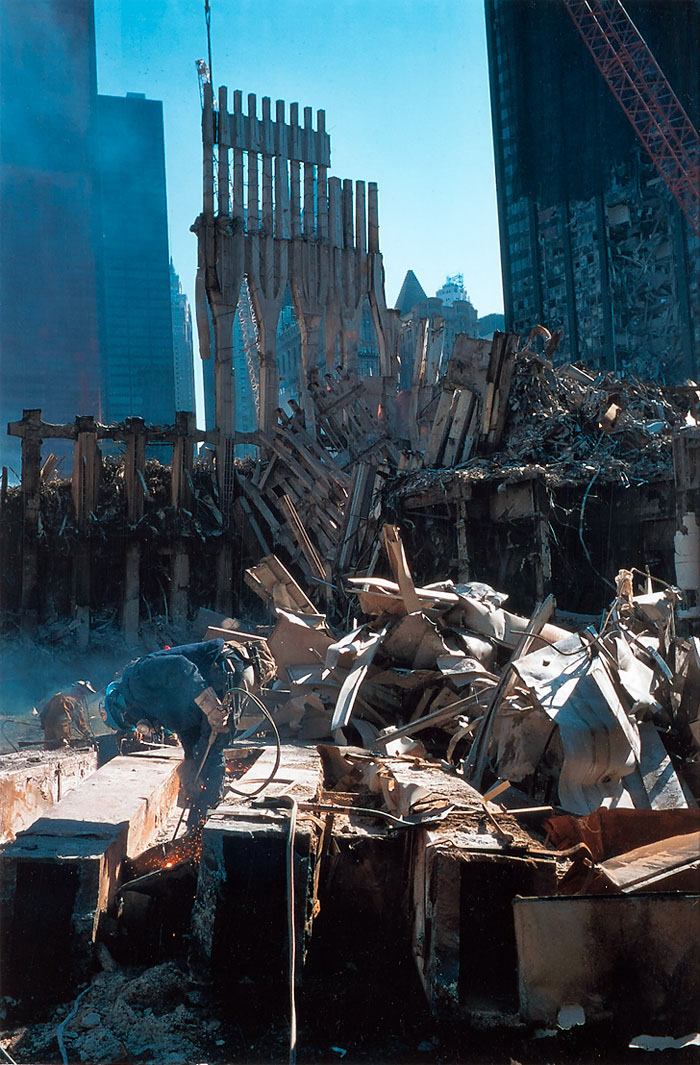
Sadness. And light. Hope. Amidst the inferno. Study the masterpiece Finding More Fireman (below) in the enlarged version and you cannot fail to be moved. It is all there: monumental, intimate, hellish, redemptive – a modern, “disastrous” form of the Rembrandt’s The Night Watch.

Dr Marcus Bunyan


Many thanxk to the Miami Art Museum for allowing me to publish the photographs in the posting. Please click on the photographs for a larger version of the image.


Joel Meyerowitz (American, b. 1938) 'Flower Offering' 2001


Joel Meyerowitz (American, b. 1938)
Flower Offering
2001
Vintage contact print
Collection Miami Art Museum, gift of Steven E. and Phyllis Gross


Joel Meyerowitz (American, b. 1938) 'Pit Looking North' 2002


Joel Meyerowitz (American, b. 1938)
Pit Looking North
2002
Vintage contact print
Collection Miami Art Museum, gift of Steven E. and Phyllis Gross


Joel Meyerowitz (American, b. 1938) 'Smoke and Spray' 2001


Joel Meyerowitz (American, b. 1938)
Smoke and Spray
2001
Vintage contact print
Collection Miami Art Museum, gift of Jeffrey Hugh Newman


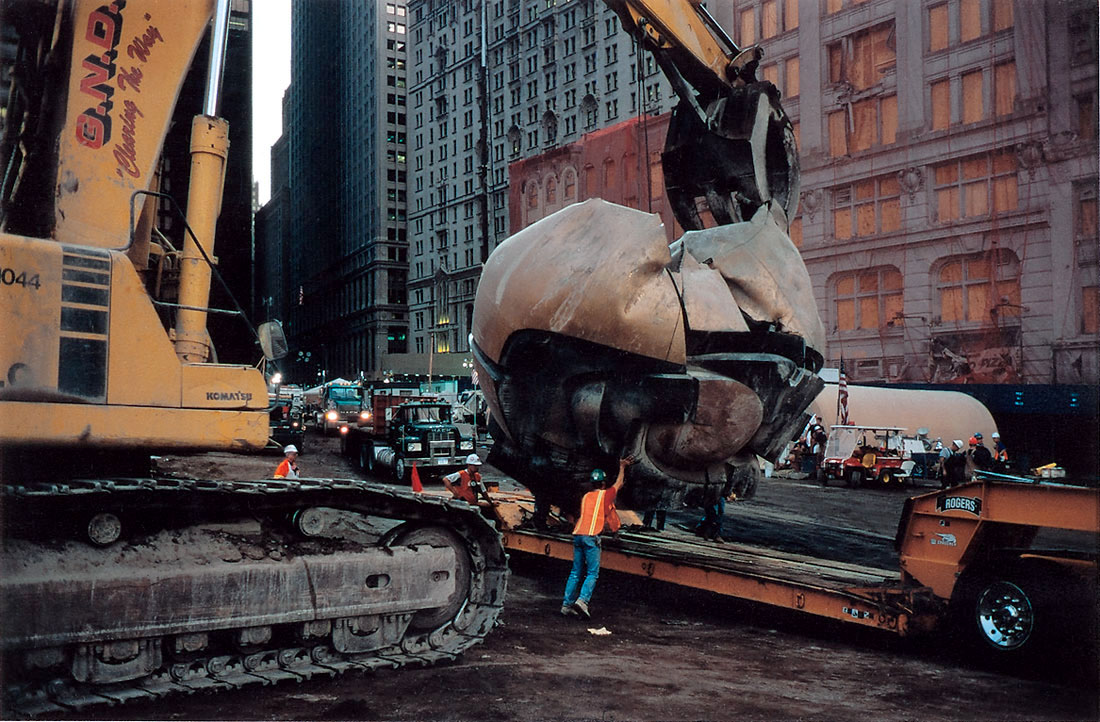
Joel Meyerowitz (American, b. 1938) 'Moving the Monument' 2001


Joel Meyerowitz (American, b. 1938)
Moving the Monument
2001
Vintage contact print
Collection Miami Art Museum, gift of Jeffrey Hugh Newman


Joel Meyerowitz (American, b. 1938) 'Finding More Fireman' 2001


Joel Meyerowitz (American, b. 1938)
Finding More Fireman
2001
Vintage contact print
Collection Miami Art Museum, gift of Charles S. and Elynne B. Zucker


Joel Meyerowitz (American, b. 1938) 'Searchers' 2002


Joel Meyerowitz (American, b. 1938)
Searchers
2002
Vintage contact print
Collection Miami Art Museum, gift of Charles S. and Elynne B. Zucker


Joel Meyerowitz (American, b. 1938) 'Welders in South Tower' 2001


Joel Meyerowitz (American, b. 1938)
Welders in South Tower
2001
Vintage contact print
Collection Miami Art Museum, gift of Charles S. and Elynne B. Zucker


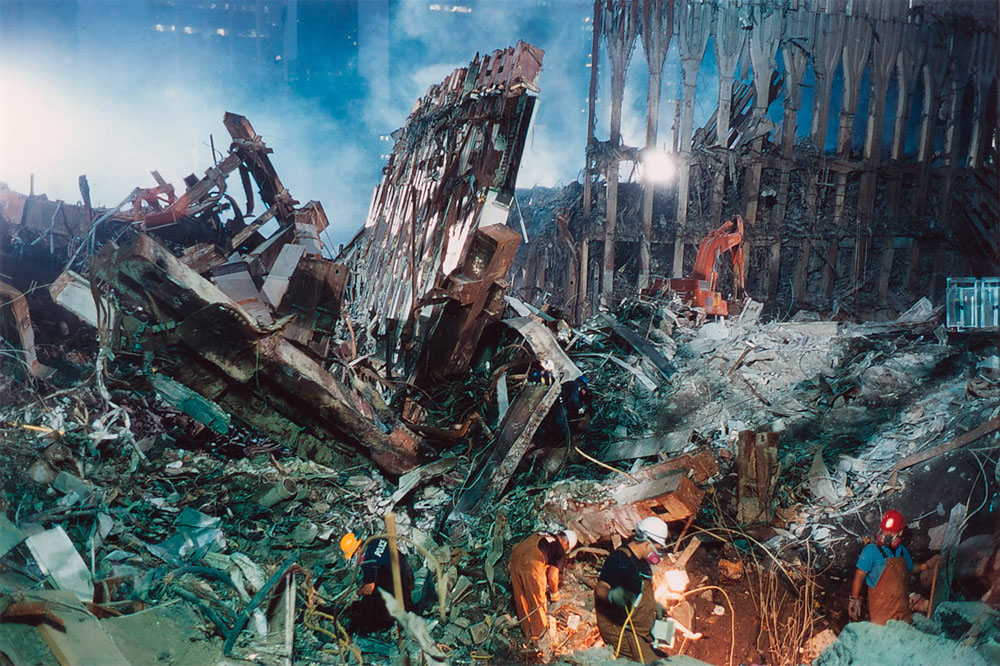
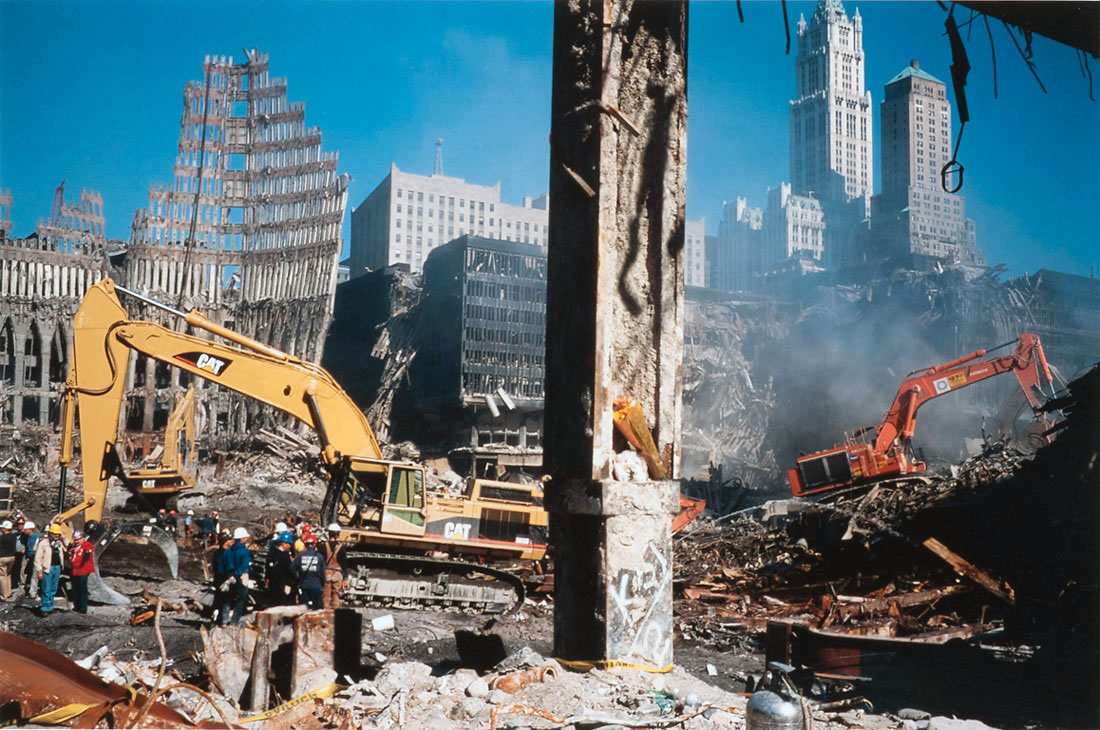
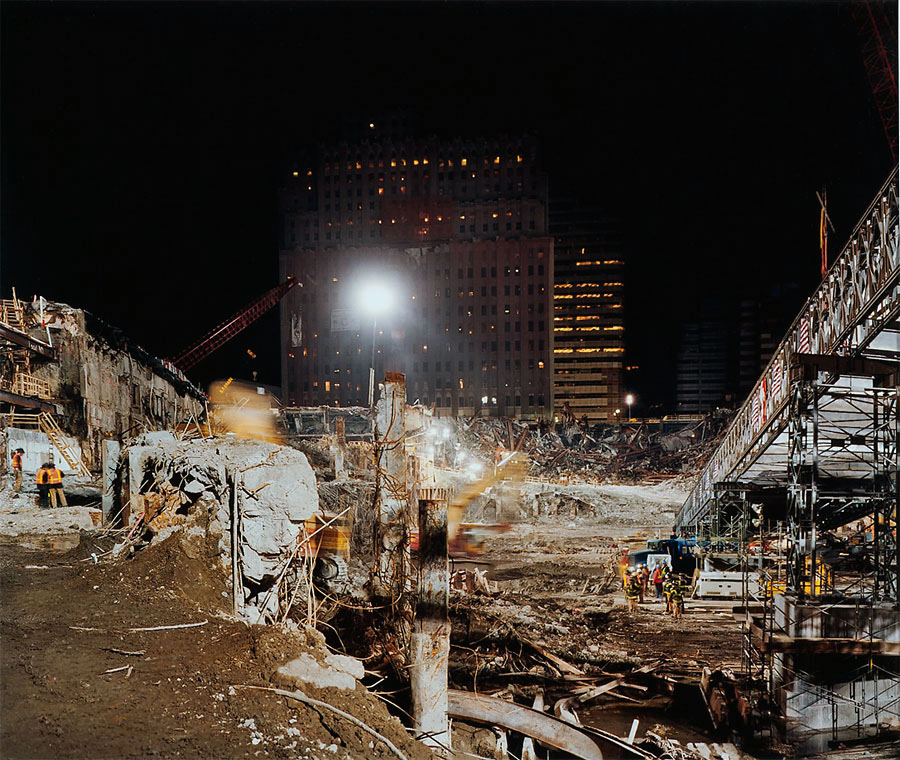
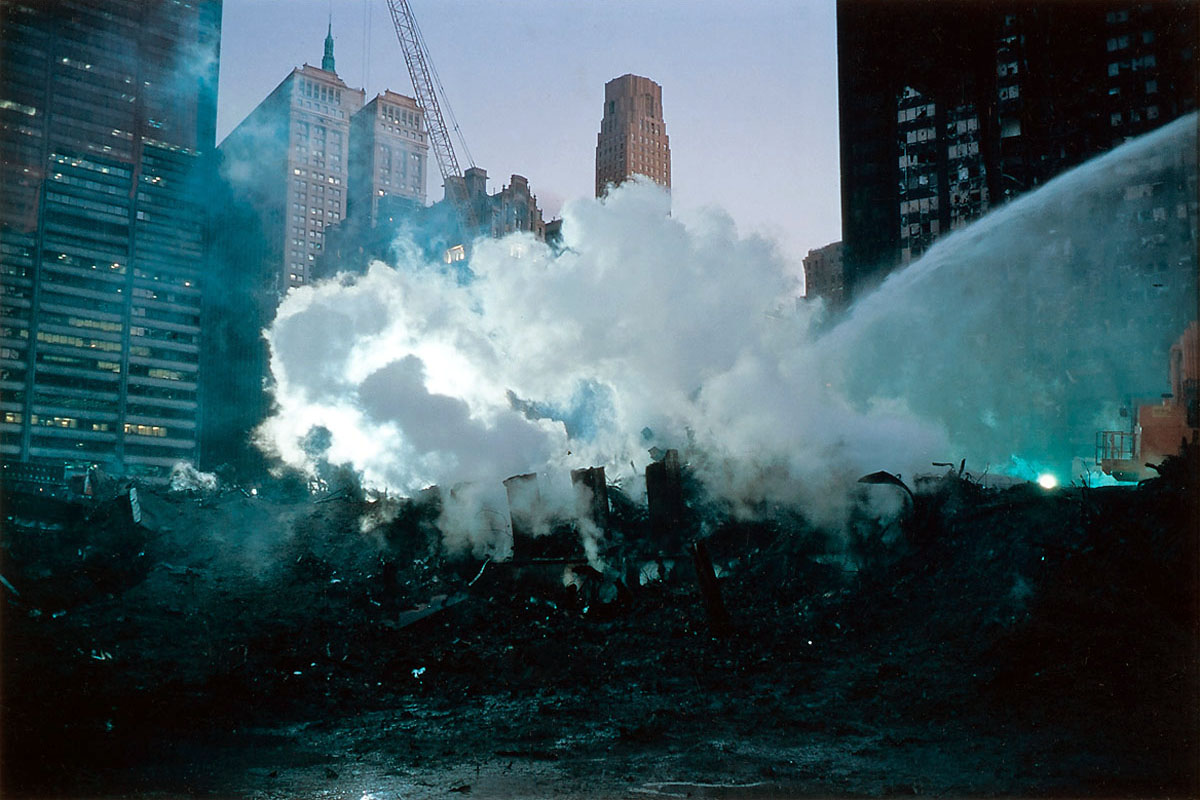
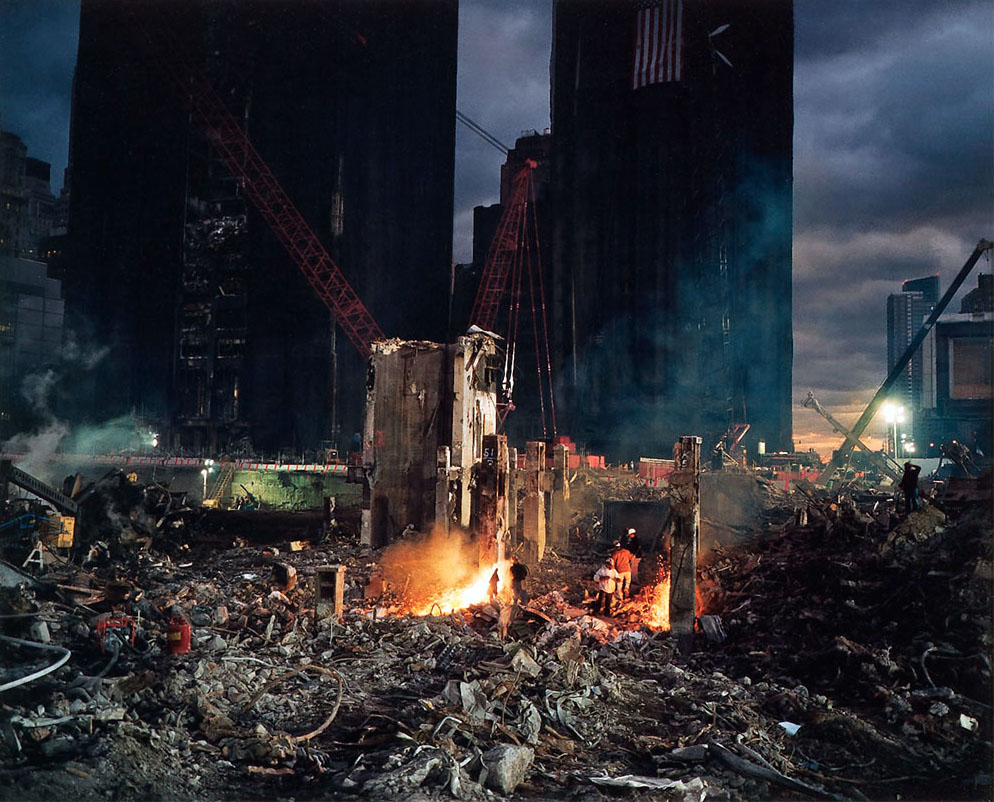
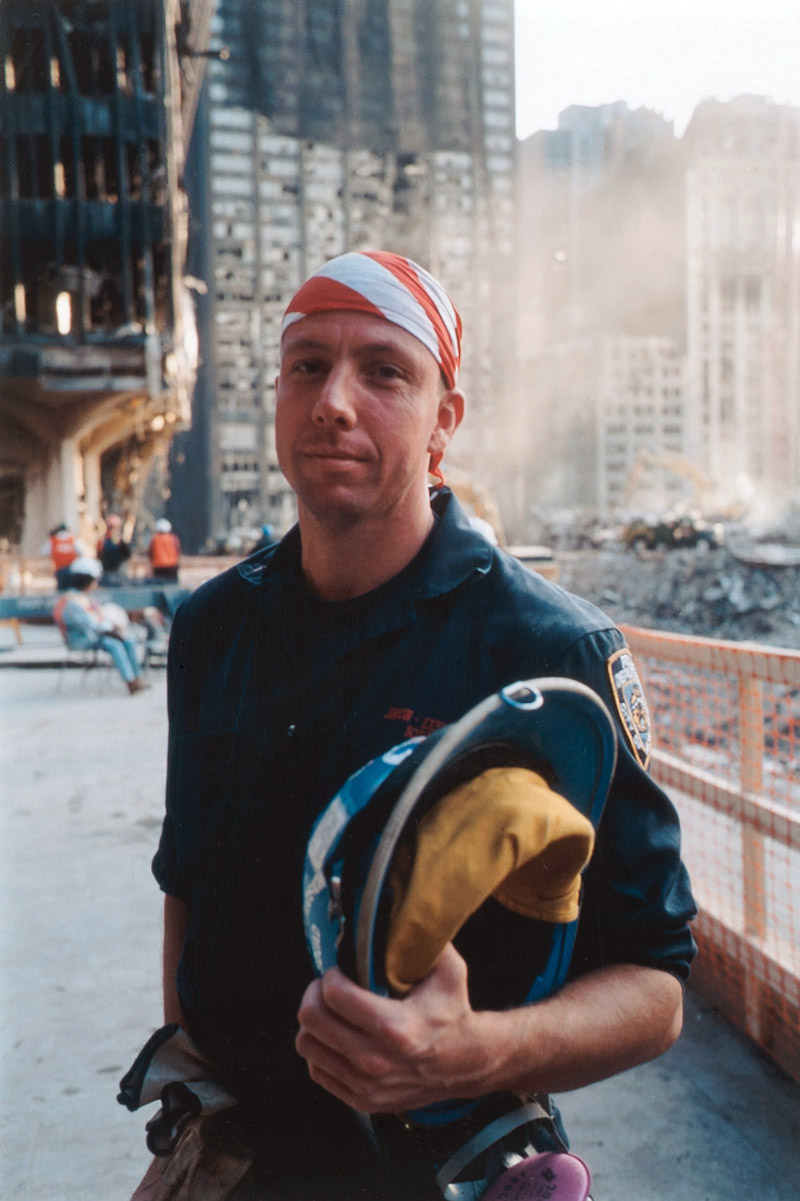
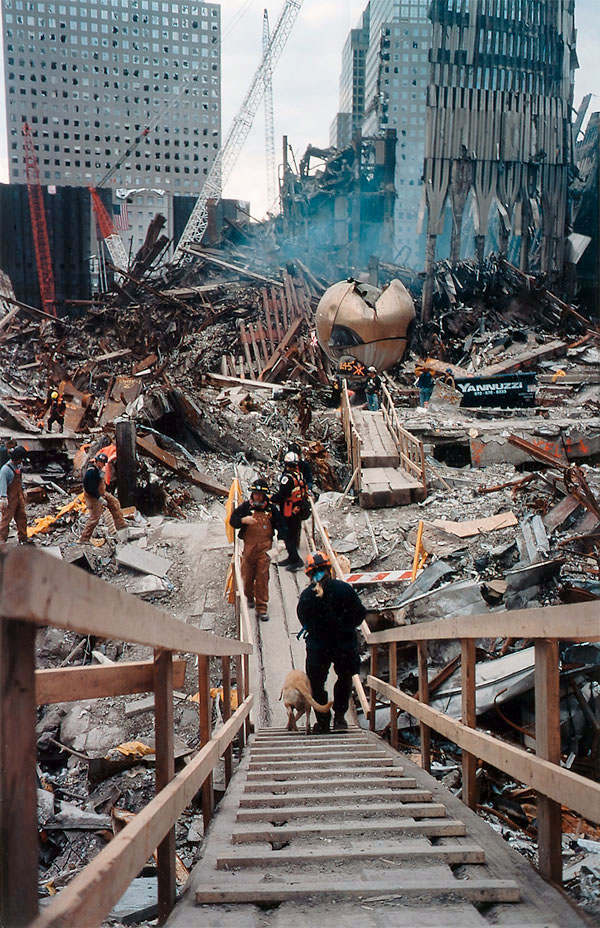
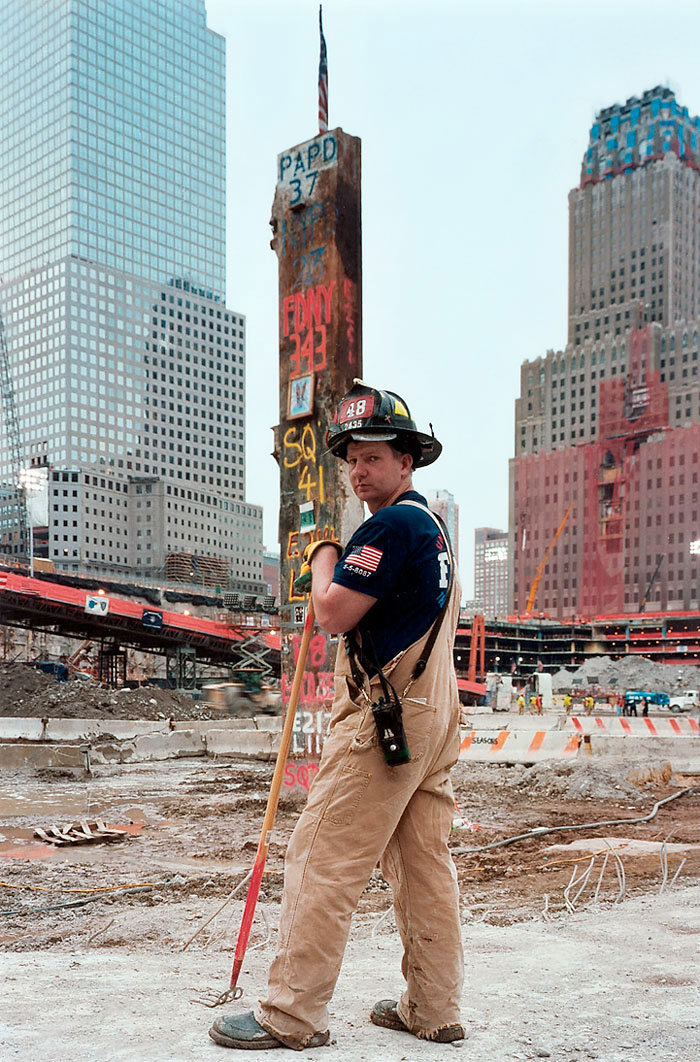
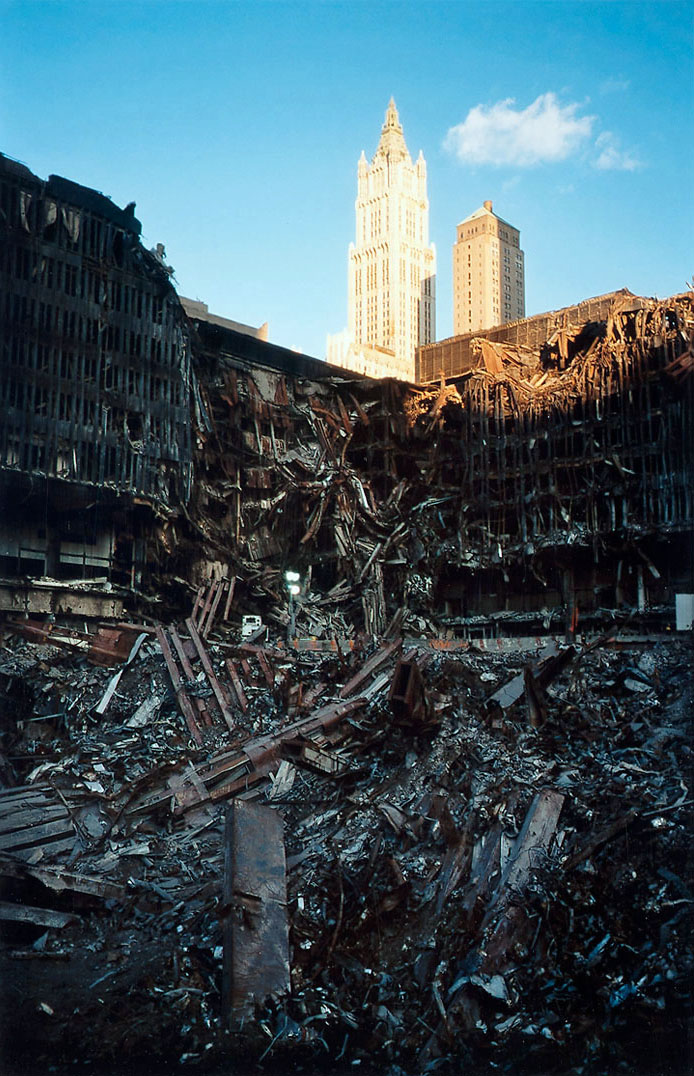
In commemoration of the 10th anniversary of 9/11, Miami Art Museum presents Focus Gallery: Joel Meyerowitz – Aftermath, an exhibition of photographs taken by the only photographer granted right of entry into Ground Zero after the September 11, 2001 attacks on the World Trade Center in New York City. For nine months during the day and night, Meyerowitz photographed “the pile,” as the World Trade Center came to be known, and the over 800 people a day that were working in it. The exhibition consists of 24, recently-donated photographs, presented in the Focus Gallery section of the Museum’s Permanent Collection installation. Admission to Miami Art Museum will be free to all emergency personnel, including police and firefighters, and their guests throughout the exhibition’s run, August 19 – November 6, 2011. A special preview for emergency personnel will be held on Thursday, August 18, 2011, 4-7pm. Author and photography critic Vicki Goldberg will give a lecture entitled “What Remains” on Thursday, September 8, 2011, beginning at 6:30pm.

After September 11, 2001, the Ground Zero site in New York City was classified as a crime scene and only those directly involved in the recovery efforts were allowed inside. The press was prohibited from the site. Influenced by Walker Evans’s and Dorothea Lange’s work for the Farm Security Administration during the Great Depression, Meyerowitz, long recognised as one of the pioneers of colour photography, was convinced that if a photographic record of the unprecedented recovery efforts was not made, “there would be no history.” With the help of sympathetic officials, he managed to become the only photographer granted right of entry into Ground Zero.

“I was making photographs for everyone who didn’t have access to the site,” says Meyerowitz, “I wanted to communicate what it felt like to be in there as well as what it looked like: to show the pile’s incredible intricacy and visceral power. I could provide a window for everyone else who wanted to be there, too, to help, or to grieve, or simply to try to understand what had happened to our city.”

Armed with a large-format wooden camera, Meyerowitz spent nine months photographing the site. In the first few weeks, he was chased off the site repeatedly, but over time, with the help of officials on and off site, the use of forged workers’ passes, and by assuming the “uniform” of hard hat, goggles, respirator, gloves, boots and duct taped pants, Meyerowitz became “woven into the fabric of the site.”

About the experience, Meyerowitz has written, “The nine months I worked at Ground Zero were among the most rewarding of my life. I came in as an outsider, a witness bent on keeping the record, but over time I began to feel a part of the very project I’d been intent on recording… the intense camaraderie I experienced at Ground Zero inspired me, changing both my sense of myself and my sense of responsibility to the world around me. September 11th was a tragedy of almost unfathomable proportions. But living for nine months in the midst of those individuals who faced that tragedy head-on, day after day, and did what they could to set things right, was an immense privilege.”

The photographs in MAM’s collection are from a unique set of contact prints (photographs printed on a 1:1 scale from the negatives) issued by the artist in 2006. As a group, they span the entire nine month period that Meyerowitz was on site, presenting a poignant, condensed view of the clean up effort, including portraits of the workers involved. The set is introduced by a single image of the World Trade Center towers taken by the artist in the 1980s from his apartment window.

The entire set of more than 8,000 photographs taken by Meyerowitz form an archive at the Museum of the City of New York. The Aftermath series was the focus of a 2006 book, Aftermath: World Trade Center Archives published by Phaidon (reissued this year in a special 10th anniversary edition) and an exhibition organised by the US Department of State that traveled worldwide from 2002 to 2005.

Press release from the Miami Art Museum website


Joel Meyerowitz (American, b. 1938) 'Explosion Squad Detective' 2001


Joel Meyerowitz (American, b. 1938)
Explosion Squad Detective
2001
Vintage contact print
Collection Miami Art Museum, gift of Steven E. and Phyllis Gross


Joel Meyerowitz (American, b. 1938) 'Steps Down to Plaza' 2001


Joel Meyerowitz (American, b. 1938)
Steps Down to Plaza
2001
Vintage contact print
Collection Miami Art Museum, gift of Jeffrey Hugh Newman


Joel Meyerowitz (American, b. 1938) 'Fireman at Last Column' 2002


Joel Meyerowitz (American, b. 1938)
Fireman at Last Column
2002
Vintage contact print
Collection Miami Art Museum, gift of Charles S. and Elynne B. Zucker


Joel Meyerowitz (American, b. 1938) 'Building #5 and Woolworth' 2001


Joel Meyerowitz (American, b. 1938)
Building #5 and Woolworth
2001
Vintage contact print
Collection Miami Art Museum, gift of Simon and Bonnie Levin


Joel Meyerowitz (American, b. 1938) 'Welder and Rubble' 2001


Joel Meyerowitz (American, b. 1938)
Welder and Rubble
2001
Vintage contact print
Collection Miami Art Museum, gift of Steven E. and Phyllis Gross


Miami Art Museum
101 W Flagler St., Miami, FL 33130

Opening hours:
Monday 11am – 6pm
Tuesday – Wednesday Closed
Thursday 11am – 9pm
Friday – Sunday 11am – 6pm

Miami Art Museum website

LIKE ART BLART ON FACEBOOK

Back to top

Exhibition: ‘Duane Hanson/Gregory Crewdson: Uncanny realities’ at Museum Frieder Burda, Baden-Baden

Exhibition dates: 27th November 2010 – 6th March 2011

Curators: Götz Adriani and Patricia Kamp


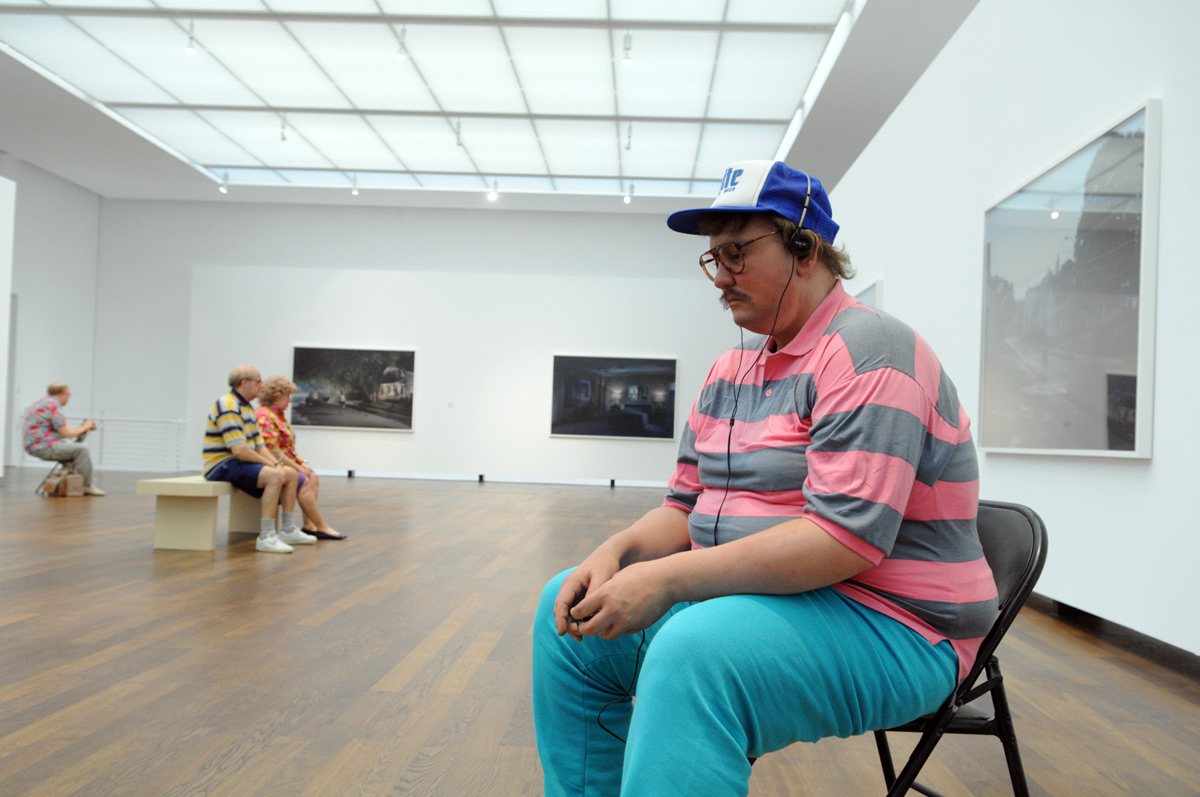
Installation photograph of the exhibition 'Duane Hanson/Gregory Crewdson: Uncanny realities' at Museum Frieder Burda


Installation photograph of the exhibition Duane Hanson/Gregory Crewdson: Uncanny realities at Museum Frieder Burda


A great double act!

An inspired curatorial choice brings the work of these two artist’s together – life-like sculptures of everyday Americans mixing with theatrical, deadpan staged images. The mis en scène created in the exhibition space, the tension between sculpture, photograph, frame and space – is delicious.

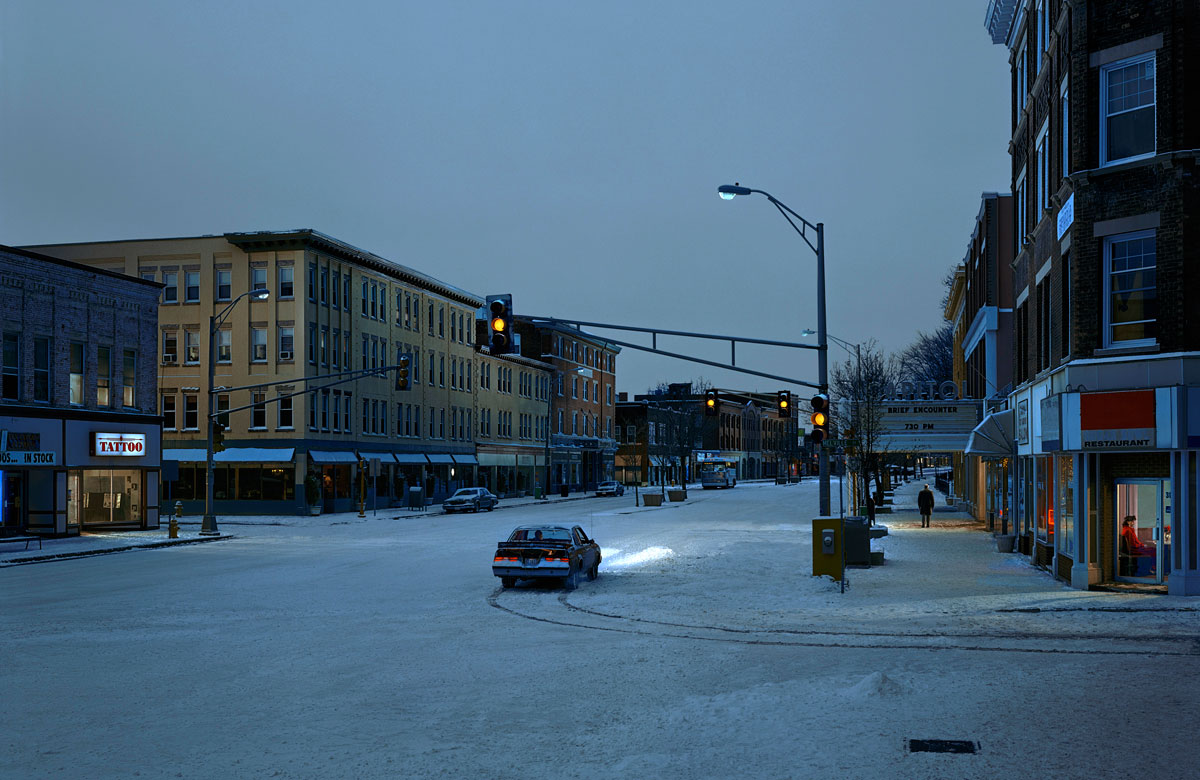
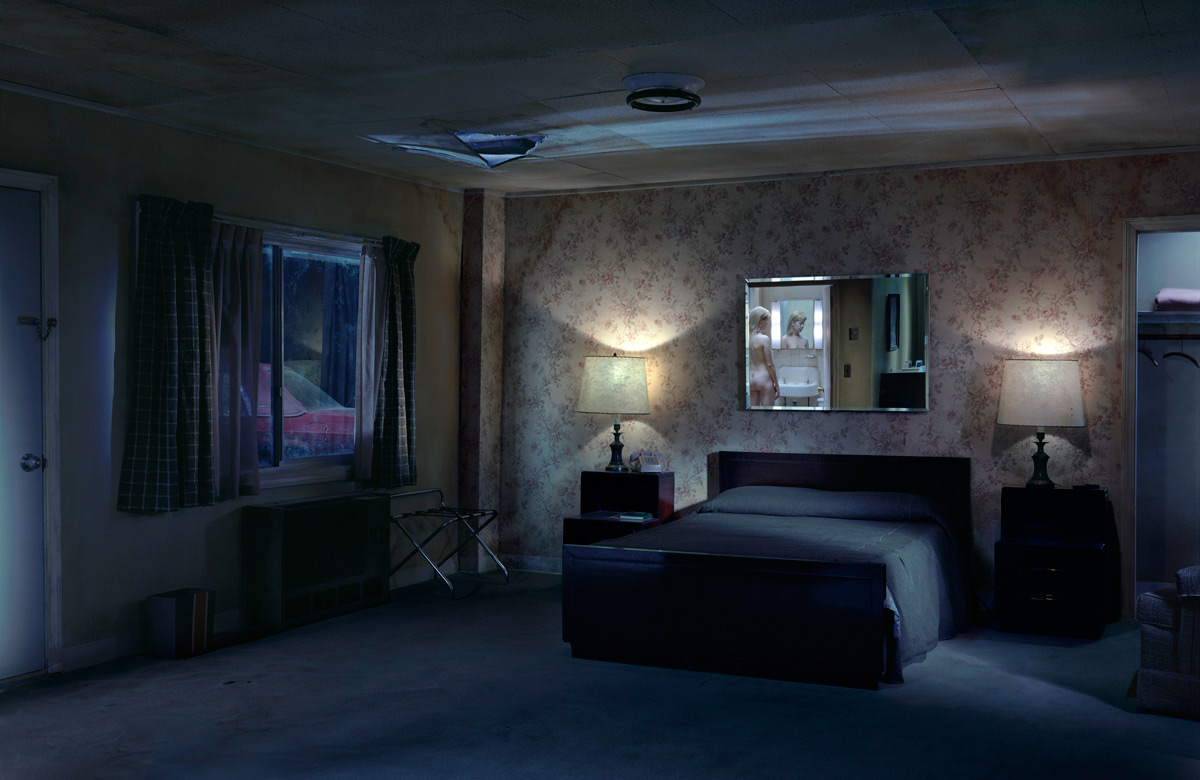
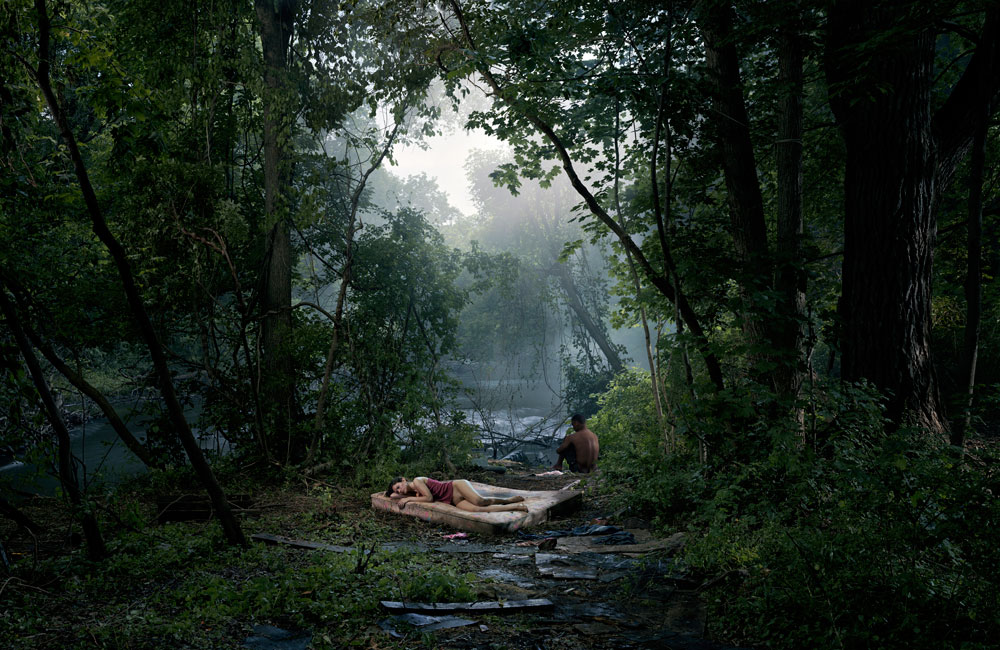
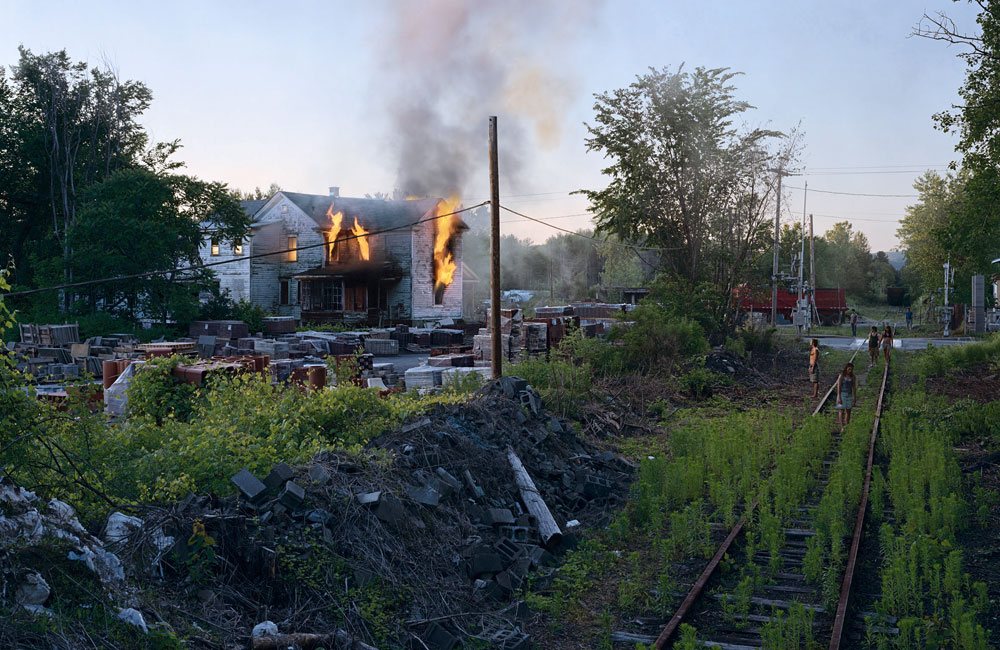
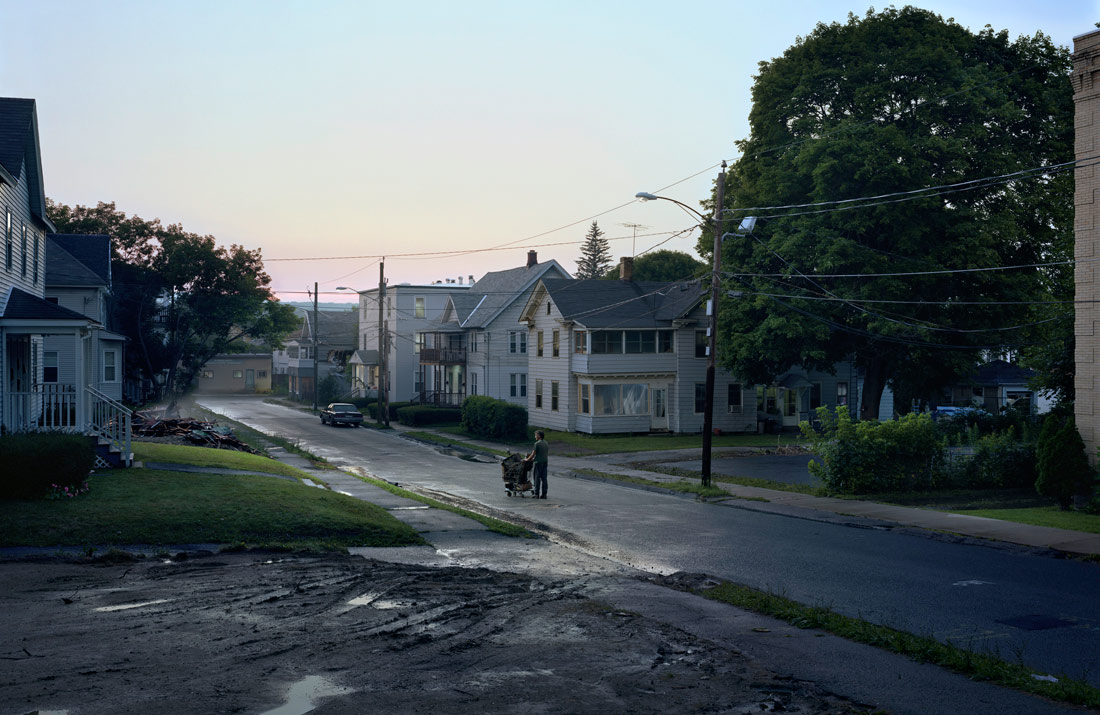
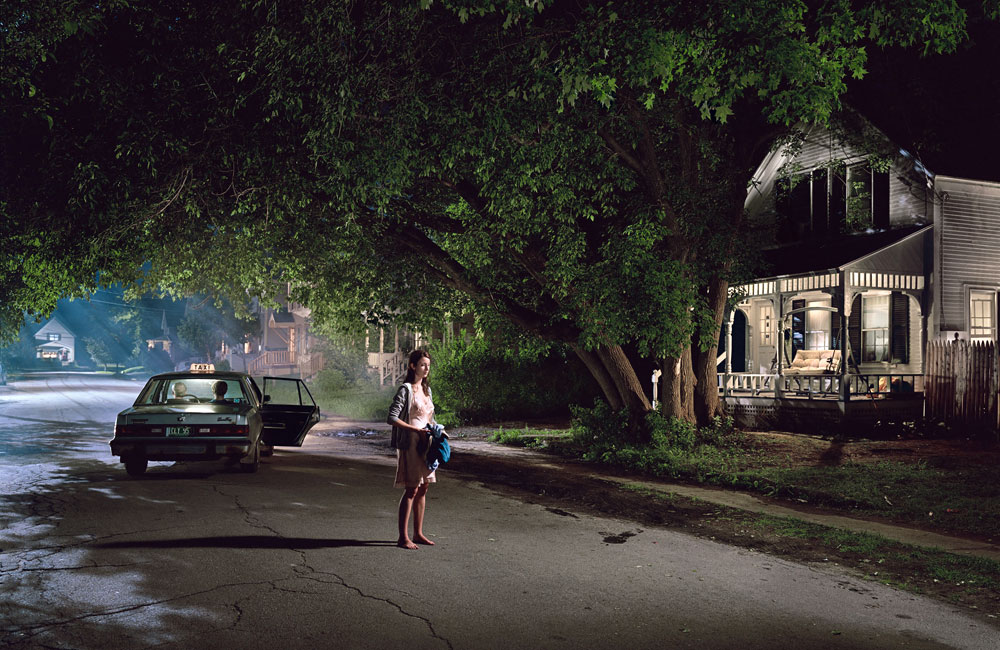
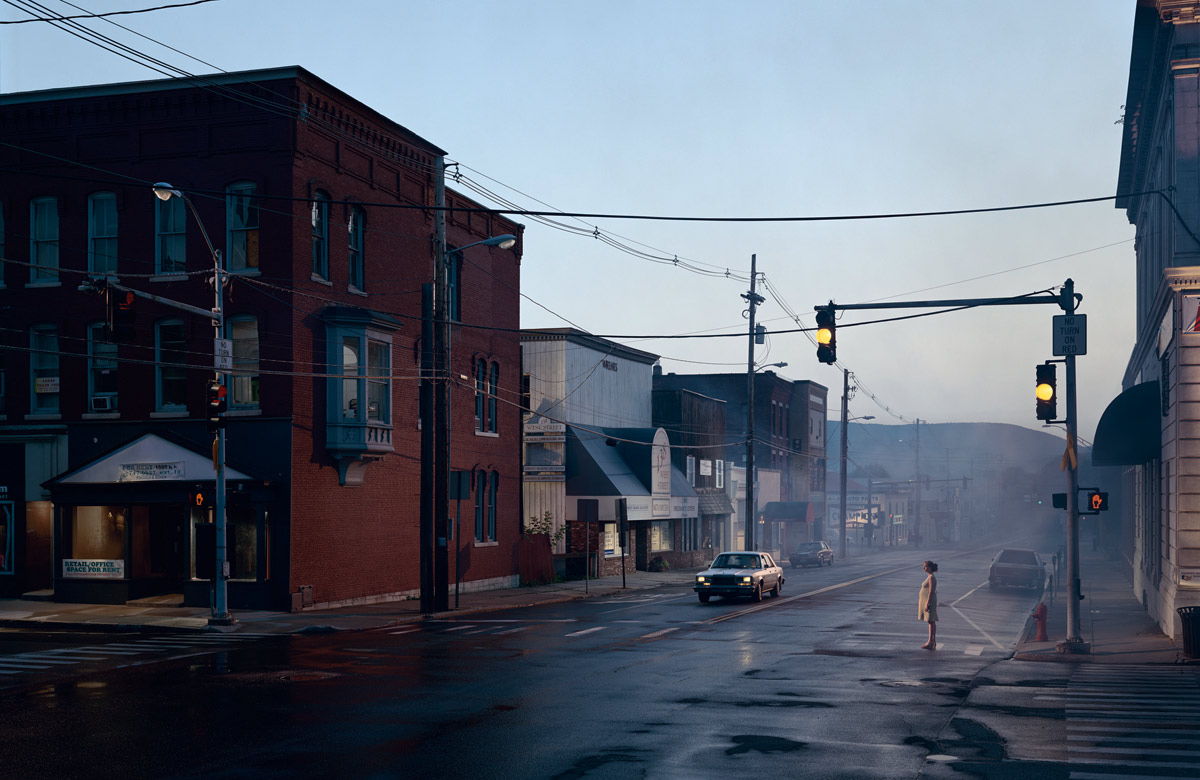
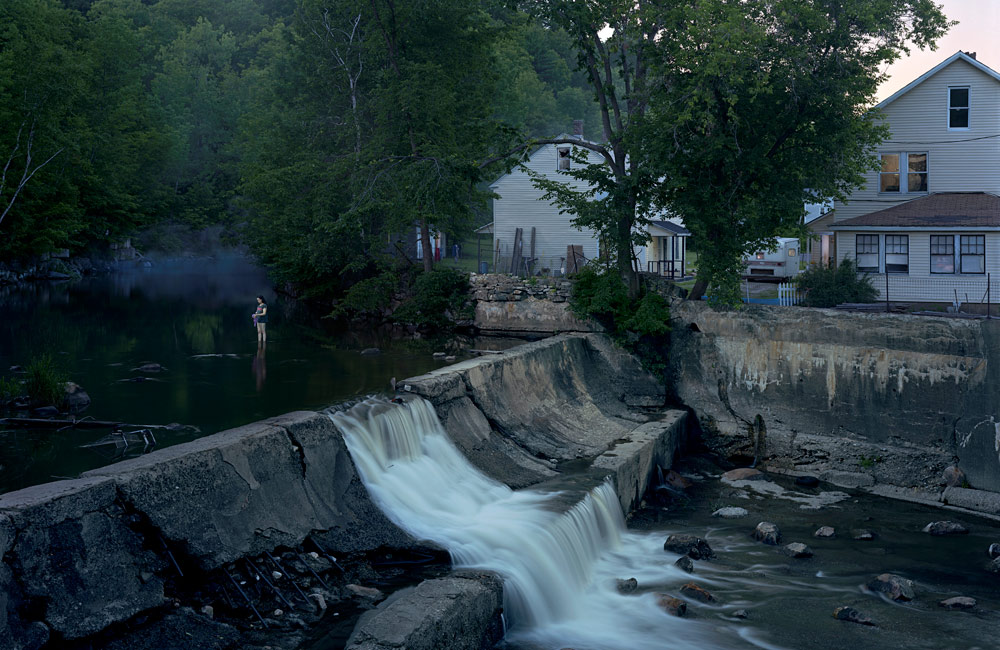
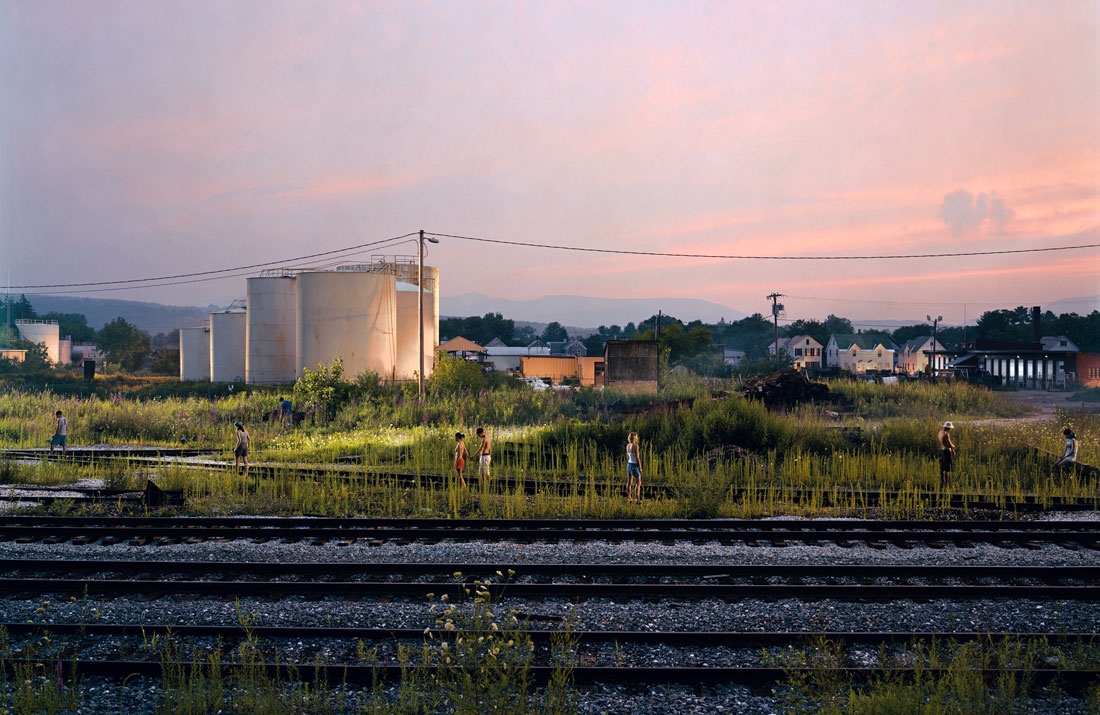
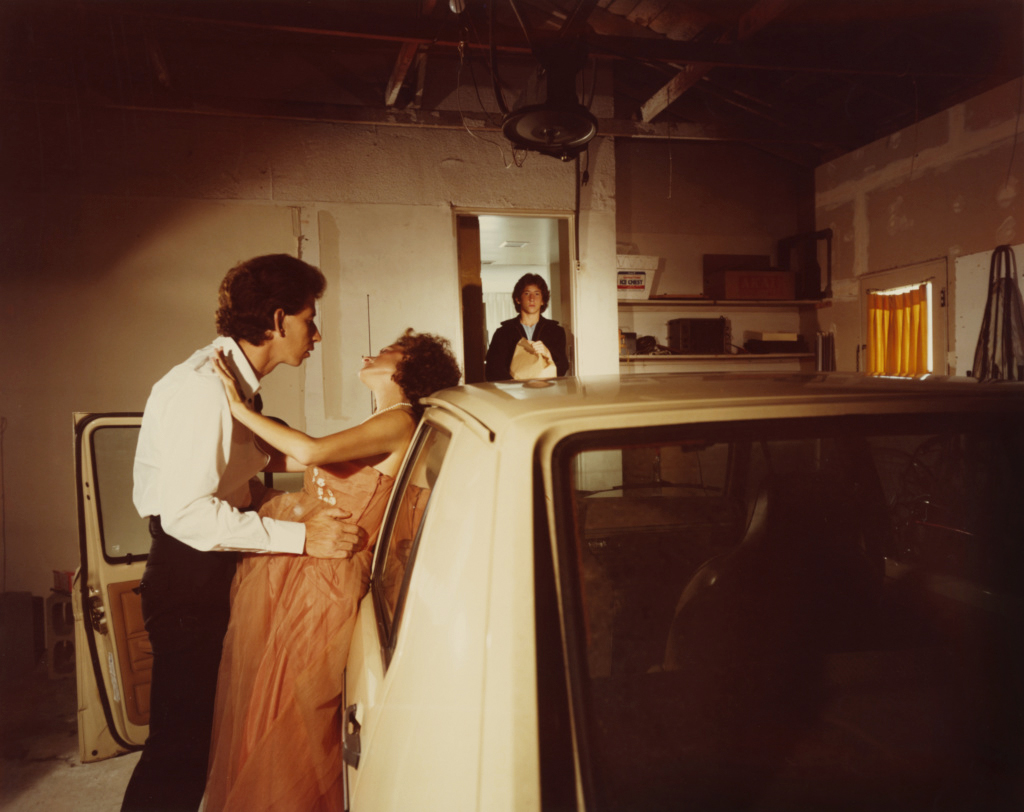
Crewdson is at his best when he resists the obvious narrative (for example, all the traffic lights stuck on yellow in the photograph Untitled (Brief Encounter) (2006, see below). Personally I prefer his staged photographs with pairs or groups of people within the image, rather than a single figure. The storyline is more ambiguous and the photographs of people walking along railway tracks always remind me of the Stephen King story filmed as Stand by Me (1986) with a young River Phoenix. Either way they are intoxicating, the viewer drawn into these wonderful, dark psychological dramas.

Dr Marcus Bunyan


Many thankx to Museum Frieder Burda for allowing me to publish the photographs in the posting. Please click on the photographs for a larger version of the image.


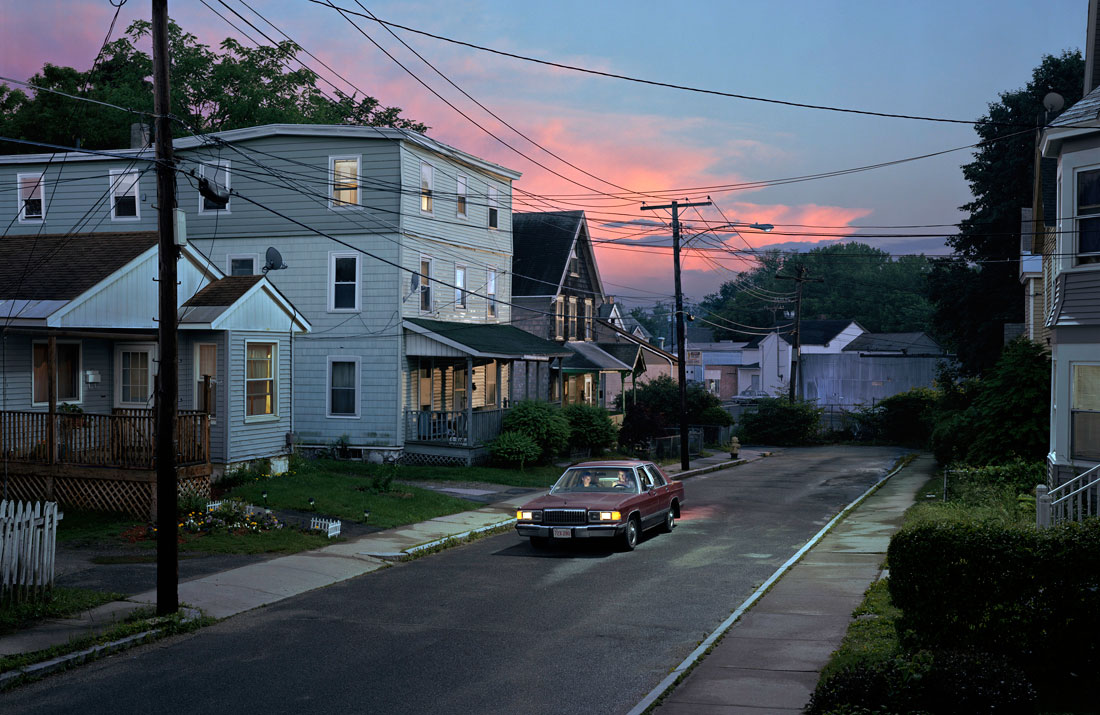
Installation photograph of the exhibition 'Duane Hanson/Gregory Crewdson: Uncanny realities' at Museum Frieder Burda with Duane Hanson 'Old Couple on a Bench' (1994) in the foreground and Gregory Crewdson 'Untitled (Worthington Street)' (2006) in the background


Installation photograph of the exhibition Duane Hanson/Gregory Crewdson: Uncanny realities at Museum Frieder Burda with Duane Hanson Old Couple on a Bench (1994) in the foreground and Gregory Crewdson Untitled (Worthington Street) (2006) in the background


The works by the two American artists Duane Hanson (1925-1996) and Gregory Crewdson (born in 1962) confuse and touch the observer.

Both artists present people in their everyday lives, with hopes, yearnings and broken dreams. People we usually do not notice, aged and marked by reality, by life itself. While Hanson shapes his life-sized figures with a great deal of sympathy, Crewdson rather spreads a gloomy and depressing atmosphere in his pictures of lonely people in their houses, gardens and in streets.

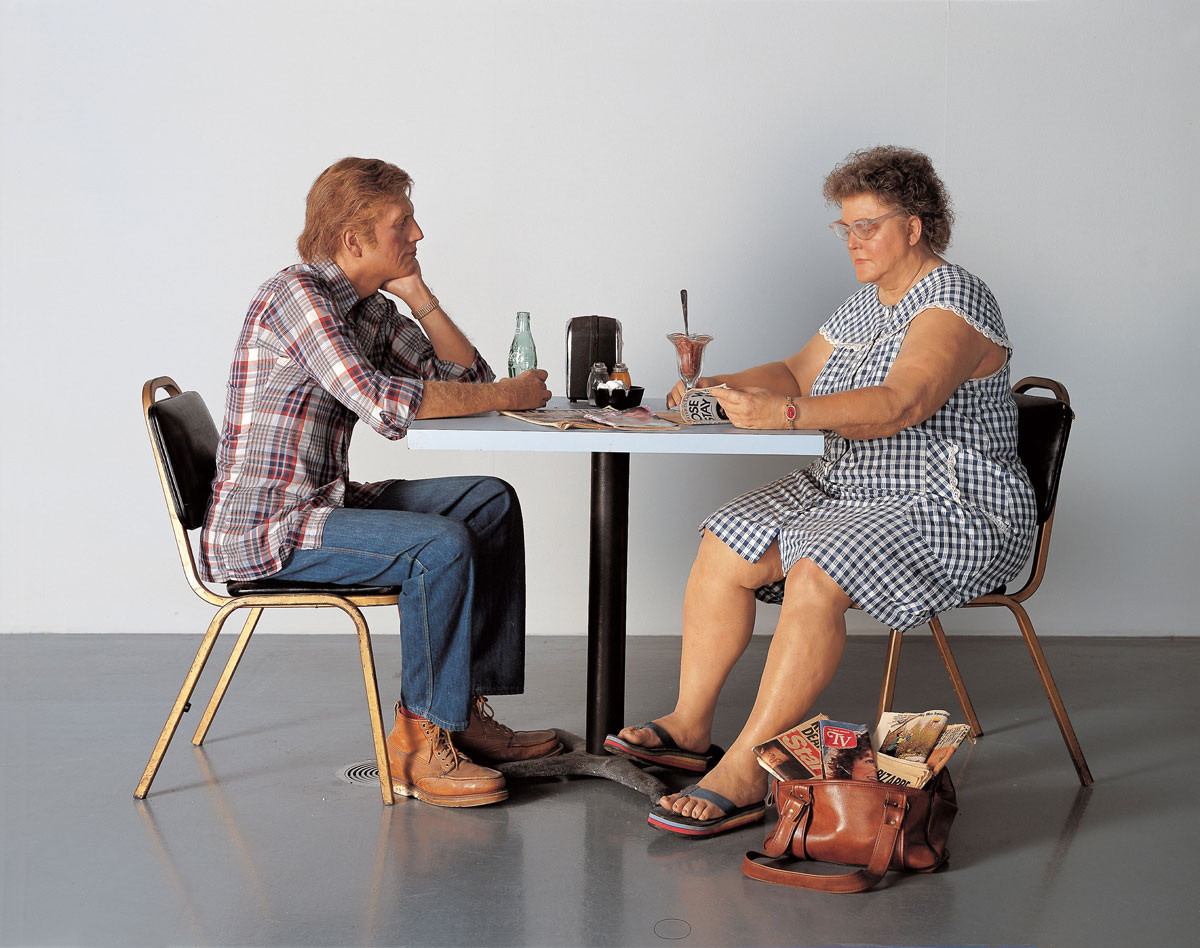
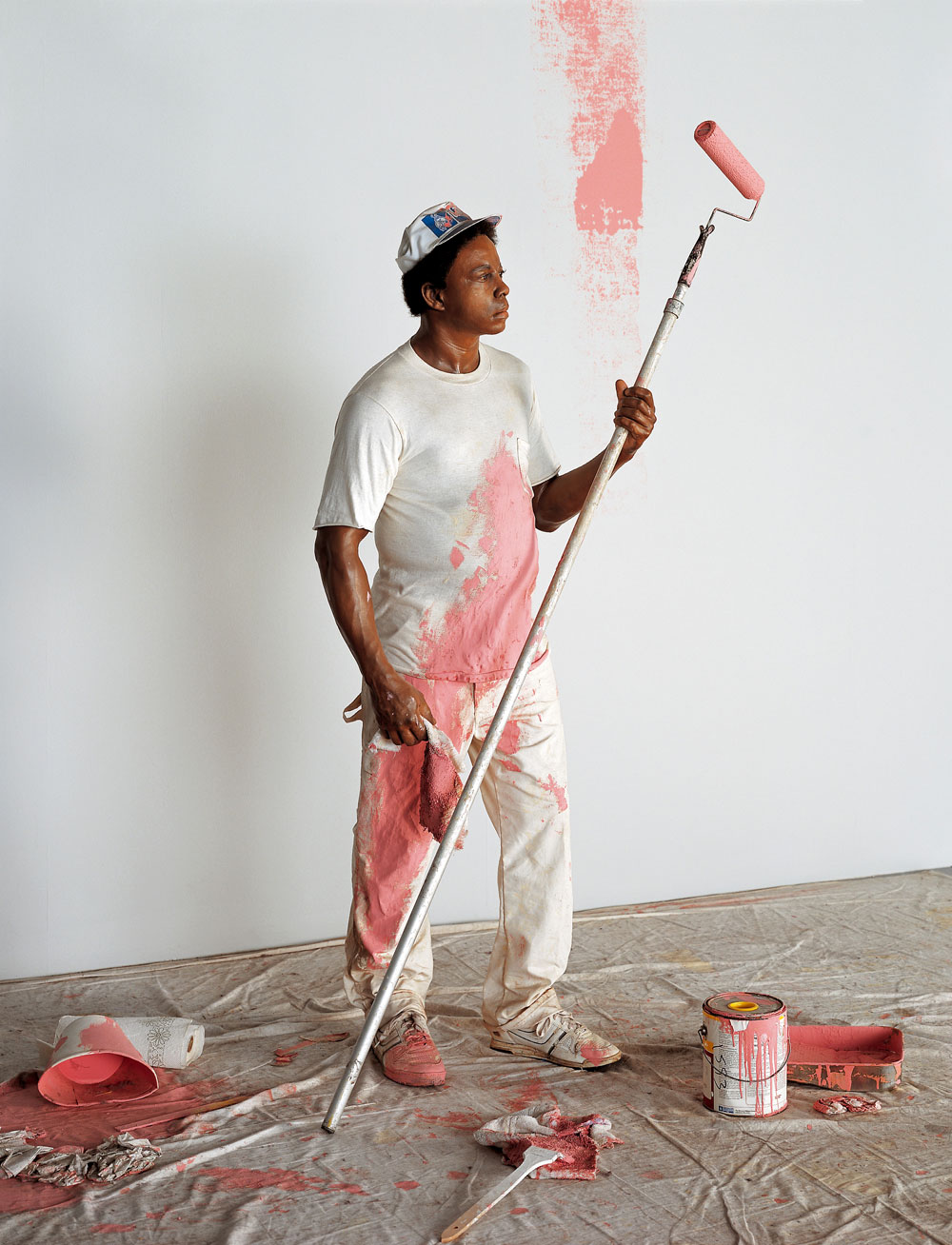
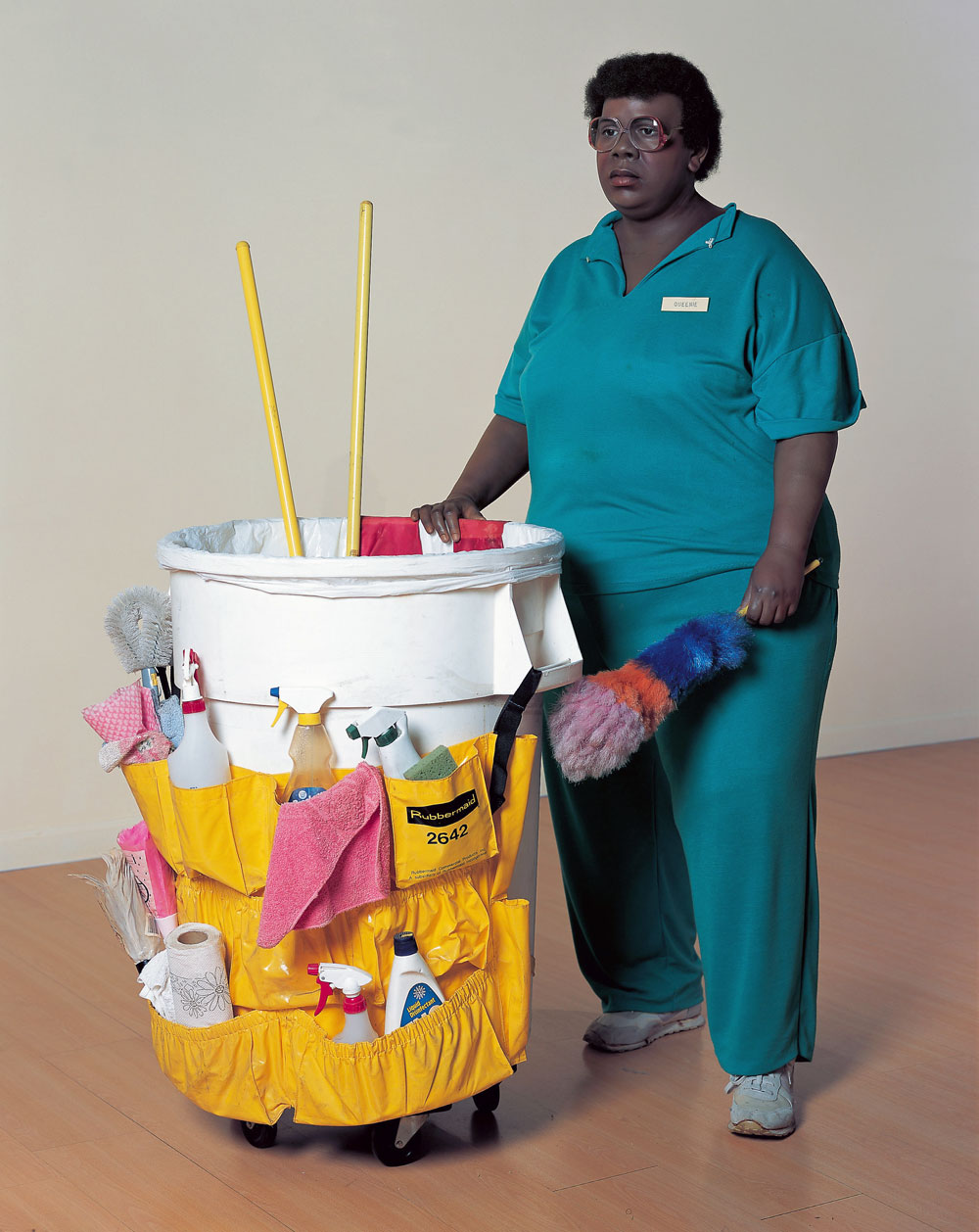
With his realistic sculptures, the American artist Duane Hanson has become a synonym for contemporary realism in contemporary art. Typical motives are average people like  housewives, waitresses, car dealers, janitors. Posture and expression of these figures are very close to reality. The photographer Gregory Crewdson arranges his large format pictures with cineastic arrangements and lets the abyss behind every-day life scenes become visible.

The exhibition at the Frieder Burda Museum presents about 30 figures by Duane Hanson, mainly from the artist’s estate, in dialogue with 20 large format works from the series Beneath the Roses by the photographer Gregory Crewdson. The photographies are mainly owned by the artist himself.

The curators Götz Adriani and Patricia Kamp are not aiming at a direct confrontation. They are rather presenting two artists who work with different materials, but deal with very similar topics. Both artists, Hanson and Crewdson, are grand when it comes to arranging their art. Crewdson always puts very much effort into the arrangements of the scenes in his pictures, and Hanson always keeps an eye on his close surroundings.

The works of both artists impressively reflect the complexity of the human existence. …


Duane Hanson (American, 1925-1996) 'Children Playing Game' 1979


Duane Hanson (American, 1925-1996)
Children Playing Game
1979
Polyvinyl chloride, coloured with oil, mixed technique and accessories
Collection Hanson, Davie, Florida
© VG Bild-Kunst, Bonn 2010


Duane Hanson (American, 1925-1996) 'Tourists II' 1988


Duane Hanson (American, 1925-1996)
Tourists II
1988
polyvinyl chloride, coloured with oil, mixed technique, accessories
Collection Hanson, Davie, Florida
© VG Bild-Kunst, Bonn 2010


Duane Hanson (American, 1925-1996) 'Self-Portrait with Model' 1979


Duane Hanson (American, 1925-1996)
Self-Portrait with Model
1979
Polyvinyl chloride, coloured with oil, mixed technique and accessories
Collection Hanson, Davie, Florida
© VG Bild-Kunst, Bonn 2010


Duane Hanson (American, 1925-1996) 'Housepainter I' 1984/1988


Duane Hanson (American, 1925-1996)
Housepainter I
1984/1988
Epoxy resin, coloured with oil, mixed technique, accessories
Collection Hanson, Davie, Florida
© VG Bild-Kunst, Bonn 2010


Duane Hanson (American, 1925-1996) 'Queenie II' 1988


Duane Hanson (American, 1925-1996)
Queenie II
1988
Epoxy resin, coloured with oil, mixed technique, accessories
Collection Hanson, Davie, Florida
© VG Bild-Kunst, Bonn 2010


Duane Hanson

Duane Hanson (1925-1996) is one of the most influential American sculptors of the 20th century committed to Realism.

The proximity to reality of his lifelike, detailed human figures make for perfect irritation. Despite all the seriousness hidden behind the socio-critical issue, which prompted Hanson to create his protagonists, the figures have a great deal of entertainment value, above all – and it is precisely this that makes them so appealing – due to their occasional gravitational bearing. Featuring twenty-five works, the exhibition presents a representative cross-section of the American’s extensive oeuvre, which comprises a total of only 114 works. The figures enter a dialogue with the large-format photographs by the American photo artist Gregory Crewdson, who has a flair for relating human abysses in a different and very subtle way.

In the early 1950s, after completing his study of sculpture at the Cranbrook Academy of Art in Bloomfield Hills, Michigan, Hanson was initially guided by the abstract style of art that prevailed during this period. However, this would not lead to a satisfactory result. In 1953, he turned his back on his homeland and spent nearly ten years of his life earning a living as an art teacher at American schools in Germany. It was during this period that he discovered the materials polyester resin and fibreglass, which would become crucial for his future creative work. After returning to the United States, Hanson spent the ensuing years perfecting his artistic skills in the treatment of these materials in such a way that the boundaries between reality and artificial figure seem to blur – where Hanson was never concerned with the mere illusionistic reproduction of reality, but chose this veristic manner of representation as a medium for communicating his concern in terms of content, i.e., shedding light on the tragedy of human lives that hauntingly consolidates in his characters.

In the human figures produced in the early work phase in the late 1960s, Hanson responded to the sociopolitical tension and protest movements of the day. He created sculptures and ensembles that very directly take issue with social hardship, violence, or racism, and he took a stand for the victims of this system, for the people who never had a chance to successfully face the demands made by life.

Influenced by Pop Art, Hanson turned to thematising everyday American life, frequently switching his observations to a critically satirical attitude that was, however, always guided by compassion. Housewives, construction workers, car salesmen, or janitors – the models for his figures are people in the American middle and working classes in whose biographies the disappointment in the American dream has become entrenched. He often puts his people and all of their small insufficiencies into perspective with ironic kindness, such as, for example, the Tourists, in whom are combined all of the clichés associated with the typical Florida tourist.

Hanson’s participation in documenta 5 in Kassel in 1972 gave rise to his international breakthrough. His figures became more lifelike; they more and more naturally blended into their surroundings. Their gestures, facial expressions, and postures related the emotional and physical burdens of life. The artist concentrated on older people in whose physiognomies one can read the traces of existence, the impact of loneliness, the problems that accompany being old, and their alienation. Hanson was struck by the isolation of this generation by society, a circumstance that has not lost any of its relevance.

Hanson’s interest in rendering the figures as lifelike as possible is surely not rooted in a desire to want to convince the viewer of their “authenticity”; rather, their lifelikeness was meant to move the viewer to experience empathy and concern, thus manifesting Hanson’s humanism. Human values and destinies comprise the focus of his art; he transforms the reality of life into the realism of art and in doing so sharpens our outlook and our view of the world, our fellow human beings, and our own life as well.


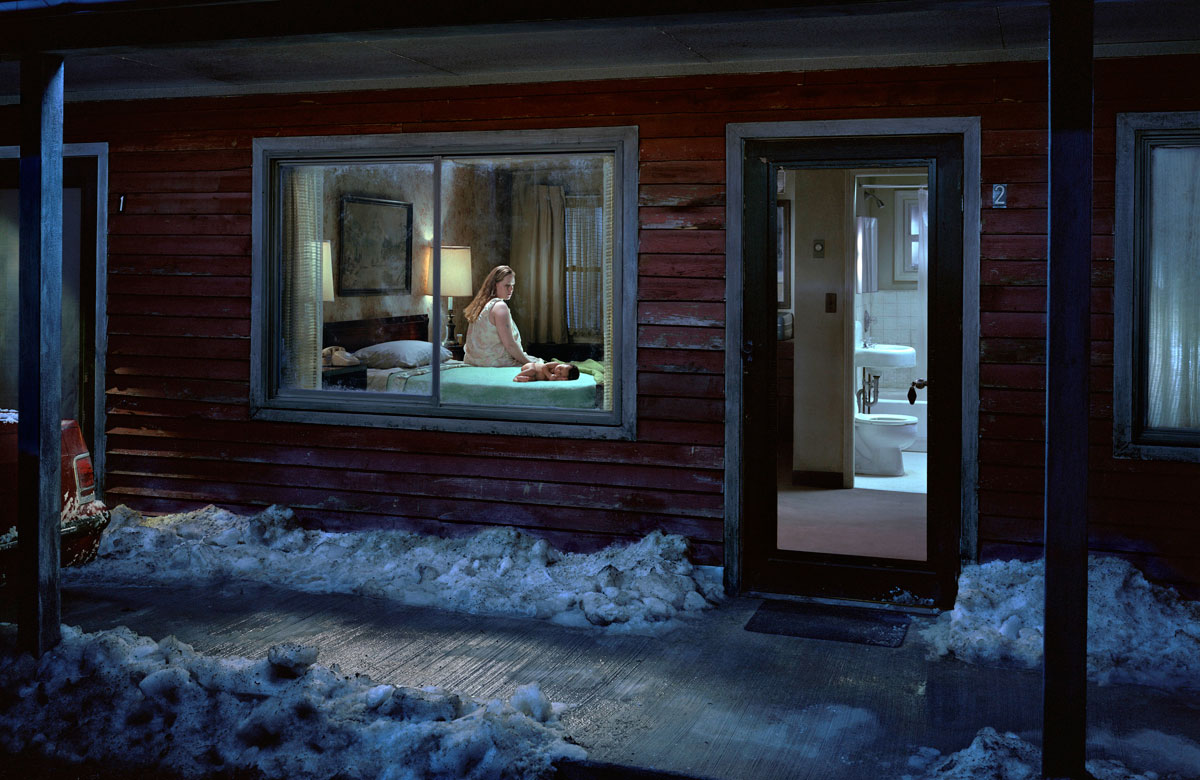
Gregory Crewdson (American, b. 1962) 'Untitled (Birth)' from the series 'Beneath the Roses' 2007


Gregory Crewdson (American, b. 1962)
Untitled (Birth)
From the series Beneath the Roses
2007
Digital carbon print
144.8 x 223.5cm
Gregory Crewdson, Courtesy Gagosian Gallery, New York
© Gregory Crewdson, 2010


Gregory Crewdson (American, b. 1962) 'Untitled (Blue Period)' from the series 'Beneath the Roses' 2005


Gregory Crewdson (American, b. 1962)
Untitled (Blue Period)
From the series Beneath the Roses
2005
Digital carbon print
144.8 x 223.5cm
Gregory Crewdson, Courtesy Gagosian Gallery, New York
© Gregory Crewdson, 2010


Gregory Crewdson (American, b. 1962) 'Untitled (Brief Encounter)' from the series 'Beneath the Roses' 2006


Gregory Crewdson (American, b. 1962)
Untitled (Brief Encounter)
From the series Beneath the Roses
2006
Digital carbon print
144.8 x 223.5cm
Gregory Crewdson, Courtesy Gagosian Gallery, New York
© Gregory Crewdson, 2010


Gregory Crewdson (American, b. 1962) 'Untitled (Debutante)' from the series 'Beneath the Roses' 2006


Gregory Crewdson (American, b. 1962)
Untitled (Debutante)
From the series Beneath the Roses
2006
Digital carbon print
144.8 x 223.5cm
Gregory Crewdson, Courtesy Gagosian Gallery, New York
© Gregory Crewdson, 2010


Gregory Crewdson (American, b. 1962) 'Untitled (Forest Clearing)' from the series 'Beneath the Roses' 2006


Gregory Crewdson (American, b. 1962)
Untitled (Forest Clearing)
From the series Beneath the Roses
2006
Digital carbon print
144.8 x 223.5cm
Gregory Crewdson, Courtesy Gagosian Gallery, New York
© Gregory Crewdson, 2010


Gregory Crewdson (American, b. 1962) 'Untitled (House Fire)' from the series 'Beneath the Roses' 2004


Gregory Crewdson (American, b. 1962)
Untitled (House Fire)
From the series Beneath the Roses
2004
Digital carbon print
144.8 x 223.5cm
Gregory Crewdson, Courtesy Gagosian Gallery, New York
© Gregory Crewdson, 2010


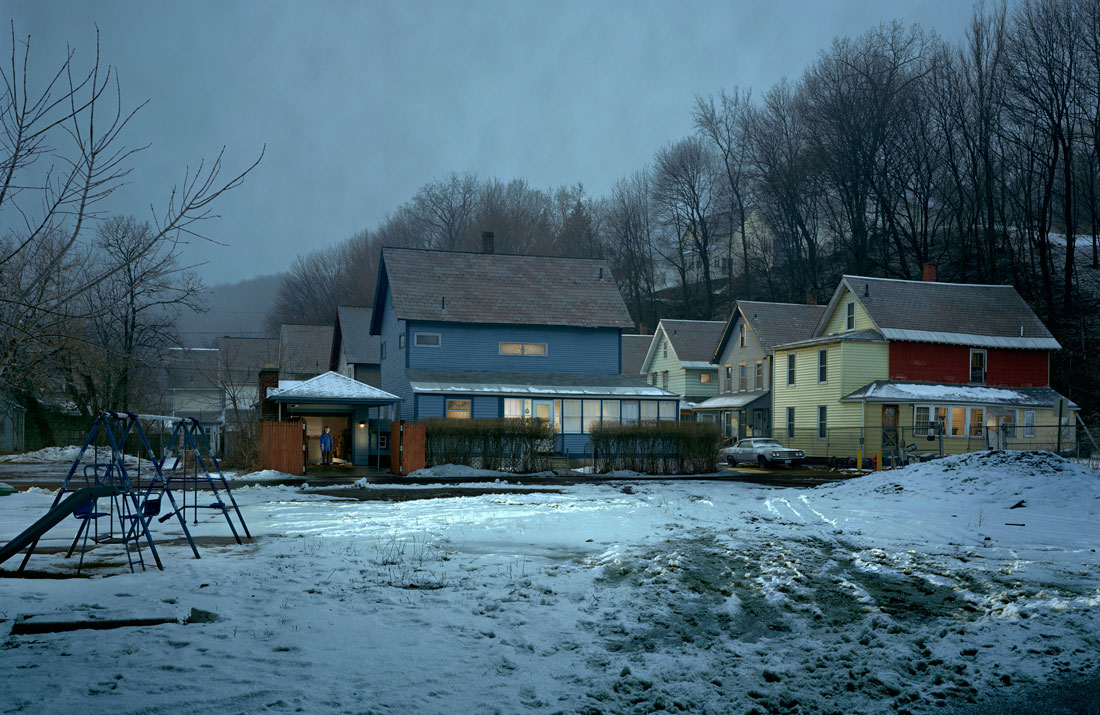
Gregory Crewdson (American, b. 1962) 'Untitled (Kent Street)' from the series 'Beneath the Roses' 2007


Gregory Crewdson (American, b. 1962)
Untitled (Kent Street)
From the series Beneath the Roses
2007
Digital carbon print
144.8 x 223.5cm
Gregory Crewdson, Courtesy Gagosian Gallery, New York
© Gregory Crewdson, 2010


Gregory Crewdson (American, b. 1962) 'Untitled (Maple Street)' from the series 'Beneath the Roses' 2004


Gregory Crewdson (American, b. 1962)
Untitled (Maple Street)
From the series Beneath the Roses
Digital carbon print
144.8 x 223.5cm
Gregory Crewdson, Courtesy Gagosian Gallery, New York
© Gregory Crewdson, 2010


Gregory Crewdson (American, b. 1962) 'Untitled (Merchants Row)' from the series 'Beneath the Roses' 2003


Gregory Crewdson (American, b. 1962)
Untitled (Merchants Row)
From the series Beneath the Roses
Digital carbon print
144.8 x 223.5cm
Gregory Crewdson, Courtesy Gagosian Gallery, New York
© Gregory Crewdson, 2010


Gregory Crewdson

Born in 1962 in Brooklyn, New York, Gregory Crewdson is one of the best-known contemporary photographers internationally. In his most important series to date Beneath the Roses, which he created between 2003 and 2008, Crewdson explores the American psyche and the disturbing realities at play within quotidian environments. In his dramatically detailed and realistic photographs situated in America’s morbid, small-town milieu, the artist succeeds to stimulate the viewer’s subconscious on various levels. Twenty outstanding works from the series are being placed in a dialogue with sculptures by Duane Hanson. Gregory Crewdson does not spare either effort or expenses for the production of his visual inventions, which are reminiscent of film productions. The stagings are planned and arranged in advance down to the smallest detail and then elaborately implemented in a major logistical and human effort. The final photograph is the result of what is frequently work lasting several weeks, a circumstance that is substantiated by its depths in terms of content and its technical perfection.

Gregory Crewdson works in two distinct ways to create his photographs. On one hand, he works on location in real neighborhoods and townships. On the other hand, the artist works on the soundstage inventing his world from scratch. Before the photographic location productions start, Crewdson drives around upstate Massachusetts looking for interesting settings, which he then has prepared in an elaborate process. In most cases, local residents of the ramshackle towns also play the characters in his work. Crewdson works closely with the art department of the museum MASSMoCA, when shooting his pictures done on the soundstage. The results are much like stills from a movie and reflect his affinity with cinema. Filmmakers such as Alfred Hitchcock, David Lynch, or Steven Spielberg are the inspiration for Crewdson’s uncanny stories, which he seems to freeze in a single snapshot in time.

The construction of this narrative instant demonstrates the artist’s extraordinary talent. Like sophisticated literature does the reader, his works pose a challenge to viewers, as they have to mount the decisive share of the creative effort themselves. A brief, fleeting glance is not enough. Viewers become immersed in the staged scenes full of details and accessories to experience a moment that is intensely real. Fantasy and the powers of imagination and association fashion the visual event in the mind to become a subjective, alternative reality – an uncanny reality.

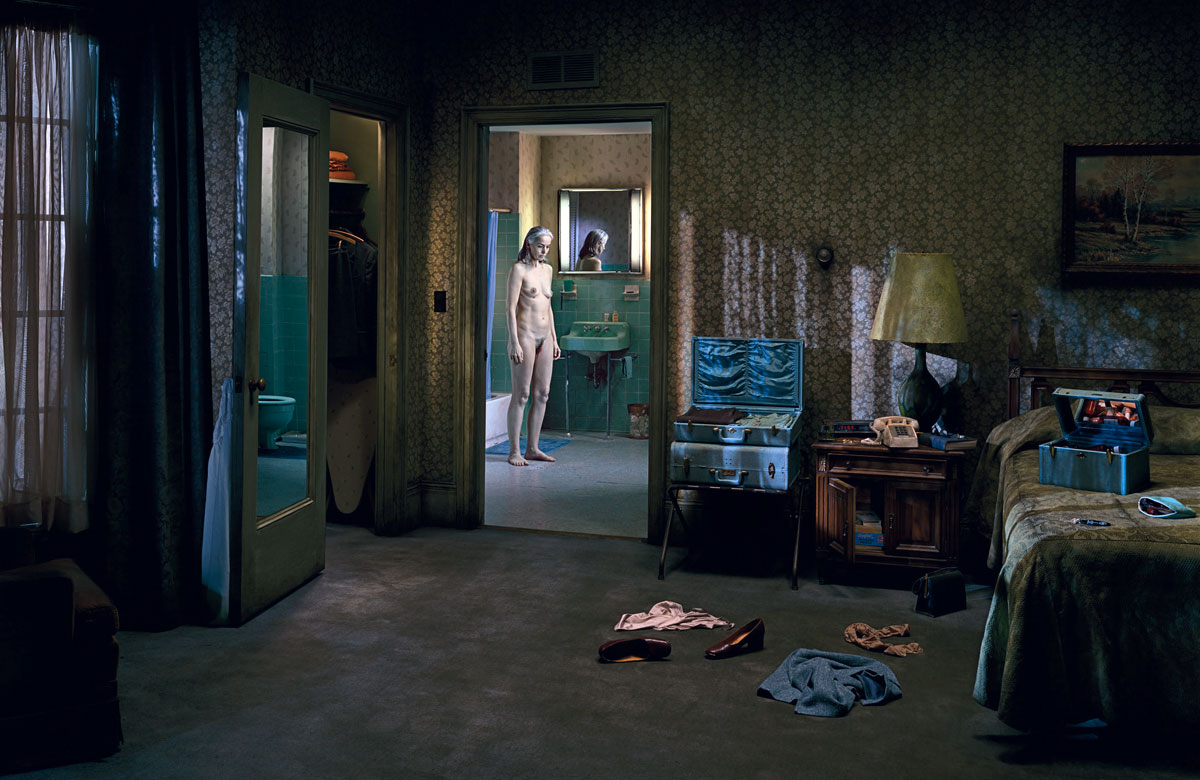
In his photographs, Crewdson deliberately works with emotions and fears that extend through his oeuvre in recurring, in part very different scenarios. They mirror alienation, absence, shame, sexuality, and loss – human states of emotion that deeply touch the viewer. That the artist focuses on the mind in his works may be due to the fact that, as the son of a psychoanalyst, he experienced insight into the profundity of the human soul very early on. His works can be regarded as metaphors for fears and desires, for the things that take place below the surface, the palpable, as if Crewdson wanted to make visible a new or different level of reality situated somewhere between the conscious and subconscious.

At the same time, the Beneath the Roses series can be seen as a psychological study of the American province. The settings show social realities and document the economic decline of a society behind the backdrop of the American way of life. Unsentimental and direct, they reflect working-class life – which allows us to strike an arc to the work by Duane Hanson, whose oeuvre also revolves around the concept of humanity, the facets of which he lends expression to in his silent, introverted figures.

The evolution of Beneath the Roses was documented in a series of production stills, original drawings by the artist, and detailed lighting plans. About sixty works from this reservoir are presented in a studio exhibition at the museum in order to illustrate the complex technical process of producing the photographs. Gregory Crewdson completed his study of Street Photography at the Yale School of Art in New Haven in 1988. He returned to Yale in 1993 and has occupied the Chair of Photography since.

Press release from the Museum Frieder Burda website


Gregory Crewdson (American, b. 1962) 'Untitled (Natural Bridge)' from the series 'Beneath the Roses' 2007


Gregory Crewdson (American, b. 1962)
Untitled (Natural Bridge)
From the series Beneath the Roses
Digital carbon print
144.8 x 223.5cm
Gregory Crewdson, Courtesy Gagosian Gallery, New York
© Gregory Crewdson, 2010


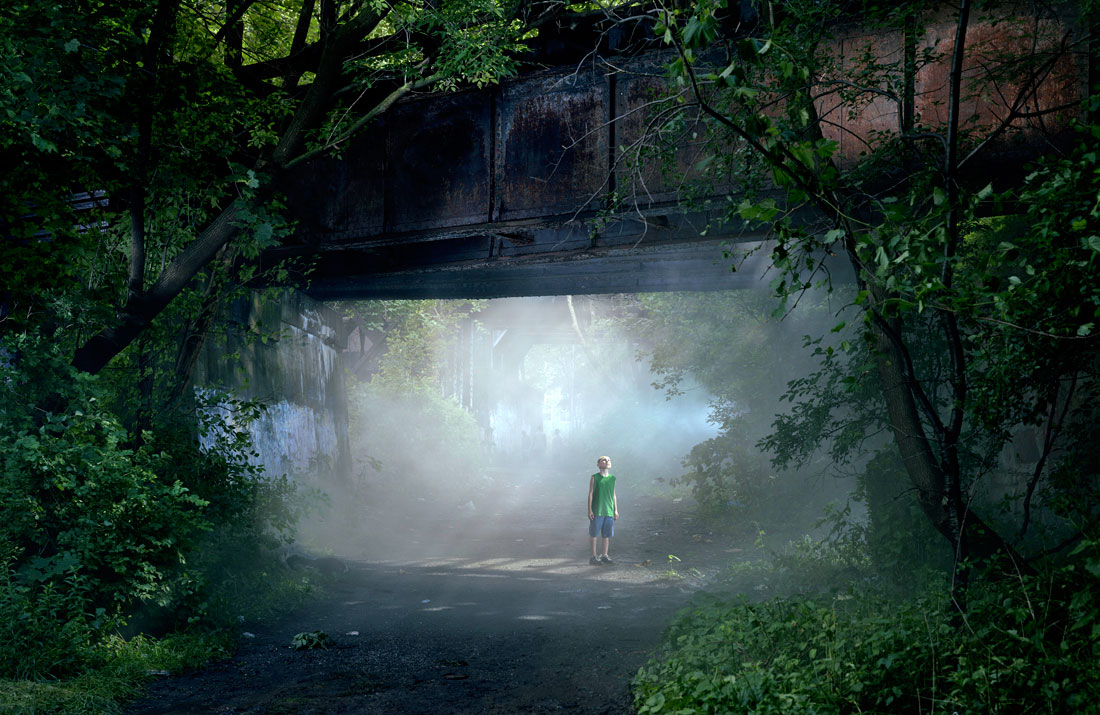
Gregory Crewdson (American, b. 1962) 'Untitled (Railway Children)' from the series 'Beneath the Roses' 2003


Gregory Crewdson (American, b. 1962)
Untitled (Railway Children)
From the series Beneath the Roses
2003
Digital carbon print
144.8 x 223.5cm
Gregory Crewdson, Courtesy Gagosian Gallery, New York
© Gregory Crewdson, 2010


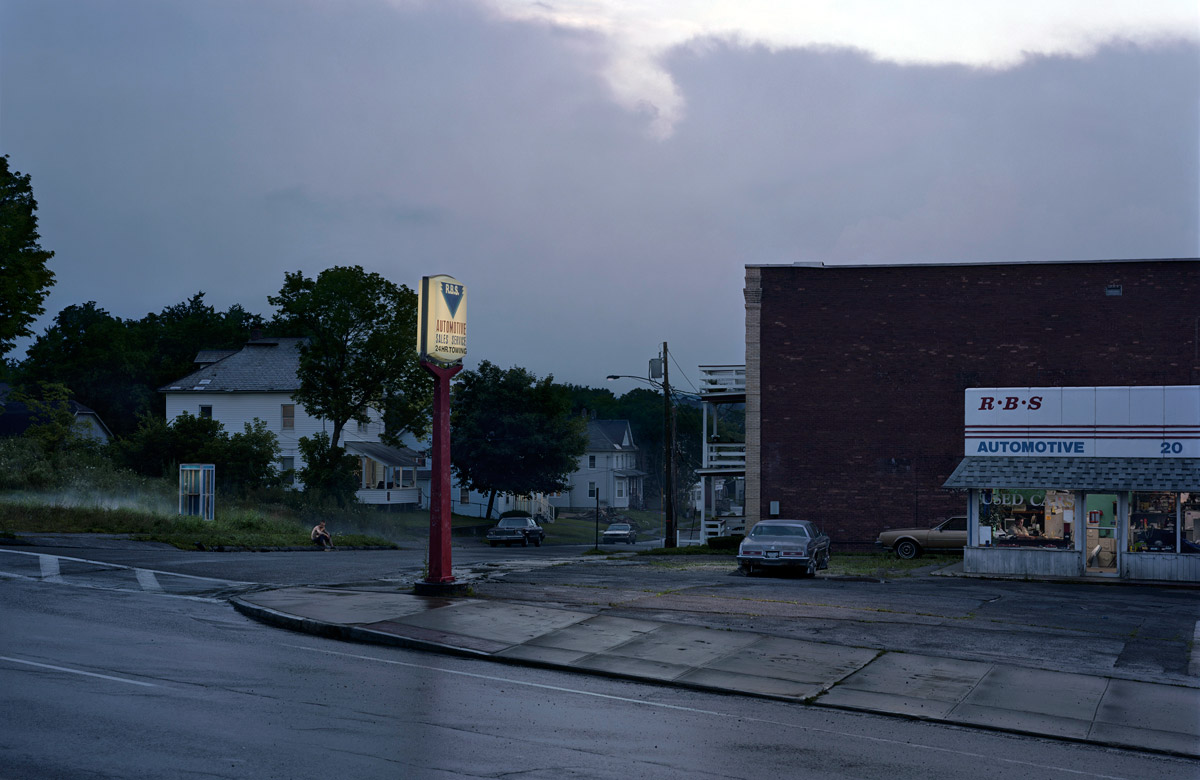
Gregory Crewdson (American, b. 1962) 'Untitled (RBS Automotive)' from the series 'Beneath the Roses' 2007


Gregory Crewdson (American, b. 1962)
Untitled (RBS Automotive)
From the series Beneath the Roses
2007
Digital carbon print
144.8 x 223.5cm
Gregory Crewdson, Courtesy Gagosian Gallery, New York
© Gregory Crewdson, 2010


Gregory Crewdson (American, b. 1962) 'Untitled (Shane)' from the series 'Beneath the Roses' 2006


Gregory Crewdson (American, b. 1962)
Untitled (Shane)
From the series Beneath the Roses
2006
Digital carbon print
144.8 x 223.5cm
Gregory Crewdson, Courtesy Gagosian Gallery, New York
© Gregory Crewdson, 2010


Gregory Crewdson (American, b. 1962) 'Untitled (Sunday Roast)' from the series 'Beneath the Roses' 2005


Gregory Crewdson (American, b. 1962)
Untitled (Sunday Roast)
From the series Beneath the Roses
2005
Digital carbon print
144.8 x 223.5cm
Gregory Crewdson, Courtesy Gagosian Gallery, New York
© Gregory Crewdson, 2010


Gregory Crewdson (American, b. 1962) 'Untitled (Temple Street)' from the series 'Beneath the Roses' 2006


Gregory Crewdson (American, b. 1962)
Untitled (Temple Street)
From the series Beneath the Roses
2006
Digital carbon print
144.8 x 223.5cm
Gregory Crewdson, Courtesy Gagosian Gallery, New York
© Gregory Crewdson, 2010


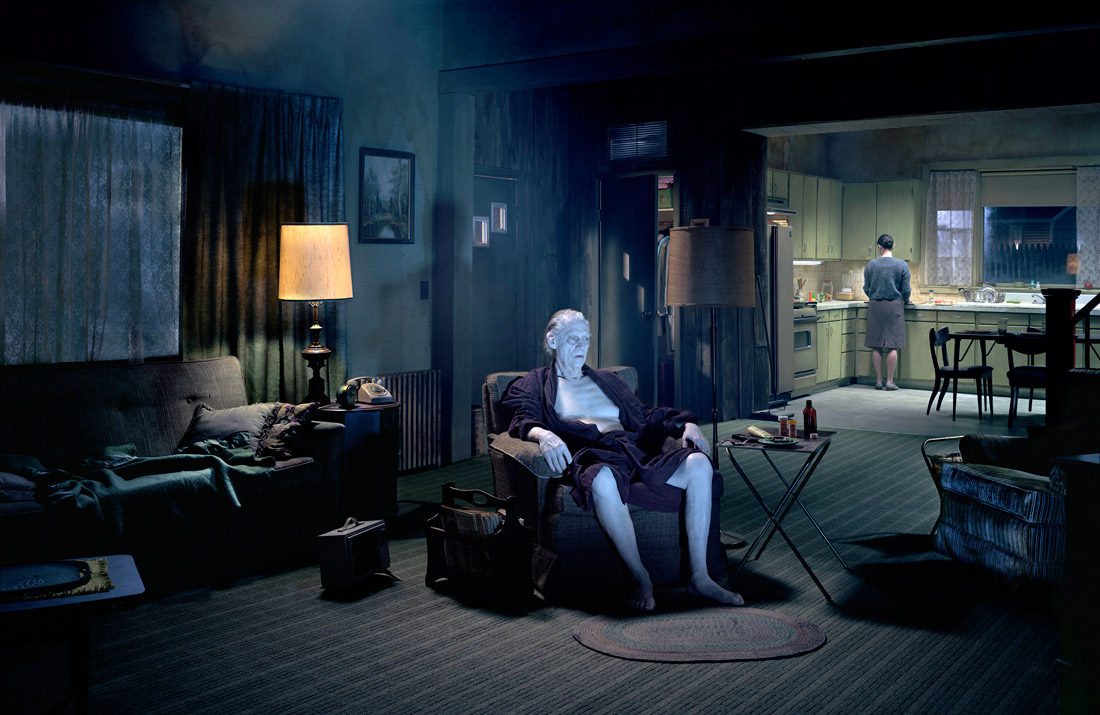
Gregory Crewdson (American, b. 1962) 'Untitled (The Father)' from the series 'Beneath the Roses' 2007


Gregory Crewdson (American, b. 1962)
Untitled (The Father)
From the series Beneath the Roses
Digital carbon print
144.8 x 223.5cm
Gregory Crewdson, Courtesy Gagosian Gallery, New York
© Gregory Crewdson, 2010


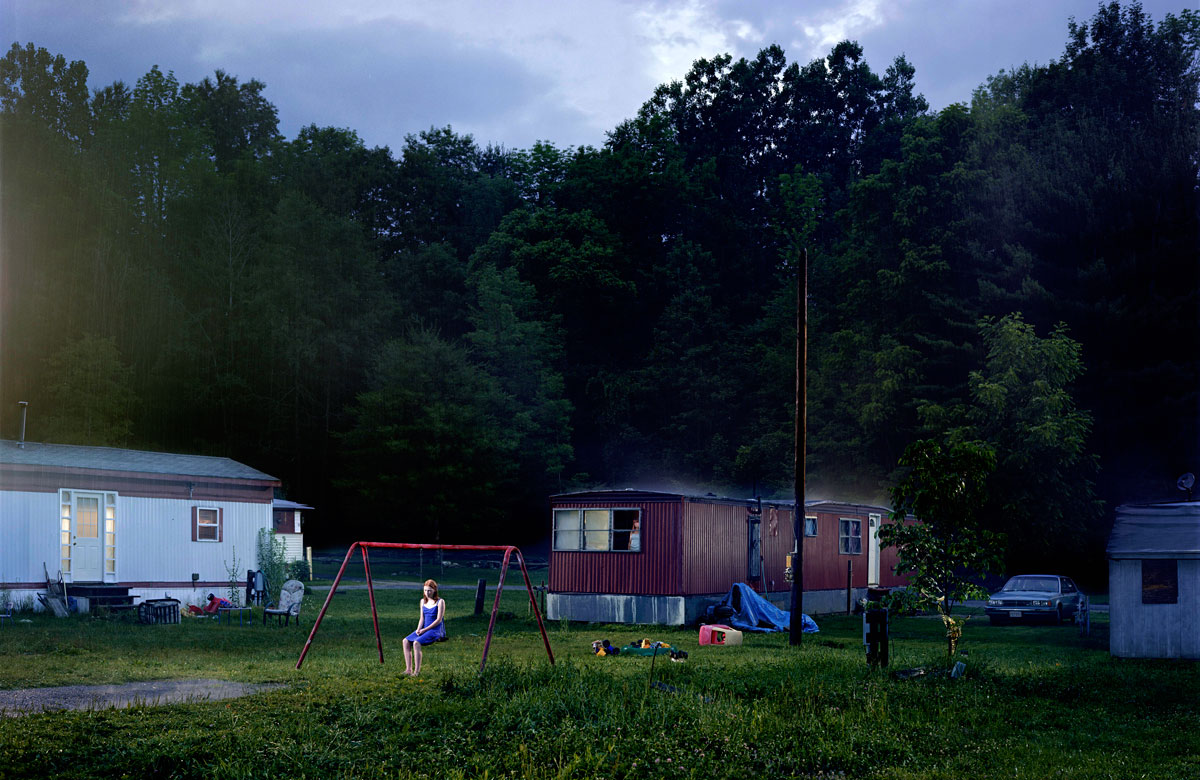
Gregory Crewdson (American, b. 1962) 'Untitled (Trailer Park)' from the series 'Beneath the Roses' 200


Gregory Crewdson (American, b. 1962)
Untitled (Trailer Park)
From the series Beneath the Roses
2007
Digital carbon print
144.8 x 223.5cm
Gregory Crewdson, Courtesy Gagosian Gallery, New York
© Gregory Crewdson, 2010


Gregory Crewdson (American, b. 1962) 'Untitled (Worthington Street)' from the series 'Beneath the Roses' 2006


Gregory Crewdson (American, b. 1962)
Untitled (Worthington Street)
From the series Beneath the Roses
2006
144.8 x 223.5cm
Gregory Crewdson, Courtesy Gagosian Gallery, New York
© Gregory Crewdson, 2010


Museum Frieder Burda
Lichtentaler Allee 8b
D-76530 Baden-Baden
Phone: +49 (0)7221 / 3 98 98-0

Opening hours:
Tuesday – Sunday 10am – 6pm
Closed Mondays

Museum Frieder Burda website

LIKE ART BLART ON FACEBOOK

Back to top

Exhibition: ‘The Monstropolous Beast’ by Will Steacy at Christophe Guye Galerie, Zurich

Exhibition dates: 17th November 2010 – 15th January, 2011


Many thankx to Christophe Guye Galerie for allowing me to publish the photographs in the posting. Please click on the photographs for a larger version of the image.


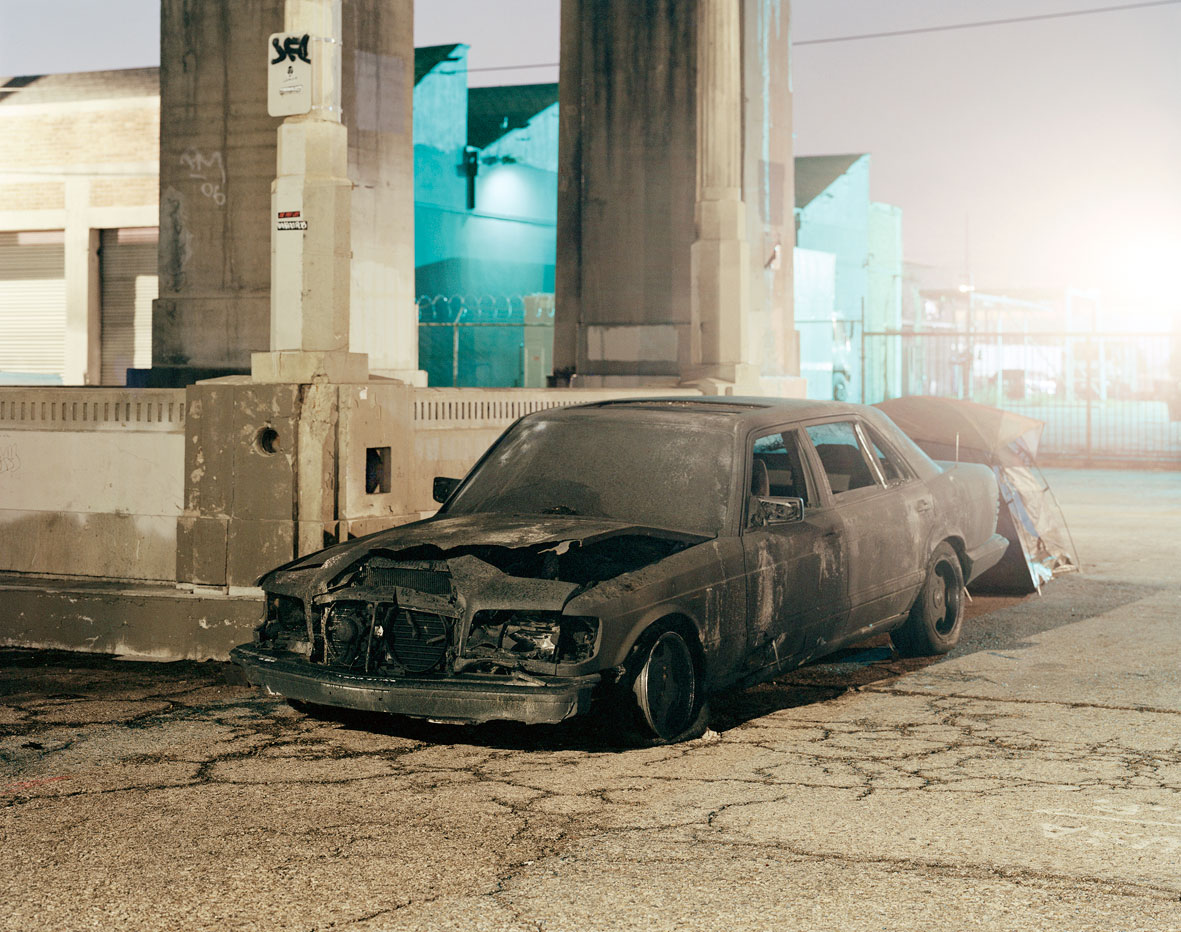
Will Steacy (American, b. 1980) 'Burned Car, Los Angeles' 2009 from the exhibition 'The Monstropolous Beast' by Will Steacy at Christophe Guye Galerie, Zurich


Will Steacy (American, b. 1980)
Burned Car, Los Angeles
2009
from Down these Main Streets, 2009
Archival pigment prints
61 x 76.2cm (24 x 30 in)


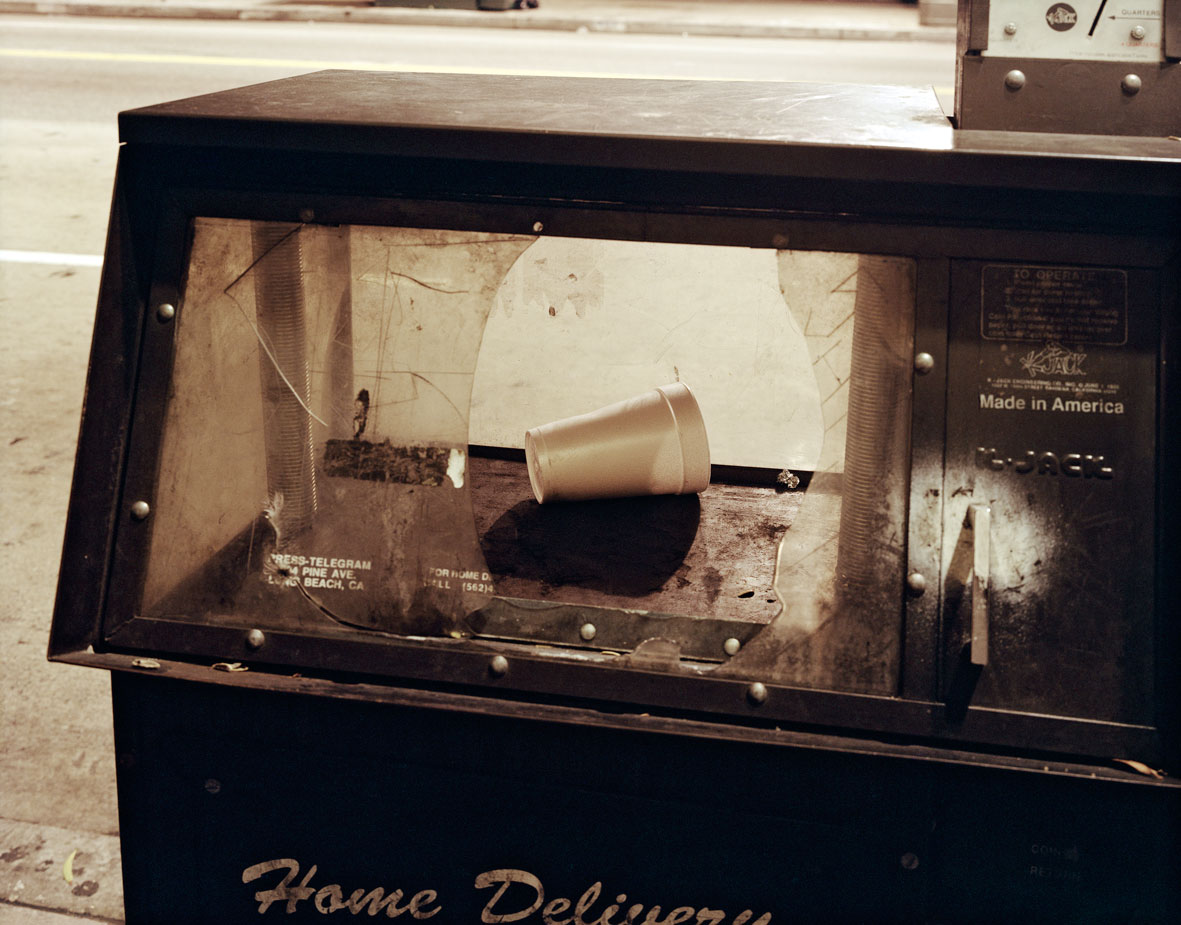
Will Steacy (American, b. 1980) 'Home Delivery, Los Angeles' 2009 from the exhibition 'The Monstropolous Beast' by Will Steacy at Christophe Guye Galerie, Zurich


Will Steacy (American, b. 1980)
Home Delivery, Los Angeles
2009
from Down these Main Streets, 2009
Archival pigment prints
61 x 76.2cm (24 x 30 in)


Will Steacy (American, b. 1980) 'Lovers, New Branford' 2007 from the exhibition 'The Monstropolous Beast' by Will Steacy at Christophe Guye Galerie, Zurich


Will Steacy (American, b. 1980)
Lovers, New Branford
2007
from All my Life I have the same Dream, 2007
Archival pigment prints
61 x 76.2cm (24 x 30 in)


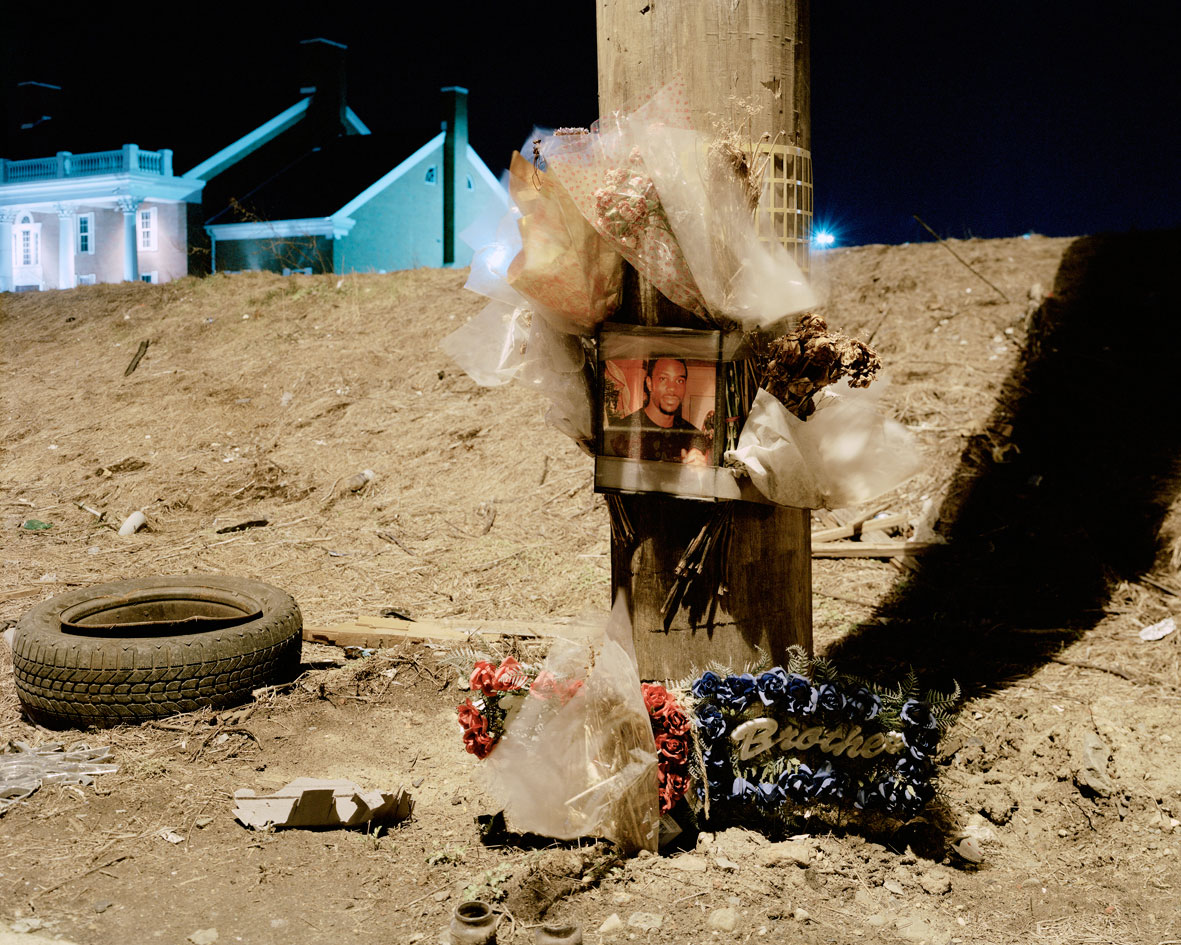
Will Steacy (American, b. 1980) 'Memorial, Philadelphia' 2009 from the exhibition 'The Monstropolous Beast' by Will Steacy at Christophe Guye Galerie, Zurich


Will Steacy (American, b. 1980)
Memorial, Philadelphia
2009
from Down these Main Streets, 2009
Archival pigment prints
61 x 76.2cm (24 x 30 in)


“The monstropolous beast had left his bed. Two hundred miles an hour wind had loosed his chains. He seized hold of his dikes and ran forward until he met the quarters; uprooted them like grass and rushed on after his supposed-to-be conquerors, rolling the dikes, rolling the houses, rolling the people in the houses along with other timbers. The sea was walking the earth with a heavy heel.”


From Zola Neale Hurston’s Their Eyes Were Watching God


Christophe Guye Galerie is pleased to present The Monstropolous Beast, Will Steacy’s (American, b. 1980) first solo exhibition outside the United States.

For his first solo exhibition at the Christophe Guye Galerie, Will Steacy is showing a cross-section of his past years of creative working. Showing 28 new and recent photographs, The Monstropolous Beast is the first exhibition to comprehensively portray Steacy’s whole body of work to date. Once named “the lovechild of Charles Bukowski and Dorothea Lange” Steacy’s work is poetic and confrontational alike, at once evoking photojournalist documentation and romanticised realism.

Steacy’s imaginary stems from his experiences, encounters and the desire to awaken. His work quietly observes, holding on to moments of apparent silence that would pass unnoticed had he not been there to click the shutter. Breathtaking and touching, the emotional force of the artist’s work allows the viewer to intimately connect with the subject. Deeply philosophical, the camera permits him to ask questions, to truly see and think. It is for Steacy a tool with which to understand the world; an understanding he wants to convey to his viewers.

His method of inquiry is a large format film camera. Photographing the depleted city centres and rural suburbs of America, Steacy has spent the last years travelling his country to create a body of work that through its social connotations goes beyond simple photography. As a former Union Labourer, one can sense the humanistic approach to Steacy’s art. While deeply personal, Steacy works with the intention to create awareness, challenging people to look inward.

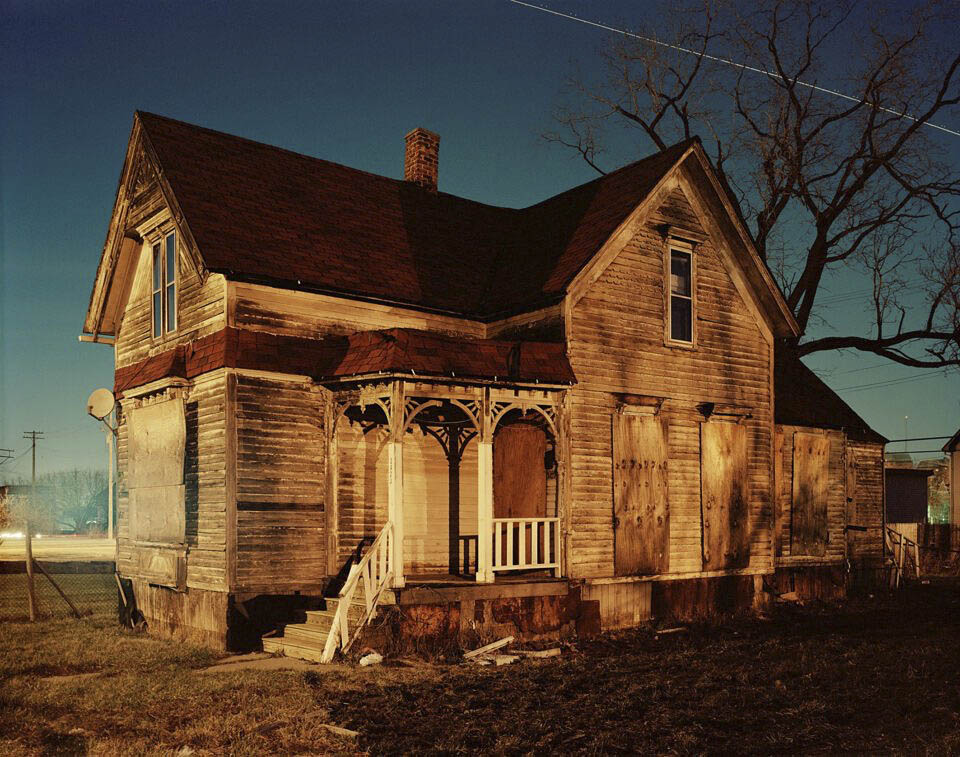
A key series in the exhibition is Down These Mean Streets, for which the artist examined fear and abandonment of America’s inner cities. The reality experienced at night on the streets is so haunting it becomes a hyper reality; laden with emotional and mental attachment, in works such as Memorial or Home Delivery the energy and courage that spark the artist’s work is intensely apparent. Factories, deserted streets and inhabitants of neglected neighbourhoods are his subjects. By addressing the loss and despair that reign in US metropolitan communities, his aim is to reveal a modern day portrait of the reality in American urban centres.

Though still early in his career, the almost ordinary or unspectacular subject matters depicted in the works shown bring to mind the works of William Eggleston or Martin Parr. Demonstrating a distinctive ability to find beauty or fascination in commonplace scenes, and illustrating them with vivid displays of colour and luminosity, Steacy’s works take a critical look at modern society and human conditions, bring viewers uncomfortably close to an often sombre reality.

What at first glance appears like a simple capturing of ordinary people, everyday situations and mundane settings or situations, unravels into a multifaceted portrayal of society, its people, places, race, class, and boundaries. Through a life-changing experience, Steacy turned to art, devoting “everything I have to my art, this gift, this thing that is the reason I am alive… Coming that close to death will change a man. Life has had a new meaning since then, and I wake up every day happy to be alive, happy to chase this dream.” Frank and profound alike, unostentatious and similarly intense Steacy’s work is about life: life today in 21st century America, where layers of seeming simplicity unfolds before our eyes.”

Press release from the Christophe Guye Galerie website


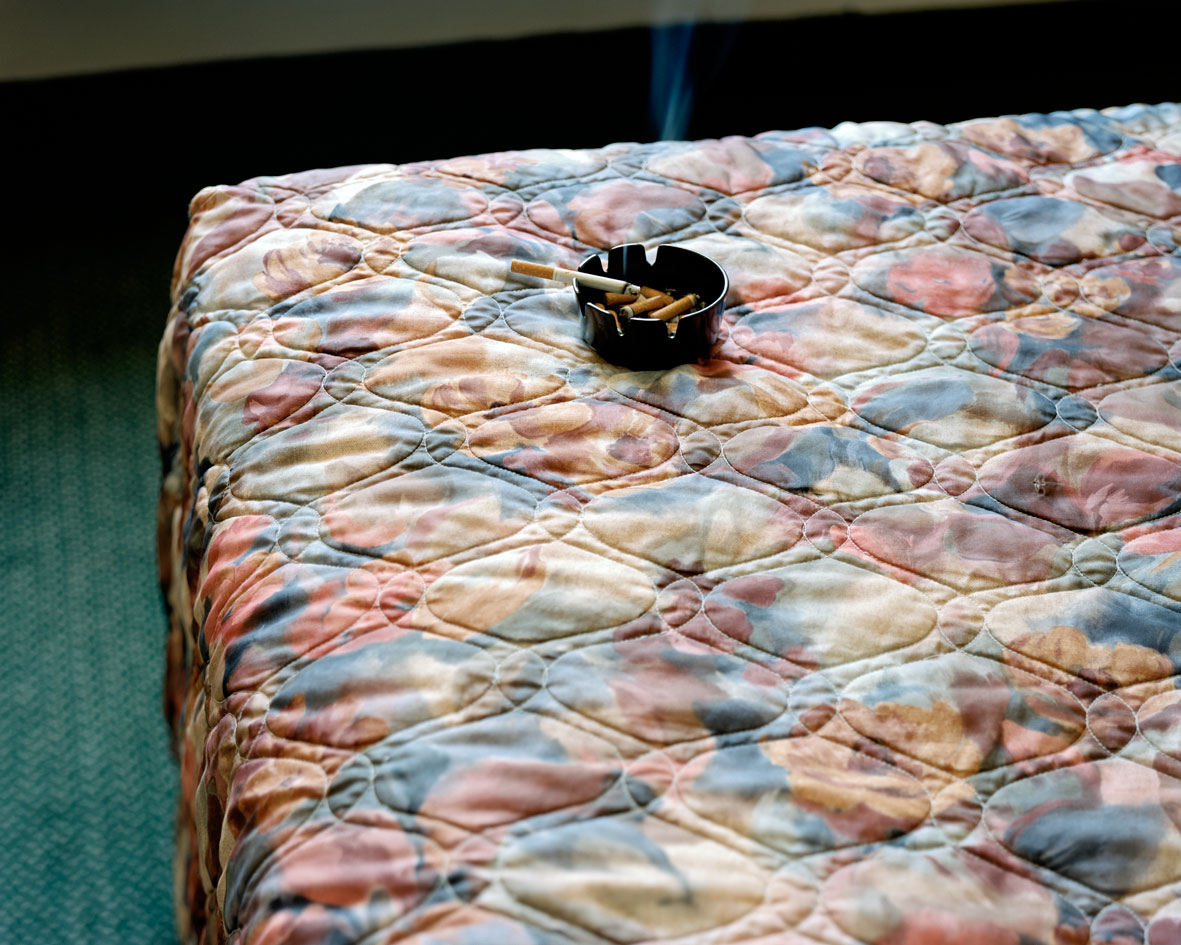
Will Steacy (American, b. 1980) 'Motel Room' 2007 from the exhibition 'The Monstropolous Beast' by Will Steacy at Christophe Guye Galerie, Zurich


Will Steacy (American, b. 1980)
Motel Room
2007
from We are all in this Together, 2007
Archival pigment prints
61 x 76.2cm (24 x 30 in)


Will Steacy (American, b. 1980) 'Pawn Shop, Memphis' 2007 from the exhibition 'The Monstropolous Beast' by Will Steacy at Christophe Guye Galerie, Zurich


Will Steacy (American, b. 1980)
Pawn Shop, Memphis
2007
from All my Life I have the same Dream, 2007
Archival pigment prints
61 x 76.2cm ( 24 x 30 in)


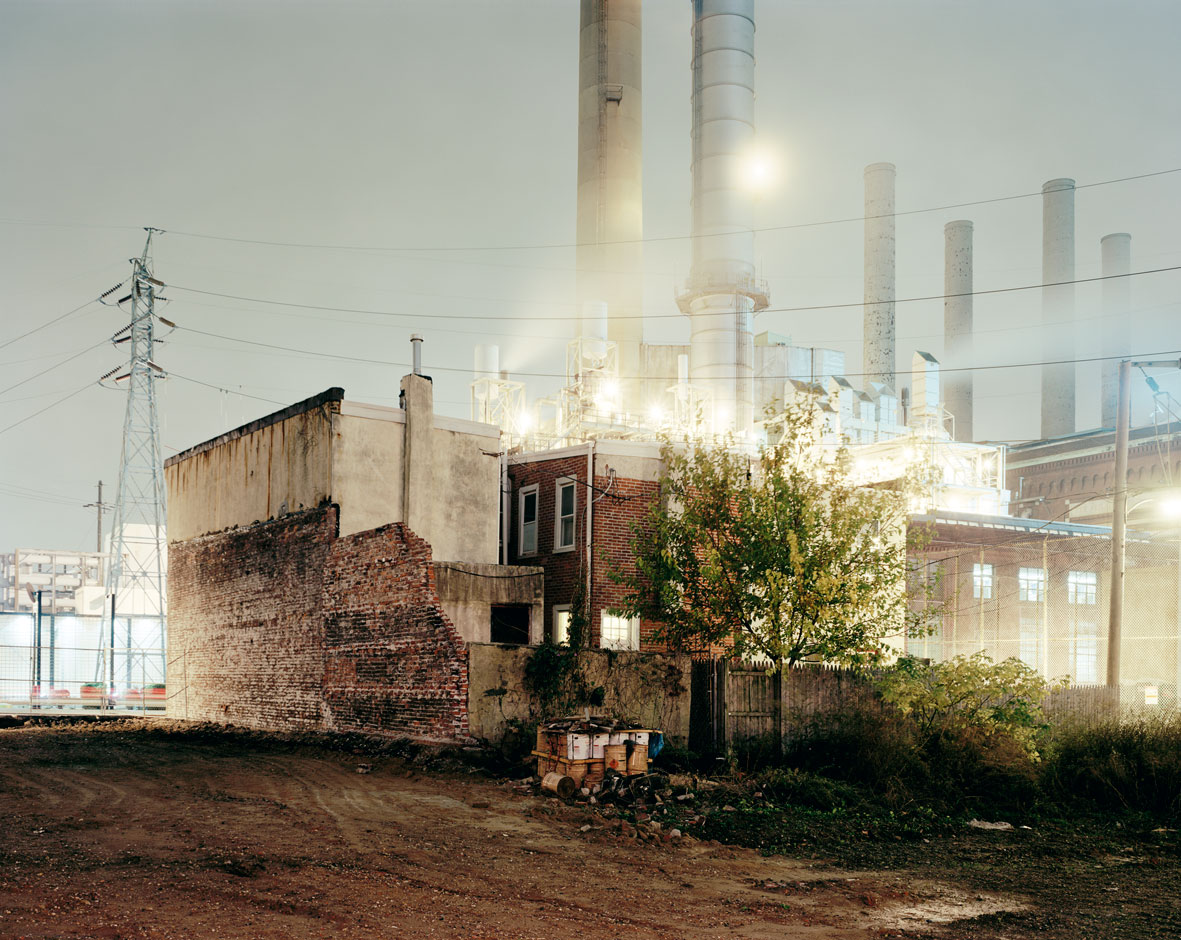
Will Steacy (American, b. 1980) 'Power Plant, Philadelphia' 2008


Will Steacy (American, b. 1980)
Power Plant, Philadelphia
2008
from Down these Main Streets, 2009
Archival pigment prints
61 x 76.2cm (24 x 30 in)


Will Steacy (American, b. 1980)
'Satellite Dish, Detroit' 2009


Will Steacy (American, b. 1980)
Satellite Dish, Detroit
2009
from Down these Main Streets, 2009
Archival pigment prints
61 x 76.2cm (24 x 30 in)


Will Steacy (American, b. 1980) 'Liz, Philadelphia' 2007 from the exhibition 'The Monstropolous Beast' by Will Steacy at Christophe Guye Galerie, Zurich


Will Steacy (American, b. 1980)
Liz, Philadelphia
2007
from All my Life I have the same Dream, 2007
Archival pigment prints
61 x 76.2cm (24 x 30 in)


Christophe Guye Galerie
Dufourstrassse 31
8008 Zurich, Switzerland
Phone: +41 44 252 01 11

Opening hours:
Monday – Friday 10am – 6pm
Saturday 11am – 4pm

Christophe Guye Galerie website

LIKE ART BLART ON FACEBOOK

Back to top

Review: ‘An American Index of the Hidden and Unfamiliar’ by Taryn Simon at the Centre for Contemporary Photography, Fitzroy

Exhibition dates: 15th October – 12th December 2010


Taryn Simon (American, b. 1975) 'U.S. Customs and Border Protection, Contraband Room, John F. Kendedy International Airport, Queens, New York' 2005/2007 from the exhibition 'An American Index of the Hidden and Unfamiliar' by Taryn Simon at the Centre for Contemporary Photography, Oct - Dec 2010


Taryn Simon (American, b. 1975)
U.S. Customs and Border Protection, Contraband Room, John F. Kendedy International Airport, Queens, New York
2005/2007
Chromogenic colour print
37 1/4 x 44 1/2 inches framed (94.6 x 113cm)
© 2007 Taryn Simon
Courtesy Gagosian Gallery/Steidl


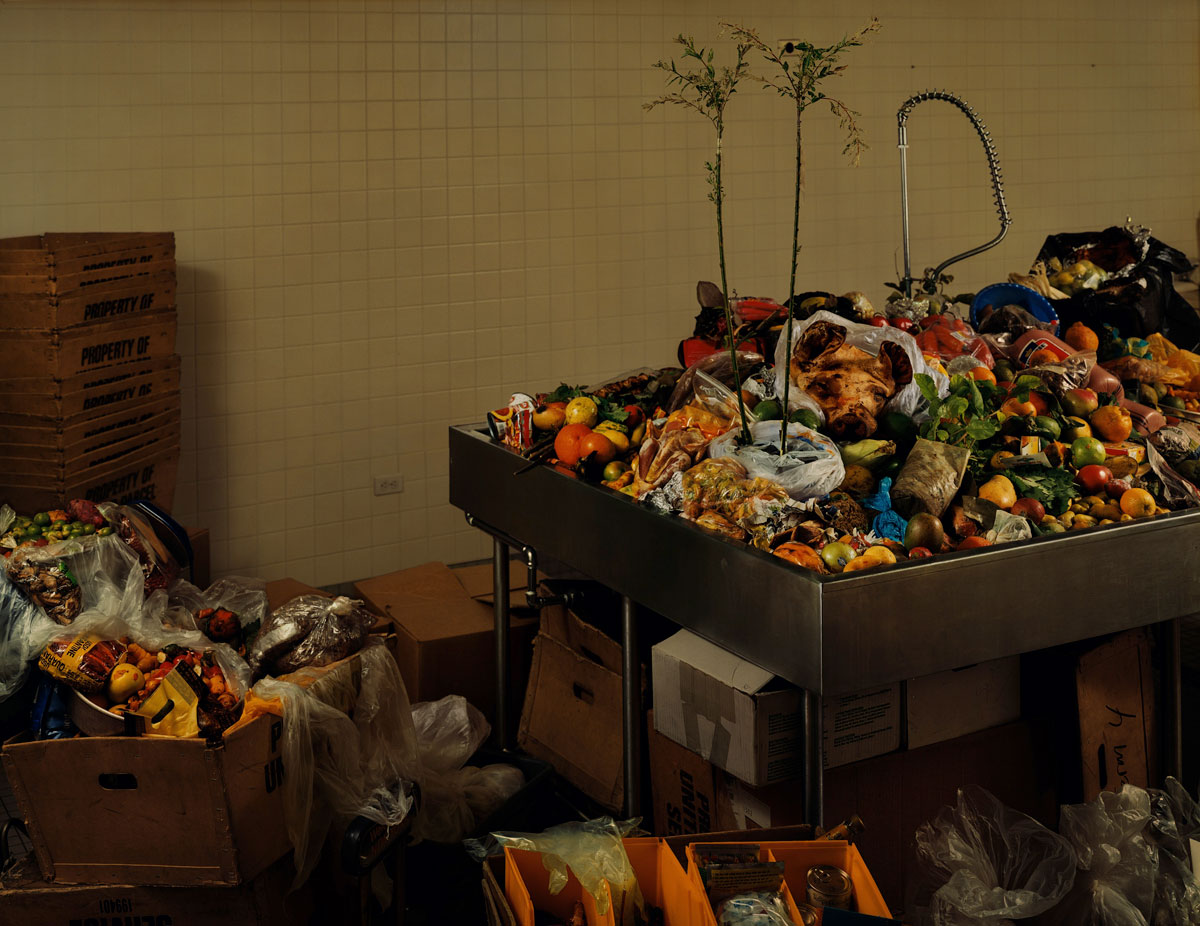
African cane rats infested with maggots, African yams (dioscorea), Andean potatoes, Bangladeshi cucurbit plants, bush meat, cherimoya fruit, curry leaves (murraya), dried orange peels, fresh eggs, giant African snail, impala skull cap, jackfruit seeds, June plum, kola nuts, mango, okra, passion fruit, pig nose, pig mouths, pork, raw poultry (chicken), South American pig head, South American tree tomatoes, South Asian lime infected with citrus canker, sugar cane (poaceae), uncooked meats, unidentified sub tropical plant in soil. All items in the photograph were seized from baggage of passengers arriving in the U.S. at JFK Terminal 4 from abroad over a 48-hour period. All seized items are identified, dissected, and then either ground up or incinerated. JFK processes more international passengers than any other airport in the Unites States.

Prohibited agricultural items can harbor foreign animal and plant pests and diseases that could damage U.S. crops, livestock, pets, the environment and the economy. Before entering the country, passengers are required to declare fruits, vegetables, plants, seeds, meats, birds, or animal products that they may be carrying. The CBP agriculture specialists determine if items meet U.S. entry requirements. The U.S. requires permits for animals and plants in order to safeguard against highly infectious diseases, such as foot-and-mouth disease and avian influenza.


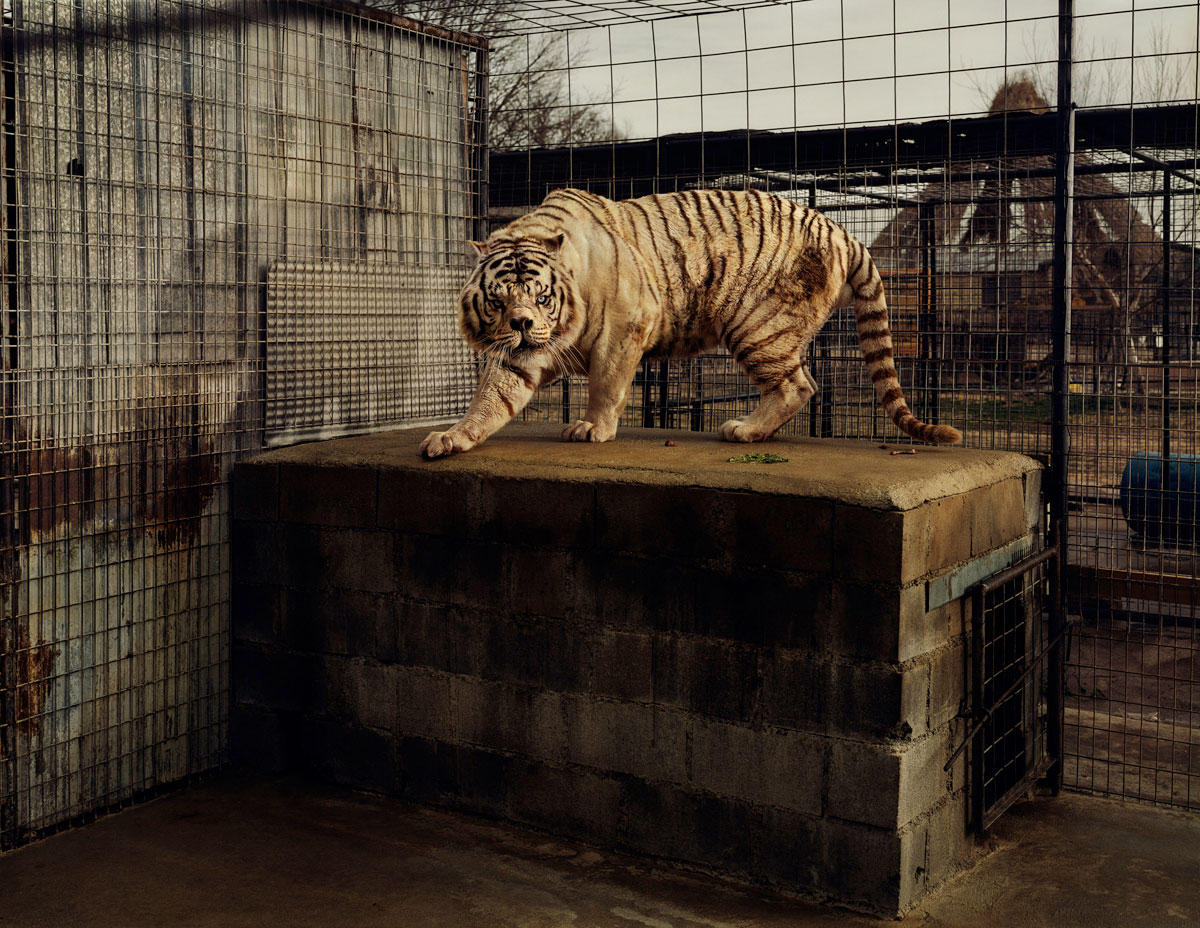
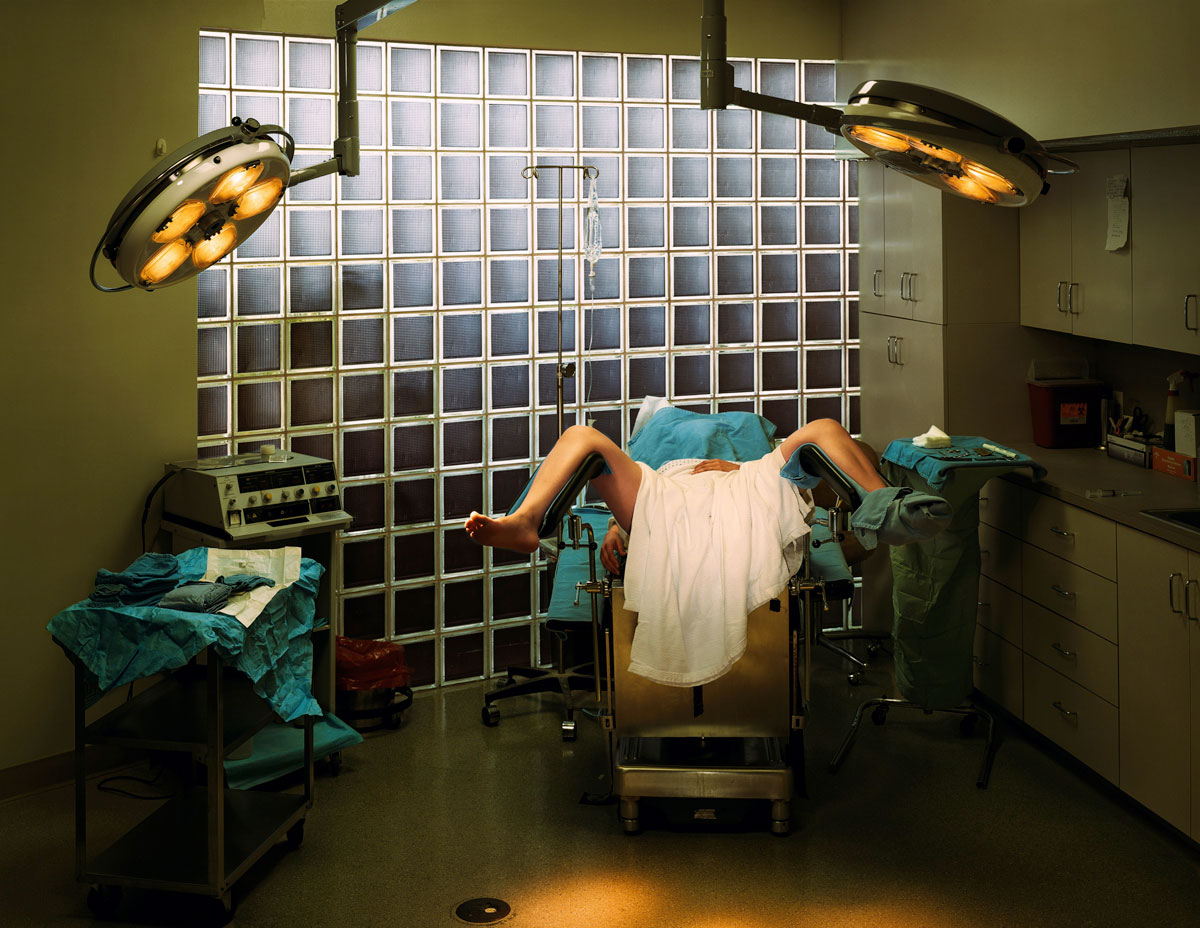
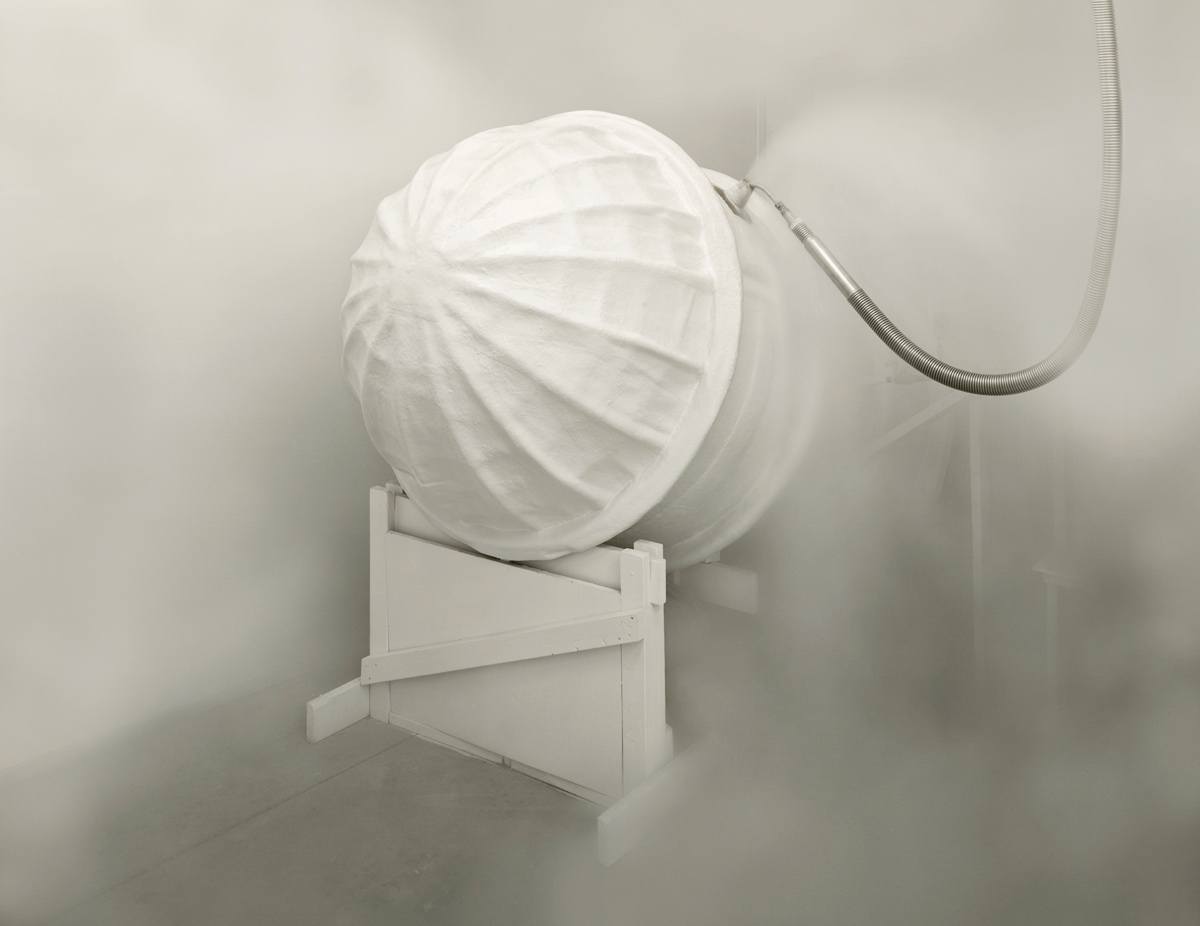
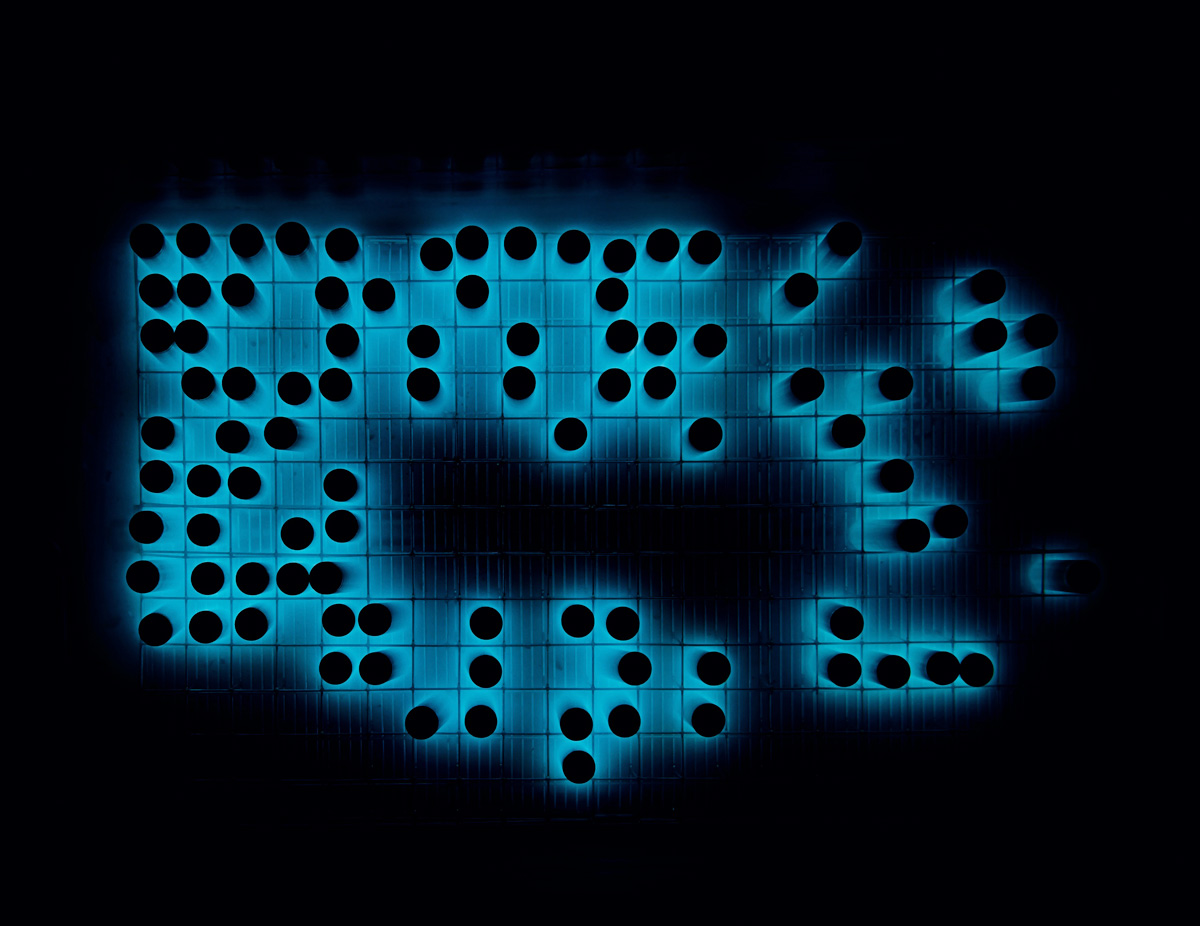
This is an exhibition of large format colour photographs by Taryn Simon which features a body of work titled An American Index of the Hidden and Unfamiliar (2006). The work investigates the hidden spaces, places, artefacts and rituals of American cultural warfare (here I mean warfare in the sense of good vs bad, natural vs unnatural (or mutated), safety vs danger, death vs life for example). The photographs are very much like opening a ‘cabinet of curiosities’ where the photographer is attempting to challenge the categorical boundaries of environments and objects, things that are yet to be defined and fixed in place. Some of the photographs work very well in their attempts to categorise, to index; others are far less successful.

Dan Rule in The Age sees the photographs as “slick, high-definition visuals … photographs [that] defy their gritty, documentarian sensibilities. Capturing an ominous vision of Bush-era America, her expansive series … doesn’t merely unearth a sinister vantage of the nation’s underbelly, but renders it in shocking clarity and detail … it ‘s a fascinating and troubling portrait. However, it’s not so much the subject matter but the luminous, hyper-realistic orientation that gives these images such resonance.”1

I see things differently. Where Rule sees luminous photographs I see photographs that are very formal and dull, photographs that are rather lifeless and maudlin. Printed on grey pearlised paper (meaning that the base colour of the photographic paper is not white) and placed in pale grey frames, these A3 high definition, large depth of field photographs possess limited photographic insight into the condition of the spaces and objects being photographed. My friend rather cuttingly, but correctly, noted that they were very National Geographic drained of colour (note: the images in this online posting have far more life and colour than the actual prints!).

This is photography as documentation used to disseminate information, documentation that reinforces the indexical nature of photography (the link between referent and reality) as a form of ‘truth’ – hence the ‘Index’ in the title of the body of work, a taxonomic ordering of reality. Even then some of the photographs have to be validated by text for them to have any meaning. “The visual is processed aesthetically and then redefined by its text” trumpets the wall text. Yes sure, but here the photographs are formalistically visualised, some to very limited effect, and what the text is really doing is semiotically decoding an image that has little meaning (until we are told) through words, words that are about memory, reminders of what we call and know of a thing.

When the photograph tells us very little in the first place, when we do not have knowledge of a thing and cannot construct memories from the photograph but rely solely on words for meaning this can lead to photographs that are intrinsically and inherently poor. An example of a poor photograph in this series is the image of the captured Great white shark. Another example is the photograph of a decomposing body at the Forensic Anthropology Research Facility (see photograph above). Compare this to Sally Mann’s photograph of the same subject matter: the resonance of Mann’s photograph is powerful, confronting yet ambiguous with an amorphous aura surrounding the body, that of Simon’s almost as though the artist was afraid to really approach the subject; there seems to be an obsequiousness to the subject matter. Hidden is hidden and this photograph is definitely not “transforming the unknown into a seductive and intelligible form” (Wall text).

Simon’s photographs are not visual enigmas that approach Atget’s The Marvellous in the Everyday, where he experimented with “the variable play between nature and art through minute changes in the camera’s angle, or as functions of the effects of light and time of day.” Nor do they possess that quality that I noted in my review of the work of Carol Jerrems – spaces that make some room for you in front – some room that would allow you to look forward, and maybe even walk into that space. Despite their ‘hidden’ and ‘unfamiliar’ context these photographs are very dull spaces. Simon’s camera angles are by the book. So are most of the photographs. Of course, I understand the revealing of meaning in the photograph by the text and the surprise this entails but this simply does not dismiss the fact that some of these works are just poor. In fact I would say only about 50% of these photographs could stand alone without the validation of the text. Does this matter? Is this important? Yes I think it is, for some of these works are just deadpan photographs of entropic spaces that are only given meaning because the photographer says they are important things to photograph (see my paper Spaces That Matter: Awareness and Entropia in the Imaging of Place, 2002). Even with text some of the photographs still have no resonance.

When the photographs do work they are astounding. There is delicious irony in the depiction of a Recreational Basketball Court in Cheyenne Mountains Directorate, Chamber D, Colorado Springs, Colorado (2006) a dark, oppressive print of a nuclear bunker with basketball court or the incongruous nature of Death Row, Outdoor Recreational Facility “The Cage” (2006), a barred metal cage situated inside another building for the recreation of death row inmates. Shocking, disorientating. My personal favourite in this human built, human-less world of Simon’s was one of the simplest photographs in the exhibition, a photograph that cuts away the surroundings to picture a labelled flask sitting on a non-descript background. A concise visualisation of a labelled flask given extra meaning when you read the accompanying text: Live HIV, HIV Research Laboratory (2006). Pause for thought. The photographs when understood aesthetically are like snapshots of an alien culture, almost mundane but disturbing. I believe the best photographs in the series combine the presence of the space or object, an understanding of the condition of that space or object without having to read the text. The text then supplements the visual interpretation not overrides it.

Human beings are secretive, unstable, paranoid creatures that are exclusory and fearful of Others. Fear is palpable in these photographs. Here is evidence of the human need for control (through the surveillance of photography) over conduct – control of contamination, death, disease, threat and Other. We investigate and document something in order to control it, in order that science can control it (think Foucault’s disciplinary systems of the prison and the madhouse). These photographs excavate meaning by bringing the shadow into the light in order to index our existence, to make the hidden less frightening and more controllable.

Personally, I prefer my world to remain the mutation that is the catastrophe in the pattern / randomness dialectic. I like the chthonic darkness of difference and the rupture of pattern, the dislocation of identity and the challenge of mutation. Even though these photographs address the context of the hidden and unfamiliar there is nothing in the least unusual about them. Here is the paradox of these works: their (ab)normality vs their lack of humanity. The photographs in this exhibition all too easily confirm our prejudices and limit our understanding of difference through their need to document, label, order and exhibit the fear of (in)difference, all the better to control the mutations of disturbance.

Dr Marcus Bunyan


1/ Rule, Dan. “Taryn Simon: An American Index of the Hidden and Unfamiliar” in The Age newspaper A2. Melbourne: Saturday, October 23rd 2010


Many thankx to the Melbourne International Arts Festival, Institute of Modern Art and the Centre for Contemporary Photography for allowing me to publish the photographs in the posting. Please click on the photographs for a larger version of the image. All photographs © 2007 Taryn Simon. Courtesy Gagosian Gallery/Steidl.


Taryn Simon (American, b. 1975) 'Forensic Anthropology Research Facility, Decomposing Corpse, University of Tennessee, Knoxville, Tennessee' 2003/2007


Taryn Simon (American, b. 1975)
Forensic Anthropology Research Facility, Decomposing Corpse, University of Tennessee, Knoxville, Tennessee
2003/2007
Chromogenic colour print
37 1/4 x 44 1/2 inches framed (94.6 x 113cm)
© 2007 Taryn Simon
Courtesy Gagosian Gallery/Steidl


The decomposing body of a young boy is studied by researchers who have re-created a crime scene.

The Forensic Anthropology Research Facility, popularly known as The Body Farm, is the world’s chief research center for the study of corpse decomposition. Its six-acre plot hosts approximately 75 cadavers in various stage of decomposition. The farm uses physical anthropology (skeletal analysis of human remains) to help solve criminal cases, especially murder cases. Forensic anthropologists work to establish profiles for deceased persons. These profiles can include sex, age, ethnic ancestry, stature, time elapsed since death, and sometimes, the nature of trauma on the bones.


Sally Mann (American, b. 1951) 'Untitled WR Pa 59' 2001 from the series 'What Remains'


Sally Mann (American, b. 1951)
Untitled WR Pa 59
2001
From the series What Remains
© Sally Mann. Courtesy Gagosian Gallery


Taryn Simon (American, b. 1975) 'White Tiger (Kenny), Selective Inbreeding, Turpentine Creek Wildlife Refuge and Foundation, Eureka Springs, Arkansas' 2006/2007 from the exhibition 'An American Index of the Hidden and Unfamiliar' by Taryn Simon at the Centre for Contemporary Photography, Oct - Dec 2010
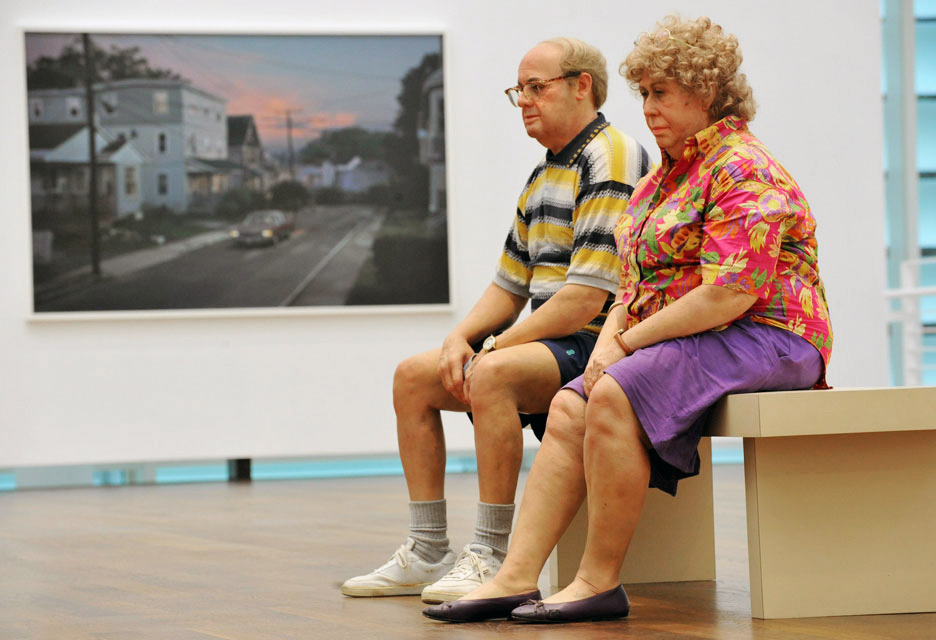
 

Taryn Simon (American, b. 1975)
White Tiger (Kenny), Selective Inbreeding, Turpentine Creek Wildlife Refuge and Foundation, Eureka Springs, Arkansas
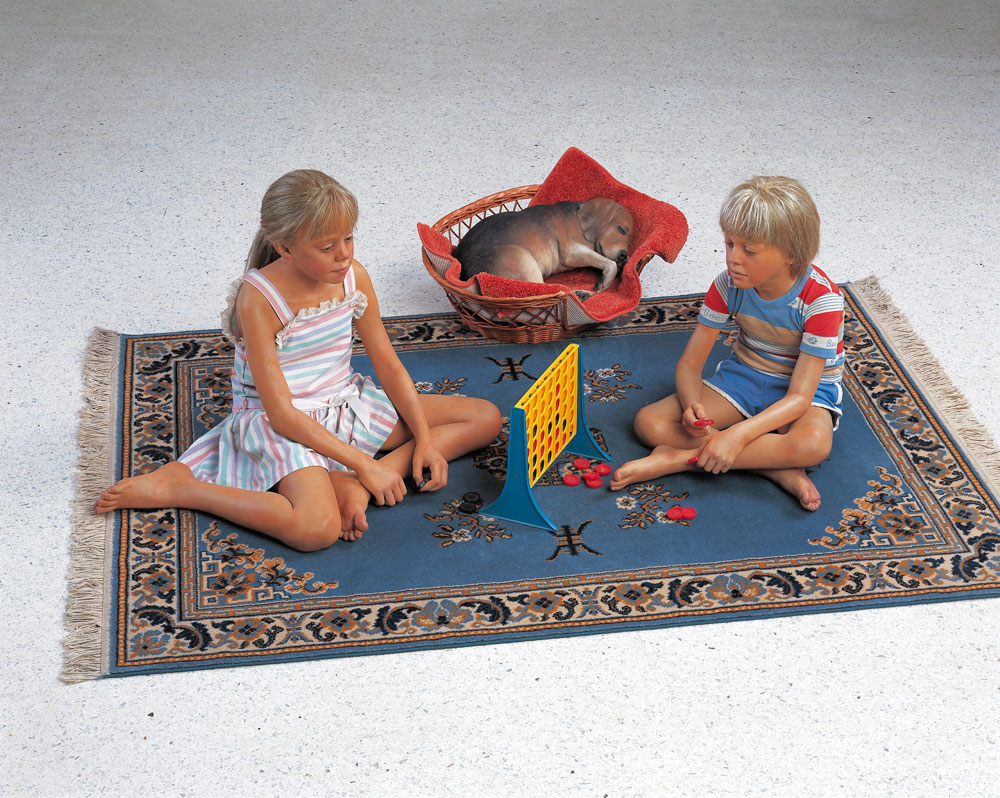
2006/2007
Chromogenic colour print
37 1/4 x 44 1/2 inches framed (94.6 x 113cm)
© 2007 Taryn Simon
Courtesy Gagosian Gallery/Steidl


In the United States, all living white tigers are the result of selective inbreeding to artificially create the genetic conditions that lead to white fur, ice-blue eyes and a pink nose. Kenny was born to a breeder in Bentonville, Arkansas, on February 3, 1999. As a result of inbreeding, Kenny is mentally retarded and has significant physical limitations. Due to this deep-set nose, he has difficulty breathing and closing his jaw, his teeth are severely malformed and he limps from abnormal bone structure in his forearms. The three other tigers in Kenny’s litter are not considered to be quality white tigers as they are yellow-coated, cross-eyed, and knock-kneed.
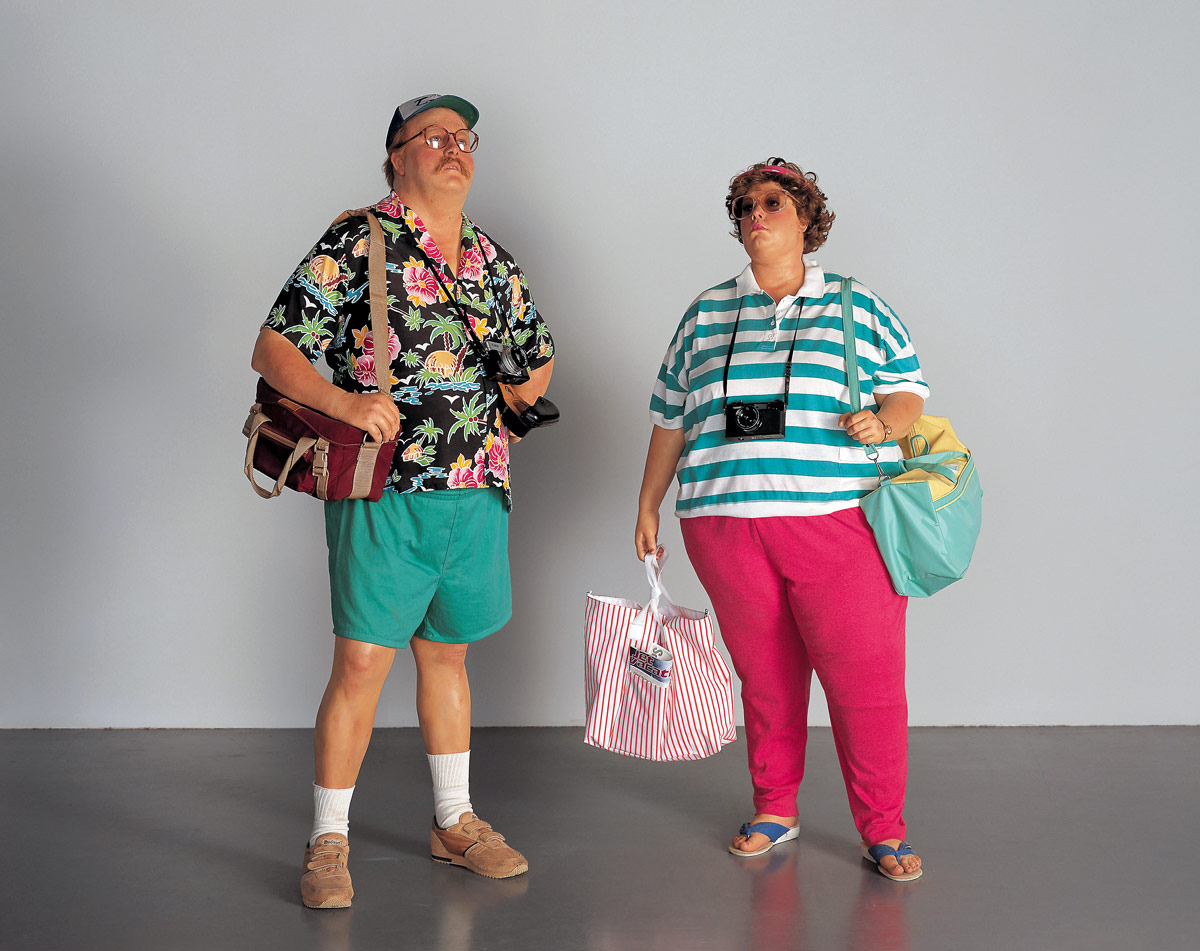
White tigers are extremely rare in their natural habitats in Asia. In the U.S., all living white tigers are the result of selective inbreeding in captivity to artificially create the genetic conditions that lead to white fur, ice-blue eyes and a pink nose. Currently, inbreeding such as father to daughter, brother to sister, mother to son has become commonplace. It produces a white cub less than 25% of the time, with only approximately 3% of those considered “quality.” The three other tigers in Kenny’s litter are not considered to be quality white tigers as they are yellow coated, cross-eyed, and knock-kneed.

Conservation experts challenge the perception that white tigers are a rare and endangered species. Instead, they state that zoos, breeders, and entertainment acts have over-bred white tigers for financial gain, citing instances where private breeders and zoos have sold “quality” white tigers for over $60,000. The grave health consequences of inbreeding and over-breeding have led to abortions, stillbirths and a high mortality rate among infants. The Species Survival Plan has condemned the practice. In recent years there has been a significant drop in their market value.


Taryn Simon (American, b. 1975) 'Hymenoplasty, Cosmetic Surgery, P.A., Fort Lauderdale, Florida' 2005/2007 from the exhibition 'An American Index of the Hidden and Unfamiliar' by Taryn Simon at the Centre for Contemporary Photography, Oct - Dec 2010


Taryn Simon (American, b. 1975)
Hymenoplasty, Cosmetic Surgery, P.A., Fort Lauderdale, Florida
2005/2007
Chromogenic colour print
37 1/4 x 44 1/2 inches framed (94.6 x 113cm)
© 2007 Taryn Simon
Courtesy Gagosian Gallery/Steidl


The patient in this photograph is 21 years old. She is of Palestinian descent and living in the United States. In order to adhere to cultural and familial expectations regarding her virginity and marriage, she underwent hymenoplasty. Without it she feared she would be rejected by her future husband and bring shame upon her family. She flew in secret to Florida where the operation was performed by Dr. Bernard Stern, a plastic surgeon she located on the internet. The purpose of hymenoplasty is to reconstruct a ruptured hymen, the membrane which partially covers the opening of the vagina. It is an outpatient procedure which takes approximately 30 minutes and can be done under local or intravenous anesthesia. Dr. Stern charges $3,500 for hymenoplasty. He also performs labiaplasty and vaginal rejuvenation.

The hymen has not been proven to serve any biological function. Some girls are born with an imperforate hymen. Rupture most often occurs during first intercourse, but some girls tear their hymen during sports activities or as a result of injuries. The majority of the time there is a correlation between an intact hymen and a woman’s virginity; many cultures view the tearing of the hymen as a critical symbol of that loss. While similar attempts to alter the hymen predate modern plastic surgery, hymenoplasty is now just one of several vaginal cosmetic surgeries that are growing in popularity worldwide. Dr. Stern charges $3,500 for hymenoplasty. He also performs labiaplasty and vaginal rejuvenation.


“Inspired by rumours of weapons of mass destruction and secret sites in Iraq, American photographic artist Taryn Simon focuses her lens on the hidden and inaccessible places in her own country.

An American Index of the Hidden and Unfamiliar (2006) takes the viewer behind closed doors to uncover some extraordinary things inside places usually hidden from the public’s view. Ranging across the realms of science, government, medicine, entertainment, nature, security, and religion, Simon’s photographic subjects include glowing radioactive capsules in an underwater nuclear-waste storage facility, a Braille edition of Playboy, a deathrow prisoners’ exercise yard, an inbred tiger, corpses rotting in a Forensic Research Facility, and a Scientology screening room.

Shot over four years, mostly with a large-format view camera, the images in this fascinating exhibition are in turn ethereal, foreboding, deadpan and cinematic. In examining what is integral to America’s foundation, mythology and daily functioning, the Index provides a surprising map of the American mindset and creates a vivid portrayal of the contemporary United States.

Inspired by rumours of WMDs and secret sites in Iraq, Taryn Simon decided to address secret sites in her own country, photographing hidden places and things within America’s borders. Ranging across the realms of science, government, medicine, entertainment, nature, security and religion, her subjects include glowing radioactive capsules, a braille edition of Playboy, a death-row prisoners’ exercise yard, an inbred tiger, a teenage corpse rotting in a forensic research facility, and a Scientology screening room. An American Index of the Hidden and Unfamiliar explores a dialectic of security and paranoia that is distinctly American. Offering a heart-of-darkness tour of Bush-period America, it also reflects on photography’s role in revealing and concealing.

In his foreword,1 Salman Rushdie writes ‘In a historical period in which so many people are making such great efforts to conceal the truth from the mass of the people, an artist like Taryn Simon is an invaluable counter-force. Democracy needs visibility, accountability, light. It is in the unseen darkness that unsavoury things huddle and grow. Somehow, Simon has persuaded a good few denizens of hidden worlds not to scurry for shelter when the light is switched on, as cockroaches do, and vampires, but to pose proudly for her invading lens, brandishing their tattoos and Confederate flags.

Simon’s is not the customary aesthetic of reportage – the shaky hand-held camera, the grainy monochrome film stock of the ‘real’. Her subjects… are suffused with light, captured with a bright, hyper-realist, high-definition clarity that gives a kind of star status to these hidden worlds, whose occupants might be thought to be the opposite of stars. In her vision of them, they are dark stars brought into the light. What is not known, rarely seen, possesses a form of occult glamour, and it is that black beauty which she so brightly, and brilliantly, reveals.’

1/ Salman Rushdie, ‘Foreword’ in Taryn Simon, An American Index of the Hidden and Unfamiliar, Steidl Gottingen, Germany, 2007, p. 7.


Text from the Melbourne International Art Festival and the Centre for Contemporary Photography websites


Taryn Simon (American, b. 1975) 'Cryopreservation Unit, Cryonics Institute, Clinton Township, Michigan' 2004/2007


Taryn Simon (American, b. 1975)
Cryopreservation Unit, Cryonics Institute, Clinton Township, Michigan
2004/2007
Chromogenic colour print
37 1/4 x 44 1/2 inches framed (94.6 x 113cm)
© 2007 Taryn Simon
Courtesy Gagosian Gallery/Steidl


This cryopreservation unit holds the bodies of Rhea and Elaine Ettinger, the mother and fist wife of cryonics pioneer, Robert Ettinger. Robert, author of The Prospect of Immortality and Man into Superman is still alive. The Cryogenics Institute offers cryostasis (freezing) services for individuals and pets upon death. Cryostasis is practiced with the hope that lives will ultimately be extended through future developments in science, technology, and medicine. When, and if, these developments occur, Institute members hope to awake to an extended life in good health, free from disease or the ageing process. Cryostasis must begin immediately upon legal death. A person or pet is infused with ice-preventive substances and quickly cooled to a temperature where physical decay virtually stops.

At present, the Cryonics Institute cryopreserves 74 legally dead human patients and 44 legally dead pets. It charges $28,000 for the process if it is planned well in advance of legal death and $35,000 on shorter notice. The cost has not increased since 1976 when the Cryonics Institute was established. The Institute is licensed as a cemetery in the state of Michigan.


Taryn Simon (American, b. 1975) 'Nuclear Waste Encapsulation and Storage Facility, Chernekov Radiation, Hanford Site, U.S. Department of Energy, Southeastern Washington State' 2005/2007


Taryn Simon (American, b. 1975)
Nuclear Waste Encapsulation and Storage Facility, Chernekov Radiation, Hanford Site, U.S. Department of Energy, Southeastern
Washington State
2005/2007
Chromogenic color print
37 1/4 x 44 1/2 inches framed (94.6 x 113cm)
© 2007 Taryn Simon
Courtesy Gagosian Gallery/Steidl


Submerged in a pool of water at Hanford Site are 1,936 stainless-steel nuclear-waste capsules containing cesium and strontium. Combined, they contain over 120 million curies of radioactivity. It is estimated to be the most curies under one roof in the United States. The blue glow is created by the Cherenkov Effect which describes the electromagnetic radiation emitted when a charged particle, giving off energy, moves faster than light through a transparent medium. The temperatures of the capsules are as high as 330 degrees Fahrenheit. The pool of water serves as a shield against radiation; a human standing one foot from an unshielded capsule would receive a lethal dose of radiation in less than 10 seconds. Hanford is among the most contaminated sites in the United States.

Hanford is a 586 square mile former plutonium production complex. It was built for the Manhattan Project, the U.S.-led World War II defense effort that developed the first nuclear weapons. Hanford plutonium was used in the atomic bomb dropped on Nagasaki in 1945. For decades afterwards Hanford manufactured nuclear materials for use in bombs. At Hanford there are more than 53 million gallons of radioactive and chemically hazardous liquid waste, 2,300 tons of spent nuclear fuel, nearly 18 metric tons of plutonium-bearing materials and about 80 square miles of contaminated groundwater. It is among the most contaminated sites in the United States.


Centre for Contemporary Photography
Level 2, Perry St Building
Collingwood Yards, Collingwood
Victoria 3066

Opening hours:
Wednesday – Saturday 11am – 5pm

Centre for Contemporary Photography website

LIKE ART BLART ON FACEBOOK

Back to top

Exhibition: ‘The Family and the Land: Sally Mann’ at The Photographers’ Gallery, London

Exhibition dates: 18th June – 19th September 2010


Sally Mann (American, b. 1951) 'Candy Cigarette' 1989


Sally Mann (American, b. 1951)
Candy Cigarette
1989
From the series Immediate Family
© Sally Mann. Courtesy Gagosian Gallery


One of the most haunting photography books I have ever opened and inhaled is What Remains (2003) by Sally Mann.

People say the photographs are shocking – featuring as they do documentation of a deceased pet greyhound, photos of decaying bodies out in the open field of a forensics lab (see photograph below), “the almost invisible traces left by the death of a fugitive on Mann’s property”, the dark landscape of a civil war battlefield and close up photographs of her now grown up children – but there is a stillness and depth to these photographs that elevates them above such sentiments.

What Mann does so well is that she listens to the passing of time and then inscribes an ode to what remains. Her gift is the photography of mortality (and vice versa) with all the psychic weight that this entails. This is a revelatory book not for the faint hearted.

Dr Marcus Bunyan


Many thankx to Sam Trenerry and the Photographers’ Gallery for allowing me to publish the photographs in the posting. Please click on the photographs for a larger version of the image.


Sally Mann (American, b. 1951) 'Vinland' 1992


Sally Mann (American, b. 1951)
Vinland
1992
Gelatin silver print
© Sally Mann. Courtesy Gagosian Gallery


Sally Mann (American, b. 1951) 'Scarred Tree' 1996


Sally Mann (American, b. 1951)
Scarred Tree
1996
From the series Deep South
© Sally Mann. Courtesy Gagosian Gallery


Sally Mann (American, b. 1951) 'Untitled WR Pa 59' 2001


Sally Mann (American, b. 1951)
Untitled WR Pa 59
2001
From the series What Remains
© Sally Mann. Courtesy Gagosian Gallery


This exhibition at The Photographers’ Gallery is the American photographer Sally Mann’s first solo exhibition in the UK. Combining several series from her long photographic career, The Family and the Land: Sally Mann reflects Mann’s artistic impulse to draw on the world around her as subject matter.

The ‘family’ element of the title comprises Mann’s early series Immediate Family and the newer series Faces, both of which depict her children at various ages. The series Deep South represents the landscape, portraying images made across the south of the United States. The more recent body of work, What Remains brings together both strands of the exhibition, through its examination of how bodies, as they decompose, merge into the land itself.

Sally Mann (b. 1951, USA) first gained prominence for Immediate Family (1984-1994) a series of intimate and revealing portraits of her three young children, Emmett, Jessie and Virginia. Taken over a ten-year period, Mann depicts them playing, swimming and acting to the camera in and around their homestead in Lexington, Virginia. Born out of a collaborative process between mother and child, the work encapsulates their childhood in all its rawness and innocence.

Mann followed Immediate Family by focusing on the land itself in her series Deep South (1996-1998). Here she is drawn to locations steeped in historical significance from the American Civil War, which left both literal and metaphoric scars on the trees and the land itself. Using antique cameras and processes throughout, Mann accentuates the sense of age in the subject while embracing the imperfect effects created by her printing process.

What Remains (2000-2004) seeks to further connect human contact to the land and how the body eventually returns to and becomes a part of the land itself. This concept led Mann to photograph decomposing cadavers at the University of Tennessee Anthropological Research Facility, Knoxville, where human decomposition is studied in a variety of, mainly outdoor, settings. What Remains deals directly with the subject of death, still a social taboo. As with her other work, Mann’s subjects are sensitively handled and beautifully realised, encouraging us to reflect upon our own mortality and place within nature’s order.

In the most recent series Faces (2004), Mann turns the camera once more on her children. Closing in on their faces and using several minutes of exposure time, these works act as a commemoration of the living. Again Mann takes the accidental drips and marks created by the wet collodion process and makes them a key feature of her work.

The Family and the Land: Sally Mann at The Photographers’ Gallery is an edited version of a touring exhibition, conceived by Sally Mann in collaboration with Hasse Persson, Director, BorÃ¥s Museum of Modern Art, Sweden. It has been presented at Fotomuseum Den Hague and the Musée de l’Elysée, Lausanne as well as in Stockholm, Oslo, Helsinki, Helsingborg, and Copenhagen.

Press release from The Photographers’ Gallery website [Online] Cited 07/09/2010 no longer available online


Sally Mann (American, b. 1951) 'At Warm Springs' 1991


Sally Mann (American, b. 1951)
At Warm Springs
1991
From the series Immediate Family
© Sally Mann. Courtesy Gagosian Gallery


Sally Mann (American, b. 1951) 'Jessie #10' 2004


Sally Mann (American, b. 1951)
Jessie #10
2004
From the series Faces
© Sally Mann. Courtesy Gagosian Gallery


Sally Mann (American, b. 1951) 'Virginia #42' 2004


Sally Mann (American, b. 1951)
Virginia #42
2004
From the series Faces
© Sally Mann. Courtesy Gagosian Gallery


'The Family and the Land: Sally Mann' poster


The Family and the Land: Sally Mann poster


The Photographers’ Gallery
16-18 Ramillies Street,
London W1F7Lw

Opening hours:
Mon – Wed 10.00 – 18.00
Thu & Fri Lates 10.00 – 20.00
Sat 10.00 – 18.00
Sun 11.00 – 18.00

The Photographers’ Gallery website

LIKE ART BLART ON FACEBOOK

Back to top

Exhibition: ‘In Focus: Making A Scene’ at The J. Paul Getty Museum, Los Angeles

Exhibition dates: 30th June – 18th October, 2009


Hill & Adamson (Scottish, active 1843-1848) '[Lane and Peddie as Afghans]' 1843 from the exhibition 'In Focus: Making A Scene' at The J. Paul Getty Museum, Los Angeles, June - Oct, 2009


Hill & Adamson (Scottish, active 1843-1848)
[Lane and Peddie as Afghans]
1843
Salted paper print from a paper negative
20.6 × 14.3cm (8 1/8 × 5 5/8 in.)
The J. Paul Getty Museum


The team of Hill and Adamson initially began making dramatic portrait photographs as studies for one of Hill’s composite paintings. They also produced costume studies, including this scene in which Arabic scholar Mr. Lane and Mr. (Peddie) Redding appear in foreign garb.


What a fabulous selection of photographs to illustrate a fascinating “scene”. I love staged, theatrical, constructed, conceptual, collaged, surreal, imaginary, narrative photography.

Dr Marcus Bunyan


Many thankx to the J. Paul Getty Museum for allowing me to publish the photographs in the posting. Please click on the photographs for a larger version of the image.


Unknown maker, French. 'Woman Reading to a Girl' c. 1845 from the exhibition 'In Focus: Making A Scene' at The J. Paul Getty Museum, Los Angeles, June - Oct, 2009


Unknown maker, French
Woman Reading to a Girl
c. 1845
Daguerreotype
9.1 × 7.1cm (3 9/16 × 2 13/16 in.)
The J. Paul Getty Museum


Through a skilful manipulation, the light coming from above and behind the figures casts the faces of mother and child in a softly modulated half-shadow. Their close grouping and familiar, intimate gestures evoke tenderness. The reflected light on the woman’s pointing finger and on the glowing white pages of the open book forms a strong visual triangle, drawing the viewer’s eye and serving to integrate and balance the composition.


Oscar Gustave Rejlander (British, born Sweden, 1813-1875) 'The Infant Photography Giving the Painter an Additional Brush' c. 1856 from the exhibition 'In Focus: Making A Scene' at The J. Paul Getty Museum, Los Angeles, June - Oct, 2009


Oscar Gustave Rejlander (British born Sweden, 1813-1875)
The Infant Photography Giving the Painter an Additional Brush
c. 1856
Albumen silver print
6 × 7.1cm (2 3/8 × 2 13/16 in.)
The J. Paul Getty Museum


Oscar Rejlander’s photograph could be read as a metaphor of his own career. The additional “brush” or image-making tool provided by photography to painters was evident from the beginnings of the medium. Many early practitioners arrived at photography from painting, as did Rejlander. Photographs were often thought of and used as sketching tools for painters. Although photographs never managed to signal the death of painting as initially predicted, they did frequently assume the function that drawing had traditionally held in relation to painting.

Compositionally, this is an unusual photograph. Rejlander employs a narrative device from painting: the use of figures, or parts of figures, as allegorical representations for ideas. A very young child represents the infant medium of photography. The Painter appears only as a hand extending into the frame at the upper left, although the traditional arts are also represented by the sculpture reproduction in the lower left corner. The Infant Photography, identified by the camera on which the child supports himself, faces away from the camera, his features totally obscured. The mirror behind the child gives a clear reflection of Rejlander at his camera, making this image.


Roger Fenton (English, 1819-1869) 'Contemplative Odalisque' 1858


Roger Fenton (English, 1819-1869)
Contemplative Odalisque
1858
Albumen silver print
35.9 × 43.8cm (14 1/8 × 17 1/4 in.)
The J. Paul Getty Museum
Gift of Professors Joseph and Elaine Monsen


Three years after traveling in the Crimea, Roger Fenton made a series of Orientalist photographs in his London studio using props gathered during his travels and non-Eastern models. Orientalism refers to just such romanticised depictions of imagined scenes of Muslim culture in the Ottoman Empire and its territories in the Near East and North Africa.

Orientalist scenes were more often fiction than fact. Cultural biases and misunderstandings were laid down on paper or canvas and frequently became the only source of information on the subjects depicted. When a group of these Orientalist photographs was exhibited in 1858, one reviewer described them as “truly representing some phases in the life of this interesting people.”

But not everyone so easily accepted Fenton’s images at face value; a more astute critic called for “the necessity of having real national types as models.” The same model shown here also appears as “Nubian” and “Egyptian” in other photographs by Fenton. This photograph may have originally been exhibited with the title The Reverie. The odalisque, meaning a slave or concubine in a harem, poses upon her sofa. Barefoot, blouse open, her surroundings convey a sensual disarray that conforms to an Orientalising fantasy of the available woman.


Julia Margaret Cameron (British, born India, 1815-1879) 'The Rosebud Garden of Girls' June 1868


Julia Margaret Cameron (British, born India, 1815-1879)
The Rosebud Garden of Girls
June 1868
Album silver print
29.4 × 26.7cm (11 9/16 × 10 1/2 in.)
The J. Paul Getty Museum


As evolutionary science and increasing secularism transformed the way Victorians understood the world, Cameron remained a devout Christian. She photographed influential public figures of her day as well as the women of her household, casting them in allegories of literary and religious subjects. Like her artistic contemporaries, the Pre-Raphaelite painters, who modelled their work on medieval religious and mythological art, Cameron intended her photographs to evince a connection between the spiritual and the natural realms.


Julia Margaret Cameron (British, born India, 1815-1879) 'Venus Chiding Cupid and Removing His Wings' 1872


Julia Margaret Cameron (British, born India, 1815-1879)
Venus Chiding Cupid and Removing His Wings
1872
Album silver print
32.4 × 27.3cm (12 3/4 × 10 3/4 in.)
The J. Paul Getty Museum


Lewis Carroll (British, 1832-1898) 'Saint George and the Dragon' June 26, 1875


Lewis Carroll (British, 1832-1898)
Saint George and the Dragon
June 26, 1875
Albumen silver print
12.2 × 16.2cm (4 13/16 × 6 3/8 in.)
The J. Paul Getty Museum


Like Alice’s Adventures in Wonderland and his other books, Carroll’s photographs are fantasies starring the children of his friends. In this production, the Kitchin siblings enacted the romantic legend of Saint George, the patron saint of England, who slayed a child-eating dragon before it devoured a princess. George later married the rescued princess and converted her pagan town to Christianity. Using crude stagecraft to reference key plot points, Carroll condensed the entire legend into a single scene in which the princess appears as both damsel in distress and bride.


Baron Wilhelm von Gloeden (German, 1856-1931) 'Untitled [Two Male Youths Holding Palm Fronds]' c. 1885 - 1905


Baron Wilhelm von Gloeden (German, 1856-1931)
Untitled [Two Male Youths Holding Palm Fronds]
c. 1885-1905
Albumen silver print
23.3 × 17.5cm (9 3/16 × 6 7/8 in.)
The J. Paul Getty Museum


Baron Wilhelm von Gloeden (German, 1856-1931) 'L'Offerta' (The Offering) 1902


Baron Wilhelm von Gloeden (German, 1856-1931)
L’Offerta (The Offering)
1902
Albumen silver print
22.4 × 16.8cm (8 13/16 × 6 5/8 in.)
The J. Paul Getty Museum


Von Gloeden left Germany and settled in a coastal town in Sicily, where he took up photography. His subjects were young native boys, whom he often photographed nude in classical compositions. Rather than reenact specific historical or literary scenes, von Gloeden mused nostalgically on the ancient Greek and Roman ancestry of his attractive models.


Guido Rey (Italian, 1861-1935) '[The Letter]' 1908


Guido Rey (Italian, 1861-1935)
[The Letter]
1908
Platinum print
21.9 × 17cm (8 5/8 × 6 11/16 in.)
The J. Paul Getty Museum


A deliberate homage to an earlier artistic style that Guido Rey admired, the composition derives from a painting made by Dutch artist Jan Vermeer in the 1600s. In this posed scene, a young suitor bearing flowers approaches a woman seated at her writing desk, with her pen poised in mid-air as she turns to greet him. A leaded glass window opens into her room, providing a natural light source for the photograph’s illumination. The mounted corner clock, decorative jar on the desk, and painting on the wall were Rey’s everyday household items or objects borrowed from friends, carefully chosen for period accuracy. Likewise, a seamstress who lived in the attic of Rey’s home in Turin created the costumes to his specifications.


Photography, although commonly associated with truthfulness, has been used to produce fiction since its introduction in 1839. The acceptance of staging, and the degree of its application, has varied greatly depending on the genre and the historical moment, but it has persisted as an artistic approach. The photographs in this exhibition, drawn exclusively from the J. Paul Getty Museum’s collection, make no pretence about presenting the world as it exists; instead, they are the productions of directors and actors who rely on stagecraft and occasional darkroom trickery to tell stories.
 Spanning photography’s history and expressing a range of sentiments, the images in this exhibition are inspired by art history, literature, religion, and mainstream media.

Like Alice’s Adventures in Wonderland and his other books, Lewis Carroll’s photographs are fantasies starring his friends’ children. In the image below, children enact the mythological story of Saint George, the patron saint of England, slaying a child-eating dragon before it could devour a princess.

Life Imitating Art

Well-represented in this exhibition are tableaux vivants (living pictures), inspired by the popular Victorian parlour game in which costumed participants posed to resemble famous works of art or literary scenes.
The genre paintings of 17th-century Dutch masters Johannes Vermeer and Pieter de Hooch fascinated Guido Rey. Not self-conscious about being slavish to the past, he carefully studied the paintings and then arranged similar tableaux for his camera. His photographs captured equally serene domestic scenes and mimicked the minute architectural details of 17th-century interiors, such as the leaded-glass windowpanes and the checkerboard floor.

Playing Dress Up

The exhibition also includes costume studies of people posing as literary characters and self-portraits of artists pretending to be other people. 

American painter and photographer Man Ray and the French artist Marcel Duchamp met in New York in 1915, and they began a playful, iconoclastic collaboration that resulted in the photograph (above), among others. Influenced by Dadaism, a cultural movement that rejected reason and logic in favour of anarchy and the absurd, their work embraced games of chance, performance, and wordplay. Here an irreverent Duchamp appears in women’s clothing as his alter ego, Rrose Sélavy, a pun on the French pronunciation “Eros, c’est la vie” (Sex, that’s life).

Imaginary Subjects

A number of photographs in the exhibition explore the medium’s capacity to visualise subjects of the imagination by using darkroom trickery to manipulate prints.
 An optician and family man, Ralph Eugene Meatyard photographed his children, friends, and neighbours enacting dramas in suburban backyards and abandoned buildings near his Lexington, Kentucky, home. He often used experimental techniques, such as multiple exposures and blurred motion. Uncanny details imbue Meatyard’s otherwise ordinary vernacular scenes with the qualities of a dream or supernatural vision.

Theatricality as a Critical Strategy

In recent decades there has been renewed interest in theatricality among contemporary photographers whose highly artificial scenes critique mainstream media and representation.
 In her series Family Docudrama Eileen Cowin blurs the boundaries between truth and fiction, and private behaviour and public performance. Drawing equally from family snapshots and soap operas, Cowin presents staged domestic scenes in which she and members of her family, including her identical twin sister, perform as actors. In these ambiguous, open-ended narratives, dramatic moments are exaggerated, and the camera’s glare is ever present.”

Text from The J. Paul Getty Museum website [Online] Cited 16/04/2019


Man Ray (American, 1890-1976) 'Rrose Sélavy (Marcel Duchamp)' 1923


Man Ray (American, 1890-1976)
Rrose Sélavy (Marcel Duchamp)
1923
Gelatin silver print
22.1 × 17.6cm (8 11/16 × 6 15/16 in.)
The J. Paul Getty Museum
© Man Ray Trust ARS-ADAGP


When Man Ray moved to Paris, he was greeted by his friend and artistic compatriot Marcel Duchamp, who introduced him to members of the Dada circle of writers and artists. The two men had collaborated in a number of creative endeavours in New York, including the creation of a female alter-ego for Duchamp named Rrose Sélavy (a pun on the French pronunciation Eros, c’est la vie “Sex, that’s life”). Man Ray photographed Duchamp several times as Rrose Sélavy.


Man Ray (American, 1890-1976) 'Larmes' 1930


Man Ray (American, 1890-1976)
Larmes (Tears)
1930-1932
Gelatin silver print
22.9 × 29.8cm (9 × 11 3/4 in.)
The J. Paul Getty Museum
© Man Ray Trust ARS-ADAGP


Judging from his inclusion of this image in other photographic compositions, Man Ray must have considered Tears one of his most successful photographs. A cropped version of it with a single eye also appears as the first plate in a 1934 book of his photographs.

Like the emotive expression of a silent screen star in a film still, the woman’s plaintive upward glance and mascara-encrusted lashes seem intended to invoke wonder at the cause of her distress. The face belongs to a fashion model who cries tears of glistening, round glass beads; the effect is to aestheticise the sentiment her tears would normally express. Man Ray made this photograph in Paris around the time of his breakup with his lover Lee Miller, and the woman’s false tears may relate to that event in the artist’s life.


Dora Maar (French, 1907-1997) 'Le Simulateur (The Pretender)' 1936


Dora Maar (French, 1907-1997)
Le Simulateur (The Pretender)
1936
Gelatin silver print
26.6 × 21.7cm (10 1/2 × 8 1/2 in.)
The J. Paul Getty Museum
© Dora Maar Estate/Artists Rights Society (ARS), New York/ADAGP, Paris


In this picture Dora Maar constructed her own reality by joining together several images and rephotographing them. The seamlessness of the photographic surface makes this construction believable and leaves the viewer wondering about the strange world the figure inhabits. On closer examination, the viewer may notice that the floor is an upside-down ceiling vault, that the bricked-in windows are drawn in by hand, and that the figure was added separately. Despite these discoveries, the picture resists logical interpretation.


Ralph Eugene Meatyard (American, 1925-1972) 'Untitled (Michael and Christopher Meatyard)' 1966


Ralph Eugene Meatyard (American, 1925-1972)
Untitled (Michael and Christopher Meatyard)
1966
Gelatin silver print
16.8 × 17.5cm (6 5/8 × 6 7/8 in.)
The J. Paul Getty Museum
Gift of Christopher Meatyard and Jonathan Greene
© Estate of Ralph Eugene Meatyard


An optician and family man, Meatyard photographed his children, friends, and neighbours enacting dramas in the suburban backyards and abandoned buildings of Lexington, Kentucky. He often used experimental techniques, such as multiple exposures and blurred motion. Uncanny details imbue Meatyard’s otherwise ordinary vernacular scenes with the qualities of a dream or supernatural vision.


Lucas Samaras (American born Greece, b. 1936) 'Photo-Transformation' November 22, 1973


Lucas Samaras (American born Greece, b. 1936)
Photo-Transformation
November 22, 1973
Polaroid SX-70 dye diffusion print
7.6 × 7.6cm (3 × 3 in.)
The J. Paul Getty Museum
© Lucas Samaras


In this self-portrait, Lucas Samaras reaches out as if trapped in the photograph. In sharp contrast to the indistinct background of his upper body, his crisply defined fingers curl forward, as if he is searching for a way to transcend a two-dimensional world of his own creation. An overriding sense of claustrophobia defines this image, underscored by the small scale of the Polaroid print. Samaras, a hermit-like person, made many Polaroid self-portraits like this in the 1970s as a means of observing himself. The images are open to a wide range of interpretation. Here, Samaras may have tried to convey the sense of isolation he experiences as a reclusive person.


Lucas Samaras (American born Greece, b. 1936) 'Photo-Transformation' September 9, 1976


Lucas Samaras (American born Greece, b. 1936)
Photo-Transformation
September 9, 1976
Polaroid SX-70 dye diffusion print
7.6 × 7.6cm (3 × 3 in.)
The J. Paul Getty Museum
© Lucas Samaras


As if engaging in a tug-of-war with himself, Lucas Samaras confronts and struggles with his own reflection in this self-portrait. The leg-less reflection is incomplete, however, giving the impression of a deformed adversary. A monochromatic polka-dot background and a vibrant green and red border act as a stage for this dramatic struggle.

Samaras’s Photo-Transformations, which he made in the 1970s as a means to examine various facets of himself, could be understood as visual manifestations of internal conflict. They are complex psychological investigations that, according to at least one critic, illustrate one person’s efforts toward spiritual healing.


Lucas Samaras (American, born Greece, 1936) 'Photo-Transformation, 1976'


Lucas Samaras (American born Greece, b. 1936)
Photo-Transformation, 1976
1976
Polaroid SX-70 dye diffusion print
7.6 × 7.6cm (3 × 3 in.)
The J. Paul Getty Museum
© Lucas Samaras


Submerged in narcissism, nothing remains… but “me and myself, I am my own audience, the other, contemplating my existence.”

Made in the 1970s as a means of studying himself, Lucas Samaras’s photographs illustrate the internal struggle that can occur between conflicting aspects of one personality. Bent over a captain’s chair, Samaras rests his head as if he is at the guillotine. Another blurry form hovers above, about to violently attack the submissive figure.

Samaras made his Photo-Transformations, a series of self-portraits, with SX-70 Polaroid film. Still wet, the film’s emulsions could be manipulated to alter the finished image. He used straight pins, rubber erasers, and other simple tools to “draw” into the developing surface. For this portrait, he created a diamond pattern over and around the dominant figure that underscores the frenzy of motion.


Joel Peter-Witkin (American, born 1939) 'Mother and Child (with Retractor, Screaming)' 1979


Joel Peter-Witkin (American, b. 1939)
Mother and Child (with Retractor, Screaming)
1979
Gelatin silver print
36 × 36cm (14 3/16 × 14 3/16 in.)
The J. Paul Getty Museum
© Joel-Peter Witkin


Eileen Cowin (American, born 1947) 'Untitled' from the series 'Family Docudrama' 1980-1983


Eileen Cowin (American, b. 1947)
Untitled from the series Family Docudrama
1980-1983
Chromogenic print
48.4 × 60.7cm (19 1/16 × 23 7/8 in.)
The J. Paul Getty Museum
Purchased with funds provided by the Photographs Council
© Eileen Cowin


In her series Family Docudrama Cowin blurs the boundaries between truth and fiction, and private behaviour and public performance. Drawing equally from family snapshots and soap operas, she presents staged domestic scenes in which she and members of her family, including her identical twin sister, perform as actors. In these ambiguous, open-ended narratives, dramatic moments are exaggerated and the camera’s glare is ever present.


The J. Paul Getty Museum
1200 Getty Center Drive
Los Angeles, California 90049

Opening hours:
Daily 10am – 5.30pm

The J. Paul Getty Museum website

LIKE ART BLART ON FACEBOOK

Back to top

Two exhibitions by photographer John Wood: ‘On the Edge of Clear Meaning’ at Grey Art Gallery, New York and ‘Quiet Protest’ at the International Center of Photography, New York

Exhibition dates: Grey Art Gallery, 12th May – 18th July, 2009; International Center of Photography, 15th May – 6th September, 2009


Fantastic to see such a talented artist, a truly ground breaking artist, get the recognition he so richly deserves!


Grey Art Gallery

John Wood (American, 1922-2012) 'Untitled' 1986-1989 from the exhibition 'On the Edge of Clear Meaning' at Grey Art Gallery, New York, May - July, 2009


John Wood (American, 1922-2012)
Untitled
1986-1989
Stained gelatin silver print from paper stencil


John Wood (American, 1922-2012) 'Beach Drawing' 1983 from the exhibition 'On the Edge of Clear Meaning' at Grey Art Gallery, New York, May - July, 2009


John Wood (American, 1922-2012)
Beach Drawing
1983
Gelatin silver print
14 15/16 x 19 1/8″ (37.8 x 48.5cm)


John Wood: On the Edge of Clear Meaning, on view at the Grey Art Gallery from May 12 through July 18, 2009, is the most comprehensive exhibition of the artist’s work to date. Featuring the full range of his career from the 1960s to the present, the show includes over 150 photographs, mixed-media works, and artists’ books. A selection of Wood’s photomontages, Quiet Protest, will be on view concurrently at the International Center of Photography.

John Wood (born 1922) has consistently challenged traditional photography, often incorporating painting, drawing, and collage as well as cliché verre, solarisation, and offset lithography. The artist emphasises the role of drawing in his work: “Mark making, calligraphy, the kinetic motion of the movement of the hand, are very important to me; probably more important than anything else.” Transgressing the boundaries of “pure photography,” his eclectic practice has helped usher in alternative approaches to the medium. With their adroit manipulations of picture and text, his diaristic, multi-media compositions anticipate today’s digital imagery. On the Edge of Clear Meaning is Wood’s first museum retrospective, spanning his career from the early 1960s to the present.

His early childhood was marked by the Depression, and his family moved frequently. After serving in the Army Air Corps as a B-17 pilot during World War II, he enrolled at the Institute of Design in Chicago. Wood trained as a visual designer and photographer, studying with Harry Callahan and Art Sinsabaugh to hone both conceptual and formal issues in his work. He left Chicago to teach photography and printmaking at the School of Art and Design at Alfred University in Alfred, New York, where he would live for thirty-five years. He now resides in Baltimore, Maryland with his wife, Laurie Snyder, who teaches photography at the Maryland Institute College of Art. They migrate each summer to their home and studio in Ithaca, New York.

In keeping with the Grey Art Gallery’s tradition of presenting the work of under-represented artists, this exhibition introduces John Wood as a master of various multi-media processes and testifies to his insatiable curiosity about new materials and repeated use of favourite sources. Through disciplined but lively investigation of different media, the artist eroded traditional definitions of photography and produced work that is both powerful and subtle. As Lynn Gumpert, Director of the Grey, notes, “John Wood has been a life-long teacher, inspiring and training numerous students, artists, and arts professionals. We are honoured to bring the breadth of his work to New York City, home to many art schools, colleges, and universities.”

Text from the Grey Art Gallery website and press release [Online] Cited 10/05/2009. No longer available online


John Wood (American, 1922-2012) 'Eagle Pelt' 1985


John Wood (American, 1922-2012)
Eagle Pelt
1985
Gelatin silver print
20 1/8 x 15 3/8″


John Wood (American, 1922-2012) 'Pear Tree, Cooling Tower, and Apples' 1991


John Wood (American, 1922-2012)
Pear Tree, Cooling Tower, and Apples
1991
Collage, gelatin silver print, Polaroid SX70, and paper
19 1/4 x 15 3/8″


John Wood (American, 1922-2012) 'Blackbird, Some Have Hunger' 1986


John Wood (American, 1922-2012)
Blackbird, Some Have Hunger
1986
Collage, cyanotype, and graphite
20 x 24″


International Center of Photography

Quiet Protest is a series of photographic works by the noted mixed media artist and educator John Wood, spanning a period from the 1960s through the 1990s. Part of a larger retrospective at New York University’s Grey Art Gallery, the “Quiet Protest” series explores political and social issues of the day through thoughtful photo montage pieces that exist in marked contrast to more traditional aggressive documentary photography. Rather than offering explanations or promoting solutions, Wood’s manipulated photographs present contemplative routes into issues ranging from the Vietnam War to domestic gun violence to ecological concerns. As Wood wrote in 1970, ” …maybe the time has come for creative photography to encompass the large problems without propaganda or journalism…”

Text from the International Center of Photography website [Online] Cited 10/05/2009. No longer available online


John Wood (American, 1922-2012) 'Rifle, Bullets and Daises' 1967 from the exhibition 'Quiet Protest' at the International Center of Photography, New York, May - Sept, 2009


John Wood (American, 1922-2012)
Rifle, Bullets and Daises
1967


John Wood (American, 1922-2012) 'Triangle in the Landscape: Eleven Second 90 Degree Turn of a Paper Triangle' August 6, 1985 (Hiroshima Day) from the exhibition 'Quiet Protest' at the International Center of Photography, New York, May - Sept, 2009


John Wood (American, 1922-2012)
Triangle in the Landscape: Eleven Second 90 Degree Turn of a Paper Triangle
August 6, 1985 (Hiroshima Day)


John Wood (1922-2012)

John Cheney Wood (July 10, 1922 – July 20, 2012) was an American artist and educator who challenged traditional photography and often incorporated other mediums into his work. He was born in California in 1922. In 1943 he volunteered for the Army Air Corps, where he served as a B-17 pilot until 1945. At the time of his death he lived in Baltimore, Maryland, with artist Laurie Snyder.

Wood had the ability to work across a variety of artistic forms, from straight photography, collage, cliché verre, solarization, mixed media, offset lithography to drawing. Wood moved freely between conceptual and visual exploration, not adhering to a single style. Although he often raised questions about political, social and environmental issues, he avoided promoting personal solutions or adding narratives to the images. The artist instead preferred to focus on the viewer’s interpretation and the possibility for multiple meanings.

Text from the Wikipedia website


John Wood (American, 1922-2012) 'Loon, Drawer and Bomb' 1987


John Wood (American, 1922-2012)
Loon, Drawer and Bomb
1987
Collage, cyanotype, and toned silver gelatin print


'John Wood: On the Edge of Clear Meaning' book cover


John Wood: On the Edge of Clear Meaning book cover


Book

In his introductory essay to this monograph – featuring the diverse photo practice that has characterised John Wood’s nearly 50-year career – David Levi Strauss states, “In photo-historical terms, Wood is thought of as one of those renegades who went against ‘pure photography’ by incorporating drawing, painting, collage and every other technique he could get his hands on (not to mention explicit political content), into his practice, thus ushering in the multi-media of the 1960s that caused crisis in ‘straight photography.’ Long before it became the signal medium of the avant-garde, collage was a folk art, practiced by children, lovers and grandmothers.” This comprehensive volume accompanies a retrospective that begins in Rochester, New York at The George Eastman House, The Memorial Art Gallery and the Visual Studies Workshop, then travels to The International Center for Photography and The Grey Art Gallery in New York before concluding at Syracus’ Light Work gallery.

John Wood: On the Edge of Clear Meaning by David Strauss et al (Hardcover) 2008

Available from the Amazon website


Grey Art Gallery
New York University
100 Washington Square East

Opening hours:
Monday – Friday: 12.00 – 5.00pm
Closed weekends

Grey Art Gallery website

International Center of Photography
79 Essex Street New York, NY 10002
between Delancey Street and Broome Street

Opening hours:
Wednesday – Monday: 11.00am – 7.00pm
Closed Tuesdays

International Center of Photography website

LIKE ART BLART ON FACEBOOK

Back to top