Many thankx to the Stellan Holm Gallery for allowing me to publish the photographs in the posting. Please click on the photographs for a larger version of the image.
Marcus
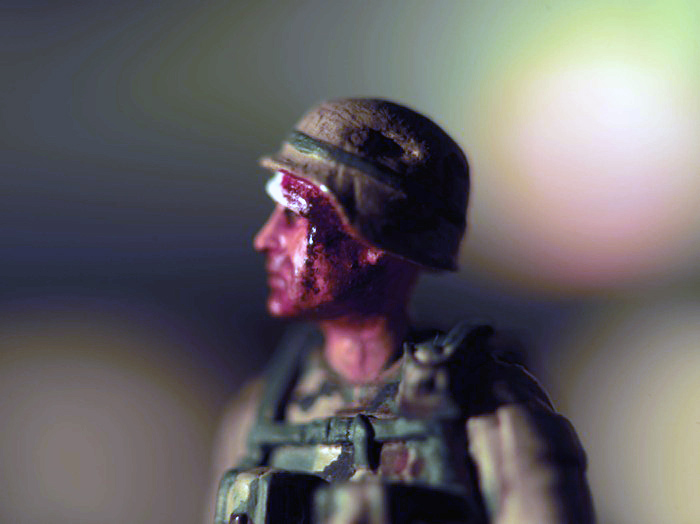
David Levinthal (American, b. 1949) Untitled from the series IED 2008 Archival Pigment Print on Polyester Film
David Levinthal (American, b. 1949) Untitled from the series IED 2008 Archival Pigment Print on Polyester Film
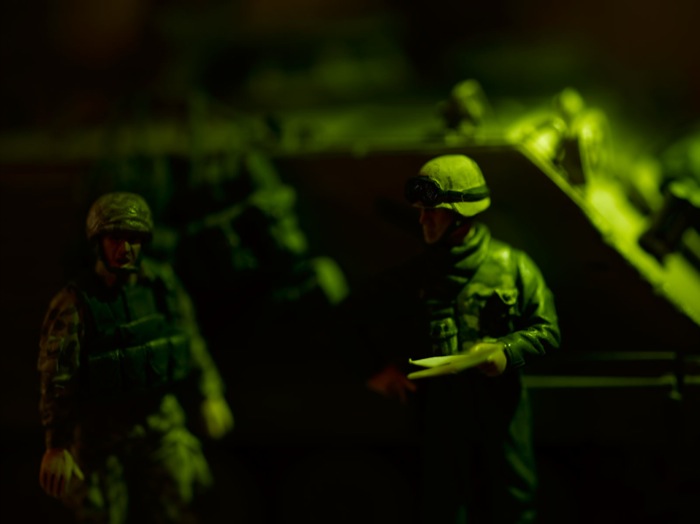
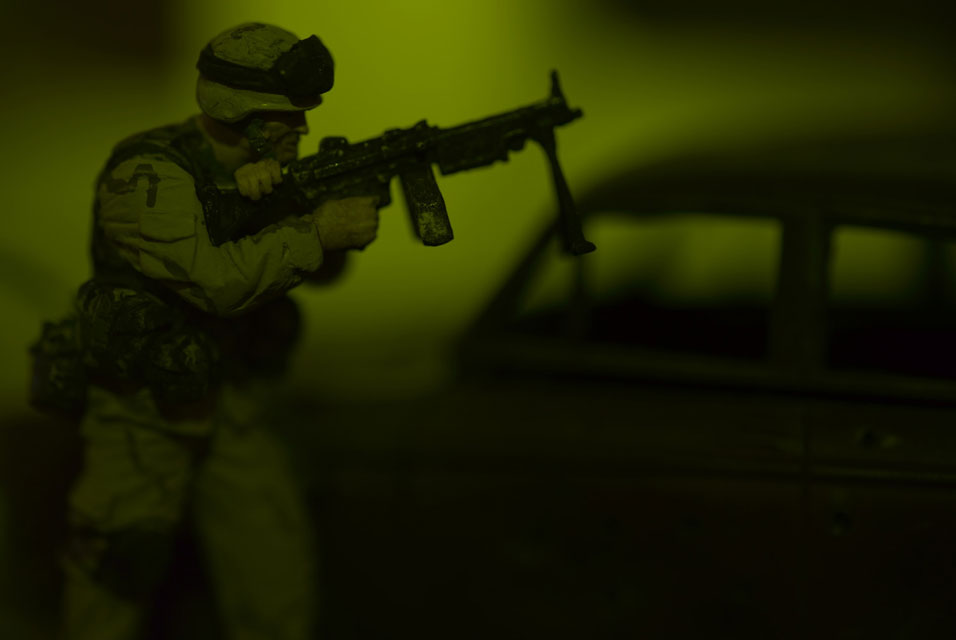
Stellan Holm Gallery is presenting I.E.D.: War in Afghanistan and Iraq, an exhibition of photographs by David Levinthal. The exhibition runs through February 13, 2010. This is the first solo exhibition of works by David Levinthal on view at Stellan Holm Gallery.
I.E.D.: War in Afghanistan and Iraq features eighteen colour photographs by renowned photographer, David Levinthal, which seek to examine the way in which our society looks at war. The idea for this series was conceived when Levinthal recognised a flood of figurines and models available to the American consumer, depicting the ongoing conflicts in Iraq and Afghanistan. Through the use of these miniature soldiers, civilians and armoured vehicles, Levinthal constructs extremely realistic dioramas that recreate the horrors of contemporary warfare. However, these photographs do not simply recreate scenes from a foreign war. Instead they bring a new perspective to the discourse about war, how it is broadcast in real time and how it relates to American society as a whole. Without interjecting his own prejudgments, David Levinthal asks the viewer to reconsider their own perceptions of reality.
Released by powerHouse Books, the publication, I.E.D.: War in Afghanistan and Iraq, compiles the entirety of Mr. Levinthal’s series of photographs. The book features seventy colour photographs along with an introduction by the artist. It is accompanied by a series of writings culled by David Stanford, editor of The Sandbox, an online military blog that posts writings from troops deployed in Iraq and Afghanistan. This ‘boots-on-the-ground’ testimony adds a powerful voice to the compelling and harrowing photographs constructed by Levinthal.
Born in 1949 in San Francisco, CA, David Levinthal has been exploring and confronting various social issues through the playful use of toy figurines since 1972. He has released numerous publications including, Hitler Moves East: A Graphic Chronicle, 1941-43, Bad Barbie, and Blackface. He was the recipient of the John Simon Guggenheim Foundation Fellowship in 1995 and the National Endowment for the Arts, Visual Artists Fellowship in 1990-1991. His works are featured in numerous, notable public collections including the Whitney Museum of American Art, the Metropolitan Museum of Art, and the Museum of Modern Art.
Text from the Stellan Holm Gallery website [Online] Cited 16/01/2010 no longer available online
David Levinthal (American, b. 1949) Untitled from the series IED 2008 Archival Pigment Print on Polyester Film
David Levinthal (American, b. 1949) Untitled from the series IED 2008 Archival Pigment Print on Polyester Film
David Levinthal (American, b. 1949) Untitled from the series IED 2008 Archival Pigment Print on Polyester Film
Many thankx to Sprüth Magers London for allowing me to publish the photographs in the posting. Please click on the photographs for a larger version of the image.
Barbara Kruger (American, b. 1945) Untitled (Money can buy you love) 1983 Collage 19.5 x 17.5cm Courtesy of the artist and Sprüth Magers London Berlin
Barbara Kruger (American, b. 1945) Untitled (Your misery loves company) 1985 Collage 18 x 17.3cm Courtesy of the artist and Sprüth Magers London Berlin
Barbara Kruger (American, b. 1945) Untitled (Our prices are insane!) 1987 Collage Courtesy of the artist and Sprüth Magers London Berlin
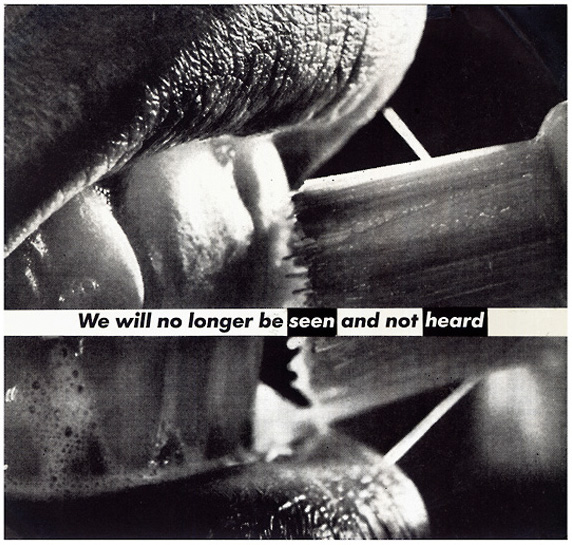
Barbara Kruger (American, b. 1945) Untitled (We will no longer be seen and not heard) 1985 17.8 x 18.5cm Courtesy of the artist and Sprüth Magers London Berlin
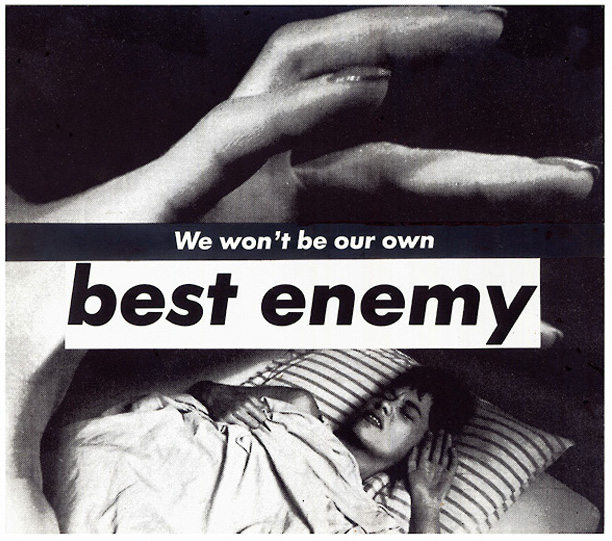
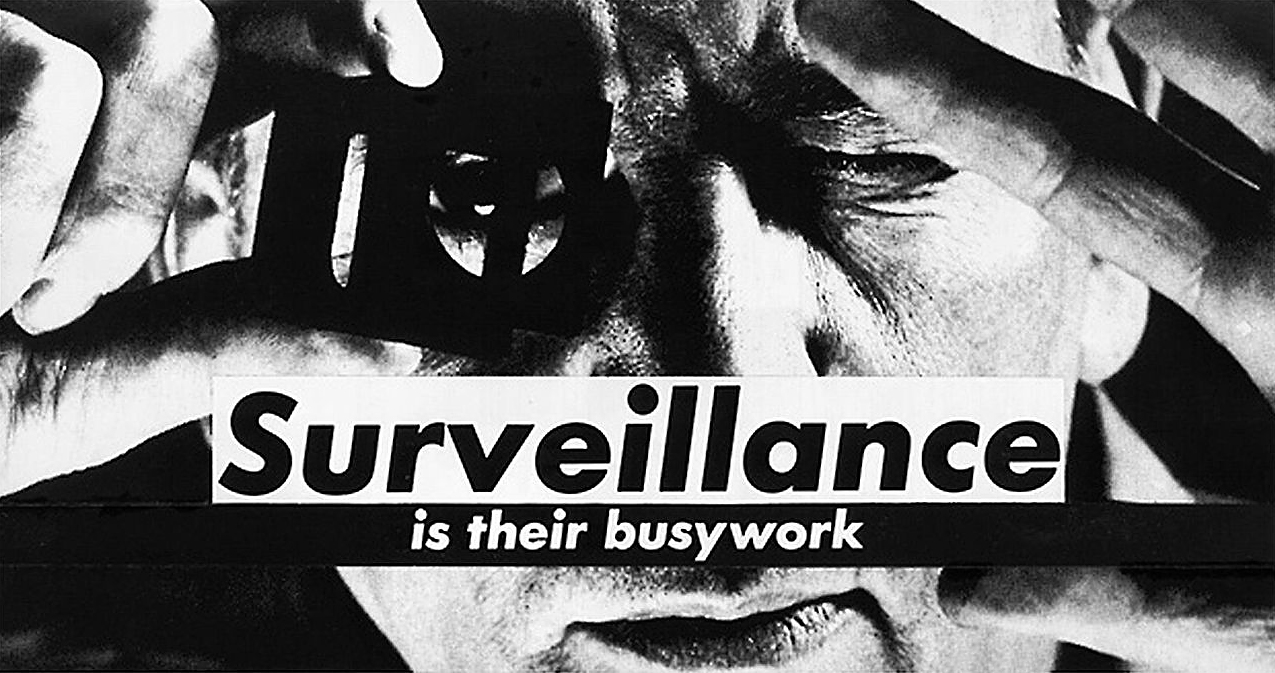
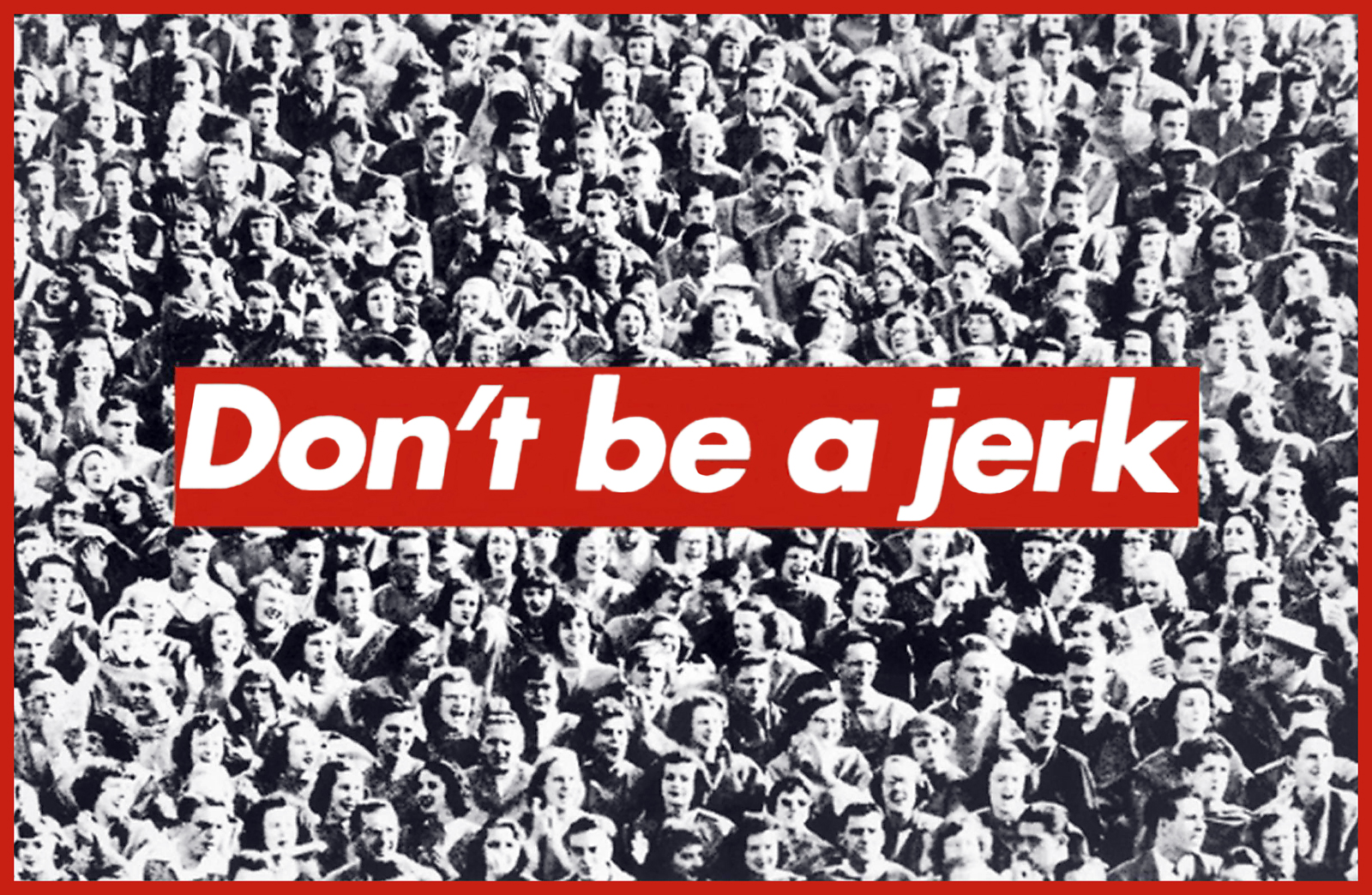
Sprüth Magers London is delighted to present a survey of early work by acclaimed American artist Barbara Kruger. Using contrasting layers of text and image, Kruger’s work has for almost three decades probed the nature of a media-saturated society in late capitalism, and the significance of highly evolved cultures of consumerism and mass politics to the experience and making of social identities. In addition to offering acute, indeed often piquant cultural insights, Kruger’s work also presents a serious conceptual exploration into the relationship between language and image, and their dynamics as collaborators and antagonists in the bearing of meaning. The artist’s unique blend of conceptual sophistication and wry social commentary has made Kruger one of the most respected and admired artists of her generation, and this timely reappraisal of her early practice reveals the ingenuity and precision of her craft.
The early monochrome pre-digital works assembled in the exhibition, known professionally as ‘paste ups’, reveal the influence of the artist’s experience as a magazine editorial designer during her early career. These small scale works, the largest of which is 11 x 13 inches, are composed of altered found images, and texts either culled from the media or invented by the artist. A negative of each work was then produced and used to make enlarged versions of these initial ‘paste ups’. The influence of Kruger’s magazine publishing training extends far beyond technique however. The linguistic and typographic conventions of consumer culture, and an understanding of the inherent potential of a single image, are appropriated and subverted by Kruger, as the artist explores the power of the soundbite and the slogan, and the method and impact of ‘direct address’ on the consumer/viewer.
Although Kruger’s practice is embedded in the visual and political culture of mass media and advertising, the work moves beyond simple appropriation and the ironic meditation on consumerism which animated earlier movements such as Pop art. The emblazoned slogans are often slightly yet meaningfully adjusted clichés of common parlance and the commercial world, and are overlaid on contrasting images which range from the grotesque to the banal. The juxtaposition of pictorial and linguistic modes of communication on the same plane thereby begs conceptual questions of human understanding, and the means by which messages are transmitted and distorted, recognised and received.
Barbara Kruger was born in Newark, New Jersey in 1945. She currently lives in both Los Angeles, California and New York and teaches at the University of California, Los Angeles. She has been the subject of many one-person exhibitions, including a comprehensive retrospective at the Museum of Contemporary Art in Los Angeles in 1999, which travelled to The Whitney Museum of American Art, New York in 2000. More recently, she has exhibited large-scale installations at the Moderna Museet in Stockholm, Tramway in Glasgow, Scotland, the Australian Centre for Contemporary Art in Melbourne, Australia, and at BCAM at the Los Angeles County Museum of Art, among others. She was honoured with the “Golden Lion” award for Lifetime Achievement at the Venice Biennale in 2005.
Press release from the Sprüth Magers London website [Online] Cited 25/05/2019 no longer available online
Barbara Kruger (American, b. 1945) Untitled (We won’t be our own best enemy) 1986 Collage 18 x 22cm Courtesy of the artist and Sprüth Magers London Berlin
Barbara Kruger (American, b. 1945) Untitled (Surveillance is their busywork) 1988 Collage 11.1 x 22cm Courtesy of the artist and Sprüth Magers London Berlin
Barbara Kruger (American, b. 1945) Untitled (You are a very special person) 1995 Collage (colour) 13.6 x 19.1cm Courtesy of the artist and Sprüth Magers London Berlin
Barbara Kruger (American, b. 1945) Don’t be a jerk 1984 Screenprint on vinyl 250 x 388.5cm Courtesy of the artist and Sprüth Magers London Berlin
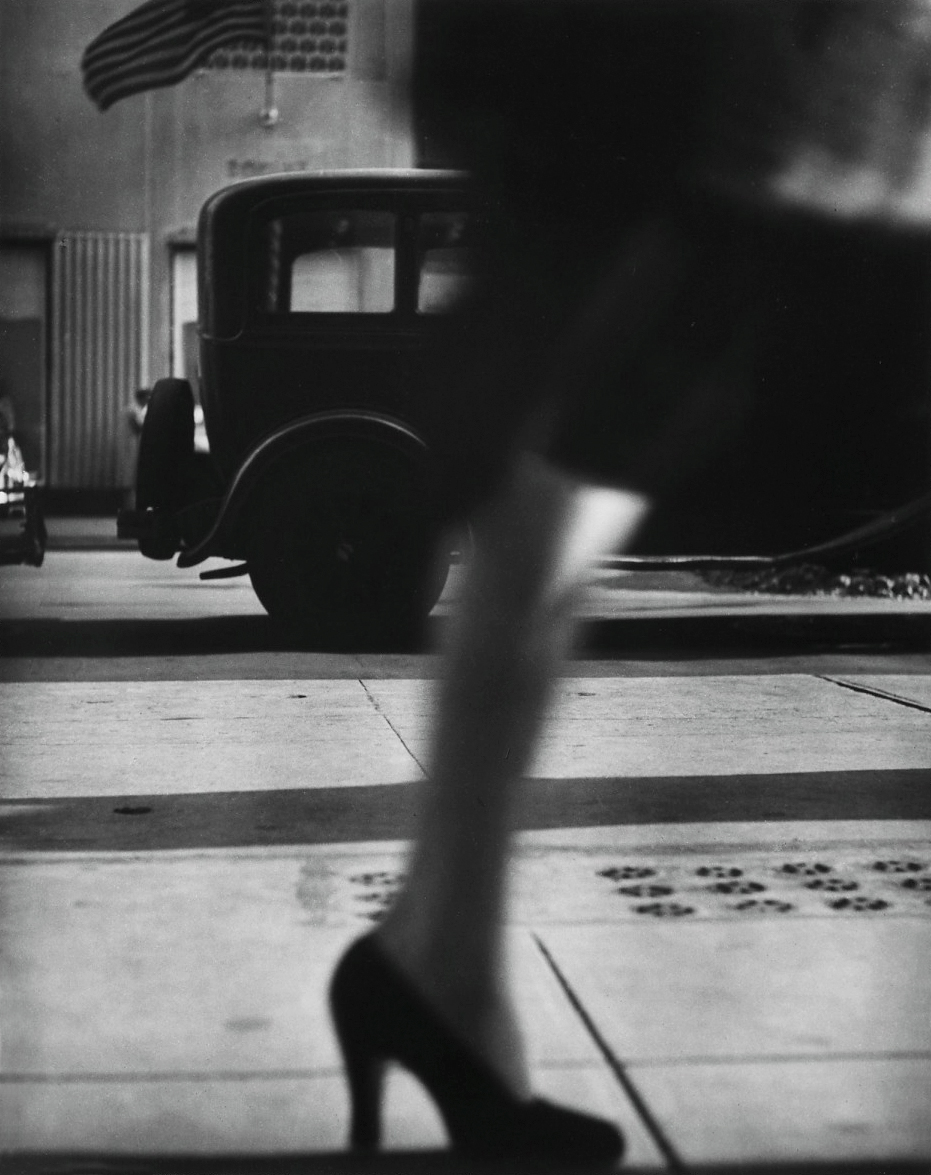
An interesting discussion of the life and work of Lisette Model (and her influence on Diane Arbus and vice versa) can be found on the AMERICANSUBURB X: THEORY website in an article by Elsa Dorfman titled “Ann Thomas on Lisette Model”. More photographs by Lisette Model can be found on the Masters of Photography website including some fabulous “Running Legs” images.
Dr Marcus Bunyan
Many thankx to Fundacion MAPFRE for allowing me to publish the photographs in the posting. Please click on the photographs for a larger version of the image.
“New images surround us everywhere. They are invisible only because of sterile routine convention and fear.”
“Photography starts with the projection of the photographer, his understanding of life and himself into the picture.”
“New images surround us everywhere. They are invisible only because of sterile routine convention and fear. To find these images is to dare to see, to be aware of what there is and how it is. The photographer not only gets information, he gives information about life.”
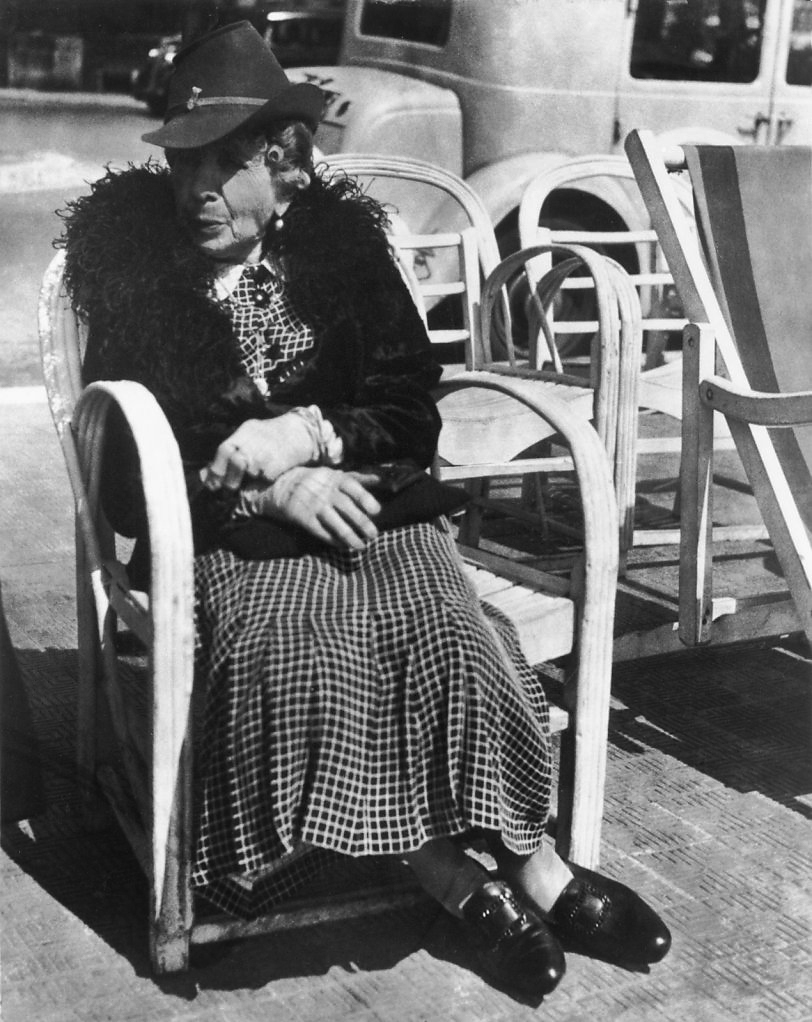
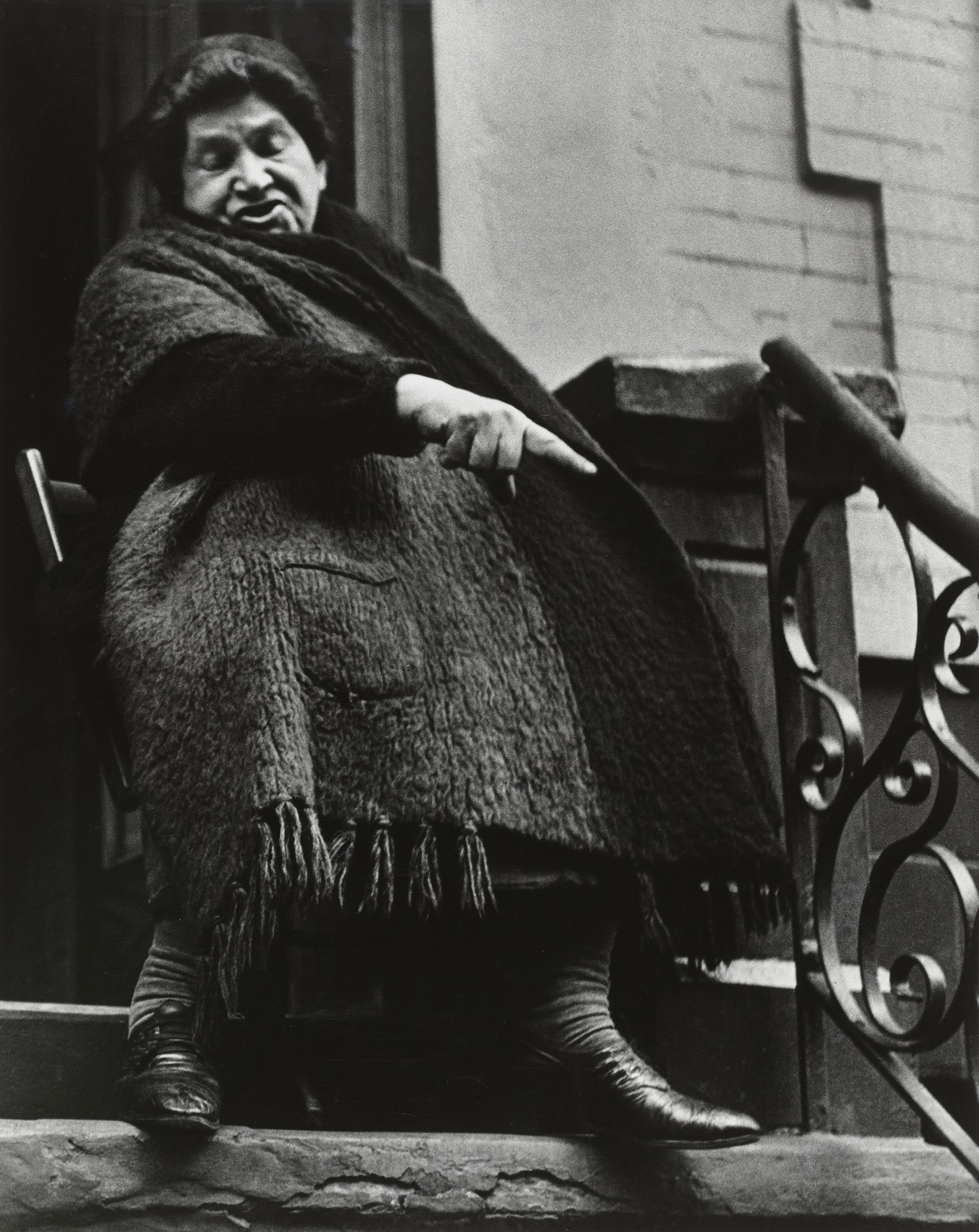
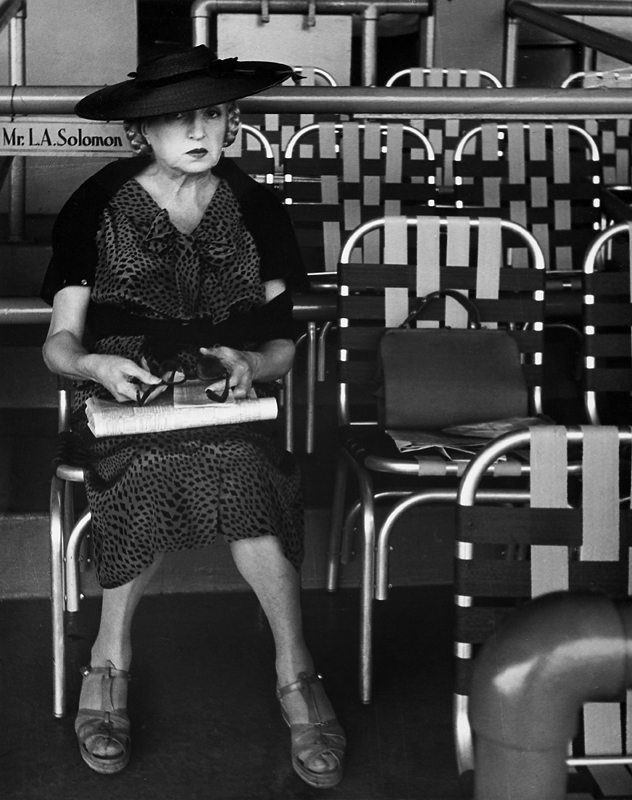
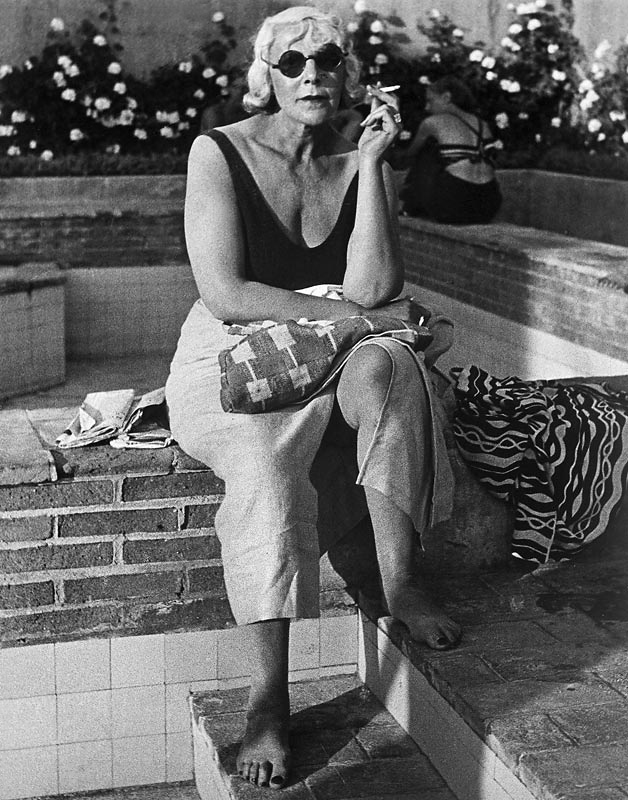
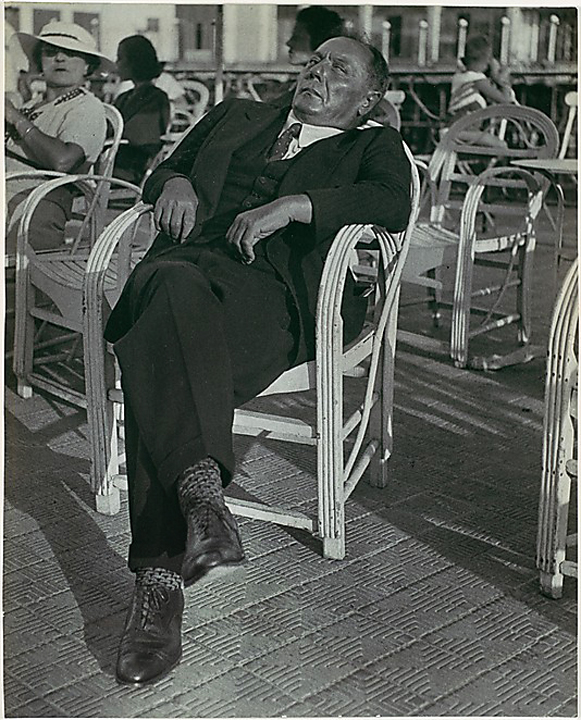
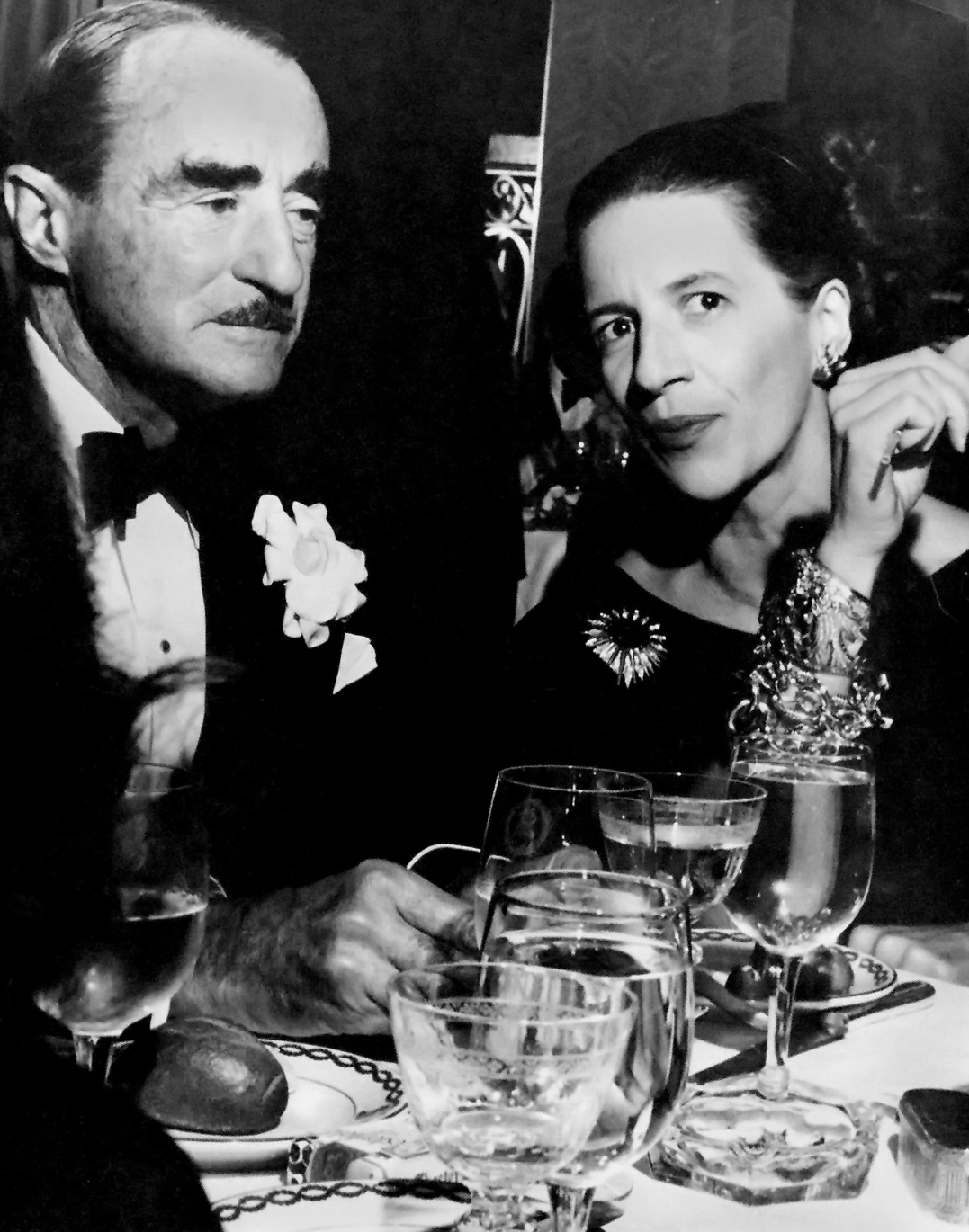
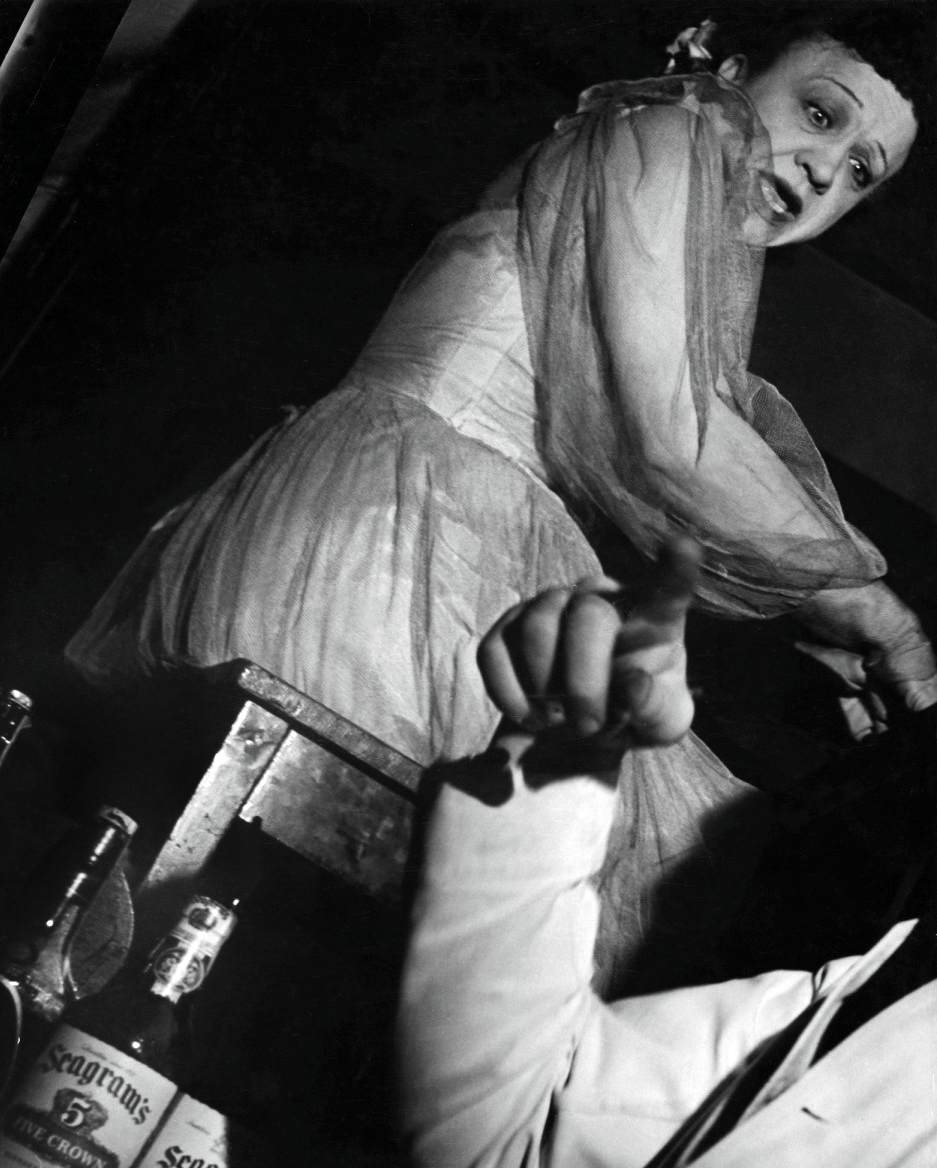
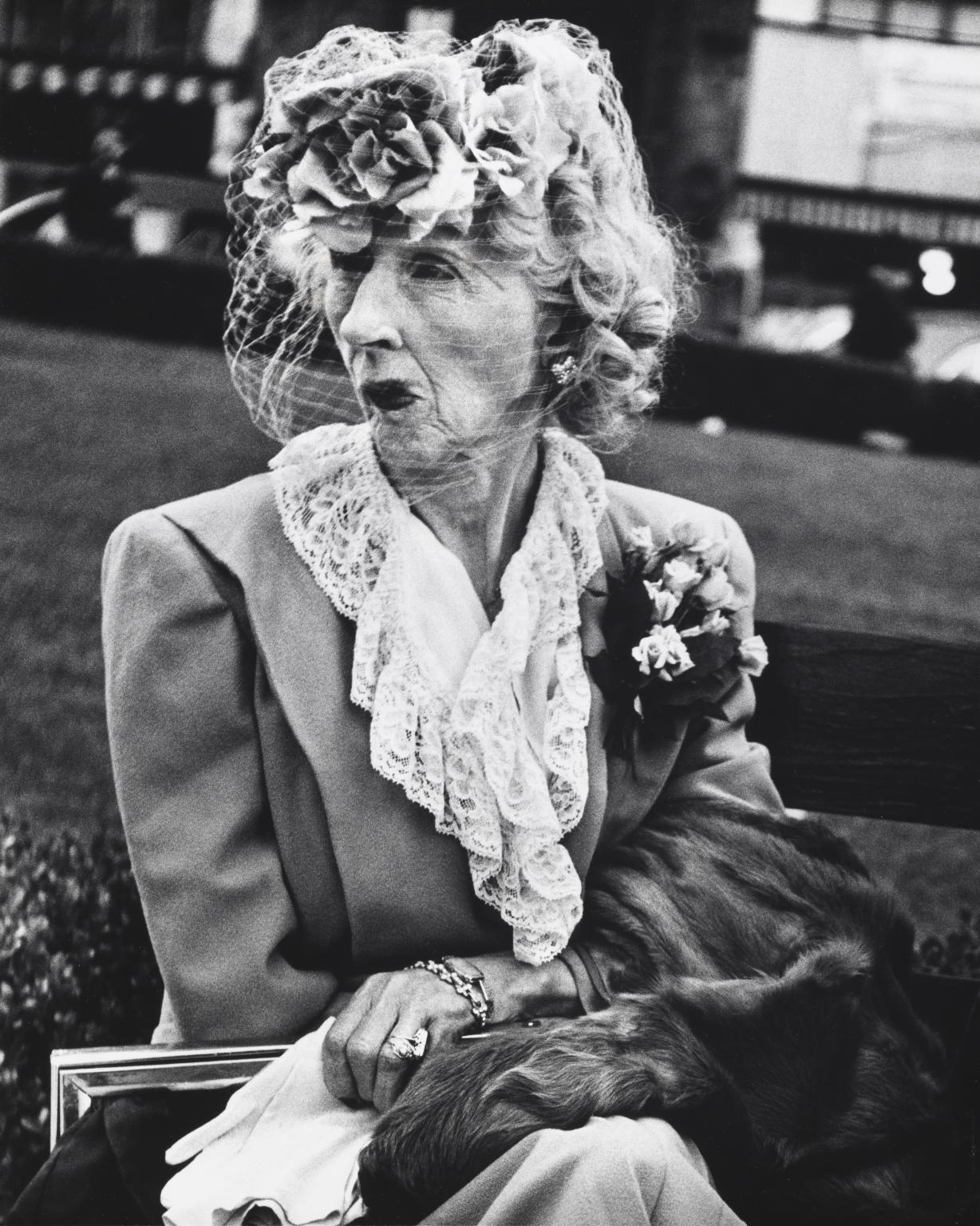
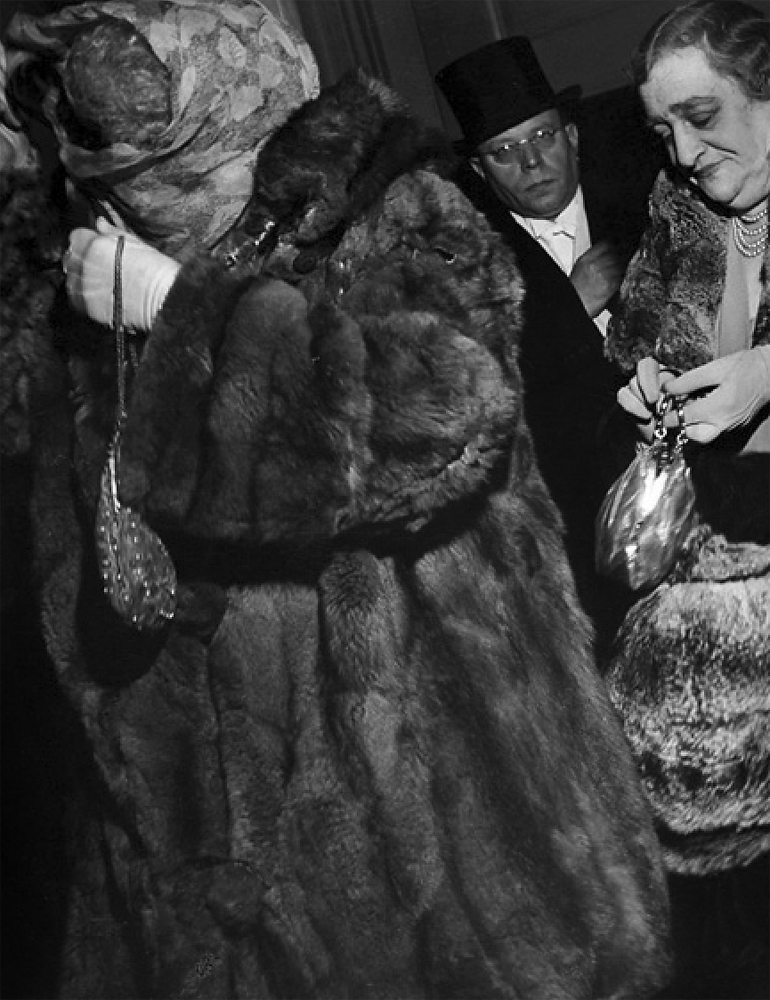
If Lisette Model took up photography as a way of earning a living, it is also true that she always fought for her own subjects, rather than simply carry out the assignments given by editors. She believed that for a photograph to be successful its subject had to be something that “hits you in the stomach.” This could be something familiar or something unfamiliar. For Model, the camera was an instrument for probing the world, a way of capturing aspects of a permanently changing reality that otherwise we would fail to see.
Model always said that she looked but did not judge. Yes, her photographs of the Promenade des Anglais in Nice were published by the left-wing journal Regards, in 1935, but she was not interested exclusively either in the rich or in the poor, and her images are much more about human relations. Her work evinces empathy, curiosity, compassion and admiration, and reflects the photographer’s attraction to voluminous forms, energy and liveliness, to emphatic gesture and expression: the world as stage. The critic Elizabeth McCausland has described Model’s camerawork as expressing “a subconscious revolt against the rules.”
This exhibition of some 120 of Lisette Model’s most representative photographs illustrates the very bold and direct approach to reality that made her one of the most singular proponents of street photography, the particular form of documentary photography that developed in New York during the 1940s, through the camerawork of such as Helen Levitt, Roy de Carava and Weegee.
Alongside the photographs, archive film and sound recordings of Lisette Model will evoke the photographer’s life, and there will be copies of magazines to which she contributed (Regards, Harper’s Bazaar, etc.).
Exhibition organised by Jeu de Paume and Fundación MAPFRE, Madrid.
Text from the Jeu de Paume website [Online] Cited 01/01/2010 no longer available online
Ray K. Metzker (American, 1931-2014) Philadelphia, 1963 1963 Gelatin silver print
The early photographs from the 1960’s are stupendous!
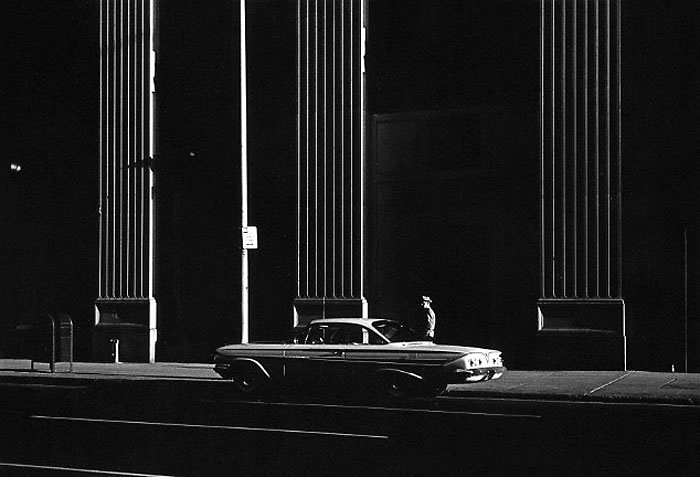
The pre-visualisation of the final photograph shows rare talent. The use of deep chiaroscuro is handled so adeptly, so confidently. The photographer is in full control of the modelling of the spaces and contours of the objects within the photographic frame. Metzker’s drawing with light surely comes from an enlightened mind. Magical. Wonderful.
Dr Marcus Bunyan
Many thankx to Laurence Miller Gallery for allowing me to publish the photographs in the posting. Please click on the photographs for a larger version of the image.
Ray K. Metzker (American, 1931-2014) Philadelphia, 1963 1963 Gelatin silver print
Ray K. Metzker (American, 1931-2014) Philadelphia 1963 Gelatin silver print
Ray K. Metzker (American, 1931-2014) Philadelphia, 1964 1964 Gelatin silver print
Ray K. Metzker (American, 1931-2014) Chicago, 1958 1958 Gelatin silver print
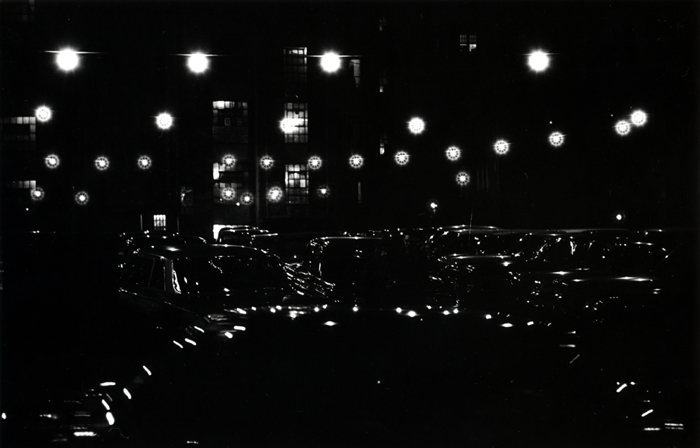
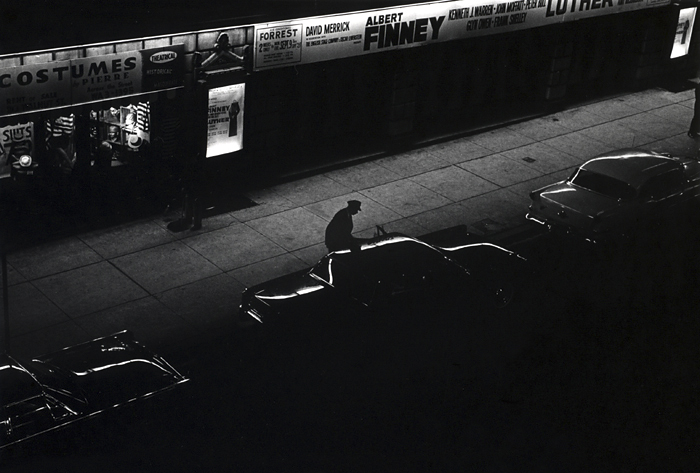
From November 24 through January 9 Laurence Miller Gallery celebrates Ray K. Metzker: AutoMagic. This exhibition features over fifty black-and-white photographs taken by this 78-year old master photographer over the past fifty years in which the automobile plays a pivotal role in the contest between light and shadow. Forty of the photographs have never been exhibited before.
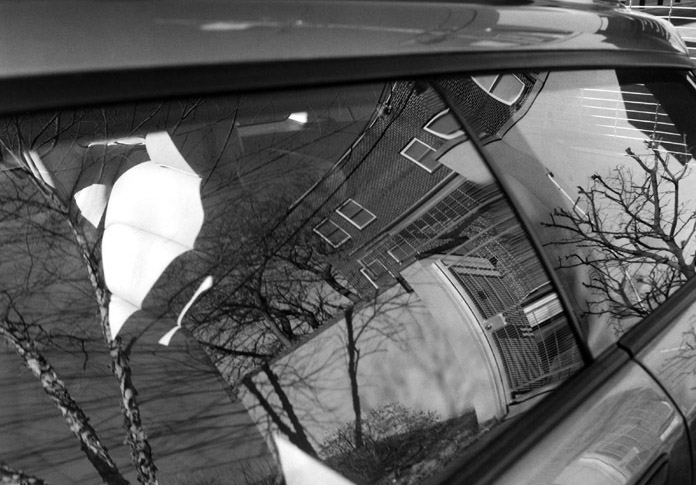
From his earliest street pictures taken under the El in Chicago’s Loop in the mid-Fifties, to his most recent highly abstract views of reflections on Philadelphia car windows, Ray K. Metzker brings an exuberance of vision rarely found among today’s photographers. In total control of his camera and craft, Metzker transforms the mundane in daily urban life into intense images that sizzle, and delight the eye.
In the darkest recesses of a parking garage, we discover a single shimmering tail fin of a late 50’s Cadillac. In a scene more Orson Wells than Woody Allen, we witness a menacing shadow figure approaching a parked car, intent unknown. In a blizzard, we join the photographer and a single figure as they look at one another wondering why each other is standing there in the cascading snow.
The show also reveals a more tender side of Metzker, as we peer into car windows to see folks uninhibited within their mobile shelters, including a sleeping man with a medallion, head resting on the door; a man reading at the wheel of his damaged white coupe; and a man at the end of long day, hand upon his head.
Metzker’s work of the last few years, fondly nicknamed Autowackies, are a brilliant extension of his earlier forays into abstraction, and are only made possible by the contours of our newest cars and SUV’s, which wildly warp the architecture and cloud formations reflected on their glossy surfaces.
Many thankx to the Frick Art and Historical Center for allowing me to publish the photographs in the posting. Please click on the photographs for a larger version of the image.
Dr Marcus Bunyan
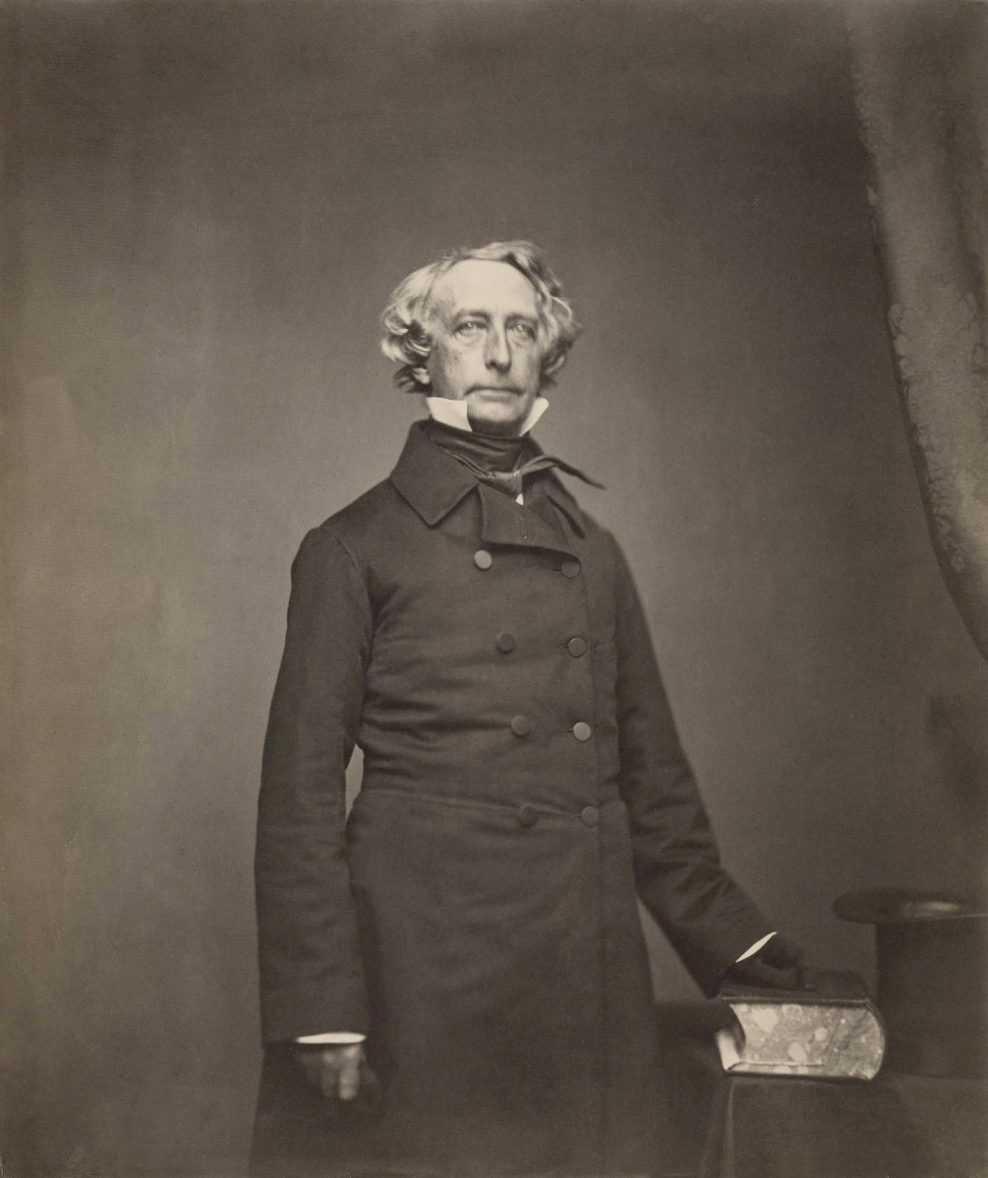
Matthew Brady (American, 1823-1896) Prosper M. Wetmore 1857 Salted paper print from wet collodion negative 47 x 39.4cm (18 1/2 x 15 1/2 in.) CC0 1.0 Universal
A popular author, legislator, and general in the New York State militia, Wetmore, here at age 59, still resembles Edgar Allen Poe’s description of him from a decade earlier: “about five feet eight in height, slender, neat; with an air of military compactness.” Brady’s portrait studio, with branches in New York and Washington, DC, was the most important of its era in America, thanks in part to its success in photographing political, social, and cultural figures. These early celebrity portraits, such as those of the wedding of performer Tom Thumb (seen in the centre of the gallery), could sell thousands of copies. Brady is now best known for images of the Civil War, most taken by photographers he hired.
Text from The Cleveland Museum of Art website
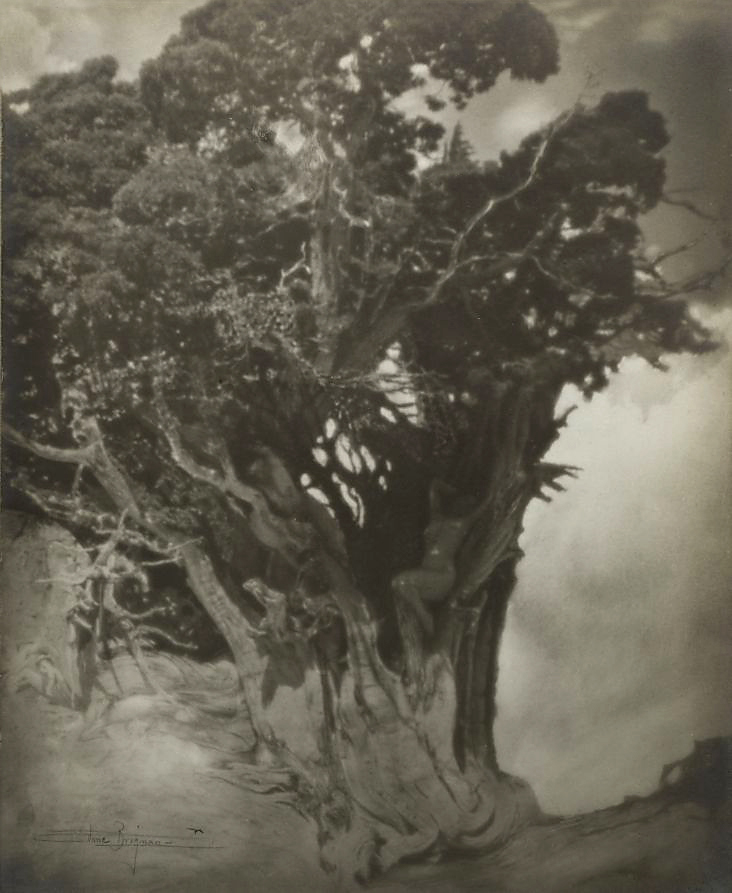
Anne W. Brigman (American, 1869-1950) The Hamadryads c. 1910 Platinum print
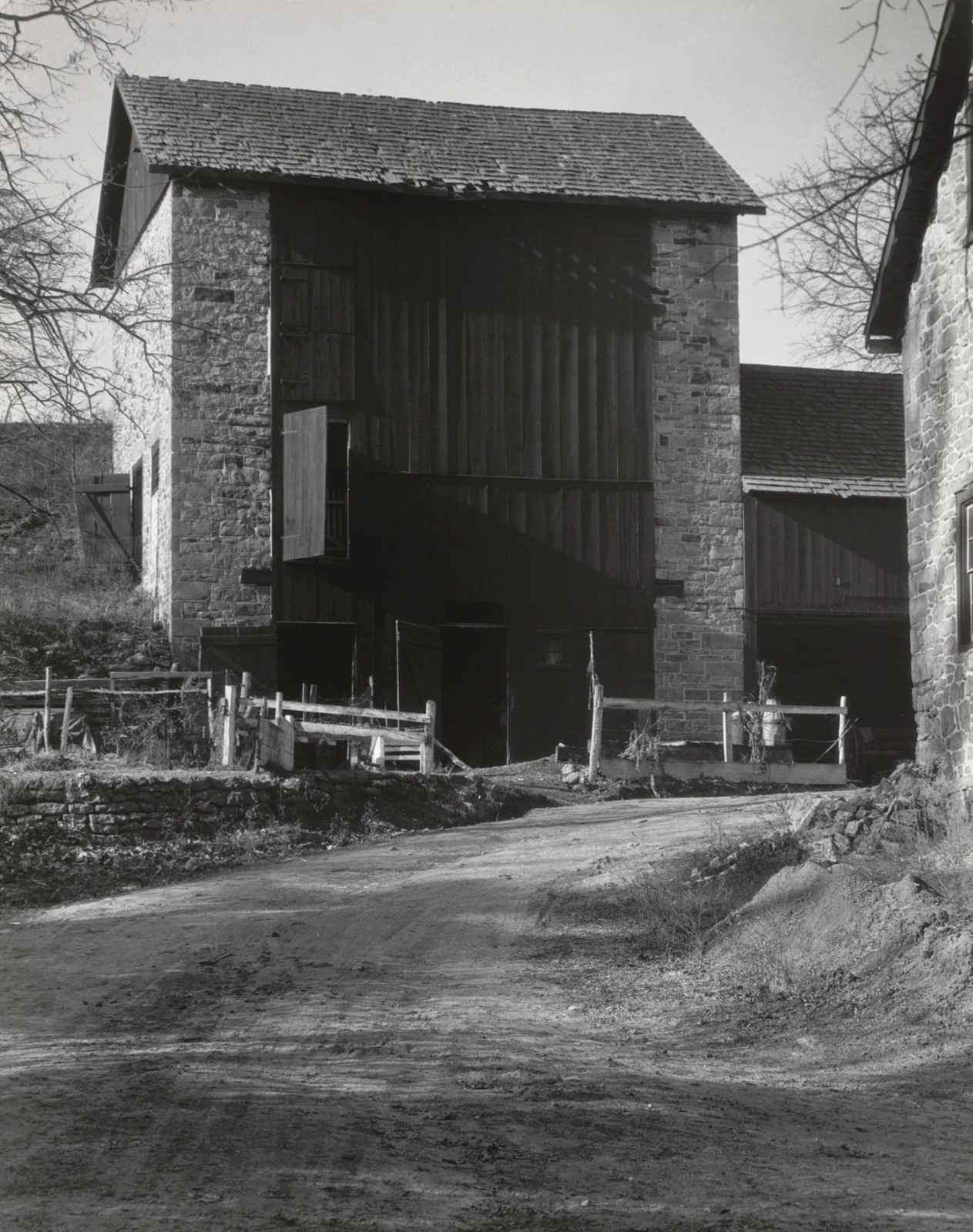
Charles Sheeler (American, 1883-1965) Bucks County Barn 1915 Gelatin silver print 9 1/4 x 7 5/16″ (23.5 x 18.6cm)
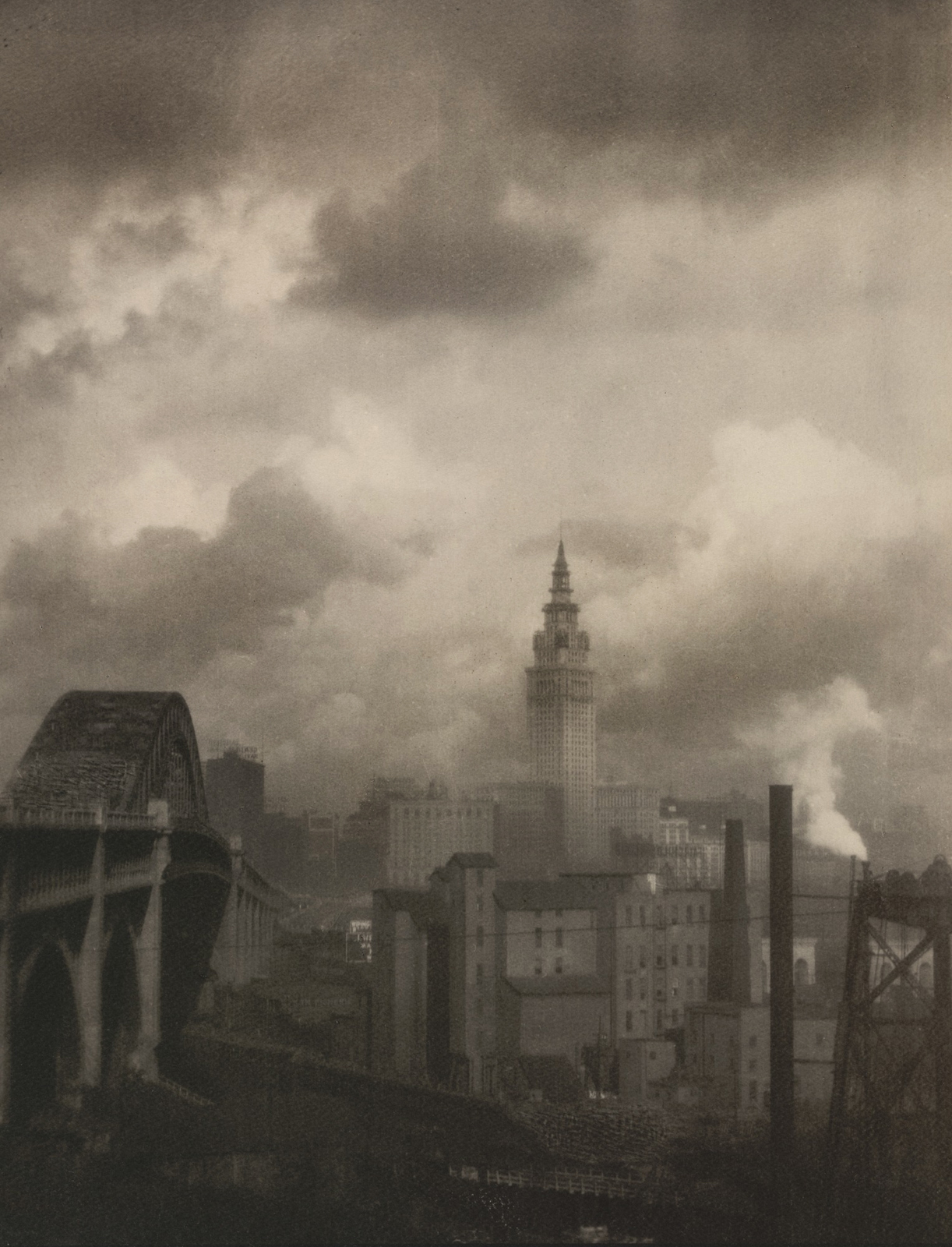
Margaret Bourke-White (American 1904-1971) Terminal Tower 1928 13 1/4 x 10″ (33.7 x 25.4cm) Gelatin silver print
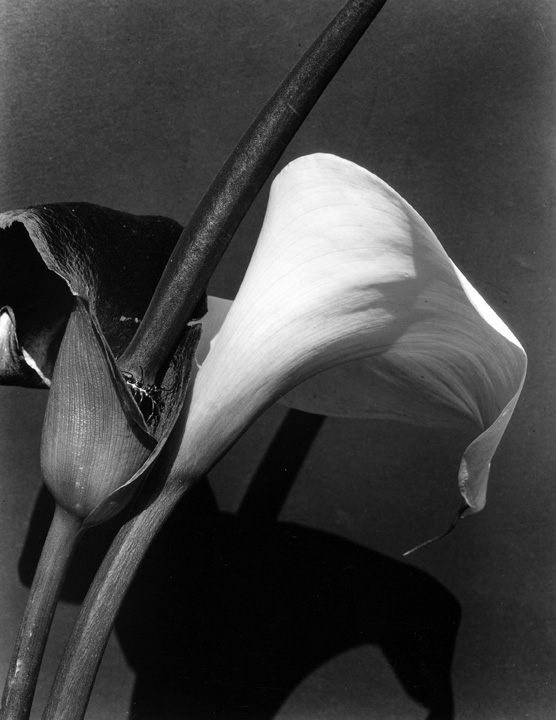
Imogen Cunningham (American, 1883-1976) Black and White Lilies III 1928 Gelatin silver print
Alfred Steiglitz (American, 1864-1946) Georgia O’Keefe 1933 Gelatin silver photograph
Dorothea Lange (American, 1895-1965) Resident, Conway, Arkansas 1938 Gelatin silver print 11 15/16 x 9 1/2 in. (30.32 x 24.13cm)
On October 3, 2009, Icons of American Photography: A Century of Photographsfrom the Cleveland Museum of Art opens at The Frick Art Museum. This exhibition is composed of fifty-nine photographs from Cleveland’s extraordinary collection that chronicle the evolution of photography in America from a scientific curiosity in the 1850s to one of the most potent forms of artistic expression of the twentieth century.
Icons of American Photography presents some of the best work by masters of the medium, like Mathew Brady, William Henry Jackson, Eadweard Muybridge, Alfred Stieglitz, Edward Steichen, Paul Strand, Edward Weston, Imogen Cunningham, Margaret Bourke-White, Dorothea Lange, Walker Evans, and Robert Frank, encompassing themes of portraiture, the Western landscape, Pictorialism, documentary photography, and abstraction.
The exhibition explores the technical developments of photography, starting with outstanding examples of daguerreotypes – a sheet of copper coated with light sensitive silver. The daguerreotype gave way to salt, albumen, and then gelatin silver prints. Technologies improved to accommodate larger sizes, easy reproduction of multiple prints from a single negative, and commercially available negative film and print papers. As we move into an increasingly digitised twenty-first century, the lure of the photographer’s magic and the mysteries of making photographic images appear on paper is still strong.
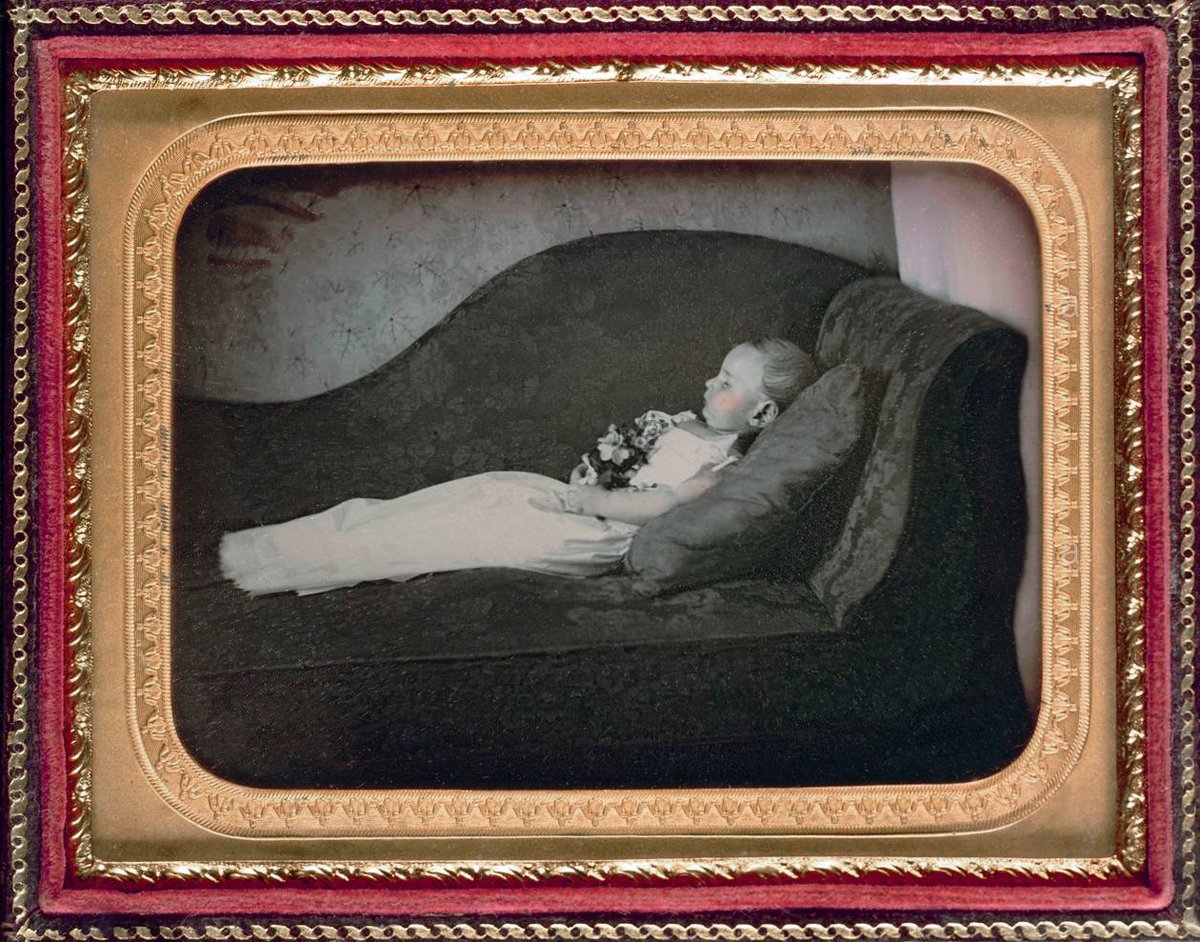
Icons of American Photography presents a remarkable chronicle of American life seen through the camera’s lens. The earliest days of photography saw a proliferation of portraiture – intimately personal and honest in composition. A rare multiple-exposure daguerreotype by Albert Southworth (1811-1894) and Josiah Hawes (1808-1901) presents the sitter in variety of poses and expressions, while the formal portrait of Prosper M. Wetmore, 1857, by Civil War-era photographer Mathew Brady (1823-1896) is more typical of early portraiture. The carefully staged daguerreotype, Dead Child on a Sofa, c. 1855, is an outstanding example of the postmortem portrait. The high rate of infant mortality throughout the 1800s made this variety of portraiture common, satisfying the emotional need of the parents to have a lasting memory of their loved one.
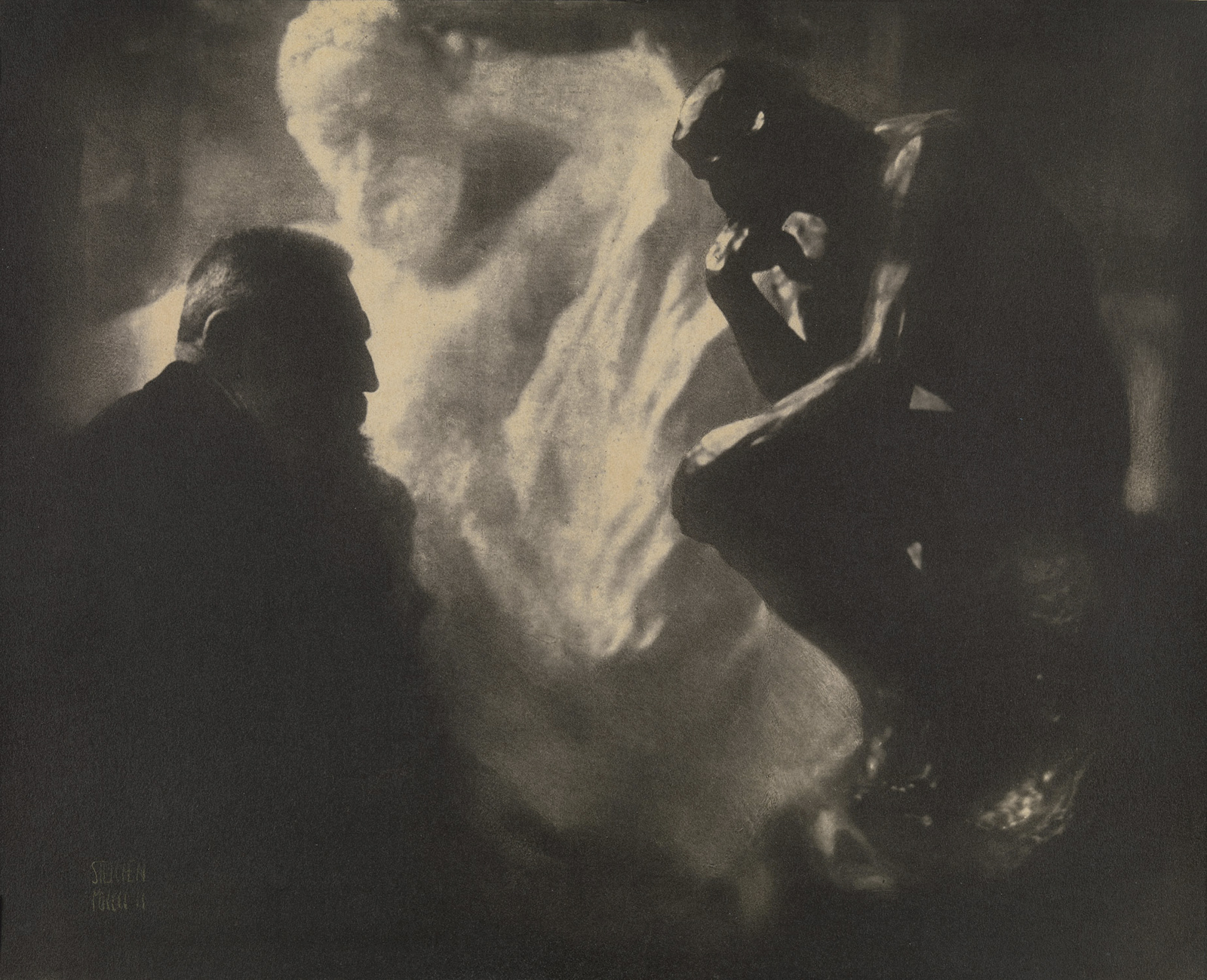
Advances in photographic processes allowed for a range of expressive qualities that were exploited by photographers with an artistic flair. In a style known as Pictorialism, works such as Hamadryads, 1910, by Anne Brigman (1869-1950) imitated the subject matter of painting. In Greek mythology a hamadryad is a nymph whose life begins and ends with that of a specific tree. In this work, two nudes representing wood nymphs were carefully placed among the flowing forms of an isolated tree in the High Sierra. The platinum print method used by Brigman allowed for a detailed, yet warm and evocative result. Edward Steichen’s Rodin the Thinker, 1902 (see below), was created from two different negatives printed together using the carbon print process. This non-silver process provided a continuous and delicate tonal range. For even greater richness, these prints were often toned, producing dense, glossy areas in either black or warm brown.
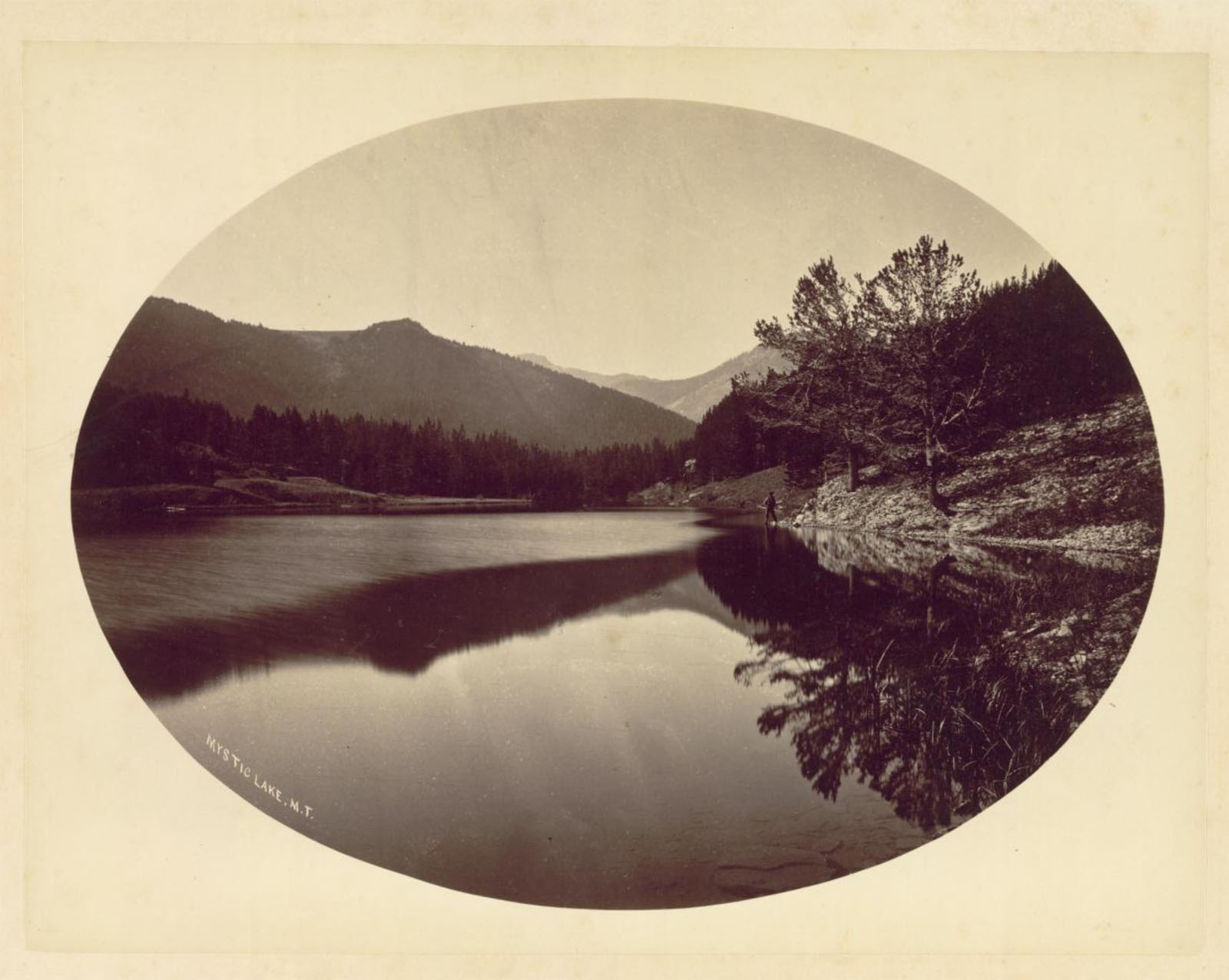
During the late nineteenth century, the U.S. Congress commissioned photographers to document the American West. Photographs by Timothy O’Sullivan (1840-1882) and William Henry Jackson (1843-1942) are the most celebrated from among this era. The exhibition includes O’Sullivan’s East Humbolt Mountains, Utah, 1868 (see below), and Jackson’s Mystic Lake, M.T., 1872 (see below), as well as Bridal Veil, Yosemite, c. 1866 (see below), by Carleton Watkins (1829-1916). Photographers carried large-format cameras with heavy glass negatives to precarious vantage points to create their sharply focused and detailed views. Decades later, Ansel Adams (1902-1984) carried on the intrepid tradition when he swerved to the side of the road and hauled his view camera to the roof of his car to make the famous image Moonrise, Hernandez, New Mexico, 1941.
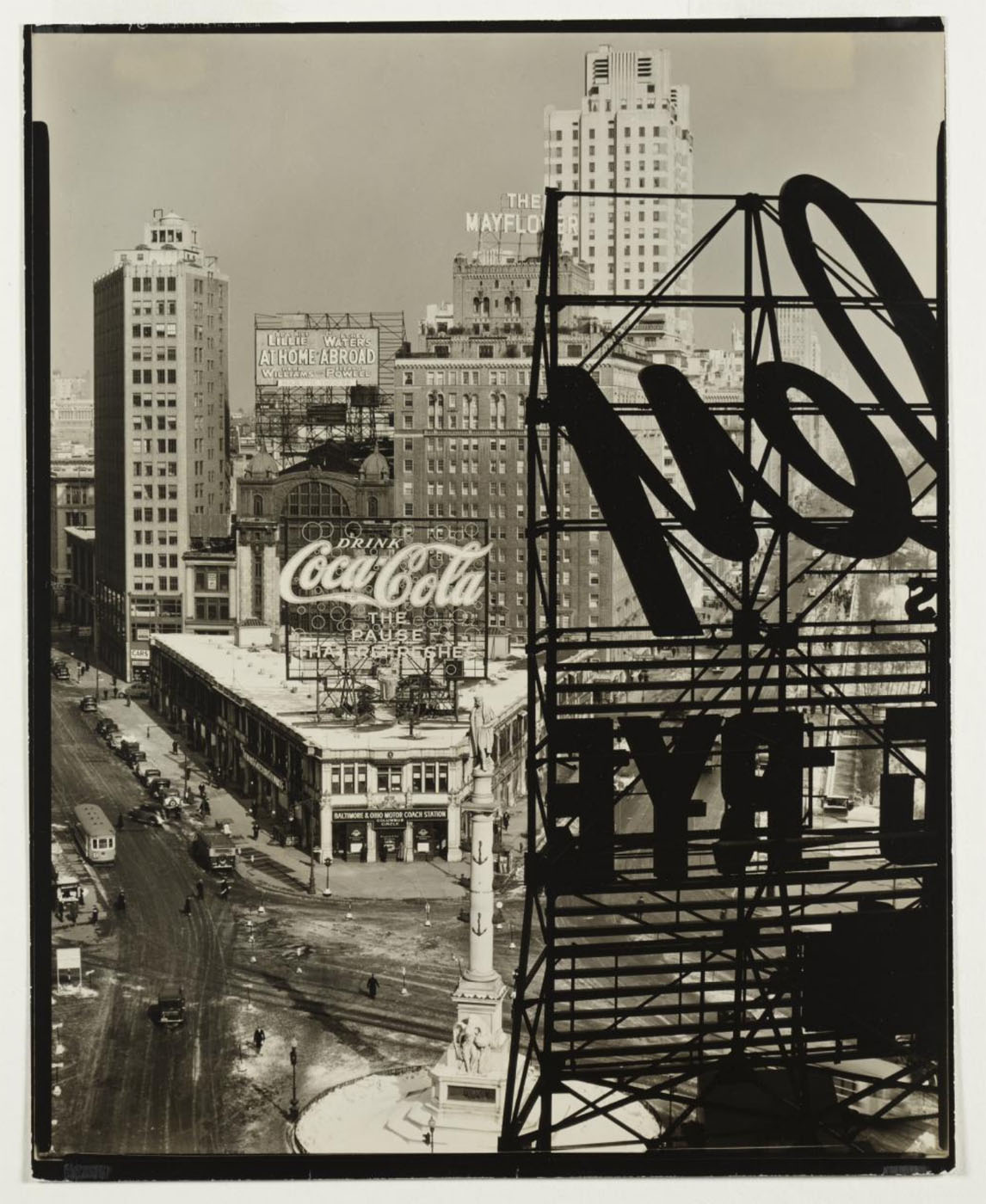
Responding to the rapid growth of the twentieth century, many photographers shifted their attention from depictions of the natural world to the urban landscape. The power, energy, and romance of the city inspired varied approaches, from sweeping vistas to tight, close-up details and unusual camera angles. Margaret Bourke-White (1904-1971) established her reputation during the late 1920s by photographing industrial subjects in Cleveland. Her Terminal Tower, 1928, documents what was then the second tallest building in America. Berenice Abbot’s (1898-1991) New York, 1936 (see below), is one of many depictions of this vibrant metropolis. The human life of the city intrigued many photographers, including Helen Levitt (1913-2009) whose photographs of children are direct, unsentimental and artful; Weegee [Arthur Fellig] (1899-1968) who unflinchingly documented crime and accident scenes; and Gordon Parks (1912-2006) who chronicled the life of African Americans.
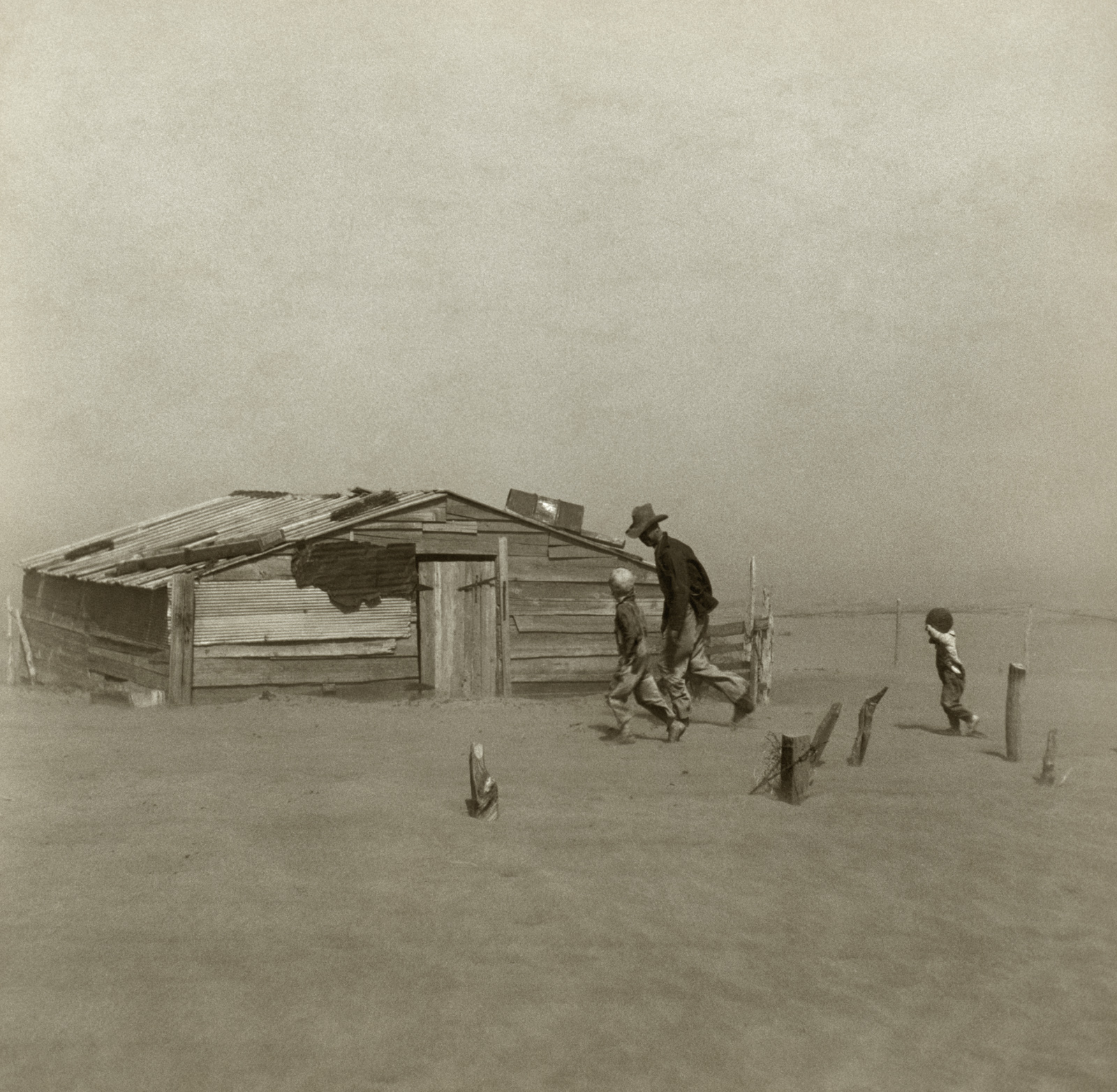
Exploiting the new medium, numerous photography projects were instituted as part of FDR’s New Deal. The most legendary was that of the Farm Security Administration (FSA) run by Roy Stryker, who hired such important photographers such as Walker Evans, Dorothea Lange, and Arthur Rothstein. One of the most iconic images of the New Deal was Dust Storm, Cimarron County, 1936 (see below), by Arthur Rothstein (1915-1985). In the spring of 1936, Rothstein made hundreds of photographs in Cimarron County in the Oklahoma panhandle, one of the worst wind-eroded areas in the United States. Out of that body of work came this gripping, unforgettable image. Dorothea Lange’s (1895-1965) work chronicled the human toll wrought by hardship in Resident, Conway, Arkansas, 1938.
As an art form, photography kept in step with formalist modern styles and an increasing trend toward abstraction. Known for his precisionist paintings, Charles Sheeler’s (1883-1965) Bucks County Barn, 1915, features a geometric composition, sharp focus, and subtle tonal range. In Black and White Lilies III, c. 1928 (see above), Imogen Cunningham (1883-1976) combined the clarity and directness of Modernism with her long-held interest in botanical imagery. For two decades she created a remarkable group of close-up studies of plants and flowers that identified her as one of the most sophisticated and experimental photographers working in America.
Photographers such as Edward Weston (1886-1958) and Paul Strand (1890-1976) employed a straight-on clarity that highlighted the abstract design of everyday objects and the world around us. A completely abstract work by artist László Moholy-Nagy (1894-1946), Untitled, 1939 (see above), is a photogram made by laying objects onto light-sensitive photographic paper and exposing it to light. The objects partially block the light to create an abstract design on the paper.
By 1960, photography had attained a prominent place not only among the fine arts, but in popular culture as well, ushering in a new era of image-based communication that has profoundly affected the arts as well as everyday life.
Icons of American Photography: A Century of Photographs from the Cleveland Museum of Art is organised by the Cleveland Museum of Art. The exhibition is curated by Tom Hinson, Curator of Photography.
Press release from the The Frick Art and Historical Center website [Online] Cited 06/12/2009 no longer available online
Unknown photographer (American) Dead child on a sofa c. 1855 Quarter plate daguerreotype with applied colour
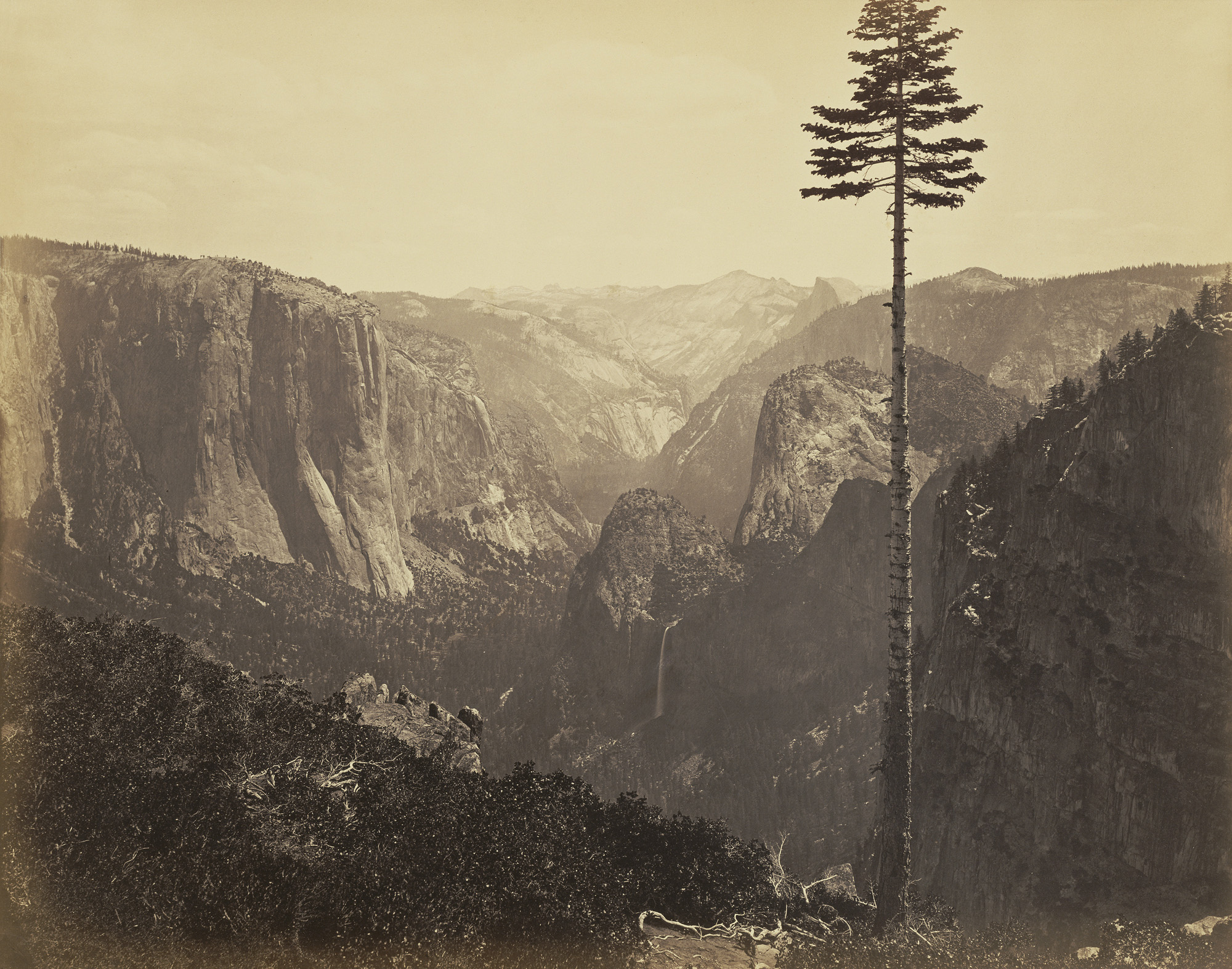
Carelton Watkins (American, 1829-1916) Yosemite Valley from the Best General View No. 2 1866 Albumen silver print
Carleton Watkins had the ability to photograph a subject from the viewpoint that allowed the most information to be revealed about its contents. In this image, he captured what he considered the best features of Yosemite Valley: Bridal veil Falls, Cathedral Rock, Half Dome, and El Capitan. By positioning the camera so that the base of the slender tree appears to grow from the bottom edge of the picture, Watkins composed the photograph so that the canyon rim and the open space beyond it seem to intersect. Although he sacrificed the top of the tree, he was able to place the miniaturised Yosemite Falls at the visual centre of the picture. To alleviate the monotony of an empty sky, he added the clouds from a second negative. This image was taken while Watkins was working for the California Geological Survey. His two thousand pounds of equipment for the expedition, which included enough glass for over a hundred negatives, required a train of six mules.
Text from the J. Paul Getty Museum website [Online] Cited 14/05/2019
Eadweard J. Muybridge (American born England, 1830-1904) Valley of Yosemite, from Rocky Ford 1872 Albumen silver print
Timothy H. O’Sullivan (American, 1840-1882) East Humboldt Mountains, Utah 1868 Albumen print from wet collodion negative Image: 19.7 x 27cm (7 3/4 x 10 5/8 in.) The Cleveland Museum of Art James Parmelee Fund
By nature and by experience gained during the Civil War, O’Sullivan was ideally suited for the physical and creative demands required of the official photographer for the geological exploration of the fortieth parallel, led by the enterprising Yale geologist Clarence King. The goal of the expedition was to survey the geological structure and natural resources of a swath of territory 100 miles wide, from the eastern slopes of the Sierra Nevada Mountains across the Great Basin to the Rocky Mountains. While on the expedition in 1867-1869 and 1872, O’Sullivan simultaneously pursued his own interest in perfecting a balanced, aesthetic style of landscape photography while providing a faithful record of the natural terrain. As typified in this print, he positioned the camera at a distance parallel to the majestic scenery, presenting a shallow, flattened depiction of space. The image describes in sharp detail the sheer beauty and rugged scale of this Western landscape.
Text from The Cleveland Museum of Art website
William Henry Jackson (American, 1843-1942) Mystic Lake, M.T. 1872 Albumen print from wet collodion negative Image: 23.3 x 50.7cm (9 3/16 x 19 15/16 in.) The Cleveland Museum of Art John L. Severance Fund
One of the best-known 19th-century landscape photographers of the American West, Jackson took thousands of negatives between 1870 and 1888 while working for the federal government and the railroads. Beginning in 1870, he began an eight-year assignment as official photographer to the U.S. Geological and Geographical Survey of the Territories led by Ferdinand V. Hayden. This beautiful view of Mystic Lake, located at the head of the East Gallatin River, is one of the most picturesque photographs of the mountainous American West. Jackson used for the first time 11-by-14-inch negatives that captured the scene’s rich textures, the brilliant play of light and shade, and the power and romance of this enthralling vista. Jackson described the scenic lake as “well stocked with most excellent trout, it is quite a pleasure-resort, despite the difficulties to encounter in reaching it.”
Text from The Cleveland Museum of Art website
Edward Steichen (American, 1879-1973) Rodin The Thinker 1902 Gum bichromate print
When Edward Steichen arrived in Paris in 1900, Auguste Rodin (1840-1917) was regarded not only as the finest living sculptor but also perhaps as the greatest artist of his time. Steichen visited him in his studio in Meudon in 1901 and Rodin, upon seeing the young photographer’s work, agreed to sit for his portrait. Steichen spent a year studying the sculptor among his works, finally choosing to show Rodin in front of the newly carved white marble of the “Monument to Victor Hugo,” facing the bronze of “The Thinker.” In his autobiography, Steichen describes the studio as being so crowded with marble blocks and works in clay, plaster, and bronze that he could not fit them together with the sculptor into a single negative. He therefore made two exposures, one of Rodin and the “Monument to Victor Hugo,” and another of “The Thinker.” Steichen first printed each image separately and, having mastered the difficulties of combining the two negatives, joined them later into a single picture, printing the negative showing Rodin in reverse.
“Rodin – The Thinker” is a remarkable demonstration of Steichen’s control of the gum bichromate process and the painterly effects it encouraged. It is also the most ambitious effort of any Pictorialist to emulate art in the grand tradition. The photograph portrays the sculptor in symbiotic relation to his work.
Suppressing the texture of the marble and bronze and thus emphasiSing the presence of the sculptures as living entities, Steichen was able to assimilate the artist into the heroic world of his creations. Posed in relief against his work, Rodin seems to contemplate in “The Thinker” his own alter ego, while the luminous figure of Victor Hugo suggests poetic inspiration as the source of his creativity. Recalling his response to a reproduction of Rodin’s “Balzac” in a Milwaukee newspaper, Steichen noted: “It was not just a statue of a man; it was the very embodiment of a tribute to genius.” Filled with enthusiasm and youthful self-confidence, Steichen wanted in this photograph to pay similar tribute to Rodin’s genius.
Text from the Metropolitan Museum of Art website [Online] Cited 14/05/2019
Arthur Rothstein (American, 1915-1985) Dust Storm, Cimarron County 1936 Gelatin silver photograph 40.4 × 39.6cm
Berenice Abbott (American, 1898-1991) Columbus Circle 1936 Gelatin silver print Image: 24.6 x 19.6cm (9 11/16 x 7 11/16 in.) The Cleveland Museum of Art Sundry Purchase Fund
A native of Springfield, Ohio, Abbott studied art and photography in Paris. Arriving in New York in 1929, she was shocked by the past decade’s vertical building boom, and dedicated herself to documenting the city’s new structures and fast-disappearing historic ones. She made this image from the ninth floor of the General Motors building in New York while working for the Federal Art Project, a governmental agency that employed artists during the Depression. The statue of Columbus, at centre, is dwarfed by two advertising signs: one for Schenley rye whiskey and a landmark 80-x-50-foot display for Coca-Cola that required 3,000 incandescent bulbs.
Text from The Cleveland Museum of Art website
The Frick Art and Historical Center 7227 Reynolds Street Pittsburgh PA 15208
Exhibition dates: 12th November – 6th December 2009
Alex Lukas (American, b. 1981) Untitled 2009 Acrylic and silk screen on two book pages
These are terrific – I want one!
A big thank you to Alex for allowing me to reproduce the images.
Dr Marcus Bunyan
Please click on the photographs for a larger version of the image.
Alex Lukas (American, b. 1981) Untitled 2009 Acrylic and silk screen on two book pages
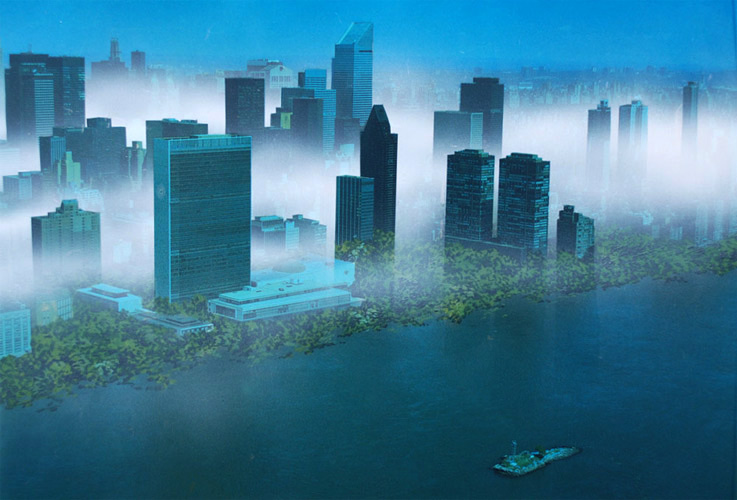
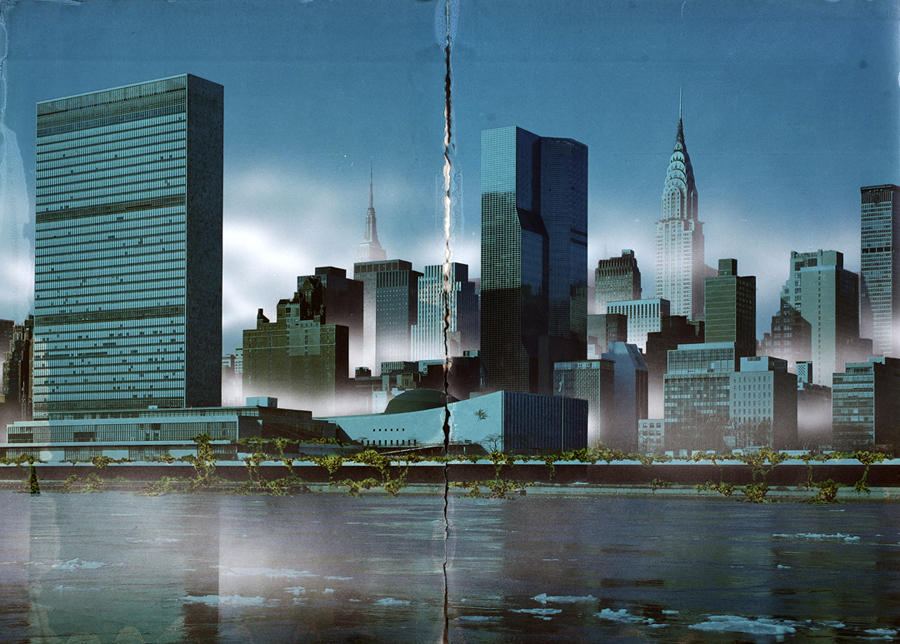
Glowlab is pleased to present The Eventuality of Daybreak, a solo exhibition by Alex Lukas featuring a new series of post-apocalyptic urban landscapes that blur the visual boundaries of fiction and reality.
Lukas’ work explores the existence of disaster, be it realised or fictitious, in contemporary society. Hyper-realistic motion pictures and unforgiving news footage depict seemingly identical – and equally riveting – facades of tragedy. The artist recognises that relentless visual bombardment has resulted in society’s desensitisation to the aesthetics of destruction.
For The Eventuality of Daybreak, Lukas has selected photographic spreads of well-known metropolises from vintage publications and uses them dually as canvas and unlikely subject. Through a deft handling of paint and carefully placed screen-printed passages, the artist pushes these ageing illustrations in futuristic contexts. Submerging these cities conceptually and physically, Lukas inundates images of American cities with layers of media representing cataclysmic floods and crippling overgrowth.
Also included in the exhibition are works on paper depicting near-future scenes of devastated landscapes – crumbling infrastructure, overturned trucks and telling signs of human despair. As a counterpoint to the underwater cities, these darkly atmospheric and barren vistas signal devastation through an unsettling sense of absence.
Lukas’ intentional use of dated imagery presented in tandem with contemporary situations forces the viewer to reconcile two differing ideologies of urban space. The artist’s work calls into question society’s collective acceptance of the urban environment as an arena of destruction, once thought unthinkable and now seemingly inevitable.
The Eventuality of Daybreak is Lukas’ first solo exhibition with Glowlab. Lukas’ work has also been exhibited in New York, Boston, Philadelphia, Los Angeles, San Francisco, London, Stockholm and Copenhagen as well as in the pages of Swindle Quarterly, Proximity Magazine, The San Francisco Chronicle, The Village Voice, The Drama and The New York Times Book Review. Lukas is a graduate of the Rhode Island School of Design and currently lives and works in Philadelphia, where he is a member of the artist collective Space 1026.
Press release on the Glowlab website [Online] Cited 20/11/2009 no longer available online
Alex Lukas (American, b. 1981) Untitled 2009 Acrylic and silk screen on two book pages
Alex Lukas (American, b. 1981) Untitled 2009 Acrylic and silk screen on two book pages
Alex Lukas (American, b. 1981) Untitled 2009 Acrylic and silk screen on two book pages
Alex Lukas (American, b. 1981) Untitled 2009 Acrylic and silk screen on two book pages
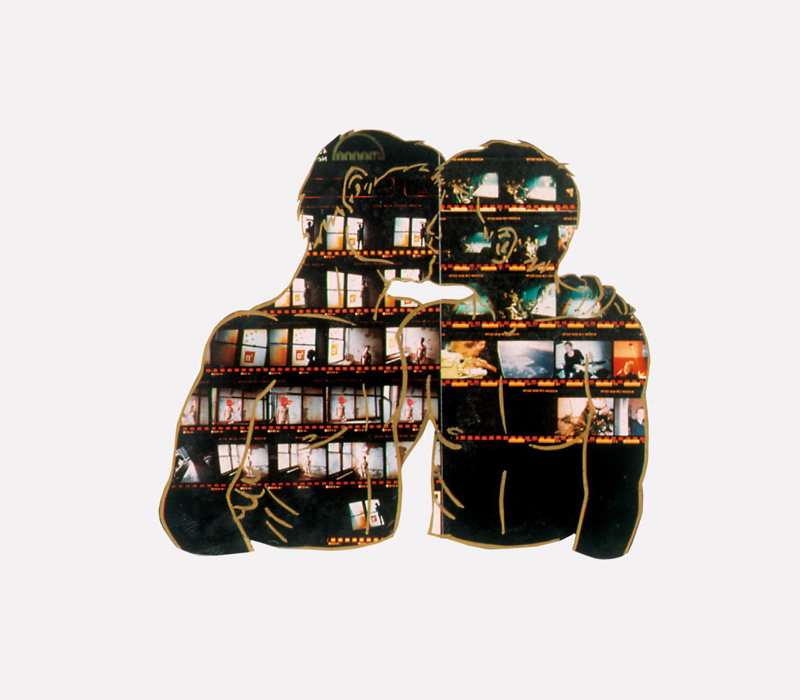
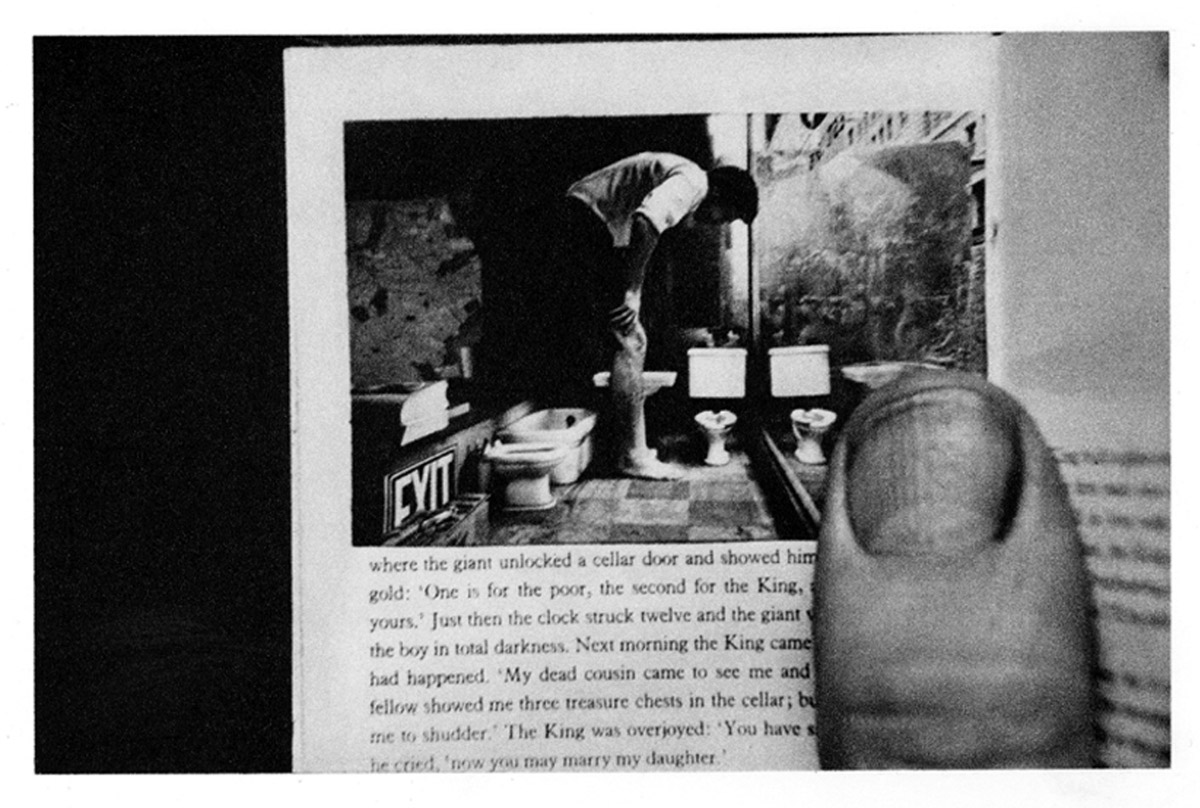
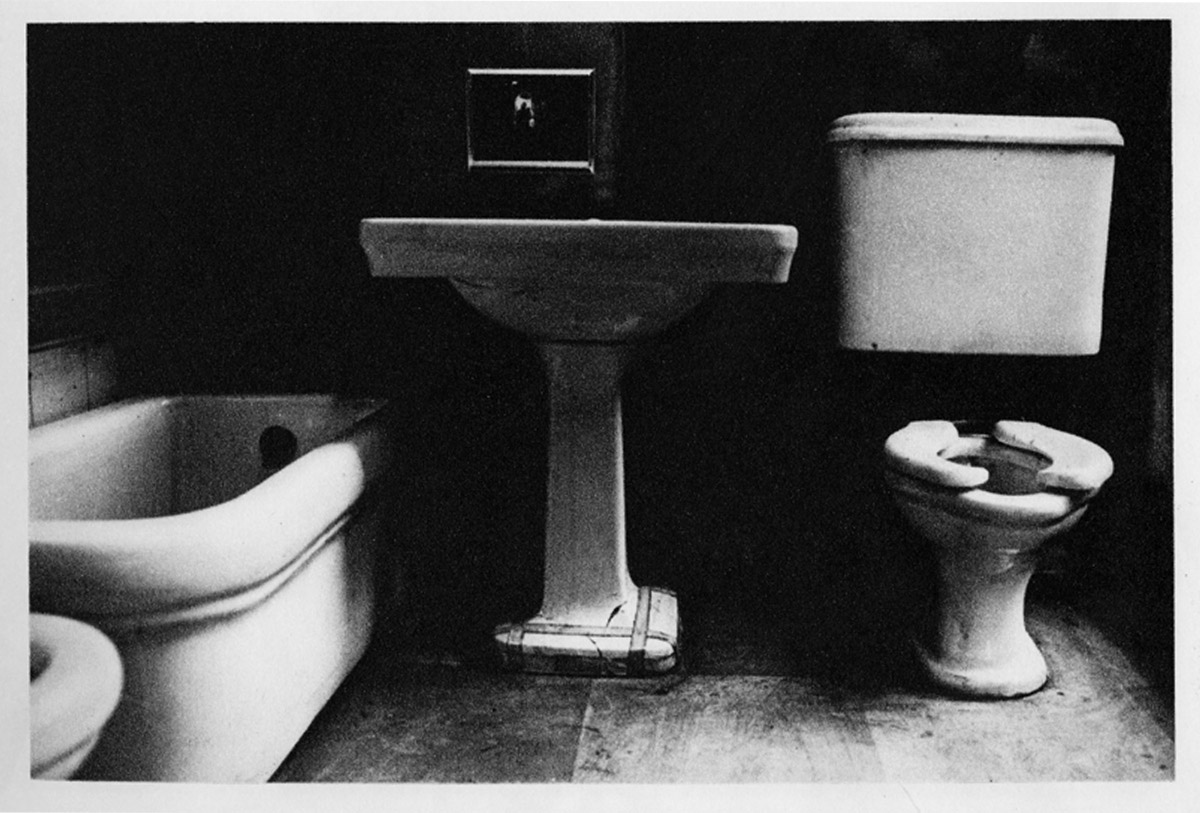
David Wojnarowicz (American, 1954-1992) Untitled 1988 Synthetic polymer on two chromogenic prints 11 x 13 1/4 in. (27.9 x 33.7cm) Whitney Museum of American Art, New York Purchase with funds from the Photography Committee Courtesy of The Estate of David Wojnarowicz and P.P.O.W. Gallery, New York, NY
I gently massaged more photographs of the work in the exhibition from the Whitney press office after initially only being able to download one press image! Many thankx to the Whitney for supplying more images.
As the press release mentions them by name, presumably there will be some of the Robert Frank contact sheets which you can see at the posting Looking In: Robert Frank’s The Americans and the water towers of Bernd and Hilla Becher two photographs of which can be seen at the posting Notes on a conversation with Mari Funaki.
In case you don’t know the work of artist David Wojnarowicz he was a gay man who died of HIV/AIDS aged 37 in 1992: I believe he was one of the most talented and subversive artists of his generation and his powerful images of identity, sexuality, power and death remain seared in my memory. Unfortunately there are not many good images to be found online but there is an excellent Aperture book, Aperture 137 Fall 1994 (David Wojnarowicz: Brush Fires in the Social Landscape) available from Amazon.
Dr Marcus Bunyan
Many thankx to the Whitney Museum of American Art for allowing me to publish the photographs in the posting. Please click on the photographs in the posting for a larger version of the image.
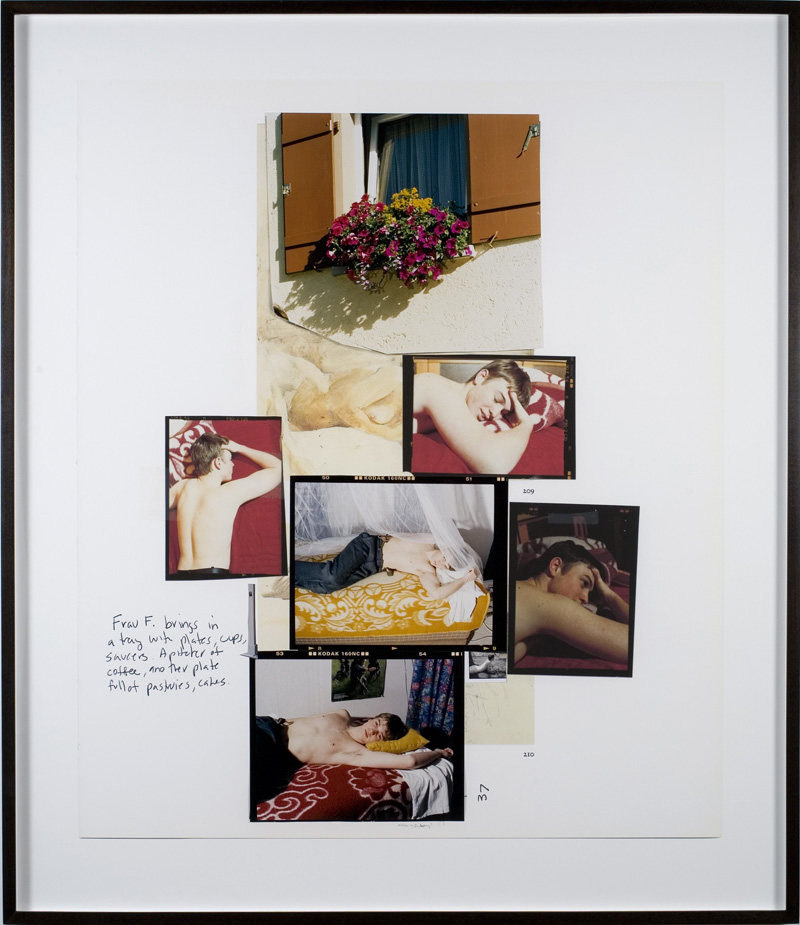
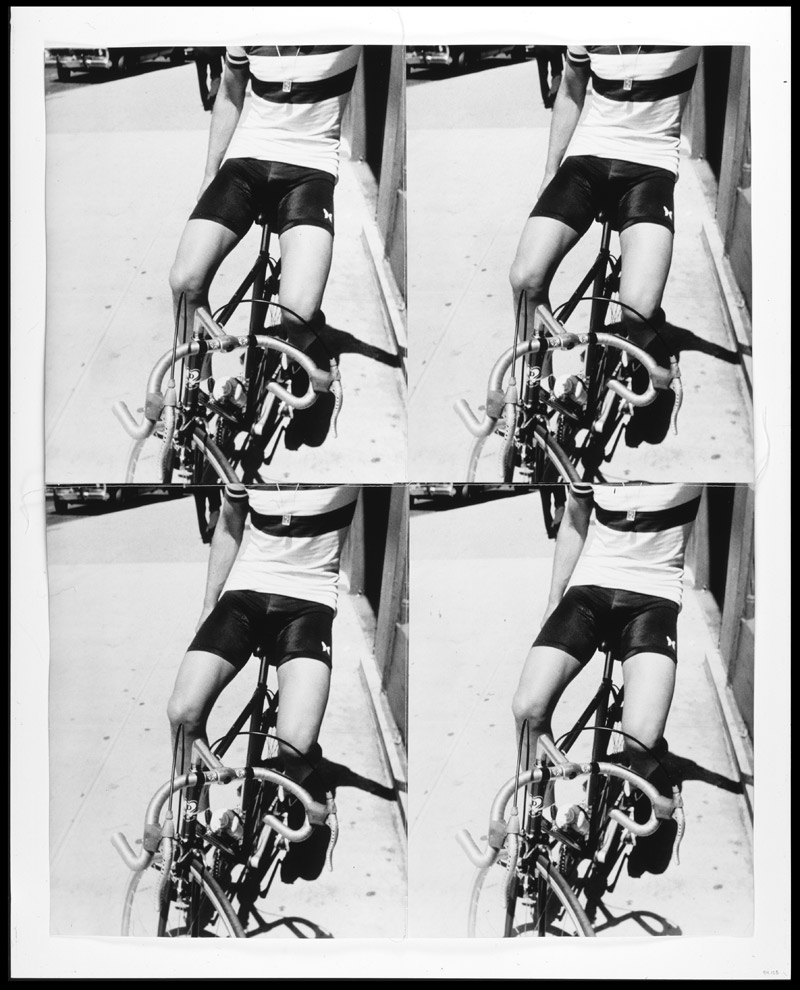
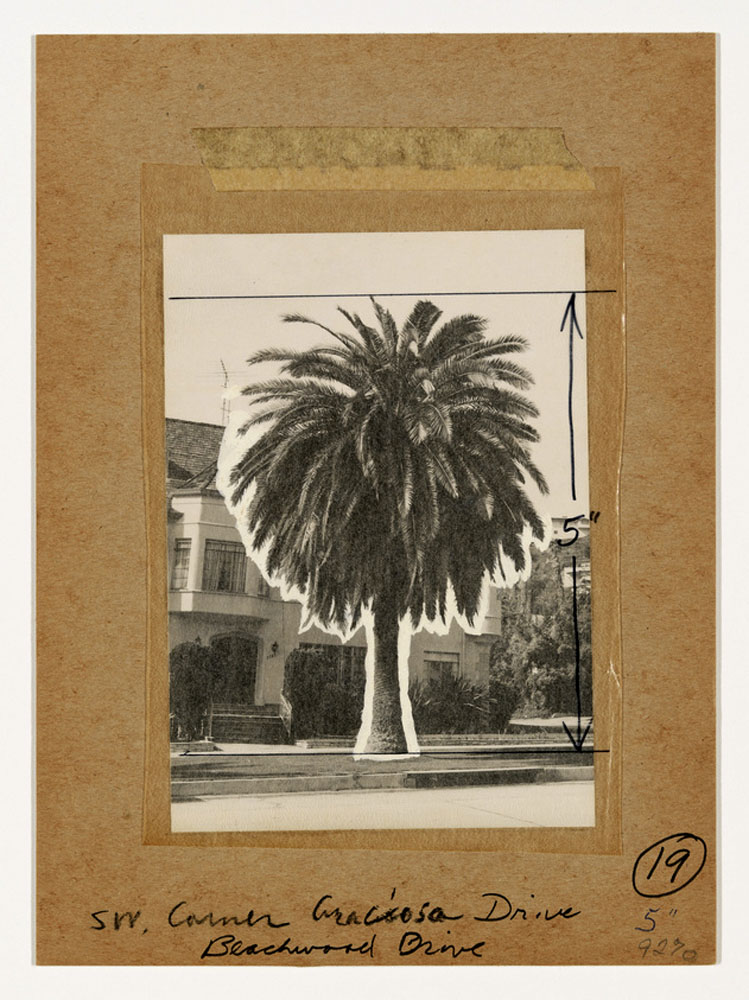
In this selection of works drawn principally from the Whitney’s permanent collection, the repetitive image of the proof sheet is the leitmotif in a variety of works spanning the range of the museum’s photography collection, including the works of Paul McCarthy, Robert Frank, Ed Ruscha, and Andy Warhol. The exhibition is co-curated by Elisabeth Sussman, Whitney Curator and Sondra Gilman Curator of Photography, and Tina Kukielski, Senior Curatorial Assistant. A Few Frames opens on September 25, 2009 in the Sondra Gilman Gallery and runs through January 3, 2010.
Decisions about which photograph to exhibit or print are frequently the end result of an editing process in which the artist views all of the exposures he or she has made on a contact sheet – a photographic proof showing strips or series of film negatives – and then selects individual frames to print or enlarge. Repetition, seriality, and sequencing – inherited from the contact sheet – are evident in all of the works on view. As co-curator Tina Kukielski notes, “this presentation includes a variety of photographs that build on the formal, thematic, and technical logic of the editing process.”
The exhibition includes photo-based works from sixteen featured artists in the Whitney’s collection. The work of David Wojnarowicz and Paul McCarthy present the contact sheet as a work of art, while those of artists such as Andy Warhol, Harold Edgerton, and Robert Frank play with its repeating forms. Other works call to mind the format of the contact sheet, such as Bernd and Hilla Becher’s typological study of industrial water towers and Silvia Kolbowski’s grid of appropriated images of female fashion models.
Works by contemporary artists such as Rachel Harrison and Collier Schorr in their continued interest in the contact sheet, despite perhaps growing trends toward digital photography, reveal the residual and sustained effects of this process.
Press release from the Whitney Museum of American Art website [Online] Cited 01/11/2009 no longer available online
Collier Schorr (American, b. 1963) Day Dream (Sky) 2007 Collage 48 x 43 in. (121.9 x 109.2cm) Courtesy 303 Gallery, New York
Ellen Gallagher (American, b. 1965) Bouffant Pride 2003 Layered photogravure, cut-outs, collage, acrylic, plasticine, and toy eyes Overall: 13 1/2 × 10 1/2 × 3/16in. (34.3 × 26.7 × 0.5cm) Sheet: 13 1/2 × 10 1/2in. (34.3 × 26.7cm) Whitney Museum of American Art, New York; purchase, with funds from the Print Committee
Duane Michals (American, 1932-2026) Things are Queer 1973 Nine silver gelatin prints Whitney Museum of American Art, New York; gift of David Kezur
Exhibition dates: 12th September – 8th November, 2009
Many thankx to the Morris Museum of Art for allowing me to publish the photographs in the posting. Please click on the photographs for a larger version of the image.
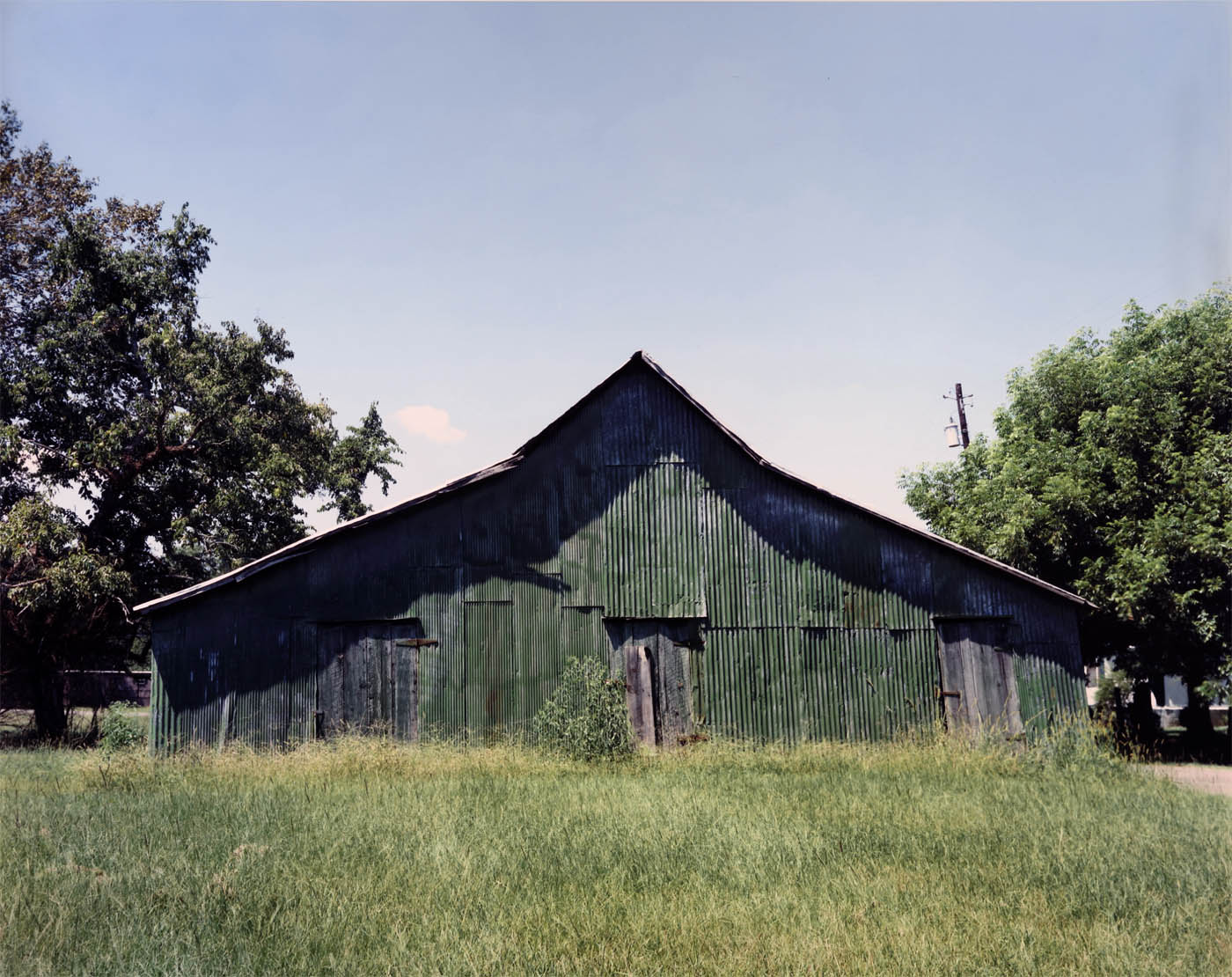
William Christenberry (American, 1936-2016) Green Warehouse, Newbern, Alabama 1997 Dye coupler print
Widely recognised as a pioneer in the field of colour photography, William Christenberry has used this expressive medium to explore the American South for forty years. While pursuing this artistic quest he has drawn inspiration from Walker Evans, and influenced a generation of emerging photographers. William Christenberry: Photographs, 1961-2005 surveys his poetic documentation of southern vernacular architecture, signage, and landscape using a wide range of cameras, from his earliest Brownie photographs of the early 1960s to his later work with a large-format camera. Combining never-before-seen photographs, both old and new, with images that are now iconic, this exhibition comprises fifty vintage photographic works and one sculpture. Together, they convey the breadth of his singular photographic vision. Discuss the artistic objectives of his long-term interpretation of the Southern landscape with Michelle Norris of National Public Radio, Christenberry explained: “What I really feel very strongly about, and I hope reflects in all aspects of my work, is the human touch, the humanness of things, the positive and sometimes the negative and sometimes the sad.”
Text from the Morris Museum of Art website [Online] Cited 15/10/2009. No longer available online
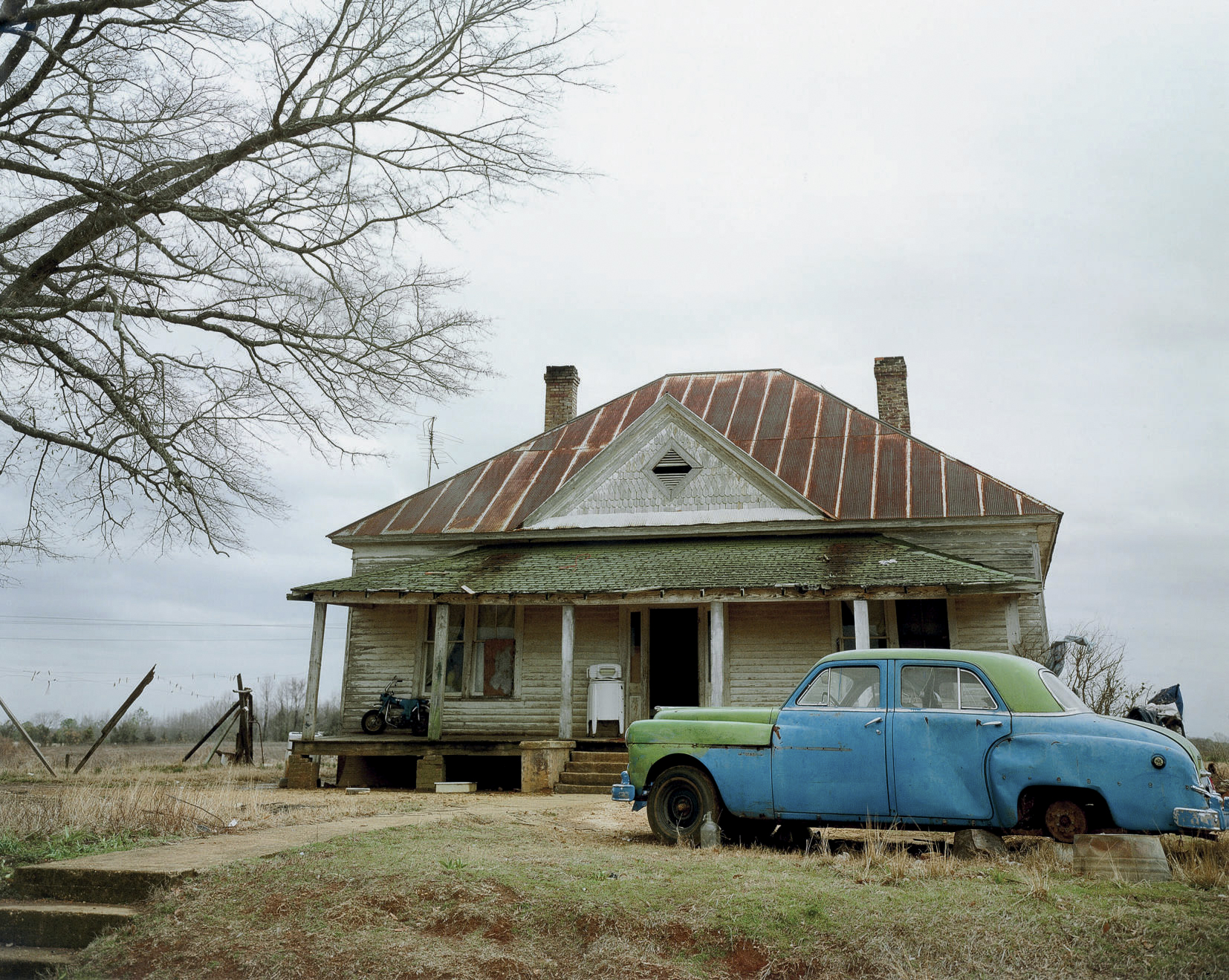
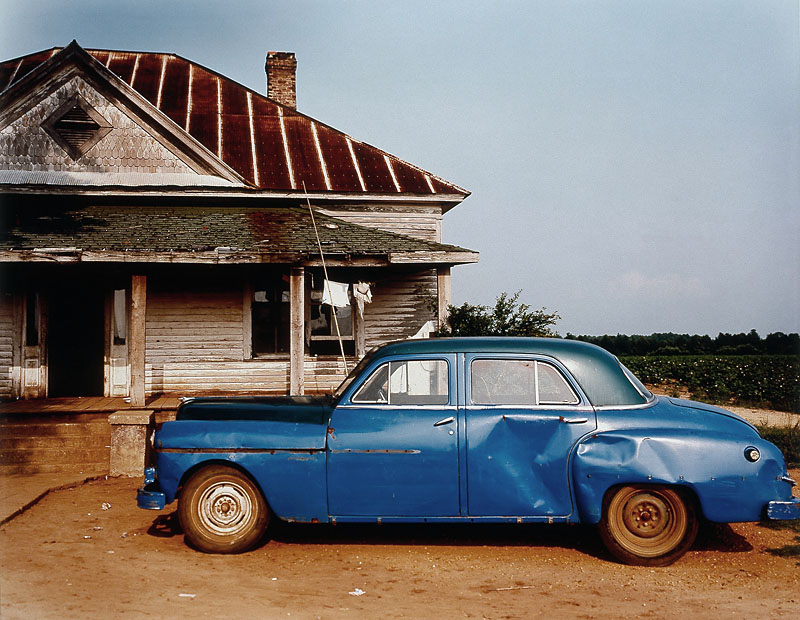
William Christenberry (American, 1936-2016) House and Car, near Akron, Alabama 1981
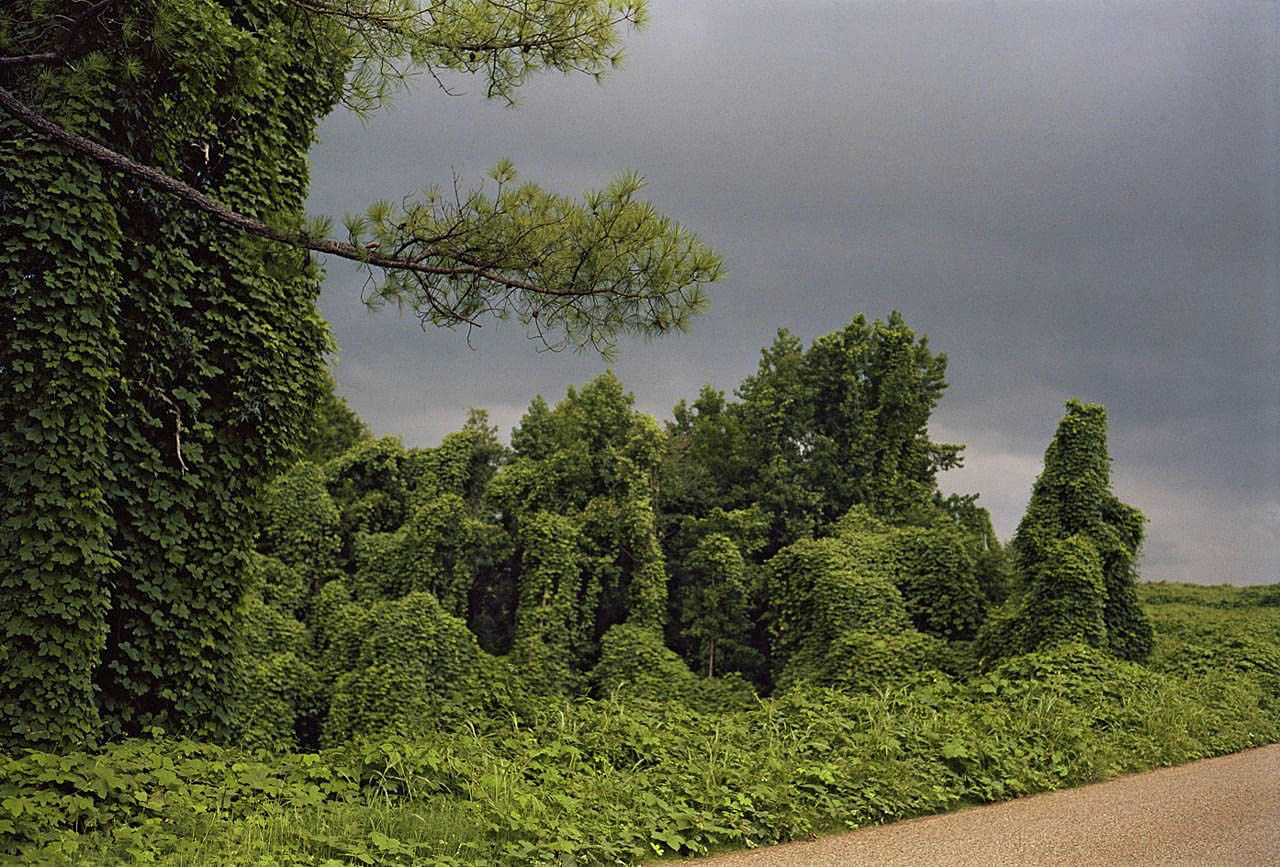
William Christenberry (American, 1936-2016) Kudzu with Storm Cloud, near Akron, Alabama 1981
“William Christenberry Photographs, 1961-2005, a phenomenal retrospective exhibition of Christenberry’s photographs, opens to the public at the Morris Museum of Art on September 16, 2009. The Morris Museum is the only Georgia venue hosting this exhibition.
“‘William Christenberry Photographs, 1961-2005’ is an overview of the career of one of the South’s most important living artists,” said Kevin Grogan, director of the Morris Museum of Art. “Organised by the Aperture Foundation, this exhibition brings to Augusta a body of work like no other. No one has so scrupulously and attentively captured a sense of place and time in quite the way that Bill Christenberry has. He is a remarkable artist, as is proven by this extraordinary body of work. He is America’s Proust.”
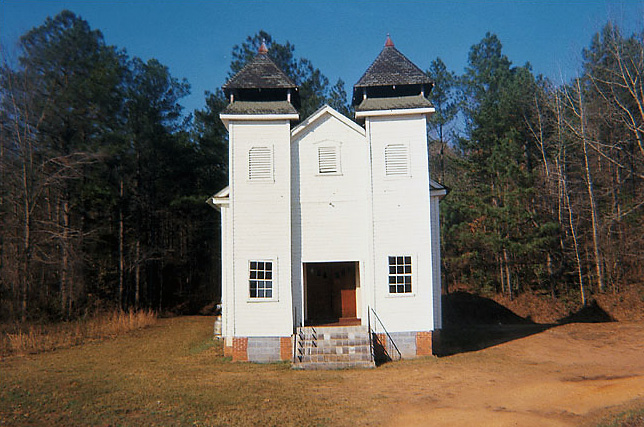
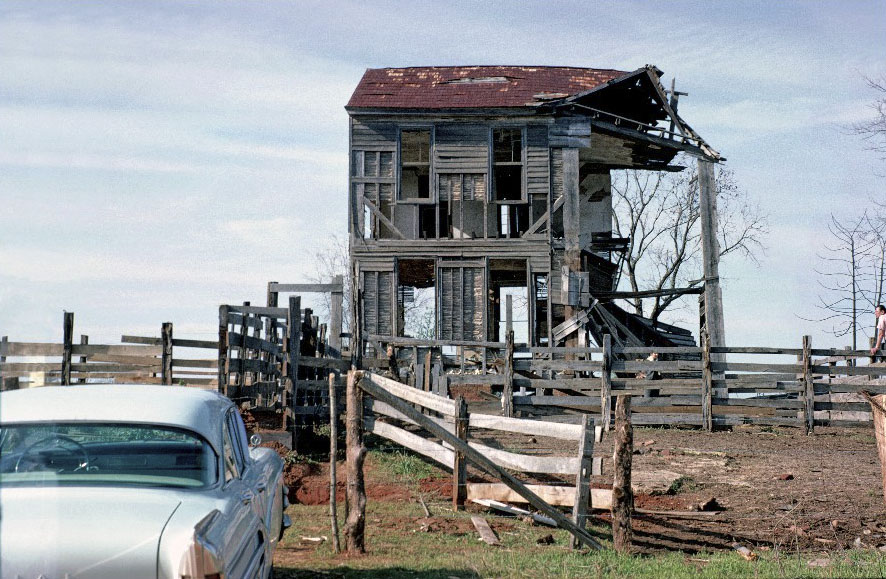
Since the early 1960s, William Christenberry has plumbed the regional identity of the American South, focusing his attention primarily on his childhood home, Hale County, Alabama. Widely recognised as a pioneer in the field of colour photography, Christenberry draws inspiration from the work of Walker Evans, while paralleling the work of such international practitioners as Bernd and Hilla Becher. Ranging from his earliest Brownie photographs to his later work with a large-format camera, William Christenberry Photographs, 1961-2005 is a survey of the artist’s poetic documentation of the Southern landscape and vernacular architecture that surrounded him as he grew up. The exhibition, coupling never-before-seen photographs with images that are now iconic, reveals how the history, the very story of place, is at the heart of Christenberry’s ongoing project. While the focus of his work is the American South, it touches on universal themes related to family, culture, nature, spirituality, memory, and ageing. Christenberry photographs real things in the real world – ramshackle buildings, weathered commercial signs, lonely back roads, rusted-out cars, whitewashed churches, decorated graves. Dutifully returning to photograph the same locations annually – the green barn, the palmist building, the Bar-B-Q Inn, among others – he has fulfilled a personal ritual and documented the physical changes wrought by every single year. Straddling past and present, Christenberry’s art suggests the gravity and power of the passage of time.
The exhibition is accompanied by a stunning monograph entitled William Christenberry, published by Aperture in cooperation with the Smithsonian American Art Museum. The book, a comprehensive survey, presents all aspects of the artist’s oeuvre as he intended it to be viewed and considered. More than half the work reproduced has not been previously published.”
Text from the press release on the Morris Museum of Art website [Online] Cited 15/10/2009. No longer available online
William Christenberry (American, 1936-2016) Sprott Church in Alabama 1971
William Christenberry (American, 1936-2016) T.B. Hick’s Store, Newbern, Alabama 1976
William Christenberry (American, 1936-2016) Farmhouse, Hale County, Alabama 1977
William Christenberry (American, 1936-2016) House and Car, near Akron, Alabama 1978
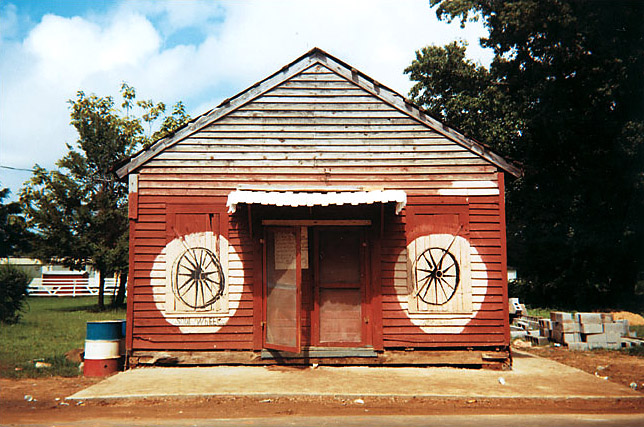
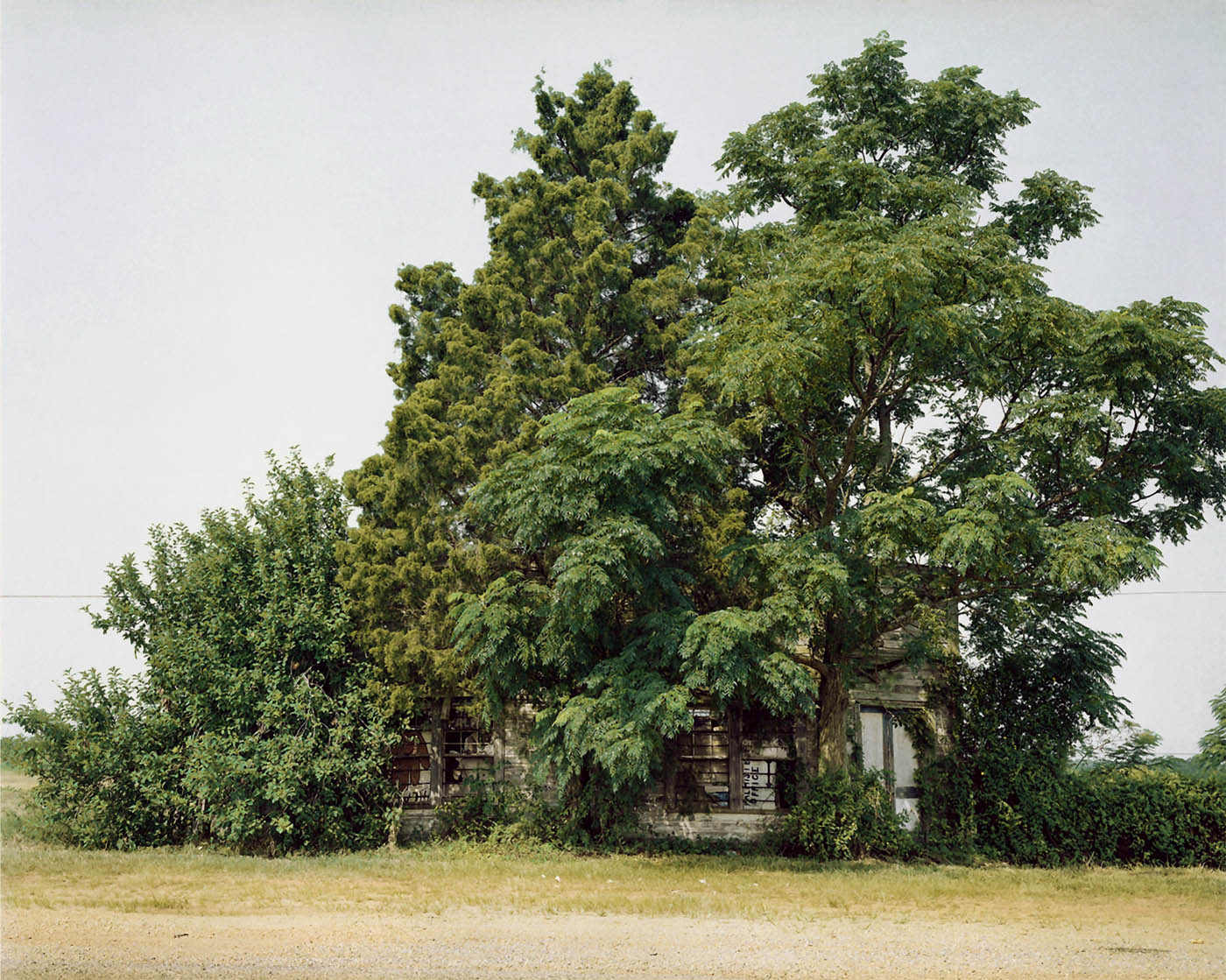
William Christenberry (American, 1936-2016) Palmist Building, Havanna, Alabama 1980
The Palmist Building is one of the most iconic structures in Christenberry’s extensive body of work. When he was a child, the clapboard building was a general store operated by his great uncle, but it was later home to a palm reader. The inverted hand-painted sign that covers a broken window initially enticed him to photograph the building in 1961. His earliest photographs pinpoint the sign itself and the peeling whitewash around it. As he became more engrossed in the project, Christenberry carefully examined the relationship of the building to its surroundings, particularly the chinaberry tree that eventually engulfed it.
Text from the High Museum of Art website
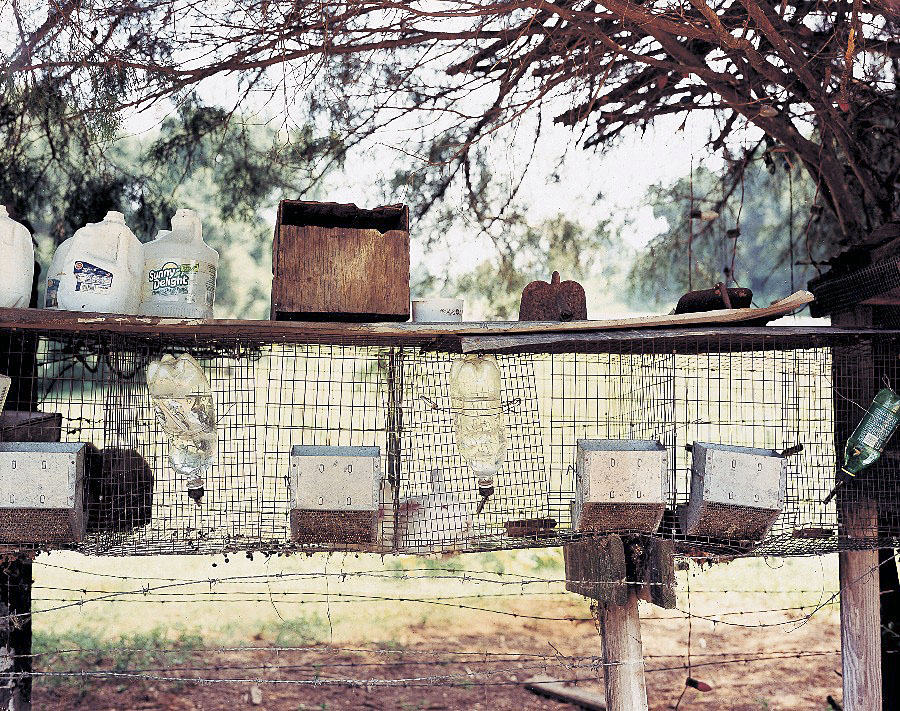
William Christenberry (American, 1936-2016) Rabbit Pen, near Moundville, Alabama 1998
William Christenberry (American, 1936-2016) Old House, near Akron, Alabama 1964
Morris Museum of Art 1 Tenth Street Augusta, Georgia 30901 Phone: 706-724-7501
Opening Hours: Tuesday – Saturday: 10.00am – 5.00pm Sunday: 12 – 5.00pm Closed Mondays and major holidays
Exhibition dates: 15th September – 31st October, 2009
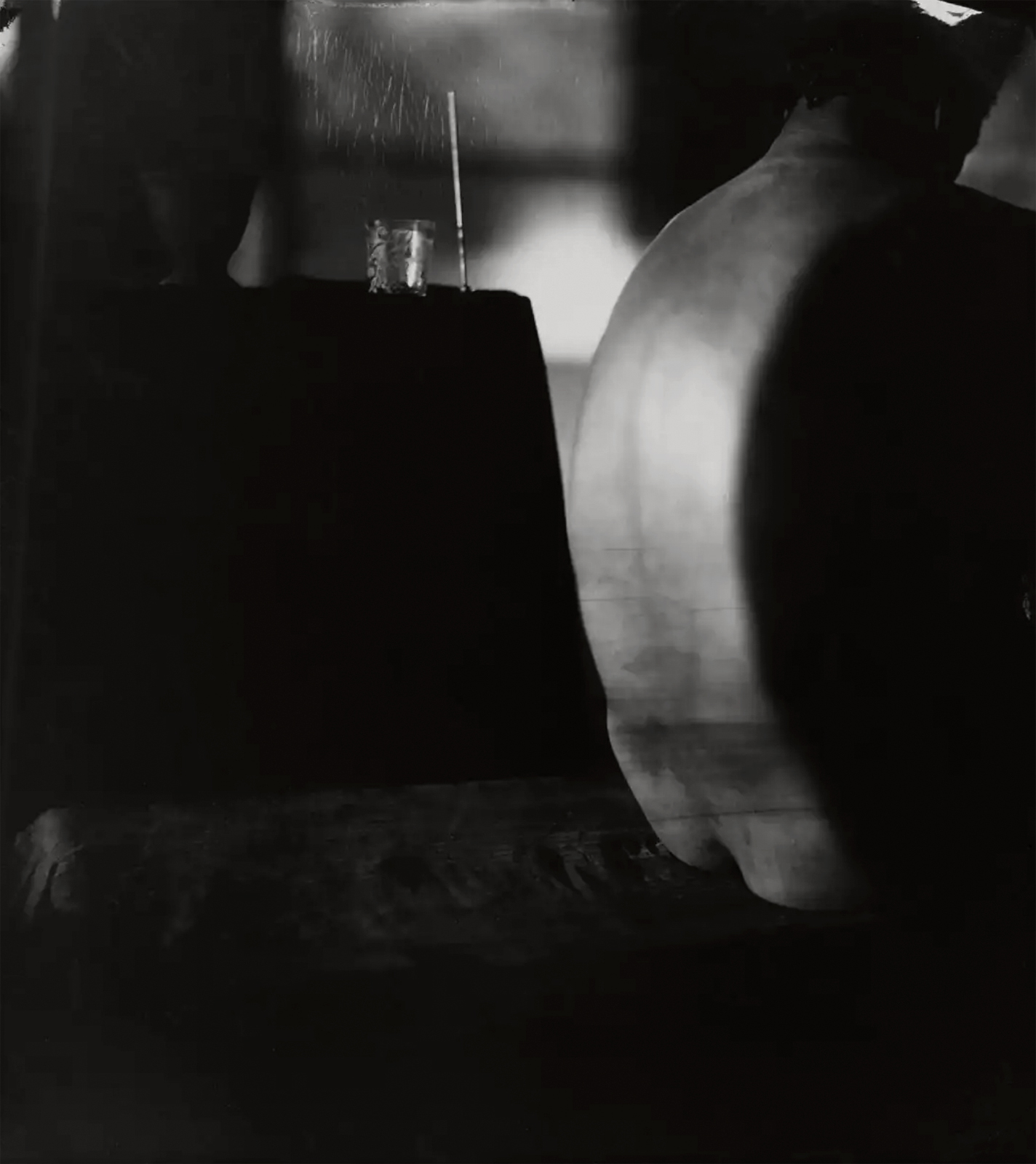
Sally Mann (American, b. 1951) Memory’s Truth 2008 Gelatin silver print Contact print from a wet-plate collodion negative
“I can think of numberless males, from Bonnard to Callahan, who have photographed their lovers and spouses, but I am having trouble finding parallel examples among my sister photographers. The act of looking appraisingly at a man, making eye contact on the street, asking to photograph him, studying his body, has always been a brazen venture for a woman, though, for a man, these acts are commonplace, even expected.”
Sally Mann
Many thankx to Gagosian Gallery for allowing me to publish the photographs in the posting. Please click on some of the photographs for a larger version of the image.
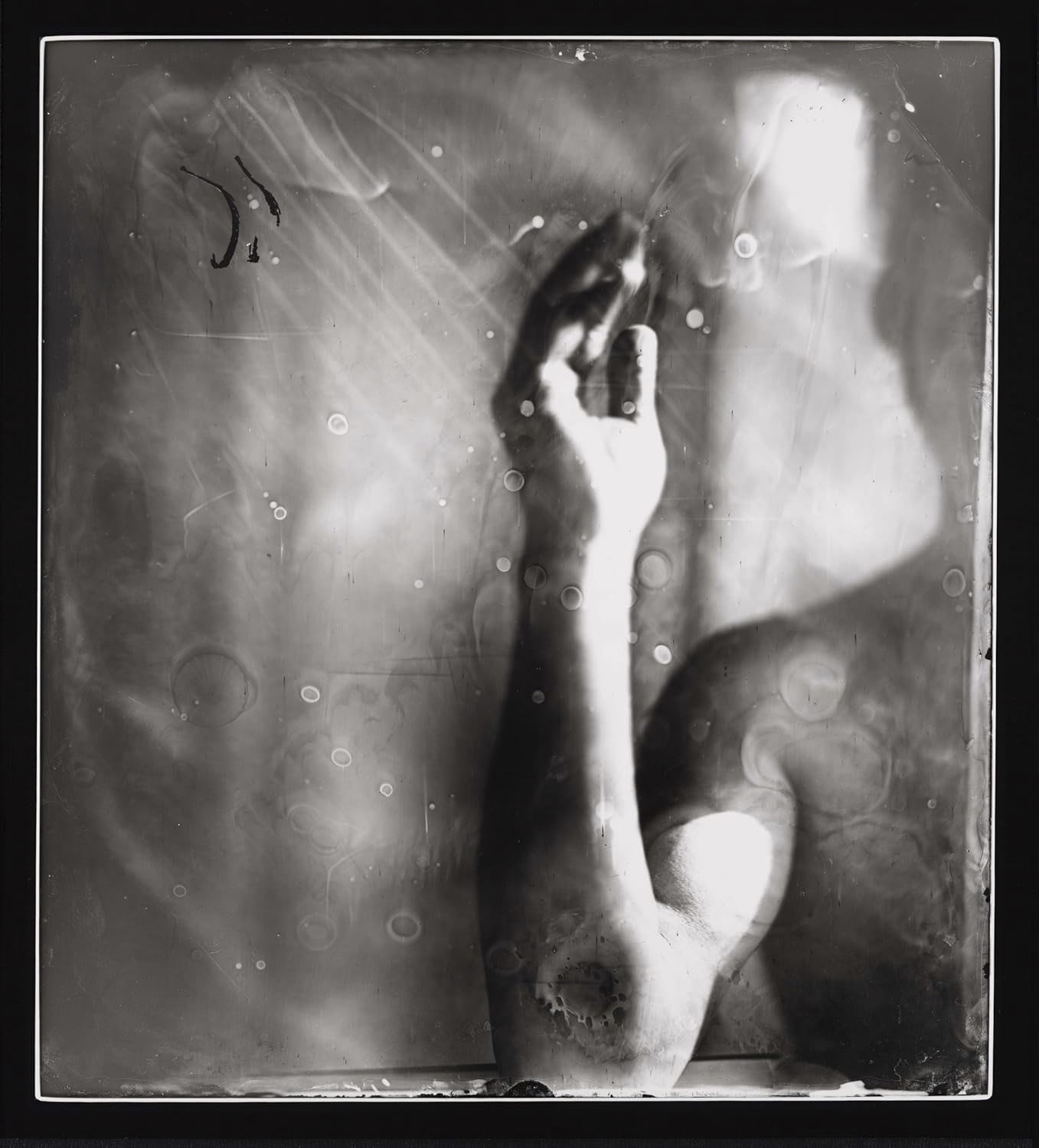
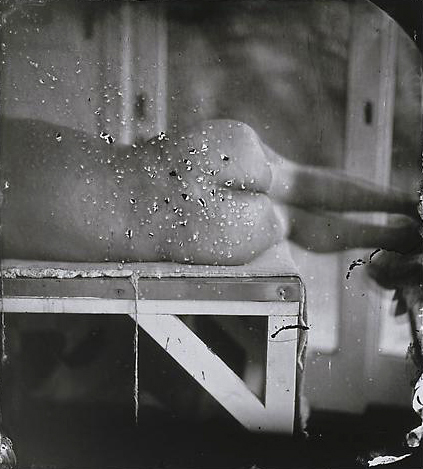
Proud Flesh is for me an emotionally exhausting work about withering. It has elements of 19th century clinical photography done with absolute loving care for the subject. Its factual surface is quickly replaced by metaphor and the haze of imperfection from the wet-plate collodion negatives she employs. In a few of the images, due to the choice of striped bedding on which the figure lays, we might be looking at a historical photograph take from Auschwitz or Bergen Belsen. With Larry’s thin and seemingly weak legs dangling over the edge of a wooden cot, the soiled bedding following the contour of his legs, it is difficult for me to see this image without this harsh historical reference. The following image in the book, he is turned into a martyr – arms out stretched – the sheet underneath him now sharply crinkled like a bed of straw (or an imagined crown of thorns).
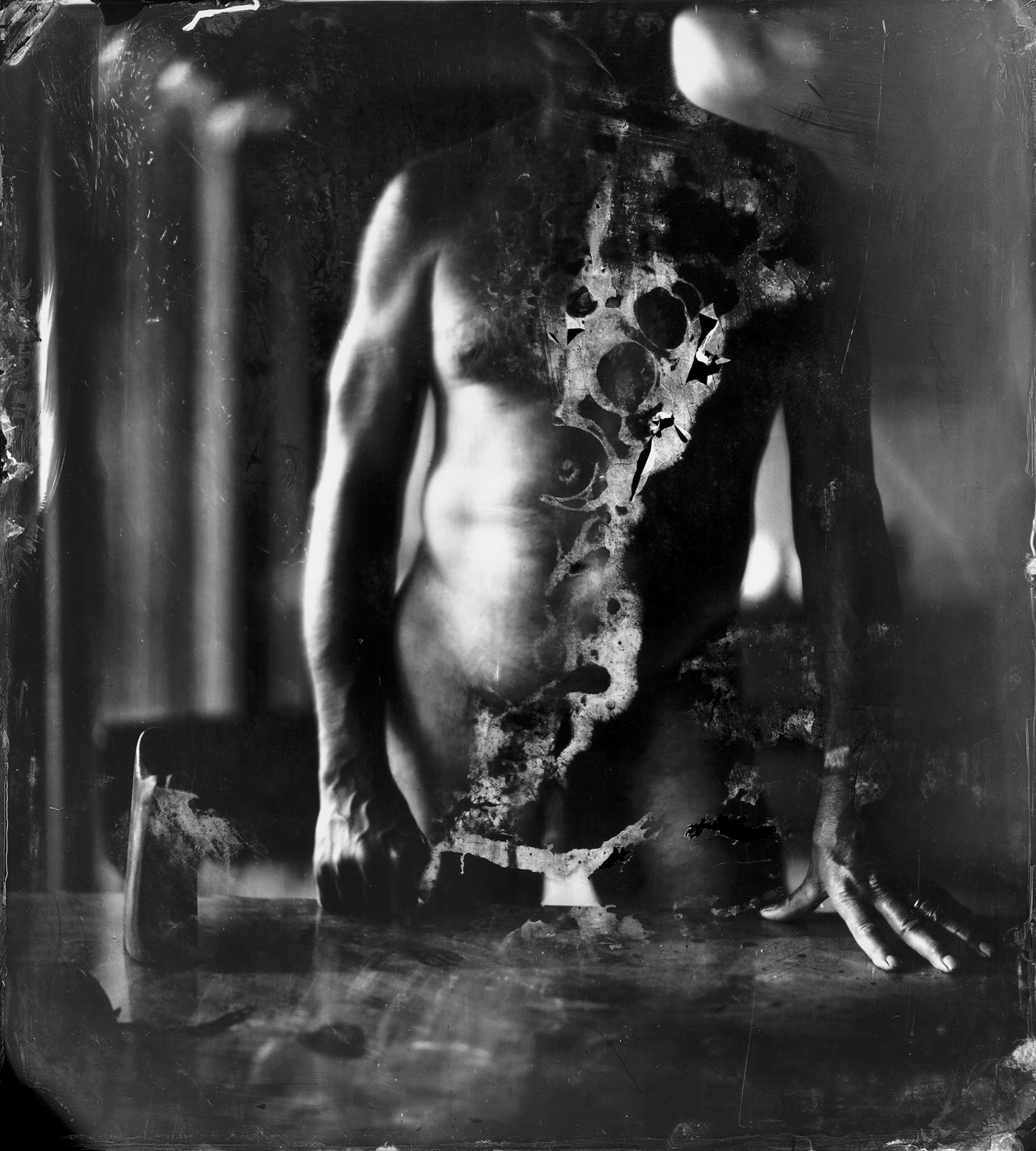
The surface texture plays such a strong role in these photos much of the seduction of these photos comes from the beauty of those imperfections. At times they can be nauseating, for their liquid streaks ooze over the images of aged flesh keeping viscera and bodily fluids as a second metaphoric subject. On the cover image, the disturbed collodion emulsion leaves a pattern which seems to be both looking at, and looking inside, the torso standing before the camera. Like Lee Friedlander’s shadow self-portrait (see the cover of Like a One-eyed Cat) where his organs are replaced with a jumble of rocks and his head is filled with straw, Mann’s image turns Larry’s insides into a mix of man and machine – collodion cogs and gears. This is the most wishful, as it portrays the strongest sense of life and the perhaps even the possibility of escaping its mortality. He stands at table’s edge with a steadying hand and a closed fist.
The most remarkable image for me appears as plate 20 and is captioned Time and the Bell (2008). Like the aforementioned cover image, this is an ideal as Mann has turned her husband’s head and shoulders into a profile bust of marble – the washed out light tones give way to a few angular shapes of rich shadow. It could be a still life of artefacts from an artists work space, a table and a sculptural work in progress. The surprise of the photographic description, which is present in most of the photos in Proud Flesh, is so complex and engaging for me it is difficult to not have it outshine all of the rest.
Text from 5B4: Photography and Books blog October 1, 2009 [Online] Cited 28/04/2019. No longer available online
Sally Mann (American, b. 1951) Semaphore 2003 Gelatin silver print Contact print from a wet-plate collodion negative
Sally Mann (American, b. 1951) Hephaestus 2008 Gelatin silver print Contact print from a wet-plate collodion negative
Sally Mann’s poignant image of her husband, Larry, symbolises both his illness and his skill as a blacksmith.
Sally Mann (American, b. 1951) The Nature of Loneliness 2008 Gelatin silver print Contact print from a wet-plate collodion negative 15 x 13 1/2 inches
Sally Mann (American, b. 1951) Somnambulist 2009 Gelatin silver print Contact print from a wet-plate collodion negative
Gagosian Gallery is pleased to present “Proud Flesh”, a series of new photographs by Sally Mann.
Children, landscape, lovers – these iconic subjects are as common to the photographic lexicon as light itself. But Mann’s take on them, rendered through processes both traditional and esoteric, is anything but common. From the outset of her career she has consistently challenged the viewer, rendering everyday experiences at once sublime and deeply disquieting.
In previous projects, Mann has explored the relationships between parent and child, brother and sister, human and nature, site and history. Her latest photographic study of her husband Larry Mann, taken over six years, has resulted in a series of candid nude studies of a mature male body that neither objectifies nor celebrates the focus of its gaze. Rather it suggests a profoundly trusting relationship between woman and man, artist and model that has produced a full range of impressions – erotic, brutally frank, disarmingly tender, and more. While the relation of artist and model is, traditionally, a male-dominated field that has yielded countless appraisals of the female body and psyche, Mann reverses the role by turning the camera on her husband during some of his most vulnerable moments.
Mann’s technical methods and process further emphasise the emotional and temporal aspects of these fragile life studies. The images are contact prints made from wet-plate collodion negatives, produced by coating a sheet of glass with ether-based collodion and submerging it in silver nitrate. Mann exploits the surface aberrations that can result from the unpredictability of the process to produce painterly photographs marked by stark contrasts of light and dark, with areas that resemble scar tissue. In works such as Hephaestus and Ponder Heart, the scratches and marks incurred in the production process become inseparable from the physical reality of Larry’s body.”
Text from the Gagosian Gallery website [Online] Cited 10/10/2009. No longer available online
Sally Mann (American, b. 1951) Kingfisher’s Wing 2007 Gelatin silver print Contact print from a wet-plate collodion negative
Sally Mann (American, b. 1951) The Quality of the Affection 2006 Gelatin silver print Contact print from a wet-plate collodion negative
Sally Mann (American, b. 1951) Ponder Heart 2009 Gelatin silver print Contact print from a wet-plate collodion negative
Sally Mann (American, b. 1951) Was Ever Love 2009 Gelatin silver print Contact print from a wet-plate collodion negative
Gagosian Gallery – Madison Avenue Gallery 980 Madison Avenue New York, NY 10075 Phone: 212.744.2313
Exhibition dates: 12th September – 17th October, 2009
Many thankx to Regen Projects for allowing me to publish the art work in the posting. Please click on the photographs for a larger version of the image.
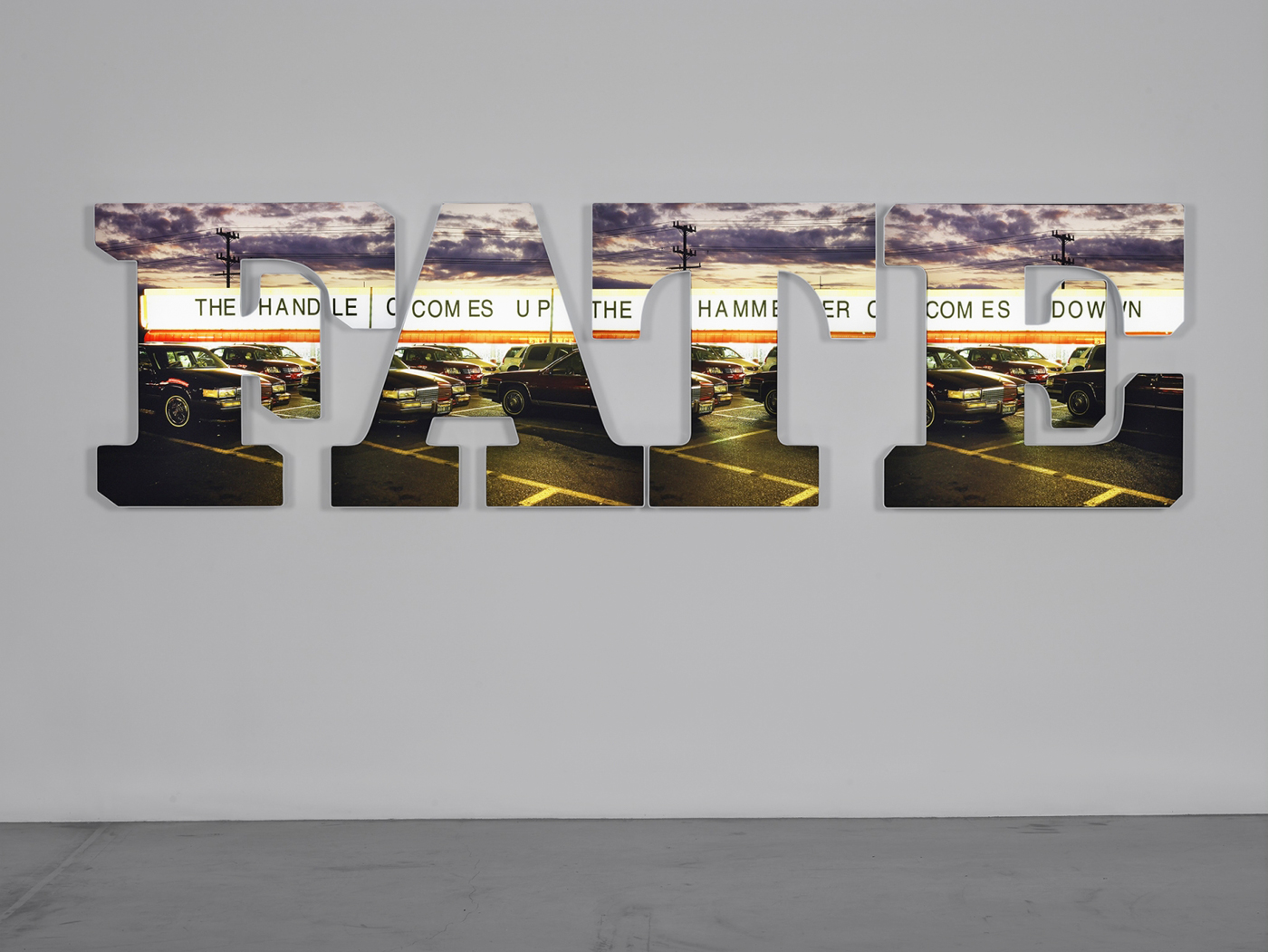
Doug Aitken (American, b. 1968) The handle comes up, the hammer comes down 2009 LED lit lightbox
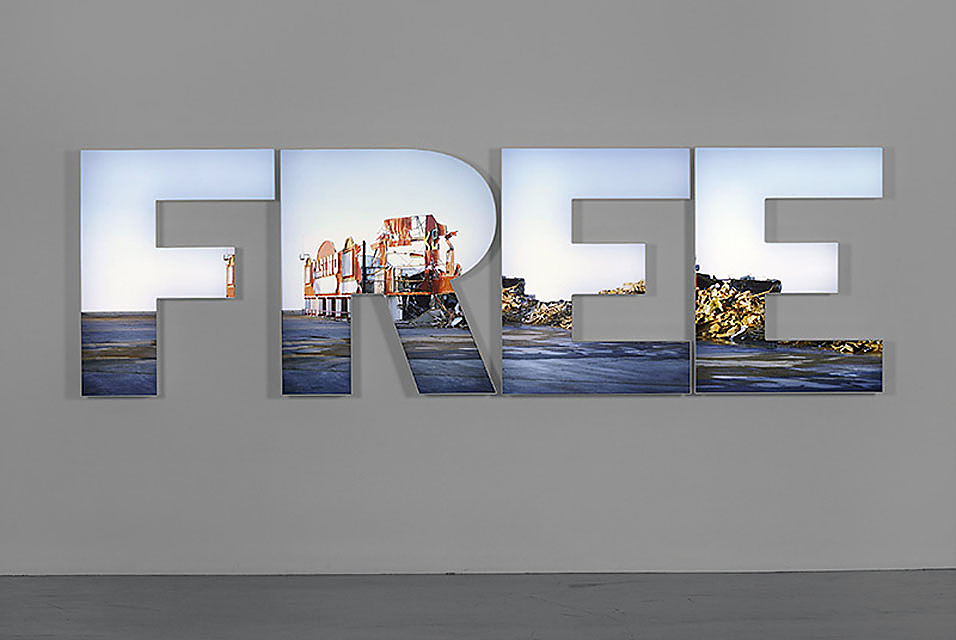
Doug Aitken (American, b. 1968) Free 2009 LED lit lightbox
Doug Aitken (American, b. 1968) Start Swimming LED lit lightbox 2006
Doug Aitken (American, b. 1968) Start Swimming LED lit lightbox 2006
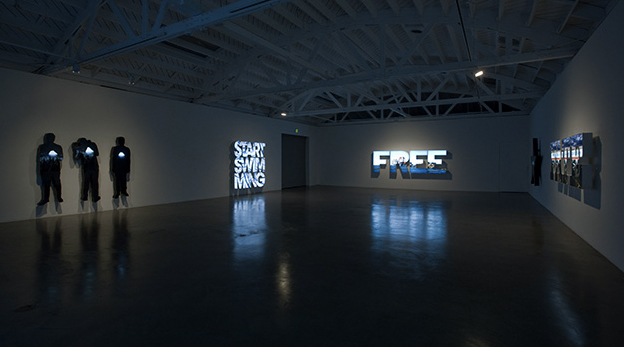
Installation view of Doug Aitken at Regen Projects, Los Angeles
Regen Projects is pleased to announce an exhibition of new works by Los Angeles artist Doug Aitken. This exhibition will present a series of new text-based light boxes and will feature the west coast debut of the film migration. Aitken explores the themes of temporality, space, memory, movement, and landscape in his work. History and themes of both the past and present are interwoven and reconfigured. His work deconstructs the connection between idea and iconography allowing each to reinvent itself.
Doug Aitken’s new light boxes combine image and text in a collision that creates a rupture in which alternate connections are presented. The work frontier depicts a destroyed property on the water’s edge, redefining expectations of what a frontier may hold. The images within some of the light boxes are a photographic collage that references Aitken’s photographic oeuvre and aesthetic. Experimenting with font, borrowed images, and his own photographs, the light boxes will be presented in the darkened gallery, glowing and playing off of one another. The disjunction of word, image, and light in these works also moves toward a cinematic whole, creating panoramic landscapes through text.
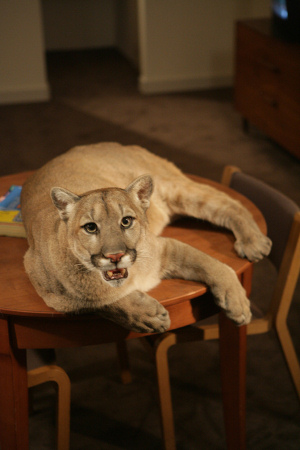
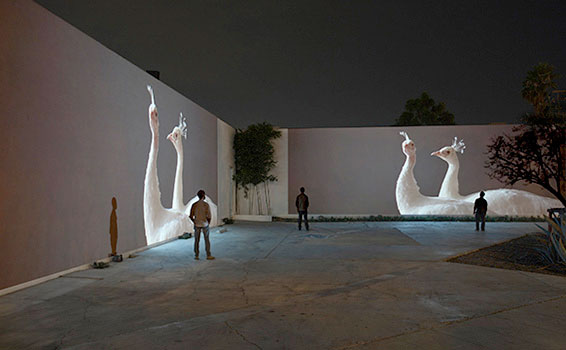
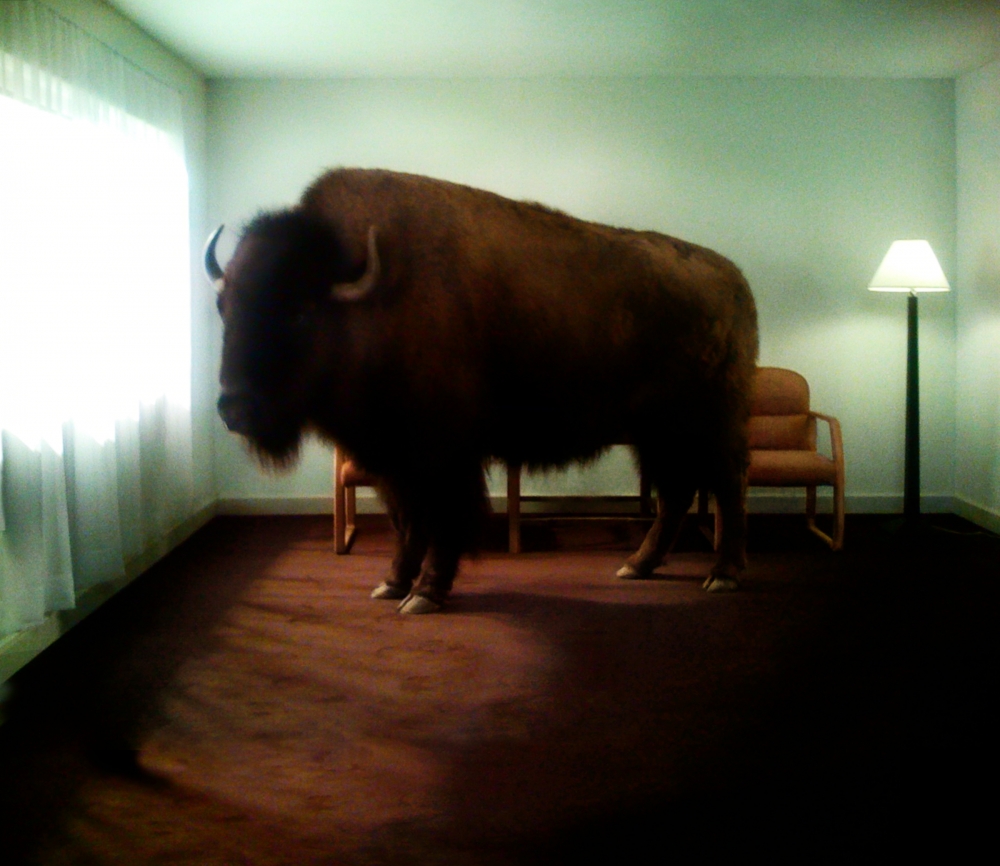
Presented alongside the light boxes will be Aitken’s first large scale public installation in Los Angeles, migration. The film, the first instalment in a three-part trilogy entitled empire, debuted at the 2008 Carnegie International. This hallucinatory epic depicts the movements of migratory animals as they pass through vacant and deserted hotel and motel rooms, delineating a nomadic passage across America from east to west. Fittingly making its first appearance on the west coast, this large-scale cinematic installation will be presented to the public on Santa Monica Boulevard projected onto the courtyard of Regen Projects II; visible only at night from sunset to sunrise. In addition to the nighttime public presentation, migration will also be exhibited at the 633 North Almont Drive space on an indoor billboard accompanied by its original score.
Settlers who met the untamed wilderness to forge new ways of life defined westward expansion. Aitken’s migratory landscape in migration is the opposite; it is a landscape completely devoid of human presence. His non-linear narrative presents a series of different sequences in which the animals and their actions are unique while the rooms and their components are indistinguishable. Hotels such as these offer a sense of both security and isolation and while some animals adapt to these surroundings, others seem conspicuously strange. Rarely do we get to examine these creatures so closely. Their movements and presence make the viewer acutely aware of scale, calling into question various relationships; the most apparent of which is the relationship of the natural and the man-made. In this encounter between the urban and the indigenous the viewer gets a sense of both displacement and habituation. As one critic describes:
“One by one, at different hotels, the animals behave as they behave, sniffing the air, twitching their noses to orient themselves in the desolate human habitat. Imbued with Aitken’s usual intimations of planetary solitude, his sense of spatial dislocation, and gorgeous formalised perception, these images … have the quality not so much of a nonlinear narrative as of a mirage.” (Kim Levin, Artnews, January 2009, p. 110.)
Aitken’s work has been exhibited extensively at museums and galleries worldwide, including his 2007 exhibition “sleepwalkers,” a large-scale outdoor installation at the Museum of Modern Art, New York. He has had numerous solo exhibitions including shows at the Serpentine Gallery, the Kunstmuseum Wolfsberg, the Kunsthaus Bregenz and the Kunsthalle Zurich. Aitken was awarded the international prize at the Venice Biennale in 1999 and was included in the 2000 Whitney Biennial.
Text from the Regen Projects website [Online] Cited 01/11/2009. No longer available online
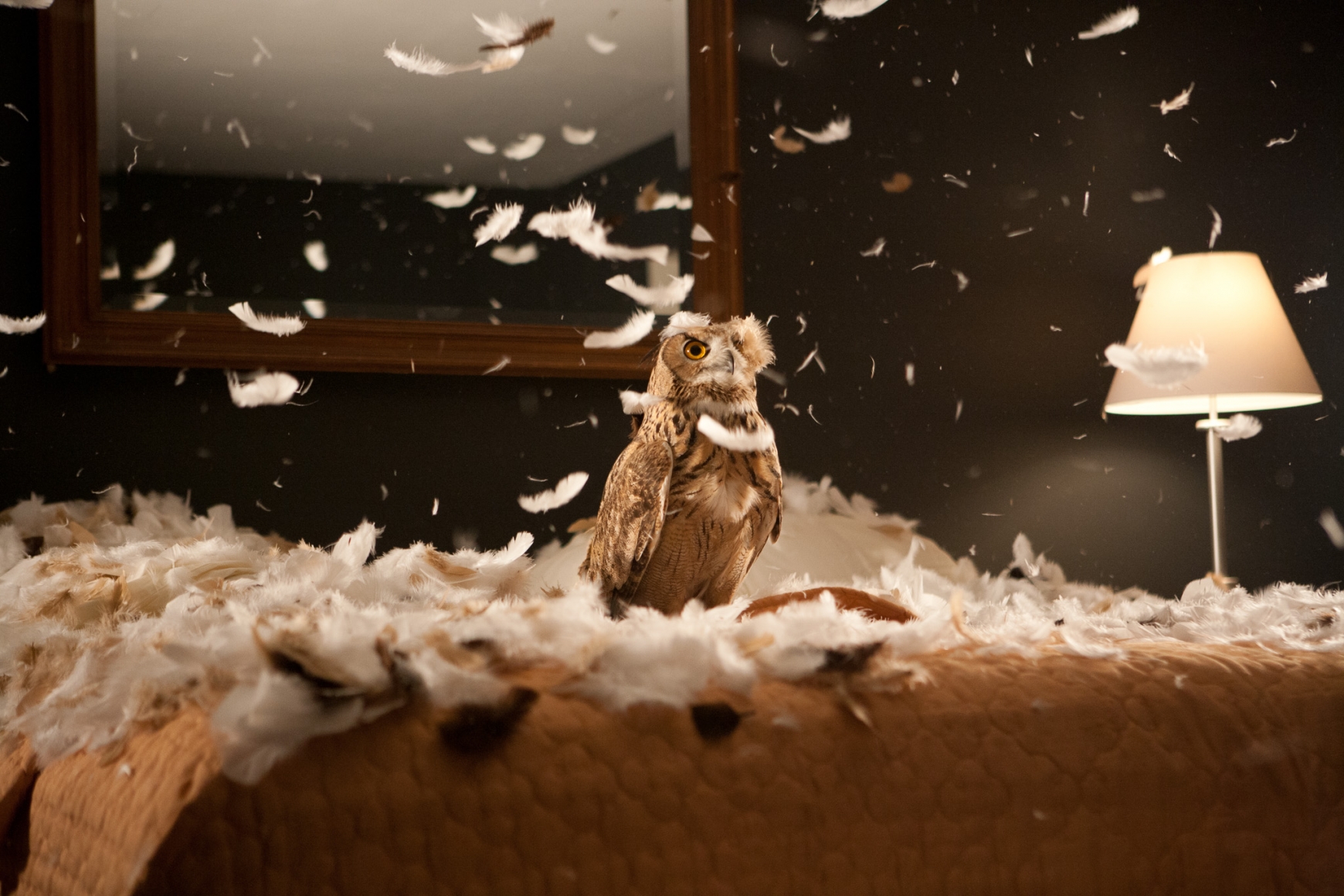
Doug Aitken (American, b. 1968) Stills from Migration 2008 Single video projection with billboard (steel and PVC projection screen)
In Migration, peacocks, deer, and beaver are filmed occupying motel rooms in vignettes that strike a poignant, provocative chord: talk about unexpected guests. Nevertheless, the work isn’t funny; it’s too frank in its beauty, too finely and respectfully wrought to be a joke.
Aitken’s animals are frequently shot in close perspective, which enhances their beauty in a way that is mesmerising. We’re not looking through them as much as we’re looking alongside them, ingesting the utter foreignness of their environs. As evening falls, we see an owl, an already otherworldly creature whose glowing eyes appear extraterrestrial, blinking at us from its perch on a king-size bed. Against the singsong of chirping birds, the camera pans away from the stationary owl as the room fills with thousands of downy feathers. Light is a powerful character in the film, whether gently filtered through sheer curtains or spilling onto carpeted hallways. Rather than highlighting imperfections or ugliness, the light is salvic, evincing a limbo that’s illuminating and warming. In one way or another, all of Aitken’s animals are drawn to light, whether toward a blinking lamp, the refracted surface of a swimming pool, or even the glow of an opened refrigerator door.
Extract from Iris McLister. “Motel chronicles: Doug Aitken,” on the Pasatiempo website October 6, 2017 [Online] Cited 28/04/2019
Regen Projects 6750 Santa Monica Boulevard Los Angeles, CA 90038 Phone: (310) 276 5424










![Lisette Model (American born Austria, 1901-1983) 'Coney Island Bather, New York' [Baigneuse, Coney Island] c. 1939-1941](https://artblart.com/wp-content/uploads/2010/01/model-coney-island-bather-web.jpg "Lisette Model (American born Austria, 1901-1983) 'Coney Island Bather, New York' [Baigneuse, Coney Island] c. 1939-1941")
![Lisette Model (American born Austria, 1901-1983) 'Reflections' [Reflets] c. 1939-1945](https://artblart.com/wp-content/uploads/2010/01/model-reflections-new-york-web.jpg "Lisette Model (American born Austria, 1901-1983) 'Reflections' [Reflets] c. 1939-1945")
![Lisette Model (American born Austria, 1901-1983) 'Reflection' [Reflet] c. 1939-1945](https://artblart.com/wp-content/uploads/2010/01/model-reflection-web.jpg "Lisette Model (American born Austria, 1901-1983) 'Reflection' [Reflet] c. 1939-1945")





















![Edward Ruscha (American, b. 1937)
'[A Few Palm Trees Contact Sheet]'
1971](https://artblart.com/wp-content/uploads/2009/11/ruscha-a-few-palm-trees-contact-sheet.jpg "Edward Ruscha (American, b. 1937) '[A Few Palm Trees Contact Sheet]' 1971")
![Edward Ruscha (American, b. 1937)
'[A Few Palm Trees Contact Sheet]'
1971](https://artblart.com/wp-content/uploads/2009/11/ruscha-a-few-palm-trees-contact-sheet-a.jpg "Edward Ruscha (American, b. 1937) '[A Few Palm Trees Contact Sheet]' 1971")













You must be logged in to post a comment.