Ansel Adams (American, 1902-1984) Monolith, The Face of Half Dome, Yosemite National Park from the portfolio Parmelian Prints of the High Sierras 1927 Gelatin silver print
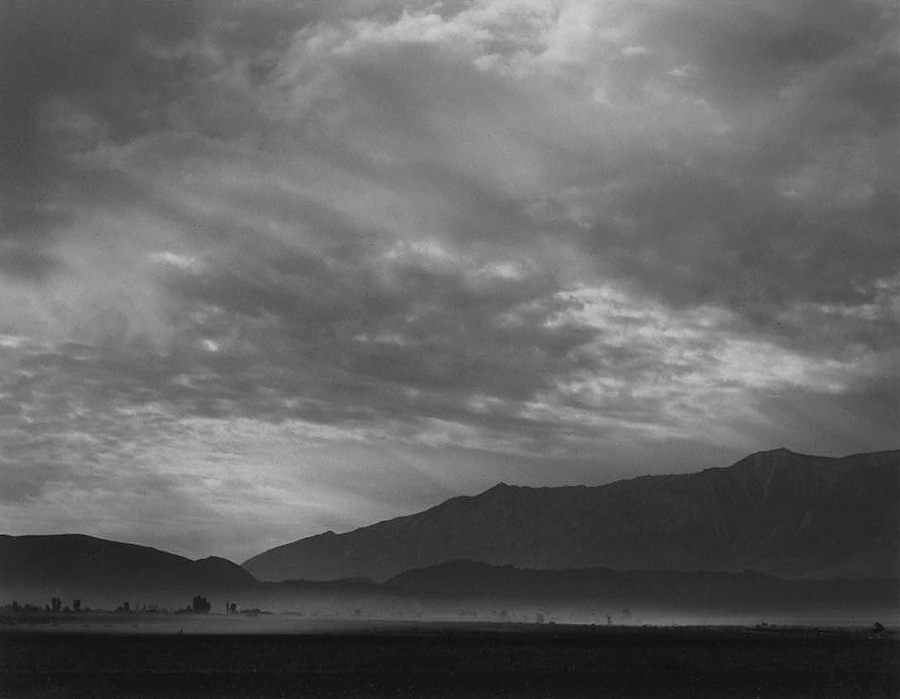
Some well known Ansel Adams images below with some less well known photographs from the Manzanar Relocation Center photographic series of 1943.
Marcus
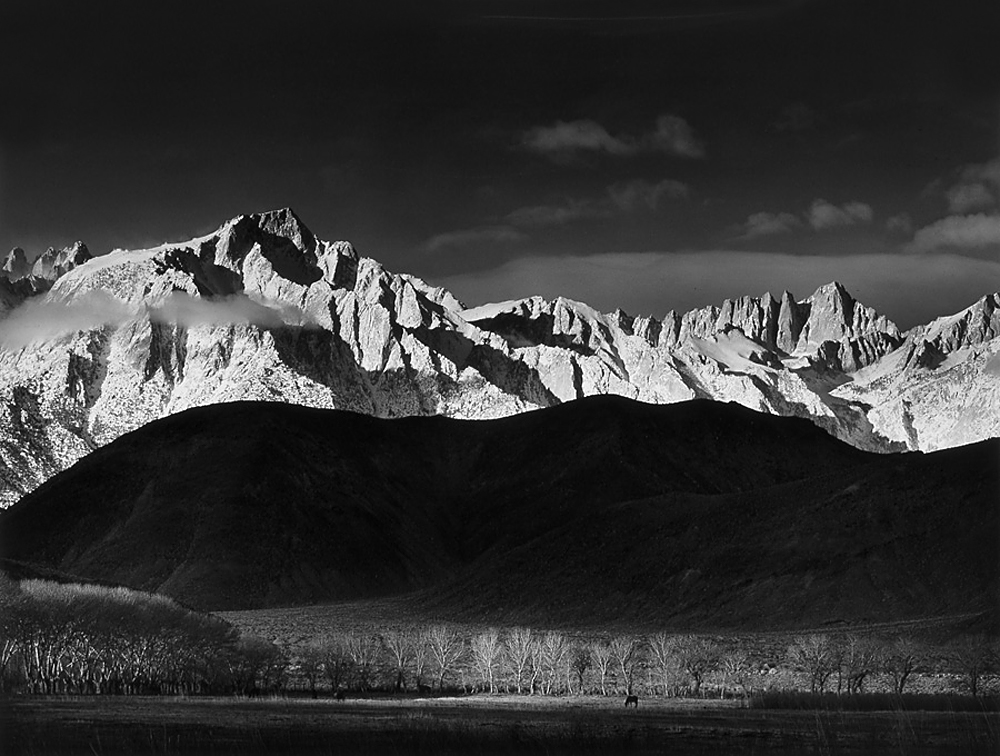
Many thankx to the Museum of Photographic Arts for allowing me to publish the three photographs, Winter Sunrise, Sierra Nevada from Lone Pine, California (1944), Mount McKinley, Alaska (1948) and Aspens, Northern New Mexico (1958). Please click on the photographs for a larger version of the image.
Ansel Adams (American, 1902-1984) Marion Lake, Southern Sierra from the portfolio Parmelian Prints of the High Sierras 1927 Gelatin silver print
Ansel Adams (American, 1902-1984) Birds on wire, evening, Manzanar Relocation Center 1943 Gelatin silver print
The Museum of Photographic Arts (MoPA) in Balboa Park is pleased to present Ansel Adams: A Life’s Work. The exhibition includes over 80 photographs by the 20th Century master, and celebrates Adams as an artist and conservationist. A Life’s Work will be on view May 23, 2009 through October 4, 2009, and features an overview of Adam’s work from his early years in the Sierra Nevadas and Yosemite Valley to his work in the Japanese Internment Camp at Manzanar, as well as his well-known masterpieces.
Ansel Adams: A Life’s Work will be running concurrently with Jo Whaley: Theater of Insects on view from May 16 through September 27, 2009, as well as Picturing the Process: Exploring the Art and Science of Photography on view through July 25, 2009.
The exhibition begins with survey of Adams’ early years with the Sierra Club (1920s-1930s), where his photographs and essays were first published in the Club’s Bulletin. 1927 marked a pivotal point for Adams, where he participated in the Sierra Club’s annual High Trip, which took him to the high country of the Sierra. It was during this trip that he exposed the negative of the iconic image Monolith, the Face of Half Dome. Adams describes this photograph as “my first conscious visualisation; in my mind’s eye, I saw the final image.”
It was during this first High Trip that Adams met San Francisco-based arts patron, Albert Bender. Bender took immediate interest in Adam’s photographs, and published Adams’ first portfolio, The Parmelian Prints of the High Sierras (1927). The publication included an edition of 100 portfolios of 18 prints each, 75 were printed.
The exhibition features 15 of the rare Parmelian vintage prints, as well as eight photographs from the 1929 Sierra Club Portfolio.
The exhibition continues with a wide range of representative works from the 1930’s and 1940’s, including commercial work that the artist did for the YPCCO (Yosemite Park and Curry Company). From 1931 to 1937, Adams was hired by YPCCO, a group of businesses in Yosemite Valley, to photograph various winter sports for an advertising campaign. This opportunity provided a much needed source of income for the artist during the Great Depression. The exhibition also includes other various commercial assignments throughout his career, which Adams clearly separated from his fine art photography, but notes as a vital aspect of his career. In his Autobiography he wrote: “I have little use for students or artists who scorn commercial photography as a form of prostitution … Let them pay the bills! … I struggled with a great variety of assignments through the years. Some I enjoyed, some I detested, but learned from them all.”
ALife’s Work also includes the powerful and poignant images from the Manzanar Internment Camp. In late 1943 through 1944, Adams visited the camps in central California, where over 10,000 Japanese-Americans were interned during World War II. Adams’ intention for this self-assigned project was “to interpret the camp and its people, their daily life and their relationship to their community and their environment,” wrote Adams in his Autobiography.“As my work progressed, however, I began to grasp the problems of the remarkable readjustment these people had to make… With admirable strength of spirit, the Nisei rose above despondency and make a life for themselves… This was the mood and character I determined to apply to the project.”
A Life’s Work will feature many of his iconic masterworks, including Moonrise, Hernandez, New Mexico, as well as his works in colour, which he experimented with beginning in the late 1940s.
Press release from the Museum of Photographic Arts website [Online] Cited 15/09/2009
Ansel Adams (American, 1902-1984) View south from Manzanar to Alabama Hills, Manzanar Relocation Center 1943 Gelatin silver print
Ansel Adams (American, 1902-1984) View SW over Manzanar, dust storm, Manzanar Relocation Center 1943 Gelatin silver print
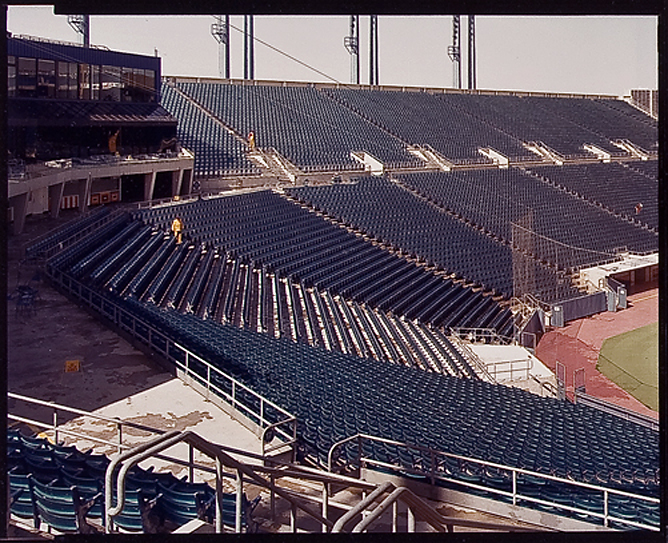
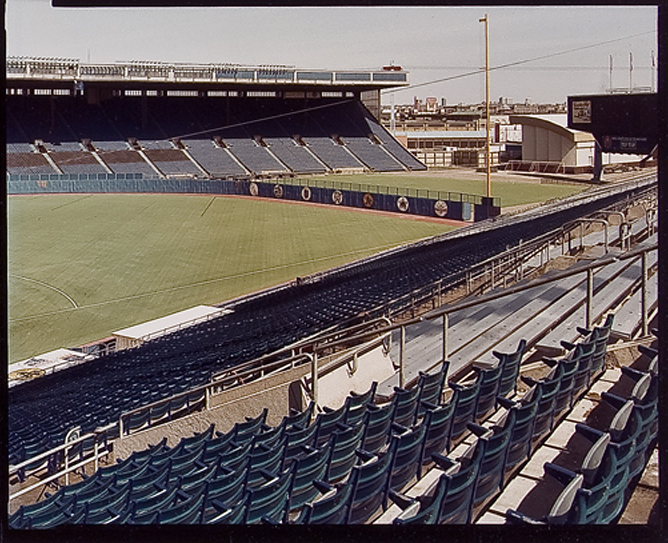
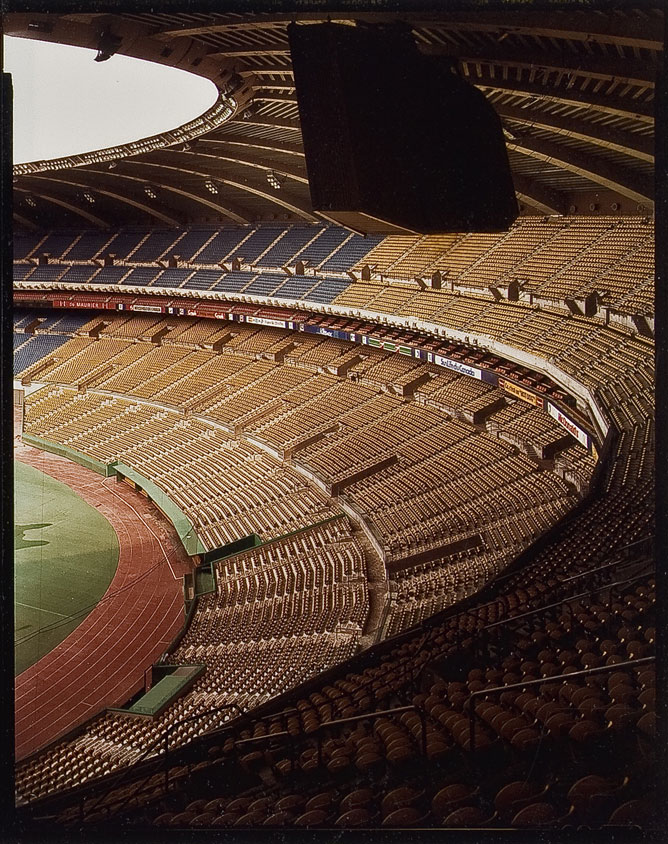
Jim Dow (American, b. 1942) Exhibition Stadium 1982 National Gallery of Canada, Ottawa Gift of Benjamin Greenberg, Ottawa, 1988 and 1989
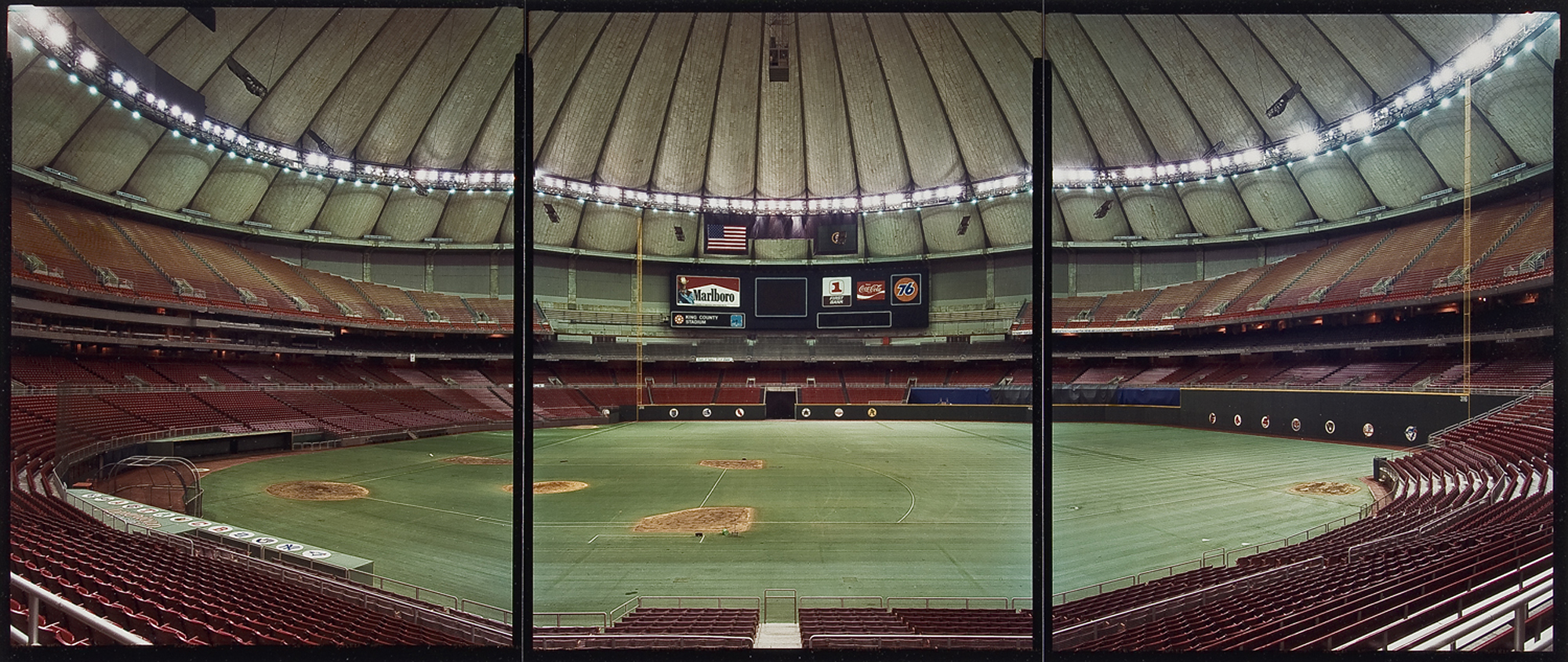
These feel like religious reliquaries, a triptych form which arises from early Christian art but here a paean to the monumentalisation of sport, architecture, human heroics and grandiosity.
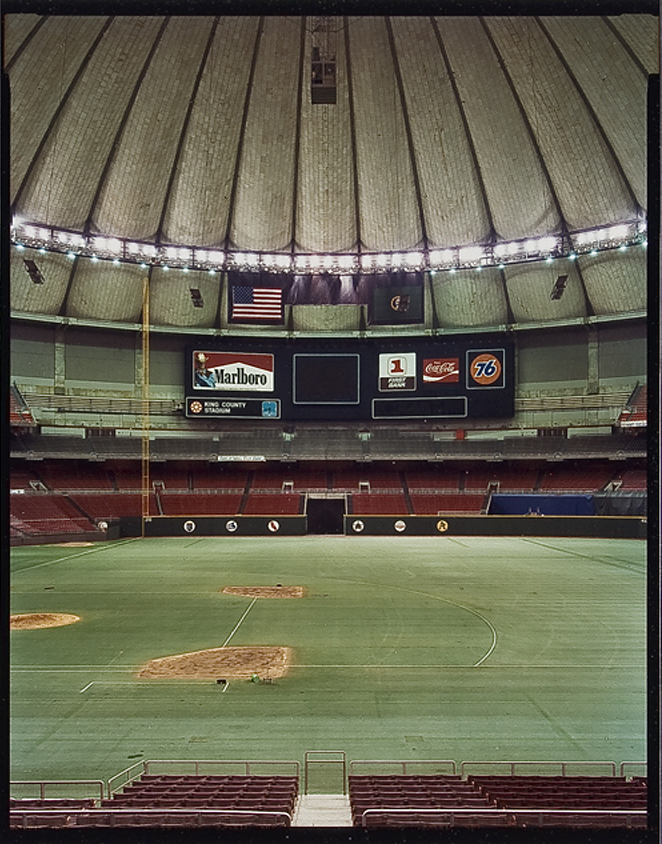
Apologies that the blog is not wide enough to display these panoramic images at a decent size but you can click on the photographs to see a larger version of the image. I have also displayed each 8″ x 10″ negative sequentially.
Dr Marcus Bunyan
Many thankx to The National Gallery of Canada for allowing me to publish the photographs in the posting. Please click on the photographs for a larger version of the image.
Jim Dow (American, b. 1942) Exhibition Stadium (individual frames) 1982 National Gallery of Canada, Ottawa Gift of Benjamin Greenberg, Ottawa, 1988 and 1989
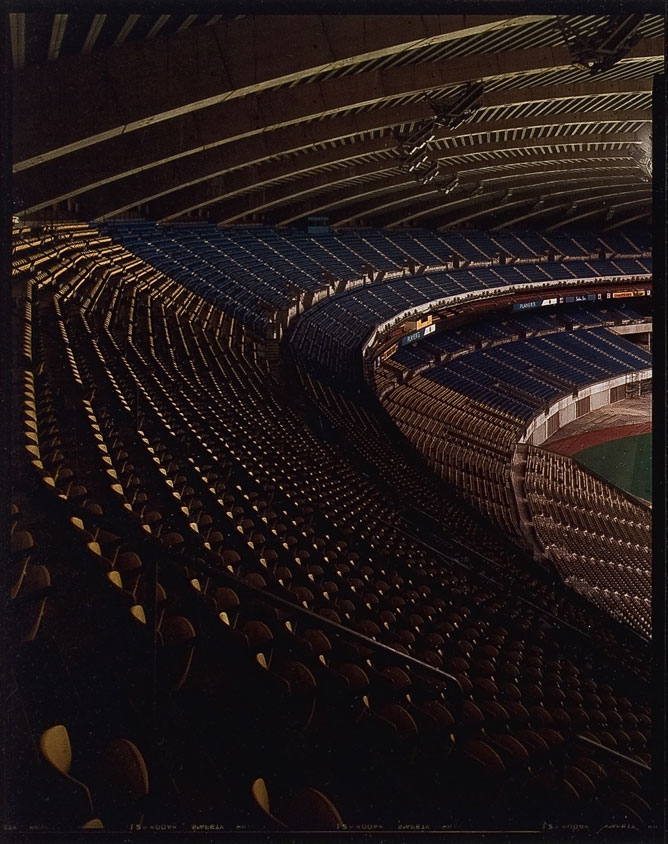
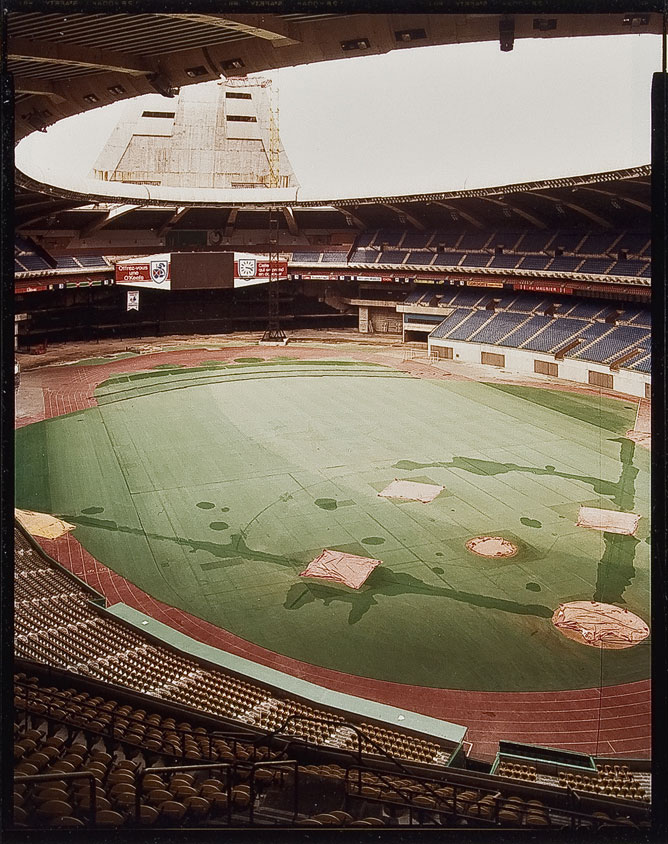
This installation from the National Gallery’s Collection of Photographs comprises 26 colour panoramic views of empty baseball stadiums across North America, from Exhibition Stadium, the home of the Toronto Blue Jays, and Montréal’s Olympic Stadium to the Houston Astro’s Astrodome. Taken in 1982, Jim Dow, a respected American photographer as well as a sports enthusiast, imparts through these images both a passion for the monumentality of the architecture and its abstract geometry and his love of baseball. The emptiness of the stadiums simultaneously evokes memory and a sense of anticipation.
Jim Dow’s interest in those places where people enact their everyday rituals, from the barbershop to the baseball park, has guided the path of his photographic career. Dow is concerned with capturing “human ingenuity and spirit” in endangered regional traditions – a barbershop with a heavy patina of town life covering the walls, the opulent time capsule of an old private New York club, the densely packed display of smoking pipes in an English tobacconist shop – all artefacts of a vanishing era.
Dow earned a B.F.A. and a M.F.A. in graphic design and photography from the Rhode Island School of Design in 1965 and 1968 respectively. An early influence was Walker Evans’s seminal book American Photographs (1938). Dow recalls the appeal of Evans’s “razor sharp, infinitely detailed, small images of town architecture and people. What stood out was a palpable feeling of loss … pictures that seemingly read like paragraphs, even chapters in one long, complex, rich narrative.” Soon after graduate school Dow had the opportunity to work with Evans. He was hired to print his mentor’s photographs for a 1972 Museum of Modern Art retrospective.
Dow has taught photography at Harvard, Tufts University and the School of the Museum of Fine Arts, Boston, and his work has been widely exhibited. Among his series is Corner Shops of Britain (1995), which features facades of small family-run businesses: vitrine-like shop windows showcase goods from candy jars to jellied eels. Another series, Time Passing (1984-2004), captures North Dakota “folk art” such as rural road signage, hand-painted billboards, and ornate gravestones.
Dow first gained attention for his panoramic triptychs of baseball stadiums, a project that began with an image he made of Veteran’s Stadium in Philadelphia in 1980. Using an 8 x 10″ camera, he has documented more than two hundred major and minor league parks in the United States and Canada.”
Text from Artdaily.org website [Online] Cited 17/04/2019
Jim Dow (American, b. 1942) The Kingdome. Seattle Mariners 1982 National Gallery of Canada, Ottawa Gift of Benjamin Greenberg, Ottawa, 1988 and 1989
Jim Dow (American, b. 1942) The Kingdome. Seattle Mariners (individual frames) 1982 National Gallery of Canada, Ottawa Gift of Benjamin Greenberg, Ottawa, 1988 and 1989
Jim Dow (American, b. 1942) Olympic Stadium, Montreal 1982 National Gallery of Canada, Ottawa Gift of Benjamin Greenberg, Ottawa, 1988 and 1989
Jim Dow (American, b. 1942) Olympic Stadium, Montreal (individual frames) 1982 National Gallery of Canada, Ottawa Gift of Benjamin Greenberg, Ottawa, 1988 and 1989
National Gallery of Canada 380 Sussex Drive P.O. Box 427, Station A Ottawa, Ontario Canada K1N 9N4
Exhibition dates: 24th July – 12th September, 2009
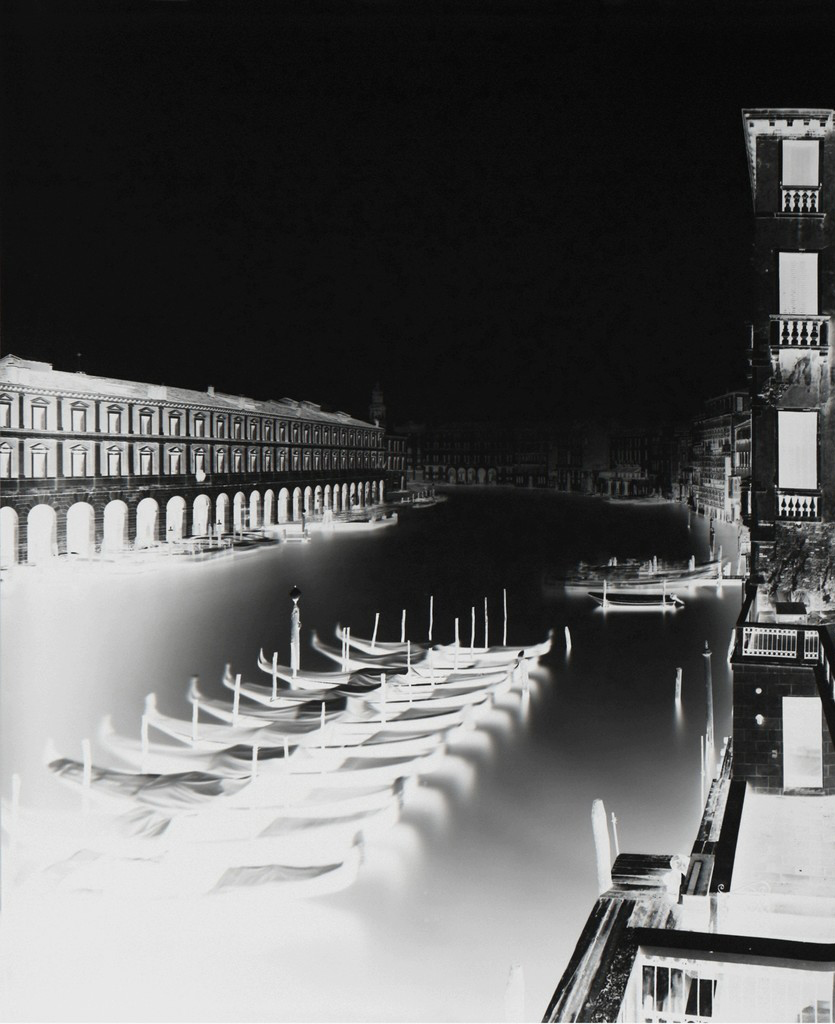
Vera Lutter (American, b. 1960) Campo Santa Sofia, Venice, XV: December 12, 2007 2007 Unique gelatin silver print 68 5/16 × 56 in (173.5 × 142.2cm)
I really like this atmospheric work – the scale, the ‘grandness’ of it, the dismemberment through verticality, the immersion into inky darkness – there is something almost subterranean (man living under-earth, under-evolution) about the pictures vestigial structures.
Dr Marcus Bunyan
Many thankx to Gagosian Gallery for allowing me to publish the photographs in the posting. Please click on the photographs for a larger version of the image.
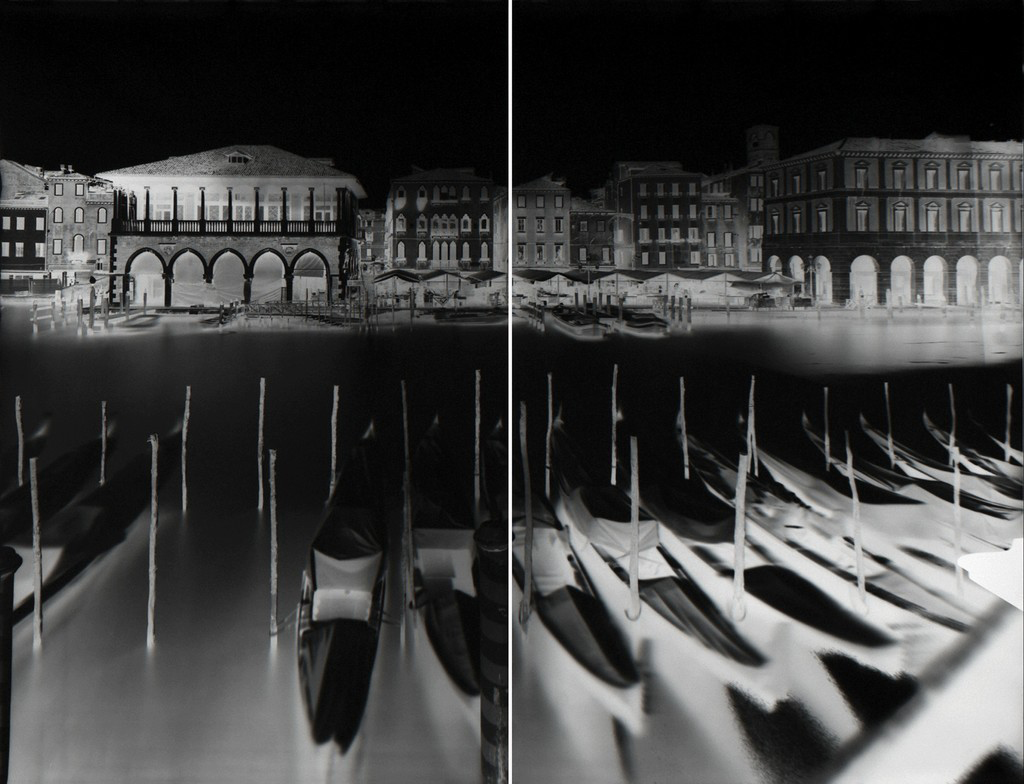
Vera Lutter (American, b. 1960) Campo Santa Sofia, Venice, XXIII: December 17, 2007 2007 Unique gelatin silver print 85 7/16 × 112 in 217 × 284.5cm
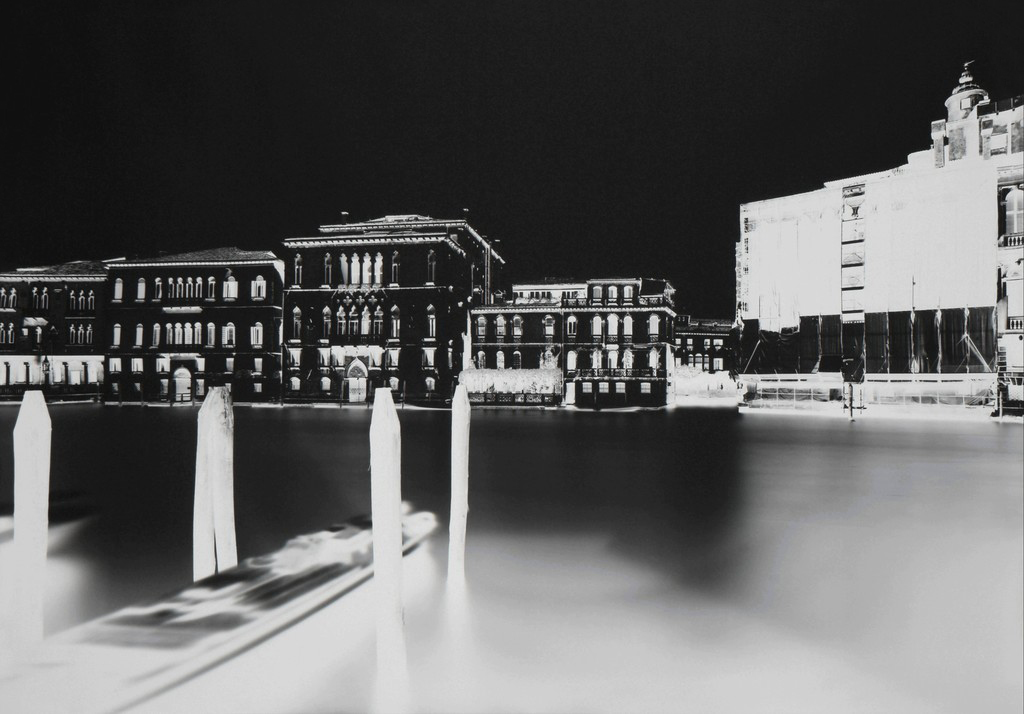
Vera Lutter (American, b. 1960) Ca Del Duca Sforza, Venice II: January 13-14, 2008 2008 Unique gelatin silver print 104 1/2 × 168 in 265.4 × 426.7cm
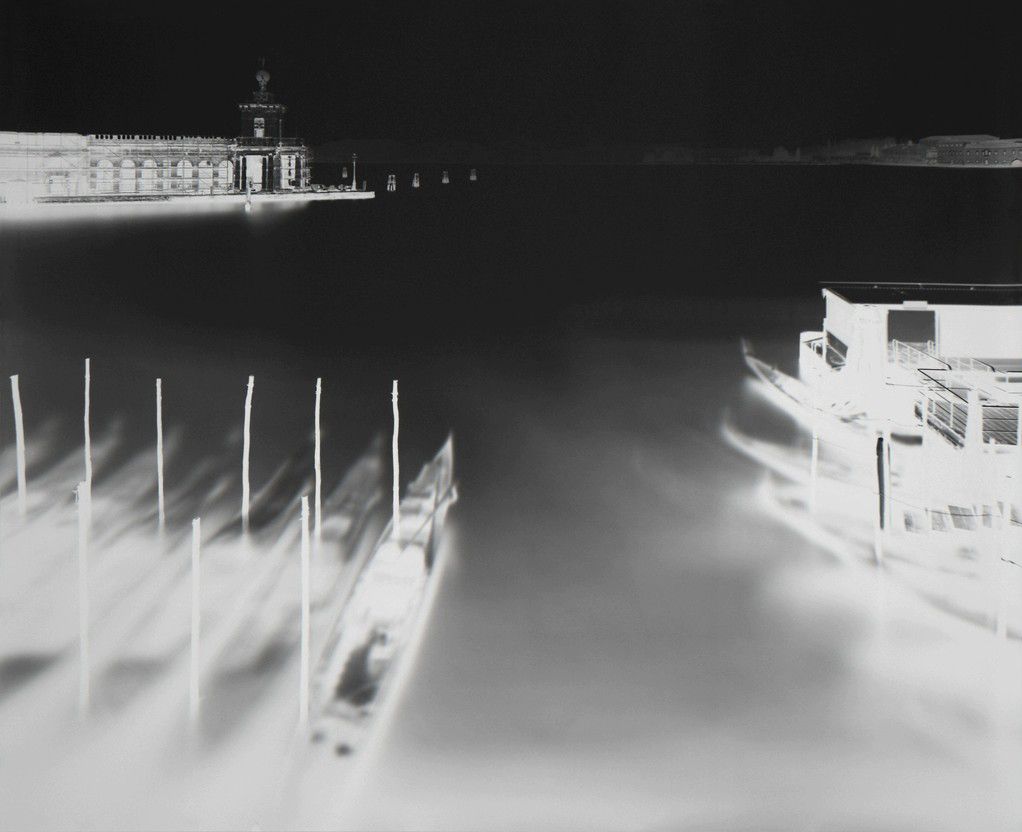
Vera Lutter (American, b. 1960) Calle Vallaresso, Venice XXVII: January 31, 2008 2008 Unique gelatin silver print 55 3/8 × 68 1/4 in 140.7 × 173.4cm
“Instability, uncertainty, suspense, and monumentality are entities that I consider and think about; they inform my work.”
~ Vera Lutter
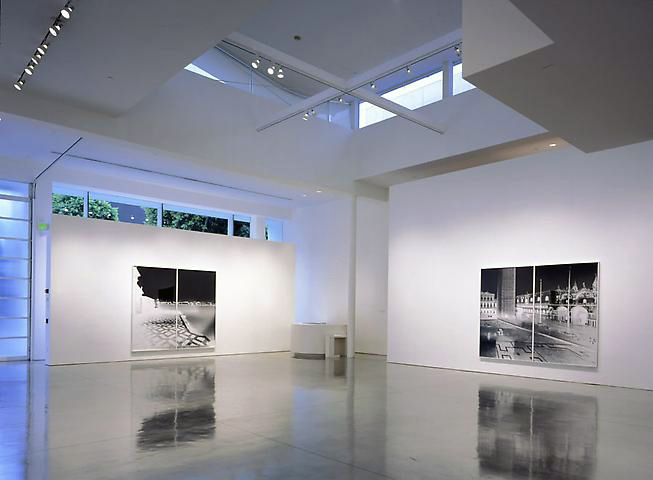
Gagosian Gallery is pleased to announce an exhibition of large-scale unique photographs by Vera Lutter. This is her first exhibition in Los Angeles.
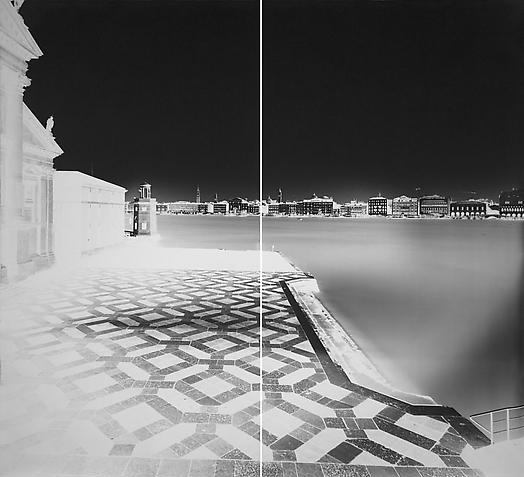
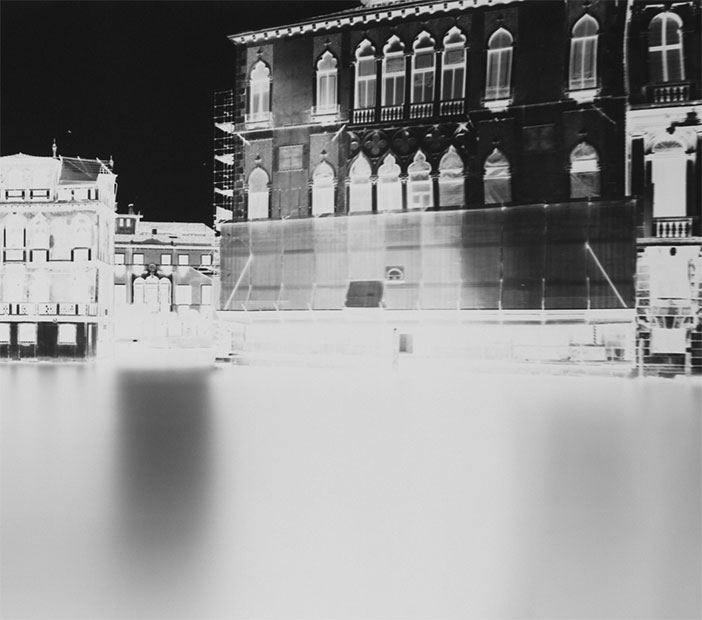
In Lutter’s conceptual approach to the camera obscura, the most rudimentary form of photography, the apparatus records in a very direct and immediate way what exists in the world outside. By choosing to retain the negative image, she transforms the visual facts of her chosen environments into uncanny scenes that reflect on the two principal realities of time and space.
In recent years, Lutter has made the hauntingly romantic city of Venice an object of prolonged study. Building on her previous recordings of industrial landscapes and cities surrounded by water, such as Old Slip, New York (1995), and Cleveland (1997), the works created in Venice elaborate her intention “to create an image in which the city appears to be suspended above its own reflection, rendering a place that appears to exist outside of gravity.”
During the anticipated high-water season of 2005, Lutter captured mirage-like emanations of San Marco and Piazza Leoni in which the spectral landmarks appear to hover above their own reflected image in the placid water. Lutter returned to Venice the following year to record the area where the Grand Canal flows into the Bacino, which then opens up into the lagoon. This unstable body of water not only gives Venice its special ethereal character; it also threatens the floating city’s very existence.
Lutter revisited Venice in 2007 and 2008 to explore further the physical, technical, and architectural complexities of the city. Works such as San Giorgio (2008), Campo Santa Sofia (2007) and Calle Vallaresso (2008) reveal certain innate qualities and conditions of the city that elude direct observation and can be experienced only through her luminous incarnations, the physical image.
Text from the Gagosian Gallery website [Online] Cited 01/09/2009 no longer available online
Vera Lutter uses the camera obscura, the most basic photographic device, to render in massive form images that serve as faithful transcriptions of immense architectural spaces. The camera obscura was originally developed during the Renaissance as an aid in the recording of the visible world.
Vera Lutter is best known for monumental black-and-white photographs of cityscapes. Her unique silver gelatin prints are negatives made by transforming a room into a pinhole camera obscura chamber. Directly exposed, often over many hours, onto photosensitive paper, these vistas appear as solarised images, their ethereal platinum tones imbuing the scenes with a haunting melancholy. From an early concentration on the Manhattan skyline, Lutter has turned lately to more industrial sites, including a dry dock, a zeppelin factory, an airport runway, a marina and a deserted warehouse.
Vera Lutter Biography on the Metro Art Works website [Online] Cited 01/09/2009 no longer available online
Installation views of Vera Lutter works at Gagosian Gallery, Beverly Hills
Vera Lutter (American, b. 1960) San Giorgio, Venice XVIII: January 26, 2008 2008 Unique gelatin silver print
Vera Lutter (American, b. 1960) San Marco, Venice, XIX: December 1, 2005 2005 Unique gelatin silver print 92 ¼ x 112 ¾ in 234.3 x 286.4cm
Vera Lutter (American, b. 1960) Ca’ del Duca Sforza, Venice XXXI: July 14, 2008 2008 Unique gelatin silver print 56 × 80 3/4 in 142.2 × 205.1cm
Vera Lutter (American, b. 1960) Ca del Duca Sforza, Venice, XXXXIII: July 24, 2008 2008 Unique gelatin silver print 50 1/2 × 67 1/8 in 128.3 × 170.5cm
Vera Lutter (American, b. 1960) Ca del Duca, Venice, XA: December 8, 2007 2007 Unique gelatin silver print
Gagosian Gallery 456 North Camden Drive Beverly Hills, CA 90210 Phone: 310.271.9400
Exhibition dates: 21st June – 27th September, 2009
Many thankx to the Bruce Museum and Mike Horyczun (Director of Public Relations) for allowing me to publish the wonderful photographs below.
Marcus
Jeannette Klute (American, 1918-2009) Cardinal Flower Nd (early-mid 1950s) Dye transfer photograph 20 1/4 x 16 1/4 in. Bruce Museum collection Gift of George Stephanopoulos
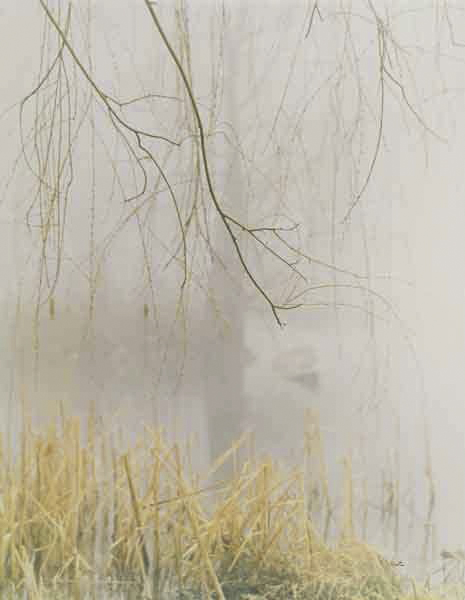
Jeannette Klute (American, 1918-2009) Misty Willow Nd (early-mid 1950s) Dye transfer photograph 20 1/4 x 16 1/4 in. Bruce Museum collection Gift of George Stephanopoulos
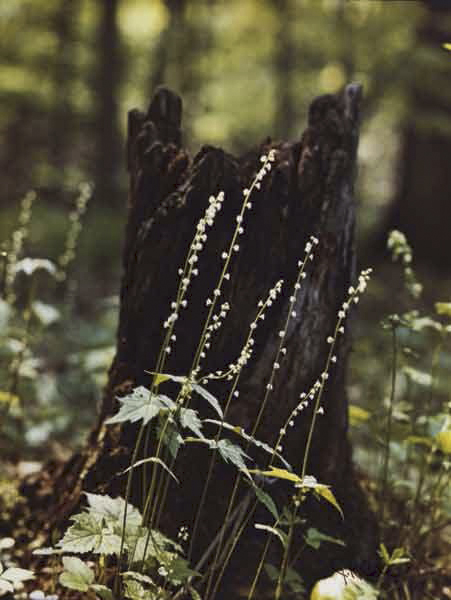
Jeannette Klute (American, 1918-2009) Miterwort Nd (early-mid 1950s) Dye transfer photograph 14 1/8 x 11 1/4 in. Bruce Museum collection Gift of George and Alexandra Stephanopoulos
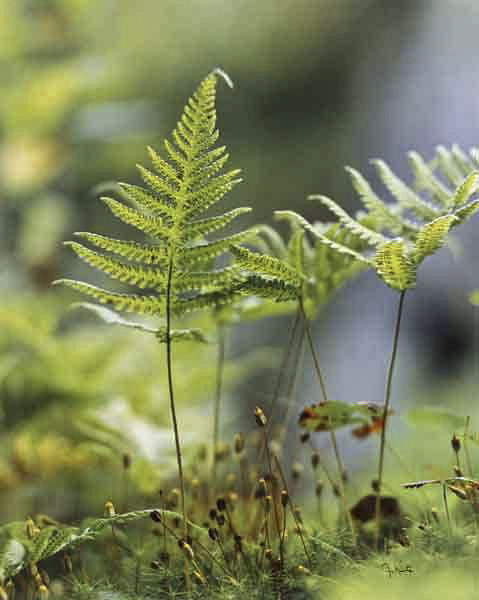
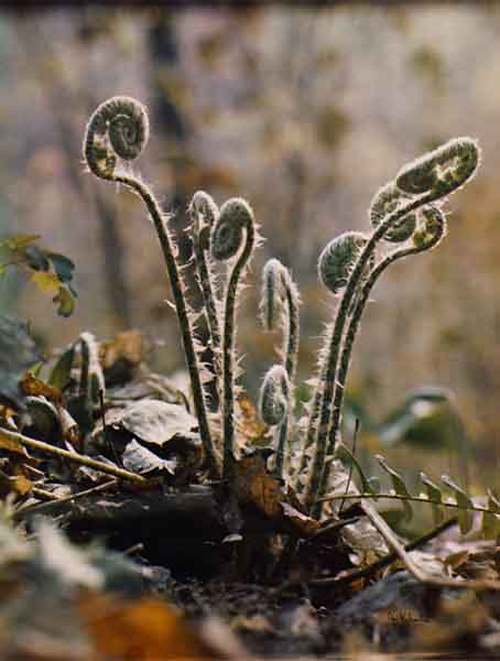
Jeannette Klute (American, 1918-2009) Beech Fern Nd (early-mid 1950s) Dye transfer photograph 20 1/4 x 16 1/4 in. Bruce Museum collection Gift of George Stephanopoulos
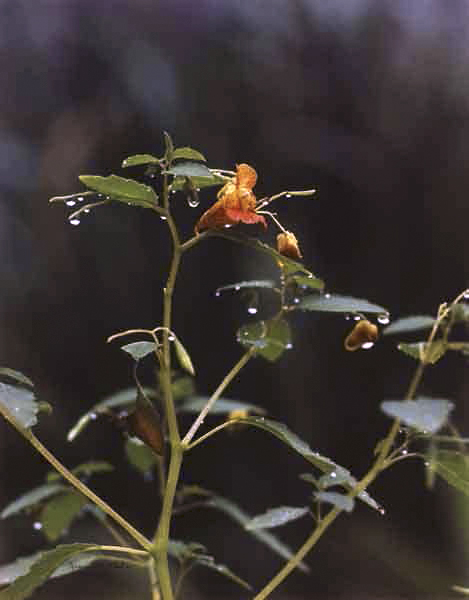
Jeannette Klute (American, 1918-2009) Jewel Weed Nd (early-mid 1950s) Dye transfer photograph 20 1/4 x 16 1/4 in. Bruce Museum collection Gift of George Stephanopoulos
Jeannette Klute (American, 1918-2009) Christmas Fern Nd (early-mid 1950s) Dye transfer photograph 12 1/2 x 9 1/2 in. Bruce Museum collection Gift of George Thomsen
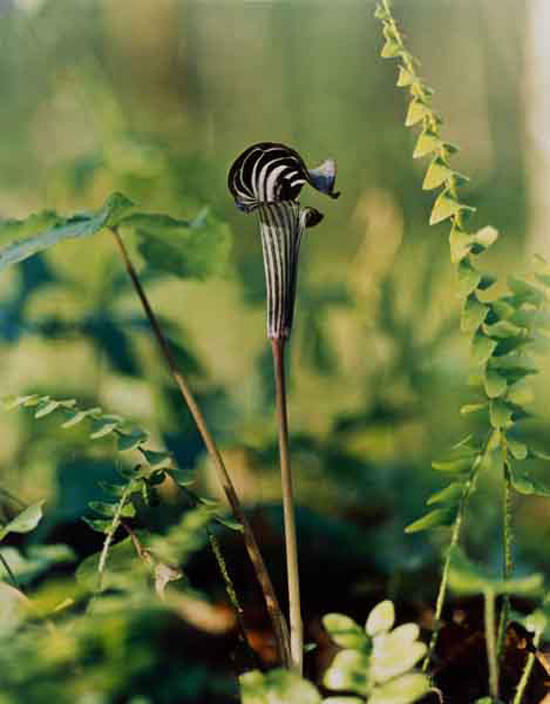
Jeannette Klute (American, 1918-2009) Jack in the Pulpit (Arisaema triphyllum) Nd (early-mid 1950s) Dye transfer photograph 20 1/4 x 16 1/4 in. Bruce Museum collection Gift of George and Alexandra Stephanopoulos
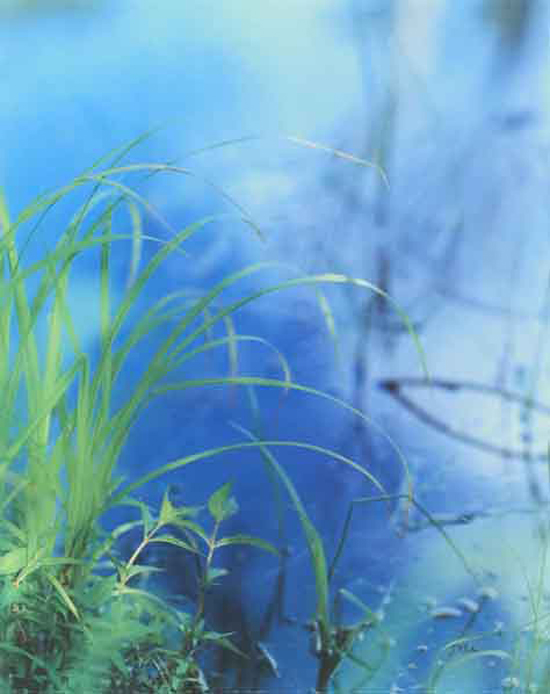
Jeannette Klute (American, 1918-2009) Green Grasses – blue Nd (early-mid 1950s) Dye transfer photograph 20 1/4 x 16 1/4 in. Bruce Museum collection Gift of Richard and Elena Pollack
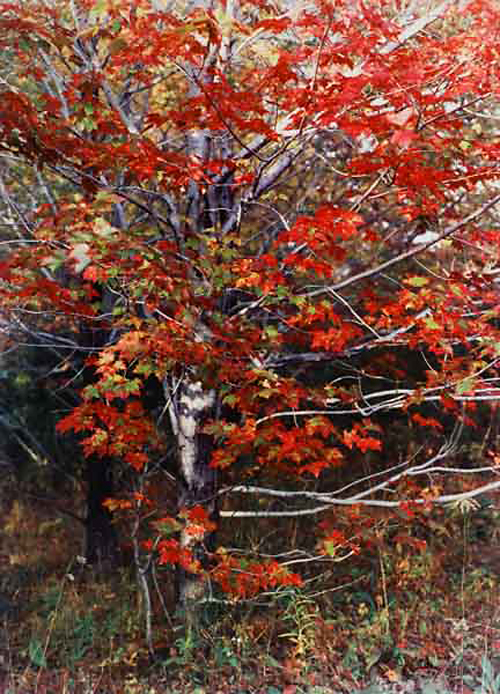
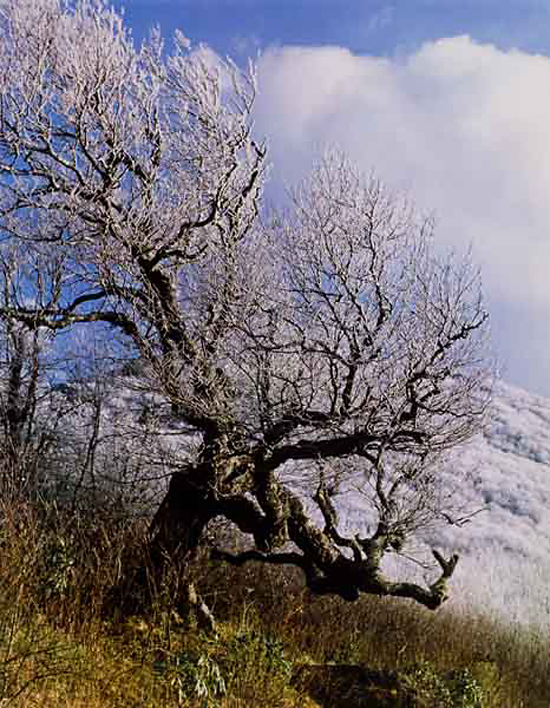
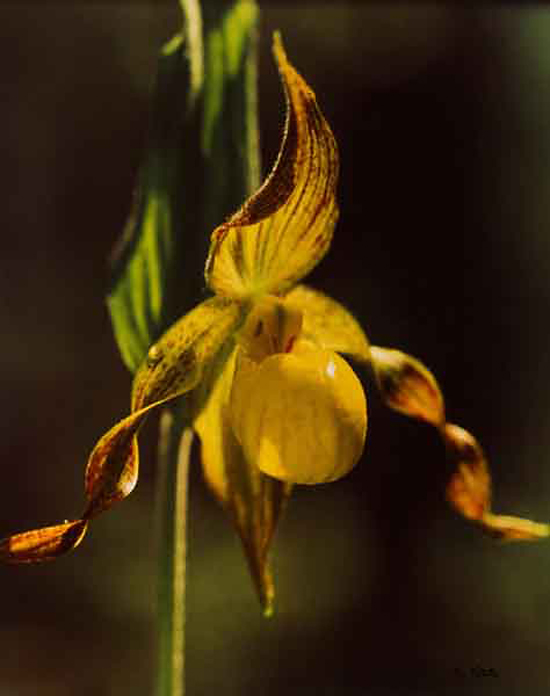
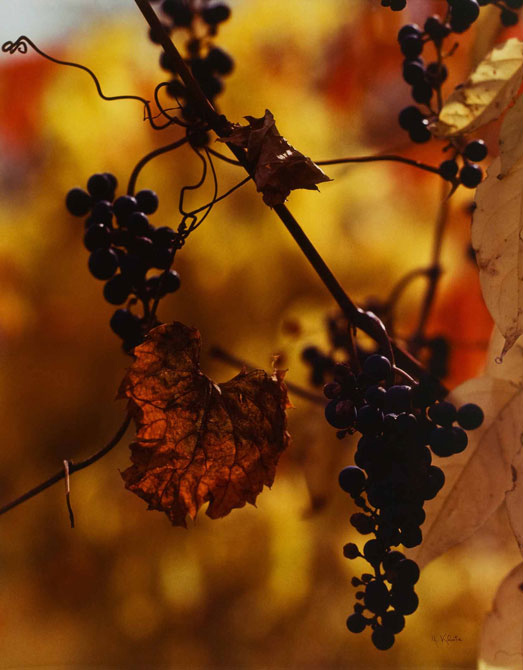
The exhibition features 24 colour photographs by Jeannette Klute (1918-2009) drawn from more than fifty of her prints held in the Bruce Museum’s permanent collection. Ranging from landscapes to intimate “woodland portraits” of orchids, ferns, and trees, Jeannette Klute’s photographs of New England are vibrant compositions produced through the labour intensive dye transfer process.
Trained at the Rochester Institute of Technology through the Works Progress Administration during the Depression, Jeanette Klute worked extensively on perfecting the dye transfer process, a laborious photographic technique that allowed for rich colours in exceptionally permanent prints. Klute tested and refined this process at the Eastman Kodak Company in Rochester, NY, beginning her career as photographic illustrator to physicist Ralph M. Evans and ascending to research photographer in charge of the Visual Research Studio of the Color Control Division.
Klute’s photography merged environmental consciousness with cutting edge technology. Using only natural light and leaving a minimal impact on the environment, she spent many years investigating colour and demonstrating the capabilities of dye transfer by photographing nature. Her work resulted in some of the finest examples of colour printing and all of its capabilities.
“My purpose has been to somehow express the feeling one experiences being out of doors,” Ms. Klute wrote for her Woodland Portraits exhibition. “I am concerned with the delight to the senses as much as with the intellectual. The woods are mystical and enchanting to me as well as spiritual.”
Jeanette Klute’s work was featured in Edward Steichen’s 1950 exhibition All Color Photography at the Museum of Modern Art, and her large one-woman shows were circulated internationally by the Smithsonian Institution and Kodak International. She was also invited to submit work for the San Francisco Museum of Art’s landmark exhibition Women of Photography: An Historical Survey in 1975.
Text from the Bruce Museum website
Jeannette Klute (American, 1918-2009) Maple Tree – red leaves Nd (early-mid 1950s) Dye transfer photograph 20 1/4 x 16 1/4 in. Bruce Museum collection Gift of LeGrand Belnap
Jeannette Klute (American, 1918-2009) Frosted Tree Nd (early-mid 1950s) Dye transfer photograph 20 1/4 x 16 1/4 in. Bruce Museum collection Gift of Richard and Elena Pollack
Jeannette Klute (American, 1918-2009) Yellow Lady’s Slipper Nd (early-mid 1950s) Dye transfer photograph 20 1/4 x 16 1/4 in. Bruce Museum collection Gift of LeGrand Belnap
“The first month they were sending people out for job interviews, but not me,” she recalled in a speech at the Rochester Institute of Technology in 1984. “I asked how come? The head of the department said, ‘Oh, there are no jobs for women in photography.’ My world fell apart.”
Ms. Klute took it upon herself to go out for interviews, and every week on her day off, she walked to the offices of Eastman Kodak Co. to ask for a job. For a long time, she never made it past the personnel office. Then, one day, in the pouring rain, decked in her finest navy blue suit, she stalked to the offices and was sent straight to the sixth floor for an interview.
“The man took a look at me with the rain dripping off my hat and said, ‘If you want a job that bad, you’ve got it,'” she recalled. “There was a celebration in the neighbourhood that night.” …
“She was really like my college education,” said Barbara Erbland, who assisted Ms. Klute in the lab at Kodak for many years. “She taught me everything – about light, colour, about people … how to live well.” … “Her lab consisted of all women,” she said. “I think it was by intention. She believed women had brains. We worked very well together.” …
Lugging a 4-by-5 Graflex single-lens reflex camera wherever they went, Erbland ventured into swamps and tide pools… “She taught me you don’t make do, you make things happen,” said Erbland. “You’re not a victim.”
Back in Rochester, the two sought out swamps and woodland for Ms. Klute to take her photographs – or, as she put it, to “make pictures.”
PHOTO GALLERY: In memory of Jeannette Klute, a ‘Renaissance woman’, by Philip Anselmo, August 2009
Jeannette Klute (American, 1918-2009) Grape Leaves Nd (early-mid 1950s) Dye transfer photograph 20 1/4 x 16 1/4 in. Bruce Museum collection Gift of George Stephanopoulos
Bruce Museum One Museum Drive Greenwich, CT 06830
Opening hours: Tuesday – Sunday 10am – 5pm Last admission 4.30pm Closed Monday and major holidays
Many thankx to the Paine Art Center for allowing me to publish the photographs in the posting. Please click on the photographs for a larger version of the image.
Alvin Langdon Coburn (English born United States, 1882-1966) The Singer Building, New York c. 1910 Gum bichromate over platinum print
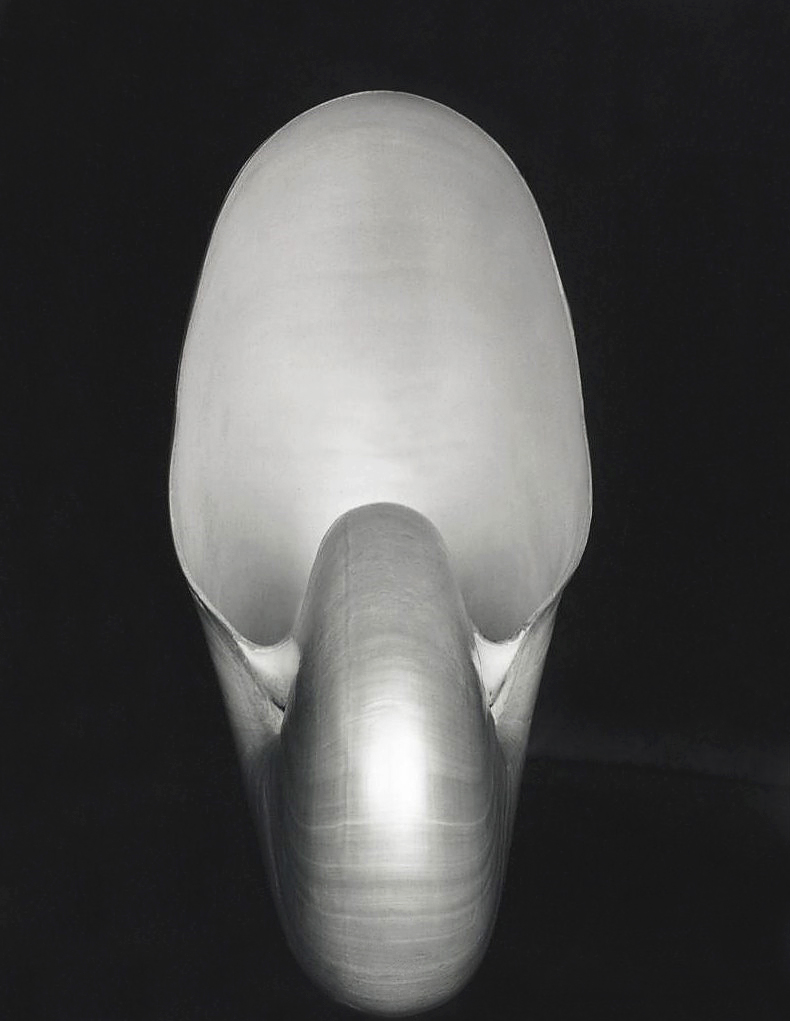
Edward Weston (American, 1886-1958) Nautilus 1927 Gelatin silver print 9 1/2 by 7 1/2 in. (24 by 19cm)
Like their painter counterparts, many photographers experimented with abstraction in the 1920s and 1930s, exploring relations of form, tonality, and space. Here, Weston isolates a nautilus shell against a solid black ground, creating a study of curves, subtle shadows, and contrasts between light and dark. As in many of his close-ups of natural forms, the nautilus appears both recognisable and yet strangely unfamiliar. Unlike the rigorously nonrepresentational compositions of photographers like László Moholy-Nagy, Weston’s abstractions always remained grounded in objects from the real world; as he wrote in 1930, “To see the Thing Itself is essential.”
Text from the Metropolitan Museum of Art website
Nautilus is now recognised as one of Weston’s greatest photographs, but all of his images of shells have a greater-than-life quality to them. Weston biographer Ben Maddow has said that what is so remarkable about them “is not in the closeness nor in the monumentality of the forms; or at least, not in these alone. It is instead in the particular light, almost an inward luminescence, that he saw implicit in them before he put them before the lens. Glowing with an interior life … one is seeing more than form.”
Lewis W. Hine (American, 1874-1940) Italian family looking for lost baggage, Ellis Island 1905 Gelatin silver print
The largest exhibition of masterpieces of American photography ever presented in Wisconsin, Seeing Ourselves features over a hundred iconic images from the internationally acclaimed George Eastman House Collections of Rochester, New York. This extraordinary exhibition dramatically illustrates our country’s landscape, people, culture, and historic events through works ranging from vast western scenes to fascinating documentary photographs to intimate celebrity portraits. Artists represented include such masters of the medium as Ansel Adams, Alfred Stieglitz, Paul Strand, Edward Weston, Lewis Hine, Dorothea Lange, and dozens of other accomplished photographers.
Spanning more than 150 years of photography, Seeing Ourselves is organised according to five broad themes: American Masterpieces, American Faces, America at War, America the Beautiful, and American Families. Each section features renowned photographs documenting the American experience. The exhibition begins with “American Masterpieces,” which sheds light on celebrated images like Yosemite Valley, Summer by Ansel Adams, Nautilus by Edward Weston, and The Steerage by Alfred Stieglitz. Other highlights include Oshkosh native Lewis Hine’s Powerhouse Mechanic, a dynamic image symbolising the arrival of a new Industrial Age, and Dorothea Lange’s unforgettable photograph Migrant Mother, Nipomo, California, which gave a human face to poverty and suffering during the Great Depression.
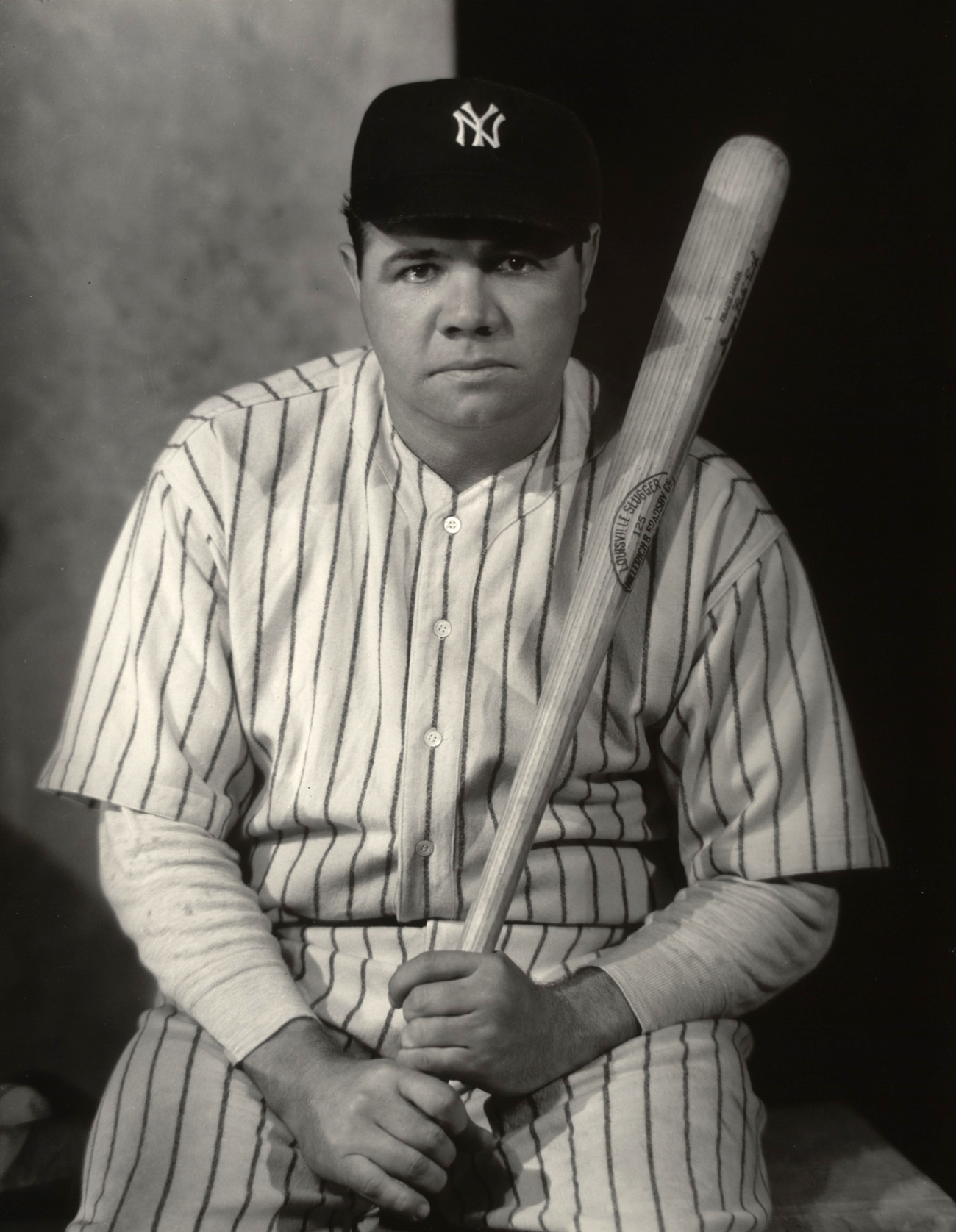
“American Faces” illustrates the diversity of our nation, including subjects ranging from Native Americans whose ancestors have lived here for thousands of years to immigrants at Ellis Island who had just arrived in America that day. Photographs of everyday people are juxtaposed with portraits of illustrious political and civil rights leaders, artists, celebrities, and athletes, including Abraham Lincoln, Martin Luther King, Marilyn Monroe, Babe Ruth, and many other familiar faces. Master photographers who portrayed these individuals include Mathew Brady, Edward S. Curtis, Walker Evans, Richard Avedon, Alfred Stieglitz, and Edward Steichen.
Some of the most famous, memorable, and shocking images in the history of American photography are photographs of war. While photographs of war may be difficult to look at, they serve as an important record of America’s past. “America at War” displays images from the American Civil War, World Wars I and II, the Korean War, and the Vietnam War, as well as contemporary photographs created in response to 9/11.
“America the Beautiful” features timeless photographs that capture the beauty and power of unspoiled nature, as well as scenes of westward expansion, urban America, and the intimate spaces we call home. Dramatic images of Alaskan glaciers, majestic western views, and tranquil dunes are contrasted with big-city skyscrapers, small-town neighborhoods, and backyard gardens. Major works in this section include Alvin Langdon Coburn’s beautifully atmospheric view of New York’s Singer Building and landscapes by Ansel Adams and Edward Weston.
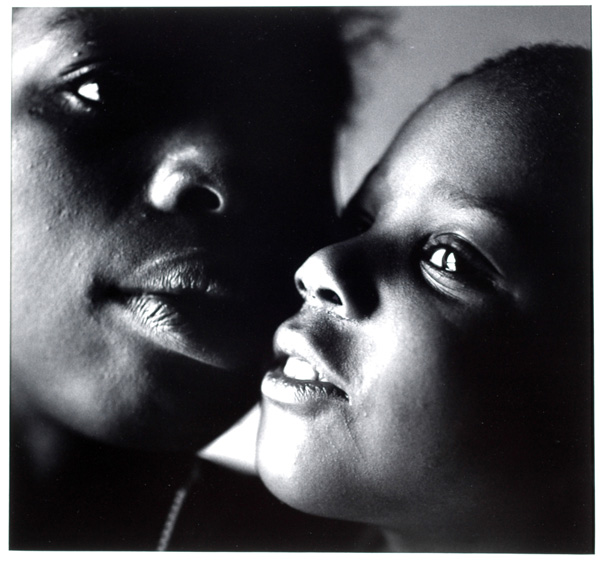
The final section, “American Families,” brings together families from all walks of life, exploring their differences and commonalities. A variety of examples by such notable photographers as Weegee, Lewis Hine, Aaron Siskind, Margaret Bourke-White, and Mary Ellen Mark are included. Some works portray idealised scenes of American life, while others capture a glimpse of everyday life and the serious challenges many families face, such as poverty or illness. Highlights include Hine’s photograph of an Italian family seeking lost luggage at Ellis Island and a tender portrait of a mother and son from the series Black in America by Eli Reed, an award-winning member of Magnum, the prestigious photojournalists’ cooperative.
Seeing Ourselves: Masterpieces of American Photography from George Eastman House Collections is organised by George Eastman House International Museum of Photography and Film and is made possible through a grant from the National Endowment for the Arts as part of the American Masterpieces program. George Eastman House is the world’s oldest photography museum, founded in 1947 on the estate of Kodak founder George Eastman, the father of popular photography. The museum has unparalleled collections of 400,000 photographs from 14,000 photographers dating from the beginnings of the medium to the present day.”
Text from The Paine Art Center website [Online] Cited 01/07/2009. No longer available online
Benedict J. Fernandez (American, 1936-2021) Dick Gregory with MLK [Martin Luther King, JR.] New Politics Convention, Chicago, ILL. October, 1967 1967 Gelatin silver print
Eli Reed (American, b. 1946) A Mother and Her Son at Her Home In Bed Sty in Brooklyn c. 1990 Gelatin silver print
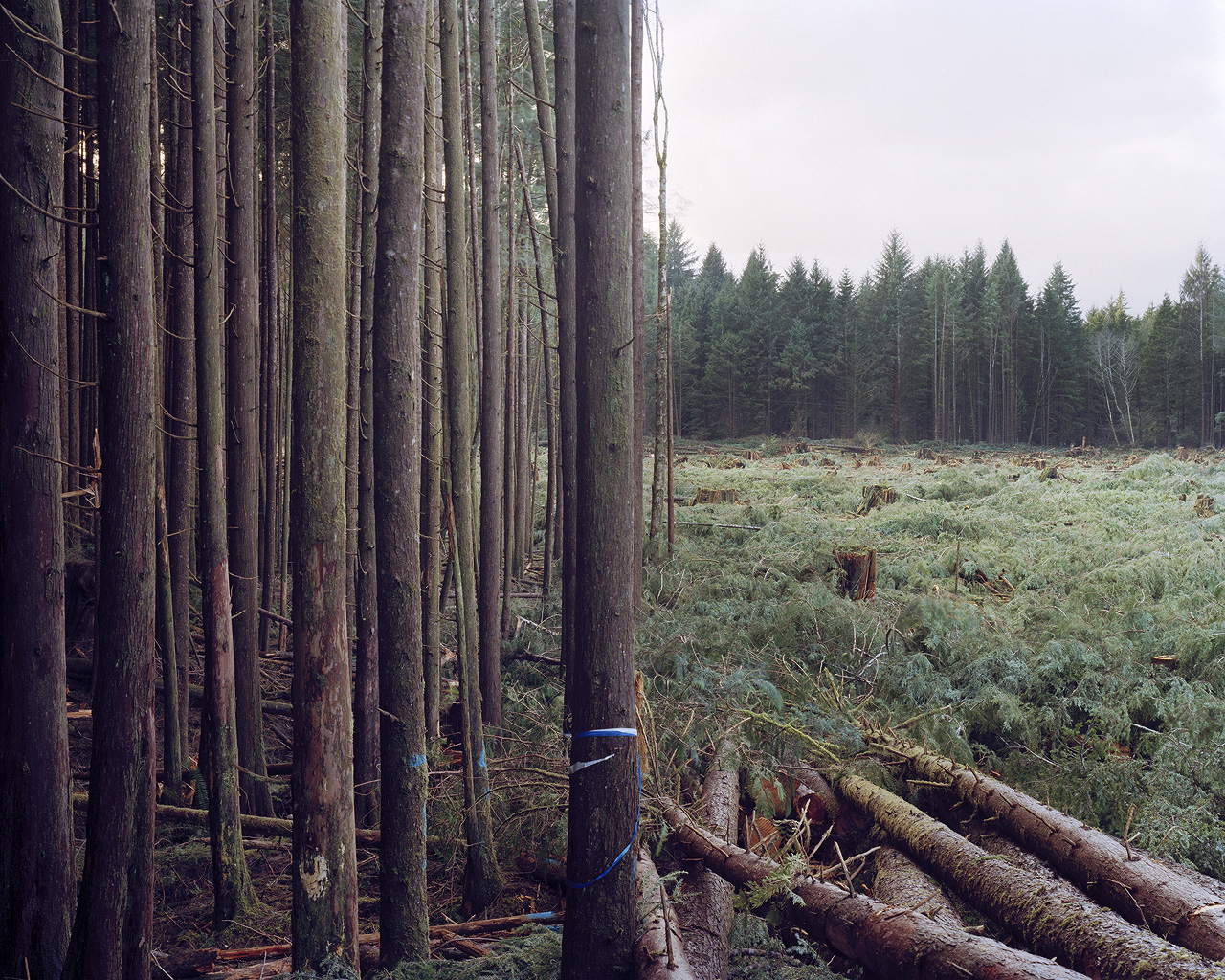
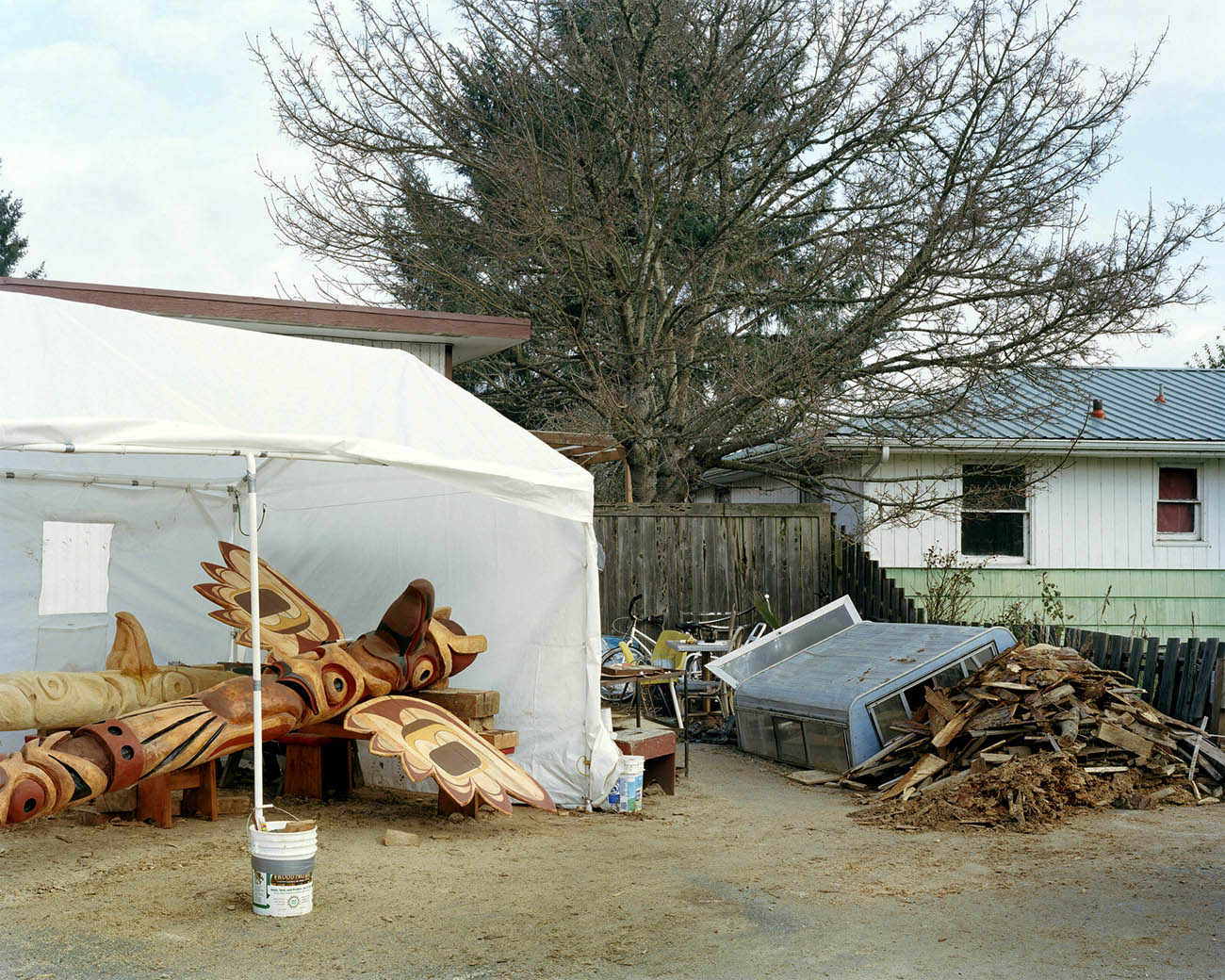
Eirik Johnson (American, b. 1974) Freshly Felled Trees, Nemah, Washington from the series Sawdust Mountain 2007
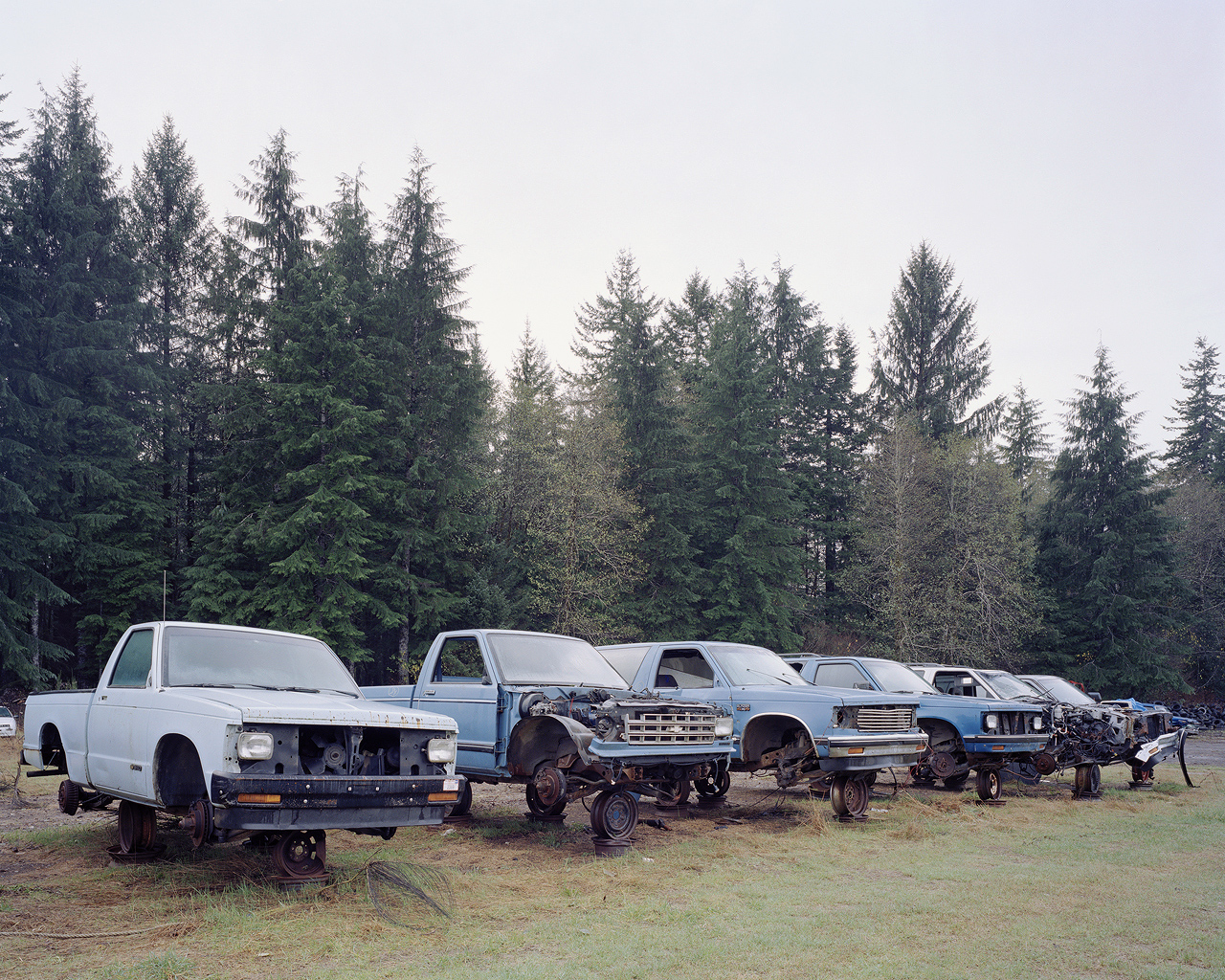
Not much joy in this melancholy tone poem, but there doesn’t need to be. Masses of history, memory, anxiety, isolation and death, all reinforced by Johnson’s photographic perspective, which seems to flatten out the pictorial plane. Some stunning photographs and others that don’t hit the mark, but overall a very strong body of work. View the complex, environmental, social documentary photographs of the Sawdust Mountain series on Eirik Johnson’s website.
Dr Marcus Bunyan
Many thankx to Rena Bransten Gallery for allowing me to publish the photographs in the posting. Please click on the photographs for a larger version of the image.
“When I was a young, my family would hunt for mushrooms in the forests of the Cascade and Olympic Mountains. Some days we would spend afternoons along the shallows of a river watching salmon fight their way to spawning grounds upstream. These were the icons of the region: forest and salmon, pillars of Northwest identity. These photographs address the complicated relationship between the region’s landscape, the industries that rely upon natural recourses, and the communities they support.
‘Sawdust Mountain’ is a melancholy love letter of sorts, a personal reflection on the region’s past, its hardscrabble identity and the turbulent future it must navigate.”
Eirik Johnson
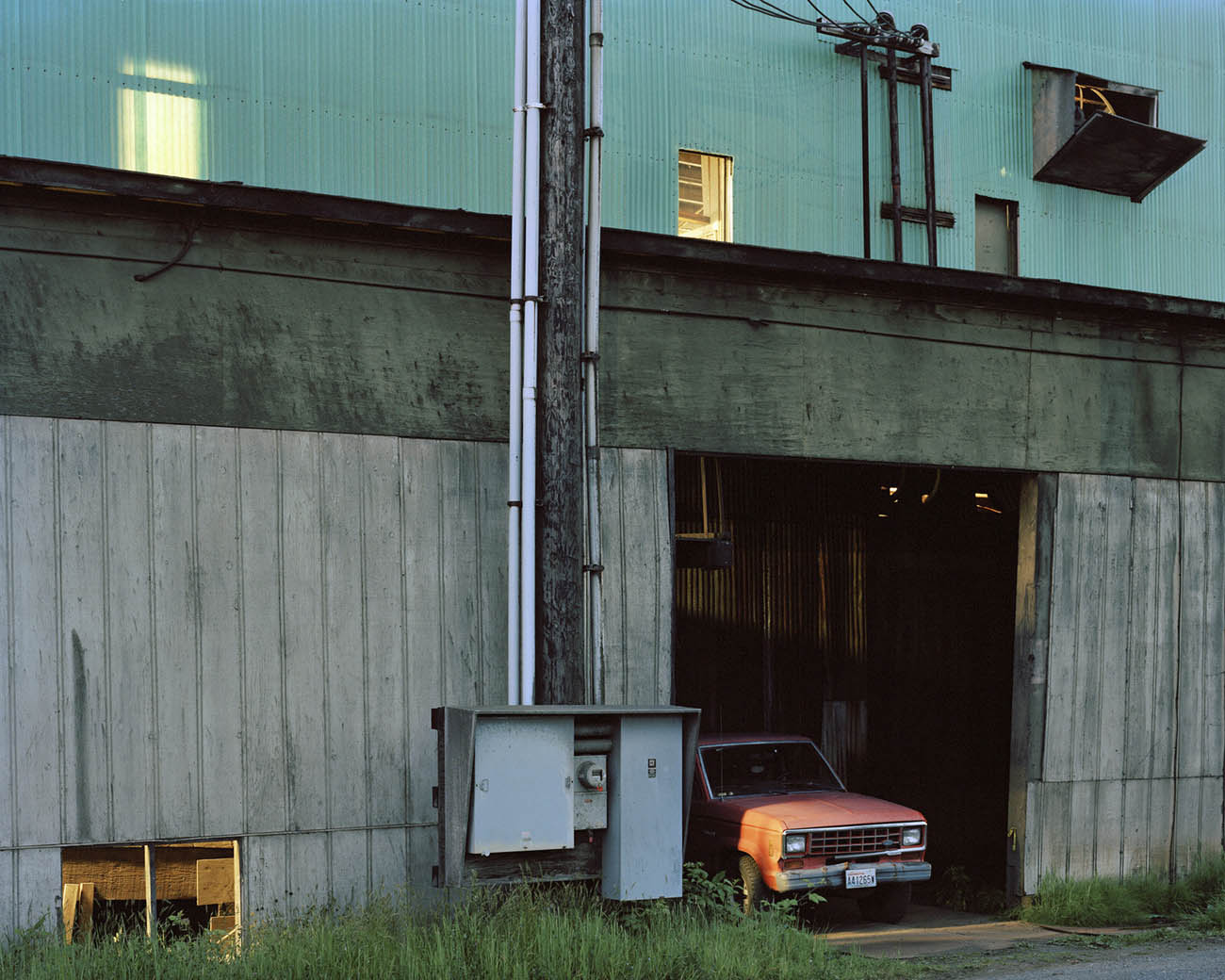
Eirik Johnson (American, b. 1974) Junked Blue Trucks, Forks, Washington from the series Sawdust Mountain 2007
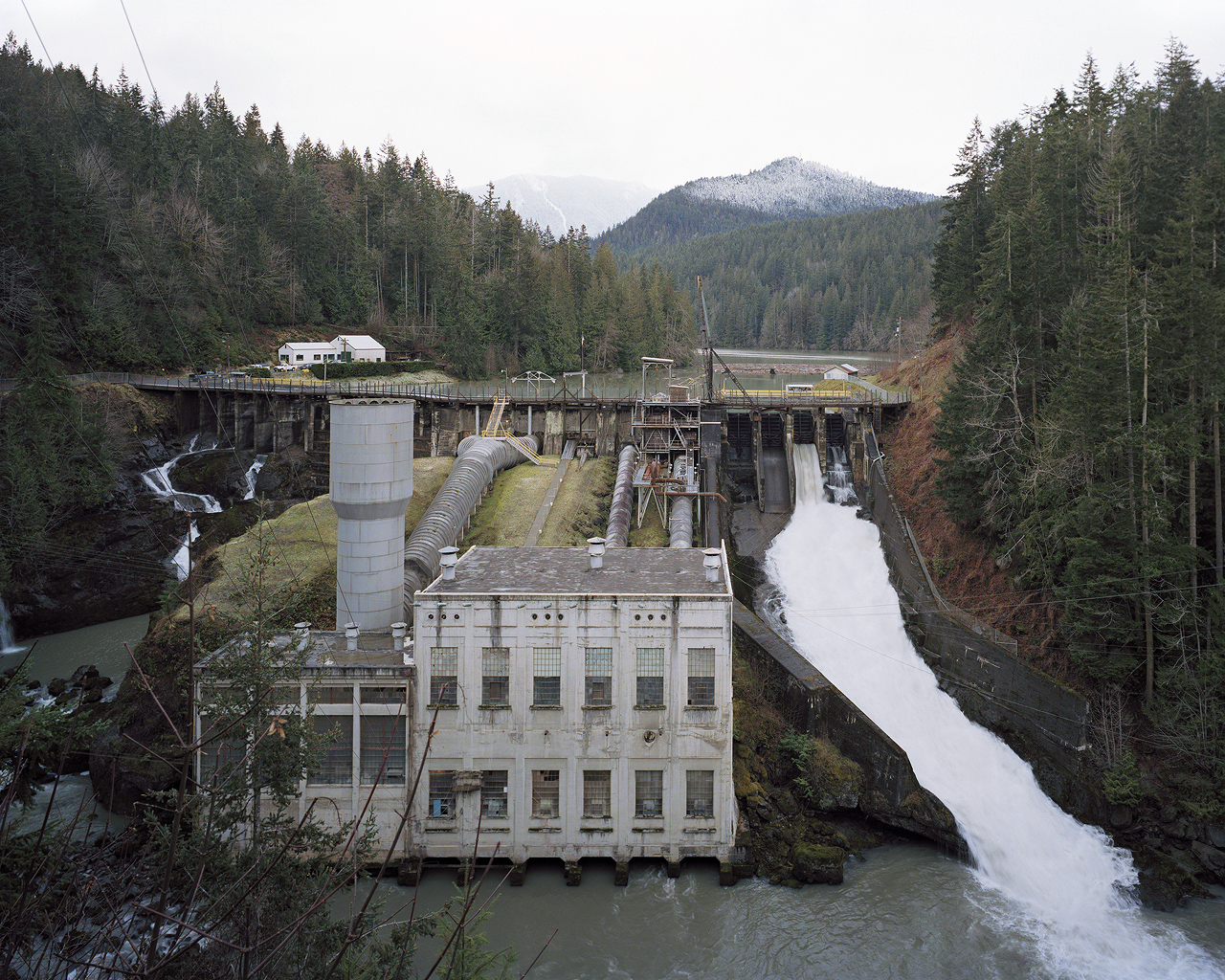
Eirik Johnson (American, b. 1974) Elwha River Dam, Washington from the series Sawdust Mountain 2008
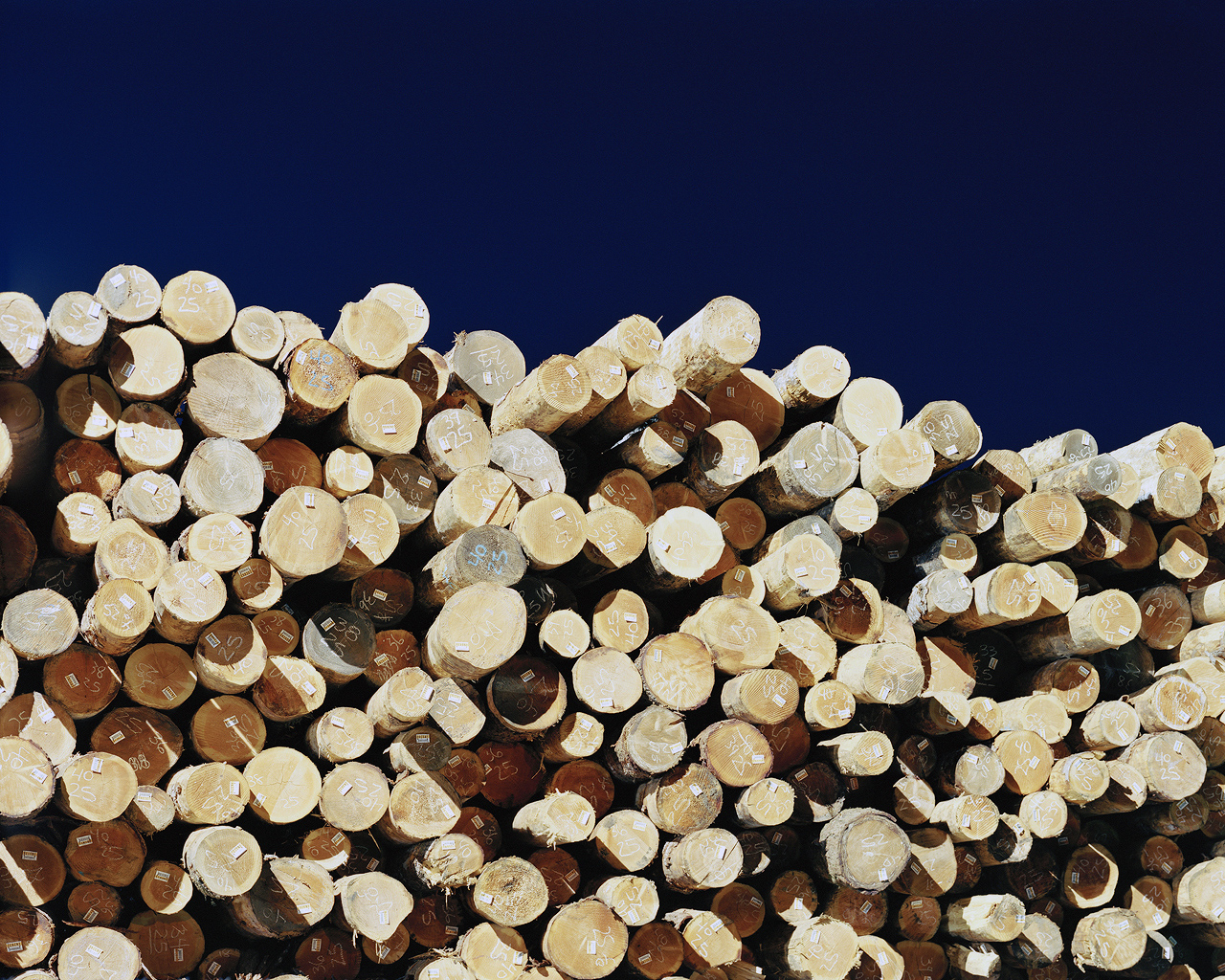
Eirik Johnson (American, b. 1974) Stacked logs in Weyerhaeuser sort yard, Cosmopolis, Washington from the series Sawdust Mountain 2007
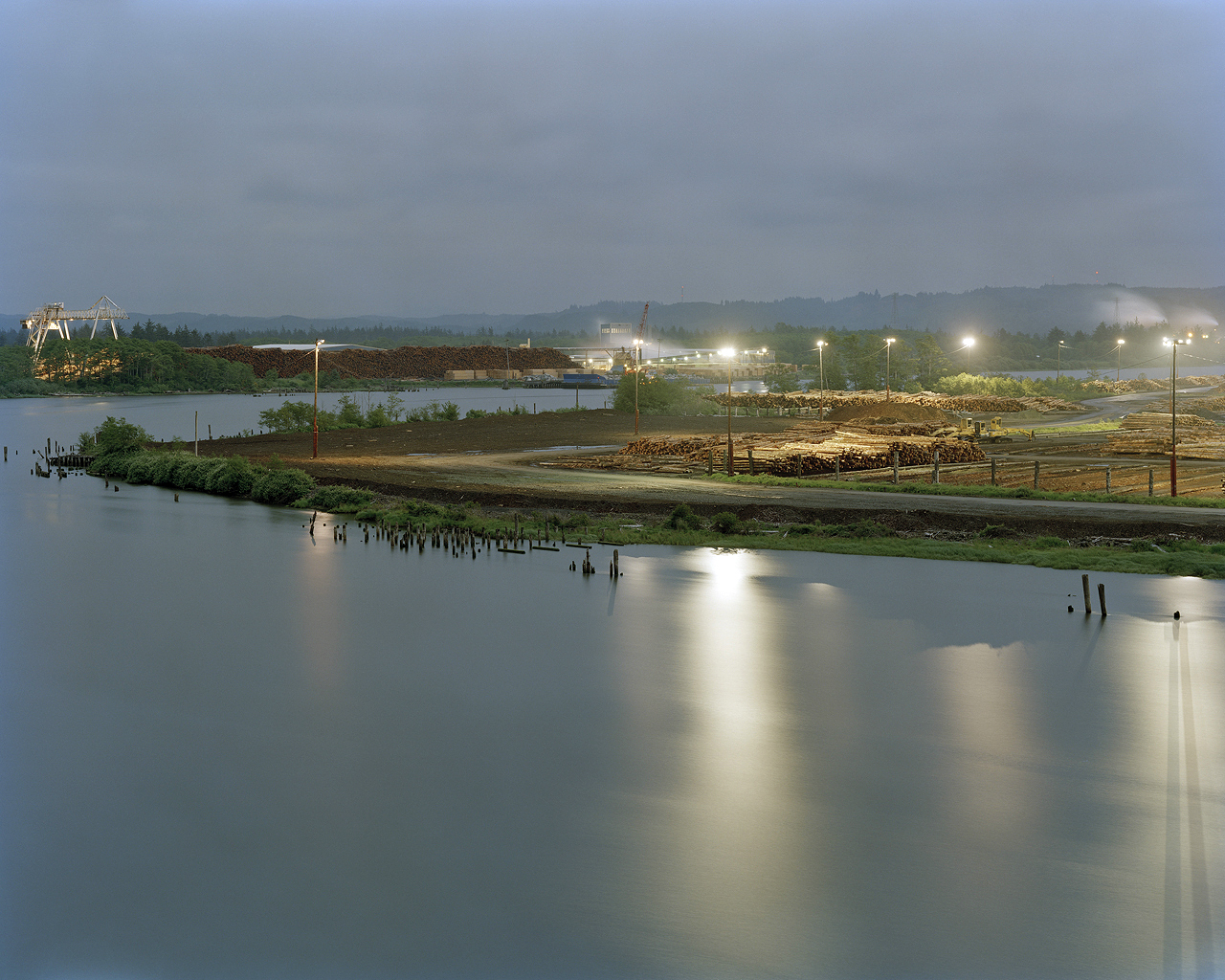
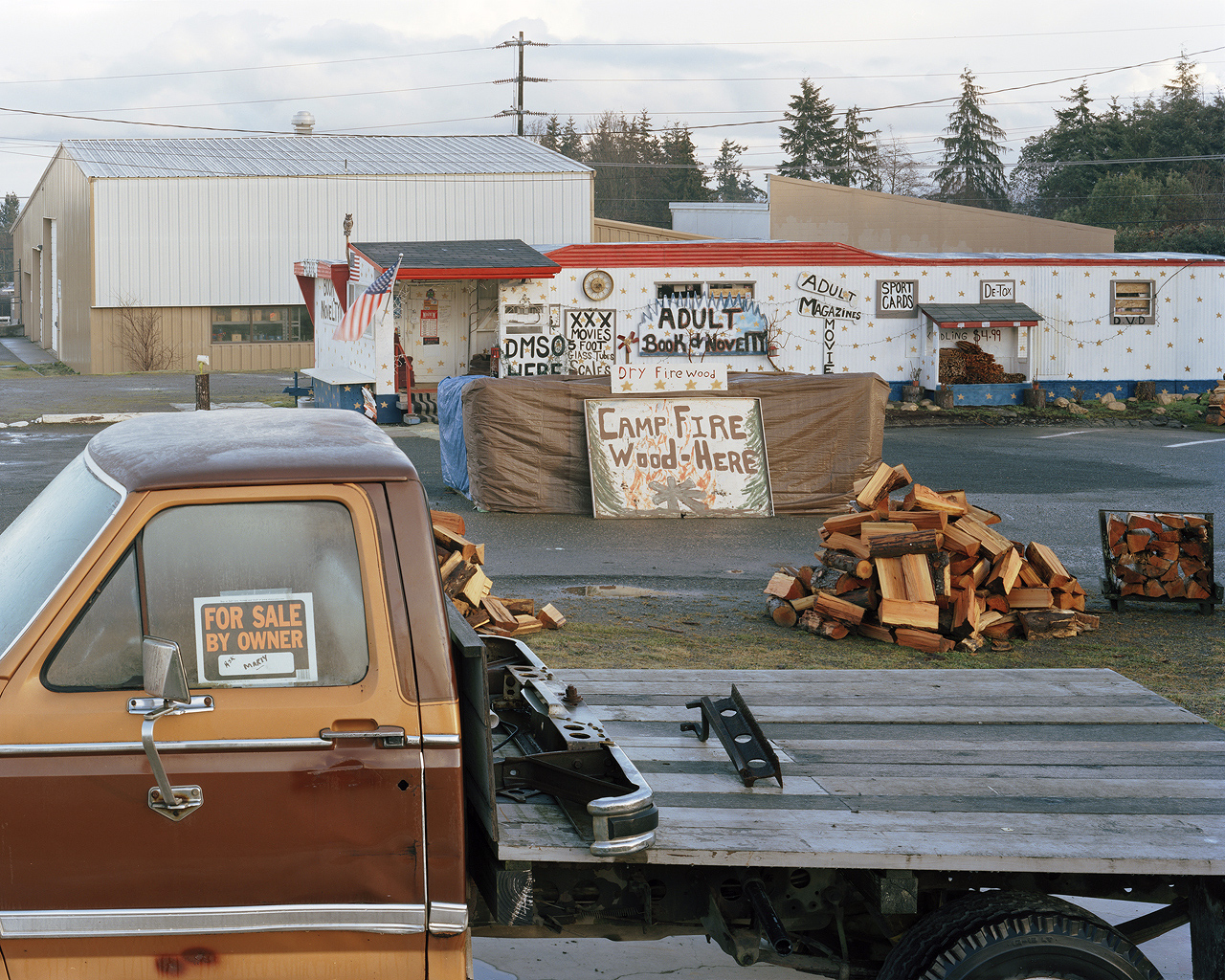
Eirik Johnson’s colour photographs chronicle his study of Sawdust Mountain, a once idyllic patch of the Pacific Northwest now in decline after a century of human encroachment. The story is a familiar one – early settlers attracted by the sublime beauty and abundant natural resources – of Washington state in the case – began local nature-based industries that eventually depleted the natural resources. The romance of lumberjacks and fishermen taming the wilderness and living off the land has been replaced by the hardscrabble reality of those now trying to eke out a living as well as conservationists and ecologists trying to save and restore the landscape. Johnson presents a well-rounded portrait of a town and country struggling to find solutions to these conflicting demands. His photographs capture the history and legacy of the industries, the landscape at the centre of the vortex, and the changes undertaken to staunch the economic and ecological declines so all can survive.
Johnson was born in Seattle, WA and graduated with a Bachelor of Fine Arts from the University of Washington, Seattle and with a Master of Fine Arts from the San Francisco Art Institute. Sawdust Mountain photographs will also be exhibited at the Henry Art Gallery at the University of Washington who co-published the accompanying book with Aperture. Other Johnson book and exhibitions include Borderlands from 2006 and Animal Holes from 2007. Johnson is currently living and teaching in Boston at the Massachusetts College of Art and Design.
Text from the Rena Bransten Gallery website [Online] Cited 11/06/2009. No longer available online
Eirik Johnson (American, b. 1974) Weyerhaeuser sorting yard along the Chehalis River, Cosmopolis, Washington from the series Sawdust Mountain 2006
Eirik Johnson (American, b. 1974) Stacked alder boards, Seaport Lumber Planer, South Bend, Washington from the series Sawdust Mountain 2007
Eirik Johnson (American, b. 1974) Adult books, firewood and truck for sale, Port Angeles, Washington from the series Sawdust Mountain 2008
A culmination of four years of photographing throughout Oregon, Washington, and Northern California, Sawdust Mountain focuses on the tenuous relationship between industries reliant upon natural resources and the communities they support.
Timber and salmon are the bedrock of a regional Northwest identity, but the environmental impact of these declining industries has been increasingly at odds with the contemporary ideal of sustainability. In this, his second book, Johnson reveals a landscape imbued with an uncertain future – no longer the region of boomtowns built upon the riches of massive old-growth forests.
Johnson, a Seattle native, describes his photographs as “a melancholy love letter of sorts, my own personal ramblings.” Through this poetic approach, Sawdust Mountain records a region affected by historic economic complexities, and by extension, one aspect of our fraught relationship with the environment in the twenty-first century.
Text from the Aperture Foundation website. No longer available online
Perhaps it’s just me, but I seem to have become a little jaded towards the recent photographs of William Eggleston.
Other than the green reflection of lights in rainwater (above) the photographs seem to have lost their unique voice, the social insight that gave his earlier work it’s zing – provocative images that challenged how we live through a meditation on subject matter, construction of space, and tone of “colour”. How the colour that surrounds us inflects our very being.
In these photographs it feels like there has been little development in his style over the years with a consequent lessening of their visual impact. Now Eggleston’s colour just feels like a party trick, performed by rote with little consequential meaning to either the colour or the image. Perhaps the way we look at the world (and how we picture it) has finally overtaken the director’s prescient creative vision – his auteurship, his authorship.
Dr Marcus Bunyan
Many thankx to the Fondation Cartier for allowing me to publish the photographs in the posting.
“In Eggleston’s best work, the work that made him famous, color is intrinsic to the meaning of the photograph. Its not simply a garnish to draw the eye. His best photographs are not ‘about’ the color; they are about larger issues that the color is used in the service of. This is whats missing in his Paris pictures. The color here is pure ornament, eye candy to seduce you into forgetting that the picture has nothing to say.”
Anonymous. “William Eggleston Mails It In From Paris,” on the Leicaphilia website April 21, 2014 [Online] Cited 06/02/2019
For the last three years, American photographer William Eggleston has photographed the city of Paris as part of a commission for the Fondation Cartier pour l’art contemporain. Taken throughout different seasons, these new images by one of the fathers of colour photography portray the local and the cosmopolitan, the glamorous and the gritty, the everyday and the extraordinary.
This exhibition also provides an exceptional occasion to bring together William Eggleston’s distinctive pictures and his recent paintings, an unknown aspect of his work that has never before been presented to the public.
William Eggleston’s recent book Paris, published by Steidl and commissioned by FoundationCartier, is a collective body of work that comprises his oeuvre of color drawings and recent Paris photographs. Similar to Ben Shahn, Charles Scheeler, Diego Rivera, Man Ray, Robert Rauschenberg and Ed Ruscha, Eggleston has reached out beyond photography to express his creative talents.
The photographs and drawings are intertwined throughout the book, creating an interesting visual cadence. The page spreads illustrate various layout designs, including a single image of either a photograph or drawing on a spread, pairs of drawings and photographs and pairs of drawing facing a photograph. All of the drawings and photographs are contained within the boundaries of the page. …
We know mostly of Eggleston’s photographs, but from the dating on one of the drawings included in this book, we can determine that Eggleston has been working with the drawing medium since 1968. It is interesting to speculate as to how one medium may have influenced the other for Eggleston. As an example, the earlier photographs by Shahn and Scheeler seem to have had an influence on how these two artists subsequently worked their framing, pictorial space, mass & line quality in their subsequent paintings.
The Paris photographs that Eggleston made of graffiti or his tight framing in conjunction with a longer lens to compress the pictorial space are visually similar in style to his drawings. The subjects he photographs are framed to create similar vibrant color masses and lines as his drawing, abstracting reality into basic graphic components. …
Eggleston’s photographs are constructed like spontaneous glances; partial views of what might be consider a traditional subject, creating color abstractions of lines, patterns and mass. Trees, pipes, people, walls, garbage, décor, wall paper, display windows are bisected and truncated, with edges and lines following out of the photographs borders. These images seem to be created by a restless and nervous energy.
With these drawings, paintings and photographs, Eggleston shows a interesting handling of these mediums and offers an insight as to how influential the period of Abstract Expressionism is to his photographic process.
Extract from Douglas Stockdale. “William Eggleston – Paris,” on The PhotoBook Journal website September 12, 2009 [Online] Cited 06/02/2019
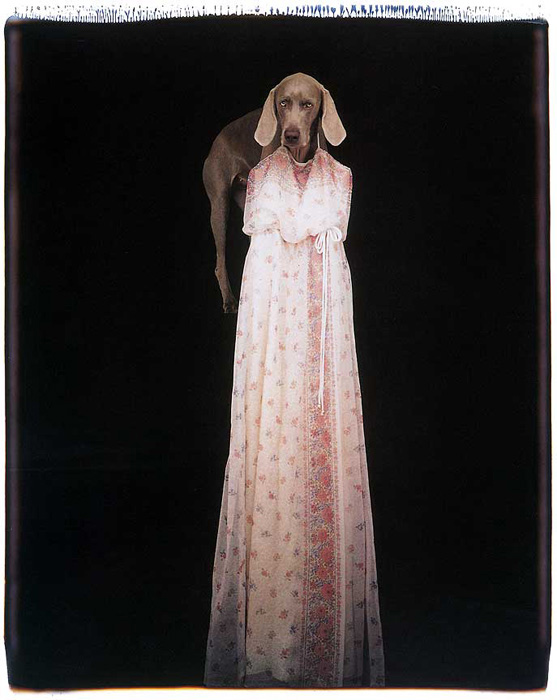
William Wegman (American, b. 1943) Front Facade 1993 Polaroid Courtesy of the artist
A selection of photographs of Fay by William Wegman. Gotta love that dog!
Marcus
Many thankx to the Akron Art Museum for allowing me to publish the photographs in the posting. Please click on the photographs for a larger version of the image.
William Wegman (American, b. 1943) Miss Mit 1993 Polaroid Courtesy of the artist
William Wegman (American, b. 1943) On Set 1994 Polaroid Courtesy of the artist
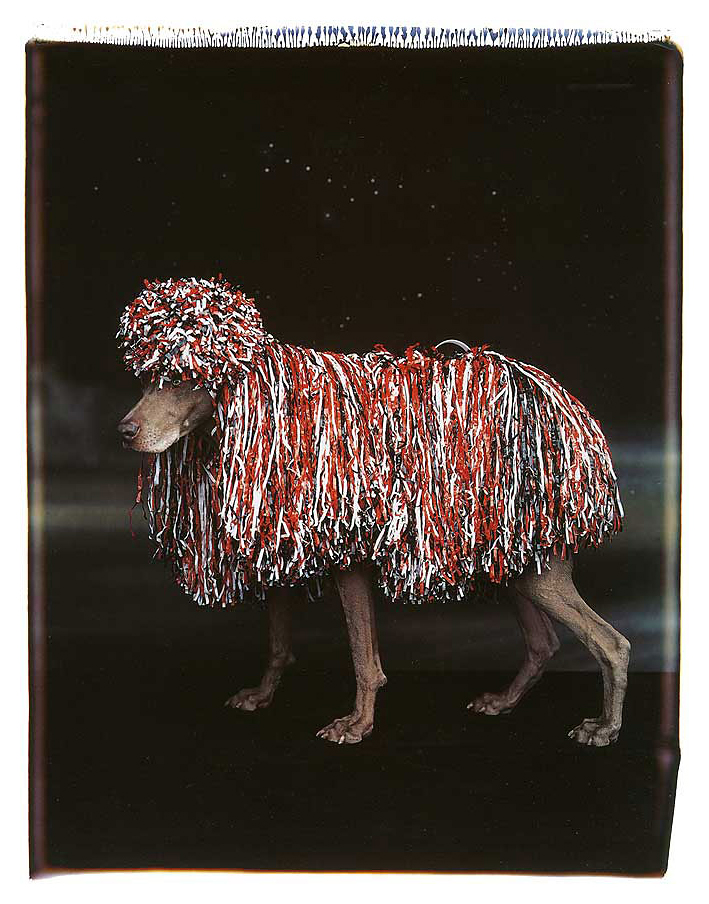
William Wegman (American, b. 1943) Patriotic Poodle 1994 Polaroid Courtesy of the artist
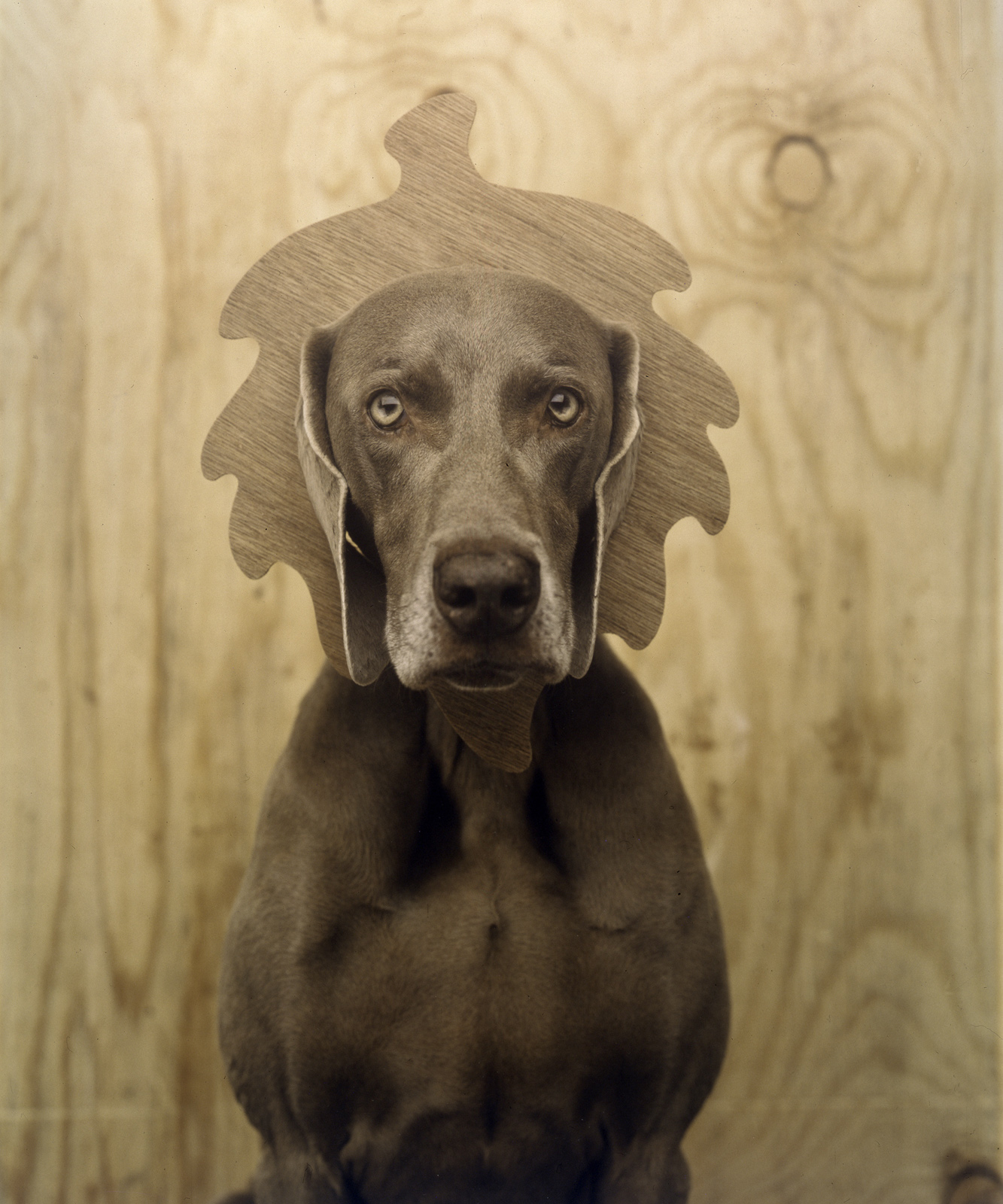
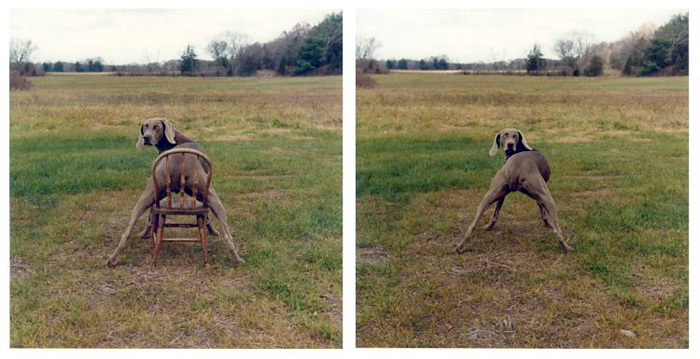
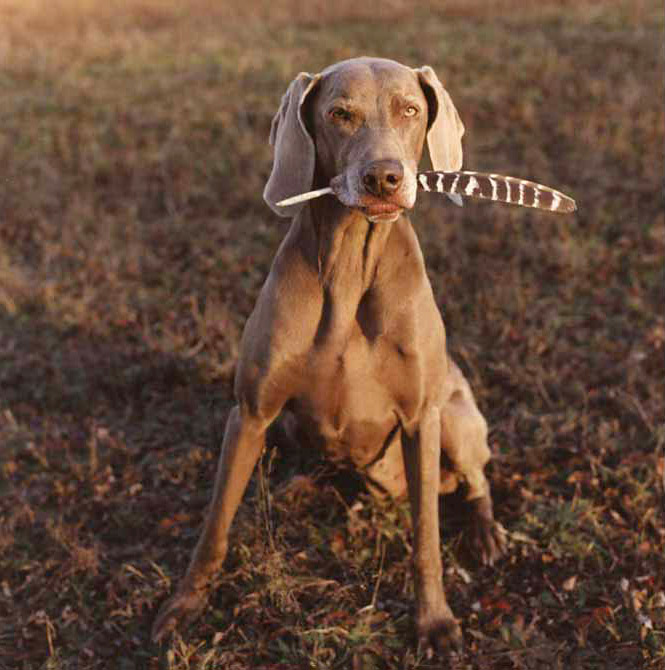
The Akron Art Museum is deeply honoured to be one of only two venues to present William Wegman: Fay, a wonderfully witty and moving exhibition about the artistic collaboration between William Wegman (b. 1943) and his celebrated Weimaraner Fay (1984-1995).
The breadth of Wegman’s audience is truly remarkable. In addition to being internationally renowned in art circles, he is one of the few artists to successfully disseminate his work – especially the photographs, videos and books featuring his beloved Weimaraner dogs – through the mass media.
Wegman is a conceptual artist who works in many different media. Born in Holyoke, Massachusetts, in 1943, he graduated from the Massachusetts College of Art in 1965 with a BFA in painting. Subsequently, he enrolled in the Masters painting and printmaking program at the University of Illinois. In 1970, he moved to southern California and began exhibiting his photographs. He was one of the earliest artists to explore video and has used photography for over four decades.
While living in California, Wegman acquired Man Ray, a Weimaraner whom he named after the surrealist French photographer. The dog became his partner in both life and art during their 12 year collaboration. Man Ray became so famous that, upon his passing, he was named ‘Man of the Year’ by the New York City newspaper The Village Voice.
Grief-stricken by Ray’s death, Wegman made the decision not to get another dog, but some years later he came to meet another Weimaraner:
“When we first met in Memphis, Tennessee, she was six months old and her name was Cinnamon Girl. I named her Fay after Fay Wray, of course, but also after my first colour Polaroid with Man Ray and the nail polish, which I had titled Fay Ray. Her fur was taupe, lighter and warmer-toned than Man Ray’s, and she had yellow eyes like in a Rousseau painting. I had no intention of photographing Fay. Man Ray was irreplaceable. I didn’t want to mar my memory of him.
… In a short time Fay matured from a coltish youth into a Garboesque beauty. My pictures grew with her. Now she was the muse, the adored one. Skin-deep beauty became the soul of my work.” ~ William Wegman, Polaroids, New York, 2002
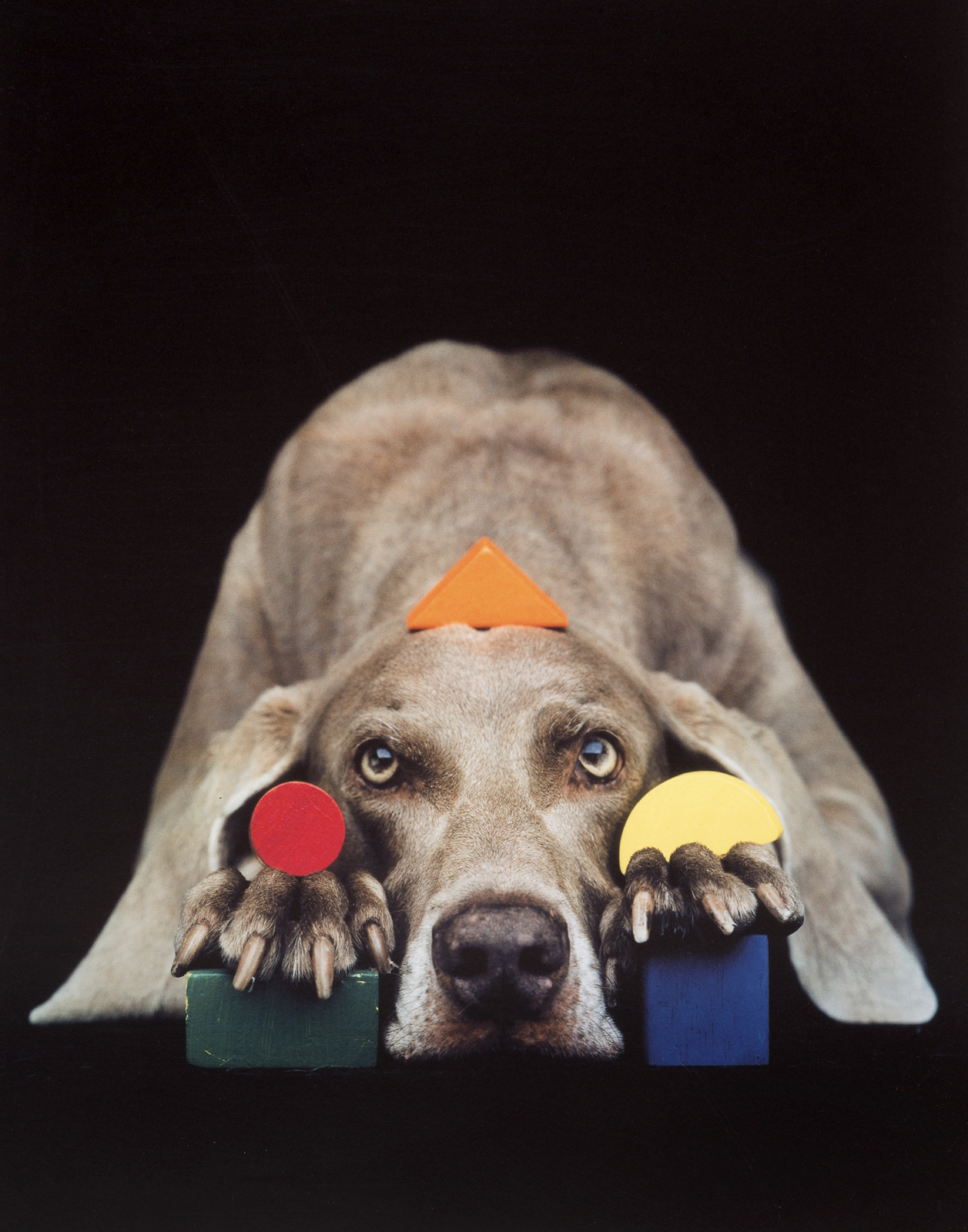
Fay had a chameleon-like quality very different from Man Ray’s concrete presence. The bond between the artist and his muse is undeniable. Images of Fay balanced upon an ironing boarding in Sphinx (1987) and coolly starting into the lens from beneath a black net in Netted (1988) show her deep trust in Wegman. His work with Fay captures the canine in a spectrum of emotions. Her huge, expressive citron eyes convey in one shot tragedy and in the next, joy. A series of photographs show Fay swathed in human clothing, posed as a woman, with the human arms and legs of her co-model. The canine appears part human, her expression incredibly familiar. Fay also posed with a variety of props, from roller-skates to masks of fruit, flowers and other found objects.
The Akron Art Museum is fortunate to be able to include in this exhibition not just black and white photographs but also large format Polaroids and chromogenic (colour) prints, from the artist’s personal collection. In addition to 56 still photographs, extensive selections from Wegman’s videos featuring Fay will be on continuous view in the exhibition.”
Text from the Akron Art Museum website
William Wegman (American, b. 1943) Basic Shapes In Color 1993 Chromogenic colour print 24″ x 20″ Courtesy of the artist
William Wegman (American, b. 1943) Fay Ray 1988 Gelatin silver print 16.2 x 16.2cm. (6.4 x 6.4 in.) Courtesy of the artist
William Wegman (American, b. 1943) Oaken 1992 Chromogenic colour print Courtesy of the artist
William Wegman (American, b. 1943) Lawn Chair 1988 Chromogenic colour print Courtesy of the artist
William Wegman (American, b. 1943) Retriever 1994 Chromogenic colour print Courtesy of the artist
William Wegman (American, b. 1943) U-Tree 1992 Chromogenic colour print Courtesy of the artist
William Wegman (American, b. 1943) Untitled (Ghent Fay with Apples) 1990 Chromogenic colour print Courtesy of the artist
Akron Art Museum One South High Akron, Ohio 44308
Opening hours Wednesday, Friday, Saturday, and Sunday: 11.00am – 5.00pm Thursday: 11.00am – 8.00pm Closed: Monday and Tuesday
Curator:Sarah Hermanson Meister, associate curator of MoMA’s Department of Photography
Many thankx to La Casa Encendida for allowing me to publish the photographs in the posting. Please click on the photograph for a larger version of the image.
Paul Strand (American, 1890-1976) Wall Street 1915 Platinum palladium print
Wall Street is a platinum palladium print photograph by the American photographer Paul Strand taken in 1915. There are currently only two vintage prints of this photograph with one at the Whitney Museum of American Art (printed posthumously) and the other, along with negatives, at the Philadelphia Museum of Art. This photograph was included in Paul Strand, circa 1916, an exhibition of photographs that exemplify his push toward modernism.
It depicts a scene of everyday life in Manhattan’s Financial District. Workers are seen walking past the J.P. Morgan & Co. building in New York City on the famous Wall Street, of which the photograph takes its name. The photograph is famous for its reliance on the sharpness and contrast of the shapes and angles, created by the building and the workers, that lead to its abstraction. This photograph is considered to be one of Strand’s most famous works and an example of his change from Pictorialism to straight photography. Strand moved from the posed to portraying the purity of the subjects. It is one of several images that stand as marks of the turn to modernism in photography. …
Technique
This photograph depicts the J.P. Morgan building in New York City. Strand photographed “people hurrying to work past the banking building” situated on Wall Street, from which the photo takes its name. the subject depicted is a real-life subject without manipulation. The depiction of the real nature of the medium and the subject is an example of straight photography. There is no focal point, with the lines converging off of the frame of the image. The financial building take majority of the frame. Emphasis is placed on the strong shapes created by the architecture of the building. The workers are included in the image, but are faceless and are trumped in size by the massive square shapes from the building they walk past. Also, the workers are captured in motion which on film makes them appear blurry. This aesthetic that Strand creates in Wall Street is his break toward the modern, the straight photography, demonstrating that Pictorialism is no longer part of his aesthetic. Strand captured the building with clean, sharp lines. The building is covered in the high contrast, chiaroscuro. It is heavily in the shadows, but still creates an overwhelming presence over the people that walk past it. These people are also shrouded in the contrast made evident with the clean lines and black and white nature of his photos and photography as a medium. The people jump from their places, being the dark figures in the light of the sun that beams in from the left of the frame.
Strand fills the image with his recognisable aesthetic. The photo is platinum print, one of the materials frequently used by photographers of the time. Strand was unique in how he printed his photos. As stated on the George Eastman House website section Notes on Photography, Strand would make large prints from small negatives. He also left them in their matte condition that was inherent with platinum print. With his printing techniques, he “added a richness to the image.” As with the time, the photo is entirely black and white. There is a heavy contrast with the black and white areas of the photo. Strand creates diagonal shapes that pull emphasis to subject of the building and away from the people.
Aspects
Having taken Hine’s class at the Ethical Culture Fieldston School, social change became important to Strand and appeared often in his art. As a pupil of Hine, Strand learned of the social aspect his work could have. With Wall Street, he sought to portray a social message. He captured the faceless people next to the looming financial building in order to give a warning. Strand shows “the recently built J.P. Morgan Co. building, whose huge, dark recesses dwarf the passersby with the imposing powers of uniformity and anonymity.” The people cannot escape the overwhelming power that this modern establishment will have on their future and the future of America. He warns us to not be the small people that look almost ant-like next to this building that has a massive amount of control over the American economy.
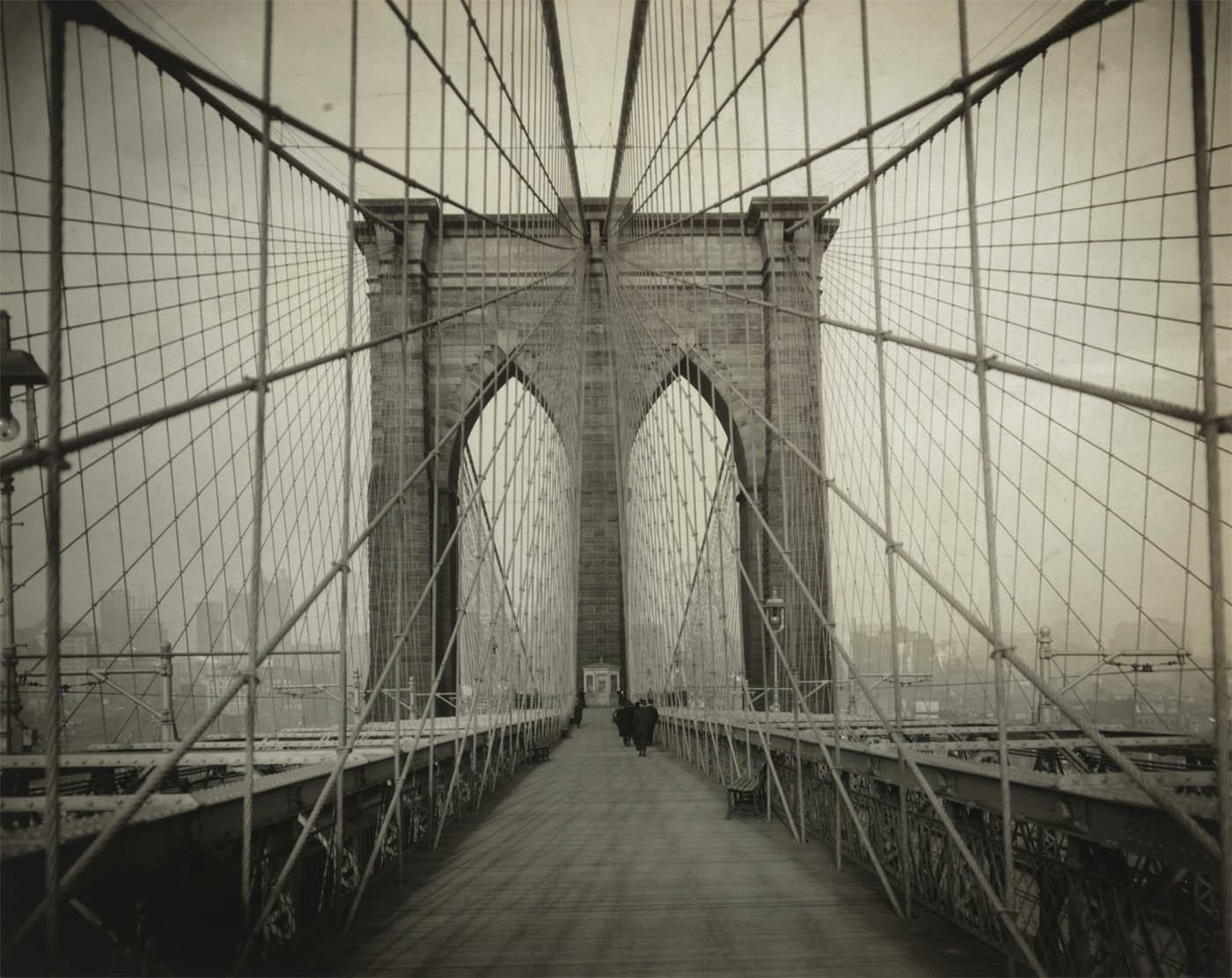
Unidentified photographer Brooklyn Bridge c. 1914 Gelatin silver print 7 5/8 × 9 9/16″ (19.4 × 24.3cm) Museum of Modern Art, New York The New York Times Collection
La Casa Encendida presents an exhibition organised by the Museum of Modern Art (MoMA), New York, which showcases a fundamental part of the institution’s assets: its photography collection. Portraits of New York: Photographs from the MoMA offers an overview of the history of photography against the backdrop of this iconic metropolis through the work of more than 90 artists.
For the show’s curator Sarah Hermanson Meister, associate curator of the MoMA’s Department of Photography, “Portraits of New York amply reflects the history of synergies between this medium and the Big Apple during a period of important transformations for both. The photographs generated by the restless and constant commitment of numerous photographs to New York City have played a fundamental role in determining how New Yorkers perceive the city and themselves. These photographs have also defined the city’s image in the world’s imagination.”
Featured artists include Berenice Abbott, Diane Arbus, Richard Avedon, Margaret Bourke-White, Henri Cartier-Bresson, Harry Callahan, Walker Evans, Andreas Feininger, Larry Fink, Robert Frank, Lee Friedlander, Lewis W. Hine, William Klein, Irving Penn, Cindy Sherman, Edward Steichen, Thomas Struth and Garry Winogrand.
Text from the La Casa Encendida website
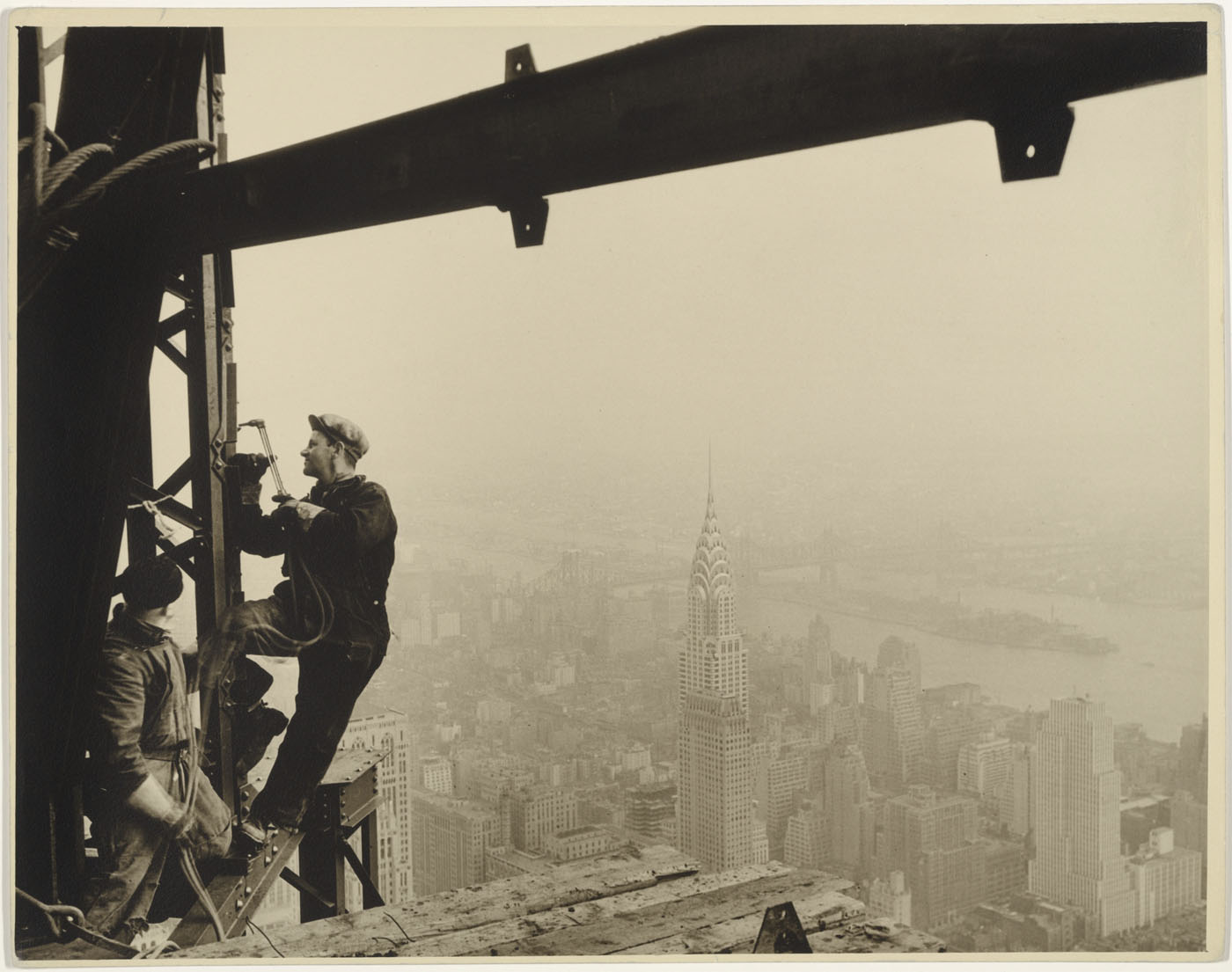
Lewis Wickes Hine (American, 1874-1940) Welders on the Empire State Building c. 1930 Gelatin silver print 10 5/8 × 13 5/8″ (27 × 34.6cm) Museum of Modern Art, New York Committee on Photography Fund
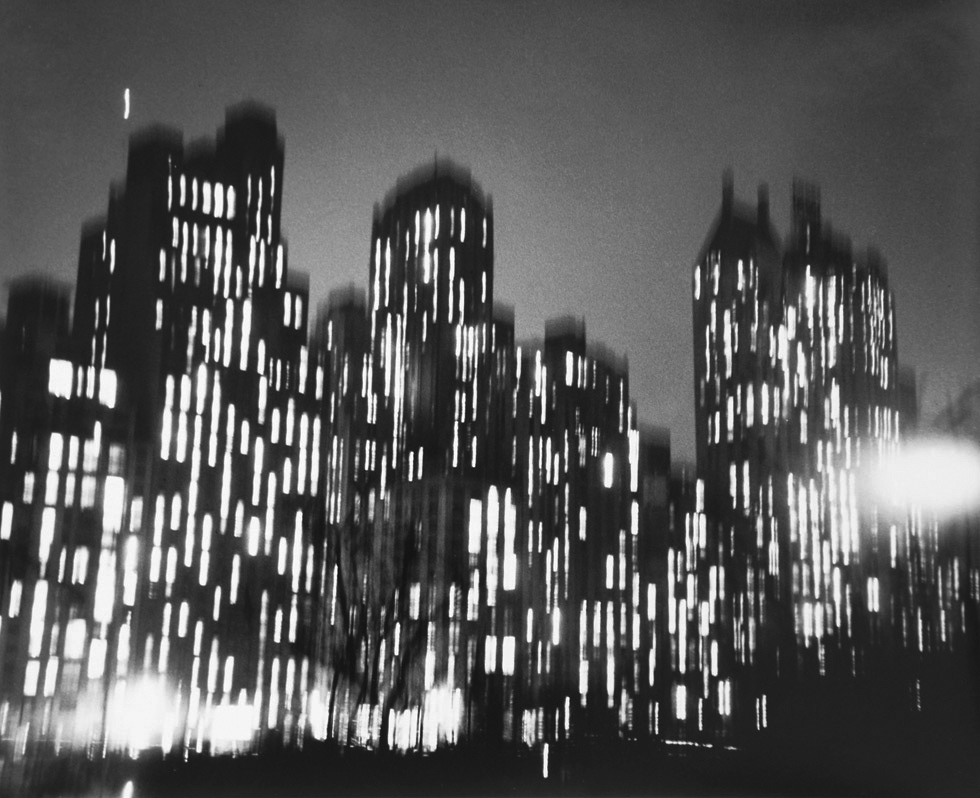
Ted Croner (American, 1922–2005) Central Park South 1947-1948 Silver gelatin print 10 15/16 x 13 3/4″ (27.8 x 34.9cm) Gift of the photographer Museum of Modern Art, New York
Ted Croner (1922-2005) was an American photographer, described as an influential member of the New York school of photography during the 1940s and 1950s. His images are said to represent the best example of this movement.
Born in Baltimore in 1922 and raised in North Carolina, Croner developed an interest in photography while in high school. He honed his skills while serving as an aerial photographer in World War II before settling in New York City in 1947. At the urging of fashion photographer Fernand Fonssagrives, he enrolled in Alexey Brodovitch’s class at The New School where he studied with Diane Arbus, Richard Avedon and Lisette Model. During this period he produced many of his most memorable images including “Taxi, New York Night, 1947-48”, which appears on the cover of Bob Dylan’s 2006 album, Modern Times. Another of Croner’s photographs was used on the cover of Luna’s album Penthouse.
Croner also had a successful career as a fashion and commercial photographer – his work was published in Harper’s Bazaar and Vogue. He also worked extensively with corporations such as Coca-Cola and Chase Manhattan Bank. Croner is best known for his haunting night images of New York City taken in the 1940s and 1950s. He was one of several important photographers who belonged to the New York school of photography.
Photographs from the MoMA, which will provide an in-depth look at an essential component of the MoMA’s assets: its photography collection. Curated by Sarah Hermanson Meister, associate curator of the museum’s department of photography, the exhibition offers an overview of the history of photography through the work of over 90 artists, with the iconic city as a backdrop. It includes some of the most prestigious names in photography, such as Berenice Abbott, Diane Arbus, Harry Callahan, Henri Cartier-Bresson, Walter Evans, Lee Friedlander, Helen Levitt, Cindy Sherman, Irving Penn and Alfred Stieglitz.
For Sarah Hermanson Meister, associate curator of the MoMA’s Department of Photography, “Portraits of New York amply reflects the history of synergies of this medium and of the Big Apple during a period of important transformations for both. The photographs generated by the restless and constant commitment of numerous photographers to the city of New York have played a fundamental role in determining how New Yorkers perceive the city and themselves. These photographs have also defined the city’s image in the world’s imagination.
[…] The urban landscape of the city is a combination of the old and the new in constant evolution, and these physical transformations are repeated in the demographic changes that have characterised the city since the 1880s, when massive waves of immigrants began to arrive. This same diversity can be seen in the photography of New York of the past four decades. Just as its architects are inspired and limited by surrounding structures and building codes, and just as its inhabitants learn and rub up against each other and previous generations, so too the photographers of New York transport the visual memory of a an extensive and extraordinary repertoire of images of the city. They take on the challenge of creating new works that go beyond traditions and respond to what is new in New York.”
The exhibition curator continues: “Throughout the 20th century, numerous artists have felt inspired by New York’s combination of glamour and rawness. The city – which acquired its modernity at the same pace as photography, and in an equally impetuous and undisciplined way – has always been a theme of particular vitality for photographers, both those who have visited the city and those who live in it. On one occasion, faced with the challenge of capturing the essence of New York with a camera, the photographer Berenice Abbott wondered, “How shall the two-dimensional print in black and white suggest the flux of activity of the metropolis, the interaction of human beings and solid architectural constructions, all impinging upon each other in time?” Each of the photographs reproduced here is a unique response to that question.
New York may not be the capital of the United States, but it prides itself on being the capital of the world. Its inhabitants are intimate strangers, its avenues are constantly teeming and its buildings are absolutely unmistakeable, though they are packed so close together that it is impossible to see just one. The New York subway runs twenty-four hours a day, which has earned it the sobriquet of “the city that never sleeps.” It is the model for Gotham City, the disturbing metropolis that Batman calls home, and a symbol of independence and a wellspring of opportunities in a wide variety of films, from Breakfast at Tiffany‘s to Working Girl. And this is just a sample of the captivating and abundant raw material that the city offers to artists, regardless of the medium in which they work. However, it is the convergence of photographers in this city – in this place that combines anonymity and community, with its local flavour and global ambitions – that has created the ideal setting for the development of modern photography.
Text from the La Casa Encendida website [Online] Cited 28/04/2009. No longer available online
Each of Sherman’s sixty-nine Untitled Film Stills (1977-80), presents a female heroine from a movie we feel we must have seen. Here, she is the pert young career girl in a trim new suit on her first day in the big city. Among the others are the luscious librarian (#13), the chic starlet at her seaside hideaway (#7), the ingenue setting out on life’s journey (#48), and the tough but vulnerable film noir idol (#54). To make the pictures, Sherman herself played all of the roles or, more precisely, played all of the actresses playing all of the roles. In other words, the series is a fiction about a fiction, a deft encapsulation of the image of femininity that, through the movies, took hold of the collective imagination in postwar America – the period of Sherman’s youth, and the crucible of our contemporary culture.
In fact, only a handful of the Untitled Film Stills are modelled directly on particular roles in actual movies, let alone on individual stills of the sort that the studios distribute to publicise their films. All the others are inventive allusions to generic types, and so our sure sense of recognition is all the more telling. It tells us that, knowingly or not, we have absorbed the movie culture that Sherman invites us to examine as a powerful force in our lives.
Publication excerpt from The Museum of Modern Art, MoMA Highlights, New York: The Museum of Modern Art, revised 2004, originally published 1999, p. 295.
Diane Arbus (American, 1923-1971) Woman with Veil on Fifth Avenue, N.Y.C 1968 Silver gelatin print Museum of Modern Art, New York
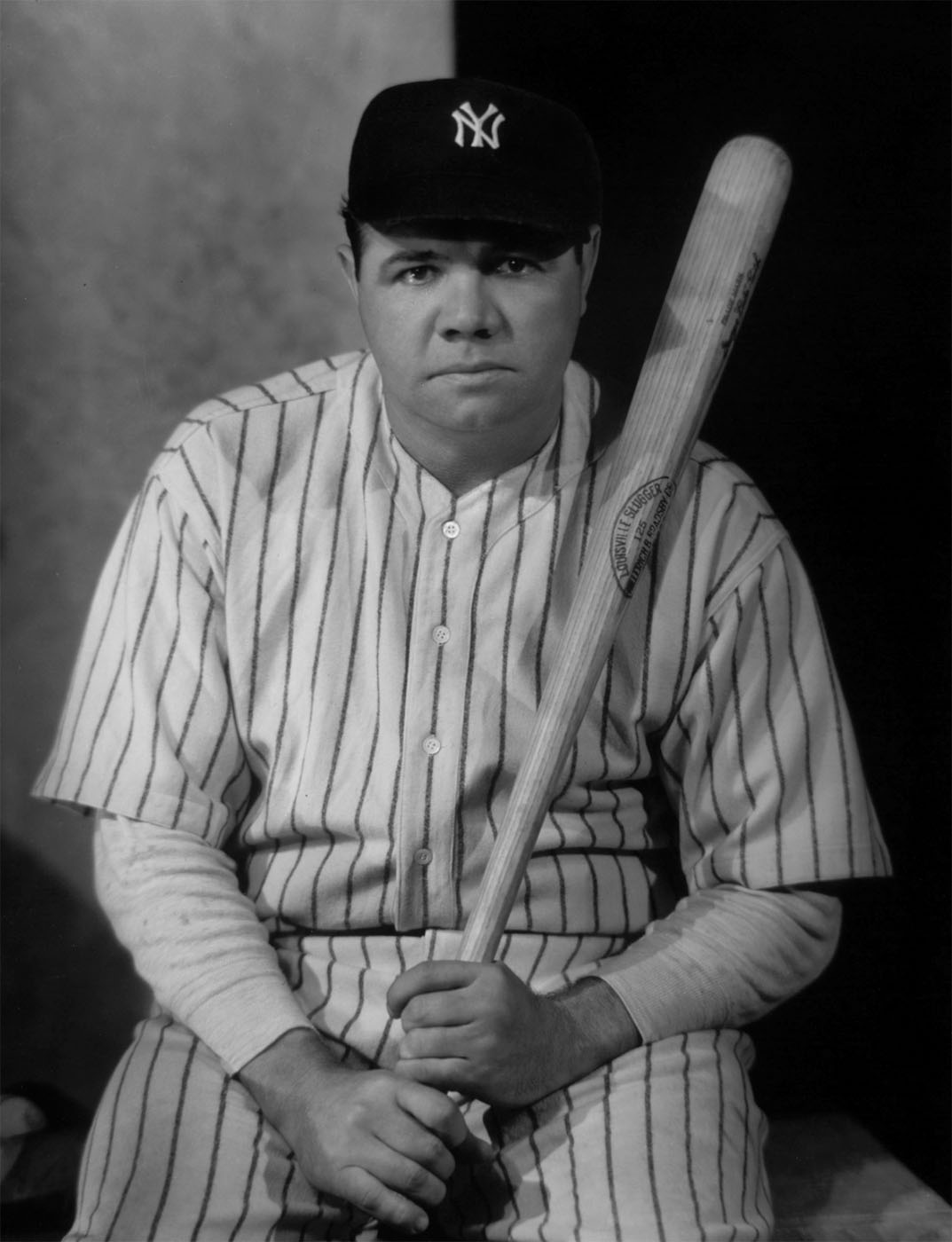
Nickolas Muray (American, 1892-1965) Babe Ruth c. 1927 Gelatin silver print 13 3/8 × 10 7/16″ (33.9 × 26.5cm) Museum of Modern Art, New York Gift of Mrs. Nickolas Muray
Opening hours: La Casa Encendida is open from Monday to Sunday from 10am to 10pm every day of the year except national and Community of Madrid holidays
“For the perfect flaneur, for the passionate spectator, it is an immense joy to set up house in the heart of the multitude, amid the ebb and flow of movement, in the midst of the fugitive and infinite. To be away from home and yet to feel oneself everywhere at home; to see the world, to be at the centre of the world, and yet to remain hidden from the world … Thus the lover of universal life enters into the crowd as though it were an immense reservoir of electrical energy …”
Charles Baudelaire. The Painter of Modern Life 1863
“At least a dozen of Helen Levitt’s photographs seem to me as beautiful, perceptive, satisfying, and enduring as any lyrical work that I know. In their general quality and coherence, moreover, the photographs as a whole body, as a book, seem to me to combine into a unified view of the world, an uninsistent but irrefutable manifesto of a way of seeing, and in a gently and wholly unpretentious way, a major poetic work.”
James Agee
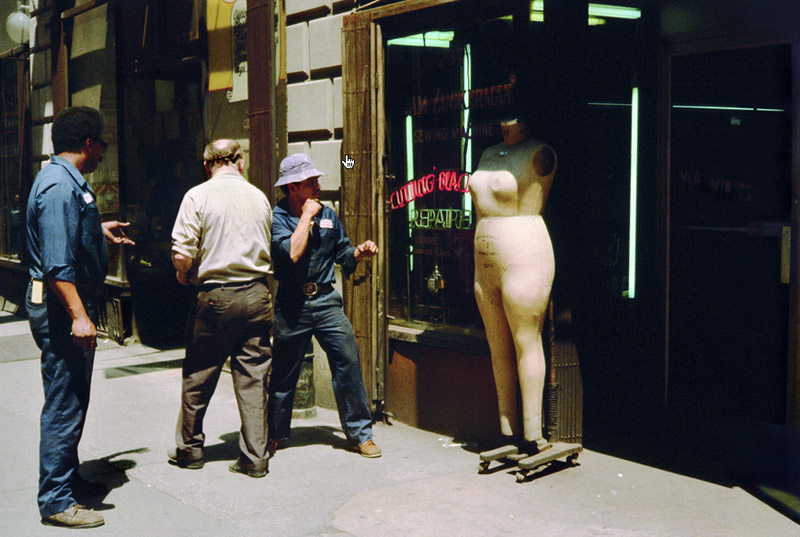
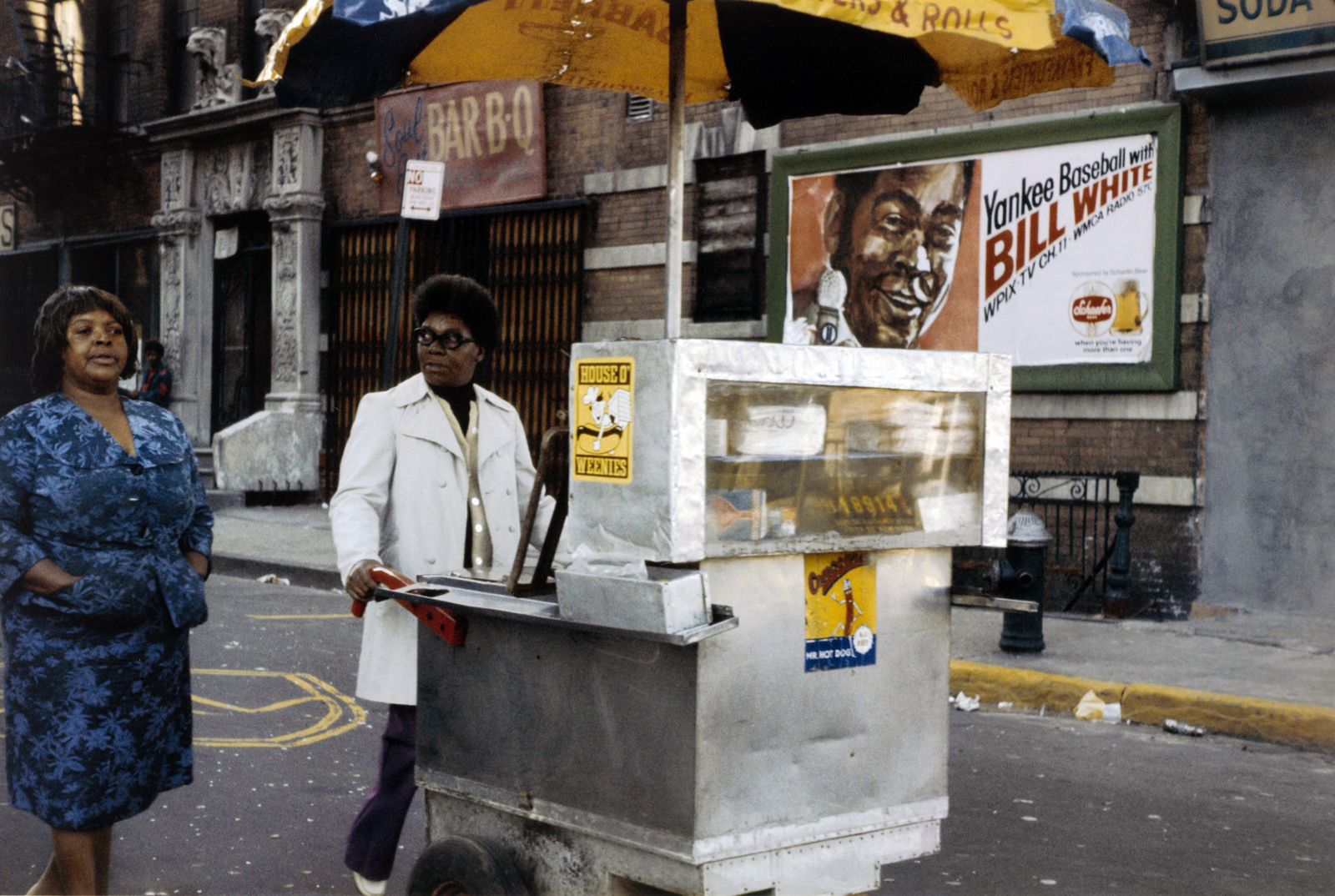
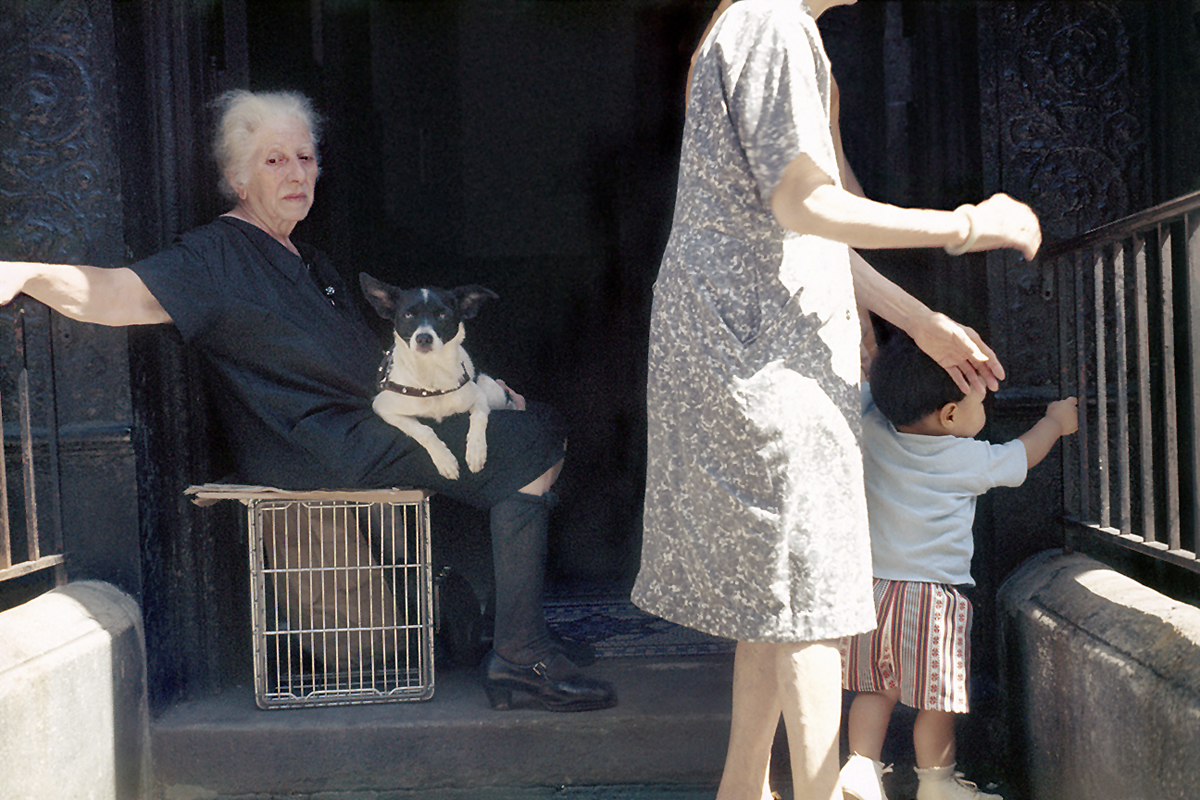
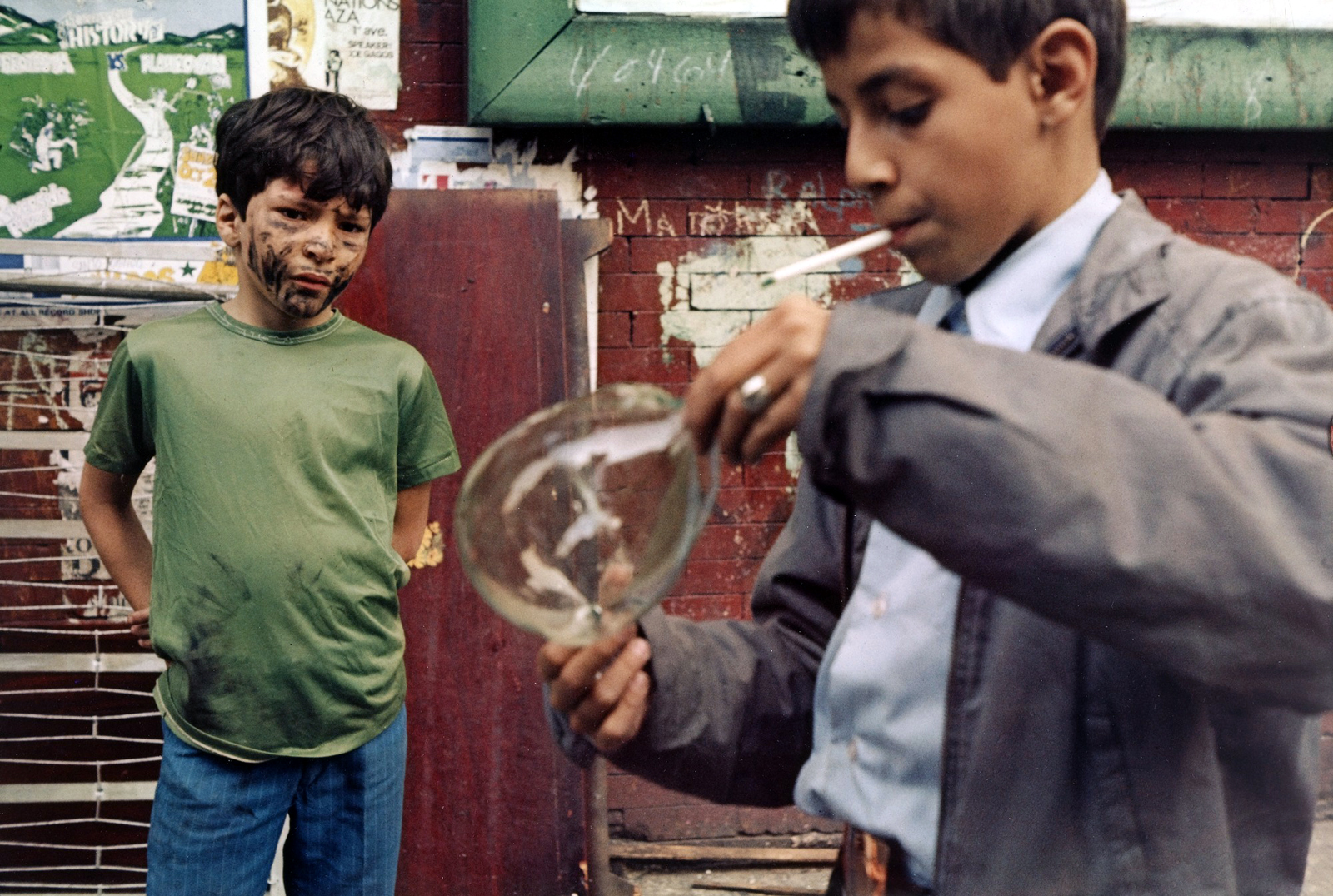
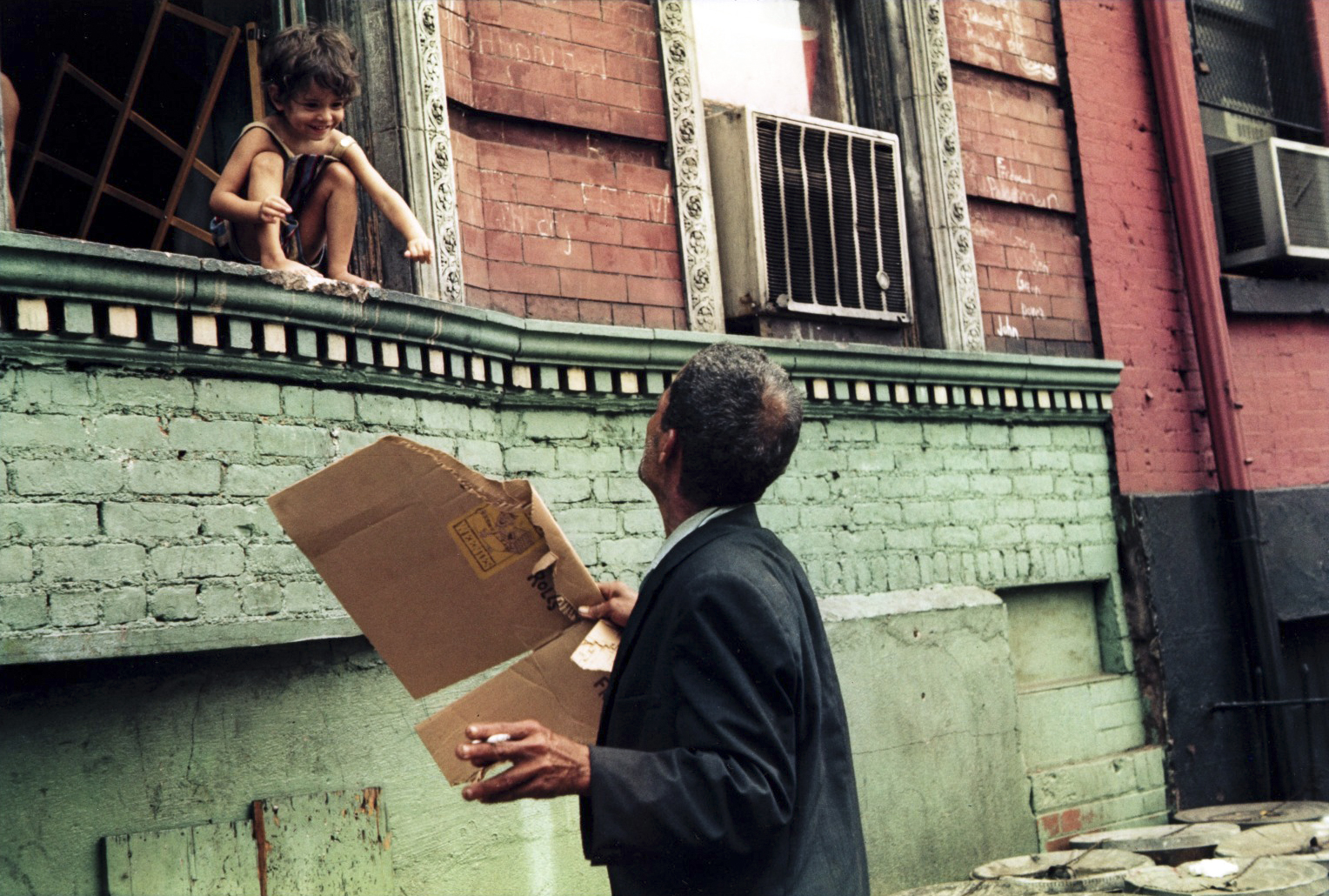
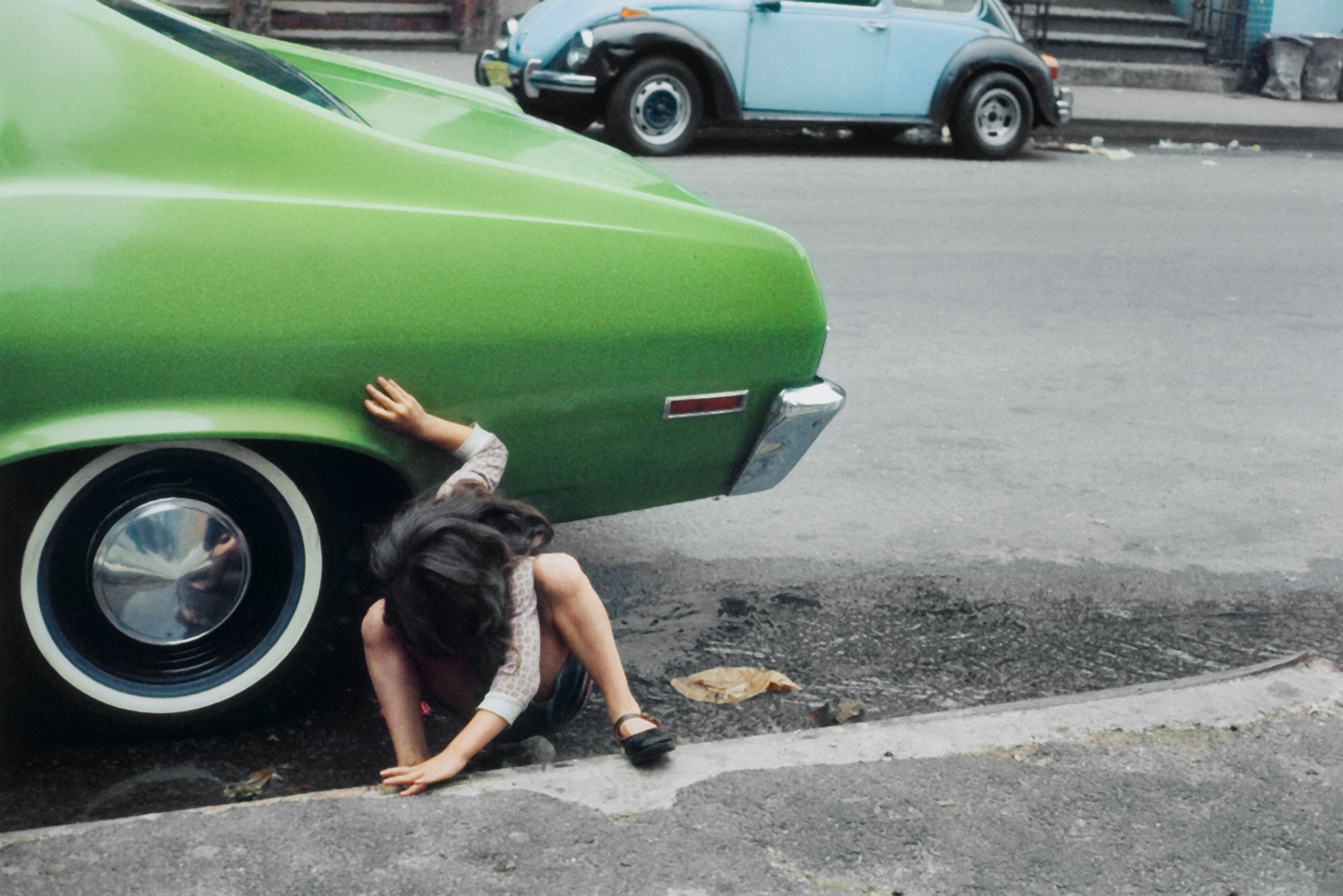
Speaking of pioneers of colour photography the wonderful American photographer Helen Levitt died recently at the end of March. Here is a selection of her colour work from the 1970s – 1980s. With two Guggenheim Foundation grants in 1959 and 1960 she switched from black and white to colour dye-transfer prints photographing the theatre of the street, the serendipity of the decisive moment previsualised and captured through awareness and an intimate knowledge of her subject matter. Unfortunately in a burglary in 1970 most of her colour transparencies and prints were stolen from that initial period.
What remains, as Sally Mann would say, are the eloquent bones of the matter: superb lush colour photographs taken after 1970 that engage the viewer not in memory but in the moment, not in nostalgia but in joy. In colour she found “beauty in correspondences.”
Dr Marcus Bunyan
Please click on some of the photographs for a larger version of the image.
… Her pictures were mostly of Spanish Harlem and the Lower East Side. She shot them in black and white, as silver gelatin prints, in the 1930s and 1940s and in colour dye-transfer prints in the 1960s and 1970s. In between, she got into movie-making for a while. Her theme was the same, the streets of New York. Apart from a trip in 1941 to Mexico City, she never found a better subject in her life.
The grittier parts were her particular joy. Her world was run-down streets, rubble-filled building sites, warehouses and litter-strewn front steps. This was urban photography with a vengeance: small scraps of sky, no trees. When she was going with Walker Evans in 1938, borrowing his camera as well (“of course”) as sleeping with him, he used to be afraid of going as far uptown as she did. Some of her young male subjects, lounging around in their zoot suits and fedoras, had an unmistakable air of menace. But mostly she brought back images of gossiping women and her favourite, scrambling children. A right-angle viewfinder allowed her to take the picture without them knowing, even, as Evans showed her, when riding right beside them in the subway.
Here and there
Her birthplace was in Brooklyn, where her father was in the wholesale knitwear business. She aspired to something more artistic, but found she couldn’t draw. For a time she trained in ballet, which taught her to appreciate the musculature of posing bodies and the spontaneous grace of her child subjects. After dropping out of high school she went to work in the darkroom of Florian Mitchell’s commercial portrait-photography studio on $6 a week. There she was hooked.
A good image, she thought, was just lucky. But her New Yorker’s instinct seemed to tell her exactly where to wait for one. A broken-down car would soon attract people to lie under it, peer under the hood or try to push it. A cane chair, put out on the sidewalk, would draw an elderly man with cigar and newspaper, or a plump young woman in a housecoat wilting in the heat. With luck dogs would come out too, rough-haired mutts or poodles with fresh-shampooed coats. The open back of a truck would reveal delivery men moping on piles of sacks, or dozing among pink and blue bales of cloth. Any abandoned thing – a tea-chest, a mirror frame, the pillared entry of an empty building – would soon sport knots of children diving in, climbing up, fighting and contorting their small bodies in every kind of way.
Her pictures did not have names. “New York”, and the year, was the label on most of them. They did not need explaining; they were “just what you see”. Many had a backdrop of posters, graffiti or billboards, which gave a commentary of sorts. “Special Spaghetti 25 cents.” “Post No Bills.” “Nuts roasted daily.” “Buttons and Notions, One Flight Up.” “Bill Jones Mother is a Hore.” Her earliest project with her first, secondhand camera was to photograph children’s chalk drawings on the pavements. She never tried to speculate on them. What mattered was the patterns they made.
In the 1960s, when she got two Guggenheim grants, she began to shoot the streets in colour. The tricky developing ultimately frustrated her, and the streets, too, had changed. The children had retreated indoors to watch television. But where she had found grace and texture in black and white, colour now provided beauty in correspondences. The multi-coloured balls in bubble-gum machines could be picked up in a girl’s dress, or the red of a stiletto shoe matched with the frame of a shop window. Her broken-down cars were now lurid beasts against the stucco walls. And out of her peeling, greenish doorways could come women in furs, or pink hair-curlers, or orange-striped socks.
She did not rate her own work highly. Though her original prints eventually sold for tens of thousands of dollars, she let them pile up in her apartment in boxes labelled “Nothing good” or “Here and there”. Her hopes when she started were for photographs that would make a socialist statement of some sort, but she abandoned that on Cartier-Bresson’s advice. A “nice picture”, as she reluctantly admitted some of hers were, was a work of art that had value in itself, as well as a celebration of the random, teeming work of art that is the city of New York.
Anonymous. “Helen Levitt,” on The Economist website April 8th 2009 [Online] Cited 16/04/2009. No longer available online
Slide Show: The Color Photographs of Helen Levitt by John Szarkowski, Powerhouse Books, 2005 is available from the Amazon website. The photograph above is used on the cover of the book.
















![Benedict J. Fernandez (American, 1936-2021) 'Dick Gregory with MLK [Martin Luther King, JR.] New Politics Convention, Chicago, ILL. October, 1967' 1967](https://artblart.com/wp-content/uploads/2009/07/benedict-j.-fernandez-dick-gregory-with-mlk.jpg "Benedict J. Fernandez (American, 1936-2021) 'Dick Gregory with MLK [Martin Luther King, JR.] New Politics Convention, Chicago, ILL. October, 1967' 1967")






















You must be logged in to post a comment.