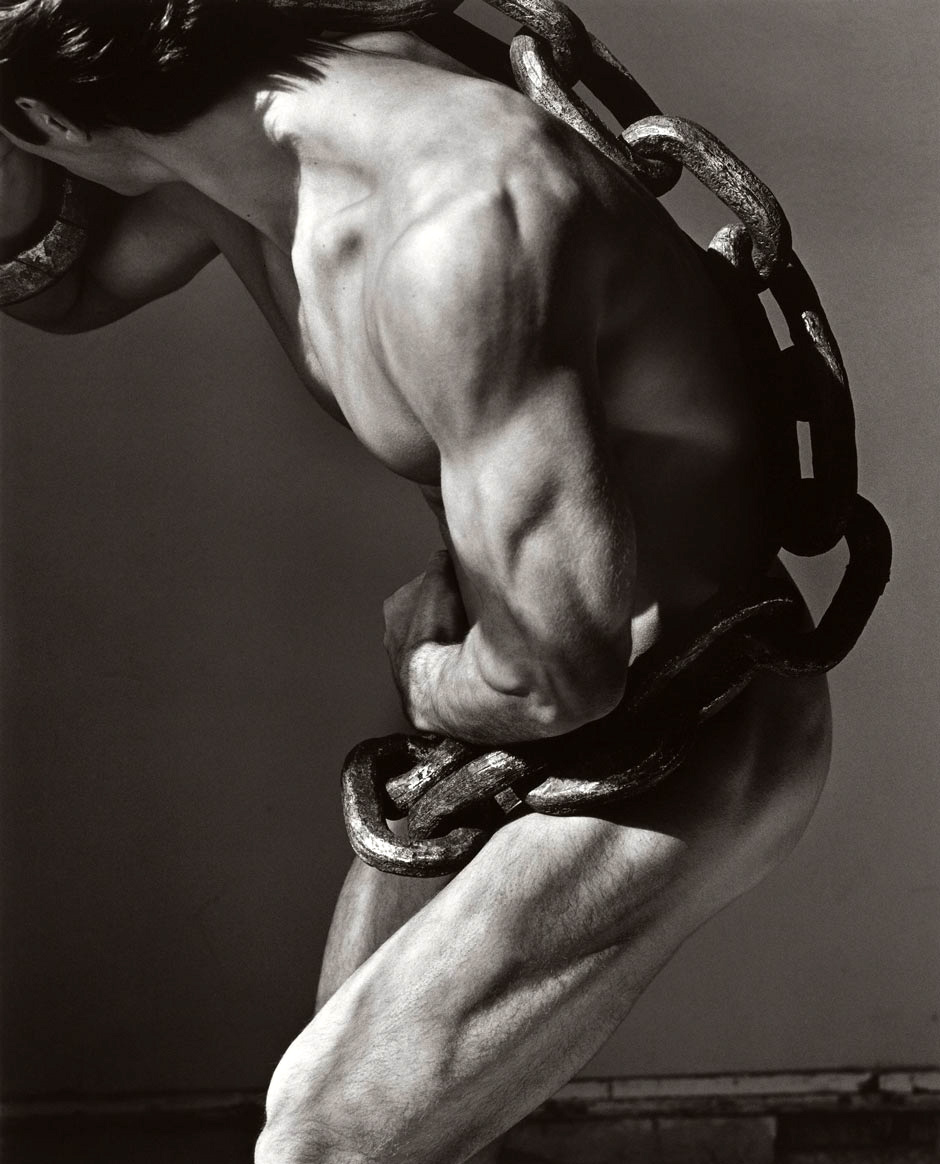
Exhibition: ‘A Democracy of Images: Photographs from the Smithsonian American Art Museum’ at the Smithsonian American Art Museum, Washington DC

Exhibition dates: 28th June 2013 – 5th January 2014
1st floor West, American Art Museum (8th and F Streets, N.W.)

Browse the exhibition and related works on the exhibition website


Unidentified artist. '[Bird in Basin with Thread Spool and Patterned Cloth]' c. 1855


Unidentified artist
[Bird in Basin with Thread Spool and Patterned Cloth]
c. 1855
Daguerreotype
Plate: 2 3/4 x 3 1/4 in. (6.9 x 8.2cm)
Smithsonian American Art Museum
Museum purchase from the Charles Isaacs Collection made possible in part by the Luisita L. and Franz H. Denghausen Endowment


The next two weeks sees a lot of exhibitions finish their run on the 5th January 2014.

Here is a bumper posting which contains one of my favourite photographs of all time: Danny Lyon’s Crossing the Ohio River, Louisville (1966, below). From a distance, this looks to be a very interesting exhibition on a large topic, delineated for the viewer into four main sections. The task of the curator cannot have been easy, picking 113 images to represent a “democracy” of images out of a collection of over 7,000 images. Of course there can never be a true “democracy” of images as some will always be more valued within our culture than others. There is a meritocracy in this exhibition which features images by masters of the medium but this is balanced by the inclusion of images by anonymous photographers, little known photographers and vernacular and street photography.

What is most impressive is the specially developed website which includes many images from the different sections of the exhibition. These images are of good quality and, along with relevant text, help the viewer place the images in context. Related content is also suggested from the full photographic collection at The Smithsonian which has been placed online with good image quality. This is a far cry from many exhibitions at state galleries in Australia where there are hardly any dedicated exhibition websites. Most of the photographic collection from these galleries is not available online and if it has been scanned, the image quality is generally poor. How many times have I searched a state gallery or library collection and come up with the answer: “Image not available” ?

Dr Marcus Bunyan


Many thankx to the Smithsonian American Art Museum for allowing me to publish the photographs and text in the posting. Please click on the photographs for a larger version of the image.


“More often, though, the moments, places, people and views that have been collected here feel offhand and stumbled upon, telling a fragmentary, incomplete tale. Sometimes it’s literally a glance, as in “Girl Holding Popsicle,” a 1972 image by Mark Cohen, who rarely even looked through his viewfinder. Other times, it’s more like a long stare, as in William Christenberry’s 1979 “China Grove Church – Hale County, Alabama,” a locale that the Washington-based artist and Alabama native returned to again and again. These 113 pictures are, at the same time, quietly telling, revealing bits of America in oblique, prismatic ways.”


Part of Michael O’Sullivan’s review of the exhibition in The Washington Post.


American Characters

Photographers have captured the texture of everyday life since the medium’s arrival in the United States in 1839. Photographic portraits have made both the iconic and the commonplace serve as stand-ins for all of us, forging a shared language of political and social understanding. In charting the passing parade of history – the faces of the anonymous and the famous; evolving stories of immigration, disenfranchisement, and assimilation; as well as emblematic objects and celebrated landmarks lodged within our collective memory – photographs reveal the complexities of America.


Larry Sultan (American, 1946-2009) 'Portrait of My Father with Newspaper' 1988


Larry Sultan (American, 1946-2009)
Portrait of My Father with Newspaper
1988
Chromogenic print
Image: 28 5/8 x 34 5/8 in. (72.7 x 87.9cm)
Smithsonian American Art Museum
Gift of Nan Tucker McEvoy
© 1988, Larry Sultan


In Portrait of My Father with Newspaper, Irving Sultan reads the Los Angeles Times as light pours in behind him. This carefully composed portrait reveals the artist’s father almost entirely through reflections and shadows. Thin newsprint shields his body from the camera, while only a vague profile of his face is discernible on the right half of the spread. Prompted by the discovery of a box of home movies, Larry Sultan embarked on an eight-year enquiry into his parents’ lives. He stayed in their home for weeks at a time, interviewing them about their marriage and photographing their domestic activities.


Eugene Richards (American, b. 1944) 'First Communion (Dorchester, Mass.)' 1976


Eugene Richards (American, b. 1944)
First Communion (Dorchester, Mass.)
1976
Gelatin silver print
Image: 8 x 12 in. (20.3 x 30.5cm)
Sheet: 11 x 14 in. (27.9 x 35.6cm)
Smithsonian American Art Museum
Transfer from the National Endowment for the Arts
© 1974, Eugene Richards


Mark Cohen (American, b. 1943) 'Girl Holding Popsicle' 1972, printed 1983


Mark Cohen (American, b. 1943)
Girl Holding Popsicle
1972, printed 1983
Gelatin silver print
Sheet: 14 x 17 in. (35.5 x 43.2cm)
Smithsonian American Art Museum
Gift of Dene and Mel Garbow
© 1972, Mark Cohen


In Girl Holding Popsicle a young girl twists shyly as she poses before a graffiti-inscribed brick wall. Mark Cohen took this photograph spontaneously as he passed through a back alley. Cohen does not hesitate to get assertively close to the strangers he meets in his hometown of Wilkes-Barre, Pennsylvania. Many of his photographs are made without looking through a viewfinder, and so remain a mystery even to Cohen until they are developed.


Unidentified artist. '[Gold Nugget]' c. 1860s


Unidentified artist
[Gold Nugget]
c. 1860s
Albumen silver print
Image: 2 1/8 x 3 5/8 in. (5.4 x 9.2cm)
Sheet: 2 3/8 x 3 7/8 in. (6.1 x 9.8cm) irregular
Smithsonian American Art Museum
Gift of Charles Isaacs and Carol Nigro


Mathew B. Brady (American, 1823-1896) 'Reviewing Stand in Front of the Executive Mansion, Washington, D.C., May, 1865' 1865, printed early 1880s


Mathew B. Brady (American, 1823-1896)
Reviewing Stand in Front of the Executive Mansion, Washington, D.C., May, 1865
1865, printed early 1880s
Albumen silver print
Sheet and image: 6 1/2 x 9 in. (16.5 x 22.9cm)
Smithsonian American Art Museum
Museum purchase through the Julia D. Strong Endowment


Kevin Bubriski (American, b. 1954) 'World Trade Center Series, New York City' 2001


Kevin Bubriski (American, b. 1954)
World Trade Center Series, New York City
2001
Gelatin silver print
Image: 18 x 18 in. (45.7 x 45.7cm)
Smithsonian American Art Museum
Gift of the Consolidated Natural Gas Company Foundation
© 2001, Kevin Bubriski


In the weeks and months following the World Trade Center attacks on September 11, 2001, Kevin Bubriski photographed people who gathered at Ground Zero. Frozen in awe, struck with disbelief, and overcome with loss, people stood before the destroyed building site to confront the horrible tragedy. More than ten years later, Bubriski’s photographs preserve the emotional impact of this infamous day through images of those who witnessed its aftermath first-hand.
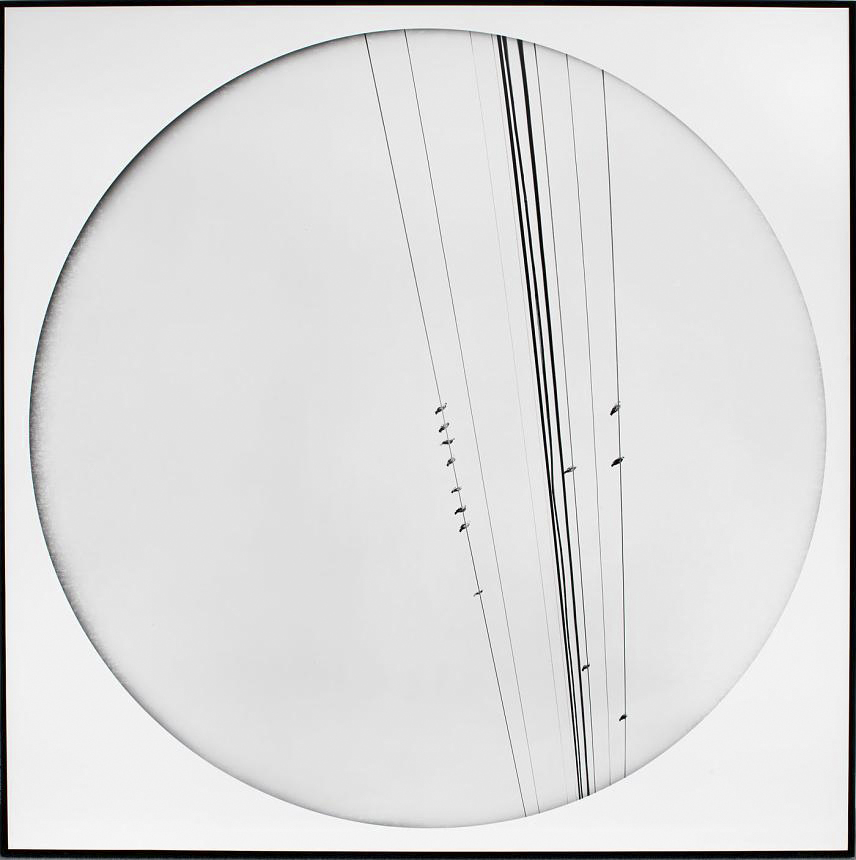
 

Deborah Luster (American, b. 1951) '01-26 Location. 1800 Leonidas Street (Carrollton) Date(s). July 14, 2009 7:55 a.m. Name(s). Brian Christopher Smith (22) Notes. Face up with multiple gunshot wounds' 2008-2012


Deborah Luster (American, b. 1951)
01-26 Location. 1800 Leonidas Street (Carrollton) Date(s). July 14, 2009 7:55 a.m. Name(s). Brian Christopher Smith (22) Notes. Face up with multiple gunshot wounds
2008-2012
Gelatin silver print
55 x 55 in. (139.7 x 139.7cm)
Smithsonian American Art Museum
Museum purchase through the Luisita L. and Franz H. Denghausen Endowment
© 2010, Deborah Luster


This photograph, from a series that documents contemporary and historical homicide sites in New Orleans, presents Deborah Luster’s interpretation of the last view of the crime victim lying face up on the ground. The title is the entry from the New Orleans Police blotter, but the photograph is Luster’s meditation on looking, seeing, and the power of images to haunt our imagination.


Unidentified artist. '[Two Workmen Polishing a Stove]' c. 1865


Unidentified artist
[Two Workmen Polishing a Stove]
c. 1865
Albumen silver print
Sheet and image: 14 1/8 x 11 in. (35.9 x 28cm)
Smithsonian American Art Museum
Museum purchase from the Charles Isaacs Collection made possible in part by the Luisita L. and Franz H. Denghausen Endowment


Anthony Barboza (American, b. 1944) '"Marvelous" Marvin Hagler, boxer' 1981


Anthony Barboza (American, b. 1944)
“Marvelous” Marvin Hagler, boxer
1981
Gelatin silver print
Image: 13 7/8 x 13 7/8 in. (35.2 x 35.2cm)
Smithsonian American Art Museum
Gift of Kenneth B. Pearl
© 1981, Anthony Barboza


Edward S. Curtis (American, 1868-1952) 'Girl and Jar – San Ildefonso' 1905


Edward S. Curtis (American, 1868-1952)
Girl and Jar – San Ildefonso
1905
Photogravure
16 5/8 x 12 1/4 in. (12.3 x 31.1cm)
Smithsonian American Art Museum
Transfer from the United States Marshal Service of the U.S. Department of Justice


Between 1900 and 1930, Edward S. Curtis traveled across the continent photographing more than seventy Native American tribes. The photographs, compiled into twenty volumes, presented daily activities, customs, and religions of a people he called “a vanishing race.” Curtis hoped to preserve the legacy of Native peoples in lasting images. To this end, Curtis often costumed his subjects and set up scenes, mixing tribal artefacts and traditions to match his romantic vision of the people he studied. In this intimate portrait, a young Tewa woman named Povi-Tamu (“Flower Morning”) balances a large jug with help from a hidden fiber ring. She is from the San Ildefonso Pueblo of New Mexico, which is famed for its rich tradition of fine pottery. Curtis associated the serpentine design of the vessel with the serpent cult, which he noted was central to Tewa life.


Oliver H. Willard (American, active 1850s-1870s, died 1875) 'Portrait of a Young Woman' c. 1857


Oliver H. Willard (American, active 1850s-1870s, died 1875)
Portrait of a Young Woman
c. 1857
Salted paper print
8 7/8 x 6 3/4 in. (22.5 x 17.1cm)
Smithsonian American Art Museum
Museum purchase through the Horace W. Goldsmith Foundation, 1999.29.1


Spiritual Frontier

The earliest photographs made in America describe an awesome land blessed with such an abundance of natural beauty that it seemed heaven sent. Images of waterfalls, mountains, and vast open spaces conveyed the beauty, the grandeur, the sublimity, and dynamics of a great spiritual endeavour. In the nineteenth century photographers pictured wilderness landscapes that symbolised American greatness. More recently, photographers have described a landscape no less romantic, but now recalibrated to account for the interaction of nature and culture.


Eadweard Muybridge (English, 1830-1904) 'Valley of the Yosemite from Union Point' 1872


Eadweard Muybridge (English, 1830-1904)
Valley of the Yosemite from Union Point
1872
Albumen silver print
Sheet: 17 x 21 1/2 in. (43.2 x 54.6cm)
Smithsonian American Art Museum
Gift of Dr. and Mrs. Charles T. Isaacs


Eadweard Muybridge went to great lengths to photograph the best possible views of the West. He chopped down trees if they obstructed his camera, and ventured to “points where his packers refused to follow him.” Muybridge was determined to produce the most comprehensive photographs ever made of Yosemite and the surrounding region. His views were sold widely in both large-format prints and stereograph cards, which are viewed through a device that creates the illusion of three-dimensional space. This allowed Muybridge to transport his audience, if just for a moment, to a faraway place caught on film.


Robert Frank (Swiss, 1924-2019) 'Butte, Montana' 1956, printed 1973


Robert Frank (Swiss, 1924-2019)
Butte, Montana
1956, printed 1973
Gelatin silver print
Image: 8 3/4 x 13 in. (22.2 x 33cm)
Smithsonian American Art Museum
Museum purchase


Robert Adams (American, b. 1937) 'New Housing, Longmont, Colorado' 1973


Robert Adams (American, b. 1937)
New Housing, Longmont, Colorado
1973
Gelatin silver print
Sheet: 6 x 7 5/8 in. (15.1 x 19.3cm)
Smithsonian American Art Museum
Transfer from the National Endowment for the Arts
© 1973, Robert Adams


As both a photographer and writer, Robert Adams is committed to describing the western American landscape as both awe-inspiring and scarred by man. In New Housing, Longmont Colorado, Adams contrasted the vast space of the distant landscape view with a foreground image of the wall of a newly constructed suburban tract house. Adams invites a consideration of the balance between myth and reality and the land as home as well as scenic backdrop.


Charles L. Weed (American, 1824-1903) 'Mirror Lake and Reflections, Yosemite Valley, Mariposa County, California' 1865


Charles L. Weed (American, 1824-1903)
Mirror Lake and Reflections, Yosemite Valley, Mariposa County, California
1865
Albumen silver print
Sheet and image: 15 1/2 x 20 1/4 in. (39.4 x 51.4cm)
Smithsonian American Art Museum
Gift of Dr. and Mrs. Charles T. Isaacs


Like Carleton Watkins, his better-known competitor, Charles Weed recognised the pictorial dividend to be gained by showing Yosemite’s glorious geological features in duplicate, using the valley’s lakes as reflecting ponds. Weed first traveled to what was then known as “Yo-Semite,” in 1859, but with a relatively small camera; he returned in 1865 with a larger model capable of using what were called mammoth plates. Like Watkins, he sold his prints to buyers eager to own a photograph of majestic natural beauty.


Ansel Adams (American, 1902-1984) 'Monolith: The Face of Half Dome, Yosemite Valley' 1926-1927, printed 1927


Ansel Adams (American, 1902-1984)
Monolith: The Face of Half Dome, Yosemite Valley
1926-1927, printed 1927
Gelatin silver print
Sheet: 11 7/8 x 9 7/8 in. (30.2 x 25.1cm)
Smithsonian American Art Museum
Museum purchase
© 2013 The Ansel Adams Publishing Rights Trust


At just over 4,700 feet above the valley, Half Dome is the most iconic rock formation in Yosemite National Park. Adams squeezed the monolith into the frame to emphasise the majesty of its scale and the drama of its cliff. As it thrusts out of the brilliant white snow, Half Dome stands as a symbol of the unspoiled western landscape. Ansel Adams made his first trip to the Sierra Nevada mountain range when he was fourteen years old, and he returned every year until the end of his life, often for month-long stretches. Throughout his career Adams traveled widely – from Hawaii to Maine – to photograph the most picturesque vistas in America. After his death in 1984, a section of the Sierra Nevada was named the Ansel Adams Wilderness in his honour.


John Pfahl (American, 1939-2020) 'Goodyear #5, Niagara Falls, New York' 1989


John Pfahl (American, 1939-2020)
Goodyear #5, Niagara Falls, New York
1989
Chromogenic print
Sheet: 20 x 24 in. (50.8 x 61.0cm)
Smithsonian American Art Museum
Gift of the Consolidated Natural Gas Company Foundation
© 1989, John Pfahl


John Pfahl’s photographs embody the conflict between progress and preservation. Throughout the 1980s he focused on oil refineries and power plants. He chose the sites strategically based on their location in picturesque landscapes, where he observed a “transcendental” connection between industry and nature. In Goodyear #5 a nuclear power plant occupies the horizon. The setting sun provides a romantic colour palette as light filters through clouds of billowing steam. The landscape is reduced to an abstract composition that celebrates colour and texture. Pfahl’s intention with this series, titled Smoke, was to “make photographs whose very ambiguity provokes thought.” This photograph complicates popular notions of power plants by revealing an uncommonly beautiful view of a controversial structure.


A Democracy of Images: Photographs from the Smithsonian American Art Museum celebrates the numerous ways in which photography, from early daguerreotypes to contemporary digital works, has captured the American experience. The photographs presented here are selected from the approximately 7,000 images collected since the museum’s photography program began thirty years ago, in 1983. Ranging from daguerreotype to digital, they depict the American experience and are loosely grouped around four ideas: American Characters, Spiritual Frontier, America Inhabited, and Imagination at Work.

The exhibition’s title is inspired by American poet Walt Whitman’s belief that photography provided America with a new, democratic art form that matched the spirit of the young country and his belief that photography was a quintessentially American activity, rooted in everyday people and ordinary things and presented in a straightforward way. Known as the “poet of democracy,” Whitman wrote after visiting a daguerreotype studio in 1846: “You will see more life there – more variety, more human nature, more artistic beauty… than in any spot we know.” At the time of Whitman’s death, in 1892, George Eastman had just introduced mass market photography when he put an affordable box camera into the hands of thousands of Americans. The ability to capture an instant of lasting importance and fundamental truth mesmerised Americans then and continues to inspire photographers working today. Marking the thirtieth anniversary of the establishment of the museum’s pioneering photography collection, the exhibition examines photography’s evolution in the United States from a documentary medium to a full-fledged artistic genre and showcases the numerous ways in which it has distilled our evolving idea of “America.”

The exhibition features 113 photographs selected from the museum’s permanent collection, including works by Edward S. Curtis, Timothy H. O’Sullivan, Berenice Abbott, Diane Arbus, Roy DeCarava, Walker Evans,Irving Penn, Trevor Paglen, among others, as well as vernacular works by unknown artists. A number of recent acquisitions are featured, including works by Ellen Carey, Mitch Epstein, Muriel Hasbun, Alfredo Jaar, Annie Leibovitz, Deborah Luster, and Sally Mann. Landscapes, portraits, documentary-style works from the New York Photo League and images from surveying expeditions sent westward after the Civil War are among the images on display, and explore how photographs have been used to record and catalogue, to impart knowledge, to project social commentary, and as instruments of self-expression.

Photography’s arrival in the United States in 1840 allowed ordinary people to make and own images in a way that had not been previously possible. Photographers immediately became engaged with the life of the emerging nation, the activity of new urban centers, and the possibilities of unprecedented access to the vast western frontier. From the nineteenth to the twentieth century, photography not only captured the country’s changing cultural and physical landscape, but also developed its own language and layers of meaning.

A Democracy of Images: Photographs from the Smithsonian American Art Museum is organised around four major themes that defined American photography. “American Characters” examines the ways in which photographs of individuals, places, and objects become a catalogue of our collective memory and have contributed to the ever-evolving idea of the American character. “Spiritual Frontier” investigates early ideas of a vast, inexhaustible wilderness that symbolised American greatness. “America Inhabited” traces the nation’s rapid industrialisation and urbanisation through images of speed, change, progress, immigration, and contemporary rural, urban, and suburban landscapes. “Imagination at Work” demonstrates how photography’s role of spontaneous witness gradually gave way to contrived arrangement and artistic invention. The exhibition is organised by Merry Foresta, guest curator and independent consultant for the arts. She was the museum’s curator of photography from 1983 to 1999.

Connecting online

A complementary website designed for viewing on tablets includes photographs on view in the exhibition, an expanded selection of works from the museum’s collection and a timeline of American photography. It is available through tablet stations in the exhibition galleries, online, and on mobile devices.”

Press release from the Smithsonian American Art Museum website


America Inhabited

Photography’s early presence in America coincided with the rise of an industrial economy, the growth of major urban population centers, and the fulfilling of what some saw as the Manifest Destiny of spanning the continent from sea to sea. Images of progress and industry, as well as of city and suburbs, quickly added themselves to photography’s catalogue of places and people. Some of these images reflect idealistically, and at times nostalgically, on the beauty and humanity of our own backyards. Others stand as social documents that can be seen as critical and ironic, inviting outrage as well as compassion about the way we now live our lives.


Helen Levitt (American, 1913-2009) 'New York' c. 1942, printed later


Helen Levitt (American, 1913-2009)
New York
c. 1942, printed later
Gelatin silver print
Image: 7 1/8 x 10 1/2 in. (18.1 x 26.6cm)
Smithsonian American Art Museum
Museum purchase
© 1981, Helen Levitt


Caught before they run off into the streets, three masked youngsters pause on their front stoop. Expressive postures and mysterious disguises give this trio a theatrical quality. Helen Levitt, who found poetry in the uninhibited gestures of children, used a right-angle viewfinder to capture boys and girls roaming freely and playing with found objects. Working in New York City during the years surrounding World War II, her photographs show the drama of life that unfolded on the sidewalks of poor and working-class neighbourhoods.


Louis Faurer (American, 1916-2001) 'Broadway, New York, N.Y.' 1949-1950, printed 1980-1981


Louis Faurer (American, 1916-2001)
Broadway, New York, N.Y.
1949-1950, printed 1980-1981
Gelatin silver print
Image: 8 3/8 x 12 9/16 in. (21.3 x 32cm)
Smithsonian American Art Museum
Gift of David L. Davies and John D. Weeden and museum purchase
© Estate of Louis Faurer
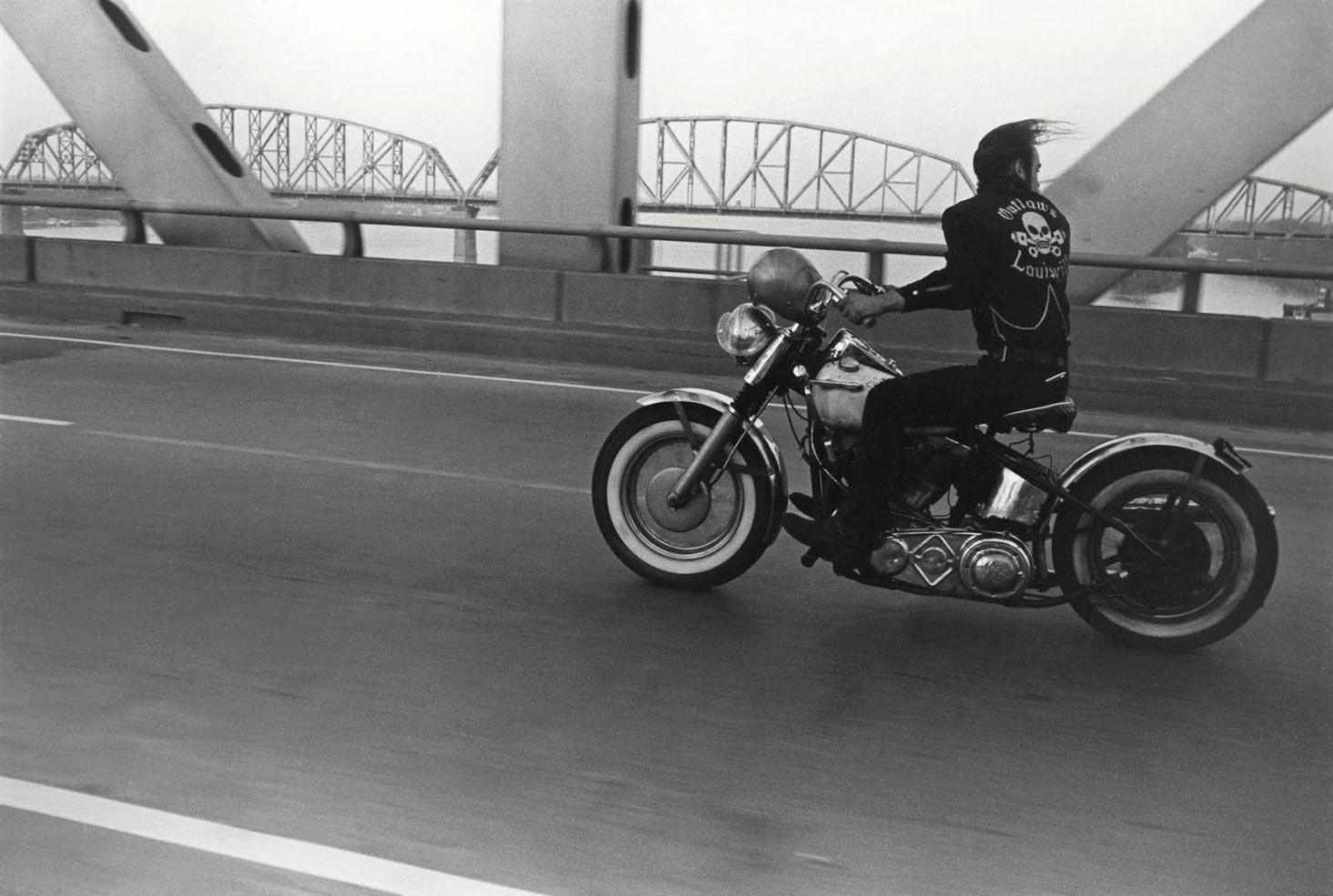
 

Danny Lyon (American, b. 1942) 'Crossing the Ohio River, Louisville' 1966, printed 1985


Danny Lyon (American, b. 1942)
Crossing the Ohio River, Louisville
1966, printed 1985
Gelatin silver print
Image: 8 3/4 x 12 7/8 in. (22.2 x 32.7cm)
Smithsonian American Art Museum
Museum purchase made possible by Mrs. Marshall Langhorne
Photo courtesy Edwynn Houk Gallery


William Eggleston (America, born July 27, 1939) 'Memphis' c. 1970


William Eggleston (American, b. 1939)
Tricycle (Memphis)
about 1975, printed 1980
Dye transfer print
Smithsonian American Art Museum, Gift of Amy Loeserman Klein


An ordinary tricycle is made monumental in this playful colour photograph. Taken from below, it suggests a child’s perspective – elevating this rusty tricycle to a symbol of innocence and freedom. The quiet Memphis suburb in the background typifies the safe neighbourhoods where children could spend hours playing after school. This print was made with the expensive and exacting dye imbibition process, which was typically used for fashion and advertising at the time. Eggleston began experimenting with colour photography in the mid-1960s. Inspired by trips to a commercial photography lab, he developed an approach that imitates the random, imperfect style of amateur snapshots to describe his immediate surroundings combined with a keen interest in the effects of colour.


Tina Barney (American, b. 1945) 'Marina's Room' 1987


Tina Barney (American, b. 1945)
Marina’s Room
1987
Chromogenic print
Sheet: 48 x 60 in. (121.9 x 52.3cm)
Smithsonian American Art Museum
Museum purchase
© 1987, Tina Barney, Courtesy Janet Borden, Inc.


Aaron Siskind (American, 1903-1991) 'Untitled' 1937, printed later


Aaron Siskind (American, 1903-1991)
Untitled
1937, printed later
Gelatin silver print
Sheet: 10 x 14 in. (25.4 x 35.5cm)
Smithsonian American Art Museum
Gift of Tennyson and Fern Schad, courtesy of Light Gallery
© 1940, Aaron Siskind


In this untitled photograph Aaron Siskind focused on the regular grid of boarded-up windows on a derelict tenement building. Once portals into intimate domestic spaces, the windows represent loss in a community plagued by poverty, unemployment, and racial discrimination. Building upon the traditions of social documentary photographers before him, Siskind used his camera to raise public awareness of Harlem’s struggle, even as he created a modernist work of art.


Walker Evans (American, 1903-1975) 'Kitchen Wall, Alabama Farmstead' 1936, printed 1974


Walker Evans (American, 1903-1975)
Kitchen Wall, Alabama Farmstead
1936, printed 1974
Gelatin silver print
Sheet and image: 9 3/8 x 12 in. (23.9 x 30.5cm)
Smithsonian American Art Museum
Gift of Lee and Maria Friedlander


During the summer of 1936, Walker Evans joined writer James Agee in rural Alabama to work on a magazine assignment on cotton farming. Evans and Agee met with three tenant farm families and documented every detail of their experiences. The result, which the magazine declined to publish, was released as the book Let Us Now Praise Famous Men in 1941. It contains some of the most iconic and contentious photographs to document the Great Depression. Kitchen Wall, Alabama Farmstead reads like a modern novel. Every crack in the wood, every speck of paint tells part of the story. Evans drew special attention to the scarcity of cooking tools at the family’s disposal. These everyday utensils illustrate a metaphor for the struggle to meet basic needs.


Judy Fiskin (American, b. 1945) 'Long Beach Pike (broken fence)', from the 'Long Beach, California Documentary Survey Project' 1980


Judy Fiskin (American, b. 1945)
Long Beach Pike (broken fence), from the Long Beach, California Documentary Survey Project
1980
Gelatin silver print
Image: 2 1/2 x 2 1/2 in. (6.2 x 6.2cm)
Smithsonian American Art Museum
Transfer from the National Endowment for the Arts
© 1980, Judy Fiskin


For this series, sponsored by the National Endowment of the Art’s Long Beach Documentary Survey Project, Judy Fiskin focused on the Long Beach Pike, an amusement park that was demolished soon after she made the photographs. By printing in high contrast and restricting the scale of her prints, Fiskin reduced form to its bare essentials. Devoid of superfluous detail, these photographs appear more like conjured images than documents of reality. Judy Fiskin systematically catalogues the world of architecture and design in order to study variations of historical styles. Her series carefully investigate esoteric subjects such as military base architecture, “dingbat” style houses in southern California, and the art of flower arranging.
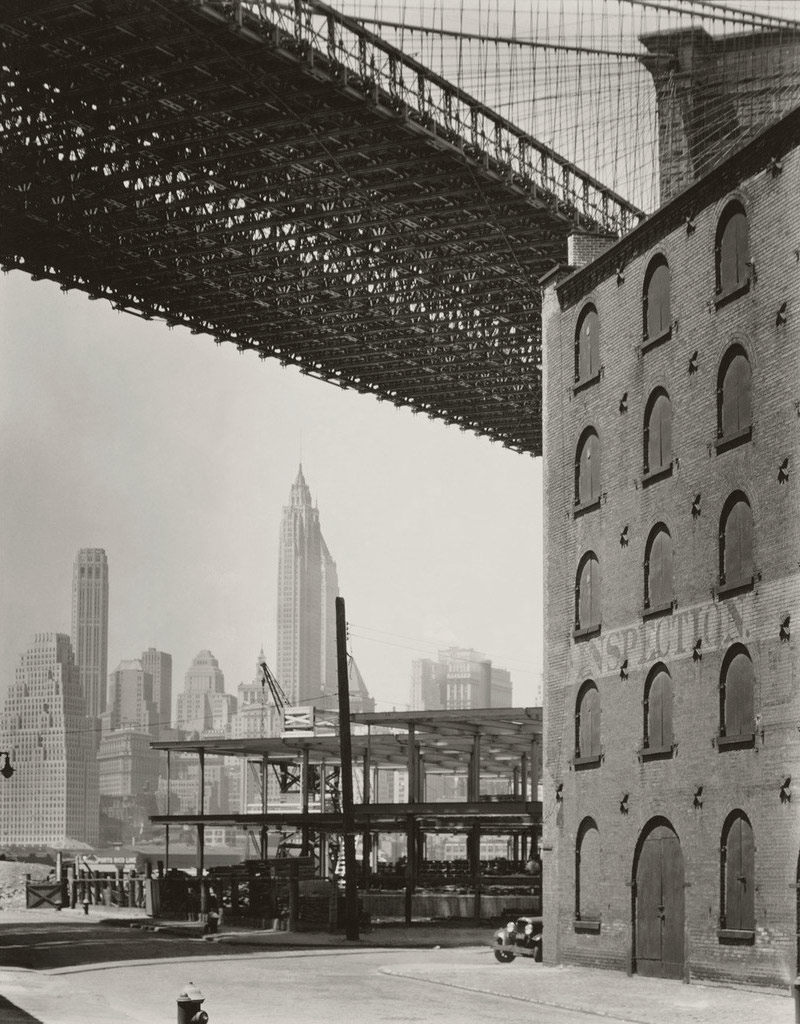
 

Berenice Abbott (American, 1898-1991) 'Brooklyn Bridge, Water and Dock Streets, Brooklyn' 1936


Berenice Abbott (American, 1898-1991)
Brooklyn Bridge, Water and Dock Streets, Brooklyn
1936
Gelatin silver print
Sheet: 18 x 14 3/8 in. (45.7 x 36.6cm)
Smithsonian American Art Museum
Transfer from the Evander Childs High School, Bronx, New York through the General Services Administration


Berenice Abbott returned home in 1929 after nearly eight years abroad and found herself fascinated by the rapid growth of New York City. She saw the city as bristling with new buildings and structures which seemed to her as solid and as permanent as a mountain range. Aiming to capture “the past jostling the present,” Abbott spent the next five years on a project she called Changing New York. In Brooklyn Bridge, Water and Dock Streets, Brooklyn, Abbott presented a century of history in a single image. The Brooklyn Bridge, once a marvel of modern engineering, seems dark and heavy compared with the skeletal structure beneath it. The construction site at center suggests the never-ending cycle of death and regeneration. And the Manhattan skyline, veiled and weightless, hangs just out of reach, its shape accommodating the ambitious spirit of American modernism.


Robert Disraeli (American, 1905-1987) 'Cold Day on Cherry Street' 1932


Robert Disraeli (American, 1905-1987)
Cold Day on Cherry Street
1932
Gelatin silver print
Image and sheet: 14 x 11 in. (35.5 x 28cm)
Smithsonian American Art Museum
Museum purchase made possible by Mr. and Mrs. G. Howland Chase, Mrs. James S. Harlan (Adeline M. Noble Collection), Lucie Louise Fery, Berthe Girardet, and Mrs. George M. McClellan
© 1932, Robert Disraeli


Imagination at Work

Nineteenth-century French commentator Alexis de Tocqueville observed that in America, nothing is ever quite what it seems. Yet the idea that “seeing is believing” is deeply ingrained in the American character. By yoking together style and subject under the guise of the real, today’s photographers borrow from photography’s rich past while embracing the conceptual framework of contemporary art. They read reality as something on the surface of a picture or, more complexly, as something located in the mind of its beholder.


Sonya Noskowiak (American born Germany, 1900-1975) 'Calla Lily' c. 1930s


Sonya Noskowiak (American born Germany, 1900-1975)
Calla Lily
c. 1930s
Gelatin silver print
Sheet: 7 3/8 x 9 3/4 in. (18.8 x 24.7cm)
Smithsonian American Art Museum
Museum purchase made possible through Deaccession Funds


Ray K. Metzker (American, 1931-2014) 'Composites: Philadelphia (Car and Street Lamp)' 1966


Ray K. Metzker (American, 1931-2014)
Composites: Philadelphia (Car and Street Lamp)
1966
Gelatin silver prints
Image: 25 3/8 x 17 3/4 in. (64.5 x 45cm)
Smithsonian American Art Museum
Museum purchase
© 1966, Ray K. Metzker


Ray Metzker’s Composites series, begun in 1964, connected in a dramatic fashion his interests in contrasts of light and shadow, his strong sense of design, and his earlier explorations of the multiple image. Metzker studied at Chicago’s Institute of Design, where a rigorously formal, problem-solving approach to photography was taught. For this series he assembled grids of individual photographs to create complex image-fields. When viewed from a distance, this work reads as an abstract, rhythmic pattern of light and dark. On closer inspection, however, many crisply descriptive images are revealed. The Composites function somewhat like short filmstrips. The mystery of these brief narratives is exaggerated by the repetitive design and provides a unique opportunity, in Metzker’s words, “to deal with complexity of succession and simultaneity, of collected and related moments.”


Irving Penn (American, 1917-2009) 'Mud Glove – New York' 1975, printed 1976


Irving Penn (American, 1917-2009)
Mud Glove – New York
1975, printed 1976
Platinum-palladium print
Sheet and image: 29 3/4 x 22 1/4 in. (75.5 x 56.5cm)
Smithsonian American Art Museum
Gift of the artist


Irving Penn was one of the most important and influential photographers of the twentieth century. In a career that spanned almost seventy years, Penn worked across multiple genres, from celebrity portraits to fashion, from still lives to images of native cultures in remote places of the world. Throughout his career Penn also worked on a series of photographs of discarded objects: things that had been lost, neglected, or misused. Printed in platinum, these detailed photographs of objects such as a lost glove found in the gutter, are Penn’s photographic memento mori, offering beauty compromised by age or disuse.


Edward Weston (American, 1886-1958) 'Pepper no. 30' 1930


Edward Weston (American, 1886-1958)
Pepper no. 30
1930
Gelatin silver print
Sheet: 9 1/2 x 7 1/2 in. (24.3 x 19.2cm)
Smithsonian American Art Museum
Museum purchase


Imogen Cunningham (American, 1883-1976) 'Auragia' 1953, printed c. 1960s


Imogen Cunningham (American, 1883-1976)
Auragia
1953, printed c. 1960s
Gelatin silver print
Sheet and image: 11 1/8 x 8 3/4 in. (28.3 x 22.2cm)
Smithsonian American Art Museum
Gift of Charles Isaacs and Carol Nigro


Ellen Carey (American, b. 1952) 'Dings and Shadows' 2012


Ellen Carey (American, b. 1952)
Dings and Shadows
2012
Chromogenic print
Sheet and image: 40 x 30 in. (101.6 x 76.2cm)
Smithsonian American Art Museum
Gift of Linda Cheverton Wick and Walter Wick
© 2012, Ellen Carey


Ellen Carey created the series she calls Dings and Shadows by exposing photosensitive paper to light projected through primary and complementary colour filters. The artist first folds and crushes paper; then after exposing the paper to light from a colour enlarger, flattens it out again for processing. In doing so, Carey dissects the process of developing film, and evokes the hand-crafted nature of early photographic techniques.


Some images from the Timeline on the website

1843

Daguerreotypists Albert S. Southworth and Josiah Johnson Hawes begin a partnership, establishing Southworth & Hawes as the most highly regarded portrait studio in Boston, Mass. The studio caters to the city’s elite, and is visited by Charles Dickens, Ralph Waldo Emerson, and Oliver Wendell Holmes, among many other influential people of the time.


Albert Sands Southworth (American, 1811-1894) and Josiah Johnson Hawes (American, 1808-1901) 'A Bride and Her Bridesmaids' 1851


Albert Sands Southworth (American, 1811-1894) and Josiah Johnson Hawes (American, 1808-1901)
A Bride and Her Bridesmaids
1851
Daguerreotype
Smithsonian American Art Museum
Museum purchase made possible by Walter Beck


1853

The New York Daily Tribune estimates that in the United States, three million daguerreotypes are being produced annually.


Unidentified artist. 'Mother and Son' c. 1855


Unidentified artist
Mother and Son
c. 1855
Daguerreotype with applied colour
Smithsonian American Art Museum
Museum purchase from the Charles Isaacs Collection made possible in part by the Luisita L. and Franz H. Denghausen Endowment


1857

Julian Vannerson and Samuel Cohner make the first systematic photographs of Native American delegations to visit Washington, D.C. They photograph ninety delegates representing thirteen tribes who conduct treaty and other negotiations with government officials.
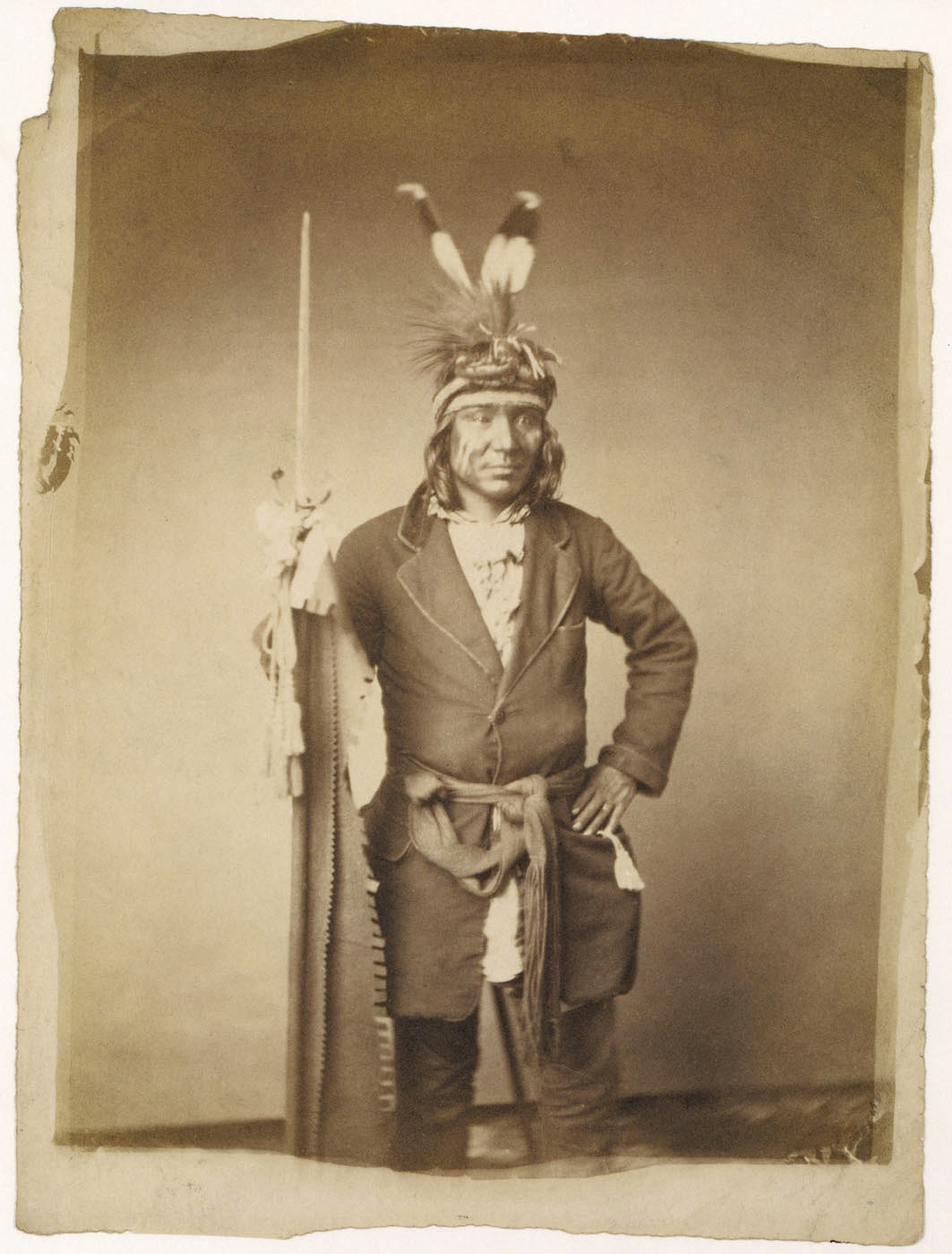
 

Julian Vannerson (American, 1827-1875) 'Shining Metal' 1858


Julian Vannerson (American, 1827-1875)
Shining Metal
1858
Salted paper print
Smithsonian American Art Museum
Museum purchase from the Charles Isaacs Collection made possible in part by the Luisita L. and Franz H. Denghausen Endowment


1861

American Civil War begins with shots fired on Fort Sumter by Confederate troops. Portrait photographer Mathew Brady is given permission by President Abraham Lincoln to photograph the First Battle of Bull Run, but comes so close to the battle that he narrowly avoids capture. Using paid assistants Alexander Gardner, Timothy O’Sullivan, George N. Barnard, and others, Brady’s studio makes thousands of photos of the sites, material, and people of the war. Civilian free-lance photographer Egbert Guy Fowx sells numerous negatives to Brady’s studio, which publishes and copyrights many of them. Many other images are credited to Fowx, including this group of Union officers.


Egbert Guy Fowx (American, 1821-1889) 'New York 7th Regiment Officers' c. 1863


Egbert Guy Fowx (American, 1821-1889)
New York 7th Regiment Officers
c. 1863
Salted paper print
Smithsonian American Art Museum
Museum purchase from the Charles Isaacs Collection made possible in part by the Luisita L. and Franz H. Denghausen Endowment


1867

Eadweard Muybridge begins trip to photograph in Yosemite Valley. He publishes his photographs under the name “Helios,” which is also the name of his San Francisco studio. An exhibition of more than 300 photographic portraits of Native American delegates to Washington, D.C., opens in the Smithsonian Castle. Clarence R. King begins direction of the U.S. Geological Expedition of the Fortieth Parallel, appointing Timothy O’Sullivan as the official photographer. Photographer Carleton Watkins joins the survey in 1871.


Timothy H. O'Sullivan  (American born Ireland, 1840-1882) 'Tufa Domes, Pyramid Lake, Nevada' 1867


Timothy H. O’Sullivan  (American born Ireland, 1840-1882)
Tufa Domes, Pyramid Lake, Nevada
1867
Albumen silver print
Smithsonian American Art Museum
Museum purchase from the Charles Isaacs Collection made possible in part by the Luisita L. and Franz H. Denghausen Endowment


1869

Andrew J. Russell’s album, The Great West Illustrated in a Series of Photographic Views across the Continent; Taken along the Line of the Union Pacific Railroad from Omaha, Nebraska, Volume I, is published. George M. Wheeler begins direction of the United States Geological Surveys West of the 100th Meridian for the U.S. Army Corps of Engineers. Wheeler makes fourteen trips to the West over the next eight years. Photographer Timothy O’Sullivan accompanies him in 1871, 1873, and 1874.


Andrew Joseph Russell (American, 1829-1902) 'Sphinx of the Valley' 1869


Andrew Joseph Russell (American, 1829-1902)
Sphinx of the Valley
1869
Albumen silver print
Smithsonian American Art Museum
Museum purchase from the Charles Isaacs Collection made possible in part by the Luisita L. and Franz H. Denghausen Endowment


1967

The Friends of Photography is founded in Carmel, California, by Ansel Adams, Beaumont and Nancy Newhall, Brett Weston, and others, with the aim of promoting creative photography and supporting its practitioners. It remains in existence until 2001.


Brett Weston (American, 1911-1993) 'Untitled (Snow Covered Mountains)' 1973


Brett Weston (American, 1911-1993)
Untitled (Snow Covered Mountains)
1973
Gelatin silver print
Smithsonian American Art Museum
Transfer from the National Endowment for the Arts
© 1973, Brett Weston


1975

New Topographics: Photographs of a Man-Altered Landscape opens at the International Museum of Photography in Rochester, N.Y. It includes photographs by Robert Adams, Lewis Baltz, Bernd and Hilla Becher, Joe Deal, Frank Gohlke, Nicholas Nixon, John Schott, Stephen Shore, and Henry Wessel Jr.
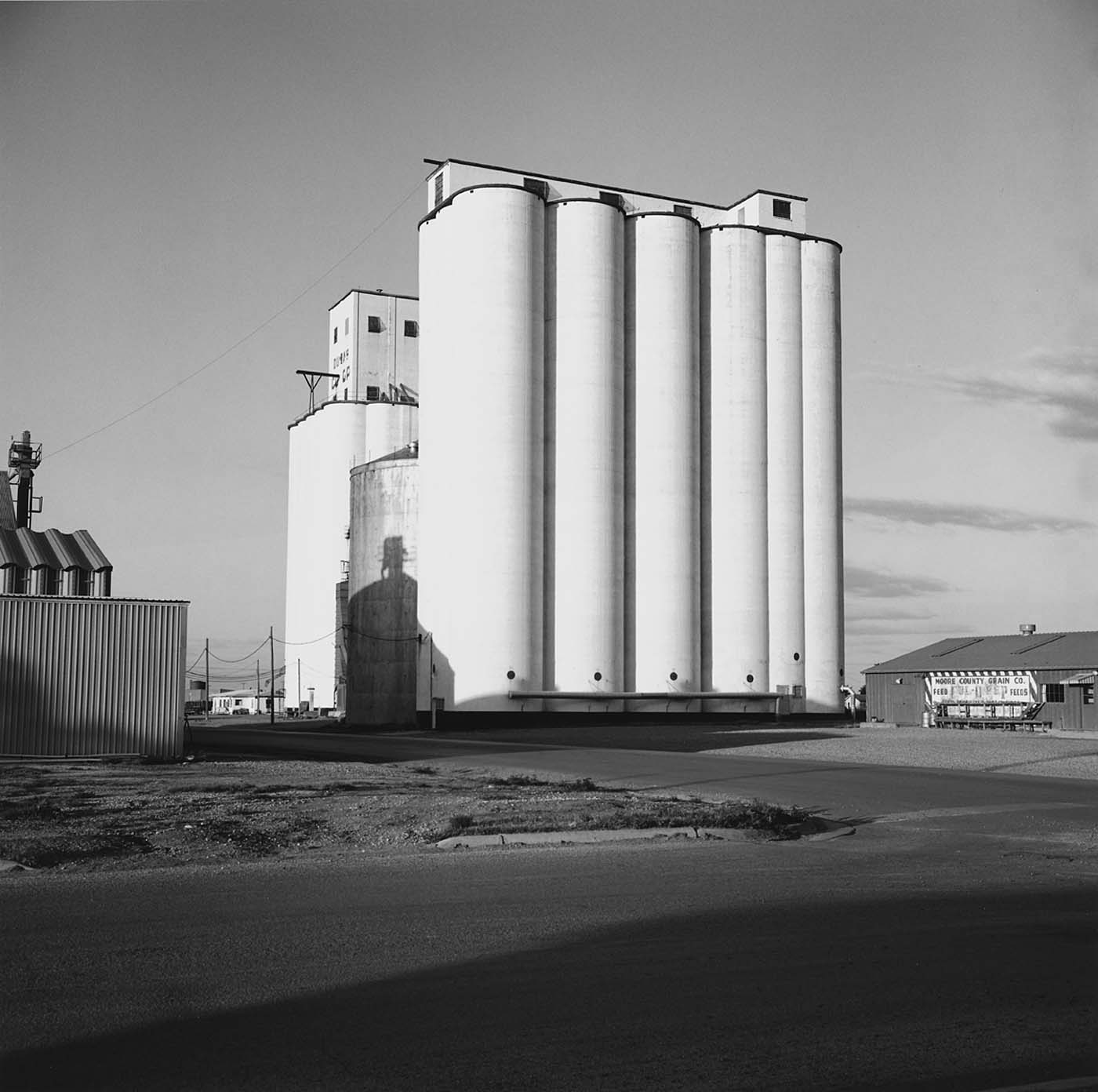
 

Frank Gohlke (American, b. 1942) 'Grain Elevator, Dumas, Texas, 1973' 1973, printed 1994


Frank Gohlke (American, b. 1942)
Grain Elevator, Dumas, Texas, 1973
1973, printed 1994
Gelatin silver print
Smithsonian American Art Museum, Museum purchase through the Luisita L. and Franz H. Denghausen Endowment
© 1973, Frank Gohlke


Smithsonian American Art Museum
8th and F Streets, N.W.
Washington, D.C. 20004

Opening hours:
11.30am – 7.00pm daily

Smithsonian American Art Museum website

A Democracy of Images website

LIKE ART BLART ON FACEBOOK

Back to top

Exhibition: ‘Color! American Photography Transformed’ at the Amon Carter Museum of American Art, Fort Worth, Texas

Exhibition dates: 5th October 2013 – 5th January, 2014


Alex Prager (American, b. 1979) 'Crowd #1 (Stan Douglas)' 2010


Alex Prager (American, b. 1979)
Crowd #1 (Stan Douglas)
2010
Dye coupler print
© Alex Prager, courtesy of the artist and Yancey Richardson Gallery


A very big subject to cover in one exhibition.

Marcus


Many thankx to the Amon Carter Museum of American Art for allowing me to publish the photographs in the posting. Please click on the photographs for a larger version of the image.


Jack Delano (American, 1914-1997) 'Chopping cotton on rented land near White Plains, Greene County, Georgia, 1941' 1941


Jack Delano (American, 1914-1997)
Chopping cotton on rented land near White Plains, Greene County, Georgia, 1941
1941
Inkjet print, 2013
Courtesy the Library of Congress


Laura Gilpin (American, 1891-1979) 'Still Life with Peaches' 1912


Laura Gilpin (American, 1891-1979)
Still Life with Peaches
1912
Lumière Autochrome
© 1979 Amon Carter Museum of American Art, Fort Worth, Texas


Jan Groover (American, 1943-2012) 'Untitled' 1978


Jan Groover (American, 1943-2012)
Untitled
1978
Dye coupler print
Amon Carter Museum of American Art, Fort Worth, Texas
© 1978 Jan Groover


Unknown photographer. 'Untitled (Woman with two daughters)' c. 1850s


Unknown photographer 
Untitled (Woman with two daughters)
c. 1850s
Salted paper print with applied color
Amon Carter Museum of American Art


Gregory Crewdson (American, b. 1962) 'Untitled (Dylan on the Floor)' from the 'Twilight Series' 1998-2002


Gregory Crewdson (American, b. 1962)
Untitled (Dylan on the Floor) from the Twilight Series
1998-2002
Dye coupler print
© Gregory Crewdson, Courtesy Gagosian Gallery


On October 5, the Amon Carter Museum of American Art opens Color! American Photography Transformed, a compelling examination of how colour has changed the very nature of photography, transforming it into today’s dominant artistic medium. Color! includes more than 70 exceptional photographs by as many photographers and is on view through January 5, 2014.

“Colour is so integral to photography today that it is difficult to remember how new it is or realise how much it has changed the medium,” says John Rohrbach, senior curator of photographs.

The exhibition covers the full history of photography, from 1839, when Frenchman Louis-Jacques-Mandé Daguerre (1787-1851) introduced his daguerreotype process, to the present. From the start, disappointed that photographs could only be made in black and white, photographers and scientists alike sought with great energy to achieve colour. Color! begins with a rare direct-colour photograph made in 1851 by Levi L. Hill (1816-1865), but explains how Hill could neither capture a full range of colour nor replicate his achievement. It then shows finely rendered hand-coloured photographs to share how photographers initially compensated for the lack of colour.

When producing colour photographs became commercially feasible in 1907 in the form of the glass-plate Autochrome, leading artists like Alfred Stieglitz (1864-1946) were initially overjoyed, according to Rohrbach. Color! offers exquisite examples of their work even as it explains their ultimate rejection of the process because it was too difficult to display and especially because they felt it mirrored human sight too closely to be truly creative.

“Although many commercial photographers embraced colour photography over succeeding decades, artists continued to puzzle over the medium,” Rohrbach explains. Color! reveals that many artists from Richard Avedon (1923-2004) to Henry Holmes Smith (1909-1986) tried their hand at making colour photographs through the middle decades of the 20th century, and it shows the wide range of approaches they took to colour. It also shares the background debates among artists and photography critics over how to employ colour and even whether colour photographs could have the emotional force of their black-and-white counterparts.

Only in 1976, when curator John Szarkowski at the Museum of Modern Art in New York heralded the young Memphis photographer William Eggleston’s (b. 1939) snapshot-like colour photographs as the solution to artful colour, did fine art colour photography gain full acceptance.

“Eggleston revealed how colour can simultaneously describe objects and stand apart from those objects as pure hue,” Rohrbach says. “In so doing, he successfully challenged the longstanding conception of photography as a medium that found its calling on close description.”

Color! illustrates through landmark works by Jan Groover (1943-2012), Joel Meyerowitz (b. 1938) and others the blossoming of artists’ use of colour photography that followed in the wake of Szarkowski’s celebration of Eggleston. It also reveals artists’ gradual absorption of the notion that colour could be used flexibly to critique cultural mores and to shape stories. In this new colour world, recording the look of things was important, but it was less important than conveying a message about life. In this important shift, led by artists as diverse as Andres Serrano (b. 1950) and Laurie Simmons (b. 1949), the exhibition explains, photography aligned itself far more closely with painting.

Color! shows how the rise of digital technologies furthered this transformation, as photographers such as Gregory Crewdson (b. 1962), Richard Misrach (b. 1949) and Alex Prager (b. 1979) have explicitly embraced the hues, scale, and even subjects of painting and cinema.

“Photography still gains its power and wide popularity today from its ability to closely reflect the world,” explains Rohrbach, “but Color! reveals how contemporary artists have been using reality not as an end unto itself, but as a jumping off point for exploring the emotional and cultural power of colour, even blurring of line between record and fiction to make their points. These practices, founded on colour, have transformed photography into the dominant art form of today even as they have opened new questions about the very nature of the medium.”

The exhibition will include an interactive photography timeline enabling visitors to contribute to the visual dialogue by sharing their own colour images. The photographs will be displayed along the timeline and on digital screens in the museum during the exhibition to illustrate how quantity, format and colour quality have evolved over time.

“By telling the full story of colour photography’s evolution, the exhibition innovatively uncovers the fundamental change that colour has brought to how photographers think about their medium,” says Andrew J. Walker, museum director. “The story is fascinating and the works are equally captivating. Photography fans and art enthusiasts in general will revel in the opportunity to see works by this country’s great photographers.

Press release from the Amon Carter Museum of American Art website


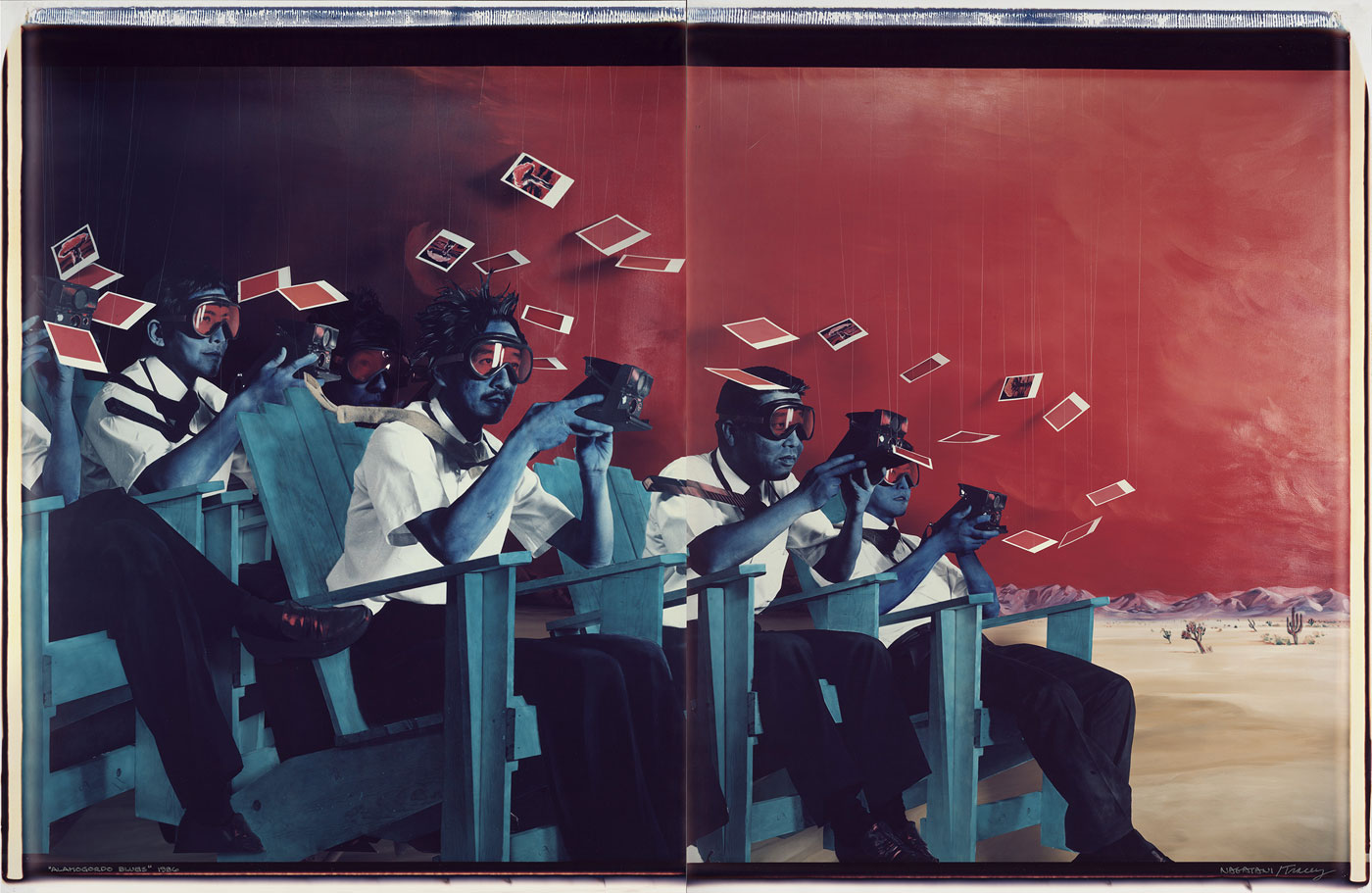
Patrick Nagatani (American, b. 1945) and Andree Tracey (American, b. 1948) 'Alamogordo Blues' 1986


Patrick Nagatani (American, b. 1945)
Andree Tracey (American, b. 1948)
Alamogordo Blues
1986
Dye diffusion print
Center for Creative Photography, University of Arizona
© Patrick Nagatani and Andree Tracey


Laurie Simmons (American, b. 1949) 'Woman/Red Couch/Newspaper' 1978


Laurie Simmons (American, b. 1949)
Woman/Red Couch/Newspaper
1978
Silver dye-bleach print
Los Angeles County Museum of Art, Ralph M. Parsons Fund
© Laurie Simmons


Sandy Skoglund (American, b. 1946) 'Revenge of the Goldfish, 1980' 1980


Sandy Skoglund (American, b. 1946)
Revenge of the Goldfish, 1980
1980
Silver dye-bleach print
St. Louis Art Museum, Gift of Mr. and Mrs. Fielding Lewis Holmes
© 1981 Sandy Skoglund


Mark Cohen (American, b. 1943) 'Boy in Yellow Shirt Smoking' 1977


Mark Cohen (American, b. 1943)
Boy in Yellow Shirt Smoking
1977
Dye coupler print
Courtesy the artist and ROSEGALLERY
© Mark Cohen


John F. Collins (American, 1888?-1988) 'Tire' 1938


John F. Collins (American, 1888?-1988)
Tire
1938
Silver dye-bleach print
Courtesy Howard Greenberg Gallery


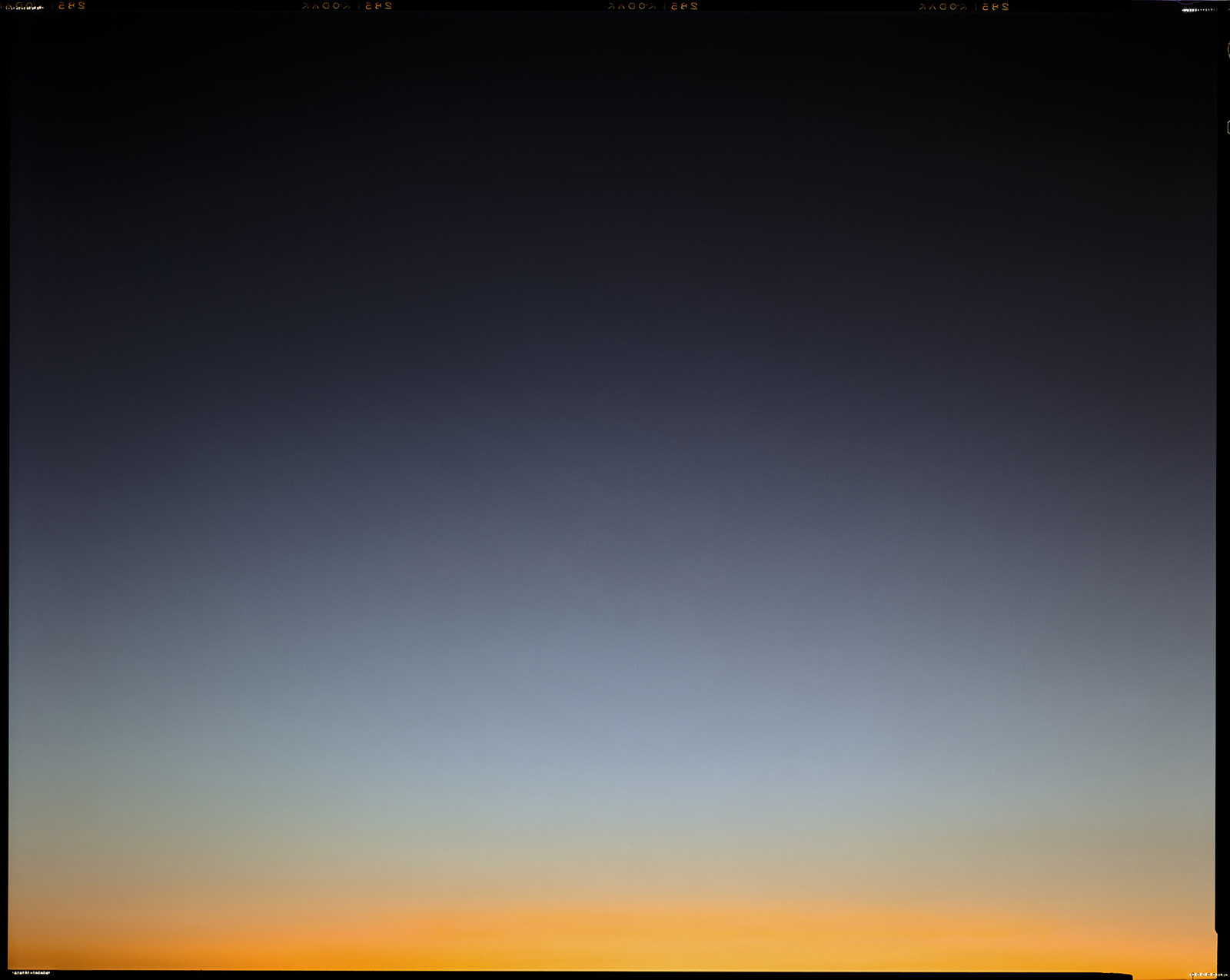
Richard Misrach (American, b. 1949) 'Paradise Valley (Arizona), 3.22.95, 7:05 P.M.' 1995


Richard Misrach (American, b. 1949)
Paradise Valley (Arizona), 3.22.95, 7:05 P.M.
1995
Dye coupler print
© Richard Misrach, courtesy Fraenkel Gallery, San Francisco, Marc Selwyn Fine Art, Los Angeles and Pace/MacGill Gallery, NY


Henry Holmes Smith (American, 1909-1986) 'Tricolor Collage on Black' 1946


Henry Holmes Smith (American, 1909-1986)
Tricolor Collage on Black
1946
Dye imbibition print over gelatin silver print
Indiana University Art Museum, Henry Holmes Smith Archive
© Smith Family Trust


Mitch Epstein (American, b. 1952) 'Flag' 2000


Mitch Epstein (American, b. 1952)
Flag
2000
Dye coupler print
Private collection
© Black River Productions


Trevor Paglen (American, b. 1974) 'The Fence (Lake Kickapoo, Texas)' 2010


Trevor Paglen (American, b. 1974)
The Fence (Lake Kickapoo, Texas)
2010
Dye coupler print, 2011
Amon Carter Museum of American Art, Fort Worth, Texas
© Trevor Paglen


Joaquin Trujillo (American, b. 1976) 'Jacky' 2003


Joaquin Trujillo (American, b. 1976)
Jacky
2003
From the series Los Niños
Inkjet print, 2011
Amon Carter Museum of American art, purchase with funds provided by the Stieglitz Circle of the Amon Carter Museum of American Art
© Joaquin Trujillo 2013


James N. Doolittle (American, 1889-1954) 'Ann Harding' c. 1932


James N. Doolittle (American, 1889-1954)
Ann Harding
c. 1932
Tricolor carbro print
Nelson-Atkins Museum of Art, Kansas City, MO


Amon Carter Museum
3501 Camp Bowie Boulevard
Fort Worth, TX 76107-2695

Opening hours:
Tuesday, Wednesday, Friday, Saturday:
 10am – 5pm
Thursday: 10am – 8pm
Sunday: 12am – 5pm
Closed Mondays and major holidays.

Amon Carter Museum of American Art website

LIKE ART BLART ON FACEBOOK

Back to top

Vale Saul Leiter: the world will be less colour-full, less abstract, less sensual without him

November 2013


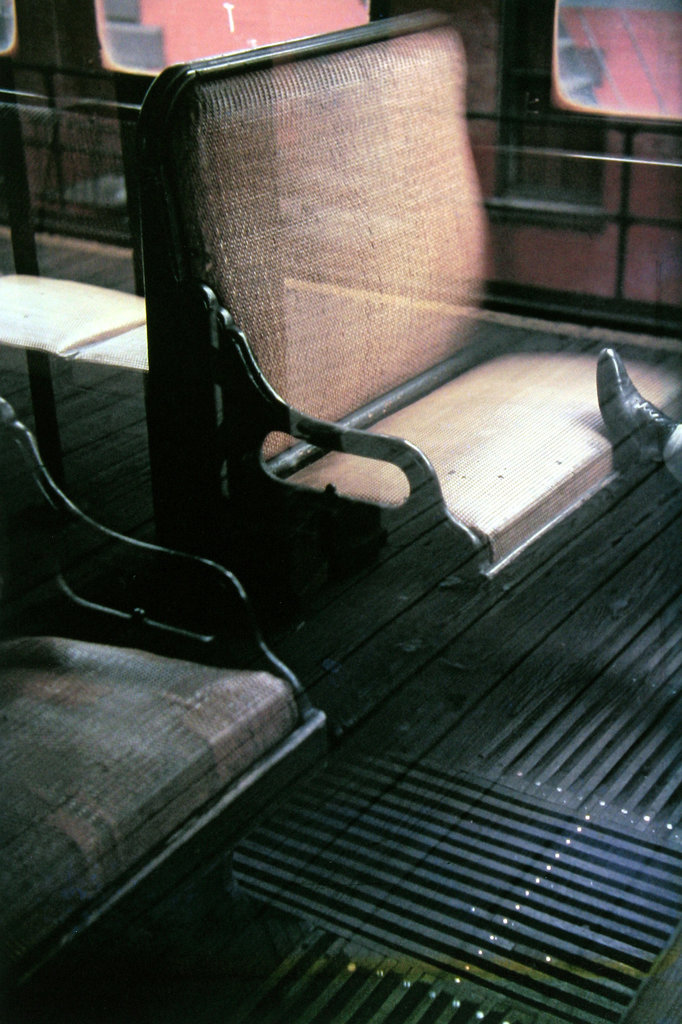
Saul Leiter (American, 1923-2013) 'Foot on El' 1954


Saul Leiter (American, 1923-2013)
Foot on El
1954


“Seeing is a neglected enterprise,” Mr. Leiter often said.

“I am not immersed in self-admiration,” he said. “When I am listening to Vivaldi or Japanese music or making spaghetti at 3 in the morning and realise that I don’t have the proper sauce for it, fame is of no use.”

“He broke all the rules when it came to composing a photograph,” said Mr. Leiter’s assistant, Margit Erb, who confirmed his death, at his home. “He put things into the abstract, he paid attention to colour, he threw foregrounds out of focus, which made the photographs feel very voyeuristic. He applied a painterly mentality that the photography world had not seen.”

His art was enough.

Dr Marcus Bunyan


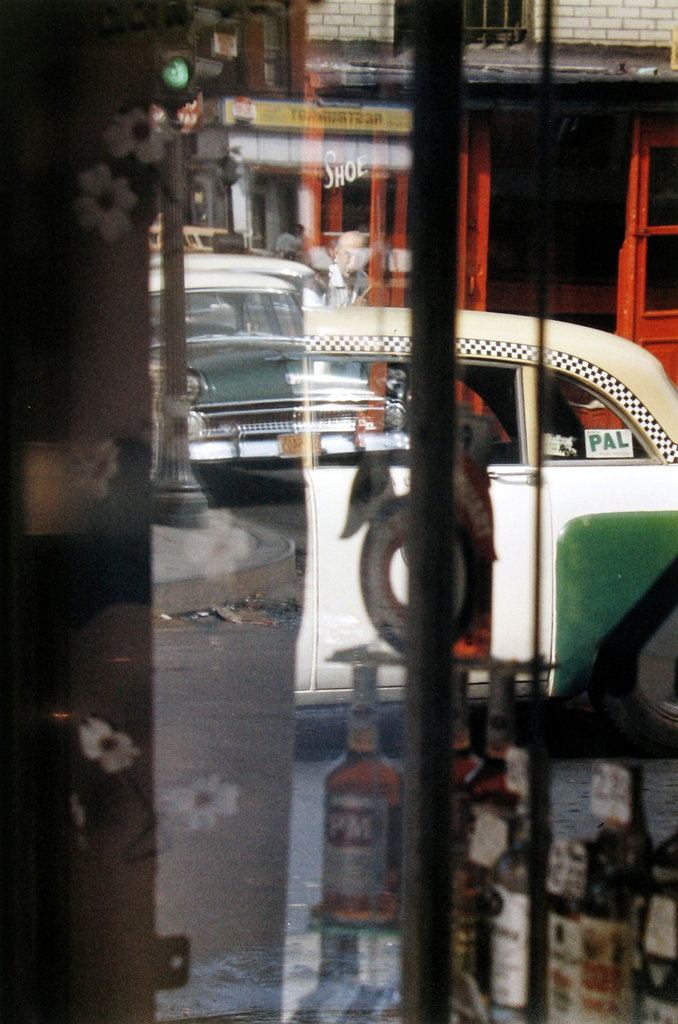
Saul Leiter (American, 1923-2013) 'Taxi' 1956


Saul Leiter (American, 1923-2013)
Taxi
1956


“”In order to build a career and to be successful, one has to be determined,” Mr. Leiter said in an interview for a monograph published in Germany in 2008. “One has to be ambitious. I much prefer to drink coffee, listen to music and to paint when I feel like it.” …

Unplanned and unstaged, Mr. Leiter’s photographs are slices fleetingly glimpsed by a walker in the city. People are often in soft focus, shown only in part or absent altogether, though their presence is keenly implied. Sensitive to the city’s found geometry, he shot by design around the edges of things: vistas are often seen through rain, snow or misted windows.

“A window covered with raindrops interests me more than a photograph of a famous person,” Mr. Leiter says in [the film] “In No Great Hurry.””

Read the obituary of this wonderful artist at “Saul Leiter, Photographer Who Captured New York’s Palette, Dies at 89” on the New York Times website, November 27, 2013

More images

Exhibition: ‘Saul Leiter’ at Kunst Haus Wien, Vienna, January – May 2013
Exhibition: ‘Saul Leiter Retrospective’ at The House of Photography at Deichtorhallen Hamburg, February – April 2012
Exhibition: ‘Saul Leiter: New York Reflections’ at the Jewish Historical Museum, Amsterdam, October 2011 – March 2012


LIKE ART BLART ON FACEBOOK

Back to top

Nathaniel L. Stebbins photographic collection at Historic New England, Boston, Mass. now available online

November 2013


Nathaniel Livermore Stebbins (American, 1847-1922) 'George W. Wells' 1900-10-26


Nathaniel Livermore Stebbins (American, 1847-1922)
George W. Wells
1900-10-26
Nathaniel L. Stebbins photographic collection
© Historic New England


Historic New England

I had never heard of this photographer before, but it is such a joy that these photographs have been digitised and are now available online. How gloriously elegant these yachts were (but still at the cutting edge of technology of their day), when compared with the ugly, contemporary America’s Cup trimarans.

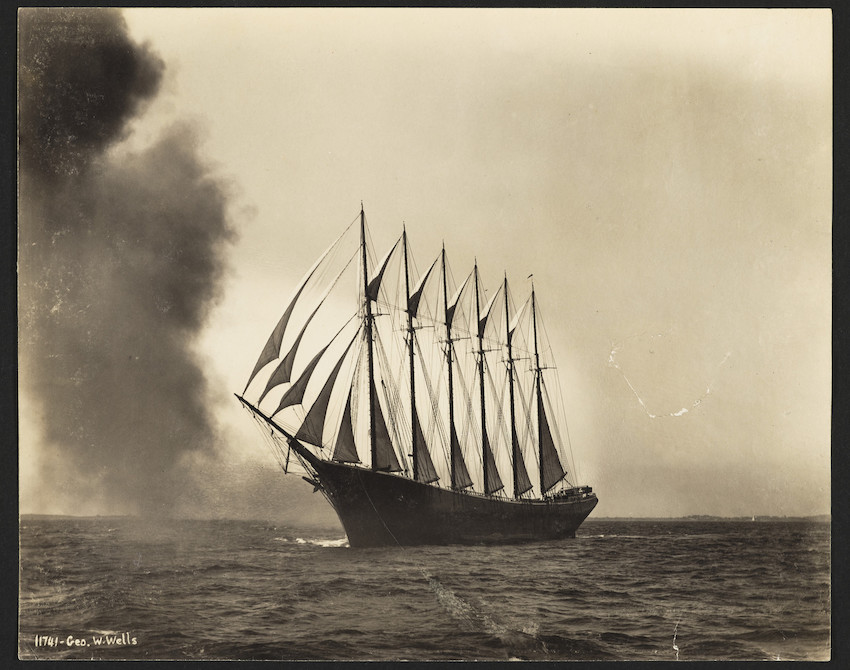
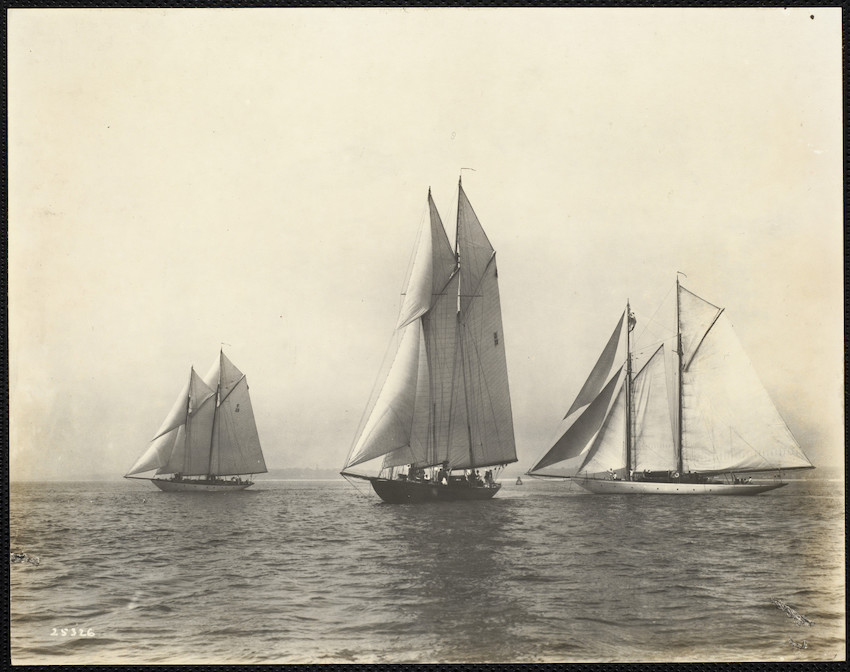
All the photographs in this posting are wonderful for their classical eloquence and framing of the subject. I especially like the first image, George W. Wells (1900, below), as the photographer stands on a tug belching smoke that has gone out to meet the largest schooner in the world at the time. With land in the distance and a rope snaking across the water back to the tug, the lack of sail – along with the darkness of the hull and the attitude of the ship – make it seem as though this were a ghost ship. The other image I particularly like is Start of Schooners (1920, below). The angles of the three ships as they manoeuvre on a seemingly becalmed sea adds a wonderful aura to the photograph.

Can you imagine trying to take these photographs using a large format camera with dry-plate glass negatives on the open sea? While dry-plate photography with its fast exposure time and ease of use had made photography more practical, the difficulty of getting an in focus image on an open, exposed, rocking ship would have been enormous. That the artist achieved such outstanding results says a lot about his previsualisation and his expertise and craftsmanship as a photographer.

Dr Marcus Bunyan


Please click on the photographs for a larger version of the image. All images © Historic New England


Nathaniel Livermore Stebbins (American, 1847-1922) 'George W. Wells' 1900-10-26


Nathaniel Livermore Stebbins (American, 1847-1922)
George W. Wells
1900-10-26
Nathaniel L. Stebbins photographic collection
© Historic New England


The first arrival of the new George W. Wells in Boston, then the world’s largest schooner and its first six masted schooner. The tug Storm King picked her up off Highland Light and N. L. Stebbins probably went on the Storm King to take this photo.


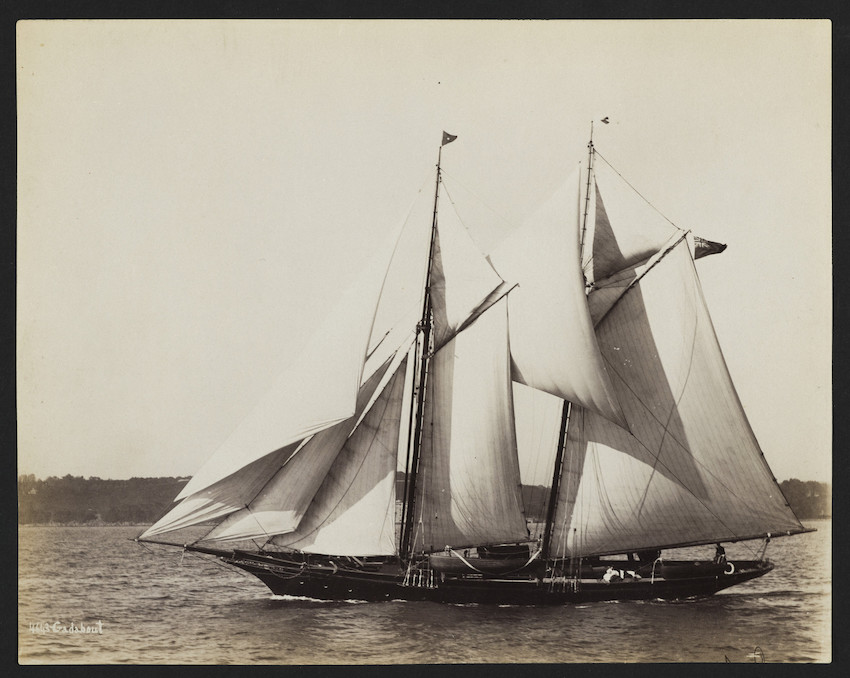
Nathaniel Livermore Stebbins (American, 1847-1922) 'Gadabout' 1893-10-07


Nathaniel Livermore Stebbins (American, 1847-1922)
Gadabout
1893-10-07
Nathaniel L. Stebbins photographic collection
© Historic New England


Taken on the day of the first America’s Cup race between Vigilant and Valkyrie, 15 miles to windward and return, starting from Sandy Hook Lightship, Vigilant won.


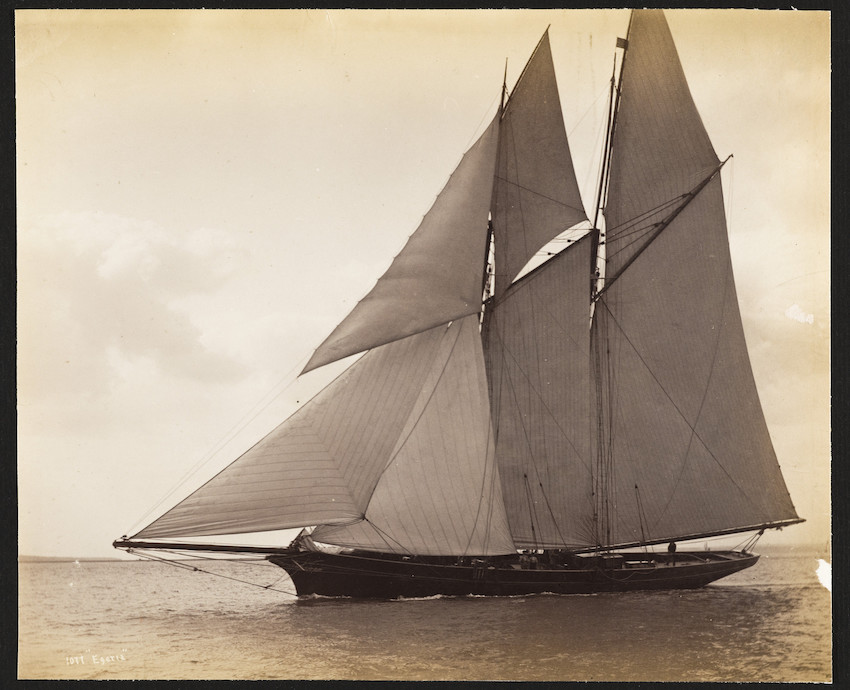
Nathaniel Livermore Stebbins (American, 1847-1922) 'Egeria' 1886-07-09


Nathaniel Livermore Stebbins (American, 1847-1922)
Egeria
1886-07-09
Nathaniel L. Stebbins photographic collection
© Historic New England


Historic New England announced that it’s collection of Nathaniel L. Stebbins photographs will be accessible online on August 22, 2013. Stebbins, a celebrated marine photographer, captured the quintessential New England pastimes of yachting and racing, as well as an extraordinary variety of marine vessels. This spectacular photographic collection consists of approximately 6,000 original prints. Dating from the early 1880s to c. 1922, the images depict recreational sailing vessels, steamships, ferries, and police boats, as well as boatyards and other dockside facilities. The images are a record of an important era in maritime history and document commercial and recreational maritime activities that would eventually fade away due to changes in transportation and technology. Architectural views are also part of the collection.

Born in Meadville, Pennsylvania, Stebbins developed a love of ships at a young age, and made an ocean voyage to South America as a young man. He published several books on marine and naval topics, including The New Navy of the United States (1912), The Illustrated Coast Pilot, with Sailing Directions (1891), and The Yachtsman’s Album (1896). Stebbins took roughly 25,000 photographs before his death in 1922. The digitisation of the Stebbins collection is an important step in Historic New England’s ongoing Collections Access Project, which launched in 2010. The Northeast Document Conservation Center and the Boston Public Library in conjunction with the Digital Commonwealth participated in the effort.

Text from the Art Daily website [Online] Cited 10/11/2013
 

Nathaniel Livermore Stebbins (American, 1847-1922) 'Puritan' 1885-08-03


Nathaniel Livermore Stebbins (American, 1847-1922)
Puritan
1885-08-03
Nathaniel L. Stebbins photographic collection
© Historic New England


Goelet Cup, Newport

“Mr. N. L. Stebbins, the marine photographer, succeeded in getting a large number of views of the Puritan, Priscilla and other yachts in the race for the Goelet cups Monday [1885-08-03].”

Source: Anon. “Yachting Spray.” Boston Globe, August 9, 1885, p. 6.


Nathaniel Livermore Stebbins (American, 1847-1922) 'Mayflower' 1886-09-07


Nathaniel Livermore Stebbins (American, 1847-1922)
Mayflower
1886-09-07
Nathaniel L. Stebbins photographic collection
© Historic New England


First race for the America’s Cup 1886, Mayflower won against Galatea


Nathaniel Livermore Stebbins (American, 1847-1922) 'America's Cup Race: Start, Vigilant and Valkyrie' 1893-10-07


Nathaniel Livermore Stebbins (American, 1847-1922)
America’s Cup Race: Start, Vigilant and Valkyrie
1893-10-07
Nathaniel L. Stebbins photographic collection
© Historic New England


First America’s Cup race, 15 miles to windward and return, starting from Sandy Hook Lightship, Vigilant won.


Nathaniel Livermore Stebbins (January 9, 1847 – July 10, 1922) was a noted American marine photographer, whose surviving photographs document an important era in the development of American maritime activities, as sweeping technological and social changed revolutionised activity on the water, in military, commercial and leisure spheres… He became interested in photography in about 1882, shortly after the introduction of dry-plate photography, with its fast exposure time and ease of use, made photography more practical. With an interest in the sea, and little competition in that area, it was natural that he should specialise in maritime photography.

Over his working career as a commercial photographer (from 1884 to 1922), he took approximately 25,000 images. Of these, about 60% were of marine subjects (the majority of those being of leisure activities, but many are of military and commercial scenes, a valuable record for historians). The remainder include a wide variety of commercial work, including the theatre, railroads, home interiors, etc. His collection at his death included about 20,000 negatives, almost all on glass plates (the usual medium for high-resolution negatives in his time); it was bought by another photographer, and on his death, many of Stebbins’ plates were sold for scrap (tradition holds that they were used in greenhouses).

A few plates found their way to the Peabody Museum in Salem, Massachusetts, and another small group eventually wound up at the Mariners’ Museum, but the bulk of the remaining collection (about 5,000 images total, of which a little over 2,500 are the original glass negatives) were rescued for Historic New England by William Appleton, the founder of the Society. Almost all are of maritime subjects; very little of his non-maritime work survives.

Text from the Wikipedia website


Nathaniel Livermore Stebbins (American, 1847-1922) 'America's Cup Race: Two minutes after start, Valkyrie & Vigilant' 1893-10-09


Nathaniel Livermore Stebbins (American, 1847-1922)
America’s Cup Race: Two minutes after start, Valkyrie & Vigilant
1893-10-09
Nathaniel L. Stebbins photographic collection
© Historic New England


Second America’s Cup race between Vigilant and Valkyrie, equilateral triangle, starting from Sandy Hook Lightship, Vigilant won.


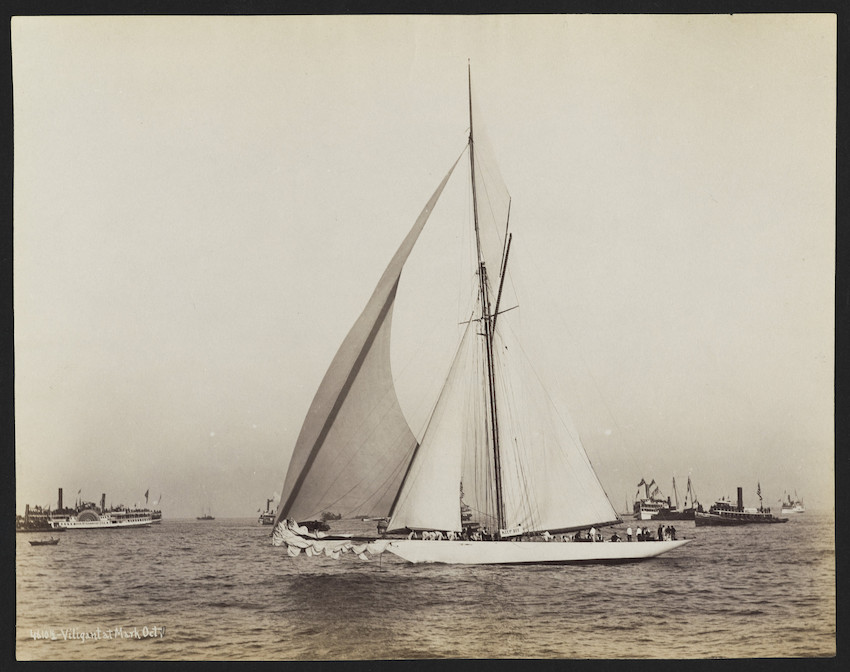
Nathaniel Livermore Stebbins (American, 1847-1922) 'America's Cup Race: Vigilant at the mark' 1893-10-05


Nathaniel Livermore Stebbins (American, 1847-1922)
America’s Cup Race: Vigilant at the mark
1893-10-05
Nathaniel L. Stebbins photographic collection
© Historic New England


First America’s Cup race, 15 miles to windward and return, starting from Sandy Hook Lightship, Vigilant won.


Nathaniel Livermore Stebbins (American, 1847-1922) 'Colonia, Vigilant & Jubilee' 1893-08-11


Nathaniel Livermore Stebbins (American, 1847-1922)
Colonia, Vigilant & Jubilee
1893-08-11
Nathaniel L. Stebbins photographic collection
© Historic New England


Nathaniel Livermore Stebbins (American, 1847-1922) 'Defender' 1895-07-20


Nathaniel Livermore Stebbins (American, 1847-1922)
Defender
1895-07-20
Nathaniel L. Stebbins photographic collection
© Historic New England


First trial race between Defender and Vigilant, 30 miles windward and leeward from Scotland lightship. Defender’s first race and win. Defender, designed and built in 1895 by N. G. Herreshoff to defend the America’s Cup against Valkyrie III. Her bottom was polished bronze, but her topsides, deck beams, and some of her deck framing were aluminium (making her a giant battery with electrolysis).


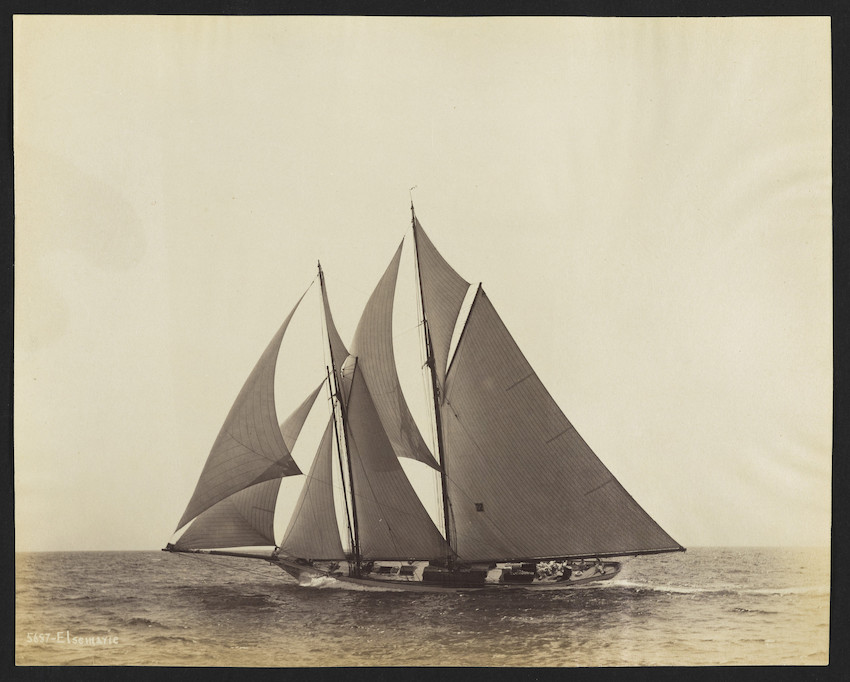
Nathaniel Livermore Stebbins (American, 1847-1922) 'Elsemarie' 1895-08-02


Nathaniel Livermore Stebbins (American, 1847-1922)
Elsemarie
1895-08-02
Nathaniel L. Stebbins photographic collection
© Historic New England


Goelet Cup, Newport

N. L. Stebbins took photos from the Amadis (Boston Globe, Aug. 3, 1895, p. 1-2). Volunteer won the slop class (after Defender had been disabled by a broken gaff); Emerald the schooner class.


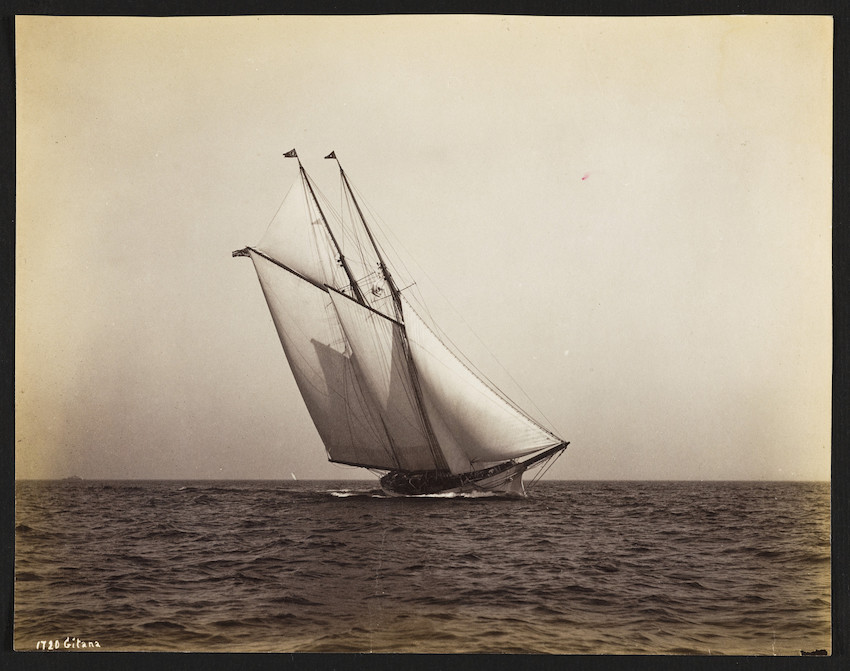
Nathaniel Livermore Stebbins (American, 1847-1922) 'Gitana' 1888-06-10


Nathaniel Livermore Stebbins (American, 1847-1922)
Gitana
1888-06-10
Nathaniel L. Stebbins photographic collection
© Historic New England


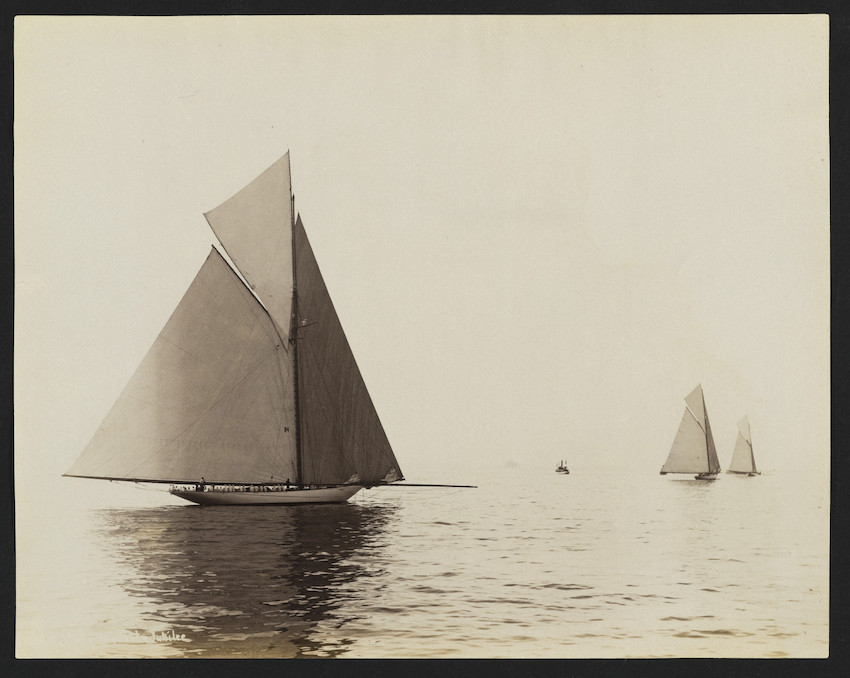
Nathaniel Livermore Stebbins (American, 1847-1922) 'Jubilee' 1893-09-07


Nathaniel Livermore Stebbins (American, 1847-1922)
Jubilee
1893-09-07
Nathaniel L. Stebbins photographic collection
© Historic New England


First trial race to choose an America’s Cup defender.


Nathaniel Livermore Stebbins (American, 1847-1922) 'Start of Schooners' 1920-07-10


Nathaniel Livermore Stebbins (American, 1847-1922)
Start of Schooners
1920-07-10
Nathaniel L. Stebbins photographic collection
© Historic New England


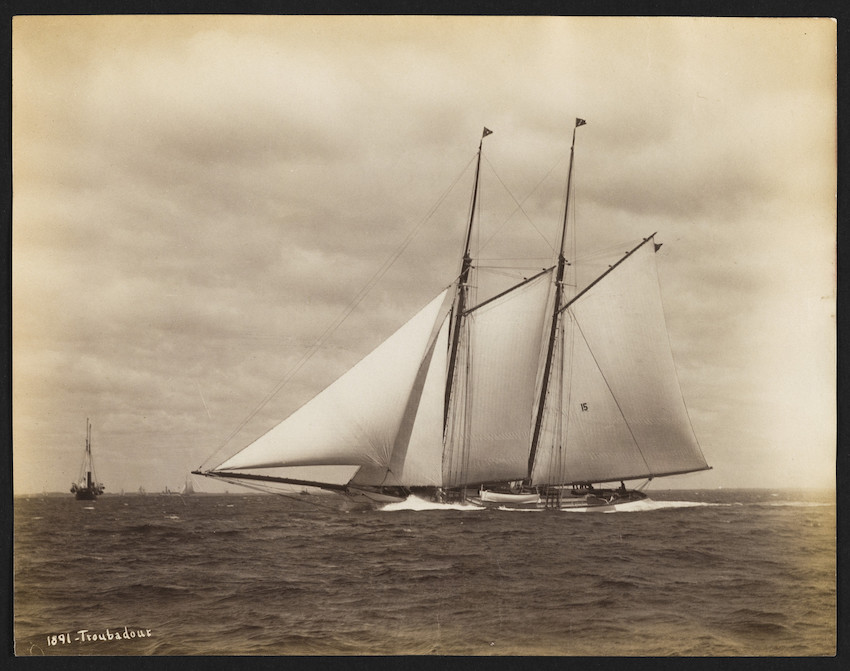
Nathaniel Livermore Stebbins (American, 1847-1922) 'Troubadour' 1888-08-14


Nathaniel Livermore Stebbins (American, 1847-1922)
Troubadour
1888-08-14
Nathaniel L. Stebbins photographic collection
© Historic New England


Historic New England website

LIKE ART BLART ON FACEBOOK

Back to top

Exhibition: ‘Winogrand’s Women Are Beautiful’ at the Worcester Art Museum, Worcester, MA

Exhibition dates: 10th August – 10th November 2013


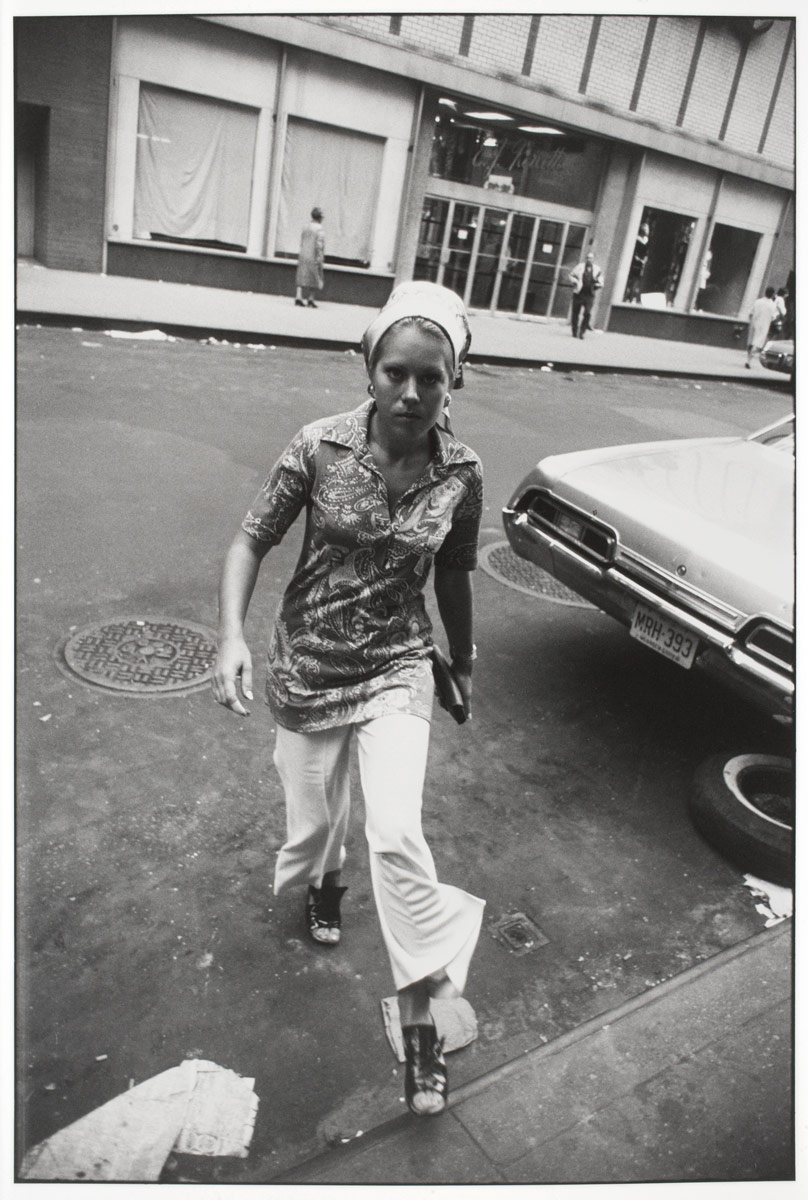
Garry Winogrand (American, 1928-1984) 'Untitled (Woman Carrying Bags)' about 1972


Garry Winogrand (American, 1928-1984)
Untitled (Woman Carrying Bags)
about 1972
Gelatin silver print
Gift of the Schorr Family Collection, 1984.102
© The Estate of Garry Winogrand, courtesy Fraenkel Gallery, San Francisco


As people may know, I am not a great fan of the photography of Garry Winogrand. Wile other people rave over this “master” of street snapshot photography, his work has never won me over, and possibly never will. There is something a little… what’s the word… creepy? voyeuristic? plain downright predatory about his photography. All the oblique angles in the world aren’t going to change my opinion.
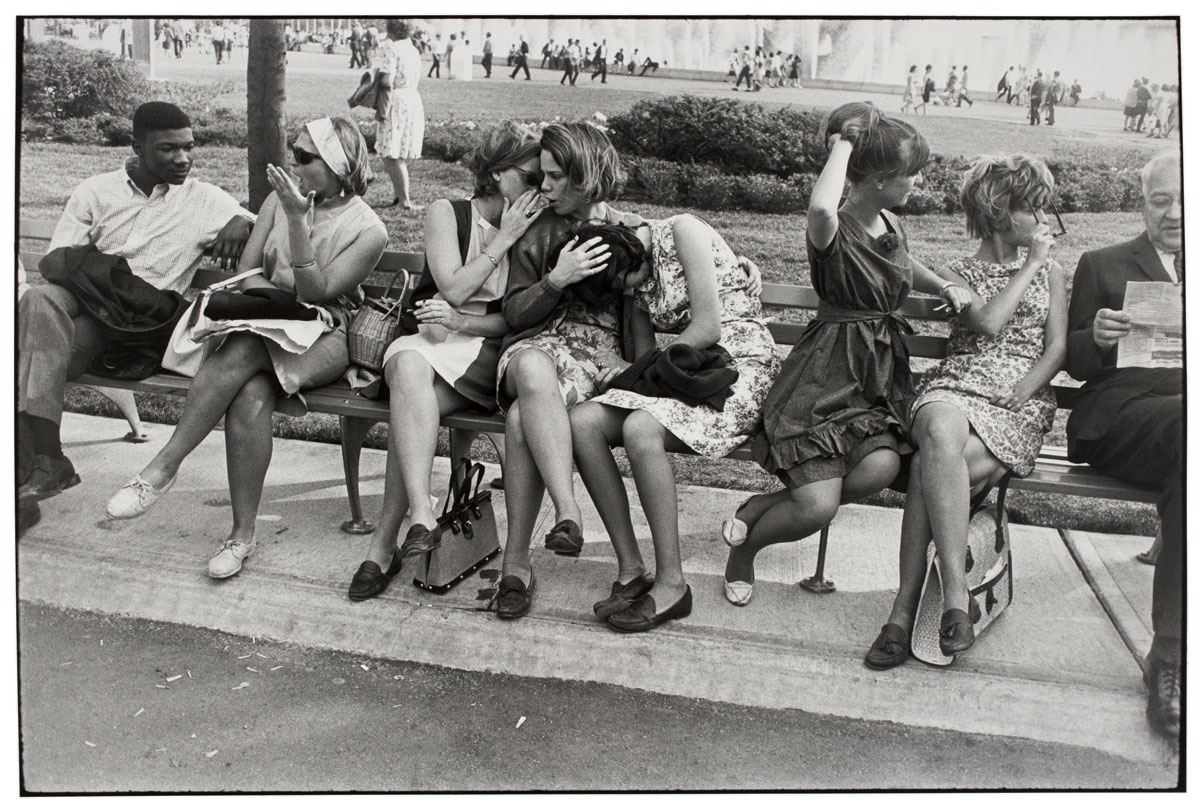
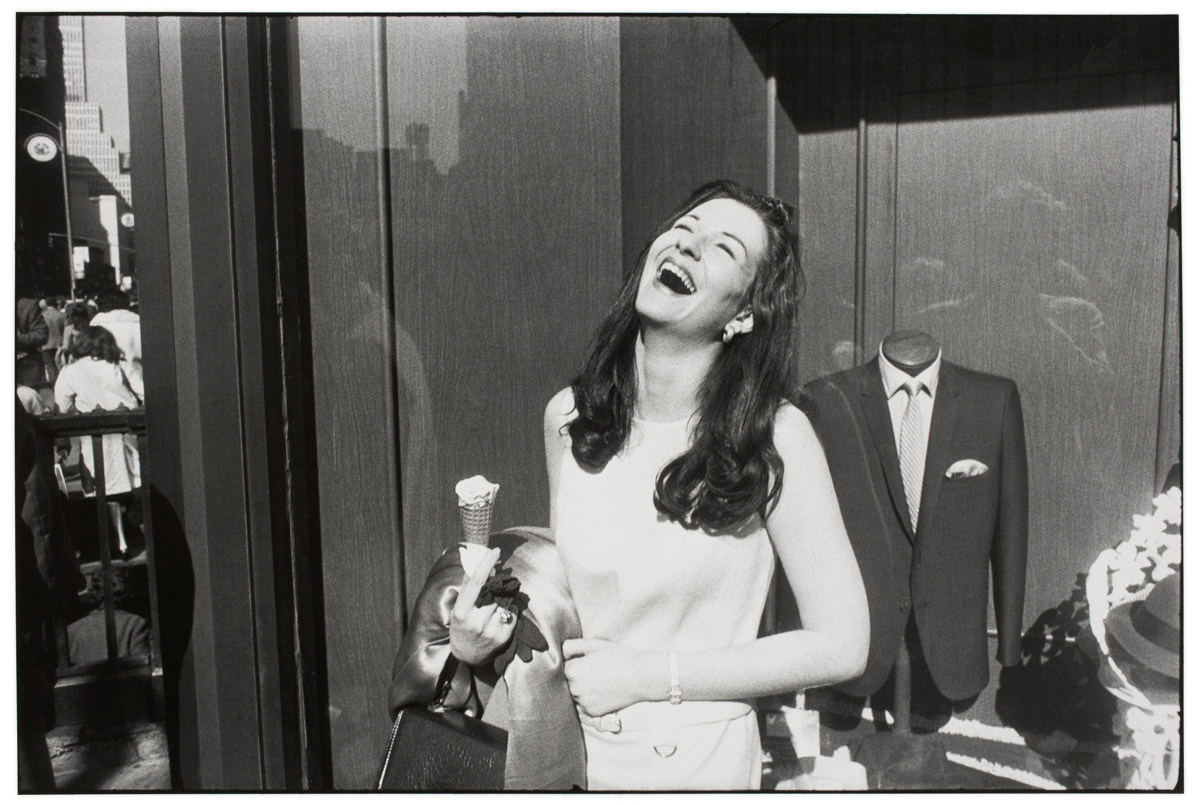
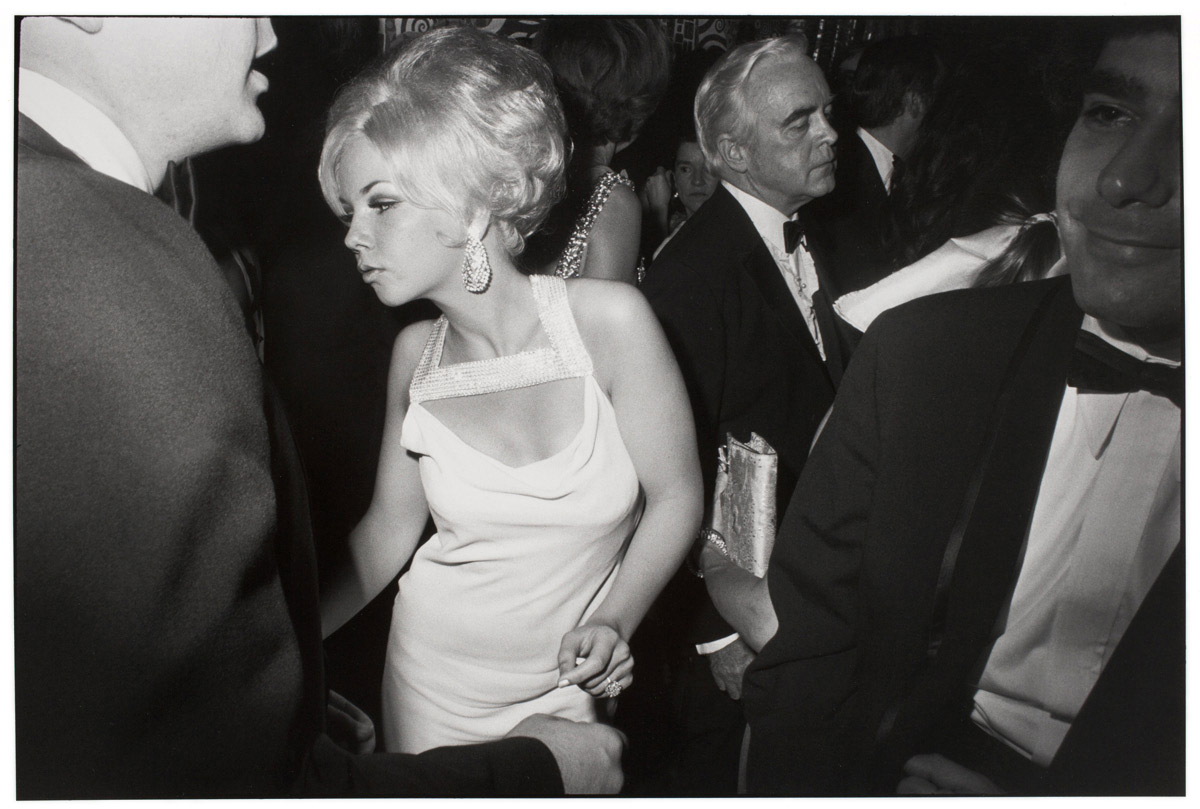
For me, this series represents the pinnacle of Winogrand’s photography. The affection of the photographer toward the subject is clearly evident, coupled with a stealthy hunting instinct. It’s almost as if he is stalking these women to peer up their skirts (as in Woman in a Telephone Booth, New York, about 1972, below). The scenario is pretty unedifying. There are odd moments of joy (such as is in Woman Laughing, New York 1968, below) and beauty, as in the rightly famous Centennial Ball, Metropolitan Museum, New York (1969, below).

However, I feel like the human being in Woman Crossing Street, New York (about 1970, below) where the look on her face says that she could just bop him on the nose with a good left hook. And I wouldn’t have blamed her, either.

Dr Marcus Bunyan


Many thankx to the Worcester Art Museum for allowing me to publish the photographs in the posting. Please click on the photographs for a larger version of the image.

All of the photographs are Gift of the Schorr Family Collection © The Estate of Garry Winogrand, courtesy Fraenkel Gallery, San Francisco


Garry Winogrand (American, 1928-1984) 'Untitled (Woman in a Telephone Booth, New York)' about 1972


Garry Winogrand (American, 1928-1984)
Untitled (Woman in a Telephone Booth, New York)
about 1972
Gelatin silver print
Gift of the Schorr Family collection
© The Estate of Garry Winogrand, courtesy Fraenkel Gallery, San Francisco


Garry Winogrand (American, 1928-1984) 'Untitled (Histrionics on a Bench, World’s Fair, New York)' 1964


Garry Winogrand (American, 1928-1984)
Untitled (Histrionics on a Bench, World’s Fair, New York)
1964
Gelatin silver print
Gift of the Schorr Family Collection
© The Estate of Garry Winogrand, courtesy Fraenkel Gallery, San Francisco


Garry Winogrand (American, 1928-1984) 'Untitled (Woman Laughing, New York)' 1968


Garry Winogrand (American, 1928-1984)
Untitled (Woman Laughing, New York)
1968
Gelatin silver print
Gift of the Schorr Family Collection
© The Estate of Garry Winogrand, courtesy Fraenkel Gallery, San Francisco


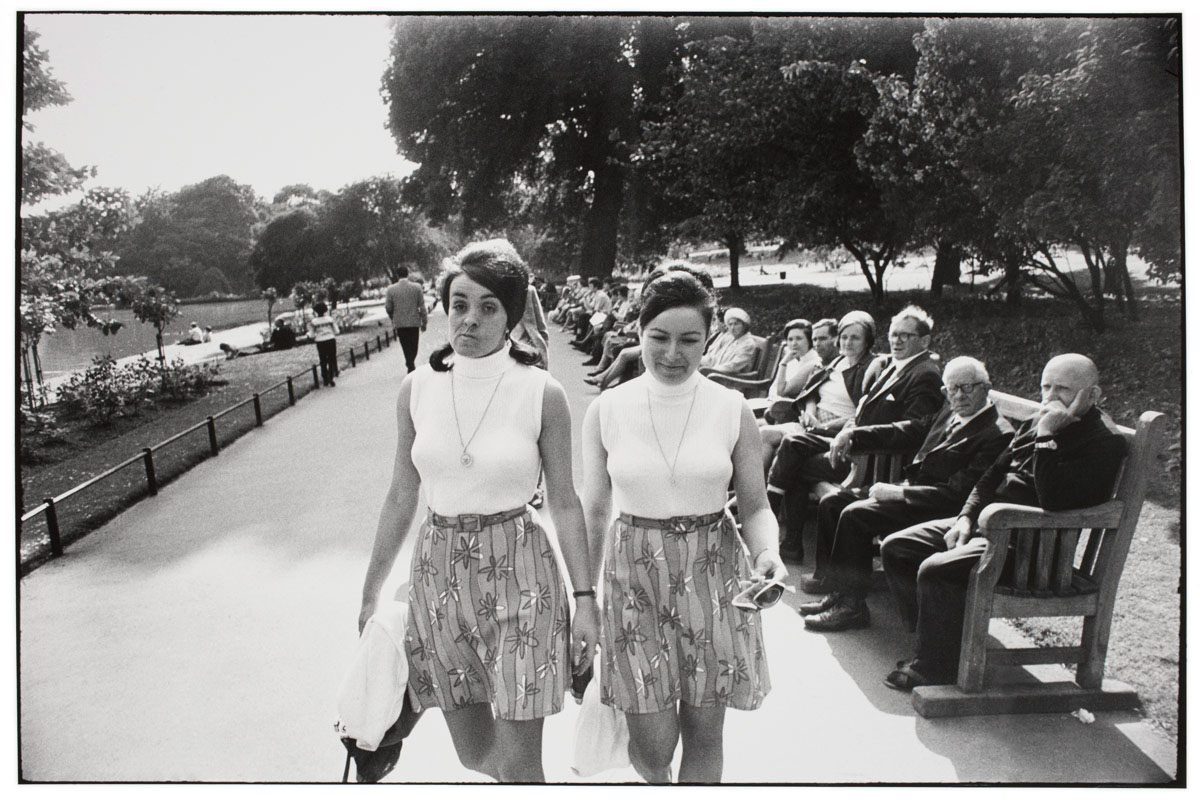
Garry Winogrand (American, 1928-1984) 'Untitled (Identically Dressed)' Nd


Garry Winogrand (American, 1928-1984)
Untitled (Identically Dressed)
Nd
Gelatin silver print
Gift of the Schorr Family Collection
© The Estate of Garry Winogrand, courtesy Fraenkel Gallery, San Francisco


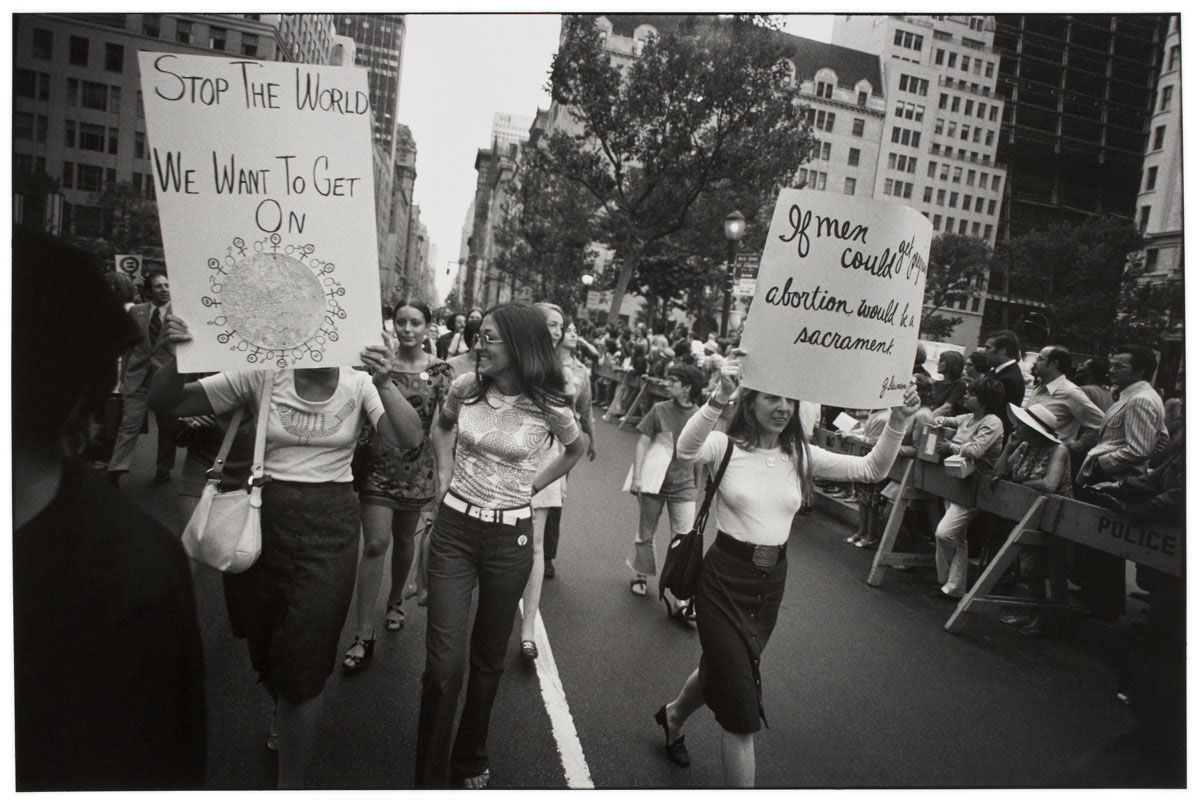
Garry Winogrand (American, 1928-1984) 'Untitled (Women Rallying, New York)' about 1972


Garry Winogrand (American, 1928-1984)
Untitled (Women Rallying, New York)
about 1972
Gelatin silver print
Gift of the Schorr Family Collection, 1991.293
© The Estate of Garry Winogrand, courtesy Fraenkel Gallery, San Francisco


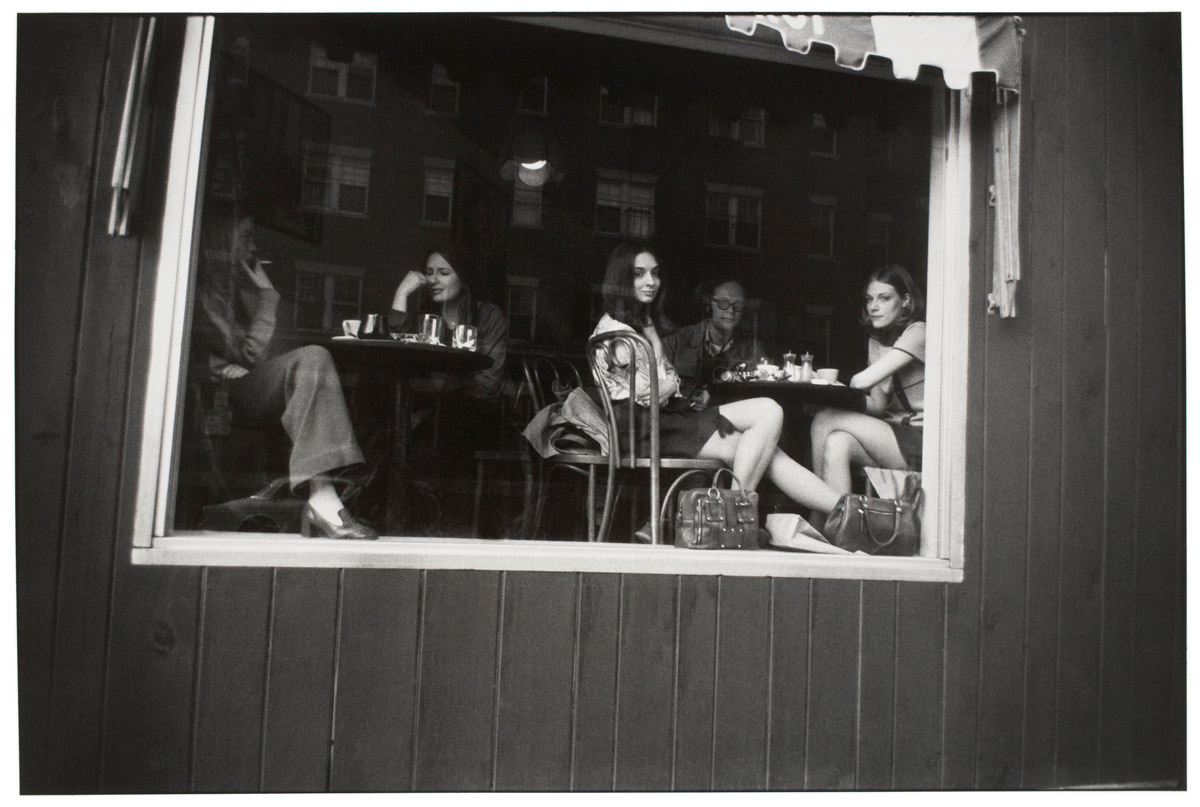
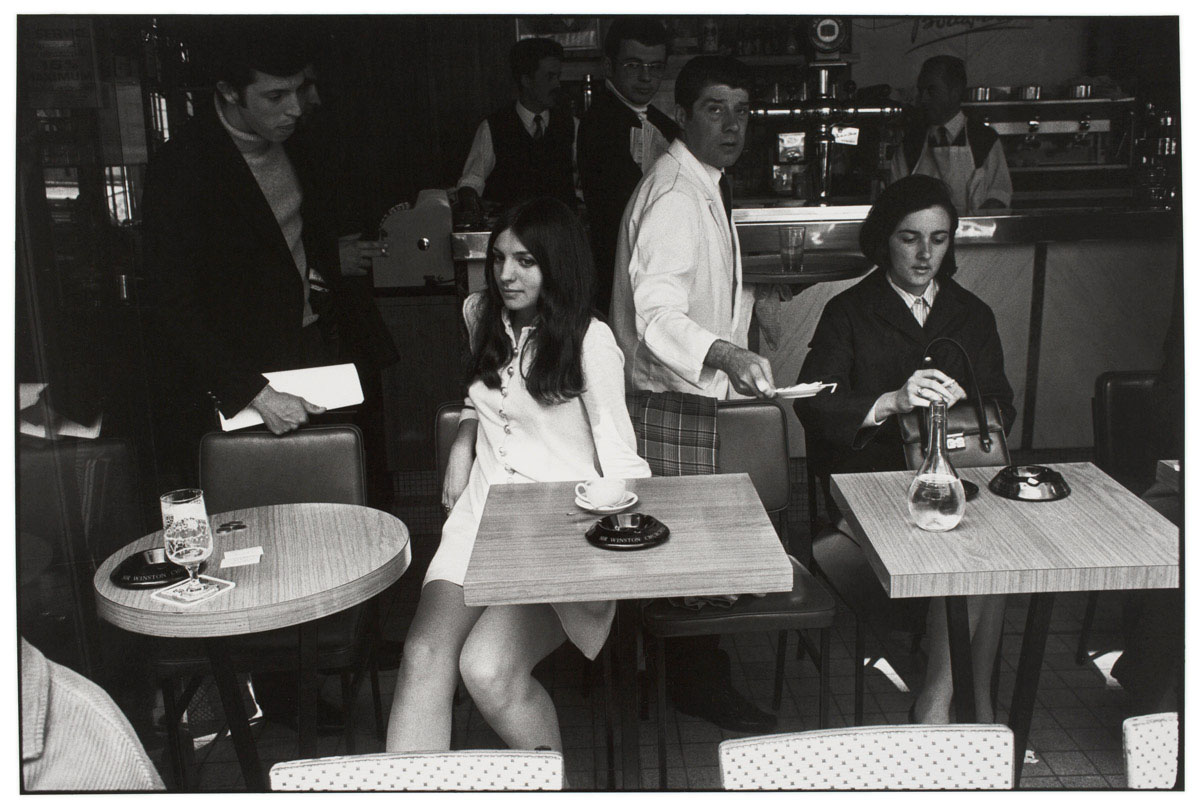
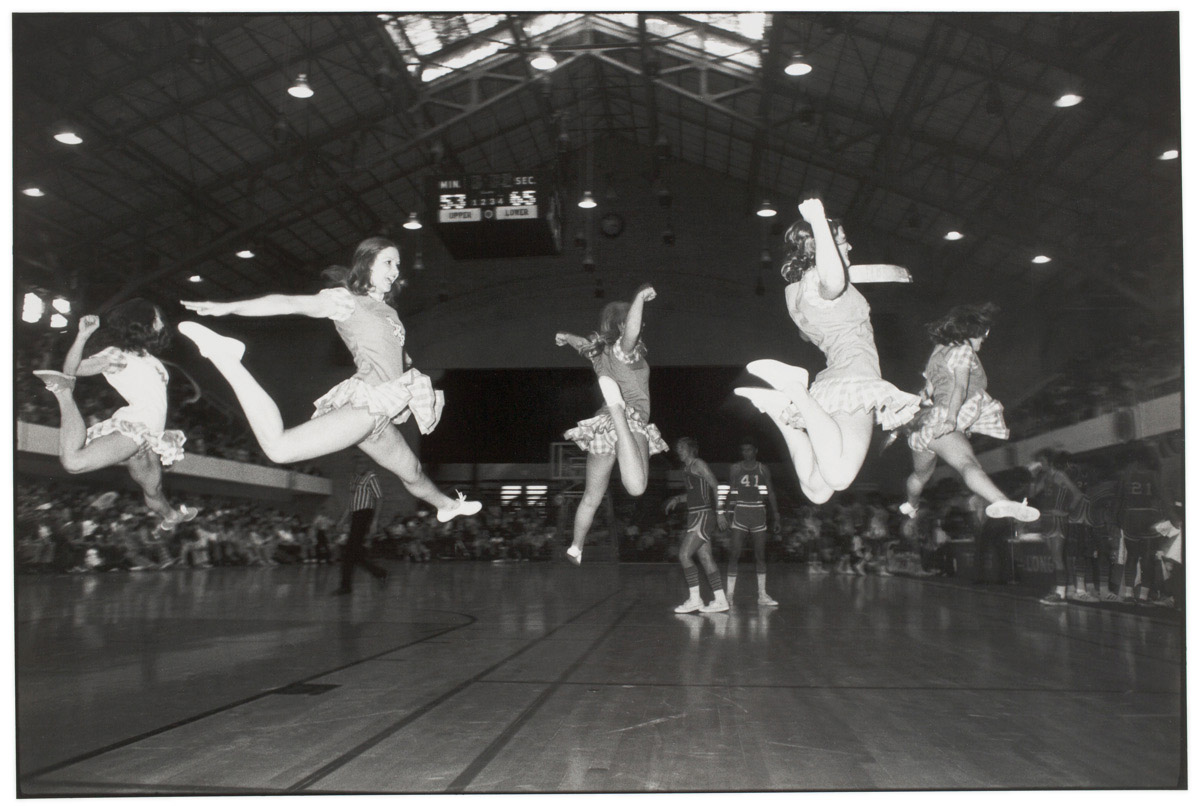
Worcester Art Museum is pleased to announce the photography exhibition, Winogrand’s Women are Beautiful, on view August 10 through November 10, 2013. Worcester Art Museum owns a complete portfolio of the Women are Beautiful series by photographer Garry Winogrand (American, 1928-1984).  68 of the 85 images will be on view. Photographs feature black and white images of young adult women taken primarily during the 1960s and early 1970s.

Hailed as a pioneer of the “snapshot aesthetic” within the genre of documentary photography, Winogrand used a wide-angle Leica M4 camera to produce spontaneous images emphasising how everyday subjects, like people, dogs, or crowds, interact with the landscape around them. His work features oblique perspectives, often resulting in uniquely composed photographs made by the stealthy eye of a private investigator. However, Winogrand is also routinely criticised for exploiting the subjects of his work, particularly women.

Organised by Assistant Curator of Prints, Drawings and Photographs, Nancy Burns, Winogrand’s Women are Beautiful, presents the photographer’s most popular portfolio through the lens of five varying themes.  These themes seek to promote Winogrand’s significance within the canon of photography, while engaging directly with the censure his works receive from art historians and feminists alike.

Press release from the Worcester Art Museum


Garry Winogrand (American, 1928-1984) 'Untitled (Restaurant Window, Boston)' about 1970


Garry Winogrand (American, 1928-1984)
Untitled (Restaurant Window, Boston)
about 1970
Gelatin silver print
Gift of the Schorr Family collection
© The Estate of Garry Winogrand, courtesy Fraenkel Gallery, San Francisco


Garry Winogrand (American, 1928-1984) 'Untitled (Café, Paris)' about 1969


Garry Winogrand (American, 1928-1984)
Untitled (Café, Paris)
about 1969
Gelatin silver print
Gift of the Schorr Family Collection
© The Estate of Garry Winogrand, courtesy Fraenkel Gallery, San Francisco


Garry Winogrand (American, 1928-1984) 'Untitled (Cheerleaders, Austin)' 1974


Garry Winogrand (American, 1928-1984)
Untitled (Cheerleaders, Austin)
1974
Gelatin silver print
Gift of the Schorr Family Collection
© The Estate of Garry Winogrand, courtesy Fraenkel Gallery, San Francisco


Garry Winogrand (American, 1928-1984) 'Untitled (Centennial Ball, Metropolitan Museum, New York)' 1969


Garry Winogrand (American, 1928-1984)
Untitled (Centennial Ball, Metropolitan Museum, New York)
1969
Gelatin silver print
Gift of the Schorr Family collection
© The Estate of Garry Winogrand, courtesy Fraenkel Gallery, San Francisco


Garry Winogrand (American, 1928-1984) 'Untitled (Women Walking Poodles, New York)' about 1959


Garry Winogrand (American, 1928-1984)
Untitled (Women Walking Poodles, New York)
about 1959
Gelatin silver print
Gift of the Schorr Family Collection
© The Estate of Garry Winogrand, courtesy Fraenkel Gallery, San Francisco


Garry Winogrand (American, 1928-1984) 'Untitled (Woman Crossing Street, New York)' about 1970


Garry Winogrand (American, 1928-1984)
Untitled (Woman Crossing Street, New York)
about 1970
Gelatin silver print
Gift of the Schorr Family collection
© The Estate of Garry Winogrand, courtesy Fraenkel Gallery, San Francisco


Worcester Art Museum
Fifty-five Salisbury Street
Worcester, MA 01609
Phone: 508.799.4406

Opening hours:
Wednesday – Sunday 10am – 4pm

Worcester Art Museum website

LIKE ART BLART ON FACEBOOK

Back to top

Photographs: ‘The War at Home: Farm Security Administration / Office of War Information Color Photographs’ by Alfred Palmer Part 2

October 2013


Alfred Palmer (American, 1906-1993) 'Large pipe elbows for the Army are formed at Tube Turns, Inc.,' 1941


Alfred Palmer (American, 1906-1993)
Large pipe elbows for the Army are formed at Tube Turns, Inc., by heating lengths of pipe with gas flames and forcing them around a die, in Louisville, Kentucky, in 1941
1941
4 x 5 Kodachrome transparency
Alfred Palmer/OWI/LOC


Kodachrome sheets 1941-1943

This is the second of a two-part posting on the large format Kodachrome colour transparency photographs of the American photographer Alfred Palmer taken during 1941-1943.

This man was a true master of his craft. Look at the lighting in the first three photographs. Palmer really understood the theatre of the scene he was photographing. The first photograph, an inanimate object picturing an elemental force, brings me to tears when looking at it. Too sentimental, too emotional? I don’t think so… just an amazing experience from a magnificent photograph.

See Part 1 of the posting.

Dr Marcus Bunyan


Please click on the photographs for a larger version of the image. Many thankx to the Library of Congress for allowing me to publish the photographs in the posting. No known copyright restrictions on any of the photographs.


Alfred Palmer (American, 1906-1993) 'Casting a billet from an electric furnace, Chase Brass and Copper Co., Euclid, Ohio' February 1942


Alfred Palmer (American, 1906-1993)
Casting a billet from an electric furnace, Chase Brass and Copper Co., Euclid, Ohio. Modern electric furnaces have helped considerably in speeding the production of brass and other copper alloys for national defense. Here the molten metal is poured or cast from the tilted furnace into a mold to form a billet. The billet later is worked into rods, tubes, wires or special shapes for a variety of uses
February 1942
4 x 5 Kodachrome transparency
Alfred Palmer/OWI/LOC


Alfred Palmer (American, 1906-1993) 'Crane operator at Tennessee Valley Authority's Douglas Dam' June 1942


Alfred Palmer (American, 1906-1993)
Crane operator at Tennessee Valley Authority’s Douglas Dam
June 1942
4 x 5 Kodachrome transparency
Alfred Palmer/OWI


Alfred Palmer (American, 1906-1993) 'An employee in the drill-press section of North American's huge machine shop runs mounting holes in a large dural casting, in Inglewood, California, in October of 1942' October 1942


Alfred Palmer (American, 1906-1993)
An employee in the drill-press section of North American’s huge machine shop runs mounting holes in a large dural casting, in Inglewood, California, in October of 1942
October 1942
4 x 5 Kodachrome transparency
Alfred Palmer/OWI/LOC


Alfred Palmer (American, 1906-1993) 'North American Aviation drill operator in the control surface department assembling horizontal stabilizer section of an airplane. Inglewood, California' October 1942


Alfred Palmer (American, 1906-1993)
North American Aviation drill operator in the control surface department assembling horizontal stabilizer section of an airplane. Inglewood, California
October 1942
4 x 5 Kodachrome transparency
Alfred Palmer/OWI


Alfred Palmer (American, 1906-1993) 'Here's our mission. A combat crew receives final instructions just before taking off in a mighty YB-17 bomber from a bombardment squadron base at the field, in Langley Field, Virginia, in May of 1942' May 1942


Alfred Palmer (American, 1906-1993)
Here’s our mission. A combat crew receives final instructions just before taking off in a mighty YB-17 bomber from a bombardment squadron base at the field, in Langley Field, Virginia, in May of 1942
May 1942
4 x 5 Kodachrome transparency
Alfred Palmer/OWI/LOC


Alfred Palmer (American, 1906-1993) 'Hitler would like this man to go home and forget about the war. A good American non-com at the side machine gun of a huge YB-17 bomber is a man who knows his business and works hard at it' May 1942


Alfred Palmer (American, 1906-1993)
Hitler would like this man to go home and forget about the war. A good American non-com at the side machine gun of a huge YB-17 bomber is a man who knows his business and works hard at it
May 1942
4 x 5 Kodachrome transparency
Alfred Palmer/OWI/LOC


Alfred Palmer (American, 1906-1993) 'Young woman employee of North American Aviation working over the landing gear mechanism of a P-51 fighter plane. Inglewood, California' October 1942


Alfred Palmer (American, 1906-1993)
Young woman employee of North American Aviation working over the landing gear mechanism of a P-51 fighter plane. Inglewood, California. 
October 1942
4 x 5 Kodachrome transparency
Alfred Palmer/OWI


Alfred Palmer (American, 1906-1993) 'Working on the horizontal stabilizer of a "Vengeance" dive bomber at the Consolidated-Vultee plant in Nashville' February 1943


Alfred Palmer (American, 1906-1993)
Working on the horizontal stabilizer of a “Vengeance” dive bomber at the Consolidated-Vultee plant in Nashville
February 1943
4 x 5 Kodachrome transparency
Alfred Palmer/OWI


Alfred Palmer (American, 1906-1993) 'Testing electric wiring at Douglas Aircraft Company. Long Beach, California' October 1942


Alfred Palmer (American, 1906-1993)
Testing electric wiring at Douglas Aircraft Company. Long Beach, California
October 1942
4 x 5 Kodachrome transparency
Alfred Palmer/OWI


Alfred Palmer (American, 1906-1993) 'Truck driver at the Tennessee Valley Authority's Douglas Dam' June 1942


Alfred Palmer (American, 1906-1993)
Truck driver at the Tennessee Valley Authority’s Douglas Dam
June 1942
4 x 5 Kodachrome transparency
Alfred Palmer/OWI


Alfred Palmer (American, 1906-1993) 'Experimental staff at the North American Aviation plant in Inglewood, Calif. , observing wind tunnel tests on a model of the B-25 ("Billy Mitchell") bomber' October 1942


Alfred Palmer (American, 1906-1993)
Experimental staff at the North American Aviation plant in Inglewood, Calif., observing wind tunnel tests on a model of the B-25 (“Billy Mitchell”) bomber
October 1942
4 x 5 Kodachrome transparency
Alfred Palmer/OWI


Alfred Palmer (American, 1906-1993) 'An experimental scale model of the B-25 plane is prepared for wind tunnel tests in the plant of the North American Aviation, Inc., Inglewood, California' October 1942


Alfred Palmer (American, 1906-1993)
An experimental scale model of the B-25 plane is prepared for wind tunnel tests in the plant of the North American Aviation, Inc., Inglewood, California. The model maker holds an exact miniature reproduction of the type of bomb the plane will carry
October 1942
4 x 5 Kodachrome transparency
Alfred Palmer/OWI/LOC


Alfred Palmer (American, 1906-1993) 'Parris Island S.C., barrage balloon' May 1942


Alfred Palmer (American, 1906-1993)
Parris Island S.C., barrage balloon
May 1942
4 x 5 Kodachrome transparency
Alfred Palmer/OWI


Alfred Palmer (American, 1906-1993) 'Women are trained as engine mechanics in thorough Douglas training methods, at the Douglas Aircraft Company in Long Beach, California, in October of 1942' October 1942


Alfred Palmer (American, 1906-1993)
Women are trained as engine mechanics in thorough Douglas training methods, at the Douglas Aircraft Company in Long Beach, California, in October of 1942
October 1942
4 x 5 Kodachrome transparency
Alfred Palmer/OWI/LOC


Alfred Palmer (American, 1906-1993) 'Annette del Sur publicizes a salvage campaign in yard of Douglas Aircraft Company, in Long Beach, California, in October of 1942' October 1942


Alfred Palmer (American, 1906-1993)
Annette del Sur publicizes a salvage campaign in yard of Douglas Aircraft Company, in Long Beach, California, in October of 1942
October 1942
4 x 5 Kodachrome transparency
Alfred Palmer/OWI/LOC


Alfred Palmer (American, 1906-1993) 'Annette del Sur publicizing salvage campaign in yard of Douglas Aircraft Company. Long Beach, California' October 1942


Alfred Palmer (American, 1906-1993)
Annette del Sur publicizing salvage campaign in yard of Douglas Aircraft Company. Long Beach, California
October 1942
4 x 5 Kodachrome transparency
Alfred Palmer/OWI


Alfred Palmer (American, 1906-1993) 'Engine installers at Douglas Aircraft in Long Beach, California' October 1942


Alfred Palmer (American, 1906-1993)
Engine installers at Douglas Aircraft in Long Beach, California
October 1942
4 x 5 Kodachrome transparency
Alfred Palmer/OWI


LIKE ART BLART ON FACEBOOK

Back to top

Exhibition: ‘The Gender Show’ at George Eastman House, Rochester, New York

Exhibition dates: 15th June – 13th October 2013


Vincent Cianni (American, b. 1952) 'Anthony hitting on Giselle, Vivien waiting, Lorimer Street, Williamsburg, Brooklyn' From the series 'We Skate Hardcore' 1996


Vincent Cianni (American, b. 1952)
Anthony hitting on Giselle, Vivien waiting, Lorimer Street, Williamsburg, Brooklyn
1996
From the series We Skate Hardcore
Gelatin silver print
Purchased with funds from Mary Cianni
© Vincent Cianni


I am so sick of museums and art galleries not allowing me to publish photographs that I collect freely available elsewhere on the web to illustrate their exhibitions.

1/ I am promoting the exhibition free for them to over 9,000 people over 3 days
2/ The images are freely available elsewhere on the web
3/ I am promoting artists so that the work is more widely known, and that can only be a positive for the artist (and the price of their art through greater recognition)
4/ The images are 72dpi jpg – what do they think, that people are going to rip them off. They are such low quality anyway who cares!


If artist’s are so precious about their work, even when someone is trying to promote it, then perhaps they should stop making art. Or perhaps it’s the archives and institutions, the patriarchies, that are just too protective of their precious mother-load.

Photography and photographs are ubiquitous. They are taken in the world and live in that world, not stuffed in some curators drawer or surrounded by a circle under the letter ©


This exhibition seems to have a finger in every gender pie without going hard core or in depth at anything. There seems to be no rhyme or reason, no catalogue to the exhibition (as far as I can ascertain), and no indication on how the exhibition is structured, even in the press release. How you would hope to cover such a broad topic in one exhibition is beyond me. That given, there are some fascinating photographs from the exhibition in this posting. My personal favourites in the posting are:

~ Donald York, Jr. standing beside his father’s wrecker, Millerton, New York by Mark Goodman (1974, below). Ah, the jouissance of youth (jouissance means enjoyment, in terms both of rights and property, and of sexual orgasm). Here “junior” is possessing the masculinity of his father’s truck while at the same time emphasising his youthful sexuality with short shorts, naked body, tilt of the hips, pose of the arm and slight cock of the head replete with hair falling over the eyes. There is a certain prepossession about this Donald York, a sexual knowing as he flirts with the camera. Beautiful image

~ Greta Garbo by Edward Steichen (1928, below). My god, how would you be as a photographer looking in the ground glass to see this visage staring back at you. Strength of character, vulnerability and eyes that seem to bore right through you. Face framed with black surmounted by pensive hands. A masterpiece

~ Ophelia Study No. 2 by Julia Margaret Cameron (1867, below). What an impression. Wistful, delicate, a ghostly slightly mad presence with hardly an existence but oh so memorable (Ophelia is a fictional character in the play Hamlet by William Shakespeare that suffers from “erotomania, a malady conceived in biological and emotional terms which is a type of delusion in which the affected person believes that another person, usually a stranger, high-status or famous person, is in love with him or her.”(Wikipedia)) Madness and sexuality. The divine Miss Julia does it again…

Dr Marcus Bunyan


Please click on the photographs for a larger version of the image.


Mark Goodman (American b. 1946) 'Donald York, Jr. standing beside his father's wrecker, Millerton, New York' 1974


Mark Goodman (American, b. 1946)
Donald York, Jr. standing beside his father’s wrecker, Millerton, New York
1974
Gelatin silver print
Gift of Dr and Mrs Maurice Miller
© Mark Goodman


Elias Goldensky (American born Russia, 1867-1943) 'Head and shoulders study' c. 1920


Elias Goldensky (American born Russia, 1867-1943)
Head and shoulders study
c. 1920
Gelatin silver print
Gift of 3M Company
Ex-collection of Louis Walton Sipley


Lewis W. Hine (American, 1874-1940) 'Greek Wrestling Club' c. 1910


Lewis W. Hine (American, 1874-1940)
Greek Wrestling Club
c. 1910
From the series Hull House, Chicago
Gelatin silver print
Transfer from Photo League Lewis Hine Memorial Committee; ex-collection of Corydon Hine


Nickolas Muray (American born Hungary, 1892-1965) 'Douglas Fairbanks, Jr. & Joan Crawford' c. 1930


Nickolas Muray (American born Hungary, 1892-1965)
Douglas Fairbanks, Jr. & Joan Crawford
c. 1930
Gelatin silver print
Gift of Mrs. Nickolas Muray
© Nickolas Muray Archives


Victor Keppler (American, 1904-1987) 'First Hair Cut' 1943


Victor Keppler (American, 1904-1987)
First Hair Cut
1943
Gelatin silver print
Gift of the photographer


Unidentified Photographer. 'Two women fencing' June 16, 1891


Unidentified Photographer
Two women fencing
June 16, 1891
Tintype
Museum Collection


Lewis W. Hine (American, 1874-1940) 'The boys learn to cook' c. 1935


Lewis W. Hine (American, 1874-1940)
The boys learn to cook
c. 1935
From the series The Ethical Culture Schools NYC
Gelatin silver print
Transfer from Photo League Lewis Hine Memorial Committee
Ex-collection of Corydon Hine


Mary Ellen Mark (American, 1940-2015) 'Hispanic Girl with Her Brother, Dallas, Texas' 1987


Mary Ellen Mark (American, 1940-2015)
Hispanic Girl with Her Brother, Dallas, Texas
1987, print c. 1991 by Sarah Jenkins
From the series Urban Poverty
Gelatin silver print
Gift of the photographer
© Mary Ellen Mark


In common use, the word gender may refer to biological sex, self-identity, perceived identity, or imposed identity. Gender can be both fluid and ambiguous. Many of the ways we express and identify gender are based on visual clues. George Eastman House is proud to present The Gender Show, an exhibition that explores ways gender has been presented in photographs, ranging from archetypal to non-traditional to subversive representations, with a special emphasis on the performances that photography can encourage or capture.

With a collection that spans over 170 years of photography, Eastman House is uniquely able to thoughtfully examine our changing cultural and social landscape, in which evolving ideas of gender are framed as photographic images. The Gender Show offers the opportunity to see important photographs from our collection in a new context. The Gender Show sets the stage for a lively discussion of both photographic and cultural conventions and can be enjoyed by a variety of audiences for both its subject matter and content. Those interested in material, visual, and popular culture; gender, identity, and equality; and photographic history will find this exhibition captivating.

George Eastman House’s exhibition The Gender Show will explore how photographs, from the mid-19th century to today, have portrayed gender – from archetypal to non-traditional to subversive representations – with a special emphasis on the performances that the act of photographing or being photographed can encourage or capture. The Gender Show, presenting over 200 works, draws primarily from the Eastman House collection, which spans more than 170 years, and also features contemporary art photographs and videos on loan from artists and private collectors. The exhibition will be on view from June 15 through October 13, 2013.

The Gender Show is the first major Eastman House exhibition organised under the direction of Dr. Bruce Barnes, who assumed the role of Ron and Donna Fielding Director last October. “This exhibition is an extraordinary survey of how photographers and their subjects have presented gender over the course of more than 150 years,” said Barnes. “George Eastman House is uniquely able to review the ever-changing cultural and social landscape through depictions of gender ranging from innocent assertion to elaborate masquerade.”

From the Eastman House collection are photographs by many of the biggest names in the history of the medium – including Julia Margaret Cameron, August Sander, Edward Steichen, Nickolas Muray, Brassaï, Robert Frank, Andy Warhol, Barbara Norfleet, Mary Ellen Mark, Cindy Sherman, and Chuck Samuels – as well as rarely seen vernacular photographs, in the form of cabinet cards depicting early vaudeville and music-hall stars. The exhibition will also present works by contemporary artists, including photographs by Janine Antoni, Rineke Dijkstra, Debbie Grossman, Catherine Opie, and Gillian Wearing, and videos by artists Jen DeNike, Kalup Linzy, and Martha Rosler.

“Since before Duchamp photographed Rrose Sélavy, his female alter-ego, artists have used photography to explore issues of identity, sex and gender,” said Barnes. “In recent decades, the artist’s identity and gender have been an increasingly prominent theme within photography. This exhibition offers a unique opportunity to see works by leading contemporary artists in the context of photographs from our world-class collection.”

Included in The Gender Show are tintypes and daguerreotypes by unknown artists; advertising images; self-portraits by artists, sometimes in disguise; and portraits of celebrities who in their time were a paragon of their own gender or of androgyny. Subjects include Sarah Bernhardt, Joan Crawford and Douglas Fairbanks Jr., Marlene Dietrich, Greta Garbo, Marilyn Monroe, Paul Newman, and Arnold Schwarzenegger. Additional famous subjects presented in the show include Frida Kahlo, Auguste Rodin, Franklin Roosevelt with Winston Churchill and Joseph Stalin, and Andy Warhol.

Press release from the George Eastman House website


B. J. Falk (American, 1853-1925) 'Verona Jarbeau' c. 1885


B. J. Falk (American, 1853-1925)
Verona Jarbeau
c. 1885
Albumen print
Museum Collection


Cabinet card of 19th century burlesque artist Verona Jarbeau. Comedienne Verona Jarbeau dressed in masculine costume, and carrying a big stick.


Nickolas Muray (American born Hungary, 1892-1965) 'Gloria De Haven' 1947


Nickolas Muray (American born Hungary, 1892-1965)
Gloria De Haven
1947
Carbro print
Gift of Mrs. Nickolas Muray
© Nickolas Muray Archives


Nickolas Muray (American born Hungary, 1892-1965) 'Torso' c. 1927


Nickolas Muray (American born Hungary, 1892-1965)
Torso
c. 1927
Descriptive Title: Torso, Hubert Julian Stowitts
Gelatin silver print
Gift of Mrs. Nickolas Muray
© Nickolas Muray Archives


Lewis W. Hine (American, 1874-1940) 'Guiding a beam' From the series 'Empire State building' c. 1931


Lewis W. Hine (American, 1874-1940)
Guiding a beam
From the series Empire State building
c. 1931
Gelatin silver print
Transfer from Photo League Lewis Hine Memorial Committee
Ex-collection of Corydon Hine


Debbie Grossman (American, b. 1977) 'Jessie Evans-Whinery, homesteader, with her wife Edith Evans-Whinery and their baby' From the series 'My Pie Town'


Debbie Grossman (American, b. 1977)
Jessie Evans-Whinery, homesteader, with her wife Edith Evans-Whinery and their baby
Nd
From the series My Pie Town
Collection of the Artist, courtesy of Julie Saul Gallery
© Debbie Grossman


Debbie Grossman’s series My Pie Town reworks and re-imagines a body of images of Pie Town, New Mexico, originally photographed by Russell Lee for the United States Farm Security Administration in 1940. Using Photoshop to modify Lee’s pictures, Debbie Grossman has created an imaginary, parallel world – a Pie Town populated exclusively by women.


Jessica Todd Harper (American, b. 1976) 'Self-Portrait With Christopher and My Future In-Laws' 2001, print 2013


Jessica Todd Harper (American, b. 1976)
Self-Portrait With Christopher and My Future In-Laws
2001, print 2013
Inkjet print
Gift of the photographer
© Jessica Todd Harper


Lejaren à Hiller (American, 1880-1969) 'Men posed in front of backdrop with ship' c. 1950


Lejaren à Hiller (American, 1880-1969)
Men posed in front of backdrop with ship
c. 1950
Carbro print
Gift of 3M Company, ex-collection Louis Walton Sipley
© Visual Studies Workshop


Melissa Ann Pinney (American, b. 1953) 'Bat Mitzvah Dance, Knickerbocker Hotel, Chicago' 1991, print 2003


Melissa Ann Pinney (American, b. 1953)
Bat Mitzvah Dance, Knickerbocker Hotel, Chicago
1991, print 2003
Chromogenic print
Gift of Richard S. Press
© Melissa Ann Pinney


Cig Harvey (British, b. 1973) 'Gingham Dress with Apple' c. 2003


Cig Harvey (British, b. 1973)
Gingham Dress with Apple
c. 2003
Chromogenic print
Gift of the photographer
© Cig Harvey


Victor Keppler (American, 1904-1987) 'Housewife in Kitchen' 1939


Victor Keppler (American, 1904-1987)
Housewife in Kitchen
1939
Digital Inkjet reproduction, 2012


Julia Margaret Cameron (British, 1815-1879) 'Ophelia Study No. 2' 1867


Julia Margaret Cameron (British, 1815-1879)
Ophelia Study No. 2
1867
Albumen print
Gift of Eastman Kodak Company
Ex-collection Gabriel Cromer


James Jowers (American, 1938-2009) 'New Orleans' 1970


James Jowers (American, 1938-2009)
New Orleans
1970
Gelatin silver print
Gift of the photographer
© George Eastman House


William Mortensen (American, 1897-1965) 'Preparing for the Sabbot' c. 1926


William Mortensen (American, 1897-1965)
Preparing for the Sabbot
c. 1926
Gelatin silver print
Gift of Dr. C.E.K. Mees


B. J. Falk (American, 1853-1925) 'Sandow' c. 1895


B. J. Falk (American, 1853-1925)
Sandow
c. 1895
Albumen print
Gift of Charles Carruth


Baron Wilhelm von Gloeden (German, 1856-1931) 'Youth with wreath on head' c. 1900


Baron Wilhelm von Gloeden (German, 1856-1931)
Youth with wreath on head
c. 1900
Albumen print
Anonymous gift


William Mortensen (American, 1897-1965) 'The Kiss' From the portfolio 'Pictorial Photography' c. 1930


William Mortensen (American, 1897-1965)
The Kiss
c. 1930
From the portfolio Pictorial Photography
Gelatin silver print
Gift of Dr. C.E.K. Mees


Anne Noggle (American, 1922-2005) 'Lois Hollingsworth Zilner, Woman Air force Service Pilot, WWII' 1984, print 1986


Anne Noggle (American, 1922-2005)
Lois Hollingsworth Zilner, Woman Air force Service Pilot, WWII
1984, print 1986
Gelatin silver print
Purchased with funds from Charina Foundation
© Anne Noggle


Edward Steichen (American born Luxembourg, 1879-1973) 'Marlene Dietrich, The Teuton Siren' 1931


Edward Steichen (American born Luxembourg, 1879-1973)
Marlene Dietrich, The Teuton Siren
1931
Gelatin silver contact print
Bequest of Edward Steichen by direction of Joanna T. Steichen
© Estate of Edward Steichen


Nickolas Muray (American born Hungary, 1892-1965) 'Marilyn Monroe .... Actress' 1952


Nickolas Muray (American born Hungary, 1892-1965)
Marilyn Monroe … Actress
1952
Carbro print
Gift of Michael Brooke Muray, Nickolas Christopher Muray, and Gustav Schwab
© Nickolas Muray Archives


George Eastman House
900 East Avenue
Rochester, NY 14607

Opening hours:
Tues – Sat 10am – 5pm
Sunday 11am – 5pm
Closed Mondays

George Eastman House website

LIKE ART BLART ON FACEBOOK

Back to top

Exhibition: ‘In Focus: Ed Ruscha’ at the J. Paul Getty Museum, Getty Center, Los Angeles

Exhibition dates: 9th April – 29th September 2013


Ed Ruscha (American, b. 1937) 'Contact sheet for Pacific Coast Highway' 1974


Ed Ruscha (American, b. 1937)
Contact sheet for Pacific Coast Highway
1974
Inkjet print
32.8 x 48.2cm (12 15/16 x 19 in.)
The Getty Research Institute, Los Angeles
© Edward Ruscha


“Yes, there’s a certain power to a photograph. The camera has a way of disorienting a person, if it wants to and, for me, when it disorients, it’s got real value.”

“My pictures are not that interesting, nor the subject matter. They are simply a collection of “facts”; my book is more like a collection of “Ready-mades”.”


Ed Ruscha


Cultural curiosities. A language of the street.

Dr Marcus Bunyan


Many thankx to the J. Paul Getty Museum for allowing me to publish some of the photographs in the posting. The rest I sourced from the internet (and spent hours cleaning) to make a better posting about the exhibition. Please click on the photographs for a larger version of the image.


Ed Ruscha (American, b. 1937) 'Camera-ready Maquette for Every Building on the Sunset Strip' 1966


Ed Ruscha (American, b. 1937)
Camera-ready Maquette for Every Building on the Sunset Strip
1966
Gelatin silver print on board
63.5 x 92.1cm (24 15/16 x 36 1/4 in.)
The Getty Research Institute, Los Angeles
© Edward Ruscha


Ed Ruscha (American, b. 1937) 'Beeline, Holbrook, Arizona' 1962


Ed Ruscha (American, b. 1937)
Beeline, Holbrook, Arizona
1962
Gelatin silver print
11.7 x 12.1cm
The J. Paul Getty Museum, Los Angeles
© Ed Ruscha


Ed Ruscha (American, b. 1937) 'Shell, Daggett, California' 1962


Ed Ruscha (American, b. 1937)
Shell, Daggett, California
1962
Gelatin silver print
11.9 x 12cm
The J. Paul Getty Museum, Los Angeles
© Ed Ruscha


Ed Ruscha (American, b. 1937) 'Standard, Figueroa Street, Los Angeles' 1962


Ed Ruscha (American, b. 1937)
Standard, Figueroa Street, Los Angeles
1962
Gelatin silver print
12.4 x 14.6cm
The J. Paul Getty Museum, Los Angeles
© Ed Ruscha


Ed Ruscha (American, b. 1937) 'Standard, Amarillo, Texas' 1962


Ed Ruscha (American, b. 1937)
Standard, Amarillo, Texas
1962
Gelatin silver print
11.8 x 12.1cm
The J. Paul Getty Museum, Los Angeles
© Ed Ruscha


In Focus: Ed Ruscha, on view at the J. Paul Getty Museum, at the Getty Center, April 9 – September 29, 2013, offers a concentrated look at Ruscha’s deep engagement with Los Angeles’s vernacular architecture and the urban landscape. The exhibition is part of Pacific Standard Time Presents: Modern Architecture in Los Angeles, and opens simultaneously with Overdrive: L.A. Constructs the Future, 1940-1990, another exhibition presented at the Getty Museum as part of this regional initiative. The Overdrive exhibition also contains images by Ruscha.

One of the most influential American artists working today, Ed Ruscha moved to Los Angeles in 1956 and continues to live and work in the city, incorporating local architecture, streets, and even the city’s attitude into paintings, prints, drawings, and photographs that are known for their graphic directness. Beginning in the 1960s, he began publishing photo books and using photographs to document thoroughfares in the Los Angeles area.

“Throughout his career, photography has played an important role in Ruscha’s exploration of the vernacular architecture, urban landscape, and car culture of Los Angeles,” commented Timothy Potts, director of the J. Paul Getty Museum. “By bringing together photographs from our collection and archival materials from the Getty Research Institute, we have been able to present a much richer understanding of Ruscha’s work and process.”

Highlighting an important joint acquisition of the artist’s work by the J. Paul Getty Museum and the Getty Research Institute in 2011, this exhibition features a selection of vintage prints related to Twentysix Gasoline Stations (1963) and Some Los Angeles Apartments (1965), the original camera-ready maquettes for Every Building on the Sunset Strip (1966), and contact sheets from this documentation of the Pacific Coast Highway (1974). The exhibition is co-­curated by Virginia Heckert, curator in the Department of Photographs at the Getty Museum, and John Tain, assistant curator in Collection Development at the Getty Research Institute.

“Gas stations and apartment buildings are among the quintessentially Southern Californian motifs that feature in Ruscha’s work,” says Heckert. “The Getty Museum’s acquisition of photographs made in conjunction with his photo books of the early 1960s gives us the opportunity to share his enthusiasm for the logos, signage, and language that enliven even the most banal architecture.”

Adds Tain, “What’s exciting about the photography that came out of Ruscha’s documentation of the Sunset Strip is that it really altered the sense of what was possible with street photography, which had always been from the viewpoint of the pedestrian. Today we have the Google Maps roving fleet of camera cars, but Ruscha was doing this kind of photography more than forty years ago.”

The exhibition gives visitors the opportunity to appreciate Ruscha’s photographs not as halftone reproductions in modest, mass-produced books, but as prints of the period. One of the best known images included in the exhibition is Standard, Amarillo, Texas (1962), which Ruscha used as the basis for his iconic oil painting Standard Station, Amarillo, Texas (1963). Other unpublished images from the iconic series of gasoline stations will be on view as well. Also included are the original camera-ready maquettes and press pulls for Every Building on the Sunset Strip, Ruscha’s fourth and arguably best-known photo book. Due to light sensitive annotations, each panel will be on view for eight weeks. The complete set of three maquettes will be on view during the first week of the exhibition only, April 9-14.

On display for the first time is a selection of contact sheets of the Pacific Coast Highway, representing a small sample of this monumental undertaking. Ruscha’s documentation captures the dramatically different landscapes of both the view west toward the Pacific Ocean and the view east toward the cliffs. The Pacific Coast Highway is just one of several streets that Ruscha has photographed over the past four and a half decades, beginning in 1965 with Sunset Boulevard. These contact sheets are part of Ruscha’s Streets of Los Angeles archive, including thousands of photographic negatives, proof sheets, contact prints, and related documents and ephemera, which was acquired by the Getty Research Institute in 2011. Nearly sixty photographs were acquired by the Getty Museum at the same time, making the Getty a preeminent resource for understanding the role of photography in Ruscha’s practice.

In Focus: Ed Ruscha is co-organised by the J. Paul Getty Museum and the Getty Research Institute, and features 50 works from both collections.

Press release from the J. Paul Getty Museum website


Ed Ruscha (American, b. 1937) '708 S. Barrington Ave. [The Dolphin]' 1965


Ed Ruscha (American, b. 1937)
708 S. Barrington Ave. [The Dolphin]
1965
Gelatin silver print
11.8 x 11.9cm
The J. Paul Getty Museum, Los Angeles
© Ed Ruscha


Ed Ruscha (American, b. 1937) '1018 S. Atlantic Blvd.,' 1965


Ed Ruscha (American, b. 1937)
1018 S. Atlantic Blvd.,
1965
Gelatin silver print
10.8 x 11.1cm
The J. Paul Getty Museum, Los Angeles
© Ed Ruscha


Ed Ruscha (American, b. 1937)'1323 Bronson' 1965


Ed Ruscha (American, b. 1937)
1323 Bronson
1965
Gelatin silver print
11.8 x 12cm
The J. Paul Getty Museum, Los Angeles
© Ed Ruscha


Ed Ruscha (American, born 1937) '1555 Artesia Blvd.,' 1965


Ed Ruscha (American, b. 1937)
1555 Artesia Blvd.,
1965
Gelatin silver print
11.1 x 11.4cm
The J. Paul Getty Museum, Los Angeles
© Ed Ruscha


Ed Ruscha (American, b. 1937) '4489 Murietta Ave.,' 1965


Ed Ruscha (American, b. 1937)
4489 Murietta Ave.,
1965
Gelatin silver print
11.4 x 11.4cm
The J. Paul Getty Museum, Los Angeles
© Ed Ruscha


Ed Ruscha (American, b. 1937) '5947 Carlton Way' 1965


Ed Ruscha (American, b. 1937)
5947 Carlton Way
1965
Gelatin silver print
11.9 x 12cm
The J. Paul Getty Museum, Los Angeles
© Ed Ruscha


Ed Ruscha (American, b. 1937) '6565 Fountain Ave.,' 1965


Ed Ruscha (American, b. 1937)
6565 Fountain Ave.,
1965
Gelatin silver print
11.8 x 11.8cm
The J. Paul Getty Museum, Los Angeles
© Ed Ruscha


Ed Ruscha (American, b. 1937) '10433 Wilshire Blvd.,' 1965


Ed Ruscha (American, b. 1937)
10433 Wilshire Blvd.,
1965
Gelatin silver print
11.7 x 11.8cm
The J. Paul Getty Museum, Los Angeles
© Ed Ruscha


Ed Ruscha (American, b. 1937) '818 Doheny Dr.,' 1965


Ed Ruscha (American, b. 1937)
818 Doheny Dr.,
1965
Gelatin silver print
11.6 x 11.7cm
The J. Paul Getty Museum, Los Angeles
© Ed Ruscha


Ed Ruscha (American, b. 1937) '3919 N. Rosemead Blvd.,' 1965


Ed Ruscha (American, b. 1937)
3919 N. Rosemead Blvd.,
1965
Gelatin silver print
12 x 12cm
The J. Paul Getty Museum, Los Angeles
© Ed Ruscha


The J. Paul Getty Museum
1200 Getty Center Drive
Los Angeles, California 90049

Opening hours:
Tues – Friday 10am – 5.30pm
Saturday 10am – 8pm
Sunday 10am – 5.30pm
Monday closed

The J. Paul Getty Museum website

LIKE ART BLART ON FACEBOOK

Back to top

Exhibition: ‘Lewis Hine – Photography for a Change’ at Fotomuseum Winterthur, Zurich

Exhibition dates: 8th June – 25th August 2013


Lewis Hine (American, 1874-1940) 'Midnight at the Brooklyn Bridge' 1906


Lewis Hine (American, 1874-1940)
Midnight at the Brooklyn Bridge
1906
Gelatin silver print
12 x 17cm
© Collection of George Eastman House, Rochester


“While human truth may be ephemeral qualities like justice are not; the struggle is to define justice and to live it. And for artists to display it.”


Dr Marcus Bunyan


Here is one artist who certainly used photography for social good. Hine “represents the beginning of a long tradition of politically engaged, social documentary photography, so called “concerned photography”… He firmly believed that every person, every individual, was worthy of respect, and he believed photography to be the best tool for clearly and visibly expressing this view.” Bravo to him.

Unfortunately, like so many of these visionary and revolutionary artists, Hine died in 1940, completely impoverished. As a society, why is it that we don’t value these brave human beings until years after they have passed? Is it because of petty jealousies, the rush of life, people in positions of power too long or a lack of understanding of the visionary nature of their work? Or is it just that time passes them by. I would like to pose this question.

Dr Marcus Bunyan


Many thankx to Fotomuseum Winterthur for allowing me to publish the photographs in the posting. Please click on the photographs for a larger version of the image.


Lewis Hine (American, 1874-1940) 'Spinner in New England mill' 1913


Lewis Hine (American, 1874-1940)
Spinner in New England mill
1913
Gelatin silver print
12.6 x 10.1cm
© Collection of George Eastman House, Rochester


Lewis Hine (American, 1874-1940) 'Italian family looking for lost baggage, Ellis Island' 1905


Lewis Hine (American, 1874-1940)
Italian family looking for lost baggage, Ellis Island
1905
Gelatin silver print
33.4 x 27.2cm
© Collection of George Eastman House, Rochester


Lewis Hine (American, 1874-1940) 'Candy worker, New York' c. 1925


Lewis Hine (American, 1874-1940)
Candy worker, New York
c. 1925
Gelatin silver print
17.2 x 11.8cm
© Collection of George Eastman House, Rochester


To what extent can images effectively combat injustice and social inequity? The American photographer Lewis Hine (1874-1940) offered an early answer to this question through his work. Trained as a teacher and sociologist, he ardently wished that Americans would become conscious of the injustice of American labor laws. He also firmly believed that every person, every individual, was worthy of respect, and he believed photography to be the best tool for clearly and visibly expressing this view.

His work represents the beginning of a long tradition of politically engaged, social documentary photography, so called “concerned photography.” His photographs of immigrants from Ellis Island, child labor in American factories, and the construction of the Empire State Building high above Manhattan have become major icons of the 20th century. Simultaneously, the photographs also point to the fact, that the documented problems have not lost their currency, even one hundred years later. Today, even in Europe, we are experiencing intensive migrations, which will continue to increase in the future. Here we are not confronted with child labor, because we have transferred the kinds of industrial production that used child labor to distant countries. Accidents in non-European factories indicate the risky conditions under which our consumer goods are still produced today. Hine’s photographic eye and his black and white images form a trajectory that leads directly to the present.

Lewis Hine grew up in a family that owned a simple restaurant in the small town of Oshkosh, Wisconsin. He lost his father at age 18 due to an accident. He provided for himself and his family first as a factory worker in a furniture production company and then as a doorman, salesman, and bookkeeper. After training as a teacher and studying sociology at the University of Chicago, Hine moved to New York, where he first came in contact with photography while teaching at the Ethical Culture School. Using the camera in his lessons, he made portraits of immigrants on Ellis Island in conjunction with a research project. From then on Hine viewed his camera as a weapon for revealing social injustice and effecting change through the power of images. With this motivation he traveled some 75,000 km through the United States for the National Child Labor Committee (NCLC) and photographed children at work in the fields, mines, factories, mills, and on the streets. His photographs played no small part in raising awareness for child labor and instigating initial reforms. They also represented some of the earliest and most significant contributions to the social documentary genre of photography. During the construction of the Empire State Building Hine was commissioned with documenting the phases of construction over the course of six months in 1930/1931. In over one thousand photographs he recorded the perspective of the construction workers and their hard work on the ultimately 381 m high building. Despite his early success and the use of his images by many governmental agencies, Hine died in 1940, completely impoverished, after an operation.

Fotomuseum Winterthur presents this comprehensive retrospective including 170 images and extensive documentation material in cooperation with the Fundación MAPFRE (Madrid), the Fondation Henri Cartier-Bresson (Paris) and the Nederlands Fotomuseum (Rotterdam). All works come from the George Eastman House, International Museum of Photography and Film in Rochester, USA.

Press release from the Fotomuseum Winterthur website


Lewis Hine (American, 1874-1940) 'Paris gamin' c. 1918


Lewis Hine (American, 1874-1940)
Paris gamin
c. 1918
Gelatin silver print
24.4 x 19.4cm
© Collection of George Eastman House, Rochester


Lewis Hine (American, 1874-1940) 'Jewess at Ellis Island' 1905


Lewis Hine (American, 1874-1940)
Jewess at Ellis Island
1905
Gelatin silver print
24.1 x 19.1cm
© Collection of George Eastman House, Rochester


Lewis Hine (American, 1874-1940) 'Mechanic at steam pump in electric power house' 1920


Lewis Hine (American, 1874-1940)
Mechanic at steam pump in electric power house
1920
Gelatin silver print
16.9 x 11.7cm
© Collection of George Eastman House, Rochester


Lewis Hine (American, 1874-1940) '[Man on girders, Empire State Building]' c. 1931


Lewis Hine (American, 1874-1940)
[Man on girders, Empire State Building]
c. 1931
Gelatin silver print
12 x 9.2cm
© Collection of George Eastman House, Rochester


Lewis Hine (American, 1874-1940) '[Steelworker touching the tip of the Chrysler Building]' c. 1931


Lewis Hine (American, 1874-1940)
[Steelworker touching the tip of the Chrysler Building]
c. 1931
Gelatin silver print
16.9 x 11.9cm
© Collection of George Eastman House, Rochester


Lewis Hine (American, 1874-1940) 'Icarus atop Empire State Building' 1931


Lewis Hine (American, 1874-1940)
Icarus atop Empire State Building
1931
Gelatin silver print
9.3 x 10cm
© Collection of George Eastman House, Rochester


Fotomuseum Winterthur
Grüzenstrasse 44 + 45
CH-8400
Winterthur (Zürich)

Opening hours:
Tuesday to Sunday 11am – 6pm
Wednesday 11am – 8pm
Closed on Mondays

Fotomuseum Winterthur website

LIKE ART BLART ON FACEBOOK

Back to top

Exhibition: ‘Herb Ritts: Beauty and Celebrity’ at Oklahoma City Museum of Art, Oklahoma City

Exhibition dates: 9th May – 28th July 2013


Herb Ritts (American, 1952-2002) 'Fred with Tires - Bodyshop Series, Hollywood' 1984


Herb Ritts (American, 1952-2002)
Fred with Tires – Bodyshop Series, Hollywood
1984
Gelatin silver print
24 x 20 in. (60.9 x 50.8cm)
Gift of Herb Ritts. Museum of Fine Arts, Boston
© Herb Ritts Foundation


I admit that I went through a stage of disliking Herb Ritts photographs – no longer!

In contemplation, his formal aestheticism confirms a serene beauty – spare, refined, erotic.

Dr Marcus Bunyan


Fred with Tires became the archetypal photograph of the male body in the 1980s and made the world-wide reputation of its commercial photographer, Herb Ritts. Gay men flocked to buy it, myself included. I was drawn by the powerful, perfectly sculpted body, the butchness of his job, the dirty trousers, the boots and the body placed within a social context. At the time I realised that the image of this man was a constructed fantasy, ie. not the ‘real’ thing, and this feeling of having been deceived has grown ever since. His hair is teased up and beautifully styled, the grease is applied to his body just so, his body twisted to just the right degree to accentuate the muscles of the stomach and around the pelvis. You can just imagine the stylist standing off camera ready to readjust the hair if necessary, the assistants with their reflectors playing more light onto the body. This/he is the seduction of a marketable homoeroticsm, the selling of an image as sex, almost camp in its overt appeal to gay archetypal stereotypes.

Herb Ritts, whether in his commercial work or in his personal images such as those of the gay bodybuilders Bob Paris and Rod Jackson, has helped increase the acceptance of the openly homoerotic photograph in a wider sphere but this has been possible only with an increased acceptance of homosexual visibility within the general population. 
Openly gay bodies such as that of Australian rugby league star Ian Roberts or American diver Greg Luganis can become heroes and role models to young gay men coming out of the closet for the first time, visible evidence that gay men are everywhere in every walk of life. This is fantastic because young gay men do need gay role models to look up to but the bodies they possess only conform to the one type, that of the muscular mesomorph and this reinforces the ideal of a traditional masculinity. Yes, the guy in the shower next to you might be a poofter, might be queer for heavens sake, but my God what a body he’s got!”

Marcus Bunyan. “Historical Pressings,” from Pressing the Flesh: Sex, Body Image and the Gay Male (Phd thesis) 2001


Many thankx to Oklahoma City Museum of Art for allowing me to publish the photographs in the posting. Please click on the photographs for a larger version of the image.


Herb Ritts (American, 1952-2002) 'Djimon with Octopus, Hollywood' 1989


Herb Ritts (American, 1952-2002)
Djimon with Octopus, Hollywood
1989
Gelatin silver print
44.5 x 38.7cm (17 1/2 x 15 1/4 in.)
© Herb Ritts Foundation


Herb Ritts (American, 1952-2002) 'Tony with shadow, Los Angeles' 1988


Herb Ritts (American, 1952-2002)
Tony with shadow, Los Angeles
1988
Gelatin silver print
© Herb Ritts Foundation


Herb Ritts (American, 1952-2002) 'Jackie Joyner-Kersee, Point Dume' 1987


Herb Ritts (American, 1952-2002)
Jackie Joyner-Kersee, Point Dume
1987
Gelatin silver print
31.9 x 25.4cm (12 9/16 x 10 in.)
Gift of Herb Ritts. Museum of Fine Arts, Boston
© Herb Ritts Foundation


Herb Ritts (American, 1952-2002) 'Versace Dress, Back View, El Mirage' 1990


Herb Ritts (American, 1952-2002)
Versace Dress, Back View, El Mirage
1990
Gelatin silver print
137.2 x 109.2cm (54 x 43 in.)
Gift of Herb Ritts. Museum of Fine Arts, Boston
© Herb Ritts Foundation


The American photographer Herb Ritts produced a body of work in the 1980s and 1990s that seems to embody the outdoor lifestyle and glamour of the southern California beautiful set. This photograph, taken at El Mirage Dry Lake in California, appeared on the cover of Italian designer Gianni Versace’s September 1990 catalogue and incorporates a formalism and contemporary sensuality characteristic of Ritts’s aesthetic. Ritts’s photograph appeals through its boldly contrasting lights and darks.


Herb Ritts (American, 1952-2002) 'Versace Veiled Dress, El Mirage' 1990


Herb Ritts (American, 1952-2002)
Versace Veiled Dress, El Mirage
1990
55.8 x 44.6cm (21 15/16 x 17 9/16 in.)
Gift of Herb Ritts. Museum of Fine Arts, Boston
© Herb Ritts Foundation


Herb Ritts (American, 1952-2002) 'Now and Zen 1, El Mirage' 1999


Herb Ritts (American, 1952-2002)
Now and Zen 1, El Mirage
1999
Gelatin silver print
© Herb Ritts Foundation


Herb Ritts: Beauty and Celebrity will be on view at the Oklahoma City Museum of Art from May 9 through July 28, 2013. Organised by the Museum of Fine Arts, Boston with the support of the Herb Ritts Foundation and the Oklahoma City Museum of Art, this exhibition will feature over eighty large-scale black-and-white photographs by acclaimed photographer, Herb Ritts (American, 1952-2002). Ranging in scale from intimate portraits to ten foot murals, the exhibition will highlight the diversity of the artist’s work. Known for his innovative approach to fashion, intimate portraiture of celebrities, and the classical treatment of the nude, Ritts emerged in the 1980s to become one of the most successful celebrity and fashion photographers of the late twentieth century and an important part of the history of American photography.

Herb Ritts grew up in Los Angeles and maintained his studio in Hollywood. A self-taught photographer, Ritts first began taking photographs in the late 1970s after studying economics at Bard College. The intimate publicity images that he made of Richard Gere were among his first serious portraits and helped to launch his career. Throughout the 1980s and 1990s, Ritts built his reputation as a leading celebrity portraitist and fashion photographer, contributing regularly to publications such as GQ, Mademoiselle, Vogue, and Vanity Fair. From 1988, he also made music videos and commercials for which he won numerous awards.

The photographs included in the exhibition represent some of Herb Ritts’s most iconic works which incorporate the natural light of the California sun while emphasising shapes, unusual juxtapositions, and the beauty of the human form. Ritts celebrates nature and the human body in evoking the tactile appeal of surface textures of grains of sand, veiled fabric, drying mud, and cascading water seen in Waterfall 4 (1988), Backflip (1987), and Woman in Sea (1988). Fashion photographs on view include such as Versace Veiled Dress, El Mirage (1990), Stephanie, Cindy, Christy, Tatjana, Naomi, Hollywood (1989), and Djimon with Octopus (1989). Examples of celebrity portraiture include Richard Gere, Jack Nicholson, Madonna, Elizabeth Taylor, Johnny Depp, Bruce Springsteen, Drew Barrymore, David Bowie, Matthew McConaughey, and Mick Jagger. Also included in the exhibition are poetic and eternal images in Ritts’s Africa series, taken in 1993 when he traveled to East Africa, and examples from the rare Corps et Ames (1999) series of photographs, portraying dancers in motion.

This exhibition – drawn from the photography collection at the Museum of Fine Arts, Boston, and the Herb Ritts Foundation – present Herb Ritts’ style and the range of his career.

Press release from the Oklahoma City Museum of Art website


Herb Ritts (American, 1952-2002) 'Male Nude with Bubble, Los Angeles' 1987


Herb Ritts (American, 1952-2002)
Male Nude with Bubble, Los Angeles
1987
Gelatin silver print
© Herb Ritts Foundation


Herb Ritts (American, 1952-2002) 'Wrapped Torso, Los Angeles' 1989


Herb Ritts (American, 1952-2002)
Wrapped Torso, Los Angeles
1989
Platinum print
46.4 x 38.4cm (18 1/4 x 15 1/8 in.)
Gift of Herb Ritts. Museum of Fine Arts, Boston
© Herb Ritts Foundation


Herb Ritts (American, 1952-2002) 'Backflip, Paradise Cove' 1987


Herb Ritts (American, 1952-2002)
Backflip, Paradise Cove
1987
Gelatin silver print
90 x 70 in. (228.6 x 177.8cm)
© Herb Ritts Foundation


Herb Ritts (American, 1952-2002) 'Corp et Âmes - 14, Los Angeles' 1999


Herb Ritts (American, 1952-2002)
Corp et Âmes – 14, Los Angeles
1999
Gelatin silver print
14 x 11 in. (35.5 x 27.9cm)
© Herb Ritts Foundation


Herb Ritts (American, 1952-2002) 'Chrissy Turlington, Versace 3, Milan' 1991


Herb Ritts (American, 1952-2002)
Chrissy Turlington, Versace 3, Milan
1991
Gelatin silver print
© Herb Ritts Foundation


Herb Ritts (American, 1952-2002) 'Madonna (True Blue Profile), Hollywood' 1986


Herb Ritts (American, 1952-2002)
Madonna (True Blue Profile), Hollywood
1986
Gelatin silver print
24 x 20 in. (60.9 x 50.8cm)
Gift of Herb Ritts Foundation. Museum of Fine Arts, Boston
© Herb Ritts Foundation


Herb Ritts (American, 1952-2002) 'Matthew McConaughey, Palmdale' 1996


Herb Ritts (American, 1952-2002)
Matthew McConaughey, Palmdale
1996
Gelatin silver print
24 x 20 in. (60.9 x 50.8cm)
Gift of Herb Ritts Foundation. Museum of Fine Arts, Boston
© Herb Ritts Foundation


Herb Ritts (American, 1952-2002) 'Loriki with Spear, Africa' 1993


Herb Ritts (American, 1952-2002)
Loriki with Spear, Africa
1993
Gelatin silver print
45 x 41 in. (114.3 x 104.1cm)
© Herb Ritts Foundation


Herb Ritts (American, 1952-2002) 'Tony Ward' 1986


Herb Ritts (American, 1952-2002)
Tony Ward
1986
Gelatin silver print
© Herb Ritts Foundation


Herb Ritts (American, 1952-2002) 'Waterfall IV, Hollywood' 1988


Herb Ritts (American, 1952-2002)
Waterfall IV, Hollywood
1988
Platinum print
20 x 16 in. (50.8 x 40.64cm)
© Herb Ritts Foundation


Herb Ritts (American, 1952-2002) 'Woman in Sea, Hawaii' 1988


Herb Ritts (American, 1952-2002)
Woman in Sea, Hawaii
1988
Gelatin silver print
24 x 20 in. (60.9 x 50.8cm)
Gift of Herb Ritts. Museum of Fine Arts, Boston
© Herb Ritts Foundation


Herb Ritts (American, 1952-2002) 'Bill T. Jones VI, Los Angeles' 1995


Herb Ritts (American, 1952-2002)
Bill T. Jones VI, Los Angeles
1995
Gelatin silver print
© Herb Ritts Foundation


Herb Ritts (American, 1952-2002) 'Man with Chain, Los Angeles' 1985


Herb Ritts (American, 1952-2002)
Man with Chain, Los Angeles
1985
Gelatin silver print
47.8 x 38.4 cm (18 13/16 x 15 1/8 in.)
Gift of Herb Ritts. Museum of Fine Arts, Boston
© Herb Ritts Foundation


Oklahoma City Museum of Art
415 Couch Drive
Oklahoma City, OK 73102

Opening hours:
Tuesday – Saturday: 10am – 5pm
Sunday: noon – 5pm
Closed: Mondays and Major Holidays

Oklahoma City Museum of Art website

LIKE ART BLART ON FACEBOOK

Back to top