Exhibition: ‘Alexander Rodchenko: 
Revolution in Photography’ at WestLicht Museum for Photography, Vienna

Exhibition dates: 11th June – 25th August 2013


Alexander Rodchenko (Russian, 1891-1956) 'Radio listeners' 1929


Alexander Rodchenko (Russian, 1891-1956)
Radio listeners
1929
Vintage print on Silver gelatin paper
Collection Museum Moscow House of Photography / Multimedia Art Museum, Moscow
© A. Rodchenko – W. Stepanova Archive
© Museum Moscow House of Photography


“The modern city with its multi-storey buildings, plants, factories […], all this […] has changed the psychology of the traditional perception to a great extent. It seems as if only a camera is able to illustrate modern life.”


“Photography – the new, fast and real reflection of the world – should make it possible to map the world from all points of view […]. In order to educate man to a new vision, everyday familiar objects must be shown to him with totally unexpected perspectives and in unexpected situations. New objects should be depicted from different sides in order to provide a complete impression of the object.”


“We must revolutionise our optical perception. We must remove the veil from our eyes.”


“Contradictions of perspective. Contrasts of light. Contrasts of form. Points of view impossible to achieve in drawing and painting. Foreshortenings with a strong distortion of the objects, with a crude handling of matter. Moments altogether new, never seen before… compositions whose boldness outstrips the imagination of painters… Then the creation of those instants which do not exist, contrived by means of photomontage. The negative transmits altogether new stimuli to the sentient mind and eye.”


Alexander Rodchenko


What an impression (on the sentient mind) this artist makes!

Dr Marcus Bunyan


Many thankx to the WestLicht Gallery for allowing me to publish the photographs in the posting. Please click on the photographs for a larger version of the image.


Alexander Rodchenko (Russian, 1891-1956) 'Marching column of the Dynamo Sports Club' 1932


Alexander Rodchenko (Russian, 1891-1956)
Marching column of the Dynamo Sports Club
1932
Vintage gelatin silver print on paper
Collection Museum Moscow House of Photography / Multimedia Art Museum, Moscow
© A. Rodchenko – W. Stepanova Archive
© Museum Moscow House of Photography


Alexander Rodchenko (Russian, 1891-1956) 'Levels' 1929


Alexander Rodchenko (Russian, 1891-1956)
Levels
1929
Vintage print on Silver gelatin paper
Collection Museum Moscow House of Photography / Multimedia Art Museum, Moscow
© A. Rodchenko – W. Stepanova Archive
© Museum Moscow House of Photography


Alexander Rodchenko (Russian, 1891-1956) 'Sportsmen on Red Square' 1935


Alexander Rodchenko (Russian, 1891-1956)
Sportsmen on Red Square
1935
Vintage print on Silver gelatin paper
Collection Museum Moscow House of Photography / Multimedia Art Museum, Moscow
© A. Rodchenko – W. Stepanova Archive
© Museum Moscow House of Photography


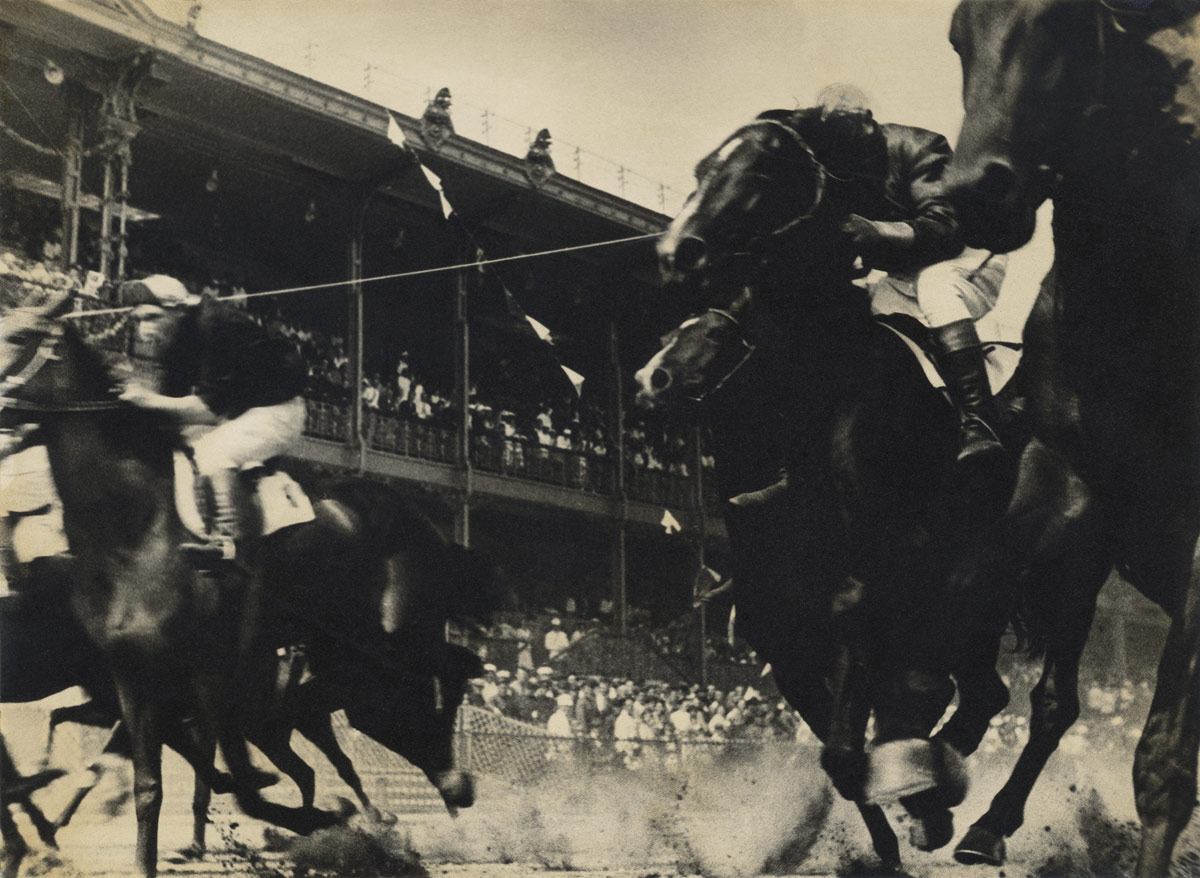
Alexander Rodchenko (Russian, 1891-1956) 'Horse racing' 1935


Alexander Rodchenko (Russian, 1891-1956)
Horse racing
1935
Vintage gelatin silver print on paper
Collection Museum Moscow House of Photography / Multimedia Art Museum, Moscow
© A. Rodchenko – W. Stepanova Archive
© Museum Moscow House of Photography


Alexander Rodchenko (Russian, 1891-1956) 'Sports parade. Girl with towels' 1935


Alexander Rodchenko (Russian, 1891-1956)
Sports parade. Girl with towels
1935
Vintage print on Silver gelatin paper
Collection Museum Moscow House of Photography / Multimedia Art Museum, Moscow
© A. Rodchenko – W. Stepanova Archive
© Museum Moscow House of Photography


Alexander Rodchenko (1891-1956) was a driving force in the Russian avant-garde and is considered one of the great innovators of photography in the first half of the 20th century. In 1924, already well-known as a painter, sculptor and graphic artist, he conquered traditional photography with the slogan “Our duty is to experiment!” Dynamic compositions, stark contrasts, unconventional angles and the use of photomontage are the defining characteristics of his photographic language.

Rodchenko’s visual compositions and constructivist manifestos have been highly influential in the development of modern photography. With more than 200 photographs on display, the exhibition explores Rodchenko’s dynamic vision and the extraordinary range of his work. Alongside renowned, iconic images like Portrait of the Artist’s Mother (1924), Steps (1929) or Girl with a Leica (1934) WestLicht presents many rare vintage prints, which are complemented by a selection of Rodchenko’s posters, publications and typographic works.

As a prominent figure of constructivism, Rodchenko significantly shaped the development of Russian art in the early years of the Revolution. He was also a catalyst of a photography movement, similar to the New Objectivity pioneered by Albert Renger-Patzsch in Germany and the Group f/64 in the USA. “New, unexpected foreshortenings, unusual perspectives, bold light and shadow combinations reproduce fragments of the social reality that are as sharp and clear as possible” (Catalogue for Film and Photo Exhibition, Stuttgart, 1929).

The development of this new reality involved a radical departure from traditional perspectives. As Rodchenko pointed out in an essay on Ways of Contemporary Photography, in 1928: “The modern city with its multi-storey buildings, plants, factories […], all this […] has changed the psychology of the traditional perception to a great extent. It seems as if only a camera is able to illustrate modern life.” Central to Rodenchko’s argumentation was the belief that the camera could act as an active eye of contemporaries, destroying the primacy of the normal view – the navel perspective – established by painting. For Rodchenko the camera lens was “the pupil of the educated person in socialist society.”

Just as the revolution created the new socialist man and swept away the old order, photography should overcome the outdated perception and allow a modern outlook. “Photography – the new, fast and real reflection of the world – should make it possible to map the world from all points of view […]. In order to educate man to a new vision, everyday familiar objects must be shown to him with totally unexpected perspectives and in unexpected situations. New objects should be depicted from different sides in order to provide a complete impression of the object.” According to Rodchenko’s significant and much-quoted claim: “We must revolutionise our optical perception. We must remove the veil from our eyes.”

Curated by Olga Sviblova, Director of the Moscow House of Photography Museum.”

Press release from the WestLicht Gallery website


Alexander Rodchenko (Russian, 1891-1956) 'Girl with Leica' 1934


Alexander Rodchenko (Russian, 1891-1956)
Girl with Leica
1934
Vintage print on Silver gelatin paper
Collection Museum Moscow House of Photography / Multimedia Art Museum, Moscow
© A. Rodchenko – W. Stepanova Archive
© Museum Moscow House of Photography


Alexander Rodchenko (Russian, 1891-1956) 'Balconies. Corner of the house' 1925


Alexander Rodchenko (Russian, 1891-1956)
Balconies. Corner of the house
1925
Vintage print on Silver gelatin paper
Collection Museum Moscow House of Photography / Multimedia Art Museum, Moscow
© A. Rodchenko – W. Stepanova Archive
© Museum Moscow House of Photography


Alexander Rodchenko (Russian, 1891-1956) 'Guard at the Shukhov Tower' 1929


Alexander Rodchenko (Russian, 1891-1956)
Guard at the Shukhov Tower
1929
Vintage print on Silver gelatin paper
Collection Museum Moscow House of Photography / Multimedia Art Museum, Moscow
© A. Rodchenko – W. Stepanova Archive
© Museum Moscow House of Photography


Alexander Rodchenko (Russian, 1891-1956) 'Pines. Puschkino' 1927


Alexander Rodchenko (Russian, 1891-1956)
Pines. Puschkino
1927
Vintage print on Silver gelatin paper
Collection Museum Moscow House of Photography / Multimedia Art Museum, Moscow
© A. Rodchenko – W. Stepanova Archive
© Museum Moscow House of Photography


Alexander Rodchenko (Russian, 1891-1956) 'Fire escape' 1925


Alexander Rodchenko (Russian, 1891-1956)
Fire escape
1925
Deduction on Silver gelatin paper
Collection Museum Moscow House of Photography / Multimedia Art Museum, Moscow
© A. Rodchenko – W. Stepanova Archive
© Museum Moscow House of Photography


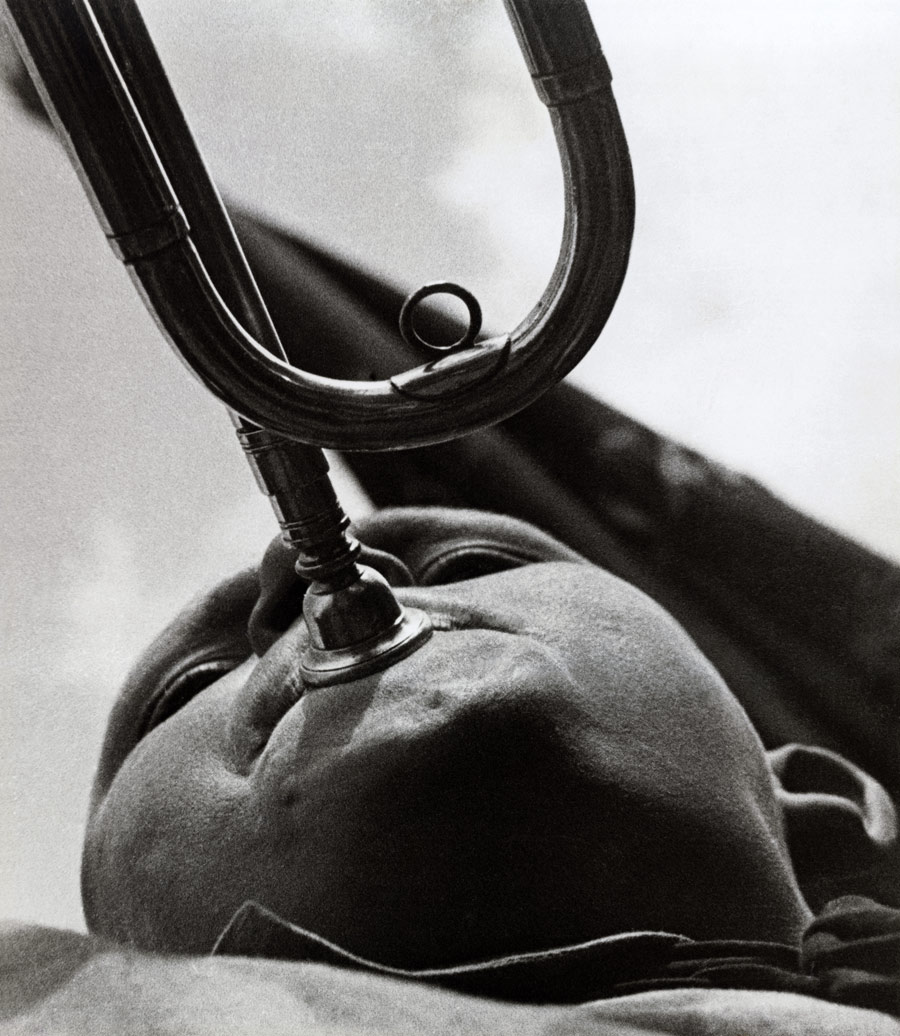
Alexander Rodchenko (Russian, 1891-1956) 'Trumpeting pioneer' 1930


Alexander Rodchenko (Russian, 1891-1956)
Trumpeting pioneer
1930
Vintage print on Silver gelatin paper
Collection Museum Moscow House of Photography / Multimedia Art Museum, Moscow
© A. Rodchenko – W. Stepanova Archive
© Museum Moscow House of Photography


Alexander Rodchenko (Russian, 1891-1956) 'They gathered for the demonstration' 1928


Alexander Rodchenko (Russian, 1891-1956)
They gathered for the demonstration
1928
Vintage print on Silver gelatin paper
Collection Museum Moscow House of Photography / Multimedia Art Museum, Moscow
© A. Rodchenko – W. Stepanova Archive
© Museum Moscow House of Photography


Alexander Rodchenko (Russian, 1891-1956) 'Varvara Stepanova on a balcony' 1928


Alexander Rodchenko (Russian, 1891-1956)
Varvara Stepanova on a balcony
1928
Vintage print on Silver gelatin paper
Collection Museum Moscow House of Photography / Multimedia Art Museum, Moscow
© A. Rodchenko – W. Stepanova Archive
© Museum Moscow House of Photography


Alexander Rodchenko (Russian, 1891-1956) 'Portrait of the Artist's Mother' 1924


Alexander Rodchenko (Russian, 1891-1956)
Portrait of the Artist’s Mother
1924
Vintage print on Silver gelatin paper
Collection Museum Moscow House of Photography / Multimedia Art Museum, Moscow
© A. Rodchenko – W. Stepanova Archive


Alexander Rodchenko (Russian, 1891-1956) 'Pioneer' 1930


Alexander Rodchenko (Russian, 1891-1956)
Pioneer
1930
Vintage print on Silver gelatin paper
Collection Museum Moscow House of Photography / Multimedia Art Museum, Moscow
© A. Rodchenko – W. Stepanova Archive
© Museum Moscow House of Photography


Alexander Rodchenko (Russian, 1891-1956) 'Envelope for Vladimir Mayakovsky's poem "Pro eto" (Darüber)' 1923


Alexander Rodchenko (Russian, 1891-1956)
Envelope for Vladimir Mayakovsky’s poem “Pro eto” (Darüber)
1923
Reprint
Collection Museum Moscow House of Photography / Multimedia Art Museum, Moscow
© A. Rodchenko – W. Stepanova Archive
© Museum Moscow House of Photography


Alexander Rodchenko (Russian, 1891-1956) 'Lilya Brik. Portrait of the advertising poster "Knigi"' 1924


Alexander Rodchenko (Russian, 1891-1956)
Lilya Brik. Portrait of the advertising poster “Knigi”
1924
Vintage print on Silver gelatin paper, cut out and glued on pink paper.
Collection Museum Moscow House of Photography / Multimedia Art Museum, Moscow
© A. Rodchenko – W. Stepanova Archive
© Museum Moscow House of Photography


WestLicht Museum for Photography
Westbahnstraße 40,
1070 Vienna
Phone: +43 (0)1 522 66 36 -60

Opening hours:
Daily 11am – 7pm

WestLicht Gallery website

LIKE ART BLART ON FACEBOOK

Back to top

Exhibition: ‘A World of Bonds: Frederick Sommer’s Photography and Friendships’ at the National Gallery of Art, Washington

Exhibition dates: 16th June – 4th August 2013


Frederick Sommer (American, 1905-1999) 'Moon Culmination' 1951


Frederick Sommer (American, 1905-1999)
Moon Culmination
1951
gelatin silver print
24.2 x 19.2cm (9 1/2 x 7 9/16 in.)
Gift of Frederick Sommer


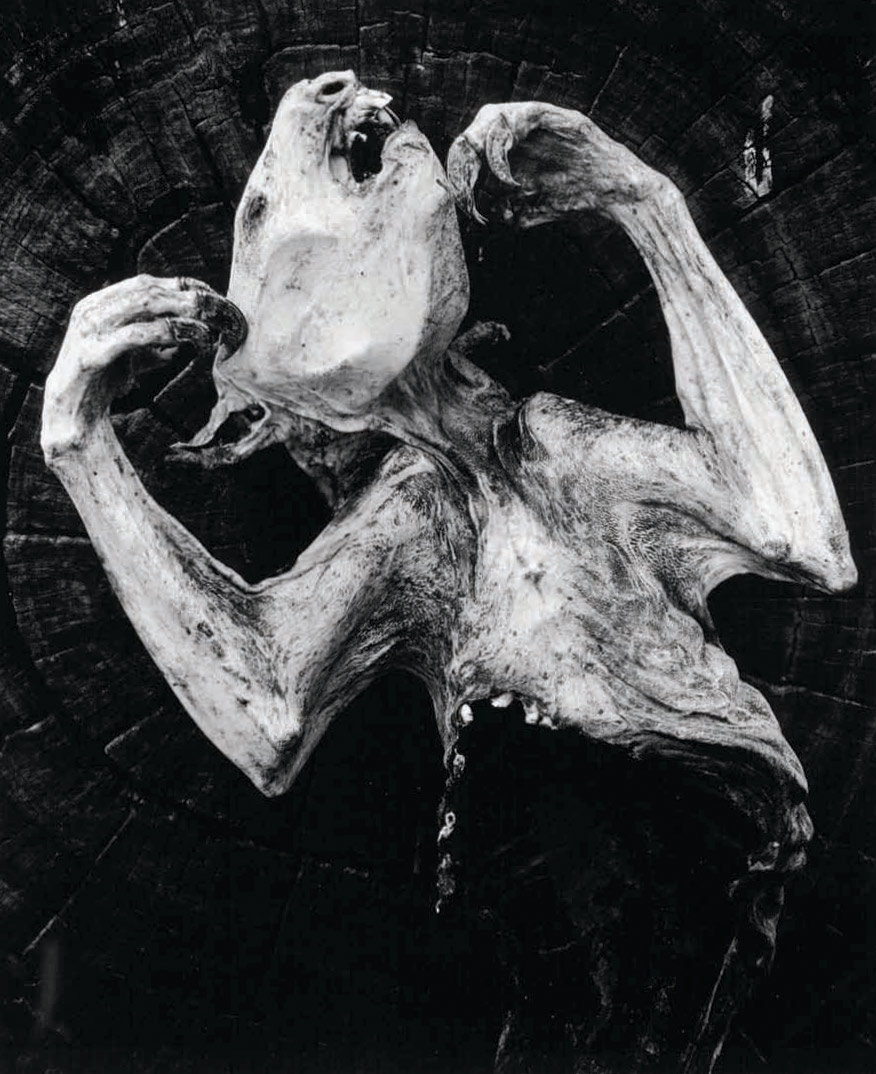
Frederick Sommer is not as well known as others in the famous quintet (the others being Ansel Adams, Edward Weston, Minor White and Paul Strand). He is the (slightly) forgotten master. But for those that know his work, Frederick Sommer is the photographer’s photographer.

There is a visual and intellectual alchemy transmitted through his work. It is as if he was a magician, producing images out of thin air: paper cuts, smoke on glass, collage, found objects, rites, passages, cleavages, heroes, occultism (Paracelsus was a Renaissance physician, botanist, alchemist, astrologer, and general occultist). From the few photographs I have seen in the flesh his prints, like his thinking, have a volume to them that few other photographers can match. Here I must cede to the knowledge of my friend and photographer Ian Lobb who visited Sommer at his home in Prescott, Arizona.


“You will notice with FS prints that the only date given is the date of the negative. This is not unusual of course, but one of FS strengths is being interested in returning to a negative and print it with enthusiasm after looking at other versions for a very long time.

Another strength is a really simple strong way of working – according to Les Walkling, FS had a block of wood the same size as an 8 x 10 contact print. By placing the print on this base as he spotted, the print was always raised above his work environment and the chance of an accident was reduced. So simple – so elegant. I see this state of mind repeated – eg when he was out photographing with Siskind and he found a pile of X-rays and said that this was his work for the day.

Caponigro and Sommer are the ones that make their technical skill communicate in very unique ways. By chronology, Sommer is the first one who found that something beyond the f/64 Group vocabulary could be said. Whereas Edward Weston and Paul Strand are working at about 3/10 for their prints, Sommer is working at 9/10. He doesn’t always get there in every print but when he succeeds the results are beyond what any other classical photographer ever achieved in the physical presence of the photograph.

Venus, Jupiter and Mars was the first extended viewing of Sommer that arrived here (in Australia). It would have been at the Printed Image (bookshop) in 1981.”

Ian Lobb


Many thankx to the National Gallery of Art for allowing me to publish the photographs in the posting. Please click on the photographs for a larger version of the image.


Frederick Sommer (American, 1905-1999) 'Venus, Jupiter and Mars' 1949


Frederick Sommer (American, 1905-1999)
Venus, Jupiter and Mars
1949
Gelatin silver print
23.8 x 19.1cm (9 3/8 x 7 1/2 in.)
National Gallery of Art, Washington, Gift of Frederick Sommer


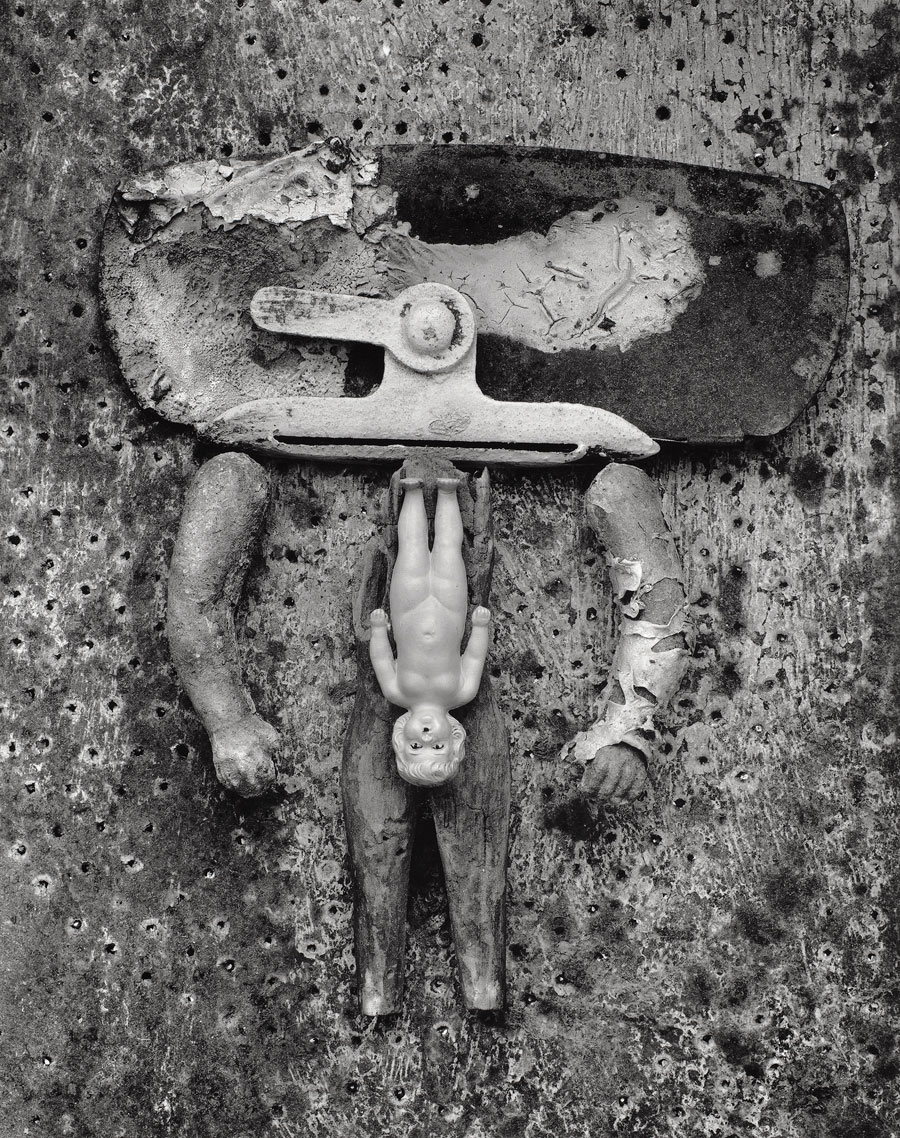
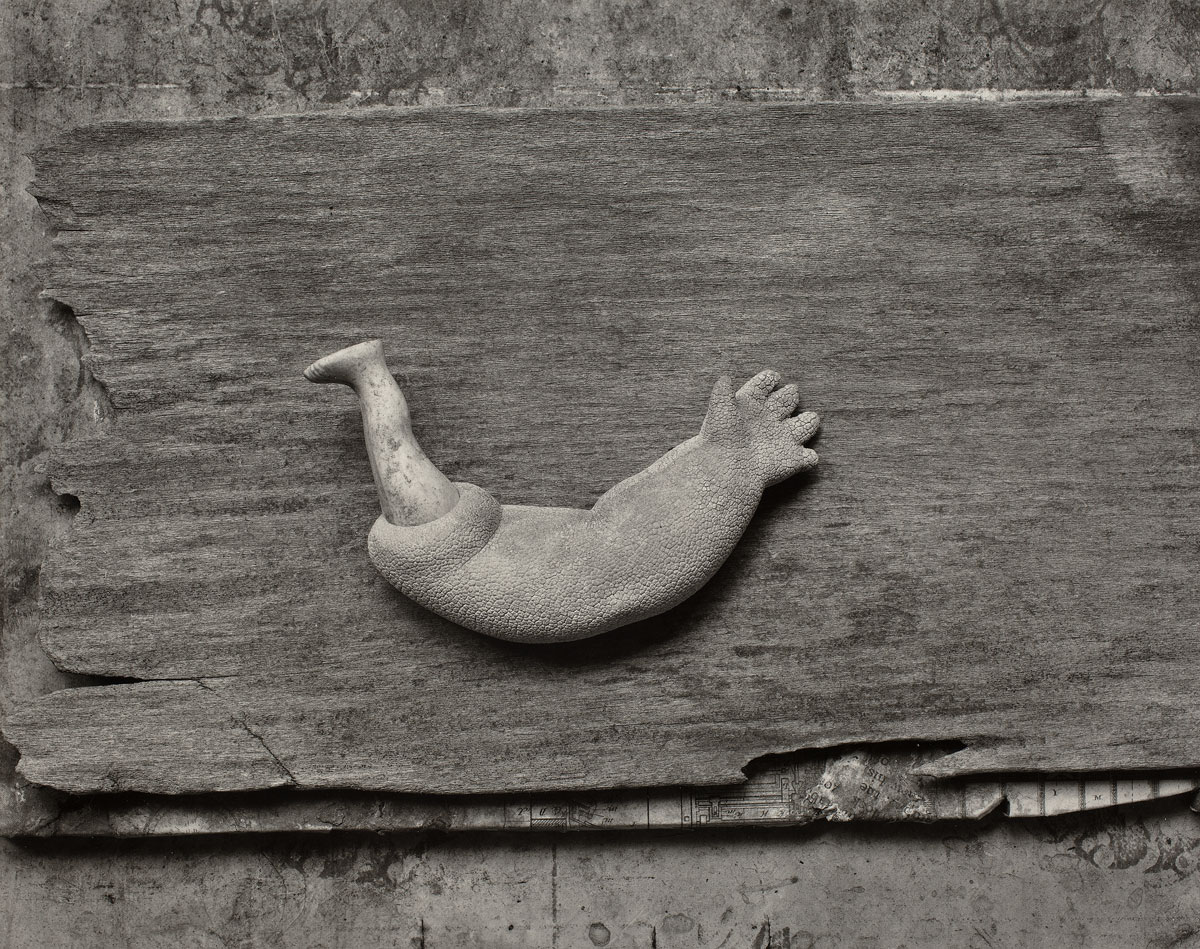
Frederick Sommer (American, 1905-1999) 'Valise d'Adam' 1949


Frederick Sommer (American, 1905-1999)
Valise d’Adam
1949
Gelatin silver print
23.9 x 18.9cm (9 7/16 x 7 7/16 in.)
National Gallery of Art, Washington, Gift of Frederick Sommer


Against a backdrop of rusting metal, Frederick Sommer arranged a grouping of found objects. A clipboard clamp represents a head and shoulders while dirty, cracking doll’s arms and legs provide more literal context, defining the object as a human body. Within that fragmented body, Sommer places a complete doll with its head pointed downward, as if ready to be born. The photograph’s French title, Valise d’Adam, or as Sommer translated it, Adam’s Traveling Case, is a sly reference to the idea that man travels through woman into the world, and perhaps, woman even carries man through life.


Frederick Sommer (American, 1905-1999) 'Manzanillo, Mexico' 1955


Aaron Siskind (American, 1903-1991)
Manzanillo, Mexico
1955
Gelatin silver print
35.6 x 27.8cm (14 x 10 15/16 in.)
National Gallery of Art, Washington, René Huyghe Collection
Image courtesy of the Aaron Siskind Foundation


Frederick Sommer (American, 1905-1999) 'Untitled' 1947


Frederick Sommer (American, 1905-1999)
Untitled
1947
Gelatin silver print
24.2 x 19.1cm (9 1/2 x 7 1/2 in.)
National Gallery of Art, Washington, Gift of Frederick Sommer


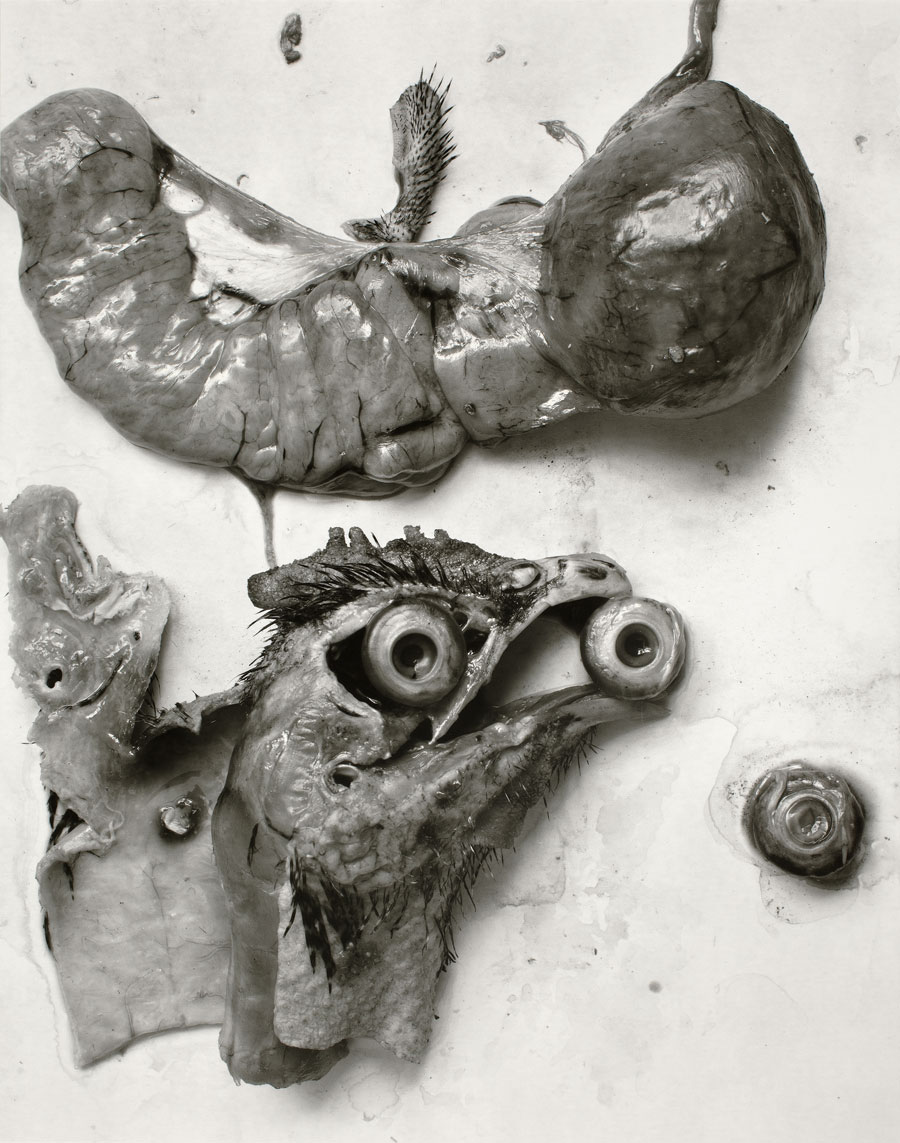
Frederick Sommer (American, 1905-1999) 'The Anatomy of a Chicken' 1939


Frederick Sommer (American, 1905-1999)
The Anatomy of a Chicken
1939
Gelatin silver print mounted on paperboard
24.1 x 19cm (9 1/2 x 7 1/2 in.)
National Gallery of Art, Washington, Gift of Frederick Sommer


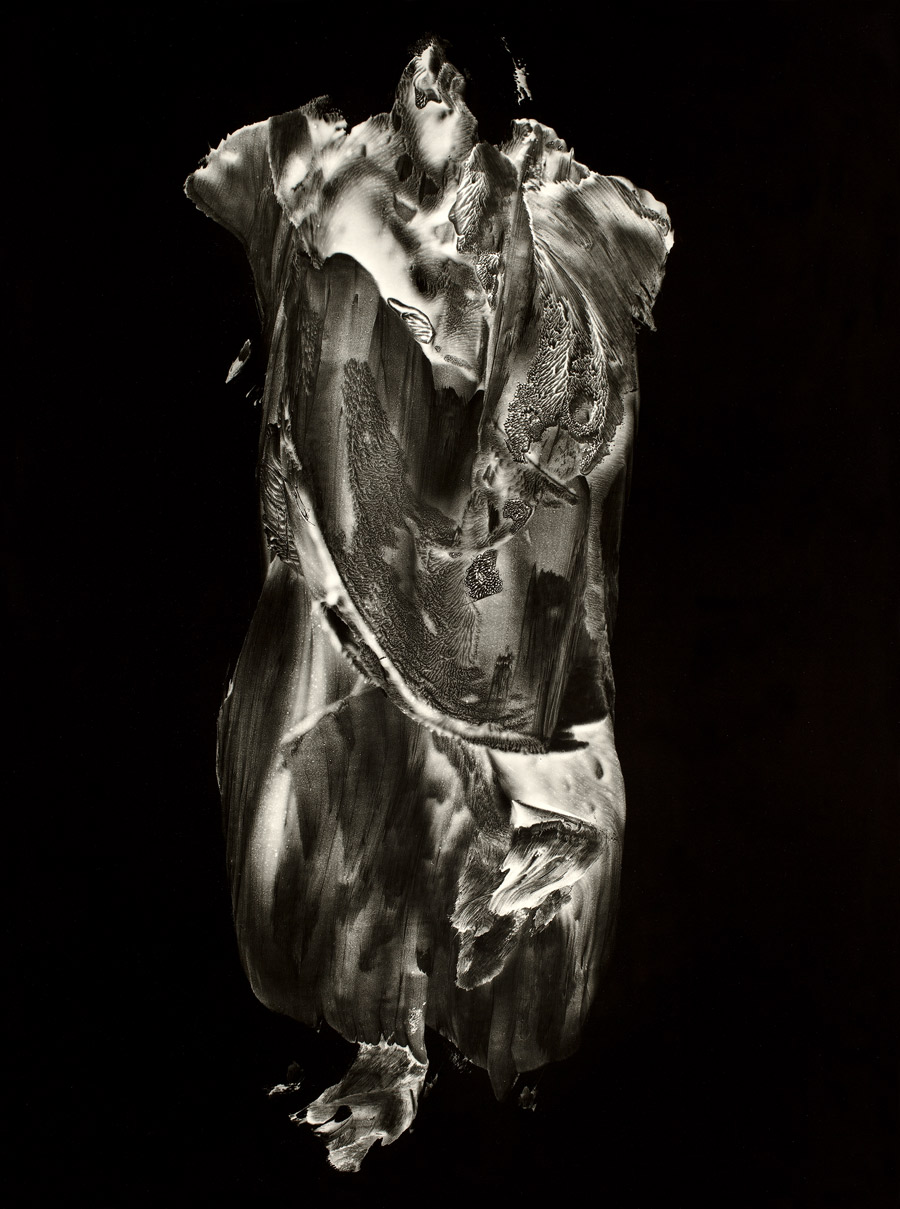
Frederick Sommer (American, 1905-1999) 'Paracelsus' 1957


Frederick Sommer (American, 1905-1999)
Paracelsus
1957
Gelatin silver print
34.3 x 25.6cm (13 1/2 x 10 1/16 in.)
National Gallery of Art, Washington, Gift of Frederick Sommer


Paracelsus (1493/1494 – 24 September 1541), born Theophrastus von Hohenheim (full name Philippus Aureolus Theophrastus Bombastus von Hohenheim), was a Swiss physician, alchemist, lay theologian, and philosopher of the German Renaissance.

He was a pioneer in several aspects of the “medical revolution” of the Renaissance, emphasising the value of observation in combination with received wisdom. He is credited as the “father of toxicology”. Paracelsus also had a substantial impact as a prophet or diviner, his “Prognostications” being studied by Rosicrucians in the 1600s. Paracelsianism is the early modern medical movement inspired by the study of his works.

Text from the Wikipedia website


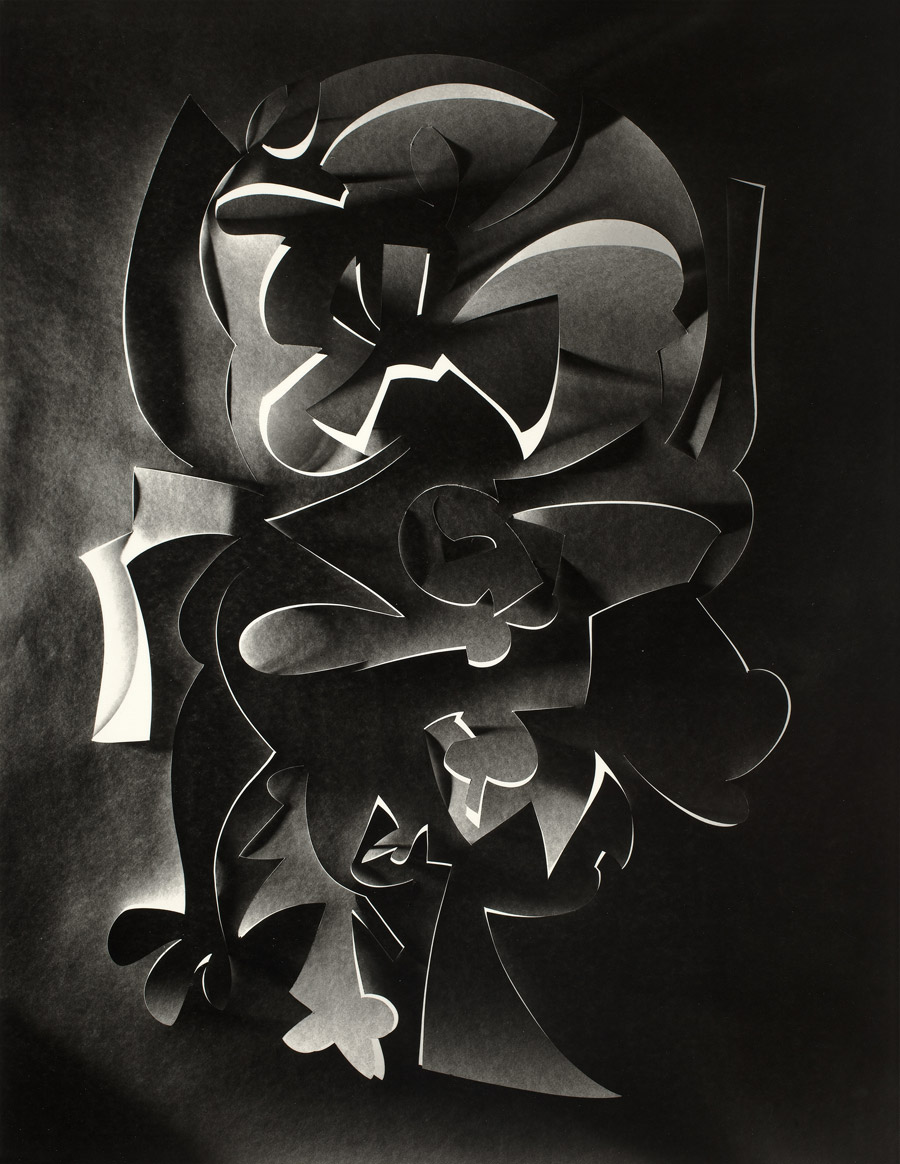
Frederick Sommer (American, 1905-1999) 'Cut Paper' 1980


Frederick Sommer (American, 1905-1999)
Cut Paper
1980
gelatin silver print
24.2 x 18.7cm (9 1/2 x 7 3/8 in.)
National Gallery of Art, Washington, Gift of Frederick Sommer


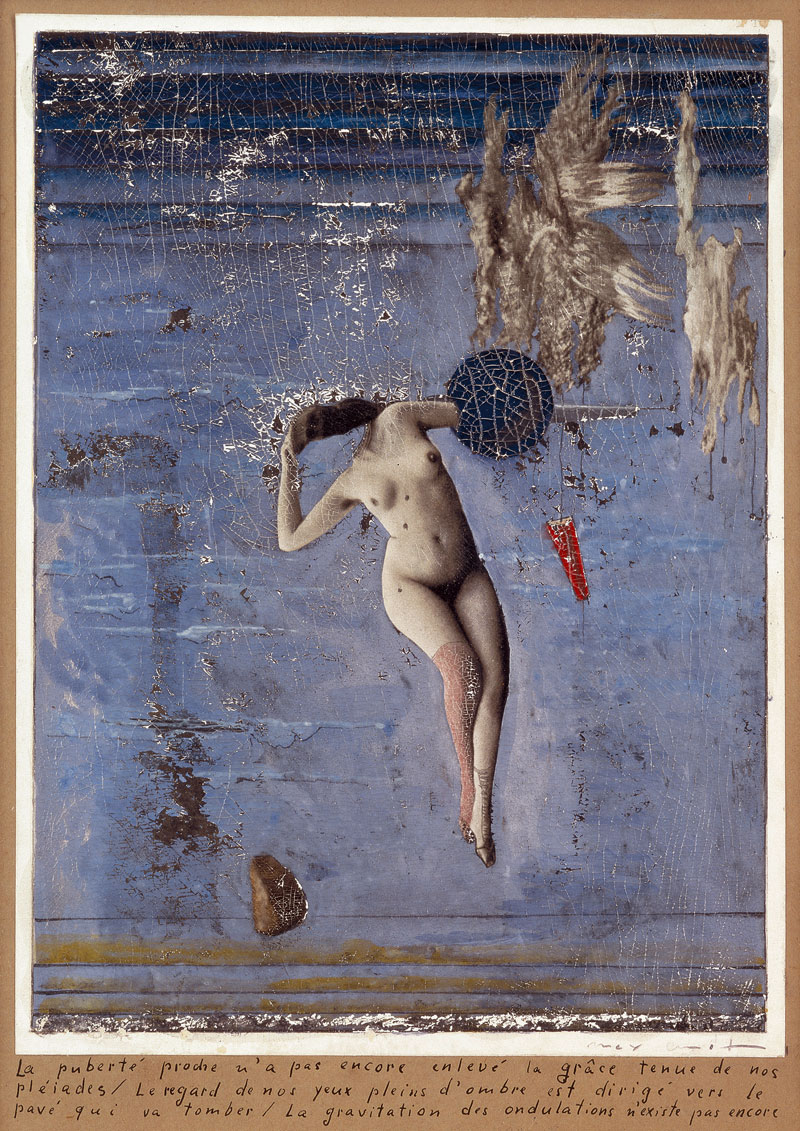
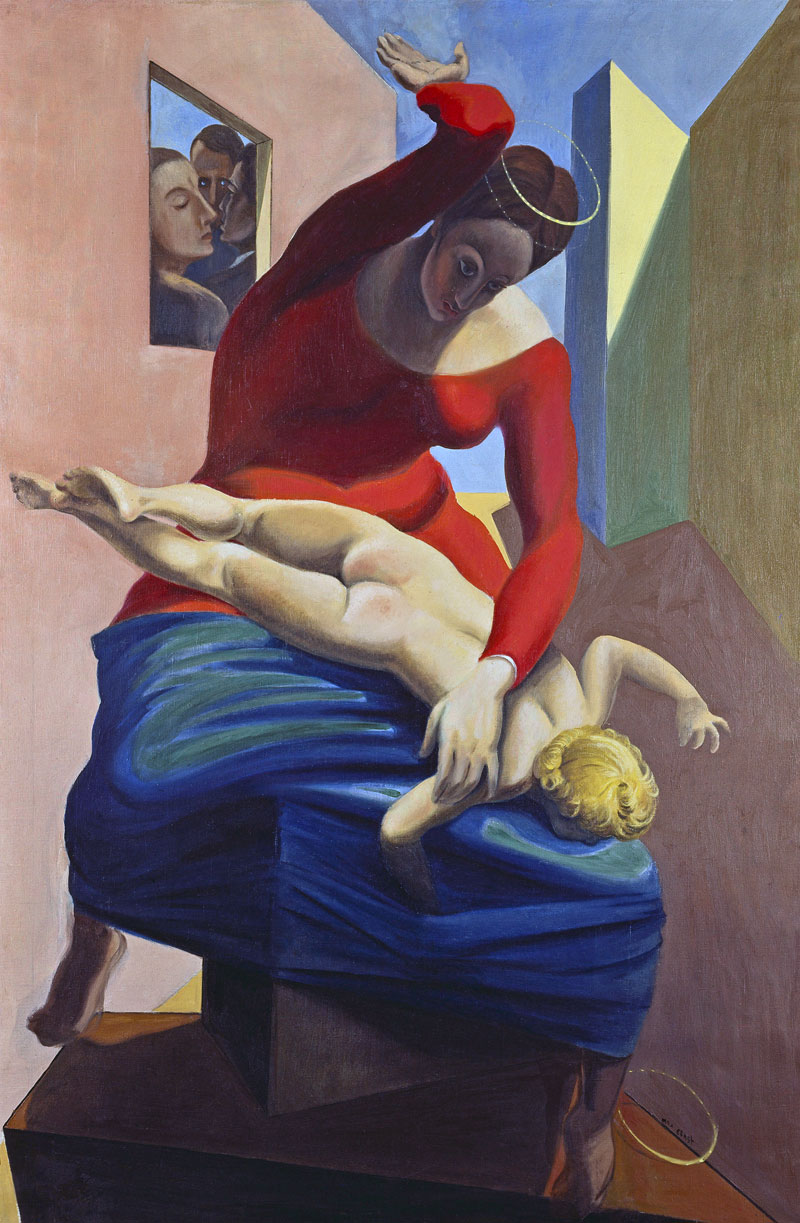
The National Gallery of Art explores the continuities in Frederick Sommer’s varied body of work and demonstrates the influence of his friendships with fellow artists in the exhibition A World of Bonds: Frederick Sommer’s Photography and Friendships, on view in the East Building from June 16 to August 4, 2013. Drawn from the Gallery’s significant holdings, which include a major 1995 gift from the artist himself, the exhibition showcases 27 works by Sommer, Edward Weston, Max Ernst, Man Ray, Aaron Siskind, and Charles Sheeler, including three pieces on loan from other museums and private collections.

“The Gallery is privileged to display this influential body of work, which illuminates Frederick Sommer’s interactions with his fellow artists,” said Earl A. Powell III, director, National Gallery of Art. “In addition to photographs drawn from our permanent collection, we are grateful to the lenders who have assisted us in revealing the continuities in Sommer’s broad range of work, as well as The Robert Mapplethorpe Foundation for its generous support.”

About the exhibition

The exhibition showcases the beauty and diversity of Sommer’s striking images and places them in the context of his formative friendships with such prominent contemporaries as Edward Weston, Max Ernst, Man Ray, Charles Sheeler, and Aaron Siskind.

As an artist, Frederick Sommer notoriously defies classification. Over the span of more than 60 years, he created paintings, drawings, and photographs, as well as collages, musical scores, poetry, and theoretical texts. Today, Sommer is best known for his photography, the medium in which he produced his most inventive visual experiments and which best suited the breadth of his visual interests. These ranged from disorienting desert landscapes to surrealistic arrangements of found objects, and to abstractions that brought together drawing and photography.

“All rare things should be lent away / and I have borrowed very freely,” Sommer wrote of his art. He also asserted that “the world is not a world of cleavages, it is a world of bonds.” This exhibition examines both claims, offering a glimpse into the ways in which Sommer shared ideas with his contemporaries while simultaneously creating a body of work uniquely his own.

About the artist

Just as he defied the bounds of medium and genre, Sommer, who lived in the small town of Prescott, Arizona, also never fully belonged to any artistic group or movement. His work reflects both wide-ranging personal interests and a broad scope of artistic affinities with artists as divergent as the surrealists and the members of the f/64 group of West Coast photographers.

Sommer’s circle of close artist-friends and mentors helps explain his idiosyncratic sensibilities. This circle included the photographer Edward Weston, whose precise attention to the details of the natural world inspired Sommer’s turn to photography. Equally important to Sommer, however, was his friendship with Max Ernst, the surrealist whose automatic painting techniques and uncanny imagery encouraged Sommer to reconfigure familiar objects into strange new creations. Aaron Siskind was yet another close friend and peer with whom Sommer shared a fascination with the abstract textures of everyday materials. Other artists represented in the exhibition who influenced Sommer’s approach to photographing assemblages and his exploration of photographic abstraction include Man Ray and Charles Sheeler.

Text from the National Gallery of Art website


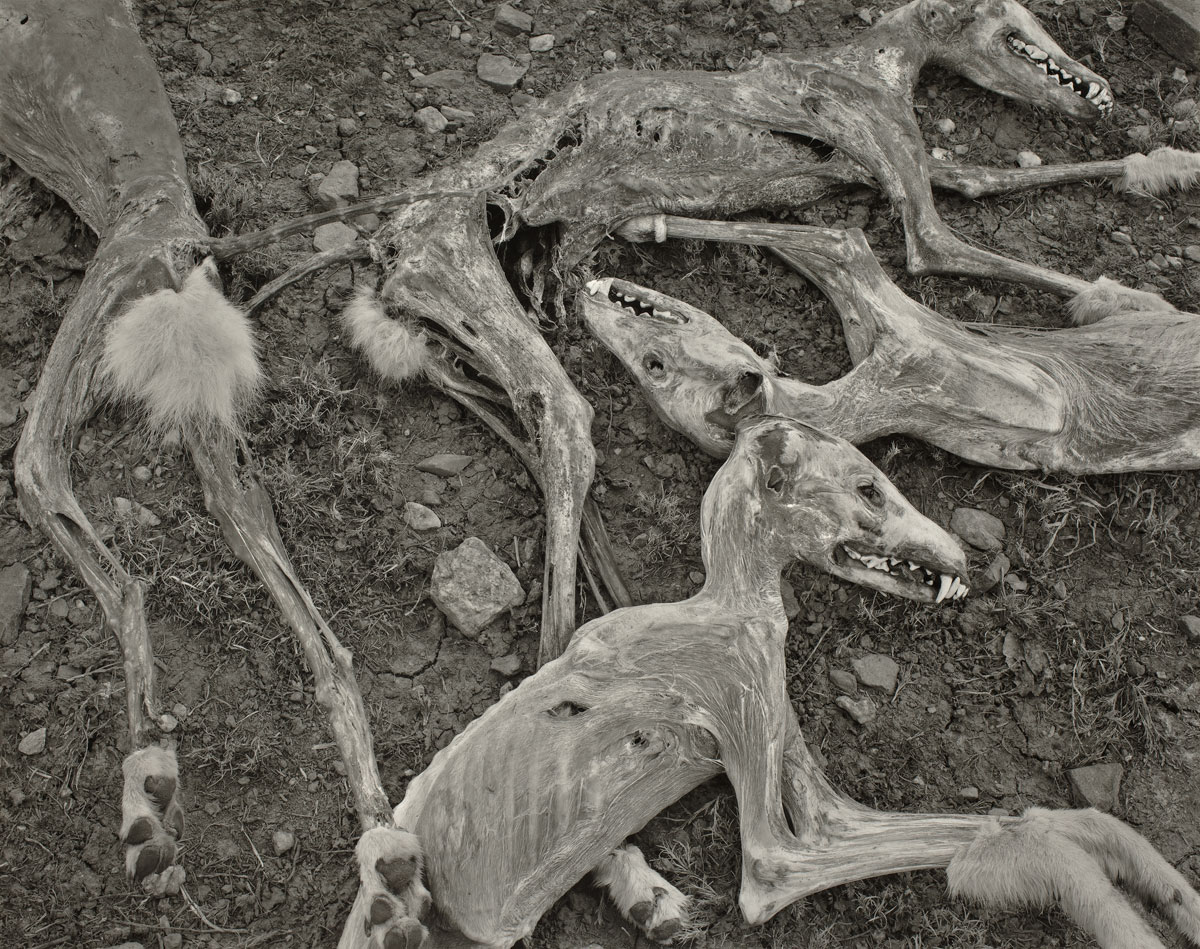
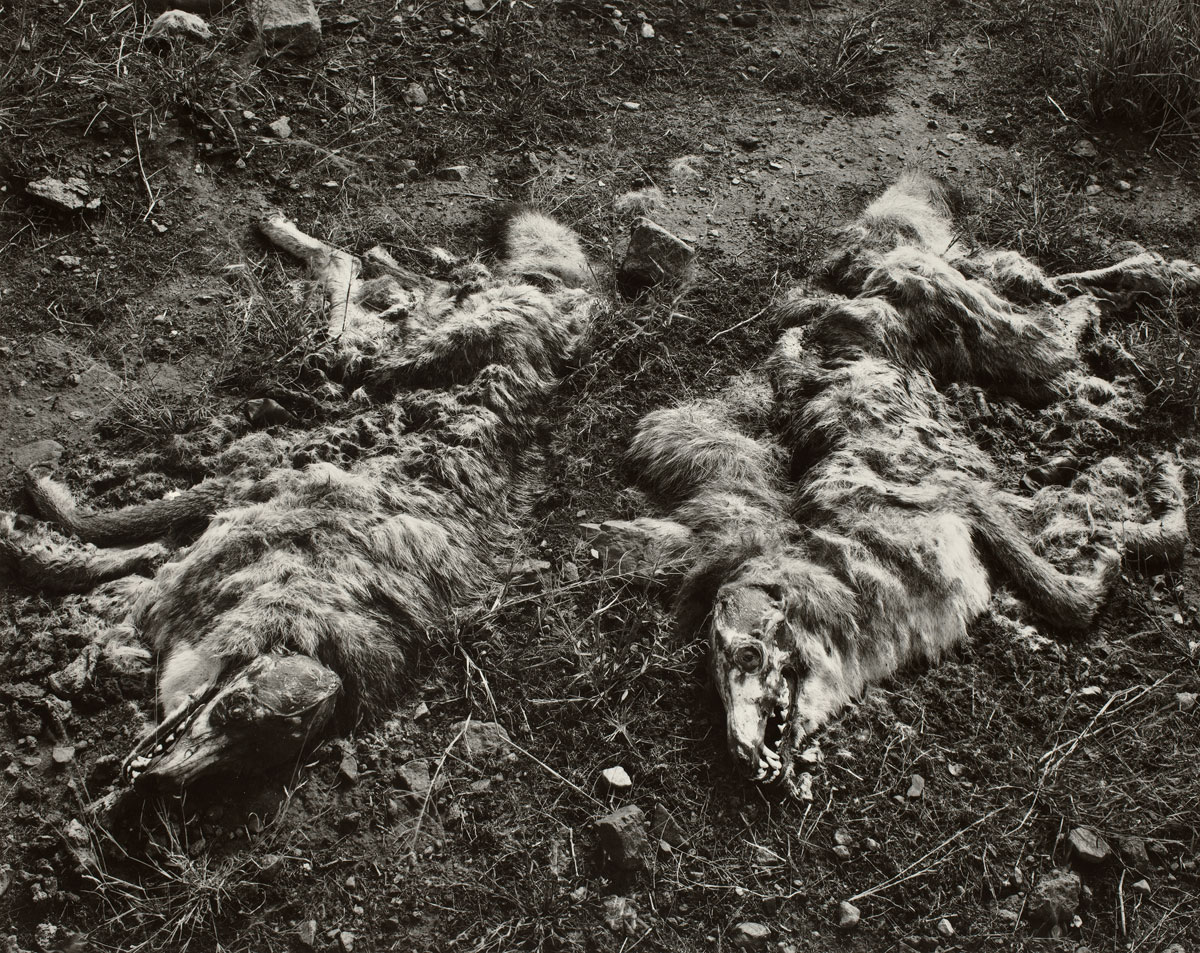
Frederick Sommer (American, 1905-1999) 'Coyotes' 1945


Frederick Sommer (American, 1905-1999)
Coyotes
1945
Gelatin silver print mounted on paperboard
19 x 24.2cm (7 1/2 x 9 1/2 in.)
National Gallery of Art, Washington, Gift of Frederick Sommer


Frederick Sommer (American, 1905-1999) 'Man tracks #9R' from the 'Mantracks' series 1978-83


John Cato (Australian, 1926-2011)
Man tracks #9R
from the Mantracks series 1978-83
Gelatin silver photograph
42.9 x 35.2cm


Frederick Sommer (American, 1905-1999) 'Ondine' 1950


Frederick Sommer (American, 1905-1999)
Ondine
1950
Gelatin silver print mounted on paperboard
19.2 x 24.3cm (7 9/16 x 9 9/16 in.)
National Gallery of Art, Washington, Gift of Frederick Sommer


The nymph Ondine was an immortal water spirit who became human after falling in love for a man, marrying him, and having a baby. In one of the versions of the tale, when she caught her husband sleeping with another woman, she cursed him to remain awake in order to control his own breathing.


Frederick Sommer (American, 1905-1999) 'Taylor, Arizona' 1945


Frederick Sommer (American, 1905-1999)
Taylor, Arizona
1945
Gelatin silver print
19.2 x 24.2cm (7 9/16 x 9 1/2 in.)
National Gallery of Art, Washington, Gift of Frederick Sommer


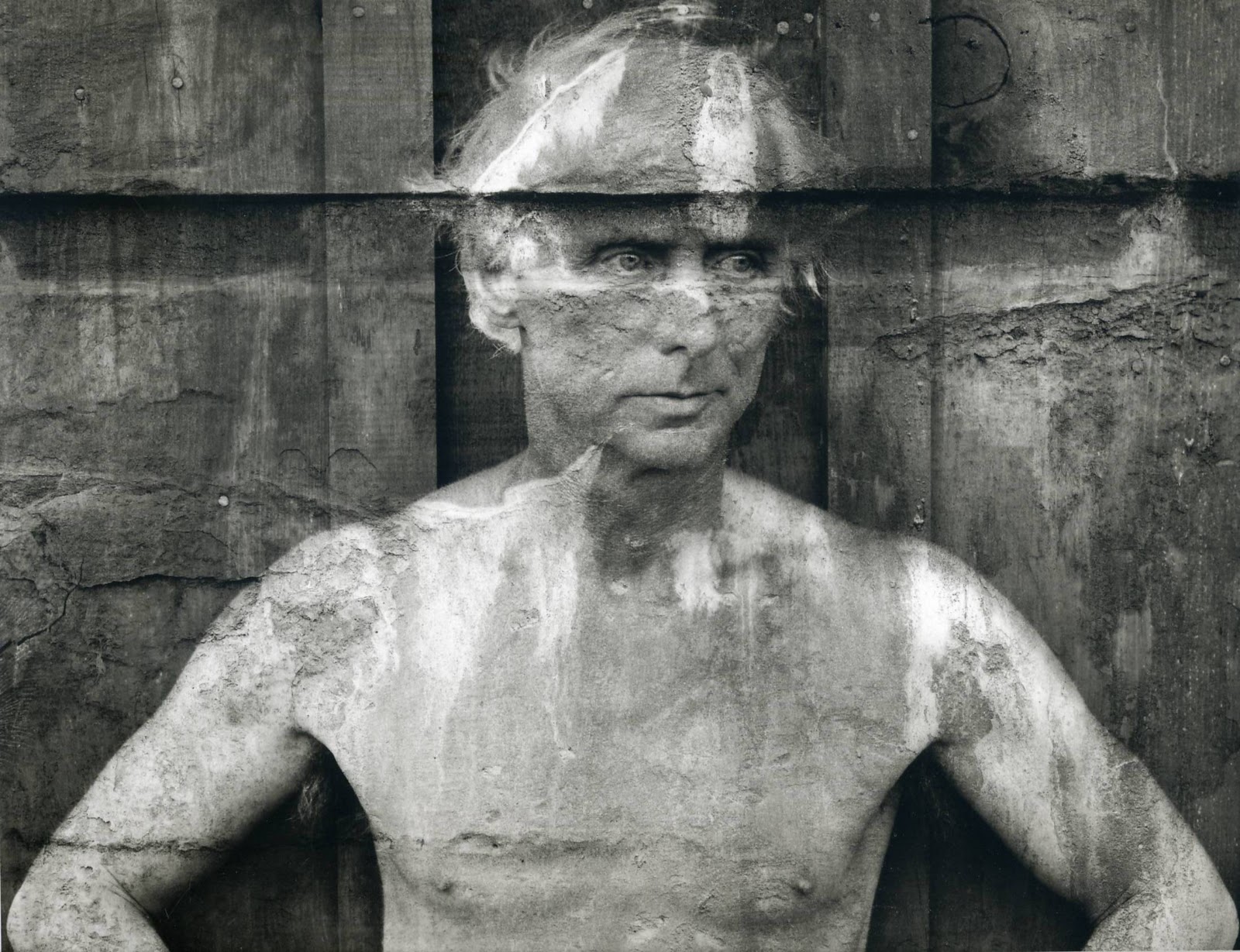
Frederick Sommer (American, 1905-1999) 'Max Ernst' 1946


Frederick Sommer (American, 1905-1999)
Max Ernst
1946
Gelatin silver print
19.05 x 24.13cm (7 1/2 x 9 1/2 in.)
Collection of Susan and Peter MacGill
Frederick & Frances Sommer Foundation


Frederick Sommer (American, 1905-1999) 'Untitled' 1947


Frederick Sommer (American, 1905-1999)
Untitled
1947
Gelatin silver print
19 x 24cm (7 1/2 x 9 7/16 in.)
National Gallery of Art, Washington, Gift of Frederick Sommer


Frederick Sommer (American, 1905-1999) 'Coyotes' 1941


Frederick Sommer (American, 1905-1999)
Coyotes
1941
Gelatin silver print
19.1 x 24.1cm (7 1/2 x 9 1/2 in.)
National Gallery of Art, Washington, Gift of Frederick Sommer


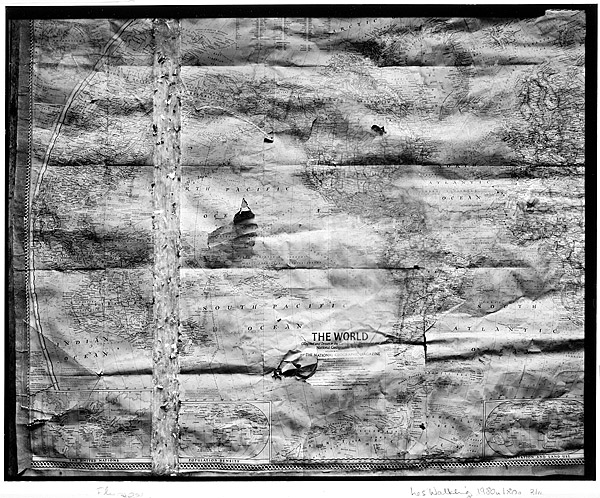
Les Walkling (Australia, b. 1953) 'Flypaper' 1980


Les Walkling (Australia, b. 1953)
Flypaper
1980
Gelatin silver photograph
19.1 x 24.3cm
Gift of the Philip Morris Arts Grant 1982
© Les Walkling


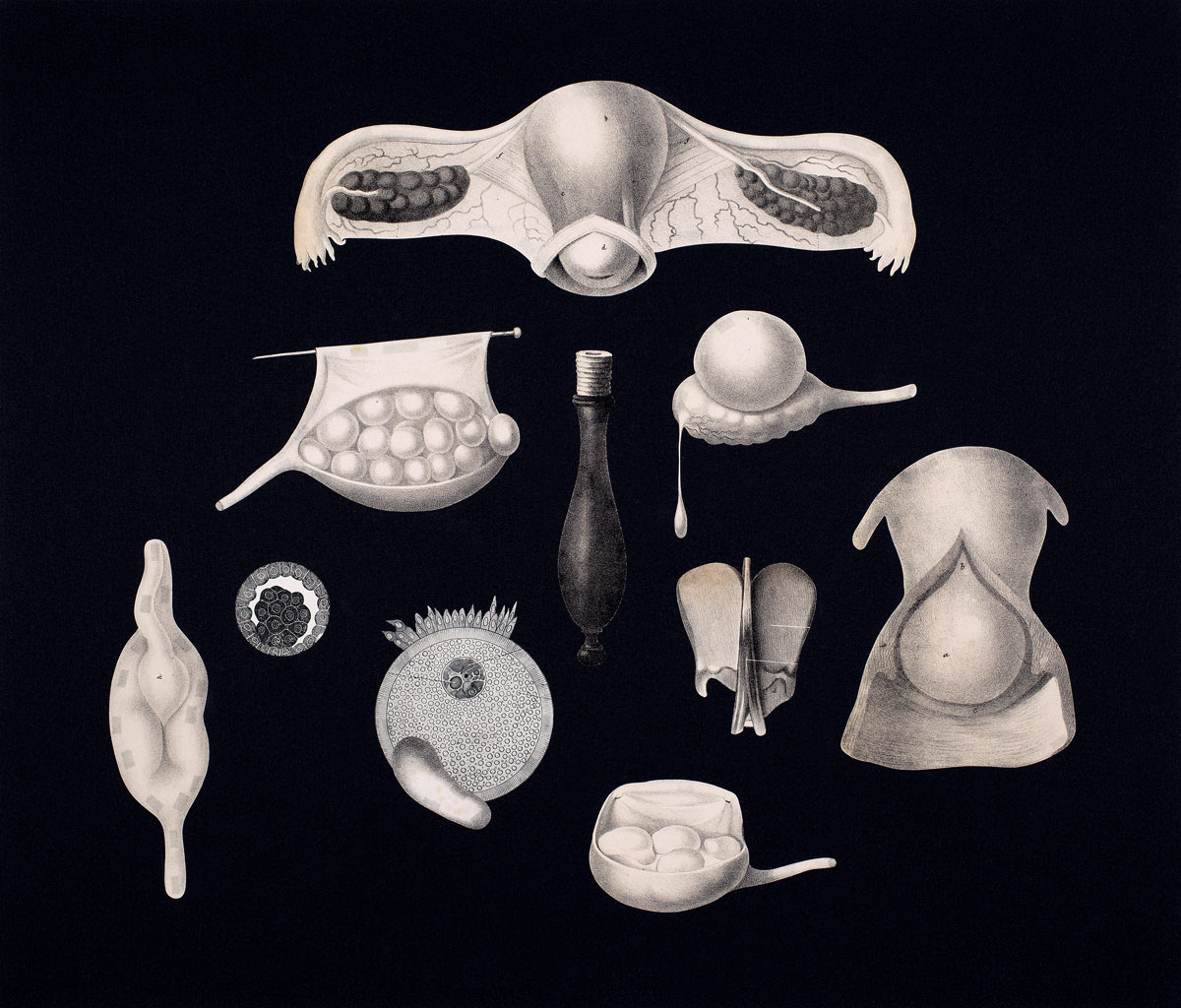
Frederick Sommer (American, 1905-1999) 'Lacryma' 1992


Frederick Sommer (American, 1905-1999)
Lacryma
1992
Collage of photomechanical reproductions of lithographic, relief and intaglio prints on
heavyweight wove paper
36 x 42.4cm (14 3/16 x 16 11/16 in.)
National Gallery of Art, Washington, Gift of Frederick Sommer


Lacryma, alternative form of lacrima – a tear (drop of liquid from crying)


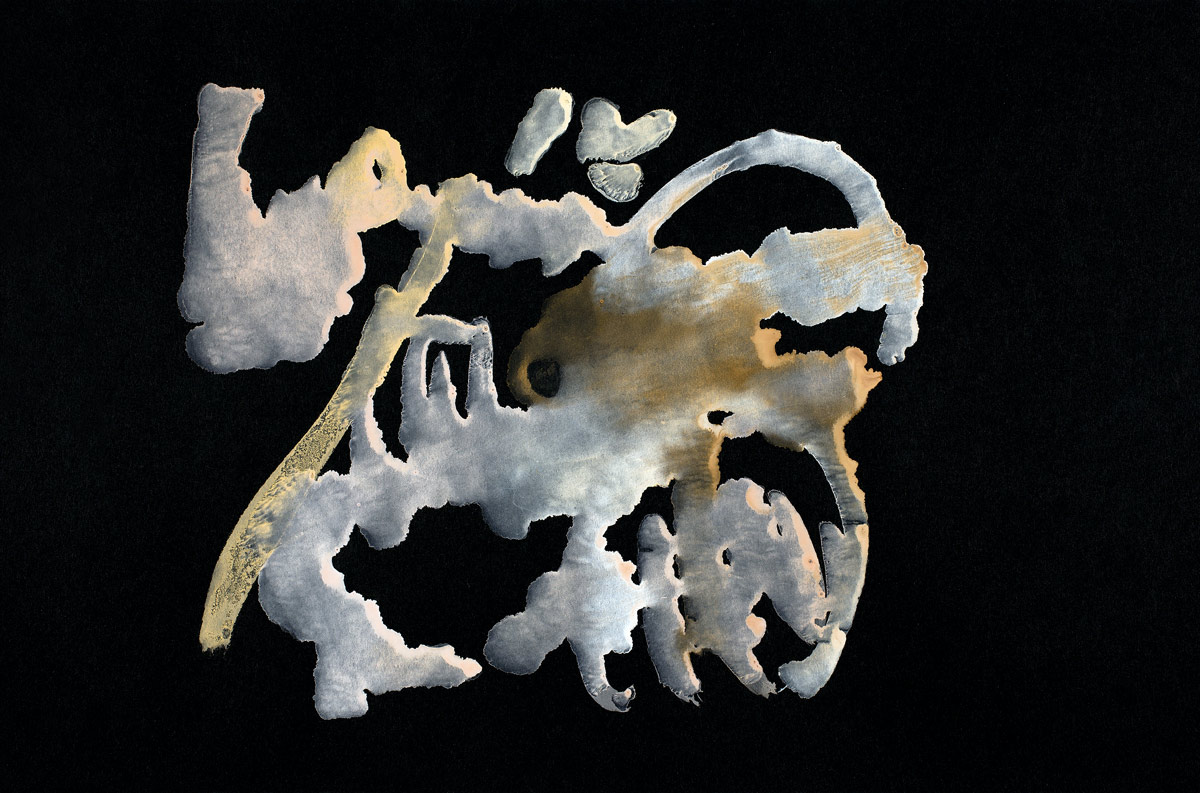
Frederick Sommer (American, 1905-1999) 'Drawing' 1948


Frederick Sommer (American, 1905-1999)
Drawing
1948
Tempera on black wove paper
30.4 x 46.9cm (11 15/16 x 18 7/16 in.)
National Gallery of Art, Washington, Gift of Frederick Sommer


Frederick Sommer (American, 1905-1999) 'The Queen of Sheba' 1992


Frederick Sommer (American, 1905-1999)
The Queen of Sheba
1992
Collage of photomechanical reproductions of relief and intaglio prints on heavyweight wove
paper
21.8 x 31.8cm (8 9/16 x 12 1/2 in.)
National Gallery of Art, Washington, Gift of Frederick Sommer


Fiona Hall (Australian, b. 1953) 'Envy, Seven Deadly Sins' 1985


Fiona Hall (Australian, b. 1953)
Envy, Seven Deadly Sins
1985
Polaroid photograph
61 × 50.8cm
© Fiona Hall


National Gallery of Art
National Mall between 3rd and 7th Streets
Constitution Avenue NW, Washington

Opening hours:
Daily 10.00am – 5.00pm

National Gallery of Art website

Frederick Sommer website

LIKE ART BLART ON FACEBOOK

Back to top

Review: Polixeni Papapetrou ‘A Performative Paradox’ and Daniel von Sturmer 
’After Images’ at the Centre for Contemporary Photography (CCP), Fitzroy, Melbourne

Exhibition dates: 24th May – 14th July 2013


Polixeni Papapetrou (Australian, 1960-2018) 'Drag queen wearing cut out dress' 1993


Polixeni Papapetrou (Australian, 1960-2018)
Drag queen wearing cut out dress
1993
Gelatin silver photograph
28.5 x 28.5cm
Courtesy the artist and Nellie Castan Gallery, Melbourne and Stills Gallery, Sydney


Two solid if not overly memorable exhibitions are presented at the Centre for Contemporary Photography.

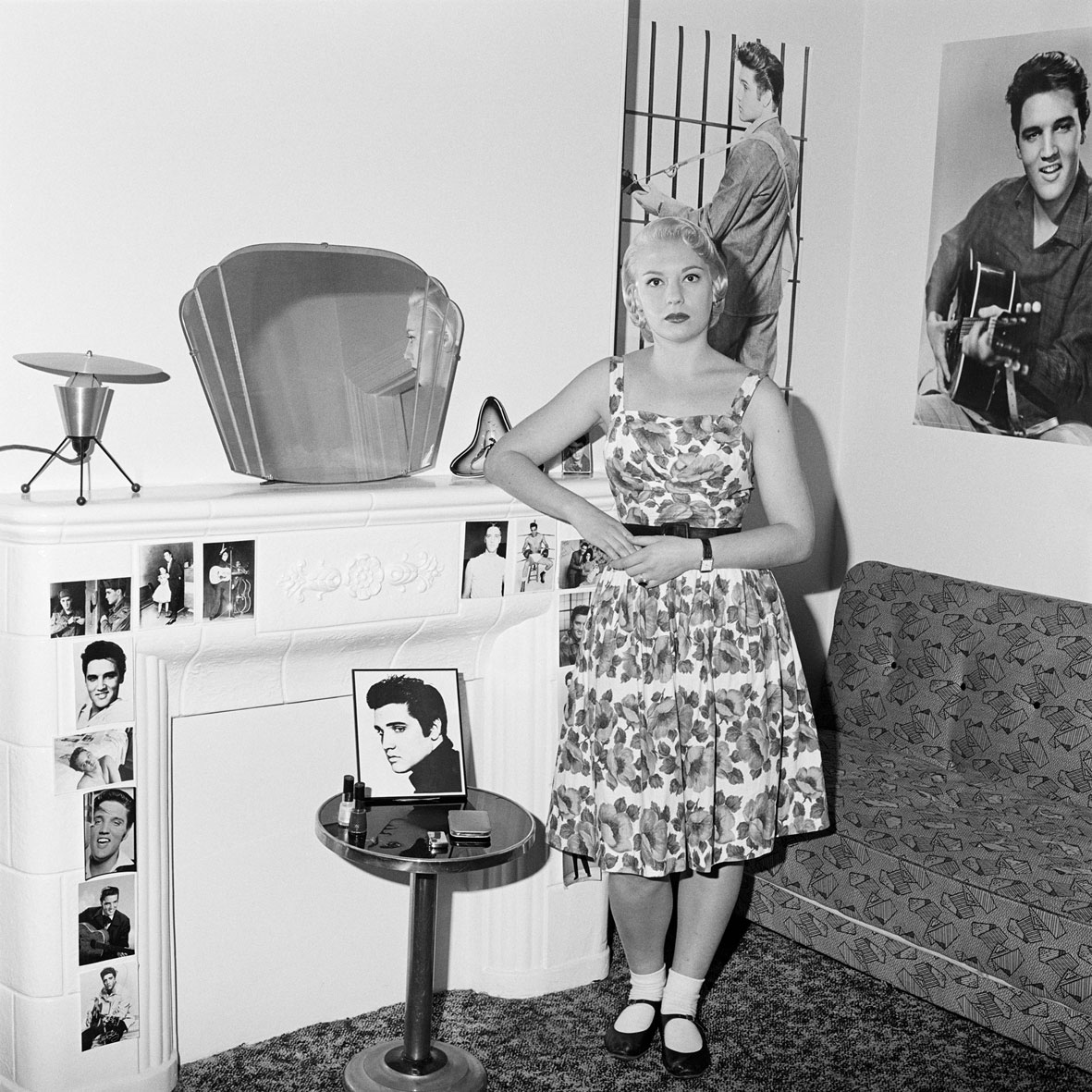
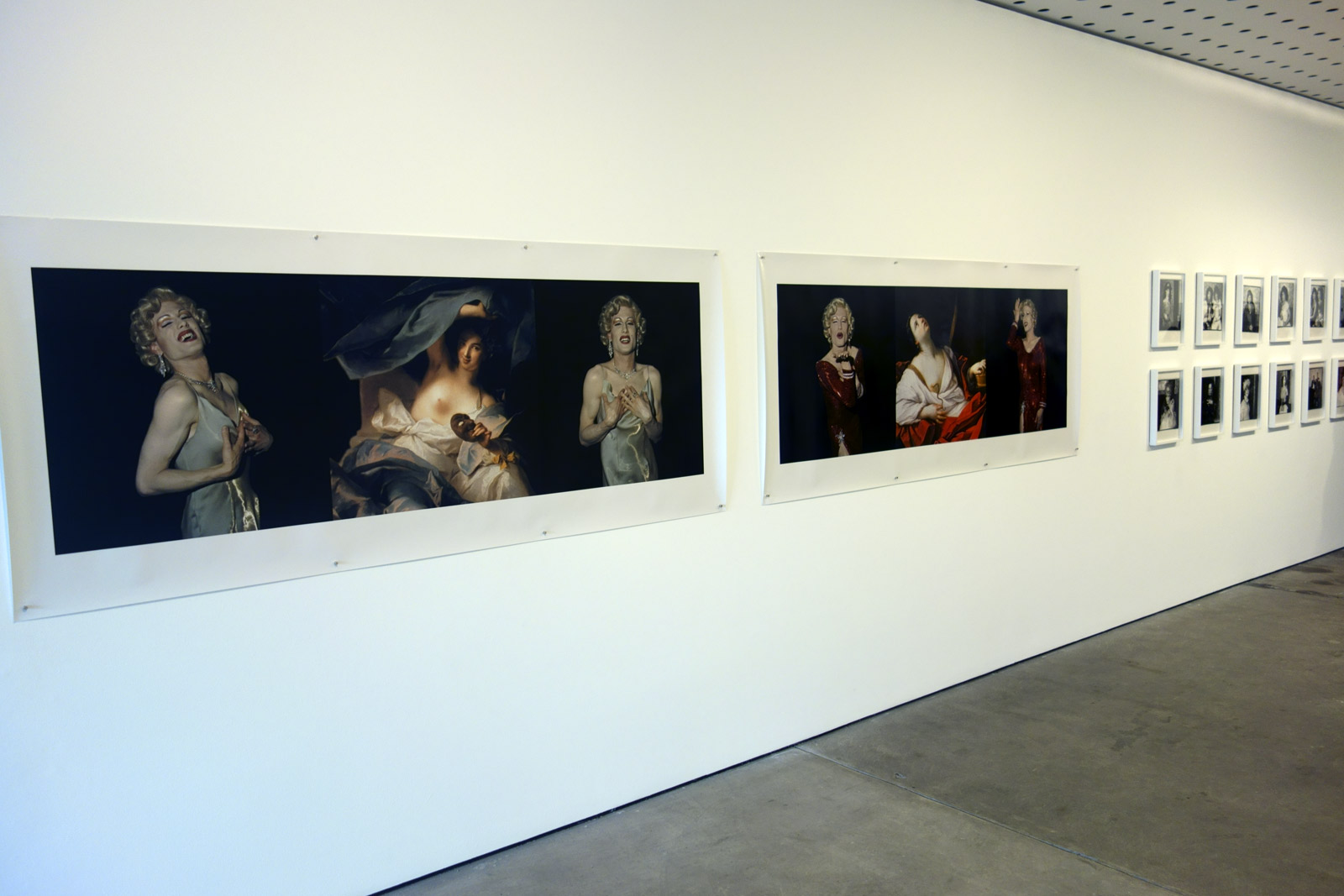
Polixeni Papapetrou A Performative Paradox is a bit of a dog’s breakfast. While it is wonderful to see early work by this artist – work that features Marilyn and Elvis impersonators, circus people, body builders and drag queens – too many bodies of work are crammed into too small a space with too few images. Some of the later series are represented by just one image giving a hotch potch feel to the whole exhibition ensemble. Perhaps it would have been better to concentrate solely on the early black-and-white images and colour images, work that is rarely seen and informs the staged work that followed. Having said that the black-and-white photographs are a joy to behold, documenting as they do performative identities. The photographs have an intangible presence. There are strong elements of the frontality of Diane Arbus in the photographs of circus performers and drag queens, coupled with a intrinsic understanding of light and texture. The photographs of drag queens are the highlight of both exhibitions and Drag queen wearing cut out dress (1993, below) reminded me of an early black-and-white photograph by Fiona Hall (Leura, New South Wales1974) in its use of patterned wallpaper. Let us hope there is a large retrospective of Polixeni’s work (at NGV or Heide for example) in the future, one that can do justice to the depth and complexity of her vision as an artist.

Daniel von Sturmer 
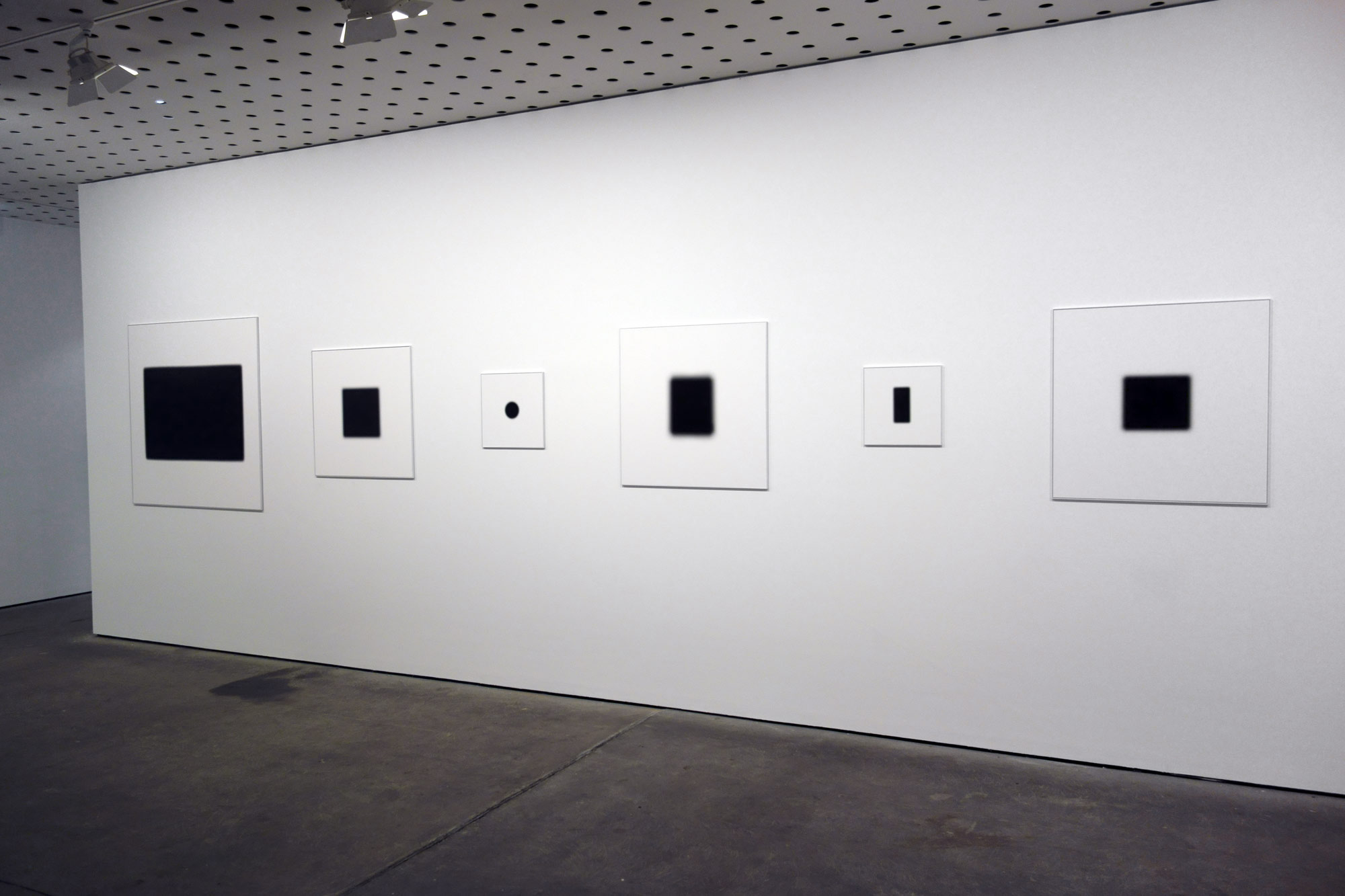
After Images is an interesting conceptual experiment, one that investigates the splitting of the image (shadow) from its referent (object). “The images propose a kind of transference; the object itself may be insignificant but its subjective meaning carries weight, and its shadow leaves a space the viewer fills with their own reading.” In their black-and-white fuzziness the work looks impressive when viewed in the gallery space (see installation views below) but upon close inspection the individual photographs fail to hold the viewers attention. Personally, I found it difficult to impart any great meaning to any of these works and the investigation certainly does not produce memorable images, ones that will stay with the viewer months and years later. For me the exhibition became an exercise in guessing what shadows were which objects, a game that grew quickly tiresome. The work then became an exercise in the importance of captioning an image, as I constantly looked around the room trying to match the titles of the works with the images themselves. As abstract images they imparted little metaphysical poetry as ghost images (an afterimage or ghost image is an optical illusion that refers to an image continuing to appear in one’s vision after the exposure to the original image has ceased). As images that investigate the link between text, object, shadow and language they started to become what the artist sought to enunciate: shadow objects bound to the realm of signification in some amorphous play, shadows that have the potential to become ‘Other’.

PS. As an analogy you could see these images as the equivalent of Jung’s human “shadow aspect” where, according to Jung, the shadow, in being instinctive and irrational, is prone to projection (as these shadows are projected by their objects). The shadow represents the entirety of the unconscious, ie. everything of which a person is not fully conscious, and is the seat of creativity. “Everyone carries a shadow,” Jung wrote, “and the less it is embodied in the individual’s conscious life, the blacker and denser it is.” (Jung, C.G. (1938). “Psychology and Religion.” In CW 11: Psychology and Religion: West and East. p. 131). Hence the potential halo/cination of these images.

Dr Marcus Bunyan


Many thankx to the CCP for allowing me to publish the photographs in the posting. Please click on the photographs for a larger version of the image. All installation photographs © Marcus Bunyan


Polixeni Papapetrou (Australian, 1960-2018) 'Suzie, Elvis fan at home, Melbourne' 1989


Polixeni Papapetrou (Australian, 1960-2018)
Suzie, Elvis fan at home, Melbourne
1989
Selenium toned gelatin silver photograph
40.7 x 40.7cm
Courtesy the artist and Nellie Castan Gallery, Melbourne and Stills Gallery, Sydney


Polixeni Papapetrou (Australian, 1960-2018) 'Indian Brave' 2002


Polixeni Papapetrou (Australian, 1960-2018)
Indian Brave
2002
Pigment ink print
85 x 85cm
Courtesy the artist and Nellie Castan Gallery, Melbourne and Stills Gallery, Sydney


Polixeni Papapetrou (Australian, 1960-2018) 'Three young men paying homage to Elvis on the 13th anniversary of Elvis' death, Elvis Memorial Melbourne' 1990


Polixeni Papapetrou (Australian, 1960-2018)
Three young men paying homage to Elvis on the 13th anniversary of Elvis’ death, Elvis Memorial Melbourne
1990
Selenium toned gelatin silver photograph
40.7 x 40.7cm
Courtesy the artist and Nellie Castan Gallery, Melbourne and Stills Gallery, Sydney


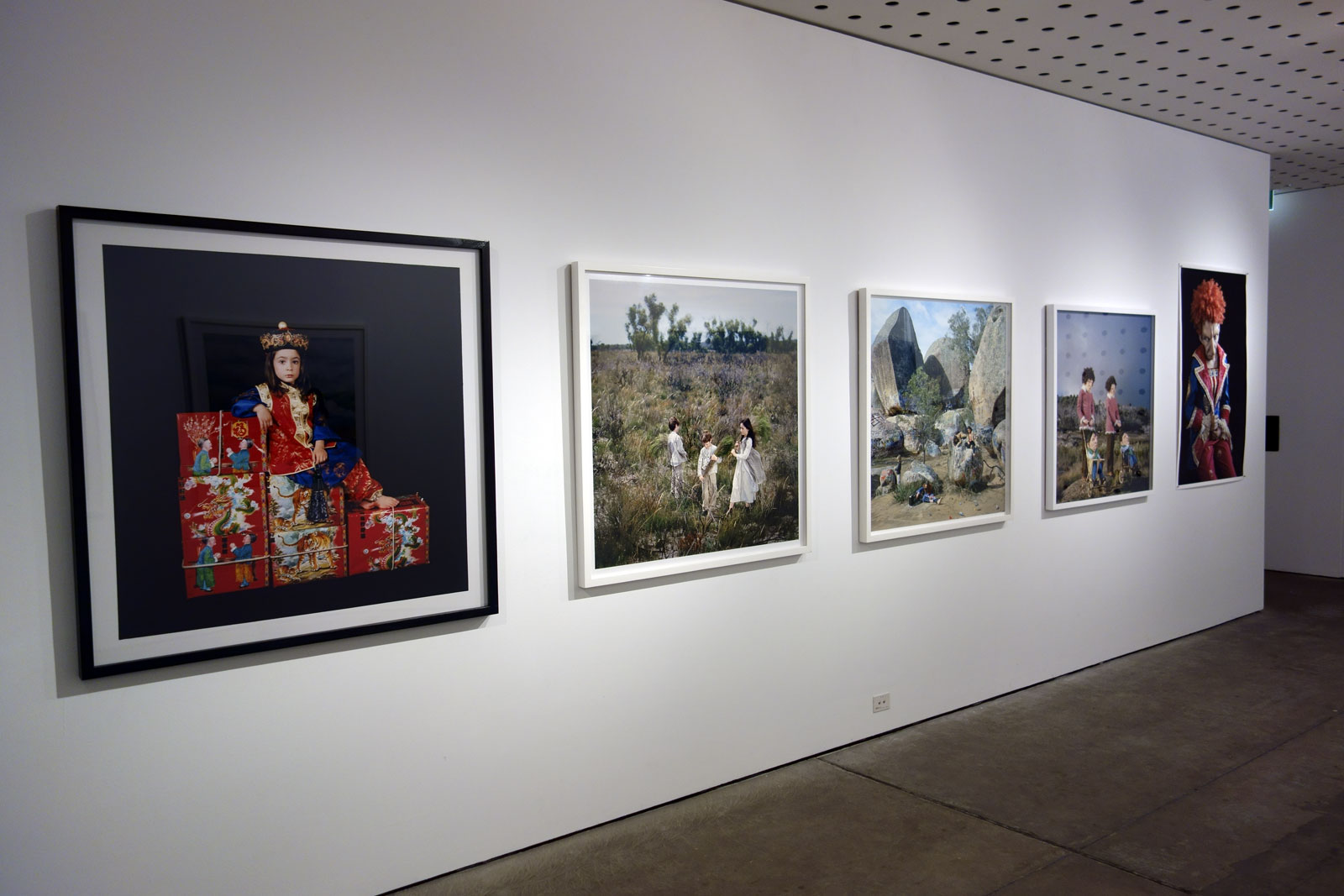
This exhibition focuses on the performative in the work of Polixeni Papapetrou, from her early documentary work through to her directorial work with her children since 2002, regarded internationally as some of the most powerful and provocative works in the field of perfomative photography. Papapetrou’s enduring interest is in how the ‘other’ is represented and how the ‘other’ performs in reinforcing our own identity.

Polixeni Papapetrou is one of Australia’s leading contemporary photomedia artists. She has been exploring relationships between history, contemporary culture, landscape, identity and childhood through her photographic practice since the mid-eighties. In this exhibition, selected by Professor Anne Marsh in consultation with the artist, a particular thread has been selected across Papapetrou’s practice – that of the performative – from her early documentary work through to her directorial work with her children from 2002 to the present.

Her images are informed by her own experience as ‘other’, growing up as a Greek immigrant in a white, Anglo-Saxon, male-dominated culture in Australia in the 1960s and 1970s. Marilyn Monroe impersonators, Elvis Presley fans, body builders, circus performers and drag queens have all taken their turn in front of Papapetrou’s camera. All of these people are, one way or another, performing identities.

In 2002 Papapetrou turned her focus to the experience of childhood, using her children as the performers in her pictures. There is a challenging confusion between fantasy, mythology, archetype, animism and theatricality present in these works, ranging from the playful to the transgressive, wrangling with the question of identity and stressing the embodied nature of experience.

Text from the CCP website


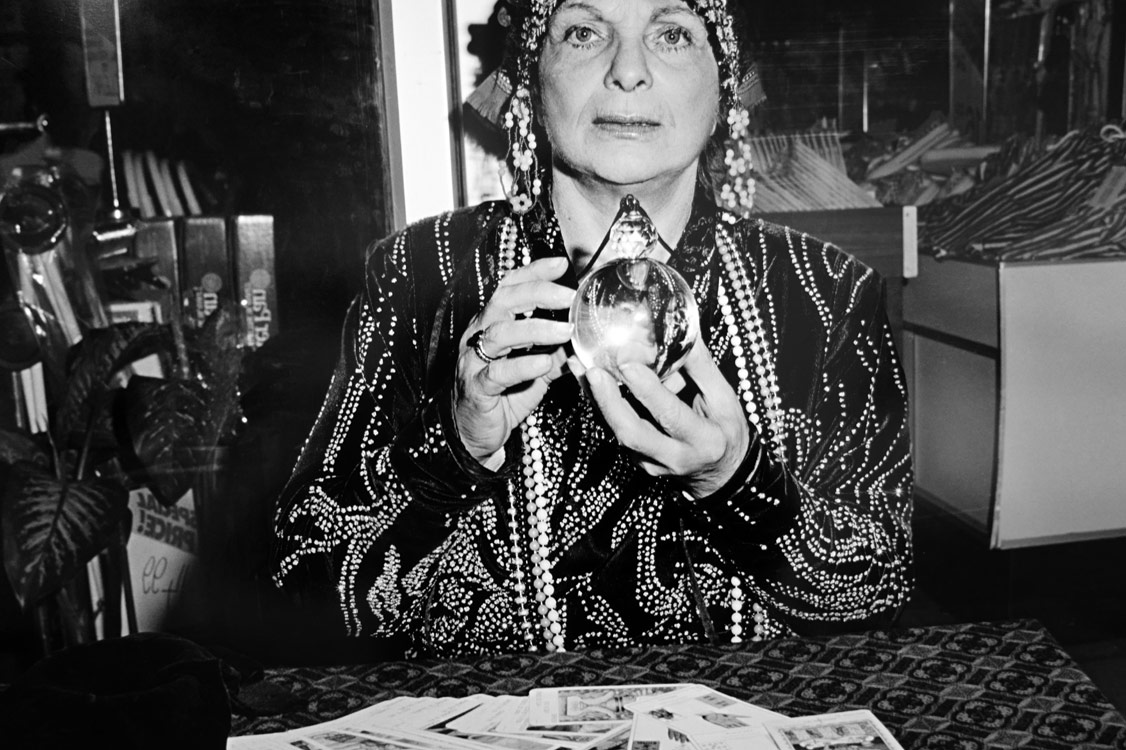
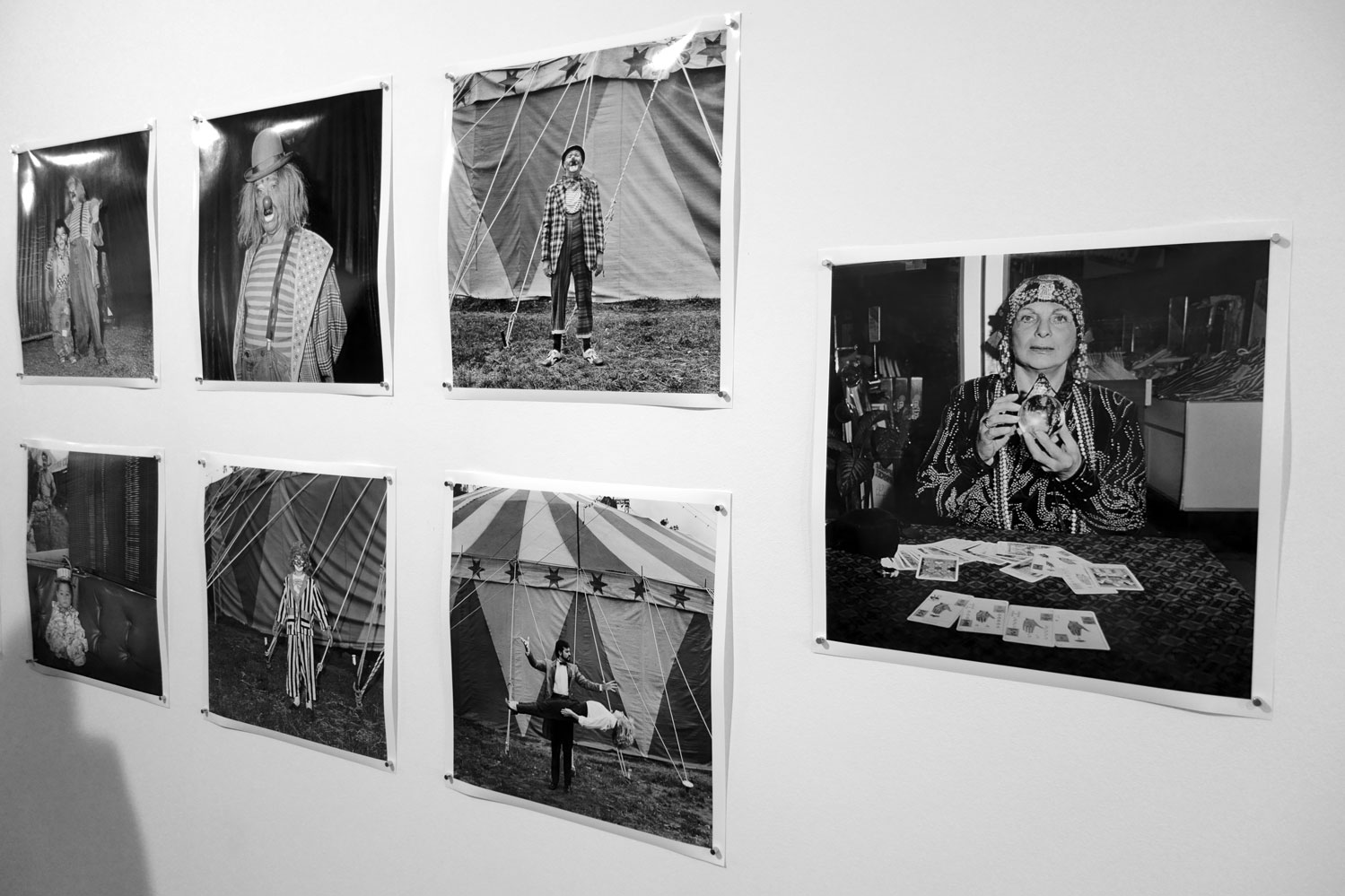
Polixeni Papapetrou (Australian, 1960-2018) 'Fortune teller' 1989 (detail)


Polixeni Papapetrou (Australian, 1960-2018)
Fortune teller (detail)
1989
From the series Ashton Circus, Silvers Circus 1989-1990


Polixeni Papapetrou. 'Levitation, Silvers Circus' 1989 (detail)


Polixeni Papapetrou (Australian, 1960-2018)
Levitation, Silvers Circus (detail)
1989
From the series Ashton Circus, Silvers Circus 1989-1990


Polixeni Papapetrou (Australian, 1960-2018) 'Ashton Circus, Silvers Circus' series 1989-1990 (installation view)


Polixeni Papapetrou (Australian, 1960-2018)
Ashton Circus, Silvers Circus series (installation view)
1989-1990
Photo: Marcus Bunyan


Installation view of Polixeni Papapetrou 'A Performative Paradox' at the Centre for Contemporary Photography (CCP)

Installation view of Polixeni Papapetrou 'A Performative Paradox' at the Centre for Contemporary Photography (CCP)

Installation view of Polixeni Papapetrou 'A Performative Paradox' at the Centre for Contemporary Photography (CCP)

Installation view of Polixeni Papapetrou 'A Performative Paradox' at the Centre for Contemporary Photography (CCP)

Installation view of Polixeni Papapetrou 'A Performative Paradox' at the Centre for Contemporary Photography (CCP)


Installation views of Polixeni Papapetrou A Performative Paradox at the Centre for Contemporary Photography (CCP)
Photos: Marcus Bunyan


Daniel von Sturmer (New Zealand, b. 1972) 'Production Still for After Images'


Daniel von Sturmer (New Zealand, b. 1972)
Production Still for After Images
Courtesy the artist and Anna Schwartz Gallery, Melbourne and Sydney


In After Images the shadows of a set of subjectively ‘important artefacts’ (a business card, a phone, a letter…) are presented alongside generic objects from the studio, for example: a bin, some tape, a ruler… Presented at 1:1 scale, the images propose a kind of transference; the object itself may be insignificant but its subjective meaning carries weight, and its shadow leaves a space the viewer fills with their own reading.

Photographed using a specially constructed ‘set’ to enable the separation of an object from its shadow, the resulting image stands alone, separated from its object yet inextricably bound to the realm of signification from which it has been cast.

Text from the CCP website


Installation view of Daniel von Sturmer 'After Images' at the Centre for Contemporary Photography (CCP)

Installation view of Daniel von Sturmer 'After Images' at the Centre for Contemporary Photography (CCP)

Installation view of Daniel von Sturmer 'After Images' at the Centre for Contemporary Photography (CCP)

Installation view of Daniel von Sturmer 'After Images' at the Centre for Contemporary Photography (CCP)

Installation view of Daniel von Sturmer 
'After Images' at the Centre for Contemporary Photography (CCP)


Installation views of Daniel von Sturmer 
After Images at the Centre for Contemporary Photography (CCP)
Photos: Marcus Bunyan


Centre for Contemporary Photography

No permanent exhibition space at the moment

Centre for Contemporary Photography website

LIKE ART BLART ON FACEBOOK

Back to top

Exhibition: ‘Joan Ross: Touching Other People’s Shopping’ at Bett Gallery, Hobart

Exhibition dates: 7th June – 28th June 2013


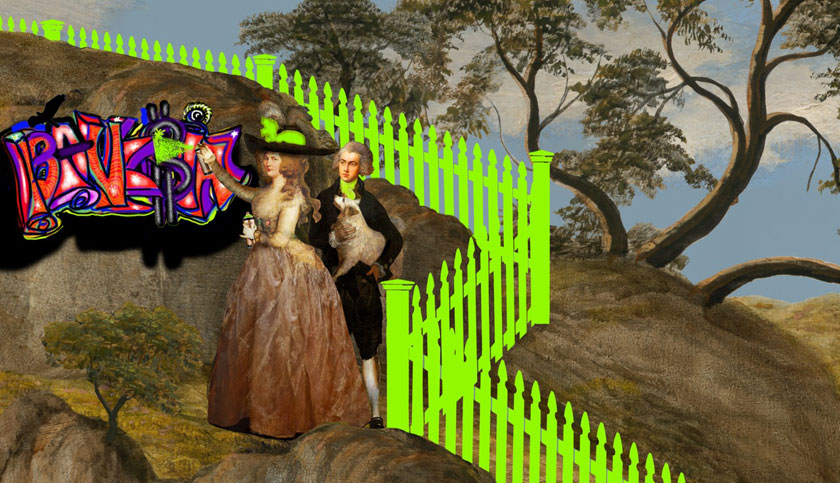
Joan Ross (Australian, b. 1961) 'Mine' 2013


Joan Ross (Australian, b. 1961)
Mine
2013
hand painted pigment print on cotton rag paper
40 x 60cm
edition of 3


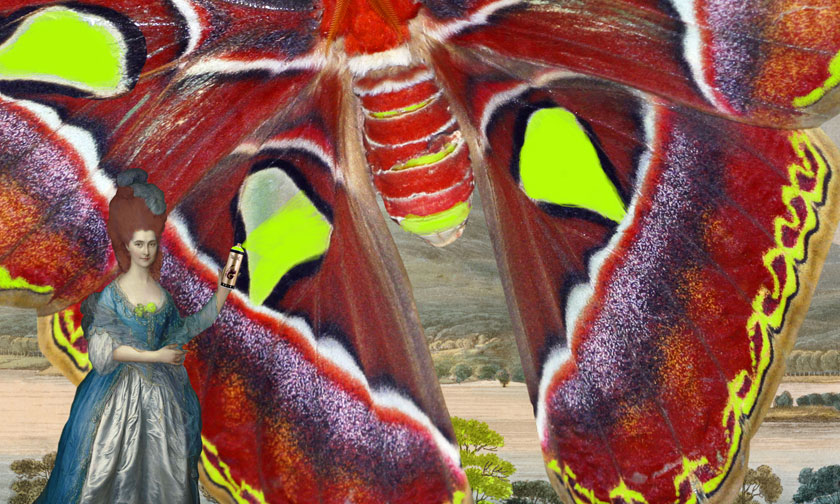
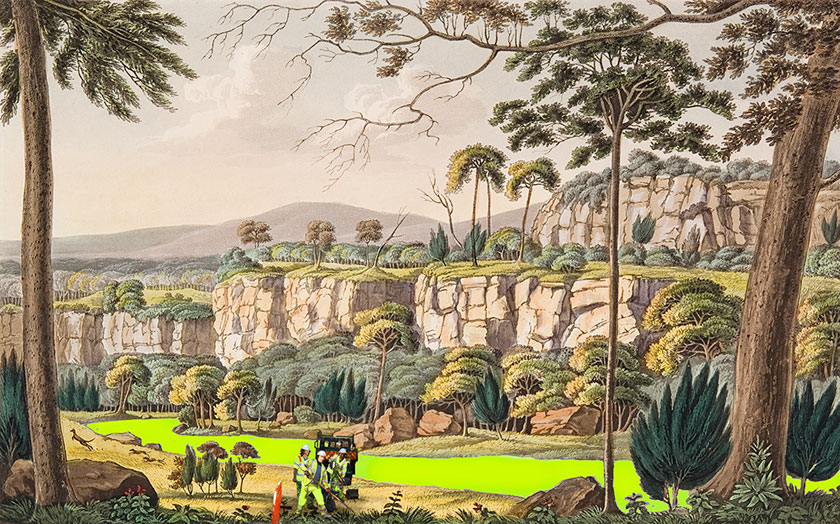
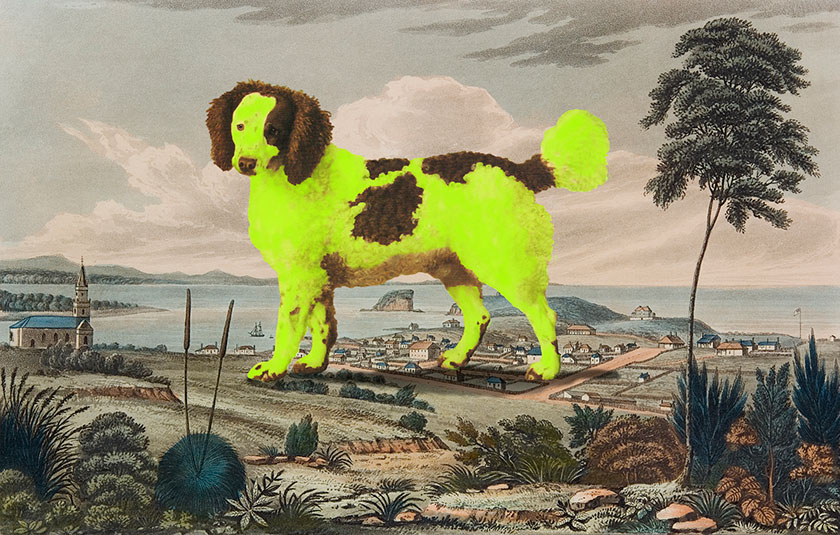
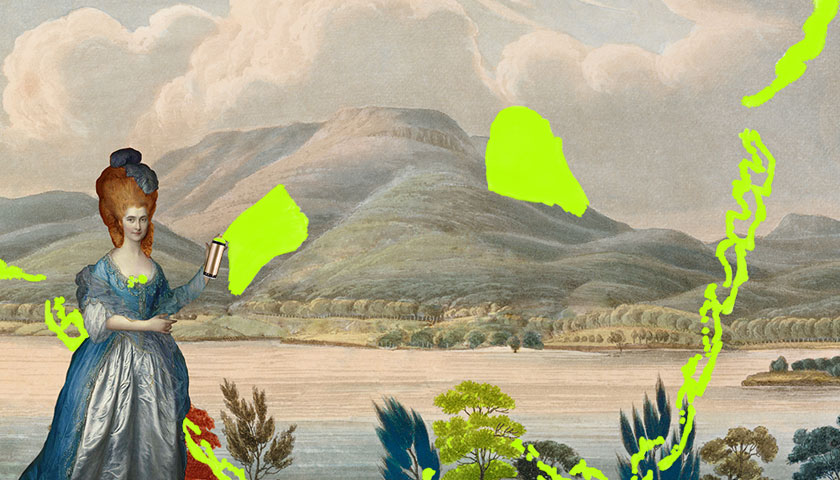
The claiming of things
The touching of things
The digging of land
The tagging of place
The taking over of the world

Tag and capture.
Tag and capture.
Shop, dig, spray, destroy.


An ironic critique of the pastoral, neo/colonial world, tagged and captured in the 21st century.

Excellent work. The construction, sensibility and humour of the videos is outstanding. I also responded to the two works Tag and capture and Shopping for butterfly (both 2013, below).

Dr Marcus Bunyan


Many thankx to Bett Gallery for allowing me to publish the photographs and videos in the posting. Please click on the photographs for a larger version of the image.


Joan Ross (Australian, b. 1961) 'I dig your land' 2013


Joan Ross (Australian, b. 1961)
I dig your land
2013
hand painted pigment print on cotton rag paper
31 x 50cm
Edition of 3


Joan Ross (Australian, b. 1961) 'Lassie come home' 2013


Joan Ross (Australian, b. 1961)
Lassie come home
2013
hand painted pigment print on cotton rag paper
32 x 50cm
Edition of 3


Joan Ross (Australian, b. 1961) 'Tagging' 2013


Joan Ross (Australian, b. 1961)
Tagging
2013
hand painted pigment print on cotton rag paper
33.5 x 60cm
Edition of 3


Joan Ross (Australian, b. 1961) 'Shopping for butterfly' 2013


Joan Ross (Australian, b. 1961)
Shopping for butterfly
2013
hand painted pigment print on cotton rag paper
51.5 x 50cm
Edition of 3


Joan Ross (Australian, b. 1961) 'Tag and capture' 2013


Joan Ross (Australian, b. 1961)
Tag and capture
2013
hand painted pigment print on cotton rag paper
50 x 47cm
Edition of 3


Joan Ross (Australian, b. 1961) 'The naming of things' 2013


Joan Ross (Australian, b. 1961)
The naming of things
2013
hand painted pigment print on cotton rag paper
40 x 70cm
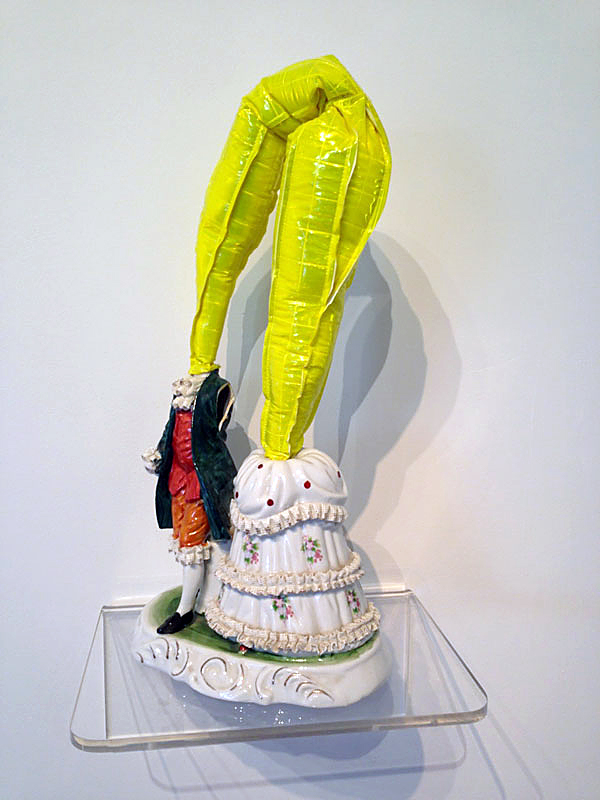
Edition of 3


Joan Ross (Australian, b. 1961) 'Together we can take over the world' 2012


Joan Ross (Australian, b. 1961)
Together we can take over the world
2012
found ceramic and fluorescent reflector tape
50 x 24 x 20cm


Bett Galllery
369 Elizabeth Street
North Hobart Tasmania 7000
Australia
Phone: +61 (0) 3 6231 6511

Opening hours:
Monday – Friday 10am – 5.30pm
Saturday 10am – 4pm
Closed Sundays & public holidays

Bett Gallery website

LIKE ART BLART ON FACEBOOK

Back to top

Exhibition: ‘Sophia Szilagyi: water studies’ at Beaver Galleries, Canberra

Exhibition dates: 23rd May – 11th June 2013


Sophia Szilagyi (Australian, b. 1973) 'night waves I' 2013


Sophia Szilagyi (Australian, b. 1973)
night waves I
2013
Pigment print on archival rag paper
Edition 2 of 15
29 x 29cm


“It is intangible, incalculable, a thing to be felt, not comprehended – a music of the eyes, a melody of the heart…”


John Ruskin, art critic


“Once, Turner had himself lashed to the mast of a ship for several hours, during a furious storm, so that he could later paint the storm. Obviously, it was not the storm itself that Turner intended to paint. What he intended to paint was a representation of the storm. One’s language is frequently imprecise in that manner, I have discovered.”

David Markson, Wittgenstein’s Mistress


How appropriate that these stunning water studies by artist Sophia Szilagyi should be exhibited in Canberra as the blockbuster J. M. W. Turner exhibition Turner from the Tate: The Making of a Master opens at the National Gallery of Australia.

I love everything thing about these works: the compacted and layered sense of space (the eye of the printmaker brought to bare in the construction of the images rather than the eye of the photographer), the lack of a traditional vanishing point that allows the viewer to be immersed in the prints, the tonality, the texture and immediacy of the images. Szilagyi pushes the work to the limits and, amid the swirling masses of light and colour, a powerful mood is evoked.1 These towering, raging canvases portray the gathering force of the sea, its immediacy and energy; its danger, wonder and sublime beauty. They are as much landscapes of the mind and the imagination as of the sea. Turner, lashed to  a mast during a furious storm so that he could later paint a representation of the storm, would surely have been proud of these meditations upon nature/life. Bravura. Bravo.

Dr Marcus Bunyan


1/ See Grishin, Sasha. “Genius shows his true colours,” in The Age newspaper, Saturday, June 1, 2013, p. 2.


Many thankx to Beaver Galleries for allowing me to publish the photographs in the posting. Please click on the photographs for a larger version of the image.


“Light shimmers, darkness settles, the sea opens its arms to swallow up the sky. Sophia Szilagyi’s imagery evokes the natural world and imbues it with an emotional resonance through the artist’s skilful manipulation of diametrically opposed elements. Light abuts dark, the dense almost claustrophobic space in some works contrast with open seas and vast skies that imply the infinite in others. Imagery is constructed through digital printmaking techniques, layered to create textural complexities, while capturing the oscillations in mood and atmosphere that mirror the ebb and flow of human emotions. Fear, wonder, and danger exist in these images that capture the beauty and grandeur found in the physical world, while also charting an internal topography.”


Marguerite Brown


Sophia Szilagyi (Australian, b. 1973) 'stormy seas (after Courbet)' 2013


Sophia Szilagyi (Australian, b. 1973)
stormy seas (after Courbet)
2013
Pigment print on archival rag paper
Edition 2 of 15
30 x 35cm


Sophia Szilagyi (Australian, b. 1973) 'wave' 2013


Sophia Szilagyi (Australian, b. 1973)
wave
2013
Pigment print on archival rag paper
Edition 9 of 20
49.5 x 57cm


Sophia Szilagyi (Australian, b. 1973) 'breaking' 2013


Sophia Szilagyi (Australian, b. 1973)
breaking
2013
Pigment print on archival rag paper
Edition 4 of 10
96 x 122cm


Sophia Szilagyi is a printmaker who uses digital printmaking to create scenes of re-interpreted memory and experience. In her multi-layered compositions, Sophia explores the relationship between fiction and non-fiction, challenging our perceptions of reality and the effects of physical sensation and emotional response on memory. Sophia’s artistic process begins with an impression of a certain painting, personal photograph or experience. Images from a variety of sources are combined and overlapped so that the general interpretation of her work is a patchwork of real and imagined experiences. Sophia achieves this seamless layering by using digital technology, giving her the freedom to manipulate the imagery to create the desired mood and expression. The completed works are printed on archival rag paper as this highly absorbent surface enhances the softness and dreamlike quality of her imagery. In this current exhibition, Sophia draws her inspiration from the sea and coast, exploring the dualities of intersections between light and dark, earth and ocean. Through her prints, Sophia seeks to capture a sense of wonder, fear, beauty and, sometimes, danger that exists in both nature and the imagination.

Sophia Szilagyi graduated with First Class Honours from the School of Art and Culture at RMIT in 2000. Since graduating, Sophia has held a number of solo shows as well as participating in many group exhibitions across Australia. Her work has been selected in numerous print awards including the Fremantle Print Prize (2007) and the Banyule Award for Works on Paper (2011, 2009 and 2007). In 2005, Sophia was commissioned to complete a work for the Print Council of Australia and her work is represented in collections including the Burnie Regional Art Museum, La Trobe Regional Art Gallery, Wagga Wagga Art Gallery, Queensland University of Technology and State Library of Victoria.

Press release from Beaver Galleries


Sophia Szilagyi (Australian, b. 1973) 'light sea' 2013


Sophia Szilagyi (Australian, b. 1973)
light sea
2013
Pigment print on archival rag paper
Edition 1 of 15


Sophia Szilagyi (Australian, b. 1973) 'dark sea' 2013


Sophia Szilagyi (Australian, b. 1973)
dark sea
2013
Pigment print on archival rag paper
Edition 1 of 15
22 x 22 cm


Sophia Szilagyi (Australian, b. 1973) 'ocean view I' 2013


Sophia Szilagyi (Australian, b. 1973)
ocean view I
2013
Pigment print on archival rag paper
Edition 1 of 5
76 x 77cm


Sophia Szilagyi (Australian, b. 1973) 'ocean view II' 2013


Sophia Szilagyi (Australian, b. 1973)
ocean view II
2013
Pigment print on archival rag paper
Edition 4 of 5
78 x 74cm


Sophia Szilagyi (Australian, b. 1973) 'settling' 2013


Sophia Szilagyi (Australian, b. 1973)
settling
2013
Pigment print on archival rag paper
Edition 2 of 10
80 x 70cm


Beaver Galleries
81 Denison Street
Deakin, Canberra
ACT 2600, Australia
Phone: 02 6282 5294

Opening hours
Tuesday – Saturday 10am – 5pm

Beaver Galleries website

LIKE ART BLART ON FACEBOOK

Back to top

Exhibition: ‘Hilma af Klint – A Pioneer of Abstraction’ at Moderna Museet, Stockholm

Exhibition dates: 16th February – 26th May 2013


Hilma af Klint (Swedish, 1862-1944) 'Untitled' Nd


Hilma af Klint (Swedish, 1862-1944)
Untitled
Nd


I don’t often say this about an artist but OMG, I am in love!

Five years before Wassily Kandinsky (he of the book Concerning the Spiritual In Art 1910), before Piet Mondrian and Kazimir Malevich, the images of Carl Jung (The Red Book) and Rudolf Steiner (Blackboard Drawings 1919-1924) – who dismissed her ideas as wrong – was this revolutionary artist and abstractionist, Hilma af Klint, possibly the first purely abstract painter to produced non-objective works in the early 1900’s. While her more conventional painting became the source of her financial income her ‘life’s work’ remained a quite separate practice and hidden from view. She worked in isolation with little knowledge of the Avant-garde movement in Europe and requested that her complex and articulate paintings not be shown until 20 years after her death.

“Through her work with the group “the Five” af Klint created experimental automatic drawing as early as 1896, leading her towards an inventive geometric visual language capable of conceptualising invisible forces both of the inner and outer worlds. Quite apart from their diagrammatic purpose the paintings have a freshness and a modern aesthetic of tentative line and hastily captured image: a segmented circle, a helix bisected and divided into a spectrum of lightly painted colours. She continued prolifically to add to the body of work amounting to over 1000 pieces until 1941. She requested that it should not be shown until 20 years after the end of her life. In 1970 her paintings were offered as a gift to Moderna Museet in Stockholm, which declined the donation.” (Text from Wikipedia)

Ironic then is it not, that this first major exhibition of Hilma af Klint’s life’s work is at Moderna Museet in Stockholm. How times and attitudes change. And yes, I have ordered the catalogue…

Dr Marcus Bunyan


Many thankx to Moderna Museet for allowing me to publish the artwork in the posting. Please click on the photographs for a larger version of the image.


Photographer unknown. 'Portrait of Hilma af Klint' Nd


Photographer unknown
Portrait of Hilma af Klint
Nd


“Negotiating around the masculine domain of art making by working through automatism and spiritual séances, Hilma af Klint appears to allow herself more freedom and reverence by working directly through ‘High Masters’ in their masculine form; through instructed spiritualist experience. Influenced heavily by the infamous Madame Blavatsky, the co-founder of The Theosophical Society and writer of ‘The Secret Doctrine’, af Klint’s ‘High Masters’ guided her hand in an attempt to gain spiritual knowledge of the self and of the universe…

Her occult diaries containing symbols of crosses, mystical vowels, dead sea scrolls, astral and metaphysical planes, mystical initials, strange vowels cross over to the larger works, continuing to make the viewer work hard at understanding what message is being sent. It is then that you notice the rest of the space with painting after painting hung mainly in series, working their way with fluidity around the many walls contained within the exhibiting space. Cubicles of watercolours denoting The Tree of Life, Studies of world religions, paintings for the temple, they are all there. It is clear that af Klint was prolific in her secretive world but it is hard to imagine how she managed to keep all these vast works hidden from view.

It is clear that Klint has some understanding of scientific breakthroughs in her time however her occult physics, chemistry and mathematical understanding appears ahead of its time. Her provocative nature appears to ask questions of sexuality, suggests male and female equality and is probably through this enquiry, still seen as revolutionary. In light of this, af Klint experienced continuous dismissal of her working practices and ideas linked to the scientific and mathematical study of spiritual knowledge. Her friends describe her work as ‘inappropriate’ and her contemporary Rudolph Steiner, founder of The Anthroposophical Society dismissed her ideas as wrong when asked by personal invitation to view them, claiming that she couldn’t have contact with spirits in that way although he doesn’t appear to state clearly for what reason.”

Open College for the Arts tutor Hayley Lock on the We Are OCA website [Online] Cited 20/05/2013


Hilma af Klint – A Pioneer of Abstraction | Introduction

In the spring of 2013, the Moderna Museet is showing Hilma af Klint (1862-1944) in a large format with many works that have never been shown before. This retrospective exhibition presents Hilma af Klint as one of the greatest Swedish artists.

Hilma af Klint was a pioneer in abstract art, as early as 1906 she left a representational painting behind. Between 1906 and 1915, nearly 200 abstract paintings of partly monumental formats were added. Similar to Wassily Kandinsky, Piet Mondrian and Kazimir Malevich, who until now have been regarded as the foreground figures of abstraction, Hilma af Klint was interested in spiritual currents of her time such as spiritualism, theosophy and later anthroposophy. Hilma af Klint’s art is about the consciousness of a spiritual dimension, something that was marginalized in an increasingly materialistically oriented world.

Moderna Museet’s retrospective exhibition presents Hilma af Klint’s most important abstract works as well as paintings and works on paper that have never been shown before.


Installation view of 'Hilma af Klint – A Pioneer of Abstraction' at at Moderna Museet, Stockholm 2013

Installation view of 'Hilma af Klint – A Pioneer of Abstraction' at at Moderna Museet, Stockholm 2013

Installation view of 'Hilma af Klint – A Pioneer of Abstraction' at at Moderna Museet, Stockholm 2013


Installation views of Hilma af Klint – A Pioneer of Abstraction, 2013
© Photo: Åsa Lundén/ Moderna Museet


In Spring 2013 Moderna Museet is dedicating a major exhibition to Hilma af Klint (1862-1944), featuring many works that have never before been shown in public. This retrospective exhibition of a Swedish pioneer of abstract art is Moderna Museet’s tribute to Hilma af Klint as one of the greatest Swedish artists. A woman artist whose work is still far too unknown to a wider public, Hilma af Klint eschewed representational painting as early as 1906. Between 1906 and 1915, she produced nearly 200 abstract paintings, some of which are in monumental formats.

Like Vassily Kandinsky, Piet Mondrian and Kazimir Malevich, who have previously been regarded as the main protagonists of abstract art, Hilma af Klint was influenced by contemporary spiritual movements, such as spiritism, theosophy and, later, anthroposophy. Hilma af Klint’s oeuvre builds on the awareness of a spiritual dimension of consciousness, an aspect that was being marginalised in an increasingly materialistic world. When she painted, she believed that a higher consciousness was speaking through her. In her astonishing works she combines geometric shapes and symbols with ornamentation. Her multifaceted imagery strives to give insights into the different dimensions of existence, where microcosm and macrocosm reflect one another.

Hilma af Klint’s groundbreaking images were created in the early years of the 20th century – before the dawn of abstract art in Russia and Europe. Her works are not concerned with abstraction of colour and shapes for its own sake, but are an attempt to portray that which is not visible. Kandinsky, Malevich and Mondrian also explored a spiritual dimension. Kandinsky moved away from Expressionism and gradually left visible reality behind. He had a great interest in the occult and published On the Spiritual in Art in 1911. Malevich arrived via Cubism and Futurism at his suprematist, abstract and exceedingly spiritual images. Mondrian successively turned his back on figurative portrayals of that which the eye can see, reducing his compositions to a play of vertical and horizontal lines, and to the primary colours red, yellow and blue, with white and black. As a theosophist, he was striving for a purely spiritual expression of the eternal ideas beyond the visible world. Spiritual searching was thus an essential element to many of the modernists who moved towards an abstract imagery. Unlike Hilma af Klint, Kandinsky, Malevich and Mondrian did not claim to be acting as mediums in their creative process. This was an experience, however, that she had in common with artists such as the artists František Kupka (1871-1957), Emma Kunz (1892-1963) and the writer Victor Hugo (1802-1885).

Hilma af Klint left more than 1,000 paintings, watercolours and sketches. Although she exhibited her early, representational works, she refused to show her abstract paintings during her lifetime. In her will, she stipulated that these groundbreaking works must not be shown publicly until 20 years after her death. She was convinced that only then would the world be fully and completely ready to understand their significance.

Moderna Museet’s retrospective exhibition presents Hilma af Klint’s most important abstract works, as well as paintings and works on paper that have never before been presented publicly, enhancing our understanding of her oeuvre. Her extensive diaries and notebooks have been included in the research for this exhibition, which comprises some 200 paintings and works on paper and will tour internationally in 2013-2015.

About the artist

Hilma af Klint (1862-1944) was a pioneer of art that turned away from visible reality. By 1906, she had developed an abstract imagery. This was several years before Wassily Kandinsky (1866-1944), Piet Mondrian (1872-1944) and Kazimir Malevich (1878-1935), who are still regarded as the pioneers of abstract 20th-century art. Hilma af Klint assumed that there was a spiritual dimension to life and aimed at visualising contexts beyond what the eye can see. When painting, she believed that she was in contact with a higher consciousness that spoke and conveyed messages through her. Like many of her contemporaries, she was influenced by spiritual movements, especially spiritualism, theosophy and later anthroposophy. Through her paintings, she sought to understand and communicate the various dimensions of human existence.

In her will, Hilma af Klint wrote that her abstract works must not be made accessible to the public until at least twenty years after her death. She was convinced that their full meaning could not be understood until then. One hundred years ago, Hilma af Klint painted pictures for the future.

A Woman Artist at the Turn of the Century

Hilma af Klint began her art studies at Tekniska Skolan in Stockholm and also had lessons in portrait painting. Between 1882 and 1887, she was a student at the Royal Academy of the Fine Arts. After graduating and until 1908, she had a studio at Kungsträdgården in central Stockholm. She painted and exhibited portraits and landscapes in a naturalist style. In the late 1870s, Hilma af Klint attended séances, where a medium contacted the dead. There was a great fascination for invisible phenomena at the time. This can be seen in relation to scientific discoveries, such as x-rays that could reveal internal human organs, and electromagnetic waves that led to the development of radio and telephony.

In 1896, Hilma af Klint and four other women formed the group “De Fem” [The Five]. They made contact with “high masters” from another dimension, and made meticulous notes on their séances. This led to a definite change in Hilma af Klint’s art. She began practising automatic writing, which involves writing without consciously guiding the movement of the pen on the paper. She developed a form of automatic drawing, predating the surrealists by decades. Gradually, she eschewed her naturalist imagery, in an effort to free herself from her academic training. She embarked on an inward journey, into a world that is hidden from most people.

Press release from the Moderna Museet website


Hilma af Klint (Swedish, 1862-1944) 'From A Work on Flowers, Mosses and Lichen, July 2 1919' 1919


Hilma af Klint (Swedish, 1862-1944)
From A Work on Flowers, Mosses and Lichen, July 2 1919
1919
© Stiftelsen Hilma af Klints Verk
Photo: Moderna Museet, Albin Dahlström


Hilma af Klint (Swedish, 1862-1944) 'Evolution, No. 7, Group VI, The WUS/Seven-Pointed Star Series' 1908


Hilma af Klint (Swedish, 1862-1944)
Evolution, No. 7, Group VI, The WUS/Seven-Pointed Star Series
1908
© Stiftelsen Hilma af Klints Verk
Photo: Albin Dahlström/Moderna Museet


Hilma af Klint (Swedish, 1862-1944) 'The Swan, No. 17, Group IX/SUW, The SUW/UW Series' 1915


Hilma af Klint (Swedish, 1862-1944)
The Swan, No. 17, Group IX/SUW, The SUW/UW Series
1915
© Courtesy Stiftelsen Hilma af Klints Verk
Photo: Albin Dahlström/Moderna Museet


Hilma af Klint (Swedish, 1862-1944) 'The Swan, No. 1, Group IX/SUW, The SUW/UW Series' 1915


Hilma af Klint (Swedish, 1862-1944)
The Swan, No. 1, Group IX/SUW, The SUW/UW Series
1915
© Stiftelsen Hilma af Klints Verk
Photo: Moderna Museet, Albin Dahlström


Hilma af Klint (Swedish, 1862-1944) 'The Swan' 1914


Hilma af Klint (Swedish, 1862-1944)
The Swan
1914


Symbols

Hilma af Klint’s imagery is full of symbols, letters and words. Symbols are like doors into another dimension. For Hilma af Klint, her entire work was about conveying the messages she received, and to shed light on the great existential issues.

It would be pointless to translate the symbols and letters in Hilma af Klint’s works into definite, unambiguous terms. They must always be seen in relation to the entire context. In her notebook Symboler, Bokstäver och Ord tillhörande Hilma af Klints målningar [Notes on Letters and Words pertaining to Works by Hilma af Klint] she attempts to clarify the complex meanings of the various signs. Here are a few general explanations:

The snail or spiral represents development or evolution. The eyelet and the hook,blue and yellow, and the lily and the rose represent femininity and masculinity respectively. W stands for matter, while U stands for spirit. The almond shape arising when two circles overlap is called the vesica piscis and is an ancient symbol for the development towards unity and completion. The swan represents the ethereal in many mythologies and religions and stands for completion in the alchemical tradition. In Christianity, the dove represents the holy spirit and love.

Terminology

Esoteric and occult denote “the science of the hidden dimensions”. Western esotericism is a mixture of Neoplatonism, Hermeticism, Jewish kabbalah and the three occult “sciences” of astrology, magic and alchemy.

Spiritualism shares the conviction that it is possible to make contact with the spirits of the deceased. Modern spiritism was spread thanks to the Fox sisters in the USA in 1848.

Theosophy is a general doctrine incorporating inspiration from various religions and spiritism. The religions are regarded as different expressions of one fundamental truth. Theosophy teaches that the origin of everything, divinity, is inherent in every being. The Theosophical Society was founded in New York in 1875 by Helena Blavatsky and others. There is also an older form of theosophy that is significantly different to the newer version.

Anthroposophy is a life philosophy that originated in theosophy. Rudolf Steiner, who was the leader of the German branch of the Theosophical Society, left theosophy in 1913 to set up the anthroposophical movement. The two philosophies have a great deal in common, but anthroposophy in general has a stronger Christian element.

According to legend, the Rosicrucians were an esoteric society in Germany who engaged in alchemy in the early 17th century. Today, there are many secret orders that claim to uphold the Rosicrucian traditions.


Hilma af Klint (Swedish, 1862-1944) 'Tree of Knowledge' 1913


Hilma af Klint (Swedish, 1862-1944)
Tree of Knowledge
1913


Hilma af Klint (Swedish, 1862-1944) 'Primordial Chaos, No. 16, Group I, The WU/Rose Series' 1906-1907


Hilma af Klint (Swedish, 1862-1944)
Primordial Chaos, No. 16, Group I, The WU/Rose Series
1906-1907
© Courtesy Stiftelsen Hilma af Klints Verk
Photo: Albin Dahlström/Moderna Museet


Hilma af Klint (Swedish, 1862-1944) 'The Large Figure Paintings, No. 5, Group III, The Key to All Works to Date, The WU/Rose Series' 1907


Hilma af Klint (Swedish, 1862-1944)
The Large Figure Paintings, No. 5, Group III, The Key to All Works to Date, The WU/Rose Series
1907
© Stiftelsen Hilma af Klints Verk
Photo: Moderna Museet, Albin Dahlström


Hilma af Klint (Swedish, 1862-1944) 'The Ten Largest, No. 3, Youth, Group IV' 1907


Hilma af Klint (Swedish, 1862-1944)
The Ten Largest, No. 3, Youth, Group IV
1907
© Courtesy Stiftelsen Hilma af Klints Verk
Photo: Albin Dahlström/Moderna Museet


Hilma af Klint (Swedish, 1862-1944) 'The Ten Largest, No. 1' 1907


Hilma af Klint (Swedish, 1862-1944)
The Ten Largest, No. 1
1907


Hilma af Klint (Swedish, 1862-1944) 'The Dove, No. 3, Group IX/ UW, The SUW/UW Series' 1915


Hilma af Klint (Swedish, 1862-1944)
The Dove, No. 3, Group IX/ UW, The SUW/UW Series
1915
© Stiftelsen Hilma af Klints Verk
Photo: Moderna Museet, Albin Dahlström


Hilma af Klint (Swedish, 1862-1944) 'Altarpiece, No. 1, Group X, Altarpiece Series' 1915


Hilma af Klint (Swedish, 1862-1944)
Altarpiece, No. 1, Group X, Altarpiece Series
1915
© Stiftelsen Hilma af Klints Verk
Photo: Albin Dahlström/Moderna Museet


Moderna Museet, Stockholm

Moderna Museet is ten minutes away from Kungsträdgården, and twenty minutes from T-Centralen or Gamla Stan. Walk past Grand Hotel and Nationalmuseum on Blasieholmen, opposite the Royal Palace. After crossing the bridge to Skeppsholmen, continue up the hill. The entrance to Moderna Museet and Arkitekturmuseet is on the left-hand side.

Opening hours:
Tuesday – Sunday 10 – 18
Monday closed

Moderna Museet website

LIKE ART BLART ON FACEBOOK

Back to top

Exhibition: ‘Arnold Newman: Masterclass’ at the Harry Ransom Center, The University of Texas at Austin

Exhibition dates: 12th February – 12th May 2013


Many thankx to the Harry Ransom Center for allowing me to publish the photographs in the posting. Please click on the photographs for a larger version of the image.


Arnold Newman Masterclass


Installation view of the exhibition 'Arnold Newman: Masterclass' at the Harry Ransom Center, The University of Texas at Austin

Installation view of the exhibition 'Arnold Newman: Masterclass' at the Harry Ransom Center, The University of Texas at Austin


Installation views of Arnold Newman: Masterclass at the Harry Ransom Center, The University of Texas at Austin
Photos by Pete Smith
Images courtesy of Harry Ransom Center


Arnold Newman (American, 1918-2006) 'Dr. Edwin H. Land with group of Polaroid Employees, Polaroid warehouse in Needham, Mass.,' 1977


Arnold Newman (American, 1918-2006)
Dr. Edwin H. Land with group of Polaroid Employees, Polaroid warehouse in Needham, Mass.,
1977
Gelatin silver print
© 1977 Arnold Newman / Getty Images


Arnold Newman (American, 1918-2006) 'Truman Capote, writer, New York' 1977


Arnold Newman (American, 1918-2006)
Truman Capote, writer, New York
1977
Gelatin silver print
© Arnold Newman / Getty Images


“The thing is, with Penn or Avedon, they control totally the situation in the studio, and I’m always taking a chance, wherever I go.”


“What’s the truth in a portrait? Who do you believe? Sometimes you cannot determine this in just one picture… The only way to determine whether you believe it or not is to look at my other pictures.”


“Form, feeling … structure and detail … technique and sensibility: it must all come together.”


Arnold Newman


Arnold Newman: Masterclass, the first posthumous retrospective of Arnold Newman (1918-2006), explores the career of one of the finest portrait photographers of the 20th century. The Harry Ransom Center, which holds the Arnold Newman archive, hosts the exhibition’s first U.S. showing February 12 – May 12, 2013.

The show, curated by FEP’s William Ewing, highlights 200 framed vintage prints covering Newman’s career, selected from the Arnold and Augusta Newman Foundation and the collections of major American museums and private collectors. Twenty-eight photographs from the Ransom Center’s Newman archive are featured in the exhibition.

“This retrospective is a real occasion for a reappraisal,” said Todd Brandow, founding director of FEP. “Newman was a great teacher, and he loved sharing his knowledge. It was these ‘lessons’ that led us to the concept of ‘Masterclass,’ the idea that, even posthumously, Newman could go on teaching all of us – whether connoisseurs or neophytes – a great deal.”

A bold modernist with a superb sense of compositional geometry, Newman, called the father of ‘environmental portraiture,’ is known for a crisp, spare style that placed his subjects in the context of their work environments. The exhibition includes work prints, prints with crop marks, rough prints with printing instructions and variants that reveal Newman’s process and attention to detail. “For me the professional studio is a sterile world,” said Newman in a 1991 interview. “I need to get out: Be with people where they’re at home. I can’t photograph ‘the soul,’ but I can show and tell you something fundamental about them.”

“Newman was never comfortable with the environmental term, and the backgrounds of Newman’s portraits would never be secondary aspects of his compositions,” said Ewing. “He had a masterful command of both sitter and setting.”

His subjects included world leaders, authors, artists, musicians and scientists – Pablo Picasso in his studio; Igor Stravinsky sitting at the piano; Truman Capote lounging on his sofa; and Otto Frank, father of Anne Frank, in the attic where his family hid from the Nazis for more than two years.

The exhibition takes stock of the entire range of Newman’s photographic art, showing many fine prints for the first time. The exhibition also includes Newman’s lesser-known and rarely exhibited still lifes, architectural studies, cityscapes and earliest portraits. While at the Ransom Center, the exhibition will be supplemented with holdings from the Center’s Newman archive, which contains all of Newman’s negatives, slides and colour transparencies, all of his original contact sheets and more than 2,000 prints, including examples of colour and collage work. The collection also includes Newman’s original sittings books, correspondence and business files, early sketchbooks and photographic albums.

Press release from the Harry Ransom Center website


Arnold Newman (American, 1918-2006) 'Violin shop : patterns on table, Philadelphia, Pennsylvania' 1941


Arnold Newman (American, 1918-2006)
Violin shop: patterns on table, Philadelphia, Pennsylvania
1941
Gelatin silver print
© 1941 Arnold Newman / Getty Images


Arnold Newman (American, 1918-2006) 'Igor Stravinsky' 1945


Arnold Newman (American, 1918-2006)
Igor Stravinsky
1945
Contact sheet of four negatives with Newman’s marks and cropping lines
Image courtesy of Harry Ransom Center


Cropping was also a practice Newman valued highly. His edges were determined with minute precision. Trained as a painter, Newman never had doubts about the virtues of cropping. His famed Stravinsky portrait would not have a fraction of its power without the stringent crop. As for printing, Newman was equally meticulous. He trusted few assistants, and those he did trust found that he would not accept a final print unless it was flawless in execution. (Wall text)

“Oh, people set up these nonsensical rules and regulations. You can’t crop, you can’t dodge your print, etc, etc., … But the great photographers that these people admire all did that!”

Wall text from the exhibition


Arnold Newman (American, 1918-2006) 'Twyla Tharp, dancer and filmmaker, New York' 1987


Arnold Newman (American, 1918-2006)
Twyla Tharp, dancer and filmmaker, New York
1987
Gelatin silver print
© Arnold Newman / Getty Images


Sensibilities

Many of Newman’s photographs show confident people, posing proudly before their accomplishments, directly engaging the viewer. But many betray a certain réticence – fragility, a hint of vulnerability, or doubt. Newman was aware that a successful artist’s career was not all roses – thorns were encountered along the path. He also regarded the act of portraiture was necessarily collaborative, or transactional; each side had their own kind of power – the sitter could resist the control of the photographer, the photographer could expose the sitter in an unflattering light. A successful portrait had to negotiate this psychological uncertainty. Sometimes Newman wanted to show supreme confidence as the mark of the man; at other times he wanted to show chinks in the armour.

“You show a certain kind of empathy with the subject – I don’t want to use the word ‘sympathy’, but you sort of let them know you’re on their side.”

Wall text from the exhibition


Arnold Newman (American, 1918-2006) 'Larry Rivers, painter, South Hampton, New York' 1975


Arnold Newman (American, 1918-2006)
Larry Rivers, painter, South Hampton, New York
1975
Gelatin silver print
© 1975 Arnold Newman / Getty Images


During the second half of the 20th Century, there was no portrait photographer as productive, creative and successful as Arnold Newman. For almost seven decades Newman applied himself to his art and craft, never for a moment losing his zest for experimentation. His work was published in the most influential magazines of the day, and he was much interviewed, much quoted, and much respected. Several major solo exhibitions paid homage to his achievements during his lifetime, and his work can be found in many of the world’s most prestigious photography collections. No historical overview of portraiture would be complete without one or two Newman masterpieces, nor could any general history of the medium safely leave out his superb Stravinsky, Mondrian or Graham.

Surprisingly, many of Newman’s superb portraits have never been shown or published. This, his first posthumous retrospective, features a wide variety of such photographs. Moreover, it includes cityscapes, documentary photographs and still lifes that have rarely if even been exhibited. Even people already familiar with Newman’s work will find scores of unexpected images, rivalling the work the ‘icons’ they admire. Newman was never happy with the label, often applied, of ‘father of environmental portraiture’. He argued that his portraits were much more than simple records showing artists posing in their studios; there was a symbolic aspect too, and an emotional / psychological element, both fundamental to his approach. He asked critics to ignore all labels, and judge his portraits simply as they would any photographs.

Newman was also a great teacher, and he loved to share his knowledge and skills with aspiring photographers. As with all great artists, the pictures he made seem effortless, natural, but in fact they were the result of careful prior planning. Newman applied the same rigour to selecting the best of his ‘takes’, cropping them precisely, and then printing them with supreme skill. Highly self-critical, he admitted: “I was always my own worst art director.”

With Masterclass, we have endeavoured to give viewers some insights into Newman’s approach. Work prints, prints with crop marks, rough prints with printing instructions, and variants reveal Newman’s great attention to detail and careful consideration of every aspect of the photographic art.

William A. Ewing
Curator


Arnold Newman (American, 1918-2006) 'Salvador Dalí, painter, New York' 1951


Arnold Newman (American, 1918-2006)
Salvador Dalí, painter, New York
1951
Gelatin silver print
© Arnold Newman / Getty Images


Signatures

One of Newman’s favourite strategies was to place the sitters in front of his or her own work. They seem to be saying: ‘Here is my work. This is what I do’. Architects pose beside buildings and models, a test pilot beside his jet, a photographer in front of his prints, a furniture designer in his chair, scientists in front of their equations… At first glance, the pictures appear natural, giving the impression that Newman had surprised his subjects at work, but in fact the set-ups were meticulous.

In the hands of a lesser talent, such a technique could have developed into a routine uniformity, but Newman’s curiosity and genuine interest in his subjects’ work guaranteed a freshness to his portraiture, year after year. To maintain freshness, Newman advised aspiring portrait photographers to do what he did: read up about the subject beforehand, know what he or she has achieved. You will then quickly spot which elements in the environment will be useful.

Wall text from the exhibition


Arnold Newman (American, 1918-2006) 'Notes on Artist's' [sic] series c. 1942


Arnold Newman (American, 1918-2006)
Notes on Artist’s [sic] series
c. 1942
Image courtesy of Harry Ransom Center


Newman writes about his encounters with artists in New York City, describing his first meeting with Alfred Stieglitz.


Arnold Newman (American, 1918-2006) 'Alfred Stieglitz in his An American Place Gallery, 1944' 1944


Arnold Newman (American, 1918-2006)
Alfred Stieglitz in his An American Place Gallery, 1944
1944
Contact print
Image courtesy of Harry Ransom Center


Lumens

Newman preferred natural light, with ‘all its delightful, infinite varieties, indoors and out’. However, he felt that restricting oneself only to natural light had become a religion for many photographers, and artificial light was a taboo. Newman was pragmatic: if there wasn’t enough light to take the picture, he argued, it should be augmented; if it wasn’t the ‘right’ kind of light for the interpretation he desired, artificial lighting should be added. It was never a question of either/or. Newman often used spots and reflectors, but felt that strobes should be used only when absolutely necessary. Lighting effects in a Newman portrait are often subtle and sometimes dramatic. But they are always appropriate, and never excessive.

Wall text from the exhibition


Arnold Newman (American, 1918-2006) 'Pablo Picasso, painter, sculptor and printmaker, Vallauris, France' 1954


Arnold Newman (American, 1918-2006)
Pablo Picasso, painter, sculptor and printmaker, Vallauris, France
1954
Gelatin silver print
© Arnold Newman / Getty Images


Choices

Newman might take 10, 20, 30 and in special cases even more than 50 individual photographs of a sitter, making minor adjustments each time. Sometimes the differences between the frames would be minuscule, though highly significant. We see this in two frames of Picasso: in Frame 54 (note that this one was used in several publications in error), we see that the artist seems distracted – his eyes are not focused, while his mouth is pinched, and his hand is placed awkwardly. In Frame 57, all these deficiencies have been corrected.

Wall text from the exhibition


Arnold Newman (American, 1918-2006) 'Piet Mondrian, painter, New York' 1942


Arnold Newman (American, 1918-2006)
Piet Mondrian, painter, New York
1942
Gelatin silver print
© Arnold Newman / Getty Images


Habitats

Newman never liked to work in a studio, preferring to see where and how his subjects worked and lived. Dance studios, home libraries, classrooms, offices, living rooms, gardens, the street, and even, on occasion, a vast urban panorama were settings he employed. Particularly close to painters in spirit, he was stimulated by the raw materials, the paintings or sculptures in progress, and even the general clutter he found in their studios. He liked the challenge of having to make quick decisions based on what he saw around him, and argued that this spontaneous approach was much harder – and riskier – than working in his own studio, where everything was familiar and tested. By focusing on a sitter’s habitat, Newman felt that he was providing more than a striking likeness – he was revealing personality and character not through physiognomy (the principle of classic portraiture) but through the things artists gathered around them.

“For me the professional studio is a sterile world. I need to get out; be with people where they’re at home. I can’t photograph ‘the soul’ but I can show tell you something fundamental about them.”

Wall text from the exhibition


Arnold Newman (American, 1918-2006) 'Alexander Calder, sculptor, New York' 1943


Arnold Newman (American, 1918-2006)
Alexander Calder, sculptor, New York
1943
Gelatin silver print
© Arnold Newman / Getty Images


Arnold Newman (American, 1918-2006) 'Palm Beach, Florida' 1986


Arnold Newman (American, 1918-2006)
Palm Beach, Florida
1986
Gelatin silver print
© 1986 Arnold Newman / Getty Images


Geometries

From his earliest days with the camera, Newman loved the geometry of space – with or without people. He never tired of photographing architecture that appealed to him. The linear and the curvilinear; contrasting blocks of black and white; ovals, triangles rectangles, strong diagonals… it was never just a question of making a pleasing background – like a kind of geometrically-patterned wallpaper – but rather the creation of a harmonious, dynamic whole in which the sitter was an integral part. It was Newman’s consummate skill that prevented the sitter from being merely an adjunct to the design.

“Successful portraiture is like a three-legged stool. Kick out one leg and the whole thing collapses. In other words, visual ideas combined with technological control combined with personal interpretation equals photography. Each must hold it’s own.”

Wall text from the exhibition


The Harry Ransom Center
21st and Guadalupe Streets
Austin, Texas 78712
Phone: 512-471-8944

Exhibition galleries opening hours:
Tuesday – Friday 10am – 5pm
Saturday and Sunday Noon – 5pm
Closed Mondays

Library Reading/Viewing Rooms opening hours:
Monday – Saturday 9am – 5pm
Closed Sundays

Harry Ransom Center website

LIKE ART BLART ON FACEBOOK

Back to top

Exhibition: ‘The Shaping of New Visions: Photography, Film, Photobook’ at the Museum of Modern Art (MoMA), New York

Exhibition dates: 18th April 2012 – 29th April 2013


Josef Albers (German, 1888-1976) 'Marli Heimann, Alle während 1 Stunde (Marli Heimann, All During an Hour)' 1931


Josef Albers (German, 1888-1976)
Marli Heimann, Alle während 1 Stunde (Marli Heimann, All During an Hour)
1931
Twelve gelatin silver prints
Overall 11 11/16 x 16 7/16″ (29.7 x 41.8cm)
The Museum of Modern Art, New York
Gift of The Josef Albers Foundation, Inc.
© 2012 The Josef and Anni Albers Foundation / Artists Rights Society (ARS), New York


Another fascinating exhibition and a bumper posting to boot (pardon the pun!)

A panoply of famous photographers along with a few I had never heard of before (such as Georges Hugnet) are represented in this posting. As the press blurb states, through “key photographic projects, experimental films, and photobooks, The Shaping of New Visions offers a critical reassessment of photography’s role in the avant-garde and neo-avant-garde movements, and in the development of contemporary artistic practices.”

The large exhibition seems to have a finger in every pie, wandering from the birth of the 20th-century modern metropolis, through “New Vision” photography in the 1920s, experimental film, Surrealism, Constructivism and New Objectivity, Dada, Rayographs, photographic avant-gardism, photocollages, photomontages, street photography of the  1960s, colour slide projection performance, through New Topographics, self-published books, and conceptual photography, featuring works that reevaluate the material and contextual definitions of photography. “The final gallery showcases major installations by a younger generation of artists whose works address photography’s role in the construction of contemporary history.”

Without actually going to New York to see the exhibition (I wish!!) – from a distance it does seem a lot of ground to cover within 5 galleries even if there are 250 works. You could say this is a “meta” exhibition, drawing together themes and experiments from different areas of photography with rather a long bow. Have a look at the The Shaping of New Visions exhibition checklist to see the full listing of what’s on show and you be the judge. There are some rare and beautiful images that’s for sure. From the photographs in this posting I would have to say the distorted “eyes” have it…

Dr Marcus Bunyan


Many thankx to MoMA for allowing me to publish the photographs in the posting. Please click on the photographs for a larger version of the image.


Paul Strand (American, 1890-1976) and Charles Sheeler (American, 1883-1965)
Manhatta
1921
Film
Courtesy of the Museum of Modern Art, New York
© Aperture Foundation Inc., Paul Strand Archive


In 1920 Paul Strand and artist Charles Sheeler collaborated on Manhatta, a short silent film that presents a day in the life of lower Manhattan. Inspired by Walt Whitman’s book Leaves of Grass, the film includes multiple segments that express the character of New York. The sequences display a similar approach to the still photography of both artists. Attracted by the cityscape and its visual design, Strand and Sheeler favoured extreme camera angles to capture New York’s dynamic qualities. Although influenced by Romanticism in its view of the urban environment, Manhatta is considered the first American avant-garde film.


Man Ray (American, 1890-1976) 'Rayograph' 1922


Man Ray (American, 1890-1976)
Rayograph
1922
Gelatin silver print (photogram)
9 3/8 x 11 3/4″ (23.9 x 29.9cm)
The Museum of Modern Art, New York
Gift of James Thrall Soby
© 2012 Man Ray Trust / Artists Rights Society (ARS), New York / ADAGP, Paris


Aleksandr Rodchenko (Russian, 1891-1956) 'Sovetskoe foto (Soviet Photo)' No. 10 October 1927


Aleksandr Rodchenko (Russian, 1891-1956)
Sovetskoe foto (Soviet Photo) No. 10
October 1927
Letterpress
10 3/8 x 7 1/4″ (26.3 x 18.4cm)
Publisher: Ogonek, Moscow
The Museum of Modern Art, New York. Gift of the Judith Rothschild Foundation


August Sander (German, 1876-1964) 'Das rechte Auge meiner Tochter Sigrid (The Right Eye of My Daughter Sigrid)' 1928


August Sander (German, 1876-1964)
Das rechte Auge meiner Tochter Sigrid (The Right Eye of My Daughter Sigrid)
1928
Gelatin silver print
7 1/16 x 9″ (17.9 x 22.9cm)
The Museum of Modern Art, New York
Gift of the photographer
© 2012 Artists Rights Society (ARS), New York / VG Bild-Kunst, Bonn


Claude Cahun (French, 1894-1954) 'Untitled' c. 1928


Claude Cahun (French, 1894-1954)
Untitled
c. 1928
Gelatin silver print
4 9/16 x 3 1/2″ (10 x 7.6cm)
The Museum of Modern Art, New York
Purchase and anonymous promised gift
© 2012 Estate of Claude Cahun


Dziga Vertov (Russian, 1896-1954) 'Chelovek s kinoapparatom (Man with a Movie Camera)' (still) 1929


Dziga Vertov (Russian, 1896-1954)
Chelovek s kinoapparatom (Man with a Movie Camera) (still)
1929
35mm film
65 min ( black and white, silent)
The Museum of Modern Art, New York
Department of Film


Excerpt from a camera operators diary
ATTENTION VIEWERS:
This film is an experiment in cinematic communication of real events
Without the help of Intertitles
Without the help of a story
Without the help of theatre
This experimental work aims at creating a truly international language of cinema based on its absolute separation from the language of theatre and literature


Man with a Movie Camera (Russian: Человек с киноаппаратом (Chelovek s kinoapparatom) is an experimental 1929 silent documentary film, with no story and no actors by Soviet-Russian director Dziga Vertov, edited by his wife Elizaveta Svilova.

Vertov’s feature film, produced by the film studio VUFKU, presents urban life in the Soviet cities of Kiev, Kharkov, Moscow and Odessa. From dawn to dusk Soviet citizens are shown at work and at play, and interacting with the machinery of modern life. To the extent that it can be said to have “characters,” they are the cameramen of the title, the film editor, and the modern Soviet Union they discover and present in the film.

This film is famous for the range of cinematic techniques Vertov invents, deploys or develops, such as double exposure, fast motion, slow motion, freeze frames, jump cuts, split screens, Dutch angles, extreme close-ups, tracking shots, footage played backwards, stop motion animations and self-reflexive visuals (at one point it features a split-screen tracking shot; the sides have opposite Dutch angles).

In the British Film Institute’s 2012 Sight & Sound poll, film critics voted Man with a Movie Camera the 8th best film ever made. In 2014 Sight & Sound also named it the best documentary of all time.

Text from the YouTube website


László Moholy-Nagy (Hungarian, 1895-1946)
Ein Lichtspiel: schwarz weiss grau (A Lightplay: Black White Gray) (excerpt)
1930


This short film made by László Moholy-Nagy is based on the shadow patterns created by his Light-Space Modulator, an early kinetic sculpture consisting of a variety of curved objects in a carefully choreographed cycle of movements. Created in 1930, the film was originally planned as the sixth and final part of a much longer work depicting the new space-time.


Raoul Hausmann (Austrian, 1886-1971) 'Untitled' February 1931


Raoul Hausmann (Austrian, 1886-1971)
Untitled
February 1931
Gelatin silver print
5 3/8 x 4 7/16″ (13.6 x 11.2cm)
The Museum of Modern Art, New York
Thomas Walther Collection Gift of Thomas Walther
© 2012 Raoul Hausmann / Artists Rights Society (ARS), New York / ADAGP, Paris


Georges Hugnet (French, 1906-1974) 'Untitled [Surrealist beach collage]' c. 1935


Georges Hugnet (French, 1906-1974)
Untitled [Surrealist beach collage]
c. 1935
Collage of photogravure, lithograph, chromolithograph and gelatin silver prints on gelatin silver print
11 7/8 x 9 7/16″ (30.2 x 24cm)
The Museum of Modern Art, New York
Gift of Timothy Baum in memory of Harry H. Lunn, Jr.


Grete Stern (German-Argentinian, 1904-1999) No. 1 from the series 'Sueños' (Dreams) 1949


Grete Stern (German-Argentinian, 1904-1999)
No. 1 from the series Sueños (Dreams)
1949
Gelatin silver print
10 1/2 x 9″ (26.6 x 22.9cm)
Latin American and Caribbean Fund through gift of Marie-Josée and Henry R. Kravis in honor of Adriana Cisneros de Griffin
© 2012 Horacio Coppola


Berenice Abbott (American, 1898-1991) 'Portrait of the Artist as a Young Woman' Negative c. 1930/Distortion c. 1950


Berenice Abbott (American, 1898-1991)
Portrait of the Artist as a Young Woman
Negative c. 1930/Distortion c. 1950
Gelatin silver print
12 3/4 x 10 1/8″ (32.6 x 25.7cm)
The Museum of Modern Art, New York
Frances Keech Fund in honor of Monroe Wheeler
© 2012 Berenice Abbott/Commerce Graphics


William Klein (American, 1928-2022) 'Gun, Gun, Gun, New York' 1955


William Klein (American, 1928-2022)
Gun, Gun, Gun, New York 
1955
Gelatin silver print
10 1/4 x 13 5/8″ (26 x 34.6cm)
The Museum of Modern Art, New York
Gift of Arthur and Marilyn Penn


Martha Rosler (American, b. 1943) 'Red Stripe Kitchen' 1967-1972


Martha Rosler (American, b. 1943)
Red Stripe Kitchen
1967-1972
From the series Bringing the War Home: House Beautiful 
Pigmented inkjet print, printed 2011
23 3/4 x 18 1/8″ (60.3 x 46cm)
The Museum of Modern Art, New York
Purchase and The Modern Women’s Fund


Eleanor Antin (American, b. 1935) '100 Boots' 1971-1973

Eleanor Antin (American, b. 1935) '100 Boots' 1971-1973

Eleanor Antin (American, b. 1935) '100 Boots' 1971-1973


Eleanor Antin (American, b. 1935)
100 Boots
1971-1973
Photographed by Philip Steinmetz
Halftone reproductions on 51 cards
4 1/2 x 7 in. each
Courtesy Ronald Feldman Fine Arts, New York
© Eleanor Antin


The Museum of Modern Art draws from its collection to present the exhibition The Shaping of New Visions: Photography, Film, Photobook on view from April 18, 2012, to April 29, 2013. Filling the third-floor Edward Steichen Photography Galleries, this installation presents more than 250 works by approximately 90 artists, with a focus on new acquisitions and groundbreaking projects by Man Ray, László Moholy-Nagy, Aleksandr Rodchenko, Germaine Krull, Dziga Vertov, Gerhard Rühm, Helen Levitt, Robert Frank, Daido Moriyama, Robert Heinecken, Edward Ruscha, Martha Rosler, Bernd and Hilla Becher, Philip-Lorca diCorcia, Paul Graham, and The Atlas Group / Walid Raad. The exhibition is organised by Roxana Marcoci, Curator, Department of Photography, The Museum of Modern Art.

Punctuated by key photographic projects, experimental films, and photobooks, The Shaping of New Visions offers a critical reassessment of photography’s role in the avant-garde and neo-avant-garde movements, and in the development of contemporary artistic practices. The shaping of what came to be known as “new vision” photography in the 1920s bore the obvious influence of “lens-based” and “time-based” works. The first gallery begins with photographs capturing the birth of the 20th-century modern metropolis by Berenice Abbott, Edward Steichen, and Alfred Stieglitz, presented next to the avant-garde film Manhatta (1921), a collaboration between Paul Strand and Charles Sheeler.

The 1920s were a period of landmark constructions and scientific discoveries all related to light – from Thomas Edison’s development of incandescent light to Albert Einstein’s theory of relativity and light speed. Man Ray began experimenting with photograms (pictures made by exposing objects placed on photosensitive paper to light) – which he renamed “rayographs” after himself – in which light was both the subject and medium of his work. This exhibition presents Man Ray’s most exquisite rayographs, alongside his first short experimental film, Le Retour à la raison (Return to Reason, 1923), in which he extended the technique to moving images.

In 1925, two years after he joined the faculty of the Bauhaus school in Weimar Germany, László Moholy-Nagy published his influential book Malerei, Fotografie, Film (Painting, Photography, Film) – part of a series that he coedited with Bauhaus director Walter Gropius – in which he asserted that photography and cinema are heralding a “culture of light” that has overtaken the most innovative aspects of painting. Moholy-Nagy extolled photography and, by extension, film as the quintessential medium of the future. Moholy-Nagy’s interest in the movement of objects and light through space led him to construct Light-Space Modulator, the subject of his only abstract film, Ein Lichtspiel: schwarz weiss grau (A Lightplay: Black White Gray, 1930), which is presented in the exhibition next to his own photographs and those of Florence Henri.

The rise of photographic avant-gardism from the 1920s to the 1940s is traced in the second gallery primarily through the work of European artists. A section on Constructivism and New Objectivity features works by Paul Citroën, Raoul Hausmann, Florence Henri, Germaine Krull, El Lissitzky, Albert Renger-Patzsch, and August Sander. A special focus on Aleksandr Rodchenko underscores his engagement with the illustrated press through collaborations with Vladimir Mayakovsky and Sergei Tretyakov on the covers and layouts of Novyi LEF, the Soviet avant-garde journal of the “Left Front of the Arts,” which popularised the idea of “factography,” or the manufacture of innovative aesthetic facts through photomechanical processes. Alongside Rodchenko, film director Dziga Vertov redefined the medium of still and motion-picture photography with the concept of kino-glaz (cine-eye), according to which the perfectible lens of the camera led to the creation of a novel perception of the world. The exhibition features the final clip of Vertov’s 1929 experimental film Chelovek s kinoapparatom (Man with a Movie Camera), in which the eye is superimposed on the camera lens to form an indivisible apparatus fit to view, process, and convey reality, all at once. This gallery also features a selection of Dada and Surrealist works, including rarely seen photographs, photocollages, and photomontages by Hans Bellmer, Claude Cahun, George Hugnet, André Kertész, Jan Lukas, and Grete Stern, alongside such avant-garde publications as Documents and Littérature.

The third gallery features artists exploring the social world of the postwar period. On view for the first time is a group of erotic and political typo-collages by Gerhard Rühm, a founder of the Wiener Gruppe (1959-1960), an informal group of Vienna-based writers and artists who engaged in radical visual dialogues between pictures and texts. The rebels of street photography – Robert Frank, William Klein, Daido Moriyama, and Garry Winogrand – are represented with a selection of works that refute the then prevailing rules of photography, offering instead elliptical, off-kilter styles that are as personal and controversial as are their unsparing views of postwar society. A highlight of this section is the pioneering slide show Projects: Helen Levitt in Color (1971-1974). Capturing the lively beat, humour, and drama of New York’s street theatre, Levitt’s slide projection is shown for the first time at MoMA since its original presentation at the Museum in 1974.

Photography’s tradition in the postwar period continues in the fourth gallery, which is divided into two sections. One section features “new topographic” works by Robert Adams, Bernd and Hilla Becher, Stephen Shore, and Joel Sternfeld, along with a selection of Edward Ruscha’s self-published books, in which the use of photography as mapmaking signals a conceptual thrust. This section introduces notable works from the 1970s by artists who embraced photography not just as a way of describing experience, but as a conceptual tool. Examples include Eleanor Antin’s 100 Boots (1971-1973), Mel Bochner’s Misunderstandings (A theory of photography) (1970), VALIE EXPORT’s Einkreisung (Encirclement) (1976), On Kawara’s I Got Up… (1977), and Gordon Matta-Clark’s Splitting (1974), all works that reevaluate the material and contextual definitions of photography. The other section features two major and highly experimental recent acquisitions: Martha Rosler’s political magnum opus Bringing the War Home (1967-1972), developed in the context of her anti-war and feminist activism, for which the artist spliced together images of domestic bliss clipped from the pages of House Beautiful with grim pictures of the war in Vietnam taken from Life magazine; and Sigmar Polke’s early 1970s experiments with multiple exposures, reversed tonal values, and under-and-over exposures, which underscore the artist’s idea that “a negative is never finished.” The unmistakably cinematic turn that photography takes in the 1980s and early 1990s is represented with a selection of innovative works ranging from Robert Heinecken’s Recto/Verso (1988) to Philip-Lorca diCorcia’s breakthrough Hustler series (1990-1992).

The final gallery showcases major installations by a younger generation of artists whose works address photography’s role in the construction of contemporary history. Tapping into forms of archival reconstitution, The Atlas Group / Walid Raad is represented with My Neck Is Thinner Than a Hair: Engines (1996-2004), an installation of 100 pictures of car-bomb blasts in Beirut during the Lebanese civil war (1975-1990) that provokes questions about the factual nature of existing records, the traces of war, and the symptoms of trauma. A selection from Harrell Fletcher’s The American War (2005) brings together bootlegged photojournalistic pictures of the U.S. military involvement in Southeast Asia, throwing into sharp focus photography’s role as a documentary and propagandistic medium in the shaping of historical memory. Jules Spinatsch’s Panorama: World Economic Forum, Davos (2003), made of thousands of still images and three surveillance video works, chronicles the preparations for the 2003 World Economic Forum, when the entire Davos valley was temporarily transformed into a high security zone. A selection of Paul Graham’s photographs from his major photobook project a shimmer of possibility (2007), consisting of filmic haikus about everyday life in today’s America, concludes the exhibition.

Press release from the MoMA website


Daido Moriyama. 'Entertainer on Stage, Shimizu' 1967


Daido Moriyama (Japanese, b. 1938)
Entertainer on Stage, Shimizu
1967
Gelatin silver print
18 7/8 x 28″ (48.0 x 71.2cm)
The Museum of Modern Art, New York
Gift of the photographer
© 2012 Daido Moriyama


Martha Rosler (American, b. 1943) 'Hands Up / Makeup' 1967-1972


Martha Rosler (American, b. 1943)
Hands Up / Makeup
1967-1972
From the series Bringing the War Home: House Beautiful
Pigmented inkjet print, printed 2011
23 3/4 x 13 15/16″ (60.4 x 35.4cm)
The Museum of Modern Art, New York
Purchase and The Modern Women’s Fund
© 2012 Martha Rosler


Helen Levitt (American, 1913-2009) 'Projects: Helen Levitt in Color' 1971-1974 (detail)

Helen Levitt (American, 1913-2009) 'Projects: Helen Levitt in Color' 1971-1974 (detail)


Helen Levitt (American, 1913-2009)
Projects: Helen Levitt in Color (detail)
1971-1974
40 colour slides shown in continuous projection
Originally presented at The Museum of Modern Art, New York, September 26-October 20, 1974


On Kawara (Japanese, 1932-2014) 'I Got Up At...' 1974-1975


On Kawara (Japanese, 1932-2014)
I Got Up At…
1974-1975
(Ninety postcards with printed rubber stamps)


The semi autobiographical I Got Up At… by On Kawara is a series of postcards sent to John Baldessari. Each card was sent from his location that morning detailing the time he got up. The time marked on each card varies drastically from day to day, the time stamped on each card is the time he left his bed as opposed to actually waking up. Kawara’s work often acts to document his existence in time, giving a material form to which is formally immaterial. The series has been repeated frequently sending the cards to a variety of friends and colleagues.


Sigmar Polke (German, 1941-2010) 'Untitled (Mariette Althaus)' c. 1975


Sigmar Polke (German, 1941-2010)
Untitled (Mariette Althaus)
c. 1975
Gelatin silver print (red toned)
9 1/4 x 11 13/16″ (23.5 x 30cm)
The Museum of Modern Art, New York
Acquired through the generosity of Edgar Wachenheim III and Ronald S. Lauder
© 2012 Estate of Sigmar Polke / Artists Rights Society (ARS), New York / VG Bild-Kunst, Bonn, Germany


VALIE EXPORT (Austrian, b. 1940) 'Einkreisung (Encirclement)' 1976


VALIE EXPORT (Austrian, b. 1940)
Einkreisung (Encirclement)
1976
From the series Körperkonfigurationen (Body Configurations)
Gelatin silver print with red ink
14 x 23 7/16″ (35.5 x 59.6cm)
The Museum of Modern Art, New York
Carl Jacobs Fund
© 2012 VALIE EXPORT / Artists Rights Society (ARS), New York / VBK, Austria


Robert Heinecken (American, 1931-2006) 'Recto/Verso #2' 1988


Robert Heinecken (American, 1931-2006)
Recto/Verso #2
1988
Silver dye bleach print
8 5/8 x 7 7/8″ (21.9 x 20cm)
The Museum of Modern Art, New York
Mr. and Mrs. Clark Winter Fund
© 2012 The Robert Heinecken Trust


Philip-Lorca diCorcia (American, b. 1951) 'Marilyn; 28 Years Old; Las Vegas, Nevada; $30' 1990-1992


Philip-Lorca diCorcia (American, b. 1951)
Marilyn; 28 Years Old; Las Vegas, Nevada; $30
1990-1992
Chromogenic colour print
24 x 35 15/16″ (61 x 91.4cm)
The Museum of Modern Art, New York
E.T. Harmax Foundation Fund
© 2012 Philip-Lorca diCorcia, courtesy David Zwirner, New York


Atlas Group, Walid Raad. 'My Neck is Thinner Than a Hair: Engines' 1996-2004 (detail)


Atlas Group, Walid Raad
My Neck is Thinner Than a Hair: Engines (detail)
1996-2004
100 pigmented inkjet prints
9 7/16 x 13 3/8″ (24 x 34cm) each
The Museum of Modern Art, New York
Fund for the Twenty-First Century


The Museum of Modern Art
11 West 53 Street
New York, NY 10019
Phone: (212) 708-9400

Opening hours:
10.30am – 5.30pm
Open seven days a week

MoMA website

LIKE ART BLART ON FACEBOOK

Back to top

Exhibition: ‘National Geographic: The Past and Future Present’ at Steven Kasher Gallery, New York

Exhibition dates: 10th January – 16th February 2013


Jean-Leon Huens (Belgian, 1921-1984) 'Sir Frances Drake, Unmanned British Ships with Flammables Explode Among Spanish Ships' Nd


Jean-Leon Huens (Belgian, 1921-1984)
Sir Frances Drake, Unmanned British Ships with Flammables Explode Among Spanish Ships
Nd
Jean-Leon Huens / National Geographic Society / Steven Kasher Gallery


A wonderfully eclectic posting!

Marcus


Many thankx to Steven Kasher Gallery for allowing me to publish the photographs in the posting. Please click on the photographs for a larger version of the image.


Vittorio Sella (Italian, 1859-1943) 'A Cascade of Weathered Ice Spills From the 14 Square Mile' Glacier Karagom Glacier, Caucasus Mountains, Russia 1890


Vittorio Sella (Italian, 1859-1943)
A Cascade of Weathered Ice Spills From the 14 Square Mile Glacier
Karagom Glacier, Caucasus Mountains, Russia
1890
Vittorio Sella / National Geographic Image Collection / Steven Kasher Gallery


Vittorio Sella (28 August 1859 – 12 August 1943) was an Italian photographer and mountaineer, whose photographs of mountains are regarded as some of the finest ever made. …

The high quality of Sella’s photography was in part due to his use of 30×40 cm photographic plates, in spite of the difficulty of carrying bulky and fragile equipment into remote places. He had to invent equipment, including modified pack saddles and rucksacks, to allow these particularly large glass plates to be transported safely. His photographs were widely published and exhibited, and highly praised; Ansel Adams, who saw thirty-one that Sella had presented to the US Sierra Club, said they inspired “a definitely religious awe.” Many of the photographs he took were of mountains which had not been previously recorded and so have historical as well as artistic significance; for example by recording the retreat of glaciers in the Rwenzori mountains in Central Africa.

Text from the Wikipedia website


J. Baylor Roberts (American, 1902-1994) 'The Drive-In on Route 1' Alexandria, Virginia, 1941


J. Baylor Roberts (American, 1902-1994)
The Drive-In on Route 1
Alexandria, Virginia, 1941
J. Baylor Roberts / National Geographic Image Collection / Steven Kasher Gallery


Jacques Ertaud (French, 1924-1995) 'Jacques Yves Cousteau Films A Jet-propelled Submersible' Caribbean Sea, 1959


Jacques Ertaud (French, 1924-1995)
Jacques Yves Cousteau Films A Jet-propelled Submersible
Caribbean Sea, 1959
Jacques Ertaud / National Geographic Image Collection / Steven Kasher Gallery


Ned M. Seidler (American, 1922-2007) 'Freshwater Pond Life' c. 1970


Ned M. Seidler (American, 1922-2007)
Freshwater Pond Life
c. 1970
Gouache and watercolour on paper
12 1/2 x 28 1/2 inches


Steven Kasher Gallery is proud to present the exhibition National Geographic: The Past and Future Present. It is the gallery’s fifth show of works from the National Geographic archives, but our first that presents vintage illustrations side by side with vintage photographs. The one hundred works presented span the entire 20th century. Photographers will include Herbert Ponting, Baron von Gloeden, Maynard Owen Williams, and Hiram Bingham. Illustrators will include Thornton Oakley, Louis Agassi Fuertes, and Tom Lovell. The exhibition will encompass works that represent National Geographic’s rich history in the fields of geography, archaeology, exploration, science, wildlife and world cultures.

Themes explored include Past Civilizations, the Age of the Dinosaur, Space Travel, Native American Cultures, American Industry, the Sea, and Flora and Fauna. National Geographic: The Past and Future Present juxtaposes photographic images taken from life, botanical studies drawn from live specimens, and depictions of the past and the future, imagined but unseen. These juxtapositions will highlight changing visions of natural and human history as they have evolved over the twelve decades of the Society’s image making.

“This exhibition represents the continuation of a four-year partnership with the Steven Kasher Gallery to put our commissioned work in the public eye. The inclusion of illustrations in this exhibition demonstrates the overall range of our archive, which spans vintage and contemporary photography, as well as drawings, paintings and other illustrations from the late 1800s to the present day.”

Maura Mulvihill, Senior Vice President for National Geographic Society and Director of the National Geographic Image Collection

Press release from the Steven Kasher Gallery website


Herbert Ponting (British, 1870-1935) 'Aboard the Terra Nova on the British Antarctic Expedition 1910-1913' c. 1911


Herbert Ponting (British, 1870-1935)
Aboard the Terra Nova on the British Antarctic Expedition 1910-1913
c. 1911
Herbert Ponting / National Geographic Image Collection / Steven Kasher Gallery


Roland Reed (American, 1864-1934) 'Tribute to Dead Piegan Blackfoot' Montana, 1912


Roland Reed (American, 1864-1934)
Tribute to Dead Piegan Blackfoot
Montana, 1912
Roland Reed / National Geographic Image Collection / Steven Kasher Gallery


Washburn-Crosby Company (American) 'The Minneapolis Milling District, The Largest U.S. Flour Producer' 1915


Washburn-Crosby Company (American)
The Minneapolis Milling District, The Largest U.S. Flour Producer
1915
Washburn-Crosby Company / National Geographic Image Collection / Steven Kasher Gallery


Charles Bittinger (American, 1879-1970) 'Eclipse of the Sun by the Earth' 1930s


Charles Bittinger (American, 1879-1970)
Eclipse of the Sun by the Earth
1930s
Charles Bittinger / National Geographic Society / Steven Kasher Gallery


Else Bostelmann (American born Germany, 1882-1961) 'A Saber-Toothed Viperfish Attacking Young Ocean Sunfish' c. 1934


Else Bostelmann (American born Germany, 1882-1961)
A Saber-Toothed Viperfish Attacking Young Ocean Sunfish
c. 1934
Gouache on paper
14 x 11 inches


Else Winkler von Röder (Roeder) Bostelmann (1882-1961), a German Empire-born American artist, joined the New York Zoological Society (now the Wildlife Conservation Society) in 1929 to paint marine life during William Beebe’s bathysphere oceanographic expeditions at Bermuda’s Nonsuch Island (1930-1934).

Bostelmann’s marine life paintings depicted the unbelievable sights that Beebe encountered from great depths in the ocean. “Had it not been for Mrs. Bostelmann’s deftness in rapidly sketching what she saw, much of the colour and drama would have been lost.” …

Bostelmann’s marine life art was published in several National Geographic Magazines in the 1930s, 1940s and beyond. Her depiction of the bioluminescence of unknown ocean life caused a stir in the oceanographic world.

Although she did not descend in the Bathysphere, her studies and final paintings were true to life at the time. Beebe described what he saw as he descended in the bathysphere through a direct telephone line to the ship above him. Detailed notes were taken by Gloria Hollister, a member of the research team. When Beebe exited the bathysphere, he immediately worked with Bostelmann as she put his descriptions to paper using watercolour, gouache and pencil. She did don a 16-pound copper helmet with an air hose attached to the ship above, sat on a chair on the ocean floor (20-35 feet down) with her canvas attached to an iron music stand weighted with lead and her brushes tied to the stand as she painted with oil the fish she saw around her. Due to the change in available light at that depth, the colours in her paintings were muted.

Text from the Wikipedia website


Richard Hewitt Stewart (American, 1901-2004) 'Colossal Olmec Head' La Venta, Mexico, 1940


Richard Hewitt Stewart (American, 1901-2004)
Colossal Olmec Head
La Venta, Mexico, 1940
Richard Hewitt Stewart / National Geographic Image Collection / Steven Kasher Gallery


Richard Hewett Stewart (1901-2004) began working for the National Geographic Society as a photo lab technician in 1924. Ten years later, he joined Matthew Stirling’s archeological team to photograph and, to a lesser extent, film the team’s eight expeditions to Veracruz and Tabasco (1939-1946). As a result, Stewart’s photographs illustrated all of National Geographic articles about the Olmec excavations carried out by the Smithsonian. Stewart again joined Stirling for the 1948-1949 archaeological expedition to Panama, sponsored by the Smithsonian Institution and the National Geographic Society.

Text from the Smithsonian Institution website


Thorton Oakley (American, 1881-1953) 'Liquid Steel Pours From an Electric Furnace' 1940s


Thorton Oakley (American, 1881-1953)
Liquid Steel Pours From an Electric Furnace
1940s
Thorton Oakley / National Geographic Society / Steven Kasher Gallery


Steven Kasher Gallery
166 Second Ave., 3A
New York, NY 10003
Phone: 917 922 6861

Opening hours:
By appointment only

Steven Kasher Gallery website

LIKE ART BLART ON FACEBOOK

Back to top

Exhibition: ‘nude men: from 1800 to the present day’ at the Leopold Museum, Vienna

Exhibition dates: 19th October 2012 – 4th March 2013

Curators: Tobias G. Natter and Elisabeth Leopold

Warning: this posting contains art work of naked male bodies.


Martin Ferdinand Quadal (Moravian-Austrian, 1736-1811) 'Nude Life Class at the Vienna Art Academy in the St.-Anna-Gebäude' 1787


Martin Ferdinand Quadal (Moravian-Austrian, 1736-1811)
Nude Life Class at the Vienna Art Academy in the St.-Anna-Gebäude
1787
© Paintings Gallery of the Academy of Fine Arts Vienna


“When we stop and think about it, we all are naked underneath our clothes.”


(Heinrich Heine, Travel Pictures, 1826)


A great posting. I used to have a print of Querelle by Andy Warhol on my wall when I was at university in London aged 17 years old – that and We Two Boys Together Clinging by David Hockney. My favourite in this posting is the painting Seated Youth (morning) by Austrian expressionist painter Anton Kolig. Such vivacity, life and colour, perhaps a post-coital glow (was he straight, bisexual, gay? who cares, it is a magnificent painting).

There is very little information on Kolig on the web. Upon recommendation by Gustav Klimt and Carl Moll Kolig received a 1912 scholarship for a stay in Paris, where Kolig studied modern painting at the Louvre. He enlisted in the First World War in 1916 and survived, continuing to work in paint, tapestries and mosaic during the postwar years and the 1920s. He received two offers for professorships in Prague and Stuttgart, he opted for the Württemberg Academy in Stuttgart, where he trained a number of important painters. In addition, his work was also shown internationally at numerous exhibitions.

He was persecuted by the Nazis and his art destroyed because it was thought to be “degenerate” art. Kolig, who was essentially apolitical, remained until the fall of 1943 in Stuttgart, where he felt less and less well, however, and eventually returned to Nötsch. On 17 December 1944 Kolig was buried with his family in a bomb attack and seriously injured. Much of his work was destroyed there. He died in 1950.

Dr Marcus Bunyan


Many thankx for the Leopold Museum, Vienna for allowing me to publish the text and photographs in the posting. Please click on the photographs for a larger version of the image.


Joseph-Désiré Court (French, 1797-1865) 'Death of Hippolytus' 1825
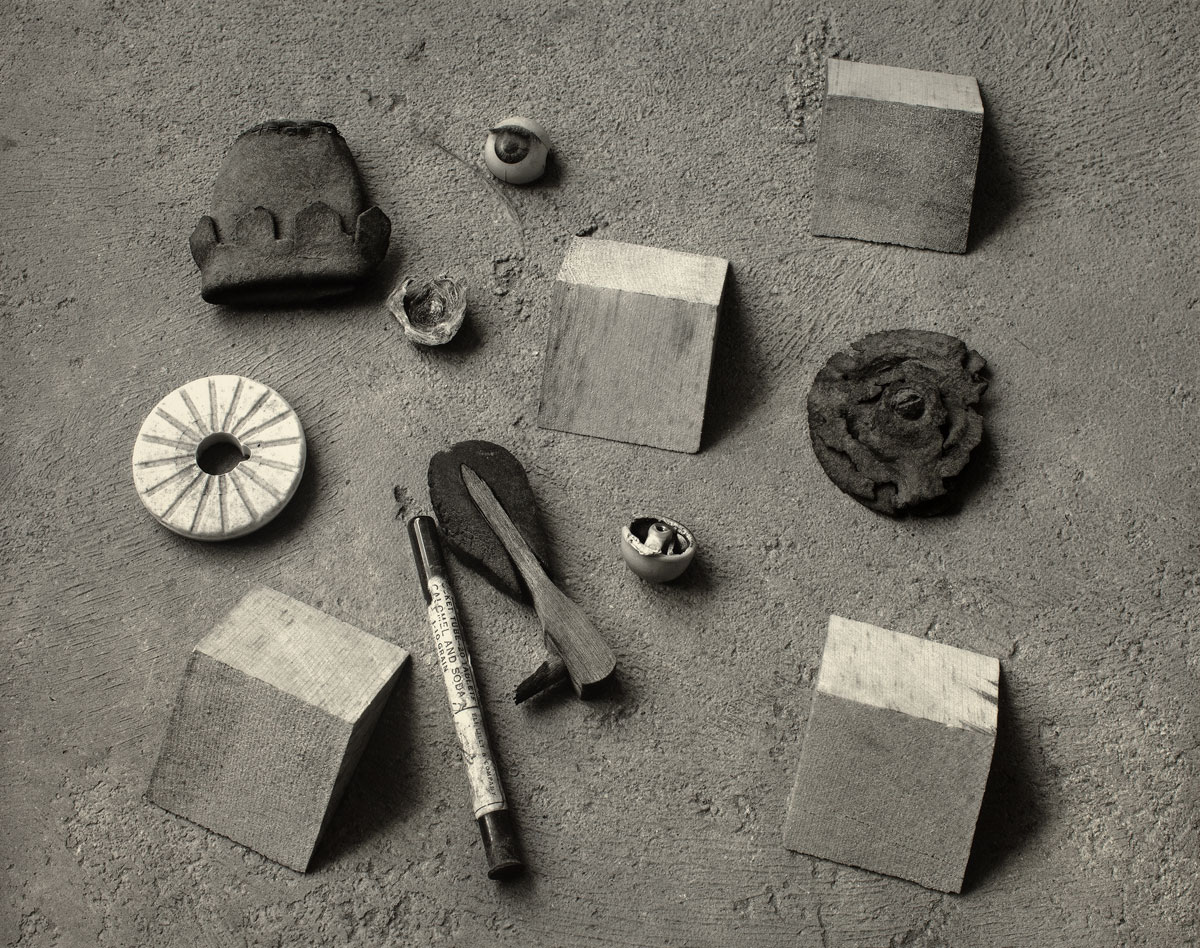
 

Joseph-Désiré Court (French, 1797-1865)
Death of Hippolytus
1825
© Musée Fabre de Montpellier Agglomération


François-Léon Benouville (French, 1821-1859) 'Achills Zorn' 1847


François-Léon Benouville (French, 1821-1859)
Achills Zorn
1847
© Musée Fabre de Montpellier


Anonymous maker. 'Anonymous Youth of Magdalensberg' 16th Century casting after Roman Original


Anonymous maker
Anonymous Youth of Magdalensberg
16th Century casting after Roman Original
© Kunsthistorisches Museum, Vienna, Antiquities


Anonymous maker. 'Anonymous standing figure of the court official Snofrunefer Egypt, Old Kingdom, late 5th Dynasty' around 2400 BC


Anonymous maker
Anonymous standing figure of the court official Snofrunefer
Egypt, Old Kingdom, late 5th Dynasty, around 2400 BC
© Kunsthistorisches Museum Vienna with MVK and ÖTM, Egyptian and Near Eastern Collection


Auguste Rodin (French, 1840-1917) 'The Age of Bronze' 1875-1876


Auguste Rodin (French, 1840-1917)
The Age of Bronze
1875/76
© Kunsthaus Zurich


Anton Kolig (Austrian, 1886-1950) 'Seated Youth (morning)' 1919


Anton Kolig (Austrian, 1886-1950)
Seated Youth (morning)
1919
© Leopold Museum, Wien, Inv. 406


Previous exhibitions on the theme of nudity have mostly been limited to female nudes. With the presentation “naked men” in the autumn of 2012 the Leopold Museum will be showing a long overdue exhibition on the diverse and changing depictions of naked men from 1800 to the present.

Thanks to loans from all over Europe, the exhibition “naked men” will offer an unprecedented overview of the depiction of male nudes. Starting with the period of Enlightenment in the 18th century, the presentation will focus mainly on the time around 1800, on tendencies of Salon Art, as well as on art around 1900 and after 1945. At the same time, the exhibition will also feature important reference works from ancient Egypt, examples of Greek vase painting and works from the Renaissance. Spanning two centuries, the presentation will show different artistic approaches to the subject, competing ideas of the ideal male model as well as changes in the concept of beauty, body image and values.

The exhibition, curated by Tobias G. Natter and Elisabeth Leopold, traces this theme over a long period and draws a continuous arc from the late 18th century to the present. Altogether, the showing brings together around 300 individual works by nearly 100 female and male artists from Europe and the USA. The objective of the two curators Tobias G. Natter and Elisabeth Leopold was “to clearly show the differing artistic approaches, competing models of masculinity, the transformation of ideas about the body, beauty and values, the political dimension of the body, and last but not least the breaking of conventions.”

“Over the past few years, portrayals of nude males have achieved a hitherto unseen public presence,” says Elisabeth Leopold. To which Tobias G. Natter adds, “At the same time, this exhibition is our way of reacting to the fact that categories which had previously seemed established, such as ‘masculinity’, ‘body’ and ‘nakedness’, have today become unstable for a broad swath of society.”

Diversity and abundance: showing for what “nude men” could stand

Elisabeth Leopold remarks that, “In the run-up to our project, we were very surprised to note that some commentators expected a ‘delicate’ exhibition. But in fact, we had no intention of treating the theme in such a way – with reserve, with tact, or in any other way delicately. And we did not understand this topic to be at all delicate in terms of an exhibition on art history somehow requiring a degree of discretion.” A project like nude men would be entirely unthinkable without the experiences and impulses of feminist art as well as cultural history, cultural studies and gender studies. With the exhibition nude men, the Leopold Museum seeks to react to the circumstance that societal categories commonly thought to be firmly established – such as “masculinity”, “body” and “nakedness” – are currently undergoing major changes.

By seizing on these developments, we understand the museum to be an institution which is relevant to today’s society – that is to say, a place for both the present and the future. Tobias G. Natter: “Our objective is to show the diversity and transformation of the portrayal of nude men in light of clearly defined thematic focuses. With fresh curiosity, without traditional scholarly prejudices, and with fascination for an inexhaustibly rich field, we use this exhibition to draw an arc spanning over 200 years which, not least, make a theme of the long shadow cast by the fig leaf.”

The exhibition

The exhibition traces its theme from the late 18th century to the present day. It has three key historical themes: the classical era and the Age of Enlightenment around 1800, classical modernism around 1900, and post-1945 art. These three themes are introduced by a prologue.

Prologue

The exhibition’s three focuses are preceded by a prologue. Using five outstanding sculptures from European art history, the prologue illuminates this theme’s long tradition. It runs from the “oldest nude in town” – a larger-than-life freestanding figure from ancient Egypt – and the statue known as the Jüngling vom Magdalensberg to Auguste Rodin and Fritz Wotruba, and on to a display window mannequin which Heimo Zobernig reworked to create a nude self-portrait.

Tobias G. Natter: “The curatorial intention behind prologue was to have the audience stroll through nearly five millennia of Western sculptural art in just a few steps. This is meant both to communicate both the long tradition of such images and to highlight the degree to which nude men were taken for granted to be the foundation of our art. These five thousand years form the exhibition’s outer referential frame. Strictly speaking, the showing begins in earnest with the Age of Enlightenment and the period around 1800.”

Theme 1: Classicism and the Power of Reason

In the 18th century and beginning in France, the emancipation of the bourgeois class and the swan song of the Ancien Régime occasioned a renegotiation of concepts of masculinity with both societal and aesthetic implications. The naked male hero was defined anew as a cultural pattern. It became the embodiment of the new ideals.

Theme 2: Classical Modernism

A new and independent pictorial world arose in the late 19th century with the casual depiction of naked men bathing in natural, outdoor settings. The various ways in which artists dealt with this topic can be viewed together as a particularly sensitive gauge of societal moods. In the exhibition, the genre is represented with prominent examples by Paul Cézanne, Edvard Munch, Wilhelm von Gloeden, Max Liebermann, Ernst Ludwig

Kirchner and others. Classical modernism’s quest for a new artistic foundation also had its impact on the topics of nakedness and masculinity. But what happened when the painter’s gaze wandered on from the naked other to the naked self? A principle witness with regard to this phenomenon in turn-of-the-20th-century Vienna is Egon Schiele. With his taboo-breaking self-reflections, he radicalised artists’ self-understanding in a way that nobody had before him. Elisabeth Leopold: “The shift of the painter’s gaze from the naked opposite to the exposed self gave rise to the nude self-portrait – a shining beacon of modernism.”

Theme 3: Post-1945 Developments

In light of the abundance of interesting works from which to choose, the exhibition’s third theme comprises three specific focuses. Common to all three is the way in which the political potential of the naked body is explored. The first of these focuses concentrates on the battle fought by women for legal and social equality during the 20th century.

Outstanding examples of the intense way in which feminist artists have dealt with their own bodies as foils for the projection of gender roles can be found in the output of Maria Lassnig and Louise Bourgeois, whose works are included in the exhibition alongside others by younger woman artists. It was pioneers such as Lassnig and Bourgeois who set in motion the process which, today, underlies feminist art’s steadily increasing presence in terms of interpretation, resources, norms, power, and participation in the art business. The second area introduces artistic works that interlock nude self-portraits and the culture of protest, which bears great similarities to feminist criticism – the naked self between normativity and revolt.

The one issue is the nude self-portrait as a field for experimentation and a phenomenon which questions artistic and societal identities. The other issue has to do with substantive contributions to the gender debate, as well as with artists who take the crisis of obsolete male images as an opportunity to put forth self-defined identities. The third focus, finally, lies in the shift in roles in which the man goes from being the subject to being the object, in fact becoming an erotically charged object – perhaps one of the most fundamental shifts in terms of the forms via which nude men have been portrayed from 1800 to the present. Gay emancipation, in particular, served to radically cast doubt upon normative concepts of masculinity, which it opposed with its own alternative models. In this exhibition, these are represented above all in paintings that feature intimate closeness and male couples.

As the opening of this exhibition neared, a frequently-asked question was that of why the project is being undertaken. Tobias G. Natter’s response: “There are many reasons. But most importantly: because it is overdue.”

Press release from the Leopold Museum website


Three out of five characters from the Prologue "naked men"


Three out of five characters from the Prologue “naked men”

Anonymous maker
Freestanding figure of the court official Snofrunefer
c. 2400 B.C.
© Kunsthistorisches Museum, Vienna

Auguste Rodin (French, 1840-1917)
The Age of Bronze
1875/1876
© Kunsthaus Zürich

Heimo Zobernig (Austrian, b. 1958)
Untitled
2011
© VBK, Vienna, 2012


Paul Cézanne (French, 1839-1906) 'Seven Bathers' c. 1900


Paul Cézanne (French, 1839-1906)
Seven Bathers
c. 1900
Fondation Beyeler, Riehen/Basel


Edvard Munch (Norwegian, 1863-1944) 'Bathing Men' 1915


Edvard Munch (Norwegian, 1863-1944)
Bathing Men
1915
Munch Museum, Oslo
© The Munch Museum/The Munch Ellingsen Group/VBK, Vienna 2012


Wilhelm von Gloeden (German, 1856-1931) 'Flute Concert' 1905


Wilhelm von Gloeden (German, 1856-1931)
Flute Concert
1905
Verlag Adolph Engel, private collection


Richard Gerstl (Austrian, 1883-1908) 'Nude Self-portrait with Palette' 1908


Richard Gerstl (Austrian, 1883-1908)
Nude Self-portrait with Palette
1908
© Leopold Museum, Wien


Egon Schiele (Austrian, 1890-1918) '“Prediger” (Selbstakt mit blaugrünem Hemd) ["Preacher" (Nude with teal shirt)]' 1913


Egon Schiele (Austrian, 1890-1918)
‘”Prediger” (Selbstakt mit blaugrünem Hemd)’ [“Preacher” (Nude with teal shirt)]
1913
© Leopold Museum, Wien, Inv. 2365


Bruce Nauman (American, b. 1941) 'Untitled (Five Marching Men)' 1985


Bruce Nauman (American, b. 1941)
Untitled (Five Marching Men)
1985
© Friedrich Christian Flick Collection / VBK Wien 2012


Gilbert & George (Gilbert Prousch, British born Italy, b. 1943 and George Passmore, British, b. 1942) 'Spit Law' 1997


Gilbert & George (Gilbert Prousch, British born Italy, b. 1943 and George Passmore, British, b. 1942)
Spit Law
1997
© Courtesy Galerie Thaddaeus Ropac, Paris / Salzburg


Elmgreen & Dragset (Michael Elmgreen Danish, b. 1961 and Ingar Dragset Norwegian, b. 1969) 'Shepherd Boy (Tank Top)' 2009


Elmgreen & Dragset (Michael Elmgreen Danish, b. 1961 and Ingar Dragset Norwegian, b. 1969)
Shepherd Boy (Tank Top)
2009
Courtesy Galleri Nicolai Wallner
© Courtesy Galleri Nocolai Wallner / VBK Wien 2012


Thomas Ruff (German, b. 1958) 'nudes vg 02' 2000


Thomas Ruff (German, b. 1958)
nudes vg 02
2000
Ed. 3/5
© Private collection Cofalka, Austria/with the kind support of agpro – austrian gay professionals
© VBK, Wien 2012


Jean Cocteau (French, 1889-1963) 'Male Couple Illustration for Jean Genet’s 'Querelle de Brest'' 1947


Jean Cocteau (French, 1889-1963)
Male Couple
Illustration for Jean Genet’s ‘Querelle de Brest’

1947
© Private collection © VBK, Wien 2012


Louise Bourgeois (French, 1911-2010) 'Fillette (Sweeter Version)' 1968, cast 1999


Louise Bourgeois (French, 1911-2010)
Fillette (Sweeter Version)
1968, cast 1999
© Ursula Hauser Collection, Switzerland © VBK, Wien 2012


Pierre & Gilles (Pierre Commoy and Gilles Blanchard) 'Vive la France [Long live France]' 2006


Pierre & Gilles (Pierre Commoy and Gilles Blanchard)
Vive la France [Long live France]
2006
© Private collection, Courtesy Galerie Jérôme de Noirmont, Paris


Andy Warhol (American, 1928-1987) 'Querelle' c. 1982


Andy Warhol (American, 1928-1987)
Querelle
c. 1982
© Privatsammlung/ VBK, Wien 2012


Leopold Museum
Museums Quartier, Museumsplatz 1
1070 Vienna, Austria

Opening hours:
Daily except Tuesday: 10am – 6pm

Leopolod Museum website

LIKE ART BLART ON FACEBOOK

Back to top