Exhibition: ‘Peter Hujar: Speed of Life’ at Jeu de Paume, Paris

Exhibition dates: 15th October, 2019 – 19th January, 2020

Curators: Joel Smith and Quentin Bajac


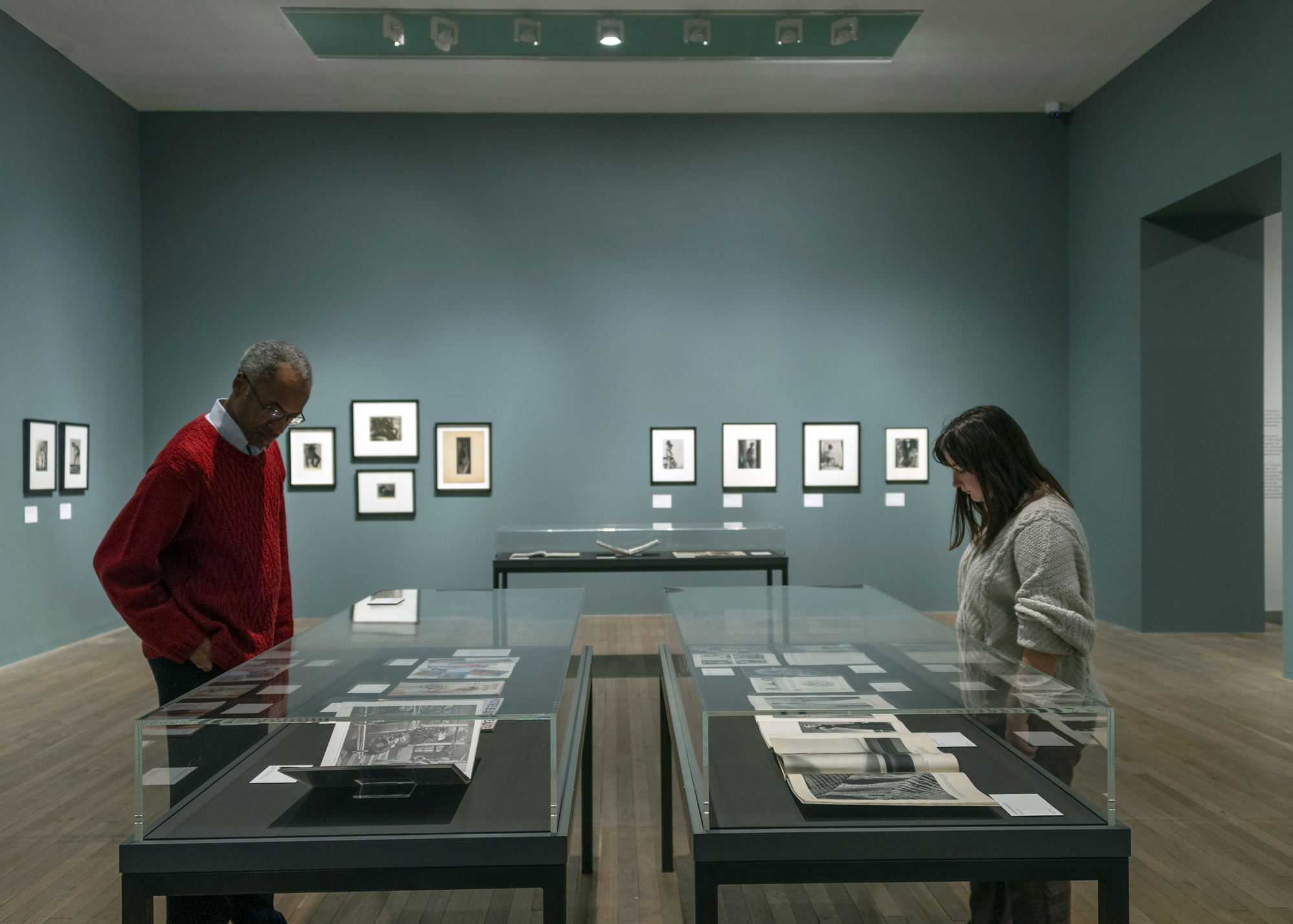
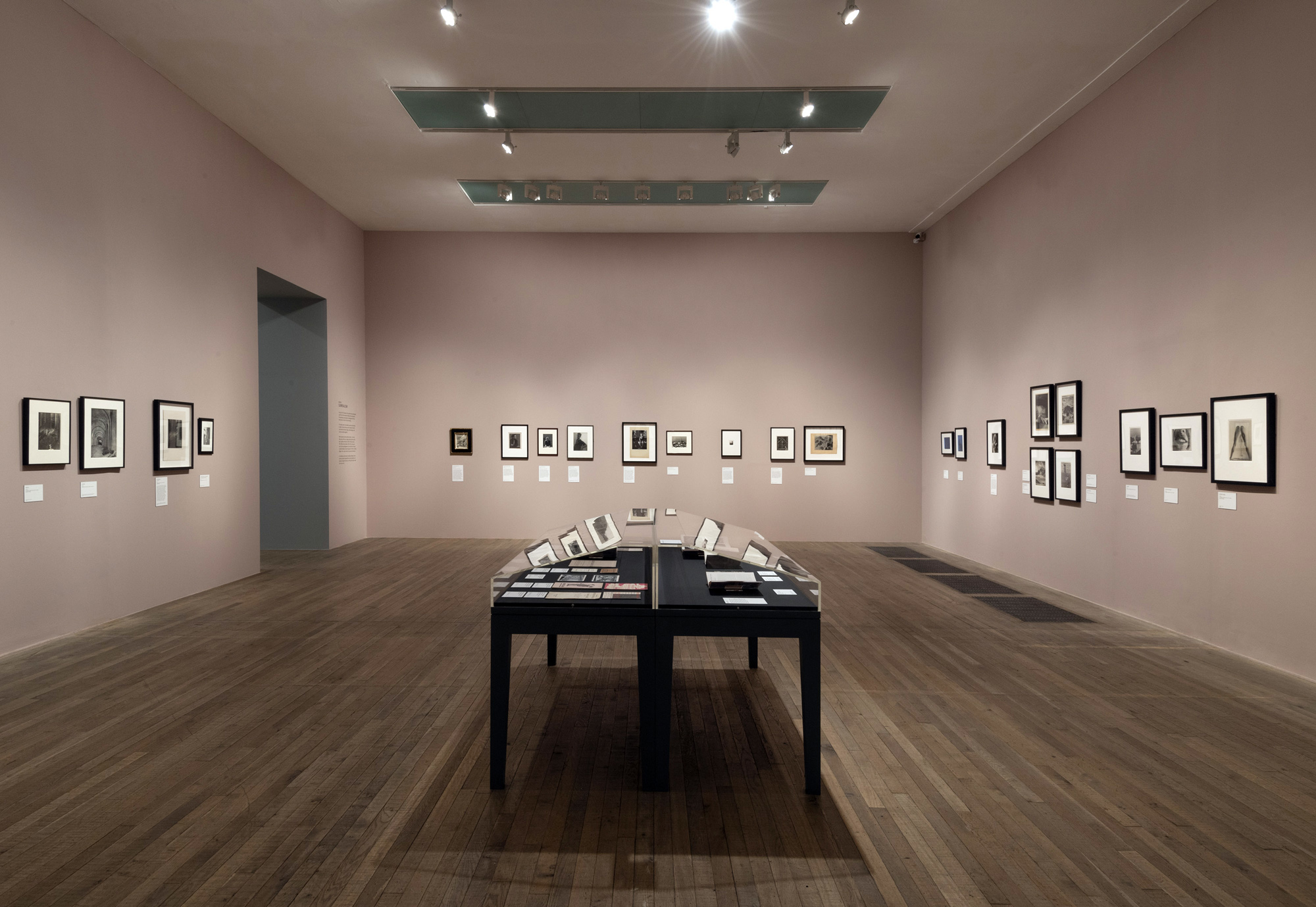
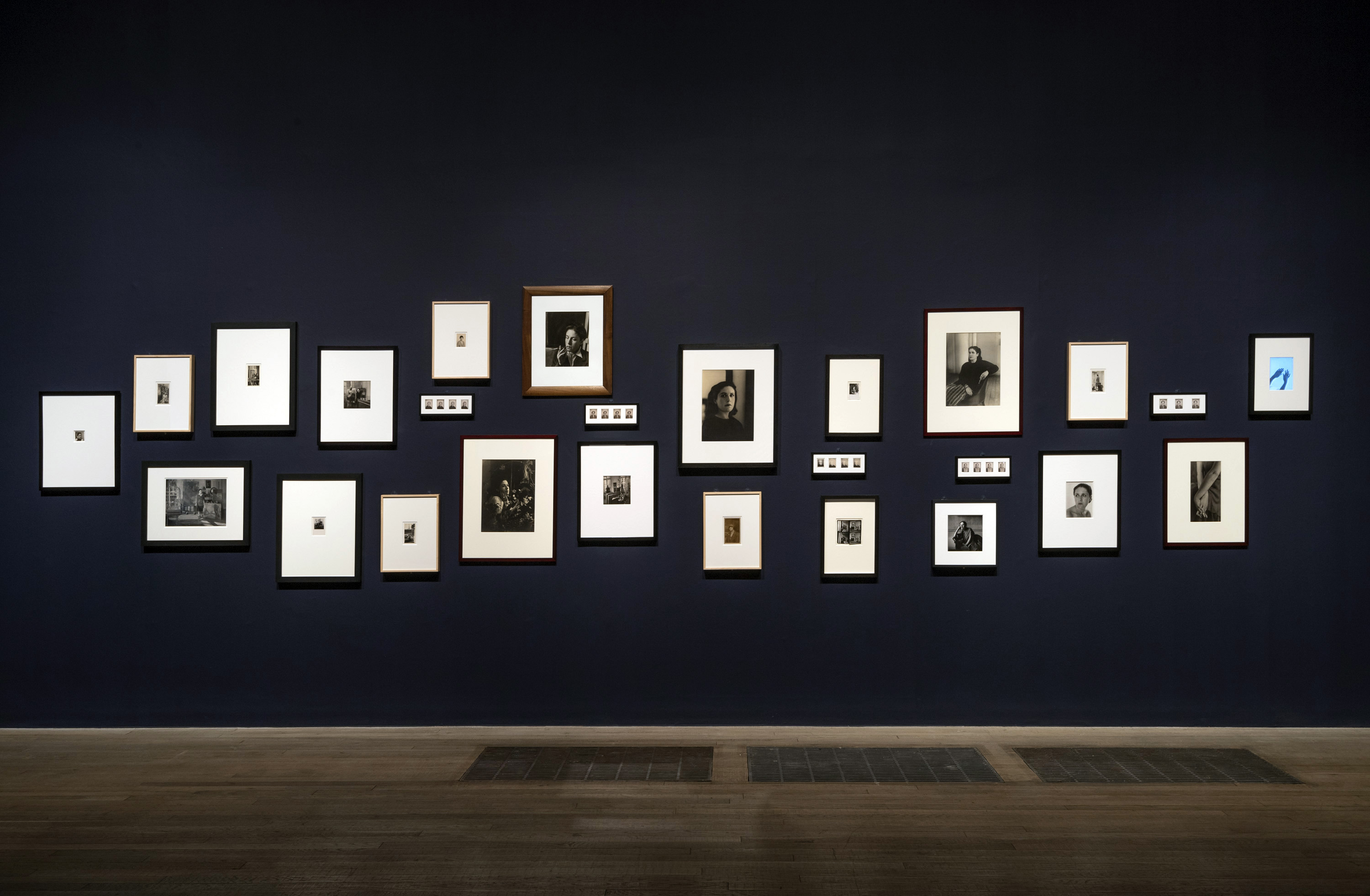
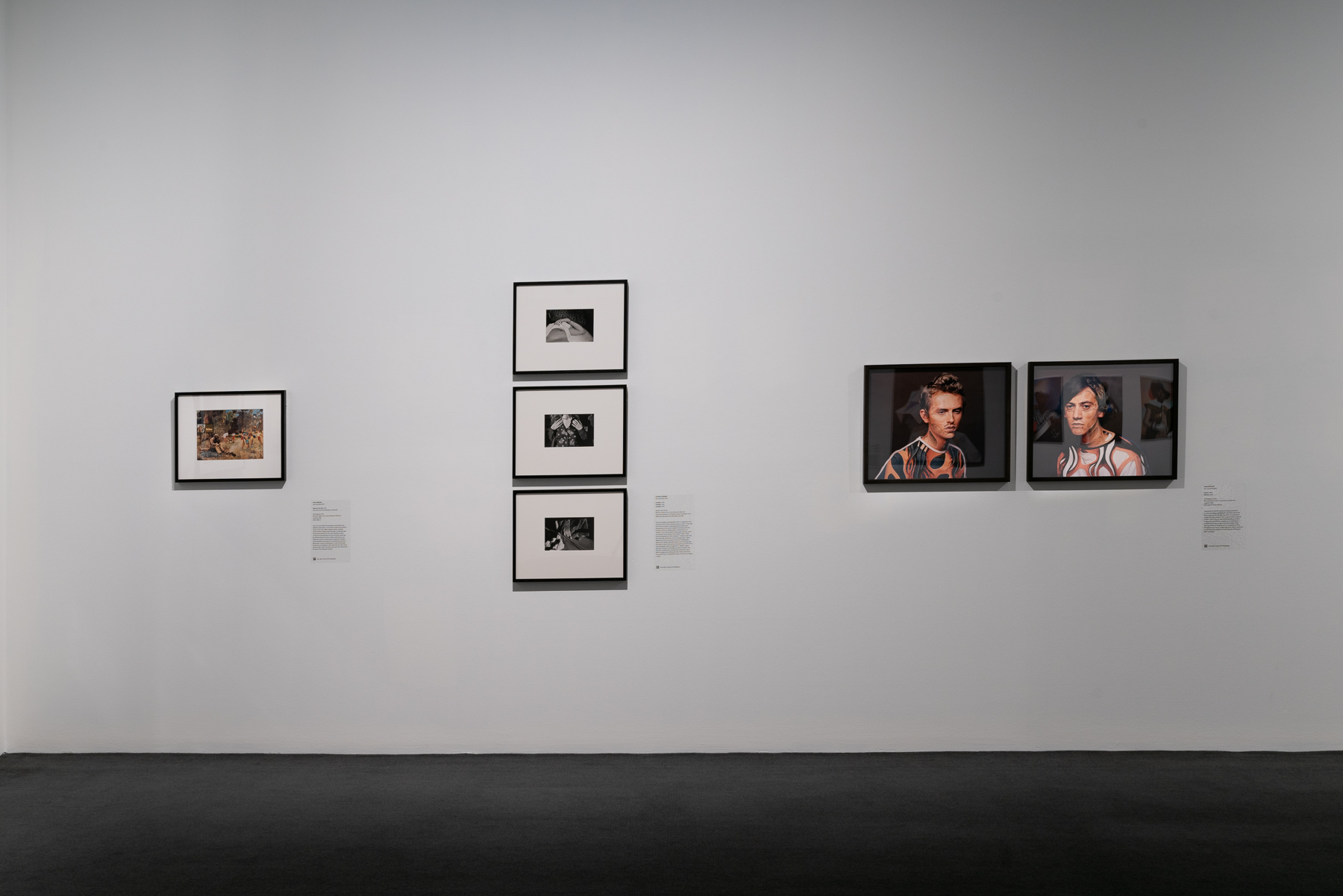
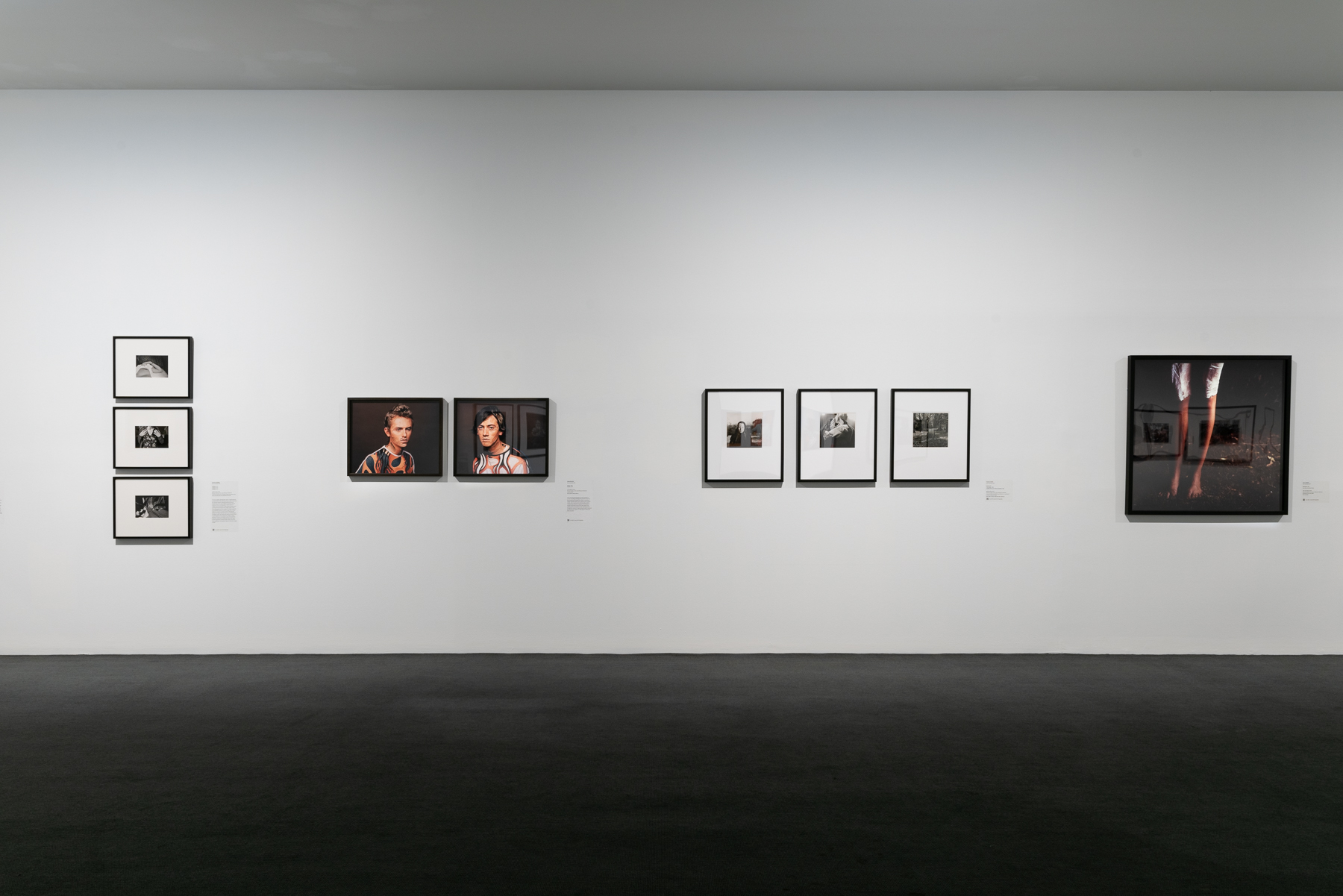
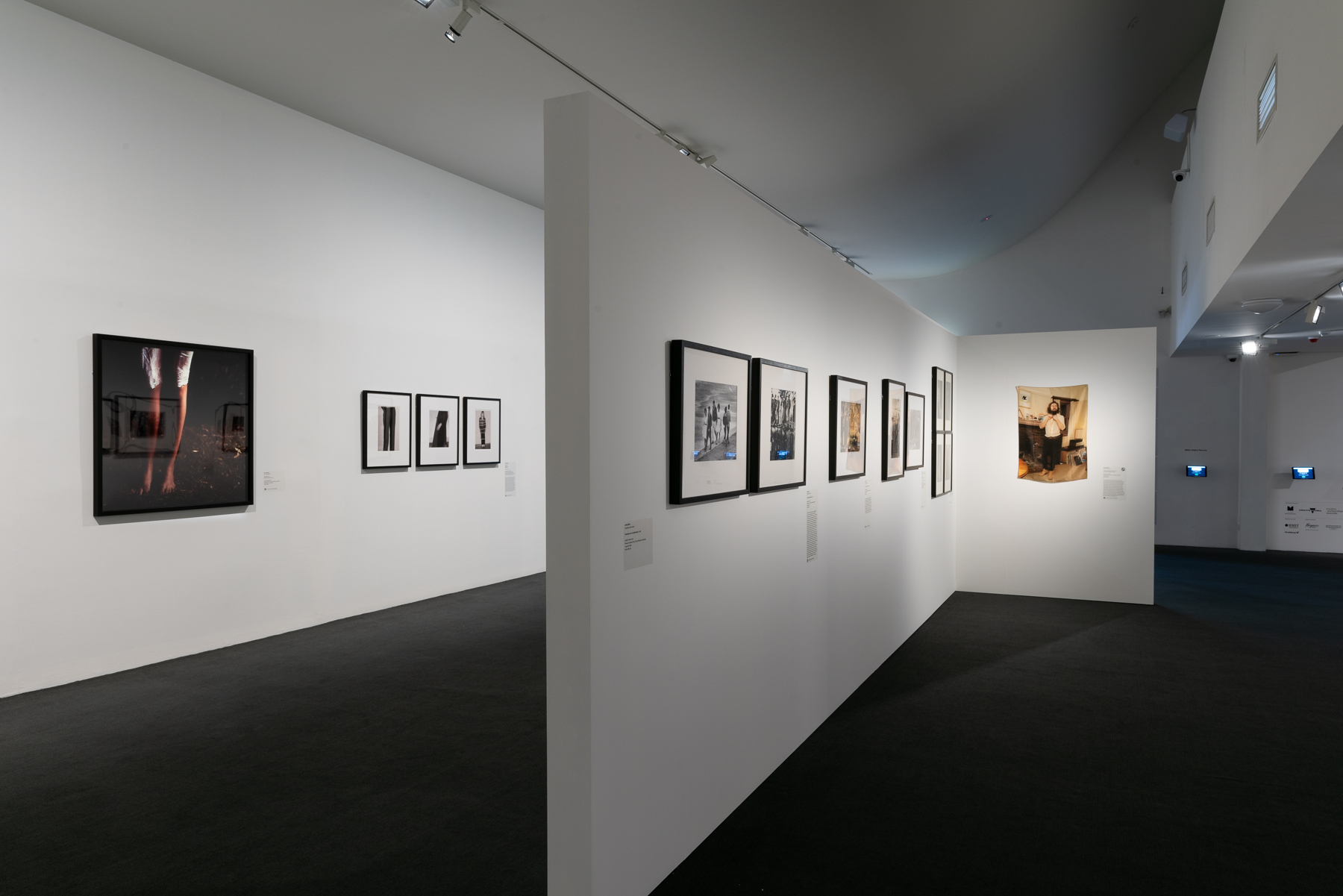
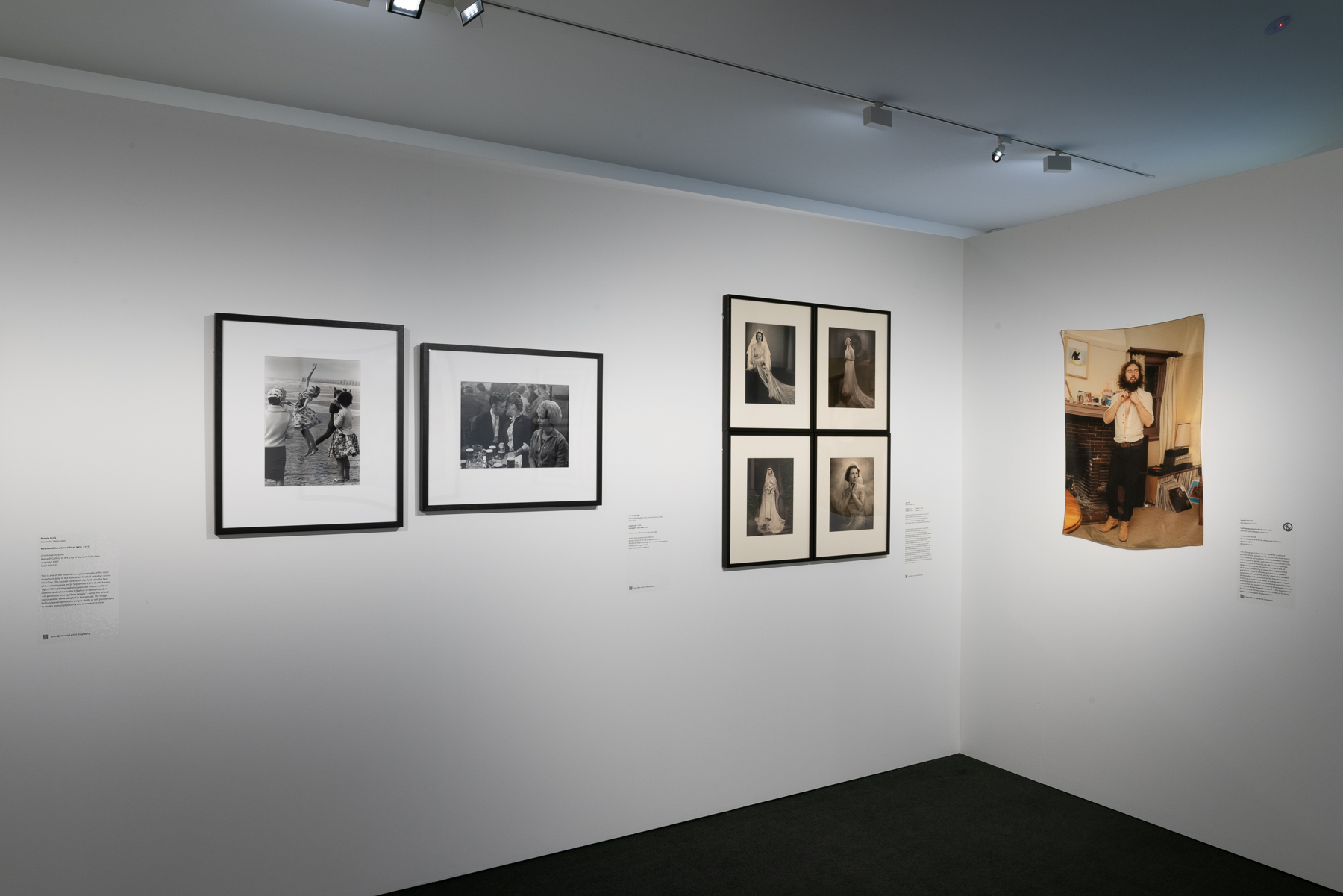
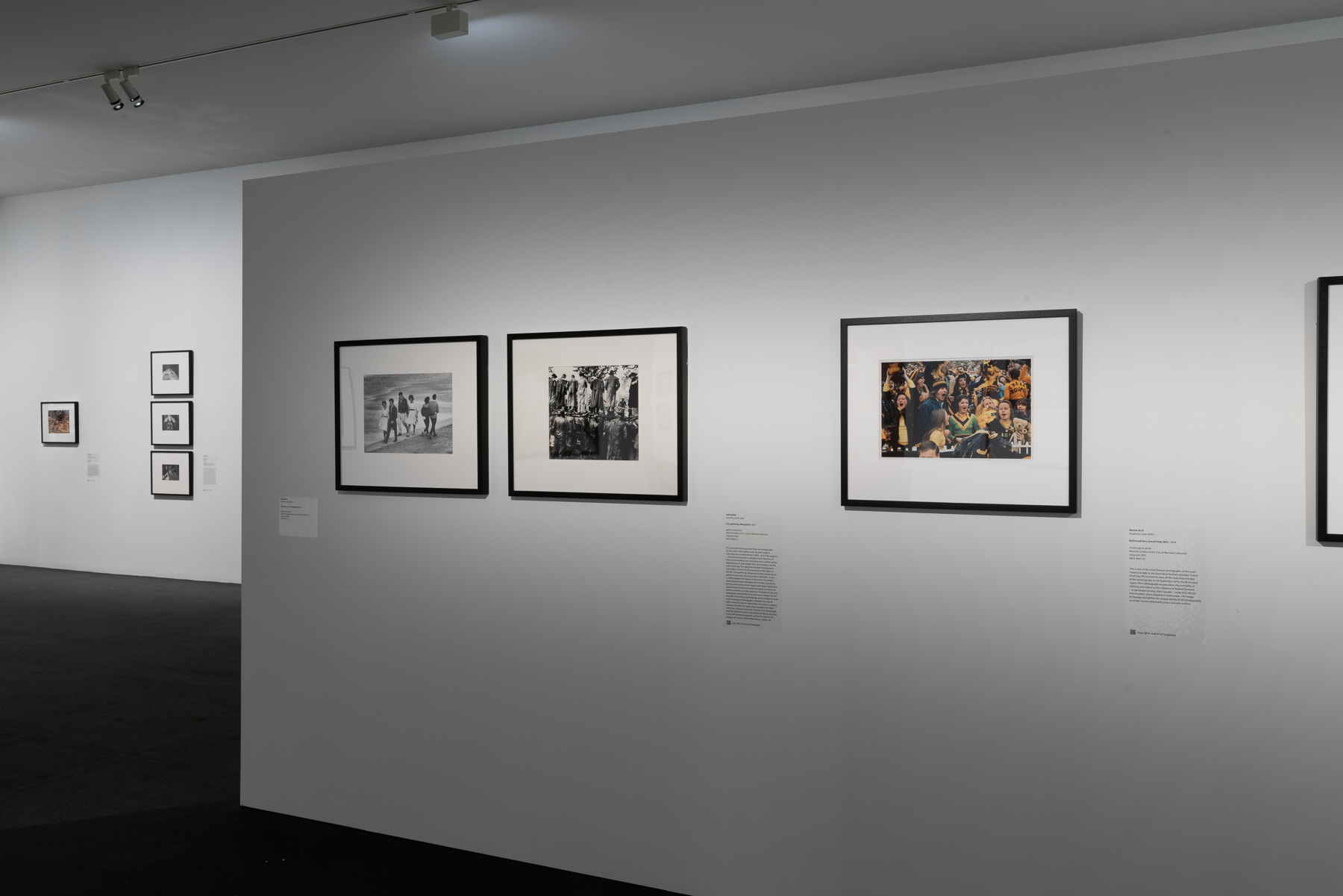
Installation view of the exhibition 'Peter Hujar: Speed of Life' at Jeu de Paume, Paris


Installation view of the exhibition Peter Hujar: Speed of Life at Jeu de Paume, Paris


“I photograph those who push themselves to any extreme, and people who cling to the freedom to be themselves.”


Peter Hujar


Free your mind

A huge posting to finish what has been a bumper year on Art Blart: two book chapters published, a photographic research trip to Europe in which I saw some incredible exhibitions and took over 7000 photographs for my art work, lots of postings and writing and, sadly, the loss of two friends – my mother in Australia, the bohemian photographer and poet Joyce Evans and vision impaired photographer Andrew Follows.

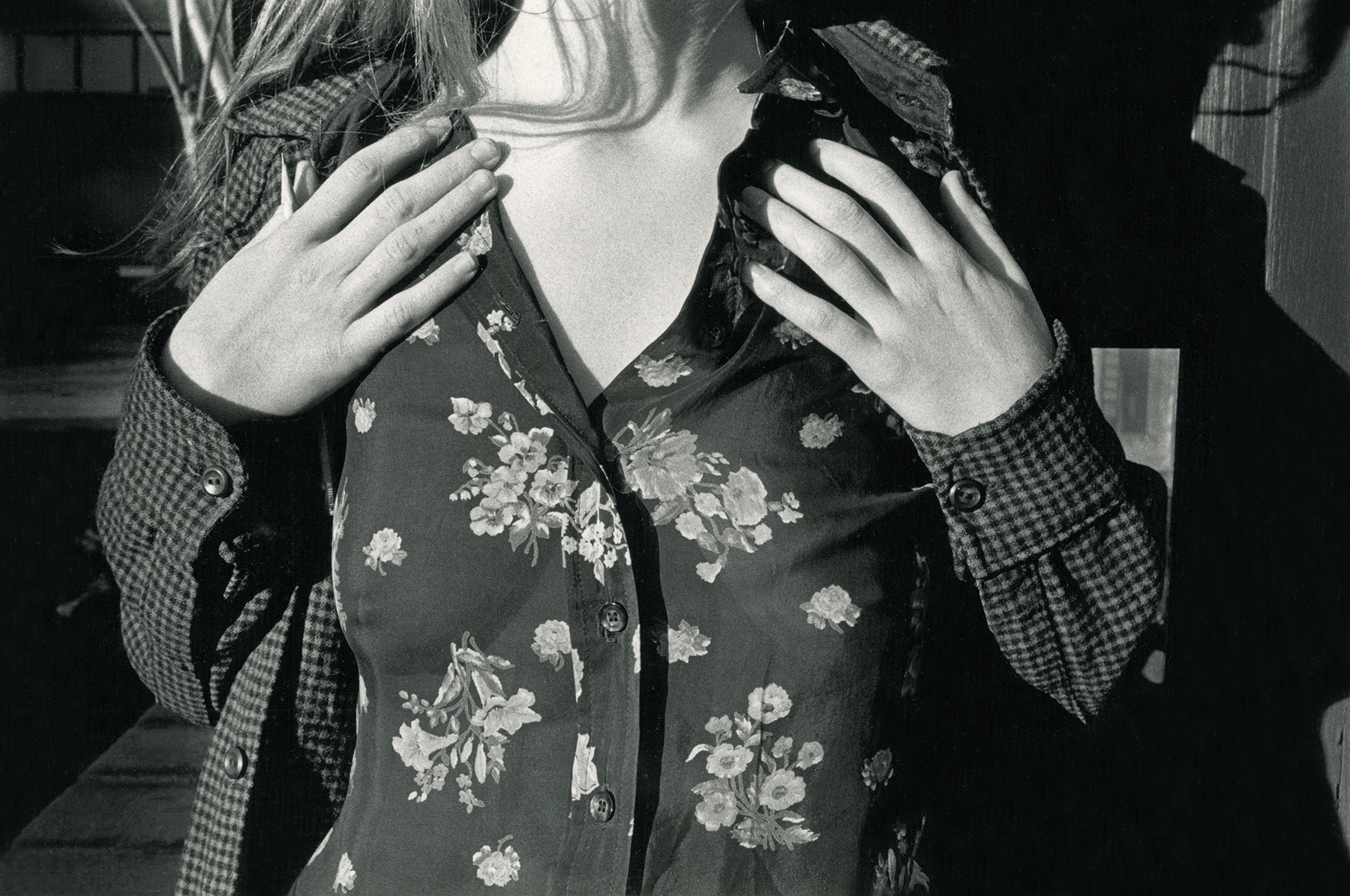
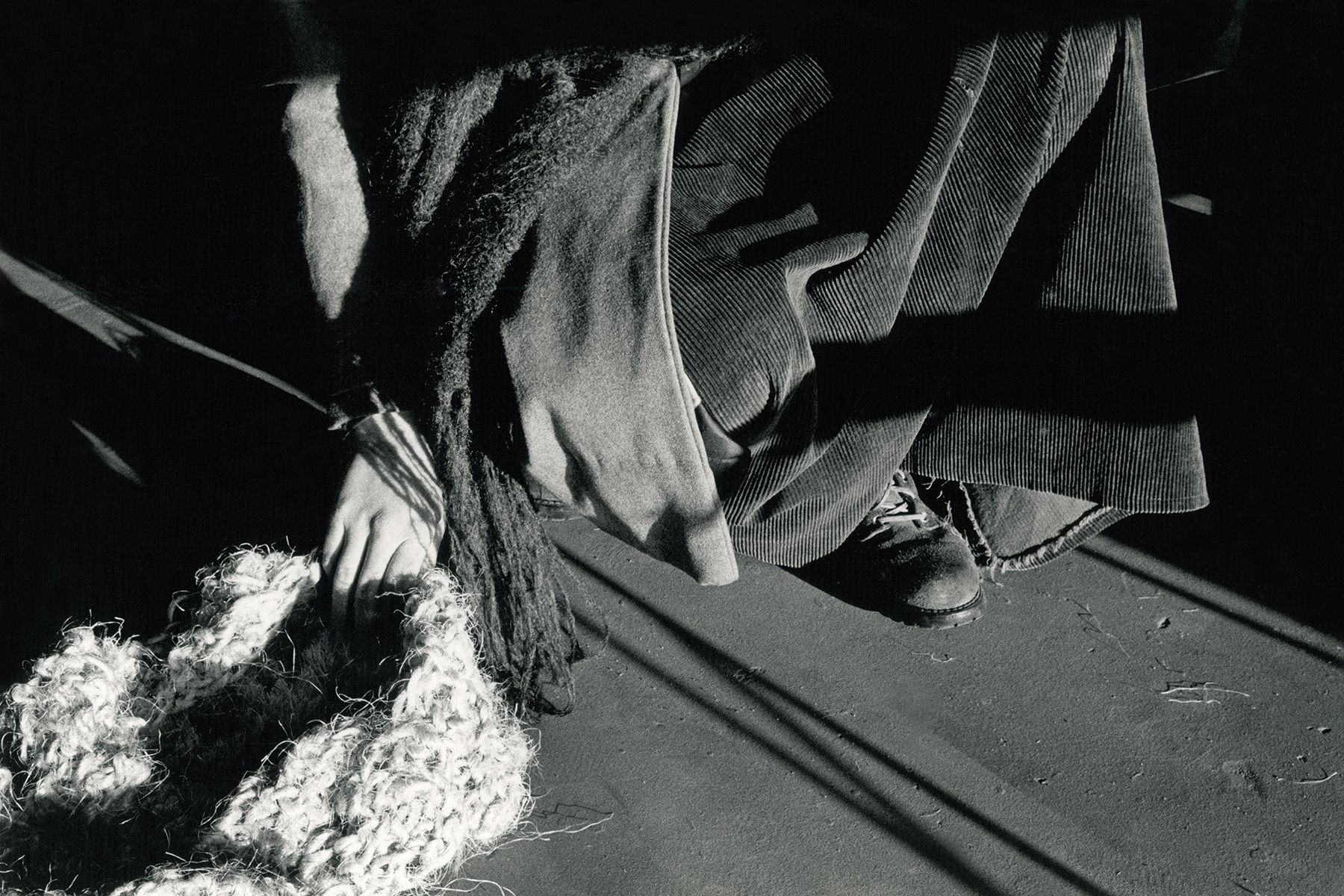
I couldn’t think of a better posting to finish the year than with a photographer who put it all on the line: Peter Hujar. Not for him the world of Apollonian perfection, wishing for fortune and fame, relying on some big time backer to promote him. Hujar stuck to his craft, carving images, performances if you like, from dystopian contexts and Dionysian revellers. “Hujar was the instigator of the performances captured in his portraits, as much as a director as a photographer.”

Paraphrasing Mark Durant, we might say that Hujar was a poet of the urban nocturne, a photographer of subjective desire known for his gritty, erotic, sentimental yet (im)personal images. Philip Gefter observes that, “A hallmark of Hujar’s portraiture is the invisibility of technique – a kind of visual innocence – as if the camera were not present and the subject had been happened upon.” Richard Woodward says that Hujar, “observed his companions in this outlaw life with what might be called warm objectivity.” Photographer Duane Michals says that, “Hujar was a pioneer, years ahead of Mapplethorpe in his sexual candor, as well as an artist whose photographs are less swank and less affected.”

Ah! what a time it was to be an artist and to be gay in New York, with the likes of Hujar, Warhol, Mapplethorpe, Wojnarowicz, Haring, Arthur Tress, and Duane Michals, to name but a few. A time of sexual liberation, followed by a period of disease and death. Hujar pictures this “scene” – the flowering of gay life and then the AIDS crisis of the 1980s. He pictures the constellations as they swirl around him. He allows the viewer to enter his world without judgement, just showing it how it was – a world of avant-garde dance, music, art, and drag performance; “glowing skyscrapers, assorted rubble, discarded rugs, boys in drag, and girls passed out in his doorway.” This is it he is saying, this is how I live, this is who surrounds me, suck it up and breathe it in. He allows the viewer to enter his world of ideas and possible metaphors. No judgement is offered nor accepted.

As my appreciation of his photographs grows, I reflect on the skill that it takes to make these photographs look effortless. Hujar, “a student of Lisette Model, admirer of August Sander, and friend of Diane Arbus, made his photographs distinctly his own: a perfect and unmistakable mirror of his own body and milieu.” A mirror of strength and determination / of friendship / of love – his pictures gather, together, a feeling for – the freedom of people, and places, to be themselves. Do places have feelings? yes they do! (I remember visiting the Coliseum in Rome and having to leave after 20 minutes the energy of the place was so bad; and then visiting the Loretta Sanctuary in Prague and feeling, such calm and peace in that place, that I have rarely felt before).

Hujar’s photographs are memorable. Nan Goldin and Vince Aletti said that his work, “like that of so few photographers, can’t be forgotten and becomes even deeper and more compelling over time.” His work is so compelling it’s like you can’t take tear your eyes away from the photographs. They demand repeat viewing. They seem possessed of an awareness of their own making. That is Hujar’s music, his signature.

Like any great artist, his images reveal themselves over time, expounding his love of life and his intimate and free engagement with the world. Hujar was, is, and always will be… a watcher, a dreamer, a cosmic spirit.

Dr Marcus Bunyan


Many thankx to Jeu de Paume for allowing me to publish the photographs in the posting. Many thankx to David for the iPhone installation images. Please click on the photographs for a larger version of the image.


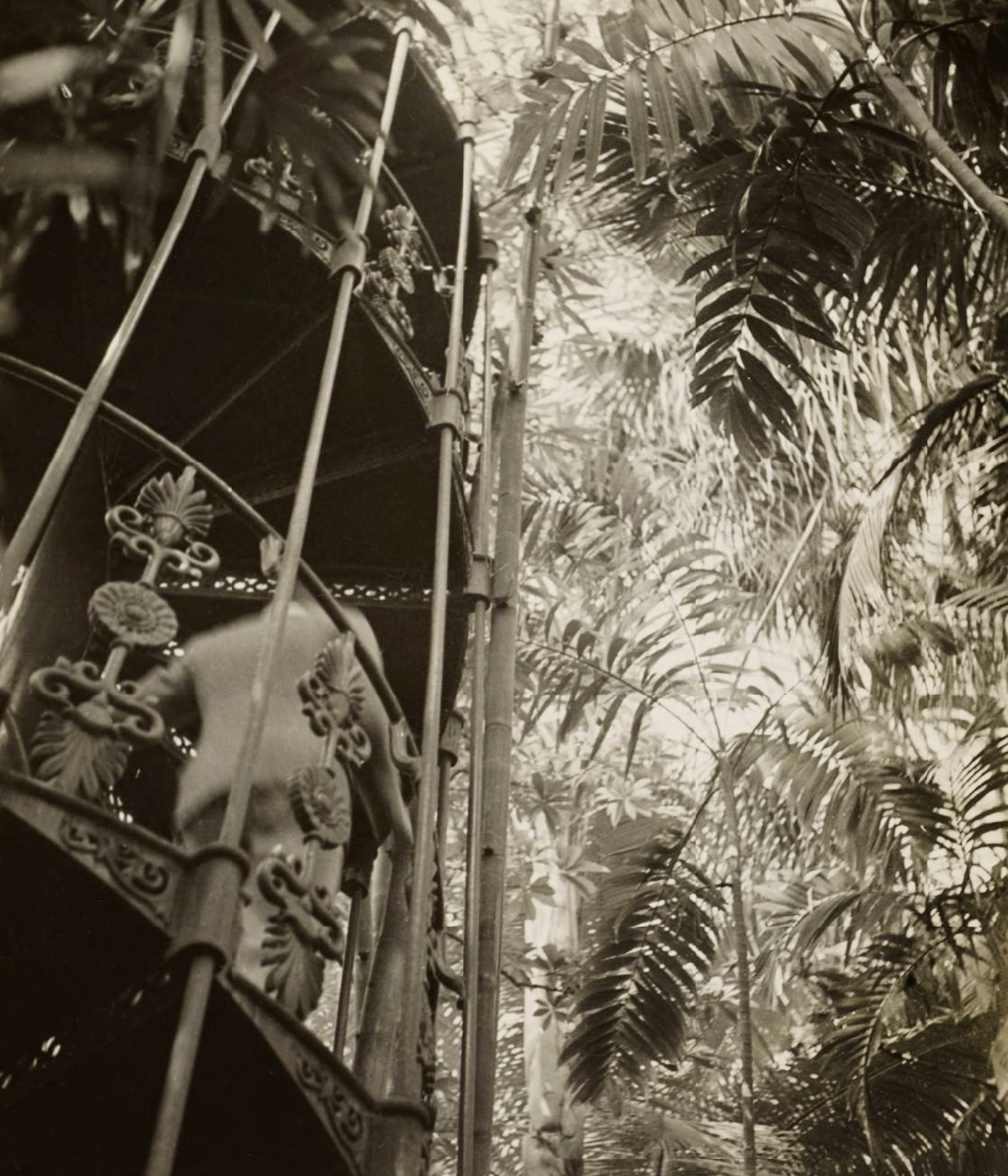
Peter Hujar (American, 1934-1987) 'Public Garden, Taormina, Sicily' 1959 from the exhibition 'Peter Hujar: Speed of Life' at Jeu de Paume, Paris, October 2019 - January 2020


Peter Hujar (American, 1934-1987)
Public Garden, Taormina, Sicily
1959
Gelatin silver print
The Morgan Library & Museum, achat en 2013 grâce au Charina Endowment Fund
© Peter Hujar Archive, LLC, courtesy Pace/MacGill Gallery, New York and Fraenkel Gallery, San Francisco


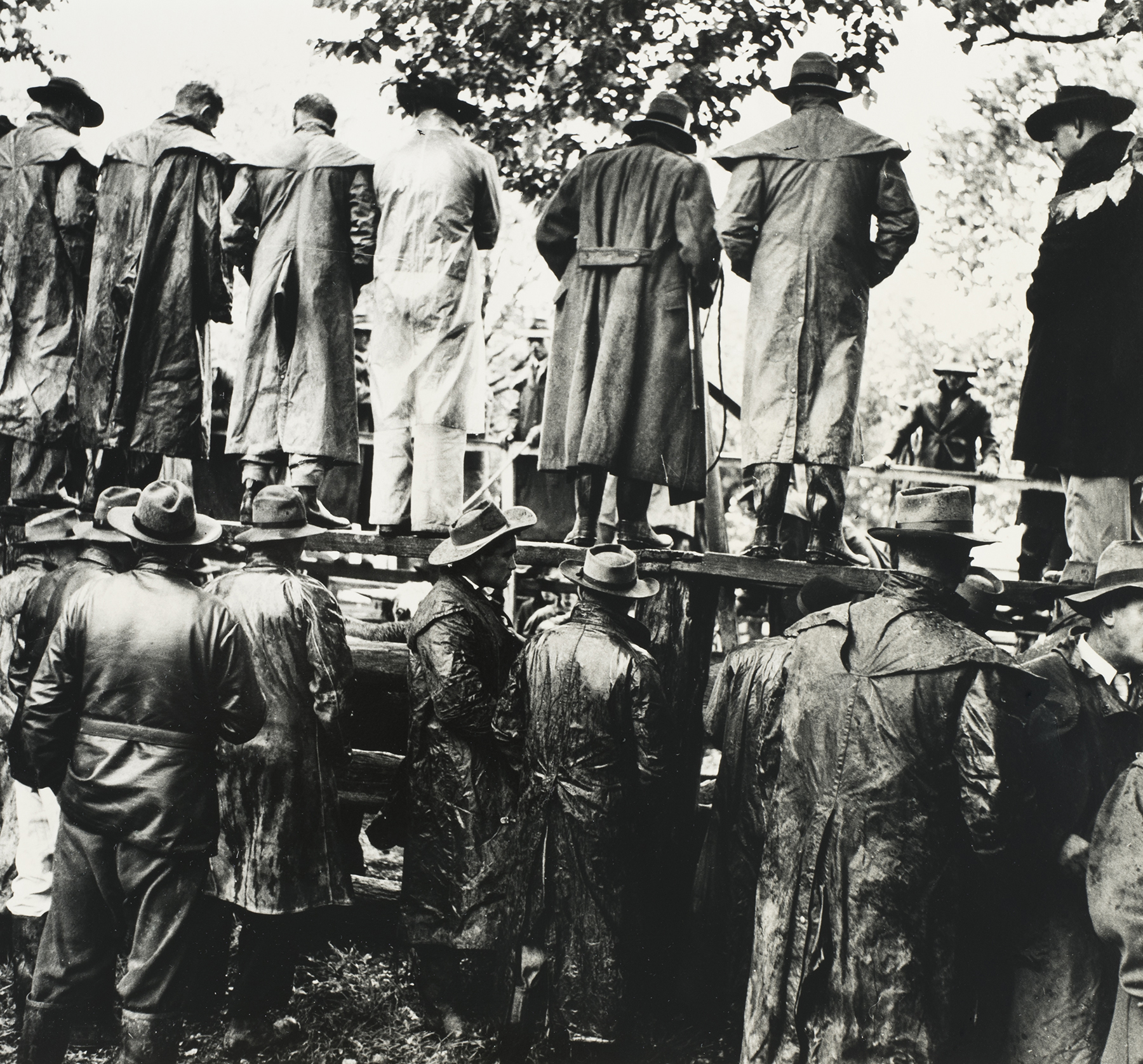
Peter Hujar (American, 1934-1987) 'Sheep, Pennsylvania' 1969 from the exhibition 'Peter Hujar: Speed of Life' at Jeu de Paume, Paris, October 2019 - January 2020


Peter Hujar (American, 1934-1987)
Sheep, Pennsylvania
1969
Gelatin silver print
The Morgan Library & Museum, achat en 2013 grâce au Charina Endowment Fund
© Peter Hujar Archive, LLC, courtesy Pace/MacGill Gallery, New York and Fraenkel Gallery, San Francisco


The life and art of Peter Hujar (1934-1987) were rooted in downtown New York. Private by nature, combative in manner, well-read, and widely connected, Hujar inhabited a world of avant-garde dance, music, art, and drag performance. His mature career paralleled the public unfolding of gay life between the Stonewall uprising in 1969 and the AIDS crisis of the 1980s.

In his loft studio in the East Village, Hujar focused on those who followed their creative instincts and shunned mainstream success. He made, in his words, “uncomplicated, direct photographs of complicated and difficult subjects,” immortalising moments, individuals, and subcultures passing at the speed of life.

What was Hujar’s truth, his photographic truth? Hujar understood and utilized photography’s tension between document and theatricality. In the act of photographing there is a performance, not only on the part of the subject, but for the photographer as well. For Hujar, to photograph was a balancing act between fierce observation and manifesting his devotion. As Jennifer Quick observes in her essay for the catalogue, This Will Have Been: Art, Love & Politics in the 1980s, “While Arbus and Mapplethorpe are known for their detached postures, Hujar’s silent, tacit presence pervades his work. Like Avedon, Hujar was the instigator of the performances captured in his portraits, as much as a director as a photographer.” That Hujar is considered in the same company of Avedon, Arbus, and Mapplethorpe, reminds us that the retrospective Speed of Life is long overdue.

Hujar’s restlessness led him to wander beyond the confines of the studio. Like Brassai, Hujar was a poet of the urban nocturne, prowling the streets with his camera as the day unraveled. Brassai’s Paris is gritty, erotic, sentimental, yet impersonal. Hujar’s photographs of New York’s streets at night embrace emptiness and furtive gestures, glowing skyscrapers, assorted rubble, discarded rugs, boys in drag, and girls passed out in his doorway. His nighttime images of the Hudson river are disquieting, suggesting powerful currents not fully understood by the dappled surfaces. The thrill and danger of an anonymous sexual encounter is manifested in the 1981 image, Man Leaning Against Tree. It is the moment for Hujar to surveille and assess, when the object of desire is seen but has not yet turned his head to return the gaze. There is a little bit of softness in the image, due, perhaps, to the dim light or the camera moving while the shutter remained open. This image is as much a document of Hujar’s habits of looking as it is about the man leaning against the tree. Despite claims of photography’s objectivity or passive observation, the photographer, consciously or not, visually manifests subjective desire, and Hujar was masterful in this regard. …

While all photographs are tethered to mortality, there is something exemplary in Hujar’s cool acceptance of our temporality. He was fully engaged with his moment yet unsentimental in his attachment. Whether he was photographing a lover or an abandoned dog as elegant as it is scruffy, we can sense that Hujar’s interest was intellectual and physical in equal measure. He may not have been comfortable with the world as it was, but he embraced and even loved what was in front of his camera. “My work comes out of my life, the people I photograph are not freaks or curiosities to me,” he said. “I like people who dare.”

Mark Alice Durant. “Peter Hujar’s Photographic Truth,” on the Saint Lucy website [Online] Cited 01/11/2019


Peter Hujar (American, 1934-1987) 'Gay Liberation Front Poster Image' 1970


Peter Hujar (American, 1934-1987)
Gay Liberation Front Poster Image
1970
Gelatin silver print
The Morgan Library & Museum, achat en 2013 grâce au Charina Endowment Fund
© Peter Hujar Archive, LLC, courtesy Pace/MacGill Gallery, New York and Fraenkel Gallery, San Francisco


Gay Liberation Front poster image

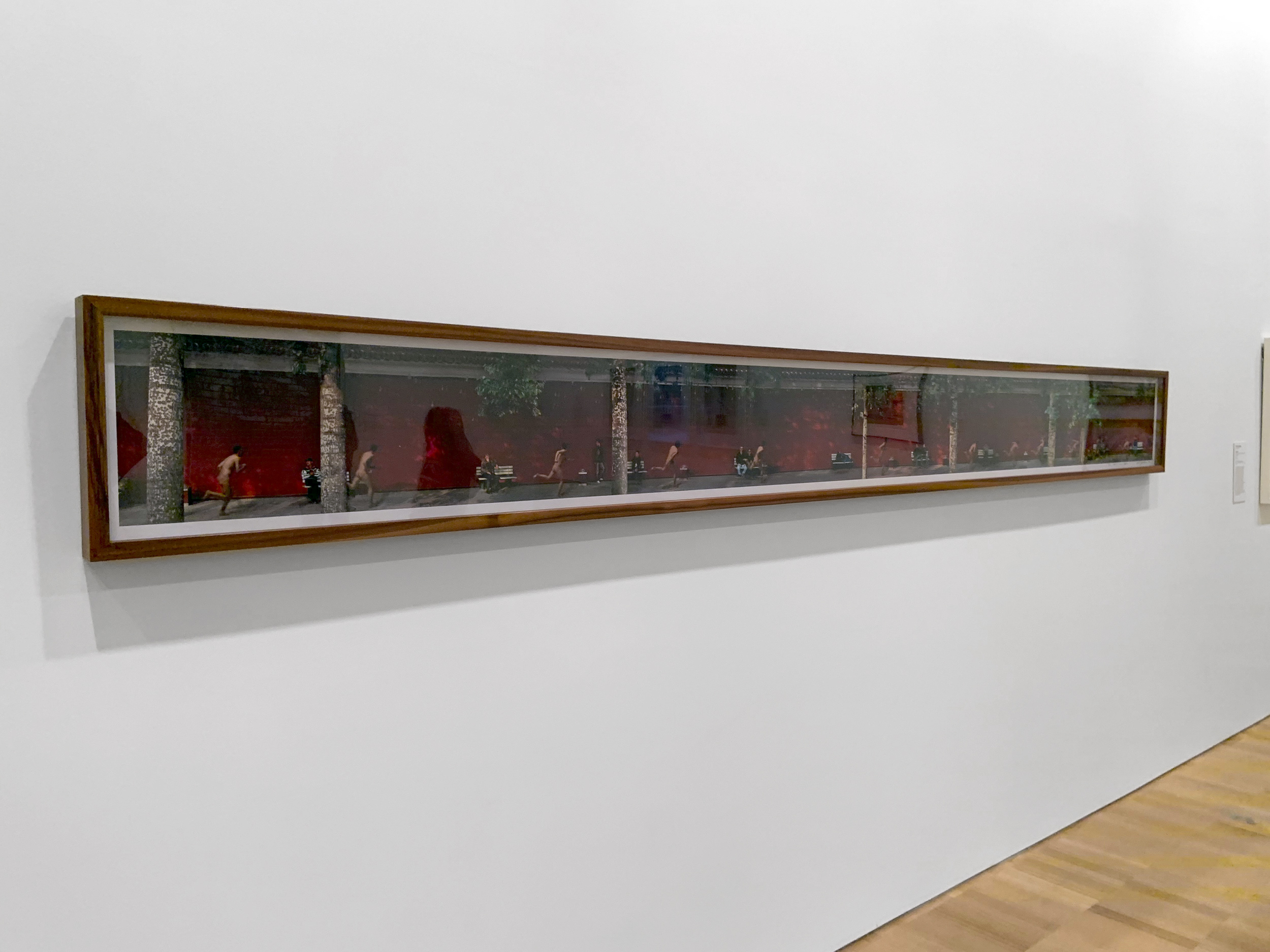
Hujar put his art to political use in 1969. In late June, a police raid inspired fierce resistance from the patrons of the Stonewall Inn, in the West Village. Hujar’s boyfriend at the time, Jim Fouratt, arrived on the scene to organise for the Gay Liberation Front (GLF), the first political group to cite homosexuality in its name. Hujar agreed to make a photograph for a GLF poster. Early one Sunday morning that fall, members of the group assembled and ran back and forth past the photographer on Nineteenth Street, west of Broadway. The poster, bearing the slogan COME OUT!!, appeared in late spring 1970 in advance of the gay liberation march that marked the first anniversary of Stonewall.


Installation view of the exhibition 'Peter Hujar: Speed of Life' at Jeu de Paume, Paris showing 'Gay Liberation Front Poster Image' 1970 (installation view)


Peter Hujar (American, 1934-1987)
Gay Liberation Front Poster Image (installation view)
1970
Gelatin silver print
The Morgan Library & Museum, achat en 2013 grâce au Charina Endowment Fund
© Peter Hujar Archive, LLC, courtesy Pace/MacGill Gallery, New York and Fraenkel Gallery, San Francisco


Peter Hujar (American, 1934-1987) 'Candy Darling on her Deathbed' 1973


Peter Hujar (American, 1934-1987)
Candy Darling on her Deathbed
1973
Gelatin silver print
The Morgan Library & Museum, achat en 2013 grâce au Charina Endowment Fund
© Peter Hujar Archive, LLC, courtesy Pace/MacGill Gallery, New York and Fraenkel Gallery, San Francisco


Candy Darling

In September 1973, transgender Warhol Superstar Candy Darling (born James Lawrence Slattery) was hospitalised for lymphoma. She asked Hujar to make a portrait of her “as a farewell to my fans.” Out of several dozen exposures, Hujar chose to print this languorous pose. As rendered in the print, Candy’s banal, fluorescent-lit hospital room looks as elegant as the studio props in a Hollywood starlet’s portrait. Hujar later wrote that his style cues came from Candy, who was “playing every death scene from every movie.” The image, first seen in print in the New York Post after Candy’s death six months later, became the most widely reproduced of Hujar’s works during his lifetime.


Installation view of the exhibition 'Peter Hujar: Speed of Life' at Jeu de Paume, Paris showing 'Candy Darling on her Deathbed' 1973  (installation view)


Peter Hujar (American, 1934-1987)
Candy Darling on her Deathbed (installation view)
1973
Gelatin silver print
The Morgan Library & Museum, achat en 2013 grâce au Charina Endowment Fund
© Peter Hujar Archive, LLC, courtesy Pace/MacGill Gallery, New York and Fraenkel Gallery, San Francisco


Peter Hujar (American, 1934-1987) 'Fran Lebowitz at Home in Morristown, New Jersey' 1974


Peter Hujar (American, 1934-1987)
Fran Lebowitz at Home in Morristown, New Jersey
1974
Gelatin silver print
The Morgan Library & Museum, achat en 2013 grâce au Charina Endowment Fund
© Peter Hujar Archive, LLC, courtesy Pace/MacGill Gallery, New York and Fraenkel Gallery, San Francisco


Peter Hujar (American, 1934-1987) 'Self-Portrait Jumping (1)' 1974


Peter Hujar (American, 1934-1987)
Self-Portrait Jumping (1)
1974
Gelatin silver print
The Morgan Library & Museum, achat en 2013 grâce au Charina Endowment Fund
© Peter Hujar Archive, LLC, courtesy Pace/MacGill Gallery, New York and Fraenkel Gallery, San Francisco


Installation view of the exhibition 'Peter Hujar: Speed of Life' at Jeu de Paume, Paris showing 'Self-Portrait Jumping (1)' 1974 (installation view)


Peter Hujar (American, 1934-1987)
Self-Portrait Jumping (1) (installation view)
1974
Gelatin silver print
The Morgan Library & Museum, achat en 2013 grâce au Charina Endowment Fund
© Peter Hujar Archive, LLC, courtesy Pace/MacGill Gallery, New York and Fraenkel Gallery, San Francisco


Peter Hujar (American, 1934-1987) 'Susan Sontag' 1975


Peter Hujar (American, 1934-1987)
Susan Sontag
1975
Gelatin silver print
The Morgan Library & Museum, achat en 2013 grâce au Charina Endowment Fund
© Peter Hujar Archive, LLC, courtesy Pace/MacGill Gallery, New York and Fraenkel Gallery, San Francisco


Installation view of the exhibition 'Peter Hujar: Speed of Life' at Jeu de Paume, Paris


Peter Hujar (American, 1934-1987)
Susan Sontag (installation view)
1975
Gelatin silver print
The Morgan Library & Museum, achat en 2013 grâce au Charina Endowment Fund
© Peter Hujar Archive, LLC, courtesy Pace/MacGill Gallery, New York and Fraenkel Gallery, San Francisco


Peter Hujar (American, 1934-1987) 'Christopher Street Pier (2)' 1976  (installation view)


Peter Hujar (American, 1934-1987)
Christopher Street Pier (2) (installation view)
1976
Gelatin silver print
The Morgan Library & Museum, achat en 2013 grâce au Charina Endowment Fund
© Peter Hujar Archive, LLC, courtesy Pace/MacGill Gallery, New York and Fraenkel Gallery, San Francisco


Peter Hujar (American, 1934-1987) 'Christopher Street Pier (2)' 1976


Peter Hujar (American, 1934-1987)
Christopher Street Pier (2)
1976
Gelatin silver print
The Morgan Library & Museum, achat en 2013 grâce au Charina Endowment Fund
© Peter Hujar Archive, LLC, courtesy Pace/MacGill Gallery, New York and Fraenkel Gallery, San Francisco


Jeu de Paume presents a selection of 150 photographs of this singular artist from October 15th, 2019 to January 19th, 2020. The exhibition follows Hujar’s work from the beginnings mid 1950 until the 1980s, shaping a portrait of the underground New York City.

The life and art of Peter Hujar (1934-1987) were rooted in downtown New York. Private by nature, combative in manner, well-read, and widely connected, Hujar inhabited a world of avant-garde dance, music, art, and drag performance. His mature career paralleled the public unfolding of gay life between the Stonewall uprising* in 1969 and the AIDS crisis of the 1980s.

After graduating from high school in 1953, Hujar worked as an assistant to commercial photographers until 1968. Five years of contributing features to mass-market magazines convinced him that a fashion career “wasn’t right for me” and in 1973 he opted for an autonomous, near-penniless life as an artist. In his loft studio above a theater in the East Village, Hujar focused on those who obeyed their creative instincts and shunned mainstream success.

At age forty-two, he published his only monograph, Portraits in Life and Death, and opened his first solo gallery show. The searching intimacy he achieved as a portraitist carried over into unsentimental photographs of animals and plants, landscapes, buildings, and the unique features of nude bodies.

Hujar’s brief affair in 1981 with the young artist David Wojnarowicz evolved into a mentoring bond that changed both their lives. On their excursions to blighted areas around New York, Hujar crafted the portrait of a city in free fall, complementing Wojnarowicz’s dark vision of Reagan-era America.

Peter Hujar died of AIDS-related pneumonia in November 1987.

Press release from Jeu de Paume


Early years

In 1953, Peter Hujar finished high school in Manhattan, where he had studied photography. He then worked for some fifteen years as an assistant to commercial photographers. Punctuating those years were two long periods in Italy, buoyed by scholarships – a first one that was obtained by a boyfriend (1958-1959) and then his own (1962-1963). From 1968 to 1972, he tried to make it as a freelancer in the mass-market world of fashion, music, and advertising photography. The hustle “wasn’t right for me,” and he turned his back on the commercial mainstream. From this time on he lived on almost nothing, squeaking by on small jobs, taking paying jobs only when necessary and focusing on the subjects he found compelling. In 1973, he moved to the crumbling East Village, into a loft that would become the setting for his mature studio work, most notably the vast majority of his portraits.

Portraits

Portraiture was central to Hujar’s practice. The subjects of his art, Hujar wrote, were “those who push themselves to any extreme” and those who “cling to the freedom to be themselves.” “In a sense, I am still a fashion photographer. These people are chic but in a dark kind of way. Most of them are unknown or maybe known to just a few, but they have all been creative adventurers and possess a certain spirit.”

Most of his portraits were posed, but Hujar often expected his models to perform in front of the camera, which made many of the shoots truly collaborative ventures. Disguises and props were often incorporated, and his subjects were sometimes veiled, simultaneously revealing and masking themselves.

The reclining portrait is a photographic genre Hujar made his own. The pose features extensively in his 1976 monograph Portraits in Life and Death, and he continued to rely on it as a means of capturing something unique in his sitter: to face a camera lens from a reclining position is an unfamiliar and provoking experience.

New York

“The happiest times with Peter, when he wasn’t photographing, were walking around Manhattan, looking at the crowns of buildings, and the fantasies about ‘living there,'” remembers Gary Schneider, one of his close friends.

Born in New Jersey, Hujar spent all his life in New York, and more specifically in Manhattan, whose buildings, streets, and piers he started photographing more extensively in the second half of the 1970s. Divided between Downtown’s derelict areas and Midtown’s skyscrapers, Hujar’s New York is often a nocturnal city: a place of abandoned structures, night-time cruising, and early-dawn vistas. A few journeys outside New York, during the summer months, to the beaches of Fire Island in the Hamptons, and, in the early 1980s, to the countryside around Germantown, forty miles north of New York, along the Hudson River, offer other glimpses of Peter Hujar’s personal geography, testifying to the variety of subjects that he found worth photographing.

Bodies

Portraiture of bodies was another focal point of Hujar’s last decade of work. In 1978, some of his works were included in The Male Nude: A photographic Survey at the Marcuse Pfeifer Gallery in New York.

Bodies, he suggested, could be read as freely as faces for character, emotion, or life story.

He photographed bodies in the extremes of youth and old age, bodies displaying unique features, and bodies in transient states, notably pregnancy and arousal.

Whether photographing faces or bodies, Hujar was attentive to the characteristics conferred by time and experience, such as Manny Vasquez’s spinal tap scar and the imprint left by socks on Randy Gilberti’s ankles. “I want people to feel the picture and smell it,” he said of his nudes, which he contrasted to the idealised bodies in Robert Mapplethorpe’s work.

Gracie Mansion Gallery, 1986

When exhibiting his work, Hujar employed two distinct methods. He displayed prints either in isolation (notably in his loft, where just one photograph at a time was on view) or in large groupings, two images high, as on this wall. For the last exhibition during his lifetime, in January 1986 in New York, Hujar covered the walls of the Gracie Mansion Gallery with a frieze of seventy photographs in no apparent order. He fine-tuned the layout for days until no one type of image (portrait, nude, animal, still life, landscape, cityscape) appeared twice consecutively. Each of his subjects thus preserved its own identity and singularity rather than serving as a variation on an imposed theme.

The arrangement highlighted his inventive range, created echoes among seemingly unrelated images, and drew attention to preoccupations that had recurred throughout his career. The display in this room centres on images taken in the 1980s and is freely inspired by that 1986 exhibition.

Andy Warhol

In 1964 Peter Hujar was a regular visitor to The Factory, Andy Warhol’s studio at 231 East 47th Street in New York. He posed four times for Screen Tests, brief portraits filmed by Warhol and screened in slow motion. Together with his friend Paul Thek, Hujar was chosen as one of the “Thirteen Most Beautiful Boys”, whose film portraits were regularly shown at the Factory and at parties and events elsewhere. Among the other personalities figuring in the Screen Tests in 1964-1965 were the actor-directors Dennis Hopper and Jack Smith, together with writer-critic Susan Sontag and poet John Ashbery – both of whom would later pose for Hujar.


Peter Hujar (American, 1934-1987) 'From Rockefeller Center: The Equitable Building' 1976


Peter Hujar (American, 1934-1987)
From Rockefeller Center: The Equitable Building
1976
Gelatin silver print
The Morgan Library & Museum, achat en 2013 grâce au Charina Endowment Fund
© Peter Hujar Archive, LLC, courtesy Pace/MacGill Gallery, New York and Fraenkel Gallery, San Francisco


Peter Hujar (American, 1934-1987) 'Reclining Nude on Couch' 1978


Peter Hujar (American, 1934-1987)
Reclining Nude on Couch
1978
Gelatin silver print
The Morgan Library & Museum, achat en 2013 grâce au Charina Endowment Fund
© Peter Hujar Archive, LLC, courtesy Pace/MacGill Gallery, New York and Fraenkel Gallery, San Francisco


Peter Hujar (American, 1934-1987) 'Boy on Raft' 1978


Peter Hujar (American, 1934-1987)
Boy on Raft
1978
Gelatin silver print
The Morgan Library & Museum, achat en 2013 grâce au Charina Endowment Fund
© Peter Hujar Archive, LLC, courtesy Pace/MacGill Gallery, New York and Fraenkel Gallery, San Francisco


Peter Hujar (American, 1934-1987) 'Surf (2)' Nd


Peter Hujar (American, 1934-1987)
Surf (2)
Nd
Gelatin silver print
The Morgan Library & Museum, achat en 2013 grâce au Charina Endowment Fund
© Peter Hujar Archive, LLC, courtesy Pace/MacGill Gallery, New York and Fraenkel Gallery, San Francisco


Peter Hujar (American, 1934-1987) 'Boys in Car, Halloween' 1978


Peter Hujar (American, 1934-1987)
Boys in Car, Halloween
1978
Gelatin silver print
The Morgan Library & Museum, achat en 2013 grâce au Charina Endowment Fund
© Peter Hujar Archive, LLC, courtesy Pace/MacGill Gallery, New York and Fraenkel Gallery, San Francisco


Peter Hujar (American, 1934-1987) 'Dana Reitz's Legs, Walking' 1979


Peter Hujar (American, 1934-1987)
Dana Reitz’s Legs, Walking
1979
Gelatin silver print
The Morgan Library & Museum, achat en 2013 grâce au Charina Endowment Fund
© Peter Hujar Archive, LLC, courtesy Pace/MacGill Gallery, New York and Fraenkel Gallery, San Francisco


Peter Hujar (American, 1934-1987) 'Dana Reitz's Legs, Walking' 1979 (installation view)


Peter Hujar (American, 1934-1987)
Dana Reitz’s Legs, Walking (installation view)
1979
Gelatin silver print
The Morgan Library & Museum, achat en 2013 grâce au Charina Endowment Fund
© Peter Hujar Archive, LLC, courtesy Pace/MacGill Gallery, New York and Fraenkel Gallery, San Francisco


Peter Hujar (American, 1934-1987) 'Gary in Contortion (2)' 1979


Peter Hujar (American, 1934-1987)
Gary in Contortion (2)
1979
Gelatin silver print
The Morgan Library & Museum, achat en 2013 grâce au Charina Endowment Fund
© Peter Hujar Archive, LLC, courtesy Pace/MacGill Gallery, New York and Fraenkel Gallery, San Francisco


Peter Hujar (American, 1934-1987) 'David Wojnarowicz Reclining (2)' 1981


Peter Hujar (American, 1934-1987)
David Wojnarowicz Reclining (2)
1981
Gelatin silver print
The Morgan Library & Museum, achat en 2013 grâce au Charina Endowment Fund
© Peter Hujar Archive, LLC, courtesy Pace/MacGill Gallery, New York and Fraenkel Gallery, San Francisco


Peter Hujar (American, 1934-1987) 'David Wojnarowicz Reclining (2)' 1981 (installation view)


Peter Hujar (American, 1934-1987)
David Wojnarowicz Reclining (2) (installation view)
1981
Gelatin silver print
The Morgan Library & Museum, achat en 2013 grâce au Charina Endowment Fund
© Peter Hujar Archive, LLC, courtesy Pace/MacGill Gallery, New York and Fraenkel Gallery, San Francisco


A hallmark of Hujar’s portraiture is the invisibility of technique – a kind of visual innocence – as if the camera were not present and the subject had been happened upon, discovered there, as Ludlam appears to be, in medias res.

Philip Gefter. “Peter Hujar’s Downtown,” on the NYR Daily website [Online] Cited 01/11/2019


Peter Hujar (American, 1934-1987) 'David Wojnarowicz' 1981


Peter Hujar (American, 1934-1987)
David Wojnarowicz
1981
Gelatin silver print
The Morgan Library & Museum, achat en 2013 grâce au Charina Endowment Fund
© Peter Hujar Archive, LLC, courtesy Pace/MacGill Gallery, New York and Fraenkel Gallery, San Francisco


Peter Hujar (American, 1934-1987) 'David Wojnarowicz' 1981 (installation view)


Peter Hujar (American, 1934-1987)
David Wojnarowicz (installation view)
1981
Gelatin silver print
The Morgan Library & Museum, achat en 2013 grâce au Charina Endowment Fund
© Peter Hujar Archive, LLC, courtesy Pace/MacGill Gallery, New York and Fraenkel Gallery, San Francisco


“Hermetic appeal and an identification with psychic damage came together in Hujar’s last important relationship, with the meteoric younger artist David Wojnarowicz, who was a ravaged hustler when they met at a bar in late 1980 and who died from AIDS in 1992. They were lovers briefly, then buddies and soul mates. Wojnarowicz said that Hujar “was like the parent I never had, like the brother I never had.” In return, he inspired fresh energies in Hujar’s life and late work. In a breathtakingly intimate portrait of Wojnarowicz with a cigarette and tired eyes, from 1981, the young man’s gaze meets that of the camera, with slightly wary – but willing and plainly reciprocated – devotion: love, in a way. Their story could make for a good novel or movie – as it well may, in sketched outline in your mind, while you navigate this aesthetically fierce, historically informative, strangely tender show.”

Peter Schjeldahl. “The Bohemian Rhapsody of Peer Hujar: Photographs at the crossroads of high art and low life,” on The New Yorker website January 29, 2018 [Online] Cited 01/11/2019


Peter Hujar (American, 1934-1987) 'Ethyl Eichelberger as Minnie the Maid' 1981


Peter Hujar (American, 1934-1987)
Ethyl Eichelberger as Minnie the Maid
1981
Gelatin silver print
The Morgan Library & Museum, achat en 2013 grâce au Charina Endowment Fund
© Peter Hujar Archive, LLC, courtesy Pace/MacGill Gallery, New York and Fraenkel Gallery, San Francisco


Peter Hujar (American, 1934-1987) 'Greer Lankton' 1983


Peter Hujar (American, 1934-1987)
Greer Lankton
1983
Gelatin silver print
The Morgan Library & Museum, achat en 2013 grâce au Charina Endowment Fund
© Peter Hujar Archive, LLC, courtesy Pace/MacGill Gallery, New York and Fraenkel Gallery, San Francisco


Hujar observed his companions in this outlaw life with what might be called warm objectivity. Whatever the portrait subject – doll maker and transgender pioneer Greer Lankton, model Bruce St. Croix sitting naked on a chair and handling his huge erection, Warhol superstar Candy Darling on her death bed, or a pair of cows in a muddy field – he photographed them directly with his 2 1/4, often at close range, without props or gauzy lighting.

Richard B. Woodward. “Peter Hujar: Speed of Life @Morgan Library,” on the Collector Daily website February 21, 2018 [Online] Cited 01/11/2019


Peter Hujar (American, 1934-1987) 'Gary Indiana Veiled' 1981


Peter Hujar (American, 1934-1987)
Gary Indiana Veiled
1981
Gelatin silver print
The Morgan Library & Museum, achat en 2013 grâce au Charina Endowment Fund
© Peter Hujar Archive, LLC, courtesy Pace/MacGill Gallery, New York and Fraenkel Gallery, San Francisco


Some iPhone installation photographs and others


Peter Hujar (American, 1934-1987) 'Woman and Girl in Window Italy' c. 1963 (installation view)


Peter Hujar (American, 1934-1987)
Woman and Girl in Window Italy
c. 1963
Gelatin silver print
The Morgan Library & Museum, achat en 2013 grâce au Charina Endowment Fund
© Peter Hujar Archive, LLC, courtesy Pace/MacGill Gallery, New York and Fraenkel Gallery, San Francisco


Peter Hujar (American, 1934-1987) 'Woman and Girl in Window Italy' c. 1963 


Peter Hujar (American, 1934-1987)
Woman and Girl in Window Italy
c. 1963
Gelatin silver print
The Morgan Library & Museum, achat en 2013 grâce au Charina Endowment Fund
© Peter Hujar Archive, LLC, courtesy Pace/MacGill Gallery, New York and Fraenkel Gallery, San Francisco


Peter Hujar (American, 1934-1987) 'Young Man and Boy, Italy' 1958 (installation view)


Peter Hujar (American, 1934-1987)
Young Man and Boy, Italy (installation view)
1958
Gelatin silver print
The Morgan Library & Museum, achat en 2013 grâce au Charina Endowment Fund
© Peter Hujar Archive, LLC, courtesy Pace/MacGill Gallery, New York and Fraenkel Gallery, San Francisco


He began as a street photographer, on the prowl for unrehearsed gestures, as can be seen in a 1958 picture in Italy of a well-dressed young man touching his thick coif of dark hair and standing next to a pudgy boy in a cap who has his hands in his pockets.

Richard B. Woodward. “Peter Hujar: Speed of Life @Morgan Library,” on the Collector Daily website February 21, 2018 [Online] Cited 01/11/2019


Peter Hujar (American, 1934-1987) 'Young Man and Boy, Italy' 1958


Peter Hujar (American, 1934-1987)
Young Man and Boy, Italy
1958
Gelatin silver print
The Morgan Library & Museum, achat en 2013 grâce au Charina Endowment Fund
© Peter Hujar Archive, LLC, courtesy Pace/MacGill Gallery, New York and Fraenkel Gallery, San Francisco


Installation view of the exhibition 'Peter Hujar: Speed of Life' at Jeu de Paume, Paris


Peter Hujar (American, 1934-1987) 'Palermo Catacombs #11, Rows of Bodies' 1963 (installation view)

Peter Hujar. 'Palermo Catacombs (11)' 1963


Peter Hujar (American, 1934-1987)
Palermo Catacombs #11, Rows of Bodies
1963
Gelatin silver print
The Morgan Library & Museum, achat en 2013 grâce au Charina Endowment Fund
© Peter Hujar Archive, LLC, courtesy Pace/MacGill Gallery, New York and Fraenkel Gallery, San Francisco


Peter Hujar (American, 1934-1987) 'Man in Costume on Toilet, Backstage at Palm Casino Review' 1974 (installation view)


Peter Hujar (American, 1934-1987)
Man in Costume on Toilet, Backstage at Palm Casino Review (installation view)
1974
Gelatin silver print
The Morgan Library & Museum, achat en 2013 grâce au Charina Endowment Fund
© Peter Hujar Archive, LLC, courtesy Pace/MacGill Gallery, New York and Fraenkel Gallery, San Francisco


Installation view of the exhibition 'Peter Hujar: Speed of Life' at Jeu de Paume, Paris


Peter Hujar (American, 1934-1987) 'Nude Self-Portrait, Running / Nude Self-Portrait Series (Avedon Master Class)' 1966 (installation view)


Peter Hujar (American, 1934-1987)
Nude Self-Portrait, Running / Nude Self-Portrait Series (Avedon Master Class) (installation view)
1966
Gelatin silver print
The Morgan Library & Museum, achat en 2013 grâce au Charina Endowment Fund
© Peter Hujar Archive, LLC, courtesy Pace/MacGill Gallery, New York and Fraenkel Gallery, San Francisco


Peter Hujar (American, 1934-1987) 'Group Picture' 1966 (installation view)


Peter Hujar (American, 1934-1987)
Group Picture (installation view)
1966
Gelatin silver print
The Morgan Library & Museum, achat en 2013 grâce au Charina Endowment Fund
© Peter Hujar Archive, LLC, courtesy Pace/MacGill Gallery, New York and Fraenkel Gallery, San Francisco


Peter Hujar (American, 1934-1987) Stephen Varble, Soho, Franklin Street (III)' 1976 (installation view)


Peter Hujar (American, 1934-1987)
Stephen Varble, Soho, Franklin Street (III) (installation view)
1976
Gelatin silver print
The Morgan Library & Museum, achat en 2013 grâce au Charina Endowment Fund
© Peter Hujar Archive, LLC, courtesy Pace/MacGill Gallery, New York and Fraenkel Gallery, San Francisco


Peter Hujar (American, 1934-1987) 'Stephen Varble, Soho, Franklin Street (III)' 1976


Peter Hujar (American, 1934-1987)
Stephen Varble, Soho, Franklin Street (III)
1976
Gelatin silver print
The Morgan Library & Museum, achat en 2013 grâce au Charina Endowment Fund
© Peter Hujar Archive, LLC, courtesy Pace/MacGill Gallery, New York and Fraenkel Gallery, San Francisco


Peter Hujar (American, 1934-1987) 'Beauregard Under Plastic (1)' 1966 (installation view)


Peter Hujar (American, 1934-1987)
Beauregard Under Plastic (1) (installation view)
1966
Gelatin silver print
The Morgan Library & Museum, achat en 2013 grâce au Charina Endowment Fund
© Peter Hujar Archive, LLC, courtesy Pace/MacGill Gallery, New York and Fraenkel Gallery, San Francisco


Peter Hujar (American, 1934-1987) 'Beauregard Under Plastic (1)' 1966


Peter Hujar (American, 1934-1987)
Beauregard Under Plastic (1)
1966
Gelatin silver print
The Morgan Library & Museum, achat en 2013 grâce au Charina Endowment Fund
© Peter Hujar Archive, LLC, courtesy Pace/MacGill Gallery, New York and Fraenkel Gallery, San Francisco


Peter Hujar (American, 1934-1987) 'Bill Elliott' 1974 (installation view)


Peter Hujar (American, 1934-1987)
Bill Elliott (installation view)
1974
Gelatin silver print
The Morgan Library & Museum, achat en 2013 grâce au Charina Endowment Fund
© Peter Hujar Archive, LLC, courtesy Pace/MacGill Gallery, New York and Fraenkel Gallery, San Francisco


Peter Hujar (American, 1934-1987) 'Bill Elliott' 1974


Peter Hujar (American, 1934-1987)
Bill Elliott
1974
Gelatin silver print
The Morgan Library & Museum, achat en 2013 grâce au Charina Endowment Fund
© Peter Hujar Archive, LLC, courtesy Pace/MacGill Gallery, New York and Fraenkel Gallery, San Francisco


Peter Hujar (American, 1934-1987) 'Dean Savard Reclining' 1984 (installation view)


Peter Hujar (American, 1934-1987)
Dean Savard Reclining (installation view)
1984
Gelatin silver print
The Morgan Library & Museum, achat en 2013 grâce au Charina Endowment Fund
© Peter Hujar Archive, LLC, courtesy Pace/MacGill Gallery, New York and Fraenkel Gallery, San Francisco


Peter Hujar (American, 1934-1987) 'Dean Savard Reclining' 1984


Peter Hujar (American, 1934-1987)
Dean Savard Reclining
1984
Gelatin silver print
The Morgan Library & Museum, achat en 2013 grâce au Charina Endowment Fund
© Peter Hujar Archive, LLC, courtesy Pace/MacGill Gallery, New York and Fraenkel Gallery, San Francisco


Peter Hujar (American, 1934-1987) 'Chloe Finch' 1981 (installation view)


Peter Hujar (American, 1934-1987)
Chloe Finch (installation view)
1981
Gelatin silver print
The Morgan Library & Museum, achat en 2013 grâce au Charina Endowment Fund
© Peter Hujar Archive, LLC, courtesy Pace/MacGill Gallery, New York and Fraenkel Gallery, San Francisco


Peter Hujar. 'Chloe Finch' 1981


Peter Hujar (American, 1934-1987)
Chloe Finch
1981
Gelatin silver print
The Morgan Library & Museum, achat en 2013 grâce au Charina Endowment Fund
© Peter Hujar Archive, LLC, courtesy Pace/MacGill Gallery, New York and Fraenkel Gallery, San Francisco


Peter Hujar (American, 1934-1987) 'Skippy on a Chair' 1985 (installation view)


Peter Hujar (American, 1934-1987)
Skippy on a Chair (installation view)
1985
Gelatin silver print
The Morgan Library & Museum, achat en 2013 grâce au Charina Endowment Fund
© Peter Hujar Archive, LLC, courtesy Pace/MacGill Gallery, New York and Fraenkel Gallery, San Francisco


Peter Hujar (American, 1934-1987) 'Jackie Curtis and Lance Loud' 1975 (installation view)


Peter Hujar (American, 1934-1987)
Jackie Curtis and Lance Loud (installation view)
1975
Gelatin silver print
The Morgan Library & Museum, achat en 2013 grâce au Charina Endowment Fund
© Peter Hujar Archive, LLC, courtesy Pace/MacGill Gallery, New York and Fraenkel Gallery, San Francisco


Peter Hujar (American, 1934-1987) 'Zachy and Gamal Sherif (Twins)' 1985 (installation view)


Peter Hujar (American, 1934-1987)
Zachy and Gamal Sherif (Twins) (installation view)
1985
Gelatin silver print
The Morgan Library & Museum, achat en 2013 grâce au Charina Endowment Fund
© Peter Hujar Archive, LLC, courtesy Pace/MacGill Gallery, New York and Fraenkel Gallery, San Francisco


Peter Hujar (American, 1934-1987) 'Zachy and Gamal Sherif (Twins)' 1985


Peter Hujar (American, 1934-1987)
Zachy and Gamal Sherif (Twins)
1985
Gelatin silver print
The Morgan Library & Museum, achat en 2013 grâce au Charina Endowment Fund
© Peter Hujar Archive, LLC, courtesy Pace/MacGill Gallery, New York and Fraenkel Gallery, San Francisco


Peter Hujar (American, 1934-1987) 'Ethyl Eichelberger, Dressed as a Man' 1983 (installation view)


Peter Hujar (American, 1934-1987)
Ethyl Eichelberger, Dressed as a Man (installation view)
1983
Gelatin silver print
The Morgan Library & Museum, achat en 2013 grâce au Charina Endowment Fund
© Peter Hujar Archive, LLC, courtesy Pace/MacGill Gallery, New York and Fraenkel Gallery, San Francisco


Peter Hujar (American, 1934-1987) 'Girl in My Hallway' 1976 (installation view)


Peter Hujar (American, 1934-1987)
Girl in My Hallway (installation view)
1976
Gelatin silver print
The Morgan Library & Museum, achat en 2013 grâce au Charina Endowment Fund
© Peter Hujar Archive, LLC, courtesy Pace/MacGill Gallery, New York and Fraenkel Gallery, San Francisco


Peter Hujar (American, 1934-1987) 'Girl in My Hallway' 1976


Peter Hujar (American, 1934-1987)
Girl in My Hallway
1976
Gelatin silver print
The Morgan Library & Museum, achat en 2013 grâce au Charina Endowment Fund
© Peter Hujar Archive, LLC, courtesy Pace/MacGill Gallery, New York and Fraenkel Gallery, San Francisco


Hujar’s indelible portraits of famous avant-garde artists and drag queens, and his curiously gothic landscapes and animal pictures, are so fastidiously exquisite, so fussily exact, so representative of a period past (“Speed of Life” is a very odd title) that they immediately summon the ratty hauteur, the necessary obsessions, and the cold-eyed dignity that helped most gay men survive, and not survive, in the early gay lib and AIDS years. …

… His portraits often combine the freakish curiosity of Arbus and the monumental candidness of his mentor Richard Avedon into something resembling momento mori portraits suitable for displaying atop a casket. They are unmistakably contemporary but they feel historic, as if burned to silver plates. (Not for nothing did Hujar make his own display prints.) That doesn’t mean there’s no life in those portraits; far from it, these are the essences of his subjects so well-distilled that there’s really no need to go on. We see nostalgia washing over the present.

Mark B. “Peter Hujar’s brilliant, too brilliant icons,” on the 48hills website October 22, 2018 [Online] Cited 01/11/2019


Peter Hujar (American, 1934-1987) 'St. Patrick's, Easter Sunday' 1976 (installation view)


Peter Hujar (American, 1934-1987)
St. Patrick’s, Easter Sunday (installation view)
1976
Gelatin silver print
The Morgan Library & Museum, achat en 2013 grâce au Charina Endowment Fund
© Peter Hujar Archive, LLC, courtesy Pace/MacGill Gallery, New York and Fraenkel Gallery, San Francisco


Peter Hujar. 'St. Patrick's, Easter Sunday' 1976


Peter Hujar (American, 1934-1987)
St. Patrick’s, Easter Sunday
1976
Gelatin silver print
The Morgan Library & Museum, achat en 2013 grâce au Charina Endowment Fund
© Peter Hujar Archive, LLC, courtesy Pace/MacGill Gallery, New York and Fraenkel Gallery, San Francisco


Installation view of the exhibition 'Peter Hujar: Speed of Life' at Jeu de Paume, Paris

Peter Hujar (American, 1934-1987) 'Boy on a Park Bench' 1981 (installation view)


Peter Hujar (American, 1934-1987)
Boy on a Park Bench (installation view)
1981
Gelatin silver print
The Morgan Library & Museum, achat en 2013 grâce au Charina Endowment Fund
© Peter Hujar Archive, LLC, courtesy Pace/MacGill Gallery, New York and Fraenkel Gallery, San Francisco


Peter Hujar (American, 1934-1987) 'Boy on a Park Bench' 1981


Peter Hujar (American, 1934-1987)
Boy on a Park Bench
1981
Gelatin silver print
The Morgan Library & Museum, achat en 2013 grâce au Charina Endowment Fund
© Peter Hujar Archive, LLC, courtesy Pace/MacGill Gallery, New York and Fraenkel Gallery, San Francisco


Peter Hujar (American, 1934-1987) 'Mural at Piers' 1983 (installation view)


Peter Hujar (American, 1934-1987)
Mural at Piers (installation view)
1983
Gelatin silver print
The Morgan Library & Museum, achat en 2013 grâce au Charina Endowment Fund
© Peter Hujar Archive, LLC, courtesy Pace/MacGill Gallery, New York and Fraenkel Gallery, San Francisco


Peter Hujar. 'Mural at Piers' 1983


Peter Hujar (American, 1934-1987)
Mural at Piers
1983
Gelatin silver print
The Morgan Library & Museum, achat en 2013 grâce au Charina Endowment Fund
© Peter Hujar Archive, LLC, courtesy Pace/MacGill Gallery, New York and Fraenkel Gallery, San Francisco


Peter Hujar (American, 1934-1987) 'Self Portrait' 1975 (installation view)


Peter Hujar (American, 1934-1987)
Self Portrait (installation view)
1975
Gelatin silver print
The Morgan Library & Museum, achat en 2013 grâce au Charina Endowment Fund
© Peter Hujar Archive, LLC, courtesy Pace/MacGill Gallery, New York and Fraenkel Gallery, San Francisco


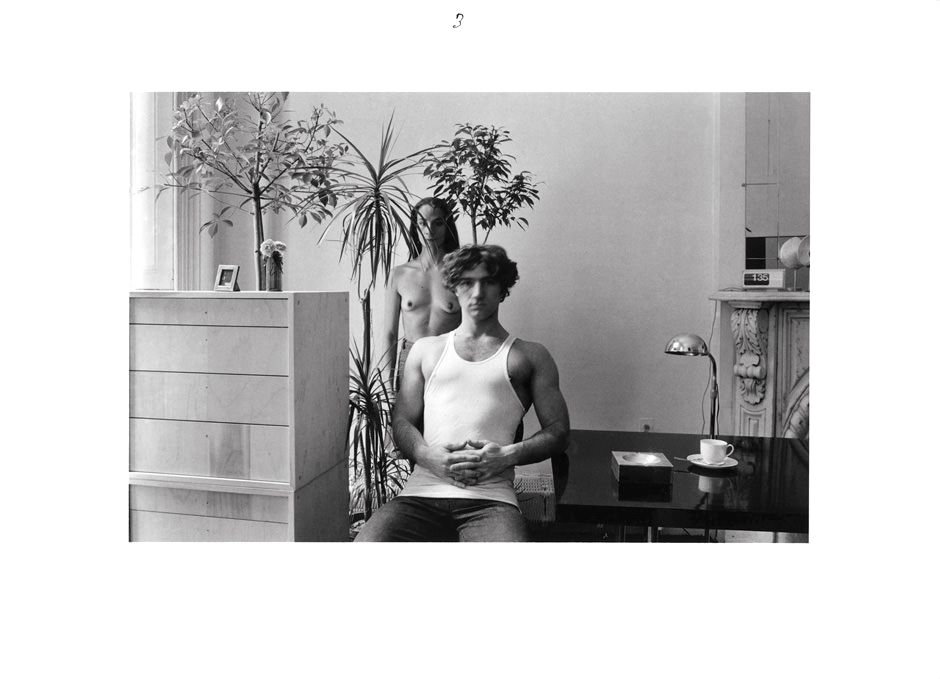
Peter Hujar (American, 1934-1987) 'Self Portrait in White Tank Top' 1975


Peter Hujar (American, 1934-1987)
Self Portrait in White Tank Top
1975
Gelatin silver print
The Morgan Library & Museum, achat en 2013 grâce au Charina Endowment Fund
© Peter Hujar Archive, LLC, courtesy Pace/MacGill Gallery, New York and Fraenkel Gallery, San Francisco


Peter Hujar (American, 1934-1987) 'Gary in Contortion (1)' 1979 (installation view)


Peter Hujar (American, 1934-1987)
Gary in Contortion (1) (installation view)
1979
Gelatin silver print
The Morgan Library & Museum, achat en 2013 grâce au Charina Endowment Fund
© Peter Hujar Archive, LLC, courtesy Pace/MacGill Gallery, New York and Fraenkel Gallery, San Francisco


Peter Hujar. 'Gary in Contortion (1)' 1979


Peter Hujar (American, 1934-1987)
Gary in Contortion (1)
1979
Gelatin silver print
The Morgan Library & Museum, achat en 2013 grâce au Charina Endowment Fund
© Peter Hujar Archive, LLC, courtesy Pace/MacGill Gallery, New York and Fraenkel Gallery, San Francisco


Peter Hujar (American, 1934-1987) 'Daniel Schook Sucking Toe (Close-up)' 1981 (installation view)


Peter Hujar (American, 1934-1987)
Daniel Schook Sucking Toe (Close-up) (installation view)
1981
Gelatin silver print
The Morgan Library & Museum, achat en 2013 grâce au Charina Endowment Fund
© Peter Hujar Archive, LLC, courtesy Pace/MacGill Gallery, New York and Fraenkel Gallery, San Francisco


Peter Hujar (American, 1934-1987) 'Daniel Schook Sucking Toe (Close-up)' 1981


Peter Hujar (American, 1934-1987)
Daniel Schook Sucking Toe (Close-up)
1981
Gelatin silver print
The Morgan Library & Museum, achat en 2013 grâce au Charina Endowment Fund
© Peter Hujar Archive, LLC, courtesy Pace/MacGill Gallery, New York and Fraenkel Gallery, San Francisco


Peter Hujar (American, 1934-1987) 'Pascal Imbert Scarred Abdomen' 1985 (installation view)


Peter Hujar (American, 1934-1987)
Pascal Imbert Scarred Abdomen (installation view)
1985
Gelatin silver print
The Morgan Library & Museum, achat en 2013 grâce au Charina Endowment Fund
© Peter Hujar Archive, LLC, courtesy Pace/MacGill Gallery, New York and Fraenkel Gallery, San Francisco


Peter Hujar. 'Pascal Imbert Scarred Abdomen' 1980


Peter Hujar (American, 1934-1987)
Pascal Imbert Scarred Abdomen
1985
Gelatin silver print
The Morgan Library & Museum, achat en 2013 grâce au Charina Endowment Fund
© Peter Hujar Archive, LLC, courtesy Pace/MacGill Gallery, New York and Fraenkel Gallery, San Francisco


Peter Hujar (American, 1934-1987) 'Manny Vasquez (Back with Bullet Wound)' 1979 (installation view)


Peter Hujar (American, 1934-1987)
Manny Vasquez (Back with Bullet Wound) (installation view)
1979
Gelatin silver print
The Morgan Library & Museum, achat en 2013 grâce au Charina Endowment Fund
© Peter Hujar Archive, LLC, courtesy Pace/MacGill Gallery, New York and Fraenkel Gallery, San Francisco


Peter Hujar (American, 1934-1987) 'Robert Levithan on Bed' 1977 (installation view)


Peter Hujar (American, 1934-1987)
Robert Levithan on Bed (installation view)
1977
Gelatin silver print
The Morgan Library & Museum, achat en 2013 grâce au Charina Endowment Fund
© Peter Hujar Archive, LLC, courtesy Pace/MacGill Gallery, New York and Fraenkel Gallery, San Francisco


Peter Hujar (American, 1934-1987) 'Robert Levithan on Bed' 1977


Peter Hujar (American, 1934-1987)
Robert Levithan on Bed
1977
Gelatin silver print
The Morgan Library & Museum, achat en 2013 grâce au Charina Endowment Fund
© Peter Hujar Archive, LLC, courtesy Pace/MacGill Gallery, New York and Fraenkel Gallery, San Francisco


Peter Hujar (American, 1934-1987) 'Randy Gilberti, High Heels, Halloween' 1980 (installation view)


Peter Hujar (American, 1934-1987)
Randy Gilberti, High Heels, Halloween (installation view)
1980
Gelatin silver print
The Morgan Library & Museum, achat en 2013 grâce au Charina Endowment Fund
© Peter Hujar Archive, LLC, courtesy Pace/MacGill Gallery, New York and Fraenkel Gallery, San Francisco


Peter Hujar (American, 1934-1987) 'Randy Gilberti, High Heels, Halloween' 1980


Peter Hujar (American, 1934-1987)
Randy Gilberti, High Heels, Halloween
1980
Gelatin silver print
The Morgan Library & Museum, achat en 2013 grâce au Charina Endowment Fund
© Peter Hujar Archive, LLC, courtesy Pace/MacGill Gallery, New York and Fraenkel Gallery, San Francisco


Installation view of the exhibition 'Peter Hujar: Speed of Life' at Jeu de Paume, Paris


Peter Hujar (American, 1934-1987) 'Nina Christgau (2)' 1985 (installation view)


Peter Hujar (American, 1934-1987)
Nina Christgau (2) (installation view)
1985
Gelatin silver print
The Morgan Library & Museum, achat en 2013 grâce au Charina Endowment Fund
© Peter Hujar Archive, LLC, courtesy Pace/MacGill Gallery, New York and Fraenkel Gallery, San Francisco


Peter Hujar (American, 1934-1987) 'Nina Christgau (2)' 1985


Peter Hujar (American, 1934-1987)
Nina Christgau (2)
1985
Gelatin silver print
The Morgan Library & Museum, achat en 2013 grâce au Charina Endowment Fund
© Peter Hujar Archive, LLC, courtesy Pace/MacGill Gallery, New York and Fraenkel Gallery, San Francisco


Installation view of the exhibition 'Peter Hujar: Speed of Life' at Jeu de Paume, Paris


Peter Hujar (American, 1934-1987) 'Paul Hudson (Leg)' 1979 (installation view)


Peter Hujar (American, 1934-1987)
Paul Hudson (Leg) (installation view)
1979
Gelatin silver print
The Morgan Library & Museum, achat en 2013 grâce au Charina Endowment Fund
© Peter Hujar Archive, LLC, courtesy Pace/MacGill Gallery, New York and Fraenkel Gallery, San Francisco


Peter Hujar. 'Paul Hudson (Leg)' 1979


Peter Hujar (American, 1934-1987)
Paul Hudson (Leg)
1979
Gelatin silver print
The Morgan Library & Museum, achat en 2013 grâce au Charina Endowment Fund
© Peter Hujar Archive, LLC, courtesy Pace/MacGill Gallery, New York and Fraenkel Gallery, San Francisco


Peter Hujar (American, 1934-1987) 'Isaac Hayes' 1971 (installation view)


Peter Hujar (American, 1934-1987)
Isaac Hayes (installation view)
1971
Gelatin silver print
The Morgan Library & Museum, achat en 2013 grâce au Charina Endowment Fund
© Peter Hujar Archive, LLC, courtesy Pace/MacGill Gallery, New York and Fraenkel Gallery, San Francisco


Peter Hujar (American, 1934-1987) 'Isaac Hayes' 1971


Peter Hujar (American, 1934-1987)
Isaac Hayes
1971
Gelatin silver print
The Morgan Library & Museum, achat en 2013 grâce au Charina Endowment Fund
© Peter Hujar Archive, LLC, courtesy Pace/MacGill Gallery, New York and Fraenkel Gallery, San Francisco


Peter Hujar (American, 1934-1987) 'William S. Burroughs (1)' 1975 (installation view)


Peter Hujar (American, 1934-1987)
William S. Burroughs (1) (installation view)
1975
Gelatin silver print
The Morgan Library & Museum, achat en 2013 grâce au Charina Endowment Fund
© Peter Hujar Archive, LLC, courtesy Pace/MacGill Gallery, New York and Fraenkel Gallery, San Francisco


Peter Hujar (American, 1934-1987) 'William S. Burroughs (1)' 1975


Peter Hujar (American, 1934-1987)
William S. Burroughs (1)
1975
Gelatin silver print
The Morgan Library & Museum, achat en 2013 grâce au Charina Endowment Fund
© Peter Hujar Archive, LLC, courtesy Pace/MacGill Gallery, New York and Fraenkel Gallery, San Francisco


Peter Hujar (American, 1934-1987) 'David Warrilow (1)' 1985 (installation view)


Peter Hujar (American, 1934-1987)
David Warrilow (1) (installation view)
1985
Gelatin silver print
The Morgan Library & Museum, achat en 2013 grâce au Charina Endowment Fund
© Peter Hujar Archive, LLC, courtesy Pace/MacGill Gallery, New York and Fraenkel Gallery, San Francisco


Peter Hujar. 'David Warrilow (1)' 1985


Peter Hujar (American, 1934-1987)
David Warrilow (1)
1985
Gelatin silver print
The Morgan Library & Museum, achat en 2013 grâce au Charina Endowment Fund
© Peter Hujar Archive, LLC, courtesy Pace/MacGill Gallery, New York and Fraenkel Gallery, San Francisco


Peter Hujar (American, 1934-1987) 'Jerome Robbins at Bridgehampton (3)' 1977 (installation view)


Peter Hujar (American, 1934-1987)
Jerome Robbins at Bridgehampton (3) (installation view)
1977
Gelatin silver print
The Morgan Library & Museum, achat en 2013 grâce au Charina Endowment Fund
© Peter Hujar Archive, LLC, courtesy Pace/MacGill Gallery, New York and Fraenkel Gallery, San Francisco


Peter Hujar (American, 1934-1987) 'Jerome Robbins at Bridgehampton (3)' 1977


Peter Hujar (American, 1934-1987)
Jerome Robbins at Bridgehampton (3)
1977
Gelatin silver print
The Morgan Library & Museum, achat en 2013 grâce au Charina Endowment Fund
© Peter Hujar Archive, LLC, courtesy Pace/MacGill Gallery, New York and Fraenkel Gallery, San Francisco


Peter Hujar (American, 1934-1987) 'Hudson River' 1975 (installation view)


Peter Hujar (American, 1934-1987)
Hudson River (installation view)
1975
Gelatin silver print
The Morgan Library & Museum, achat en 2013 grâce au Charina Endowment Fund
© Peter Hujar Archive, LLC, courtesy Pace/MacGill Gallery, New York and Fraenkel Gallery, San Francisco


Peter Hujar. 'Hudson River' 1975


Peter Hujar (American, 1934-1987)
Hudson River
1975
Gelatin silver print
The Morgan Library & Museum, achat en 2013 grâce au Charina Endowment Fund
© Peter Hujar Archive, LLC, courtesy Pace/MacGill Gallery, New York and Fraenkel Gallery, San Francisco


Peter Hujar (American, 1934-1987) 'Paul Hudson' 1979 (installation view)


Peter Hujar (American, 1934-1987)
Paul Hudson (installation view)
1979
Gelatin silver print
The Morgan Library & Museum, achat en 2013 grâce au Charina Endowment Fund
© Peter Hujar Archive, LLC, courtesy Pace/MacGill Gallery, New York and Fraenkel Gallery, San Francisco


Peter Hujar (American, 1934-1987) 'Paul Hudson' 1979


Peter Hujar (American, 1934-1987)
Paul Hudson
1979
Gelatin silver print
The Morgan Library & Museum, achat en 2013 grâce au Charina Endowment Fund
© Peter Hujar Archive, LLC, courtesy Pace/MacGill Gallery, New York and Fraenkel Gallery, San Francisco


Peter Hujar (American, 1934-1987) 'Rockefeller Center (2)' 1976 (installation view)


Peter Hujar (American, 1934-1987)
Rockefeller Center (2) (installation view)
1976
Gelatin silver print
The Morgan Library & Museum, achat en 2013 grâce au Charina Endowment Fund
© Peter Hujar Archive, LLC, courtesy Pace/MacGill Gallery, New York and Fraenkel Gallery, San Francisco


Peter Hujar (American, 1934-1987) 'Rockefeller Center (2)' 1976


Peter Hujar (American, 1934-1987)
Rockefeller Center (2)
1976
Gelatin silver print
The Morgan Library & Museum, achat en 2013 grâce au Charina Endowment Fund
© Peter Hujar Archive, LLC, courtesy Pace/MacGill Gallery, New York and Fraenkel Gallery, San Francisco


Peter Hujar (American, 1934-1987) 'Cat atop a cash register in a liquor store' 1957 (installation view)


Peter Hujar (American, 1934-1987)
Cat atop a cash register in a liquor store (installation view)
1957
Gelatin silver print
The Morgan Library & Museum, achat en 2013 grâce au Charina Endowment Fund
© Peter Hujar Archive, LLC, courtesy Pace/MacGill Gallery, New York and Fraenkel Gallery, San Francisco


Peter Hujar (American, 1934-1987) 'Louise Nevelson (2)' 1969 (installation view)


Peter Hujar (American, 1934-1987)
Louise Nevelson (2) (installation view)
1969
Gelatin silver print
The Morgan Library & Museum, achat en 2013 grâce au Charina Endowment Fund
© Peter Hujar Archive, LLC, courtesy Pace/MacGill Gallery, New York and Fraenkel Gallery, San Francisco


Peter Hujar (American, 1934-1987) 'Louise Nevelson (2)' 1969


Peter Hujar (American, 1934-1987)
Louise Nevelson (2)
1969
Gelatin silver print
The Morgan Library & Museum, achat en 2013 grâce au Charina Endowment Fund
© Peter Hujar Archive, LLC, courtesy Pace/MacGill Gallery, New York and Fraenkel Gallery, San Francisco


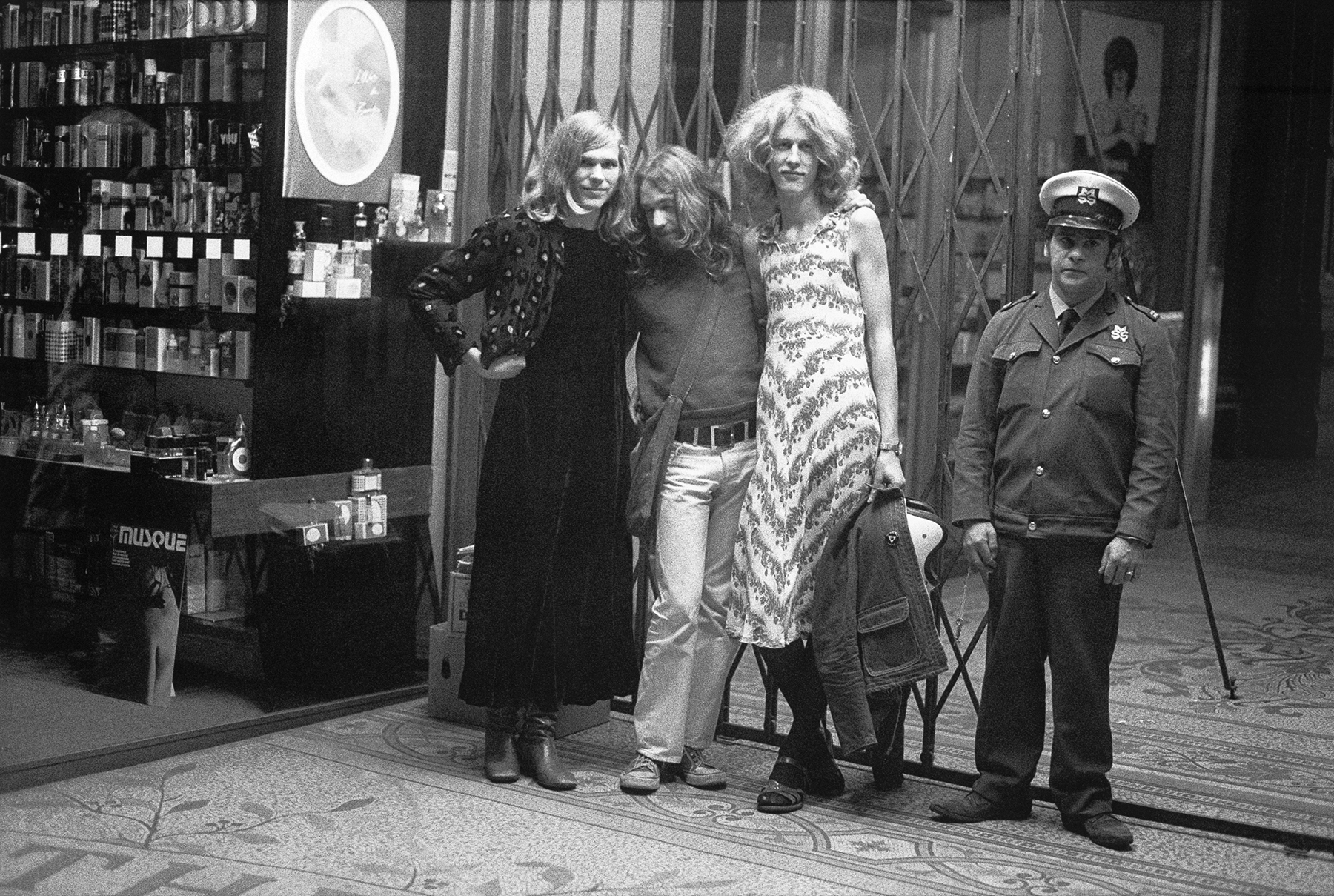
Peter Hujar (American, 1934-1987) 'Bill Rafford and Vince Aletti in Dresses Fire Island' 1971 (installation view)


Peter Hujar (American, 1934-1987)
Bill Rafford and Vince Aletti in Dresses Fire Island (installation view)
1971
Gelatin silver print
The Morgan Library & Museum, achat en 2013 grâce au Charina Endowment Fund
© Peter Hujar Archive, LLC, courtesy Pace/MacGill Gallery, New York and Fraenkel Gallery, San Francisco


Peter Hujar (American, 1934-1987) 'Bill Rafford and Vince Aletti in Dresses Fire Island' 1971


Peter Hujar (American, 1934-1987)
Bill Rafford and Vince Aletti in Dresses Fire Island
1971
Gelatin silver print
The Morgan Library & Museum, achat en 2013 grâce au Charina Endowment Fund
© Peter Hujar Archive, LLC, courtesy Pace/MacGill Gallery, New York and Fraenkel Gallery, San Francisco


Peter Hujar (American, 1934-1987) 'Robyn Brentano (1)' 1975 (installation view)


Peter Hujar (American, 1934-1987)
Robyn Brentano (1) (installation view)
1975
Gelatin silver print
The Morgan Library & Museum, achat en 2013 grâce au Charina Endowment Fund
© Peter Hujar Archive, LLC, courtesy Pace/MacGill Gallery, New York and Fraenkel Gallery, San Francisco


Peter Hujar. 'Robyn Brentano (1)' 1975


Peter Hujar (American, 1934-1987)
Robyn Brentano (1)
1975
Gelatin silver print
The Morgan Library & Museum, achat en 2013 grâce au Charina Endowment Fund
© Peter Hujar Archive, LLC, courtesy Pace/MacGill Gallery, New York and Fraenkel Gallery, San Francisco


Peter Hujar (American, 1934-1987) 'Dog in the Street, Provincetown' 1976 (installation view)


Peter Hujar (American, 1934-1987)
Dog in the Street, Provincetown (installation view)
1976
Gelatin silver print
The Morgan Library & Museum, achat en 2013 grâce au Charina Endowment Fund
© Peter Hujar Archive, LLC, courtesy Pace/MacGill Gallery, New York and Fraenkel Gallery, San Francisco


Peter Hujar (American, 1934-1987) 'Dog in the Street, Provincetown' 1976


Peter Hujar (American, 1934-1987)
Dog in the Street, Provincetown
1976
Gelatin silver print
The Morgan Library & Museum, achat en 2013 grâce au Charina Endowment Fund
© Peter Hujar Archive, LLC, courtesy Pace/MacGill Gallery, New York and Fraenkel Gallery, San Francisco


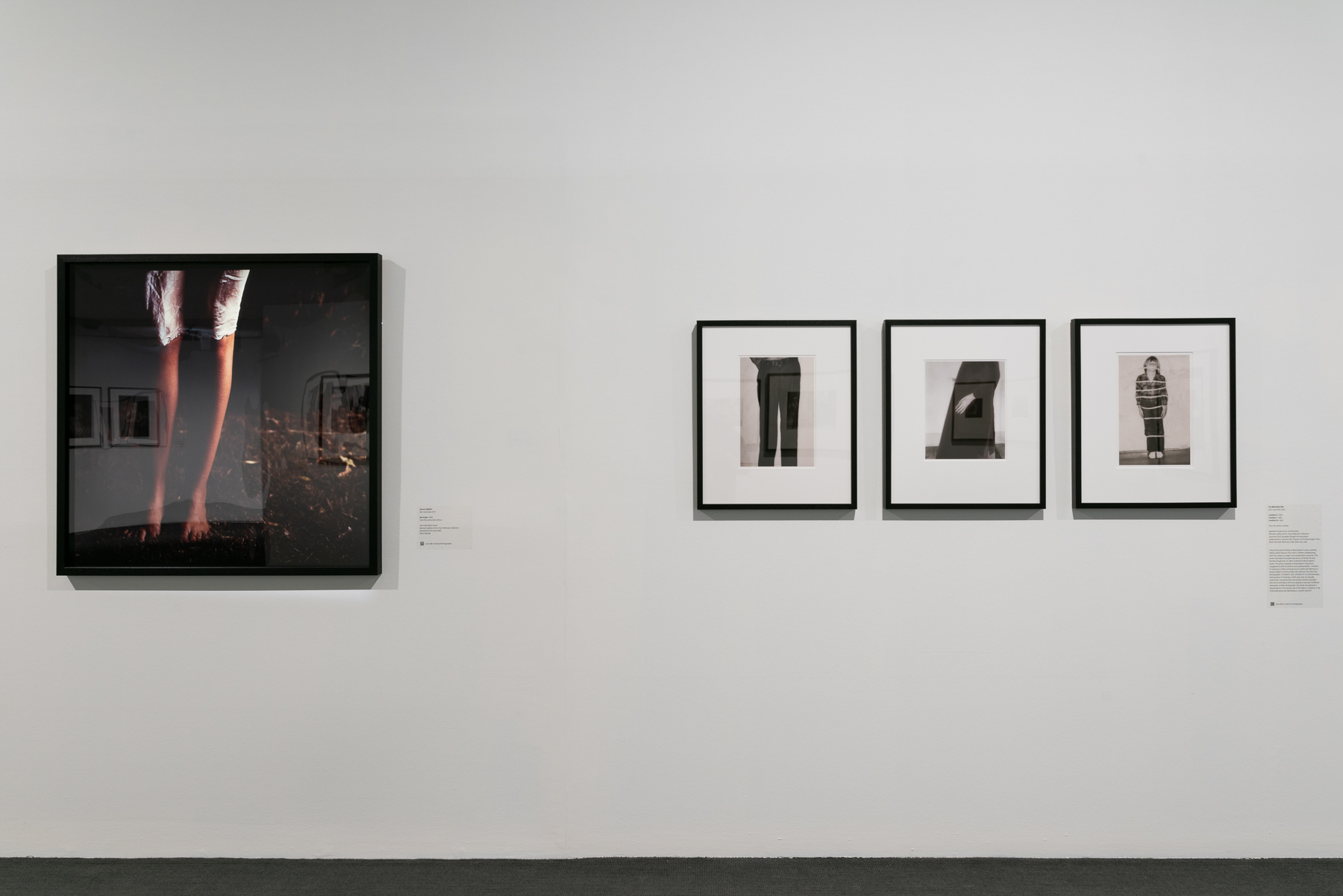
Peter Hujar (American, 1934-1987) 'Greer Lankton's Legs' 1983 (installation view)


Peter Hujar (American, 1934-1987)
Greer Lankton’s Legs (installation view)
1983
Gelatin silver print
The Morgan Library & Museum, achat en 2013 grâce au Charina Endowment Fund
© Peter Hujar Archive, LLC, courtesy Pace/MacGill Gallery, New York and Fraenkel Gallery, San Francisco


Peter Hujar (American, 1934-1987) 'Greer Lankton's Legs' 1983


Peter Hujar (American, 1934-1987)
Greer Lankton’s Legs
1983
Gelatin silver print
The Morgan Library & Museum, achat en 2013 grâce au Charina Endowment Fund
© Peter Hujar Archive, LLC, courtesy Pace/MacGill Gallery, New York and Fraenkel Gallery, San Francisco


Peter Hujar (American, 1934-1987) 'Paul Thek' 1973 (installation view)


Peter Hujar (American, 1934-1987)
Paul Thek (installation view)
1973
Gelatin silver print
The Morgan Library & Museum, achat en 2013 grâce au Charina Endowment Fund
© Peter Hujar Archive, LLC, courtesy Pace/MacGill Gallery, New York and Fraenkel Gallery, San Francisco


Peter Hujar (American, 1934-1987) 'Paul Thek' 1973


Peter Hujar (American, 1934-1987)
Paul Thek
1973
Gelatin silver print
The Morgan Library & Museum, achat en 2013 grâce au Charina Endowment Fund
© Peter Hujar Archive, LLC, courtesy Pace/MacGill Gallery, New York and Fraenkel Gallery, San Francisco


Peter Hujar (American, 1934-1987) 'Christopher Street Pier #4' 1976 (installation view)


Peter Hujar (American, 1934-1987)
Christopher Street Pier #4 (installation view)
1976
Gelatin silver print
The Morgan Library & Museum, achat en 2013 grâce au Charina Endowment Fund
© Peter Hujar Archive, LLC, courtesy Pace/MacGill Gallery, New York and Fraenkel Gallery, San Francisco


Peter Hujar (American, 1934-1987) 'Bruce de Ste. Croix' 1976 (installation view)


Peter Hujar (American, 1934-1987)
Bruce de Ste. Croix (installation view)
1976
Gelatin silver print
The Morgan Library & Museum, achat en 2013 grâce au Charina Endowment Fund
© Peter Hujar Archive, LLC, courtesy Pace/MacGill Gallery, New York and Fraenkel Gallery, San Francisco


Peter Hujar (American, 1934-1987) 'Bruce de Ste. Croix' 1976


Peter Hujar (American, 1934-1987)
Bruce de Ste. Croix
1976
Gelatin silver print
The Morgan Library & Museum, achat en 2013 grâce au Charina Endowment Fund
© Peter Hujar Archive, LLC, courtesy Pace/MacGill Gallery, New York and Fraenkel Gallery, San Francisco


Jeu de Paume
1, Place de la Concorde
75008 Paris
métro Concorde
Phone: 01 47 03 12 50

Opening hours:
Tuesday: 11.00 – 21.00
Wednesday – Sunday: 11.00 – 19.00
Closed Monday

Jeu de Paume website

LIKE ART BLART ON FACEBOOK

Back to top

Exhibition: ‘In Focus: The Camera’ at the J. Paul Getty Museum, Getty Center, Los Angeles

Exhibition dates: 30th July, 2019 – 5th January, 2020

Curator: Paul Martineau


Lisette Model (American born Austria, 1901-1983) 'Weegee, New York' 1945 from the exhibition 'In Focus: The Camera' at the J. Paul Getty Museum, Getty Center, Los Angeles, July 2019 - Jan 2020


Lisette Model (American born Austria, 1901-1983)
Weegee, New York
1945
Gelatin silver print
34.1 × 27cm (13 7/16 × 10 5/8 in.)
The J. Paul Getty Museum, Los Angeles
© Estate of Lisette Model, courtesy Baudoin Lebon/Keitelman


Apologies. A filler posting from me as I am sick at the moment. Although I love the design of the old cameras – when viewed from the outside, through the media images, the exhibition seems to also be a bit of a filler from the Getty.

Where are the interesting questions?

How can a box of metal and glass, a machine, capture onto film and pixels, something that so transcends time and space that, at its best, it preserves the spirit of our existence, the condition of our becoming?

How does the camera impart its own reality, and how, through looking, do photographers understand how different cameras impart different realities? How do we intimately see what the camera sees, without looking through the machine?

How have digital cameras altered how we use the camera and how we see the world, moving us from a viewfinder and vanishing point, to looking at a flat screen on the back of the camera?

How does the physicality of the camera, from large format to iPhone, affect how we hold the machine, how we interact with it’s ontology and enact its rationale – in particular perspectives of abstraction, becoming, existence, reality, as well as the basic categories of being and their relations: Substance, Relation, Quantity and Quality; Place, Time, Situation, Condition, Action, Passion?

Dr Marcus Bunyan


Many thankx to the J. Paul Getty Museum for allowing me to publish the photographs in the posting. Please click on the photographs for a larger version of the image.


Once a simple wooden box with a primitive lens and cap for controlling light, the modern camera has undergone enormous change since its invention in the early nineteenth-century. Flexible film stocks, built-in light meters, motor drives, and megapixels are a few of the advancements that have transformed the way this ingenious device captures and preserves a moment in time. This display explores the evolution of the camera through the Museum’s collection of historic cameras and photographs.


Unknown maker (European) 'Camera Obscura' c. 1750-1800 from the exhibition 'In Focus: The Camera' at the J. Paul Getty Museum, Getty Center, Los Angeles, July 2019 - Jan 2020


Unknown maker (European)
Camera Obscura
c. 1750-1800
Wood, brass, and glass
Object: H: 7.9 × W: 10.8 × D: 23.5cm (3 1/8 × 4 1/4 × 9 1/4 in.)
Object (Extended): H: 31.1cm (12 1/4 in.)
Lid extended: H: 15.9cm (6 1/4 in.)
The J. Paul Getty Museum, Los Angeles, Gift of Gloria and Stanley Fishfader


Unknown maker (French) 'Daguerreotype/Wet-plate Camera' c. 1851 from the exhibition 'In Focus: The Camera' at the J. Paul Getty Museum, Getty Center, Los Angeles, July 2019 - Jan 2020


Unknown maker (French)
Daguerreotype/Wet-plate Camera
c. 1851
Wood, brass, and glass
Object: H: 18.1 × W: 21.6 × D: 31.1cm (7 1/8 × 8 1/2 × 12 1/4 in.)
Lens: H: 9.2 × Diam: 7.3cm (3 5/8 × 2 7/8 in.)
The J. Paul Getty Museum, Los Angeles, Gift of Gloria and Stanley Fishfader


Unknown maker (British) 'Camera box' 1860


Unknown maker (British)
Camera box
1860
Wood, glass, metal
The J. Paul Getty Museum, Los Angeles, Gift of Gloria and Stanley Fishfader


August Semmendinger (American, 1820-1885) 'Mammoth Plate Wet-Collodion Camera' 1874-1885


August Semmendinger (American, 1820-1885)
Mammoth Plate Wet-Collodion Camera
1874-1885
wood, metal, fabric, and glass
The J. Paul Getty Museum, gift in memory of Beaumont Newhall


August Semmendinger (1820 – August 6, 1885) was a manufacturer of photographic apparatuses and the inventor of the Excelsior Wet Plate Camera. Semmendinger first made his cameras in New York City. The second factory where he built his cameras was located in Fort Lee, New Jersey.


Kodak (American) 'The Kodak' 1888


Kodak (American, founded 1888)
The Kodak
1888
Wood, leather, brass, and glass
Object: H: 9.5 × W: 8.3 × D: 17.1cm (3 3/4 × 3 1/4 × 6 3/4 in.)
The J. Paul Getty Museum, Los Angeles, Gift of Gloria and Stanley Fishfader


The very first Kodak camera.


John F. Collins (American, 1888-1990, active 1904-1974) '[Kodak Ektra Camera]' c. 1930


John F. Collins (American, 1888-1990, active 1904-1974)
[Kodak Ektra Camera]
c. 1930
Gelatin silver print
38.4 × 48.1cm (15 1/8 × 18 15/16 in.)
Gift of Nina and Leo Pircher


Eastman Kodak Company (American, founded 1888) 'Kodak Bantam Special' 1936


Eastman Kodak Company (American, founded 1888)
Kodak Bantam Special
1936
Metal, enamel, and glass
The J. Paul Getty Museum, gift of Gloria and Stanley Fishfader


Eastman Kodak Company (American, founded 1888) 'World War II "Matchbox" Spy Camera' 1944


Eastman Kodak Company (American, founded 1888)
World War II “Matchbox” Spy Camera
1944
Metal and glass
The J. Paul Getty Museum, gift of Gloria and Stanley Fishfader


Polaroid Corporation (American, founded 1937) 'Polaroid Land Camera Model 95' c. 1948-1949


Polaroid Corporation (American, founded 1937)
Polaroid Land Camera Model 95
c. 1948-1949
Leather and steel Object (Closed): L: 24.1 × W: 11.4 × D: 5.7cm (9 1/2 × 4 1/2 × 2 1/4 in.)
Case: H: 19.1 × W: 26.7 × D: 7cm (7 1/2 × 10 1/2 × 2 3/4 in.)
The J. Paul Getty Museum, Los Angeles, Gift of Gloria and Stanley Fishfader


Steineck Kamerawerk (Tutzing, West Germany) 'Steineck ABC Wristwatch Camera' 1949


Steineck Kamerawerk (Tutzing, West Germany)
Steineck ABC Wristwatch Camera
1949
Metal, enamel, leather, and glass


Made in Germany by Steineck Kamerawerk. Subminiature camera for discs of film 25mm diameter, 8 exposures 7mm diameter. Steinhetl VI lens F:12.5mm f/2.8 fixed aperture, coated cobir enamel. Two-speed rotary shutter. Refelcting finder – concave mirror and ball and pin sight. Wristwatch shaped. Designed in Germany by Dr R Steineck.

Looks like a large wristwatch. Came with a 12.5mm (f2.5) fixed-focus lens. Single shutter speed. Eight round exposures with a 5.5 mm diameter are produced on a round disk of film 24mm in diameter. Disks can be cut from standard 35mm film. A cassette, with its own exposure counter, is used to hold the film. To load the camera, the cassette is pressed lightly into place in the opening in the back of the camera, and the knurled rim of the cassette is turned firmly to the right until it stops and the red dots on the camera body and cassette are aligned. Film advance is automatic – the film is readied for the next frame immediately after an exposure is made. The lens is a 12.5m f/2.5, made by Steinheil. It is fixed-focus so that everything from 4.25 ft. to infinity is sharp. The lens has a two-point aperture setting: one for bright light (red dot), the other for dim light (blue dot), set by a control knob on the face of the camera. The metal focal-plane shutter has only one speed, 1/125 sec. In making an exposure, the camera is held between the index finger and thumb, the shutter release being depressed by the thumb while the index finger serves to steady the camera by exerting a counter pressure. No separate action is required to advance the film or cock the shutter; as soon as the exposure has been made, the camera is ready to take the next picture. The A-B-C has two parallax-corrected finders: an optical hollow mirror viewfinder, which permits sighting from above when the camera, worn on the wrist, is held in picture-taking position. The other, a direct-vision viewfinder, is used at eye level, requiring that the camera be removed from the wrist. When the direct-vision finder is used, you sight through the hole in the back (cassette) with the camera close to the eye; the camera is held by the straps, both thumbs steadying the body, and the shutter release is operated by the index finger. The original accessories included filters, close-up lenses, and even a special enlarger. Steineck planned an M-sync flash for a future A-B-C, as well as a built-in filter carousel (to be put in front of the aperture control), and even a tripod-mount accessory that fits through the eye-level finder!

Text from Ebay website


Hasselblad AB (Swedish, founded 1841) 'Hasselblad wide angle camera' 1954-1959


Hasselblad AB (Swedish, founded 1841)
Hasselblad wide angle camera
1954-1959
Metal, artificial leather, glass
Object: 13 × 11 × 15cm (5 1/8 × 4 5/16 × 5 7/8 in.)
The J. Paul Getty Museum, Los Angeles, Gift of Gloria and Stanley Fishfader


Nippon Kogaku K.K. (Japanese, founded 1917) 'Nikon "Reporter" large load 35mm camera' after 1959


Nippon Kogaku K.K. (Japanese, founded 1917)
Nikon “Reporter” large load 35mm camera
after 1959
Plastic, metal, and imitation leather-covered body
The J. Paul Getty Museum, Los Angeles, Gift of Gloria and Stanley Fishfader


Canon Inc. (Japanese, founded 1937) 'Canon S 35mm camera with rare F2 lens' 1946


Canon Inc. (Japanese, founded 1937)
Canon S 35mm camera with rare F2 lens
1946
Metal, glass
Object: 8 × 14.5 × 10cm (3 1/8 × 5 11/16 × 3 15/16 in.)
The J. Paul Getty Museum, Los Angeles, Gift of Gloria and Stanley Fishfader


Introduced in 1938, the Canon S is the younger sibling of the Hansa Canon. It was developed to compete in quality with the German Leica II, but at a price more accessible to the Japanese public.


Polaroid Corporation (American, founded 1937) 'Polaroid SX-70' 1972


Polaroid Corporation (American, founded 1937)
Polaroid SX-70
1972
Metal, plastic, leather, and glass
Private collection


Exhibition includes a selection of rare cameras from the 19th century to present

The camera, once a simple wooden box with a primitive lens and cap for controlling light, has undergone enormous changes since its invention, eventually becoming a tool that is in most people’s back pockets. In Focus: The Camera, on view July 30, 2019 – January 5, 2020 at the J. Paul Getty Museum, Getty Center, explores the evolution of this ingenious device through a selection of historic cameras and photographs.

During the early 19th, the three essential components of photography – a dark chamber, a light-sensitive substrate, and a method of fixing the image – were used in different ways in the experiments of Nicéphore Niépce (French, 1765-1833), Louis-Jacques-Mandé Daguerre (French, 1787-1851), and William Henry Fox Talbot (British, 1800-1877). In subsequent decades, advancements such as flexible film stocks, built-in light meters, motor drives, and megapixels transformed the way the camera captures and preserves a moment in time.

On view in the exhibition will be a number of cameras manufactured in the 19th century to present day, including the simple camera obscura, a daguerreotype camera, a stereo camera, an early roll-film camera, a large portable camera, a miniature spy camera, an early colour camera, and the first digital camera marketed to the general public. The exhibition will include text that explains how photographs are created using each of these cameras and techniques. Cameras produced by well-known brands such as Kodak, Leica, Nikon, Hasselblad, and Canon will be displayed.

The gallery will also include a number of portraits, self-portraits, and images of artists at work by famed photographers such as Imogen Cunningham (American, 1883-1976), Dorothea Lange (American, 1895-1965), Lisette Model (American, born Austria, 1901-1983), Helmut Newton (German-Australian, 1920-2004), Edward Steichen (American, born Luxembourg, 1879-1973), Andy Warhol (American, 1928-1987), and Edward Weston (American, 1886-1958). These images remind the viewer of the inextricable relationship between the camera and the artist.

In Focus: The Camera is curated by Paul Martineau, associate curator of photographs for the J. Paul Getty Museum.

Text from the J. Paul Getty Museum website [Online] Cited 21/12/2019


Capt. Horatio Ross (British, 1801-1886) '[Self-portrait preparing a Collodion plate]' 1856-1859


Capt. Horatio Ross (British, 1801-1886)
[Self-portrait preparing a Collodion plate]
1856-1859
Albumen silver print
Image: 20 × 16.2cm (7 7/8 × 6 3/8 in.)
The J. Paul Getty Museum, Los Angeles


Underwood & Underwood (American, 1881-1940s) 'Photographing New York City - on a slender support 18 stories above pavement of Fifth Avenue' 1905


Underwood & Underwood (American, 1881-1940s)
Photographing New York City – on a slender support 18 stories above pavement of Fifth Avenue
1905
Gelatin silver print
Image (left): 8 × 7.6cm (3 1/8 × 3 in.)
Image (right): 8 × 7.6cm (3 1/8 × 3 in.)
Mount: 8.9 × 17.8cm (3 1/2 × 7 in.)
The J. Paul Getty Museum, Los Angeles
 

Edward Weston (American, 1886-1958) 'Self Portrait with Camera' 1908


Edward Weston (American, 1886-1958)
Self Portrait with Camera
1908
Platinum print
Image: 14.6 × 8.6cm (5 3/4 × 3 3/8 in.)
The J. Paul Getty Museum, Los Angeles
© 1981 Arizona Board of Regents, Center for Creative Photography


George Watson (American, 1892-1977) '[Camera on 12-foot Tripod]' 1920s


George Watson (American, 1892-1977)
[Camera on 12-foot Tripod]
1920s
Gelatin silver print
Image: 11.7 × 9.1cm (4 5/8 × 3 9/16 in.)
Sheet: 12.2 × 9.8cm (4 13/16 × 3 7/8 in.)
The J. Paul Getty Museum, Los Angeles
© The Watson Family Photo Collection


Man Ray (American, 1890-1976) '[Self-Portrait with Camera]' 1932


Man Ray (American, 1890-1976)
[Self-Portrait with Camera]
1932
Gelatin silver print
Image: 29.2 × 22.9cm (11 1/2 × 9 in.)
The J. Paul Getty Museum, Los Angeles
© Man Ray Trust ARS-ADAGP


Man Ray showed himself in profile in this self-portrait, intently adjusting the focal range on his view camera as if for a portrait session. He directs the camera in the photograph at the audience, while the camera taking his picture remains invisible. The touch of Man Ray’s hand on the focusing ring serves as a reminder of the human artistry required to make photographs, a departure from his more accidental approach to creating works in other media. Man Ray solarised the print, using a process indelibly associated with him.

Text from the J. Paul Getty Museum website


Alma Lavenson (American, 1897-1989) '[Self-Portrait]' 1932


Alma Lavenson (American, 1897-1989)
[Self-Portrait]
1932
Gelatin silver print
20.3 × 25.2cm (8 × 9 15/16 in.)
The J. Paul Getty Museum, Los Angeles
© Alma Lavenson Associates


Employing the sharp focus and close vantage point that were the hallmarks of Group f/64, with which she was associated, Alma R. Lavenson presented her camera as a vital extension of herself as a photographic artist. Her hands delicately and reverently frame the lens, positioning it as her centre and source of inspiration.

Text from the J. Paul Getty Museum website


Unknown photographer (American) '[Portrait of Dorothea Lange]' 1937


Unknown photographer (American)
[Portrait of Dorothea Lange]
1937
Gelatin silver print
13.7 × 16.7cm (5 3/8 × 6 9/16 in.)
The J. Paul Getty Museum, Los Angeles
Gift of the Dixon Family


Walker Evans (1903-1975) 'Resort Photographer at Work' 1941


Walker Evans (1903-1975)
Resort Photographer at Work
Negative 1941; print later
Gelatin silver print
15.9 × 22.4cm (6 1/4 × 8 13/16 in.)
The J. Paul Getty Museum, Los Angeles


Weegee (Arthur Fellig) (American, born Austria, 1899-1968) 'Photographer at a Fire' 1940-1945


Weegee (Arthur Fellig) (American born Austria, 1899-1968)
Photographer at a Fire
1940-1945
Gelatin silver print
Image: 34.1 × 27.1cm (13 7/16 × 10 11/16 in.)
The J. Paul Getty Museum, Los Angeles
© International Center of Photography


Andreas Feininger (American, born France, 1906 - 1999) 'The Photojournalist' Negative 1951; print later


Andreas Feininger (American born France, 1906-1999)
The Photojournalist
Negative 1951; print later
Gelatin silver print
Image: 32.3 × 26.3cm (12 11/16 × 10 3/8 in.)
The J. Paul Getty Museum, Los Angeles, Gift of Daniel Greenberg and Susan Steinhauser
© Estate of Gertrud E. Feininger


Imogen Cunningham (American, 1883-1976) 'Self-Portrait with Grandchildren in a Funhouse' 1955


Imogen Cunningham (American, 1883-1976)
Self-Portrait with Grandchildren in a Funhouse
1955
Gelatin silver print
The J. Paul Getty Museum. © Imogen Cunningham Trust


Anthony Friedkin (American, b. 1949) 'Extras with Film Cameras' 1996


Anthony Friedkin (American, b. 1949)
Extras with Film Cameras
1996
Gelatin silver print
Image: 16.3 × 24.3cm (6 7/16 × 9 9/16 in.)
Sheet: 20.1 × 25.2cm (7 15/16 × 9 15/16 in.)
The J. Paul Getty Museum, Los Angeles, Gift of Sue and Albert Dorskind
© Anthony Friedkin


The J. Paul Getty Museum
1200 Getty Center Drive
Los Angeles, California 90049

Opening hours:
Daily 10am – 5.30pm
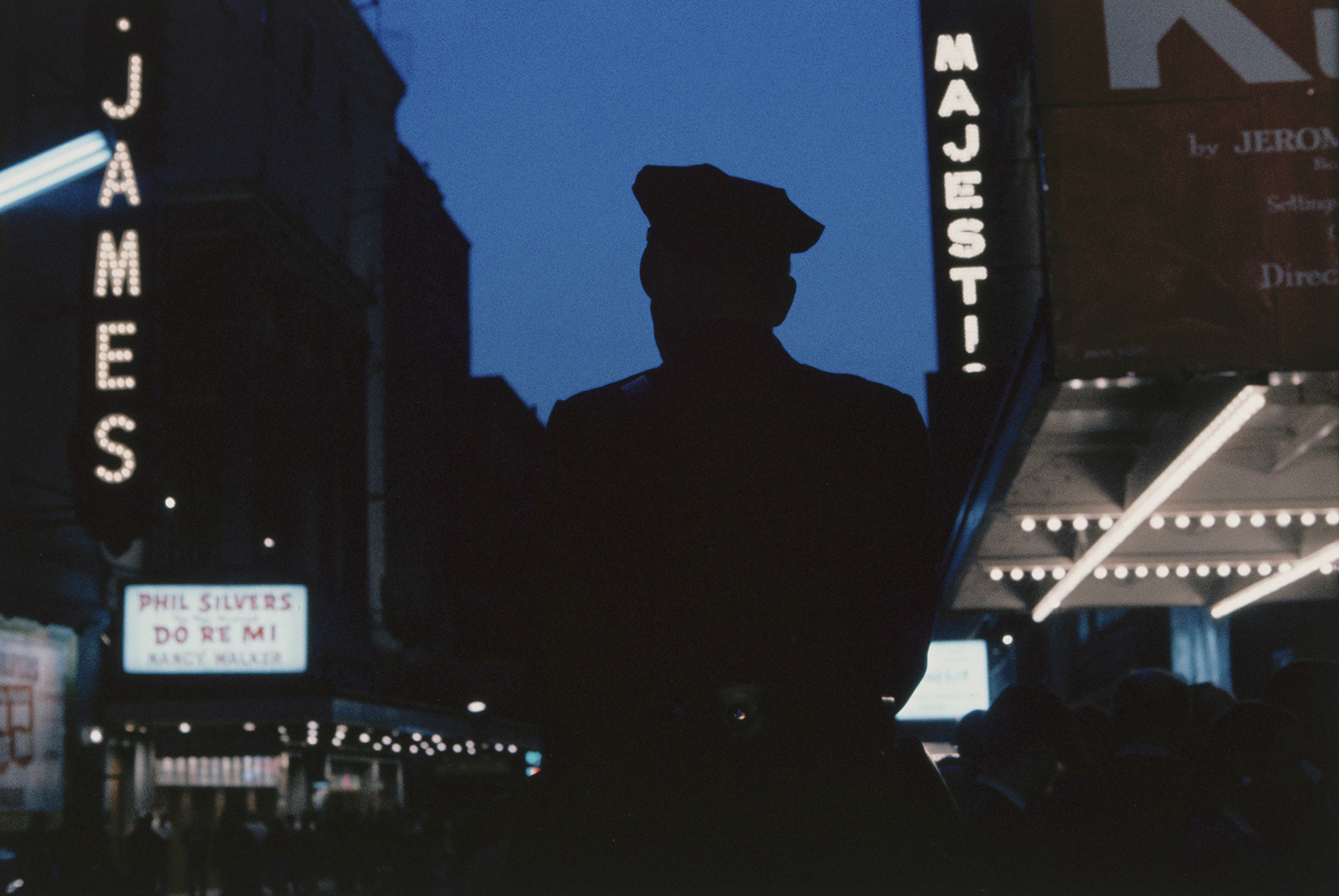
The J. Paul Getty Museum website

LIKE ART BLACK ON FACEBOOK

Back to top

Video: ‘Žít svůj život’ (Living Your Life) (1963)

December 2019


Žít svůj život – dokument (1963)


The master – Bach, Rembrandt, Sudek – pure poetry.

Many thankx to Alfonso Melendez for alerting me to this video. More photographs can be found on the Josef Sudek, el hombre tranquilo Facebook page.


LIKE ART BLACK ON FACEBOOK

Back to top

European photographic research tour: Josef Sudek archive at u(p)m The Museum of Decorative Arts, Prague

Visit: Tuesday 10th September 2019, published December 2019


Josef Sudek (Czech, 1896-1976) 'Střelecky Ostrov' 1950s-1960s


Josef Sudek (Czech, 1896-1976)
Střelecky Ostrov, Prague (Střelecky Island with Legion Bridge and Vltava river, Prague)
1950s-1960s
Gelatin silver print


Spirit has no boundaries

On my European photographic research tour I was invited to visit The Museum of Decorative Arts at their collection headquarters outside Prague for a private viewing of vintage prints of the Czech master photographer Josef Sudek. What a privilege.

My very great thankx to Jan Mlčoch, photography collections curator at u(p)m Prague, for his knowledge, humour and generosity of time and spirit in showing me approx. 40 vintage Josef Sudek prints and 6 rare books. Jan couldn’t believe of an interest in Sudek all the way from Australia!

All vintage photographs were donated by the family to the museum.

1/ Firstly, I was shown 6 rare books of Josef Sudek photographs. The most notable was the book “Praha panoramatická”, an edition of 300 published by SNK LHU in 1959. With a cloth cover and a star design on the front, this book featured 284 gravure panoramic plates. The photos start at the centre of Prague and then work out in a spiral in terms of location, to the countryside looking back at the city. Several double pages featured panorama close up of a house or building on the left hand side and a more distant shot of the same building on the right hand side. Close / far. The images, the tonality and the vision of this man was incredible

2/ Secondly, I was shown vintage contact prints from 1950s-1960s ranging in size from 4 x 5″ negatives (printed on 8 x 10″ paper) up to at least 12 x 16″

3/ All contact prints centred on single weight, some semi matt others slight gloss papers, with the rest of the sheet EXPOSED TO BLACK. This was Sudek’s preferred method of printing – one negative / exposure per piece of paper, not cutting the sheet ever

4/ NO TRUE BLACK AND NO BRIGHT WHITE. Tones ranged from zone 2 to maximum zone 7.5-8. Most unusual – the grey tonality of the prints that almost blended completely across the zone spectrum from 2-8. No hard delineation. On this viewing all reproductions have way too much contrast (including these iPhone images!)

5/ The highlight was 3 originally mounted pigment photographs by Sudek in 1953 (see two below). Photos sandwiched between 2 panes of glass, mounted on different coloured pieces of paper (pink, another almost tissue paper) with pigment prints. Edges of glass sealed with lead in one example. Reminiscent of Stieglitz’s use of coloured mount board for his framing. The prints were so “inky” – “of such extraordinary depth and warmth”


On many occasions I was close to tears the prints were so moving. As a friend of mine Randall Tosh observed of his prints, “his take on prints is so different from the Weston / Adams mid-century canon. I don’t always think they work, but when they do, they are otherworldly.” From what I observed on this viewing, they worked incredibly well.

This was a sublime experience, one of the photographic highlights of my life. Sudek’s magical work has always struck me as a form of psychotherapy and so it proved… photography as a form of healing after his injuries during the First World War.

Spirit has no boundaries.

Dr Marcus Bunyan


Many thankx to Jan Mlčoch for allowing me to publish the photographs in the posting and to Alfonso Melendez and the Josef Sudek public Facebook group for their brains trust, for finding out the location and date of some of the images featured here. Please click on the photographs for a larger version of the image.


“There is no approach, no recipe. Each thing has to be done differently.”


Josef Sudek


Josef Sudek (Czech, 1896-1976) 'Praha panoramatická' book cover, SNK LHU, 1959


Josef Sudek (Czech, 1896-1976) Praha panoramatická book cover, SNK LHU, 1959


“Praha Panoramaticka (Prague In Panoramic Photographs)” published by Statni Nakladatelstvi, Prague in 1959. Containing 284 striking black-and-white panoramic photogravures of Prague and the surrounding countryside, Sudek masterfully captures the city that he loved and shows why he earned the nickname, “The Poet of Prague”. In The Photobook: A History, Martin Parr and Gerry Badger provide an excellent critique, “Sudek is a photographer whose body of work suggests that photography was as necessary to him as breathing, Josef Sudek claimed the city of Prague and his surroundings as comprehensively as Eugene Atget claimed Paris. His masterpiece is one of the most singular photobooks ever made, Praha panoramaticka (Prague Panorama). To create this wealth of memorable images, Sudek used an antique 1894 Kodak Panorama camera with a spring-drive lens that produced a negative of approximately 4 by 12 inches. Of all his books, this one sums up his love of Prague. The panoramic camera is a strong unifying element in the imagery, but so is Sudek’s democratic eye, which disregards nothing. His feeling for light, weather, and space in combination has never been surpassed. Praha panoramaticka is a veritable encyclopaedia of how to plot, construct and unify a panoramic photograph. And if this were not enough, Sudek even pulls off a near impossible trick at the end of the book: good vertical panoramas”.

Text from the Abebooks website [Online] Cited 09/11/2019


Josef Sudek (Czech, 1896-1976) 'Praha panoramatická' book page, SNK LHU, 1959

Josef Sudek (Czech, 1896-1976) 'Praha panoramatická' book page, SNK LHU, 1959

Josef Sudek (Czech, 1896-1976) 'Praha panoramatická' book page, SNK LHU, 1959


Josef Sudek. Praha panoramatická book pages, SNK LHU, 1959


Josef Sudek (Czech, 1896-1976) 'Střelecky Ostrov' 1950s-1960s


Josef Sudek (Czech, 1896-1976)
Both Střelecky Ostrov, Prague (Střelecky Island, Prague)
1950s-1960s
Gelatin silver print


Josef Sudek (Czech, 1896-1976) 'Střelecky Ostrov' 1950s-1960s


Josef Sudek (Czech, 1896-1976)
Střelecky Ostrov, Prague (Střelecky Island, Prague)
1950s-1960s
Gelatin silver print


Josef Sudek (Czech, 1896-1976) 'Střelecky Ostrov' 1950s-1960s


Josef Sudek (Czech, 1896-1976)
Both Střelecky Ostrov, Prague (Střelecky Island, Prague)
1950s-1960s
Gelatin silver print


Josef Sudek (Czech, 1896-1976) 'Střelecky Ostrov' 1950s-1960s


Josef Sudek (Czech, 1896-1976)
Střelecky Ostrov, Prague (Střelecky Island, Prague)
1950s-1960s
Gelatin silver print


Josef Sudek (Czech, 1896-1976) 'Střelecky Ostrov' (Střelecky Island, Prague) with a statue of St John of Nepomuk? 1950s-1960s


Josef Sudek (Czech, 1896-1976)
Střelecky Ostrov, Prague (Střelecky Island, Prague) with a statue of St John of Nepomuk?
1950s-1960s
Gelatin silver print


Saint John of Nepomuk (or John Nepomucene) (Czech: Jan Nepomucký; German: Johannes Nepomuk; Latin: Ioannes Nepomucenus) (c. 1345 – 20 March 1393) is the saint of Bohemia (Czech Republic) who was drowned in the Vltava river at the behest of Wenceslaus, King of the Romans and King of Bohemia. Later accounts state that he was the confessor of the queen of Bohemia and refused to divulge the secrets of the confessional. On the basis of this account, John of Nepomuk is considered the first martyr of the Seal of the Confessional, a patron against calumnies and, because of the manner of his death, a protector from floods and drowning.

Text from the Wikipedia website


Josef Sudek (Czech, 1896-1976) 'The Window of My Studio, Prague' 1944-1953


Josef Sudek (Czech, 1896-1976)
The Window of My Studio, Prague
1944-1953
Gelatin silver print
© The Museum of Decorative Arts, Prague


Josef Sudek (Czech, 1896-1976) 'The Window of My Studio, Prague' 1944-1953


Josef Sudek (Czech, 1896-1976)
The Window of My Studio, Prague
1944-1953
Gelatin silver print
© The Museum of Decorative Arts, Prague


Josef Sudek (Czech, 1896-1976) 'Jaro v me zahradce' (Spring in my Garden) 1953


Josef Sudek (Czech, 1896-1976)
Jaro v me zahrádce (Spring in my Garden)
1953
Pigment print
© The Museum of Decorative Arts, Prague


Josef Sudek (Czech, 1896-1976) 'Jaro v me zahradce' (Spring in my Garden) 1953


Josef Sudek (Czech, 1896-1976)
Jaro v me zahrádce (Spring in my Garden)
1953
Pigment print
© The Museum of Decorative Arts, Prague


Josef Sudek (Czech, 1896-1976) 'Jaro v me zahradce' (Spring in my Garden) 1953 (detail)


Josef Sudek (Czech, 1896-1976)
Jaro v me zahrádce (Spring in my Garden) (detail)
1953
Pigment print
© The Museum of Decorative Arts, Prague


Josef Sudek (Czech, 1896-1976) 'Untitled' 1953


Josef Sudek (Czech, 1896-1976)
Untitled
1953
Pigment print
© The Museum of Decorative Arts, Prague


Josef Sudek (Czech, 1896-1976) 'Untitled' 1953


Josef Sudek (Czech, 1896-1976)
Untitled
1953
Pigment print
© The Museum of Decorative Arts, Prague


Josef Sudek (Czech, 1896-1976) 'Untitled' 1953 (detail)


Josef Sudek (Czech, 1896-1976)
Untitled (detail)
1953
Pigment print
© The Museum of Decorative Arts, Prague


Josef Sudek (Czech, 1896-1976) 'Untitled' 1950-1954


Plate 38 Untitled 1950-1954 from the book Joseph Sudek Still Lifes, Torst, 2008


From the mid-1920s until his death in 1976, Czech photographer Joseph Sudek shot Gothic and Baroque architecture, street scenes and still lifes – usually leaving the frame free of people and capturing a poetic and highly individualistic glimpse of Prague. The still lifes are the best known aspect of his oeuvre; indeed, his graceful depictions of drinking-glasses and eggs are familiar to those who don’t necessarily even know his name. Acceding to his reclusive nature, Sudek began The Window of My Studio series in the 1940s. It allowed him to capture street scenes without going outside and helped him discover a particular fondness for how glass refracts light. The still lifes emerged from the informal arrangements Sudek would make on his windowsill, and occupied him for a number of years. Depicting a range of quotidian objects with a marked artfulness – some were made in homage to favourite painters like Caravaggio – the series deserves a deeper look. This volume is the first in-depth study of Sudek’s still lifes and also explores his creative use of carbon printing – a pigment process on rag paper not often used photographically – which lent so many of his images such extraordinary depth and warmth.

Text from the Amazon website


Josef Sudek (Czech, 1896-1976) 'Labyrinth on My Table' 1967


Josef Sudek (Czech, 1896-1976)
Labyrinth on My Table
1967
Gelatin silver print
© The Museum of Decorative Arts, Prague


Josef Sudek (Czech, 1896-1976) 'Labyrinth on My Table' 1967


Plate 22 Labyrinth on My Table 1967 from the book by Daniela Hodrová and Antonín Dufek Joseph Sudek Labyrinths, Torst, 2013


Like the previous volumes The Window of My Studio and Still Lifes, this new Josef Sudek monograph collects a series of photographs made within the confines of the Czech photographer’s workspace. Sudek’s studio famously verged on installation art, as the poet Jaroslav Seifert recalled: “Breton’s surrealism would have come into its own there. A drawing by Jan Zrzavy lay rolled up by a bottle of nitric acid, which stood on a plate where there was a crust of bread and a piece of smoked meat with a bite taken out of it. And above this hung the wing of a Baroque angel with Sudek’s beret hanging from it… This disorder was so picturesque, so immensely rich, that it almost came close to being a strange but highly subtle work of art.” Gathered here in all their surreal beauty, the Labyrinths series depicts multilayered assemblages of objects in endlessly permutated combinations.

Text from Google Books website


Folders of vintage Josef Sudek prints at the Central Depository UPM Stodůlky


Folders of vintage Josef Sudek prints at the Central Depository UPM Stodůlky


u(p)m The Museum of Decorative Arts
17. listopadu Street No.2
110 00 Prague 1
Phone: +420 778 543 900

u(p)m The Museum of Decorative Arts in Prague website

LIKE ART BLACK ON FACEBOOK

Back to top

Vale Andrew Follows: A life in focus. ‘Elements Of Focus’ exhibition at Magnet Gallery, Docklands, Melbourne

Exhibition dates: 7th – 21st December, 2019


Andrew Follows (Australian, d. 2019) 'Elements of Focus' 2019


Andrew Follows (Australian, d. 2019)
Elements of Focus
2019
Photos used: 12


Vale Andrew Follows: A life in focus

It is with great sadness that I found out today that artist Andrew Follows passed away yesterday, December 11th, 2019.

If anybody could say that he lived and breathed photography it was Andrew. It was his passion, his reason for being. And he was good at it, very good at it.

With his Retinitis Pigmentosa (RP) – a condition which rendered one eye completely blind with ever diminishing tunnel vision in the other – he saw the world like nobody else could. Not because of this, but because he was Andrew, he was just born to be the great enabler. There was no dis/abled with Andrew. He got on with life. He got on with being an artist, being the best he could possibly be with a passion and enthusiasm which I was totally in awe of.

I still remember our trips together to photograph for his solo exhibition Density at Anita Traverso Gallery in 2013 with his beloved guide dog Eamon sitting in the footwell of my car. I mentored Andrew for a year before the exhibition and believe me, he knew what he wanted and how to get the shot. I drove him to the locations we had chosen and helped him set up the camera and tripod. He opened the lens and looked at the screen on the back of the digital camera… and saw the world! He saw things that were only blurs to him before on the screen of that digital camera. That line of light that hovers above the judges chair in the courtroom at Beechworth, where Ned Kelly was sentenced to death, lingers long in the memory. Only Andrew could get permission to photograph, at night, in the old Beechworth Courthouse.

As I have written in an earlier piece, “His is not the vision of im(pair)ment as the rest of us see the world, through two eyes, but the holistic vision of a monocular eye that becomes the root of his photography. The lens of the camera becomes an extension of Self, the shutter his very existence and the digital screen on the back of the camera his tabula rasa, a “blank slate” upon which he writes his experience and perception, his knowledge of the world. His experience of vision and the evidence of his photographs become both the beginning and the end of the work, a place in which his fundamental nature resides.”

Andrew speaks truth to photography, for that was his nature. In so doing he speaks truth to life itself.

He had such a passion for photography. Two postings I did for him earlier, Andrew Follows: Carmania (February 2016) and Andrew Follows: Carmania 2 (June 2016) express what I most loved about Andrew as a person and as a photographer… how he just got so much out of life, and how he saw the world with crystal clear focus and clarity – in these two postings combining his two great passions, cars and photography. I still think these are some of the best art car photographs I have ever seen. There is an immediacy and directness to them, a time and space of great perception. Again, in his new exhibition we feel his love in seeing the world through the camera, offering his unique and fragmented perspective to the viewer, which comes together in the final, holistic image.

Above all Andrew brought people together to enable his projects through his charisma, cheekiness and charm, his get up and go for what he was doing and what he wanted to achieve. He brought everyone along for the ride. Andrew Andrew Andrew what a spirit young man… what energy, love, passion, commitment and talent. We had some fabulous times together. I loved how you taught me as much as I taught you. About life, about photography, and looking and seeing the world. I’m so glad I got to see you at the opening on Saturday and give you a kiss and a hug.

Andrew speaks truth to photography, for that was his nature. In so doing he speaks truth to life itself.

With thanks to Dishan Marikar, Magnet Galleries Melbourne, Fiona Cook and everyone who helped with the exhibition and book. Condolences to all family and friends.

Dr Marcus Bunyan xx


Many thankx to Andrew Follows, Magnet Galleries Melbourne and Dishan Marikar for allowing me to publish the photographs in the posting. Please click on the photographs for a larger version of the image. The book from the exhibition is available to buy from the gallery as are prints, and funds raised from this show will benefit artists with disability in the future with a biennial prize to be awarded from the Andrew Follows Trust. For more information about the book please see the Magnet Galleries Melbourne website.


Andrew Follows (Australian, d. 2019) 'Mercedes-Benz 230SL' 2019


Andrew Follows (Australian, d. 2019)
Mercedes-Benz 230SL
2019
Photos used: 11
Year of manufacture: 1964


Andrew Follows 'Elements of Focus' exhibition book cover


Elements of Focus exhibition book cover


Andrew Follows 'Elements of Focus' exhibition book cover and postcards


Elements of Focus exhibition book cover and postcards


Andrew Follows 'Elements of Focus' exhibition postcards


Elements of Focus exhibition postcards


Crowd at the opening of Andrew Follows' 'Elements of Focus' exhibition at Magnet Galleries Melbourne


Crowd at the opening of Andrew Follows’ Elements of Focus exhibition at Magnet Galleries Melbourne
Photo: Michael Silver


Andrew Follows (Australian, d. 2019) 'Ferrari F12tdf' 2019


Andrew Follows (Australian, d. 2019)
Ferrari F12tdf
2019
Photos used: 12
Year of manufacture: 2017


Andrew Follows (Australian, d. 2019) 'Ferrari F12tdf' 2019 (detail)

Andrew Follows (Australian, d. 2019) 'Ferrari F12tdf' 2019 (detail)


Andrew Follows (Australian, d. 2019)
Ferrari F12tdf (details)
2019
Photos used: 12
Year of manufacture: 2017


Andrew Follows (Australian, d. 2019) 'Lamborghini Murcielago R-GT (unrestored)' 2019


Andrew Follows (Australian, d. 2019)
Lamborghini Murcielago R-GT (unrestored)
2019
Photos used: 5
Year of manufacture: 2004


Andrew Follows (Australian, d. 2019) 'Lamborghini Murcielago R-GT (restored)' 2019


Andrew Follows (Australian, d. 2019)
Lamborghini Murcielago R-GT (restored)
2019
Photos used: 13
Year of manufacture: 2004


Andrew Follows (Australian, d. 2019) 'Ferrari Enzo' 2019


Andrew Follows (Australian, d. 2019)
Ferrari Enzo
2019
Photos used: 10
Year of manufacture: 2003


Andrew Follows with his guide dog Leo and his mentor Dishan Marikar


Andrew Follows with his guide dog Leo and his mentor Dishan Marikar at the opening of the exhibition Elements of Focus at Magnet Galleries Melbourne


Elements of Focus is a very important project that brings together my two passions – motor cars and photography. The cars in this project range from some of the rarest to even a few more common examples, but they are being photographed and presented in a way that has never been seen before.

Being a legally blind photographer, who has tunnel vision, my images offer the viewer a different perspective through my lens and take them on a visual journey. I have an eye condition called Retinitis Pigmentosa (RP), a condition which has rendered one eye completely blind with ever diminishing tunnel vision in the other. I can see three metres to most people’s seventy metres, and that through a foggy haze.

My tunnel vision means that I can’t see the object as a whole when I’m photographing a car, I take shots of each individual element of the car, and then piece the final image together like a jigsaw puzzle.

For this very exciting photographic project, I have been mentored by Dishan Marikar, one of the best car photographers in Melbourne. I am very honoured and proud to have Dishan teach me new skills in the area of photography he is so well known for.

For those of you may not know, I have been diagnosed with cancer of the oesophagus and Elements of Focus may be the last exhibition that I will be able to celebrate with you as I am not well. I’d love to share this important exhibition with my friends, peers and colleagues. Thank you for being part of my journey in photography and life.

Andrew Follows

Text from the Andrew Follows website November 7, 2019 [Online] Cited Saturday 07/12/2019


Andrew Follows (Australian, d. 2019) 'Porsche 991 911 GT2 RS' 2019


Andrew Follows (Australian, d. 2019)
Porsche 991 911
GT2 RS

2019
Photos used: 16
Year of manufacture: 2018


Andrew Follows (Australian, d. 2019) 'Lamborghini Diablo Roadster' 2019


Andrew Follows (Australian, d. 2019)
Lamborghini Diablo Roadster
2019
Photos used: 21
Year of manufacture: 1999


Andrew Follows (Australian, d. 2019) 'Frazer Nash TT' 2019


Andrew Follows (Australian, d. 2019)
Frazer Nash TT
2019
Photos used: 11
Year of manufacture: 1932


Elements Of Focus is a very important project that brings together the two passions of Andrew Follows: motor cars and photography. The cars in this project range from some of the rarest in Australia to even a few common examples, but they are being photographed and presented in a way that has never been seen before. Being a legally blind photographer with tunnel vision, Andrew’s images offer viewers a different perspective through his lens as he takes them on a visual journey.

“My tunnel vision means that I can’t see the object as a whole. When I’m photographing a car, I take shots of each individual element of the car, and then piece the final image together like a jigsaw puzzle.”

For this very exciting photographic project, Andrew has been mentored by Dishan Marikar, one of the best car photographers in Melbourne.

The exhibition is being held in December at Magnet Gallery in Docklands, a highly respected photography gallery in Melbourne.

“I am very honoured and proud to have Dishan teach me new skills in the area of photography he is so well known for. The team at Magnet has been great to work with and I am very excited to showcase my Elements Of Focus project there.”

Text from the Magnet Galleries Melbourne website [Online] Cited Saturday 07/12/2019


Andrew Follows (Australian, d. 2019) 'Citroën DS21 Safari' 2019


Andrew Follows (Australian, d. 2019)
Citroën DS21 Safari
2019
Photos used: 10
Year of manufacture: 1971


Andrew Follows (Australian, d. 2019) 'Citroën DS21 Safari' 2019 (detail)

Andrew Follows (Australian, d. 2019) 'Citroën DS21 Safari' 2019 (detail)


Andrew Follows (Australian, d. 2019)
Citroën DS21 Safari (details)
2019
Photos used: 10
Year of manufacture: 1971


Installation view of Andrew Follows 'Citroën DS21 Safari' 2019 at the exhibition 'Elements of Focus' at Magnet Galleries Melbourne

Installation view of Andrew Follows 'Citroën DS21 Safari' 2019 at the exhibition 'Elements of Focus' at Magnet Galleries Melbourne


Installation views of Andrew Follows Citroën DS21 Safari 2019 at the exhibition Elements of Focus at Magnet Galleries Melbourne


Pages from the 'Elements of Focus' book showing photographic fragmentation and stitching process

Pages from the 'Elements of Focus' book showing photographic fragmentation and stitching process

Pages from the 'Elements of Focus' book showing photographic fragmentation and stitching process


Pages from the Elements of Focus book showing photographic fragmentation and stitching process


Andrew Follows (Australian, d. 2019) 'Porsche 964 991 Turbo 3.6' 2019


Andrew Follows (Australian, d. 2019)
Porsche 964 991 Turbo 3.6
2019
Photos used: 9
Year of manufacture: 1994


Andrew Follows (Australian, d. 2019) 'Maserati Merak SS' 2019


Andrew Follows (Australian, d. 2019)
Maserati Merak SS
2019
Photos used: 9
Year of manufacture: 1978


Marcus Bunyan with his friend Andrew Follows at the opening of his exhibition 'Elements of Focus'


Marcus Bunyan with his friend Andrew Follows at the opening of his exhibition Elements of Focus at Magnet Galleries Melbourne


Magnet Galleries Melbourne
SC G19 Wharf St, The District,
Docklands, Victoria, 3008
Australia
Phone: +61 (0) 3 8589 0371

Opening hours:
Tuesday – Friday 11am – 5pm
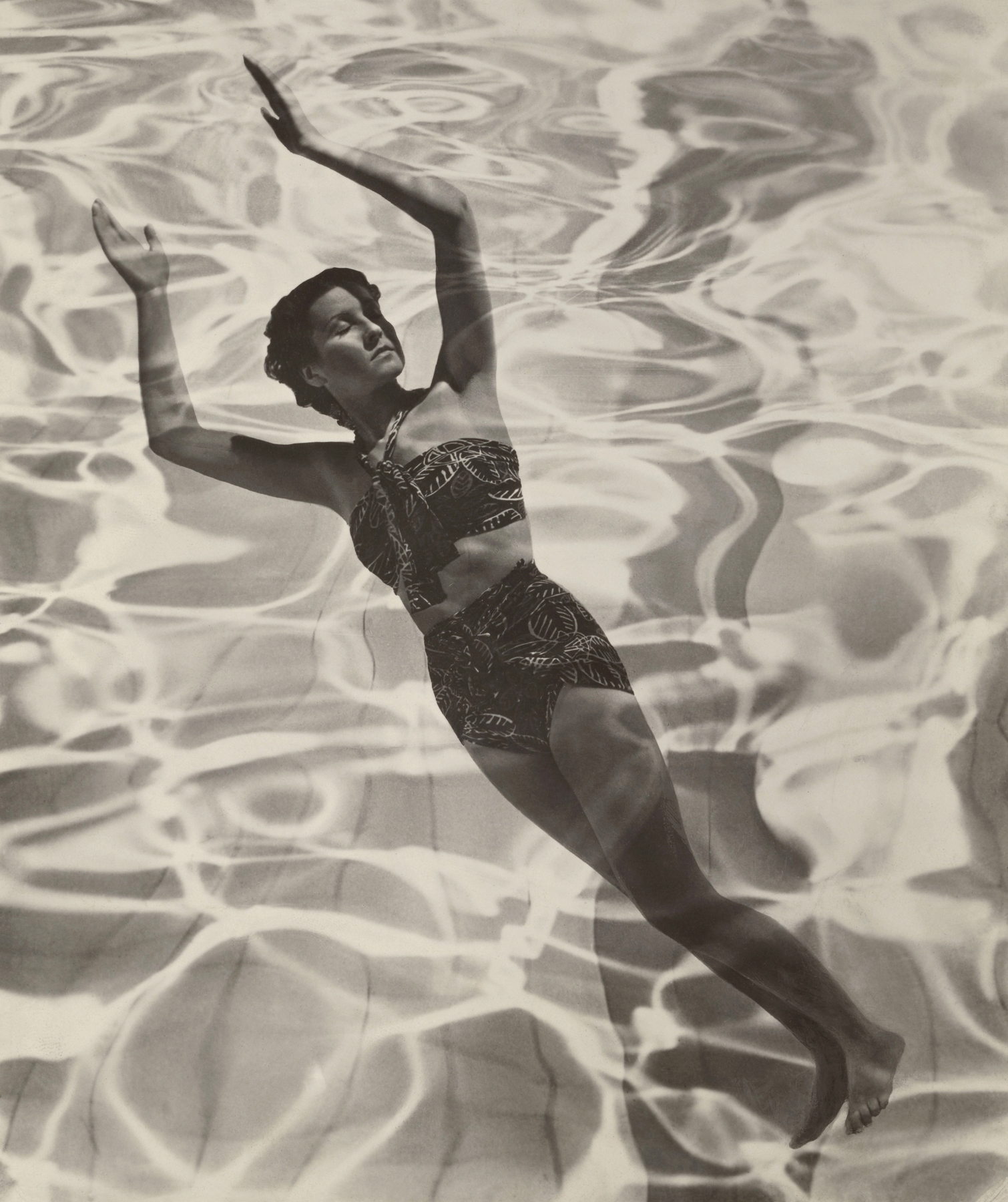
Saturday and Sunday 11am – 4pm
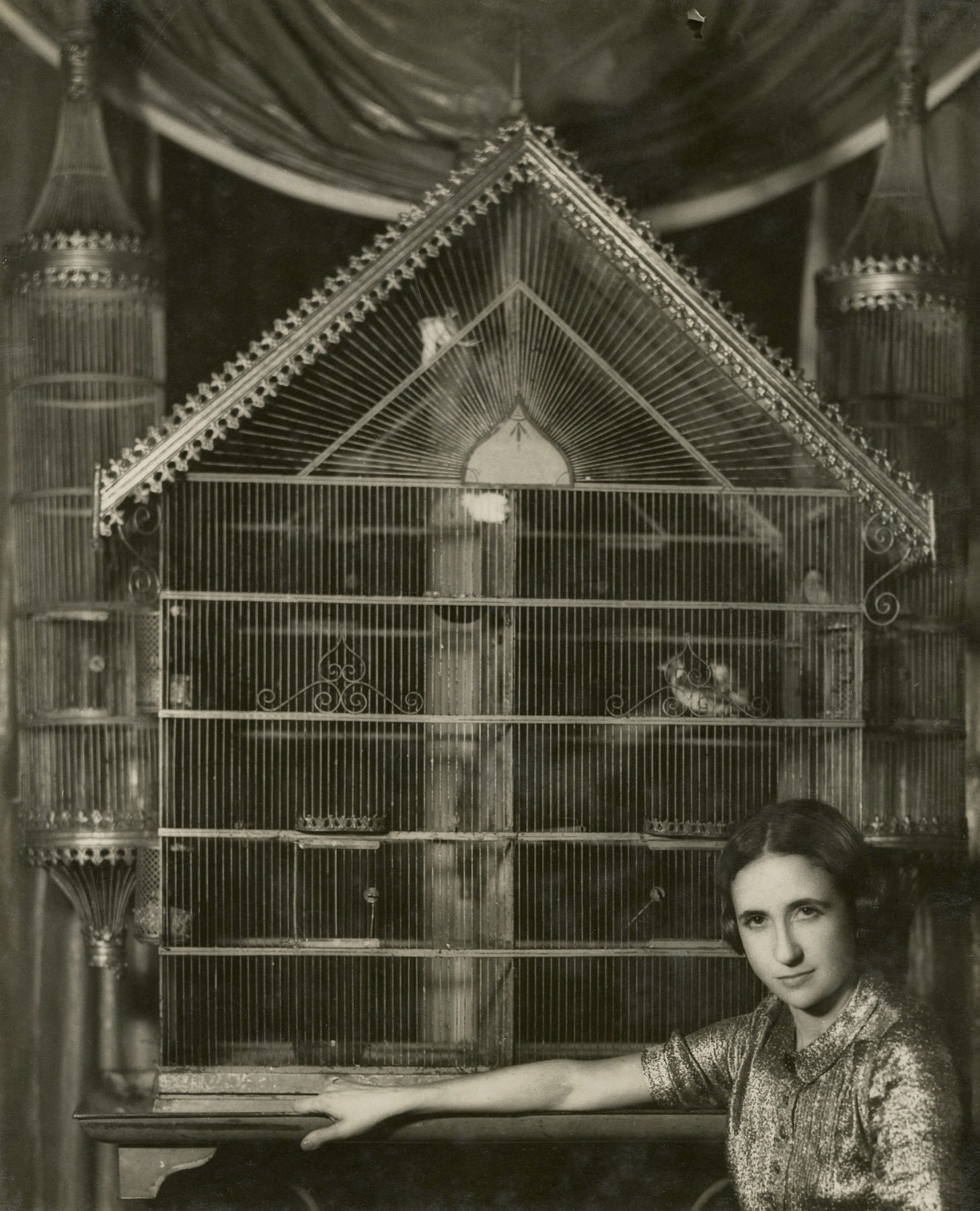
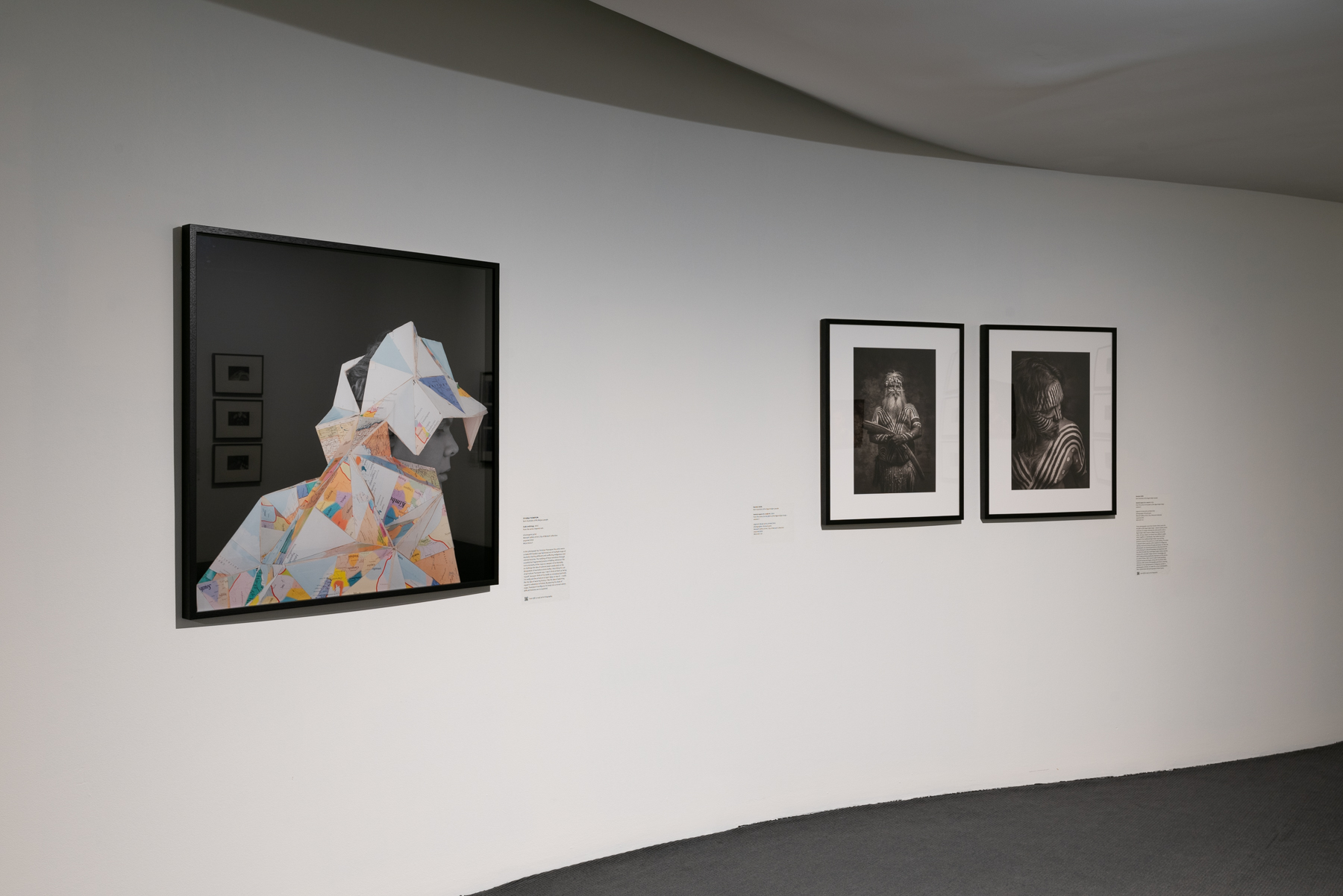
Andrew Follows Photographer website

Magnet Galleries Melbourne website

LIKE ART BLACK ON FACEBOOK

Back to top

Exhibition: ‘John Pfahl Altered Landscapes’ at Joseph Bellows Gallery, La Jolla, California

Exhibition dates: 5th November – 13th December, 2019


John Pfahl (American, 1939-2020) 'Wave, Lave, Lace, Pescadero Beach, California' 1978 from the exhibition 'John Pfahl Altered Landscapes' at Joseph Bellows Gallery, La Jolla, California, Nov - Dec, 2019
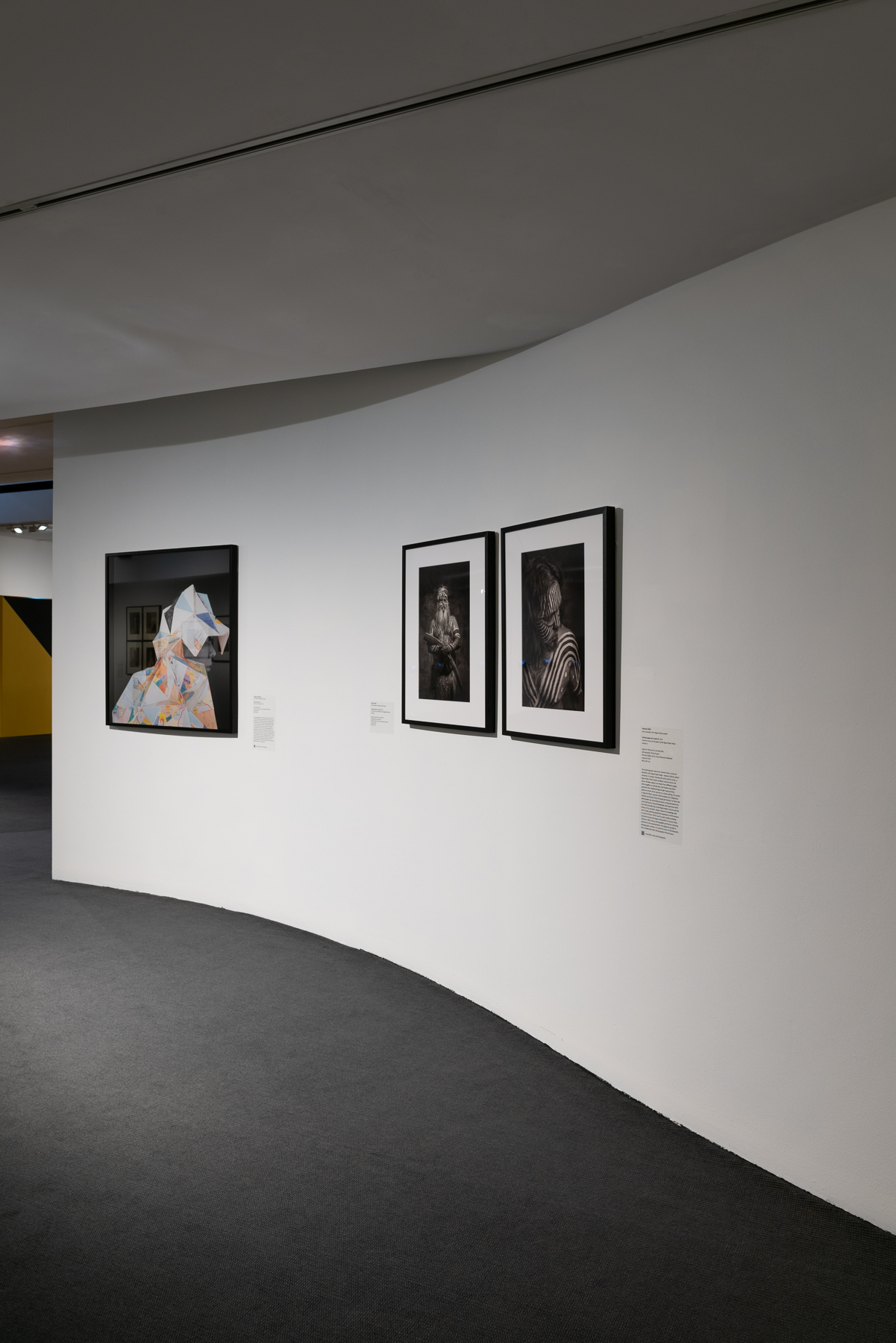
 

John Pfahl (American, 1939-2020)
Wave, Lave, Lace, Pescadero Beach, California
1978
Archival pigment print
16 x 20 inches


I like these photographs, I like them a lot.

Unlike most conceptual art where you have to read a heavy tome of text to understand, actually, the work is about very little and means even less – here, there is humour, wit, intelligence and insight into the condition of our existence on this earth.

Using the optics of the large format camera to enhance perspective, Pfahl projects (his) music into the cosmos. The mark making is lightly made on the landscape, as in Triangle, Bermuda or Australian Pines, Fort DeSoto, Florida. Imagine having the impulse, the creativity, to make that gesture, to wrap silver foil around the trees in the latter image at just that height. A brilliant intervention into the “natural” (i.e. constructed) scene. Often used in his photographs is the Sowilō or the s-rune, the runic symbol ϟ meaning “sun”.

In 1981, Peter C. Bunnell observes in his Introduction to James Alinder’s book Altered Landscapes: The Photographs of John Pfahl, “Our momentary, fragmented and captured vision of disorder and emotion has been replaced by a cool rendering of purposefulness as if to accord another dimension of positivism to the moving force of contemporary human awareness. Pfahl’s work is an attack on the problems of space and, ultimately, existence from a rational point of view.”

Forty years later, these photographs seem not so much rational, or picturesque, as spiritual. The human construction touches the earth lightly, almost reverentially. As Pfahl notes, utmost care is taken not to alter the actual subject in a way he would consider harmful to his positivist respect for nature. In this delicate footprint, these photographs are very prescient of the dangers of our own Anthropocene – of climate change, of raging bushfires, drought, flood and bio-exinction. We are literally destroying this planet and its creatures. Bunnell states, “Pfahl’s imagery is a sure manifestation of the belief that society can produce an art suitable to its nature and, in this case, a specific kind of photographic presence that expresses current societal values.”

Unfortunately, it’s all too late. The lesson has not been learned.

Dr Marcus Bunyan


Many thankx to Joseph Bellows Gallery for allowing me to publish the photographs and the text (reproduced with permission) in the posting. Please click on the photographs for a larger version of the image.


John Pfahl (American, 1939-2020) 'Moonrise over Pie Pan, Capitol Reef National Park' 1977 from the exhibition 'John Pfahl Altered Landscapes' at Joseph Bellows Gallery, La Jolla, California, Nov - Dec, 2019


John Pfahl (American, 1939-2020)
Moonrise over Pie Pan, Capitol Reef National Park
1977
Archival pigment print
16 x 20 inches


John Pfahl (American, 1939-2020) 'Haystack Cone, Freeport, Maine' 1976 from the exhibition 'John Pfahl Altered Landscapes' at Joseph Bellows Gallery, La Jolla, California, Nov - Dec, 2019


John Pfahl (American, 1939-2020)
Haystack Cone, Freeport, Maine
1976
Vintage dye transfer print
7 3/4 x 10 inches


John Pfahl (American, 1939-2020) 'Pink Rock Rectangle, Lewiston, New York' 1975


John Pfahl (American, 1939-2020)
Pink Rock Rectangle, Lewiston, New York
1975
Vintage dye transfer print
7 3/4 x 10 inches


John Pfahl (American, 1939-2020) 'Triangle, Bermuda' 1975


John Pfahl (American, 1939-2020)
Triangle, Bermuda
1975
Archival pigment print
16 x 20 inches


John Pfahl (American, 1939-2020) 'Australian Pines, Fort DeSoto, Florida' 1977


John Pfahl (American, 1939-2020)
Australian Pines, Fort DeSoto, Florida
1977
Vintage dye transfer print
7 3/4 x 10 inches


Joseph Bellows Gallery is pleased to announce its upcoming solo exhibition, John Pfahl Altered Landscapes. The exhibition will open November 5th and continue thru December 13th, 2019. A reception is scheduled for November 23rd, from 5-8 pm. The exhibition will present a selection of vintage dye transfer colour photographs that the artist printed in the late 1970s, as well as larger archival pigment prints of the series most celebrated images.

In his series Altered Landscapes, Pfahl physically changes the environment, fabricating the view to question our perception of the landscape through added elements that reference mark-making devices associated with photographs, maps, plans, and diagrams. These gestures sometimes repeat strong formal components; fill in information suggested by the scene, or act upon information external to the photograph itself. The picturesque scenes are at once interrupted and completed by the artist’s involvement in creating the photograph.

John Pfahl was born in 1939 in New York, New York and raised in New Jersey. He studied art at Syracuse University, receiving a B.F.A. in 1961 and a M.A. from the School of Communications of the same university in 1968. His position in photography has been one of both a celebrated artist and an important educator. Pfahl taught photography for over decade at the Rochester Institute of Technology, educating many now important contemporary photographers and has served as a longtime adjunct professor in the Visual Studies department of the University of Buffalo. In 2009, he was the Honored Educator of the Year by the Society for Photographic Education. Other honours include two National Endowment for the Arts, Photographer’s Fellowships.

His work is in numerous prominent collections, including: Albright-Knox Art Gallery, J. Paul Getty Museum, Los Angeles County Museum of Art, San Francisco Museum of Modern Art, Metropolitan Museum of Art, George Eastman House, Museum of Fine Arts, Houston, The Museum of Modern Art, Center for Creative Photography, Princeton University Art Museum, among others.

Monographs on Pfahls’s work include Altered Landscapes: The Photographs of John Pfahl (Friends of Photography 1982), Picture Windows (New York Graphic Society 1987), A Distanced Land (UNM/Albright-Knox Gallery 1990), Permutations on the Picturesque (Lightwork 1997) and Waterfall (Nazraeli Press 2000), and Extreme Horticulture (Verlag 2003).

Press release from the Joseph Bellows Gallery [Online] Cited 09/11/2019


John Pfahl (American, 1939-2020) 'Slanting Forest, Lewiston, New York' 1975


John Pfahl (American, 1939-2020)
Slanting Forest, Lewiston, New York
1975
Vintage dye transfer print
7 3/4 x 10 inches


John Pfahl (American, 1939-2020) 'Live Oak Lightning, Lompoc, California' 1978


John Pfahl (American, 1939-2020)
Live Oak Lightning, Lompoc, California
1978
Vintage dye transfer print
7 3/4 x 10 inches


John Pfahl (American, 1939-2020) 'Tracks, Bonneville Salt Flats, Utah' 1977


John Pfahl (American, 1939-2020)
Tracks, Bonneville Salt Flats, Utah
1977
Archival pigment print
16 x 20 inches


John Pfahl (American, 1939-2020) 'Monument Valley with Red String, Monument Valley, Utah' 1977


John Pfahl (American, 1939-2020)
Monument Valley with Red String, Monument Valley, Utah
1977
Archival pigment print
16 x 20 inches


Introduction

Peter C. Bunnell


Peter C. Bunnell. "Introduction," from James Alinder (ed.,). 'Altered Landscapes: The Photographs of John Pfahl (Untitled Series, No. 26)'

Peter C. Bunnell. "Introduction," from James Alinder (ed.,). 'Altered Landscapes: The Photographs of John Pfahl (Untitled Series, No. 26)'

Peter C. Bunnell. "Introduction," from James Alinder (ed.,). 'Altered Landscapes: The Photographs of John Pfahl (Untitled Series, No. 26)'

Peter C. Bunnell. "Introduction," from James Alinder (ed.,). 'Altered Landscapes: The Photographs of John Pfahl (Untitled Series, No. 26)'

Peter C. Bunnell. "Introduction," from James Alinder (ed.,). 'Altered Landscapes: The Photographs of John Pfahl (Untitled Series, No. 26)'

Peter C. Bunnell. "Introduction," from James Alinder (ed.,). 'Altered Landscapes: The Photographs of John Pfahl (Untitled Series, No. 26)'

Peter C. Bunnell. "Introduction," from James Alinder (ed.,). 'Altered Landscapes: The Photographs of John Pfahl (Untitled Series, No. 26)'

Peter C. Bunnell. "Introduction," from James Alinder (ed.,). 'Altered Landscapes: The Photographs of John Pfahl (Untitled Series, No. 26)'


Peter C. Bunnell. “Introduction,” from James Alinder (ed.,). Altered Landscapes: The Photographs of John Pfahl (Untitled Series, No. 26). Friends of Photography / Robert Freidus Gallery, June 1, 1981


John Pfahl (American, 1939-2020) 'Six Oranges, Buffalo, New York' 1975


John Pfahl (American, 1939-2020)
Six Oranges, Buffalo, New York
1975
Vintage dye transfer print
7 3/4 x 10 inches


John Pfahl (American, 1939-2020) 'Red Setters in Red Field, Charlotte, North Carolina' 1976


John Pfahl (American, 1939-2020)
Red Setters in Red Field, Charlotte, North Carolina
1976
Vintage dye transfer print
7 3/4 x 10 inches


John Pfahl (American, 1939-2020) 'Roan Mounting Lightning, Roan Mountain, North Carolina' 1977


John Pfahl (American, 1939-2020)
Roan Mounting Lightning, Roan Mountain, North Carolina
1977
Archival pigment print
16 x 20 inches


John Pfahl (American, 1939-2020) 'Blue Right Angle, Buffalo, New York' 1978


John Pfahl (American, 1939-2020)
Blue Right Angle, Buffalo, New York
1978
Archival pigment print
16 x 20 inches


John Pfahl (American, 1939-2020) 'Tree and Mountain Cleft, Boulder, Colorado' 1977


John Pfahl (American, 1939-2020)
Tree and Mountain Cleft, Boulder, Colorado
1977
Archival pigment print
16 x 20 inches


John Pfahl (American, 1939-2020) 'Canyon Point, Zion Canyon National Park, Utah' 1977


John Pfahl (American, 1939-2020)
Canyon Point, Zion Canyon National Park, Utah
1977
Archival pigment print
20 x 16 inches


Joseph Bellows Gallery
7661 Girrard Avenue
La Jolla, California
Phone: 858 456 5620

Opening hours:
Tuesday – Saturday 11am – 5pm and by appointment

Joseph Bellows Gallery website

LIKE ART BLART ON FACEBOOK

Back to top

World AIDS Day 2019

December 2019


Marcus Bunyan (Australian, b. 1958) 'How will it be when you have changed' 1994


Marcus Bunyan (Australian, b. 1958)
How will it be when you have changed
1994
Silver gelatin photograph
© Marcus Bunyan


Remembering all my lovers, friends, and everyone who has passed or been affected by this disease on World AIDS Day.

To survive the initial wave was just luck of the draw. We lost so many people. Thinking of you all.

Marcus xx


The titles from this period tend to be poetic, pragmatic or composed, like Japanese haiku. The two photographs How will it be when you have changed and Tell me your face before you were born (1994, above) were included in the seminal exhibition Don’t Leave Me This Way: Art in the Age of AIDS at the National Gallery of Australia in 1994. Please click on the photographs for a larger version of the image.


Marcus Bunyan (Australian, b. 1958) 'Tell me your face before you were born' 1994


Marcus Bunyan (Australian, b. 1958)
Tell me your face before you were born
1994
Silver gelatin photograph
© Marcus Bunyan


Marcus Bunyan black and white archive page

LIKE ART BLART ON FACEBOOK

Back to top

Exhibition: ‘Helga Paris, Photographer’ at the Akademie der Künste, Berlin

Exhibition dates: 8th November, 2019 – 12th January, 2020

Curator: Inka Schube


Helga Paris (German born Poland, b. 1938) 'Prerow' 1960s from the exhibition 'Helga Paris, Photographer' at the Akademie der Künste, Berlin, Nov 2019 - Jan 2020


Helga Paris (German born Poland, b. 1938)
Prerow
1960s
Gelatin silver print
Photo: © Helga Paris
Source: ifa (Institut für Auslandsbeziehungen)


A couple of years ago I was in Paris, searching for French peasant work clothes of the 1950s in the trendy secondhand shops of the Marais. It took me forever but I eventually found one blue shirt that fitted me… only one. Battered, patched up, but still present after all these years – hard wearing, practical, and tough. But also soft and pliable like a second skin, with its own look and feel, its own distinctive aesthetic. I knew what I wanted, I found it… or it found me. A treasure.

The same could be said of the photographs of Helga Paris. Her photographs picture the tough, hard existence of life in postwar East Germany but there is a fond affection for subject matter in the cameras engagement. Paris approaches her subjects, whether city or people, with directness but it is also a dialogue between the artist and her subjects which “give the viewer an insight into a moment of the everyday lives of an East German resident.”

“Paris opened herself to the worker’s world she found in Prenzlauer Berg, and often took photographs in the immediate surroundings – of friends and neighbours, the area’s old and run-down streets, and the melancholic vitality of the regulars in Berlin’s bars and cafés. The people in her photographs look deeply rooted, as if they had moved to the area with the intention of never going away.”

Misty cobbled corners, people in bars, in clubs, at work, on the street. Much as Ara Güler did for Istanbul (in a more romantic way), Paris captures the essence of an ecosystem, the culture and survival that was the living, behind the Iron Curtain. There is melancholy aplenty, the brooding streets with swooping pigeons and ubiquitous Trabant, all dark in their small sulkiness. There are beautiful boys with Anarchy stencilled on their jumper desiring liberated life, and reflective women deep in their own thoughts. Naira! Naira! Smoking a fag, with drunk-eyed pictures of a child on dirty wall, behind. Oh Naira, of what were you thinking! What brought you to this place?

There is sullenness, compassion, bohemians, students and countercultural intellectuals all pictured with her probing mind. If you could say that a subject finds an artist then this is that aphorism in full technicolor. Engaged and engaging, these essential images stand the test of time – as relevant now in an era of neo-liberal fascism as they ever were in the past.

Dr Marcus Bunyan


Many thankx to the Akademie der Künste for allowing me to publish the photographs in the posting. Please click on the photographs for a larger version of the image.


Helga Paris (German born Poland, b. 1938) 'No title' 1974 From the series 'Müllfahrer' (Garbage Drivers) from the exhibition 'Helga Paris, Photographer' at the Akademie der Künste, Berlin, Nov 2019 - Jan 2020


Helga Paris (German born Poland, b. 1938)
No title
1974
From the series Müllfahrer (Garbage Drivers)
Gelatin silver print
Photo: © Helga Paris
Source: ifa (Institut für Auslandsbeziehungen)


Helga Paris (German born Poland, b. 1938) 'Selbst im Spiegel' (Self-Portrait in the Mirror) 1971 from the exhibition 'Helga Paris, Photographer' at the Akademie der Künste, Berlin, Nov 2019 - Jan 2020


Helga Paris (German born Poland, b. 1938)
Selbst im Spiegel (Self-Portrait in the Mirror)
1971
Gelatin silver print
Photo: © Helga Paris
Source: ifa (Institut für Auslandsbeziehungen)


Helga Paris (German born Poland, b. 1938) 'No title' 1975 From the series 'Berliner Kneipen' (Berlin Pubs)


Helga Paris (German born Poland, b. 1938)
No title
1975
From the series Berliner Kneipen (Berlin Pubs)
Gelatin silver print
Photo: © Helga Paris
Source: ifa (Institut für Auslandsbeziehungen)


Helga Paris (German born Poland, b. 1938) 'Hund, Immanuelkirchstr 1970s' (Berlin 1974-1982)


Helga Paris (German born Poland, b. 1938)
Hund, Immanuelkirchstr. (Dog, Immanuelkirchstrasse)
1970s
From Berlin 1974-1982
Gelatin silver print
Photo: © Helga Paris
Source: ifa (Institut für Auslandsbeziehungen)


Helga Paris (German born Poland, b. 1938) 'Winsstraße mit Taube' (Winsstrasse with Pigeon) 1970s


Helga Paris (German born Poland, b. 1938)
Winsstraße mit Taube (Winsstrasse with Pigeon)
1970s
From Berlin 1974-1982
Gelatin silver print
Photo: © Helga Paris
Source: ifa (Institut für Auslandsbeziehungen)


Helga Paris (German born Poland, b. 1938) 'Marienburger Strasse' 1970s (Berlin 1974-1982)


Helga Paris (German born Poland, b. 1938)
Marienburger Strasse
1970s
From Berlin 1974-1982
Gelatin silver print
Photo: © Helga Paris
Source: ifa (Institut für Auslandsbeziehungen)


Helga Paris (German born Poland, b. 1938) 'Jugendweihe René Köstner' (Berlin 1974-1982)


Helga Paris (German born Poland, b. 1938)
Jugendweihe René Köstner
1970s
From Berlin 1974-1982
Gelatin silver print
Photo: © Helga Paris
Source: ifa (Institut für Auslandsbeziehungen)


Helga Paris (German born Poland, b. 1938) 'Meteln (Christa and Gerhard Wolf)' 1977


Helga Paris (German born Poland, b. 1938)
Meteln (Christa and Gerhard Wolf)
1977
Gelatin silver print
Photo: © Helga Paris
Source: ifa (Institut für Auslandsbeziehungen)


Helga Paris (born in 1938 in Goleniów, Poland) occupies an outstanding position in German photography. Her oeuvre exhibits the poetry of a Henri Cartier-Bresson as well as the austerity of an August Sander or Renger-Patzsch. Paris, who has lived in Prenzlauer Berg in Berlin since 1966, has chronicled the long history of postwar East Germany. For more than three decades she has directed her gentle yet precise gaze toward the people who live it. Her photographs tell of the melancholy vitality of East Berlin corner pubs and the poetic tristesse of the old streetcars of the seventies. We encounter garbage truck drivers, stubbornly furious or calm teenagers, and proud female textile mill workers. We travel through Georgia and Siebenbürgen, and meander through the central German industrial city of Halle, a “diva in gray.” But these photographs also tell of the end of the postwar era, of the search for images of childhood and their retrieval.

Text from the catalogue to the exhibition


Helga Paris: Fotografie from arts-news on Vimeo


Fotografie is a retrospective look at the work of German photographer, Helga Paris. Exhibiting a collection of photos taken in East Germany in the postwar period, Paris’s work is considered to be one of the most revealing and compassionate bodies of work reflecting life in Germany at that time. Going beyond a simple ‘social study’, Paris’s technique was simply to engage with her subjects, rather than take on the role of the distant street photographer. In making this connection, the result has been a collection of photos that give the viewer an insight into a moment of the everyday lives of an East German resident.

Starting in the 60s, Helga Paris took an interest in photography and began teaching herself the basics. Paris came from a fashion and art background, but it was her interest in the everyday lives of the East Berlin people, during the postwar period that made her want to capture that on film.

Text from the Vimeo website


Helga Paris (German, born Poland, 1938) 'Club' 1981


Helga Paris (German born Poland, b. 1938)
Club
1981
Gelatin silver print
Photo: © Helga Paris
Source: ifa (Institut für Auslandsbeziehungen)


Helga Paris (German born Poland, b. 1938) 'Berliner Kneipen' From the series 'Berlin' 1974-1982


Helga Paris (German born Poland, b. 1938)
Berliner Kneipen (Berlin pubs)
From the series Berlin 1974-1982
Gelatin silver print
Photo: © Helga Paris
Source: ifa (Institut für Auslandsbeziehungen)


Since 1966 Helga Paris has lived in Berlin’s Prenzlauer Berg, a traditionally working class district that in the DDR days had become a refuge for bohemians, students and countercultural intellectuals, condoned by the authorities. Here she became a chronicler of post-war East Germany. Paris opened herself to the worker’s world she found in Prenzlauer Berg, and often took photographs in the immediate surroundings – of friends and neighbours, the area’s old and run-down streets, and the melancholic vitality of the regulars in Berlin’s bars and cafés. The people in her photographs look deeply rooted, as if they had moved to the area with the intention of never going away. Their faces express both their exhaustion and their lust for life.


Helga Paris (German born Poland, b. 1938) 'Sven' 1981-82 From the series 'Berliner Jugendliche' (Berlin Youth)


Helga Paris (German born Poland, b. 1938)
Sven
1981-1982
From the series Berliner Jugendliche (Berlin Youth)
Gelatin silver print
Photo: © Helga Paris
Source: ifa (Institut für Auslandsbeziehungen)


Helga Paris (German born Poland, b. 1938) 'Pauer' From the series 'Berlin Youth'


Helga Paris (German born Poland, b. 1938)
Pauer
From the series Berlin Youth
1981-1982
Gelatin silver print
Photo: © Helga Paris
Source: ifa (Institut für Auslandsbeziehungen)


Helga Paris (German born Poland, b. 1938) 'Ramona' 1982


Helga Paris (German born Poland, b. 1938)
Ramona
1982
Gelatin silver print
Photo: © Helga Paris
Source: ifa (Institut für Auslandsbeziehungen)


Helga Paris (German born Poland, b. 1938) 'Ramona, Kollwitzstrasse' 1982


Helga Paris (German born Poland, b. 1938)
Ramona, Kollwitzstrasse
1982
Gelatin silver print
Photo: © Helga Paris
Source: ifa (Institut für Auslandsbeziehungen)


Helga Paris (German born Poland, B. 1938) 'Naira' 1982 From the series 'Georgien' (Georgia)


Helga Paris (German born Poland, b. 1938)
Naira
1982
From the series Georgien (Georgia)
Gelatin silver print
Photo: © Helga Paris
Source: ifa (Institut für Auslandsbeziehungen)


Helga Paris (German born Poland, b. 1938) 'No title' 1983-1985 From the series 'Houses and Faces, Halle' 1983-1985


Helga Paris (German born Poland, b. 1938)
No title
1983-1985
From the series Häuser und Gesichter, Halle / Houses and Faces, Halle 1983-1985
Gelatin silver print
Photo: © Helga Paris
Source: ifa (Institut für Auslandsbeziehungen)


Helga Paris (German born Poland, b. 1938) 'Grosse Klausstrasse Flutgasse' (Häuser und Gesichter Halle 1983-1985)


Helga Paris (German born Poland, b. 1938)
Grosse Klausstrasse Flutgasse
1983-1985
From the series Häuser und Gesichter, Halle / Houses and Faces, Halle 1983-1985
Gelatin silver print
Photo: © Helga Paris
Source: ifa (Institut für Auslandsbeziehungen)


Helga Paris (German born Poland, b. 1938) 'Zwei Frauen' (Häuser und Gesichter Halle 1983-1985)


Helga Paris (German born Poland, b. 1938)
Zwei Frauen (Two Women)
1983-1985
From the series Häuser und Gesichter, Halle / Houses and Faces, Halle 1983-1985
Gelatin silver print
Photo: © Helga Paris
Source: ifa (Institut für Auslandsbeziehungen)


Helga Paris (German born Poland, b. 1938) 'No title' 1983-1985 From the series 'Houses and Faces, Halle'


Helga Paris (German born Poland, b. 1938)
No title
1983-1985
From the series Houses and Faces, Halle 1983-1985
Gelatin silver print
Photo: © Helga Paris
Source: ifa (Institut für Auslandsbeziehungen)


From 8 November 2019 to 12 January 2020 at its exhibition halls at Pariser Platz, the Akademie der Künste will present the photographic work of Helga Paris from 1968 to 2011. Featuring 275 works, including many individual images and series that are to be shown for the first time, this will be her most comprehensive exhibition to date and the first retrospective of the artist in her home city of Berlin in 25 years. Excerpts from the extensive Leipzig, Hauptbahnhof (1981), Moskau (1991/1992) and Mein Alex (2011) series will be seen for the first time, among others.

In addition to the photographer’s special ability to make ever-changing compressed contemporary history tangible in her images and series over the course of decades, it is her tender, graceful and heavily nuanced black-and-white modulations expressing social empathy that make her work unmistakable.

Helga Paris was born in 1938 in Gollnow, Pomerania (today Polish town of Goleniów), and grew up in Zossen near Berlin. She began her work as a self-taught photographer in the 1960s. She became one of the key chroniclers of life in East Berlin with images of her neighbourhood in the Berlin district of Prenzlauer Berg, pictures of pub-goers, sanitation workers, the women from the VEB Treffmodelle clothing factory, artists, punks, children from Hellersdorf and passers-by from Alexanderplatz. Helga Paris also took photographs in Transylvania (1980), Georgia (1982) and the city of Halle (1983-1985), where she produced her Diva in Grau series that was banned from being shown until 1989/1990, as well as in Volgograd (1990), New York (1995) and Poland (1996/1997), among others. Helga Paris has been a member of the Film and Media Art Section of the Akademie der Künste since 1996.

The curator of the exhibition is art historian Inka Schube, who has worked with Helga Paris on numerous occasions. Filmmaker Helke Misselwitz will present an installation involving interviews with Helga Paris on the topics of origin, the changing city and her work as a photographer in East Germany and up into the early 21st century.

On the occasion of the exhibition, the Spector Books publishing house, Leipzig has released the photography book Helga Paris. Leipzig Hauptbahnhof, 1981.

An exhibition by the Akademie der Künste in cooperation with the ifa (Institut für Auslandsbeziehungen), with the kind support of the Alfried Krupp von Bohlen und Halbach-Stiftung that allowed the living legacy to be indexed and new prints of three previously unpublished series to be made, as well as the DEFA-Foundation.

Press release from the Akademie der Künste website [Online] Cited 11/11/2019


Helga Paris (German born Poland, b. 1938) 'Self-portraits' 1981-1989


Helga Paris (German born Poland, b. 1938)
Self-portraits
1981-1989
Gelatin silver print
Photo: © Helga Paris
Source: ifa (Institut für Auslandsbeziehungen)


Helga Paris (German born Poland, b. 1938) 'Frauen im Bekleidungswerk Treff-Modelle' 1984


Helga Paris (German born Poland, b. 1938)
Frauen im Bekleidungswerk Treff-Modelle
1984
Gelatin silver print
Photo: © Helga Paris
Source: ifa (Institut für Auslandsbeziehungen)


Helga Paris (German born Poland, b. 1938) 'Frauen im Bekleidungswerk Treff-Modelle' 1984


Helga Paris (German born Poland, b. 1938)
Frauen im Bekleidungswerk Treff-Modelle
1984
Gelatin silver print
Photo: © Helga Paris
Source: ifa (Institut für Auslandsbeziehungen)


In the early 1980s the DDR’s Gesellschaft für Fotografie im Kulturbund gave professional photographers commissions that allowed them to work on projects of their own choosing. These commissions not only gave photographers financial security, but also opened doors to places where, under normal circumstances, only media loyal to the regime had been allowed to work. Helga Paris chose to photograph a clothing factory, Treff-Modelle VEB in Berlin, where she herself had had some work experience during her fashion design studies. There she portrayed the factory’s female workers, eliciting a wide variety of subtle reactions from them: from self-confident and open to confrontational and defensive.


Helga Paris (German born Poland, b. 1938) 'Frauen im Bekleidungswerk Treff-Modelle' 1984


Helga Paris (German born Poland, b. 1938)
No title
1984
Gelatin silver print
From the series Frauen im Bekleidungswerk VEB Treffmodelle Berlin (Women at the Clothing factory VEB Treffmodelle Berlin)
Photo: © Helga Paris
Source: ifa (Institut für Auslandsbeziehungen)


With around 275 photographs from the period of 1968 till 2011 – including numerous single frames and series shown for the first time – the exhibition of Helga Paris at the Akademie der Künste on Pariser Platz is the photographer’s most comprehensive to date. It is the first retrospective of Paris’ work in her home city of Berlin in 25 years.

Having lived in Berlin’s Prenzlauer Berg district since 1966, Helga Paris (born 1938) began taking photos of people in her neighbourhood in the early 1970s. She found her photographic motifs in flats, pubs, break rooms and factory halls, or on the streets and in train stations. With a background in modernist painting, theatre and poetry as well as early Soviet, Italian and French cinema, the autodidact photographer has spent the last four and a half decades developing an extensive oeuvre of delicate, nuanced black-and-white photography.

But she is not only a chronicler of Prenzlauer Berg. Helga Paris also has taken photos in Halle, Leipzig, Transylvania, Georgia, Moscow, Volgograd and New York. There, as in her local neighbourhood, she constantly explores how it feels “to be in history”, and how the respective circumstances are reflected at the most private level. Helga Paris’s imagery has a particular poetic approachability, in part because it forgoes all ideological interpretations; her gaze suggests profound solidarity.

For the exhibition, the director Helke Misselwitz has designed a documentary film triptych, in which she makes it possible to experience how the life and work of Helga Paris are both interwoven and interdependent. Misselwitz traces a wide arc from the photographer’s childhood to the present; from Prenzlauer Berg to sites around the world; and from Paris’ close-ups to her farsighted vision.

Text from the Akademie der Künste website [Online] Cited 11/11/2019


Helga Paris (German born Poland, b. 1938) 'Sohn des Architekten Melnikow' 1991/92


Helga Paris (German born Poland, b. 1938)
Sohn des Architekten Melnikow (Son of the architect Melnikov)
1991-1992
From the series Moskau 1991-1992
Gelatin silver print
Photo: © Helga Paris
Source: ifa (Institut für Auslandsbeziehungen)


Helga Paris (German born Poland, b. 1938) 'No title' 1991/92 From the series 'Moscow' 1991-92


Helga Paris (German born Poland, b. 1938)
No title
1991-1992
From the series Moscow 1991-1992
Gelatin silver print
Photo: © Helga Paris
Source: ifa (Institut für Auslandsbeziehungen)


As a result of the Cold War, the remarkable oeuvre of the German photographer Helga Paris (1938) was long almost unknown west of the Iron Curtain. While Paris enjoyed widespread popularity in East Germany, her photographs rarely reached a public in the West. Although her work, with its quite intimate glimpses of daily life in East Germany, is strongly linked to the course of her own life, its expressiveness is universal. The empathy of her gaze makes it easy for us to imagine ourselves in the people and places she photographed.

Resilience

On one hand Helga Paris’ photographs are about life in the German Democratic Republic (DDR), where the Second World War and the country’s communist regime brought restriction, loss, destruction and decline in their wake. On the other they show the gaze of a photographer who had been born in Pommeren (now in Poland), who grew up close to postwar Berlin, and who faced the world with resilience, curiosity and compassion. In 1966 Paris moved for good to Prenzlauer Berg in East Berlin, a traditionally working-class district that had become a refuge for bohemians, students and countercultural intellectuals, closely watched but condoned by the authorities. Here she became a chronicler of postwar East Germany. She often worked in the immediate surroundings – taking photographs of friends and neighbours, on the street, and in bars and cafés.

Hidden tensions

Although in the 1970s and 1980s Helga Paris also photographed in Romania, Poland and Georgia, the accent in the Huis Marseille exhibition is on East Germany before and after the Wende (1989-1990). She created the series Berliner Jugendliche (Berlin Youth) in 1980-1981, when her own children were teenagers, portraying youngsters who believed in an alternative way of life and who went to the concerts given by independent bands – a sort of East German variant of the Western punk scene. Their anarchic lifestyle did not go unnoticed by the regime, and many of those she portrayed also spent some time in prison. Paris subtly but revealingly captures the hidden tensions of the time in the teenagers’ postures, gestures, and facial expressions. She elicited a similar scale of reactions in the workers she photographed for the series Frauen im Bekleidungswerk VEB Treffmodelle Berlin (Women at the textile factory VEB Models, 1984): from self-confident and open to confrontational and defensive.

Run-down

In the same period Helga Paris documented the decline of the old city centre of Halle, interspersing photos of the city’s long-neglected buildings and streets with portraits of its residents – who only allowed themselves to be photographed if they had a say in how their portraits were taken. The impoverishment of Halle was only partly the result of the faltering East German economy; the government was also deliberately allowing the historic centre of Halle and other East German cities to become rundown in order to compel their populations to move into modern flats on urban peripheries. The exhibition Häuser und Gesichter: Halle 1983-85 was banned by the regime in 1987; it was 1990 before the people of Halle could see the photographs for themselves.


Helga Paris was born Helga Steffens in 1938 in Gollnow, Pommeren, now known as Goleniów in Poland. At the end of the war she fled with her family to Zossen, her father’s native city. She first came into contact with photography through an aunt who worked in a photographic laboratory. Between 1956 and 1960 she studied fashion design at the Fachschule für Bekleidung in Berlin. There she met the artist Ronald Paris, to whom she was married between 1961 and 1974, and with whom she had two children.

Via the Arbeiter- und Studententheater in Berlin, for which she made costumes, Paris came into contact with the later documentary maker Peter Voigt, who encouraged her to take more photographs. To improve her techniques, from 1967 to 1968 she worked in the Deutsche Werbeund Anzeigengesellschaft DEWAG photographic laboratory. She took many photographs in the theatre, such as productions of the Volksbühne, as her husband was also its set designer. In later years she would say that this experience had given her a solid foundation for her attitude to space as a street photographer.

Paris’s work was first exhibited in 1978, in the Hochschule für Bildende Künste in Dresden. In 1996 she became a member of the Akademie der Künste in Berlin. Her self-portraits were a great success at the Kunst in der DDR exhibition in the Neue Nationalgalerie in Berlin (2003), and in 2004 Helga Paris was awarded the prestigious Hannah-Höch-Preis for a lifetime of achievement in the arts.

Press release from Huis Marseille for the exhibition Helga Paris / East Germany 1974-1998 Cited 26/11/2019


Helga Paris (German born Poland, b. 1938) 'Erinnerung an Z' (Memory of Z) 1994


Helga Paris (German born Poland, b. 1938)
Erinnerung an Z (Memory of Z)
1994
Gelatin silver print
Photo: © Helga Paris
Source: ifa (Institut für Auslandsbeziehungen)


Helga Paris (German born Poland, b. 1938) 'No title' 1998 From the series 'Hellersdorf'


Helga Paris (German born Poland, b. 1938)
No title
1998
Gelatin silver print
From the series Hellersdorf
Photo: © Helga Paris
Source: ifa (Institut für Auslandsbeziehungen)


Helga Paris (German born Poland, b. 1938) 'Hellersdorf #2' 1998


Helga Paris (German born Poland, b. 1938)
Hellersdorf #2
1998
Gelatin silver print
From the series Hellersdorf
Photo: © Helga Paris
Source: ifa (Institut für Auslandsbeziehungen)


Helga Paris (German born Poland, b. 1938) 'Hellersdorf #7' 1998


Helga Paris (German born Poland, b. 1938)
Hellersdorf #7
1998
Gelatin silver print
From the series Hellersdorf
Photo: © Helga Paris
Source: ifa (Institut für Auslandsbeziehungen)


Helga Paris (German born Poland, b. 1938) 'Hellersdorf #8' 1998


Helga Paris (German born Poland, b. 1938)
Hellersdorf #8
1998
Gelatin silver print
From the series Hellersdorf
Photo: © Helga Paris
Source: ifa (Institut für Auslandsbeziehungen)


Akademie der Künste
Pariser Platz 4
10117 Berlin
Phone: +49 (0)30 200 57-1000

Opening hours:
Tuesday – Sunday 11am – 7pm

Akademie der Künste website

LIKE ART BLART ON FACEBOOK

Back to top

European photographic research tour exhibition: ‘Lartigue: Life in Color’ at the Robert Capa Contemporary Photography Center, Budapest

Exhibition dates: 7th June – 1st September, 2019
Visited September 2019 posted November, 2019

Curators: Martine Ravache and Gabriella Csizek


Installation view of the exhibition 'Lartigue: Life in Color' at the Robert Capa Contemporary Photography Center, Budapest


Installation view of the exhibition Lartigue: Life in Color at the Robert Capa Contemporary Photography Center, Budapest
Photo: Marcus Bunyan


A posting on this exhibition with some iPhone images I took in Budapest. I was lucky enough to see the exhibition the day before it closed.

What struck me most was Lartigue’s restrained use of colour. Mainly family portraits and landscapes, these photographs integrate a reduced colour palette with the line and form of the image. Subtle yet dynamic, the whimsical and poetic Ektachrome photographs were a revelation. You could say that there is seemingly nothing unusual about any of these photographs but just look – look at the light that radiates across Florette in Venice, the donkey and the washing, the green umbrella and tree laden with snow or the boys looking around to stare at the camera – and there is, indeed, something uncanny in the everyday. Just to see those two birds flying towards you in The Appian Way, Rome, Italy, January 1960 and to raise your camera to capture them mid-flight perfectly framed between the trees – what a moment!

While the original transparencies have faded, digital technology and restoration allows us to see them in all their glory: sometimes low depth of field, but always with a strong visual structure, these photographs form a holistic feeling as a body of images, a portrait of life in colour. Lartigue’s sense of fun is also evident in many images. There is no sense of the ego of the photographer in any of these images… they are, just so. Considered, concise and in colour (which is unusual for this time period) they possess an inimitable joie de vivre. This posting also features Lartigue’s early Autochromes which were interesting but nowhere as important as his later Ektachromes.

With a careful eye for composition, colour, and geometry, Lartigue’s background (in which he saw everything with his painter’s eye) is clearly translated in the pictorial construction of these sublime photographs.

Dr Marcus Bunyan


Please click on the photographs for a larger version of the image. All photographs © Marcus Bunyan


Jacques Henri Lartigue (1894-1986) was the best-known “amateur” in the history of photography, famously discovered by the art world and given an exhibition at MoMA in New York when he was in his late sixties. He began by recording the pastimes and customs of his wealthy Parisian milieu, indulging his fascination with sports and aviation, and throughout his long life he was never without his camera. His friendships extended to the superstars of French culture, but he also made thousands of photographs of his family, wives, and lovers. His work was irresistibly warm and engaging.

Although known for his black-and-white work, Lartigue loved colour film, experimenting with the Autochrome process in the teens and twenties and embracing Ektachrome in the late 1940s. His colour work, reproduced here for the first time, is astonishingly fresh: the French countryside, the women in his life, famous friends (Picasso, Fellini), and glimpses from his travels all come alive in this delightful book.

Text from the Amazon website


Installation view of the exhibition 'Lartigue: Life in Color' at the Robert Capa Contemporary Photography Center, Budapest

Installation view of the exhibition 'Lartigue: Life in Color' at the Robert Capa Contemporary Photography Center, Budapest

Installation view of the exhibition 'Lartigue: Life in Color' at the Robert Capa Contemporary Photography Center, Budapest

Installation view of the exhibition 'Lartigue: Life in Color' at the Robert Capa Contemporary Photography Center, Budapest


Installation views of the exhibition Lartigue: Life in Color at the Robert Capa Contemporary Photography Center, Budapest
Photos: Marcus Bunyan


Jacques Henri Lartigue (French, 1894-1986) 'Around Pau' France, December 1912 (installation view)


Jacques Henri Lartigue (French, 1894-1986)
Around Pau (installation view)
France, December 1912
Autochrome
6 x 13cm
Photo: Marcus Bunyan


Jacques Henri Lartigue (French, 1894-1986) 'Mrs Folletête, Rico, me, Sim, Manik and Mummy' Rouzat, France, September 16, 1913 (installation view)


Jacques Henri Lartigue (French, 1894-1986)
Mrs Folletête, Rico, me, Sim, Manik and Mummy (installation view)
Rouzat, France, September 16, 1913
Automchrome, triggered
6 x 13cm
Photo: Marcus Bunyan


Jacques Henri Lartigue (French, 1894-1986) 'Simone Roussel driving the "two-wheeled bob"' Rouzat, France, September 1913 from the exhibition 'Lartigue: Life in Color' at the Robert Capa Contemporary Photography Center, Budapest, June - Sept, 2019


Jacques Henri Lartigue (French, 1894-1986)
Simone Roussel driving the “two-wheeled bob”
Rouzat, France, September 1913
Autochrome
6 x 13cm
© Ministère de la Culture France/Association des Amis de Jacques Henri Lartigue, France


Jacques Henri Lartigue (French, 1894-1986) 'M. Folletête and Henry Lartigue' La Baule, France, May 1915 (installation view)


Jacques Henri Lartigue (French, 1894-1986)
M. Folletête and Henry Lartigue (installation view)
La Baule, France, May 1915
Autochrome
6 x 13cm
Photo: Marcus Bunyan


Jacques Henri Lartigue (French, 1894-1986) 'Bibi at the Château de la Garoupe' Cap d'Antibes, France, 1920 (installation view)


Jacques Henri Lartigue (French, 1894-1986)
Bibi at the Château de la Garoupe (installation view)
Cap d’Antibes, France, 1920
Autochrome
6 x 13cm
Photo: Marcus Bunyan


Jacques Henri Lartigue (French, 1894-1986) 'Bibi' Cap d'Antibes, France, May 1920 (installation view)


Jacques Henri Lartigue (French, 1894-1986)
Bibi (installation view)
Cap d’Antibes, France, May 1920
Autochrome
6 x 13cm
Photo: Marcus Bunyan


Jacques Henri Lartigue (French, 1894-1986) 'Bibi' Rouzat, France, 1920 (installation view)


Jacques Henri Lartigue (French, 1894-1986)
Bibi (installation view)
Rouzat, France, 1920
Autochrome
6 x 13cm
Photo: Marcus Bunyan


Jacques Henri Lartigue (French, 1894-1986) 'Bibi and Germaine Chalom' Cannes, France, 1927 (installation view)


Jacques Henri Lartigue (French, 1894-1986)
Bibi and Germaine Chalom (installation view)
Cannes, France, 1927
Autochrome
6 x 13cm
Photo: Marcus Bunyan


Jacques Henri Lartigue (French, 1894-1986) 'Bibi in l'île Saint-Honorat' Cannes, May 1927 from the exhibition 'Lartigue: Life in Color' at the Robert Capa Contemporary Photography Center, Budapest, June - Sept, 2019


Jacques Henri Lartigue (French, 1894-1986)
Bibi in l’île Saint-Honorat
Cannes, May 1927
Autochrome
6 x 13cm
© Ministère de la Culture France/ Association des Amis de Jacques Henri Lartigue, France


Lartigue’s autochromes comprise a colourful reunion with all our favourite characters. We recognise Lartigue’s older brother Zissou with his glider (1914), and his beloved cousin Simone in her (blue!) bobsled wearing a stylish green ensemble (1913). But the plane is no longer airborne. And Simone is keeping still not to ruin the picture, instead of crashing down a gravel road with her tongue out, like she would in sepia. Due to the long exposure time dictated by the autochrome, Lartigue’s relatives are stalled in their playful banter to accommodate the sluggishness of the early color process.

“Is this still Lartigue? Are we disfiguring an artist?” curator Martine Ravache asks in the accompanying exhibition catalogue Lartigue: Life in Color, recently published by Abrams. Apart from the occasional leaping dog or bobsled, the subject matter is often quaint, even sentimental. The colour prints display exactly the pictorial quality for which Lartigue’s black-and-white work had been deemed antithetical. This realisation, which is as fascinating as it is uncomfortable, is downplayed by presenting Lartigue as a painter at heart who proclaimed to “see everything with my painter’s eye.”

Yet the picturesque subject matter is not enough to undermine his status as the lovechild of modernity – on the contrary. From the pink pastel of Bibi’s dainty hands (1921) to the fiery red nails of Florette and her glossy magazine (1961), the prints testify to Lartigue’s eagerness to experiment with any new photographic process he could get his hands on. The colour work constitutes more than the diaristic musings of a man in love. Marcelle “Coco” Paolucci is conspicuous by her absence, a hiatus that speaks more to the stalled development of colour photography than disaffection for his second wife. Discouraged by the sluggishness of the autochrome process, Lartigue stopped photographing in colour in 1927. He did not start again until 1949, after two world wars and the development of Ektachrome film. …

Tracing the incremental disclosure of Lartigue’s albums since Szarkowski reveals the making of an artist through careful curation. And so the exhibition texts about Lartigue’s love for the seasons or his relationship with God sidestep the more uneasy subtext: the jerky trajectory of Lartigue’s colour photographs from the amateur album to the museum wall.

Hinde Haest is a photography curator based in Amsterdam.

Hinde Haest. Lartigue: Life in Color,” on the Aperture website February 3rd, 2016 [Online] Cited 08/11/2019


Installation view of the exhibition 'Lartigue: Life in Color' at the Robert Capa Contemporary Photography Center, Budapest


Installation view of the exhibition Lartigue: Life in Color at the Robert Capa Contemporary Photography Center, Budapest showing original Ektachrome transparencies
Photo: Marcus Bunyan


Jacques Henri Lartigue (French, 1894-1986) 'Cycling race between Nice-La Turbie France, March 1954' (installation view)


Jacques Henri Lartigue (French, 1894-1986)
Cycling race between Nice-La Turbie (installation view)
France, March 1954
Ektachrome
6 x 6cm
Photo: Marcus Bunyan


Jacques Henri Lartigue (French, 1894-1986) 'Florette' Venice, May 1954 from the exhibition 'Lartigue: Life in Color' at the Robert Capa Contemporary Photography Center, Budapest, June - Sept, 2019


Jacques Henri Lartigue (French, 1894-1986)
Florette, Venice, May 1954
Ektachrome
6 x 6cm


Jacques Henri Lartigue (French, 1894-1986) 'Havanna, Cuba 1957'


Jacques Henri Lartigue (French, 1894-1986)
Havanna, Cuba, 1957
Ektachrome
6 x 6cm


Jacques Henri Lartigue (French, 1894-1986) 'Cádiz, Spain, 1957' (during his trip to Cuba) (installation view)


Jacques Henri Lartigue (French, 1894-1986)
Cádiz, Spain, 1957 (during his trip to Cuba) (installation view)
Ektachrome
6 x 6cm
Photo: Marcus Bunyan


Jacques Henri Lartigue (French, 1894-1986) 'Saint-Dalmas de Tende France, 1958' (installation view)


Jacques Henri Lartigue (French, 1894-1986)
Saint-Dalmas de Tende, France, 1958 (installation view)
Ektachrome
6 x 6cm
Photo: Marcus Bunyan


Jacques Henri Lartigue (French, 1894-1986) 'Manfredonia, Italy, February 1958' (installation view)


Jacques Henri Lartigue (French, 1894-1986)
Manfredonia, Italy, February 1958 (installation view)
Ektachrome
6 x 6cm
Photo: Marcus Bunyan


Jacques Henri Lartigue (French, 1894-1986) 'Via del Mandrione, Rome, Italy 1958' (installation view)


Jacques Henri Lartigue (French, 1894-1986)
Via del Mandrione, Rome, Italy 1958 (installation view)
Ektachrome
6 x 6cm
Photo: Marcus Bunyan


Jacques Henri Lartigue (French, 1894-1986) 'Ascoli Piceno, Italy 1958' (installation view)


Jacques Henri Lartigue (French, 1894-1986)
Ascoli Piceno, Italy 1958 (installation view)
Ektachrome
6 x 6cm
Photo: Marcus Bunyan


Jacques Henri Lartigue (French, 1894-1986) 'Ascoli Piceno, Italy 1958'


Jacques Henri Lartigue (French, 1894-1986)
Ascoli Piceno, Italy 1958
Ektachrome
6 x 6cm


Jacques Henri Lartigue (French, 1894-1986) 'Vendeé, France 1958' (installation view)


Jacques Henri Lartigue (French, 1894-1986)
Vendeé, France 1958 (installation view)
Ektachrome
6 x 6cm
Photo: Marcus Bunyan


Jacques Henri Lartigue (French, 1894-1986) 'San Sebastian, Spain, 1958' (installation view)


Jacques Henri Lartigue (French, 1894-1986)
San Sebastian, Spain, 1958 (installation view)
Ektachrome
6 x 6cm
Photo: Marcus Bunyan


One of the surprise-oeuvres of photography is that of the French painter Jacques Henri Lartigue (1894-1986), who was born 125 years ago. He became a world-renowned photographer at the age of 69, following his extremely successful solo exhibition showcased at the Museum of Modern Art (MoMA) in New York, immediately becoming unavoidable in the history of photography.

He was documenting his life from the age of 6, keeping an “optical notebook.” He is interested in everything, his curiosity knows no limits. He is mesmerised by the possibility of capturing the one-time, unreproducible experiences, situations, and the observed visual interrelations in his photographs. He is not only seized by the joy of seeing, or the creation of images, but also by using the technical device itself, the camera, and the vast repository of possibilities it offers.

His main subjects were the achievements of technical innovation, flying, car races, speed, social life, women, beauty, and traveling. He magically turned the small miracles of everyday life, the enchanting conjunctions of objects and lights into a common memory for all of us. He disregarded photographic conventions; he followed his heart when taking photographs, he enjoyed observation, photography, and life itself.

Lartigue is a photographer of the bright side of life, whose visual diary reveals a history of the 20th century filled with beauty and joyful moments.

His full photographic oeuvre consists of 120,000 negatives, glass plates, slides, moving pictures, and 126 photo albums with the accompanying texts.

The Life in Color exhibition showcases a selection of the colour images making up about one-third of the oeuvre, providing an overview of not only the most determining relationships he had, his journeys and his everyday life, but also his experimentation with the various techniques of colour photography.

Gabriella Csizek, curator

Text from the Robert Capa Contemporary Photography Center website [Online] Cited 09/11/2019


Jacques Henri Lartigue (French, 1894-1986) 'The Appian Way, Rome, Italy, January 1960' (installation view)


Jacques Henri Lartigue (French, 1894-1986)
The Appian Way, Rome, Italy, January 1960 (installation view)
Ektachrome
6 x 6cm
Photo: Marcus Bunyan


Jacques Henri Lartigue (French, 1894-1986) 'Florette' Piozzo, Italy, 1960 (installation view)


Jacques Henri Lartigue (French, 1894-1986)
Florette (installation view)
Piozzo, Italy, 1960
Ektachrome
6 x 6cm
Photo: Marcus Bunyan


Jacques Henri Lartigue (French, 1894-1986) 'Park Bagatelle, Paris, France, June 1960' (installation view)


Jacques Henri Lartigue (French, 1894-1986)
Park Bagatelle, Paris, France, June 1960 (installation view)
Ektachrome
6 x 6cm
Photo: Marcus Bunyan


Jacques Henri Lartigue (French, 1894-1986) 'Étretat, France, June 1960' (installation view)


Jacques Henri Lartigue (French, 1894-1986)
Étretat, France, June 1960 (installation view)
Ektachrome
6 x 6cm
Photo: Marcus Bunyan


Jacques Henri Lartigue (French, 1894-1986) 'Sylvana Empain, Juan-les-Pins' France, 1960


Jacques Henri Lartigue (French, 1894-1986)
Sylvana Empain, Juan-les-Pins
France, 1960
Ektachrome
6 x 6cm


Jacques Henri Lartigue (French, 1894-1986) 'Brittany, 1960'


Jacques Henri Lartigue (French, 1894-1986)
Brittany, 1960
Ektachrome
6 x 6cm


Driven by his curiosity and his perpetual search for innovation, Lartigue adopts colour processes shortly after their commercialisation. The Kodachromes (24 x 36) and the Ektachromes (6 x 6) followed the autochromes of its beginnings (dated 1912), which delighted 20th century photographers, both amateurs and professionals. Colour therefore adds a new dimension to the speed and immediacy that are at the heart of Lartigue’s work. His painter’s eye finds in this practice, which allows him to take visual “notes” to rework afterwards, a formidable transcription of his pictorial research.

His predilection goes to the subjects of his immediate environment: his life within his family, his games at the castle of Rouzat, sports of all kinds. Fascinated by nature as a whole, and particularly by flowers, the artist continually fixes its changing nuances, both on canvas and on film. This obsession is also found in the repetition of the views from his window in Opio (Alpes-Maritimes), and in the many images of Florette, his wife for forty years.

Little by little, Lartigue opens himself to other subjects, applying himself to testify to the daily life of the privileged and the more popular classes. This coincided with a period of openness to the world: from 1955, Lartigue multiplied his travels, discovering new landscapes and confronting the unknown. Leaving the seaside resorts where he used to spend his holidays (Basque Country, French Riviera or Normandy), it is Italy, Venezuela, Mexico and Cuba which are photographed in turn in black and white and in colors by Jacques Henri Lartigue.

Extract from the press release from the Musée de l’Elysée


Jacques Henri Lartigue (French, 1894-1986) 'Florette's hands, Brie-le-Néflier' France, June 1961


Jacques Henri Lartigue (French, 1894-1986)
Florette’s hands, Brie-le-Néflier
France, June 1961
Ektachrome
6 x 6cm


Jacques Henri Lartigue (French, 1894-1986) 'Puerto Cabello, Venezuela, February 1962' (installation view)


Jacques Henri Lartigue (French, 1894-1986)
Puerto Cabello, Venezuela, February 1962 (installation view)
Ektachrome
6 x 6cm
Photo: Marcus Bunyan


Jacques Henri Lartigue (French, 1894-1986) 'On board the Christoforo Colombo during the New York-Cannes trip' May 1962 (installation view)


Jacques Henri Lartigue (French, 1894-1986)
On board the Christoforo Colombo during the New York-Cannes trip (installation view)
May 1962
Ektachrome
6 x 6cm
Photo: Marcus Bunyan


Jacques Henri Lartigue (French, 1894-1986) 'Opio, France, 1963' (installation view)


Jacques Henri Lartigue (French, 1894-1986)
Opio, France, 1963 (installation view)
Ektachrome
6 x 6cm
Photo: Marcus Bunyan


Jacques Henri Lartigue (French, 1894-1986) 'Florette' 1964 (installation view)


Jacques Henri Lartigue (French, 1894-1986)
Florette (installation view)
1964
Ektachrome
6 x 6cm
Photo: Marcus Bunyan


Jacques Henri Lartigue (French, 1894-1986) 'Parma, Italy 1965' (installation view)


Jacques Henri Lartigue (French, 1894-1986)
Parma, Italy 1965 (installation view)
Ektachrome
6 x 6cm
Photo: Marcus Bunyan


Jacques Henri Lartigue (French, 1894-1986) 'Bretagne, France, 1965' (installation view)


Jacques Henri Lartigue (French, 1894-1986)
Bretagne, France, 1965 (installation view)
Ektachrome
6 x 6cm
Photo: Marcus Bunyan


Jacques Henri Lartigue (French, 1894-1986) 'Florette and Stéphanie' Opio, France, Spring 1964 (installation view)


Jacques Henri Lartigue (French, 1894-1986)
Florette and Stéphanie (installation view)
Opio, France, Spring 1964
Ektachrome
6 x 6cm
Photo: Marcus Bunyan


Jacques Henri Lartigue (French, 1894-1986) 'Florette, Megève March 1965'


Jacques Henri Lartigue (French, 1894-1986)
Florette, Megève, March 1965
Ektachrome
6 x 6cm


Jacques Henri Lartigue (French, 1894-1986) 'Brittany, 1965'


Jacques Henri Lartigue (French, 1894-1986)
Brittany, 1965
Ektachrome
6 x 6cm


Jacques Henri Lartigue (French, 1894-1986) 'Brittany, 1970'


Jacques Henri Lartigue (French, 1894-1986)
Brittany, 1970
Ektachrome
6 x 6cm


Robert Capa Contemporary Photography Center, Budapest
8 Nagymező Street, 1065 Budapest, Hungary
Phone: +36 1 413 1310

Opening hours:
Tuesday – Friday: 1pm – 6pm
Saturday – Sunday: 10am – 6pm
Closed Mondays

Robert Capa Contemporary Photography Center, Budapest website

LIKE ART BLACK ON FACEBOOK

Back to top

Putting it out there!

November 2019


Marcus Bunyan (Australian, b. 1958) 'Untitled' from the series '(How I) Wish You Were Here' 2020


Marcus Bunyan (Australian, b. 1958)
Untitled from the series (How I) Wish You Were Here
2020
Colour photograph
© Marcus Bunyan


Dear friends of Art Blart. A call for help!

Just putting this out there in the ether of the cosmos because you never know, its spirit might hear you.

I am looking for a research fellowship or postdoc work in photography anywhere in the world.

I have been working at Faculty of Arts at the University of Melbourne for years, 4 days a week making websites. This is because of my bipolar and anxiety disorder. It has been a job to get me through the tough times. But after my recent photographic research trip to Europe, I realise that I need more stimulus – to fully concentrate on photography at an elite level. To research and write a book on photography.

In 2021 I will have been an artist for 30 years and my first writings date from 1998. I have been writing Art Blart now for 10 years… a lot of research and writing for this cultural memory archive, perhaps used as the basis for a book on the spirit of photography in the 21st century. But I am open to any research project. I have to do something to be able to immerse myself fully in photography.

If you have any ideas or knowledge of friends with connections please let me know at bunyanth@netspace.net.au.

Thank you!

Marcus


New work

All photographs are from a new body of art work I am working on for 2020, provisionally titled ‘(How I) Wish You Were Here’, taken during my recent European research trip. These are difficult photographs to understand but please take the time (critical in looking at photographs) to feel them.

My mentor and friend Ian Lobb said: “This is the most difficult work to organise yet. There is something to see in every picture – but it is so subtle – not everyone will see it, but it is for people who look at pictures a lot. MG0028 (the yellow entrance with stone pillars) is lovely – the entrance painted a warm sickish colour, a sort of terrible colour aesthetically – and the cropping is just a little brutal: what is it really showing at this camera to subject distance?

But it all works brilliantly, and they are all like that – there are subtle things that can’t be traced: i.e. are they the photographer: or are they the camera or are they just inevitable in this world? It is a type of anti-spirituality meets spirituality… and any number of other meeting points.”

And my friend Elizabeth Gertsakis said: “Spatial as well as surface tactile. Fascinated randomness. The human figure appears as a singular frozen device. Post-apocalyptic as well.”

I said: the spirit has left the earth, the body; something NQR. Eventually, the whole purpose of the series is not to tell the viewer where they are in the world, just give little clues as the viewer moves through time and space… something that photography is very good at: disrupting time and space.

Marcus


Please click on the photographs for a larger version of the image.


Marcus Bunyan (Australian, b. 1958) 'Untitled' from the series '(How I) Wish You Were Here' 2020


Marcus Bunyan (Australian, b. 1958)
Untitled from the series (How I) Wish You Were Here
2020
Colour photograph
© Marcus Bunyan


Marcus Bunyan (Australian, b. 1958) 'Untitled' from the series '(How I) Wish You Were Here' 2020


Marcus Bunyan (Australian, b. 1958)
Untitled from the series (How I) Wish You Were Here
2020
Colour photograph
© Marcus Bunyan


Marcus Bunyan (Australian, b. 1958) 'Untitled' from the series '(How I) Wish You Were Here' 2020


Marcus Bunyan (Australian, b. 1958)
Untitled from the series (How I) Wish You Were Here
2020
Colour photograph
© Marcus Bunyan


Marcus Bunyan (Australian, b. 1958) 'Untitled' from the series '(How I) Wish You Were Here' 2020


Marcus Bunyan (Australian, b. 1958)
Untitled from the series (How I) Wish You Were Here
2020
Colour photograph
© Marcus Bunyan


Marcus Bunyan (Australian, b. 1958) 'Untitled' from the series '(How I) Wish You Were Here' 2020


Marcus Bunyan (Australian, b. 1958)
Untitled from the series (How I) Wish You Were Here
2020
Colour photograph
© Marcus Bunyan


Marcus Bunyan (Australian, b. 1958) 'Untitled' from the series '(How I) Wish You Were Here' 2020


Marcus Bunyan (Australian, b. 1958)
Untitled from the series (How I) Wish You Were Here
2020
Colour photograph
© Marcus Bunyan


Marcus Bunyan writings

Marcus Bunyan website

LIKE ART BLART ON FACEBOOK

Back to top