Exhibition: ‘CLOUD STUDIES – The Scientific View of the Sky’ at Fotomuseum Winterthur, Zurich

Exhibition dates: 26th November 2011 – 12th February 2012


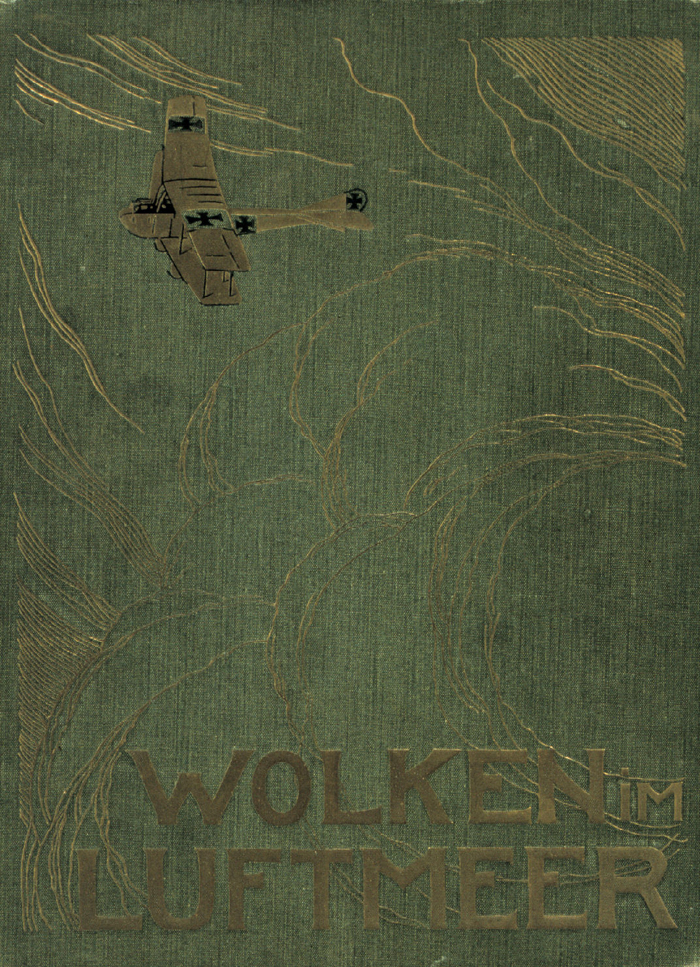
'Wolken im Luftmeer' book cover


Wolken im Luftmeer (Clouds in a sea of air) (cover)
1917


I desire (I feel that is the correct word) to own a copy of the above book. Has anyone got a one for sale?

Please let me know as I would love to own one!

Update: I now own a copy of Wolken im Luftmeer purchased from a lovely person in Germany 🙂

Dr Marcus Bunyan


Many thankx to the Fotomuseum Winterthur, Zurich for allowing me to publish the photographs in the posting. Please click on the photographs for a larger version of the image.


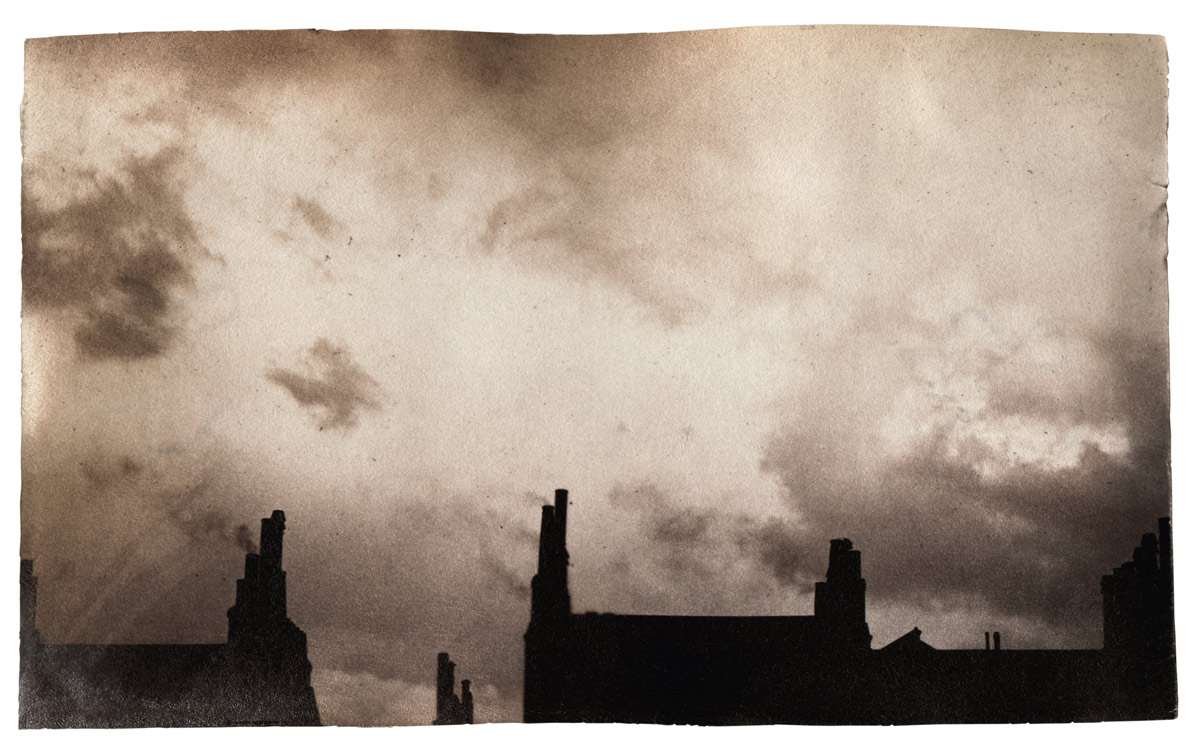
Unknown photographer.
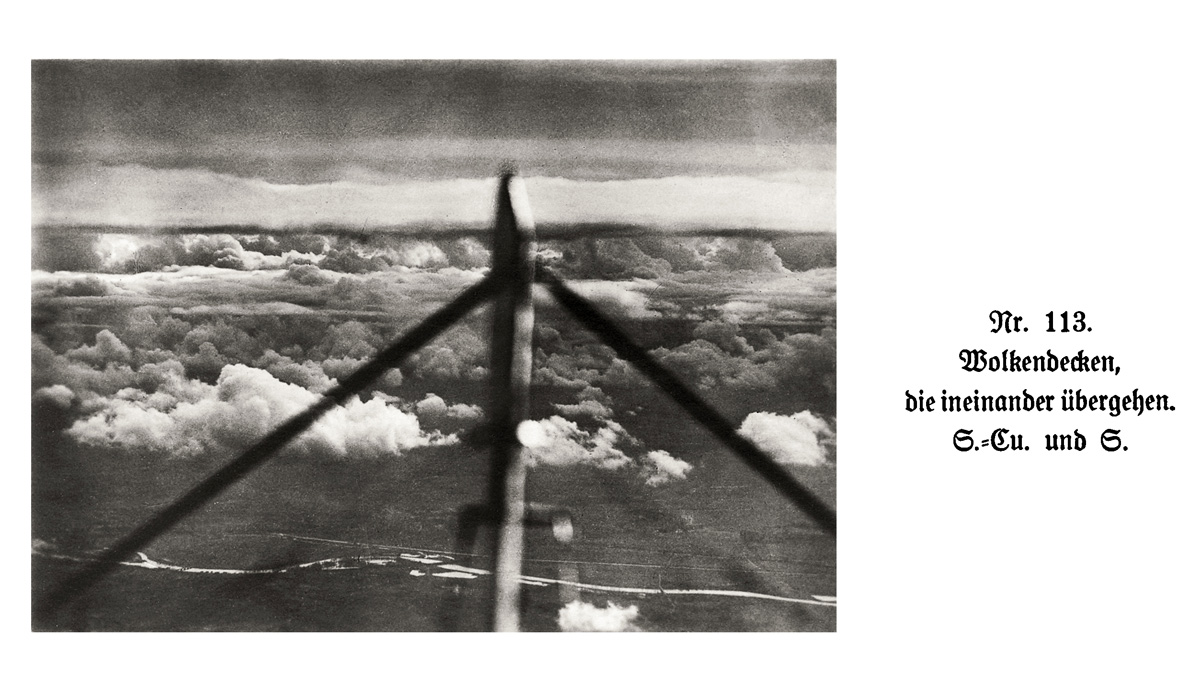
 'Wolkendecken, die ineinander übergehen. S.-Cu. und S., from: Wolken im Luftmeer' (Merging cloud covers. S.-Cu. and S., from: Clouds in a sea of air)
 Photographs taken by German fighter pilots during WW1, Berlin, 1917


Unknown photographer
Wolkendecken, die ineinander übergehen. S.-Cu. und S., from: Wolken im Luftmeer (Merging cloud covers. S.-Cu. and S., from: Clouds in a sea of air)
Photographs taken by German fighter pilots during WW1, Berlin, 1917


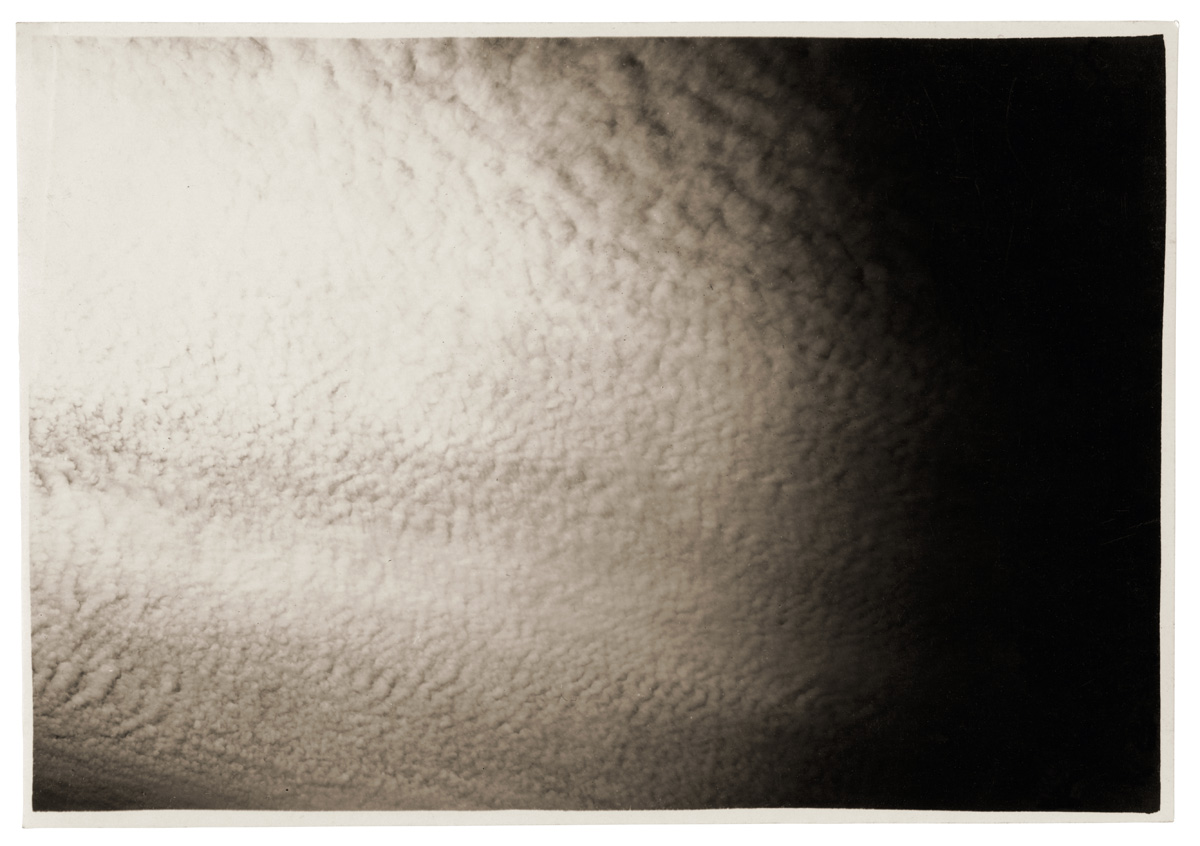
Unknown photographer.
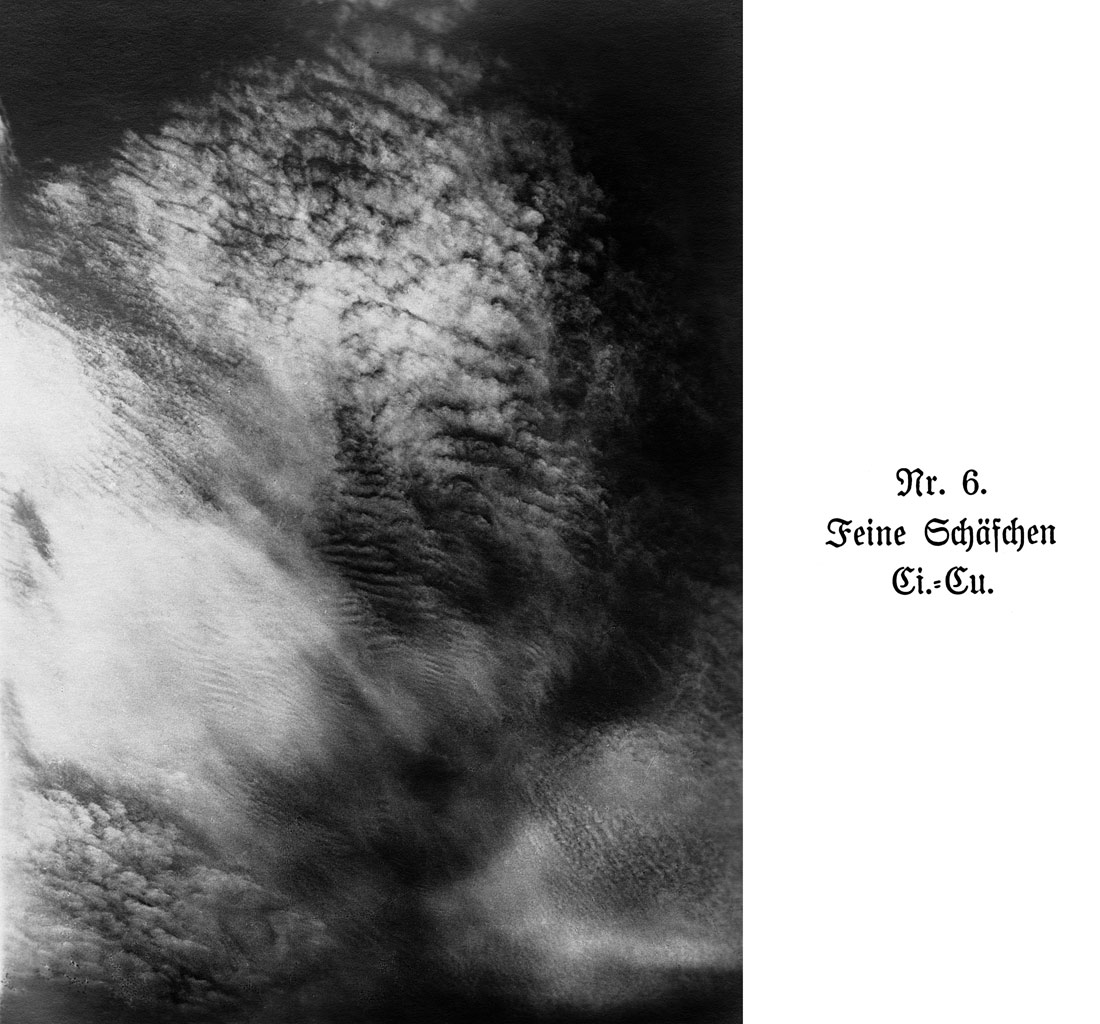
 'Feine Schäfchen. Ci.-Cu, from: Wolken im Luftmeer' (Delicate fluffy clouds. Ci.-Cu, from: Clouds in a sea of air)
 Photographs taken by German fighter pilots during WW1, Berlin, 1917


Unknown photographer
Feine Schäfchen. Ci.-Cu, from: Wolken im Luftmeer (Delicate fluffy clouds. Ci.-Cu, from: Clouds in a sea of air)
Photographs taken by German fighter pilots during WW1, Berlin, 1917


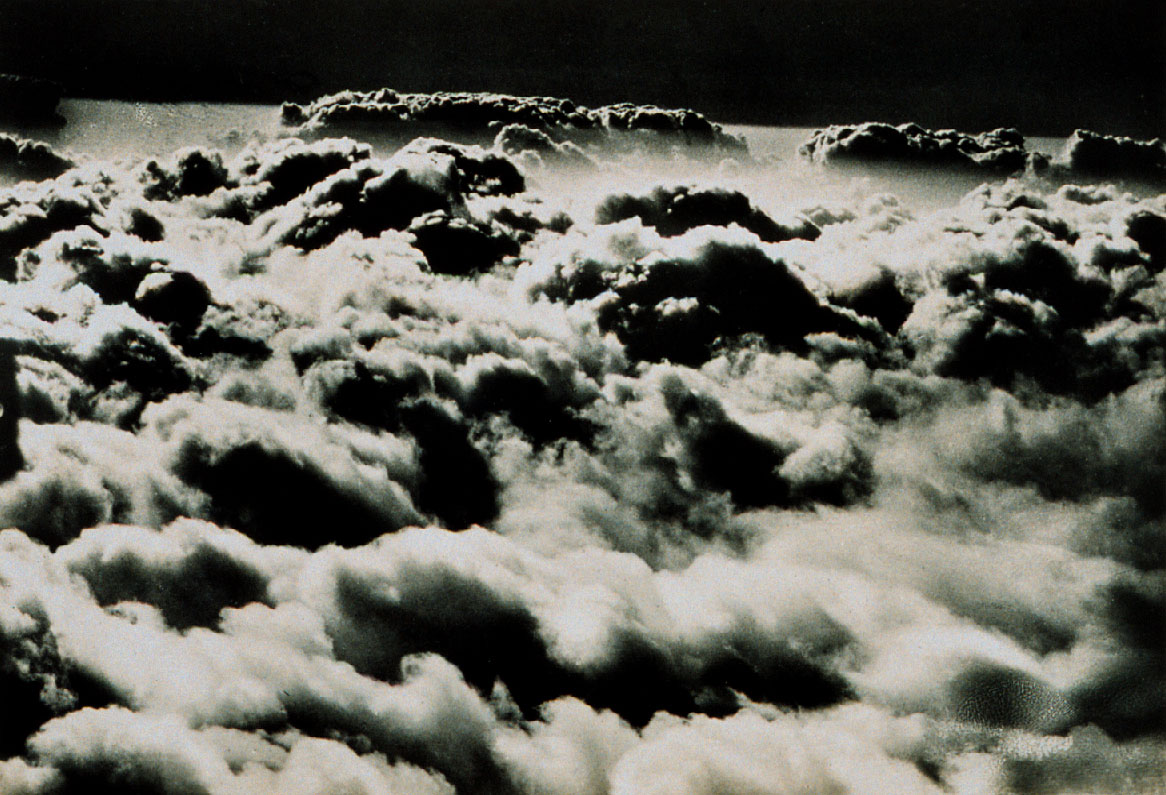
Unknown photographer Flying above a sea of clouds - altostratus from an aircraft (Plate Nr. 103 from: Wolken im Luftmeer / Clouds in a sea of air)


Unknown photographer
Flying above a sea of clouds – altostratus from an aircraft (Plate Nr. 103 from: Wolken im LuftmeerClouds in a sea of air)
Photographs taken by German fighter pilots during WW1, Berlin, 1917


Unknown photographer (Plate Nr. 90 from: Wolken im Luftmeer / Clouds in a sea of air)


Unknown photographer
(Plate Nr. 90 from: Wolken im Luftmeer / Clouds in a sea of air)
Photographs taken by German fighter pilots during WW1, Berlin, 1917


The English pharmacist and meteorologist Luke Howard wrote in 1802 in the preface to his manuscript On the Modification of Clouds: “Clouds are subject to certain distinct modifications, produced by the general causes which affect all the variations of the atmosphere; they are commonly as good visible indicators of the operation of these causes, as is the countenance of the state of a person’s mind or body.” Eighty years later, meteorologists had still not reached a consensus on how to classify, label, and read the forms of clouds. It was during this time that scientists first began using photography to record and measure clouds. With its help, they attempted to gain precise and accurate images that would provide insight on the interplay between clouds and the atmosphere and which could be used to create and convey a classification of cloud forms.

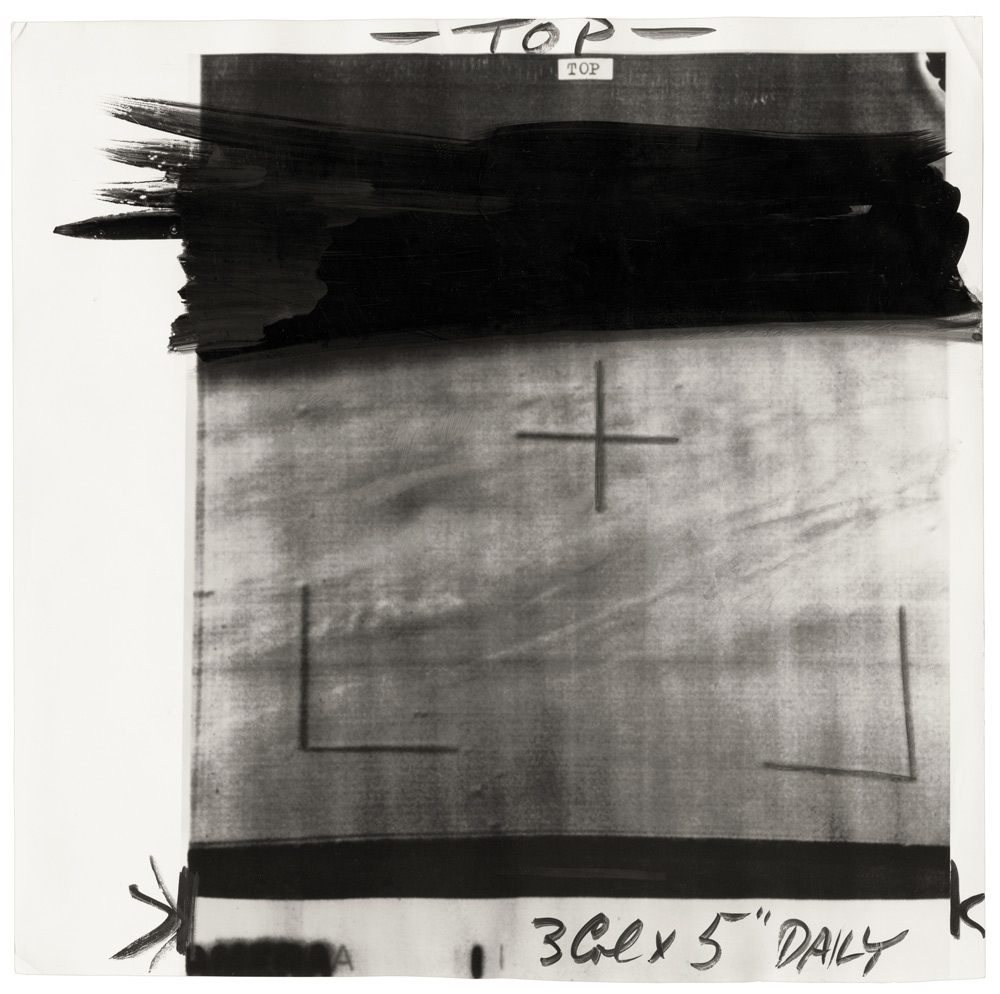
The exhibition CLOUD STUDIES – The Scientific View of the Sky presents six stages of meteorological cloud photography, from its infancy in the 1880s – in Switzerland with the first images by Albert Riggenbach photographed from Mount Säntis – up to the newspaper images in the United States that were captured by the first weather satellites in the 1960s. At the beginning of the 20th century, cloud formations and cloud systems were investigated foremost by the military and led to fundamental insights into interrelated weather situations.

CLOUD STUDIES – The Scientific View of the Sky is a rich collection of photographs, notes, records and atlases from diverse research sources and depicts the origins of contemporary weather forecasting. Each of the six parts of the exhibition represents a different scientific and photographic view of clouds while reflecting on the “history of the gaze” as well as the history of the medium with its various photographic mechanisms and reproductive technologies.

An additional theme running throughout the exhibition is the development of science and its varying ideas about clouds. The protagonists and working methods change over time – from the ambitious, wealthy amateur Ralph Abercromby to the anonymous teams of weather satellite technicians. Whereas Riggenbach still wished to capture images of ideal cloud types, the view of the cloud constellations and their chaotic systems expands with the introduction of film, at the latest, and with the constant recording and measuring capacities of digital cameras, which transmit images to earth, where they are evaluated and publicised.

Conceived by curator Helmut Völter (Leipzig), the exhibition CLOUD STUDIES – The Scientific View of the Sky explores the question as to how all these changes influenced the intentions, concepts, and technical developments associated with images of the clouds. It shows how similar or dissimilar photographs of clouds can be, when photographed according to individual specifications. Ultimately it is left to the viewer to decide if and how scientific cloud photography differs from related and frequently published motifs from the history of art and photography.

Press release from the Fotomuseum Winterthur, Zurich website


Masanao Abe (Japanese, 1891-1966)
 'Cloud Film No. 116 b' Gotemba, Japan, 1932


Masanao Abe (Japanese, 1891-1966)
Cloud Film No. 116 b
Gotemba, Japan, 1932
Filmstill
© Archive Masanao Abe


Ralph Abercromby (Scottish, 1842-1897) '
Raggy, Inky Cloud' London, 1884


Ralph Abercromby (Scottish, 1842-1897)
Raggy, Inky Cloud
London, 1884
Gelatin-silver print
© Met Office National Meteorological Archive


Albert Riggenbach (Swiss, 1854-1921) 'Cumulus, Basle' Around 1895


Albert Riggenbach (Swiss, 1854-1921)
Cumulus, Basle
Around 1895
Gelatin silver print
© Swiss National Museum, Zurich


Ferdinand Quénisset (French, 1872-1951) 'Alto-Cumulus et Cirro-Cumulus' Dugny near Paris, 1916


Ferdinand Quénisset (French, 1872-1951)
Alto-Cumulus et Cirro-Cumulus
Dugny near Paris, 1916
Gelatin-silver print
© Société Astronomique de France


'Cloud photo over north midwest United States by Tiros II' 1960


Cloud photo over north midwest United States by Tiros II
1960
Gelatin-silver print
© Collection Günter Karl Bose


Fotomuseum Winterthur
Grüzenstrasse 44 + 45
CH-8400
Winterthur (Zürich)

Opening hours:
Tuesday to Sunday 11am – 6pm
Wednesday 11am – 8pm
Closed on Mondays

Fotomuseum Winterthur website

LIKE ART BLART ON FACEBOOK

Back to top

Exhibition: ‘What’s in a face? aspects of portrait photography’ at the Art Gallery of New South Wales, Sydney

Exhibition dates: 24th September 2011 – 5th February 2012


Many thankx to the Art Gallery of New South Wales for allowing me to publish the photographs in the posting. Please click on the photographs for a larger version of the image.


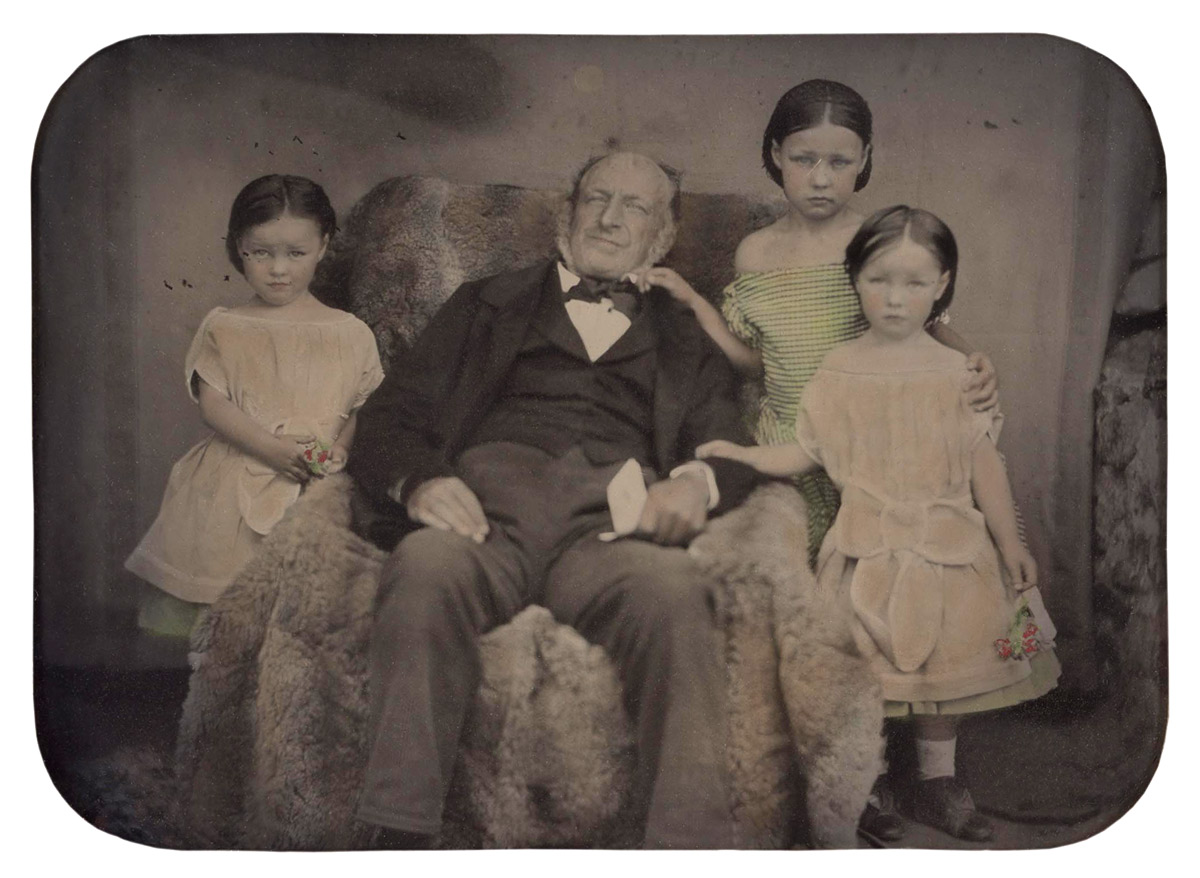
Glaister studio (Australia 1855-1870) 'Untitled (portrait of a man and three girls)' 1855-1870


Glaister studio (Australian, 1855-1870)
Untitled (portrait of a man and three girls)
1855-1870
Ambrotype, colour dyes
6.5 x 9cm sight; 9.3 x 11.9cm case
Purchased 1989


This charming ambrotype was thought to have been produced by one of Australia’s most important early photographers, Thomas Glaister, owning to the presence of the Glaister stamp on the case. However, superb varnish was one of Glaister’s hallmarks and this ambrotype is not varnished. In addition, the hand-colouring is not considered to be to Glaister’s standard. As such, it is possible that the ambrotype was inserted into this case at a later date, not least because there is no form of blackening behind the image. This was standard practice to prevent the viewer seeing through to the inside of the case. The Eichmeyer ‘book’ case, patented in 1855 by Henry A Eichmeyer of Philadelphia, were made of fine leather and beautifully put together. Glaister certainly used these but the ambrotype is probably not his specifically and could have been made by one of his sons in the 1860s when they worked as travelling photographers. Regardless of who took the image, it is a charming colonial portrait which in size is typical of the period – it can easily be held in the hand.

Ambrotypes were developed in the 1850s. They were faster and cheaper to make than daguerreotypes, yet were still unique objects.

1. 1989, ‘Masterpieces of Australian photography’, Josef Lebovic Gallery, Sydney p. 25

© Art Gallery of New South Wales Photography Collection Handbook, 2007
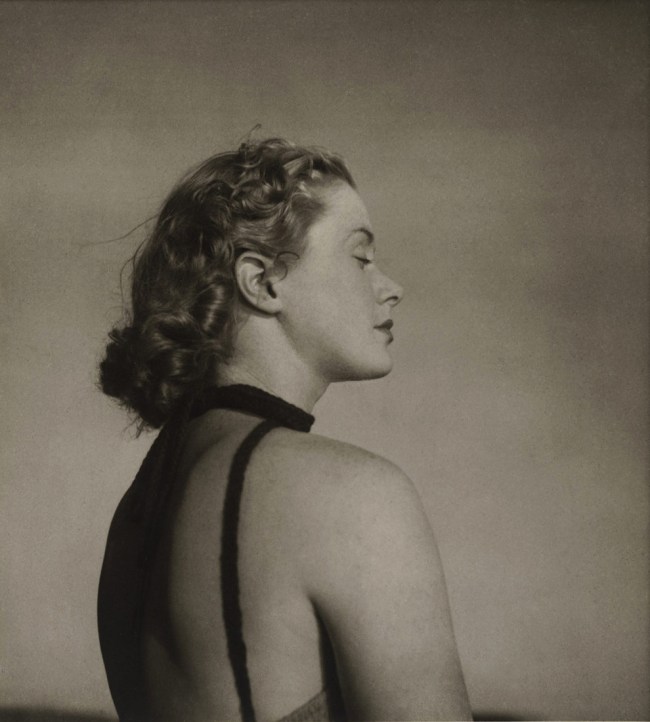
 

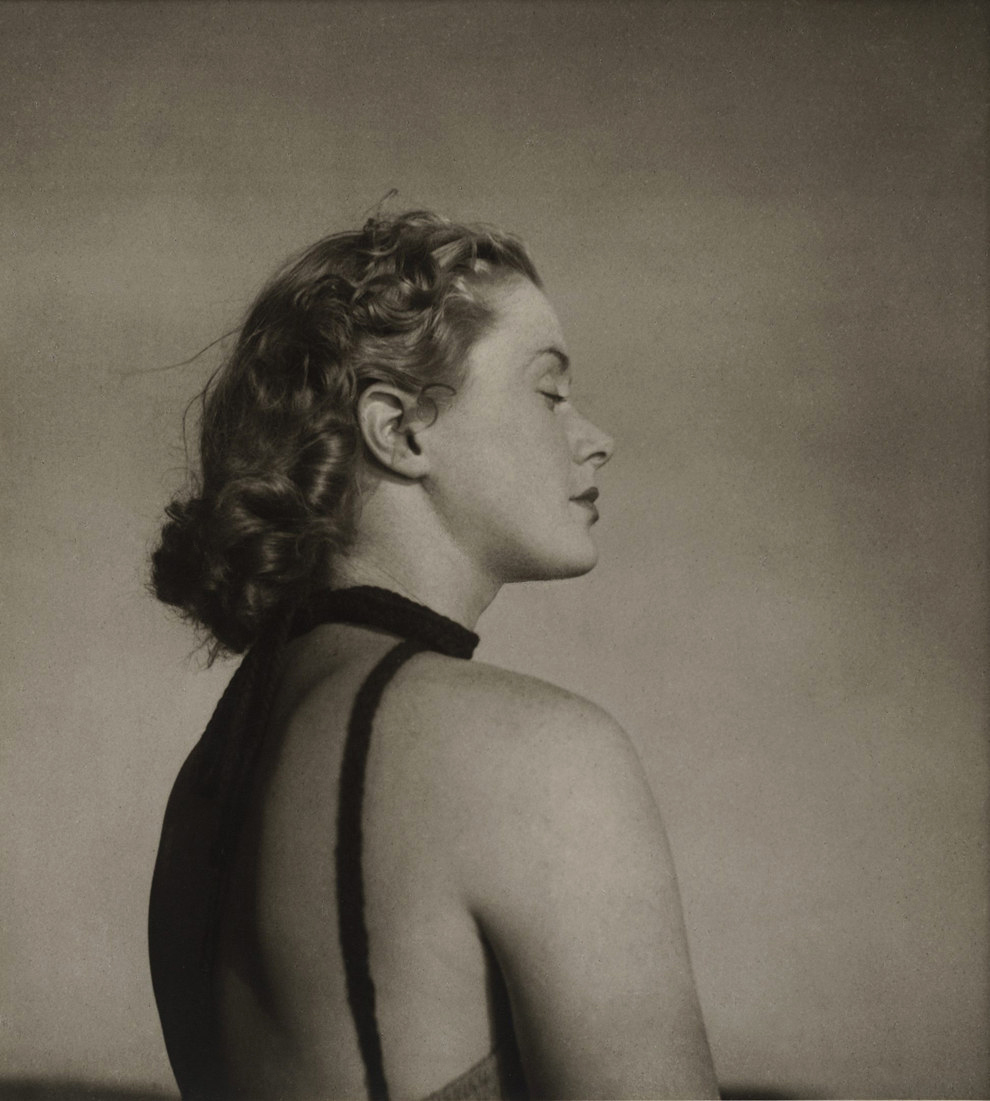
Olive Cotton (Australian, 1911-2003) 'Only to taste the warmth, the light, the wind' c. 1939


Olive Cotton (Australian, 1911-2003)
Only to taste the warmth, the light, the wind
c. 1939
Gelatin silver print
Image/sheet: 33.2 x 30.0cm
Purchased with funds provided by John Armati 2006
Art Gallery of NSW Collection


Only to taste the warmth, the light, the wind appears to have been the only print Cotton made of this image. It was found in the late 1990s and has been shown only once, in an exhibition at the AGNSW in 2000 where it was also used on the catalogue cover. It was unusual for Cotton to print so large, yet it is entirely fitting that this monumental head and shoulder shot of a beautiful young woman should be presented in this way. The subject was a model on a fashion shoot at which Cotton was probably assisting. Cotton often took her own photographs while on such shoots and used them for her private portfolio. The photograph transcends portraiture, fashion and time to become a remarkable image of harmony with the elements.

Cotton took the title for this photograph from an 1895 poem by English poet Laurence Binyon, ‘O summer sun’:

O summer sun, O moving trees!
O cheerful human noise, O busy glittering street!
What hour shall Fate in all the future find,
Or what delights, ever to equal these:
Only to taste the warmth, the light, the wind,
Only to be alive, and feel that life is sweet?1


A photographer whose work straddles pictorialism, modernism and documentary, Cotton maintained an independent vision throughout her working life, based on the close observation of nature. Her understanding of the medium of photography was not to do with capture, but rather ‘drawing with light’.

1/ 1915, ‘Poems of today’, English Association, London p. 96.

© Art Gallery of New South Wales Photography Collection Handbook, 2007


Destiny Deacon (Australian / Kuku/Erub, 1957-2024) 'Portrait: Janet Burchill & Jennifer McCamley, Artists' 1998


Destiny Deacon (Australian / Kuku/Erub, 1957-2024)
Portrait: Janet Burchill & Jennifer McCamley, Artists
1998
Colour bubble jet print from Polaroid photograph
57.9 x 71cm
Purchased 1998
© Destiny Deacon. Licensed by Viscopy, Sydney


Deacon is widely recognised for her staged photographs which employ various props, including souvenirs and kitsch, in satirical tableaus that critique notions of Aboriginality. Initially, in 1991, she employed dolls and since then they have become a signature motif. This use of non-living models informed her practice when she began to photograph people. As Deacon states, ‘I’ve never been one for “live action” shots… I’ve got to rule the roost. It’s no different dealing with inanimate objects or people, except with people I’m more terrified.’1

This method can be seen in Deacon’s Portrait: Janet Burchill & Jennifer McCamley, artists 1998. Burchill and McCamley, Melbourne and Mildura based collaborative artists, have been arranged in a re-enactment of Henri Matisse’s Conversation 1908-1912. The photograph echoes the deep blue background of the original painting. The two artists hold the stiff positions of Matisse and his seated wife gazing across at each other. This is one of a number of Deacon’s works that feature Australian writers, artists and other notable figures re-enacting iconic paintings. Other examples include artist Fiona Hall in a 2004 retake of Grace Cossington-Smith’s The sock knitter 1915 and a portrait of Gary Foley inspired by William Dobell’s The boy at the basin 1932.

1/ Destiny Deacon, ‘Interview with Virginia Fraser’ in Destiny Deacon: walk & don’t look blak, Museum of Contemporary Art, Sydney, 2004, p. 109.
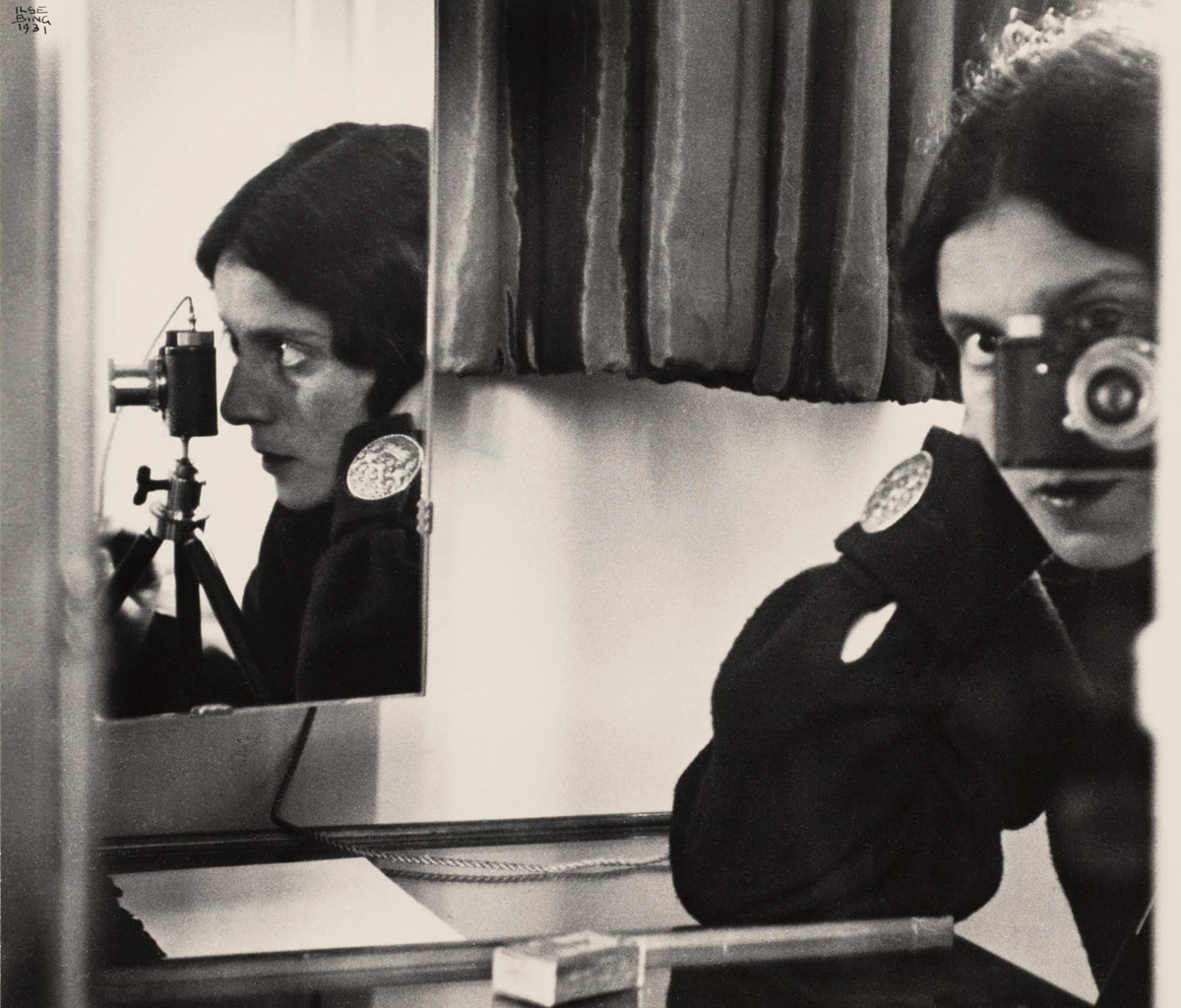
 

Ilse Bing (United States of America, Germany 1899-1998) 'Self portrait with Leica' 1931 printed 1941


Ilse Bing (United States of America/Germany, 1899-1998)
Self portrait with Leica
1931 printed 1941
Gelatin silver photograph
26.7 x 31.2cm
Alistair McAlpine Photography Fund 2005
© Ilse Bing Estate. Courtesy Edwynn Houk Gallery, New York


Self portrait with Leica is a complex image in which the artist has photographed herself and her trademark Leica in one mirror, while the profile of both is reflected in another. The large button on her cuff disturbs the play between full face and profile, while the objects at the bottom of the frame lend a certain informality to an otherwise highly contrived set-up. The soft velvety curtain behind introduces a further element of rich tactility. The play between black, white and shades of grey softens and enriches the overall image.

Although Bing avoided becoming part of any specific movement of the 1920s or 1930s – for example, constructivism, the Bauhaus or surrealism, describing herself as being ‘on the edge of the periphery of the Bauhaus’ only – she was fully cognisant of the range of experimentation which was taking place across Europe. She forged her own path, combining an abiding belief in the importance of intuition and poetry with rigorous composition and superb technical skills.

Inspired by the work of Florence Henri, and with increasing confidence in her ability to marry naturalism with geometric formalism, Bing worked extensively as a press, fashion, portrait and documentary photographer in Paris until she was interned as an enemy alien in 1940. Late in her life Bing wrote:

‘I didn’t choose photography; it chose me. I didn’t know it at the time. An artist doesn’t think first and then do it, he [sic] is driven. Now over fifty years later, I can look back and explain it. In a way, it was the trend of the time; it was the time when you started to see differently … And the camera, that was, in a way, the beginning of the mechanical device penetrating into the field of art.’1

1/ Barrett N C 1985, Ilse Bing: three decades of photography, New Orleans Museum of Art, New Orleans pp. 13-14.

© Art Gallery of New South Wales Photography Collection Handbook, 2007


Robert Rooney (Australian, 1937-2017) 'Portrait of Maria Kozic and Philip Brophy II' 1981


Robert Rooney (Australian, 1937-2017)
Portrait of Maria Kozic and Philip Brophy II
1981
Cibachrome photograph
Image/sheet: 20.1 x 30cm
Purchased 1996
© Robert Rooney


The four portraits in the Art Gallery of New South Wales collection reflect a particular period in Australian art, when the now established artists were beginning their careers. They depict members of the contemporary art scene of the late 1970s to mid 1980s associated with Art + Text, an Australian art magazine published from 1981-2000.

Philip Brophy formed the experimental group Tsk Tsk Tsk in 1977. The group produced experimental music, films, videos, and live theatrical performances. Brophy involved his friends in the group, including partner Maria Kozic on synthesiser. Kozic was also producing her own multimedia work. In this photograph, Kozic and Brophy are standing in a suburban backyard complete with Hills Hoist. This is reflective of Tsk Tsk Tsk’s suburban beginnings, based as it was at Clifton Hill’s Community Music Centre. After the group’s dissolution in the early 1980s, Brophy made several experimental films and curated numerous programs for the Melbourne international film festival as well as exhibitions such as Tezuka: the marvel of manga for the National Gallery of Victoria. Kozic moved to New York where she continued her artistic career. Her work has been exhibited widely throughout Australia and overseas and been collected by many museums including the Art Gallery of New South Wales.
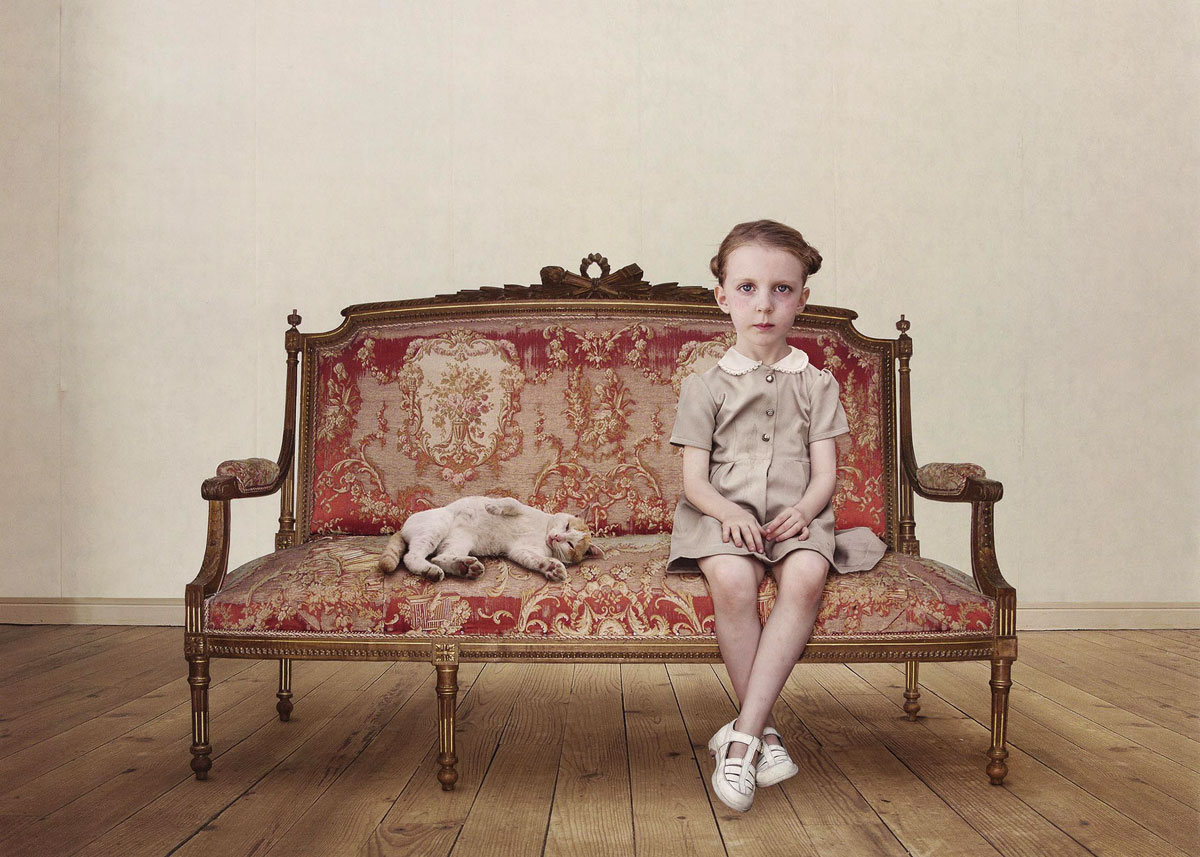
 

Loretta Lux (Germany b. 1969) 'The waiting girl' 2006


Loretta Lux (Germany, b. 1969)
The waiting girl
2006
Ilfochrome photograph
38 × 53cm
Purchased with funds provided by the Photography Collection Benefactors’ Program 2007
© Loretta Lux/Bild-Kunst. Licensed by Viscopy, Sydney


Lux’s portraits are by no means traditional, ‘I call them imaginary portraits. They are not really about the children that I photographed’, commented the artist in interview with Wim van Sinderen (Loretta Lux: new work 2004). In relation to The waiting girl, Lux has said: ‘It’s a picture about time, and timelessness. For me they are sitting on the sofa as if they are waiting for eternity.’ (The Guardian 23 November 06)

Through subtle digital manipulation of the body and facial features of her subjects, Lux creates eerie doll-like creatures with glazed eyes, porcelain smooth skin and subtly ill-proportioned forms. The resulting portraits contain an uncanny blend of mute childish innocence and the self-contained stoicism of adulthood.

Lux’s images of children recall those of the old masters, such as Veláquez, Runge and Bronzino whom she cites as main inspirations alongside German photographer August Sander. Lux has stated in an interview with Louise Baring for the Telegraph (UK) that she uses children ‘as a metaphor for a lost paradise’. Dressing her young models in past fashions (often of the era of her own childhood) suggests the child’s game of ‘dress ups’ in order to be an adult yet somehow played out in reverse. That is, Lux’s children do not seem like children at all, but rather like serious world-weary adults manifested in childish forms.


Spanning over a century, What’s in a face? aspects of portrait photography is an exhibition of 45 photographs from the Art Gallery of NSW collection. The exhibition focuses on crucial points in the history of photographic depictions of the human face ranging from studio portraiture in the late 19th century to contemporary practices today.

Works by Australian photographers, such as Paul Foelsche, Olive Cotton, Max Dupain, Carol Jerrems, Destiny Deacon, Patrina Hicks, Darren Sylvester and others, are placed in an international context, represented by Man Ray, Edward Weston, Iwao Yamawaki, Nan Goldin, Ben Cauchi and Loretta Lux, amongst others.

All portraits reveal something of the sitter, the photographer and also of us as viewers, but none reveal a whole and complete being. This is part of the enduring fascination with the photographic portrait which purports to be an exact likeness but operates more accurately as a metaphor for the self and how that self might exist in the world at a particular point in time.

Judy Annear, senior curator photographs, Art Gallery of NSW


Using photography to depict the face and figure was initially a time-consuming and expensive business. However, the drive to document all things in the world, and rapid technological advances, meant that by the 1880s most people, willing or not and regardless of the photographer’s or their own desires, were documented in some way.

Spurious 19th century ideas to do with what a face could represent exploded in the early 20th century when identity came to be seen as a psychological rather than social phenomenon. Theatricality and performing for the camera, which had existed in photography since its inception, also became much more evident in this period.

In the post-WWII era representations of the face and the body quickly acquired a political and socially aware edge. More recently the face has tended to stand less as an expression of personal experience and more a statement that may signify a set of ideas, whether about the individual, the group or the society at large. Many of these highly constructed images acknowledge and play upon the problematics of the photographic portrait.”

Text from the AGNSW website


Petrina Hicks (Australian, b. 1972) 'Shenae and Jade' 2005


Petrina Hicks (Australian, b. 1972)
Shenae and Jade
2005
From the series Untitled 2005
Lightjet print
85.5 x 80cm
Courtesy the artist and Michael Reid Gallery


Shenae and Jade is typical of Hicks’ unconventional portraits. The young model holds the budgie’s head in her mouth. It’s the kind of slightly dangerous behaviour which can be unnerving to observe. The freckled nose of the model is in tension with her smooth pale temples, heavily lashed closed eyes and soft white top. The luminescent background and generally pale colouration throw the headless body of the brightly coloured budgie into high relief.


Darren Sylvester (Australia, b. 1974) 'They return to you in song' 2001


Darren Sylvester (Australian, b. 1974)
They return to you in song
2001
Lambda print
Image/sheet: 100 x 100cm
Purchased with funds provided by the Photography Collection Benefactors’ Program 2002
© Darren Sylvester


Informed by the slick stylistic conventions of high-end consumer images, Darren Sylvester’s body of work suggests the existential dilemma of living in an overtly consumerist society – one that promises fulfilment but fails to truly satisfy even the most ardent consumer. Perpetually tantalised with glossy images of affluence, ‘must-have’ products and brochure living, our ‘real’ lives can at times seem unfulfilling by comparison, sometimes painful and often a little pathetic. Sylvester’s work seems to suggest that even in our most personal heartfelt moments, our lives are just like everybody else’s, not so special or unique. Our lives could equally be a series of advertising moments.

Yet the nature of this work is resolutely ambiguous, alternately offering intimacy and emotion with cool detachment. Photo-shopped clean of incidental detail and anomaly, and featuring youthful agency models, Sylvester’s evenly lit, tightly focused images still tap a nerve despite their polished finish. Perhaps this is because they are precisely ‘generic’ (and emotive) experiences to which we can all relate. The same principles underpin a good pop song and in Sylvester’s work this is no coincidence – he strives to produce images that carry the same directness and lasting impact. Commenting on the music of the Carpenters, ‘their lyrics were always sad and about emotional relationships but sealed beneath glossy west coast melodies’, Sylvester reveals the pop-music strategies he employs in his work.1

Based on short stories written by the artist prior to composing the scene, his images carry their own inherent narrative. Yet we don’t need to read Sylvester’s story to understand the drama, nor do we need to hear the tune to recognise the song – it’s an old one, and a shared one, that each of us remembers well.

1/ Colless E 2006, ‘Darren Sylvester: the right stuff’, Australian Art Collector, no 36, Apr-Jun p. 102.

© Art Gallery of New South Wales Photography Collection Handbook, 2007


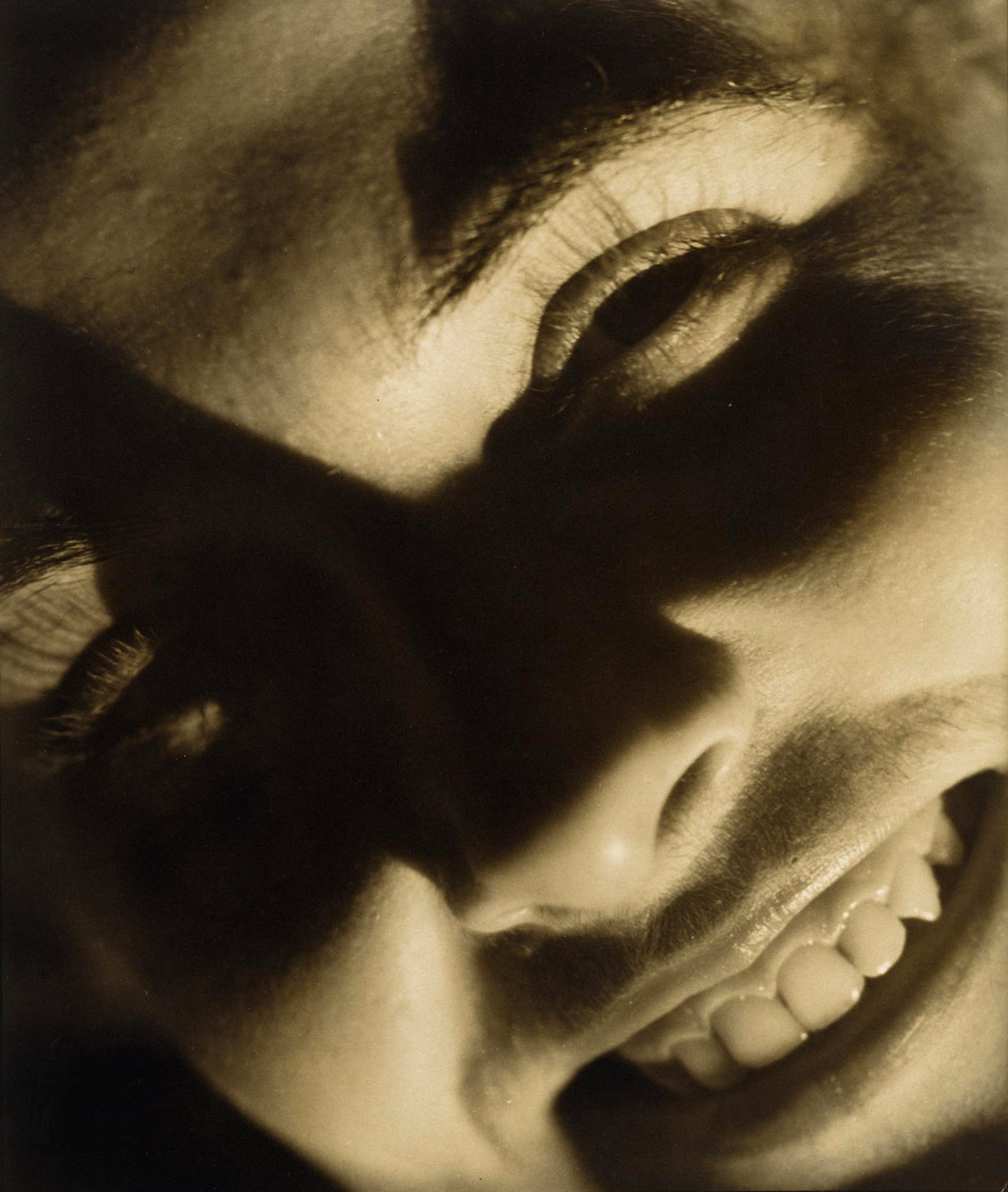
Hans Hasenpflug (Australia, Germany 1907-1977) 'Untitled (head of a woman)' 1940-1941


Hans Hasenpflug (Australia/Germany 1907-1977)
Untitled (head of a woman)
1940-1941
Gelatin silver photograph
Image: 28.8 x 24.3cm
Gift of Mr Christopher Hamilton, the artist’s son 1984


Hans Hasenpflug arrived in Australia in 1927 aged 20. He had been born into an educated Stuttgart family but it does not appear that he became involved in photography until 1932 when he was employed by Leica Photo Service, Sydney. Hasenpflug went on to work for prominent photographer Russell Roberts from 1935 to 1937 before moving to Melbourne and working with Athol Shmith and other Melbourne studios from 1937 to 1942. As an enemy alien Hasenpflug was not allowed to work on industrial assignments during World War Two but he was not interned and was naturalised in 1945. Hasenpflug exhibited in photography salons in the 1930s and his work appeared in the Sydney Morning Herald, Australian Woman’s Weekly and the Sunday Telegraph.

Hasenpflug was a versatile advertising photographer. He specialised in fashion and product advertising and some portraiture. Despite his apparent lack of photographic training until the 1930s, he seems to be have been strongly influenced by the European avant-garde. Many of his photographs, regardless of genre or subject matter, depend on diagonals through the picture plane and on raking light.

This is true of Untitled. Strong light has created deep shadows across the subject, a closely cropped image of a woman’s face. This, combined with the oblique camera angle, creates a vivid and disconcerting image. The woman is staring directly into the camera, yet a band of strong shadow across the centre of the image creates a blank eyed effect. The pupil free eyes seem inhuman; mask-like or alien. This is in stark contrast to the woman’s open smile that dominates the bottom of the work. The strong, full light on this area highlights her lips, gums and teeth to an almost hyper real extent. These contradictions create an image that on the surface seems friendly and intimate, yet contains an undertone of threat. The inherent strangeness of the image makes it unlikely that this was a commissioned photograph, but rather the artist’s experiment with his medium, and indeed is probably a portrait of his fiancee, Elizabeth Hamilton Crouch.


Edward Weston (American, 1886-1956) 'Guadalupe de Rivera, Mexico' 1924


Edward Weston (American, 1886-1956)
Guadalupe de Rivera, Mexico
1924, printed later
Gelatin silver photograph
20.7 × 17.8cm
Gift of Patsy W. Asch 2000
© Centre for Creative Photography, Arizona Board of Regents


Edward Weston’s Mexican years were of great importance to him and allowed for the maturing of his vision in relation to photography. Accompanied by Tina Modotti, whose own work developed at this time, Weston experimented with pure form through monumental portraits (of which Guadalupe de Rivera, Mexico is a classic example), images of landscapes and buildings, still-lifes and nudes.

Weston’s portraits of those he encountered in Mexico are uniformly compelling. Often taken with a hand-held camera against a plain background and with strong lighting, these images emphasise individuality, modernity and dynamism.

Guadalupe de Rivera was Diego Rivera’s wife at the time and both were among the group of people Weston and Modotti associated with. Weston described Guadalupe in his ‘Daybooks’ as ‘tall, proud of bearing, almost haughty; her walk like a panther’s, her complexion almost green, with eyes to match’.1 As he worked on the portrait, Weston wrote: ‘I am finishing the portrait of Lupe. It is a heroic head, the best I have done in Mexico; with the Graflex, in direct sunlight I caught her, mouth open, talking, and what could be more characteristic of Lupe! Singing or talking I must always remember her’.2

This later print by Weston emphasises, through the dramatic effect of light and shade, the strong lines of the face. The shape of the open mouth is echoed by the shadowed eye above and the jawline below. The diagonal of jaw to ear which runs in parallel to the nose also adds to the dynamism of this image. Outdoors, with the sun shining on her hair, this is a portrait of a remarkable woman.

1/ Newhall N ed 1981, ‘The daybooks of Edward Weston 1 Mexico’, Aperture, New York p. 26.
2/ Ibid p. 42.

© Art Gallery of New South Wales Photography Collection Handbook, 2007
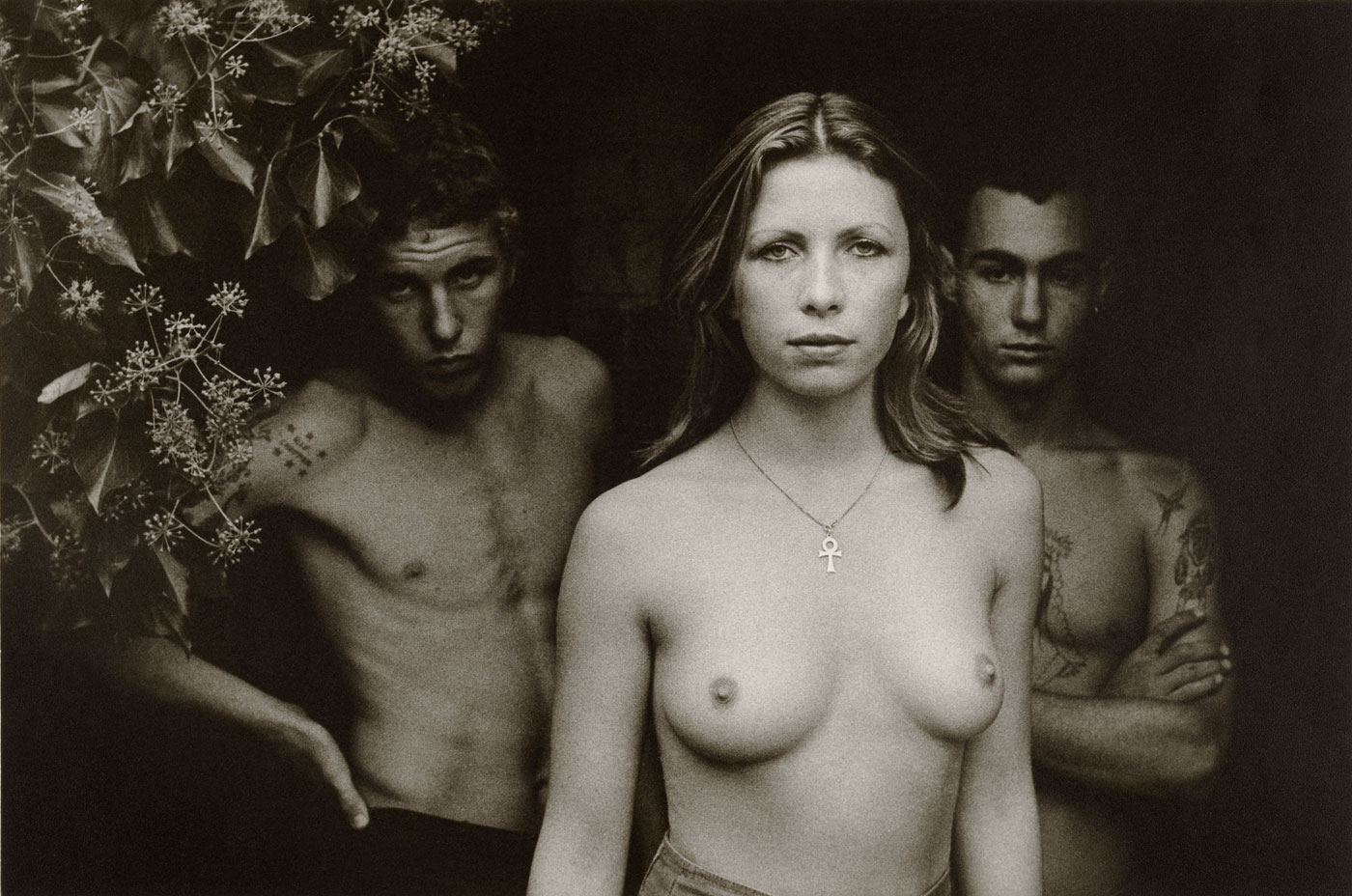
 

Carol Jerrems (Australian, 1949-1980) 'Vale Street' 1975


Carol Jerrems (Australian, 1949-1980)
Vale Street
1975
Gelatin silver print
20.1 x 30.4cm
Purchased 1979
© Ken and Lance Jerrems


A quintessential image of the 1970s, Vale Street has lost none of its capacity to enchant and disturb in the intervening years. In one sense it can be read as a sociological document; in another as a wholly subjective work of art. Like the mediumistic spirit-photographs of the nineteenth century, Jerrems’s photo seems to disclose the very souls of its subjects. As they respond, each in their individual fashion, to the regarding presence of the camera lens, the figures compose themselves, without theatrics, into telling attitudes. The prominence and bodily confidence of the open-faced young woman is set against the reticence of her boyish companions. As a portrait of relationships as well as individuals, Vale Street speaks of gender relations, adolescent sexuality, suburban mores and the photographer’s own subtly partisan demeanour in regard to these themes.

Art Gallery Handbook, 1999
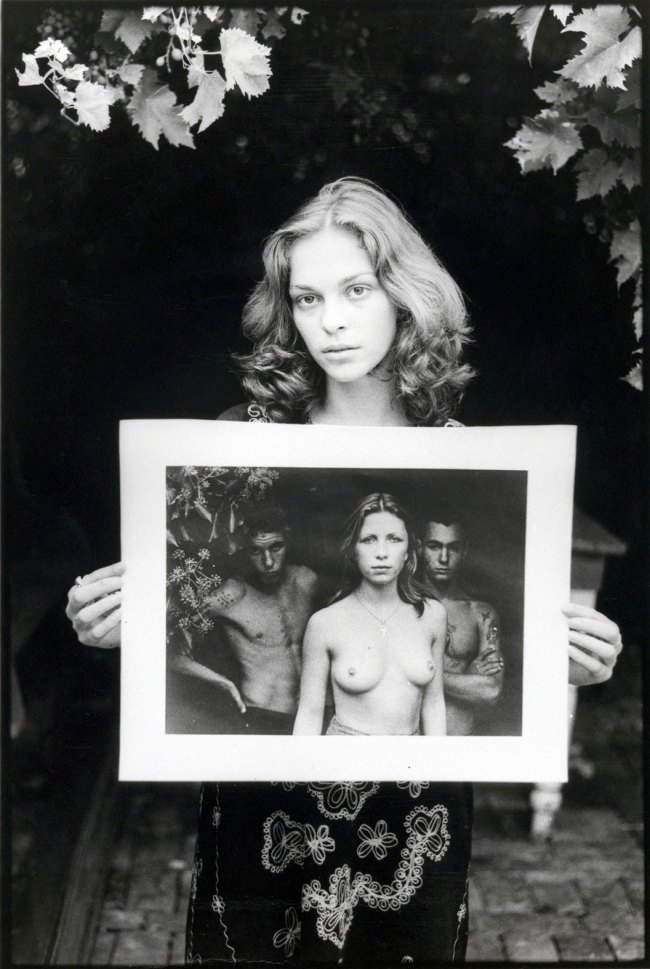
 

Carol Jerrems (Australian, 1949-1980) 'Juliet Holding Vale Street' 1976


Carol Jerrems (Australian, 1949-1980)
Juliet Holding Vale Street
1976
Gelatin silver print
30.4 x 20.1cm
Purchased 1979
© Ken and Lance Jerrems


Carol Jerrems (Australian, 1949-1980) 'Lynn Gailey' 1976


Carol Jerrems (Australian, 1949-1980)
Lynn Gailey
1976
Gelatin silver print
30.3 x 20.1cm
Purchased 1979
© Ken and Lance Jerrems
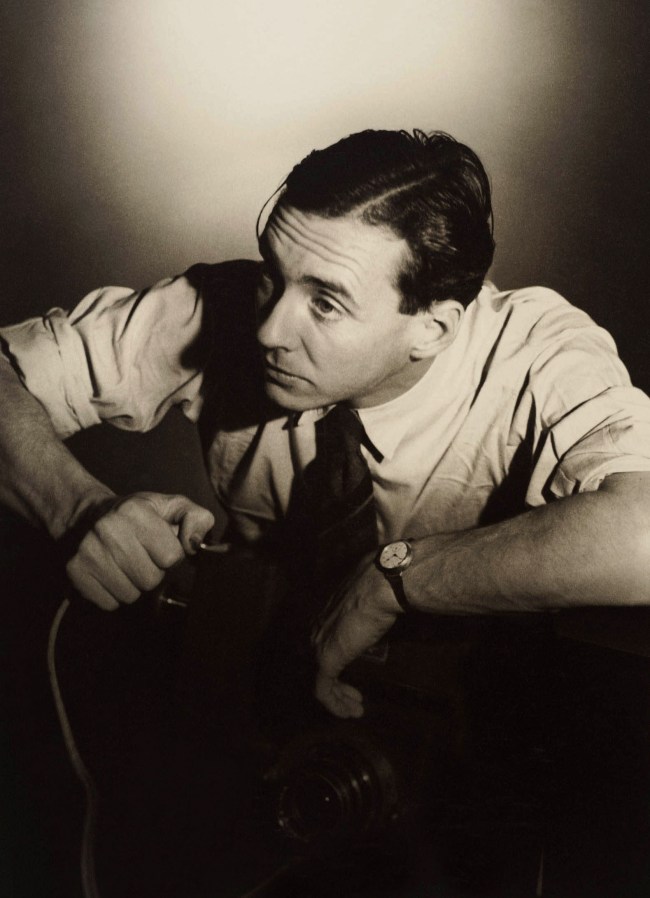
 

Max Dupain (Australia 1911-1992) 'Untitled (self portrait)' 1930s


Max Dupain (Australia, 1911-1992)
Untitled (self portrait)
1930s
Gelatin silver photograph
19.3 x 14cm
Art Gallery of NSW Collection


This engaging self-portrait by Max Dupain was kept by the artist in an album of photographs from the 1930s. The album was possibly a workbook which would enable Dupain and his clients to review his career as a young modernist photographer. Dupain had opened his own studio in 1934 at the age of 23 having previously been apprenticed to Cecil Bostock and studying painting and drawing at the Julian Ashton Art School in Sydney. In his teens, through the Photographic Society of New South Wales, Dupain had also had contact with Harold Cazneaux whom he later described as ‘the father of modern Australian photography’.1 Both Cazneaux and Bostock provided Dupain with a solid technical and aesthetic base from which to work.

The young working photographer has chosen to depict himself in Untitled (self portrait) with rolled-up sleeves and a furrowed brow. The image is bisected into light in the upper half and dark below with the photographer’s right hand pressing the cable release. Looking away, in three-quarter profile, Dupain is engaged with something out of the frame. The dynamism of the image is further enhanced by the bent arms and the strong shadow of Dupain’s profile.

The 1930s was a period of intense experimentation for Dupain as he applied the lessons learned from Bostock and Cazneaux and absorbed the material in international publications. He mastered solarisation, montage, portraiture, interiors and advertising photography. His interest in form and composition matured. His dedication to his work is manifested in this image.

1/ Dupain M 1978, Cazneaux: photographs by Harold Cazneaux 1878-1953, National Library of Australia, Canberra p. xi.

© Art Gallery of New South Wales Photography Collection Handbook, 2007


Art Gallery of New South Wales
Art Gallery Road, The Domain
Sydney NSW 2000, Australia

Opening hours:
Open every day 10am – 5pm
except Christmas Day and Good Friday

Art Gallery of New South Wales website

LIKE ART BLART ON FACEBOOK

Back to top

Exhibition: ‘Stanley Greene – Black Passport’ at Foam, Amsterdam

Exhibition dates: 16th December 2011 – 5th February 2012


Many thankx to FOAM for allowing me to publish the photographs in the posting. Please click on the photographs for a larger version of the image. All photographs: Black Passport © Stanley Greene / NOOR


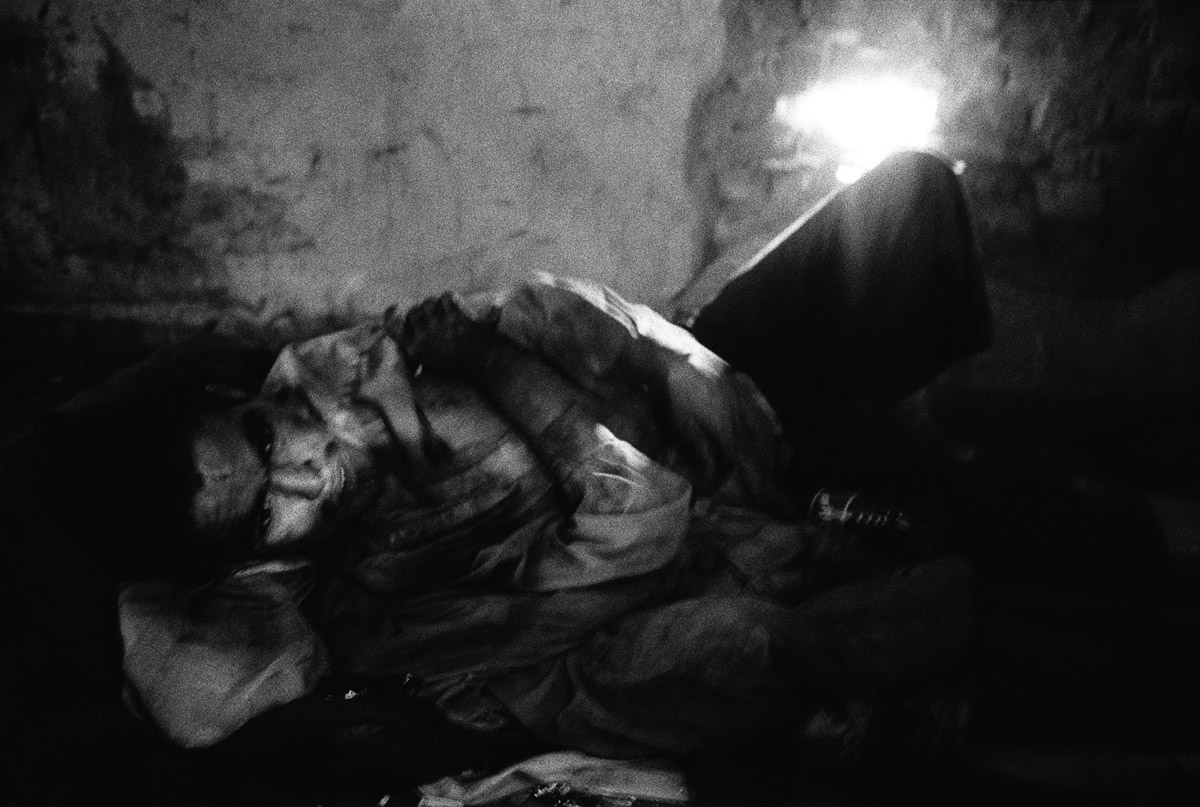
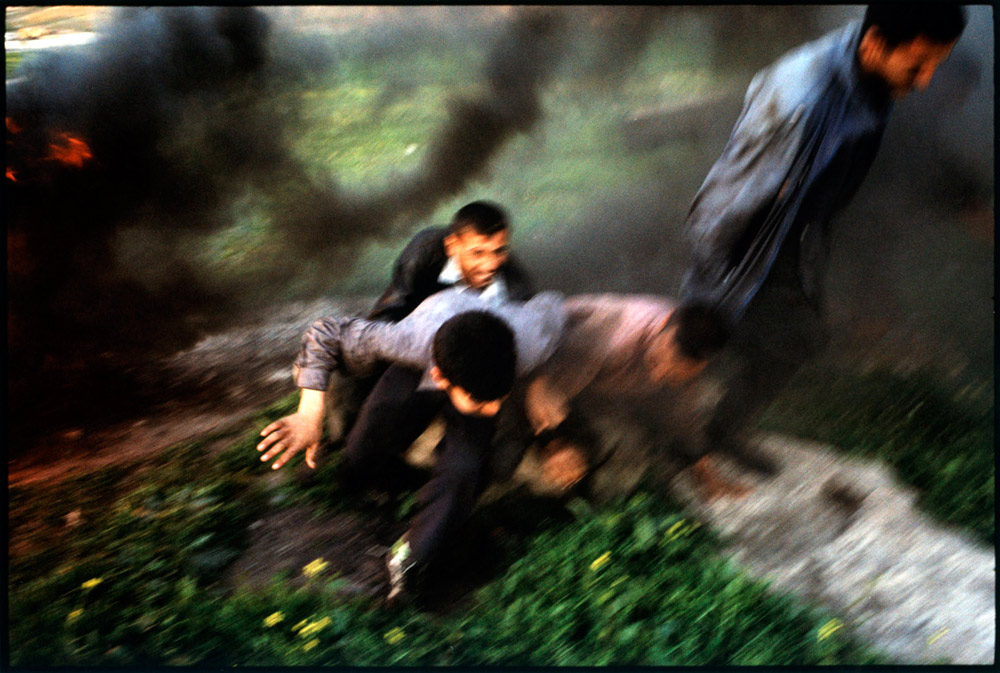
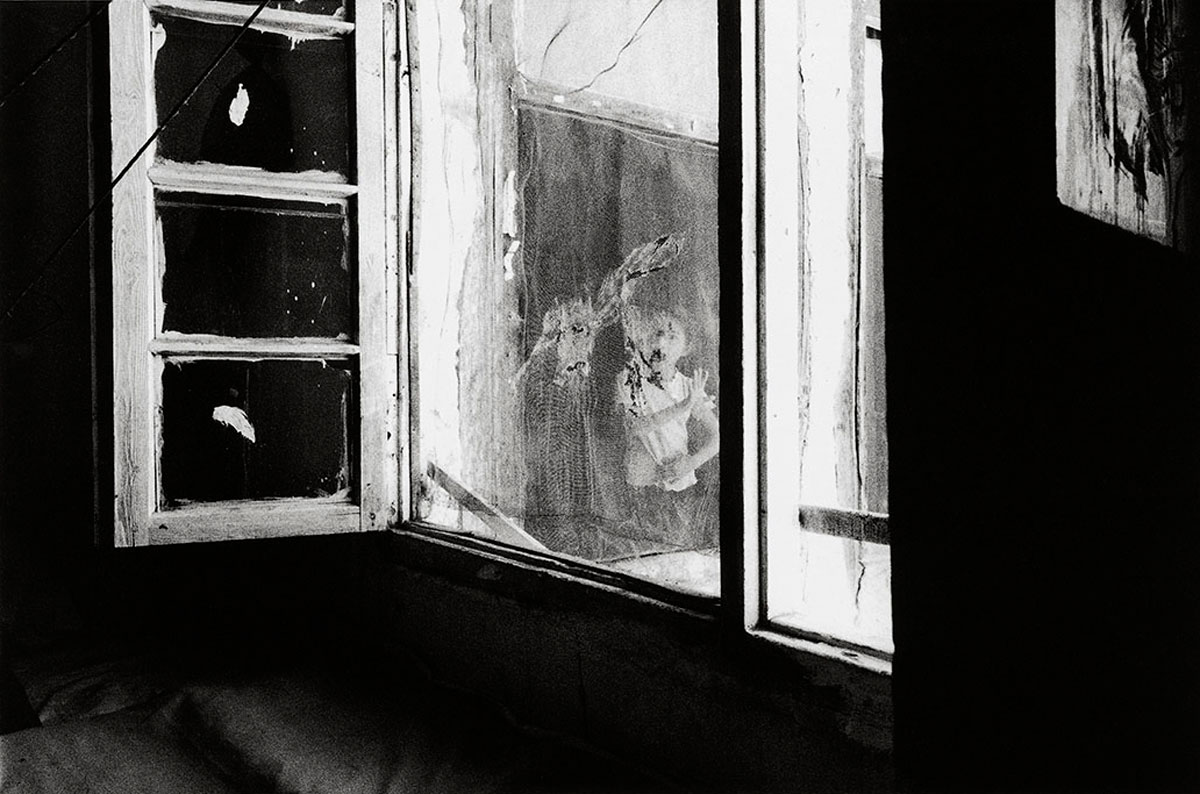
Stanley Greene (American, 1949-2017) 'Madman, Afghanistan' 2008


Stanley Greene (American, 1949-2017)
Madman, Afghanistan
2008
Black Passport © Stanley Greene / NOOR


Black Passport © Stanley Greene / NOOR

Black Passport © Stanley Greene / NOOR


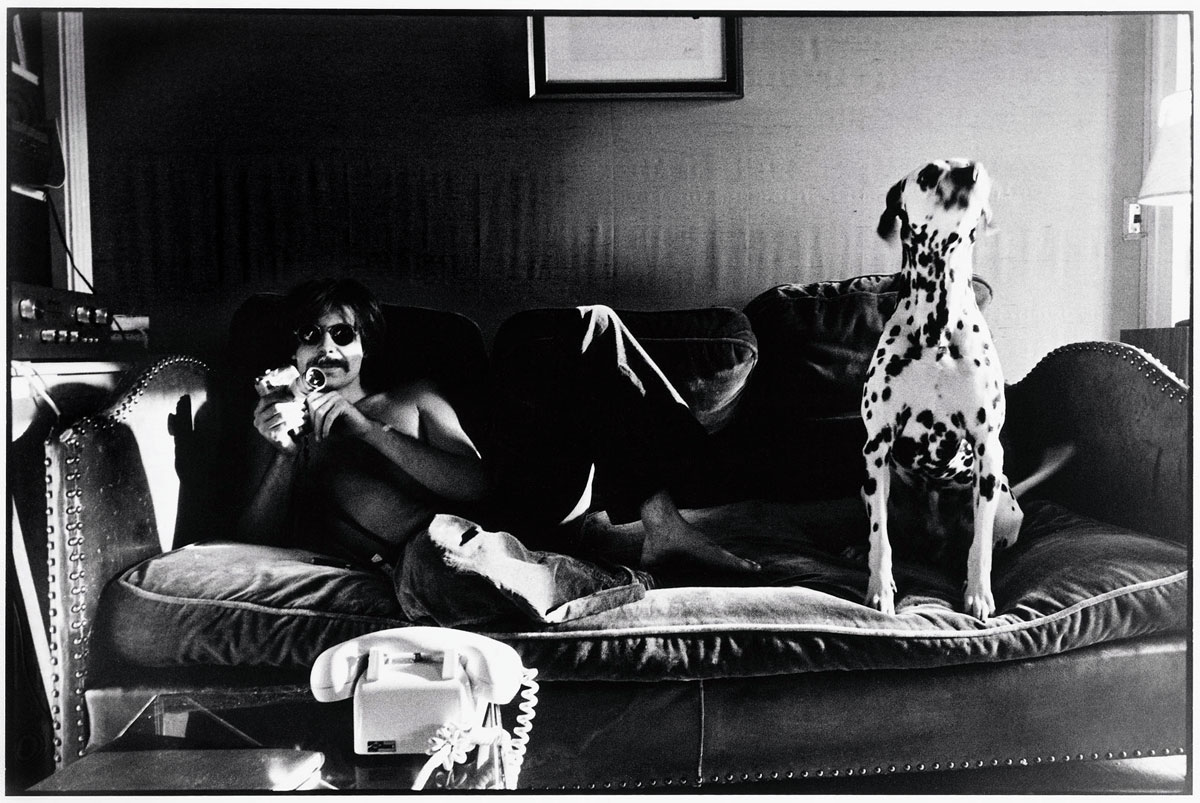
Foam presents Black Passport, a project by and about the American conflict photographer Stanley Greene (New York, 1949-2017). Black Passport shows photos of conflicts and disasters combined with photos of Greene’s  private life. The result is a revealing portrait of a photographer who is addicted to the adrenaline rush of being on the move, but at the same time realises the sacrifices he makes in his personal life. Stanley Greene has photographed in regions such as Chechnya, Iraq, Rwanda and Sudan and is one of the founders of the international photo agency NOOR.

Every day, newspapers and magazines are filled with photos of war, oppression and violence. The photographer that enables us to watch what is happening in the rest of the world from the safety of our own homes, however, usually remains invisible. This is not the case in Black Passport, the biography of war photographer Stanley Greene, which appeared in book form in 2009 and will be exhibited in Foam starting on 16 December. Photos of conflict and disaster regions such as Rwanda, Sudan, Chechnya and Iraq are alternated with photos from the private life of Stanley Greene: photos of Paris and many women. Slide shows will also be presented, interspersed with texts from the book. Greene’s voice resounds through the exhibition space – he is disconcertingly frank: ‘I think you can only keep positive for eight years. If you stay at it longer than that, you turn. And not into a beautiful butterfly.’

Just as Stanley Greene, visitors to the exhibition are poised between the safety of Western life and the horrors of foreign wars. And it is precisely this juxtaposition that causes these photos to stir us more than the stream of bad-news images that inundate us daily. In addition, Black Passport is a fascinating story about what it is like to be a war photographer. Why does someone choose to be continually confronted with death and misery? Is it an escape from everyday reality and a craving for adventure?

Short Biography

Stanley Greene has photographed in the former Soviet Union, Central America, Asia and the Middle East. His work has appeared in publications including Newsweek, The New York Times Magazine, Stern and Paris Match. He has won various World Press Awards and in 2004 the W. Eugene Smith Award. Open Wound: Chechnya 1994-2003 was published in 2004 and his book Black Passport in 2009. Greene is one of the founders of the Amsterdam-based international photo agency NOOR.

Press release from the Foam website


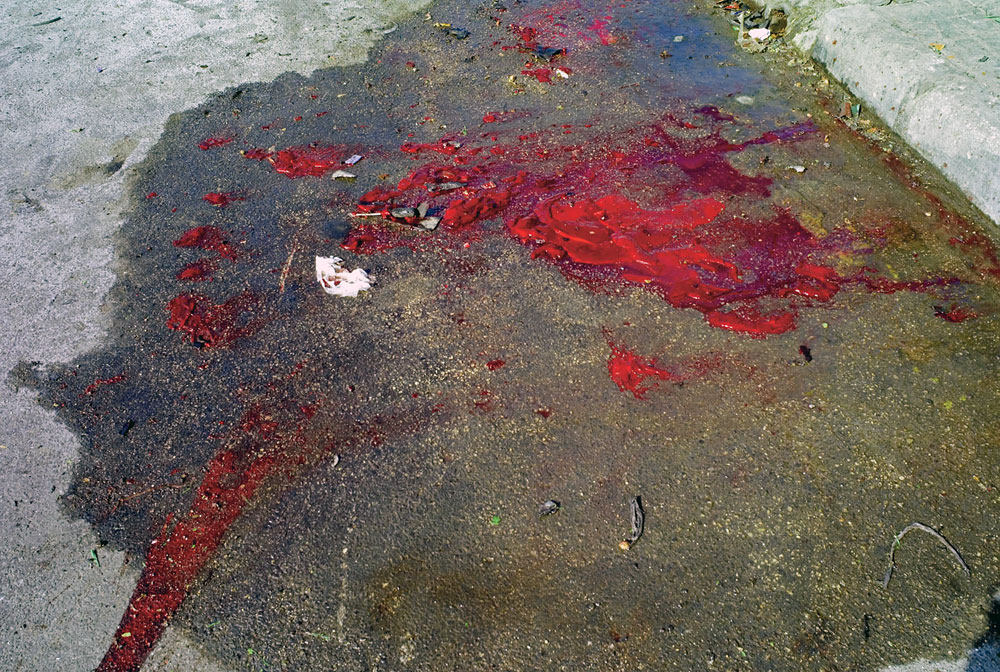
Black Passport © Stanley Greene / NOOR


Stanley Greene (American, 1949-2017)
Iraq, 2004, Road side explosion, Northern Iraq
2004
Black Passport © Stanley Greene / NOOR


“I think you can only do this for eight years. For eight years you can still keep the positive. If you stay at it longer than eight years, you turn. And not into a beautiful butterfly. You really turn. I see it in myself, I see it in all my friends and colleagues. I mean they are all victims of post trauma. We’re not the beautiful butterflies anymore. We become moths. We’re like moths flying to the flame.You know, sometimes your wings get singed or you just burn up. Get killed. Or you burn up inside.The drugs and the alcohol and the party and all of this is to push it away, push it away.”

“I’m an observer, I’m not an objective observer though, but I’m an observer. I feel it’s very important for journalists to go to these hell holes and photograph or write or do radio or whatever because I still believe that the public wants to know.”


Stanley Greene


Stanley Greene (February 14, 1949 – May 19, 2017) was an American photojournalist.

Greene was born to middle class parents in Brooklyn. Both his parents were actors. His father, who was born in Harlem, was a union organiser, one of the first African Americans elected as an officer in the Screen Actors Guild,and belonged to the Harlem Renaissance movement. Greene’s father was blacklisted as a Communist in the 1950s and forced to take uncredited parts in movies. Greene’s parents gave him his first camera when he was eleven years old.

Greene began his art career as a painter, but started taking photos as a means of cataloging material for his paintings. In 1971, when Greene was a member of the anti-Vietnam War movement and the Black Panther Party, his friend photographer W. Eugene Smith offered him space in his studio and encouraged him to study photography at the School of Visual Arts in New York and the San Francisco Art Institute.

Greene held various jobs as a photographer, including taking pictures of rock bands and working at Newsday. In 1986, he shot fashion photographs in Paris. He called himself a “dilettante, sitting in cafes, taking pictures of girls and doing heroin”. After a friend died of AIDS, Greene kicked his drug habit and began to seriously pursue a photography career.

He began photojournalism in 1989, when his image (“Kisses to All, Berlin Wall”) of a tutu-clad girl with a champagne bottle became a symbol of the fall of the Berlin Wall. While working for the Paris-based photo agency Agence Vu in October 1993, Greene was trapped and almost killed in the White House in Moscow during a stand-off between President Boris Yeltsin and the parliament. He covered the war-torn countries Azerbaijan, Bosnia and Herzegovina, Georgia, Iraq, Somalia, Croatia, Kashmir, and Lebanon. He took pictures of the genocide in Rwanda in 1994 and the US Gulf Coast in the aftermath of Hurricane Katrina in 2005.

After 1994, Greene was best known for his documentation of the conflict in Chechnya, between rebels and the Russian Armed Forces, which was compiled in his 2004 book, Open Wound. These photos drew attention to the “suffering that has marked the latest surge in Chechnya’s centuries-long struggle for independence from Russia”.

In 2008, Greene revealed that he had hepatitis C, which he believed he had contracted from a contaminated razor while working in Chad in 2007. After controlling the disease with medication, he traveled to Afghanistan and photographed a story about “the crisis of drug abuse and infectious disease”.

Stanley Greene co-founded NOOR Agency with Kadir van Lohuizen in 2007. They launched their agency with their colleagues on the 7th of September 2007 at Visa Pour L’Image. Greene died in Paris, at the age of 68. He had been undergoing treatment for liver cancer.

Text from the Wikipedia website


Black Passport is the biography of war photographer Stanley Greene, compiled out of hours of interviews by Teun van der Heijden. It shows Stanley’s war images alternated with private images.

Teun van der Heijden:Black Passport started as any other photo book project. At the beginning Stanley did let me know that he was up for ‘something completely different’. While working on the project we had a lot of conversations in which I discovered that there were a lot of similarities between Stanley and me. What is it then that one person becomes a designer, living happily with the same woman for 25 years, being a father of two daughters and the other person becomes a war photographer. This question was the beginning of a series of interviews. Out of the interviews came Black Passport. Black Passport is nominated several times. Some people believe it is the most important photo book of 2010.

Text from the YouTube website


Stanley Greene (American, 1949-2017) 'Fireflies, Paris, France' 2006


Stanley Greene (American, 1949-2017)
Fireflies, Paris, France
2006
Black Passport © Stanley Greene / NOOR


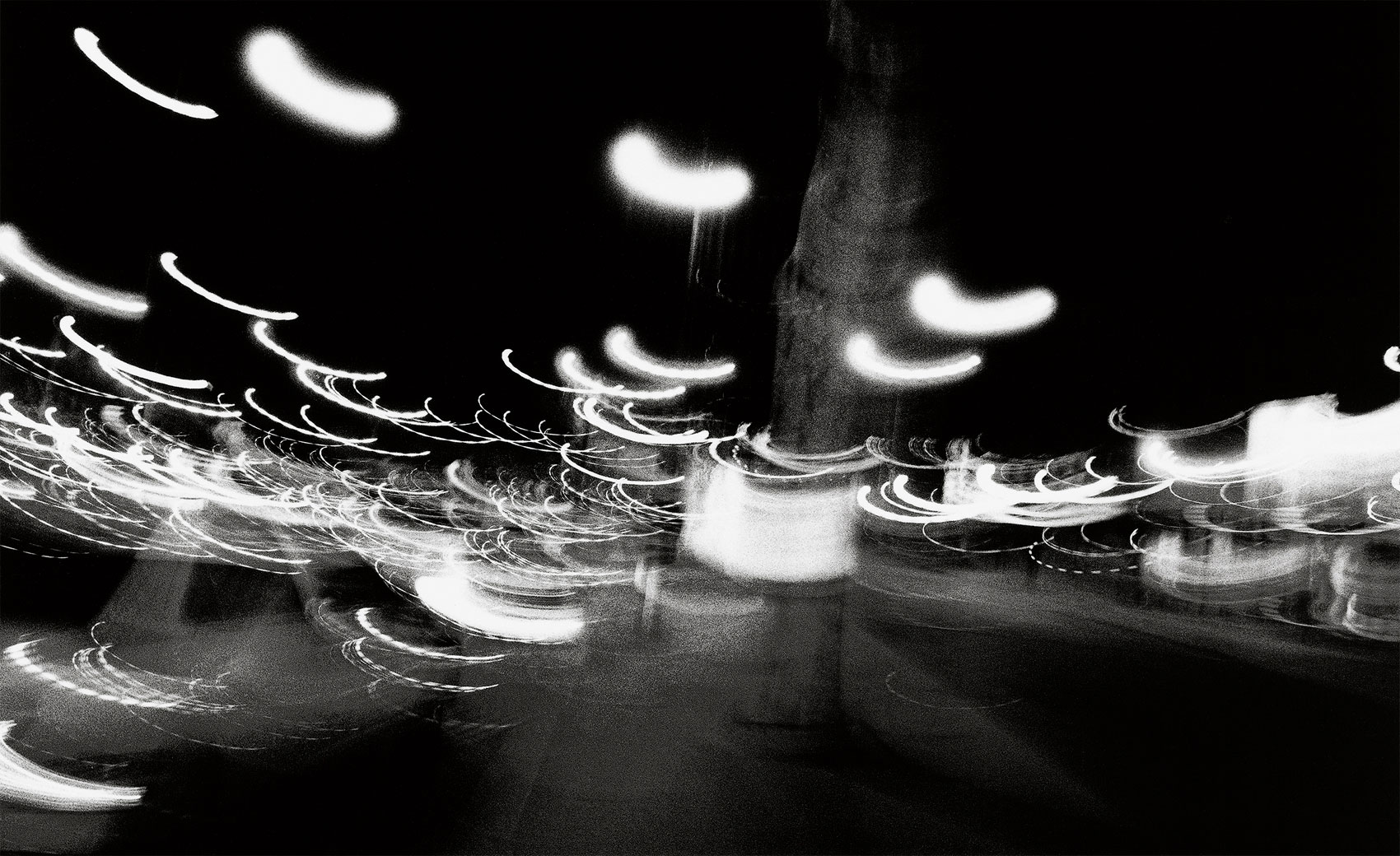
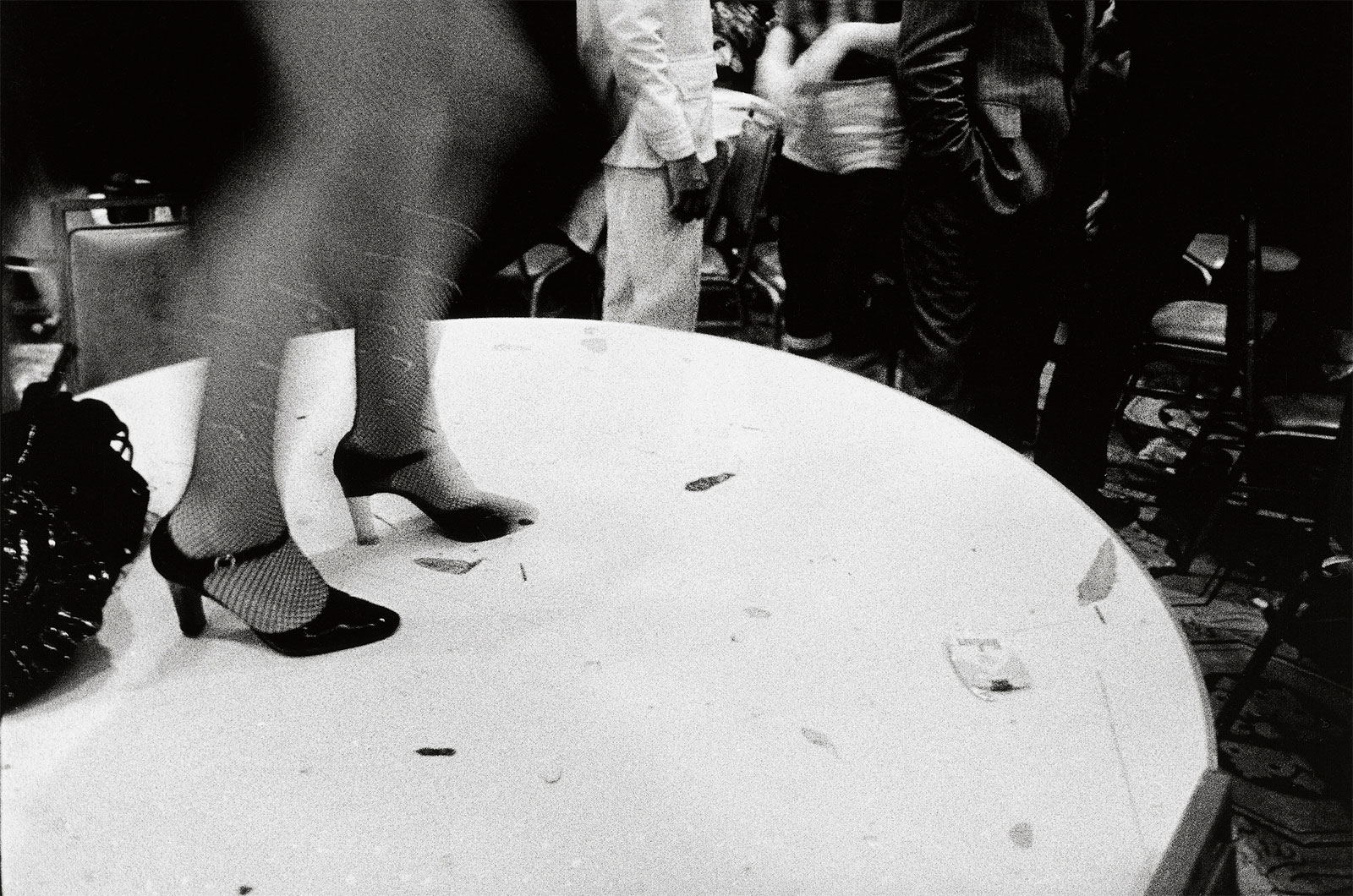
Stanley Greene (American, 1949-2017) 'Black & White Ball, Paris, France' 2006


Stanley Greene (American, 1949-2017)
Black & White Ball, Paris, France
2006
Black Passport © Stanley Greene / NOOR


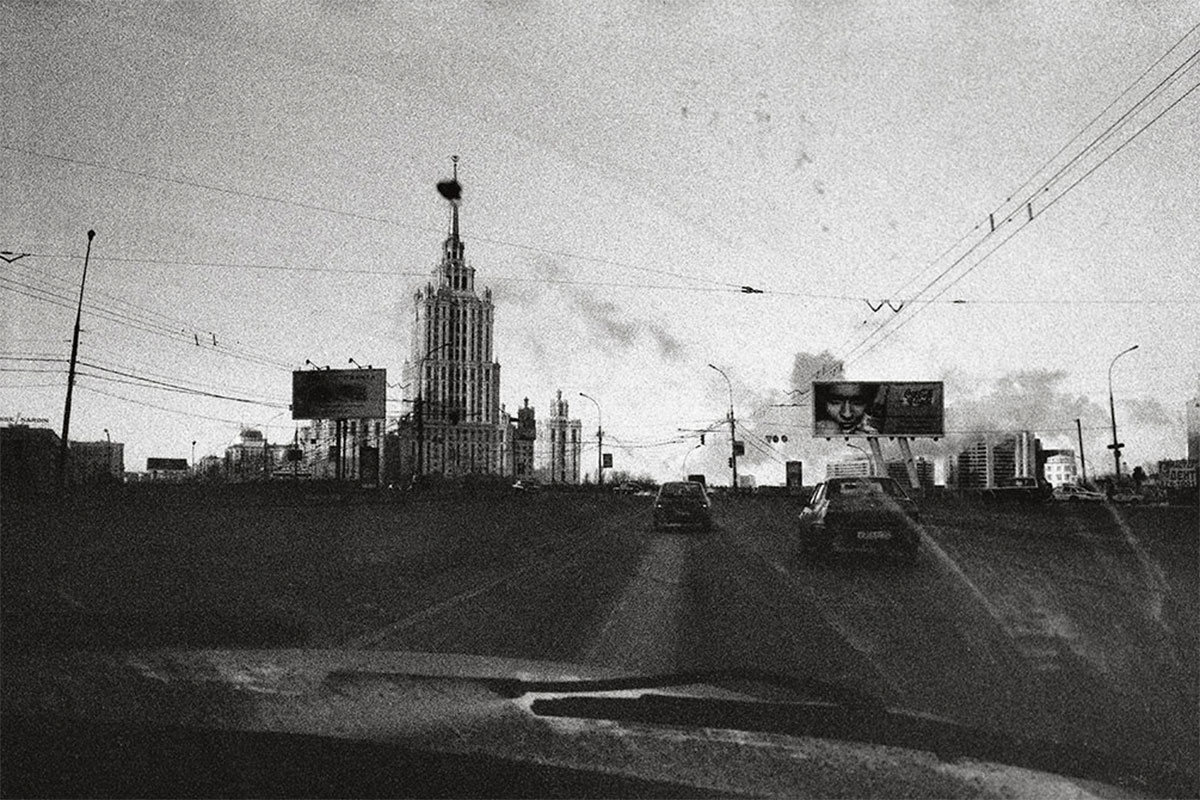
Stanley Greene (American, 1949-2017) 'On the MKAD, on the way to the airport, Moscow, Russia' 2003


Stanley Greene (American, 1949-2017)
On the MKAD, on the way to the airport, Moscow, Russia
2003
Gelatin silver print
Black Passport © Stanley Greene / NOOR


Stanley Greene (American, 1949-2017) 'Kaboul, Afghanistan' 2008


Stanley Greene (American, 1949-2017)
Kaboul, Afghanistan
2008
Gelatin silver print
Black Passport © Stanley Greene / NOOR


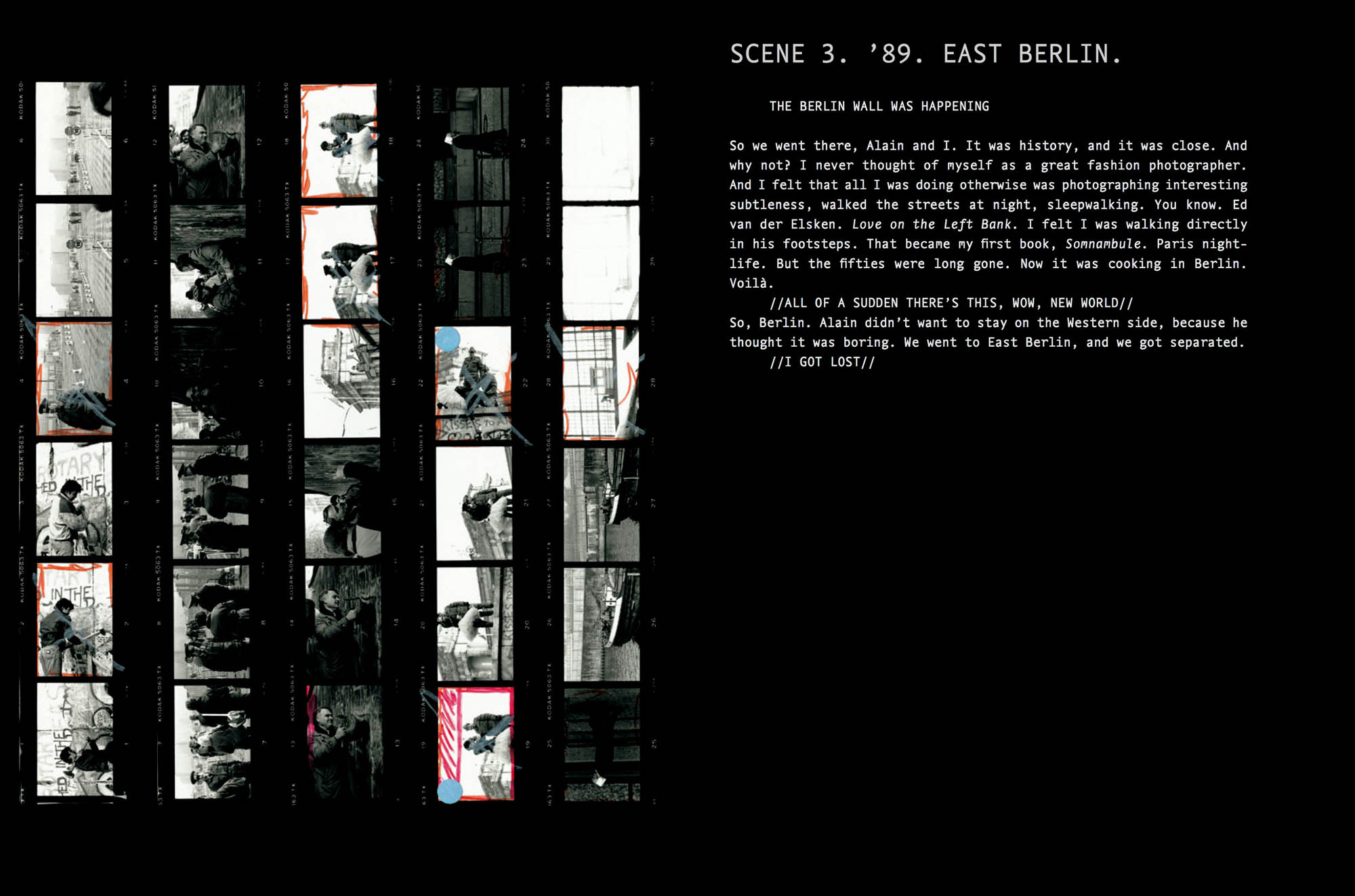
Stanley Greene (American, 1949-2017) 'Scene 3. '89. East Berlin'


Stanley Greene (American, 1949-2017)
Scene 3. ’89. East Berlin
From Black Passport © Stanley Greene / NOOR


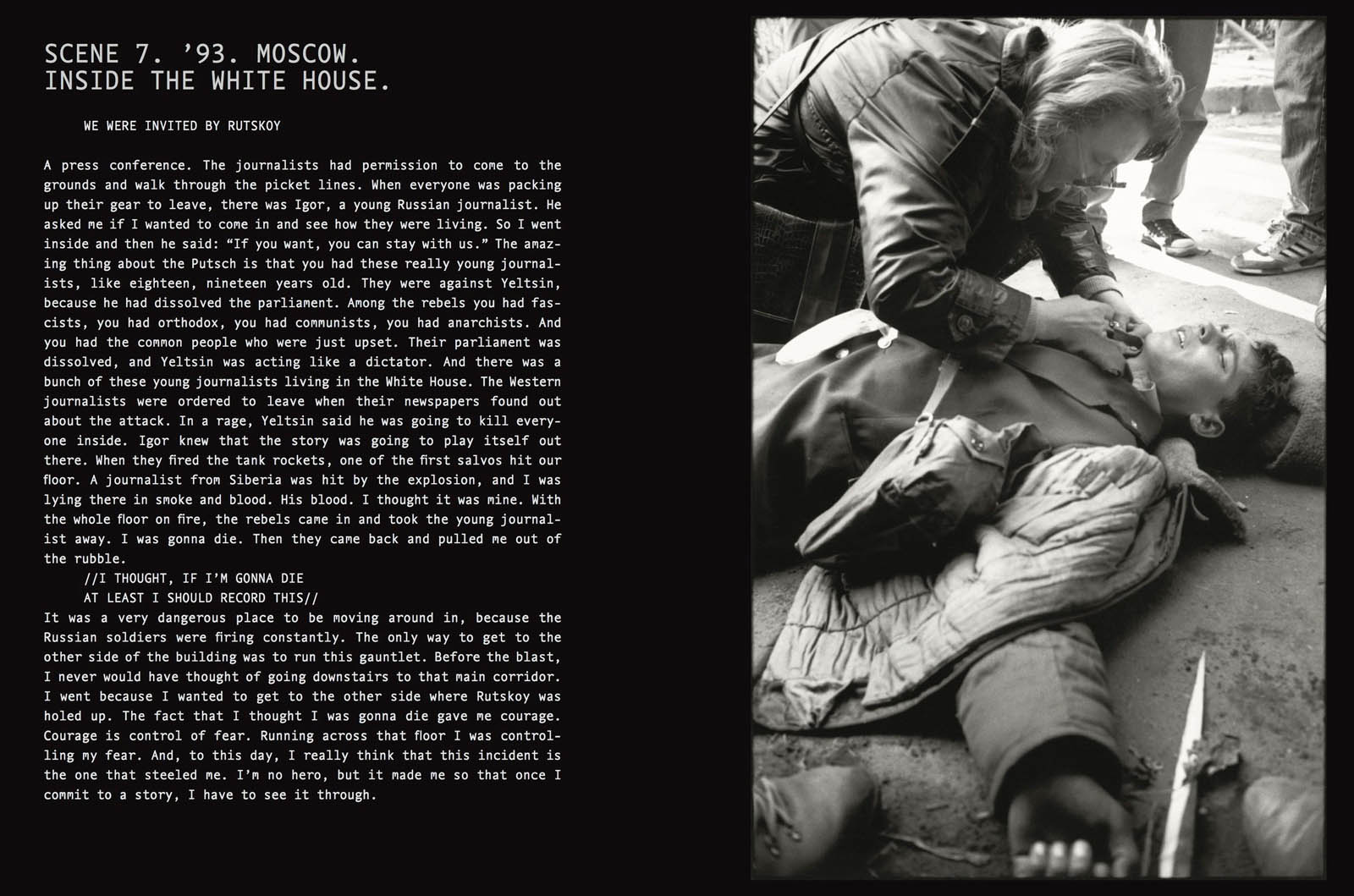
Stanley Greene (American, 1949-2017) 'Scene 7. '93. Moscow. Inside the White House'


Stanley Greene (American, 1949-2017)
Scene 7. ’93. Moscow. Inside the White House
From Black Passport © Stanley Greene / NOOR


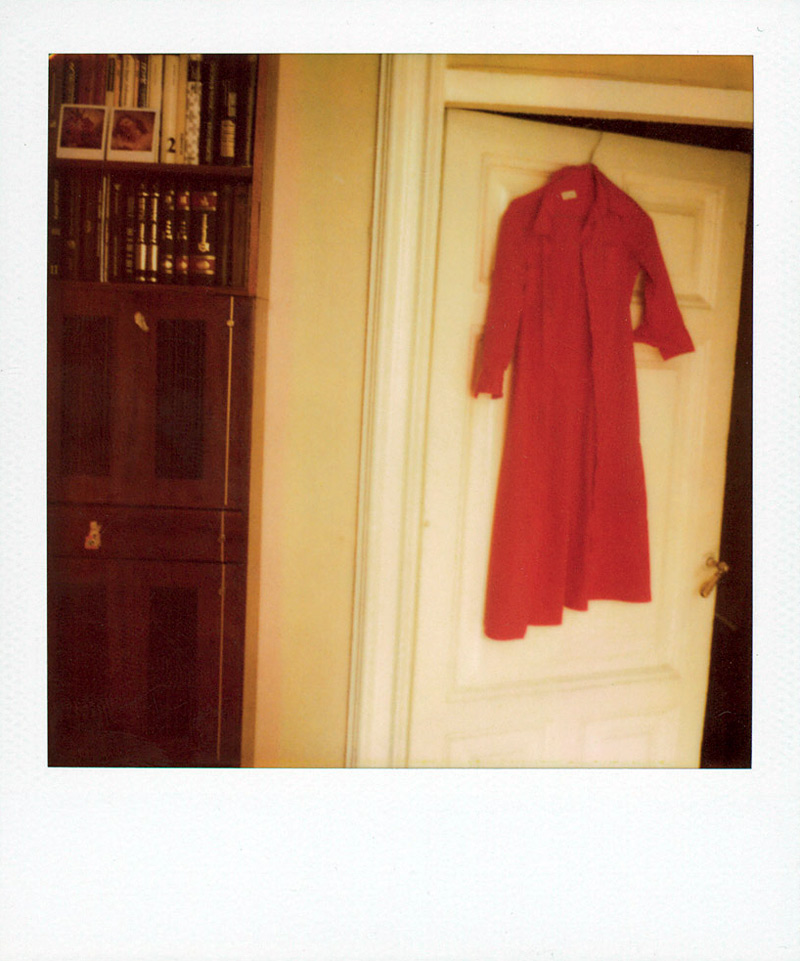
Black Passport © Stanley Greene / NOOR


All photographs: Black Passport © Stanley Greene / NOOR


Foam
Keizersgracht 609
1017 DS Amsterdam
The Netherlands
Phone: + 31 20 5516500

Opening hours:
Mon – Wed 10.00 – 18.00 hrs
Thu – Fri 10.00 – 21.00 hrs
Sat – Sun 10.00 – 18.00 hrs

Foam website

LIKE ART BLART ON FACEBOOK

Back to top
Exhibition: ‘Diane Arbus’ at Jeu de Paume, Paris

Exhibition dates: 18th October, 2011 – 5th February, 2012


Diane Arbus, 'Child with a toy hand grenade in Central Park, N.Y.C. 1962' 1962 from the exhibition 'Diane Arbus' at Jeu de Paume, Paris, Oct 2011 - Feb 2012


Diane Arbus (American, 1923-1971)
Child with a toy hand grenade in Central Park, N.Y.C. 1962
1962
Gelatin silver print
© The Estate of Diane Arbus


A fabulous posting, with memorable thoughts and photographs!

These archetypal images have become deeply embedded in the collective conscience where conscience is pre-eminently the organ of sentiments and representations. The snap, snap, snap of the shutter evinces the flaws of human nature, reveals the presence of a quality or feeling to which we can all relate. As Arbus states, the subject of the picture is always more important than the picture. And more complicated. That is why these photographs always capture our attention – because we become, we inhabit, we are the subject.

Dr Marcus Bunyan


Many thankx to Jeu de Paume for allowing me to publish the photographs in the posting. Please click on the photographs for a larger version of the image.


“There are and have been and will be an infinite number of things on earth. Individuals all different, all wanting different things, all knowing different things, all loving different things, all looking different. Everything that has been on earth has been different from any other thing. That is what I love: the differentness, the uniqueness of all things and the importance of life… I see something that seems wonderful; I see the divineness in ordinary things.”


Diane Arbus. Paper on Plato, senior English seminar, Fieldston School, November 28, 1939


“I want to photograph the considerable ceremonies of our present because we tend while living here and now to perceive only what is random and barren and formless about it. While we regret that the present is not like the past and despair of its ever becoming the future, its innumerable inscrutable habits lie in wait for their meaning. I want to gather them, like somebody’s grandmother putting up preserves, because they will have been so beautiful.

There are the Ceremonies of Celebration (the Pageants, the Festivals, the Feasts, the Conventions) and the Ceremonies of Competition (Contests, Games, Sports), the Ceremonies of Buying and Selling, of Gambling, of the Law and the Show; the Ceremonies of Fame in which the Winners Win and the Lucky are Chosen or Family Ceremonies or Gatherings (the Schools, the Clubs, the Meetings). Then they are Ceremonial Places (The Beauty Parlor, The Funeral Parlor or, simply The Parlor) and Ceremonial Costumes (what waitresses wear, or Wrestlers), Ceremonies of the Rich, like the Dog Show, and of the Middle Class, like the Bridge Game. Or, for example: the Dancing Lesson, the Graduation, the Testimonial Dinner, the Séance, the Gymnasium and the Picnic, and perhaps the Waiting Room, the Factory, the Masquerade, the Rehearsal, the Initiation, the Hotel Lobby and the Birthday Party. The etcetera.

I will write whatever is necessary for the further description and elucidation of these Rites and I will go wherever I can to find them.

These are our symptoms and our monuments. I want simply to save them, for what is ceremonious and curious and commonplace will be legendary.”


Diane Arbus. “American Rites, Manners and Customs,” Plan for a Photographic Project, Guggenheim proposal


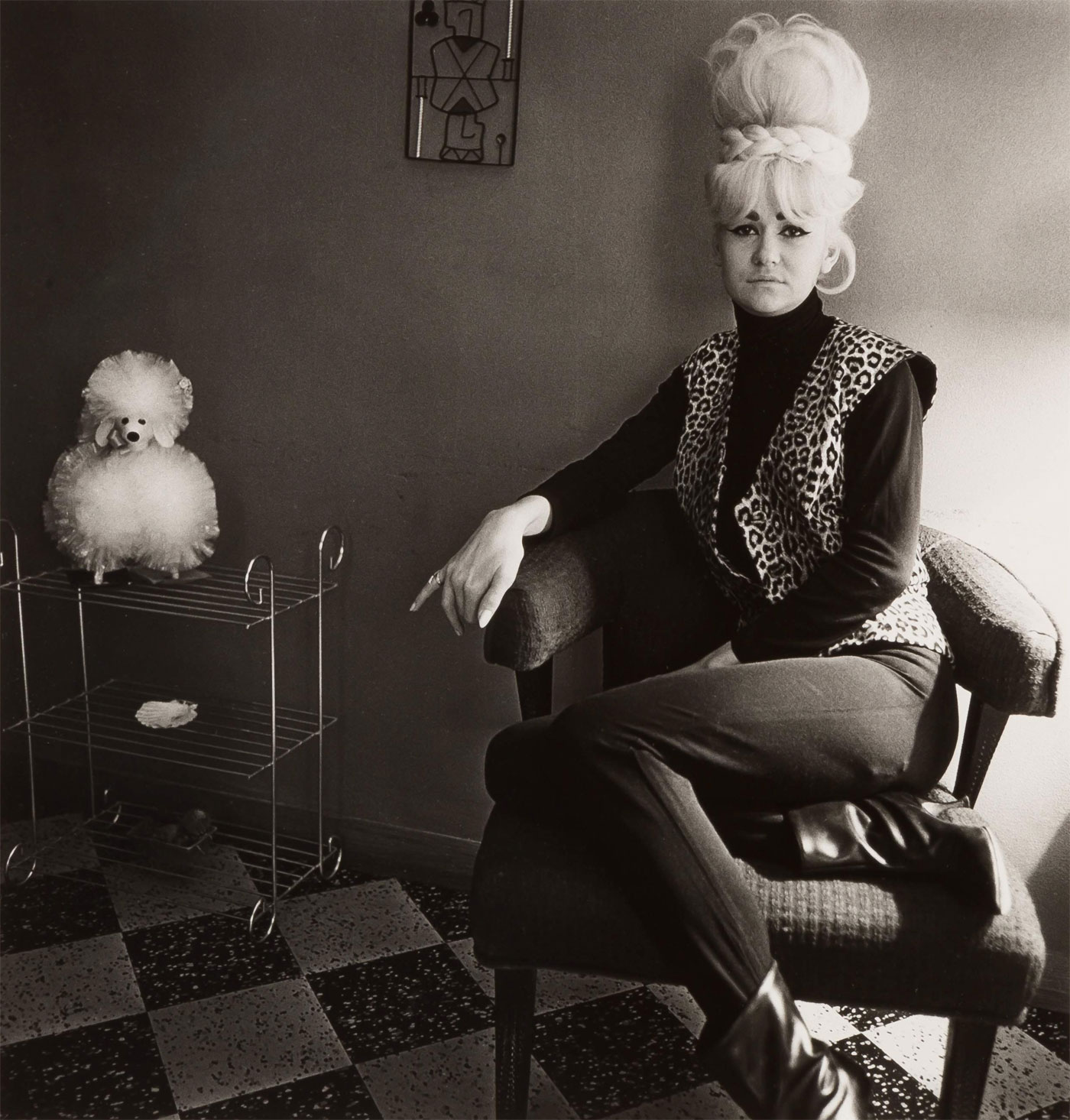
Diane Arbus (American, 1923-1971) 'Lady Bartender at Home with a Souvenir Dog, New Orleans, La.' 1964 from the exhibition 'Diane Arbus' at Jeu de Paume, Paris, Oct 2011 - Feb 2012


Diane Arbus (American, 1923-1971)
Lady Bartender at Home with a Souvenir Dog, New Orleans, La.
1964
Gelatin silver print
© The Estate of Diane Arbus


Diane Arbus (American, 1923-1971) 'A young Brooklyn family going for a Sunday outing, NYC., 1966' 1966


Diane Arbus (American, 1923-1971)
A young Brooklyn family going for a Sunday outing, NYC., 1966
1966
Gelatin silver print
© The Estate of Diane Arbus


Diane Arbus (American, 1923-1971) 'Two Ladies at the Automat, New York City' 1966


Diane Arbus (American, 1923-1971)
Two Ladies at the Automat, New York City
1966
Gelatin silver print
© The Estate of Diane Arbus


Diane Arbus. 'Identical twins, Roselle, N.J. 1967' 1967


Diane Arbus (American, 1923-1971)
Identical twins, Roselle, N.J. 1967
1967
Gelatin silver print
© The Estate of Diane Arbus


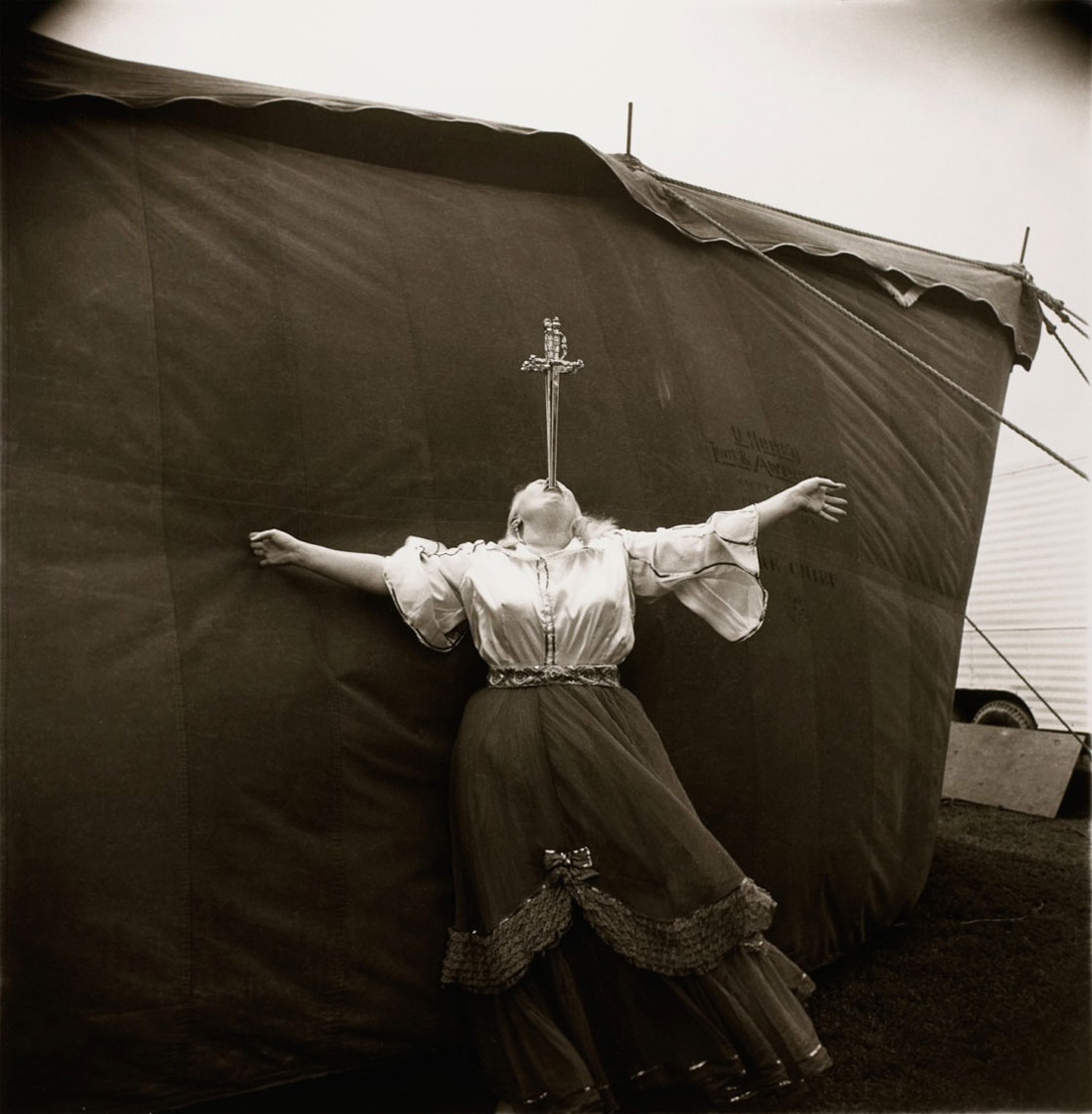
Diane Arbus (American, 1923-1971) 'Albino sword swallower at a carnival, Md' 1970


Diane Arbus (American, 1923-1971)
Albino sword swallower at a carnival, Md
1970
Gelatin silver print
© The Estate of Diane Arbus


On Photographs

“They are the proof that something was there and no longer is. Like a stain. And the stillness of them is boggling. You can turn away but when you come back they’ll still be there looking at you.”


Diane Arbus in response to request for a brief statement about photographs, March 15, 1971


Diane Arbus (New York, 1923-1971) revolutionised the art she practiced. Her bold subject matter and photographic approach produced a body of work that is often shocking in its purity, in its steadfast celebration of things as they are. Her gift for rendering strange those things we consider most familiar, and for uncovering the familiar within the exotic, enlarges our understanding of ourselves.

Arbus found most of her subjects in New York City, a place that she explored as both a known geography and as a foreign land, photographing people she discovered during the 1950s and 1960s. She was committed to photography as a medium that tangles with the facts. Her contemporary anthropology – portraits of couples, children, carnival performers, nudists, middle-class families, transvestites, zealots, eccentrics, and celebrities – stands as an allegory of the human experience, an exploration of the relationship between appearance and identity, illusion and belief, theatre and reality.

In this first major retrospective in France, Jeu de Paume presents a selection of two hundred photographs that affords an opportunity to explore the origins, scope, and aspirations of a wholly original force in photography. It includes all of the artist’s iconic photographs as well as many that have never been publicly exhibited. Even the earliest examples of her work demonstrate Arbus’s distinctive sensibility through the expression on a face, someone’s posture, the character of the light, and the personal implications of objects in a room or landscape. These elements, animated by the singular relationship between the photographer and her subject, conspire to implicate the viewer with the force of a personal encounter.

Biography

Diane Arbus was born in New York City on March 14, 1923, and attended the Ethical Culture and Fieldston Schools. At the age of eighteen she married Allan Arbus. Although she first started taking pictures in the early 1940s and studied photography with Alexey Brodovitch in 1954, it was not until 1955-1957, while enrolled in courses taught by Lisette Model, that she began to seriously pursue the work for which she has come to be known.

Her first published photographs appeared in Esquire in 1960 under the title The Vertical Journey. From that point on she continued to work intermittently as a free-lance photographer for Esquire, Harper’s Bazaar, Show, The London Sunday Times, and a number of other magazines, doing portraits on assignment as well as photographic essays, for several of which she wrote accompanying articles.

During the 1950s, like most of her contemporaries, she had been using a 35mm camera, but in 1962 she began working with a 6×6 Rolleiflex. She once said, in accounting for the shift, that she had grown impatient with the grain and wanted to be able to decipher in her pictures the actual texture of things. The 6×6 format contributed to the refinement of a deceptively simple, formal, classical style that has since been recognised as one of the distinctive features of her work.

She received Guggenheim Fellowships in 1963 and 1966 for projects on “American Rites, Manners and Customs” and spent several summers during that period traveling across the United States, photographing contests, festivals, public and private gatherings, people in the costumes of their professions or avocations, the hotel lobbies, dressing rooms and living rooms she had described as part of “the considerable ceremonies of our present.” “These are our symptoms and our monuments,” she wrote in her original application. “I want simply to save them, for what is ceremonious and curious and commonplace will be legendary.”

The photographs she produced in those years attracted a great deal of attention when a selected group of them were exhibited, along with the work of two other photographers, in the 1967 “New Documents” show at the Museum of Modern Art. Nonetheless, although several institutions subsequently purchased examples of her work for their permanent collections, her photographs appeared in only two other major exhibitions during her lifetime, both of them group shows.

In the late 1960s she taught photography courses at Parsons School of Design, the Rhode Island School of Design and Cooper Union and in 1971 gave a master class at Westbeth, the artists cooperative in New York City where she then lived. During the same period she initiated the concept and did the basic research for the Museum of Modern Art’s 1973 exhibition on news photography, “From the Picture Press.”

She made a portfolio of ten photographs in 1970, printed, signed and annotated by her, which was to be the first of a series of limited editions of her work. She committed suicide on July 26, 1971 at the age of forty-eight. The following year the ten photographs in her portfolio became the first work of an American photographer to be exhibited at the Venice Biennale.

In the course of a career that may be said to have lasted little more than fifteen years, she produced a body of work whose style and content have secured her a place as one of the most significant and influential photographers of our time. The major retrospective mounted by the Museum of Modern Art in 1972 was attended by more than a quarter of a million people in New York before it began its tour of the United States and Canada. The Aperture monograph Diane Arbus, published in conjunction with the show has sold over 300,000 copies. Beginning in 2003, Diane Arbus Revelations, an international retrospective organised by The San Francisco Museum of Modern Art travelled to museums throughout the United States and Europe between 2003 and 2006. Major exhibitions devoted exclusively to her work have toured much of the world including, Australia, Germany, Italy, Japan, the Netherlands, New Zealand, Spain, and the United Kingdom.

Press release from the Jeu de Paume website


Diane Arbus (American, 1923-1971) 'Retired man and his wife at home in a nudist camp one morning, N.J.' 1963


Diane Arbus (American, 1923-1971)
Retired man and his wife at home in a nudist camp one morning, N.J.
1963
Gelatin silver print
© The Estate of Diane Arbus


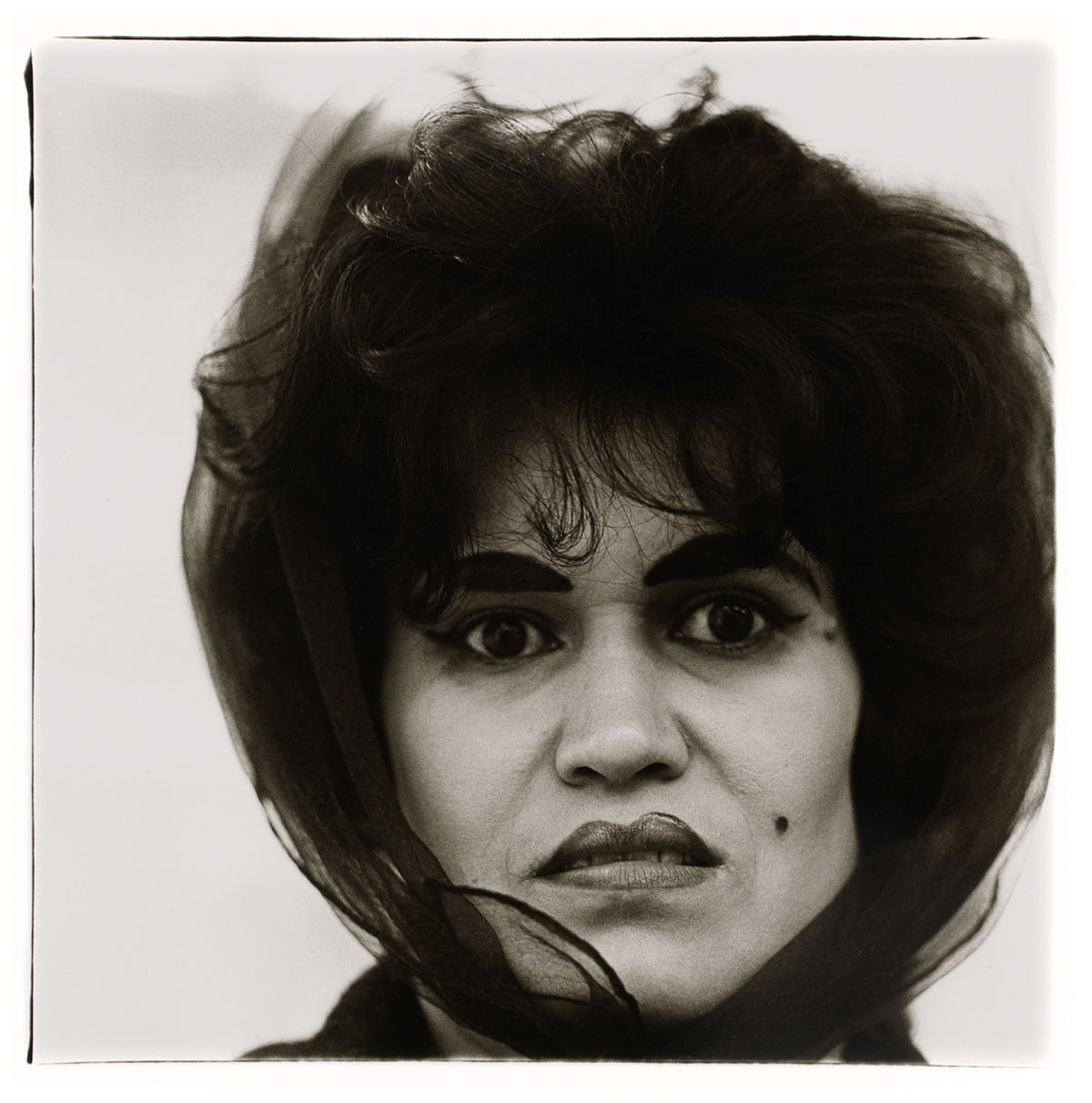
Diane Arbus (American, 1923-1971) 'Puerto Rican Woman with a Beauty Mark' 1965


Diane Arbus (American, 1923-1971)
Puerto Rican Woman with a Beauty Mark
1965
Gelatin silver print
© The Estate of Diane Arbus


Diane Arbus. 'Boy with a straw hat waiting to march in a pro-war parade, N.Y.C. 1967' 1967


Diane Arbus (American, 1923-1971)
Boy with a straw hat waiting to march in a pro-war parade, N.Y.C. 1967
1967
Gelatin silver print
© The Estate of Diane Arbus


Diane Arbus (American, 1923-1971) 'A child crying, N.J.' 1967


Diane Arbus (American, 1923-1971)
A child crying, N.J.
1967
Gelatin silver print
© The Estate of Diane Arbus


Diane Arbus (American, 1923-1971) 'A Jewish giant at home with his parents in the Bronx, N.Y., 1970' 1970


Diane Arbus (American, 1923-1971)
A Jewish giant at home with his parents in the Bronx, N.Y., 1970
1970
Gelatin silver print
© The Estate of Diane Arbus


Diane Arbus. 'Untitled (6) 1970-71'


Diane Arbus (American, 1923-1971)
Untitled (6) 1970-71
1970-1971
Gelatin silver print
© The Estate of Diane Arbus


On Freaks

“There’s a quality of legend about freaks. Like a person in a fairy tale who stops you and demands that you answer a riddle. Most people go through life dreading they’ll go through a traumatic experience. Freaks were born with their trauma. They’ve already passed their test in life. They’re aristocrats.”

“If you’ve ever talked to somebody with two heads you know they know something you don’t.”

The Gap between Attention and Affect

“You see someone on the street and essentially what you notice about them is the flaw. It’s just extraordinary that we should have been given these peculiarities. And, not content with what we were given, we create a whole other set. Our whole guise is like giving a sign to the world to think of us in a certain way but there’s a point between what you want people to know about you and what you can’t help people knowing about you. And that has to do with what I’ve always called the gap between intention and effect. I mean if you scrutinise reality closely enough, if in some way you really, really get to it, it becomes fantastic.”

Other Thoughts

“The thing that’s important to know is that you never know. You’re always sort of feeling your way.”

“Nothing is ever the same as they said it was. It’s what I’ve never seen before that I recognise.”

“A photograph is a secret about a secret. The more it tells you the less you know.”

“For me the subject of the picture is always more important than the picture. And more complicated. I do have a feeling for the print but I don’t have a holy feeling for it. I really think what it is, is what it’s about. I mean it has to be of something. And what it’s of it always more remarkable than what it is.”

“I really believe there are things which nobody would see unless I photographed them.”


Diane Arbus


Diane Arbus (American, 1923-1971) 'Teenage couple on Hudson Street, N.Y.C. 1963' 1963


Diane Arbus (American, 1923-1971)
Teenage couple on Hudson Street, N.Y.C. 1963
1963
Gelatin silver print
© The Estate of Diane Arbus


Diane Arbus (American, 1923-1971) 'Xmas tree in a living room in Levittown, L.I. 1963' 1963


Diane Arbus (American, 1923-1971)
Xmas tree in a living room in Levittown, L.I. 1963
1963
Gelatin silver print
© The Estate of Diane Arbus


Diane Arbus (American, 1923-1971) 'A young man in curlers at home on West 20th Street, N.Y.C. 1966' 1966


Diane Arbus (American, 1923-1971)
A young man in curlers at home on West 20th Street, N.Y.C. 1966
1966
Gelatin silver print
© The Estate of Diane Arbus


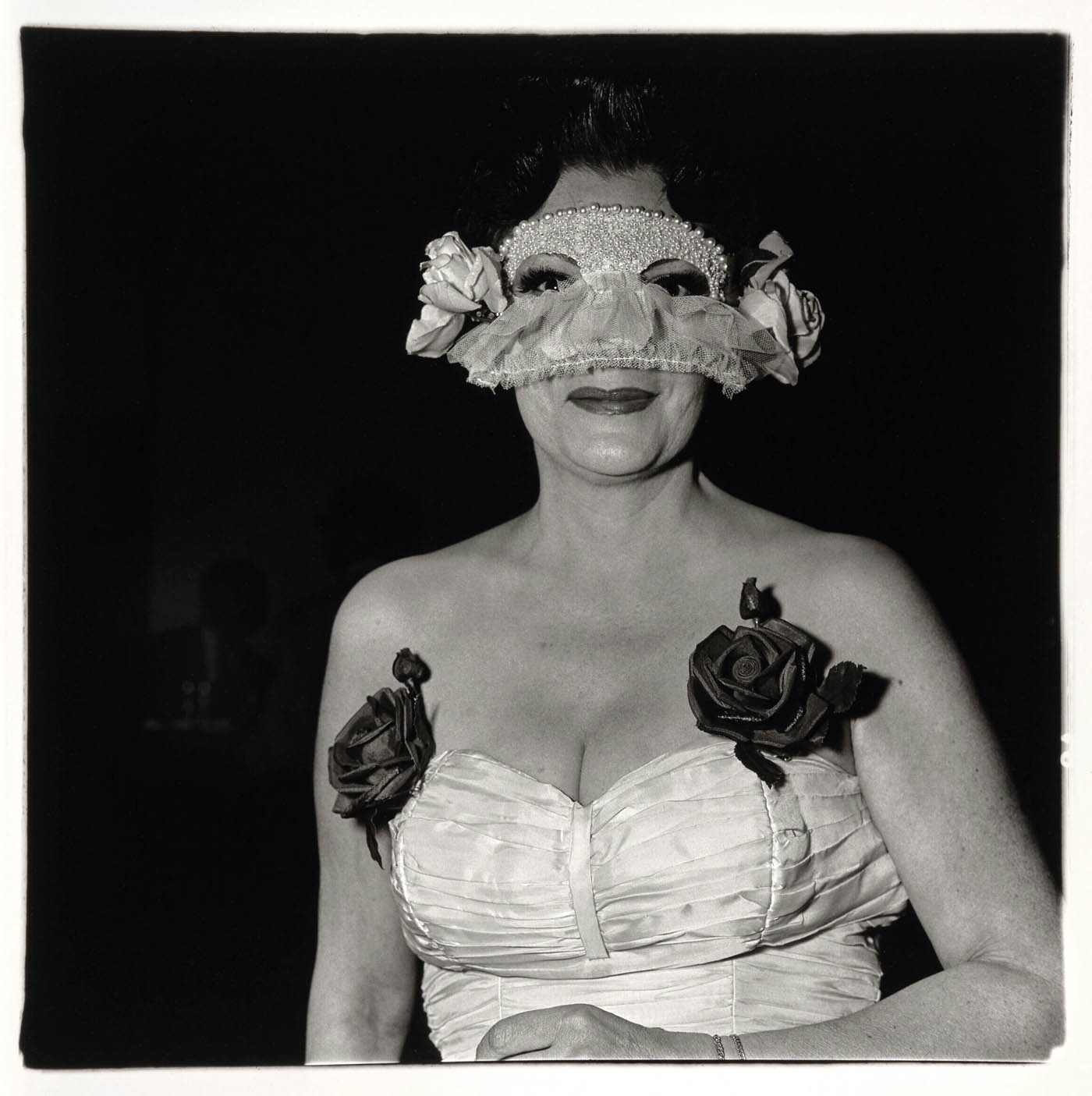
Diane Arbus (American, 1923-1971) 'Lady at a Masked Ball with Two Roses on Her Dress, NYC' 1967


Diane Arbus (American, 1923-1971)
Lady at a Masked Ball with Two Roses on Her Dress, NYC
1967
Gelatin silver print
© The Estate of Diane Arbus


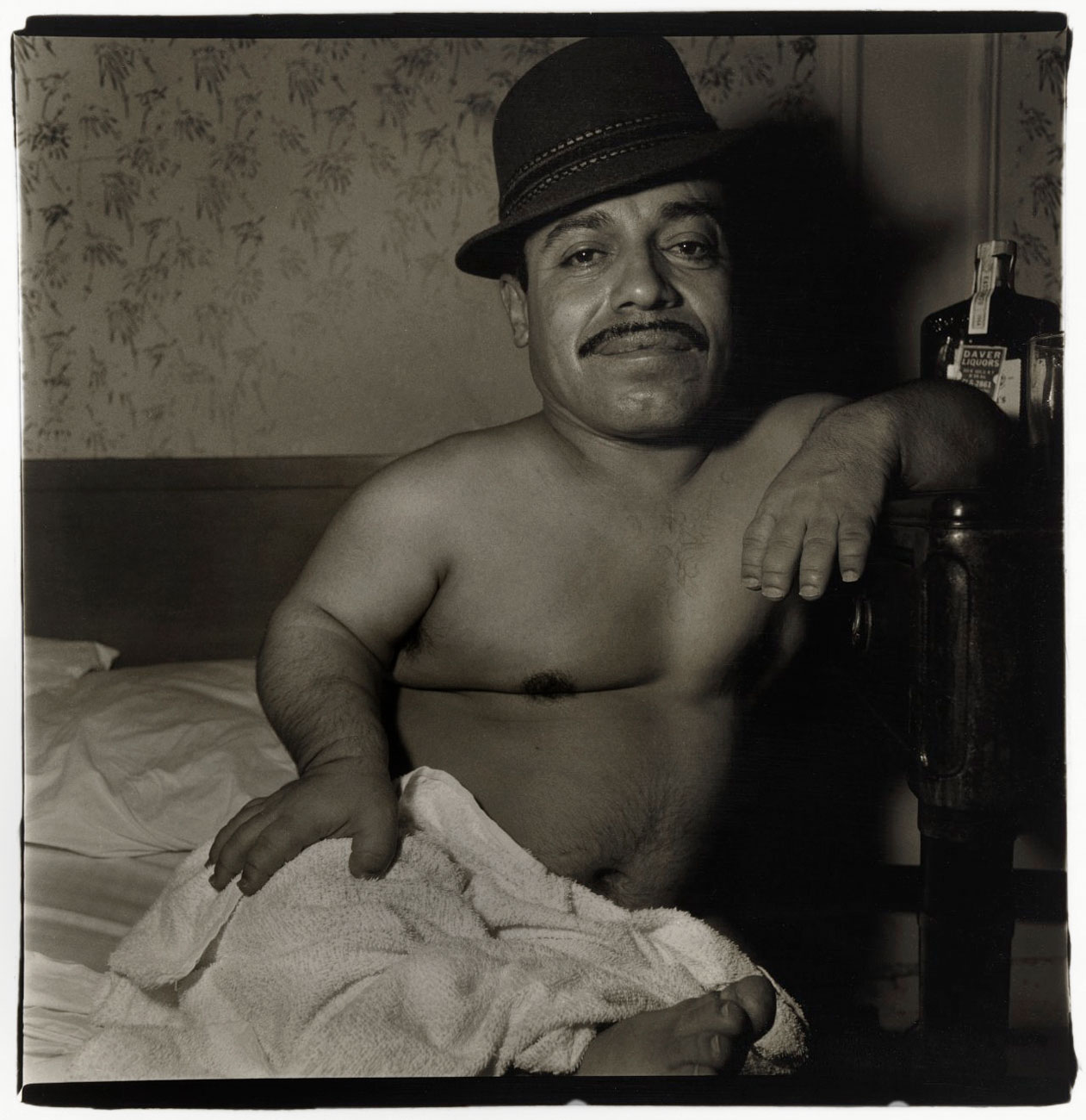
Diane Arbus (American, 1923-1971) 'Mexican Dwarf in his hotel room, NYC' 1970


Diane Arbus (American, 1923-1971)
Mexican Dwarf in his hotel room, NYC
1970
Gelatin silver print
© The Estate of Diane Arbus


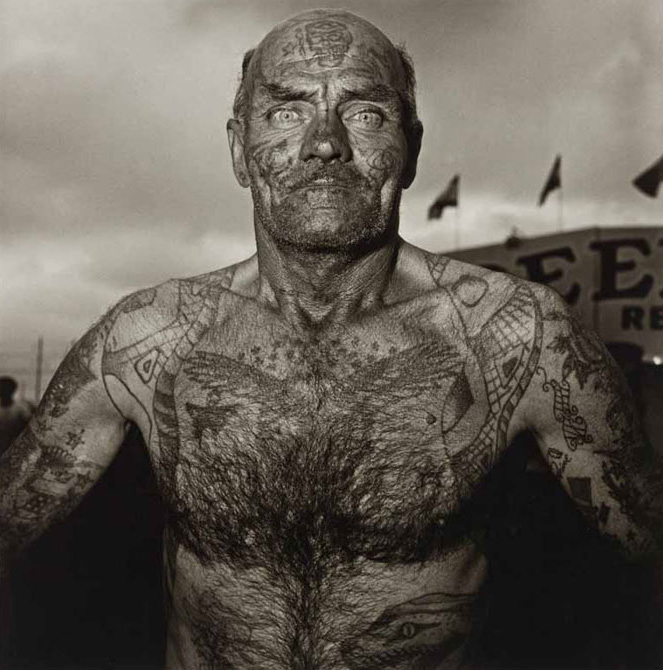
Diane Arbus (American, 1923-1971) 'Tattooed Man at a Carnival, Md.' 1970


Diane Arbus (American, 1923-1971)
Tattooed Man at a Carnival, Md.
1970
Gelatin silver print
© The Estate of Diane Arbus


Jeu de Paume
1, place de la Concorde
75008 Paris
métro Concorde
Phone: 01 47 03 12 50

Opening hours:
Tuesday – Friday 12am – 8pm
Saturday and Sunday 11am – 7pm
Closed Monday

Jeu de Paume website

LIKE ART BLART ON FACEBOOK

Back to top
Exhibition: ‘Vivian Maier: Photographs from the Maloof Collection’ at the Howard Greenberg Gallery, New York

Exhibition dates:  15th December 2011 – 26th January 2012


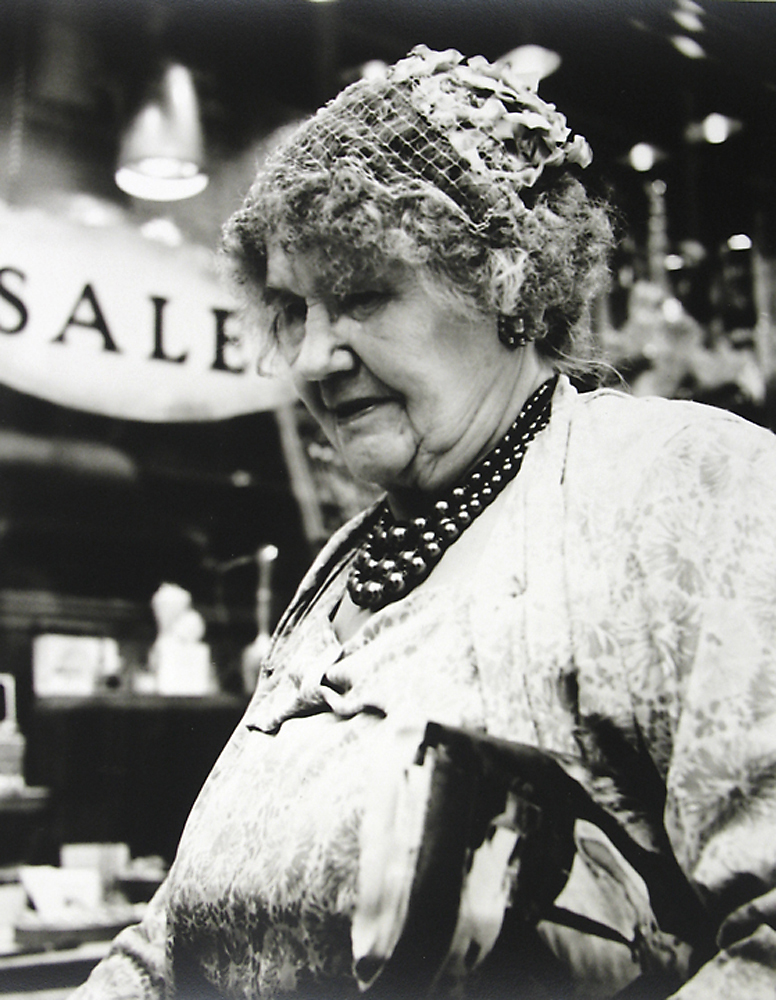
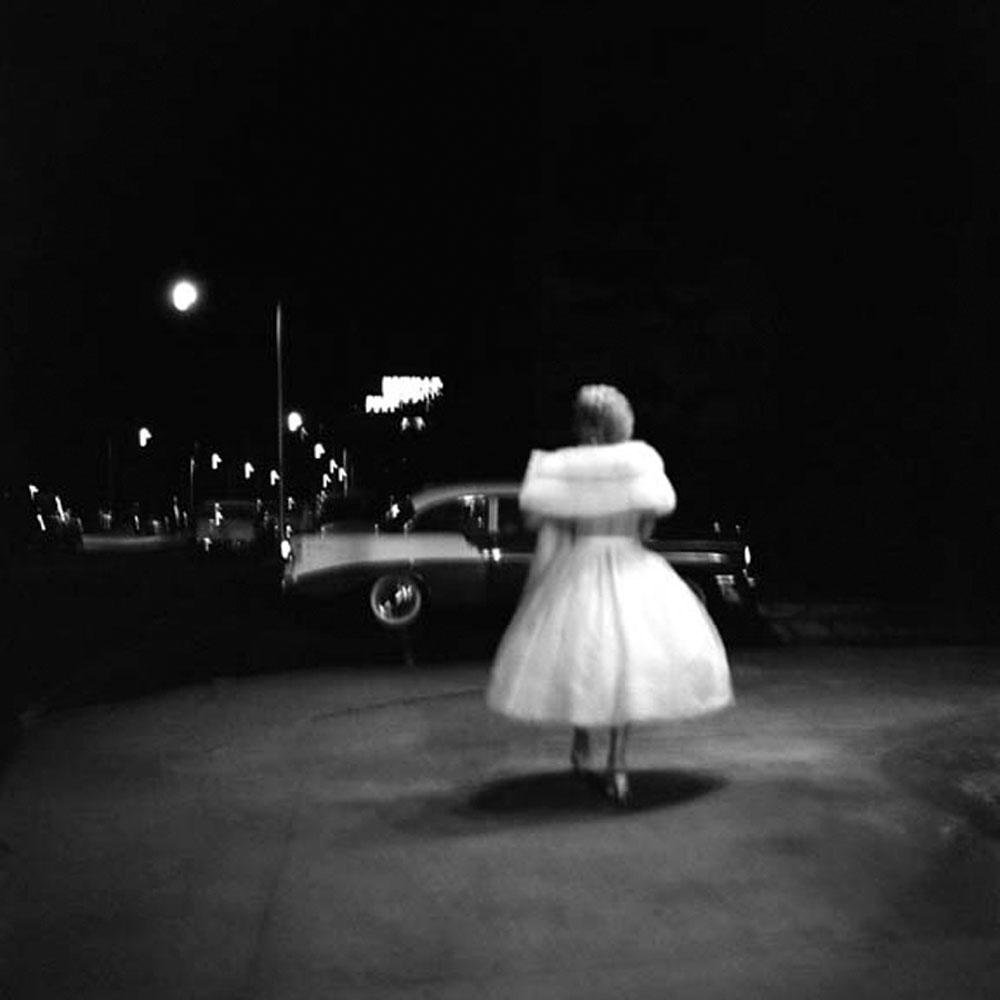
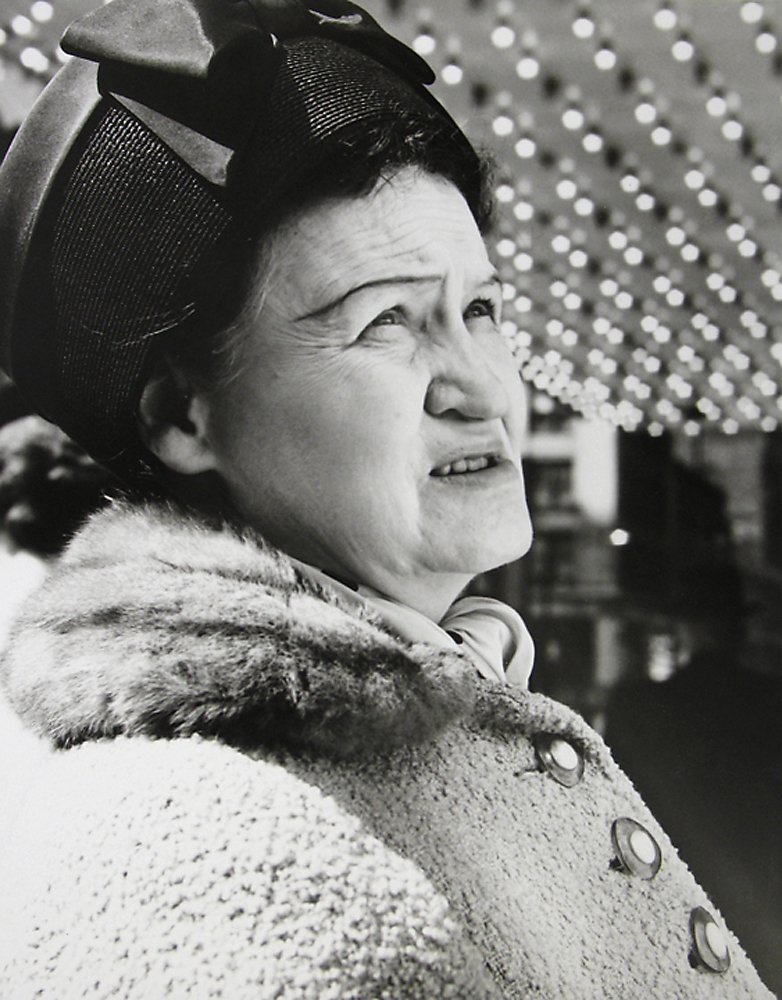
Vivian Maier (American, 1926-2009) 'Untitled (portrait of a woman)' date unknown


Vivian Maier (American, 1926-2009)
Untitled (portrait of a woman)
Date unknown
© Vivian Maier/Maloof Collection, Courtesy Howard Greenberg Gallery


Another photographer who is getting more recognition. Out of the work I have seen the portraits are the strongest. Some of them feel like precursors to the confronting portraits of women made by Diane Arbus while others offer a more reflective, contemplative examination of human presence.

Dr Marcus Bunyan


Many thankx to Alicia Colen for her help and to the Howard Greenberg Gallery for allowing me to publish the photographs in the posting.


Vivian Maier (American, 1926-2009) 'Untitled' c. 1950's


Vivian Maier (American, 1926-2009)
Untitled
c. 1950’s
© Vivian Maier/Maloof Collection, Courtesy Howard Greenberg Gallery


Vivian Maier (American, 1926-2009) 'Untitled' c. 1950's


Vivian Maier (American, 1926-2009)
Untitled
c. 1950’s
© Vivian Maier/Maloof Collection, Courtesy Howard Greenberg Gallery


Vivian Maier (American, 1926-2009) 'Untitled' c. 1950's


Vivian Maier (American, 1926-2009)
Untitled
c. 1950’s
© Vivian Maier/Maloof Collection, Courtesy Howard Greenberg Gallery


Vivian Maier (American, 1926-2009) 'Untitled' 1954


Vivian Maier (American, 1926-2009)
Untitled
1954
Gelatin silver print, printed later
© Vivian Maier/Maloof Collection, Courtesy Howard Greenberg Gallery


Vivian Maier (American, 1926-2009) 'Florida' 1957


Vivian Maier (American, 1926-2009)
Florida
1957
Gelatin silver print, later print
© Vivian Maier/Maloof Collection, Courtesy Howard Greenberg Gallery


Vivian Maier (American, 1926-2009) 'New York, New York City' Nd


Vivian Maier (American, 1926-2009)
New York, New York City
Nd
Gelatin silver print, later print
© Vivian Maier/Maloof Collection, Courtesy Howard Greenberg Gallery


Vivian Maier (American, 1926-2009) 'Untitled' Nd


Vivian Maier (American, 1926-2009)
Untitled
Nd
Gelatin silver print, later print
© Vivian Maier/Maloof Collection, Courtesy Howard Greenberg Gallery


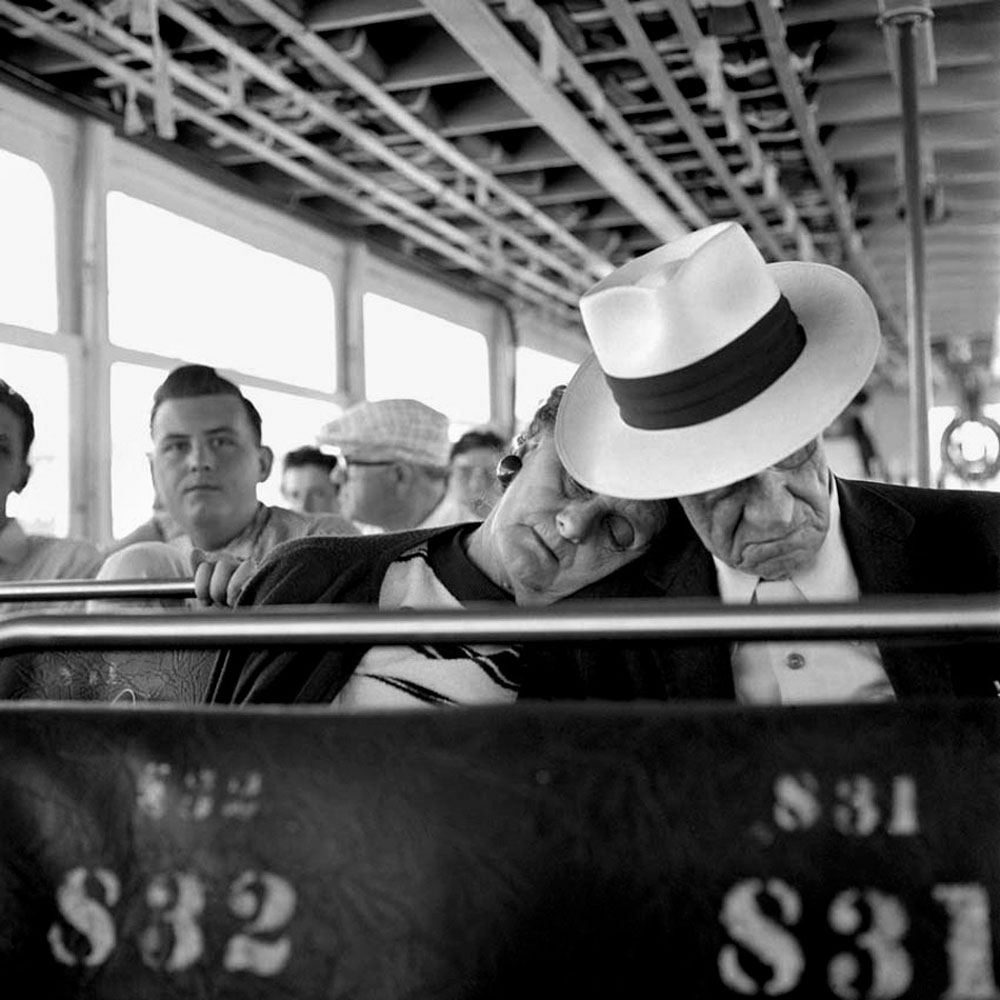
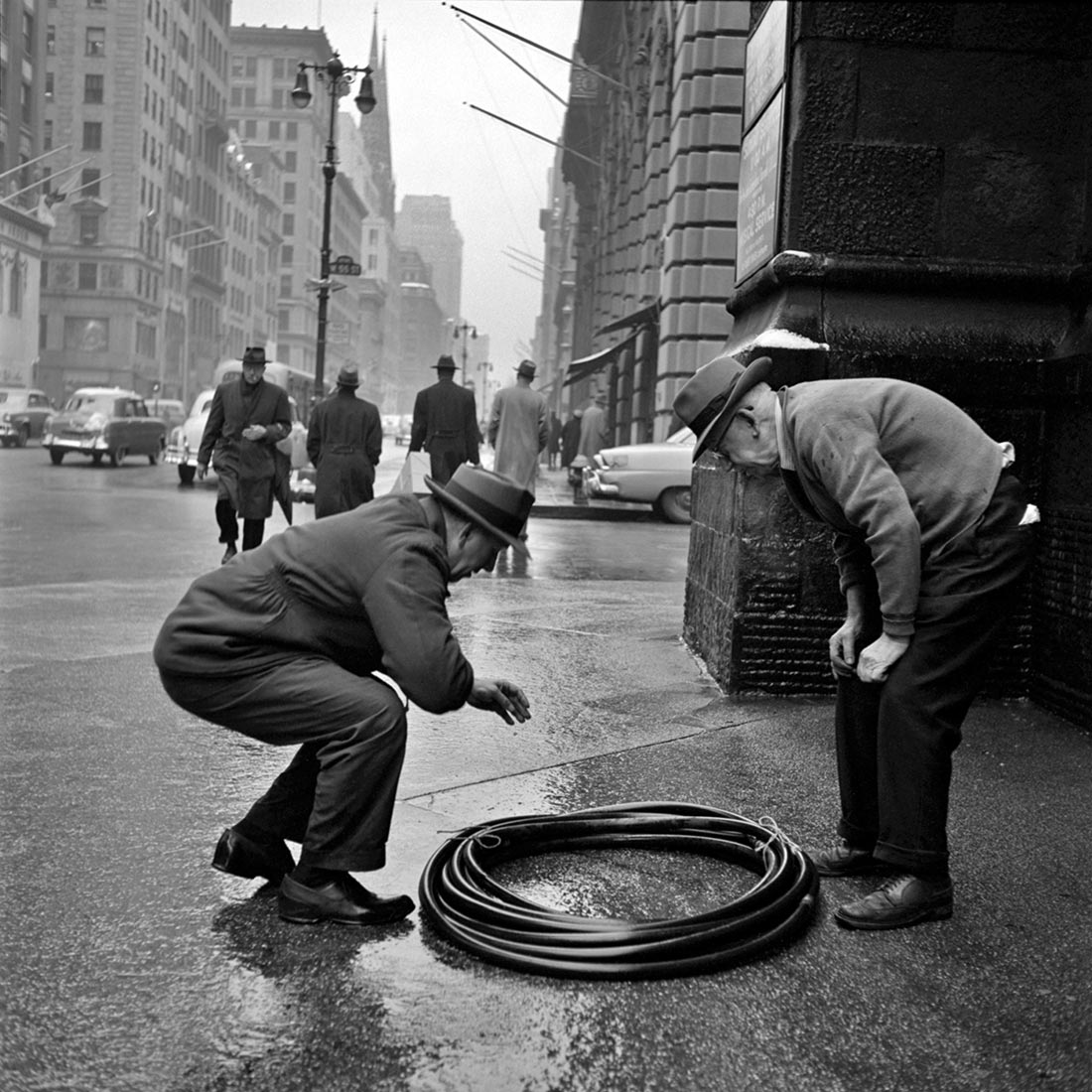
Howard Greenberg Gallery is proud to present the recently discovered work of street photographer, Vivian Maier (1926-2009), from the Maloof Collection.

A nanny by trade, Vivian Maier’s street and travel photography was discovered by John Maloof in 2007 at a local auction house in Chicago. Always with a Rolleiflex around her neck, she managed to amass more than 2,000 rolls of films, 3,000 prints and more than 100,000 negative which were shared with virtually no one in her lifetime. Her black and white photographs-mostly from the 50s and 60s-are indelible images of the architecture and street life of Chicago and New York. She rarely took more than one frame of each image and concentrated on children, women, the elderly, and indigent. The breadth of Maier’s work also reveals a series of striking self-portraits as well as prints from her travels to Egypt, Bangkok, Italy, and the American Southwest, among dozens of other international cities.

“My fascination with her story has only grown, as has my involvement with her photographs. It is such an unusual story with no resolution. At first her images are extremely well seen, quality photographs of life on the street, in New York City and Chicago. But as one looks at the body of her work, she reveals her deeper interests. Then one tries to imagine who she was, what motivated her, her personality. It is not everyday that one becomes so involved and even obsessed with a particular photographer,” comments Howard Greenberg.

What little is known about Maier’s life is the result of John Maloof’s extensive research. He discovered her obituary on line in 2009 which was just the beginning of his investigative work. An American of French and Austro-Hungarian extraction, Maier split her time between Europe and the US, returning to NY in 1951. In 1956, she ultimately settled in Chicago where she worked as nanny for more than forty years. For a brief period in the 1970s she worked as a nanny to journalist, Phil Donahue’s children. Towards the end of her life, Maier was supported by the children she had cared for in the early 50s. Unbeknownst to them, one of Maier’s storage lockers (containing her massive group of negatives) was auctioned off due to delinquent payments.

After purchasing the first collection of Maier photographs in 2007, Maloof acquired more from another buyer at the same auction. He has since established the Maloof Collection to promote the work of Vivian Maier and to safeguard the archive for future generations. The archive consists of approximately 100,000 to 150,000 negatives; over 3,000 prints; hundreds of rolls of film; home movies; audio tape interviews, and other items representing roughly 90% of Maier’s work. Through Maloof’s efforts, Vivian Maier’s photographs have been exhibited internationally and have received significant critical attention. In November, Powerhouse Books will publish Vivian Maier: Street Photographer, edited by Maloof with a foreword by Geoff Dyer. John Maloof is also co-producing a documentary about Vivian Maier.

Press release from the Howard Greenberg Gallery


Vivian Maier (American, 1926-2009) 'Untitled' c. 1950's


Vivian Maier (American, 1926-2009)
Untitled
c. 1950’s
© Vivian Maier/Maloof Collection, Courtesy Howard Greenberg Gallery


Vivian Maier (American, 1926-2009) 'Uptown West, New York, NY, January 26, 1955' 1955


Vivian Maier (American, 1926-2009)
Uptown West, New York, NY, January 26, 1955
1955
© Vivian Maier/Maloof Collection, Courtesy Howard Greenberg Gallery


Vivian Maier (American, 1926-2009) 'New York, New York City' 1954


Vivian Maier (American, 1926-2009)
New York, New York City
1954
Gelatin silver print, printed later
© Vivian Maier/Maloof Collection, Courtesy Howard Greenberg Gallery


Vivian Maier (American, 1926-2009) 'Untitled' 1956


Vivian Maier (American, 1926-2009)
Untitled
1956
Gelatin silver print, printed later
© Vivian Maier/Maloof Collection, Courtesy Howard Greenberg Gallery


Vivian Maier (American, 1926-2009) 'Untitled, Chicago, May 16, 1957' 1957


Vivian Maier (American, 1926-2009)
Untitled, Chicago, May 16, 1957
1957
© Vivian Maier/Maloof Collection, Courtesy Howard Greenberg Gallery


Vivian Maier (American, 1926-2009) 'Florida' 1960


Vivian Maier (American, 1926-2009)
Florida
1960
Gelatin silver print, printed later
© Vivian Maier/Maloof Collection, Courtesy Howard Greenberg Gallery


Vivian Maier (American, 1926-2009) 'Untitled' Nd


Vivian Maier (American, 1926-2009)
Untitled
Nd
Gelatin silver print, printed later
© Vivian Maier/Maloof Collection, Courtesy Howard Greenberg Gallery


Vivian Maier (American, 1926-2009) 'New York City' 1955


Vivian Maier (American, 1926-2009)
New York City
1955
Gelatin silver print, printed later
© Vivian Maier/Maloof Collection, Courtesy Howard Greenberg Gallery


Vivian Maier (American, 1926-2009) 'New York City, Self-Portrait, September 10th, 1955' 1955


Vivian Maier (American, 1926-2009)
New York City, Self-Portrait, September 10th, 1955
1955
© Vivian Maier/Maloof Collection, Courtesy Howard Greenberg Gallery


Howard Greenberg Gallery
The Fuller Building
41 East 57 Street
Suite 1406
New York, NY 10022
Phone: 212.334.0010

Gallery hours:
Tuesday – Friday 10.00am – 5.00pm

Howard Greenberg Gallery website

LIKE ART BLART ON FACEBOOK

Back to top
marcus bunyan black and white archive: self-portraits and nudes, 1991-1992

January 2012


Marcus Bunyan (Australian, b. 1958) 'Self-portrait in Punk Jacket' 1991-1992


Marcus Bunyan (Australian, b. 1958)
Self-portrait in Punk Jacket
1991-1992
Silver gelatin print


I am scanning my negatives made during the years 1991-1997 to preserve them in the form of an online archive as a process of active memory, so that the images are not lost forever. These photographs were images of my life and imagination at the time of their making, the ideas I was thinking about and the people and things that surrounded me.

Dr Marcus Bunyan


All images © Marcus Bunyan. Please click the photographs for a larger version of the image; remember these are just straight scans of the negatives !

Photographs are available from this series for purchase. As a guide, a vintage 8″ x 10″ silver gelatin print costs $700 plus tracked and insured shipping. For more information please see my Store web page.


Marcus Bunyan (Australian, b. 1958) 'Marcus Sucking His Thumb' 1991-1992


Marcus Bunyan (Australian, b. 1958)
Marcus Sucking His Thumb
1991-1992
Silver gelatin print


Marcus Bunyan (Australian, b. 1958) 'Marcus in his Punk Jacket, Punt Road, South Yarra' 1991-1992


Marcus Bunyan (Australian, b. 1958)
Marcus in his Punk Jacket, Punt Road, South Yarra
1991-1992
Silver gelatin print


Marcus Bunyan (Australian, b. 1958) 'Marcus as The Fool (posing for the sculptor Fredrick White)' 1991-1992


Marcus Bunyan (Australian, b. 1958)
Marcus as The Fool (posing for the sculptor Fredrick White)
1991-1992
Silver gelatin print


Marcus Bunyan (Australian, b. 1958) 'Nude, in the Flat, Rear of Derelict House, 455, Punt Road, South Yarra' 1992


Marcus Bunyan (Australian, b. 1958)
Nude, in the Flat, Rear of Derelict House, 455, Punt Road, South Yarra
1992
Silver gelatin print


Marcus Bunyan (Australian, b. 1958) 'Self-portrait, nude with the mural 'Two boys on a car'' 1992


Marcus Bunyan (Australian, b. 1958)
Self-portrait, nude with the mural ‘Two boys on a car’
1992
Silver gelatin print


Marcus Bunyan (Australian, b. 1958) 'Nude on Floor (with Clifford Last)' 1992


Marcus Bunyan (Australian, b. 1958)
Nude on Floor (with Clifford Last)
1992
Silver gelatin print


Marcus Bunyan (Australian, b. 1958) 'Nude on Couch, Punt Road, South Yarra' 1992


Marcus Bunyan (Australian, b. 1958)
Nude on Couch, Punt Road, South Yarra
1992
Silver gelatin print


Marcus Bunyan (Australian, b. 1958) 'Nude on Couch, Punt Road, South Yarra' 1992


Marcus Bunyan (Australian, b. 1958)
Nude on Couch, Punt Road, South Yarra
1992
Silver gelatin print


Marcus Bunyan (Australian, b. 1958) 'Nude on Couch, Punt Road, South Yarra' 1992


Marcus Bunyan (Australian, b. 1958)
Nude on Couch, Punt Road, South Yarra
1992
Silver gelatin print


Marcus Bunyan (Australian, b. 1958) 'Nude on Couch, Punt Road, South Yarra' 1992


Marcus Bunyan (Australian, b. 1958)
Nude on Couch, Punt Road, South Yarra
1992
Silver gelatin print


Marcus Bunyan (Australian, b. 1958) 'Self-portrait, reflection' 1992


Marcus Bunyan (Australian, b. 1958)
Self-portrait, reflection
1992
Silver gelatin print


Marcus Bunyan black and white archive 1991-1997

LIKE ART BLART ON FACEBOOK

Back to top
Exhibition: ‘Summers Past: Golden Days in the Sun 1950-1970’ at The Victorian Archives Centre, North Melbourne

Exhibition dates:  15th November 2011 – 15th April 2012


Many thankx to The Victorian Archives Centre for allowing me to publish the photographs in the posting. Please click on the photographs for a larger version of the image.


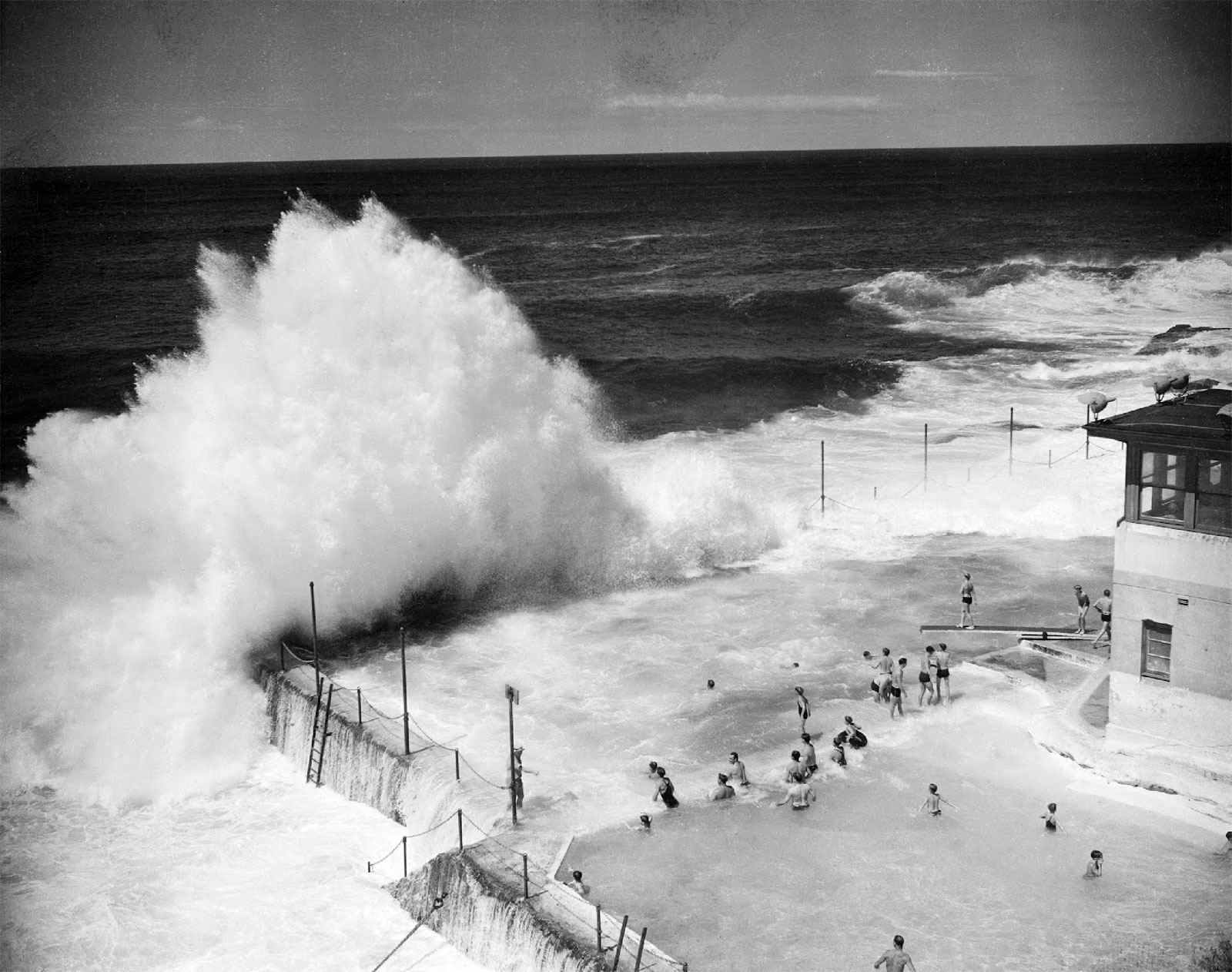
Unknown photographer (Australian) 'Waves breaking into the pool' 1945


Unknown photographer (Australian)
Waves breaking into the pool
1945
Australian News and Information Bureau collection
National Archives of Australia


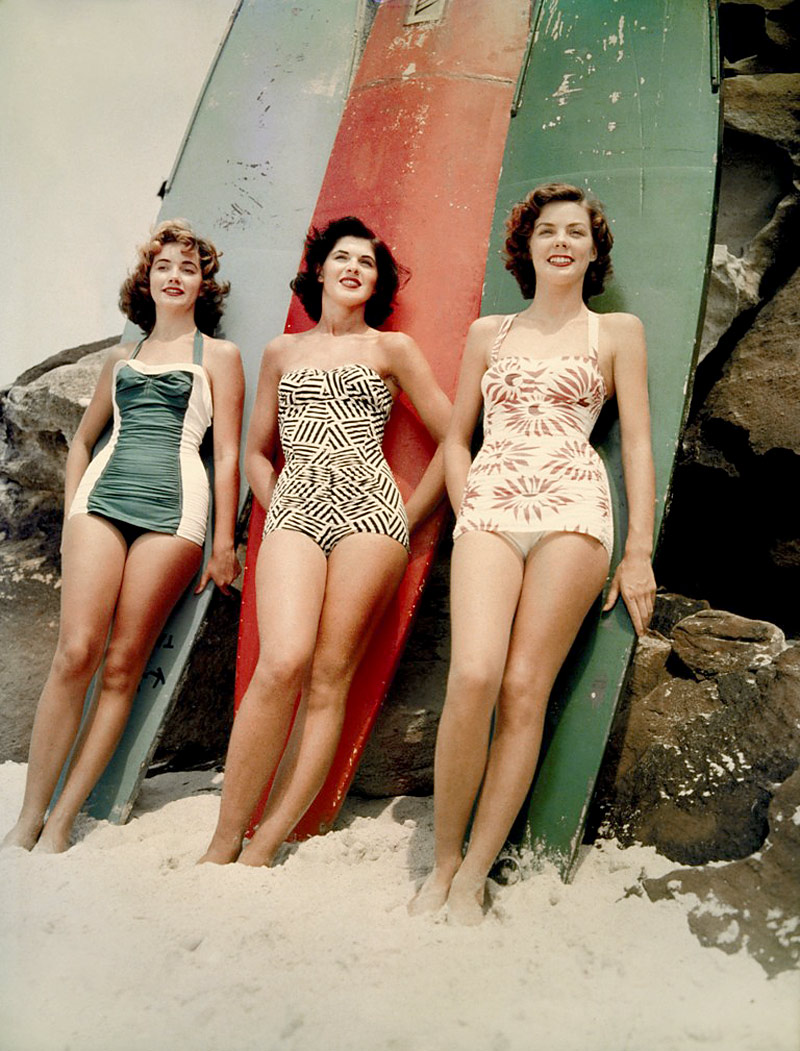
Anonymous photographer (Australian). '1952 Miss Pacific finalists Mary Clifton, Pamela Jansen and Judy Worrad, stand in front of surfboards on Bondi Beach, Sydney' 1952


Anonymous photographer (Australian)
1952 Miss Pacific finalists Mary Clifton, Pamela Jansen and Judy Worrad, stand in front of surfboards on Bondi Beach, Sydney
1952
National Archives of Australia


Anonymous photographer (Australian). 'Sunbathing, Sydney Beach, NSW' c. 1955


Anonymous photographer (Australian)
Sunbathing, Sydney Beach, NSW
c. 1955
National Archives of Australia


Cossies, togs and bathers

Until the 1940s, Australian women wore decidedly modest, albeit colourful, one-piece swimsuits. But the bikini was already in vogue overseas and by the early 1950s Australian women were daring to wear it. Discover the many fashion statements that could be made by wearing a favourite pair of cossies, togs or bathers!


Anonymous photographer (Australian). 'Christmas party on Bondi Beach, Sydney' 1959


Anonymous photographer (Australian)
Christmas party on Bondi Beach, Sydney
1959
National Archives of Australia


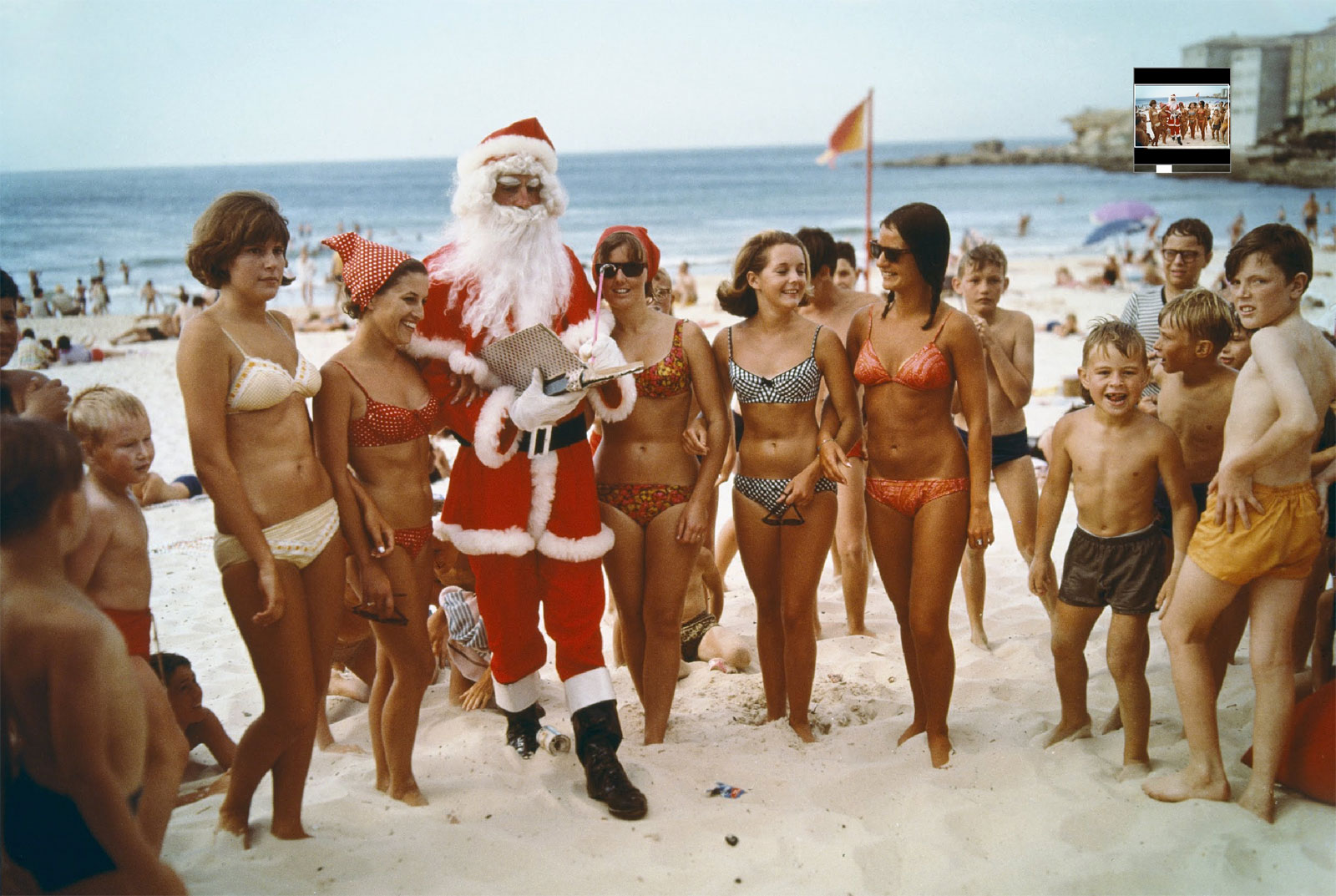
Anonymous photographer (Australian) 'Santa Claus visits a Sydney beach' 1969


Anonymous photographer (Australian)
Santa Claus visits a Sydney beach
1969
Australian News and Information Bureau collection
National Archives of Australia


At the beach

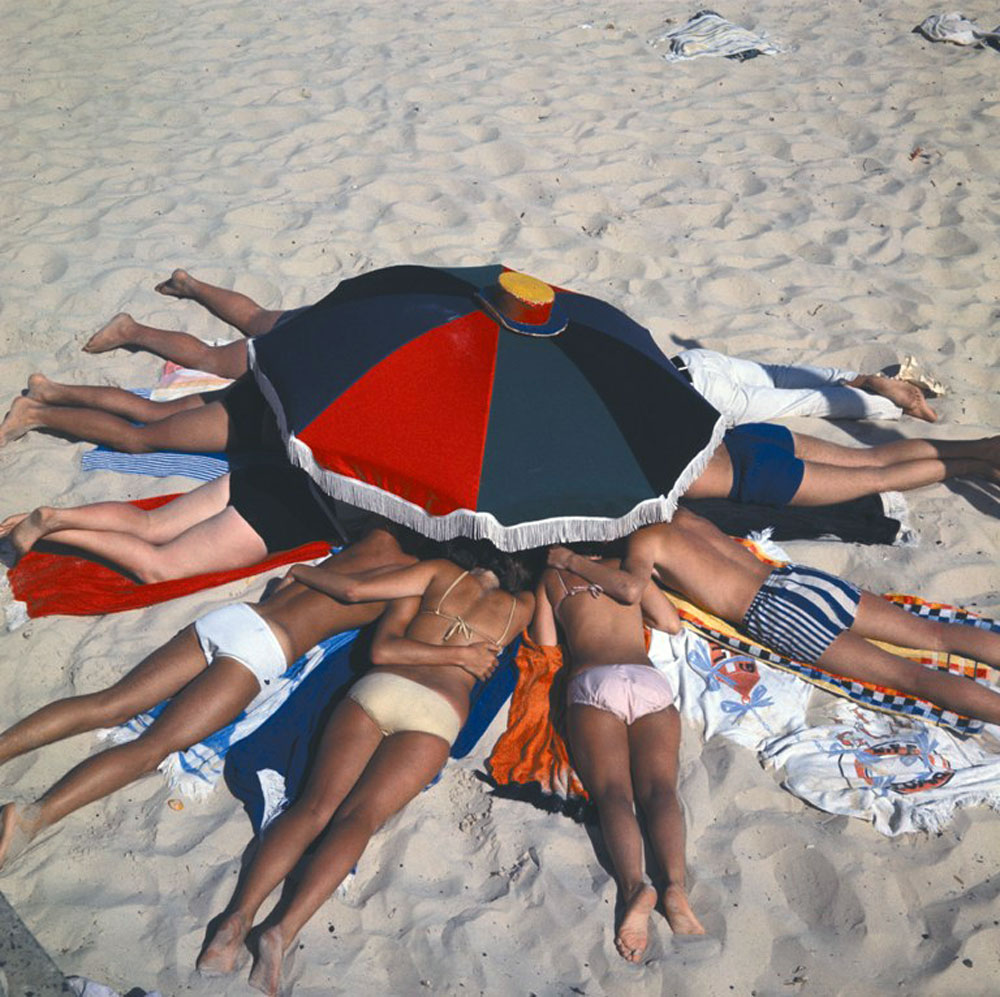
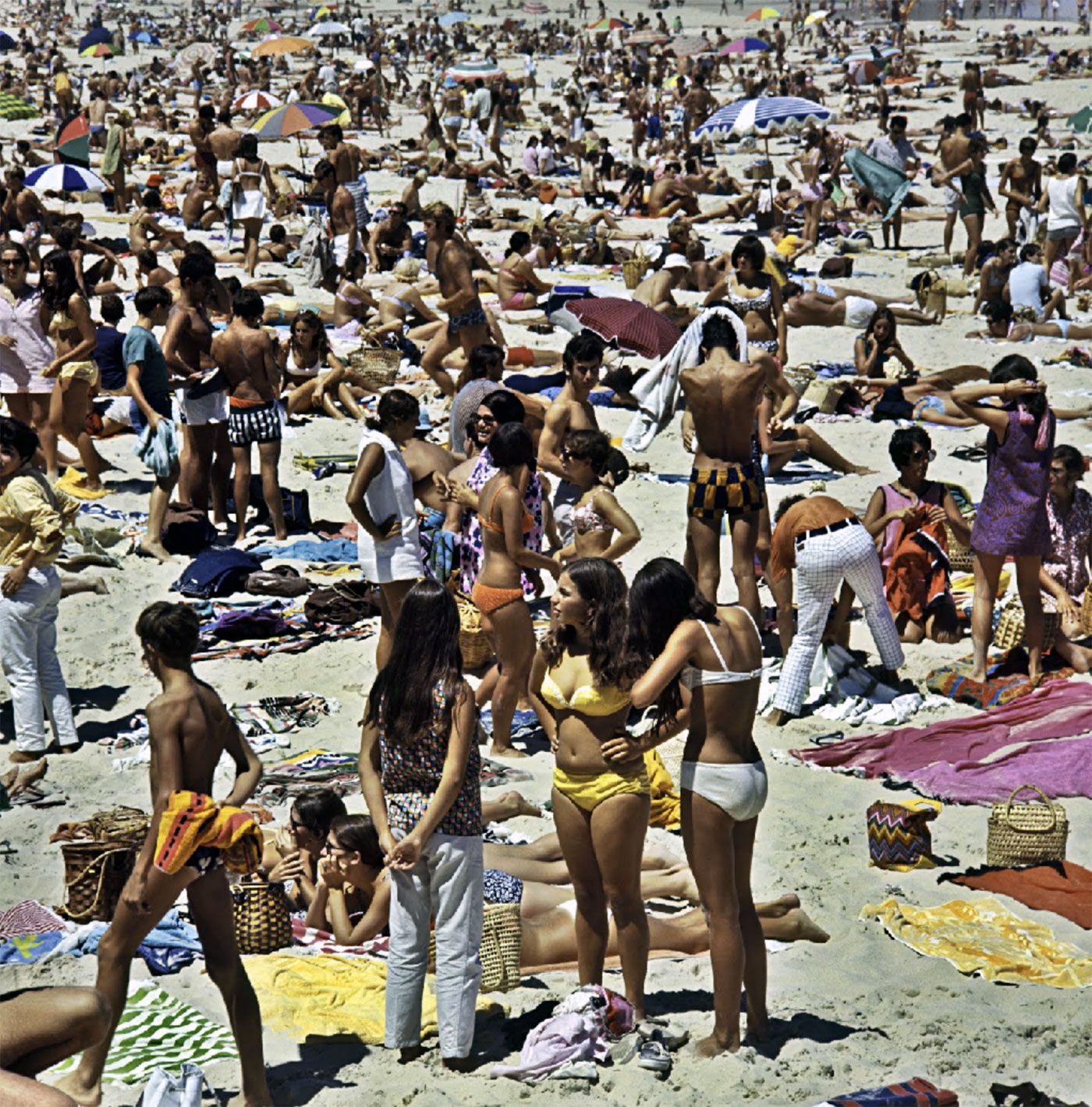
In the 1950s and 1960s, Christmas heralded the start of annual summer holidays for many Australian families. Those who didn’t already live near the coast usually headed towards it, mostly in Holdens and sometimes hauling a caravan. They made tracks to seaside places such as the Gold Coast, Manly, Byron Bay and Sorrento, plonking their bodies on the warm sand, transistors to their ears, to bake in the summer sun. Back then most people seemed unconcerned about sunburn and, as the images show, even beach umbrellas were in short supply.


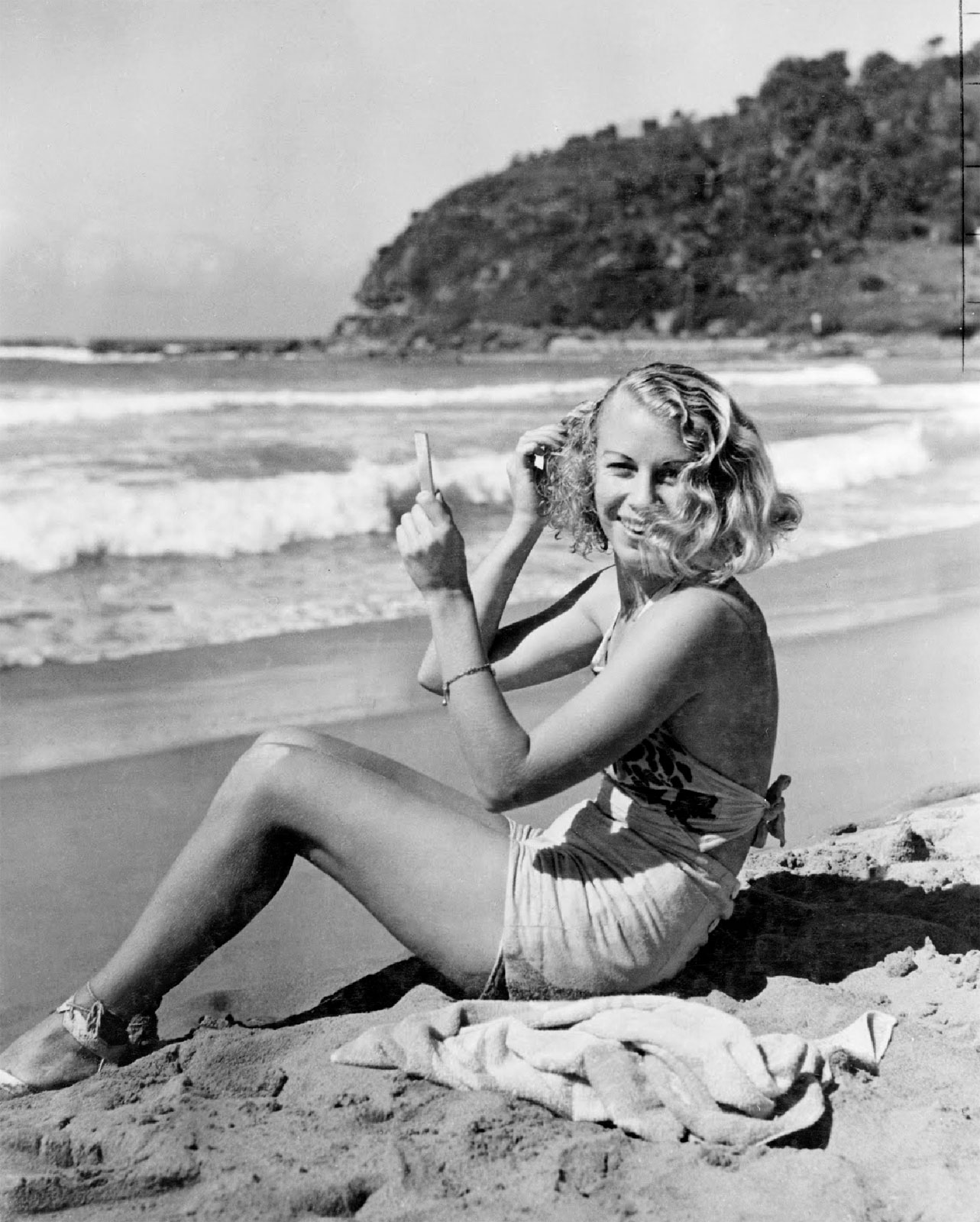
Anonymous photographer (Australian) 'Bathing beauty' 1955


Anonymous photographer (Australian)
Bathing beauty
1955
Australian Travel Industry Association collection
National Archives of Australia


This image comes from the Australian Travel Industry Association collection, now held in the National Archives. This series consists of black and white prints and negatives of photographs used in publications, notably Walkabout magazine, produced by the Australian National Travel Association (ANTA).


The Victorian Archives Centre plays host to regular displays of original records from our collection as well as touring exhibitions about Victorian stories. Over Summer, the Victorian Archives Centre will present Summers Past: Golden Days in the Sun 1950-1970, a fascinating photographic exhibition highlighting Australia’s fascination with the sun and sea.

Summers Past will explore our enduring love affair of all things summer, invoking memories of carefree sunny days at the beach in the 1950s, 1960s and 1970s. This is your last chance to view this exhibition before it returns to the National Archives of Australian in April 2012.

So slip on your cossie, slop on the sunscreen and head down to the Victorian Archives Centre this summer!

Summers Past: Golden Days in the Sun 1950-1970 will be on display until April 2012. Entry is free.


Anonymous photographer (Australian). 'Sunbathers relax under a low umbrella at Bondi, NSW' 1956


Anonymous photographer (Australian)
Sunbathers relax under a low umbrella at Bondi, NSW
1956
National Archives of Australia


Anonymous photographer (Australian) 'Sydney beach scene' 1969


Anonymous photographer (Australian)
Sydney beach scene
1969
Australian News and Information Bureau collection
National Archives of Australia


Anonymous photographer (Australian). 'Surfer and bikini girl on the sand' 1969


Anonymous photographer (Australian)
Surfer and bikini girl on the sand
1969
National Archives of Australia


Anonymous photographer (Australian) 'Holiday makers at Surfers Paradise' 1959


Anonymous photographer (Australian)
Holiday makers at Surfers Paradise
1959
Australian News and Information Bureau collection
National Archives of Australia


Anonymous photographer (Australian). 'Snack bar, Surfers Paradise, QLD' 1971


Anonymous photographer (Australian)
Snack bar, Surfers Paradise, QLD
1971
National Archives of Australia


Out and about

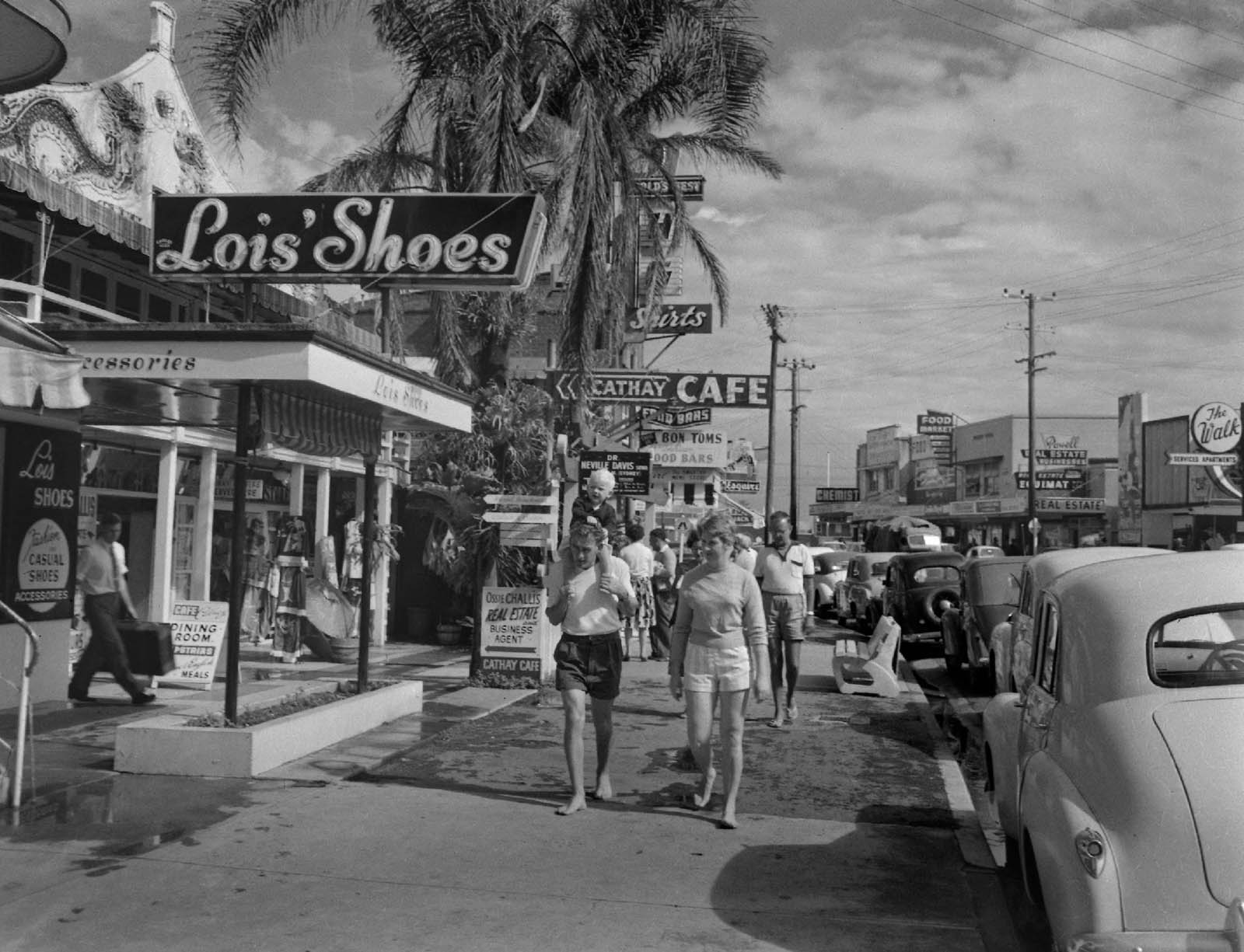
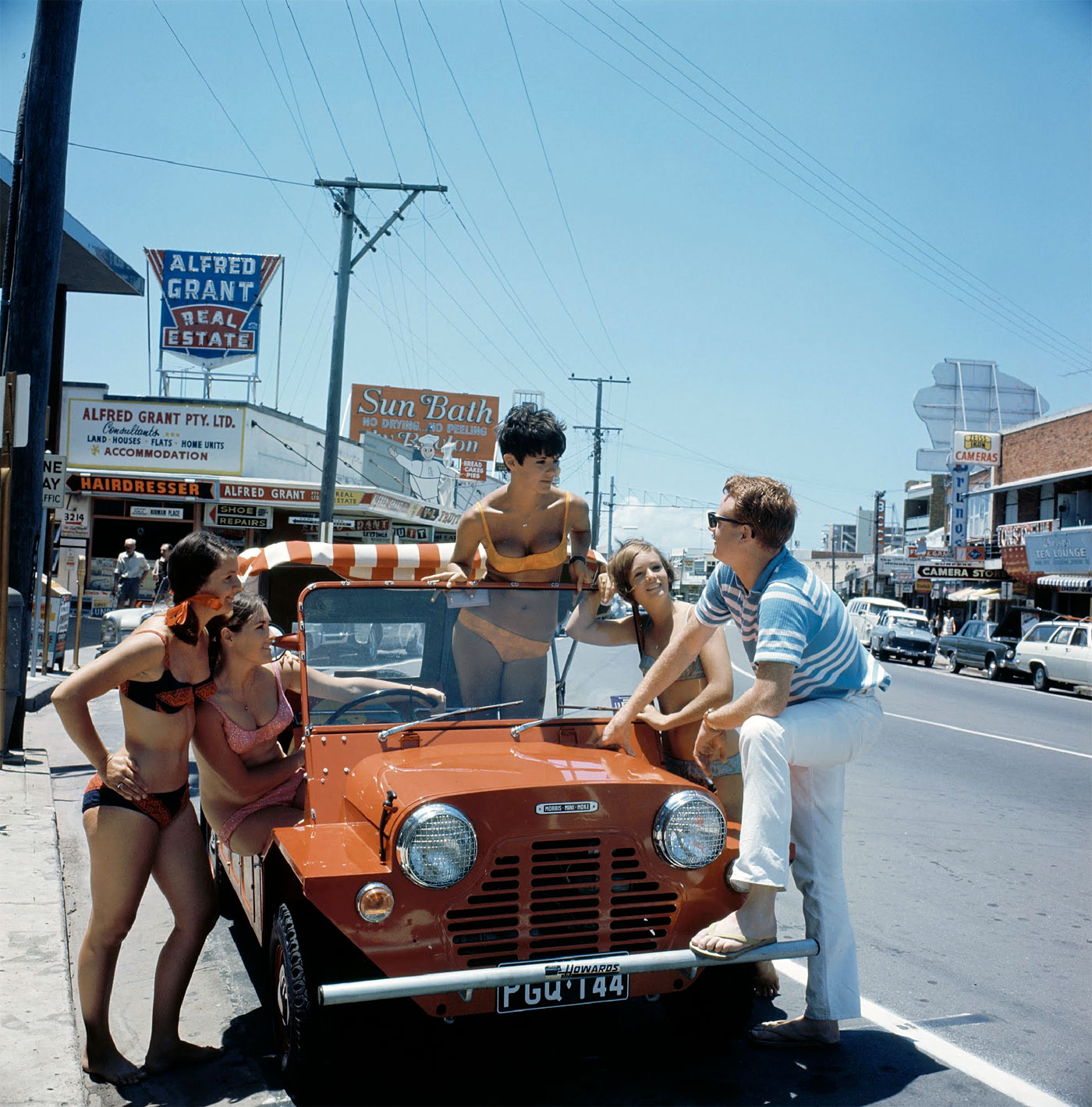
Australians have always been fairly laid back and never more so than in summer. Looking at these images from the 1950s and 1960s, it’s plain that sophistication was seldom a consideration when choosing what to wear. On holidays, most people preferred to be comfortable rather than trendy, and bare feet were common on coastal streets, as were unbuttoned shirts and even swimwear.


Anonymous photographer (Australian) 'Holiday makers gather around a car on a hot summer's day' 1964


Anonymous photographer (Australian)
Holiday makers gather around a car on a hot summer’s day
1964
Australian News and Information Bureau collection
National Archives of Australia


Anonymous photographer (Australian). 'Surf lifesaving, Bondi Beach' 1960


Anonymous photographer (Australian)
Surf lifesaving, Bondi Beach
1960
National Archives of Australia


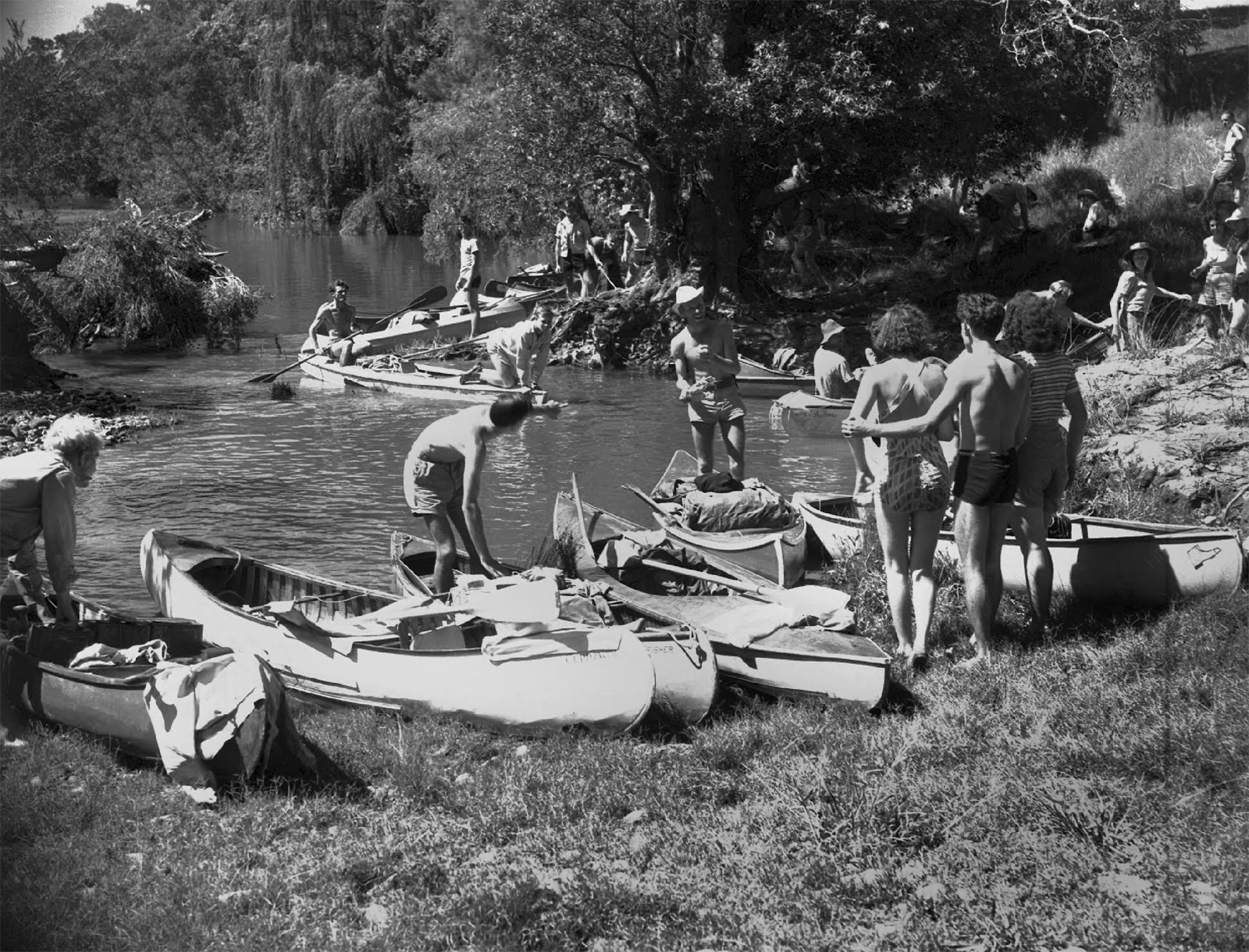
Cliff Bottomley (Australian, c. 1907-1981) 'Preparing canoes' 1948


Cliff Bottomley (Australian, c. 1907-1981)
Preparing canoes
1948
Australian News and Information Bureau collection
National Archives of Australia


This image comes from the Australian News and Information Bureau collection, now held in the National Archives. This vast archival resource is the legacy of nearly half a century’s work by Bureau photographers who captured hundreds of thousands of photographs of Australians at work and play.


Cooling off

It’s no secret that Australia can be very hot, especially in summer. As the song says, we are girt by sea, and for 85 per cent of Australians a blissful dip in the ocean has always been less that two hours’ drive away. For those living further inland, sanctuary was found in a nearby river or lake, or the town’s public swimming pool.


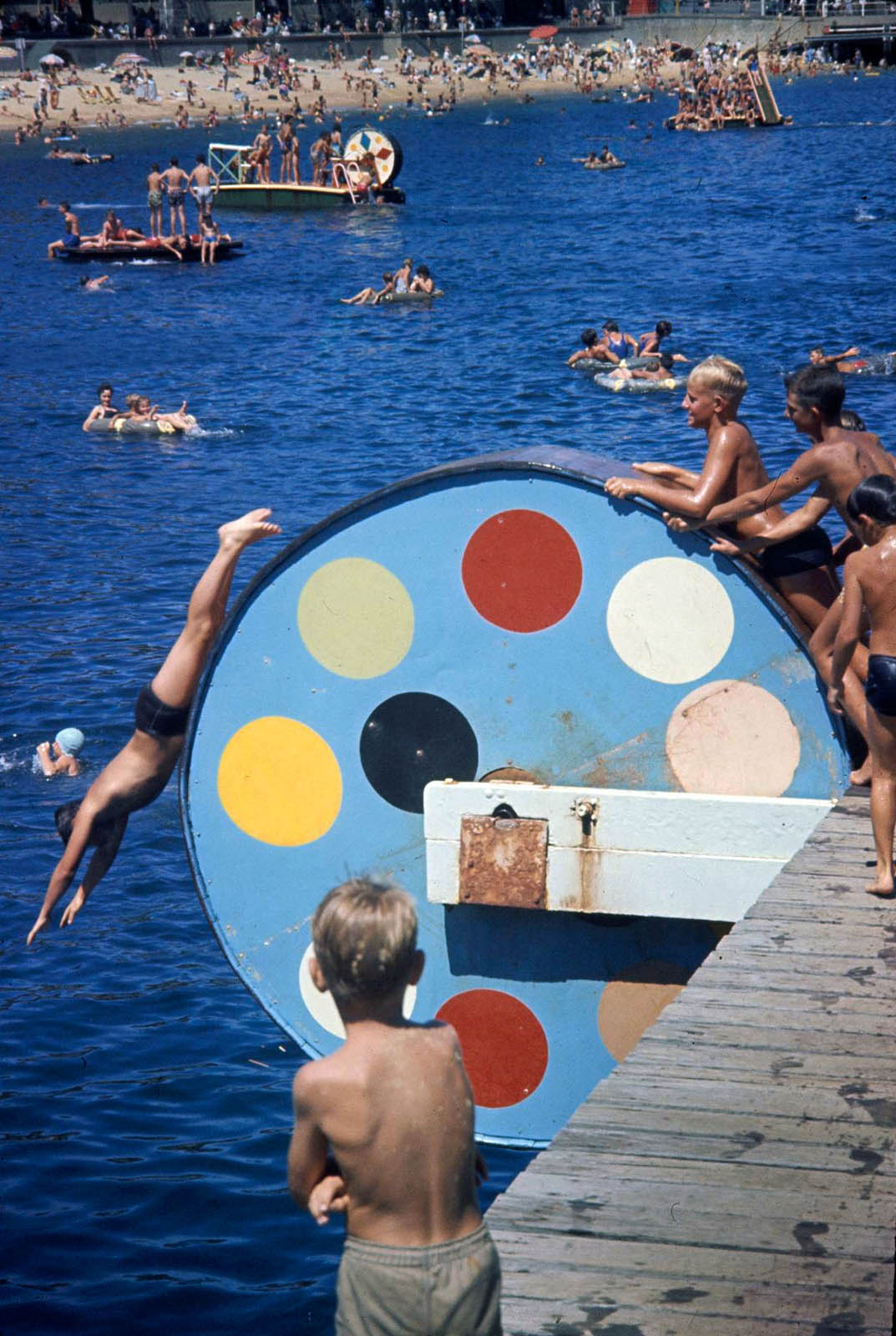
Anonymous photographer (Australian) 'Harbour swimming pool, Manly, New South Wales' 1960


Anonymous photographer (Australian)
Harbour swimming pool, Manly, New South Wales
1960
Australian News and Information Bureau collection
National Archives of Australia


This image comes from the Australian News and Information Bureau collection, now held in the National Archives. This vast archival resource is the legacy of nearly half a century’s work by Bureau photographers who captured hundreds of thousands of photographs of Australians at work and play.


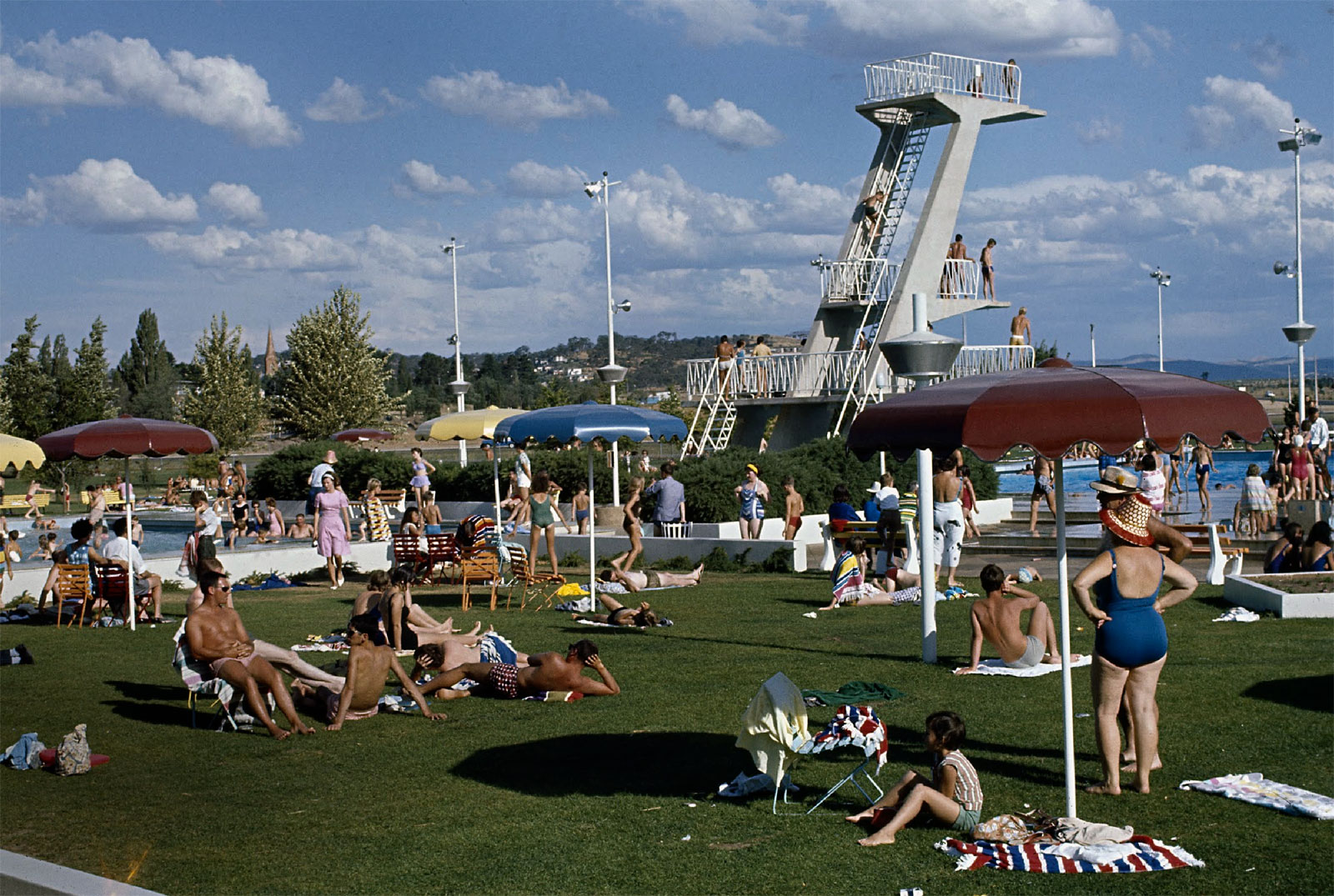
Anonymous photographer (Australian) 'Sunbathers relax on the lawn at the Olympic Pool, Canberra, Australian Capital Territory' 1966


Anonymous photographer (Australian)
Sunbathers relax on the lawn at the Olympic Pool, Canberra, Australian Capital Territory
1966
Australian News and Information Bureau collection
National Archives of Australia


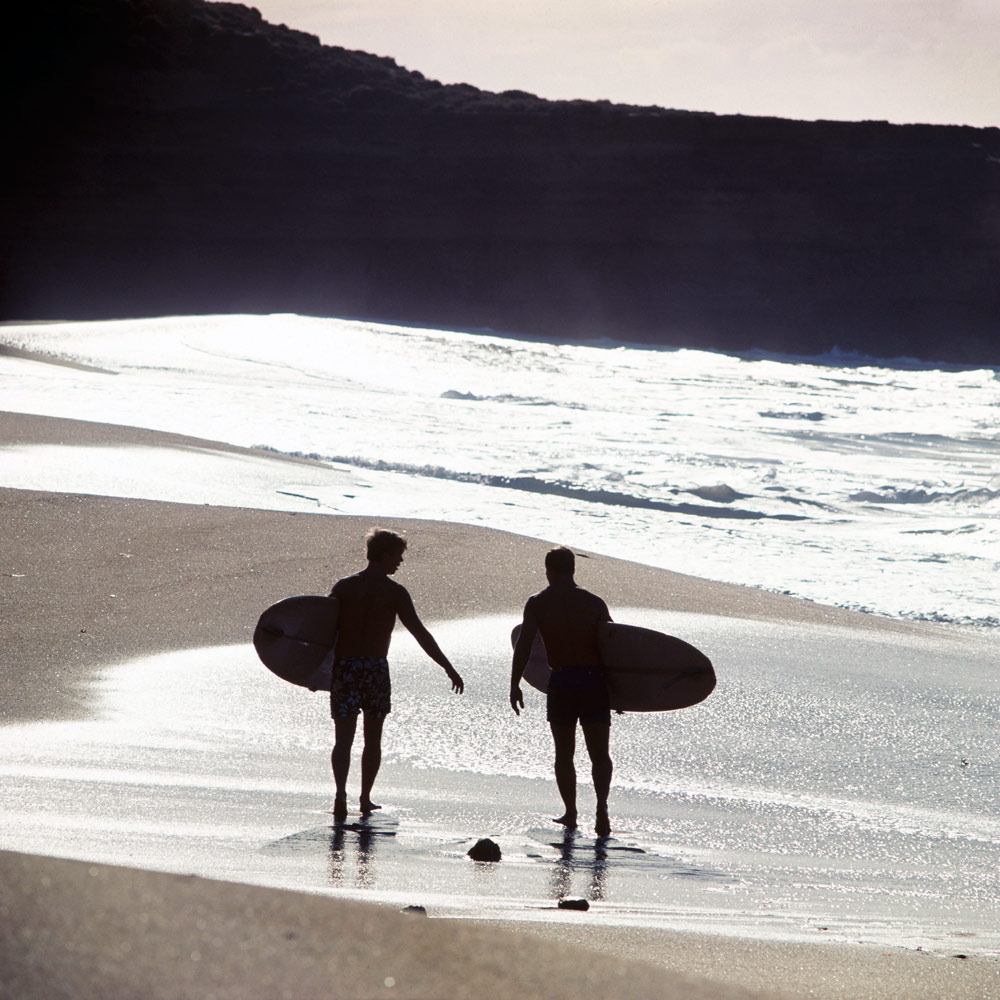
Anonymous photographer (Australian). 'Surf board riders, Torquay, VIC' 1967


Anonymous photographer (Australian)
Surf board riders, Torquay, VIC
1967
National Archives of Australia


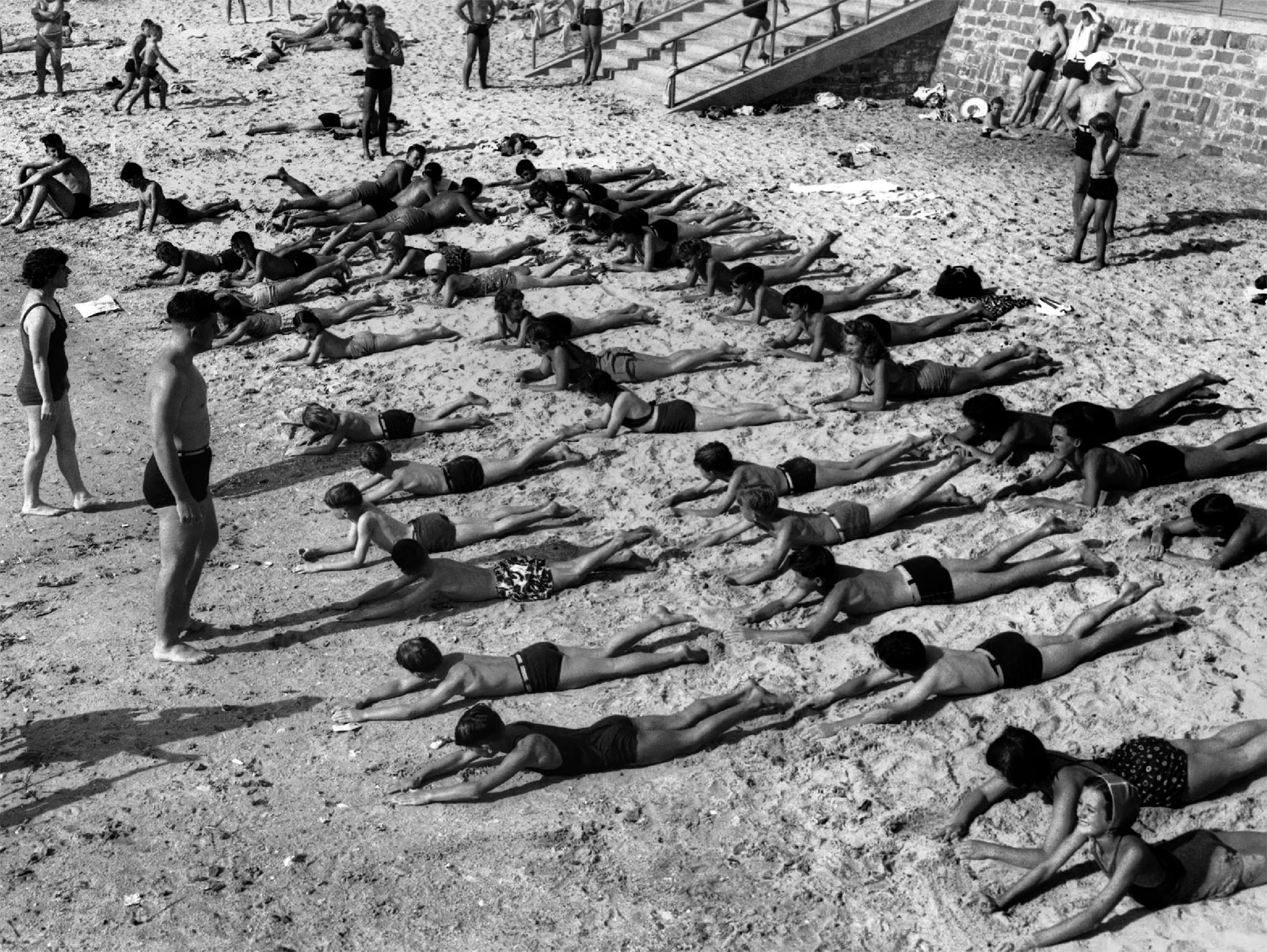
Anonymous photographer (Australian) 'Children learning to swim' 1945


Anonymous photographer (Australian)
Children learning to swim
1945
Australian News and Information Bureau collection
National Archives of Australia


Nice one, sport!

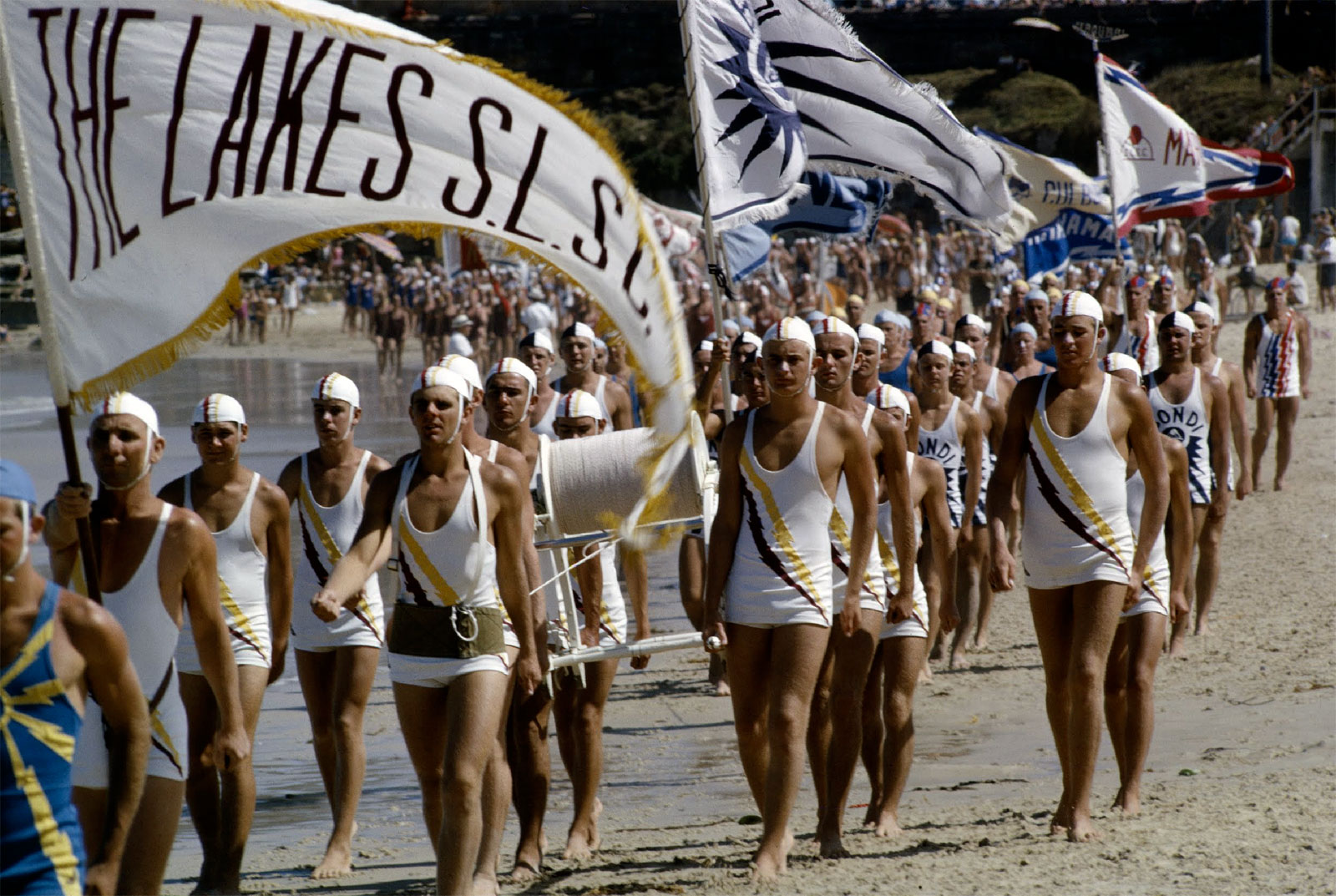
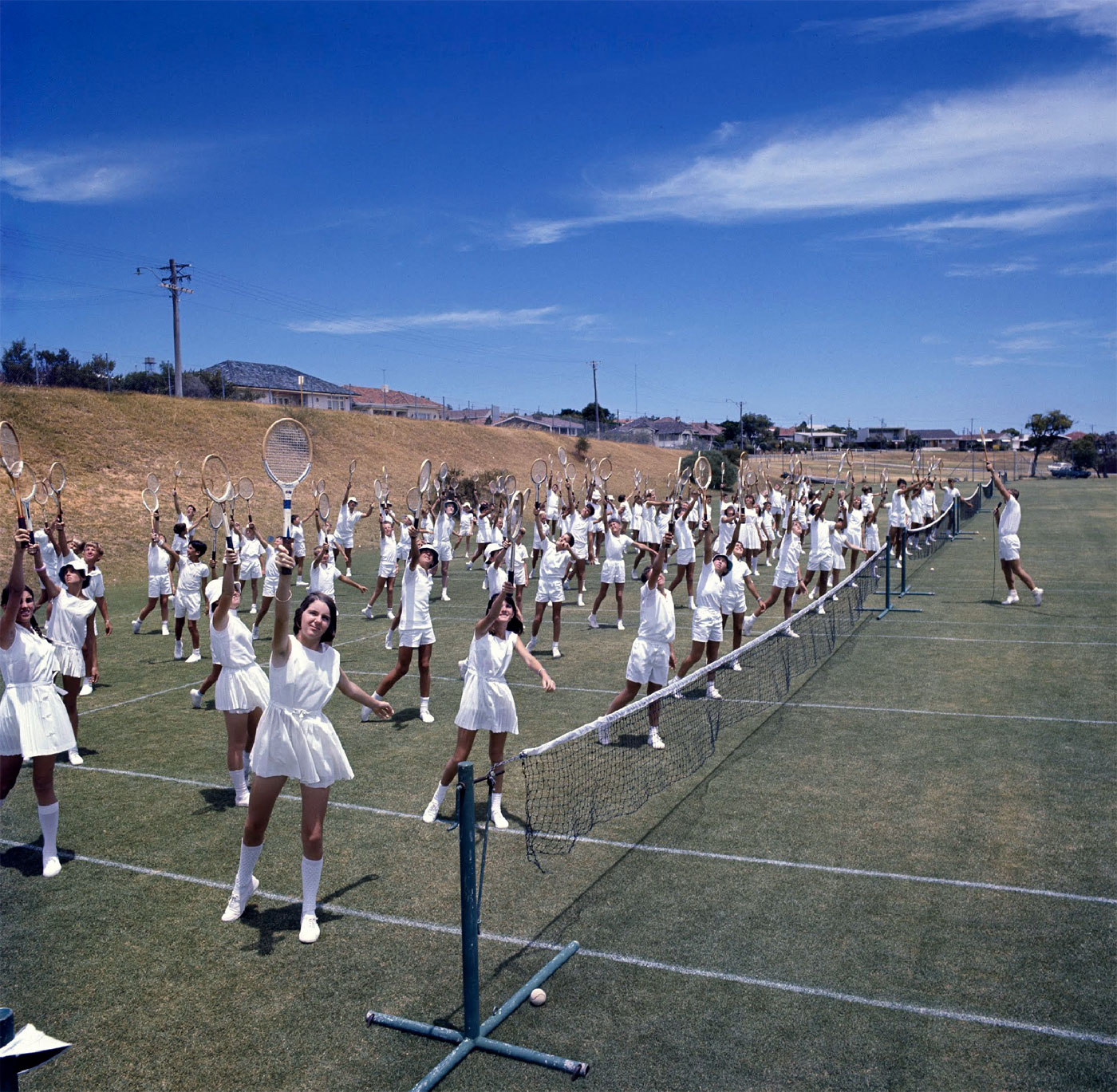
Between 1950 and 1970, Australia was triumphant in all the sports we loved. We dominated in the pool, won the Davis Cup a remarkable 15 times, and boasted an impressive record against every Test cricket nation. As these images show, Australian youngsters were keen to play the game, and on most summer Saturdays all around the country, boys and girls would play tennis or cricket, or swim like champions.


Anonymous photographer (Australian) 'Boys with kites' 1965


Anonymous photographer (Australian)
Boys with kites
1965
Australian News and Information Bureau collection
National Archives of Australia


Anonymous photographer (Australian) 'Surf carnival' 1966


Anonymous photographer (Australian)
Surf carnival
1966
Australian News and Information Bureau collection
National Archives of Australia


Anonymous photographer (Australian) 'Mass tennis class' 1967


Anonymous photographer (Australian)
Mass tennis class
1967
Australian News and Information Bureau collection
National Archives of Australia


The Victorian Archives Centre
99 Shiel Street
North Melbourne, Victoria 3051
Australia

The Victorian Archives Centre website

LIKE ART BLART ON FACEBOOK

Back to top
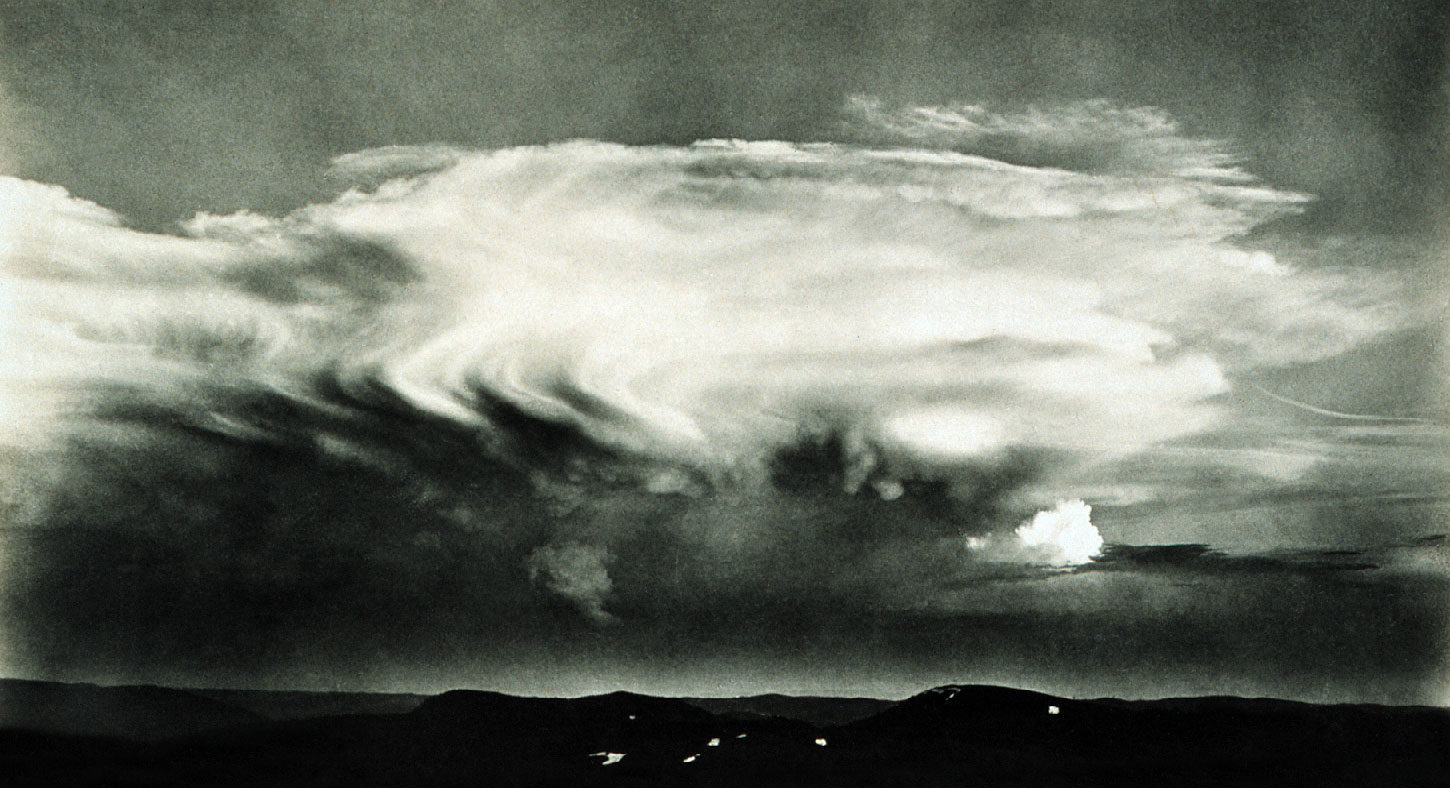
Exhibition: ‘Gerhard Richter: Panorama’ at Tate Modern, London

Exhibition dates: 6th October, 2011 – 8th January, 2012

Curators: Nicholas Serota and Mark Godfrey


Many thankx to the Tate Modern for allowing me to publish the artwork in the posting. Please click on the photographs for a larger version of the image.


Gerhard Richter (German, b. 1932) 'Reader' 1994


Gerhard Richter (German, b. 1932)
Reader
1994
Courtesy San Francisco Museum of Modern Art
© Gerhard Richter


“Curated by Nicholas Serota and Mark Godfrey, this show sets up all sorts of telling juxtapositions, while following the thread not just of Richter’s thinking, but of history – and in particular German history – since the second world war. We go from the saturation bombing of Dresden and Cologne to 1960s West German consumerism, from 1970s domestic terrorism to 9/11. There are paintings devoted to Richter’s parents, his aunts and uncles, and what happened to them in wartime. There are paintings devoted to his children, and to becoming a father again in his 60s. He confronts the personal with the public, one kind of history with another. …

Caspar David Friedrich’s German Romanticism, Titian’s Venetian colour, constructivism and postwar gestural painting, minimalism and process art are all grist to Richter’s mill. His 1973 Annunciation After Titian is a reworking from a postcard of the original, while the impossibility of Friedrich’s Romanticism returns time and again in Richter’s seascapes and his Greenland photographs. “I was always looking,” he once said, “for a third way, in which eastern realism and western modernism would be resolved into one redeeming construct.” If this remains Richter’s programme, it is one riven with the irreconcilable, a friction on which his art depends.”


Adrian Searle. “Tenderness and terror: the Tate’s Gerhard Richter retrospective,” on The Guardian website Tuesday 4th October 2011 [Online] Cited 03/11/2024


Gerhard Richter (German, b. 1932) 'Table' (Tisch) 1962


Gerhard Richter (German, b. 1932)
Table (Tisch)
1962
© Gerhard Richter


Gerhard Richter (German, b. 1932) 'Mustang Squadron' 1964


Gerhard Richter (German, b. 1932)
Mustang Squadron
1964
Private Collection
© Gerhard Richter


Gerhard Richter (German, b. 1932) 'Tante Marianne' (Aunt Marianne) 1965


Gerhard Richter (German, b. 1932)
Tante Marianne (Aunt Marianne)
1965
Private Collection
© Gerhard Richter


Wedded to this aesthetic of indifference, it seems more than coincidental that he introduced into his practice subject matter directly related to Germany’s recent Nazi past, images from his family album (one of the few possessions he brought over from the East) that most artists would have chosen to keep concealed. Uncle Rudi for instance is a full sizes portrait of his uncle in the uniform of the Wehrmacht – a going away photo, it turns out, as he was to die some months later. What distinguishes this portrait and many others is the addition of Richter’s signature blur. Paint has been dragged across the wet surface with a dry brush, signalling a whole variety of responses.  Often interpreted as replicating an out of focus snapshot, evoking speed, or signalling a temporal distancing by underlining the difference between the ‘now’ of the viewer and the ‘then’ of whatever was captured in the photograph, this flurry of soft or hard brush strokes also signals a degree of moral and emotional ambiguity – despite the painter’s insistence on a lack of intentionality on his part. Take his portrait of Aunt Marianne that depicts his maternal aunt cradling Richter as a none-too-happy baby. A schizophrenic, she was sterilized and eventually starved to death by the Nazis. The blur of the brushstrokes bring her and the baby together suggesting the very emotional attachment that Richter was initially keen to disavow. During an interview in 1986 Richter confessed that this dispassionate stance of indifference was mere subterfuge and pretence on his part: “Content definitely – though I may have denied this at one time, by saying that it had nothing to do with content, because it was supposed to be about copying a photograph and giving a demonstration of indifference.”

Anna Leung. “Gerhard Richter: Panorama at Tate Modern,” on The Arts Section website Nd [Online] Cited 05/12/2024


Gerhard Richter (German, b. 1932) 'Uncle Rudy' 1965


Gerhard Richter (German, b. 1932)
Uncle Rudy
1965
© Gerhard Richter


Gerhard Richter (German, b. 1932) 'Seascape (Sea-Sea)' 1970


Gerhard Richter (German, b. 1932)
Seascape (Sea-Sea)
1970
© Gerhard Richter


Gerhard Richter (German, b. 1932) 'Betty' 1977


Gerhard Richter (German, b. 1932)
Betty
1977
© Gerhard Richter


Gerhard Richter (German, b. 1932) 'Candle' 1982


Gerhard Richter (German, b. 1932)
Candle
1982
Museum Frieder Burda, Baden-Baden, Germany
© Gerhard Richter


Gerhard Richter (German, b. 1932) 'Betty' 1988


Gerhard Richter (German, b. 1932)
Betty
1988
Saint Louis Art Museum, USA
© Gerhard Richter


Gerhard Richter’s extremely productive career needs to be seen against this shift in attitudes and expectations when pictorial references were no longer drawn directly from the natural world but from an ever-growing nexus of information. Empirical data was being rapidly replaced by conceptual data. From 1961 when he settled in West Germany Richter alternated between figuration and non-figuration treating a wide range of subjects and employing a wide variety of means while not valuing one practice over another. As we shall see Richter is equally adept at dealing with historical genres such as the nude, landscape, portraits and history painting as he is in investigating colour and its absence in his monochromes and colour charts and in his densely layered, explosively coloured abstract canvases. For Richter, Abstraction is as real as Realism is abstract, for what fascinates him is not the image per se or its absence but appearance or semblance as our apprehension of appearance. Richter readily admits that it is inevitable that figurative elements be seen in abstraction and denies any difference between what for him is a false polarity. That this panoply of styles remains Richter’s consistent trademark throughout his long career can be seen as we wander through the rooms of this vast exhibition. Each room displays figurative paintings, mostly from photographic imagery, side by side with abstract paintings. There are two exceptions; the first is the room devoted to 18 October 1977, a cycle of fifteen photo-paintings based on the deaths of the Baader-Meinhof terrorists in Stammheim high security prison, the second the Cage room of abstract paintings that brings the exhibition to an close. Throughout the exhibition we see Richter appropriating mutually contradictory trends associated with Hyperrealism, Minimalism and Conceptual Art while at the same time honing his craft as a painter to produce some extraordinarily beautiful images. Impossible to categorise he demonstrates his determination to confront the crisis of representation on one hand and that of Germany’s recent history on the other.

Anna Leung. “Gerhard Richter: Panorama at Tate Modern,” on The Arts Section website Nd [Online] Cited 05/12/2024


Gerhard Richter (German, b. 1932) 'Abstract Painting (726)' 1990


Gerhard Richter (German, b. 1932)
Abstract Painting (726)
1990
Tate
© Gerhard Richter


Gerhard Richter (German, b. 1932) 'Abstract Painting' 1990


Gerhard Richter (German, b. 1932)
Abstract Painting
1990
Tate. Purchased 1992
© Gerhard Richter
Photo: Lucy Dawkins


Gerhard Richter (German, b. 1932) 'Forest (3)' and 'Forest (4)' 1990


Gerhard Richter (German, b. 1932)
Forest (3) and Forest (4)
1990
Private collection (left) and The Fisher Collection, San Francisco (right)
© Gerhard Richter
Photo: Lucy Dawkins


Gerhard Richter (German, b. 1932) 'Forest (3)' 1990


Gerhard Richter (German, b. 1932)
Forest (3)
1990
Private collection
© Gerhard Richter


Gerhard Richter is widely regarded as one of the most important artists working today. Spanning nearly five decades, and coinciding with the artist’s eightieth birthday, Gerhard Richter: Panorama is a major retrospective that groups together significant moments of his remarkable career.

As evoked by the title Panorama this exhibition presents a broad look at the wide range of Richter’s practice, discovering contradictions and connections, continuities and breaks. Each room is devoted to a particular moment of his career showing how he explored a set of ideas. While the focus is on painting, the exhibition includes glass constructions, mirrors, drawings, and photographs, and explores how Richter uses these media to ask questions about painting.

The exhibition includes many of Richter’s most well-known works such as Ema (Nude descending a staircase) 1966, Candle 1982, Betty 1988 and Reader 1994. There are also important works that are rarely shown: the first Colour Chart from 1966, 4 Panes of Glass 1967, a triptych of Cloud paintings from 1970, and, for the first time outside Germany, Richter’s monumental twenty metre long painting Stroke (on Red) 1980, based on a photograph of a brush stroke. There are several groups of important abstract paintings including a room of brightly coloured works from the early 1980s, a room of monumental squeegee paintings from the 1990s, and the Cage series 2006.

Richter was one of the first German artists to reflect on the history of National Socialism, creating paintings of family members who had been members, as well as victims of, the Nazi party. In the late 1980s, looking back to the history of radical political activity in West Germany in the 1970s, he produced the fifteen-part work 18 October 1977 1988, a sequence of black and white paintings based on images of the Baader Meinhof group. At the same time as developing a complex body of abstract work, often using squeegees to drag paint across the surface of his canvases, Richter has continued to respond to significant moments in history. In 2005 he painted September, an image of the terrorist attacks on the World Trade Center in New York in 2001, which is shown for the first time in the UK in this exhibition.

Richter is often celebrated for the diversity of his approaches to painting. His practice can seem to be structured by various oppositions, with paintings after photographs as well as abstract pictures; traditional still-lifes alongside highly charged subjects; monochrome grey works and multicoloured grids. Some paintings are planned out and ordered; others are the result of unpredictable accumulations of marks and erasures. Richter sometimes maintains these oppositions, but at other times he undoes them.  This exhibition shows how he often brings abstraction and figuration together, and explores related ideas in very different looking works. The exhibition reveals breaks and new beginnings in his career, but it also reveals questions that he has asked throughout his life.

Short Biography

Richter was born in Dresden in 1932 and after training in the East, moved to West Germany in 1961. He was part of a group of painters working in Düsseldorf, that included Sigmar Polke and Konrad Lueg, who turned to image-based painting during the emergence of American Pop art. Major solo exhibitions include the 36th Venice Biennale in 1972, his first large-scale retrospective at Städtische Kunsthalle und Kunstverein für die Rheinlande und Westfalen, Düsseldorf in 1986 and Forty Years of Painting, a large-scale retrospective at the Museum of Modern Art, New York, 2002. He installed Black Red Gold in the foyer of the Reichstag building in Berlin in 1999 and the window that he designed for Cologne Cathedral was completed in 2007. Richter lives and works in Cologne.”

Press release from the Tate Modern website


Gerhard Richter (German, b. 1932) Panel from '18 October 1977' 1988 Gerhard Richter (German, b. 1932) Panel from '18 October 1977' 1988 Gerhard Richter (German, b. 1932) Panel from '18 October 1977' 1988


Gerhard Richter (German, b. 1932)
Panels from 18 October 1977
1988
© Gerhard Richter


Gerhard Richter debuted his 15-painting suite 18 October 1977, concerning the radical left-wing Baader-Meinhof Group that had shaken Germany with a two-year campaign of terror, with more public ceremony than usual. At a press conference at the Museum Haus Esters in Krefeld, introducing the pictures before they were first shown in early 1989, he offered a curious speech, reflecting that, “I hope…there is purpose in looking at those deaths, because there is something about them that should be understood.” If Richter’s words recognized the particularly ambitious nature of these paintings among his growing body of work, it also gave listeners little guidance as to what it was that should be understood. …

Soon after, Richter began wiping across the still-wet surface of his photo-paintings with a squeegee to soften the edges and blur the image. This signature blur can evoke a range of things – the motion of the viewer or the camera, the passage of time, but also something more metaphoric, of the type suggested in the artist’s 1971 musing: “My relationship to reality has a great deal to do with imprecision, uncertainty, transience, incompleteness.” At times, Richter also suggested that this fuzzy gaze might serve a role in helping to focus the mind: “You do not see less,” he wrote, “by looking at a field out of focus through a magnifying glass.” In the October cycle, Richter seems to amp his blurring technique up a notch, so that the images are more obscured, more diffuse than usual, in some cases approaching the edge of recognisability.

The date of the title – October 18, 1977 – marks the bloody denouement of a story that had played out over several years in front of a shaken German nation. From 1968 to 1977, the Baader-Meinhof Group led a campaign of shootings and kidnappings aimed at undermining the German state, leaving more than 30 people dead. The group’s founders – Holger Meins, Ulrike Meinhof, Gudrun Ensslin, and Andreas Baader – and several other members of the group were arrested and held in Stammheim prison. On October 17, a plane was diverted to Mogadishu by hijackers who demanded the release of the members of the group from prison. Early the next morning, following the successful liberation of the plane by the German military, three of the Baader-Meinhof Group were found dead in their cells from apparent suicide – though the proximity of these events prompted speculation about their cause of death. …

Richter acknowledged how profoundly unsettling he found the events around the Baader-Meinhof Group: “The deaths of the terrorists, and the related events both before and after,” he reflected, “stand for a horror that distressed me and has haunted me as unfinished business ever since, despite all my effort to repress it.” Perhaps as a way of processing things, Richter began to collect materials related to the group, holding onto “a number” for years before he began painting the October cycle, filed “under the heading of unfinished business.” In fact, over 100 images related to the Baader-Meinhof Group appear in Atlas, Richter’s ongoing scrapbook-like compendium of photographic source material.

When he began working in earnest on what would become 18 October 1977, Richter drew some of his source images from newspapers and magazines or snapshots of television coverage – markers of the pervasiveness of media coverage of the Baader-Meinhof Group during their violent reign and in its aftermath. But others, taken from police evidentiary photographs, were far less readily available, and serve as tokens of Richter’s preoccupation with the topic and his determined research efforts in preparation for painting. …

The narrative arc Richter creates begins in a banally sweet portrait image of a young woman and ends in a collective ritual of public mourning. Yet both, Richter seems to suggest, are inadequate to our understanding of what has taken place. What truth, he seems to ask, do photographs offer? Can violence or righteousness be discerned in the blur of grays?

But he declined to offer answers: “It is impossible for me to interpret the pictures,” he concluded in notes made for the work’s unveiling. “In the first place they are too emotional; they are, if possible, an expression of speechless emotion. They are the almost forlorn attempt to give shape to feelings of compassion, grief, horror (as if the pictorial repetition of events were a way of understanding these events, being able to live with them).”

Leah Dickerman. “Gerhard Richter’s Enigmatic Cycle in The Long Run,” on the MoMA website March 1, 2019 [Online] Cited 05/12/2024


Gerhard Richter (German, b. 1932) Panel from '18 October 1977' 1988

Gerhard Richter (German, b. 1932) Panel from '18 October 1977' 1988


Gerhard Richter (German, b. 1932)
Panels from 18 October 1977
1988
© Gerhard Richter


Gerhard Richter (German, b. 1932) 'Abstract Painting' 1990


Gerhard Richter (German, b. 1932)
Abstract Painting
1990
Private Collection
© Gerhard Richter


Gerhard Richter (German, b. 1932) 'Demo' 1997


Gerhard Richter (German, b. 1932)
Demo
1997
The Rachofsky Collection
© Gerhard Richter


Gerhard Richter (German, b. 1932) 'Cage 4' 2006


Gerhard Richter (German, b. 1932)
Cage 4
2006
Tate. Lent from a private collection 2007
© Gerhard Richter


Gerhard Richter (German, b. 1932) 'Ema (nude descending a staircase)' 1992


Gerhard Richter (German, b. 1932)
Ema (nude descending a staircase)
1992
© Gerhard Richter


Gerhard Richter (German, b. 1932) '14. Feb. 45' 2002


Gerhard Richter (German, b. 1932)
14. Feb. 45
2002
Tate
© Gerhard Richter


Tate Modern
Bankside
London SE1 9TG

Opening hours:
Daily 10am – 6pm

Tate Modern website

LIKE ART BLART ON FACEBOOK

Back to tophttps://artblart.com/2012/01/06/exhibition-gerhard-richter-panorama-at-tate-modern-london/

Exhibition: ‘Caravaggio and His Followers in Rome’ at the Kimbell Art Museum, Fort Worth, Texas

Exhibition dates: 16th October 2011 – 8th January 2012


Simon Vouet (French, 1590-1649) 'The Fortune Teller' c. 1620


Simon Vouet (French, 1590-1649)
The Fortune Teller
c. 1620
Oil on canvas
National Gallery of Canada, Ottawa


Observe if you will:

1/ The treatment of the background behind Boy Bitten by a Lizard (1594-1596)

2/ The tension of the hands in this painting

3/ The pallor of the skin of Sick Bacchus (1593-1594)

4/ The colour of the bunch of grapes in the same painting

5/ The critical distance between the two apricots and the bowed sash resting on the pediment in the same painting

6/ The youthful innocence of the dupe in The Cardsharps (c. 1595)

7/ The deep, foreboding shadows under the eyes of Saint John the Baptist in the Wilderness (1604-1605)

8/ The astonishingly beautiful skin tones in Gerrit van Honthorst’s Saint Sebastian (c. 1623) and how the blood from the leg wound at left runs in two directions: one direction when Saint Sebastian was standing up, one when he has slumped down. Inspired.


Dr Marcus Bunyan


Many thankx to the Kimbell Museum of Art for allowing me to publish the artwork in the posting. Please click on the photographs for a larger version of the image.


“Not since Michelangelo or Raphael had one artist affected so many of his contemporaries and so irrevocably changed the course of European painting. Caravaggio created a new kind of art: dramatic, deeply emotional, grounded in the vivid details of everyday life, and overwhelmingly human. He used live models, sometimes prostitutes and the very poor, who posed in the studio for his powerful religious scenes as if the events were happening on the streets of Rome. Breaking the boundaries between art and life, he overturned the artistic conventions of the day. He played down details of the setting of a scene, focused on the expressive human figure, and invented a brand of stark realism that shocked many of his patrons.”


Michelangelo Merisi da Caravaggio (Italian, 1571-1610) 'Saint Francis in Ecstasy' c. 1594-1595


Michelangelo Merisi da Caravaggio (Italian, 1571-1610)
Saint Francis in Ecstasy
c. 1594-1595
Oil on canvas
Wadsworth Atheneum Museum of Art, Hartford, Connecticut
The Ella Gallup Sumner and Mary Catlin Sumner Collection Fund


Michelangelo Merisi da Caravaggio (Italian, 1571-1610) 'The Gypsy Fortune Teller' c. 1595


Michelangelo Merisi da Caravaggio (Italian, 1571-1610)
The Gypsy Fortune Teller
c. 1595
Oil on canvas
45 1/4 x 59 in. (115 x 150cm)
Pinacoteca Capitolina, Musei Capitolini, Rome
Public domain


One of the most influential figures in the history of art, Caravaggio (1571-1610) overturned the artistic conventions of the day and created stunningly dramatic paintings, both sacred and secular. This ambitious exhibition explores the profound impact of his work on the wide range of painters of Italian, French, Dutch, Flemish, and Spanish origin who resided in Rome. Arranged by theme, it includes over 50 paintings, with Caravaggio’s compelling images juxtaposed with those he inspired. This is the second largest display of his paintings in North America and only the third Caravaggio exhibition to be held in the United States.


Music and Youth

Many of Caravaggio’s early paintings feature handsome youths, whether singly or in groups. He seems to have used the same favorite models repeatedly – and sometimes his own features, which a contemporary tells us he studied in a mirror. The origins of these novel paintings lay in the types of pictures – portraits, still lifes, and allegories – that were painted in a realistic style in the artist’s native Lombardy, in the north of Italy, although he blurred the boundaries between genres to suggest real-life scenes. Caravaggio’s paintings of musicians would have appealed to Roman collectors who were passionate patrons of music, and likely were created to decorate rooms used for performances. They have a dreamy, slightly melancholy air. If the songs are about love, as we can assume they are, they are surely about the painful side of love rather than its joys. Caravaggio’s early paintings of youths are usually scenes of sensual pleasure but with a built-in warning against indulgence, as when a youth has his finger bitten by a lizard lurking in some fruit. He brings us close to his figures, often having them make eye contact with us, and includes lovingly observed still-life details that enhance the naturalism and immediacy of the scene. Even when there is a visitation from the beyond, like the winged Cupid in The Musicians, he treats this in a matter-of-fact way, attentive always to breaking down the boundaries between the painted world and our own. Caravaggio’s musical paintings caught on throughout Europe in the work of his followers, who brought their own innovations to the genre.


Michelangelo Merisi da Caravaggio (Italian, 1571-1610) 'The Musicians' c. 1595


Michelangelo Merisi da Caravaggio (Italian, 1571-1610)
The Musicians
c. 1595
Oil on canvas
36 1/4 x 46 5/8 in (92.1 x 118.4cm)
The Metropolitan Museum of Art, New York. Rogers Fund, 1952


In this scene, Caravaggio shows some young musicians preparing for a concert. We are brought very close to the figures, as if we share the same space. Caravaggio breaks down the boundaries between art and life, and our reality and the painted world become entwined. The instruments are modern, but the musicians wear antique-inspired dress. The lute player tunes his instrument, and the horn player (possibly a self-portrait) catches our gaze. Another youth studies the musical score; it is no longer legible, but doubtless featured love madrigals. The winged Cupid with a quiver of arrows who is handling some grapes makes explicit the bond between music and love. Wine, like music, makes the spirits light. This painting belonged to Cardinal Francesco Maria del Monte, who hosted concerts at his palace and invited musicians to live in his household, along with artists like Caravaggio.


Theodoor Rombouts (Flemish, 1597-1637) 'A Lute Player' c. 1620


Theodoor Rombouts (Flemish, 1597-1637)
A Lute Player
c. 1620
Oil on canvas
43 7/8 x 39 1/4 in (111.1 x 99.7cm)
Philadelphia Museum of Art. John G. Johnson Collection, 1917


Caravaggio’s paintings of musicians inspired Rombouts’s depiction of a musician tuning his lute. His intense expression suggests that he is both listening to the sound and sizing up the viewer, his audience. The vividly described carpet and still-life objects on the table recall Caravaggio’s similar close-up presentations. However, the colourful treatment of the costume and the robust delineation of the objects place Rombouts’s work within traditions of Flemish and Dutch painting. The still life, like ephemeral music, serves to remind us of the pleasures of life, but also that pleasure is fleeting. The artist also alludes to the five senses: hearing (the lute), taste (the tankard), smell (the pipe), sight (the musical scores), and touch (the knife).


Michelangelo Merisi da Caravaggio (Italian, 1571-1610) 'Boy Bitten by a Lizard' 1594–1596


Michelangelo Merisi da Caravaggio (Italian, 1571-1610)
Boy Bitten by a Lizard
1594-1596
Oil on canvas
25 5/8 x 20 1/2 in (65 x 52cm)
Fondazione di Studi di Storia dell’Arte Roberto Longhi, Florence


One of Caravaggio’s biographers wrote that “he also painted a boy bitten by a lizard emerging from flowers and fruits; you could almost hear the boy scream, and it was done meticulously.” The picture has suggested various interpretations. As an allegory of touch, it provides the basis for a study of how emotion is expressed physically, and arguably Caravaggio alludes to all the five senses (flowers as smell and so on). With the still life of fruits and roses, common emblems of love, he invokes age-old adages – pain can follow pleasure, and love is a rose with thorns that prick. Poets from Petrarch onward played on the similarity of the Italian words for “love” and “bitter” – amore and amaro – to which Caravaggio adds ramarro (lizard), ingeniously enlarging the joke.


Michelangelo Merisi da Caravaggio (Italian, 1571-1610) 'Sick Bacchus' 1593-1594


Michelangelo Merisi da Caravaggio (Italian, 1571-1610)
Sick Bacchus
1593-1594
Oil on canvas
Galleria Borghese, Rome


Cardsharps and Fortune Tellers

The young Caravaggio introduced another new kind of painting to the Roman art world with his scenes from the seamy side of life, its frauds and ruses. He painted these works on a large scale with half-length figures, and they were among his most widely imitated creations. His followers played countless variations on the same themes, trying various levels of subtlety and buffoonery in the humour and facial expressions. These highly animated compositions conjure up an underworld of wily cardsharps, soldiers of fortune, foolish dupes, sensuous and deceitful gypsy women, pickpockets, and thugs. They are based partly on everyday observations in the streets, partly on the stock characters and improvised comedies of the commedia dell’arte, partly on sheer fantasy. In such works, Caravaggio and his followers developed ingenious ways of involving us in the action. We read these amusingly moralising pictures through gestures and expressions – but to unravel the trickery takes time. Despite being frozen in a static image, the story seems to unfold before our eyes like one of the popular plays that were its inspiration. The artist extends the theme of deception by painting his subjects with such a high level of naturalism that the viewer is duped and astounded by his artistry.


Michelangelo Merisi da Caravaggio (Italian, 1571-1610) 'The Cardsharps' c. 1595


Michelangelo Merisi da Caravaggio (Italian, 1571-1610)
The Cardsharps
c. 1595
Oil on canvas
37 1/8 x 51 5/8 in (94.2 x 130.9cm)
Kimbell Art Museum, Fort Worth


The players are engaged in a game of primero, a forerunner of poker. Engrossed in his cards, the dupe is unaware that the older cardsharp signals his accomplice, who reaches to pull a hidden card from his breeches. The fingertips of the cheat’s gloved hand are exposed to better feel marked cards. According to an early biographer, Cardinal Francesco Maria del Monte, a great patron of the arts, took the young Caravaggio into his household soon after purchasing this picture. It hung along with The Gypsy Fortune Teller in his palace. Together they would surely have reminded the cardinal and his guests of the story of the prodigal son, warning about the perils of greed and fraud. Caravaggio has treated this subject not as a caricature of vice but in a fresh way, in which the interaction of gesture and glance evokes the drama of deception and lost innocence in the most human of terms. He structures the picture to allow us to witness everything, implicating us in the trickery.


Saints

Caravaggio grounded his saints in everyday reality, indicating their spiritual states by means of natural phenomena, especially light. In his early painting of Saint Francis, he shows the saint’s ecstasy – his mystic identification with Christ – by directing a strong light upon his figure and the consoling angel. God’s grace is signalled by light in other images of the saints, such as the scene of Mary Magdalene’s conversion from her former life of sin. In paintings of Saints Matthew and Jerome in their studies, much emulated in Caravaggio’s circle, light is a metaphor of divine inspiration. Generally the saints seem to be emerging from darkness into light, which adds drama, symbolism, and also a sense of mass – as if they were sculpted, not merely painted. In a break from Roman and Florentine traditions, Caravaggio rejected the practice of refining his composition through drawings before he began to paint and instead worked directly from a live model in the studio, preserving that model’s particular appearance, never making the features or body conform to an ideal of beauty. The effect, central to Caravaggio’s art and that of many of his followers, was startling. At this time, many people believed that the painting of sacred personages such as saints called for a special, elevated style that set them apart from the mundane reality of the here and now. Caravaggio’s radical departure from this principle brought him much harsh criticism. He was accused of merely copying and so failing to capture a higher truth. But others recognised in his work a new kind of religious art that directly engaged the faithful and made old subjects new and alive.


Michelangelo Merisi da Caravaggio (Italian, 1571-1610) 'Saint John the Baptist in the Wilderness' 1604


Michelangelo Merisi da Caravaggio (Italian, 1571-1610)
Saint John the Baptist in the Wilderness
1604-1605
Oil on canvas
68 x 52 in (172.7 x 132.1cm)
The Nelson-Atkins Museum of Art, Kansas City, Missouri. Purchase William Rockhill Nelson Trust


Caravaggio’s practice of painting a live model in his studio brings this young, brooding saint to life – as if his image were inhabited by the model’s being. Ottavio Costa, a Roman banker, commissioned this painting for a chapel on a pilgrimage route in the countryside outside of Genoa, where his family had its origins. We can imagine what a powerful experience it would have been to encounter the image of the scarlet-robed saint there, dramatically emerging from the shadows into a strong light. When Caravaggio delivered the painting, Costa decided to keep it and placed a copy in the chapel. But even the copy proved inspiring. An early guide described how it “moves not only the members of the brotherhood but also visitors to penitence.”


Gerrit van Honthorst (Dutch, 1592-1656) 'Saint Sebastian' c. 1623


Gerrit van Honthorst (Dutch, 1592-1656)
Saint Sebastian
c. 1623
Oil on canvas
The National Gallery, London


The Sacred Narrative

Caravaggio was a masterful storyteller who could bring home the drama and significance of a biblical event with tremendous power. In his scenes from the Old and New Testaments, he created a new kind of painting – dramatic, even theatrical, yet grounded in the observation of ordinary reality – and it proved infectious among his contemporaries in Rome. His approach was to make the scene clear and simple, with the main actors in the drama seen close-up and caught in mid-action at a decisive moment, embodying the whole meaning of the event. He played down the setting, sometimes to the point that it is a mere pool of darkness from which the figures emerge. It was the actions and states of mind of the characters in the story that counted, and Caravaggio presented these with sometimes shocking directness and intensity, breaking all the rules of decorum that restrained more conventional painters. He mastered the art of concealing art, re-creating a scene with such a flavour of reality that it comes across as an eyewitness account. It was his power to draw viewers into the emotion and importance of a scene that made his work an essential object of study, even for such an independent genius as the great Peter Paul Rubens.


Michelangelo Merisi da Caravaggio (Italian, 1571-1610) 'Martha and Mary Magdalene' c. 1598


Michelangelo Merisi da Caravaggio (Italian, 1571-1610)
Martha and Mary Magdalene
c. 1598
Oil and tempera on canvas
38 1/2 x 52 1/4 in (97.8 x 132.7cm)
Detroit Institute of Arts. Gift of the Kresge Foundation and Mrs. Edsel B. Ford


Martha’s expressive hands, intensely illuminated, underscore her attempt to convert her sister Mary Magdalene from a life of worldly pleasures to one of spirituality. Several details recall Mary’s life of indulgence: the elegant dress, the ivory comb, the alabaster cosmetic jar. The mirror, a powerful symbol of vanity, becomes here an instrument reflecting the divine light that is penetrating Mary’s soul. Martha’s words seem to have been convincing, and her open mouth signals her amazement as she witnesses Mary’s transformation. The orange blossom in Mary’s right hand and the ring on her left indicate her new status as the blessed bride of Christ.


Michelangelo Merisi da Caravaggio (Italian, 1571-1610) 'Sacrifice of Isaac' 1602-1603


Michelangelo Merisi da Caravaggio (Italian, 1571-1610)
Sacrifice of Isaac
1602-1603
Oil on canvas
41 x 53 1/8 in (104 x 135cm)
Galleria degli Uffizi, Florence


Orazio Gentileschi (Italian, 1563-1639) 'Saint Francis in Ecstasy' c. 1607


Orazio Gentileschi (Italian, 1563-1639)
Saint Francis in Ecstasy
c. 1607
Oil on canvas
49 5/8 x 38 5/8 in. (126 x 98 cm)
Museo Nacional del Prado, Madrid


Peter Paul Rubens (Flemish, 1577-1640) 'The Entombment' c. 1612-1614


Peter Paul Rubens (Flemish, 1577-1640)
The Entombment
c. 1612-1614
Oil on panel
34 3/4 x 26 1/8 in. (88.3 x 66.5 cm)
National Gallery of Canada, Ottawa
Purchased 1956
Public domain


Bartolomeo Manfredi (Italian, 1582-1622) 'David and Goliath (The Triumph of David)' c. 1615


Bartolomeo Manfredi (Italian, 1582-1622)
David and Goliath (The Triumph of David)
c. 1615
Oil on canvas
50 3/8 x 38 1/4 in. (128 x 97cm)
Musée du Louvre, Paris
Acquired in 1990


Jusepe de Ribera (Spanish, 1591-1652) 'Saints Peter and Paul' c. 1616


Jusepe de Ribera (Spanish, 1591-1652)
Saints Peter and Paul
c. 1616
Oil on canvas
49 5/8 x 44 1/8 in. (126 x 112cm)
Musée des Beaux-Arts, Strasbourg
Public domain


Valentin de Boulogne (French, 1591-1632) 'Fortune Teller with Soldiers' c. 1620


Valentin de Boulogne (French, 1591-1632)
Fortune Teller with Soldiers
c. 1620
Oil on canvas
58 7/8 x 93 7/8 in. (149.5 x 238.5cm)
Toledo Museum of Art
Purchased with funds from the Libbey Endowment. Gift of Edward Drummond Libbey
Public domain


Valentin de Boulogne (French, 1591-1632) 'David with the Head of Goliath and Two Soldiers' 1620-1622


Valentin de Boulogne (French, 1591-1632)
David with the Head of Goliath and Two Soldiers
1620-1622
Oil on canvas
Museo Thyssen-Bornemisza, Madrid
Public domain


Bartolomeo Cavarozzi (Italian, 1587-1625) 'The Sorrows of Aminta' c. 1625


Bartolomeo Cavarozzi (Italian, 1587-1625)
The Sorrows of Aminta
c. 1625
Oil on canvas
39 3/8 x 47 1/4 in. (100 x 120cm)
Musée du Louvre, Paris
Gift of Paul Jamot, 1937
Public domain


Kimbell Art Museum
3333 Camp Bowie Boulevard,
Fort Worth, TX 76107

Opening hours:
Tuesday – Sunday 10am – 5pm
Closed Mondays

Kimbell Art Museum website

LIKE ART BLART ON FACEBOOK

Back to top
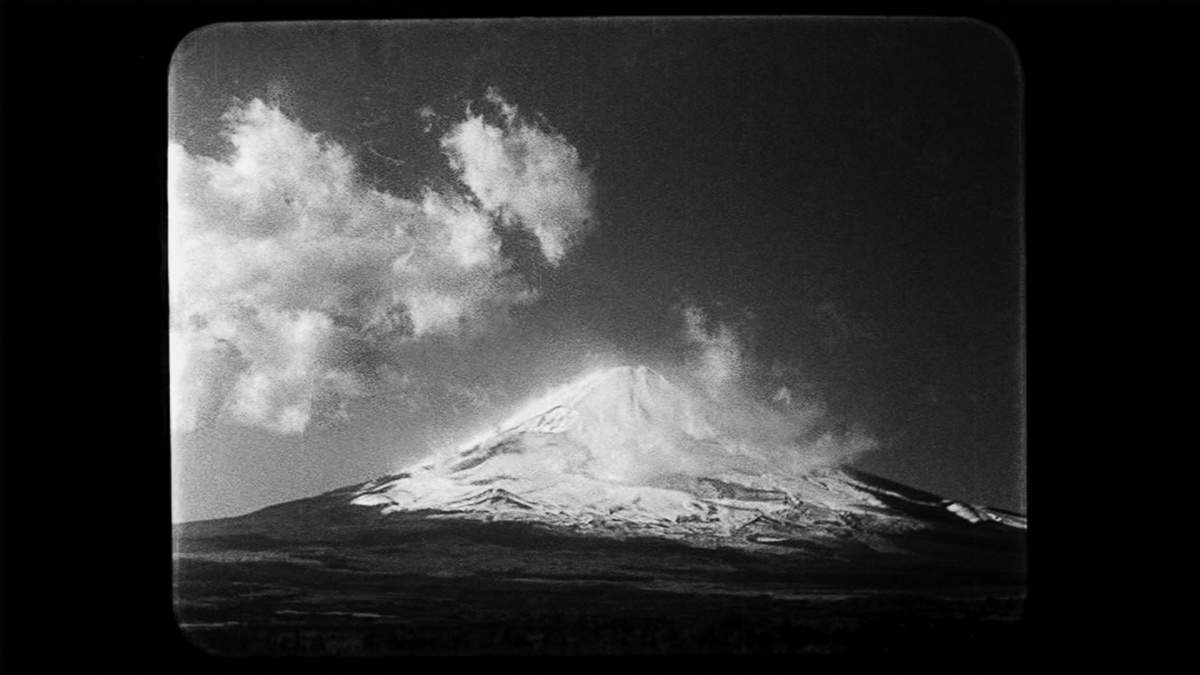
Exhibition: ‘Painting Canada: Tom Thomson and the Group of Seven’ at the Dulwich Picture Gallery, London

Exhibition dates: 19th October 2011 – 8th January 2012


Frederick Horsman Varley (Canadian born United Kingdom, 1881-1969) 'Stormy Weather, Georgian Bay' 1921


Frederick Horsman Varley (Canadian born United Kingdom, 1881-1969)
Stormy Weather, Georgian Bay
1921
Oil on canvas
132.6 x 162.8cm
National Gallery of Canada, Ottawa
© Varley Art Gallery, Town of Markham
Photo © NGC


What a wonderful posting to end 2011. I had no idea how magnificent Tom Thomson and the Group of Seven was. The paintings are sublime, full of light, colour and texture: they perfectly capture the atmosphere of outback Canada. As the curator observes, ‘These artists produced some of the most vibrant and beautiful landscapes of the twentieth century’. I couldn’t agree more. A joy to see, these impressions leave one spellbound. Finally, something delicious in landscape painting!
Dr Marcus Bunyan


Many thankx to the Dulwich Picture Gallery for allowing me to publish the artwork in the posting. Please click on the photographs for a larger version of the image.


Franklin Carmichael (Canadian, 1890-1945) 'Autumn Hillside' 1920


Franklin Carmichael (Canadian, 1890-1945)
Autumn Hillside
1920
Oil on canvas
76 x 91.4cm
© Art Gallery of Ontario,
Gift from the J.S. McLean Collection, Toronto
© Courtesy of the Estate of Franklin Carmichael


Frederick Horsman Varley (Canadian, born United Kingdom 1881-1969) 'Peter Sandiford at Split Rock, Georgian Bay' 1922


Frederick Horsman Varley (Canadian, born United Kingdom 1881-1969)
Peter Sandiford at Split Rock, Georgian Bay
1922
Oil on wood panel
21 x 26.7cm
© Art Gallery of Ontario
© Varley Art Gallery, Town of Markham


Frederick Horsman Varley (Canadian, born United Kingdom 1881-1969) 'Cloud, Red Mountain' 1927-1928


Frederick Horsman Varley (Canadian, born United Kingdom 1881-1969)
Cloud, Red Mountain
1927-1928
Oil on canvas
87 x 102.2cm
© Art Gallery of Ontario
© Varley Art Gallery, Town of Markham


Frederick Horsman Varley (Canadian, born United Kingdom 1881-1969) 'West Coast Sunset, Vancouver' c. 1926


Frederick Horsman Varley (Canadian, born United Kingdom 1881-1969)
West Coast Sunset, Vancouver
c. 1926
Oil on wood
30.4 x 38.1cm
The Thomson Collection
© Art Gallery of Ontario


Lawren Harris (Canadian, 1885-1970) 'Lake Superior, Sketch XLVII' c. 1923


Lawren Harris (Canadian, 1885-1970)
Lake Superior, Sketch XLVII
c. 1923
Oil on panel
30 x 37.5cm
Collection: A. K. Prakash
© Family of Lawren S. Harris


Lawren Harris (Canadian, 1885-1970) 'Isolation Peak' c. 1939


Lawren Harris (Canadian, 1885-1970)
Isolation Peak
c. 1939
Oil on panel
30 x 37.5cm
Collection: A. K. Prakash
© Family of Lawren S. Harris


Lawren Harris (Canadian, 1885-1970) Untitled Mountain Landscape' c. 1927-1928


Lawren Harris (Canadian, 1885-1970)
Untitled Mountain Landscape
c. 1927-1928
Oil on canvas
122.3 x 152.7cm
Thomson Collection, AGO
© Art Gallery of Ontario
© Family of Lawren S. Harris


Lawren Harris (Canadian, 1885-1970) 'Tamaracks and Blue Hill' c. 1919


Lawren Harris (Canadian, 1885-1970)
Tamaracks and Blue Hill
c. 1919
Oil on panel
26.7 x 34.7cm
Art Gallery of Ontario
© Family of Lawren S. Harris


Lawren Harris (Canadian, 1885-1970) 'Trees and Pool' c. 1920


Lawren Harris (Canadian, 1885-1970)
Trees and Pool
c. 1920
Oil on panel
26.7 x 35.6cm
© Art Gallery of Ontario
© Family of Lawren S. Harris


Dulwich Picture Gallery’s Bicentenary year of momentous exhibition firsts is to continue in October with Painting Canada: Tom Thomson and the Group of Seven. The exhibition forms part of Dulwich Picture Gallery’s North American series showcasing the work of artists rarely seen in the UK.

Painting Canada will feature some of Canada’s most iconic landscape paintings. These bold and exciting works were first celebrated not in Canada, but in London, at the British Empire exhibitions at Wembley in 1924 and 1925. Since then, despite becoming greatly revered in Canada, the work of Thomson and the Group of Seven has been virtually unknown on the international stage. This major exhibition will reintroduce them to the British public, with an astonishing 122 paintings on display as well as Tom Thomson’s sketchbox.

Tom Thomson and J. E. H. MacDonald, Arthur Lismer, Frederick Varley, Frank Johnston and Franklin Carmichael met as employees of the design firm Grip Ltd. in Toronto. The other two members of the Group were A. Y. (Alexander Young) Jackson from Montreal and Lawren Harris, effectively the Group’s leader, and a man of considerable personal wealth. They often met at the Arts and Letters Club of Toronto to discuss their opinions and share their art.

The artists, sometimes known as the ‘Algonquin Park School’ at this stage, received indirect monetary support from Harris (heir to the Massey-Harris farm machinery fortune) and direct support from Dr. James MacCallum a wealthy Toronto ophthalmologist and collector. Harris and MacCallum collaborated to build a studio building that opened in 1914 to serve as a meeting and working place for the proposed new Canadian art movement.

The progress of this informal group of artists was interrupted by the outbreak of World War I and a further severe blow came in 1917 when Thomson died while canoeing in Algonquin Park. The circumstances of his death and subsequent burial have remained mysterious, the source to this day of myriad conspiracy theories.

Thomson’s seven artist friends reunited after the war. They continued to travel throughout Canada, sketching the landscape and developing techniques to represent such wild and diverse terrain in their art. In 1920 they finally came together as the Group of Seven and held their first exhibition under that name. Prior to this, the art establishment’s view of the Canadian landscape was that it was either unpaintable or too wild and uncouth to be worthy of being painted. Reviews for the 1920 exhibition were mixed, but as the decade progressed the Group came to be recognised as pioneers of a new, Canadian, school of art. Nowadays, the Group and Tom Thomson are iconic in their native country; every schoolchild is familiar with masterpieces such as Thomson’s The Jack Pine, arguably the most famous and beloved painting in Canada.

Dulwich Picture Gallery is proud to partner with the National Gallery of Canada on this exhibition, with generous support of loans also coming from the McMichael Canadian Art Collection, the Art Gallery of Ontario and other lenders. These institutions are lending some of the most famous paintings in Canada. Additionally, a special revelation of the show is provided by the rich group of works to be found in private collections.

Painting Canada has been planned as a journey through Canada, framed by two grand rooms dedicated individually to Tom Thomson’s electrifying sketches and paintings of Algonquin Park and Lawren Harris’s other-worldly paintings of the Arctic and the Rocky Mountains. Between these two ‘poles’, a selection of the very best work of Thomson and the Group of Seven will be on display. A special feature of the show will be the juxtaposition, wherever possible, of the initial sketch with the finished canvas. One room will in fact be devoted entirely to a display of these vibrant sketches, which represent one of the most impressive contributions of Canada to twentieth-century art.

Ian Dejardin said: “These artists produced some of the most vibrant and beautiful landscapes of the twentieth century. The Canadians have kept this particular light under a bushel for far too long – I am proud, and frankly amazed, that this is to be the very first major exhibition of their work to be held in this country since the sensation of their first showing here in 1924. As for Tom Thomson – what he achieved in his tragically short career (just 4 or 5 years) is extraordinary. He is Canada’s very own Van Gogh – prepare to be dazzled.”


A. Y. Jackson (Canadian, 1882-1974) 'Totem Poles, Kitwanga' 1926


A. Y. Jackson (Canadian, 1882-1974)
Totem Poles, Kitwanga
1926
Oil on panel
21.25 x 26.25cm
© Collection: A. K. Prakash


J. E. H. MacDonald (Canadian born United Kingdom, 1873-1932) 'Falls, Montreal River' 1920


J. E. H. MacDonald (Canadian born United Kingdom, 1873-1932)
Falls, Montreal River
1920
Oil on canvas
121.9 x 153cm
© Art Gallery of Ontario


J. E. H. MacDonald (Canadian born United Kingdom, 1873-1932) 'Autumn Leaves, Batchewana Woods, Algoma' c. 1919


J. E. H. MacDonald (Canadian born United Kingdom, 1873-1932)
Autumn Leaves, Batchewana Woods, Algoma
c. 1919
Oil on composite woodboard
21.6 x 26.7cm
© Art Gallery of Ontario


J. E. H. MacDonald (Canadian born United Kingdom, 1873-1932) 'The Little Falls' 1918


J. E. H. MacDonald (Canadian born United Kingdom, 1873-1932)
The Little Falls
1918
Oil on composite woodboard
21.6 x 26.7cm
© Art Gallery of Ontario


J. E. H. MacDonald (Canadian born United Kingdom, 1873-1932) 'Mount Oderay' 1930


J. E. H. MacDonald (Canadian born United Kingdom, 1873-1932)
Mount Oderay
1930
Oil on canvas
40 x 52.5cm
© Collection: Ash K. Prakash


J. E. H. MacDonald (Canadian born United Kingdom, 1873-1932) 'Mount Biddle' 1930


J. E. H. MacDonald (Canadian born United Kingdom, 1873-1932)
Mount Biddle
1930
Oil on composite woodboard
21.5 x 26.7cm
© Art Gallery of Ontario


Tom Thomson (1877-1917)

Tom Thomson was born near Claremont, Ontario on 5 August, 1877. A turning point in his life came in 1909 when he joined the staff of Grip Ltd., a prominent Toronto photo-engraving house. The firm’s head designer, artist-poet J.E.H. MacDonald, contributed much to Thomson’s artistic development, sharpening his sense of design. However, Thomson’s career as a fine artist lasted barely four or five years; it was cut short in July 1917, when his canoe was found floating on Canoe Lake, empty. His body surfaced days later, triggering decades of speculation as to his fate. More sensational than these stories, however, was the burst of creativity that had preceded his death. In his last two years, Thomson had developed an artistic language that seemed to capture the unique qualities of the Canadian landscape – painterly, vibrant in colour, in tune with the subtle change of the seasons. The Canadian wilderness had been previously considered too wild and untamed  to inspire ‘true’ art.

His fellow employees at Grip Ltd. included Arthur Lismer, F.H. Varley, Franklin Carmichael and Frank Johnston – all adventurous young painters who often organised weekend painting trips to the countryside around Toronto. After Tom’s death, a memorial exhibition was arranged and these men, together with Lawren Harris and A. Y. Jackson, would go on to form in 1920 the Group of Seven, probably the most famous artistic force in Canadian art history. Along with Thomson they created a landscape style that to this day infl uences the way Canadians visualise their own country and their best paintings have become national icons.

Lawren Harris (1885-1970)

Lawren Harris was born on 23 October 1885, in Brantford, Ontario. He attended St. Andrew’s College in Toronto before studying art in Berlin, Germany, from 1904 to 1908. He then returned to Toronto, where he began painting post-impressionist street scenes of its older and poorer areas. By 1919 Harris’s landscapes had become increasingly sombre and his brush stroke more expressive. His affection for Scandinavian landscape painting was one of the key factors in the formulation of the Group of Seven’s approach to the Ontario woods, which Harris himself painted with gusto and attention. His later style was grandly beautiful and austere, finding its most characteristic subject matter in the awesome landscapes of Lake Superior, the Rockies and the Canadian Arctic.

A. Y. Jackson (1882-1974)

Alexander Young Jackson, or “A. Y.” as he was fondly known, was born in Montreal on 3 October, 1882. Like other members of the Group of Seven he was trained as a commercial artist and for many years made his living by that means. He apprenticed to a Montreal lithographer at the age of 12, and though he later spent two and a half years in France studying painting, he was soon back in Canada paying his rent by designing cigar labels. In the following years after the formation of the Group of Seven he painted the Arctic, the West Coast, the Prairies, and Ontario’s north woods, as well as his beloved St. Lawrence, where his countless sketching expeditions earned him the nickname Père Raquette-Pappa Snowshoe.

Arthur Lismer (1885-1969)

Arthur Lismer celebrated the powerful beauty of the Canadian landscape in his own expressionist style. His paintings are characterised by vivid colour, deliberately coarse brushwork and a simplified form. Lismer was born in Sheffield, England. At the age of 26, he immigrated to Canada seeking work as a commercial illustrator. It was at Grip Ltd. in Toronto that he met a group of other talented young artists who were to become the Group of Seven. Together, they organised trips to explore and sketch the wilderness – capturing the spirit of Canada in their work, and setting Canadian art on a bold and original new course. Although Lismer painted throughout his life, he devoted the majority of his time to art education. A gifted teacher, Lismer pioneered the field of child art education across Canada and around the world.

Frederick Horsman Varley (1881-1969)

Varley was born in 1881 in Sheffield, England. He studied painting at Sheffield and Antwerp and went to work in London as a commercial illustrator. In 1912 he came to Canada, where he found himself working in the same commercial studio as Tom Thomson. With Thomson and the others he took to painting Northern Ontario landscapes, and also began to do considerable work as a portrait painter. In 1926 Varley moved to Vancouver to become Head of Drawing, Painting & Composition at the newly formed Vancouver School of Decorative & Applied Arts. In 1933 he founded his own school, the British Columbia College of Arts, but this venture led to his bankruptcy in 1935 and by then his marriage had also collapsed. The next years were difficult for Varley, most of them spent suffering from alcoholism in Montreal. In 1945, however, he returned to Toronto and slowly began to work again. He died in Toronto in 1969.

Franklin Carmichael (1890-1945)

Carmichael, the son of a carriage maker, was born in Orillia, Ontario on 4 May, 1890. He arrived in Toronto in 1911 with some training in commercial art, and soon found himself the associate of Tom Thomson and a number of other commercial artists who were teaching themselves to be serious painters. In 1913 he went to Antwerp to study painting but was soon back in Ontario to participate in the founding of the Group of Seven, of which he was the youngest member. In 1932 he was appointed Head of Graphic and Commercial Art at the Ontario College of Art. He died in Toronto in 1945.

Frank (Franz) Johnston (1888-1949)

Johnston was an original member but only showed in the Group’s first exhibition. Johnston’s style and technique – he very often  painted in tempera – differed from that of the other Group of Seven members. His work was extremely decorative, and sold well – a fact that led to his early departure from the Group, since he felt he could earn more disassociated from the initial critical outrage that greeted the first Group exhibitions.

J. E. H. MacDonald (1873-1932)

John Edward Hervey MacDonald challenged and vastly broadened the scope of Canadian Art. MacDonald believed that art should express the “mood and character and spirit of the country”, and he portrayed his vision in vast panoramas using dark, rich colours and a turbulent patterned style. MacDonald was born in Durham, England, and moved to Canada at the age of fourteen. He trained as an artist in Hamilton and Toronto, pursuing a career in commercial art. In 1895 he joined Grip Ltd. in Toronto where he met and encouraged other staff members, including Tom Thomson, Frank Carmichael, Arthur Lismer and Fred Varley, to paint with him on weekends – laying the groundwork for what would later become Canada’s famous Group of Seven. He was the oldest member of the Group. His early death led directly to the disbanding of the Group in 1933.


Tom Thomson (Canadian, 1877-1917) 'The Jack Pine' 1916-1917


Tom Thomson (Canadian, 1877-1917)
The Jack Pine
1916-1917
Oil on canvas
127.9 x 139.8cm
© National Gallery of Canada, Ottawa
Photo © NGC


Tom Thomson (Canadian, 1877-1917) 'Winter Thaw in the Woods' 1917


Tom Thomson (Canadian, 1877-1917)
Winter Thaw in the Woods
1917
Oil on composite woodpulp board
21.6 x 26.8cm
Thomson Collection, AGO
© Art Gallery of Ontario


Tom Thomson (Canadian, 1877-1917) 'A Northern Lake' c. 1916


Tom Thomson (Canadian, 1877-1917)
A Northern Lake
c. 1916
Oil on composite wood-pulp board
21.6 x 26.7cm
© Art Gallery of Ontario


Tom Thomson (Canadian, 1877-1917) 'Path behind Mowat Lodge' 1917


Tom Thomson (Canadian, 1877-1917)
Path behind Mowat Lodge
1917
Oil on wood
26.8 x 21.4cm
Thomson Collection, AGO
© Art Gallery of Ontario


Dulwich Picture Gallery
Gallery Road, London
SE21 7AD
Phone: 020 8693 5254

Opening hours:
Tuesday – Sunday 10am – 5pm
Closed Mondays (except Bank Holiday Mondays)

Dulwich Picture Gallery website

LIKE ART BLART ON FACEBOOK

Back to top