Exhibition dates: 7th November – 23rd December, 2015
Wayne Gudmundson (American, b. 1949) Saizy, France #13 2014 Gelatin silver print 16 x 20 inches
There is a Cartier Bresson of a group of roadside trees that makes a heart. There is the photography of Wim Wenders in “Kings of the Road.” There is Robert Adams and a 19th century European sensibility (eg. Gustave Le Gray) all rolled into one.
The more expansive vistas such as #4 and #14 don’t really work for me, but the darker, more chthonic narratives such as #6-9 are excellent. They need some more “tiny work” – but they are very good.
The prints are 16 x 20 inch gelatin silver prints from a 4 x 5 view camera negative.
Dr Marcus Bunyan
Many thankx to Joseph Bellows Gallery for allowing me to publish the photographs in the posting. Please click on the photographs for a larger version of the image.
Henri Cartier-Bresson (French, 1908-2004) Brie, France, June 1968 1968 Silver gelatin print
Kings of the Road (German: Im Lauf der Zeit) is a 1976 German road movie directed by Wim Wenders.
Gustave Le Gray (French, 1820-1884) Trees along the Pavé de Chailly 1852 Salted paper print from paper negative 9-7/16 x 13 inches
Wayne Gudmundson (American, b. 1949) Saizy, France #3 2014 Gelatin silver print 16 x 20 inches
Wayne Gudmundson (American, b. 1949) Saizy, France #12 2014 Gelatin silver print 16 x 20 inches
Wayne Gudmundson (American, b. 1949) Saizy, France #6 2014 Gelatin silver print 16 x 20 inches
Wayne Gudmundson (American, b. 1949) Saizy, France #7 2014 Gelatin silver print 16 x 20 inches
Wayne Gudmundson (American, b. 1949) Saizy, France #8 2014 Gelatin silver print 16 x 20 inches
Wayne Gudmundson (American, b. 1949) Saizy, France #9 2014 Gelatin silver print 16 x 20 inches
Joseph Bellows Gallery is pleased to announce its upcoming exhibition, Wayne Gudmundson: Trees of Burgundy. This exhibition will open on November 7th and continue through December 23rd, 2015. Accompanying and complementing this solo exhibition will be a group themed show, entitled Regarding Trees. It will feature a remarkable collection of both vintage and contemporary tree images by a selection of the medium’s most celebrated photographers.
In the exhibition Trees of Burgundy, Gudmundson depicts the beauty of the French countryside through observing the tree-lined roads within Saizy, a small farming community in the Burgundy region of France. In his eloquently organised photographs, he shows the viewer how these trees interact with, and in some measure create the landscape to which they belong; a richly layered landscape that suggests the possibility of narrative, real or imagined.
Wayne Gudmundson is a highly regarded photographer whose work has been written about by such luminaries in the field as Robert Adams, Ben Lifson, and Frank Gohlke. His photographs have been featured in numerous books including his 2007 monograph, A Considered View: The Photographs of Wayne Gudmundson.
Serving as a counterpart to Gudmundson’s exhibition, Regarding Trees will comprise a diverse survey of exceptional tree photographs. The exhibition presents vintage and contemporary works that encompass many styles and processes of picture making. It will feature photographs by: Ansel Adams, Edward Weston, Paul Caponigro, John Szarkowski, Barbara Bosworth, Gregory Conniff, Linda Connor, Koichiro Kurita, Ben Nixon, Debbie Fleming Caffery, Rhondal Mckinney, Tom Zetterstrom and others.
Press release from the Joseph Bellows Gallery
Wayne Gudmundson (American, b. 1949) Saizy, France #14 2014 Gelatin silver print 16 x 20 inches
Wayne Gudmundson (American, b. 1949) Saizy, France #4 2014 Gelatin silver print 16 x 20 inches
Wayne Gudmundson (American, b. 1949) Saizy, France #1 2014 Gelatin silver print 16 x 20 inches
Wayne Gudmundson (American, b. 1949) Saizy, France #5 2014 Gelatin silver print 16 x 20 inches
Wayne Gudmundson (American, b. 1949) Saizy, France #2 2014 Gelatin silver print 16 x 20 inches
Joseph Bellows Gallery 7661 Girrard Avenue La Jolla, California Phone: 858 456 5620
Opening hours: Tuesday – Saturday 11am – 5pm and by appointment
Highlights include the delicacy and strength of the William Blake, the stunning beauty of the John Singer Sargent portrait Lady Agnew of Lochnaw (1892), the perceived movement and presence of The Reverend Robert Walker skating on Duddingston Loch by Sir Henry Raeburn (c. 1795). Watteau’s Fêtes vénitiennes (1718-1719) confirmed my pleasure when looking at his paintings, the stillness, romanticism and intensity of vision while the muscularity and intensity of the painting in Constable’s The Vale of Dedham c. 1827-1828 was a revelation.
Gainsborough’s pastoral River landscape with a view of a distant village (c. 1748-1750) was a surprise while the impressionists did not disappoint. Favourite among the last room, though, was the joyous spaces and overlaid patches of light and colour in Paul Cézanne’s The big trees (c. 1904). One of the great treasures of the exhibition.
This superb watercolour comes from a group of over 80 illustrations to the Bible executed from Blake’s most significant and loyal patron, Thomas Butts. Artist and patron probably first met in 1799, when Butts commissioned Blake to produce 50 small tempera paintings of biblical subjects. This initial commission seems to have developed into an open-ended series of watercolours, painted over a period of nine years, for which Butts paid Blake a regular stipend. The original mount belonging to this work, now lost, was inscribed with a reference to the relevant biblical text, which in this case is Deuteronomy 9:10.
The first president of the Royal Academy, Reynolds worked to raise the status of portraiture in Britain by painting people in the ‘grand manner’ more commonly associated with history painting. This informal portrait, a ‘conversation piece’, features the three sisters Lady Charlotte Maria, Lady Elizabeth Laura and Lady Anna Horatia Waldegrave. Depicting interlocking figures, Reynolds subtly alludes to trios of goddesses or graces of antiquity – a reference that would have been understood by classically educated viewers of the late 18th century. Reynolds’s triple portrait was commissioned by the sitters’ great-uncle, the celebrated antiquarian, connoisseur and critic Horace Walpole.
One of the best-loved pictures of the National Galleries of Scotland, this portrait of 27-year old Lady Agnew of Lochnaw is the first Sargent to be exhibited in Sydney in 35 years. As one of Sargent’s most glamorous and beguiling characterisations, it was pivotal in establishing the renown of both artist and sitter. The painting was first exhibited at the Royal Academy exhibition in 1893 to wide public acclaim and cemented Sargent’s position as a sought-after, fashionable portraitist of high society. For Lady Agnew, it launched her as a society beauty who later established her own private salon in London. Ironically, the costs of sustaining such fine style led Lady Agnew to sell her own portrait to the Scottish National Gallery in 1925.
In an ornate plush chair and surrounded by swathes of Chinese fabric, Lady Agnew gazes out at the viewer, confidently but enigmatically. Her pose is gracious, but relaxed. The chair and fabric were Sargent’s own props, and along with the generous, gauzy swathes of the sitter’s dress they give the painting a sense of comfort and luxury. Sargent’s brushstrokes are wide and fluid, and in some areas the canvas shows through the thin, sketchy layers of paint. But it is also very carefully composed to present Lady Agnew as an assured and elegant society woman.
Raeburn was the leading Scottish portrait painter of his time. This striking portrait of Robert Walker (1755-1808), minister of Edinburgh’s Canongate Church and a leading member of the city’s exclusive skating society, has come to be regarded as one of Raeburn’s greatest works. It is the most famous painting in the Scottish National Gallery, often described as the quintessential Scottish painting, and is listed in a recent publication as one of the 1000 paintings you must see before you die.
Its simple composition bestows the painting with an extraordinary visual impact. Walker is shown gliding across the icy surface of one of the small lochs near Edinburgh, his arms folded nonchalantly across his chest and his right leg lifted balletically behind him. Raeburn has cleverly created the effect of ice scored by the skater’s blades by scratching back into the paint surface. Unlike most of his artistic peers, Raeburn received no formal artistic education, instead pursuing other academic studies before being apprenticed to a local goldsmith at the age of sixteen.
Raeburn’s approach to painting reflected this unusual path into his profession. He avoided the meticulous production of preparatory drawings and sketches, instead preferring to work straight onto the canvas with minimal formal planning. While this approach invariably meant having to deal with compositional changes in the process of painting, it also enabled Raeburn to produce portraits that were unrivalled in their directness and spontaneity.
One of the most significant collections of European old master paintings ever seen in Australia is now open at the Art Gallery of New South Wales, providing a once in a lifetime opportunity for Australians to contemplate the extraordinary quality of over 70 masterful paintings and drawings from across four centuries. The Greats marks the first time these artworks have been exhibited in Australia, with the exception of Rembrandt’s A woman in bed (c. 1647) and Seurat’s La Luzerne, Saint-Denis (1884-1885).
Deputy Premier and Minister for the Arts, Troy Grant, said with works by some of the world’s most well-known artists, The Greats alongside the Art Gallery of NSW’s own impressive collection is bound to draw big crowds this summer. “An exhibition of this calibre is a real coup for the State and builds on our standing as the cultural capital of Australia,” Minister Grant said. “These incredible works from Scotland may never be on Australian soil again, so art-lovers and novices alike should visit the Art Gallery of NSW and see this historic exhibition while they can.”
Michael Brand, director of the Art Gallery of NSW said The Greats is a rich and intimate show of remarkable quality. “Each masterpiece – whether it be Titian’s luminous Venus rising from the sea (c. 1520-1525) or Gauguin’s striking Three Tahitians (1899) – tells its own unique story. Through robust and engaging public programs, the Gallery looks forward to sharing these stories with visitors of all ages.”
The Greats: masterpieces from the National Galleries of Scotland unfolds in rooms devoted to the art of the Italian Renaissance, the Baroque in Southern and Northern Europe, the French and British Enlightenment, nineteenth century Scotland, and Impressionism. The exhibition has been carefully designed and installed to accentuate the grandeur of the paintings and foster an intimate experience with each of the artworks.”
The Scottish Duke of Argyll, Chief of Clan Campbell, whose hereditary seat is Inverary Castle, commissioned Thomas Gainsborough, one of the most celebrated English portraitists of the 18th century, to paint his likeness. The artist’s talents were sought by the wealthy elite both in London and in the fashionable resort town of Bath, where he established a studio in 1759. Gainsborough applied dense and feathery brushwork to convey Argyll’s ducal robes, his collar of the Order of Thistle, and the baton of his hereditary office of Master of the King’s Household.
Like his fellow painter Canaletto, Guardi capitalised on the market of tourists eager for topographical views – vedute – of the spectacular urban spaces of Venice. This composition features the Piazza San Marco, which Napoleon would later call ‘the most splendid drawing room in Europe’. On either side, the receding arcades of official buildings, the Procurator Vecchio and Procurator Nuove, lead the eye towards the Basilica of San Marco, its mosaics shimmering in the sunlight. Behind the bellower is a glimpse of the Doge’s Palace. The scene is enlivened by traders, uniformed government officials, and fashionably dressed tourists – all portrayed through only a few deft strokes of the brush.
At the beginning of the 18th century, Watteau pioneered the fêtes gallant, a type of painting depicting a group of men and women enjoying flirtatious love, music and conversation, generally in a park or a garden setting. His paintings inspired a generation of artists who sought to capture the light-hearted elegance of the period. This painting is one of his few compositions that portray real people: the figure on the left can be identified as Watteau’s friend and fellow artist Nichola Vleugxhels, and the lovelorn bagpipe player on the right is considered a self-portrait of Watteau himself.
François Boucher (France, 1703-1770) The pleasing pastoral: l’aimable pastorale 1762 Oil on canvas 231.5 x 91cm The offering of the village girl: l’offrande à la villageoise 1761 Oil on canvas 229 x 89cm The sleeping gardener: la jardinière endormie 1762 Oil on canvas 232 x 91cm
Boucher, considered the pre-eminent painter of the French rococo, effectively invented this genre of elegiac, erotic pastoral which found a parallel in the pantomimes devised by his friend Charles-Simon Favart. In these three pastoral scenes set in a luxuriant and entirely unthreatening nature, shepherds engage in a perpetual drama of frustrated courtship, reflecting the polished etiquette and suppressed passions of aristocratic society in pre-revolutionary France.
Constable was born in Suffolk, and he dedicated most of his career to painting the surrounding English countryside with a marked romantic idealism. He was influenced by the grand tradition of European landscape painting, which he learned from artists and dealers he met in London early in his career. This composition, for instance, is indebted broadly to that of Claude Lorrain’s work Hagar and the angel 1646 (National Gallery, London). Constable referred to his own mature masterpiece in al better of June 1828: ‘I have painted a large upright landscape, perhaps my best.’
Although best known for his portraits, Gainsborough consistently painted landscape throughout his long career. Rich in detail and carefully composed, this painting reveals his firsthand knowledge of 17th-century Dutch landscapes. During the 1740s, collectors in London admired and sought out works by such artists of Holland’s Golden Age as Meindert Hobbema and Jacob van Ruisdael. The especially horizontal format of this work suggests that it may have been part of a decorative cycle for a domestic interior, perhaps hanging above a fireplace.
Corot, whose career spanned more than 50 years, emerged from the classicism of the 1820s to found the ‘school of nature’ that would find its culmination after his death in the art of the impressionists. This bucolic early work was painted at Ville-d’Avray, a small town west of Paris, where Corot’s parents owned a modest country house with grounds. The painting was retouched around 1850, at least in part by Corot’s friend and fellow artist Narcisse Virgile Diaz de la Peña, who added the red cap of the seated woman as a bold implement to the otherwise cool palette.
Lands became famous for his paintings of the Scottish Highlands. This unusual history painting is based on the heroic exploits of Colonel Donald Murchison, as recounted in Robert Chamber’s Domestic annals of Scotland (1858-1860). Murchison, a lawyer turned guerrilla fighter, supported the rebellion to reinstate the Stuart dynasty to the throne of Great Britain. he brazenly defied the government by collecting rents illegally from Scottish tenants to finance local armed resistance. In this painting – commissioned by Murchison’s great-grandson – Landseer conflates several distinct episodes, including the colonel’s daring and notorious ambush of government-appointed agents, escorted by British redcoats, in 1721.
Pisarro, the oldest and perhaps the most paternal of the impressionists, was the only artist to show at all eight of the group exhibitions. He painted this large riverscape early in his career, while renting a house at La Varenne-Saint-Hilaire, a village to the southeast of Paris, situated on the river Marne. The diagonal composition and the use of a palette knife to create this bucolic scene reflect the painter’s admiration for such diverse artists as Charles François Daubigny and Gustave Courbet.
In the 1880s, Monet gradually developed a more schematic and decorative approach to landscape, which led to his ‘series’ paintings of the 1890s, beginning with the Haystacks in 1891 and culminating in his water lily paintings. This painting belongs to a series of twenty-three canvases that Monet, the founder of French impressionism and one of the most celebrated artists in Western art history, completed in the late spring and autumn of 1891.
For the series, Monet painted poplar trees on the river Epte, close to where it joins the river Seine, just more than a mile from his home at Giverny. The clear blue sky and sunlit clouds express a fresh atmosphere. Monet painted the scene on the river from his boat, which served as a floating studio. This explains the low vantage point, with the trees towering above, the river bank at eye level, and the vast expanse of water dominating the lower half of the painting. Unlike most of the series paintings which are vertical, the Edinburgh picture’s format is square, emphasising the gentle curve of the bank and the verticality of the slender trees trunks and their reflection in the water.
Monet had already started to create these works when municipal authorities decided to cut down the trees for lumber and sell them at auction. In order to preserve his motifs, Monet partnered with a timber merchant, and successfully saved the poplars, allowing him to complete his series for exhibition in 1892. The painting was the first impressionist picture to enter the National Galleries of Scotland’s collection. It was sold to the Gallery in 1924 by the important Scottish art dealer Alex Reid, who was responsible for introducing impressionism to many British collectors. Degas’ Portrait of Diego Martelli 1879 also passed through his hands (see below).
This portrait of the Florentine art critic Diego Martelli, a close friend of Degas and an important champion of impressionism, was painted in Martelli’s Paris apartment. The high viewpoint flattens the composition, throwing the sitter’s legs into sharp perspective. The work’s asymmetry and the cropping of such elements as the discarded slippers reflect Degas’s interest in Japanese prints. The curved picture behind the sofa is a map of Paris: the river Seine is visible, running through coloured segments denoting the city’s new souther neighbourhoods.
This painting dates from the last years of Cézanne’s career. It is one of a series of works executed in the forest around the Bibémus quarry and the Château Noir, areas in which he often painted in his native Aix-en-Provence. The twisting limbs of the tree at left and the dramatic diagonal of the tree at right inject a sense of dynamism into the composition. Cézanne often left his pertaining in seemingly unfinished states, with areas of the primed white canvas showing through; here, they function not only as markers of the painter’s practice but also as patches of reflected sunlight.
Three Tahitians epitomises the decorative intensity of Gauguin’s late Polynesian works. Painted in the artist’s final years, during his second period in Tahiti, the work is said to depict a silent conversation in which the man appears to be undecided about the choice offered by the two attractive women – the choice between sensuality and piety. Although ambiguous, it has been suggested these two women are respectively symbolic of vice and virtue.
The bare-chested woman, holding a small posy of flowers and wearing a wedding ring, would seem to represent goodness, her gaze directed to the man. While the woman who turns to face the viewer, her sensuous lips in an enigmatic smile, and holds a mango, may be a reference to the biblical figure Eve who tempted Adam with an apple. These two women recur in several other compositions by Gauguin around this time. In the 1880s, the French post-impressionist fled urban civilisation in search of a tropical Garden of Eden, in which he felt his art could flourish. His final two years of life were spent on the remote island of Hivaoa in the tiny village of Atuona.
Art Gallery of New South Wales Art Gallery Road, The Domain Sydney NSW 2000, Australia
Opening hours: Open every day 10am – 5pm except Christmas Day and Good Friday
Exhibition dates: 10th September – 28th November, 2015
The exhibition is organised by the Art Institute of Chicago and the J. Paul Getty Museum in association with Fundación MAPFRE
Curator: Matthew Witkovsky, Richard and Ellen Sandor Chair and Curator Department of Photography of the Art Institute of Chicago
Entrance view of the exhibition Josef Koudelka: Uncertain Nationality at Fundación MAPFRE, Madrid
Without reminding yourself every so often, you actually forget just what a master of photography Josef Koudelka is.
Looking at the installation photographs, without knowing the names of the individual images, is instructive. Notice how graphically strong his organisation of the picture plane is. Usually one or two, three at the most, strong vertical or horizontal elements – dark on dark, light on dark; man and hovercraft; figures on pavement; women, tree and building; assemblages of objects and light.
I believe all of his work links back to his sense of the theatre of memory, whether it be the landscapes and sceneries of the outdoors taken in Prague, and on trips to Slovakia, Poland and Italy or the psychological interior of the mind of his theatre characters as he portrays them through photography. From the mystery and exoticism of the Gypsies series, to the recording of history, time and conflict of the Invasion photographs (witness the Hand and wristwatch). From the metaphysical symbols of isolation (lost animals, lonely figures, scattered objects and displaced Gypsies) in Exiles, which is the core of the Koudelka vital experience, to the destruction of ancient archaeological sites and depictions of places that have been mined, swept away or marked by the scars of industrialisation, devastated by wars and altered by time in his panoramic format photographs.
These theatres of the divine, theatres of the mind are ‘Theatres of Memory’ in which the 16th century Italian philosopher Guilio Camillo asks the question: How is the motion of the memory connected with the motion of history? How is the personal political?
Koudleka’s probing of this question is present in every one of his images. Through his inquiry “he maintains a total unity through the photographer’s vision.” The artist forms mental and physical images of the things he wants to remember, that he wants us to remember, using theatrical spaces… and his subjective thoughts bind us, closely, to collective memories.
“History… is a nightmare from which I am trying to awake.”
~ James Joyce, Ulysses
Dr Marcus Bunyan
Many thankx to Fundación MAPFRE for allowing me to publish the photographs in the posting. Please click on the photographs for a larger version of the image.
Installation view of the exhibition Josef Koudelka: Uncertain Nationality at Fundación MAPFRE, Madrid
FUNDACIÓN MAPFRE presents the most complete retrospective exhibit up to this day dedicated to the Czech photographer of French nationality Josef Koudelka (b. 1938), member for the past forty years of Magnum Photos agency.
Engineer by profession, Koudelka became committed to the photographic medium in the middle of the sixties and became one of the most influential authors of his generation. Halfway between the artistic and documentary, Josef Koudelka is now a living legend. He has received prestigious awards in recognition of his work, among others, the Grand Prix National de la Photographie (1989), the Grand prix Cartier-Bresson (1991), and the International Award in Photography of the Hasselblad Foundation (1992).
This exhibition goes through his entire trajectory that covers more than five decades of work. The extensive selection with more than 150 works reflects his first experimental projects produced at the end of the fifties and during the sixties, as well as his historic series Gypsies, Invasion and Exiles and reaching the great panoramic landscapes produced in the last years. In addition the exhibition includes important documental material, the majority unpublished – layouts, pamphlets, magazines of the period among others –, that allows us to delve into the work as well as the creative process of this author.
The title of the exhibition is Uncertain Nationality, which describes the sense of not belonging to a place, a sense of disorientation so present in his work since his exile from Czechoslovakia after the invasion of Prague, and his permanent interest in territories in conflict.
Press release from Fundación MAPFRE
Installation views of the exhibition Josef Koudelka: Uncertain Nationality at Fundación MAPFRE, Madrid
Introduction
In the mid-1950s, when a new youth culture characterised by an open mindset was beginning to emerge in Czechoslovakia following the death of the Soviet leader Joseph Stalin and after two decades of brutal repression, Josef Koudelka (born in Czechoslovakia in 1938 and nationalised French) left his village in Moravia and moved to the capital, Prague. An aeronautical engineer by training, Koudelka became very actively involved in photography in the mid-1960s, contributing to the creative renaissance that took place in his native country.
Koudelka not only immortalised these years with his camera but also embodied them. He spent lengthy periods in gypsy encampments in Slovakia, he compulsively photographed actors during play rehearsals, and he mingled with demonstrators and soldiers in August 1968 in order to capture the invasion of Prague by the Soviet troops. When Koudelka went into exile shortly afterward she acquired the official status of “nationality doubtful”, becoming a stateless person as he was unable to produce documentation proving that he was born in Czechoslovakia. He refused to be intimidated by this situation, however, and continued to travel and take photographs, allowing gypsy communities and traditional and religious festivals to decide his destinations.
Koudelka settled in Paris in the 1980s and after the fall of Communism returned to Prague in 1990 where he now has a second home. Nonetheless, he continues to be a traveller, committed over the past twenty-five years to the creation of panoramic photographs that depict landscapes around the world which have been altered and often devastated by the hand of man.
This exhibition encompasses Josef Koudelka’s entire career, spanning more than five decades of work. The comprehensive selection of images on display includes his first experimental projects of the 1950s and 1960s and his historic series Gypsies, Invasion and Exiles, concluding with the great panoramic landscapes of recent years. In addition, visitors will see important documentary material, most of it previously unpublished and including layouts, leaflets and magazines of the period which contribute to a deeper understanding of this artist’s work and creative process.
Installation view of the Theatre section of the exhibition Josef Koudelka: Uncertain Nationality at Fundación MAPFRE, Madrid
Early years + theatre
Early years and Experiments
Josef Koudelka was immersed in the ambiance of liberalization that occurred in Czechoslovakia after the death of Josef Stalin in 1953 who had subjected the country to a brutal repression for two decades. Koudelka began to photograph professionally in 1958 and create a series of landscapes and sceneries of the outdoors taken in Prague, and on trips to Slovakia, Poland and Italy. Right away, the camera accompanied him on all of his trips, which would herald his impulse to work as an independent photographer and nomad for more than forty years.
Koudelka dates his first serious photographic activity to 1958. Between that date and 1962 he produced a body of work which encompassed landscapes and outdoor views taken in Prague and during trips to Slovakia, Poland and Italy. Travel and its associated discoveries were a permanent stimulus to his creativity as a photographer. During these early years Koudelka assiduously studied the possibilities of giving form to the photographic image before and after the actual shot was taken. Initially, he inclined to manipulation subsequent to exposure, such as cropping and the use of experimental techniques in the dark room.
The Theatre
In the 1960s Koudelka worked free-lance for the most important Czech theatrical companies, Divadloza Branou (Theatre behind the Door) and Divadlona Zábradlí (Theatre on the Balustrade). As such, he evolved a new way of photographing that involved the repetition and prior visualisation of the image. Working rapidly and close to the actors on the stage while they were rehearsing, Koudelka constantly moved around them until he had the desired image in his mind. The harsh, exaggerated theatrical lighting proved difficult to photograph, obliging him to force the development of his films with low exposures. Ultimately, a detail that interested him in an image might only occupy a small part of the negative and thus required significant blowing-up and laborious manipulation during the developing process in order to obtain a legible copy. Koudelka’s images of theatrical performances were used for promotional purposes and often appeared on the front cover and in the pages of the magazine Divadlo (Theatre).
Text from the Fundación MAPFRE Josef Koudelka website [Online] Cited 22/11/2021. No longer available online
Installation views of the Gypsies section of the exhibition Josef Koudelka: Uncertain Nationality at Fundación MAPFRE, Madrid
Gypsies
In 1961 Koudelka started to take photographs in villages and gypsy encampments. He initially continued with his habitual employment as an engineer but this photographic endeavour soon became a project that would define his artistic career and give rise to the series Gypsies. He returned again and again to around eighty different places in Slovakia and the Czech regions of Moravia and Bohemia (now part of the Czech Republic), principally between 1963 and 1970, taking thousands of photographs from which he selected various hundreds and finally a few dozen that he most preferred, entitling them with the name of the place where they were taken. The varied compositions – interiors, individual and group portraits, and landscapes – allow the subjects space to be themselves while maintaining a total unity through the photographer’s vision. These works also constitute views onto a world which seemed very exotic at that time, even for other Czechs and Slovaks, but which was nonetheless quite self-sufficient and as universally accessible as ancient myths.
The first exhibition of this series, held in the lobby of the Divadloza Branou (Theatre behind the Door) in Prague in March 1967, only included twenty-seven photographs. The twenty-two prints that have survived from that event are included in the present exhibition, mounted on their original panels and displayed as a group, as they were almost fifty years ago.
Text from the Fundación MAPFRE Josef Koudelka website [Online] Cited 22/11/2021. No longer available online
Installation view of the Invasion section of the exhibition Josef Koudelka: Uncertain Nationality at Fundación MAPFRE, Madrid
Invasion
In August 1968, shortly after returning to Czechoslovakia after a trip to Rumania where he had gone to photograph gypsy encampments, Koudelka woke up early one morning to discover that the Warsaw Pact forces led by the Soviet Union had invaded Prague. He immediately loaded his Exakta Varex camera with East German film and went out onto the street, tirelessly photograph the devastating occupation between 21 and 27 August. Koudelka climbed on tanks, encountered soldiers armed with machine guns (as did the demonstrators alongside him), and photographed the innumerable slogans and posters which appeared every day on the city’s walls and were then removed by the invading forces every evening. Koudelka penetrated into the heart of the resistance. A new era was dawning and his photographs became a powerful reminder of how that change first began.
His images became a document of the conflict and symbol of the spirit of the resistance movement. The rolls of film that he used to photograph the Prague struggle ended up in Western Europe illegally and the Koudelka images appeared in newspapers and magazines around the world. Koudelka spent that winter editing his photographs, selecting just a handful from among thousands of images. Finally, the negatives were smuggled out to the United States and with the help of the Magnum Photos agency were distributed to magazines and newspapers around the world on the occasion of the first anniversary of the invasion in 1969. Prior to 1984, when they were publicly exhibited for the first time in London with Koudelka’s name attached to them, these images were published anonymously and only attributed to “P.P”, standing for “Prague Photographer”, in order to avoid possible reprisals against Koudelka and his family.
Text from the Fundación MAPFRE Josef Koudelka website [Online] Cited 22/11/2021. No longer available online
Installation views of the Exiles section of the exhibition Josef Koudelka: Uncertain Nationality at Fundación MAPFRE, Madrid
Exiles
In 1970 Koudelka left Czechoslovakia for Great Britain, where he lived until he moved to France in 1980, obtaining French citizenship in 1987. During his years of exile he worked tirelessly, travelling during the spring and summer in order to photograph traditional festivals and gypsy events in various countries in Western Europe, principally the UK, Ireland, Italy and Spain, then retiring to his darkroom in the winter. During this period of his life Koudelka made numerous friends on his travels and through his association with Magnum Photos. He remained totally independent, however, refusing to rent an apartment or accept commissions in order to retain control of his artistic output and to be in complete charge of his agenda. His enigmatic photographs of these years evoke his own feelings of isolation through images of animals running free, lone figures, abandoned objects and displaced gypsies, although his work presents these feelings of solitude and distance in very broad terms.
Josef Koudelka left Czechoslovakia in 1970 and petitioned to exile to the United Kingdom. While he was in exile, he continued to work throughout Europe on those routes marked by Gypsy religious festivals and folklore that are held annually. The alienation that he felt for not belonging to a nation is reflected in his Exiles work that shows symbols of isolation (lost animals, lonely figures, scattered objects and displaced Gypsies) which is the core of the Koudelka vital experience. Unclear nationality refers to the legal status that appears in the author’s travel documents each time he returned to the United Kingdom, his home base during the first decade of exile, since he did not have a Czechoslovakian passport and could not prove his birthplace.
The subjects in the series Exiles are not limited to a specific group or period, and while they are based on Koudelka’s own everyday experiences during his stateless period, they are more metaphysical than physical. Here autobiography and reportage maintain a relationship of productive tension.
Text from the Fundación MAPFRE Josef Koudelka website [Online] Cited 22/11/2021. No longer available online
Installation views of the Panoramas section of the exhibition Josef Koudelka: Uncertain Nationality at Fundación MAPFRE, Madrid
Panoramas
Since 1986 Koudelka has been taking photographs with panoramic cameras. His first project, commissioned by the Mission Photographique Transmanche, depicted the landscape of northern France affected by the construction of the Channel Tunnel. Since then he has used the broad panoramic format to depict places that have been mined, swept away or marked by the scars of industrialisation, devastated by wars and altered by time. The artist’s most recent panoramic photographs show important remains of past civilisations discovered on archaeological sites in twenty countries, particularly those bordering the Mediterranean.
Since 1986, Koudelka was using a panoramic camera. He uses this expanded format to show territories devastated by conflicts or altered with the passage of time. These images are the core of his impressive foldout publications such as Black Triangle or Chaos that shows scenery on the edge of ruins.
In 2007 Koudelka was invited along with eleven other photographers to take part in a project to explore the complex situation in Israel and Palestine. Despite his initial doubts, he accepted on the condition that he should be allowed to work as he wished and that he could focus on the wall in the West Bank and the area surrounding it on both sides. Having “grown up in Czechoslovakia, behind a wall”, Koudelka immediately pinpointed this barrier, with its physical, environmental and metaphorical connotations, as the subject that most interested him. This extensive system of concrete walls and barbed-wire fences allowed him to take full advantage of the broad panoramic format that he had been using since the 1980s, while the subject also gave him the opportunity to focus on the region’s landscape.
More recently, Josef Koudelka used this format to document the border of the West Bank and the territories that surround it such as the Negev desert or the Golan Heights. This work, Wall, urges the spectator to see the desolation of vast scenery dominated by walls, barbed-wire fences, access roads and borders. In the exhibition, there is a selection of copies from this work together with the book published in 2014. The panoramics are impressive objects that are between 1.2 and 1.8 m long. In these panoramics we perceive a scenery created by the man that tells his story, as well as the transformations that he has suffered due to human pillage, meaning: through his photographs we see man as creator and destroyer of the world.
Between 1991 and 2015, Josef Koudelka visited twenty countries bordering the Mediterranean, stopping at over two hundred Greek and Roman archaeological sites to create his series Archaeology. This was an unprecedented exploration which has not yet been completed – Koudelka keeps visiting archaeological sites in Greece, Turkey, Tunisia, Algeria, Syria, Jordan, Egypt, Lebanon and other Mediterranean countries – searching not for the documents of the sites, but for the most perfect images of their existence.
I was lucky enough to be up in Sydney to review the Julia Margaret Cameron exhibition at the Art Gallery of New South Wales… and the media preview for The Greats was on.What an unexpected bonus!
This is part 1 of a monster 2 part posting on the exhibition which, in all honesty, is a bit of a hotchpotch of a blockbuster. But my god, what a hotchpotch it is.
Highlights in part 1 of the posting include:
~ The vibrancy and folds of the pink dress of the Virgin as it flows down and under the Christ child in Botticelli’s The Virgin adoring the sleeping Christ child, c. 1485
~ The stillness and intensity, colouration of the figures in Johannes Vermeer’s Christ in the house of Martha and Mary, c. 1654-1655
~ The glorious “atmosphere”, light and colour in Jan Lievens’ Young man in yellow c. 1630-1631, one of the unexpected highlights of the exhibition
~ The intensity of the painting, the precision and care in Diego Velazquez’s An old woman cooking eggs 1618. Now that is really looking at the world
~ And the glorious frames of all these works. I do like a good frame!
Titian was the most celebrated Venetian painter of his time. His wealthy and learned patrons spanned across Europe. Well-versed in classical art and literature, including the myths of ancient Greece and Rome, they fuelled a strong demand for paintings like Venus rising from the sea c. 1520-1525. According to legend, Venus, the goddess of love and beauty, was born fully grown from the sea. She was then carried to land upon a scallop shell, blown by the zephyr winds.
In Venus rising from the sea, Titian has painted the goddess as a beautiful and voluptuous woman, emerging from the sea and wringing out her wet hair, with a miniature version of her scallop shell floating nearby. Her long auburn locks, milky skin and blushing cheeks are sensuous and tactile, suggesting her seductive powers as the goddess of love. Venus’s gracious, twisting pose recalls classical statues of the goddess. Titian rarely made preparatory drawings for his paintings, preferring to work straight onto the canvas, applying subtle gradations of colour in soft, feathery brushstrokes. He also used live models to pose for his figures, which was uncommon in the early 1500s. This lends the painting its great liveliness and sensuality – qualities that have made Titian justly famous.
Painted by one of the most outstanding artists of the Italian Renaissance, The Virgin adoring the sleeping Christ child c. 1485 is the earliest work in the exhibition. It has not left the United Kingdom since 1846 and The Greats presents the first time in almost three decades that any painting by Botticelli has been exhibited in Sydney. In this devotional painting, the Virgin Mary kneels silently and prays before her son, the infant Jesus Christ, in a rose-filled garden. Her gown and cloak spill onto the ground to provide a pillow for the child, who is nestled among the flowers, asleep. Its simple composition, focusing on just the two figures, invites quiet contemplation.
Like many Renaissance paintings, the picture is rich in symbolism. The enclosed garden is a reference to the purity of the Virgin, who was often called ‘a rose without thorns’. Some symbols are more ominous. The sleeping child with his pallid complexion is presumably a reference to Christ’s eventual death. The red strawberry plant in the lower right corner symbolises the blood he will shed on the cross. Technically the painting is unusual for the Florentine artist: it is quite small and has been painted on canvas rather than wooden panel. This suggests it was intended for a private home or convent, rather than a public space like a church.
Anthony van Dyck, the most successful pupil of Peter Paul Rubens, is regarded as one of the masters of the Flemish baroque. Painted just before Van Dyck left Flanders for Italy in 1621, this dramatic composition features Saint Sebastian, a Roman officer who converted secretly to Christianity. When Sebastian’s faith was discovered, he was tied to a tree and shot with arrows. Usually shown at the moment of his martyrdom, with the arrows piercing his body, here Sebastian has been portrayed prior to his execution. His twisting body and his upward-turned face seem to anticipate the punishment that is to come.
The Greats: masterpieces from the National Galleries of Scotland is one of the most significant collections of European old master paintings ever seen in Australia and is presented as part of the Sydney International Art Series 2015-2016. Spanning a period of 400 years from the Renaissance to Impressionism, The Greats includes works by the most outstanding names in Western art, including Botticelli, Leonardo, Raphael, Titian, Rubens, Velázquez, Poussin, Rembrandt, Vermeer, Turner, Monet, Degas, Gauguin, and Cézanne.
This richly presented exhibition brings together over 70 of the greatest paintings and drawings from the National Galleries of Scotland, based in the beautiful capital city of Edinburgh. The Greats marks the first time these artworks have been exhibited in Australia, with the exception of Rembrandt’s A woman in bed (c. 1647) and Seurat’s La Luzerne, Saint-Denis (1884-1885). Botticelli’s Virgin adoring the sleeping Christ child (c. 1485) has not been exhibited outside of the United Kingdom in 169 years.
Director of the Art Gallery of New South Wales, Michael Brand, said it is a tremendous privilege to host such a fine collection of masterpieces in Sydney and that the Art Gallery of NSW is extremely grateful to the National Galleries of Scotland for their generosity and collegiality. “The Greats is a statement of unequivocal artistic excellence – each piece in this exhibition is of extraordinary quality. We are excited to provide Australian audiences the rare opportunity to come face to face with such unique and masterful artworks,” Brand said.
“Approaching the entrance to the Art Gallery of NSW, we are reminded of Sydney’s historic aspirations for viewing the creations of European old masters, with names such as Titian, Rembrandt and Botticelli adorning the Gallery’s sandstone facade. It is with great pleasure that we now welcome incredible works by these artists to our interior walls, into a sublime exhibition space that promises a moving and absorbing experience for all visitors,” Brand added.
Director of the Scottish National Gallery, Michael Clarke, said, “We are delighted to present some of the finest masterworks from the National Galleries of Scotland at the distinguished Art Gallery of New South Wales. The Gallery provides a marvellous venue for our exhibition, which includes a selection of paintings that have recently toured to art institutions in America, including the de Young in San Francisco and the Kimbell Museum in Fort Worth.”
Visitors to The Greats will experience the Scottish National Gallery’s famous interior with part of the exhibition space inspired by the Edinburgh gallery’s octagonal rooms with fabric walls of a sumptuous red – the traditional colour on which to hang old master paintings. This installation will serve to accentuate the grandeur of the paintings and foster an intimate experience with each of the artworks. A variety of associated public and education programs are on offer to visitors of all ages. Serving to engage the widest possible audience, the Gallery will host daily guided tours, lecture series, late night programs and a suite of other events designed to facilitate meaningful interactions with the artworks featured in The Greats.
With his loose and seemingly spontaneous brushwork, combined with an exceptional ability to capture a sitter’s likeness and expression, Hals inspired generations of artists, from Jean-Honoré Fragonard to Édouard Manet. This portrait probably shows Pieter Verdonck, a Haarlem Mennonite, who was said to be aggressive and argumentative. In a contemporary engraving after the painting, an inscription reads: ‘This is Verdonck, that outspoken fellow, / whose jawbone attacks everyone.’ The jawbone that he holds is the same weapon used by the biblical hero Samson to kill the Philistines; here, it may refer to Verdonck’s ability to wound his enemies with his cutting words.
The fame of Vermeer, now one of the best-known painter of the Dutch Golden Age, rests on just 36 paintings known to survive today. This canvas is music larger than his usual compositions and is the only one that illustrates a biblical subject. In spite of its uniqueness, the painting is replete with the quiet human interactions for which the artist is known. The scene depicts the story from Luke 10:38-42, in which Martha objected to her sister Mary listening to Jesus while she herself was busy serving. Given the substantial size of the canvas, it is likely that the painting was a specific commission, possibly intended for a Catholic church.
The model for this painting is still unidentified. She might be any one of the three main women in Rembrandt’s life: his wife, Saskia; his son’s nursemaid, Geertje Dircx; or his family’s servant girl, Hendrickje Stoffels. Though intimate in its appearance, the painting is probably not a portrait, as a bed would have been an inappropriate setting for a respectable female model. The figure most likely represents the biblical character Sarah from the Old Testament Book of Tobit. Rembrandt shows her watching anxiously as her bridegroom Tobias chases away the devil that had murdered each of her previous seven husbands on their wedding nights.
Jan Lievens and Rembrandt van Rijn were two young artists working in Leiden in the years around 1630. They worked separately, though they engaged in artistic competition and exchange, as this painting suggests. The dramatically lit depiction of a young man posing as a commander with his gorget and baton is not a true portrait, but a tronie – a Dutch term for a painting that features an exaggerated facial expression or a figure in an almost theatrical costume. Both Lievens and Rembrandt experimented with tronies early in their careers, often introducing members of their families or their own likenesses.
Veronese was famous in his lifetime as a master of rich colour. His paintings often show exotic figures, sumptuous fabrics and such seemingly incidental details as the spaniel pictured at lower right. The depiction of a dog, a symbol of marital fidelity, was intended as a clever and ironic commentary on the adulterous relationship between Venus, the goddess of love and wife of Vulcan, and Mars, the god of war. This canvas was presented as a diplomatic gift on behalf of the Spanish Crown to King Charles 1 of Britain during his trip to Spain in 1623.
This enigmatic composition has been described as an allegory to fable (fábula), though its specific meaning has long been debated. One possibility is that it is a recreation of a lost painting of a boy blowing a fire, made by the ancient artist Antiphilus of Alexandria and known from a text written in the 1st century by Pliny the Elder. The presence of the monkey evokes the classical notion of art as the ape of nature, while the man, whose toothy grin and red and yellow attire identify him as a jester, may allude to the ultimate folly of the painter’s aim of reproducing the visible world – or, perhaps, of imitating the ancients.
This simple scene of everyday life in seventeenth-century Spain displays the technical sophistication of painter Diego Velázquez. No Velázquez of comparable importance has been seen before in Australia. And indeed, the painting marks the Scottish National Gallery’s most expensive purchase to date. Painted in 1618 when the artist was just eighteen or nineteen years old, the work depicts an old woman cooking eggs in a red-glazed pot, while a young boy holds a flask of wine and a melon. The subjects were real people, perhaps family members or neighbours, and both reappear in other paintings by the artist. It is likely that Velázquez painted the objects and figures directly from life.
The scene is painted with utmost care and detail. His depiction of light and the textures of objects is meticulous – from the soft folds of the woman’s headscarf, to the thick glaze on a ceramic pot, to the warm sheen of light hitting brass or copper. Unlike other portrayals of everyday people and humble genre scenes, this portrait presents its subjects with dignity, without mockery or censure. The extraordinary skill of Velázquez was considered to be unprecedented in Spain at the time. Establishing himself as much-respected painter in his native Seville, the artist moved to the royal courts of Madrid in 1623 and was soon appointed painter to King Philip IV.
Dou was the father of the so-called fijnschilders (fine painters), the Lieden school celebrated for its commitment to detailed illusionism and refined technique. This painting is rendered so precisely that it is possible to identify the open book, shown at centre, as De Friesche Lust-Hof (The Frisian pleasure garden), a popular Dutch songbook first published in 1621. The pages are turned to a comic number about the joys and sorrows of love, accompanied by an image of two lovers under a tree in a landscape. For the informed viewer, this depiction adds unexpected irony to the tranquil, melancholic portrayal of the young musician.
Art Gallery of New South Wales Art Gallery Road, The Domain Sydney NSW 2000, Australia
Opening hours: Open every day 10am – 5pm except Christmas Day and Good Friday
Exhibition dates: 25th September – 22nd November, 2015
Judges: The 2015 William and Winifred Bowness Photography Prize was judged by MGA Senior Curator Stephen Zagala, renowned artist Bill Henson, and Bendigo Art Gallery Director Karen Quinlan
Installation photograph of the William and Winifred Bowness Photography Prize 2015 at the Monash Gallery of Art Photo: Marcus Bunyan
Reality, passing
In terms of the professional quality of work, the pristine printing and framing, and the “less is more” nature of the hang, this is the best William and Winifred Bowness Photography Prize I have seen at the Monash Gallery of Art. The surprise about the nature of this year’s finalists is the surfeit of landscape work and the weakness of the portrait photographs. Key words when looking at the landscape work are: the sublime, internal terrain, elision, fear, darkness, constructed landscapes, aesthetic hyper reality, unreachable worlds, presence and absence, layering, pigment prints.
There is a heavy sense of un/reality about all of the landscape work, as though there is no such thing as the unmediated, straight landscape photograph any more. Reality passes (passing itself off for something else), and the viewer is left to tease out what is constructed (or not), how many layers (both mental and physical) are involved, and what the possible outcomes might be. In this post-landscape photography even straight digital photographs or analogue photographs of the landscape take on this desiccated view complete with surface flatness and “air” of unreality.
For example, look at Murray Fredericks’ North Stradbroke (2014), Silvi Glattauer’s Altiplano 1 (2015) Anne Algar’s Eruption (2015) and numerous others throughout the exhibition. These places exist in real life yet feel so un/real in these photographs – through scale, through colour, through surface – that you are left wondering what’s it all about. There is certainly no link to traditional notions of the sublime and little connection to the elemental (as in the object as itself). As I have said before about contemporary photography, these photographs are all about the photographers ideas and desires, not about the world itself. The photographs are flat are rather uninteresting with no depth of feeling or ambiguity of meaning. I found it hard to get excited about any of the landscape photographs.
And when photographers do use traditional techniques, such as black and white printing, silver gelatin prints or the analogue / digital combo, the results are similarly underwhelming. It is as if the aesthetic of the digital realm, this aesthetic hyper reality, has taken over how people use analogue photography as well. Robert Ashton’s Opening (2015) (analogue/digital), David Bibby’s Untitled #1 (2014) (black and white digital) and Virginia Cummins’ Gone tender, river’s edge (2015) (silver gelatin print) all evidence this cut-up, layering, obscure non-seeing where the magic of the traditional print has been lost.
Another surprise to me was that the two works that I found most successful in the exhibition were two of the most heavily conceptual. These images were both beautiful and intellectually stimulating. Brook Andrew’s Possessed II (2015) left me wondering about the original slides, marvelling at the technique used to create the image and wanting to see the rest of the series and interrogate further the artist’s background and “the tradition of the psychological in depiction and stories of the Australian alien landscape.” There was ambiguity and feeling here!
The work that I thought should have won was Peta Clancy’s She carries it all like a map on her skin (2014-2015). I have always liked Clancy’s work for there is so much sensitivity to subject matter embedded in her work. Clancy probes the boundaries of the photograph and the skin through punctures made using a fine silver needle to create a lace-like effect or ‘internalised landscape’ which is visible from both the emulsion and non-emulsion sides of the print. She then re-photographs the photograph and punctures the print again, the print becoming a palimpsest of punctures, of wounds, of the journey of life (with the needles link to woman’s work and the lips relation to desire). The installation of the work then emphasises the physicality of the print, Clancy “activating the materiality of the photographic medium by exploring photographs in terms of what the image content depicts as well as three-dimensional objects that exist in space and time.” Such a wonderfully tactile, sensual and conceptual work of negative / positive, presence / absence that kept drawing me back to hidden worlds.
As for the winner, Joseph McGlennon’s Florilegium #1 (2014), according to gallery staff some people love it and some people don’t. I am of the latter camp. The photograph is beautiful and “pretty” in a superficial, constructed way but flat like a piece of Florence Broadhurst wallpaper in another. Basically it’s an illustrated plate from a 19th century colour plate book made out of multiple negatives and digitally rendered. These images are taken in the exotic locations of Madagascar, Tahiti and Singapore and one could apply the critique of “Orientalism” to this piece of work… the proposal of lush landscapes and unreachable worlds as ‘Other’ – the imitation or depiction of aspects in Middle Eastern, South Asian, African and East Asian landscapes and cultures evidenced by a patronising Western attitude towards them. Further, photographs such as Valerie Sparks’ Le vol 1 (2014) imagine this exotic ‘Other’ by pasting taxidermy birds into “hybrid” (in other words, artist made) environments, while work such as Carolyn Young’s Reference grassy woodland: spring (Bookham) (2014) topographically map a uniform, constructed, imagined terrain of becoming that will never exist.
Most of the landscape work could be associated with a de-territorialization and re-territorialization of meaning across locations and through technologies (Deleuze, Gilles and Guattari, Felix. A Thousand Plateaus: Capitalism and Schizophrenia. Minneapolis and London: University of Minneapolis Press, 1987), where moments of connectivity and the assemblages that form them, “are the processes by which various configurations of linked components function in an intersection with each other, a process that can be both productive and disruptive. Any such process involves a territorialization; there is a double movement where something accumulates meanings (re-territorialization), but does so co-extensively with a de-territorialization where the same thing is disinvested of meanings.”1 Unfortunately in this exhibition, the intensification of these processes around a particular site through a multiplicity of intersections in these landscape photographs, are mostly dead ends. They lead nowhere of much interest and they fail to speak to me, which is what I want art to do.
What I have picked up from all this viewing is another couple of insights. It’s a sad state of affairs to see “Collection of the artist” on most of these works. Hardly a single one is in a collection. It’s difficult to be a contemporary photographic artist in Australia. You will make no money at it, even if you are represented by commercial gallery for, unlike America, there are simply not the collectors in Australia for the art of contemporary photography. Even as I critique the work, I admire the artist’s for producing it, for I know the cost, courage and dedication needed to keep making work that hardly ever gets purchased.
And secondly, all of these “pigment” prints. A pigment is a colouring matter or substance which when suspended in a liquid vehicle becomes a paint, ink, etc. or whose presence in the tissues or cells of animals or plants colours them. In other words, it is an additive which has no real body of its own. No wonder all of these pigment prints look so flat and have the feeling of a lack of depth. Show me a Stephen Shore original photograph and I will show you more presence than all of these digital prints put together.
Dr Marcus Bunyan
Word count: 1,220
1/ Wood, Aylish. “Fresh Kill: Information technologies as sites of resistance,” in Munt, Sally (ed.,). Technospaces: Inside the New Media. London: Continuum, 2001, p. 166.
Installation photographs of the William and Winifred Bowness Photography Prize 2015 at the Monash Gallery of Art Photos: Marcus Bunyan
Peta Clancy (Australian, b. 1970) She carries it all like a map on her skin 2014-2015 From the series Punctures Chromgenic prints 55 x 80cm (each) Reproduction courtesy of the artist
The series Punctures which explores skin, mortality and ageing expands on my long-term preoccupation with probing the boundaries of the photograph and the skin. Comprised of images of a woman’s lips punctured with a fine silver needle to create a lace-like effect or ‘internalised landscape’ and visible from both the emulsion and non-emulsion sides of the print. I am interested in activating the materiality of the photographic medium by exploring photographs in terms of what the image content depicts as well as three-dimensional objects that exist in space and time.
Installation photographs of Peta Clancy’s She carries it all like a map on her skin (2014-2015) Photos: Marcus Bunyan
In 2006 the MGA Foundation established the William and Winifred Bowness Photography Prize to promote excellence in contemporary Australian photography. The annual $25,000 non-acquisitive William and Winifred Bowness Photography Prize is an initiative of the MGA Foundation.
MGA Senior Curator, Stephen Zagala was joined by two of Australia’s most notable art world figures, Bill Henson and Karen Quinlan, to select the finalists for this year. The prize is open to any Australian photographer, whether amateur or professional, and all genres of photography are eligible, provided that the work has been produced in the last 12 months. Each year a panel of three judges considers hundreds of entries and curates an exhibition of finalists, before settling on a single winner.
The panel selected the shortlist of 47 works to be exhibited, and will convene again when the exhibition has been installed to choose a winner, which will be announced on Thursday 1 October. Bill Henson said of the selection process: ‘In the end, it really just comes down to how compelling I find a work to be. Matters of subject, issue or agenda have to find a form which is their equal for without that we’re left with something that simply holds no interest for us.’
Finalists: Anne Algar, Brook Andrew, Robert Ashton, Svetlana Bailey, Del Kathryn Barton, Clare Bedford, David Bibby, Devika Bilimoria, Frederico Câmara, Peter Campbell, Danica Chappell, Che Chorley, Peta Clancy, Virginia Cummins, Rebecca Dagnall, Cherine Fahd, David Flanagan, Murray Fredericks, Silvi Glattauer, Wayne Grivell, Molly Harris, Kern Hendricks, Lyndal Irons, Mark Kimber, Courtney Krawec, Michael Krzanich, Cathy Laudenbach, Jon Lewis, David Manley, AHC McDonald, Joseph McGlennon, Rod McNicol, Bill Moseley, Ward Roberts, Daniel Shipp, Valerie Sparks, Rodney Stewart, Rebekah Stuart, Ian Tippett, Justine Varga, John Watson, Kim Westcott, Peter Whyte, Amanda Williams, Rudi Williams, Melissa Williams-Brown and Carolyn Young.
On Thursday 1 October Joseph McGlennon was announced as the $25,000 winner of the William and Winifred Bowness Photography Prize. Colour Factory Honourable Mentions were awarded to Peter Campbell, Daniel Shipp and Valerie Sparks.
Text from the MGA website
Brook Andrew (Australian, b. 1970) Possessed II 2015 Gelatin silver print 137 x 127cm Reproduction courtesy of the artist, Tolarno Galleries (Melbourne) and Galerie Nathalie Obadia (Paris and Brussels)
Possessed is a black-and-white photographic series inspired by a rare collection of late 19th-century glass lantern slides depicting images of landscapes from Tasmania and Victoria. Recreated in a trompe l’oeil visual effect – some aspects of this work are akin to Rorschach imagery practice and reference the tradition of the psychological in depiction and stories of the Australian alien landscape.
Robert Ashton (Australian, b. 1950) Opening 2015 Pigment ink-jet print 60 x 95cm Reproduction courtesy of the artist
I have lived close to the scrubby coastal bush for many years and watched it continually transform through fire, drought and habitation. This landscape can be an unsettling place and I am continually drawn to it, trying to describe the beauty and menace. For these images I have used a 4 x 5 field camera to facilitate a slower and more concise way of working. Looking for the place where the literal meets the abstract. Taking only a couple of exposures, committing to the moment. Embracing the limitations of the medium and letting the result be defined by the practice. As a diptych the images form a complimentary pair. Each distinct but instructing the other, to make a series of fractured dioramas.
David Bibby (Australian, b. 1970) Untitled #1 2014 From the series Darkness Pigment ink-jet print 50 x 75cm Reproduction courtesy of the artist
Fear of dark places gave our ancient ancestors an evolutionary advantage, by priming brains and bodies for a fight-or-flight response when faced with the threat of danger or the unknown. These primal fears also had a strong influence on our cultures. Our fear of darkness and of forests, as dark places that conceal the unknown, has placed them at the centre of many of our myths, legends and folktales.
Despite, or perhaps because of our fear we seem to have an attraction to the darkness and there is something intrinsically beautiful in many dark images. Maybe the darkness has become a refuge in the modern world for those things we can’t control, including mystery and imagination.
Virginia Cummins Gone tender, river’s edge 2015 From the series Spirit work Gelatin silver print 70 x 70cm reproduction courtesy of the artist
This image was shot in remote South Gippsland, where I grew up. It’s part of the Spirit work series, exploring the positive power of nature and how our immersion in this world can move and change us. This work calls on the old-world landscape tradition of Romanticism and the quest for ‘the sublime’. To acknowledge the strength and transformative qualities of nature seems vital right now, in light of society’s blinkered approach to environmental concerns and our preoccupation with communication through technology.
This series was shot with obscure film cameras from the 1950s and 1960s. I enjoy the meditative qualities of traditional photographic practices and the potential for a bit of magic in these revelations.
Rebecca Dagnall (Australian, b. 1972) Pioneer pool 2015 From the series In the presence of absence – states of being in the Australian landscape Pigment ink-jet print 100 x 150cm Reproduction courtesy of the artist
There is certain darkness in the Australian imaginary of the landscape that is tangled in a history that holds both a presence and an absence, a knowledge and yet a denial of past colonial deeds. It is as though this history haunts the landscape, like a ‘ghost’ with unfinished business. My current work is an exploration of how the Australian Gothic informs our response to the Australian landscape. The images respond to myths and stories about the landscape that focus on an understanding of the things that we cannot see.
Svetlana Bailey (German born Russia, b. 1984) Utah 2015 From the series All dreams come true Pigment ink-jet print 114 x 91cm Reproduction courtesy of the artist
I work with images or artefacts that I find, such as on walls, billboards or shop window displays. They present an alternative reality, and I photograph them with their surroundings, and flatten these two spaces into one. Often the images I find are a montage, creating a reality that never truly existed. I collect them into a personal global album of images created by strangers in response to a common dream. Perhaps their makers considered place and interpreted its environment and beliefs, or were trying to shape our perception of reality. I wonder if these images exist for us or against us, if they beautify our life or mislead us, and if believing in their deception adds to our satisfaction.
Frederico Cãmara (Brazilian, b. 1971) Sydney Sealife Aquarium, Sydney, Australia 2014 From the series Views of Paradise Pigment ink-jet print 150 x 120cm Reproduction courtesy of the artist
Views of Paradise is a research project that aims to create a world atlas of the artificial environments of zoos and aquariums, as an investigation on the relations between the zoo and the concepts of paradise, utopia, dystopia and heterotopia. This project signals the possibility of a meaningful existence for the empty zoo, either as image or an actual site, by shifting the viewer’s gaze from the animal to humans, as principal agents in the destruction of the environment, and our failed attempt at its re-creation.
Currently, the focus of this project is Oceania (Australia, New Zealand, Papua New Guinea and New Caledonia), where it will identify the characteristics that are related to this region’s natural and cultural environments.
Murray Fredericks (Australian, b. 1970) North Stradbroke 2014 From the series Origins Pigment ink-jet print 90 x 250cm Reproduction courtesy of the artist, ARC One (Melbourne) and Annandale Galleries (Sydney)
This work is drawn from my current series Origins. In Origins fire has become the central subject, specifically with regards to fire’s place in the social and cultural imagination of Australia. ‘North Stradbroke’ records the scene of a wildfire sparked by lightning, causing holidaymakers to flee their bush campsites under a thunderstorm as it moves up the coast.
Silvi Glattauer (Australian born Argentina, b. 1977) Altiplano 1 2015 From the series Altiplano Pigment ink-jet print 100 x 140cm Reproduction courtesy of the artist
A personal narrative of identity that pendulates between Australia and South America. I am drawn to these elusive Altiplanic landscapes as abstract topographical storyboards that read like textural braille. The aesthetic hyper reality that is often associated with classical landscape photography is replaced here with a ‘visual text’.
Anne Algar Eruption 2015 From the series Night sky Pigment ink-jet print 60.0 x 90.0cm Reproduction courtesy of the artist
This image reflects my interest in low light landscape and night sky photography. We have scientific knowledge and understanding of the night sky but there is also an emotional element, whereby our human experience of it has no bearing on its material make up. For example many Indigenous Australians refer to the Milky Way as the ’emu’.
For me, there is a certain wonder, excitement and sometimes trepidation when photographing at night. What intrigues me is how objects, vistas and other things, only dimly visible to the human eye in darkness, can be captured in infinite detail by the camera, due to its greater light sensitivity and colour spectrum. It truly does open up another world.
Rebekah Stuart Dreaming in reverse 2 2014 From the series Pictures of elision Pigment ink-jet print 102 x 140cm Reproduction courtesy of the artist
I am a contemporary visual artist who explores an alternative aesthetic to the traditional and romantic landscape. Constructing fragments of nature via digital media I create landscapes that do not exist in reality. The images evolve in a similar fashion to painting, over long duration. I build and refine details for a new whole to emerge, disorientating the observer’s position in a subtle way to reflect on their own internal terrain. The landscapes are a reflection of the horizons carried within – an intimate sublime for a time when wilderness is perhaps uninhabitable.
Valerie Sparks (Australian, b. 1960) Le vol 1 2014 From the series Le vol Pigment ink-jet print 140 x 229cm Reproduction courtesy of the artist and THIS IS NO FANTASY + dianne tanzer gallery (Melbourne)
I am interested in hybrid environments as a reflection of migration as an ongoing natural and cultural occurrence. The birds in this work were photographed at the Vienna and La Rochelle Natural History Museums. These extraordinary collections include birds collected on Cook’s voyages to the Pacific, as well as many collected from South East Asia, Indonesia, Brazil and other South and Central American locations as far back as the mid 1700s. The French term le vol translates as flight, flying, theft or burglary. For the birds in this work, life and flight have been stolen and yet reanimated by the taxidermist. Whereas collecting practices have changed dramatically, the work raises questions about early collecting practices as acts of theft.
Carolyn Young Reference grassy woodland: spring (Bookham) 2014 From the series Grassy woodlands Pigment ink-jet print 70 x 84.9cm Reproduction courtesy of the artist and Weswal Gallery (Tamworth)
For a number of years I have been documenting grassy woodlands in NSW and Victoria. Once common, these ecosystems have been reduced to small pockets amongst farmed land, along roadsides, across reserves and in tucked away cemeteries. Responding to ecologists and landholders, I return to the same sites and shoot seasonally. Represented in my photographs are intact (reference) grassy woodlands, and woodlands that have been altered by agriculture. The repetitive still life structure across my photographs highlights the change in plant diversity as land management changes. The images urge viewers to reflect on the past, present and future of these woodlands.
Joseph McGlennon (Australian born Scotland, b. 1957) Florilegium #1 2014 From the series Florilegium Pigment ink-jet print 127 x 100cm Reproduction courtesy of the artist and Michael Reid (Sydney)
A Latin term reconfigured in the Middle Ages; florilegium (to gather flowers), had its early language roots in the gathering together of scholarly church writings, into the one tome. In the 16th and 17th centuries, Botanical Gardens emerged across Europe, privately hoarding exotic world flowers and animals, signalling the rise of the illustrated colour plate book. The growing desire to corral and record the world’s flora and fauna, alongside the growing confidence in science, all fused to produce a notion of the florilegium as a luxurious record of the rare; of important beauties to be viewed in the one vista.
Photographed in Madagascar, Tahiti and Singapore, in ‘Florilegium #1’, I have captured each bird, flower, vine and butterfly and created a florolegium landscape straight from the Age of Enlightenment. There is an enchanting clash of empirical scientific observation coupled with a deep romantically lush and diffused spotlight of compassion for something wild, observed for a brilliant moment before vanishing into the fog of time. This lush landscape dwells in a most complex, beautiful and sadly unreachable world.
$25,000 winner
Monash Gallery of Art 860 Ferntree Gully Road, Wheelers Hill Victoria 3150 Australia Phone: + 61 3 8544 0500
In our contemporary image-saturated, comprehensively mediated way of life it is difficult for us to understand how “sensational” photography would have been in the Victorian era. Imagine never having seen a photograph of a landscape, city or person before. To then be suddenly presented with a image written in light, fixed before the eye of the beholder, would have been a profoundly magical experience for the viewer. Here was a new, progressive reality imaged for all to see. The society of the spectacle as photograph had arrived.
Here was the expansion of scopophilic society, our desire to derive pleasure from looking. That fetishistic desire can never be completely fulfilled, so we have to keep looking again and again, constantly reinforcing the ocular gratification of images. Photographs became shrines to memory. They also became shrines to the memory of desire itself.
Dr Marcus Bunyan
Many thankx to the National Museum of Scotland for allowing me to publish the photographs in the posting. Please click on the photographs for a larger version of the image.
Hill and Adamson
Dr Sara Stevenson, photo historian, talks about the origins of Hill and Adamson’s partnership and their photography skills.
Scottish daguerreotypes
Dr Alison Morrison Low, Principal Curator of Science, National Museums Scotland, talks about daguerreotype portraits in Scotland and the work of Thomas Davidson.
Amateur photographers: Julia Margaret Cameron
Anne Lyden, International Photography Curator, National Galleries of Scotland, talks about photographer Julia Margaret Cameron.
George Washington Wilson
Emeritus Professor Roger Taylor talks about George Washington Wilson’s life and work.
TR Williams
Dr Brian May, CBE, musician and collector of stereo-photography talks about the photography of TR Williams.
Calotype images are not as pin-sharp as daguerreotypes, but they had one great advantage: more than one image could be produced from a single negative. Yet both processes were cumbersome and very expensive. What was needed was a faster, cheaper method to really fuel the fire of Victorian photomania.
Calotype photographs from an album compiled by Dr John Adamson, among the earliest in Scotland
Photograph burnt in on glass, a group of workmen, Paris 1858
A major exhibition at the National Museum of Scotland explores the Victorian craze for photography and examine how it has influenced the way we capture and share images today, when more photographs are taken in two minutes than were taken in the whole of the 19th century. Photography: A Victorian Sensation takes visitors back to the very beginnings of photography in 1839, tracing its evolution from a scientific art practised by a few wealthy individuals to a widely available global phenomenon, practised on an industrial scale.
The exhibition showcases National Museums Scotland’s extensive early photographic collections, including Hill and Adamson’s iconic images of Victorian Edinburgh, and the Howarth-Loomes collection, much of which has never been publicly displayed. Highlights include an early daguerreotype camera once owned by William Henry Fox Talbot; an 1869 photograph of Alfred, Lord Tennyson by Julia Margaret Cameron; a carte-de-visite depicting Queen Victoria and Prince Albert as a middle-class couple and an early daguerreotype of the Niagara Falls. The exhibition covers the period from 1839 to 1900, by which point photography had permeated the whole of society, becoming a global sensation. Images and apparatus illustrate the changing techniques used by photographers and studios during the 19th century, and the ways in which photography became an increasingly accessible part of everyday life.
From the pin-sharp daguerreotype and the more textured calotype process of the early years, to the wet collodion method pioneered in 1851, photography developed as both a science and an art form. Visitors can follow the cross-channel competition between photographic trailblazers Louis Daguerre and William Henry Fox Talbot, enter the world of the 1851 Great Exhibition and snap their own pictures inside the photographer’s studio. They can also discover the fascinating stories of some of the people behind hundreds of Victorian photographs. These range from poignant mementos of loved ones to comical shots and early attempts at image manipulation. Photographs of family members were important mementos for Victorians and on display is jewellery incorporating both images of deceased loved ones and elaborately woven locks of their hair.
Sharing images of loved ones drove the craze for collecting cartes-de-visite. The average middle class Victorian home would have had an album full of images of friends and family members as well as never-before-seen famous faces ranging from royalty to well-known authors and infamous criminals. Such images sold in their hundreds of thousands. Also hugely popular were stereoscopes, relatively affordable devices which allowed people to view 3D photographs of scenes from around the world from the comfort of their own homes. On display are a range of ornate stereoscopes as well as early photographs showing views from countries ranging from Egypt to Australia. The increasing affordability of photographs fuelled the demand for the services of photographic studios, and visitors have the opportunity to get a taste of a Victorian studio by posing for their own pictures. They also have the chance to see typical objects from the photographer’s studio, including a cast iron head rest, used to keep subjects still for a sufficient period of time to capture their image.
Alison Morrison Low, Principal Curator of Science at National Museums Scotland commented: “Just as today we love to document the world around us photographically, so too were the Victorians obsessed with taking and sharing photographs. Photography: A Victorian Sensation will transport visitors back to the 19th century, linking the Victorian craze for photography with the role it plays in everyday life today. The period we’re examining may be beyond living memory, but the people featured in these early images are not so different from us.”
A book, Scottish Photography: The First 30 Years by Sara Stevenson and Alison Morrison-Low has been published by NMSEnterprises Publishing to accompany Photography: A Victorian Sensation.
Edward William Pritchard (1825-1865) was notorious for poisoning with antimony his wife and mother-in-law, both seen in this family portrait in happier days. He was the last person to be publicly executed in Glasgow.
Cramb Brothers advertised this image, Price 1 shilling each. They stated: These Portraits are all Copyright, and bear the Publishers’ Names. Legal Proceedings will be taken against any one offering Pirated Copies for Sale.
Tennyson (1809-1892) became Poet Laureate in 1850, after the death of William Wordsworth; his poems In Memoriam (1850) and Idylls of the King (1859) were hugely popular during Victorian times, but less so today.
The fascination continues. All these centuries later.
Marcus
Many thankx to the J. Paul Getty Museum for allowing me to publish the art work in the posting. Please click on the photographs for a larger version of the image.
“Beauty is the only thing that time cannot harm. Philosophies fall away like sand, creeds follow one another, but what is beautiful is a joy for all seasons, a possession for all eternity.”
Oscar Wilde
“Our ambition should be to rule ourselves, the true kingdom for each one of us; and true progress is to know more, and be more, and to do more.”
Oscar Wilde
During the Hellenistic period – from the death of Alexander the Great in 323 B.C. until the establishment of the Roman Empire in 31 B.C. – the medium of bronze drove artistic innovation in Greece and elsewhere across the Mediterranean. Sculptors moved beyond Classical norms, supplementing traditional subjects and idealised forms with realistic renderings of physical and emotional states. Bronze – surpassing marble with its tensile strength, reflective effects, and ability to hold the finest detail – was employed for dynamic compositions, dazzling displays of the nude body, and graphic expressions of age and character.
Cast from alloys of copper, tin, lead, and other elements, bronze statues were produced in the thousands throughout the Hellenistic world. They were concentrated in public spaces and outdoor settings: honorific portraits of rulers and citizens populated city squares, and images of gods, heroes, and mortals crowded sanctuaries. Few, however, survive, and those that do are dispersed worldwide and customarily displayed as isolated masterpieces. This exhibition unites a significant number of the large-scale bronzes preserved today so that they can be seen in context. New discoveries are presented together with works known for centuries, and several closely related statues are shown side by side for the first time.
Text from the J. Paul Getty Museum website
Pathos
Pathos is one of the three modes of persuasion in rhetoric (along with ethos and logos). Pathos appeals to the audience’s emotions. It is a part of Aristotle’s philosophies in rhetoric.
It is not to be confused with ‘bathos’, which is an attempt to perform in a serious, dramatic fashion that fails and ends up becoming comedy.
Pathetic events in a plot are also not to be confused with tragic events. In a tragedy, the character brings about his or her own demise, whereas those invoking pathos often occur to innocent characters, invoking unmerited grief.
Emotional appeal can be accomplished in a multitude of ways: by a metaphor or story telling, common as a hook, by a general passion in the delivery and an overall number of emotional items in the text of the speech, or in writing.
Pathos is an appeal to the audience’s ethical judgment. It can be in the form of metaphor, simile, a passionate delivery, or even a simple claim that a matter is unjust. Pathos can be particularly powerful if used well, but most speeches do not solely rely on pathos. Pathos is most effective when the author connects with an underlying value of the reader.
Aristotle’s Three Modes of Persuasion in Rhetoric
Installation views of the exhibition Power and Pathos at the J. Paul Getty Museum, Los Angeles
During the Hellenistic era artists around the Mediterranean created innovative, realistic sculptures of physical power and emotional intensity. Bronze – with its reflective surface, tensile strength, and ability to hold the finest details – was employed for dynamic compositions, graphic expressions of age and character, and dazzling displays of the human form. On view at the J. Paul Getty Museum from July 28 through November 1, 2015, Power and Pathos: Bronze Sculpture of the Hellenistic World is the first major international exhibition to bring together more than 50 ancient bronzes from the Mediterranean region and beyond ranging from the 4th century B.C. to the 1st century A.D.
“The representation of the human figure is central to the art of almost all ancient cultures, but nowhere did it have greater importance, or more influence on later art history, than in Greece,” said Timothy Potts, director of the J. Paul Getty Museum. “It was in the Hellenistic period that sculptors pushed to the limit the dramatic effects of billowing drapery, tousled hair, and the astonishingly detailed renderings of veins, wrinkles, tendons, and musculature, making the sculpture of their time the most life-like and emotionally charged ever made, and still one of the high points of European art history. At its best, Hellenistic sculpture leaves nothing to be desired or improved upon. The more than 50 works in the exhibition represent the finest of these spectacular and extremely rare works that survive, and makes this one of the most important exhibitions of ancient classical sculpture ever mounted. This is a must-see event for anyone with an interest in classical art or sculpture.”
Large-scale bronze sculptures are among the rarest survivors of antiquity; their valuable metal was typically melted and reused. Rows of empty pedestals still seen at many ancient sites are a stark testimony to the bygone ubiquity of bronze statuary in the Hellenistic era. Ironically, many bronzes known today still exist because they were once lost at sea, only to be recovered centuries later. Power and Pathos: Bronze Sculpture of the Hellenistic World is especially remarkable for bringing together rare works of art that are usually exhibited in isolation. When viewed in proximity to one another, the variety of styles and techniques employed by ancient sculptors is emphasised to greater effect, as are the varying functions and histories of the bronze sculptures. Bronze, cast in moulds, was a material well-suited to reproduction, and the exhibition provides an unprecedented opportunity to see objects of the same type, and even from the same workshop together for the first time. For example, two herms of Dionysos – the Mahdia Herm from the Bardo National Museum, Tunisia and the Getty Herm were made in the same workshop and have not been shown together since antiquity.
“The Mahdia Herm was found off the Tunisian coast in 1907 together with the cargo of an ancient ship carrying many artworks from Greece,” said Jens Daehner, one of the curators of the exhibition. “It is the only surviving case of an ancient bronze signed by an artist (Boëthos of Kalchedon). The idea that the Getty Herm comes from the same workshop is based on the close match of the bronze – an alloy of copper, tin, lead, and other trace elements that’s like the DNA of bronze sculptures. The information that these two works yield when studied together is extraordinary. It is a perfect example of how revealing and instructive it is to contemplate Hellenistic bronzes in concert with one another.”
The exhibition is organised into six sections: Images of Rulers, Bodies Ideal and Extreme, Images of the Gods, The Art of Replication, Likeness and Expression, and Retrospective Styles.
“Our aim in bringing together this extraordinary group of the most significant ancient bronzes that have survived is to present these works, normally viewed as isolated masterpieces, in their larger contexts,” said Kenneth Lapatin, the show’s co-curator. “These stunning sculptures come together to tell a rich story, not only of artistic accomplishment, but also of the political and cultural concerns of the people who commissioned, created, and viewed them more than two thousand years ago.”
Among the many famous works is the so-called Head of a Man from Delos from the National Museum of Athens, a compellingly expressive portrait with well-preserved inlaid eyes. The dramatic image of an unknown sitter is believed to date from the end of the second or beginning of the first century BC. The iconic Terme Boxer on loan from the National Roman Museum, with its realistic scars and bruises, stands out as the epitome of the modern understanding of Hellenistic art, employing minute detail and an emphatic, arresting subject. The weary fighter, slumped and exhausted after his brutal competition, combines the power and pathos that is unique to Hellenistic sculpture.
Although rarely surviving today, multiple versions of the same work were the norm in antiquity. A good example is the figure of an athlete shown holding a strigil, a curved blade used to scrape oil and dirt off the skin, known in Greek as the apoxyomenos or “scraper”. This exhibition brings together three bronze casts – two full statues and a head – that are late Hellenistic or early Roman Imperial versions of a statue created in the 300s BC by a leading sculptor of the time. This was evidently one of the most famous works of its time and copies were made well into the Roman Imperial period.
Press release from the J. Paul Getty Museum website
Encountering Ancient Bronzes
Portrait of Aule Meteli “The Arringatore” 125-100 B.C. Greek Bronze and copper H: 170 x W: 68.6 x D: 101.6cm (5 ft 6 15/16 x 27 x 40 in.) Image courtesy of the Soprintendenza per i Beni Archeologici della Toscana – Museo Archeologico Nazionale, Firenze Museo Archeologico Nazionale, Firenze (Soprintendenza per i Beni Archeologici della Toscana)
Discovered in the mid-1500s at Sanguineto, in the Etruscan heartland that is now the border between Tuscany and Umbria, this statue entered the Medici collection in Florence shortly thereafter. Identified as Aule Meteli in an Etruscan inscription on the lower edge of the garment, the figure raises one hand in a gesture that appears to request silence at the start of a speech – hence the modern Italian name Arringatore (Orator). He wears a striped tunic under a toga, laced sandals, and a ring on his left hand. The realism of his facial features is a Hellenistic Greek hallmark that is also seen in contemporary Italic and Roman Republican portraits. The statue was assembled from nine separately cast parts. The extended right arm demonstrates the ability of bronze – stronger and lighter than marble – to render dynamic poses without support.
The retrograde inscription is in the Etruscan alphabet reads: “auleśi meteliś ve[luś] vesial clenśi / cen flereś tece sanśl tenine / tu θineś χisvlicś” (“To (or from) Auli Meteli, the son of Vel and Vesi, Tenine (?) set up this statue as a votive offering to Sans, by deliberation of the people”)
Herm of Dionysos 200-100 B.C. Bronze, copper, and stone H 103.5cm; W 23.5cm; D 19.5cm Attributed to the Workshop of Boëthos of Kalchedon (Greek, active about 200-100 B.C.) The J. Paul Getty Museum
This herm is nearly identical in type and size to its “twin” from Mahdia, which is signed by the artist Boëthos of Kalchedon. Both were manufactured using the same method: hollow casting by the lost-wax process. Somewhat better preserved, this example retains one of its original stone eyes, encased in copper lashes. Its wax model, however, was less artfully prepared than that of the signed version. There are shortcuts in the looping of the ribbons, and the absence of grape leaves on the headdress is particularly noticeable. Metal analysis has established that both works were cast with a remarkably similar alloy that distinguishes them from other bronze sculptures. Thus despite differences in detail and execution, they were likely produced at the same time, in the same workshop, and using the same batch of metal.
Survival
Large-scale bronze statues have rarely survived from antiquity, as most were melted down so that their valuable metal could be reused. Rows of empty stone pedestals can still be seen at ancient sites, leaving just an impression of the ubiquity of bronze sculpture in the Hellenistic world. Ironically, many bronzes known today have been preserved because they were buried or lost at sea, only to be recovered centuries later by archaeologists, divers, and fishermen.
Cultural Geography
Hellenistic art was a widespread phenomenon, propelled by the vast expansion of the Greek world under Alexander the Great in the late fourth century B.C. The impact of Greek culture can be traced not only throughout the Mediterranean from Italy to Egypt, but also in regions beyond such as Thrace in the Balkans, Colchis (in the present-day Republic of Georgia), and the southern Arabian Peninsula. Itinerant Greek bronze workers satisfied commissions far from their homeland, while local craftsmen employed indigenous techniques to create statues in fashionable Greek styles. Through trade, migration, plunder, and emulation, bronze sculpture served as a vehicle for the transfer of culture and technology.
Reproduction
Unique as most ancient bronzes appear today, many were never intended as “originals” in the modern sense of the word. The process of casting statues in moulds not only facilitated the production of multiples but also allowed for the faithful reproduction of older works from the Archaic and Classical periods of the sixth and fifth centuries B.C. Bronze copies as well as adaptations and recombinations in a variety of styles were made well into the Roman Imperial period.
Formulas of Power: Images of Rulers
The conquests of Alexander the Great (ruled 336-323 B.C.) transformed ancient politics and culture, creating new kingdoms and diminishing the autonomy of individual city-states. Alexander’s early death left his domain in the hands of his generals, the Diadochoi (Successors). They sought to emulate his charismatic style of leadership and adopted the visual models used to portray him as a dynamic, invincible young ruler. Many of these images were fashioned by Lysippos of Sikyon, Alexander’s favorite sculptor and the most celebrated artist of the time. Lysippos seems to have worked exclusively in bronze, adapting earlier Classical formulas for athletes, heroes, and gods and turning them into vigorous depictions of powerful kings.
Ruler portraiture emerged as a distinctive genre in the Hellenistic age, and bronze was its primary medium. The Diadochoi, like Alexander, were shown in various modes – nude, in armour, and on horseback. Although they typically commissioned their own portraits, statues of them were also erected as public honors by disempowered cities seeking or acknowledging favour. Today, the fragmentary condition of most of the surviving sculptures makes identification of the individuals difficult.
Alexander the Great on Horseback 100-1 B.C. Greek Bronze and silver H: 51 x W: 29 x D: 51cm (20 1/16 x 11 7/16 x 20 1/16 in.) Su concessione Ministero dei Beni e delle Attività Culturali e del Turismo – Soprintendenza per i Beni Archeologici di Napoli Photo: Giorgio Albano
Alexander the Great is recognisable by the royal diadem in his characteristic wavy hair. The Macedonian king wears a short chlamys (cloak), a cuirass, and laced military sandals. He once brandished a sword in his right hand, while his left hand grasped the reins of his rearing horse, presumably his favourite Boukephalos (Bull Head). Found in 1761 at Herculaneum in Italy, the statuette is thought to be a small-scale replica of the centrepiece of a monumental group by Lysippos. The now-lost original was set up in the Sanctuary of Zeus at Dion, in northern Greece, to commemorate Alexander’s victory over the Persians at the Granikos River in 334 B.C.; it was transferred to Rome in 146 B.C.
Horse Head “The Medici Riccardi Horse” About 350 B.C. Italian Bronze and gold H: 81.3 x W: 97 x D: 35cm (32 x 38 3/16 x 13 3/4 in.) National Archaeological Museum of Florence (Superintendency for the Archaeological Heritage of Tuscany) Image courtesy of the Soprintendenza per i Beni Archeologici della Toscana – Museo Archeologico Nazionale, Firenze
Once part of an equestrian statue, this well preserved horse head displays highly realistic anatomical features. Although the inset eyes are missing, the flaring nostrils, the folds of the neck, and the open mouth stretched by a bit serve to emphasise the dynamic posture. Traces remain of the original gilding and the now-lost bridle. The medium of bronze allowed for the fine detail of the sculpture, whose vigorous muscularity and pulsing veins are among the expressive forms developed by Hellenistic artists.
Portrait of Seuthes III about 310-300 B.C. Greek Bronze, copper, calcite, alabaster, and glass Object: H: 32 x W: 28 x D: 27.9cm (12 5/8 x 11 x 11 in.) Image courtesy of National Institute of Archaeology with Museum, BAS Photo: Krasimir Georgiev
The power and intensity of this man’s gaze are enhanced by the use of several kinds of materials for his eyes. With long hair and full beard, the portrait is thought to depict Seuthes III, who ruled the Odrysian kingdom of Thrace (in present day Bulgaria) from about 331 B.C. to 300 B.C. Found in 2004 at the monumental tomb of Seuthes at Šipka, the head may have been part of a full-length statue that originally stood in Seuthopolis, a city he founded in the vicinity.
Portrait of a Man 100-1 B.C. Bronze H 29.5cm; W 21.5cm; D 21.5cm The J. Paul Getty Museum
Probably once part of a full-length statue, this head has roughly modelled hair that recalls portraits of Alexander the Great. The deep-set eyes were originally inlaid in another material, and the lips – with edges outlined in bronze – may have been plated with copper to achieve a more realistic polychromatic effect. Two short bronze rods inside the mouth could have been used to facilitate casting, or perhaps to attach teeth from the interior.
The kausia, a brimmed hat that originated in Macedonia (northern Greece), suggests that this figure is a Macedonian general or king. The band underneath his kausia may be a royal diadem. His preserved eyes are composed of different materials, including glass paste for the whites, a metal ring outlining each iris, and dark stone for the pupils. The head was found in 1997 in the Aegean Sea off the Greek island of Kalymnos. Components of bronze sculptures depicting cuirassed horsemen were recovered nearby.
The thick, curly hair of this youthful male recalls the style popularised by Alexander the Great, while the individualised features are reminiscent of portraits of his successors in the late fourth century B.C. The head originally belonged to a full-length figure that would have stood some 3.5 meters tall. Although lacking a diadem signifying royalty, the colossal portrait may represent the Macedonian ruler Demetrios Poliorketes, who was first proclaimed king at the age of thirty in 307 B.C., along with his father, Alexander’s general, Antigonos I Monophthalmos.
Ruler in the Guise of Hermes or Perseus 100 B.C. – A.D. 100 Bronze and copper H 71.2cm (76.5cm with base); W 30cm Soprintendenza per i Beni Archeologici di Napoli
The distinctive facial features suggest that this figure is a Hellenistic ruler, and the strap under his chin indicates that he originally wore a petasos, a wide-brimmed traveler’s hat. This cap as well as the wings attached to his ankles are attributes of both the god Hermes and the hero Perseus. Hellenistic kings were often shown in the guise of deities or mythological heroes, and scholars have proposed various identities for the individual depicted here. The statuette was discovered in 1901 in a house at Pompeii.
Flesh and Bronze: Bodies Ideal and Extreme
Hellenistic sculptors exploited Classical prototypes and continued to create idealised figures, but with a new interest in realistic detail and movement. Lysistratos, the brother of Lysippos, was credited with fashioning moulds directly from living bodies, and many Hellenistic bronzes exhibit considerable anatomical subtlety. Lifelike effects were achieved through the use of alloys and inlays to convey the contrasting colours of eyes, nipples, lips, teeth, bruises, and even blood.
Expanding the repertoire of images, Hellenistic artists represented diverse body types in a variety of states – young and old, energised and exhausted, ecstatic and asleep. Looking back to their predecessors, sculptors adopted the contrapposto stance that had become the norm in the Classical period, but they also experimented with extreme poses that took greater advantage of the tensile strength of bronze. Figures were shown moving more fully in three dimensions, with limbs emphatically advanced, heads and bodies dynamically turned. Even figures at rest occupied more space, encouraging viewers to walk around them. This experience of viewer and statue sharing a common space enhanced the understanding of complex imagery and heightened empathy with the subjects depicted.
Reportedly found on the Greek island of Rhodes, this statue of Eros as a sleeping infant departs from Classical images of the deity as a graceful adolescent. For the Hellenistic sculptor, the recumbent Eros, draped limply over a rock, provided a perfect subject for the artistic exploration of a child’s body at rest. The statue may even be a playful inversion of the earlier Greek characterisation of the love god as “limb loosening.” Hellenistic images of Eros as a winged baby inspired many depictions of Cupid in Roman art and, much later, the cherubs and putti of the Renaissance.
Hellenistic artists represented subjects not previously considered worthy of depiction, such as elderly individuals, dysfunctional bodies, and figures from the periphery of society. This stocky, balding old man wears an exomis (short tunic) that identifies him as an artisan. Tucked into his belt is a small notebook that suggests he may not be an ordinary day labourer. Among the identities scholars have proposed for him are the god Hephaistos, the mythical craftsman-engineer Daidalos, and the famous fifth-century B.C. sculptor Pheidias. The statuette is said to have been found at the site of Cherchel in Algeria.
Male Torso 300-200 B.C. Bronze H 152cm; W 52cm; D 68cm The Hellenic Ministry of Culture, Education and Religious Affairs. The Ephorate of Underwater Antiquities, Athens
In 2004 this torso was accidentally netted by fishermen at a depth of five hundred meters near the Greek island of Kythnos in the Aegean Sea. The absence of attributes leaves the figure’s identity open: he could be an athlete, a hero, or even a god. The position of his left hand suggests that he held a flat object, perhaps a discus or a scabbard. The artist realistically rendered the body’s anatomical details as well as the texture and creases of the skin.
Victorious Athlete, “The Getty Bronze” 300-100 B.C. Greek Bronze and copper H: 151.5 x W: 70 x D: 27.9cm (59 5/8 x 27 9/16 x 11 in.) The J. Paul Getty Museum
Victorious Athlete, “The Getty Bronze” (detail) 300-100 B.C. Greek Bronze and copper H: 151.5 x W: 70 x D: 27.9cm (59 5/8 x 27 9/16 x 11 in.) The J. Paul Getty Museum
Italian fishermen recovered this bronze from the depths of the Adriatic Sea in the early 1960s. Commemorating a successful athlete, the figure stands in the conventional pose of a victor: he is about to remove his victory wreath and dedicate it to the gods in gratitude. The rendering of the nude body, with its rounded volumes and softly swelling forms, is a subtle description of male post-adolescence. The face is less idealised, seeming to convey the distinct features of a real individual.
Herakles Epitrapezios 100 B.C. – A.D. 79 Bronze and limestone H 75cm (95cm with base); W of base 67cm; D of base 54cm Soprintendenza per i Beni Archeologici di Napoli Su concessione del Ministero dei Beni e delle Attività Culturali e del Turismo – Soprintendenza per i Beni Archeologici di Napoli – Foto Giorgio Albano
Excavated in 1902 in a suburban villa just outside Pompeii, this figure of Herakles seated on a rock is one of dozens of this type to survive. They range in scale from miniature to colossal, and the composition has been associated with Lysippos based on ancient descriptions. Both Martial and Statius, Roman writers of the late first century A.D., recount attending a dinner hosted by the collector Novius Vindex, who showed them a statuette of Herakles Epitrapezios (At / Upon the Table) created by Lysippos. Martial describes the “small bronze statue of a large god,” and Statius further contrasts its small size with the enormity of the subject represented: “How great was the experience of that learned artist in the details of his art, endowing him with the ingenuity to fashion a table ornament but at the same time to conceive a colossus.”
The brutal realism of this boxer – a man who has received many violent blows and is ready to deal them himself – is designed to arouse empathy in the viewer. Copper inlays line the cuts of the skin and represent dripping blood. The swollen right cheekbone was cast in a different alloy (containing less tin), imitating the discolouration of a hematoma. While the face expresses physical and mental exhaustion after a fight, the boxer’s body is toned and strong, showing few signs of age, and his hair and beard are neatly coiffed. Excavated in 1885 on the south side of the Quirinal Hill in Rome, this statue was found carefully deposited in the foundations of an ancient building. Originally, the figure would have been erected in a Greek sanctuary or displayed publicly in the hometown of the athlete it commemorated.
A New Realism: Images of the Gods
Statues of divinities, an important genre in Archaic and Classical Greek art, remained significant in the Hellenistic period, especially as new shrines were established in new cities. The expressive capabilities of bronze and the dynamic styles of Hellenistic sculpture were adapted to representations of divine beings. Indeed, it seems to have been expected that the gods be depicted in the most up-to-date manner, and thus their images, like those of mortals, sometimes became less ideal and more “realistic” or “human.” Athena, for example, was portrayed as a young maiden as well as a formidable warrior; Eros, an elegant adolescent in Classical art, was shown as a pudgy infant. Deities were now thought of and represented more as living beings – in touch with human experience and with changing physical and emotional states.
Athena “The Minerva of Arezzo” 300-270 B.C. Bronze and copper H 155cm; W 50cm; D 50cm Museo Archeologico Nazionale, Firenze (Soprintendenza per i Beni Archeologici della Toscana)
Wearing a protective aegis with a Gorgon’s head, the goddess of war and wisdom probably held a spear in her right hand. An owl decorates her helmet; most of the serpent on top is modern restoration. Athena’s lips are plated with copper, and her eyes were originally inlaid to achieve a more lifelike appearance. This statue is a variant of a popular type invented in the fourth century B.C., but technical features – the composition of the alloy, casting process, and assembly method – suggest a date in the early third century B.C. Discovered in fragments in the remains of an ancient Roman house at Arezzo, Italy, in 1541, the sculpture was acquired by the Medici and brought to Florence. The gray epoxy-resin fills were added in a recent conservation treatment.
Head of Apollo 50 B.C. – A.D. 50 Bronze H 51cm; W40cm; D 38cm H of the face 23cm Province of Salerno – Museums Sector Image courtesy of Archivio Fotografico del Settore Musei e Biblioteche della Provincia di Salerno – Foto Gaetano Guida
Found in 1930 by Italian fishermen dragging their nets in the Gulf of Salerno, this monumental head of the god Apollo probably belonged to a statue installed in an ancient building or precinct along the coastal bluffs. While the idealised face shares much with Classical antecedents, the extreme turn of the neck and the exuberant locks of hair (many of which were individually cast and attached) are more typical of Hellenistic sculpture.
Head of a God or Poet 100-1 B.C. Bronze H 29cm The Museum of Fine Arts, Houston. Museum purchase funded by Isabel B. and Wallace S. Wilson, 2001
Cast in several pieces, this head is marked by its strong individualism, yet the identity of the figure remains uncertain. The fillet in the hair suggests a god but is also a common attribute of poets such as Homer. While the furrowed brow, sunken cheeks, and bags under the eyes characterise an older man, the luxuriant beard and full mouth, with lips parted as if to speak, convey power. Pronounced asymmetries indicate that the head was turned energetically to its left and – with the neck stretched forward – may have belonged to a seated figure. Paternal deities such as Poseidon or Asklepios were commonly depicted in a seated position, a format likewise employed for portraits of intellectuals.
Apoxyomenos and the Art of Replication
Although rarely surviving today, multiple bronze versions of the same work were the norm in antiquity. Statues honouring victorious athletes, for example, were likely commissioned in a first edition of two: one to be dedicated in the sanctuary where the competition was held, and the other for display in the winner’s proud hometown.
The figure of an athlete holding a strigil (a curved blade used to scrape oil and dirt off the skin) is often referred to as an apoxyomenos (scraper). The three bronze replicas in this room – two full statues and one head – are not first editions but late Hellenistic or early Roman Imperial copies of a statue created in the 300s B.C., probably by a prominent sculptor. The original must have been so famous that it was still reproduced centuries later. An additional ten replicas in marble and dark stone further attest to its reputation. The exact relationship of the bronze copies to the original and to one another remains to be investigated by comparing their technique, metallurgy, and craftsmanship.
During Austrian excavations at Ephesos (in present-day Turkey) in 1896, this bronze sculpture was found broken into 234 fragments. Previously thought to be an athlete scraping his skin with a strigil – a literal apoxyomenos – the figure is better understood as cleaning the strigil by running the fingers of his left hand over the blade. The statue is widely accepted as an early Roman Imperial replica of a famed Greek work created in the late fourth century B.C., which has been variously attributed to the school of Polykleitos, to Daidalos, or to Lysippos. The circular plinth is modern but of a type used for mounting bronze sculptures in Roman times.
Athlete “The Croatian Apoxyomenos” 100-1 B.C. Greek Bronze and copper H 192cm; W 50cm; D 40cm Head H 29cm Bronze plinth H 7.8cm Republic of Croatia, Ministry of Culture
Athlete “The Croatian Apoxyomenos” (detail) 100-1 B.C. Greek Bronze and copper H 192cm; W 50cm; D 40cm Head H 29cm Bronze plinth H 7.8cm Republic of Croatia, Ministry of Culture
Head of an Athlete Ephesian Apoxyomenos type 200-1 B.C. Greek Bronze and copper H 29.2cm; W 21cm; D 27.3cm The Kimbell Art Museum, Fort Worth, Texas Image courtesy of Kimbell Art Museum, Fort Worth, Texas/Scala, Firenze
This head of an apoxyomenos has been known since the 1700s, when it was part of a private collection in Venice. The rendering of the hair – with rows of finely delineated strands swept from the forehead in different directions – creates the realistically disheveled look of an athlete still sweating after a competition. A distinctive technique was used to attach the head to the now-missing body: the join runs beneath the chin and jaw and follows the hairline behind the ears to the base of the skull. Like the head of the Croatian Apoxyomenos, this head rested on the neck by means of an interior bronze ledge, which was practically invisible from the front.
When Pathos Became Form: Likeness and Expression
Realistic features and emotional states are hallmarks of Hellenistic sculpture. Whether depicting fresh youth or withered age, stoic calm or attention to cares, individualised portraits superseded the largely idealised types of earlier periods through details such as soft, rolling flesh, furrowed brows, and crow’s-feet. Personal traits were even given to fictive portraits of historical figures such as Homer and other significant literati of the past.
Pathos – lived experience – came to be represented physically, and naturalistic, expressive forms soon became formulas. Hellenistic conventions of balancing pathos with the ideal were borrowed by sculptors working in Italy for both Etruscan and Roman Republican patrons, spreading Greek styles to the West just as Alexander and his successors had in the East. Realism was also applied to images of foreigners and figures on the margins of society – new subjects that further broadened the sculptural genres of the period.
Portrait of a Man about 100 B.C. Greek, from Delos Bronze, copper, glass, and stone H: 32.5 x W: 22 x D: 22cm (12 13/16 x 8 11/16 x 8 11/16 in.) Image courtesy of the Hellenic Ministry of Culture, Education and Religious Affairs. The National Archaeological Museum, Athens Photo: Marie Mauzy/Art Resource, NY
Portrait of a Man (detail) about 100 B.C. Greek, from Delos Bronze, copper, glass, and stone H: 32.5 x W: 22 x D: 22cm (12 13/16 x 8 11/16 x 8 11/16 in.) Image courtesy of the Hellenic Ministry of Culture, Education and Religious Affairs. The National Archaeological Museum, Athens Photo: Marie Mauzy/Art Resource, NY
Highly individualised, this beardless male head epitomises the intense realism employed by Greek artists in the late Hellenistic period. The portrait was once part of a full-length statue, and its dynamic turn to the left would have further enhanced the pathos of the expression. Both inserted eyes are preserved, giving a vivid impression of the original appearance of portraits that have lost them. Found in 1912 at the Granite Palaistra on the Greek island of Delos, the head likely belonged to an honorific statue of a citizen displayed in or near the palaistra, a training ground for athletes.
Discovered in the 1620s at Smyrna (present-day Izmir, in western Turkey), this portrait originally had inset eyes, and the open mouth may have contained silvered teeth. Its copper lips are still preserved. The graphic realism of the wrinkled face, the interest in characterising old age, and the heightened emotional expression embody Hellenistic style, yet the locks of hair are neatly arranged in a Classical fashion. The full beard, long hair, and round fillet on the head are attributes of Greek poets, playwrights, and other intellectuals.
Excavated in 1861 near the Temple of Apollo at Cyrene (in present-day Libya) along with fragments of a gilt-bronze horse, this head represents an indigenous Libyan or Berber. High cheekbones, crow’s-feet at the eyes, and a short beard contribute to the image’s realism. The full lips, inset with copper, are slightly parted to reveal bone teeth, and the inlaid eyes, outlined with copper lashes, preserve traces of white enamel. The portrait’s distinctive features demonstrate the widespread popularity of Greek-style works as well as Hellenistic artists’ interest in depicting different ethnic characteristics.
Portrait of a Man About 150 B.C. Marble H 40.7cm; W 25cm; D 31.7cm The J. Paul Getty Museum
Drapery at the back of the neck suggests that this over-life-size head belonged to a full-length figure wearing a cloak – possibly a hero, a king, or a benefactor. Although carved in marble, the portrait displays traits associated with bronze sculpture: sharply outlined lips, rendered as if inset in copper, and finely incised eyebrows, moustache, and beard. The fleshy neck and highly modelled forehead and cheeks are also features of Hellenistic bronzes, and similarly derive from prototypes worked in softer materials such as clay or wax.
The idealised features of this head and the arrangement of the hair reflect pre-Hellenistic traditions of Greek sculpture. The short bangs and the large, compass-drawn pupils, however, are distinctly Etruscan, as is the beard stubble, which seems to have been employed in central Italian portraiture to express strength and wisdom. Reportedly found on an island in Lake Bolsena, Italy, in 1771, this sculpture may have been produced by a workshop in nearby Volsinii (present-day Orvieto). According to ancient sources, Roman soldiers plundered two thousand bronzes when they sacked that city in 265 B.C.
Portrait of a Man About 300 B.C. Bronze, copper, and glass H 26.8cm; W 21.8cm; D 23.5cm Bibliothèque nationale de France
Found near San Giovanni Lipioni in central Italy, this portrait has been linked with Rome’s conquest of the region of Samnium, but whether it depicts a Roman general or a local leader remains uncertain. The crown of the head, now lost, was separately cast. Glass-paste eyes are set between copper lashes, and the lips too are copper. As on the Head of a Votive Statue, a faint beard is indicated. The cubic shape of the head, the flat facial planes, and the distinctive forward comb of the hair situate this sculpture within an Etrusco-Italic artistic tradition.
Wearing a long cloak that envelops both arms and hands, this figure was discovered in 1958 along the beach of Hierapetra, on the Greek island of Crete. Its original context and function remain uncertain, and the subject’s identity is unknown. Distinguished by the individualised, almost petulant face and elaborate sandals, the portrait may have been intended to honour a local youth of high status.
Said to be from Rhodes, a Greek island noted for its skilled bronze workers, this graceful figure was assembled from at least seven separately cast parts: two arms, two legs, the torso and head, and two sections of drapery. Apparently intended to be seen from below, the statue may have been erected on a tall base and set into a niche. The comma-shaped curls over the forehead echo portraits of the Roman imperial family, but the garment is Greek. The boy may have been a young member of the local aristocracy.
Portrait of a Man 100 – 1 B.C. Bronze H 43cm; W 26cm; D 25cm Soprintendenza per i Beni Archeologici di Napoli Su concessione del Ministero dei Beni e delle Attività Culturali e del Turismo – Soprintendenza per i Beni Archeologici di Napoli Foto Giorgio Albano
This portrait of an anonymous older man is distinguished by its meticulous characterisation of the hair, eyebrows, and beard. These features were worked into the wax model before casting, using different techniques and tools including a pointed modelling knife, a multi-pronged instrument, and a pen-like device. The asymmetry of the face and neck muscles suggests that the head was originally turned further to its right. The current orientation is the creation of a Renaissance restorer, who transformed the ancient fragment into a bust.
Editions of the Past / Retrospective Styles
Retrospection, or the borrowing of earlier forms and styles, appears to have begun as early as the fifth century B.C. It continued into Hellenistic and early Roman Imperial times, when sculptors regularly employed and adapted Archaic and Classical features, sometimes eclectically, to recall the art of previous periods. Throughout the second century B.C., conquering Roman generals took original Greek art back to Rome, where it was paraded in triumphal processions, dedicated in temples, erected in civic spaces, and displayed in elite homes. To satisfy an eager market, Greek artists flocked to Rome and produced new works emulating older ones, often taking advantage of bronze as an ideal medium for replication and serial production. Statues in Archaic style were created not only to appeal to the interests of antiquarian collectors but also to evoke the religious piety of a bygone age. The Classical style came to be favoured by the emperor Augustus for much of his official art, as it conjured the golden age of Athens.
Herm Bust of the Doryphoros 50-1 B.C. Bronze H 58cm; W 66cm; D 27cm Inscribed in Greek: “Apollonios, son of Archias, of Athens, made [this]” Soprintendenza per i Beni Archeologici di Napoli Su concessione del Ministero dei Beni e delle Attività Culturali e del Turismo – Soprintendenza per i Beni Archeologici di Napoli Foto Luigi Spina
The Doryphoros was a famous full-length statue of a heroic spear bearer created by the fifth-century B.C. Greek sculptor Polykleitos. This herm bust, which excerpts just the head and chest of that figure, is considered one of the most accurate surviving replicas, capturing the finely incised hair and idealised facial features of the now-lost original; its eyes are eighteenth-century restorations. The bust was found amid an extensive collection of sculpture that decorated the Villa dei Papiri at Herculaneum. The artist Apollonios of Athens added his signature in Greek along the front, advertising his skill and guaranteeing the authenticity of his work for his Roman patron.
The wreath of wild olive suggests that this figure is a victorious athlete, and the form of the bust indicates that it was set atop the pillar of a herm. The precise arrangement and striations of the hair are reminiscent of works by the fifth-century B.C. sculptor Polykleitos, but the melancholy expression and the delicate appearance of the face are characteristic of first-century B.C. Roman creations made in Classical Greek style. Found in Herculaneum, this bust was given by King Ferdinand II to the Pedicini family of Beneventum and subsequently sold to the emperor Napoleon III in the 1800s.
With its stiff posture and left foot placed forward, this figure of a nude male youth looks like an Archaic Greek kouros. Yet the smooth musculature, relatively slender limbs, and treatment of the hands and feet appear more naturalistic than original Archaic kouroi, which functioned as religious dedications and grave markers in the sixth century B.C. A pseudo-Archaic votive inscription to Athena on the left foot, now only partially legible, indicates that this statue too was intended as an offering in a sanctuary. Another inscription on a lead tablet found inside the bronze links it to the Greek island of Rhodes. The statue was eventually transported to Italy and lost when the ship carrying it foundered in port at Piombino, where the figure was discovered in 1832.
Torso of a Youth “The Vani Torso” 200 – 100 B.C. Bronze H 105cm; W 45cm; D 25cm Georgian National Museum, Vani Archaeological Museum-Reserve Photo: Rob Harrell, Freer Gallery of Art and Arthur M. Sackler Gallery, Smithsonian Institution
Boy Removing a Thorn from His Foot “The Spinario” About 50 B.C. Bronze and copper H 73cm Musei Capitolini, Rome, 1186 Image courtesy of Archivio Fotografico dei Musei Capitolini, Palazzo dei Conservatori, Sala dei Trionfi – foto Zeno Colantoni
The lithe body and naturalistic pose of this boy contrast with the highly stylised face and hair, and the fall of the hair does not correspond to gravity given the inclination of the head. Other versions of the sculpture (no. 54) confirm that this bronze combines a Hellenistic body with an early-fifth-century B.C. head type originally intended for another figure. Such eclecticism is characteristic of late Hellenistic and early Roman Imperial sculpture. This statue seems never to have been buried underground and has been famous in Rome since medieval times, inspiring artists for centuries.
Boy with Thorn, also called Fedele (Fedelino) or Spinario, is a Greco-Roman Hellenistic bronze sculpture of a boy withdrawing a thorn from the sole of his foot, now in the Palazzo dei Conservatori, Rome. A Roman marble of this subject from the Medici collections is in a corridor of the Uffizi Gallery, Florence.
The sculpture was one of the very few Roman bronzes that was never lost to sight. It was standing outside the Lateran Palace when the Navarrese rabbi Benjamin of Tudela saw it in the 1160s and identified it as Absalom, who “was without blemish from the sole of his foot to the crown of his head.” It was noted in the late twelfth or early thirteenth century by the English visitor, Magister Gregorius, who noted in his De mirabilibus urbis Romae that it was ridiculously thought to be Priapus.It must have been one of the sculptures transferred to the Palazzo dei Conservatori by Pope Sixtus IV in the 1470s, though it is not recorded there until 1499-1500.It was celebrated in the Early Renaissance, one of the first Roman sculptures to be copied: there are bronze reductions by Severo da Ravenna and Jacopo Buonaccolsi, called “L’Antico” for his refined classicising figures: he made a copy for Isabella d’Este about 1501and followed it with an untraced pendant that perhaps reversed the pose. For a fountain of 1500 in Messina, Antonello Gagini made a full-size variant, probably the bronze that is now in the Metropolitan Museum of Art, New York.
Curators: Penelope Curtis, Director, Tate Britain and Chris Stephens, Lead Curator, Modern British Art and Head of Displays with Assistant Curator Inga Fraser and Sophie Bowness, the artist’s granddaughter
Sculptor Barbara Hepworth
A national treasure. An old soul.
My favourite period of Hepworth’s is the 1940s-1950s, when she found her true voice as an artist. Working with wood, inspired by the landscape, she carved into the space of form / the form of space. She was a master of inner space. The sculptures with string are like harps, they resonate with the energy of life, sea, rock, wind and become … oracles, evidencing some deep inner knowledge. My god, what an artist. Underrated by some but to those that know, a magical voice of becoming.
Dr Marcus Bunyan
Many thankx to the Tate for allowing me to publish the art works in the posting. Please click on the photographs for a larger version of the image.
Barbara Hepworth: Sculpture for a Modern World exhibition banner
Pelagos (‘sea’ in Greek) was inspired by a view of the bay at St Ives in Cornwall, where two arms of land enfold the sea on either side. The hollowed-out wood has a spiral formation resembling a shell, a wave or the roll of a hill. Hepworth wanted the taut strings to express ‘the tension I felt between myself and the sea, the wind or the hills’. She moved to Cornwall with her husband Ben Nicholson in 1939, and produced some of her finest sculpture in its wild landscape.
Barbara Hepworth (British, 1903-1975) Oval Sculpture (No. 2) 1943, cast 1958 Plaster on wooden base 293 x 400 x 255mm Tate Presented by the artist 1967
In the 1930s Barbara Hepworth and her husband Ben Nicholson were members of the London-based avant-garde. Shortly before the outbreak of war they moved to Cornwall with their children. Running a nursery school and living in cramped conditions reduced Hepworth’s output of sculpture to a minimum. In 1943, the family moved to larger accommodation with studio space. Hepworth’s abstract forms, which seem akin to caves and shells, were affected by the Cornish landscape. Her response to nature was not romantic or mystical but more firmly based on actual observation. Circles and spheres had dominated her work. These were replaced by ovals which gave her sculptures two centres rather than one, complicating their interior form.
Tate Britain will open the first London museum retrospective for five decades of the work of Barbara Hepworth, one of Britain’s greatest artists. Barbara Hepworth (1903-1975) was a leading figure of the international modern art movement in the 1930s, and one of the most successful sculptors in the world during the 1950s and 1960s. This major retrospective opens on 24 June 2015 and will emphasise Hepworth’s often overlooked prominence in the international art world. It will highlight the different contexts and spaces in which Hepworth presented her work, from the studio to the landscape.
The exhibition will feature over 70 works by Hepworth from major carvings and bronzes to less-familiar works and those by other artists. It opens with Hepworth’s earliest surviving carvings from the 1920s alongside works by predecessors and peers artists from Jacob Epstein to Henry Moore. The selection reveals how her work related to a wider culture of wood and stone carving between the wars when Hepworth studied at Leeds Art School and at the Royal College of Art.
Hepworth and her second husband Ben Nicholson made works in dialogue and photographed their studio in Hampstead, London in order to reinforce the idea of a common practice integrated into a way of life. Major carvings like Kneeling Figure, 1932 (rosewood) and Large and Small Form, 1934 (alabaster) will be shown with paintings, prints and drawings by Nicholson, and rarely seen works by Hepworth including textiles, drawings, collages and photograms. Archival photographs will show the two artists and their works in the studio demonstrating their integrated life of art and craft.
In the later 1930s, Hepworth made more purely abstract work as part of an international movement disseminated through magazines and exhibitions. A display of the majority of Hepworth’s surviving carvings of this period will include Discs in Echelon 1935 (padouk wood) and Single Form 1937 (lignum vitae) which will be seen in conjunction with the journals in which they featured alongside the work of artists such as Alberto Giacometti and Piet Mondrian.
In the mid-1940s, Hepworth, in St Ives, Cornwall, began making sculptures in wood that expressed her response to her new surroundings. These will be set alongside her two-dimensional work: the abstract works on paper of the early 1940s and her figurative ‘hospital drawings’ of 1947-48, both expressing utopian ideals. A selection of photographs and film will consider the different ways in which Hepworth’s sculpture was presented or imagined – in landscape, in a gallery, in the garden and on stage – and the impact such variant stagings have on the work’s interpretation.
One room will reunite four large carvings in the sumptuous African hardwood guarea, made in 1954-5, which are probably the highpoint of Hepworth’s carving career. In the post-war period, Hepworth’s sculpture became a prominent part of the international art scene. This will be evoked through a focus on her retrospective at the Kröller-Müller Museum in 1965 and the display of bronzes that inaugurated the Museum’s reconstructed Rietveld Pavilion.
Barbara Hepworth: Sculpture for a Modern World is curated by Penelope Curtis, Director, Tate Britain and Chris Stephens, Lead Curator, Modern British Art and Head of Displays with Assistant Curator Inga Fraser and Sophie Bowness, the artist’s granddaughter. The exhibition is accompanied by a fully illustrated catalogue. It will tour to the Kröller-Müller Museum, Otterlo in the Netherlands from November 2015 to April 2016 and to the Arp Museum, Rolandseck in Germany from May to August 2016.
Press release from the Tate Britain website
Barbara Hepworth at Tate Britain
Barbara Hepworth helped to reshape sculpture in post-war Britain, experimenting with abstract forms and piercing holes through her works to play with light and shade. Alastair Sooke takes a look at Tate Britain’s remarkable retrospective which displays magnificent bronzes and intimate, personal carvings.
Barbara Hepworth – Figures in a Landscape (1953) – extract
Narrated by future Poet Laureate Cecil Day Lewis, Figures in a Landscape offers a poetic portrait of sculptor Barbara Hepworth and the otherworldly Cornwall landscapes that inspired her work. Priaulx Rainier’s haunting score beautifully complements the extraordinary works of art, placed in the Cornish spaces that influenced them. Hepworth had been commissioned to design sculptures for the Festival of Britain two years before this film, and remains one of Britain’s most celebrated sculptors – she was made a Dame in 1965. She died during a fire at her St. Ives studio in 1975.
~ Alex Davidson
Barbara Hepworth’s Sculpture Garden | TateShots
Barbara Hepworth first came to live in Cornwall with her husband Ben Nicholson and their young family at the outbreak of war in 1939. She lived and worked in Trewyn studios, now the Hepworth Museum, from 1949 until her death in 1975.
TateShots travelled to St Ives to explore the studio and its gardens, where Hepworth’s sculptures are seen in the environment for which they were created. ‘Finding Trewyn Studio was a sort of magic’, wrote Hepworth; ‘here was a studio, a yard and garden where I could work in open air and space’. The film includes archival footage from an interview with the artist from 1973.
Who is Barbara Hepworth?
3 June 2015
Who is she?
Barbara Hepworth was a British sculptor, who was born in Wakefield, Yorkshire in 1903. She was a leading figure in the international art scene throughout a career spanning five decades.
Who were her peers?
Hepworth studied at Leeds school of Art from 1920-1921 alongside fellow Yorkshire-born artist Henry Moore. Both students continued their studies in sculpture at the Royal College of Art in London. Both became leading practitioners of the avant-garde method of Direct Carving (working directly in to the chosen material) avoiding the more traditional process of making preparatory models and maquettes from which a craftsman would produce the finished work.
From 1924 Hepworth spent two years in Italy, and in 1925 married her first husband, the artist John Skeaping, in Florence; their marriage was to last until 1931.
From 1932, she lived with the painter Ben Nicholson and, for a number of years, the two artists made work in close proximity to each other, developing a way of working that was almost like a collaboration. They spent periods of time travelling throughout Europe, and it was here that Hepworth met Georges Braque and Piet Mondrian, and visited the studios of Picasso, Constantin Brancusi, and Jean Arp and Sophie Taueber-Arp. The experience was a hugely exciting one for Hepworth, for she not only found herself in the studios of some of Europe’s most influential artists, which helped her to approach her own career with renewed vigour and clarity, but also found there mutual respect. The School of Paris had a lasting effect on both Hepworth and Nicholson as they became key figures in an international network of abstract artists.
By now married and with triplets as well as a son from her first marriage, when war broke out in 1939, Hepworth and Nicholson moved to St Ives. Though she didn’t know it, the seaside town would remain her home for their rest of her life, and after the war she and Nicholson became a hub for a generation of younger emerging British artists such as Peter Lanyon, Roger Hilton and Terry Frost – who was Hepworth’s studio assistant for a time. As she had found, the wild beauty of the surrounding terrain offered a counter to the disruption and destruction of the war. And, like her, those artists made paintings and sculptures inspired by the place and the forces and their experience of nature.
Though concerned with form and abstraction, Hepworth’s art was primarily about relationships: not merely between two forms presented side-by-side, but between the human figure and the landscape, colour and texture, and most importantly between people at an individual and social level.
What’s her legacy?
Barbara Hepworth’s name is still intertwined with the history and culture of St Ives and her studio and sculpture Garden remain one of the town’s most popular destinations. In the town where Hepworth was born, as well as housing a rich archive of the artist’s work and serving as a platform for contemporary artists working today, The Hepworth Wakefield also pays lasting homage to an artist who spoke frequently of the effect her surroundings had on her formative years.
The whole of this Yorkshire background means more to me as the years have passed. I draw on these early experiences not only visually in texture and contour, but humanly. The importance of man in landscape was stressed by the seeming contradiction of the industrial town springing out of the inner beauty of the country.
In her lifetime, however, she was also a major international figure, showing her work in exhibitions around the globe. As a woman in a largely male-dominated art-world, Hepworth took an active role in the way her work was presented. She was particular about documentation of her works, and collaborated closely with others. She established innovative ways to push the boundaries of her technique and thematic investigations and sustained a career that saw her mount a retrospective at Kröller-Müller Museum in 1965, represent Britain at the Venice Biennale in 1950 and won first prize at the São Paulo Bienal in 1959. She has influenced countless artists, designers, architects and performers such as Linder Sterling, Peter Jensen and Rebecca Warren citing her as an influential figure in their own creative practice.
Hepworth is known first and foremost as a sculptor, but she also worked in other mediums – and was very interested in documenting her own work through photography. The landscape around St Ives became part of the way her works were presented in the media; St Ives Bay, Godrevy Lighthouse and The Island all become compositional tools for those documenting her works, creating an additional dialogue between the forms and their surroundings.
From 1947-1949, during an illness her daughter suffered, Hepworth produced a series of drawings and paintings based on her time observing doctors and surgeons at St Mary’s hospital in Exeter. Read about their creation in Tate Etc. magazine
What do the critics say?
No militant feminist herself, she asked simply to be treated as a sculptor (never a sculptress), irrespective of sex. ~ Alan Bowness
Hepworth was an artist of extraordinary stature whose importance is still to some extent occluded. Over 50 years, from 1925 to her death in 1975, she made more than 600 works of sculpture remarkable in range and emotional force. ~ Fiona McCarthy
In these works this brave and indefatigable woman transcends the difficulties and ugliness of modern life and evokes a vision of radiant calm perfection. ~ Herbert Read
Hepworth in Quotes…
“The sculptor carves because he must. He needs the concrete form of stone and wood for the expression of his idea and experience, and when the idea forms the material is found at once.”
“From the Sculptors point of view one can either be the spectator of the object or the object itself. For a few years I became the object.”
“I think every sculpture must be touched, it’s part of the way you make it and it’s really our first sensibility, it is the sense of feeling, it is first one we have when we’re born. I think every person looking at a sculpture should use his own body. You can’t look at a sculpture if you are going to stand stiff as a ram rod and stare at it, with as sculpture you must walk around it, bend toward it, touch it and walk away from it.”
“I think every person looking at a sculpture should use [their] own body. You can’t look at a sculpture if you’re going to stand stiff as a ramrod and stare at it. With a sculpture you must walk around it [or] bend towards it…”
Text from the Tate Britain website. No longer available online
The original of this bronze was a carved plaster column set on a wooden base. The plaster was sent to Paris in 1938 for an exhibition and remained there until 1961. In 1963 Hepworth had it cast in an edition of seven. By the mid 1930s Hepworth had turned from carving semi-naturalistic figures and animals to an exploration of pure sculptural forms. She has written that her interest then centred on the relationship between a form and its surrounding space as well as its integral size, texture and weight. But these sculptures almost always retained an organic character.
Constellation of artworks in the Hepworth display
This constellation forges connections between modern and contemporary works concerned with a sculptural relationship to the artist’s body and to the natural world, revealing a pathway that links geometric abstraction with the surrealist ability to recognise human shapes in natural forms. The phased development of Single Form (Eikon), as it moved through versions in plaster and wood to its final metal incarnation nearly 30 years later, raises questions about the role of sculpture and the importance of materials – concerns that are echoed in the works of Naum Gabo, Marisa Merz and Max Ernst. Louise Bourgeois’ printmaking suite presents a dark vision of biomorphic assimilation and amputation, while the strength and stability of Hepworth’s direct carving method is echoed on an intimate scale by Merz’s knitted nylon works, whose delicate appearance belies their tough industrial materials.
The geometric abstraction of Hepworth’s monolithic bronze highlights her association with the constructive art championed by Gabo in 1936, which focused on the universal nature of pure forms. She also had connections to the surrealist movement. With its phallic quality and contrasting purified aesthetic, the cast bronze sculpture can relate to both of these important movements; like other works in the constellation powerfully oscillating between abstraction and figuration.
In a strong statement on her own artistic philosophy, Hepworth proclaimed: ‘I think every person looking at a sculpture should use his own body. You can’t look at a sculpture if you are going to stand stiff as a ram rod and stare at it, with a sculpture you must walk around it, bend toward it, touch it and walk away from it.’ This invitation to engage in a bodily experience of sculpture shares its premise with Bruce Nauman’s cast plaster and fibreglass work, Isa Genzken’s totemic concrete monuments, and Daria Martin’s film In the Palace, which dramatically enlarges to architectural scale an iconic Giacometti sculpture, enabling performers to inhabit its time and space, in an uncanny fusing of materials and people.
Text from the Tate Britain website. No longer available online
Valerie Sybil Wilmer (born 7 December 1941) is a British photographer and writer specialising in jazz, gospel, blues, and British African-Caribbean music and culture. Her notable books include Jazz People (1970) and As Serious As Your Life (1977), both first published by Allison and Busby. Wilmer’s autobiography, Mama Said There’d Be Days Like This: My Life in the Jazz World, was published in 1989.
Barbara Hepworth (British, 1903-1975) Sea Form (Porthmeor) 1958 Bronze on wooden base 830 x 1135 x 355mm Tate Presented by the artist 1967
Porthmeor is a beach close to Hepworth’s studio in St Ives, Cornwall. A critic thought this sculpture ‘seems to belong to the living world of the sea.’ However, the curling lip of the bronze is quite a literal representation of a breaking wave. At Porthmeor, Hepworth loved to watch the changing tide, the movement of sand and wind and the footprints of men and birds. For her, the rhythm of the tides was part of a natural order to which humankind also belongs.
I’m heading up to Sydney on Thursday night, especially to see this exhibition on Friday at the Art Gallery of New South Wales = excitement. I’ll limit my words here until I have seen the exhibition and give you some fuller thoughts next weekend. Suffice it to say, that I consider JMC to be one of the top ten photographers of all time.
Dr Marcus Bunyan
Many thankx to the AGNSW for allowing me to publish the photographs in the posting. Please click on the photographs for a larger version of the image.
The Art Gallery of New South Wales is delighted to bring to Sydney a superb exhibition of works by one of the most influential and innovative photographers of the nineteenth century – Julia Margaret Cameron (1815-1879). Drawn from the extensive collection of London’s Victoria and Albert Museum, the exhibition features over 100 photographs that trace Cameron’s early ambition and mastery of the medium. A series of letters will also be on display, along with select photographs sourced from Australian institutions.
Judy Annear, Senior Curator of Photographs at the Art Gallery of NSW, said it was a privilege to be able to bring such a fine selection of Cameron’s photographs to Australia. “Using the camera to convey both tenderness and strength, Cameron introduced an emotive sensibility to early photographic portraiture. At the time, her work was controversial and her unconventional techniques attracted both praise and criticism,” Annear said. “It is timely to reflect upon Cameron’s significant contribution to art photography, with this year marking the bicentenary of her birth and 150 years since her first exhibition was held at the South Kensington Museum, now the Victoria and Albert Museum,” Annear added.
Across her brief but prolific career, Cameron produced penetrating character studies that memorialised the intellectual and artistic elite of Victorian England, including the poet laureate Alfred Lord Tennyson, scientists Charles Darwin and Sir John Herschel, and Julia Jackson, Cameron’s niece and the mother of Virginia Woolf. To this pantheon of intellectuals Cameron added housemaids and local children who were enlisted as cherubs, Madonnas and Christ figures in photographic tableaux that re-staged allegorical scenes derived from literary and biblical narratives.
Embracing imperfection, Cameron would leave fingerprints, streak marks and swirls of collodion on her negatives. Her use of soft focus and shallow depth of field defined the painterly tone of her aesthetic signature. Cameron took up photography at the age of 48 after she was given a camera by her daughter Julia in December 1863. She transformed her house into her workspace, converting a henhouse into a studio and a coalhouse into a darkroom. While Cameron had no interest in establishing a commercial studio, concentrating instead on elevating photography as high art, she nonetheless operated as an astute businesswoman, fastidiously marketing, publishing and exhibiting her work.
Within two years of taking up photography, she had both donated and sold work to the South Kensington Museum, London. She corresponded frequently with the museum’s founding director Henry Cole. Cameron’s self-promotion was not restricted to England. In 1874, 20 of her photographs were displayed in the Drawing Room of NSW Government House. Julia Margaret Cameron: from the Victoria and Albert Museum, London will be on display at the Art Gallery of New South Wales from 14 August – 25 October 2015 after touring from Moscow and Ghent. The exhibition is organised by the Victoria and Albert Museum, London.
Dr Marta Weiss, Cameron expert and curator of the exhibition, will be visiting Sydney for the exhibition’s opening and will give a public lecture at the Gallery on Saturday 15 August 2015. The exhibition is accompanied by the book Julia Margaret Cameron: Photographs to electrify you with delight and startle the world, by Marta Weiss. Published by Mack in partnership with V&A Publishing.
The text Reflections on David: In a galaxy all of his own (below) was written for a special LGBTQI themed edition of the peer reviewed journal Fashion, Style and Popular Culture. At short notice, the co-editor asked me to write, and I quote, “a queer focused review of the Bowie exhibition at ACMI.” When I delivered the piece below, it was rejected as not being academic enough!
Apparently they wanted a deconstruction of the exhibition, its layout, construction, themes, lighting, and good and bad points. No mention of LGBTQI+ issues mind you.
What the kind of review they wanted has to do with a LGBTQI+ themed issue I have absolutely no idea. If they had known anything about my writing, they would have known they would not get academic speak, but something a little more interesting. Their loss, our gain.
The text focuses on Bowie’s impact on me at the time, as a gay man. Bowie is tight. Singing my all time favourite track of his, Young Americans, Bowie is a vocalist like no other. What a voice. Team that with charisma, soul, style, and all the moves … hands on hips, guitar slung backwards, padded shoulders to die for, cheekbones that you could cut with a knife and a presence that is just luminous. No wonder I loved him as an adolescent, he was my Hero. As someone commented on the YouTube live performance of the song (below), “ain’t there 1 goddam song that can make me breakdown + cry*”
This is a flawed but mesmerising exhibition. Allow three to fours hours at least. If you are a Bowie fan it’s a 100% must see; and if you are an aficionado of contemporary culture, you will be amazed at the sources Bowie draws from to create his art, his personas. It did no harm, either, that Bowie had access to some of the most creative designers in the world for his costumes and sets, but he was the inventive force. What a man, what an artist, not just a man who fell to earth, but a man who changed the world.
Dr Marcus Bunyan
Many thankx to ACMI for allowing me to publish the art work in the posting. Please click on the photographs for a larger version of the image. Download the text Reflections on David: In a galaxy all of his own(1.6Mb pdf)
David Bowie – Young Americans
Bowie performing live on the Dick Cavett Show (4th December 1974)
Reflections on David: In a galaxy all of his own
The year was 1975. In London, six years after that seminal event of early gay liberation, the Stonewall Riots, six years after the landing on the moon, and six years after the release of David Bowie’s single, Space Oddity, I came out as a gay man age 17. At the time I felt a bit of a space oddity myself, troubled by my hidden identity and the double life I was leading. My first act of rebellion was to walk into a newsagent at Notting Hill Gate underground station, pick up a copy of Gay Times, fling the money at the store attendant and run from the place as red as a beetroot. I was so embarrassed.
Things quickly changed. I had been listening to Bowie’s music since my early days in boarding school – The Man Who Sold the World, Hunky Dory, Ziggy Stardust, Aladdin Sane – and now, after outing myself, I rocked up to the Royal College of Music with silver hair, wearing the most outrageous satin pink and white bomber jacket, with rings on every finger. I walked down St. Albans high street on a Saturday morning through the market in fake white fur coat and eye shadow. It’s only now, forty years later, that I realise I was channeling my inner Bowie.
This was the era of Campaign for Homosexual Equality (CHE) in England, where we had to gather in people’s lounge rooms to meet other gay men, or once a month at a disco in country Hertfordshire. Or we went to the Pan Club in Luton where drag queens peered imperiously down at us through a grill before they allowed us through the door. The best thing was going to Scandals or Adams night clubs in London, where we danced on illuminated glass dance floors (like in Saturday Night Fever) and wore our army uniforms. We could be whoever we wanted to be. And this was all influenced by the multiple persona of Bowie.
Like an intelligent bower bird, Bowie constructed his different personae through bricolage, building them from cultural signifiers such as German Expressionism, Marlene Dietrich, Sonia Delaunay, Metropolis, Hollywood, Japanese film, JG Ballard and Clockwork Orange, to name just a few. My gay friends and I did much the same. Like Bowie, for us it wasn’t so much about sexuality but about androgyny and the public play of gender (although the two are obviously interlinked). We adored David, a self-educated lad from a poor working class family, initially a Mod, who created his own universe of creatures and characters. Glam yes, but so much more than just putting on a costume like Kiss, David lived and breathed his worlds and we, his fans, believed in him. Not so much gender bender as cultural gender blender.
Critical to this time in my life was the period that followed Ziggy: Young Americans and the Thin White Duke. I got heavily into soul music, going to a basement nightclub behind Bang on Tottenham Court Road, where they played reggae, Barry White and the Love Unlimited Orchestra… and David Bowie. I used to pretend to be one of the back up singers on the song Young Americans: “Young American, young American, she wants the young American.” Bowie is tight. Singing my all time favourite track of his, Young Americans, Bowie is a vocalist like no other. What a voice. Team that with charisma, soul, style, and all the moves … hands on hips, guitar slung backwards, padded shoulders to die for, cheekbones that you could cut with a knife and a presence that is just luminous. No wonder I loved him as an adolescent, he was my Hero. As someone commented on the YouTube live performance of the song, “ain’t there 1 goddam song that can make me breakdown + cry*”. From talking to other gay men, I know that the Young Americans album was also critical for them – all cinched waist, high cheekbones, eye shadow, padded shoulders, flaming hair and soul music.
Australian disc jockey Stephen Allkins observed the same phenomena in Sydney. In a recent interview with me he commented, “My first introduction to the world of David Bowie was in 1975 when I was a 14 year old gay boy hanging out with my gay cousin, coming out unknowingly together. Young Americans was so damn funky and classy and totally different to anything that was happening in the white music world at the time. I couldn’t quite get my head around the way Bowie had gone from Ziggy and Aladdin Sane to the Thin White Duke and funk in one swoop, but I loved it. It’s hard to put into words how, as everyone else was glamming up, Bowie starting wearing suits and playing with the hottest funk band on the planet. No one else at that time moved or evolved with such speed and ease and he made me believe every look and note. He didn’t copy or just follow a trend to get noticed, he created and influenced several generations of people with his music and visual ideas. I say ideas because what he created visually was more than mere fashion, it became art. Looking back on all he’s done now, all that he did was art – musically, visually and sensually.”
Which leads me on to David Bowie is, an exhibition at the Australian Centre for the Moving Image (ACMI) in Melbourne. This is a fascinating but flawed exploration of the life of one of the world’s great artists. To see his early life, influences, and upbringing, and to have access to his personal archives – especially the wonderful sketches and storyboards showing his creative process – is invaluable. One of the strongest elements of the performance is how the exhibition links his art to the many cultural signifiers he used to construct it: from collage to construction. The costumes are magnificent including the additional Australian content, like the Pierrot costume from Ashes to Ashes. To see artefacts such as the original handwritten stanzas of Ziggy Stardust and Fame is as close as many of us will get to the source of greatness.
Much less successful was the thematic layout of the exhibition. Sections on film stars, 1930s, and Berlin cabaret (to name but a few), in non-chronological order, made it difficult to comprehend the development of each character and their place in the flow of time and space. While this assemblage of ideas might mimic how Bowie actually constructed his characters, quickly moving from one to another, and then reviving the same character many years later (for example, Space Oddity‘s Major Tom of 1969 and then creating a sequel in Ashes to Ashes in 1980), the imitative representation, or mimesis, of Bowie’s process in the layout of the exhibition simply did not work. Knowing how important Young Americans was to my own gay history, I searched for about 15 minutes with a guide from the exhibition looking for references to Young Americans and the influence of soul music on Bowie. We eventually found just two Thin White Duke suits tucked away right at the end of the show. In the bowels of the dark, subterranean bunker that is ACMI too many artefacts were crammed into too small a location. The artefacts, the ideas and the art have little room to breathe.
Having said that, this is still a mesmerising exhibition. Allow three to fours hours at least. If you are a Bowie fan it’s a 100% must see; and if you are an aficionado of contemporary culture, you will be amazed at the sources Bowie draws from to create his art, his personas. It did no harm, either, that Bowie had access to some of the most creative designers in the world for his costumes and sets, but he was the inventive force. What a man, what an artist, not just a man who feel to earth, but a man who changed the world. He was REAL, his personae were REAL, his art was REAL. He was an astronaut of inner space and when he looked down the barrel of the lens he spoke to young rebels in an authentic voice. He was our hero and no one else’s. As the singer Sylvester would later say: “You make me feel mighty real.” Chimerical, pansexual David, we love you!
David or ‘Davie’ Jones, as he was then known, became heavily involved in London’s burgeoning music scene at a young age. Before leaving school at the age of 16, he had already joined the band The Kon-rads, playing saxophone and singing vocals. Demonstrating the experimental energy that has driven his solo career, Bowie spent the 1960s trying out different musical, artistic and sartorial styles and performing with several different bands. In 1965 he changed his stage name to David Bowie. The exhibition features several objects from Bowie’s early career including sketches of set, costume and poster designs created for his first bands and footage of early performances.
On 6 July 1972 David Bowie performed Starman, the first single from his album The Rise and Fall of Ziggy Stardust and the Spiders from Mars, on BBC One’s Top of the Pops. This pivotal performance was crucial in making Bowie a music star and is acclaimed as a watershed moment which changed rock music and youth culture forever. Appearing on national television with flame-orange hair, make-up, multi-coloured clothing and red patent boots, Ziggy’s otherworldly look and sexual ambiguity created a seismic shift in pop culture. The exhibition features the original suit and boots created by Freddie Burretti and designed in collaboration with Bowie, who took inspiration from the costumes worn by the ‘droogs’ street gang in Stanley Kubrick’s film adaptation of A Clockwork Orange (1971).
Ziggy Stardust | David Bowie
Footage taken from BBC 4’s documentary, The Story of Ziggy Stardust
Bowie first saw the work of Japanese fashion designer Kansai Yamamoto at the exhibition Kansai in London in 1971. He could not afford the original designs so copied the look instead, recruiting friends such as Natasha Korniloff and Freddie Burretti to create cheaper versions of Yamamoto’s signature bodysuits and platform boots. After the success of Ziggy Stardust, Bowie approached Yamamoto and commissioned a set of even more flamboyant stage costumes for the Aladdin Sane tour in 1973. These outfits, inspired by the style of Japanese samurai and kabuki actors, are outrageous, sculptural and eye-catching. The exhibition features several Kansai Yamamoto costumes including the black and white striped bodysuit and a white cloak with Japanese kanji lettering spelling out ‘David Bowie’. A flamboyant suit from Yamamoto’s 1971 exhibition which he gifted to the V&A at the time is also on display.
The Australian Centre for the Moving Image (ACMI) today launched the critically acclaimed exhibition celebrating one of the most influential artists in music, film and video, fashion and performance. David Bowie is comes to ACMI from London’s Victoria and Albert Museum (V&A) for a strictly limited season from 16 July 2015 as part of the Victorian Government’s Melbourne Winter Masterpieces series.
Seen by over 1 million people worldwide at sell-out shows in London, Chicago, Sao Paolo, Paris, and Berlin, David Bowie is was conceived by the prestigious V&A in London, where it premiered in March 2013 before quickly becoming V&A’s fastest selling show. This once-in-a-lifetime experience, now in its only Australasian season, is set to take Melbourne by storm.
Drawing upon unprecedented access to objects from the David Bowie Archive, the exhibition charts the extraordinary career of the boy from London who became an iconic artist and cultural innovator. David Bowie is features over 50 legendary costumes, original stage set designs, handwritten lyric sheets, album artwork, rare film, video and photographs, and interviews with key collaborators. Special displays explore the artistic chameleon’s continuing influences as a musician, stage performer, writer and actor.
ACMI Director and CEO, Katrina Sedgwick, says the groundbreaking exhibition is testament to Bowie’s profound and everlasting impact as a true pioneer in music, fashion and culture. “We are thrilled to be hosting the Australian incarnation of David Bowie is… It is an exhibition that not only illuminates the extraordinary breadth of Bowie’s creative genius and his enormous impact over the decades – but it is also a beautifully curated and staged experience that will delight the many thousands of people who will see it in the coming weeks and months.”
The V&A’s curators, Victoria Broackes and Geoffrey Marsh, from the Museum’s Department of Theatre and Performance, selected more than 300 objects and films for the show. Of the exhibition they said; “We are absolutely delighted to see David Bowie is travel to ACMI. Bowie himself has a long-standing relationship with Australia, including creating the music videos for Let’s Dance and China Girl there. We hope that the exhibition meets the expectations of his extensive Australian fan base.”
The exhibition offers insight into Bowie’s early years and his first steps musical greatness. The creative aspiration of the young David Robert Jones are showcased by early photographs and Bowie’s sketches for stage sets and costumes created for his bands The Kon-rads and The Delta Lemons in the 1960s. Bowie’s first major hit Space Oddity (1969) and the introduction of the fictional character Major Tom inspired by Stanley Kubrick’s 1968 film 2001: A Space Odyssey granted him critical and commercial success as an established solo artist. His cinematic influences abound with his elaborate storyboards and set design for the Diamond Dogs tour (1974) inspired by Fritz Lang’s film Metropolis (1927).
Excerpts and props from Bowie’s on-screen performance in films including The Man Who Fell to Earth (1976), Labyrinth (1986), Basquiat (1996) and The Prestige (2006) show how Bowie has continually explored different notions of character and drawn together the numerous cultural influences that feed into his work. On display is the original multi-coloured suit worn for the pivotal performance of Starman on Top of the Pops in July 1972. An interactive audio-visual display presents some of Bowie’s most ambitious music videos including DJ (1979) and The Hearts Filthy Lesson (1995). Immersive, large-scale projections show recently uncovered footage of Bowie performing Jean Genie on Top of the Pops in 1973 and excerpts from D. A. Pennebaker’s film Ziggy Stardust and the Spiders from Mars: The Motion Picture (1973).
Bowie’s collaborations with artists and designers in the fields of fashion, sound, graphics, theatre, art and film are explored throughout the exhibition. On display are more than 50 stage costumes including Ziggy Stardust bodysuits (1972) designed by Freddie Burretti, Kansai Yamamoto’s flamboyant creations for the Aladdin Sane tour (1973), and the Union Jack coat designed by Bowie and Alexander McQueen for the Earthling album cover (1997). An area has been dedicated to the monochrome theatricality of Bowie’s Berlin period and the creation of the Thin White Duke persona identified with the Station to Station album and tour (1976). It also investigates the series of experimental records he produced between 1977 and 1979 whilst living in Germany, known as the Berlin Trilogy.
More personal items such as never-before-seen storyboards, handwritten set lists and lyrics are also featured in the exhibition as well as some of Bowie’s own sketches, musical scores and diary entries, revealing the evolution of his creative ideas. ACMI is the exclusive Australasian venue for a strictly limited season of David Bowie is. The ACMI season includes a curated program of talks and special events, late night programs, film screenings and live performances.
Press release from ACMI
Ziggy Stardust jumpsuit designed by Freddie Burretti (1972)
Alexander McQueen Union Jack coat designed in collaboration with David Bowie for the Earthling album cover
David Bowie (English, 1947-2016) and Freddie Burretti (British, b. 1952) (designer) Bodysuit with graphic print (replica) ‘Ziggy Stardust’ tour and album cover 1972
Kansai Yamamoto striped bodysuit for the Aladdin Sane tour (1973)
Installation photographs of the exhibition David Bowie is at the Australian Centre for the Moving Image, Melbourne Photographer: Mark Gambino
Exhibition overview
The exhibition offers insight into Bowie’s early years and his first steps towards musical success. Tracing the creative aspirations of the young David Robert Jones (born 1947 in Brixton, London), it shows how he was inspired by innovations in art, theatre, music, technology and youth culture in Britain during the aftermath of the Second World War. Pursuing a professional career in music and acting, he officially adopted the stage name ‘David Bowie’ in 1965 and went through a series of self-styled changes from Mod to mime artist and folk singer to R&B musician in anticipation of the shifting nature of his future career. On display are early photographs and Bowie’s sketches for stage sets and costumes created for his bands The Kon-rads and The Delta Lemons in the 1960s.
This opening section concludes with a focus on Bowie’s first major hit Space Oddity (1969) and the introduction of the fictional character Major Tom, who would be revisited by Bowie in both Ashes to Ashes (1980) and Hallo Spaceboy (1995). Inspired by Stanley Kubrick’s 1968 film 2001: A Space Odyssey, the single was released to coincide with the first moon landing and was Bowie’s breakthrough moment, granting him critical and commercial success as an established solo artist.
The exhibition moves on to examine Bowie’s creative processes from song writing, recording and producing to his collaborations on costume designs, stage sets and album artwork. Showing how Bowie works within both established art forms and new artistic movements, this section reveals the scope of his inspirations and cultural references from Surrealism, Brechtian theatre and avant-garde mime to West End musicals, German Expressionism and Japanese Kabuki performance. This section traces the influence of these movements on Bowie’s own work, including the evolution of the lavishly produced Diamond Dogs tour (1974), the design of which was inspired by Fritz Lang’s film Metropolis (1927) and George Orwell’s novel Nineteen Eighty-Four (1949). The tour combined exuberant choreography and a colossal set design, taking the combination of rock music and theatre to new heights. On display are previously unseen storyboards for the proposed musical that Bowie would eventually transform into the Diamond Dogs album and touring show.
In addition, this section chronicles Bowie’s innovative approach to creating albums and touring shows around fictionalised stage personas and narratives. 1972 marked the birth of his most famous creation; Ziggy Stardust, a human manifestation of an alien being. Ziggy’s daringly androgynous and otherworldly appearance has had a powerful and continuous influence on pop culture, signalling a challenge of social conventions and inspiring people to shape their own identities. On display is the original multi-coloured suit worn for the pivotal performance of Starman on Top of the Pops in July 1972, as well as outfits designed for stage characters Aladdin Sane and The Thin White Duke. Costumes from The 1980 Floor Show (1973), album cover sleeves for The Man Who Sold the World (1970) and Hunky Dory (1971), alongside fan material, highlight Bowie’s fluid stylistic transformations and his impact on social mobility and gay liberation.
Excerpts from Bowie’s on-screen performances in films including The Man Who Fell to Earth (1976), Labyrinth (1986), Basquiat (1996) and The Prestige (2006) show how Bowie has continually explored different notions of character and drawn together the numerous cultural influences that feed into his work. Footage and photography of recording sessions for Outside (1995) and ‘Hours…’ (1999) as well as handwritten lyrics and word collages inspired by William Burroughs’ ‘cut up’ method of writing that have never previously been publicly displayed, reveal Bowie’s working processes from writing to recording.
This expansive retrospective also celebrates David Bowie as a pioneering performer concentrating on key performances throughout his career. An interactive audio-visual display presents some of Bowie’s most ambitious music videos including DJ (1979) and The Hearts Filthy Lesson (1995). Immersive, large-scale projections show recently uncovered footage of Bowie performing Jean Genie on Top of the Pops in 1973 and excerpts from D. A. Pennebaker’s film Ziggy Stardust and the Spiders from Mars: The Motion Picture (1973).
An area has been dedicated to the monochrome theatricality of Bowie’s Berlin period and the creation of the stylish Thin White Duke persona identified with the Station to Station album and tour (1976). It also investigates the series of experimental and pioneering records he produced between 1977 and 1979 whilst living in Germany, known as the Berlin Trilogy. Finally, David Bowie is features a display of striking performance and fashion photography taken by photographers including Helmut Newton, Herb Ritts and John Rowlands. These professional portraits are juxtaposed with a collage of visual projections illustrating Bowie’s immense creative influence and ubiquitous presence in music, fashion and contemporary visual and virtual culture.
Press release from the Australian Centre for the Moving Image website

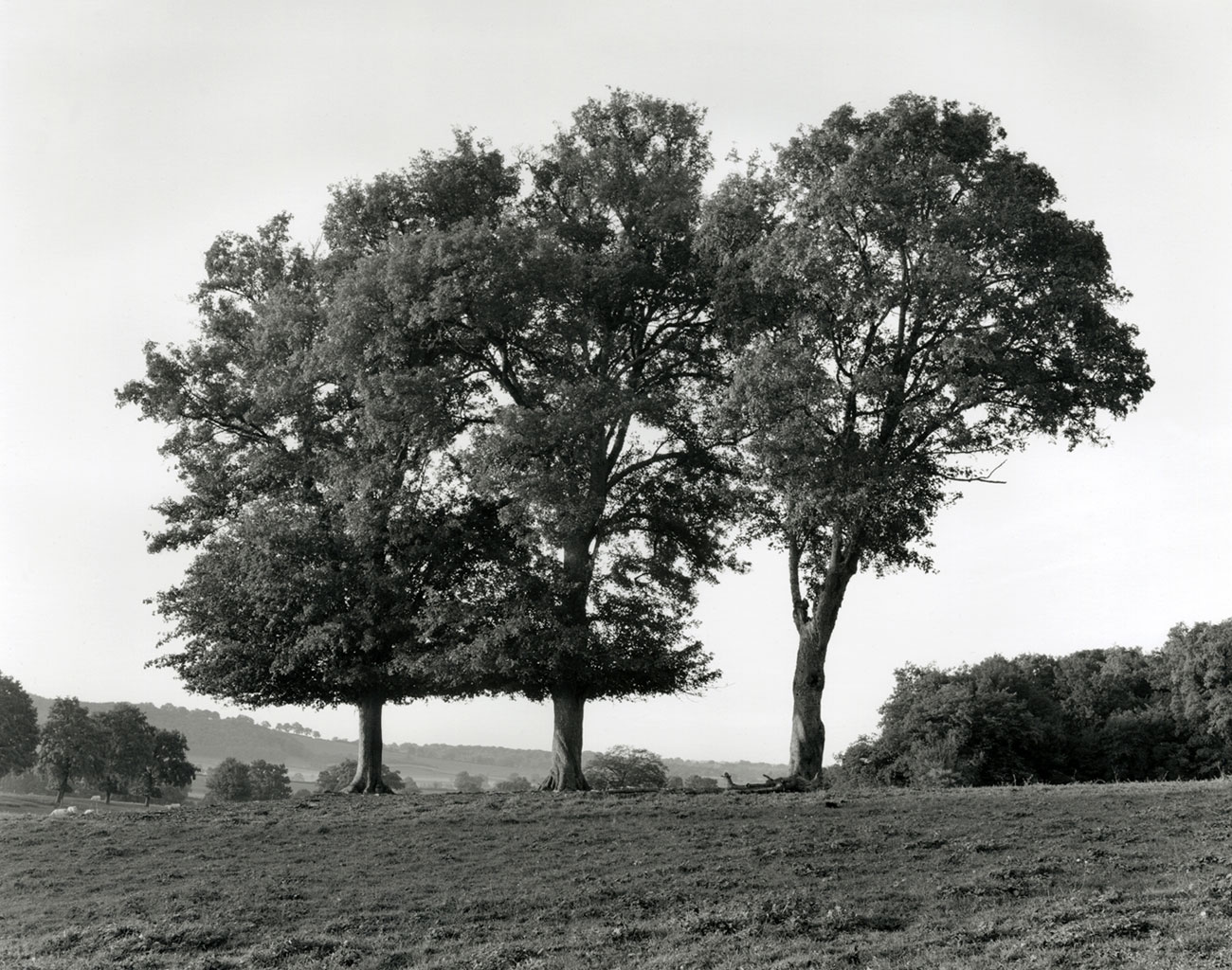
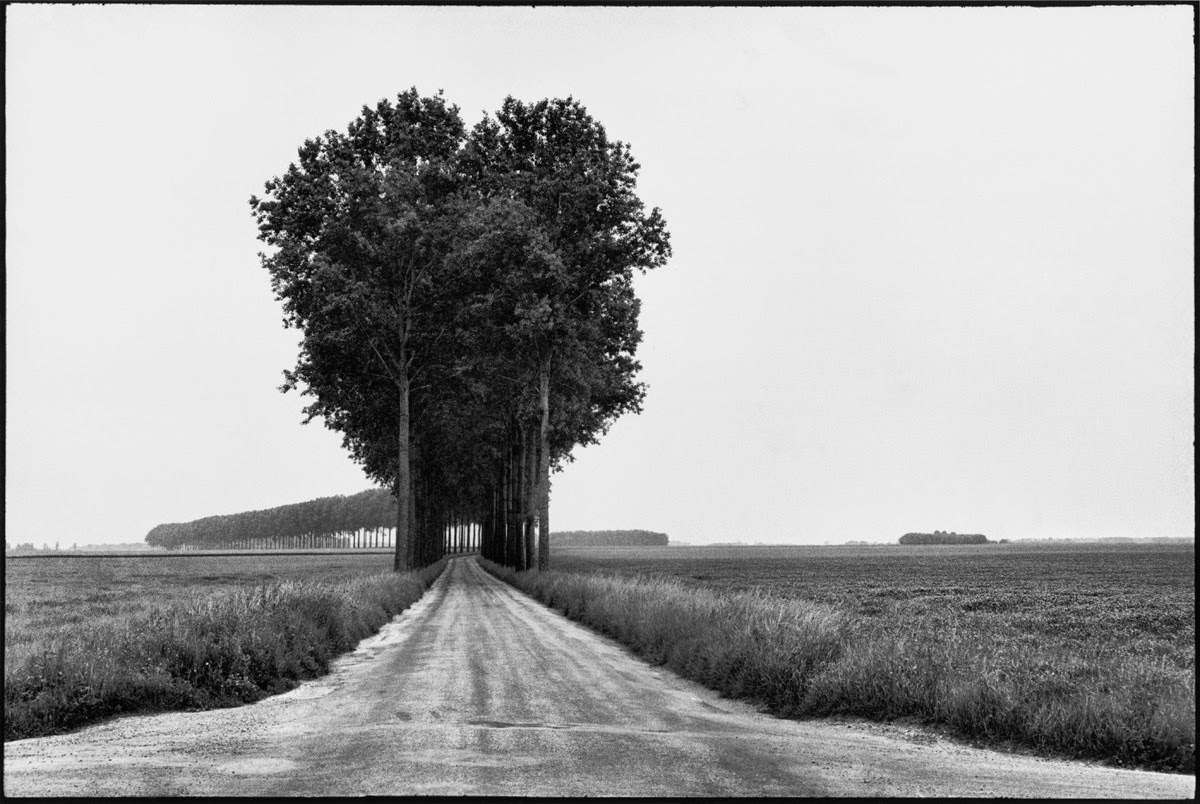
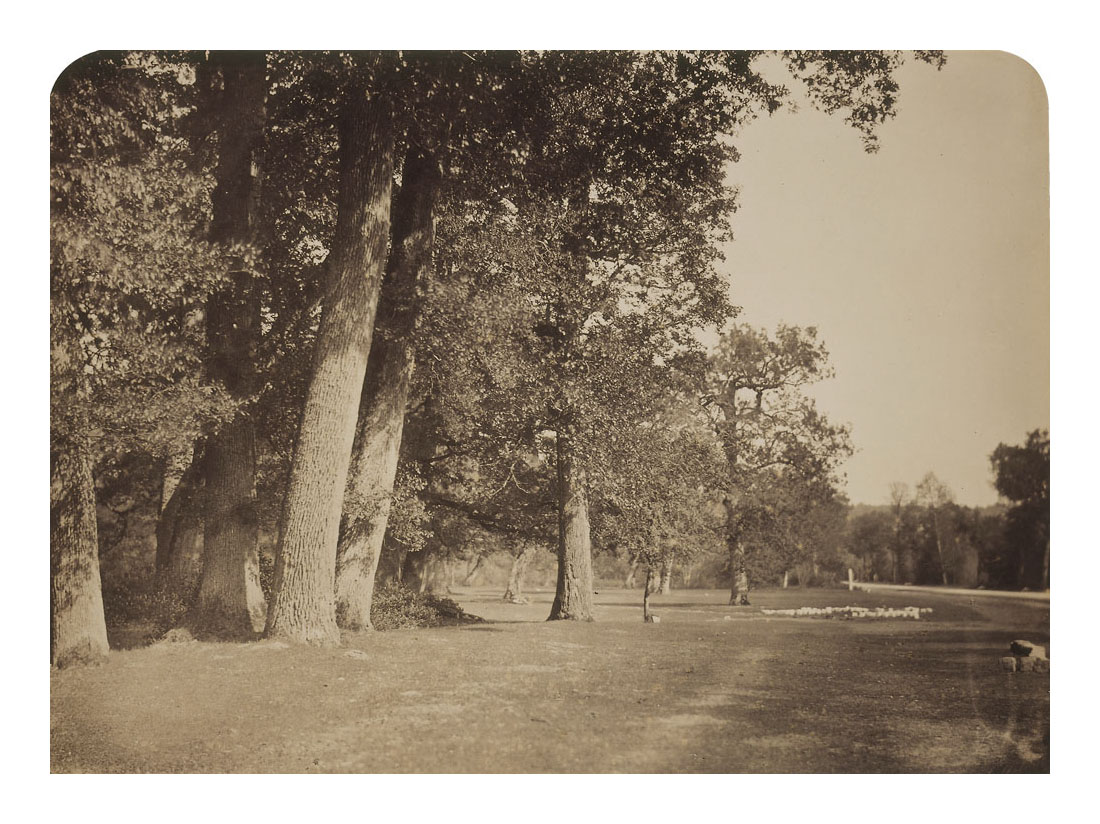
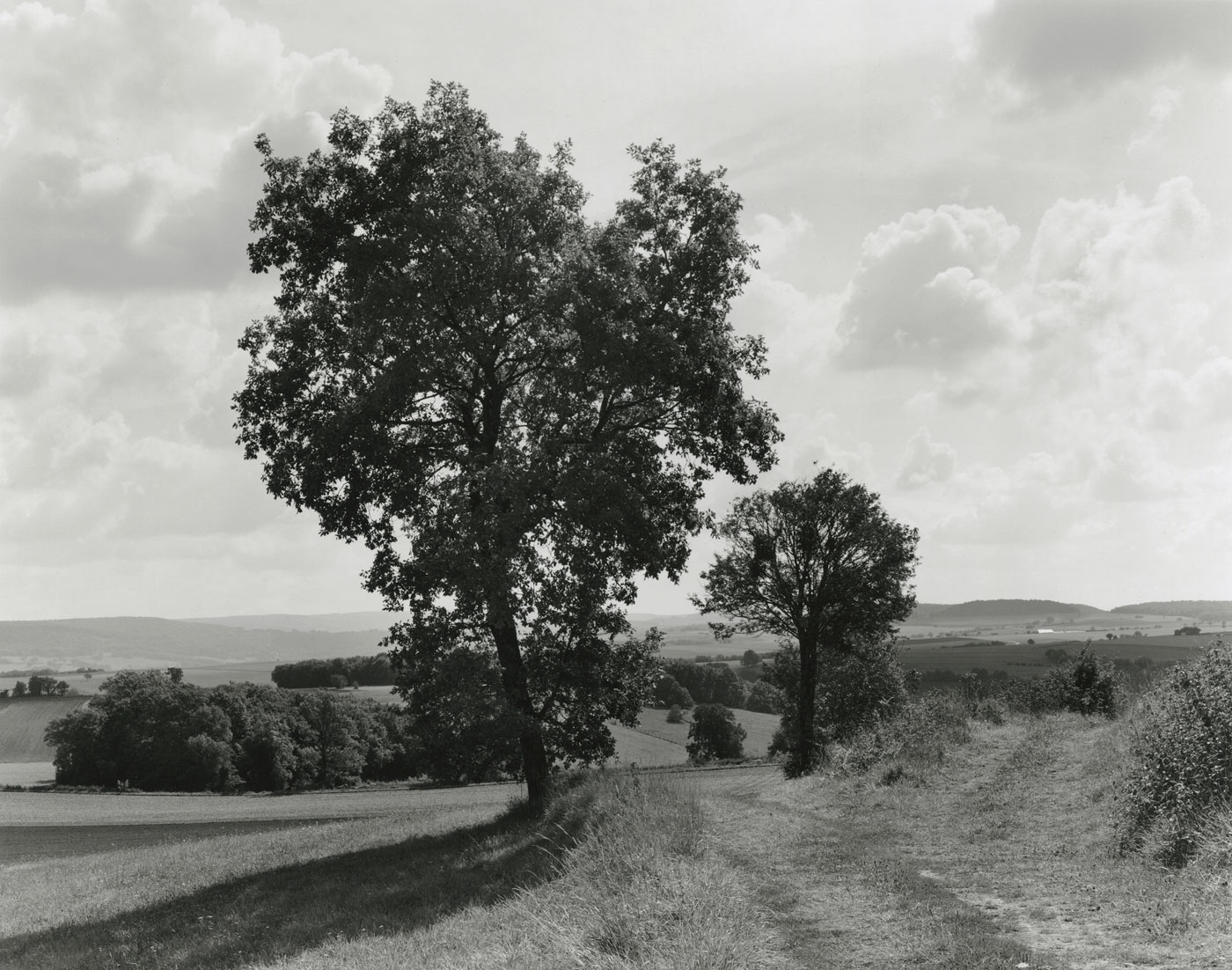
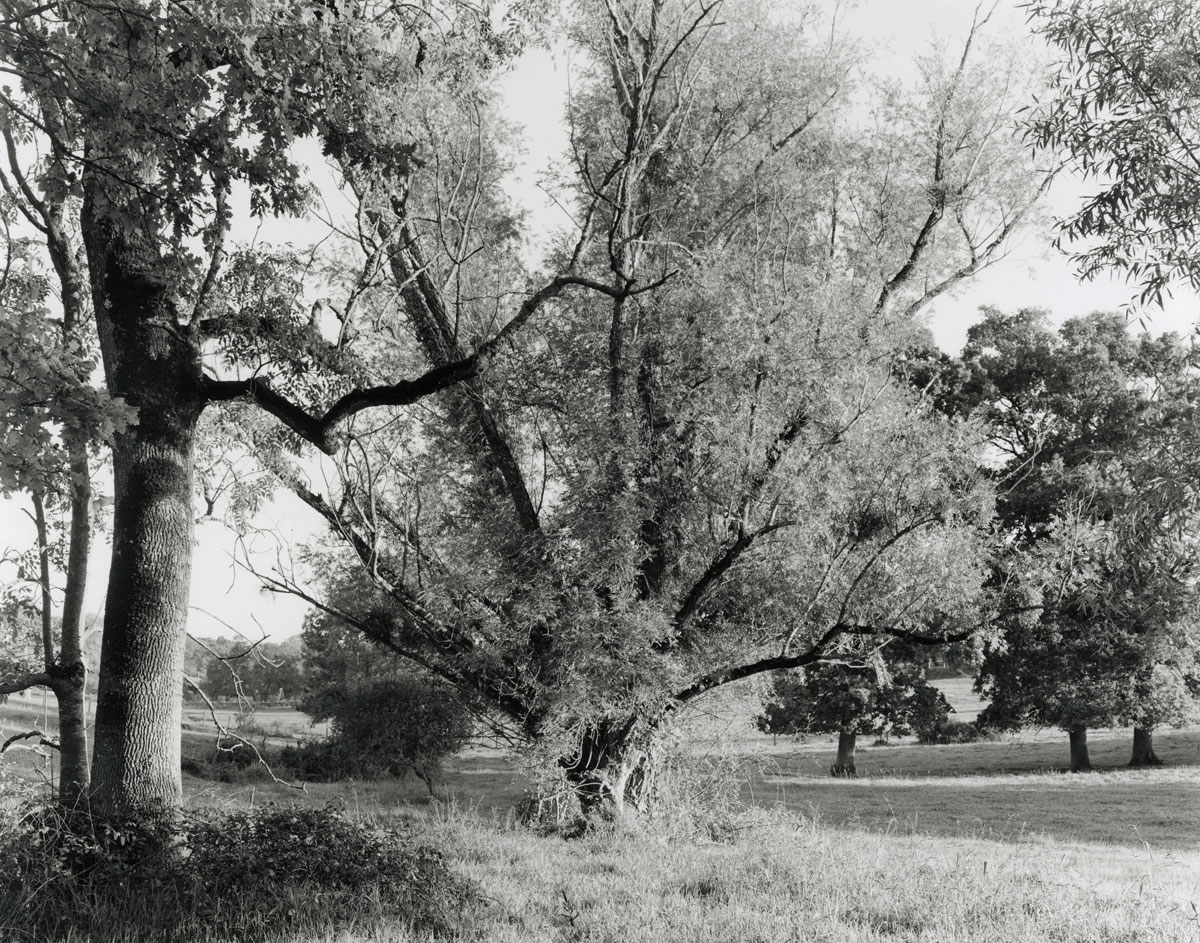
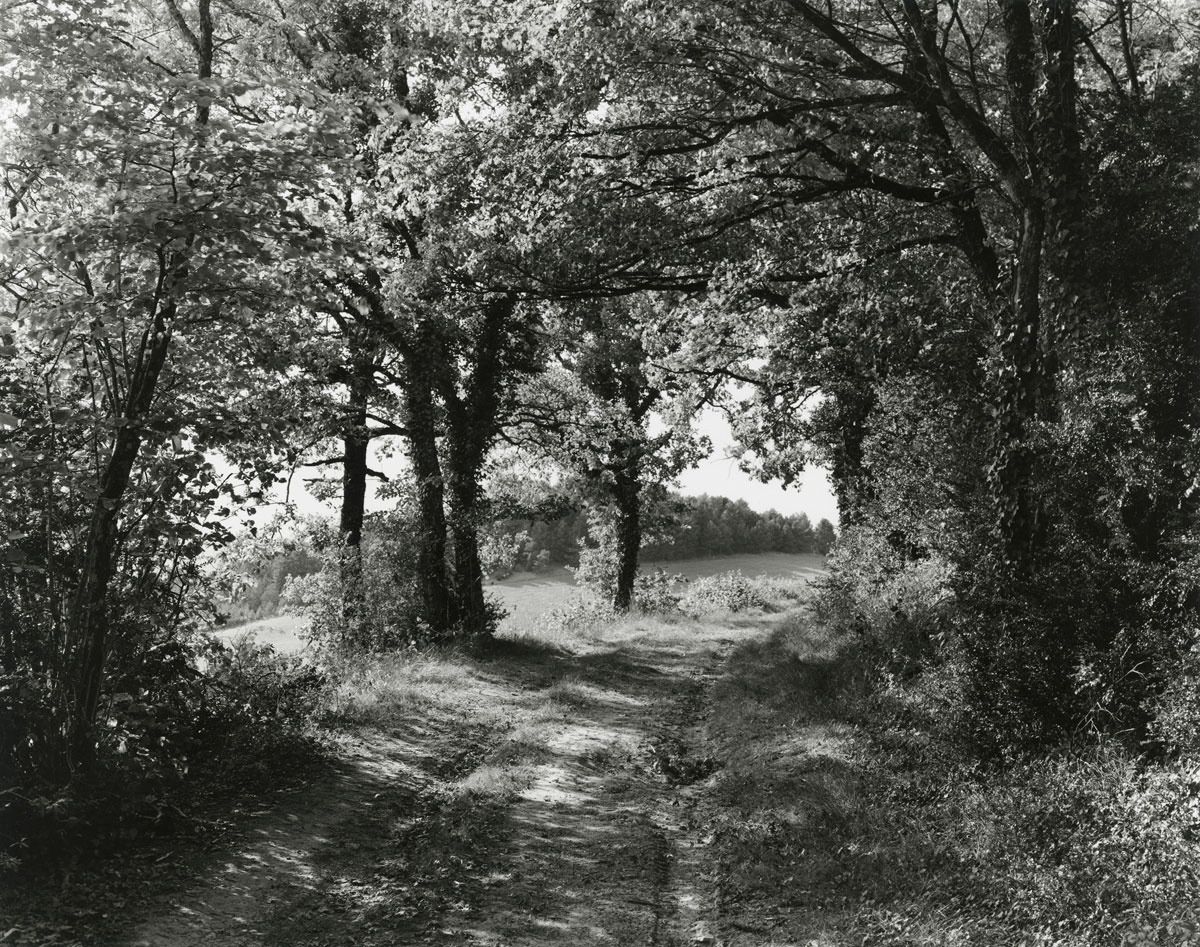
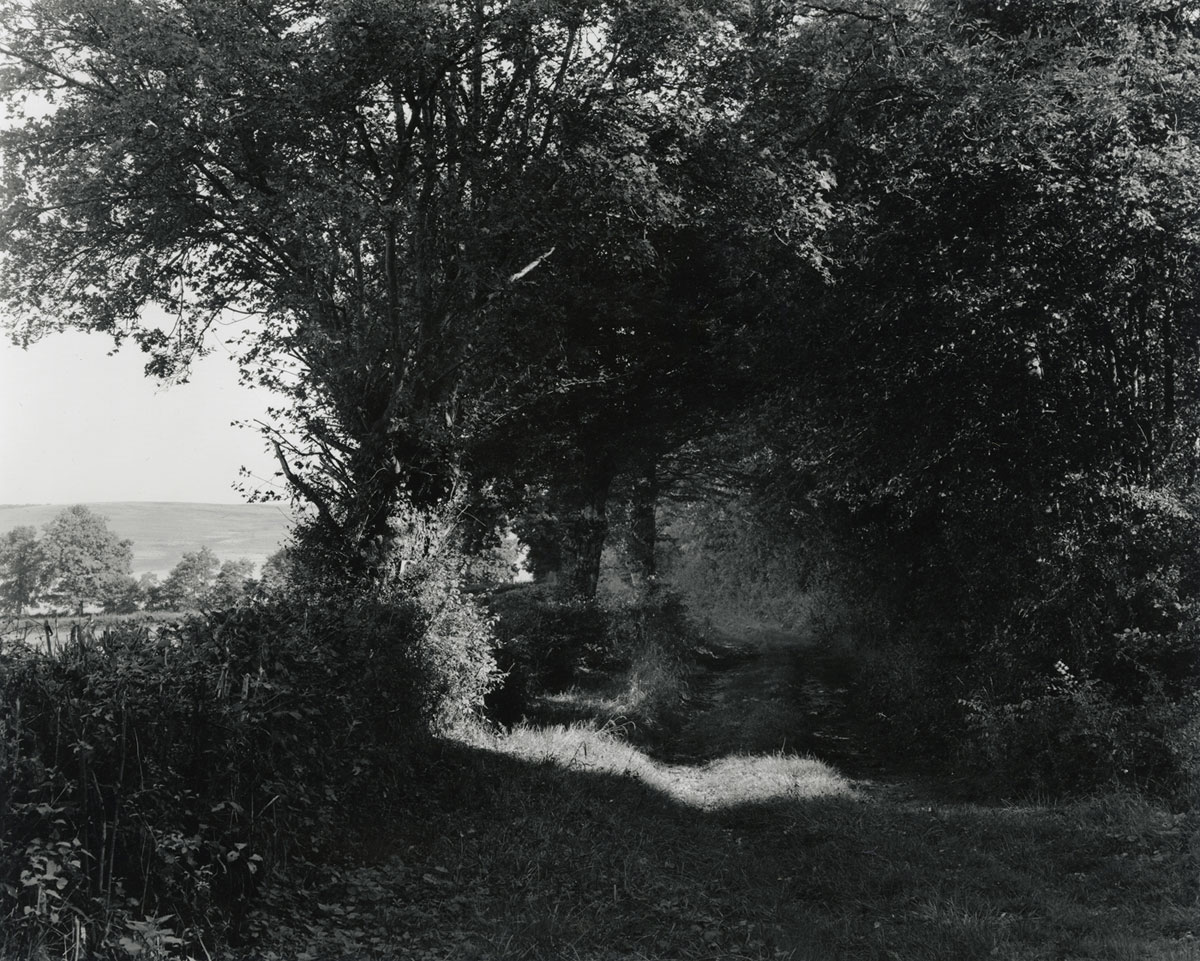
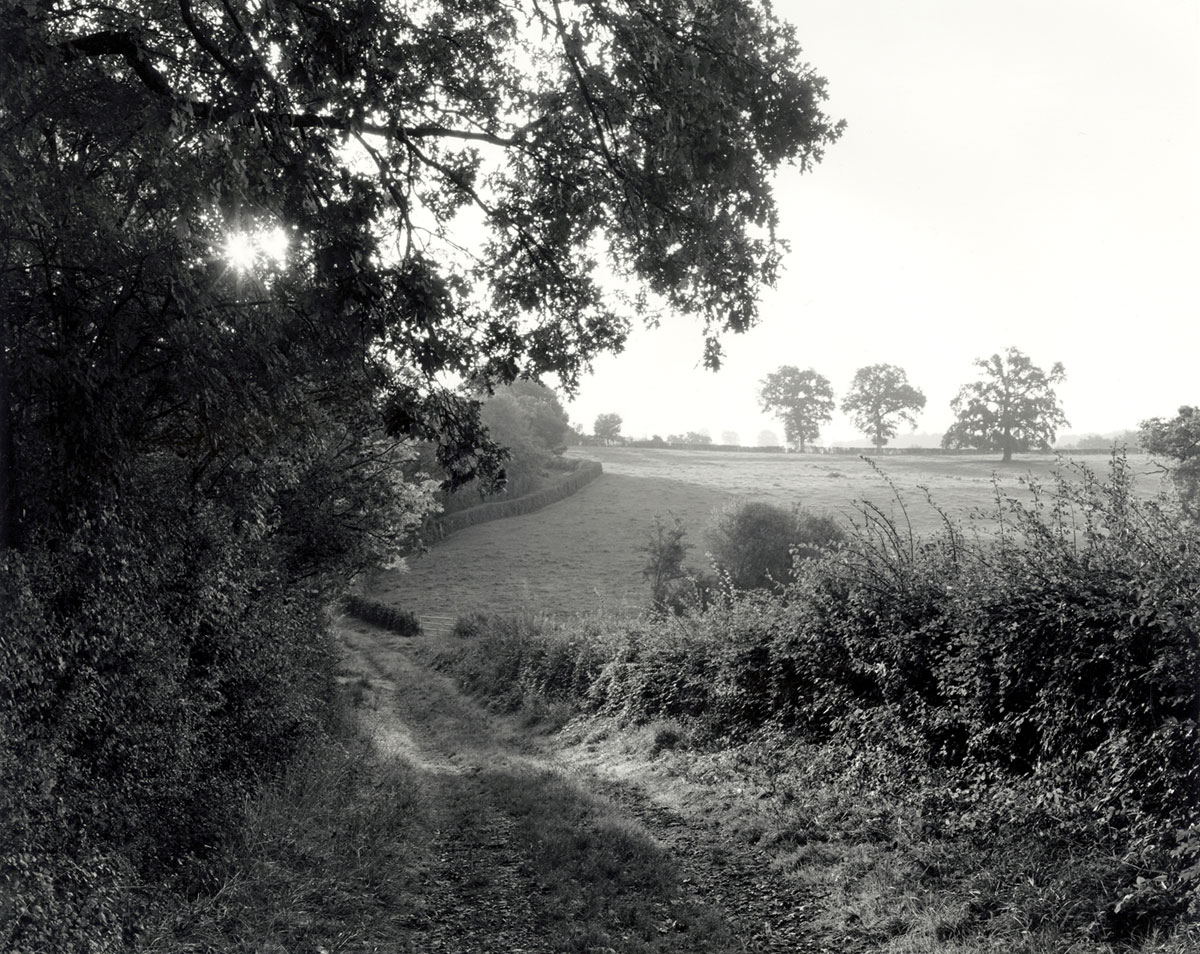
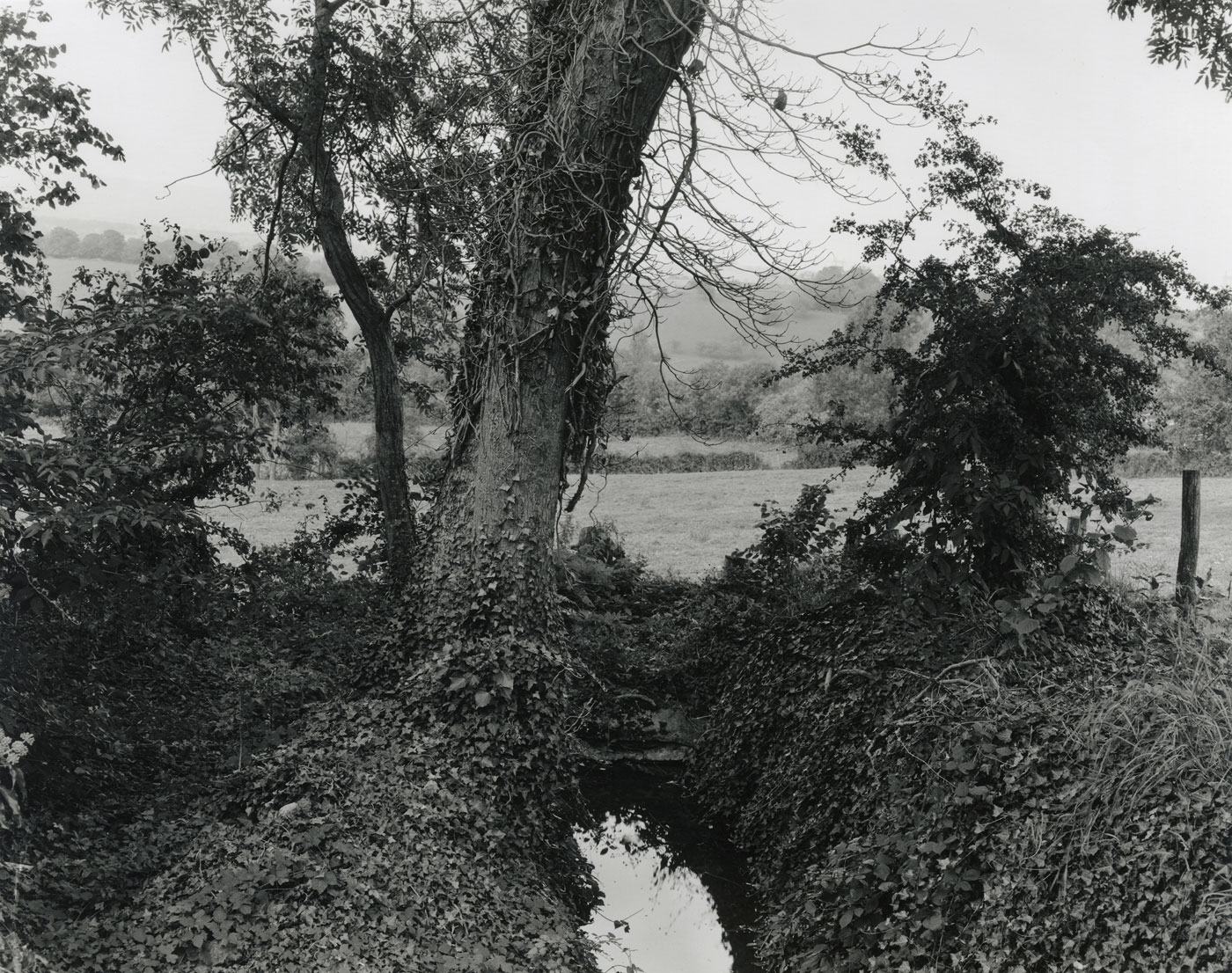
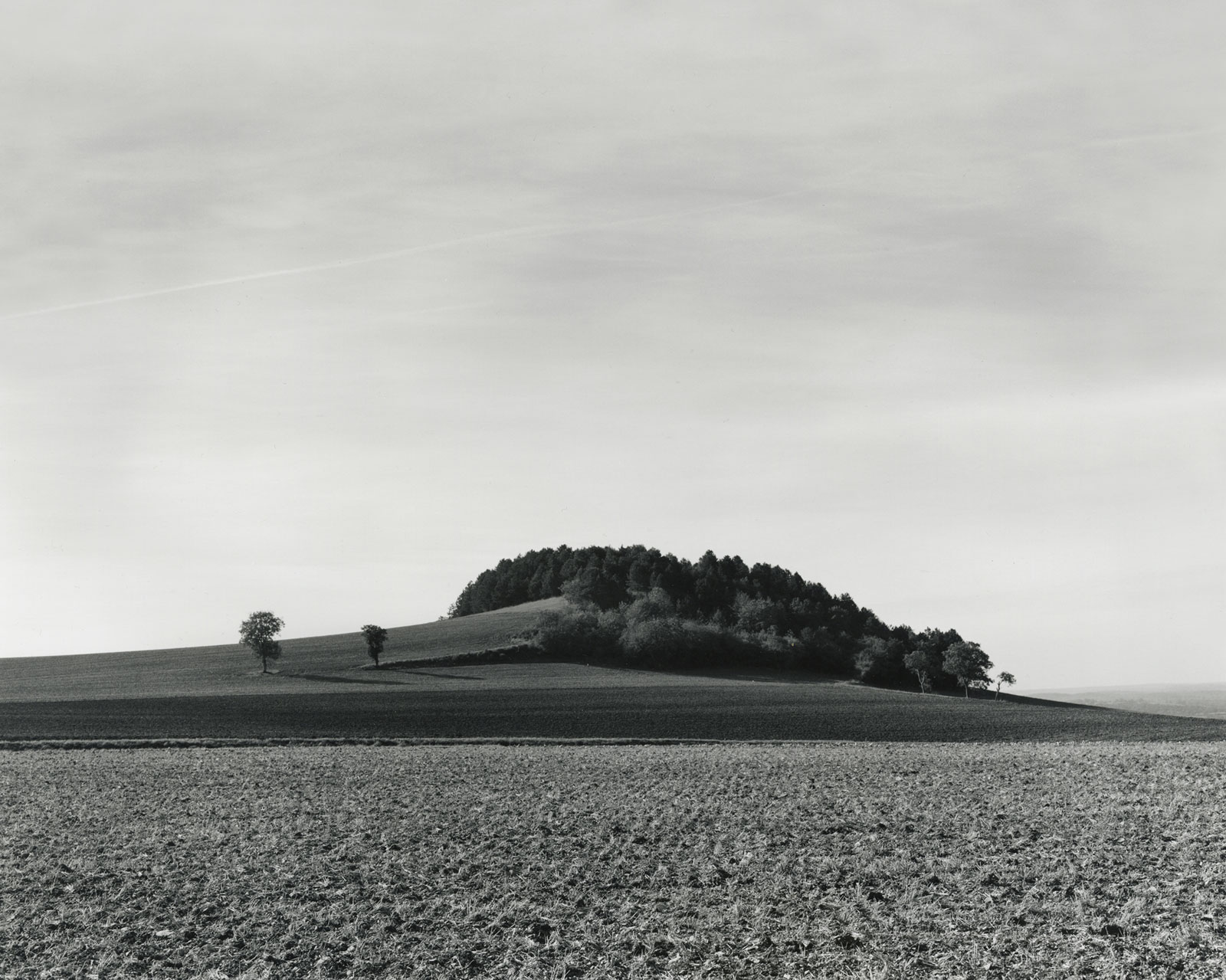
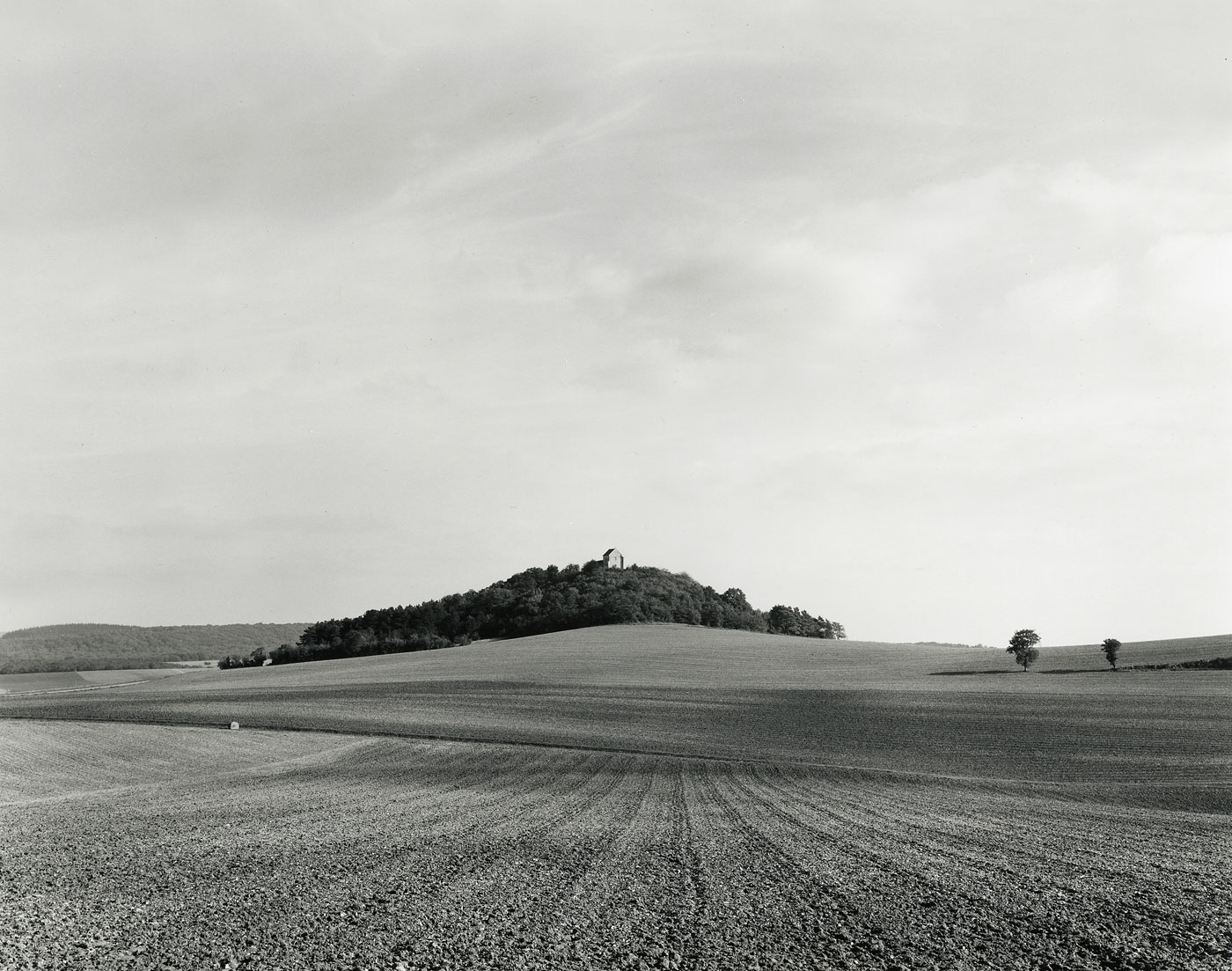
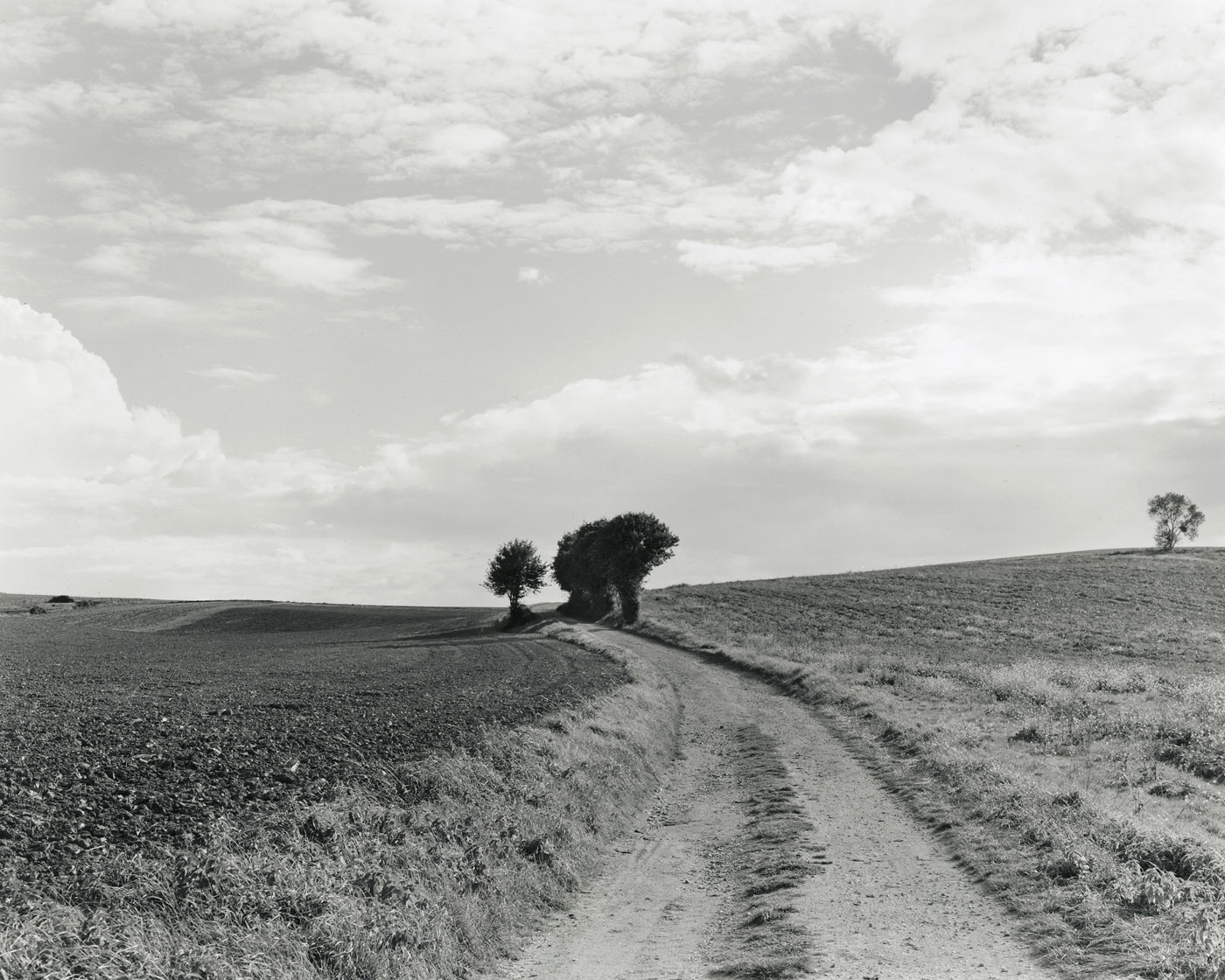
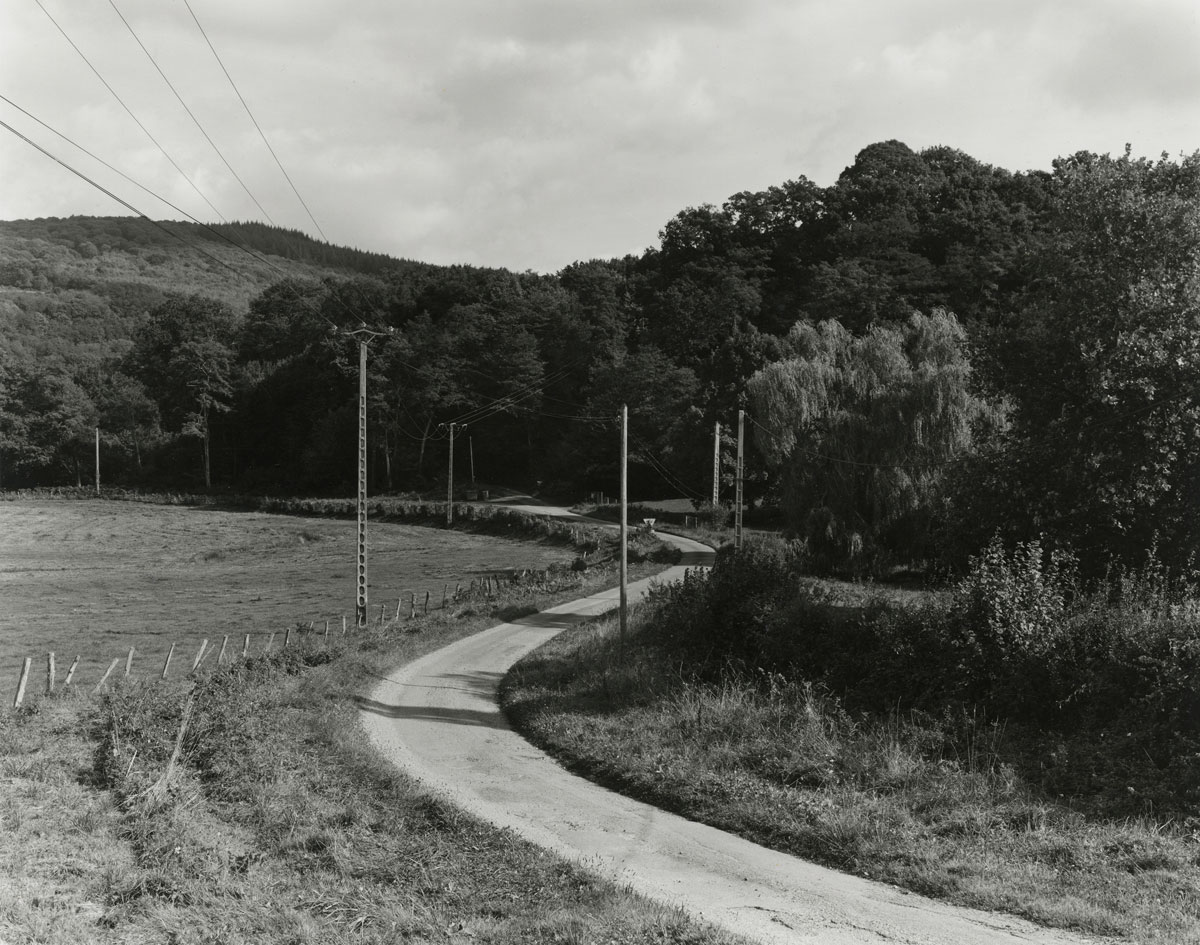
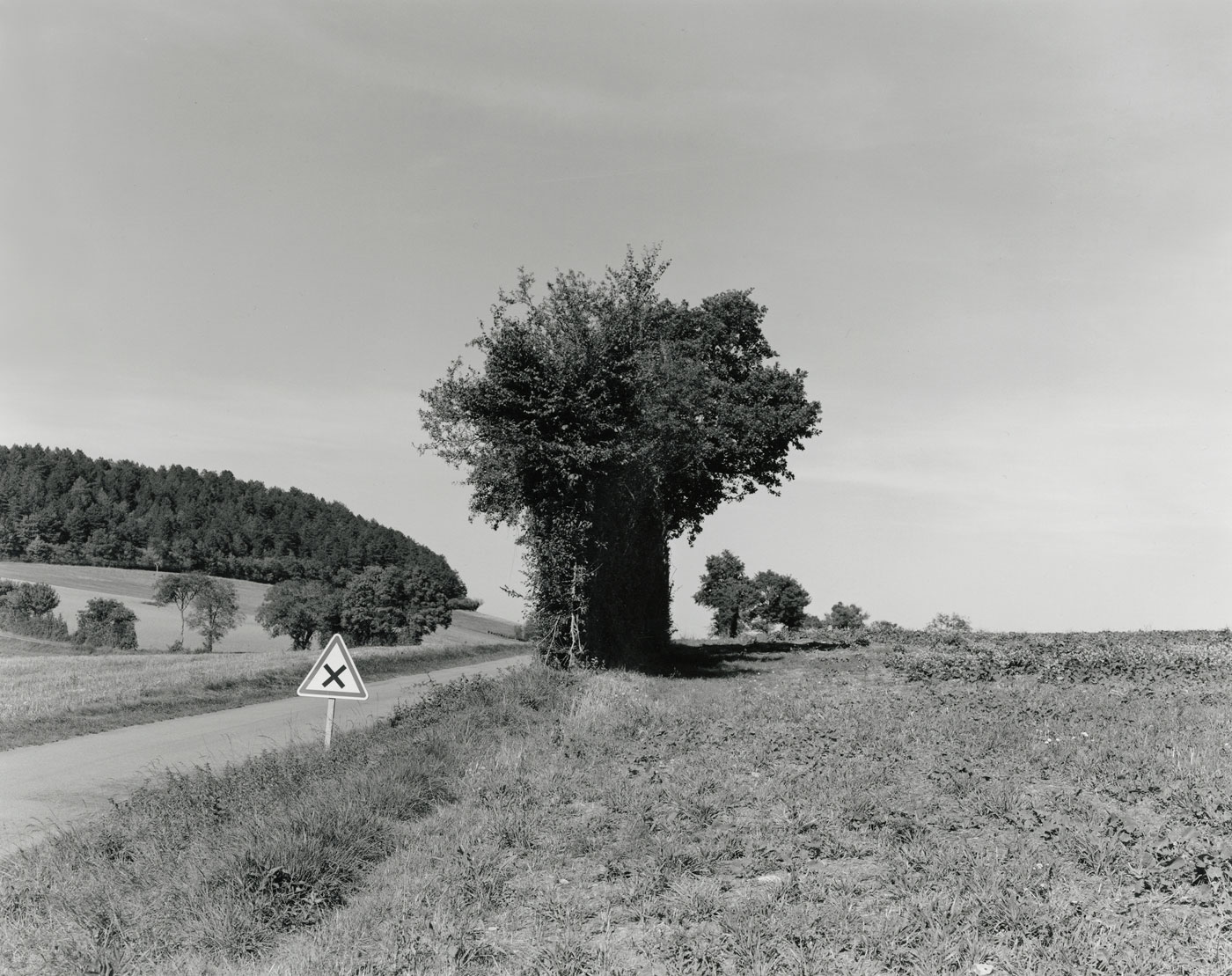


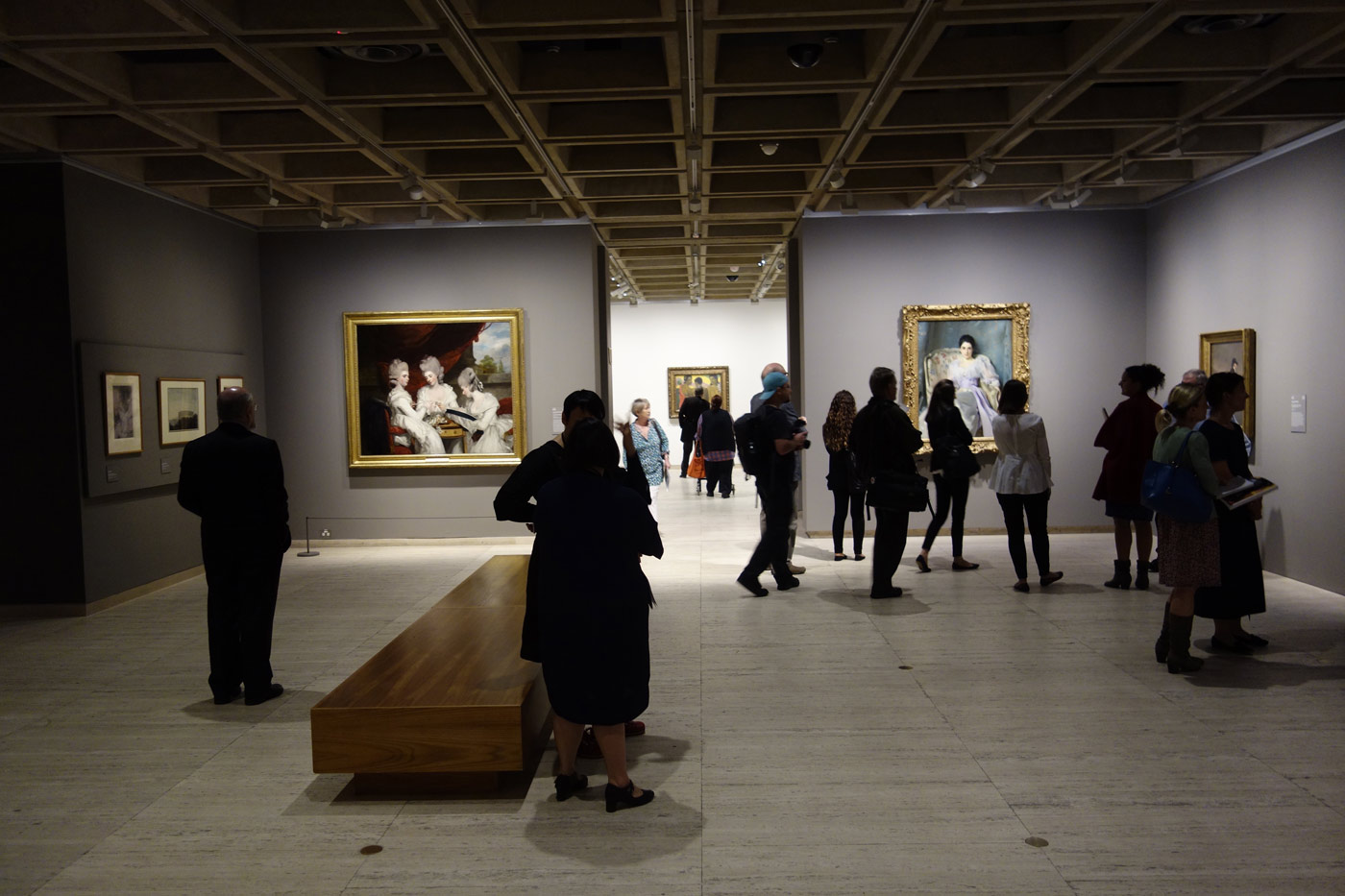
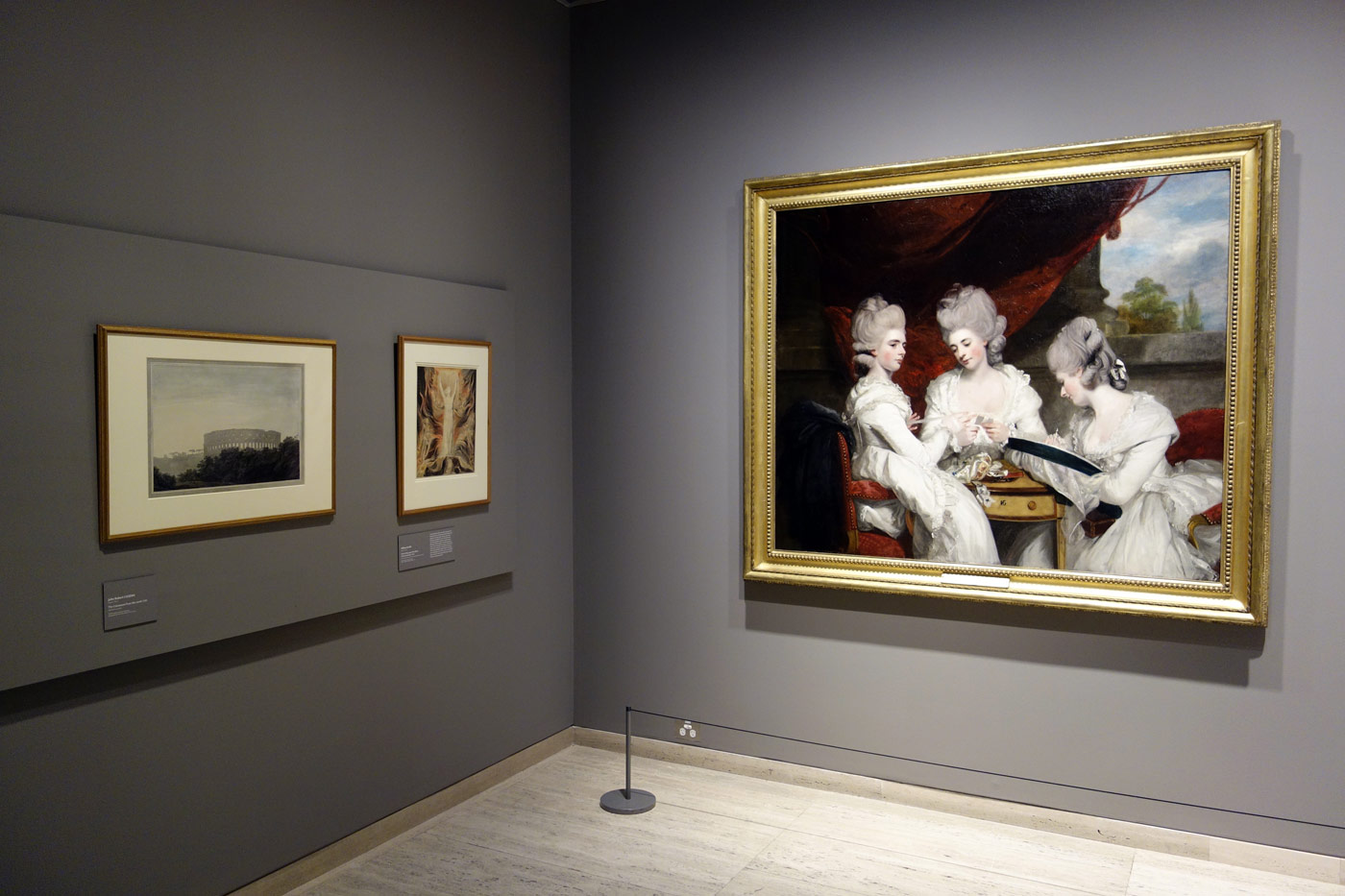


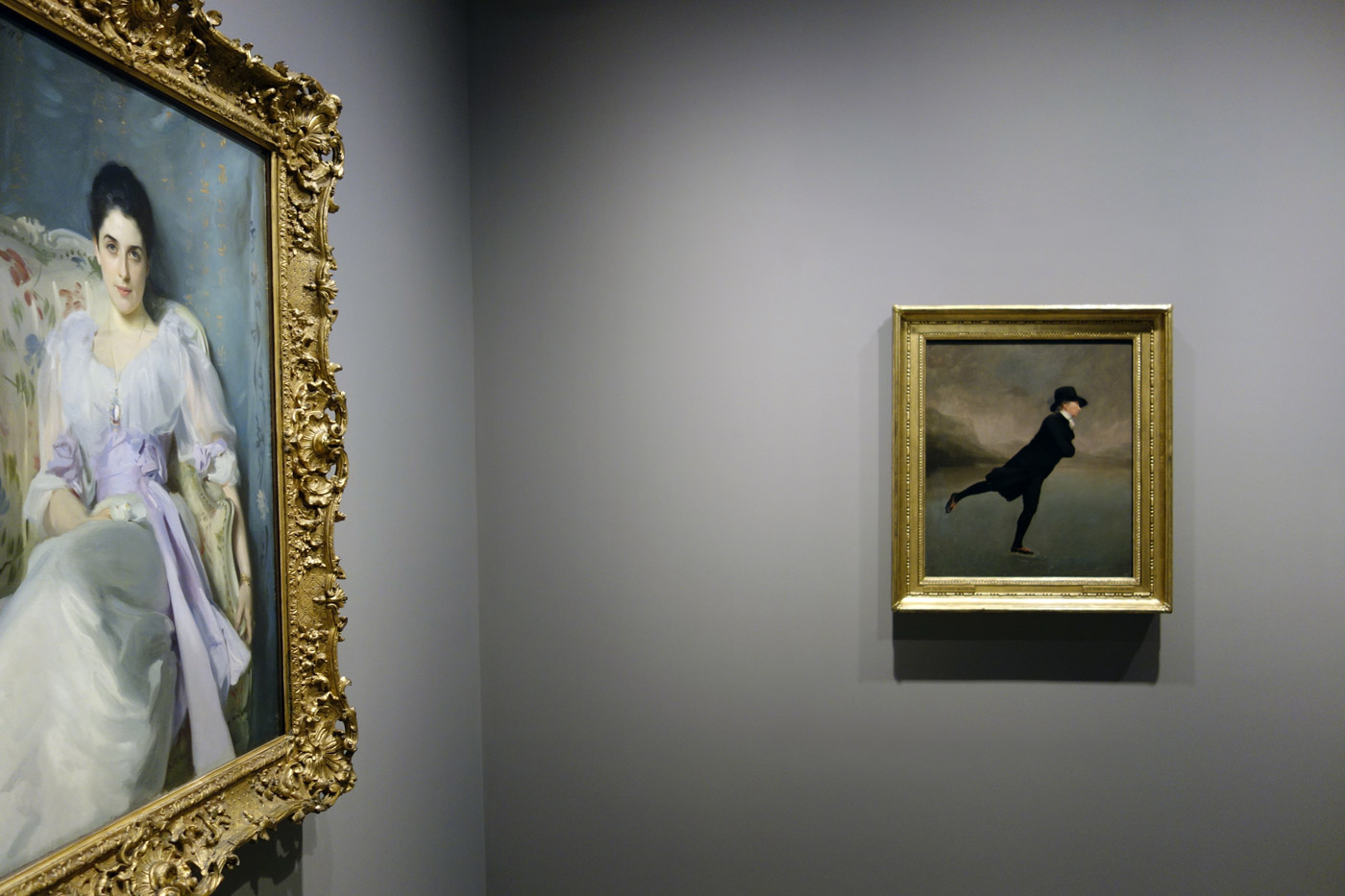
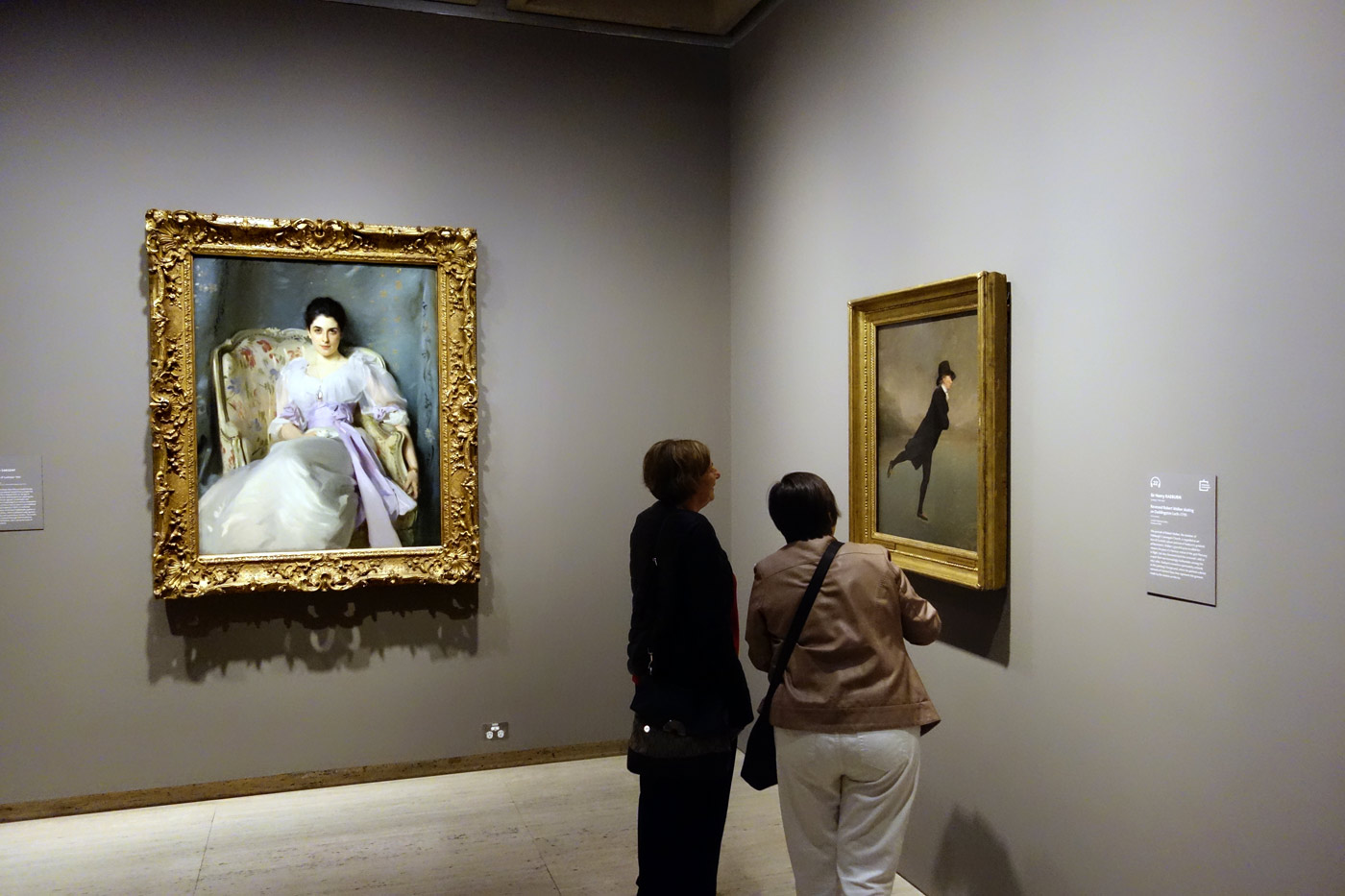
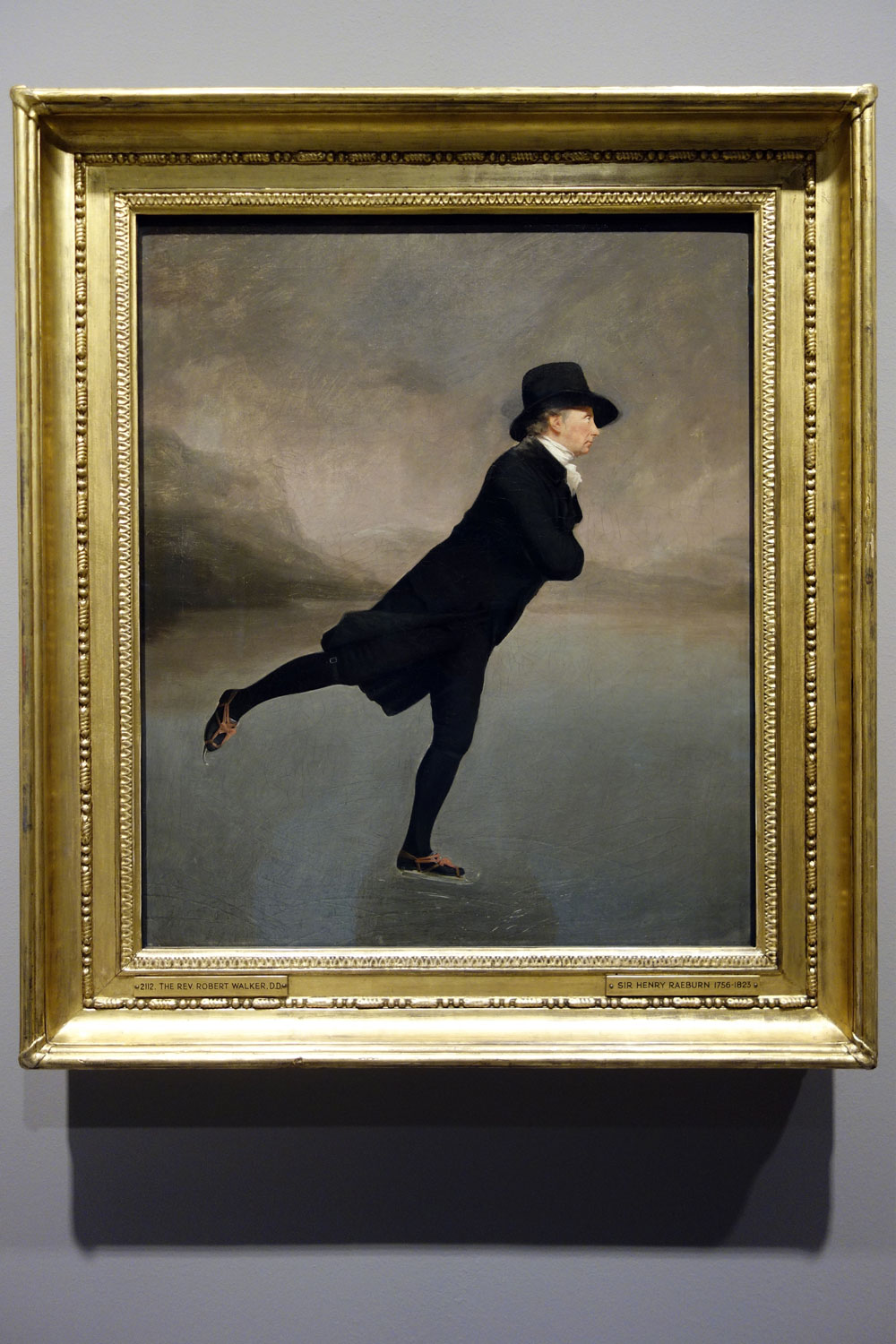
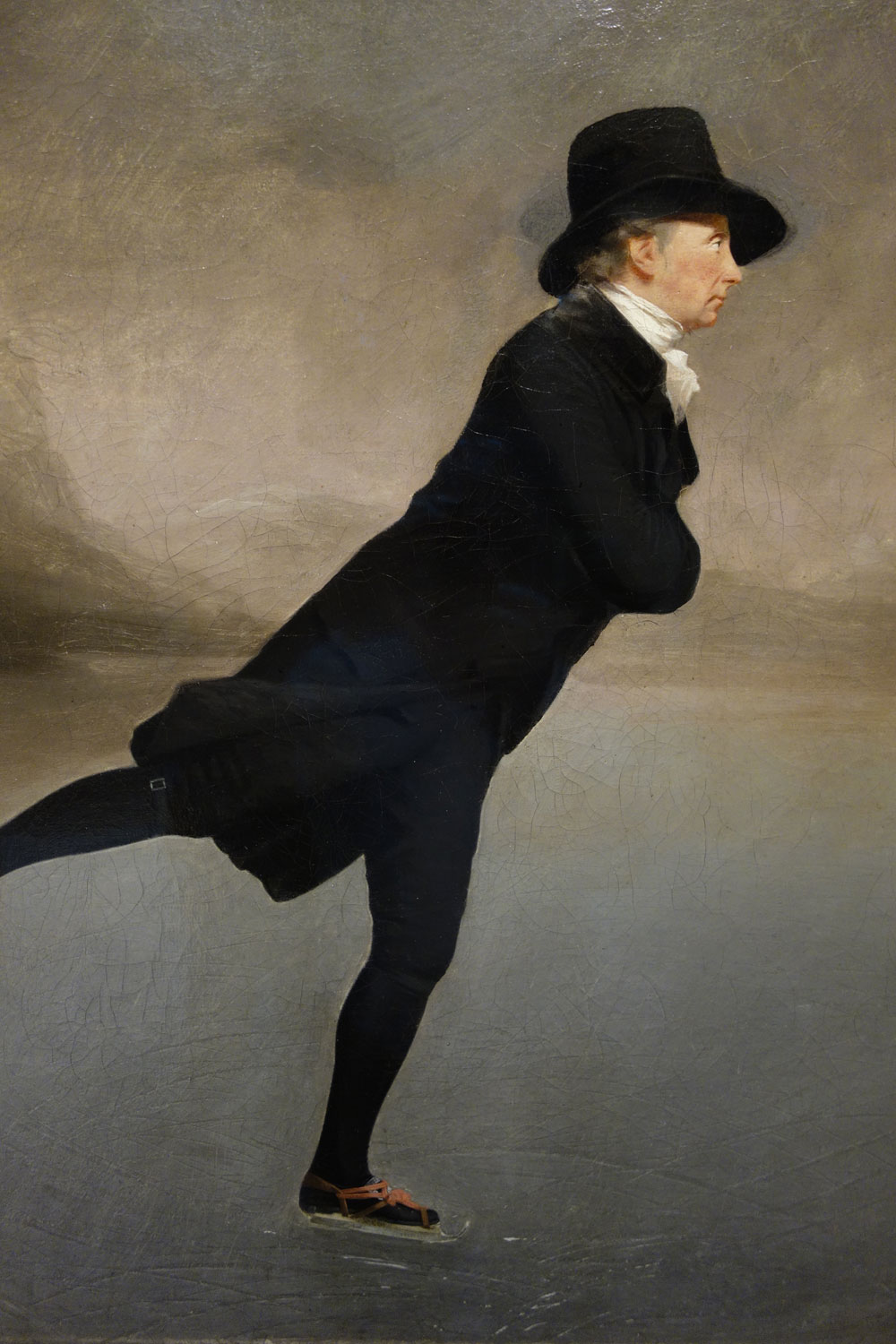
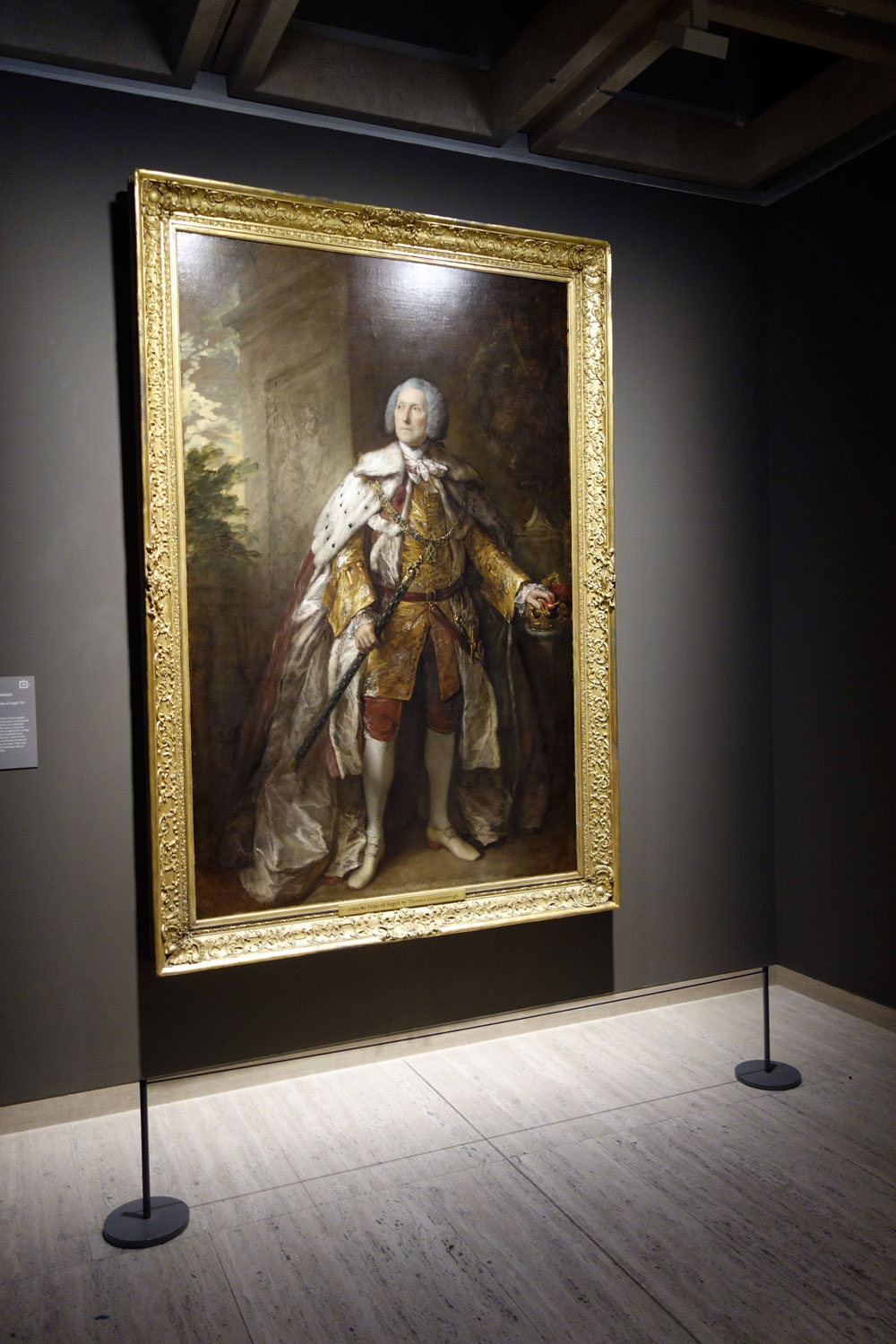
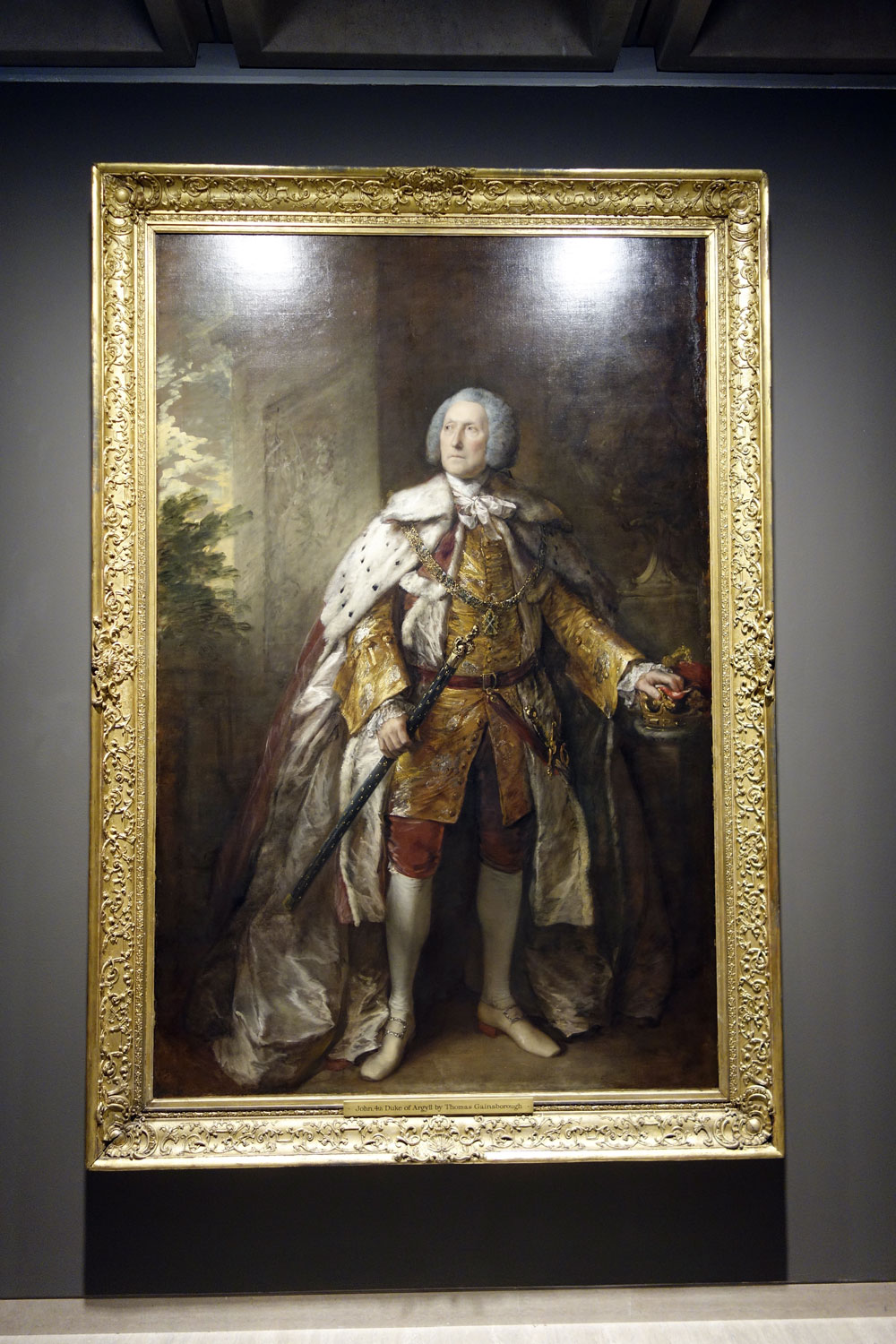
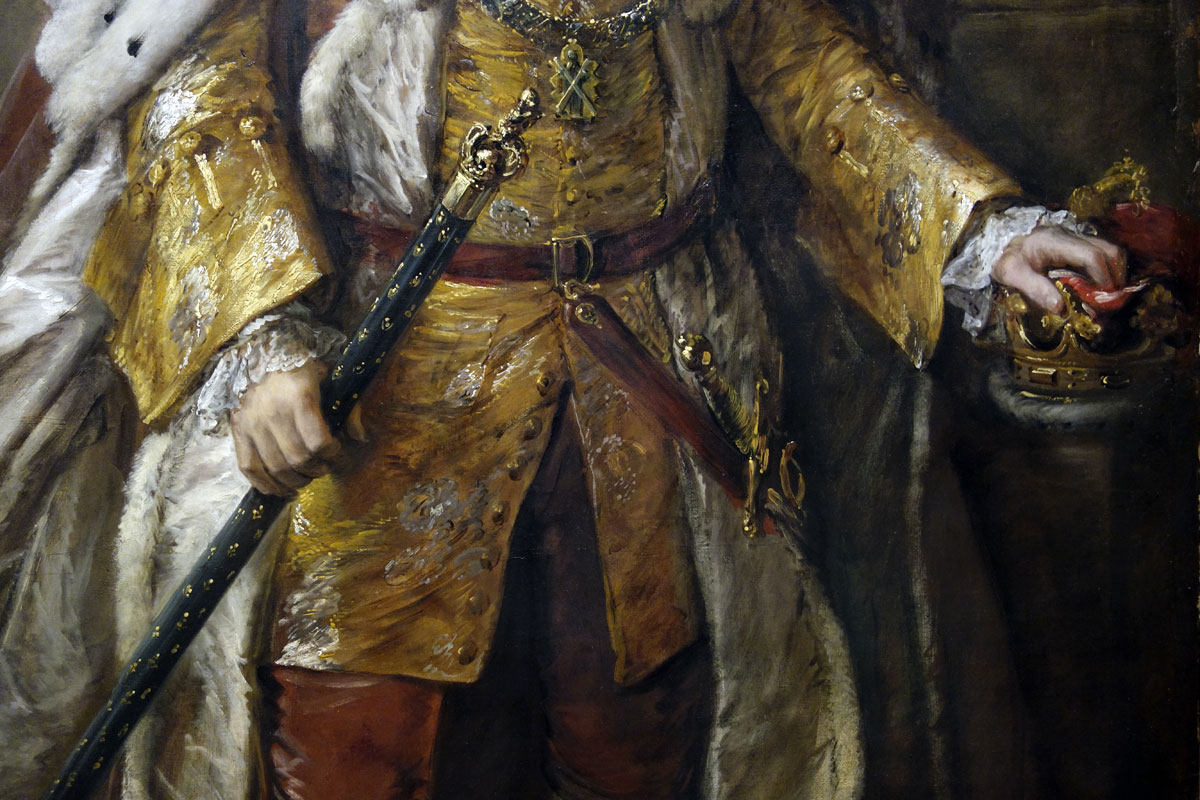
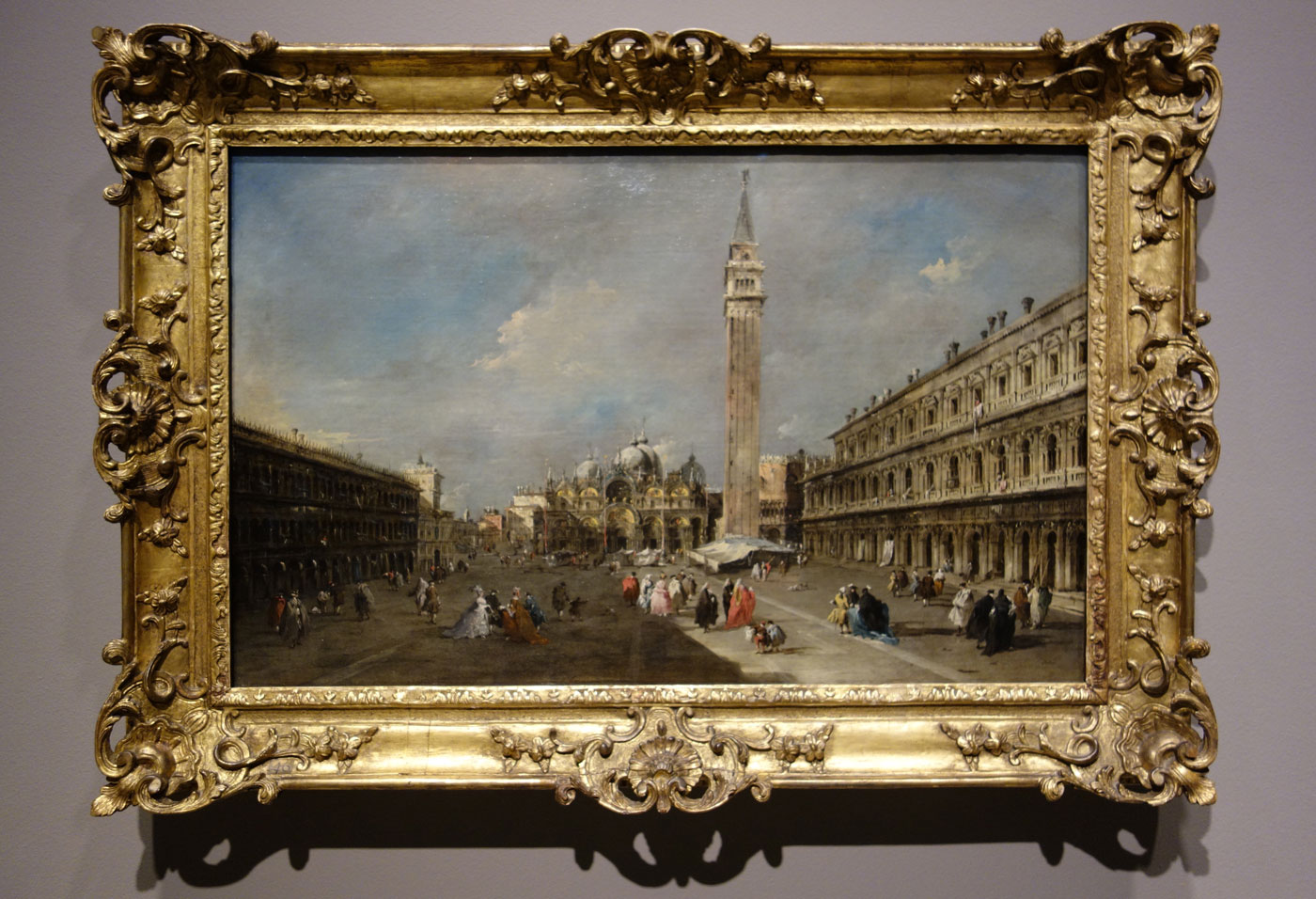

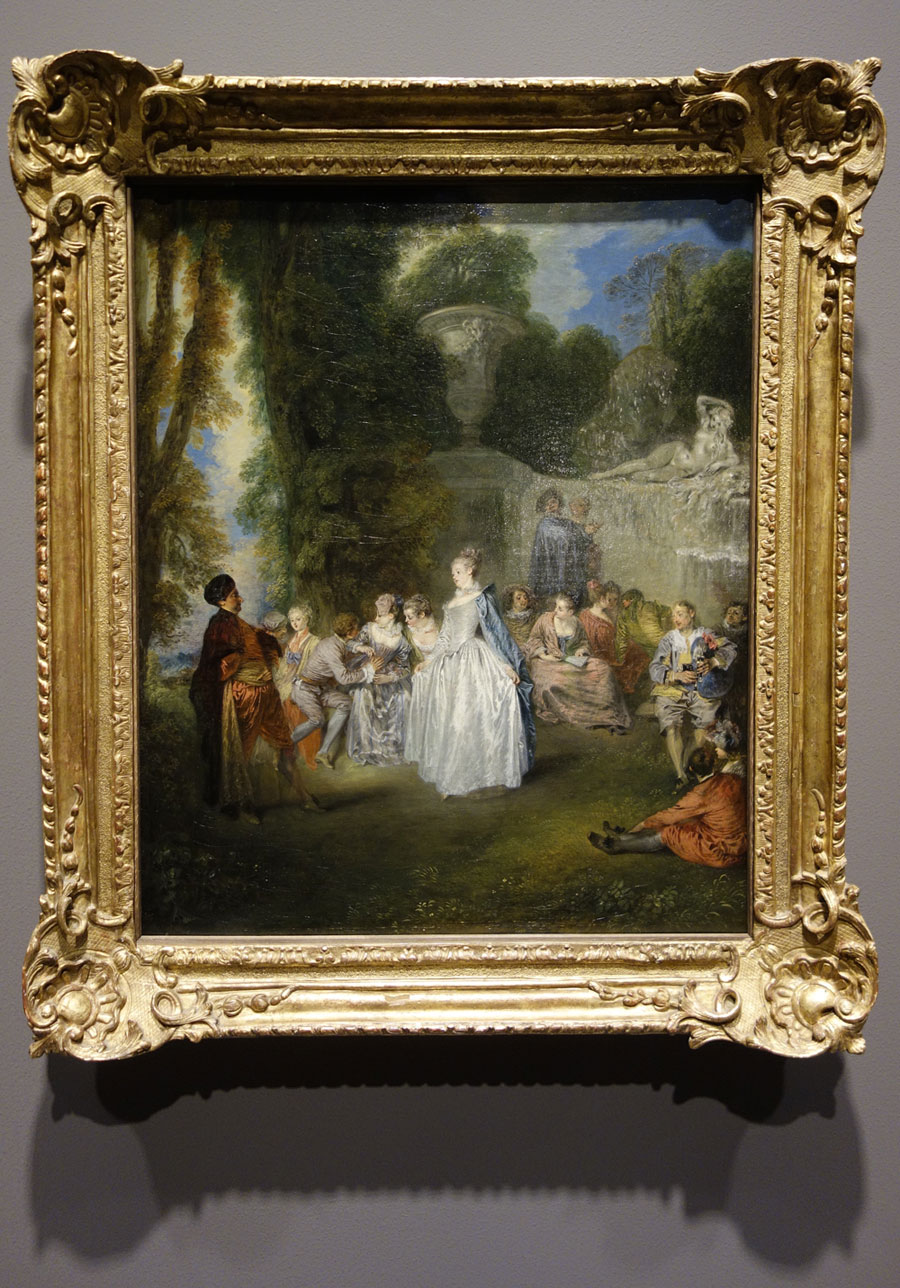
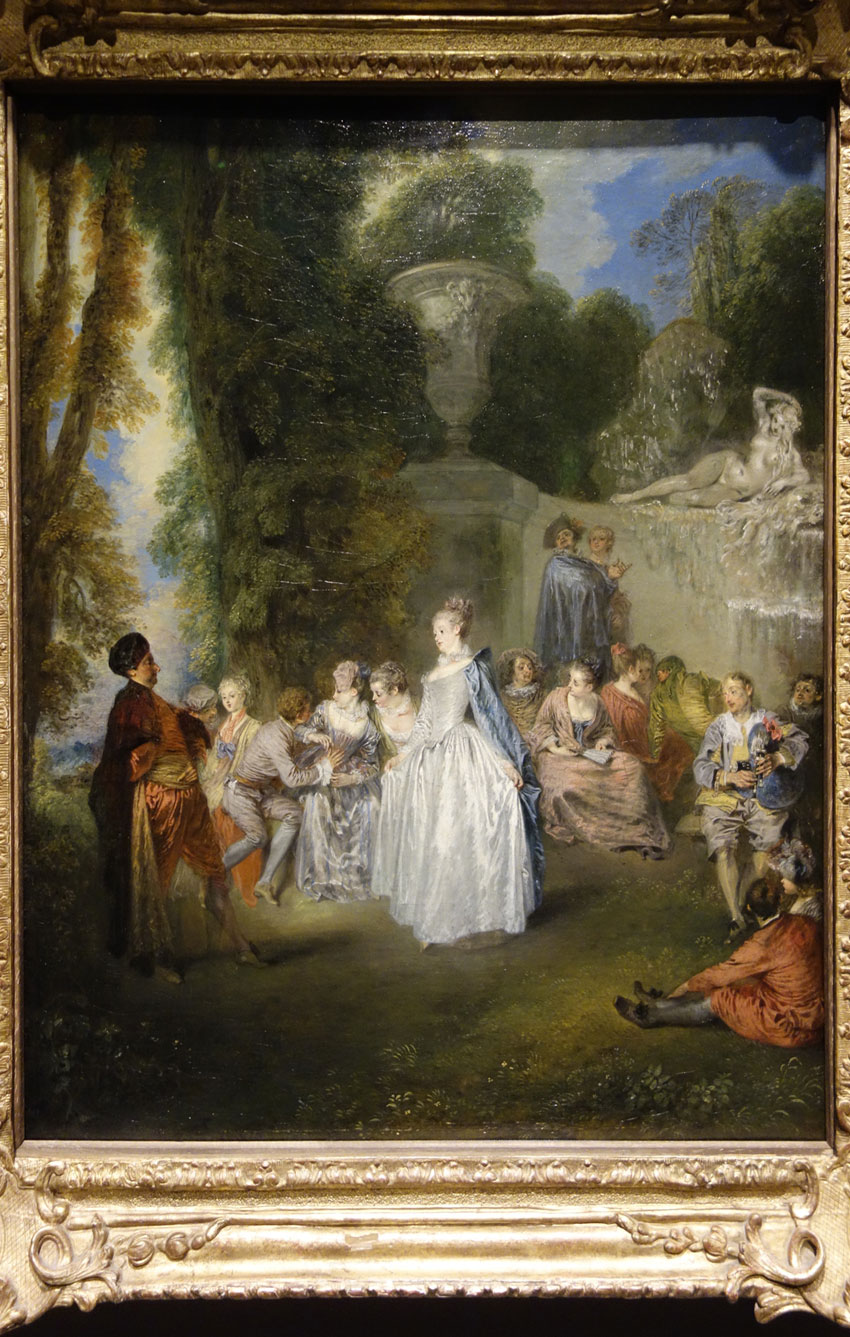

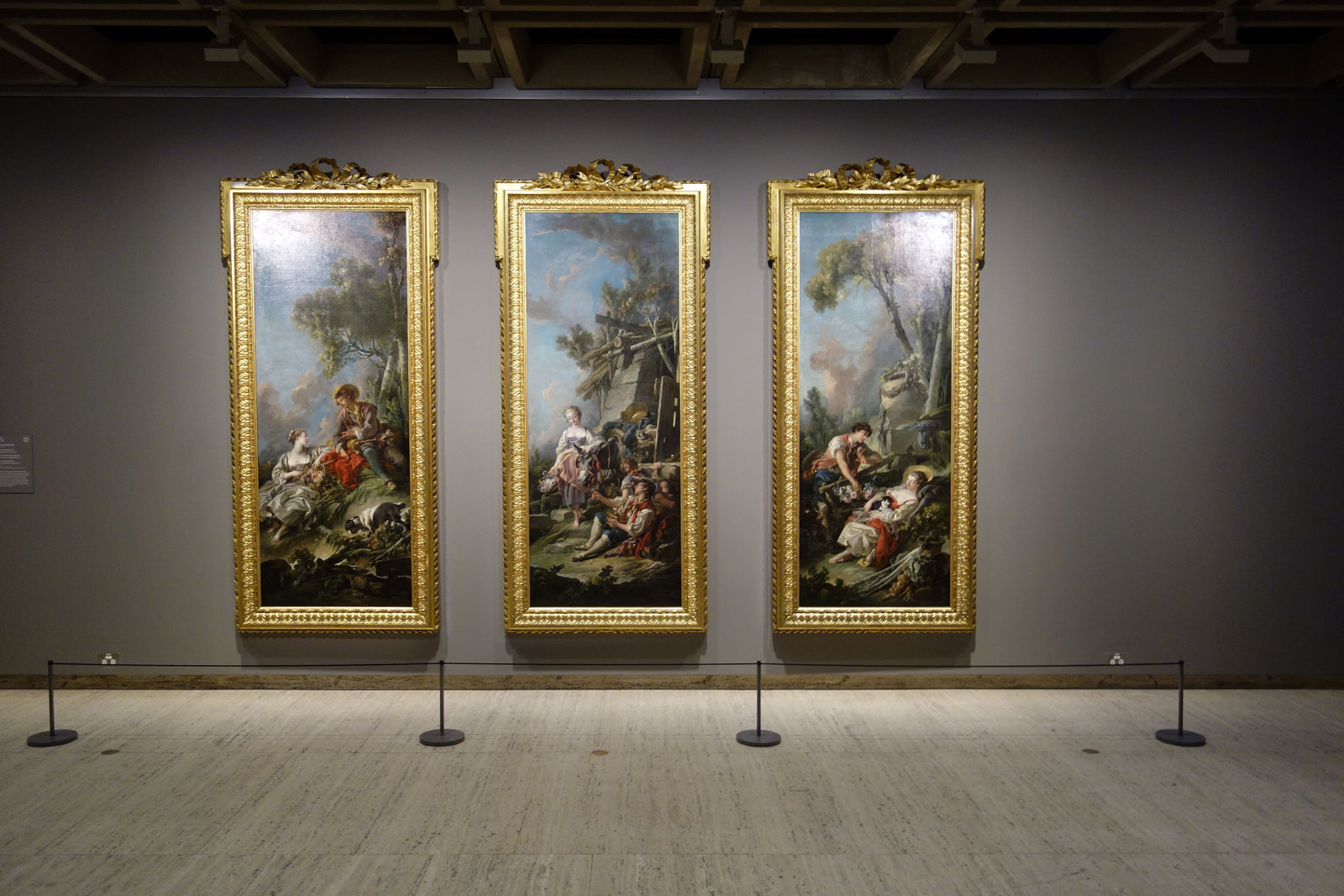


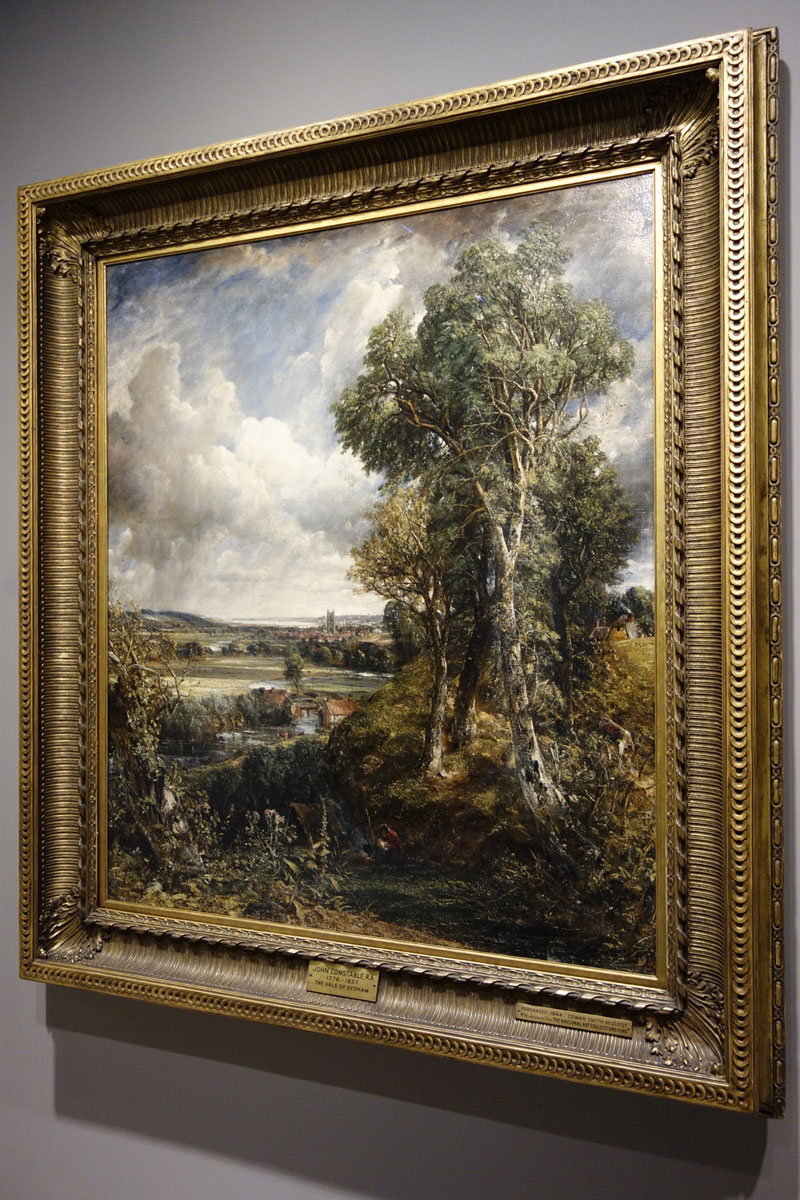


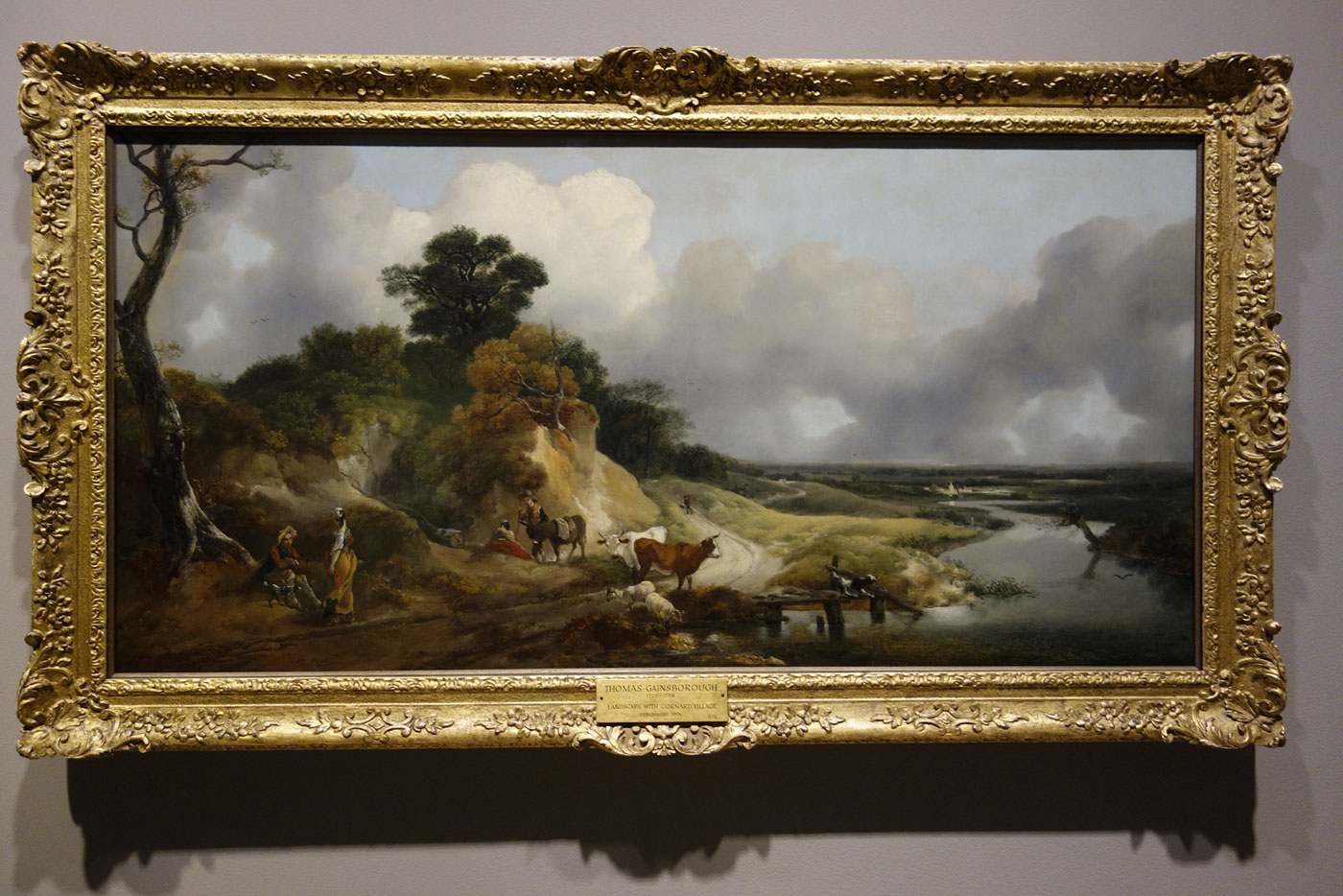

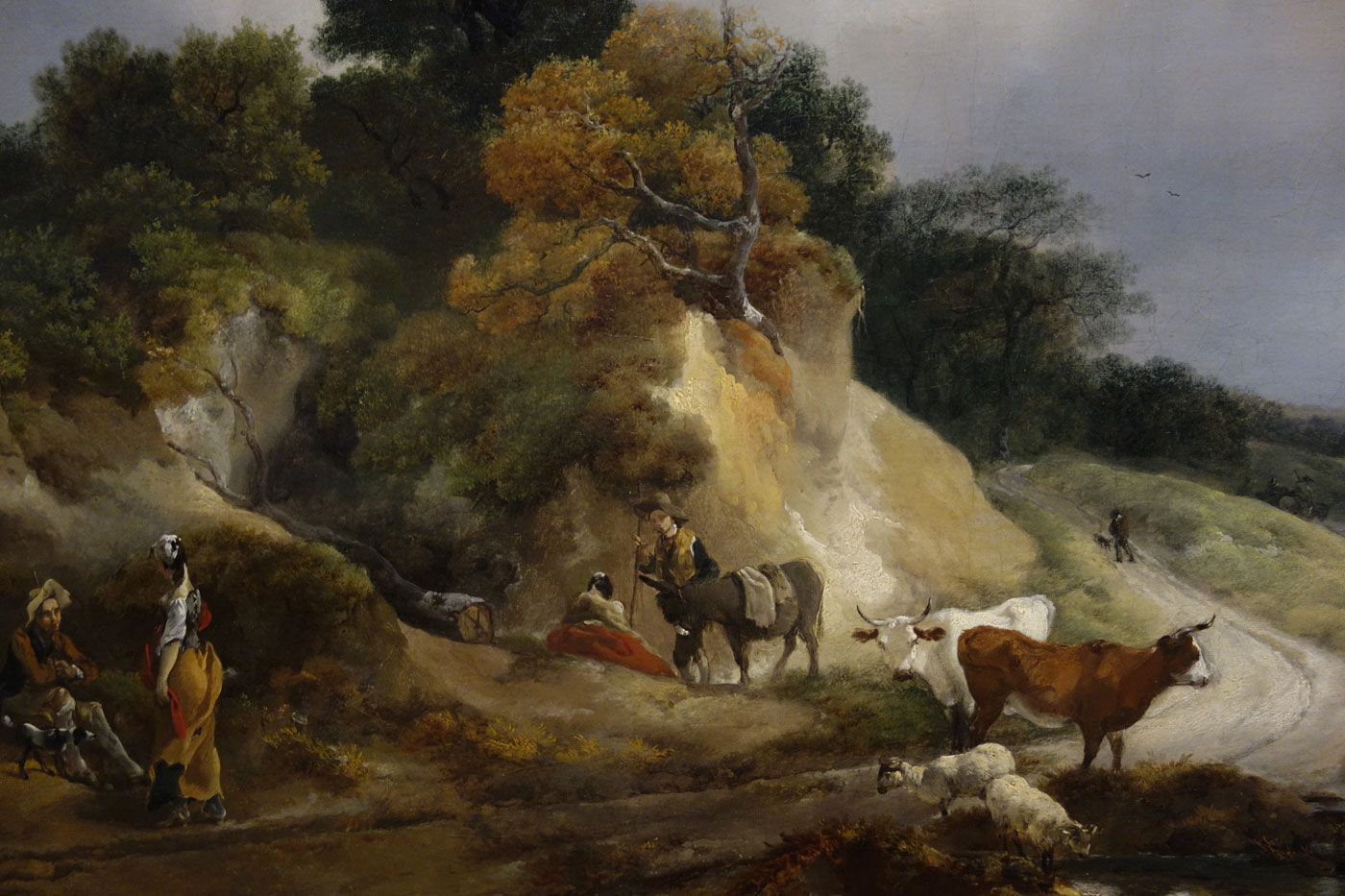

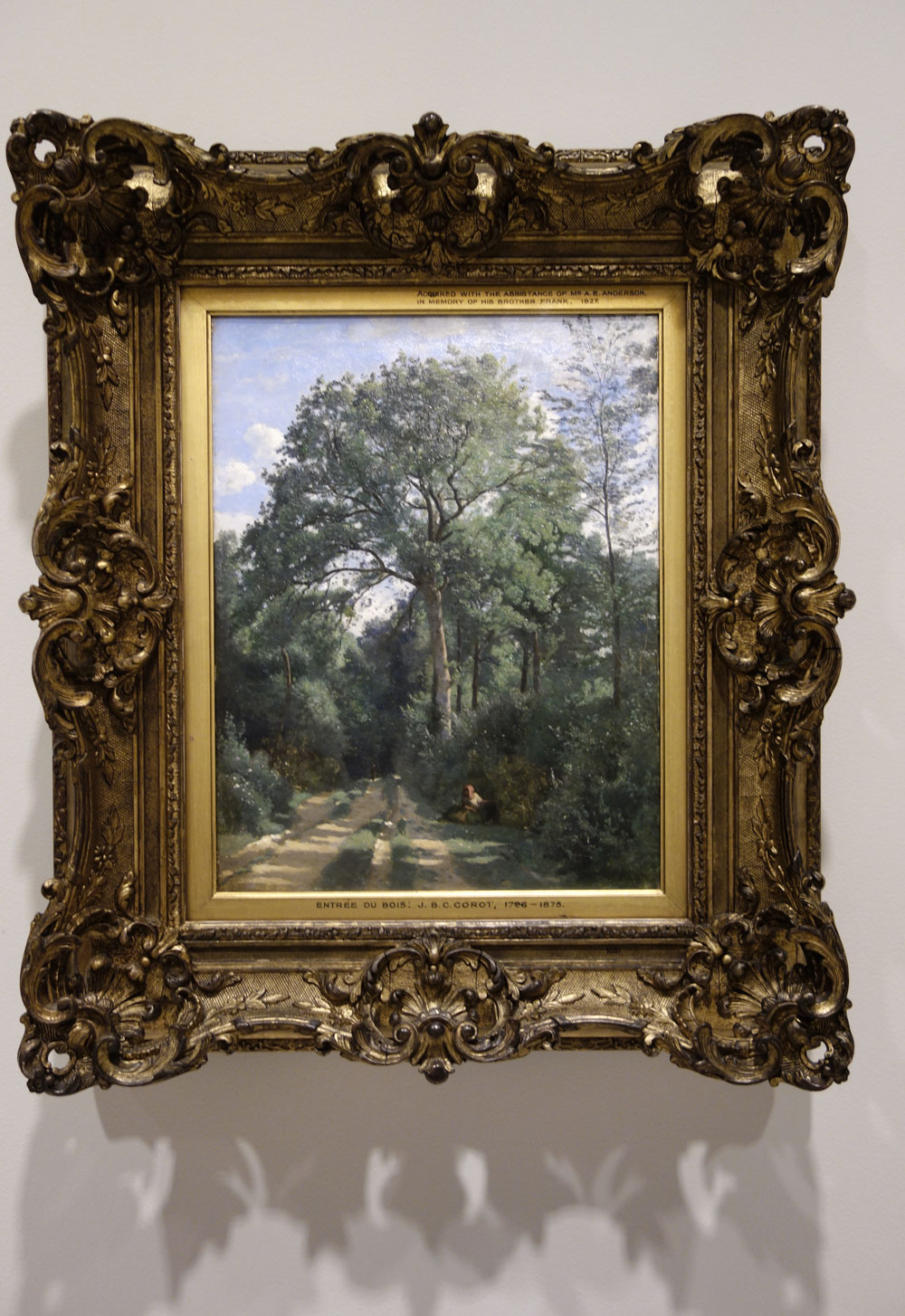
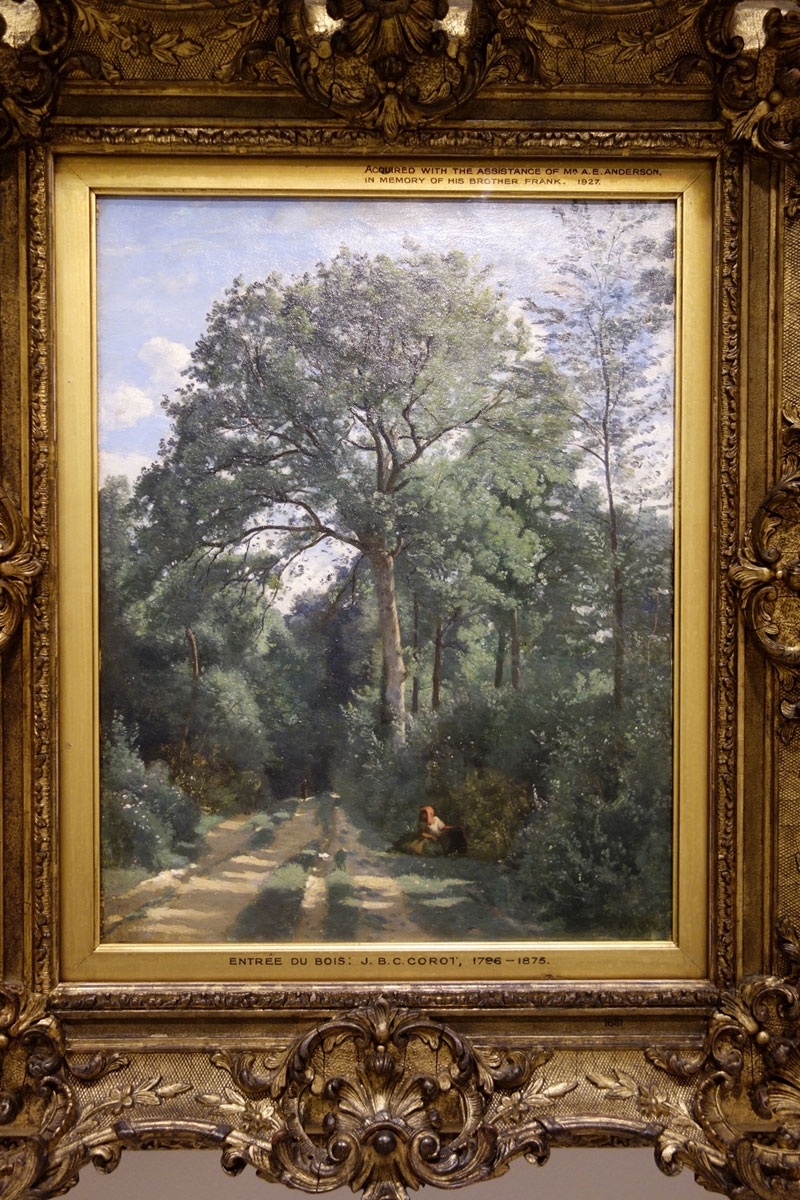

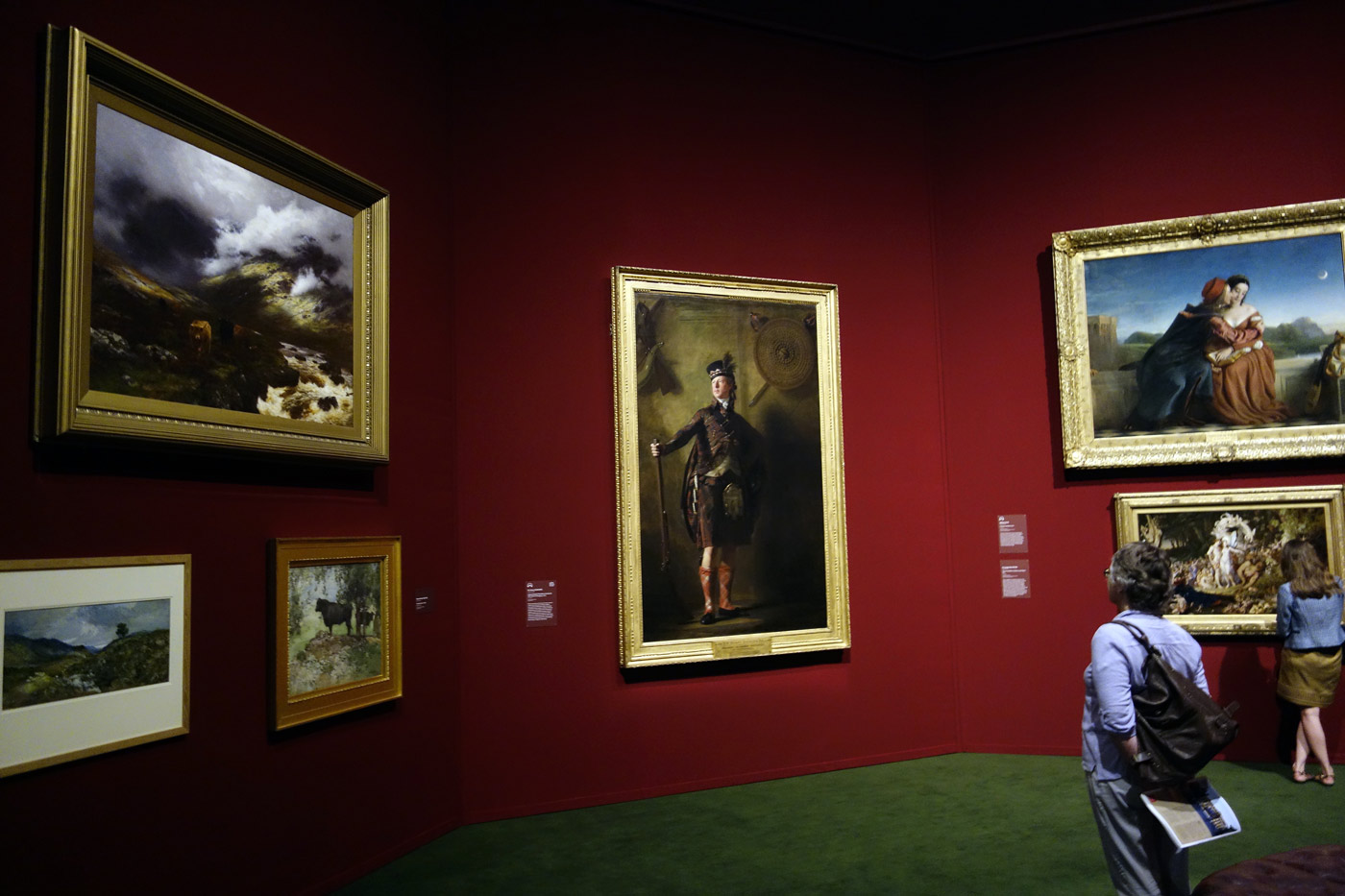


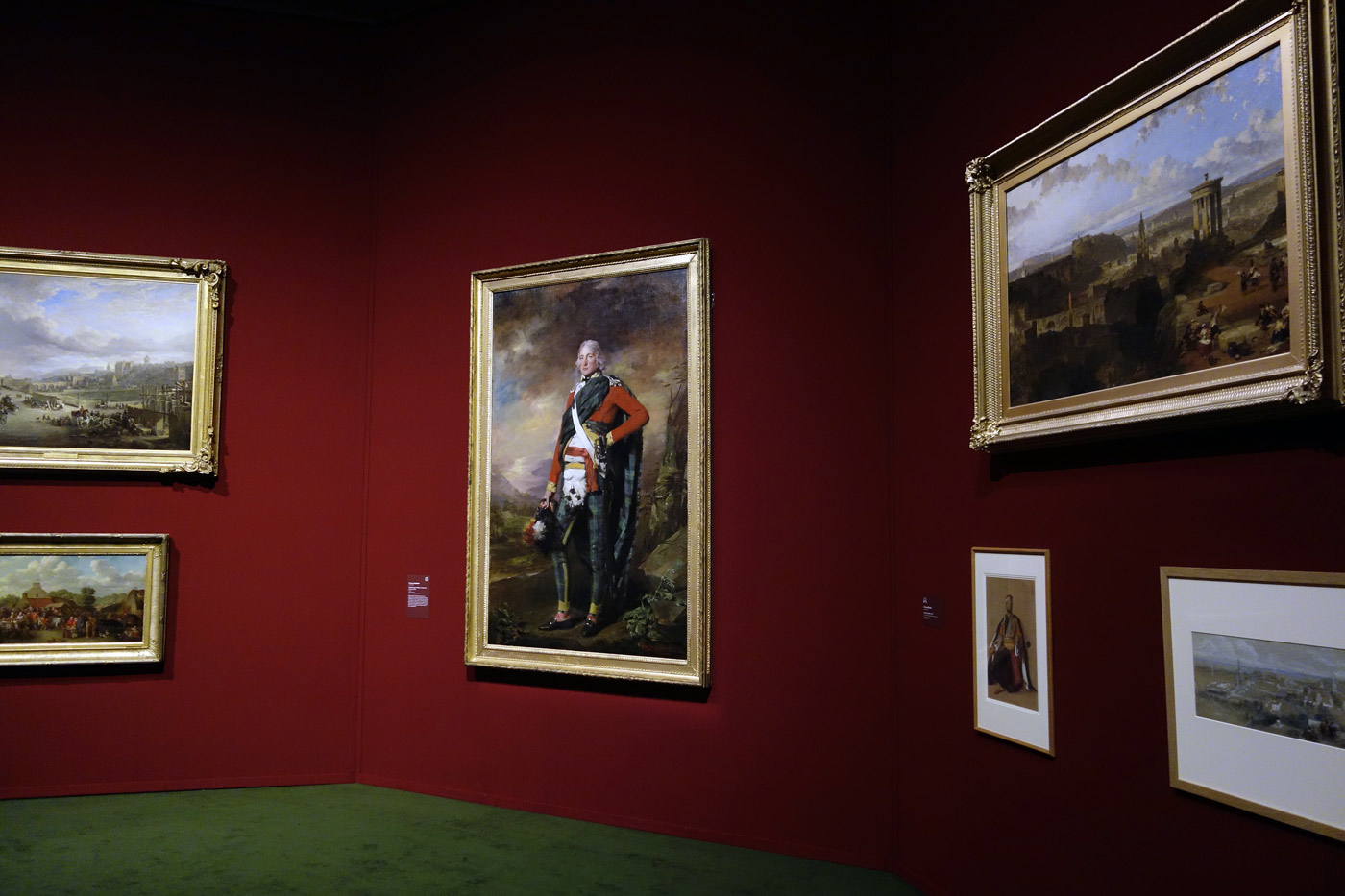
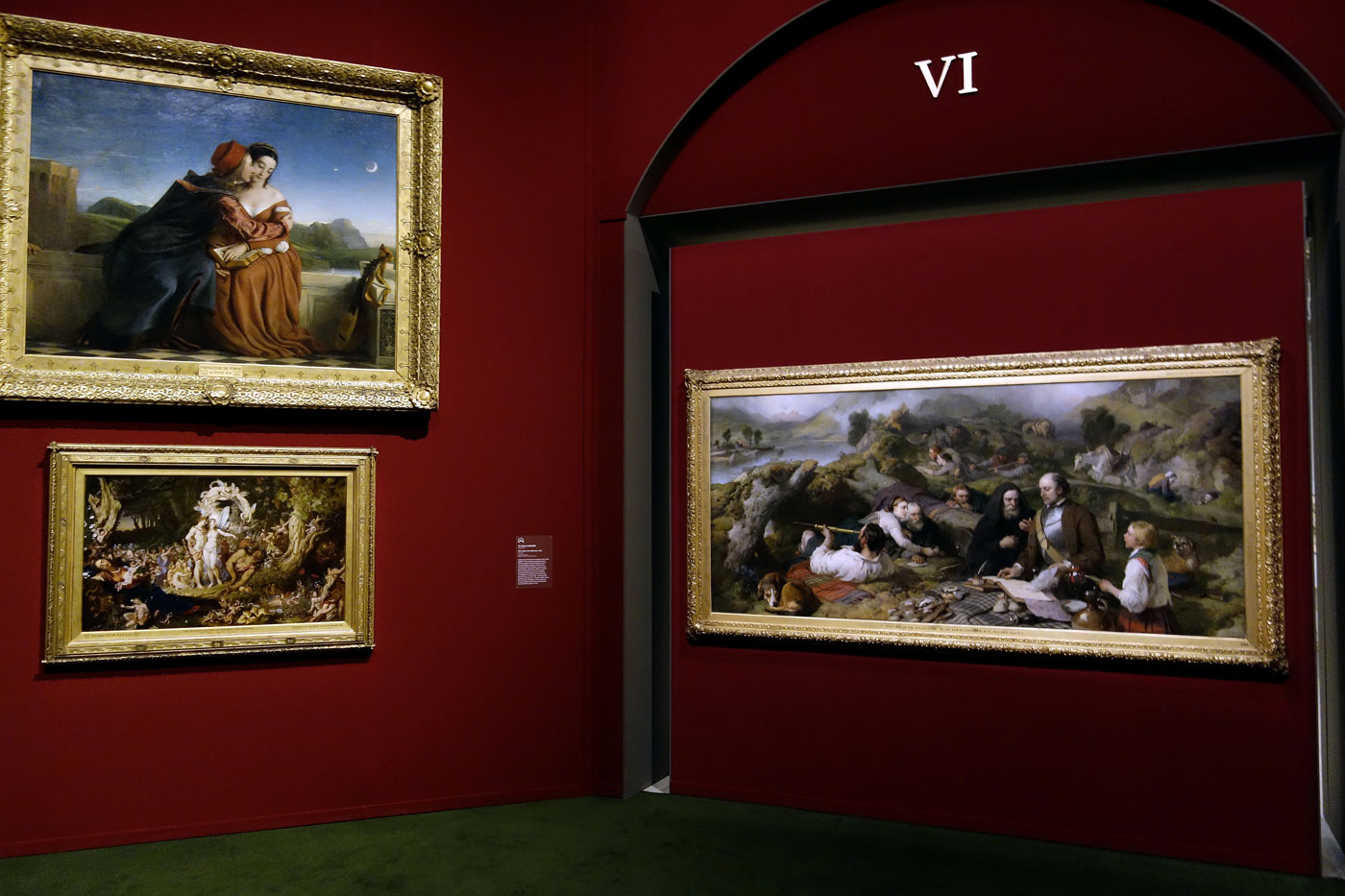

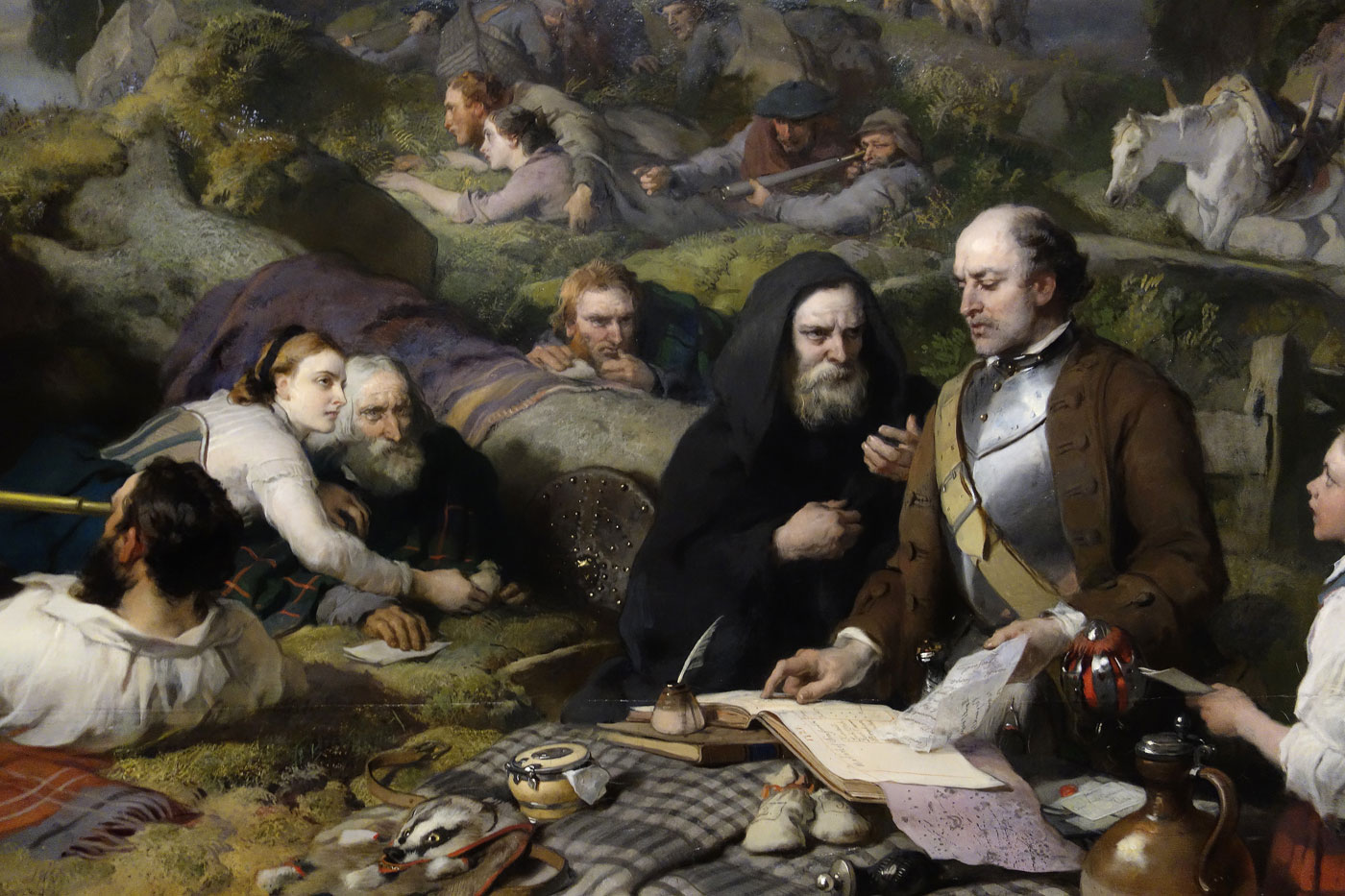


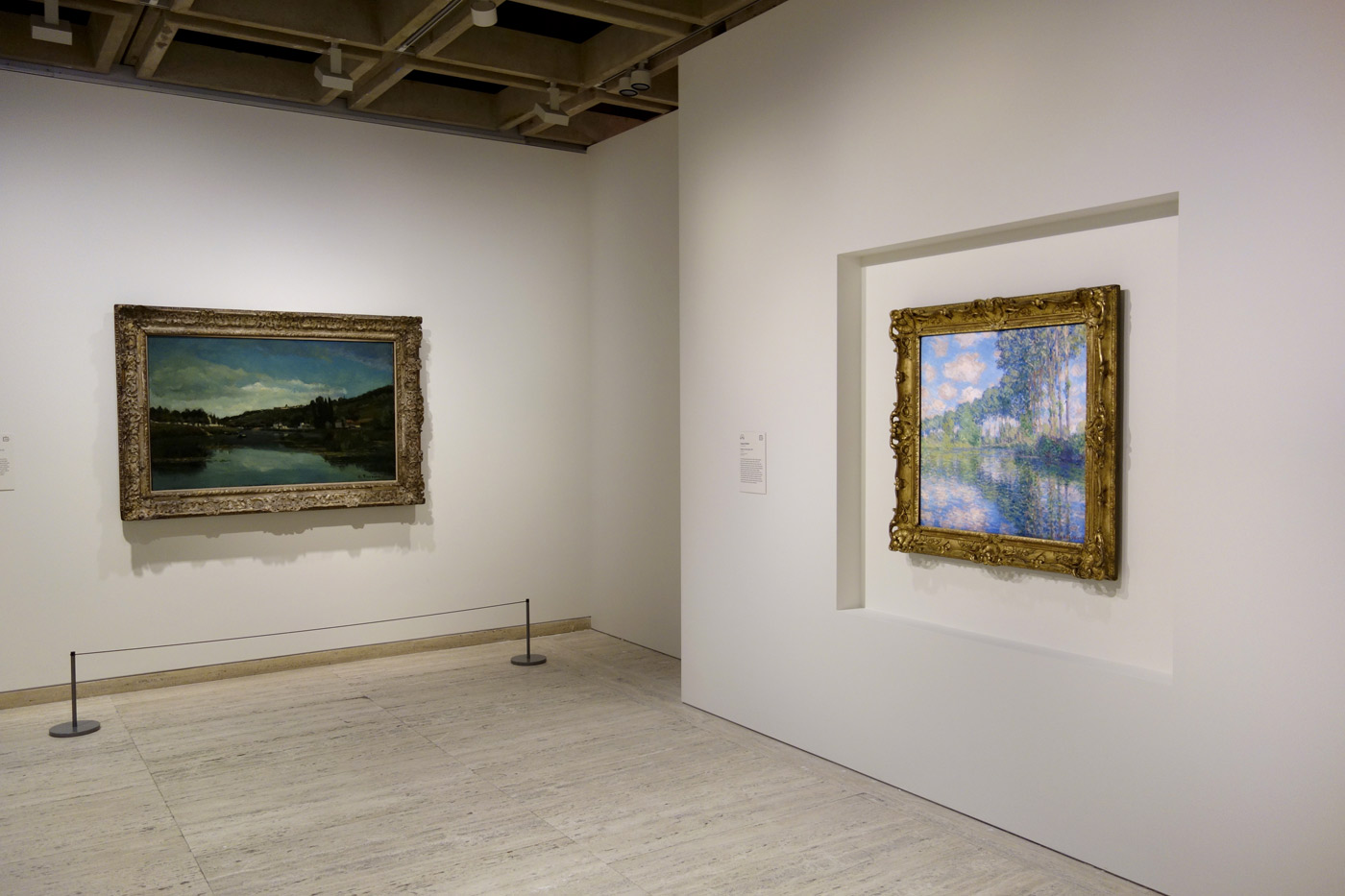
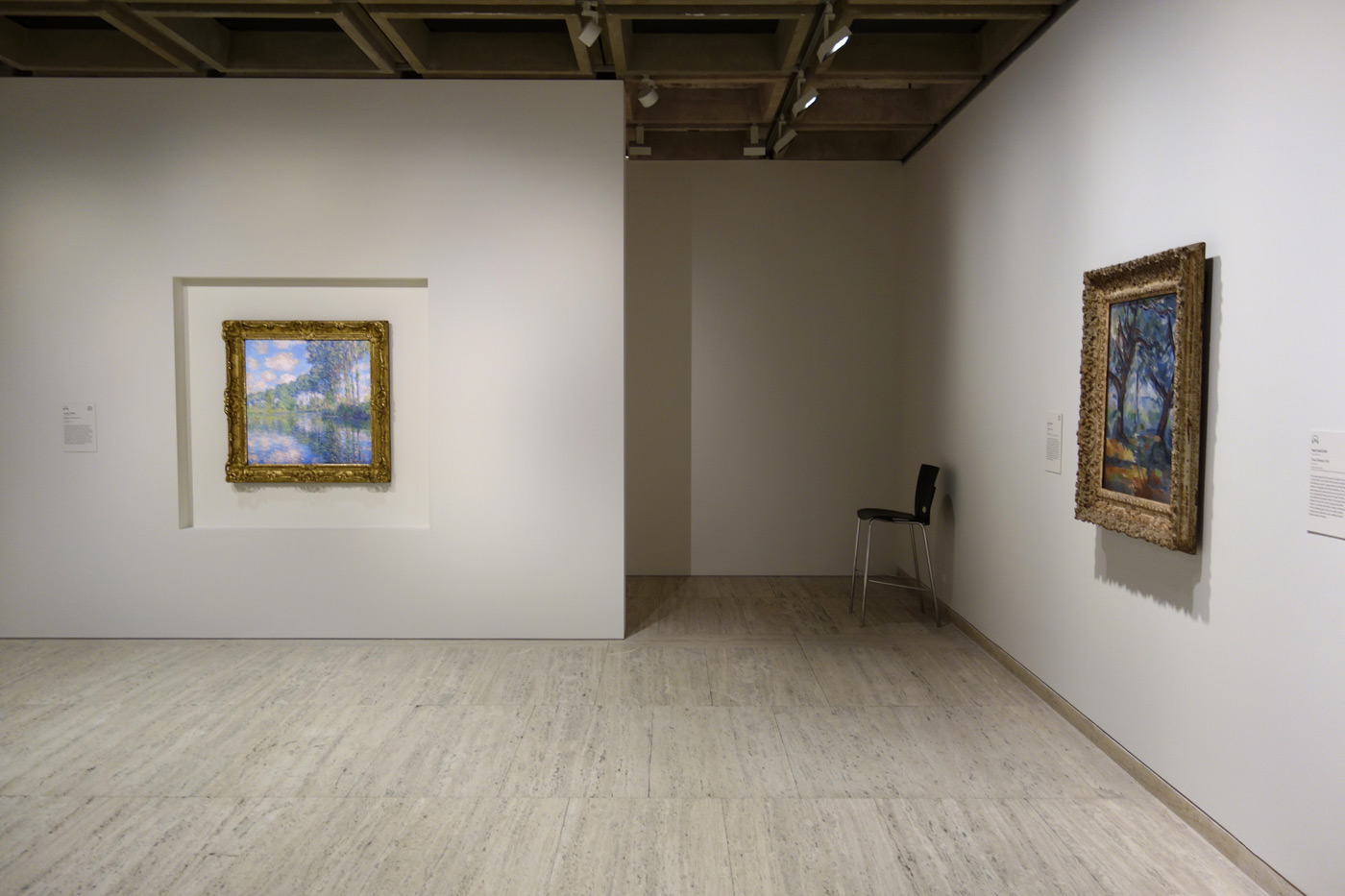
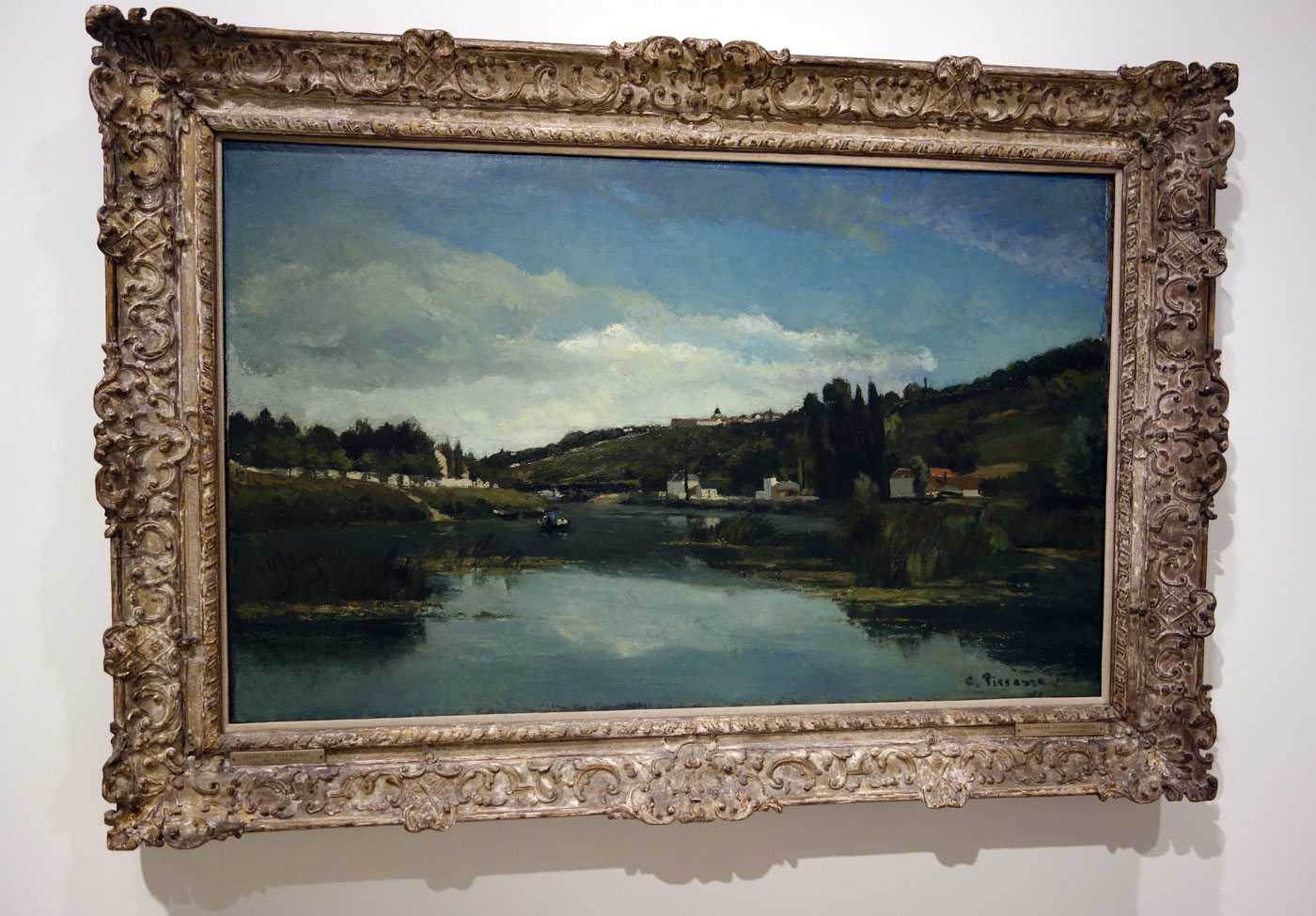


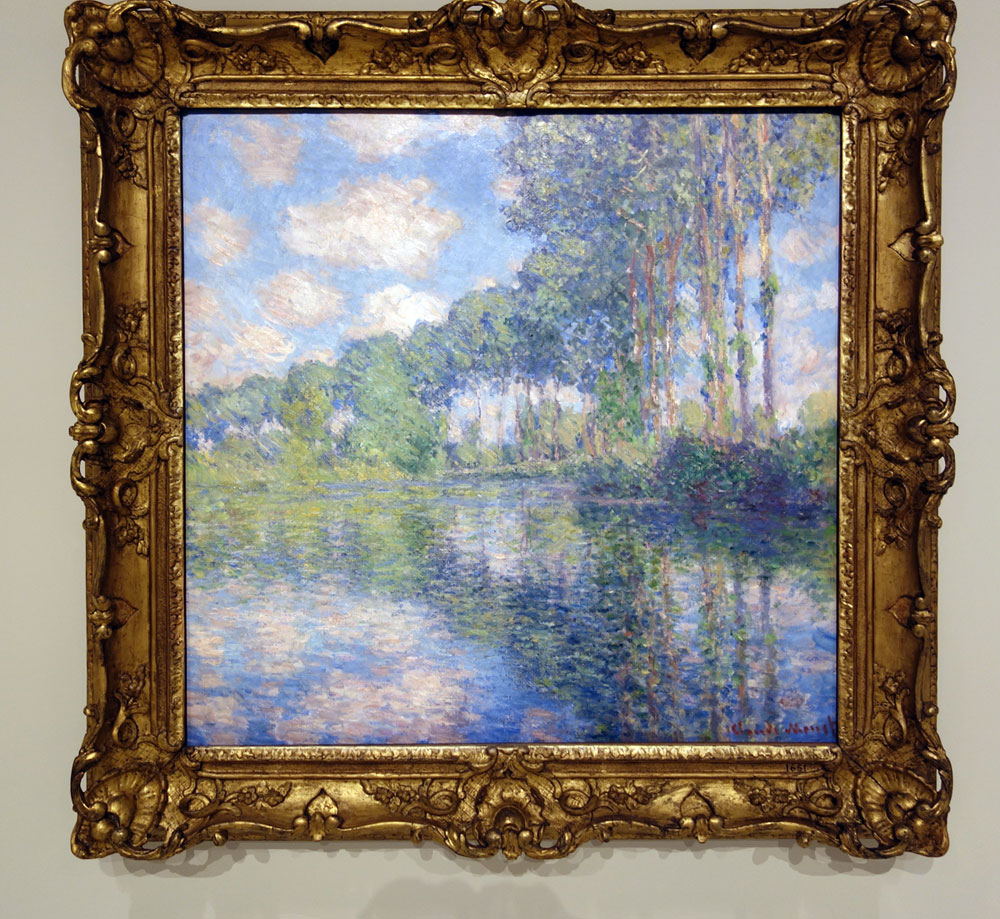
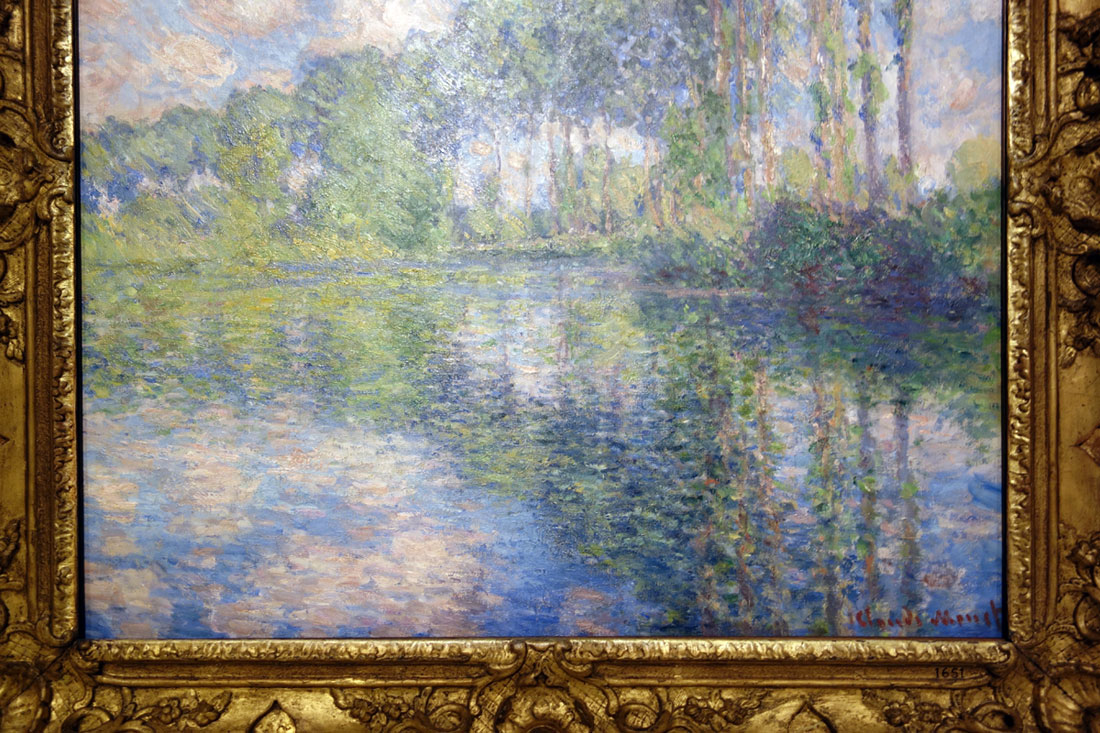
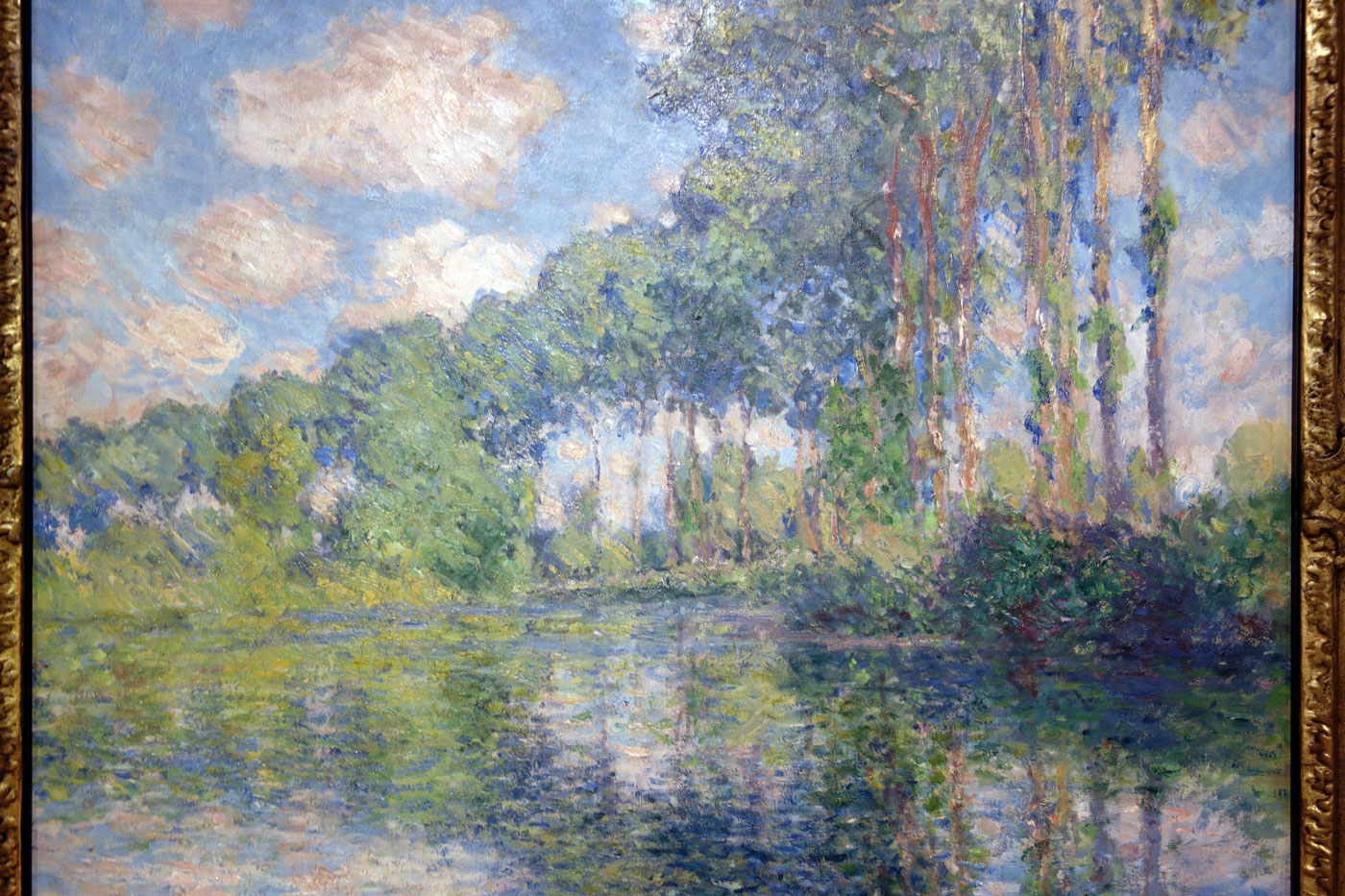

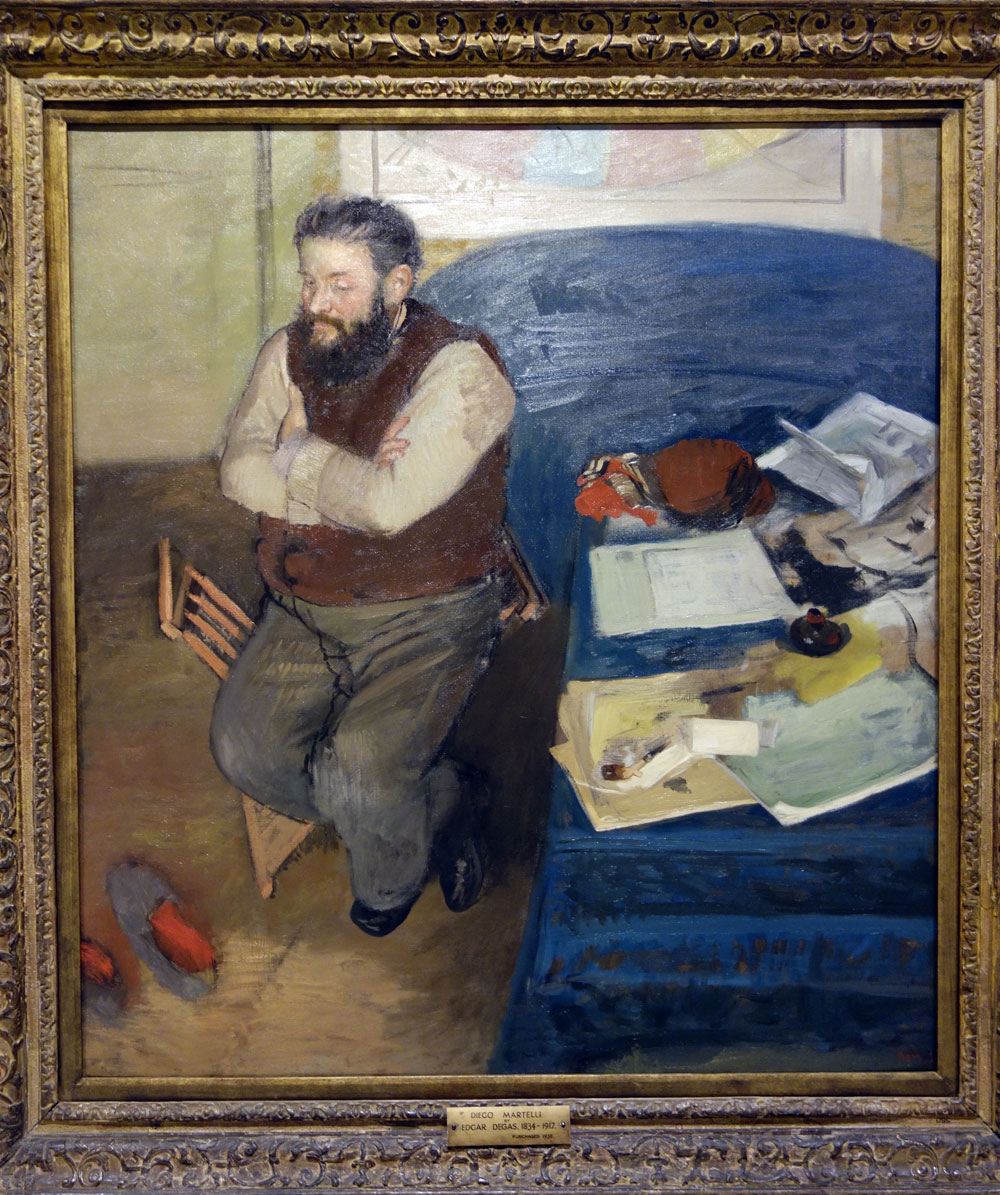
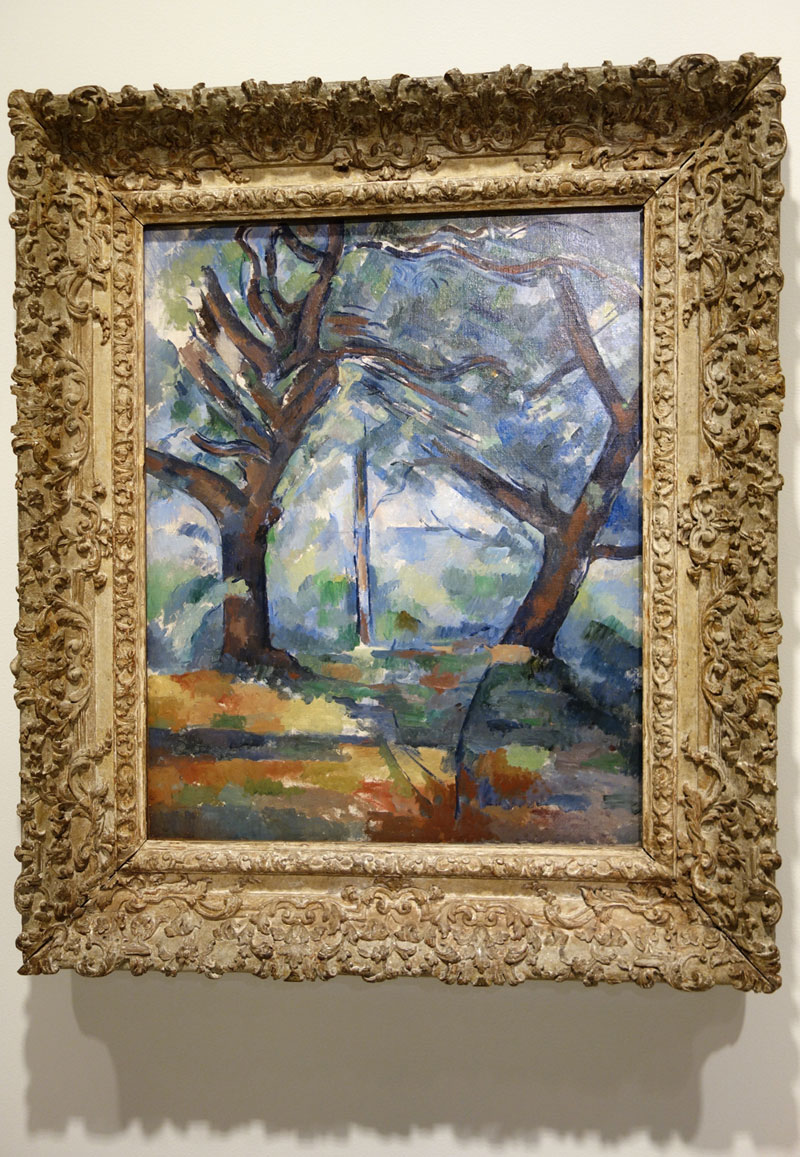

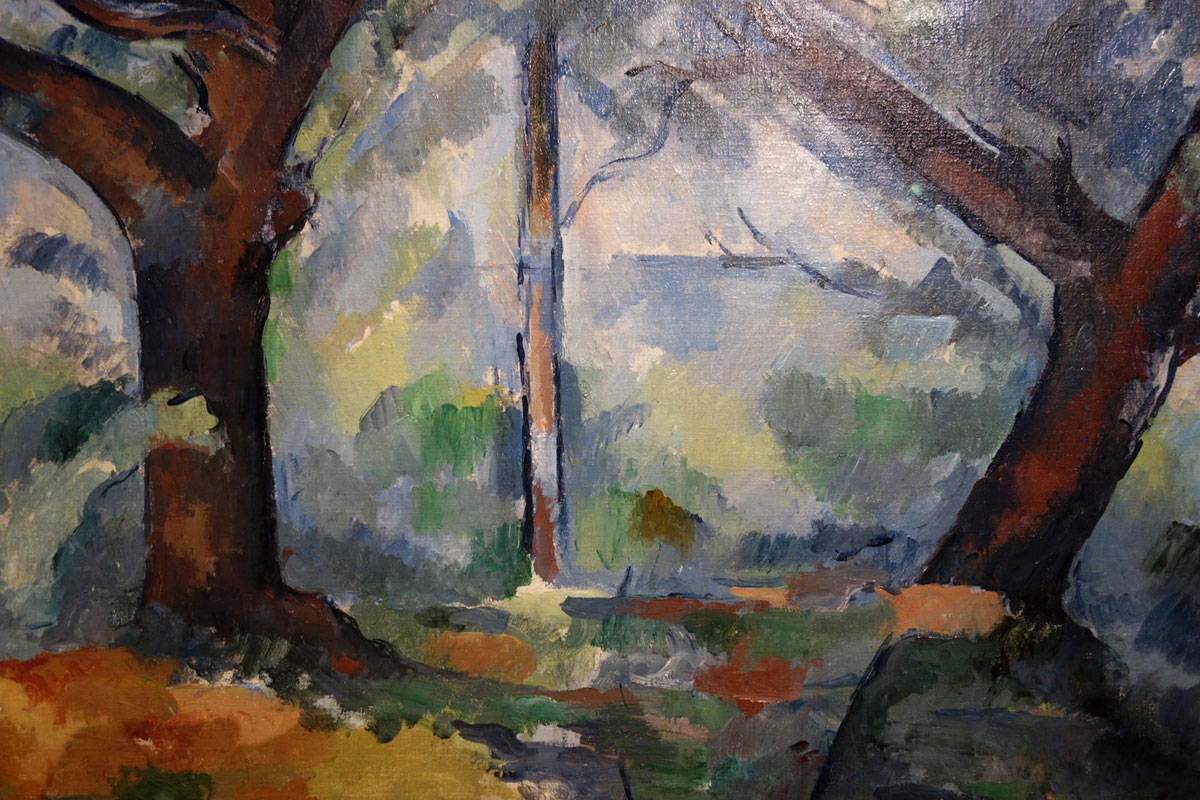
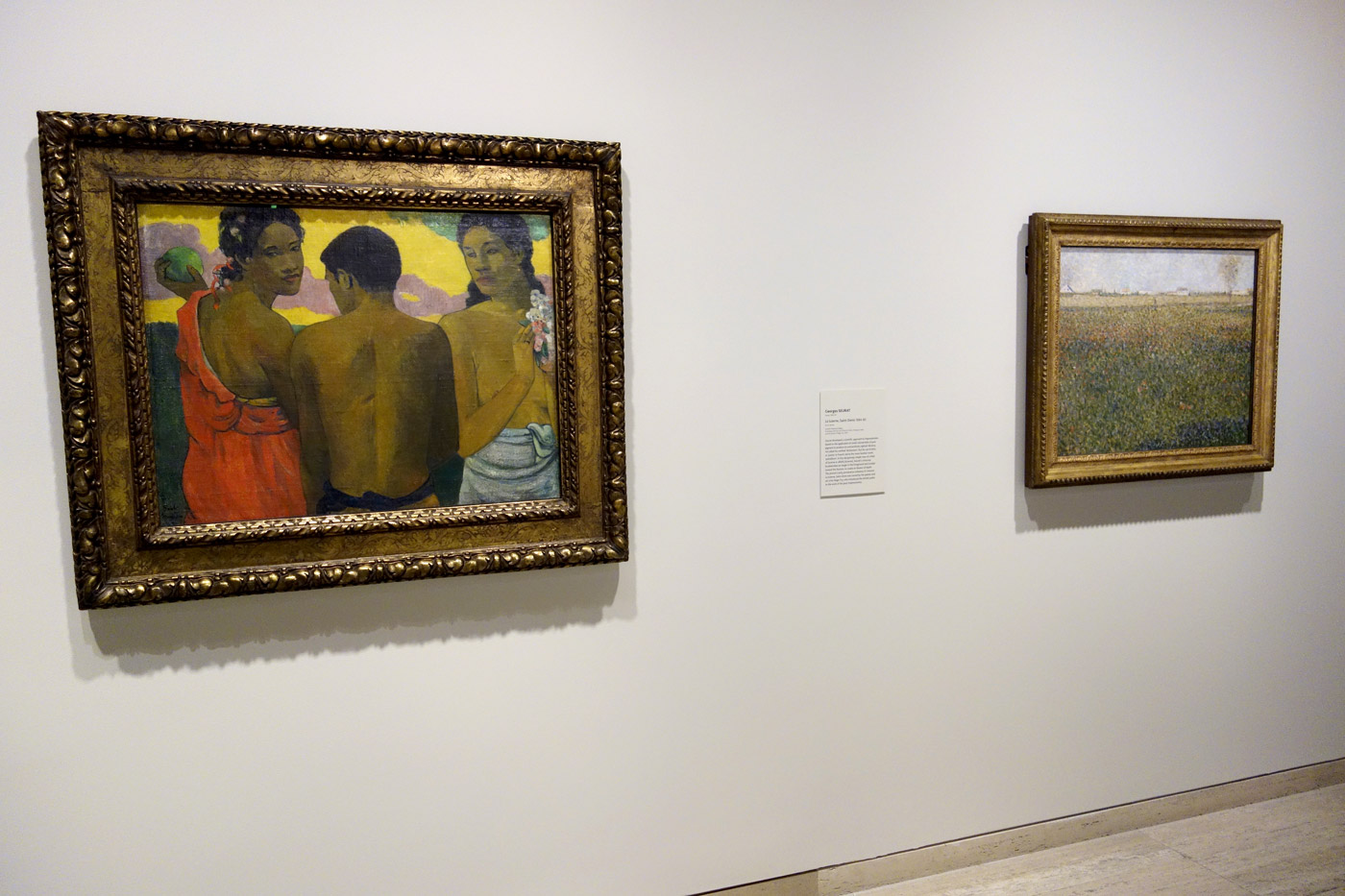
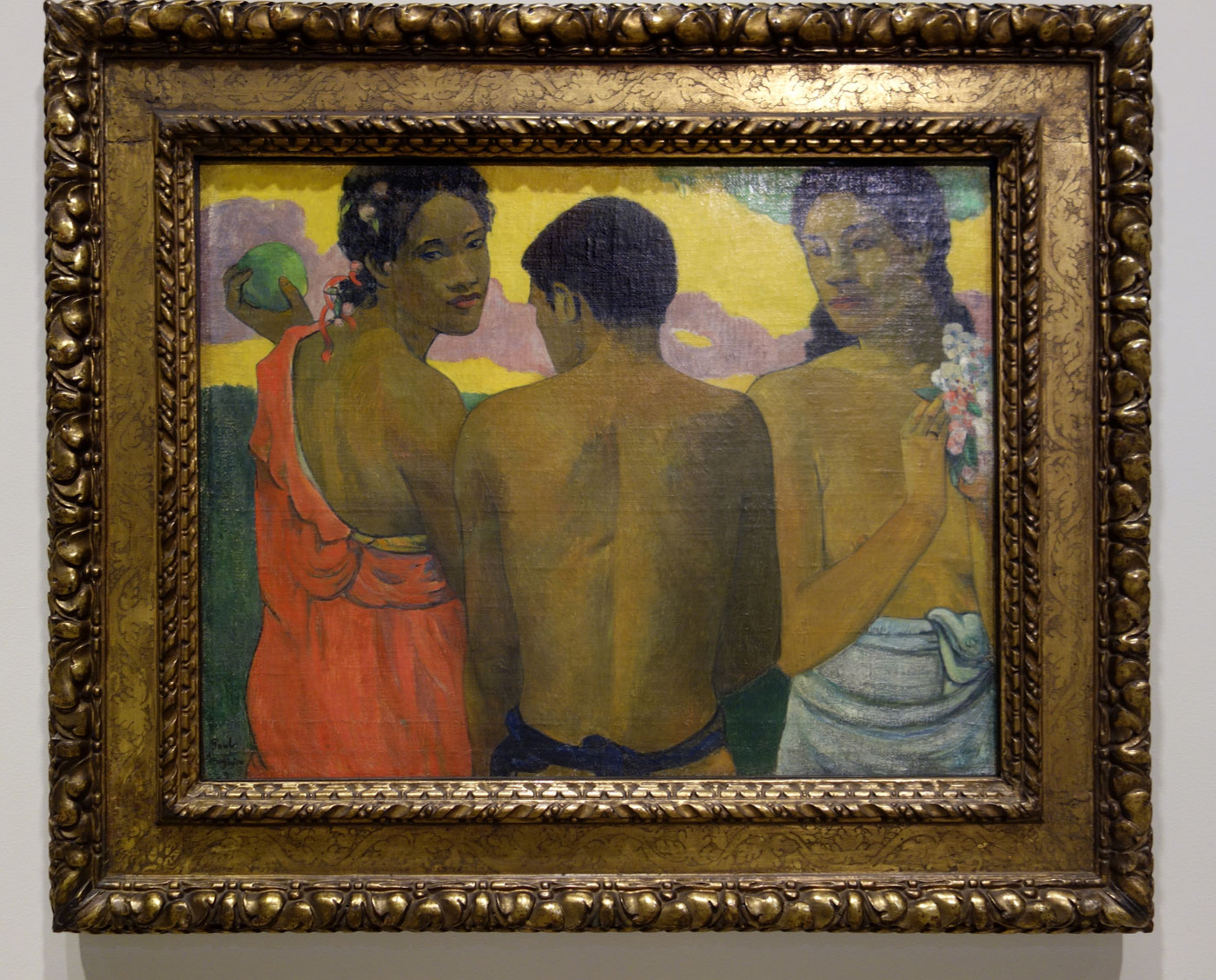
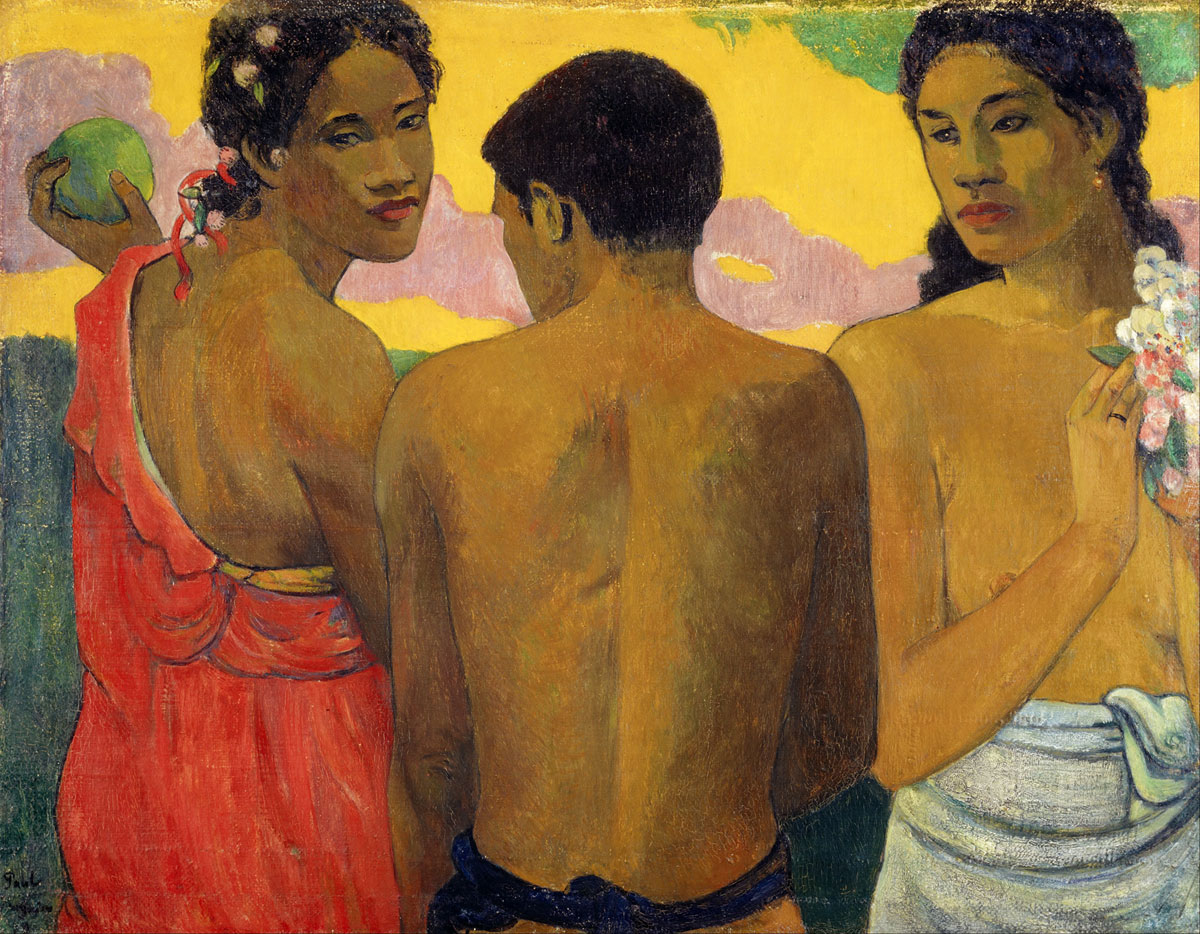


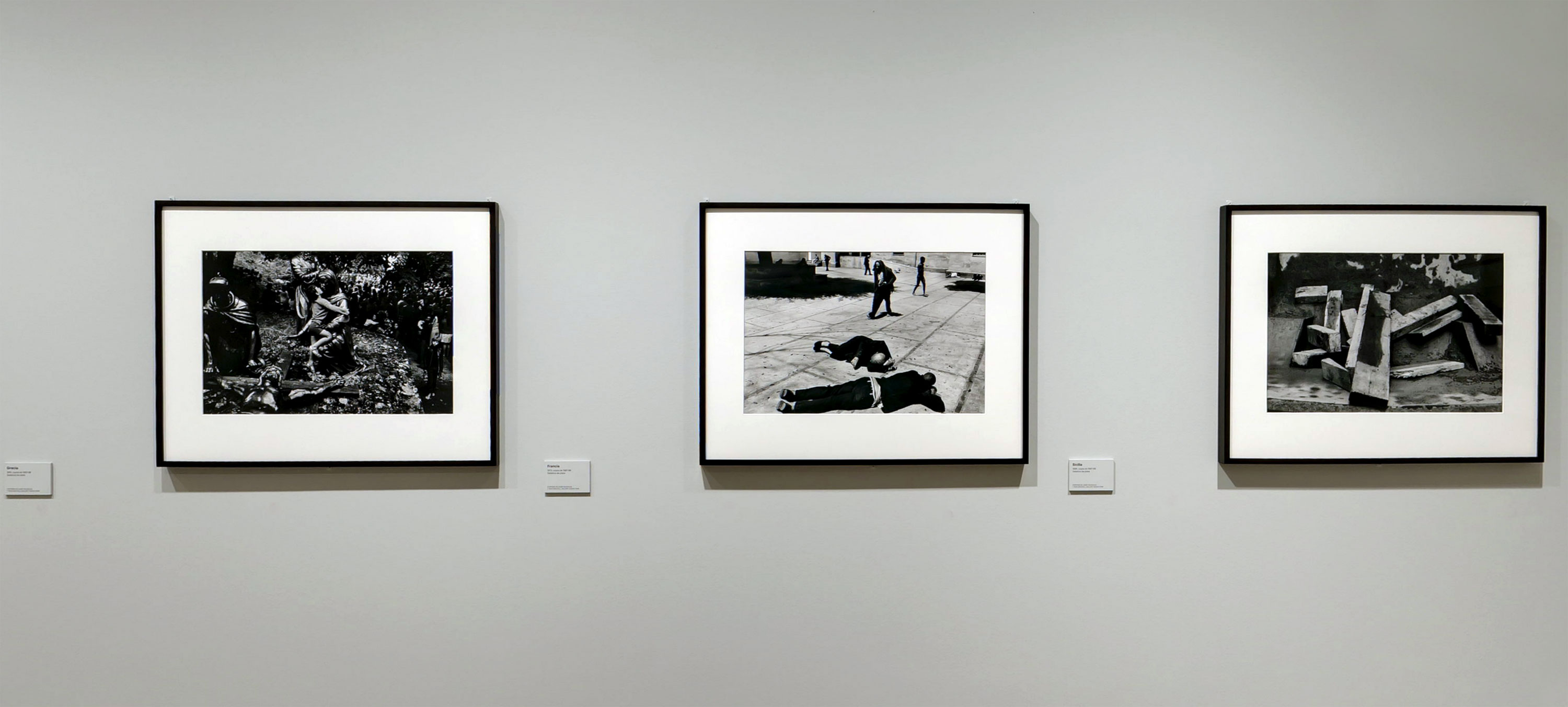


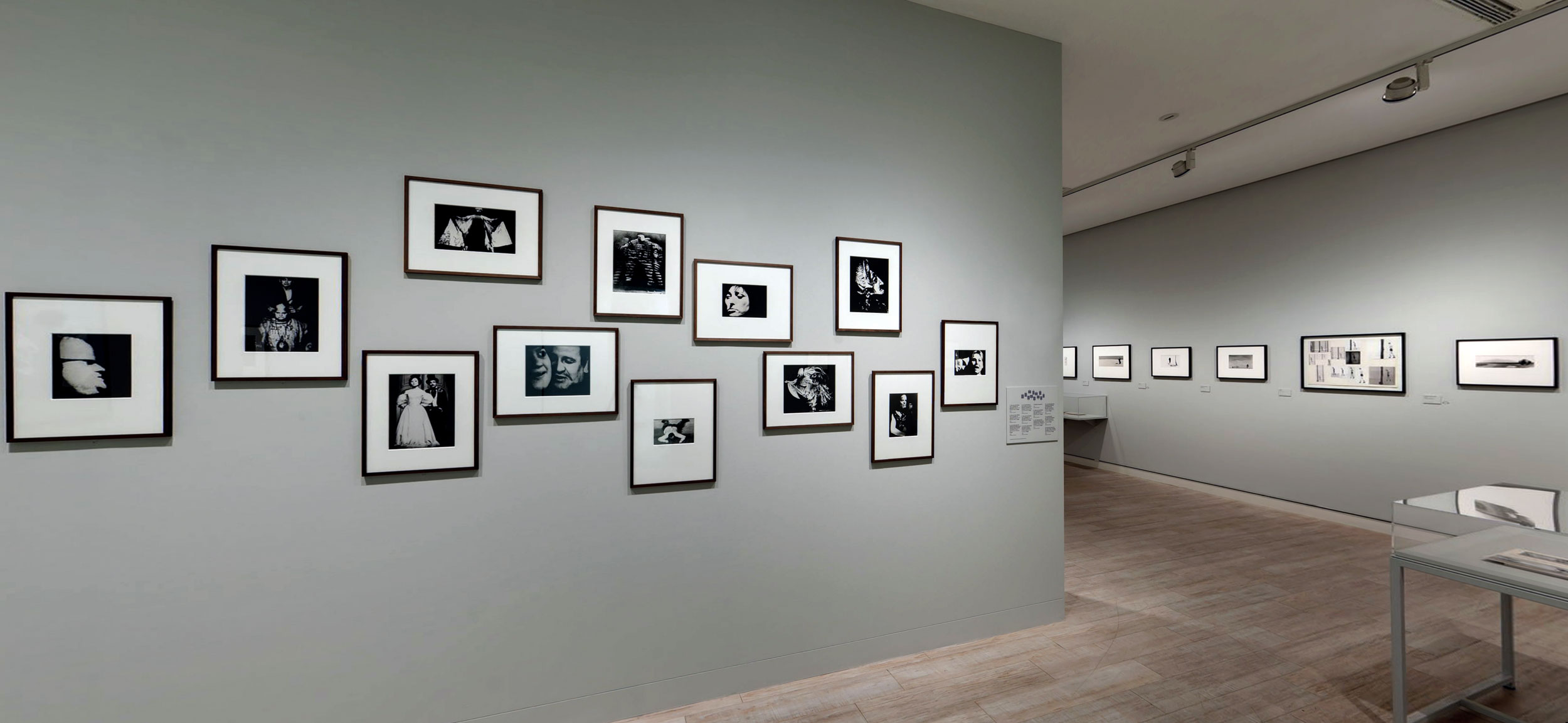
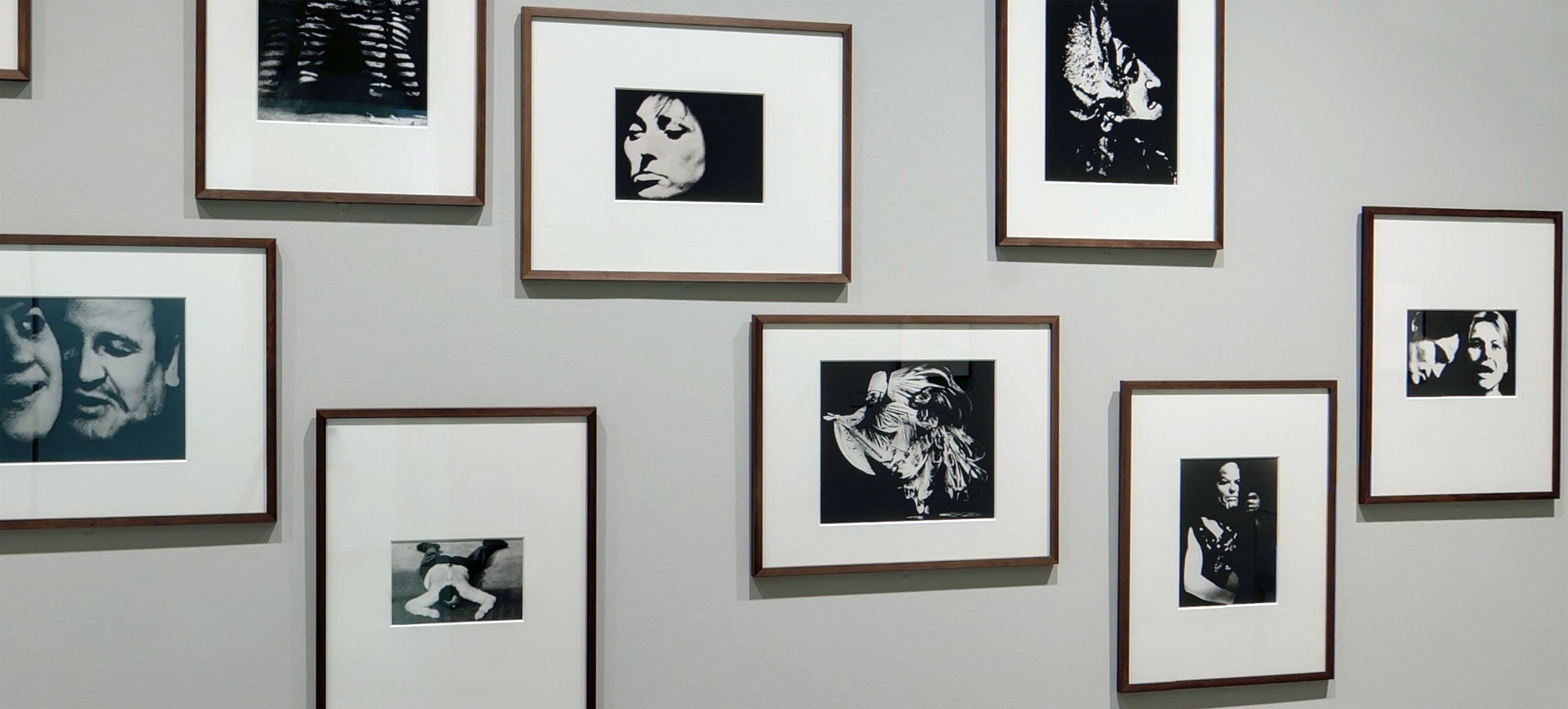
![Josef Koudelka (Czech-French, b. 1938) 'An Hour of Love by Josef Topol, Divadlo za branou [Theater behind the Door], Prague' 1968 from the exhibition 'Josef Koudelka: Uncertain Nationality' at Fundación MAPFRE, Madrid, Sept - Nov, 2015](https://artblart.com/wp-content/uploads/2015/11/par148634-web.jpg "Josef Koudelka (Czech-French, b. 1938) 'An Hour of Love by Josef Topol, Divadlo za branou [Theater behind the Door], Prague' 1968")
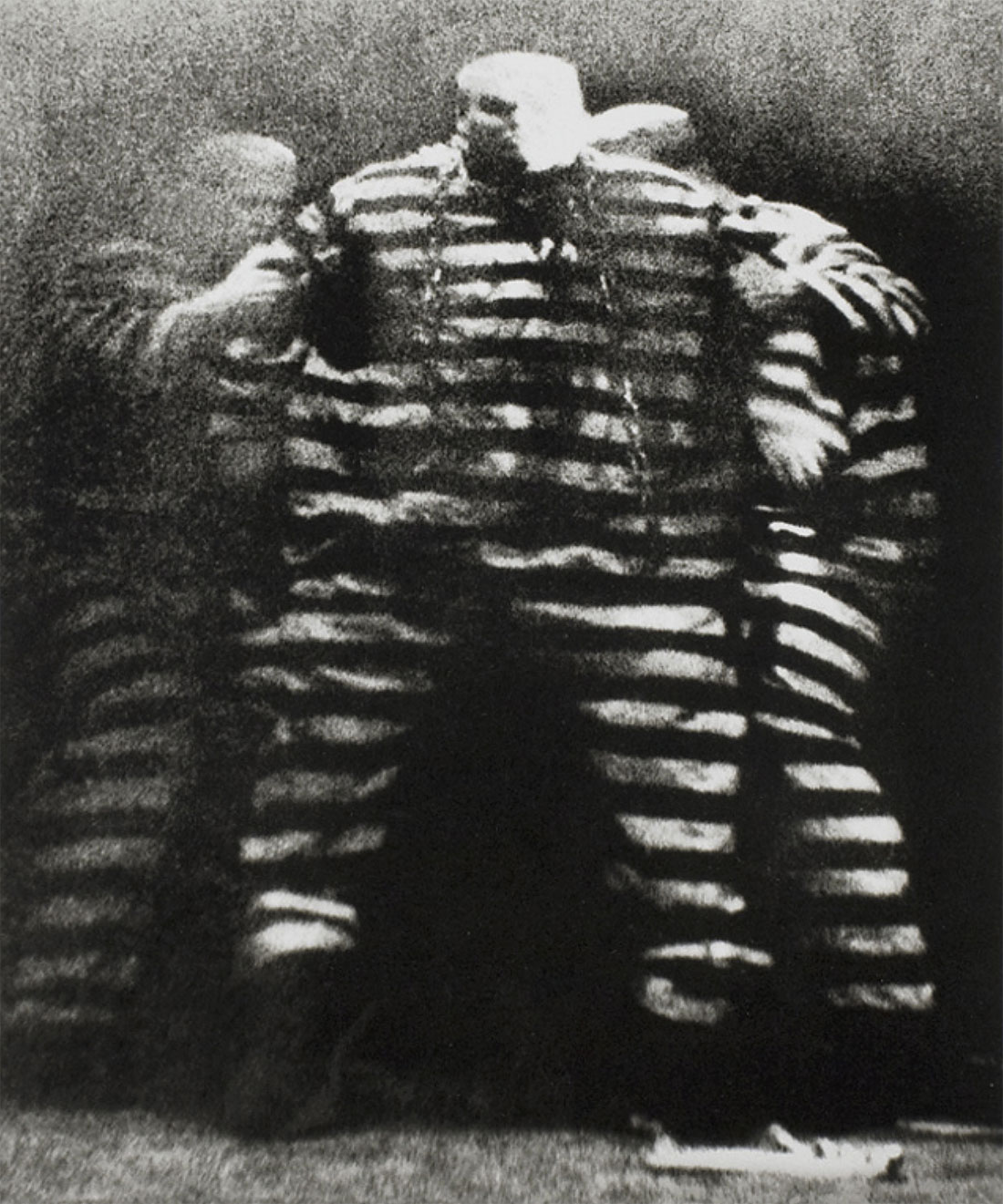
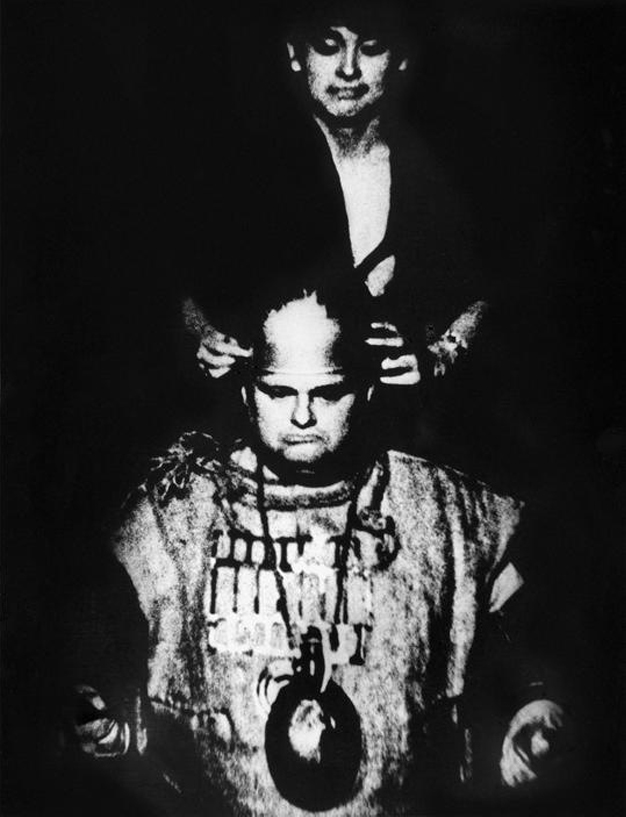


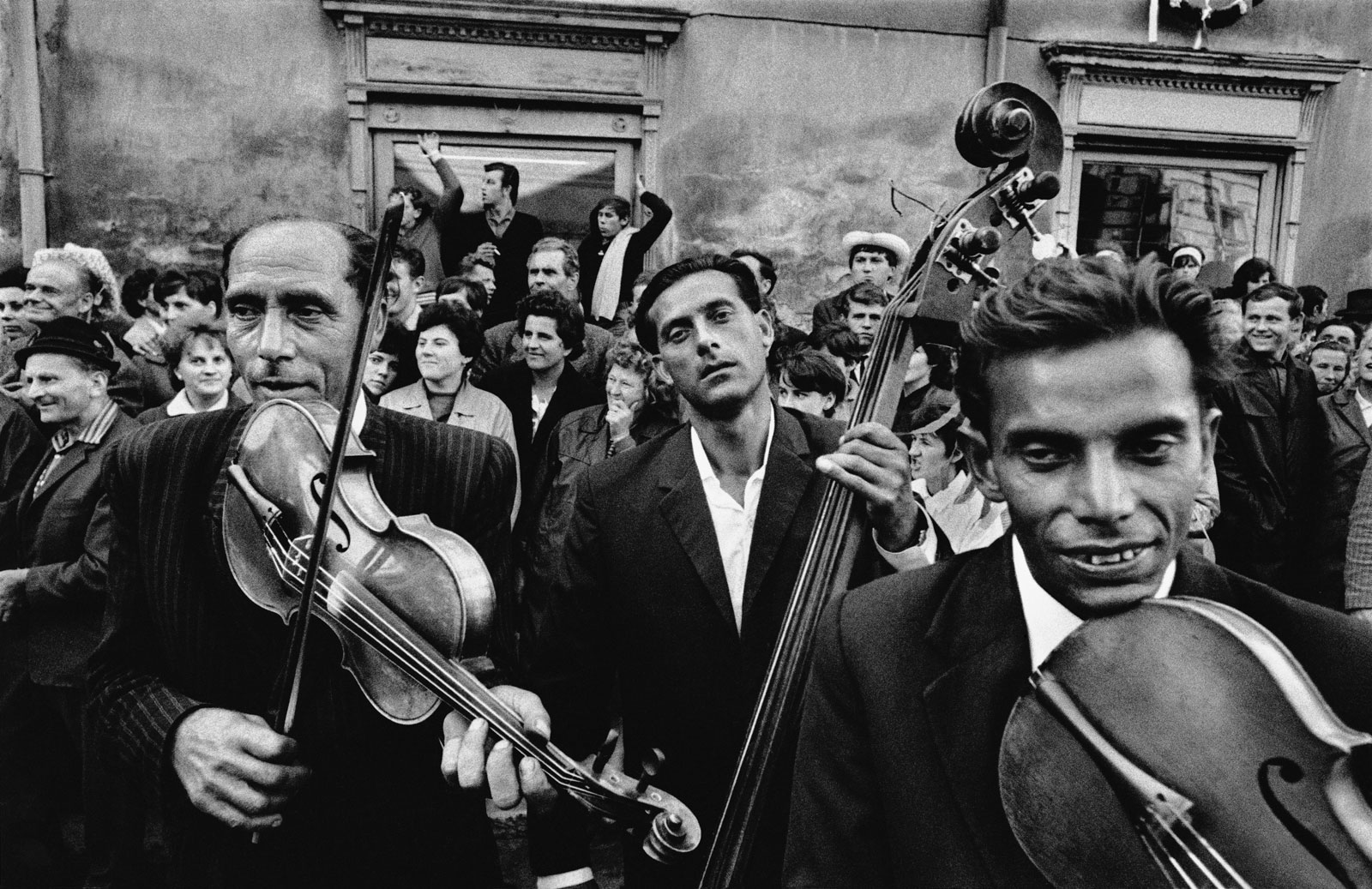
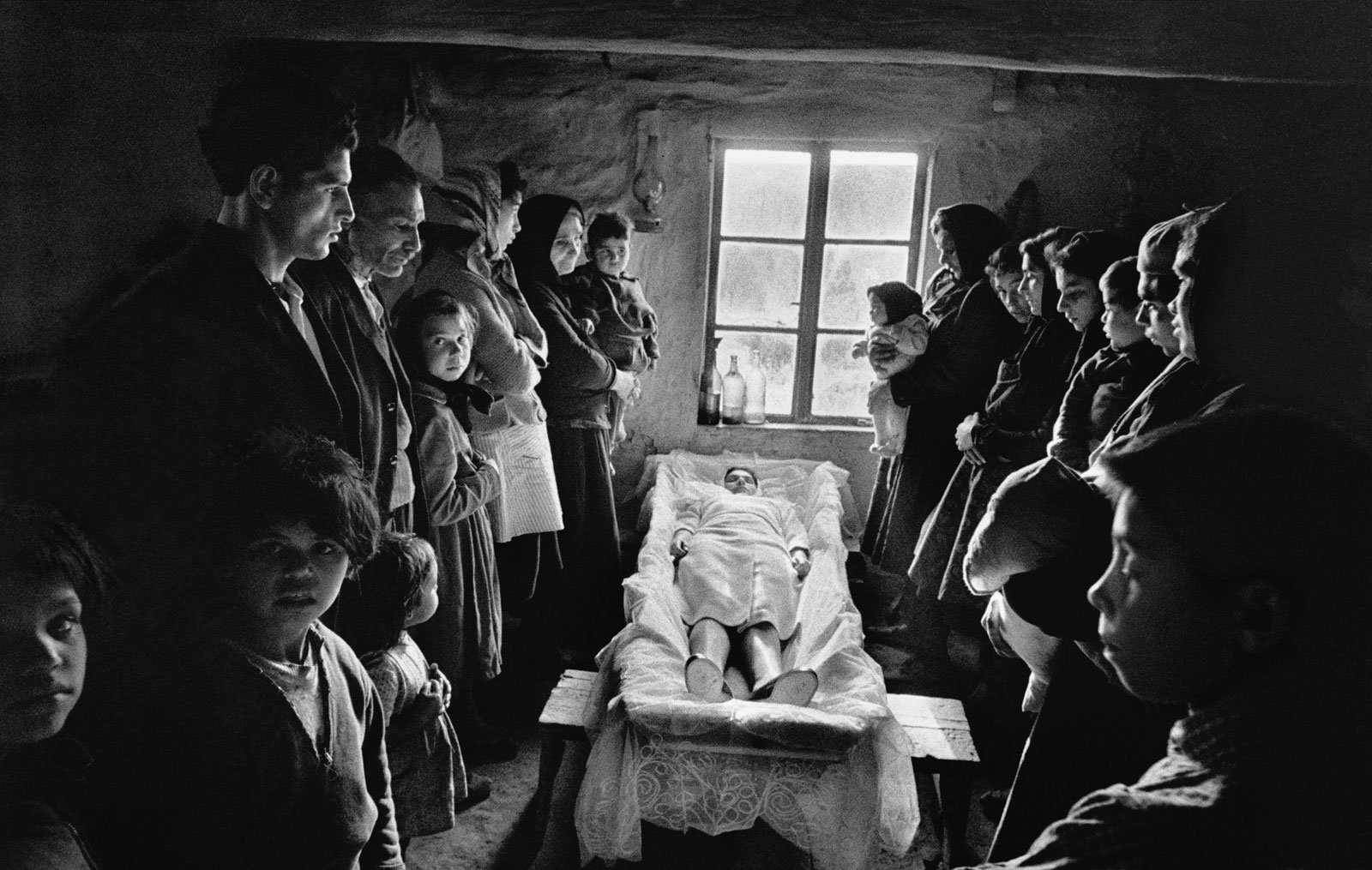

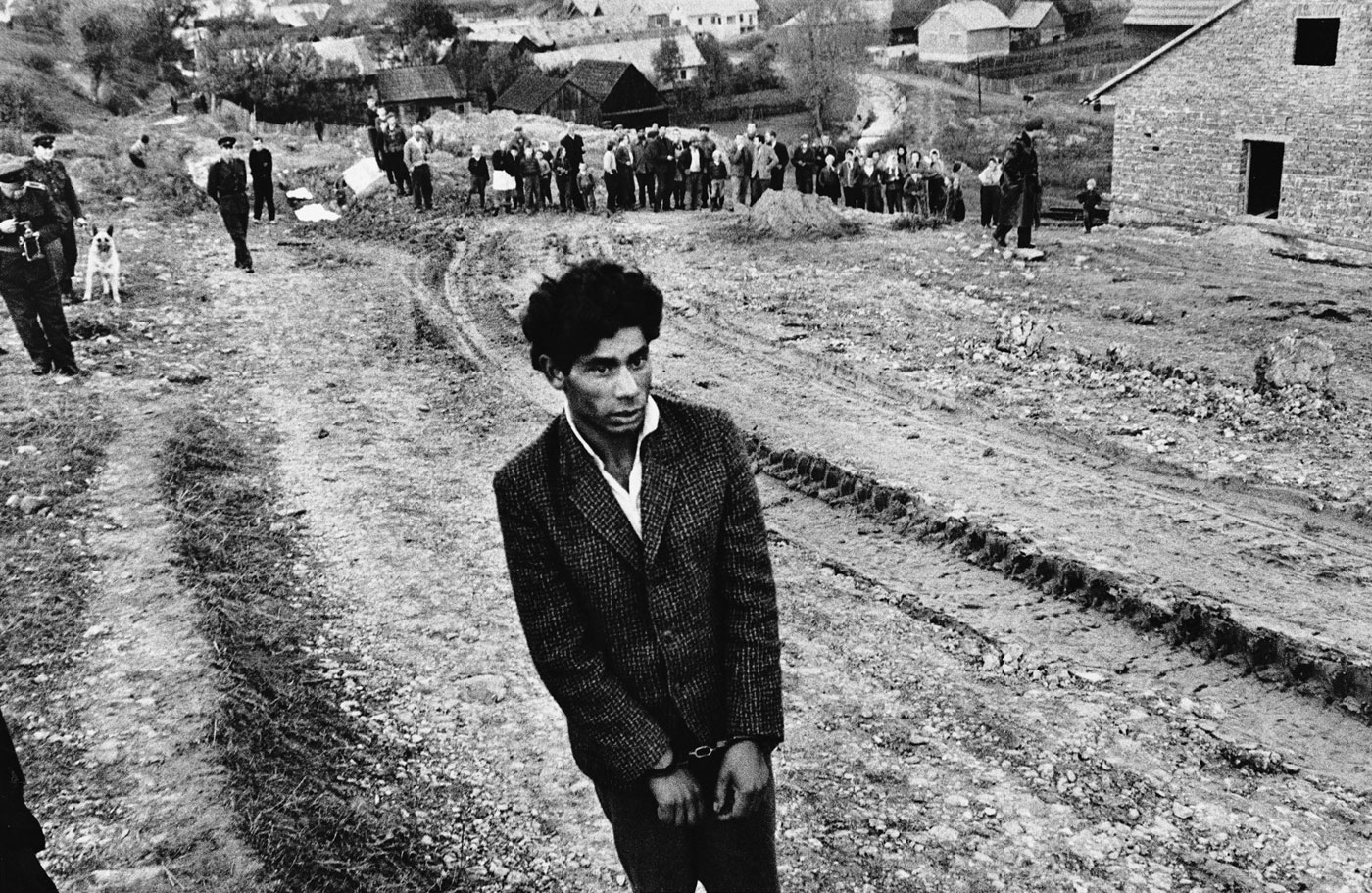
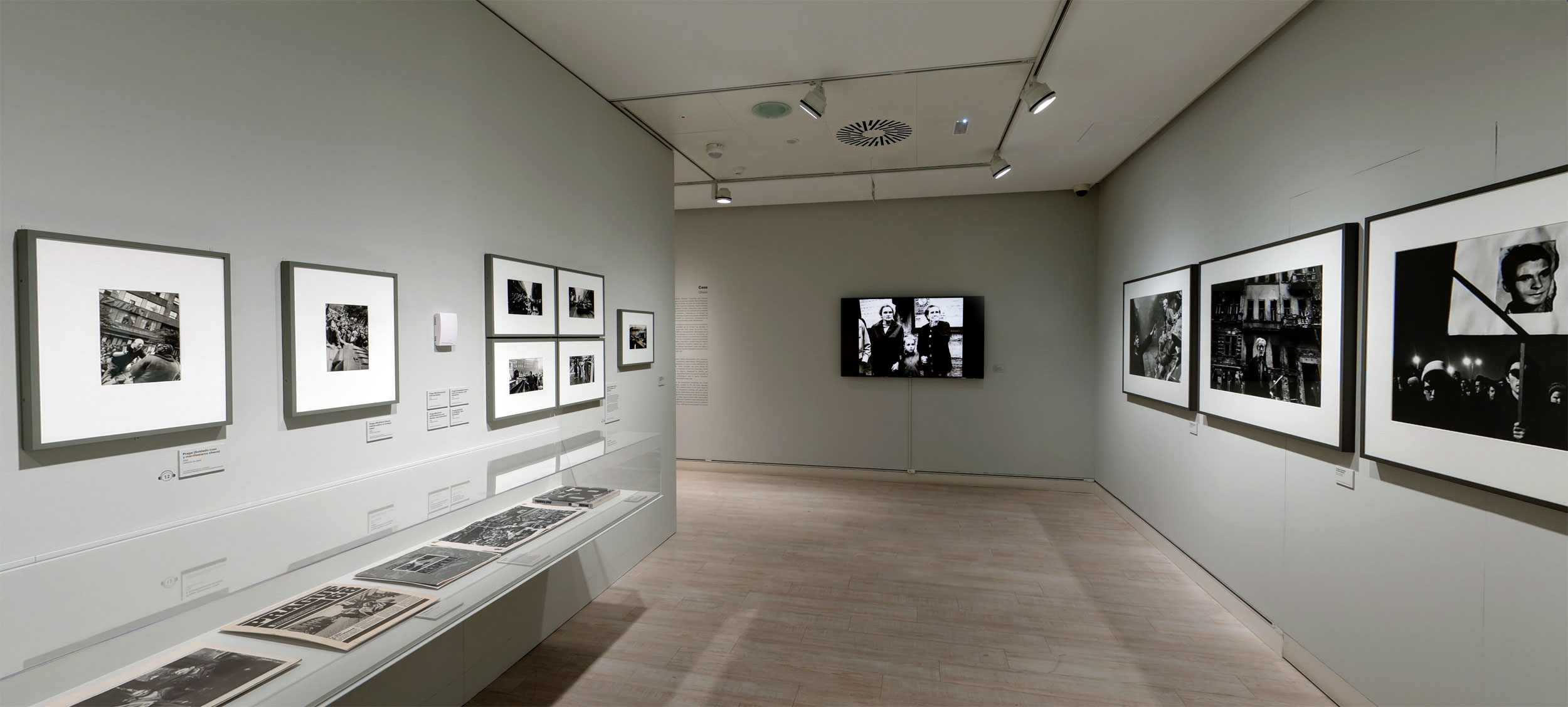

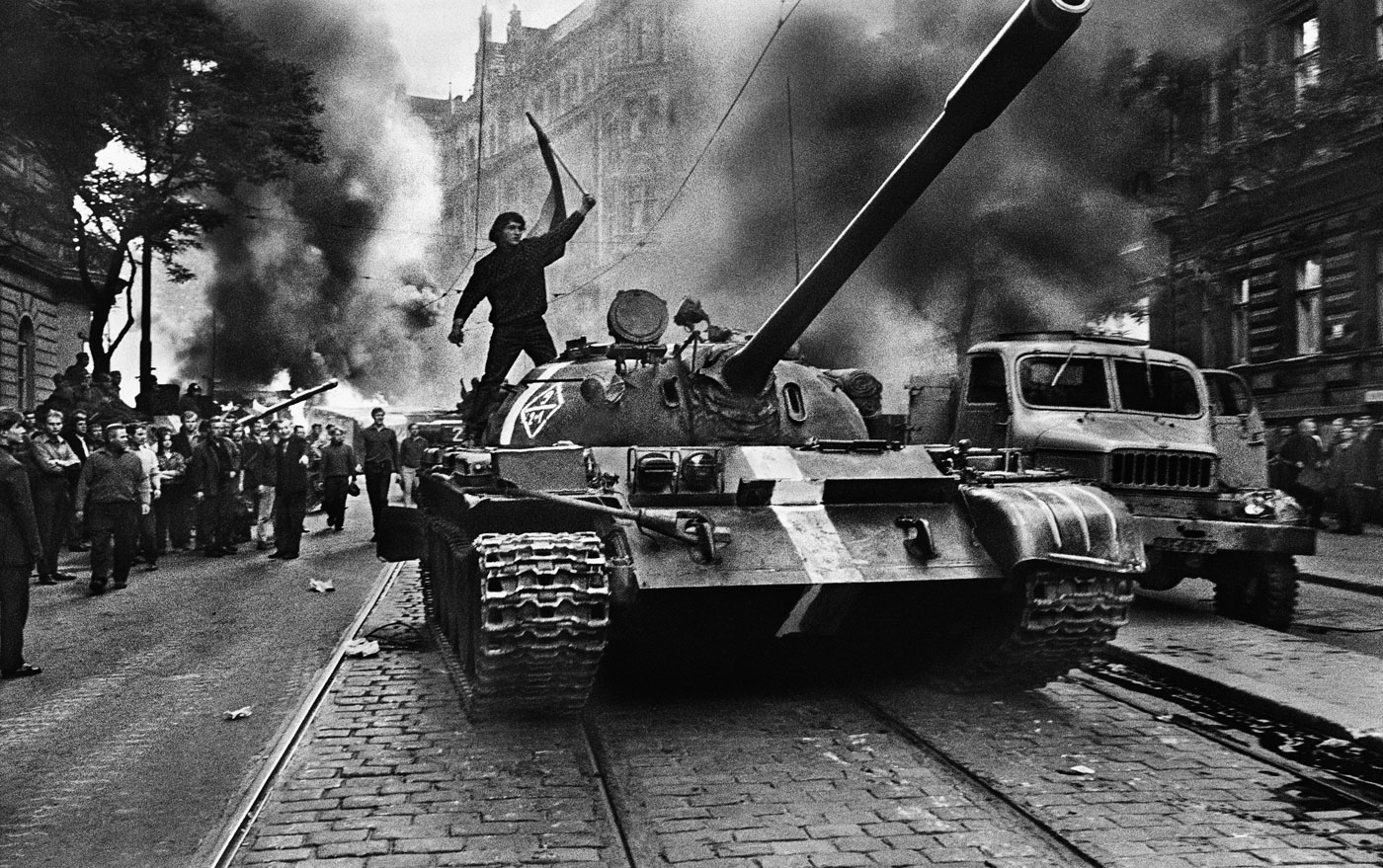
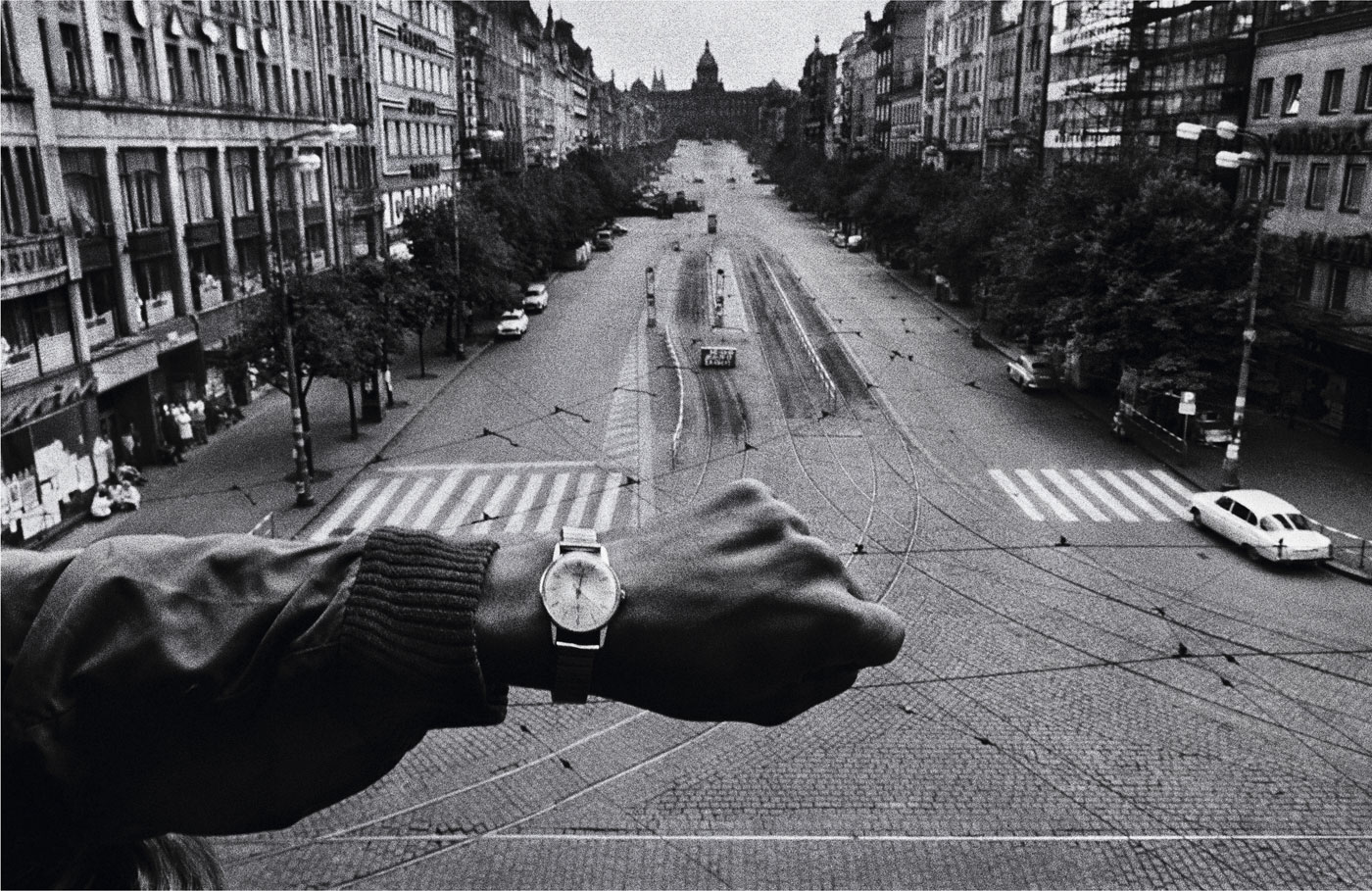
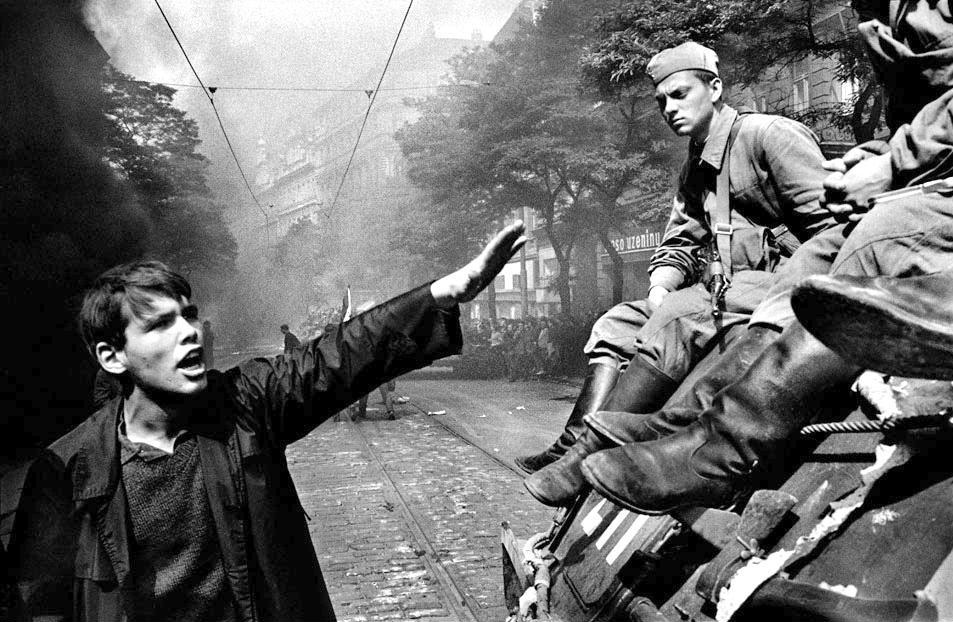

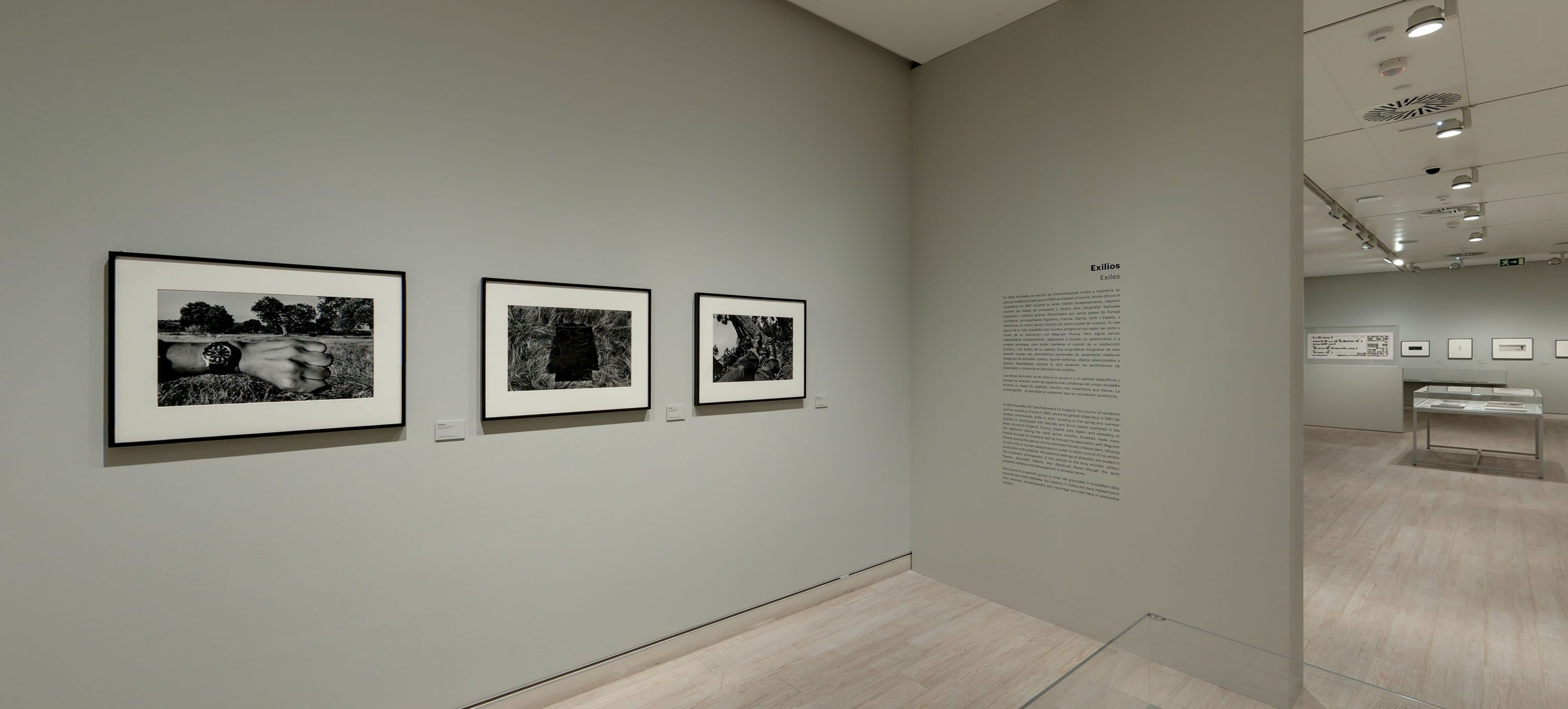
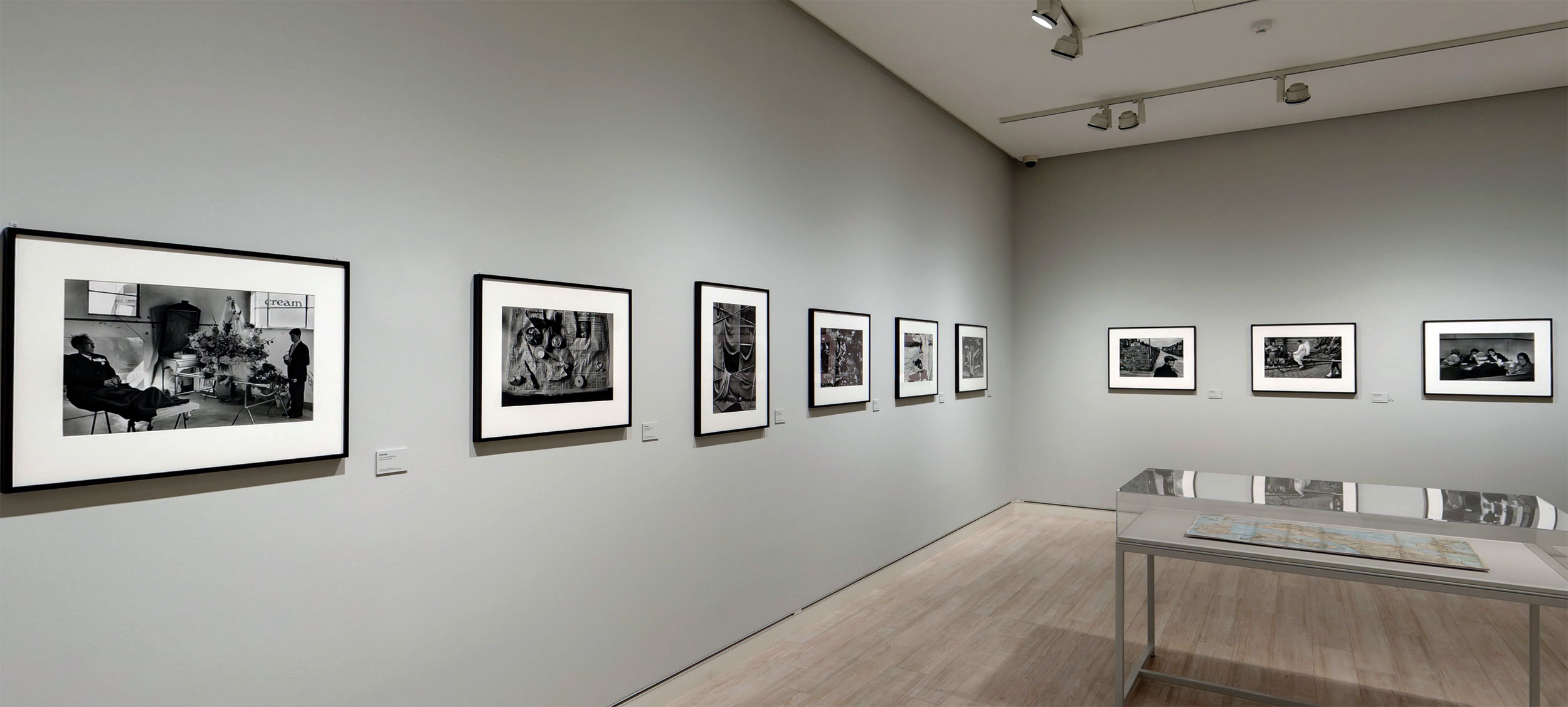

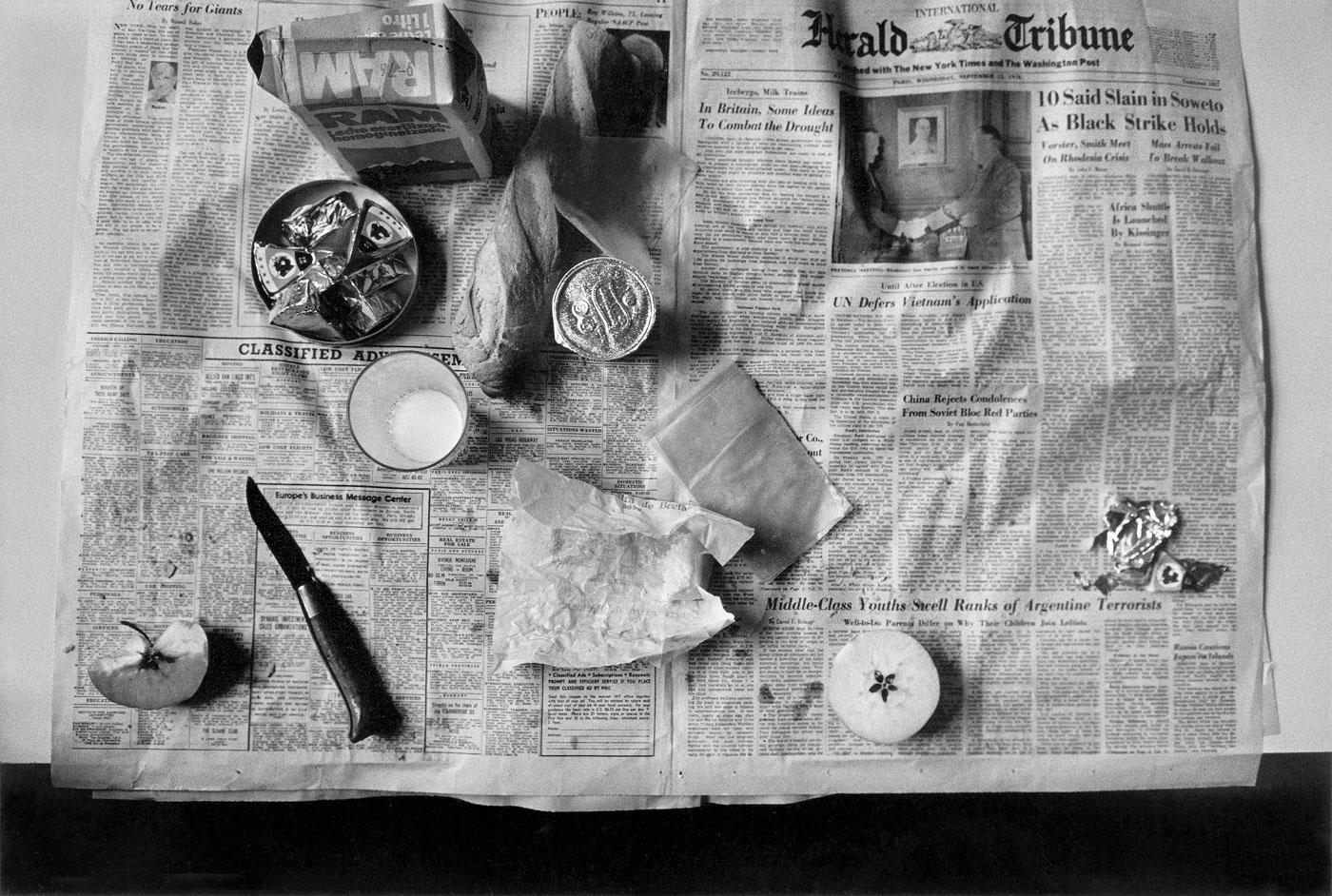
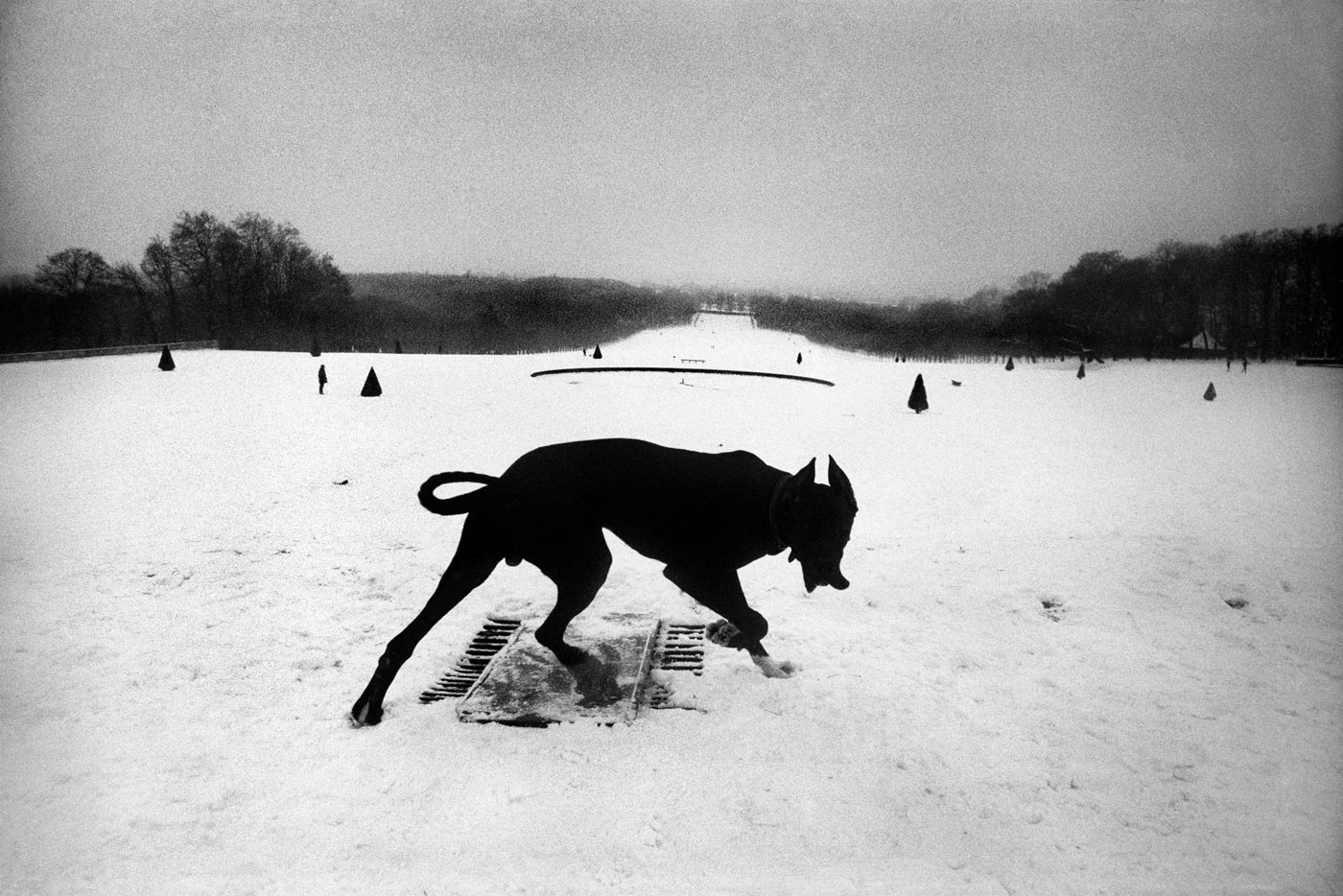


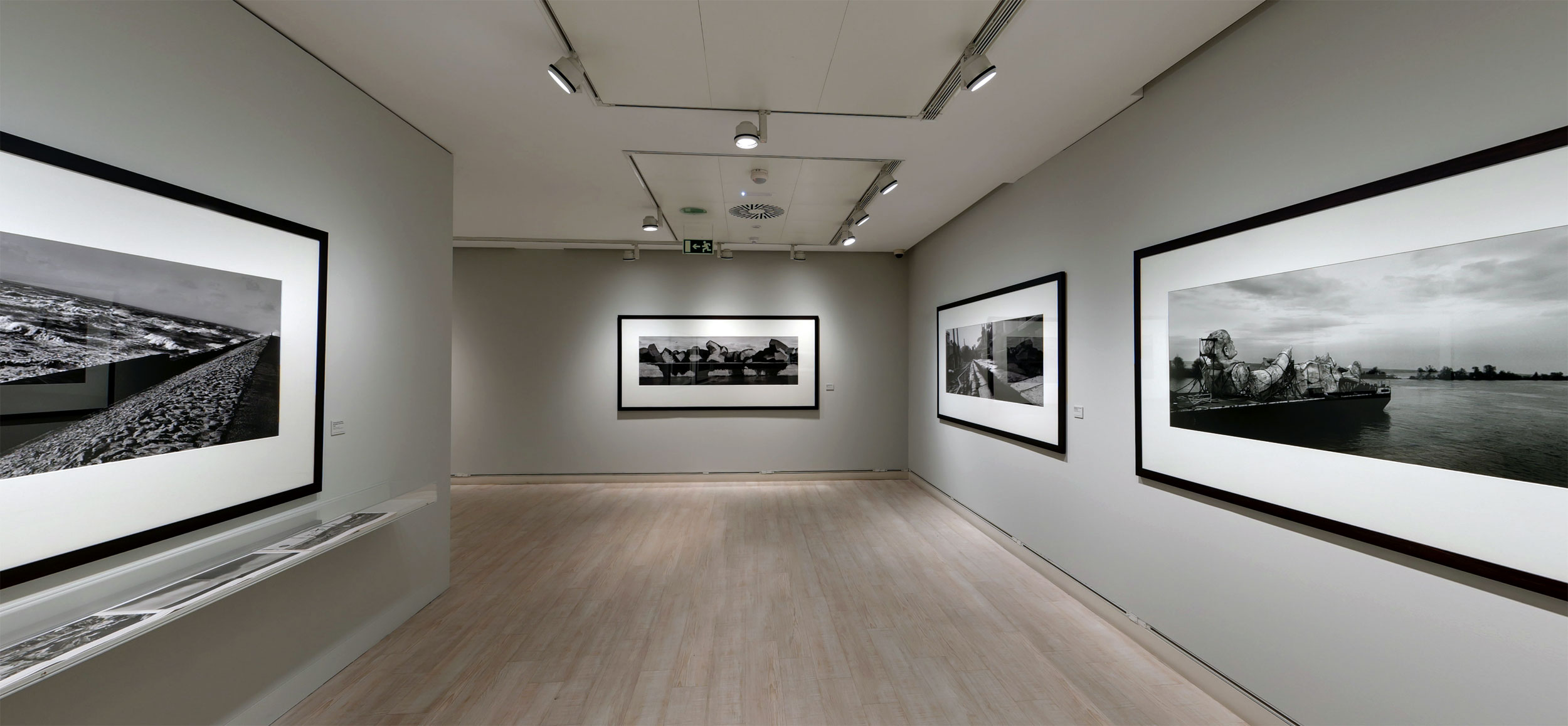
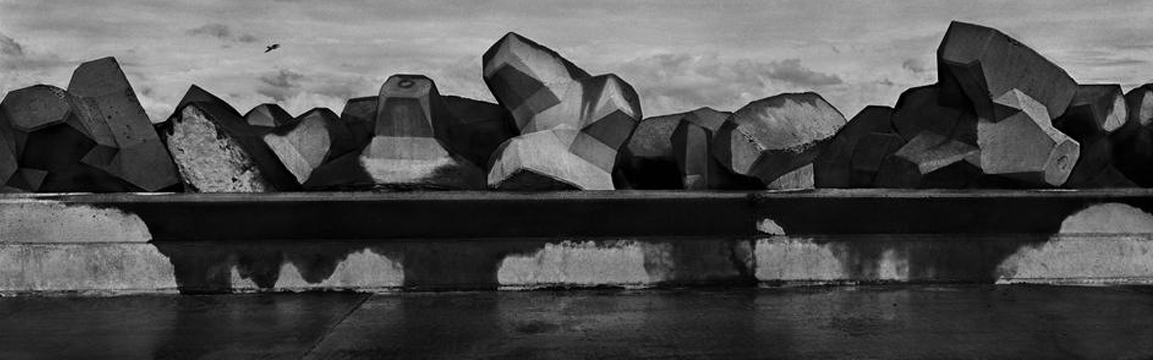
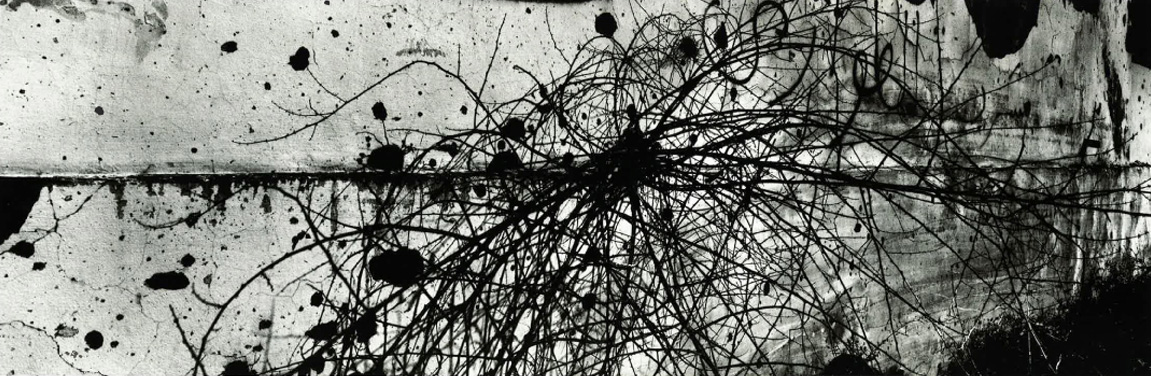

![Josef Koudelka (Czech-French, b. 1938) 'Israel-Palestine (Al 'Eizariya [Bethany])' From the series 'Wall', 2010](https://artblart.com/wp-content/uploads/2015/11/par383535-web.jpg "Josef Koudelka (Czech-French, b. 1938) 'Israel-Palestine (Al 'Eizariya [Bethany])' From the series 'Wall', 2010")
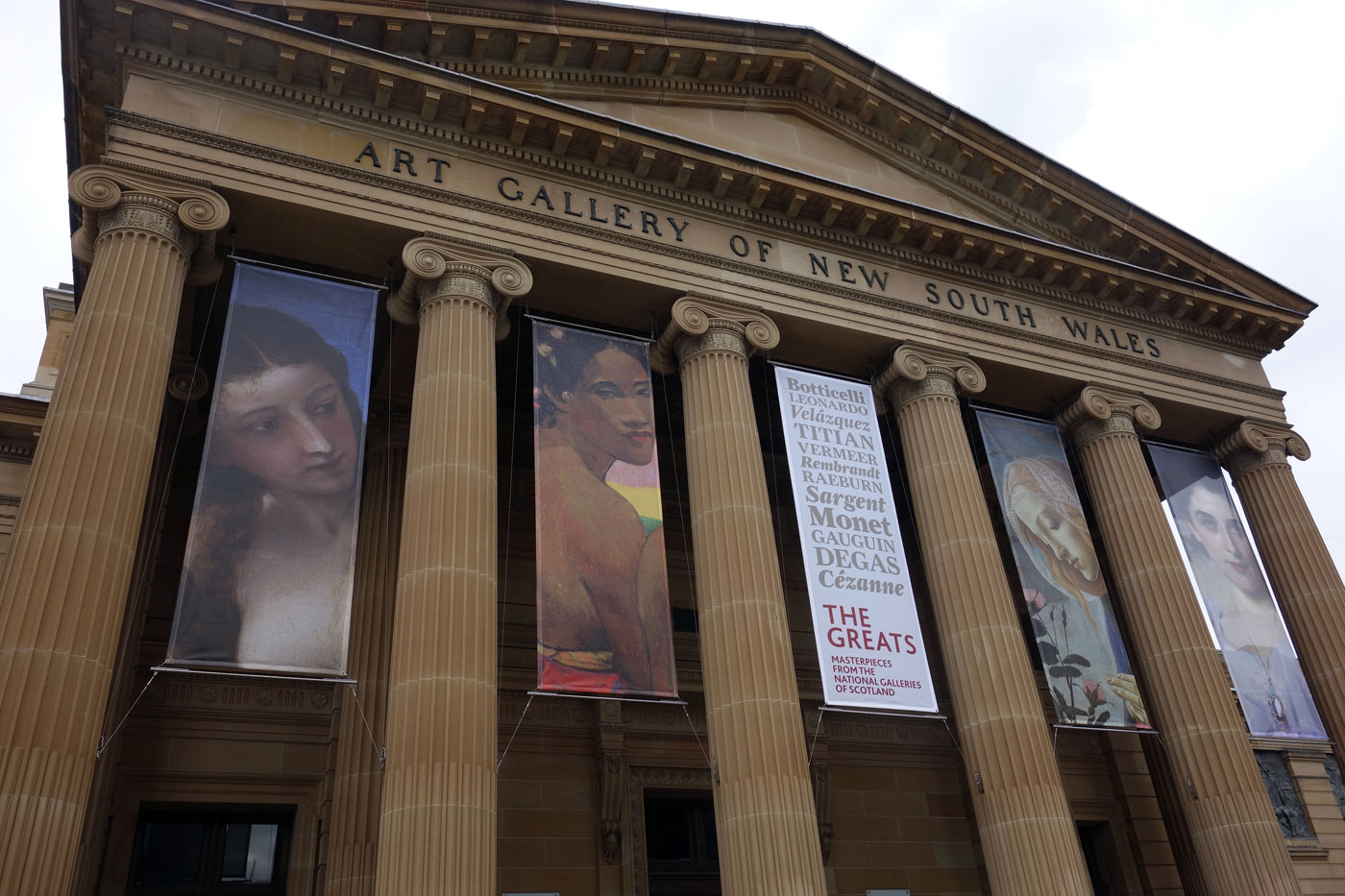


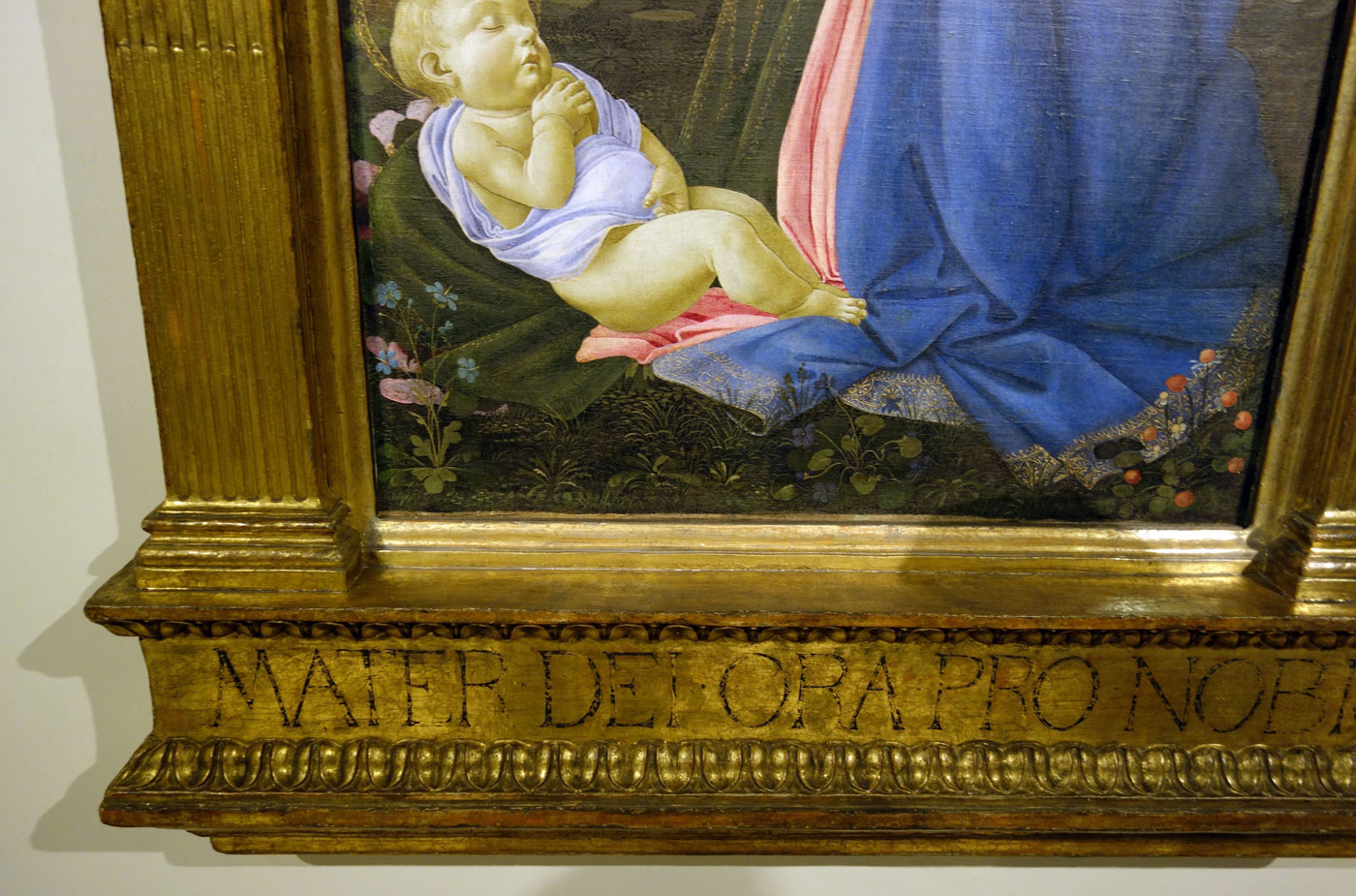
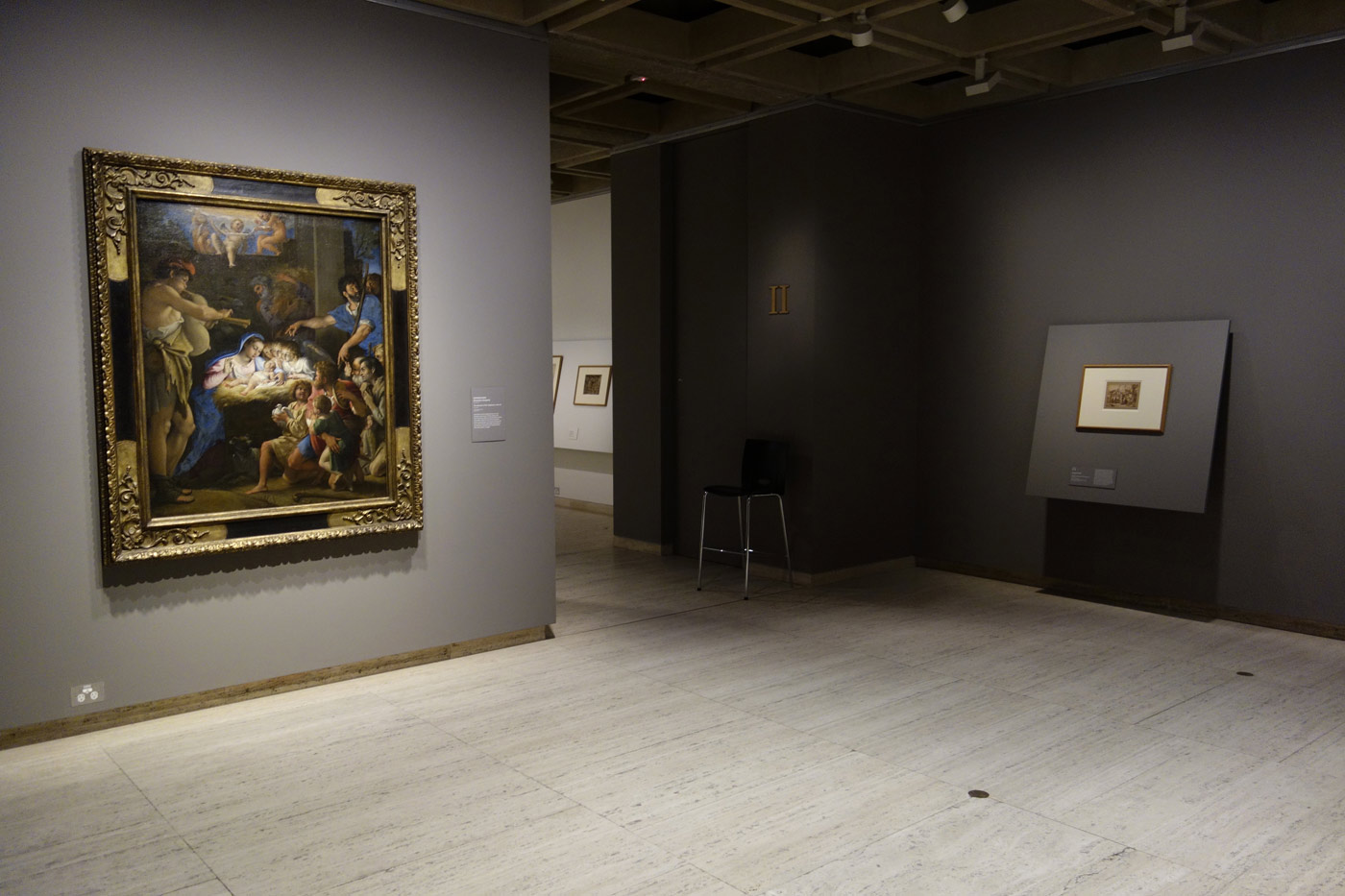

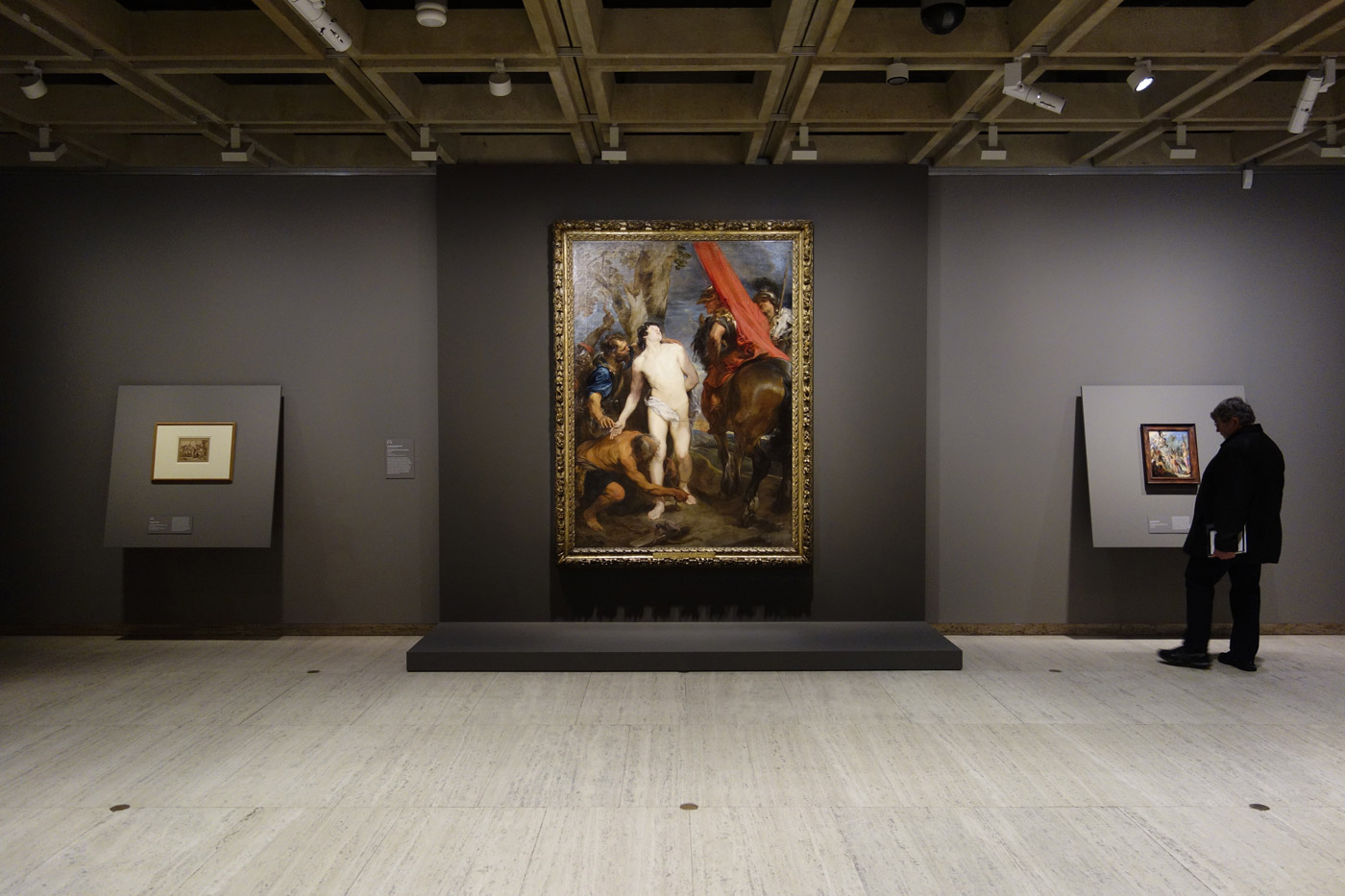


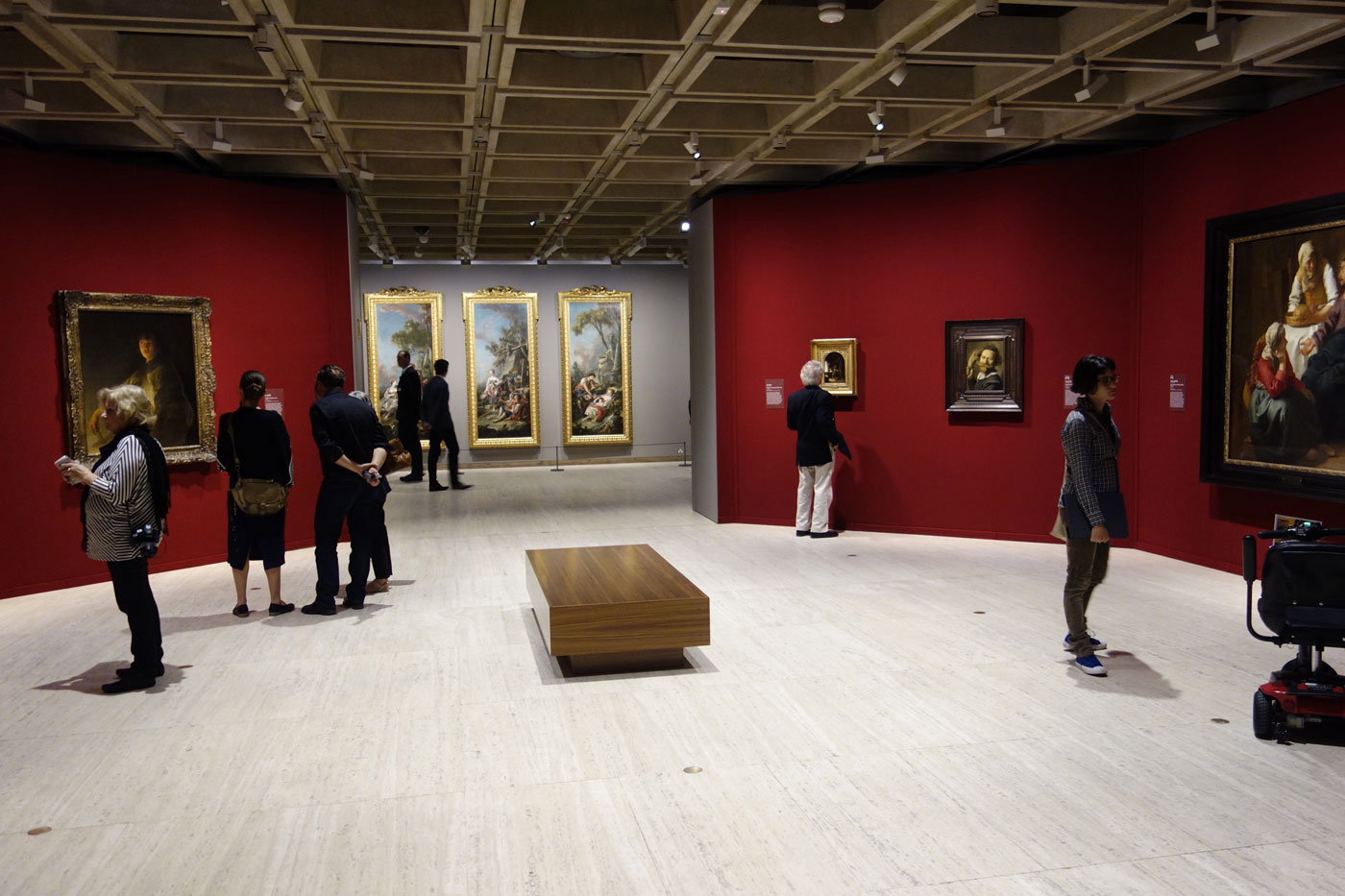

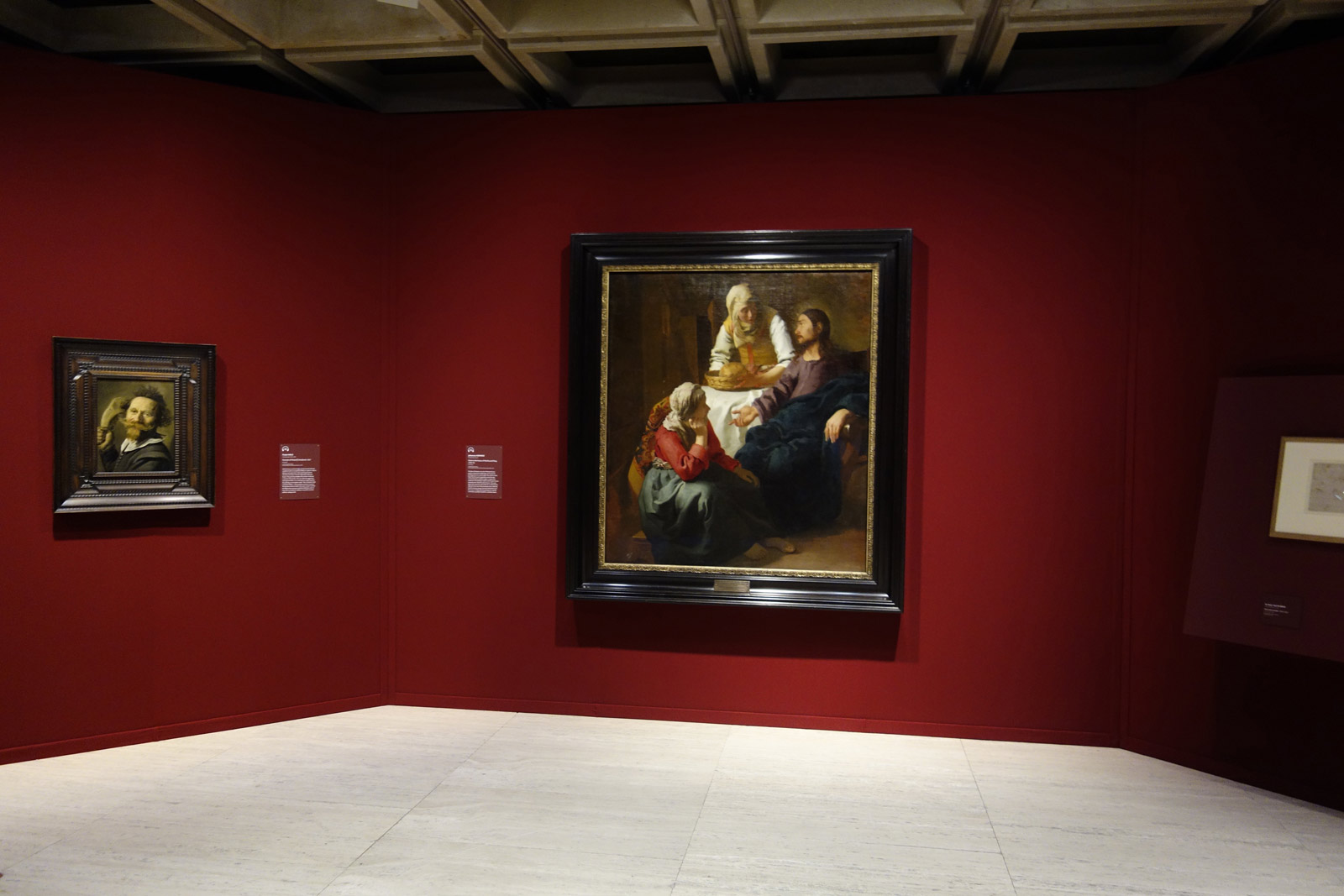


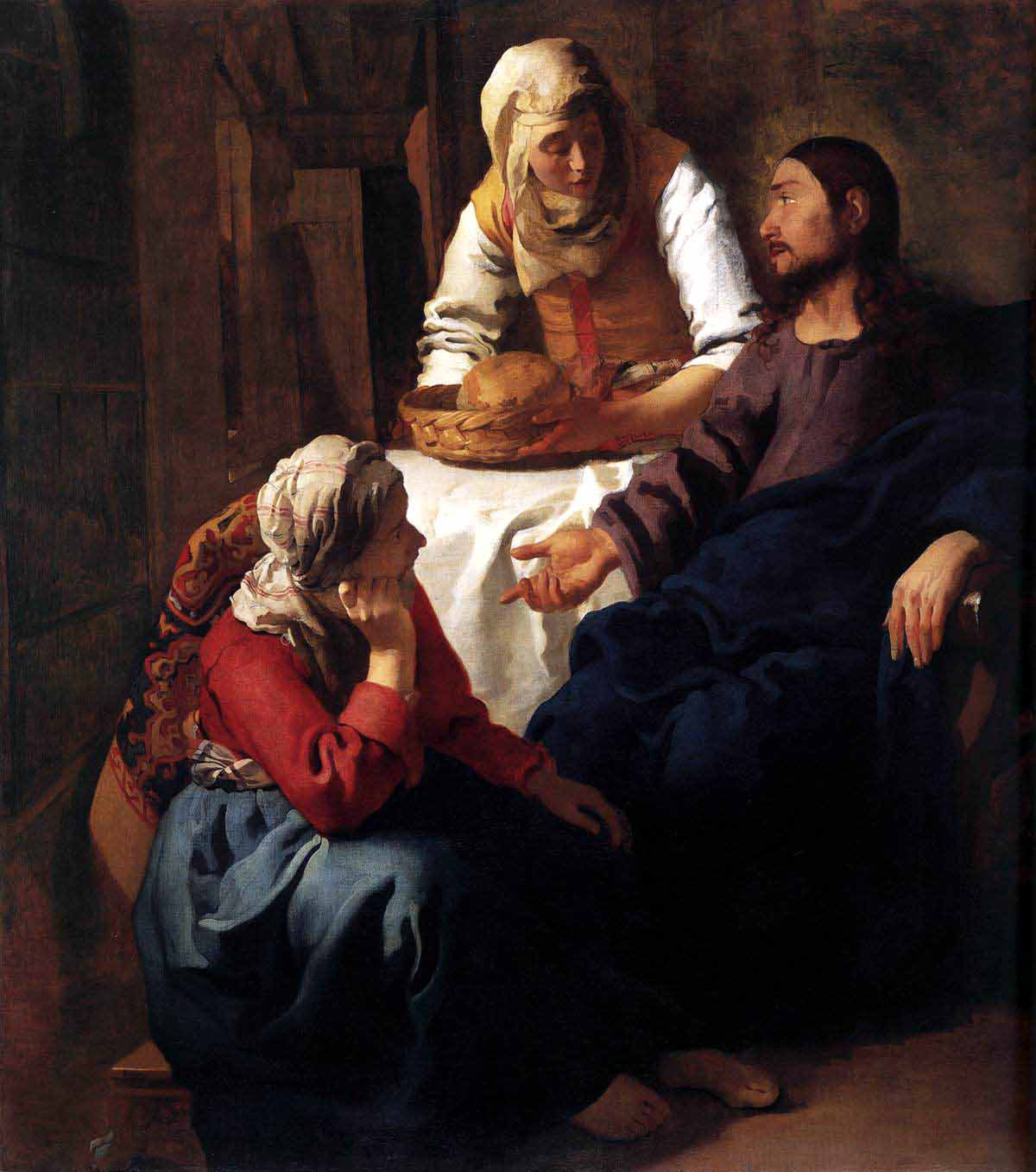

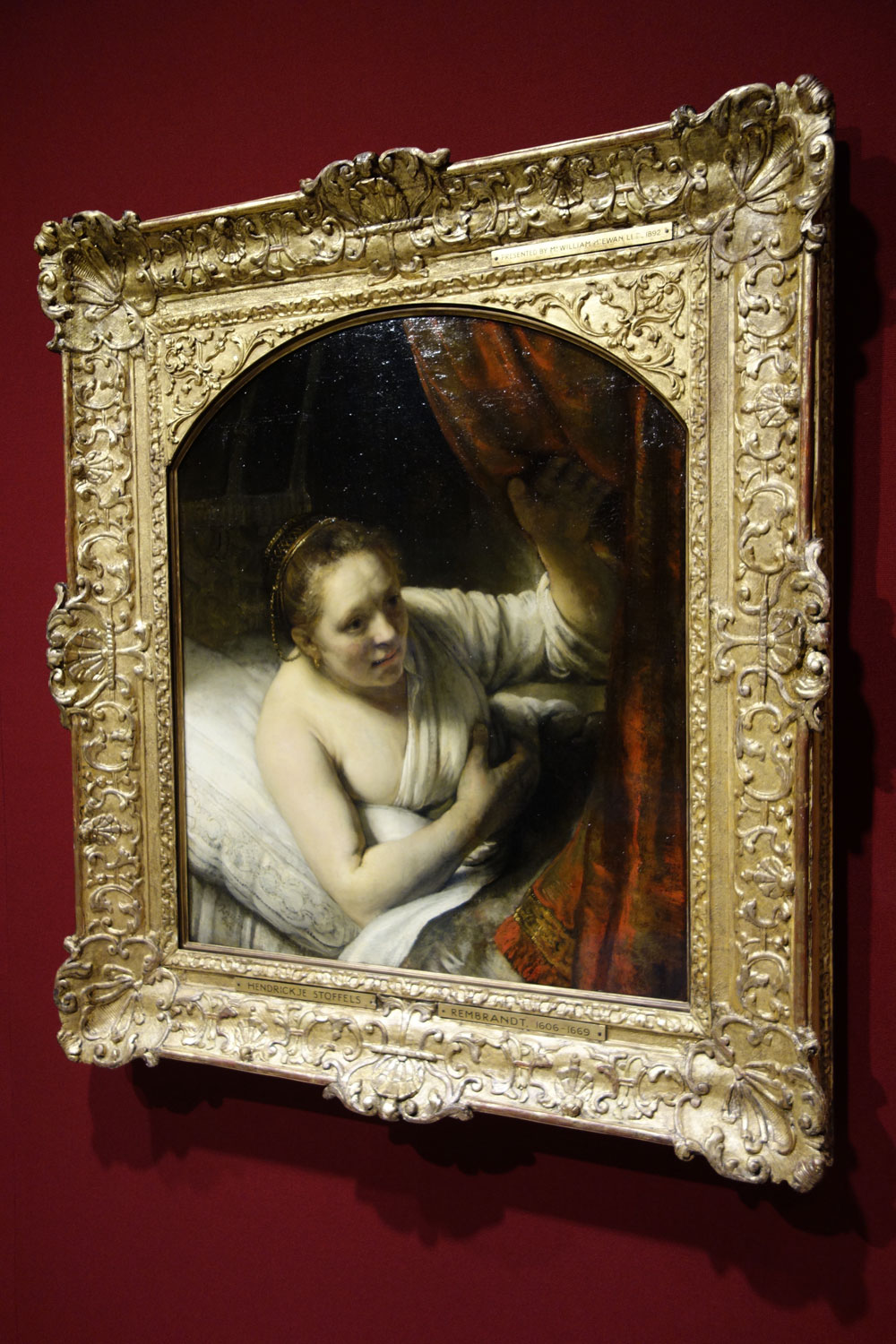
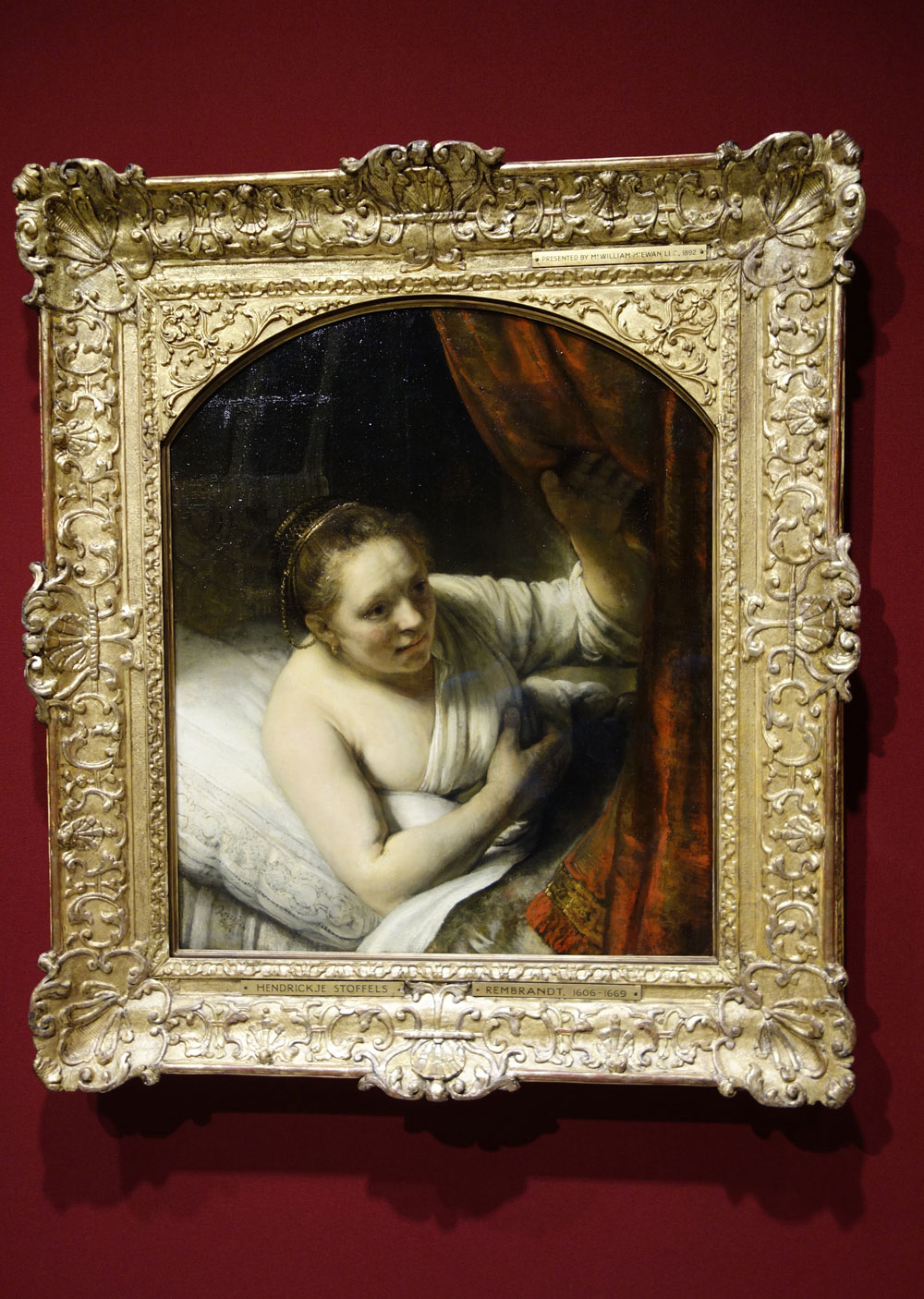


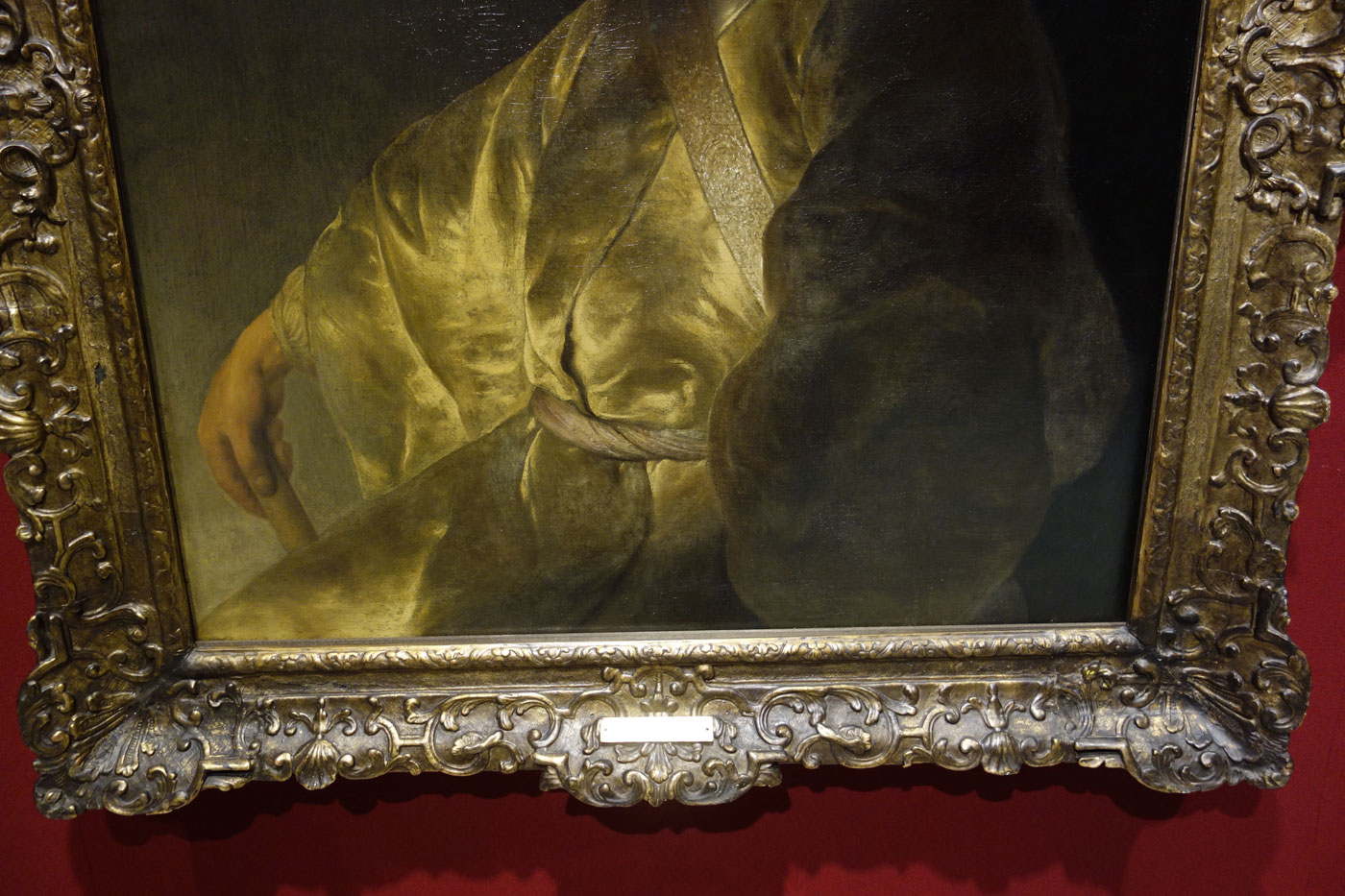

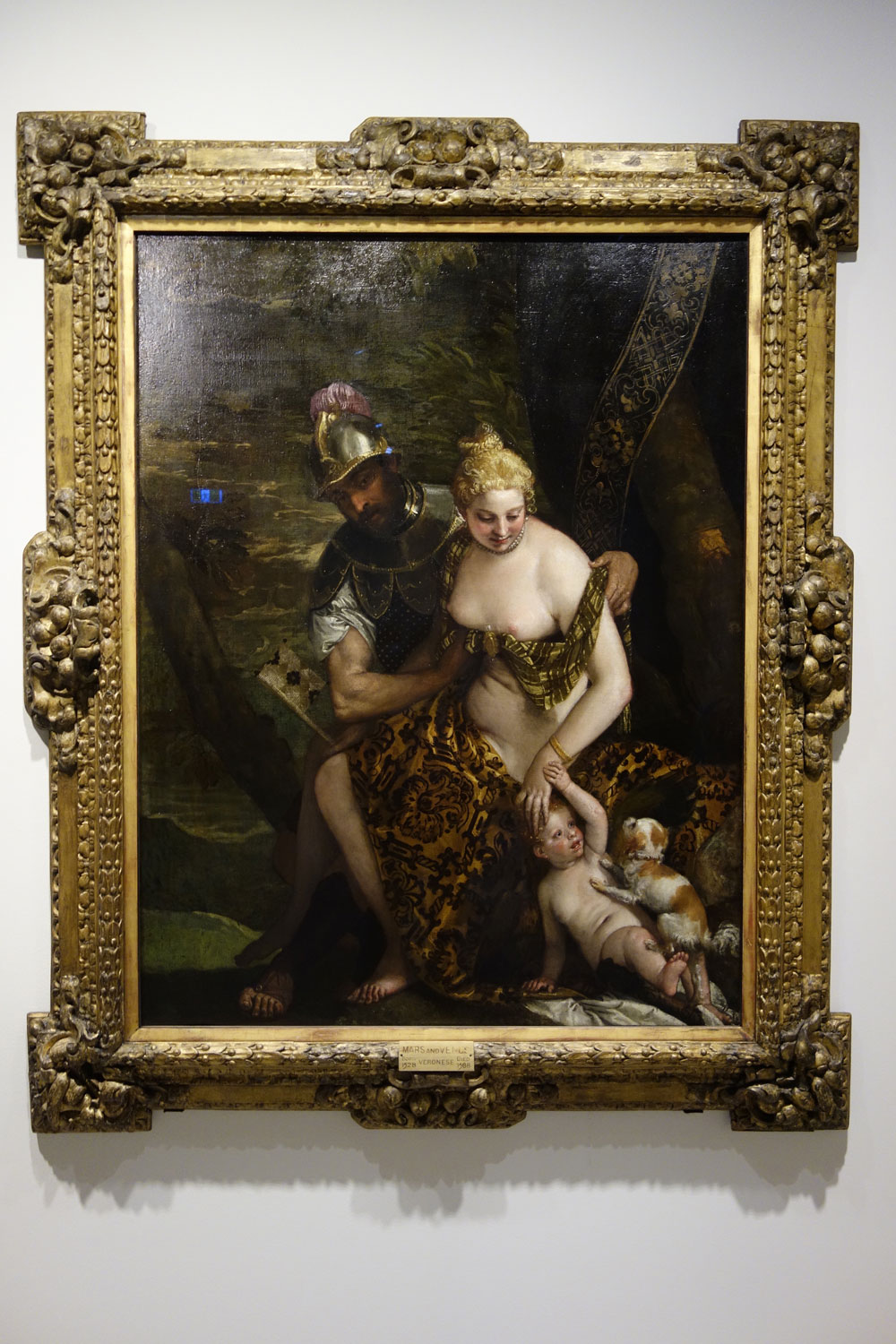

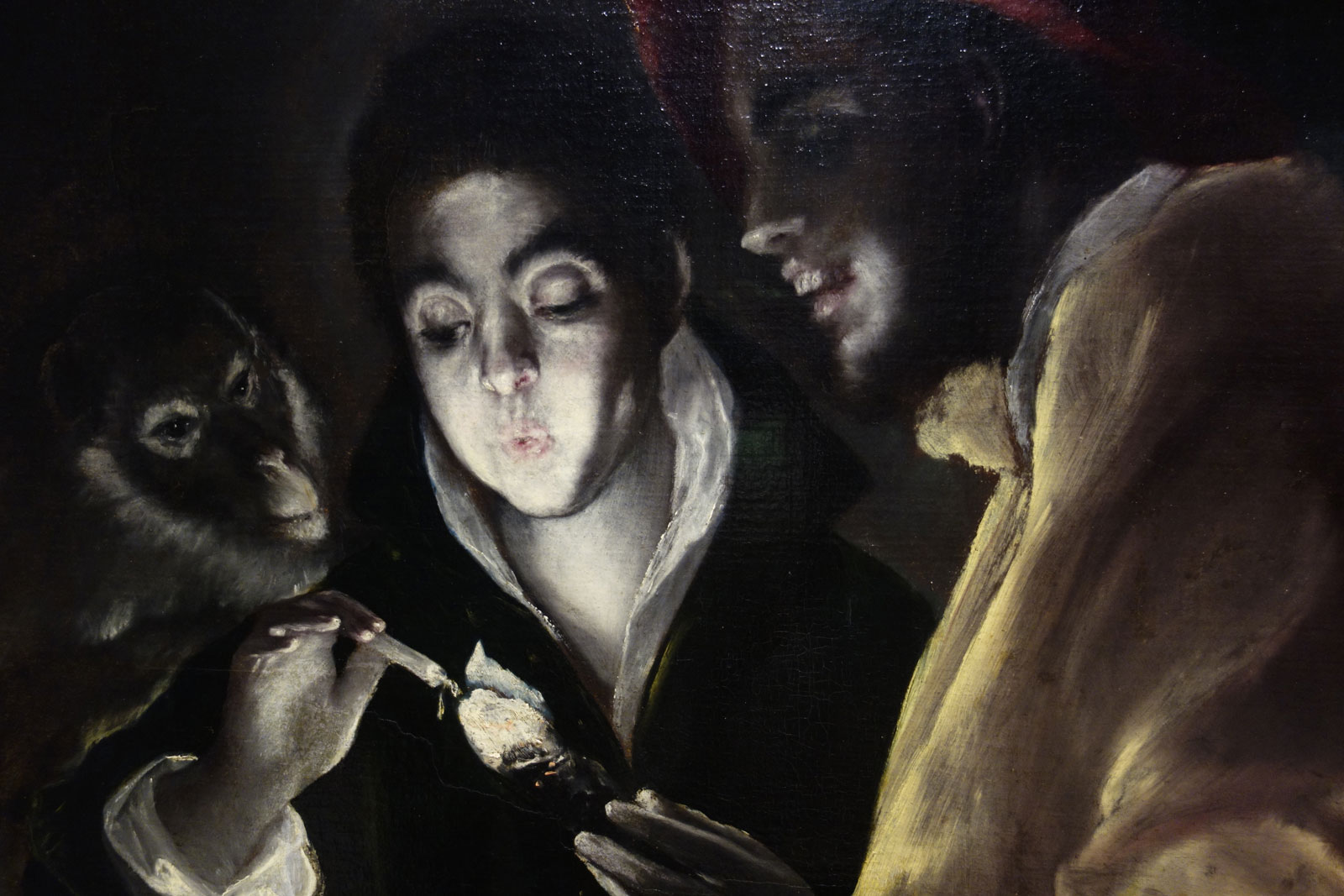

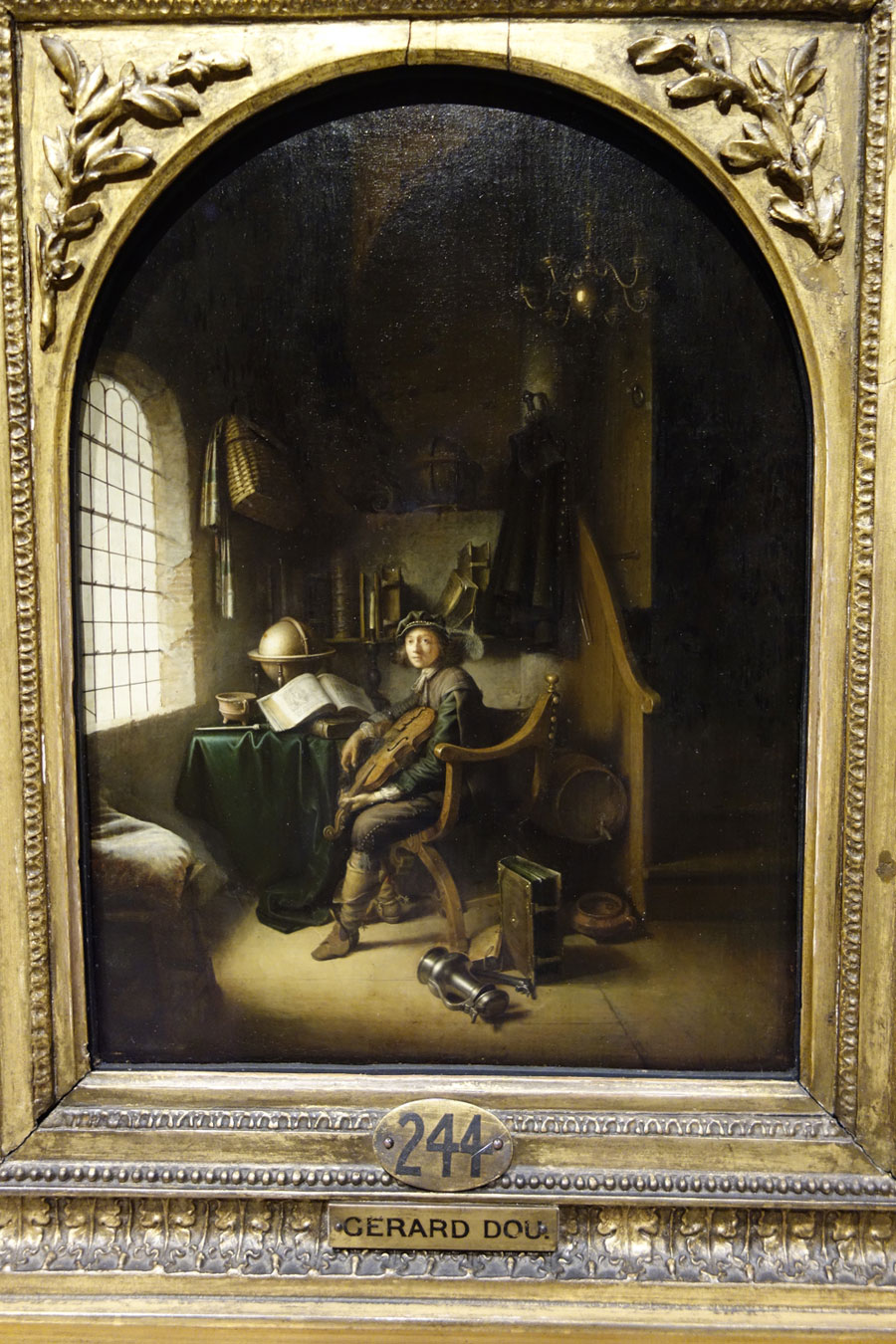


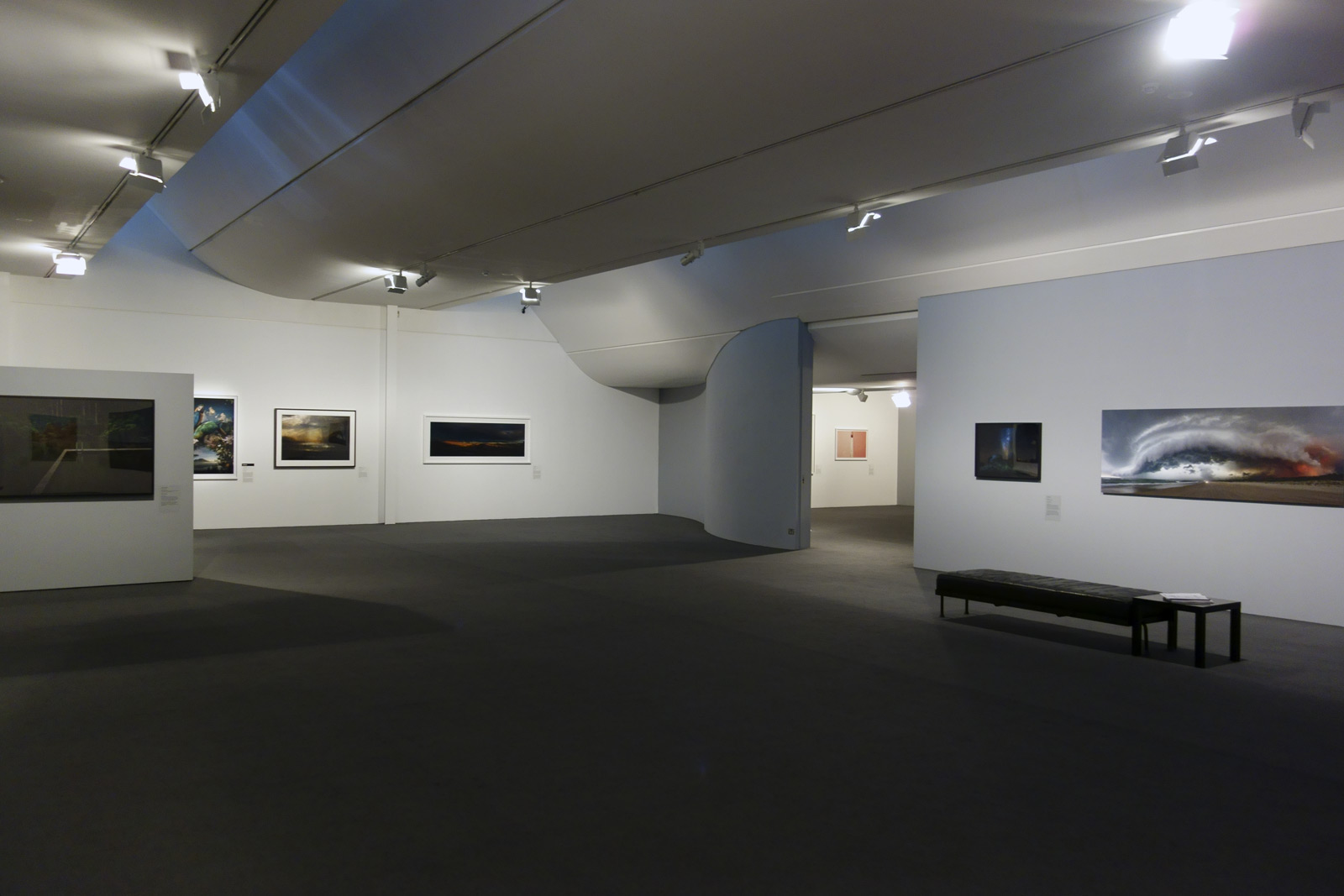
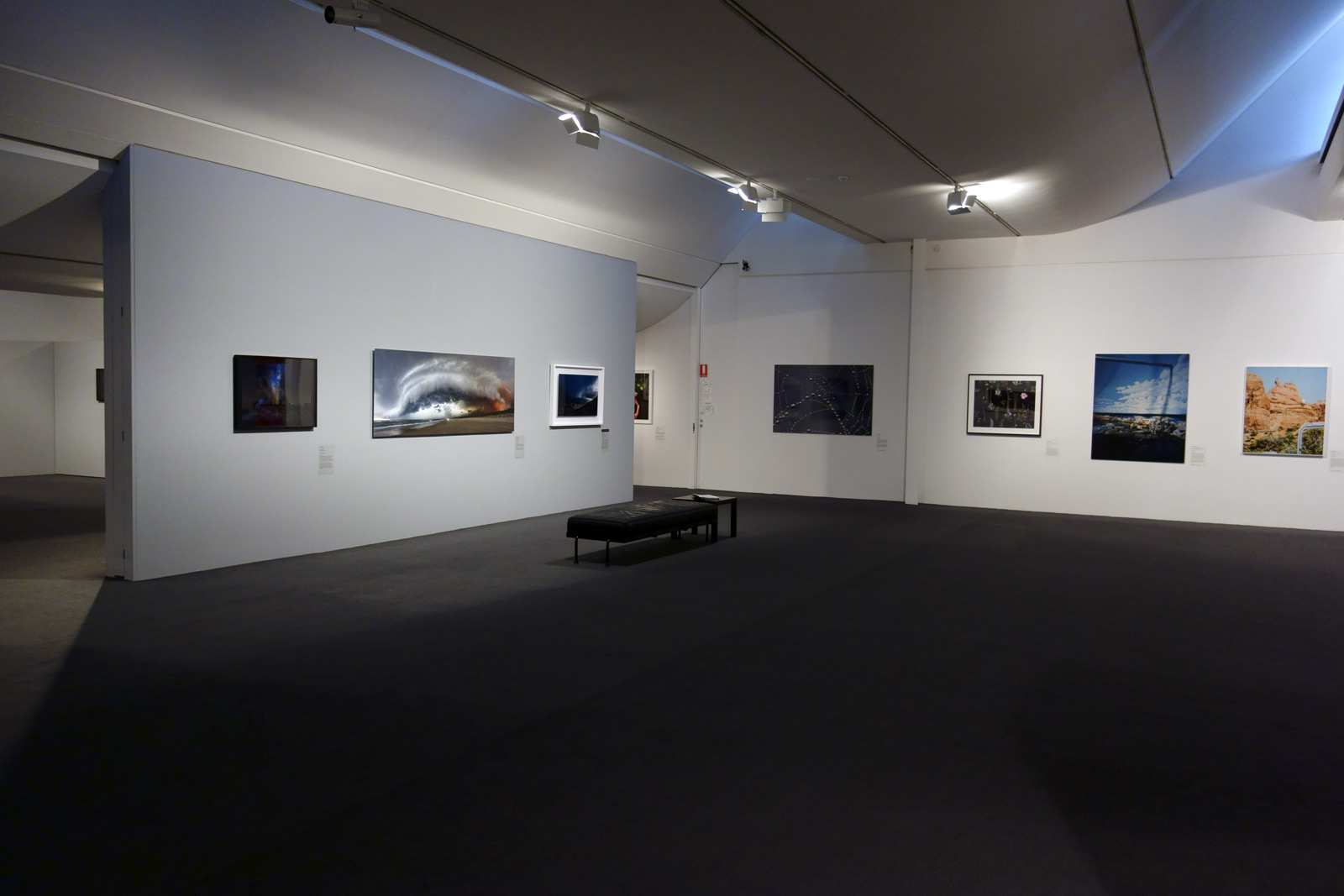

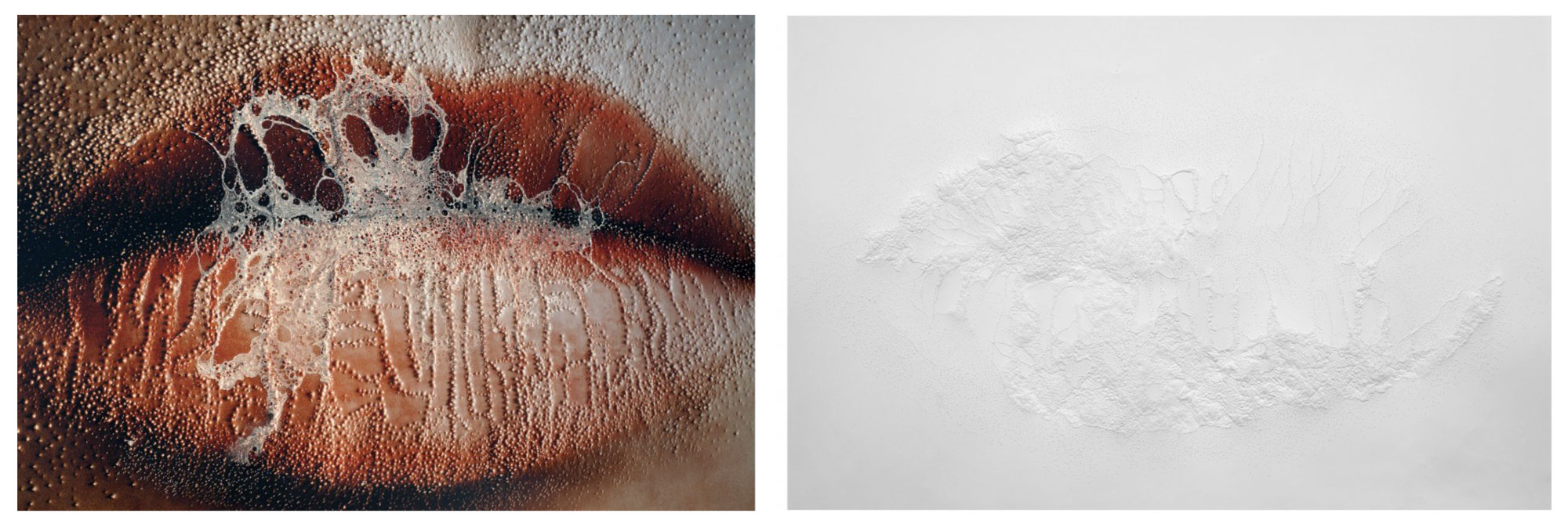


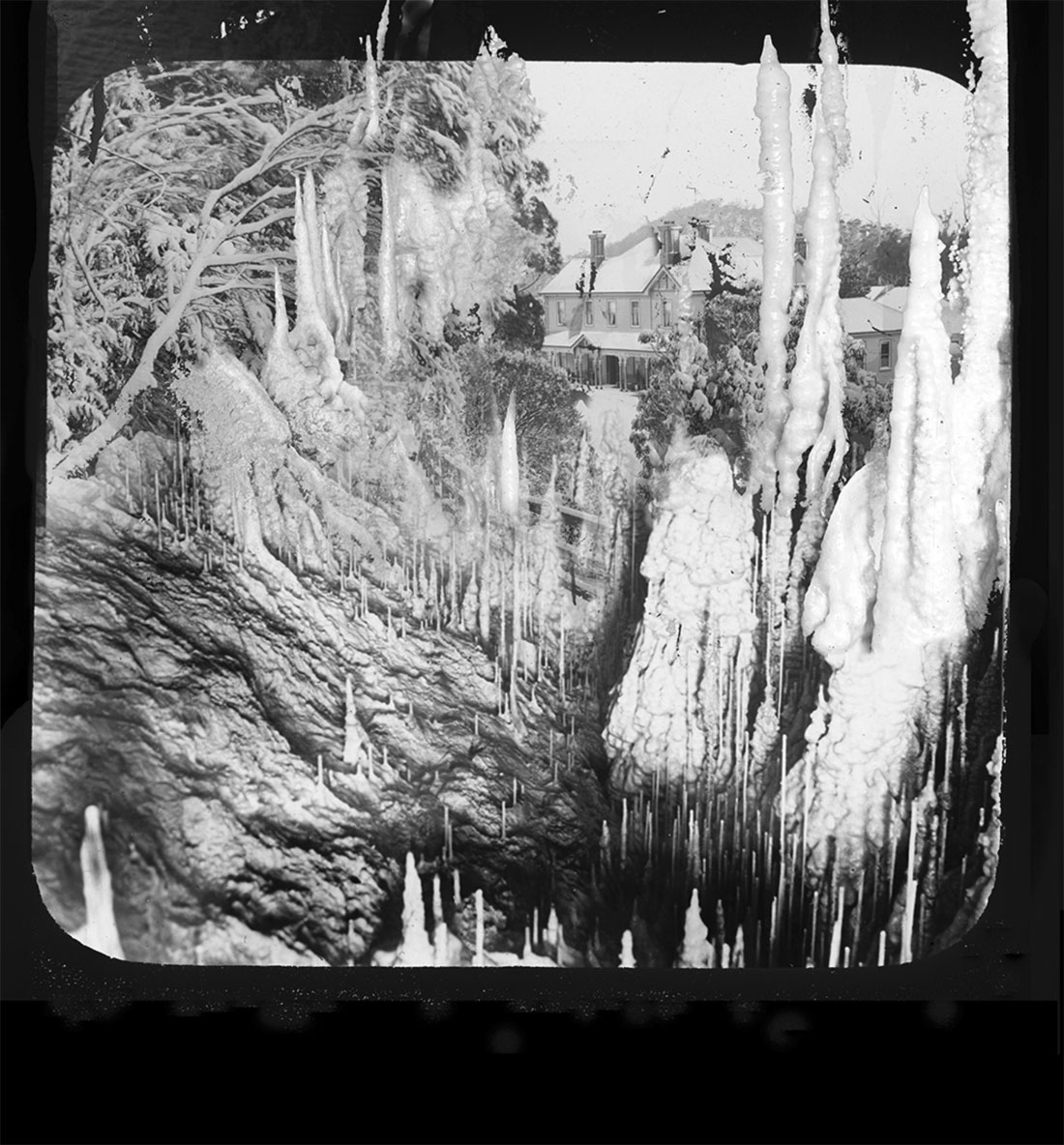


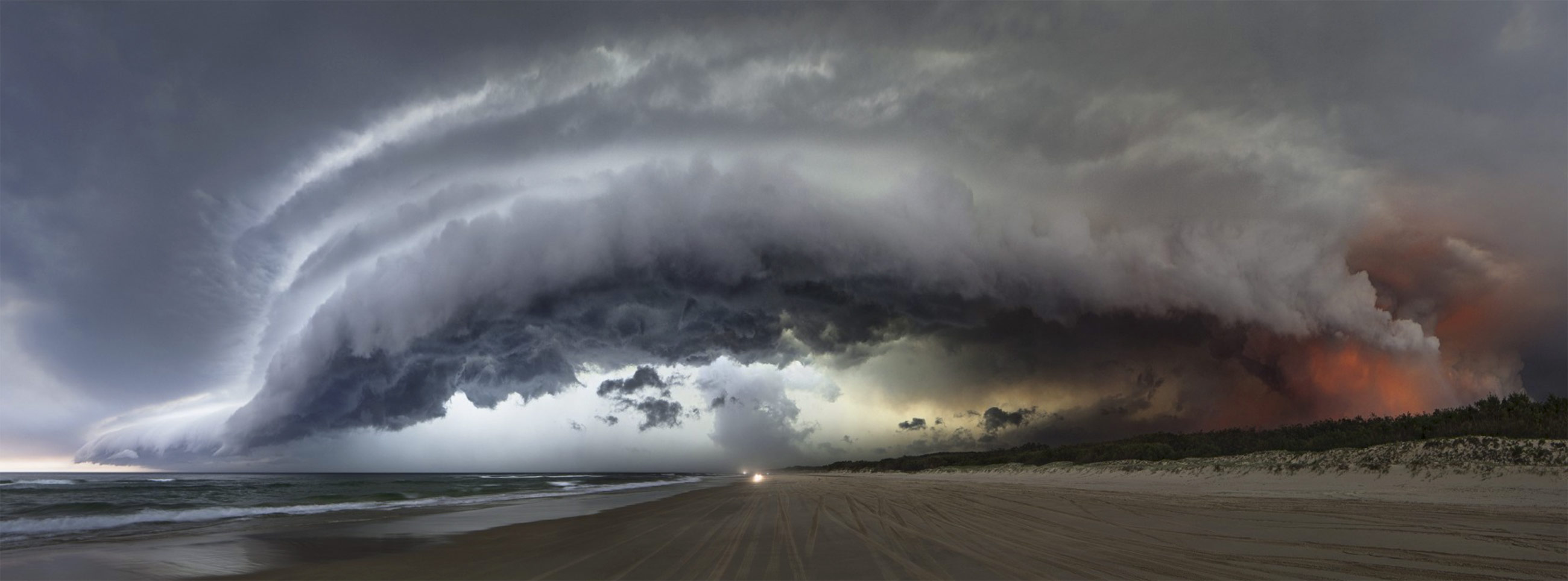

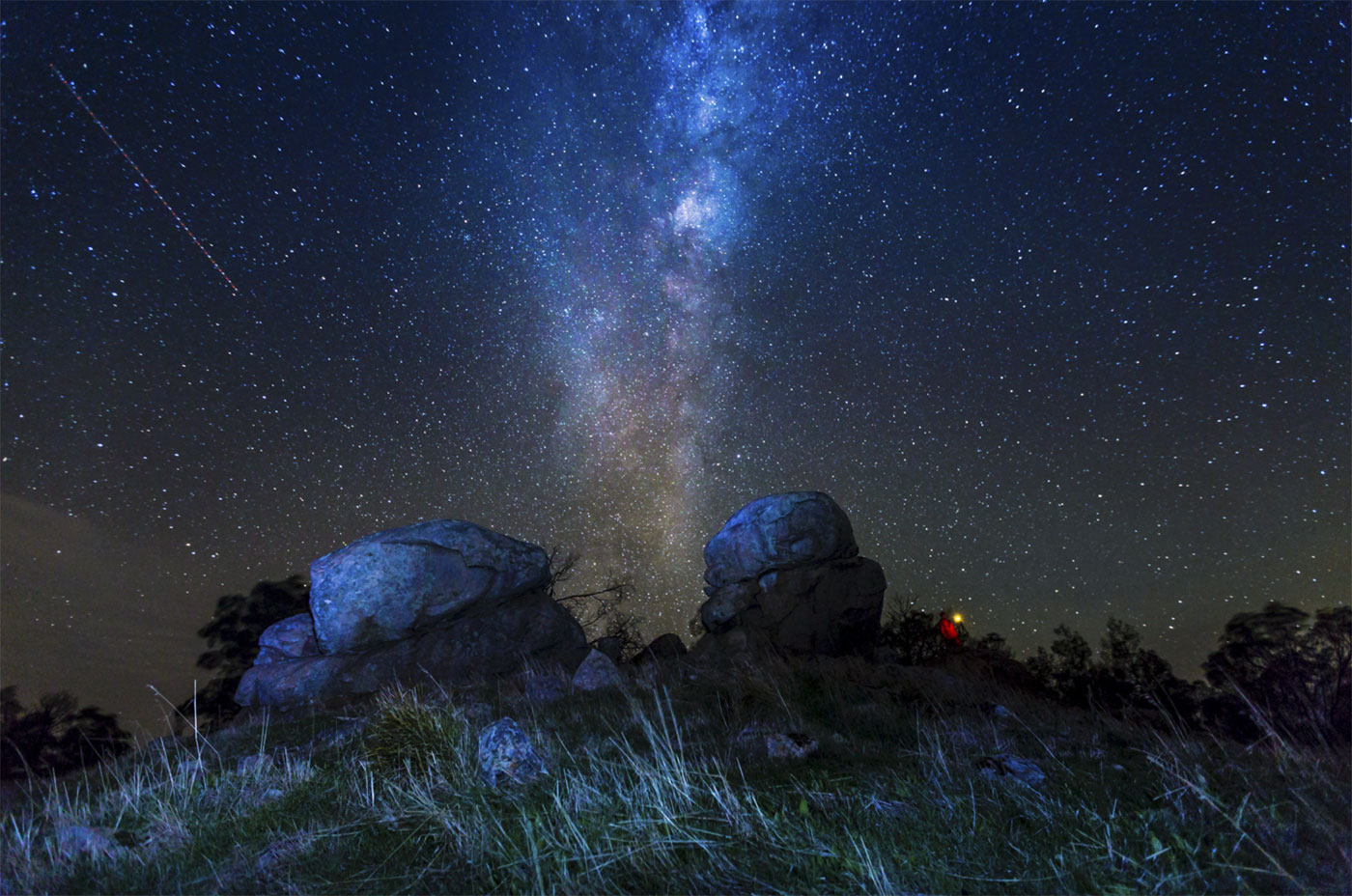


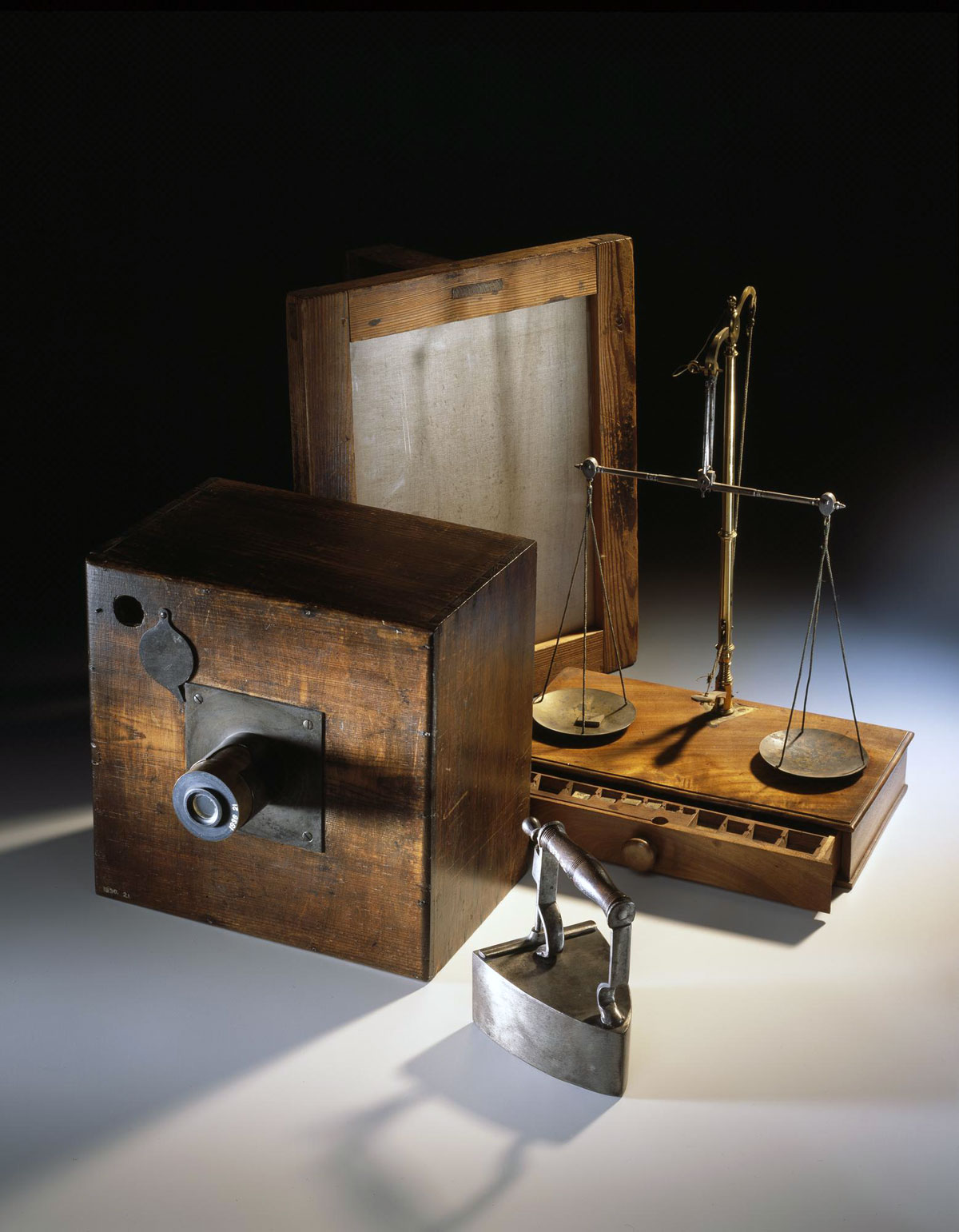


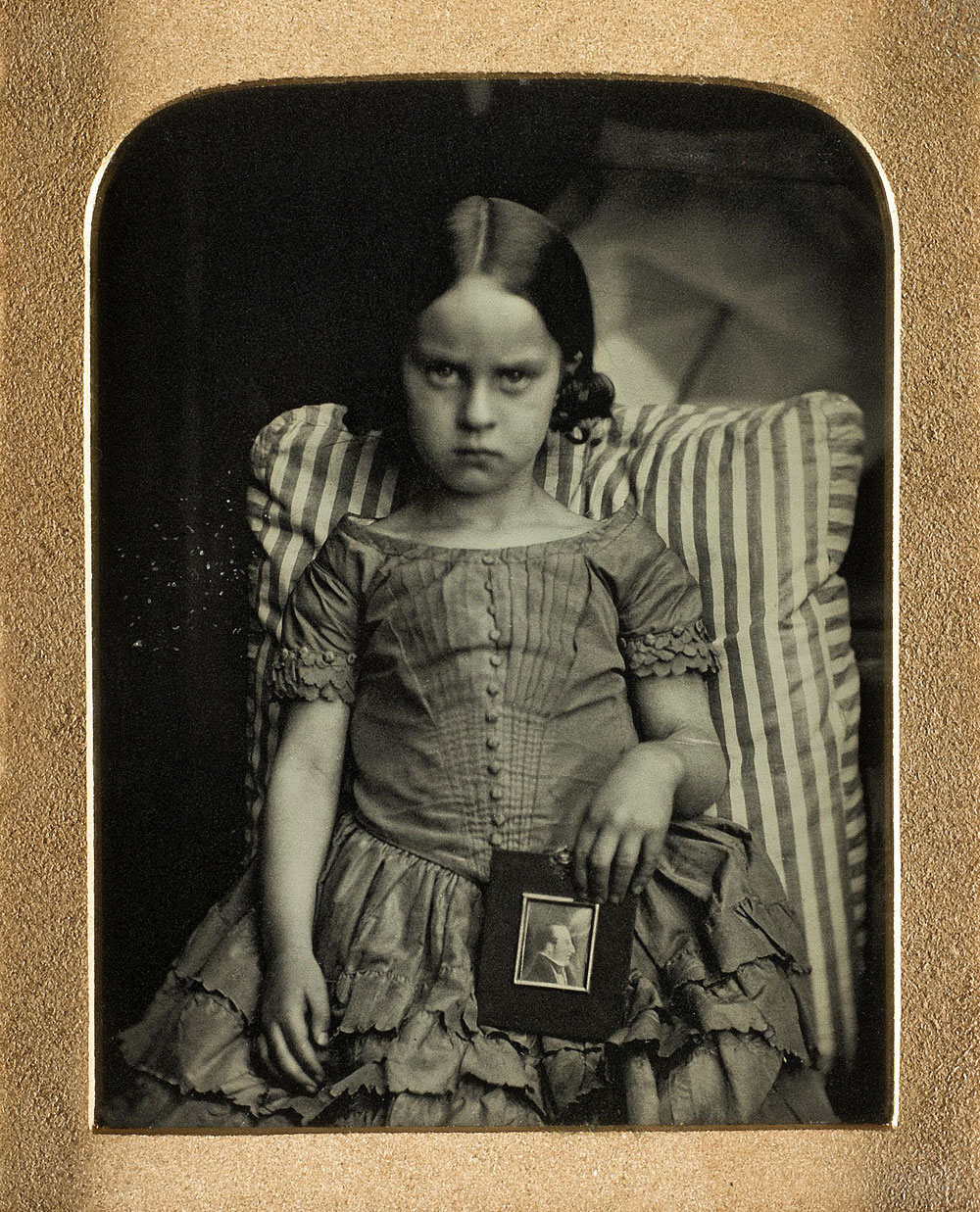
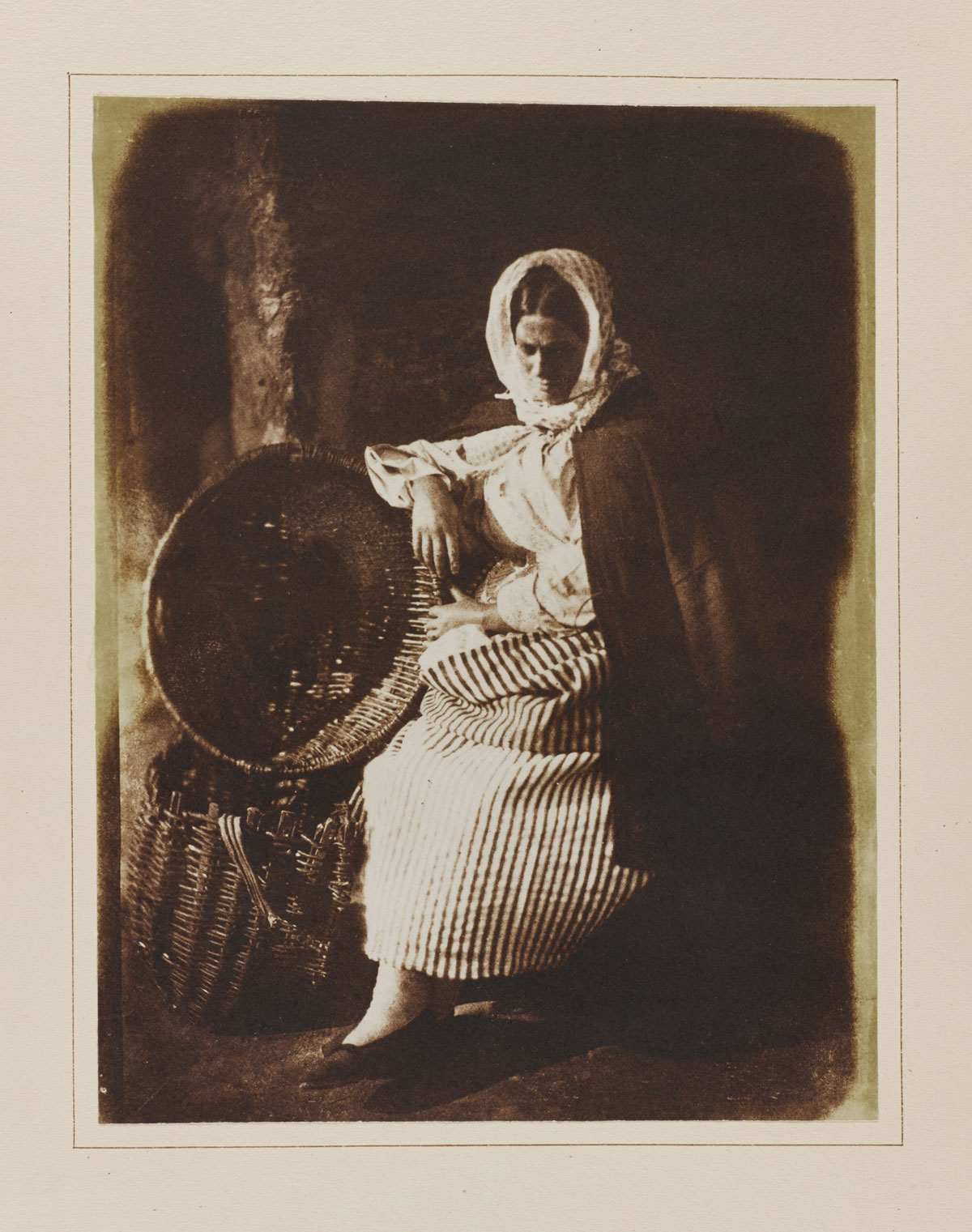


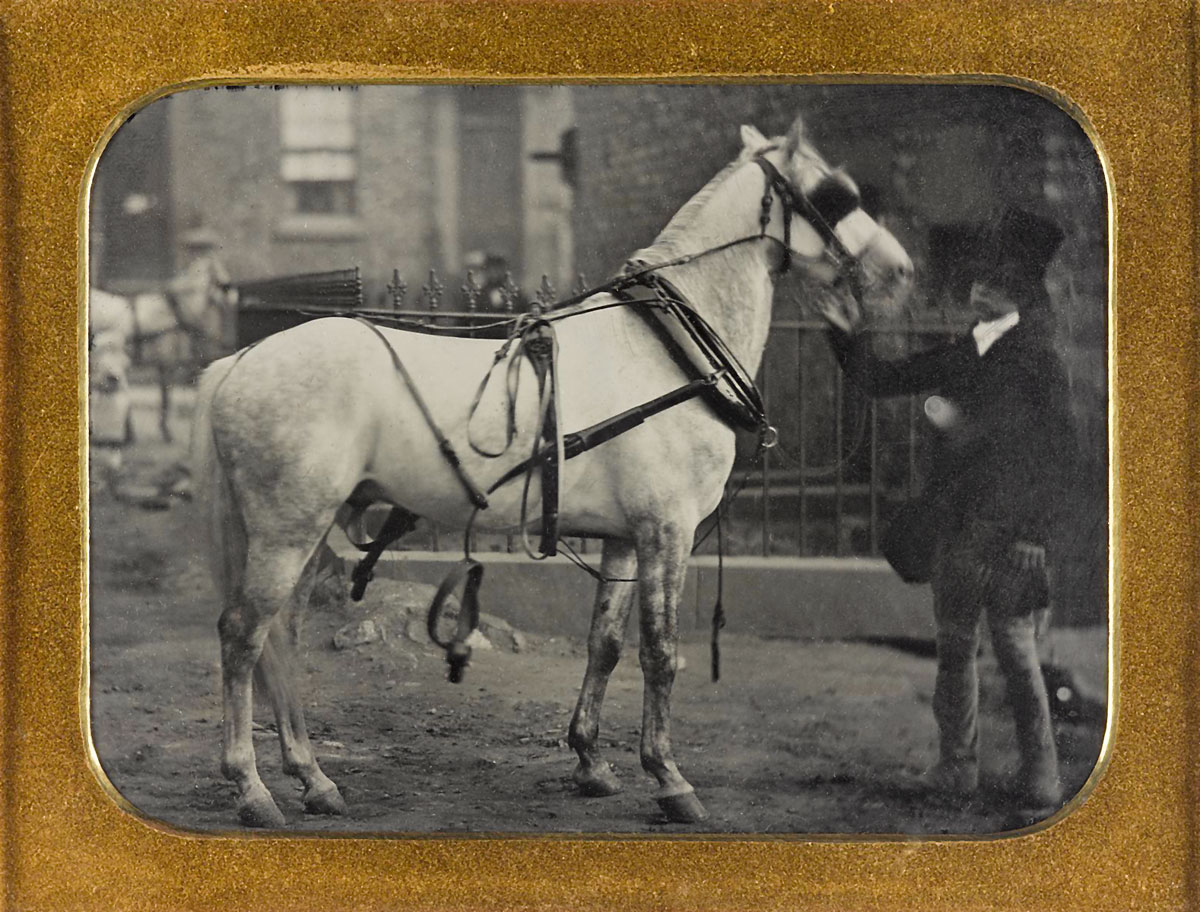


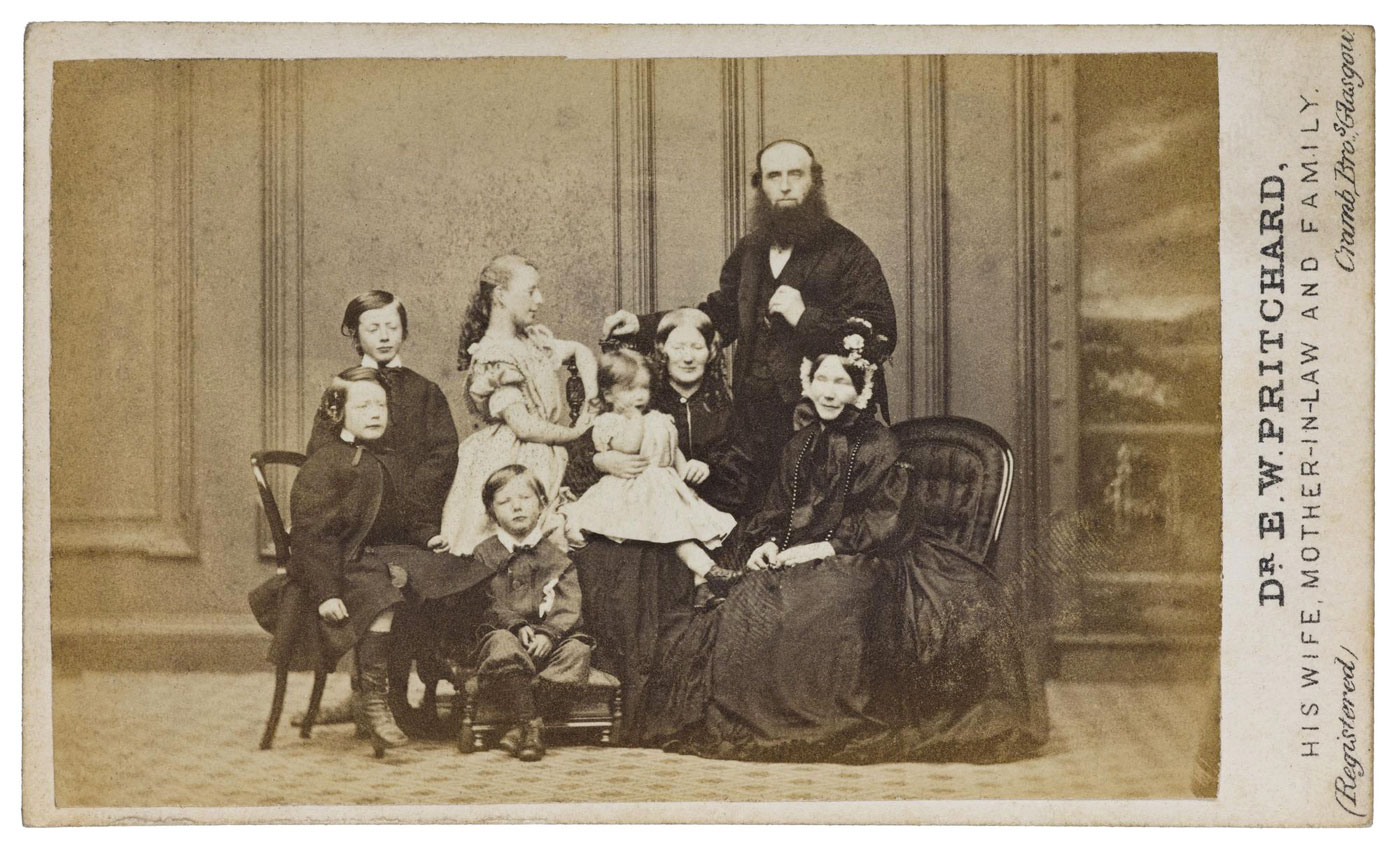
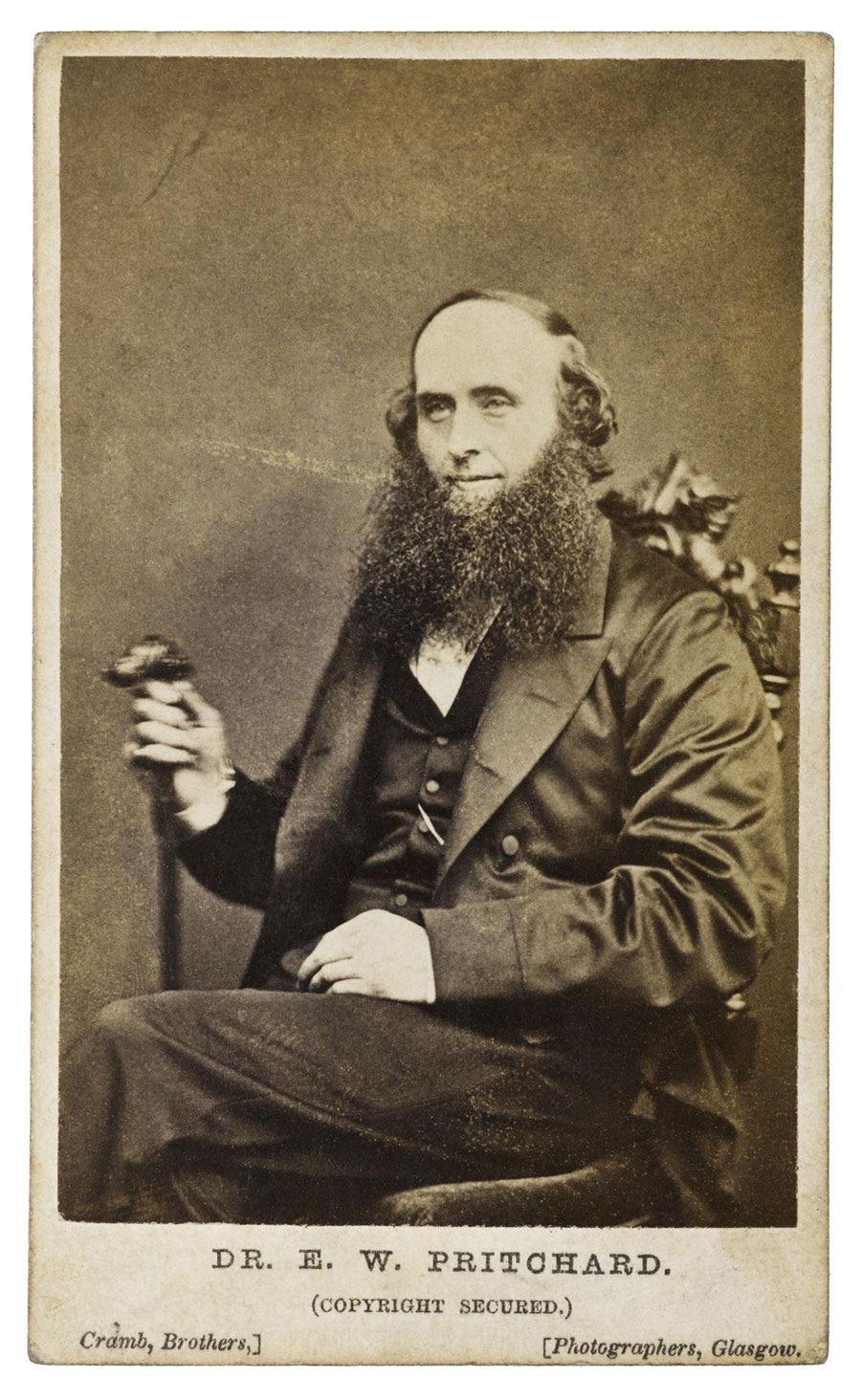


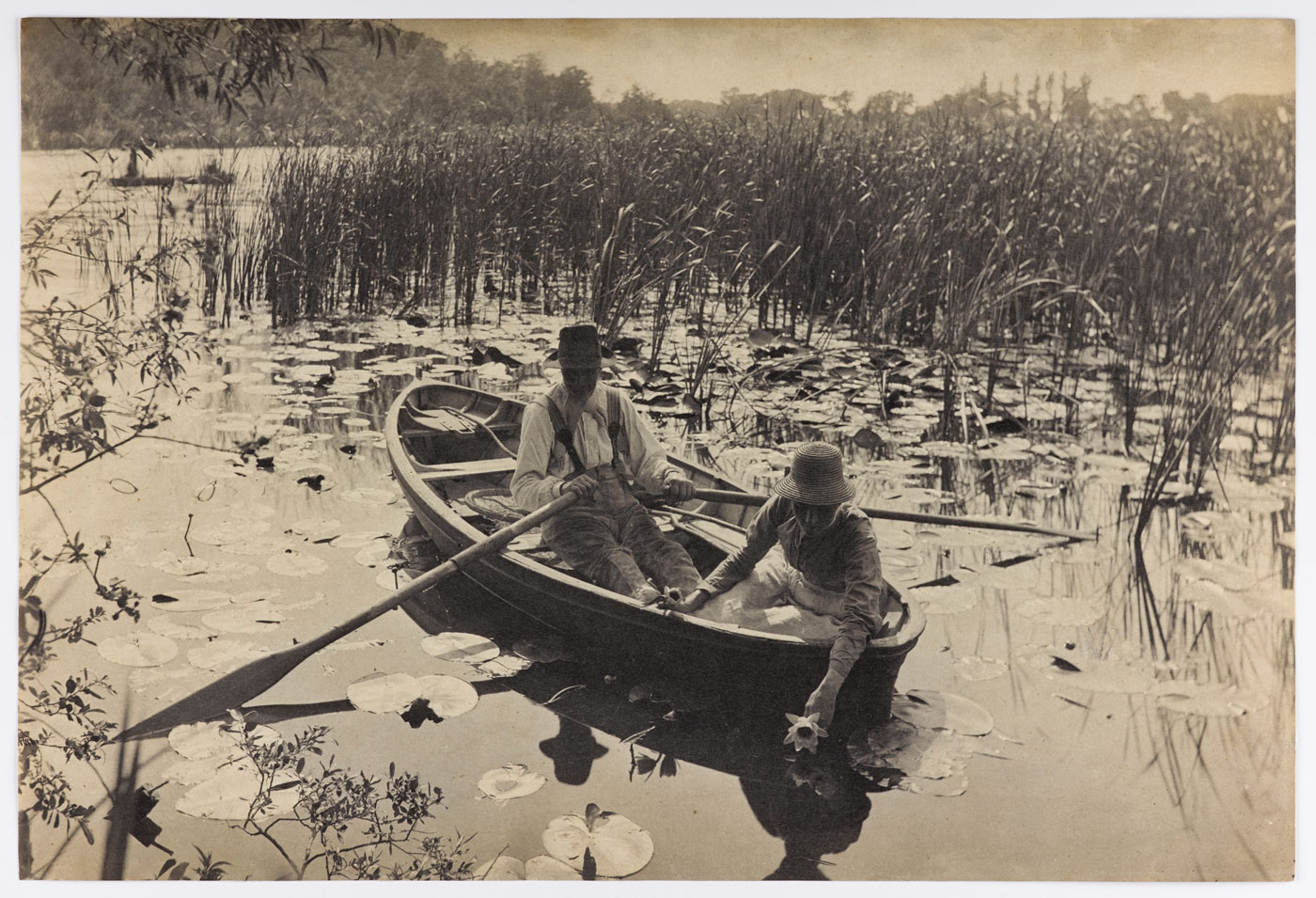


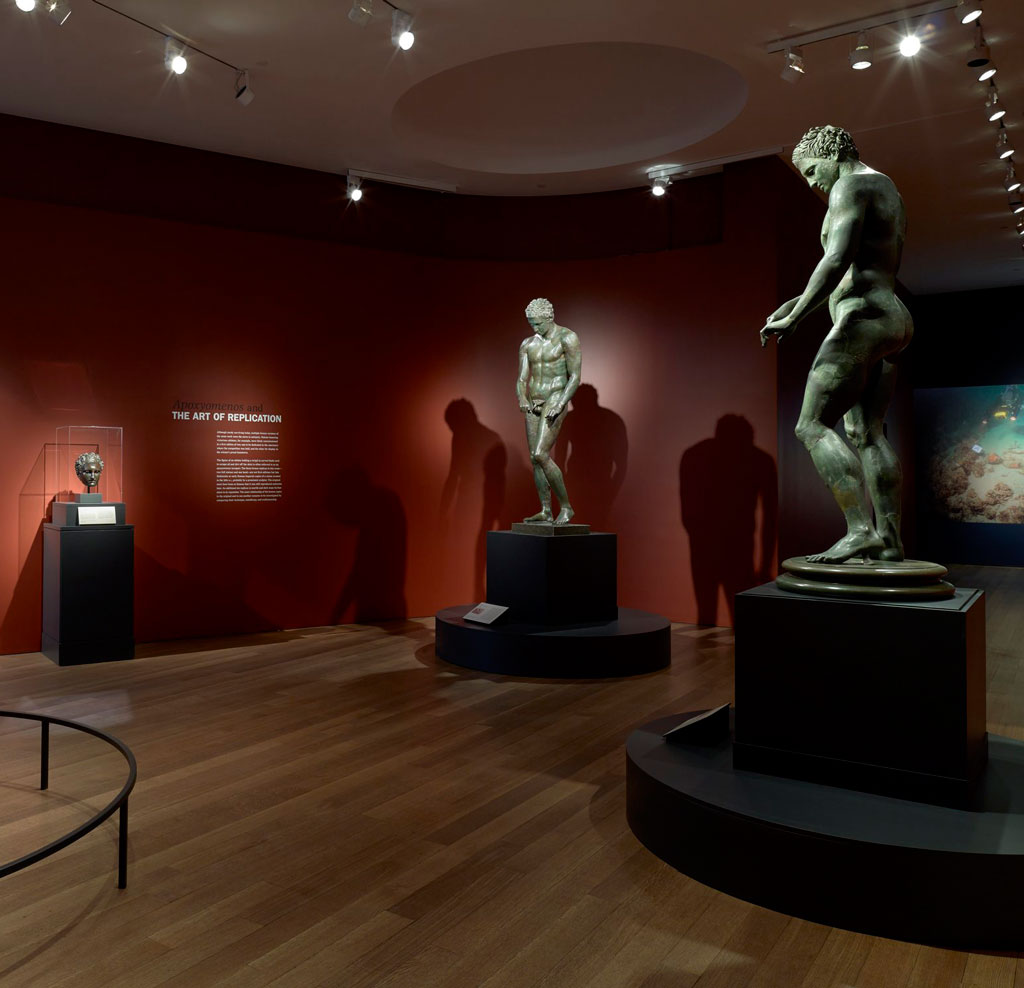


















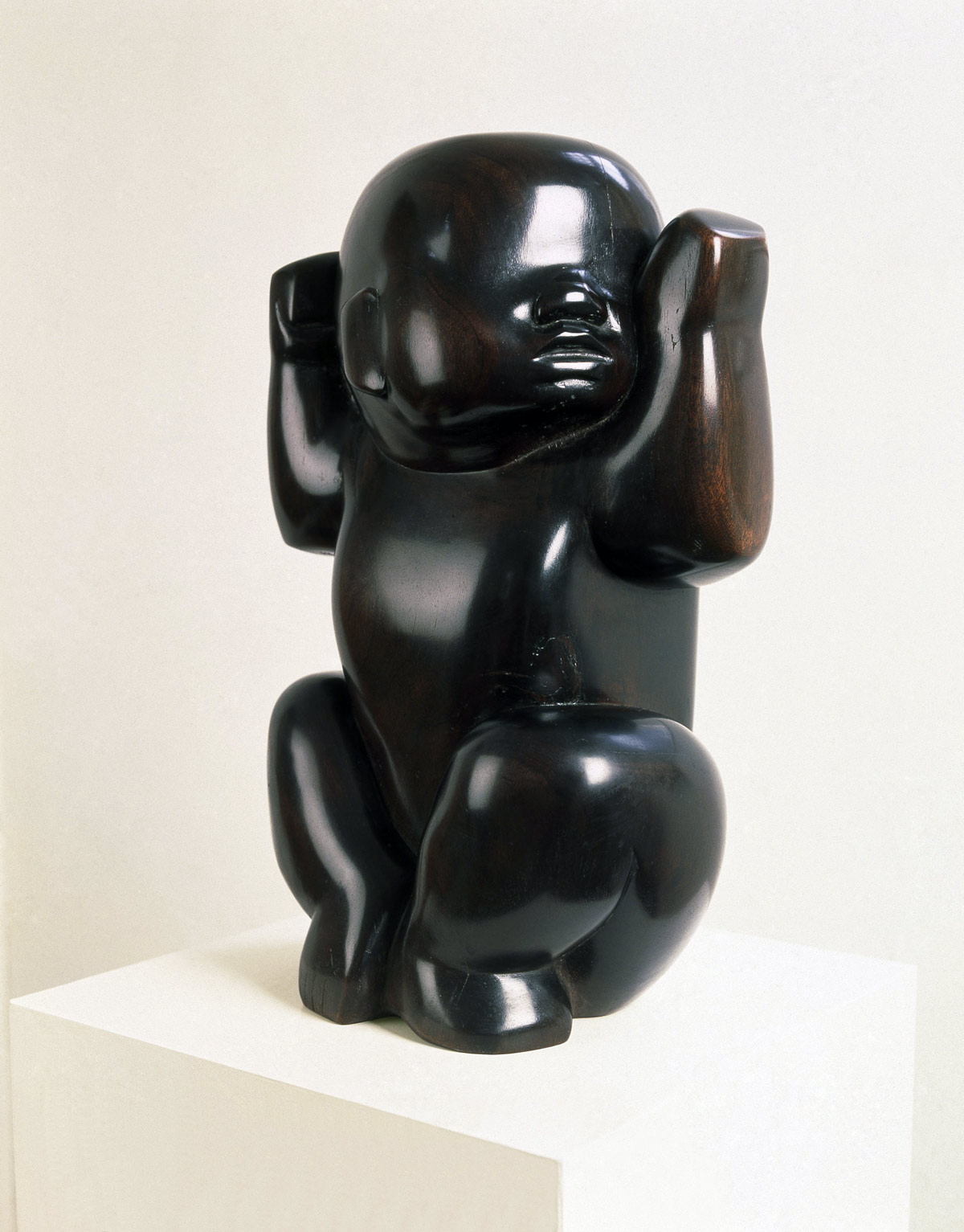

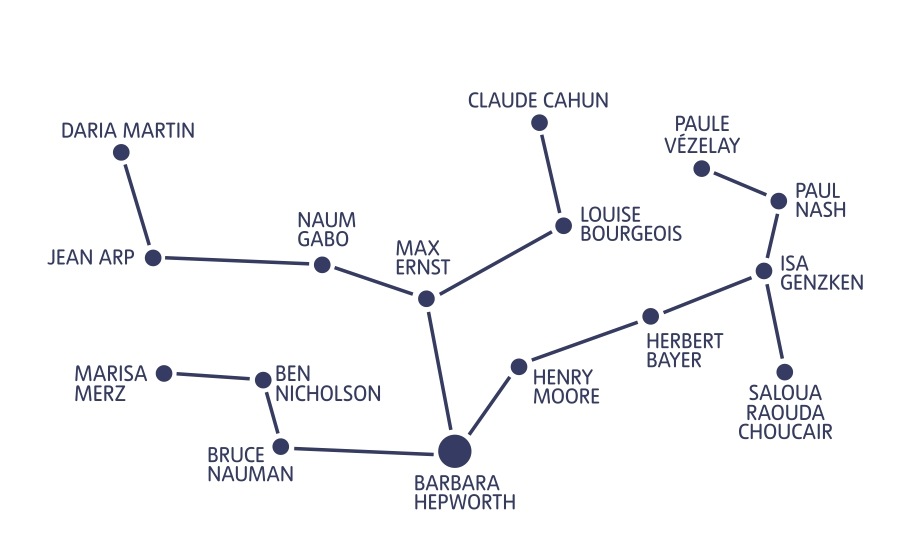
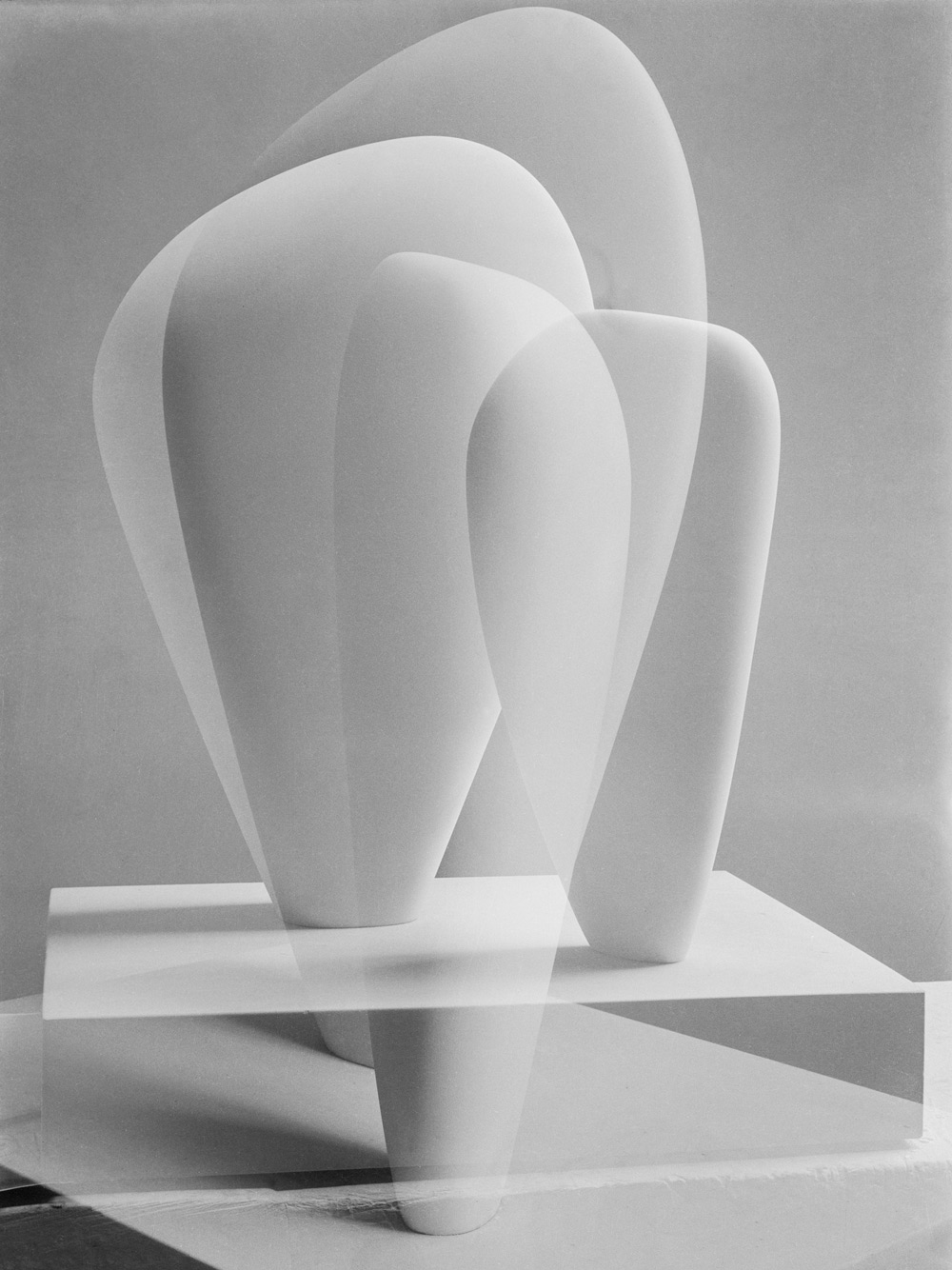

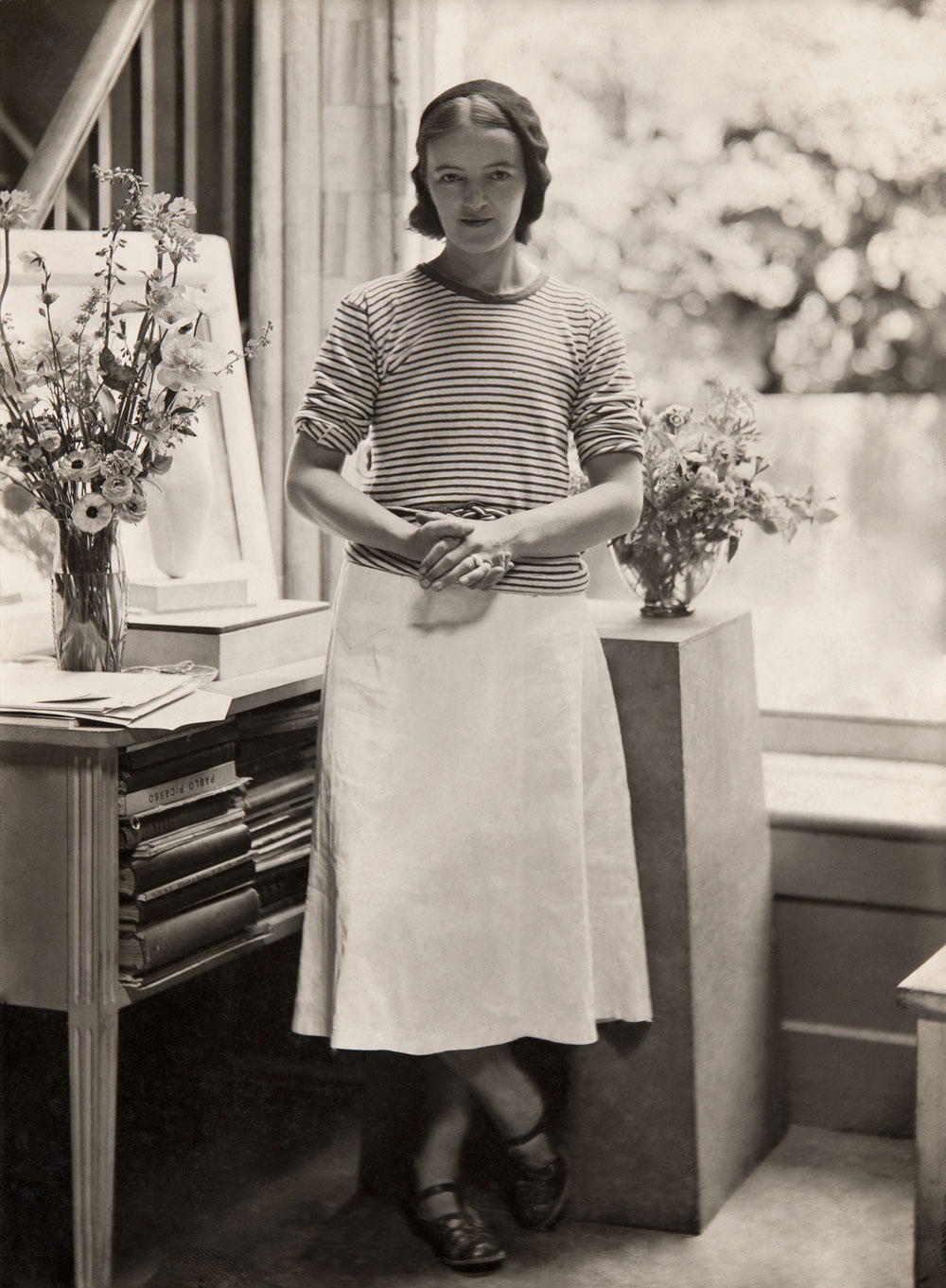





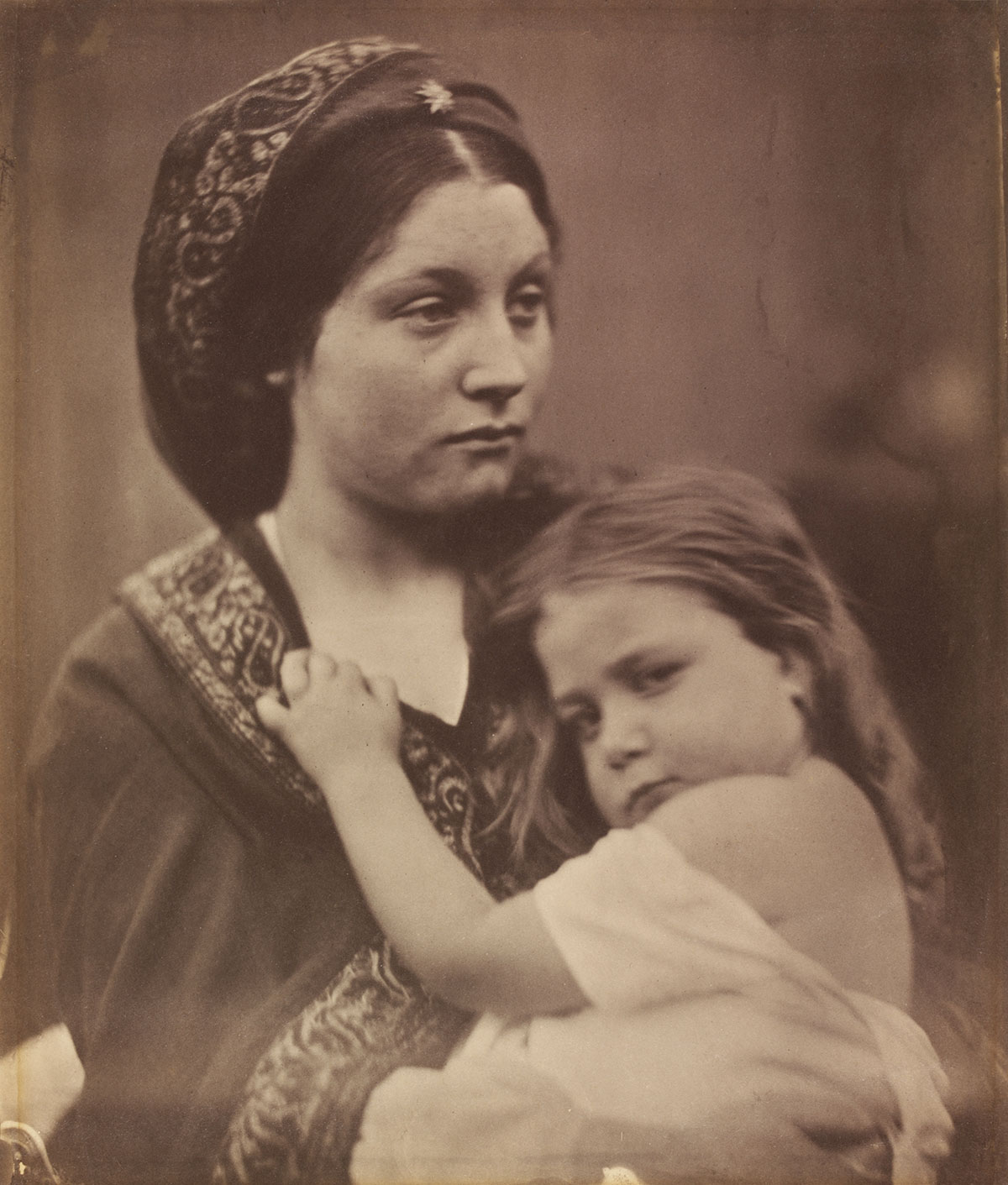
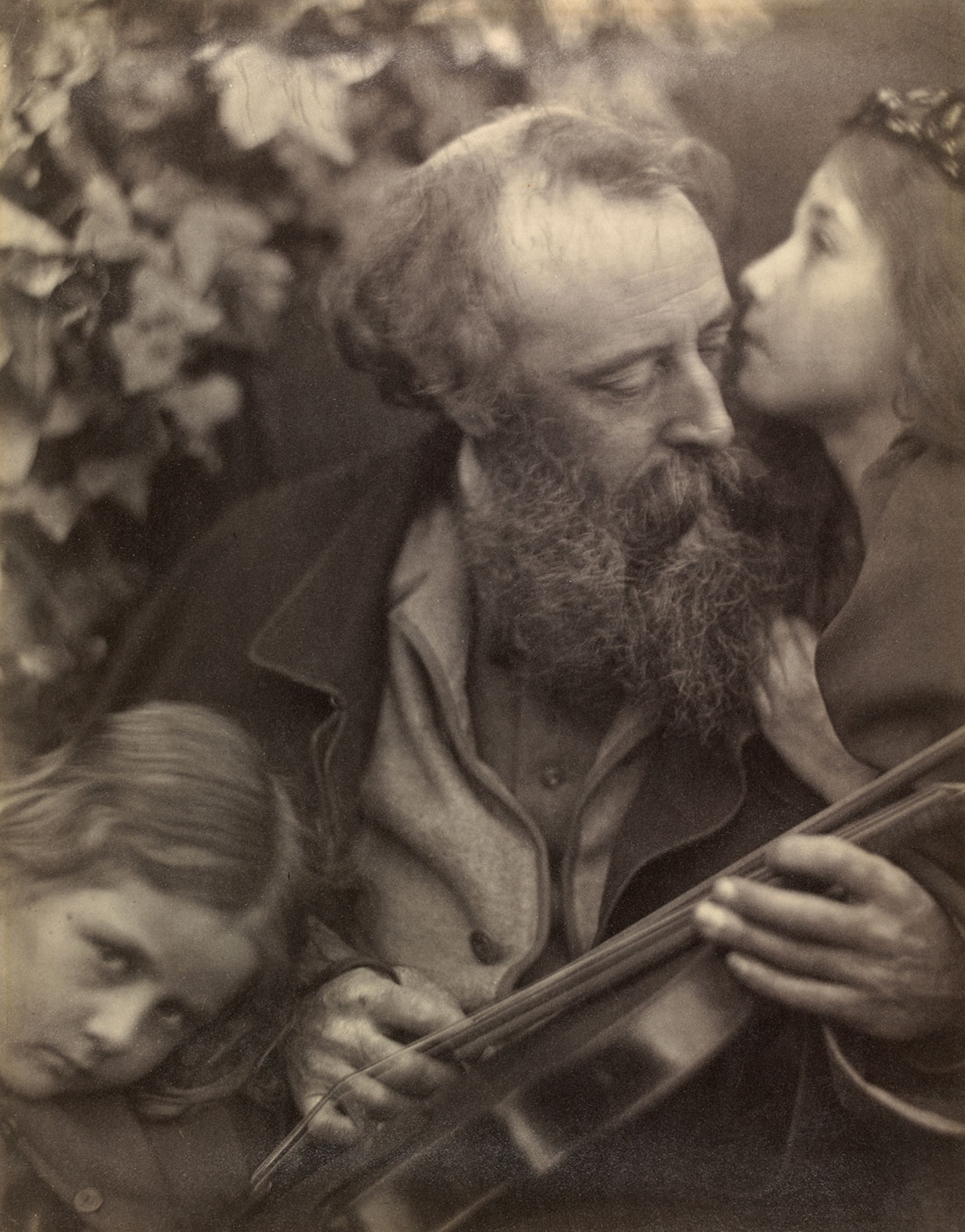
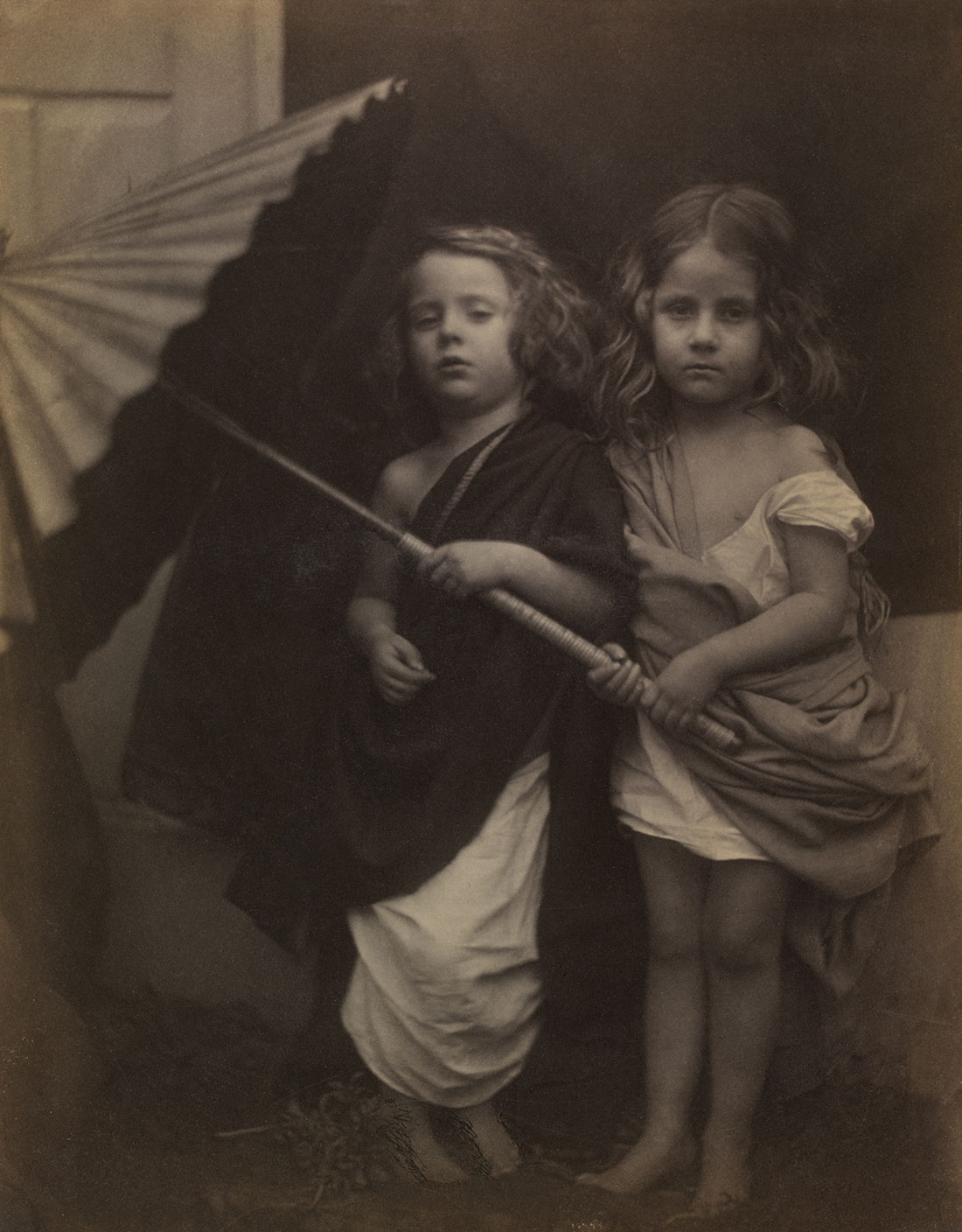
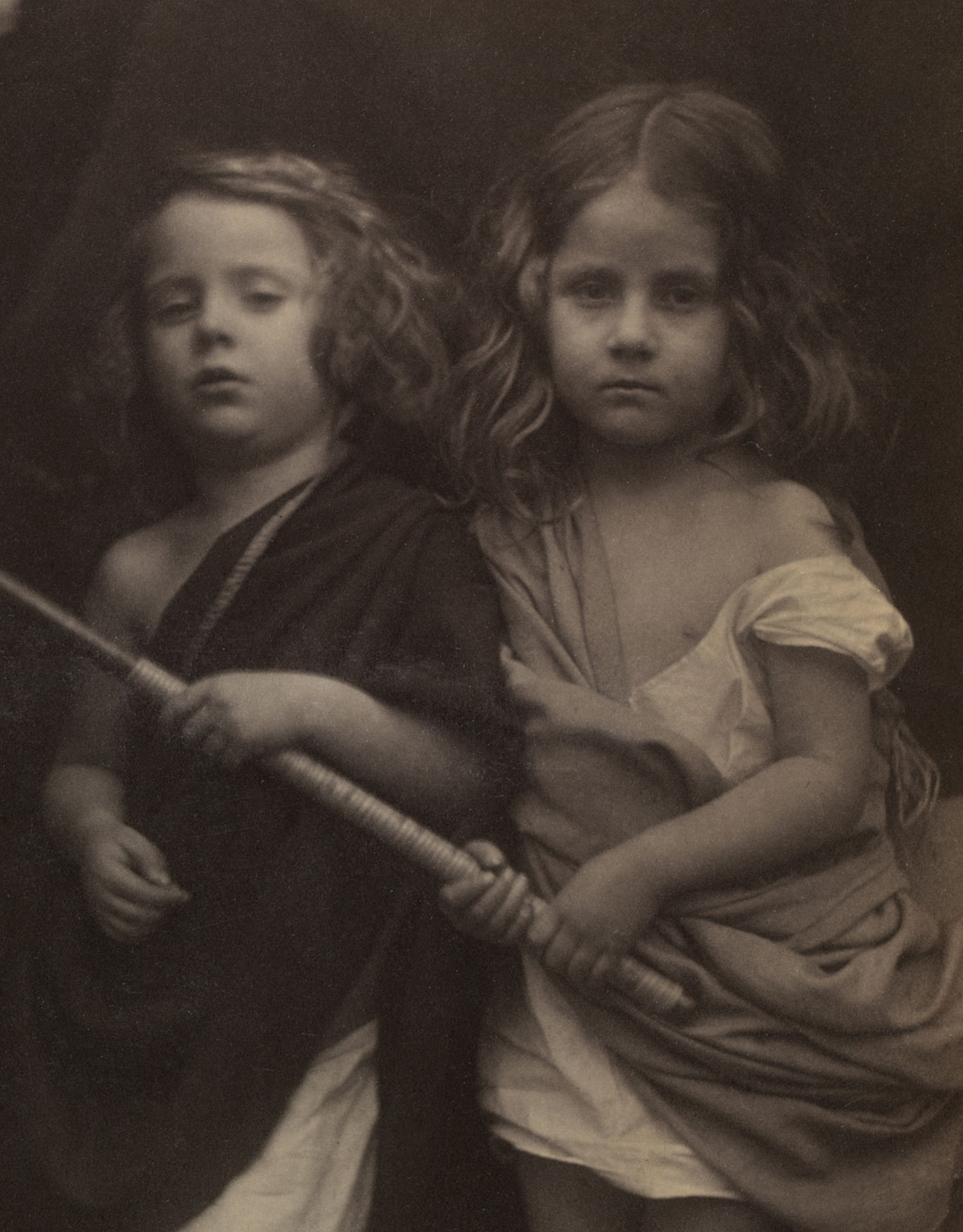
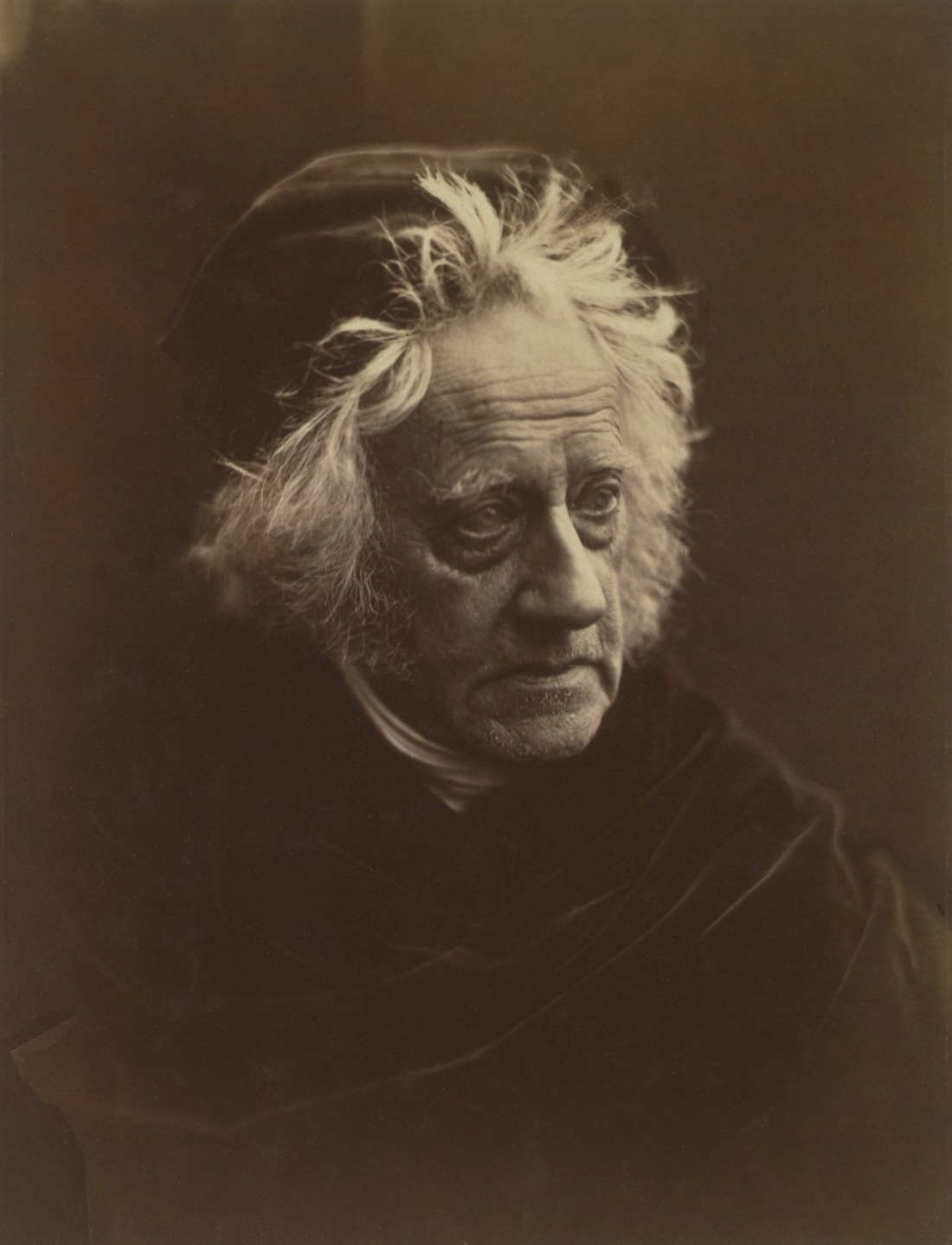
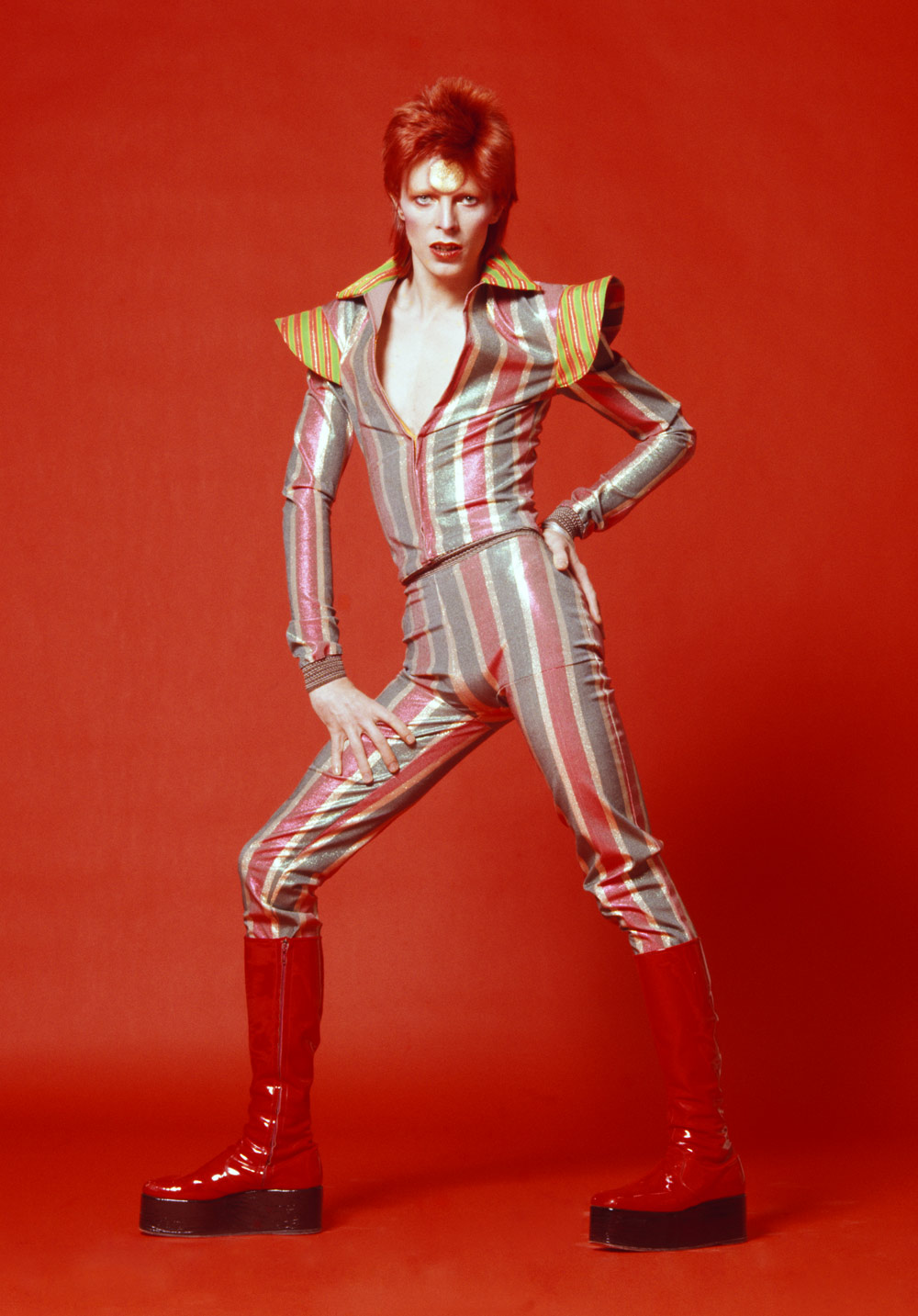

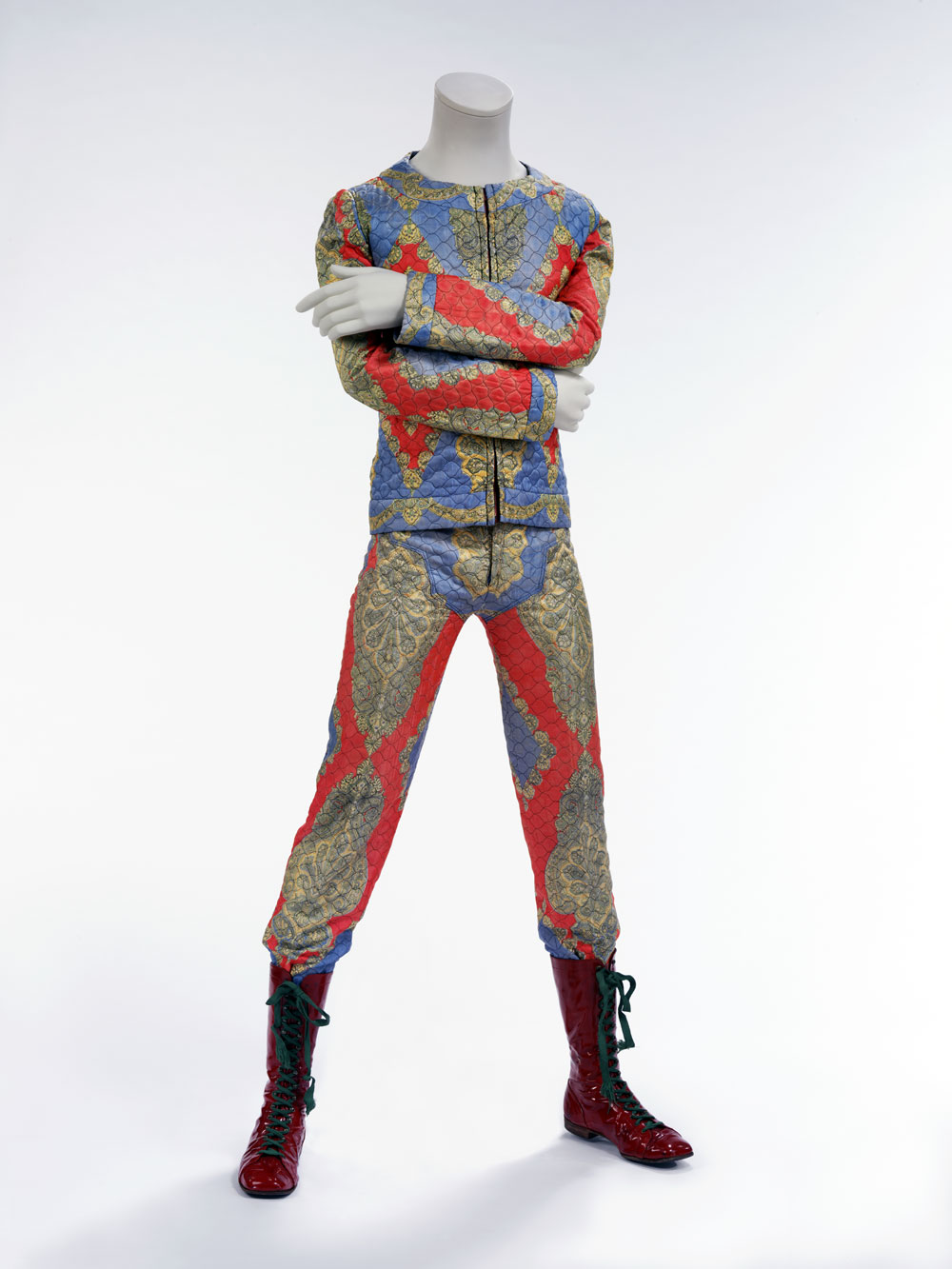
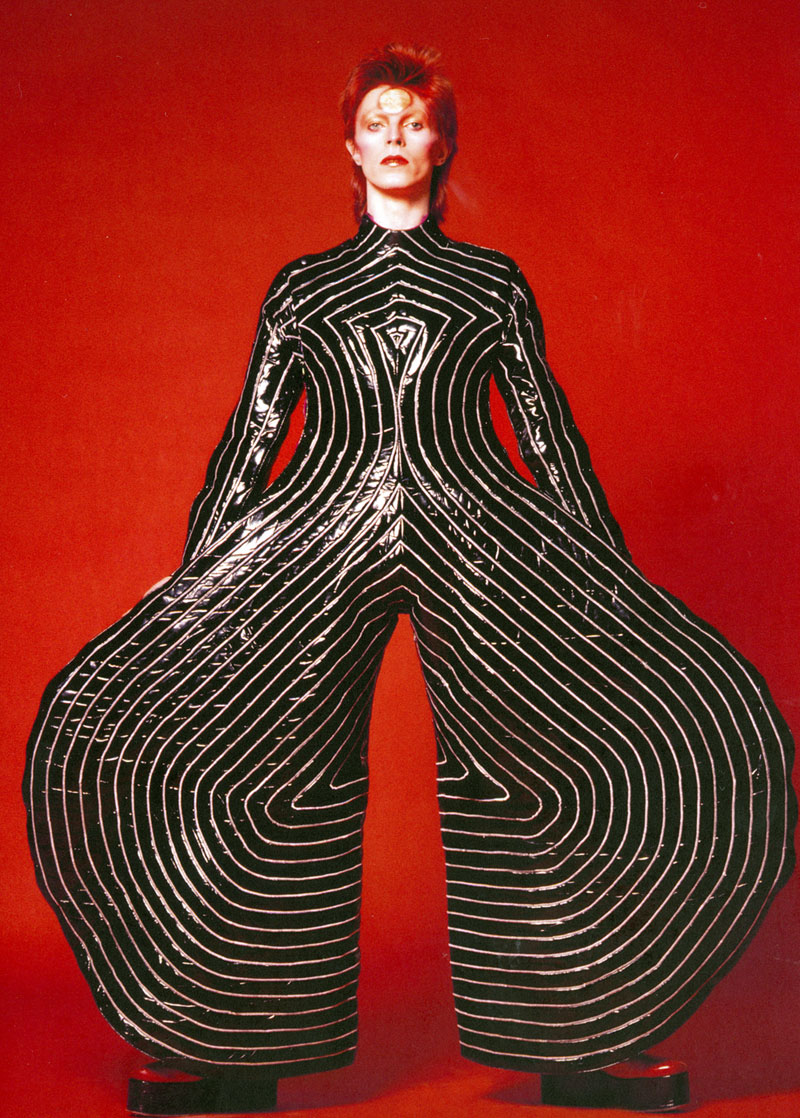
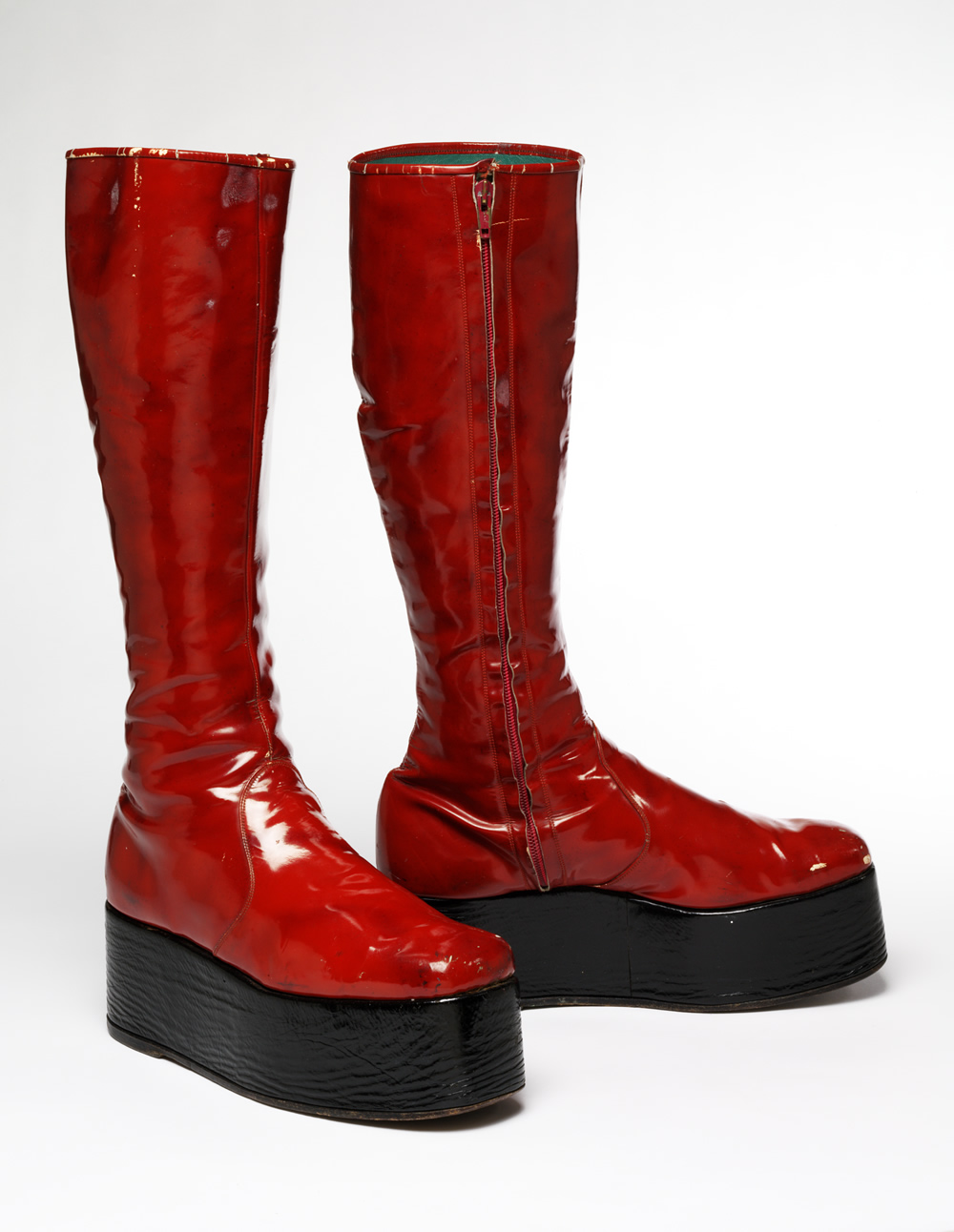


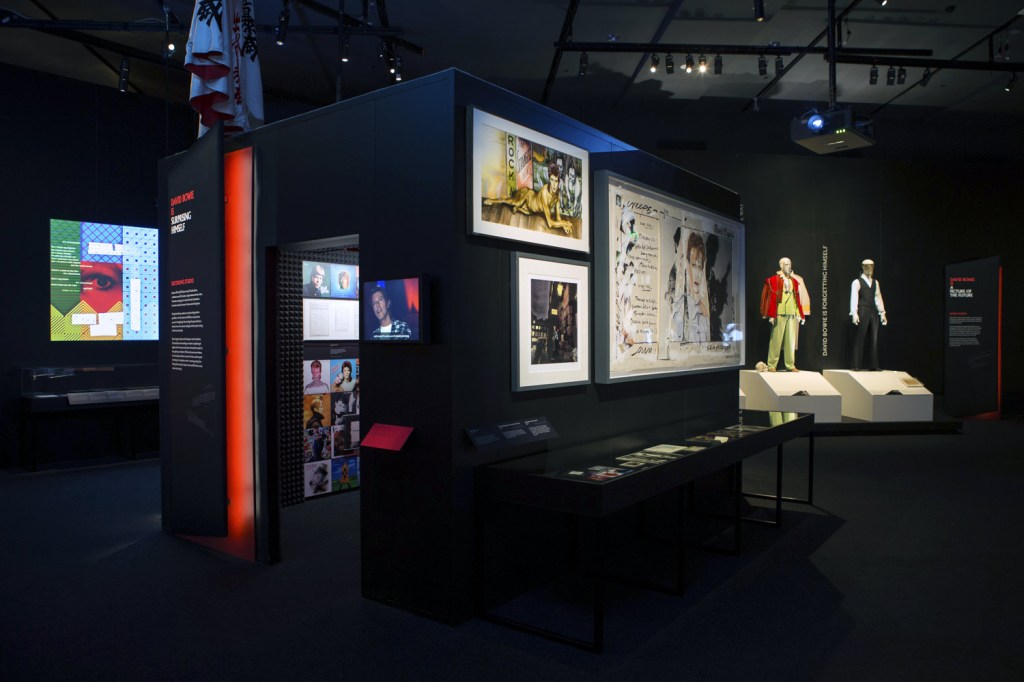
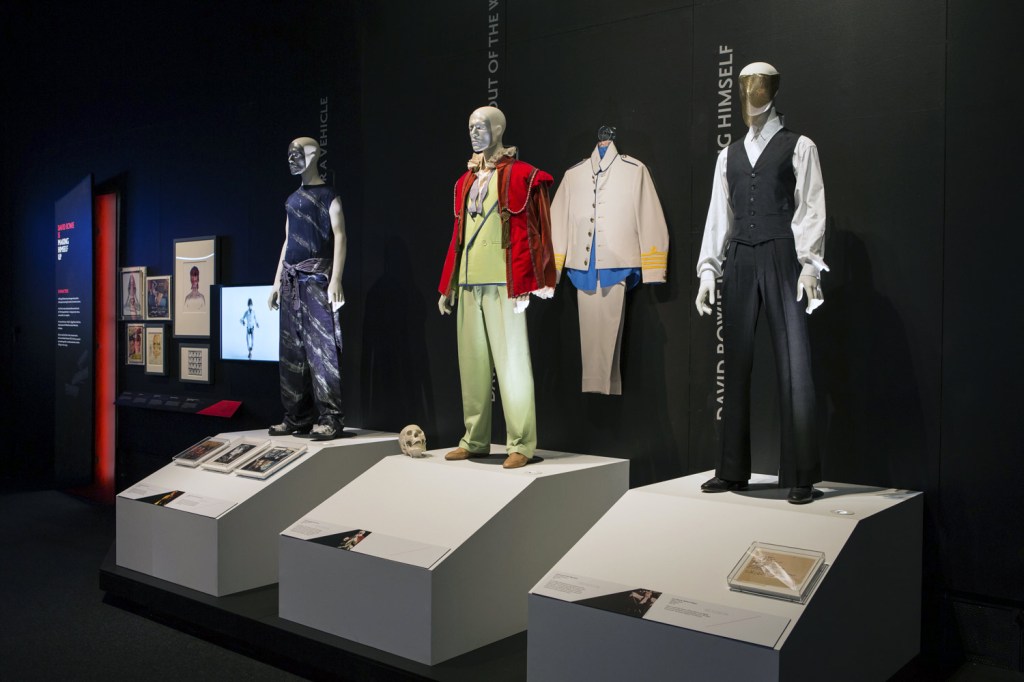












 Art Blart _ art and cultural memory archive
You must be logged in to post a comment.