Exhibition: ‘Richard Misrach: After Katrina’ at The Museum of Fine Arts, Boston

Exhibition dates: 7th August – 31st October 2010


Many thankx to The Museum of Fine Arts, Boston for allowing me to publish the photographs in the posting. Please click on the photographs for a larger version of the image.


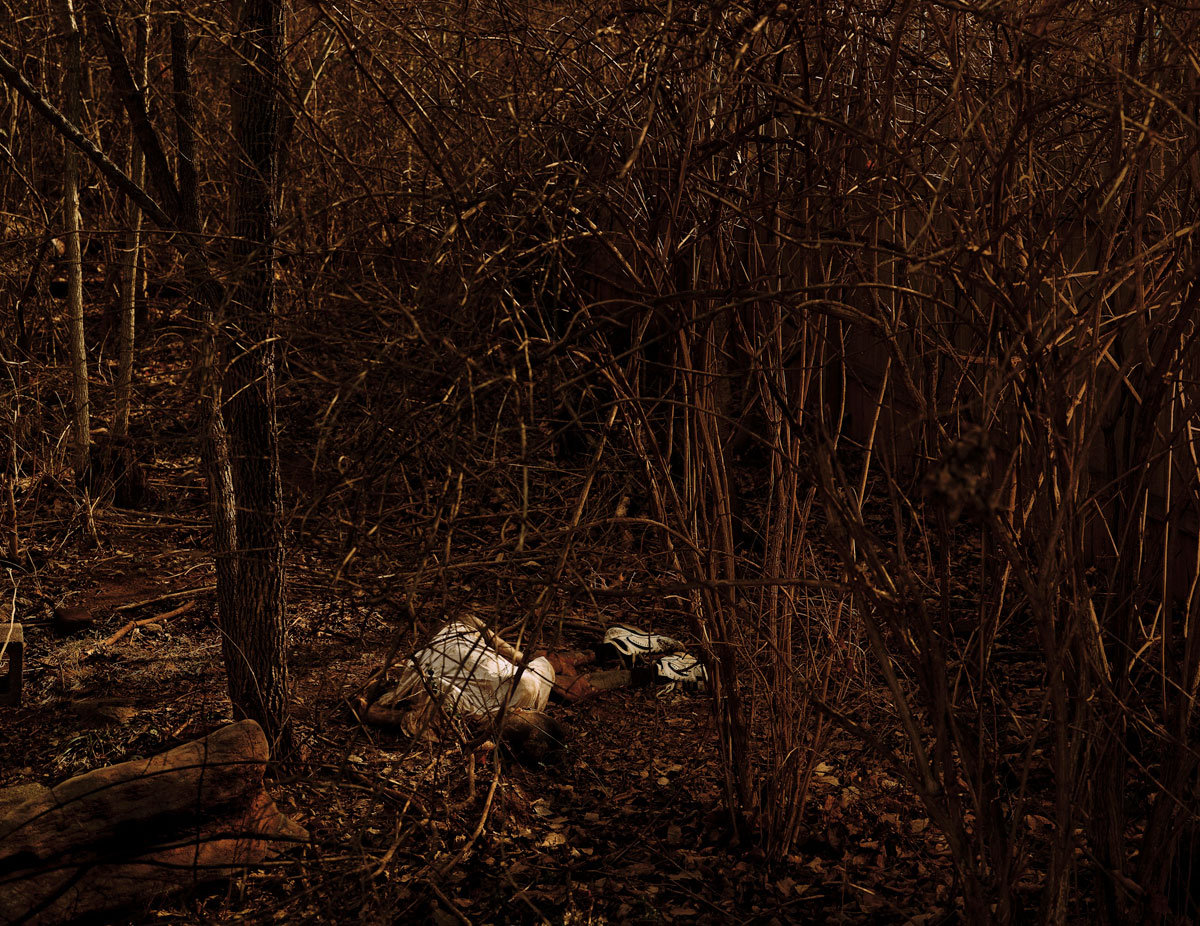
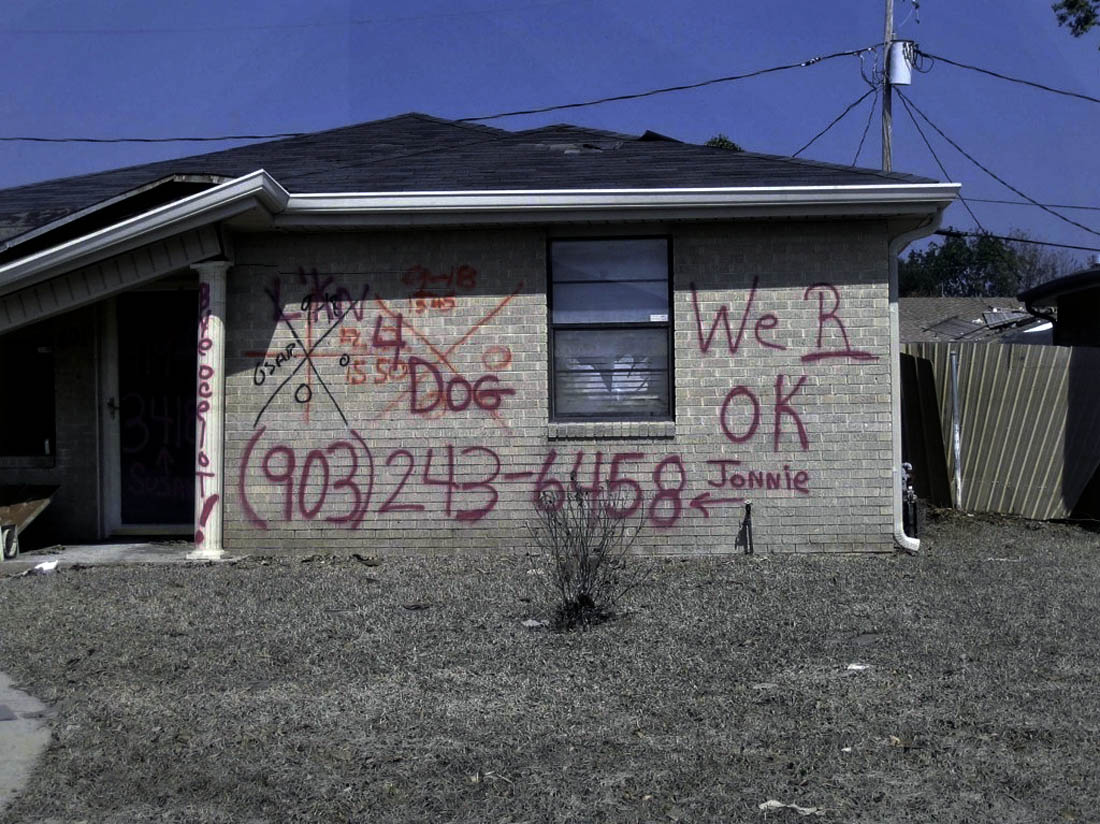
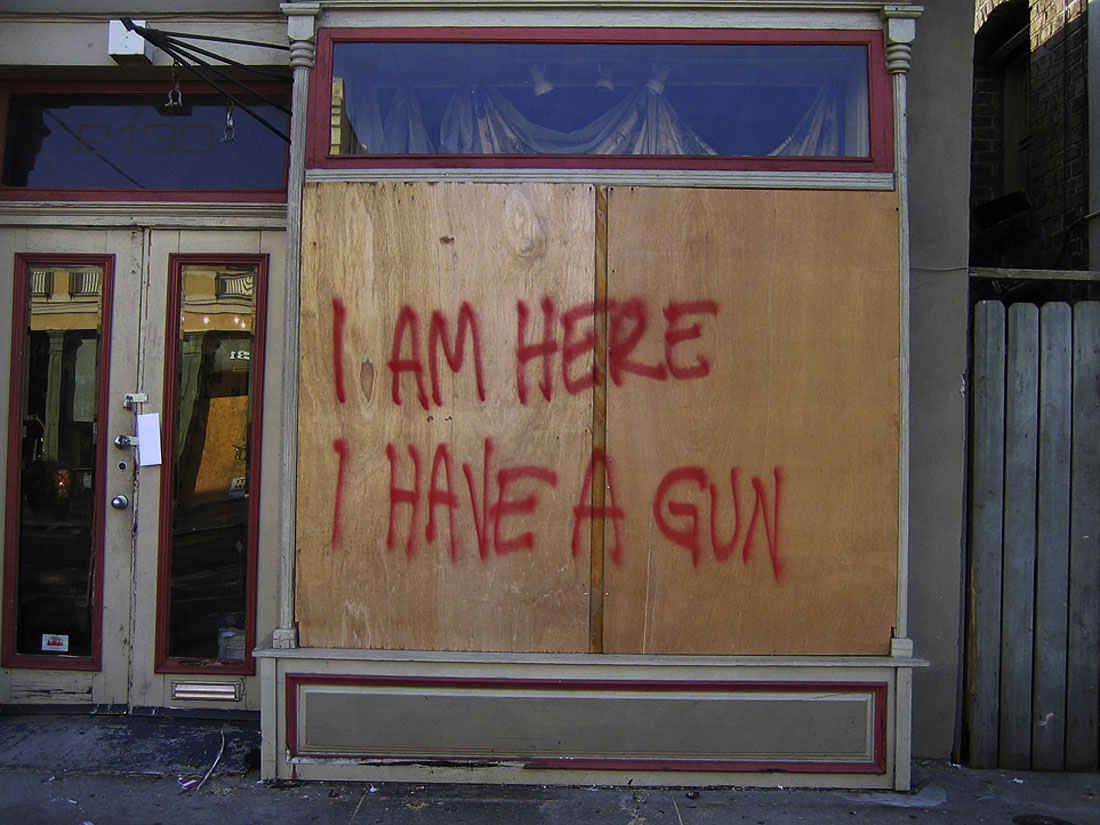
Richard Misrach (American, b. 1949) 'Untitled (New Orleans and the Gulf Coast)' 2005 from the exhibition 'Richard Misrach: After Katrina' at The Museum of Fine Arts, Boston, Aug-  Oct 2010
 

Richard Misrach (American, b. 1949)
Untitled (New Orleans and the Gulf Coast)
2005, printed 2010
Inkjet print, ed. #3/5
2399 x 1795 mm
The Museum of Fine Arts, Houston, gift of the artist
© Richard Misrach


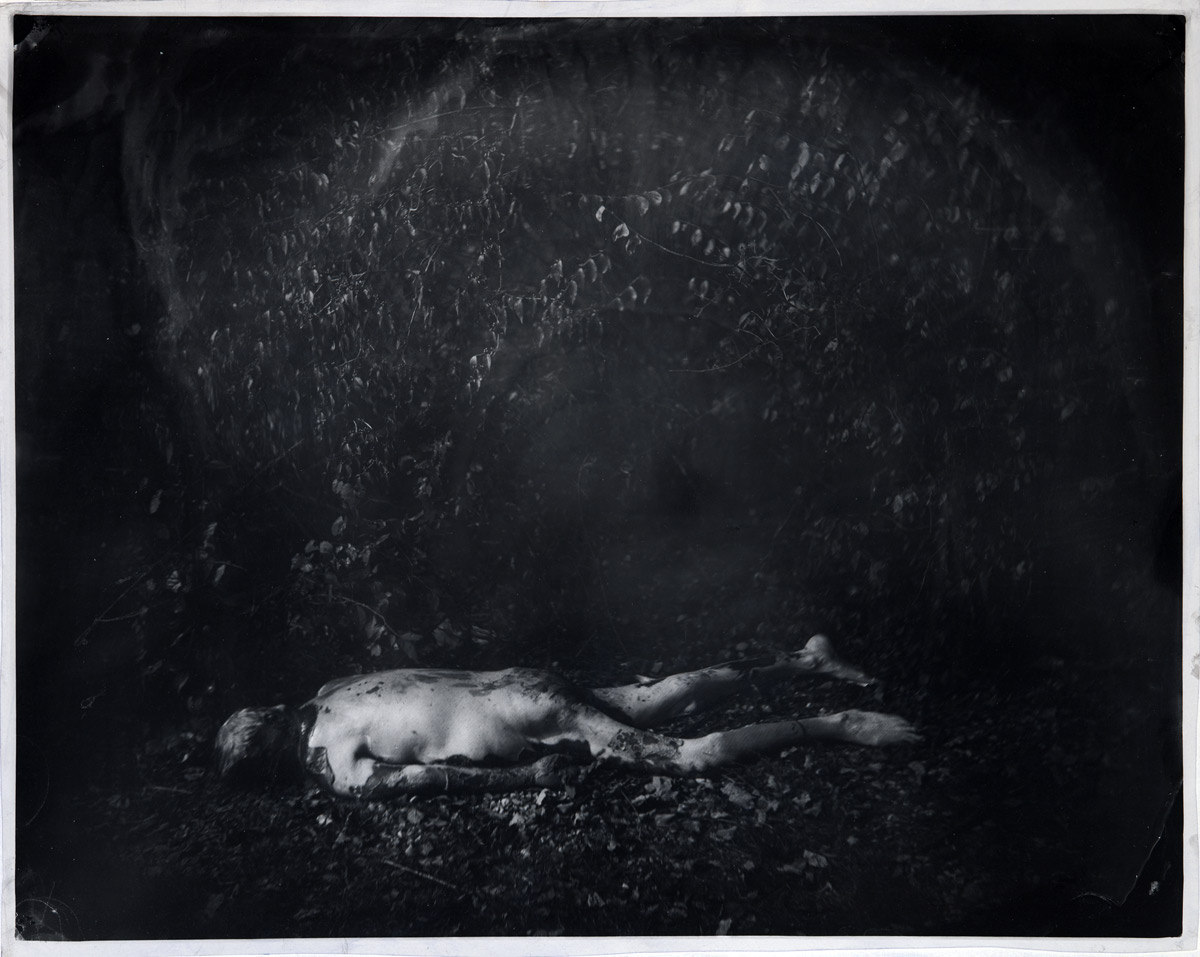
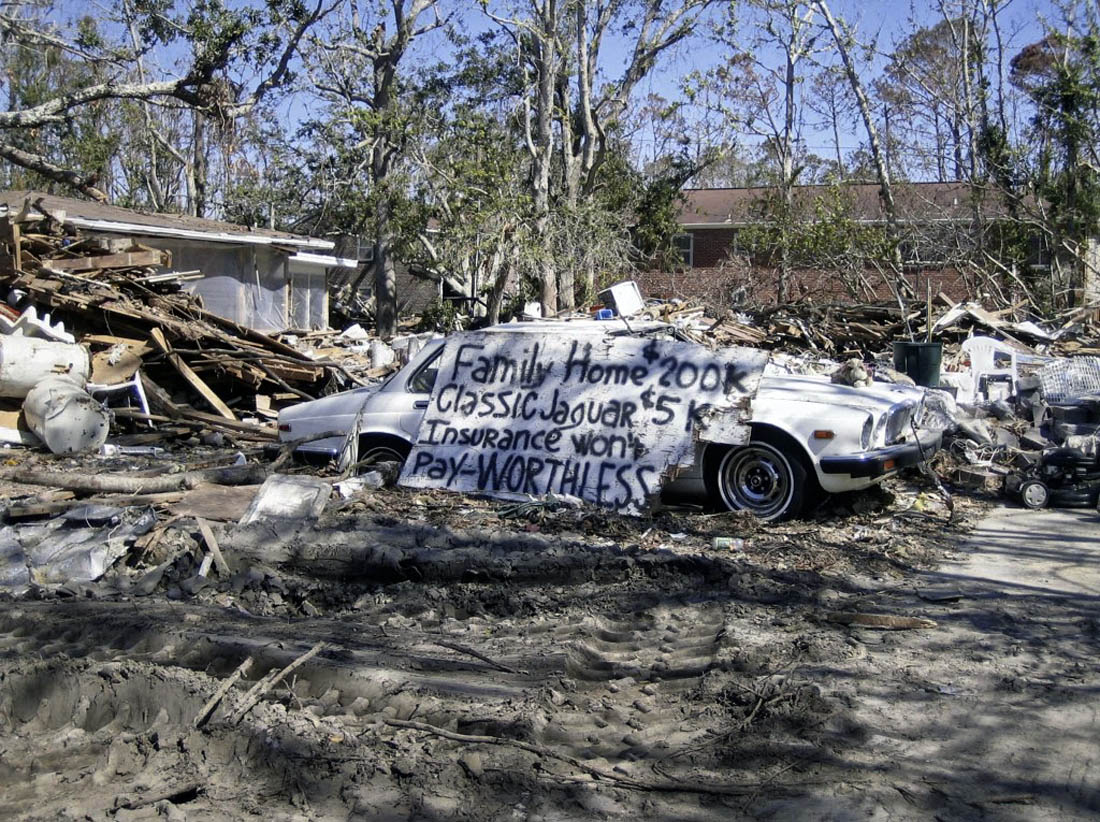
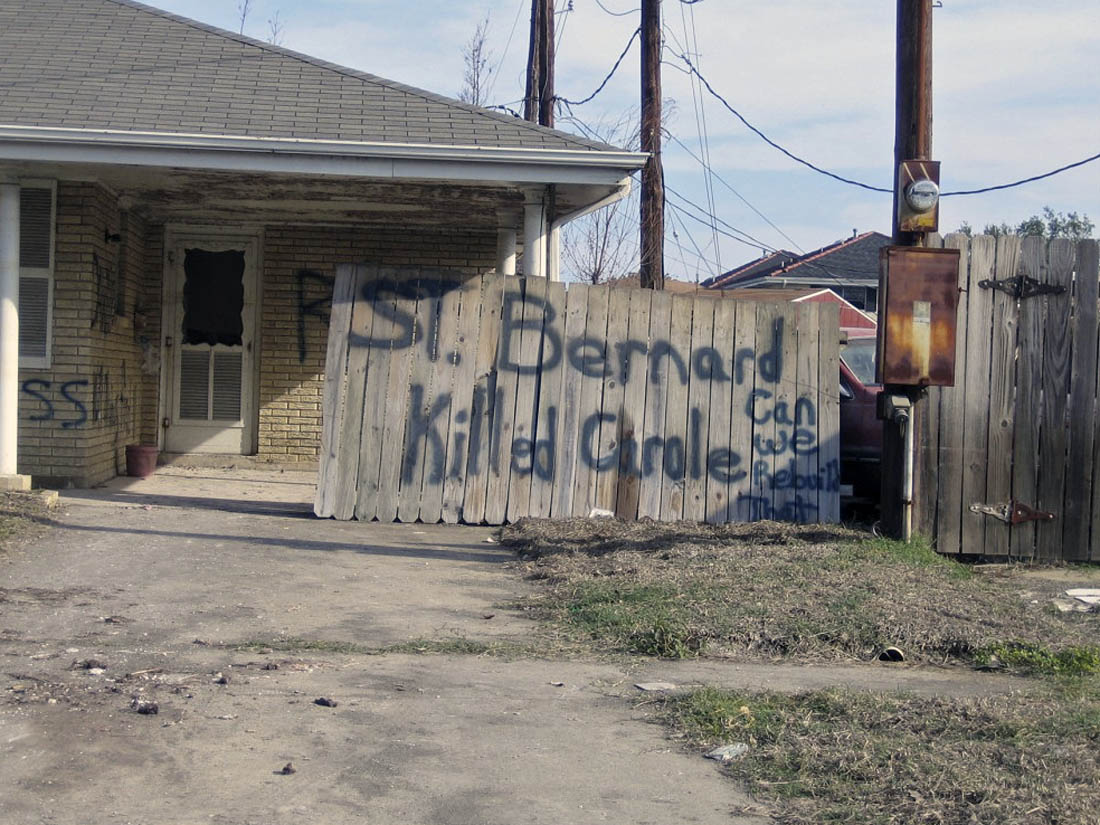
Richard Misrach (American, b. 1949) 'Untitled (New Orleans and the Gulf Coast)' 2005 from the exhibition 'Richard Misrach: After Katrina' at The Museum of Fine Arts, Boston, Aug-  Oct 2010


Richard Misrach (American, b. 1949)
Untitled (New Orleans and the Gulf Coast)
2005, printed 2010
Inkjet print, ed. #3/5
2400 x 1807 mm
The Museum of Fine Arts, Houston, gift of the artist
© Richard Misrach


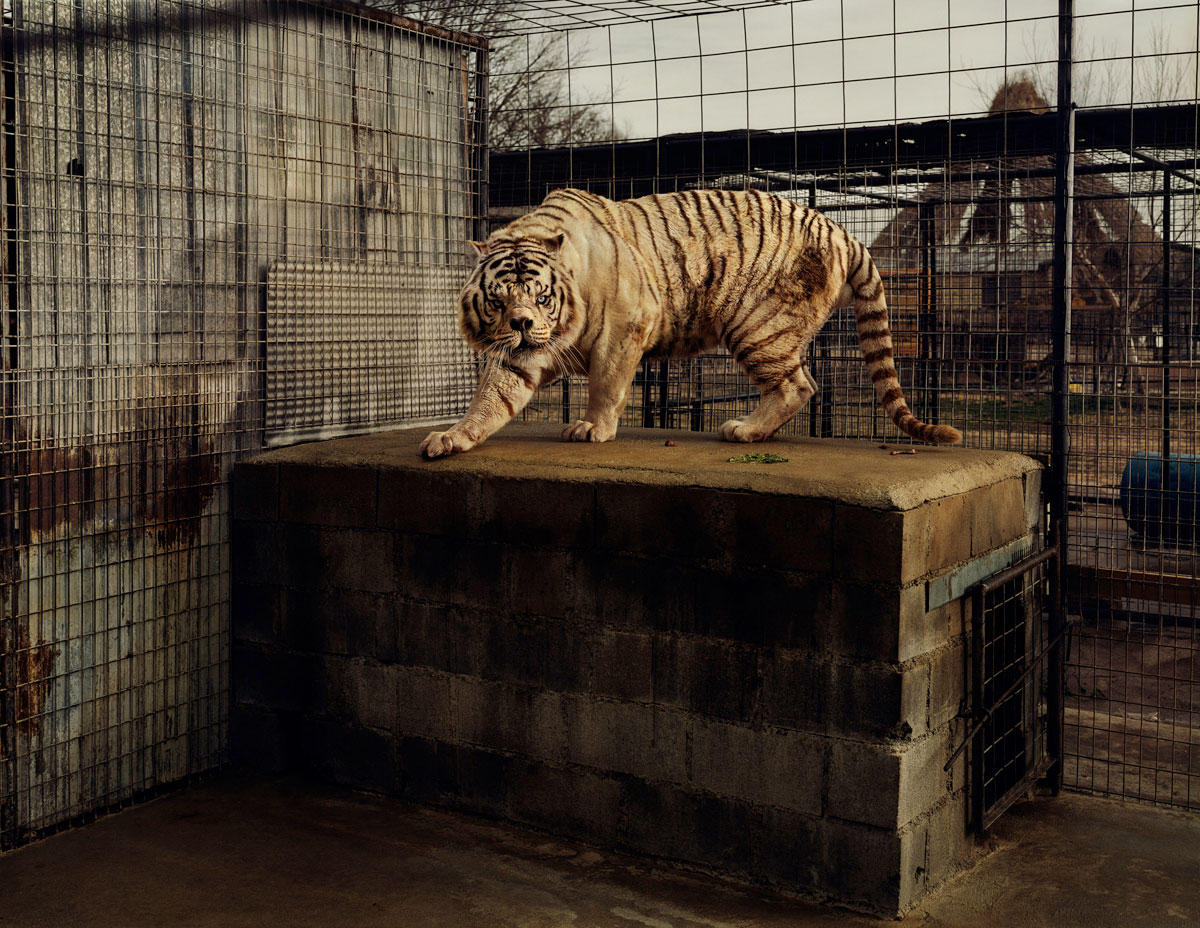
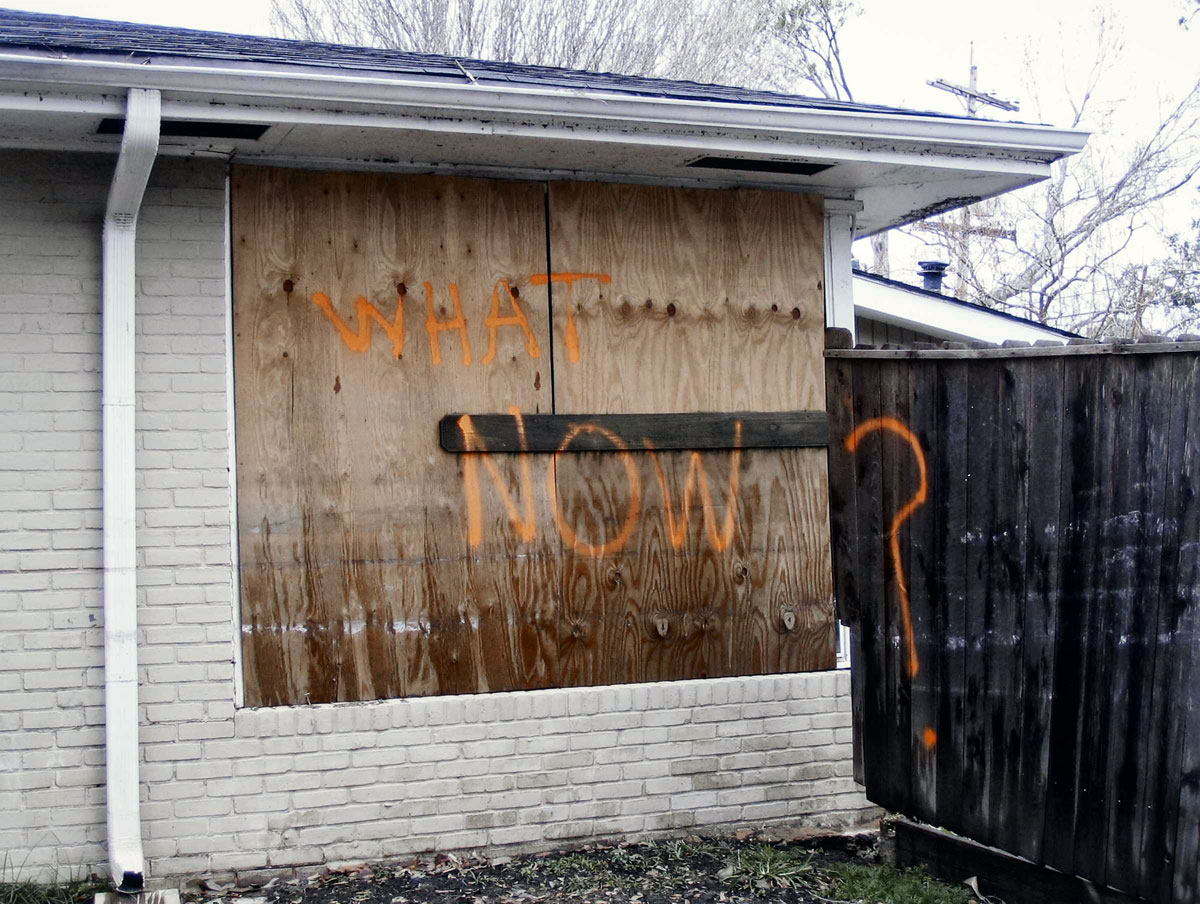
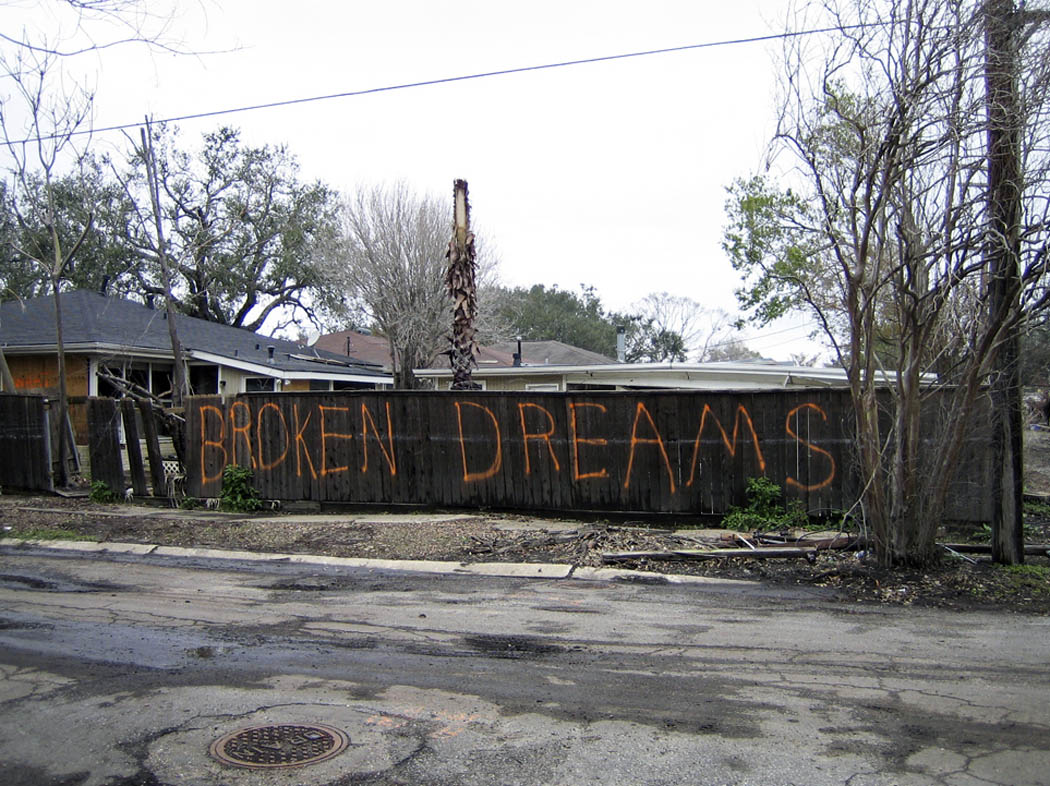
Richard Misrach (American, b. 1949) 'Untitled (New Orleans and the Gulf Coast)' 2005 from the exhibition 'Richard Misrach: After Katrina' at The Museum of Fine Arts, Boston, Aug-  Oct 2010


Richard Misrach (American, b. 1949)
Untitled (New Orleans and the Gulf Coast)
2005, printed 2010
Inkjet print, ed. #3/5
2400 x 1801 mm
The Museum of Fine Arts, Houston, gift of the artist
© Richard Misrach


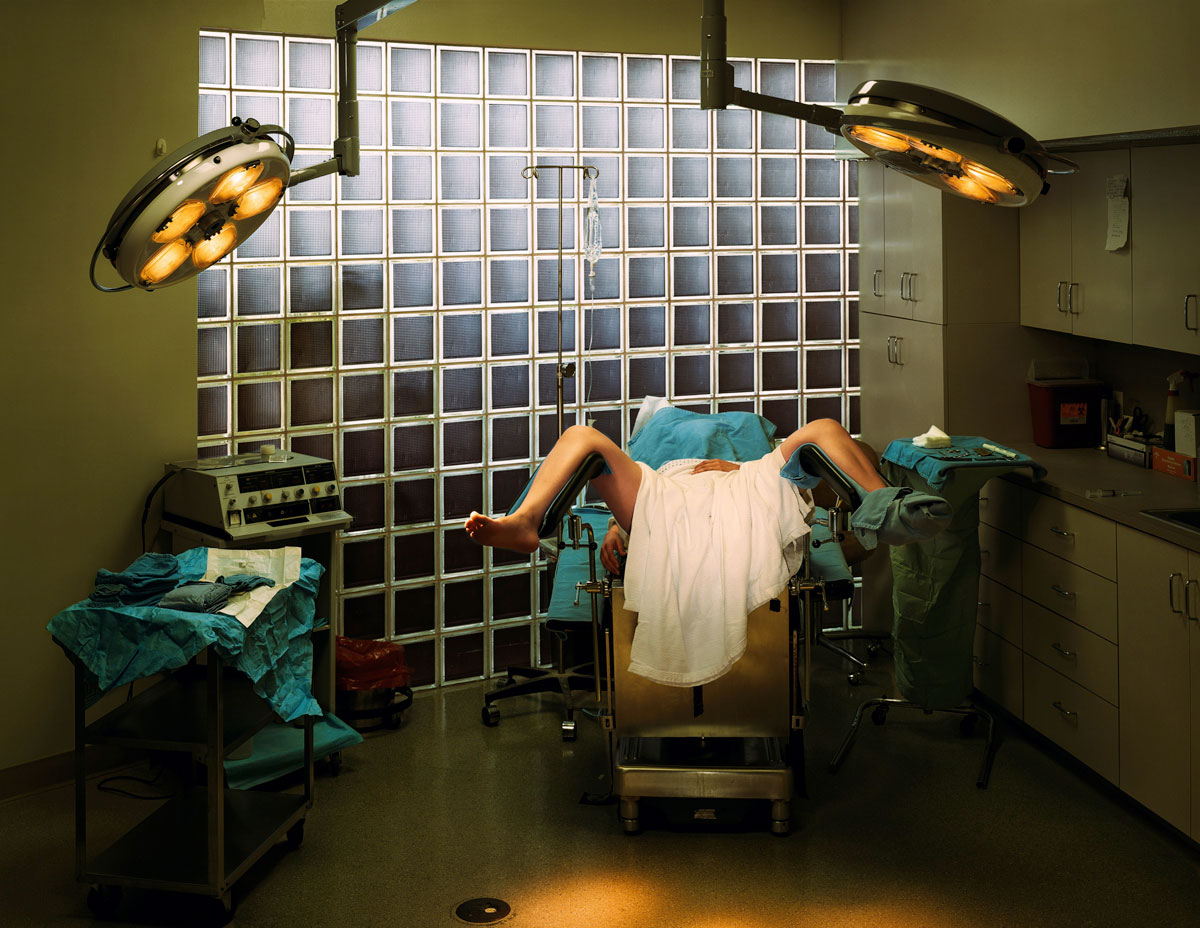
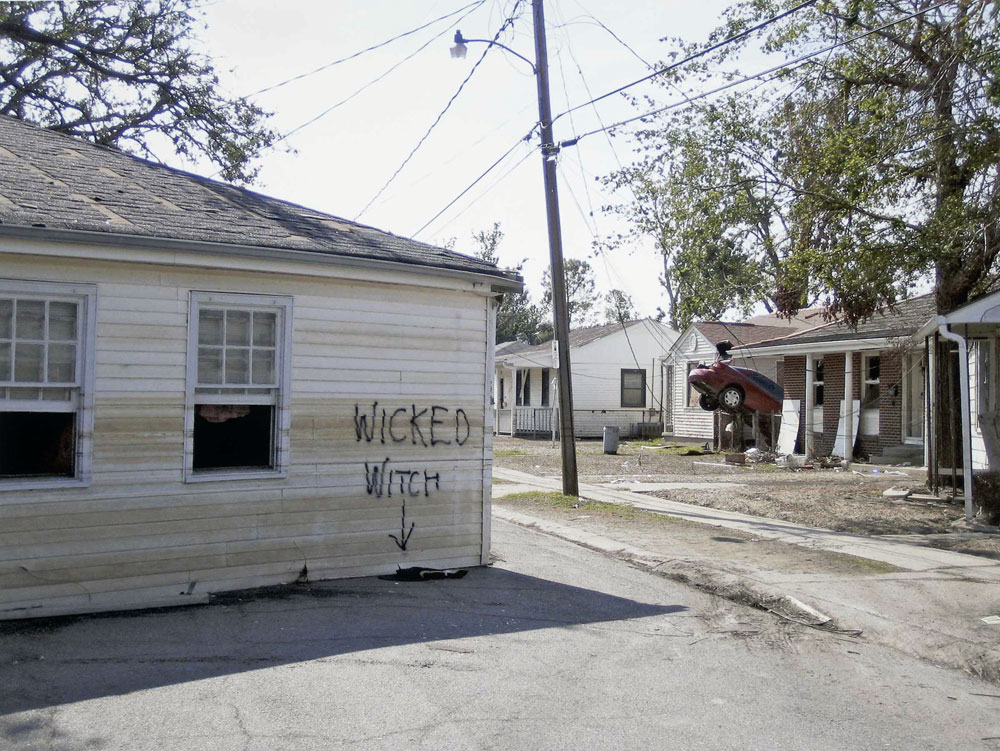
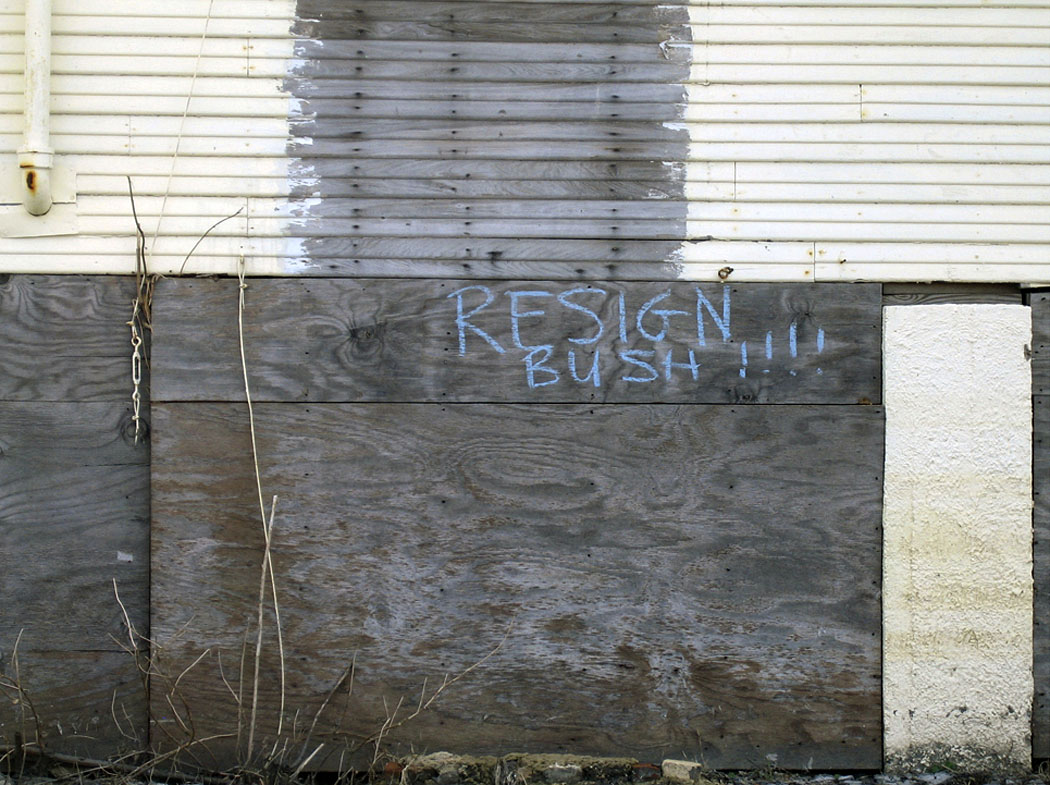
Richard Misrach (American, b. 1949) 'Untitled (New Orleans and the Gulf Coast)' 2005


Richard Misrach (American, b. 1949)
Untitled (New Orleans and the Gulf Coast)
2005, printed 2010
Inkjet print
The Museum of Fine Arts, Houston, gift of the artist
© Richard Misrach


Richard Misrach (American, b. 1949) 'Untitled (New Orleans and the Gulf Coast)' 2005


Richard Misrach (American, b. 1949)
Untitled (New Orleans and the Gulf Coast)
2005, printed 2010
Inkjet print
The Museum of Fine Arts, Houston, gift of the artist
© Richard Misrach


Richard Misrach (American, b. 1949) 'Untitled (New Orleans and the Gulf Coast)' 2005


Richard Misrach (American, b. 1949)
Untitled (New Orleans and the Gulf Coast)
2005, printed 2010
Inkjet print
The Museum of Fine Arts, Houston, gift of the artist
© Richard Misrach


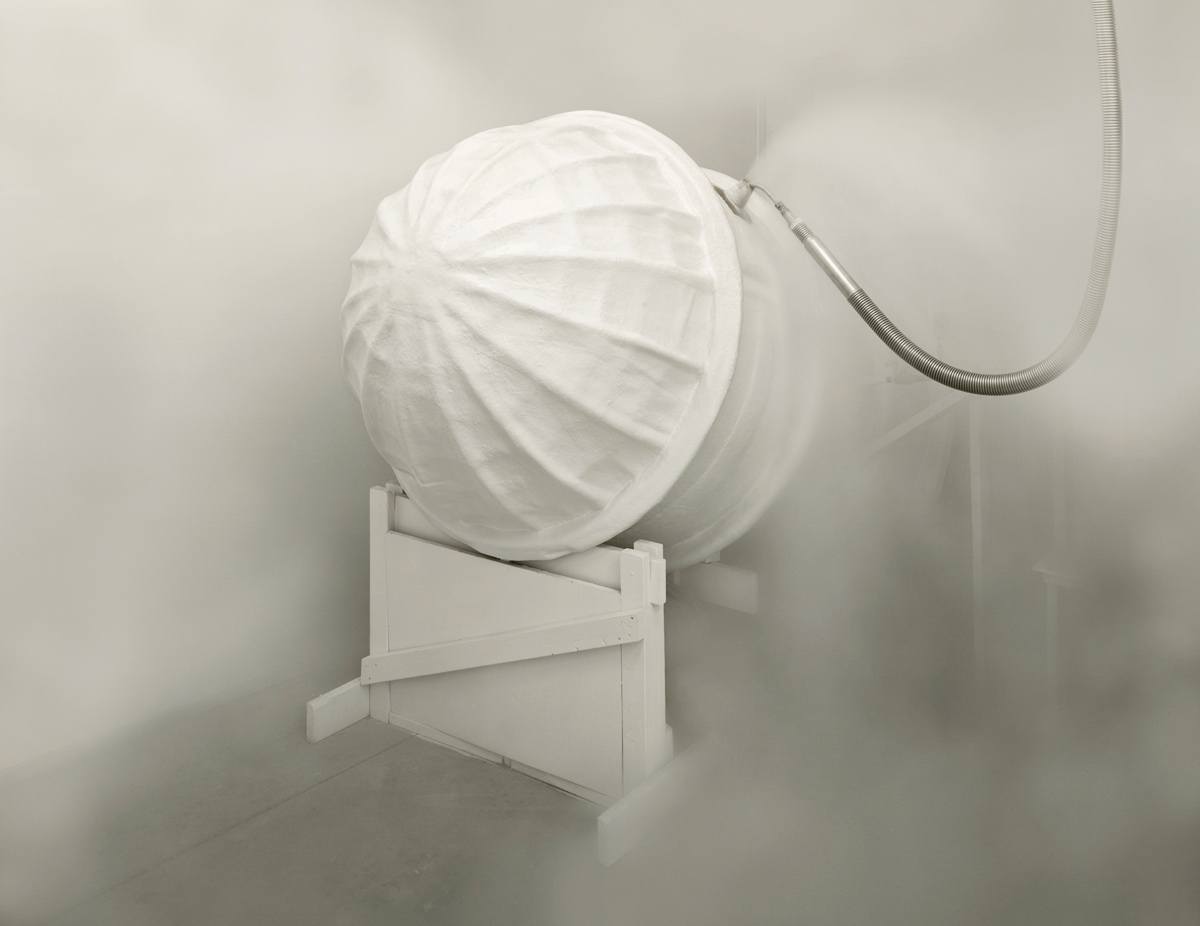
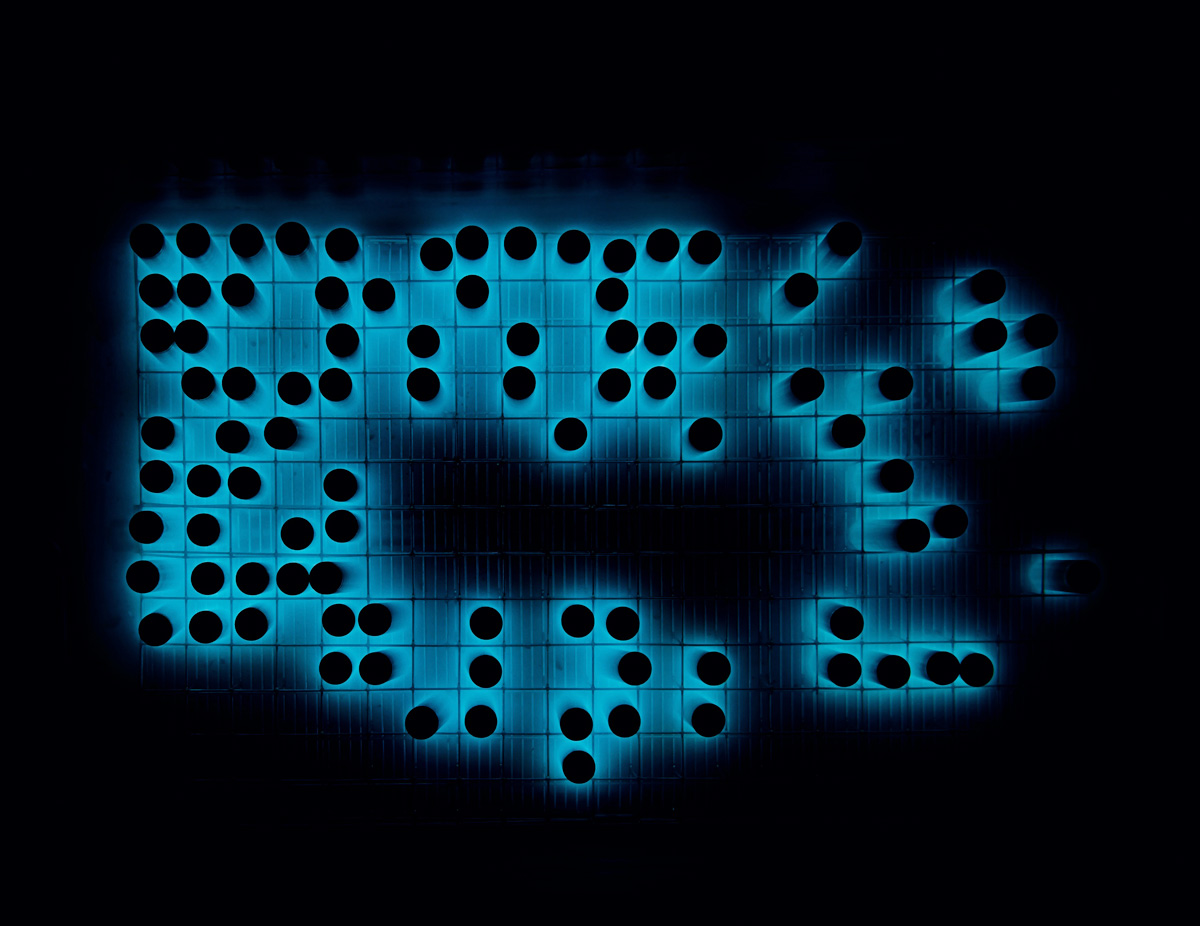
Just after Hurricane Katrina devastated the city of New Orleans in 2005, photographer Richard Misrach used a 4-megapixel pocket camera to capture messages left behind by evacuees. Some are warnings; some are cries for help or encouragement; some are tallies of loss.

Misrach composed a visual narrative that reveals the wrenching anguish of dealing with the aftermath of this horrific storm. Commemorating the hurricane’s fifth anniversary, the exhibition Richard Misrach: After Katrina presents 69 photographs that Misrach has generously given to the MFAH.

Misrach (born 1949) is best known for his Desert Cantos series, initiated in 1979 and still ongoing. Each canto within the series investigates specific aspects of the American West, from issues of water, to tourism, to the presence of the U.S. military. While developing the Cantos, Misrach has also produced series on the Golden Gate Bridge and Hawaiian beaches. The MFAH collects Misrach’s work in depth and in 1996 organised the artist’s mid-career retrospective, Crimes and Splendors: The Desert Cantos of Richard Misrach.

Text from The Museum of Fine Arts, Boston website


Richard Misrach (American, b. 1949) 'Untitled (New Orleans and the Gulf Coast)' 2005


Richard Misrach (American, b. 1949)
Untitled (New Orleans and the Gulf Coast)
2005, printed 2010
Inkjet print, ed. #3/5
2400 x 1794 mm
The Museum of Fine Arts, Houston, gift of the artist
© Richard Misrach


Richard Misrach (American, b. 1949) 'Untitled (New Orleans and the Gulf Coast)' 2005


Richard Misrach (American, b. 1949)
Untitled (New Orleans and the Gulf Coast)
2005, printed 2010
Inkjet print, ed. #3/5
2400 x 1801 mm
The Museum of Fine Arts, Houston, gift of the artist
© Richard Misrach


Richard Misrach (American, b. 1949) 'Untitled (New Orleans and the Gulf Coast)' 2005


Richard Misrach (American, b. 1949)
Untitled (New Orleans and the Gulf Coast)
2005, printed 2010
Inkjet print, ed. #3/5
2400 x 1807 mm
The Museum of Fine Arts, Houston, gift of the artist
© Richard Misrach


Richard Misrach (American, b. 1949) 'Untitled (New Orleans and the Gulf Coast)' 2005


Richard Misrach (American, b. 1949)
Untitled (New Orleans and the Gulf Coast)
2005, printed 2010
Inkjet print, ed. #3/5
2400 x 1803 mm
The Museum of Fine Arts, Houston, gift of the artist
© Richard Misrach


Richard Misrach (American, b. 1949) 'Untitled (New Orleans and the Gulf Coast)' 2005


Richard Misrach (American, b. 1949)
Untitled (New Orleans and the Gulf Coast)
2005, printed 2010
Inkjet print
The Museum of Fine Arts, Houston, gift of the artist
© Richard Misrach


Richard Misrach (American, b. 1949) 'Untitled (New Orleans and the Gulf Coast)' 2005


Richard Misrach (American, b. 1949)
Untitled (New Orleans and the Gulf Coast)
2005, printed 2010
Inkjet print
The Museum of Fine Arts, Houston, gift of the artist
© Richard Misrach


Richard Misrach (American, b. 1949) 'Untitled (New Orleans and the Gulf Coast)' 2005


Richard Misrach (American, b. 1949)
Untitled (New Orleans and the Gulf Coast)
2005, printed 2010
Inkjet print
The Museum of Fine Arts, Houston, gift of the artist
© Richard Misrach


Richard Misrach (American, b. 1949) 'Untitled (New Orleans and the Gulf Coast)' 2005


Richard Misrach (American, b. 1949)
Untitled (New Orleans and the Gulf Coast)
2005, printed 2010
Inkjet print
The Museum of Fine Arts, Houston, gift of the artist
© Richard Misrach


Richard Misrach (American, b. 1949) 'Untitled (New Orleans and the Gulf Coast)' 2005


Richard Misrach (American, b. 1949)
Untitled (New Orleans and the Gulf Coast)
2005, printed 2010
Inkjet print
The Museum of Fine Arts, Houston, gift of the artist
© Richard Misrach


Richard Misrach (American, b. 1949) 'Untitled (New Orleans and the Gulf Coast)' 2005


Richard Misrach (American, b. 1949)
Untitled (New Orleans and the Gulf Coast)
2005, printed 2010
Inkjet print
The Museum of Fine Arts, Houston, gift of the artist
© Richard Misrach


Richard Misrach (American, b. 1949) 'Untitled (New Orleans and the Gulf Coast)' 2005


Richard Misrach (American, b. 1949)
Untitled (New Orleans and the Gulf Coast)
2005, printed 2010
Inkjet print
The Museum of Fine Arts, Houston, gift of the artist
© Richard Misrach


The Museum of Fine Arts, Houston
1001 Bissonnet Street
Houston, TX 77005

Opening hours:
Wednesday 11am – 5pm
Thursday 11am – 9pm
Friday 11am – 6pm
Saturday 11am – 6pm
Sunday 12.30 – 6pm
Monday Closed
Tuesday Closed

The Museum of Fine Arts, Boston website

LIKE ART BLART ON FACEBOOK

Back to top

Video: ‘Tristan’s Ascension’ and ‘Fire Woman’ by Bill Viola at St Carthages Church, Parkville

Installation dates: 8th October – 23rd October 2010


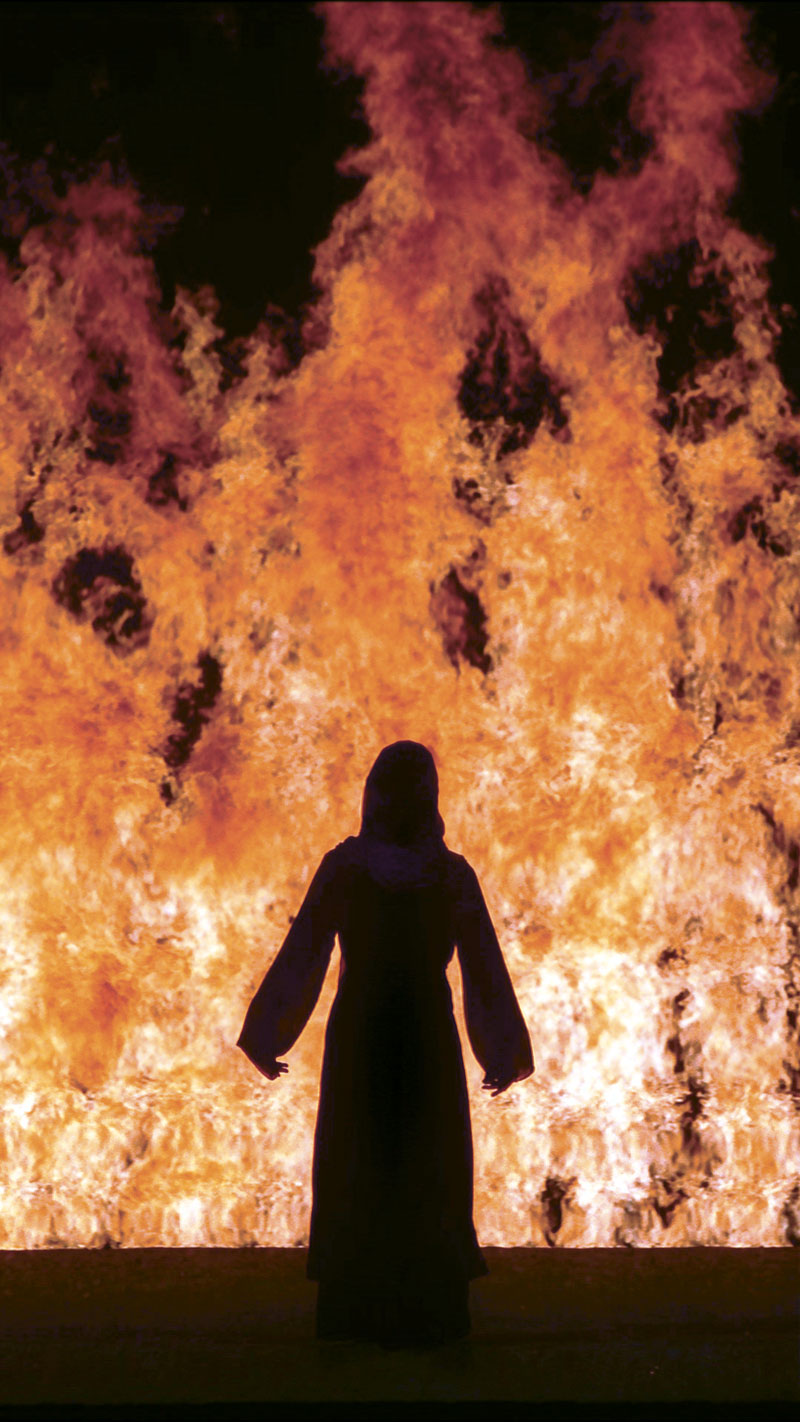
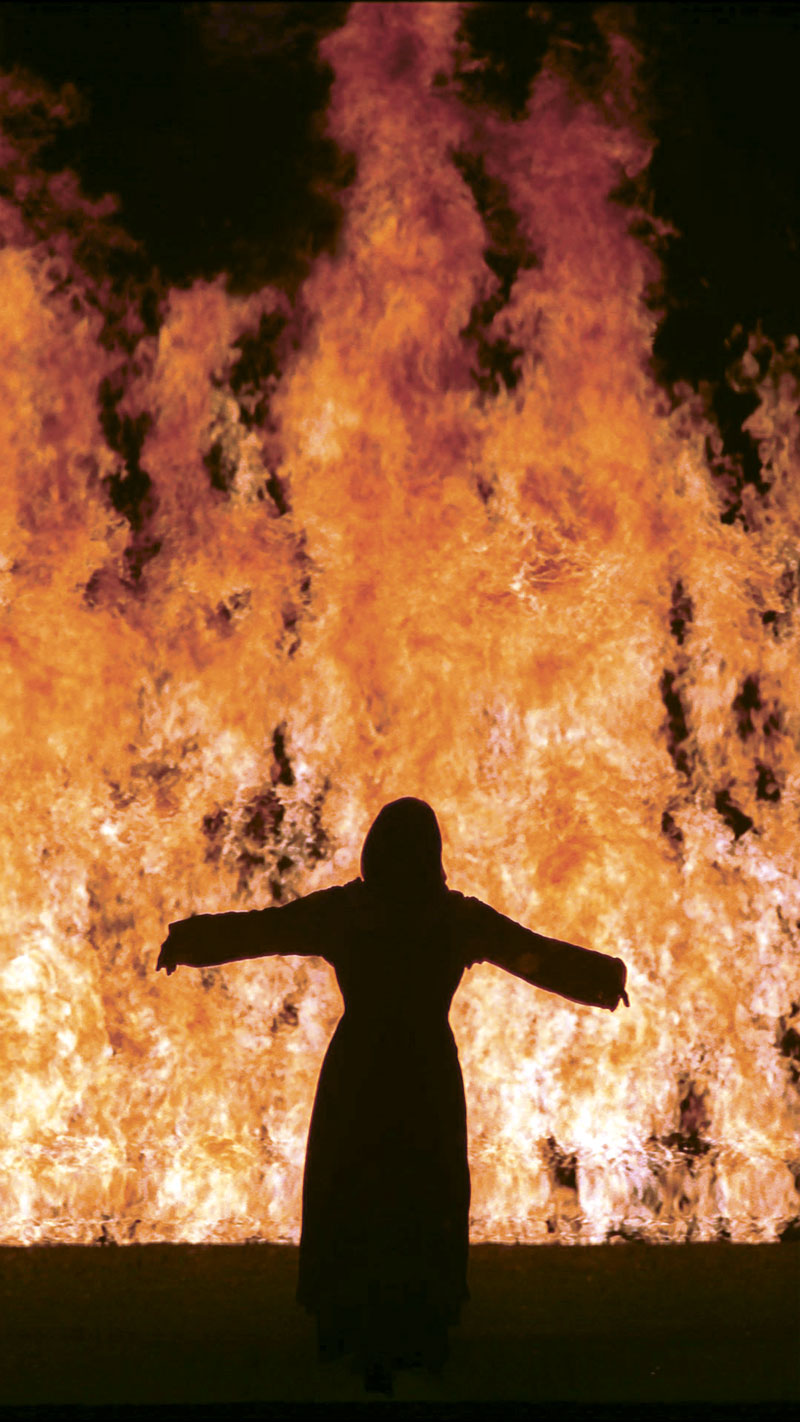
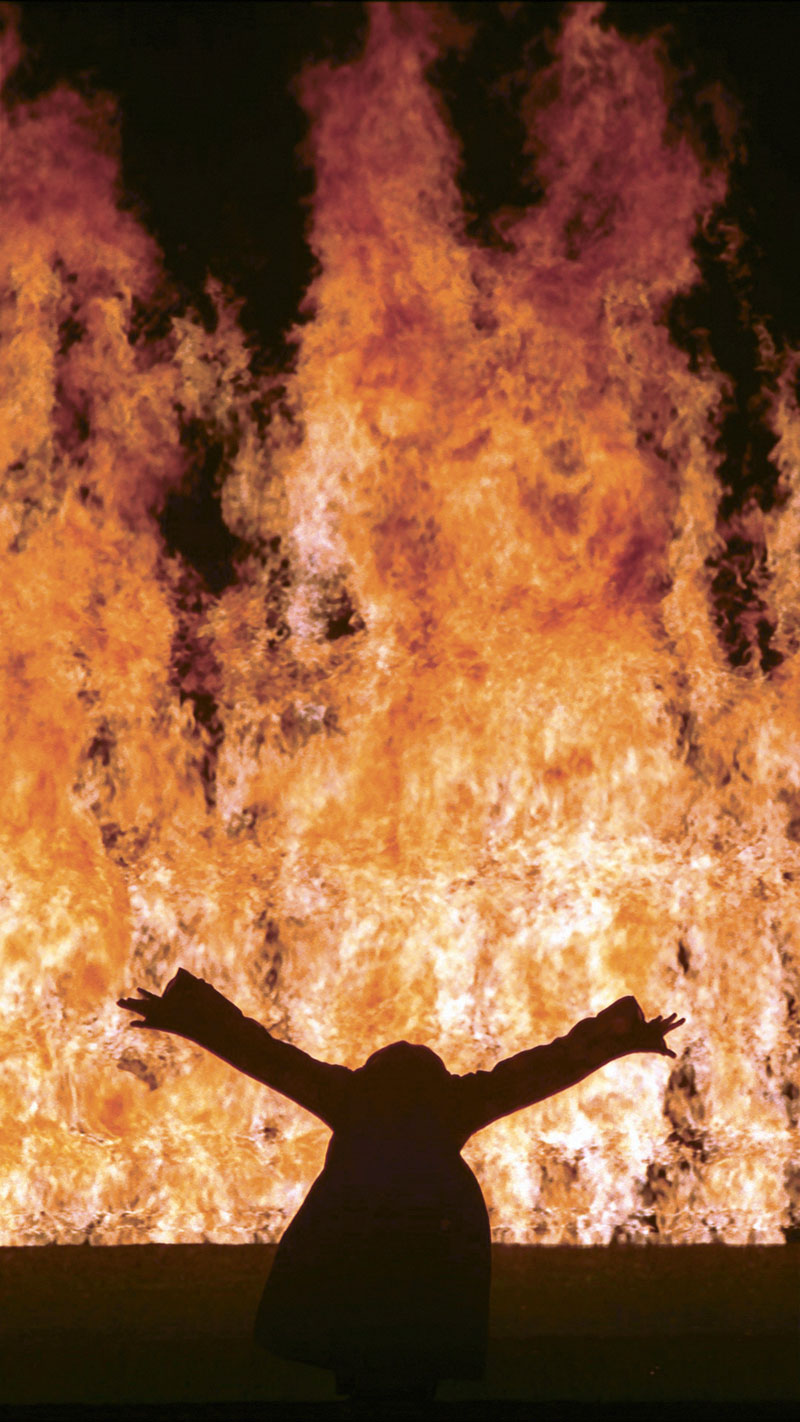
Bill Viola (American, 1951-2024) 'Fire Woman' 2005 (still)


Bill Viola (American, 1951-2024)
Fire Woman (still)
2005
Video/sound installation
Performer: Robin Bonaccorsi
Photos: Kira Perov
Courtesy Bill Viola Studio and Kaldor Public Art Projects


Anybody who reads this archive regularly will know my love of the work of Bill Viola. This installation of two immersive video and sound works at St. Carthage’s church in Parkville is no exception. What an experience. I came out of the church after an aural and visual bombardment and moments of reflection so excited by the visceral experience that I phoned a friend a babbled for a few minutes about the works and how I felt. They made me feel so exhilarated and alive!

After watching the videos through first time around I made the notes below the second time of viewing – a kind of mental sketch of what I seeing and feeling. Go see!


Stone

cold

man pure white

rumble, subterranean underwater sounds

small drops – float upwards

water flowing backwards, heavier, hovering like a sword of Damocles, heavier, heavier

Torrent, elemental, body arches, thrown around – TEMPEST! SOUND!

White light, raging waters, body levitating and ascending, Christ-like …. disappears

Water slows, stops to quietness, sound on a corrugated roof

empty stone, reflection

drips

splashes

drops of ascending water like stars twinkling in the night sky


……………………o

….o……………………………….o

……………………..o

…………..o………………o

….o……………………o

………..o……….o……………..0

………………………o

………..o

………………………….o


Fire         [ROAR]

dark angel, walks forward, camera changes angles

WALL of fire       ||||||||||||||||

hell, the sun, conflagration of the apocalypse

Opens arms, falls backwards into a pool of water —— CRASH – SHOCK – SOUND ASSAULTS YOU!

Disappears


Ripples of water/fire: camera closes in, distorting fire

Sounds becomes muffled

Yellow reflections ……………….. almost nuclear, atomic, abstract (like a wonderful Richter!)

————————–


gurgling sound of water, slow ripples reflecting fire and oil, fire dying out

intense blue/black, like tadpoles in a stream or the embers of darkness

Beauty

Contemplation

feeling: of life, of place in the world, of mortality … of the ineffable.


Dr Marcus Bunyan


Many thankx to the Melbourne International Arts Festival for allowing me to publish the photographs in the posting. Please click on the photographs for a larger version of the image.


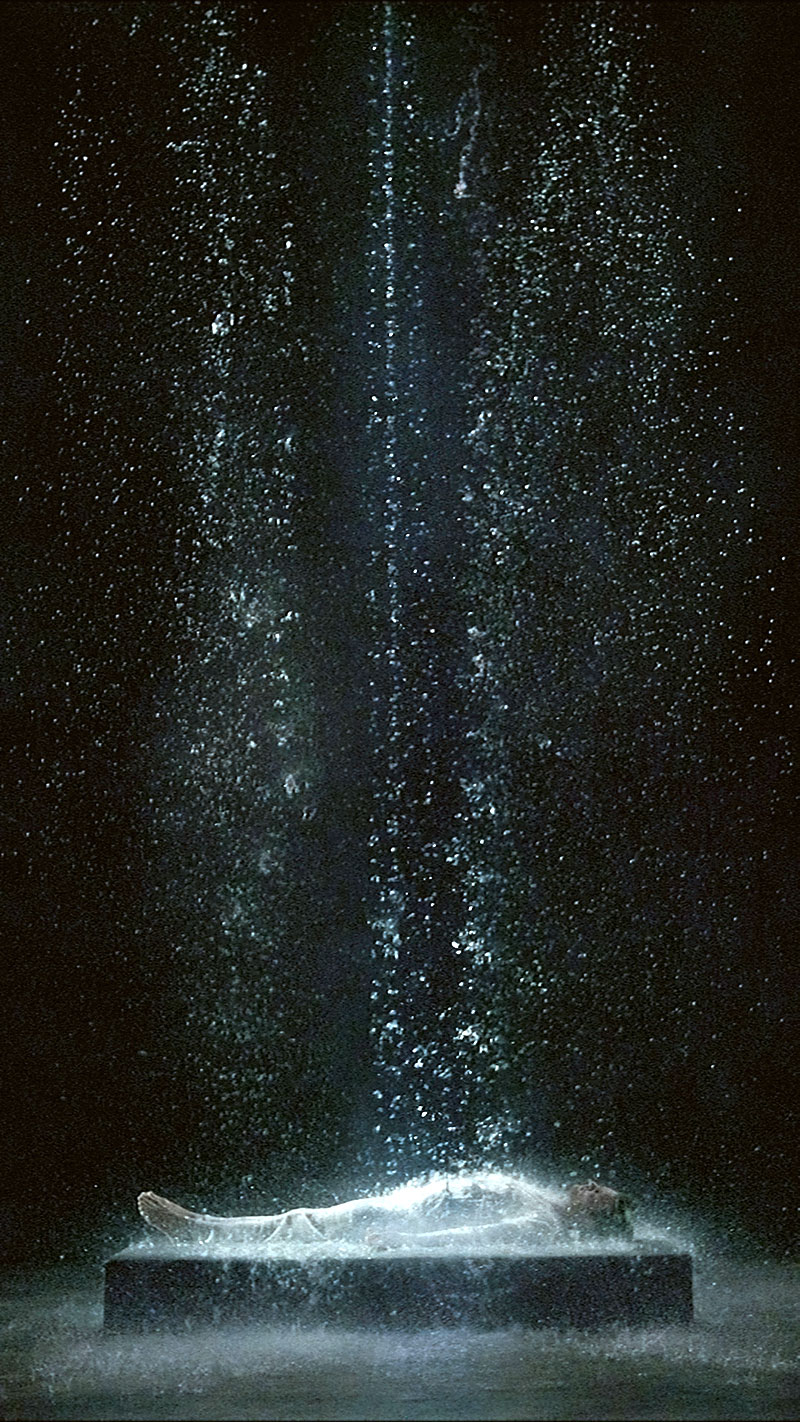
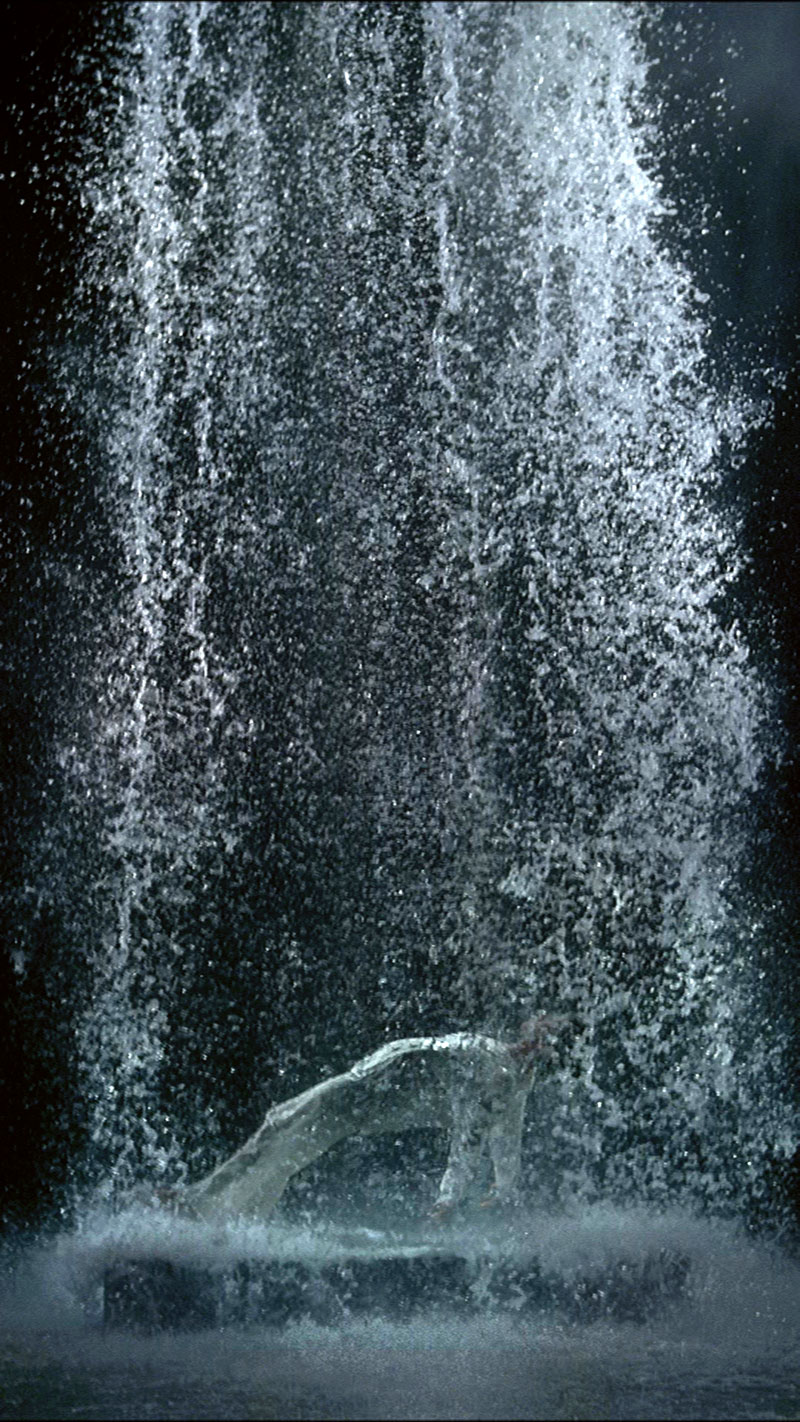
Bill Viola (American, 1951-2024) Tristan’s Ascension (The Sound of a Mountain Under a Waterfall), 2005 (excerpt)


Bill Viola (American, 1951-2024) 'Tristan’s Ascension (The Sound of a Mountain Under a Waterfall)' 2005 (still)

Bill Viola (American, 1951-2024) 'Tristan’s Ascension (The Sound of a Mountain Under a Waterfall)' 2005 (still)

Bill Viola (American, 1951-2024) 'Tristan’s Ascension (The Sound of a Mountain Under a Waterfall)' 2005 (still)

Bill Viola (American, 1951-2024) 'Tristan’s Ascension (The Sound of a Mountain Under a Waterfall)' 2005 (still)


Bill Viola (American, 1951-2024)
Tristan’s Ascension (The Sound of a Mountain Under a Waterfall) (stills)
2005
Video/sound installation
Performer: John Hay
Photos: Kira Perov
Courtesy Bill Viola Studio and Kaldor Public Art Projects


Pioneering American artist Bill Viola has been instrumental in the establishment of video as a vital form of contemporary art. For over 35 years he has created videotapes, architectural video installations, sound environments, electronic music performances, flat panel video pieces and works for television broadcast. His video installations – total environments that envelop the viewer in image and sound – employ state-of-the-art technologies and are distinguished by their precision and direct simplicity. His next major commission is the creation of two permanent altar pieces for St. Paul’s Cathedral in London.

For the 2010 Melbourne Festival, in partnership with Kaldor Public Art Projects, St Carthage’s Catholic Church in Parkville is turned into a video art shrine complete with the latest technology, surround sound and enveloping operatic narrative. Shown in a continuous loop, the two works, Fire Woman and Tristan’s Ascension, combine for a 20 minute visual and aural experience that extends Viola’s lifelong engagement with the human condition into ancient themes of life, love and death.

These two immersive installations are derived from Viola’s creation for Richard Wagner’s Tristan and Isolde directed by Peter Sellars. Now separated from the opera, the stunning installations feature mythical and mystical apparitions set to their own new soundtrack, and can be experienced in all their glory in the sacred surrounds of St Carthage’s.

Bill Viola (1951-2024) is internationally recognised as one of today’s leading artists. He has been instrumental in the establishment of video as a vital form of contemporary art, and in so doing has helped to greatly expand its scope in terms of technology, content, and historical reach. For over 35 years he has created videotapes, architectural video installations, sound environments, electronic music performances, flat panel video pieces, and works for television broadcast. Viola’s video installations – total environments that envelop the viewer in image and sound – employ state-of-the-art technologies and are distinguished by their precision and direct simplicity. They are shown in museums and galleries worldwide and are found in many distinguished collections. His single channel videotapes have been widely broadcast and presented cinematically, while his writings have been extensively published, and translated for international readers. Viola uses video to explore the phenomena of sense perception as an avenue to self-knowledge. His works focus on universal human experiences – birth, death, the unfolding of consciousness – and have roots in both Eastern and Western art as well as spiritual traditions, including Zen Buddhism, Islamic Sufism, and Christian mysticism. Using the inner language of subjective thoughts and collective memories, his videos communicate to a wide audience, allowing viewers to experience the work directly, and in their own personal way.

Text from the Melbourne International Arts Festival website


Bill Viola (American, 1951-2024) – Fire Woman (2005)

Bill Viola is without doubt the most celebrated exponent of video art. For the first time, the Grand Palais will present a wide-ranging group of his works, including moving paintings and monumental installations from 1977 to today. Focusing on both intimate and universal experiences, the artist expresses his emotional and spiritual journey through great metaphysical themes – life, death and transfiguration…


Bill Viola (American, 1951-2024) Fire Woman, 2005 Video/sound installation


Bill Viola (American, 1951-2024) 'Fire Woman' 2005 (still)

Bill Viola (American, 1951-2024) 'Fire Woman' 2005 (still)

Bill Viola (American, 1951-2024) 'Fire Woman' 2005 (still)

Bill Viola (American, 1951-2024) 'Fire Woman' 2005 (still)


Bill Viola (American, 1951-2024)
Fire Woman (stills)
2005
Video/sound installation
Performer: Robin Bonaccorsi
Photos: Kira Perov
Courtesy Bill Viola Studio and Kaldor Public Art Projects


St Carthages, Parkville
123 Royal Parade
Parkville 3052

LIKE ART BLART ON FACEBOOK

Back to top

Review: ‘Up Close: Carol Jerrems with Larry Clark, Nan Goldin and William Yang’ at Heide Museum of Modern Art, Melbourne

Exhibition dates: 31st July – 31st October 2010


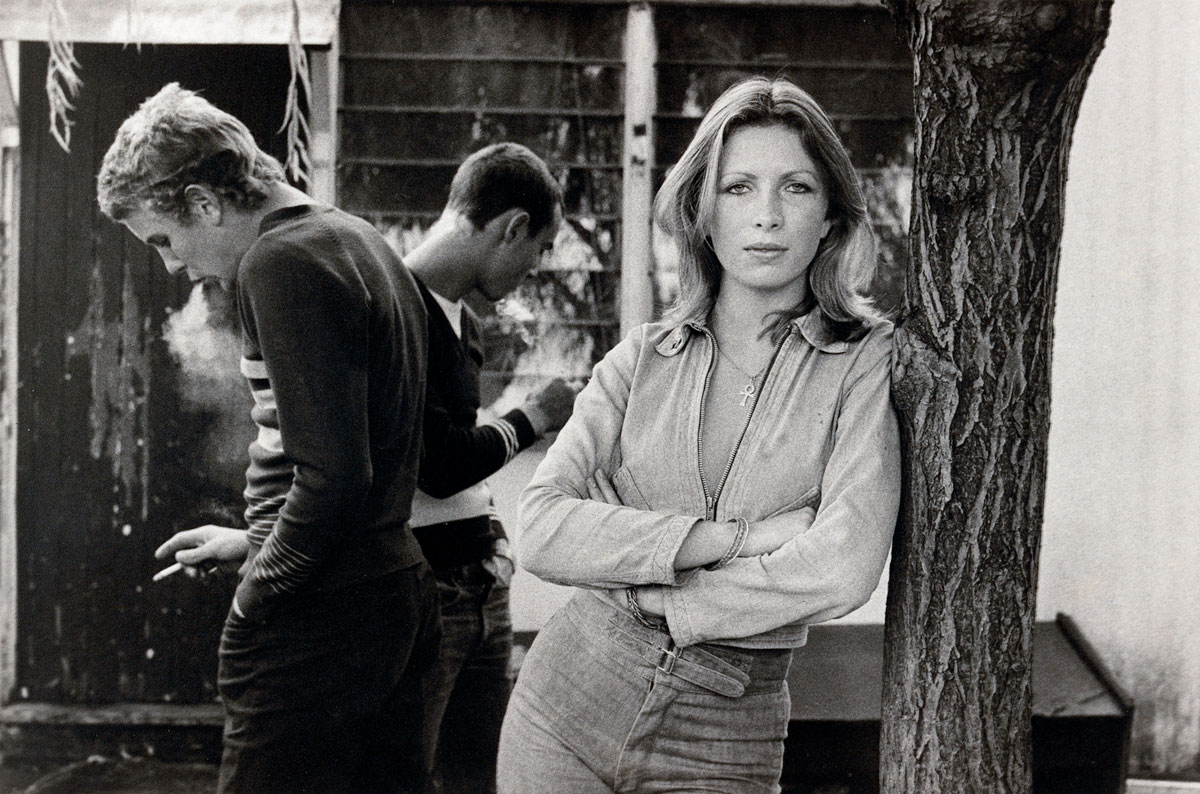
Carol Jerrems (Australian, 1949-1980) 'Vale Street' 1975 from the exhibition 'Up Close: Carol Jerrems with Larry Clark, Nan Goldin and William Yang' at Heide Museum of Modern Art, Melbourne, July - Oct 2010


Carol Jerrems (Australian, 1949-1980)
Vale Street
1975
Gelatin silver print
National Gallery of Australia, Canberra
Gift of the Philip Morris Arts Grant, 1982
© Ken Jerrems & the Estate of Lance Jerrems


“A face tells the story of what a person is thinking. The eyes reveal the suffering.”


Carol Jerems


Time and Truth: Looking again at the work of Carol Jerrems

This is a solid exhibition of the photographs of Carol Jerrems at Heide Museum of Modern Art, accompanied by small selections of the work of Larry Clark and William Yang and the sequence The Ballad of Sexual Dependency (1979) by Nan Goldin.

I like Jerrems work: it is strong, frontal, direct and truthful. What I dislike is the hagiography that has grown up around this artist, the mythologizing of Saint Jerrems. We don’t need a saint of Australian photography; what we need is an appreciation of the artist, the person and her legacy. While the personal history of this artist is well known – facing depression, putting herself in danger, sexually active, documenting the counter-culture sharps and skinheads and urban indigenous people, the photographing of women and her death at far too young an age – few people actually look at the photographs clearly.

Most of the photographs are 8″ x 10″ prints, mainly portraits, that are usually dark and contrasty, small and emotionally intense. Jerrems images are made full frame (the modernist conceit of filing out a negative carrier, so that if the negative was printed full frame there would be a black border around the picture) to avoid cropping in the darkroom. This shows good previsualisation by the artist, the composition of the image made at the time of the exposure. There is a closeness to the framing of the portraits and a conversant ambiguity about all of her backgrounds – mainly low depth of field, anonymous places (perhaps a brick wall or a close up of a street corner). In fact it is difficult to pin down any actual place in her photographs unless you are told in the title of the work. The contextlessness of her backgrounds allows the viewer to focus on the people placed before her lens and here Jerrems gets up close and personal, trying to capture the truth of her subjects, their soul (in this sense she is like Diane Arbus, thrusting her camera into places it was not supposed to go until something gives – the subject gives up, drops the mask, even if just for a split second, and click, the artist has their image). The mainly head and shoulders photographs of women are most impressive in this regard as Jerrems portrays the women’s strength and vulnerability as are the photographs of the artist herself in hospital fighting her debilitating illness, the most moving, emotional photographs in the exhibition.

Other photographs show constructed intimacies between people, the camera and the artist. In Esben and Dusan, Cronulla (1977, above), Jerrems uses the yin yang black, white background to frame the two protagonists, bringing forward the body of Esben in the right portion of the frame and letting Dusan recede into the darkness. In Boys (1973) two bodies are photographed in a bed, legs and arms entwined but the print is so dark that you would never know they were two boys unless you were told – and this adds to a sense of mystery, the imaging of the most beautiful, sensitive, abstract embrace. Mark Lean with Arms Crossed (1975) shows a cocky, self-assured Lean staring directly at the camera as though it were not there, as though he were conversing directly with Jerrems, the camera an extension of the artist capturing his brave-aura: one camera, one lens, one vision. If you study the contact sheet for the photograph Vale Street (1975, above), Jerrems eventually draws the central luminous figure forward in the frame to create the now iconic image while the two acolytes hover, brooding and menacing in the darkened background.

As Kathy Drayton has observed, “Her photographs engage the viewer in an intimate relationship with her subjects. It’s not always a friendly intimacy – sometimes her subjects look defensive, irritated or even menacing, but you always sense that you’re seeing beyond the mask into the soul.”1


Jerrems saw herself as a serious photographer; if something happened she felt she should be commenting on it. She was also quite naive but always pushed herself and her art into sometimes dangerous places. She would have thought ‘how do I say something that is true’ and her endeavour, which is also constructed, was seeing things in terms of opportunities for a good photograph. Jerrems removed the safeguards; she got right in there among her volatile characters, her potential sexual predators: let’s just see what happens when the safety fence goes down. Although I believe there is a lack of really good photographs that Jerrems made (what I call highlight pieces, namely the iconic Vale Street, Mozart Street, and Mark and Flappers all 1975, see photographs below) there is a consistency to her work and how it exemplifies an exchange that takes place between the artist and the world. What I would call “a good deal.”

When looking at art, one of the best experiences for me is gaining the sense that something is open before you, that wasn’t open before. I don’t mean accessible, I mean open like making a clearing in the jungle, or being able to see further up a road, or just further on. And also like an open marketplace – where there were always good trades. There is the feeling that if you put in a certain amount of honesty, then you would get something back that made some room for you in front – some room that would allow you to look forward, and maybe even walk into that space. Seeing Jerrems work gives you that feeling.

Jerrems had the power to draw themes together, to ramp up the intensity, to empower her photographs and she was possibly on the way to becoming the things that people now say she was, but her early death curtailed this journey. Her photographs have social significance and photographic integrity and evidence time in the visible – the time in which Jerrems took them, the 1970s, and the truthfulness of her self and her style. I would have loved to have seen Jerrem’s response to the film still work of Cindy Sherman, the layering of the Sherman personas and the challenge to the feminist critique. As it is Jerrems photographs are very frontal in today’s terms and, because of her early death, she lacked the opportunity to interact with the development of more complex theories. The layers present at the time are now conflated into seemingly one layer, supported by back stories and obfuscation that clouds the work – it’s naked frontality and boldness. This obfuscation formalises her legacy into mythology.

Jerrems work does not need this. She struggled with her art, to get the best out of herself and her visualisation, to step into those spaces that I mentioned earlier. What we need is an appreciation of the time of her endeavour and the truthfulness of her art. To say that the work achieved fulfilment is to deny the importance of her death.

Dr Marcus Bunyan


1/ Drayton, Kathy quoted in Wilmoth, Peter. “The ’70s stripped bare,” on The Age website. July 17th, 2005. [Online] Cited 05/10/2010


Many thankx to Jade Enge and Heide Museum of Modern Art for allowing me publish the photographs in the posting. Please click on all of the photographs for a larger version of the image.


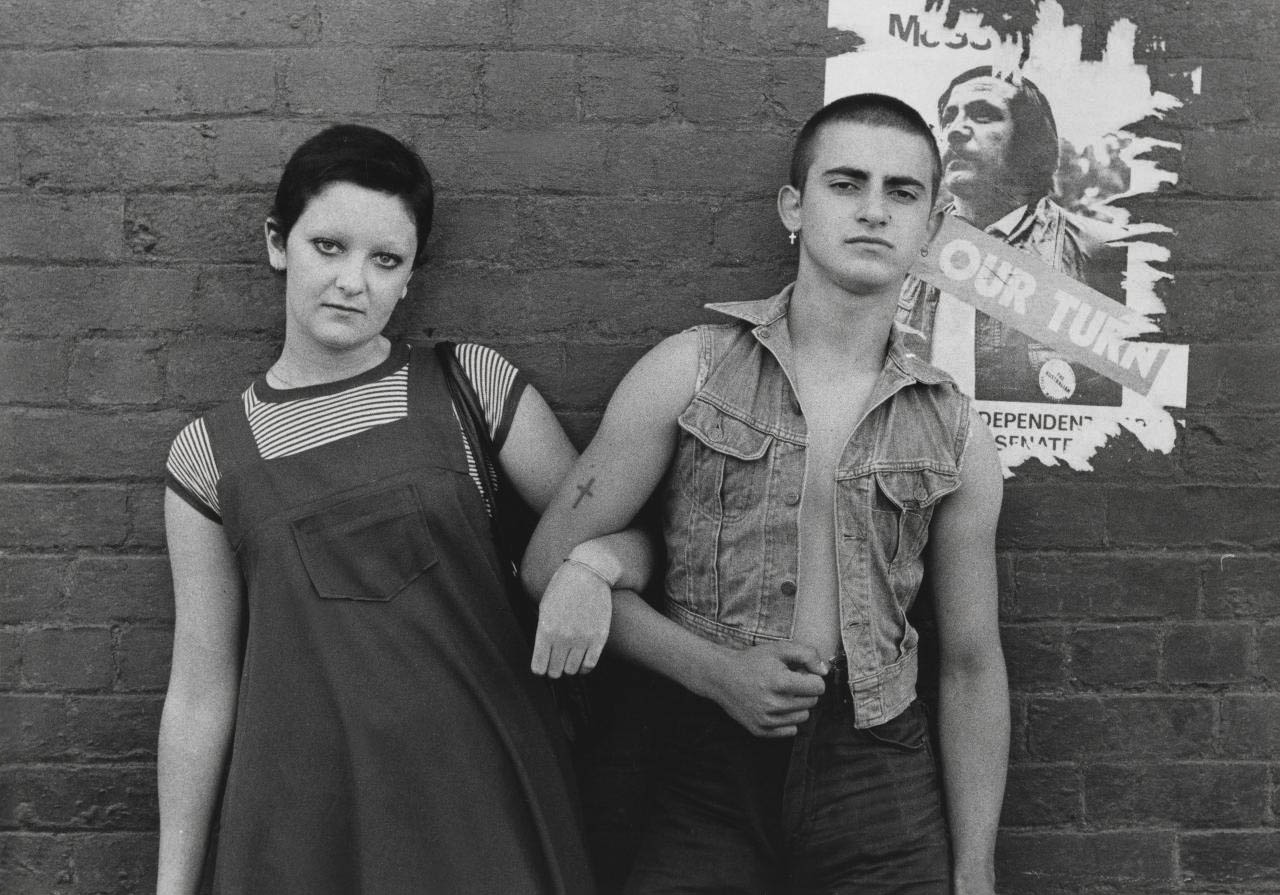
Carol Jerrems. 'Mozart Street' 1975 from the exhibition 'Up Close: Carol Jerrems with Larry Clark, Nan Goldin and William Yang' at Heide Museum of Modern Art, Melbourne, July - Oct 2010


Carol Jerrems (Australian, 1949-1980)
Mozart Street
1975
Gelatin silver print
National Gallery of Australia, Canberra
Gift of the Philip Morris Arts Grant, 1982
© Ken Jerrems & the Estate of Lance Jerrems


Carol Jerrems (Australian, 1949-1980) 'Mark and Flappers' 1975


Carol Jerrems (Australian, 1949-1980)
Mark and Flappers
1975
Gelatin silver print
National Gallery of Victoria, Melbourne
Gift of James Mollison, 1994
© Ken Jerrems & the Estate of Lance Jerrems


Carol Jerrems (Australian, 1949-1980) 'Sharpies' 1976


Carol Jerrems (Australian, 1949-1980)
Sharpies
1976
Gelatin silver print
© Ken Jerrems & the Estate of Lance Jerrems


Carol Jerrems (Australian, 1949-1980) 'Dusan and Esben' 1977


Carol Jerrems (Australian, 1949-1980)
Dusan and Esben
1977
Gelatin silver print
© Ken Jerrems & the Estate of Lance Jerrems


Carol Jerrems (Australian, 1949-1980) 'Flying Dog' Nd


Carol Jerrems (Australian, 1949-1980)
Flying Dog
Nd
Gelatin silver print
© Ken Jerrems & the Estate of Lance Jerrems


Carol Jerrems (Australian, 1949-1980) 'Butterfly Behind Glass' 1975


Carol Jerrems (Australian, 1949-1980)
Butterfly Behind Glass
1975
Gelatin silver print
National Gallery of Australia, Canberra
Gift of Mrs Joy Jerrems, 1981
© Ken Jerrems & the Estate of Lance Jerrems


Carol Jerrems (Australian, 1949-1980) 'Evonne Goolagong, Melbourne' 1973


Carol Jerrems (Australian, 1949-1980)
Evonne Goolagong, Melbourne
1973
Gelatin silver print
National Gallery of Australia, Canberra
Gift of Mrs Joy Jerrems, 1981
© Ken Jerrems & the Estate of Lance Jerrems


Featuring the exceptional talent of four photographers whose images capture people, places and events with candid intimacy, Up Close traces the significant legacy of Australian photographer Carol Jerrems (1949-1980) alongside that of contemporary artists Larry Clark (USA), Nan Goldin (USA) and William Yang (Sydney). According to Guest Curator Natalie King, ‘Up Close takes its inspiration from the way each artist candidly depicts a social milieu and urban life of the 1970s and early 1980s’. Sharing an interest in sub-cultural groups and individuals on the margins of society, each artist reveals a remarkable capacity to provide an empathetic glimpse into semi-private worlds through intimate depictions of people and their surroundings.

Newly discovered prints by Jerrems are included as well as rare archival material from Jerrems’ family and previously unseen out-takes from Kathy Drayton’s documentary film, ‘Girl in the Mirror.’ It is 30 years since Jerrems’ death and 20 years since the first and only survey of her work was presented. Jerrems’ photographic practice was associated with a feminist and political imperative; as she put it: ‘the society is sick and I must help change it’. This exhibition uncovers Jerrems’ preoccupation with people and their environment, subcultures, forgotten and dispossessed groups, especially Aboriginal communities of the time.

Larry Clark unflinchingly turned the camera onto himself and his amphetamine-shooting coterie to produce Tulsa (1971), a series of photographs repeatedly cited for its raw depiction of marginalized youth. This significant publication and photographic series influenced Goldin and a generation of artists who aspired to break with the more traditional documentary modes. With its grainy shot-from-the-hip style, Tulsa exposes a world of sex, death, violence, anxiety and boredom capturing the aimlessness and ennui of teenagers.

First shown at Frank Zappa’s birthday party in 1979 at the Mudd Club in New York, Nan Goldin’s The Ballad of Sexual Dependency has evolved to be an iconic work of its time. Goldin’s snapshot aesthetic is evident in this immersive installation of close to 700 slides full of saturated colour and intimate framing accompanied by a soundtrack. Mining the emotional depths of her friends, lovers and family, Ballad signals a riveting intimacy whilst uncovering the bohemian life of New York’s Lower East Side. Goldin says, ‘I was documenting my life. It comes directly from the snapshot, which is always about love…’

William Yang’s photographs from the 1970s further the snapshot aesthetic through journeying into the intimate world of his particular social milieu: drag queens, Sydney gay and inner-city culture. Yang’s direct, unpretentious photographs provide a unique chronicle of marginalised groups especially as he put it: “… people who are gay, who were invisible, who were too scared to come out. During gay liberation people became visible, people became politicised, and there was a Mardi Gras that was a symbol of the movement.”

Up Close reveals how photographic practices provide an empathetic glimpse into semi-private worlds with close up depictions of people and their surroundings.

The accompanying publication provides for the first time an in-depth account of Carol Jerrems’ work alongside that of her peers and will feature a number of newly commissioned essays. Edited by Natalie King and co-published by Heide and Schwartz City, it will be available at the Heide Store from 31 July.”

Press release from the Heide Museum of Modern Art website


Carol Jerrems (Australian, 1949-1980) 'Juliet Holding Vale Street' 1976


Carol Jerrems (Australian, 1949-1980)
Juliet Holding Vale Street
1976
Gelatin silver print
National Gallery of Australia, Canberra
Gift of Mrs Joy Jerrems 1981
© Ken Jerrems & the Estate of Lance Jerrems


Carol Jerrems (Australian, 1949-1980) 'Lynn' 1976


Carol Jerrems (Australian, 1949-1980)
Lynn
1976
Gelatin silver print
National Gallery of Australia, Canberra
Gift of the Philip Morris Arts Grant 1982
© Ken Jerrems & the Estate of Lance Jerrems


Larry Clark (American, b. 1943) 'Untitled' 1979


Larry Clark (American, b. 1943)
Untitled
1979
Gelatin silver print
National Gallery of Australia, Canberra
Purchased 1980
© Larry Clark
Image courtesy of the artist and Luhring Augustine, New York


Larry Clark (American, b. 1943) 'No Title (Billy Mann)' 1963 from the portfolio 'Tulsa'


Larry Clark (American, b. 1943)
No Title (Billy Mann)
1963
from the portfolio Tulsa
Gelatin silver print
National Gallery of Australia, Canberra
Purchased 1980
Image courtesy of the artist and Luhring Augustine, New York


William Yang (Australian, b. 1943) 'Peter Tully, Gay & Lesbian Mardi Gras' 1981


William Yang (Australian, b. 1943)
Peter Tully, Gay & Lesbian Mardi Gras
1981
Gelatin silver print
edition 2/10
40.4 x 27cm
National Library of Australia
Courtesy of the artist


Heide Museum of Modern Art
7 Templestowe Road, Bulleen, Victoria 3105

Opening hours:
(Heide II & Heide III)
Tues – Sun 10.00am – 5.00pm

Heide Museum of Art website

LIKE ART BLART ON FACEBOOK

Back to top

Exhibition: ‘Hipsters, Hustlers, and Handball Players: Leon Levinstein’s New York Photographs, 1950-1980’ at The Metropolitan Museum of Art, New York

Exhibition dates: 8th June – 17th October, 2010


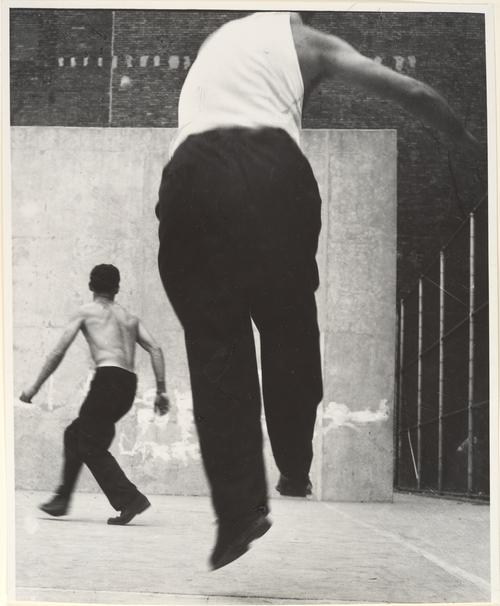
Leon Levinstein (American, 1910-1988) 'Handball Players, Lower East Side, NY' 1950s-1960s from the exhibition 'Hipsters, Hustlers, and Handball Players: Leon Levinstein's New York Photographs, 1950-1980' at The Metropolitan Museum of Art, New York, June - October, 2010


Leon Levinstein (American, 1910-1988)
Handball Players, Lower East Side, NY
c. 1950s-1960s
Gelatin silver print
Purchase, The Horace W. Goldsmith Foundation Gift, through Joyce and Robert Menschel, 1987
© Howard Greenberg Gallery


Although taken in the same city at around the same period as the work of Helen Levitt, these photographs by Leon Levinstein have less formality in their composition and definitely possess a more eclectic style evidenced by the dissection and placement of bodies within the image frame. This is not to denigrate either artist but merely to observe how two great photographers can see the same city in totally different ways. In both previsualisation was strong, the camera freezing what is placed before the lens in a balletic display that captured “just what you see.”

Dr Marcus Bunyan


Many thankx to The Metropolitan Museum of Art, New York for allowing me to publish the photographs in the posting.


Leon Levinstein (American, 1910-1988) 'Nuclear Protest, Wall Street' 1970s from the exhibition 'Hipsters, Hustlers, and Handball Players: Leon Levinstein's New York Photographs, 1950-1980' at The Metropolitan Museum of Art, New York, June - October, 2010


Leon Levinstein (American, 1910-1988)
Nuclear Protest, Wall Street
1970s
Gelatin silver print
Gift of Gary Davis, 2009
© Howard Greenberg Gallery


Leon Levinstein (American, 1910-1988) 'Street Scene - Elderly Man Walking with Cane, New York City' 1970s from the exhibition 'Hipsters, Hustlers, and Handball Players: Leon Levinstein's New York Photographs, 1950-1980' at The Metropolitan Museum of Art, New York, June - October, 2010


Leon Levinstein (American, 1910-1988)
Street Scene: Elderly Man Walking with Cane, New York City
1970s
Gelatin silver print
Gift of Gary Davis, 2009
© Howard Greenberg Gallery


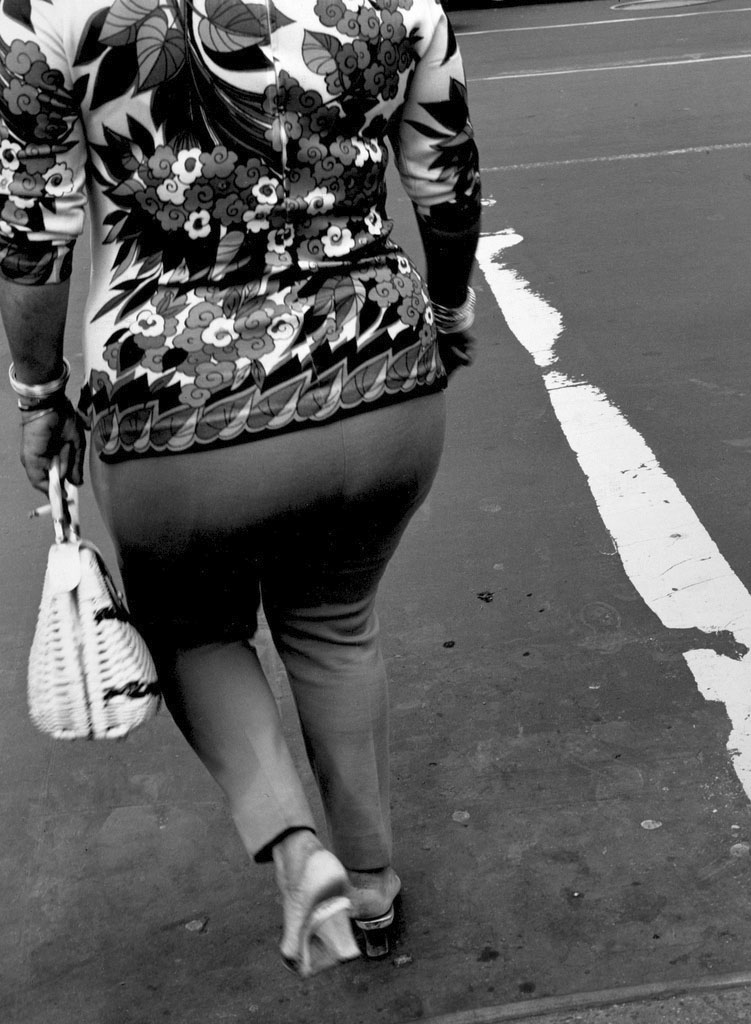
Leon Levinstein (American, 1910-1988) 'Street Scene - Woman in Blonde Wig and Tight Dress, New York City' 1960s


Leon Levinstein (American, 1910-1988)
Street Scene: Woman in Blonde Wig and Tight Dress, New York City
1960s
Gelatin silver print
Gift of Gary Davis, 2009
© Howard Greenberg Gallery


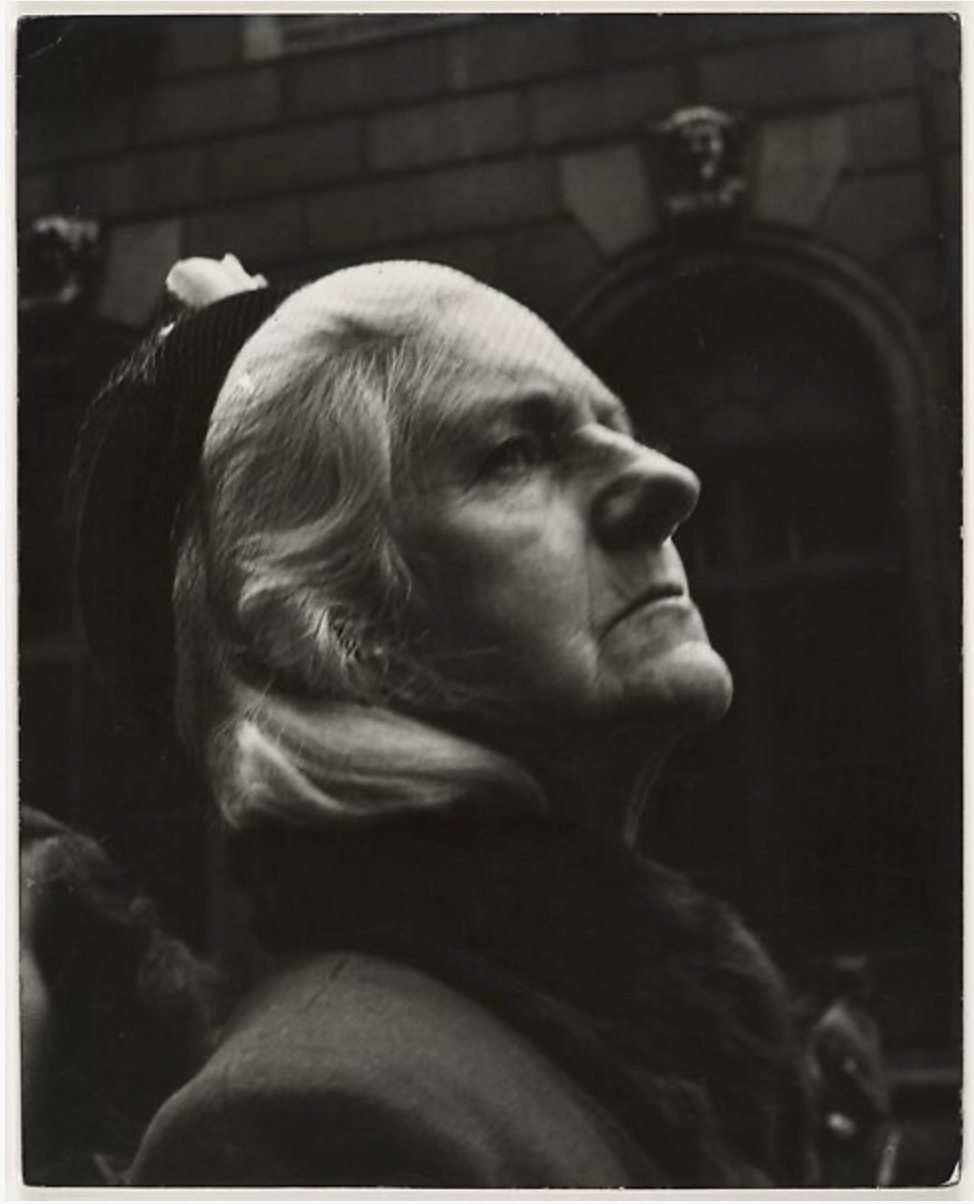
Leon Levinstein (American, 1910-1988) 'Untitled [Head of Man with Hat and Cigar]' c. 1960 from the exhibition 'Hipsters, Hustlers, and Handball Players: Leon Levinstein's New York Photographs, 1950-1980' at The Metropolitan Museum of Art, New York, June - October, 2010


Leon Levinstein (American, 1910-1988)
Untitled [Head of Man with Hat and Cigar]
c. 1960
Gelatin silver print
27.8 x 33.3cm (10 15/16 x 13 1/8 in.)
Stewart S. MacDermott Fund, 1986


A master of classic American street photography, Leon Levinstein (American, 1910-1988) is best known for his candid and unsentimental black-and-white figure studies made in New York City neighborhoods from Times Square and the Lower East Side to Coney Island. From June 8 through October 17, 2010, The Metropolitan Museum of Art presents Hipsters, Hustlers, and Handball Players: Leon Levinstein’s New York Photographs, 1950-1980. This exhibition, drawn exclusively from the Metropolitan’s collection, features 44 photographs that reflect Levinstein’s fearless approach to the medium. Levinstein’s graphic virtuosity – seen in raw, expressive gestures and seemingly monumental bodies – is balanced by an unusual compassion for his off-beat subjects from the demimonde.

Born in West Virginia in 1910, Levinstein moved to New York in 1946 and spent the next 35 years obsessively photographing strangers on the streets of his adopted home. Early in his career, Levinstein was quoted in Photography Annual 1955: “In my photographs I want to look at life – at the commonplace things as if I just turned a corner and ran into them for the first time.” With daring and dedication to his subject, Levinstein captured the denizens of New York City at extremely close range. He used his superb sense of composition to frame the faces, flesh, poses, and movements of his fellow city dwellers in their myriad guises: sunbathers, young couples, children, businessmen, beggars, prostitutes, proselytisers, society ladies, and characters of all stripes.

Although he was a life-long loner, Levinstein was mentored and supported by Alexey Brodovitch, artistic director of Harper’s Bazaar, and Edward Steichen, the eminent photographer and curator at The Museum of Modern Art in New York, both of whom recognised his unique talent in the medium of photography. He was also greatly influenced by workshops led by the distinguished photographer and teacher Sid Grossman.

In the 1950s and 1960s, Levinstein’s work appeared frequently in photography magazines and books alongside that of his peers, such as Robert Frank, Richard Avedon, and Diane Arbus. Nonetheless, he rarely worked on assignment, as they often did; nor did he ever produce his own book of photographs. Instead, he worked as a graphic designer and devoted his evenings and weekends to photography. In 1975, Levinstein received a grant from the Guggenheim Foundation to “photograph as wide a spectrum of the American scene as my experience and vision will allow… I want my photographs to be spontaneous rather than contrived.” Despite this recognition of his achievement, he never seemed able to fit into the commercial photography market that emerged in the 1970s and 1980s, and consequently, his powerful body of work continues to be known mainly by other photographers and by specialists in the field.

Press release from The Metropolitan Museum of Art website [Online] Cited 28/09/2010 no longer available online


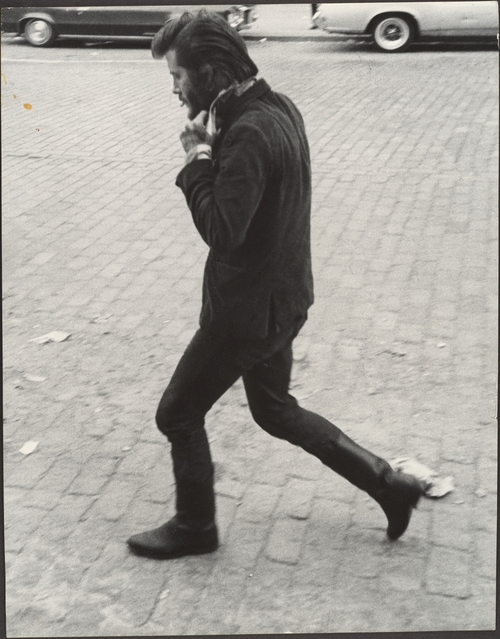
Leon Levinstein (American, 1910-1988) 'Street Scene - Man in Boots Walking and Adjusting His Collar, New York City' 1960s-1970s


Leon Levinstein (American, 1910-1988)
Street Scene: Man in Boots Walking and Adjusting His Collar, New York City
c. 1960s-1970s
Gelatin silver print
Gift of Gary Davis, 2007
© Howard Greenberg Gallery


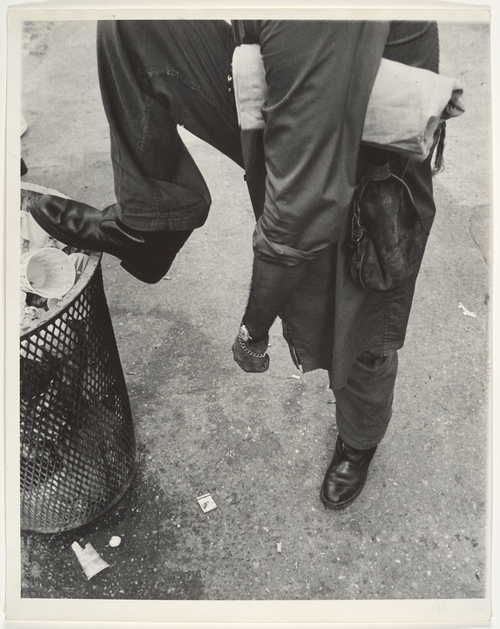
Leon Levinstein (American, 1910-1988) 'Street Scene - Man Resting Foot on Lip of Trashcan, New York City' 1970s


Leon Levinstein (American, 1910-1988)
Street Scene: Man Resting Foot on Lip of Trashcan, New York City
1970s
Gelatin silver print
Gift of Gary Davis, 2009
© Howard Greenberg Gallery


That idea of authenticity, ineffably captured as a decisive instance on a strip of light-sensitive celluloid, was ridden out of town a long time ago by postmodern theorists and certainly seems quaint today, but its power, as fixed in black and white by Levinstein, is undeniable. His mtier was a kind of reductivist monumentality, in which he captured his subjects – ordinary New Yorkers going about their business – in close-up, a technique commonly associated with cinema, to create images that were at once abstract and pregnant with narrative.

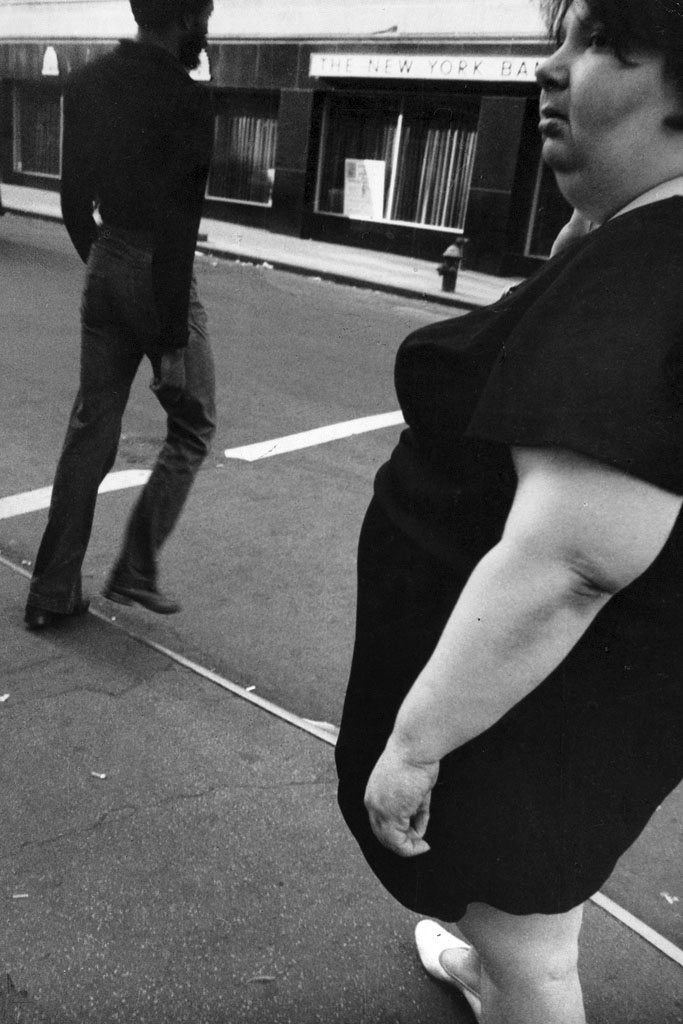
Like Weegee and Diane Arbus, Levinstein had a taste for the offbeat and grotesque (he often zeroed in on corpulent pedestrians; midsections and backsides, absent any trace of individuality, were a frequent motif). Also like them, he could be accused of engaging in a form of slumming. But he was less interested in abjection than he was in grandeur, and in this respect, the people in his photos are imbued with a sculptural nobility that simply doesn’t exist in the work of either Weegee or Arbus. More often than not, the “hipsters, hustlers and handball players” of the show’s title loom into the lens, crowding out background details. We get only fragments of the metropolis around them: a bit of stoop or curbstone, or a patch of sand out at Coney Island. Yet the pictures themselves express a sense of velocity, of lives hurtling toward some destiny that’s as heroic as it is bleak. What’s remarkable about Levinstein is that his framing – both epic and destabilising – stands in for the pitiless dynamic of New York itself.

Howard Halle. “Hipsters, Hustlers, and Handball Players: Leon Levinstein’s New York Photographs, 1950-1980,” on the Time Out New York website, Monday June 14, 2010 [Online] Cited 26/12/2019 no longer available online


Leon Levinstein (American, 1910-1988) 'Street Scene - Woman in Striped Dress on Stoop, New York City' 1970s


Leon Levinstein (American, 1910-1988)
Street Scene: Woman in Striped Dress on Stoop, New York City
1970s
Gelatin silver print
Gift of Gary Davis, 2007
© Howard Greenberg Gallery


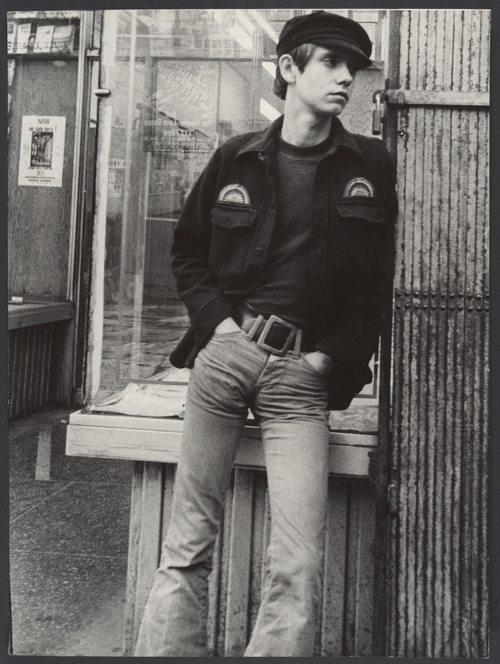
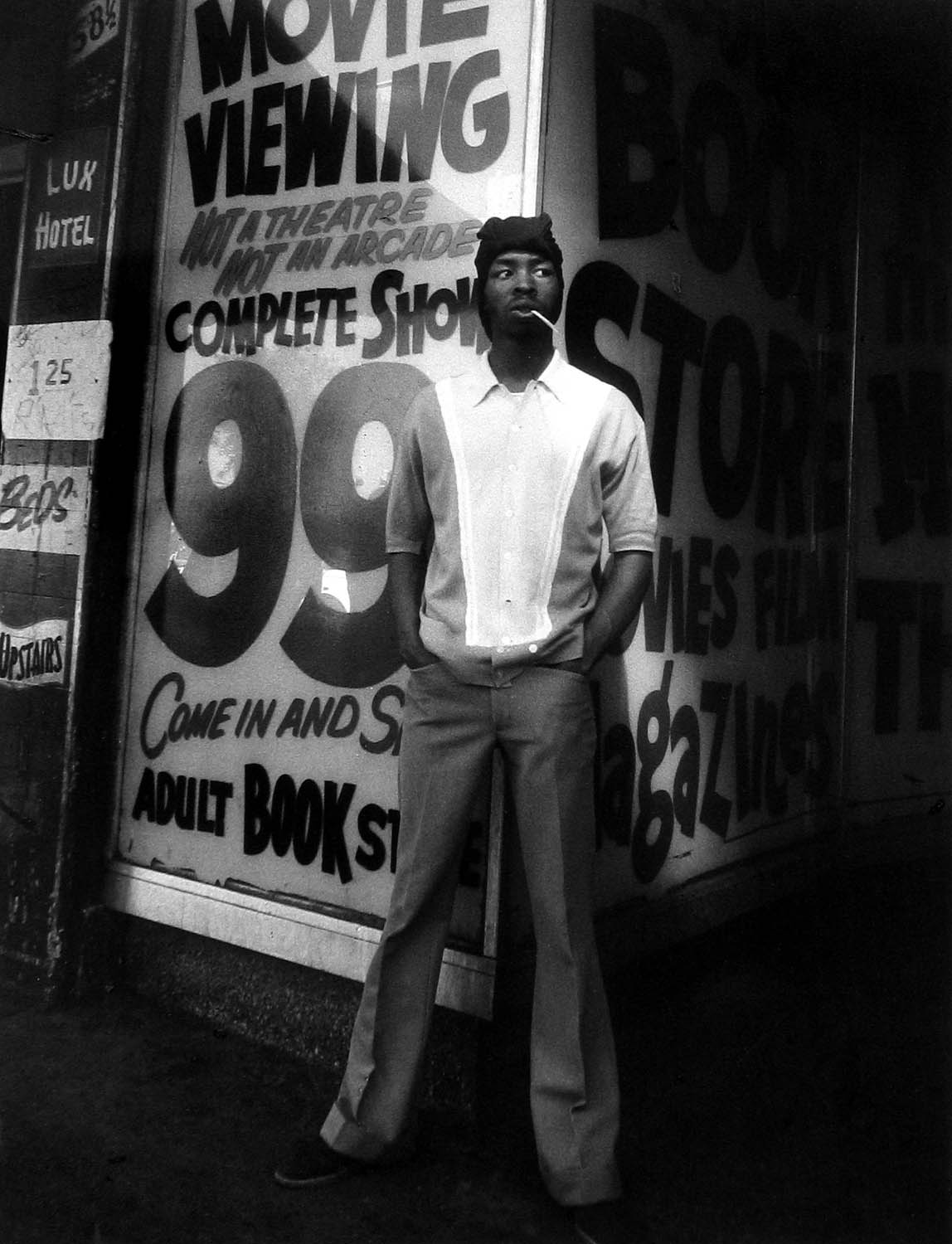
Leon Levinstein (American, 1910-1988) 'Street Scene - Young Man Leaning against Shopfront Window, New York City?' 1972


Leon Levinstein (American, 1910-1988)
Street Scene: Young Man Leaning against Shopfront Window, New York City?
1972
Gelatin silver print
Gift of Gary Davis, 2008
© Howard Greenberg Gallery


Leon Levinstein (American, 1910-1988) 'Untitled' New York City, 1960s-1970s


Leon Levinstein (American, 1910-1988)
Untitled
New York City, 1960s-1970s
Gelatin silver print
34.5 x 25.8cm (13 9/16 x 10 3/16)
© Howard Greenberg Gallery


Leon Levinstein (American, 1910-1988) 'Untitled' New York City, 1960s-1970s


Leon Levinstein (American, 1910-1988)
Untitled
New York City, 1960s-1970s
Gelatin silver print
35.5 x 26.3cm (14 x 10 3/8 in.)
© Howard Greenberg Gallery


Leon Levinstein (American, 1910-1988) 'Untitled' New York City, 1960s-1970s


Leon Levinstein (American, 1910-1988)
Untitled
New York City, 1960s-1970s
Gelatin silver print
34.5 x 25.8cm (13 9/16 x 10 3/16 in.)
© Howard Greenberg Gallery


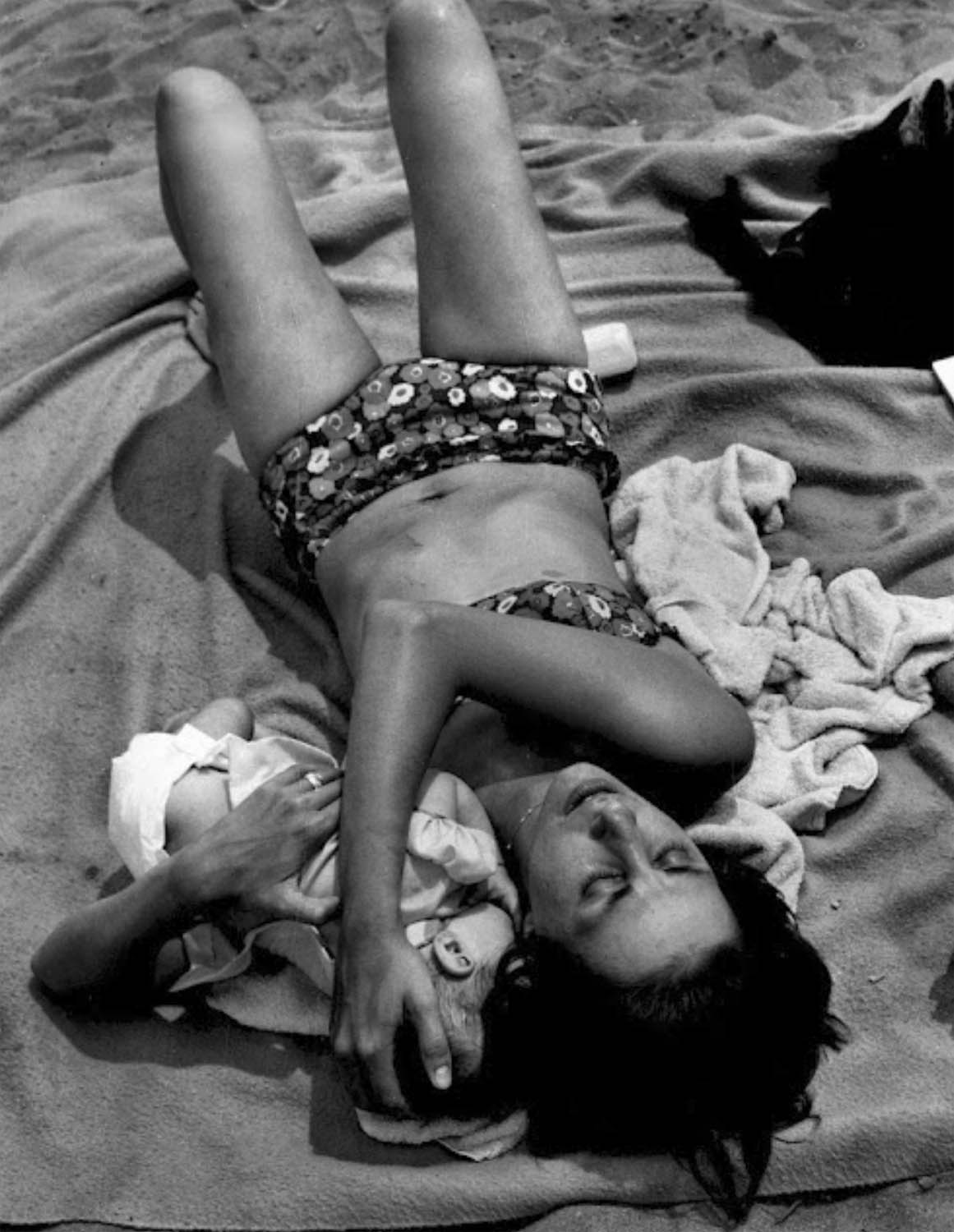
I think Levinstein’s gift lay in his ability to capture the essence of New York’s rough, funky cool (particularly in the 1960s and 1970s), without getting overly sentimental or kitchy. Nearly all of his images were taken at close range, often cropping out unneeded heads and body parts, focusing on overlooked subjects and elemental gestures found on the city’s streets and sidewalks. His compositions are often angled and dark, and he was particularly adept at capturing the nuances of clothing and fashion as worn by New York’s imperfect and eclectic masses, finding the hidden joy in a bold pattern, a wide collar or a tight fitting pair of shorts. The pictures are tough, edgy, sometimes harsh, and always refreshingly real.

As you look more closely at these candid pictures, Levinstein’s talent for making the common look uncommon shines through. He finds earthy wonder in a foot perched on a wire trash can, a sweat stained tank top, 70s-era moustaches, a grey pinstripe suit, bulging stomachs and belts, a man fluffing his afro in a window, eating corn on the cob on the beach, tattoos, an overcoat with shiny buttons, kissing on a stoop, and a groovy floral blouse paired with tight leggings. He seems to have been fond of backs and sides, abstracting his subjects into fragments of movement or pose, paring them down into types and moments that were representative of something larger in society.

Loring Knoblauch. “Hipsters, Hustlers, and Handball Players: Leon Levinstein’s New York Photographs, 1950-1980 @Met,” on the Collector Daily website, July 23, 2010 [Online] Cited 21/03/2025


Leon Levinstein (American, 1910-1988) '54th Street, New York' 1950s


Leon Levinstein (American, 1910-1988)
54th Street, New York
1950s
Gelatin silver print
34.9 x 27.9 cm (13 3/4 x 11 in.)
Gift of Gary Davis, 2009


Leon Levinstein (American, 1910-1988) 'Untitled [Beach Scene: Woman Wearing Paper Bag Hat, Coney Island, New York]' 1950s


Leon Levinstein (American, 1910-1988)
Untitled [Beach Scene: Woman Wearing Paper Bag Hat, Coney Island, New York]
1950s
Gelatin silver print
35.4 x 28.1cm (13 15/16 x 11 1/16 in.)
Gift of Gary Davis, 2009
© Howard Greenberg Gallery


Leon Levinstein (American, 1910-1988) 'Coney Island' 1955


Leon Levinstein (American, 1910-1988)
Coney Island
1955
Gelatin silver print
© Howard Greenberg Gallery


Leon Levinstein (American, 1910-1988) 'Untitled' Coney Island, 1960s


Leon Levinstein (American, 1910-1988)
Untitled
Coney Island, 1960s
Gelatin silver print
35.5 x 28.1cm (14 x 11 1/16 in.)
© Howard Greenberg Gallery


The Metropolitan Museum of Art
1000 Fifth Avenue at 82nd Street
New York, New York 10028-0198
Information: 212-535-7710

Opening hours:
Sunday – Tuesday and Thursday: 10am – 5pm
Friday and Saturday: 10am – 9pm
Closed Wednesday

The Metropolitan Museum of Art website

LIKE ART BLART ON FACEBOOK

Back to top

Exhibition: ‘Exposed: Voyeurism, Surveillance & the Camera’ at Tate Modern, London

Exhibition dates: 28th May – 3rd October 2010


Many thankx to Rose Dahlsen and the Tate Modern for allowing me to publish the photographs in the posting. Please click on the photographs for a larger version of the image.


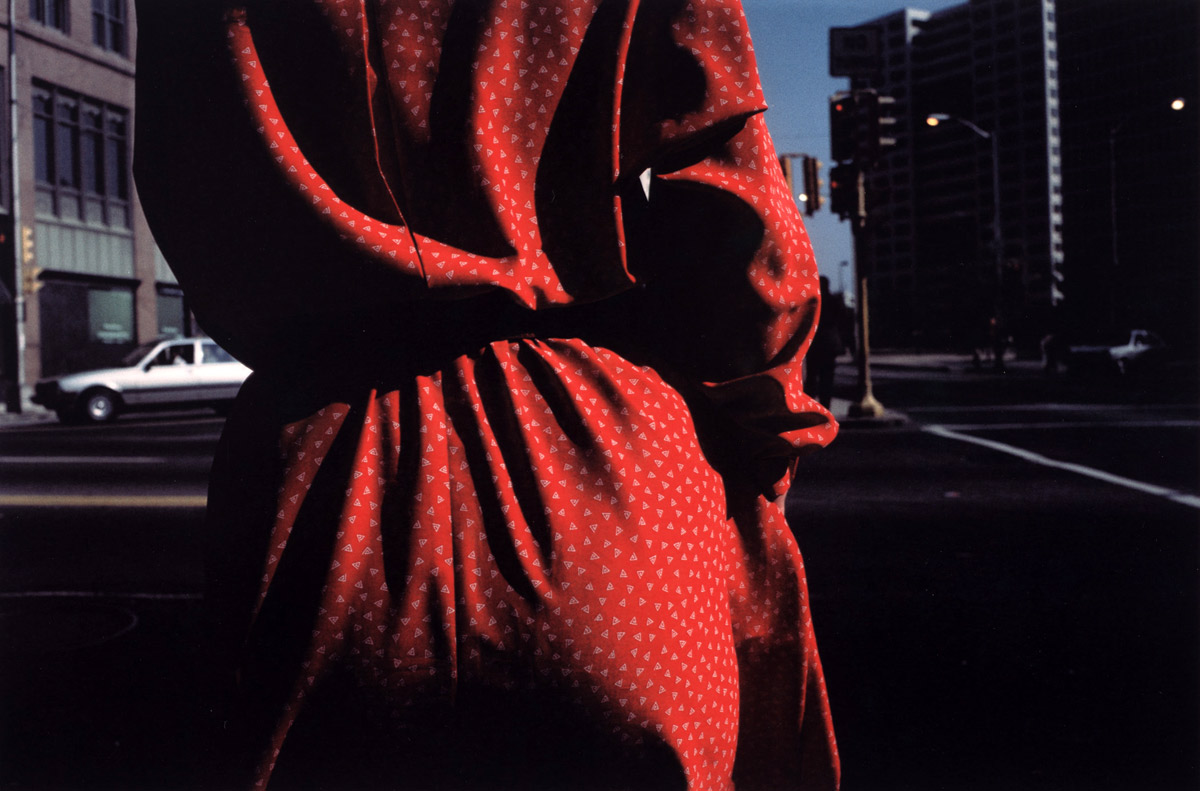
Harry Callahan (American, 1912-1999)
 'Untitled (Atlanta)' 1984 from the exhibition 'Exposed: Voyeurism, Surveillance & the Camera' at Tate Modern, London, May - Oct 2010 from the exhibition 'Exposed: Voyeurism, Surveillance & the Camera' at Tate Modern, London, May - Oct 2010


Harry Callahan (American, 1912-1999)
Untitled (Atlanta)
1984
Dye transfer print 
9 7/16 x 14 5/16 in. (23.97 x 36.35cm)
San Francisco Museum of Modern Art
© The Estate of Harry Callahan, courtesy Pace/MacGill Gallery, New York


Jonathan Olley. 'Golf Five Zero watchtower (known to the British Army as 'Borucki Sanger'), Crossmaglen Security Force Base, South Armagh' 1999 from the exhibition 'Exposed: Voyeurism, Surveillance & the Camera' at Tate Modern, London, May - Oct 2010


Jonathan Olley (British, b. 1967)
Golf Five Zero watchtower (known to the British Army as ‘Borucki Sanger’), Crossmaglen Security Force Base, South Armagh
1999
Gelatin silver bromide print
Coutesy Diemar/Noble Photography, London
© J.Olley


Philip-Lorca diCorcia (American, b. 1951) 'Head #23' 2001 from the 'Head' series


Philip-Lorca diCorcia (American, b. 1951)
Head #23
2001
From the Head series


Examining photography as an invasive act immediately confronts the complacency with which we accept these invasions, encourage them even in our curiosity, and though it falters in parts and overwhelms in others (this is a huge exhibition), EXPOSED successfully addresses a number of the social, cultural and psychologically motivating factors behind these kinds of images – why we take them and why we look at them. Critical to this engagement is the wall text at the beginning, which states that most of the hundreds of photographs on display were taken without the subject’s knowledge. It is a distinctly creepy start.

Philip-Lorcia diCorcia’s Head series perhaps best embodies this conundrum. Visually they are not terribly shocking or even necessarily interesting. Theatrical lighting catches the head of someone in a crowd and the effect is of a staged encounter. In fact, these people, denominated variously as Head #23 or Head #4, were photographed without their knowledge by a series of hidden cameras, the flash triggering as they walked by. Famously, one of diCorcia’s unwitting targets tried to take legal action against him but the landmark ruling defended the artist and his right to self-expression over any right the subject might have over their own image. It is difficult to know which is worse – to be censored or to be spied upon.

Jo Higgins. “Review: Exposed: Voyeurism, Surveillance & the Camera, Tate Modern, London,” on the Jo Higgins website, July 5, 2010 [Online] Cited 22/03/2025


Benjamin Lowy (American, b. 1979) 'Iraq Perspective II' 2003-2007 from the exhibition 'Exposed: Voyeurism, Surveillance & the Camera' at Tate Modern, London, May - Oct 2010


Benjamin Lowy (American, b. 1979)
Iraq Perspective II
2003-2007


US soldiers go on a late night raid with Iraqi Sunni Concerned citizens leading the way and identifying potential AQi targets. Due to a high level of IEDs in the area the company size raiding party walked 5 kilometres to the target in complete darkness, raided the target houses, detained questionable suspects and walked 5 kilometres back to waiting humvees.


Sophie Calle (French, b. 1953) 'The Hotel, Room 47' (L'Hôtel, Chambre 47) 1981


Sophie Calle (French, b. 1953)
The Hotel, Room 47 (L’Hôtel, Chambre 47)
1981
2 works on paper, photographs and ink
2140 x 1420 mm
Tate
Presented by the Patrons of New Art through the Tate Gallery Foundation 1999


This is a two-part framed work comprising photographs and text. In the upper part, the title Room 47 is printed below a colour photograph of elegantly carved wooden twin head-boards behind a bed covered in rich brown satin. Below it, three columns of italic text are diary entries describing findings in the hotel room between Sunday 22 February 1981 and Tuesday 24. In the lower frame a grid of nine black and white photographs show things listed in the text above. This work is part of a project titled The Hotel, which the artist has defined:

“On Monday, February 16, 1981, I was hired as a temporary chambermaid for three weeks in a Venetian hotel. I was assigned twelve bedrooms on the fourth floor. In the course of my cleaning duties, I examined the personal belongings of the hotel guests and observed through details lives which remained unknown to me. On Friday, March 6, the job came to an end.” (Quoted in Calle, pp. 140-141.)

Each of the twelve rooms gave rise to a diptych of similar structure following the occupancy of one or more guests during the period of the artist’s employment at the hotel. Some rooms feature more than once as a second set of guests occupied them, giving rise to a total of twenty-one diptychs in the series. Calle’s descriptions of the hotel rooms and their contents combine factual documentation along with her personal response to the people whose lives she glimpsed by examining their belongings. Each text begins with the chambermaid / artist’s first entry into the room and a notation of which bed or beds have been slept in, with a description of the nightwear the guests have left. A list of objects usually follows, as the artist transcribes her activities in the room. Calle is unashamedly voyeuristic, reading diaries, letters, postcards and notes written or kept by the unknown guests, rummaging in suitcases, and looking into wardrobes and drawers. She sprays herself with their perfume and cologne, makes herself up using the contents of a vanity case, eats food left behind and salvages a pair of women’s shoes left in the bin. Outside the room, she listens at doors, recording the occupants’ conversations or any other sounds she may overhear, and even peers into a room when the floor-waiter opens the door to catch a glimpse of the unknown guests.

The absent occupants described in Room 47 are a family of four – two parents and two children – as revealed by their four pairs of slippers. Calle does not go through their suitcase, commenting: ‘I am already bored’. From their passports she discovers that the parents are a married couple from Geneva and she copies out four postcards one of them has written. Words on one of these hint at problems within the family.

Calle began her artistic projects in 1979 on returning to Paris after seven years’ travel abroad. Disorientated, she felt like a stranger in her own city, not knowing how to occupy her time. She started to follow random passers-by and spend her days as they did. Eventually she picked up the camera she had been experimenting with during her time abroad and photographed the strangers, writing diaristic notes of their movements. From this she has developed a particular way of working, collecting information about people who are absent and investigating her subjects like a detective. The Hotel follows directly from a project the artist undertook the previous year entitled Suite Venetienne 1980, which evolved from a chance encounter with a man she had been following in Paris. He told her he was going to Venice, so she followed him there in disguise, documenting her observations. After a year of planning and waiting, she returned to Venice in 1981 as a chambermaid.

The Hotel diptychs were produced in an edition of four in English and four in French. Tate’s copy of Room 47 (22 February) is the first in the English edition. Another version of Room 47 exists for the period 2-6 March.

Elizabeth Manchester
June 2005

Text from the Tate website [Online] Cited 26/12/2019


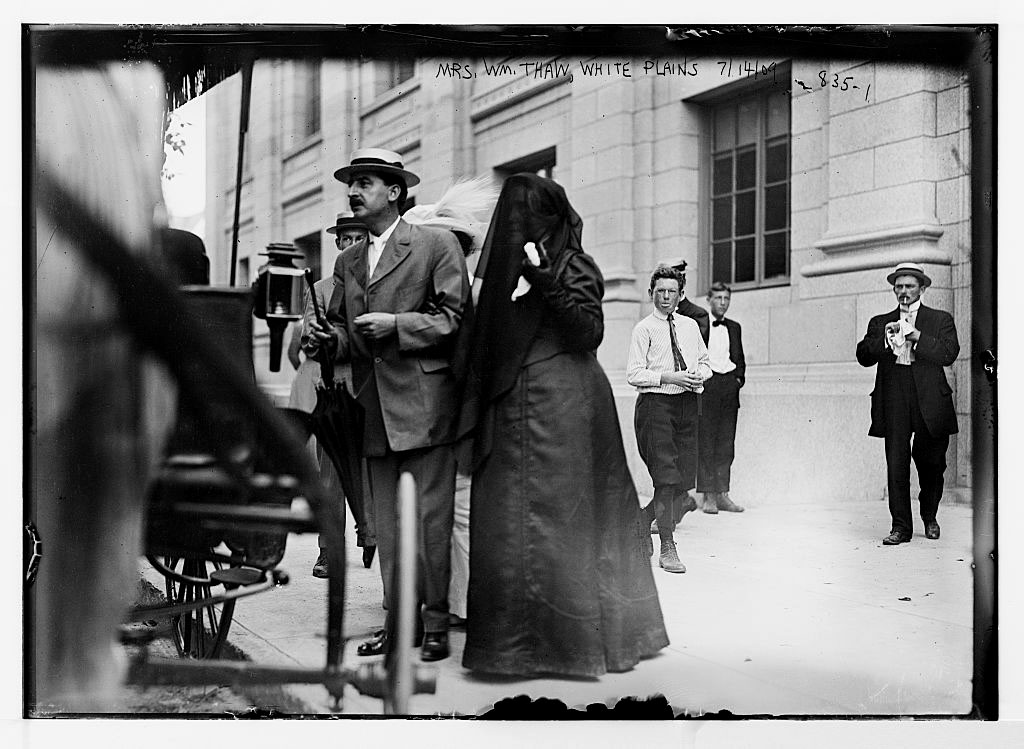
Unknown photographer / Bain News Service, publisher. 'Mrs. Wm. Thaw, veiled, on street, White Plains, N.Y.'
1909


Unknown photographer
Bain News Service, publisher

Mrs. Wm. Thaw, veiled, on street, White Plains, N.Y.
1909
From a glass negative
Library of Congress Prints and Photographs Division Washington, D.C.


Tom Howard (American, 1894 - 1961) '[Electrocution of Ruth Snyder, Sing Sing Prison, Ossining, New York]' 1928


Tom Howard (American, 1894-1961)
[Electrocution of Ruth Snyder, Sing Sing Prison, Ossining, New York]
1928
Gelatin silver print
Collection SFMOMA, Accessions Committee Fund purchase


In 1925, Ruth Snyder, a housewife from Queens, New York, took a lover, Judd Gray, a corsetmaker from upstate. Already married to Albert Snyder, an arts editor at MotorBoating magazine, she hid the affair for nearly three years. But on March 12, 1927, she and Gray planned a murder. After taking out a forged insurance policy, the two killed Ruth’s husband and staged a burglary scene. It didn’t take long for law enforcement to connect the dots, and a few months later, Gray and Snyder found themselves charged with first degree murder.
The court case was front page news and both Ruth and Judd found themselves constantly photographed for ever-evolving stories. Sing Sing, not one to change policy for press, reinstated that no photographers were to be present at the execution. But the public wanted to see.

The New York Daily News knew that the prison was familiar with many journalists from their staff, so they hired someone from out of town, Tom Howard, a then-unknown local photographer from the Chicago Tribune. Knowing he would never be allowed in with a camera, Howard strapped a single-use camera to his right ankle and wired a trigger release up his pant leg. Remarkably, he was allowed in. From across the room, Howard pointed his toe at the chair and took but one photo as Snyder took her last breaths.

The camera was rushed to the city and the film developed overnight. Editors and writers marveled at what was to be one of the most shocking photographs ever made: Snyder in the chair, the legs of the prison guard to the right. The image, shot on an angle, was cropped and published immediately with the headline: Dead!

The black-and-white image was shocking to the U.S. and international public alike. There sat a 32-year-old wife and mother, killed for killing. Her blurred figured seemed to evoke her struggle, as one can imagine her last, strained breaths. Never before had the press been able to attain such a startling image – one not made in a faraway war, one not taken of the aftermath of a crime scene, but one capturing the very moment between life and death here at home.

Erica Fahr Campbell. “The First Photograph of an Execution by Electric Chair,” on the TIME website, April 10,2024 [Online] Cited 24/03/2025


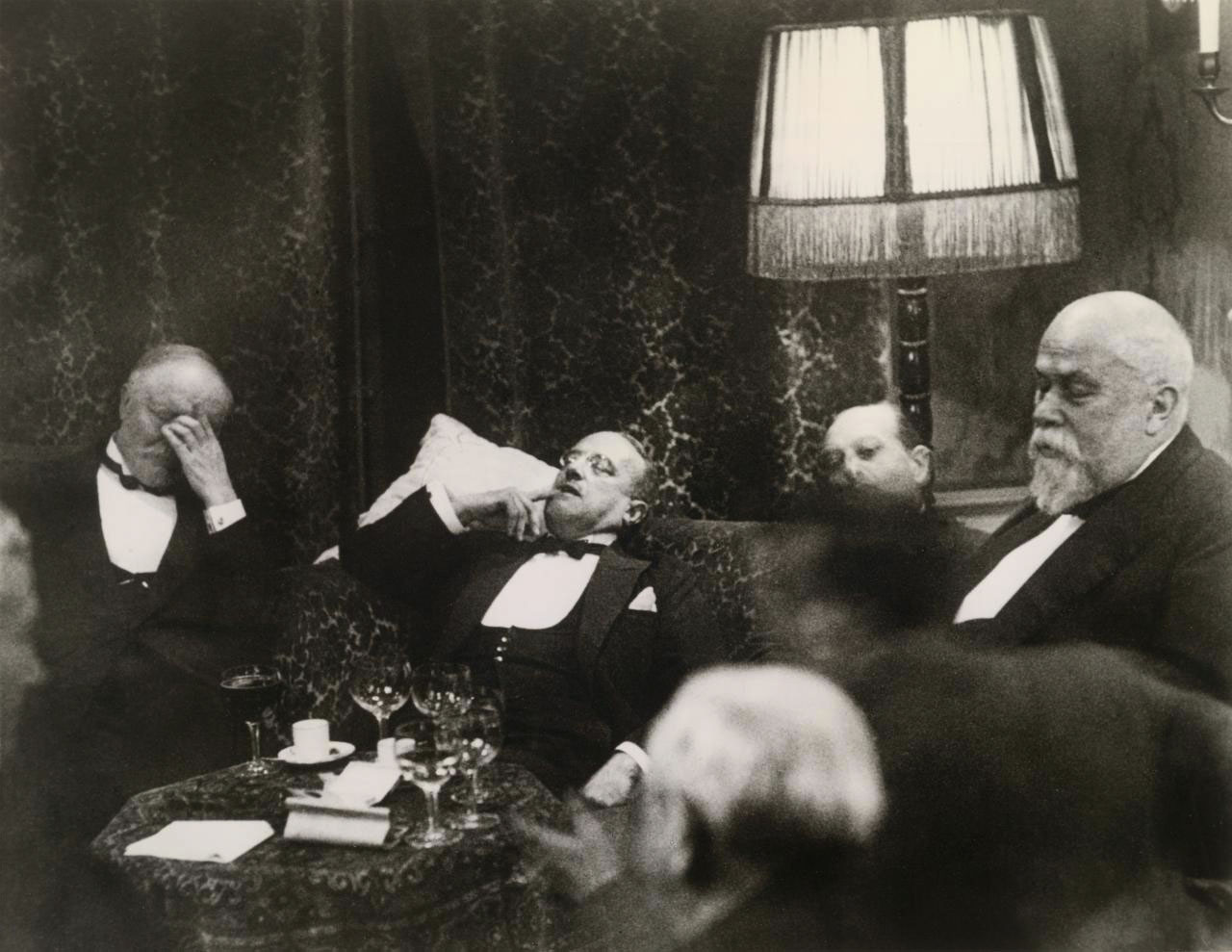
Erich Salomon (German Jewish, 1886-1944) 'Hague Conference (Second Hague Conference on Reparations, January 1930, in the early morning hours)' 1930


Erich Salomon (German Jewish, 1886-1944)
Hague Conference (Second Hague Conference on Reparations, January 1930, in the early morning hours)
1930
Promised gift of Paul Sack to the Sack Photographic Trust of the San Francisco Museum of Modern Art


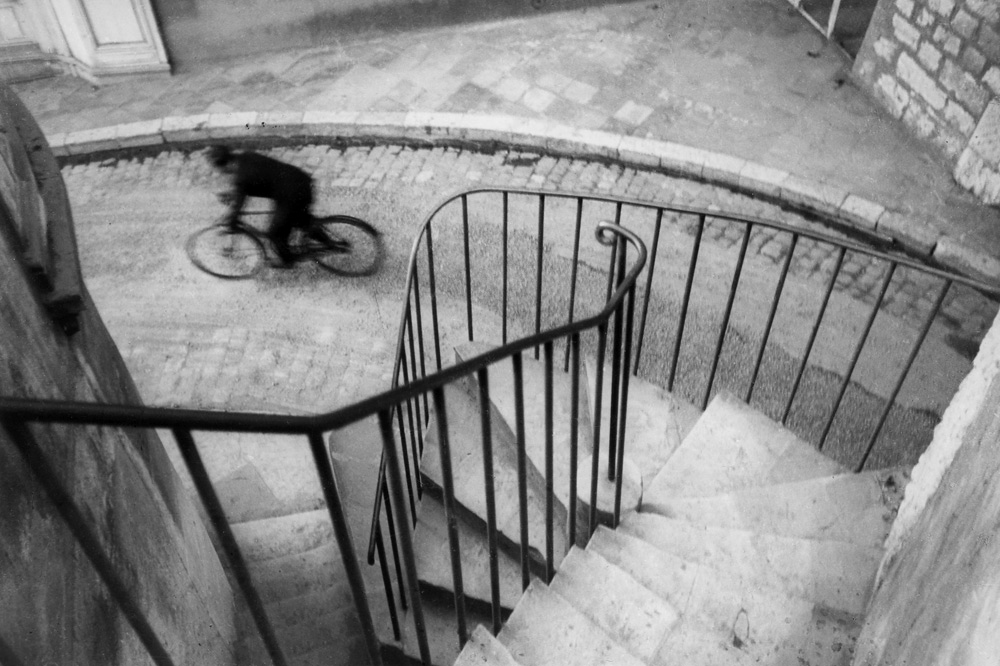
Henri Cartier Bresson (French, 1908-2004) 'Hyeres, France' 1932


Henri Cartier Bresson (French, 1908-2004)
Hyeres, France
1932
Gelatin silver print


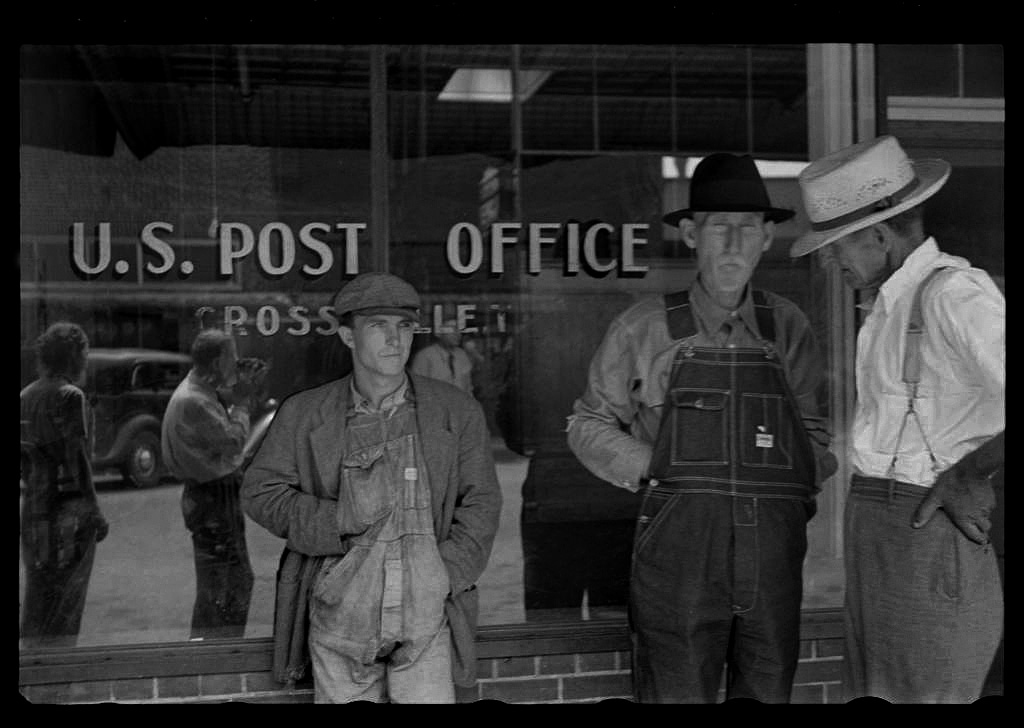
Ben Shah (American, 1898-1969) 'Post Office, Crossville, Tennesse' 1937


Ben Shah (American, 1898-1969)
Post Office, Crossville, Tennesse
1937
Gelatin silver print


Ben Shahn visible using his right-angled lens in the window reflection


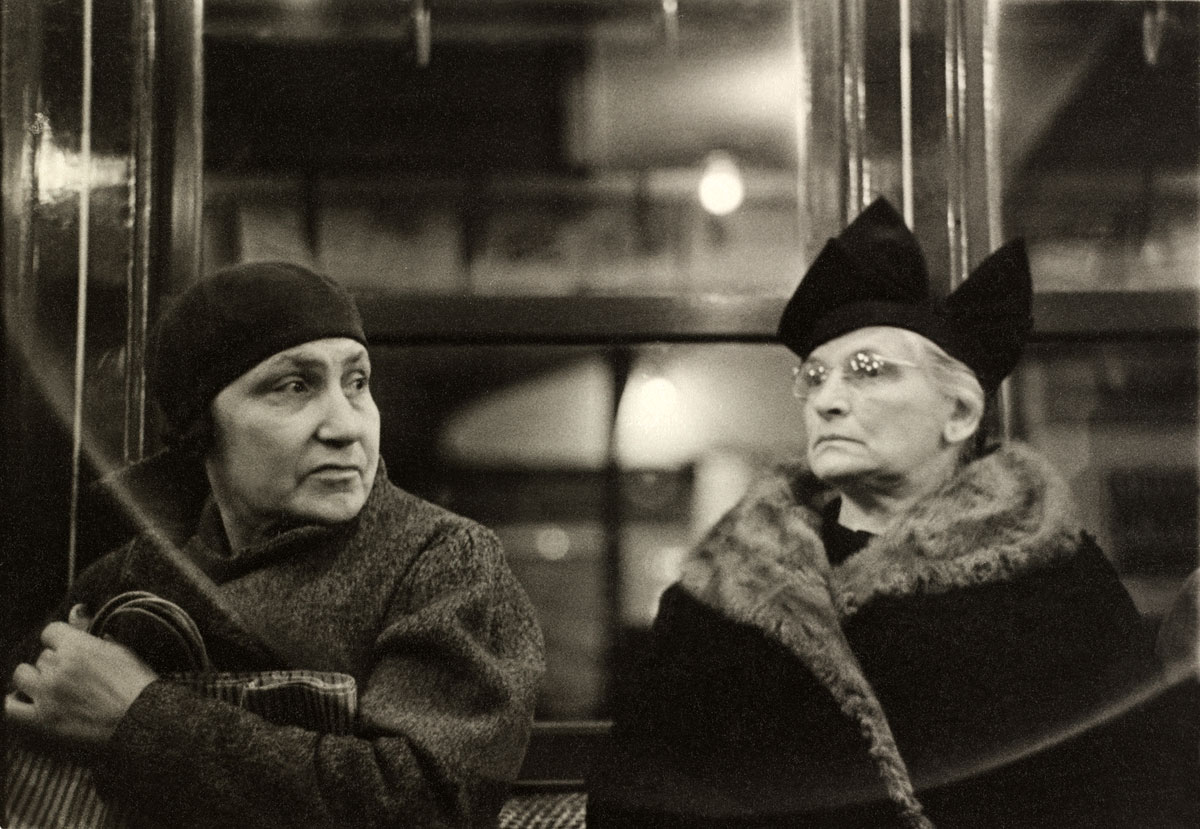
Walker Evans (American, 1903-1975) 'Subway Passengers, New York' 1938


Walker Evans (American, 1903-1975)
Subway Passengers, New York
1938
Gelatin silver print


Walker Evans (American, 1903-1975) 'Subway portrait' 1938-1941


Walker Evans (American, 1903-1975)
Subway Passengers, New York
1938-1941
Gelatin silver print


Weegee (Arthur H. Fellig) (American, 1899-1968) 'Their First Murder' Before 1945


Weegee (Arthur H. Fellig) (American, 1899-1968)
Their First Murder
Before 1945
Gelatin silver print


“Brooklyn School Children see Gambler Murdered in Street
Pupils were leaving P.S. 143, [Sixth Ave. and Roebling St.] in the Williamsburg section of Brooklyn, at 3:15 yesterday when Peter Mancuso, 22, described by police as a small time gambler, pulled up in a 1931 Ford at a traffic light a block from the school. Up to the car stepped a waiting gunman, who fired twice and escaped through the throng of children. Mancuso, shot through the head and heart, struggled to the board and collapsed dead on the pavement. Above are some of the spectators. The older woman is Mancuso’s aunt, who lives in the neighborhood, and the boy tugging at the hair of the girl in front of him is her son, hurrying away from her. Below is what they saw as a priest, flanked by an ambulance doctor and a detective, said the last rites of the Church over the body.”
PM Daily, October 9, 1941, Vol. II, No. 82, p. 15

Text from the International Center of Photography website


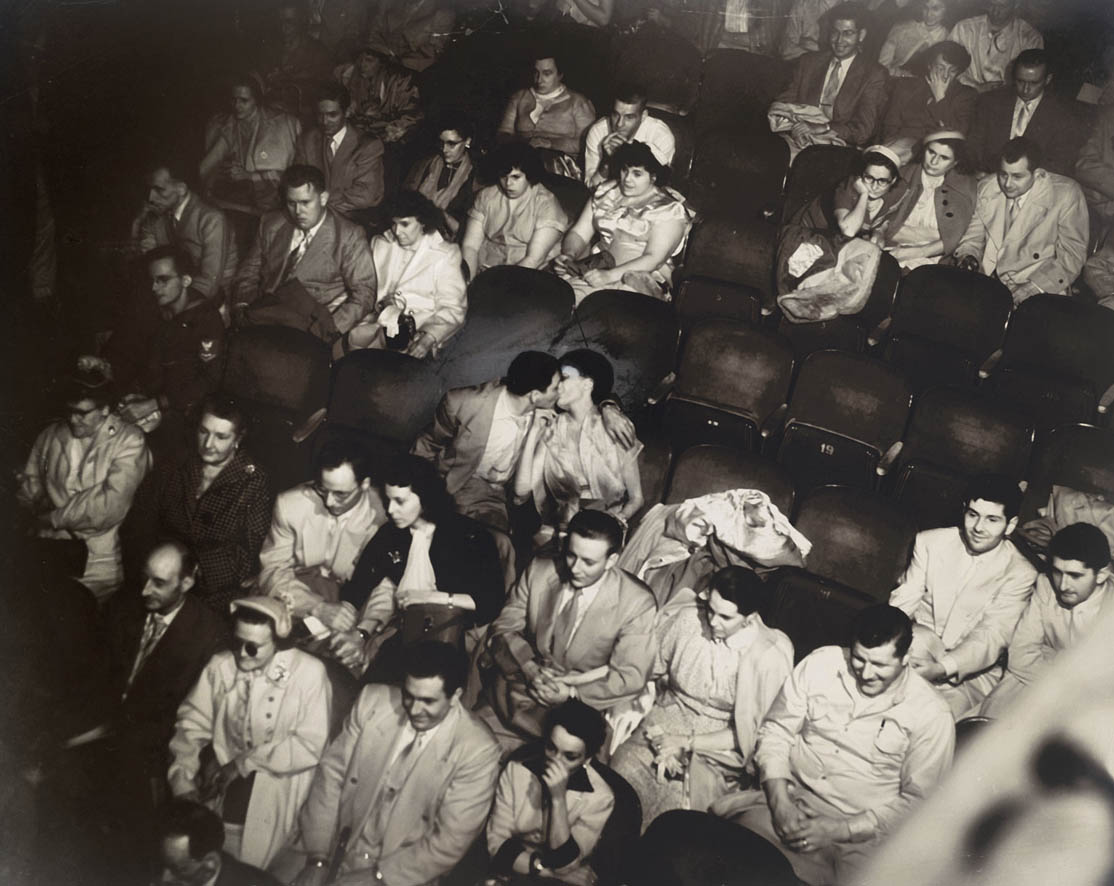
Weegee (Arthur H. Fellig) (American, 1899-1968) 'Audience in the Palace Theatre' c. 1943


Weegee (Arthur H. Fellig) (American, 1899-1968)
Audience in the Palace Theatre
c. 1943
Gelatin silver print
© Weegee/International Center of Photography/Getty Images


Weegee (Arthur Fellig) (American, born Austria, 1899-1968) '[Lovers at the Movies, Times Square]' c. 1953


Weegee (Arthur Fellig) (American born Austria, 1899-1968)
[Lovers at the Movies, Times Square]
c. 1953
Gelatin silver print
26.7 × 35.4cm (10 1/2 × 13 15/16 in)
© International Center of Photography


Robert Frank (American, 1924-2019)
'New York City' 1955 From 'The Americans'


Robert Frank (American, 1924-2019)
New York City
1955
From The Americans
Gelatin silver print


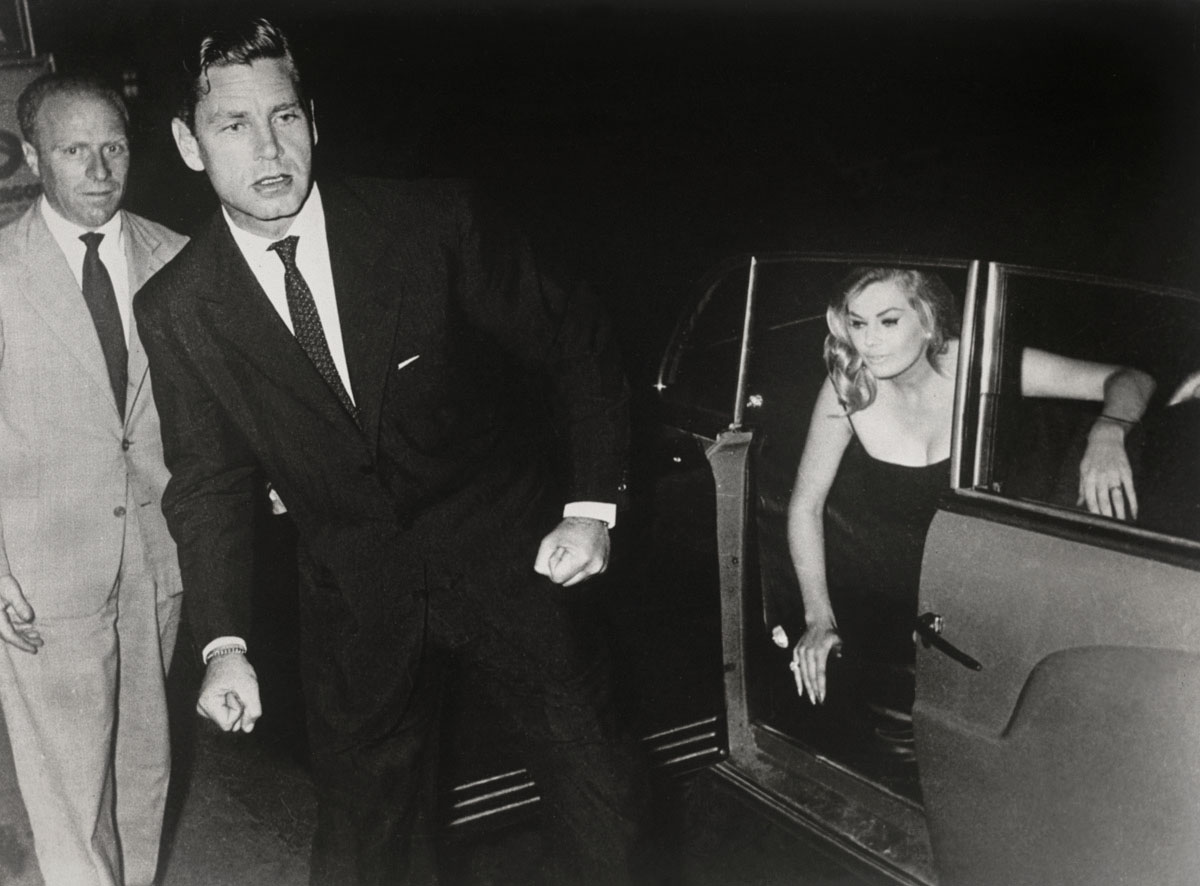
Tazio Secchiaroli (Italian, 1925-1998) 'Anita Ekberg and Husband Anthony Steel, Vecchia, Roma' 1958


Tazio Secchiaroli (Italian, 1925-1998)
Anita Ekberg and Husband Anthony Steel, Vecchia, Roma
1958
Gelatin silver print
SFMOMA, Accessions Committee Fund purchase


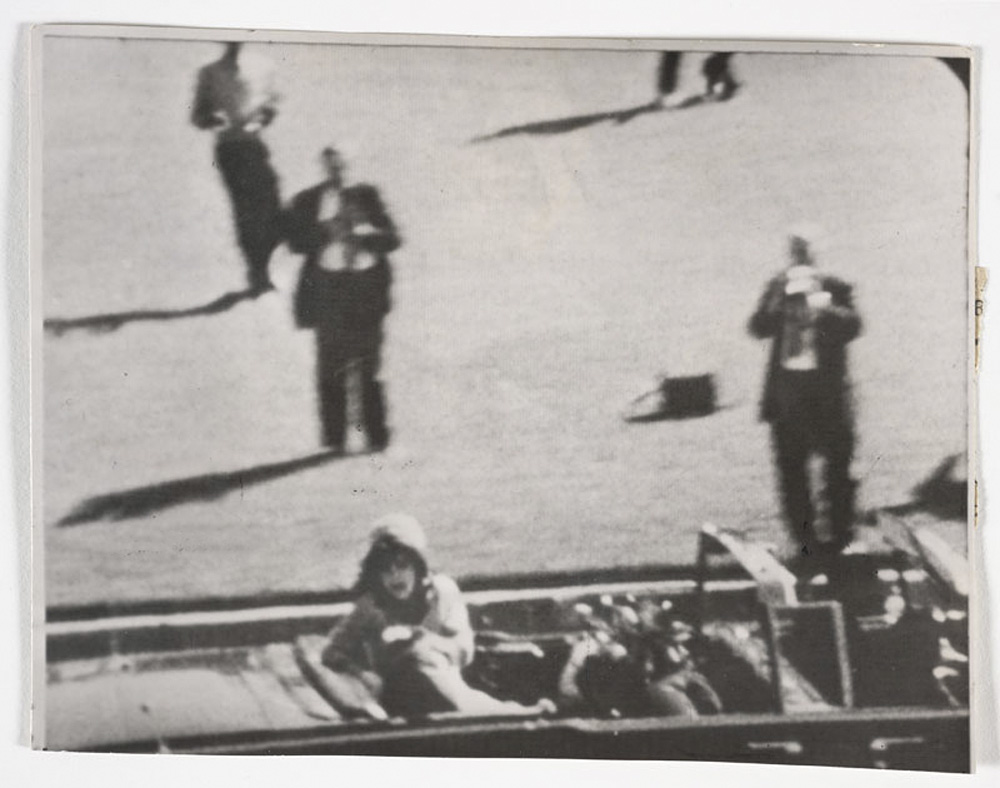
Abraham Zapruder (American born Ukraine, 1905-1970) 'Assassination of John F. Kennedy, November 22, 1963' 1963


Abraham Zapruder (American born Ukraine, 1905-1970)
Assassination of John F. Kennedy, November 22, 1963
1963
Collection SFMOMA, Accessions Committee Fund purchase
© The Sixth Floor Museum at Dealey Plaza


United Press International. 'Suffolk, Virginia, Race Confrontation, May 6, 1964' 1964


United Press International
Suffolk, Virginia, Race Confrontation, May 6, 1964
1964
Collection SFMOMA, Accessions Committee Fund purchase
© United Press International, Inc. All Rights Reserved


Lee Friedlander (American, b. 1934) 'New York City' 1966


Lee Friedlander (American, b. 1934)
New York City
1966
Gelatin silver print


Vito Acconci (Italian, 1940-2017)
'Following Piece' 1969


Vito Acconci (Italian, 1940-2017)
Following Piece
1969
Gelatin silver prints


Exposed offers a fascinating look at pictures made on the sly, without the explicit permission of the people depicted. With photographs from the late nineteenth century to present day, the pictures present a shocking, illuminating and witty perspective on iconic and taboo subjects.

Beginning with the idea of the ‘unseen photographer’, Exposed presents 250 works by celebrated artists and photographers including Brassaï’s erotic Secret Paris of the 1930s images; Weegee’s iconic photograph of Marilyn Monroe; and Nick Ut’s reportage image of children escaping napalm attacks in the Vietnam War. Sex and celebrity is an important part of the exhibition, presenting photographs of Liz Taylor and Richard Burton, Paris Hilton on her way to prison and the assassination of JFK. Other renowned photographers represented in the show include Guy Bourdin, Henri Cartier-Bresson, Philip Lorca DiCorcia, Walker Evans, Robert Frank, Nan Goldin, Lee Miller, Helmut Newton and Man Ray.

The UK is now the most surveyed country in the world. We have an obsession with voyeurism, privacy laws, freedom of media, and surveillance – images captured and relayed on camera phones, YouTube or reality TV.

Much of Exposed focuses on surveillance, including works by both amateur and press photographers, and images produced using automatic technology such as CCTV. The issues raised are particularly relevant in the current climate, with topical debates raging around the rights and desires of individuals, terrorism and the increasing availability and use of surveillance. Exposed confronts these issues and their implications head-on.

Text from the Tate Modern website [Online] Cited 21/09/2010 no longer available online


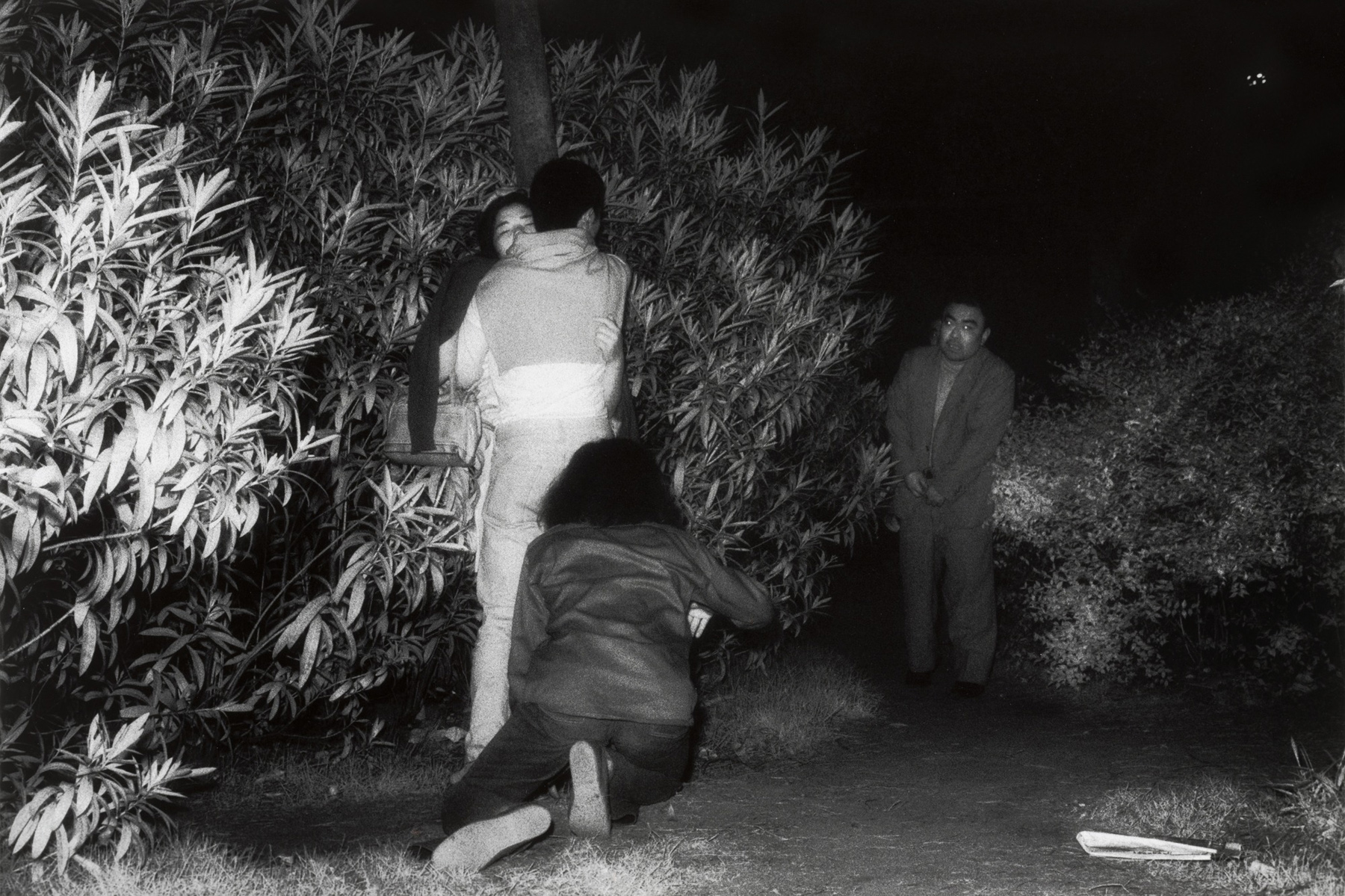
Kohei Yoshiyuki (Japan, b. 1946)
'Untitled' 1971 From the series 'The Park'


Kohei Yoshiyuki (Japan, b. 1946)
Untitled
1971
From the series The Park
Gelatin silver print


Kohei Yoshiyuki (Japan, b. 1946) 'Untitled' 1971 From the series 'The Park'


Kohei Yoshiyuki (Japan, b. 1946)
Untitled
1971
From the series The Park
Gelatin silver print


Sandra Phillips on Surveillance – Exposed at Tate Modern

SFMOMA’s Curator of Photography Sandra Phillips describes how contemporary artists like Sophie Calle and Benjamin Lowry have started to talk back to surveillance.


Ron Galella (American, b. 1931) 'What Makes Jackie Run? Central Park, New York City, October 4, 1971' 1971


Ron Galella (American, 1931-2022)
What Makes Jackie Run? Central Park, New York City, October 4, 1971
1971
Gelatin silver print
7 3/8 in x 9 7/8 in (18.73 x 25.08cm)
© Ron Galella


Ronald Edward Galella (January 10, 1931 – April 30, 2022) was an American photographer, known as a pioneer paparazzo. Dubbed “Paparazzo Extraordinaire” by Newsweek and “the Godfather of the U.S. paparazzi culture” by Time magazine and Vanity Fair, he is regarded by Harper’s Bazaar as “arguably the most controversial paparazzo of all time”. He photographed many celebrities out of the public eye and gained notice for his feuds with some of them, including Jacqueline Onassis and Marlon Brando. Despite the numerous controversies and claims of stalking, Galella’s work was praised and exhibited in art galleries worldwide.

Text from the Wikipedia website


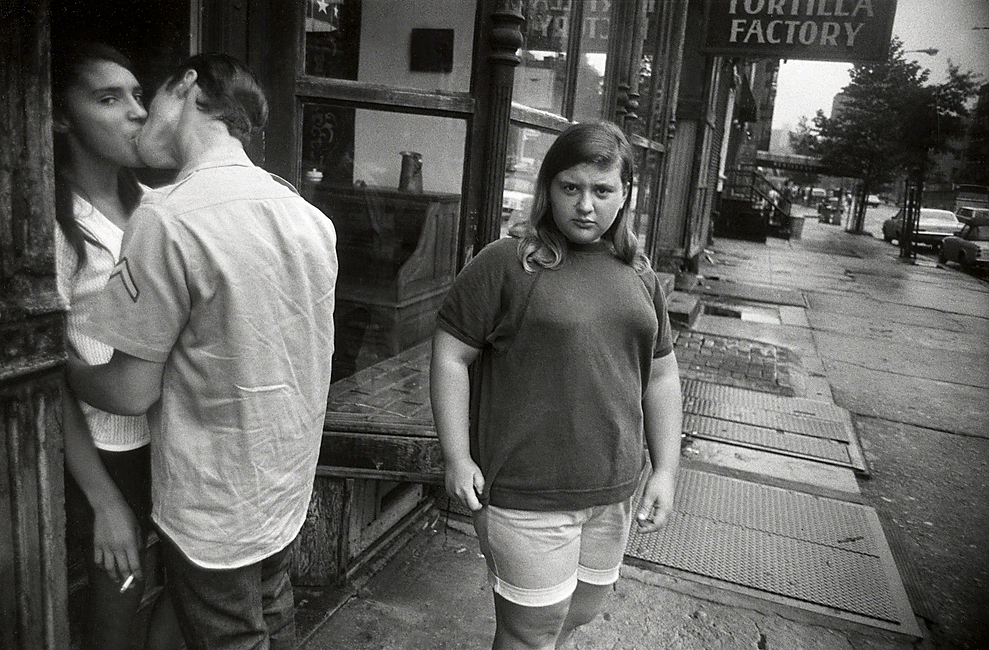
Garry Winogrand (American, 1928-1984) 'Couple Kissing, Girl Staring at Camera, Tortilla Factory, New York' 1969


Garry Winogrand (American, 1928-1984)
Couple Kissing, Girl Staring at Camera, Tortilla Factory, New York
1969
Gelatin silver print
© Garry Winogrand/Fraenkel Gallery, San Francisco


Nan Goldin (American, b. 1953) 'Nan and Brian in Bed, New York City' 1983


Nan Goldin (American, b. 1953)
Nan and Brian in Bed, New York City
1983
Chromogenic print
Nan Goldin and Matthew Marks Gallery, NYC


Denis Beaubois (Mauritian, b. 1970) 'In the event of Amnesia the city will recall…' 1996-1997 (still)


Denis Beaubois (Mauritian, b. 1970)
In the event of Amnesia the city will recall... (still)
1996-1997
DVD
9 mins 30 secs
Courtesy the artist


Denis Beaubois (Mauritian, b. 1970) 'In the event of Amnesia the city will recall…' 1996-1997 (still)


Denis Beaubois (Mauritian, b. 1970)
In the event of Amnesia the city will recall… (still)
1996-1997
DVD
9 mins 30 secs
Courtesy the artist


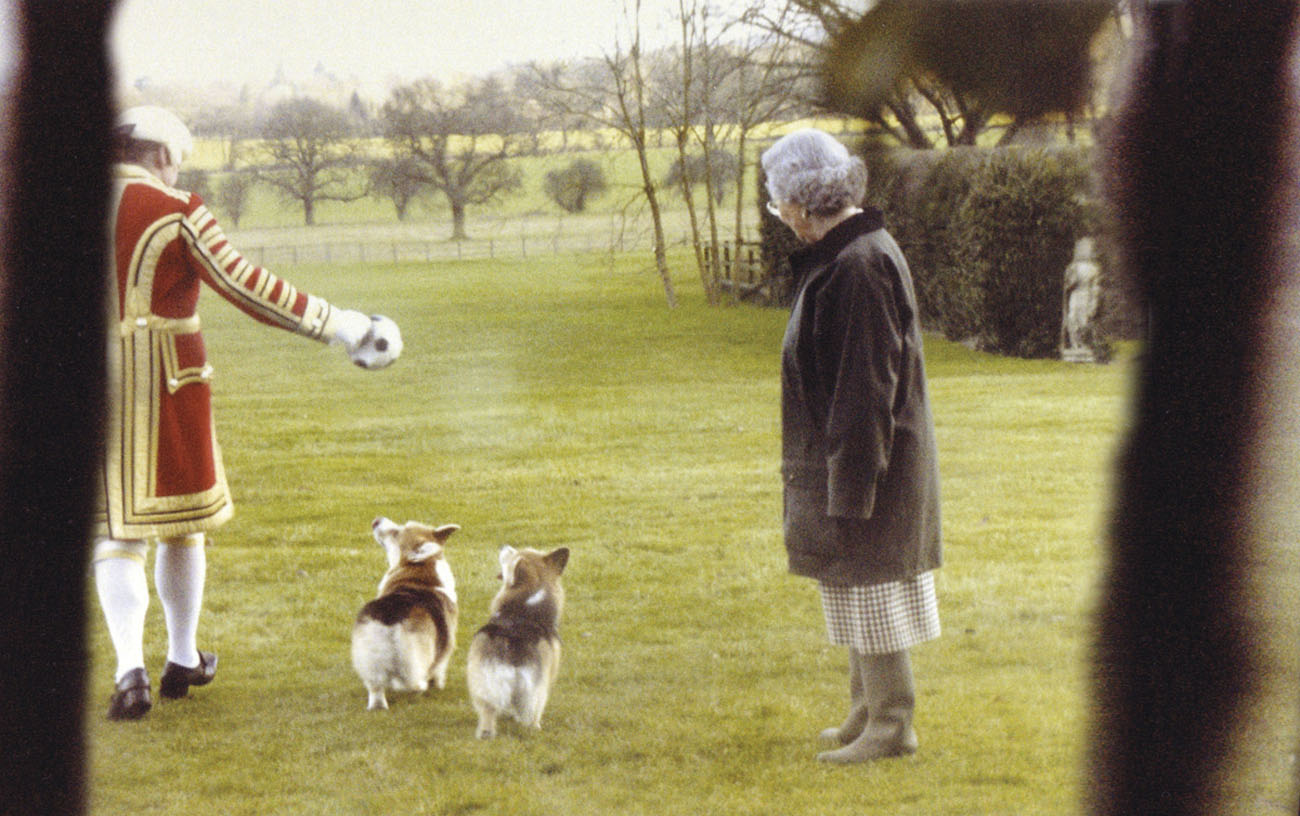
Alison Jackson (English, b. 1960)
'The Queen plays with her corgis' 2007


Alison Jackson (English, b. 1960)
The Queen plays with her corgis
2007
From the series Confidential
Chromogenic print
Courtesy the artist and Hamiltons Gallery, London
© Alison Jackson, Hamiltons Gallery, London


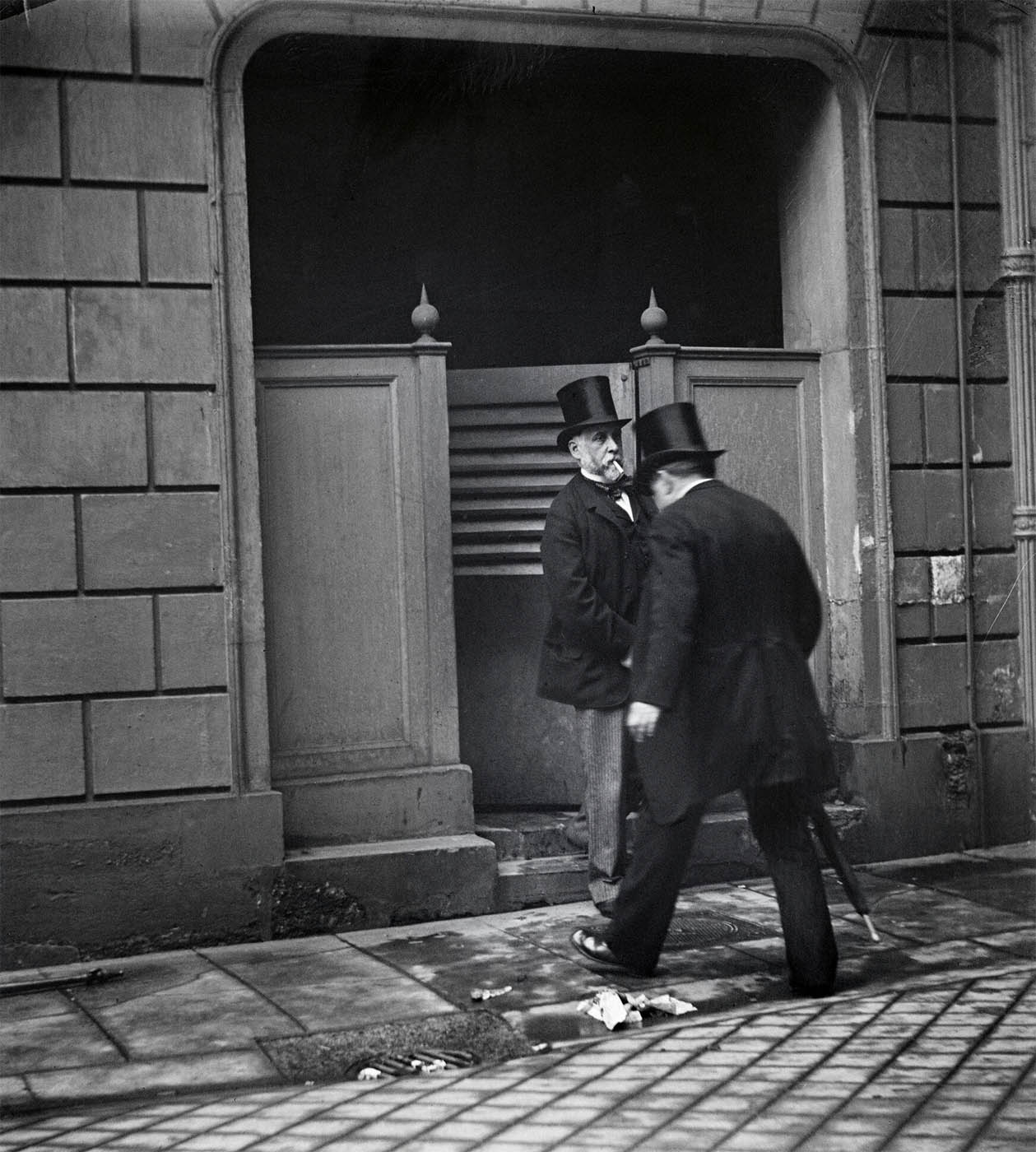
Giuseppe Primoli (Italian, 1851-1927)
'Edgar Degas emerging from a Parisian public toilet' 1889


Giuseppe Primoli (Italian, 1851-1927)
Edgar Degas emerging from a Parisian public toilet
1889
Gelatin silver print


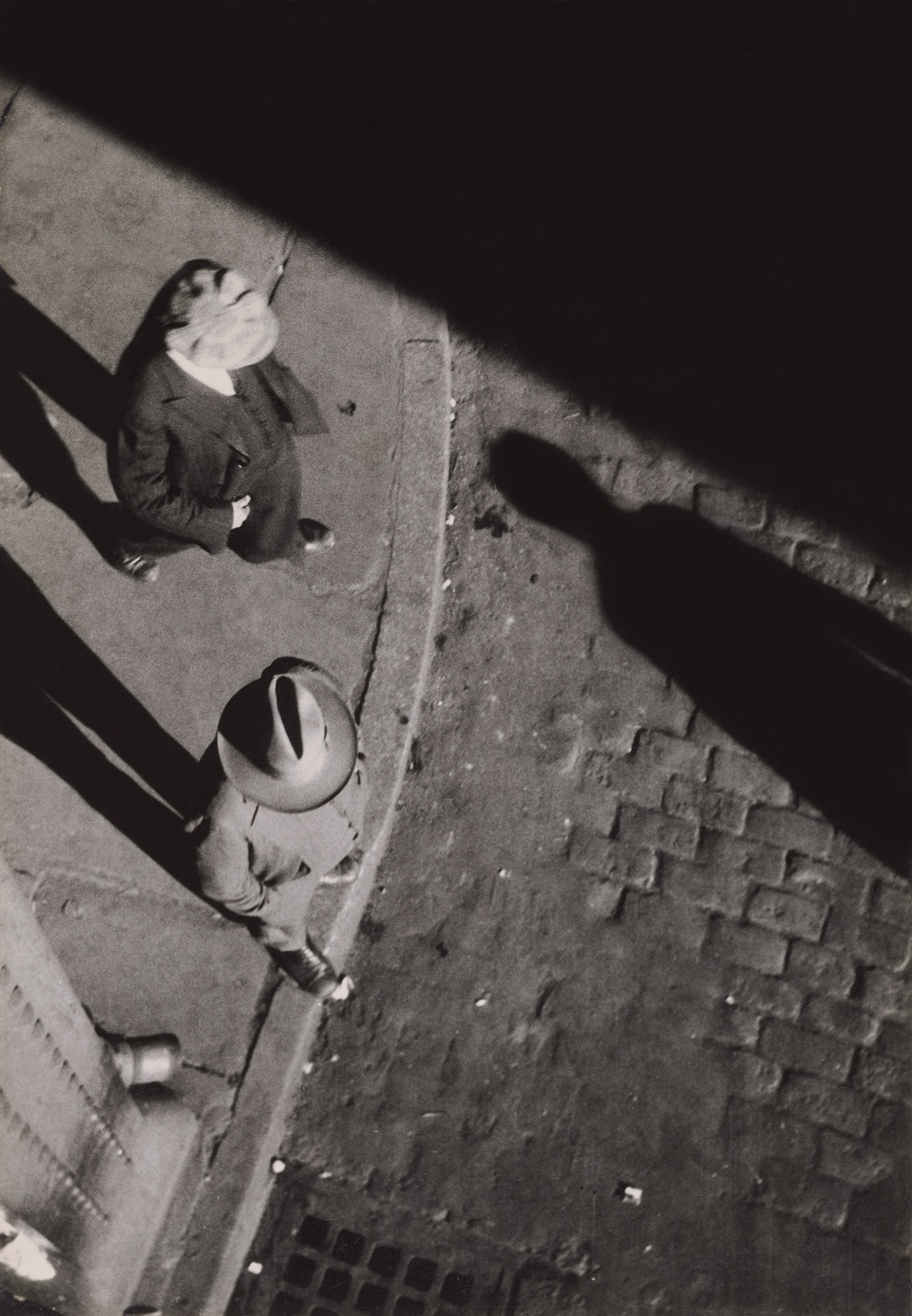
Walker Evans (American, 1903-1975) 'Street Scene, New York' 1929


Walker Evans (American, 1903-1975)
Street Scene, New York
1928
Gelatin silver print
San Francisco Museum of Modern Art
© Walker Evans Archive, The Metropolitan Museum of Art


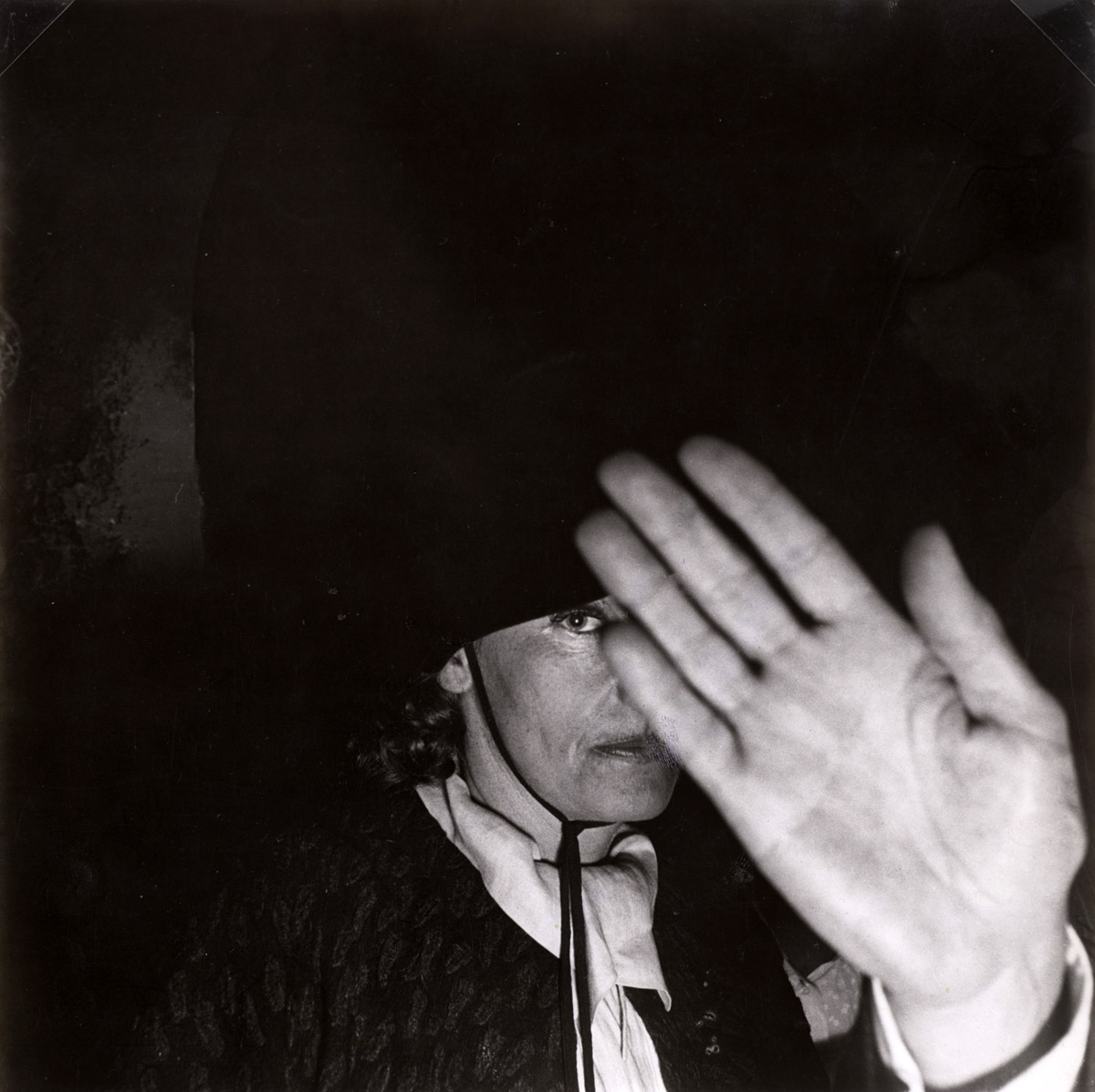
Georges Dudognon (French, 1922-2001) 'Greta Garbo in the Club St. Germain, Paris' c. 1950s


Georges Dudognon (French, 1922-2001)
Greta Garbo in the Club St. Germain, Paris
c. 1950s
Gelatin silver print
7 1/16  x 7 1/8 in. (17.94 x 18.1cm)
San Francisco Museum of Modern Art, Members of Foto Forum, 2005.200
© Estate of Georges Dudognon


The face in the paparazzi image above is actually The Face: Greta Garbo. One of the most famous and admired women in the world, Garbo became a New York recluse after retiring from films at the beginning of the 1940s. Sightings of her were rare, and this 1950s image captures the conflict between a movie star’s public persona and private life. Now older and with her face obscured, Garbo is unrecognisable, but once understood to be her it becomes a contrasting reference to all those images of her as an icon of beauty and stardom.

Christian Hayes. “Exposed: Voyeurism, Surveillance and the Camera,” on The Classic Film Show website, June 15, 2010 [online] Cited 24/03/2025


Weegee (Arthur H. Fellig) (American, 1899-1968) '[Marilyn Monroe]' c. 1950s


Weegee (Arthur H. Fellig) (American, 1899-1968)
[Marilyn Monroe]
c. 1950s
Gelatin silver print
International Center of Photography, New York, Gift of Wilma Wilcox, 1993
© Weegee / International Center of Photography / Getty Images


Richard Avedon (American, 1923-2004) 'And Warhol' 1969
Screenshot


Richard Avedon (American, 1923-2004)
And Warhol
1969
Gelatin silver print


Shizuka Yokomizo (Japanese, b. 1966) 'Stranger No. 1' 1998


Shizuka Yokomizo (Japanese, b. 1966)
Stranger No. 1
1998
Chromogenic print
50 x 42 1/2 in. (127 x 108 cm)
© Shizuka Yokomizo


Shizuka Yokomizo (Japanese, b. 1966)
'Stranger No. 2' 1998


Shizuka Yokomizo (Japanese, b. 1966)
Stranger No. 2
1998
Chromogenic print
SFMOMA, Accessions Committee Fund purchase
© Shizuka Yokomizo


Tate Modern
Bankside
London SE1 9TG
020 7887 8888

Opening hours:
Daily 10.00 – 18.00

Tate Modern website

LIKE ART BLART ON FACEBOOK

Back to top

Exhibition: ‘South African Photographs: David Goldblatt’ at The Jewish Museum, New York

Exhibition dates: 2nd May – 19th September 2010


David Goldblatt (South Africa, 1930-2018) 'Steven with Sight Seeing Bus, Doornfontein, Johannesburg, 1960' from the exhibition 'South African Photographs: David Goldblatt' at The Jewish Museum, New York, May - Sept, 2010


David Goldblatt (South Africa, 1930-2018)
Steven with Sight Seeing Bus, Doornfontein, Johannesburg, 1960
1960
Silver gelatin print on fiber-pressed paper
Courtesy of David Goldblatt and the Goodman Gallery, Johannesburg


2019

Now that he has gone, these seem, if possible, more powerful, poignant and prescient / ancient than ever.

Marcus


Many thankx to the Jewish Museum in New York for allowing me to publish the photographs in the posting. Please click on the photographs for a larger version of the image.


David Goldblatt (South Africa, 1930-2018) 'Holdup in Hillbrow, Johannesburg, November 1963' from the exhibition 'South African Photographs: David Goldblatt' at The Jewish Museum, New York, May - Sept, 2010


David Goldblatt (South Africa, 1930-2018)
Holdup in Hillbrow, Johannesburg, November 1963
1963
Silver gelatin print on fibre-pressed paper
Courtesy of David Goldblatt and the Goodman Gallery, Johannesburg


David Goldblatt (South Africa, 1930-2018) 'A plot-holder with the daughter of a servant, Wheatlands, Randfontein, September 1962' from the exhibition 'South African Photographs: David Goldblatt' at The Jewish Museum, New York, May - Sept, 2010


David Goldblatt (South Africa, 1930-2018)
A plot-holder with the daughter of a servant, Wheatlands, Randfontein, September 1962
1962
Silver gelatin print on fibre-pressed paper
Courtesy of David Goldblatt and the Goodman Gallery, Johannesburg


David Goldblatt (South Africa, 1930-2018) 'The farmer's wife, Fochville, 1965'


David Goldblatt (South Africa, 1930-2018)
The farmer’s wife, Fochville, 1965
1965
Silver gelatin print on fibre-pressed paper
Courtesy of David Goldblatt and the Goodman Gallery, Johannesburg


David Goldblatt (South African, 1930-2018) '"Boss Boy" detail, Battery Reef, Randfontein Estates Gold Mine' 1966


David Goldblatt (South African, 1930-2018)
“Boss Boy” detail, Battery Reef, Randfontein Estates Gold Mine
1966
Silver gelatin print on fibre-pressed paper
Courtesy of David Goldblatt and the Goodman Gallery, Johannesburg


The Jewish Museum currently offers visitors an opportunity to see 150 black-and-white silver gelatin prints taken between 1948 and 2009 in South African Photographs: David Goldblatt. The photographs on display focus on South Africa’s human landscape in the apartheid and post-apartheid eras and are accompanied by Goldblatt’s own written commentary. Growing up in segregated South Africa, he witnessed the deep humiliation and discrimination suffered by blacks and experienced anti-Semitism personally.

Goldblatt’s photographs expose the complex and evolving nature of apartheid through the diversity and subtlety of his approach while instilling “… emotional complexity that rewards repeated viewing” (The New Yorker). Instead of documenting major political events or horrifying incidents of violence, he focuses on the details of daily life and the world of ordinary people, a world where the apartheid system penetrates every aspect of society. In his photographs you will find “great beauty and the most profound humanity” (The Wall Street Journal).

For more than half a century, David Goldblatt has been photographing his native South Africa, documenting the social, cultural and economic divides that characterise the country. Recipient of the 2009 Henri Cartier-Bresson Award and the prestigious 2006 Hasselblad Foundation International Award in Photography, David Goldblatt is his country’s most distinguished photographer.

Goldblatt’s photographs expose the complex and evolving nature of apartheid through the diversity and subtlety of his approach. He has not documented major political events or horrifying incidents of violence. Instead, he focuses on the details of daily life and the world of ordinary people, a world where the apartheid system penetrates every aspect of society. He is constantly searching for the substance beneath the surface of human situations. As Nadine Gordimer comments in the exhibition audio guide, Goldblatt captures “… these moments when everything that has happened to an individual is somehow in that image at that time. All the person has felt and known is contained, indeed, in the way he comports himself, the way he’s sitting, the way he looks, and the kind of setting in which he is.” Goldblatt frequently addresses a complex question in his work: how is it possible to be reasonable, decent, and law-abiding, and at the same time, complicit in and even actively supportive of a system that is fundamentally immoral and evil? Each photograph in this exhibition is an intimate portrayal of a culture living with racism and injustice.

David Goldblatt has used his camera to explore South Africa’s mines; the descendants of seventeenth-century Dutch settlers called Afrikaners who were the architects of apartheid; life in Boksburg, a small middle-class white community; the Bantustans or “puppet states” in which blacks were forced to live; structures built for purposes ranging from shelter to commemoration; and Johannesburg, the city in which Goldblatt lives.

The photographer once wrote, “I am neither an activist nor a missionary. Yet I had begun to realise an involvement with this place and the people among whom I lived that would not be stilled and that I needed to grasp and probe. I wanted to explore the specifics of our lives, not in theories but in the grit and taste and touch of things, and to bring those specifics into that particular coherence that the camera both enables and demands.”

David Goldblatt has been photographing the changing political landscape of his country for more than five decades. He is descended from Lithuanian Jews who fled Europe in the 1890s to escape religious persecution. His father passed on to him, the artist said, “a strong sense of outrage at anything that smacked of racism.” Growing up in segregated South Africa, he witnessed the deep humiliation and discrimination suffered by blacks and experienced anti-Semitism personally. These experiences have informed his work.

Goldblatt’s written commentary is an essential part of his work and is presented throughout the exhibition in the texts and labels that accompany the photographs. A context room in the exhibition features a timeline juxtaposing events in South African history and David Goldblatt’s life; books published by the photographer; photography magazines that inspired him; a large map of South Africa; and a 22-minute excerpt of David Goldblatt: In Black and White, a 1985 film originally aired on Channel 4 Television in Great Britain.

The exhibition has been organised by The Jewish Museum’s Senior Curator, Susan Tumarkin Goodman. All the works in the exhibition are silver gelatin prints on fibre-pressed paper.

About David Goldblatt

David Goldblatt was born in 1930, the youngest of the three sons of Eli and Olga Goldblatt. His grandparents arrived in South Africa from Lithuania around 1893, having fled the persecution of Jews in the Baltic countries. David’s paternal grandfather owned a general store in Randfontein, a gold-mining town near Johannesburg. Eli Goldblatt built the business into a respected men’s clothing store and for some years David assisted with the running of the shop when his father’s poor health necessitated it. But he was only biding his time. He had become interested in photography in high school, and after his father’s death in 1962, he sold the business to devote all of his time to being a photographer.

Press release from The Jewish Museum website [Online] Cited 13/09/2010 no longer available online


David Goldblatt (South Africa, 1930-2018) 'Farmers at a cattle auction, Vryburg, 1965'


David Goldblatt (South Africa, 1930-2018)
Farmers at a cattle auction, Vryburg, 1965
1965
Silver gelatin print on fibre-pressed paper
Courtesy of David Goldblatt and the Goodman Gallery, Johannesburg


David Goldblatt (South Africa, 1930-2018) 'On an ostrich farm near Oudtshoorn, Cape Province (Western Cape)' 1967
Screenshot


David Goldblatt (South Africa, 1930-2018)
On an ostrich farm near Oudtshoorn, Cape Province (Western Cape)
1967
From the series Some Afrikaners Photographed
Silver gelatin print on fibre-pressed paper
Courtesy of David Goldblatt and the Goodman Gallery, Johannesburg


David Goldblatt (South Africa, 1930-2018) 'Baby with childminders and dogs in the Alexandra Street Park, Hillbrow, Johannesburg, 1972'


David Goldblatt (South Africa, 1930-2018)
Baby with childminders and dogs in the Alexandra Street Park, Hillbrow, Johannesburg, 1972
1972
Silver gelatin print on fibre-pressed paper
Courtesy of David Goldblatt and the Goodman Gallery, Johannesburg


David Goldblatt (South Africa, 1930-2018) 'Three women at 39 Soper Road, Berea, Johannesburg, May 1972'


David Goldblatt (South Africa, 1930-2018)
Three women at 39 Soper Road, Berea, Johannesburg, May 1972
1972
Silver gelatin print on fibre-pressed paper
Courtesy of David Goldblatt and the Goodman Gallery, Johannesburg


David Goldblatt (South Africa, 1930-2018) 'A farmer's son with his nursemaid, Heimweeberg, Nietverdiend, 1964'


David Goldblatt (South Africa, 1930-2018)
A farmer’s son with his nursemaid, Heimweeberg, Nietverdiend, 1964
1964
Silver gelatin print on fibre-pressed paper
Courtesy of David Goldblatt and the Goodman Gallery, Johannesburg


David Goldblatt (South Africa, 1930-2018) 'Landscape with 1500 lavatories, Frankfort, Ciskei' 12 July 1983


David Goldblatt (South Africa, 1930-2018)
Landscape with 1500 lavatories, Frankfort, Ciskei
12 July 1983
From the series Bantustans
Silver gelatin print on fibre-pressed paper
Courtesy of David Goldblatt and the Goodman Gallery, Johannesburg


David Goldblatt (South African, 1930-2018) '9:00 Going home: Marabastad-Waterval bus: For most of the people in this bus the cycle will start again tomorrow at between 2:00 and 3:00 a.m.' 1983-1984


David Goldblatt (South African, 1930-2018)
9:00 Going home: Marabastad-Waterval bus: For most of the people in this bus the cycle will start again tomorrow at between 2:00 and 3:00 a.m.
1983-1984
From the series The Transported of KwaNdebele. A South African Odyssey 
Silver gelatin print on fibre-pressed paper
Courtesy of David Goldblatt and the Goodman Gallery, Johannesburg


David Goldblatt (South Africa, 1930-2018) 'Travellers from KwaNdebele buying their weekly tickets at the bus depot in Marabastad, Pretoria, February 1984'


David Goldblatt (South Africa, 1930-2018)
Travellers from KwaNdebele buying their weekly tickets at the bus depot in Marabastad, Pretoria, February 1984
1984
Silver gelatin print on fibre-pressed paper
Courtesy of David Goldblatt and the Goodman Gallery, Johannesburg


David Goldblatt (South Africa, 1930-2018) 'Luke Kgatitsoe at His House, Magopa, Ventersdorp District, Western Transvaal' 21 October 1986


David Goldblatt (South Africa, 1930-2018)
Luke Kgatitsoe at His House, Magopa, Ventersdorp District, Western Transvaal
21 October 1986
Silver gelatin print on fibre-pressed paper
Courtesy of David Goldblatt and the Goodman Gallery, Johannesburg


The Jewish Museum
1109 5th Ave at 92nd St
New York NY 10128

Exhibition galleries opening hours:
Sunday 11am – 6pm
Monday 11am – 6pm
Tuesday Closed
Wednesday Closed
Thursday 11am – 6pm
Friday 11am – 6pm
Saturday 11am – 6pm

The Jewish Museum website

LIKE ART BLART ON FACEBOOK

Back to top

Exhibition: ‘Wolfgang Tillmans’ at the Serpentine Gallery, London

Exhibition dates: 26th June – 19th September, 2010


Installation view of the exhibition 'Wolfgang Tillmans' at the Serpentine Gallery, London, June - Sept, 2010


Installation view of the exhibition Wolfgang Tillmans at the Serpentine Gallery, London, June- September, 2010
Photograph: Gautier de Blonde


“In the constellations of pictures, I try to approximate the way I see the world, not in a linear order but as a multitude of parallel experiences…  Multiple singularities, simultaneously accessible as they share the same space or room.”


Wolfgang Tillmans


Since I haven’t been to the exhibition I have tried to sequence the photographs of this wonderful artist in a small intimation of how he might have visualised them – I hope you get the idea. The installation photographs at the bottom give clues to the actual moments of what Minor White calls ‘ice/fire’ – the space between disparate images, the space that is just as important as the images themselves for the frisson that is evokes, the creation of that metaphorical leap into the void of meaning where malleable thoughts emerge; never linear, both singular and multiple at one and the same time.

Dr Marcus Bunyan


Many thankx to the Serpentine Gallery for allowing me to publish the photographs in the posting. Please click on the photographs for a larger version of the image.


Wolfgang Tillmans (German, b. 1968) 'Anders pulling splinter from his foot' 2004 from the exhibition 'Wolfgang Tillmans' at the Serpentine Gallery, London, June - Sept, 2010


Wolfgang Tillmans (German, b. 1968)
Anders pulling splinter from his foot
2004
C-type print
61 × 50.8cm
Courtesy the artist and Maureen Paley, London


Wolfgang Tillmans (German, b. 1968) 'Nanbei Hu' 2009 from the exhibition 'Wolfgang Tillmans' at the Serpentine Gallery, London, June - Sept, 2010


Wolfgang Tillmans (German, b. 1968)
Nanbei Hu
2009
Inkjet print
207 x 138cm
Courtesy the artist and Maureen Paley, London


Wolfgang Tillmans (German, b. 1968) 'Roy' 2009 from the exhibition 'Wolfgang Tillmans' at the Serpentine Gallery, London, June - Sept, 2010


Wolfgang Tillmans (German, b. 1968)
Roy
2009
C-type print
40.6 x 30.5cm
Courtesy the artist and Maureen Paley, London


Wolfgang Tillmans (German, b. 1968) 'Venus, transit' 2004


Wolfgang Tillmans (German, b. 1968)
Venus, transit
2004
C-type print
40.6 × 30.5cm
Courtesy the artist and Maureen Paley, London


Wolfgang Tillmans (German, b. 1968) 'Dan' 2008


Wolfgang Tillmans (German, b. 1968)
Dan
2008
C-type print
61 × 50.8cm
Courtesy the artist and Maureen Paley, London


Wolfgang Tillmans (German, b. 1968) 'Eierstapel' 2009


Wolfgang Tillmans (German, b. 1968)
Eierstapel
2009
C-type print
61 x 50.8cm
Courtesy the artist and Maureen Paley, London


Wolfgang Tillmans (German, b. 1968) 'Muqarnas' 2006


Wolfgang Tillmans (German, b. 1968)
Muqarnas
2006
Framed C-type print
214 × 145cm
Courtesy the artist and Maureen Paley, London


Wolfgang Tillmans (German, b. 1968) 'Urgency XXII' 2006


Wolfgang Tillmans (German, b. 1968)
Urgency XXII
2006
Framed C-type print
238 × 181cm
Courtesy the artist and Maureen Paley, London


Wolfgang Tillmans (German, b. 1968) 'Zimmerlinde (Michel)' 2006


Wolfgang Tillmans (German, b. 1968)
Zimmerlinde (Michel)
2006
Framed C-type print
211 × 145cm
Courtesy the artist and Maureen Paley, London


The Serpentine Gallery presents Wolfgang Tillmans’ first major exhibition in London since 2003. Conceived by the artist for the Serpentine Gallery, the exhibition will present both abstract and figurative work.

Over the past 20 years, Tillmans has redefined photography and the way it is shown. Known by the early 90s for the seemingly casual images of the world he inhabited, his work reassessed photographic conventions and reflected the identity politics of the time, capturing the fragility of human life and focusing on everyday objects. This early work then expanded to engage with portraiture, landscape, the still-life and, more recently, abstraction. Tillmans’ abstract work, greatly celebrated in the last decade, continues to push the boundaries and definitions of the photographic form, and will be a particular focus of this exhibition.

The wide-ranging themes in Tillmans’ photographs are combined in his reconfiguration of accumulated images, created in response to a given space. In this new exhibition, the explorations into abstraction sit alongside a new focus on the figurative – a focus that is increasingly informed by recent colour field works and experiments with process. Referring to his approach to installation making Tillmans said: “In the constellations of pictures, I try to approximate the way I see the world, not in a linear order but as a multitude of parallel experiences… Multiple singularities, simultaneously accessible as they share the same space or room.”

The Serpentine Gallery exhibition reflects the artist’s acute sensitivity to the politics of contemporary society, his ongoing fascination with colour, and his conceptual engagement with the technical processes of photography. These delicate yet challenging images capture the distinctive energetic balance between beauty and subversion that Tillmans has long embraced.

Tillmans was born in 1968 in Remscheid, Germany. He studied in Great Britain at the Bournemouth & Poole College of Art & Design, graduating in 1992. In the 1990s, his work was shown at the Museum of Modern Art, New York; the Kunsthalle Zurich; and Portikus, Frankfurt, amongst others. In 2000 he won the Tate’s Turner Prize. A large survey exhibition in 2001-2003 toured to Deichtorhallen, Hamburg; Castello di Rivoli, Turin; Palais de Tokyo, Paris; and Louisiana Museum of Modern Art in Humlebaek, Denmark. His show called Freedom from the Known at P.S.1, New York (2006) was followed by a major tour of North American museums. In 2008, Tillmans had an extensive solo exhibition at the Hamburger Bahnhof, Berlin entitled Lighter, and in 2009 was included in Making Worlds at the 53rd Venice Biennale. More than twenty monographic books on his work have been published to date and an exhibition catalogue will accompany the Serpentine Gallery exhibition.

The exhibition will run concurrently with the Serpentine Gallery Pavilion 2010, designed by Jean Nouvel and opening on 10 July. Housed in the Pavilion will be artist Christian Boltanski’s Les Archives du Coeur installation.

Press release from the Serpentine Gallery website [Online] Cited 11/09/2010 no longer available online


Wolfgang Tillmans (German, b. 1968) 'Silver Installation VII' 2009 (installation view)


Wolfgang Tillmans (German, b. 1968)
Silver Installation VII (installation view)
2009
Unique C-type prints
Installation view
Photograph: Gautier de Blonde


Installation view of the exhibition 'Wolfgang Tillmans' at the Serpentine Gallery, London, June-  September, 2010

Installation view of the exhibition 'Wolfgang Tillmans' at the Serpentine Gallery, London, June-  September, 2010

Installation view of the exhibition 'Wolfgang Tillmans' at the Serpentine Gallery, London, June-  September, 2010


Installation views of the exhibition Wolfgang Tillmans at the Serpentine Gallery, London, June- September, 2010
Photograph: Gautier de Blonde


Serpentine Gallery
Kensington Gardens
London W2 3XA
Phone: 020 7402 6075

Opening hours:
Tuesday – Sunday 10am – 6pm

Serpentine Gallery website

LIKE ART BLART ON FACEBOOK

Back to top

Review: ‘How To Comfort Your Father’ by Martin Smith at Sophie Gannon Gallery, Richmond

Exhibition dates: 24th August – 18th September 2010


Martin Smith (Australian, b. 1971) 'Enough' 2010 from the exhibition 'How To Comfort Your Father' by Martin Smith at Sophie Gannon Gallery, Richmond, Aug - Sept, 2010


Martin Smith (Australian, b. 1971)
Enough
2010


Following on from last year’s exhibition My Jesus Lets Me Rub His Belly that examined issues of place and faith when the artist was growing up, Martin Smith now presents a slice of poignant son father love at Sophie Gannon Gallery, Richmond. The combination of images and text create narratives on growing up, life, male bonding and mortality.

In Fix It Up (2010, below) the use of a circle of text on black (the circle of life) in this image paired with a dark photograph of moss covered twigs and branches is exemplary, the metaphor of the arborist chopping down a gum tree in the backyard as his father is waiting to be taken to hospital by ambulance with prostrate cancer, the last time he will be present in his house, incredibly moving. The use of blurred images, such as the central panel in the triptych Sydney (2010, below) adds emotional weight to the narratives, as though the stories told can only be fragmentary memories, as all memories are, of the events that have passed. The feeling of an excavation of the meaning of life and death is further enhanced by the incision of the letters into the photographs surface and the extrusion of the letters to form three-dimensional sculptural forms, as in the work Enough (2010, see photograph and detail below). The letters shape references the fungi on the tree behind, new life growing out of old, as though the words were being extruded out of the forest, archives of communal memory.

My favourite image in the exhibition didn’t have any words at all, not even piled as detritus at the bottom of the frame as many of Smith’s works do. It didn’t need them. The triptyph Untitled 1 (2010, below) is simple and eloquently beautiful and almost brought me to tears. When read in combination with the other works and their texts, the moss covered trees on the left become two wrinkled elbows, the image on the right the wandering mind and the image in the centre – for me, the feeling of life force as it flows in the darkness. As my yoga teacher says to me, “You must learn to navigate the dazzling darkness.”

This illumination of the mind, body, memory and spirit is what Smith’s work is all about. I adore it.

Dr Marcus Bunyan


Many thankx to Edwin and Sophie at Sophie Gannon Gallery for allowing me to publish the photographs in the posting. All photographs © and courtesy of the artist and Sophie Gannon Gallery. Please click on the photographs for a larger version of the image as it is important to read the text with the larger horizontal works (in some you can’t read the text, it is too small – apologies).


Martin Smith (Australian, b. 1971) 'Regards Dad' 2010 from the exhibition 'How To Comfort Your Father' by Martin Smith at Sophie Gannon Gallery, Richmond, Aug - Sept, 2010

Martin Smith (Australian, b. 1971)
Regards Dad
2010


Martin Smith (Australian, b. 1971) 'Enough' 2010 (detail) from the exhibition 'How To Comfort Your Father' by Martin Smith at Sophie Gannon Gallery, Richmond, Aug - Sept, 2010


Martin Smith (Australian, b. 1971)
Enough (detail)
2010


Martin Smith (Australian, b. 1971) 'Fix it up' 2010


Martin Smith (Australian, b. 1971)
Fix it up
2010


Martin Smith (Australian, b. 1971) 'Sydney' 2010


Martin Smith (Australian, b. 1971)
Sydney
2010


Martin Smith (Australian, b. 1971) 'Untitled 1' 2010


Martin Smith (Australian, b. 1971)
Untitled 1
2010


Sophie Gannon Gallery
2, Albert Street, Richmond, Melbourne

Opening hours:
Tuesday – Saturday 11 – 5pm

Sophie Gannon Gallery website

LIKE ART BLART ON FACEBOOK

Back to top

Review: ‘Pat Brassington’ at Arc One Gallery, Melbourne

Exhibition dates: 24th August – 18th September 2010


Pat Brassington (Australian, b. 1942) 'Camouflage' 2010 from the exhibition 'Pat Brassington' at Arc One Gallery, Melbourne, Sun - Sept, 2010


Pat Brassington (Australian, b. 1942)
Camouflage
2010


I have a critically ambivalent attitude towards the work of artist Pat Brassington. While the exhibition at Arc One Gallery in Melbourne contains some wonderful ‘images’ her work never seems to move me in an emotional sense. What it does do admirably is constantly engage me in cerebral jousting and sensory debate. Intellectually and visually I find the images stimulating, emotionally I am left a little bit cold.

Brassington’s sometimes fetishistic collage-like digital photographs occupy ambiguous spaces – fascinating ‘other’ worlds, constructed worlds that disturb and delight, drawing the viewer into subjective judgements on what, exactly, they are seeing. Brassington doesn’t need to speak about her work, much like Bill Henson never speaks about his work, because the viewer does that for her and that is the point – Brassington lets the viewer construct the story, a story that is open to multiple viewpoints and interpretations.

To see the work as just “surrealist” is to do it a disservice for it is much more than that. Of course the work uses various surrealist tropes but the power of these images is in setting up psychological encounters that are often bizarre, confronting and disturbing at a deeper level than just surface juxtapositions. These images seem to haunt you long after you have seen them. Using a limited colour palette of washed out purples, greys, yellows and pinks with a hit of red or blue where applicable (only once a green, never any solid, bright, strong colours) Brassington’s work keeps repeating objects and themes throughout the years – the dress, fish, gloves, hands, legs and the sensual mouth – to “evoke uneasy tensions between bizarre, sinister intimations of menace and weirdly beautiful, benign harmonies.” (Diane Foster).

In these new images the lascivious tongue is camouflaged, a woman marches determinedly and blindly over a hill, a child is wrapped and taped, two sateen gloves emanate and a boy breathes life into the sea (or is it the other way around, or is the boy destroying the sea through his breath?). The paradoxes are beautifully enacted and always challenging and that is the strength of the work of Brassington – offering us, the viewer, no easy way out as we stare at the red ribbons in a girl’s hair.

Dr Marcus Bunyan


Many thank to Angela Connor and all at Arc One Gallery for allowing me to publish the photographs in the posting. Please click on the photographs for a larger version of the image. All images © and courtesy of the artist and Arc One Gallery.


Pat Brassington. 'Ocean Child' 2009 from the exhibition 'Pat Brassington' at Arc One Gallery, Melbourne, Sun - Sept, 2010


Pat Brassington (Australian, b. 1942)
Ocean Child
2009


Pat Brassington. 'Like A Bird Now' 2010 from the exhibition 'Pat Brassington' at Arc One Gallery, Melbourne, Sun - Sept, 2010


Pat Brassington (Australian, b. 1942)
Like A Bird Now
2010


Pat Brassington (Australian, b. 1942) 'In Lieu' 2010 from the exhibition 'Pat Brassington' at Arc One Gallery, Melbourne, Sun - Sept, 2010


Pat Brassington (Australian, b. 1942)
In Lieu
2010


Pat Brassington (Australian, b. 1942) 'Sensors' 2010


Pat Brassington (Australian, b. 1942)
Sensors
2010


Pat Brassington (Australian, b. 1942) 'Radar' 2009


Pat Brassington (Australian, b. 1942)
Radar
2009


Pat Brassington (Australian, b. 1942) 'Double Vision' 2010


Pat Brassington (Australian, b. 1942)
Double Vision
2010


Pat Brassington (Australian, b. 1942) 'By the Way' 2010


Pat Brassington (Australian, b. 1942)
By the Way
2010


Pat Brassington (Australian, b. 1942) 'Stare' 2009


Pat Brassington (Australian, b. 1942)
Stare
2009


Arc One Gallery
45 Flinders Lane
Melbourne, 3000
Phone: (03) 9650 0589

Opening hours:
Wednesday – Saturday 11am – 5pm

Arc One Gallery website

LIKE ART BLART ON FACEBOOK

Back to top

Exhibition: ‘Haunted: Contemporary Photography / Video / Performance’ at Solomon R. Guggenheim Museum, New York

Exhibition dates: 26th March – 6th September, 2010


Looks like a great exhibition – wish I was there to see it!


Many thankx to Claire Laporte and the Solomon R. Guggenheim Museum for allowing me to publish the photographs in the posting. Please click on the photographs for a larger version of the image.


Adam Helms (American, b. 1974) 'Untitled Portrait (Santa Fe Trail)' 2007 from the exhibition 'Haunted: Contemporary Photography / Video / Performance' Guggenheim Museum, March - Sept, 2010


Adam Helms (American, b. 1974)
Untitled Portrait (Santa Fe Trail)
2007
Double-sided screenprint on paper vellum edition 2/2
101.3 x 65.7cm
Solomon R. Guggenheim Museum, New York, Purchased with funds contributed by the Photography Committee 2007.131


Idris Khan (British, b. 1978) 'Homage to Bernd Becher' 2007 from the exhibition 'Haunted: Contemporary Photography / Video / Performance' Guggenheim Museum, March - Sept, 2010


Idris Khan (British, b. 1978)
Homage to Bernd Becher
2007
Bromide print edition 1/6
49.8 x 39.7cm
Solomon R. Guggenheim Museum, New York, Purchased with funds contributed by the Photography Committee


Bernd Becher (German, 1931-2007) and Hilla Becher (German, 1934-2015) 'Water Towers' 1980 from the exhibition 'Haunted: Contemporary Photography / Video / Performance' Guggenheim Museum, March - Sept, 2010


Bernd Becher (German, 1931-2007) and Hilla Becher (German, 1934-2015)
Water Towers
1980
Nine gelatin silver prints
155.6 x 125.1cm
Solomon R. Guggenheim Museum, New York, Purchased with funds contributed by Mr. and Mrs. Donald Jonas


Andy Warhol (American, 1928-1987) 'Orange Disaster #5' 1963


Andy Warhol (American, 1928-1987)
Orange Disaster #5
1963
Acrylic and silkscreen enamel on canvas
269.2 x 207cm
Solomon R. Guggenheim Museum, New York, Gift, Harry N. Abrams Family Collection 74.2118


Joan Jonas (American, b. 1936) 'Mirror Piece I' 1969


Joan Jonas (American, b. 1936)
Mirror Piece I
1969
Chromogenic print
101 x 55.6cm
Solomon R. Guggenheim Museum, New York, Purchased with funds contributed by the Photography Committee


Zhang Huan (Chinese, b. 1965) '12 Square Meters' 1994


Zhang Huan (Chinese, b. 1965)
12 Square Meters
1994
Chromogenic print A.P. 3/5, edition of 15
149.9 x 99.7cm
Solomon R. Guggenheim Museum, New York, Purchased with funds contributed by Manuel de Santaren and Jennifer and David Stockman


Much of contemporary photography and video seems haunted by the past, by the history of art, by apparitions that are reanimated in reproductive mediums, live performance, and the virtual world. By using dated, passé, or quasi-extinct stylistic devices, subject matter, and technologies, such art embodies a longing for an otherwise unrecuperable past.

From March 26 to September 6, 2010, the Solomon R. Guggenheim Museum presents Haunted: Contemporary Photography / Video / Performance, an exhibition that documents this obsession, examining myriad ways photographic imagery is incorporated into recent practice. Drawn largely from the Guggenheim’s extensive photography and video collections, Haunted features some 100 works by nearly 60 artists, including many recent acquisitions that will be on view at the museum for the first time. The exhibition is installed throughout the rotunda and its spiralling ramps, with two additional galleries on view from June 4 to September 1, featuring works by two pairs of artists to complete Haunted’s presentation.

The works in Haunted: Contemporary Photography / Video / Performance range from individual photographs and photographic series to sculptures and paintings that incorporate photographic elements; projected videos; films; performances; and site-specific installations, including a new sound work created by Susan Philips for the museum’s rotunda. While the show traces the extensive incorporation of photography into contemporary art since the 1960s, a significant part of the exhibition will be dedicated to work created since 2001 by younger artists.

Haunted is organised around a series of formal and conceptual threads that weave themselves through the artworks on view:

Appropriation and the Archive

In the early 1960s, Robert Rauschenberg and Andy Warhol began to incorporate photographic images into their paintings, establishing a new mode of visual production that relied not on the then-dominant tradition of gestural abstraction but rather on mechanical processes such as screenprinting. In so doing, they challenged the notion of art as the expression of a singular, heroic author, recasting their works as repositories for autobiographical, cultural, and historical information. This archival impulse revolutionised art production over the ensuing decades, paving the way for a conceptually driven use of photography as a means of absorbing the world at large into a new aesthetic realm. Since then, a number of artists, including Bernd and Hilla Becher, Sarah Charlesworth, Douglas Gordon, Luis Jacob, Sherrie Levine, Richard Prince, Cindy Sherman, and Sara VanDerBeek, have pursued this archival impulse, amassing fragments of reality either by creating new photographs or by appropriating existing ones.


Cindy Sherman (American, b. 1954)
'Untitled Film Still #58' 1980


Cindy Sherman (American, b. 1954)
Untitled Film Still #58
1980
Gelatin silver print
20.3 x 25.4cm
Solomon R. Guggenheim Museum, Gift, Ginny Williams


“I’ve always played with make-up to transform myself, but everything, including the lighting, was self taught. I just learned things as I needed to use them. I absorbed my ideas for the women in these photos from every cultural source that I’ve ever had access to, including film, TV, advertisements, magazines, as well as any adult role models from my youth.”1

Cindy Sherman (b. 1954, Glen Ridge, N.J.) emerged onto the New York art scene in the early 1980s as part of a new generation of artists concerned with the codes of representation in a media-saturated era. Along with many artists working in the 1980s, Sherman explored photography as a way to reveal and examine the cultural constructions we designate as truth. Confronting the belief that photographs are truthful documents, Sherman’s fictional narratives suggested that photographs, like all forms of representation, are ideologically motivated. She is aware that the camera is not a neutral device but rather a tool that frames a particular viewpoint.

Sherman’s reputation was established early on with her Untitled Film Stills, a series of 69 black-and-white photographs that she began making in 1977, when she was twenty-three. In this series, the artist depicted herself dressed in the various melodramatic guises of clichéd B-movie heroines presented in 8 x 10 publicity stills from the 1950s and 1960s. In photograph after photograph, Sherman both acts in and documents her own productions. Although Sherman is both model and photographer, these images are not autobiographical. Rather, they memorialise absence and leave us searching for a narrative and clues to what may exist beyond the frame of the camera.

By the time Sherman made the Untitled Film Stills, black-and-white photography was already recognised as belonging to the past, and the styles she replicated were taken not from her own generation but from that of her mother’s. Sherman used wigs and makeup as well as vintage clothing to create a range of female characters. She sets her photos in a variety of locations, including rural landscapes, cities, and her own apartment. Although many of the pictures are taken by Sherman herself using an extended shutter release, for others she required help, sometimes enlisting friends and family. The characters she created include an ingénue finding her way in the big city, a party girl, a housewife, a woman in distress, a dancer, and an actress. In 1980 she completed the series and has said that she stopped when she ran out of clichés to depict. Unlike the media images they refer to, Sherman’s stills have a deliberate artifice that is heightened by the often-visible camera cord, slightly eccentric props, unusual camera angles, and by the fact that each image includes the artist rather than a recognisable actress or model. Sherman remains an important figure, with works in major collections around the globe, and continues to create striking, imaginative art.

Text from the Teacher’s Guide to the exhibition

1/ Cindy Sherman, quoted in Monique Beudert and Sean Rainbird, eds., Contemporary Art: The Janet Wolfson de Botton Gift, p. 99.


Landscape, Architecture, and the Passage of Time

Historically, one of photography’s primary functions has been to document sites where significant, often traumatic events have taken place. During the Civil War, which erupted not long after the medium was invented, a new generation of reporters sought to photograph battles, but due to the long exposure times required by early cameras, they could only capture the aftermath of the conflicts. These landscapes, strewn with the dead, now seem doubly arresting, for they capture past spaces where something has already occurred. Their state of anteriority, witnessed at such an early stage in the medium’s development, speaks to the very nature of a photograph, which possesses physical and chemical bonds to a past that disappears as soon as it is taken. As viewers, we are left with only traces from which we hope to reconstruct the absent occurrences in the fields, forests, homes, and offices depicted in the works in the exhibition. With this condition in mind, many artists, among them James Casebere, Spencer Finch, Ori Gersht, Roni Horn, Luisa Lambri, An-My Lê, Sally Mann, and Hiroshi Sugimoto, have turned to empty spaces in landscape and architecture, creating poetic reflections on time’s inexorable passing and insisting on the importance of remembrance and memorialisation.


Christian Boltanski (French, 1944-2021) 'Autel de Lycée Chases' 1986-1987


Christian Boltanski (French, 1944-2021)
Autel de Lycée Chases
1986-1987
Six photographs, six desk lamps, and twenty-two tin boxes
170.2 x 214.6 x 24.1cm
Rubell Family Collection, Miami
© 2010 Artists Rights Society (ARS), New York/ADAGP, Paris


“A good work of art can never be read in one way. My work is full of contradictions. An artwork is open – it is the spectators looking at the work who make the piece, using their own background. A lamp in my work might make you think of a police interrogation, but it’s also religious, like a candle. At the same time it alludes to a precious painting, with a single light shining on it. There are many way of looking at the work. It has to be ‘unfocused’ somehow so that everyone can recognize something of their own self when viewing it.”1

The power of photography to recall the past has inspired many contemporary artists to use photographs to revisit the experience of historical events. In so doing, artists reconsider the photograph itself as an object imbued with history. They became aware that using the medium of photography would lend the elements of specificity and truth to their work.

Since the late 1960s, Christian Boltanski (b. 1944, Paris) has worked with photographs collected from ordinary and often ephemeral sources, endowing the commonplace with significance. Rather than taking original photographs to use in his installations, he often finds and rephotographs everyday documents – passport photographs, school portraits, newspaper pictures, and family albums – to memorialise everyday people. Boltanski seeks to create an art that is indistinguishable from life and has said, “The fascinating moment for me is when the spectator hasn’t registered the art connection, and the longer I can delay this association the better.”2 By appropriating mementos of other people’s lives and placing them in an art context, Boltanski explores the power of photography to transcend individual identity and to function instead as a witness to collective rituals and shared cultural memories.

In Boltanski’s 1986-1987 work Autel de Lycée Chases (which means “Altar to the Chases High School”) enlarged photographs of children are hung over a platform constructed from stacked tin biscuit boxes, which are rusted as if they have been ravaged by time. The black-and-white photographs look like artefacts from another era. An electric light illuminates each face while at the same time obscuring it. The arrangement gives no way to identify or connect the unnamed individuals.

The photos used in Autel de Lycée Chases were taken from a real-world source, the school photograph of the graduating class of 1931 from a Viennese high school for Jewish students. These students were coming of age in a world dominated by war and persecution, and it is likely that many perished over the next decade.

At once personal and universal in reference, Boltanski’s work serves as a monument to the dead, hinting at the Holocaust without naming it. Within this haunting environment, Boltanski intermingles emotion and history, sentimentality and profundity.

Text from the Teacher’s Guide to the exhibition

1/ Christian Boltanski, “Tamar Garb in conversation with Christian Boltanski,” in Christian Boltanski (London: Phaidon Press, 1997), p. 24.
2/ “Christian Boltanski: Lessons of Darkness”


Documentation and Reiteration

Since at least the early 1970s, photographic documentation, including film and video, has served as an important complement to the art of live performance, often setting the conditions by which performances are staged and sometimes obviating the need for a live audience altogether. Through an ironic reversal, artworks that revolved around singular moments in time have often come to rely on the permanence of images to transmit their meaning and sometimes even the very fact of their existence. For many artists, these documents take on the function of relics-objects whose meaning is deeply bound to an experience that is always already lost in the past. Works by artists such as Marina Abramović, Christian Boltanski, Sophie Calle, Tacita Dean, Joan Jonas, Christian Marclay, Robert Mapplethorpe, Ana Mendieta, and Gina Pane examine various aesthetic approaches inspired by the reiterative power of the photograph. Using photography not only to restage their own (and others’) performances but to revisit the bodily experience of past events, these artists have reconsidered the document itself as an object embedded in time, closely attending to its material specificity in their works.


James Casebere (American, b. 1953) 'Garage' 2003


James Casebere (American, b. 1953)
Garage
2003
Chromogenic print, face-mounted to acrylic
181.6 x 223.5cm
Solomon R. Guggenheim Museum, New York
Anonymous gift


“Black and white had more to do with memory and the past. Color was too much about the present, I associated it with color TV, which was not a part of my past. I wanted the images to be related to a sense of history, let’s say, whether personal or social. And I think black and white adds a certain level of abstraction.”1

Since the mid-1970s James Casebere (b. 1953, Lansing, Michigan) has been carefully constructing architectural models and photographing them, yielding images somewhere between realism and obvious fabrication. His photographs are stripped of color and detail to evoke a sense of emotional place rather than the physicality of a place’s forms. Casebere is interested in the memories and feelings that are brought to mind by the architectural spaces he represents. The resulting works are dramatic, surreal, and remarkably true to life, embracing qualities of photography, architecture, and sculpture.

His tabletop models imitate the appearance of architectural institutions (home, school, library, prison) or common sites (tunnel, corridor, archway), representing the structures that occupy our everyday world. These models, made from such featureless materials as Foamcore, museum board, plaster, and Styrofoam, remain empty of detail and human figures. It is only when Casebere casts light on their bland surfaces and spartan interiors that the models are transformed. By eliminating the details, and taking advantage of dramatic lighting effects and the camera’s ability to flatten space, Casebere is able to transform familiar domestic spaces to find the extraordinary in the everyday. He asks viewers to rely on their memory to fill in the gaps and to create a context in which to understand his images.

Casebere stages his photographs to construct realities inspired by contemporary American visual culture that blur the line between fiction and fact. In this way, his images suggest psychologically charged spaces and have an otherworldly quality. The notion that these may be actual places seems plausible, but the lack of human presence leads us to wonder what has happened here. The viewer may imagine a human story within the abandoned spaces. Without people or colour, the photographs are about our own associations with these spaces and what they may represent.

Text from the Teacher’s Guide to the exhibition

1/ Roberto Juarez, “James Casebere,” Bomb 77 (Fall 2001)


Trauma and the Uncanny

When Andy Warhol created his silkscreen paintings of Marilyn Monroe in the wake of her death, he touched on the darker side of a burgeoning media culture that, during the Vietnam War, became an integral part of everyday life. Today, with vastly expanded channels for the propagation of images, events as varied as the terrorist attack on the World Trade Center and the deaths of celebrities such as Princess Diana and Michael Jackson have the ability to become traumatic on a global scale. Many artists, including Adam Helms, Nate Lowman, Adam McEwen, Cady Noland, and Anri Sala, have reexamined the strategy of image appropriation Warhol pioneered, attending closely to the ways political conflict can take on global significance. At the same time, photography has altered, or as some theorists argue, completely reconfigured our sense of personal memory. From birth to death, all aspects of our lives are reconstituted as images alongside our own experience of them. This repetition, which is mirrored in the very technology of the photographic medium, effectively produces an alternate reality in representation that, especially when coping with traumatic events, can take on the force of the uncanny. Artists such as Stan Douglas, Anthony Goicolea, Sarah Anne Johnson, Jeff Wall, and Gillian Wearing exploit this effect, constructing fictional scenarios in which the pains and pleasures of personal experience return with eerie and foreboding qualities.

Press release from the Solomon R. Guggenheim Museum website [Online] Cited 22/08/2010 no longer available online


Gillian Wearing (British, b. 1963) 'Self-Portrait at Three Years Old' 2004


Gillian Wearing (British, b. 1963)
Self-Portrait at Three Years Old
2004
Chromogenic print
182 x 122cm
Solomon R. Guggenheim Museum, New York
Purchased with funds contributed by the International Directors Council and Executive Committee Members: Ruth Baum, Edythe Broad, Elaine Terner Cooper, Dimitris Daskalopoulos, Harry David, Gail May Engelberg, Shirley Fiterman, Nicki Harris, Dakis Joannou, Rachel Lehmann, Linda Macklowe, Peter Norton, Tonino Perna, Elizabeth Richebourg Rea, Mortim


“I taught myself to use a camera – it’s not very difficult to use a camera, but I never bothered looking at any textbooks on how to make a picture. I had a much more casual relation to it. For me at the time it was much more about the process rather than the results.”1

Photography has not only profoundly impacted our understanding of historical events, it has also changed the way we remember our personal histories. Beginning at birth, all aspects of our lives are recorded as images alongside our own experiences of them. These parallel recording devices, the camera and personal memory, produce alternate realities that may sometimes be synchronised but at other times are askew.

Gillian Wearing (b. 1963, Birmingham, England) uses masks as a central theme in her videos and photographs. The masks, which range from literal disguises to voice dubbing, conceal the identities of her subjects and free them to reveal intimate secrets. For her 2003 series of photographs Album, Wearing used this strategy to create an autobiographical work. Donning silicon prosthetics, she carefully reconstructed old family snapshots, transforming herself into her mother, father, uncle, and brother as young adults or adolescents. In one of the works, Wearing recreated her own self-portrait as a teenager – and in fact the artist considers all the photographs in this series as self-portraits. She explains: “I was interested in the idea of being genetically connected to someone but being very different. There is something of me, literally, in all those people – we are connected, but we are each very different.”2

To make the Album series, Wearing collaborated with a talented team (some of whom have worked for Madame Tussaud’s wax works) who sculpted, cast, painted, and applied hair to create the masks, wigs, and body suits used in these photographs. The elaborate disguises the artist wears, when combined with the snapshot “realism” of the original images on which they are based, create an eerie fascination that serves to reveal aspects of her identity rather than conceal it.

Self-Portrait at Three Years Old (2004) carries this role-playing further back in time. Confronting the viewer with her adult gaze through the eyeholes of the toddler’s mask, Wearing plays on the rift between interior and exterior and raises a multitude of provocative questions about identity, memory, and the truthfulness of the photographic medium. Wearing says, “What I love about photographs is that they give you a lot and also they withhold a lot.”3

Text from the Teacher’s Guide to the exhibition

1/ “Gillian Wearing,” interview by Leo Edelstein, Journal of Contemporary Art
2/ Quoted in Jennifer Bayles, “Acquisitions: Gillian Wearing,” Albright-Knox Art Gallery, Buffalo, NY (accessed January 25, 2010)
3/ Sebastian Smee, “Gillian Wearing: The art of the matter,” The Independent (London), October 18, 2003


Sophie Calle (French, b. 1953) 'Father Mother (The Graves, #17)' 1990


Sophie Calle (French, b. 1953)
Father Mother (The Graves, #17)
1990
Two gelatin silver prints in artist’s frames edition 2/2
181.0 x 111.1cm each
Solomon R. Guggenheim Museum, New York, Gift, The Bohen Foundation


Ana Mendieta (Cuban American, 1948-1985) 'Untitled (Silueta Series)' 1978


Ana Mendieta (Cuban American, 1948-1985)
Untitled (Silueta series)
1978
Gelatin silver print
20.3 x 25.4cm
Solomon R. Guggenheim Museum, New York, Purchased with funds contributed by the Photography Committee


Anne Collier (American, b. 1970) 'Crying' 2005


Anne Collier (American, b. 1970)
Crying
2005
Chromogenic print edition 1/5
99.1 x 134 x 0.6cm
Solomon R. Guggenheim Museum, New York, Purchased with funds contributed by Mr. and Mrs. Aaron M. Tighe


Miranda Lichtenstein (American, b. 1969) 'Floater' 2004


Miranda Lichtenstein (American, b. 1969)
Floater
2004
Chromogenic print edition 5/5
104.1 x 127cm
Solomon R. Guggenheim Museum, New York, Purchased with funds contributed by the Photography Committee


Sarah Anne Johnson (Canadian, b. 1976) 'Morning Meeting (from Tree Planting)' 2003


Sarah Anne Johnson (Canadian, b. 1976)
Morning Meeting (from Tree Planting)
2003
Chromogenic print edition
73.7 x 79.7cm
Solomon R. Guggenheim Museum, New York, Purchased with funds contributed by Pamela and Arthur Sanders; the Harriett Ames
Charitable Trust; Henry Buhl; the Heather and Tony Podesta Collection; Ann and Mel Schaffer; Shelley Harrison; and the Photography Committee


Sally Mann (American, b. 1951) 'Virginia' from the 'Mother Land' series 1992


Sally Mann (American, b. 1951)
Virginia from the Mother Land series
1992
Gelatin silver print
76.2 x 96.5cm
Solomon R. Guggenheim Museum, New York, Gift, The Bohen Foundation


Solomon R. Guggenheim Museum
1071 5th Avenue (at 89th Street)
New York

Opening hours:
Sunday – Monday, 11am – 6pm
Closed Tuesday
Wednesday – Friday 11am – 6pm
Saturday 11am – 8pm

Solomon R. Guggenheim Museum website

LIKE ART BLART ON FACEBOOK

Back to top