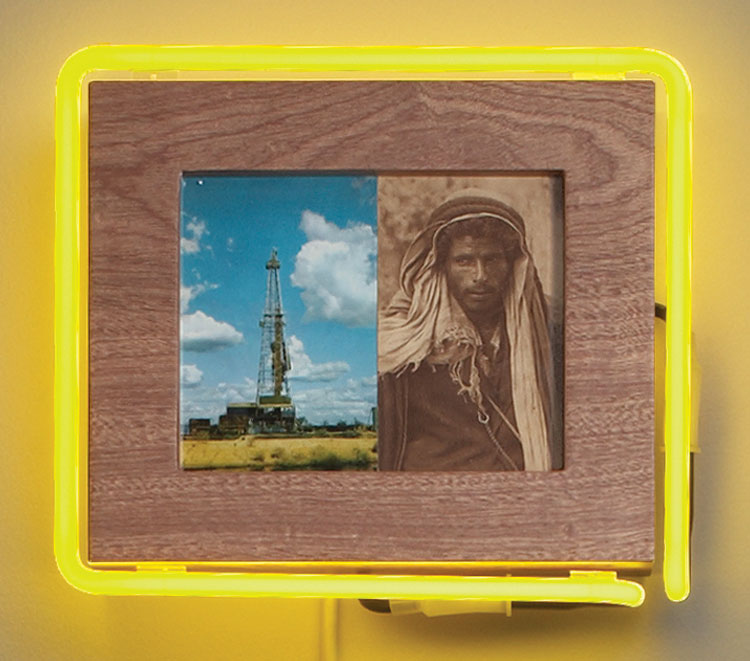
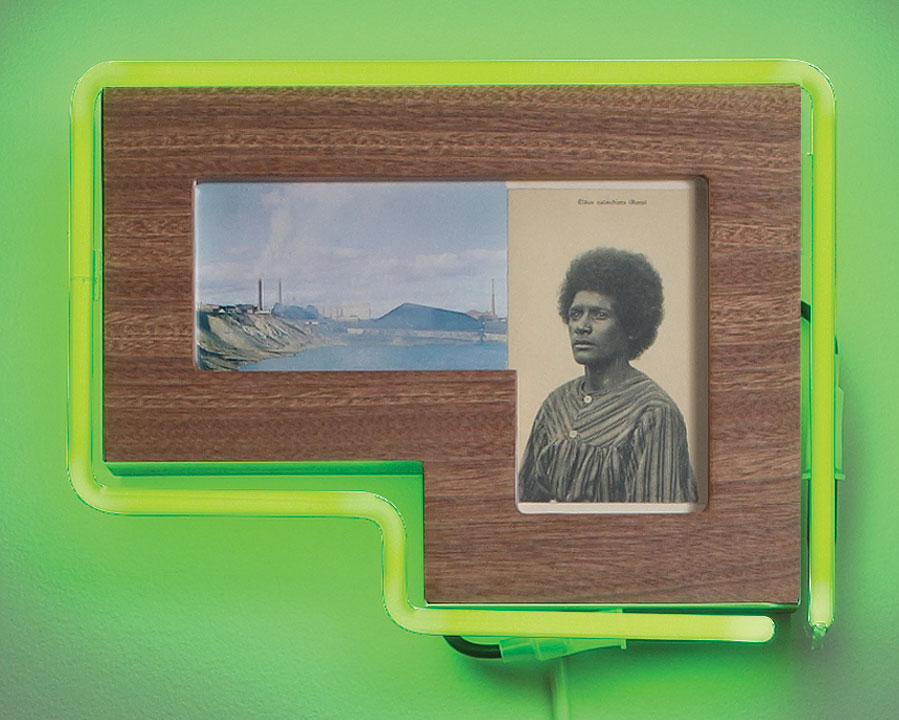
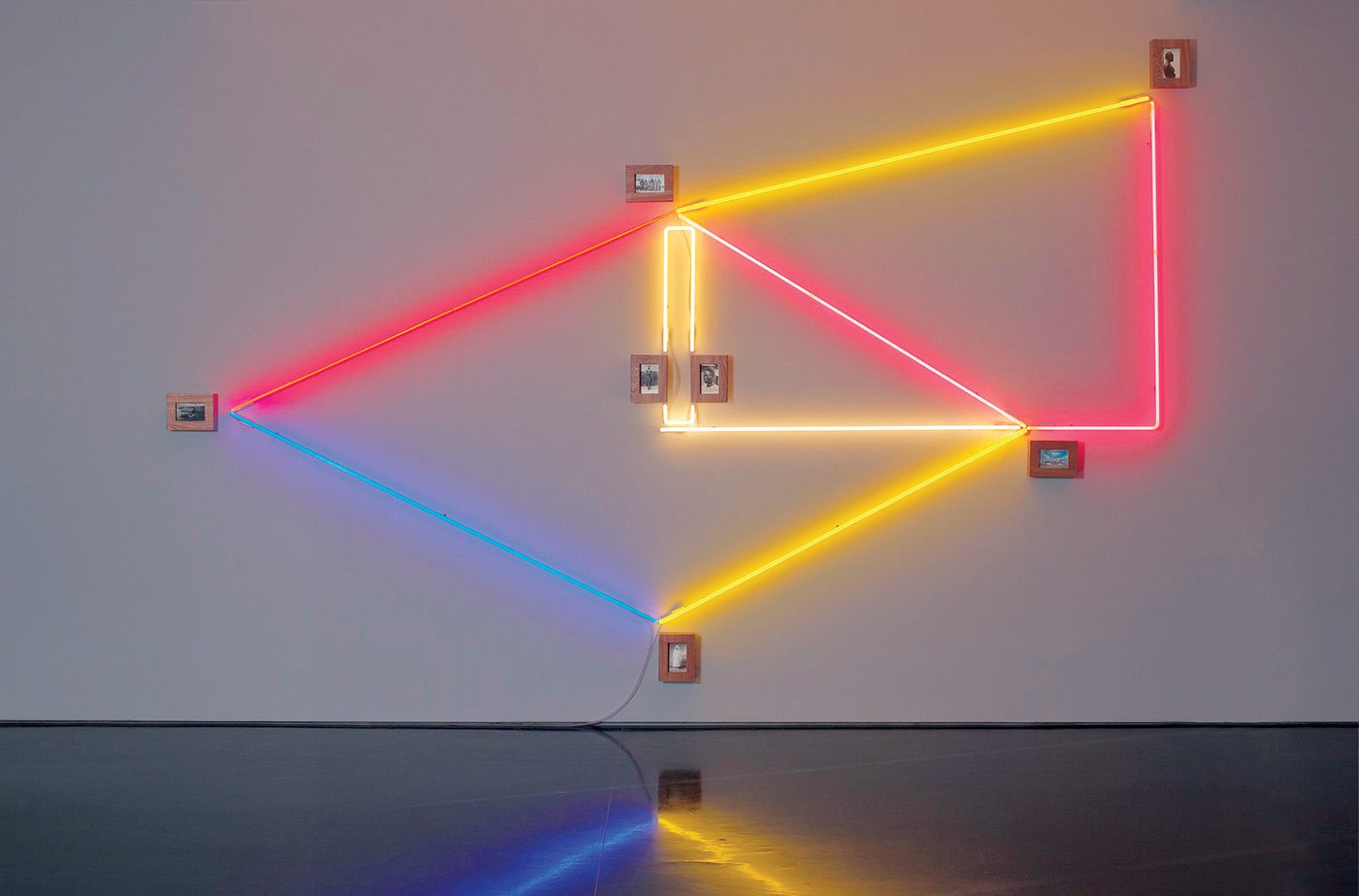
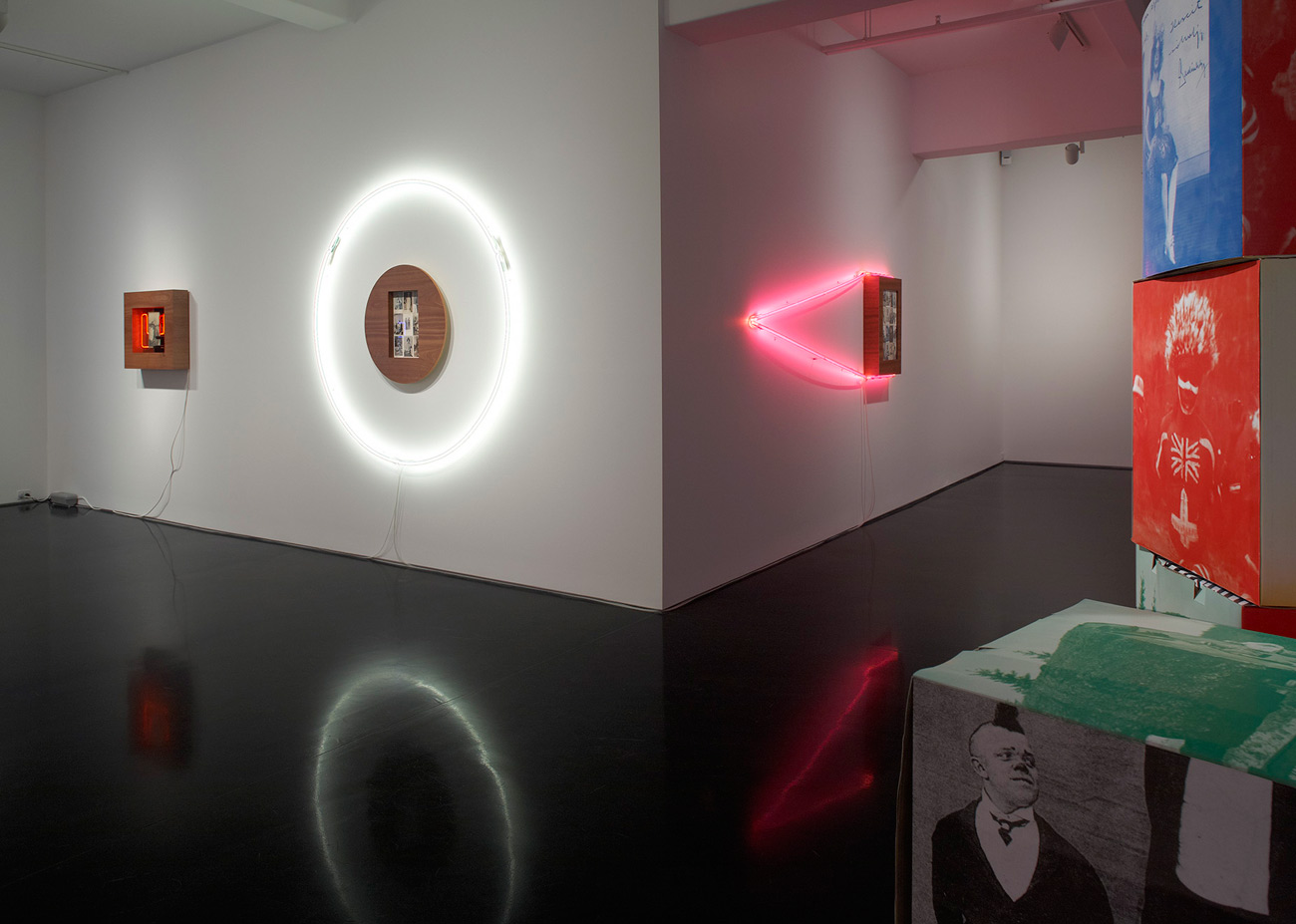
Exhibition: ‘Robyn Stacey: Tall Tales and True’ at Stills Gallery, Paddington, Sydney

Exhibition dates: 18th May – 25th June 2011


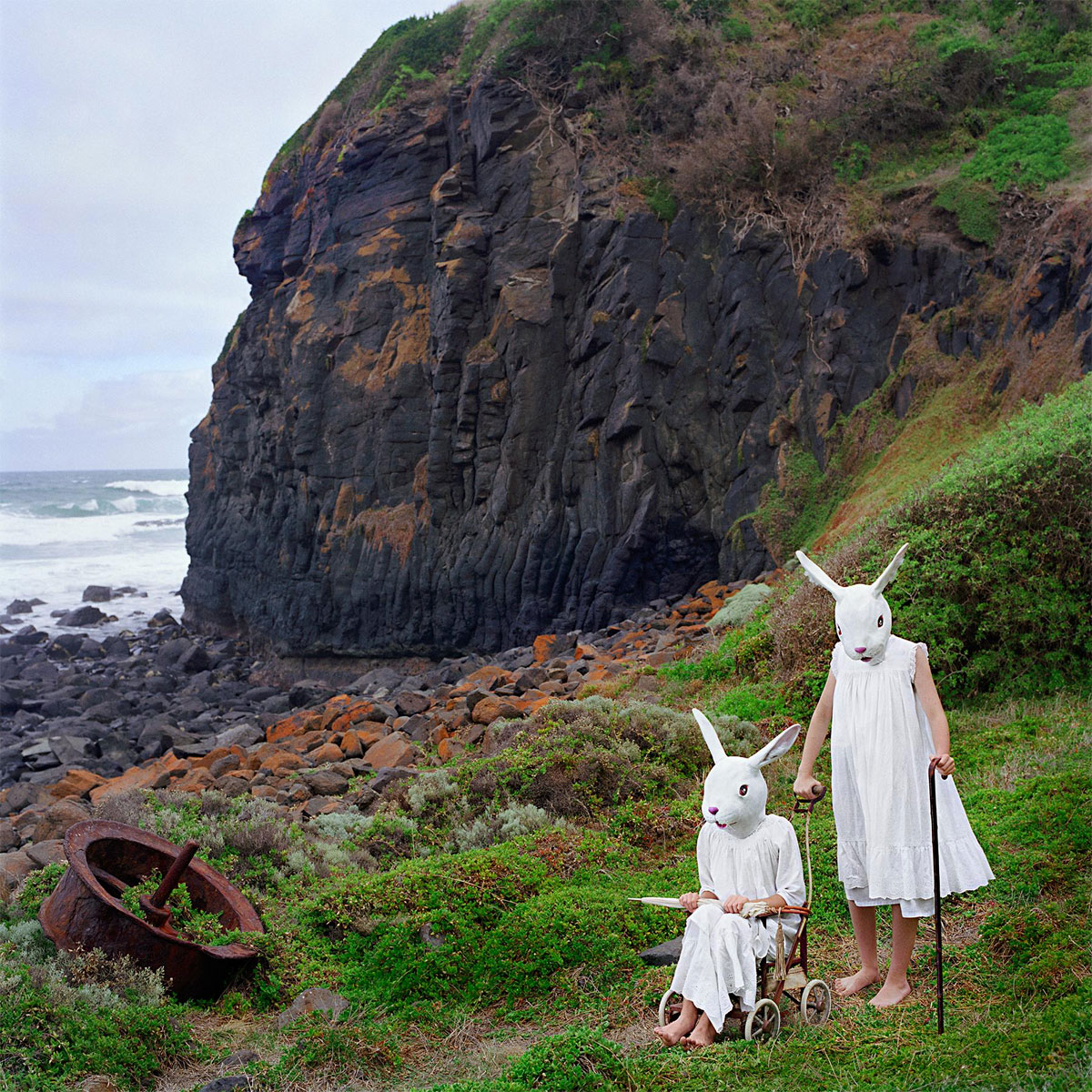
Robyn Stacey (Australian, b. 1952) 'Come unto me' 2011


Robyn Stacey (Australian, b. 1952)
Come unto me
2011
84 x 120cm
Type C print
Edition of 5 + 2/3 AP


Ozymandias

I met a traveller from an antique land

Who said: Two vast and trunkless legs of stone

Stand in the desert. Near them, on the sand,

Half sunk, a shattered visage lies, whose frown

And wrinkled lip, and sneer of cold command

Tell that its sculptor well those passions read

Which yet survive, stamped on these lifeless things,

The hand that mocked them and the heart that fed.

And on the pedestal these words appear:

“My name is Ozymandias, king of kings:

Look on my works, ye Mighty, and despair!”

Nothing beside remains. Round the decay

Of that colossal wreck, boundless and bare

The lone and level sands stretch far away.


Percy Bysshe Shelley 1818


Many thankx to Jessica Howard for her help and to Stills Gallery and Peter Timms for allowing me to publish the text and the photographs in the posting. Please click on the photographs for a larger version of the image.


Robyn Stacey (Australian, b. 1952) 'Help yourself' 2011


Robyn Stacey (Australian, b. 1952)
Help yourself
2011
90 x 120cm
Type C print
Edition of 5 + 2/3 AP


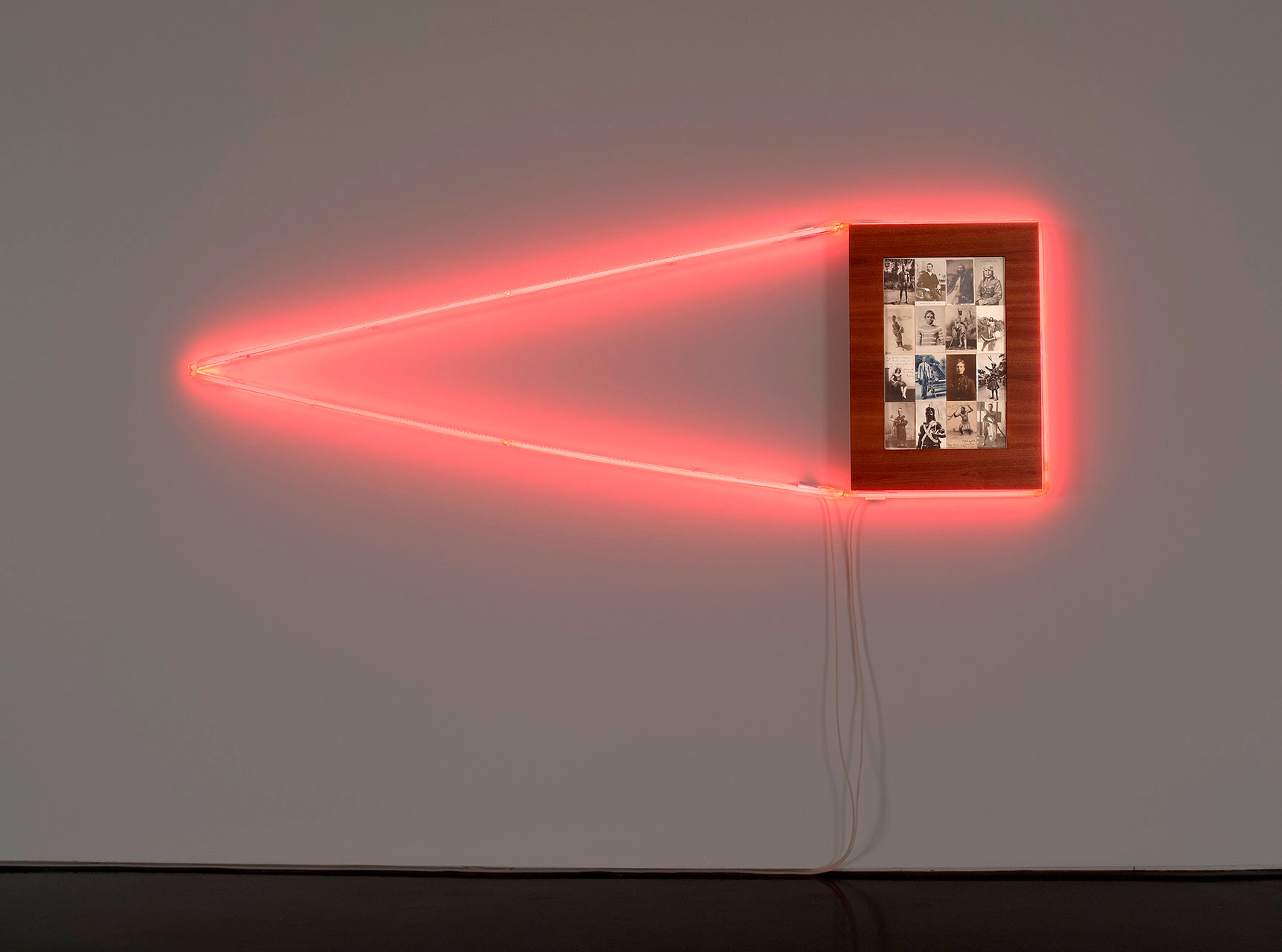
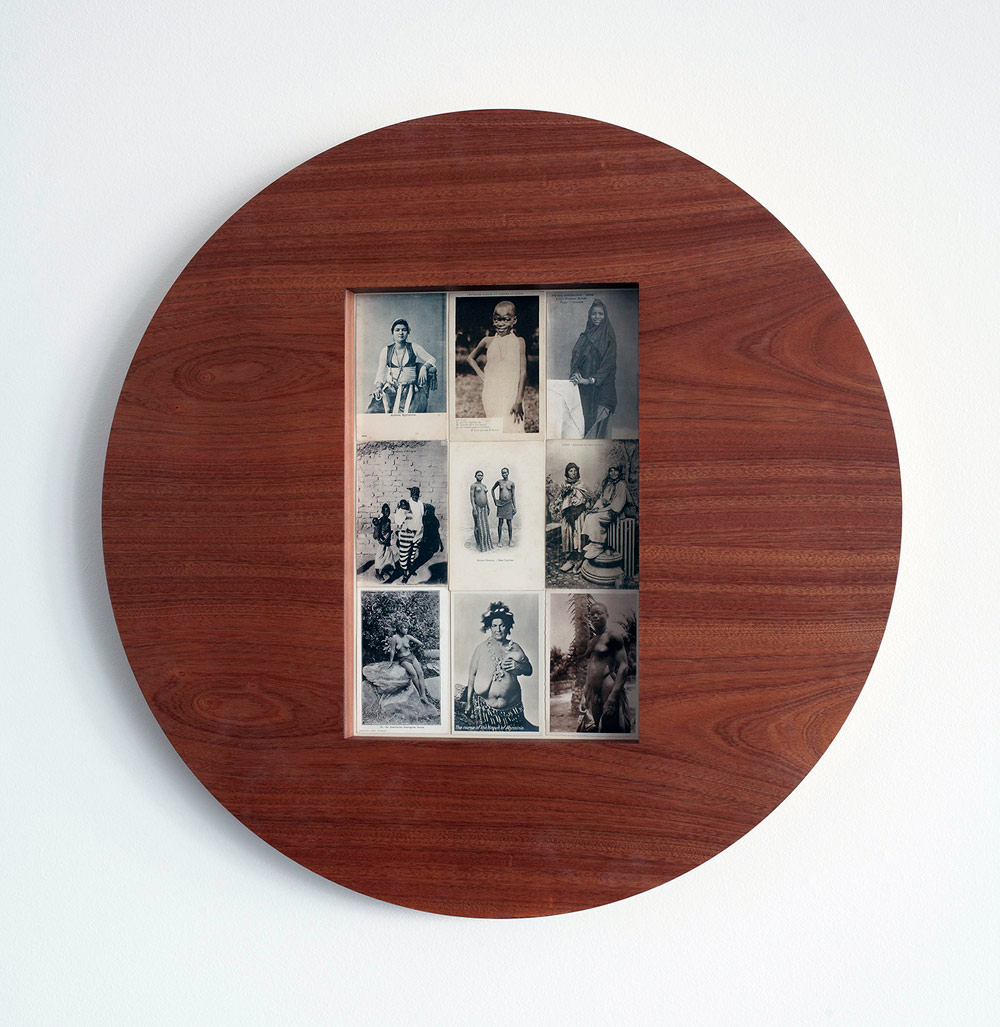
Working extensively with historic collections since 2000, Robyn Stacey’s early projects dealt with Australian flora and fauna, exploring the Herbarium at the Royal Botanic Gardens Sydney and the Macleay collection at the University of Sydney. Over the last three years she has worked closely the NSW Historic Houses Trust to produce a series of artworks and a book focusing on three of their properties, Elizabeth Bay House, Vaucluse House, and Rouse Hill estate as well as the Caroline Simpson Research Collection and Library. In these works Stacey reveals her fascination with the still life tradition but also speaks about the Australian notion of home and what it means to our national psyche.

Stacey’s transformation of these historic spaces and objects allows us not only to glance into earlier worlds but also to consider hierarchies of taste, culture and knowledge. By using the still life to re-work and re-view the Trust’s collection she aims to deconstruct the traditional museum display. The objects are returned to an approximate albeit fictional reality, creating a sense that the settings have been left only momentarily and that people are never far away.

In this latest exhibition Stacey looks at the traces of inhabitation. Chatelaine for example, features a sumptuous collection of objects including Wisteria spilling out of an ornate vase on top of a beautifully carved side table. The objects are from the collection of Vaucluse House having belonged to its inhabitant Sarah Wentworth. Her convict past prevented easy entry into high society at the time. In this accumulation of tasteful things we see evidence of Sarah Wentworth’s attempts to assert her social position within a society that spurned her. In other works, which draw from the collection at Rouse Hill estate we bear witness to the varying fortunes of the Rouse family.

As well as being a reflection upon the nature and minutiae of nineteenth century domesticity these still lives also reflect our colonial history; the desire for betterment and the need to re-create what has been left behind through the transport of taste and knowledge systems.

Text from the Stills Gallery website


Robyn Stacey (Australian, b. 1952) 'Presentation (Apple)' 2011


Robyn Stacey (Australian, b. 1952)
Presentation (Apple)
2011
90 x 74cm
Type C print
Edition of 5 + 2/3 AP


Robyn Stacey (Australian, b. 1952) 'Presentation (Pear)' 2011


Robyn Stacey (Australian, b. 1952)
Presentation (Pear)
2011
90 x 74cm
Type C print
Edition of 5 + 2/3 AP


Playing a double game

We all have a penchant for hidden essences. They spur our desires. Sometimes, of course, a thing is just a thing: a cup merely a convenient way of getting coffee to our mouths; a car no more than a machine to get around in. Often, however, (surprisingly often in fact) we choose to invest such apparently lifeless objects with little souls, or what the psychologist Paul Bloom calls ‘realities that are not present to the senses’. Almost everything, it seems, is capable of leading a double life.

And where better to seek out these double lives than in the historic house museum? Here the Regency candlesticks, the ormolu clocks, even the gardening tools and saucepans, come already imbued with a special significance, for here the domestic has been raised to the level of theatre.

The choices Robyn Stacey has made from the wealth of objects at Elizabeth Bay House, Vaucluse House and Rouse Hill Estate are by no means the obvious ones. They are not necessarily things of high status or great beauty. She is equally attracted to the rusted sickle, the well-thumbed book, the peeling painting and the old postcard: everyday things that bear the traces of long usage. Through judicious juxtaposition, dramatic lighting, and the addition of her own evocative flourishes, she dramatises these humble items, teasing out their souls and revealing their double lives.

What Robyn is doing is transforming inanimate objects into surrogate people. In the absence of their corporeal selves, those who made their lives in these houses are reborn through what they owned, loved, used and made. And, in the process, their stories are expanded into the realm of cultural history.

Chatelaine, for example, enlists flowers, a silk shawl, a richly decorated Staffordshire jar and the titular chatelaine itself (a sort of female version of the Swiss army knife) to reconstruct nineteenth-century ideals of femininity. Only when we discover that it is intended, in part, as a homage to Sarah Wentworth, the mistress of Vaucluse House, does its gentle irony morph into poignant masquerade. For, despite being married to one of early Sydney’s richest and most powerful men, Sarah’s impoverished and morally compromised background led to her rejection by polite society. So these outwardly vivacious mementos also serve as emblems of one woman’s tragedy and, by extension, the tragedy of many women’s lives at the time.

What could be more richly evocative than the cornucopia of flowers, fruits, grains and agricultural implements assembled for Rouse and the Cumberland Plain? What, indeed, could be more shamelessly calculated to provoke astonishment? This virtuosic picture is at once a homage to and a respectful parody of the European still-life tradition. Ostensibly it sets out, in almost forensic detail, what was once grown in the gardens and fields around Rouse Hill House, every leaf and petal historically accurate as to species and type. In that sense, it can be appreciated as an authentic record of nineteenth-century colonial gardening and agriculture. But of course it is much more than that.

We don’t have to be au fait with seventeenth-century Dutch iconography to be able to tease out the allusions in those overturned baskets, those pomegranates spilling their seeds, those provocative little asparagus spears, the decaying timber and the butterflies, nor to be touched by the pathos of that hand-made house-brick in the foreground, impressed with a heart. These symbolic clues qualify and complicate our initial response of unguarded optimism. Here and there, melancholy and loss begin to intrude. And the longer we look, the more enveloped we become by a stifling air of artificiality, as if everything has been stilled and embalmed. Initial delight slowly morphs into an eerie silence. It is in their delicate balance of abundance and ruin that all these photographs find their moral core. They are awe-inspiring, in the eighteenth-century meaning of the term.

This is true even of apparently simple works such as, for example, Presentation (Pear). While its reticence seems a world away from the fecundity of Rouse and the Cumberland Plain or Chatelaine, the underlying themes correspond. In fact, Presentation (Pear) is a composition of such elegant straightforwardness that we might suspect a trap. And indeed we might be right.

On a substantial marble pedestal sits, somewhat incongruously, a ripe pear with a fly on it. A butterfly has come to rest nearby. There are just these four individual components, each with its own tale to tell. Combined, however, into a Joseph-Cornell-like assemblage, they assume an almost mythical dimension. The massive plinth, its pomposity worthy of an Ozymandias, can be seen as representing the vanity of human ambition. The pear has long been a symbol of birth and fecundity, the fly represents decay, and the butterfly the brevity of life. Yet such pat interpretations will probably strike a modern sensibility as overdetermined or too reductive. These days we are not inclined to take this sort of thing too seriously, and the very transparency of the symbolism in Presentation (Pear) is perhaps a warning that we should not. There is a good deal of self-referentiality here. The symbols keep turning in on themselves.

What these photographs are, in fact, inviting us to do is to momentarily assume a double life, to surrender to the romantic perceptions of past generations without abandoning our modern scepticism, to experience a pre-scientific world through a post-scientific consciousness so as to understand not just the material world of past generations but also to enter into their way of thinking. As in the cinema (and these photographs are nothing if not cinematic) we are being invited to suspend our disbelief and imagine ourselves in another time, not for nostalgia’s sake, but for the opposite – to strip away sentiment and to see ourselves more clearly.

Thus, beneath their apparent sumptuousness, Robyn’s artfully contrived tableaux are playing a crafty double game of de-familiarisation.

Peter Timms


Robyn Stacey (Australian, b. 1952) 'Early Morning Rouse' 2010


Robyn Stacey (Australian, b. 1952)
Early morning Rouse
2010
110 x 75.6cm
Type C print
Edition of 5 + 2/3 AP


Robyn Stacey (Australian, b. 1952) 'Chatelaine' 2010


Robyn Stacey (Australian, b. 1952)
Chatelaine
2010
110 x 82.5cm
Type C print
Edition of 5 + 2/3 AP


Robyn Stacey (Australian, b. 1952) 'The Royal Guard' 2011


Robyn Stacey (Australian, b. 1952)
The Royal Guard
2011
90 x 76cm
Type C print
Edition of 5 + 2/3 AP


Robyn Stacey (Australian, b. 1952) 'Venetian Beauty' 2011


Robyn Stacey (Australian, b. 1952)
Venetian Beauty
2011
120 x 107.7cm
Type C print
Edition of 5 + 2/3 AP


Stills Gallery

This gallery has now closed.

Stills Gallery website

LIKE ART BLART ON FACEBOOK

Back to top

Review: ‘Time Machine: Sue Ford’ at Monash Gallery of Art, Wheelers Hill, Victoria

Exhibition dates: 7th April – 19th June 2011


Sue Ford (1943-2009) 'Self-portrait' 1968


Sue Ford (Australian, 1943-2009)
Self-portrait 1968
1968, printed 2011
From the series Self-portrait with camera (1960-2006)
Selenium toned gelatin silver
22.8 x 24 cm
Courtesy Sue Ford Archive


“Choosing to photograph oneself, one’s life and one’s time exemplified the now well-worn slogan ‘the person is political’. Ford’s self-examination across the decades is unflinching and exacting. As Janine Burke wrote in 1980, her ‘psychological history [is] etched in her face for everyone to see’. Burke concluded that Ford’s self-portraits are ‘as honest as one can ever be about oneself’.”


Helen Ennis. Faces are Maps: Sue Ford and Portraiture.1


“The search for the self is a journey into a mental labyrinth that takes random courses and ultimately ends at impasses. The memory fragments recovered along the way cannot provide us with a basis for interpreting the overall meaning of the journey. The meanings that we derive from our memories are only partial truths, and their value is ephemeral. For Foucault, the psyche is not an archive but only a mirror. To search the psyche for the truth about ourselves is a futile task because the psyche can only reflect the images we have conjured up to describe ourselves. Looking into the psyche, therefore, is like looking into the mirror image of a mirror. One sees oneself reflected in an image of infinite regress. Our gaze is led not toward the substance of our beginnings but rather into the meaninglessness of previously discarded images of the self.”


Patrick Hutton. Foucault, Freud,
and the Technologies of the Self.2


This is a solid exhibition of the work of beloved Australian photographer Sue Ford, essential looking for anyone wanting to have an overview of Australian photography.

The beautifully hung exhibition flows like music, interweaving up and down, the photographs framed in thin, black wood frames. It features examples of Ford’s black and white fashion and street photography; a selection of work from the famous black and white Time series (being bought for their collection by the Art Gallery of New South Wales) – small, snapshot size double portraits, the first portraits taken during the 1960’s, the second around 1974, formalist portraits in which the sitter is closely cropped around head and shoulders with the photographer using the camera as objectively as possible, the double portrait used to display changes in identity over time; a selection of Photographs of Women – modern prints from the Sue Ford archive that are wonderfully composed photographs with deep blacks that portray strong, independent, vulnerable, joyous women (see last four photographs below); and the most interesting work in the exhibition, the posthumous new series Self-portrait with camera (1960-2006) that evidence, through a 47 part investigation using colour prints from Polaroids, silver gelatin prints printed by the artist, prints made from original negatives and prints from scanned images where there was no negative available, a self-portrait of the artist in the process of ageing (see the two photographs above and below this review).

One of my favourite photographs in the exhibition was Margaret with Emma, Redcliffs, Queensland, 1971. The black and white photograph features a grandmother with her granddaughter, close to each other, both wearing floral dresses of different pattern, both staring intently out of the image at what is possibly a television with a weatherboard backdrop. A dark form hovers at the upper left of the photograph adding a disturbing note to the image but it is the look on the grandmother’s face – a look of shock, enthralment, blankness with eyes wide, that is matched by the intensity on the granddaughter’s face as she stares intently – that transcends the distance between photograph and viewer, between grandmother and granddaughter across time and space. The process of looking and ageing captured by the ‘time machine’, the camera, in one single image. The viewer understands this photograph for we all experience the evidence of our bodies, our mortality. We relate intimately to how the photograph reanimates in the present this moment from the past, the momenti mori of the photograph, the little death becoming our future death.

This notion is particularly poignant in the series Self-portrait with camera (1960-2006), a work that Sue Ford was actively engaged with before her death. Smaller colour prints from negatives and Polaroids are here interspersed with black and white photographs up to about 8″ x 10″ in size: the series contains 12 chromogenic photographs, 7 silver gelatin photographs, 6 dye fusion photographs and 22 selenium-toned photographs (printed 2011). In dark, contrasty prints the artist has photographed herself looking down into the camera shooting into a mirror, looking directly into the mirror with camera, with the camera on a timer, with the camera in/visible, being shot by other people with the camera pointed directly at her, with the camera perpendicular to the artist shot by someone else, with Ford behind a movie camera, with multiple refractions in mirrors. Sometimes Ford even becomes the camera (as in the 1986 self-portrait below: I am the camera, the camera is me).

Ford becomes the “one who looks” knowingly at herself, sometimes the author of that observation, sometimes oblivious to it (until later when she has collected these images). As Burke and Ennis note, these photographs of self-examination across the decades are as honest as one can ever be about oneself. This a deeply political but also deeply psychoanalytical investigation: not to “take care of yourself” as a form of knowing as in Greco-Roman antiquity but “knowing yourself” as the fundamental principle of understanding yourself: a procedure of objectification and subjection in which the photograph ‘marks’ our status and the passage of time, that makes us who we are – photographs as vital techniques in the constitution of the self as subject.3

The mirror is frequently used in these photographs to portray the self. While it is true that these are strong, intimate, unflinching and exacting images, in the use of the mirror the im(pose)tures of life are singled / doubled / tripled – a reflection of the psyche that lead to discarded images of the self that are of little use in understanding the substance of our beginnings … or the overall interpretation of the journey. What they do offer is cumulative evidence of a deep, personal conviction into the inquiry: who am I?

Rembrandt famously painted, drew and etched himself hundreds of times in the process of ageing; Ford has likewise done the same. If, as Victor Burgin observes, “An identity implies not only a location but a duration, a history,”4 then the nature of photography (including Ford’s self-reflexive project), concerned as it is with space and time, becomes the mirror in a search for identity. Photography as a mirror on the world constantly repeats moments of illumination in a re/vision of eternal recurrence, a performance that is a hybrid site: both a homogenous (the same “I”) and heterogenous (a different “I”) site of self-representation, different every time we look. To that end I would like you to look at the self-portrait from 1976 (below). The artist is completely absent, her silhouette, her dark shadow swallowed whole by the blank photographic plate on the left hand side of the image as though Ford, the camera and an image of infinite regress have become one, eternally engulfed by space-time but open to re/view at any time.

Whether looking down, looking toward or looking inward these fantastic photographs show a strong, independent women with a vital mind, an élan vital, a critical self-organisation and an understanding of the morphogenesis of things that will engage us for years to come. Essential looking.

Dr Marcus Bunyan


1/ Burke, Janine. Self-portrait/self-image 1980-1981. Melbourne: Australian Directors’ Council, 1981. p. 4 quoted in Ennis, Helen. “Faces are Maps: Sue Ford and Portraiture,” in Lakin, Shaune (ed.,). Sue Ford: Self-portrait with camera (1960-2006). Melbourne: Monash Gallery of Art, 2011, np.

2/ Hutton, Patrick. “Foucault, Freud, and the Technologies of the Self,” in Martin, Luther and Gutman, Huck and Hutton, Patrick (eds.,). Technologies of the Self: A Seminar with Michel Foucault. London: Tavistock Publications, 1988, p. 139

3/ Foucault, Michel. Discipline and Punish, quoted in Gutman, Huck. “Rousseau’s Confessions: A Technology of the Self,” in Martin, Luther and Gutman, Huck and Hutton, Patrick (eds.,). Technologies of the Self: A Seminar with Michel Foucault. London: Tavistock Publications, 1988, p. 99

4/ Burgin, Victor. In/Different Spaces: Place and Memory in Visual Culture. Berkeley: University of California Press, 1995, p. 36


Many thankx to Mark Hislop for his help and the Monash Gallery of Art for allowing me to publish the photographs in the posting. Please click on the photographs for a larger version of the image.
 

Sue Ford (Australian, 1943-2009) 'Self-portrait 1986' 1986


Sue Ford (Australian, 1943-2009)
Self-portrait 1986
1986
From the series Self-portrait with camera (1960-2006)
Gelatin silver print, printed 2011
8.4 x 6.5cm
Courtesy Sue Ford Archive


Sue Ford (Australian, 1943-2009) 'Self-portrait 1976' 1976


Sue Ford (Australian, 1943-2009)
Self-portrait 1976
1976, printed 2011
From the series Self-portrait with camera (1960-2006)
Selenium toned gelatin silver print
24 x 18cm
Courtesy Sue Ford Archive


Sue Ford (1943–2009) 'Self-portrait 1974' 1974


Sue Ford (Australian, 1943-2009)
Self-portrait 1974
1974, printed 2011
From the series Self-portrait with camera (1960-2006)
Selenium toned gelatin silver print
19.9 x 18cm
Courtesy Sue Ford Archive


On 16 April 2011, the first major exhibition of the work of the late Sue Ford for two decades will open at Monash Gallery of Art.

Sue Ford (1943-2010) was one of Australia’s most important photographers and filmmakers. Ford studied photography at RMIT and in 1974 was the first Australian photographer to be given a solo exhibition at the National Gallery of Victoria.

Ford passed away in 2009. Before her death, she was working with Monash Gallery of Art on an exhibition of her work which would feature her final major project Self-portrait with camera (1960-2006). This series of 47 photographs has never been shown before, and presents a compelling self-portrait of an artist. It underscores the central role the camera played in Ford’s life. Self-portrait with camera will be shown alongside a survey of Ford’s black-and-white photographs from the 1960s and 70s and examples of her most iconic work, Time series (1960s-1970s).

The exhibition describes a period when photography was charged with political and personal meaning. As photographic historian and contributor to the publication accompanying the exhibition Helen Ennis states: “Ford’s approach to art making has always been straightforward … She does not cultivate a mysterious artistic persona [since] … her art practice is purposeful; it is the outcome of her view of art as a political activity that is democratic, liberating and relevant to contemporary society.”

As MGA Director and curator of the exhibition Shaune Lakin states: “This exhibition provides a great opportunity for Australian audiences to reassess the work of this important photographer, whose work was always at once political, beautiful and elegiac. In an era when the photograph has become a highly disposable thing, it is important to acknowledge its role as an agent of change and memory.”

Press release from the Monash Gallery of Art


Sue Ford (Australian, 1943-2009)
Helen, 1962; Helen, 1974
1974
From the series Time series
Gelatin silver prints
11.0 x 8.0cm; 11.5 x 8.3cm
Museum of Australian Photography, City of Monash Collection
Acquired with assistance from the Robert Salzer Foundation and the Friends of MGA Inc 2020


Sue Ford (1943-2009) was one of Australia’s most important twentieth-century photographers, and Time series is her most iconic body of work, widely recognised as a key moment in the history of Australian photography. First exhibited at the NGV and Brummels Gallery of Photography in 1974, the series highlights Ford’s interest in the camera’s ability to record the effects of time and history. To create this series, Ford made portraits of her friends and acquaintances during the early to mid-1960s then rephotographed the sitters around a decade later, showing the second portraits beside the first. In some cases Ford later added third and fourth portraits to create Time series II, which she made for exhibition at the 1982 Sydney Biennale. Ford described the camera as a ‘time machine’ and the works in these series bracket periods in the lives of her subjects. With a tender pathos, they evoke the inevitability of time’s passing along with the processes of human ageing and constant change.

Text from the Museum of Australian Photography website 2021


Sue Ford (Australian, 1943-2009) 'Annette 1962; Annette 1974' 1974


Sue Ford (Australian, 1943-2009)
Annette 1962; Annette 1974
1974
From the Time series
Gelatin silver prints
11.1 x 20.1cm
National Gallery of Victoria, Melbourne
Purchased with the assistance of the Visual Arts Board and the KODAK (Australasia) Pty Ltd Fund, 1974


Sue Ford (Australian, 1943-2009) 'Jim, 1964; Jim, 1969; Jim, 1974; Jim, 1979' 1982


Sue Ford (Australian, 1943-2009)
Jim, 1964; Jim, 1969; Jim, 1974; Jim, 1979
1982
From the series Time series
Gelatin silver prints
11.0 x 7.6cm (each)
Museum of Australian Photography, City of Monash Collection
donated by the Sue Ford Archive 2020


Sue Ford (1943-2009) 'Lynne and Carol' 1962


Sue Ford (Australian, 1943-2009)
Lynne and Carol
1962, printed 2011
Selenium toned gelatin silver print
38.0 x 38.0cm
Courtesy Sue Ford Archive


Sue Ford (1943-2009) 'Carol, Little Collins St studio' 1962


Sue Ford (Australian, 1943-2009)
Carol, Little Collins St studio
1962, printed 2011
Selenium toned gelatin silver print
37.9 x 38.1cm
Courtesy Sue Ford Archive


Sue Ford (1943-2009) 'St Kilda' 1963


Sue Ford (Australian, 1943-2009)
St Kilda
1963, printed 2011
Selenium toned gelatin silver print
38.0 x 38.0cm
Courtesy Sue Ford Archive


Sue Ford (1943-2009) 'Untitled [Bliss at Yellow House, King's Cross, Sydney]' c. 1972–1973


Sue Ford (Australian, 1943-2009)
Untitled [Bliss at Yellow House, King’s Cross, Sydney]
c. 1972-3, printed 2011
Selenium toned gelatin silver print
47.9 x 34.2cm
Courtesy Sue Ford Archive


Monash Gallery of Art
860 Ferntree Gully Road, Wheelers Hill
Victoria 3150 Australia
phone: + 61 3 8544 0500

Opening hours:
Tue – Fri 10am – 5pm
Sat – Sun 10pm – 4pm
Mon/public holidays closed

Monash Gallery of Art website

LIKE ART BLART ON FACEBOOK

Back to top

Exhibition: ‘The Photographs of Ray K. Metzker’ at The Nelson-Atkins Museum of Art, Kansas City, Missouri

Exhibition dates: 15th January – 5th June, 2011


Many thankx to The Nelson-Atkins Museum of Art for allowing me to publish the photographs in the posting. Please click on the photograph for a larger version of the image.


Ray K. Metzker (American, 1931-2014) 'City Whispers, Philadelphia' 1983


Ray K. Metzker (American, 1931-2014)
City Whispers, Philadelphia
1983
Gelatin silver print
The Nelson-Atkins Museum of Art, Kansas City, Missouri
© Ray K. Metzker, courtesy of the Laurence Miller Gallery


Ray K. Metzker (American, 1931-2014) 'Couplets: Atlantic City/New York City' 1969/1968


Ray K. Metzker (American, 1931-2014)
Couplets: Atlantic City/New York City
1969/1968
Gelatin silver print
The Nelson-Atkins Museum of Art, Kansas City, Missouri
© Ray K. Metzker, courtesy of the Laurence Miller Gallery


Ray K. Metzker (American, 1931-2014) 'Couplets: New York City' 1968


Ray K. Metzker (American, 1931-2014)
Couplets: New York City
1968
Gelatin silver print
The Nelson-Atkins Museum of Art, Kansas City, Missouri
Gift of the Hall Family Foundation
© Ray K. Metzker, courtesy of the Laurence Miller Gallery


Ray K. Metzker (American, 1931-2014) 'Double Frames: Philadelphia' 1965


Ray K. Metzker (American, 1931-2014)
Double Frames: Philadelphia
1965, printed 1984
Gelatin silver print
Gift of the Hall Family Foundation
© Ray K. Metzker, Courtesy of the Laurence Miller Gallery


Ray K. Metzker (American, 1931-2014) 'Double Frames: Philadelphia' 1965, printed 1972


Ray K. Metzker (American, 1931-2014)
Double Frames: Philadelphia
1965, printed 1972
Gelatin silver print
Gift of the Hall Family Foundation
The Nelson-Atkins Museum of Art
© Ray K. Metzker, Courtesy of the Laurence Miller Gallery


Ray K. Metzker (American, 1931-2014) 'Couplets: Philadelphia' 1968


Ray K. Metzker (American, 1931-2014)
Couplets: Philadelphia
1968, printed 2002
Gelatin silver print
Gift of the Hall Family Foundation
© Ray K. Metzker, Courtesy of the Laurence Miller Gallery


Ray K. Metzker (American, 1931-2014) 'Pictus Interruptus: Philadelphia' 1977


Ray K. Metzker (American, 1931-2014)
Pictus Interruptus: Philadelphia
1977
Gelatin silver print
Gift of the Hall Family Foundation
© Ray K. Metzker, Courtesy of the Laurence Miller Gallery


Works by Ray K. Metzker, one of the most original and influential photographers of the last half century, will be on view from Jan. 15 to June 5, 2011, at The Nelson-Atkins Museum of Art. The Photographs of Ray K. Metzker will reveal Metzker’s ability to turn ordinary subjects, including the urban experience and nature, into the visual poetry of the finely crafted black-and-white print.

At the age of nearly 80, Metzker is greatly admired for his passionate engagement with both photography and the world. He has explored the use of high contrast and selective focus, the potentials of multiple and composite images, and the infinite gradations of daylight, from dazzling white to inky shadow.

This is great and lasting work – the very best of a classic form of American modernism, said Keith F. Davis, senior curator of photography at the Nelson-Atkins. Metzker has led a life of deep devotion to understanding the potential, challenge and pleasure of photographic seeing. In so doing, he has transcended any simple notion of technical experimentation or formalism to illuminate a vastly larger human realm – one of uncertainty, isolation and vulnerability, as well as of unexpected beauty, grace and transcendence.

Thanks to a major gift from the Hall Family Foundation, the Nelson-Atkins now has the largest holding of Metzker’s work (92 prints) in the United States.

Born in Milwaukee, Wis., in 1931, Metzker first took up photography as a teenager. After two years in the army, he entered the graduate program at the Institute of Design, Chicago, in the fall of 1956. His professors, Aaron Siskind and Harry Callahan, were acclaimed artists and inspiring teachers, and they emphasised the medium’s remarkable range and visual potential. Metzker’s artistic vision grew from a union of ideas: the realities of modern life, the medium’s myriad technical possibilities, and the quest for a distinctly individual vision.

Metzker has lived and worked in Philadelphia since 1962, and as he approaches the age of 80, he continues to make new pictures there.

The photographs in the exhibition feature examples from all his major series, including his earliest mature work from Chicago (1957-1959); photographs from an extended visit to Europe (1960-1961); the street activity, people, and structures of Philadelphia (from 1962 to the present); beachgoers at the New Jersey shore, Sand Creatures (1968-1977); the starkness of the Southwestern light and landscape, New Mexico (1971-1972); and the lush mysteries of the natural realm, in his Landscapes (1985-1996) from Italy, France and the United States.

The exhibition features a host of innovative and ingenious approaches to photography, including the use of the double image, Double Frame (1964-1966) and Couplets (1968-1969); single works created from an entire roll of film, Composites (1964-1966); and the creative control of focus in both Pictus Interruptus (1976-1980) and Landscapes (1985-1996).

Press release from The Nelson-Atkins Museum of Art website


Ray K. Metzker (American, 1931-2014) 'Chicago' 1957


Ray K. Metzker (American, 1931-2014)
Chicago
1957
Gelatin silver print
Gift of Hallmark Cards, Inc.,
© Ray K. Metzker, Courtesy of the Laurence Miller Gallery


Ray K. Metzker (American, 1931-2014) 'Chicago' 1959


Ray K. Metzker (American, 1931-2014)
Chicago
1959, printed 1989
Gelatin silver print
Gift of Hallmark Cards, Inc.,
© Ray K. Metzker, Courtesy of the Laurence Miller Gallery


Ray K. Metzker (American, 1931-2014) 'Philadelphia' 1963


Ray K. Metzker (American, 1931-2014)
Philadelphia
1963, printed 1986
Gelatin silver print
Gift of the Hall Family Foundation
© Ray K. Metzker, Courtesy of the Laurence Miller Gallery


Ray K. Metzker (American, 1931-2014) 'Man in Canoe' 1961


Ray K. Metzker (American, 1931-2014)
Man in Canoe
1961
Gelatin silver print
Gift of Hallmark Cards, Inc.,
© Ray K. Metzker, Courtesy of the Laurence Miller Gallery


Ray K. Metzker (American 1931-2014) 'Philadelphia, 1963' 1963


Ray K. Metzker (American 1931-2014)
Philadelphia, 1963
1963
Gelatin silver print
Gift of Hallmark Cards, Inc.,
© Ray K. Metzker, Courtesy of the Laurence Miller Gallery


Ray K. Metzker (American 1931-2014) 'Philadelphia, 1963' 1963


Ray K. Metzker (American 1931-2014)
Philadelphia, 1963
1963
Gelatin silver print
Gift of Hallmark Cards, Inc.,
© Ray K. Metzker, Courtesy of the Laurence Miller Gallery


Ray K. Metzker (American 1931-2014) 'Philadelphia' 1963


Ray K. Metzker (American 1931-2014)
Philadelphia, 1963
1963
Gelatin silver print
Gift of Hallmark Cards, Inc.,
© Ray K. Metzker, Courtesy of the Laurence Miller Gallery


Ray K. Metzker (American 1931-2014) 'Philadelphia' 1964


Ray K. Metzker (American, 1931-2014)
Philadelphia
1964, printed 1989
Gelatin silver print
Gift of Hallmark Cards, Inc.,
© Ray K. Metzker, Courtesy of the Laurence Miller Gallery


Ray K. Metzker (American, 1931-2014) 'Philadelphia' 1964


Ray K. Metzker (American, 1931-2014)
Philadelphia
1964, printed 1989
Gelatin silver print
Gift of Hallmark Cards, Inc.,
© Ray K. Metzker, Courtesy of the Laurence Miller Gallery


Ray K. Metzker (American, 1931-2014) 'Composite: Atlantic City' 1966


Ray K. Metzker (American, 1931-2014)
Composite: Atlantic City
1966
Gelatin silver print
Gift of Hallmark Cards, Inc.,
© Ray K. Metzker, Courtesy of the Laurence Miller Gallery


Ray K. Metzker (American, 1931-2014) 'Composites: Night at the Terminal' about 1966


Ray K. Metzker (American, 1931-2014)
Composites: Night at the Terminal
about 1966
Gelatin silver print
The Nelson-Atkins Museum of Art
© Ray K. Metzker, courtesy of Lawrence Miller Gallery


Ray K. Metzker (American 1931-2014) 'Philadelphia' 1981


Ray K. Metzker (American 1931-2014)
Philadelphia
1981
Gelatin silver print
Gift of Hallmark Cards, Inc.,
© Ray K. Metzker, Courtesy of the Laurence Miller Gallery


Ray K. Metzker (American 1931-2014) 'Philadelphia' 1964


Ray K. Metzker (American 1931-2014)
Philadelphia, 1964
1963
Gelatin silver print
Gift of Hallmark Cards, Inc.,
© Ray K. Metzker, Courtesy of the Laurence Miller Gallery


Ray K. Metzker (American 1931-2014) 'Philadelphia' 1963


Ray K. Metzker (American 1931-2014)
Philadelphia, 1963
1963
Gelatin silver print
Gift of Hallmark Cards, Inc.,
© Ray K. Metzker, Courtesy of the Laurence Miller Gallery


The Nelson-Atkins Museum of Art
4525 Oak Street
Kansas City, MO 64111

Opening hours:
Thursday – Monday 10am – 5pm
Closed Tuesdays and Wednesdays

The Nelson-Atkins Museum of Art website

LIKE ART BLART ON FACEBOOK

Back to top

Exhibition: ‘Garry Winogrand. Women are beautiful’ at Fundació Foto Colectania, Barcelona

Exhibition dates: 23rd February – 4th June 2011


Many thankx to Fundació Foto Colectania for allowing me to publish the photographs in the posting. Please click on the photograph for a larger version of the image.


Garry Winogrand (American, 1928-1984) 'Centennial Ball, Metropolitan Museum' New York, 1969


Garry Winogrand (American, 1928-1984)
Centennial Ball, Metropolitan Museum
New York, 1969, printed 1981
Silver gelatin print
22 x 33cm
© The Estate of Garry Winogrand, courtesy Fraenkel Gallery, San Francisco


Garry Winogrand (American, 1928-1984) 'Untitled', New York, 1965


Garry Winogrand (American, 1928-1984)
Untitled
New York, 1965, printed 1981
Silver gelatin print
22 x 33cm
© The Estate of Garry Winogrand, courtesy Fraenkel Gallery, San Francisco


Garry Winogrand (American, 1928-1984) 'Untitled', New York, 1968


Garry Winogrand (American, 1928-1984)
Untitled
New York, 1968, printed 1981
Silver gelatin print
22 x 33cm
© The Estate of Garry Winogrand, courtesy Fraenkel Gallery, San Francisco


Foundation Foto Colectania presents for the first time in Barcelona the famous series Women Are Beautiful by Garry Winogrand.

Garry Winogrand is considered one of the greatest innovators of photography of the twentieth-century in America. He knew like no other how to capture the social transformation of females in the 60’s and 70’s through his portraits of women who stand as an allegory of women’s emancipation and their new role in society. The Foundation Foto Colectania presents his series Women Are Beautiful, including 85 photographs taken between 1960 and 1975 and collected in the book with the same title by the legendary director of photography at the MoMA, John Szarkowski. The exhibition from the collection of Lola Garrido, is part of the programming line of the foundation which is dedicated to authors who changed the course of the history of photography. The exhibition can be seen in Barcelona until June 4, 2011. In the 60’s ended the era of big images as symbols of timeless truths, by the devastating influence first from Walker Evans, and later from Robert Frank and William Klein. The pictures are focused on the reflection of reality, no retouching or other ideas added. Garry Winogrand and Lee Friedlander represent “the new American style” which broke new ground in the so-called Street Photography.

Winogrand combines spontaneity with an apparent confusion, which is more than aware of the complexity of the photography world: “I photograph to see what the world looks like in photographs.” The presence of human beings, contrasting with the crowds and the streets in his photographs reveals a new way of looking, in which the anarchy results in a wealth of shapes and structures. The biased and cold style of Winogrand is associated with Abstract Expressionism and its sharp diagonals are similar to paint brush strokes of those years. If the photographer Robert Frank was critical of the 50’s, Garry Winogrand is one of the largest photographers of the 60’s.

Press release from the Fundació Foto Colectania website


Garry Winogrand (American, 1928-1984) 'World's Fair', New York, 1964


Garry Winogrand (American, 1928-1984)
World’s Fair
New York, 1964, printed 1981
Silver gelatin print
22 x 33cm
© The Estate of Garry Winogrand, courtesy Fraenkel Gallery, San Francisco


Garry Winogrand (American, 1928-1984) 'New York City' 1967, printed 1981


Garry Winogrand (American, 1928-1984)
New York City
1967, printed 1981
Silver gelatin print
22 x 33cm
© The Estate of Garry Winogrand, courtesy Fraenkel Gallery, San Francisco


Garry Winogrand (American, 1928-1984) 'Central Park, New York' 1968, printed 1981


Garry Winogrand (American, 1928-1984)
Central Park, New York
1968, printed 1981
Silver gelatin print
22 x 33cm
© The Estate of Garry Winogrand, courtesy Fraenkel Gallery, San Francisco


Garry Winogrand (American, 1928-1984) 'Untitled' New York, c. 1970, printed 1981


Garry Winogrand (American, 1928-1984)
Untitled
New York, c. 1970, printed 1981
Silver gelatin print
22 x 33cm
© The Estate of Garry Winogrand, courtesy Fraenkel Gallery, San Francisco


Garry Winogrand (American, 1928-1984) 'New York' 1961, printed 1981


Garry Winogrand (American, 1928-1984)
New York
1961, printed 1981
Silver gelatin print
33 x 22cm
© The Estate of Garry Winogrand, courtesy Fraenkel Gallery, San Francisco


Garry Winogrand (American, 1928-1984) 'Untitled', New York, 1969


Garry Winogrand (American, 1928-1984)
Untitled
New York, 1969, printed 1981
Silver gelatin print
33 x 22cm
© The Estate of Garry Winogrand, courtesy Fraenkel Gallery, San Francisco


Garry Winogrand (American, 1928-1984) 'Untitled', New York, 1968


Garry Winogrand (American, 1928-1984)
Untitled
New York, 1968, printed 1981
Silver gelatin print
33 x 22 cm
© The Estate of Garry Winogrand, courtesy Fraenkel Gallery, San Francisco


Fundació Foto Colectania
Julián Romea 6, D2
08006
Barcelona

Opening hours:
Wednesday to Saturday: 11am – 2.30pm and 4pm – 8 pm
Sunday: 11am – 3pm

Fundació Foto Colectania website

LIKE ART BLART ON FACEBOOK

Back to top

Exhibition: ‘When the Curtain Falls: Margarita Broich – Photographs’ at Martin-Gropius-Bau, Berlin

Exhibition dates: 18th March – 30th May 2011


Many thankx to the Martin-Gropius-Bau, Berlin for allowing me to publish the photographs in the posting. Please click on the photographs for a larger version of the image.


Margarita Broich (German, b. 1960) 'Vaginal Davis, Performance, Rising Stars, Falling Stars, Arsenal, Berlin, 13.11.2010' 2010


Margarita Broich (German, b. 1960)
Vaginal Davis
Performance, Rising Stars, Falling Stars, Arsenal, Berlin, 13.11.2010

2010
© Margarita Broich


Margarita Broich (German, b. 1960) 'Martin Wuttke with poodle Taxi, Gretchens Faust, Berliner Ensemble, 11-05-2009' 2009


Margarita Broich (German, b. 1960)
Martin Wuttke with poodle Taxi
Gretchens Faust, Berliner Ensemble, 11.05.2009

2009
© Margarita Broich


Margarita Broich (German, b. 1960) 'Veronica Ferres, Unter Bauern, 1.9.2008' 2008


Margarita Broich (German, b. 1960)
Veronica Ferres
Unter Bauern, 01.09.2008

2008
© Margarita Broich


Margarita Broich (German, b. 1960) 'Melanie and Daniela Reichert, Unter Bauern, 27-08-2008' 2008


Margarita Broich (German, b. 1960)
Melanie and Daniela Reichert
Unter Bauern, 27.08.2008

2008
© Margarita Broich


Margarita Broich (German, b. 1960) 'Rosebud, Volksbühne am Rosa-Luxemburg-Platz, Berlin, 21-12-2001' 2001


Margarita Broich (German, b. 1960)
Margarita Broich
Rosebud, Volksbühne am Rosa-Luxemburg-Platz, Berlin, 21-12-2001

2001
© Margarita Broich


As an actress Margarita Broich is one of the big names, but it may come as a surprise to many that she is also a photographer. For the first time the Martin-Gropius-Bau is showing an exhibition of her work consisting of over 60 portraits of her fellow artists, including Ben Becker, Kate Winslet, Veronika Ferres, Klaus Maria Brandauer, Christoph Schlingensief, Thomas Quasthoff and many more. Margarita Broich has captured those fleeting moments when the actor sheds the role in the intervals or a few minutes after the end of a performance. The role can still be discerned on the features of the players when they are still surrounded by the world of scenery and mirrors but not acting any more. They have been sought out in changing rooms, theatre foyers, or with the make-up artist, taking off their make-up while still surrounded by the tools of their transformation.

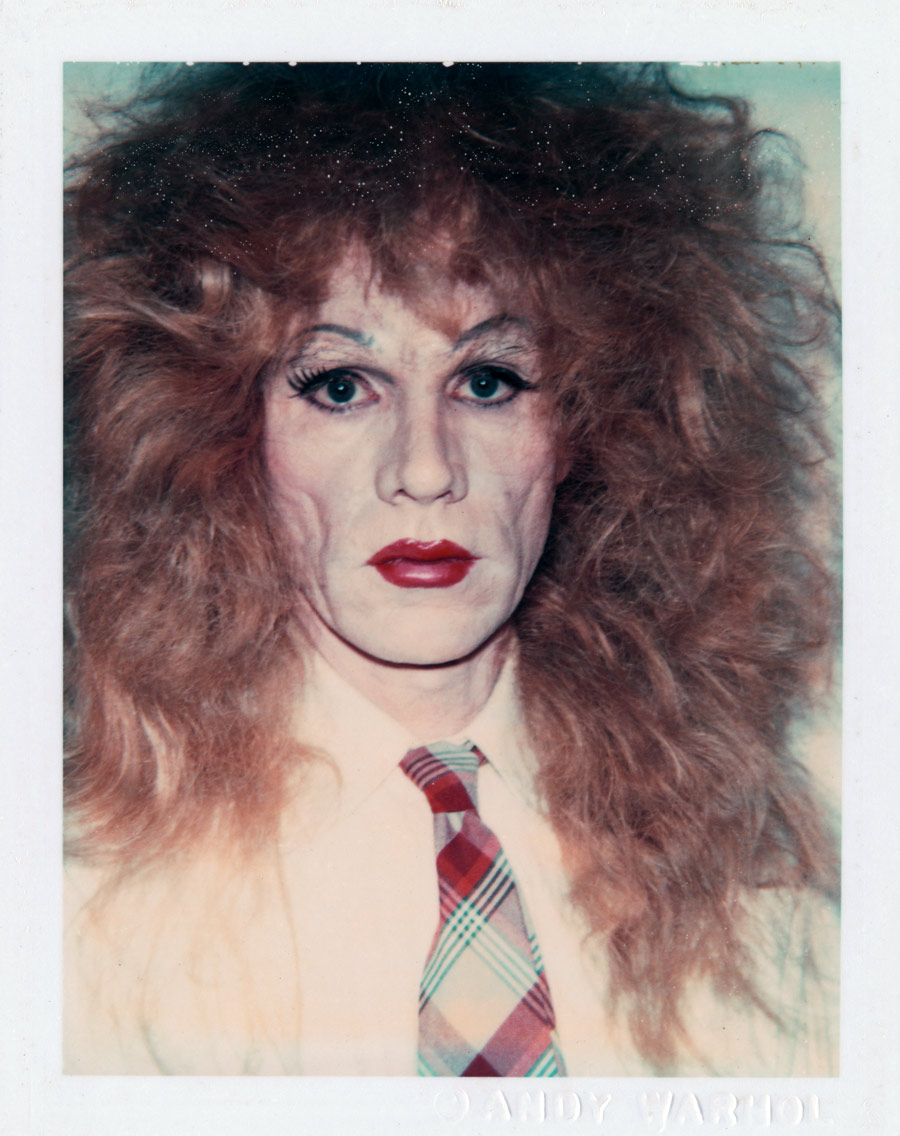
Broich portrays the artists with the instinct of a colleague. Her photographs capture famous artists from her circle of acquaintances at those moments when they are returning from the stage after playing their role. However matter-of-fact the situation of the subject may occasionally appear, each photograph has its own charm. The beholder is granted glimpses of scenes that must be among the most intimate in show business: whether they show Martin Wuttke with a blonde, Andy Warhol mane and his poodle, Taxi, smoking a cigarette after a performance of “Gretchens Faust”, or Klaus Maria Brandauer at the end of a 10-hour Wallenstein epic, sitting on a stool with a bottle of beer, the snapshots are full of tension.

Born in Neuwied in 1960, Margarita Broich initially studied photo design in Dortmund and worked as a theatrical photographer at the Bochum Schauspielhaus (Theatre) under Claus Peymann, before studying dramatic art herself at Berlin’s College of Arts. Since then she has appeared in numerous German-language stage performances and television dramas, working with such directors as Claus Peymann, Robert Wilson and, earlier, with Christoph Schlingensief.

Text from the Martin-Gropius-Bau website [Online] Cited 26/05/2011 no longer available online


Margarita Broich (German, b. 1960) 'Kate Winslet, The Reader, 20-04-2008' 2008


Margarita Broich (German, b. 1960)
Kate Winslet
The Reader, 20-04-2008

2008
© Margarita Broich


Margarita Broich (German, b. 1960) 'Klaus Maria Brandauer Wallenstein, Berliner Ensemble in the Preuss-Halle, Berlin, 09-06-2007' 2007


Margarita Broich (German, b. 1960)
Klaus Maria Brandauer
Wallenstein, Berliner Ensemble in the Preuss-Halle, Berlin, 09-06-2007

2007
© Margarita Broich


Margarita Broich (German, b. 1960) 'Ben Becker Jedermann, Salzburger Festspiele, 17-08-2010' 2010


Margarita Broich (German, b. 1960)
Ben Becker
Jedermann, Salzburger Festspiele, 17-08-2010
2010
© Margarita Broich


Martin-Gropius-Bau Berlin
Niederkirchnerstraße 7
Corner Stresemannstr. 110
10963 Berlin
Phone: +49 (0)30 254 86-0

Opening hours:
Wednesday to Monday 10 – 19 hrs
Tuesday closed

Martin-Gropius-Bau website

LIKE ART BLART ON FACEBOOK

Back to top

Exhibition: ‘A Ballad of Love and Death: Pre-Raphaelite Photography in Great Britain, 1848-1875’ at the Musée d’Orsay, Paris

Exhibition dates: 8th March – 29th May 2011


Julia Margaret Cameron – you are one of my heroes!


Many thankx to the Musée d’Orsay for allowing me to publish the photographs in the posting. Please click on the photographs for a larger version of the image.


Henry White (British, 1819-1903) 'Ferns and brambles' 1856


Henry White (British, 1819-1903)
Fougères et ronces (Ferns and brambles)
1856
Albumen print
19.1 x 24.1cm
Collection particulière
© Droits réservés


John Ruskin (English, 1819-1900) 'Fribourg' 1859


John Ruskin (English, 1819-1900)
Fribourg
1859
Pencil, ink, watercolour and gouache on paper
22.5 x 28.7cm
London, The British Museum
© The Trustees of The British Museum. All rights reserved


Frederick Crawley, under the direction of John Ruskin (English, 1819-1900) 'Fribourg, Switzerland, Palm Street and Berne Bridge' about 1854 or 1856


Frederick Crawley, under the direction of John Ruskin (English, 1819-1900)
Fribourg, Suisse, Rue de la Palme et Pont de Berne (Fribourg, Switzerland, Palm Street and Berne Bridge)
about 1854 or 1856
Daguerréotype
11.5 x 15.1cm
Angleterre, Courtesy K. and J. Jacobson
© Droits réservés


Roger Fenton (British, 1819-1869) 'Bolton Abbey' 1854


Roger Fenton (British, 1819-1869)
Bolton Abbey, West window
1854
Albumen print
25.1 x 34.5cm
Bradford, National Media Museum
© National Media Museum, Bradford/Science & Society Picture Library


John William Inchbold (English, 1830-1888) 'La Chapelle de Bolton Abbey' 1853


John William Inchbold (English, 1830-1888)
La Chapelle de Bolton Abbey (The Vault of Bolton Abbey)
1853
Oil on canvas
50 x 68.4cm
Northampton, Museum and Art Gallery
© Northampton, Museum and Art Gallery


Henry Peach Robinson (English, 1830-1901) 'Fading Away' 1858


Henry Peach Robinson (English, 1830-1901)
Fading Away
1858
Albumen print
28.8 x 52.1cm
Bradford, The Royal Photographic Society Collection au National Media Museum.
© National Media Museum, Bradford/Science & Society Picture Library


Henry Peach Robinson (English, 1830-1901) 'She Never Told her Love' 1857


Henry Peach Robinson (English, 1830-1901)
She Never Told her Love
1857
Albumen print
18.6 x 23.3cm
Paris, musée d’Orsay
© Musée d’Orsay (dist. RMN)/Patrice Schmidt


Consumed by the passion of unrequited love, a young woman lies suspended in the dark space of her unrealised dreams in Henry Peach Robinson’s illustration of the Shakespearean verse “She never told her love,/ But let concealment, like a worm i’ the bud,/ Feed on her damask cheek” (Twelfth Night II,iv,111-13). Although this picture was exhibited by Robinson as a discrete work, it also served as a study for the central figure in his most famous photograph, Fading Away, of 1858.

Purportedly showing a young consumptive surrounded by family in her final moments, Fading Away was hotly debated for years. On the one hand, Robinson was criticised for the presumed indelicacy of having invaded the death chamber at the most private of moments. On the other, those who recognised the scene as having been staged and who understood that Robinson had created the picture through combination printing (a technique that utilised several negatives to create a single printed image) accused him of dishonestly using a medium whose chief virtue was its truthfulness.

While addressing the moral and literary themes that Robinson believed crucial if photography were to aspire to high art, this picture makes only restrained use of the cloying sentimentality and showy technical artifice that often characterise this artist’s major exhibition pictures. Perhaps intended to facilitate the process of combination printing, the unnaturally black background serves also to envelop the figure in palpable melancholia.

Text from the Metropolitan Museum of Art website [Online] Cited 27/01/2020


Frederick Pickersgill (English, 1820-1900) 'Sunshine and Shade' 1859


Frederick Pickersgill (English, 1820-1900)
Sunshine and Shade
1859
Albumen print
16.4 x 19.4cm
The Royal Photographic Society Collection at the National Media Museum.
© National Media Museum, Bradford/Science & Society Picture Library


The historian and art critic, John Ruskin, had a great influence in Great Britain not only on the Pre-Raphaelite movement created in 1848, but on the development of early photography in the 1850s. The leading Pre-Raphaelite painters, John Everett Millais, Dante Gabriel Rossetti, Holman Hunt and Ford Madox Brown and their followers, wished to change the pictorial conventions laid down by the Royal Academy, and in order to demonstrate the transformations in modern life, invented a radically new idiom marked by bright colours and clarity of detail.

Pre-Raphaelite painters and photographers frequently made similar choices of subjects, and the photographers, particularly Julia Margaret Cameron, David Wilkie Wynfield and Lewis Carroll, were often had close links with the painters.

When painting landscapes, the Pre-Raphaelite artists answered Ruskin’s call, meticulously observing nature in order to capture every nuance of detail. For their part, photographers, such as Roger Fenton, Henry White, William J. Stillman and Colonel Henry Stuart Wortley, experimented with the new process of wet plate collodion negatives that allowed much greater image detail, and achieved similar effects. Although highly impressed at first by the daguerreotype, which enabled the eye to see tiny, overlooked details, Ruskin was nonetheless still very critical of landscape photography, which could not reproduce the colours of nature and in particular of the sky. This failing also gave rise to a major debate amongst photography critics.

In portraiture, there were clear links between the painted portraits of Watts and Cameron’s photographic portraits. By using special lenses and photographing her models in close-up, Cameron, achieved, with a glass negative, exactly the opposite effect to the clear image advocated by Ruskin, and her work was distinctive for the breadth of relief and contour, as well as the compositions evoking Raphael’s paintings, also a source of inspiration for Watts.

The painter Dante Gabriel Rossetti repeatedly drew and painted Jane Morris, a model with whom he was infatuated, and he asked Robert Parsons to produce a series of photographs, under his personal direction, which captured the fascinating presence of the young woman as effectively as his own paintings.

Just like the Pre-Raphaelite painters, Victorian photographers would turn to religious or historical subjects, finding a shared inspiration in the poems of Dante, Shakespeare and possibly Byron, and above all in the Arthurian legend made popular once more by Lord Tennyson, the poet laureate. From a formal point of view, Millais’ Ophelia, one of his most successful paintings, was a source for Henry Peach Robinson’s photograph, The Lady of Shalott, even though it had a different theme.

Finally, Pre-Raphaelite painters and Victorian photographers both liked to present scenes from modern life with a moralising undertone: hence She Never Told Her Love, a photograph by Robinson that was very successful when exhibited at the Crystal Palace in 1858, William Holman Hunt’s painting, Awakening of Conscience, and Rossetti’s Found, a painting depicting a countryman who comes across his former sweetheart, now a prostitute in the city.

In the 1880s, Pre-Raphaelite painting would be transformed, with artists and writers like William Morris, Burne-Jones, Whistler and Oscar Wilde, into a very different movement concerned only with the cult of beauty and rejecting Ruskin’s concept of art as something moral or useful. British photographers, however, inspired by the Pre-Raphaelites would inspire the Pictorialist movement that flourished in the 1890s, encouraged by the writings of Henry Peach Robinson and Peter Henry Emerson, extolling artistic photography.

Press release from the Musée d’Orsay website


James Sinclair 14th Earl of Caithness (Scottish, 1821-1881) 'Weston Avenue, Warwickshire' c. 1860


James Sinclair 14th Earl of Caithness (Scottish, 1821-1881)
Avenue à Weston, Warwickshire (Weston Avenue, Warwickshire)
c. 1860
Albumen print
23 x 18.3cm
New York, Courtesy George Eastman House Rochester
© Courtesy of George Eastman House, International Museum of Photography and Film


Julia Margaret Cameron (British, 1815-1879) 'The sunflower' 1866-1870


Julia Margaret Cameron (British, 1815-1879)
Le tournesol (The sunflower)
1866-1870
Albumen print
35.2 x 24.3cm
Washington, National Gallery of Art, Fond Paul Mellon
© National Gallery of Art, Washington


John Robert Parsons (Irish, 1826-1909), under the direction of Dante Gabriel Rossetti (English, 1828-1882) 'Jane Morris posing in the house of Rossetti' summer 1865


John Robert Parsons (Irish, 1826-1909), under the direction of Dante Gabriel Rossetti (English, 1828-1882)
Jane Morris posant dans la maison de Rossetti (Jane Morris posing in the house of Rossetti)
Summer 1865
Modern print
22.6 x 17.5cm
London, Victoria and Albert Museum
© V&A Images / Victoria and Albert Museum, London


John Robert Parsons (Irish, 1826-1909) 'Jane Morris posing in the garden of the house of Rossetti' summer 1865


John Robert Parsons (Irish, 1826-1909)
Jane Morris posant dans le jardin de la maison de Rossetti (Jane Morris posing in the garden of the house of Rossetti)
Summer 1865
Albumen print
Private collection
© Tim Hurst Photography


Dante Gabriel Rossetti (English, 1828-1882) 'Jane Morris, the blue silk dress' 1868


Dante Gabriel Rossetti (English, 1828-1882)
Jane Morris, the blue silk dress
1868
Oil on canvas
110.5 x 90.2cm
Londres, The Society of Antiquaries
© Kelmscott Manor Collection, by Permission of the Society of Antiquaries of London


Charles Lutwidge Dodgson (Lewis Caroll) (English, 1832-1898) 'Amy Hughes' 1863


Charles Lutwidge Dodgson (Lewis Caroll) (English, 1832-1898)
Amy Hughes
1863
Austin, The University of Texas, Harry Ransom Center, Gernsheim Collection
© Droits réservés


Julia Margaret Cameron (British, 1815-1879) 'Maud' 1875


Julia Margaret Cameron (British, 1815-1879)
Maud
1875
Charcoal print
30 x 25cm
Paris, musée d’Orsay
© Musée d’Orsay (dist. RMN)/Patrice Schmidt


Sir John Everett Millais (British, 1829-1896) 'A Huguenot, on St. Bartholomew's Day Refusing to Shield Himself from Danger by Wearing the Roman Catholic Badge' 1851-1852


Sir John Everett Millais (British, 1829-1896)
A Huguenot, on St. Bartholomew’s Day Refusing to Shield Himself from Danger by Wearing the Roman Catholic Badge
1851-1852
Oil on canvas
91.4 x 62.2cm
Collection Makins
© The Makins Collection/The Bridgeman Art Library


Sir Edward Burne-Jones (British, 1833-1898) 'Princess Sabra (The King's Daughter)' 1865-1866


Sir Edward Burne-Jones (British, 1833-1898)
Princess Sabra (The King’s Daughter)
1865-1866
Oil on canvas
105 x 61cm
Paris, Musée d’Orsay
© Musée d’Orsay (dist. RMN)/Patrice Schmidt


Julia Margaret Cameron  (British, 1815-1879) 'And Enid Sang' 1874


Julia Margaret Cameron  (British, 1815-1879)
And Enid Sang
1874
Print on albumen paper, collodion glass negative, laminated on cardboard
35 x 28cm
Paris, Musée d’Orsay
© Musée d’Orsay (dist. RMN)


Musée d’Orsay
62, rue de Lille
75343 Paris Cedex 07
France

Opening hours:
Tuesday – Sunday 9.30am – 6pm
Thursdays 9.30am – 9.45pm
Closed on Mondays

Musée d’Orsay website

LIKE ART BLART ON FACEBOOK

Back to top

Exhibition: ‘Kurt Kranz: Programming of Beauty’ at the Bauhaus Dessau, Berlin

Exhibition marking the 100th birthday of Kurt Kranz
19th November 2010 – 29th May 2011


Kurt Kranz (German, 1910-1997) 'Perspective' 1931


Kurt Kranz (German, 1910-1997)
Perspective
1931
Ingrid Kranz / Stiftung Bauhaus Dessau
Foto: Lars Lohrisch / Abdruck mit Genehmigung der Kunsthalle


One of the great pleasures of publishing this archive is that I get to research the life of an artist whose work I never knew before. Kurt Kranz is one such artist.

Dr Marcus Bunyan


Many thankx to the the Bauhaus Dessau for allowing me to publish the photographs in the posting. Please click on the photograph for a larger version of the image.


Kurt Kranz (German, 1910-1997) 'Vereinsamung' Dessau 1930


Kurt Kranz (German, 1910-1997)
Vereinsamung (Isolation)
Dessau
1930
Ingrid Kranz / Stiftung Bauhaus Dessau
Leihgeber: Kunsthalle Bremen


Installation photograph of 'Programming of Beauty' by Kurt Kranz at the Bauhaus Dessau


Installation photograph of Programming of Beauty by Kurt Kranz at the Bauhaus Dessau


Kurt Kranz (German, 1910-1997) 'Versinkende' (Sinking one) 1931


Kurt Kranz (German, 1910-1997)
Versinkende (Sinking one)
1931
Ingrid Kranz / Stiftung Bauhaus Dessau


Kurt Kranz (German, 1910-1997) 'Persischer Garten' (Persian garden) 1970


Kurt Kranz (German, 1910-1997)
Persischer Garten (Persian garden)
1970
Ingrid Kranz / Stiftung Bauhaus Dessau
Foto: Uwe Jacobshagen


The Bauhaus Dessau dedicates a comprehensive exhibition to the painter, graphic designer and photographer Kurt Kranz to mark his 100th birthday. In 1930, the then twenty-year-old lithographer came from Bielefeld to study at the Bauhaus Dessau, where he soon established himself as a pioneer of serial and generative methods. With his avant-garde work, Kranz’s methods anticipated those of later generations.

Inspired by a lecture by László Moholy-Nagy, Kurt Kranz came to the Bauhaus Dessau in April 1930. In Walter Peterhans’s photography class, Kranz began to experiment with photographic techniques and created some of the most striking abstract picture series to emerge from the Bauhaus. Alienated and abstracted faces and hands appear repeatedly in his dynamic picture series. These show Kranz’s early affinity for film as, page for page, the abstract forms interact with one another. Kranz drafted his first concepts for abstract films at the Bauhaus, although he was first able to realise these decades later in 1972.

The exhibition to mark the artist’s 100th birthday shows works from Kranz’s Bauhaus years and his later work as an advertising graphic designer, and focuses on a selection of his large picture cycles. Strikingly diverse leporellos dating from the 1960s onwards take centre stage, as do the so-called “Matrix-und Schiebebilder”

Text from the Bauhaus Dessau website


Kurt Kranz (German, 1910-1997) 'Selbstporträt en face (objektives Foto)' (Self-portrait with face (objective photo)) 1931


Kurt Kranz (German, 1910-1997)
Selbstporträt en face (objektives Foto) (Self-portrait with face (objective photo))
1931
Ingrid Kranz / Stiftung Bauhaus Dessau


Kurt Kranz (German, 1910-1997) 'Rasterfoto' (Raster photograph) 1932


Kurt Kranz (German, 1910-1997)
Rasterfoto (Raster photograph)
1932
Ingrid Kranz / Stiftung Bauhaus Dessau


Kurt Kranz (German, 1910-1997) 'Schwarz : Weiß' (Black: White) 1928-29


Kurt Kranz (German, 1910-1997)
Schwarz: Weiß (Black: White)
1928-1929
Ingrid Kranz / Stiftung Bauhaus Dessau
Privatbesitz


Kurt Kranz (German, 1910-1997) 'Schwarz : Weiß' (Black: White) 1928-29


Kurt Kranz (German, 1910-1997)
Schwarz: Weiß (Black: White)
1928-1929
Ingrid Kranz / Stiftung Bauhaus Dessau
Privatbesitz


Kurt Kranz (German, 1910-1997) 'Schwarz : Weiß' (Black: White) 1928-29


Kurt Kranz (German, 1910-1997)
Schwarz: Weiß (Black: White)
1928-1929
Ingrid Kranz / Stiftung Bauhaus Dessau
Privatbesitz


Kurt Kranz (German, 1910-1997) 'Schrift Entwurf aus Satzmaterial' (Writing draft from sentence material) Dessau 1931


Kurt Kranz (German, 1910-1997)
Schrift Entwurf aus Satzmaterial (Writing draft from sentence material)
Dessau
1931
Ingrid Kranz / Stiftung Bauhaus Dessau


Kurt Kranz (German, 1910-1997) Aus der Serie "Sieben Schritte zum symmetrischen Oval"' (From the series "Seven steps to the symmetrical Oval") 1982


Kurt Kranz (German, 1910-1997)
Aus der Serie “Sieben Schritte zum symmetrischen Oval” (From the series “Seven steps to the symmetrical Oval”)
1982
Ingrid Kranz / Stiftung Bauhaus Dessau
Foto: Uwe Jacobshagen


Kurt Kranz (German, 1910-1997) 'Augenreihe' (Eye rows) 1931


Kurt Kranz (German, 1910-1997)
Augenreihe (Eye rows)
1931 (montiert 1981) (1931 (1981 install))
Ingrid Kranz / Stiftung Bauhaus Dessau
Leihgeber: Kunsthalle Bremen


Kurt Kranz (German, 1910-1997) 'Mund-Reihen' (Mouth rows) 1931


Kurt Kranz (German, 1910-1997)
Mund-Reihen (Mouth rows)
1931
Ingrid Kranz / Stiftung Bauhaus Dessau
Leihgeber: Kunsthalle Bremen
Foto: Ingrid Kranz, Wedel


Bauhaus Dessau
Gropiusalle 38, Dessau, Germany

Opening hours:
Tue – Sun 10am – 6pm

Bauhaus Dessau website

LIKE ART BLART ON FACEBOOK

Back to top

Exhibition: ‘Jeanloup Sieff’ at Moderna Museet, Stockholm

Exhibition dates: 19th February – 22nd May 2011

Curator: Anna Tellgren


Many thankx to the Moderna Museet for allowing me to publish the photographs in the posting. Please click on the photographs for a larger version of the image.


Jeanloup Sieff (French, 1933-2000)
'Ballet, Paris Opera, 1960' 1960


Jeanloup Sieff (French, 1933-2000)
Ballet, Paris Opera, 1960
1960
Gelatin silver print
© The Estate of Jeanloup Sieff, Paris


Jeanloup Sieff (French, 1933-2000)
'Carolyn Carlson, Paris, 1974' 1974


Jeanloup Sieff (French, 1933-2000)
Carolyn Carlson, Paris, 1974
1974
Gelatin silver print
© The Estate of Jeanloup Sieff, Paris


Jeanloup Sieff (French, 1933-2000)
'Yves Saint Laurent, Paris, 1971' 1971


Jeanloup Sieff (French, 1933-2000)
Yves Saint Laurent, Paris, 1971
1971
Gelatin silver print
© The Estate of Jeanloup Sieff, Paris


Jeanloup Sieff (French, 1933-2000)
'Catherine Deneuve, dress Yves Saint Laurent, Paris, 'Vogue Italia''
1969


Jeanloup Sieff (French, 1933-2000)
Catherine Deneuve, dress Yves Saint Laurent, Paris, ‘Vogue Italia’
1969
Gelatin silver print
© The Estate of Jeanloup Sieff, Paris


Jeanloup Sieff (French, 1933-2000)
'Ma Fille Sonia, Paris' 1985


Jeanloup Sieff (French, 1933-2000)
Ma Fille Sonia, Paris
1985
Gelatin silver print
© The Estate of Jeanloup Sieff, Paris


The French photographer Jeanloup Sieff (1933-2000) is a legend in fashion photography and one of the most prominent photographers of his generation. Opening on 19 February, Moderna Museet in Stockholm presents the first Nordic solo exhibition of Jeanloup Sieff.

Jeanloup Sieff began photographing in the early 1950s, as a contemporary of Helmut Newton and David Bailey, belonging to the generation succeeding Irving Penn. In the course of a long career, his photography spanned from fashion, advertising and portraits to reportage and landscapes. His images are often sensual and elegant, and in the 1960s he was much in demand as a fashion photographer, especially in the USA, where he lived for some years in New York. As a respected fashion photographer, Sieff had assignments for magazines such as Elle, Harper’s Bazaar, Vogue, Esquire, Glamour and Jardin des Modes. Sieff also engaged in commercial photography, including promotion campaigns for Chanel and Revlon and the first Yves Saint Laurent fragrance.

“In his fashion and advertising photographs the models are characteristically close to the pictorial surface, an effect achieved by using a wide-angle lens. His working method was based on physical and emotional closeness. This lack of distance makes his images exciting and visually interesting,” says Anna Tellgren, curator.

In the course of his career, Jeanloup Sieff took several now classic portraits of prominent fashion icons, including Yves Saint Laurent, Karl Lagerfeld and Jane Birkin. French cultural celebrities such as François Truffaut, Catherine Deneuve and Serge Gainsbourg have also been portrayed by Sieff. Several of these portraits will be featured in the exhibition at Moderna Museet. Jeanloup Sieff was deeply fascinated by dance, another of his frequent subjects. He got to know Rudolf Nureyev just after he had defected to the West, and collaborated with the American dancer and choreographer Carolyn Carlson. The exhibition at Moderna Museet presents a selection of 53 pictures from Sieff’s photographic oeuvre, with an emphasis on his dance photography.

“He was interested in the dancers as artists, and the actual struggle during rehearsal to get their bodies to perform more or less impossible movements. His dance photographs are fascinating because they really convey the smell of sweat and the shuffling sound of dance shoes, which is exactly what he was after,” Anna Tellgren, the curator of the exhibition, commented.

Text from the Moderna Museet website


Jeanloup Sieff (French, 1933-2000) 'Claire Motte, Paris' 1960


Jeanloup Sieff (French, 1933-2000)
Claire Motte, Paris
1960
Gelatin silver print
© The Estate of Jeanloup Sieff, Paris


Jeanloup Sieff (French, 1933-2000) 'Larrio Exon, Paris' 1976


Jeanloup Sieff (French, 1933-2000)
Larrio Exon, Paris
1976
Gelatin silver print
© The Estate of Jeanloup Sieff, Paris


Jeanloup Sieff (French, 1933-2000) 'Harper’s Bazaar, Palm Beach' 1964


Jeanloup Sieff (French, 1933-2000)
Harper’s Bazaar, Palm Beach
1964
Gelatin silver print
© The Estate of Jeanloup Sieff, Paris


Jeanloup Sieff (French, 1933-2000) 'East Hampton in Winter' 1965


Jeanloup Sieff (French, 1933-2000)
East Hampton in Winter
1965
Gelatin silver print
© The Estate of Jeanloup Sieff, Paris


Jeanloup Sieff (French, 1933-2000) 'Autoportrait, Paris' 1978


Jeanloup Sieff (French, 1933-2000)
Autoportrait, Paris
1978
Gelatin silver print
© The Estate of Jeanloup Sieff, Paris


Jeanloup Sieff (French, 1933-2000)
'Opéra de Paris, 1988' 1988


Jeanloup Sieff (French, 1933-2000)
Opéra de Paris, 1988
1988
Gelatin silver print
© The Estate of Jeanloup Sieff, Paris


Jeanloup Sieff (French, 1933-2000)
'La Maison Noire' 1965


Jeanloup Sieff (French, 1933-2000)
La Maison Noire
1965
Gelatin silver print
© The Estate of Jeanloup Sieff, Paris


Jeanloup Sieff (French, 1933-2000)
'Judy, New York, 1965' 1965


Jeanloup Sieff (French, 1933-2000)
Judy, New York, 1965
1965
Gelatin silver print
© The Estate of Jeanloup Sieff, Paris


Jeanloup Sieff (French, 1933-2000)
'Yves Saint-Laurent, Vogue Italie' 1969


Jeanloup Sieff (French, 1933-2000)
Yves Saint-Laurent, Vogue Italie
1969
Gelatin silver print
15 7/10 × 11 4/5 in (40 × 30cm)
© The Estate of Jeanloup Sieff, Paris


Jeanloup Sieff (French, 1933-2000)
'Harper's Bazaar, Hollywood, 1962' 1962


Jeanloup Sieff (French, 1933-2000)
Harper’s Bazaar, Hollywood, 1962
1962
Gelatin silver print
© The Estate of Jeanloup Sieff, Paris


Moderna Museet, Stockholm

Moderna Museet is ten minutes away from Kungsträdgården, and twenty minutes from T-Centralen or Gamla Stan. Walk past Grand Hotel and Nationalmuseum on Blasieholmen, opposite the Royal Palace. After crossing the bridge to Skeppsholmen, continue up the hill. The entrance to Moderna Museet and Arkitekturmuseet is on the left-hand side.

Opening hours:
Tuesday and Friday 10 – 20
Wednesday, Thursday, Saturday and Sunday 10 – 18
Monday closed

Moderna Museet website

LIKE ART BLART ON FACEBOOK

Back to top

Exhibition: ‘Gilbert & George: Jack Freak Pictures’ at Deichtorhallen Hamburg

Exhibition dates: 25th February – 22nd May 2011


Gilbert & George standing in front of ‘Metal Jack’ (2008) from the series ‘Jack Freak Pictures’ on show at Deichtorhallen Hamburg


Gilbert & George standing in front of Metal Jack (2008) from the series Jack Freak Pictures on show at Deichtorhallen Hamburg
Photo: Fred Dott © Deichtorhallen Hamburg/Fred Dott


“We are unhealthy, middle-aged, dirty-minded, depressed, cynical, empty, tired-brained, seedy, rotten, dreaming, badly-behaved, ill-mannered, arrogant, intellectual, self-pitying, honest, successful, hard-working, thoughtful, artistic, religious, fascistic, blood-thirsty, teasing, destructive, ambitious, colourful, damned, stubborn, perverted and good. We are artists.”


Gilbert & George, 1980


More from the Jack Freak picture show!

Marcus


Many thankx to Deichtorhallen Hamburg for allowing me to publish the photographs in the posting. Please click on the photographs for a larger version of the image.


Installation view of ‘Jack Freak Pictures’ by Gilbert & George at Deichtorhallen Hamburg

Installation view of ‘Jack Freak Pictures’ by Gilbert & George at Deichtorhallen Hamburg


Installation views of Jack Freak Pictures by Gilbert & George at Deichtorhallen Hamburg
Photos: Fred Dott © Deichtorhallen Hamburg/Fred Dott


According to the writer Michael Bracewell, “the Jack Freak Pictures are among the most iconic, philosophically astute and visually violent works that Gilbert & George have ever created.” The dominant pictorial element is the Union Jack, itself an internationally familiar, abstract, geometric pattern and a socially and politically charged symbol whose significance spans the cultural spectrum from contemporary fashion to aggressive national pride. Equally prominent, and linking the Jack Freak Pictures to almost every work previously created by the artists, are Gilbert & George themselves in a variety of guises: dancing, gurning, howling, watching, waiting. Sometimes their bodies seem complete; other times they have been fragmented or contorted. Invariably they feature as both subject and object, artwork and artist; they are players in the epic and complex pictorial drama they have created.

Set in the East End of London where Gilbert & George have lived and worked for over forty years, the Jack Freak Pictures bring numerous aspects of the modern world to life. Medals, flags, maps, street-signs, graffiti and other less immediately obvious motifs jostle for attention with the brickwork, buildings and even foliage of the contemporary urban environment in works that are densely layered and complexly nuanced to evoke (and sometimes conflate) a sense of past, present and future. They raise fundamental and rudimentary questions about religion, identity, politics, economics, sexuality and death. The Jack Freak Pictures reaffirm Gilbert & George’s status as pre-eminent Modernists and underline Robert Rosenblum’s observation that “of the singularity of their duality in life as art, there is little doubt.” Michael Bracewell’s view that they are “visionary artists in the lineage of William Blake” rings truer now than ever before.

Text from the White Cube website [Online] Cited 12/05/2011 no longer available online


Gilbert & George. ‘Christian England’ from the series ‘Jack Freak Pictures’ 2008


Gilbert & George
Christian England from the series Jack Freak Pictures
2008
254 x 528 cm
© Gilbert & George


Gilbert & George. ‘Frigidarium’ from the series ‘Jack Freak Pictures’ 2008


Gilbert & George (British)
Frigidarium from the series Jack Freak Pictures
2008
381 x 604cm
© Gilbert & George


Gilbert & George. ‘Street Party’ from the series ‘Jack Freak Pictures’ 2008


Gilbert & George (British)
Street Party from the series Jack Freak Pictures
2008
381 x 604cm
© Gilbert & George


With its major spring show, Deichtorhallen Hamburg is once again bringing stars of the international art world to Hamburg. Gilbert & George (born 1943 and 1942) have long since been acknowledged icons of contemporary art.

The exhibition will present the latest, wide-ranging group of pictures they have ever created. Called the “Jack Freak Pictures”. They will be on display in the cathedral-like setting of the large Deichtorhalle from February 25 to May 22, 2011 for the first time more or less in its entirety – some 120 pictures will be on view.

Gilbert & George’s large-format pictures present decidedly sacred and secular themes. In this case, Gilbert & George have created a group around the British national symbol, the Union Jack, with all its different connotations, from symbol of national pride through to the cult symbol of the British Pop Music world and countercultures. Surrounded by medals and amulets, the streets of London and the red, blue and white design of the British flag, as in their previous art here Gilbert & George are not only the creators of their own world of images, but also act as protagonists in it.

The “Jack Freak Pictures” are among the most symbolic, philosophically most elaborate and visually striking art Gilbert & George have ever created. Within Gilbert & George’s oeuvre as a whole they constitute the powerful concentration of the themes and emotions that the artists have now been exploring in their art for more than 40 years. In these pictures, the artists play the roles of both victim and monster, puppets of a cosmic revue, sleepless guardians of empty big-city streets and crazy-looking talking heads, as Michael Bracewell outlines in his essay in the exhibition catalog. The large pictures, do not address the individual constitution of the two artists but instead point up states of human existence and can be read as a description of the modern world from the artists’ point of view.

The exhibition is being organised by Deichtorhallen Hamburg and the British Council and will move on from Hamburg, albeit it on a smaller scale, to Lentos Kunstmuseum, Linz, Austria. Hatje Cantz Verlag has brought out a catalog with an essay by Michael Bracewell and colour illustrations of all 153 works in the series.

Text from the Deichtorhallen Hamburg website


Gilbert & George. ‘War Dance’ from the series ‘Jack Freak Pictures’ 2008


Gilbert & George (British)
War Dance from the series Jack Freak Pictures
2008
151 x 190cm
© Gilbert & George


Gilbert & George. ‘Britainers’ from the series ‘Jack Freak Pictures’ 2008


Gilbert & George (British)
Britainers from the series Jack Freak Pictures
2008
254 x 302cm
© Gilbert & George


Gilbert & George. ‘Stuff Religion’ from the series ‘Jack Freak Pictures’ 2008


Gilbert & George (British)
Stuff Religion from the series Jack Freak Pictures
2008
317 x 302cm
© Gilbert & George


Gilbert & George. ‘Union Dance’ from the series ‘Jack Freak Pictures’ 2008


Gilbert & George (British)
Union Dance from the series Jack Freak Pictures
2008
© Gilbert & George


Gilbert & George. ‘Brits’ from the series ‘Jack Freak Pictures’ 2008


Gilbert & George (British)
Brits from the series Jack Freak Pictures
2008
226 x 190cm
© Gilbert & George


Deichtorhallen Hamburg
Deichtorstrasse 1-2
20095 HAMBURG
Phone: +49 (0)40 32103-0

Opening hours:
Tuesday – Sunday 11am – 6pm
Closed on Mondays

Deichtorhallen Hamburg website

LIKE ART BLART ON FACEBOOK

Back to top

Exhibition: ‘André Kertész – Retrospective’ at Fotomuseum Winterthur, Zurich

Exhibition dates: 26th February – 15th May 2011


Many thankx to the Fotomuseum Winterthur, Zurich for allowing me to publish the photographs in the posting. Please click on the photographs for a larger version of the image.


André Kertész (Hungarian, 1894-1985) 'Underwater Swimmer, Esztergom' 1917


André Kertész (Hungarian, 1894-1985)
Underwater Swimmer, Esztergom
1917
Gelatin silver print


André Kertész (American born Hungary, 1894-1985) 'Fork' 1928


André Kertész (Hungarian, 1894-1985)
Fork
1928
Gelatin silver print


André Kertész. 
'Elizabeth and I' 1933


André Kertész (Hungarian, 1894-1985)

Elizabeth and I
1933, printed in the 1960s
Gelatin silver print
25.3 x 17.5cm
Collection of Sarah Morthland, New York


André Kertész.
 'Distortion No. 200' 1933


André Kertész (Hungarian, 1894-1985)
Distortion No. 200
1933, printed c. 1938/1939
Gelatin silver print
34.4 x 25.7cm
Courtesy of Klever Holdings


André Kertész is possibly the most photographic of all photographers: he sought out the play of light and shadow; he liked the concentration and overlapping of forms, of moments; and in the everyday, in banality, he recognised poetry, beauty, and even, for all his innate modesty, the “sublime.” Kertész is a photographic poet and seer, for whom it was long difficult to break into the market precisely because of his rich, chiseled iconography.

André Kertész (Budapest 1894 – 1985 New York) supported Brassaï, inspired Henri Cartier-Bresson, is considered one of the founders of photojournalism, and introduced stylistic elements into photography that can still be found in works by contemporary photographers. At heart, he was a photographer and artist in equal measure, poetic, probing, vital, independent in thought and actions. In a word, he was a master of photography, whose long period of production was very influential. Nevertheless, it took a remarkably long time for his special abilities, his poetic experimental version of photography, to find recognition in the history of photography. The three locations where he lived (Budapest, Paris, New York), his freedom, his form of “contemplative photography,” as Roland Barthes characterised it, made quick reception and categorisation of his work impossible. Today, more than twenty-five years after his death, he is recognised and considered to be a central photographer of the twentieth century who crucially enriched the language of photography.

With around 250 photographs and countless magazine contributions, the retrospective at Fotomuseum Winterthur on view until May 15, 2011, allows a comprehensive view of his work. The chronological order and the major themes show what it is that makes up his photographic practice: his unique methods (in photographic postcards, in distortions), his editorial engagement (for example, in the volume Paris vu par Kertész, 1934), his passion for experimentation (with light and shadow), and the evocation of emotions, above all of melancholy and loneliness. Periods that have remained neglected or unexplored until today (his life as a soldier from 1914-1918, for example) are reassessed, and juxtaposed with the development of photojournalism in Paris and the distribution of his pictures in the media, with which he earned his living.

André Kertész liked to characterise himself as an “eternal amateur.” But what a virtuosic “amateur” he was; what virtuosic visual language he employed his entire life to capture the poetry of the everyday! His photographic production was closely connected to his life and psyche. Even when he seemed to be documenting something, he let himself be guided almost exclusively by feeling, by instinct, from his soul. This resulted in a body of work that he liked to compare to a “visual journal”, and about which he said, “I have never just ‘made photos’. I express myself photographically.”

Text from the Fotomuseum Winterthur website


André Kertész. 'Satiric Dancer' 1926


André Kertész (Hungarian, 1894-1985)
Satiric Dancer
1926
Gelatin silver print


André Kertész (Hungarian, 1894-1985) 'Peintre d'ombre, Paris' (Shadow painter, Paris) 1926


André Kertész (Hungarian, 1894-1985)
Peintre d’ombre, Paris (Shadow painter, Paris)
1926
Gelatin silver print
© ministère de la Culture / Médiathèque de l’architecture et du patrimoine / Donation André Kertész


André Kertész (Hungarian, 1894-1985) 'Bastille, Rue de Lappe, Paris' 1926


André Kertész (Hungarian, 1894-1985)
Bastille, Rue de Lappe, Paris
1926
Gelatin silver print
© ministère de la Culture / Médiathèque de l’architecture et du patrimoine / Donation André Kertész


André Kertész. '
Self-Portrait' Paris, 1927


André Kertész (Hungarian, 1894-1985)

Self-Portrait
Paris, 1927, printed in the 1970s
Gelatin silver print
25.4 x 20.3cm
Courtesy of Estate of André Kertész, New York


André Kertész. 
'Arm and Ventilator' 1937


André Kertész (Hungarian, 1894-1985)

Arm and Ventilator
1937, printed in the 1940s-1950s
Gelatin silver print
30.5 x 26.7cm
Collection of Eric Cepotis and David Williams


André Kertész.
 'Washington Square' New York, January 9, 1954


André Kertész (Hungarian, 1894-1985)
Washington Square
New York, January 9, 1954
Vintage gelatin silver print
12.7 x 9.2cm
Collection of Leslie, Judith and Gabrielle Schreyer


André Kertész.
 'July 3, 1979'
 1979


André Kertész (Hungarian, 1894-1985)
July 3, 1979

1979
Polaroid SX-70 original
7.9 x 7.9cm
Courtesy of Stephen Bulger Gallery


Fotomuseum Winterthur
Grüzenstrasse 44 + 45
CH-8400
Winterthur (Zürich)

Opening hours:
Tues – Sun 11am – 6pm
Wed 11am – 8pm
Monday closed

Fotomuseum Winterthur website

LIKE ART BLART ON FACEBOOK

Back to top