Unknown photographer (Australian) Untitled (Flinders Street railway station) 1946-1947 Medium format negative Collection of Nicholas Henderson
Another mountain of work scanning and cleaning 50 of these 2 1/4″ square (6 x 6 cm) medium format black and white negatives which come from the collection of my friend Nick Henderson. In Part 2 of the posting the family travel to Melbourne, Colac and Tasmania. The photographs of postwar Melbourne are fascinating. There are also pictures of mining works, a speedcar racer, picnic, pub, dogs, ballerinas, actors, children and some stunning, Frank Hurley-esque photographs of Sydney Harbour Bridge.
The photographs seem as though from another world. The Pacific Highway in North Sydney is almost deserted of traffic. A fascinating set of four photographs are Road accident, hay truck, Albion Park, New South Wales. In the first photograph from a distance we observe that a hay truck has lost its load, possibly after rounding the corner from left at too fast a speed, the intersection marked in the road by a small metal bollard. Small children inspect the underside of the truck while a boy on a bike rides to join them. What strikes one is the openness of the scene, the lack of other cars, and the spareness of the landscape, with only the “milk bar” with the Peters ice cream sign showing any sign of commerce. In the second image the photographer has moved around to the front side of the truck which tilts at a crazy angle. Two forty-gallon oil drums, possibly from the truck, have been placed upright on the road while bales of hay little the bitumen. In the background a petrol station advertises PLUME, Mobiloil, and Atlantic tyres(?) and on the right we can make out the Albion Park Hotel and the intersection around which the truck came.
In the third image which again shows the underside of the truck men have joined the scene, talking to presumably the shirtless truck driver in peaked cap, sheepishly standing among the twisted axles and staring at the camera. To the left two shoeless boys observe the scene. In the last photograph of the front of the truck we see kids sitting on the hay bails posing for the camera, while at far right the shirtless truck driver may be in conversation with others. What a glorious sequence of Walker Evans type social documentary photography… a brief context, an accident, a shooting star in the timeline of the galaxy.
My two favourite photographs in the posting: the almost solarised image of the Convict-built church at Port Arthur convict colony ruins; but more especially Number 42 tram going to Mont Albert. This photograph should become a classic in the annals of Australian photography. In one dynamic image the photographer has captured the hustle and bustle of postwar Melbourne – the women striding purposefully towards us, the Silver Top taxi cresting the rise at speed, the number 42 tram to Mont Albert kicking up dust from the tracks, the shadows, the gothic buildings, the towers behind and the vanishing point. A superlative image.
Hopefully there will be part 3 of this series when I get chance to scan some more negatives. In the meantime you can view Part 1 and these images. Enjoy!
Dr Marcus Bunyan
Many thankx to Nick Henderson for allowing me to publish the photographs in the posting. All photographs collection of Nick Henderson. Please click on the photographs for a larger version of the image.
Unknown photographer (Australian) Untitled (Y.M.C.A, City Road, South Melbourne) 1946-1947 Medium format negative Collection of Nicholas Henderson
Unknown photographer (Australian) Untitled (Collins Street, Melbourne looking west from just above the Swanston Street intersection, Town Hall on the right, and then the Manchester Unity building across Swanston Street, probably taken from in front of the Regent Theatre) 1946-1947 Medium format negative Collection of Nicholas Henderson
Unknown photographer (Australian) Untitled (Looking at Flinders Street railway station on Elizabeth Street, Melbourne) 1946-1947 Medium format negative Collection of Nicholas Henderson
Unknown photographer (Australian) Untitled (Centreway Building on Collins Street, 259-263 Collins Street) 1946-1947 Medium format negative Collection of Nicholas Henderson
Unknown photographer (Australian) Untitled (Melbourne street) 1946-1947 Medium format negative Collection of Nicholas Henderson
Unknown photographer (Australian) Untitled (A. C. Goode House at 389-399 Collins) (the Gothic building at right) 1946-1947 Medium format negative Collection of Nicholas Henderson
Unknown photographer (Australian) Untitled (Russell Street taken from near Collins Street) 1946-1947 Medium format negative Collection of Nicholas Henderson
Russell Street with police radio tower viewed from Collins street. American 1930’s car’s that where popular then, Dodge, Chevy, Lincoln & Fords! Yellow cab at left, and the cars are facing the same way both sides of the road. The Holden Motor Company built Buick, Chevy & Pontiac from “CKD” kits from the USA. Parking in the middle of the road (so we are not seeing the other side of the road).
Unknown photographer (Australian) Untitled (Exhibition Street, looking from Collins Street, down past Flinders Lane) 1946-1947 Medium format negative Collection of Nicholas Henderson
Unknown photographer (Australian) Untitled (Collins Street looking up towards Old Treasury Building) 1946-1947 Medium format negative Collection of Nicholas Henderson
Unknown photographer (Australian) Untitled (Number 42 tram going to Mont Albert) 1946-1947 Medium format negative Collection of Nicholas Henderson
Photograph taken where – Collins and Swanston Street? The lady is walking towards or just beyond the Melbourne Town Hall, the tram is on the other side of the road going the opposite way towards Mont Albert. In the centre background is the APA Tower and in front of it is the Mutual Life and Citizens Assurance Co (MLC) building. In the far distance is the Federal Hotel and Coffee Palace. Silver Top Pontiac Taxi (1937) slippery leather seats! Front bench seats with full length grab bar too hold on when cornering! (centre of image).
Many thankx to James Nolen for help identifying this image.
Unknown photographer (Australian) Untitled (St Paul’s Cathedral, Melbourne looking from Flinders Street railway station) 1946-1947 Medium format negative Collection of Nicholas Henderson
Unknown photographer (Australian) Untitled (Princes Bridge, Melbourne on the Yarra River with Flinders Street railway station to the right) 1946-1947 Medium format negative Collection of Nicholas Henderson
Unknown photographer (Australian) Untitled (Seagulls, rowing sheds on the Yarra River, Melbourne) 1946-1947 Medium format negative Collection of Nicholas Henderson
Unknown photographer (Australian) Untitled (Bill Edwards speedcar, Victoria) 1946-1947 Medium format negative Collection of Nicholas Henderson
Unknown photographer (Australian) Untitled (Union Club Hotel, Colac) 1946-1947 Medium format negative Collection of Nicholas Henderson
Union Club Hotel, Colac 2010 Wikimedia Commons Creative Commons Attribution-Share Alike 3.0 Unported
Unknown photographer (Australian) Untitled (Picnic, family and car) 1946-1947 Medium format negative Collection of Nicholas Henderson
Unknown photographer (Australian) Untitled (Two women and two girls) 1946-1947 Medium format negative Collection of Nicholas Henderson
Unknown photographer (Australian) Untitled (Girl) 1946-1947 Medium format negative Collection of Nicholas Henderson
Unknown photographer (Australian) Untitled (Two lads and two children) 1946-1947 Medium format negative Collection of Nicholas Henderson
Unknown photographer (Australian) Untitled (Three dogs) 1946-1947 Medium format negative Collection of Nicholas Henderson
Unknown photographer (Australian) Untitled (Port Arthur convict colony ruins, Tasmania) 1946-1947 Medium format negative Collection of Nicholas Henderson
Unknown photographer (Australian) Untitled (Convict-built church at Port Arthur convict colony ruins, Tasmania) 1946-1947 Medium format negative Collection of Nicholas Henderson
Unknown photographer (Australian) Untitled (Pirates Bay Lookout, Tasmania) 1946-1947 Medium format negative Collection of Nicholas Henderson
One of the Tasman Peninsula’s finest coastal lookouts is actually on the Forestier Peninsula, high on the hillsides above the Tesselated Pavement. Pirates Bay Lookout gives panoramic views down the east coast of Tasmania Peninsula and overs spectacular vistas towards Cape Hauy and Cape Pillar, which are both visible on a clear day. The lookout is on Pirates Bay Drive, the turnoff to the left off Tasman Highway being around 2 km before reaching Eaglehawk Neck when approaching from Dunalley. The lookout can also be accessed from Eaglehawk Neck. Simply take the Scenic drive past the Lufra Hotel.
Text from the Our Tasmania website [Online] Cited 29/03/2020
Unknown photographer (Australian) Untitled (Men and shark)(location unknown) 1946-1947 Medium format negative Collection of Nicholas Henderson
Unknown photographer (Australian) Untitled (Mining landscape) (location unknown) 1946-1947 Medium format negative Collection of Nicholas Henderson
Unknown photographer (Australian) Untitled (Three dogs) 1946-1947 Medium format negative Collection of Nicholas Henderson
Unknown photographer (Australian) Untitled (Two dogs) 1946-1947 Medium format negative Collection of Nicholas Henderson
Unknown photographer (Australian) Untitled (Smiling girl with pigtails) 1946-1947 Medium format negative Collection of Nicholas Henderson
Unknown photographer (Australian) Untitled (Two ballerinas) 1946-1947 Medium format negative Collection of Nicholas Henderson
Unknown photographer (Australian) Untitled (Man and ballerina) 1946-1947 Medium format negative Collection of Nicholas Henderson
Unknown photographer (Australian) Untitled (Women in gown) 1946-1947 Medium format negative Collection of Nicholas Henderson
Unknown photographer (Australian) Untitled (Three girls) 1946-1947 Medium format negative Collection of Nicholas Henderson
Unknown photographer (Australian) Untitled (Two women, a man and a dog) 1946-1947 Medium format negative Collection of Nicholas Henderson
Unknown photographer (Australian) Untitled (Road accident, hay truck, Albion Park, New South Wales) 1946-1947 Medium format negative Collection of Nicholas Henderson
Unknown photographer (Australian) Untitled (Bridgeview Motors, 267 Pacific Highway, North Sydney with Sydney Harbour Bridge in the background) 1946-1947 Medium format negative Collection of Nicholas Henderson
Unknown photographer (Australian) Untitled (Lavender street, Lavender Bay looking towards the Sydney Harbour Bridge) 1946-1947 Medium format negative Collection of Nicholas Henderson
Unknown photographer (Australian) Untitled (Dawes Point ferry, under the Sydney Harbour Bridge looking to Fort Denison) 1946-1947 Medium format negative Collection of Nicholas Henderson
Unknown photographer (Australian) Untitled (Sydney Harbour Bridge, south looking north showing the North Sydney Olympic Pool in the background left) 1946-1947 Medium format negative Collection of Nicholas Henderson
The North Sydney Olympic Pool is a swimming and exercise complex located adjacent to Sydney Harbour at Milsons Point in North Sydney between the Sydney Harbour Bridge and Luna Park. Designed by architects Rudder & Grout in the Inter-War Free Classical style with art deco-style decorations, the Olympic-sized outdoor pool was built on part of the Dorman Long workshops site following the completion of the Harbour Bridge. The pool opened 4 April 1936 and hosted the swimming and diving events for the 1938 Empire Games.
Unknown photographer (Australian) Untitled (Sydney Harbour Bridge, north looking south showing DC current power station stack to the left) 1946-1947 Medium format negative Collection of Nicholas Henderson
Unknown photographer (Australian) Untitled (Under the Sydney Harbour Bridge, north looking south showing DC current power station stack to the left) 1946-1947 Medium format negative Collection of Nicholas Henderson
Curator: Sarah Hermanson Meister, with River Bullock, Beaumont & Nancy Newhall Curatorial Fellow, assisted by Madeline Weisburg, Modern Women’s Fund Twelve-Month Intern, Department of Photography, The Museum of Modern Art.
Dorothea Lange (American, 1895-1965) Six Tenant Farmers without Farms, Hardeman County, Texas 1937, printed 1965 Gelatin silver print 12 15/16 × 16 5/8″ (32.9 × 42.2cm) The Museum of Modern Art, New York. Purchase
This image appeared in Land of the Free and later in Lange and Paul Taylor’s documentary photobook An American Exodus: A Record of Human Erosion (1941), where Lange cropped out the sixth, smaller man, perhaps to simplify the idea of strength and virility conveyed there.
Dorothea Lange (American, 1895-1965) A Half-Hour Later, Hardeman County, Texas 1937, printed 1965 Gelatin silver print 12 1/8 × 15 3/16″ (30.8 × 38.6cm) The Museum of Modern Art, New York. Purchase
“All photographs – not only those that are so-called ‘documentary,’ … can be fortified by words.”
“And the assignment was… see what was really there. What does it look like, what does it feel like, what actually is the human condition.”
Dorothea Lange
“Lange took so many memorable photographs that it is challenging to shortlist them. One of the greatest is at the entrance to the MoMA show: “Migratory Cotton Picker, Eloy, Arizona” (1940). The farmworker’s hands are close to the lens of the camera. One hand is holding a wooden beam; it could be the implement of his impending crucifixion. The other hand, with its open palm and splayed fingers, covers his mouth. Unforgettably powerful, the photograph resembles self-portraits by Austrian expressionist painter Egon Schiele, who shared Lange’s interest in extremities – hands and feet, and also, wretched misery.”
Arthur Lubow
Closer and closer
While MoMA has closed temporarily due to the novel coronavirus (COVID-19) pandemic, I believe it is important to document and write about those exhibitions that would have been running during this distressing time, as a form of social inclusion, social connection if you like, in the virtual world. I know that I am feeling particularly isolated at the moment, fighting off depression, with a lack of my usual routine and coffee with friends.
Great art always inspires, engages me, makes me feel and care about the world around me. In these photographs by that most excellent of photographers Dorothea Lange, of another desperate time, The Great Depression, we can feel her sincerity and intensity, that resolute gift of seeing the world clearly, despite the abject misery that surrounds her. Fast forward future, and we see the lines of the newly unemployed, desperate, penniless, snaking around the block of the social security buildings here in Australia, this very day.
Lange’s photographs don’t need words. Words are never enough.
The faces weary, furrowed, parched under baking sun, rutted like the land, Tractored Out, Childress County, Texas (1938). Dark eyes pierce the marrow, astringent lines, heavy eyebrows, mirror, set above, tight, tight mouth, Young Sharecropper, Macon County, Georgia (July 1937). I feel what, his pain? his sadness? his despair? Hands, arms, feet, form an important part of Lange’s visual armoury, arm/ory, amour. The hand to chin of Migrant Mother, Nipomo, California (March 1936); the bony arms of Woman of the High Plains, Texas Panhandle (June 1938); hand obscuring face, steely gaze, Funeral Cortege, End of an Era in a Small Valley Town, California (1938); weathered, beaten hands, beaten, Migratory Cotton Picker, Eloy, Arizona (November 1940). These extremities are expressions not just of her subjects, but of herself. A virtual self-portrait.
“One of the greatest is at the entrance to the MoMA show: “Migratory Cotton Picker, Eloy, Arizona” (1940). The farmworker’s hands are close to the lens of the camera. One hand is holding a wooden beam; it could be the implement of his impending crucifixion. The other hand, with its open palm and splayed fingers, covers his mouth. Unforgettably powerful, the photograph resembles self-portraits by Austrian expressionist painter Egon Schiele, who shared Lange’s interest in extremities – hands and feet, and also, wretched misery.” (Press release)
Lange “is a key link in a chain of photographic history. From Evans, she learned how to frame precise images of clapboard churches. But unlike Evans, who usually preferred to keep a distance and capture a building’s architectural integrity, Lange always wanted, as she said when describing how she made “Migrant Mother,” to move “closer and closer”.” Moving closer, her photographs possess an un/bridled intimacy with troubled creatures. Moving closer, seeing clearly. Closer and closer, till death, parts.
Dr Marcus Bunyan
Many thankx to MoMA for allowing me to publish the photographs in posting. Please click on the photographs for a larger version of the image.
Dorothea Lange: Words & Pictures MoMA exhibition
Dorothea Lange: Words & Pictures introduction text
Dorothea Lange (American, 1895-1965) White Angel Bread Line, San Francisco 1933 Gelatin silver print 10 3/4 x 8 7/8″ (27.3 x 22.6cm) The Museum of Modern Art, New York. Gift of Albert M. Bender
About this photograph, one of the first made outside her studio, Lange recalled, “I was just gathering my forces and that took a little bit because I wasn’t accustomed to jostling about in groups of tormented, depressed and angry men, with a camera.”
“We use the camera as a tool of research. Upon a tripod of photographs, captions, and text we rest themes evolved out of long observations in the field.”
Dorothea Lange and Paul Taylor, 1939
Dorothea Lange (American, 1895-1965) Funeral Cortege, End of an Era in a Small Valley Town, California 1938, printed c. 1958 Gelatin silver print 9 7/16 × 8″ (24 × 20.3cm) The Museum of Modern Art, New York. Purchase
Dorothea Lange (American, 1895-1965) Grayson, San Joaquin Valley, California 1938, printed 1965 Gelatin silver print 10 3/8 x 16 15/16″ (26.3 x 43cm) The Museum of Modern Art, New York. Purchase
Regarding this picture, Dorothea Lange’s field notes report: “Grayson was a migratory agricultural labourers’ shack town. It was during the season of the pea harvest. Late afternoon about 6 o’clock. Boys were playing baseball in the road that passes this building, which was used as a church. Otherwise, this corpse, lying at the church, was alone, unattended, and unexplained.” The full negative she made there represents not just this doorway but the entire whitewashed gabled façade. The concrete steps in front of the entrance and foundation blocks are visible. Apparently the form in the doorway was what drew Lange to the scene, however; it has been suggested that she later realised this central feature was important enough to carry the composition and proceeded to concentrate on the portion of the negative with the shallow portal holding the body. She published an even more severely cut-down version in the 1940 US Camera Annual. Bearing the title Doorstep Document, it eliminates the three plain boards that frame the doorway, making the depth of the threshold less evident and the wrapped figure and worn double doors more prominent and funereal.
It is not known why Lange identified the form as a corpse rather than a homeless person. Today we are more inclined to think the latter, since such scenes are common. The relaxed, uncovered pose of the feet indicates a voluntary reclining position. Lange was also some distance away when she made the exposure. One of the playing children may have suggested the corpse idea to test its shock value, and perhaps Lange adopted it for future propaganda purposes. Grayson was just a small town southwest of Modesto, and this church was probably one of the few places of refuge it offered.
It would seem peculiar for the feet of a dead person to be exposed. Here they represent the life, the personality, of this anonymous citizen. Always sensitive to the appearance and performance of others’ feet, due to her own deformity, Lange made hundreds of photographs on the theme. This one is among the most melancholy.
Dorothea Lange (American, 1895-1965) Ex-Slave with Long Memory, Alabama c. 1937, printed 1965 Gelatin silver print 15 3/16 × 11 15/16″ (38.5 × 30.3cm) The Museum of Modern Art, New York. Purchase
Dorothea Lange (American, 1895-1965) Archibald Macleish (American, 1892-1982) Land of the Free 1938 Letterpress open: 9 7/16 x 13 1/8″ (24 x 33.4cm) The Museum of Modern Art Library, New York
Open at Lange’s Ditched, Stalled and Stranded, San Joaquin Valley, California February 1936
FOR THE ENTIRE second half of Dorothea Lange’s life, a quotation from the English philosopher Francis Bacon floated in her peripheral vision: “The contemplation of things as they are, without error or confusion, without substitution or imposture, is in itself a nobler thing than a whole harvest of invention.” She pinned a printout of these words up on her darkroom door in 1933. It remained there until she died, at 70, in 1965 – three months before her first retrospective opened at the Museum of Modern Art in New York and three decades after she took the most iconic photograph in the medium’s history.
Alice Gregory. “How Dorothea Lange Defined the Role of the Modern Photojournalist,” on the The New York Times Style Magazine website Feb. 10, 2020 [Online] Cited 25/02/2020
Dorothea Lange (American, 1895-1965) Migrant Mother, Nipomo, California March 1936 Gelatin silver print 11 1/8 x 8 9/16″ (28.3 x 21.8cm) The Museum of Modern Art, New York. Purchase
The captions used to describe Migrant Mother are as varied as the publications in which they appeared: “A destitute mother, the type aided by the WPA.” “A worker in the ‘peach bowl.'” “Draggin’-around people.” “In a camp of migratory pea-pickers, San Luis Obispo County, California.” Even in ostensibly factual settings such as newspapers, government reports, or a museum cataloguing sheet, no fixed phrase or set of words was associated with the image until 1952, when it was published as Migrant Mother.
Dorothea Lange (American, 1895-1965) Sunlit Oak c. 1957, printed 1965 Gelatin silver print 30 7/8 × 41 1/8″ (78.4 × 104.5cm) The Museum of Modern Art, New York. Purchase
Dorothea Lange (American, 1895-1965) Kern County, California 1938 Gelatin silver print 12 7/16 x 12 1/2″ (31.6 x 31.7cm) The Museum of Modern Art, New York. Purchase
Dorothea Lange (American, 1895-1965) Western Addition, San Francisco, California 1951, printed 1965 Gelatin silver print 7 3/16 × 6″ (23.8 × 17.4cm) The Museum of Modern Art, New York. Purchase
Dorothea Lange (American, 1895-1965) Crossroads Store, North Carolina July 1939, printed 1965 Gelatin silver print 9 11/16 × 13 9/16″ (24.6 × 34.4cm) The Museum of Modern Art, New York. Purchase
Dorothea Lange (American, 1895-1965) Tractored Out, Childress County, Texas 1938 Gelatin silver print 9 5/16 x 12 13/16″ (23.6 x 32.6cm) The Museum of Modern Art, New York. Purchase
Lange and Taylor’s captions in An American Exodus consider the human impact of environmental crises. The one for this image reads, “Tractors replace not only mules but people. They cultivate to the very door of the houses of those whom they replace.”
Dorothea Lange (American, 1895-1965) The Road West, New Mexico 1938, printed 1965 Gelatin silver print 9 5/8 × 13 1/16″ (24.5 × 33.2cm) The Museum of Modern Art, New York. Purchase
The image was memorialised later by Robert Frank
A seminal work in documentary studies, with powerful photographs of the Depression era made by the wife and husband team of Dorothea Lange and Paul Taylor. They were hired by the Farm Security Administration to document the 300,000 strong, Depression era exodus from rural America, and the struggles these migrant workers overcame in search of basic necessities. The documentary photographer and social scientist’s goal was to “use the camera as a tool of research. Upon a tripod of photographs, captions, and text we rest themes evolved out of long observations in the field. We adhere to the standards of documentary photography as we have conceived them. Quotations which accompany photographs report what the persons photographed said, not what we think might be their unspoken thoughts.” p. 6.
Text from the Abe Books website [Online] Cited 24/02/2020
Dorothea Lange (American, 1895-1965) Woman of the High Plains, Texas Panhandle June 1938, printed 1965 Gelatin silver print 29 3/4 × 24″ (75.6 × 61cm) The Museum of Modern Art, New York. Purchase
“IF YOU DIE, YOU’RE DEAD – THAT’S ALL”
When it was published in An American Exodus, this portrait was captioned “If you die, you’re dead – that’s all.” This line was taken from Lange’s field notes, which quote the woman at greater length: “‘We made good money a pullin’ bolls, when we could pull. But we’ve had no work since March. … You can’t get no relief here until you’ve lived here a year. This county’s a hard country. They won’t help bury you here. If you die, you’re dead, that’s all.'”
Dorothea Lange (American, 1895-1965) Young Sharecropper, Macon County, Georgia July 1937, printed 1965 Gelatin silver print 11 3/4 × 11 3/4″ (29.8 × 29.9cm) The Museum of Modern Art, New York. Purchase
Dorothea Lange (American, 1895-1965) Jobless on the Edge of a Peafield, Imperial Valley, California February 1937, printed 1965 Gelatin silver print 16 15/16 × 15 3/4″ (43 × 40.1cm) The Museum of Modern Art, New York. Purchase
Dorothea Lange and Paul S. Taylor An American Exodus. A Record of Human Erosion New York: Reynal & Hitchcock, 1939 First edition. Hardcover Letterpress open: 10 1/4 x 15 3/8″ (26 x 39.1cm) The Museum of Modern Art Library, New York
Empathy and Artistry: Rediscovering Dorothea Lange
John Szarkowski was about 13 when he saw an image by Dorothea Lange that “enormously impressed” him. After he had become the powerful director of photography at the Museum of Modern Art, he would recall that he took it to be a “picture of the hard-faced old woman, looking out of the handsome oval window of the expensive automobile with her hand to her face as if the smell of the street was offending her, and I thought, ‘Isn’t that marvellous?’ That a photographer can pin that specimen to the board as some kind of exotic moth and show her there in her true colours.”
A quarter of a century after his initial encounter with the photo, working in 1965 with Lange on his first one-artist retrospective at MoMA, he read her full caption for “Funeral Cortege, End of an Era in a Small Valley Town, California,” and realised that the fancy car belonged to an undertaker and that the expression he took for haughtiness was grief.
The wry confession of his mistake, which Szarkowski made in 1982 to an interviewer, is not mentioned in “Dorothea Lange: Words and Pictures,” which opened Sunday at MoMA. But it illustrates the curatorial theme: Lange’s pictures require verbal commentary to be read legibly.
Curiously, though, the strength of Lange’s photographs at MoMA undercuts the exhibition’s concept. With or without the support of words, Dorothea Lange (1895-1965), created some of the greatest images of the unsung struggles and overlooked realities of American life. Her most iconic photograph, which came to be called “Migrant Mother,” portrays a grave-faced woman in ragged clothing in Nipomo, Calif., in 1936, with two small children burying their faces against her shoulders, and a baby nestled in her lap. It is one of the most famous pictures of all time.
Yet Lange was not simply a Depression photographer. As this revelatory, heartening exhibition shows, she was an artist who made remarkable pictures throughout a career that spanned more than four decades. The photos she took in 1942 of interned Japanese-Americans (which the government suppressed until 1964) display state-administered cruelty with stone-cold clarity: One dignified man in a three-piece suit and overcoat is wearing a tag, like a steer, while disembodied white hands on either side examine and prod him. Her prescient photographs of environmental degradation portray the human cost of building a dam that flooded the Berryessa Valley near Napa. Her empathetic portraits of African-American field hands shine a light on a system of peonage that predated and outlasted the 1930s.
Nevertheless, her fame rests largely on the indelible images she made, starting in 1935, as an employee of the Resettlement Administration and its successor, the Farm Security Administration, both under the leadership of Roy Stryker. Lange endured a fractious relationship with Stryker, who seemed deeply discomfited by a strong-minded woman. He fired her in 1940, saying she was “uncooperative.” To his credit, however, he always acknowledged that “Migrant Mother” was the key image of the Depression.
Seeking a deeper understanding of the economic crisis, Lange and her collaborators in the field interviewed her subjects, and she incorporated their words into her captions. She was the first photographer to do that systematically. The show’s curator, Sarah Hermanson Meister, who drew from the museum’s collection of more than 500 Lange prints, includes many of the captions in the wall labels, in an installation that is patterned after Szarkowski’s 1966 Lange show. (The artist died of esophageal cancer before it opened.)
…
Lange took so many memorable photographs that it is challenging to shortlist them. One of the greatest is at the entrance to the MoMA show: “Migratory Cotton Picker, Eloy, Arizona” (1940). The farmworker’s hands are close to the lens of the camera. One hand is holding a wooden beam; it could be the implement of his impending crucifixion. The other hand, with its open palm and splayed fingers, covers his mouth. Unforgettably powerful, the photograph resembles self-portraits by Austrian expressionist painter Egon Schiele, who shared Lange’s interest in extremities – hands and feet, and also, wretched misery. …
Many wonderful Lange photographs are not overtly political. “Bad Trouble Over the Weekend” (1964) is a close-up of a woman’s hands folded over her face; one hand bears a wedding band and holds an unlit cigarette. (The subject was her daughter-in-law.) And Lange photographed multi-trunked oaks with the same acuity as fingered hands.
The fame of “Migrant Mother” has cropped Lange’s reputation unfairly. She is a key link in a chain of photographic history. From Evans, she learned how to frame precise images of clapboard churches. But unlike Evans, who usually preferred to keep a distance and capture a building’s architectural integrity, Lange always wanted, as she said when describing how she made “Migrant Mother,” to move “closer and closer.” Her 1938 photograph, “Death in the Doorway,” of a church entrance in the San Joaquin Valley reveals a blanketed corpse that someone, probably unable to afford a burial, has deposited. Evans would never have gone there.
In turn, Lange was revered by the documentary photographers who followed her. The greatest of them, Robert Frank, paid her direct homage in “The Americans,” shooting from the same vantage point the New Mexico highway that Lange had memorialised in “An American Exodus.”
But photography was heading off in a different direction. A year after his Lange exhibition, Mr. Szarkowski mounted “New Documents,” which introduced a younger generation of American photographers: Diane Arbus, Lee Friedlander and Garry Winogrand. Speaking to me in 2003, he explained that these photographers were “rejecting Dorothea’s attitude” that “documentary photography was supposed to do some good” and instead using the camera “to explore their own experience and their own life and not to persuade somebody else what to do or what to work for.” That notion was hardly foreign to Lange. In a picture of a lame person, “Walking Wounded, Oakland” (1954), she found, as did the New Documents artists, a real-life subject that mirrored her own life.
One happy consequence of our dismal political moment is a rediscovery of Lange. In 2018, a major exhibition from her archive was staged at the Barbican Center in London and the Jeu de Paume in Paris.
Perhaps now younger photographers will be inspired to pick up her banner. The need is all too apparent. Where is the photographer of clear eyed empathy and consummate artistry to depict the disquiet, hopelessness and desperate fortitude that riddle the American body politic of today? Who will bring us our “Migrant Mother”?
Arthur Lubow. “Empathy and Artistry: Rediscovering Dorothea Lange,” on The New York Times website Feb. 13, 2020 [Online] Cited 24/03/2020.
Dorothea Lange (American, 1895-1965) Migratory Cotton Picker, Eloy, Arizona November 1940 Gelatin silver print 19 15/16 × 23 13/16″ (50.7 × 60.5cm) The Museum of Modern Art, New York. Purchase
Dorothea Lange (American, 1895-1965) Edwin Rosskam (American, 1903-1985) Richard Wright (American, 1908-1960) 12 Million Black Voices: A Folk History of the Negro in the United States 1941 Offset lithography open: 10 1/4 x 14 1/2″ (26 x 36.8cm) The Museum of Modern Art Library
Dorothea Lange (American, 1895-1965) Richmond, California 1942 Gelatin silver print 9 3/4 x 7 11/16″ (24.7 x 19.5cm) The Museum of Modern Art, New York. Purchase
Dorothea Lange (American, 1895-1965) Richmond, California 1942, printed 1965 Gelatin silver print 10 7/16 × 13 3/16″ (26.5 × 33.5cm) The Museum of Modern Art, New York. Purchase
During World War II, at the height of antiJapanese sentiment, Lange documented an explicitly racist billboard advertising the Southern Pacific railroad company. Rather than portraying the billboard in isolation, she disrupted the frame with a handmade sign that seems to undermine the commodification of such political sentiments.
Dorothea Lange (American, 1895-1965) One Nation Indivisible, San Francisco 1942 Gelatin silver print 13 1/8 × 9 13/16″ (33.4 × 25cm) The Museum of Modern Art, New York. Purchase
Dorothea Lange (American, 1895-1965) Just About to Step into the Bus for the Assembly Center, San Francisco April 6, 1942, printed 1965 Gelatin silver print 10 3/8 × 9 13/16″ (26.3 × 25cm) The Museum of Modern Art, New York. Purchase
The Museum of Modern Art presents Dorothea Lange: Words & Pictures, the first major solo exhibition at the Museum of the photographer’s incisive work in over 50 years. On view from February 9 through May 9, 2020, Dorothea Lange: Words & Pictures includes approximately 100 photographs drawn entirely from the Museum’s collection. The exhibition also uses archival materials such as correspondence, historical publications, and oral histories, as well as contemporary voices, to examine the ways in which words inflect our understanding of Lange’s pictures. These new perspectives and responses from artists, scholars, critics, and writers, including Julie Ault, Wendy Red Star, and Rebecca Solnit, provide fresh insight into Lange’s practice. Dorothea Lange: Words & Pictures is organised by Sarah Meister, Curator, with River Bullock, Beaumont & Nancy Newhall Curatorial Fellow, assisted by Madeline Weisburg, Modern Women’s Fund Twelve-Month Intern, Department of Photography, The Museum of Modern Art.
Toward the end of her life, Dorothea Lange (1895-1965) remarked, “All photographs – not only those that are so-called ‘documentary,’ and every photograph really is documentary and belongs in some place, has a place in history – can be fortified by words.” Organised loosely chronologically and spanning her career, the exhibition groups iconic works together with lesser known photographs and traces their varied relationships to words: from early criticism on Lange’s photographs to her photo-essays published in LIFE magazine, and from the landmark photobook An American Exodus to her examination of the US criminal justice system. The exhibition also includes groundbreaking photographs of the 1930s – including Migrant Mother (1936) – that inspired pivotal public awareness of the lives of sharecroppers, displaced families, and migrant workers during the Great Depression. Through her photography and her words, Lange urged photographers to reconnect with the world – a call reflective of her own ethos and working method, which coupled an attention to aesthetics with a central concern for humanity.
“It seems both timely and urgent that we renew our attention to Lange’s extraordinary achievements,” said Sarah Meister. “Her concern for less fortunate and often overlooked individuals, and her success in using photography (and words) to address these inequities, encourages each of us to reflect on our own civic responsibilities. It reminds me of the unique role that art – and in particular photography – can play in imagining a more just society.”
The exhibition begins in 1933, when Lange, then a portrait photographer, first brought her camera outside into the streets of San Francisco. Lange’s increasing interest in the everyday experience of people she encountered eventually led her to work for government agencies, supporting their objective to raise public awareness and to provide aid to struggling farmers and those devastated by the Great Depression. During this time, Lange photographed her subjects and kept notes that formed the backbone of government reports; these and other archival materials will be represented alongside corresponding photographs throughout the exhibition. Lange’s commitment to social justice and her faith in the power of photography remained constant throughout her life, even when her politics did not align with those who were paying for her work. A central focus of the exhibition is An American Exodus, a 1939 collaboration between Lange and Paul Schuster Taylor, her husband and an agricultural economist. As an object and as an idea, An American Exodus highlights the voices of her subjects by pairing first-person quotations alongside their pictures. Later, Lange’s photographs continued to be useful in addressing marginalised histories and ongoing social concerns. Throughout her career as a photographer for the US Government and various popular magazines, Lange’s pictures were frequently syndicated and circulated outside of their original context. Lange’s photographs of the 1930s helped illustrate Richard Wright’s 12 Million Black Voices (1941), and her 1950s photographs of a public defender were used to illustrate Minimizing Racism in Jury Trials (1969), a law handbook published after Black Panther Huey P. Newton’s first trial during a time of great racial strife.
This collection-based exhibition would not be possible had it not been for Lange’s deep creative ties to the Museum during her lifetime. MoMA’s collection of Lange photographs was built over many decades and remains one of the definitive collections of her work. Her relationship to MoMA’s Department of Photography dates to her inclusion in its inaugural exhibition, in 1940 which was curated by the department’s director, Edward Steichen. Lange is a rare artist in that both Steichen and his successor, John Szarkowski, held her in equally high esteem. More than a generation after her first retrospective, organised by Szarkowski at MoMA in 1966, Dorothea Lange: Words & Pictures uses both historical and contemporary words to encourage a more nuanced understanding of words and pictures in circulation.
Press release from MoMA website
Dorothea Lange (American, 1895-1965) Richmond, California 1942 Gelatin silver print 7 3/8 x 6 5/8″ (18.8 x 16.9cm) The Museum of Modern Art, New York. Purchase
Dorothea Lange (American, 1895-1965) Café near Pinole, California 1956, printed 1965 Gelatin silver print 11 15/16 × 16 7/8″ (30.3 × 42.8cm) The Museum of Modern Art, New York. Purchase
Dorothea Lange (American, 1895-1965) “Guilty, Your Honor,” Alameda County Courthouse, California 1955-1957, printed 1965 Gelatin silver print 17 1/16 × 14 15/16″ (43.3 × 37.9cm) The Museum of Modern Art, New York. Purchase
Dorothea Lange (American, 1895-1965) The Defendant, Alameda County Courthouse, California 1957 Gelatin silver print 12 3/8 x 10 1/8″ (31.4 x 25.8cm) The Museum of Modern Art, New York. Purchase
Dorothea Lange (American, 1895-1965) The Witness, Alameda County Courthouse, California 1955-1957, printed c. 1958 Gelatin silver print 10 5/16 × 8 1/2″ (26.2 × 21.6cm) The Museum of Modern Art, New York. Gift of the artist
Dorothea Lange (American, 1895-1965) Walking Wounded, Oakland 1954, printed c. 1958 Gelatin silver print 7 1/2 × 9 1/2″ (19 × 24.2cm) The Museum of Modern Art, New York. Gift of the artist
Lange’s choice of title for this image was almost certainly influenced by her own experience with disability. As a child she had contracted polio, which left her with a permanent limp. Toward the end of her life she reflected, “No one who hasn’t lived the life of a semi-cripple knows how much that means. I think it perhaps was the most important thing that happened to me, and formed me, guided me, instructed me, helped me, and humiliated me. All those things at once. I’ve never gotten over it and I am aware of the force and the power of it.”
Dorothea Lange (American, 1895-1965) Man Stepping from Cable Car, San Francisco 1956 Gelatin silver print 9 3/4 x 6 7/16″ (24.8 x 16.4cm) The Museum of Modern Art, New York. Purchase
Dorothea Lange (American, 1895-1965) Woman in Purdah, Upper Egypt 1963, printed 1965 Gelatin silver print 12 7/16 × 15 15/16″ (31.6 × 40.5cm) The Museum of Modern Art, New York. Purchase
Dorothea Lange (American, 1895-1965) Bad Trouble Over the Weekend 1964, printed 1965 Gelatin silver print 7 3/16 × 5 3/4″ (18.2 × 14.6cm) The Museum of Modern Art, New York. Purchase
Lange grappled extensively with the titles of the photographs included in her 1966 MoMA retrospective. In a letter to the curator, John Szarkowski, she wrote, “I propose also to caption each print separately, beyond time and place, sometimes with two or three words, sometimes with a quotation, sometimes with a brief commentary. This textual material I shall be working on for some time, on and of.” Rather than identify the subject of this photo as her daughter-in-law, Lange’s title extends the image’s affective reach.
The Museum of Modern Art 11 West 53 Street New York, NY 10019 Phone: (212) 708-9400
Opening hours: 10.30am – 5.30pm Open seven days a week
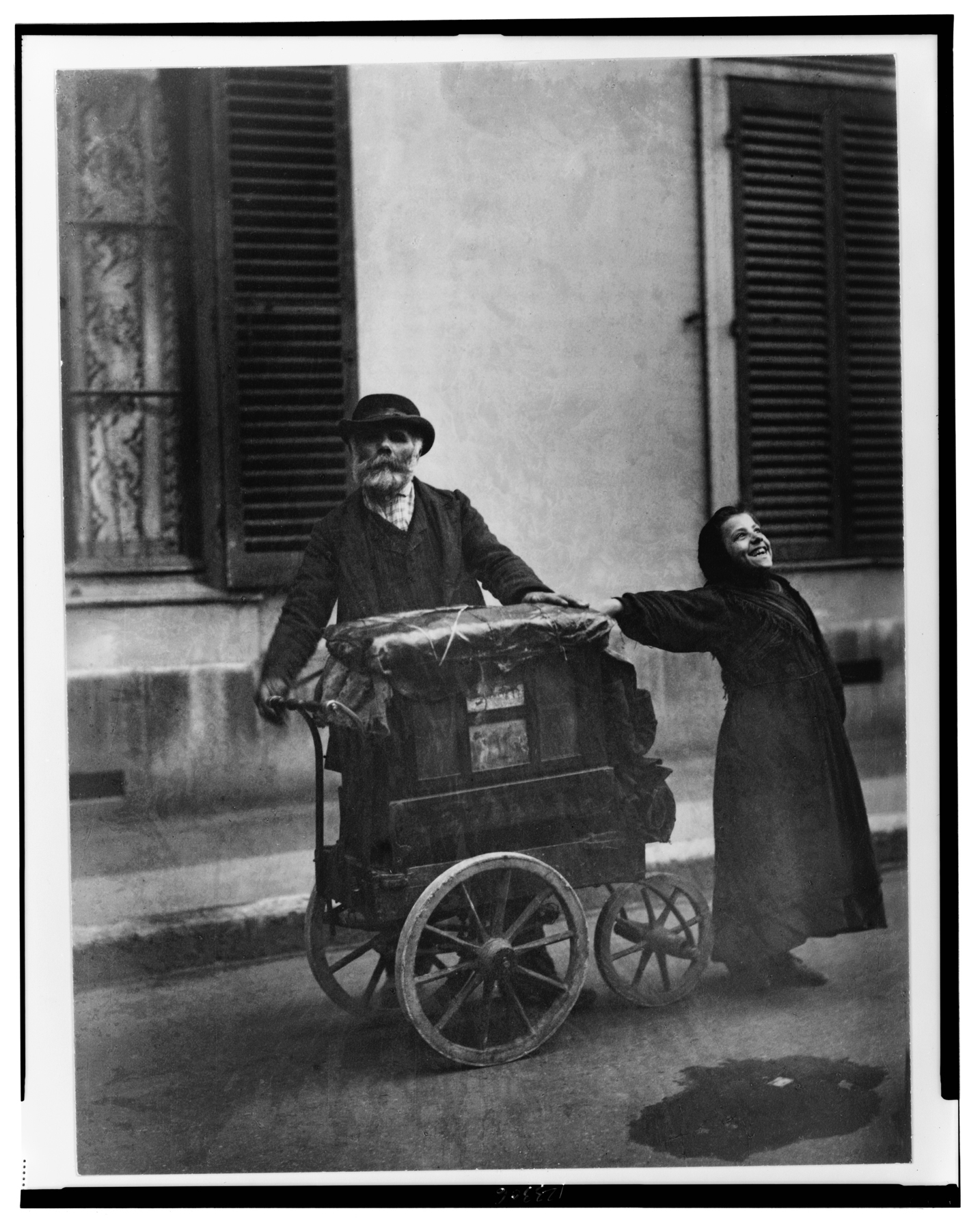
Portrait Engravings in stipple by W. Ridley, and his associates, W. Holl & T. Blood. 1796-1822 album cover 45 tipped in stipple engravings (including one proof engraving, number 23) 1796-1822 Assembled c. 1920s-1930s Baillieu Library Print Collection, The University of Melbourne. Gift of Marcus Bunyan
It’s incredible the number of disparate objects that I have in my collection, assembled mainly from purchases at op shops (in Australia, opportunity shops; in America, thrift stores).
I feel that I am just the custodian of these objects and if possible, I like placing them in a context where they will be appreciated. Such is the case with this album of forty five stipple engravings from 1796-1822 bought recently at an op shop. It’s not really my thing, but the plates are so old, the letter from the British Museum so interesting, that I thought I would rescue it before someone else bought it and broke it up. As so happens with the synchronicity of the world I found from my dear friend Assoc. Professor Alison Inglis, that the University of Melbourne celebrated a 50 year relationship with the British Museum last year. And since I work at the University, nothing could be better than donating the album to the Baillieu Library Print Collection, one of the best print collections in Australia.
Looking at the plates themselves (the engravings adaptations taken from paintings) we observe a mainly patriarchal society, dominated by religious and military figures, the latter well known to each other in the small circle of high-up society figures, forming friendships and enmities along the way. The other societal group well represented are the theatrical performers, whether female or male. Both groups would have been known to each other, often joined through the auspices of the artists who painted their portraits, for example Gainsborough, Joshua Reynolds and Samuel Drummond.
Networks of association can be teased out of the bibliographic information. For example, English novelist, actress, and dramatist Elizabeth Inchbald successful play Lovers’ Vows was a translation of August von Kotzebue’s original piece and was much admired by Jane Austen, both Inchbald and von Kotzebue being represented in the album. Another example is the English portrait painter George Romney whose artistic muse was Emma Hamilton, mistress of Lord Nelson. In the album we find a stipple engraving by William Ridley taken from a painting by George Romney of Sir John Orde, remembered as a professional enemy of Nelson. And so the circle of intrigue, passion, friendship and enmity continues to spiral around the players in this Georgian era.
Of most interest to me are the strong, independent women who, often pulling themselves up from the bootstraps, made outstanding contributions to the society of the time, and the history of female emancipation. Frances Abington began her career as a flower girl and a street singer (and for a short period of time was a prostitute to help her family in the hard times) who went on to be amongst the foremost rank of comic actresses, known for her avant-garde fashion and great beauty. “Her ambition, personal wit and cleverness won her a distinguished position in society, in spite of her humble origin.” Elizabeth Inchbald is the story of an unknown actress who became a celebrated playwright and author. Elizabeth Montagu was a British social reformer, patron of the arts, salonnière, literary critic and writer, who helped to organise and lead the Blue Stockings Society (an informal women’s social and educational movement).
Of most importance is the English writer, philosopher, and advocate of women’s rights, pioneering feminist Mary Wollstonecraft (1759-1797) who is today, “regarded as one of the founding feminist philosophers, and feminists often cite both her life and her works as important influences. During her brief career, she wrote novels, treatises, a travel narrative, a history of the French Revolution, a conduct book, and a children’s book. Wollstonecraft is best known for A Vindication of the Rights of Woman (1792), in which she argues that women are not naturally inferior to men, but appear to be only because they lack education. She suggests that both men and women should be treated as rational beings and imagines a social order founded on reason.” (Wikipedia) Wollstonecraft married the philosopher William Godwin, one of the forefathers of the anarchist movement but died at the age of 38 giving birth to her second daughter, Mary Shelley, who would become an accomplished writer and author of Frankenstein. After her death her widower published Memoirs of the Author of A Vindication of the Rights of Woman in January 1798 which, “inspired by Jean-Jacques Rousseau’s Confessions, [is] unusually frank for its time. He did not shrink from presenting the parts of Wollstonecraft’s life that late eighteenth-century British society would judge either immoral or in bad taste, such as her close friendship with a woman, her love affairs, her illegitimate child, her suicide attempts and her agonising death.” (Wikipedia) The stipple engraving in this album was published just over a year and half before her death – so, taken “from life” – as she was soon to be.
Truly, this is a human being that I would have liked to have met.
Dr Marcus Bunyan
Many thankx to the Baillieu Library Print Collection for allowing the publication of the images. Please click on the photographs for a larger version of the image.
William Ridley: b. 1764; d. Aug. 15th, 1838, at Addlestone. Worked mostly for periodicals and book-illustrations, and engraved portraits in stipple after Gainsborough, Reynolds etc, etc. See
~ Redgrave: ‘Dictionary of English Artists’ 1878 ~ Le Blanc: ‘Manuel de l’Amateur d’Estampes’, Vol. iii ~ Hayden: ‘Chats on Old Prints’, 1909
William Holl, the Elder: b. 1771; d. Dec 1st, 1838. Pupil of Benjamin Smith; engraved, mostly in stipple, after portraits for various publications including Lodge’s ‘Portraits’; also two mythological subjects after Richard Westall. See:
~ Redgrave: ‘Dictionary of English Artists’ 1878 ~ Dictionary of National Biography
T. or J. Blood: worked about 1782-1823. Engraved portrait in stipple after Russell, Drummond, et. also worked from the ‘European Magazine’.
Portrait Engravings in stipple by W. Ridley, and his associates, W. Holl & T. Blood. 1796-1822 bill of sale 1979 Baillieu Library Print Collection, The University of Melbourne. Gift of Marcus Bunyan
Portrait Engravings in stipple by W. Ridley, and his associates, W. Holl & T. Blood. 1796-1822 Index 45 tipped in stipple engravings (including one proof engraving, number 23) 1796-1822 Assembled c. 1920s-1930s Baillieu Library Print Collection, The University of Melbourne. Gift of Marcus Bunyan
Letter from the British Museum dated January 1937 pasted into Portrait Engravings in stipple by W. Ridley, and his associates, W. Holl & T. Blood. 1796-1822 Baillieu Library Print Collection, The University of Melbourne. Gift of Marcus Bunyan
(1) William Ridley (British, 1764-1838) (sculptor) L. Gold (British) (103, Shoe Lane) (publisher) Sir John Orde, Bart, Admiral of the White Squadron 1 April 1804 Stipple engraving Baillieu Library Print Collection, The University of Melbourne. Gift of Marcus Bunyan
George Romney (English, 1734-1802) Admiral Sir John Orde 18th century oil on canvas 30 x 24¼ in. (76.1 x 63cm) Public domain
George Romney
George Romney (26 December 1734 – 15 November 1802) was an English portrait painter. He was the most fashionable artist of his day, painting many leading society figures – including his artistic muse, Emma Hamilton, mistress of Lord Nelson.
(2) William Ridley (British, 1764-1838) (sculptor) Bellamy & Roberts (British) (King Street, Covent Garden) (publisher) George Colman Esqr September 1, 1797 Engraved by Ridley from an Original Painting in the possession of Mr Jewell Pubd for the Proprietors of the Monthly Mirror Stipple engraving Baillieu Library Print Collection, The University of Melbourne. Gift of Marcus Bunyan
George Colman
George Colman (21 October 1762 – 17 October 1836), known as “the Younger”, was an English dramatist and miscellaneous writer. He was the son of George Colman the Elder. …
His comedies are a curious mixture of genuine comic force and sentimentality. A collection of them was published (1827) in Paris, with a life of the author, by J. W. Lake.
His first play, The Female Dramatist (1782), for which Smollett’s Roderick Random supplied the materials, was unanimously condemned, but Two to One (1784) was entirely successful. It was followed by Turk and no Turk (1785), a musical comedy; Inkle and Yarico (1787), an opera; Ways and Means (1788); The Battle of Hexham (1793); The Iron Chest (1796), taken from William Godwin’s Adventures of Caleb Williams; The Heir at Law (1797), which enriched the stage with one immortal character, “Dr Pangloss” (borrowed of course from Voltaire’s Candide); The Poor Gentleman (1802); John Bull, or an Englishman’s Fireside (1803), his most successful piece; and numerous other pieces, many of them adapted from the French.
Colman, whose witty conversation made him a favourite, was also the author of a great deal of so-called humorous poetry (mostly coarse, though much of it was popular) – My Night Gown and Slippers (1797), reprinted under the name of Broad Grins, in 1802; and Poetical Vagaries (1812). Some of his writings were published under the assumed name of Arthur Griffinhood of Turnham Green.
(3) William Ridley (British, 1764-1838) (sculptor) J. Asperne (British) (publisher) Sir Charles Morice Pole, Bart 1 June 1805 European Magazine Engraved by Ridley from a Picture, by J. Northcote, R.A. Published by J. Asperne, at the Bible, Crown & Constitution, Cornhill Stipple engraving Baillieu Library Print Collection, The University of Melbourne. Gift of Marcus Bunyan
European Magazine
The European Magazine was a monthly magazine published in London. Eighty-nine semi-annual volumes were published from 1782 until 1826. It was launched as the European Magazine, and London Review in January 1782, promising to offer “the Literature, History, Politics, Arts, Manners, and Amusements of the Age.” It was in direct competition with The Gentleman’s Magazine, and in 1826 was absorbed into the Monthly Magazine.
Soon after launching the European Magazine, its founding editor, James Perry, passed proprietorship to the Shakespearean scholar Isaac Reed and his partners John Sewell and Daniel Braithwaite, who guided the magazine during its first two decades.
The articles and other contributions in the magazine appeared over initials or pseudonyms and have largely remained anonymous. Scholars believe that the contributions include the first published poem by William Wordsworth (1787) and the earliest known printing of “O Sanctissima”, the popular Sicilian Mariners Hymn (1792).
Admiral of the Fleet Sir Charles Morice Pole, 1st Baronet GCB (18 January 1757 – 6 September 1830) was a Royal Navy officer and colonial governor. As a junior officer he saw action at the Siege of Pondicherry in India during the American Revolutionary War. After taking command of the fifth-rate HMS Success he captured and then destroyed the Spanish frigate Santa Catalina in the Strait of Gibraltar in the action of 16 March 1782 later in that War.
After capturing the French privateer Vanneau in June 1793, Pole took part in the Siege of Toulon at an early stage of the French Revolutionary Wars. He went on to be governor and commander-in-chief of Newfoundland and then commanded the Baltic Fleet later in the War. He also served as a Lord Commissioner of the Admiralty on the Admiralty Board led by Viscount Howick during the Napoleonic Wars.
(5) William Ridley (British, 1764-1838) (sculptor) Bellamy & Roberts (British) (King Street, Covent Garden) (publisher) Mrs Abington Dec 30, 1797 Engraved by Ridley from a Picture by Sir Joshua Reynolds Published as the Act directs by T. Belamy at the Monthly Mirror Office, King Street Covent Garden Stipple engraving Baillieu Library Print Collection, The University of Melbourne. Gift of Marcus Bunyan
Frances Barton, Mrs Abington (1737-1815) as ‘Roxalana’ in Isaac Bickerstaff’s ‘The Sultan’ (after Sir Joshua Reynolds PRA)
Monthly Mirror
The Monthly Mirror was an English literary periodical, published from 1795 to 1811, founded by Thomas Bellamy, and later jointly owned by Thomas Hill and John Litchfield. It was published by Vernor & Hood from the second half of 1798.
The Mirror concentrated on theatre, in London and the provinces. The first editor for Hill was Edward Du Bois. From 1812 it was merged into the Theatrical Inquisitor.
Frances “Fanny” Abington (1737 – 4 March 1815) was a British actress, known not only for her acting, but her sense of fashion. …
Her Shakespearean heroines – Beatrice, Portia, Desdemona and Ophelia – were no less successful than her comic characters – Miss Hoyden, Biddy Tipkin, Lucy Lockit and Miss Prue. Mrs. Abington’s Kitty in “High Life Below Stairs” put her in the foremost rank of comic actresses, making the mob cap she wore in the role the reigning fashion. This cap was soon referred to as the “Abington Cap” and frequently seen on stage as well as in hat shops across Ireland and England. Adoring fans donned copies of this cap and it became an essential part of the well-appointed woman’s wardrobe. The actress soon became known for her avant-garde fashion and she even came up with a way of making the female figure appear taller. She began to wear this tall-hat called a ziggurat complete with long flowing feathers and began to follow the French custom of putting red powder on her hair (Richards).
It was as the last character in Congreve’s Love for Love that Sir Joshua Reynolds painted the best-known of his half-dozen or more portraits of her. In 1782 she left Drury Lane for Covent Garden. After an absence from the stage from 1790 until 1797, she reappeared, quitting it finally in 1799. Her ambition, personal wit and cleverness won her a distinguished position in society, in spite of her humble origin.
Joshua Reynolds (British, 1723-1792) Portrait of Mrs. Abington (1737-1815) 18th century Oil on canvas 74cm (29.1″); Width: 61.5cm (24.2″) Denver Art Museum, Berger Collection Public domain
(7) William Ridley (British, 1764-1838) (sculptor) Revd John Yockney, Staines Nd Stipple engraving Baillieu Library Print Collection, The University of Melbourne. Gift of Marcus Bunyan
(8) William Ridley (British, 1764-1838) (sculptor) Vernor & Hood (British) (31 Poultry) (publisher) August von Kotzebue April 30, 1799 Engraved by Ridley from an Original Picture Painted at Berlin Published as the Act directs by Vernor & Hood, 31 Poultry Stipple engraving Baillieu Library Print Collection, The University of Melbourne. Gift of Marcus Bunyan
August von Kotzebue
August Friedrich Ferdinand von Kotzebue (German 1761 – 23 March [O.S. 11 March] 1819) was a German dramatist and writer who also worked as a consul in Russia and Germany.
In 1817, one of Kotzebue’s books was burned during the Wartburg festival. He was murdered in 1819 by Karl Ludwig Sand, a militant member of the Burschenschaften. This murder gave Metternich the pretext to issue the Carlsbad Decrees of 1819, which dissolved the Burschenschaften, cracked down on the liberal press, and seriously restricted academic freedom in the states of the German Confederation.
(9) William Ridley (British, 1764-1838) (sculptor) J. Sewell (British) (32 Cornhill) (publisher) General Washington April 1st 1800 European Magazine Engraved by Ridley from an Original Picture in the Possession of Saml. Vaughan Esq. Stipple engraving Baillieu Library Print Collection, The University of Melbourne. Gift of Marcus Bunyan
This engraving was probably published to memorialise Washington’s death in December 1799
George Washington
George Washington (February 22, 1732 – December 14, 1799) was an American political leader, military general, statesman, and Founding Father who served as the first president of the United States from 1789 to 1797. Previously, he led Patriot forces to victory in the nation’s War for Independence. He presided at the Constitutional Convention of 1787, which established the U.S. Constitution and a federal government. Washington has been called the “Father of His Country” for his manifold leadership in the formative days of the new nation.
Washington received his initial military training and command with the Virginia Regiment during the French and Indian War. He was later elected to the Virginia House of Burgesses and was named a delegate to the Continental Congress, where he was appointed Commanding General of the Continental Army. He commanded American forces, allied with France, in the defeat and surrender of the British during the Siege of Yorktown. He resigned his commission after the Treaty of Paris in 1783.
Washington played a key role in adopting and ratifying the Constitution and was then elected president (twice) by the Electoral College. He implemented a strong, well-financed national government while remaining impartial in a fierce rivalry between cabinet members Thomas Jefferson and Alexander Hamilton. During the French Revolution, he proclaimed a policy of neutrality while sanctioning the Jay Treaty. He set enduring precedents for the office of president, including the title “President of the United States”, and his Farewell Address is widely regarded as a pre-eminent statement on republicanism.
Washington owned slaves, and in order to preserve national unity he supported measures passed by Congress to protect slavery. He later became troubled with the institution of slavery and freed his slaves in a 1799 will. He endeavoured to assimilate Native Americans into Anglo-American culture but combated indigenous resistance during occasions of violent conflict. He was a member of the Anglican Church and the Freemasons, and he urged broad religious freedom in his roles as general and president. Upon his death, he was eulogised as “first in war, first in peace, and first in the hearts of his countrymen”. He has been memorialised by monuments, art, geographical locations, stamps, and currency, and many scholars and polls rank him among the greatest U.S. presidents.
(10) William Ridley (British, 1764-1838) (sculptor) Bellamy & Roberts (British) (Cornhill) (publisher) Mr Dignum, of the Theatre Royal, Drury Lane Jany. 1, 1799 European Magazine Painted by Drummond Published by J. Sewell Stipple engraving Baillieu Library Print Collection, The University of Melbourne. Gift of Marcus Bunyan
Charles Dignum
Charles Dignum (c. 1765 – 29 March 1827) was a popular tenor singer, actor and composer of English birth and Irish parentage who was active in recital, concert and theatre stage, mainly in London, for about thirty years. …
Dignum and William Shield, Charles Incledon, Charles Bannister, ‘Jack’ Johnstone, Charles Ashley and William Parke (oboeist) in 1793 formed themselves into ‘The Glee Club’, a set which met on Sunday evenings during the season at the Garrick’s Head Coffee House in Bow Street, once a fortnight, for singing among themselves and dining together. A project to erect a bust to Dr Thomas Arne, which this group proposed to fund by charitable performances, was vetoed by the management of Covent Garden.
His obituarist remarked, ‘Dignum, with many ludicrous eccentricities, was an amiable, good-natured, jolly fellow.’ He married Miss Rennett, the daughter of an attorney, whose fortune helped to sustain them. After her death he suffered a period of ‘mental derangement’ in misery at her loss, and also suffered from much unhappiness when his granddaughter was kidnapped for a period, for which the offender was prosecuted and transported. A contemporary of the great Michael Kelly, of Charles Incledon and (latterly) of John Braham, he had to work hard for public favour and to withstand attacks referring to his humble origins, his religion and his physical ungainliness (he became quite fat): but, having obtained respect for his skills and good character, he held his place in the affection of his admirers, made large sums at his benefits in later years, and was able to retire with some fortune. He died of inflammation of the lungs in Gloucester Street, London, aged 62 in 1827.
Samuel Drummond ARA (25 December 1766, London – 6 August 1844, London) was a British painter, especially prolific in portrait and marine genre painting. His works are on display in the National Portrait Gallery, the National Maritime Museum and the Walker Art Gallery.
Drummond was born to Jane Bicknell and James Drummond, a London baker. At about thirteen Drummond was apprenticed to the sea service, working on the Baltic trade routes for six or seven years. After the navy, Drummond worked briefly as a clerk before entering the Royal Academy Schools on 15 July 1791. Drummond started his portraying with crayons and oil and within several years exhibited over three hundred pictures at the Royal Academy. In 1808 he was elected an associate of the Royal Academy.
Among Drummond’s sitters were Walter Scott, Francis Place, Elizabeth Fry and Marc Isambard Brunel. He also painted such persons as Admiral Edward Pellew, Captain William Rogers and Rear-Admiral William Edward Parry. After 1800, Drummond started large oil paintings on maritime history of the United Kingdom (The Battle of the Nile, 1st August 1798, Captain William Rogers Capturing the Jeune Richard, 1 October 1807, Admiral Duncan at the Battle of Camperdown, 11 October 1797 (1827) and a series of paintings on the death of Horatio Nelson.
For some time Drummond was employed by The European Magazine and London Review to make portraits of leading personalities of the day. Among the portraits published in The European Magazine were those of Lord Gerald Lake, Sir John Soane and Friedrich Accum.
Towards the end of the life, despite of continuing his craft, Drummond struggled financially and was frequently supported from the funds of the Royal Academy. Nearly all Drummond’s children from his three marriages became artists (five daughters and one son): Rose Emma from the first, Ellen, Eliza Ann and Jane from the second to Rose Hudson and Rosa Myra and Julian from the third one.
(12) William Ridley (British, 1764-1838) (sculptor) Bellamy & Roberts (British) (King Street, Covent Garden) (publisher) Mrs Wollstonecraft Feb. 1st, 1796 Engraved by Ridley from a Painting by Opie Pub.d for the Proprietors of the Monthly Mirror by T. Belamy, King St. Covent Garden Stipple engraving Baillieu Library Print Collection, The University of Melbourne. Gift of Marcus Bunyan
Mary Wollstonecraft
Mary Wollstonecraft (27 April 1759 – 10 September 1797) was an English writer, philosopher, and advocate of women’s rights. Until the late 20th century, Wollstonecraft’s life, which encompassed several unconventional personal relationships at the time, received more attention than her writing. Today Wollstonecraft is regarded as one of the founding feminist philosophers, and feminists often cite both her life and her works as important influences.
During her brief career, she wrote novels, treatises, a travel narrative, a history of the French Revolution, a conduct book, and a children’s book. Wollstonecraft is best known for A Vindication of the Rights of Woman (1792), in which she argues that women are not naturally inferior to men, but appear to be only because they lack education. She suggests that both men and women should be treated as rational beings and imagines a social order founded on reason.
After Wollstonecraft’s death, her widower published a Memoir (1798) of her life, revealing her unorthodox lifestyle, which inadvertently destroyed her reputation for almost a century. However, with the emergence of the feminist movement at the turn of the twentieth century, Wollstonecraft’s advocacy of women’s equality and critiques of conventional femininity became increasingly important.
After two ill-fated affairs, with Henry Fuseli and Gilbert Imlay (by whom she had a daughter, Fanny Imlay), Wollstonecraft married the philosopher William Godwin, one of the forefathers of the anarchist movement. Wollstonecraft died at the age of 38 leaving behind several unfinished manuscripts. She died eleven days after giving birth to her second daughter, Mary Shelley, who would become an accomplished writer and author of Frankenstein.
A Vindication of the Rights of Woman: with Strictures on Political and Moral Subjects (1792), written by the 18th-century British proto-feminist Mary Wollstonecraft, is one of the earliest works of feminist philosophy. In it, Wollstonecraft responds to those educational and political theorists of the 18th century who did not believe women should receive a rational education. She argues that women ought to have an education commensurate with their position in society, claiming that women are essential to the nation because they educate its children and because they could be “companions” to their husbands, rather than mere wives. Instead of viewing women as ornaments to society or property to be traded in marriage, Wollstonecraft maintains that they are human beings deserving of the same fundamental rights as men.
Wollstonecraft was prompted to write the Rights of Woman after reading Charles Maurice de Talleyrand-Périgord’s 1791 report to the French National Assembly, which stated that women should only receive a domestic education; she used her commentary on this specific event to launch a broad attack against sexual double standards and to indict men for encouraging women to indulge in excessive emotion. Wollstonecraft wrote the Rights of Woman hurriedly to respond directly to ongoing events; she intended to write a more thoughtful second volume but died before completing it.
While Wollstonecraft does call for equality between the sexes in particular areas of life, such as morality, she does not explicitly state that men and women are equal. Her ambiguous statements regarding the equality of the sexes have since made it difficult to classify Wollstonecraft as a modern feminist, particularly since the word and the concept were unavailable to her. Although it is commonly assumed now that the Rights of Woman was unfavourably received, this is a modern misconception based on the belief that Wollstonecraft was as reviled during her lifetime as she became after the publication of William Godwin’s Memoirs of the Author of A Vindication of the Rights of Woman (1798). The Rights of Woman was actually well received when it was first published in 1792. One biographer has called it “perhaps the most original book of [Wollstonecraft’s] century”. Wollstonecraft’s work had a profound impact on advocates for women’s rights in the nineteenth century, in particular on the Declaration of Sentiments, the document written at the Seneca Falls Convention in 1848 that laid out the aims of the suffragette movement in the United States.
John Opie (British, 1761-1807) Mary Wollstonecraft (Mrs William Godwin) c. 1790-1791 Oil paint on canvas Support: 759 × 638 mm Tate. Purchased 1884 Creative Commons CC-BY-NC-ND (3.0 Unported)
Wollstonecraft was a ground-breaking feminist. This portrait shows her looking directly towards us, temporarily distracted from her studies. Such a pose would more typically be used for a male sitter. Women would normally be presented as more passive, often gazing away from the viewer. The painting dates to around the time she published A Vindication of the Rights of Women (1792). This argued against the idea that women were naturally inferior to men and emphasised the importance of education.
Henry Fuseli (Swiss, 1741-1825) La débutante (The Debutante) 1807 Pencil, ink, watercolour on cardboard 37 × 24cm Tate Public domain
The Debutante (1807) by Henry Fuseli; “Woman, the victim of male social conventions, is tied to the wall, made to sew and guarded by governesses. The picture reflects Mary Wollstonecraft’s views in The Rights of Women [sic]”1
1/ Tomory, Peter. The Life and Art of Henry Fuseli. New York: Praeger Publishers, 1972, p. 217.
(14) William Ridley (British, 1764-1838) (sculptor) Bellamy & Roberts (British) (King Street, Covent Garden) (publisher) Mrs Inchbald June 1, 1797 Engraved by Ridley from an Original Painting by Drummond Publish’d for the Proprietors of the Monthly Mirror by T. Belamy, King St. Covent Garden Stipple engraving Baillieu Library Print Collection, The University of Melbourne. Gift of Marcus Bunyan
Elizabeth Inchbald
Elizabeth Inchbald (née Simpson) (1753-1821) was an English novelist, actress, and dramatist. Her two novels are still read today. …
Due to success as a playwright, Inchbald did not need the financial support of a husband and did not remarry. Between 1784 and 1805 she had 19 of her comedies, sentimental dramas, and farces (many of them translations from the French) performed at London theatres. Her first play to be performed was A Mogul Tale, in which she played the leading feminine role of Selina. In 1780, she joined the Covent Garden Company and played a breeches role in Philaster as Bellarion. Inchbald had a few of her plays produced such as Appearance is Against Them (1785), Such Things Are (1787), and Everyone Has Fault (1793). Some of her other plays such as A Mogul Tale (1784) and I’ll Tell You What (1785) were produced at the Haymarket Theatre. Eighteen of her plays were published, though she wrote several more; the exact number is in dispute though most recent commentators claim between 21 and 23. Her two novels have been frequently reprinted. She also did considerable editorial and critical work. Her literary start began with writing for The Artist and Edinburgh Review. A four-volume autobiography was destroyed before her death upon the advice of her confessor, but she left some of her diaries. The latter are currently held at the Folger Shakespeare Library and an edition was recently published.
Her play Lovers’ Vows (1798) was featured as a focus of moral controversy by Jane Austen in her novel Mansfield Park.
After her success, she felt she needed to give something back to London society, and decided in 1805 to try being a theatre critic.
A political radical and friend of William Godwin and Thomas Holcroft, her political beliefs can more easily be found in her novels than in her plays, due to the constrictive environment of the patent theatres of Georgian London. “Inchbald’s life was marked by tensions between, on the one hand, political radicalism, a passionate nature evidently attracted to a number of her admirers, and a love of independence, and on the other hand, a desire for social respectability and a strong sense of the emotional attraction of authority figures.” She died on 1 August 1821 in Kensington and is buried in the churchyard of St Mary Abbots. On her gravestone it states, “Whose writings will be cherished while truth, simplicity, and feelings, command public admiration.” In 1833, a two-volume Memoirs of Mrs. Inchbald by James Boaden was published by Richard Bentley.
In recent decades Inchbald has been the subject of increasing critical interest, particularly among scholars investigating women’s writing.
Reception history
The reception history of Elizabeth Inchbald is the story of an unknown actress who became a celebrated playwright and author. As an actress, who at the start of her career was overshadowed by her husband, Inchbald was determined to prove herself to the acting community. Some scholars recognised this describing her as “richly textured with strands of resistance, boldness, and libidinal thrills”. A very important aspect of Inchbald’s reception history is her workplace and professional reputation. Around the theatre she was known for upholding high moral standards. Inchbald described having to defend herself from the sexual advances brought on by stage manager James Dodd and theatre manager John Taylor.
Her writing history began with various plays that Inchbald soon earned a reputation for publishing in times of political scandal. One of the things that separated Inchbald from her competitors at the time was her ability to translate plays from German and French into English works of art. These translations were popular with the public due to Inchbald’s ability to make characters in her writings come to life. The majority of what she translated consisted of farces that received positive feedback from her reading audience. Over the next twenty years, she translated a couple of successful pieces a year, one of these was the very successful play, Lovers’ Vows. In this translation of August von Kotzebues original piece, Inchbald gained complements from Jane Austen, who put the translation in her popular book, Mansfield Park. Although Austen’s book brought more fame to Inchbald, Lovers’ Vows ran for forty-two nights when it was originally performed in 1798. Not only were her plays well liked, but her famous novel A Simple Story always received praise. Terry Castle once referred to it as “the most elegant English fiction of the eighteenth century”. As she ended her career and decided to start critiquing in the theatre, the reception of her work from contemporary critics was low. For example, S. R. Littlewood suggested that Inchbald was ignorant of Shakespearian literature.
(15) William Ridley (British, 1764-1838) (sculptor) Bellamy & Roberts (British) (King Street, Covent Garden) (publisher) Sir John Jervis. K.B., Vice Admiral of the White April 1, 1797 Engraved by Ridley from a Picture in he possession of Mrs Ricketts Publish’d for the Proprietors of the Monthly Mirror by T. Belamy, King St. Covent Garden Stipple engraving Baillieu Library Print Collection, The University of Melbourne. Gift of Marcus Bunyan
Sir John Jervis
Admiral of the Fleet John Jervis, 1st Earl of St Vincent GCB, PC (9 January 1735 – 13 March 1823) was an admiral in the Royal Navy and Member of Parliament in the United Kingdom. Jervis served throughout the latter half of the 18th century and into the 19th, and was an active commander during the Seven Years’ War, American War of Independence, French Revolutionary War and the Napoleonic Wars. He is best known for his victory at the 1797 Battle of Cape Saint Vincent, from which he earned his titles, and as a patron of Horatio Nelson.
Jervis was also recognised by both political and military contemporaries as a fine administrator and naval reformer. As Commander-in-chief of the Mediterranean, between 1795 and 1799 he introduced a series of severe standing orders to avert mutiny. He applied those orders to both seamen and officers alike, a policy that made him a controversial figure. He took his disciplinarian system of command with him when he took command of the Channel Fleet in 1799. In 1801, as First Lord of the Admiralty he introduced a number of reforms that, though unpopular at the time, made the Navy more efficient and more self-sufficient. He introduced innovations including block making machinery at Portsmouth Royal Dockyard. St Vincent was known for his generosity to officers he considered worthy of reward and his swift and often harsh punishment of those he felt deserved it.
Jervis’ entry in the Oxford Dictionary of National Biography by P. K. Crimmin describes his contribution to history: “His importance lies in his being the organiser of victories; the creator of well-equipped, highly efficient fleets; and in training a school of officers as professional, energetic, and devoted to the service as himself.”
(17) William Ridley (British, 1764-1838) (sculptor) Bellamy & Roberts (British) (King Street, Covent Garden) (publisher) Mrs Montagu Septemr 30th, 1798 Engraved by Ridley from a Picture by Sir Joshua Reynolds Published as the Act directs by T. Belamy at the Monthly Mirror Office, King Street Covent Garden Stipple engraving Baillieu Library Print Collection, The University of Melbourne. Gift of Marcus Bunyan
Elizabeth Montagu
Elizabeth Montagu (née Robinson; 2 October 1718 – 25 August 1800) was a British social reformer, patron of the arts, salonnière, literary critic and writer, who helped to organise and lead the Blue Stockings Society. Her parents were both from wealthy families with strong ties to the British peerage and learned life. She was sister to Sarah Scott, author of A Description of Millenium Hall and the Country Adjacent. She married Edward Montagu, a man with extensive landholdings, to become one of the richer women of her era. She devoted this fortune to fostering English and Scottish literature and to the relief of the poor.
(18) William Ridley (British, 1764-1838) (sculptor) T. Chapman (British) (Fleet Street) (publisher) Mr. Saml. Turner, late Missionary Surgeon Mar 1, 1801 Evangelical Magazine Stipple engraving Baillieu Library Print Collection, The University of Melbourne. Gift of Marcus Bunyan
Evangelical Magazine
The Evangelical Magazine was a monthly magazine published in London from 1793 to 1904, and aimed at Calvinist Christians. It was supported by evangelical members of the Church of England, and by nonconformists with similar beliefs. Its editorial line included a strong interest in missionary work.
John Eyre, an Anglican, played a significant role in founding the Evangelical Magazine, and as its editor, to 1802. Robert Culbertson was involved in the early times, and was an editor. William Kingsbury contributed from the start. John Townsend (1757-1826) was a supporter; Edward Williams was another founder and editor.
In 1802 the Christian Observer began publication. It catered for evangelical Anglicans, and from this point the Evangelical Magazine came into the hands of Congregationalists.
Samuel Turner was appointed Surgeon to the convict ship Royal Admiral transporting 300 prisoners to New South Wales in 1800. Gaol fever (typhus) raged on the voyage and 43 prisoners died as well as four seamen, a convict’s wife and a convict’s child. Samuel Turner also succumbed to the disease. He was only twenty-six of age.
Extracts from the Journal of the Royal Admiral. May 24, 1800
The Surgeon, Mr. Turner, very ill
26th. Dr. Turner is in a very dangerous fever; we are much alarmed at the increase of this epidemical disease. To-day there are fifteen convicts in the hospital taken ill of that fever, which is exactly described by Buchan in his Domestic Medicine
One of the births in our study being given to Dr. Turner at the beginning of his illness, consequently he was continually attended by the brethren; and for some nights we have sat up with him. Now he grows delirious! but at times he enjoys his senses; and last night at intervals expressed an earnest desire to be clothed with the righteousness of Christ.
June 1st. In the afternoon held a Prayer Meeting in behalf of our brother Turner, he seems to be considerably worse since yesterday forenoon.
Monday 2d. Since last Saturday morning Dr. Turner spoke but little. To-day he was quite speechless. Almost through his illness he had some expectation of getting better, though for some time past we had not the least hopes of his recovery. This day perceiving his dissolution drawing near, some of the brethren engaged in prayer (as we have done several times before) on his behalf.
Just as they concluded, about forty minutes past three in the afternoon, his soul being freed from his earthly tabernacle, departed to be with Christ. His body was put in a coffin, and at half past six deposited in the great deep; till the time when the sea shall give up its dead.
J. Youl read the burial service. All that were present behaved decently; some were much affected, especially the brethren that had been with him in the Duff. Thus ended the life of our brother Turner, after an illness of fourteen days, which he bore with patience. His death was regretted by all on board, as he was much esteemed both as a Surgeon and as a Christian.
(21) William Ridley (British, 1764-1838) (sculptor) J. Sewell (British) (Cornhill) (publisher) Sir Charles Grey, K.B. Jany. 1, 1797 European Magazine Engraved by Ridley from an original Miniature Stipple engraving Baillieu Library Print Collection, The University of Melbourne. Gift of Marcus Bunyan
Charles Grey, 1st Earl Grey
Charles Grey, 1st Earl Grey, KB, PC (circa 23 October 1729 – 14 November 1807) served as a British general in the 18th century. A distinguished soldier in a generation of exceptionally capable military and naval personnel, he served in the Seven Years’ War of 1756-1763, taking part in the defeat of France. He later served in the American War of Independence (1775-1783) and in the early campaigns against France during the French Revolutionary War. Following the Battle of Paoli in Pennsylvania in 1777 he became known as “No-flint Grey” for, reputedly, ordering his men to extract the flints from their muskets during a night approach and to fight with the bayonet only.
(22) William Ridley (British, 1764-1838) (sculptor) J. Sewell (British) (Cornhill) (publisher) Sir James Saumarez Bart., K.B., Rear Admiral of the Blue Squadron Jany. 1, 1797 European Magazine Stipple engraving Baillieu Library Print Collection, The University of Melbourne. Gift of Marcus Bunyan
Admiral James Saumarez, 1st Baron de Saumarez (or Sausmarez), GCB (11 March 1757 – 9 October 1836) was an admiral of the British Royal Navy, notable for his victory at the Second Battle of Algeciras.
Stipple engraving
Stipple engraving is a technique used to create tone in an intaglio print by distributing a pattern of dots of various sizes and densities across the image. The pattern is created on the printing plate either in engraving by gouging out the dots with a burin, or through an etching process. Stippling was used as an adjunct to conventional line engraving and etching for over two centuries, before being developed as a distinct technique in the mid-18th century. The technique allows for subtle tonal variations and is especially suitable for reproducing chalk drawings. …
The process of stipple engraving is described in T.H. Fielding’s Art of Engraving (1841). To begin with an etching “ground” is laid on the plate, which is a waxy coating that makes the plate resistant to acid. The outline is drawn out in small dots with an etching needle, and the darker areas of the image shaded with a pattern of close dots. As in mezzotint use was made of roulettes, and a mattoir to produce large numbers of dots relatively quickly. Then the plate is bitten with acid, and the etching ground removed. The lighter areas of shade are then laid in with a drypoint or a stipple graver; Fielding describes the latter as “resembling the common kind, except that the blade bends down instead of up, thereby allowing the engraver greater facility in forming the small holes or dots in the copper”. The etched middle and dark tones would also be deepened where appropriate with the graver. …
In England the technique was used for “furniture prints” with a similar purpose, and became very popular, though regarded with disdain by producers of the portrait mezzotints that dominated the English portrait print market. Stipple competed with mezzotint as a tonal method of printmaking, and while it lacked the rich depth of tone of mezzotint, it had the great advantage that far more impressions could be taken from a plate.
(23) William Ridley (British, 1764-1838) (sculptor) Williams & Smith (British) (Stationess Court) (publisher) Revd. Mr Wilkins of Abington 1 Sept 1809 Pubd. by Williams & Smith, Stationess Court Proof stipple engraving Baillieu Library Print Collection, The University of Melbourne. Gift of Marcus Bunyan
(25) William Ridley (British, 1764-1838) (sculptor) Bellamy & Roberts (British) (King St., Covt. Garden) (publisher) Mr. Elliston Oct. 1st, 1796 Engraved by Ridley from a Picture by Drummond Publish’d for the Proprietors of the Monthly Mirror by T. Belamy, King St., Covt. Garden Stipple engraving Baillieu Library Print Collection, The University of Melbourne. Gift of Marcus Bunyan
Robert William Elliston
Robert William Elliston (7 April 1774 – 7 July 1831) was an English actor and theatre manager. He was born in London, the son of a watchmaker. He was educated at St Paul’s School, but ran away from home and made his first appearance on the stage as Tressel in Richard III at the Old Orchard Street Theatre in Bath in 1791. There he was later seen as Romeo, and in other leading parts, both comic and tragic, and he repeated his successes in London from 1796. In the same year he married Elizabeth, the sister of Mary Ann Rundall, and they would in time have ten children.
He acted at Drury Lane from 1804 to 1809, and again from 1812. From 1819 he was the lessee of the house, presenting Edmund Kean, Mme Vestris, and Macready.
He bought the Olympic Theatre in 1813 and also had an interest in a patent theatre, the Theatre Royal, Birmingham. Ill-health and misfortune culminated in his bankruptcy in 1826, when he made his last appearance at Drury Lane as Falstaff. As the lessee of the Surrey Theatre, he acted almost up to his death in 1831, which was hastened by alcoholism. At the Surrey, where he was the lessee first from 1806-1814 and then again beginning in 1827, to avoid the patent restrictions on drama outside the West End, he presented Shakespeare and other plays accompanied by ballet music.
Leigh Hunt compared him favourably as an actor with David Garrick; Lord Byron thought him inimitable in high comedy; and Macready praised his versatility.
Elliston was the author of The Venetian Outlaw (1805), and, with Francis Godolphin Waldron, of No Prelude (1803), in both of which plays he appeared.
Exhibition dates: 7th June – 22nd September, 2019 Visited September 2019 posted March 2020
Curator: Barbara Engelbach
Benjamin Katz (Belgian, b. 1939) Untitled 1960-1961 From the series Berlin Havelhöhe (1960/1961) Gelatin silver print
The eye of the law guards
I saw this TERRIFIC exhibition at Museum Ludwig while I was on my European photography research trip. None of the photographs are available online, so I am grateful that I took some iPhone installation images while I was there.
Tight, focused social documentary images that have real presence and power. They feel cooly and directly observed, essential, gritty, a unique take on an in/hospitable institution and the people in it. The word Havelhöhe translates to “hospital”. Katz was there for 18 months for the treatment of tuberculosis.
I admire the light, subject matter and the photographer’s point of view, his frontal and demanding perspective.
Dr Marcus Bunyan
All iPhone installation images taken by Marcus Bunyan. Please click n the photographs for a larger version of the image.
Installation views of the exhibition Benjamin Katz Berlin Havelhöhe, 1960/61 at the Museum Ludwig, Cologne Photos: Marcus Bunyan
Benjamin Katz became known in the 1980s as a fixture of the art scene in West Germany. He took portraits of artists such as Georg Baselitz, James Lee Byars, A.R. Penck, Cindy Sherman, and Rosemarie Trockel, photographed the bustling art scene at openings, and documented the creation of major exhibitions such as Westkunst in Cologne in 1981, documenta 7 in Kassel in 1982, and von hier aus in Düsseldorf in 1984.
On the occasion of the eightieth birthday of Benjamin Katz (born on June 14, 1939, in Antwerp, Belgium), the Museum Ludwig will present his series of photographs Berlin Havelhöhe (1960/1961), which has never before been shown in its entirety. The series was recently acquired directly from the artist’s archive. Even before Katz devoted himself professionally to photography, he captured his surroundings in 1960 and 1961 during an eighteen-month stay at the Havelhöhe hospital. Suffering from tuberculosis, he spent his time there as a patient and photographed everyday life: his fellow patients, the hospital staff, the buildings built during the Nazi era as an air force academy, and the surrounding area. The photographs represent a socio-historical as well as an artistic and personoal document, since they record Katz’s beginnings as a photographer. Berlin Havelhöhe also exemplifies the image of the artist as a young man.
Director Yilmaz Dziewior: “The Museum Ludwig has a large collection of Katz’s portraits of artists spanning several decades. It also includes his extensive documentation of the 1981 exhibition Westkunst as well as photographs from the installation of many exhibitions. I am all the more delighted that we were able to acquire Berlin Havelhöhe, a significant early series by Katz. We would like express our warmest thanks for his trust and for sharing his memories with us.”
The entire series will be shown in the form of forty-one photographs printed in three different sizes and 318 vintage prints mounted on A4 paper. On the first floor, as part of the permanent collection, the Museum Ludwig will also present Katz’s well-known portraits of artists, which he took during his studio visits beginning in the 1980s, including Georg Baselitz, A.R. Penck, Gerhard Richter, and Rosemarie Trockel.
Benjamin Katz: Berlin Havelhöhe, 1960/1961 is the sixth presentation in the photography room, which since 2017 has featured changing selections of the approximately 70,000 works from the Museum Ludwig photography collection. The photography room is located in the permanent collection on the second floor.
Text from the gallery website [Online] Cited 04/03/2020
Wall text from the exhibition Benjamin Katz Berlin Havelhöhe, 1960/61 at the Museum Ludwig, Cologne Photo: Marcus Bunyan
Benjamin Katz (Belgian, b. 1939) Untitled (installation view) 1960-1961 From the series Berlin Havelhöhe (1960/1961) Gelatin silver print Photo: Marcus Bunyan
Benjamin Katz (Belgian, b. 1939) Untitled 1960-1961 From the series Berlin Havelhöhe (1960/1961) Gelatin silver print
Installation view of the exhibition Benjamin Katz Berlin Havelhöhe, 1960/61 at the Museum Ludwig, Cologne Photo: Marcus Bunyan
Benjamin Katz (Belgian, b. 1939) Untitled (installation view) 1960-1961 From the series Berlin Havelhöhe (1960/1961) Gelatin silver print Photo: Marcus Bunyan
Benjamin Katz (Belgian, b. 1939) Untitled 1960-1961 From the series Berlin Havelhöhe (1960/1961) Gelatin silver print
Benjamin Katz (Belgian, b. 1939) Untitled (installation view) 1960-1961 From the series Berlin Havelhöhe (1960/1961) Gelatin silver print Photo: Marcus Bunyan
Installation view of the exhibition Benjamin Katz Berlin Havelhöhe, 1960/61 at the Museum Ludwig, Cologne Photo: Marcus Bunyan
Benjamin Katz (Belgian, b. 1939) Untitled (installation view) 1960-1961 From the series Berlin Havelhöhe (1960/1961) Gelatin silver print Photo: Marcus Bunyan
Benjamin Katz (Belgian, b. 1939) Untitled 1960-1961 From the series Berlin Havelhöhe (1960/1961) Gelatin silver print
Installation view of the exhibition Benjamin Katz Berlin Havelhöhe, 1960/61 at the Museum Ludwig, Cologne Photo: Marcus Bunyan
Benjamin Katz (Belgian, b. 1939) Untitled (installation view) 1960-1961 From the series Berlin Havelhöhe (1960/1961) Gelatin silver print Photo: Marcus Bunyan
Benjamin Katz (Belgian, b. 1939) Untitled 1960-1961 From the series Berlin Havelhöhe (1960/1961) Gelatin silver print
Installation view of the exhibition Benjamin Katz Berlin Havelhöhe, 1960/61 at the Museum Ludwig, Cologne Photo: Marcus Bunyan
Benjamin Katz (Belgian, b. 1939) Untitled (installation view) 1960-1961 From the series Berlin Havelhöhe (1960/1961) Gelatin silver print Photo: Marcus Bunyan
Some of the text translates as: ‘The English finder’ (bottom left) and ‘The eye of the law guards’ (centre)
Benjamin Katz (Belgian, b. 1939) Untitled (installation view) 1960-1961 From the series Berlin Havelhöhe (1960/1961) Gelatin silver print Photo: Marcus Bunyan
Installation view of the exhibition Benjamin Katz Berlin Havelhöhe, 1960/61 at the Museum Ludwig, Cologne Photo: Marcus Bunyan
Benjamin Katz (Belgian, b. 1939) Untitled (installation view) 1960-1961 From the series Berlin Havelhöhe (1960/1961) Gelatin silver print Photo: Marcus Bunyan
Benjamin Katz (Belgian, b. 1939) Untitled 1960-1961 From the series Berlin Havelhöhe (1960/1961) Gelatin silver print
Benjamin Katz (Belgian, b. 1939) Untitled (installation view) 1960-1961 From the series Berlin Havelhöhe (1960/1961) Gelatin silver print Photo: Marcus Bunyan
Benjamin Katz (Belgian, b. 1939) Untitled 1960-1961 From the series Berlin Havelhöhe (1960/1961) Gelatin silver print
Museum Ludwig Heinrich-Böll-Platz, 50667 Köln, Germany
Opening hours: Tuesday through Sunday: 10 am – 6 pm
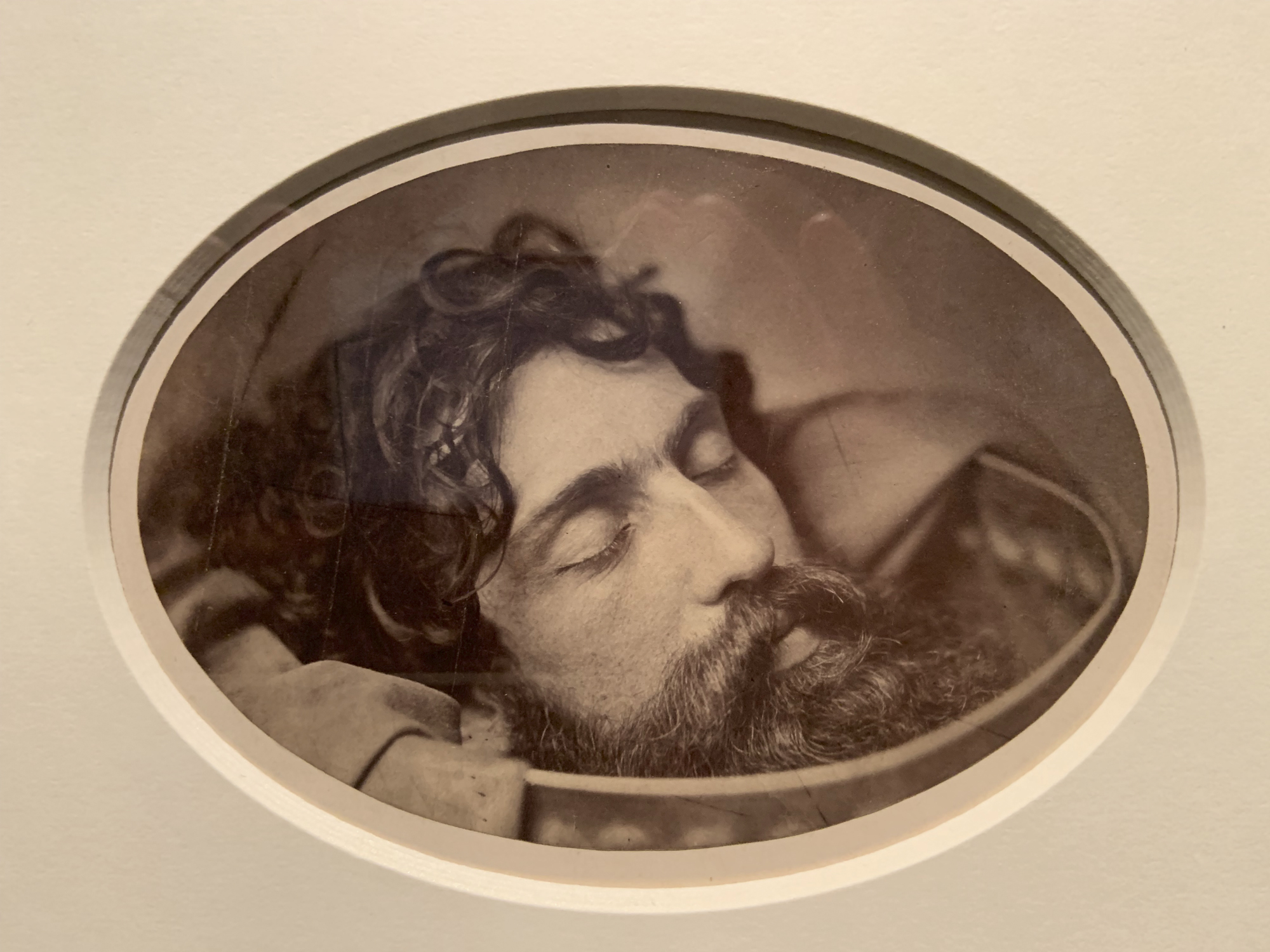
Unknown photographer (Australian) Untitled (girl on porch) 1946-1947 Medium format negative Collection of Nicholas Henderson
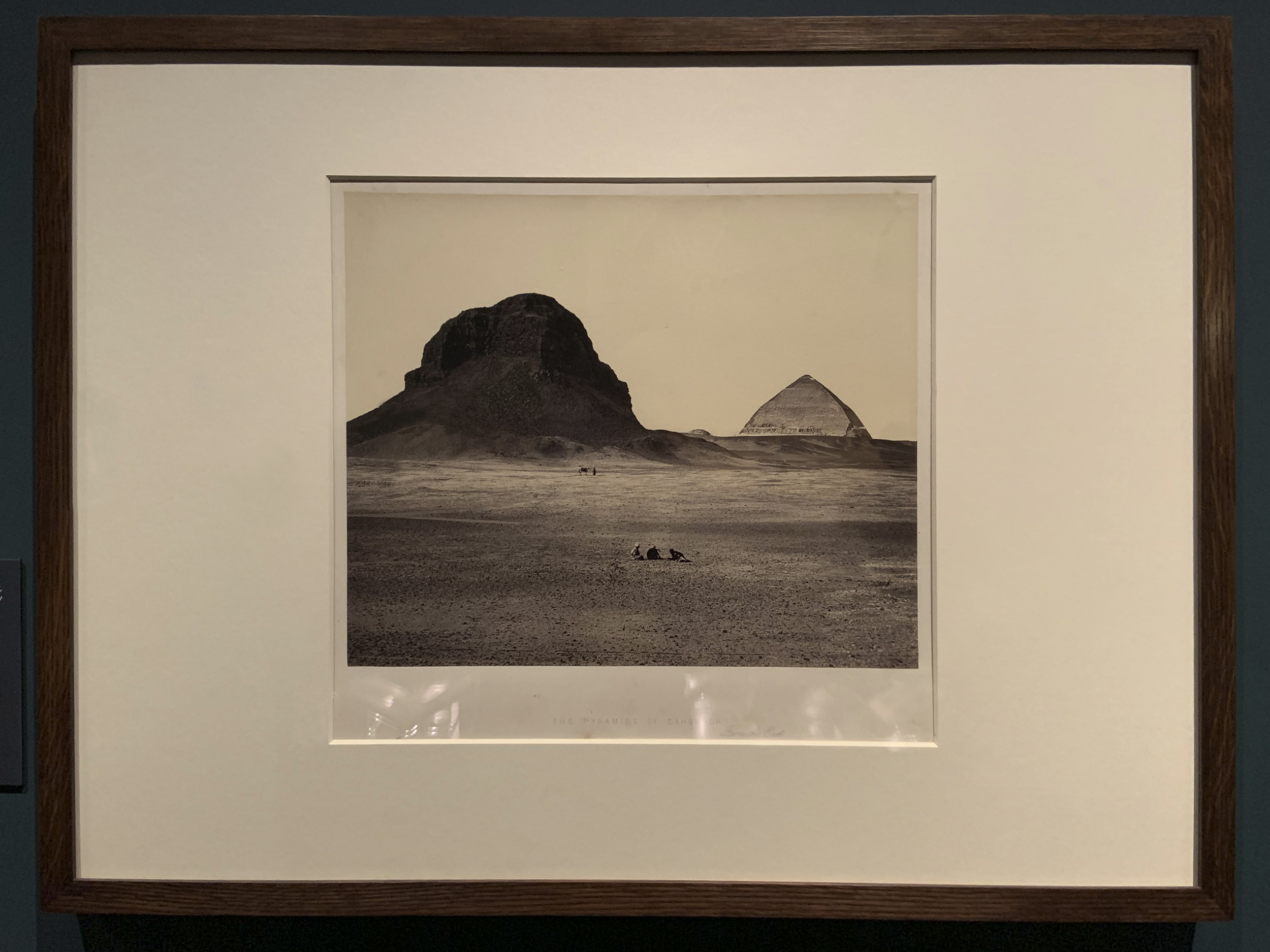
One of the great joys about compiling this archive is the ability to rescue unloved and unknown images. To give them a voice in the contemporary world.
These 2 1/4″ square (6 x 6cm) medium format black and white negatives come from the collection of my friend Nick Henderson. There is no marking on any of the negatives, leading me to believe that the film numbers were on the backing paper of the 120 film roll. The negatives are housed in paper packets adorned with a logo and words ‘APS Developing and Printing Service’ – perhaps Australian Photographic Services? Each packet contains basic title information for some of the photographs. Looking at the photographs and their perspective on the world, it would seem that the camera is a waist view camera, in other words the photographer was looking down into the viewfinder, the camera not held at eye level. The camera could possibly have been a Voigtländer or similar camera (see below). The quality of the negatives is reasonable, with some fall off in terms of sharpness occurring at the edge of the image. The photographs can be dated to 1946-1947 due to the February 1947 expiry Victorian registration label on the Chevrolet (thank you Simon Barnfield for spotting this!), are taken by an unknown photographer (probably male)… photographs of life in Sydney, his family and their travels around Australia. This is the first tranche of photographs with roughly the same number to come in the second part of the posting.
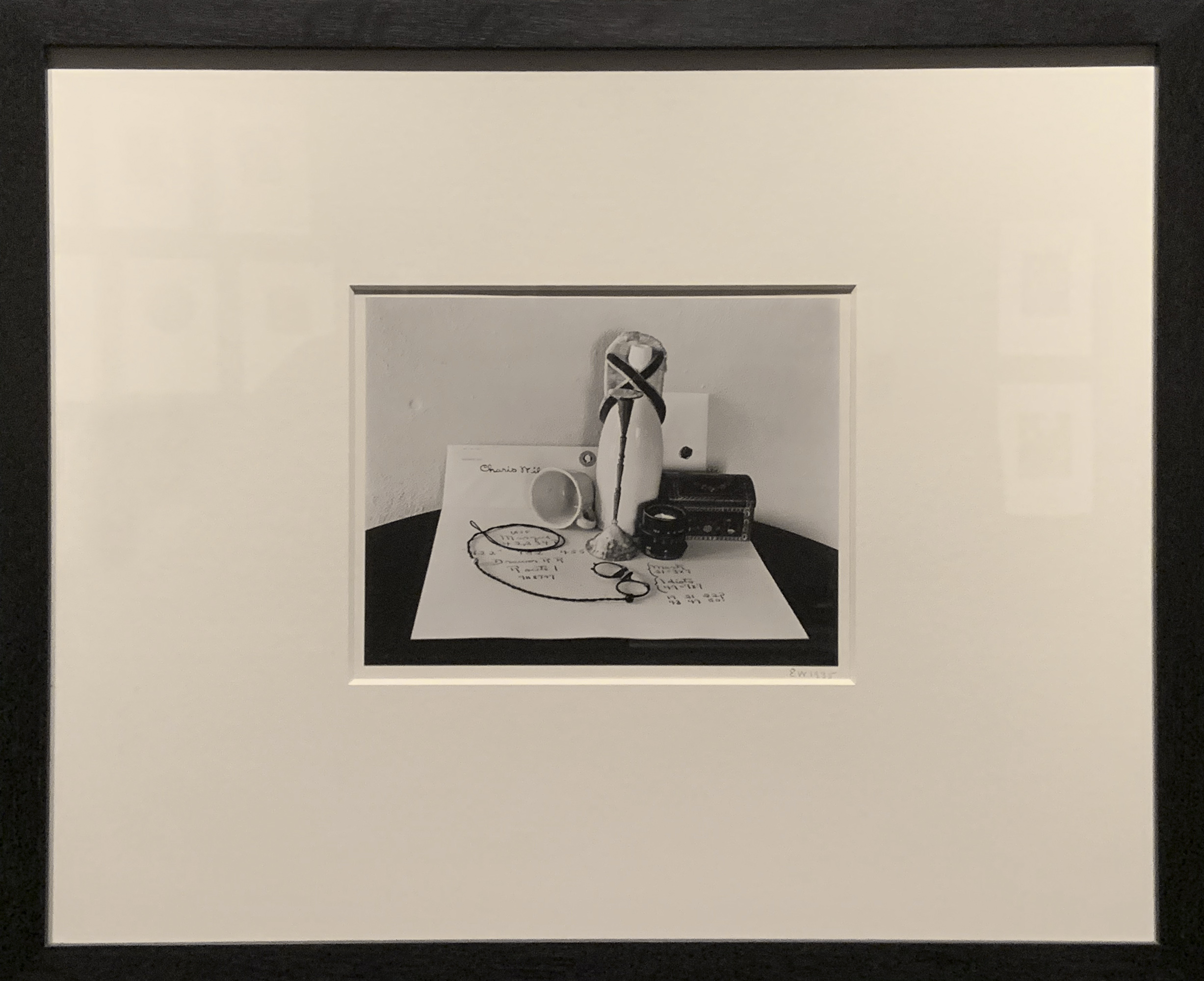
What makes these photographs particularly interesting is:
1/ the breadth of subject matter taken just after the Second World War and the fact that they are medium format
2/ the relaxed nature and beauty of the photographs of the children, and the light!
3/ the unknown images of places such as Bondi Beach and historical monuments, such as that of the forlorn The Dog on the Tuckerbox
4/ the photographs of the motor sport activity of hillclimbing, unfortunately no place known but its has been suggested it could be the 90-years-old Maldon hill climb at Mt Tarrengower because of the box-ironbark (and the fact that there are photographs of Maldon in the collection).
Variously we have country towns, theatrical groups, sailing, boating, churches, Sydney ferries, a trip to Maldon in Victoria for the Maldon Show, family picnics, cars and caravans, houses and horse riding, churches and children, and the oh so cute dogs in their own car boxes. So Australian. The photographs really give an extensive insight into suburban life in Australia just after the privations of the Second World War… and the photographer had a good eye. That is what is most important – that they knew how to take a good photograph.
Talking to my friend James McArdle who writes the oh so excellent On this Date in Photography website (essential reading!), he was unaware of the time it takes to prepare images for these postings. It has literally taken me hours and hours of hard work to scan these negatives and then digitally clean and balance them. All to give them a new lease of life in the world, to preserve their captured memories and histories. I hope you can appreciate all the hard work and admire the images I have revealed.
Many thankx to Nick Henderson for allowing me to publish the photographs in the posting. All photographs collection of Nick Henderson. Please click on the photographs for a larger version of the image. See Part 2 of the posting.
APS (Australian Photographic Services?) Developing and Printing Service Film packets and negatives 1946-1947 Negatives: 2 1/4″ square (6 x 6 cm) Packet (closed): 3 7/8 x 3 1/4″ (10cm x 8cm) Collection of Nicholas Henderson
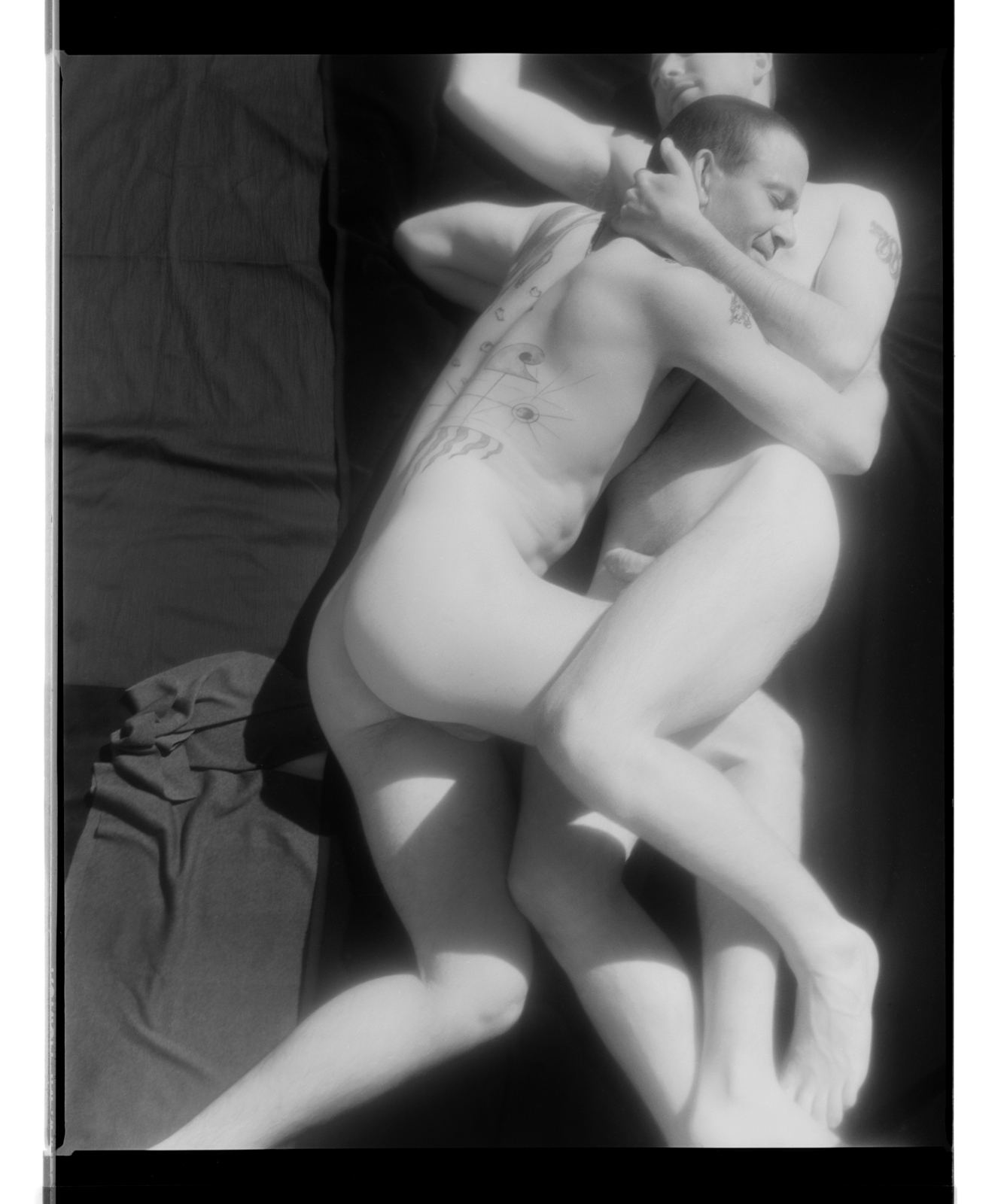
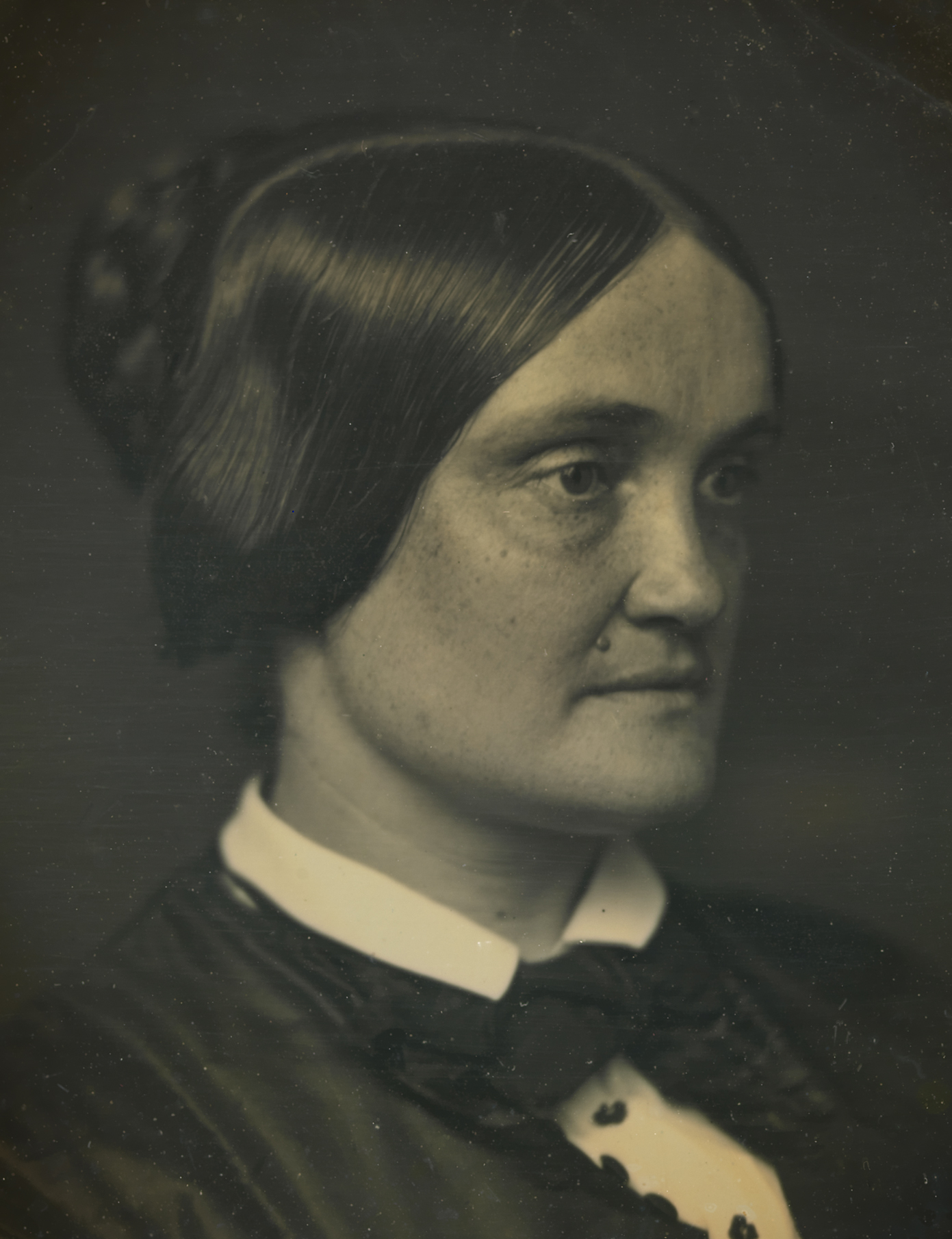
Voigtländer Billiant 1930s Photograph by Rama, Wikimedia Commons, Cc-by-sa-2.0-fr
The Voigtländer Brillant is a range of pseudo-TLR cameras, and later true TLR cameras, taking 6 × 6 cm exposures on 120 film, made by Voigtländer from 1932. Famed Hungarian-Dutch photographer Eva Besnyö used a Brillant for her early work.
Unknown photographer (Australian) Untitled (Circular Quay, Sydney) 1946-1947 Medium format negative Collection of Nicholas Henderson
Unknown photographer (Australian) Untitled (Karrabee ferry, Sydney, leaving High St Wharf, Kurraba in the background) 1946-1947 Medium format negative Collection of Nicholas Henderson
Karingal and Karrabee ferry
Karingal and Karrabee were built by Morrison & Sinclair, Balmain for Sydney Ferries Limited, being launched in 1913. They were the smallest of the round-ended K-class Sydney ferries, and could carry 608 and 653 passengers respectively.
They were near identical sister ferries operated by Sydney Ferries Limited and its NSW State Government operated successors on Sydney Harbour from 1913 until 1984. Wooden ferries built at the time of Sydney Ferries’ rapid early twentieth century, they were the smallest of the round-end “K-class ferries”.
The ferries were built as coal-fired steamer and were converted to diesel in the 1930s – the first Sydney Harbour ferries to be so converted. Unlike many early twentieth century Sydney Ferries, they survived the opening of the Sydney Harbour Bridge in the 1930s, and the State Government takeover in 1951.
Karrabee sank at Circular Quay after taking on water during the Great Ferry Race in 1984 – an incident that received extensive media coverage – and did not return to service. Karingal, and the other three remaining old wooden ferries, were taken out of service shortly after Karrabee’s sinking. In service for 71 years, they were among the longest-serving ferries on Sydney Harbour.
“Karingal” and “Karrabee” are Australian Aboriginal words meaning ‘happy home’ and ‘cockatoo’ respectively.
Unknown photographer (Australian) Untitled (Bondi Beach, Sydney) 1946-1947 Medium format negative Collection of Nicholas Henderson
Unknown photographer (Australian) Untitled (The Dog on the Tuckerbox) Gundagai, 1946-1947 Medium format negative Collection of Nicholas Henderson
The Dog on the Tuckerbox
The Dog on the Tuckerbox is an Australian historical monument and tourist attraction, located at Snake Gully, approximately five miles (eight kilometres) from Gundagai, New South Wales as described in the song of the same name.
The inspiration for the statue has been traced to a doggerel poem, “Bullocky Bill”, published anonymously by “Bowyang Yorke” in 1857 (other references have 1880 in the Gundagai Times, however confirmation of either is hard to find), which humorously describes a series of misfortunes faced by a bullock driver, culminating in his dog either sitting on or spoiling the food in his tucker-box (an Australian colloquialism for a box that holds food, similar to a lunchbox, but larger). …
A dog monument was first erected at a site nine miles from Gundagai in 1926. Gundagai stonemason Frank Rusconi suggested a memorial using the legend of the Dog on the Tuckerbox in 1928; and in 1932 the proposal was taken up by the community…
The Back to Gundagai Committee chose the Five Mile camping site rather than the Nine Mile Peg as a location for the monument on the basis that it was more convenient to the Hume Highway and closer to the town, thereby more beneficial to tourism.
A nationwide competition was held to obtain the most suitable inscription for the monument. The chosen inscription on the base of the monument was written by Brian Fitzpatrick of Sydney. The inscription says:
“Earth’s self upholds this monument To conquerors who won her when Wooing was dangerous, and now Are gathered unto her again.”
The dog section of the monument was modelled by Rusconi and cast at ‘Oliver’s Foundry’ in Sydney. Rusconi also sculpted its base.
The Dog on the Tuckerbox monument was erected in 1932 as part of ‘Back to Gundagai’ week, and a large crowd “gathered to her again” to witness the unveiling by Prime Minister Joseph Lyons on 28 November 1932. It was planned to donate money placed in the wishing well at the base of the monument to the Gundagai District Hospital. A souvenir shop was also opened nearby. Copyright on the monument was vested in the Gundagai Hospital, who for many years received a useful income from receipt of royalties from firms using the iconic image.
Unknown photographer (Australian) Untitled (hillclimb, possibly at Maldon, Victoria) 1946-1947 Medium format negative Collection of Nicholas Henderson
Unknown photographer (Australian) Untitled (hillclimb, possibly at Maldon, Victoria) (detail) 1946-1947 Medium format negative Collection of Nicholas Henderson
Unknown photographer (Australian) Untitled (hillclimb, possibly at Maldon, Victoria) 1946-1947 Medium format negative Collection of Nicholas Henderson
Unknown location, possibly the 90-years-old Maldon hill climb at Mt Tarrengower because of the box-ironbark (and the fact that there are photographs of Maldon in the collection).
Unknown photographer (Australian) Untitled (hillclimb, possibly at Maldon, Victoria) (detail) 1946-1947 Medium format negative Collection of Nicholas Henderson
Unknown photographer (Australian) Untitled (hillclimb, possibly at Maldon, Victoria) 1946-1947 Medium format negative Collection of Nicholas Henderson
Unknown photographer (Australian) Untitled (hillclimb, possibly at Maldon, Victoria) (detail) 1946-1947 Medium format negative Collection of Nicholas Henderson
Unknown photographer (Australian) Untitled (boat) 1946-1947 Medium format negative Collection of Nicholas Henderson
Unknown photographer (Australian) Untitled (boat at sea) 1946-1947 Medium format negative Collection of Nicholas Henderson
Unknown photographer (Australian) Untitled (child on porch) 1946-1947 Medium format negative Collection of Nicholas Henderson
Unknown photographer (Australian) Untitled (boy outside house) 1946-1947 Medium format negative Collection of Nicholas Henderson
Unknown photographer (Australian) Untitled (boy smiling) 1946-1947 Medium format negative Collection of Nicholas Henderson
Unknown photographer (Australian) Untitled (boy and girl smiling) 1946-1947 Medium format negative Collection of Nicholas Henderson
Unknown photographer (Australian) Untitled (child on lawn) 1946-1947 Medium format negative Collection of Nicholas Henderson
Unknown photographer (Australian) Untitled (child and chairs) 1946-1947 Medium format negative Collection of Nicholas Henderson
Unknown photographer (Australian) Untitled (man and woman) 1946-1947 Medium format negative Collection of Nicholas Henderson
Unknown photographer (Australian) Untitled (house) 1946-1947 Medium format negative Collection of Nicholas Henderson
Unknown photographer (Australian) Untitled (boy on horse) 1946-1947 Medium format negative Collection of Nicholas Henderson
Unknown photographer (Australian) Untitled (dog and saucepan) 1946-1947 Medium format negative Collection of Nicholas Henderson
Unknown photographer (Australian) Untitled (1932 Chevrolet) 1946-1947 Medium format negative Collection of Nicholas Henderson
Unknown photographer (Australian) Untitled (Chevrolet and caravan) 1946-1947 Medium format negative Collection of Nicholas Henderson
Unknown photographer (Australian) Untitled (1932 Chevrolet and dogs) 1946-1947 Medium format negative Collection of Nicholas Henderson
The photographs can be dated to 1946-1947 due to the February 1947 expiry Victorian registration label on the Chevrolet. Thank you to Simon Barnfield for spotting this.
Unknown photographer (Australian) Untitled (Chevrolet and caravan) 1946-1947 Medium format negative Collection of Nicholas Henderson
Unknown photographer (Australian) Untitled (man and car) 1946-1947 Medium format negative Collection of Nicholas Henderson
Unknown photographer (Australian) Untitled (family picnic) 1946-1947 Medium format negative Collection of Nicholas Henderson
Unknown photographer (Australian) Untitled (man and car) 1946-1947 Medium format negative Collection of Nicholas Henderson
Unknown photographer (Australian) Untitled (house on hill) 1946-1947 Medium format negative Collection of Nicholas Henderson
Unknown photographer (Australian) Untitled (room interior) 1946-1947 Medium format negative Collection of Nicholas Henderson
Unknown photographer (Australian) Untitled (Future Miss Maldons, Maldon Show, Maldon, Victoria, with Maldon Timber & Hardware at 28 Main Street in the background) 1946-1947 Medium format negative Collection of Nicholas Henderson
Where are they now, so many ghosts with flowers in their hair.
Unknown photographer (Australian) Untitled (Scottish band, Maldon Show, Maldon, Victoria) 1946-1947 Medium format negative Collection of Nicholas Henderson
Unknown photographer (Australian) Untitled (church) 1946-1947 Medium format negative Collection of Nicholas Henderson
Unknown photographer (Australian) Untitled (group of actors) 1946-1947 Medium format negative Collection of Nicholas Henderson
Unknown photographer (Australian) Untitled (actor and ballerina) 1946-1947 Medium format negative Collection of Nicholas Henderson
Unknown photographer (Australian) Untitled (actor) 1946-1947 Medium format negative Collection of Nicholas Henderson
Unknown photographer (Australian) Untitled (band performances) 1946-1947 Medium format negative Collection of Nicholas Henderson
Unknown photographer (Australian) Untitled (Bilsons, country town) 1946-1947 Medium format negative Collection of Nicholas Henderson
Curators: Jim Ganz, senior curator of photographs at the Getty Museum in collaboration with Getty curators Mazie Harris, Virginia Heckert, Karen Hellman, Arpad Kovacs, Amanda Maddox, and Paul Martineau.
Imagine having these photographs in your collection!
My particular favourite is Hiromu Kira’s The Thinker (about 1930). For me it sums up our singular 1 thoughtful 2 imaginative 3 ephemeral 4 ether/real 5 existence.
“Aether is the fifth element in the series of classical elements thought to make up our experience of the universe… Although the Aether goes by as many names as there are cultures that have referenced it, the general meaning always transcends and includes the same four “material” elements [earth, air, water, fire]. It is sometimes more generally translated simply as “Spirit” when referring to an incorporeal living force behind all things. In Japanese, it is considered to be the void through which all other elements come into existence.” (Adam Amorastreya. “The End of the Aether,” on the Resonance website Feb 16, 2015 [Online] Cited 23/02/2020)
Dr Marcus Bunyan
Many thankx to the J. Paul Getty Museum for allowing me to publish the photographs in the posting. Please click on the photographs for a larger version of the image.
Carleton Watkins (American, 1829-1916) [Guadalupe Mill] 1860 Salted paper print Image (dome-topped): 33.8 × 41.6cm (13 5/16 × 16 3/8 in.) The J. Paul Getty Museum, Los Angeles
Hiromu Kira (1898-1991) was one of the most successful and well-known Japanese American photographers in prewar Los Angeles. He was born in Waipahu, O’ahu, Hawai’i on April 5, 1898, but was sent to Kumamoto, Japan, for his early education. When he was eighteen years old, he returned to the United States and settled in Seattle, Washington, where he first became interested in photography. In 1923, he submitted prints to the Seattle Photography Salon which accepted two of the photographs. In 1923, his work was accepted in the Pittsburg Salon and the Annual Competition of American Photography. He found work at the camera department of a local Seattle pharmacy and began meeting other Issei, Nisei and Kibei photographers such as Kyo Koike and joined the Seattle Camera Club.
In 1926, Kira moved to Los Angeles with his wife and two young children. Although he was never a member of the Japanese Camera Pictorialists of California, a group that was active in Los Angeles at that time, he developed strong friendships with club members associated with the pictorialist movement of the 1920s and ’30s such as K. Asaishi and T. K. Shindo. In 1928, Kira was named an associate of the Royal Photography Society, and the following year he was made a full fellow and began exhibiting both nationally and internationally. In 1929 alone, Kira exhibited ninety-six works in twenty-five different shows. In the late twenties, he worked at T. Iwata’s art store. In 1931, his photograph The Thinker, made while showing a customer how to use his newly purchased camera properly, appeared on the March 1931 issue of Vanity Fair magazine.
On December 5, two days before the attack on Pearl Harbor, Kira was selected to be included in the 25th Annual International Salon of the Camera Pictorialists of Los Angeles. Within a few months, he was forced to store his camera, photography books and prints in the basement of the Nishi Hongwanji Buddhist Temple in Little Tokyo, Los Angeles for the duration of World War II. He and his family were incarcerated at Santa Anita Assembly Center and the Gila River, Arizona concentration camp from 1942-1944, leaving the latter in April 1944.
Following his release, he lived briefly in Chicago before returning to Los Angeles in 1946, where he remained for the rest of his life. In Los Angeles, he worked as a photo retoucher and printer for the Disney, RKO and Columbia Picture studios but never exhibited again as he had before the war.
Text from the Hiromu Kira page on the Densho Encyclopedia website [Online] Cited 23/02/2020
Markéta Luskačová (born 1944) is a Czech photographer known for her series of photographs taken in Slovakia, Britain and elsewhere. Considered one of the best Czech social photographers to date, since the 1990s she has photographed children in the Czech Republic, Slovakia, and also Poland…
In the 1970s and 1980s, the communist censorship attempted to conceal her international reputation. Her works were banned in Czechoslovakia, and the catalogues for the exhibition Pilgrims in the Victoria and Albert Museum were lost on their way to Czechoslovakia.
Luskačová started photographing London’s markets in 1974. In the markets of Portobello Road, Brixton and Spitalfields, she “[found] a vivid Dickensian staging”.
In 2016 she self-published a collection of photographs of street musicians, mostly taken in the markets of east London, under the title To Remember – London Street Musicians 1975-1990, and with an introduction by John Berger.
During the 1960s Nagano observed the period of intense economic growth in Japan, depicting the lives of Tokyo’s sarariman with some humour. The photographs of this period were only published in book form much later, as Dorīmu eiji and 1960 (1978 and 1990 respectively).
Nagano exhibited recent examples of his street photography in 1986, winning the Ina Nobuo Award. He published several books of his works since then, and won a number of awards. Nagano had a major retrospective at the Tokyo Metropolitan Museum of Photography in 2000.
Nagano died two months short of his 94th birthday, on January 30, 2019.
A three-panel silkscreen print on glass, Succulent Screen depicts a detail view of one of the signature miter-cut windows of Frank Lloyd Wright’s Freeman House. The house was built in the Hollywood Hills in 1923, was listed on the National Register of Historic Places in 1971 as a California Historical Landmark and as Los Angeles Historic-Cultural Monument #247 in 1981; it was bequeathed to the USC School of Architecture in 1986.
The Getty Museum holds one of the largest collections of photographs in the United States, with more than 148,000 prints. However, only a small percentage of these have ever been exhibited at the Museum. To celebrate the 35th anniversary of the founding of the Department of Photographs, the Getty Museum is exhibiting 200 of these never-before-seen photographs and pull back the curtain on the work of the many professionals who care for this important collection in Unseen: 35 Years of Collecting Photographs, on view December 17, 2019 – March 8, 2020.
“Rather than showcasing again the best-known highlights of the collection, the time is right to dig deeper into our extraordinary holdings and present a selection of never-before-seen treasures. I have no doubt that visitors will be intrigued and delighted by the diversity and quality of the collection, whose riches will support exhibition and research well into the decades ahead,” says Timothy Potts, director of the J. Paul Getty Museum.
The exhibition includes photographs by dozens of artists from the birth of the medium in the mid-19th century to the present day. The selection also encompasses a variety of photographic processes, including the delicate cyanotypes of Anna Atkins (British, 1799-1871), Polaroids by Carrie Mae Weems (American, born 1953) and Mary Ellen Mark (American, 1940-2015) and an architectural photographic silkscreen on glass by Veronika Kellndorfer (German, born 1962).
Visual associations among photographs from different places and times illuminate the breadth of the Getty’s holdings and underscore a sense of continuity and change within the history of the medium. The curators have also personalised some of the labels in the central galleries to give voice to their individual insights and perspectives.
Growth of the collection
In 1984, as the J. Paul Getty Trust was in the early stages of conceiving what would eventually become the Getty Center, the Getty Museum created its Department of Photographs. It did so with the acquisition of several world-famous private collections, including those of Sam Wagstaff, André Jammes, Arnold Crane, and Volker Kahmen and Georg Heusch. These dramatic acquisitions immediately established the Museum as a leading center for photography.
While the founding collections are particularly strong in 19th and early 20th century European and American work, the department now embraces contemporary photography and, increasingly, work produced around the world. The collection continues to evolve, has been shaped by several generations of curators and benefits from the generosity of patrons and collectors.
Behind the scenes
In addition to the photographs on view, the exhibition spotlights members of Getty staff who care for, handle, and monitor these works of art.
“What the general public may not realise is that before a single photograph is hung on a wall, the object and its related data is managed by teams of professional conservators, registrars, curators, mount-makers, and many others,” says Jim Ganz, senior curator of photographs at the Getty Museum. “In addition to exposing works of art in the collection that are not well known, we wanted to shed light on the largely hidden activity that goes into caring for such a collection.”
Collecting Contemporary Photography
The department’s collecting of contemporary photography has been given strong encouragement by the Getty Museum Photographs Council, and a section of the exhibition will be dedicated to objects purchased with the Council’s funding. Established in 2005, this group supports the department’s curatorial program, especially with the acquisition of works made after 1945 by artists not yet represented or underrepresented in the collection. Since its founding, the Council has contributed over $3 million toward the purchase of nearly five hundred photographs by artists from Argentina, Australia, Canada, Japan, Korea, Malaysia, South Africa, and Taiwan, as well as Europe and the United States.
Looking ahead
The exhibition also looks towards the future of the collection, and includes a gallery of very newly-acquired works by Laura Aguilar (American, 1959-2018), Osamu Shiihara (Japanese, 1905-1974), as well as highlights of the Dennis Reed collection of photographs by Japanese American photographers. The selection represents the department’s strengthening of diversity in front of and behind the camera, the collection of works relevant to Southern California communities, and the acquisition of photographs that expand the understanding of the history of the medium.
“With this exhibition we celebrate the past 35 years of collecting, and look forward to the collection’s continued expansion, encompassing important work by artists all over the world and across three centuries,” adds Potts.
Unseen: 35 Years of Collecting Photographs is on view December 17, 2019 – March 8, 2020 at the Getty Center. The exhibition is organised by Jim Ganz, senior curator of photographs at the Getty Museum in collaboration with Getty curators Mazie Harris, Virginia Heckert, Karen Hellman, Arpad Kovacs, Amanda Maddox, and Paul Martineau.
Press release from the J. Paul Getty Museum [Online] Cited 09/20/2020
Julia Margaret Cameron (British born India, 1815-1879) [Spring] 1873 Albumen silver print 35.4 × 25.7cm (13 15/16 × 10 1/8 in.) The J. Paul Getty Museum, Los Angeles
Reverend William Ellis (British, 1794-1872) and Samuel Smith [Portrait of a Black Couple] about 1873 Albumen silver print 24.1 × 18.6cm (9 1/2 × 7 5/16 in.) The J. Paul Getty Museum, Los Angeles
Prince Roland Napoleon Bonaparte (French, 1858-1924) Jacobus Huch, 26 ans about 1888 Albumen silver print 15.9 × 10.9cm (6 1/4 × 4 5/16 in.) The J. Paul Getty Museum, Los Angeles
Underwood & Underwood (American, founded 1881, dissolved 1940s) Les Chiens du Front, eux-mems, portent des masques contre les gaz May 27, 1917 Rotogravure 22 × 20.4cm (8 11/16 × 8 1/16 in.) The J. Paul Getty Museum, Los Angeles
Munkácsi was a newspaper writer and photographer in Hungary, specialising in sports. At the time, sports action photography could only be done in bright light outdoors. Munkácsi’s innovation was to make sport photographs as meticulously composed action photographs, which required both artistic and technical skill.
Munkácsi’s break was to happen upon a fatal brawl, which he photographed. Those photos affected the outcome of the trial of the accused killer, and gave Munkácsi considerable notoriety. That notoriety helped him get a job in Berlin in 1928, for Berliner Illustrirte Zeitung, where his first published photo was a motorcycle splashing its way through a puddle. He also worked for the fashion magazine Die Dame.
More than just sports and fashion, he photographed Berliners, rich and poor, in all their activities. He traveled to Turkey, Sicily, Egypt, London, New York, and Liberia, for photo spreads in Berliner Illustrirte Zeitung.
The speed of the modern age and the excitement of new photographic viewpoints enthralled him, especially flying. There are aerial photographs; there are air-to-air photographs of a flying school for women; there are photographs from a Zeppelin, including the ones on his trip to Brazil, where he crossed over a boat whose passengers wave to the airship above.
On 21 March 1933, he photographed the fateful Day of Potsdam, when the aged President Paul von Hindenburg handed Germany over to Adolf Hitler. On assignment for Berliner Illustrirte Zeitung, he photographed Hitler’s inner circle, although he was a Jewish foreigner.
Munkácsi left for New York City… Munkácsi died in poverty and controversy. Several universities and museums declined to accept his archives, and they were scattered around the world.
Erwin Blumenfeld (American born Germany, 1897-1969)
Blumenfeld was born in Berlin on 26 January 1897. As a young man he worked in the clothes trade and wrote poetry. In 1918 he went to Amsterdam, where he came into contact with Paul Citroen and Georg Grosz. In 1933 he made a photomontage showing Hitler as a skull with a swastika on its forehead; this image was later used in Allied propaganda material in 1943.
He married Lena Citroen, with whom he had three children, in 1921. In 1922 he started a leather goods shop, which failed in 1935. He moved to Paris, where in 1936 he set up as a photographer and did free-lance work for French Vogue. After the outbreak of the Second World War he was placed in an internment camp; in 1941 he was able to emigrate to the United States. There he soon became a successful and well-paid fashion photographer, and worked as a free-lancer for Harper’s Bazaar, Life and American Vogue. Blumenfeld died in Rome on 4 July 1969.
Barbara Morgan (American, 1900-1992) City Shell 1938 Gelatin silver print 49.2 × 39.4cm (19 3/8 × 15 1/2 in.) Reproduced courtesy of the Barbara and Willard Morgan Photographs and Papers, Library Special Collections, Charles E. Young Research Library, UCLA The J. Paul Getty Museum, Los Angeles
Henry Holmes Smith (1909-1986) was an American photographer and one of the most influential fine art photography teachers of the mid 20th century. He was inspired by the work that had been done at the German Bauhaus and in 1937 was invited to teach photography at the New Bauhaus being founded by Moholy-Nagy in Chicago. After World War II, he spent many years teaching at Indiana University. His students included Jerry Uelsmann, Jack Welpott, Robert W. Fichter, Betty Hahn and Jaromir Stephany.
Smith was often involved in the cutting edge of photographic techniques: in 1931 he started experimenting with high-speed flash photography of action subjects, and started doing colour work in 1936 when few people considered it a serious artistic medium. His later images were nearly all abstract, often made directly (without a camera, i.e. like photograms), for instance images created by refracting light through splashes of water and corn syrup on a glass plate. However, although acclaimed as a photographic teacher, Holmes’ own photographs and other images did not achieve any real recognition from his peers.
Otto Steinert (German, 1915-1978) Schlammweiher 2 Negative 1953, print about 1960s Gelatin silver print 39.6 x 29.1cm (15 9/16 x 11 7/16 in.) The J. Paul Getty Museum, Los Angeles Courtesy Galerie Johannes Faber
The photo essay as haunting and elegiac poem: “a richly-hued, cinematic portrayal of a largely hidden world: that of violence, police work and incarceration, seen with empathy and candour.”
Parks is one of my favourite photographers. He continues to astound me with his experimentation and percipience, his sensitive insight, into his subjects becoming: “a more nuanced view that reflected the social and economic factors tied to criminal behaviour and a rare window into the working lives of those charged with preventing and prosecuting it.” All captured by his probing camera – using natural light, flash, low depth of field, blur, high angles, low angles, perspective, transience, informality and chiaroscuro.
Two photographs in the posting suffice to speak of the photographers art: pointing figure, veins, clenched first and revelation, the blue fairy of light, in the beautiful Narcotics Addict, Chicago, Illinois; and body carriage interior, overweight man, braced, shadow, fag hanging out of mouth, pulling – all dreams laid bare. The photographer crouching at the same level. Shooting Victim in Cook County Morgue, Chicago, Illinois.
Wonderful to see the layout of the Life Magazine photo essay as well. Notice how Raiding Detectives, Chicago, Illinois is cropped claustrophobically tight, giving little sense of the passage of the tenement. Similarly, the hand and cigarette in Untitled, Chicago, Illinois (cover for the new book about the series), is bound by the cropping and shadows. Other images from the shoots Drug Search, Chicago, Illinois and Untitled, San Quentin, California are also used, expanding the context of the scene.
His photographs “give shape to the ground against which poverty, addiction, and race become criminalised,” allowing “Life’s readers to see the complexity of these chronically oversimplified situations.” They also enable us to enter a liminal space, where we feel both the mundane horror and specular beauty of life in medias res.
Dr Marcus Bunyan
Many thankx to the Museum of Modern Art for allowing me to publish some of the photographs in the posting. Please click on the photographs for a larger version of the image.
MoMA Acquires 56 Photographs from Gordon Parks’s Groundbreaking 1957 Series “The Atmosphere of Crime”
The Museum of Modern Art has acquired 56 prints from American artist Gordon Parks’s series of colour photographs made in 1957 for a Life magazine photo essay titled “The Atmosphere of Crime.” The Museum and The Gordon Parks Foundation collaborated closely on the selection of 55 modern colour prints that MoMA purchased from the Foundation, and the Foundation has also given the Museum a rare vintage gelatin silver print (a companion to a print Parks himself gave the Museum in 1993). A generous selection of these prints will go on view in May 2020 as part of the first seasonal rotation of the Museum’s newly expanded and re-envisioned collection galleries. The collection installation Gordon Parks and “The Atmosphere of Crime” will be located on the fourth floor, with Parks’s work as an anchor for exploring representations of criminality in photography, with a particular focus on work made in the United States.
One of the preeminent photographers of the mid-20th century, Gordon Parks (1912-2006) left behind a body of work that documents American life and culture from the early 1940s to the 2000s. Born in Fort Scott, Kansas, Parks worked as a youth in St. Paul, Minnesota, before discovering photography in 1937. He would come to view it as his “weapon of choice” for attacking issues including race relations, poverty, urban life, and injustice. After working for the US government’s Farm Security Administration in the early 1940s, Parks found success as a fashion photographer and a regular contributor to Ebony, Fortune, Glamour, and Vogue before he was hired as the first African American staff photographer at Life magazine in 1948.
In 1957, Life assigned Parks to photograph for the first in a series of articles addressing the perceived rise of crime in the US. With reporter Henry Suydam, Parks traversed the streets of New York, Chicago, Los Angeles, and San Francisco, producing a range of evocative colour images, 12 of which were featured in the debut article, “The Atmosphere of Crime,” on September 9, 1957. Parks’s empathetic, probing views of crime scenes, police precincts, hospitals, morgues, and prisons do not name or identify “the criminal,” but instead give shape to the ground against which poverty, addiction, and race become criminalised. Shot using available light, Parks’s atmospheric photographs capture mysterious nocturnal activity unfolding on street corners and silhouetted figures with raised hands in the murky haze of a tenement hallway.
A robust selection from this acquisition will anchor a display within a fourth-floor collection gallery, titled Gordon Parks and “The Atmosphere of Crime.” Using Parks’s work as a point of departure, the installation will draw from a range of other works in the Museum’s collection, offering varied representations of crime and criminality. Since the 1940s, the Museum has collected and exhibited photographs of crime as represented in newspapers and tabloids, exemplified by the dramatic, flash-lit work of Weegee, complemented by 19th-century precedents such as mug shots, whose purported objectivity was expected to facilitate the identification of criminals, as well as acquisitions across media that point to subsequent investigations and more contemporary concerns.
While Parks’s work was first displayed at MoMA in 1948, and was included in the landmark exhibition The Family of Man in 1955, it wasn’t until 1993 that five of his photographs were approved for the Museum’s collection (including a large-scale gelatin silver print from the 1957 series on crime mentioned above). The Museum has since supported the acquisition of additional vintage prints in 2011 and 2014 (including Harlem Newsboy, currently on view on the Museum’s fifth floor).
“As an artist of the highest order and a passionate advocate for civil rights, Parks made iconic photographs that continue to speak poignantly to the complexity of cultural politics and racial bias in the United States,” said Sarah Meister, curator in MoMA’s Department of Photography. “This acquisition substantially improves the Museum’s holdings of Gordon Parks’s achievement, reflecting our commitment to the artist and fostering the possibility of situating his work within a broad range of contemporary concerns. His enduring impact on the history of photography and representation cannot be overstated.”
“MoMA’s acquisition reinforces the significance of Gordon Parks as an artist whose practice continues to inspire future generations,” said Peter W. Kunhardt, Jr., executive director of The Gordon Parks Foundation. “Parks knew that his camera could be a powerful weapon, more potent than violence, and that pictures and words could further social change. The Atmosphere of Crime series remains as timeless and relevant today as when the photographs were made more than 50 years ago.”
Sarah Meister has also collaborated on The Gordon Parks Foundation’s forthcoming publication Gordon Parks: The Atmosphere of Crime, 1957, to be published by Steidl in spring 2020. The book’s expansive selection of never-before-published photographs from Parks’s original reportage was selected and sequenced by Meister, and her illustrated text situates this critically important photo essay within both Parks’s career and historic representations of crime and criminality. Other contributors include Bryan Stevenson, founder of the Equal Justice Initiative and author of Just Mercy (Spiegel & Grau, 2014), and Nicole Fleetwood, Professor of American studies and art history at Rutgers University and author of Marking Time: Art in the Age of Mass Incarceration (Harvard University Press, 2020). The book also features a foreword by MoMA’s director Glenn D. Lowry and The Gordon Parks Foundation’s executive director, Peter W. Kunhardt, Jr.
When Life magazine asked Gordon Parks to illustrate a recurring series of articles on crime in the United States in 1957, he had already been a staff photographer for nearly a decade, the first African American to hold this position. Parks embarked on a six-week journey that took him and a reporter to the streets of New York, Chicago, San Francisco and Los Angeles. Unlike much of his prior work, the images made were in colour. The resulting eight-page photo-essay “The Atmosphere of Crime” was noteworthy not only for its bold aesthetic sophistication, but also for how it challenged stereotypes about criminality then pervasive in the mainstream media. They provided a richly-hued, cinematic portrayal of a largely hidden world: that of violence, police work and incarceration, seen with empathy and candour.
Parks rejected clichés of delinquency, drug use and corruption, opting for a more nuanced view that reflected the social and economic factors tied to criminal behaviour and a rare window into the working lives of those charged with preventing and prosecuting it. Transcending the romanticism of the gangster film, the suspense of the crime caper and the racially biased depictions of criminality then prevalent in American popular culture, Parks coaxed his camera to do what it does best: record reality so vividly and compellingly that it would allow Life‘s readers to see the complexity of these chronically oversimplified situations. The Atmosphere of Crime, 1957 includes an expansive selection of never-before-published photographs from Parks’ original reportage.
Co-published with The Gordon Parks Foundation and The Museum of Modern Art. Text by Nicole Fleetwood and Bryan Stevenson.
Text from the Steidl website [Online] Cited 16/02/2020
The Atmosphere of Crime, 1957 (cover) Text by Nicole Fleetwood and Bryan Stevenson Series edited by Peter W. Kunhardt, Jr. Edited by Sarah Hermanson Meister 168 pages, 70 images Hardback / Half-linen 25 x 29cm English ISBN 978-3-95829-696-1 Published Spring 2020
The Museum of Modern Art 11 West 53 Street New York, NY 10019 Phone: (212) 708-9400
Opening hours: 10.30am – 5.30pm Open seven days a week
Exhibition dates: 20th November 2019 – 15th March 2020
Curators: Dora Maar is curated by Karolina Ziebinska-Lewandowska, Curator, Centre Pompidou, Paris, Damarice Amao, Assistant Curator, Centre Pompidou, Paris and Amanda Maddox, Associate Curator, the J. Paul Getty Museum, Los Angeles with Emma Lewis, Assistant Curator, Tate Modern. The Tate Modern presentation is curated by Emma Lewis, Assistant Curator with Emma Jones, Curatorial Assistant, Tate Modern.
What a creative woman. But yet another abused by the ego of a male, that of her lover, Picasso.
Beth Gersh-Nesic observes, “Was Dora Maar’s brilliant career cut short by the typical conflicts facing professional women in the 1930s, and even today? Or was she a victim of Picasso’s psychological abuse, which chipped away at her original confidence? Was she compromised to the point that she only wanted to please the man she loved? According to art historian John Richardson, Dora Maar sacrificed her gifts on the altar of her art god, her idol, Picasso. Based on the early Surrealist photographs we see in her retrospective, one can only wish she hadn’t taken up with Picasso, for it seems she might have achieved far more in her lifetime without him.”
What we can say is that Maar left behind a strong body of photographic work – from fashion and commercial, to restrained, classical formalism with surrealist inflections; from street photography to “the stuff of delirium and nightmare, [which] taps into the unconscious, internalised sublime”, her Portrait of Ubu (1936, below) reminding me strongly of William Blake’s painting The Ghost of a Flea (c. 1819). Ubu is “a ghastly being of indeterminate origin and melancholy aspect… [an idea] something like l’informe, the concept Maar’s lover Georges Bataille coined to describe his fellow-Surrealists’ admiration for all things larval and grotesquely about-to-be.” Ubu is a her dark notion of a street “urchin”.
Her warped photomontages are technical marvels. “”She captures the mysterious,” Caws wrote, “in a combination of the unresolved and the sharply angled. This frequently creates a sense of ambiguity, even menace.” Caws notes that Dora Maar responded to Louis Aragon’s invocation “for each person there is one image to find that will disturb the whole universe.” Maar’s images managed to “disturb and reveal” with a bit of the macabre mixed in.”
But her images are more than a bit of this and a bit of that. They possess a utilitarian feeling in the enunciation of their menace, which makes them all the more effective when impinging on our waking dreams. Susan Sontag notes, “Photographs are perhaps the most mysterious of all the objects that make up, and thicken, the environment we recognise as modern” (Sontag, On Photography, p. 2). Thicken is the critical word. Maar’s photographs thicken our atmospheric (and mental) miasma, prescient of our modern world full of dark passages: pitch black sewers, fatbergs, drone strikes, bush fire skies, virus, murder and mayhem. In the back of my head. My eyes. Roll, roll, roll. Skewered. Roasted.
Dr Marcus Bunyan
Many thankx to the Tate Britain for allowing me to publish the photographs in the posting. Please click on the photographs for a larger version of the image.
The most accomplished examples of Maar’s art are the photomontages of 1935 and 1936. There were already many vaults and arches in her Mont-Saint-Michel pictures; now she took the cloistral galleries of the Orangerie at Versailles, upended them so that they looked like sewers, and populated them with cryptic beings engaged in arcane rituals or dramas. In “The Simulator,” [below] a boy from one of her street photographs is bent backward at an obscene angle; Maar has retouched his eyes so that they roll back in his head toward us, like one of those thrashing hysterics photographed in the nineteenth century. In “29 Rue d’Astorg” (below) – of which Maar made several versions, black-and-white and hand-coloured – a human figure with a curtailed, avian head is seated beneath arches that have been subtly warped in the darkroom.
During the 1930s, Dora Maar’s provocative photomontages became celebrated icons of surrealism.
Her eye for the unusual also translated to her commercial photography, including fashion and advertising, as well as to her social documentary projects. In Europe’s increasingly fraught political climate, Maar signed her name to numerous left-wing manifestos – a radical gesture for a woman at that time.
Her relationship with Pablo Picasso had a profound effect on both their careers. She documented the creation of his most political work, Guernica 1937. He painted her many times, including Weeping Woman 1937. Together they made a series of portraits combining experimental photographic and printmaking techniques.
In middle and later life Maar withdrew from photography. She concentrated on painting and found stimulation and solace in poetry, religion, and philosophy, returning to her darkroom only in her seventies.
This exhibition will explore the breadth of Maar’s long career in the context of work by her contemporaries.
Installation views of the exhibition Dora Maar at Tate Modern, 2019 showing, in the bottom image, the photographs Untitled (Nude) 1930s (left) and Untitled (Nude) c. 1938 (right)
Dora Maar (French, 1907-1997) Assia 1934 Gelatin silver print 26.4 x 19.5cm
This autumn, Tate Modern presents the first UK retrospective of the work of Dora Maar (1907-1997) whose provocative photographs and photomontages became celebrated icons of surrealism. Featuring over 200 works from a career spanning more than six decades, this exhibition shows how Maar’s eye for the unusual also translated to her commercial commissions, social documentary photographs, and paintings – key aspects of her practice which have, until now, remained little known.
Born Henriette Théodora Markovitch, Dora Maar grew up between Argentina and Paris and studied decorative arts and painting before switching her focus to photography. In doing so, Maar became part of a generation of women who seized the new professional opportunities offered by advertising and the illustrated press. Tate Modern’s exhibition will open with the most important examples of these commissioned works. Around 1931, Maar set up a studio with film set designer Pierre Kéfer specialising in portraiture, fashion photography and advertising. Works such as Untitled (Les années vous guettent) c. 1935 – believed to be an advertising project for face cream that Maar made by overlaying two negatives – will reveal Maar’s innovative approach to constructing images through staging, photomontage and collage. Striking nude studies such as that of famed model Assia Granatouroff will also reveal how women photographers like Maar were beginning to infiltrate relatively taboo genres such as erotica and nude photography.
During the 1930s, Maar was active in left-wing revolutionary groups led by artists and intellectuals. Reflecting this, her street photography from this time shot in Barcelona, Paris and London captured the reality of life during Europe’s economic depression. Maar shared these politics with the surrealists, becoming one of the few photographers to be included in the movement’s exhibitions and publications. A major highlight of the show will be outstanding examples of this area of Maar’s practice, including Portrait d’Ubu 1936, an enigmatic image thought to be an armadillo foetus, and the renowned photomontages 29, rue d’Astorg c. 1936 and Le Simulateur 1935. Collages and publications by André Breton, Georges Hugnet, Paul and Nusch Eluard, and Jacqueline Lamba will place Maar’s work in context with that of her inner circle.
In the winter of 1935-1936 Maar met Pablo Picasso and their relationship of around eight years had a profound effect on both their careers. She documented the creation of his most political work Guernica 1937, offering unprecedented insight into his working process. He in turn immortalised her in the motif of the ‘weeping woman’. Together they made a series of portraits that combined experimental photographic and printmaking techniques, anticipating her energetic return to painting in 1936. Featuring rarely seen, privately-owned canvases such as La Conversation 1937 and La Cage 1943, and never-before exhibited negatives from the Dora Maar collection at the Musée National d’art Moderne, the exhibition will shed new light on the dynamic between these two artists during the turbulent wartime years.
After the Second World War, Maar began dividing her time between Paris and the South of France. During this period, she explored diverse subject matter and styles before focusing on gestural, abstract paintings of the landscape surrounding her home. Though these works were exhibited to acclaim in London and Paris into the 1950s, Maar gradually withdrew from artistic circles. As a result, the second half of her life became shrouded in mystery and speculation. The exhibition will reunite over 20 works from this little-known – yet remarkably prolific – period. Dora Maar concludes with a substantial group of camera-less photographs that she made in the 1980s when, four decades after all but abandoning the medium, Maar returned to her darkroom.
Dora Maar is curated by Karolina Ziebinska-Lewandowska, Curator, Centre Pompidou, Paris, Damarice Amao, Assistant Curator, Centre Pompidou, Paris and Amanda Maddox, Associate Curator, the J. Paul Getty Museum, Los Angeles with Emma Lewis, Assistant Curator, Tate Modern. The Tate Modern presentation is curated by Emma Lewis, Assistant Curator with Emma Jones, Curatorial Assistant, Tate Modern.
The exhibition will be accompanied by a fully-illustrated catalogue jointly published by Tate and the J. Paul Getty Museum and a programme of talks and events in the gallery.
Press release from Tate Britain [Online] Cited 16/11/2019
Installation views of the exhibition Dora Maar at Tate Modern, 2019 showing at second left, Untitled (Study of Beauty) (c. 1931, below)
Dora Maar (French, 1907-1997) Portrait of Lise Deharme, chez elle devant sa cage a oiseaux Portrait of Lise Deharme, at home in front of her birdcage 1936 Gelatin silver print
Associated with Pierre Kéfer from 1930 to 1934, she collaborated in 1931 on the photographic illustration of the art historian Germain Bazin’s book Le Mont Saint-Michel (1935). She then shared a studio with Brassaï, after which Emmanuel Sougez, the spokesman for the New Photography movement, became her mentor. Her work met the aesthetic criteria of the time: close-ups of flowers and objects, and photograms in the style of Man Ray. She also took portraits, original publicity shots, and fashion and erotic photographs. In 1934, while traveling alone in Spain, Paris and London, she shot a vast number of urban views (posters, shop windows, ordinary people). Both a passionate lover and committed intellectual, she became the mistress of the filmmaker Louis Chavance and of the writer Georges Bataille, whom she met in a left-wing activist group. She signed the Contre-Attaque manifesto and rubbed shoulders with the agitprop artistic group Octobre. A close friend of Jacqueline Lamba, who became Breton’s wife, she was fully involved in the surrealist group, of whose members she made many portraits. At the height of her creativity in 1935-1936, she composed strange and bold photomontages, the most famous being 29, rue d’Astorg and The Simulator (both below). Some of her compositions verge on eroticism, like the photomontage showing fingers crawling out of a shell and sensually digging into the sand (Untitled, 1933-1934, top). She also used her city photographs as backdrops for unsettling scenes: her Portrait of Ubu (1936, below) – in fact the picture of an armadillo foetus – conforms to the surrealists’ fascination for macabre and deformity.
Anne Reverseau. “Dora Maar,” from the Dictionnaire universel des créatrices on the Archives of Women Artists Research & Exhibitions website [Online] Cited 16/11/2019
When Maar began her career, the illustrated press was expanding quickly. This created a growing market for experimental photography. Maar embraced this opportunity, exploring the creative potential of staged images, darkroom experiments, collage and photomontage.
Most of Maar’s work had one thing in common: an uncanny atmosphere. Her connection to the surrealists led her to create fantastical images. This included using photomontage to bring together contrasting images and reflect the workings of the unconscious mind.
Unlike many other photomontage creators of this time, Maar did not use photographs taken from illustrated newspapers or magazines. Instead the images often came from her own work, including both street and landscape photography. This experimentation and obvious construction became a defining feature of Maar’s work.
Anonymous text from “Seven Things to Know: Dora Maar,” on the Tate website [Online] Cited 16/11/2019
Installation view of the exhibition Dora Maar at Tate Modern, 2019 showing at second left, Arcade (1934, see below)
Dora Maar (French, 1907-1997) Arcade 1934 Photomontage
Dora Maar (French, 1907-1997) Danger 1936 Gelatin silver print
Maar’s early photomontages look almost as modish and styled as her fashion work. From a shell resting on sand, a dummy hand protrudes, with delicate fingers and painted nails, just like Maar’s own (see top image). In a way, the image could be by one of many photographers of the period – Cecil Beaton, say, or Angus McBean – who politely surrealised their pictures, as if the artistic movement were merely a visual style. Except: there is something ominously self-involved about this hybrid thing. The shell and hand recall Bataille’s obsessions with crustaceans, mollusks, and orphaned or butchered body parts. The hand rhymes with similar ones in the photographs of Claude Cahun, where they sometimes have masturbatory implications. And what are we to make of the storm-lit, gothic sky that looms over this auto-curious object?
The most accomplished examples of Maar’s art are the photomontages of 1935 and 1936. There were already many vaults and arches in her Mont-Saint-Michel pictures; now she took the cloistral galleries of the Orangerie at Versailles, upended them so that they looked like sewers, and populated them with cryptic beings engaged in arcane rituals or dramas. In “The Simulator,” (above) a boy from one of her street photographs is bent backward at an obscene angle; Maar has retouched his eyes so that they roll back in his head toward us, like one of those thrashing hysterics photographed in the nineteenth century. In “29 Rue d’Astorg” (above) – of which Maar made several versions, black-and-white and hand-coloured – a human figure with a curtailed, avian head is seated beneath arches that have been subtly warped in the darkroom.
Dora Maar also participated in the Surrealists’ group exhibitions, such as the one at Charles Ratton’s Gallery in 1936, wherein her Portrait of Ubu became the “icon of Surrealism,” according to her biographer Mary Ann Caws in her exceptional book Picasso’s Weeping Woman: The Life and Art of Dora Maar (2000). “She captures the mysterious,” Caws wrote, “in a combination of the unresolved and the sharply angled. This frequently creates a sense of ambiguity, even menace.” (p. 20) Caws notes that Dora Maar responded to Louis Aragon’s invocation “for each person there is one image to find that will disturb the whole universe.” Maar’s images managed to “disturb and reveal” with a bit of the macabre mixed in. (p. 71)
Installation view of the exhibition Dora Maar at Tate Modern, 2019 showing Maar’s photographs Portrait of Ubu (1936, left), Untitled (Hand-Shell) (1934, top middle) and Danger (1936, bottom right) Photo: Tate (Andrew Dunkley)
In 1936, at the summit of her celebrity as a photographic artist, Dora Maar showed her picture “Portrait of Ubu” in the International Surrealist Exhibition, at the New Burlington Galleries, London. Named after a scatological, ur-Surrealist play by Alfred Jarry, from 1896, the black-and-white photograph shows a ghastly being of indeterminate origin and melancholy aspect. Maar would never say what the clawed, scaly creature was, nor where she had come across it. Her Ubu has elements of Jarry’s porcine, louse-like original, and, with its doleful eye and drooping ears, it also resembles an ass or an elephant. Scholars generally agree that the monster is in fact an armadillo foetus, preserved in a specimen jar. It is also an idea: something like l’informe, the concept Maar’s lover Georges Bataille coined to describe his fellow-Surrealists’ admiration for all things larval and grotesquely about-to-be.
To produce this complex image, Maar sandwiched together two negatives of the same model, one frontal and one profile, scavenged from a magazine assignment on springtime hats, and painted the background and hat (or decomposing halo?) onto the negative. Softening the emulsion, she scraped and lifted it off, techniques that involve destruction and suggest disintegration. The face evokes Picasso’s depictions of female faces, especially his 1938 paintings of weeping women for which Maar was the model. Although the divided face is not Maar’s, it is tempting to interpret it as a reflection of her emotional state at the time, torn between her career and independence and Picasso’s demands and potent personality. frontal and one profile, scavenged from a magazine assignment on springtime hats, and painted the background and hat (or decomposing halo?) onto the negative. Softening the emulsion, she scraped and lifted it off, techniques that involve destruction and suggest disintegration. The face evokes Picasso’s depictions of female faces, especially his 1938 paintings of weeping women for which Maar was the model. Although the divided face is not Maar’s, it is tempting to interpret it as a reflection of her emotional state at the time, torn between her career and independence and Picasso’s demands and potent personality.
Text from The Cleveland Museum of Art website [Online] Cited 16/11/2019
Maar became involved with the surrealists from 1933 and was one of the few artists – and even fewer women – to be included in the surrealists’ exhibitions. She became close to the group because of their shared left-wing politics at a time of social and civil unrest in France.
Maar’s photography and photomontages explore surrealist themes such as eroticism, sleep, the unconscious and the relationship between art and reality. Cropped frames, dramatic angles, unexpected juxtapositions and extreme close-ups are used to create surreal images. Contrasting with the idea of a photograph as a factual record, Maar’s scenes disorientate the viewer and create new worlds altogether.
Anonymous text from “Seven Things to Know: Dora Maar,” on the Tate website [Online] Cited 16/11/2019
Installation view of the exhibition Dora Maar at Tate Modern, 2019 showing Maar’s photographs Portrait of Nusch Éluard (1935, left) and Les années vous guettent (The Years are Waiting for You) (1932, right)
Dora Maar (French, 1907-1997) Portrait of Nusch Éluard 1935 Gelatin silver print
Dora Maar (French, 1907-1997) Untitled c. 1940 Gelatin silver print
Eileen Agar (British-Argentinian, 1899-1991) Photograph of Dora Maar and Pablo Picasso on the beach September 1937 Gelatin silver print 68 x 60 mm Taken in Juan-les-pins, France Tate Archive Presented to Tate Archive by Eileen Agar in 1989 and transferred from the photograph collection in 2012
Eileen Agar (British-Argentinian, 1899-1991) Photograph of Dora Maar, Nusch Éluard, Pablo Picasso and Paul Éluard on the beach September 1937 Gelatin silver print 66 x 66 mm Taken in Juan-les-pins, France Tate Archive Presented to Tate Archive by Eileen Agar in 1989 and transferred from the photograph collection in 2012
Pablo Picasso (Spanish, 1881-1973) Portrait of Dora Maar 1937 Musée National Picasso-Paris Copyright RMN-Grand Palais, Mathieu Rabeau and Succession Picasso, 2018
Dora Maar (French, 1907-1997) Guernica May-June, 1937 Gelatin silver print Musée National Picasso-Paris Copyright RMN-Grand Palais, Mathieu Rabeau and Succession Picasso, 2018
Dora Maar (French, 1907-1997) Picasso working on “Guernica” 1937 Gelatin silver print Courtesy VEGAP / Museo Nacional Centro de Arte Reina Sofia
Installation view of the exhibition Dora Maar at Tate Modern, 2019 showing Maar’s painting The Conversation 1937 Photo: Tate (Andrew Dunkley)
“I must dwell apart in the desert,” the artist and surrealist photographer Dora Maar once said. “I want to create an aura of mystery about my work. People must long to see it.
“I’m still too famous as Picasso’s mistress to be accepted as a painter.”
These words form part of a conversation recorded by Maar’s friend, the art writer James Lord, in his memoir “Picasso and Dora.” During the exchange, the French artist also explains how she rationalised the work of her later years, given that she rarely exhibited and was not in demand. …
With its deliberate focus on their art, the exhibition doesn’t address certain troubling questions about the pair’s unequal personal relationship. In her memoirs, Picasso’s later lover, Françoise Gilot, recounted the brutal bullying to which the artist subjected Maar. Picasso once described the time that Maar and a previous lover, Marie-Thérèse Walter, came to blows in his studio as one of his “choicest memories.”
It’s a subject Maar didn’t shy away from in her art, painting herself alongside Walter in “The Conversation,” one of the works on show at the Tate Modern. Maar is depicted facing away while Walter looks directly at the viewer.
During the aforementioned exchange with James Lord, Maar told the writer that Picasso’s portraits of her were “lies.” But the struggle for recognition she went on to describe is more insightful – that she had to survive in the “desert” to be celebrated on her own terms.
Pablo Picasso (Spanish, 1881-1973) Dora Maar seated 1938 Ink, gouache and oil paint on paper on canvas Support: 689 x 625 mm Frame: 925 x 685 x 120 mm Tate Purchased 1960
In late 1935 or early 1936, Maar met Pablo Picasso. They became lovers soon afterwards. She was at the height of her career, while he was emerging from what he described as ‘the worst time of my life’. He had not sculpted or painted for months.
Their relationship had a huge affect on both their careers. Maar documented the creation of Picasso’s most political work, Guernica 1937, encouraged his political awareness and educated him in photography. Specifically, Maar taught Picasso the cliché verre technique – a complex method combining photography and printmaking.
Picasso painted Maar in numerous portraits, including Weeping Woman 1937. However, Maar explained that she felt this wasn’t a portrait of her. Instead it was a metaphor for the tragedy of the Spanish people. Picasso also encouraged Maar to return to painting. The flattened features and bold outlines of the cubist-style portraits Maar made at this time suggest Picasso’s influence. By 1940 her passport listed her profession as ‘photographer-painter’.
Anonymous text from “Seven Things to Know: Dora Maar,” on the Tate website [Online] Cited 16/11/2019
Installation view of the exhibition Dora Maar at Tate Modern, 2019 showing portraits of the artist by numerous artists, some of which you can see below
Dora Maar (French, 1907-1997) Self-portrait with Fan 1930 Gelatin silver print
Emmanuel Sougez (French, 1889-1972) Dora Maar Paris, 1934 Gelatin silver print
Dora Maar considered the French commercial photographer Emmanuel Sougez (1889-1972) her mentor. Her first commission was a book on Mont-Saint-Michel written by art critic Germain Bazin. She collaborated with the stage-set designer Pierre Kéfer in 1931. From that experience they formed a business partnership, set up at first in his parents’ garden in Neuilly and then moving to their own studio at 9 rue Campagne-Première, lent by the Polish photographer Harry Ossip Meerson (1910-1991), younger brother of the cinema art director Lazare Meerson (1900-1938), who had worked with Kéber at Film Albatros studio in the mid-1920s. Harry Meerson also lent out his darkroom to the Hungarian photographer Brassai (Gyula Halász, 1899-1984), who became Dora Maar’s close friend. Her contact with Brassai brought her into the Surrealist circle.
The Kéfer-Dora Maar studio produced glamorous, innovative images for advertising and portraits, becoming part of the booming industry of commercial photography in glossy magazines. It was a fertile context for Dora Maar’s imagination. Her perspective on the modern women of the 1930s produced models oozing with elegant sensuality. Cool, natural, sometimes athletic, sometimes aristocratic, the Kéfer-Dora Maar female gave off a whiff of eroticise insouciance that emanated from Dora’s own disposition. This conceptualisation of contemporary beauty fed the appetite for luxury and leisure time activities, despite the Great Depression. It was a fantasy for some, a reality for others. During this period of working intensely with Pierre Kéfer, Dora had affairs with the filmmaker Louis Chavance (c. 1932-1933) and the erotically transgressive writer Georges Bataille (late 1933-1934). The Kéfer-Dora Maar studio closed in 1934.
Israëlis Bidermanas (17 January 1911 in Marijampolė – 16 May 1980 in Paris), who worked under the name of Izis, was a Lithuanian-Jewish photographer who worked in France and is best known for his photographs of French circuses and of Paris.
Upon the liberation of France at the end of World War II, Izis had a series of portraits of maquisards (rural resistance fighters who operated mainly in southern France) published to considerable acclaim. He returned to Paris where he became friends with French poet Jacques Prévert and other artists. Izis became a major figure in the mid-century French movement of humanist photography – also exemplified by Brassaï, Cartier-Bresson, Doisneau, Sabine Weiss and Ronis – with “work that often displayed a wistfully poetic image of the city and its people.”
For his first book, Paris des rêves (Paris of Dreams), Izis asked writers and poets to contribute short texts to accompany his photographs, many of which showed Parisians and others apparently asleep or daydreaming. The book, which Izis designed, was a success. Izis joined Paris Match in 1950 and remained with it for twenty years, during which time he could choose his assignments.
Although the late works are not as significant contributions to the history of art as her Surrealist photomontages, they inform our knowledge of this Parisian artist’s accomplishments in general and beg the question: Was Dora Maar’s brilliant career cut short by the typical conflicts facing professional women in the 1930s, and even today? Or was she a victim of Picasso’s psychological abuse, which chipped away at her original confidence? Was she compromised to the point that she only wanted to please the man she loved? According to art historian John Richardson, Dora Maar sacrificed her gifts on the altar of her art god, her idol, Picasso. Based on the early Surrealist photographs we see in her retrospective, one can only wish she hadn’t taken up with Picasso, for it seems she might have achieved far more in her lifetime without him.
The 1940s brought a series of traumas. Maar’s father left Paris for Argentina, her mother and best friend Nusch Eluard both died suddenly, her relationship with Picasso ended, and friends went into exile. The difficulty of this time is reflected in some of her work from this period.
Maar was included in many group and solo exhibitions in the 1940s and 1950s. In the mid-1940s she began to spend more time in rural surroundings of Ménerbes in the south of France. Here she regained her confidence as a painter and developed her own style of abstract landscapes. Exhibited across Europe, this work received very positive reviews.
In the 1980s, Maar returned to photography. However, she was no longer interested in photographing life on the street. Instead, Maar was interested in what she could create in the darkroom and experimented with hundreds of photograms (camera-less photographs).
Dora Maar died on July 16, 1997, at 89 years old. Throughout her life she created a vast and varied range of work, much of which was only discovered after her death.
Anonymous text from “Seven Things to Know: Dora Maar,” on the Tate website [Online] Cited 16/11/2019
Artists: Gordon Bennett, Polly Borland, Pat Brassington, Eric Bridgeman, Jeff Carter, Nanette Carter, Jack Cato, Zoë Croggon, Sharon Danzig, Rennie Ellis, Elizabeth Gertsakis, Christine Godden, Alfred Gregory, Craig Holmes, Tracey Moffatt, Derek O’Connor, Jill Orr, Deborah Paauwe, David Rosetzky, Damien Shen, Wesley Stacey, Christian Thompson, Lyndal Walker, Justene Williams, Anne Zahalka.
Installation view of the exhibition Dressing Up at the Monash Gallery of Art, Melbourne showing at centre right, Deborah Paauwe’s Foreign body (2004) Photo: Marcus Bunyan
Making an appearance
There are some stimulating and challenging works in this first exhibition curated by new MGA Associate Curator Gareth Syvret, who was parachuted into the project at the last moment. The curator has pulled together work that examines the complex interweaving of “cultural scenarios,” “interpersonal scripts,” and “intrapsychic scripts” that ground how the camera, and the photographer, picture our relationship to dressing up… and how we see ourselves pictured by the camera.
In various ways, the works interrogate how clothes (or the lack of them) reinforce the postmodern fragmentation of the individual or group, the self being decentred and multiple, as when we change from work clothes, to drag, to leather, to wearing our footy beanie and scarf… and how these e/facements, these everyday performances (for that is what they are), camouflage or reveal our “true” nature. Do we dress up to fit in (to a tribe or group, or representation), or do we rebel against the status quo, as did that enfant terrible who refused all categorisation throughout his life, the Australian fashion pioneer Leigh Bowery. How do we turn our face towards, or away from, the camera? (turning away is a re/action to the power of representation, even if a negative one)
Firstly we must recognise that “cultural forms do not have single determinate meanings – people make sense of them in different ways, according to the cultural (including sub-cultural) codes available to them.” And secondly, we must acknowledge that, “the analysis of images always needs to see how any given instance is embedded in a network of other instances”1 through intertexuality – where we, reality, our representation, and the image, are just nodes within a network whose unity is variable and relative.
“Critical to understanding the construction of these constantly shifting networks in contemporary society are the concepts of weaving and intertexuality. Intertextuality is the concept that texts do not live in isolation, ‘caught up as they are in a system of references to other books, other texts, other sentences: it is a node within a network… Its unity is variable and relative’ (Foucault, 1973). In other words the network is decentred and multiple allowing the possibility of transgressive texts or the construction of a work of art through the techniques of assemblage [Deleuze and Guattari] – a form of fluid, associative networking that is now the general condition of art production.”2
This weaving of surfaces disrupts histories and memories that are already narrativised, already textualised. It disrupts this marking, the continual reiteration of norms, by weaving a lack of fixity into objects, namely how we see ourselves, how we pictures ourselves. Through dress, and the camera, through a constant process of reconceptualisation of space and matter, we can redefine the significations of the body of the animal in the fold of inscription, through a process of materialisation. The production of this materialisation (the matériel, or arms, of sartorial elegance) – of this signified – is open to struggle, the simulation “by virtue of its being referent-free invites a reading of a different order: it is a perpetual examination of the code.”3 A code which, Julia Kristeva notes, is not simply the product of a single author, but of its relationship to other texts and to the structures of language itself. “[A]ny text,” she argues, “is constructed of a mosaic of quotations; any text is the absorption and transformation of another.”4 And this is what is happening in this exhibition – work, and images, which are a mosaic of quotations fighting over unity and fragmentation, reality and representation… and the construction of identity.
What this exhibition, and this materialisation, does not, and cannot answer, is the critical question: why do we dress up in the first place? What is the overriding reason for this ritualistic, performative enactment, this action, which happens time after time, day after day. And what is that face that we present to the camera during this performance? As Roland Barthes lucidly observes in Camera Lucida, “The PORTRAIT-PHOTOGRAPH is a closed field of forces. Four image-repertoires intersect here, oppose and distort each other. In front of the lens, I am at the same time: the one I think I am, the one I want others to think I am, the one the photographer thinks I am, and the one he makes use of to exhibit his art.”5
So, who I am?
Dr Marcus Bunyan
1/ Dyer, Richard. The Matter of Images: Essays on Representations. London: Routledge, 1993, pp. 2-3
2/ Foucault, Michel cited in Thumlert, Kurt. Intervisuality, Visual Culture, and Education. Nd [Online] Cited 01/04/2011 no longer available online
3/ Tseëlon, E. The Masque of Femininity: The Representation of Women in Everyday Life. London: Sage, 1995, pp. 128-130
4/ Kristeva, Julia. “Word, Dialog and Novel”, in Moi, Toril (ed.,). The Kristeva Reader, New York: Columbia University Press, 1986, p, 37 quoted in Keep, Christopher; McLaughlin, Tim and Parmar, Robin. “Intertextuality,” on The Electronic Labyrinth website [Online] Cited 07/02/2020
5/ Barthes, Roland. Camera Lucida, London, 1984, p. 13
Dress and clothing are so much a part of the way people present themselves to the camera and this subject provides a strong theme through which to explore MGA’s extraordinary collection. Some photographs in the exhibition are well known, others have not previously been shown. All are equally compelling in showing the way photographers record and manipulate dress to tell their stories.
Gareth Syvret, MGA Associate Curator
As cultural hybrids, images are used as if they simultaneously block and unveil truth, reality, ways of seeing and understanding.
Ron Burnett. Cultures of Vision: Images, Media, & the Imaginary. Bloomington: Indiana University Press, 1995, p. 237
The meanings of clothes may usefully be divided into two types, ‘denotation’ and ‘connotation’, each working in its own way on its own level. … Denotation is sometimes called a first order of signification or meaning. It is the literal meaning of a word or image… Connotation is sometimes called a second order of signification or meaning. It may be described as the things that the word to the image makes a person think or feel, or as the associations that a word or an image has for someone…
Barnard, Malcolm. Fashion as Communication. London: Routledge, 1996
Installation views of the exhibition Dressing Up at the Monash Gallery of Art, Melbourne with at left in the bottom image, Gordon Bennett’s Self-portrait (Nuance II) (1994) and at right, Deborah Paauwe’s Foreign body (2004) Photos: Marcus Bunyan
Gordon Bennett (Australian, 1955-2014) Self-portrait (Nuance II) 1994 Gelatin silver prints 50.8 x 40.6cm (each) Photographer: Leanne Bennett Monash Gallery of Art, City of Monash Collection acquired 1995 Courtesy of the Estate of Gordon Bennett and Sutton Gallery (Melbourne)
Gordon Bennett’s Self -portrait (nuance II) performance was staged for the camera rather than a live audience. The artist prepared for the performance by painting his face with polyvinyl acetate glue. The process of peeling away the pale skin, created by the dry glue, was then documented in a series of photographs. This work is a subtle critique of simplistic oppositions between people who have light skin and people who have dark skin. Bennett discovered that he was of Aboriginal descent when he was 11 years old, but he resisted identifying as an Indigenous Australian for another 20 years. Conceived as a self-portrait, this work alludes to Bennett’s own process of ‘coming out’ as an Aboriginal man; removing his white mask. But, rather than representing this process in terms of a simple opposition, the photographs emphasise the nuanced ambiguities and transitory nature of identity.
Deborah Paauwe (Australian, b. 1972) Foreign body 2004 From the series Chinese whispers Chromogenic print 120 x 120cm Monash Gallery of Art, City of Monash Collection acquired 2004 Courtesy of the artist, GAGPROJECTS Greenaway Art Gallery (Adelaide) and Michael Reid (Sydney)
Deborah Paauwe’s photographs are loaded and coded psychosexual puzzles. In this photograph Foreign body, who are the subjects and what is their relation? What is the nature of the embrace Paauwe concocts: eroticism or comfort? In their opposition as clothed and naked Paauwe’s models perform a drama, on desire, for the camera in which dress is figured as a method for revealing or concealing the body as the border between eye and flesh.
Installation view of the exhibition Dressing Up at the Monash Gallery of Art, Melbourne showing at left, Eric Bridgeman’s Woman from settlement with boobs (2010) and at right, two photographs from Tracey Moffatt’s series Scarred for life Photo: Marcus Bunyan
Installation view of the exhibition Dressing Up at the Monash Gallery of Art, Melbourne showing two photographs from Tracey Moffatt’s series Scarred for life Photo: Marcus Bunyan
Tracey Moffatt (Australian, b. 1960) Job hunt 1976 1994 From the series Scarred for life Off-set print 80 x 60cm Monash Gallery of Art, City of Monash Collection acquired 1998 Courtesy of the artist and Roslyn Oxley9 Gallery (Sydney)
Scarred for life is a series of works based on true stories about traumatic childhood experiences. In response to each story, Moffatt has staged and photographed a scene that illustrates the tragic tale. The photographs have been made to look like snapshots from a family album, emphasising the everyday nature of the incidents and their ongoing significance as memories. The photographs have been presented in a way that mimics the format of the 1960s American magazine, Life, which was well known for publishing photo-essays in this captioned format. Moffatt often draws on the story-telling conventions of magazines, cinema and other popular forms of visual communication in ways that give her photographs a heightened sense of drama. In Job hunt the tension between the fictive nature of Moffatt’s artistry and the ordinariness of the subject’s dress as a schoolboy dramatises the everyday. This effect is explored further in The Wizard of Oz where the awkwardness of Moffatt’s casting of a boy in a dress as Dorothy in her own fiction is heightened by his father’s overblown gesture.
Installation views of the exhibition Dressing Up at the Monash Gallery of Art, Melbourne showing at left, Christian Thompson’s Gods and kings (2015) and at right, Damien Shen’s Ventral aspect of a male #1 and #2 (2014) Photos: Marcus Bunyan
Christian Thompson (Australian / Bidjara, b. 1978) Gods and kings 2015 From the series Imperial relic Chromogenic print 100.0 x 100.0cm Monash Gallery of Art, City of Monash Collection acquired 2018 Courtesy of the artist and Michael Reid (Sydney + Berlin)
In this photograph by Christian Thompson the artist wears a makeshift hooded cape fashioned out of multiple maps of Australia charting different and conflicting Indigenous and colonial histories. The melding of these narratives through a careful but fragmented process of folding references the instrumentality of the map as a weapon of territoriality to challenge the idea of colonial power predicated on the designation of Australia as terra nullius. Describing his use of portraiture Thompson says, ‘I don’t think of them as being ‘myself’, because I think of my works as conceptual portraits. I’m really just the armature to layer ideas on top of … I really like the idea of wearing history, I like the idea of adorning myself in references to history.’ By wearing his cloak of maps, Thompson transfigures his body into a terrain where difficult histories are re-explored.
Damien Shen (Australian / Ngarrindjeri, b. 1976) Ventral aspect of a male #1 2014 From the series On the fabric of the Ngarrindjeri body – volume II Pigment ink-jet print 59.4 x 42.0cm Photographer: Richard Lyons Monash Gallery of Art, City of Monash Collection acquired 2016 Courtesy of the artists and MARS Gallery (Melbourne)
This work is from Shen’s series On the fabric of the Ngarrindjeri body – volume II (2014), which comprises 12 black-and-white photographs showing the artist and his uncle, a Ngarrindjeri elder known as Major Sumner. Across the series, the two subjects are shown from different angles, either together or individually. Their bodies have been painted in the traditional Ngarrindjeri way and they perform in front of the camera in a studio setting. While the majority of the images were taken in front of the studio backdrop, four of the images document Major Sumner ‘behind the scenes’.
This series is typical of Shen’s practice in that it explores his Indigenous identity and family history through portraiture. For Shen this series is extremely personal, as it documents his uncle sharing his cultural knowledge and experience with him. However, the series was also created to more broadly document Ngarrindjeri culture and the history of his ancestors. Furthermore, Shen’s use of a plain studio backdrop and sepia toning, along with his prosaic titles, directly reference 19th-century ethnographic portraiture, drawing attention to the history of the representation of Indigenous people. The candid backstage images are not sepia toned and have been juxtaposed with the staged portraits in a way that further highlights the artificiality of the studio setting.
Damien Shen (Australian / Ngarrindjeri, b. 1976) Ventral aspect of a male #2 2014 From the series On the fabric of the Ngarrindjeri body – volume II Pigment ink-jet print 59.4 x 42.0cm Photographer: Richard Lyons Monash Gallery of Art, City of Monash Collection acquired 2016 Courtesy of the artists and MARS Gallery (Melbourne)
Installation views of the exhibition Dressing Up at the Monash Gallery of Art, Melbourne showing at left, Jill Orr’s Lunch with the birds (1979) and at centre, Zoë Croggon’s Lucia (2018) and at centre right, Justene Williams Blue foto (2005) Photos: Marcus Bunyan
Jill Orr (Australian, b. 1952) Lunch with the birds #3 1979 Ink-jet print, printed 2007 Photographer: Elizabeth Campbell 30 x 44cm Monash Gallery of Art, City of Monash Collection acquired 2008 Courtesy of the artist
Jill Orr’s Lunch with the birds performance took place on St Kilda beach on a wintery day in 1979. It was conceived as a shamanistic ritual that would provide an antidote to the junk food that is often thrown to scavenging seagulls. Dressed in her mother’s wedding gown, Orr lay on the beach surrounded by a meal of whole bread, fresh fish and pure grain, and waited for the birds to come and commune with her on the foreshore. Apart from the photographer Elizabeth Campbell, who had been commissioned to document the event, there was no human audience on the beach. Like other performances that Orr has enacted in the landscape, nature itself is the primary audience for this ritual. All the same, Orr is quite conscious of using photography to share the performance with gallery audiences. Working with the photographic documentation after the event, Orr composed the images as a narrative sequence (from which these works are taken) and presented them on black mount boards to suggest a filmstrip.
Zoë Croggon (Australian, b. 1989) Lucia 2018 From the series Luce Rossa Pigment ink-jet print 65 x 79cm Monash Gallery of Art, City of Monash Collection acquired 2019 Courtesy of the artist and Daine Singer Gallery (Melbourne)
Zoë Croggon uses collage techniques to explore spatial relationships between the human form, architecture and the physical world. Her practice is informed by her experience of studying ballet and dance. In many of Croggon’s works, found photographs of the human body are cut out and re-placed, in tension, against surface and structure to explore the politics and poetics of space. For the series Lucia Rossa, the source materials are derived from Italian pornography, eroctica and fashion magazines. Although it is not overtly depicted, this work responds to the ways that the female body is ‘arranged, fragmented and presented for consumption…’ As such, ‘Lucia’ considers the condition of fabric, clothing and dress as a space for the body, laden with the politics of sexuality.
Installation views of the exhibition Dressing Up at the Monash Gallery of Art, Melbourne showing at left, Justene Williams Blue foto (2005) and at right, Christine Godden’s photographs Photo: Marcus Bunyan
Christine Godden (Australian, b. 1947) Untitled 1976 Gelatin silver print 15.3 x 22.8cm Monash Gallery of Art, City of Monash Collection acquired with the assistance of The Robert Salzer Foundation 2015 Courtesy of the artist
Christine Godden’s photographic work is a highly personal and poetic form of documentary practice, which is informed by a feminist interest in developing distinctly female perspectives on the world. Godden’s familiarity with the tradition of fine art photography in North America is evident in her commitment to high quality printing, which accentuates the sensuality of her subject matter. This photograph is from a body of Untitled works that was originally exhibited in 1976 at George Paton Gallery, Melbourne and the Australian Centre for Photography, Sydney. This tightly organised sequence of 44 photographs intended to show ‘how women see [and] how women think.’ The photographs present fragments or tightly cropped glimpses of textures and bodies (usually of women) that, with their combination of tenderness and formal rigour, take the appearance of being ‘female,’ while at the same time unpicking or unhinging the logic of a feminine imagery or style.
Christine Godden (Australian, b. 1947) Untitled 1976 Gelatin silver print 15.3 x 22.8cm Monash Gallery of Art, City of Monash Collection acquired with the assistance of The Robert Salzer Foundation 2015 Courtesy of the artist
Installation views of the exhibition Dressing Up at the Monash Gallery of Art, Melbourne showing at left in the bottom image, Christine Godden’s photographs; at middle left David Rosetzky’s photographs; and at far right Sharon Danzig’s No escape (2004) Photos: Marcus Bunyan
David Rosetzky (Australian, b. 1970) Hamish 2004 Chromogenic prints 50 x 61cm Monash Gallery of Art, City of Monash Collection acquired 2005 Reproduction courtesy of the artist and Sutton Gallery (Melbourne)
This work by David Rosetzky is an early examples of cut-out and collaged photographic portraits that he has been producing periodically since 2004. To create these images, Rosetzky produces slick studio portraits of young models, referencing the style of photography prevalent in advertising and fashion magazines. He then layers a number of portraits on top of each other before hand-cutting sections to reveal parts of the underlying prints. Through this method of image making he seeks to represent the identity of his subjects as multi-layered, shifting and often concealed.
Installation views of the exhibition Dressing Up at the Monash Gallery of Art, Melbourne showing at second left in the bottom image, Sharon Danzig’s No escape (2004) and at right, the work of Pat Brassington Photos: Marcus Bunyan
Installation views of the exhibition Dressing Up at the Monash Gallery of Art, Melbourne showing work from Elizabeth Gertsakis’ series Innocent reading for origin (1987) Photos: Marcus Bunyan
Elizabeth Gertsakis (Australian, b. 1954) Innocent reading for origin 1987 Gelatin silver prints 74.0 x 48.5cm (each) Monash Gallery of Art, City of Monash Collection acquired 1994 Courtesy of the artist
For the series Innocent reading for origin, Elizabeth Gertsakis uses photographs of her family taken at the time of their migration to Australia from Florina, Greece, her birthplace, when she was an infant. These photographs are presented with typescripts of her readings and observations about the photographs. As viewers we are witness to how the images form the artist’s words and, placed alongside them, how her words form the images. The dress of the people in the photographs is particularly significant for their interpretation and description and the ways that these images operate on the artist and the viewer. Gertsakis is concerned here with how photographs transmit memory and meaning in private and public. By shifting the format and scale of family photographs from shoebox to gallery wall, Gertsakis calls into question the status of the medium as vernacular and/or fine art.
Elizabeth Gertsakis (Australian, b. 1954) Innocent reading for origin 1987 Gelatin silver prints 74.0 x 48.5cm (each) Monash Gallery of Art, City of Monash Collection acquired 1994 Courtesy of the artist
As necessity or luxury, to integrate or rebel, in freedom or oppression, dress is the nexus of selfhood. Photography and dress are forever entwined; from its inception in the 1840s one of photography’s main objectives has been the making of portraits. Clothing has been imaged by photographers ever since. In documentary mode, photography provides a record of the ways we dress and how clothing has changed over time. As an instrument of empire photography was used for the purpose of recording the dress and appearance of Indigenous people. Since the early twentieth century the practice of fashion photographers has posed body and garment to create brands and promote lifestyle choices to sell us the clothes we wear.
This exhibition draws together photographs from the MGA collection that feature dress or clothing as a significant element in their making. Some of the photographers included have produced works with documentary intent. For many, a classification of their practice is not so clear cut. These artists photograph dress, clothing and the body to actively question appearances. They use photography as a tactic for testing the nature of consumer culture, challenging social norms or protesting histories of colonisation and discrimination. Shaping and shaped by the individual, our clothes can conceal, reveal and transform who we are. Like the photographs in this exhibition they are the bearers of memory, emotion and time.
Text from the Monash Gallery of Art website [Online] Cited 22/12/2019
Installation view of the exhibition Dressing Up at the Monash Gallery of Art, Melbourne showing the work of Polly Borland from her Bunny series (2004-2005) Photo: Marcus Bunyan
Polly Borland (Australian, b. 1959) Untitled XXIII 2004-2005 From the series Bunny Chromogenic print, printed 2008 25.3 x 17.1cm Monash Gallery of Art, City of Monash Collection acquired 2008 Courtesy of the artist and Murray White Room (Melbourne)
This photograph is from Polly Borland’s Bunny series, which consists of more than 50 images. Borland worked over an extended period of time in close collaboration with actress Gwendoline Christie as the subject of the photographs. The Bunny series plays upon the physicality of its model – who is extraordinarily tall – rendering tense, awkward and absurd poses. The surreal character of Bunny created through gestures of masking and dressing up acts as a darkly playful riposte to the objectification of the Playboy centrefold. Through a process of costuming explored between photographer and subject these images lampoon the fetishism of the glamour shot, supplanting it with their own fantasies both revealed and concealed.
Installation views of the exhibition Dressing Up at the Monash Gallery of Art, Melbourne showing at left in the bottom image, the work of Alfred Gregory, at centre the work of Jack Cato (1930s-1940s), and at right Lyndal Walker’s Lachlan sprucing by the hearth (2013) from the series Modern romance. Photo: Marcus Bunyan
Installation views of the exhibition Dressing Up at the Monash Gallery of Art, Melbourne showing the work of Jeff Carter with at left in the bottom image: Saturday arvo, Cronulla Beach (1960) and Clan gathering, Wangaratta (1955); and at right, Rennie Ellis’ Richmond fans, Grand Final, MCG (1974) Photos: Marcus Bunyan
Jeff Carter (Australian, 1928-2010) Saturday arvo, Cronulla Beach 1960 Gelatin silver print 26.8 x 38.0cm Monash Gallery of Art, City of Monash Collection acquired 1992 Courtesy of the artist
Jeff Carter (Australian, 1928-2010) Clan gathering, Wangaratta 1955 Gelatin silver print 29.1 x 31.9cm Monash Gallery of Art, City of Monash Collection acquired 1992 Courtesy of the artist
Rennie Ellis (Australian, 1940-2003) Richmond fans, Grand Final, MCG 1974 Chromogenic print 26.7 x 40.7cm Monash Gallery of Art, City of Monash Collection acquired 2007 Courtesy of the Rennie Ellis Photographic Archive (Melbourne)
This is one of the most famous photographs of the most important date in the Australian football calendar: Grand Final Day. Ellis turned his lens off the field onto the fans of the winning side on 28 September 1974, the Richmond Tigers. Ellis’s photograph encapsulates the centrality of clothing and colour to the tribalism of football fandom – in particular among ‘cheer squads’ – some of it official merchandise, some adapted or homemade. The image brilliantly exemplifies the unique ability of still photography to render human physicality and a moment in time.
Installation views of the exhibition Dressing Up at the Monash Gallery of Art, Melbourne showing at left in the bottom image, Derek O’Connor’s Untitled (1981-1984) and at right, four Rennie Ellis photographs (see below). Photos: Marcus Bunyan
Rennie Ellis (Australian, 1940-2003) Confrontation, Gay Pride Picnic, Botanic Gardens 1973 Selenium-toned gelatin silver print 22.8 x 34.3cm Monash Gallery of Art, City of Monash Collection acquired 2016 Courtesy of the Rennie Ellis Photographic Archive (Melbourne)
Rennie Ellis (Australian, 1940-2003) Drag queens and security guard 1973 Selenium-toned gelatin silver print 30 x 44cm Monash Gallery of Art, City of Monash Collection acquired 2016 Courtesy of the Rennie Ellis Photographic Archive (Melbourne)
In 1973 the Australian Gay Liberation movement instigated a series of Gay Pride festivals in Adelaide, Brisbane, Melbourne and Sydney. This was a time when homosexual sex was classified as a criminal act across Australia, and the Gay Pride events sought to challenge these repressive laws and openly celebrate gay and lesbian culture in public spaces.
Rennie Ellis, one of the most prolific photojournalists of Australian society during the 1970s and 1980s, documented Melbourne’s Gay Pride Week with his characteristic warmth and candour. Commissioned to photograph the event for the National Review, Ellis captured everything from transgressive cross-dressers and camped up political banners to same-sex couples enjoying romantic interludes on the lawns of the Botanic Gardens.
Ellis made the only substantial visual record of Melbourne’s first gay and lesbian festival. These photographs show the importance of dress as a method for open expression of gay and queer identities. Since the making of these photographs, significant progress has been made on this issue, most notably with the Marriage Amendment (Definition and Religious Freedoms) Bill, 2017 providing equal rights to same sex couples. Continued work and education towards the eradication of discrimination on the basis of sexual orientation, however, remains imperative.
Installation views of the exhibition Dressing Up at the Monash Gallery of Art, Melbourne showing at left, Derek O’Connor’s Untitled (1981-1984) and at right, two photographs by Wesley Stacey, both Untitled (1973) from the series Friends Photo: Marcus Bunyan
Derek O’Connor (Australian born England, b. 1959) Untitled (installation view) 1981-1984 From the series Amata Image 2 of a series of 4 Gelatin silver print 50.8 x 61.2cm Monash Gallery of Art, City of Monash Collection acquired 2007 Courtesy of the artist Photo: Marcus Bunyan
Derek O’Connor took this series of photographs in the early 1980s while he was living at Amata, an Aboriginal community situated in the Anangu Pitjantjatjara / Yankunyjatjara Lands in the far northwest of South Australia. They show a group of Aboriginal youths congregating around a campfire on the outskirts of the township, casually incorporating various elements of capitalist culture into their own communal space: second-hand ’70s clothing, a portable cassette player, a tin can with a Hans Heysen label, and petrol.
Photographs of this sort, which represent Aboriginal people as fringe-dwellers on the margins of White Australia, date back to the nineteenth century. Early examples of this genre typically cast Aboriginal people as a dying race, whose way of life was rapidly being undermined by the colonial regime. In O’Connor’s photographs, however, the Aboriginal youths personify a sense of persistent vitality, in spite of their circumstances. As O’Connor explains, ‘there is no self-pity or passive resignation in the way they face the camera. Their quiet defiance has a palpable sense of integrity.’
Monash Gallery of Art 860 Ferntree Gully Road, Wheelers Hill Victoria 3150 Australia Phone: + 61 3 8544 0500
Exhibition dates: 11th September, 2019 – 2nd February, 2020 Visited October 2019 posted January 2020
Curators: Martin Myrone, Senior Curator, pre-1800 British Art, and Amy Concannon, Curator, British Art 1790-1850
Installation view of the exhibition William Blake at Tate Britain, London Photo: Marcus Bunyan
This first of two parts of this humongous posting. This exhibition has to be one of the highlights of my (art) life. The techniques, the colours, the forms and the MAGIC of Blake’s compositions brought me to tears.
“Every page is a window open in Heaven … interwoven designs companion the poems, and gold and yellow tints diffuse themselves over the page like summer clouds. The poems [of Songs of Innocence] are the morning song of Blake’s genius.”
W.B. Yeats
“Blake sang of the ideal world, of the truth of the intellect, and of the divinity of the imagination. … The only writer to have written songs for children with the soul of a child … he holds, in my view, a unique position because he unites intellectual sharpness with mystic sentiment.”
Tate Britain presents the largest survey of work by William Blake (1757-1827) in the UK for a generation. A visionary painter, printmaker and poet, Blake created some of the most iconic images in the history of British art and has remained an inspiration to artists, musicians, writers and performers worldwide for over two centuries. This ambitious exhibition brings together over 300 remarkable and rarely seen works and rediscovers Blake as a visual artist for the 21st century.
Tate Britain reimagines the artist’s work as he intended it to be experienced. Blake’s art was a product of his tumultuous times, with revolution, war and progressive politics acting as the crucible of his unique imagination, yet he struggled to be understood and appreciated during his life. Now renowned as a poet, Blake also had grand ambitions as a visual artist and envisioned vast frescos that were never realised. For the first time, The Spiritual Form of Nelson Guiding Leviathan c. 1805-1809 and The Spiritual Form of Pitt Guiding Behemoth c. 1805 have been enlarged and projected onto the gallery wall on the huge scale that Blake imagined. The original artworks are displayed nearby in a re-staging of Blake’s ill-fated exhibition of 1809, the artist’s only significant attempt to create a public reputation for himself as a painter. Tate has recreated the domestic room above his family hosiery shop in which the show was held, allowing visitors to encounter the paintings exactly as people did over 200 years ago.
The exhibition also provides a vivid biographical framework in which to consider Blake’s life and work. There is a focus on London, the city in which he was born and lived for most of his life. The burgeoning metropolis was a constant source of inspiration for the artist, offering an environment in which harsh realities and pure imagination were woven together. Blake’s creative freedom was also dependent on the unwavering support of those closest to him: his friends, family and patrons. Tate Britain highlights the vital presence of his wife Catherine Blake who offered both practical assistance and became an unacknowledged hand in the production of the artist’s engravings and illuminated books. The exhibition showcases a series of illustrations to Pilgrim’s Progress 1824-1827 and a copy of the book The Complaint, and the Consolation, or, Night Thoughts 1797, now thought to be coloured by Catherine.
William Blake was a staunch defender of the fundamental role of art in society and the importance of artistic freedom. Shaped by his personal struggles in a period of political terror and oppression, his technical innovation, and his political commitment, these beliefs have inspired the generations that followed and remain pertinent today. Tate Britain’s exhibition opens with Albion Rose c. 1793, an exuberant visualisation of the mythical founding of Britain, created in contrast to the commercialisation, austerity and crass populism of the times. A section of the exhibition is also dedicated to his illuminated books such as Songs of Innocence and of Experience 1794, his central achievement as a radical poet.
Additional highlights include some of Blake’s best-known works including Newton 1795 – c. 1805 and Ghost of a Flea c. 1819-1820. This intricate painting was inspired by a séance-induced vision and is shown alongside a rarely seen preliminary sketch. The exhibition closes with The Ancient of Days 1827, an illustration for an edition of Europe: A Prophecy, completed only days before the artist’s death.
William Blake at Tate Britain is curated by Martin Myrone, Senior Curator, pre-1800 British Art, and Amy Concannon, Curator, British Art 1790-1850. The exhibition is accompanied by a catalogue from Tate Publishing and a programme of talks and events in the gallery.
Text from Tate Britain
William Blake (British, 1757-1827) Albion Rose (installation views) c. 1793 Colour engraving 250 x 211 mm Courtesy of the Huntington Art Collections Photos: Marcus Bunyan
This image exemplifies how any single work by Blake might have multiple meanings. It can be related to several different strands within Blake’s poetry and thought. The figure has been reinterpreted many times, as a symbol of youthful rebellion, spiritual freedom and of creativity.
Wall text from the exhibition
William Blake (British, 1757-1827) Albion Rose c. 1793 Colour engraving 250 x 211 mm Courtesy of the Huntington Art Collections
William Blake
The art and poetry of William Blake have influenced generations. He has inspired many creative people, political radicals and independent minds. His images and words are admired around the world for their originality and spirituality.
Blake lived at a time of radical thought, war and global unrest. The British Empire was expanding. New ideas about social justice developed alongside rapid industrialisation. Blake created imaginative images and texts that resonated with this changing world. They drew on his deeply felt religious beliefs and personal struggles.
The exhibition is organised chronologically. It takes us through the ups and downs of Blake’s creative and professional life. The full range of Blake’s work is on display here. His commercial engravings, original prints, his unique ‘illuminated books’ and paintings are all included. These have been drawn from public and private collections from around the world. To preserve these rarely seen objects, the light levels across the exhibition are deliberately low.
Blake’s art and poetry have appealed to many kinds of people, for different reasons. His work has provoked diverse interpretations. This exhibition does not try to explain Blake’s imagery and symbolism in a definitive way.
Instead it considers the reception of his art and how it was experienced by his contemporaries. It sets out the personal and social conditions in which it was made. In doing so we hope to reveal the circumstances that gave Blake the freedom to create such innovative works.
Wall text
Room 1
The art and poetry of William Blake have influenced generations. He has inspired many creative people, political radicals and independent minds. His images and words are admired around the world for their originality and spirituality.
Blake lived at a time of radical thought, war and global unrest. The British Empire was expanding. New ideas about social justice developed alongside rapid industrialisation. Blake created imaginative images and texts that resonated with this changing world. They drew on his deeply felt religious beliefs and personal struggles.
The exhibition is organised chronologically. It takes us through the ups and downs of Blake’s creative and professional life. The full range of Blake’s work is on display here. His commercial engravings, original prints, his unique ‘illuminated books’ and paintings are all included. These have been drawn from public and private collections from around the world. To preserve these rarely seen objects, the light levels across the exhibition are deliberately low.
Blake’s art and poetry have appealed to many kinds of people, for different reasons. His work has provoked diverse interpretations. This exhibition does not try to explain Blake’s imagery and symbolism in a definitive way. Instead it considers the reception of his art and how it was experienced by his contemporaries. It sets out the personal and social conditions in which it was made. In doing so we hope to reveal the circumstances that gave Blake the freedom to create such innovative works.
William Blake (British, 1757-1827) Joseph Making himself Known to his Brethren (installation views) 1784-1785 India ink and watercolour over graphite on paper The Syndics of the Fitzwilliam Museum, University of Cambridge Photos: Marcus Bunyan
Installation view of the exhibition William Blake at Tate Britain, London showing at left, Blake’s Joseph’s Brethren Bowing down before him (1784-1785) and at right, Joseph Ordering Simeon to be Bound (1784-1785) Photo: Marcus Bunyan
The story of Joseph
Blake’s bitter view of the contemporary art world has its origins in the disappointments and frustrations he experienced early in his career.
In 1785 Blake exhibited these three watercolour designs showing the biblical story of Joseph. Blake showed them at the annual exhibition at the Royal Academy of Arts, the main showcase for contemporary art.
Students at the Academy were encouraged to depict serious, dramatic subject matter in a classical style. But these exhibitions were filled with more commercial artworks. The exhibition catalogue, also on display here, shows the dominance of portraits, landscapes and light-hearted ‘fancy’ subjects. Being watercolours, Blake’s designs were shown in a separate space where they got less public attention than the oil paintings in the main gallery.
Wall text from the exhibition
William Blake (British, 1757-1827) Joseph’s Brethren Bowing down before him (installation views) 1784-1785 India ink and watercolour over graphite on paper The Syndics of the Fitzwilliam Museum, University of Cambridge Photos: Marcus Bunyan
Installation view of the exhibition William Blake at Tate Britain, London with at bottom middle, Drawing of the legs of Cincinnatus (c. 1779-1780) Photo: Marcus Bunyan
William Blake wall text
William Blake (British, 1757-1827) Drawing of the legs of Cincinnatus (installation view) c. 1779-1780 Ink and wash over graphite on paper Bolton Museum and Archive Photo: Marcus Bunyan
This intimate and apparently casually-drawn portrait shows Catherine Blake (née Boucher, 1762-1831). William and Catherine were married from 1782 until Blake’s death in 1827. Catherine played a huge part in Blake’s creative and commercial work. She helped him with printing and colouring his works, even finishing some of his drawings. Blake’s extraordinary vision depended on his partnership with Catherine.
Wall text
William Blake (British, 1757-1827) Catherine Blake (installation view) 1805 Graphite on paper 286 x 221 mm Tate. Bequeathed by Miss Alice G.E. Carthew 1940 Photo: Marcus Bunyan
William Blake (British, 1757-1827) Catherine Blake 1805 Graphite on paper 286 x 221 mm Tate. Bequeathed by Miss Alice G.E. Carthew 1940
A portrait of William Blake, thought to be his only self-portrait, will be exhibited in the UK for the first time in a major survey of his work at Tate Britain. In the 200 years since its creation, the detailed pencil drawing only been shown once before and never in the artist’s own country. It offers a unique insight into the visionary painter, printmaker and poet responsible for some of Britain’s best loved artwork and will be displayed alongside a sketch of Blake’s wife Catherine from the same period, highlighting her vital contribution to his life and work.
Created when Blake was around 45 years old, the work is thought to present an idealised likeness. Rather than showing Blake as a painter or engraver, signs of his creative intensity are conveyed in his direct hypnotic gaze. This compelling image was produced after 1802, at a turning-point in Blake’s life. Having lived in Sussex for three years and been falsely accused of treason, Blake returned to his native city of London and was re-establishing himself as an artist. The portrait shows Blake as an isolated and misunderstood figure.
A crucial presence in Blake’s life, Catherine offered both practical assistance and became an unacknowledged hand in the production of his engravings and illuminated books. His visual art and poetry began to develop in original ways only after their marriage in 1782. At the time she was illiterate but learnt to read and write with her husband and became an accomplished printmaker in her own right. Together, these rare examples of Blake’s portraiture highlight the ways in which his extraordinary vision was dependent on the domestic stability of his life with Catherine.
Text from the Tate Britain website
William Blake (British, 1757-1827) Portrait of William Blake (installation view) c. 1802 Graphite with black, white and grey washes on paper Collection of Robert N. Essick Photo: Marcus Bunyan
This is probably a self-portrait drawn by Blake when he was in his 40s. It does not present him in the act of writing or drawing. Instead, the image invites us to see his intense gaze as a sign of his creative force. This perhaps reflects his claim that he saw visions. Blake’s art and personal behaviour divided contemporary opinion. A few friends and supporters accepted him as a genius. Many others considered him eccentric or questioned his mental health.
Wall text from the exhibition
William Blake (British, 1757-1827) Portrait of William Blake (installation view) c. 1802 Graphite with black, white and grey washes on paper Collection of Robert N. Essick Photo: Marcus Bunyan
‘Blake be an artist!’
Blake was born in London in 1757, the son of a fairly successful shopkeeper in Broad Street, Soho. Blake wanted to be an artist from an early age. His family indulged his passion. They bought prints and plaster casts for him to copy, paid for drawing lessons and funded his training as an apprentice engraver. In 1779 he enrolled as a student at the Royal Academy of Arts. This gallery explores the art he created in the years that followed. It was during this time that he developed his ambitions as an original artist and poet.
The Royal Academy encouraged its students to imitate the great art of the past. They were expected to copy antique sculptures and look to Renaissance artists like Michelangelo and Raphael for inspiration.
Blake later rejected the more rigid ideas associated with Academic teaching. He sought to create a more personal vision and began to identify with the ‘Gothic’ artists of the medieval past. He felt the Academy was being taken over by portrait painters motivated by self-interest. But he did admire some ambitious and individualistic figures there. These included James Barry and Henry Fuseli. Blake took seriously their ideas about painting great public works full of moral purpose and drama. The conflict between such aims and the realities of a cynical and market-driven art world would be a shaping force in Blake’s creative life.
Wall text from the exhibition
William Blake (British, 1757-1827) Academy Study (installation view) 1779-1780 Graphite on paper Lent by the British Museum, London Photo: Marcus Bunyan
Installation view of the exhibition William Blake at Tate Britain, London Photo: Marcus Bunyan
Early drawings and watercolours
Blake’s earliest drawings typically used sweeping lines and areas of grey washed ink or watercolour. His figures make grand gestures in bare, even abstract, settings.
His style was based on the innovative art of the 1760s and 1770s, especially the drawings of James Barry, Henry Fuseli, and John Flaxman. They became well known for creating works with strong visual and emotional impact and communicating ideas in a bold way.
Blake’s subjects were often drawn from history, literature and the Bible. This was in keeping with the teaching of the Royal Academy and traditional ideas about ‘high art’. However, Blake’s subject matter from these early years is sometimes unclear. Spiritual forms, ghosts and visions start to appear. This means that the story and meaning of his individual works can be difficult to decipher.
Wall text from the exhibition
Installation view of the exhibition William Blake at Tate Britain, London showing Blake’s Age Teaching Youth (c. 1785-1790) Photo: Marcus Bunyan
William Blake (British, 1757-1827) An Allegory of the Bible (installation view) c. 1780-1785 Graphite, ink and watercolour on paper Tate, Bequeathed by Miss Rachel M. Dyer 1969 Photo: Marcus Bunyan
Blake started using more colours in the mid-1780s. The mysterious subject matter of this design is new as well. The title is not the artist’s own. It was added by later commentators, as is often the case with Blake’s symbolic designs.
Wall text from the exhibition
William Blake (British, 1757-1827) An Allegory of the Bible c. 1780-1785 Graphite, ink and watercolour on paper Tate, Bequeathed by Miss Rachel M. Dyer 1969
The title of this work is not Blake’s, but its theme seems to be the revelation of knowledge.
Unusually, the foreground and background were both painted initially with a single base colour. The figures and the screen behind those in the background were applied straight onto the white paper. The screen and the lower half of the sky behind it were originally painted a deep rose, with a red lake pigment that is probably brazilwood. This has lost so much colour, except at the edges, that it gives the unintended effect of a flat brown base tone to the whole screen.
Gallery label, September 2004
Installation view of the exhibition William Blake at Tate Britain, London showing Blake’s The Good Farmer, Probably the Parable of the Wheat and the Tares (c. 1780-1785) Photo: Marcus Bunyan
This is an illustration of one of Christ’s parables, which appears in several biblical sources.
William Blake (British, 1757-1827) The Good Farmer, Probably the Parable of the Wheat and the Tares (installation view) c. 1780-1785 Ink and watercolour on paper Tate. Bequeathed by Miss Alice G.E. Carthew 1940 Photo: Marcus Bunyan
Installation views of the exhibition William Blake at Tate Britain, London Photos: Marcus Bunyan
Tiriel
In the late 1780s Blake had established a reputation as a designer and poet among a small circle of friends. He began writing an epic poem, which he also intended to illustrate. It is not clear how Blake would have funded the production of an illustrated edition and it was not published.
Blake’s manuscript and many of the surviving drawings are displayed here. The story combined elements of Greek tragedy and Shakespeare. It also drew on supposedly ancient Gaelic stories (actually composed by the Scottish writer James Macpherson in the 1760s). The narrative concerns a king, now blind, his arguments with his sons and daughters, and his encounter with his elderly parents, Har and Heva. The language is dramatic, with exaggerated imagery suggesting surging emotions, ‘Thunder & fire & pestilence’.
The project represents the culmination of Blake’s early efforts as a painter and poet. It also exposes how his ambitions to combine epic images and texts were frustrated by conventional publishing techniques.
Wall text from the exhibition
Installation view of the exhibition William Blake at Tate Britain, London Photo: Marcus Bunyan
William Blake (British, 1757-1827) Oberon, Titania and Puck with Fairies Dancing c. 1786 Watercolour and graphite on paper Support: 475 × 675 mm Tate. Presented by Alfred A. de Pass in memory of his wife Ethel 1910 Creative Commons CC-BY-NC-ND (3.0 Unported)
The subject is from Shakespeare’s A Midsummer Night’s Dream illustrating Titania’s instruction to her fairy train in the last scene:
Hand in hand, with fairy grace, Will we sing, and bless this place.
Oberon and Titania, King and Queen of the fairies, are on the left. Puck, the perplexer of mortals, faces us. The fairies Moth and Peaseblossom are easily identifiable.
During the 1780s there was a growing taste for Shakespeare illustrations. Blake had formed a print-publishing partnership in 1784. If the approximate dating of this work is correct, it may represent an attempt by Blake to break into this market.
Supernatural and fantastical subject matter like this enjoyed great popularity in Blake’s time.
Wall text from the exhibition and gallery label, August 2004
William Blake (British, 1757-1827) Oberon, Titania and Puck with Fairies Dancing (installation view details) c. 1786 Watercolour and graphite on paper Support: 475 × 675 mm Tate. Presented by Alfred A. de Pass in memory of his wife Ethel 1910 Photos: Marcus Bunyan
Installation views of the exhibition William Blake at Tate Britain, London Photos: Marcus Bunyan
William Blake (British, 1757-1827) Europe, A Prophecy (Copy E) (installation views) 1794 Book, 17 plates on 10 leaves Open to plates 17: Ethinius queen of waters... and 18 Shot from the heights of Enitharrnon Relief and white-line etching with colour printing and hand colouring Library of Congress. Lessing J. Rosenwald collection, 1806 Photos: Marcus Bunyan
William Blake (British, 1757-1827) Europe, A Prophecy (Copy A) (installation views) 1794 Book, 17 plates on 17 leaves Open to Plate 2, title page Colour-printed relief etching in dark brown with pen and black ink, oil and watercolour on paper Photos: Marcus Bunyan
Europe, A Prophecy relates contemporary historical events – specifically the French Revolution – in an epic, symbolic form. As Blake’s biographer Alexander Gilchrist (1828-1861) observed of the book: ‘It is hard to describe poems wherein the dramatis personae are giant shadows, gloomy phantoms; the scene, the realms of space; the time, of such corresponding vastness, that eighteen hundred years pass as a dream’. Catherine Blake is likely to have coloured many of the plates in this copy, including the title page. This copy, may be that bought from Blake by the painter George Romney (1734-1802).
Label text
William Blake (British, 1757-1827) First Book of Urizen pl. 6 ‘I sought Pleasure & found Pain, Unntennable’ 1796, printed c. 1818 Etching with paint, watercolour and ink on paper Tate. Purchased with funds provided by the Art Fund, Tate Members, Tate Patrons, Tate Fund and individual donors 2009 Creative Commons CC-BY-NC-ND (3.0 Unported)
William Blake (British, 1757-1827) The First Book of Urizen (Copy G) (installation views) 1794, printed c. 1818 27 leaves, open to plate number 14 Relief etching printed in yellow brown with watercolour and gold Library of Congress. Lessing J. Rosenwald collection, 1807 Photos: Marcus Bunyan
During his lifetime, Blake’s books were appreciated by collectors for their visual qualities far more than for their political and literary content. The First Book of Urizen was first printed in 1794. It was already strongly visual. In this new copy, printed in around 1818, Blake has enhanced this full-page image with intense colouring and gold.
Label text
William Blake (British, 1757-1827) The Marriage of Heaven and Hell (Copy H) (installation view) c. 1790 Book, 27 plates on 15 leaves Open to title page Relief etching with hand-colouring The Syndics of the Fitzwilliam Museum, University of Cambridge Photo: Marcus Bunyan
William Blake (British, 1757-1827) The Marriage of Heaven and Hell (Copy B) (installation views) c. 1790 Book, 27 plates on 15 leaves Open to A Memorable Fancy Relief etched plates in coloured inks with glue-based pigments and hand-colouring paper Bodlieian Libraries, University of Oxford Photos: Marcus Bunyan
A Memorable Fancy describes Blake’s invention of relief etching in symbolic terms. His text does little to explain his process practically. Blake’s commitment to individualism and rebellious nature are present in this description of art-making as an experimental and inspired process. This copy belonged to the scholar and collector Francis Douce (1757-1834) and may be in his original binding.
Label text
Relief etching
Blake conceived his technique of relief etching in around 1788. He claimed this was under the inspiration of his brother Robert, who had died in 1787. The technical details of his method have long fascinated and frustrated scholars and collectors and remain debated.
Engraving and etching involve making lines in a copper plate which are filled with ink to create the printed image. Relief etching, on the other hand, involves using acid to eat away areas of the plate that you want to leave unprinted. The remaining surfaces are inked and printed. Relief etching allowed Blake to combine hand-written texts and images on a single plate. These were normally entirely separate processes. Blake also experimented in printing with colours, and added pen and ink, watercolour and later on gold to create more dense, painterly images.
Wall text from the exhibition
William Blake (British, 1757-1827) There is no Natural Religion (Copy B) (installation view) c. 1788 (composition date) c. 1794 (print date) Book, 11 plates on 11 leaves Open to Plate 10. I Mans Perceptions are not Bounded… Colour-printed relief etching on paper Yale Center for British Art, Paul Mellon Collection Photo: Marcus Bunyan
This collection of short philosophical statements was one of Blake’s first experiments in relief etching. This copy, printed in coloured inks, was produced in 1794.
Label text
Room 2
Making prints, making a living
“I curse & bless Engraving alternately because it takes so much time & is so untractable. tho capable of such beauty & perfection” ~ William Blake
Blake was trained as a reproductive engraver. This exacting craft involved copying an image by cutting fine lines onto a metal plate so that it could be printed and reproduced many times. Blake enjoyed the precision of this work. He gained a good reputation and engraving provided him with an income throughout his life. He was sometimes employed to design as well as engrave illustrations, and for a short period from 1784 ran his own print publishing business with his friend and fellow engraver James Parker.
While Blake admired the uncompromising qualities of older prints, the market favoured more obviously decorative techniques. Blake could adapt his style, but he found the limitations of commercial work frustrating.
Around 1788 Blake invented a new form of printmaking, ‘relief etching’. He described the technique in poetic rather than practical terms so his exact methods remain mysterious. The process allowed Blake to print in colour and combine texts and images. Blake used the technique to create a succession of visionary books. These engaged with the most pressing moral and political questions of the day, including revolution, sexual freedom and the slave trade. Blake’s illuminated books combined poetry and images in experimental ways. His images rarely illustrate the text directly. He also printed some of the images separately without words. Later in life Blake continued to print copies for fellow artists and rare book collectors, adding richer colours and gold to make them more visually enticing.
Wall text from the exhibition
William Blake (British, 1757-1827) Joseph of Arimathea among the Rocks of Albion (installation view) c. 1810 Engraving using carbon ink on paper The Syndics of the Fitzwilliam Museum, University of Cambridge Photo: Marcus Bunyan
William Blake (British, 1757-1827) Los and Orc c. 1792-1793 Ink and watercolour on paper 217 × 295 mm Tate. Presented by Mrs Jane Samuel in memory of her husband 1962 Creative Commons CC-BY-NC-ND (3.0 Unported)
This watercolour represents a turning-point in Blake’s art because it depicts a subject taken from his invented mythology which he used across the illuminated books. The figures appear to be the characters Los, representing imagination, and the chained Orc, the spirit of rebellion.
Wall text from the exhibition
William Blake (British, 1757-1827) Hell beneath is Moved for thee, to Meet thee at thy Coming (installation view) Isaiah, xiv, 9 c. 1780-1785 Ink and grey wash on toned paper Lent by her Majesty The Queen Photo: Marcus Bunyan
William Blake (British, 1757-1827) Lucifer and the Pope in Hell (installation view) c. 1794-1796 Etching or engraving printed in colour with gum or glue-based pigments and hand-finished with watercolours and ink on paper The Huntington Library, Art Collections, and Botanical Gardens Photo: Marcus Bunyan
This image was produced using Blake’s relief etching method, printed in colour with additional pen and ink and watercolour, to create a dense, painterly effect. It is based on an earlier drawing.
Wall text from the exhibition
William Blake (British, 1757-1827) Frontispiece to ‘Visions of the Daughters of Albion’ (installation view) c. 1795 Relief etching, ink and watercolour on paper Tate
William Blake (British, 1757-1827) Plate 4 of ‘Visions of the Daughters of Albion’ (installation view) c. 1795 Relief etching, ink and watercolour on paper Tate Photo: Marcus Bunyan
William Blake (British, 1757-1827) Frontispiece to ‘Visions of the Daughters of Albion’ (installation view) c. 1795 Relief etching, ink and watercolour on paper Tate Photo: Marcus Bunyan
William Blake (British, 1757-1827) Small Book of Designs: Plate 7, ‘Of life on his forsaken mountains’ (installation view) 1794 Colour-printed relief etching with hand-colouring, on paper Lent by the British Museum, London
William Blake (British, 1757-1827) Small Book of Designs: Plate 8, ‘dark seascape with figure in water’ (installation view) 1794 Colour-printed relief etching with hand-colouring, on paper Lent by the British Museum, London Photo: Marcus Bunyan
William Blake (British, 1757-1827) Small Book of Designs: Plate 7, ‘Of life on his forsaken mountains’ (installation view) 1794 Colour-printed relief etching with hand-colouring, on paper Lent by the British Museum, London Photo: Marcus Bunyan
William Blake (British, 1757-1827) A Small Book of Designs copy A object 7 The First Book of Urizen plate 23 1796 Colour-printed relief etching with hand-colouring, on paper The William Blake Archive, The British Museum Wikipedia Commons, Public Domain
William Blake (British, 1757-1827) Small Book of Designs: Plate 8, ‘dark seascape with figure in water’ (installation view) 1794 Colour-printed relief etching with hand-colouring, on paper Lent by the British Museum, London Photo: Marcus Bunyan
William Blake (British, 1757-1827) Small Book of Designs: Plate 9, ‘Lo, a shadow of horror’ (installation view) 1794 Colour-printed relief etching with hand-colouring, on paper Lent by The British Museum, London Photo: Marcus Bunyan
William Blake (British, 1757-1827) Small Book of Designs: Plate 11, ‘Gowned Male Seen from behind’ (installation view) 1794 Colour-printed relief etching with hand-colouring, on paper Lent by The British Museum, London Photo: Marcus Bunyan
William Blake (British, 1757-1827) The Book of Thel, Plate 6 ‘Doth God take Care of these’ (installation views) 1796, c. 1818 Etching with paint, watercolour and ink on paper Tate. Purchased with funds provided by the Art Fund, Tate Members,Tate Patrons, Tate Fund and individual donors 2009 Photos: Marcus Bunyan
William Blake (British, 1757-1827) Copy A, Plate 7 in ‘The First Book of Urizen’ (installation view) 1794 Colour relief etching predominantly in black, grey and pink, with hand-colouring, on paper Lent by The British Museum, London Photo: Marcus Bunyan
William Blake (British, 1757-1827) Copy A, plate 12, Design from ‘Preludium’ in ‘The First Book of Urizen’ (installation view) 1794 Colour-printed relief etchings with hand-colouring, on paper Lent by The British Museum, London Photo: Marcus Bunyan
William Blake (British, 1757-1827) First Book of Urizen, Plate 10 ‘Every thing is an attempt, To be Human’ (installation views) 1796, c. 1818 Etching with paint, watercolour and ink on paper Tate. Purchased with funds provided by the Art Fund, Tate Members, Tate Patrons, Tate Fund and individual donors 2009 Photos: Marcus Bunyan
William Blake (British, 1757-1827) First Book of Urizen, Plate 10 ‘Every thing is an attempt, To be Human’ 1796, c. 1818 Etching with paint, watercolour and ink on paper Tate. Purchased with funds provided by the Art Fund, Tate Members, Tate Patrons, Tate Fund and individual donors 2009 Creative Commons CC-BY-NC-ND (3.0 Unported)
“I was in a Printing house in Hell, & saw the method in which knowledge is transmitted from generation to generation.”
William Blake, ‘The Marriage of Heaven and Hell’ c. 1790
William Blake (British, 1757-1827) First Book of Urizen, Plate 15 (installation views) 1796, c. 1818 Etching with paint, watercolour and ink on paper Tate. Purchased with funds provided by the Art Fund, Tate Members, Tate Patrons, Tate Fund and individual donors 2009 Photos: Marcus Bunyan
William Blake (British, 1757-1827) First Book of Urizen, Plate 15 ‘Vegetating in fibres of Blood’ 1796, c. 1818 Etching with paint, watercolour and ink on paper Tate. Purchased with funds provided by the Art Fund, Tate Members, Tate Patrons, Tate Fund and individual donors 2009 Creative Commons CC-BY-NC-ND (3.0 Unported)
William Blake (British, 1757-1827) First Book of Urizen, Plate 17 ‘Is the Female Death, Become new Life’ (installation views) 1796, c. 1818 Etching with paint, watercolour and ink on paper Tate. Purchased with funds provided by the Art Fund, Tate Members, Tate Patrons, Tate Fund and individual donors 2009 Photos: Marcus Bunyan
William Blake (British, 1757-1827) First Book of Urizen, Plate 17 ‘Is the Female Death, Become new Life’ 1796, c. 1818 Etching with paint, watercolour and ink on paper Tate. Purchased with funds provided by the Art Fund, Tate Members, Tate Patrons, Tate Fund and individual donors 2009 Creative Commons CC-BY-NC-ND (3.0 Unported)
Songs of Innocence and of Experience
Songs of Innocence (1789), Songs of Experience (1793) and the combined Songs of Innocence and of Experience (1794) are the best known of Blake’s illuminated books. He sold more copies of these books than any other (although he probably printed no more than 30 in his lifetime).
The poems deal with themes of childhood and morality, and include striking observations about suffering and social injustice. The visual style is highly decorative. The dense crowding of texts and borders is suggestive of illustrations to children’s books or even embroidered samplers.
Wall text
Installation view of the exhibition William Blake at Tate Britain, London Photo: Marcus Bunyan
William Blake (British, 1757-1827) America, A Prophecy (Copy M) Plate 13, ‘Fiery the Angels Rose…’ (installation view) 1793 18 plates on 18 leaves, disbound Colour-printed relief etching in brown with ink and watercolour on paper Yale Center for British Art, Paul Mellon Collection Photo: Marcus Bunyan
The American War of Independence (1775-1783) was the key historical event of Blake’s youth. It shattered the British elite’s assumptions that they could rule over a global, English-speaking empire. For many others, including Blake, it was a heroic overturning of the oppressive old order. Blake’s poem deals with historical events in mythical terms. The central character is Orc, the spirit of revolution, who pursues the ‘shadowy daughter of Urthona’. It was produced at a time when the French Revolution inspired both hope and fear that revolution would spread across Europe.
Wall text
Room 3
Patronage and independence
Throughout his life Blake depended upon the support of family and friends. These included several fellow-artists and amateurs, including John and Ann Flaxman, Thomas Stothard and George Cumberland. In the 1790s Blake started selling works to Thomas Butts, a senior civil servant. Butts became his most important patron, eventually owning up to 200 works by the artist. The Rev. Joseph Thomas also commissioned series of watercolours illustrating Milton and Shakespeare. The wealthy poet William Hayley was another important supporter. In 1800-1803 Blake went to work for Hayley, moving with Catherine to Sussex.
The move opened up new connections, with the Rev. John Johnson and Elizabeth Ilive, Countess of Egremont. The support of Flaxman, Butts, Hayley and their friends gave Blake a degree of financial stability. Blake’s patrons were well-off and socially established, much more so than the artist. They admired the artist’s unconventional character and independent spirit. But Blake resented being their employee and the advice they sometimes offered. As a result these relationships often became strained.
Wall text from the exhibition
Edward Young (British, 1683-1765) Night Thoughts (installation view) 1797 Book, 43 plates on 43 leaves Engravings with hand-colouring By courtesy of the Trustees of Sir John Soane’s Museum, London Photo: Marcus Bunyan
Blake produced over 530 watercolours for Edward Young’s long poem on ‘life, death and immortality’. He created bold designs in large margins around each sheet of the printed text. These often give literal form to ideas in the text. Publisher Richard Edwards commissioned Blake, but later abandoned the project and closed down his business. Blake had asked for over £100 for the designs but was paid only £21. He despaired, writing in 1799: ‘I am laid by in a corner as if I did not Exist’. This copy was hand-coloured by Blake or by Catherine Blake.
Label text
William Blake (British, 1757-1827) The Christ Child Asleep on the Cross (installation view) 1799-1800 Tempera on canvas Lent by the Victoria and Albert Museum, London Photo: Marcus Bunyan
William Blake (British, 1757-1827) Christ Blessing the Little Children (installation views) 1799 Tempera on canvas Tate. Presented by the executors of W. Graham Robertson through the Art Fund 1949 Photos: Marcus Bunyan
William Blake (British, 1757-1827) Christ Blessing the Little Children 1799 Tempera on canvas Tate. Presented by the executors of W. Graham Robertson through the Art Fund 1949 Creative Commons CC-BY-NC-ND (3.0 Unported)
This painting is from of a group of fifty illustrations to the Bible commissioned by Blake’s patron, Thomas Butts. Its subject is taken from chapter 10 of St Mark’s Gospel. Christ, seated beneath a spreading tree, blesses children brought to him while he was preaching. To the left is one of his disciples, who tries to send the children away. Christ tells the disciples:
Suffer the little children to come unto me, and forbid them not: for of such is the kingdom of God… Whosoever shall not receive the kingdom of God as a little child, he shall not enter therein.
Gallery label, August 2004
William Blake (British, 1757-1827) The Body of Christ Borne to the Tomb (installation views) c. 1799-1800 Tempera on canvas mounted onto cardboard Tate. Presented by Francis T. Palgrave 1884 Photos: Marcus Bunyan
The frame is original and may even have been chosen by Blake.
William Blake (British, 1757-1827) The Body of Christ Borne to the Tomb c. 1799-1800 Tempera on canvas mounted onto cardboard Tate. Presented by Francis T. Palgrave 1884 Creative Commons CC-BY-NC-ND (3.0 Unported)
This tempera is very well preserved, mainly because it was painted on thin linen canvas, stuck onto thin cardboard. This is stiff enough to reduce the cracking that develops on flexible canvas. It also made it unnecessary to add the animal glue lining which has spoilt the opaque white effect of Blake’s chalk preparatory layer in many temperas. As a result, Blake’s delicate painted details can still be seen as he intended.
This is the only Blake tempera in this room in a frame dating from the time it was painted. Blake may have chosen the frame design himself.
Gallery label, August 2004
William Blake (British, 1757-1827) The Great Red Dragon and the Beast from the Sea (installation views) c. 1805 Ink with watercolour over graphite on paper National Gallery of Art, Washington, Rosenwald Collection, 1943 Photos: Marcus Bunyan
William Blake (British, 1757-1827) The Great Red Dragon and the Beast from the Sea c. 1805 Ink with watercolour over graphite on paper National Gallery of Art, Washington, Rosenwald Collection, 1943 Wikipedia Commons, Public Domain
William Blake (British, 1757-1827) The Number of the Beast is 666 (installation views) c. 1805 Ink and watercolour on paper The Rosenbach, Philadelphia Photos: Marcus Bunyan
William Blake (British, 1757-1827) The Number of the Beast is 666 c. 1805 Ink and watercolour on paper The Rosenbach, Philadelphia Wikipedia Commons, Public Domain
William Blake (British, 1757-1827) Satan in his Original Glory: ‘Thou wast Perfect till Iniquity was Found in Thee’ (installation views) c. 1805 Ink and watercolour on paper Tate. Presented by the executors of W. Graham Robertson through the Art Fund 1949 Photos: Marcus Bunyan
This watercolour shows how such works have changed over time. There is a strip of much stronger blue colour at the bottom right edge, in an area which had been masked from the light in the past.
This watercolour shows Satan as he once was, a perfect part of God’s creation, before his fall from grace. His orb and sceptre symbolise his role as Prince of this World. It is also an extreme example of the damaging effects of over-exposure to light. The sky was originally an intense blue, now only visible at the lower right edge. The only colours which have survived unaltered are the vermilion red Blake used for the flesh, and red ochre in Satan’s wings. The paper has yellowed considerably. There is no evidence left of any yellow gamboge or pinkish red lakes.
Gallery label, September 2004
William Blake (British, 1757-1827) Christ Girding Himself with Strength (installation view) c. 1805 Chalk and watercolour over pencil on paper 280 × 325 mm Bristol Culture: Bristol Museums & Art Gallery Photo: Marcus Bunyan
William Blake (British, 1757-1827) David Delivered out of Many Waters c. 1805 Ink and watercolour on paper Tate. Presented by George Thomas Saul 1878 Creative Commons CC-BY-NC-ND (3.0 Unported)
This work shows how Blake responded visually to textual sources. It is an illustration to Psalm 18, in which David (at the bottom of the image with his arms stretched wide) calls out to God for salvation from his enemies. Christ appears above, riding upon seven cherubim (angels), not one as in the text. Blake’s gentle, linear style, formal composition and free interpretation of a written source made him attractive to many modern artists. Paul Nash saw Blake as representing a British imaginative tradition.
Gallery label, August 2004
William Blake (British, 1757-1827) The Crucifixion: ‘Behold Thy Mother’ c. 1805 Ink and watercolour on paper Tate. Presented by the executors of W. Graham Robertson through the Art Fund 1949 Creative Commons CC-BY-NC-ND (3.0 Unported)
Blake often treated subjects from Jerusalem’s history. Christian thought is centred on Christ’s crucifixion at Calvary outside the city, when he died to redeem mankind. His cross, his resurrection and return to earth three days after his death are central to Stanley Spencer’s Resurrection of the Soldiers altarpiece at Sandham; sketches for this are shown in the display case to your left.
Spencer believed that the soldiers had a ‘perfect understanding’ of the sacrifice they had to make. This suggests that both Blake’s ‘Mental Fight’ to build the Jerusalem of peace in England, and the soldiers’ physical fight are equally valid.
Gallery label, July 2008
William Blake (British, 1757-1827) The Magdalene at the Sepulchre (installation views) c. 1805 Pen, ink and watercolour on paper 427 × 311 mm Yale Center for British Art, Paul Mellon Collection Photos: Marcus Bunyan
William Blake (British, 1757-1827) The Angel Rolling away the Stone c. 1805 Watercolour on paper Victoria and Albert Museum, London, the Morse gift
Two angels in white the one at the head, and the other at the feet / Matw. cn. 28th v. 2nd And below there was a great earthquake, for the angel of the Lord descended from heaven, and came and rolled back the stone from the door. /17.
William Blake (British, 1757-1827) The Angel Rolling away the Stone (detail) c. 1805 Watercolour on paper Victoria and Albert Museum, London, the Morse gift
William Blake (British, 1757-1827) Illustrations to Milton’s ‘Paradise Lost’ Plate 1: ‘Satan Arousing the Rebel Angels’ (Thomas set) (installation views) 1807 12 designs on 12 sheets Ink and watercolour on paper The Huntington Library, Art Collections, and Botanical Gardens Photos: Marcus Bunyan
John Milton’s epic poem describes Adam and Eve’s banishment from the Garden of Eden. Satan, the rebellious fallen angel, is a major character. Blake made these illustrations for the Rev. Joseph Thomas, following an introduction from Flaxman.
There are three sets: the Thomas set (1807), the Butts set (1808) and the incomplete Linnell set (1822).
The Thomas set
The paintings of the Thomas set are each approximately 10x 8.25 inches. They were commissioned by the Reverend Joseph Thomas at an unrecorded date, sometime before 1807. Although the sheets were trimmed at some time, obliterating the date from several, some still retain the date of 1807, establishing the year of their completion. Thomas’ grandson inherited them from his father, and sold them at Sotheby’s in 1872. By 1876 they were in the collection of Alfred Aspland, who by 1885 took them to Sotheby’s again, dispersing the set among several buyers. Henry Huntington reunited the works in 1914, and today they are still in the collection of the Huntington Library.
Text from the Wikipedia website
Reverend Joseph Thomas
The Rev. Joseph Thomas of Epsom, Surrey, was a clergyman and friend of Flaxman. Flaxman put him and Blake in touch, leading to a series of commissions. Thomas had married an heiress, Millicent Pankhurst. He held no church appointment and was free to pursue his artistic and scholarly interests.
Blake produced several series of watercolours for Thomas illustrating the poetry of the 17th-century writer John Milton, and Shakespeare’s plays. Thomas also purchased a few published works by Blake.
Wall text from the exhibition
William Blake (British, 1757-1827) Illustrations to Milton’s ‘Paradise Lost’ Plate 1: ‘Satan Arousing the Rebel Angels’ (Thomas set) 1807 12 designs on 12 sheets Ink and watercolour on paper The Huntington Library, Art Collections, and Botanical Gardens Google Art Project, Wikipedia Commons, Public Domain
William Blake (British, 1757-1827) Illustrations to Milton’s ‘Paradise Lost’ Plate 2: ‘Satan, Sin, and Death: Satan Comes to the Gates of Hell’ (Thomas set) 1807 12 designs on 12 sheets Ink and watercolour on paper The Huntington Library, Art Collections, and Botanical Gardens Google Art Project, Wikipedia Commons, Public Domain
William Blake (British, 1757-1827) Illustrations to Milton’s ‘Paradise Lost’ Plate 4: ‘Satan Spying on Adam and Eve’s Descent into Paradise’ (Thomas set) 1807 12 designs on 12 sheets Ink and watercolour on paper The Huntington Library, Art Collections, and Botanical Gardens Google Art Project, Wikipedia Commons, Public Domain
William Blake (British, 1757-1827) Illustrations to Milton’s ‘Paradise Lost’ Plate 7: ‘The Rout of the Rebel Angels’ (Thomas set) (installation view) 1807 12 designs on 12 sheets Ink and watercolour on paper The Huntington Library, Art Collections, and Botanical Gardens Photo: Marcus Bunyan
William Blake (British, 1757-1827) Illustrations to Milton’s ‘Paradise Lost’ Plate 7: ‘The Rout of the Rebel Angels’ (Thomas set) 1807 12 designs on 12 sheets Ink and watercolour on paper The Huntington Library, Art Collections, and Botanical Gardens Google Art Project, Wikipedia Commons, Public Domain
William Blake (British, 1757-1827) Illustrations to Milton’s ‘Paradise Lost’ Plate 8: ‘The Creation of Eve’ (Thomas set) (installation views) 1807 12 designs on 12 sheets Ink and watercolour on paper The Huntington Library, Art Collections, and Botanical Gardens Photos: Marcus Bunyan
William Blake (British, 1757-1827) Illustrations to Milton’s ‘Paradise Lost’ Plate 8: ‘The Creation of Eve’ (Thomas set) 1807 12 designs on 12 sheets Ink and watercolour on paper The Huntington Library, Art Collections, and Botanical Gardens Google Art Project, Wikipedia Commons, Public Domain
William Blake (British, 1757-1827) Illustrations to Milton’s Hymn ‘On the Morning of Christ’s Nativity’ Plate 2: ‘The Angels appearing to the Shepherds’ (installation views) 1809 6 designs on 6 sheets Graphite, ink and watercolour on paper The Whitworth, The University of Manchester Photos: Marcus Bunyan
Blake was paid two pounds for each of these six designs by Thomas, twice what he was paid by Butts for the individual Bible watercolours. He made another set of these illustrations for Thomas Butts. Milton’s poem celebrates the birth of Christ, and the retreat of pagan and evil forces.
William Blake (British, 1757-1827) Illustrations to Milton’s Hymn ‘On the Morning of Christ’s Nativity’ Plate 3: ‘The Descent of Typhon and the Gods into Hell’ (installation views) 1809 6 designs on 6 sheets Graphite, ink and watercolour on paper The Whitworth, The University of Manchester Photos: Marcus Bunyan
Tate Britain Millbank, London SW1P 4RG United Kingdom Phone: +44 20 7887 8888
You must be logged in to post a comment.