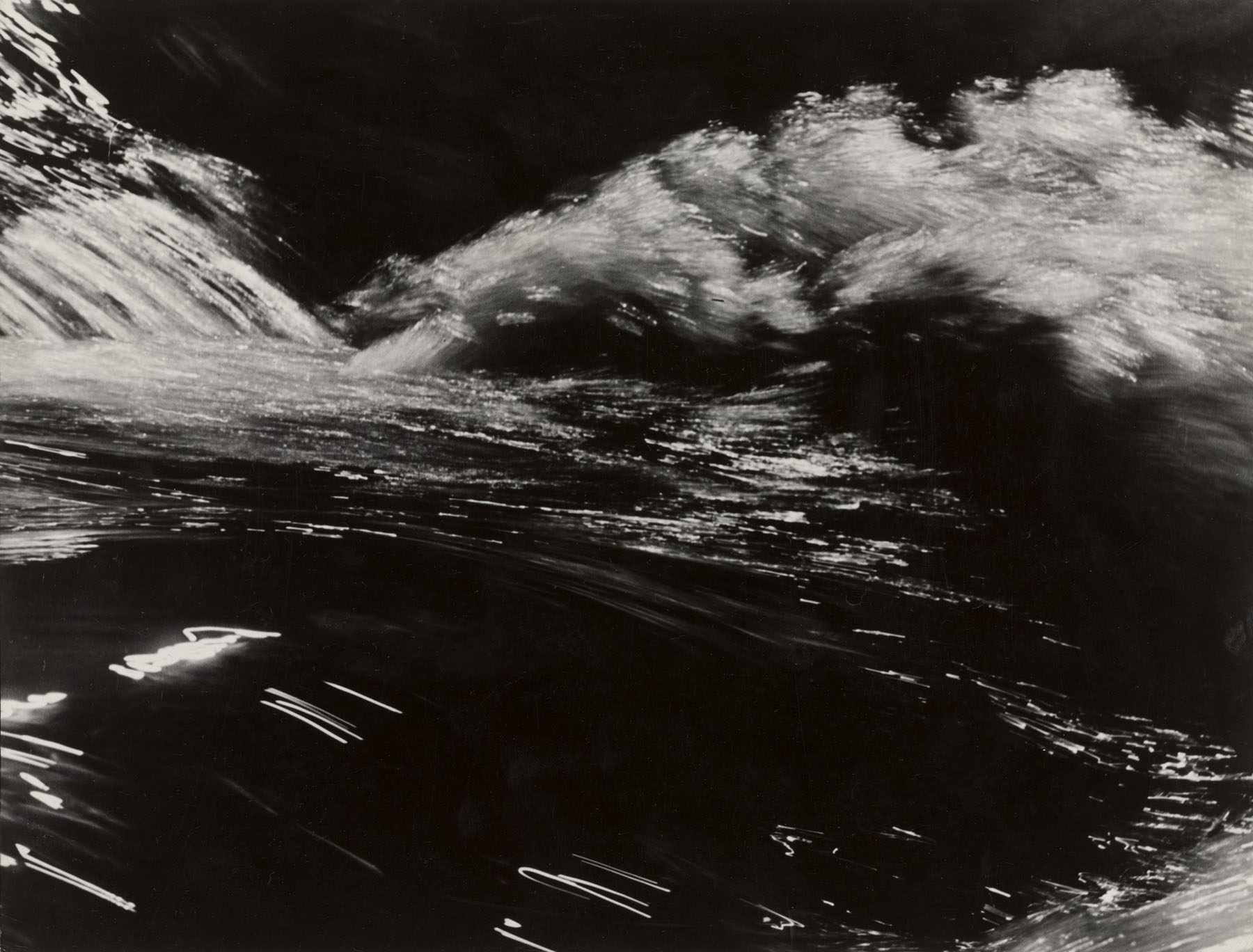
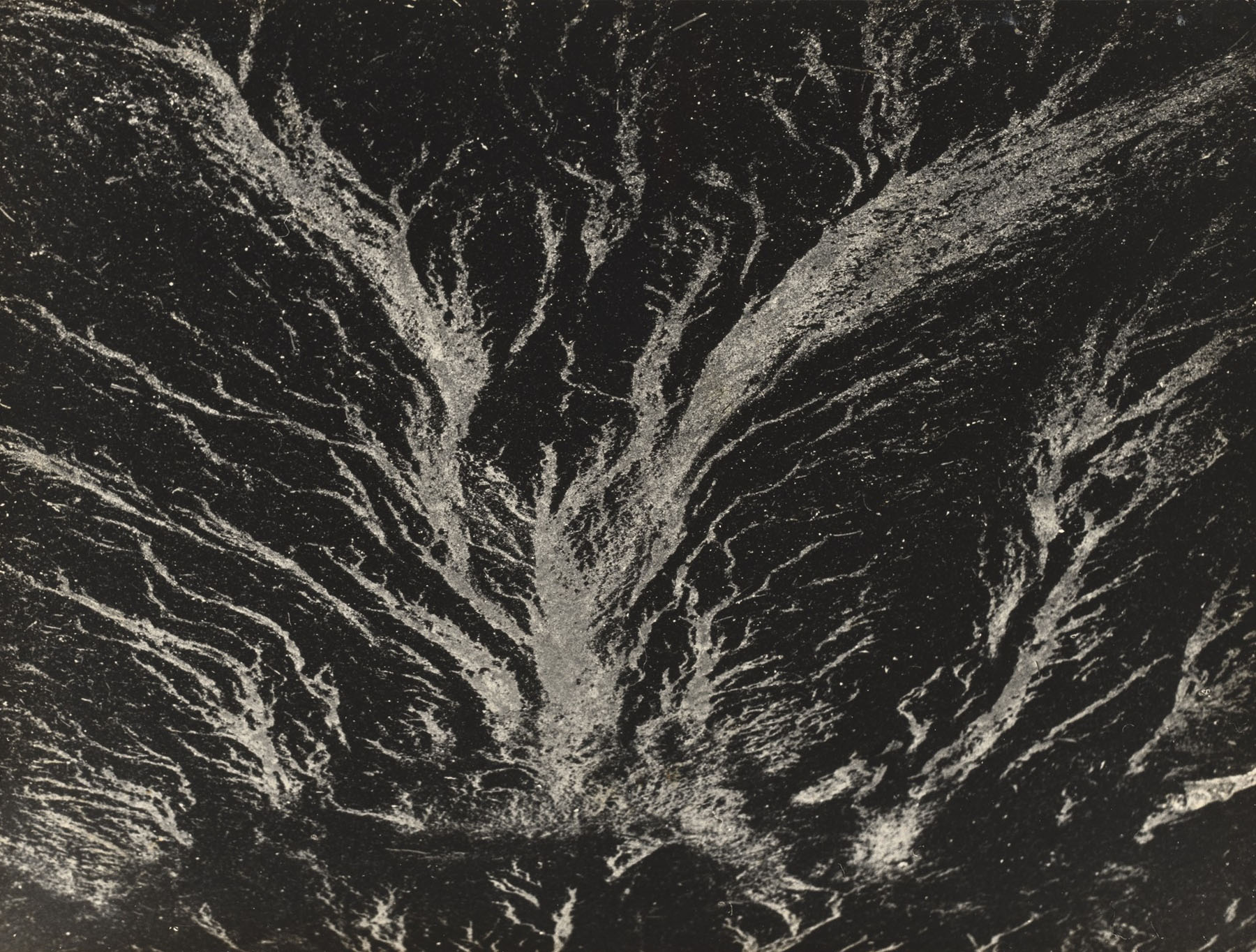
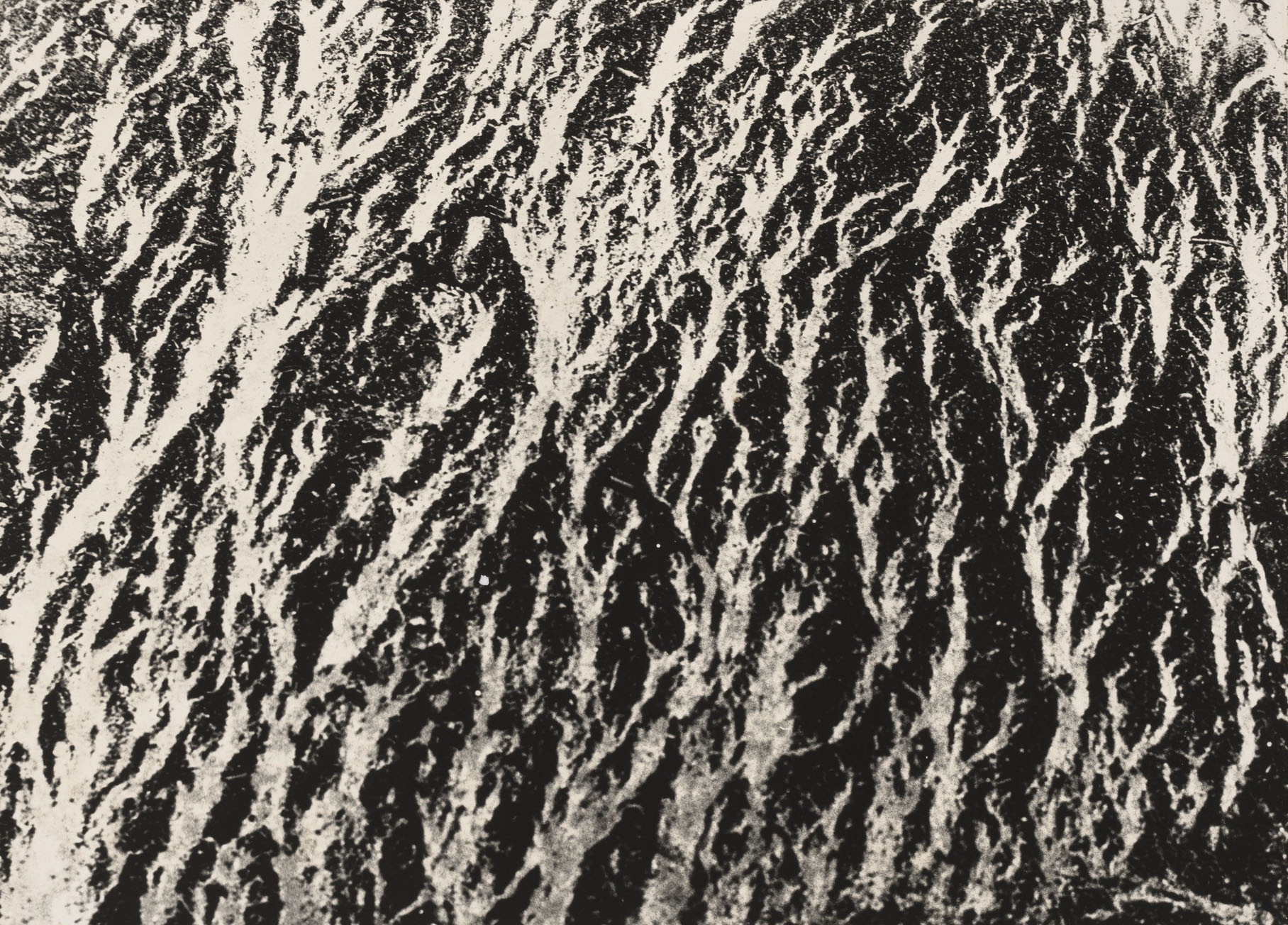
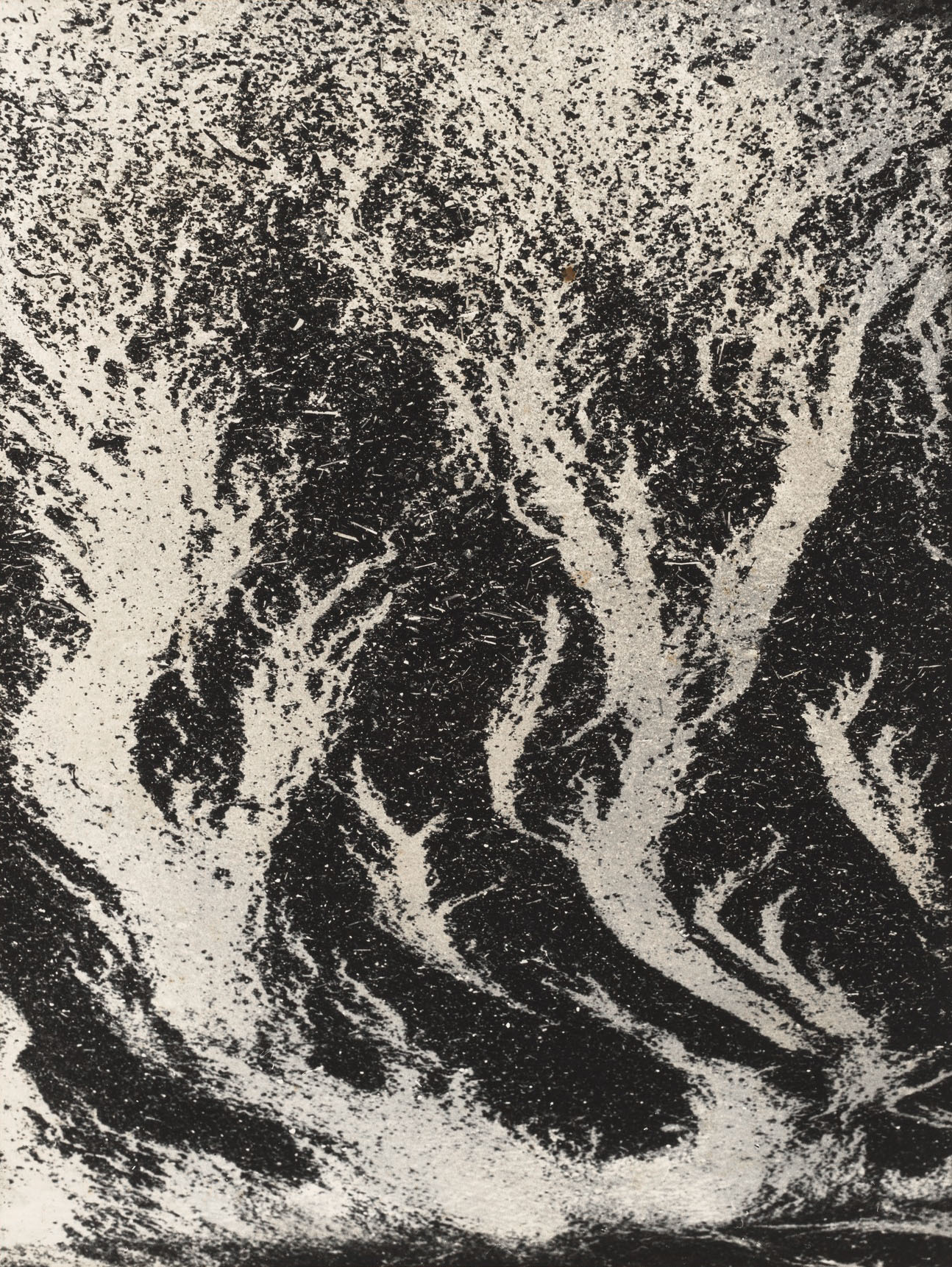
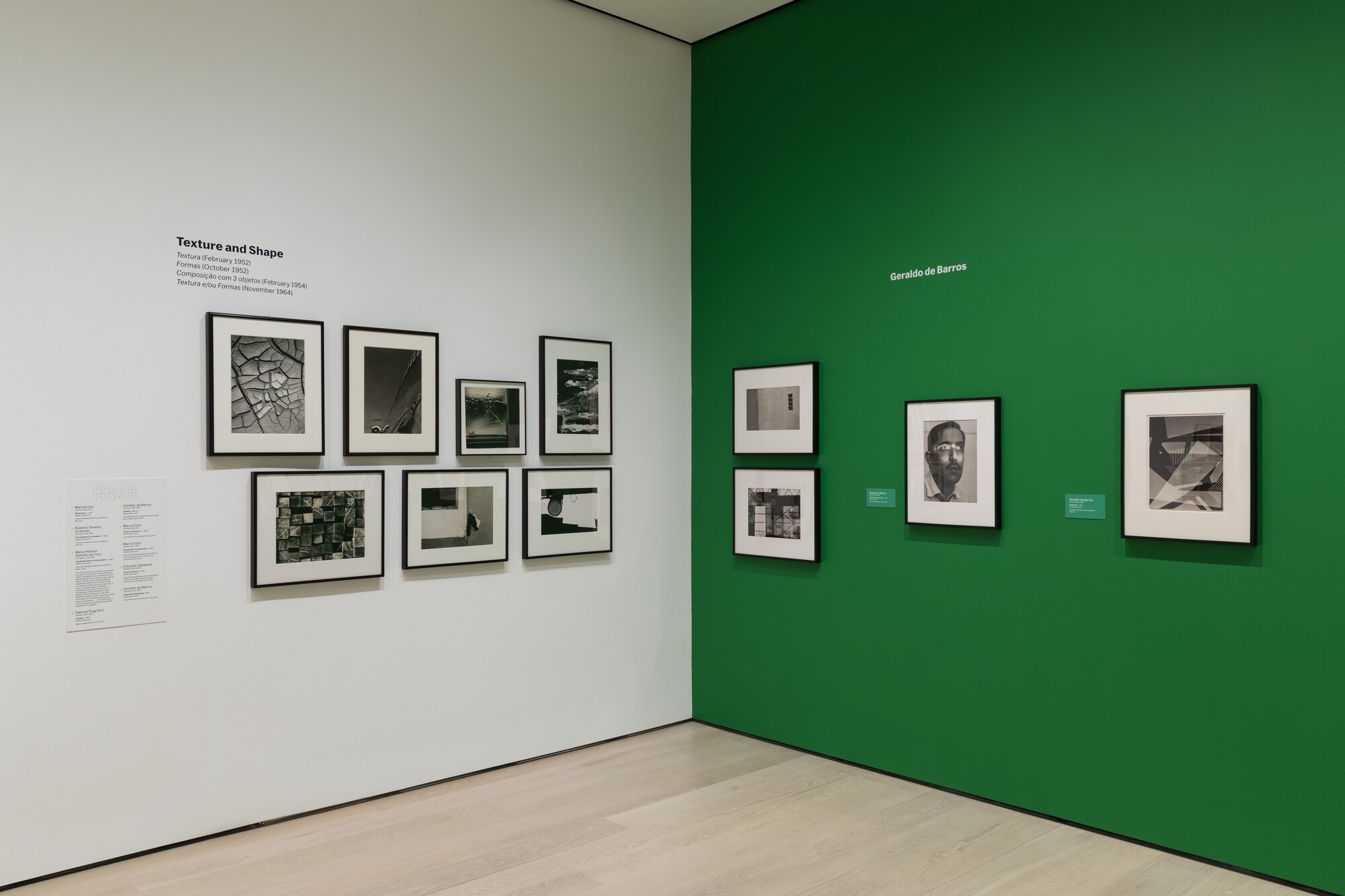
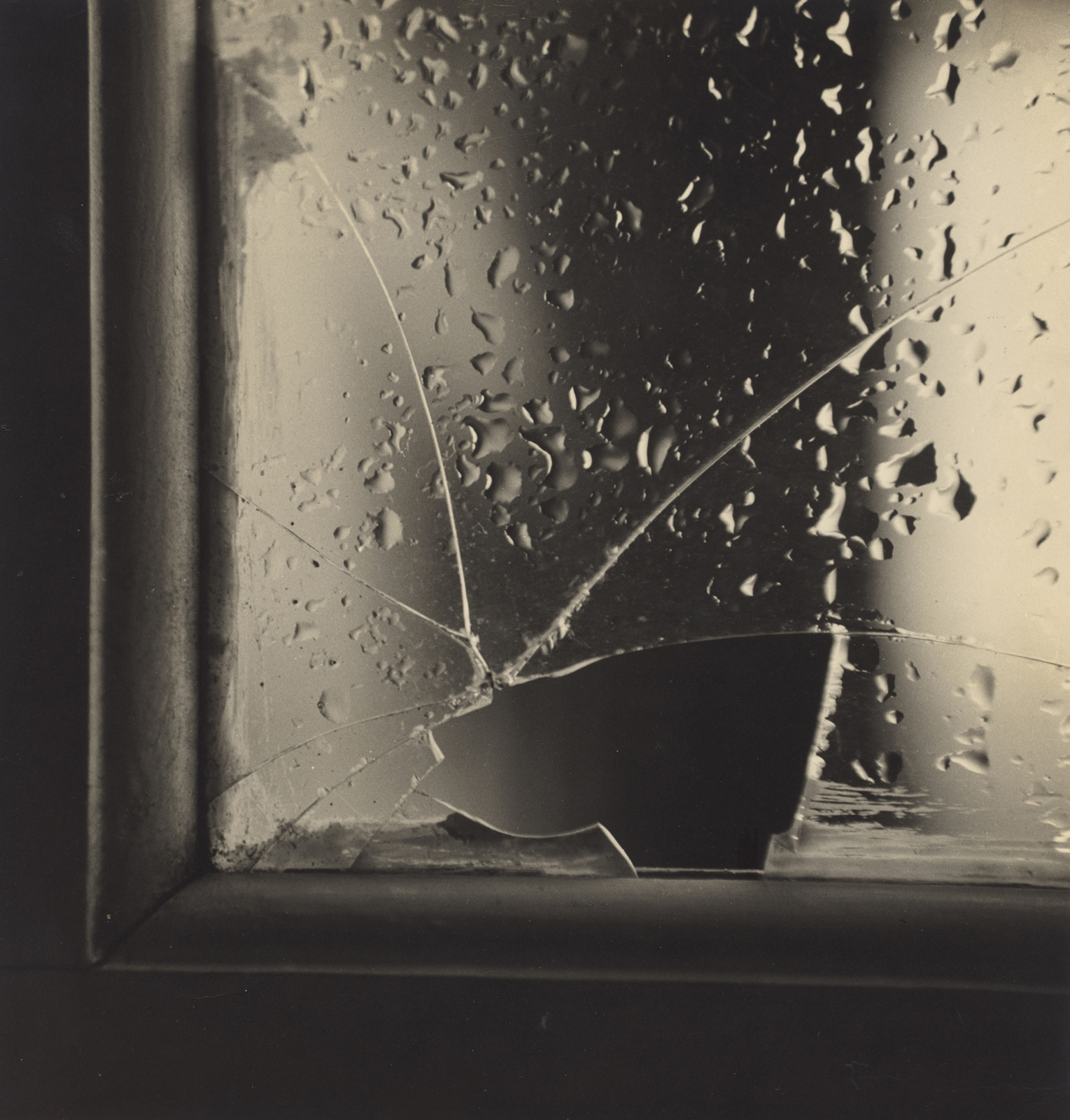
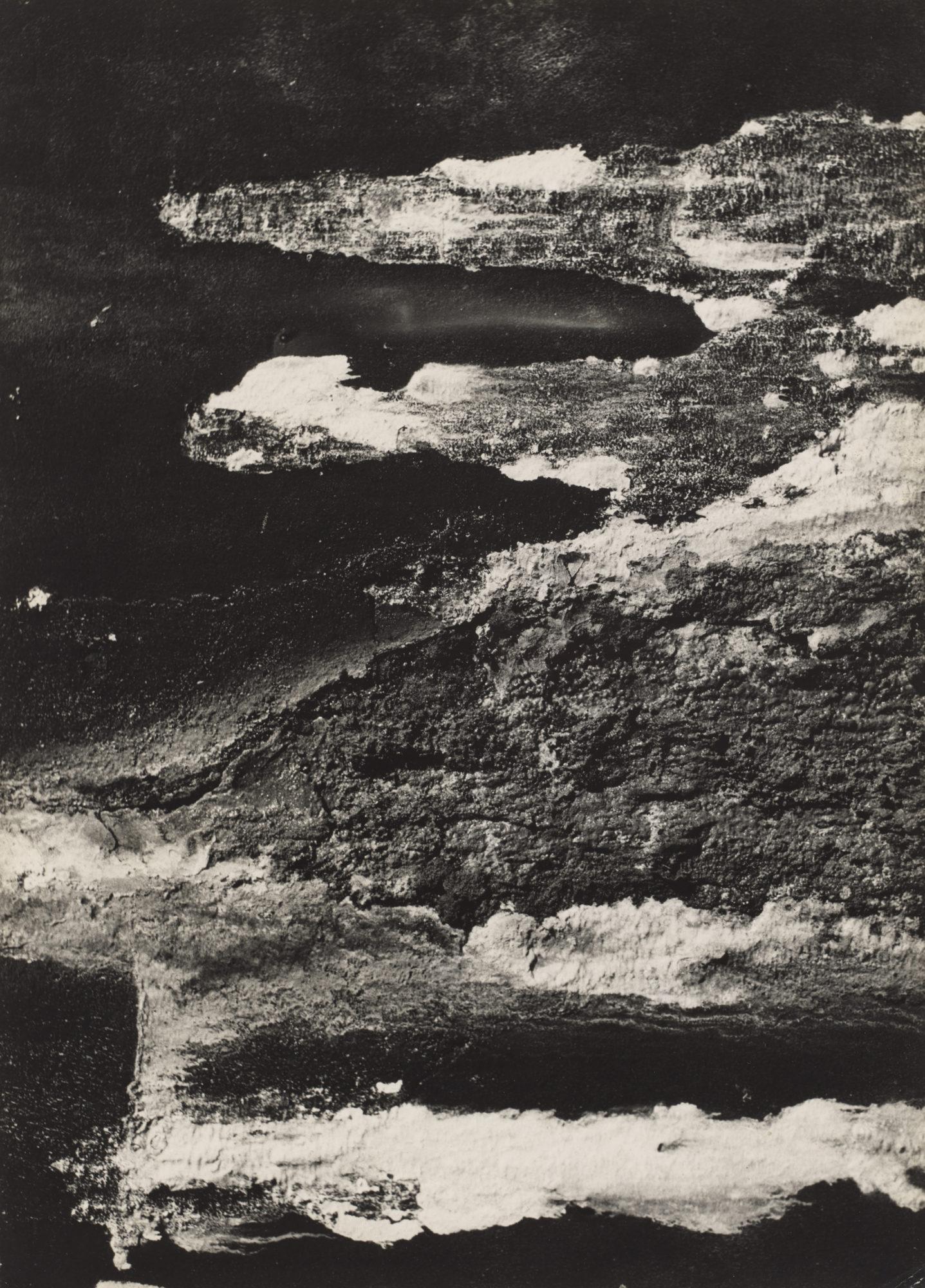
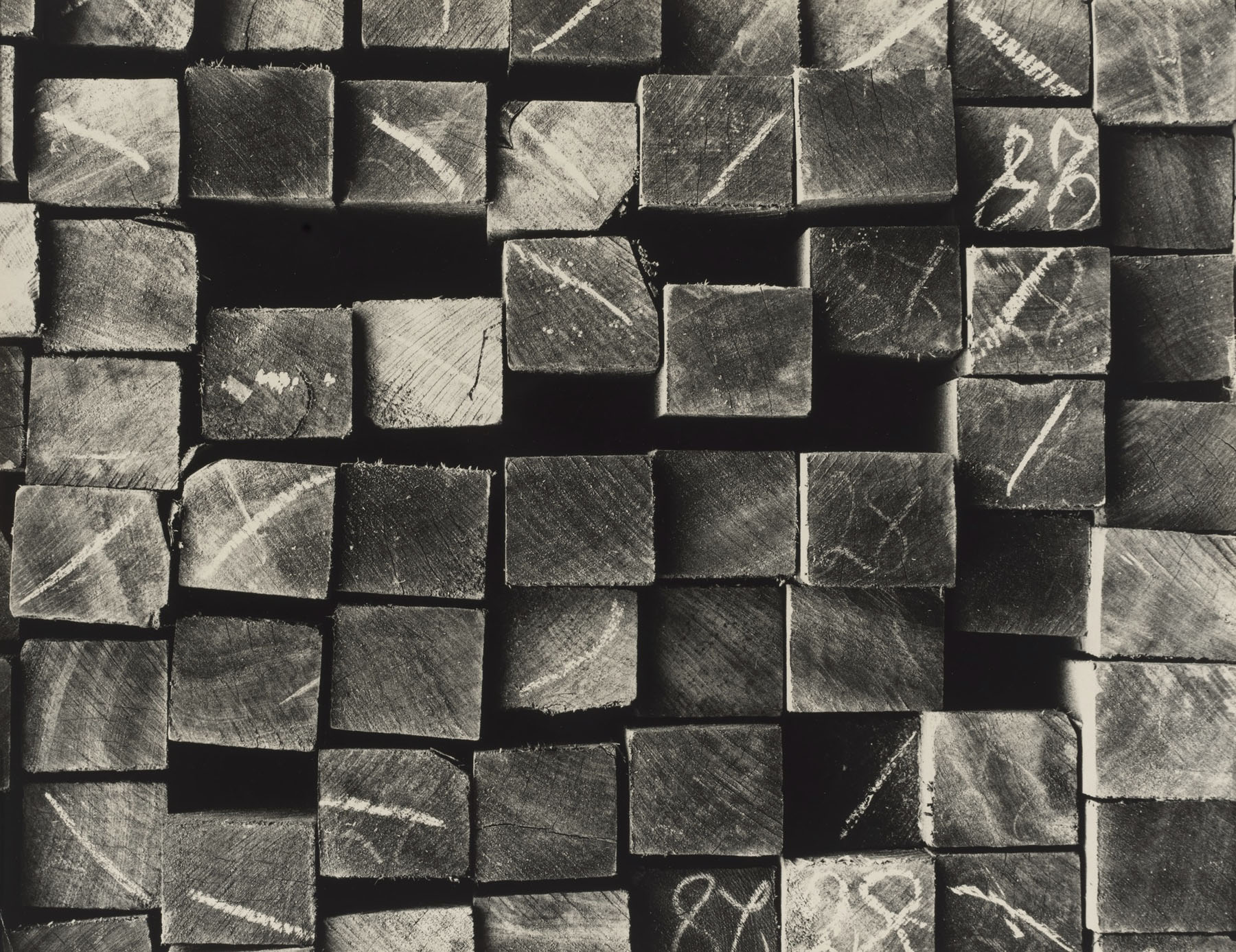
Exhibition: ‘Mario Giacomelli: Figure | Ground’ at the J. Paul Getty Museum, Los Angeles

Exhibition dates: 29th June – 10th October, 2021
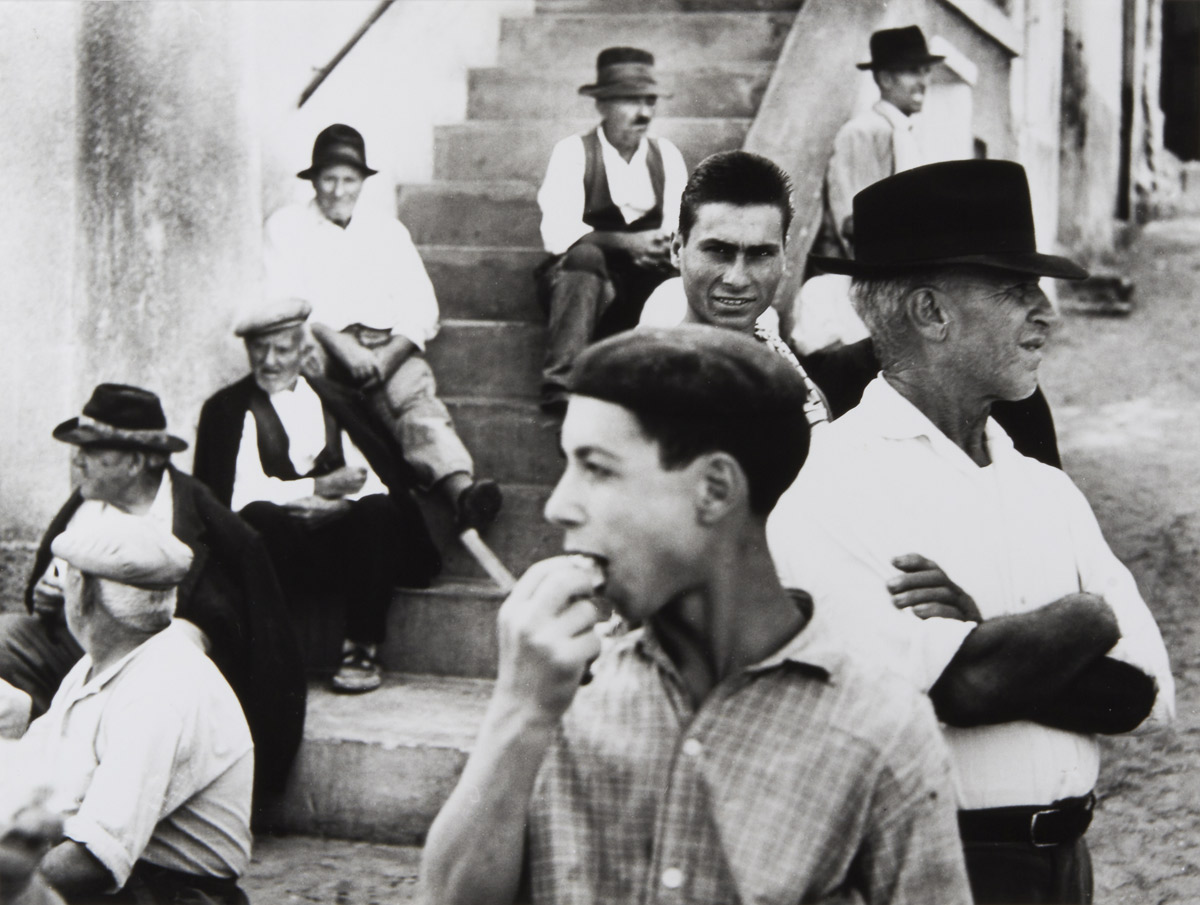
 

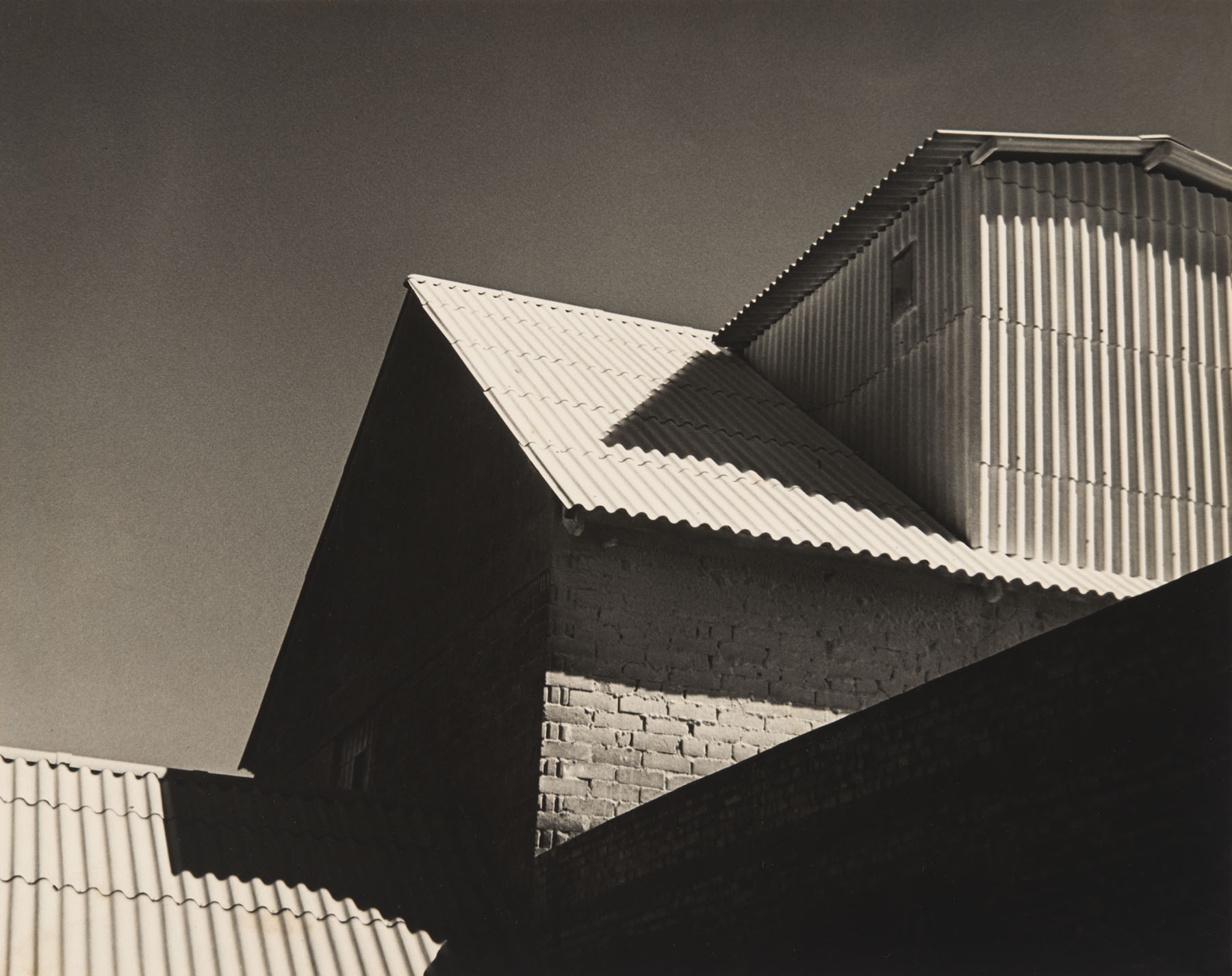
Mario Giacomelli (Italian, 1925-2000) 'Puglia' 1958 from the exhibition 'Mario Giacomelli: Figure | Ground' at the J. Paul Getty Museum, Los Angeles, June - Oct, 2021


Mario Giacomelli (Italian, 1925-2000)
Apulia (Puglia)
1958
Gelatin silver print
28.2 × 39.2cm (11 1/8 × 15 7/16 in.)
The J. Paul Getty Museum, Los Angeles, Gift of Daniel Greenberg and Susan Steinhauser
Reproduced courtesy Mario Giacomelli Archive
© Rita and Simone Giacomelli


The realist illusionist

When I look at the work of Mario Giacomelli, his photographs remind me why I love the practice of photography.

They discombobulate and disorientate me; they challenge me to see the world in a different way; they reveal new things over time the more one looks at them… and they act as momento mori for both human and land. His conceptual photographs, for that is what they are, are refreshed time and time again – through their impressions, through their graphic nature, and their lack of grounding in a fixed reality.

Whether it be the abstract photographs from the series Death Will Come and It Will Have Your Eyes, the shimmering figures from the series Scanno (are they really one negative!), the groundlessness of the figures in Young Priests, the abstract figuration of The Good Earth, or the spatial levitation of Metamorphosis of the Land / Awareness of Nature, the viewer is forced to reassess their relationship with the physical object (the photograph) and its representation and interpretation of our passage on this earth. As has been said of Ovid’s Metamorphoses, “The ways that stories are linked by geography, themes, or contrasts creates interesting effects and constantly forces the reader to evaluate the connections.”

Giacomelli’s photographs are active in this way: they act on the perceptions of the viewer in order to challenge what we understand of the interaction between human beings (he continued to photograph in his hometown of Senigallia for almost 50 years), and the interaction between human beings and the land (where his photographs “function as commentary on the capacity of both natural occurrences and human interventions to change the character of the land.”) As with many artists, the concerns that were present when he started photography – his subject matter informed by the people and places closest to him – remained with him for the rest of his life. Except he turned personal stories into universal narratives.

All of Giacomelli’s sequences (he conceived many of his series as sequences) required periods of sustained observation, where the artist embedded himself with and in his subject matter. Only in this way could the artist understand the spirit of the land and its people, his people. He had an innate ability to describe people and the land in a specific time and place… which, on reflection, seem to be timeless, like a fairy-tale or a lament. Places and people steeped in the past but in the photographs hovering on the edge of his nowhere.

The text for the series Metamorphosis of the Land in this posting perfectly sums up how much time Giacomelli took over a series, how conceptual his series were, and the artistic techniques he used to manipulate reality:

The photographs gathered under the title Metamorphosis of the Land were created over roughly two decades in the countryside surrounding Senigallia. Without a horizon line to anchor them, they are disorienting, requiring the viewer to rely on a lone house or tree as a focal point. Perspectival ambiguity abounds: Did Giacomelli take the photographs from an elevated or lowered vantage point? Did he hold the camera parallel or perpendicular to the land? Is this confusion a result of the inherent “verticality” of the hilly Marche region, or did Giacomelli rely on darkroom manipulation (such as printing on diagonally tilted sheets of photo paper) to create right-angled configurations of shapes that should otherwise recede in the distance, following the tenets of one-point perspective?

These ambiguities are further intensified by Giacomelli’s intention for this body of work to address issues of ecological neglect and loss. Deeply attuned to the rural geography and agricultural practices of the Marche, he was wary of the consequences that accompanied the shift from centuries-old systems of subdivided fields and crop rotation to modern methods of mechanisation and fertilisation that overtax the land by keeping it in constant use. The series is one of lament.

In his later series of transformation tales Giacomelli once again disrupts the flow of temporal reality. As he reflects on the death of his mother, his own mortality and the changing nature of the landscape, his photographs “mark a noticeable shift from Giacomelli’s earlier position of critiquing the slow degradation of the land to one that sets the stage for a more metaphysical contemplation of the interconnectivity of space, time, and being.” Of course, this contemplation had always been there since the beginnings of his photography where, “metaphysically speaking, understanding time means understanding the shared world that man encounters and with which man interacts.”

Through art techniques (double exposures, variable perspectives, slow shutter speeds, moving his camera during exposure, abrupt cropping, slight overexposure to reverse tonal values, the development of the negative, painting or scratching of areas on the negative to introduce elements of the absurd or surreal, use of high-contrast paper and darkroom manipulations) and conceptual structures (inspired by poems to create parallel narratives, repurposing “an image made for one series in another series, reinforcing the sense of fluidity that connects all of his work”), Giacomelli seeks to confront the inevitability of his own mortality and thus his return to earth. As he observes, “Of course [photography] cannot create, nor express all we want to express. But it can be a witness of our passage on earth…”

In Giacomelli’s unique interpretation of figure | ground lies his elevation into the “pantheon” of photographic stars. A self-taught artist, he was not encumbered or impeded by traditional photographic practice but described his own visual photographic language, instantly recognisable as his (once seen, never forgotten) signature. A stamp on the verso of each print in the series Awareness of Nature describes the series as “the work of man and my intervention (the signs, the material, the randomness, etc.) recorded as a document before being lost in the relative folds of time.”

In my humble opinion there is no fear, only elation, that Giacomelli’s essential work will ever be lost to the folds of time.

Dr Marcus Bunyan


Many thanks to the J. Paul Getty Museum for allowing me to publish the photographs in the posting. Please click on the photographs for a larger version of the image.


In nova fert animus mutatas dicere formas / corpora;
(I intend to speak of forms changed into new entities;)


Ovid. Metamorphoses, Book I, lines 1–2


Be ahead of all parting, as if it had already happened,
like winter, which even now is passing.
For beneath the winter is a winter so endless
that to survive it at all is a triumph of the heart.

Be forever dead in Eurydice, and climb back singing.
Climb praising as you return to connection.
Here among the disappearing, in the realm of the transient,
be a ringing glass that shatters as it rings.

Be. And know as well the need to not be:
let that ground of all that changes
bring you to completion now.

To all that has run its course, and to the vast unsayable
numbers of beings abounding in Nature,
add yourself gladly, and cancel the cost.


Rainer Maria Rilke. Sonnets to Orpheus II, 13


“Of course [photography] cannot create, nor express all we want to express. But it can be a witness of our passage on earth, like a notebook…
… For me each photo represents a moment, like breathing. Who can say the breath before is more important than the one after? They are continuous and follow each other until everything stops. How many times did we breathe tonight? Could you say one breath is more beautiful than the rest? But their sum makes up an existence.”


Mario Giacomelli, 1987


Born into poverty and largely self-taught, Mario Giacomelli became one of Italy’s leading photographers. After purchasing his first camera in 1953, he began creating humanistic portrayals of people in their natural environments and dramatic abstractions of the landscapes. He continued to photograph in his hometown of Senigallia, on the Adriatic coast of Italy, for almost fifty years. Rendered in high-contrast black and white, his photographs are often gritty and raw, but always intensely personal.

This exhibition is dedicated to the memory of Daniel Greenberg (1941-2021) and is made possible through gifts made by him and Susan Steinhauser.
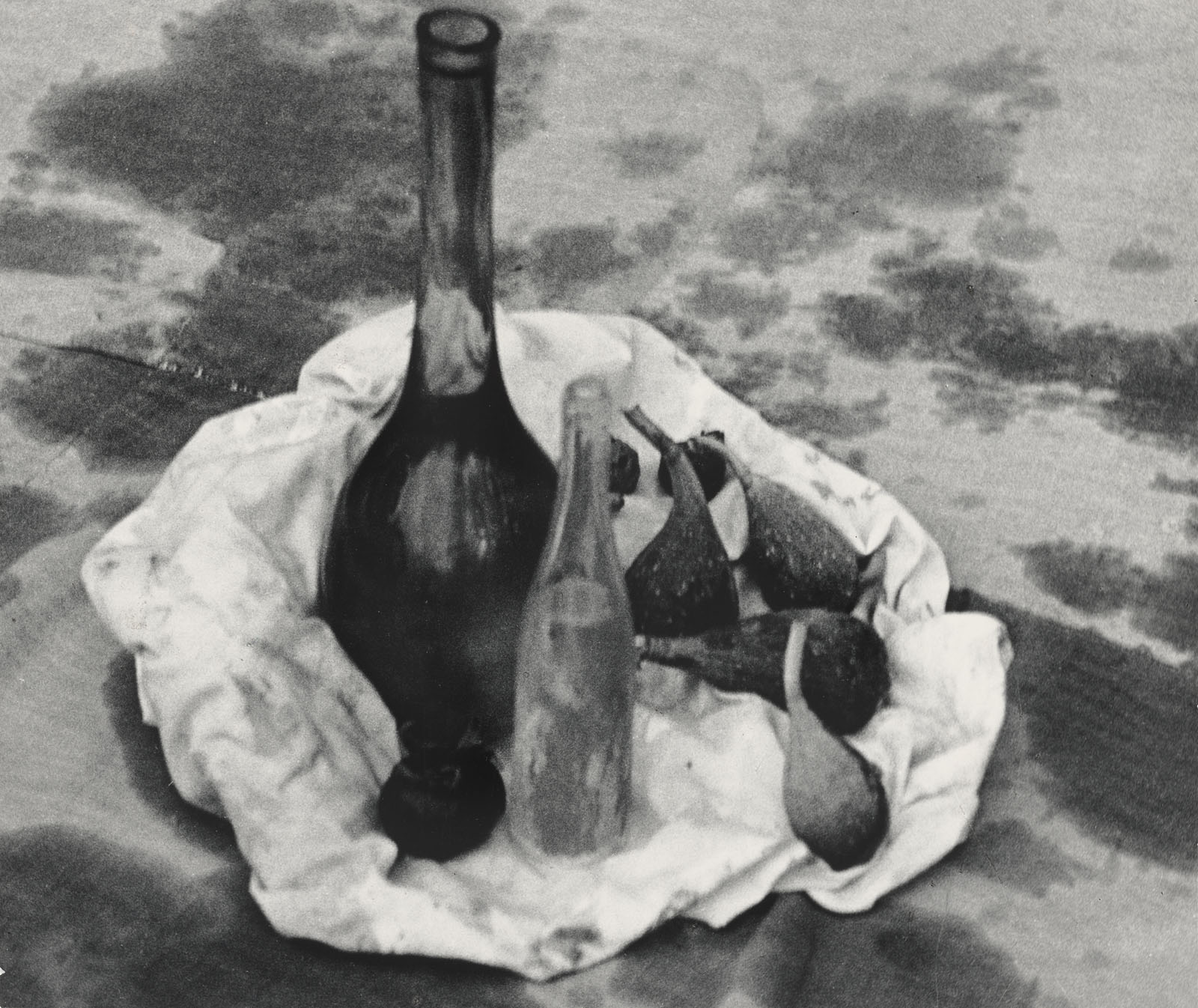


Mario Giacomelli (Italian, 1925-2000) 'Still Life with Figs' (Natura morta con fichi) 1960 from the exhibition 'Mario Giacomelli: Figure | Ground' at the J. Paul Getty Museum, Los Angeles, June - Oct, 2021


Mario Giacomelli (Italian, 1925-2000)
Still Life with Figs (Natura morta con fichi)
1960
Gelatin silver print
28.2 × 33.7cm (11 1/8 × 13 1/4 in.)
The J. Paul Getty Museum, Los Angeles, Gift of Daniel Greenberg and Susan Steinhauser
Reproduced courtesy Mario Giacomelli Archive
© Rita and Simone Giacomelli


Known for his gritty, black-and-white images, Mario Giacomelli is recognised as one of the foremost Italian photographers of the 20th century. Drawn from the Getty Museum’s deep holdings, the exhibition Mario Giacomelli: Figure | Ground features 91 photographs that showcase the raw expressiveness of the artist’s style, which echoed many of the concerns of postwar Neorealist film and Existentialist literature.

The exhibition is dedicated to the memory of Daniel Greenberg (1941-2021) and was made possible through generous gifts from him and his wife, Susan Steinhauser. As photography collectors for more than two decades and founding members of the Getty Museum Photographs Council, Greenberg and Steinhauser have been generous donors to the Getty. All of the photographs in this exhibition were donated by Greenberg and Steinhauser or purchased in part with funds they provided.

“After the Museum’s yearlong closure, we are particularly pleased to be able to reopen the Center for Photographs at the Getty Center with two important exhibitions that highlight the Museum’s extensive collections,” says Timothy Potts, Maria Hummer-Tuttle and Robert Tuttle Director of the J. Paul Getty Museum. “We are especially pleased to honour the extraordinary contributions of Dan Greenberg and Susan Steinhauser, whose gifts of works by Giacomelli are the basis of the first monographic exhibition of the artist in a U.S. museum in 35 years. The exhibition and its catalogue are testament both to their passion as collectors and their generosity as benefactors to the Getty Museum over many years.”

Mario Giacomelli: Figure | Ground

Born into poverty, Mario Giacomelli (1925-2000) lived his entire life in Senigallia, a town on the Adriatic coast in Italy’s Marche region. He lost his father at an early age and took up poetry and painting before apprenticing as a printmaker, which became his livelihood. After purchasing his first camera in 1953, Giacomelli quickly gained recognition for his unique approach to photographing people, landscapes, and people in the landscape. Although photography was initially relegated to Sundays, when his printshop was closed, and to his immediate surroundings in the Marche, he became one of Italy’s most prominent practitioners.

Giacomelli’s use of flash, grainy film, and high-contrast paper resulted in bold, geometric compositions with deep blacks and glowing whites. He most frequently focused his camera on the people, landscapes, and seascapes of the Marche. He often spent several years exploring a photographic idea, expanding and reinterpreting it, or repurposing an image made for one series for inclusion in another. By applying titles derived from poetry, he transformed familiar subjects into meditations on the themes of time, memory, and existence.

Among Giacomelli’s earliest photographs are portraits of family and friends. His first, sustained body of work was Hospice, which he began in 1954 and later titled Death Will Come and It Will Have Your Eyes, after a poem by the writer Cesare Pavese. Depicting residents of the home for the elderly in Senigallia and made with flash, the images are characterised by their unflinching scrutiny of individuals living out their last days. Additional early series on view include Scanno (1957-59) and Young Priests (1961-1963), both of which further demonstrate Giacomelli’s ability to describe people in a specific time and place. In both series, figures clothed in black are set against stark white backgrounds. While there is an underlying sense of furtiveness or foreboding in the Scanno images, the Young Priests series, which Giacomelli later titled I Have No Hands That Caress My Face, is uncharacteristically light-hearted. Another series, The Good Earth, follows a farming family going about daily life, planting and harvesting crops and tending to livestock in the countryside surrounding Senigallia; the intermingling of generations suggests the cyclical nature of existence.

Landscapes feature prominently in Giacomelli’s engagement with photography from the beginning. The exhibition features several early works dating from the 1950s, as well as signature series, such as Metamorphosis of the Land (1958-1980) and Awareness of Nature (1976-1980). Both series portray fields and small farms in the Marche region, many of which he revisited as seasons changed and crops were rotated. Giacomelli wanted to show how modernised cultivation practices were overtaxing the land and changing the landscape. He often photographed from a low or an elevated vantage point – including from a plane – to eliminate the horizon and create disorienting patchworks of geometric shapes or pulsating configurations of plowed furrows.

In his later years, Giacomelli created several series that intersperse landscapes with figure studies. He often merged the two genres in double exposures or by experimenting with slow shutter speeds and moving his camera during exposure to blur the lines between figure and ground. Several of these series were inspired by poems, both as composed by himself or by others. Giacomelli reflects on the interconnectedness of space, time, and being, in these works, which have a metaphysical quality. I Would Like to Tell This Memory is one of his last bodies of work. Incorporating various props, such as a mannequin, a stuffed dog, and stuffed birds, the images in the series suggest that the artist is reflecting on the inevitability of his own mortality.

“It is exciting to present this collection of Mario Giacomelli photographs assembled by Dan Greenberg and Susan Steinhauser over a period of almost twenty years,” says Virginia Heckert, curator of photographs at the Museum and curator of both exhibitions. “Not only does the exhibition introduce a new audience to Giacomelli’s work, but it does so through the eyes of the collectors, who were drawn to his expressive portrayals of people and the land.”

Press release from the J. Paul Getty Museum
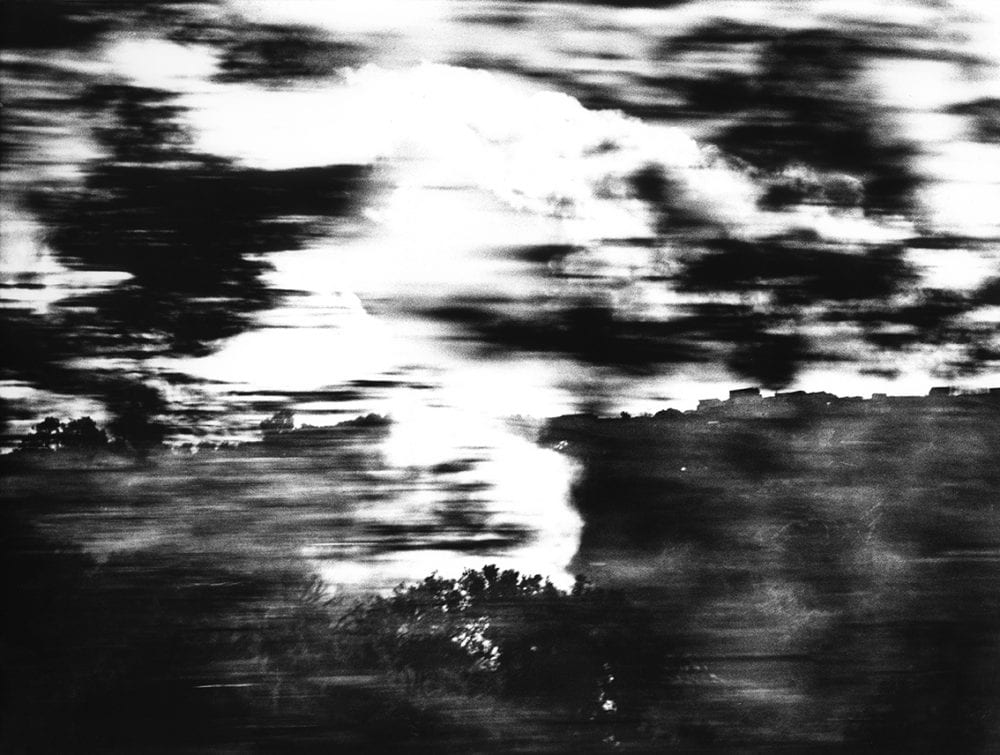
 

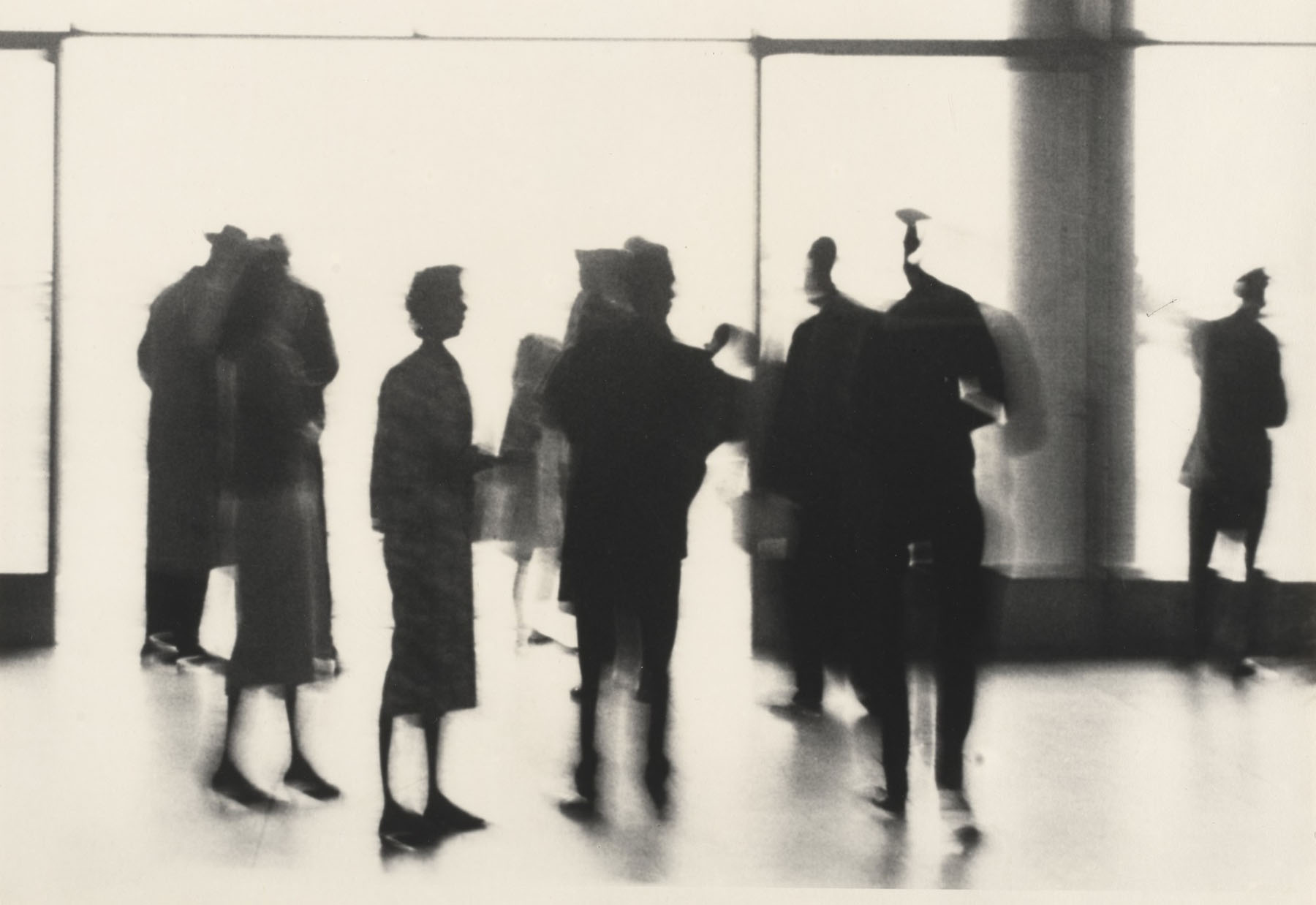
Mario Giacomelli (Italian, 1925-2000) 'The Infinite' about 1986-1988


Mario Giacomelli (Italian, 1925-2000)
The Infinite
about 1986-1988
Gelatin silver print
29.5 × 38.8cm (11 5/8 × 15 1/4 in.)
The J. Paul Getty Museum, Los Angeles, Gift of Daniel Greenberg and Susan Steinhauser
Reproduced courtesy Mario Giacomelli Archive
© Rita and Simone Giacomelli


Mario Giacomelli: Figure / Ground

Mario Giacomelli (1925-2000) is widely regarded as one of the foremost Italian photographers of the twentieth century. Born into poverty, he lived his entire life in Senigallia, a town on the Adriatic coast in Italy’s Marche region. After losing his father at age nine and completing elementary school at eleven, he apprenticed as a typesetter and printer, while also teaching himself to paint and write poetry. With money given to him by a resident of the ospizio (hospice) where his mother worked, he opened a printshop, a business that ensured lifelong financial stability. His engagement with photography began shortly thereafter, occurring primarily on Sundays, when the shop was closed.

After purchasing his first camera in 1953, Giacomelli quickly gained recognition for the raw expressiveness of his images, which echoed many of the concerns of postwar Neorealist film and Existentialist literature, with their interests in the conditions of everyday life and in ordinary people as thinking, feeling individuals. His preference for grainy film and high-contrast paper resulted in bold, geometric compositions with deep blacks and glowing whites. Most frequently focusing his camera on the people, landscapes, and seascapes of the Marche, Giacomelli often spent several years exploring a photographic idea, expanding and reinterpreting it, or repurposing an image made for one series for inclusion in another. By applying titles derived from poetry, he transformed familiar subjects into meditations on the themes of time, memory, and existence.

Forming Giacomelli

As a young man, Giacomelli served briefly in the Italian army during World War II. His photographic practice shows the influence of two approaches prevalent in postwar European photography: humanism, which is often associated with photojournalism; and artistic expression as a means of exploring the inner psyche, which derived from the theory of Subjective photography advanced by Otto Steinert (German, 1915-1978). In Italy, these approaches found their respective counterparts in the camera clubs La Gondola (The Gondola), established in Venice in 1948, and La Bussola (The Compass), begun in Milan in 1947. Giacomelli, who was self-taught as a photographer, exchanged ideas with and learned from members of both clubs. He was also a cofounder of Misa, a local chapter of La Bussola named after Senigallia’s principal river.

Senigallia’s people and places were recurring motifs in Giacomelli’s work. In addition to revealing his interest in the different communities of his hometown, these photographs of a Romani family and of children frolicking on the beach demonstrate his ability to combine humanist and expressive impulses. Giacomelli understood that graininess, movement, and high contrast could do more than simply provide a veneer of abstraction; they also heighten the emotive power of images.
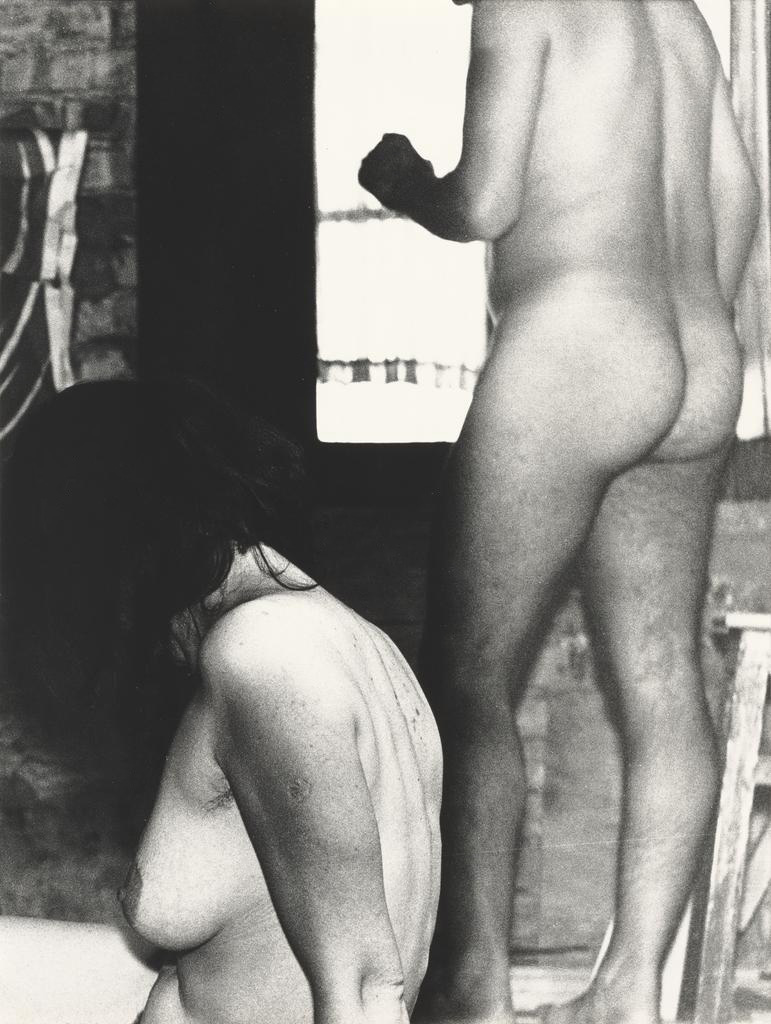
 

Mario Giacomelli (Italian, 1925-2000) 'Figure (The Nude), No. 271' 1958; printed 1981


Mario Giacomelli (Italian, 1925-2000)
Figure (The Nude), No. 271
1958; printed 1981
Gelatin silver print
40.2 × 30.1cm (15 13/16 × 11 7/8 in.)
The J. Paul Getty Museum, Los Angeles, Gift of Daniel Greenberg and Susan Steinhauser
Reproduced courtesy Mario Giacomelli Archive
© Rita and Simone Giacomelli
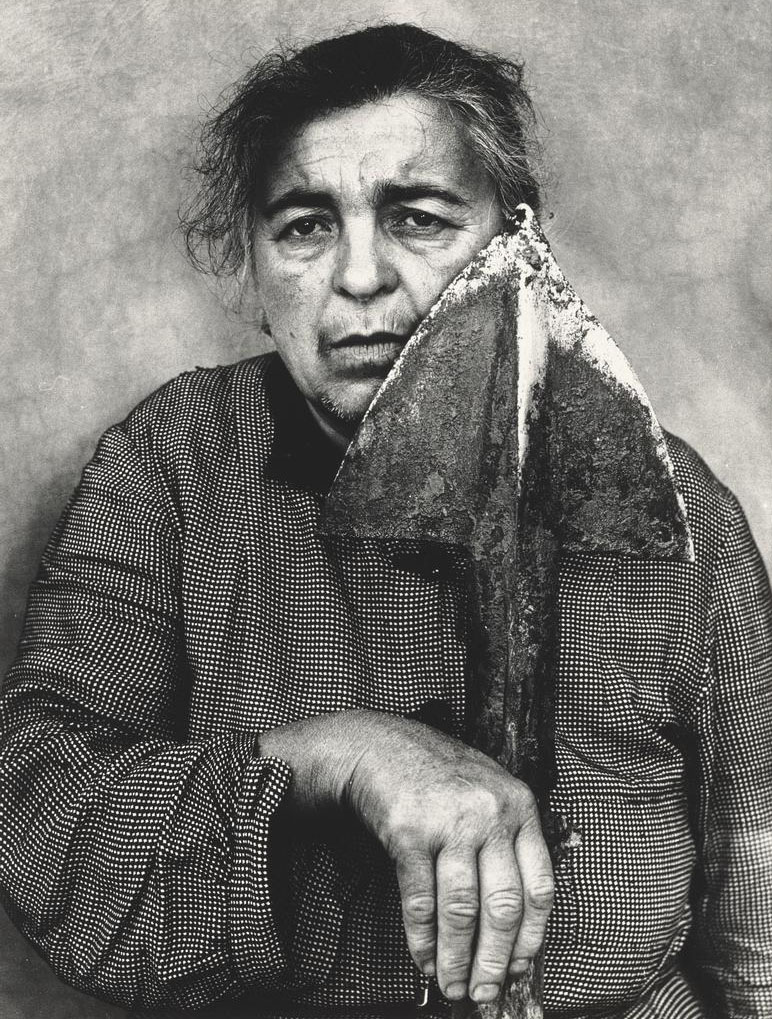
 

Mario Giacomelli (Italian, 1925-2000) 'Figure (My Mother), No. 130' 1956; printed 1981


Mario Giacomelli (Italian, 1925-2000)
Figure (My Mother), No. 130
1956; printed 1981
Gelatin silver print
40.1 × 30.1cm (15 13/16 × 11 7/8 in.)
The J. Paul Getty Museum, Los Angeles, Gift of Daniel Greenberg and Susan Steinhauser
Reproduced courtesy Mario Giacomelli Archive
© Rita and Simone Giacomelli


Early work (1956-1960)

In 1955 Giacomelli acquired the secondhand Kobell camera with a Voigtländer lens that he would employ for the rest of his career. He later described it as something that had been “cobbled up,” held together with tape and always losing parts. Made by the Milanese manufacturers Boniforti & Ballerio, the camera used 120 roll film to produce 6 x 9 cm negatives and accommodated interchangeable lenses and a synchronised flash. For Giacomelli, it was not a device to record reality but a means of personal expression. His early association with members of local and national camera clubs and his experimentation with natural and artificial lighting, multiple exposures, and other in-camera and darkroom techniques soon led to the refinement of a unique visual language.

Among Giacomelli’s earliest photographs are portraits of family and friends; the image of his mother holding a spade is one of his most notable. He also staged still lifes and figure studies in his home and garden; the nudes shown here depict the photographer and his wife, Anna. Relatively conventional in composition, these works give a sense of Giacomelli learning his craft, while also indicating the extent to which his subject matter was informed by the people and places closest to him.
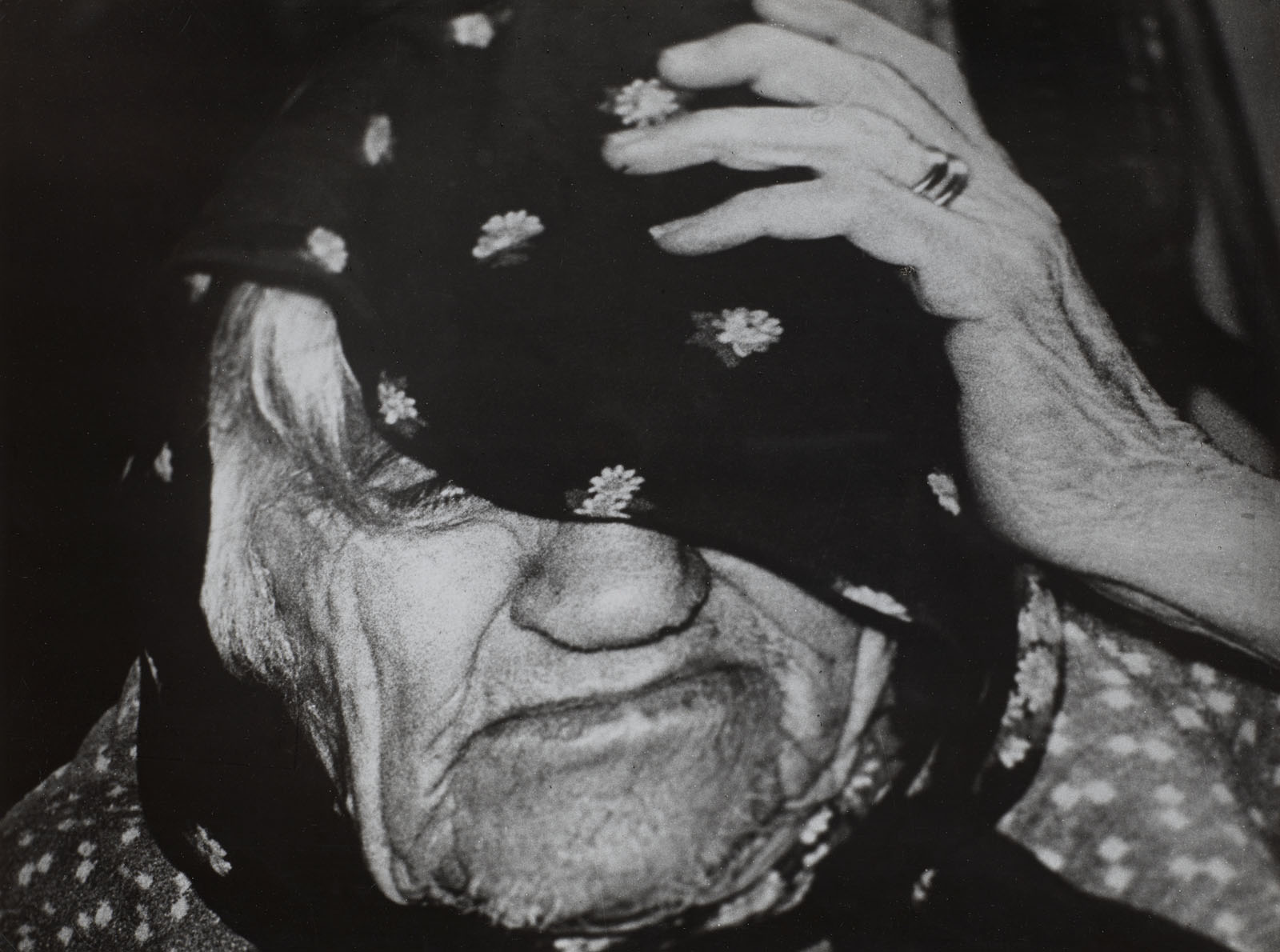
 

Mario Giacomelli (Italian, 1925-2000) 'Hospice / Death Will Come and It Will Have Your Eyes' c. 1954-1957


Mario Giacomelli (Italian, 1925-2000)
Hospice / Death Will Come and It Will Have Your Eyes (Verrà la morte e avrà i tuoi occhi)
c. 1954-1957
Gelatin silver print
29.2 × 38.9cm (11 1/2 × 15 5/16 in.)
The J. Paul Getty Museum, Los Angeles, Gift of Daniel Greenberg and Susan Steinhauser
Reproduced courtesy Mario Giacomelli Archive
© Rita and Simone Giacomelli
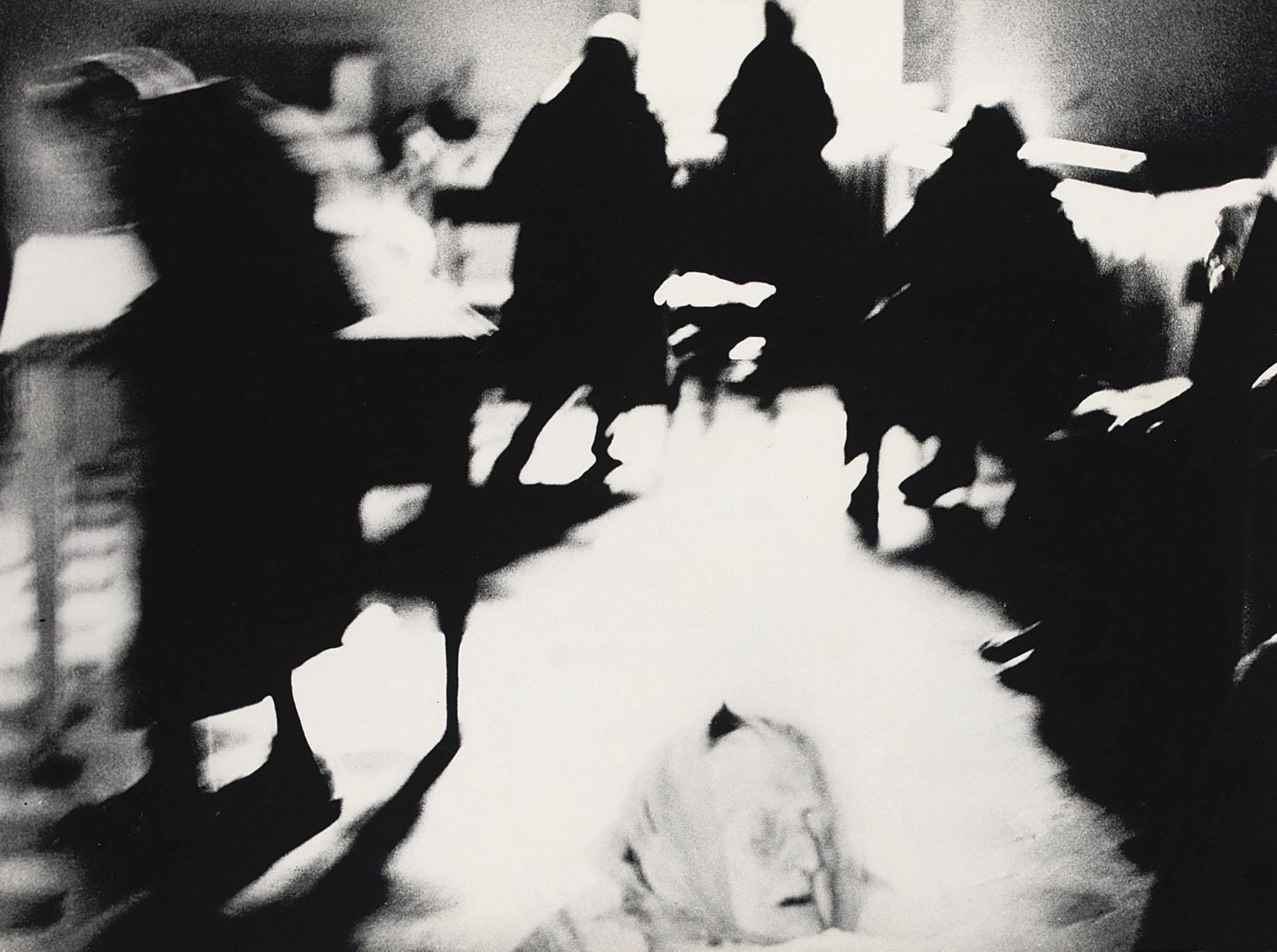
 

Mario Giacomelli (Italian, 1925-2000) 'Death Will Come and It Will Have Your Eyes, No. 97' (Verrà la morte e avrà i tuoi occhi, No. 97) negative 1966; print 1981


Mario Giacomelli (Italian, 1925-2000)
Death Will Come and It Will Have Your Eyes, No. 97 (Verrà la morte e avrà i tuoi occhi, No. 97)
Negative 1966; print 1981
Gelatin silver print
30.1 × 40.3cm (11 7/8 × 15 7/8 in.)
The J. Paul Getty Museum, Los Angeles, Gift of Daniel Greenberg and Susan Steinhauser
Reproduced courtesy Mario Giacomelli Archive
© Rita and Simone Giacomelli
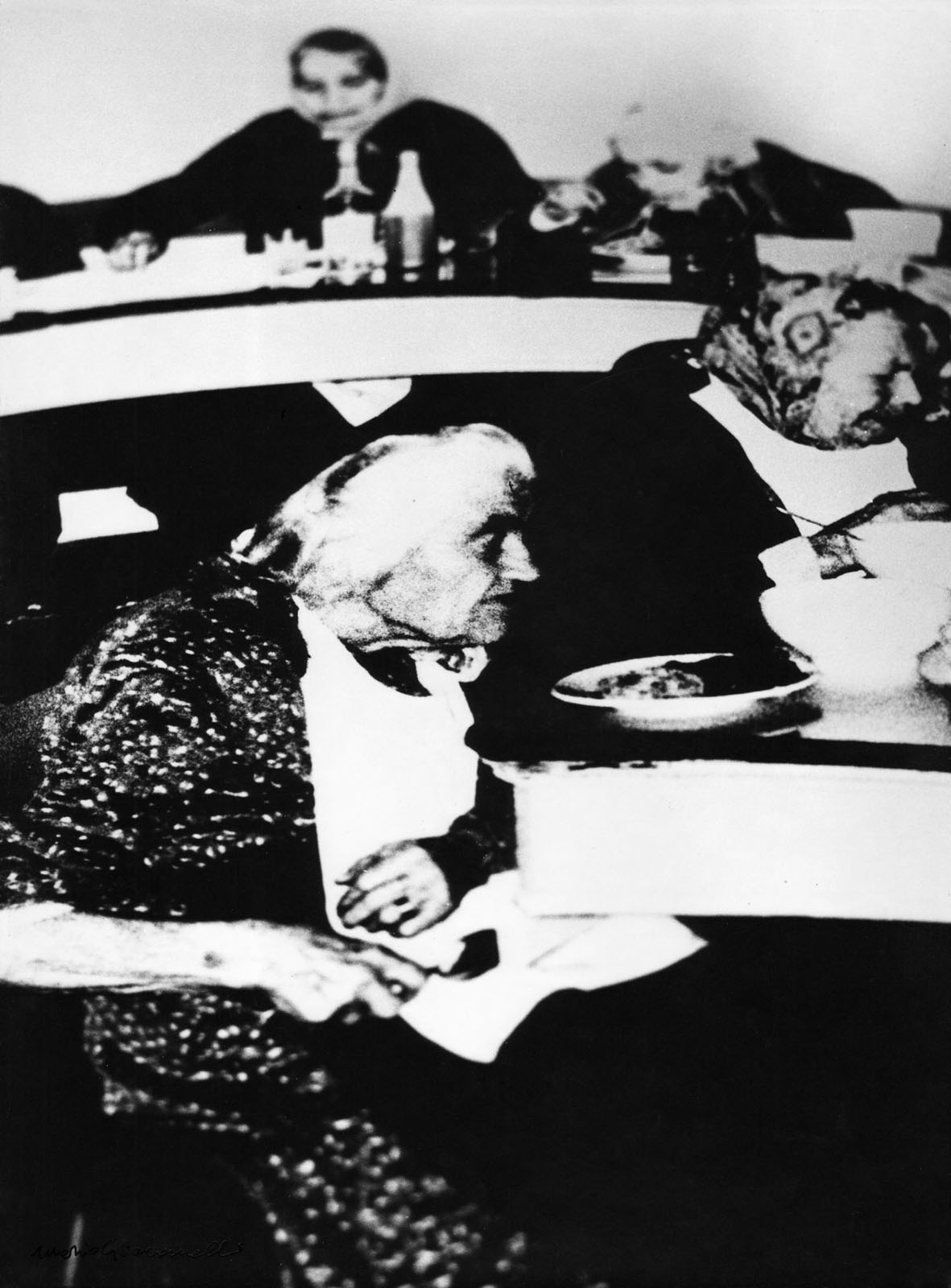
 

Mario Giacomelli (Italian, 1925-2000) 'Death Will Come and It Will Have Your Eyes, No. 95' (Verrà la morte e avrà i tuoi occhi, No. 95) negative 1966; print 1981


Mario Giacomelli (Italian, 1925-2000)
Death Will Come and It Will Have Your Eyes, No. 95 (Verrà la morte e avrà i tuoi occhi, No. 95)
Negative 1966; print 1981
Gelatin silver print
40.2 × 30.1cm (15 13/16 × 11 7/8 in.)
The J. Paul Getty Museum, Los Angeles, Gift of Daniel Greenberg and Susan Steinhauser
Reproduced courtesy Mario Giacomelli Archive
© Rita and Simone Giacomelli


Hospice | Death Will Come and It Will Have Your Eyes (1954-1983)

The first body of work that Giacomelli exhibited as a series was Hospice. It depicts residents of the home for the elderly in Senigallia where his mother was a laundress and which he visited for several years before he began photographing there. Made with flash, the resulting images are characterised by their unflinching scrutiny of individuals living out their last days. He later referred to these as his truest and most direct photographs because they reflected his own fear of growing old.

Giacomelli continued this series for almost three decades, renaming it Death Will Come and It Will Have Your Eyes in 1966 after the first few lines of a poem by the writer Cesare Pavese (Italian, 1908-1950). For a portfolio published in 1981 he heightened the unsettling qualities of mental and physical decline and isolation by tightly cropping his negatives and printing on paper that was curled rather than flat.

“Death will come and will have your eyes – this death that accompanies us from morning till evening, unsleeping.”

~ Translated by Geoffrey Brock, 2002
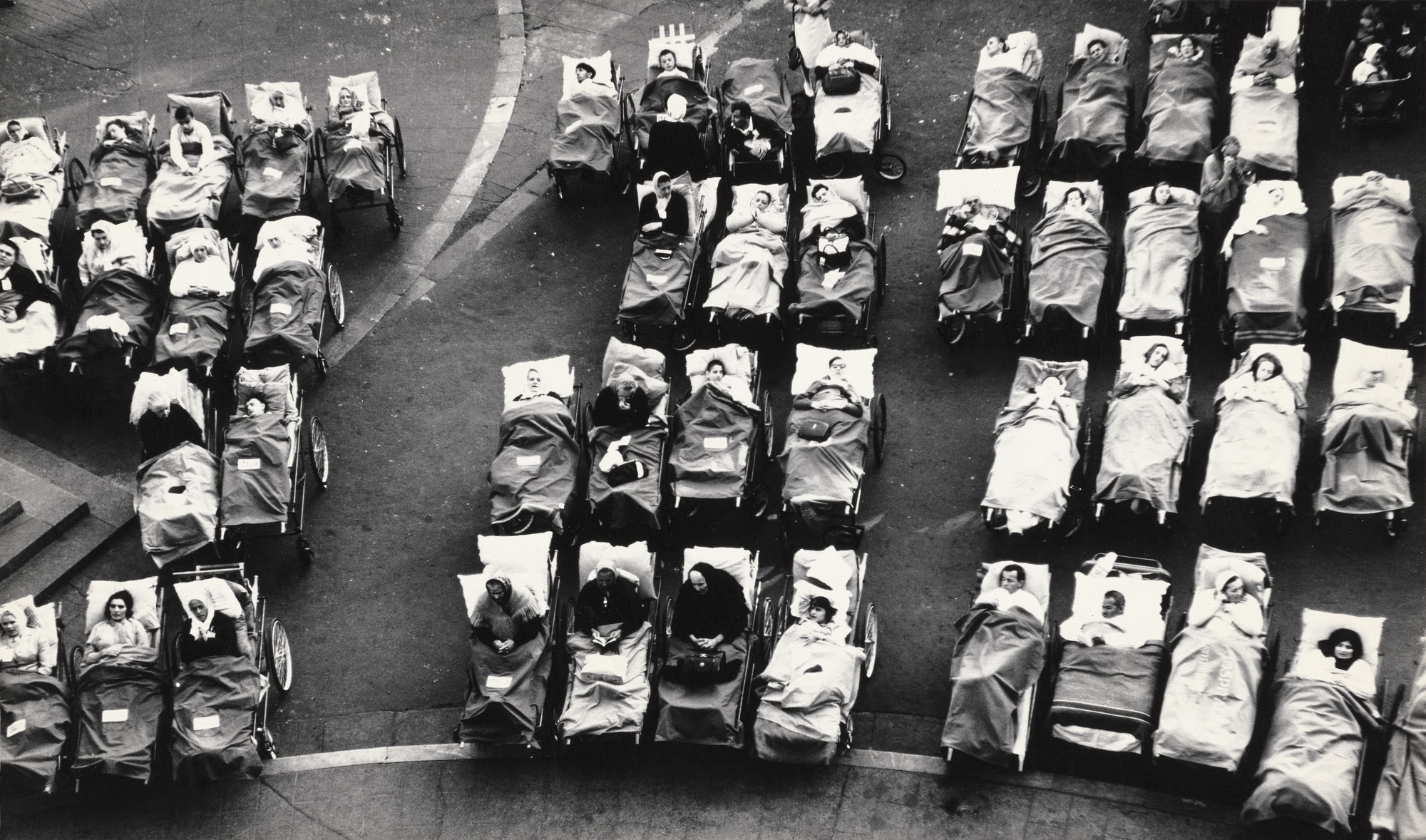
 

Mario Giacomelli (Italian, 1925-2000) 'Lourdes' 1957


Mario Giacomelli (Italian, 1925-2000)
Lourdes
1957
Gelatin silver print
23.3 × 37.6cm (8 3/4 × 14 13/16 in.)
The J. Paul Getty Museum, Los Angeles, Gift of Daniel Greenberg and Susan Steinhauser
Reproduced courtesy Mario Giacomelli Archive
© Rita and Simone Giacomelli
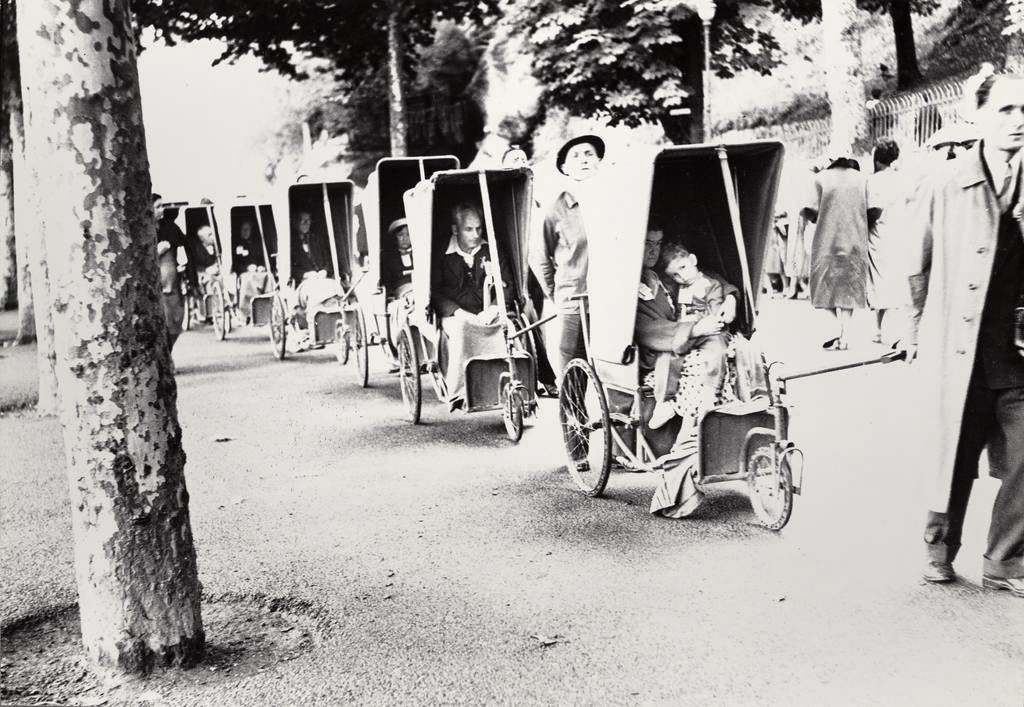
 

Mario Giacomelli (Italian, 1925-2000) 'Lourdes' 1957


Mario Giacomelli (Italian, 1925-2000)
Lourdes
1957
Gelatin silver print
26.7 × 38.1cm (10 1/2 × 15 in.)
The J. Paul Getty Museum, Los Angeles, Gift of Daniel Greenberg and Susan Steinhauser
Reproduced courtesy Mario Giacomelli Archive
© Rita and Simone Giacomelli


Lourdes (1957 and 1966)

In contrast to Hospice / Death Will Come and It Will Have Your Eyes, the series Lourdes depicts people living with illness, injury, or disability who are in search of miraculous healing. Giacomelli received a commission to photograph at this Catholic pilgrimage site in southern France in 1957.

Tremendously pained by what he saw, he shot just a few rolls of film, returned the fee that had been advanced, and did not show anyone the images for some time. He travelled to Lourdes again in 1966, with his wife and second child. This time he, too, was in search of a cure, for their son, who had lost the ability to speak following an accident.

Lourdes is the only series that Giacomelli created outside Italy, although a group of photographs made in Ethiopia (1974) and another in India (1976) have been attributed to him. Giacomelli purchased cameras and film for two individuals who were planning travel to these countries, and both of them drew on previous discussions with him when they photographed at their respective locations. Giacomelli later made prints from the negatives and signed his name to several of them, acknowledging the collaboration.
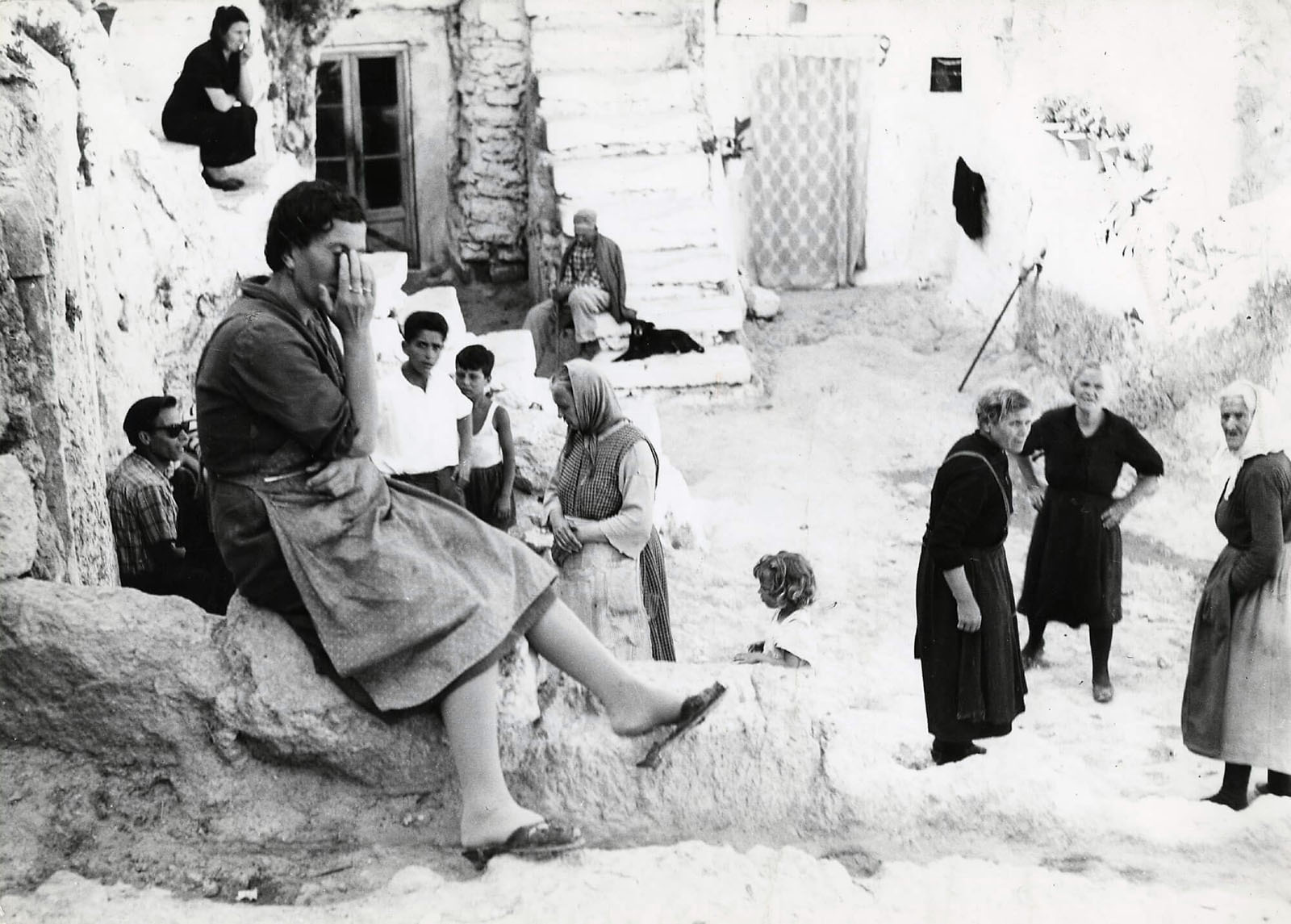
 

Mario Giacomelli (Italian, 1925-2000) 'Puglia' negative 1958, printed 1970


Mario Giacomelli (Italian, 1925-2000)
Apulia (Puglia)
Negative 1958, printed 1970
Gelatin silver print
28.6 × 40cm (11 1/4 × 15 3/4 in.)
The J. Paul Getty Museum, Los Angeles, Gift of Daniel Greenberg and Susan Steinhauser
Reproduced courtesy Mario Giacomelli Archive
© Rita and Simone Giacomelli
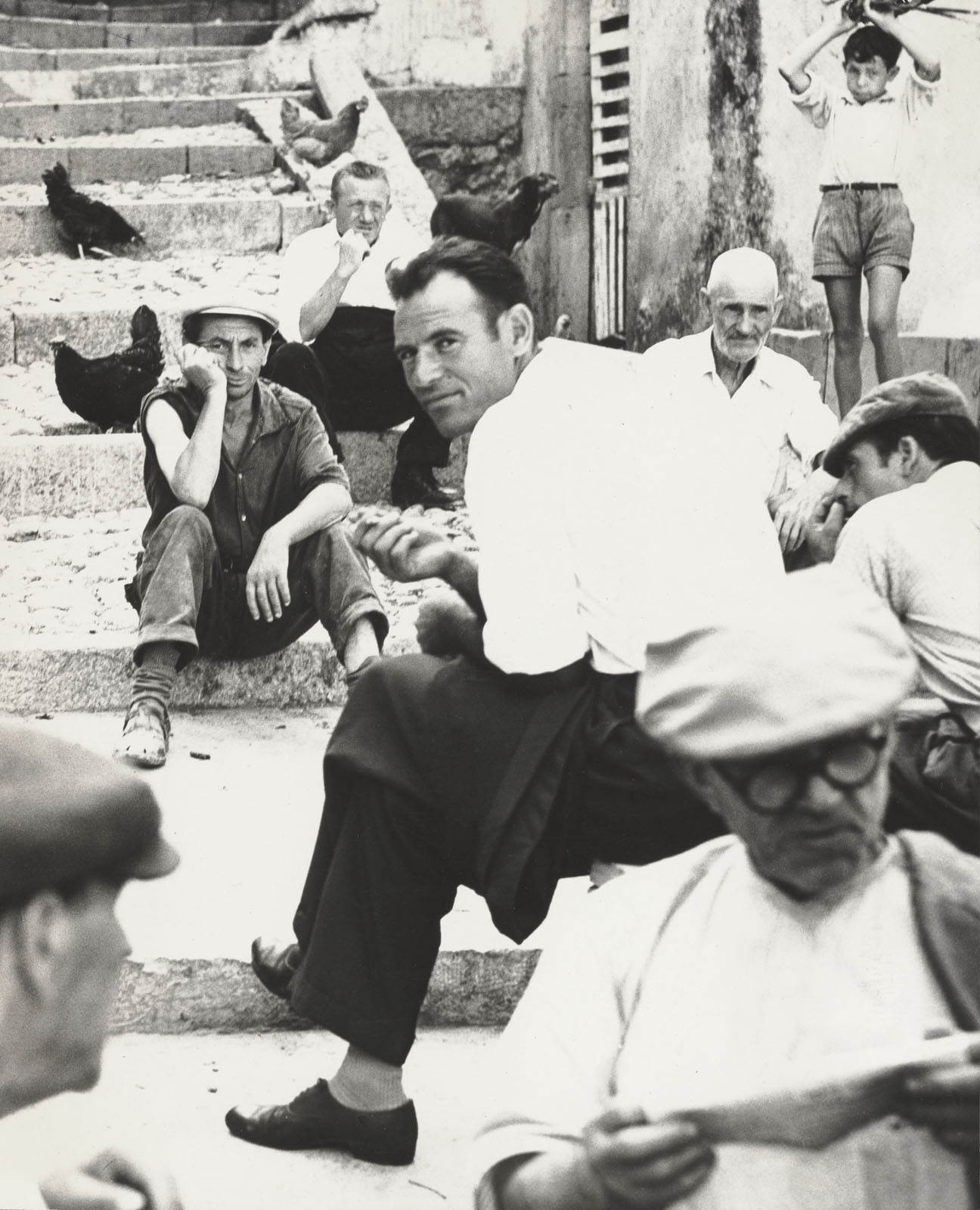
 

Mario Giacomelli (Italian, 1925-2000) 'Puglia' negative 1958, printed 1960


Mario Giacomelli (Italian, 1925-2000)
Apulia (Puglia)
Negative 1958, printed 1960
Gelatin silver print
28.7 × 23.5cm (11 5/16 × 9 1/4 in.)
The J. Paul Getty Museum, Los Angeles, Gift of Daniel Greenberg and Susan Steinhauser
Reproduced courtesy Mario Giacomelli Archive
© Rita and Simone Giacomelli


Apulia (Puglia) (1958)

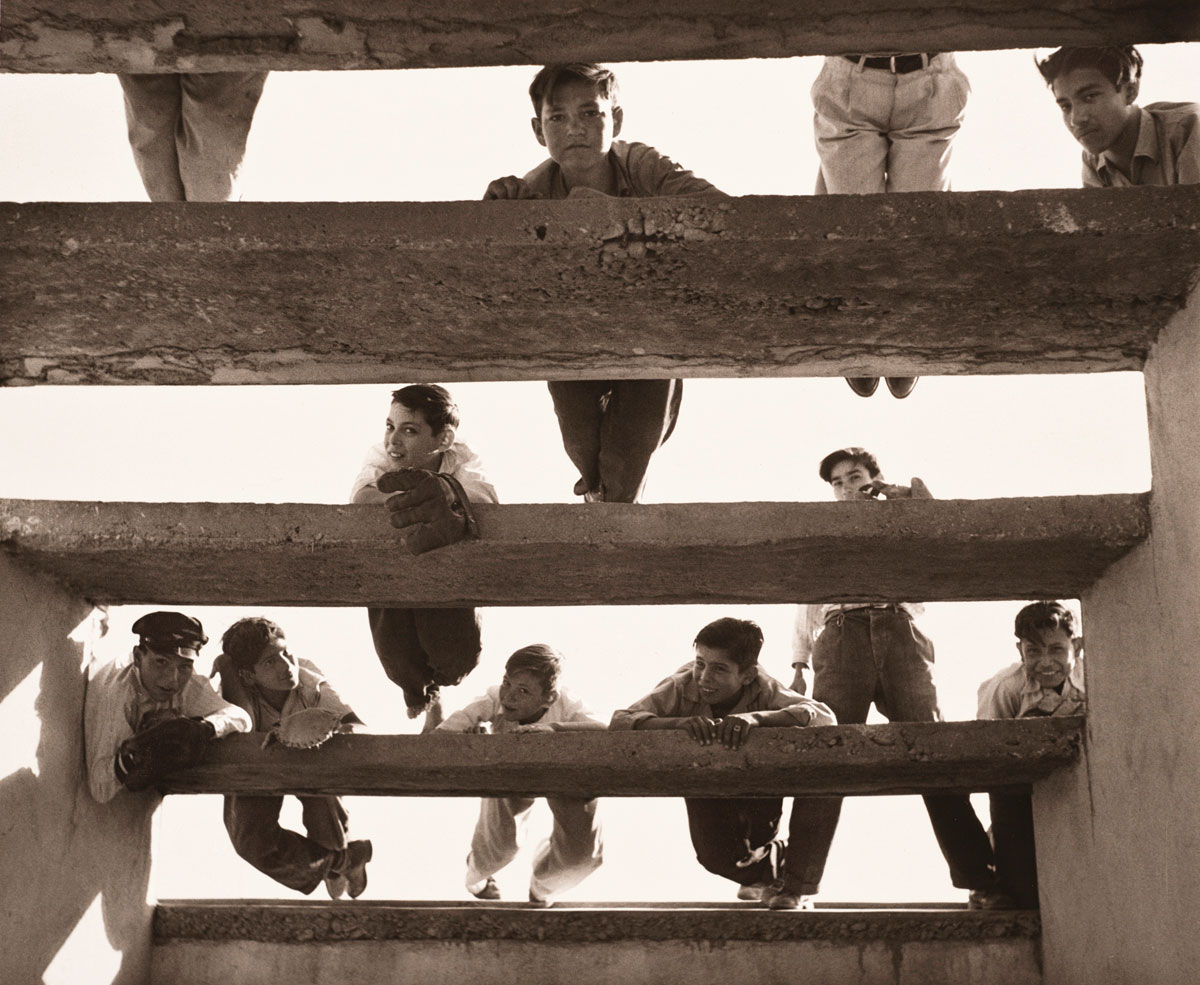
Giacomelli operated his printshop, Tipografia Marchigiana, in the centre of Senigallia. The successful establishment became a gathering place for photographers, artists, and critics, and provided the address stamped on the verso of all his photographs. In its early years, the business occupied the majority of Giacomelli’s time, leaving only Sundays for photography excursions. While he most often explored his hometown, its beaches, and the surrounding countryside in the Marche region, he occasionally traveled farther afield.

For this series, made in Apulia, Italy’s most southeastern province (the “heel of the boot”), a journey of about 330 miles was required. There he focused his attention on the interaction of multiple generations of townspeople gathering leisurely against the simple, whitewashed architecture typical of hillside towns such as Rodi Garganico, Peschici, Vico del Gargano, and Monte Sant’Angelo. These images provide insight into Giacomelli’s ability to engage his subjects, while also underscoring a fundamental humanistic impulse in his work.
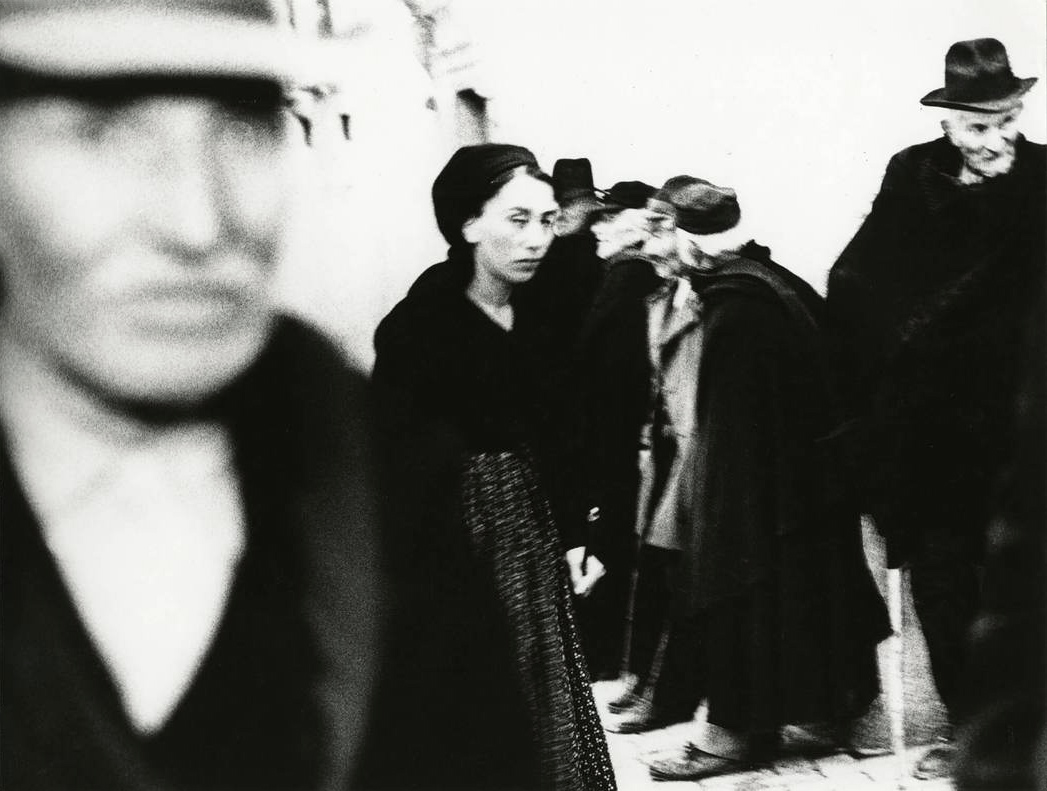
 

Mario Giacomelli (Italian, 1925-2000) 'Scanno' negative 1957-1959, printed later


Mario Giacomelli (Italian, 1925-2000)
Scanno
negative 1957-1959, printed later
Gelatin silver print
29.8 × 39.6cm (11 3/4 × 15 9/16 in.)
The J. Paul Getty Museum, Los Angeles, Gift of Daniel Greenberg and Susan Steinhauser
Reproduced courtesy Mario Giacomelli Archive
© Rita and Simone Giacomelli
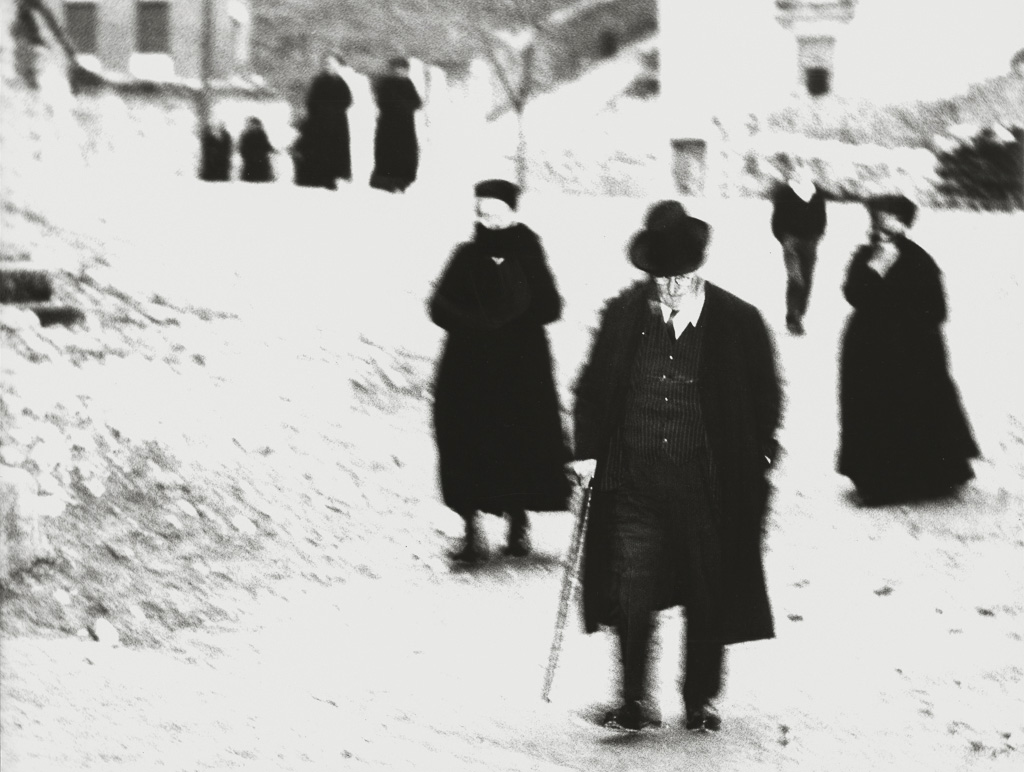
 

Mario Giacomelli (Italian, 1925-2000) 'Scanno' negative 1957-1959, printed 1980s


Mario Giacomelli (Italian, 1925-2000)
Scanno
negative 1957-1959, printed 1980s
Gelatin silver print
26.8 × 34cm (10 9/16 × 13 3/8 in.)
The J. Paul Getty Museum, Los Angeles, Gift of Daniel Greenberg and Susan Steinhauser
Reproduced courtesy Mario Giacomelli Archive
© Rita and Simone Giacomelli
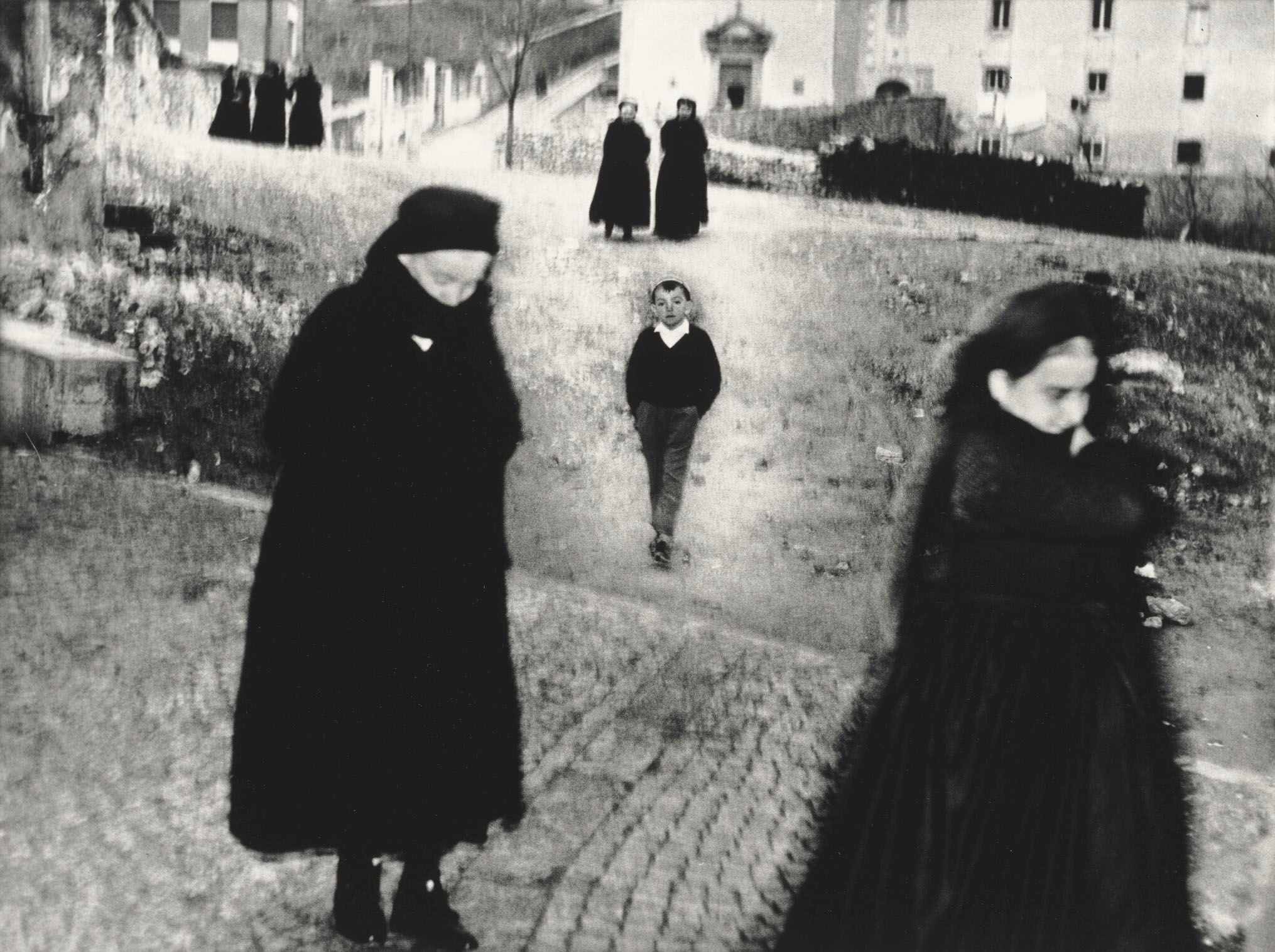
 

Mario Giacomelli (Italian, 1925-2000) 'Scanno, No. 52' 1957-1959; printed 1981


Mario Giacomelli (Italian, 1925-2000)
Scanno, No. 52
1957-1959; printed 1981
Gelatin silver print
30.1 × 40.2cm (11 7/8 × 15 13/16 in.)
The J. Paul Getty Museum, Los Angeles, Gift of Daniel Greenberg and Susan Steinhauser
Reproduced courtesy Mario Giacomelli Archive
© Rita and Simone Giacomelli
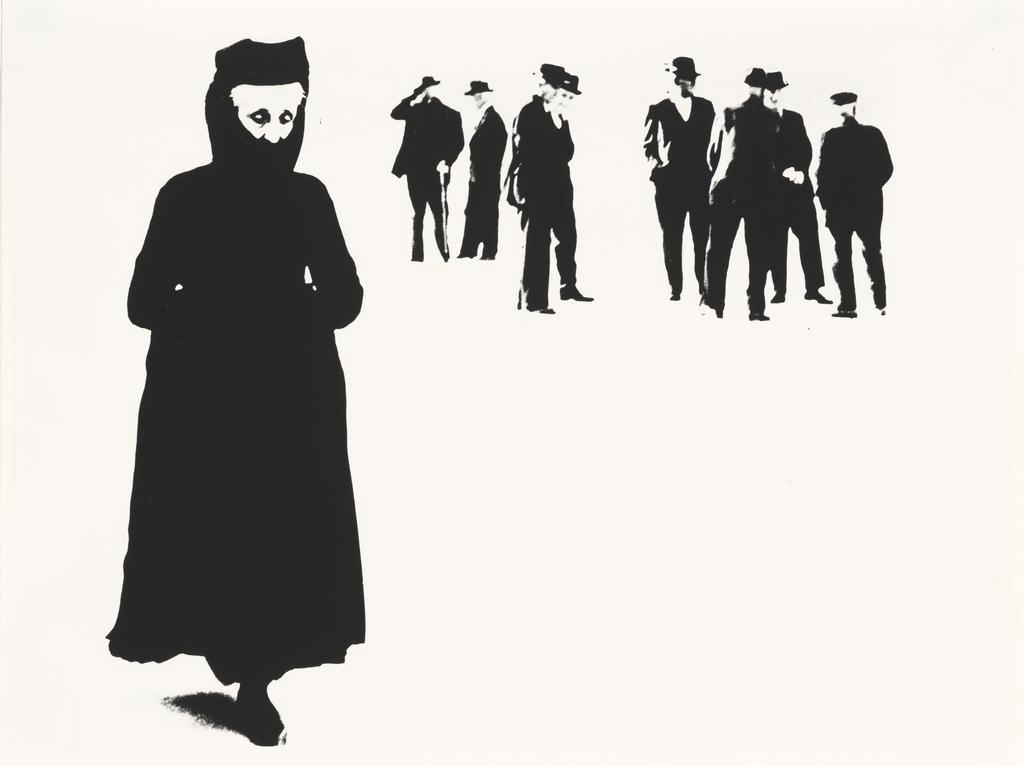
 

Mario Giacomelli (Italian, 1925-2000) 'Scanno, No. 57' 1957-1959; printed 1981


Mario Giacomelli (Italian, 1925-2000)
Scanno, No. 57
1957-1959; printed 1981
Gelatin silver print
30.1 × 40.2cm (11 7/8 × 15 13/16 in.)
The J. Paul Getty Museum, Los Angeles, Gift of Daniel Greenberg and Susan Steinhauser
Reproduced courtesy Mario Giacomelli Archive
© Rita and Simone Giacomelli
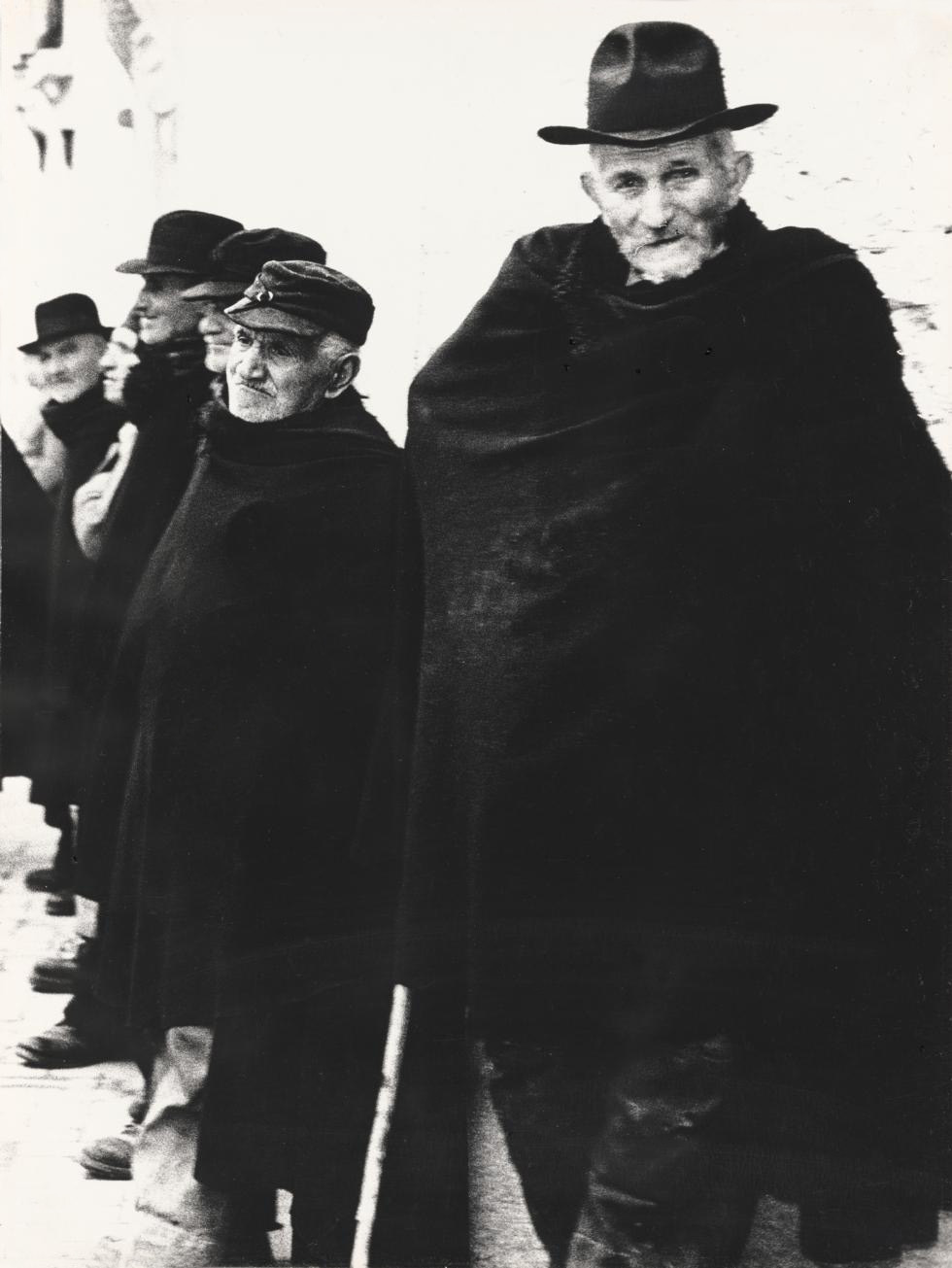
 

Mario Giacomelli (Italian, 1925-2000) 'Scanno' 1957-1959


Mario Giacomelli (Italian, 1925-2000)
Scanno
1957-1959
Gelatin silver print
37.9 × 28.4cm (14 15/16 × 11 3/16 in.)
The J. Paul Getty Museum, Los Angeles, Gift of Daniel Greenberg and Susan Steinhauser
Reproduced courtesy Mario Giacomelli Archive
© Rita and Simone Giacomelli


Scanno (1957-1959)

Following his sustained observation of hospice residents in Senigallia, the photographs that Giacomelli made during trips to Scanno in 1957 and 1959 further demonstrate his ability to describe people in a specific time and place. In this town located in the Apennine Mountains of central Italy, about 270 miles south of Senigallia, Giacomelli encountered men and women going about their daily chores or gathering in the square, draped in dark garments or cloaks, their heads covered with hats or scarves. Even when congregating, subjects seem to be isolated or lost in thought. Whether in sharp focus or blurred by movement, the occasional individual who looks directly into his camera suggests a sense of mystery or furtiveness. Giacomelli used a slow shutter speed and shallow depth of field to photograph these stark, black-clad figures against whitewashed architectural settings, introducing indistinct passages that amplify the fairy-tale mood of a town that appears to be irretrievably steeped in the past.
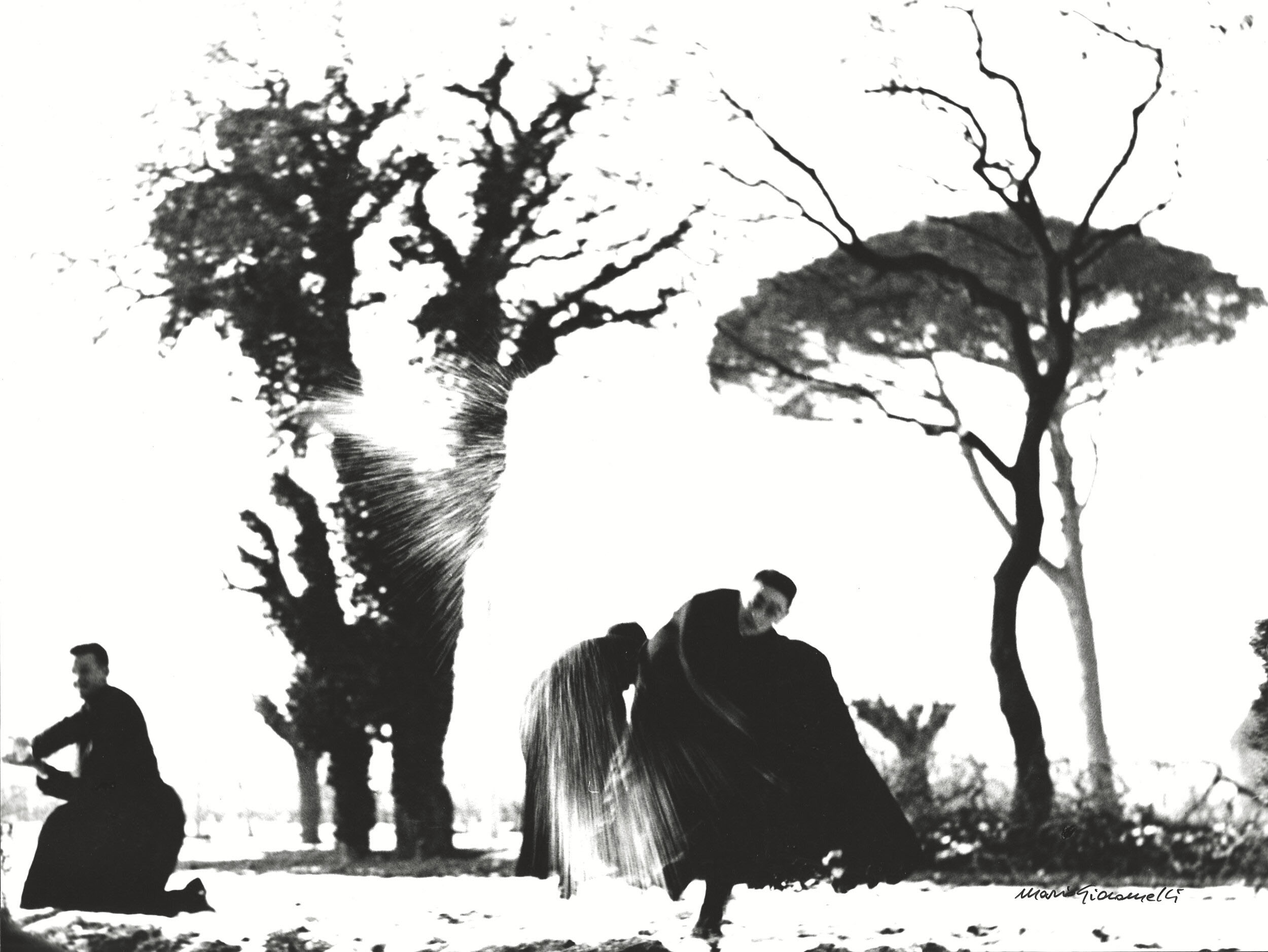
 

Mario Giacomelli (Italian, 1925-2000) 'Young Priests' (Pretini) Negative 1961-1963


Mario Giacomelli (Italian, 1925-2000)
Young Priests (Pretini)
Negative 1961-1963
Gelatin silver print
29 × 38.6cm (11 7/16 × 15 3/16 in.)
The J. Paul Getty Museum, Los Angeles, Gift of Daniel Greenberg and Susan Steinhauser
Reproduced courtesy Mario Giacomelli Archive
© Rita and Simone Giacomelli
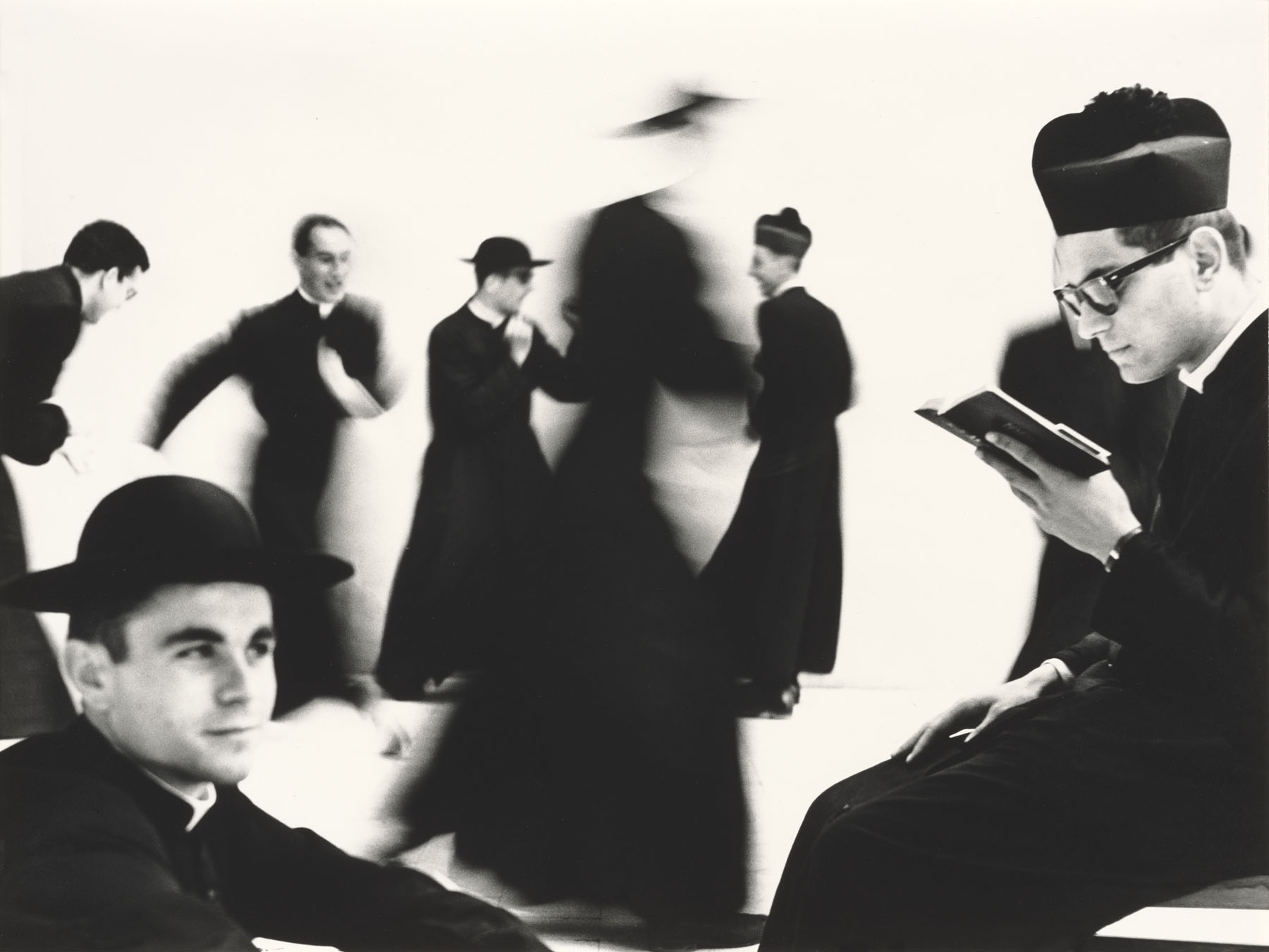
 

Mario Giacomelli (Italian, 1925-2000) 'Young Priests, No. 70' Negative 1961-1963


Mario Giacomelli (Italian, 1925-2000)
Young Priests, No. 70 (Pretini, No. 70)
Negative 1961-1963; print 1981
Gelatin silver print
40.3 × 30.1cm (15 7/8 × 11 7/8 in.)
The J. Paul Getty Museum, Los Angeles, Gift of Daniel Greenberg and Susan Steinhauser
Reproduced courtesy Mario Giacomelli Archive
© Rita and Simone Giacomelli
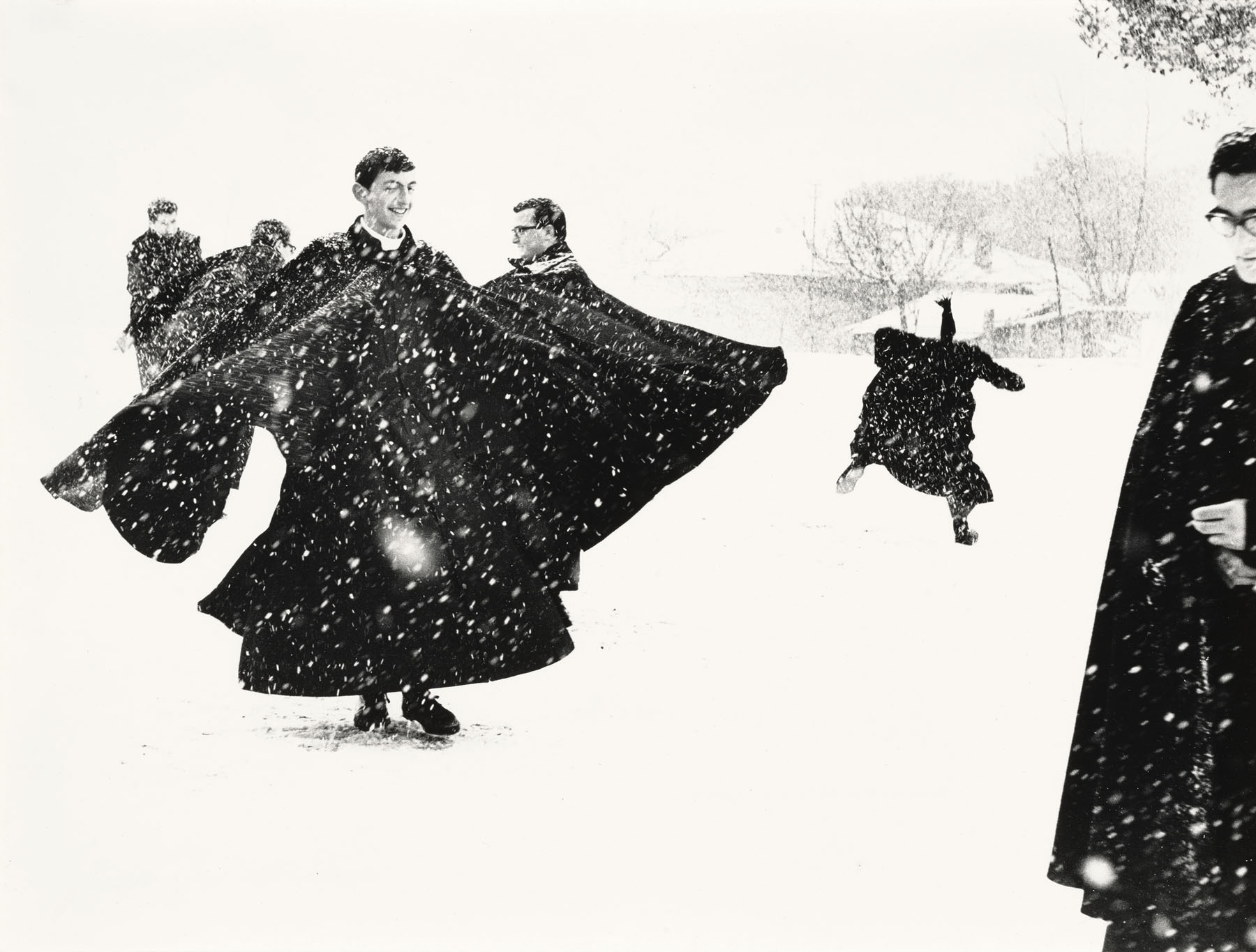
 

Mario Giacomelli (Italian, 1925-2000) 'Young Priests, No. 72' Negative 1961-1963


Mario Giacomelli (Italian, 1925-2000)
Young Priests, No. 72 (Pretini, No. 72)
Negative 1961-1963; print 1981
Gelatin silver print
30.1 × 40.2cm (11 7/8 × 15 13/16 in.)
The J. Paul Getty Museum, Los Angeles, Gift of Daniel Greenberg and Susan Steinhauser
Reproduced courtesy Mario Giacomelli Archive
© Rita and Simone Giacomelli
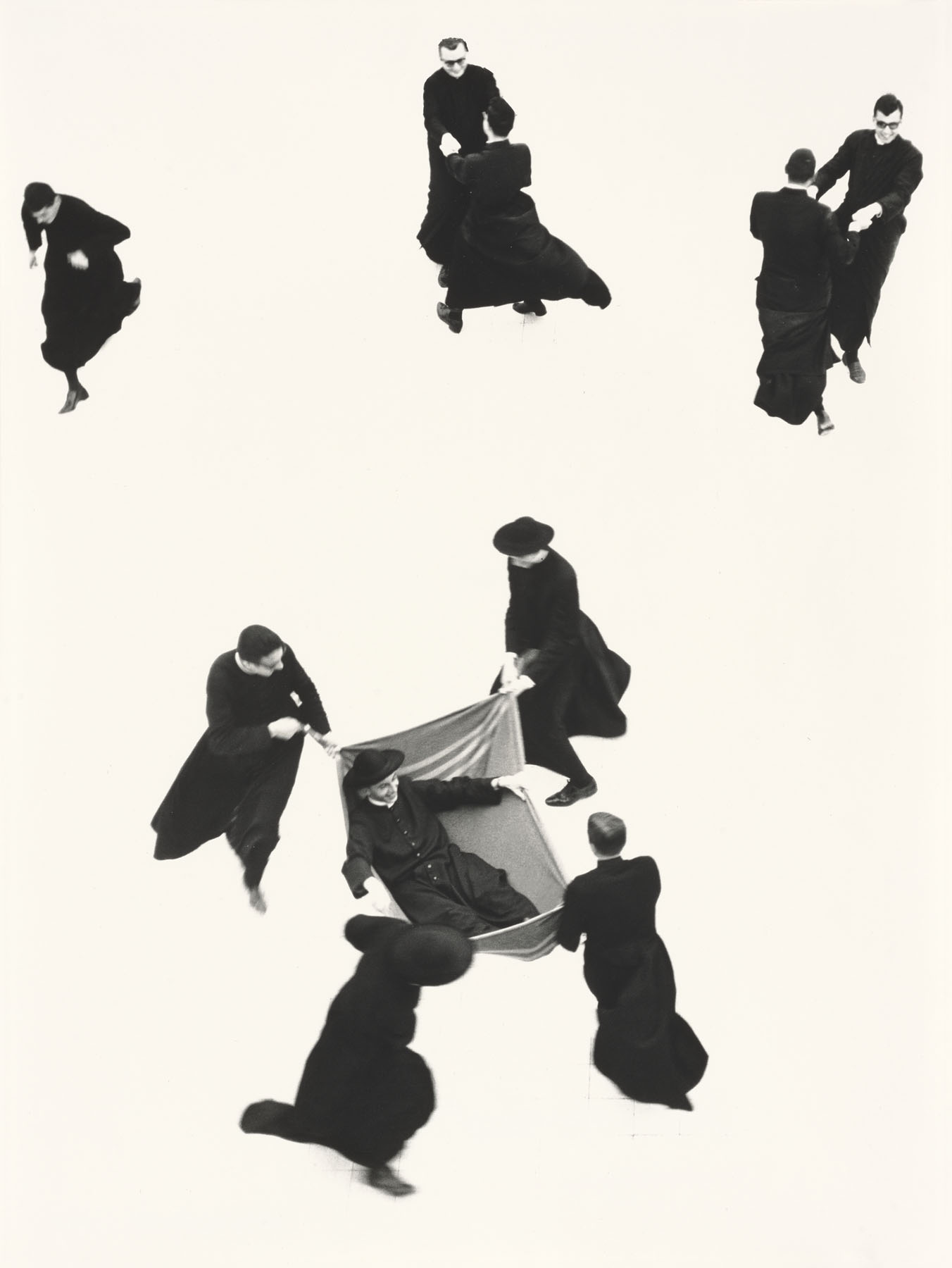
 

Mario Giacomelli (Italian, 1925-2000) 'Young Priests, No. 71' Negative 1961-1963


Mario Giacomelli (Italian, 1925-2000)
Young Priests, No. 71 (Pretini, No. 71)
Negative 1961-1963; print 1981
Gelatin silver print
40.3 × 30.1cm (15 7/8 × 11 7/8 in.)
The J. Paul Getty Museum, Los Angeles, Gift of Daniel Greenberg and Susan Steinhauser
Reproduced courtesy Mario Giacomelli Archive
© Rita and Simone Giacomelli
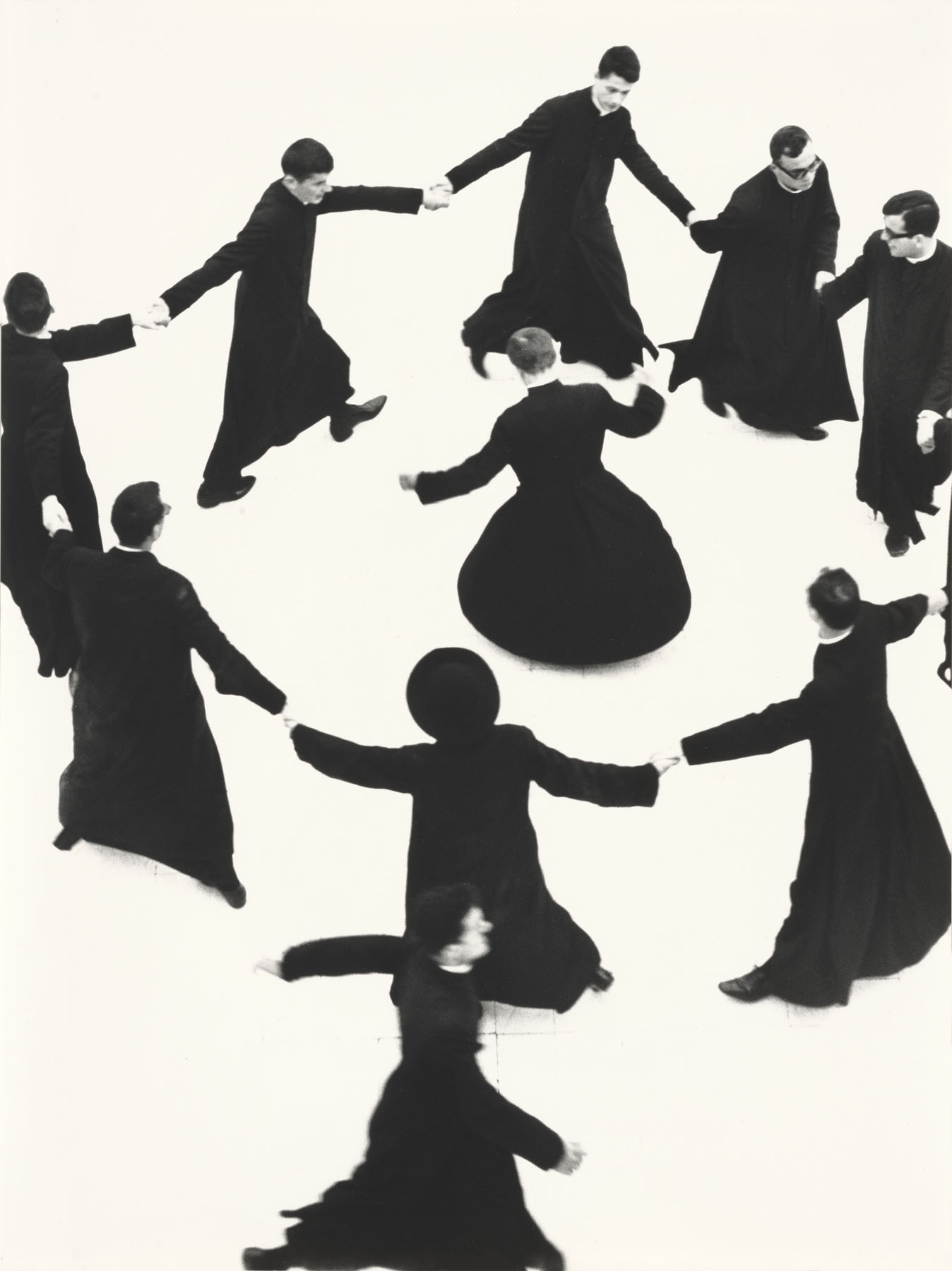
 

Mario Giacomelli (Italian, 1925-2000) 'Young Priests, No. 74' Negative 1961-1963


Mario Giacomelli (Italian, 1925-2000)
Young Priests, No. 74 (Pretini, No. 74)
Negative 1961-1963; print 1981
Gelatin silver print
40.3 × 30.1cm (15 7/8 × 11 7/8 in.)
The J. Paul Getty Museum, Los Angeles, Gift of Daniel Greenberg and Susan Steinhauser
Reproduced courtesy Mario Giacomelli Archive
© Rita and Simone Giacomelli


Young PriestsI Have No Hands That Caress My Face (1961-1963)

Among Giacomelli’s most memorable images are those of pretini (young priests) in the seminary of Senigallia, whom he captured playing in the snow or relaxing in the courtyard. Once again juxtaposing the distinctive shapes of black-clad figures (this time, seminarians in cassocks) against a white ground (snow-covered or sun-drenched settings), these photographs suggest a more lighthearted mood than is evident in other series. Although appearing to have been choreographed, they are the result of the priests’ unbridled joviality as they run, throw snowballs, or play ring-around-the-rosy, and of Giacomelli’s foresight to let the scenes unfold as he recorded them from the building’s rooftop.

After Giacomelli had won the trust of the seminarians, his interaction with them was brought to an abrupt end when he provided the young men with cigars for photographs he intended to submit to a competition on the theme of smoking. The rector denied him further access. Giacomelli later applied the title I Have No Hands That Caress My Face to this series, from the first two lines of a poem by Father David Maria Turoldo (Italian, 1916-1992) about young men who seek solitary religious life. This title lends poignancy to the moments of exuberance and camaraderie that accompanied study for such a calling.
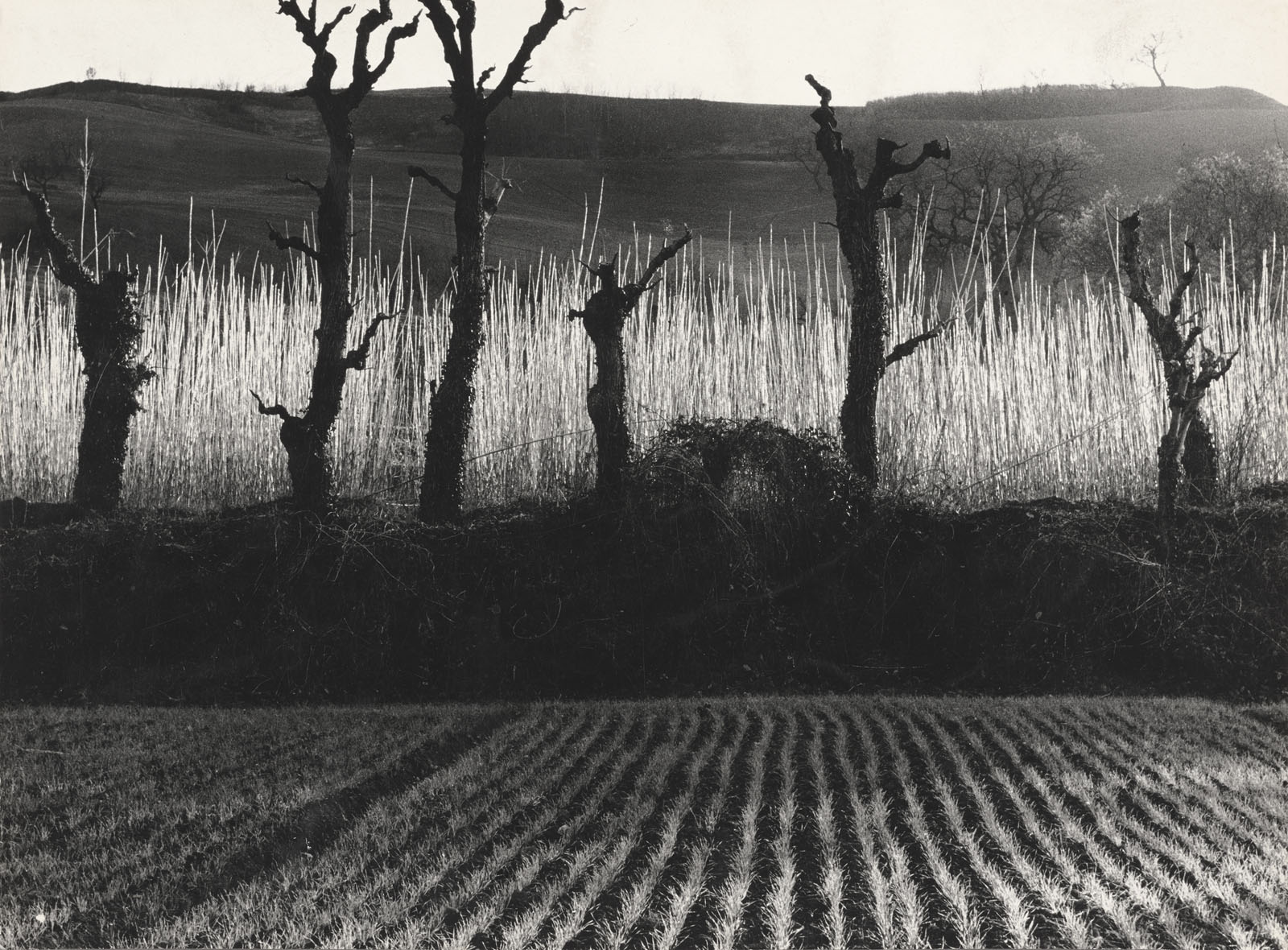
 

Mario Giacomelli (Italian, 1925-2000) 'Landscape: Flames on the Field' (Paesaggio, fiamme sul campo) 1954; printed 1980


Mario Giacomelli (Italian, 1925-2000)
Landscape: Flames on the Field (Paesaggio, fiamme sul campo)
1954; printed 1980
Gelatin silver print
28.6 × 39cm (11 1/4 × 15 3/8 in.)
The J. Paul Getty Museum, Los Angeles, Gift of Daniel Greenberg and Susan Steinhauser
Reproduced courtesy Mario Giacomelli Archive
© Rita and Simone Giacomelli


Early landscapes (1954-1960)

Italy’s Marche region is characterised by rolling hills, small farms, and frazioni (hamlets), all of which were among the first motifs that Giacomelli photographed. As with his portraits and figure studies from this period, the compositions of his early landscapes were fairly conventional, with foreground, middle-ground, and background elements organised around a clearly discernible horizon line. As he refined his technique, however, Giacomelli often positioned himself at the top of a hill pointing his camera downward or at the base aiming it upward, thereby eliminating the horizon and creating a disorienting patchwork of geometric shapes. His development of the negative, use of high-contrast paper, and manipulations in the darkroom further enhanced the distinctively graphic qualities of his images. It was not uncommon for him to scratch forms into his negatives to add dramatic counterpoints.

Over the years, Giacomelli returned to certain sites multiple times, documenting them during different seasons and crop rotations. He would later incorporate photographs made for one purpose into a series that had other ambitions, most notably to function as commentary on the capacity of both natural occurrences and human interventions to change the character of the land.
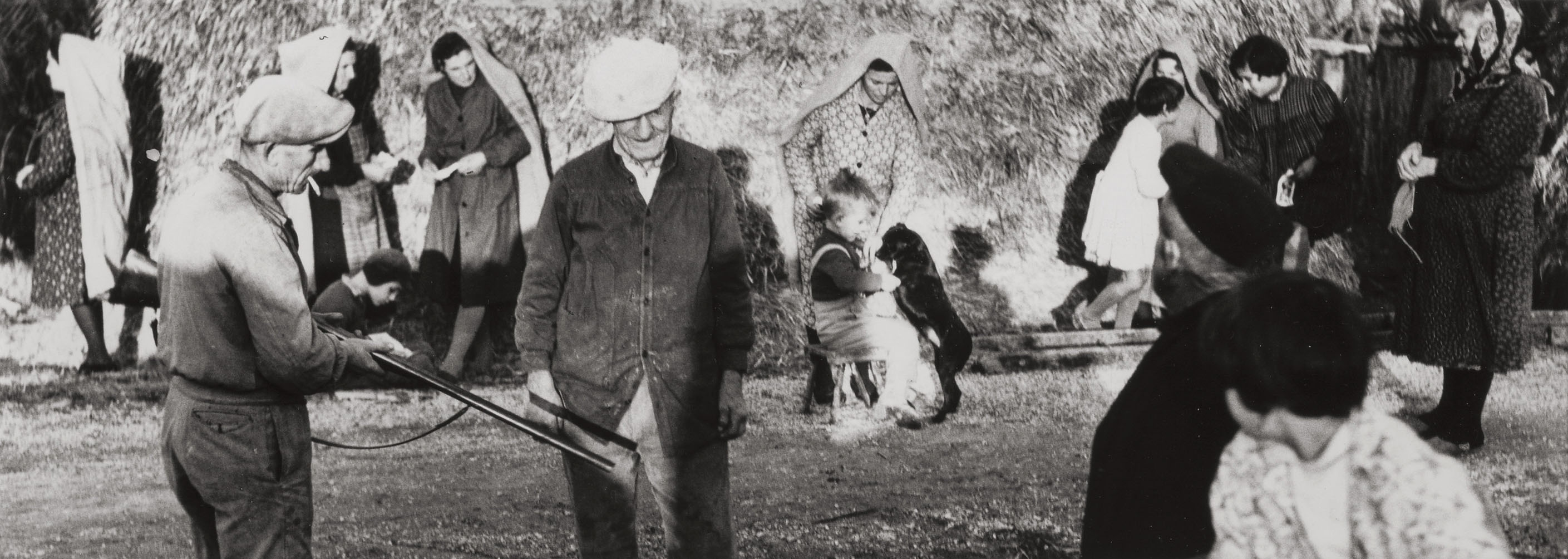
 

Mario Giacomelli (Italian, 1925-2000) 'The Good Earth' (La Buona Terra) 1964-1966; printed 1970s


Mario Giacomelli (Italian, 1925-2000)
The Good Earth (La Buona Terra)
1964-1966
Gelatin silver print
14.3 × 38.9cm (5 5/8 × 15 5/16 in.)
The J. Paul Getty Museum, Los Angeles, Gift of Daniel Greenberg and Susan Steinhauser
Reproduced courtesy Mario Giacomelli Archive
© Rita and Simone Giacomelli
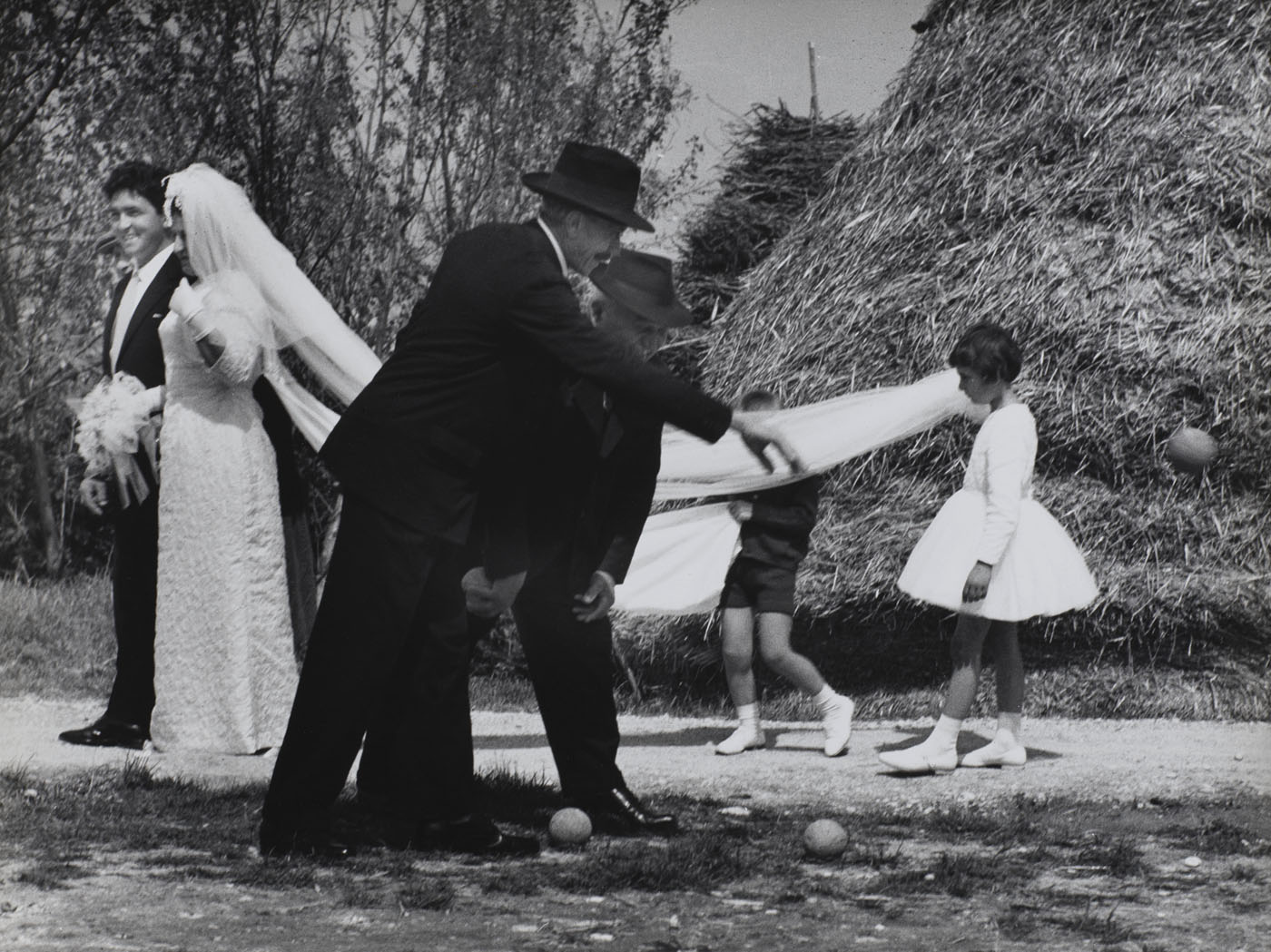
 

Mario Giacomelli (Italian, 1925-2000) 'The Good Earth' (La Buona Terra) 1964-1966; printed before 1980


Mario Giacomelli (Italian, 1925-2000)
The Good Earth (La Buona Terra)
1964-1966; printed before 1980
Gelatin silver print
30.3 × 40.3cm (11 15/16 × 15 7/8 in.)
The J. Paul Getty Museum, Los Angeles, Gift of Daniel Greenberg and Susan Steinhauser
Reproduced courtesy Mario Giacomelli Archive
© Rita and Simone Giacomelli
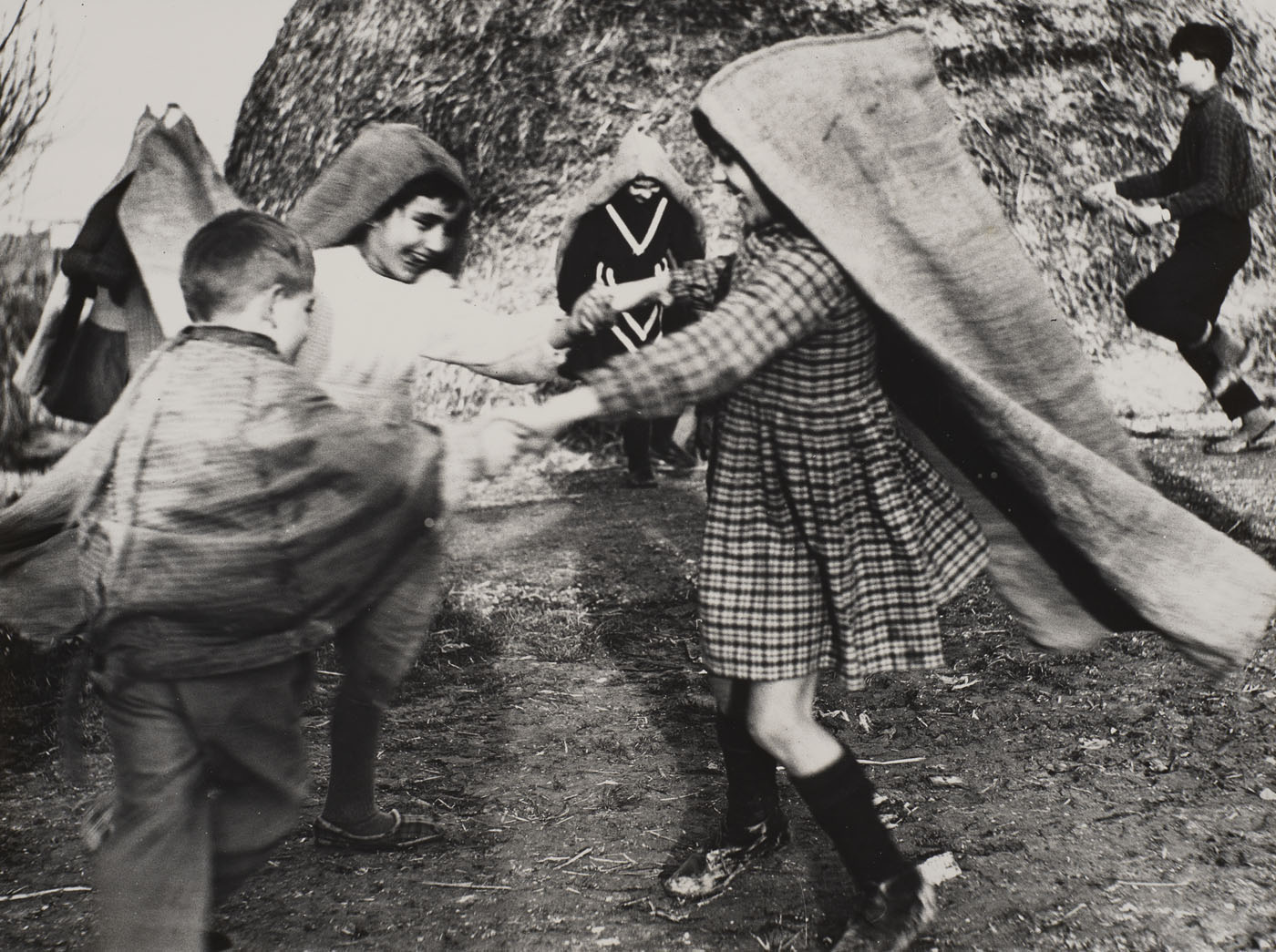
 

Mario Giacomelli (Italian, 1925-2000) 'The Good Earth' (La Buona Terra) 1964-1966; printed early 1970s


Mario Giacomelli (Italian, 1925-2000)
The Good Earth (La Buona Terra)
1964-1966; printed early 1970s
Gelatin silver print
28.9 × 38.9cm (11 3/8 × 15 5/16 in.)
The J. Paul Getty Museum, Los Angeles, Gift of Daniel Greenberg and Susan Steinhauser
Reproduced courtesy Mario Giacomelli Archive
© Rita and Simone Giacomelli
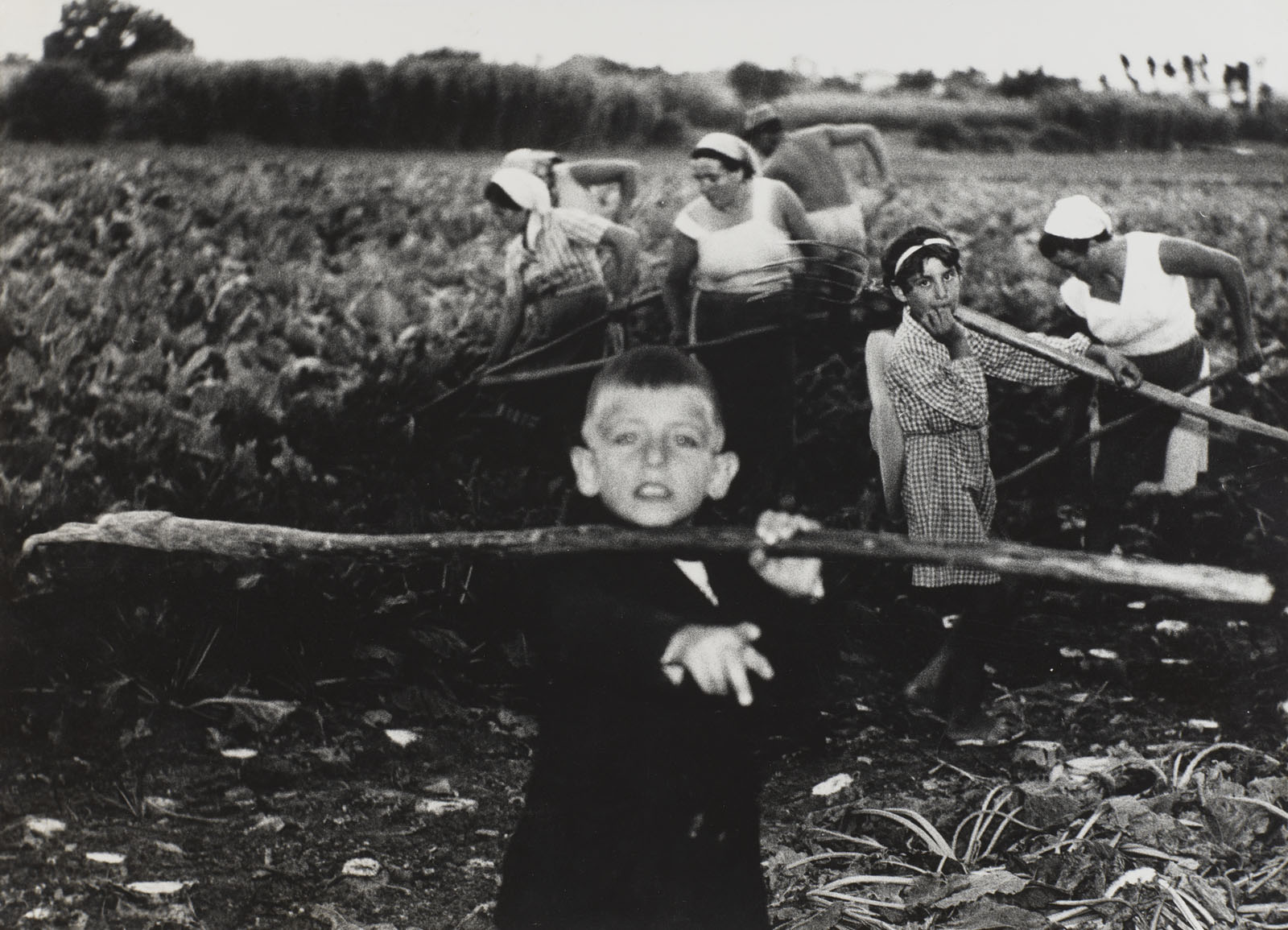
 

Mario Giacomelli (Italian, 1925-2000) 'The Good Earth' 1964-1966; printed 1970s


Mario Giacomelli (Italian, 1925-2000)
The Good Earth (La Buona Terra)
1964-1966; printed 1970s
Gelatin silver print
28.6 × 39.4cm (11 1/4 × 15 1/2 in.)
The J. Paul Getty Museum, Los Angeles, Gift of Daniel Greenberg and Susan Steinhauser
Reproduced courtesy Mario Giacomelli Archive
© Rita and Simone Giacomelli
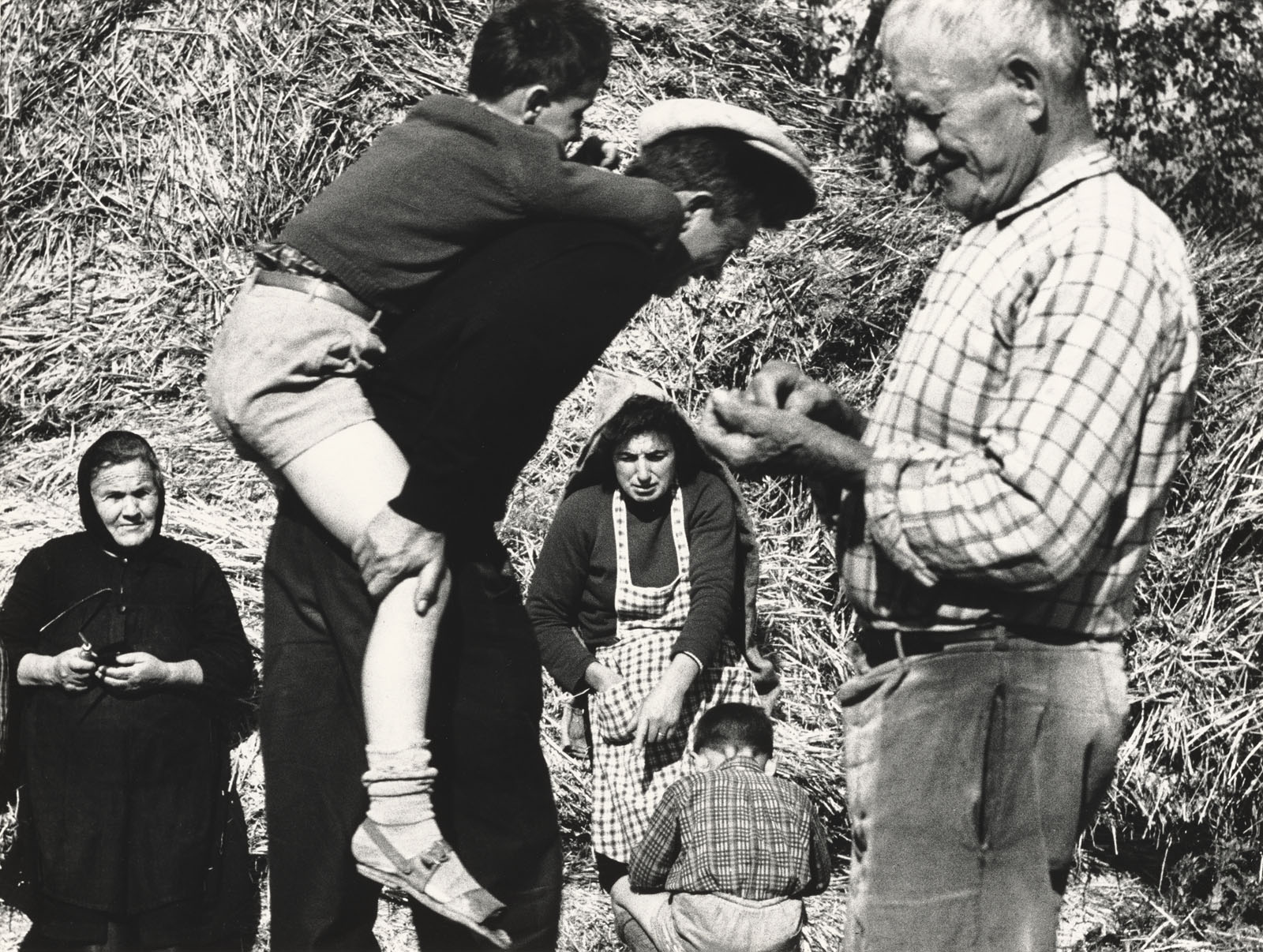
 

Mario Giacomelli (Italian, 1925-2000) 'The Good Earth, No. 146' (La Buona Terra, No. 146) 1964-1965; printed 1981


Mario Giacomelli (Italian, 1925-2000)
The Good Earth, No. 146 (La Buona Terra, No. 146)
1964-1965; printed 1981
Gelatin silver print
30 × 40.2cm (11 13/16 × 15 13/16 in.)
The J. Paul Getty Museum, Los Angeles, Gift of Daniel Greenberg and Susan Steinhauser
Reproduced courtesy Mario Giacomelli Archive
© Rita and Simone Giacomelli
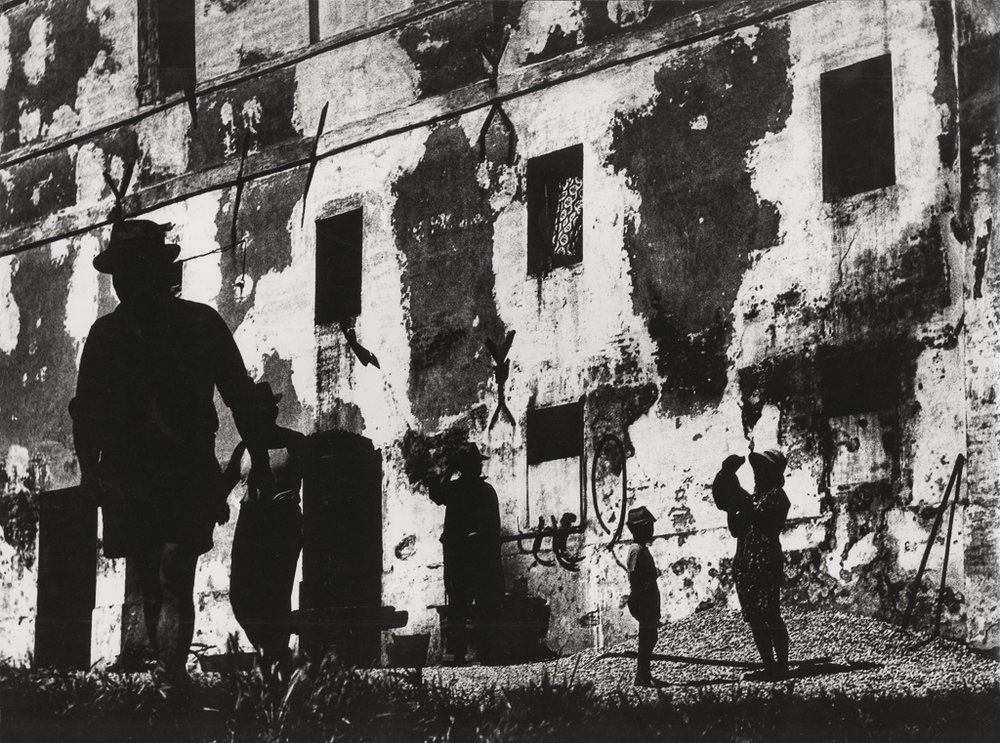
 

Mario Giacomelli (Italian, 1925-2000) 'The Good Earth, No. 208' (La Buona Terra, No. 208) 1964-1965; printed 1981


Mario Giacomelli (Italian, 1925-2000)
The Good Earth, No. 208 (La Buona Terra, No. 208)
1964-1965; printed 1981
Gelatin silver print
30 × 40.2cm (11 13/16 × 15 13/16 in.)
The J. Paul Getty Museum, Los Angeles, Gift of Daniel Greenberg and Susan Steinhauser
Reproduced courtesy Mario Giacomelli Archive
© Rita and Simone Giacomelli
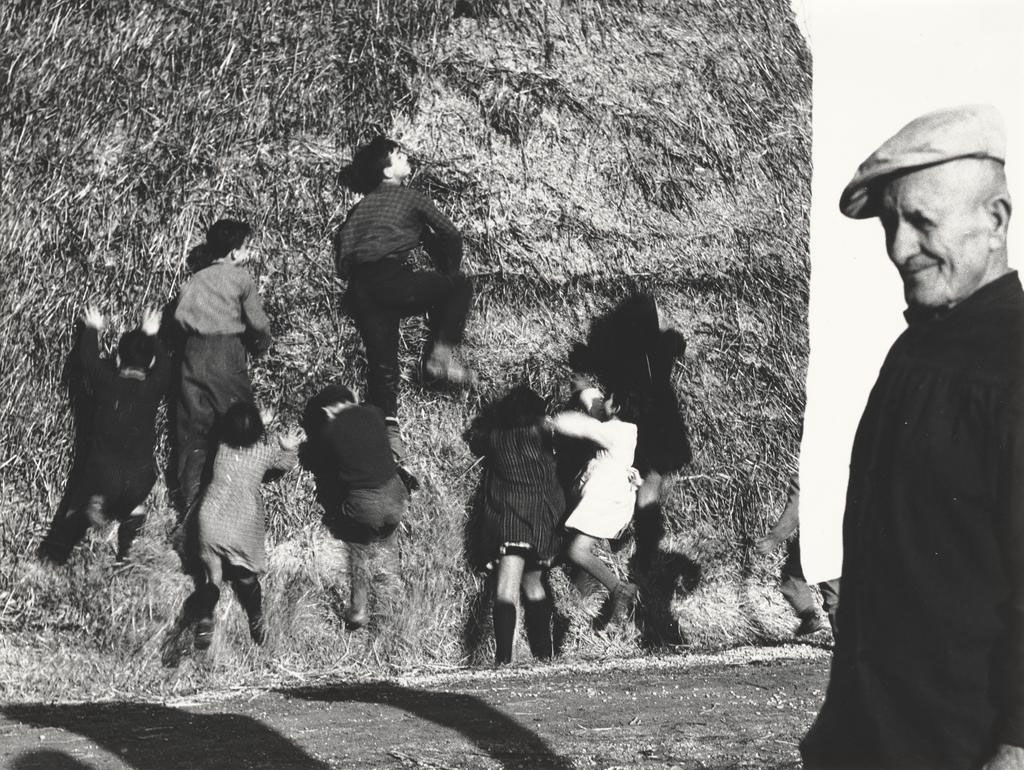
 

Mario Giacomelli (Italian, 1925-2000) 'The Good Earth, No. 219' (La Buona Terra, No. 219) 1964-1965; printed 1981


Mario Giacomelli (Italian, 1925-2000)
The Good Earth, No. 219 (La Buona Terra, No. 219)
1964-1965; printed 1981
Gelatin silver print
30 × 40.2cm (11 13/16 × 15 13/16 in.)
The J. Paul Getty Museum, Los Angeles, Gift of Daniel Greenberg and Susan Steinhauser
Reproduced courtesy Mario Giacomelli Archive
© Rita and Simone Giacomelli


The Good Earth (1964-1966)

For this series, Giacomelli followed a farming family off and on over several years as they went about their daily lives in the countryside surrounding Senigallia, planting and harvesting crops and tending livestock. Once he had gained their trust, he began to make photographs that underscored the cyclical nature of their existence, including both the intermingling of multiple generations and the interweaving of daily chores and responsibilities with moments of leisure and renewal. The Good Earth tells a story of resilience, self-sufficiency, and continuity. The last of these is symbolised by the recurring motif of towering haystacks that serve as the backdrop for work, play, and the celebration of a young couple’s wedding.

Periodically Giacomelli asked the family, with whom he maintained a friendship beyond this project, to use their tractor to plough patterns in fields that lay fallow. The resulting images, which form the basis of his series Awareness of Nature, address the issue of humankind’s interventions in the landscape. Examples are on display in the final gallery of the exhibition.
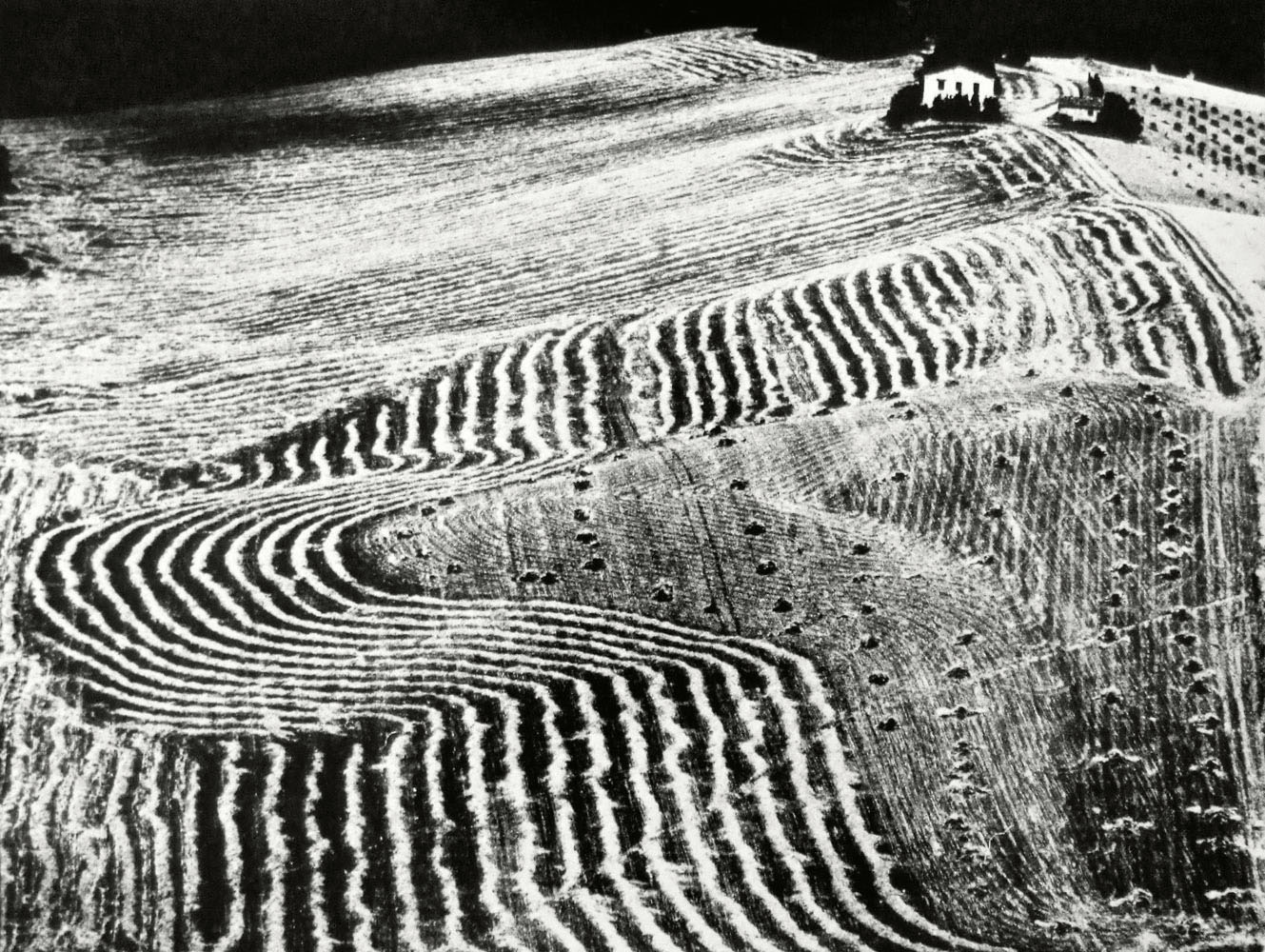
 

Mario Giacomelli (Italian, 1925-2000) 'Metamorphosis of the Land' (Metamorfosi della terra) 1976


Mario Giacomelli (Italian, 1925-2000)
Metamorphosis of the Land (Metamorfosi della terra)
1976
Gelatin silver print
29.2 × 39.4cm  (11 1/2 x 15 1/2 in.)
The J. Paul Getty Museum, Los Angeles, Gift of Daniel Greenberg and Susan Steinhauser
Reproduced courtesy Mario Giacomelli Archive
© Rita and Simone Giacomelli
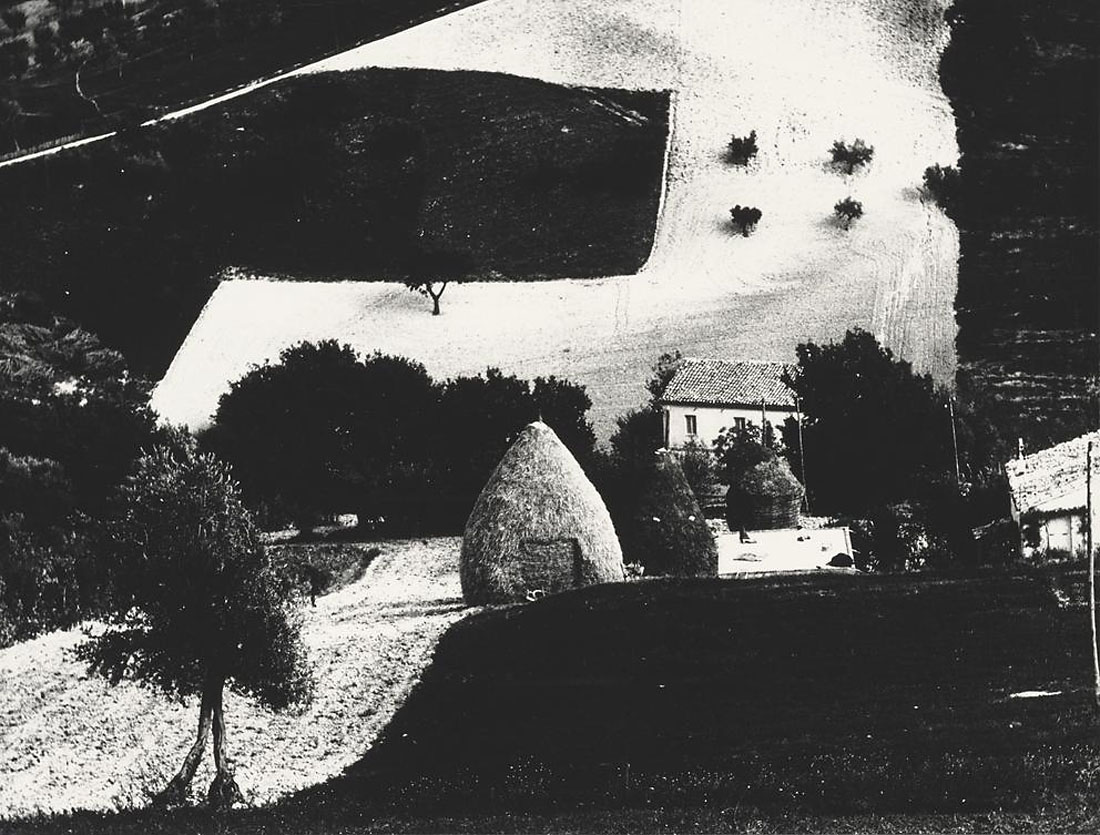
 

Mario Giacomelli (Italian, 1925-2000) 'Metamorphosis of the Land, No. 2' (Metamorfosi della terra, No. 2) 1971; printed 1981


Mario Giacomelli (Italian, 1925-2000)
Metamorphosis of the Land, No. 2 (Metamorfosi della terra, No. 2)
1971, printed 1981
Gelatin silver print
29.5 × 39.1cm  (11 5/8 x 15 3/8 in.)
The J. Paul Getty Museum, Los Angeles, Gift of Daniel Greenberg and Susan Steinhauser
Reproduced courtesy Mario Giacomelli Archive
© Rita and Simone Giacomelli
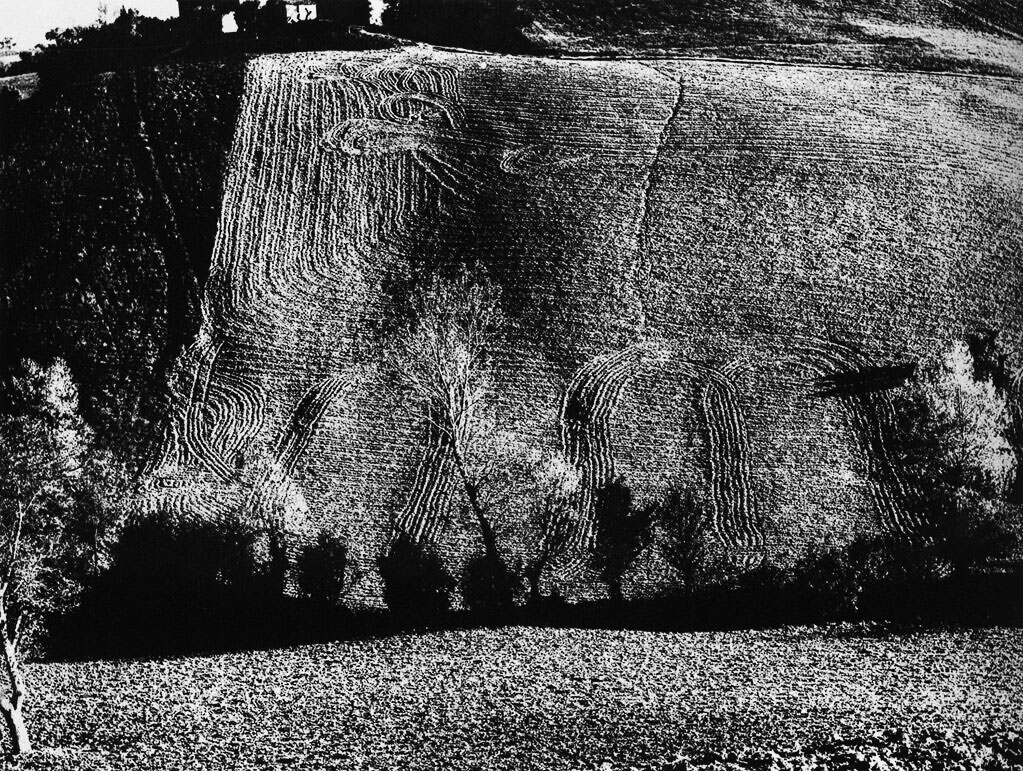
 

Mario Giacomelli (Italian, 1925-2000) 'Metamorphosis of the Land, No. 10' (Metamorfosi della terra, No. 10) 1974, printed 1981


Mario Giacomelli (Italian, 1925-2000)
Metamorphosis of the Land, No. 10 (Metamorfosi della terra, No. 10)
1974, printed 1981
Gelatin silver print
30.1 × 40.2cm  (11 7/8 x 15 13/16 in.)
The J. Paul Getty Museum, Los Angeles, Gift of Daniel Greenberg and Susan Steinhauser
Reproduced courtesy Mario Giacomelli Archive
© Rita and Simone Giacomelli
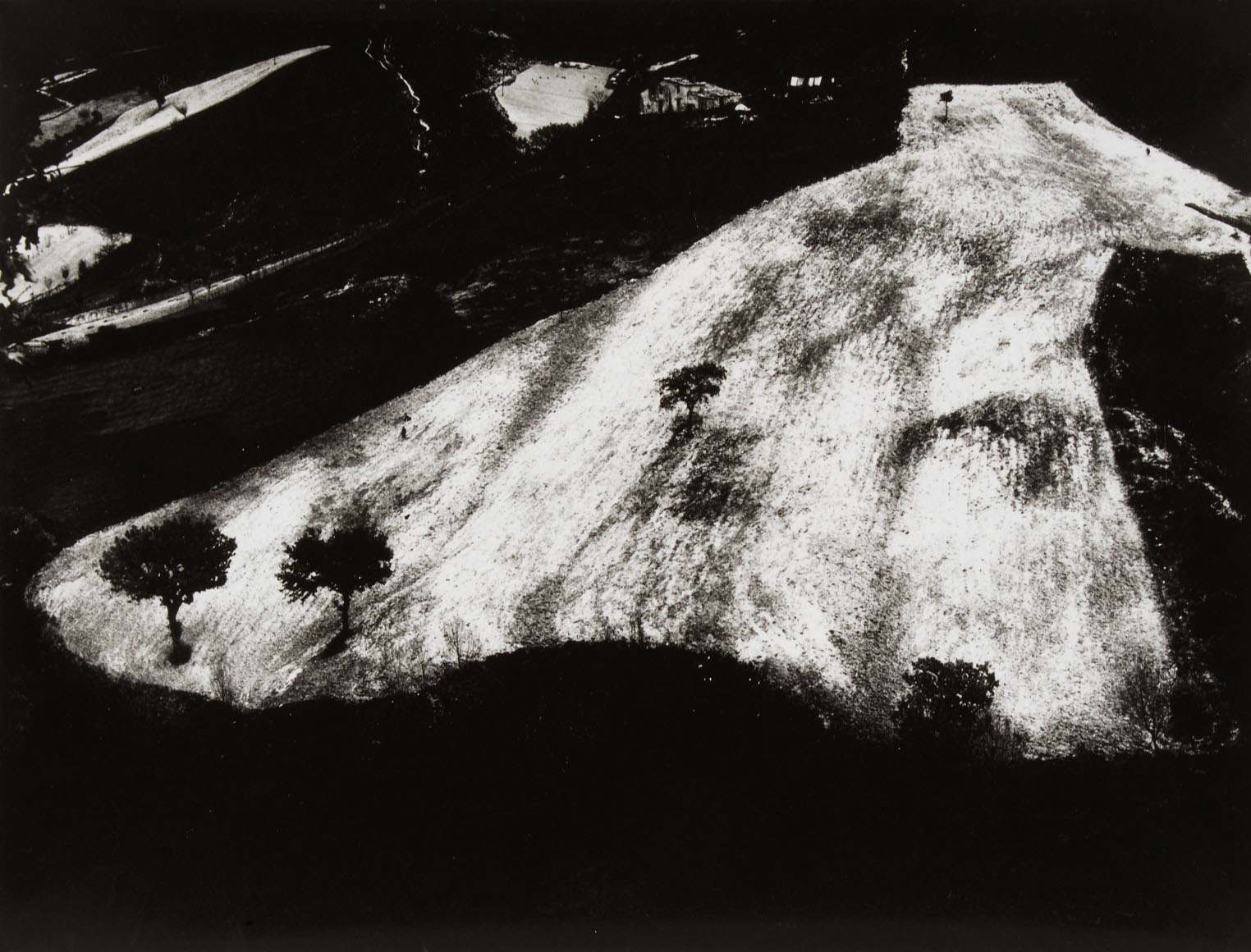
 

Mario Giacomelli (Italian, 1925-2000) 'Metamorphosis of the Land, No. 19' (Metamorfosi della terra, No. 19) Before 1966, printed 1981


Mario Giacomelli (Italian, 1925-2000)
Metamorphosis of the Land, No. 19 (Metamorfosi della terra, No. 19)
Before 1966, printed 1981
Gelatin silver print
30.1 × 40.2cm  (11 7/8 x 15 13/16 in.)
The J. Paul Getty Museum, Los Angeles, Gift of Daniel Greenberg and Susan Steinhauser
Reproduced courtesy Mario Giacomelli Archive
© Rita and Simone Giacomelli
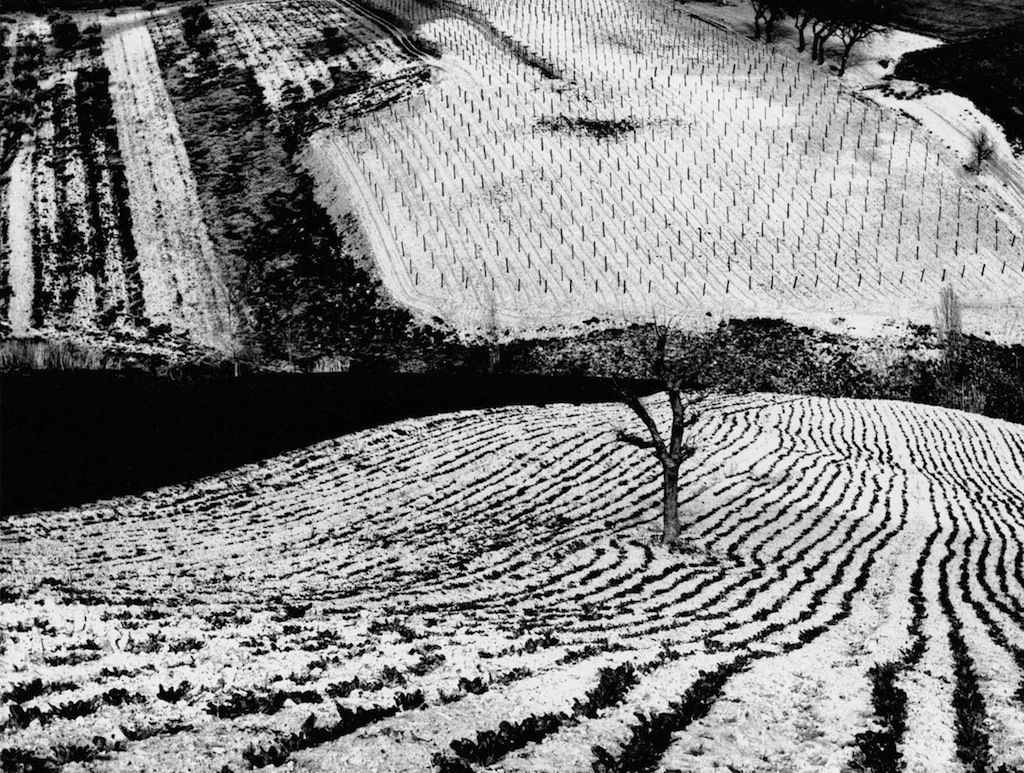
 

Mario Giacomelli (Italian, 1925-2000) 'Metamorphosis of the Land, No. 283' (Metamorfosi della terra, No. 283) Before 1968, printed 1981


Mario Giacomelli (Italian, 1925-2000)
Metamorphosis of the Land, No. 283 (Metamorfosi della terra, No. 283)
Before 1968, printed 1981
Gelatin silver print
30.1 × 40.2cm  (11 7/8 x 15 13/16 in.)
The J. Paul Getty Museum, Los Angeles, Gift of Daniel Greenberg and Susan Steinhauser
Reproduced courtesy Mario Giacomelli Archive
© Rita and Simone Giacomelli
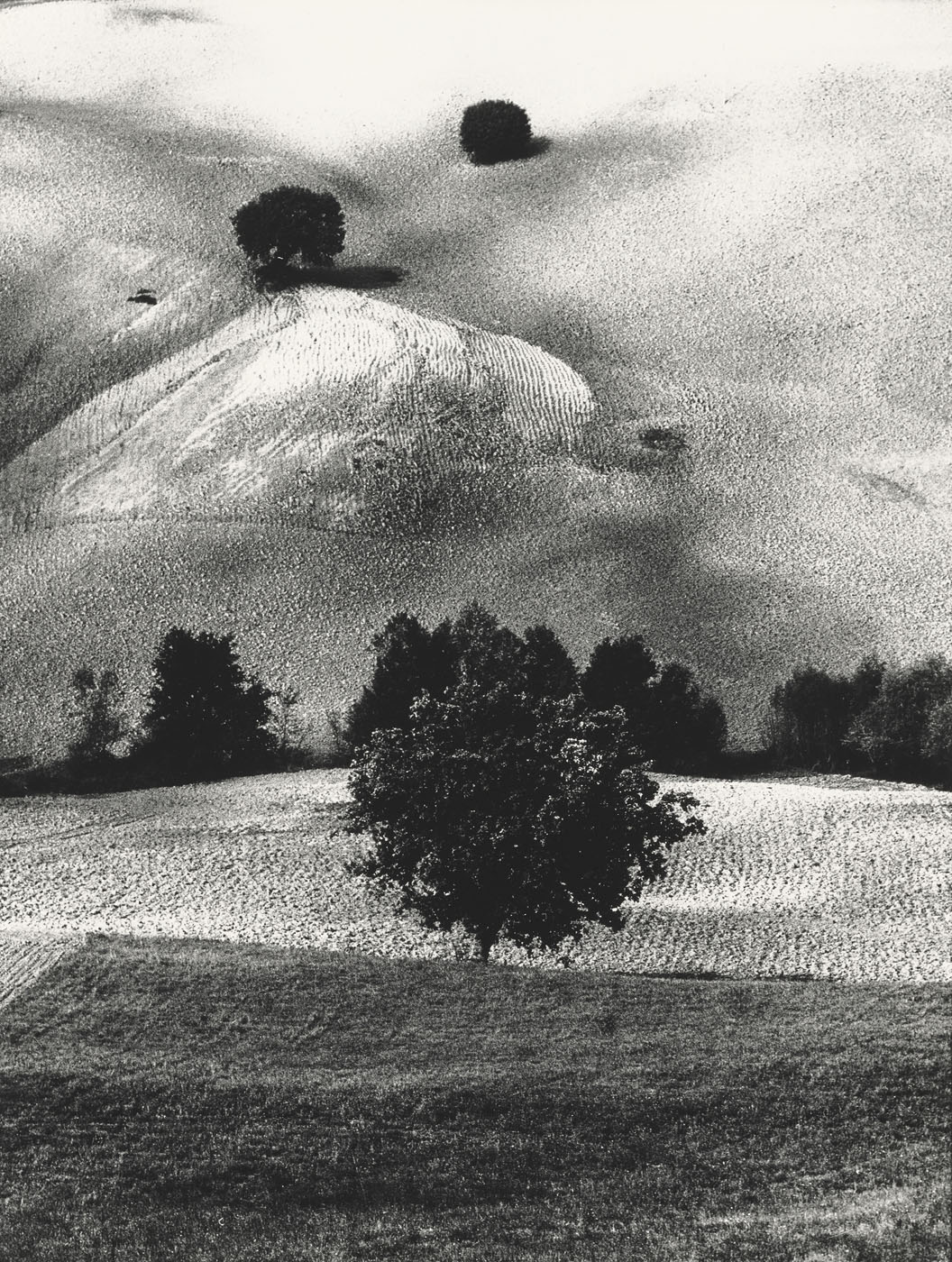
 

Mario Giacomelli (Italian, 1925-2000) 'Metamorphosis of the Land' (Metamorfosi della terra) 1958; printed 1981


Mario Giacomelli (Italian, 1925-2000)
Metamorphosis of the Land (Metamorfosi della terra)
1958; printed 1981
Gelatin silver print
40.2cm × 30.2cm  (15 13/16 x 11 7/8 in.)
The J. Paul Getty Museum, Los Angeles, Gift of Daniel Greenberg and Susan Steinhauser
Reproduced courtesy Mario Giacomelli Archive
© Rita and Simone Giacomelli
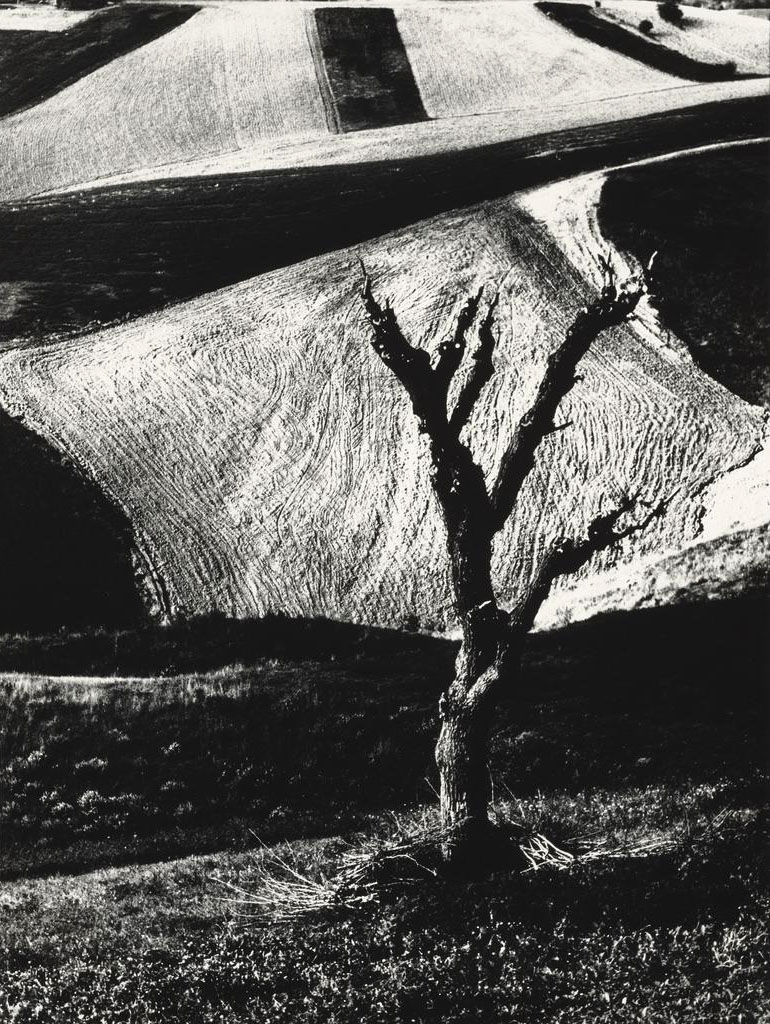
 

Mario Giacomelli (Italian, 1925-2000) 'Metamorphosis of the Land, No. 5' (Metamorfosi della terra, No. 5) 1971, printed 1981


Mario Giacomelli (Italian, 1925-2000)
Metamorphosis of the Land, No. 5 (Metamorfosi della terra, No. 5)
1971, printed 1981
Gelatin silver print
40.2cm × 30.1cm  (15 13/16 x 11 7/8 in.)
The J. Paul Getty Museum, Los Angeles, Gift of Daniel Greenberg and Susan Steinhauser
Reproduced courtesy Mario Giacomelli Archive
© Rita and Simone Giacomelli


Metamorphosis of the Land (1958-1960)

The photographs gathered under the title Metamorphosis of the Land were created over roughly two decades in the countryside surrounding Senigallia. Without a horizon line to anchor them, they are disorienting, requiring the viewer to rely on a lone house or tree as a focal point. Perspectival ambiguity abounds: Did Giacomelli take the photographs from an elevated or lowered vantage point? Did he hold the camera parallel or perpendicular to the land? Is this confusion a result of the inherent “verticality” of the hilly Marche region, or did Giacomelli rely on darkroom manipulation (such as printing on diagonally tilted sheets of photo paper) to create right-angled configurations of shapes that should otherwise recede in the distance, following the tenets of one-point perspective?

These ambiguities are further intensified by Giacomelli’s intention for this body of work to address issues of ecological neglect and loss. Deeply attuned to the rural geography and agricultural practices of the Marche, he was wary of the consequences that accompanied the shift from centuries-old systems of subdivided fields and crop rotation to modern methods of mechanisation and fertilisation that overtax the land by keeping it in constant use. The series is one of lament.
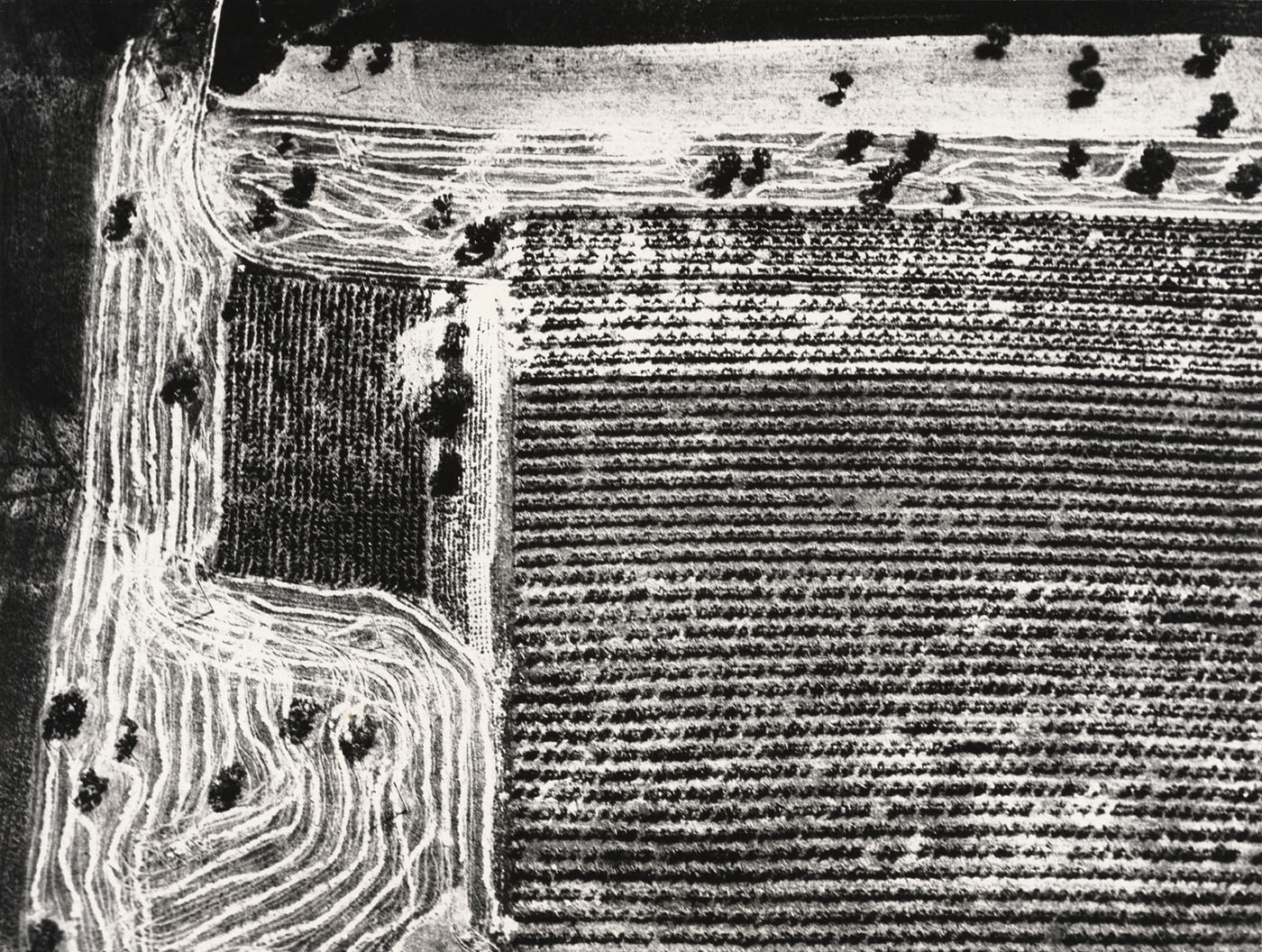
 

Mario Giacomelli (Italian, 1925-2000) 'Awareness of Nature' (Presa di coscienza sulla natura) 1976


Mario Giacomelli (Italian, 1925-2000)
Awareness of Nature (Presa di coscienza sulla natura)
1976
Gelatin silver print
29.7 × 39.5cm  (11 11/16 x 15 9/16 in.)
The J. Paul Getty Museum, Los Angeles, Gift of Daniel Greenberg and Susan Steinhauser
Reproduced courtesy Mario Giacomelli Archive
© Rita and Simone Giacomelli
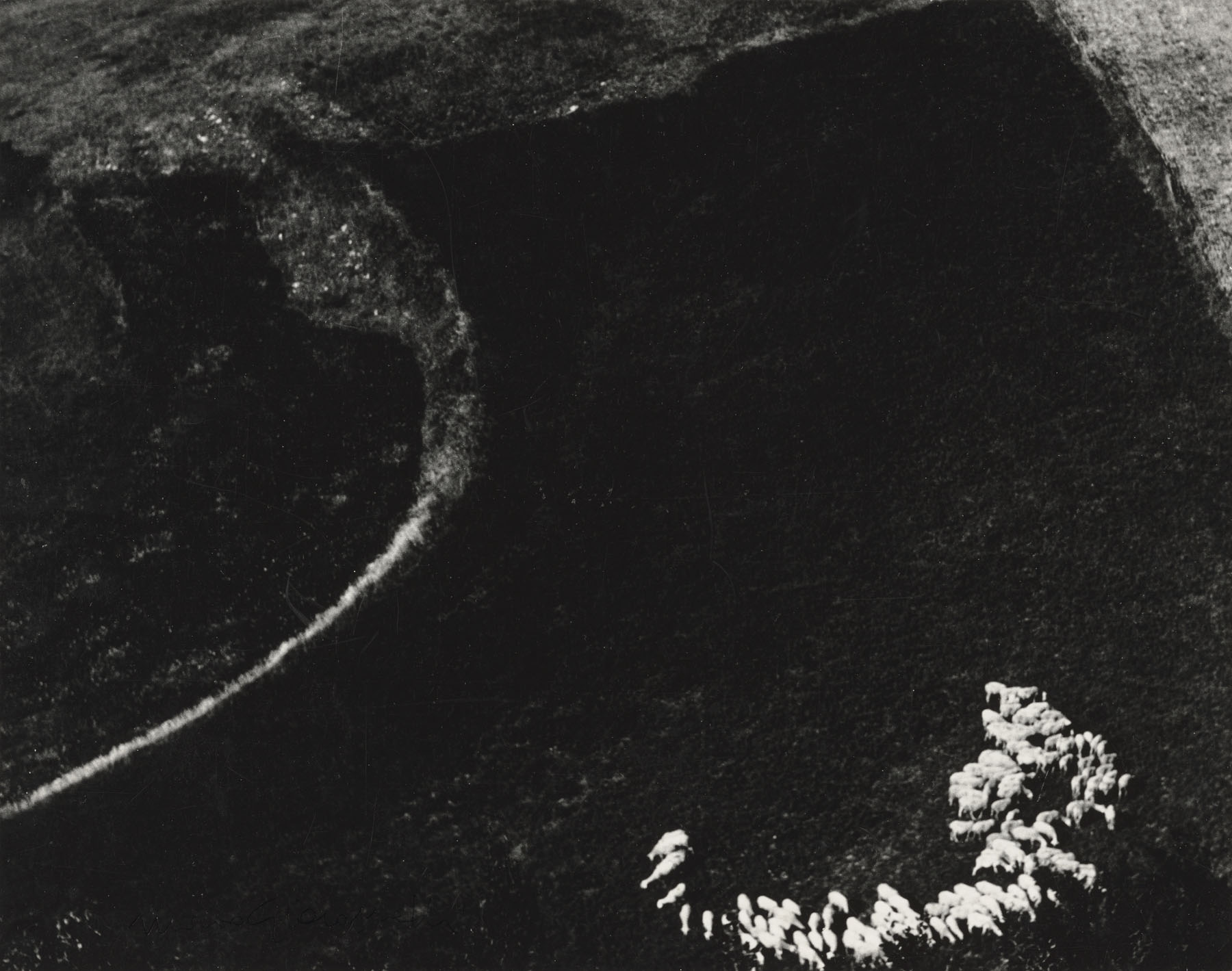
 

Mario Giacomelli (Italian, 1925-2000) 'Awareness of Nature, No. 3' (Presa di coscienza sulla natura, No. 3) 1970-1974, printed 1981


Mario Giacomelli (Italian, 1925-2000)
Awareness of Nature, No. 3 (Presa di coscienza sulla natura, No. 3)
1970-1974, printed 1981
Gelatin silver print
30.1 × 40.2cm  (11 7/8 x 15 13/16 in.)
The J. Paul Getty Museum, Los Angeles, Gift of Daniel Greenberg and Susan Steinhauser
Reproduced courtesy Mario Giacomelli Archive
© Rita and Simone Giacomelli
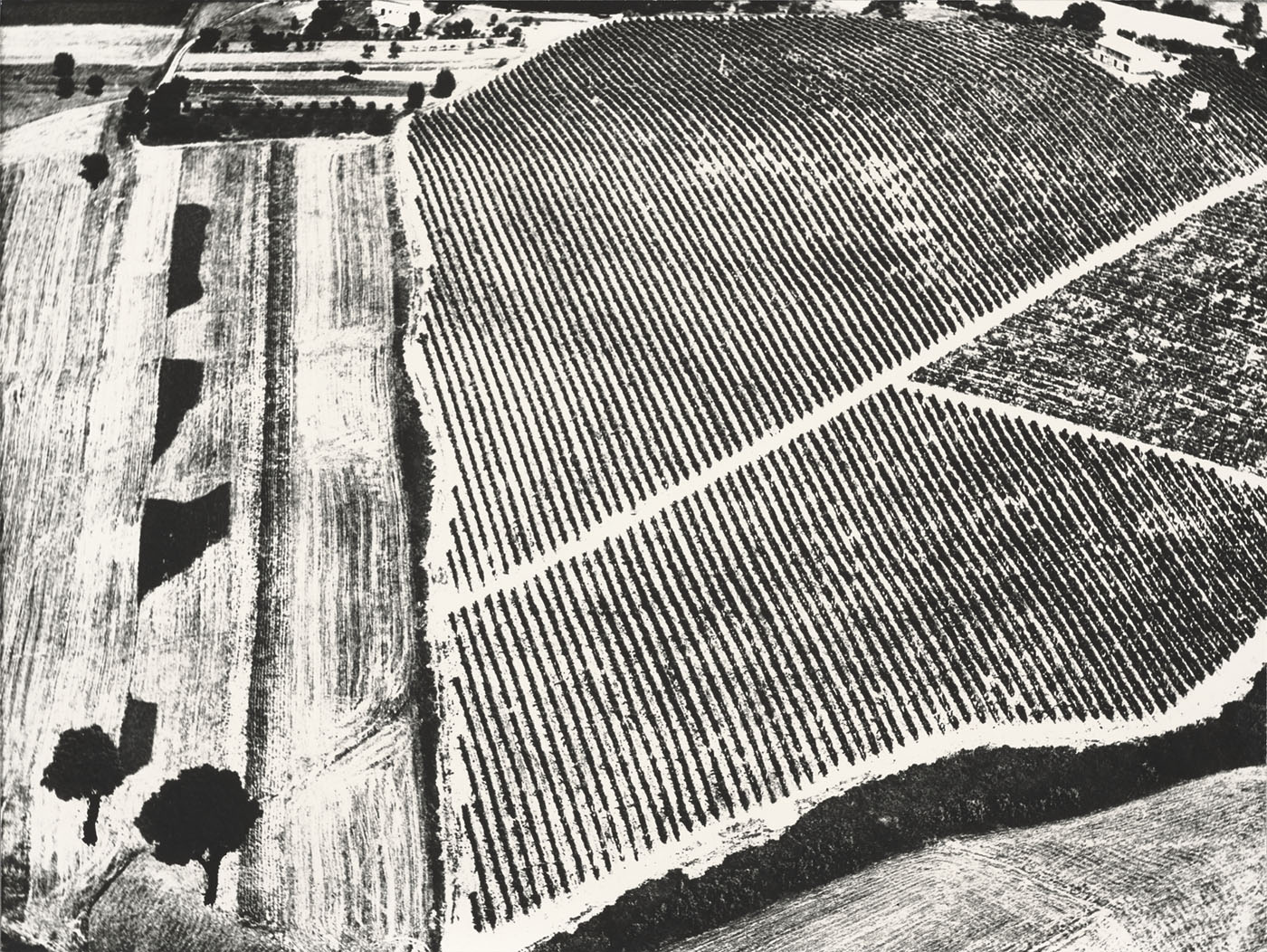
 

Mario Giacomelli (Italian, 1925-2000) 'Awareness of Nature, No. 38' (Presa di coscienza sulla natura, No. 38) 1970, printed 1981


Mario Giacomelli (Italian, 1925-2000)
Awareness of Nature, No. 38 (Presa di coscienza sulla natura, No. 38)
1970, printed 1981
Gelatin silver print
30.1 × 40.3cm  (11 7/8 x 15 7/8 in.)
The J. Paul Getty Museum, Los Angeles, Gift of Daniel Greenberg and Susan Steinhauser
Reproduced courtesy Mario Giacomelli Archive
© Rita and Simone Giacomelli
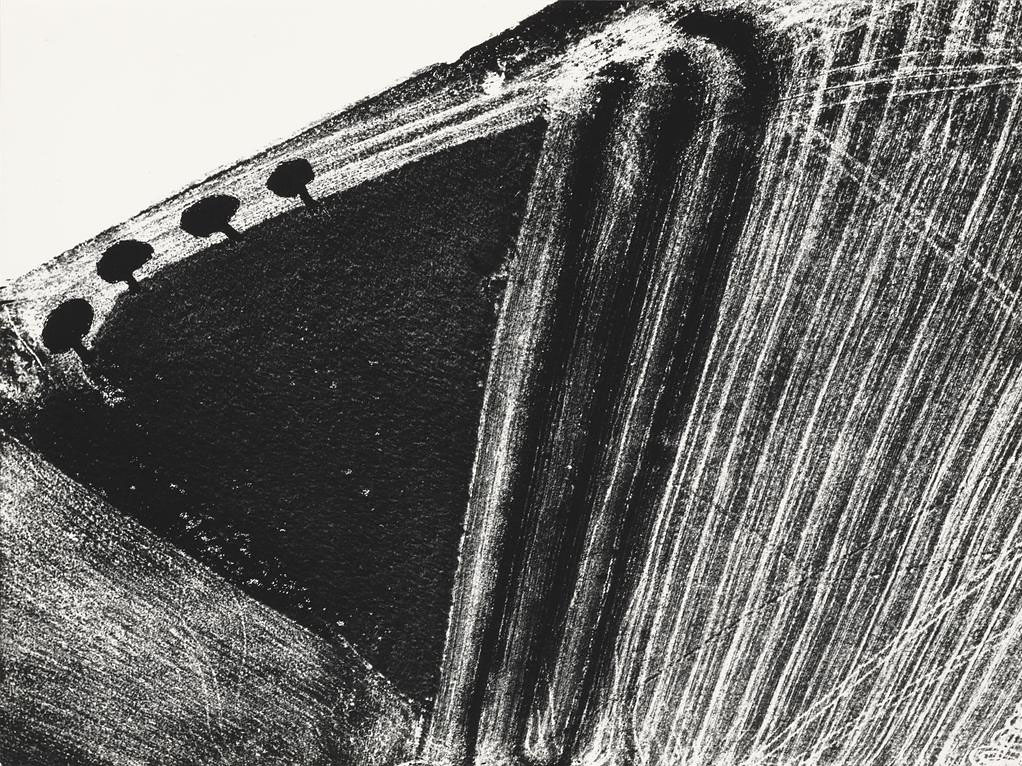
 

Mario Giacomelli (Italian, 1925-2000) 'Awareness of Nature, No. 171' (Presa di coscienza sulla natura, No. 171) 1980, printed 1981


Mario Giacomelli (Italian, 1925-2000)
Awareness of Nature, No. 171 (Presa di coscienza sulla natura, No. 171)
1980, printed 1981
Gelatin silver print
30.1 × 40.3cm  (11 7/8 x 15 7/8 in.)
The J. Paul Getty Museum, Los Angeles, Gift of Daniel Greenberg and Susan Steinhauser
Reproduced courtesy Mario Giacomelli Archive
© Rita and Simone Giacomelli
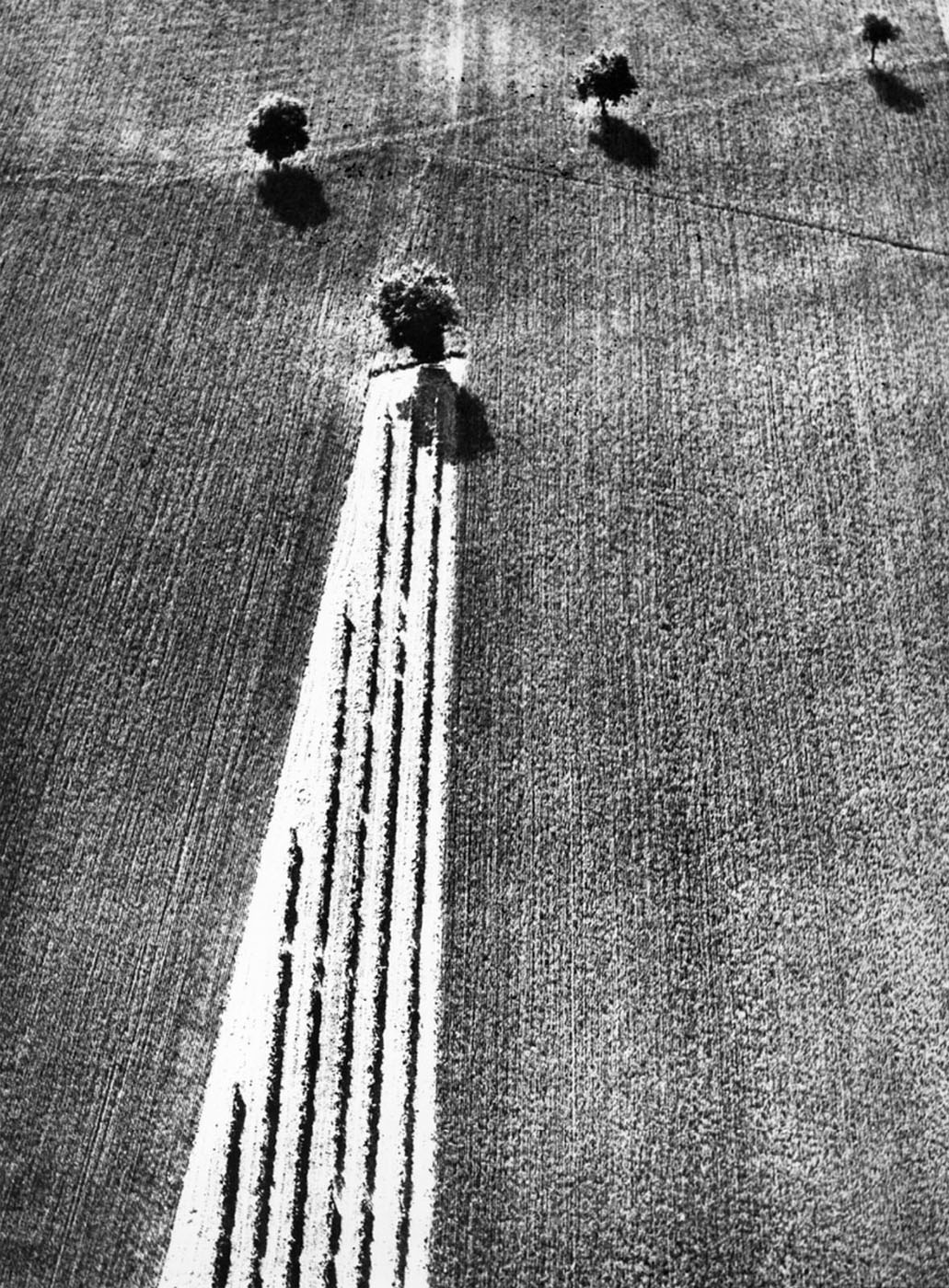
 

Mario Giacomelli (Italian, 1925-2000) 'Awareness of Nature, No. 471' (Presa di coscienza sulla natura, No. 471) 1980, printed 1981


Mario Giacomelli (Italian, 1925-2000)
Awareness of Nature, No. 471 (Presa di coscienza sulla natura, No. 471)
1980, printed 1981
Gelatin silver print
40.2 x 30.1cm  (15 13/16 x 11 7/8  in.)
The J. Paul Getty Museum, Los Angeles, Gift of Daniel Greenberg and Susan Steinhauser
Reproduced courtesy Mario Giacomelli Archive
© Rita and Simone Giacomelli


Awareness of Nature (1976-1980)

The photographs in this series are among Giacomelli’s most iconic, notable for their gritty, graphic abstraction, which he achieved with an aerial perspective and by using expired film to exaggerate the contrast between black and white. Finding a poetic reciprocity in portraying land that was undergoing “sad devastation” with film that was “dead,” Giacomelli perceived these images as a means of resuscitating his beloved Marche countryside and endowing it with a different kind of beauty. The ploughed fields pulsate with a rhythmic intensity that is absent from previous pictures, in part because he asked that some of these furrows be cut into the land (by the farming family he featured in The Good Earth). A stamp on the verso of each print describes the series further as “the work of man and my intervention (the signs, the material, the randomness, etc.) recorded as a document before being lost in the relative folds of time.” The images resonate conceptually with the Land Art, or Earth Art, movement of the late 1960s and 1970s, in which artists used the landscape to create site-specific sculptures and art forms. As was his custom, Giacomelli incorporated photographs from earlier series, which may have been made from a neighbouring hilltop or did not include his interventions.
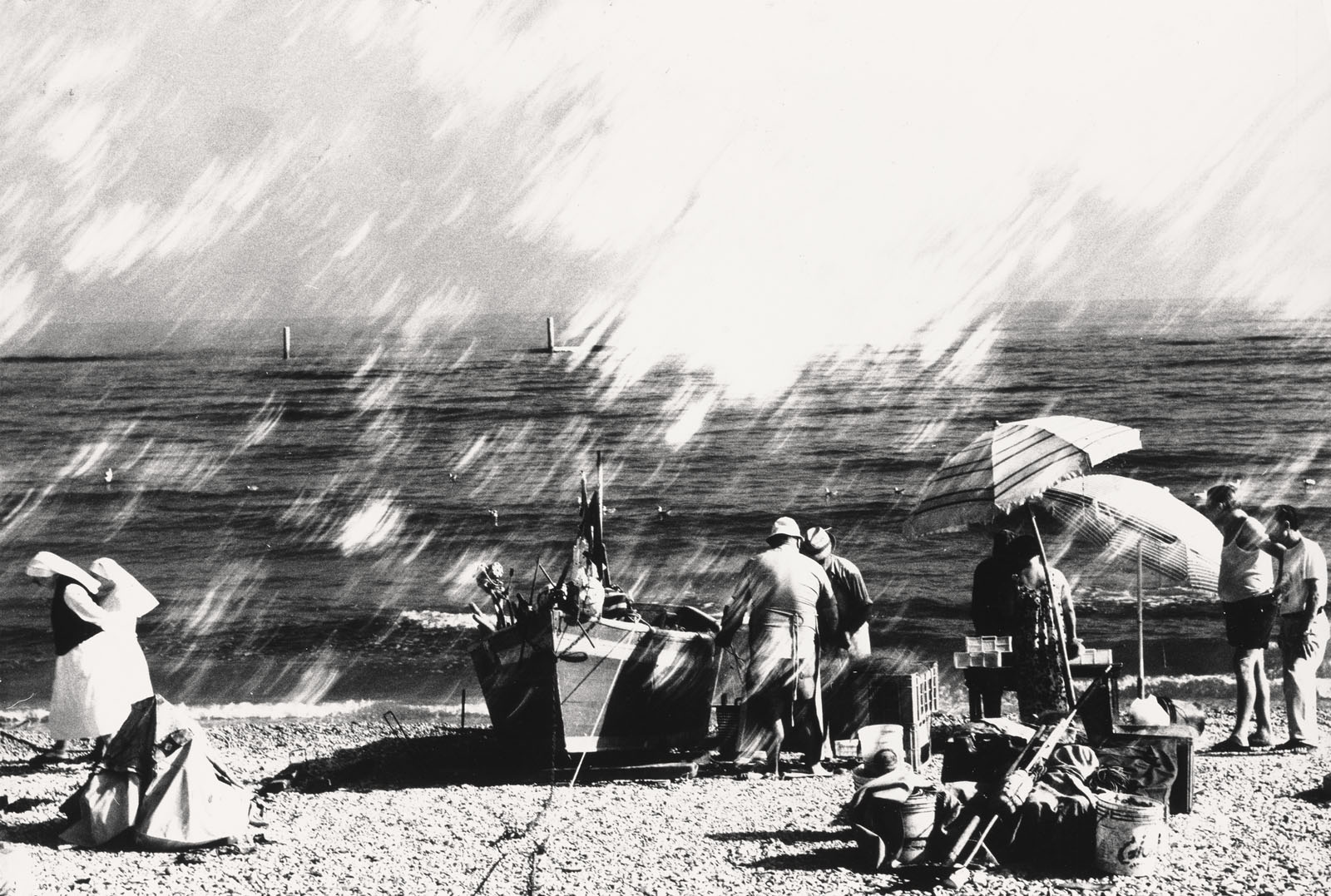
 

Mario Giacomelli (Italian, 1925-2000) 'My Marche' (Le mie Marche) 1975-1980


Mario Giacomelli (Italian, 1925-2000)
My Marche (Le mie Marche)
1975-1980
Gelatin silver print
25.1 × 37.7cm  (9 7/8 x 14 13/16 in.)
The J. Paul Getty Museum, Los Angeles, Gift of Daniel Greenberg and Susan Steinhauser
Reproduced courtesy Mario Giacomelli Archive
© Rita and Simone Giacomelli
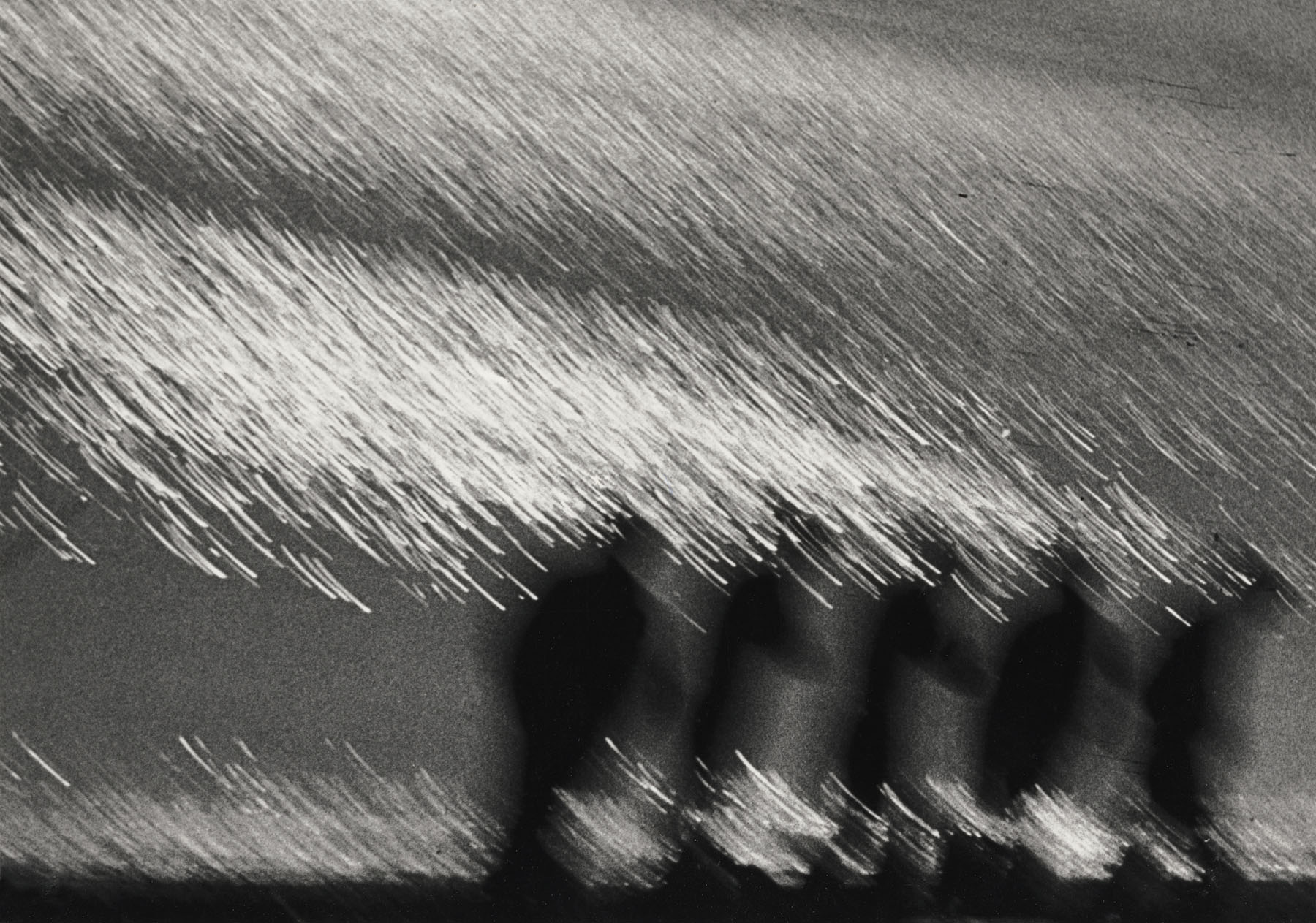
 

Mario Giacomelli (Italian, 1925-2000) 'My Marche' (Le mie Marche) 1970s-1980s


Mario Giacomelli (Italian, 1925-2000)
My Marche (Le mie Marche)
1970s-1980s
Gelatin silver print
19.7 × 28.1cm  (7 3/4 x 11 1/16 in.)
The J. Paul Getty Museum, Los Angeles, Gift of Daniel Greenberg and Susan Steinhauser
Reproduced courtesy Mario Giacomelli Archive
© Rita and Simone Giacomelli
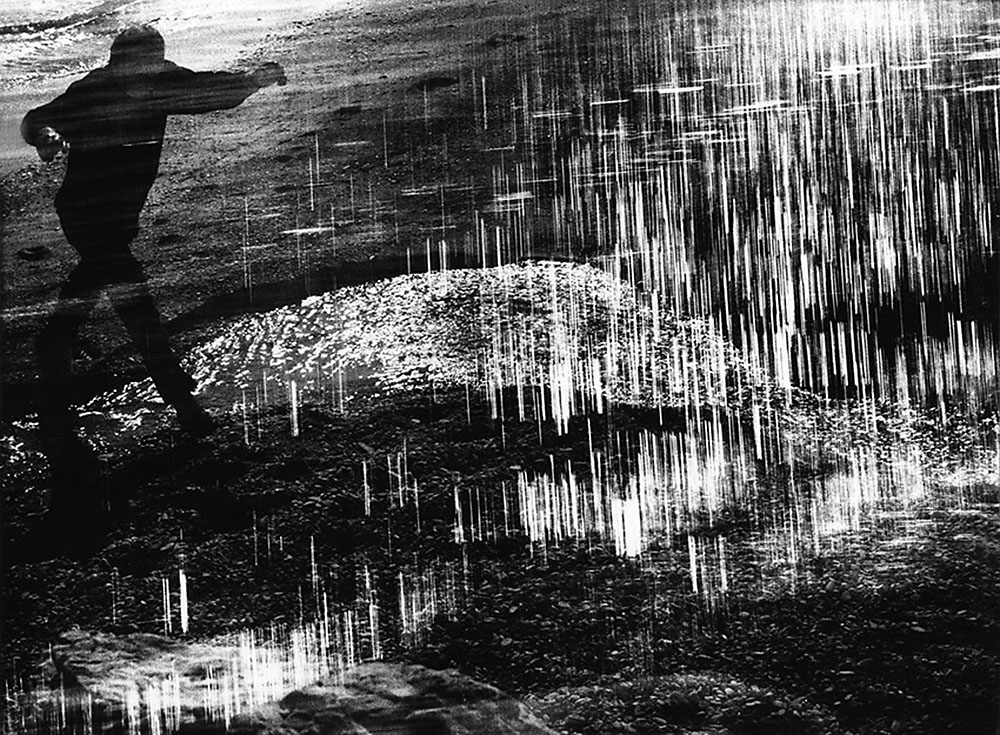
 

Mario Giacomelli (Italian, 1925-2000) 'My Marche' (Le mie Marche) 1970s-1990s


Mario Giacomelli (Italian, 1925-2000)
My Marche (Le mie Marche)
1970s-1990s
Gelatin silver print
30.1 × 40.3cm  (11 7/8 x 15 7/8 in.)
The J. Paul Getty Museum, Los Angeles, Gift of Daniel Greenberg and Susan Steinhauser
Reproduced courtesy Mario Giacomelli Archive
© Rita and Simone Giacomelli


Late work (1980s)

Giacomelli conceived many of his series as sequences that tell the stories of individuals in a particular time and place. He interspersed portraits with landscapes, but he also merged these genres in double exposures or by experimenting with slow shutter speeds and moving his camera during exposure to blur the lines between figure and ground. And once again, he often repurposed an image made for one series in another series, reinforcing the sense of fluidity that connects all of his work. Several of these sequences were inspired by poems, not in an attempt to illustrate them, but to create parallel narratives.

Although the photographs in this section derive from several different series, they share a sense of setting the location or mood. Most easily categorised as landscapes, they mark a noticeable shift from Giacomelli’s earlier position of critiquing the slow degradation of the land to one that sets the stage for a more metaphysical contemplation of the interconnectivity of space, time, and being. The majority were made in the 1980s, when Giacomelli was reflecting on the loss of his mother (who died in 1986), his growing international reputation as a photographer, and his own mortality.
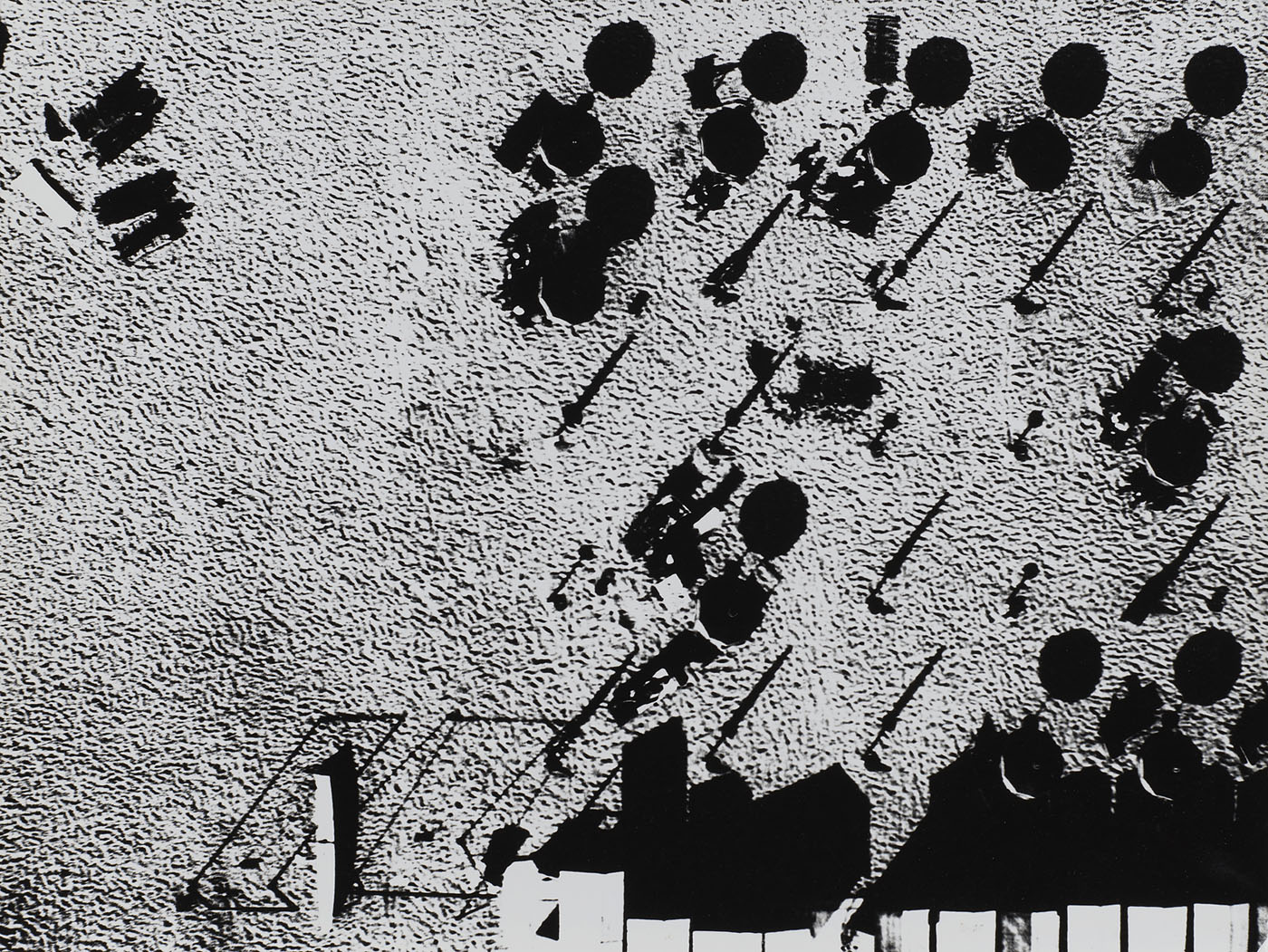
 

Mario Giacomelli (Italian, 1925-2000) 'The Sea of My Stories' (Il mare dei miei racconti) 1984, printed 1990


Mario Giacomelli (Italian, 1925-2000)
The Sea of My Stories (Il mare dei miei racconti)
1984, printed 1990
Gelatin silver print
30.3 × 40.3cm  (11 15/16 x 15 7/8 in.)
The J. Paul Getty Museum, Los Angeles, Gift of Daniel Greenberg and Susan Steinhauser
Reproduced courtesy Mario Giacomelli Archive
© Rita and Simone Giacomelli
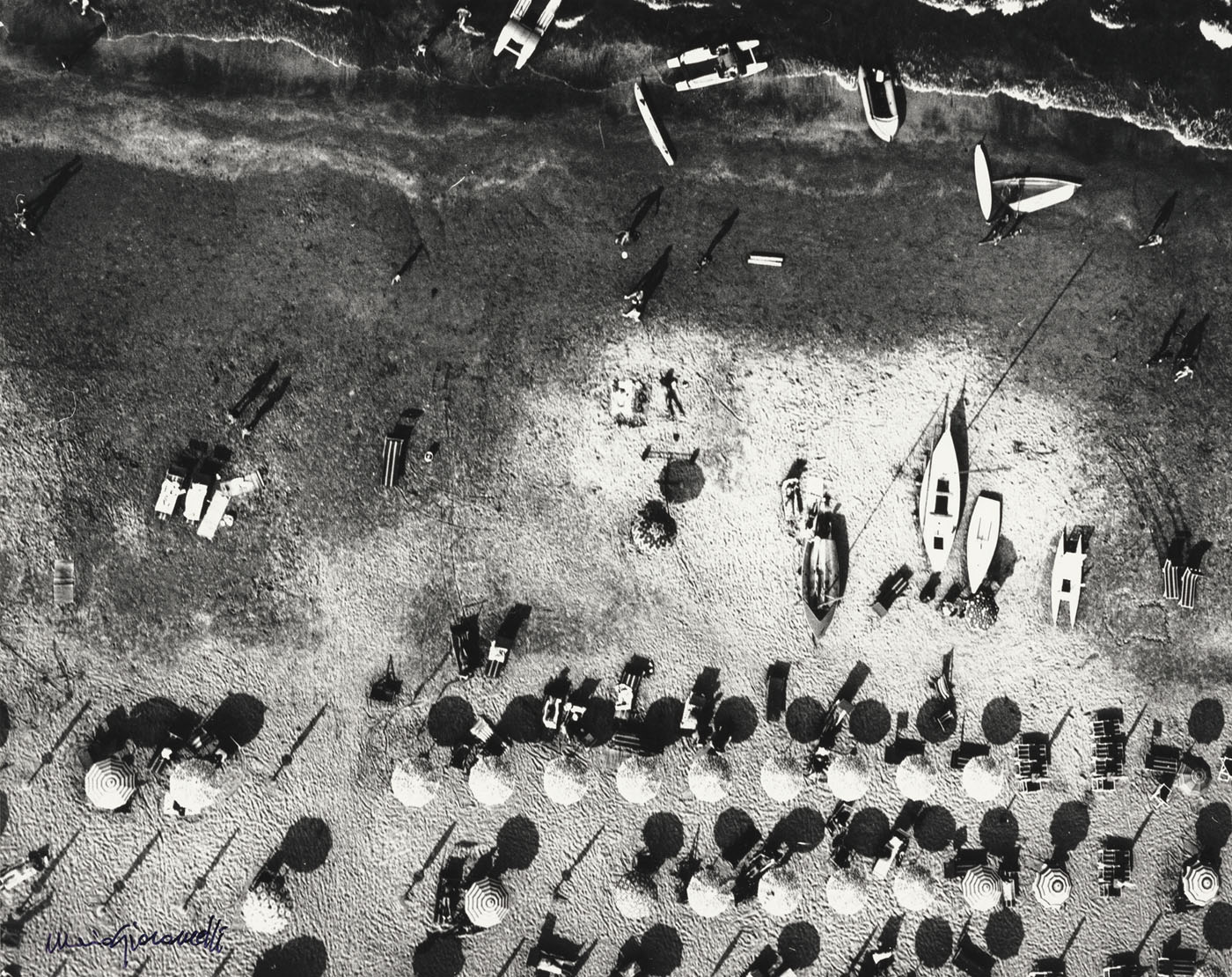
 

Mario Giacomelli (Italian, 1925-2000) 'The Sea of My Stories' (Il mare dei miei racconti) 1983-1987


Mario Giacomelli (Italian, 1925-2000)
The Sea of My Stories (Il mare dei miei racconti)
1983-1987
Gelatin silver print
27.6 × 34.9cm  (10 7/8 x 13 3/4 in.)
The J. Paul Getty Museum, Los Angeles, Gift of Daniel Greenberg and Susan Steinhauser
Reproduced courtesy Mario Giacomelli Archive
© Rita and Simone Giacomelli


The Sea of My Stories (1983-1987)

Giacomelli noted that the sea referred to in the title of this series was that of his childhood, the Adriatic, but in fact it was the sea of his entire lifetime. He made his first photographs along Senigallia’s shore after purchasing a camera in 1953. Some thirty years later, curiosity about how an aerial perspective might transform people’s appearance led him to hire a friend who owned an airplane to fly him above the region’s beaches. The resulting compositions create abstract patterns from the shapes and shadows of bathers, deck chairs, umbrellas, and boats against the sand.
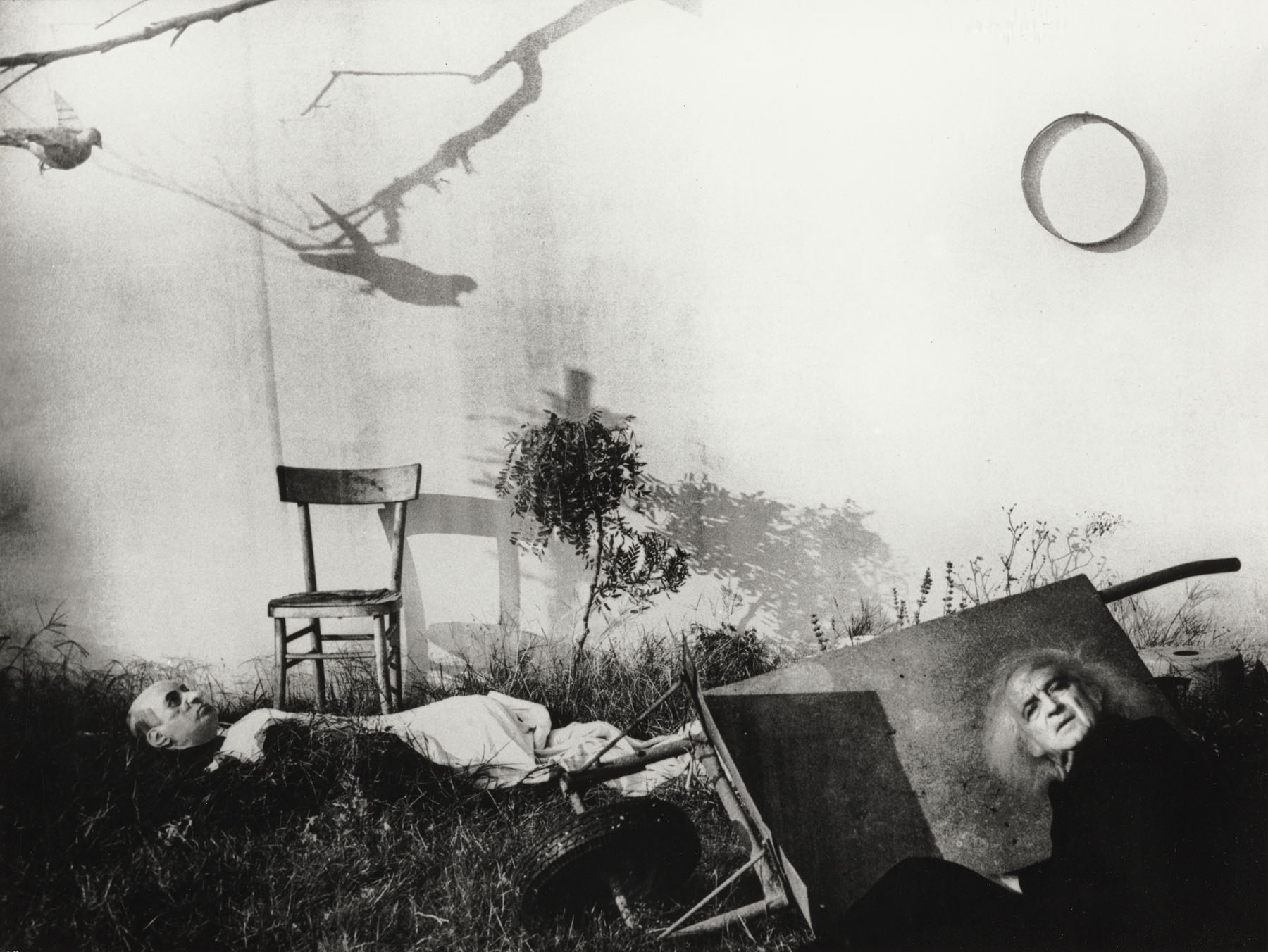
 

Mario Giacomelli (Italian, 1925-2000) 'I Would Like to Tell This Memory' (Questo ricordo lo vorrei raccontare) 2000


Mario Giacomelli (Italian, 1925-2000)
I Would Like to Tell This Memory (Questo ricordo lo vorrei raccontare)
2000
Gelatin silver print
22.1 × 29.5cm  (8 11/16 x 11 5/8 in.)
The J. Paul Getty Museum, Los Angeles, Gift of Daniel Greenberg and Susan Steinhauser
Reproduced courtesy Mario Giacomelli Archive
© Rita and Simone Giacomelli
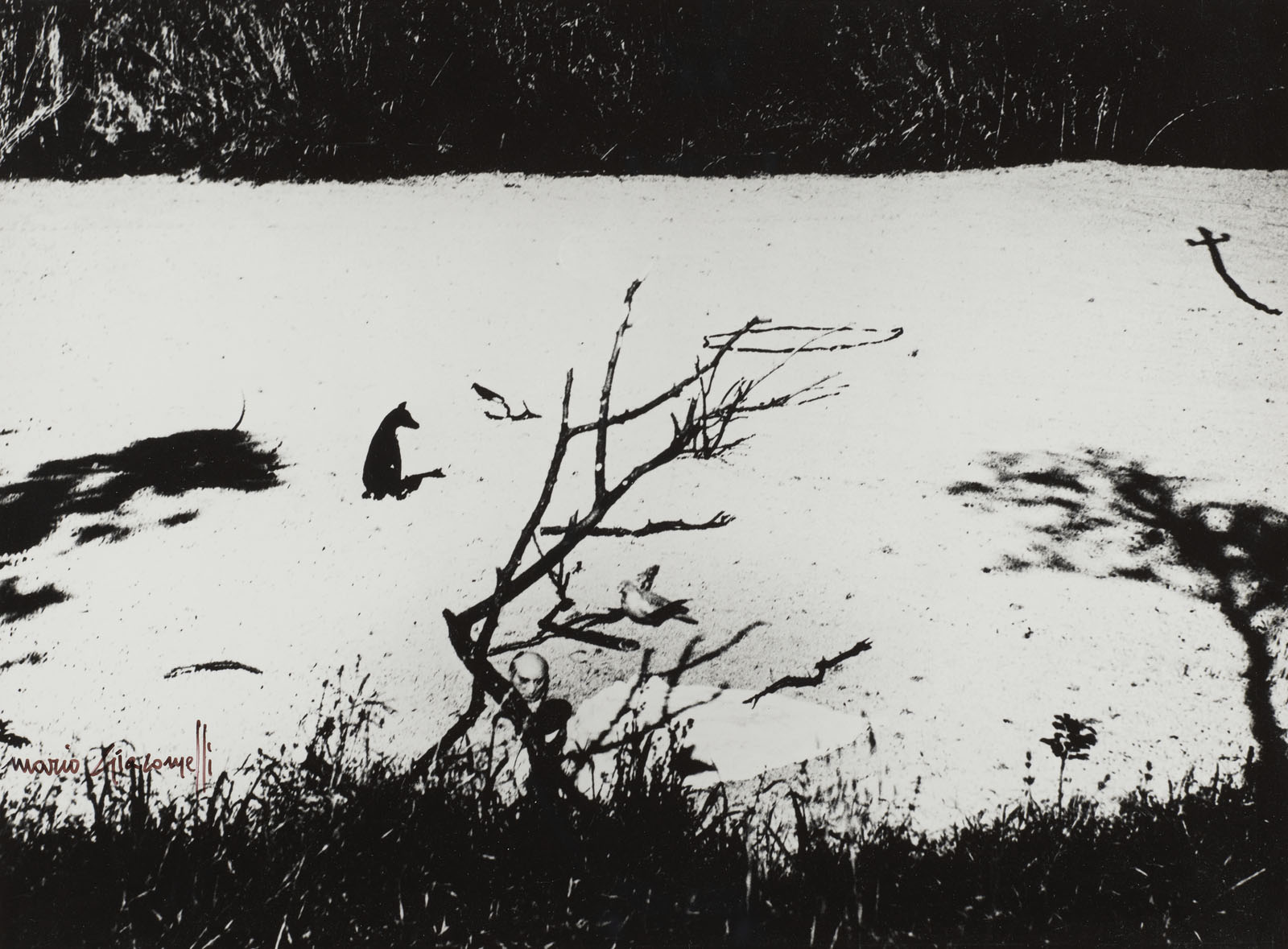
 

Mario Giacomelli (Italian, 1925-2000) 'I Would Like to Tell This Memory' (Questo ricordo lo vorrei raccontare) 2000


Mario Giacomelli (Italian, 1925-2000)
I Would Like to Tell This Memory (Questo ricordo lo vorrei raccontare)
2000
Gelatin silver print
22.4 × 30.2cm  (8 13/16 x 11 7/8 in.)
The J. Paul Getty Museum, Los Angeles, Gift of Daniel Greenberg and Susan Steinhauser
Reproduced courtesy Mario Giacomelli Archive
© Rita and Simone Giacomelli


I Would Like To Tell This Memory (2000)

The poetic title of this series reflects the increasingly pensive mood of Giacomelli’s late work. We occasionally glimpse the photographer himself as he engages with an odd assortment of props, including stuffed dogs and birds, a mannequin and mask. His abrupt cropping, slight overexposure to reverse tonal values, and painting or scratching of areas on the negative introduce elements of the absurd or surreal as means to confront the inevitability of his own mortality. The series, one of his last, is a meditation on melancholy, loss, and the passage of time.
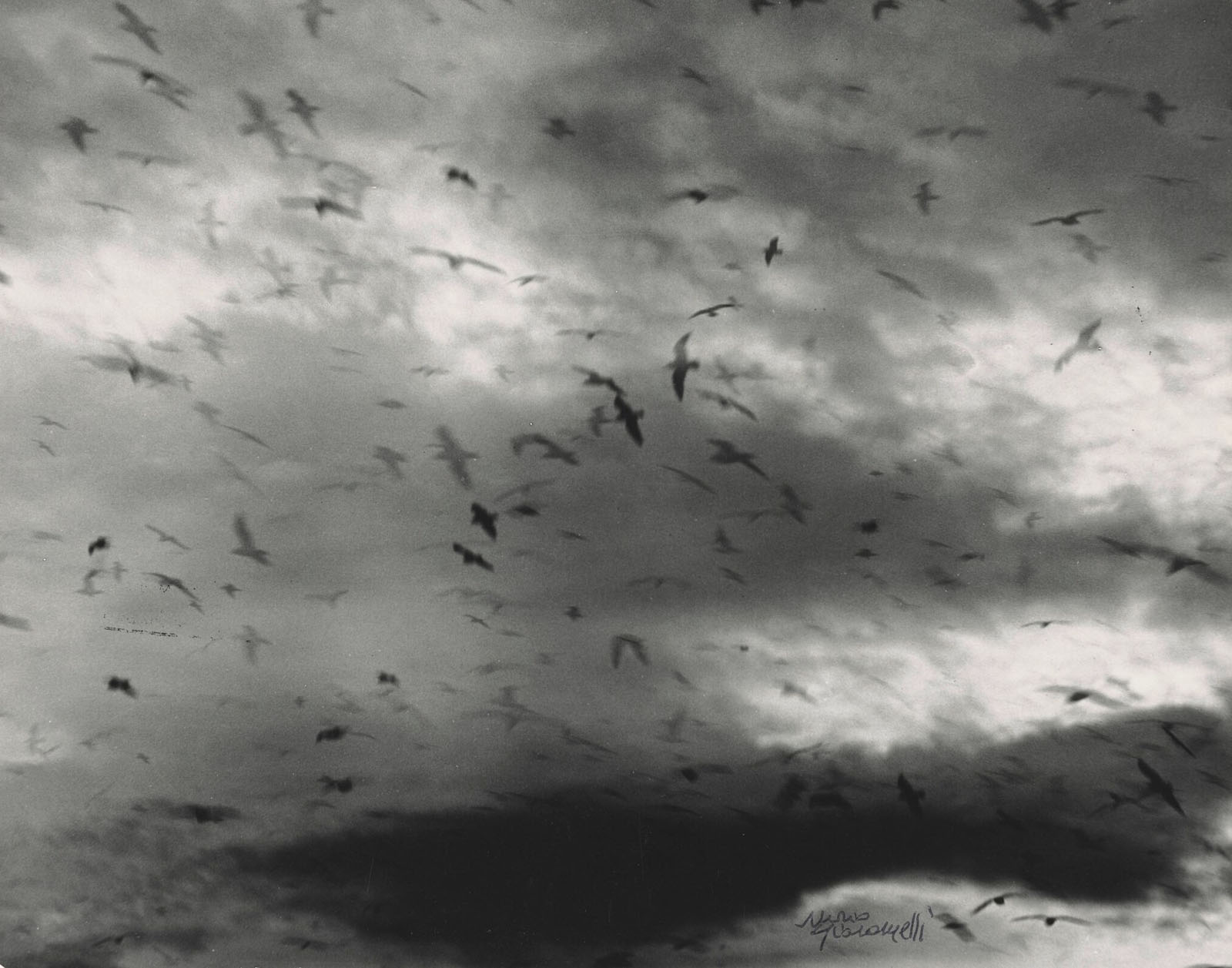
 

Mario Giacomelli (Italian, 1925-2000) 'The Theater of Snow' (Il teatro della neve) 1981-1984


Mario Giacomelli (Italian, 1925-2000)
The Theater of Snow (Il teatro della neve)
1981-1984
Gelatin silver print
24.2 × 31.2cm  (9 1/2 x 12 5/16 in.)
The J. Paul Getty Museum, Los Angeles, Gift of Daniel Greenberg and Susan Steinhauser
Reproduced courtesy Mario Giacomelli Archive
© Rita and Simone Giacomelli
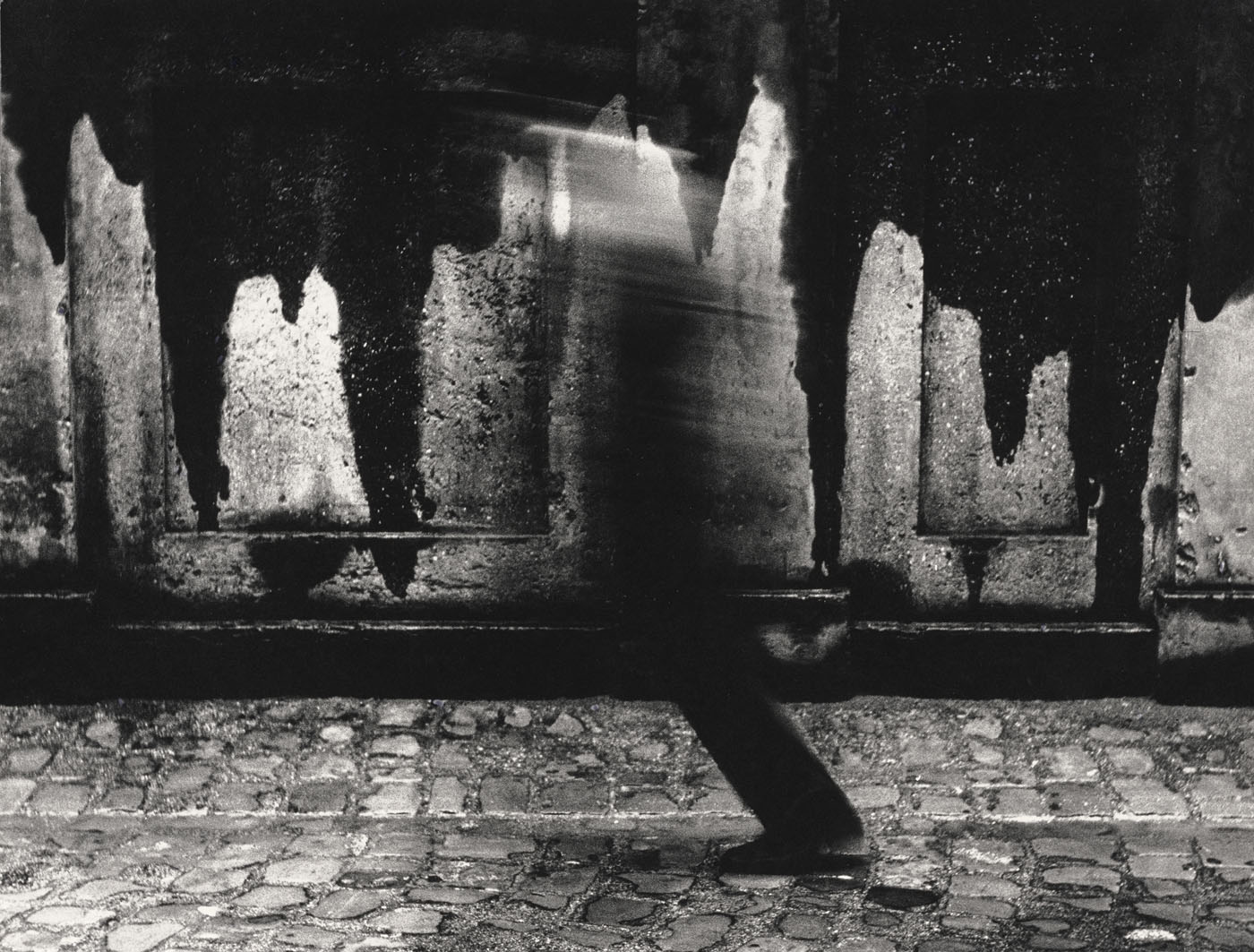
 

Mario Giacomelli (Italian, 1925-2000) 'The Theater of Snow' (Il teatro della neve) 1981-1984


Mario Giacomelli (Italian, 1925-2000)
The Theater of Snow (Il teatro della neve)
1981-1984
Gelatin silver print
28.9 × 38.4cm  (11 3/8 x 15 1/8 in.)
The J. Paul Getty Museum, Los Angeles, Gift of Daniel Greenberg and Susan Steinhauser
Reproduced courtesy Mario Giacomelli Archive
© Rita and Simone Giacomelli


Reflecting on Giacomelli

Giacomelli died in November 2000 after a long illness. He had continued working on several photographic series until his final days, with the poignantly titled I Would Like to Tell This Memory attesting to his deeply introspective temperament. From his unpromising beginnings as an impoverished, poorly educated boy, Giacomelli redirected the course of his life, maintaining a successful printing business that provided financial security and dedicating himself to the arts as a means of self-expression. Though he was self-taught in poetry, painting, and photography, it was with this last medium that he created a sense of continuity and fluidity throughout his life. He gained international acclaim as one of Italy’s most prominent photographers despite having made the majority of his photographs in his hometown of Senigallia and the neighbouring Marche region.
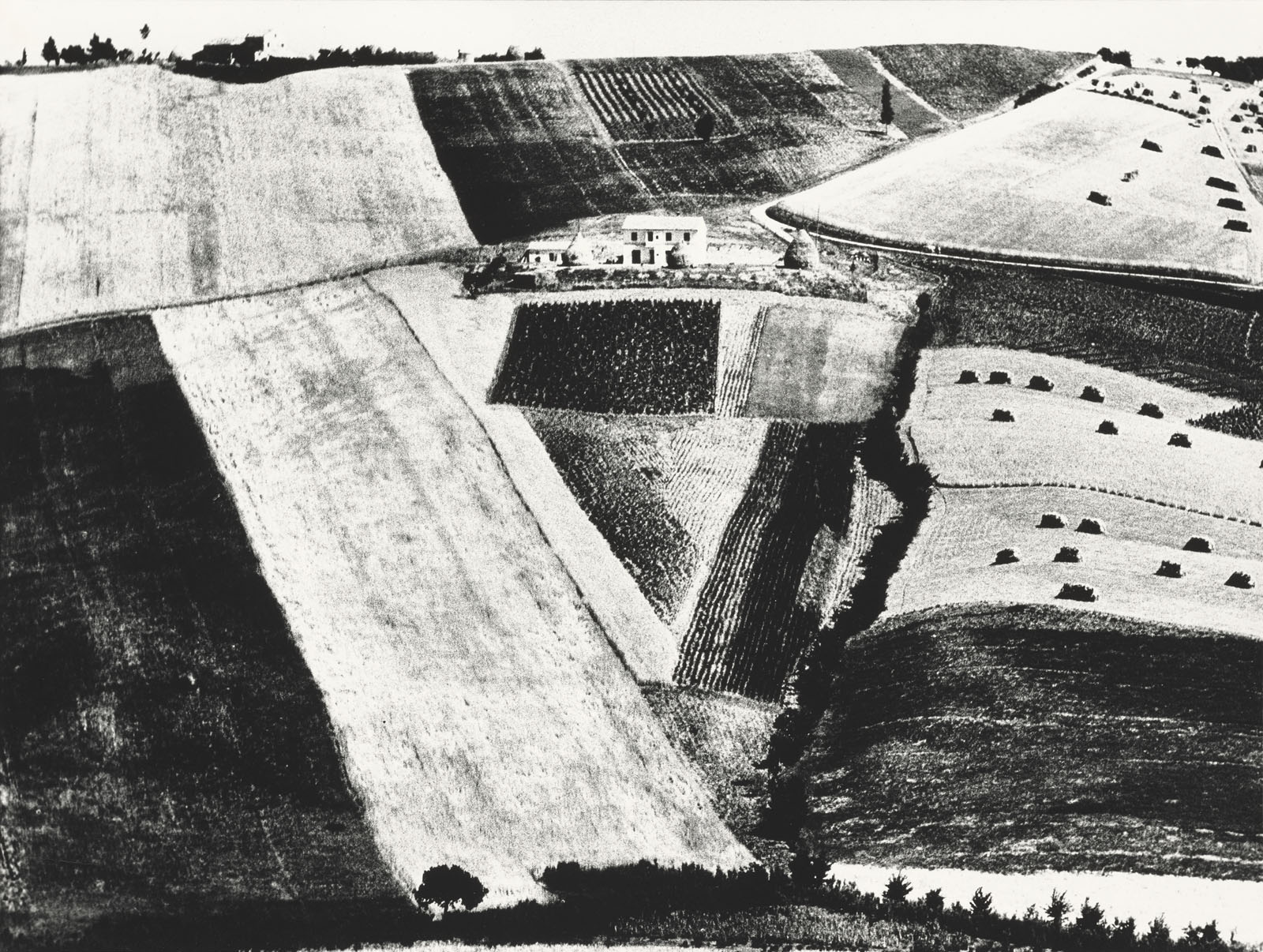
 

Mario Giacomelli (Italian, 1925-2000) 'Stories of the Land' (Storie di terra) Negative 1955; print 1981


Mario Giacomelli (Italian, 1925-2000)
Stories of the Land (Storie di terra)
Negative 1955; print 1981
Gelatin silver print
30.1 × 40.2cm (11 7/8 × 15 13/16 in.)
The J. Paul Getty Museum, Los Angeles, Gift of Daniel Greenberg and Susan Steinhauser
Reproduced courtesy Mario Giacomelli Archive
© Rita and Simone Giacomelli
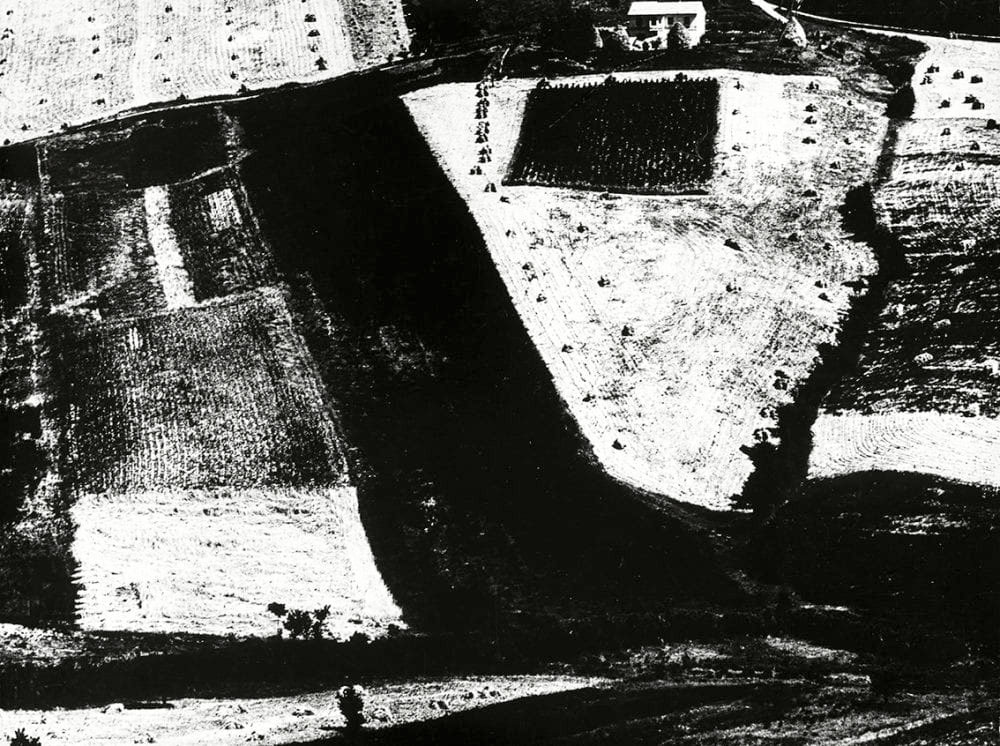
 

Mario Giacomelli (Italian, 1925-2000) 'Stories of the Land' (Storie di terra) Negative 1956; print 1981


Mario Giacomelli (Italian, 1925-2000)
Stories of the Land (Storie di terra)
Negative 1956; print 1981
Gelatin silver print
30.1 × 40.2cm (11 7/8 × 15 13/16 in.)
The J. Paul Getty Museum, Los Angeles, Gift of Daniel Greenberg and Susan Steinhauser
Reproduced courtesy Mario Giacomelli Archive
© Rita and Simone Giacomelli


Collecting Giacomelli

Between 2016 and 2020, Los Angeles-based collectors Daniel Greenberg and Susan Steinhauser donated 109 photographs by Mario Giacomelli to the J. Paul Getty Museum. Their collection covers broad swaths of Giacomelli’s oeuvre, from some of his earliest images to those made in the final years of his life. Drawn from their donations, this exhibition is conceived not as a comprehensive retrospective but as an opportunity to consider the collectors’ vision in assembling these holdings over a period of twenty years, teasing out what they perceived to be key concerns of Giacomelli’s practice: people (la gente) and the landscape (paesaggio), as well as people in the landscape – the “figure/ground” relationship of the exhibition’s subtitle.

The Getty Museum also acknowledges the Mario Giacomelli Archive, based in Senigallia, Sassoferrato, and Latina, Italy, for assistance in confirming titles and dates. Throughout his career, Giacomelli returned to individual images, rethinking and reworking them for subsequent series, often complicating the task of assigning definitive titles or dates. Thanks as well to Stephan Brigidi of the Bristol Workshops in Photography for providing information about the artist’s 1981 portfolios, La gente and Paesaggio. The portfolio prints are interspersed throughout the four galleries of the exhibition, presented in shallower frames with a slightly wider face.

Text from the J. Paul Getty Museum website
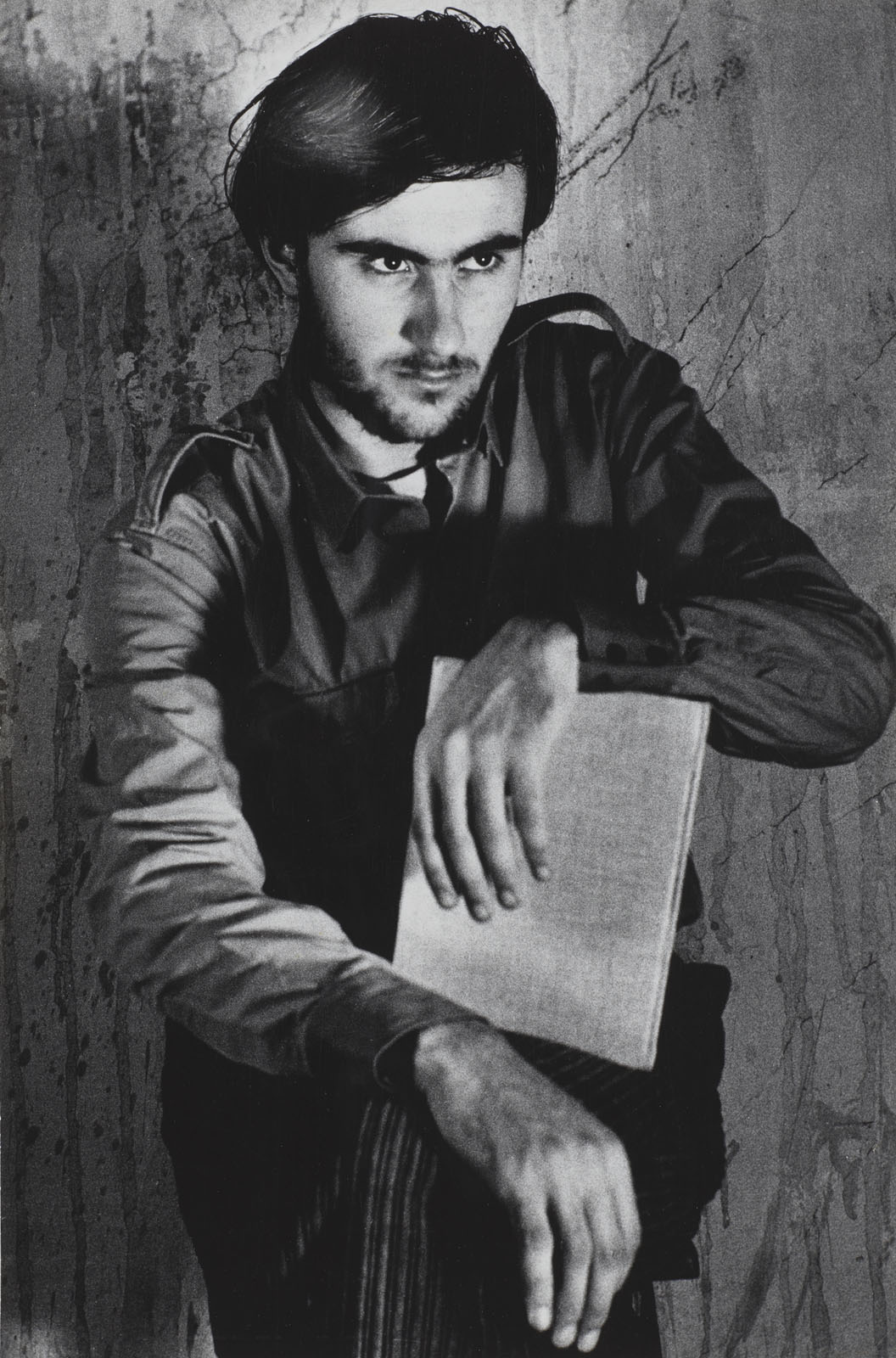
 

Mario Giacomelli (Italian, 1925-2000) 'The Painter Mauro Marinelli' Negative 1960; print probably 1966


Mario Giacomelli (Italian, 1925-2000)
The Painter Mauro Marinelli
Negative 1960; print probably 1966
Gelatin silver print
36.2 × 24cm (14 1/4 × 9 7/16 in.)
The J. Paul Getty Museum, Los Angeles, Purchased in part with funds provided by Daniel Greenberg and Susan Steinhauser
Reproduced courtesy Mario Giacomelli Archive
© Rita and Simone Giacomelli


Mario Giacomelli (1925-2000) had a poet’s eye for the startlingly abstract order man can impose on nature and a poet’s understanding of the great disorder that is the human condition.

Giacomelli became an apprentice in typography when he was 13. As a young man, he worked as a typographer, painting on weekends and writing poetry. Inspired by the wartime movies of filmmakers like Fellini, Giacomelli taught himself still photography. He found his art in the generally impoverished countryside around Senigallia, a small town on the shores of the Adriatic Sea, where he lived all his life and whose farmlands and people were the subjects of his spare, often darkly expressionist work.

In 1954, Giacomelli began to photograph the home for the elderly where his mother had worked, completing the series in 1983. Empathetic but grittily unsentimental, the pictures show many women seemingly marooned in the sea of old age. In 1985-87, Mr. Giacomelli revisited the subject for his series Ninna Nanna, which means lullaby. This time, the deeply lined, gaunt faces of the aged are a bleak counterpoint to the bold lines and patterns found in the fields and on the sides of houses.

Giacomelli’s overhead views of mystifyingly abstract, horizonless landscapes, which he took from the time he snapped his first pictures, in late 1952, through the 1990’s, place him in the company of photographers like William Garnett and Minor White. Giacomelli’s 1970s images of geometric patterns in the fields of his hometown, Senigallia, bear striking parallels to Aaron Siskind’s contemporaneous photographs of wall abstractions.

Adapted from the artist’s New York Times obituary
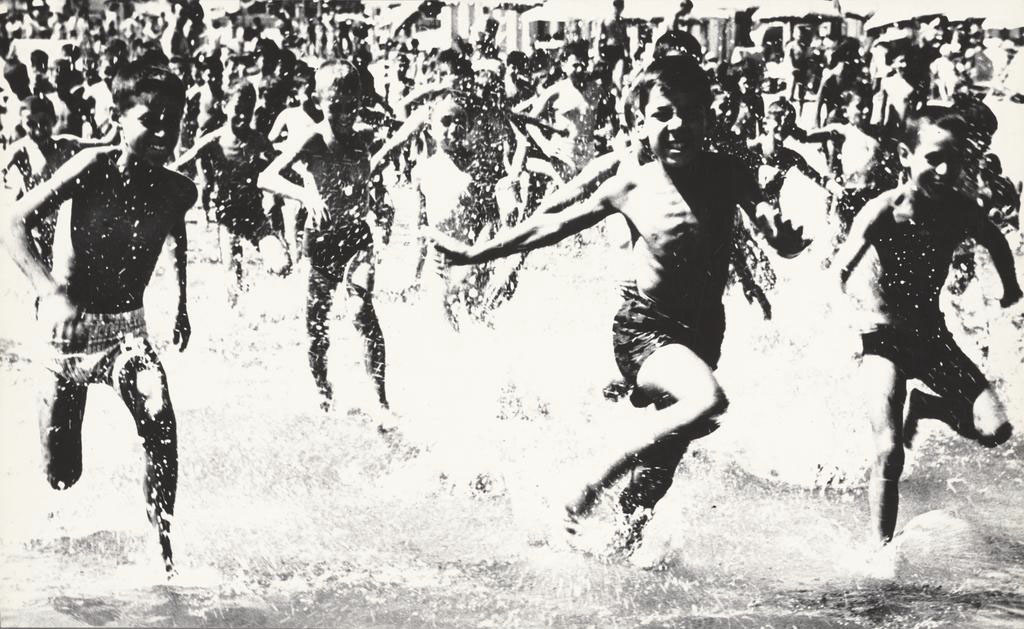
 

Mario Giacomelli (Italian, 1925-2000) 'Children at the sea' (Bambini al mare) 1959


Mario Giacomelli (Italian, 1925-2000)
Children at the sea (Bambini al mare)
1959
Ferrotyped gelatin silver print
24.2 x 39.4cm (9 1/2 x 15 1/2 in.)
The J. Paul Getty Museum, Gift of Daniel Greenberg and Susan Steinhauser
Reproduced courtesy Mario Giacomelli Archive
© Rita and Simone Giacomelli
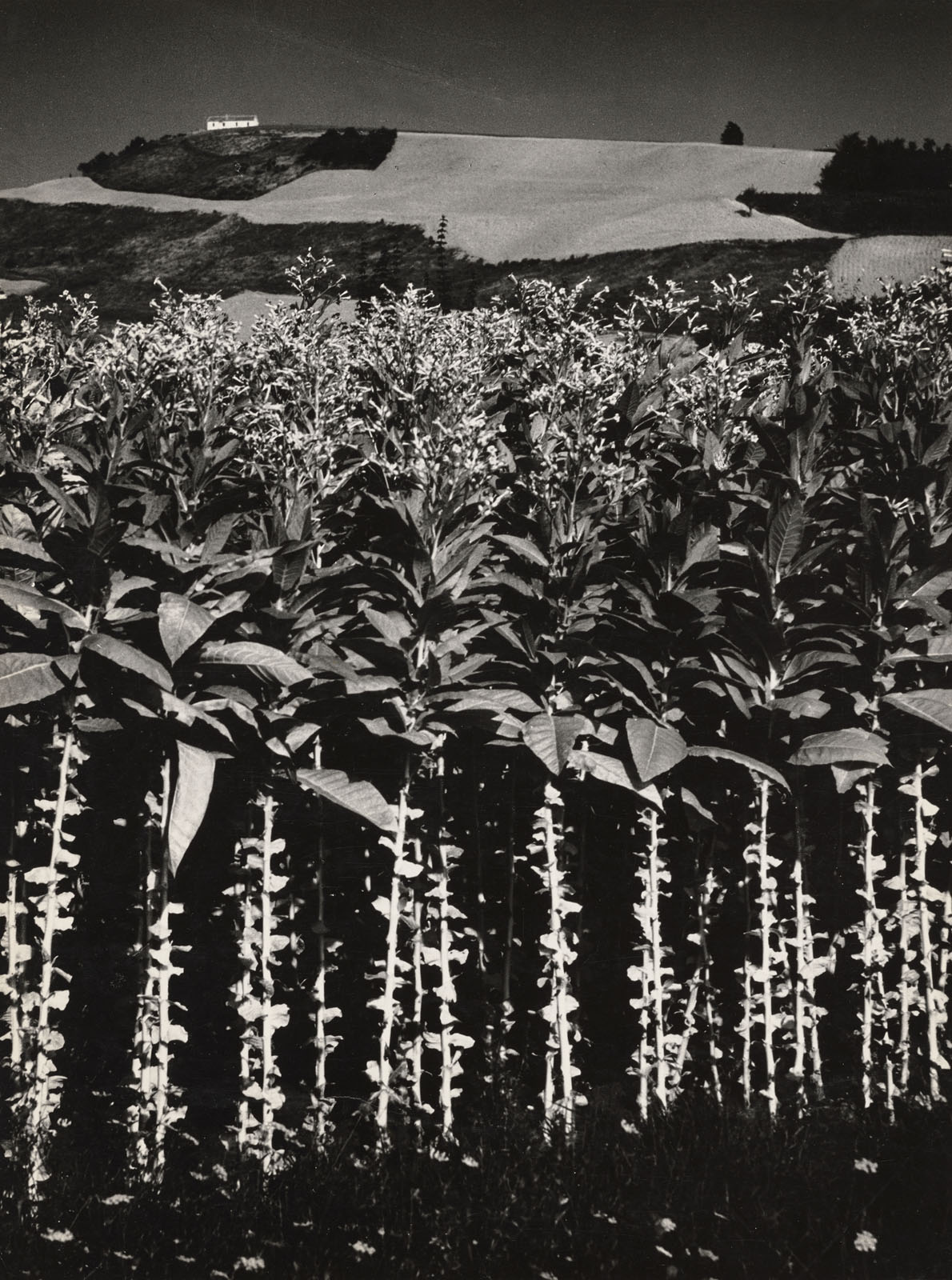
 

Mario Giacomelli (Italian, 1925-2000) 'Landscape: Tobacco' 1955-1956, printed 1980


Mario Giacomelli (Italian, 1925-2000)
Landscape: Tobacco
1955-1956, printed 1980
35.9 x 26.7cm (14 1/8 x 10 1/2 in.)
The J. Paul Getty Museum, Gift of Daniel Greenberg and Susan Steinhauser
Reproduced courtesy Mario Giacomelli Archive
© Rita and Simone Giacomelli
 

'Mario Giacomelli: Figure | Ground' book cover


Mario Giacomelli: Figure | Ground book cover


The J. Paul Getty Museum
1200 Getty Center Drive
Los Angeles, California 90049

Opening hours:
Daily 10am – 5pm
The J. Paul Getty Museum website

LIKE ART BLACK ON FACEBOOK

Back to top

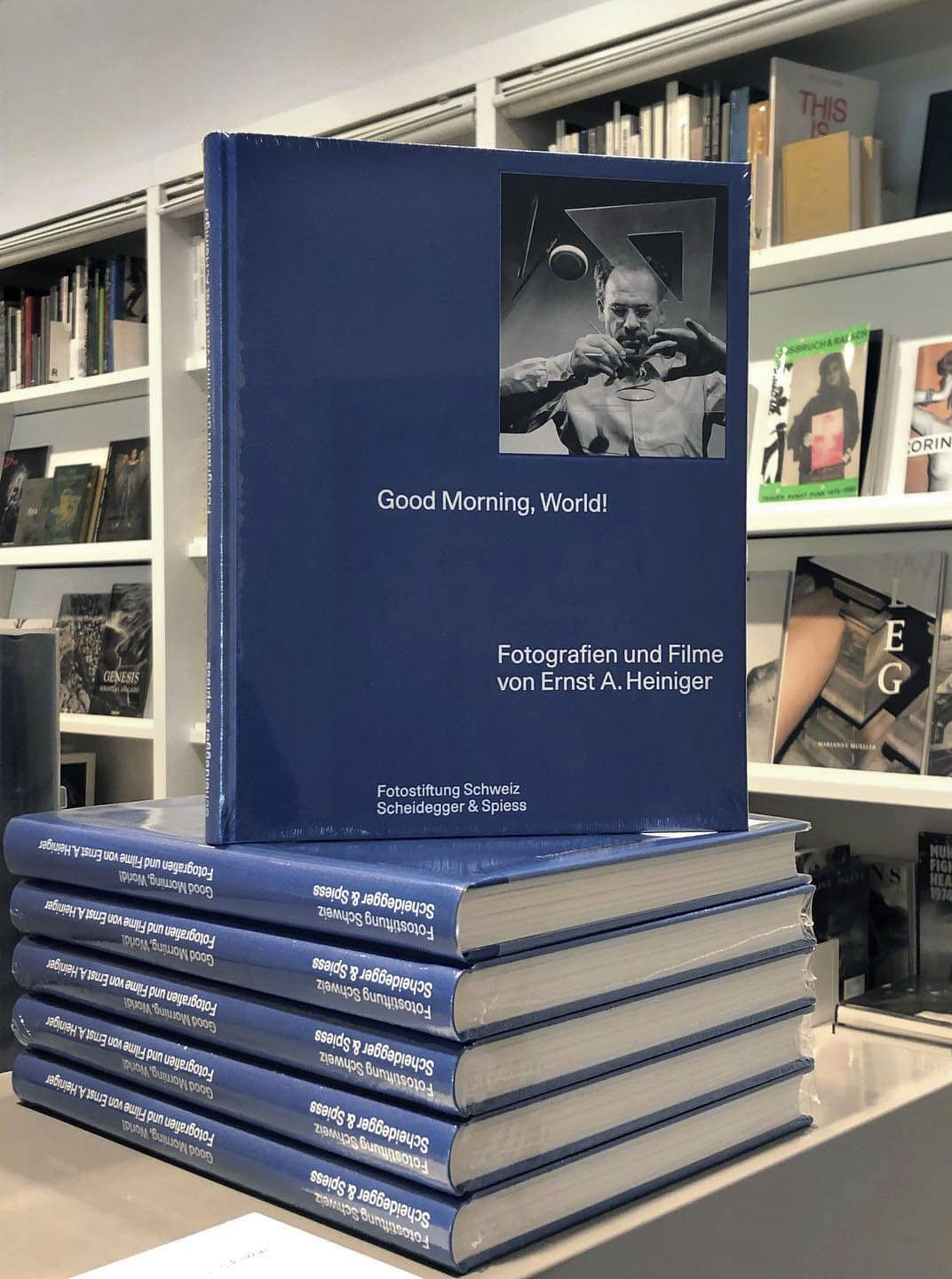
Exhibition: ‘Ernst A. Heiniger – Good Morning, World!’ at Fotostiftung Schweiz, Winterthur, Zürich

Exhibition dates: 5th June – 10th October, 2021

Curators: Teresa Gruber and Katharina Rippstein


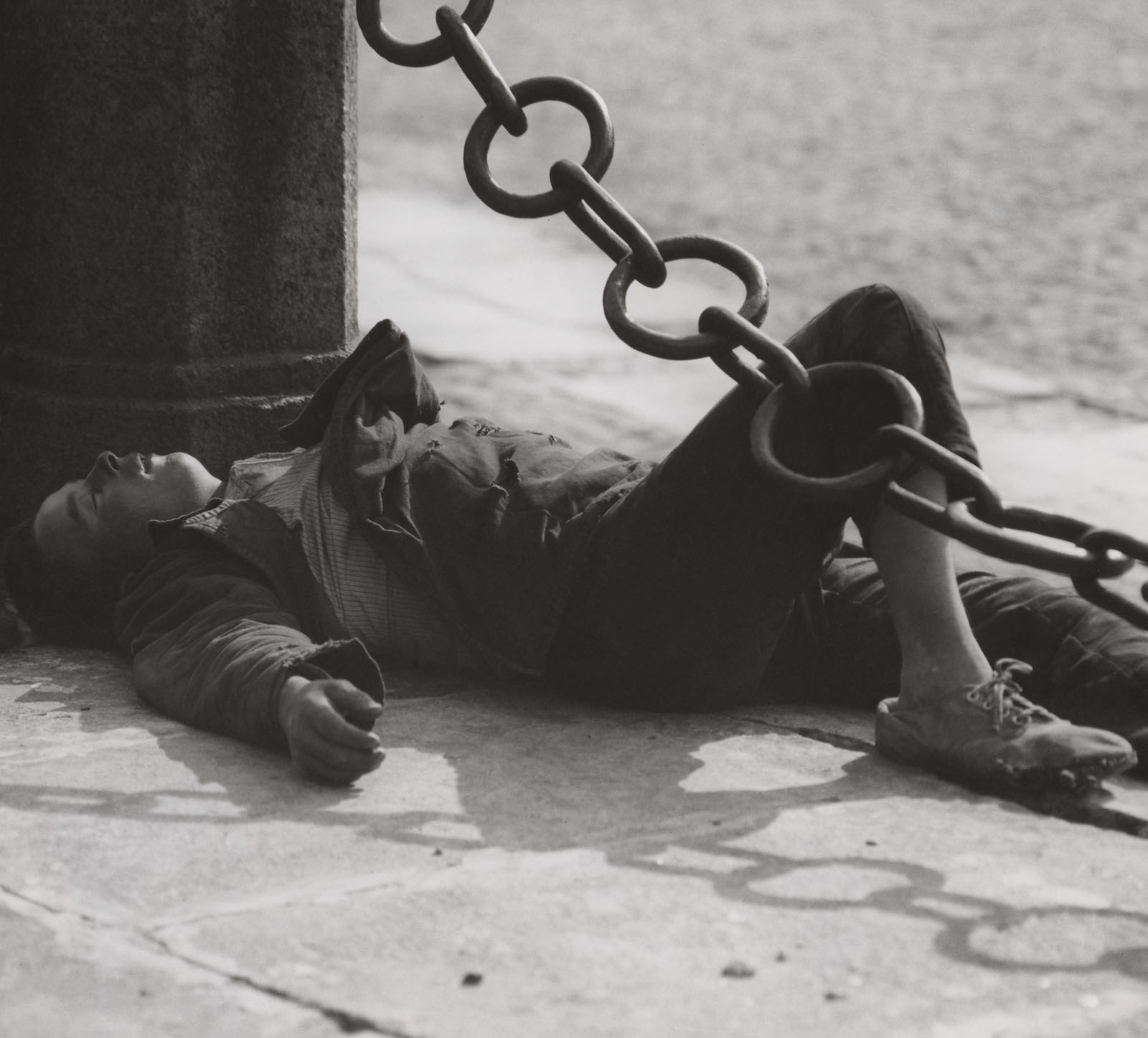
Ernst A. Heiniger (Swiss, 1909-1993) '"Bjesprisorni", Sleeping boy in Leningrad' 1932 from the exhibition 'Ernst A. Heiniger – Good Morning, World!' at Fotostiftung Schweiz, Winterthur, Zürich, June - Oct, 2021


Ernst A. Heiniger (Swiss, 1909-1993)
“Bjesprisorni”, Sleeping boy in Leningrad
1932
© Fotostiftung Schweiz


An end of week posting before the exhibition closes.

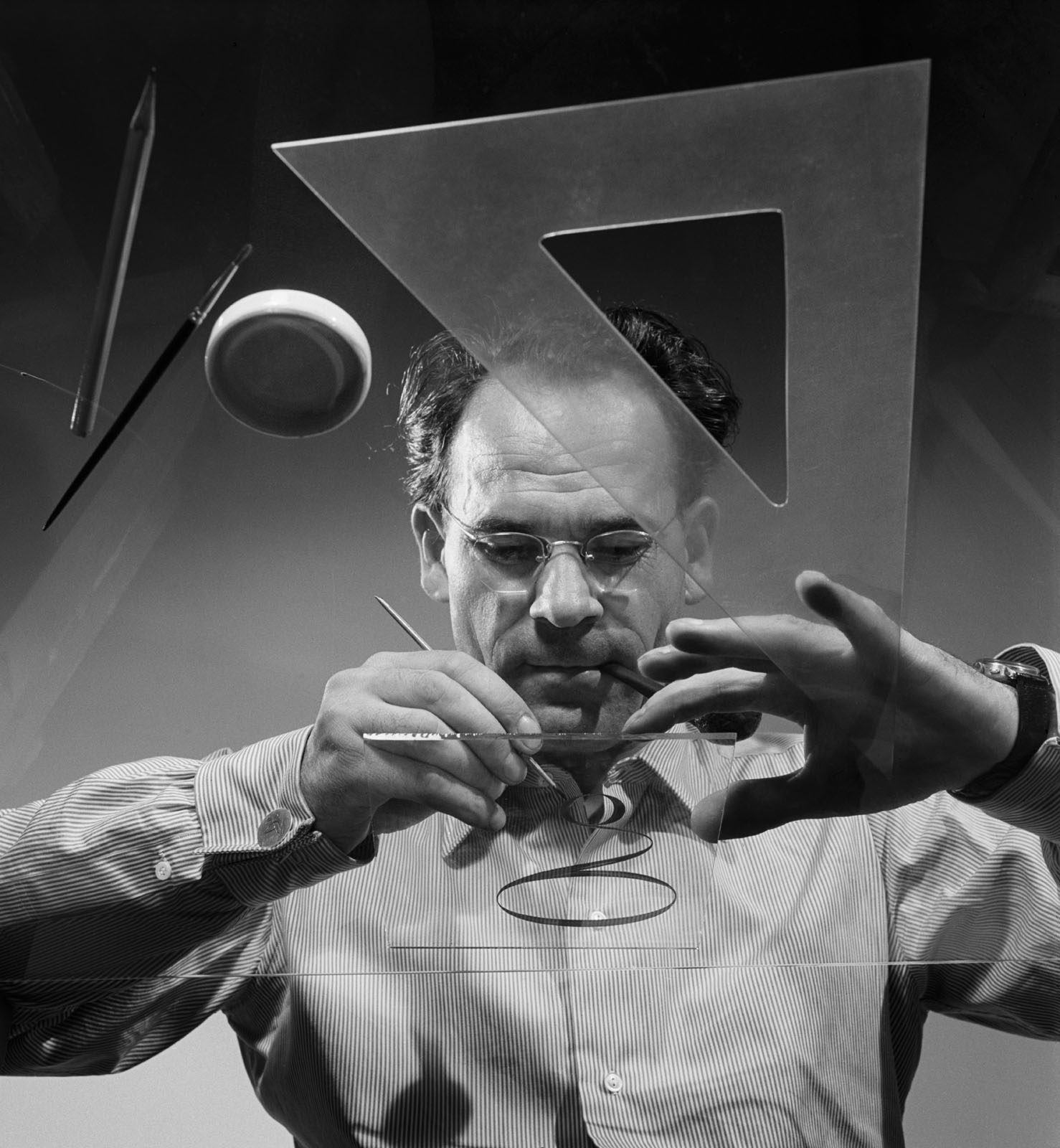
Ernst A. Heiniger seems to have been a man of much learning and creativity … a polymath.

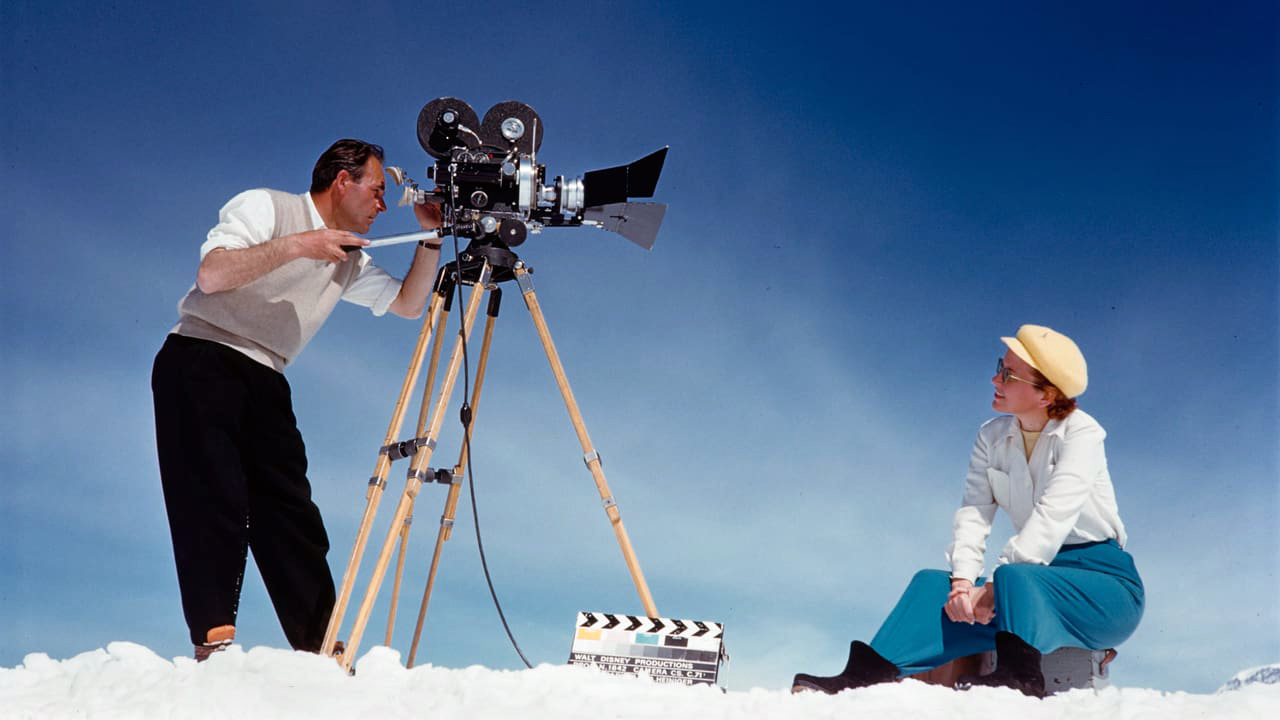
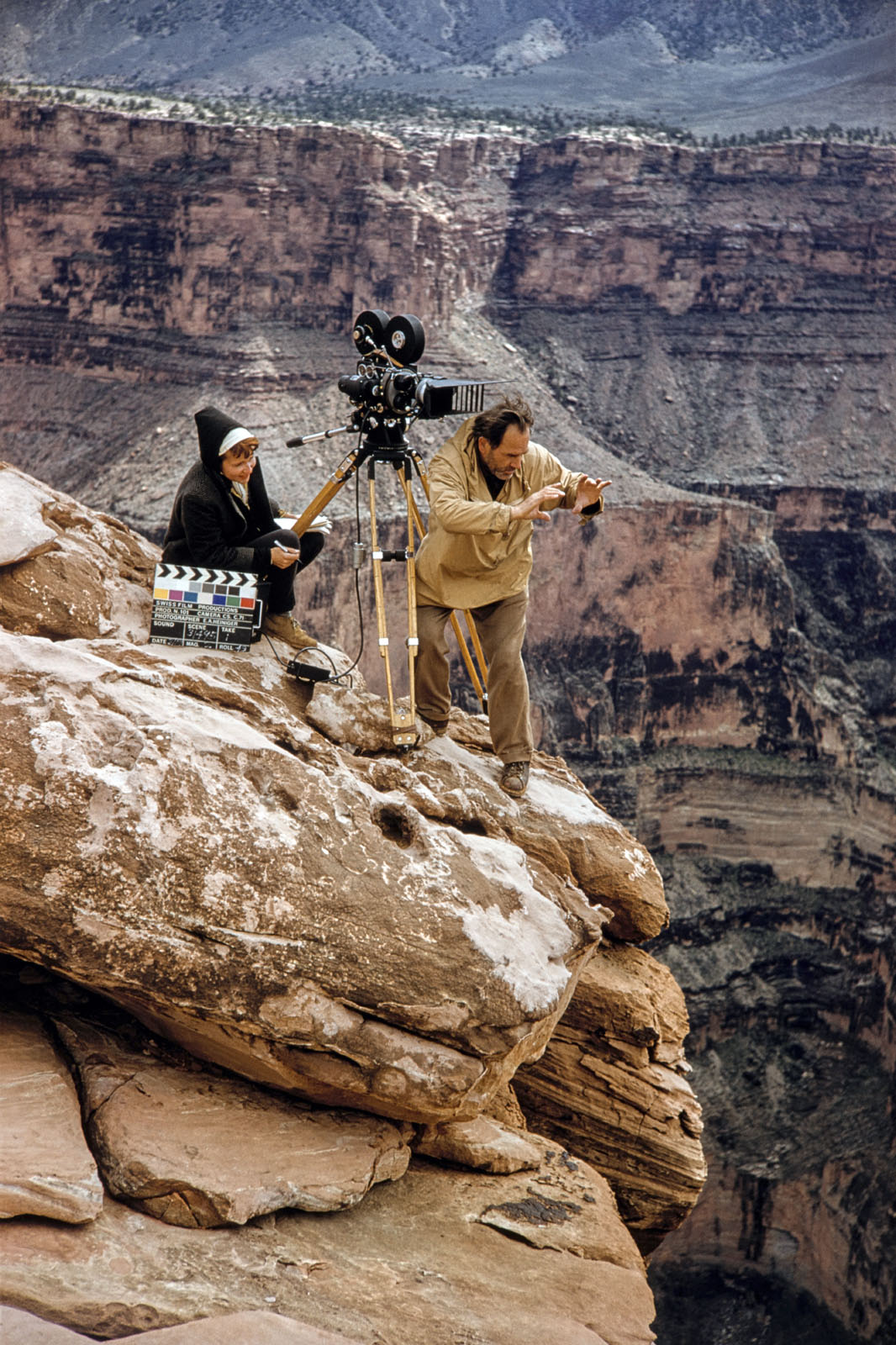
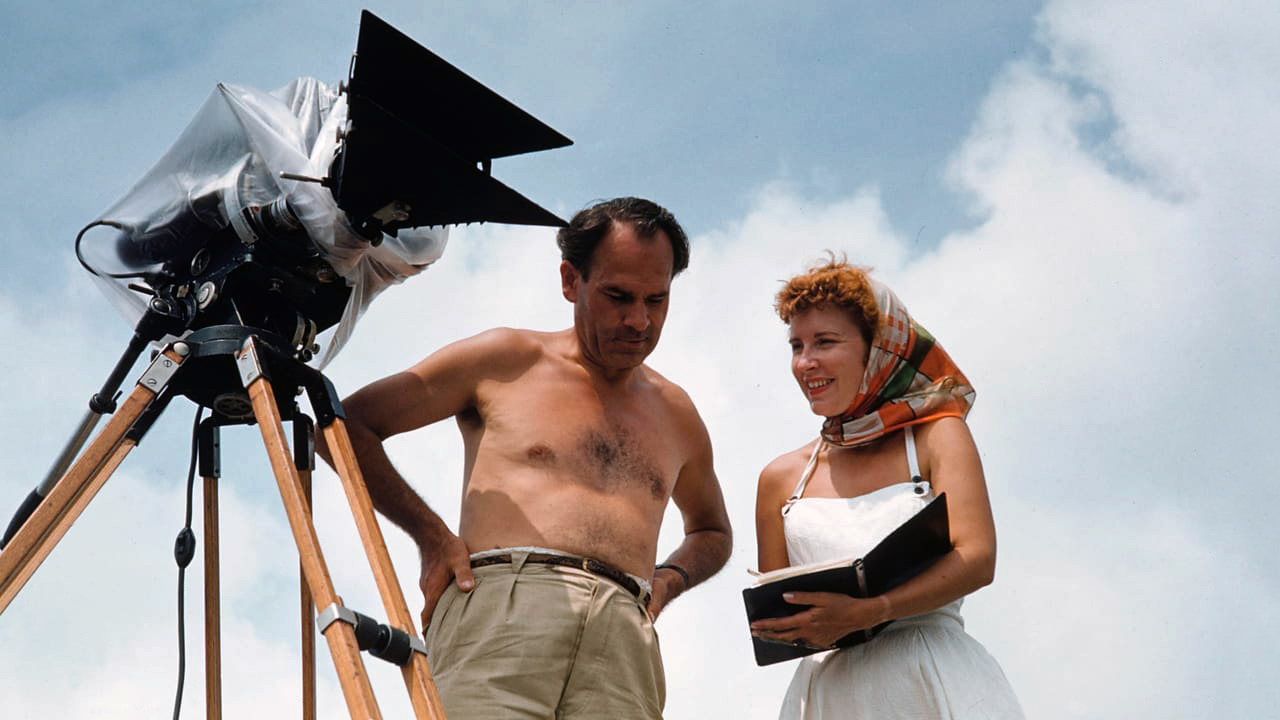
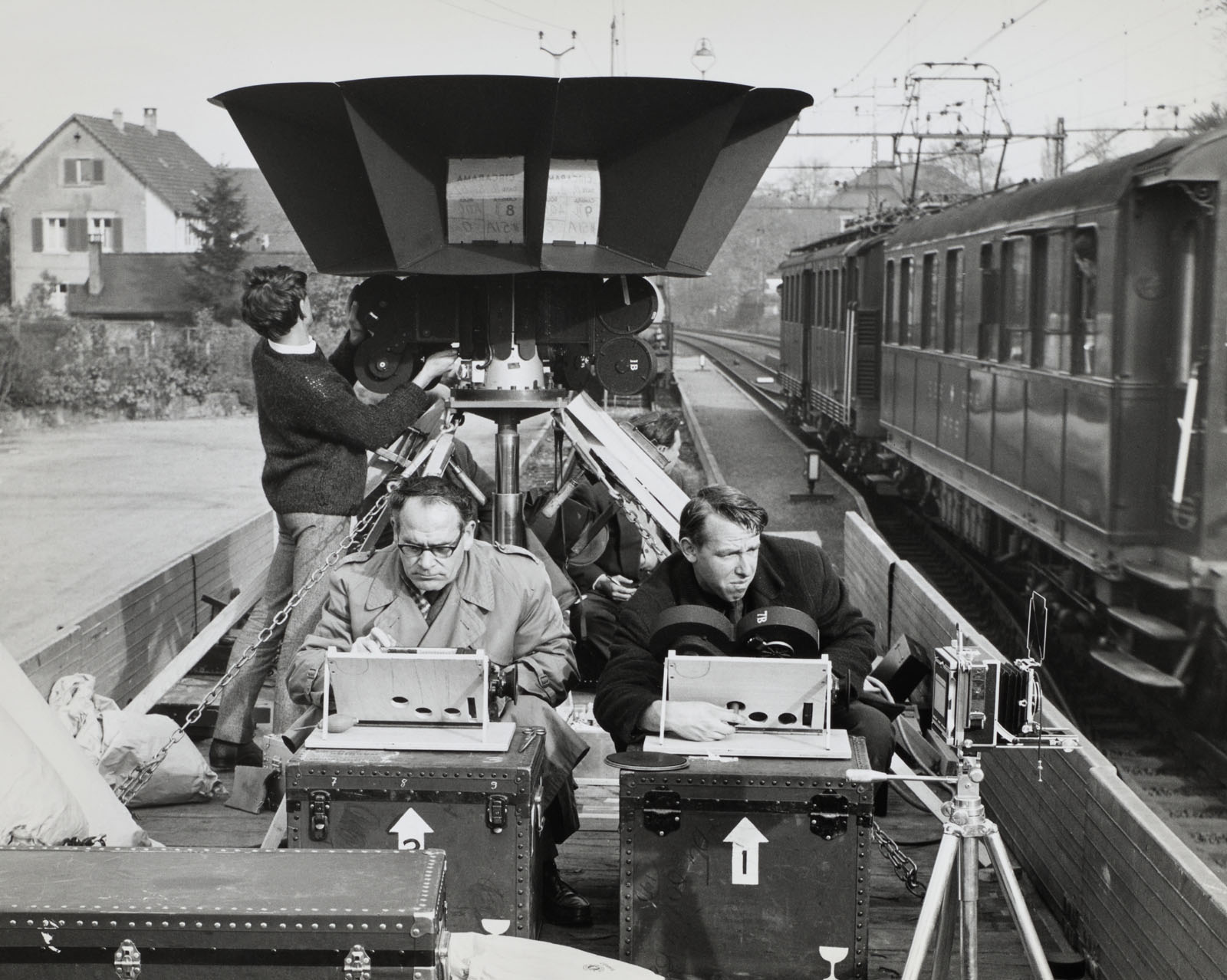
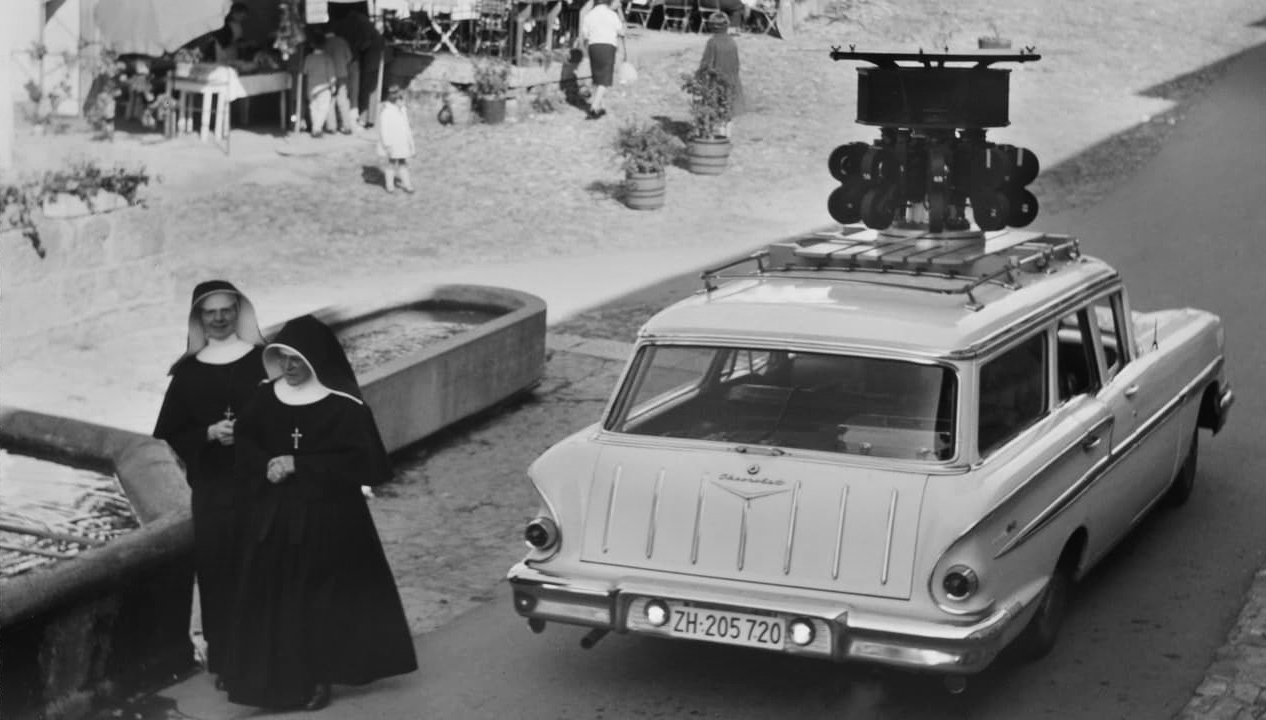
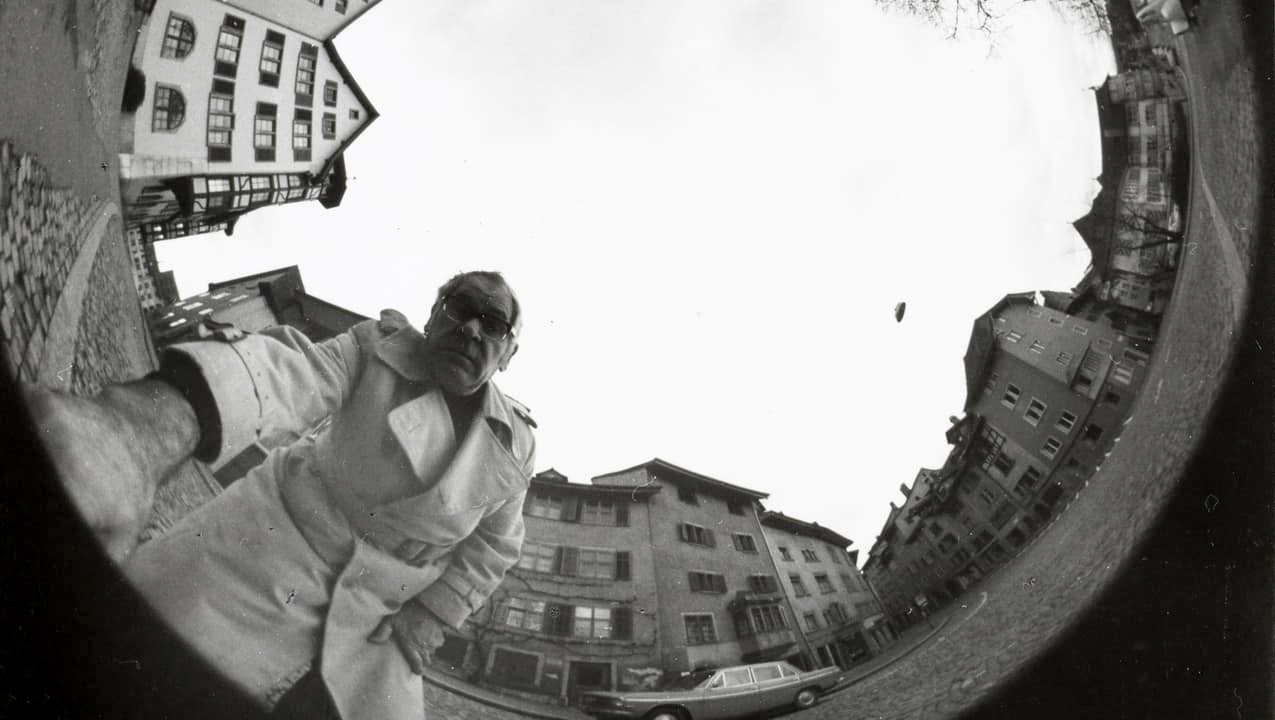
He belonged to the avant-garde of the Swiss “New Photography” movement in the 1930s; he was a retoucher by trade who taught himself the art of photography. He created one of the first photobooks in Switzerland; he created innovative designs combining photography and graphic design, photo | graphic design, “an entirely novel concept at the time.” He made posters. He started shooting short black and white promotional and documentary films. He taught himself the wide format of Cinemascope and Technicolor film – “previously untested creative tools for Heiniger” – and was hired by Walt Disney to shoot his “edutainment” films all over the world. He was commissioned to produce a 360 degree film for Expo 64 in Lausanne and produced the oldest panorama shots in Switzerland (see video below), and then went on to develop his own 360 degree recording and projection technology in 1965, which was ready for use under the name “Swissorama” at the beginning of the 1980s (see images and film below).

What an artist, what creativity, intelligence and drive. Was there nothing this man couldn’t do!

Dr Marcus Bunyan


Many thankx to Fotostiftung Schweiz for allowing me to publish the photographs in the posting. Please click on the photographs for a larger version of the image.


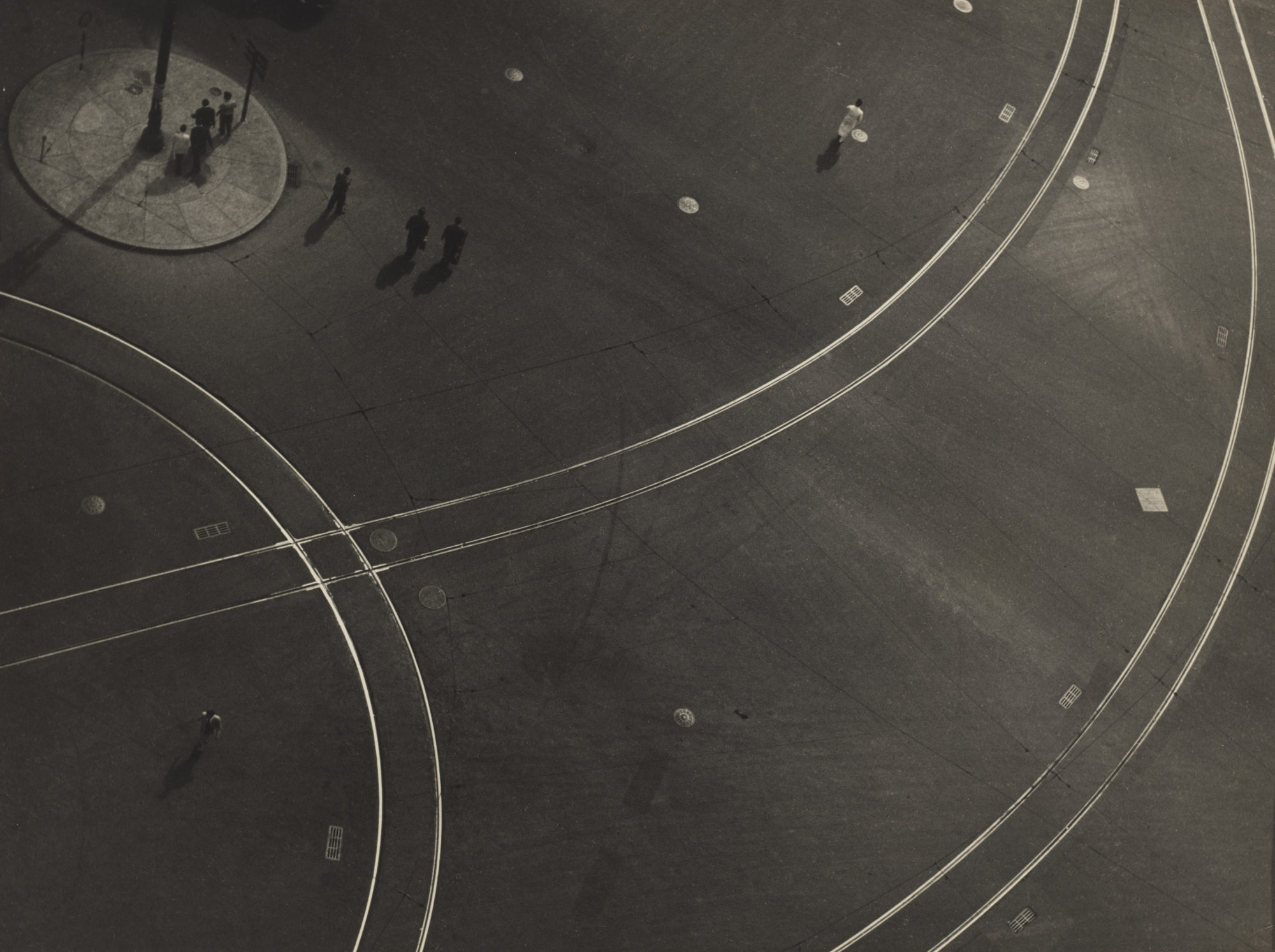
Ernst A. Heiniger (Swiss, 1909-1993) 'Bahnhofplatz, Zurich' 1933 from the exhibition 'Ernst A. Heiniger – Good Morning, World!' at Fotostiftung Schweiz, Winterthur, Zürich, June - Oct, 2021


Ernst A. Heiniger (Swiss, 1909-1993)
Bahnhofplatz, Zurich
1933
© Fotostiftung Schweiz


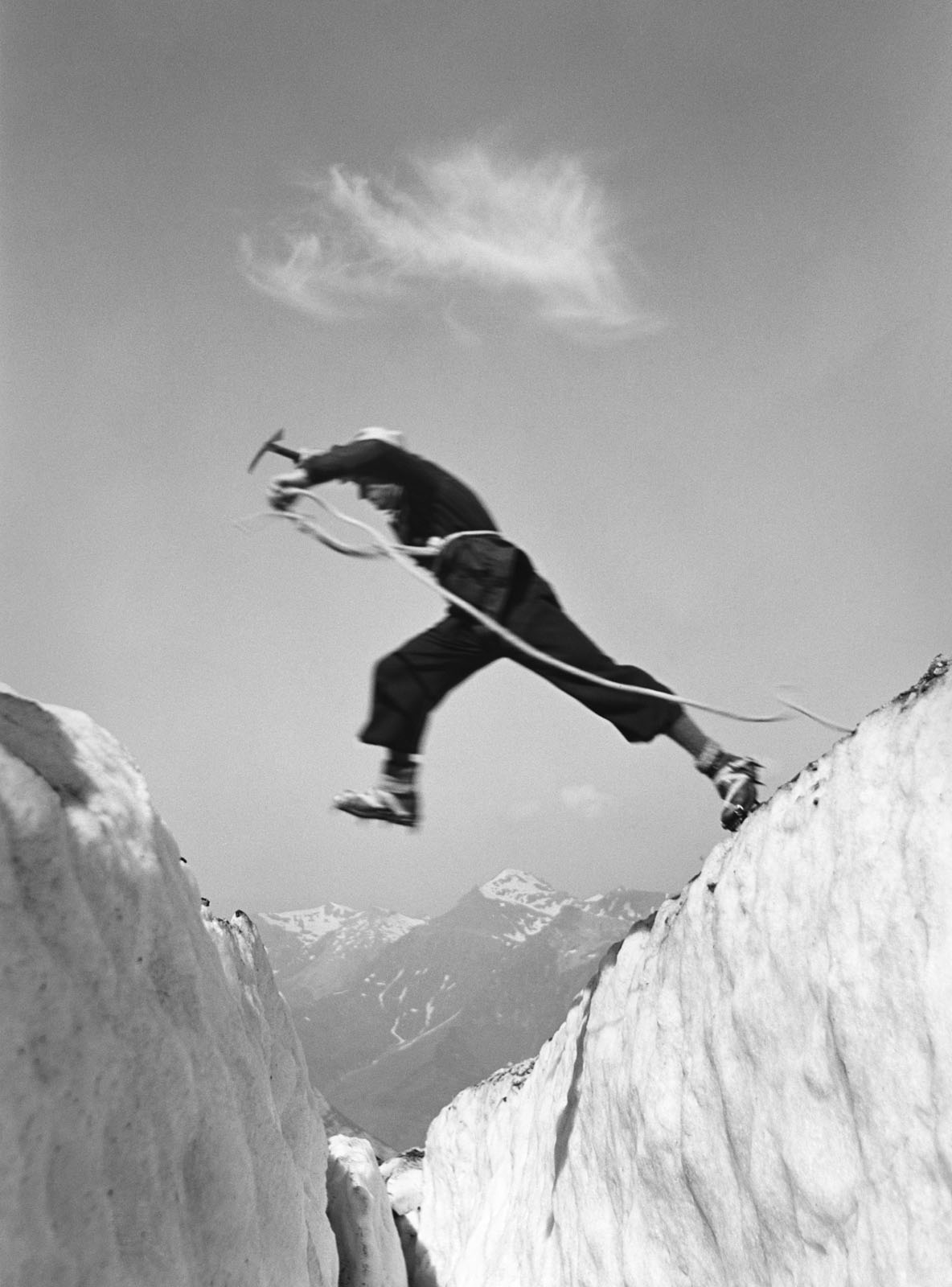
Ernst A. Heiniger (Swiss, 1909-1993) 'Jumping over a crevasse, Bernese Oberland' 1933


Ernst A. Heiniger (Swiss, 1909-1993)
Jumping over a crevasse, Bernese Oberland
1933
© Fotostiftung Schweiz


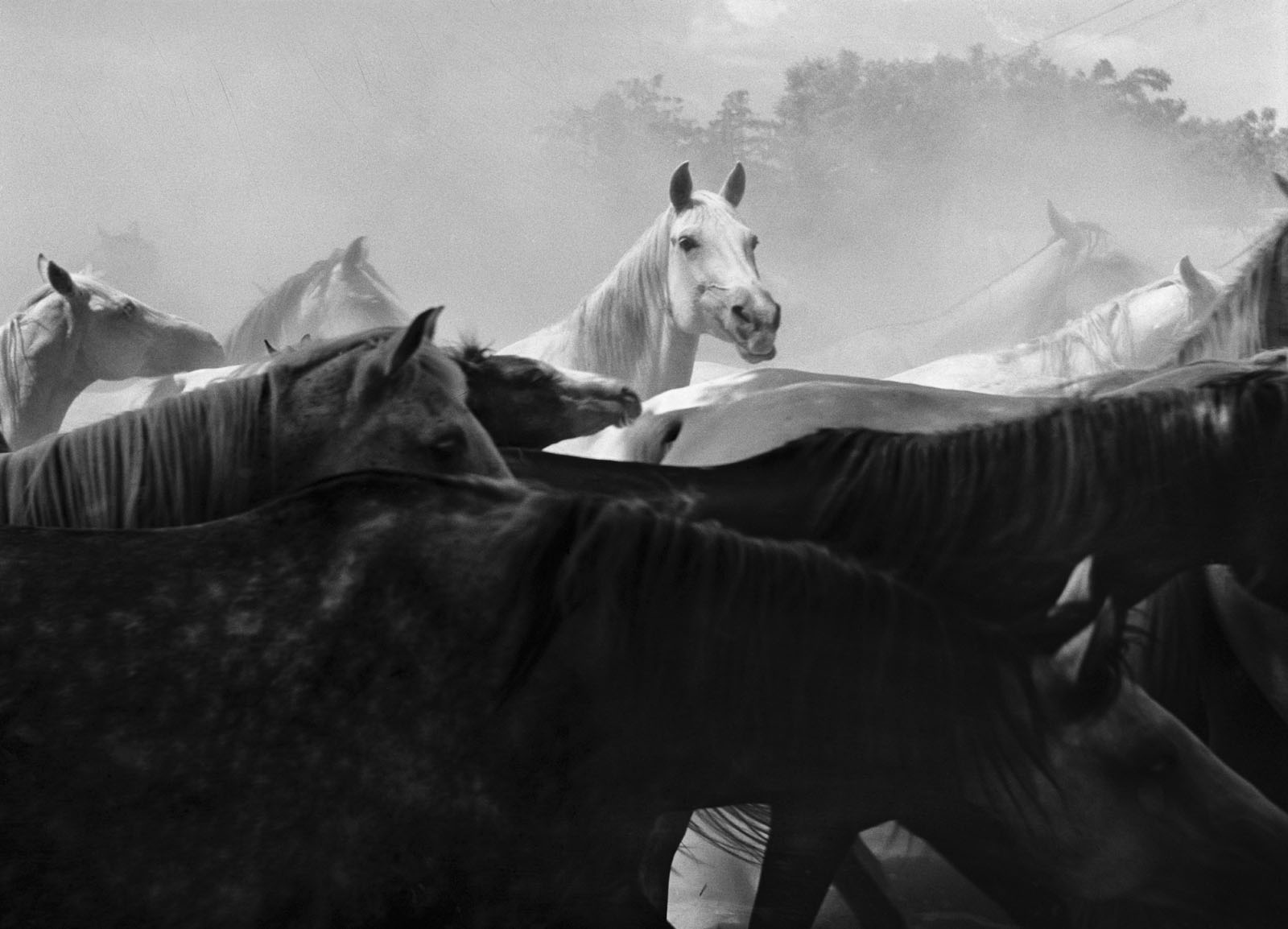
Ernst A. Heiniger (Swiss, 1909-1993) 'Grey and Brown, Puszta (Hungary)' 1936


Ernst A. Heiniger (Swiss, 1909-1993)
Grey and Brown, Puszta (Hungary)
1936
© Fotostiftung Schweiz


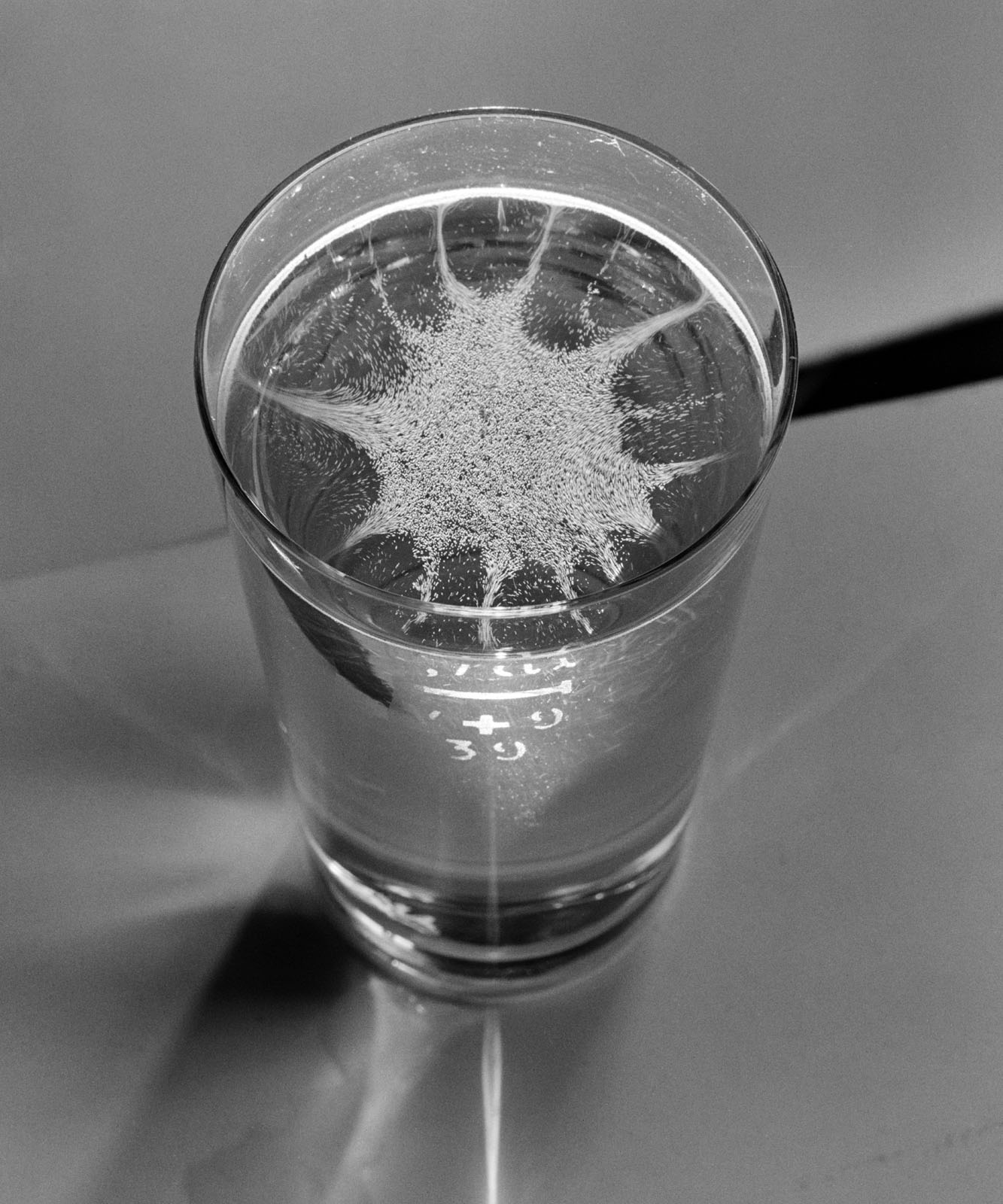
Ernst A. Heiniger (Swiss, 1909-1993) 'White wine star' 1939


Ernst A. Heiniger (Swiss, 1909-1993)
White wine star
1939
© Fotostiftung Schweiz


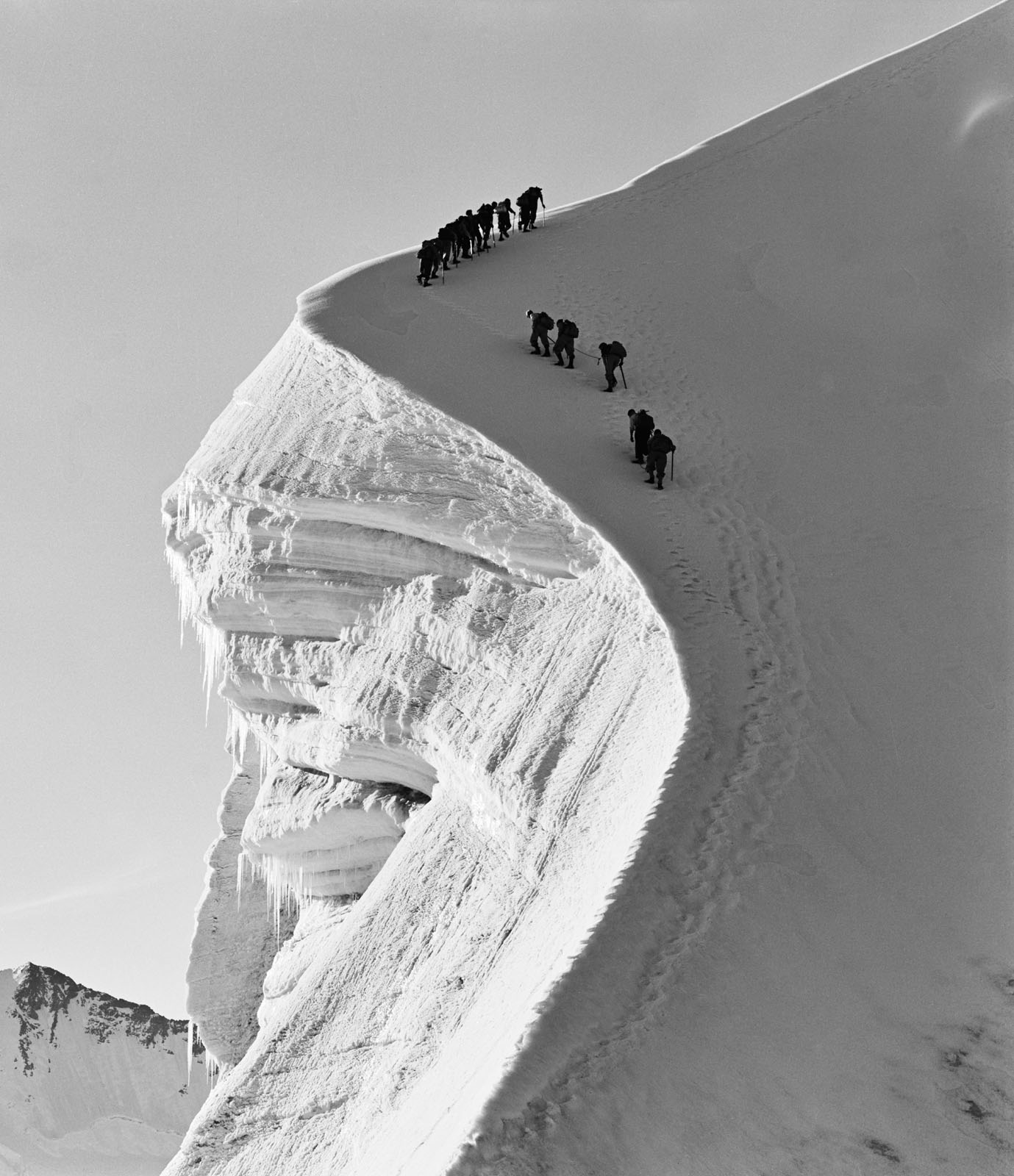
Ernst A. Heiniger (Swiss, 1909-1993) 'Rope team on the Bianco ridge, Grisons' 1941


Ernst A. Heiniger (Swiss, 1909-1993)
Rope team on the Bianco ridge, Grisons
1941
© Fotostiftung Schweiz


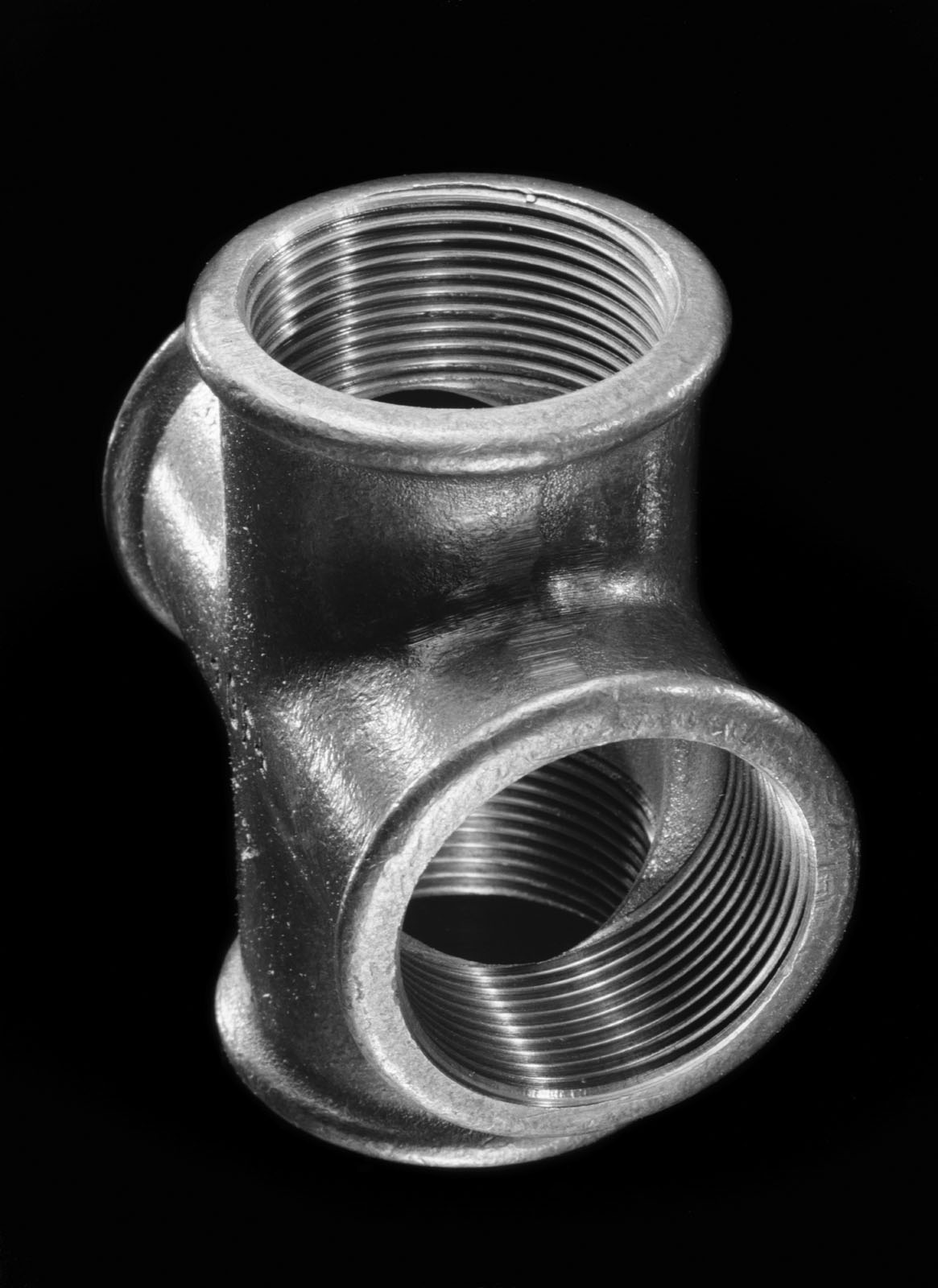
Ernst A. Heiniger (Swiss, 1909-1993) 'Fitting' 1942


Ernst A. Heiniger (Swiss, 1909-1993)
Fitting
1942
© Fotostiftung Schweiz


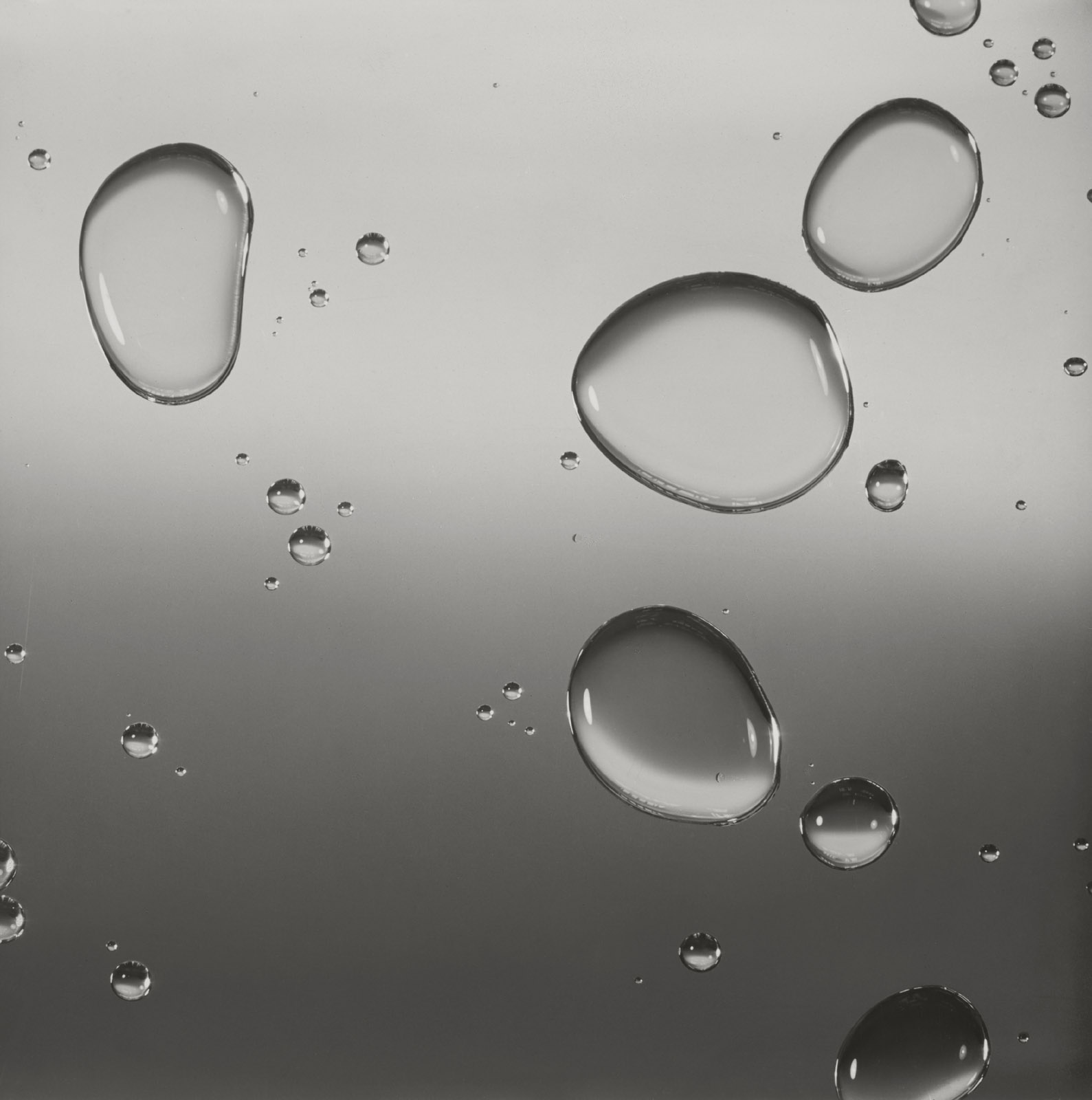
Ernst A. Heiniger (Swiss, 1909-1993) 'Water drop' 1943


Ernst A. Heiniger (Swiss, 1909-1993)
Water drop
1943
© Fotostiftung Schweiz


Ernst A. Heiniger (1909-1993) belonged to the avant-garde of the Swiss “New Photography” movement in the 1930s. A photo retoucher by trade, he taught himself the art of photography autodidactically. He quickly developed a keen sense for contemporary and modern aesthetics and soon became one of the first photographers to be admitted to the Swiss Werkbund (SWB). After this initial spark to his career, Heiniger constantly took on new challenges and continued to do pioneering work. In 1936 he created Puszta-Pferde (“Horses in Hungary”), one of the first modern photobooks in Switzerland. He worked with well-known graphic artists such as Heiri Steiner, Herbert Matter and Josef Müller-Brockmann and created innovative designs by combining photography and graphic design, an entirely novel concept at the time. In the 1950s, Heiniger travelled the world as a documentary filmmaker for Walt Disney – two of his short films were awarded an Oscar. He later created Switzerland’s first 360 degree film for Expo 64 in Lausanne.

Even though Ernst A. Heiniger’s visual worlds were admired by a broad public in his day, his name is still largely absent from the canon of Swiss photographic history. In 1986, he left Switzerland determined never to return and lived in Los Angeles until his death in 1993. Since then, the Fotostiftung Schweiz has sought to return his photographic estate to Switzerland – which it finally accomplished in 2014. The exploration and processing of his archive provide the basis for the first comprehensive retrospective of this creative visual designer. The exhibition Ernst A. Heiniger – Good Morning, World! shows object and nature photographs, photobooks, posters, films, making-of pictures and documentaries that situate his work within the history of photography. His 360 degree film Rund um Rad und Schiene (“Magic of the Rails”) – the SBB’s attraction at Expo 64 in Lausanne – has been recreated as an all-around projection. Ernst A. Heiniger’s diverse photographic and cinematic oeuvre was always at the cutting edge of technology and oscillates between cool perfection and sensual closeness to nature.

New Photography and the Swiss Werkbund

In 1929, at the age of twenty, Ernst A. Heiniger set up his own business as a positive retoucher. In the same year, the exhibition Film und Foto (FiFo) by the German Werkbund took place at the School of Applied Arts in Zurich. The title of the exhibition was to be emblematic of Heiniger’s further career, as the two camera-based media, film and photography, defined his entire artistic output. At the time, the international touring exhibition was considered a manifesto for a modern visual aesthetic. The terms “Neues Sehen” (New Vision) and “Neue Sachlichkeit” (New Objectivity) were used to describe those avant-garde tendencies that emphasised genuinely photographic means of design. The characteristics of the new aesthetic included sharpness of image, attention to detail, unusual perspectives such as high and low angle shots, (abstracting) close-ups or multiple exposures. The precise capture of structures and forms was also one of the typical qualities of this “New Photography”, as it became known in Switzerland. After only a short period as a self-employed retoucher, Ernst A. Heiniger decided to learn how to take photographs himself. He made his customers an offer: for the same price, they would receive a new, better photograph instead of a retouched one. Inspired by visits to exhibitions and publications such as Werner Gräff’s Es kommt der neue Fotograf! (“Here Comes the New Photographer”, 1929), he adapted the aesthetics of the international avant-garde and became one of the pioneers of New Photography in Switzerland. His achievements as a photographer did not go unnoticed by the Swiss Werkbund (SWB), which campaigned for the advancement of “New Photography in Switzerland” and organised an exhibition with this title in 1932. Heiniger was represented with several pictures at the exhibition and was one of the first photographers to be admitted to the SWB Zurich in 1933.


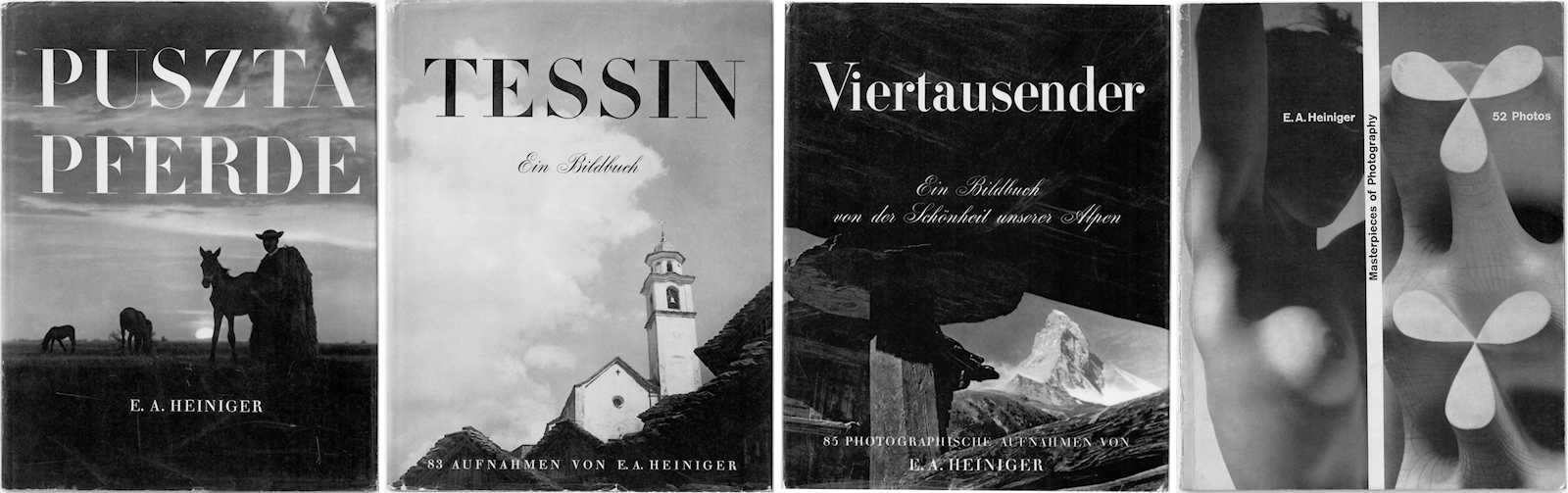
Ernst A. Heiniger book covers


Ernst A. Heiniger book covers


Photobooks

In 1936, Ernst A. Heiniger ventured into a new medium – the photobook. For his first essayistic photobook Puszta-Pferde (“Horses in Hungary”), he travelled to Hungary to take pictures of the wild horses of the Pannonian Steppe over the course of several weeks. While designing the book, he experimented freely with his photographic material and composed lively and varied photo pages. In 1937, the book was published in high-quality rotogravure by the Zurich publishing house Fretz & Wasmuth. With a total (German) print run of 23,000 copies, it was a great success and showed for the first time that Ernst A. Heiniger was not merely an aloof representative of avant-garde photography, but also had a talent for inspiring a wider audience with his pictures.

Heiniger was able to build on this success with his next two books Tessin (“Ticino”, 1941) and Viertausender (“Four-Thousanders”, 1942). Both were produced during the Second World War against the backdrop of closed borders and a revival of sentimental homeland imagery. In the context of “spiritual national defence”, the “Heimatbuch”, a genre of books painting an idealised image of Alpine nature and culture, was encouraged by the authorities as a means to inspire the moral uplift of a beleaguered nation. For Heiniger, however, high alpine landscape photography was also a fresh opportunity to translate a subject he was passionate about into book form. The overly romantic transfiguration of the local landscape was kept in check by the fact that he remained true to his detached, objective style. With a firm belief in the documentary power of photography, he wanted to convey the experience that was revealed to the alpinist upon reaching a mountain peak. The many enthusiastic book reviews give an indication of the entertaining, escapist potential of his books in an age when a destructive war was raging outside Switzerland’s borders.


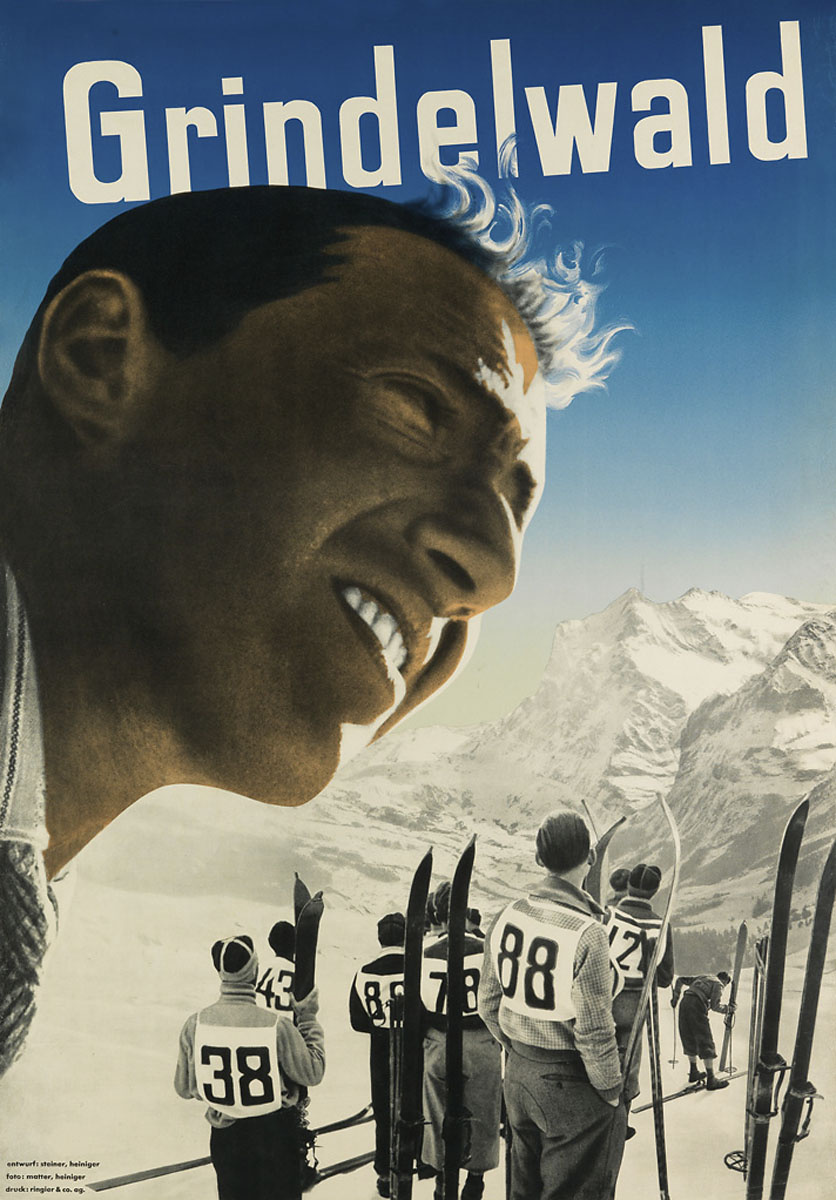
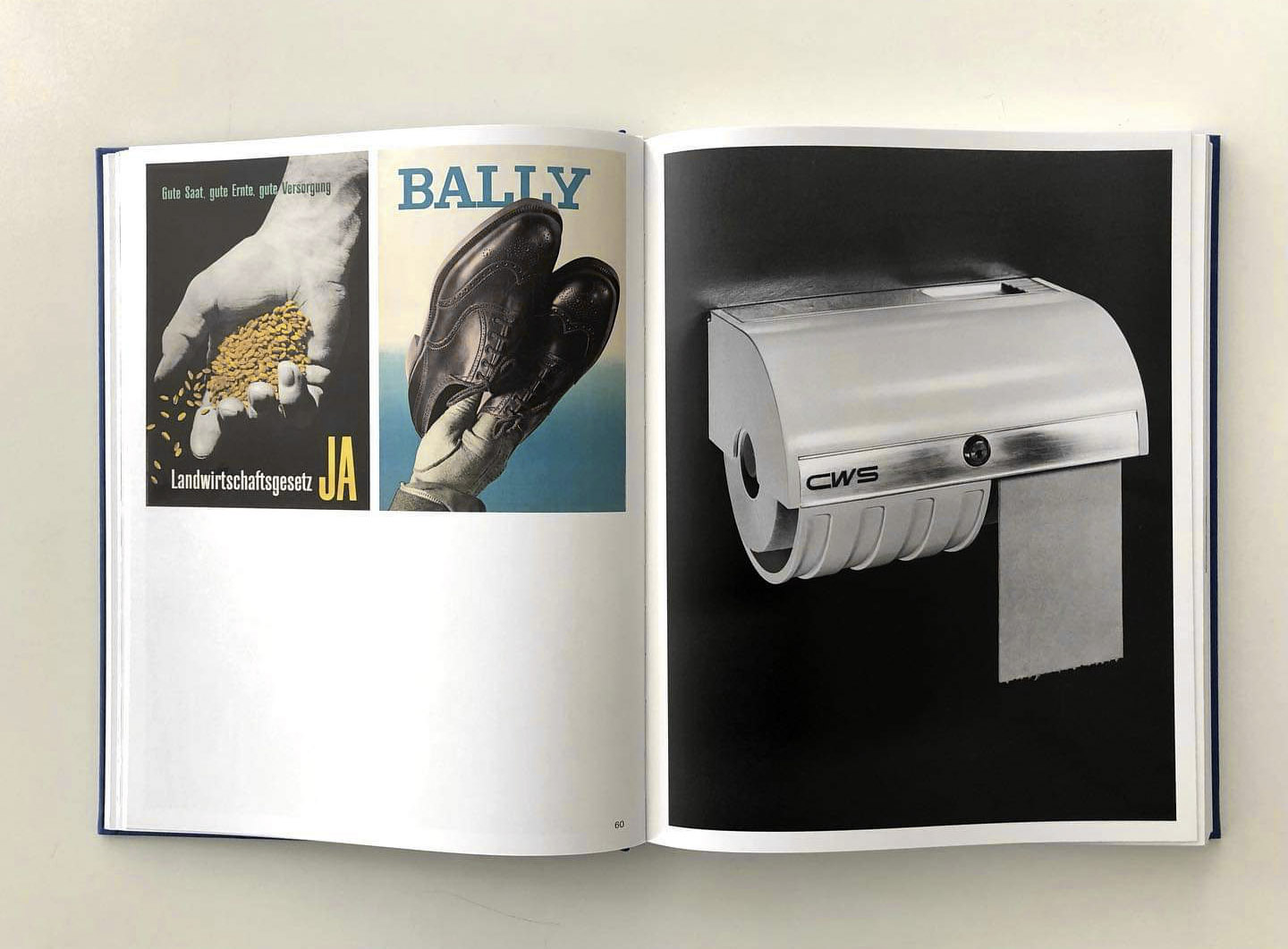
Heiri Steiner (Swiss, 1906-1983) (designer) Ernst A. Heiniger (Swiss, 1909-1993) (photographer) 'Grindewald poster' 1935


Heiri Steiner (Swiss, 1906-1983) (designer)
Ernst A. Heiniger (Swiss, 1909-1993) (photographer)
Grindewald poster
1935


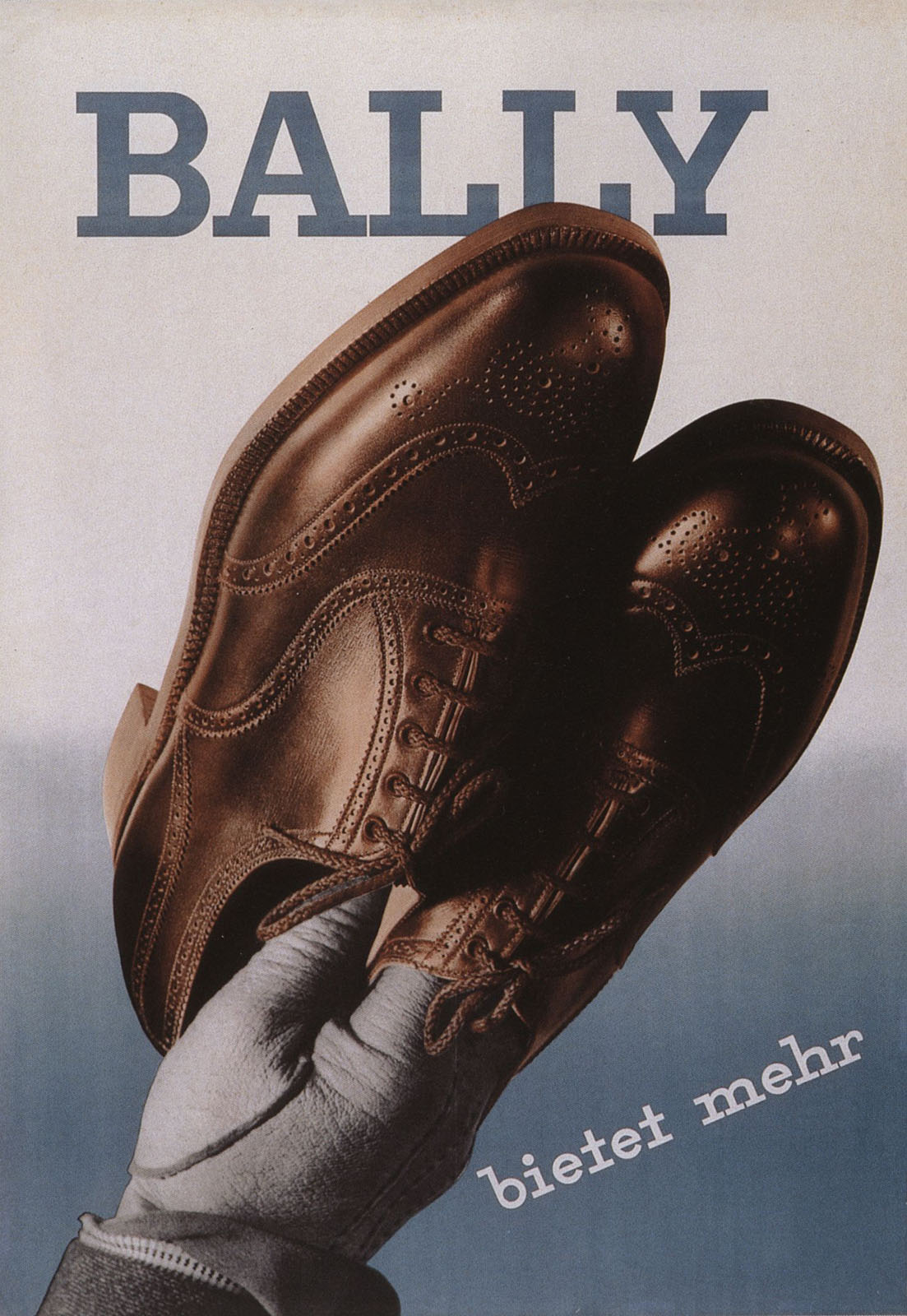
Heiri Steiner (Swiss, 1906-1983) (designer) Ernst A. Heiniger (Swiss, 1909-1993) (photographer) 'Bally Shoes poster' 1936


Heiri Steiner (Swiss, 1906-1983) (designer)
Ernst A. Heiniger (Swiss, 1909-1993) (photographer)
Bally Shoes poster
1936


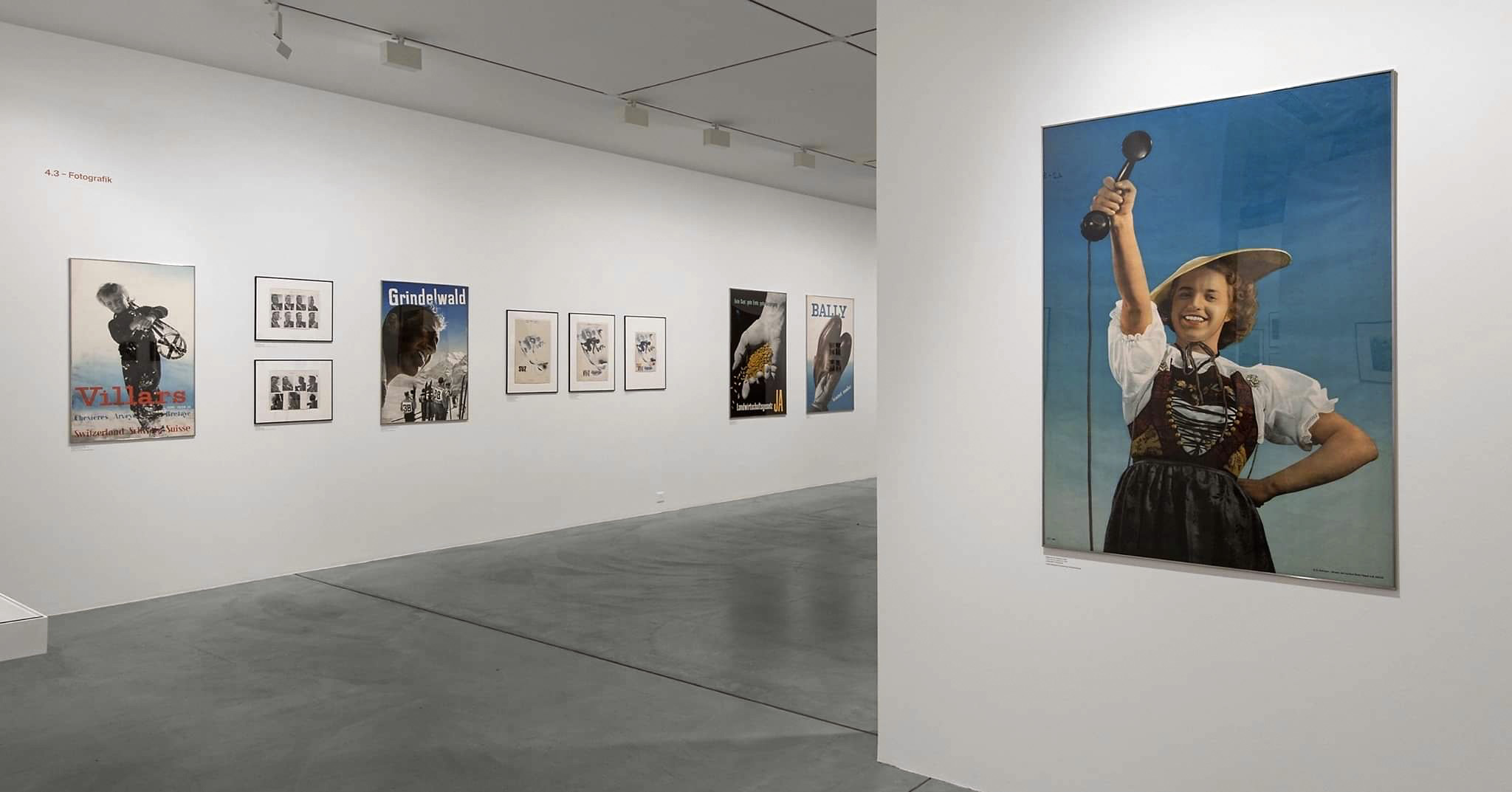
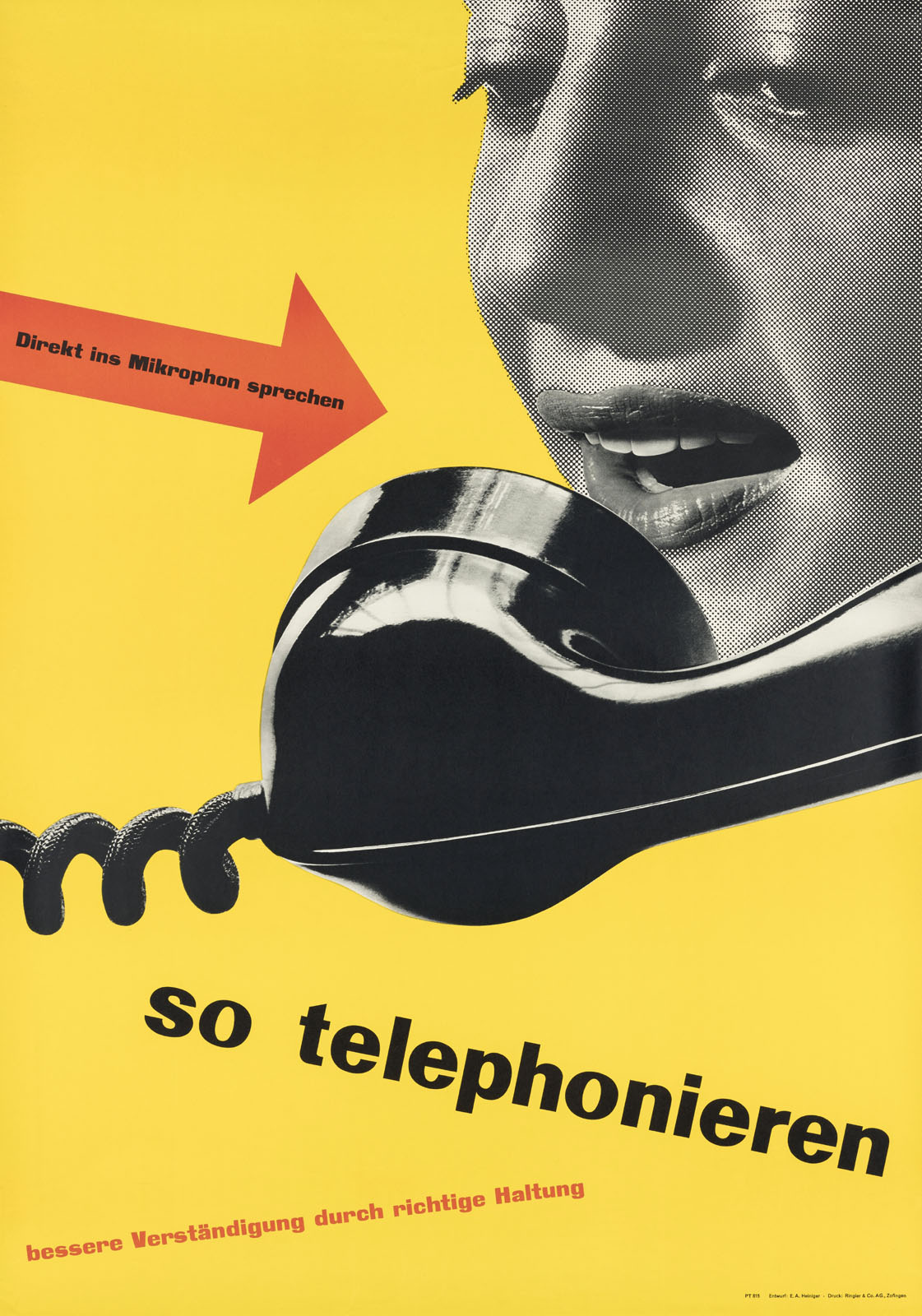
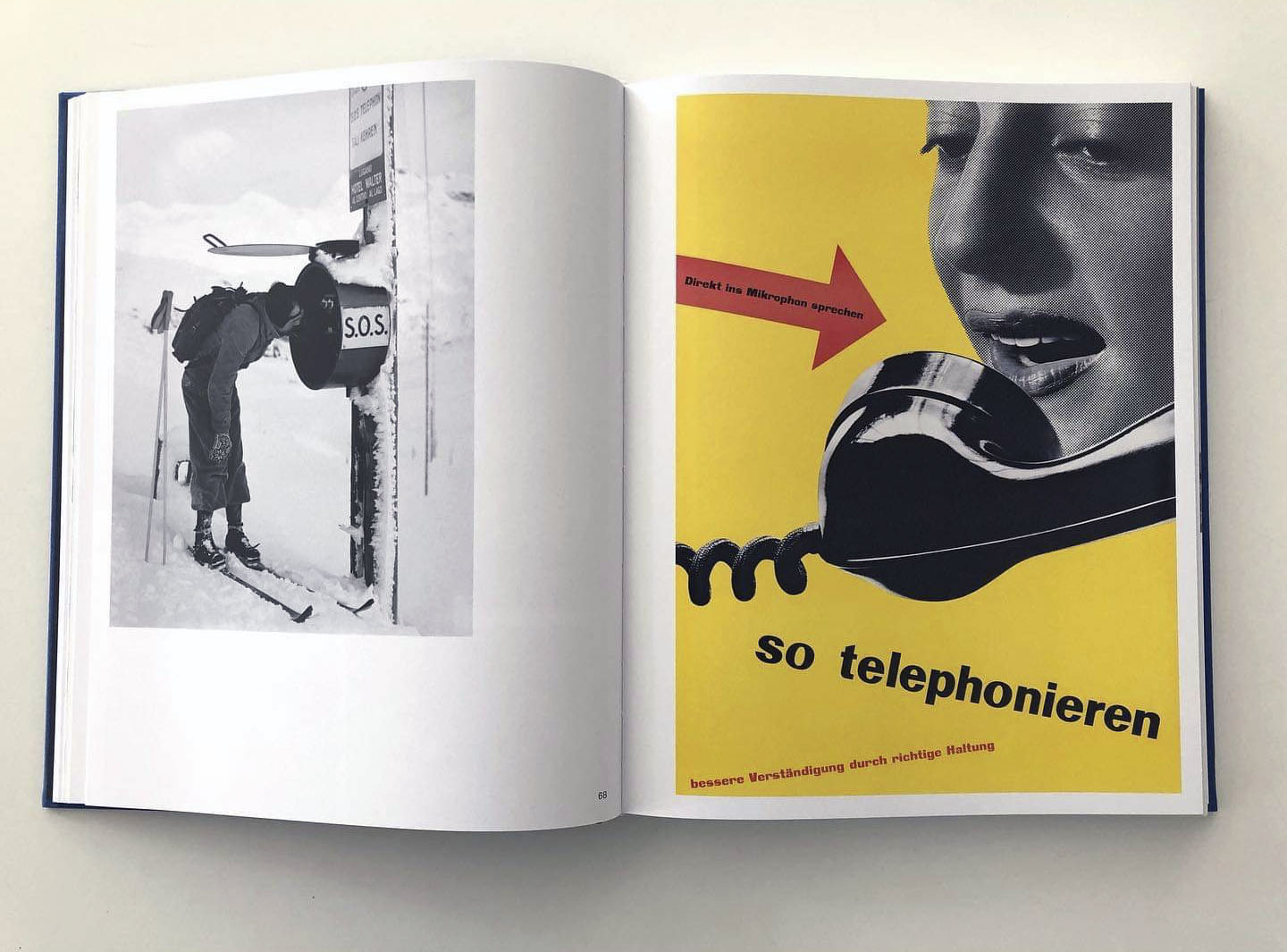
'Telefon poster' (1942) (installation view)


Installation view of the exhibition Ernst A. Heiniger – Good Morning, World!’ at Fotostiftung Schweiz, Winterthur, Zürich showing at right, Telefon poster (1942)


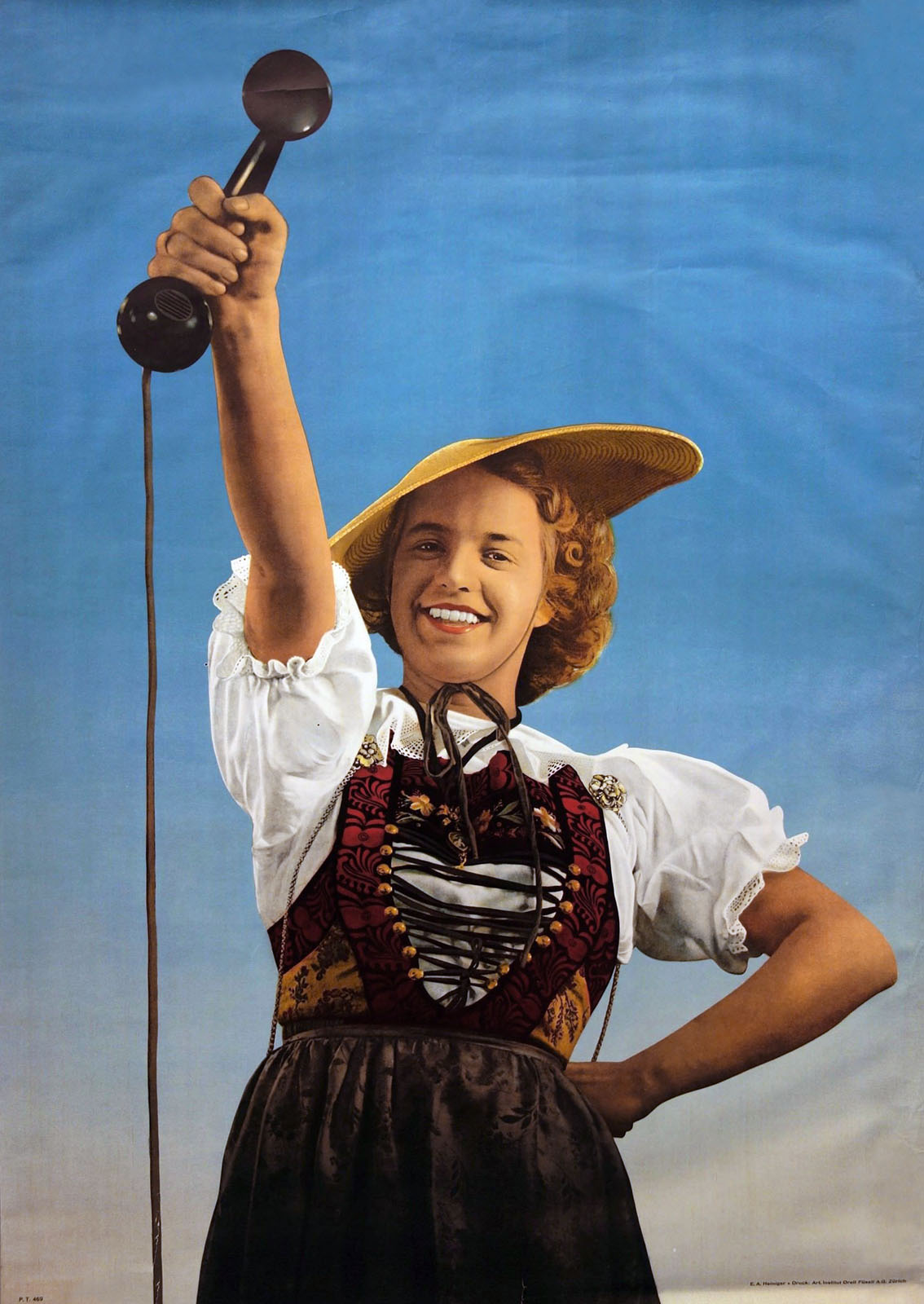
Ernst A. Heiniger (Swiss, 1909-1993) 'Telefon poster' 1942


Ernst A. Heiniger (Swiss, 1909-1993)
Telefon poster
1942
Poster
128 x 90.5cm (50.4 x 35.6 in.)


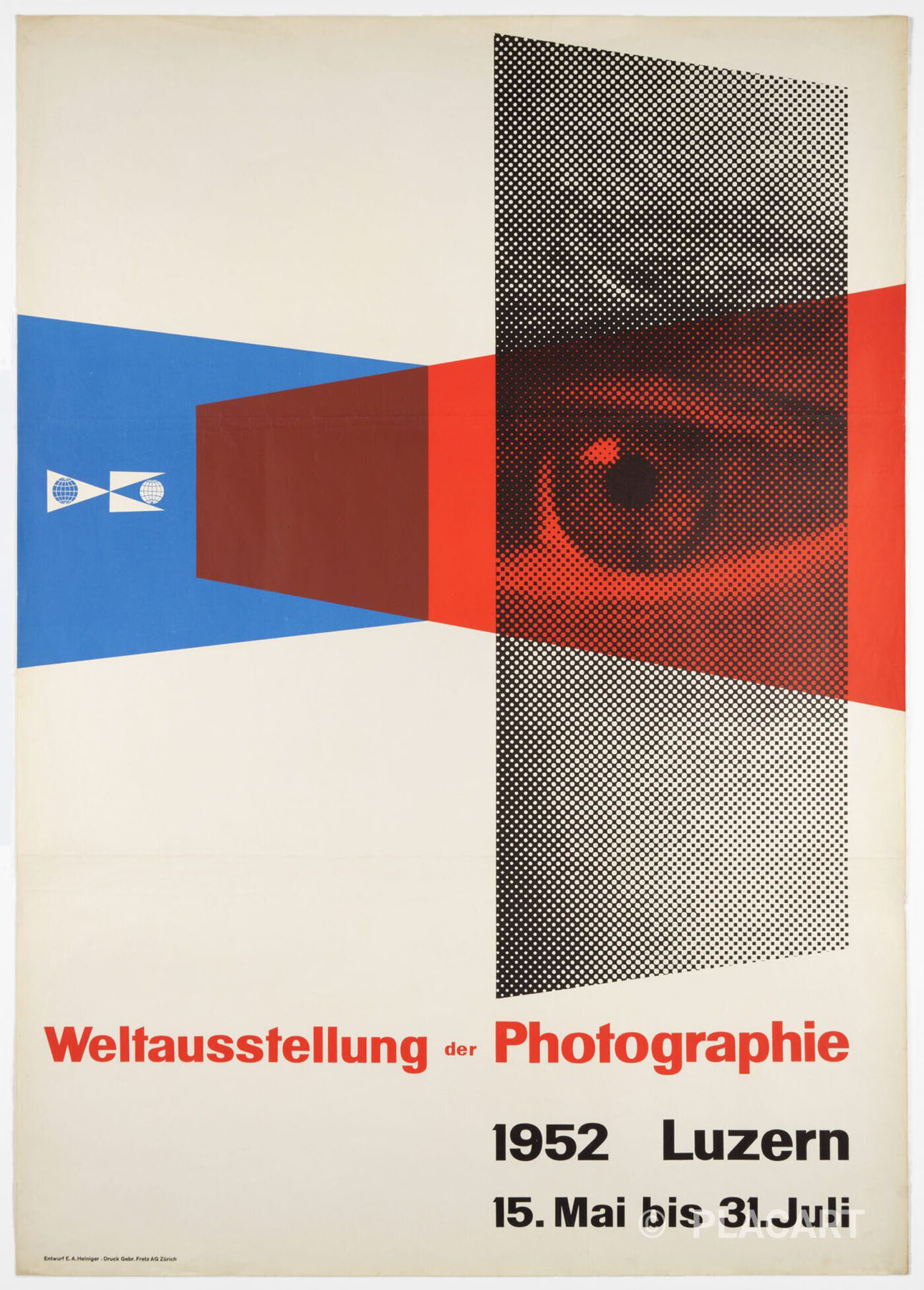
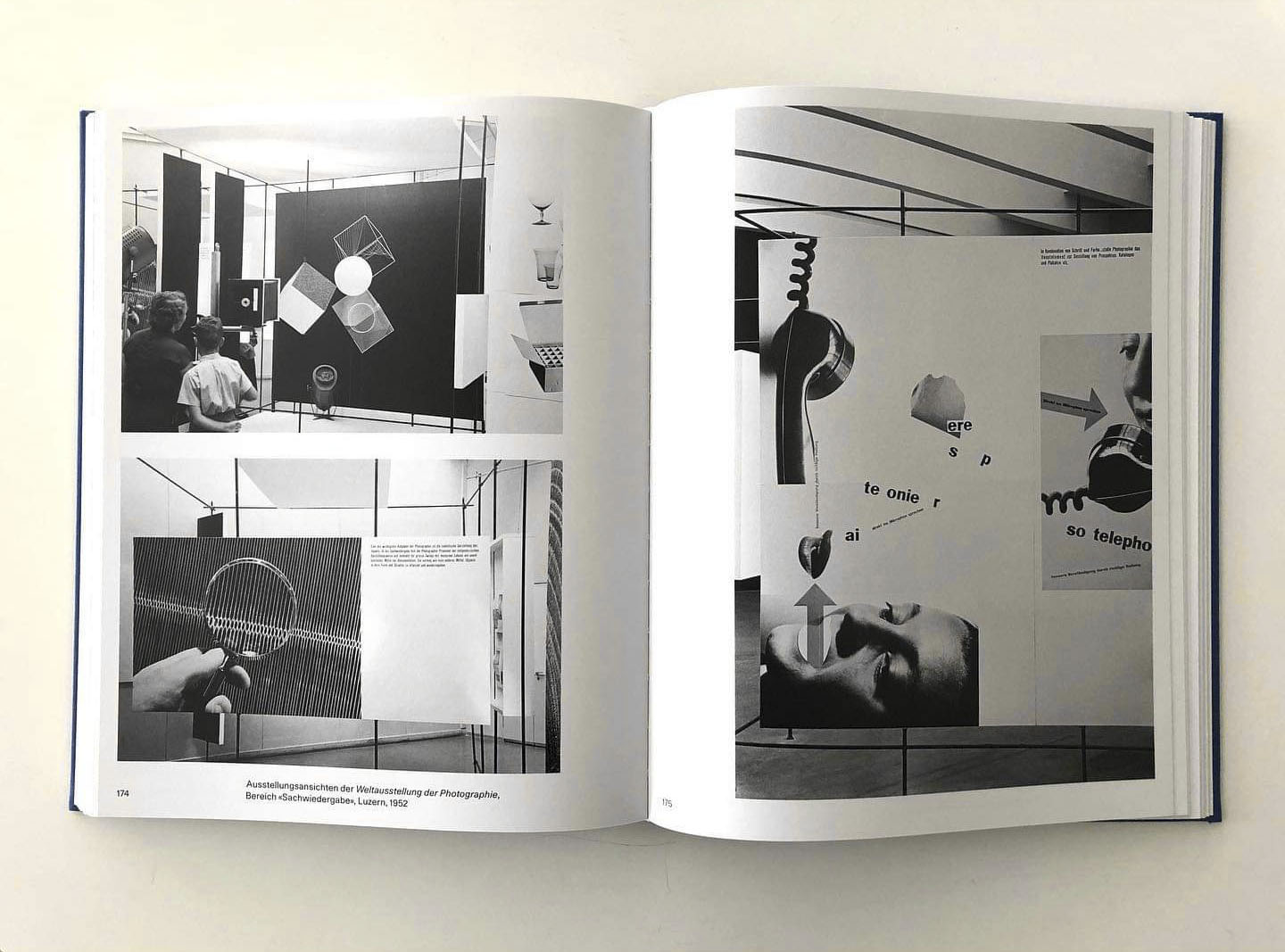
Ernst A. Heiniger (Swiss, 1909-1993) 'World Exhibition of Photography Lucerne poster' 1952


Ernst A. Heiniger (Swiss, 1909-1993)
World Exhibition of Photography Lucerne poster
1952


Photo|graphic design

The medium of photography experienced a boom in the 1930s in the form of printed images. The quality standards of the printing trade were high in Switzerland, and photography was increasingly used for magazine illustrations, poster designs and commercial art. Important innovators in typography and graphic design such as Max Bill, Anton Stankowski or Jan Tschichold resided in Zurich; Ernst A. Heiniger worked in a creative and innovative environment. Under the terms “Fotografik” or “Typofoto”, photography entered into a new kind of combination with graphic and typographic elements. The progressive, neo-objective aesthetics of New Photography was ideally suited to applications in the field of advertising. Heiniger supplied images for well-known graphic artists such as Herbert Matter, Richard Paul Lohse and Josef Müller-Brockmann and also practised graphic design himself. From 1934 to 1939, he managed a studio for photography and graphic art on St. Annagasse in Zurich together with Heiri Steiner. As a duo with Steiner, and later as a solo artist, he designed visionary posters that still have a timeless and modern effect today.


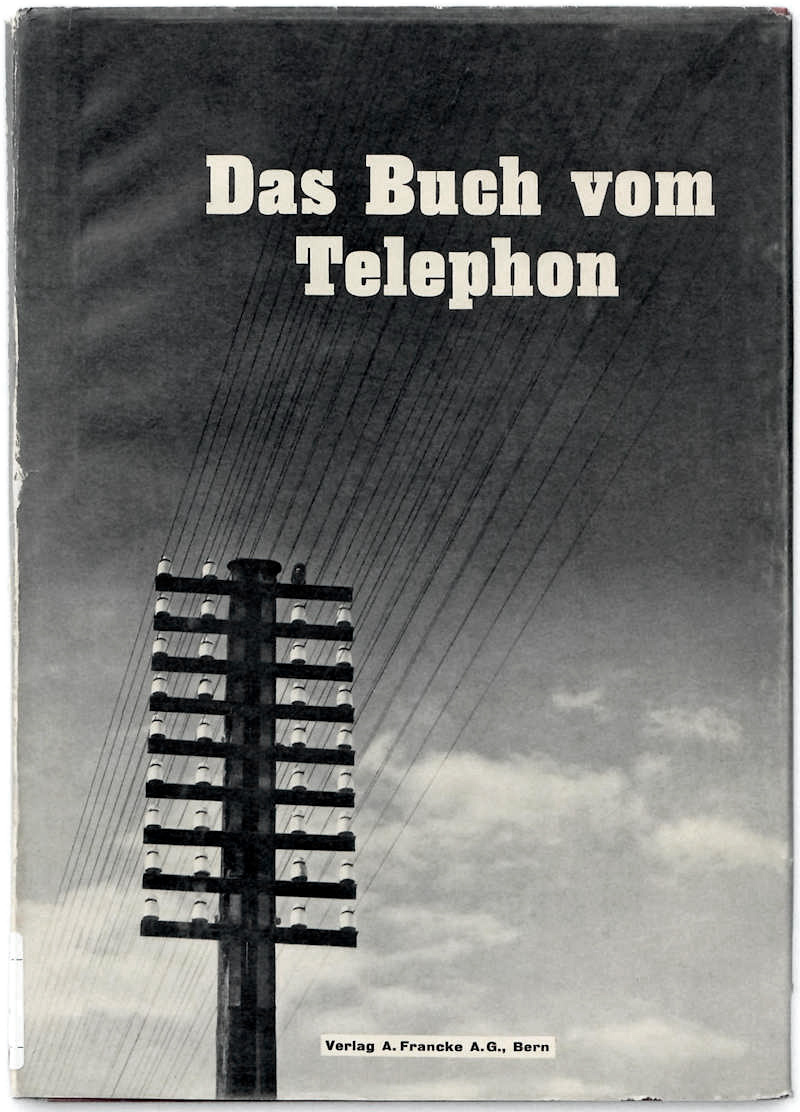
Ernst A. Heiniger. 'Das Buch vom Telephon'


Ernst A. Heiniger Das Buch vom Telephon book cover


“Pro Telephon” and first films

After parting company with Heiri Steiner, Ernst A. Heiniger was fortunate to have the opportunity to work for a loyal client that was open to modern advertising. The Swiss telecommunications company PTT had launched a campaign in 1927 to popularise the telephone in Switzerland. Heiniger worked for them as a photographer and graphic designer throughout the war and beyond. From 1942, he also started making his first short promotional films for “Pro Telephon”, and in 1946 he was behind the camera for the 20-minute documentary Sül Bernina (CH, 1948). The film uses impressive scenes and modernist imagery to show how the heavy telephone cable was joined together from the north and south at the Bernina Pass to replace the telephone poles that were susceptible to interference.


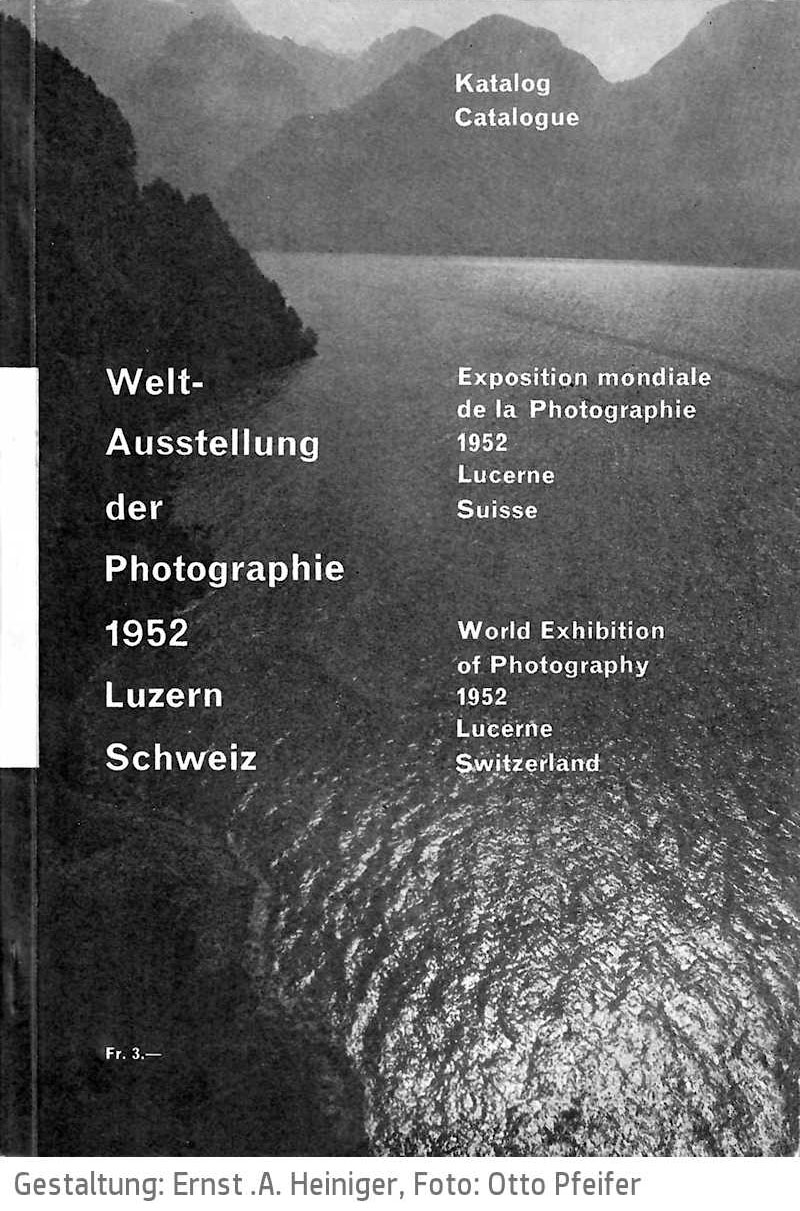
Ernst A. Heiniger. 'World Exhibition of Photography 1952 Lucern, Switzerland' catalogue


Ernst A. Heiniger World Exhibition of Photography 1952 Lucern, Switzerland catalogue


The World Exhibition of Photography in Lucerne

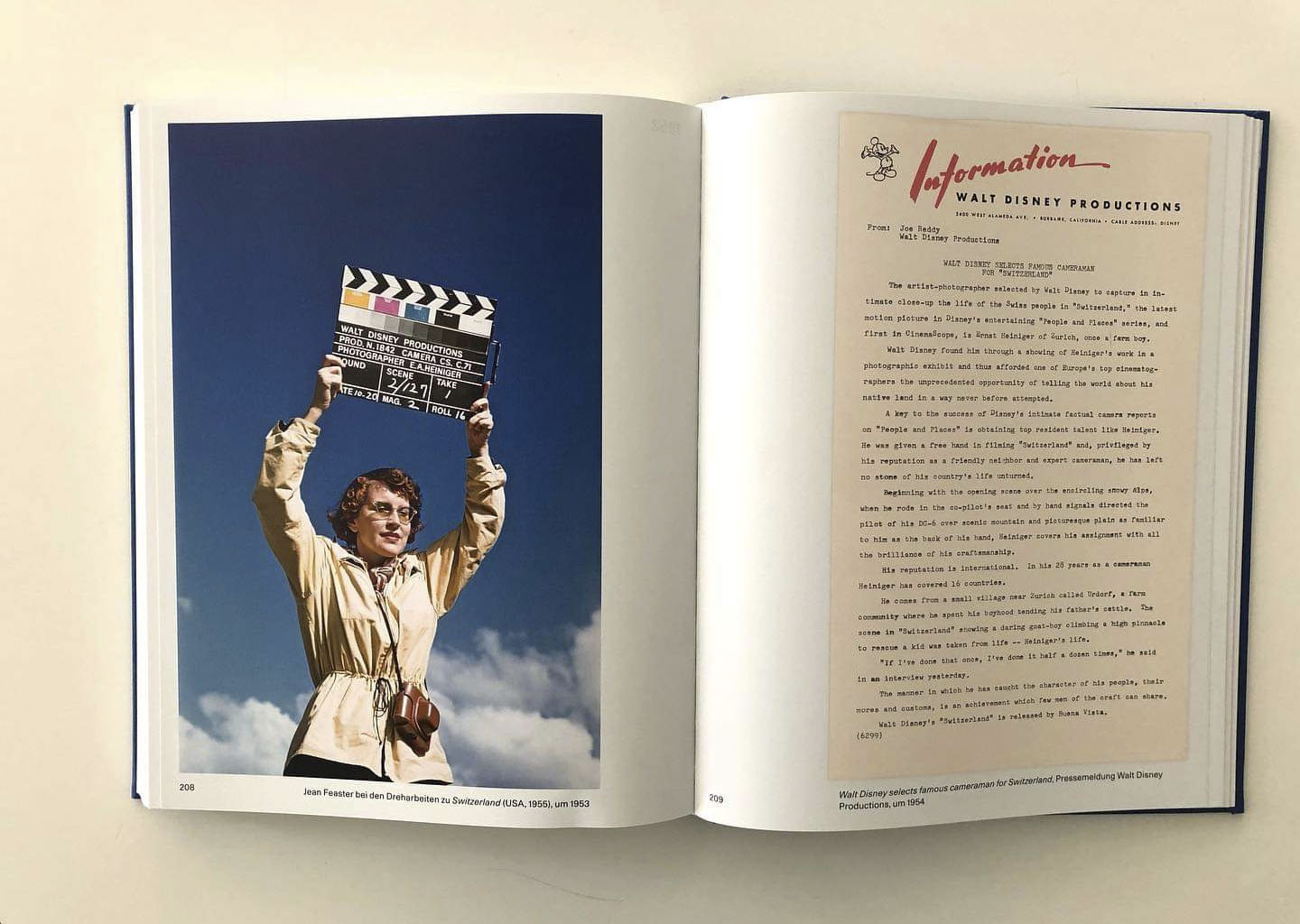
The year 1952 marked a turning point in Heiniger’s life and career. The World Exhibition of Photography was held in Lucerne – a universally oriented exhibition that aimed to show the medium’s areas of application as comprehensively as possible. Heiniger was involved in the major event in various capacities: as a graphic designer, he won the competition for the poster design, and as an expert in the field of object photography, he was entrusted with the curatorial task of organising the “Sachwiedergabe” (“object reproduction”) section. His own pictures were omnipresent at the exhibition. A prominent visitor recognised Heiniger’s talent, and in the summer of 1952 he and Walt Disney met for the first time at the Hotel Palace in Lucerne. Disney cut right to the chase and offered Heiniger a job as a cameraman for his planned documentary film about Switzerland. While working with the American media company, Ernst A. Heiniger met his future wife Jean Feaster. After their marriage in 1953, the two became an inseparable team, not only in private but also professionally.


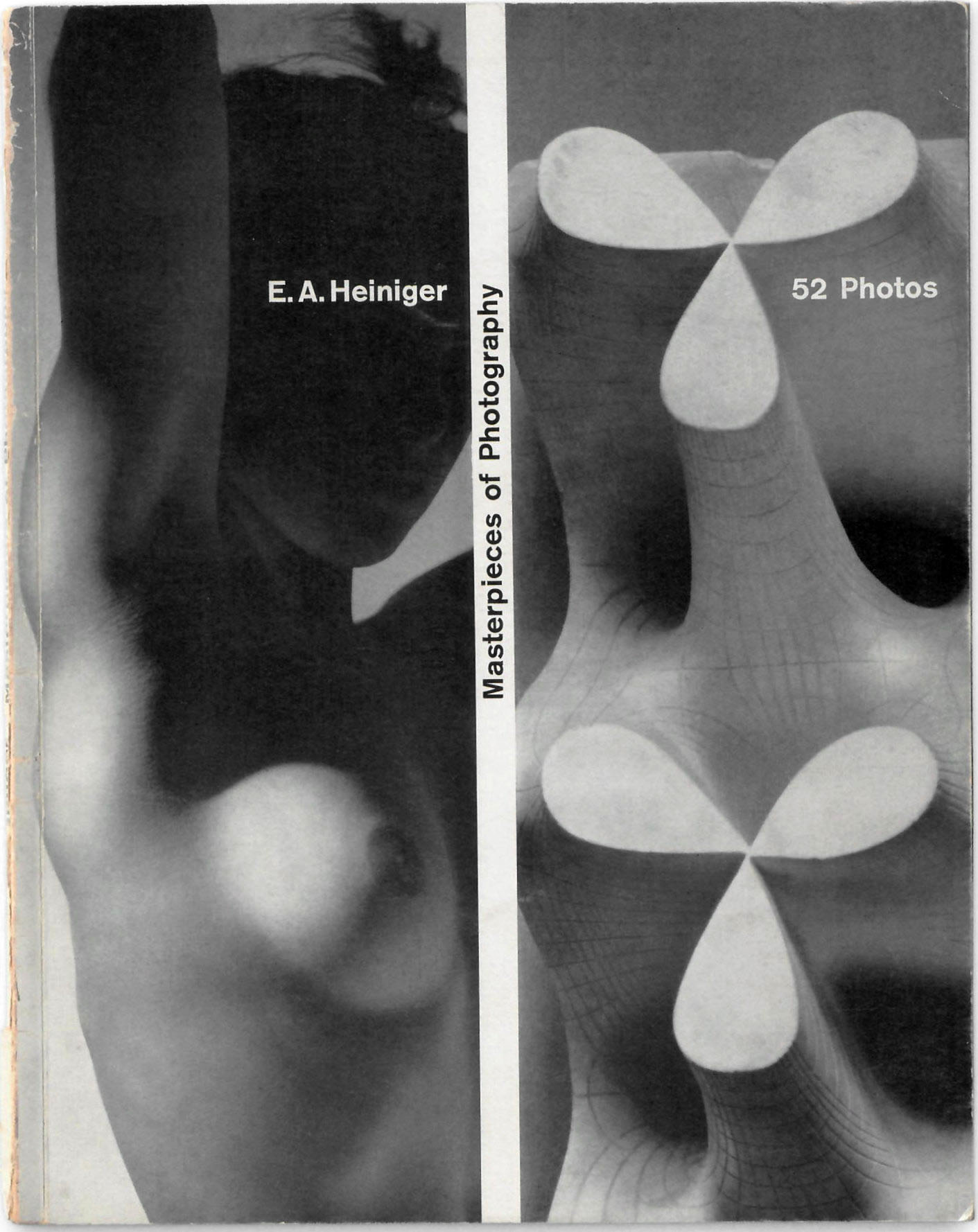
Ernst A. Heiniger. 'Masterpieces of Photography' 1952


Ernst A. Heiniger Masterpieces of Photography 1952


Masterpieces

In addition to the platform offered to Ernst A. Heiniger at the Lucerne exhibition, he produced an illustrated book in the same year to draw attention to his photographic work. He edited a portfolio of sorts comprising 52 of his best independent and applied works that he had produced since the 1930s. The publication appeared in two languages; he called the German edition Das Jahr des Fotografen (“The Year of the Photographer”). On each double-page spread he arranged two pictures that are characterised by contrasts in form or content, but have something in common in their juxtaposition, which the lyricist Albert Ehrismann pondered in the captions. The English edition contains picture commentary by the British writer R.A. Langford and bears the self-confident title Masterpieces of Photography. The estate includes almost all the original prints of these Masterpieces, which were used as print templates at the time. The objects laminated on photo mounting board form the core of the exhibition and provide an insight into Heiniger’s appraisal of his own work as the focus of his activity began to shift from the static to the moving image.

Films for Walt Disney

In the early 1950s, Walt Disney launched the documentary film series People & Places for the supporting programme of his animated films – an anthology of half-hour short films designed to introduce foreign countries and peoples to American audiences. One of these countries was Switzerland. While searching for a suitable cameraman, Disney became aware of Ernst A. Heiniger. Switzerland (CH, 1955) was to be the third film in the series and also the first to be shot in Cinemascope. The pronounced wide format of Cinemascope and Technicolor film were new, previously untested creative tools for Heiniger. But he never shied away from a challenge and quickly learned to work with the format and colour, and so he was immediately rehired for further films by Walt Disney Productions. From 1955 to 1957, Jean and Ernst A. Heiniger travelled extensively in Asia. They shot two new People & Places films in Japan: Ama Girls (USA, 1958) follows the lives of a fishing family from Inatori with a special focus on the unusual profession of the 18-year-old daughter, who earns her living as a seaweed diver. For the second film Japan (USA, 1960), the Heinigers documented Japanese festivals, traditional crafts and a Shinto wedding. Disney’s so-called “edutainment” films were designed to inform and entertain a broad cinema audience. Although Walt Disney gave the camera teams travelling all over the world for him a great deal of creative freedom, the films were eventually edited according to commercial criteria under the supervision of his producer Ben Sharpsteen. In 1958, the Heinigers spent another whole year in the Colorado River area for the film project Grand Canyon (USA, 1958), a film adaptation of the extremely popular suite of the same name by the composer Ferde Grofé. The short film was shown in 1959 as a supporting film for Sleeping Beauty. In the same year, the two films Ama Girls and Grand Canyon both won an Academy Award (“Oscar”) – one for Best Documentary (Short Subject), the other for Best Live Action Short Film.

The Ernst A. Heiniger Archive contains numerous slides that document the filming of Disney productions or can also be described as stills. The films Ama Girls, Japan, Grand Canyon and the German version of Switzerland were made available for viewing thanks to digital copies from film archives and are also part of the exhibition.

360 degree cinema

After film was plunged into crisis by the spread of television, the industry steadily introduced new film formats to enhance the viewing experience at the cinema. Following the various widescreen formats, Disney’s patented “Circarama” technology set new standards in the 1950s. The system, consisting of a camera and projection display, enabled the capture and reproduction of a full 360 degree angle. In the early 1960s, Ernst A. Heiniger was commissioned by the SBB to produce a 360 degree film for Expo 64 in Lausanne. He was not only responsible for the production, cinematography and direction of the project, but also developed the script for Rund um Rad und Schiene (“Magic of the Rails”, CH, 1964) in cooperation with the client. The 20-minute film was shown every half hour at the Expo in a round auditorium with a diameter of 26.5 metres and a capacity of 1500 people. Around 4 million people had seen the film by the end of the Expo. The Fotostiftung Schweiz is showing this first Swiss 360-degree film, which was restored and digitised in 2014 as part of a Memoriav project, on a smaller scale as a walk-in circular projection.

Despite the success of Magic of the Rails, Heiniger was only partially satisfied with the result; he was bothered by the technical shortcomings of the Circarama system, which did not allow seamless projection. He therefore began developing his own 360 degree recording and projection technology in 1965, which was ready for use under the name “Swissorama” at the beginning of the 1980s. From 1982 to 1984, he used his system to produce the film Impressions of Switzerland (CH, 1984), a total image of Switzerland, which was shown continuously from 1984 to 2002 at the Museum of Transport in Lucerne in a custom-built auditorium.

The exhibition was curated by Teresa Gruber and Katharina Rippstein. The publication Ernst A. Heiniger – Good Morning, World! accompanying the exhibition is available from Scheidegger & Spiess. The Ernst A. Heiniger Archive, which is maintained by the Fotostiftung Schweiz, has been comprehensively indexed and digitised and is accessible to the public via an online database: fss.e-pics.ethz.ch.

Press release from the Fotostiftung Schweiz website


The forgotten Swiss Oscars


Ernst A. Heiniger (Swiss, 1909-1993) 'Poster "so telephonieren"' 1950


Ernst A. Heiniger (Swiss, 1909-1993)
Poster “so telephonieren”
1950
© Fotostiftung Schweiz


Ernst A. Heiniger (Swiss, 1909-1993) 'Self-portrait' around 1950


Ernst A. Heiniger (Swiss, 1909-1993)
Self-portrait
around 1950
© Fotostiftung Schweiz


Ernst A. Heiniger (Swiss, 1909-1993) 'Ernst A. Heiniger and his wife Jean were inseparable: here they traveled to Japan for a Cinemascope film' around 1956


Ernst A. Heiniger (Swiss, 1909-1993)
Ernst A. Heiniger and his wife Jean were inseparable: here they traveled to Japan for a Cinemascope film
around 1956
© Fotostiftung Schweiz


Ernst A. Heiniger (Swiss, 1909-1993) 'Seaweed diver, film scene from 'Ama Girls' (USA, 1958)' around 1956

Ernst A. Heiniger (Swiss, 1909-1993)
Seaweed diver, film scene from ‘Ama Girls’ (USA, 1958)
around 1956
© Fotostiftung Schweiz


A day’s trip west of Tokyo, Ernst A. Heiniger found a place that he imagined: the archaic-looking fishing village of Inatori. He selected a few villagers, arranged them into a family and let them play their “authentic” everyday life. Yukiko – an 18-year-old hairdresser in real life – is one of those divers with special skills in the film. They stay under water for minutes to harvest the coveted seaweed.

The 30-minute film “Ama Girls” won an Oscar in 1959 and spurred Heiniger’s further career. Numerous photographs were taken on the set between filming, such as this shot of the alleged diver who had just emerged from the sea. As a kind of mermaid, she embodies a phantasm: beautiful, mysterious, exotic and aloof.

Fotostiftung Schweiz. “Die Bildkritik – Perlen der Fotostiftung Schweiz,” on the NZZ website 8/9/2021 [Online] Cited 13/09/2021. Translated from the German.


Ernst A. Heiniger (Swiss, 1909-1993) 'Women at a festival, Japan' around 1956


Ernst A. Heiniger (Swiss, 1909-1993)
Women at a festival, Japan
around 1956
© Fotostiftung Schweiz


Ernst A. Heiniger (Swiss, 1909-1993) 'Jean and Ernst A. Heiniger during the shooting of the Cinemasope film "Grand Canyon" (USA, 1958)' 1958


Ernst A. Heiniger (Swiss, 1909-1993)
Jean and Ernst A. Heiniger during the shooting of the Cinemasope film “Grand Canyon” (USA, 1958)
1958
© Fotostiftung Schweiz


Ernst A. Heiniger (Swiss, 1909-1993) 'Ernst A. Heiniger with his wife Jean while shooting a Cinemascope film' Nd


Ernst A. Heiniger (Swiss, 1909-1993)
Ernst A. Heiniger with his wife Jean while shooting a Cinemascope film
Nd
© Fotostiftung Schweiz


Karl Wolf. 'Shooting of the Circarama film "Rund um Rad und Schiene"' 1963


Karl Wolf
Shooting of the Circarama film “Rund um Rad und Schiene”
1963
© Fotostiftung Schweiz


Echorama in 360°: Eine Schweizer Zeitreise in die 60er-Jahre und zurück
Echorama in 360°: A Swiss journey through time to the 1960s and back


The oldest panorama shots in Switzerland come from the film “All about wheel and rail” by Ernst A. Heiniger. The recordings amazed the visitors of Expo 64. Discover scenes from the crowd puller here: take a look around Bern’s old town, a dining car with neatly dressed people or a construction site from the 1960s. Recordings from the present also show how cityscapes, technologies and worldviews have changed. With headphones you can dive deeper into the pictures, which are underlaid with news articles from the respective time.


Karl Wolf. 'The 9-camera system on Heiniger's Chevrolet: the filmmaker worked hard for the Expo film' around 1963


Karl Wolf
The 9-camera system on Heiniger’s Chevrolet: the filmmaker worked hard for the Expo film
around 1963
© Fotostiftung Schweiz


The 9-camera system outdoors


The 9-camera system outdoors


Vicky Schoch. 'Ernst A. Heiniger showed Walt Disney the site of Expo 64. The two were close friends' 1964


Vicky Schoch
Ernst A. Heiniger showed Walt Disney the site of Expo 64. The two were close friends
1964
SRF Schweizer Radio und Fernsehen


Anonymous. 'The Circarama Circular Theatre of the SBB at Expo 64 in Lausanne' 1964


Anonymous
The Circarama Circular Theatre of the SBB at Expo 64 in Lausanne
1964
© Fotostiftung Schweiz


Anonymous. 'The Circarama Circular Theatre of the SBB at Expo 64 in Lausanne' 1964


Anonymous
The Circarama Circular Theatre of the SBB at Expo 64 in Lausanne
1964
© Fotostiftung Schweiz


The 360 pioneer

Heiniger, who had a passion for technology, was very much involved in the development of Disney’s “Circarama” system. Creating a circular movie theatre that screened 360° films became one of his dreams. He was able to realise this dream when the Swiss Federal Railways commissioned him to shoot a movie in this format for the Expo 64 in Lausanne. The film All About Wheels and Rails was a huge success. It is allegedly one of Switzerland’s most watched films with almost four million viewers.

Heiniger continued to develop the 360° technology until the end of the 1980s when he launched “Swissorama”, a new-and-improved cylindrical 360° film system. Europeans were sceptical of the system, and when Heiniger moved to Los Angeles with his wife in 1986, he sold it to a US company which marketed it under the new name “Imagine 360”.

His last wide-screen film, Destination Berlin, was due to be screened in a dome cinema near West Berlin’s tourist district, the Ku’damm, but historic events shuttered his project. With German reunification, half of the city, namely East Berlin, was missing from the movie. Audiences stayed away and the film never reached the expected success.

Heiniger’s death

The money he made with the sale of “Swissorama” enabled him to buy a house in the Hollywood Hills, where he lived for the remainder of his life. His death in 1993 went unnoticed in Switzerland where he is still relatively unknown, even though several exhibitions and events have been dedicated to him.

In 1997 the newly established Swiss Photo Foundation organised an exhibition of his work at the Zurich Art Museum, and one of his wide-screen films was shown at the Transportation Museum in Lucerne until 2002. When the Swissorama closed that year, this kind of film disappeared, dashing his dream of creating a worldwide network of 360° cinemas.

Anonymous. “On the trail of photographer and Oscar winner Ernst A. Heiniger,” on the Swissinfo website August 2, 2021 [Online] Cited 13/09/2021.


Books

Puszta horses (Zurich 1936)
The Photo Book of the National Exhibition (Zurich 1939)
Ticino (Zurich 1941)
Four-thousanders. A picture book of the beauty of our Alps (Zurich 1942)
The Year of the Photographer (Zurich 1952)
Grand Canyon, nature and wildlife in 157 colour photos. Kümmerly & Frey Geographischer Verlag, Bern 1971
The Great Book of Jewels (Lausanne 1974)

Filmography

1942: The telephone cable
1943: The telephone set
1944: From wire to cable
1945: The telephone exchange
1948: On the Bernina
1954: Switzerland
1957: Japan
1956-1957: Ama Girls (TV series in 13 parts)
1958: Grand Canyon
1965-1967: Switzerland
1964: All about wheels and rails
1984: Impressions of Switzerland
1988: Shikoku Alive
1989: Destination Berlin


Ernst A. Heiniger (Swiss, 1909-1993) 'Self-portrait' 1960s


Ernst A. Heiniger (Swiss, 1909-1993)
Self-portrait
1960s
© Fotostiftung Schweiz


'Ernst A. Heiniger – Good Morning, World!' book cover


Ernst A. Heiniger – Good Morning, World! book cover


'Ernst A. Heiniger – Good Morning, World!' book pages

'Ernst A. Heiniger – Good Morning, World!' book pages

'Ernst A. Heiniger – Good Morning, World!' book pages

'Ernst A. Heiniger – Good Morning, World!' book pages


Ernst A. Heiniger – Good Morning, World! book pages


Fotostiftung Schweiz
Grüzenstrasse 45
CH-8400 Winterthur (Zürich)
Phone: +41 52 234 10 30

Opening hours:
Tuesday – Sunday 11am – 6pm
Wednesday 11am – 8pm
Closed on Mondays

Fotostiftung Schweiz website

LIKE ART BLART ON FACEBOOK

Back to top

Text/Exhibition: ‘Mervyn Bishop: Australian Photojournalist’ at the National Film and Sound Archive of Australia, Acton, Canberra ACT

Exhibition dates: 5th March – 4th October, 2021

Warning: Aboriginal and Torres Strait Islander readers should be aware that this posting contains images and names of people who may have since passed away.


Mervyn Bishop (Australian, b. 1945) 'Girl pours tea, Burnt Bridge' 1988 from the exhibition 'Mervyn Bishop: Australian Photojournalist' at the National Film and Sound Archive of Australia, Acton, Canberra ACT, march - Oct, 2021


Mervyn Bishop (Australian, b. 1945)
Girl pours tea, Burnt Bridge
1988
Gelatin silver photograph
30.1 x 40.4cm
Art Gallery of New South Wales
Hallmark Cards Australian Photography Collection Fund 1991
© Mervyn Bishop
Photo: AGNSW


In our sight, in our mind

Can you imagine, please, being the first person to step foot on the moon. Or the first person to discover radium. Now imagine being the first Indigenous Australian photojournalist, for the very first time taking photographs of your culture from the inside, photographs that picture the ongoing suffering of Indigenous people but also, as importantly, their strength and joy. Such was the calling of that legend of Australian photography, Mervyn Bishop.

Bishop was the first in a long line of Indigenous photographers who unearth, investigate, picture and honour their community, although interestingly none of the later photographers are photojournalists. Artists such as Tracey Moffatt, Michael Riley, Ricky Maynard, Lisa Bellear, R e a (rea saunders), Michael Cook, Brook Andrew, Bindi Cole and Christian Thompson) follow in his footsteps. Indeed in this posting, there is a photograph by Bishop presumably of the father of the photographer Ricky Maynard, Eric Maynard cleaning a mutton bird, Great Dog Island, Tasmania (1975, below), followed by a photograph by Maynard himself of muttonbirding on Dog Island from his series Portrait of a Distant Land. The songlines of place and ancestors are strong in Aboriginal culture, and “show the connectedness between places and the Creation events and ceremonies associated with those places. People born in that country are forever tied to the creation history of their birthplace and have custodial obligations to that place.”

The stories Bishop shares through his images are different from the colonial ones of yesteryear because they come from within the spirit and soul of the communities he is photographing. Less than 20 years before Bishop’s first photographs things were very different. The Australian journalist and writer Stan Grant observes that, “…there are images in our history, of Aboriginal people in chains. Aboriginal people tied together, with armed police standing either side of them.” In an article on The Guardian website we learn that “Neck chains were still being used on Aboriginal people in Western Australia in 1958. Witnesses at Halls Creek in the Kimberley reported seeing Aboriginal prisoners chained to a veranda post of the police station for weeks at a time… At peak periods, from the 1880s to the 1940s, hundreds of Aboriginal people were chained for alleged cattle theft, and marched out of their country, some for up to 400km. Each neck piece weighed 2.4kg.”1 Even in Dawn – A Magazine for the Aboriginal People of N.S.W. created by the New South Wales Aboriginal Welfare Board and aimed at Aboriginal Australians (running monthly from January 1952 until December 1968) – in which there was an article in February 1965 on a young Mervyn Bishop training to become a photographer (see below) – the forces of colonial assimilation were hard at work, as can be seen on the back cover of the Dawn October 1965 issue, where Leslie Ryan makes his debut at a “Deb” Ball for kindergarten children, where he “seems to be getting a better deal out of life now that he has love and attention.” Now that he has love and attention. Just let that sink in. Today, the dripping irony and sadness of this photograph in relation to what is now known as “The Stolen Generation”2 is apparent, the two young children taken from their families, taken from their culture, dressed to the nines in formal Western attire at such a young age. Remember, this is less than 60 years ago.

As much as Eugène Atget (French, 1857-1927) was a working photographer making “Documents pour artistes,” declaring his modest ambition to create images for other artists to use as source material, so Bishop was a working photographer who created “Documents for people” at the Department of Aboriginal Affairs in Canberra from 1974 onwards, where he covered the major developments in Aboriginal communities throughout Australia. As Mervyn himself says, “Photography has been my life, my passion for 60 years: the art and technique, the stories I’ve witnessed and captured. I’m glad to be able to share my life’s work with the public.” There it is in a nutshell… an intimate understanding of the the art and technique of photography (the construction the image plane, lighting, point of view, scale, printing, etc… ) and the stories he wanted to tell. And he tells those stories straight down the line, with no bullshit. When asked in an audio recording in this posting about why his award winning photograph Life and death dash (1971, below) was misunderstood, he says “it has nothing to do with blackfellas, put it that way… people say it’s a nun running away with a little black kid, the Stolen Generation – nothing to do with it! Not a bloody thing! … people interpret their own way. Who would know that I was black? People still go on about it but people are talking through their … whatever… so, you don’t know what your talking about.” There you have it.

Like his personality, Bishop’s wonderful photographs are strong and direct, informed and understanding of the work of Walker Evans or Dorothea Lange. In Girl pours tea, Burnt Bridge (1988, above), an Aboriginal mother sits at a kitchen table in a corrugated iron shack and pours tea from a large battered teapot into enamel mugs, one for herself and one presumably for the photographer. Light pours through a hole in the roof. The table is covered in a floral probably plastic table cloth. There are plastic flowers set upon it. The chairs are vinyl. Behind her is an old kitchen unit from the 1950s with a wire screen at eye level, used to keep flies out. To the right are boxes and detritus while to the left a plastic bucket sits on the battered sink. Her child plays next to her oblivious of the camera flash while she stares directly at the camera. Much as Lange’s Migrant Mother, this women possesses her own inner dignity which Bishop captures so well: an unexpected intimacy with the subject in which we confront uncomfortable truths.

Other photographs, such as Children playing in river, Mumeka (1975, below) capture the pure joy of Aboriginal life, or the resoluteness of a people having to survive the trauma of cultures and societies and their complex histories (Couple on veranda, Coffs Harbour 1988, below). But let us be clear… this is not a vanishing race, nor an assimilated race but a proud, creative and intelligent race now picturing its own history and future. As Ricky Maynard states, “The contest remains over who will image and own this history. We must define history, define whose history it is, and define its purpose, as well as the tools used for the telling of this.” Bishop was at the very beginning of this imaging and ownership of Aboriginal history, not by colonial photographers of the past, but from within the community itself, in the present. His photographs are about speaking up about injustice and making sure that Indigenous perspectives were heard and not railroaded by non-indigenous people – Bishop was at the beginning of this – and about how the image speaks truth to power (a non-violent political tactic, employed by dissidents against the received wisdom or propaganda of governments they regard as oppressive, authoritarian or an ideocracy),

Towards the end of the documentary “The Bowraville Murders”, Stan Grant observes that Aboriginal people are kicked every day… [and this remains] out of sight, out of mind. He reminds us that between 1991 and 2021 there have been more than 470 Aboriginal deaths in custody… and not a single conviction. Out of sight, out of mind. Indeed, “fluidity of memory and a capacity to forget is perhaps the most haunting trait of our species. As history confirms, it allows us to come to terms with any degree of social, moral, or environmental degradation.”3 And this is what we all do. That is, until a photographer and artist like Mervyn Bishop comes along and reminds us through his photographs of the integrity, vitality and presence of Aboriginal people, spirit that stretches back thousands of years – despite our capacity to forget the trauma that Indigenous Australians have endured. This is the purpose of Bishop’s photographs … they bring to the forefront of our knowledge and imagination an understanding of the history and future of Aboriginal people. They remain, in our sight, in our mind.

Dr Marcus Bunyan


Footnotes

1/ Chris Owen. “How Western Australia’s ‘unofficial’ use of neck chains on Indigenous people lasted 80 years,” on The Guardian website Sun 7 March 2201 [Online] Cited 03/10/2021.

2/ The Stolen Generations refers to a period in Australia’s history where Aboriginal children were removed from their families through government policies. This happened from the mid-1800s to the 1970s.In the 1860s, Victoria became the first state to pass laws authorising Aboriginal children to be removed from their parents. Similar policies were later adopted by other states and territories – and by the federal government when it was established in the 1900s. For about a century, thousands of Aboriginal children were systematically taken from their families, communities and culture, many never to be returned. These children are known as the Stolen Generations survivors, or Stolen Children.These children were taken by the police; from their homes; on their way to or from school. They were placed in over 480 institutions, adopted or fostered by non-Indigenous people and often subjected to abuse. The children were denied all access to their culture, they were not allowed to speak their language and they were punished if they did. The impacts of this are still being felt today.There are currently more than 17,000 Stolen Generations survivors in Australia. Over one third of all Aboriginal and Torres Strait Islander people are their descendants. In Western Australia almost half of the population have Stolen Generation links.
Anonymous. “Who are the Stolen Generations?” on the Healing Foundation website [Online] Cited 03/10/2021.

3/ Wade Davis. “The Unraveling of America,” on the Rolling Stone website August 6, 2020 [Online] Cited 03/10/2021.


Many thankx to the National Film and Sound Archive of Australia for allowing me to publish the photographs in the posting. Please click on the photographs for a larger version of the image.


“The contest remains over who will image and own this history. We must define history, define whose history it is, and define its purpose, as well as the tools used for the telling of this.”


Ricky Maynard, 2007


“Australia in many ways is a crime scene. And the first crime is Captain Cook ordering his men to shoot at Aboriginal people. That’s the shot that we still hear all around Australia. And of course, there are images in our history, of Aboriginal people in chains. Aboriginal people tied together, with armed police standing either side of them. This is what has happened in our country, so it isn’t a great step to go from frontier attitudes of violence to deaths of three children in Bowraville. Because for us, it’s the same thing. It’s a killing that never stops.”


Stan Grant quoted in the documentary “The Bowraville Murders” directed by Allan Clarke on SBS on Demand, Australia, 2021


The National Film and Sound Archive of Australia will celebrates Mervyn Bishop, one of Australia’s most prolific and influential photographers, with a new exhibition 5 March – 4 October 2021.

Mr Bishop’s images of culture, politics and people have significantly influenced our collective understanding of Australia’s history. This exhibition is drawn from the Art Gallery of New South Wales collection, the artist’s private archive, and enriched by sound and moving image from the NFSA.

Mervyn Bishop features iconic photographs that derive from his career as a photojournalist, alongside personal images of family and friends and intimate portraits of members of the Aboriginal community. Spanning the past 60 years, the exhibition provides a fascinating insight into Bishop’s life and work.

In 1963 Mervyn Bishop left his hometown of Brewarrina, venturing to Sydney, where he successfully applied for a cadetship at The Sydney Morning Herald. He became Australia’s first Aboriginal press photographer and in 1971 won the News Photographer of the Year Award with his front-page photograph Life and Death Dash, 1971.

Bishop went on to work at the Department of Aboriginal Affairs in Canberra in 1974 where he covered the major developments in Aboriginal communities throughout Australia. This included his iconic image from 1975 when the (then) Prime Minister, Gough Whitlam, poured a handful of earth back into the hand of Vincent Lingiari, Gurindji elder and traditional landowner.


Unknown photographer. 'Untitled [Australian Aborigines in chains]' Nd


Unknown photographer
Untitled [Australian Aborigines in chains]
Nd


Indigenous Australians in neck chains


Indigenous Australians in neck chains. Historical records say they had been chained after killing an animal. Neck chains were used by police across Western Australia from the 1880s to the late 1950s. Photograph: State Library of Western Australia


Mervyn Bishop (Australian, b. 1945) 'Prime Minister Gough Whitlam pours soil into the hands of traditional land owner Vincent Lingiari, Northern Territory' 1975, printed 1999 from the exhibition 'Mervyn Bishop: Australian Photojournalist' at the National Film and Sound Archive of Australia, Acton, Canberra ACT, march - Oct, 2021


Mervyn Bishop (Australian, b. 1945)
Prime Minister Gough Whitlam pours soil into the hands of traditional land owner Vincent Lingiari, Northern Territory
1975, printed 1999
Type R3 photograph
30.5 x 30.5cm
Art Gallery of New South Wales
Hallmark Cards Australian Photography Collection Fund 1991
© Mervyn Bishop/ Department of the Prime Minister and Cabinet
Photo: AGNSW


Gurindji strike (or Wave Hill Walk-Off) led by Vincent Lingiari

On 23 August 1966 200 Gurindji stockmen, domestic workers and their families walked off Wave Hill station in the Northern Territory and refused to keep working for the station owners. The disagreement over wages and land ownership lasted for seven years. In 1974 some of the Gurindji people’s homelands were returned to them. This influenced the first legislation, passed in 1976, that allowed Aboriginal people to claim land title. In September 2020 the Gurindji claim for native title to Wave Hill station was granted, 54 years after the walk-off that helped to spark Australia’s Indigenous land rights movement.

Why did the Gurindji people strike?

In the 1960s Wave Hill station was owned by an international company called Vestey Brothers. Vestey Brothers paid the Gurindji people working on the station very low wages. On 23 August 1966 the Gurindji people stopped working and walked off Wave Hill station in protest. They were led by elder Vincent Lingiari.

In 1967 the Gurindji set up a camp at Daguragu (also known as Wattie Creek). It soon became clear that the Gurindji did not simply want fair wages. More importantly they wanted the government to return some of their land. For seven years the Gurindji stayed at Daguragu and sent letters and petitions to the Northern Territory Government and the Australian Government asking that their land be returned to them.

How was the dispute resolved?

In 1972 the Labor Party led by Gough Whitlam came to power. The Whitlam government was interested in establishing Aboriginal land rights. Around the same time, Vestey Brothers finally agreed to hand over a small section of Wave Hill station around Daguragu to the Gurindji people.

In 1975 Prime Minister Whitlam visited Daguragu and in a ceremony he returned the land to the Gurindji people. Whitlam famously poured a handful of soil through Vincent Lingiari’s hand and said, ‘Vincent Lingiari, I solemnly hand to you these deeds as proof, in Australian law, that these lands belong to the Gurindji people’. …

The Gurindji strike helped to make the Australian public aware of Aboriginal land ownership claims. It also influenced the first legislation in Australia that allowed Aboriginal people to apply for ownership of their traditional lands, the Aboriginal Land Rights (Northern Territory) Act 1976.

Text from the National Museum of Australia website [Online] Cited 14/09/2021


“I bin thinkin’ this bin Gurindji country. We bin here longa time before them Vestey mob.”


Vincent Lingiari, 1966


“We originally took the picture under the shade of a bough shed and it didn’t have a nice look about it.”


Mervyn Bishop


What’s the backstory to your famous land rights photograph?


Conversation between Guardian Australia picture editor Jonny Weeks and the photographer Mervyn Bishop in the article by Jonny Weeks and Miles Martignoni. “Great Australian photographs: Mervyn Bishop’s symbolic shot – an audio essay,” on the Guardian Australia website Mon 5 Jun 2017 [Online] Cited 14/9/2021.


An historic handful of dirt: Whitlam and the legacy of the Wave Hill Walk-Off

On the prime ministerial jet that morning, public servant turned Aboriginal affairs adviser H.C. ‘Nugget’ Coombs urged Whitlam to keep his speech short and invest the day with a sense of ceremony.

Coombs recounted a story told by anthropologist Bill Stanner: how Wurundjeri elders had formalised their people’s 1835 land treaty with encroaching settlers at Port Phillip by placing soil into the hand of explorer John Batman. Hearing Coombs’ suggestion that the PM might reverse the gesture with Lingiari, Whitlam revised his performance plan for Daguragu on the spot.

When it came to his turn to speak, Whitlam congratulated the Gurindji and their supporters on their victory after a nine-year “fight for justice”. Promising that the Australian government would “help you in your plans to use this land fruitfully”, his speech concluded with the words:

Vincent Lingiari, I solemnly hand to you these deeds as proof, in Australian law, that these lands belong to the Gurindji people, and I put into your hands this piece of the earth itself as a sign that we restore them to you and your children forever.

In finishing, Whitlam handed Lingiari the new deeds to the Gurindji’s land, now officially dubbed NT Pastoral Lease 805. Then, to the joy of assembled photographers, he stooped down, grabbed a handful of red earth, and poured it into Lingiari’s open palm. …

Lingiari – who according to one reporter was struck with a case of nerves – responded to Whitlam and the crowd in his own language:

The important white men are giving us this land ceremonially… It belonged to the whites, but today it is in the hands of us Aboriginals all around here. Let us live happily as mates, let us not make it hard for each other… They will give us cattle, they will give us horses, and we will be happy… These important white men have come here to our ceremonial ground and they are welcome…

You (Gurindji) must keep this land safe for yourselves, it does not belong to any different Welfare man. They took our country away from us, now they have bought it back ceremonially.

After Whitlam gave the old man even more dirt for the benefit of the press, photographer Mervyn Bishop’s images of the “handover” became some of the most recognised in Australian political history. The power of the photos rested in the symbolism of Whitlam’s gesture, made on behalf of millions concerned by Aboriginal dispossession.

The handover implicitly acknowledged the moral rightfuness of the Gurindji’s stand, and the historical injustices done to them by the Europeans on their country. It was by dint of the Gurindji’s hard slog at Wattie Creek that they had successfully brought all this to the nation’s attention. The handover day was the old Gurindji men’s finest hour, and their victory.

Charlie Ward. “An historic handful of dirt: Whitlam and the legacy of the Wave Hill Walk-Off,” on The Conversation website August 21, 2016 [Online] Cited 14/09/2021


Mervyn Bishop: pioneer, artist, and source of inspiration

Hear from National Film and Sound Archive of Australia curator Tara Marynowsky as she describes the ‘insider’s knowledge’ visitors to the Mervyn Bishop exhibition will receive, and how his story brings together those of the famous faces he captured.


In this excerpt from ABC series art+soul curator Hetti Perkins talks with artist photographer Mervyn Bishop


Mervyn Bishop exhibition at the National Film and Sound Archive of Australia (NFSA), Canberra


Mervyn Bishop exhibition at the National Film and Sound Archive of Australia (NFSA), Canberra
Courtesy NFSA


Mervyn Bishop exhibition at the National Film and Sound Archive of Australia (NFSA), Canberra


Mervyn Bishop exhibition at the National Film and Sound Archive of Australia (NFSA), Canberra
Photo by Madeleine Stevens, Courtesy NFSA


Mervyn Bishop exhibition entrance


Mervyn Bishop exhibition entrance
Courtesy NFSA


Mervyn Bishop at NFSA


Mervyn Bishop at NFSA
Photo by Madeleine Stevens, Courtesy NFSA


Mervyn Bishop exhibition at the NFSA

Mervyn Bishop exhibition at the NFSA


Mervyn Bishop exhibition at the NFSA, featuring images and footage of boxer Lionel Rose. See Bishop’s photograph Lionel Rose at his press conference (1968, below)
Photographs by Grace Costa


Mervyn Bishop (Australian, b. 1945) 'Lionel Rose at his press conference' 1968


Mervyn Bishop (Australian, b. 1945)
Lionel Rose at his press conference
1968
Gelatin silver photograph
30.1 x 30.1cm
Art Gallery of New South Wales
Hallmark Cards Australian Photography Collection Fund 1991
© Mervyn Bishop
Photo: AGNSW


Mervyn Bishop exhibition at the NFSA

Mervyn Bishop cameras


Mervyn Bishop exhibition at the NFSA showing some of his cameras
Courtesy NFSA


Mervyn Bishop with camera


Mervyn Bishop with camera
Courtesy NFSA


Teenage Mervyn had already in a sense begun his career in the mid 1950s. He started to take documentary family snaps on his mother’s Kodak 620, followed by a more expensive fifteen pound Japanese 35mm of his own in 1957. He was encouraged by with the help of a Church of England Bush Brother [priest] Brother Richard and Vic King a local photographer who had a dark room that Merv frequented. He then began to hold backyard slide nights of his family and neighbourhood snaps.

By the beginning of the 1960s the search for the exotic authentic had shifted from the south-east to northern Australia. Although Australian painters such as Russell Drysdale and Arthur Boyd had created images from their trips to western NSW post WWII, photographer Axel Poignant and US Life magazine photographer Fritz Gorro both visited Arnhem Land in the 1950s to document and ‘compose’ their subject matter. …

‘Merv Bishop Graduates from Photographers’ Course’, Dawn magazine’s headline said. After leaving Dubbo High in 1962 he spent a year as a clerk with the ABC before starting as a cadet photographer at the Sydney Morning Herald in 1963, (the first Aboriginal photographer ever hired by the paper) and entered the first photographic course at the Sydney Technical College, Broadway Sydney, graduating in 1966, Next year was the important year of the referendum concerning Aboriginal people and ‘the state’…

Djon Mundine. “Brewarrina Boy,” on the Australian Museum website 12/07/2021 [Online] Cited 14/09/2021


Mervyn Bishop media call 4 March 2021 - Curator Coby Edgar and Mervyn Bishop


Mervyn Bishop media call 4 March 2021 – Curator Coby Edgar and Mervyn Bishop
Courtesy NFSA


Mervyn Bishop in a recreation of his darkroom at the exhibition media call


Mervyn Bishop in a recreation of his darkroom at the exhibition media call
Courtesy NFSA


Mervyn Bishop at NFSA


Mervyn Bishop at NFSA
Photo by Madeleine Stevens, Courtesy NFSA


Mervyn Bishop exhibition at the NFSA showing at left, 'Pool game, Burnt Bridge' (1988); at second left, 'Save the children pre-school, Nambucca Heads' (1974); at centre 'Woman standing near electric power cord in water, Burnt Bridge' (1988); and at right, 'Couple on veranda, Coffs Harbour' (1988)


Mervyn Bishop exhibition at the NFSA showing at left, Pool game, Burnt Bridge (1988, below); at second left, Save the children pre-school, Nambucca Heads (1974, below); at centre Woman standing near electric power cord in water, Burnt Bridge (1988, below); and at right, Couple on veranda, Coffs Harbour (1988, below)
Courtesy NFSA


Mervyn Bishop (Australian, b. 1945) 'Pool game, Burnt Bridge' 1988


Mervyn Bishop (Australian, b. 1945)
Pool game, Burnt Bridge
1988
Gelatin silver photograph
40 x 30cm
Art Gallery of New South Wales
Purchased under the terms of the Florence Turner Blake Bequest 2008
© Mervyn Bishop
Photo: AGNSW


Mervyn Bishop (Australian, b. 1945) 'Save the children pre-school, Nambucca Heads' 1974


Mervyn Bishop (Australian, b. 1945)
Save the children pre-school, Nambucca Heads
1974
Gelatin silver photograph
40 x 30cm
Art Gallery of New South Wales
Purchased under the terms of the Florence Turner Blake Bequest 2008
© Mervyn Bishop
Photo: AGNSW


“I don’t think there were even Indigenous journos in those days. As my friend said: ‘You were the lone ranger'”


Mervyn Bishop


How diverse was your photographic subject matter?


Conversation between Guardian Australia picture editor Jonny Weeks and the photographer Mervyn Bishop in the article by Jonny Weeks and Miles Martignoni. “Great Australian photographs: Mervyn Bishop’s symbolic shot – an audio essay,” on the Guardian Australia website Mon 5 Jun 2017 [Online] Cited 14/9/2021.


Mervyn Bishop (Australian, b. 1945) 'Woman standing near electric power cord in water, Burnt Bridge' 1988, printed 2008


Mervyn Bishop (Australian, b. 1945)
Woman standing near electric power cord in water, Burnt Bridge
1988, printed 2008
Gelatin silver print
40.0 x 30.0cm
Art Gallery of New South Wales
Purchased under the terms of the Florence Turner Blake Bequest 2008
© Mervyn Bishop
Photo: AGNSW


Mervyn Bishop (Australian, b. 1945) 'Couple on veranda, Coffs Harbour' 1988


Mervyn Bishop (Australian, b. 1945)
Couple on veranda, Coffs Harbour
1988
Gelatin silver photograph
40 x 30cm
Art Gallery of New South Wales
Purchased under the terms of the Florence Turner Blake Bequest 2008
© Mervyn Bishop
Photo: AGNSW


Mervyn Bishop exhibition at the NFSA showing at middle, 'Elders, Amata' (1977); and at right, ''Bob's catch' Shoalhaven Heads' (1974)


Mervyn Bishop exhibition at the NFSA showing at middle, Elders, Amata (1977, below); and at right, ‘Bob’s catch’ Shoalhaven Heads (1974, below)
Courtesy NFSA


Mervyn Bishop (Australian, b. 1945) 'Elders, Amata' 1977, printed 1991


Mervyn Bishop (Australian, b. 1945)
Elders, Amata
1977, printed 1991
Gelatin silver print
29.9 x 40.5cm
Art Gallery of New South Wales
Hallmark Cards Australian Photography Collection Fund 1991
© Mervyn Bishop
Photo: AGNSW


Mervyn Bishop (Australian, b. 1945) ''Bob's catch' Shoalhaven Heads' 1974, printed 1991


Mervyn Bishop (Australian, b. 1945)
‘Bob’s catch’ Shoalhaven Heads
1974, printed 1991
Gelatin silver print
30.2 x 30.1cm
Art Gallery of New South Wales
Hallmark Cards Australian Photography Collection Fund 1991
© Mervyn Bishop
Photo: AGNSW


Installation view of Mervyn Bishop's photograph 'Life and death dash' 1971


Mervyn Bishop exhibition at the NFSA showing his photograph, Life and death dash (1971, below)
Courtesy NFSA


“People say it’s about the stolen generations, but it’s got nothing to do with that – not a bloody thing.”


Mervyn Bishop


Why is ‘Life-and-death dash’ misunderstood?


Conversation between Guardian Australia picture editor Jonny Weeks and the photographer Mervyn Bishop in the article by Jonny Weeks and Miles Martignoni. “Great Australian photographs: Mervyn Bishop’s symbolic shot – an audio essay,” on the Guardian Australia website Mon 5 Jun 2017 [Online] Cited 14/9/2021.


Mervyn Bishop (Australian, b. 1945) 'Life and death dash' 1971


Mervyn Bishop (Australian, b. 1945)
Life and death dash
1971
Gelatin silver photograph
40.4 x 30.1cm
Art Gallery of New South Wales
Hallmark Cards Australian Photography Collection Fund 1991
© Mervyn Bishop
Photo: AGNSW


Mervyn Bishop (Australian, b. 1945) 'Far West Children's health clinic, Manly' 1968


Mervyn Bishop (Australian, b. 1945)
Far West Children’s health clinic, Manly
1968
Gelatin silver photograph
40 x 30cm
Art Gallery of New South Wales
Purchased under the terms of the Florence Turner Blake Bequest 2008
© Mervyn Bishop
Photo: AGNSW


Mervyn Bishop (Australian, b. 1945) 'Alan Judd, ABC trainee radio announcer, Sydney' 1968


Mervyn Bishop (Australian, b. 1945)
Alan Judd, ABC trainee radio announcer, Sydney
1968
Gelatin silver photograph
40 x 30cm
Art Gallery of New South Wales
Purchased under the terms of the Florence Turner Blake Bequest 2008
© Mervyn Bishop
Photo: AGNSW


Mervyn Bishop (Australian, b. 1945) 'Lois O'Donoghue CBA, AM, and Oodgeroo Noonuccal' 1974


Mervyn Bishop (Australian, b. 1945)
Lois O’Donoghue CBA, AM, and Oodgeroo Noonuccal
1974
Gelatin silver photograph
30 x 30.4cm
Art Gallery of New South Wales
Purchased under the terms of the Florence Turner Blake Bequest 2008
© Mervyn Bishop
Photo: AGNSW


Lowitja Lois O’Donoghue Smart, AC, CBE, DSG (born Lois O’Donoghue; 1 August 1932) is an Aboriginal Australian retired public administrator. In 1990-1996 she was the inaugural chairperson of the Aboriginal and Torres Strait Islander Commission (ATSIC) (dismantled in 2004). She is patron of the Lowitja Institute, a research institute for Aboriginal & Torres Strait Islander health and wellbeing.

Oodgeroo Noonuccal (/ˈʊdɡəruː ˈnuːnəkəl/ UUD-gə-roo NOO-nə-kəl; born Kathleen Jean Mary Ruska, later Kath Walker (3 November 1920 – 16 September 1993) was an Aboriginal Australian political activist, artist and educator, who campaigned for Aboriginal rights. Noonuccal was best known for her poetry, and was the first Aboriginal Australian to publish a book of verse.


Mervyn Bishop (Australian, b. 1945) 'Photography cadets with model, Sydney Morning Herald' 1967


Mervyn Bishop (Australian, b. 1945)
Photography cadets with model, Sydney Morning Herald
1967
Gelatin silver photograph
29.8 x 40.4cm
Art Gallery of New South Wales
Hallmark Cards Australian Photography Collection Fund 1991
© Mervyn Bishop
Photo: AGNSW


Mervyn Bishop (Australian, b. 1945) 'Cousins, Ralph and Jim, Brewarrina' 1966


Mervyn Bishop (Australian, b. 1945)
Cousins, Ralph and Jim, Brewarrina
1966
Gelatin silver photograph
30 x 40cm
Art Gallery of New South Wales
Purchased under the terms of the Florence Turner Blake Bequest 2008
© Mervyn Bishop
Photo: AGNSW


Mervyn Bishop (Australian, b. 1945) 'Roslyn Watson' 1973


Mervyn Bishop (Australian, b. 1945)
Roslyn Watson
1973
Gelatin silver photograph
40 x 30cm
Art Gallery of New South Wales
Purchased under the terms of the Florence Turner Blake Bequest 2008
© Mervyn Bishop
Photo: AGNSW


Mervyn Bishop (Australian, b. 1945) 'Children playing in river, Mumeka' 1975


Mervyn Bishop (Australian, b. 1945)
Children playing in river, Mumeka
1975
Gelatin silver photograph
30.1 x 29.9cm
Art Gallery of New South Wales
Hallmark Cards Australian Photography Collection Fund 1991
© Mervyn Bishop
Photo: AGNSW


Mervyn Bishop (Australian, b. 1945) 'Children playing in river, Mumeka' 1975 (detail)


Mervyn Bishop (Australian, b. 1945)
Children playing in river, Mumeka (detail)
1975
Gelatin silver photograph
30.1 x 29.9cm
Art Gallery of New South Wales
Hallmark Cards Australian Photography Collection Fund 1991
© Mervyn Bishop
Photo: AGNSW


Mervyn Bishop (Australian, b. 1945) 'Untitled. 2 Boys posing, Tony Mundine's gym, Redfern' Nd


Mervyn Bishop (Australian, b. 1945)
Untitled. 2 Boys posing, Tony Mundine’s gym, Redfern
Nd
35mm black and white slide
2.5 x 3.5cm
Mervyn Bishop Archive, Art Gallery of New South Wales Archive
© Mervyn Bishop
Photo: AGNSW


Mervyn Bishop (Australian, b. 1945) 'H Thomas, C Dixon, K Smith ACT' 1976


Mervyn Bishop (Australian, b. 1945)
H Thomas, C Dixon, K Smith ACT
1976
35mm colour slide
2.5 x 3.5cm
Mervyn Bishop Archive, Art Gallery of New South Wales Archive
© Mervyn Bishop
Photo: AGNSW


Mervyn Bishop (Australian, b. 1945) 'Murray Island' 1977


Mervyn Bishop (Australian, b. 1945)
Murray Island
1977
35mm colour slide
3.5 x 2.5cm
Mervyn Bishop archive, Art Gallery of New South Wales Archive
© Mervyn Bishop
Photo: AGNSW


Exhibition dedicated to photographer Mervyn Bishop opens in Canberra

National Film and Sound Archive of Australia (NFSA) to showcase work of award-winning artist from 5 March – 1 August 2021.

The National Film and Sound Archive of Australia (NFSA) is celebrating Mervyn Bishop, one of Australia’s most prolific and influential photographers, with a new exhibition opening in Canberra tomorrow Friday 5 March. Mr Bishop himself will present a floor talk on opening day, at 12pm.

Mr Bishop’s images of culture, politics and people have significantly influenced our collective understanding of Australia’s history. This exhibition is drawn from the Art Gallery of New South Wales (AGNSW) collection, the artist’s private archive, and enriched by sound and moving image from the NFSA.

Mervyn Bishop features iconic photographs that derive from his career as a photojournalist, alongside personal images of family and friends and intimate portraits of members of the Aboriginal community. Spanning the past 60 years, the exhibition provides a fascinating insight into Bishop’s life and work.

NFSA Acting CEO Nancy Eyers said: ‘We are pleased to bring the work of Mervyn Bishop to Canberra and share his story with our audiences. Mr Bishop’s photographs present us with a wonderful combination of history, artistic excellence, and self-representation. In addition to the striking prints from the AGNSW, the NFSA’s audiovisual collection will bring a new dimension to the exhibition.’

‘This comprehensive exhibition was developed by the Art Gallery of New South Wales (AGNSW), but there are new additions from the NFSA collection for Canberra audiences. It’s been fantastic working with them; there are not many exhibitions that combine photography with mixed media, and I think visitors will be amazed by this combination.’

AGNSW Curator Coby Edgar added: ‘Working with Mervyn Bishop and the NFSA to build this show has been a truly collaborative process with the aim to present Australia through Mervyn’s eyes. He has captured many of our country’s most pivotal moments politically and socially, and this exhibition is a celebration of his life and practice and the Australian peoples and cultures that he has documented.’

In 1963 Mervyn Bishop left his hometown of Brewarrina, venturing to Sydney, where he successfully applied for a cadetship at The Sydney Morning Herald. He became Australia’s first Aboriginal press photographer and in 1971 won the News Photographer of the Year Award with his front-page photograph Life and Death Dash 1971. Bishop went on to work at the Department of Aboriginal Affairs in Canberra in 1974 where he covered the major developments in Aboriginal communities throughout Australia. This included his iconic image from 1975 when the (then) Prime Minister, Gough Whitlam, poured a handful of earth back into the hand of Vincent Lingiari, Gurindji elder and traditional landowner. Bishop’s childhood, his life experiences and career will be explored by former Reuters journalist Tim Dobbyn in an upcoming biography tentatively titled A Handful of Sand.

Mervyn Bishop said: ‘Photography has been my life, my passion for 60 years: the art and technique, the stories I’ve witnessed and captured. I’m glad to be able to share my life’s work with the public.’

An AGNSW touring exhibition, presented in collaboration with NFSA.


About Mervyn Bishop

Born and raised in Brewarrina, New South Wales, Mervyn Bishop was encouraged by his mother to take his first photograph. After witnessing the ‘magic’ of the developing process, he became passionate about photography. In 1963 he successfully applied for a four-year cadetship at The Sydney Morning Herald and completed a Photography Certificate Course at Sydney Technical College during these years. Bishop continued to work for The Sydney Morning Herald and was Australia’s first Aboriginal press photographer. In 1971 he won the News Photographer of the Year Award with his front-page photograph, Life and Death Dash, 1971.

Bishop started work at the Department of Aboriginal Affairs in Canberra in 1974, in the early years of an important era in Indigenous self-determination. Here he covered the major developments in Aboriginal communities throughout Australia, including the historical moment in 1975 when the (then) Prime Minister, Gough Whitlam, poured a handful of earth back into the hand of Vincent Lingiari, Gurindji elder and traditional landowner. This image – representing the Australian government’s recognition of Aboriginal land rights – became an icon of the land rights movement and Australian photography. In 1989 Bishop received his Associate Diploma in Adult Education at Sydney College of Advanced Education and went on to teach photography at Tranby Aboriginal College in Glebe, Sydney and the Eora Centre TAFE (Technical and Further Education) in Redfern, Sydney.

Bishop’s diverse career, combining journalistic and art photography, was celebrated in 1991 in his solo exhibition and accompanying monograph, ‘In Dreams: Mervyn Bishop Thirty Years of Photography 1960-1990’. This important exhibition was curated by Tracey Moffatt and opened at the Australian Centre for Photography, Sydney, before touring nationally and internationally. The timely and intimate photographs celebrate Bishop’s contribution to Australian art and photojournalism. In 2000, Bishop was presented with the Red Ochre Award from the Aboriginal and Torres Strait Islander Board of the Australia Council, in recognition of his pioneering work and ongoing influence.

Biography by Jonathan Jones, first published in ‘Tradition today: Indigenous art in Australia’, Art Gallery of New South Wales, Sydney, 2014.


Mervyn Bishop’s journey to be one of Australia’s best-known photographers is paved with triumphs, setbacks and tragedy. Bishop left Canberra in 1979 to return to The Sydney Morning Herald in a career choice that ended with his departure in 1986. While looking for work he was befriended by people from the Sydney arts scene, leading to his first solo exhibition in 1991, the In Dreams show. But this victory is forever linked to the death of his wife Elizabeth on the same day as the exhibition’s opening. His later work is dominated by portraiture that demonstrates his ability to put people at ease and a sympathetic appreciation for the human condition.

Synopsis from the upcoming biography A Handful of Sand, by author Tim Dobbyn.

Press release from the NFSA


Mervyn Bishop (Australian, b. 1945) 'Fisherman Charlie Ardler, Wreck Bay' 1975, printed 2008


Mervyn Bishop (Australian, b. 1945)
Fisherman Charlie Ardler, Wreck Bay
1975, printed 2008
Gelatin silver print
30.0 x 30.4cm
Art Gallery of New South Wales
Purchased under the terms of the Florence Turner Blake Bequest 2008
© Mervyn Bishop
Photo: AGNSW


Mervyn Bishop (Australian, b. 1945) 'Womenfolk, Bowraville' 1974, printed 2008


Mervyn Bishop (Australian, b. 1945)
Womenfolk, Bowraville
1974, printed 2008
Gelatin silver print
30.0 x 30.4cm
Art Gallery of New South Wales
Purchased under the terms of the Florence Turner Blake Bequest 2008
© Mervyn Bishop
Photo: AGNSW


What is your legacy? And whose work do you admire?


Conversation between Guardian Australia picture editor Jonny Weeks and the photographer Mervyn Bishop in the article by Jonny Weeks and Miles Martignoni. “Great Australian photographs: Mervyn Bishop’s symbolic shot – an audio essay,” on the Guardian Australia website Mon 5 Jun 2017 [Online] Cited 14/9/2021.


Additional images not in exhibition


Aboriginal Protection Board (1952-1969) (publisher) "Aborigine Trains as News Photographer," 'Dawn' magazine, February 1965

Aboriginal Protection Board (1952-1969) (publisher) "Aborigine Trains as News Photographer," 'Dawn' magazine, February 1965


Aboriginal Protection Board (1952-1969) (publisher)
Department of Child Welfare and Social Welfare (1970-1975)
Aborigine Trains as News Photographer
Dawn magazine, February 1965


Aboriginal Protection Board (1952-1969) (publisher) "Your Career – Photography," 'Dawn' magazine, October 1965


Aboriginal Protection Board (1952-1969) (publisher)
Department of Child Welfare and Social Welfare (1970-1975)
Your Career – Photography
Dawn magazine, October 1965


Aboriginal Protection Board (1952-1969) (publisher) Department of Child Welfare and Social Welfare (1970-1975) "Untitled [Deb Ball]" Dawn magazine, October 1965 back cover


Aboriginal Protection Board (1952-1969) (publisher)
Department of Child Welfare and Social Welfare (1970-1975)
Untitled [Deb Ball]
Dawn magazine, October 1965 back cover


Dawn – A Magazine for the Aboriginal People of N.S.W.

Dawn was an Australian magazine created by the New South Wales Aboriginal Welfare Board and aimed at Aboriginal Australians. It ran monthly from January 1952 until December 1968. Two issues were published in 1969 before the disbanding of the Aboriginal Welfare Board led to the publication ceasing. The magazine was relaunched in April 1970 under the title New Dawn, published by the New South Wales Department of Child Welfare and Social Welfare. It continued to be produced on a monthly basis; production slowed in 1974 and a final issue was published in July 1975.

Text from the Wikipedia website


Mervyn Bishop (Australian, b. 1945) 'Aboriginal children, cousin Helen Bishop, Gibbs children, Brewarrina, New South Wales' 1965, printed 2014


Mervyn Bishop (Australian, b. 1945)
Aboriginal children, cousin Helen Bishop, Gibbs children, Brewarrina, New South Wales
1965, reproduction 2014
Gelatin silver print
27 x 40cm
National Library of Australia
© Mervyn Bishop


Mervyn Bishop (Australian, b. 1945) 'Bishop Town picnic, Brewarrina' 1966, printed 2008


Mervyn Bishop (Australian, b. 1945)
Bishop Town picnic, Brewarrina
1966, printed 2008
Gelatin silver print
30.0 x 40.0cm
Art Gallery of New South Wales
Purchased under the terms of the Florence Turner Blake Bequest 2008
© Mervyn Bishop
Photo: AGNSW


Mervyn Bishop (Australian, b. 1945) 'Lil and Larry Cargill at the rocks, Brewarrina, New South Wales' 1967, reproduction 2014


Mervyn Bishop (Australian, b. 1945)
Lil and Larry Cargill at the rocks, Brewarrina, New South Wales
1967, reproduction 2014
Gelatin silver print
27 x 40cm
National Library of Australia
© Mervyn Bishop


Mervyn Bishop (Australian, b. 1945) 'A woman drinks a pint of beer in a Glebe pub on the eve of its closing' 1967


Mervyn Bishop (Australian, b. 1945)
A woman drinks a pint of beer in a Glebe pub on the eve of its closing
1967
Gelatin silver print
30.2 x 30.3cm
National Library of Australia
© Mervyn Bishop


Mervyn Bishop (Australian, b. 1945) 'Patrons drinking at a pub on the eve of its closure, Glebe, New South Wales' 1967, reproduction 2014


Mervyn Bishop (Australian, b. 1945)
Patrons drinking at a pub on the eve of its closure, Glebe, New South Wales
1967, reproduction 2014
Gelatin silver print
30.2 x 30.3cm
National Library of Australia
© Mervyn Bishop


''YES' for Aborigines pamphlet' 1967


‘YES’ for Aborigines pamphlet
1967
Donated by Janelle Marshall, the child pictured on the pamphlet
National Museum of Australia


It is 1967.

Aboriginal and Torres Strait Islander people are citizens, can vote and are as entitled to government pensions as all other Australians.

But they are not formally counted in census returns, and the Australian Government does not have the power to make laws for their benefit.

Aboriginal and Torres Strait Islander Australians are subject to individual state controls and laws, rather than uniform national ones, and in several cases the states are not legislating for the benefit of their Aboriginal and Torres Strait Islander inhabitants.

To change this situation there needs to be a change to the Constitution, by a referendum, a national vote.

Text from the National Museum of Australia website


Mervyn Bishop (Australian, b. 1945) 'The Murai tree at the Rocks, Brewarrina, New South Wales' 1969, reproduction 2014


Mervyn Bishop (Australian, b. 1945)
The Murai tree at the Rocks, Brewarrina, New South Wales
1969, reproduction 2014
Gelatin silver print
30.3 x 30.3cm
National Library of Australia
© Mervyn Bishop


Mervyn Bishop (Australian, b. 1945) 'Guests at Lorraine Taylor's wedding at Terrigal, New South Wales' 1973, reproduction 2014


Mervyn Bishop (Australian, b. 1945)
Guests at Lorraine Taylor’s wedding at Terrigal, New South Wales
1973, reproduction 2014
Gelatin silver print
27 x 40cm
National Library of Australia
© Mervyn Bishop


Mervyn Bishop (Australian, b. 1945) 'Warning sign 30 kilometres from Maningrida, Arnhem Land, Northern Territory' 1974, reproduction 2014


Mervyn Bishop (Australian, b. 1945)
Warning sign 30 kilometres from Maningrida, Arnhem Land, Northern Territory
1974, reproduction 2014
Gelatin silver print
27.3 x 40.2cm
National Library of Australia
© Mervyn Bishop


“Do not take picture with camer. If someone take it? The law said, please, when coming in here, take only the park painting, no money, but someone else body is ten dollars and countrie is eleven dollars. This is going all over the world to white men and blacks.”


Mervyn Bishop (Australian, b. 1945) 'School bus, Yarrabah' 1974, printed 2008


Mervyn Bishop (Australian, b. 1945)
School bus, Yarrabah
1974, printed 2008
Gelatin silver print
30.0 x 40.0cm
Art Gallery of New South Wales
Purchased under the terms of the Florence Turner Blake Bequest 2008
© Mervyn Bishop
Photo: AGNSW


Mervyn Bishop (Australian, b. 1945) 'The bus stop, Yalambie Reserve, Mt Isa' 1974, printed 2008


Mervyn Bishop (Australian, b. 1945)
The bus stop, Yalambie Reserve, Mt Isa
1974, printed 2008
Gelatin silver print
30.0 x 40.0cm
Art Gallery of New South Wales
Purchased under the terms of the Florence Turner Blake Bequest 2008
© Mervyn Bishop
Photo: AGNSW


Mervyn Bishop (Australian, b. 1945) 'Sawmill workers, Cherbourg' 1974


Mervyn Bishop (Australian, b. 1945)
Sawmill workers, Cherbourg
1974, reproduction 2014
Gelatin silver print
27 x 40cm
National Library of Australia
© Mervyn Bishop


Mervyn Bishop (Australian, b. 1945) 'Pay day, Hooker Creek, Northern Territory' 1974, reproduction 2014


Mervyn Bishop (Australian, b. 1945)
Pay day, Hooker Creek, Northern Territory
1974, reproduction 2014
Gelatin silver print
27.3 x 40.2cm
National Library of Australia
© Mervyn Bishop


Mervyn Bishop (Australian, b. 1945) 'Pay day, Hooker Creek, Northern Territory' 1974, reproduction 2014


Mervyn Bishop (Australian, b. 1945)
Pay day, Hooker Creek, Northern Territory
1974, reproduction 2014
Gelatin silver print
27.3 x 40.2cm
National Library of Australia
© Mervyn Bishop


Mervyn Bishop (Australian, b. 1945) 'Aboriginal man beside humpy, Yuendumu, Northern Territory' 1974, reproduction 2014


Mervyn Bishop (Australian, b. 1945)
Aboriginal man beside humpy, Yuendumu, Northern Territory
1974, reproduction 2014
Gelatin silver print
27 x 40cm
National Library of Australia
© Mervyn Bishop


Mervyn Bishop (Australian, b. 1945) 'Woman attend home management course at Yuendumu' 1974, printed 2008


Mervyn Bishop (Australian, b. 1945)
Woman attend home management course at Yuendumu
1974, printed 2008
Gelatin silver print
30.0 x 40.0cm
Art Gallery of New South Wales
Purchased under the terms of the Florence Turner Blake Bequest 2008
© Mervyn Bishop
Photo: AGNSW


Yuendumu is a town in the Northern Territory of Australia, 293 kilometres northwest of Alice Springs on the Tanami Road, within the Central Desert Region local government area. It ranks as one of the larger remote communities in central Australia, and has a thriving community of Aboriginal artists.


Mervyn Bishop (Australian, b. 1945) 'Melba Saunders surrounded by stuffed koalas at an Aboriginal craft shop, Brisbane' 1974, reproduction 2014


Mervyn Bishop (Australian, b. 1945)
Melba Saunders surrounded by stuffed koalas at an Aboriginal craft shop, Brisbane
1974, reproduction 2014
Gelatin silver print
40.2 x 27cm
National Library of Australia
© Mervyn Bishop


Mervyn Bishop (Australian, b. 1945) 'John Nykamula treating patient Gurrumuru Mala, Arnhemland, Northern Territory' 1975, reproduction 2014


Mervyn Bishop (Australian, b. 1945)
John Nykamula treating patient Gurrumuru Mala, Arnhemland, Northern Territory
1975, reproduction 2014
Gelatin silver print
40.2 x 30cm
National Library of Australia
© Mervyn Bishop


Mervyn Bishop (Australian, b. 1945) 'Bishop and Gurindji men outside the Murramulla Social Club' 1975


Mervyn Bishop (Australian, b. 1945)
Bishop and Gurindji men outside the Murramulla Social Club
1975, reproduction 2014
Gelatin silver print
National Library of Australia
© Mervyn Bishop


Mervyn Bishop (Australian, b. 1945) 'An Aboriginal school teacher and two children, Maningrida community, Arnhem Land, Northern Territory' 1975, reproduction 2014


Mervyn Bishop (Australian, b. 1945)
An Aboriginal school teacher and two children, Maningrida community, Arnhem Land, Northern Territory
1975, reproduction 2014
Gelatin silver print
30 x 29.8cm
National Library of Australia
© Mervyn Bishop


Mervyn Bishop (Australian, b. 1945) 'Eric Maynard cleaning a mutton bird, Great Dog Island, Tasmania' 1975, reproduction 2014


Mervyn Bishop (Australian, b. 1945)
Eric Maynard cleaning a mutton bird, Great Dog Island, Tasmania
1975, reproduction 2014
Gelatin silver print
30.2 x 30cm
National Library of Australia
© Mervyn Bishop


Ricky Maynard (Australian, b. 1953; Trawlwoolway) 'Coming Home' 2005


Ricky Maynard (Australian, b. 1953; Trawlwoolway)
Coming Home
2005
From the series Portrait of a Distant Land
Gelatin silver print
33.8 x 52.0cm
© Ricky Maynard


Shearwaters, a type of muttonbird, also called yolla or moonbird, are harvested for food (the meat tastes like mutton), feathers for mattress fill, and the omega-3 rich oil, which is squeezed out of the birds’ guts, for medicinal use. Harvesting is a confronting job to outsiders: chicks are pulled from their burrows and their necks are quickly snapped. …

Indigenous people have been catching muttonbirds for thousands of years. “Millennia,” Maynard emphasises. “It’s just evolved. Our old fellas used to go to the rookeries, and get these birds when they were there because they were a great food source; a seasonal tucker.”

Dog Island, where the muttonbirds are harvested in Maynard’s play, is named for Great Dog or Big Dog Island: a 354-hectare granite isle filled with tussock grassland, off the south coast of Flinders Island in Bass Strait, where commercial birding operations have existed for more than 200 years. Maynard’s father didn’t take him muttonbirding on Big Dog, his family’s “spiritual home”, until he was 15, because birding season, which runs late March through late April, clashed with the school term. Maynard, though, takes his eight-year-old son each year.

Maynard is a Trawlwoolway man and descendant of Mannalargenna, a leader of the north-east Tasmanian Indigenous peoples, who led resistance against British soldiers in the early 19th century.

In 1995 the Tasmanian government handed back several sites, including Great Dog and Babel islands, to Indigenous people in an acknowledgement of Aboriginal dispossession.

Steve Dow. “‘I wanted something to celebrate’: Indigenous playwright tackles tradition in ‘The Season’,” on The Guardian website Wed 14 Dec 2016 [Online] Cited 14/09/2021


Mervyn Bishop (Australian, b. 1945) 'Three Aboriginal women holding cakes, Mungundi, New South Wales' 1976, reproduction 2014


Mervyn Bishop (Australian, b. 1945)
Three Aboriginal women holding cakes, Mungundi, New South Wales
1976, reproduction 2014
Gelatin silver print
30 x 30cm
National Library of Australia
© Mervyn Bishop


Mervyn Bishop (Australian, b. 1945) 'Charles Perkins shaking hands with members of the National Aboriginal Congress, Canberra' 1978, reproduction 2014


Mervyn Bishop (Australian, b. 1945)
Charles Perkins shaking hands with members of the National Aboriginal Congress, Canberra
1978, reproduction 2014
Gelatin silver print
30 x 30cm
National Library of Australia
© Mervyn Bishop


Charles Perkins (Australian, 1936-2000; Arrernte; Kalkadoon)

Charles Nelson Perkins AO, commonly known as Charlie Perkins (16 June 1936 – 19 October 2000), was an Australian Aboriginal activist, soccer player and administrator. He was the first Indigenous Australian man to graduate tertiary education, and is known for his instigation and organisation of the 1965 Freedom Ride and his key role in advocating for a “yes” vote in the Australian referendum, 1967 (Aboriginals). He had a long career as a public servant.


Mervyn Bishop (Australian, b. 1945) 'Untitled (Bellbrook NSW, man leaning on fence)' 4 May 1988


Mervyn Bishop (Australian, b. 1945)
Untitled (Bellbrook NSW, man leaning on fence)
4 May 1988
Art Gallery of New South Wales
© Mervyn Bishop
Photo: AGNSW


Mervyn Bishop (Australian, b. 1945) 'Children floating on board, Yirrkala, Northern Territory' 1989, reproduction 2014


Mervyn Bishop (Australian, b. 1945)
Children floating on board, Yirrkala, Northern Territory
1989, reproduction 2014
Gelatin silver print
27 x 40cm
National Library of Australia
© Mervyn Bishop


Mervyn Bishop (Australian, b. 1945) 'Aboriginal Australian Gerard Rice at the Rally, Sydney' 1989, reproduction 2014


Mervyn Bishop (Australian, b. 1945)
Aboriginal Australian Gerard Rice at the Rally, Sydney
1989, reproduction 2014
Gelatin silver print
40 x 27cm
National Library of Australia
© Mervyn Bishop


National Film and Sound Archive of Australia
McCoy Circuit, Acton ACT 2601

Opening hours:
Daily 10am – 4pm

National Film and Sound Archive of Australia website

LIKE ART BLART ON FACEBOOK

Back to top

Exhibition: ‘The New Woman Behind the Camera’ at the Metropolitan Museum of Art, New York

Exhibition dates: 2nd July – 3rd October, 2021

Curators: The New Woman Behind the Camera is curated by Andrea Nelson, Associate Curator in the Department of Photographs, National Gallery of Art, Washington, D.C. The Met’s presentation is organised by Mia Fineman, Curator, with Virginia McBride, Research Assistant, both in the Department of Photographs.


Marion Post Wolcott (American, 1910-1990) '[Haircutting in Front of General Store and Post Office on Marcella Plantation, Mileston, Mississippi]' 1939 from the exhibition 'The New Woman Behind the Camera' at the Metropolitan Museum of Art, New York, July - Oct, 2021


Marion Post Wolcott (American, 1910-1990)
[Haircutting in Front of General Store and Post Office on Marcella Plantation, Mileston, Mississippi]
1939
Gelatin silver print
9 13/16 × 12 11/16 in. (25 × 32.2cm)
Ford Motor Company Collection, Gift of Ford Motor Company and John C. Waddell, 1987
Metropolitan Museum of Art
Public domain


This is the first of two postings on this exhibition, this first one when it is taking place at the Metropolitan Museum of Art, New York. The second posting will be its iteration at the National Gallery of Art, Washington starting on 31st October, with many more images. I will write more about the exhibition in the second posting.

The only thing you really need to know is… I bought the catalogue. Rarely do I buy catalogues, but that’s how important I think this exhibition is.

My favourite photographs in this posting are two atmospheric self-portraits: Gertrud Arndt’s Masked Self-Portrait (No. 16) (1930, below) and Marta Astfalck-Vietz’s Self-Portrait (nude with lace) (c. 1927, below). The most disturbing but uplifting are Margaret Bourke-White’s photographs of the liberation of Buchenwald concentration camp: after all that he had gone through, how the young man can smile at the flash of the camera is miraculous.

But really, there is not a dud photograph in this posting. They are all strong, intelligent, creative images. I admire them all.

Dr Marcus Bunyan


Many thankx to the Metropolitan Museum of Art for allowing me to publish the photographs in the posting. Please click on the photographs for a larger version of the image.


The New Woman of the 1920s was a powerful expression of modernity, a global phenomenon that embodied an ideal of female empowerment based on real women making revolutionary changes in life and art. Featuring more than 120 photographers from over 20 countries, this groundbreaking exhibition explores the work of the diverse “new” women who embraced photography as a mode of professional and artistic expression from the 1920s through the 1950s. During this tumultuous period shaped by two world wars, women stood at the forefront of experimentation with the camera and produced invaluable visual testimony that reflects both their personal experiences and the extraordinary social and political transformations of the era.

The exhibition is the first to take an international approach to the subject, highlighting female photographers’ innovative work in studio portraiture, fashion and advertising, artistic experimentation, street photography, ethnography, and photojournalism. Among the photographers featured are Berenice Abbott, Ilse Bing, Lola Álvarez Bravo, Florestine Perrault Collins, Imogen Cunningham, Madame d’Ora, Florence Henri, Elizaveta Ignatovich, Consuelo Kanaga, Germaine Krull, Dorothea Lange, Dora Maar, Tina Modotti, Niu Weiyu, Tsuneko Sasamoto, Gerda Taro, and Homai Vyarawalla. Inspired by the global phenomenon of the New Woman, the exhibition seeks to reevaluate the history of photography and advance new and more inclusive conversations on the contributions of female photographers.


The New Woman Behind the Camera Virtual Opening

The New Woman of the 1920s through the 1950s was a powerful expression of modernity, a global phenomenon that embodied an ideal of female empowerment based on real women making revolutionary changes in life and art. During this tumultuous period shaped by two world wars, women stood at the forefront of experimentation with the camera and produced invaluable visual testimony that reflects both their personal experiences and the extraordinary social and political transformations of the era.

Join Mia Fineman, Curator in the Department of Photographs, for a tour of The New Woman Behind the Camera, a groundbreaking exhibition, which features more than 120 photographers from over 20 countries and explores the work of the diverse “new” women who embraced photography as a mode of professional and artistic expression.


New Woman Behind the Camera

The New Woman of the 1920s was a powerful expression of modernity, a global phenomenon that embodied an ideal of female empowerment based on real women making revolutionary changes in life and art. Featuring more than 120 photographers from over 20 countries, this groundbreaking exhibition explores the work of the diverse “new” women who embraced photography as a mode of professional and artistic expression from the 1920s through the 1950s. During this tumultuous period shaped by two world wars, women stood at the forefront of experimentation with the camera and produced invaluable visual testimony that reflects both their personal experiences and the extraordinary social and political transformations of the era.


Consuelo Kanaga (American, 1894-1978) 'Annie Mae Merriweather' 1935 from the exhibition 'The New Woman Behind the Camera' at the Metropolitan Museum of Art, New York, July - Oct, 2021


Consuelo Kanaga (American, 1894-1978)
Annie Mae Merriweather
1935
Gelatin silver print
32.9 × 24.8cm (12 15/16 × 9 3/4 in.)
Purchase, Dorothy Levitt Beskind Gift, 1974
Metropolitan Museum of Art


Consuelo Kanaga photographed Annie Mae Merriweather for the October 22, 1935 issue of New Masses (vol. 17, no. 4). This portrait accompanies a Merriweather’s account of a lynch mob in Lowndes County, Alabama. In response to a strike of the Sharecropper’s Union, members of the mob terrorised demonstrators, attacking Merriweather and murdering her husband.

The artist created this portrait of Annie Mae Meriwether for New Masses magazine, an Marxist periodical published in the United States from 1926 to 1948. The picture was commissioned to accompany an account of Meriwether’s escape from the lynch mob that had murdered her husband as retribution for his involvement with an Alabama sharecroppers’ union.


Consuelo Kanaga (American, 1894-1978)

Born in Astoria, Oregon, Consuelo Kanaga came from a family that valued ideals of social justice. After completing high school, she began writing for the San Francisco Chronicle in 1915. Within three years, she had learned darkroom technique from the paper’s photographers and become a staff photographer. She met Imogen Cunningham, Edward Weston, and Dorothea Lange through the California Camera Club, and was interested in the fine-art photography in Alfred Stieglitz’s Camera Work. A series of three marriages and one canceled engagement precipitated Kanaga’s periodic relocations between New York and San Francisco, where she established a portrait studio in 1930. While not an official member of the f/64 group, her images were exhibited in its first exhibition at San Francisco’s M. H. de Young Memorial Museum in 1932. Kanaga was involved in West Coast liberal politics, and when she returned to New York in 1935, she was associated with the leftist Photo League; she lectured there in 1938 with Aaron Siskind, then occupied with his Harlem Document. Her photography was championed by Edward Steichen, who included her in ‘The Family of Man’ exhibition in 1955. Kanaga’s work was featured in the 1979 ICP exhibition “Recollections: Ten Women of Photography,” and she was the subject of a retrospective at the Brooklyn Museum of Art in 1992.

In terms of photographic technique and depiction of subjects, romantic instincts characterise Kanaga’s work. An advocate for the rights of African-Americans and other people of colour, Kanaga distinguished her portraits from the documentary images of the Farm Security Administration by conveying her subject’s physical comfort and personal pride. The tactile sense of volume in her work is reinforced by strong contrasts in printing light and dark forms.

Meredith Fisher in Handy et al. Reflections in a Glass Eye: Works from the International Center of Photography Collection, New York: Bulfinch Press in association with the International Center of Photography, 1999, p. 219 published on the International Center of Photography website [Online] Cited 16/07/2021.


Barbara Morgan (American, 1900-1992) 'Martha Graham – Lamentation' 1935


Barbara Morgan (American, 1900-1992)
Martha Graham – Lamentation
1935
Gelatin silver print
12 5/16 × 10 9/16 in. (31.2 × 26.9cm)
Purchase, Dorothy Levitt Beskind Gift, 1974
Metropolitan Museum of Art


Barbara Morgan (American, 1900-1992)

Barbara Morgan (July 8, 1900 – August 17, 1992) was an American photographer best known for her depictions of modern dancers. She was a co-founder of the photography magazine Aperture.

Morgan is known in the visual art and dance worlds for her penetrating studies of American modern dancers Martha Graham, Merce Cunningham, Erick Hawkins, José Limón, Doris Humphrey, Charles Weidman and others. Morgan’s drawings, prints, watercolours and paintings were exhibited widely in California in the 1920s, and in New York and Philadelphia in the 1930s. …

In 1935 Barbara attended a performance of the young Martha Graham Dance Company. She was immediately struck with the historical and social importance of the emerging American Modern Dance movement:

“The photographers and painters who dealt with the Depression, often, it seemed to me, only added to defeatism without giving courage or hope. Yet the galvanising protest danced by Martha Graham, Humphrey-Weidman, Tamiris and others was heartening. Often nearly starving, they never gave up, but forged life affirming dance statements of American society in stress and strain. In this role, their dance reminded me of Indian ceremonial dances which invigorate the tribe in drought and difficulty.”


Morgan conceived of her 1941 book project Martha Graham: Sixteen Dances in Photographs – the year she met Graham. From 1935 through the 1945 she photographed more than 40 established dancers and choreographers, and she described her process:

“To epitomise… a dance with camera, stage performances are inadequate, because in that situation one can only fortuitously record. For my interpretation it was necessary to redirect, relight, and photographically synthesise what I felt to be the core of the total dance.”


Many of the dancers Morgan photographed are now regarded as the pioneers of modern dance, and her photographs the definitive images of their art. These included Valerie Bettis, Merce Cunningham, Jane Dudley, Erick Hawkins, Hanya Holm, Doris Humphrey, José Limón, Sophie Maslow, May O’Donnell, Pearl Primus, Anna Sokolow, Helen Tamiris, and Charles Weidman. Critics Clive Barnes, John Martin, Elizabeth McCausland, and Beaumont Newhall have all noted the importance of Morgan’s work.

Graham and Morgan developed a relationship that would last some 60 years. Their correspondence attests to their mutual affection, trust and respect. In 1980, Graham stated:

“It is rare that even an inspired photographer possesses the demonic eye which can capture the instant of dance and transform it into timeless gesture. In Barbara Morgan I found that person. In looking at these photographs today, I feel, as I felt when I first saw them, privileged to have been a part of this collaboration. For to me, Barbara Morgan through her art reveals the inner landscape that is a dancer’s world.”

Text from the Wikipedia website


Lucia Moholy (British born Austria-Hungary, 1894-1989) 'László Moholy-Nagy' 1925-1926


Lucia Moholy (British born Austria-Hungary, 1894-1989)
László Moholy-Nagy
1925-1926
10 3/16 × 7 15/16 in. (25.8 × 20.1cm)
Ford Motor Company Collection, Gift of Ford Motor Company and John C. Waddell, 1987
Metropolitan Museum of Art
© 2021 Artists Rights Society (ARS), New York


Lucia Moholy (British born Austria-Hungary, 1894-1989)

Lucia Moholy was one of the most prolific photographers at the Bauhaus between 1923 and 1928, while her husband, László Moholy-Nagy, was an instructor there. For both, photography was not simply a transparent window onto objective reality but a specific technology to be systematically explored in the modern spirit of exuberant experimentation. Here, illustrating the effect of selective focus, Moholy imprints his hand against the invisible picture plane that separates viewer and subject-a playful, disorienting gesture that collapses illusionistic depth into the concrete reality of the photographic image.

Lucia Moholy’s 1925-26 image of her celebrated photographer husband, László Moholy-Nagy, extending his hand in front of the camera was long assumed to be his own self-portrait, but research has led scholars to conclude that his wife shot the image. A wall label calls it “a striking example of the tendency to attribute the work of women artists to their male partners”.

Text from Nancy Kenney. “Triumphant in their time, yet largely erased later: a Met exhibition explores ‘The New Woman Behind the Camera’,” on The Art Newspaper website 1st July 2021 [Online] Cited 22/07/2021


Ringl and Pit (German, active 1930-1933) Grete Stern (Argentinian born Germany, 1904-1999) Ellen Auerbach (German, 1906-2004) 'Pétrole Hahn' 1931


Ringl and Pit (German, active 1930-1933)
Grete Stern (Argentinian born Germany, 1904-1999)
Ellen Auerbach (German, 1906-2004)
Pétrole Hahn
1931
Gelatin silver print
9 7/16 × 11 1/8 in. (23.9 × 28.2cm)
Ford Motor Company Collection, Gift of Ford Motor Company and John C. Waddell, 1987
Metropolitan Museum of Art
© 2021 VG Bild-Kunst, Bonn / Artists Rights Society (ARS), New York


Wanda Wulz. 'Io + gatto (Cat + I)' 1932


Wanda Wulz (Italian, 1903-1984)
Io + gatto (Cat + I)
1932
Gelatin silver print
11 9/16 × 9 1/8 in. (29.4 × 23.2cm)
Ford Motor Company Collection, Gift of Ford Motor Company and John C. Waddell, 1987
Metropolitan Museum of Art


Wulz, a portrait photographer loosely associated with the Italian Futurist movement, created this striking composite by printing two negatives – one of her face, the other of the family cat – on a single sheet of photographic paper, evoking by technical means the seamless conflation of identities that occurs so effortlessly in the world of dreams.


Lucy Ashjian (American, 1907-1993) '[Savoy Dancers]' 1935-1943


Lucy Ashjian (American, 1907-1993)
[Savoy Dancers]
1935-1943
Gelatin silver print
24 × 18.8cm (9 7/16 × 7 3/8 in.)
Gift of Gregor Ashjian Preston, 2004
Metropolitan Museum of Art
© Lucy Ashjian Estate


Lucy Ashjian (1907-1993) was an American photographer best known as a member of the New York Photo League. Her work is included in the collections of the Metropolitan Museum of Art, New York, the Center for Creative Photography in Tucson, Arizona and the Museum of the City of New York.


Groundbreaking Exhibition to Explore How Women Photographers Worldwide Shaped the Medium from the 1920s to the 1950s

The New Woman of the 1920s was a powerful expression of modernity, a global phenomenon that embodied an ideal of female empowerment based on real women making revolutionary changes in life and art. Opening July 2, 2021 at The Metropolitan Museum of Art, The New Woman Behind the Camera will feature 185 photographs, photo books, and illustrated magazines by 120 photographers from over 20 countries. This groundbreaking exhibition will highlight the work of the diverse “new” women who made significant advances in modern photography from the 1920s to the 1950s. During this tumultuous period shaped by two world wars, women stood at the forefront of experimentation with the camera and produced invaluable visual testimony that reflects both their personal experiences and the extraordinary social and political transformations of the era.

The exhibition is made possible in part by the Horace W. Goldsmith Foundation, The Daniel and Estrellita Brodsky Foundation, and the National Endowment for the Arts. It is organised by the National Gallery of Art, Washington, in association with The Metropolitan Museum of Art, New York.

Max Hollein, Marina Kellen French Director of The Met, commented, “The international scope of this project is unprecedented. Though the New Woman is often regarded as a Western phenomenon, this exhibition proves otherwise by bringing together rarely seen photographs from around the world and presenting a nuanced, global history of photography. The women featured are responsible for shifting the direction of modern photography, and it is exhilarating to witness the accomplishments of these extraordinary practitioners.”

The first exhibition to take an international approach to the subject, The New Woman Behind the Camera will examine women’s pioneering work in a number of genres, from avant-garde experimentation and commercial studio practice to social documentary, photojournalism, ethnography, and sports, dance, and fashion photography. It will highlight the work of photographers such as Ilse Bing, Lola Álvarez Bravo, Claude Cahun, Florestine Perrault Collins, Elizaveta Ignatovich, Dorothea Lange, Lee Miller, Niu Weiyu, Tsuneko Sasamoto, Gerda Taro, and Homai Vyarawalla, among many others.

About the exhibition

Known by different names, from nouvelle femme and neue Frau to modan gāru and xin nüxing, the New Woman of the 1920s was easy to recognise but hard to define. Her image – a woman with bobbed hair, stylish dress, and a confident stride – was everywhere, splashed across the pages of magazines and projected on the silver screen. A symbol that broke down conventional ideas of gender, the New Woman was inspiring for some and controversial for others, embraced and resisted to varying degrees from country to country.

For many of these daring women, the camera was a means to assert their self-determination and artistic expression. The exhibition begins with a selection of compelling self-portraits, often featuring the photographer with her camera. Highlights include innovative self-portraits by Florence Henri, Annemarie Heinrich, and Alma Lavenson.

For many women, commercial studios were an important entry point into the field of photography, allowing them to forge professional careers and earn their own income. From running successful businesses in Berlin, Buenos Aires, and Vienna to earning recognition as one of the first female photographers in their respective country, women around the world, including Karimeh Abbud, Steffi Brandl, Trude Fleischmann, Annemarie Heinrich, Eiko Yamazawa, and Madame Yevonde, reinvigorated studio practice. Photography studios run by Black American women, such as Florestine Perrault Collins, not only preserved likenesses but also countered racist images then circulating in the mass media.

The availability of smaller, lightweight cameras spurred a number of women photographers to explore the city and the diversity of urban experience outside the studio. The exhibition features stunning street scenes and architectural views by Alice Brill, Rebecca Lepkoff, Helen Levitt, Lisette Model, Genevieve Naylor, and Tazue Satō Matsunaga, among others. Creative formal approaches – such as photomontage, photograms, unconventional cropping, and dizzying camera angles – came to define photography during this period. On view are experimental works by such artists as Valentina Kulagina, Dora Maar, Tina Modotti, Lucia Moholy, Toshiko Okanoue, and Grete Stern, all of whom pushed the boundaries of the medium.

During this period, many women traveled extensively for the first time and took photographs documenting their experiences abroad in Africa, China, Afghanistan, and elsewhere. Others, including Marjorie Content, Eslanda Goode Robeson, and Anna Riwkin, engaged in more formal ethnographic projects. This period also gave rise to new ideas about health and sexuality and to changing attitudes about movement and dress. Women photographers such as Lotte Jacobi, Jeanne Mandello, and Germaine Krull produced images of liberated modern bodies, from pioneering photographs of the nude to exuberant pictures of sport and dance.

The unprecedented demand for fashion and advertising pictures between the world wars provided new employment opportunities for many female photographers, including Lillian Bassman, Louise Dahl-Wolfe, Toni Frissell, Frances McLaughlin-Gill, Margaret Watkins, Caroline Whiting Fellows, and Yva. Fashion magazines such as Vogue and Harper’s Bazaar visually defined the tastes and aspirations of the New Woman and offered a space in which women could experiment with pictures intended for a predominantly female readership.

The rise of the picture press also established photojournalism and social documentary photography as dominant forms of visual expression. Galvanised by the effects of a global economic crisis and growing political unrest, many women photographers, including Lucy Ashjian, Margaret Bourke-White, Kati Horna, Dorothea Lange, and Hansel Mieth, created powerful images that exposed injustice and swayed public opinion. While women photojournalists often received so-called “soft assignments” on the home front, others risked their lives on the battlefield. The exhibition features combat photographs by Thérèse Bonney, Galina Sanko, and Gerda Taro, as well as unsparing views of the liberation of Nazi concentration camps by Lee Miller. Views of Hiroshima by Tsuneko Sasamoto and photographs of the newly formed People’s Republic of China by Hou Bo and Niu Weiyu underscore the global complexities of the postwar era.

Credits

The New Woman Behind the Camera is curated by Andrea Nelson, Associate Curator in the Department of Photographs, National Gallery of Art, Washington, D.C. The Met’s presentation is organised by Mia Fineman, Curator, with Virginia McBride, Research Assistant, both in the Department of Photographs.

Following its presentation at The Metropolitan Museum of Art, the exhibition will travel to the National Gallery of Art, Washington, D.C., where it will be on view from October 31, 2021 through January 30, 2022. The exhibition is accompanied by a fully illustrated catalogue, published by the National Gallery of Art, Washington, D.C., and distributed by DelMonico Books.

Press release from The Metropolitan Museum of Art


Elizabeth Buehrmann (American, 1886-1965) 'Advertisement for Robert Burns Cigar' c. 1920


Elizabeth Buehrmann (American, 1886-1965)
Advertisement for Robert Burns Cigar
c. 1920
Gelatin silver print mounted in press book
Image: 19.69 x 18.42cm (7 3/4 x 7 1/4 in.)
The Miriam and Ira D. Wallach Division of Art, Prints and Photographs: Photography Collection, The New York Public Library


Elizabeth Buehrmann (1886-1965)

Elizabeth “Bessie” Buehrmann (1886-1965) was born June 13, 1886, in Cape Girardeau, Missouri. Elizabeth was an American photographer and artist who was one of the pioneers of taking formal portraits of people in their own homes rather than in a studio. …

At about the age of 15 she enrolled in painting and drawing classes at the Art Institute of Chicago. While she was still a teenager she began assisting Eva Watson-Schütze in her photography studio on West 57th Street, and it was there that she learned both the technical and aesthetic aspects of photography. She made such progress that by the time she was just 18 years old she was accepted as an Associate Member in Alfred Stieglitz’s important Photo-Secession.

Buehrmann specialised in taking portraits of clients in their homes, and she never used artificial scenery or props. She said “I have never had a studio at home but take my pictures in houses. A person is always much more apt to be natural, and then I can get different background effects.” She also did not pose her subjects; instead she would “spend several hours getting acquainted with her subjects before attempting to reproduce the character found in an interesting face.” Leading businessmen and diplomats commissioned her as well as prominent society women, and she was well known for both her artistry and her ability to capture “some of the soul along with the physical features of her sitters.”

In 1906-1907 she spent a year living in London and Paris in order to learn the latest techniques and styles of European photographers. As another sign of her prominence, she was invited to join the Photo-Club de Paris, where she worked for several months.

When she returned, the Art Institute of Chicago gave her a large exhibition of 61 prints, including portraits, landscapes and still lifes. Included among her portraits were photographs of Alvin Langdon Coburn, Robert Demachy, Russell Thorndike, Fannie Zeisler, Sydney Greenstreet and Helena Modjeska.

In 1909 Stieglitz included three of her prints in the prominent National Arts Club exhibition which he organised. Another photographer, Robert Demachy, insisted her prints be included in an important show he was organising in Paris the next year. She is shown as still living with her parents, in Chicago, in the 1910 census. She continued doing portraiture until the late 1910s when she began exploring the then relatively new market for advertising photography. She spent the next decade working on a variety of advertising commissions. Her last known commercial photography took place in the early 1930s.

Text from the Wikipedia website


Charlotte Rudolph (German, 1896-1983) 'Gret Palucca' 1925


Charlotte Rudolph (German, 1896-1983)
Gret Palucca
1925
Gelatin silver print
8 13/16 × 6 9/16 in. (22.4 × 16.6cm)
National Gallery of Art, Washington, DC, Alfred H. Moses and Fern M. Schad Fund


Charlotte Rudolph (German, 1896-1983)

Charlotte Rudolph (1896-1983) was a German photographer. After training with Hugo Erfurth, Charlotte Rudolph opened a photo studio in Dresden in 1924 and concentrated on portrait and dance photography. In particular, Rudolph became known through her photographs of dancers such as Gret Palucca, with whom she was friends, Mary Wigman , Vera Skoronel and countless Wigman students such as Chinita Ullmann.

Her photos of the avant-garde German dancers of the 1920s and 1930s are among the most important documents of expressive dance today. In contrast to other photographers, Charlotte Rudolph did not take the dancers in a pose, but in action. Her pictures of Gret Palucca’s jumps made a major contribution to Palucca’s international fame in 1924 and were also Charlotte Rudolph’s breakthrough. As a result, many women went to their studio because they were hoping for such jump pictures from Rudolph.

Charlotte Rudolph continued to work in Germany during the Nazi era, and temporarily also in the USA after the Second World War. Her archives and her studio in Dresden, which she took over in 1938 after the death of Genja Jonas, were destroyed in the Second World War when Dresden was bombed on February 13, 1945.

Text from the German Wikipedia website


Gret Palucca, born Margarethe Paluka (8 January 1902 – 22 March 1993), was a German dancer and dance teacher, notable for her dance school, the Palucca School of Dance, founded in Dresden in 1925.


Yvonne Chevalier (French, 1899-1982) 'Nu' (Nude) 1929


Yvonne Chevalier (French, 1899-1982)
Nu (Nude)
1929
Gelatin silver print
15 3/8 × 10 1/8 in. (39 × 25.7cm)
© National Gallery of Art, Washington, Alfred H. Moses and Fern M. Schad Fund


Yvonne Chevalier (French, 1899-1982)

Yvonne Chevalier (French, 1899-1982). Coming from a well-to-do background, Yvonne Chevalier went to study drawing and painting after high school. Her first photographs of seascapes and cliffs date back to 1909. She married a doctor in 1920, with whom she had a daughter the following year. She and her husband welcomed and socialised with many artists and writers, including her friends Colette (1873-1954), Adrienne Monnier (1892-1955) and Mariette Lydis (1887-1990), whom she photographed. In 1929 she devoted herself entirely to her art and in 1930 she opened a portrait studio which was a great success. She became the official photographer of painter Georges Rouault. In 1936 she joined the association of French illustrator and advertising photographers, Le Rectangle, founded by Emmanuel Sougez, René Servant and Pierre Adam, which demanded a return to classicism.

The artist exhibited her photos of nudes, architecture and landscapes during two solo exhibitions, in 1935 and 1937. She explored portraiture and photojournalism (Algeria and Southern France, 1937), worked on sculpture (Rodin, 1935), architecture (Thoronet Abbey, 1936) and objects, particularly musical instruments. She tightly framed images – hands, for example – and used high- and low-angle shots, close-ups, shadow and light effects. In 1932 her portrait of Colette submerged in almost total darkness left only the writer’s eye fully illuminated. Included in many group exhibitions, she also regularly published in various magazines, such as Arts et métiers graphiquesCinégraph and Musica. Following the bombings of of the Second World War, the majority of her works disappeared in a fire.

In 1946 she became one of the founding members of the group XV, which wanted photography to be recognised as an art in and of itself. She exhibited with this group on several occasions. Together with the writer Marcelle Auclair, in 1949 she made a long report on the Spanish Carmelites to commemorate the foundation of the order by Teresa of Avila. She continued working extensively as a book illustrator, but stopped taking photographs in 1970. In 1980 the artist sorted and destroyed a large number of her prints.

Catherine Gonnard

Translated from French by Katia Porro.
From the Dictionnaire universel des créatrices
© 2013 Des femmes – Antoinette Fouque
© Archives of Women Artists, Research and Exhibitions

Catherine Gonnard. “Yvonne Chevalier,” on the AWARE: Archives of Women Artists, Research and Exhibitions website [Online] Cited 24/08/2021


Karimeh Abbud (Palestinian, 1893-1940) 'Three Women' 1930s


Karimeh Abbud (Palestinian, 1893-1940)
Three Women
1930s
Gelatin silver print
3 1/2 × 5 1/2 in. (8.9 × 14 cm)
Issam Nassar


Gertrud Arndt (German born Poland, 1903-2000) 'Masked Self-Portrait (No. 16)' 1930


Gertrud Arndt (German born Poland, 1903-2000)
Masked Self-Portrait (No. 16)
1930
Gelatin silver print
8 15/16 × 6 15/16 in. (22.7 × 17.6cm)
Museum Folkwang, Essen


Costuming played a central role at the Bauhaus. From the very beginning, masquerade balls were celebrated regularly under a wide variety of mottoes. And the Bauhaus people rushed over, sometimes preparing for weeks in the workshops and privately the Bauhaus festivals that were popular beyond the walls of the school: Decorations, demonstrations, but above all their costumes – made of simple materials – transformed the Bauhaus people into miraculous figures, incarnate objects and masked beings. Gertrud Arndt’s mask photographs (a series of 43 self-portraits) derive directly from these Bauhaus festivals. …

Arndt’s mask photos are private photographs and were never intended for the public. The mask photographs were taken, rather, independently of viewers, as an experimental excursion into the possibilities and limits of one’s own face – and into the many different characters Arndt transformed herself into in her pictures. They are the record of an intimate conversation conducted between Arndt and her camera. The special thing about Gertrud Arndt’s mask photos is that they were taken in a comprehensive series. Within the 43 photos in the series, smaller picture series can be recognized. In her mask photos, Gertrud Arndt developed a kind of external image of herself, a “visual identity.”12 Arndt only rarely photographed herself once in the same costume. She often made two, three or four pictures in the same costume (or with minor changes). Here the pose, facial expression or picture detail change. In a series of three pictures within the series, Arndt shows herself in a high-necked top with a frill collar and hat, frontally with her eyes closed, then looking directly into the camera in a half-profile, and finally posing in a larger frame with a surprised facial expression. In another mini-series consisting of two photos, Arndt once photographed herself with her eyes closed, her head raised high, and in the next picture, squinting at her nose. The true woman behind the façade is not visible to the viewer. The pictures can illustrate the conflict women faced during the Weimar Republic: faced by entrenched, conservative notions of femininity on the one hand while opposed models for how a modern emancipated woman might act were also present, if to a lesser degree. The contradictory models available within society may be one source behind Arndt’s decision to use her mask photographs as a means to observe herself from the outside, as it were, and to investigate to what degree the many women into whom she transformed herself were actually part of her own feminine persona. At the same time, perhaps unconsciously, she may have also used her portrait project in the service of the traditionally feminine image expected of her, which also did not necessarily correspond to reality. Stereotypical ideas of womanhood with broad social currency circulating during the Weimar Republic included conservative images of women – such as the wife and mother, the widow and the naïve young girl – and these clichés are present in Arndt’s photographs. Or was it that she deliberately exaggerated these role models because she herself felt like a “non-doer” at the Bauhaus, was uncomfortable in this role and felt herself degraded by being thought thusly when her own self-image was that of an emancipated a modern woman? And then again, perhaps Gertrud Arndt’s mask photos are actually merely the result of her “boredom,” which she was desperately trying to alleviate, with role plays.

Extract from Anja Guttenberger. “Festive and Theatrical: The Mask Photos of Gertrud Arndt and Josef Albers as an Expression of Festival Culture,” on the Bauhaus Imaginista Journal website Nd [Online] Cited 16/09/2021


Edith Tudor-Hart (Austrian-British, 1908–1973) 'Man Selling Lemons, Vienna' c. 1932, printed later


Edith Tudor-Hart (Austrian-British, 1908–1973)
Man Selling Lemons, Vienna
c. 1932, printed later
Gelatin silver print
9 1/16 × 9 7/16 in. (23 × 24cm)
Collection of Peter Suschitzky. Julia Donat and Misha Donat


Edith Tudor-Hart (née Suschitzky; 28 August 1908 – 12 May 1973) was an Austrian-British photographer and spy for the Soviet Union. Brought up in a family of socialists, she trained in photography at Walter Gropius’s Bauhaus in Dessau, and carried her political ideals through her art. Through her connections with Arnold Deutsch, Tudor-Hart was instrumental in the recruiting of the Cambridge Spy ring which damaged British intelligence from World War II until the security services discovered all their identities by the mid-1960s. She recommended Litzi Friedmann and Kim Philby for recruitment by the KGB and acted as an intermediary for Anthony Blunt and Bob Stewart when the rezidentura at the Soviet Embassy in London suspended its operations in February 1940.

Text from the Wikipedia website


Ilse Bing (German, 1899-1998) 'Ballet "L'Errante", Paris' 1933


Ilse Bing (German, 1899-1998)
Ballet “L’Errante”, Paris
1933
Gelatin silver print
Image: 28.3 x 22.2 cm (11 1/8 x 8 3/4 in.)
National Gallery of Art, Washington, Alfred H. Moses and Fern M. Schad Fund


Andrea Nelson, an associate curator in the department of photographs at the National Gallery of Art (NGA) in Washington, DC who conceived and organised the exhibition, says the idea for it arose after she was hired in 2010 and was ruminating about generating shows drawn from the NGA’s permanent collection. She was struck by a trove of 90 images by the interwar photographer Ilse Bing that were variously donated by the artist or left by her estate after Bing died in 1998. “She was actually one of the few women photographers that the National Gallery had collected in depth,” Nelson said in an interview. (The show, which was originally scheduled to open first at the NGA last September but was then deferred because of the coronavirus pandemic, travels there this autumn.)

Born into a Jewish family in Frankfurt, Bing became interested in photography while creating architectural illustrations for her art history dissertation there, and eventually gave up her academic studies to pursue a career with the camera. She bought a Leica 35mm model in 1929 and moved the following year to Paris, where she met leading lights in avant-garde photography including Brassaï and André Kertész. Bing began experimenting compositionally and with light effects in self-portraits, images of Parisian streets and photographs of quotidian objects, followed by a striking series of pictures of dancers at the Moulin Rouge and other performers as well as commercial and fashion work in the burgeoning German and French magazine industry.

Known to the cognoscenti as “the Queen of the Leica”, she became a firmament in the constellation of Modernist photographers, included in important exhibitions in Paris and New York. Then the Second World War intervened, and Bing and her husband were both interned with other Jews in the south of France before fleeing to New York in 1941. Her photographic career gradually diminished after that, and she gave it up altogether in 1959.

Yet what she achieved from 1930 to 1940 remains a wonder to behold. “To me, she represents the established narrative of the interwar photographer,” says Nelson. “And as I began to dive deeper, I started to think about this larger community of women photographers who were entering the field, particularly in Germany and France. Did they have the same experiences as Bing, different experiences? But then I just started asking, wait a minute, was that true elsewhere [in the world]? What I really wanted to do was hopefully move beyond the Euro-American narrative that has really structured the history of photography.”

“I just felt that there wasn’t a look at the greater diversity of practitioners during the Modern period. So I took off down that road.”

Extract from Nancy Kenney. “Triumphant in their time, yet largely erased later: a Met exhibition explores ‘The New Woman Behind the Camera’,” on The Art Newspaper website 1st July 2021 [Online] Cited 22/07/2021


Germaine Krull. 'La Tour Eiffel' (The Eiffel Tower) c. 1928


Germaine Krull (German, French, and Dutch (born Poland) 1897-1985 Wetzlar, Germany)
La Tour Eiffel (The Eiffel Tower)
c. 1928
Gelatin silver print
8 7/8 in. × 6 in. (22.5 × 15.2cm)
Museum Folkwang, Essen


Elfriede Stegemeyer (German, 1908-1988) 'Glühbirne, Spiralfeder, Quadrate und Kreise' (Light Bulb, Spring, Squares, and Circles) 1934


Elfriede Stegemeyer (German, 1908-1988)
Glühbirne, Spiralfeder, Quadrate und Kreise (Light Bulb, Spring, Squares, and Circles)
1934
Gelatin silver photogram
Image: 23.5 x 17.1cm (9 1/4 x 6 3/4 in.)
The Sir Elton John Photography Collection


From 1929 to 1932, Stegemeyer (German, 1908-1988) studied art in Berlin and Cologne. In Cologne she was involved in the activities of the Cologne Progressive art association together with Raoul Ubac, Heinrich Hoerle and others. From 1932 to 1938 Stegemeyer concentrated on photographic experiments such as cameraless photography, multiple exposure, photomontage and object studies. Meeting Raoul Hausmann in his Ibiza exile in 1935 nourished her photographic studies of landscape and rural architecture (also during travels in Eastern Europe in the late 1930s). Stegemeyer took part in underground political resistance activities in Nazi Germany, which led to her imprisonment in 1941. Her archive was destroyed during air raids in Berlin in 1943. After the war, Stegemeyer’s work shifted towards drawing, painting, writing and prize-winning animation. In her late work in the 1980s, the artist turned to montage work of different materials.

Text from the Kicken Berlin website [Online] Cited 16/09/2021


Dora Maar (French, 1907-1997) '[Boy with a Cat]' 1934


Dora Maar (French, 1907-1997)
[Boy with a Cat]
1934
Gelatin silver print
16 5/16 × 11 7/16 in. (41.4 × 29cm)
Purchase, Twentieth-Century Photography Fund and Kurtz Family Foundation Gift, 2015
Metropolitan Museum of Art
© 2021 Artists Rights Society (ARS), New York


From 1930 to 1934 Maar turned her camera to the inhabitants of the streets of Paris and London, blending documentary and Surrealist modes. Her photographs often focus on socially marginal figures such as the poor or disabled, revealing her own political engagement. In this striking image, an adolescent with rumpled hair protectively grasps a cat to his chest, his gaze challenging Maar’s camera. The boy’s expression and posture imbue this chance encounter – and the composition – with an arresting psychological dimension.


Marjorie Content (American, 1895-1984) 'Adam Trujillo and His Son Pat, Taos' Summer 1933


Marjorie Content (American, 1895-1984)
Adam Trujillo and His Son Pat, Taos
Summer 1933
Gelatin silver print
4 1/2 × 5 9/16 in. (11.5 × 14.2 cm)
National Gallery of Art, Washington, DC, Purchased as the Gift of the Gallery Girls


Marjorie Content (1895-1984) was an American photographer from New York City active in modernist social and artistic circles. Her photographs were rarely published and never exhibited in her lifetime. Since the late 20th century, collectors and art historians have taken renewed interest in her work. Her photographs have been collected by the Metropolitan Museum of Art and the Chrysler Museum of Art; her work has been the subject of several solo exhibitions.


Margaret Bourke-White (American, 1904-1971) 'Fort Peck Dam, Montana' 1936


Margaret Bourke-White (American, 1904-1971)
Fort Peck Dam, Montana
1936
Gelatin silver print
12 15/16 × 10 13/16 in. (32.9 × 27.4cm)
National Gallery of Art, Washington, DC, Patrons’ Permanent Fund


Margaret Bourke-White (American, 1904-1971) 'World's Highest Standard of Living' 1937


Margaret Bourke-White (American, 1904-1971)
World’s Highest Standard of Living
1937
Gelatin silver print


Kati Horna (Mexican born Hungary, 1912-2000) 'Stairway to the Cathedral, Spain' 1938


Kati Horna (Mexican born Hungary, 1912-2000)
Stairway to the Cathedral, Spain
1938
Gelatin silver print
9 1/2 × 7 1/16 in. (24.1 × 17.9cm)
National Gallery of Art, Washington, DC, Alfred H. Moses and Fern M. Schad Fund


Kati Horna (Mexican born Hungary, 1912-2000) 'Sin titulo (Milicianos en una trinchera / Militiamen in a trench) '1937-1938


Kati Horna (Mexican born Hungary, 1912-2000)
Sin titulo (Milicianos en una trinchera/Militiamen in a trench)
1937-1938
Gelatin silver print
7 1/2 × 7 1/2 in. (19 × 19cm)
National Gallery of Art, Washington, DC, R. K. Mellon Family Foundation


Kati Horna (Mexican born Hungary, 1912-2000)

Kati Horna (May 19, 1912 – October 19, 2000), born Katalin Deutsch, was a Hungarian-born Mexican photojournalist, surrealist photographer and teacher. She was born in Budapest and lived in France, Berlin, Spain, and later was naturalised Mexican. Most of her work was lost during the Spanish Civil War. She was also one of the most influential women artists/photographers of her time. Through her photographs she was able to change the way that people viewed war. One way that Horna was able to do this was through the utilisation of a strategy called “gendered witnessing”. Gendered witnessing consisted of putting a more “feminine” view on the notion that war was a predominantly masculine thing. Horna became a legendary photographer after taking on a woman’s perspective of the war, she was able to focus on the behind the scenes, which led her to portraying the impact the war had on women and children. One of her most striking images is the Tête de poupée. Horna worked for various magazines including Mujeres and S.NOB, in which she published a series of Fétiches; but even her more commercial commissions often contained surreal touches. …

In 1937, during the Spanish Civil War, she moved to Barcelona, commissioned by the Spanish Republican government and the Confédération Générale du Travail, to document the war as well as record the everyday life of communities on the front lines, such as Aragón, Valencia, Madrid, and Lérida. She photographed elderly women, young children, babies and mothers, and was considered visionary for her choice of subject matter. She was editor of the magazine Umbral (where she me José Horna). Kati Horna collaborated with other magazines, most of which were anarchic, such as Tiempos Nuevos, Libre-Studio, Mujeres Libres and Tierra y Libertad. Her images of scenes from the civil war not only revealed her Republican sympathies but also gained her almost legendary status. Some of her photos were used as posters for the Republican cause.

Text from the Wikipedia website


Lisette Model (American born Austria, 1901-1983) 'Blind Man Walking, Paris' 1933-1938


Lisette Model (American born Austria, 1901-1983)
Blind Man Walking, Paris
1933-1938
Gelatin silver print on newspaper mount
11 3/16 × 8 3/4 in. (28.4 × 22.3cm)
National Gallery of Art, Washington, DC, Pepita Milmore Memorial Fund


Dorothea Lange (American, 1895-1965) 'Japanese-American owned grocery store in Oakland, California March' 1942


Dorothea Lange (American, 1895-1965)
Japanese-American owned grocery store in Oakland, California
March 1942
Gelatin silver print
National Gallery of Art, Washington, DC, Gift of Daniel Greenberg and Susan Steinhauser


Dorothea Lange (American, 1895-1965) 'One Nation Indivisible, San Francisco' 1942


Dorothea Lange (American, 1895-1965)
Children of the Weill Public School shown in a flag pledge ceremony, San Francisco, California
April 1942, printed c. 1965
Gelatin silver print
9 1/4 × 6 7/8 in. (23.5 × 17.4cm)
National Gallery of Art, Washington, DC, Gift of Daniel Greenberg and Susan Steinhauser


Hansel Mieth (German, 1909-1998) 'March of Dimes Dance' 1943


Hansel Mieth (German, 1909-1998)
March of Dimes Dance
1943
Gelatin silver print
Collection of Ron Perisho


Homai Vyarawalla (Indian, 1913-2012) 'The Victoria Terminus, Bombay' early 1940s, printed later


Homai Vyarawalla (Indian, 1913-2012)
The Victoria Terminus, Bombay
early 1940s, printed later
Inkjet print
11 9/16 × 11 13/16 in. (29.3 × 30cm)
Homai Vyarawalla Archive / The Alkazi Collection of Photography


Homai Vyarawalla (Indian, 1913-2012)

Homai Vyarawalla (9 December 1913 – 15 January 2012), commonly known by her pseudonym Dalda 13, was India’s first woman photojournalist. She began work in the late 1930s and retired in the early 1970s. In 2011, she was awarded Padma Vibhushan, the second highest civilian award of the Republic of India. She was amongst the first women in India to join a mainstream publication when she joined The Illustrated Weekly of India. …

Vyarawalla started her career in the 1930s. At the onset of World War II, she started working on assignments for Mumbai-based The Illustrated Weekly of India magazine which published many of her most admired black-and-white images. In the early years of her career, since Vyarawalla was unknown and a woman, her photographs were published under her husband’s name. Vyarawalla stated that because women were not taken seriously as journalists she was able to take high-quality, revealing photographs of her subjects without interference:

People were rather orthodox. They didn’t want the women folk to be moving around all over the place and when they saw me in a sari with the camera, hanging around, they thought it was a very strange sight. And in the beginning they thought I was just fooling around with the camera, just showing off or something and they didn’t take me seriously. But that was to my advantage because I could go to the sensitive areas also to take pictures and nobody will stop me. So I was able to take the best of pictures and get them published. It was only when the pictures got published that people realised how seriously I was working for the place.

~  Homai Vyarawalla in Dalda 13: A Portrait of Homai Vyarawalla (1995)


Eventually her photography received notice at the national level, particularly after moving to Delhi in 1942 to join the British Information Services. As a press photographer, she recorded many political and national leaders in the period leading up to independence, including Mohandas Gandhi, Jawaharlal Nehru, Muhammad Ali Jinnah, Indira Gandhi and the Nehru-Gandhi family.

The Dalai Lama in ceremonial dress enters India through Nathu La in Sikkim on 24 November 1956, photographed by Homai Vyarawalla. In 1956, she photographed for Life Magazine the 14th Dalai Lama when he entered Sikkim in India for the first time via the Nathu La.

Most of her photographs were published under the pseudonym “Dalda 13”. The reasons behind her choice of this name were that her birth year was 1913, she met her husband at the age of 13 and her first car’s number plate read “DLD 13”.

Text from the Wikipedia website


Margaret Bourke-White (American, 1904-1971) 'Buchenwald Prison' 13th April 1945


Margaret Bourke-White (American, 1904-1971)
Buchenwald Prison
13th April 1945
Gelatin silver print


Margaret Bourke-White (American, 1904-1971) 'The Liberation of Buchenwald' April 1945


Margaret Bourke-White (American, 1904-1971)
The Liberation of Buchenwald
April 1945
Gelatin silver print


Caption from LIFE. “Deformed by malnutrition, a Buchenwald prisoner leans against his bunk after trying to walk. Like other imprisoned slave labourers, he worked in a Nazi factory until too feeble.”


Margaret Bourke-White (American, 1904-1971) 'Self-Portrait with Camera' c. 1933


Margaret Bourke-White (American, 1904-1971)
Self-Portrait with Camera
c. 1933
Gelatin-silver print, toned
13 1/4 × 9 1/8 in. (33.66 × 23.18cm)


Lee Miller (American, 1907-1977) 'Dead SS Prison Guard Floating in Canal, Dachau, Germany' 1945


Lee Miller (American, 1907-1977)
Dead SS Prison Guard Floating in Canal, Dachau, Germany
1945
Gelatin silver print
6 1/4 in. × 6 in. (15.9 × 15.2cm)
Lee Miller Archives
© Lee Miller Archives, England 2021


Sometime in the 1930s, Hungarian photographer Anna Barna shot “Onlooker,” a picture of a boy standing on a chair seen from behind as he peers over a palisade.

As his shadow stretches out across the planks blocking his way, it takes the shape of a bearded profile that reads as a second “onlooker” in the shot. A bit further off stands yet a third “looker” who, though quite invisible in the image, was very much present in the mind of any prewar viewer who saw the shot’s photo credit: That looker is Anna Barna, a woman who has dared to pick up the camera that would normally have been held by a man. Like all the camera-wielding women of her era, Barna made a bold move that gave her a powerful cultural presence.

That presence is on display in “The New Woman Behind the Camera,” an inspired and inspiring exhibition at the Metropolitan Museum of Art through Oct. 3. In late October, it moves on to the National Gallery of Art in Washington. Curated by Andrea Nelson of the NGA, the show has been installed at the Met by Mia Fineman.

The more than 200 pictures on view, taken from the 1920s through the ’50s, let us watch as women everywhere become photo pros. I guess some of their shots could have been snapped by men, but female authorship shaped what these images meant to their contemporaries. It shapes what we need to make of them now, as we grasp the challenges their makers faced.

The Met shows women photographing everything from factories to battles to the oppressed, but also gowns and children and other traditionally “feminine” subjects. Sometimes the goal is straight documentation: Figures like Dorothea Lange in the United States and Galina Sanko in the Soviet Union recorded the worlds they moved through, often at the request of their governments. But many of their sisters prefer the aggressive viewpoints and radical lightings of what was then called the New Vision, as developed at the Bauhaus and other hot spots of modern style. It was to sight what jazz was to sound.

That made the New Vision a perfect fit for the New Woman, a term that went global early in the 20th century to describe all the many women who took on roles and responsibilities – new personas and even new powers – they’d rarely had before. When a New Woman took up photography, she often turned her New Vision on herself, as one of the modern world’s most striking creations.

A self-portrait by American photographer Alma Lavenson leaves out everything but her hands and the camera they’re holding; the only thing we need to know is that Lavenson is in control of this machine, and therefore of the vision it captures.

German photographer Ilse Bing shoots into the hinged mirrors on a vanity, giving us both profile and head-on views of her face and of the Leica that almost hides it. Since antiquity, the mirror had been a symbol of woman and her vanities; Bing claims that old symbol for herself, making it yield a new image.

The mirror deployed by the German Argentine photographer Annemarie Heinrich is a silvered sphere; capturing herself and her sister in it, she depicts the fun-house pleasures, and distortions, of being a woman made New.

Heinrich’s European peers sometimes go further in disturbing their self-presentation. In “Masked Self-Portrait (No. 16),” Gertrud Arndt double- or maybe triple-exposes her face, as though to convey the troubled identity she’s taken on as a woman who dares to photograph. (Multiple exposure is almost a hallmark of New Woman photographers; maybe that shouldn’t surprise us.) In a collage titled “I.O.U. (Self-Pride),” French photographer Claude Cahun presents herself as 11 different masked faces, surrounded by the words “Under this mask, another mask. I’ll never be done lifting off all these faces.”

It’s as though the act of getting behind a camera turns any New Woman into an ancestor and avatar of Cindy Sherman, trying on all sorts of models for gender.

If there’s one problem with this show, it’s that it mostly gives us women who succeeded in achieving the highest levels of excellence, barely hinting at the much greater number of women who were prevented from reaching their creative goals by the rampant sexism of their era: talented women whose places in a photo school were given to men instead, or who were streamed into the lowest or most “feminine” tiers of the profession – retouching, or cheap kiddie portraits – or who were never promoted above studio assistant.

It’s a problem that bedevils all attempts at recovering the lost art of the disadvantaged: By telling the same stories of success that you do with white males, you risk making it look as though others were given the same chance to rise.

A quite straight shot of Chinese photojournalist Niu Weiyu may best capture what it really meant for the New Woman to start taking pictures. As snapped by her colleague Shu Ye, Niu stands perched with her camera at the edge of a cliff. Every female photographer adopted this daredevil pose, at least in cultural terms, just by clicking a shutter.

Several of the women featured at the Met actually took over studios originally headed by husbands or fathers. In the Middle East and Asia, this gave them access to a reality that men could not document: Taken in 1930s Palestine, a photo by an entrepreneur who styled herself as “Karimeh Abbud, Lady Photographer” shows three women standing before the camera with complete self-confidence – the youngest smiles broadly into the lens – in a relaxed shot that a man would have been unlikely to capture.

Gender was almost as powerfully in play for women in the West. If taking up a camera was billed as “mannish,” many a New Woman in Europe was happy to go with that billing: Again and again, they portray themselves coiffed with the shortest of bobs, sometimes so short they read as male styles. Cahun, who at times was almost buzz-cut, once wrote “Masculine? Feminine? It depends on the situation. Neuter is the only gender that always suits me.”

Margaret Bourke-White, an American photographer who achieved true celebrity, shoots herself in a bob long enough to just about cover her ears, but this almost girlish style is more than offset by manly wool slacks. (In the 1850s, Rosa Bonheur had to get a police license to wear pants when she went to draw the horse-breakers of Paris. As late as 1972, my grandmother, born into the age of the New Woman, boasted of the courage she’d recently mustered to start wearing pants to work.)

A New Woman clicking the shutter might seem almost as much on display as any subject before her lens. Bourke-White’s photo of the Fort Peck dam graced the cover of Life magazine’s first modern issue, in 1936, and it got that play in part because it had been shot by her: The editors go on about that “surprising” fact as they introduce their new magazine, and how they were “unable to prevent Bourke-White from running away with their first nine pages.”

When a subject is in fact another woman, shooter and sitter can collapse into one. Lola Álvarez Bravo, the great Mexican photographer, once took a picture of a woman with shadows crisscrossing her face, titling it “In Her Own Prison.” As a photographic Everywoman, Álvarez Bravo comes off as in that same jail.

To capture the predicament of women in Catholic Spain, Kati Horna double-exposed a girl’s face onto the barred windows beside a cathedral; it’s hard not to see the huge eye that looks out at us from behind those bars as belonging to Horna herself, peering through the viewfinder.

For centuries before they went New, women had been objectified and observed as few men were likely to be. Picking up the camera didn’t pull eyes away from a New Woman; it could put her all the more clearly on view. But thanks to photography, she could begin to look back, with power, at the world around her.

Blake Gopnik. “Women Who Shaped Modern Photography,” on The New York Times website July 11, 2021 [Online] Cited 16/07/2021


Bernice Kolko (American born Poland, 1905-1970) 'Photogram' c. 1944


Bernice Kolko (American born Poland, 1905-1970)
Photogram
c. 1944
Gelatin silver print
9 3/4 × 11 1/2 in. (24.8 × 29.2cm)
National Gallery of Art, Washington, DC, Alfred H. Moses and Fern M. Schad Fund


Bernice Kolko (American born Poland, 1905-1970)

Bernice Kolko (1905-1970) was a Polish-American photographer. During World War II, she joined the Women’s Army Corps as a photographer. In 1953 she became friends with Diego Rivera and Frida Kahlo, who she had met when they visited Chicago. They invited her to Mexico, where she travelled, taking pictures of the women of Mexico. She and Kahlo travelled frequently, with Kolko taking photos of Kahlo in the two years before Kahlo’s death. In 1955 she became the first woman to exhibit at the Palacio de Bellas Artes.

Text from the Wikipedia website


Rebecca Lepkoff (American, 1916–2014) '14th Street, New York City' 1947-1948


Rebecca Lepkoff (American, 1916–2014)
14th Street, New York City
1947-48
Gelatin silver print
10 5/8 × 12 9/16 in. (27 × 31.9cm)
Purchase, Phillip and Edith Leonian Foundation Gift, 2012
Metropolitan Museum of Art


Rebecca Lepkoff (American, 1916-2014)

Rebecca Lepkoff (born Rebecca Brody; 1916-2014) was an American photographer. She is best known for her images depicting daily life in the Lower East Side neighbourhood of New York City in the 1940s. …

Fascinated by the area where she lived, she first photographed Essex and Hester Street which, she recalls, “were full of pushcarts.” They no longer exist today but then “everyone was outside: the mothers with their baby carriages, and the men just hanging out.” Her photographs captured people in the streets, especially children, as well as the buildings and the signs on store fronts.

In 1950, she also photographed people at work and play in Vermont. The images were used to illustrate the book Almost Utopia: The Residents and Radicals of Pikes Falls, Vermont, 1950, published by the Vermont Historical Society. They present the area before its character was changed with paved roads and vacationers. In the 1970s, she photographed the next generation of inhabitants in a series she called Vermont Hippies.

Rebecca Lepkoff was an active member of the Photo League from 1947 until 1951 when it was dissolved as a “communist organisation” in the McCarthy era.

Text from the Wikipedia website


Grete Stern (Argentinian, born Germany, 1904-1999) 'Sueño No. 1: "Articulos eléctricos para el hogar" (Dream No. 1: "Electrical Household items")' c. 1949


Grete Stern (Argentinian born Germany, 1904-1999)
Sueño No. 1: “Articulos eléctricos para el hogar” (Dream No. 1: “Electrical Household items”)
1949
Gelatin silver print
18 1/4 × 15 11/16 in. (46.4 × 39.8cm)
Twentieth-Century Photography Fund, 2012
Metropolitan Museum of Art


In 1948 the Argentine women’s magazine Idilio introduced a weekly column called “Psychoanalysis Will Help You,” which invited readers to submit their dreams for analysis. Each week, one dream was illustrated with a photomontage by Stern, a Bauhaus-trained photographer and graphic designer who fled Berlin for Buenos Aires when the Nazis came to power. Over three years, Stern created 140 photomontages for the magazine, translating the unconscious fears and desires of its predominantly female readership into clever, compelling images. Here, a masculine hand swoops in to “turn on” a lamp whose base is a tiny, elegantly dressed woman. Rarely has female objectification been so erotically and electrically charged.


Alice Brill (Brazilian born Cologne, 1920-2013) 'Street Vendor at the Chá Viaduct, São Paulo' c. 1953


Alice Brill (Brazilian born Cologne, 1920-2013)
Street Vendor at the Chá Viaduct, São Paulo
c. 1953
Gelatin silver print
32 × 32cm (12 5/8 × 12 5/8 in.)
Instituto Moreira Salles


Alice Brill (Brazilian born Germany, 1920-2013)

Alice Brill (December 13, 1920 – June 29, 2013) was a German-born Brazilian photographer, painter, and art critic.

Alice Brill Czapski was born in Cologne, Germany, in 1920. She was Jewish, the daughter of the painter Erich Brill [de] and the journalist Martha Brill [de]. In 1934 she and her parents left Germany to escape the National Socialist (Nazi) regime; her mother, long divorced from Erich Brill, emigrated to Brazil, and in 1935 Alice Brill and her father also emigrated there. Influenced by a schoolteacher, she recorded in a diary the trips made during exile, with a photographic camera given to her by her father. She passed through Spain, Italy and the Netherlands before landing in Brazil. Her father returned alone to Germany in 1936. He was subsequently imprisoned and died, a Holocaust victim, in 1942 at the Jungfernhof concentration camp.

At age 16 she studied with the painter Paulo Rossi Osir, who influenced her production of photographs and batik paintings. She participated in the Santa Helena Group, an informal association of painters from São Paulo, maintaining contact with artists such as Mario Zanini and Alfredo Volpi. In 1946, she won a Hillel Foundation scholarship to study at the University of New Mexico and the Art Students League of New York where she studied photography, painting, sculpture, engraving, art history, philosophy and literature.

After returning to Brazil in 1948, she worked as a photographer for Habitat magazine, coordinated by architect Lina Bo Bardi. She documented architecture, fine arts and made portraits of artists, as well as recording works and exhibitions of the São Paulo Art Museum and Sao Paulo Museum of Modern Art He also participated in an expedition in Corumbá organised by the Central Brazil Foundation, photographing the Carajás people. In 1950, she performed the essay at the Psychiatric Hospital of Juqueri at the invitation of the plastic artist Maria Leontina da Costa, registering the wing of the Free Art Workshop. In the same year, Pietro Maria Bardi commissioned an essay on São Paulo for the city’s fourth centennial. It portrayed the process of modernisation of the city between 1953 and 1954, but the publication project was not completed.

In addition to being a photographer, she worked as a painter, participating in the I and IX Bienal de São Paulo (1951 and 1967 respectively), as well as several individual and collective exhibitions. Her subjects involved urban landscapes and abstractionism, performing watercolours and batik paintings. She graduated in philosophy from PUC-SP in 1976, graduating in 1982 and a doctorate in 1994 and worked as an art critic, writing articles for the culture section of the newspaper O Estado de S. Paulo, which were later collected in the book “Da arte e da linguagem” (Perspectiva, 1988).

Text from the Wikipedia website


Frieda Gertrud Riess (German, 1890-1957) 'The Sculptor Renée Sintenis' 1925, printed 1925-1935


Frieda Gertrud Riess (German, 1890-1957)
The Sculptor Renée Sintenis
1925, printed 1925-1935
Gelatin silver print
8 7/8 × 6 13/16 in. (22.6 × 17.3 cm)
The Museum of Modern Art, New York. Thomas Walther Collection. Bequest of Gertrude Palmer, by exchange


Frieda Gertrud Riess (German, 1890-1957)

Frieda Gertrud Riess (1890 – c. 1955) was a German portrait photographer in the 1920s with a studio in central Berlin.

In 1918, she opened a business on the Kurfürstendamm in Berlin; it became one of the most popular studios in the city. Partly as a result of her marriage to the journalist Rudolf Leonhard in the early 1920s, she extended her clientele to celebrities such as playwright Walter Hasenclever, novelist Gerhart Hauptmann and actors and actresses including Tilla Durieux, Asta Nielsen and Emil Jannings. This group extended to include dancers, music-hall stars and fine artists: Anna Pavlova, Mistinguett, Lil Dagover, Renée Sintenis, Max Liebermann and Xenia Boguslawskaja. Other clients included representatives of the old aristocracy, diplomats, politicians and bankers. Boxers (and nudes thereof) were a notable group in which she specialised, including Erich Brandl, Hermann Herse, Max Schmeling, Ensor Fiermonte.

Such was her renown that she became known simply as Die Reiss. While on a trip to Italy in 1929, she was invited to photograph Benito Mussolini. In addition, she contributed to the journals and magazines of the day including Die Dame, Berliner Illustrierte Zeitung, Der Weltspiegel, Querschnit and Koralle. In 1932, after falling in love with Pierre de Margerie, the French ambassador in Berlin (1922-1931). She moved to Paris with him, and he died in 1942. She disappeared from the public eye during the Occupation. Even the date of her death cannot be clearly established and her place of burial remains unknown.

Text from the Wikipedia website


Renée Sintenis (German, 1888-1965)

Renée Sintenis, née Renate Alice Sintenis (March 20, 1888, Glatz – April 22, 1965, West Berlin), was a German sculptor, medalist and graphic artist who worked in Berlin. She created mainly small-sized animal sculptures, female nudes, portraits (drawings and sculptures) and sports statuettes. …

In 1928 Sintenis won the bronze medal in the sculpture section of the art competition for the Summer Olympics in Amsterdam; she is thought to be the first LGBTQ+ Olympic medallist. Renée Sintenis took part in the 1929 exhibition of the German Association of Artists in the Cologne State House, with five small-format animal sculptures. In 1930 she met the French sculptor Aristide Maillol in Berlin. In 1931 she was appointed as the first sculptor, and second woman after Käthe Kollwitz, together with 13 other artists, to join the Berlin Academy of the Arts – Fine Arts section, although the National Socialists forced her to leave in 1934.

Due to her body size, slim figure, charisma, her self-confident, fashionable demeanor and androgynous beauty, she was often portrayed by artists like her husband, Emil Rudolf Weiß and Georg Kolbe, and by photographers, like Hugo Erfurth, Fritz Eschen and Frieda Riess. She embodied perfectly the type of the ‘new woman’ of the 1920s, even if she appeared rather reserved.

Text from the Wikipedia website


Renée Sintenis’ work was included in the Schwules Museum’s exhibition LESBIAN VISIONS – Artistic positions from Berlin, May – August 2018.

The exhibition conceptualised a utopian and melancholic gallery that follows the tracks of lesbian forms of pleasure and experience as well as lesbian identity constructions and lifestyles. In this context, the exhibition understood and recognised the term “lesbian” in its broadest sense, which is to say that desire and gender can be fluid.


Yevonde Cumbers Middleton (British, 1893–1975) 'Lady Bridget Poulett as 'Arethusa'' 1935


Yevonde Cumbers Middleton (British, 1893–1975)
Lady Bridget Poulett as ‘Arethusa’
1935
Vivex colour print
14 3/4 × 10 3/4 in. (37.5 × 27.3cm)
National Portrait Gallery, London, Given by Madame Yevonde, 1971


Yevonde Philone Middleton (English, 1893-1975)

Yevonde Philone Middleton (English, 1893-1975) was an English photographer, who pioneered the use of colour in portrait photography. She used the professional name Madame Yevonde. …

Cumbers sought, and was given, a three-year apprenticeship with the portrait photographer Lallie Charles. With the technical grounding she received from working with Charles, and a gift of £250 from her father, at the age of 21 Yevonde set up her own studio at 92 Victoria Street, London, and began to make a name for herself by inviting well-known figures to sit for free. Before long her pictures were appearing in society magazines such as the Tatler and The Sketch. Her style quickly moved away from the stiff “pouter pigeon” look of Lallie Charles, toward a still formal, but more creative, style. Her subjects were often pictured looking away from the camera, and she began using props to creative effect.

By 1921 Madame Yevonde had become a well-known and respected portrait photographer, and moved to larger premises at 100 Victoria Street. Here she began taking advertising commissions and also photographed many of the leading personalities of the day, including A.A. Milne, Barbara Cartland, Diana Mitford, Louis Mountbatten and Noël Coward.

In the early 1930s, Yevonde began experimenting with colour photography, using the new Vivex colour process from Colour Photography Limited of Willesden. The introduction of colour photography was not universally popular; indeed photographers and the public alike were so used to black-and-white pictures that early reactions to the new process tended toward the hostile. Yevonde, however, was hugely enthusiastic about it and spent countless hours in her studio experimenting with how to get the best results. Her dedication paid huge dividends. In 1932 she put on an exhibition of portrait work at the Albany Gallery, half monochrome and half colour, to enthusiastic reviews.

In 1933, Madame Yevonde moved once again, this time to 28 Berkeley Square. She began using colour in her advertising work as well as her portraits, and took on other commissions too. In 1936, she was commissioned by Fortune magazine to photograph the last stages in the fitting out of the new Cunard liner, the Queen Mary. This was very different from Yevonde’s usual work, but the shoot was a success. People printed twelve plates, and pictures were exhibited in London and New York City. One of the portraits was of artist Doris Zinkeisen who was commissioned together with her sister Anna to paint several murals for the Queen Mary. Another major coup was being invited to take portraits of leading peers to mark the coronation of King George VI and Queen Elizabeth. She joined the Royal Photographic Society in 1933, and became a Fellow in 1940. The RPS Collection holds examples of her work.

Yevonde’s most famous work was inspired by a theme party held on 5 March 1935, where guests dressed as Roman and Greek gods and goddesses. Yevonde subsequently took studio portraits of many of the participants (and others), in appropriate costume and surrounded by appropriate objects. This series of prints showed Yevonde at her most creative, using colour, costume and props to build an otherworldly air around her subjects. She went on to produce further series based on the signs of the zodiac and the months of the year. Partly influenced by surrealist artists, particularly Man Ray, Yevonde used surprising juxtapositions of objects which displayed her sense of humour.

This highly creative period of Yevonde’s career would only last a few years. At the end of 1939, Colour Photographs Ltd closed, and the Vivex process was no more. It was the second major blow to Yevonde that year – her husband, the playwright Edgar Middleton, had died in April. Yevonde returned to working in black and white, and produced many notable portraits. She continued working up until her death, just two weeks short of her 83rd birthday, but is chiefly remembered for her work of the 1930s, which did much to make colour photography respectable.

Text from the Wikipedia website


Lady Bridget Elizabeth Felicia Henrietta Augusta Poulett (English, 1912-1975), was an English socialite, sometime model of Cecil Beaton.


Tina Modotti (Italian, 1896-1942) 'La técnica [or, Mella's Typewriter]' 1928


Tina Modotti (Italian, 1896-1942)
La técnica [or, Mella’s Typewriter]
1928
Gelatin silver print
24 × 19.2cm (9 7/16 × 7 9/16 in.)
The Museum of Modern Art, New York, Anonymous gift


Irene Bayer-Hecht (American, 1898-1991) 'Female Student with Beach Ball' c. 1925


Irene Bayer-Hecht (American, 1898-1991)
Female Student with Beach Ball
c. 1925
Gelatin silver print
4 1/8 × 3 1/16 in. (10.5 × 7.8cm)
The J. Paul Getty Museum, Los Angeles


Irene Bayer-Hecht (1898-1991) was an American born photographer involved in the Bauhaus movement. Her photographs “feature experimental approaches and candid views of life at the Bauhaus.”


Berenice Abbott (American, 1898-1991) 'Jean Cocteau with Gun, Paris' c. 1926


Berenice Abbott (American, 1898-1991)
Jean Cocteau with Gun, Paris
c. 1926
From Faces of the 20’s
Gelatin silver print
34 x 25.5cm (13.4 x 10 in.)


Berenice Abbott in an undated photo. Photographer and source unknown 1930s


Berenice Abbott in an undated photo. Photographer and source unknown 1930s
Public domain


Annelise Kretschmer (German, 1903–1987) 'Young Woman' 1928


Annelise Kretschmer (German, 1903–1987)
Young Woman
1928
Gelatin silver print
18 3/8 × 15 11/16 in. (46.7 × 39.8cm)
Museum Folkwang, Essen
© Museum Folkwang Essen – ARTOTHEK


Annelise Kretschmer (1903-1987) was a German portrait photographer. Kretschmer is best known for her depictions of women in Germany in the early 20th century and is credited with helping construct the ‘Neue Frau’ or New Woman image of modern femininity.


Claude Cahun (French, 1894-1954) 'I.O.U. (Self-Pride) in Aveux non avenus' 1930


Claude Cahun (French, 1894-1954)
I.O.U. (Self-Pride) in Aveux non avenus
1930
Book
Open: 8 3/4 × 12 1/2 in. (22.2 × 31.8cm)
Closed: 8 3/4 × 6 3/4 in. (22.2 × 17.2cm)
National Gallery of Art Library, Washington, DC,


Claude Cahun (French, 1894-1954) 'Self-portrait (reflected image in mirror with chequered jacket)' 1927


Claude Cahun (French, 1894-1954)
Self-portrait (reflected image in mirror with chequered jacket)
1927
Silver gelatin print


Ruth Harriet Louise (American, 1906-1944) 'Carmel Myers' 1925-1930


Ruth Harriet Louise (American, 1906-1944)
Carmel Myers
1925-1930
Gelatin silver print
12 7/16 × 9 1/4 in. (31.6 × 23.5cm)
The Marjorie and Leonard Vernon Collection, gift of The Annenberg Foundation, acquired from Carol Vernon and Robert Turbin


Ruth Harriet Louise (American, 1906-1944)

Ruth Harriet Louise (born Ruth Goldstein, January 13, 1903 – October 12, 1940) was an American photographer. She was the first woman photographer active in Hollywood, and she ran Metro-Goldwyn-Mayer’s portrait studio from 1925 to 1930.

Ruth Harriet Louise was born Ruth Goldstein in New York City and raised in New Brunswick, New Jersey. She was the daughter of Klara Jacobson Sandrich Goldstein, who was born in Rajec, Hungary (present-day Slovakia) and Jacob Goldstein, who was a rabbi originally from England. Her brother was director Mark Sandrich, and she was a cousin of silent film actress Carmel Myers.

Louise began working as a portrait photographer in 1922, working out of a music store down the block from the New Brunswick temple at which her father was a rabbi. Most of her photographs from this period are of family members and members of her father’s temple congregation.

In 1925 she moved to Los Angeles and set up a small photo studio on Hollywood and Vine. Louise’s first published Hollywood photo was of Vilma Banky in costume for Dark Angel, and appeared in Photoplay magazine in September 1925. When Louise was hired by MGM as chief portrait photographer, she was twenty-two years old, and the only woman working as a portrait photographer for the Hollywood studios. In a career that lasted only five years, Louise photographed all the stars, contract players, and many of the hopefuls who passed through the studio’s front gates, including Greta Garbo (Louise was one of only seven photographers permitted to make portraits of her), Lon Chaney, John Gilbert, Joan Crawford, Marion Davies, Anna May Wong, Nina Mae McKinney, and Norma Shearer. It is estimated that she took more than 100,000 photos during her tenure at MGM. Today she is considered an equal with George Hurrell Sr. and other renowned glamour photographers of the era.

In addition to paying close attention to costume and setting for studio photographs, Louise also incorporated aspects of modernist movements such as Cubism, futurism, and German expressionism into her studio portraits.

Text from the Wikipedia website


Carmel Myers (American, 1899-1980)

Carmel Myers (American, 1899-1980) was an American actress who achieved her greatest successes in silent film.

Myers left for New York City, where she acted mainly in theatre for the next two years. She was signed by Universal, where she emerged as a popular actress in vamp roles. Her most popular film from this period – which does not feature her in a vamp role – is probably the romantic comedy All Night, opposite Rudolph Valentino, who was then a little-known actor. She also worked with him in A Society Sensation. By 1924, she was working for Metro-Goldwyn-Mayer, making such films as Broadway After Dark, which also starred Adolphe Menjou, Norma Shearer, and Anna Q. Nilsson.

In 1925, she appeared in arguably her most famous role, that of the Egyptian vamp Iras in Ben-Hur, who tries to seduce both Messala (Francis X. Bushman) and Ben-Hur himself (Ramón Novarro). This film was a boost to her career, and she appeared in major roles throughout the 1920s, including Tell It to the Marines in 1926 with Lon Chaney, Sr., William Haines, and Eleanor Boardman. Myers appeared in Four Walls and Dream of Love, both with Joan Crawford in 1928; and in The Show of Shows (1929), a showcase of popular contemporary film actors.

Myers had a fairly successful sound career, mostly in supporting roles, perhaps due to her image as a vamp rather than as a sympathetic heroine. Subsequently, she began giving more attention to her private life following the birth of her son in May 1932. Amongst her popular sound films are Svengali (1931) and The Mad Genius (1931), both with John Barrymore and Marian Marsh, and a small role in 1944’s The Conspirators, which featured Paul Henreid, Peter Lorre, and Sydney Greenstreet.

Text from the Wikipedia website


Hildegard Rosenthal (Brazilian born Zürich, 1913-1990) 'Street Scene, São Paulo' c. 1940, printed later


Hildegard Rosenthal (Brazilian born Switzerland, 1913-1990)
Street Scene, São Paulo
c. 1940, printed later
Gelatin silver print
24 × 36cm (9 7/16 × 14 3/16 in.)
Instituto Moreira Salles


Hildegard Rosenthal (Brazilian born Switzerland, 1913-1990)

Hildegard Baum Rosenthal (March 25, 1913 – September 16, 1990) was a Swiss-born Brazilian photographer, the first woman photojournalist in Brazil. She was part of the generation of European photographers who emigrated during World War II and, acting in the local press, contributed to the photographic aesthetic renovation of Brazilian newspapers.

Rosenthal was born in Zurich, Switzerland. Until her adolescence, she lived in Frankfurt (Germany), where she studied pedagogy from 1929 until 1933. She lived in Paris between 1934 and 1935. Upon her return to Frankfurt, she studied photography for about 18 months in a program led by Paul Wolff [de]. Wolff emphasised small, portable cameras that used 35 mm film. These were a recent innovation at the time, and could be used unobtrusively for street photography. She also studied photographic laboratory techniques at the Gaedel Institute.

In this same period, she had entered a relationship with Walter Rosenthal. Rosenthal was Jewish, and Jews were increasingly persecuted in Germany in the 1930s under the National Socialist (Nazi) regime that took power in 1933. Walter Rosenthal emigrated to Brazil in 1936. Hildegard joined him in São Paulo in 1937. That same year she began working as a laboratory supervisor at the Kosmos photographic materials and services company. A few months later, the agency Press Information hired her as a photojournalist and she did news reports for national and international newspapers. During this period, she took photographs of the city of São Paulo and the state countryside of Rio de Janeiro and other cities in southern Brazil, as well as portraying several personalities from the São Paulo cultural scene, such as the painter Lasar Segall, the writers Guilherme de Almeida and Jorge Amado, the humorist Aparicio Torelly (Barão de Itararé) and the cartoonist Belmonte. Her images sought to capture the artist at his moment of creation, in obvious connection with his spirit of reporter. She interrupted her professional activity in 1948, after the birth of her first daughter. And in 1959, after her husband died, she took over the management of her family’s company.

Her photographs remained little known until 1974, when art historian Walter Zanini [pt] held a retrospective of her work at the Museum of Contemporary Art of the University of São Paulo. The following year the Museum of Image and Sound of São Paulo (MIS) was opened with the exhibition Memória Paulistana, by Rosenthal. In 1996 the Instituto Moreira Salles acquired more than 3,000 of her negatives, in which urban scenes of São Paulo from the 1930s and 1940s stood out, during which time the city underwent a vertiginous growth, both material and cultural. Other negatives were donated by her during her life to the Lasar Segall Museum.

“Photography without people does not interest me,” she said at the Museum of Image and Sound of São Paulo in 1981.

Text from the Wikipedia website


Marta Astfalck-Vietz (German, 1901-1994) 'Ohne Titel (Marta Vietz, Akt mit Spitze)' c. 1927


Marta Astfalck-Vietz (German, 1901-1994)
Self-Portrait (Marta Vietz, Akt mit Spitze)
c. 1927
Gelatin silver print
Berlinische Galerie – Landesmuseum für Moderne Kunst, Fotografie und Architektur
© 2021 Artists Rights Society (ARS), New York


Marta Astfalck-Vietz (German, 1901-1994)

Astfalck-Vietz‘s works offer a “range of her personal responses to the social, sexual and political transformations that shaped the German metropolis after World War One. Inspired by film and dance, they are all mediated realities in which human figures imply the figurative: a black dancer embraces a white woman, stirring Germany’s fears and fascinations about blackness and the primitive; a woman’s decapitated head conjures gutter-press reports of the grisly stigmata borne by victims of Berlin’s seedy underworld. Comprising mostly self-portraits, this show is a rich microcosm of creative registers: courage, black humour and sexual passion. In Astfalck-Vietz’s erotic images, domestic objects take on a powerful fantasy life – with a piece of lace she becomes a high society lady, a remote goddess, a masked seductress. The erotic atmosphere in these photographs encompasses dream and loneliness, joie de vivre and the mourning of lost love. Berlin, oft mythologised as a mercurial woman, is reflected in this romantic, bittersweet array of female fortunes; through it, Marta Astfalck-Vietz makes the city her own.

Almost all of her archive was lost when her Berlin home was bombed in 1943. What remains was discovered by the curator Janos Frecot in 1989 and is now housed at the Berlinische Galerie in Berlin. Sadly, her original photographs are in bad condition and rarely travel. This show, however, is a precious opportunity to see reproduction prints. These works are a valuable addition to the history of Berlin’s avant-garde, but they have wider significance. They add a new facet to the practice of female self-portraiture in photography. Like Lady Hawarden before her and Cindy Sherman after, Marta Astfalck-Vietz is model, stylist and creative director in images that provocatively examine the construction of identity. As she once put it:Only when your self is no longer visible, may you be as you are.

Anonymous text from The Glasgow School of Art website 2012 [Online] Cited 22/07/2021.


Dorothy Wilding (English, 1893-1976) 'Diana Wynyard' 1937


Dorothy Wilding (English, 1893-1976)
Diana Wynyard
1937


Dorothy Frances Edith Wilding (10 January 1893 – 9 February 1976) was an English professional portrait photographer from Gloucester, who established successful studios in both London and New York. She is known for her portraits of the British Royal Family, some of which were used to illustrate postage stamps, and in particular for her studies of actors and celebrities which fused glamour with modernist elegance. The historian Val Williams noted Wilding’s combination of business savvy and deep understanding of aesthetic impact: ‘nobody knew better than Dorothy Wilding the power of the photograph to create or destroy the desired image’.

Diana Wynyard, CBE (born Dorothy Isobel Cox, 16 January 1906 – 13 May 1964) was an English stage and film actress.


Yva (Else Ernestine Neuländer-Simon) (German, 1900-1944) 'Fashion Photograph' c. 1930


Yva (Else Ernestine Neuländer-Simon) (German, 1900-1944)
Fashion Photograph
c. 1930
National Gallery of Art, Washington, Corcoran Collection


Yva (26 January 1900 – 31 December 1944) was the professional pseudonym of Else Ernestine Neuländer-Simon who was a German Jewish photographer renowned for her dreamlike, multiple exposed images. She became a leading photographer in Berlin during the Weimar Republic.

When the Nazi Party came to power, she was forced into working as a radiographer. She was deported by the Gestapo in 1942 and murdered, probably in the Majdanek concentration camp during World War II.


Marianne Breslauer (German, 1909-2001) 'Circus, Berlin' 1931


Marianne Breslauer (German, 1909-2001)
Circus, Berlin
1931


Marianne Breslauer (German, 1909-2001)

Marianne Breslauer (married surname Feilchenfeldt, 20 November 1909 – 7 February 2001) was a German photographer, photojournalist and pioneer of street photography during the Weimar Republic.

Marianne was born in Berlin, the daughter of the architect Alfred Breslauer (1866-1954) and Dorothea Lessing (the daughter of art historian Julius Lessing). She took lessons in photography in Berlin from 1927 to 1929, and she admired the work of the then well-known portrait photographer Frieda Riess and later of the Hungarian André Kertész.

In 1929 she travelled to Paris, where she briefly became a pupil of Man Ray, whom she met through Helen Hessel, a fashion correspondent for the Frankfurter Zeitung and family friend. Man Ray encouraged Breslauer to “go her own way without his help.” A year later she started work for the Ullstein photo studio in Berlin, headed up by Elsbeth Heddenhausen, where she mastered the skills of developing photos in the dark-room. Until 1934 her photos were published in many leading magazines such as the Frankfurter Illustrierten, Der Querschnitt, Die Dame, Zürcher Illustrierten, Der Uhu and Das Magazin.

In the early 1930s, Breslauer travelled to Palestine and Alexandria, before traveling with her close friend, the Swiss writer, journalist, and photographer Annemarie Schwarzenbach, whom she met through Ruth Landshoff and whom she photographed many times. She described Schwarzenbach as: “Neither a woman nor a man, but an angel, an archangel.” In 1933 they travelled together to the Pyrenees to carry out a photographic assignment for the Berlin photographic agency Academia. This led to Marianne’s confrontation with the anti-Semitic practices then coming into play in Germany. Her employers wanted her to publish her photos under a pseudonym, to hide the fact that she was Jewish. She refused to do so and left Germany. However her photo Schoolgirls won the “Photo of the Year” award at the “Salon international d’art photographique” in Paris in 1934.

She emigrated in 1936 to Amsterdam where she married the art dealer Walter Feilchenfeldt [de] – he had previously left Germany after seeing Nazis break up an auction of modern art. Her first child, Walter, was born here. Family life and work as an art dealer hindered her work in photography, which she gave up to concentrate on her other activities. In 1939 the family fled to Zurich where her second son, Konrad, was born.

After the war, in 1948, the couple set up an art business specialising in French paintings and 19th-century art. When her husband died in 1953 she took over the business, which she ran with her son Walter from 1966 to 1990. She died in Zollikon, near Zurich.

Breslauer’s work demonstrates an interest in overlooked or marginalised subjects. Her earlier work in Paris, encouraged by the surrealist photographer Man Ray, focused on the homeless along the river Seine.

Her portraits show influence from the photographic experiments of Bauhaus students and the contemporary style Neues Sehen. Nonetheless, her photography conveys a strong personal interest in and approach to capturing dynamic motion, conveyed partially through her selection of bustling urban settings.

Breslauer ended work in her photographic career in 1936 due to the rise of Nazism.

Text from the Wikipedia website


Ruth Orkin (American, 1921-1985) 'Ethel Waters, Carson McCullers, and Julie Harris at the Opening Night Party for "The Member of The Wedding," New York City' 1950


Ruth Orkin (American, 1921-1985)
Ethel Waters, Carson McCullers, and Julie Harris at the Opening Night Party for “The Member of The Wedding,” New York City
1950
Gelatin silver print
39.7 × 49.5cm (15 5/8 × 19 1/2 in.)
Purchase, Dorothy Levitt Beskind Gift, 1980
Metropolitan Museum of Art
© Ruth Orkin


Sandra Weiner (American, 1921-2014) 'Boy Smoking' c. 1948


Sandra Weiner (Polish-American, 1921-2014)
Boy Smoking
c. 1948
Gelatin silver print
6 1/4 x 9 3/8in (16.58 x 24.7cm)


Sandra Weiner (née Smith; 1921-2014) was a Polish-American street photographer and children’s book author.

Weiner was born in Drohiczan, Poland, and emigrated to the United States in 1928. She joined the Photo League in 1942. There, she first studied under photographers Paul Strand, and Dan Weiner whom she would later marry. Following the dissolution of the Photo League in 1951, she was a commercial photographer in the 1950s and later wrote four published children’s books.


Lola Álvarez Bravo (Mexican, 1903-1993) 'The Freeloaders' c. 1955


Lola Álvarez Bravo (Mexican, 1903-1993)
The Freeloaders
c. 1955
Gelatin silver print
9 5/8 × 11 3/4 in. (24.4 × 29.8cm)
Collection of Daniel Greenberg and Susan Steinhauser


The Metropolitan Museum of Art
1000 Fifth Avenue at 82nd Street
New York, New York 10028-0198
Phone: 212-535-7710

Opening hours:
Thursday – Tuesday 10am – 5pm
Closed Wednesday

The Metropolitan Museum of Art website

LIKE ART BLART ON FACEBOOK

Back to top

Exhibition: ‘Dawoud Bey: An American Project’ at the Whitney Museum of American Art, New York

Exhibition dates: 17th April – 3rd October, 2021


Installation view of 'Dawoud Bey: An American Project' (Whitney Museum of American Art, New York, April 17-October 3, 2021)

Installation view of 'Dawoud Bey: An American Project' (Whitney Museum of American Art, New York, April 17-October 3, 2021) showing from left to right: Fresh Coons and Wild Rabbits, Harlem, NY, 1975; A Boy in Front of the Loew's 125th Street Movie Theater, Harlem, NY, 1976; A Woman and a Child in the Doorway, Harlem, NY, 1975; Clockwise, from top left: Four Children at Lenox Avenue, Harlem, NY, 1977; A Woman and Two Boys Passing, Harlem, NY, 1978; Deas McNeil, the Barber, Harlem, NY, 1976; A Woman Waiting in the Doorway, Harlem, NY, 1976; Two Girls at Lady D's, Harlem, NY, c. 1976; A Young Boy from a Marching Band, Harlem, NY, 1977; Three Women at a Parade, Harlem, NY, 1978; A Man in a Bowler Hat, Harlem, NY, 1976


Installation view of Dawoud Bey: An American Project (Whitney Museum of American Art, New York, April 17 – October 3, 2021). From left to right: Fresh Coons and Wild Rabbits, Harlem, NY, 1975; A Boy in Front of the Loew’s 125th Street Movie Theater, Harlem, NY, 1976; A Woman and a Child in the Doorway, Harlem, NY, 1975; Clockwise, from top left: Four Children at Lenox Avenue, Harlem, NY, 1977; A Woman and Two Boys Passing, Harlem, NY, 1978; Deas McNeil, the Barber, Harlem, NY, 1976; A Woman Waiting in the Doorway, Harlem, NY, 1976; Two Girls at Lady D’s, Harlem, NY, c. 1976; A Young Boy from a Marching Band, Harlem, NY, 1977; Three Women at a Parade, Harlem, NY, 1978; A Man in a Bowler Hat, Harlem, NY, 1976. Photograph by Ron Amstutz


To fit it in with other exhibitions closing soon, a mid-week posting on this strong exhibition – Dawoud Bey: An American Project – this time at the Whitney Museum of American Art, with further media images, audio and installation photographs. The first posting with my comments about the exhibition was at the High Museum of Art.

Dr Marcus Bunyan


Many thankx to the Whitney Museum of American Art for allowing me to publish the photographs in the posting. Please click on the photographs for a larger version of the image.


Dawoud Bey: An American Project

Since the mid-1970s, Dawoud Bey (b. 1953) has worked to expand upon what photography can and should be. Insisting that it is an ethical practice requiring collaboration with his subjects, he creates poignant meditations on visibility, power, and race. Bey chronicles communities and histories that have been largely underrepresented or even unseen, and his work lends renewed urgency to an enduring conversation about what it means to represent America with a camera.

Spanning from his earliest street portraits in Harlem to his most recent series imagining an escape from slavery on the Underground Railroad, Dawoud Bey: An American Project attests to the artist’s profound engagement with the Black subject. He is deeply committed to the craft of photography, drawing on the medium’s specific tools, processes, and materials to amplify the formal, aesthetic, and conceptual goals of each body of work. Bey views photography not only as a form of personal expression but as an act of political responsibility, emphasising the necessary and ongoing work of artists and institutions to break down obstacles to access, convene communities, and open dialogues.

Dawoud Bey: An American Project is co-organised by the Whitney Museum of American Art and the San Francisco Museum of Modern Art. The exhibition is co-curated by Elisabeth Sherman, Assistant Curator at the Whitney, and Corey Keller, Curator of Photography at SFMOMA.


Room 800 Introduction


Dawoud Bey (American, b. 1953) 'Two Girls at Lady D's, Harlem, NY' c. 1976, printed 2019 from the exhibition Exhibition: 'Dawoud Bey: An American Project' at the Whitney Museum of American Art, New York, April - Oct, 2021


Dawoud Bey (American, b. 1953)
Two Girls at Lady D’s, Harlem, NY
c. 1976, printed 2019
From Harlem, U.S.A.
Gelatin silver print
11 × 14 in. (27.9 × 35.6cm)
Collection of the artist; courtesy the artist and Sean Kelly Gallery, New York; Stephen Daiter Gallery, Chicago; and Rena Bransten Gallery, San Francisco
Image courtesy the artist and Stephen Daiter Gallery, Chicago
© Dawoud Bey


Dawoud Bey (American, b. 1953) 'Four Children at Lenox Avenue, Harlem, NY' 1977, printed 2019 from the exhibition Exhibition: 'Dawoud Bey: An American Project' at the Whitney Museum of American Art, New York, April - Oct, 2021


Dawoud Bey (American, b. 1953)
Four Children at Lenox Avenue, Harlem, NY
1977, printed 2019
From Harlem, U.S.A.
Gelatin silver print
11 × 14 in. (27.9 × 35.6cm)
Collection of the artist; courtesy Sean Kelly Gallery, New York; Stephen Daiter Gallery, Chicago; and Rena Bransten Gallery, San Francisco
© Dawoud Bey


1

Harlem, U.S.A.

Bey began photographing in Harlem in 1975, at the age of twenty-two. Although he was raised in Queens, Bey was intimately connected to the neighbourhood: his parents had met there, and members of his extended family still made it their home. Drawn to the neighbourhood as both a symbol of and a wellspring for Black American culture, Bey wanted to portray its residents as complex individuals in images free of stereotype. These works all come from the series Harlem, U.S.A. (1975-1979).

Bey used a 35mm camera with a slightly wide-angle lens, which required him to get close to his subjects while grounding them in the cityscape behind them. His set-up was nimble and discreet, and let the artist carefully control the framing. In 1979, the series was exhibited at the Studio Museum in Harlem, a museum dedicated to the arts of the African diaspora. Even at this very early moment in his career, it was critical to Bey that the works be shown in the community where they were made, allowing the people he was representing to have access to the work they inspired.


Dawoud Bey (American, b. 1953) 'A Woman Waiting in the Doorway, Harlem, NY' 1977, printed 2019


Dawoud Bey (American, b. 1953)
A Woman Waiting in the Doorway, Harlem, NY
1977, printed 2019
From Harlem, U.S.A.
Gelatin silver print
14 × 11 in. overall (35.6 × 27.9cm)
Collection of the artist; courtesy Sean Kelly Gallery, New York; Stephen Daiter Gallery, Chicago; and Rena Bransten Gallery, San Francisco
© Dawoud Bey


Dawoud Bey (American, b. 1953) 'Four Teenagers after Church Service, Syracuse, NY' 1985, printed 2019


Dawoud Bey (American, b. 1953)
Four Teenagers after Church Service, Syracuse, NY
1985, printed 2019
Gelatin silver print
20 × 24 in. (50.8 × 61cm)
Collection of the artist; courtesy Sean Kelly Gallery, New York
Stephen Daiter Gallery, Chicago; and Rena Bransten Gallery, San Francisco
© Dawoud Bey


Installation view of 'Dawoud Bey: An American Project' (Whitney Museum of American Art, New York, April 17-October 3, 2021) showing clockwise, from top left: Two Boys, Syracuse, NY, 1985; A Young Man with a Bus Transfer, Syracuse, NY, 1985; Two Boys at a Syracuse Handball Court, Syracuse, NY, 1985; Car in Backyard, Syracuse, NY, 1985; A Young Woman Waiting for the Bus, Syracuse, NY, 1985; A Young Man at the Bus Stop, Syracuse, NY, 1985; Four Teenagers After Church Service, Syracuse, NY, 1985; Combing Hair, Syracuse, NY, 1986; Clothes Drying on the Line, Syracuse, NY, 1985; A Woman and Three Children, Syracuse, NY, 1985


Installation view of Dawoud Bey: An American Project (Whitney Museum of American Art, New York, April 17 – October 3, 2021). Clockwise, from top left: Two Boys, Syracuse, NY, 1985; A Young Man with a Bus Transfer, Syracuse, NY, 1985; Two Boys at a Syracuse Handball Court, Syracuse, NY, 1985; Car in Backyard, Syracuse, NY, 1985; A Young Woman Waiting for the Bus, Syracuse, NY, 1985; A Young Man at the Bus Stop, Syracuse, NY, 1985; Four Teenagers After Church Service, Syracuse, NY, 1985; Combing Hair, Syracuse, NY, 1986; Clothes Drying on the Line, Syracuse, NY, 1985; A Woman and Three Children, Syracuse, NY, 1985. Photograph by Ron Amstutz


Dawoud Bey (American, b. 1953) 'Clothes Drying on the Line, Syracuse, NY' 1985, printed 2019


Dawoud Bey (American, b. 1953)
Clothes Drying on the Line, Syracuse, NY
1985, printed 2019
Gelatin silver print
20 × 24 in. (50.8 × 61cm)
Collection of the artist; courtesy Sean Kelly Gallery, New York
Stephen Daiter Gallery, Chicago; and Rena Bransten Gallery, San Francisco
Image courtesy the artist and Stephen Daiter Gallery, Chicago
© Dawoud Bey


2

Syracuse, NY

For much of the 1980s Bey continued to use the same slightly wide-angle lens and 35mm camera that he had used to make Harlem, U.S.A. Increasingly attuned to the formal and expressive geometries of the camera’s rectangular frame, he explored new ways to make use of shadow and light to help define a dynamic and improvisational composition. These aesthetic choices were deeply informed by the photographers he knew and studied, most importantly Roy DeCarava (1919-2009).

In 1985 Bey had a residency at Light Work in Syracuse, New York. Residencies and the projects that grew out of them would become a key aspect of his career, allowing him to focus on one place or organisation and incorporate that specificity into his work. In this series of photographs made in Syracuse, Bey portrays the city’s Black community. He noted: “It was a deliberate choice to foreground the Black subject in those photographs, giving them a place not only in my pictures … but on the wall[s] of galleries and museums when that work was exhibited.”


Dawoud Bey (American, b. 1953) 'A Young Woman Waiting for the Bus, Syracuse, NY' 1985, printed 2019


Dawoud Bey (American, b. 1953)
A Young Woman Waiting for the Bus, Syracuse, NY
1985, printed 2019
Gelatin silver print
20 × 24 in. (50.8 × 61cm)
Collection of the artist; courtesy Sean Kelly Gallery, New York; Stephen Daiter Gallery, Chicago; and Rena Bransten Gallery, San Francisco
© Dawoud Bey


Ask a Curator: Dawoud Bey: An American Project

Join assistant curator Elisabeth Sherman and curatorial assistant Ambika Trasi for an overview of the exhibition Dawoud Bey: An American Project. For more than four decades, Dawoud Bey has used the camera to create poignant meditations on visibility, power, and race, chronicling communities and histories that have largely been underrepresented or even unseen. The exhibition traces continuities across Bey’s major series, from his earliest street portraits in Harlem through his most recent project imagining an escape from slavery on the Underground Railroad.


Installation view of 'Dawoud Bey: An American Project' (Whitney Museum of American Art, New York, April 17-October 3, 2021) showing from left to right: A Couple in Prospect Park, Brooklyn, NY, 1990; A Woman at Fulton Street and Washington Avenue, Brooklyn, NY, 1988; A Man at Fulton Street and Cambridge Place, Brooklyn, NY, 1988; A Young Man Resting on an Exercise Bike, Amityville, NY, 1988; Max, Celia, Ramon, and Candida, New York, NY, 1992; Martina and Rhonda, Chicago, IL, 1993


Installation view of Dawoud Bey: An American Project (Whitney Museum of American Art, New York, April 17 – October 3, 2021). From left to right: A Couple in Prospect Park, Brooklyn, NY, 1990; A Woman at Fulton Street and Washington Avenue, Brooklyn, NY, 1988; A Man at Fulton Street and Cambridge Place, Brooklyn, NY, 1988; A Young Man Resting on an Exercise Bike, Amityville, NY, 1988; Max, Celia, Ramon, and Candida, New York, NY, 1992; Martina and Rhonda, Chicago, IL, 1993. Photograph by Ron Amstutz


Dawoud Bey (American, b. 1953) 'A Man at Fulton Street and Cambridge Place, Brooklyn, NY' 1988, printed 2019


Dawoud Bey (American, b. 1953)
A Man at Fulton Street and Cambridge Place, Brooklyn, NY
1988, printed 2019
Pigmented inkjet print
30 × 40 in. (76.2 × 101.6cm)
Collection of the artist; courtesy Sean Kelly Gallery, New York; Stephen Daiter Gallery, Chicago; and Rena Bransten Gallery, San Francisco
© Dawoud Bey


3

Type 55 Polaroid Street Portraits

After more than a decade of using a handheld 35mm camera, in 1988 Bey chose to slow down his process, moving to a larger and more conspicuous tripod-mounted 4 × 5-inch-format camera to make this series of street portraits. Like many other photographers working at that time, Bey was increasingly concerned with the ethics of traditional street photography, “which privileged the photographer at the expense of the subject,” and sought more equitable, reciprocal relationships with his sitters.

He began openly approaching strangers he wished to photograph in order to give “the Black subjects [a space] to assert themselves and their presence in the world, with their gaze meeting the viewer’s on equal footing.” He used Polaroid Type 55 film, which produced both instant pictures that he gave to the sitters and negatives that could be used later to make additional prints. Printing technologies have advanced in the decades since Bey made the photographs; the images here have been reprinted at nearly life-size, realising his original intention of creating a more heightened encounter between subject and viewer.


Dawoud Bey (American, b. 1953) 'A Boy Eating a Foxy Pop, Brooklyn, NY' 1988, printed 2019


Dawoud Bey (American, b. 1953)
A Boy Eating a Foxy Pop, Brooklyn, NY
1988, printed 2019
Pigmented inkjet print
40 × 30 in. (101.6 × 76.2cm)
Collection of the artist; courtesy Sean Kelly Gallery, New York; Stephen Daiter Gallery, Chicago; and Rena Bransten Gallery, San Francisco
© Dawoud Bey


Room 803 Young Man at a Tent Revival, Brooklyn, NY


Dawoud Bey (American, b. 1953) 'Young Man at a Tent Revival, Brooklyn, NY' 1989, printed 2019


Dawoud Bey (American, b. 1953)
Young Man at a Tent Revival, Brooklyn, NY
1989, printed 2019
Pigmented inkjet print
40 × 30 in. (101.6 × 76.2cm)
Courtesy the artist and Sean Kelly Gallery, New York; Stephen Daiter Gallery, Chicago; and Rena Bransten Gallery, San Francisco
© Dawoud Bey


Installation view of 'Dawoud Bey: An American Project' (Whitney Museum of American Art, New York, April 17-October 3, 2021) showing from left to right: (clockwise, from top left) Two Boys, Syracuse, NY, 1985; A Young Man with a Bus Transfer, Syracuse, NY, 1985; Two Boys at a Syracuse Handball Court, Syracuse, NY, 1985; Car in Backyard, Syracuse, NY, 1985; A Young Woman Waiting for the Bus, Syracuse, NY, 1985; A Young Man at the Bus Stop, Syracuse, NY, 1985; Four Teenagers After Church Service, Syracuse, NY, 1985; Combing Hair, Syracuse, NY, 1986; Clothes Drying on the Line, Syracuse, NY, 1985; A Woman and Three Children, Syracuse, NY, 1985; Kenosha II, 1996; Hilary and Taro, Chicago, IL, 1992; A Girl with School Medals, Brooklyn, NY, 1988; A Boy Eating a Foxy Pop, Brooklyn, NY, 1988; A Girl with a Knife Nosepin, Brooklyn, NY, 1990


Installation view of Dawoud Bey: An American Project (Whitney Museum of American Art, New York, April 17 – October 3, 2021). From left to right: (clockwise, from top left) Two Boys, Syracuse, NY, 1985; A Young Man with a Bus Transfer, Syracuse, NY, 1985; Two Boys at a Syracuse Handball Court, Syracuse, NY, 1985; Car in Backyard, Syracuse, NY, 1985; A Young Woman Waiting for the Bus, Syracuse, NY, 1985; A Young Man at the Bus Stop, Syracuse, NY, 1985; Four Teenagers After Church Service, Syracuse, NY, 1985; Combing Hair, Syracuse, NY, 1986; Clothes Drying on the Line, Syracuse, NY, 1985; A Woman and Three Children, Syracuse, NY, 1985; Kenosha II, 1996; Hilary and Taro, Chicago, IL, 1992; A Girl with School Medals, Brooklyn, NY, 1988; A Boy Eating a Foxy Pop, Brooklyn, NY, 1988; A Girl with a Knife Nosepin, Brooklyn, NY, 1990. Photograph by Ron Amstutz


Dawoud Bey (American, b. 1953) 'Hilary and Taro, Chicago, IL' 1992


Dawoud Bey (American, b. 1953)
Hilary and Taro, Chicago, IL
1992
Two dye diffusion transfer prints (Polaroids)
30 1/8 × 44 in. overall (76.5 × 111.8cm)
Whitney Museum of American Art; purchase, with funds from the Photography Committee
© Dawoud Bey


Dawoud Bey (American, b. 1953) 'Max, Celia, Ramon and Candida, New York, NY' 1992


Dawoud Bey (American, b. 1953)
Max, Celia, Ramon and Candida, New York, NY
1992
Three dye diffusion transfer prints (Polaroid)
30 × 67 7/8 in. overall (76.2 × 167.64cm)
Collection of Candida Alvarez
© Dawoud Bey


4

20 × 24 Polaroids

In 1991, Bey began using the 20 × 24-inch camera that the Polaroid Corporation made available to artists through its Artist Support Program. The camera was gargantuan and cumbersome – more than two hundred pounds and over six feet tall and five feet wide – and required two people to operate it, the photographer and a technician. Unlike the chance, and often brief, encounters with his subjects outside when using a 35mm camera, the Polaroid camera studio sessions offered Bey the opportunity to orchestrate all the conditions of the image and to have a more contemplative and sustained engagement with each sitter.

His earliest subjects were his artist friends; later he photographed teenagers that he met through a series of residencies at high schools and museums around the country. Over the course of Bey’s eight-year engagement with the 20 × 24-inch Polaroid camera, he increasingly explored the possibilities of multi-panel portraiture as a way of conveying a sense of the length of a portrait session as well as acknowledging the reality that no one image can fully portray an individual’s complexity.


Room 804 Lorna, New York, NY


Dawoud Bey (American, b. 1953) 'Lorna, New York, NY' 1992


Dawoud Bey (American, b. 1953)
Lorna, New York, NY
1992
Two dye diffusion transfer prints (Polaroid)
30 × 44 in. overall (76.2 × 111.76cm)
Collection of Eileen Harris Norton
© Dawoud Bey


Dawoud Bey (American, b. 1953) 'Martina and Rhonda, Chicago, IL' 1993


Dawoud Bey (American, b. 1953)
Martina and Rhonda, Chicago, IL
1993
Six dye diffusion transfer prints (Polaroid)
48 × 60 in. overall (121.9 × 152.4cm)
Whitney Museum of American Art; gift of Eric Ceputis and David W. Williams
© Dawoud Bey


Reimagining History: Dawoud Bey in conversation with Jason Moran and Sarah M. Broom

On the occasion of the exhibition Dawoud Bey: An American Project, this conversation brings Dawoud Bey together with artist and musician Jason Moran and writer Sarah M. Broom to discuss their shared interest in specific histories and shared memories as the ground for their respective practices.

Inspired by Bey’s The Birmingham Project (2012) – a tribute to the victims of the 16th Street Baptist Church bombing in Birmingham, AL, in 1963 – and Night Coming Tenderly, Black (2019), which imagines the flight of enslaved Black Americans along the final leg of the Underground Railroad, the three speakers reflect on how an artwork can become an act of commemoration and radical reinvention.

Jason Moran is an interdisciplinary artist, musician, and composer who draws on and celebrates the history of Black music and musicians such as James Reese Europe, Thelonious Monk, and Fats Waller, among others.

Sarah M. Broom is the author of The Yellow House, a memoir that weaves the story of her family in New Orleans across multiple generations.


Installation view of 'Dawoud Bey: An American Project' (Whitney Museum of American Art, New York, April 17-October 3, 2021) showing from left to right, from Class Pictures: Kevin, Phillips Academy, Andover, MA, 2005; Simone, Kenwood Academy, Chicago, IL, 2003; Danny, Fashion Industries High School, New York, NY, 2006


Installation view of Dawoud Bey: An American Project (Whitney Museum of American Art, New York, April 17 – October 3, 2021). From left to right, from Class PicturesKevin, Phillips Academy, Andover, MA, 2005; Simone, Kenwood Academy, Chicago, IL, 2003; Danny, Fashion Industries High School, New York, NY, 2006. Photograph by Ron Amstutz


Dawoud Bey (American, b. 1953) 'Kevin, Phillips Academy, Andover, MA' 2005


Dawoud Bey (American, b. 1953)
Kevin, Phillips Academy, Andover, MA
2005
From Class Pictures
Pigmented inkjet print
40 × 32 in. (101.6 × 81.3cm)
Collection of the artist; courtesy Sean Kelly Gallery, New York; Stephen Daiter Gallery, Chicago; and Rena Bransten Gallery, San Francisco
© Dawoud Bey


5

Class Pictures

Bey has long understood that the act of representation – as well as the corollary act of being seen – is both powerful and political. In Class Pictures (1992-2006) he once again turned his attention to teenagers, a population he felt was underrepresented and misjudged, seen either as “socially problematic or as engines for a certain consumerism.” The series originated during a residency at the Smart Museum of Art in Chicago, where Bey began working with local high-school students; during residencies at other museums and schools around the country, he expanded the project to capture a geographically and socioeconomically diverse slice of American adolescence.

Working in empty classrooms between class periods, Bey made careful and tender formal colour portraits of teens. He then invited them to write brief autobiographical statements to accompany their images, giving his subjects voice as well as visibility. Many of the residencies also included a curatorial project with the students using works in the museums’ collections. While the photographs and texts are what remain of these projects, it is the collaborative undertaking that Bey considers the work of Class Pictures.


Dawoud Bey (American, b. 1953) 'Jordan, School of the Arts, San Francisco, CA' 2006


Dawoud Bey (American, b. 1953)
Jordan, School of the Arts, San Francisco, CA
2006
From Class Pictures
Pigmented inkjet print
40 × 32 in. (101.6 × 81.3cm)
Collection of the artist; courtesy Sean Kelly Gallery, New York; Stephen Daiter Gallery, Chicago; and Rena Bransten Gallery, San Francisco
© Dawoud Bey


Dawoud Bey (American, b. 1953) 'Omar, Phillips Academy, Andover, MA' 2005, printed 2019


Dawoud Bey (American, b. 1953)
Omar, Phillips Academy, Andover, MA
2005, printed 2019
From Class Pictures
Pigmented inkjet print
40 × 32 in. (101.6 × 81.3cm)
Collection of the artist; courtesy Sean Kelly Gallery, New York; Stephen Daiter Gallery, Chicago; and Rena Bransten Gallery, San Francisco
© Dawoud Bey


Room 805 Omar, Phillips Academy, Andover, MA


Dawoud Bey (American, b. 1953) 'Omar, Phillips Academy, Andover, MA' 2005, printed 2019


Dawoud Bey (American, b. 1953)
Omar, Phillips Academy, Andover, MA (detail)
2005, printed 2019
From Class Pictures
Pigmented inkjet print
40 × 32 in. (101.6 × 81.3cm)
Collection of the artist; courtesy Sean Kelly Gallery, New York; Stephen Daiter Gallery, Chicago; and Rena Bransten Gallery, San Francisco
© Dawoud Bey


Dawoud Bey (American, b. 1953) 'Braxton McKinney and Lavone Thomas, Birmingham, AL' 2012


Dawoud Bey (American, b. 1953)
Braxton McKinney and Lavone Thomas, Birmingham, AL
2012
From The Birmingham Project
Pigmented inkjet prints
40 × 32 in. each (101.6 × 81.3cm each)
Rennie Collection, Vancouver
© Dawoud Bey


6

The Birmingham Project

On September 15, 1963, the Ku Klux Klan bombed the 16th Street Baptist Church in Birmingham, Alabama, murdering four Black girls – Addie Mae Collins, Denise McNair, Carole Robertson, and Cynthia Wesley – inside. Two Black boys – Johnny Robinson and Virgil Ware – were also killed in racially motivated violence later that day. Bey’s series The Birmingham Project (2012) commemorated the fiftieth anniversary of this horrific event. The artist made formal portraits of Birmingham residents, pairing children the same ages as the victims with adults fifty years older – the ages the victims would have been had they lived.

Bey said of the experience making these works: “To think of someone striking such a young life down with impunity is a renewed horror each time a young person sits in front of my camera. To see the older men and women, having lived rich full lives, reminds me constantly of the tragically abbreviated lives of those six young people.” Bey made the portraits in two locations: Bethel Baptist Church, an early headquarters for the civil rights movement in Birmingham, and the Birmingham Museum of Art, which in 1963 was a segregated space that admitted Black visitors only one day a week. The resulting works both honour the tragic loss of the six children and make plain the continued impact of violence, trauma, and racism.


Dawoud Bey (American, b. 1953) 'Betty Selvage and Faith Speights, Birmingham, AL' 2012


Dawoud Bey (American, b. 1953)
Betty Selvage and Faith Speights, Birmingham, AL
2012
From The Birmingham Project
Pigmented inkjet prints
40 × 32 in. each (101.6 × 81.3cm each)
Rennie Collection, Vancouver
© Dawoud Bey


Installation view of 'Dawoud Bey: An American Project' (Whitney Museum of American Art, New York, April 17-October 3, 2021) showing grom left to right, from The Birmingham Project: Braxton McKinney and Lavon Thomas, 2012; Betty Selvage and Faith Speights, 2012; Jean Shamburger and Kyrian McDaniel, 2012


Installation view of Dawoud Bey: An American Project (Whitney Museum of American Art, New York, April 17 – October 3, 2021). From left to right, from The Birmingham Project: Braxton McKinney and Lavon Thomas, 2012; Betty Selvage and Faith Speights, 2012; Jean Shamburger and Kyrian McDaniel, 2012. Photograph by Ron Amstutz


Installation view of 'Dawoud Bey: An American Project' (Whitney Museum of American Art, New York, April 17-October 3, 2021) showing 'Mathis Menefee and Cassandra Griffin', from 'The Birmingham Project', 2012


Installation view of Dawoud Bey: An American Project (Whitney Museum of American Art, New York, April 17 – October 3, 2021). Mathis Menefee and Cassandra Griffin, from The Birmingham Project, 2012. Photograph by Ron Amstutz


Room 103 Mathis Menefee and Cassandra Griffin


Dawoud Bey (American, b. 1953) 'Mathis Menefee and Cassandra Griffin, Birmingham, AL' 2012


Dawoud Bey (American, b. 1953)
Mathis Menefee and Cassandra Griffin, Birmingham, AL
2012
From The Birmingham Project
Pigmented inkjet prints
40 × 64 in. each (101.6 × 162.56cm each)
Rennie Collection, Vancouver
© Dawoud Bey


Dawoud Bey (American, b. 1953) 'West 124th Street and Lenox Avenue, NY' 2016, printed 2019


Dawoud Bey (American, b. 1953)
West 124th Street and Lenox Avenue, NY
2016, printed 2019
From Harlem Redux
Pigmented inkjet print
40 3/8 × 48 1/4 × 2 in. overall (102.6 × 122.6 × 5.1cm)
Collection of the artist; courtesy Sean Kelly Gallery, New York; Stephen Daiter Gallery, Chicago; and Rena Bransten Gallery, San Francisco
© Dawoud Bey


7

Harlem Redux

In 2014, Bey began the series of which this work is a part, Harlem Redux. It marked a return to the neighbourhood, where four decades earlier he had made his first critically acclaimed body of work, Harlem, U.S.A. If the earlier series is a love letter to the historic epicentre of Black community and culture in the United States, Harlem Redux (2014-17) is an incisive and elegiac look at its recent, rapid transformation and gentrification. Bey used a medium-format camera and made the pictures large scale and in colour, techniques common to contemporary photography practices, in order to signal that these changes are taking place now, and not in a historical moment.

This series commemorates sites of cultural significance in Harlem – such as the legendary jazz club the Lenox Lounge, which was demolished not long after Bey’s photograph was made – and makes evident the impacts of otherwise invisible socioeconomic forces. In his words, Harlem is now a neighbourhood “increasingly defined by a sense of ‘erase and replace’, wherein pieces of social and cultural history, along with memory itself, are routinely discarded.”


Dawoud Bey (American, b. 1953) 'Young Man, West 127th Street, Harlem, NY' 2015, printed 2019


Dawoud Bey (American, b. 1953)
Young Man, West 127th Street, Harlem, NY
2015, printed 2019
From Harlem Redux
Pigmented inkjet print
40 3/8 × 48 1/4 × 2 in. overall (102.6 × 122.6 × 5.1cm)
Collection of the artist; courtesy Sean Kelly Gallery, New York; Stephen Daiter Gallery, Chicago; and Rena Bransten Gallery, San Francisco
© Dawoud Bey


Room 801 Girls, Ornaments, and Vacant Lot


Dawoud Bey (American, b. 1953) 'Girls, Ornaments, and Vacant Lot, NY' 2016, printed 2019


Dawoud Bey (American, b. 1953)
Girls, Ornaments, and Vacant Lot, NY
2016, printed 2019
From Harlem Redux
Pigmented inkjet print
40 3/8 × 48 1/4 × 2 in. (102.6 × 122.6 × 5.1cm)
Collection of the artist; courtesy Sean Kelly Gallery, New York; Stephen Daiter Gallery, Chicago; and Rena Bransten Gallery, San Francisco
© Dawoud Bey


Dawoud Bey (American, b. 1953) 'Untitled #21 (Farmhouse and Picket Fence II)' 2017


Dawoud Bey (American, b. 1953)
Untitled #21 (Farmhouse and Picket Fence II)
2017
from Night Coming Tenderly, Black
Gelatin silver print
44 × 54 5/8 in. (111.8 × 138.7cm)
Whitney Museum of American Art, New York; purchase, with funds from the Photography Committee, in honour of Sondra Gilman
© Dawoud Bey


8

Night Coming Tenderly, Black

Bey’s most recent work imagines the flight of enslaved Black Americans along the leg of the Underground Railroad that operated in Ohio – the last fifty or so miles before they reached the vast expanse of Lake Erie, on the other side of which lay Canada, and freedom. As a covert network of safe houses and churches, the sites of the Underground Railroad were by necessity secret. Bey’s photographs suggest the experience of the journey and the landscapes and buildings that may have provided protection along the way. Night Coming Tenderly, Black (2017) marks the first time in his career that Bey turned completely to landscape photography, removing the presence of the figure entirely.

Nonetheless, the images imply the perspective of the individuals whose invisibility was requisite for their safety. Their large scale and rich black tones invite the viewer to engage their own body in the act of looking, taking time for their eyes to adjust and moving around to register the entirety of each image. The series pays homage to two Black American artists, the photographer Roy DeCarava and the poet Langston Hughes. DeCarava’s influence can be seen in the lush and protective darkness of the prints, while the project’s title is drawn from the final couplet of Hughes’s “Dream Variations”: “Night coming tenderly / Black like me.”


Dawoud Bey (American, b. 1953) 'Untitled #24 (At Lake Erie)' 2017


Dawoud Bey (American, b. 1953)
Untitled #24 (At Lake Erie)
2017
from Night Coming Tenderly, Black
Gelatin silver print
48 × 55 in. (121.9 × 139.7cm)
Whitney Museum of American Art, New York; purchase, with funds from the Photography Committee, in honour of Sondra Gilman
© Dawoud Bey


Room 806 Untitled #25 (Lake Erie and Sky)


Dawoud Bey (American, b. 1953) 'Untitled #25 (Lake Erie and Sky)' 2017


Dawoud Bey (American, b. 1953)
Untitled #25 (Lake Erie and Sky)
2017
From Night Coming Tenderly, Black
Gelatin silver print
44 × 55 in. (111.8 × 139.7cm)
San Francisco Museum of Modern Art; Accessions Committee Fund purchase
© Dawoud Bey


Whitney Museum of American Art
99 Gansevoort Street
New York, NY 10014
Phone: (212) 570-3600

Opening hours:
Mondays: 10.30am – 6pm
Tuesdays: Closed
Wednesdays, Thursdays, Saturdays and Sundays: 10.30am – 6pm
Friday: 10.30am – 10pm

Whitney Museum of American Art website

LIKE ART BLART ON FACEBOOK

Back to top

Exhibition: ‘Fotoclubismo: Brazilian Modernist Photography, 1946-1964’ at the Museum of Modern Art (MoMA), New York

Exhibition dates: 8th May – 26th September, 2021

Curators: Sarah Hermanson Meister, Curator, with Dana Ostrander, Curatorial Assistant, Robert B. Menschel Department of Photography


José Yalenti (Brazilian, 1895-1967) 'Angles' ( Angulos) 1951 from the exhibition 'Fotoclubismo: Brazilian Modernist Photography, 1946-1964' at the Museum of Modern Art (MoMA), New York, May - Sept, 2021


José Yalenti (Brazilian, 1895-1967)
Angles (Angulos)
1951
The Museum of Modern Art, New York
Courtesy Fernanda Feitosa and Heitor Martins


While we can’t travel around the world physically, it’s fantastic to virtually discover these hidden gems of photographic history – this time “men and women who joined São Paulo’s Foto-Cine Clube Bandeirante (FCCB) [who] bonded over their passion for photography: the club was instrumental to their individual artistic development and their esteemed reputation across a dynamic international circuit of amateur photo salons.”

My favourite photograph in the posting is Marcel Giró’s Light and Power, for its modernist, abstract form and beauty, for the light, and for its intonation… staves of music, birds on the wire.

Dr Marcus Bunyan


Many thankx to MoMA for allowing me to publish the photographs in the posting. Please click on the photographs for a larger version of the image.


The Museum of Modern Art announces Fotoclubismo: Brazilian Modernist Photography, 1946-1964, the first museum exhibition of Brazilian modernist photography outside of Brazil. On view May 8 – September 26, 2021, the exhibition will focus on the unforgettable creative achievements of São Paulo’s Foto-Cine Clube Bandeirante, a group of amateur photographers widely heralded in Brazil, but essentially unknown to European and North American audiences. Fotoclubismo is comprised of over 60 photographs drawn generously from MoMA’s collection; together, they bring forward the extraordinary range of achievements of this group, provide valuable insight into the way photographic aesthetics were framed in the 1950s, and afford opportunities to reflect on the significance of amateur status today.

The exhibition is divided into thematic categories: Simplicity, Gertrudes Altschul, Abstractions from Nature, Texture and Shape, Geraldo de Barros, Experimental Processes, Daily Life, and Solitude.

Read a short essay about Geraldo de Barros at the MoMa Post website

Read a short essay about Gertrudes Altschul at the MoMA Post website

Read a short essay about the Foto Cine Clube Bandeirante (FCCB) at the MoMA Post website


The exhibition not only showcases the groundbreaking experimental and aesthetic sensibilities of FCCB, but it also invites the viewer to question the status of the amateur photographer.

Meister has positioned Fotoclubismo within the history of contemporary photography. Along with their stylistic merits, FCCB’s photos allow the viewer to reflect on the ways race, gender, and status affect how photography is consumed by the public.

“I’m particularly excited not only because I know that the work is going to resonate with audiences,” she [curator Sarah Meister] said, “but because it’s this wonderful opportunity to think, ‘what else can we do as curators or as museums to reflect and recuperate other elements of our history that have been overlooked and neglected?'” she told Deutsche Welle, Germany’s international broadcaster.


Meka Boyle. “MoMA is the First Museum Outside of Brazil to Put the Spotlight on Brazilian Modernist Photography,” on the Art Dealer Street website May 28 2021 [Online] Cited 26/08/2021


Installation view of the exhibition 'Fotoclubismo: Brazilian Modernist Photography, 1946-1964' at the Museum of Modern Art (MoMA), New York


Installation view of the exhibition Fotoclubismo: Brazilian Modernist Photography, 1946-1964 at the Museum of Modern Art (MoMA), New York
Photo: Jonathan Muzikar


FCCB members on an excursion to Paquetá Island to visit the Sociedade Fluminense de Fotografia


FCCB members on an excursion to Paquetá Island to visit the Sociedade Fluminense de Fotografia. Boletim foto-cine 17 (September 1947): 3. Image and annotations courtesy Rubens Fernandes Junior


FCCB members on an excursion to Paquetá Island to visit the Sociedade Fluminense de Fotografia (detail)


FCCB members on an excursion to Paquetá Island to visit the Sociedade Fluminense de Fotografia, with some of the women photographers singled out. Boletim foto-cine 17 (September 1947): 3. Image and annotations courtesy Rubens Fernandes Junior


The men and women who joined São Paulo’s Foto-Cine Clube Bandeirante (FCCB) bonded over their passion for photography: the club was instrumental to their individual artistic development and their esteemed reputation across a dynamic international circuit of amateur photo salons. The works on view in Fotoclubismo: Brazilian Modernist Photography, 1946-1964 highlight the achievements of more than 20 club members with unforgettable prints that traveled extensively along these networks. These are not intimate snapshots of family gatherings intended for the album page (a slightly different twist on the photographic amateur) but works of ambition and originality that had and continue to have a commanding presence on the walls of salons and museums. FCCB members’ success owes much to their distinctive blend of camaraderie and competition, nurtured in part by their frequent excursions.

Beginning in 1946 the FCCB published a small (often monthly or bimonthly) magazine, the Boletim foto-cine, which was given free to members and sold in local photo shops. Its modest scale belied its scope and seriousness: it won special awards for editorial content in the Photographic Society of America’s International Competition in 1949 and 1951. (It should be noted the Boletim was published exclusively in Portuguese, so perhaps the PSA was influenced by the fact that its own members and their writing – in translation – appeared frequently.)

The Boletim played a central role in advertising a social environment that drew people to the club, and also encouraged the competitive atmosphere within it. For many years, the Boletim published each new member’s name, birthday notices, wedding announcements, and snapshots from excursions, openings, and holiday celebrations at the club headquarters (Santa’s annual visit was a recurring feature). These personal touches served as a counter-balance to the equally prominent presence of club rankings: charts and accounts of prizes won and accolades received both domestically and around the world. One might conclude the social niceties were instrumental in fostering an environment in which critical feedback was possible, which in turn contributed to the club’s capacity for creative innovation.

Geraldo de Barros is arguably the best known member of the FCCB. He earned a living at the Banco do Brasil, but his creative spirit was not squelched by his day job. His satirical cartoons are peppered throughout the Boletim. This one betrays the anxiety of those whose work is being judged: three diminutive members, one waving a white flag, are menaced by others wielding a gun, a bomb, and a knife. He experimented with collage, montage, multiple exposures, and other interventions in his photographs, he was a founding member of the Grupo Ruptura, an inventive association of painters, and he later pursued a successful career in furniture design. The Museum of Art of São Paulo held a one-person exhibition of his photo-based work in January 1951, which was so confounding to his fellow FCCB members (some photos were rendered as sculptures on pedestals; all played fearlessly with conventions of representation) that this major accomplishment went unmentioned in the Boletim. Despite occasional moments of misunderstanding, de Barros was a principal force in the presentation of work by FCCB members in the second São Paulo Bienal in 1953-1954, by which time even the club’s leadership had embraced the spirit of innovation de Barros had championed for years.

The excursions were not merely social outings: they were opportunities to learn alongside fellow members in the field, and to attempt to capture the “best” view of a particular subject. In one view of this distinctive building, German Lorca has accentuated the contrast between the corrugated roof and the adjacent shadows; in another, José Yalenti chose to frame the angular structure against the undulating form of a nearby building; in a third (noted in the Boletim as having been submitted to the club’s internal contest), Euclides Machado offered a study of texture, tone, and form. Although the club used “scorecards” to judge the relative strengths of images such as these, many of the attributes being judged were grouped within the category “factor psicológico” (psychological factors), which are surely more challenging to rank objectively. Then and now, it can be useful to acknowledge the ways in which something as invisible and inescapable as taste influences our judgment of a work of art.

Extract from Sarah Meister. “The Ambition and Originality of Fotoclubismo’s Amateur Photographers,” on the MoMA magazine website May 7, 2021 [Online] Cited 25/08/2021.


Installation view of the exhibition 'Fotoclubismo: Brazilian Modernist Photography, 1946-1964' at the Museum of Modern Art (MoMA), New York

Installation view of the exhibition 'Fotoclubismo: Brazilian Modernist Photography, 1946-1964' at the Museum of Modern Art (MoMA), New York

Installation view of the exhibition 'Fotoclubismo: Brazilian Modernist Photography, 1946-1964' at the Museum of Modern Art (MoMA), New York showing the sections 'Daily Life and German Lorca' with third right bottom, German Lorca's 'Every Day Scenes' (1949); at second right, German Lorca's 'Rascality (Malandragem)' (1949) and at right, Lorca's 'Apartments' (Apartamentos) (1950-1951)


Installation views of the exhibition Fotoclubismo: Brazilian Modernist Photography, 1946-1964 at the Museum of Modern Art (MoMA), New York showing in the bottom image the sections Daily Life and German Lorca with third right bottom, German Lorca’s Every Day Scenes (1949, below); at second right, German Lorca’s Rascality (Malandragem) (1949, below) and at right, Lorca’s Apartments (Apartamentos) (1950-1951, below)
Photos: Jonathan Muzikar


German Lorca (Brazilian, 1922-2021) 'Everyday Scenes' (Cenas quotidianas) 1949 from the exhibition 'Fotoclubismo: Brazilian Modernist Photography, 1946-1964' at the Museum of Modern Art (MoMA), New York, May - Sept, 2021


German Lorca (Brazilian, 1922-2021)
Everyday Scenes (Cenas quotidianas)
1949
Gelatin silver print
11 × 15″ (27.9 × 38.1cm)
The Museum of Modern Art, New York
Committee on Photography Fund
© 2021 German Lorca


German Lorca (Brazilian, 1922-2021) 'Rascality (Malandragem)' 1949


German Lorca (Brazilian, 1922-2021)
Rascality (Malandragem)
1949
Gelatin silver print
10 3/4 × 12 3/4″ (27.3 × 32.4cm)
The Museum of Modern Art, New York
Acquired through the generosity of Richard O. Rieger
© 2021 German Lorca


German Lorca (Brazilian, 1922-2021) 'Apartments (Apartamentos)' 1950-1951


German Lorca (Brazilian, 1922-2021)
Apartments (Apartamentos)
1950-1951
Gelatin silver print
15 1/16 × 10 1/8″ (38.3 × 25.7cm)
The Museum of Modern Art, New York
Acquired through the generosity of Ernesto Poma through the Latin American and Caribbean Fund
© 2021 German Lorca


German Lorca (Brazilian, 1922-2021) 'White Roofs' (Telhados brancos) 1951


German Lorca (Brazilian, 1922-2021)
White Roofs (Telhados brancos)
1951
Gelatin silver print
The Museum of Modern Art, New York
Courtesy Fernanda Feitosa and Heitor Martins
© 2021 German Lorca


Installation view of the exhibition 'Fotoclubismo: Brazilian Modernist Photography, 1946-1964' at the Museum of Modern Art (MoMA), New York showing the work of German Lorca with at fourth from right, 'Congonhas Airport' (1961); at third from right 'Open Window' (1951); at second from right, 'Eating an Apple' (1953); and at right, 'Solarized Portrait' (c. 1953)


Installation view of the exhibition Fotoclubismo: Brazilian Modernist Photography, 1946-1964 at the Museum of Modern Art (MoMA), New York showing the work of German Lorca with at fourth from right, Congonhas Airport (1961, below); at third from right Open Window (1951); at second from right, Eating an Apple (1953); and at right, Solarized Portrait (c. 1953)
Photo: Jonathan Muzikar


German Lorca (Brazilian, 1922-2021) 'Congonhas Airport, São Paulo' 1961


German Lorca (Brazilian, 1922-2021)
Congonhas Airport, São Paulo
1961
Gelatin silver print
10 1/2 × 15″ (26.7 × 38.1cm)
The Museum of Modern Art, New York
Gift of the artist
© 2021 German Lorca


Installation view of the exhibition 'Fotoclubismo: Brazilian Modernist Photography, 1946-1964' at the Museum of Modern Art (MoMA), New York showing Geraldo de Barros' photographs – at top left, Untitled (1948-1950); at bottom left, Abstraction (1949, below); at second left, Geraldo de Barros' Self-Portrait (Autorretrato) (c. 1949, below); and at fourth left, Fotoforma (c. 1949)


Installation view of the exhibition Fotoclubismo: Brazilian Modernist Photography, 1946-1964 at the Museum of Modern Art (MoMA), New York showing Geraldo de Barros’ photographs – at top left, Untitled (1948-1950, below); at bottom left, Abstraction (1949, below); at second left, Geraldo de Barros’ Self-Portrait (Autorretrato) (c. 1949, below); and at fourth left, Fotoforma (c. 1949)
Photo: Jonathan Muzikar


Geraldo de Barros (Brazilian, 1923-1998) 'Untitled' 1948-1950


Geraldo de Barros (Brazilian, 1923-1998)
Untitled
1948-1950
Gelatin silver print
9 × 14 15/16″ (22.8 × 37.9cm)
The Museum of Modern Art, New York
Latin American and Caribbean Fund through gift of Agnes Gund
© 2021 Luciana Brito Galeria


Geraldo de Barros (Brazilian, 1923-1998) 'Abstraction' (Abstração) 1949


Geraldo de Barros (Brazilian, 1923-1998)
Abstraction (Abstração)
1949
Gelatin silver print
10 3/4 × 14 3/4″ (27.3 × 37.5cm)
The Museum of Modern Art, New York
Latin American and Caribbean Fund
© 2021 Luciana Brito Galeria


Geraldo de Barros (Brazilian, 1923-1998) 'Self-Portrait' (Autorretrato) c. 1949


Geraldo de Barros (Brazilian, 1923-1998)
Self-Portrait (Autorretrato)
c. 1949
Gelatin silver print
15 7/16 × 11 1/2″ (39.2 × 29.2cm)
The Museum of Modern Art, New York
Christie Calder Salomon Fund
© 2021 Luciana Brito Galeria


Geraldo de Barros (Brazilian, 1923-1998) 'Fotoforma' 1952-1953


Geraldo de Barros (Brazilian, 1923-1998)
Fotoforma
1952-1953
Gelatin silver print
11 13/16 × 15 1/8 in. (30 × 38.4cm)
The Museum of Modern Art, New York
Acquired through the generosity of John and Lisa Pritzker
© 2020 Arquivo Geraldo de Barros. Courtesy Luciana Brito Galeria


Geraldo de Barros (Brazilian, 1923-1998) 'Fotoforma' c. 1949


Geraldo de Barros (Brazilian, 1923-1998)
Fotoforma
c. 1949
Gelatin silver print
14 13/16 × 10 11/16″ (37.7 × 27.2cm)
The Museum of Modern Art, New York
Latin American and Caribbean Fund
© 2021 Luciana Brito Galeria


Geraldo de Barros (Brazilian, 1923-1998)

Geraldo de Barros (February 27, 1923 – April 17, 1998) was a Brazilian painter and photographer who also worked in engraving, graphic arts, and industrial design. He was a leader of the concrete art movement in Brazil, co-founding Grupo Ruptura and was known for his trailblazing work in experimental abstract photography and modernism. According to The Guardian, De Barros was “one of the most influential Brazilian artists of the 20th century.” De Barros is best known for his Fotoformas (1946-1952), a series of photographs that used multiple exposures, rotated images, and abstracted forms to capture a phenomenological experience of Brazil’s exponential urbanisation in the mid-twentieth century.

Text from the Wikipedia website


Installation view of the exhibition 'Fotoclubismo: Brazilian Modernist Photography, 1946-1964' at the Museum of Modern Art (MoMA), New York

Installation view of the exhibition 'Fotoclubismo: Brazilian Modernist Photography, 1946-1964' at the Museum of Modern Art (MoMA), New York showing the section 'Abstractions from Nature' showing at middle top, Thomaz Farkas's 'Rushing Water Number 2' (c. 1945); beneath that his 'Rushing Water Number 1' (c. 1945); at bottom left of the group Dulce Carneiro's 'Oneiric' (Onírica) (c. 1958); and at centre right, three sand photographs by José Yalenti

Installation view of the exhibition 'Fotoclubismo: Brazilian Modernist Photography, 1946-1964' at the Museum of Modern Art (MoMA), New York showing the section 'Abstractions from Nature' showing at middle top, Thomaz Farkas's 'Rushing Water Number 2' (c. 1945); beneath that his 'Rushing Water Number 1' (c. 1945); at bottom left of the group Dulce Carneiro's 'Oneiric' (Onírica) (c. 1958); and at centre right, three sand photographs by José Yalenti


Installation views of the exhibition Fotoclubismo: Brazilian Modernist Photography, 1946-1964 at the Museum of Modern Art (MoMA), New York showing the section Abstractions from Nature showing at middle top, Thomaz Farkas’s Rushing Water Number 2 (c. 1945, below); beneath that his Rushing Water Number 1 (c. 1945); at bottom left of the group Dulce Carneiro’s Oneiric (Onírica) (c. 1958); and at centre right, three sand photographs by José Yalenti (see below)
Photos: Jonathan Muzikar


Abstractions from Nature


Thomaz Farkas (Brazilian, born Hungary. 1924-2011) 'Rushing Water Number 2' c. 1945


Thomaz Farkas (Brazilian, born Hungary. 1924-2011)
Rushing Water Number 2
c. 1945
Gelatin silver print
11 7/8 × 15 3/4″ (30.2 × 40cm)
The Museum of Modern Art, New York
Gift of the artist
© 2021 Thomaz Farkas Estate


José Yalenti (Brazilian, 1895-1967) 'Sand' (Areia) c. 1950


José Yalenti (Brazilian, 1895-1967)
Sand (Areia)
c. 1950
Gelatin silver print
11 7/8 × 15 3/4″ (30.1 × 40cm)
The Museum of Modern Art, New York
Committee on Photography Fund
© 2021 José Yalenti


José Yalenti (Brazilian, 1895-1967) 'Sand' (Areia) c. 1950


José Yalenti (Brazilian, 1895-1967)
Sand (Areia)
c. 1950
Gelatin silver print
11 1/8 × 15 3/8″ (28.3 × 39cm)
The Museum of Modern Art, New York
Committee on Photography Fund
© 2021 José Yalenti


José Yalenti (Brazilian, 1895-1967) 'Sand' (Areia) c. 1950


José Yalenti (Brazilian, 1895-1967)
Sand (Areia)
c. 1950
Gelatin silver print
15 3/4 × 11 7/8″ (40 × 30.2cm)
The Museum of Modern Art, New York
Acquired through the generosity of Patricia Phelps de Cisneros through the Latin American and Caribbean Fund
© 2021 José Yalenti


Installation view of the exhibition 'Fotoclubismo: Brazilian Modernist Photography, 1946-1964' at the Museum of Modern Art (MoMA), New York

Installation view of the exhibition 'Fotoclubismo: Brazilian Modernist Photography, 1946-1964' at the Museum of Modern Art (MoMA), New York

Installation view of the exhibition 'Fotoclubismo: Brazilian Modernist Photography, 1946-1964' at the Museum of Modern Art (MoMA), New York showing the sections Daily Life, German Lorca and Solitude with bottom right, Ademar Manarini's 'Untitled [Várzea do Carmo housing complex, São Paulo]' (c. 1951)

Installation view of the exhibition 'Fotoclubismo: Brazilian Modernist Photography, 1946-1964' at the Museum of Modern Art (MoMA), New York showing the sections Daily Life, German Lorca and Solitude with bottom right, Ademar Manarini's 'Untitled [Várzea do Carmo housing complex, São Paulo]' (c. 1951)


Installation views of the exhibition Fotoclubismo: Brazilian Modernist Photography, 1946-1964 at the Museum of Modern Art (MoMA), New York showing the sections Daily Life, German Lorca and Solitude with in the bottom image at bottom right, Ademar Manarini’s Untitled [Várzea do Carmo housing complex, São Paulo] (c. 1951, below)
Photos: Jonathan Muzikar


Ademar Manarini (Brazilian, 1920-1989) 'Untitled [Várzea do Carmo housing complex, São Paulo]' c. 1951


Ademar Manarini (Brazilian, 1920-1989)
Untitled [Várzea do Carmo housing complex, São Paulo]
c. 1951
Gelatin silver print
11 11/16 × 14 9/16″ (29.7 × 37cm)
The Museum of Modern Art, New York
Acquired through the generosity of Richard O. Rieger
© 2021 Estate of Ademar Manarini


Installation view of the exhibition 'Fotoclubismo: Brazilian Modernist Photography, 1946-1964' at the Museum of Modern Art (MoMA), New York showing Marcel Giró's photograph 'Light and Power' (c. 1950)


Installation view of the exhibition Fotoclubismo: Brazilian Modernist Photography, 1946-1964 at the Museum of Modern Art (MoMA), New York showing Marcel Giró’s photograph Light and Power (c. 1950, below)
Photo: Jonathan Muzikar


Marcel Giró (Spanish, 1912-2011) 'Light and Power' (Luz e Força) c. 1950


Marcel Giró (Spanish, 1912-2011)
Light and Power (Luz e Força)
c. 1950
Gelatin silver print
13 1/16 × 20 3/16″ (33.1 × 51.2cm)
The Museum of Modern Art, New York
Acquired through the generosity of Richard O. Rieger
© 2021 Estate of Marcel Giró


Installation view of the exhibition 'Fotoclubismo: Brazilian Modernist Photography, 1946-1964' at the Museum of Modern Art (MoMA), New York showing the sections Texture and Shape and Geraldo de Barros, with at third from left top, Maria Helena Valente da Cruz's 'The Broken Glass' (O vidro partido) (c. 1952=); at fourth from left top, Palmira Puig-Giró's 'Untitled' (c. 1960); at bottom left Marcel Giró's 'Texture 2' (c. 1950); and at bottom centre, his 'Composition' (Composição) (c. 1953)


Installation view of the exhibition Fotoclubismo: Brazilian Modernist Photography, 1946-1964 at the Museum of Modern Art (MoMA), New York showing the sections Texture and Shape and Geraldo de Barros, with at third from left top, Maria Helena Valente da Cruz’s The Broken Glass (O vidro partido) (c. 1952, below); at fourth from left top, Palmira Puig-Giró’s Untitled (c. 1960, below); at bottom left Marcel Giró’s Texture 2 (c. 1950, below); and at bottom centre, his Composition (Composição) (c. 1953)
Photo: Jonathan Muzikar


Texture and Shape


Maria Helena Valente da Cruz (Portuguese, b. 1927) 'The Broken Glass' (O vidro partido) c. 1952


Maria Helena Valente da Cruz (Portuguese, b. 1927)
The Broken Glass (O vidro partido)
c. 1952
Gelatin silver print
11 7/8 × 11 1/2 in. (30.2 × 29.2cm)
The Museum of Modern Art, New York
Acquired through the generosity of Donna Redel
© 2020 Estate of Maria Helena Valente da Cruz


Palmira Puig-Giró (Spanish, 1912-197) 'Untitled' c. 1960


Palmira Puig-Giró (Spanish, 1912-197)
Untitled
c. 1960
Gelatin silver print
15 3/8 × 11 1/16 in. (39.1 × 28.1cm)
The Museum of Modern Art, New York
Agnes Rindge Claflin Fund
© 2020 Estate of Palmira Puig-Giró


Marcel Giró (Spanish, 1912-2011) 'Texture 2' (Textura 2) c. 1950


Marcel Giró (Spanish, 1912-2011)
Texture 2 (Textura 2)
c. 1950
Gelatin silver print
12 1/8 × 15 3/4″ (30.8 × 40cm)
The Museum of Modern Art, New York
Committee on Photography Fund
© 2021 Estate of Marcel Giró


Installation view of the exhibition 'Fotoclubismo: Brazilian Modernist Photography, 1946-1964' at the Museum of Modern Art (MoMA), New York

Installation view of the exhibition 'Fotoclubismo: Brazilian Modernist Photography, 1946-1964' at the Museum of Modern Art (MoMA), New York showing the sections Simplicity and Gertrude Altschul, with at top left, Thomaz Farkas' 'Ministry of Education' (Ministério da Educação) [Rio de Janeiro] (c. 1945); and at right, Gertrudes Altschul's 'Lines and Tones' (Linhas e Tons) (c. 1953)


Installation views of the exhibition Fotoclubismo: Brazilian Modernist Photography, 1946-1964 at the Museum of Modern Art (MoMA), New York showing the sections Simplicity and Gertrude Altschul, with at top left, Thomaz Farkas’ Ministry of Education (Ministério da Educação) [Rio de Janeiro] (c. 1945, below); and at right, Gertrudes Altschul’s Lines and Tones (Linhas e Tons) (c. 1953, below)
Photos: Jonathan Muzikar


Thomaz Farkas (Brazilian, born Hungary. 1924-2011) 'Ministry of Education (Ministério da Educação) [Rio de Janeiro]' c. 1945


Thomaz Farkas (Brazilian, born Hungary. 1924-2011)
Ministry of Education (Ministério da Educação) [Rio de Janeiro]
c. 1945
Gelatin silver print
12 13/16 × 11 3/4 in. (32.6 × 29.9cm)
The Museum of Modern Art, New York
Gift of the artist


Gertrude Altschul


Gertrudes Altschul (Brazilian born Germany, 1904-1962) 'Lines and Tones' (Linhas e Tons) c. 1953


Gertrudes Altschul (Brazilian born Germany, 1904-1962)
Lines and Tones (Linhas e Tons)
c. 1953
Gelatin silver print
14 7/8 x 11″ (37.8 x 27.9cm)
The Museum of Modern Art, New York
Acquired through the generosity of Amie Rath Nuttall


Gertrudes Altschul was born in Germany in 1904 and, like many Jews in the 1930s, she was forced to leave the country under the threat of Nazism rise. Thus, in 1939, together with her husband Leon Altschul, she went into exile in Brazil and settled in the city of São Paulo, at the end of that year. She and her husband ran a business selling handmade decorative flowers for hats in São Paulo, Brazil.

See more Gertrudes Altschul photographs on the Isabel Amado Fotografia website.


A little over a year after joining the Foto Cine Clube Bandeirante (FCCB), an amateur camera club in São Paulo, Gertrude Altschul had already secured a spot for her work on the cover of its monthly bulletin. By September of 1953, her photograph Linhas e Tons (Lines and Tones) [above] was circulated to hundreds of fellow practitioners throughout Brazil. Lines and Tones reveals the urbanisation and precipitous vertical growth taking place in downtown São Paulo at midcentury; Altschul’s simple title strips away local context and persuades us to experience the image through its soaring curves and lines. This ability to reduce complex objects to their most elemental and visually striking forms would become a hallmark of her work.1

By the time Altschul joined the FCCB, the organisation had already been in operation for 13 years. During that time it succeeded in nurturing a passion for photography across a wide network of Paulistas (São Paulo residents), many of whom were recent European emigrés working as lawyers, doctors, accountants, or entrepreneurs. Altschul’s background was no different: after fleeing Nazi persecution in Germany, she settled in Brazil in 1939. With her husband, she ran a business making handmade decorative flowers for women’s hats and blouses. Her interest in botanical motifs found its way into her photographic work, resulting in dozens of lush vegetal prints.

Though Altschul belonged to a small contingent of women artists within the FCCB, her experimental ambitions rivaled those of her male peers. She photographed a diverse range of subjects, from urban landscapes to natural forms to still lifes. The resulting prints were routinely reproduced in the club’s monthly bulletin, mailed out for consideration by salons, and chosen for display in exhibitions. Between 1956 and 1962, Altschul was encouraged to submit Filigrana (Filigree) to no fewer than 18 different national and international salons, receiving an impressive eight acceptances.2 Despite its worldwide circulation, this photograph portrayed a thoroughly Brazilian subject: a papaya leaf, delicately transcribed into lattice-like veins.

Altschul fell ill in the late 1950s and, starting in 1957, her participation in the club waned. Following her death in 1962, the FCCB bulletin featured Filigree alongside her obituary, where it was praised as one of the first successful works of her brief but distinguished career.3

Dana Ostrander, Curatorial Assistant, Department of Photography, 2020


1/ The supporting research for this biography was provided by Abigail Lapin Dardashti, former Museum Research Consortium Fellow. For more, see Abigail Lapin Dardashti, “Gertrudes Altschul and Modernist Photography at the Foto Cine Clube Bandeirante,” on Medium, MoMA: Features and perspectives on art and culture, The Museum of Modern Art, June 7, 2017.

2/ Paula Kupfer, “Gertrudes Altschul: An Adopted Brazilian Photographer in São Paulo,” on post: notes on art in a global context, The Museum of Modern Art, May 2, 2018

3/ Ibid.


In Black and White: Photography, Race, and the Modern Impulse in Brazil at Midcentury

Live stream of the keynote panel from In Black and White: Photography, Race, and the Modern Impulse in Brazil at Midcentury (May 2, 2017, The Museum of Modern Art).

Join us for a conversation on Brazilian modernist photography, its relationship to race, and its place within a dynamic international network of images and ideas, moderated by Edward Sullivan, Institute of Fine Arts, New York University.

Guest speakers: Helouise Costa, Museu de Arte Contemporânea, Universidade de São Paulo Roberto Conduru, Rio de Janeiro State University Heloísa Espada, Instituto Moreira Salles, São Paulo Sarah Hermanson Meister, The Museum of Modern Art


Installation view of the exhibition 'Fotoclubismo: Brazilian Modernist Photography, 1946-1964' at the Museum of Modern Art (MoMA), New York showing the section Gertrude Altschul with at centre left 'Untitled' (c. 1955); at centre right, 'Untitled' (c. 1955); at fourth right her 'Filigree' (Filigrana) (1953); and at top right, 'Untitled' (c. 1955)


Installation view of the exhibition Fotoclubismo: Brazilian Modernist Photography, 1946-1964 at the Museum of Modern Art (MoMA), New York showing the section Gertrude Altschul with at centre left Untitled (c. 1955, below); at centre right, Untitled (c. 1955, below); at fourth right her Filigree, (Filigrana) (1953, below); and at top right, Untitled (c. 1955, below)


Gertrudes Altschul (Brazilian born Germany, 1904-1962) 'Untitled' c. 1955


Gertrudes Altschul (Brazilian born Germany, 1904-1962)
Untitled
c. 1955
Gelatin silver print
10 13/16 × 15 1/4″ (27.5 × 38.7cm)
The Museum of Modern Art, New York
Acquired through the generosity of David Dechman and Michel Mercure
© 2021 Estate of Gertrudes Altschul


Like almost every member of Sáo Paulo’s famed Foto Cine Clube Bandeirante (FCCB), Altschul was an amateur, meaning she pursued photographic activity without any professional affiliation or ambition. She began attending workshops with the FCCB in the late 1940s and became a member in 1952. There are no written records of her creative intent, leaving only the visual evidence of her achievement: experimentations with process and form, and inventive compositions discovered within everyday life. These large-scale prints were made for the active circuit of contemporary salons and exhibitions that traveled throughout Brazil and internationally in this period.

Gallery label from Making Space: Women Artists and Postwar Abstraction, April 19 – August 13, 2017.


Gertrudes Altschul (Brazilian born Germany, 1904-1962) 'Untitled' c. 1955


Gertrudes Altschul (Brazilian born Germany, 1904-1962)
Untitled
c. 1955
Gelatin silver print
15 1/16 × 11 1/2″ (38.3 × 29.2cm)
The Museum of Modern Art, New York
John Szarkowski Fund
© 2021 Estate of Gertrudes Altschul


Gertrudes Altschul (Brazilian born Germany, 1904-1962) 'Filigree' (Filigrana) 1953


Gertrudes Altschul (Brazilian born Germany, 1904-1962)
Filigree, (Filigrana)
1953
Gelatin silver print
13 5/8 × 11 5/8″ (34.6 × 29.5cm)
The Museum of Modern Art, New York
Acquired through the generosity of Amie Rath Nuttall
© 2021 Estate of Gertrudes Altschul


Gertrudes Altschul (Brazilian born Germany, 1904-1962) 'Untitled' c. 1955


Gertrudes Altschul (Brazilian born Germany, 1904-1962)
Untitled
c. 1955
Gelatin silver print
11 13/16 × 15 1/2″ (30 × 39.4 cm)
The Museum of Modern Art, New York
John Szarkowski Fund
© 2021 Estate of Gertrudes Altschul


Fotoclubismo explores the unforgettable creative achievements of São Paulo’s Foto-Cine Clube Bandeirante (FCCB), a group of amateur photographers whose ambitious and innovative works embodied the abundant originality of postwar Brazilian culture. Although their work was heralded around the world in the 1950s, it subsequently faded from view. This is the first museum exhibition to present this fascinating moment in photography’s history to audiences outside of Brazil.

Photography was a hobby for most FCCB members: on weekdays, group members – many of whom were women – went to their jobs as businessmen, accountants, journalists, engineers, biologists, and bankers. On weekends, they often traveled to photograph together. They were nonetheless quite serious about their artistic ambition, not unlike millions of people on Instagram today. Their pictures assumed many forms – from inventive experiments to distillations from everyday life – and their attentiveness to abstraction evolved in dialogue with leading critical thinkers and peers in design, painting, and film.

More than 60 photographs, drawn almost exclusively from MoMA’s collection, demonstrate the group’s extraordinary range. Their absence from international histories of the medium provide a valuable opportunity to reflect on the biases that led to these exclusions, and invite us to reflect on the status of the amateur today. Organised by Sarah Hermanson Meister, Curator, with Dana Ostrander, Curatorial Assistant, Robert B. Menschel Department of Photography.

Introduction

The members of São Paulo’s Foto-Cine Clube Bandeirante (FCCB), established in 1939, were doctors and lawyers, civil servants and businessmen, accountants and students. Though they pursued photography as a hobby, their work attests to the seriousness and skill with which they approached the medium. Their innovations were advanced by camaraderie as well as a competitive spirit: submissions to monthly internal contests were judged publicly, with points awarded accordingly. This installation is structured in constellations based on the themes of these contests, punctuated by focused presentations of the work of three key figures.

Bandeirante alludes to a colonial-era group of explorers and fortune hunters based in the São Paulo region, whom the FCCB celebrated for their pioneering spirit, overlooking their role in the enslavement of Indigenous people and the expansion of territory under Portuguese control. Though its identity was thus firmly anchored in the local, the club was an integral part of a dynamic international network of amateurs: the FCCB was widely heralded and its members’ work awarded prizes in salons on six continents. The club’s position in the Global South, and a bias against the amateur and its association with pictorial clichés, begin to explain its absence from international histories of the medium.

The dates that bracket this exhibition correspond to artistic and political realities in Brazil: the FCCB first published its monthly magazine (the Boletim foto-cine) in 1946, the year a new constitution restored democracy following a repressive regime. On the other end, 1964 marked the beginning of a brutal dictatorship, which contributed to the closing of an extraordinarily fertile chapter for photography in Brazil – one that has been, until now, largely overlooked beyond the country’s borders.

Text from the MoMA website


Julio Agostinelli. 'Circus' (Circense) 1951


Julio Agostinelli (Brazilian, b. 1919)
Circus (Circense)
1951
Gelatin silver print
11 7/16 × 15″ (29 × 38.1cm)
The Museum of Modern Art, New York
Acquired through the generosity of Richard O. Rieger
© 2020 Estate of Julio Agostinelli


The Museum of Modern Art opened Fotoclubismo: Brazilian Modernist Photography, 1946-1964, the first museum exhibition of Brazilian modernist photography outside of Brazil. On view May 8 – September 26, 2021, the exhibition focuses on the unforgettable creative achievements of São Paulo’s Foto-Cine Clube Bandeirante, a group of amateur photographers widely heralded in Brazil, but essentially unknown to European and North American audiences. Fotoclubismo is comprised of over 60 photographs drawn generously from MoMA’s collection; together, they bring forward the extraordinary range of achievements of this group, provide valuable insight into the way photographic aesthetics were framed in the 1950s, and afford opportunities to reflect on the significance of amateur status today. The exhibition is organised by Sarah Meister, Curator, with Dana Ostrander, Curatorial Assistant, Department of Photography.

The vast majority of Foto-Cine Clube Bandeirante members were amateurs, meaning they pursued photographic activity without any professional motive or affiliation. The club’s longtime president, Eduardo Salvatore, earned his living as a lawyer, and the list of professions on the membership cards includes businessmen, accountants, journalists, engineers, biologists, and bankers. While photography was an activity pursued outside their day jobs, FCCB members were nonetheless quite serious about their artistic ambition, as evidenced by the striking innovation of their photographs. Works such as Geraldo de Barros’s Fotoforma, São Paulo (1952-1953), Thomaz Farkas’s Ministry of Education and Health, Rio (c. 1945), or Gertrudes Altschul’s Filigree (Filigrana) (c. 1952), for example, represent a few of their radical experimentations with process and form and underscore the discovery of imaginative compositions within everyday life. FCCB members responded to the abundant originality of contemporary Brazilian architects, and their attentiveness to the fertility of abstraction as a creative strategy emerged alongside peers in design, painting, and literature. Considering these works together provides a compelling context through which to explore the complex status of the amateur, evolving biases of taste or judgment, and local dynamics of race and gender.

Beyond creating photographs, a critical aspect of the club’s activity was their monthly Concursos Internos (internal contests) and Seminarios, in which photographs were submitted for peer review and discussed in public and private forums.

As with most amateur photo clubs around the world, the FCCB fostered a collegial environment that tolerated a wide range of artistic approaches. Yet it was also a competitive one, where critical judgment and artistic ambition were central to the club’s identity (and contributed to the enduring quality of the work). The annual salon they hosted and Boletim, a monthly magazine published by the FCCB, both demonstrate the breadth of activity pursued under the aegis of the club and highlighted the club’s achievements to the international circuit of salons in which they participated, including Otto Steinert and his fellow “Subjective” photographers in Germany, the Groupe des XV in Paris, La Ventana in Mexico City, and the Carpeta de los Diez in Buenos Aires.

Fotoclubismo has been installed along two intertwined, complementary threads within the galleries: monographic and thematic. Of the display’s three sections, each is anchored by a focused monographic presentation of an individual member: Geraldo De Barros, German Lorca, and Gertrudes Altschul. These sections begin and end with thematic groupings that suggest the breadth of the photographic community active in São Paulo at that time and offer additional context for the individual achievements. Each theme is derived from the monthly Concursos Internos held at the FCCB, which prompted members to respond to a certain theme, often awarding the winner with full-page reproductions and cover features. Two paintings from the Patricia Phelps de Cisneros gift and a generous selection of the FCCB’s monthly Boletim, recently acquired by the Museum Library, will expand the context for the photographs on view.

The exhibition is accompanied by a richly illustrated catalogue with 140 plates from the Museum Collection and a number of important public and private collections in São Paulo, presenting Brazilian modernist photography to an international audience for the first time. The book situates these achievements within the broader contemporary art scene in Brazil as well as within a dynamic network of photographers around the world, and offering fresh insight into the status of the amateur in the postwar era.

Press release from the MoMA website


José Medeiros (Brazilian, 1921-1990) 'Pedra da Gávea, Morro Dois Irmãos and the Beaches Ipanema and Leblon, Rio de Janeiro' 1952


José Medeiros (Brazilian, 1921-1990)
Pedra da Gávea, Morro Dois Irmãos and the Beaches Ipanema and Leblon, Rio de Janeiro
1952
Gelatin silver photograph
Courtesy Instituto Moreira Salles Collection


André Carneiro (Brazilian, 1922-2014) 'Rails' (Trilhos) 1951


André Carneiro (Brazilian, 1922-2014)
Rails (Trilhos)
1951
Gelatin silver print
11 5/8 × 15 9/16 in. (29.6 × 39.6cm)
The Museum of Modern Art, New York
Acquired through the generosity of José Olympio da Veiga Pereira through the Latin American and Caribbean Fund
© 2020 Estate of André Carneiro


Aldo Augusto de Souza Lima (Brazilian, 1920-1971) 'Vertigo' (Vertigem) 1949


Aldo Augusto de Souza Lima (Brazilian, 1920-1971)
Vertigo (Vertigem)
1949
Gelatin silver print
11 × 14 3/4 in. (28 × 37.5cm)
The Museum of Modern Art, New York
Acquired through the generosity of James and Ysabella Gara in honor of Donald H. Elliott
© 2020 Estate of Aldo Augusto de Souza Lima


Roberto Yoshida. 'Skyscrapers' (Arranha-céus) 1959


Roberto Yoshida
Skyscrapers (Arranha-céus)
1959
Gelatin silver print
14 9/16 × 11 9/16 in. (37 × 29.3cm)
Collection Fernanda Feitosa and Heitor Martins
© 2020 Estate of Roberto Yoshida
Reproduction of the photographic collection by Hélio Martins


Boletim was pivotal for showcasing FCCB’s progress and attracting new members. The club held monthly photo competitions and listed the winners in each issue. The magazine fostered a healthy competition between members and provided an incentive to capture the “best view.”

Each issue there were internal competitions where photos were judged by visual qualities as well as psychological factors. Editors would list the winners’ names along with birthday announcements, weddings, and group photos. Recording the names of the members served as a way for FCCB to seal their place in history lest the world forgot.

And for a while, the world did forget.

It wasn’t until years after the club closed their doors that Helouise Costa, professor at University of São Paulo and curator of Museum of Contemporary Art, discovered FCCB in the eighties after applying for a grant at University of São Paulo meant to encourage academics to explore Brazilian photography.

Soon into her research, Costa came across works by members of FCCB and quickly realised that the group was the most influential photo collective in its time in both scope and skill.

Costa studied the club’s magazine and reached out to all the names listed in the pages. What she discovered was an entirely forgotten archive of some of the most influential mid century Brazilian photography. Costa was the first person to look at many of these prints in decades: many former members had been sitting on these negatives since the 50’s.

This discovery catapulted FCCB into national fame, although it wasn’t until another twenty plus years before the club’s legacy started to make a buzz internationally.

Meka Boyle. “MoMA is the First Museum Outside of Brazil to Put the Spotlight on Brazilian Modernist Photography,” on the Art Dealer Street website May 28 2021 [Online] Cited 26/08/2021


Cover of the exhibition catalogue 'Fotoclubismo: Brazilian Modernist Photography and the Foto-Cine Clube Bandeirante, 1946-1964', published by The Museum of Modern Art, New York, 2021


Cover of the exhibition catalogue Fotoclubismo: Brazilian Modernist Photography and the Foto-Cine Clube Bandeirante, 1946-1964, published by The Museum of Modern Art, New York, 2021.


The Museum of Modern Art
11 West 53 Street
New York, NY 10019
Phone: (212) 708-9400

Opening hours:
10.30am – 5.30pm
Open seven days a week

MoMA website

LIKE ART BLART ON FACEBOOK

Back to top

Exhibition: ‘In Focus: Protest’ at the J. Paul Getty Museum, Los Angeles

Exhibition dates: 29th June – 10th October, 2021

Curator: Mazie Harris


David Wojnarowicz in 1988 wearing the "If I Die of AIDS" jacket


David Wojnarowicz in 1988
Please note, this photograph is not in the exhibition


Speaking up when others are silent

This one-room exhibition seems like a missed opportunity.

I note the observation of Anne Wallentine: “In Focus: Protest, a one-room exhibition at the Getty Center, focuses on palatable images of protest. There are no disturbing images of the police’s violent attacks on protesters during the June 2020 Black Lives Matter protests, for example, or of self-immolations protesting the Vietnam War. On the one hand, we don’t need to see violence to understand injustice. But this subject deserves a much deeper and broader show to explore the important power dynamics of protest – and of documenting it – than the Getty’s somewhat muddled march through the lowlights of American history.”1

Although I haven’t seen the exhibition I have been able to gather together numerous photographs from installation shots of the show. The exhibition focuses heavily on the civil rights photographs of the 1960s with sporadic abortion, women’s lib, Vietnam War, contemporary Black Lives Matter and metaphorical images standing in for actual protest photographs (such as the photographs of Robert Frank). As Wallentine observes, the subject deserves a much deeper and broader show to explore the important power dynamics of protest, and of documenting it.

America has a long history of protest stretching back to its very beginning, such as the Boston Tea Party in 1773. But thinking about the photography of protest in America – where are the cartes de visit of slavery abolitionists such as Sojourner Truth or Frederick Douglass, the photographs of protests for women’s suffrage, after the Stonewall Riots, against the lack of funding for HIV/AIDS, for gun legislation, photographs of protests for Native American enfranchisement, marches for equal rights, anti-nuclear protests, Iraq War protests, climate change protests, and the worldwide Occupy movement?

What are issues and the politics involved with documenting protest, both for an against, as an expression of the photographers own beliefs? How does the presence of photographers affect how people “play up” to the camera? Does the photographer participate in the protest or stand aside and just document? How is documenting a form of protest in itself? How are these images then made propaganda and to what ends? What is the difference between the vernacular photography of protest and that of a professional photojournalist? How are both disseminated and what is the difference of this impact?

How is the framing of protest photography undertaken in a system – and here I am thinking, for example, of the selective cropping, editing and addition of text in photo essays by professional photographers such as Gordon Parks for Life magazine – and how do we, as viewers, recognise that the systems in which the works are viewed often obscure the networks in which they are created and operate… that is, structures that sit around those pictures re/presentation in galleries or newspapers, journals.

Essentially, in the power of the image, what lies in and beyond the frame of reference – in terms of the technologies of production, technologies of sign systems, technologies of power and technologies of the self2 – has an “affect” upon the reception and interpretation of images, their inculcation in memory through repetition, their performativity, their intertextuality and their promulgation in the world as acts of resistance and freedom, both from the point of view of the photographer and the viewer.

The one image that is my favourite protest photograph “of all time” can be seen above. To my knowledge, this photograph is not included in the exhibition. Taken by an anonymous photographer in 1988 it shows an anonymous man at a protest rally (evidenced by the placard in the background top right) wearing a jacket emblazoned with words in white capital letters “IF I DIE OF AIDS – FORGET BURIAL – JUST DROP MY BODY ON THE STEPS OF THE F.D.A” over the pink triangle, symbol of homosexuals in the Nazi concentration camps later reclaimed as a positive symbol of self-identity for various LGBTQ identities. The F.D.A. referred to is the United States Food and Drug Administration which is responsible for protecting the public health by ensuring the safety, efficacy, and security of human and veterinary drugs and biological products… at the time dragging their feet over AIDS research.

The anonymous man is, in fact, American artist and activist David Wojnarowicz who died at the age of 37 in 1992, four years after the photograph was taken, of AIDS-related complications.

“… during the plague years, he watched his best friends die horribly, while religious leaders pontificated against safe-sex education and politicians mooted quarantine on islands.

It filled him with rage, the brutality and the waste. He writes: “I want to throw up because we’re supposed to quietly and politely make house in this killing machine called America and pay taxes to support our own slow murder, and I’m amazed that we’re not running amok in the streets and that we can still be capable of gestures of loving after lifetimes of all this.” …

“It is exhausting, living in a population where people don’t speak up if what they witness doesn’t directly threaten them,” he writes. Long before the word intersectionality was in common currency, Wojnarowicz was alert to people whose experience was erased by what he called “the pre‑invented world” or “the one-tribe nation”. Politicised by his own sexuality, by the violence and deprivation he had been subjected to, he developed a deep empathy with others, a passionate investment in diversity. During the course of Close to the Knives he touches repeatedly on other struggles, from fighting police brutality towards people of colour to standing up to the erosion of abortion rights. …

As the rallying cry of Aids activists made clear, “Silence = Death”. From the very beginning of his life Wojnarowicz had been subjected to an enforced silencing, first by his father and then by the society he inhabited: the media that erased him; the courts that legislated against him; and the politicians who considered his life and the lives of those he loved expendable.

In Knives he repeatedly explains his motivation for making art as an acute desire to produce objects that could speak, testifying to his presence when he no longer could. “To place an object or piece of writing that contains what is invisible because of legislation or social taboo into an environment outside myself makes me feel not so alone,” he writes. “It is kind of like a ventriloquist’s dummy – the only difference is that the work can speak by itself or act like that magnet to attract others who carried this enforced silence.””3


The jacket that he made and the photograph of it form an intertextual art work, one both (physically) sculptural and photographic, objects that could visibly speak in the world by transgressing the taboo of invisibility, of silence. The photograph was taken by an anonymous photographer of an initially (to the viewer) anonymous man. It then proceeds to transcend its subject … through the projection of the voice of the artist through time, through the knowledge of the story of his own vitality and resistance, now his absence/presence. His protest stands “in eternity” where there is no time. Standing with others, speaking up when others are silent. That is the essence of protest. I just wonder where that jacket is now?

Dr Marcus Bunyan


Footnotes

1/ Anne Wallentine. “A History of Protest Photography That Plays It Too Safe,” on the Hyperallergic website August 18, 2021 [Online] Cited 12/09/2021

2/ Michel Foucault, “Technologies of the Self,” quoted in Luther Martin, Huck Gutman, Patrick Hutton (eds.). Technologies of the Self: A Seminar with Michel Foucault. Tavistock Publications, London, 1988, p. 18.

3/ Olivia Laing. “David Wojnarowicz: still fighting prejudice 24 years after his death,” on the Guardian website, Friday 13 May 2016 [Online] Cited 12/09/2021


Many thankx to the J. Paul Getty Museum for allowing me to publish the photographs in the posting. Please click on the photographs for a larger version of the image.


We are reminded frequently of the power of photographs to propel action and inspire change. During demonstrations photographers take to the streets to record fast-moving events. At other times they bear witness to daily injustices, helping to make them more widely known. This exhibition of images made during periods of social struggle in the United States highlights the myriad roles protest photographs play in shaping our understanding of American life.


In Focus: Protest, a one-room exhibition at the Getty Center, focuses on palatable images of protest. There are no disturbing images of the police’s violent attacks on protesters during the June 2020 Black Lives Matter protests, for example, or of self-immolations protesting the Vietnam War. On the one hand, we don’t need to see violence to understand injustice. But this subject deserves a much deeper and broader show to explore the important power dynamics of protest – and of documenting it – than the Getty’s somewhat muddled march through the lowlights of American history. …

… depicting individuals carries new risks now. Contemporary protest photographers have to navigate the dangers of photo recognition technology for their subjects – notably, Kris Graves’s 2020 photo depicts a luminous memorial to George Floyd projected and graffitied onto a Confederate statue, rather than an image of identifiable marchers [see below]. At the very least, the issue deserves mention in the wall text to contextualize current photography amid this threat to human rights and the tricky role photographers have to navigate while recording and participating in protests. Documenting can be a form of protest, but it can be used against its subjects, too. The exhibition text, however, tends to swerve away from engaging with the complexities of history, mentioning the passage of the 19th Amendment and Voting Rights Act 1965 without referencing the continued struggles to ensure voting access in marginalized communities. It does provide images of counter-protest during the Vietnam War and women’s liberation movement of the 1970s, but these only sharpen the desire for a better understanding of the ebb and flow of human rights efforts into the present.


Anne Wallentine. “A History of Protest Photography That Plays It Too Safe,” on the Hyperallergic website August 18, 2021 [Online] Cited 12/09/2021


Underwood & Underwood (American, founded 1881, dissolved 1940s) '[Women's Campaign Train for Hughes]' 1916 from the exhibition 'In Focus: Protest' at the J. Paul Getty Museum, Los Angeles, June - Oct, 2021


Underwood & Underwood (American, founded 1881, dissolved 1940s)
[Women’s Campaign Train for Hughes]
1916
Gelatin silver print
18.7 × 24.9cm (7 3/8 × 9 13/16 in.)
The J. Paul Getty Museum, Los Angeles


Adger Cowans (American, b. 1936) 'Malcolm X Speaks at a Rally in Harlem at 115th St. & Lennox Ave., New York' September 7, 1963 from the exhibition 'In Focus: Protest' at the J. Paul Getty Museum, Los Angeles, June - Oct, 2021


Adger Cowans (American, b. 1936)
Malcolm X Speaks at a Rally in Harlem at 115th St. & Lennox Ave., New York
September 7, 1963
Gelatin silver print
16.2 × 23.5cm (6 3/8 × 9 1/4 in.)
The J. Paul Getty Museum, Los Angeles
© Adger Cowans


Bruce Davidson (American, born 1933) 'Birmingham, Alabama' Negative 1963; print 1970-1979


Bruce Davidson (American, born 1933)
Birmingham, Alabama
Negative 1963; print 1970-1979
Gelatin silver print
19.9 × 31.1 cm (7 13/16 × 12 1/4 in.)
The J. Paul Getty Museum, Los Angeles
© Bruce Davidson/Magnum Photos


An African-American woman is arrested by two Caucasian police officers, each holding her by her arms. In the background is a theatre marquee, bearing the signs for the movies, “Back Street” and “Damn the Defiant.”


Leonard Freed (American, 1929-2006) 'March on Washington, Washington, D.C.' August 28, 1963


Leonard Freed (American, 1929-2006)
March on Washington, Washington, D.C.
August 28, 1963
Gelatin silver print
26.5 × 38.7cm (10 7/16 × 15 1/4 in.)
The J. Paul Getty Museum, Los Angeles
© Leonard Freed / Magnum Photos


Robert (Bob) Adelman (American, 1930-2016) 'Washington, D.C., Cheering crowd during speeches at historic March on Washington' 1963


Robert (Bob) Adelman (American, 1930-2016)
Washington, D.C., Cheering crowd during speeches at historic March on Washington
1963
Gelatin silver print
27.9 × 35.6cm (11 × 14 in.)
The J. Paul Getty Museum, Los Angeles
© Bob Adelman/Magnum Photos


Bruce Davidson (American, b. 1933) 'March from Selma, Alabama' Negative 1965; printed later


Bruce Davidson (American, b. 1933)
March from Selma, Alabama
Negative 1965; printed later
Gelatin silver print
21.7 × 32.8cm (8 9/16 × 12 15/16 in.)
The J. Paul Getty Museum, Los Angeles
© Bruce Davidson/Magnum Photos


Photographs not only capture a nation’s values and beliefs but also help shape them. Camera in hand, photographers often take to the streets, recording protests and demonstrations or bearing witness to daily injustices to make them more widely known. Such images have inspired change for generations.

The late United States Congressman John Lewis emphasised the crucial role photography played in the civil rights struggles of the 1960s. “The unbelievable photographs published in newspapers and magazines… brought people from around the globe to small Southern towns to join the movement,” he said. “These photographs told us that those who expressed themselves by standing in unmovable lines… must be looked upon as the found mothers and fathers of a new America.”

This exhibition highlights how photographers have recorded periods of social struggle and transformation in the United States. Amid the country’s current and ongoing efforts to address and rectify injustice and systemic racism, and as the United States continues to grapple with how best to forge a new and better future, these images help us consider the myriad roles photography plays in shaping our understanding of American life.

Wall text from the exhibition


Voting Rights Act 1965

Voting Rights Act, U.S. legislation (August 6, 1965) that aimed to overcome legal barriers at the state and local levels that prevented African Americans from exercising their right to vote under the Fifteenth Amendment (1870) to the Constitution of the United States. The act significantly widened the franchise and is considered among the most far-reaching pieces of civil rights legislation in U.S. history.

In the 1950s and early 1960s the U.S. Congress enacted laws to protect the right of African Americans to vote, but such legislation was only partially successful. In 1964 the Civil Rights Act was passed and the Twenty-fourth Amendment, abolishing poll taxes for voting for federal offices, was ratified, and the following year Pres. Lyndon B. Johnson called for the implementation of comprehensive federal legislation to protect voting rights. The resulting act, the Voting Rights Act, suspended literacy tests, provided for federal approval of proposed changes to voting laws or procedures (“preclearance”) in jurisdictions that had previously used tests to determine voter eligibility (these areas were covered under Sections 4 and 5 of the legislation), and directed the attorney general of the United States to challenge the use of poll taxes for state and local elections. An expansion of the law in the 1970s also protected voting rights for non-English-speaking U.S. citizens. Sections 4 and 5 were extended for 5 years in 1970, 7 years in 1975, and 25 years in both 1982 and 2006.

The Voting Rights Act resulted in a marked decrease in the voter registration disparity between white and Black people. In the mid-1960s, for example, the overall proportion of white to Black registration in the South ranged from about 2 to 1 to 3 to 1 (and about 10 to 1 in Mississippi); by the late 1980s racial variations in voter registration had largely disappeared. As the number of African American voters increased, so did the number of African American elected officials. In the mid-1960s there were about 70 African American elected officials in the South, but by the turn of the 21st century there were some 5,000, and the number of African American members of the U.S. Congress had increased from 6 to about 40. In what was widely perceived as a test case, Northwest Austin Municipal Utility District Number One v. Holder, et al. (2009), the Supreme Court declined to rule on the constitutionality of the Voting Rights Act. In Shelby County v. Holder (2013), however, the Court struck down Section 4 – which had established a formula for identifying jurisdictions that were required to obtain preclearance – declaring it to be unjustified in light of changed historical circumstances. Eight years later, in Brnovich v. Democratic National Committee (2021), the Court further weakened the Voting Rights Act by finding that the law’s Section 2(a) – which prohibited any voting standard or procedure that “results in a denial or abridgement of the right of any citizen of the United States to vote on account of race or color” – was not necessarily violated by voting restrictions that disproportionately burden members of racial minority groups.

The Editors of Encyclopaedia Britannica. “Voting Rights Act,” on the Britannica website last updated July 30, 2021 [Online] Cited 12/09/2021.


John Simmons (American, b. 1950) 'Unite or Perish, Chicago, Illinois' 1968


John Simmons (American, b. 1950)
Unite or Perish, Chicago, Illinois
1968
The J. Paul Getty Museum, Los Angeles
© John Simmons


Simmons began his career at 15 as a photographer for the oldest African American-owned newspaper, The Chicago Daily Defender in 1965. Over his decades long career, he’s photographed icons of the Civil Rights Movement, turbulent protests and demonstrations, famed musicians and poignant intimate moments of everyday life. “I’m glad to see photographs I took back in my teens are still relevant today,” he says. …

Two of Simmons’ photographs are featured in “In Focus: Protest,” “an exhibition featuring images made during periods of social struggle in the U.S. and highlighting the myriad roles protest photographs play in shaping our understanding of American life,” says Mazie Harris, assistant curator in the department of photographs at the J. Paul Getty Museum. “With this exhibition we aim to give visitors a place to think about some of the ways photographers have brought attention to efforts to address and rectify injustice.” …

“My position on protest is interesting,” says Simmons. “My father was much older than my mother and when Harriet Tubman died my father was around 12 or 13 so that puts me in close relationship to slavery and to people who were arounds slaves. My great grandmother saw Abraham Lincoln and my great aunt was babysat by former slaves. I picked up a camera in 1965, the first year African Americans were allowed to vote. That was behind those eyes the first day I pressed a shutter. So in reality, every photograph I take is a protest photo.”

John Simmons quoted in Steve Simmons. “Photographer John Simmons, ‘Chronicler Of The Civil Rights Movement,’​ Featured In Three Exhibits,” on the Linkedin website August 4, 2021 [Online] Cited 11/09/2021.


Robert Flora (American, 1929-1986) 'A Women's Liberation Marcher Is Temporarily Overwhelmed by a Group of Women Marching against the Women's Liberation Movement in Downtown Los Angeles' August 26, 1970


Robert Flora (American, 1929-1986)
A Women’s Liberation Marcher Is Temporarily Overwhelmed by a Group of Women Marching against the Women’s Liberation Movement in Downtown Los Angeles
August 26, 1970
Gelatin silver print with typed caption
The J. Paul Getty Museum, Los Angeles
Gift of the Flora Family
Reproduced with permission via Bettmann Archive/Getty Images


Bill Owens (American, born 1938) 'Untitled' early 1970s


Bill Owens (American, born 1938)
Untitled
early 1970s
Gelatin silver print
19.2 × 21.5cm (7 9/16 × 8 7/16 in.)
The J. Paul Getty Museum, Los Angeles
Gift of Robert Shimshak and Marion Brenner
© Bill Owens


Robert Mapplethorpe (American, 1946-1989) 'American Flag' 1977


Robert Mapplethorpe (American, 1946-1989)
American Flag
1977
Gelatin silver print
35.3 × 35.3cm (13 7/8 × 13 7/8 in.)
Jointly acquired by the J. Paul Getty Trust and the Los Angeles County Museum of Art, with funds provided by the J. Paul Getty Trust and the David Geffen Foundation
© Robert Mapplethorpe Foundation


“Mapplethorpe evoked the frayed character of American ideals during a period when equal rights for gay men and women in the United States seemed nearly unimaginable.”


The J. Paul Getty Museum presents In Focus: Protest, an exhibition featuring images made during periods of social struggle in the United States, and highlighting the myriad roles protest photographs play in shaping our understanding of American life. The exhibition is on view at the Getty Center Museum June 29 – October 10, 2021.

Photographs not only capture a nation’s values and beliefs but also help shape them. Camera in hand, photographers often take to the streets, recording protests and demonstrations or bearing witness to daily injustices to make them more widely known. Such images have inspired change for generations.

In Focus: Protest reminds us of the ability of photographs to both document and propel action,” says Mazie Harris, assistant curator of photographs at the Museum. “With this exhibition we aim to give visitors a place to think about some of the ways that photographers have brought attention to efforts to address and rectify injustice.” Among the works on view are images by well-known artists including Dorothea Lange (American, 1895-1965), Robert Mapplethorpe (American, 1946-1989), and L.A.-based cinematographer and artist John Simmons (American, born 1950). The exhibition also includes resonant images by photographers Robert Flora (American, 1929-1986), William James Warren (American, born 1942), An-My Lê (American, born 1960), and a 2020 photograph by Kris Graves (American, born 1982).

Press release from the J. Paul Getty Museum


Dorothea Lange (American, 1895-1965) 'Pledge of Allegiance, Raphael Weill Elementary School, San Francisco' Negative April 20, 1942; print about 1960s


Dorothea Lange (American, 1895-1965)
Pledge of Allegiance, Raphael Weill Elementary School, San Francisco
Negative April 20, 1942; print about 1960s
Gelatin silver print
34 × 25.6cm (13 3/8 × 10 1/16 in.)
The J. Paul Getty Museum, Los Angeles


Children’s symbol of hope and innocence can also be tied to their shielding from the “outside world”. Here we have a young Japanese girl reciting the American pledge of allegiance with much determination and passion, all while the United States government would take Japanese Americans into internment camps weeks later, following the bombing of Pearl Harbor.


Robert Frank. 'Trolley – New Orleans' 1955


Robert Frank (Swiss-American, 1924-2019)
Trolley – New Orleans
1955
Gelatin silver print
The J. Paul Getty Museum, Los Angeles


“America is an interesting country… but there is a lot here that I do not like and that I would never accept. I am also trying to show this in my photos.” ~ Robert Frank


Robert Frank (American, 1924-2019) 'Railway Station, Memphis, Tennessee' 1955


Robert Frank (Swiss-American, 1924-2019)
Railway Station, Memphis, Tennessee
1955
Gelatin silver print
The J. Paul Getty Museum, Los Angeles


Fred W. McDarrah (American, 1926-2007) 'Jose Rodriguez-Soltero Burned a Flag in a New York Happening' April 8, 1966


Fred W. McDarrah (American, 1926-2007)
Jose Rodriguez-Soltero Burned a Flag in a New York Happening
April 8, 1966
Gelatin silver print
34.8 × 25.8cm (13 11/16 × 10 3/16 in.)
The J. Paul Getty Museum, Los Angeles
© Estate of Fred W. McDarrah


William James Warren (American, b. 1942) 'Robert F. Kennedy and César Chávez Celebrate Mass as Chávez Breaks a Twenty-Five Day Fast, Delano, California' 1968


William James Warren (American, b. 1942)
Robert F. Kennedy and César Chávez Celebrate Mass as Chávez Breaks a Twenty-Five Day Fast, Delano, California
1968
Gelatin silver print
31.2 × 21.6cm (12 5/16 × 8 1/2 in.)
The J. Paul Getty Museum, Los Angeles, Gift of William James Warren
© William James Warren


Mary Ellen Mark (American, 1940-2015) 'Vietnam Pro Demonstration' 1968


Mary Ellen Mark (American, 1940-2015)
Vietnam Pro Demonstration
1968
Gelatin silver print
24.3 × 16.7cm (9 9/16 × 6 9/16 in.)
The J. Paul Getty Museum, Los Angeles
© Mary Ellen Mark Foundation


Louis Draper (American, 1935-2002) 'Fannie Lou Hamer, Mississippi' 1971


Louis Draper (American, 1935-2002)
Fannie Lou Hamer, Mississippi
1971
Gelatin silver print
22.86 × 15.56cm (9 × 6 1/8 in.)
The J. Paul Getty Museum, Los Angeles


In 1971 Essence magazine sent Draper on assignment to Mississippi to photograph civil rights activist Fannie Lou Hamer. This portrait appeared with the article “Fannie Lou Hamer Speaks Out,” in the October issue. Known for her fearlessness and strength in the midst of violence and intimidation, Hamer had been arrested and severely beaten by police in 1963 for her work on voter registration drives. She gained national attention when she returned to her activism in the mid-1960s, and this photograph visually distills her voice: “Today I don’t have any money, but I’m freer than the average white American ’cause I know who I am. I know what I’m about, and I know that I don’t have anything to be ashamed of.”

Anonymous text from the Virginia Museum of Fine Arts website


Anthony Friedkin (American, b. 1949) 'These Are the Thoughts that Set Fire to Your City' 1993


Anthony Friedkin (American, b. 1949)
These Are the Thoughts that Set Fire to Your City
1993
Gelatin silver print
32.6 × 22cm (12 13/16 × 8 11/16 in.)
The J. Paul Getty Museum, Los Angeles, Gift of Sue and Albert Dorskind
© Anthony Friedkin


This photograph was taken following the 1992 Rodney King Riots that happened across Los Angeles.


Rodney King (American, 1965-2012)

Rodney Glen King (April 2, 1965 – June 17, 2012) was an African-American man who was a victim of police brutality. On March 3, 1991, King was beaten by LAPD officers during his arrest, after a high-speed chase, for driving while intoxicated on I-210. An uninvolved individual, George Holliday, filmed the incident from his nearby balcony and sent the footage to local news station KTLA. The footage showed an unarmed King on the ground being beaten after initially evading arrest. The incident was covered by news media around the world and caused a public furor.

At a press conference, announcing the four officers involved would be disciplined, and three would face criminal charges, Los Angeles police chief Daryl Gates said: “We believe the officers used excessive force taking him into custody. In our review, we find that officers struck him with batons between fifty-three and fifty-six times.” The LAPD initially charged King with “felony evading”, but later dropped the charge. On his release, he spoke to reporters from his wheelchair, with his injuries evident: a broken right leg in a cast, his face badly cut and swollen, bruises on his body, and a burn area to his chest where he had been jolted with a stun gun. He described how he had knelt, spread his hands out, and slowly tried to move so as not to make any “stupid moves”, being hit across the face by a billy club and shocked. He said he was scared for his life as they drew down on him.

Four officers were eventually tried on charges of use of excessive force. Of these, three were acquitted, and the jury failed to reach a verdict on one charge for the fourth. Within hours of the acquittals, the 1992 Los Angeles riots started, sparked by outrage among racial minorities over the trial’s verdict and related, longstanding social issues. The rioting lasted six days and killed 63 people, with 2,383 more injured; it ended only after the California Army National Guard, the Army, and the Marine Corps provided reinforcements to re-establish control.

The federal government prosecuted a separate civil rights case, obtaining grand jury indictments of the four officers for violations of King’s civil rights. Their trial in a federal district court ended on April 16, 1993, with two of the officers being found guilty and sentenced to serve prison terms. The other two were acquitted of the charges. In a separate civil lawsuit in 1994, a jury found the city of Los Angeles liable and awarded King $3.8 million in damages.

Text from the Wikipedia website


Glenn Ligon (American, b. 1960) 'Screen' 1996


Glenn Ligon (American, b. 1960)
Screen
1996
Silkscreen on canvas
213.36 x 365.76cm (84 x 144 in.)


Taking up an entire wall of a four-walled exhibit is Ligon’s “Screen”, where he took and enlarged a newspaper photograph from the Million Man March in Washington, DC. “Ligon has noted that while the march was meant to inspire African American unity, women and gay men were excluded,” says the photograph’s blurb. Ligon states, “I’m interested in what citizenship is in a democratic country… and the responsibilities that come with it.” On the video screen is Louis Farrakhan, a controversial organiser of the Million Man March.

Text from Julianna Lozada. “”In Focus Protest”: A Close Look at the New Getty Center Exhibit,” on the Karma Compass website July 14, 2021 [Online] Cited 11/09/2021


Million Man March

The Million Man March was a large gathering of African-American men in Washington, D.C., on October 16, 1995. Called by Louis Farrakhan, it was held on and around the National Mall. The National African American Leadership Summit, a leading group of civil rights activists and the Nation of Islam working with scores of civil rights organisations, including many local chapters of the National Association for the Advancement of Colored People (but not the national NAACP) formed the Million Man March Organizing Committee. The founder of the National African American Leadership Summit, Dr. Benjamin Chavis Jr. served as National Director of the Million Man March.

The committee invited many prominent speakers to address the audience, and African American men from across the United States converged in Washington to “convey to the world a vastly different picture of the Black male” and to unite in self-help and self-defence against economic and social ills plaguing the African American community.

The march took place in the context of a larger grassroots movement that set out to win politicians’ attention for urban and minority issues through widespread voter registration campaigns. On the same day, there was a parallel event called the Day of Absence, organised by women in conjunction with the March leadership, which was intended to engage the large population of black Americans who would not be able to attend the demonstration in Washington. On this date, all blacks were encouraged to stay home from their usual school, work, and social engagements, in favour of attending teach-ins, and worship services, focusing on the struggle for a healthy and self-sufficient black community. Further, organisers of the Day of Absence hoped to use the occasion to make great headway on their voter registration drive.

Text from the Wikipedia website


An-My Lê (American born Vietnam, b. 1960) 'Fragment VI: General Robert E. Lee and P.G.T. Beauregard Monuments, Homeland Security Storage, New Orleans, Louisiana' 2017


An-My Lê (American born Vietnam, b. 1960)
Fragment VI: General Robert E. Lee and P.G.T. Beauregard Monuments, Homeland Security Storage, New Orleans, Louisiana
2017
Inkjet print
142.2 × 100.3cm (56 × 39 1/2 in.)
Pier 24 Photography, San Francisco
© An-My Lê courtesy of the Artist and Marian Goodman Gallery


John Simmons (American, b. 1950) 'Fight Like a Girl, Los Angeles' Negative 2019; print 2020


John Simmons (American, b. 1950)
Fight Like a Girl, Los Angeles
Negative 2019; print 2020
Pigment print
24.1 × 38.1cm (9 1/2 × 15 in.)
The J. Paul Getty Museum, Los Angeles
© John Simmons


Kris Graves (American, b. 1982) 'George Floyd Projection, Richmond, Virginia' 2020


Kris Graves (American, b. 1982)
George Floyd Projection, Richmond, Virginia
2020
Inkjet print
40 × 50.1cm (15 3/4 × 19 3/4 in.)


The J. Paul Getty Museum
1200 Getty Center Drive
Los Angeles, California 90049

Opening hours:
Daily 10am – 5pm
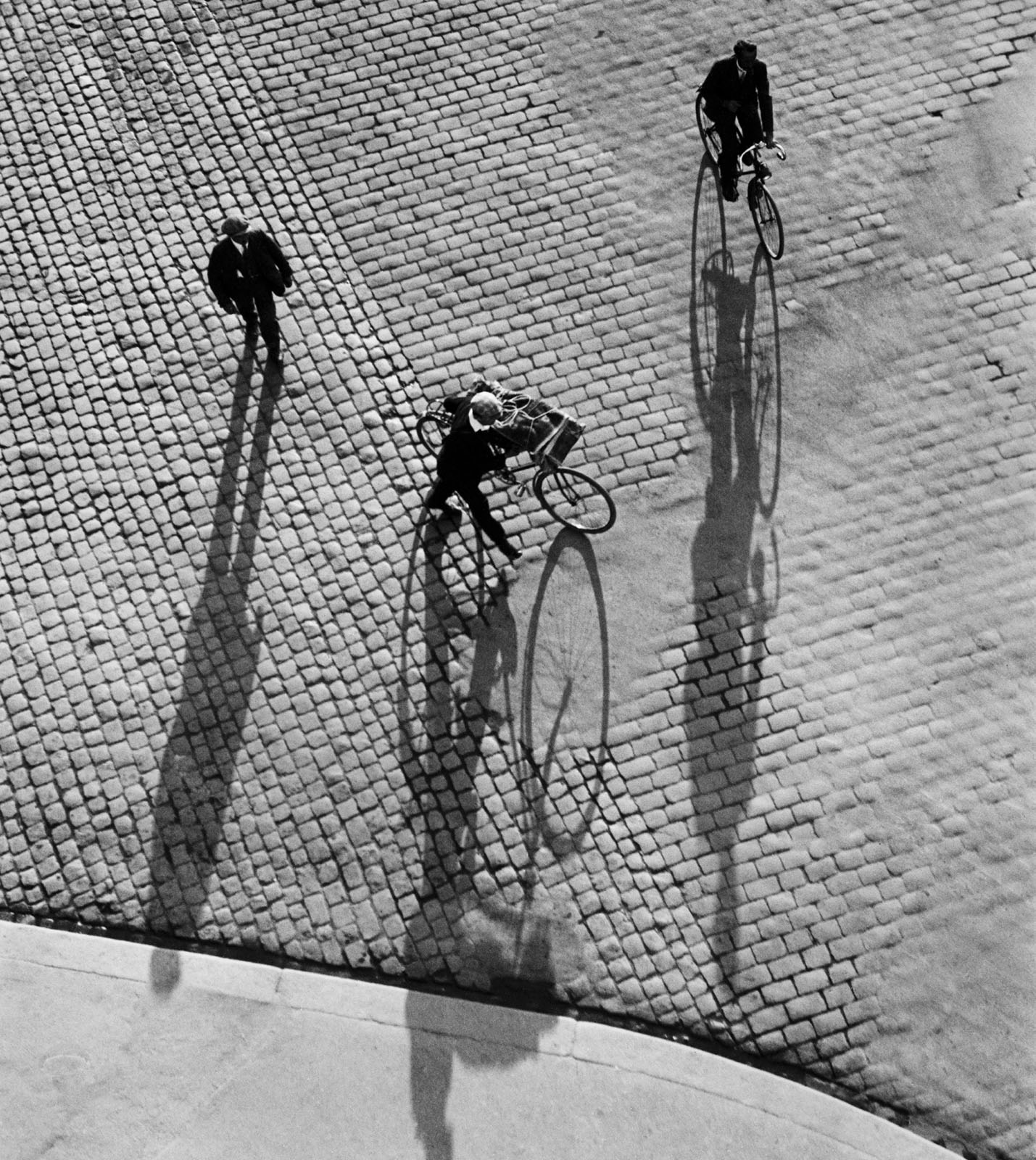
The J. Paul Getty Museum website

LIKE ART BLACK ON FACEBOOK

Back to top

Exhibition: ‘Tobias Zielony: The Fall’ at Museum Folkwang, Essen

Exhibition dates: 25th June – 26th September, 2021


Tobias Zielony (German, b. 1973) 'Andrej' 2016 from the exhibition 'Tobias Zielony: The Fall' at Museum Folkwang, Essen, June - Sept, 2021
 

Tobias Zielony (German, b. 1973)
Andrej
2016
Courtesy KOW, Berlin
© Tobias Zielony


A German artist who pictures the intersection between youth culture, identity and (self) representation.
Unlike the work of Michael Schmidt with that artist’s intimate association with the city of Berlin, Zielony’s photographs could have been taken anywhere in the world. With their contextless backgrounds Zielony’s figures – whether strangely lit and configured automatons, eerie apartment blocks that inhabit an alien world or anonymous humanoids fixed in mundane urban spaces – seem to be more about the artist and how he perceives the world than about the subject itself.

Having said that, these memorable photographs of introspective youths seem to hover in space between the preter/natural – suspended between the mundane and the miraculous.

Dr Marcus Bunyan

PS. My friend and mentor said to me, “What I am interested in, is how Zielony came to make such interesting aesthetic decisions – his work is the most interesting in terms of appearance for a long time. It is so easy to make things messy but he manages to remain so clean. What does he do, what does he say to himself to make this happen?”


Many thankx to the Museum Folkwang for allowing me to publish the photographs in the posting. Please click on the photographs for a larger version of the image.


TOBIAS ZIELONY. The Fall – Trailer

With The Fall, the Folkwang Museum is showing the first overview exhibition of works by the photo and video artist Tobias Zielony (b. 1973 in Wuppertal). A total of eleven video works, seven photo series, two room installations and a digital slide show with around 150 photographs alone allow for the first time a comprehensive look at Zielony’s artistic work over the past twenty years.

In his work, Tobias Zielony repeatedly deals with the concept of youth culture in relation to origin, representation and fashion and the associated definition of identity in the changing media reality. The emergence of social networks and the exchange of countless photographic images have fundamentally changed the idea of ​​the self and the forms of (self) representation. Zielony shows his protagonists: inside as self-confident participants in this interplay, who act despite cultural and social differences in a global cosmos of social codes and self-portraits.

Tobias Zielony stands in a long line of tradition in artistic photography and is considered by many younger picture makers to be pioneering. Few photographers of his generation have observed social and media developments as carefully and translated them into a contemporary visual language as he has. For the first time, “The Fall” offers the opportunity to read Zielony’s imagery, which is located in the most diverse regions of the world, as global phenomena in their specific forms.


Tobias Zielony (German, b. 1973) 'Glow' 2001 from the exhibition 'Tobias Zielony: The Fall' at Museum Folkwang, Essen, June - Sept, 2021


Tobias Zielony (German, b. 1973)
Glow
2001
From Curfew, Bristol, Newport
C-print
41.4 x 42cm
Courtesy KOW, Berlin
© Tobias Zielony


Tobias Zielony (German, b. 1973) 'Hochhaus' 2003


Tobias Zielony (German, b. 1973)
Hochhaus
2003
From Ha Neu
C-print
46 x 69cm
Museum Folkwang, Essen
© Tobias Zielony


Tobias Zielony (German, b. 1973) 'Aral-1' 2004


Tobias Zielony (German, b. 1973)
Aral-1
2004
From Tankstelle
C-Print
48 x 72cm
Courtesy KOW, Berlin
© Tobias Zielony


Tobias Zielony (German, b. 1973) 'Park' 2006


Tobias Zielony (German, b. 1973)
Park
2006
From Big Sexyland
C-print
67 x 100cm
Museum Folkwang, Essen
© Tobias Zielony


Tobias Zielony (German, b. 1973) 'Skandalous' 2007


Tobias Zielony (German, b. 1973)
Skandalous
2007
From The Cast
C-print
84 x 56cm
Courtesy KOW, Berlin
© Tobias Zielony


Tobias Zielony (German, b. 1973) 'Jay' 2007


Tobias Zielony (German, b. 1973)
Jay
2007
From The Cast
C-print
56 x 84cm
Courtesy KOW, Berlin
© Tobias Zielony


Tobias Zielony (German, b. 1973) 'Untitled' 2008


Tobias Zielony (German, b. 1973)
Untitled
2008
From the series Trona Armpit of America
Courtesy KOW, Berlin
© Tobias Zielony


Tobias Zielony (German, b. 1973) 'Dirt Field' 2008


Tobias Zielony (German, b. 1973)
Dirt Field
2008
From the series Trona Armpit of America
C-print
56 x 84cm
Courtesy KOW, Berlin
© Tobias Zielony


Tobias Zielony (German, b. 1973) 'Two boys' 2008


Tobias Zielony (German, b. 1973)
Two boys
2008
From the series Trona Armpit of America
C-print
56 x 84cm
Courtesy KOW, Berlin
© Tobias Zielony


Tobias Zielony (German, b. 1973) 'Ball 13' 2008


Tobias Zielony (German, b. 1973)
Ball 13
2008
From the series Trona Armpit of America
C-print
84 x 56cm
Courtesy KOW, Berlin
© Tobias Zielony


Tobias Zielony (German, b. 1973) 'BMX' 2008


Tobias Zielony (German, b. 1973)
BMX
2008
From the series Trona Armpit of America
C-Print
56 x 84cm
Courtesy KOW, Berlin
© Tobias Zielony


Tobias Zielony (German, b. 1973) 'Vela Azzurra' 2010


Tobias Zielony (German, b. 1973)
Vela Azzurra
2010
From the series Vele
C-print
150 x 120cm
Courtesy KOW, Berlin
© Tobias Zielony


With The Fall, Museum Folkwang is presenting the first major overview exhibition of the work of Tobias Zielony (June 25 – September 26, 2021). Zielony stands in a long lineage of artistic photography. His visual world is seen as paving the way for a younger generation. Few photographers have observed developments in society and the media as keenly and translated these into a contemporary visual language as he has. His work The Citizen, on the topic of migration, was shown in the German Pavilion at the 2015 Venice Biennial and viewed by a broad international public. The largest presentation of his photographs and video works to date offers a comprehensive insight into Zielony’s work of the last 20 years.

The people and spaces that attract Tobias Zielony are not on the margins of society, but the places in deprived areas where adolescents meet, hang out and show off: be this in Wuppertal, Trona, Naples, Osaka, Halle-Neustadt or Kiev. The youths and young adults whom Zielony accompanies with his camera as a confidant and observer belong to the Techno, LGBTQIT*​ or skater scene, amongst others. Zielony operates globally and allows himself to be guided by his curiosity, which affords him ever new encounters with young people in their respective social contexts. In all of this he explores the intersection between fictional and documentary assertions and investigates the political and aesthetic potential as well as the boundaries of authentic self-representation. His photographic works and films are characterised by a critical understanding of the genre and the quest for self-determination and emancipation of those portrayed in them.

The show The Fall combines well-known photography series and early video works ranging from Curfew (2001), Big Sexyland (2006), the well-known stop-motion videos Vele (2009-2010), Maskirovka (2016-2017), to the video work Hansha (2019) created in Japan. The exhibition is the first to bring together Zielony’s visual worlds from different parts of the world and show them as global phenomena with specific characteristics. A symbolic city space is created in the exhibition;s central space, which offers a space to meet and sojourn. Encounters, situations and places exist alongside and enter into relationship with each other, and in their spatial consolidation cite the ever-present flood of images on social media.

In his work, Tobias Zielony has time and again addressed youth culture with a view to background, representation and fashion and the definition of identity in a world changing in terms of the media used. Social networks and the exchange of photographic images they entail have fundamentally changed the notion of the self and the forms of (self-)representation. Everyone – and this includes his protagonists – now uses the photographic medium with their smart phone in order to send and receive images. In this interplay, Zielony shows his subjects as confident participants acting in a global cosmos of social codes and self-portraits – in spite of cultural and social differences.

Spector Books is publishing a series of essays: selected works by Tobias Zielony are paired with texts by Sophia Eisenhut, Joshua Groß, Dora Koderhold, Enis Maci, Mazlum Nergiz and Jakob Nolte.

Press release from the Museum Folkwang


Tobias Zielony (German, b. 1973) 'Al-Akrab' (filmstill) 2014


Tobias Zielony (German, b. 1973)
Al-Akrab (filmstill)
2014
HD Video & Stop Motion, 4:52 min
Courtesy KOW, Berlin
© Tobias Zielony


Tobias Zielony (German, b. 1973) 'The Citizen' 2015


Tobias Zielony (German, b. 1973)
The Citizen
2015
Courtesy KOW, Berlin
© Tobias Zielony


Tobias Zielony (German, b. 1973) 'The Citizen' 2015


Tobias Zielony (German, b. 1973)
The Citizen
2015
Courtesy KOW, Berlin
© Tobias Zielony


Tobias Zielony (German, b. 1973) 'Cover' 2017


Tobias Zielony (German, b. 1973)
Cover
2017
From Maskirovka
Inkjet print
84 x 56cm
Courtesy KOW, Berlin
© Tobias Zielony


Tobias Zielony (German, b. 1973) 'Secret' 2017


Tobias Zielony (German, b. 1973)
Secret
2017
From Maskirovka
Inkjet print
56 x 84cm
Courtesy KOW, Berlin
© Tobias Zielony


Tobias Zielony (German, b. 1973) 'Make Up' 2017


Tobias Zielony (German, b. 1973)
Make Up
2017
From Maskirovka
Inkjet print
70 x 105cm
Courtesy KOW, Berlin
© Tobias Zielony


Tobias Zielony (German, b. 1973) 'Maskirovka' 2017 (installation view)


Tobias Zielony (German, b. 1973)
Maskirovka (installation view)
2017
HD Video, Stop Motion, 8:46 min
Courtesy KOW, Berlin
© Tobias Zielony


Tobias Zielony (German, b. 1973) 'Red Mask' 2019


Tobias Zielony (German, b. 1973)
Red Mask
2019
Inkjet print
100 x 75cm
Courtesy KOW, Berlin
© Tobias Zielony


Tobias Zielony (German, b. 1973) 'Hansha' 2019 (installation view)


Tobias Zielony (German, b. 1973)
Hansha (installation view)
2019
HD Video, 6:01 min
Courtesy KOW, Berlin
© Tobias Zielony


Tobias Zielony (German, b. 1973) 'Snakepool' 2020


Tobias Zielony (German, b. 1973)
Snakepool
2020
Inkjet print
120 x 80cm
Courtesy KOW, Berlin
© Tobias Zielony


Tobias Zielony (German, b. 1973) 'Yusuke' 2020


Tobias Zielony (German, b. 1973)
Yusuke
2020
Inkjet print
120 x 80cm
Courtesy KOW, Berlin
© Tobias Zielony


Halina Kliem. 'Portrait of Tobias Zielony' 2021


Halina Kliem
Portrait of Tobias Zielony
2021


Museum Folkwang
Museumsplatz 1, 45128 Essen

Opening hours:
Tuesday – Sunday 10am – 6pm
Thursday – Friday 10am – 8pm

Museum Folkwang website

LIKE ART BLART ON FACEBOOK

Back to top

Exhibition: ‘Michael Schmidt: A new German Perspective’ at Jeu de Paume, Paris

Exhibition dates: 8th June – 29th August, 2021

Curators: Thomas Weski and Laura Bielau


Michael Schmidt (German, 1945-2014) 'Untitled, Berlin-Kreuzberg. Stadtbilder' 1981-1982 from the exhibition 'Michael Schmidt: A new German Perspective' at Jeu de Paume, Paris, June - August, 2021


Michael Schmidt (German, 1945-2014)
Untitled, Berlin-Kreuzberg. Stadtbilder (Berlin-Kreuzberg. Cityscapes)
1981-1982
© Michael Schmidt, Foundation for Photography and Media Art with the Michael Schmidt Archive


Dark atmosphere of a grey reality

The contribution of German photographers to the development of photography in the 20th century cannot be underestimated. When we think of quantum leaps in the development of the medium and its languages, we can think of Wilhelm von Gloeden, August Sander, Lisette Model, Germaine Krull, Ilse Bing, Erich Salomon, Albert Renger-Patzsch, Bernd and Hiller Becher, Wolfgang Tillmans, Aenne Biermann, Erwin Blumenfeld, Bill Brandt, Candida Höfer, Andreas Gursky, Thomas Ruff, Thomas Demand and many more too numerous to mention. And then we have the (mainly Jewish) photographers of the German diaspora of the 1920s-1940s who emigrated to all parts of Europe, South America, America and Australia and who went on to influence photographers in their adopted countries.

Perhaps there is something inherent in the German psyche which promotes a certain awareness, a certain understanding of the mechanics of photography. Perhaps this is a link between German psychology (such as Urformen: the original, archetypal form1), psychoanalysis (such as Freud’s term Das Unheimliche: “the uncanny” in the sense of something that produces unease and is disturbing) and photography – a relationship which promotes objective seeing, seeing things in new and unexpected ways. Perhaps this ability to perceive in new ways has something to do with Germany’s European roots and that continent’s history of war, destruction and reclamation, where the archetypes are constantly being dissolved and constructed – in a circle which leads us back to the roots of German psychology. These are only thoughts which are slowly forming, nascent thoughts in a long process of research, which could possibly be interesting, or not.

Added to these many German photographers is another intelligent, inventive artist that I admire – an artist that also redefined the language of photography in the 20th century. His name is Michael Schmidt.

Much as Bill Brandt considered “atmosphere” a term fundamental in his images (“I only know it is a combination of elements … which reveals the subject as familiar and yet strange”) in order to capture the very essence of a place, so Schmidt’s inimitable understanding of his environment and its people, namely his beloved Berlin, allowed him to dissect and disseminate the dystopian “atmosphere” and habitus of its inhabitants.

Schmidt (and here I précis a lot of people) perceives and reacts to the world, offering through “fragmentation, condensation, abstraction” a “sense of space distorted in depth”, in which “existence is hollowed out to its extremes” that “take his subjects out of their historical anchorage” to offer a “harsh and completely unique view of the fragility of human existence” – “a subjective, deeply felt work of the life and suffering of people in the shadow of Berlin.”

“This is the strength of Michael Schmidt’s work. An ability to transcend the present – its present – and to fragment it in order to better represent it. Creations with shallow backgrounds, which play with nuances and break free from simple black and white to offer a shade of grey, evoking the rainy sky of Berlin. A true love letter, tortured, raw, deep and complex, to the city where it was born, grew and disappeared.”2

As Joe Lloyd has observed of Schmidt’s masterpiece Waffenruhe (Ceasefire) (1985-1987) “It is difficult to imagine a future for these anxious youths, whose lives are encircled by an evil empire on the cusp of dissolution. The Berlin Wall appears on the verge of subsiding. Vegetation grows unbidden, new life to replace the old. Schmidt turns his camera on the city’s insignificant minutiae, a shadowy realm between the sights and, in doing so, captures its liminality.”3

Liminality is one of the key words I associate with the work of Michael Schmidt… the other being language.

Liminality is a term used to describe the psychological process of transitioning across boundaries and borders. The term “limen” comes from the Latin for threshold; it is literally the threshold separating one space from another. It is the place in the wall where people move from one room to another.4

As he probed and prodded the threshold of existence in his photography, Schmidt transited the line between representation and abstraction, photographing the ever mutable spaces of Berlin and the people that were stationed there, under the Wall – even as the subject matter he chose transitioned from dour city to blank officer workers, from women to children, old people and disaffected youths.

Schmidt sought new ways to transition across the boundaries and borders of both the city and his mind in order to create a “new reality” of visual language, not to reproduce real things as he said, but to show how things really are. As the curator Thomas Weski has observed, “”Every time he finished a series, he went through periods of turmoil where he looked for new ways to approach reality…”5

The liminal, interstitial spaces the artist creates, these fragments of time, these “shards of reality” are tough, gritty photographs – of love, desire, work, destitution, despair, loneliness, sadness and fortitude – realities expressed in sombre tones of grey that recite a sense of foreboding. Forty years after the end of the war, the clash of cultures between stoicism and rebellion, between rich and poor, between communism and freedom is still in full flight in a divided Berlin… for here (unlike Brandt’s photographs where the fragments are part of the whole) there is no unity, no ceasefire, no holistic healing, there is only a language of dissolution and despair. Here, there is no way hope can be deployed to distort one’s relationship with reality.

Schmidt’s relationship between photography and subject is always about the artist metaphorically “becoming naked” and open, pushing the boundaries of the possible when looking for new ways to approach reality. Schmidt’s language of the fragmentation bomb shows the benefits of working on language to break any self-imposed limits – to picture the ‘deep time’6 so intimately linked with the life of the city.

Dr Marcus Bunyan


Footnotes

1/ “The original, archetypal form… the first form of a narrative from which all known variants emerged; the archetype version that provides a model and pattern for all variants (alternatively, Urform). The term comes from the German Urform (plural Urformen), meaning primitive form, original form, or archetype, and is derived from Ur, the mythological first city.
Randal S. Allison. “Ur-Form,” in Thomas A. Green (ed.,). Folklore: An Encyclopedia of Beliefs, Customs, Tales, Music and Art Volume 1, ABC-CLIO, 1997, p. 823.

2/ Lou Tsatsas. “Michael Schmidt décompose Berlin au Jeu de Paume,” on the Fisheye Magazine website June 2021 [Online] Cited 12/08/2021

3/ Joe Lloyd. “Michael Schmidt Retrospective: Photographs 1965-2014,” on the Studio International website 12/10/202 [Online] Cited 12/08/2021

4/ Larson, P. “Liminality,” in Leeming, D.A. (eds). Encyclopedia of Psychology and Religion. Springer, Boston, MA, 2014

5/ Thomas Weski quoted in Laure Etienne. “Michael Schmidt: A New German Perspective,” on the Bind Magazine website 17 June 2021 [Online] Cited 12/08/2021.

6/ “As the Anangu people of Uluru explain, the land contains proof of a spoken narrative, like a photograph. The land’s markings are the archives, the inscriptions revealing and proving deep history stories.”
Ann McGrath. “‘All things will outlast us’: how the Indigenous concept of deep time helps us understand environmental destruction,” on The Conversation website, August 19, 2020 [Online] Cited 29/08/2021.


Many thankx to Jeu de Paume for allowing me to publish the photographs in the posting. Please click on the photographs for a larger version of the image.


“Realism consists not in reproducing real things, but in showing how things really are.”

“Black and white are always the darkest grey and the lightest grey.”


Michael Schmidt


“His language is a language of precision and his tool is the most simple one: a small, 35mm camera, and a few rolls of films. His pictures look simple at first glance, and their anti-sentimentality, their refusal of all the tricks of the usual seduction, their concision and their clarity, give them great efficiency. They show what they show but they manage to retain an opacity, a mystery, and they become a support for our imagination.”

“Schmidt does not accuse, he simply reveals, and the interpretation is left to the viewer. He can do so because he has confidence in the power of his medium and confidence in the intelligence of the viewer.”


Luc Delahaye


“His photography no longer follows a means of pure documentation, but rather formulates a dystopian attitude towards the life of a generation shortly before the fall of the wall in surprising image contexts. Schmidt develops a world of breaks and gaps that defies any claim to a sovereign overview.”


Einar Schleef


“Amongst the pages of photographer Michael Schmidt’s seminal book, ‘Waffenruhe’ – a fragmented psychological portrait of West Berlin shot between 1985 and 1987 – is an image of an outstretched wrist, the camera’s flash igniting a jagged scar across its milky skin. The space opposite is obscured with a blank pull-out page that expands to reveal a tree in full bloom, bright flowers swelling between branches. The Berlin Wall looms in the background, like a shadow sunshine can’t dispel. In Schmidt’s Waffenruhe, life and death cohabitate – existence is hollowed out to its extremes. Four decades after the end of World War II, Waffenruhe (German for “ceasefire”) captured the gloom of a bisected city as it waited for the smoke to clear.”


Ashleigh Kane. “Why Michael Schmidt is the perfect photographer for our dystopia,” on the Highsnobiety website February 2021 [Online] Cited 12/08/2021


Exposition “Michael Schmidt. Une autre photographie allemande” 


Berlin-Wedding 1976-1978


Michael Schmidt (German, 1945-2014) 'Müller-Ecke Seestrasse, Berlin-Wedding' (Berlin-Wedding) 1976-1978 from the exhibition 'Michael Schmidt: A new German Perspective' at Jeu de Paume, Paris, June - August, 2021


Michael Schmidt (German, 1945-2014)
Müller-Ecke Seestrasse, Berlin-Wedding (Berlin-Wedding)
1976-1978
© Michael Schmidt, Foundation for Photography and Media Art with the Michael Schmidt Archive


Michael Schmidt (German, 1945-2014) 'City Inspector at the Wedding District Office' 1976-1978


Michael Schmidt (German, 1945-2014)
City Inspector at the Wedding District Office
1976-1978
From Berlin-Wedding
Silver gelatin print
43.4 x 46cm
© Michael Schmidt, Foundation for Photography and Media Art with the Michael Schmidt Archive


Michael Schmidt (German, 1945-2014) 'City Inspector at work in his Wedding District Office' 1976-1978


Michael Schmidt (German, 1945-2014)
City Inspector at work in his Wedding District Office
1976-1978
From Berlin-Wedding
Silver gelatin print
43.4 x 46cm
© Michael Schmidt, Foundation for Photography and Media Art with the Michael Schmidt Archive


Michael Schmidt (German, 1945-2014) 'Schüler der 4. Klasse, Grundschule, Berlin-Wedding' (Pupil, elementary school, Berlin-Wedding) 1976-1978


Michael Schmidt (German, 1945-2014)
Schüler der 4. Klasse, Grundschule, Berlin-Wedding (Pupil, elementary school, Berlin-Wedding)
1976-1978
From Berlin-Wedding
Silver gelatin print
© Michael Schmidt, Foundation for Photography and Media Art with the Michael Schmidt Archive


Michael Schmidt (German, 1945-2014) 'Schüler der 4. Klasse, Grundschule, Berlin-Wedding' (CM1 pupil, primary school, Berlin-Wedding) 1976-1978


Michael Schmidt (German, 1945-2014)
Schüler der 4. Klasse, Grundschule, Berlin-Wedding (CM1 pupil, primary school, Berlin-Wedding)
1976-1978
From Berlin-Wedding
Silver gelatin print
© Michael Schmidt, Foundation for Photography and Media Art with the Michael Schmidt Archive


Michael Schmidt (German, 1945-2014) 'Untitled' from 'Berlin-Wedding' 1976-1978


Michael Schmidt (German, 1945-2014)
Untitled from Berlin-Wedding
1976-1978
Silver gelatin print
24 x 30cm
© Michael Schmidt, Foundation for Photography and Media Art with the Michael Schmidt Archive


Jeu de Paume in Paris is the second venue of the major retrospective of Michael Schmidt’s work. Michael Schmidt (1945-2014) occupies a unique position in contemporary German photography and internationally. Born in Berlin and with no formal training in photography, he discovered the medium as a mode of artistic expression in the mid-1960s. For each of his themes he developed his own approach to reality. His oeuvre owing to continual exploration and innovation has been seminal for a younger generation of photographers. The exhibition, the most comprehensive to date, offers a complete overview of his oeuvre from 1965 to 2014.

After the presentation at Jeu de Paume, Paris (2021) and Hamburger Bahnhof – Museum für Gegenwartskunst Berlin (2020), the exhibition will be on view at the Museo Nacional Centro de Arte Reina Sofia in Madrid (September 22 – February 28, 2022) and the Albertina Museum in Vienna (March 24 – June 12, 2022).

Michael Schmidt (1945-2014) occupies a unique position in contemporary German photography. Born in Berlin, he was self-taught, adopting photography as his artistic medium in the mid-1960s. For each of his themes, he developed his own approach to reality. The Michael Schmidt retrospective at the Jeu de Paume, the most comprehensive to date, offers a complete overview of his oeuvre from 1965 to 2014.

Press release from Jeu de Paume


“At the end of the 1970s, with the series ‘Berlin-Wedding’, Michael Schmidt imposed a very rigid set of rules on himself in order to achieve a form of neutrality, if such a thing is possible… He later said he felt like he had pushed himself into a corner with these rules, and in the early 1980s he struggled to relax them. He went back to shooting spontaneously, camera in hand and no longer on a tripod. This led to “Waffenruhe (Ceasefire),” where he broke free from those rules. It became less a question of delivering a precise description than of communicating a feeling.”


Thomas Weski quoted in Laure Etienne. “Michael Schmidt: A New German Perspective,” on the Bind Magazine website 17 June 2021 [Online] Cited 12/08/2021.


“Every time he finished a series, he went through periods of turmoil where he looked for new ways to approach reality… He described himself as a “dead-end photographer” who would get into one lane and needed a long time to get out of it. “


Thomas Weski quoted in Laure Etienne. “Michael Schmidt: A New German Perspective,” on the Bind Magazine website 17 June 2021 [Online] Cited 12/08/2021.


“Michael Schmidt’s raw, harsh, and fragmented photographs of Waffenruhe are less documents of the existing situation at that time than they are creating a certain dark atmosphere, which echoed the ‘no future’-feeling of my generation.”


Thomas Weski


“Man is at the centre of the environment. He is shaped by it and he shapes it… As such, I don’t want to show him isolated, but in his environment, I want to show how he lives, where he works, what he does in his free time.”


Michael Schmidt quoted in Laure Etienne. “Michael Schmidt: A New German Perspective,” on the Bind Magazine website 17 June 2021 [Online] Cited 12/08/2021.


Berlin nach 1945


Michael Schmidt (German, 1945-2014) 'Berlin nach 1945' (Berlin after 1945) 1980


Michael Schmidt (German, 1945-2014)
Berlin nach 1945 (Berlin after 1945)
1980
Silver gelatin print
23.4 x 29.2cm
© Michael Schmidt, Foundation for Photography and Media Art with the Michael Schmidt Archive


In 1980 Michael Schmidt photographed his series “Berlin after 1945”. West Berlin already had a reputation as a young and rebellious city. Schmidt portrayed his hometown quite differently: grey on grey, barren, if not dreary. With his approach of portraying the human-shaped living environment instead of untouched nature, Schmidt became a representative of the New Topographics movement, which had recently emerged in the USA: these photographers no longer focused on an ideal conception of landscape, but rather on human intervention.

Google translated from Michael Schmidt. “So fühlte sich das Leben in Berlin an,” on the Zeit Online website 17 October 2020 [Online] Cited 12/08/2021.


Michael Schmidt (German, 1945-2014) 'Berlin nach 1945' (Berlin after 1945) 1980


Michael Schmidt (German, 1945-2014)
Berlin nach 1945 (Berlin after 1945)
1980
Silver gelatin print
© Michael Schmidt, Foundation for Photography and Media Art with the Michael Schmidt Archive


Michael Schmidt (German, 1945-2014) 'Berlin nach 1945' (Berlin after 1945) 1980


Michael Schmidt (German, 1945-2014)
Berlin nach 1945 (Berlin after 1945)
1980
Silver gelatin print
© Michael Schmidt, Foundation for Photography and Media Art with the Michael Schmidt Archive


Berlin-Kreuzberg. Stadtbilder 1981/82


Michael Schmidt (German, 1945-2014) 'No title, Berlin-Kreuzberg. Stadtbilder' 1981-1982


Michael Schmidt (German, 1945-2014)
No title, Berlin-Kreuzberg. Stadtbilder (Berlin-Kreuzberg. Urban views)
1981/82
© Michael Schmidt, Foundation for Photography and Media Art with the Michael Schmidt Archive


How Schmidt broke away from the strict image structure of his photographs can be seen in his series “Berlin-Kreuzberg. Stadtbilder 1981/82”. The camera moves closer to the sitter and no longer locks them in a strict composition.

Google translated from Michael Schmidt. “So fühlte sich das Leben in Berlin an,” on the Zeit Online website 17 October 2020 [Online] Cited 12/08/2021.


Michael Schmidt (German, 1945-2014) 'No title, Berlin-Kreuzberg. Stadtbilder' (Berlin-Kreuzberg. Urban views) 1982


Michael Schmidt (German, 1945-2014)
No title, Berlin-Kreuzberg. Stadtbilder (Berlin-Kreuzberg. Urban views)
1982
© Michael Schmidt, Foundation for Photography and Media Art with the Michael Schmidt Archive


Michael Schmidt (German, 1945-2014) 'No title, Berlin-Kreuzberg. Stadtbilder' 1981-1982


Michael Schmidt (German, 1945-2014)
No title, Berlin-Kreuzberg. Stadtbilder (Berlin-Kreuzberg. Urban views)
1981/82
© Michael Schmidt, Foundation for Photography and Media Art with the Michael Schmidt Archive


Michael Schmidt (German, 1945-2014) 'No title, Berlin-Kreuzberg. Stadtbilder' 1981-1982


Michael Schmidt (German, 1945-2014)
No title, Berlin-Kreuzberg. Stadtbilder (Berlin-Kreuzberg. Urban views)
1981/82
© Michael Schmidt, Foundation for Photography and Media Art with the Michael Schmidt Archive


Michael Schmidt (German, 1945-2014) 'No title, Berlin-Kreuzberg. Stadtbilder' 1981-82


Michael Schmidt (German, 1945-2014)
No title, Berlin-Kreuzberg. Stadtbilder (Berlin-Kreuzberg. Urban views)
1981/82
© Michael Schmidt, Foundation for Photography and Media Art with the Michael Schmidt Archive


The bulk of Schmidt’s work in the 70s and early 80s was commissioned by local authorities, and served as a survey of West Berlin’s crumbing Wall-side districts. If they wanted straightforward documentation, they should have turned elsewhere. In Kreuzberg, Schmidt captured two tree trunks rising from the ground as if a pair of legs, and in Wedding an empty phone box, the pages of its directory left open. Schmidt’s Berlin is riddled with holes. We see a row of tenements from behind, naked and exposed by the loss of their adjoining street. A similar – or perhaps the same – row is glimpsed diagonally through a gap in a scaffolding platform. This is a city scrambled, quite unlike the straight-ahead perspectives of Struth’s near-contemporaneous Unconscious Places series. When we see council employees, the walls of their chintzy apartments and spartan offices seem like armour against the bleak outside.

Text from Joe Lloyd. “Michael Schmidt Retrospective: Photographs 1965-2014,” on the Studio International website 12/10/202 [Online] Cited 12/08/2021.


Michael Schmidt (German, 1945-2014) 'No title, Berlin-Kreuzberg' (Berlin-Kreuzberg) 1969-1973


Michael Schmidt (German, 1945-2014)
No title, Berlin-Kreuzberg (Berlin-Kreuzberg)
1969-1973
© Michael Schmidt, Foundation for Photography and Media Art with the Michael Schmidt Archive


Foreword

Michael Schmidt (1945-2014) occupies a unique position in contemporary German photography. Born in Berlin, he was self-taught, adopting photography as his artistic medium in the mid- 1960s. For each of his themes, he developed his own approach to reality. The Michael Schmidt retrospective at the Jeu de Paume, the most comprehensive to date, offers a complete overview of his oeuvre from 1965 to 2014.

Schmidt initially focused on Berlin in his work, receiving commissions in the early 1970s from district offices and from the Berlin Senate on districts such as Kreuzberg and Wedding and on social themes. The Waffenruhe (Ceasefire) book and exhibition project, a visually stunning psychological study of the still divided city, which was shown in Berlin for the first time in 1987, brought Schmidt international renown. With Ein-heit / U-ni-ty, a group of works examining the unification process, he shifted his focus away from the world of his native city.

Schmidt’s oeuvre comprises portraits, self-portraits, landscapes and still lifes. His work highlights the importance of urban space, the continued relevance of history, female identity, the role of the province and the significance of nature. In his last project, he highlighted the contemporary food industry.

In addition to providing a glimpse of sometimes very rich ensembles through original prints, this retrospective also includes work prints, book projects and archive documents. As far as possible, it respects Schmidt’s own approach to presenting and displaying his works. His career was exemplary for the way he endlessly refined his photographic practice and explored new publication formats. The exhibition thus reveals a unique approach to photography in the context of German post-war and contemporary photography, at odds with the Subjective Photography of Otto Steinert and the Düsseldorf School centred around Bernd and Hilla Becher. Schmidt’s oeuvre is now seen as one of the outstanding pillars of photography in the history of German twentieth-century art. As well as celebrating the work he produced in the course of his lifetime, the exhibition seeks to cover the development of photography as a mode of artistic expression since the 1970s.

Thomas Weski, curator of the exhibition


Introduction

On the occasion of the reopening, Jeu de Paume offers for the first time in France a large dedicated exhibition to photographer Michael Schmidt, considered one of the major figures of 20th century German art. This large chronological retrospective pays tribute to the artist through original prints, unpublished works and a vast corpus of archives that illustrate the evolution of his work spanning nearly five decades.

A Model

Michael Schmidt wrote a section of the history of photography. Through his work as a photographer and teacher he notably influenced artists like Andreas Gursky, with whom he befriends at the end of the 1970s. He is still a model for a whole generation of young photographers.

West Berlin

Self-taught photographer born in Berlin in 1945, Michael Schmidt devoted most of from his photography to his hometown, more particularly in West Berlin, where he will live until his death in 2014. The districts of Kreuzberg and, more particularly Wedding, were his favourite places. Initially portrayed in a purely documentary style (most often of order), Schmidt will detach himself from traditional visual language and in the 1980s look for a more daring vocabulary.

Postwar

Beginning in the middle of 1960s the postwar work of Michael Schmidt can be considered as a process of the quest for artistic identity, and also as an illustration of the development artistic photography in postwar Germany.

Grey

In the late 1970s, grey becomes the chromatic element central to the photographer’s work, which he considers a full colour. Wishing to describe the world around him, the artist cannot be limited to the use of black and white, who are too Manichean for his taste. The world is undefined, not so neat and clear. Schmidt is looking for more nuance, he has need a wider palette. He draws, then, in these grey tones that we find in the skies of Berlin, the cityscapes and interior views where characters appear weakly illuminated.


On the occasion of the 75th anniversary of the birth of Michael Schmidt, Jeu de Paume presents a large retrospective of this artist, considered one of the major pillars of the history of 20th century German art.

A tribute to a great photographer, this exhibition will present originals, unpublished work prints, book projects and other archives illustrating the evolution of his artistic work. The exhibition also highlights the process of recognising photography as a form of artistic expression in Germany and Europe from the 1970s.

Like Bernd and Hilla Becher, Michael Schmidt is among the most influential post-war photographers. He tirelessly developed his work for five decades. Through the publication of his work in the form of books and installations, always in dialogue with their place of exhibition, he developed different types of innovative presentation. By the incessant renewal of its formal language and by the choice of its themes, Michael Schmidt wrote a part of the history of photography and is today a role model for a whole generation of young photographers.

Born in Berlin on October 6, 1945, it was in this city that he lived and worked until his death in 2014. This autodidact works as a photographer from the mid-1970s, initially exclusively in his hometown. This is where the series dedicated to Kreuzberg and Wedding saw the light of day, – two districts of West Berlin –, which already go beyond the simple description of a neighbourhood, taking on a broader meaning. It is with the project, book and exhibition developed in collaboration with the director and playwright Einar Schleef, Waffenruhe (Ceasefire), first presented in Berlin in 1987, that Michael Schmidt does undeniably artistic work.

This series is made up of raw images with a loaded atmosphere, which draw a very personal portrait of the city near the end of the cold war – and of its youth – a city still cut in half, shortly before the change of epoch.

Michael Schmidt abandons this focus on the thematic universe of Berlin with the series Ein-heit (Uni-té), in which he explores the visual languages ​​of the different forms of society and different political systems that marked Germany in the 20th century. He uses on this occasion already mediatised images that he mixes with photographs taken by himself, publishing everything in a book without text. The first exhibition of this series is in 1996 at the Museum of Modern Art, New York.

Schmidt was thus the first German photographer for decades to have personal exposure in this place. Subsequently, he devotes other work to the image of the woman, to the role of regions and the importance of nature. His last big series, Lebensmittel (Foodstuffs), in which he explores contemporary food production, has earned him the Pictet Prize just a few days before his death.


The exhibition

First photographs, commissioned works and series, 1965-1985

Michael Schmidt discovered an interest in photography when he was working in the West Berlin police force. Although he joined amateur photography clubs, he was chiefly self-taught, working hard to improve his technique. In the mid-1960s, he took the first photographs that he did not reject later on. Although the motifs in these early photographs vary greatly, they all defy the quick readability that is usually associated with the medium.

From his earliest photographic work of the mid-1960s to Germany’s reunification, Schmidt chose his native city of Berlin as his main subject, examining it from various angles. By 1973 he was working as a professional photographer, having been commissioned by the district office in Kreuzberg to do a book on the neighbourhood. It was published in the same year, with a second edition being printed almost immediately. It was followed by commissions from other city districts and Berlin’s Senate. In Die berufstätige Frau in Kreuzberg (The Working Woman in Kreuzberg) he depicted a typical day in the life of two women juggling work and leisure.

In the early 1970s he began teaching photography courses at colleges of further education. In 1976, he founded the Werkstatt für Photographie (Workshop for Photography) at the Volkshochschule Kreuzberg, which continued until 1986. Works by contemporary American photographers were exhibited there that had not previously been accessible to the German public. From 1976 to 1978, he photographed the Berlin-Wedding district and its inhabitants in a strictly documentary style. He made prints in rich shades of grey and published the series in 1978.

Between 1978 and 1980 he photographed Berlin’s Friedrichstadt neighbourhood in the south of the city, which was badly damaged during the Second World War. These photographs capture the mood of post-war West Berlin, a city scarred by gaps between buildings, brownfield sites and fire walls. Dominant motifs include urban wastelands and utility buildings, which he photographed in diffuse light using a large plate camera. In these works, Schmidt found pictorial solutions that straddle the boundary between documentation and abstraction. His Berlin nach 45 (Berlin after 1945) was not published until 2005, twenty-five years after the photographs were taken.

In 1980 in another project funded by the Berlin Senate he documented the everyday lives of four people dealing with chronic illness or disability. This work was published under the title Benachteiligt (Disadvantaged).

With the photo book Berlin-Kreuzberg. Stadtbilder, published in 1983, he began turning away from the traditional documentary idiom, experimenting with a more subjective approach.

In the mid-1990s, Schmidt identified his archive as a potent new source for reinterpreting earlier work. It assumed growing importance for him and he returned to it with increasing regularity in order to subject his early work to a critical re-examination and to make new prints. In the late 1990s, for example, for his project Menschenbilder (Ausschnitte) (Pictures of People (Excerpts)), he presented re-framed versions of an older series of portraits. Divorced from their previous context, the portraits became emblems of the human condition.

At that time, Schmidt also published Selbst (Self), a series of self-portraits dating from the mid-1980s, in which he appeared directly and unsparingly, in a self-critical attitude.

Waffenruhe (Ceasefire), 1985-1987

Unlike the studiedly sober photos of his earlier series, the portrait of the still divided city that Schmidt created in the mid-1970s in the book and exhibition project Waffenruhe, with its condensed, fragmentary, strongly contrasting black and white photographs, is highly subjective and multifaceted. With this work group, the photographer used a more evocative approach to convey the complex and moribund political situation in Berlin.

Here Schmidt eschewed a documentary approach in favour of unexpected pictorial sequences that express the dystopian attitude of a generation living before the fall of the Wall. Schmidt creates a picture of a world marked by fragmentation and discontinuity which remains open to interpretation. The photographs in the artist’s book are interwoven with a text by theatre director and writer Einar Schleef, which offers a very personal and uncompromising take on the fragility of human existence.

The project, funded with public money as part of the celebrations marking Berlin’s 750th anniversary, was first shown in the Berlinische Galerie at the Martin-Gropius-Bau in the immediate vicinity of the Wall. When the Waffenruhe series was included in a group exhibition at MoMA in New York, in 1988, it brought Schmidt immediate international notoriety.

Portraits, 1987-1994
Natur (Nature), 1987-1997
89/90, 1989-1990
Architektur (Architecture), 1989-1991

In between his major series, Michael Schmidt created work of more modest scope, which afforded him more artistic freedom and enabled him to hone his photographic method and pictorial language. The works that followed Waffenruhe (Ceasefire) are characterised by their tight framing, shallow depth of field and formats that were unusually large for the time. In them Schmidt focused increasingly on architecture and portraiture, unrestrained by any concern for intelligibility. Motifs became detached from their urban or personal contexts, functioning as emblems of metropolitan life, history and society. The series Architektur (Architecture) and Portraits are distinguished by the presence and materiality of their objects and the immediacy of encounter.

In 1989, Schmidt turned his attention to his native city for one last time, recording visual traces of German unification. He found many of his motifs in what used to be the border zone between the wall and no man’s land. This work, entitled 89/90, was not published until 2010.

Similarly, the photos he was taking around the same time of the rural landscape near his second home in Lower Saxony were not published until much later, when he assembled them in the artist book Nature shortly before his death. The book testifies to the importance he attached to landscape during this part of his life.

Ein-heit (U-ni-ty), 1989-1994

This series, which took shape during reunification, is concerned with history and the universal symbolism of the dominant social systems in Germany since 1933: National Socialism, Socialism and Democracy. This is the context for the photographer’s examination of the individual’s essential role in society and the stand they choose to take.

For Schmidt, a published image was an integral part of objective reality and no less worthy of being photographed than, say, a person or a building. In Ein-heit/U-ni-ty, he took this approach further. His photographs of photographs, which account for roughly one third of this series, comprise severely cropped and occasionally inverted photographs together with straightforward renderings of existing photographic material, which he typically combined with his own photographs. In so doing, Schmidt reformulates the content of the original photographs for his own purposes, depriving them of their unambiguousness and added further layers of possible meaning. He also used the technique of repeating and varying motifs he had deployed in some of his early works. Arranged in this way, the photographs form the grammar of a unique visual idiom, one that is challenging for viewers, but rich in associations. Ein-heit/U-ni-ty premiered in 1996 at MoMA in New York, where it was the first solo exhibition devoted to a German photographer for several decades.

Frauen (Women), 1997-1999

In the late 1990s, Michael Schmidt embarked on a series of portraits of young men and women. He eventually focused on women from the younger generation, shooting portraits and photographs of their bodies, both fully dressed and in the nude. In Schmidt’s view, these young women’s own sense of self-worth was increasingly reflected in their relationship to their own bodies. His photographs examined how a sense of individuality was being affected by socially mediated norms and ideals. The phenomenon made itself felt in a wide range of spheres, from the choice of outer garments and underwear to the stylisation of the body, even the private parts. He reveals the traces left by this growing imposition of uniformity on physical appearance in the form of posture and bearing, scars and lesions.

Schmidt interpreted these phenomena as the formative collective experience of an entire generation, as was evident in his exhibitions of the Frauen group of works. He presented the works as a block or tableau, emphasising what this age group had in common instead of the individual. Closer inspection reveals that this group of works added another facet to the photographer’s preoccupation with the role of the individual in society.

In 2000, Schmidt published the Frauen series in an eponymous artist’s book. At the 6th Berlin Biennale in 2010, he showed extracts in the form of full-page ads in a national newspaper and as posters in public spaces.

Irgendwo (Somewhere), 2001-2004
Lebensmittel (Foodstuff), 2006-2010

Following Germany’s reunification, Michael Schmidt never photographed Berlin again. Instead, he developed an interest in provincial scenes, as these were in his view both interchangeable and conducive to a sense of identity. Having acquired a caravan, he and his wife set off on tours across Germany – sixteen in all. He published the resulting images in an artist’s book entitled Irgendwo (Somewhere). They were exhibited outside Germany’s big cities. The experiences he gained on these trips and his increasing interest in eating and drinking, mirroring that of German society as a whole, led to a series entitled Lebensmittel (Foodstuff). For this, Schmidt carried out research in Germany, Norway, the Netherlands, Austria, Italy and Spain, where he visited sausage, pasta and cheese factories, fish farms, fruit and vegetable farms, fattening farms and abattoirs, green houses, olive plantations, insect farms and food processing plants.

In Lebensmittel (Foodstuff), Michael Schmidt used colour for the first time in his work, in addition to his customary black and white. The pictures are untitled and make no reference to location, making it impossible to pin them down geographically. Schmidt developed further the method he first used in Ein-heit/U-ni-ty, creating unsettling works that sometimes fuse two different halves or contain repeated images or shapes, or else variations of motifs. The result undermines belief in the documentary power of photography and the universal validity of the isolated shot.

Often it remains unclear what foodstuff is actually being presented. Both failsafe identification and seasonality have become things of the past, with production now oriented towards standardisation, alienation and globalisation rather than individuality, transparency and regional context. Schmidt critiques the excesses of an economic system that is notorious for its wastefulness. Today’s crises make it clear that we have arrived at the limits of agricultural growth. Schmidt’s photographs reflect this fact and the loss of confidence in the idea of permanent growth.

For this series, he was awarded the prestigious Prix Pictet only a few days before his death in 2014.


Waffenruhe (Ceasefire), 1985-1987


Michael Schmidt (German, 1945-2014) 'Untitled' from 'Waffenruhe' (Ceasefire) 1985-1987


Michael Schmidt (German, 1945-2014)
Untitled from Waffenruhe (Ceasefire)
1985-1987
Silver gelatin print
90 x 69.6cm
© Michael Schmidt, Foundation for Photography and Media Art with the Michael Schmidt Archive


Waffenruhe (Ceasefire) (1985-1987), inaugurated the second act of Schmidt’s career. It remains his masterpiece, and one of the most intoxicating photographic projects of the late-20th century. Laying aside the realism of his first two decades, Schmidt instead shot voraciously without quarter, before embarking on an intensive process of editing and ordering. The final works were then exhibited like a continuous reel, a sequence whose parts combine in the mind to construct a place, an atmosphere and narratives. …

This is the Berlin of Wim Wenders’ Wings of Desire, except without that film’s passage to hope. Schmidt’s greyscale world never erupts into technicolour. It is difficult to imagine a future for these anxious youths, whose lives are encircled by an evil empire on the cusp of dissolution. The Berlin Wall appears on the verge of subsiding. Vegetation grows unbidden, new life to replace the old. Schmidt turns his camera on the city’s insignificant minutiae, a shadowy realm between the sights and, in doing so, captures its liminality.

Text from Joe Lloyd. “Michael Schmidt Retrospective: Photographs 1965-2014,” on the Studio International website 12/10/202 [Online] Cited 12/08/2021


“This is the strength of Michael Schmidt’s work. An ability to transcend the present – its present – and to fragment it in order to better represent it. Creations with shallow backgrounds, which play with nuances and break free from simple black and white to offer a shade of grey, evoking the rainy sky of Berlin. A true love letter, tortured, raw, deep and complex, to the city where it was born, grew and disappeared.”

Lou Tsatsas. “Michael Schmidt décompose Berlin au Jeu de Paume,” on the Fisheye Magazine website June 2021 [Online] Cited 12/08/2021


Michael Schmidt (German, 1945-2014) 'Untitled' from 'Waffenruhe' (Ceasefire) 1985-1987


Michael Schmidt (German, 1945-2014)
Untitled from Waffenruhe (Ceasefire)
1985-1987
Silver gelatin print
90 x 69.6cm
© Michael Schmidt, Foundation for Photography and Media Art with the Michael Schmidt Archive


With “Waffenruhe” from 1985-1987, Schmidt moved away from the documentary and found a new photographic language. He blocked the viewer’s view of the subject – here with a black line – and made the visual obstacle itself the motif. Schmidt continued to take photos in Berlin, only that his photographs increasingly irritated the view of the city.

Google translated from Michael Schmidt. “So fühlte sich das Leben in Berlin an,” on the Zeit Online website 17 October 2020 [Online] Cited 12/08/2021.


Michael Schmidt (German, 1945-2014) 'Untitled' from 'Waffenruhe' (Ceasefire) 1985-1987


Michael Schmidt (German, 1945-2014)
Untitled from Waffenruhe (Ceasefire)
1985-1987
Silver gelatin print
90 x 69.6cm
© Michael Schmidt, Foundation for Photography and Media Art with the Michael Schmidt Archive


Schmidt also revised the imagery of his portraits in the “Ceasefire” series: the surroundings disappear, and the direct expression of the sitter takes its place. The blurring reinforces the impression that this is a spontaneous snapshot.

Google translated from Anonymous. “Michael Schmidt. So fühlte sich das Leben in Berlin an,” on the Zeit Online website 17 October 2020 [Online] Cited 12/08/2021.


Michael Schmidt (German, 1945-2014) 'Untitled' from 'Waffenruhe' (Ceasefire) 1985-1987


Michael Schmidt (German, 1945-2014)
Untitled from Waffenruhe (Ceasefire)
1985-1987
Silver gelatin print
90 x 69.6cm
© Michael Schmidt, Foundation for Photography and Media Art with the Michael Schmidt Archive


Schmidt increasingly photographed surfaces and materials such as the many graffiti that have long characterised Berlin’s aesthetics. He was interested in how people and time inscribe themselves on it.

Google translated from Anonymous. “Michael Schmidt. So fühlte sich das Leben in Berlin an,” on the Zeit Online website 17 October 2020 [Online] Cited 12/08/2021.


Michael Schmidt (German, 1945-2014) 'Untitled' from 'Waffenruhe' (Ceasefire) 1985-1987


Michael Schmidt (German, 1945-2014)
Untitled from Waffenruhe (Ceasefire)
1985-1987
Silver gelatin print
90 x 69.6cm
© Michael Schmidt, Foundation for Photography and Media Art with the Michael Schmidt Archive


Michael Schmidt (German, 1945-2014) 'Untitled' from 'Waffenruhe' (Ceasefire) 1985-1987


Michael Schmidt (German, 1945-2014)
Untitled from Waffenruhe (Ceasefire)
1985-1987
Silver gelatin print
90 x 69.6cm
© Michael Schmidt, Foundation for Photography and Media Art with the Michael Schmidt Archive


“Through Schmidt’s dramatic perspective and keen eye for telling details and subtle nuances, he creates an air of inconsolable emptiness in his images of the Wall and those affected by it. These photographs will leave you speechless.”


Martin Parr. The Photobook: A History Volume 2 2006


In the following decades, his approach became more impressionistic. He would shoot thousands of frames for each project without thinking too much about the end result, which would emerge later out of rigorous editing. Increasingly, he was drawn to series over single images, atmosphere over documentary representation. The Berlin that emerges out of Waffenruhe is a darkly atmospheric place, where nothing is quite what it seems and everything – a bandaged tree, a bank of earth beneath a wall, a stuffed toy criss-crossed by barbed wire – is loaded with ominous suggestion. The Wall is a looming presence, but there are images that evoke an altogether more intimate kind of dislocation, not least the stark portraits of Schmidt’s sad-looking daughter – in one, she has a bandaged wrist.

Sean O’Hagan. “Michael Schmidt obituary,” on the Guardian website 29 May, 2014 [Online] Cited 12/08/2021


Michael Schmidt (German, 1945-2014) 'Untitled' from 'Waffenruhe' (Ceasefire) 1985-1987


Michael Schmidt (German, 1945-2014)
Untitled from Waffenruhe (Ceasefire)
1985-1987
Silver gelatin print
90 x 69.6cm
© Michael Schmidt, Foundation for Photography and Media Art with the Michael Schmidt Archive


Michael Schmidt (German, 1945-2014) 'Untitled' from 'Waffenruhe' (Ceasefire) 1985-1987


Michael Schmidt (German, 1945-2014)
Untitled from Waffenruhe (Ceasefire)
1985-1987
Silver gelatin print
© Michael Schmidt, Foundation for Photography and Media Art with the Michael Schmidt Archive


Michael Schmidt (German, 1945-2014) 'Untitled' from 'Waffenruhe' (Ceasefire) 1985-1987


Michael Schmidt (German, 1945-2014)
Untitled from Waffenruhe (Ceasefire)
1985-1987
Silver gelatin print
© Michael Schmidt, Foundation for Photography and Media Art with the Michael Schmidt Archive


Michael Schmidt (German, 1945-2014) 'Untitled' from 'Waffenruhe' (Ceasefire) 1985-1987


Michael Schmidt (German, 1945-2014)
Untitled from Waffenruhe (Ceasefire)
1985-1987
Silver gelatin print
© Michael Schmidt, Foundation for Photography and Media Art with the Michael Schmidt Archive


Michael Schmidt (German, 1945-2014) 'Untitled' from 'Waffenruhe' (Ceasefire) 1985-1987


Michael Schmidt (German, 1945-2014)
Untitled from Waffenruhe (Ceasefire)
1985-1987
Silver gelatin print
© Michael Schmidt, Foundation for Photography and Media Art with the Michael Schmidt Archive


Michael Schmidt (German, 1945-2014) 'Untitled' from 'Waffenruhe' (Ceasefire) 1985-1987


Michael Schmidt (German, 1945-2014)
Untitled from Waffenruhe (Ceasefire)
1985-1987
Silver gelatin print
90 x 69.6cm
© Michael Schmidt, Foundation for Photography and Media Art with the Michael Schmidt Archive


Waffenruhe swerved any explicit documentation of West Berlin’s political stasis for haunting photographs of its dilapidated buildings, unkempt nature, a defaced Swastika, the inside of a watchtower, cityscapes obscured by shadowy figures, and portraits of disillusioned young people. While the wall is occasionally present, its presence is unwavering. Waffenruhe was a collaboration with Einar Schleef, a playwright and theatre director who left East for West Germany in 1976. For his part, Schleef penned the inner thoughts of a divorced man living with his estranged daughter’s rabbit in the now-empty family house. As historian and fellow photographer Janos Frecot writes in the book’s closing pages: “The text itself does not simply tell a story, but instead narrates a finding, a wounding, a consciousness of a dully nagging pain in an apparent stillness: Berlin 1987.” Structured as one long-running paragraph, Schleef’s text cuts through the book’s centre, like the wall itself. The lack of white space around the text is oppressive, almost suffocating.


Michael Schmidt (German, 1945-2014) 'Untitled' from 'Waffenruhe' (Ceasefire) 1985-1987


Michael Schmidt (German, 1945-2014)
Untitled from Waffenruhe (Ceasefire)
1985-1987
Silver gelatin print
© Michael Schmidt, Foundation for Photography and Media Art with the Michael Schmidt Archive


Michael Schmidt (German, 1945-2014) 'Untitled' from 'Waffenruhe' (Ceasefire) 1985-1987


Michael Schmidt (German, 1945-2014)
Untitled from Waffenruhe (Ceasefire)
1985-1987
Silver gelatin print
© Michael Schmidt, Foundation for Photography and Media Art with the Michael Schmidt Archive


Portraits 1987-1994


Michael Schmidt (German, 1945-2014) 'No title, Portraits' (Portraits) 1987-1994


Michael Schmidt (German, 1945-2014)
No title, Portraits (Portraits)
1987-1994
Silver gelatin print
© Michael Schmidt, Foundation for Photography and Media Art with the Michael Schmidt Archive


Schmidt’s portraits from the 1980s are reminiscent of private photos. Their meaning does not arise from complex picture contexts, but from the direct expression, the presence of the portrayed and the associations of the viewers.

Google translated from Anonymous. “Michael Schmidt. So fühlte sich das Leben in Berlin an,” on the Zeit Online website 17 October 2020 [Online] Cited 12/08/2021.


Michael Schmidt (German, 1945-2014) 'No title, Portraits' (Portraits) 1989


Michael Schmidt (German, 1945-2014)
No title, Portraits (Portraits)
1989
Silver gelatin print
© Michael Schmidt, Foundation for Photography and Media Art with the Michael Schmidt Archive


Architektur 1989-1991


Michael Schmidt (German, 1945-2014) 'No title, Architektur' (Architecture) 1989-1991


Michael Schmidt (German, 1945-2014)
No title, Architektur (Architecture)
1989-1991
Silver gelatin print
© Michael Schmidt, Foundation for Photography and Media Art with the Michael Schmidt Archive


Ein-heit (Uni-ty) 1991-1994


Michael Schmidt (German, 1945-2014) 'No title, Ein-heit' (Uni-ty) 1991-1994


Michael Schmidt (German, 1945-2014)
No title, Ein-heit (Uni-ty)
1991-1994
Silver gelatin print
© Michael Schmidt, Foundation for Photography and Media Art with the Michael Schmidt Archive


For U-nit-y, made between 1991 and 1994, Schmidt turned his eye on his newly reunited city, this time using found images from newspapers, magazines and propaganda material from Nazi and communist pamphlets alongside his own photographs. The end result is a highly personal evocation of a reborn city still haunted by unresolved issues from the recent past and a collective anxiety about the future. His images evoke both the weight of history and the pulse of the everyday, summoning up a Berlin of the imagination that is both solid and dreamlike.

Sean O’Hagan. “Michael Schmidt obituary,” on the Guardian website 29 May, 2014 [Online] Cited 12/08/2021


Michael Schmidt (German, 1945-2014) 'No title, Ein-heit (Uni-ty)' 1991-1994


Michael Schmidt (German, 1945-2014)
No title, Ein-heit (Uni-ty)
1991-1994
Silver gelatin print
© Michael Schmidt, Foundation for Photography and Media Art with the Michael Schmidt Archive


Michael Schmidt (German, 1945-2014) 'No title, Ein-heit (Uni-ty)' 1991-1994


Michael Schmidt (German, 1945-2014)
No title, Ein-heit (Uni-ty)
1991-1994
Silver gelatin print
© Michael Schmidt, Foundation for Photography and Media Art with the Michael Schmidt Archive


Although unforeseen at the time, two years after Waffenruhe was published, the Berlin Wall was torn down. For Schmidt’s next book, he explored East and West Germany’s reunification in Ein-heit (or U-Ni-Ty) – signalled to in its split title. The country was beginning to heal from its deep and bloody ideological divisions, five decades after the Nazis took power in 1933. Ein-heit, made between 1991 and 1994, surveyed the relationship between the individual and the state, and the grappling of national identity. For the first time in his career, Schmidt moved beyond Berlin and reckoned with Germany’s past and present through found and new photography (around half of the Ein-heit‘s 163 images were repurposed from old newspapers, propaganda materials, and magazine clippings).

Ashleigh Kane. “Why Michael Schmidt is the perfect photographer for our dystopia,” on the Highsnobiety website February 2021 [Online] Cited 12/08/2021


Michael Schmidt (German, 1945-2014) 'No title, Ein-heit (Uni-ty)' 1991-1994


Michael Schmidt (German, 1945-2014)
No title, Ein-heit (Uni-ty)
1991-1994
Silver gelatin print
© Michael Schmidt, Foundation for Photography and Media Art with the Michael Schmidt Archive


Michael Schmidt (German, 1945-2014) 'No title, Ein-heit (Uni-ty)' 1991-1994


Michael Schmidt (German, 1945-2014)
No title, Ein-heit (Uni-ty)
1991-1994
Silver gelatin print
© Michael Schmidt, Foundation for Photography and Media Art with the Michael Schmidt Archive


Michael Schmidt (German, 1945-2014) 'No title, Ein-heit (Uni-ty)' 1991-1994


Michael Schmidt (German, 1945-2014)
No title, Ein-heit (Uni-ty)
1991-1994
Silver gelatin print
© Michael Schmidt, Foundation for Photography and Media Art with the Michael Schmidt Archive


Michael Schmidt (German, 1945-2014) 'No title, Ein-heit (Uni-ty)' 1991-1994


Michael Schmidt (German, 1945-2014)
No title, Ein-heit (Uni-ty)
1991-1994
Silver gelatin print
© Michael Schmidt, Foundation for Photography and Media Art with the Michael Schmidt Archive


Biography

1945

Born in Berlin-Kreuzberg on 6 October.

1950

His family moves several times between West Berlin and Erkner, which is near East Berlin.

1963

Joins the West Berlin riot police.

1965

Starts taking photographs.

1969

Teaches a photography course at the Volkshochschule Kreuzberg, a local adult education centre.

1970

Teaches photography courses at adult education centres, with an emphasis on encouraging personal expression in his students.

1973

Leaves the police force and starts working as a freelance photographer while continuing to teach at various adult education centres. His exhibition Kreuzberger Motive is organised by the Berlin Museum and the Bezirksamt Kreuzberg (district office). His book Berlin Kreuzberg is published.

1974

He organises the exhibition Ausländische Mitbürger (Foreign Fellow Citizens in Kreuzberg), which features his own work together with photographs submitted by Kreuzberg residents from migrant backgrounds. Commission for a book on his hometown, which is published in 1978 under the title Berlin. Stadlandschaft und Menschen (Berlin. Urban Landscape and People).

1975

Exhibits his series Senioren in Berlin (Senior Citizens in Berlin), commissioned by the Berlin Senate, in a U-Bahn station. Develops the concept for his Werkstatt für Photographie (Photography Workshop) in West Berlin. He is assigned by the Senate to photograph Die berufstätige Frau in Kreuzberg (The Working Woman in Kreuzberg), which is exhibited at the Rathaus Kreuzberg.

1976

Stops working in the field of applied photography in order to focus on his own photographic projects. Opens the Werkstatt für Photographie at the adult education centre in Kreuzberg, taking over artistic and organisational management. With its intensive programme of exhibitions, workshops and specialised courses, the Werkstatt achieves international renown. It would host the first solo exhibitions in Germany, and in some cases Europe, of American photographers like Robert Adams, Diane Arbus, Lewis Baltz, Larry Clark, William Eggleston and John Gossage.

1977

Quits as director of the Werkstatt für Photographie, but continues to teach and give advice there.

1978

His series Berlin-Wedding is shown at the Rathaus Wedding, in conjunction with the release of his book Berlin-Wedding. 1979 Teaches courses in documentary photography at the University of Essen. 1980 He applies to the Senate to photograph people with disabilities and is accepted. The series is published in a small book titled Benachteiligt (Disadvantaged). Photographs post-war architecture in the area around Anhalterbahnhof, West Berlin, which suffered massive destruction in the war. The topic would be the focus of the Internationale Bauausstellung (International Building Exposition) in 1984. Berlin nach 45 would not be published until 2005.

1981

Stops his activities at the Werkstatt für Photographie, which closes in 1986.

1984

Receives the Alfried Krupp von Bohlen und Halbach – Foundation Grant for Contemporary Photography.

1985-1988

Teaches at the Hochschule für Bildende Künste (Academy of Fine Arts), Berlin.

1987

His book Waffenruhe (Ceasefire), a collaboration with theatre director and writer Einar Schleef, is published and the work group is exhibited at Martin-Gropius-Bau as part of the 750th anniversary celebrations of Berlin.

1988

Waffenruhe is shown as part of the group exhibition New Photography 4 at the Museum of Modern Art in New York.

1989

He starts working on a project, in which he examines the repercussions of reunification and which he later titled Ein-heit/U-ni-ty.

1995

First retrospective of his photographic career at the Museum Folkwang, Essen. He uses the exhibition to go through his archive spanning his life’s work and selecting works that are of particular importance to him. In the future, he returns regularly to his archive in order to generate new works.

1996

Ein-heit/U-ni-ty is exhibited at the Museum of Modern Art, New York, and published as an artist’s book. It is the first solo exhibition of a German photographer at MoMA for several decades.

1999

Appointed to the Akademie der Künste (Academy of Arts), Berlin. He co-founds the Foundation for Photography and Media Art with the Michael Schmidt Archive.

2000

Publishes his portrait series Frauen (Women).

2005

Exhibits and publishes Irgendwo (Somewhere), which he photographed on 16 trips across Germany examining the relevance of the provinces.

2006

Takes part in the 5th Berlin Biennale and shows Ein-heit at Kunst-Werke, Berlin.

2010

Is invited to participate in the 6th Berlin Biennale and shows Frauen in public and in the media in the form of placards and full-page advertisements. Major exhibition Grau als Farbe. Fotografien bis 2009 (Grey as colour. Photographs until 2009) at the Haus der Kunst, Munich.

2013

Exhibits Lebensmittel as part of the main exhibition Il Palazzo Enciclopedico at the Venice Biennale. After returning to Berlin, he is diagnosed with cancer. While receiving treatment he edits and designs the artist’s book Natur (Nature).

2014

Wins the Fifth Prix Pictet Award, the prestigious international award for photography and sustainability. Michael Schmidt dies on 24 May in Berlin.


Jeu de Paume
1, Place de la Concorde
75008 Paris
métro Concorde
Phone: 01 47 03 12 50

Opening hours:
Tuesday – Sunday 11am – 7pm
Closed Mondays

Jeu de Paume website

LIKE ART BLART ON FACEBOOK

Back to top

Exhibition: ‘Bill Brandt’ at the Fundación Mapfre, Madrid

Exhibition dates: 3rd June – 29th August, 2021

Curator: Ramón Esparza (University of the Basque Country)


Bill Brandt (British born Germany, 1904-1983) 'St. Paul's Cathedral in the moonlight' 1942 from the exhibition 'Bill Brandt' at the Fundación Mapfre, Madrid, June - August, 2021


Bill Brandt (British born Germany, 1904-1983)
St. Paul’s Cathedral in the moonlight
1942
25.72 x 20.32cm
Private collection
Courtesy Bill Brandt Archive and Edwynn Houk Gallery
© Bill Brandt / Bill Brandt Archive Ltd.


Bill Brandt: master of photography, master of reinvention

“I’m 70% sure this was a reality not a dream”

In 12 years of writing this archive, this is the first chance I have had to assemble a posting and really think about the work of Bill Brandt, one of the most significant and inventive photographers of the 20th century. Brandt exhibitions are few and far between.

Son of a British father and German mother, Bill Brandt was born in Hamburg in 1904. As an adolescent he contracted tuberculosis and spent much of his youth in a sanatorium in Davos, Switzerland. In 1927 he travelled to Vienna, “to see a lung specialist and then decided to stay and find work in a photography studio. There, in 1928, he met and made a successful portrait of the poet Ezra Pound, who subsequently introduced Brandt to the American-born, Paris-based photographer Man Ray. Brandt arrived in Paris to begin three months of study as an apprentice at the Man Ray Studio in 1929 … his work from this time shows the influence of André Kertész and Eugène Atget, as well as Man Ray and the Surrealists.”1

“For any young photographer at that time, Paris was the centre of the world. Those were the exciting early days when the French poets and surrealists recognised the possibilities of photography.” ~ Bill Brandt


Having visited London in 1928, upon his return to London, in 1931, Brandt was well versed in the language of photographic modernism. In 1933 Brandt settled permanently in North London with his wife. With the rise of Nazism in Germany, Brandt Anglicised his name and disowned his German background and would claim he was born in South London. “He adopted Britain as his home and it became the subject of his greatest photographs.” Here is his first reinvention: the obfuscation of his German heritage, but he could not hide that heritage in his photographs.

As a photojournalist working for magazines such as News Chronicle, Weekly Illustrated, Lilliput, Harper’s Bazaar and Picture Post, Brandt documented all levels of British society. In his first book, The English at Home (1936), “comprising sixty-three photographs, Brandt traversed the country to make a pictorial survey of sorts, moving across the social classes, and between rural life and the urban city.”2 In the book Brandt pairs upper and lower class photographs across double page spreads, mixing joy (girl dancing in the street) with sobriety (the parlourmaids). As David Campany observes in his excellent writing on the artist, “There is nothing overtly angry or revolutionary in the generally restrained tone of Brandt’s book. However it was unusual in bringing different classes into one volume, leaving the viewer to reconcile the social contradictions and inequities.”3

“The extreme social contrast, during those years before the war, was, visually, very inspiring for me. I started by photographing in London, the West End, the suburbs, the slums.” ~ Bill Brandt


The book was not a success. Much like Robert Frank’s The Americans (published in France in 1958), another book by an émigré photographing as an outsider a foreign country, the British did not understand the book and probably did not like the mirror that was being held up to their society – much as the Americans hated Frank’s book for the pointed insights its probing images revealed of their fractured society, which had never been shown to them before. Campany notes, “In the 1930s Brandt was drawn to the rituals and customs of daily life, with what he saw as the deeply unconscious ways people inhabit their social roles and class positions. For him, to photograph these minutiae was not simply to document but to estrange through a heightened sense of atmosphere, theatrical artifice and a dreamlike sensibility. As an outsider he seemed to see English behaviour as bordering on passive automatism.”4

In the midst of the Great Depression of the 1930s, the photographs would have made the English feel very uncomfortable. Through their social commentary and poetic resonance, through their direct, modernist gaze and Surrealist dances (the women washing the blackened coal miner, a man sheltering in a coffin), Brandt squeezes (conflates?) documentary and art together, seeing the familiar and unfamiliar at the same time. Through reinvention he recasts the very nature of his characters, finding out what else is essential in the photographs, challenging the viewer to understand the complexities of the image as it moves across time and from documentary to art. Often this left the viewer perplexed and grasping at the mystery, the unknown.

Other bodies of work and books followed. In 1937, Brandt visited the North of England for the first time, photographing the desperate plight of the poor scavenging for coal on the slag-heaps. In 1938 Brandt published A Night in London which was based on Paris de Nuit (1936) by Brassaï, photographing pubs, common lodging houses at night, theatres, Turkish baths, prisons and people in their bedrooms. By 1939, he was back in London, photographing the blackout and people sheltering from the Blitz in the London Underground.

“In 1939, at the beginning of the war, I was back in London photographing the blackout. The darkened town, lit only by moonlight, looked more beautiful than before or since.” ~ Bill Brandt


And so it went, on through Literary Britain (1951) which combined brooding, atmospheric landscapes and photographs of William Wordsworth’s room at Dove Cottage, Shaw’s Corner, Glamis Castle from Macbeth, and the scene of Oscar Wilde’s imprisonment at Reading Gaol opposite British poetry and prose; from the 1940s onwards, portraits of the notable and creative, made during the 1960s using a wide-angle lens; and perspectives on nudes made from 1944 onwards using a 1931 Kodak mahogany and brass camera with a wide-angle lens used by the police for crime scene records, which allowed him to see, he said, ‘like a mouse, a fish or a fly’.

“The nudes reveal Brandt’s intimate knowledge of the École de Paris – particularly Man Ray, Picasso, Matisse and Arp – together with his admiration for Henry Moore. He published Perspective of Nudes in 1961. It featured nudes in domestic interiors and studios, and on the beaches of East Sussex and northern and southern France. He used a Superwide Hasselblad for the beach photographs. In 1977-1978 Brandt added further nudes, published in Nudes, 1945-1980.”5

Through all of this there is the reinvention… reinvention of the portrait where the sitter is now part of the whole scenario (the surroundings), reinvention of the landscape where the landscape emerges from chthonic darkness, and reinvention of the nude where Brandt transplants Brassai’s Distortions into domestic interiors and exterior beaches – where the Surrealist, distorted, enigmatic fragment, like an ear or a big toe, comes to stand for the whole embedded in an alien landscape. Finally, there was the big reinvention in the 1960s, where Brandt began to reprint his earlier photojournalist images with a much harsher contrast (see various comparison images in this posting) in order to enhance their (Surrealist) art credentials and keep them relevant in an Abstract Expressionist, Pop Art world.

As David Campany states, “In the 1960s there were two major changes in his work and its reception. Both were related to his emerging position in art photography. He began to print his negatives much more harshly, sacrificing the mid-tones for more modish graphic blocks of black and white. The rich descriptive information in his negatives would be subsumed, even obliterated in his new aesthetic… While his latest photography was pursued more openly as art, notably his nudes (published as a book in 1960), his expressionism was released anew upon his earlier work. His books from the 1960s are printed with graphic extremes of black and white.”6

These are the images that are now famous, these graphic reinventions of the work and the Self. The reinvention of the old into the new. Through rethinking, recalculating and reimagining his old photographs and how they looked (“the way in which the artist interpreted a single negative had changed over time”), Brandt opened up his way of seeing and opened up new matter… ‘in rerum natura‘: in the nature of things; in the realm of actuality; in existence. Perhaps never before in the history of photography had the negative just been a step in the production of an ever changing image.

It was in the totality of this new work that his eloquent eye emerged. To me Brandt is like a Zen master. Whether it be socio-documentary, portrait, landscape or nude, it was his ability to focus on a particular subject at any one time – to concentrate on seeing subjects and ideas clearly – that became a hallmark of his later artistic creation. Through bodies of work that mix reality and dream the artist challenges straight photographic seeing in order for us to understand that enigmatic fragments can stand alone from each other while at the same time combining to make the whole. While A snicket in Halifax (1937, below) may not be present in Unemployed miner returning home from Jarrow (1937, below), it is when they combine that the circle is closed. It is in the entirety of his imaged (imagined) world, in the entirety of his vision, when all fragments combine, that Brandt emphasises that the whole of anything is greater than its parts.

Dr Marcus Bunyan


Footnotes

1/ “Bill Brandt.” Introduction by Mitra Abbaspour, Associate Curator, Department of Photography, 2014 on the MoMA website Nd [Online] Cited 22/08/2021

2/ David Campany. “The Career of a Photographer, the Career of a Photograph – Bill Brandt’s Art of the Document,” on the David Company website [Online] Cited 10/06/2021. First published in the Tate Liverpool exhibition catalogue ‘Making History: Art and documentary in Britain from 1929-Now’, 2006

3/ Ibid.,

4/ Ibid.,

5/ Anonymous. “Bill Brandt Biography,” archived from the original on the V&A website Nd [Online] Cited 22/08/2021

6/ Campany, op cit.,


Many thankx to Fundación Mapfre for allowing me to publish the photographs in the posting. Please click on the photographs for a larger version of the image.


Fundación MAPFRE is presenting the first retrospective in Spain on Bill Brandt (1904-1983), considered one of the most influential British artists of the 20th century. The exhibition brings together 186 photographs developed by Brandt himself who, over the course of five decades, made use of almost all the photographic genres: social documentary, portraiture, the nude and landscape.


“Each of Brandt’s well-known images aims for a tight formal organisation, its content given dramatic charge and dense psychological resonance. As documents they aim unapologetically to exceed visual description. In this sense what served him ill as a photojournalist was just what predisposed his images toward posterity via art. …

In the 1950s he continued to work professionally but concentrated on the more established genres of portraiture and landscape. In the 1960s there were two major changes in his work and its reception. Both were related to his emerging position in art photography. He began to print his negatives much more harshly, sacrificing the mid-tones for more modish graphic blocks of black and white. The rich descriptive information in his negatives would be subsumed, even obliterated in his new aesthetic. It was a technique that looked backward through German expressionist cinema to art photography’s Pictorialist preference for deep shadows and chiaroscuro, but it also connected with the emerging Pop sensibility.

While his latest photography was pursued more openly as art, notably his nudes (published as a book in 1960), his expressionism was released anew upon his earlier work. His books from the 1960s are printed with graphic extremes of black and white. …

The reprinting of Parlourmaid and under-parlourmaid ready to serve dinner was never too harsh. Brandt knew well that the force of this photograph resided in its details as much as its bold graphic organisation. Shadow of Light even improved on its past reproductions allowing new layers of meaning to emerge. …

While some meanings of Brandt’s photograph have been buried as the image has moved across time and from documentary to art, new meanings have come to the surface, meanings entirely dependent on art’s demand for superior qualities of reproduction.

As with many photographers who were discovered by a wider audience later in life, Brandt found himself regarded as a ‘figure from the past’ and as a contemporary artist at the same time. Layered on top of this was what looked like a shift from documentarist to artist. The reality, as always, was more complicated. At his best Brandt was a ‘documentary artist’ with all the paradoxes and interpretative difficulties that entails. There could never be any simple distinction between his artistry and his documentary description. The two are inextricable and give us no clear answers. And in the end these tensions are at the heart of his work and its success.”


David Campany. Extract from “The Career of a Photographer, the Career of a Photograph – Bill Brandt’s Art of the Document,” on the David Company website [Online] Cited 10/06/2021. First published in the Tate Liverpool exhibition catalogue ‘Making History: Art and documentary in Britain from 1929-Now’, 2006


Bill Brandt (British born Germany, 1904-1983) 'Death and the industrialist, Barcelona' 1932 from the exhibition 'Bill Brandt' at the Fundación Mapfre, Madrid, June - August, 2021


Bill Brandt (British born Germany, 1904-1983)
Death and the industrialist, Barcelona
1932
25.40 x 20.32cm
Private collection
Courtesy Bill Brandt Archive and Edwynn Houk Gallery
© Bill Brandt / Bill Brandt Archive Ltd.


An apprentice in the studio of Man Ray and influenced in his origins by artists such as Brassaï, André Kertész or Eugène Atget, Bill Brandt (Hamburg, 1904 – London, 1983), one of the founders of modern photography, conceives the photographic language as a powerful means of contemplation and understanding of reality, but always from a primacy of aesthetic considerations over documentaries. Published in the press or in books, some of his photographs quickly became iconic pieces, indispensable to understanding mid-century English society.

His work also expresses a permanent attraction for the strange , for that which causes as much attraction as it is strange and causes unease. His aesthetics are thus close to the concept of “the sinister”, understood as something opposite to the idea of ​​the familiar, of the usual. This element will act as a plot line for a professional and artistic production that, at first, seems erratic and dispersed.

His late work shows a more experimental facet, a search for innovation through cropping and framing, present above all in nude images.

The exhibition brings together 186 photographs made by Bill Brandt himself, who throughout the almost five decades of his career did not stop addressing any of the great genres of the photographic discipline: social reporting, portraiture, nude and landscape .

The tour, divided into six sections (“First photographs”, “Up and down”, “Portraits”, “Described landscapes”, “Nudes” and “In Praise of imperfection”), tries to show how all these aspects – in the that identity and the concept of “the sinister” become protagonists – they come together in the work of this eclectic artist who was considered, above all, a flâneur, a “stroller” in terms similar to those of his admired Eugene Atget, whom he always considered one of his teachers. One hundred and eighty-six photographs that are complemented by writings, some of his cameras and various documentation (among which the interview he gave to the BBC shortly before his death stands out), as well as illustrated publications of the time. All thanks to the courtesy of the Bill Brandt Archive in London and the Edwynn Houk Gallery in New York.

Four keys

Surrealist beginnings

After starting his foray into photography in Vienna, where he made the famous portrait of the poet Ezra Pound in 1928, Bill Brandt went to Paris to enter as an assistant, for a short period of time, in the studio of Man Ray, which prompted him to blend in with the surrealist atmosphere of the French capital, which will permeate all of his work from then on. This influence, together with that of his admiration for Eugène Atget, the photographer who documented “old Paris” and for whom Fundación MAPFRE also organised an exhibition in 2011, led to images where the disturbing was already making an appearance: street scenes and Parisian nights are some of the most frequent motifs in the artist’s images during this period.

Concealment of German heritage

Together with his partner and future wife, Eva Boros, he also made numerous trips to the Hungarian steppe, to his native Hamburg and to Spain, where they visited Madrid and Barcelona, ​​before moving to London in 1934. It was in this city when Brandt got rid of his German roots, eliminating all reference to them, a concealment due to the growing animosity towards Germany that followed the rise of Nazism. Brandt invented a British birth, creating an artistic corpus in which the United Kingdom that is at the core of his identity.

The portrait

After having made several portraits in the early days of his career, starting in the 1940s – a period in which he worked for magazines such as Picture Post, Liliput and Harper’s Bazaar – Bill Brandt approached this genre in a professional way. Some of the portraits represented a break with tradition, such as those that appeared in the aforementioned Lilliput in 1941, illustrating the article “Young Poets of Democracy”, which included some of the most representative faces of the writers and poets of the Auden Generation.

In Praise of Imperfection

In his introduction to Camera in London, the book on the British capital published in 1948, Bill Brandt noted: ‘I consider it essential that the photographer make his own copies and enlargements. The final effect of the image depends to a large extent on these operations, and only the photographer knows what he intends. For the artist, work in the laboratory was essential and, at the beginning of his career, he learned a whole range of artisan techniques: from magnification to enlargement, the use of brushes, scrapers or other tools.’ This manual retouching sometimes gave his photographs that somewhat crude aspect that can be associated with the aforementioned Freudian concept of the “unheimlich”: the sinister.

Text from the Fundación Mapfre website translated from the Spanish by Google Translate


Bill Brandt (British born Germany, 1904-1983) 'Bond Street hatter's show-case' 1934


Bill Brandt (British born Germany, 1904-1983)
Bond Street hatter’s show-case
1934
30.48 x 23.50cm
Private collection
Courtesy Bill Brandt Archive and Edwynn Houk Gallery
© Bill Brandt / Bill Brandt Archive Ltd.


Born Hermann Wilhelm Brandt in Hamburg in 1904 to a wealthy family of Russian origin, after a period living in Vienna and Paris Brandt decided to settle in London in 1934. Within the context of growing hostility to all things German due to the rise of Nazism, he attempted to erase all traces of his origins to the point of stating that he was British by nationality. This concealment and the creation of a new personality enveloped Brandt’s life in an aura of mystery and conflict that is directly reflected in his works.

This aspect combines with the photographer’s interest in psychoanalysis, which he underwent during his youth in Vienna. A few years earlier, in 1919, Sigmund Freud had published the essay Das Unheimliche in which he analysed this term, which is generally translated as “the uncanny” in the sense of something that produces unease. Almost all Brandt’s photographs, both the pre-war social documentary type and those from his subsequent more “artistic” phase, possess a powerful poetic charge as well as that very typical aura of strangeness and mystery in which, as in his own life, reality and fiction are always mixed.

The structure of the exhibition, which is divided into six sections, reveals how all these qualities – in which identity and the concept of “the uncanny” become the principal ones – blend together in the work of this eclectic artist. Above all Brandt was considered a flâneur or stroller in a way comparable to his admired Eugène Atget, whom he always considered one of his masters. The exhibition also reveals the relationship between Brandt’s images and Dada and Surrealism. This interest is reflected in clear references to psychoanalytical issues, expressed through increasingly sombre tones and an obsession with collecting found objects.

The exhibition is completed with a range of documentation, a number of Brandt’s cameras and examples of the illustrated press of the period that published some of his most iconic images. All this has been made possible courtesy of the Bill Brandt Archive in London and the Edwynn Houk Gallery in New York.

Press release from the Fundación Mapfre website


Bill Brandt (British born Germany, 1904-1983) 'East Durham coal-searchers' 1937


Bill Brandt (British born Germany, 1904-1983)
East Durham coal-searchers
1937
25.24 x 20.16cm
Private collection
Courtesy Bill Brandt Archive and Edwynn Houk Gallery
© Bill Brandt / Bill Brandt Archive Ltd.


East Durham coal-searchers near Henworth, 1937. Coal searchers on slag heap searching for bits of coal 1940s.


Bill Brandt (British born Germany, 1904-1983) 'Coal-Miner's Bath, Chester-le-Street, Durham' 1937


Bill Brandt (British born Germany, 1904-1983)
Coal-Miner’s Bath, Chester-le-Street, Durham
1937
© Bill Brandt / Bill Brandt Archive Ltd.


Bill Brandt

Considered one of the most influential British photographers of the 20th century and one of the artists who, together with Brassaï, Henri Cartier-Bresson and others, laid the foundations of modern photography, Bill Brandt’s oeuvre can be considered an eclectic one, reflecting a career of nearly five decades during which he encompassed almost all the photographic genres: social documentary, portraiture, the nude and landscape.

Born Hermann Wilhelm Brandt in Hamburg in 1904 to a wealthy family of Russian origin, after a period living in Vienna and Paris Brandt decided to settle in London in 1934. Within the context of growing hostility to all things German due to the rise of Nazism, he attempted to erase all traces of his origins to the point of stating that he was British by nationality. This concealment and the creation of a new personality enveloped Brandt’s life in an aura of mystery and conflict that was directly reflected in his work. His images aim to construct a vision of the country that he embraced as his own, although not of the real country but rather of the idea that he had created of it during his childhood through reading and from stories told by relatives.

Brandt had tuberculosis as a child and it was seemingly in the Swiss sanatoriums at Agra and Davos where his family sent him to convalesce that he first became interested in photography. After some years in Switzerland he moved to Vienna to undergo an innovative treatment for tuberculosis based on psychoanalysis. Imbued with a post-Romantic air, Brandt’s photography always seems to be located on the edge, provoking simultaneous attraction and rejection. It can be related to the concept of unheimlich, a term first used by Sigmund Freud in 1919. The adjective unheimlich – generally translated as “the uncanny”, “the sinister” or “the disturbing”, and which according to Eugenio Trías “constitutes the condition and limit of the beautiful” – is one of the characteristic traits that remains present throughout Brandt’s career. Psychoanalytical theories were among the fundamental pillars of Surrealism and their influence extended to the entire Parisian cultural scene in the 1930s. Brandt and his first partner, Eva Boros, moved to the French capital in 1930 where he worked as an assistant in Man Ray’s studio. It was at this point that he assimilated the ideas circulating in a city filled with young artists, many of them immigrants looking to make their way in the professional art world. His images of this initial period suggest a catalogue of psychoanalytical “themes”, clearly reflecting the influence of Surrealism on him even though he never actively participated in any of the historic avant-garde groups.

Almost all Brandt’s images, both the pre-war social documentary type and those from his subsequent more “artistic” phase, possess a powerful poetic charge as well as that very typical aura of strangeness and mystery in which, as in his own life, reality and fiction are always combined.

Bill Brandt died in London in 1983.

Ramón Esparza, curator


Early photographs

Following his apprenticeship as a photographer in Vienna, Brandt left for Paris in order to work for a brief period as an assistant in Man Ray’s studio, an activity that allowed him to move in the city’s Surrealist circles. Nonetheless, his photographs of this period are closer to those of his admired Eugène Atget. Brandt followed Atget, becoming a stroller or flâneur whose images of Parisian nightlife and street scenes anticipate his subsequent work and possess an already palpable sense of unease.

Brandt and his partner Eva Boros travelled on numerous occasions to the Hungarian steppes, to his native Hamburg and to Spain, where they visited Madrid and Barcelona among other cities and with the plan of spending their holidays in Majorca before moving to London in 1934. It was in London that Brandt shed his German origins and created a body of work in which the United Kingdom – a country marked by significant social inequality at that time – established itself as the core of his identity.


Bill Brandt (British born Germany, 1904-1983) 'Dressmaker's dummy, Paris' 1929


Bill Brandt (British born Germany, 1904-1983)
Dressmaker’s dummy, Paris
1929
© Bill Brandt / Bill Brandt Archive Ltd


During his years in Paris Brandt established connections with the Surrealist circle and with groups of photographers who aimed to make the camera both a means of expression and of earning a living. He never followed the principal trends and focused his attention on the daily life of the suburbs rather than on events of the day. Brandt’s photographs of this period reveal how he increasingly assimilated Surrealist concepts into his way of seeing. This dressmaker’s dummy found on the street is a metaphor for the idea of the double. Other images from these years, such as the hot air balloon flying over the skies of Paris, allow his early work to be seen as a type of catalogue of the principal themes of Surrealism.

Upstairs downstairs

The growing antipathy on the part of the British towards Nazi Germany meant that many immigrants who had arrived from the latter country changed their name. Brandt went even further than this as he completely concealed his origins and for more than twenty-five years passed himself off as a British citizen.

The 1930s was the decade of the great social protest movements and of strikes over working conditions following the 1929 financial crash. It was within this context that in 1936 Brandt published his first book, The English at Home, produced in a wide, album format. He employed a design particularly favoured by Central European graphic publications based on the combination of opposites in order to achieve a significant contrast between each pair of photographs. With these double-page spreads Brandt aimed to juxtapose two opposing social social classes, thus generating two parallel narrative discourses without mixing them together.

Following the outbreak of World War II Brandt started to work for the Ministry of Information. It was at this point that he produced two of his most famous series of images: his photographs of Londoners sleeping in Underground stations converted into improvised shelters; and his images of the city at ground level, showing a ghostly London lit only by the moon as protection against the air raids. Brandt abandoned the class differences that he had previously portrayed in favour of other types of scenes which denounced the effects of the war on the civilian population.


Bill Brandt (British born Germany, 1904-1983) 'Couple in Peckham' 1936


Bill Brandt (British born Germany, 1904-1983)
Couple in Peckham
1936
© Bill Brandt / Bill Brandt Archive Ltd


Following in the wake of Brassaï and the success of his book Paris de nuit (1932), Brandt began to elaborate his own version of London at night. To do this he made regular use of friends and relatives who posed for him to create the scene he wished to photograph. In this case the “accosted” woman is his sister-in-law Ester Brandt and the man in the hat is his brother Rolf. The image allows for different interpretations but the reference to the genre of crime thrillers or simply to prostitution is clear.


Bill Brandt (British born Germany, 1904-1983) 'Unemployed miner returning home from Jarrow' 1937


Bill Brandt (British born Germany, 1904-1983)
Unemployed miner returning home from Jarrow
1937
© Bill Brandt / Bill Brandt Archive Ltd


The 1930s were economically harsh and politically turbulent years in Europe. The 1929 financial crash led the United Kingdom to close its mines and steelworks, resulting in unemployment rising to more than 2.5 million people. Activities such as collecting pieces of coal from mining waste on the beach became a way of life for many families. Brandt’s photograph shows one of these former miners, exhausted after an unproductive day’s labour and pushing his bicycle loaded with a sack of coal, the result of his efforts.


Bill Brandt (British born Germany, 1904-1983) 'Parlourmaid and Under-parlourmaid ready to serve dinner' 1936


Bill Brandt (British born Germany, 1904-1983)
Parlourmaid and Under-parlourmaid ready to serve dinner
1933 printed later
23.81 x 20.32cm
Private collection
Courtesy Bill Brandt Archive and Edwynn Houk Gallery
© Bill Brandt / Bill Brandt Archive Ltd.


This photograph was taken for a reportage published in Picture Post on 29 July 1939 with the title “The Perfect Parlourmaid” [but it never appeared in the Picture Post photo story of that name in July 1939]. Following his habitual practice, Brandt turned to his own family, in this case making use of his uncle Henry’s house. Pratt the parlourmaid waits in the dining room for the family members and their guests to be seated for dinner before starting to serve the food and attend the diners. This could be a classic image of social documentary photography except for the fact that Brandt very probably sat down at the table with the rest of the family after taking his shot. The image, however, reveals far more. The faces and poses of the two maids convey the difference between the gaze of the senior parlourmaid, which suggests both experience and assimilation of her social role, and that of her assistant, which seems to wander vaguely around the room.


“In his marvellous photograph the two house parlourmaids, prepared to wait at table, have eyes loaded like blunderbusses. Their starched caps and cuffs, their poker backs, mirror the terrible rectitude of learned attitudes. They have the same irritated loathing in defence of caste that shows in portraits of Evelyn Waugh.”

Mark Haworth-Booth cites Henderson in his introduction to the second edition of Brandt’s book Shadow of Light, Gordon Fraser, London 1977, p. 17.


Bill Brandt (British born Germany, 1904-1983) 'Parlourmaid and Under-parlourmaid ready to serve dinner' 1933


Bill Brandt (British born Germany, 1904-1983)
Parlourmaid and Under-parlourmaid ready to serve dinner
1933
© Bill Brandt / Bill Brandt Archive Ltd.


“… Brandt’s parlourmaids image is unusual in that something of those social contrasts is at play within its frame and so the image doesn’t lend itself to juxtaposition in the same way.

We see a dressed dinner table of a well-to-do household and the attendant women. The head parlourmaid seems at first glance to express a stern resentment mixed with weariness and professional discipline, but there is a kind of blankness about her too. Her junior has the vacant expression of an adolescent, not yet able to grasp the social forces that will shape her, perhaps. A reading of the image made by the photographer Nigel Henderson is similar but more pointed:

“In his marvellous photograph the two house parlourmaids, prepared to wait at table, have eyes loaded like blunderbusses. Their starched caps and cuffs, their poker backs, mirror the terrible rectitude of learned attitudes. They have the same irritated loathing in defence of caste that shows in portraits of Evelyn Waugh.”

Rhetorically, this is an image of doubles and differences. Its economy of form and content forces us to see in opposites, tapping into and reinforcing a general understanding of the social structures of class and service. It is as barbed as The English at Home gets. There is nothing overtly angry or revolutionary in the generally restrained tone of Brandt’s book. However it was unusual in bringing different classes into one volume, leaving the viewer to reconcile the social contradictions and inequities.”

David Campany. Extract from “The Career of a Photographer, the Career of a Photograph – Bill Brandt’s Art of the Document,” on the David Company website [Online] Cited 10/06/2021. First published in the Tate Liverpool exhibition catalogue Making History: Art and documentary in Britain from 1929-Now, 2006


Bill Brandt (British born Germany, 1904-1983) 'Sheltering in a Spitalfields crypt' 1940


Bill Brandt (British born Germany, 1904-1983)
Sheltering in a Spitalfields crypt
1940
© Bill Brandt / Bill Brandt Archive Ltd


Isidore Ducasse, who used the grandiloquent nom de plume of “the Comte de Lautréamont” for his poetic output, wrote one of the most frequently quoted definitions of Surrealist beauty: “As beautiful as the chance meeting, on a dissecting table, of a sewing machine and an umbrella.” Locating incongruence and transforming it into a work of art was one of Surrealism’s key strategies. By adding a dash of well-developed humour to this formula Brandt brought off the recipe with aplomb. At the height of the war, with German bombing raids nightly assailing a London whose inhabitants took shelter in the Underground and in basements, Bill Brandt photographed this man. Poor and working-class, to judge from his appearance, he is seen peacefully asleep in an open tomb in a crypt in clear defiance of death itself and of the terror it supposedly arouses.

Portraits

As a portraitist, a genre to which he devoted himself professionally from 1943, Bill Brandt considered that the photographer’s aim should be that of capturing a “suspended” moment rather than just the appearance: “I think a good portrait ought to tell something about a subject’s past and suggest something about their future”; in other words, achieving an image that asks questions and raises issues about both the sitter and the viewer. Some of Brandt’s portraits mark a break from tradition, such as the ones published in the magazine Lilliput in 1941 to accompany the article “Young Poets of Democracy”, which includes images of some of the leading names of the Auden generation.

Brandt subsequently began to distort the space in his portraits, for example Francis Bacon on Primrose Hill, London (1963). He also produced a new series of portraits of eyes of clearly Surrealist inspiration. The eyes of Henry Moore, Georges Braque and Antoni Tàpies are among the examples of gazes that transformed the way of seeing and representing the world.


“I always take portraits in my sitter’s own surroundings. I concentrate very much on the picture as a whole and leave the sitter rather to himself. I hardly talk and barely look at him.” ~ Bill Brandt


Bill Brandt (British born Germany, 1904-1983) 'Francis Bacon on Primrose Hill, London' 1963


Bill Brandt (British born Germany, 1904-1983)
Francis Bacon on Primrose Hill, London
1963
25.40 x 20.32cm
Private collection
Courtesy Bill Brandt Archive and Edwynn Houk Gallery
© Bill Brandt / Bill Brandt Archive Ltd.


Brandt’s portraits evolved over time. Some mark a break with tradition, such as the images published in Lilliput in 1941 to accompany the article “Young Poets of Democracy”, which included some of the most famous faces of the writers and poets of the Auden generation. He subsequently began to distort the space in his images, as evident in Francis Bacon on Primrose Hill, London (1963), and also produced a new series of portraits of eyes of clearly Surrealist inspiration. The eyes of Henry Moore, Georges Braque and Antoni Tàpies are among the examples of gazes that transformed the way of seeing and representing the world.

One of several portraits of Francis Bacon by Brandt, here the photographer used the camera he had bought for his nudes on the beach. The notably wide angle lens, which produces a sense of space distorted in depth, and the chosen moment, just after sunset with the last light of day blending with the artificial light, give the scene a strange “atmosphere” (a term Brandt considered fundamental in his images). The familiar setting of an English park becomes disturbing with the dark sky, the curiously small and bent street light and Bacon, either indifferent or engaged, who turns his back on it all.


Bill Brandt (British born Germany, 1904-1983) 'Henry Moore in his studio at Much Hadham, Hertfordshire' 1946


Bill Brandt (British born Germany, 1904-1983)
Henry Moore in his studio at Much Hadham, Hertfordshire
1946
© Bill Brandt / Bill Brandt Archive Ltd


The friendship and professional relations between Bill Brandt and the sculptors Henry Moore and Barbara Hepworth was a lifelong one and they frequently collaborated. Moore accompanied Brandt on his visits to the night shelters in the London Underground and drew while his friend took photographs. Their work is being exhibited at The Hepworth Wakefield in 2020. The mutual influence between the two artists is evident in this portrait of Moore alongside one of his sculptures. The biomorphic forms that Moore has created from the wood recall those of Brandt’s nudes.


Bill Brandt (British born Germany, 1904-1983) 'Graham Greene in his flat, St James's Street, London' 1948


Bill Brandt (British born Germany, 1904-1983)
Graham Greene in his flat, St James’s Street, London
1948
© Bill Brandt / Bill Brandt Archive Ltd


The writer Graham Greene appears in this photograph next to a window which gives onto the interior courtyard of his London flat. Brandt, however, transformed a view of a simple courtyard into a type of labyrinth of lines in which it is difficult to discern what belongs to the window, what to the triangular shape located immediately next to Greene and what to the construction in the background. This confusion, the repetition of triangles and the mixture of lines can be seen as mimicking the author’s complex plots in his novels, while the harsh light that illuminates his face, falling from the upper right downwards, imbues his figure with a theatrical aura of mystery.


Bill Brandt (British born Germany, 1904-1983) 'Georges Braque' 1960


Bill Brandt (British born Germany, 1904-1983)
Georges Braque
1960
© Bill Brandt / Bill Brandt Archive Ltd


The eye of…

In the early 1960s Brandt embarked on a photographic series in which he reduced the sitter’s face to a foreground shot of one of the eyes. The subjects photographed in this manner were some of the leading visual artists of the day: Ernst, Braque, Vasarely, Moore, Tàpies, Arp, Dubuffet and Giacometti. The series aims to make the viewer reflect on the role of the gaze in art. Once the imperative of resemblance is rejected, what makes a painting powerful and interesting is the artist’s gaze, the way he or she has to look at and represent reality, or simply to produce a visible reality that does not refer to any other, as in the case of Victor Vasarely and Jean Arp. The camera, that glass eye which reflected the world in the 20th century, is used here to depict the instrument through which artists have seen and interpreted that world. To be exact, however, it should be acknowledged that both the camera and the eye are mere tools and that the essence of the process takes place “further back”, in the mind.


Bill Brandt (British born Germany, 1904-1983) 'Jean Dubuffet' 1960


Bill Brandt (British born Germany, 1904-1983)
Jean Dubuffet
1960
© Bill Brandt / Bill Brandt Archive Ltd


This closely cropped eye belongs to the artist Jean Dubuffet. Brandt made ten photographs of notable visual artists; a few seem to have been taken at the same session as a published portrait, although none appear to be enlargements from other known works. They are striking departures from Brandt’s typical practice, mysterious despite their clarity of description, and they underscore the photographer’s experimental impulse, even late in his career. There is no record of their ever being published in a magazine.

MoMA gallery label from Bill Brandt: Shadow and Light, March 6 – August 12, 2013.


Landscapes described

Following his engagement with portraiture Brandt introduced landscape into his repertoire, thus encompassing all the categories traditionally considered to constitute the classic artistic genres. In his landscapes he aimed to introduce an atmosphere that connects with the viewer in order to provoke an emotional response from contemplation of the work. In this sense it would seem that Brandt did not merely aim to represent a place but to capture its very essence in a single image, as in Halifax; “Hail Hell & Halifax” (1937) and Cuckmere River (1963). When these landscapes started to include stone constructions such as tombs and crosses Brandt considered that he had achieved his aim: “Thus it was I found atmosphere to be the spell that charged the commonplace with beauty. … I only know it is a combination of elements … which reveals the subject as familiar and yet strange.”

It should be remembered that for Brandt the concept of landscape was deeply rooted in painting and the photographic tradition but also in literature. Literary Britain, which was published in 1951, makes this relationship clear. Brandt used images already published in other weekly magazines as well as photographs specially taken for this book, accompanying them with extracts from works by British authors.


Bill Brandt (British born Germany, 1904-1983) Halifax; 'Hail, Hell and Halifax' 1937


Bill Brandt (British born Germany, 1904-1983)
Halifax; ‘Hail, Hell and Halifax’
1937
23.50 x 20.32cm
Bill Brandt Archive
© Bill Brandt / Bill Brandt Archive Ltd.


In the social portrait that Brandt created of England in the 1930s the northern industrial cities made an inevitable appearance. Coal mining and steel production, both affected by a major crisis during this period, gave cities like Halifax and Newcastle a dark, sombre appearance which Brandt masterfully conveyed in his images. The photograph’s title refers to a verse from a popular 17th century poem by John Taylor: “From Hell, Hull and Halifax, Good Lord, deliver us!”, referring to the harshness of justice in those two cities.


The reputation of the great British documentary photographer Bill Brandt rests in large part on his capacity to manage the tension between black and white in a photograph. For Brandt, strong tonal contrast came to represent the social and cultural experience of Britain between the wars – a place of vast contrasts between rich and poor, worker and elite, urban and rural. But strong tonal contrast, and blackness in particular, carried other, more metaphysical associations. For Brandt, blackness represented the forces and mysteries at work in the world, a place of power and tragedy. Blackness in a photograph also introduced ‘a new beauty’ to the subject, one that intensified the visual and emotional experience of it.

Text © National Gallery of Australia, Canberra


Bill Brandt (British born Germany, 1904-1983) 'Gull's nest, midsummer evening, Skye' 1947


Bill Brandt (British born Germany, 1904-1983)
Gull’s nest, midsummer evening, Skye
1947
© Bill Brandt / Bill Brandt Archive Ltd


Brandt saw this gull’s nest on a sunny afternoon during his trip to photograph northern Scotland. The light was too flat so he decided to return later. This was close to the time of year of the midnight sun. As Brandt wrote: “When I approached the nest on an isolated outpost of rocks, an enormously large gull which had been sitting on the eggs flew off and circled low around my head, barking like a dog. It was windstill, the mountains of the Scottish mainland were reflected in the sea – the light was now just right for the picture.”


Bill Brandt (British born Germany, 1904-1983) 'Nude, London' 1952


Bill Brandt (British born Germany, 1904-1983)
Nude, London
1952
22.86 x 19.37cm
Private collection
Courtesy Bill Brandt Archive and Edwynn Houk Gallery
© Bill Brandt / Bill Brandt Archive Ltd.


Nudes

In 1944 Brandt returned to the theme of the nude. For the artist, documentary photography had become a widely extended fashion while the old Great Britain with its marked class divisions was now something of the past. It should also be remembered that the nude is one of the traditional themes of painting and as such signals Brandt’s evolution from documentary photography to the social status of “artist”.

In the 1950s he visited the French Channel Coast beaches in order to make a series of portraits of the painter Georges Braque. Seeing those pebble beaches led to a change of direction and he started to photograph stones and parts of the female body as if they were stones themselves. He combined flesh and rock, heat and cold, hardness and softness in a single formal discourse.

The distortions are often so pronounced that the parts of the body have lost any reference point but they nonetheless produce sensations that are more poetic or profound. It may be that for Brandt these “fragments” of the human body in comparison or communion with natural forms represented primordial forms of some type through which we can perceive “the totality of the world”, as with the Urformen of the Gestalt School and its theory of perception.

Brandt’s nudes of the late 1970s bear no relation to his earlier ones. They transmit a certain sense of violence which reveals the alienation of an artist who no longer felt himself part of the world in which he lived.


“Instead of photographing what I saw, I photographed what the camera was seeing. I interfered very little, and the lens produced anatomical images and shapes which my eyes had never observed.” ~ Bill Brandt


Bill Brandt (British born Germany, 1904-1983) 'Nude, Campden Hill, London' 1947


Bill Brandt (British born Germany, 1904-1983)
Nude, Campden Hill, London
1947
© Bill Brandt / Bill Brandt Archive Ltd


The Kodak camera that Brandt found in a second-hand shop near Covent Garden was designed to produce a clear image of an interior space without any major technical complications. It offered an unusual vision of the motif, creating a space that evokes a dreamlike mood. Most of Brandt’s photographs of nudes in interiors were taken with this old wooden camera which imbues the scene with a sensation of both beauty and disquiet. The repetition of specific visual elements such as windows, which are always in the background of the scene, half-open doors and different pieces of furniture, including the two chairs in this image, suggests issues such as absence, the desire to escape or a complex representation of desire stripped of the object (equivalent to reducing it to its most primary sense).


Bill Brandt (British born Germany, 1904-1983) 'Nude, East Sussex coast' 1959


Bill Brandt (British born Germany, 1904-1983)
Nude, East Sussex coast
1959
© Bill Brandt / Bill Brandt Archive Ltd


Bill Brandt (British born Germany, 1904-1983) 'Nude, East Sussex coast' 1977


Bill Brandt (British born Germany, 1904-1983)
Nude, East Sussex coast
1977
© Bill Brandt / Bill Brandt Archive Ltd


While walking on the Channel Coast beaches, Brandt’s attention was caught by the rounded forms of the rocks on the beach and their resemblance to some forms of the human body. This idea gave rise to his series of nudes photographed outdoors. For this project he abandoned his old Kodak plate camera in favour of a Hasselblad with a wide angle lens and his much used Rolleiflex. The formal interplay that he began to develop in this photograph is closely related to the constructivist nature of what the theoreticians of the Gestalt school (the German psychology movement which began to analyse the bases of human perception in the early 20th century) called Urformen or primordial forms. The combination of both elements, rock and flesh, hard and soft, produces a series of relationships that can be associated with Henry Moore and Barbara Hepworth’s sculpture.

In Praise of Imperfection

In the introduction to Camera in London, his book on that city published in 1948, Brandt wrote: “I consider it essential that the photographer should do his own printing and enlarging. The final effect of the finished print depends so much on these operations. And only the photographer himself knows the effect he wants.”

For the artist, hands-on work in the photographic lab was essential for ensuring control over the final image, which in most cases was the stage prior to the publishing process when the image appeared in a book or magazine. At the outset of his career Brandt had learned a wide range of traditional techniques, including blow-up, enlarging and the use of brushes, scrapers and other tools.

These manual retouchings sometimes gave his photographs that rather crude look which can be associated with the above-mentioned Freudian concept of unheimlich or “sinister”. Many of them clearly show brushstrokes of black wash on the surface, for example At Charlie Brown’s, Limehouse (1946), displayed in this section of the exhibition.


Bill Brandt (British born Germany, 1904-1983) 'At Charlie Brown's, Limehouse' 1945/1946


Bill Brandt (British born Germany, 1904-1983)
At Charlie Brown’s, Limehouse
1945/1946
© Bill Brandt / Bill Brandt Archive Ltd


Bill Brandt (British born Germany, 1904-1983) 'At Charlie Brown's, Limehouse' 1945/1946


Bill Brandt (British born Germany, 1904-1983)
At Charlie Brown’s, Limehouse
1945/1946
© Bill Brandt / Bill Brandt Archive Ltd


In the background of this image, taken in one of London’s East End pubs, is another one: a poster issued by the military Red Cross and referring to that organisation’s work on the battlefields during World War I. It is not known why, in the second version of the image, Brandt partly obscured the poster with black wash, the medium he most commonly used to retouch his photographs.


Bill Brandt (British born Germany, 1904-1983) 'A snicket in Halifax' 1937


Bill Brandt (British born Germany, 1904-1983)
A snicket in Halifax
1937
25.40 x 20.50cm
Private collection
Courtesy Bill Brandt Archive and Edwynn Houk Gallery
© Bill Brandt / Bill Brandt Archive Ltd.


Bill Brandt (British born Germany, 1904-1983) 'A snicket in Halifax' 1937


Bill Brandt (British born Germany, 1904-1983)
A snicket in Halifax
1937, printed later
25.40 x 20.50cm
Private collection
Courtesy Bill Brandt Archive and Edwynn Houk Gallery
© Bill Brandt / Bill Brandt Archive Ltd.


In 1951 Brandt started to develop his photographs using a high contrast paper in order to obtain very dark and light zones in the same image. This led him to develop some of his best known images again, including A snicket in Halifax. In contrast to the earlier prints of that photograph, in which the details of the façade of the building on the left are perfectly visible, he now reinterpreted the image with the façade totally blackened and thus strongly contrasting with the glint on the ramp’s cobblestones while adding a plume of black smoke in the sky.

As early as 1997 Nigel Warburton, an art historian who has undertaken some of the best work on Brandt, questioned the concept of authenticity in this photograph in one of his texts, reflecting on the changes that Brandt had introduced in the prints of his images. Warburton asked which is the most “authentic”, emphasising the fact that the way in which the artist interpreted a single negative had changed over time and rejecting the idea that the simple distinction between what are known as “vintage” prints and later reprints resolves this issue.


Bill Brandt (British born Germany, 1904-1983) 'Nude, Vasterival, Normandy' 1954


Bill Brandt (British born Germany, 1904-1983)
Nude, Vasterival, Normandy
1954
© Bill Brandt / Bill Brandt Archive Ltd


Bill Brandt (British born Germany, 1904-1983) 'Nude, Vasterival, Normandy' 1954


Bill Brandt (British born Germany, 1904-1983)
Nude, Vasterival, Normandy
1954
© Bill Brandt / Bill Brandt Archive Ltd.


In contrast to photographic purists such as Edward Weston, Brandt had no objection to retouching his images, cropping them or reversing the negative in accordance with his preferences or to meet the requirements of its layout on the printed page. Here we see two versions of the same image with the negative flipped in the enlarger. This is not a unique case and there are other examples in the exhibition: Policeman in a dockland alley, Bermondsey was published in two versions, while Behind the restaurant is a photograph that was always printed in reverse, as evident from the lettering on the boxes.


Bill Brandt (British born Germany, 1904-1983) 'Policeman in a Dockland Alley, Bermondsey' 1934


Bill Brandt (British born Germany, 1904-1983)
Policeman in a Dockland Alley, Bermondsey
1934
© Bill Brandt / Bill Brandt Archive Ltd.


Bill Brandt (British born Germany, 1904-1983) 'Top Withens, West Riding, Yorkshire' 1944-1945


Bill Brandt (British born Germany, 1904-1983)
Top Withens, West Riding, Yorkshire
1944-1945
© Bill Brandt / Bill Brandt Archive Ltd


This photograph was included in Brandt’s book Literary Britain (1951) and he recalled how he visited the place various times in order to take it, considering it one of the settings that best conveyed the world of Emily Brontë’s works. The farm, now a ruin, is supposedly the place that inspired her novel Wuthering Heights.

For the painter David Hockney, a great admirer of Brandt, this was one of his favourite photographs but he was extremely disappointed to discover that it is in fact a composite image and that the storm filled clouds, which descend almost to the ground, were taken from another negative and added in the photography lab. The other photograph, taken from higher up on the hill, provides the reverse shot on a foggy winter day.


Bill Brandt (British born Germany, 1904-1983) 'Top Withens, West Riding, Yorkshire' 1944-1945


Bill Brandt (British born Germany, 1904-1983)
Top Withens, West Riding, Yorkshire
1944-1945
© Bill Brandt / Bill Brandt Archive Ltd


Bill Brandt (British born Germany, 1904-1983) 'Barmaid at the Crooked Billet, Tower Hill' March 1939


Bill Brandt (British born Germany, 1904-1983)
Barmaid at the Crooked Billet, Tower Hill
March 1939
© Bill Brandt / Bill Brandt Archive Ltd


Bill Brandt employed a wide range of retouching techniques on his prints, which was common practice in analogue photography, in which tiny scratches on the negative or specks of dust that cannot be completely removed leave marks on the photographic paper. In addition, Brandt often attempted to conceal imperfections in the individuals or objects photographed. The most widely used materials for this were watercolour, Conté crayon and even lead pencil. Brandt, however, also frequently used a scraper and Indian ink.

In this photograph the outline of the barmaid’s face, her eye and eyebrows have been reinforced with a metal point to define the lines, while the use of watercolour and Conté crayon allows various imperfections in the area of the left arm to be concealed.

Bill Brandt

Born Hermann Wilhelm Brandt in Hamburg in 1904 to a wealthy family of Russian origin, after a period living in Vienna and Paris in 1934 Brandt decided to settle in London. Within the context of growing hostility to all things German due to the rise of Nazism, he attempted to erase all traces of his origins to the point of stating that he was British by nationality. This concealment and the creation of a new personality enveloped Brandt’s life in an aura of mystery and conflict that was directly reflected in his work. His images aim to construct a vision of the country that he embraced as his own, although not of the real country but rather of the idea that he had created of it during his childhood through reading and from stories told by relatives.

Brandt had tuberculosis as a child and it was seemingly in the Swiss sanatoriums at Agra and Davos where his family sent him to convalesce that he first became interested in photography and where he made many of his literary discoveries: Fyodor Dostoyevsky, Gustave Flaubert, Franz Kafka, Guy de Maupassant, Ernest Hemingway and Charles Dickens. After some years in Switzerland he moved to Vienna to undergo an innovative treatment for tuberculosis based on psychoanalysis. Imbued with a post-Romantic air, Brandt’s photographs always seems to be located on the edge, provoking simultaneous attraction and rejection.

As the exhibition’s curator Ramón Esparza has noted, they can be related to the concept of unheimlich, a term first used by Sigmund Freud in 1919. The adjective unheimlich – generally translated as “the uncanny”, “the sinister” or “the disturbing”, and which according to Eugenio Trías “constitutes the condition and limit of the beautiful” – is one of the characteristic traits that remains present throughout Brandt’s career. Psychoanalytical theories were one of the fundamental pillars of Surrealism and their influence extended to the entire Parisian cultural scene in the 1930s. Brandt and his first partner, Eva Boros, moved to the French capital in 1930 where he worked as an assistant in Man Ray’s studio. Without ever actively participating in any of the historic avant-garde movements, he undoubtedly assimilated the ideas that circulated in a city filled with young artists, many of them immigrants looking to make their way in the professional art world. Brandt’s images of this period suggest a catalogue of psychoanalytical “themes”, clearly reflecting the influence of Surrealism on him.

Almost all Brandt’s images, both the pre-war social documentary type and those from his subsequent more “artistic” phase, possess a powerful poetic charge as well as that very typical aura of strangeness and mystery in which, as in his own life, reality and fiction are always mixed.

The exhibition

Fundación MAPFRE is delighted to be presenting the first retrospective in Spain on Bill Brandt (Hamburg 1904 – London, 1983), considered one of the most influential British photographers of the 20th century. The exhibition, together with Paul Strand. Fundación MAPFRE Collections, inaugurates the KBr Fundación MAPFRE, our new Photography Centre in Barcelona.

The exhibition presents 186 photographs developed by Brandt himself who, over the course of nearly five decades of professional activity, encompassed almost all the principal photographic genres: reportage, portraiture, the nude and landscape, as noted by his biographer Paul Delany in Bill Brandt. A Life, 2004.

The structure of the exhibition, which is divided into six sections, reveals how all these qualities – in which identity and the concept of “the uncanny” become the principal ones – blend together in the work of this eclectic artist. Above all Brandt was considered a flâneur or stroller in a way comparable to his admired Eugène Atget, whom he always considered one of his masters.

The early photographs

After initiating his activities as a photographer in Vienna, where he produced the famous and widely praised portrait of the poet Ezra Pound in 1928, Bill Brandt left for Paris in order to work for a short period as an assistant in Man Ray’s studio. In the French capital Brandt encountered Surrealism, which would influence his work from that point onwards. Some of his images, such as Balloon flying over the northern suburbs of Paris (1929), can be related to the psychoanalytical theories of Freud, who considered a hot air balloon in a dream to be a symbol of the masculine. Brandt’s photographs of this period are also closely related to the earlier work of his admired Eugène Atget; like him, Brandt photographed street scenes and Parisian nightlife (images that precede his subsequent, better known work) in which the above-mentioned notion of the disturbing makes its appearance.


Bill Brandt (British born Germany, 1904-1983) 'Evening in Kew Gardens' 1932


Bill Brandt (British born Germany, 1904-1983)
Evening in Kew Gardens
1932
25.24 x 20.48cm
Private collection
Courtesy Bill Brandt Archive and Edwynn Houk Gallery
© Bill Brandt / Bill Brandt Archive Ltd.


Brandt and his partner Eva Boros (another of Man Ray’s students who had previously studied with André Kertész) travelled on numerous occasions to the Hungarian steppes, to his native Hamburg and to Spain, where they visited Madrid and Barcelona among other cities and with the plan of spending their holidays in Majorca before moving to London in 1934. It was at this point that Brandt shed his German origins, even to the point of inventing British nationality for himself and creating a body of work in which the United Kingdom – a country marked by significant social inequality at that time – established itself as the core of his identity.

Upstairs, downstairs

“Bill Brandt was a man who loved secrets, and needed them. The face he presented to the world was that of an English-born gentleman, someone who could easily blend in with the racegoers at Ascot whom he liked to photograph. [A] façade which he would defend with outright lies if he had to […]. Today, many people are eager to discover their roots and make an identity from them. Brandt did the exact opposite: he buried his true origins and presented himself as a completely different person from the one he had been, in reality, for the first twenty-five years of his life.”

Paul Delany starts his biography of Bill Brandt with these lines. According to that author, Brandt not only wanted to live in England but to become English, which was understandable in the context of the growing British antipathy to Nazi Germany and to the events that followed Hitler’s rise to power and the outbreak of World War II. In the London art world it was habitual practice for emigrants arriving from Germany to change their name. Among those who had done so were Stefan Lorant, a Hungarian who had been the editor-in-chief of the Münchner Illustrierte Presse, and two of his photographers, Hans Baumann and Kurt Hübschmann, who anglicised their names to Felix Man and Kurt Hutton, just as Brandt changed his first name to Bill.


Bill Brandt (British born Germany, 1904-1983) 'East End girl dancing the 'Lambeth Walk'' March 1939


Bill Brandt (British born Germany, 1904-1983)
East End girl dancing the ‘Lambeth Walk’
March 1939
22.86 x 19.68cm
Private collection
Courtesy Bill Brandt Archive and Edwynn Houk Gallery
© Bill Brandt / Bill Brandt Archive Ltd.


In February 1936, two years after his arrival in London, Brandt published his first book, The English at Home. Despite their natural, spontaneous appearance, the scenes reproduced in the book were carefully prepared in advance. For this first book Brandt opted for a wide, album format and made use of one of the design formats most commonly employed in Central European graphic publications: the combination of opposites in order to create a significant contrast between each pair of photographs. Brandt aimed to juxtapose and counterbalance two different social classes on each double-page spread, developing two parallel narrative discourses but without mixing them together. We thus see family scenes of the upper classes out strolling or dining, followed by the same activities undertaken by working-class and mining families. Two years after the publication of The English at Home Brandt published A Night in London, which represents a type of replica of a work by Brassaï, one of the photographers he most admired, whose book Paris de nuit had appeared in France six years earlier. A Night in London can be seen as Brandt’s contribution to the photographic and cinematographic genre that some art historians have termed “the symphony of the metropolis.”


Bill Brandt (British born Germany, 1904-1983) 'Elephant & Castle Underground' 1940


Bill Brandt (British born Germany, 1904-1983)
Elephant & Castle Underground
1940
25.72 x 20.32cm
Private collection
Courtesy Bill Brandt Archive and Edwynn Houk Gallery
© Bill Brandt / Bill Brandt Archive Ltd.


Elephant and Castle underground station during WWII. 1942. Deep underground at Elephant and Castle Underground station, Bill Brandt photographed many hundreds sleeping as they sought shelter from the Blitz overhead.

Following the outbreak of World War II, Brandt started to work for the Ministry of Information, producing two of his most celebrated series. The first comprises photographs of hundreds of Londoners sleeping in Underground stations converted into improvised shelters, while the second portrays the city on the surface; a ghostly London lit only by moonlight as a safety precaution due to the air raids. The United Kingdom had become a single country united against the enemy. Brandt abandoned the class differences that he had previously portrayed in favour of other types of scenes which denounced the effects of the war on the civilian population.

Portraits

While Brandt produced photographs on an independent basis that he would subsequently group together for his different books, much of his output appeared in publications and magazines such as Picture Post, as well as in Lilliput and in the American edition of Harper’s Bazaar, for which he started to work in 1943. It was at this point that he turned to portraiture as a professional activity. His first reference to his portraits, of which more than 400 are known, was published in Lilliput in 1948. In Brandt’s words: “André Breton once said that a portrait should not only be an image but an oracle one questions, and that the photographer’s aim should be a profound likeness, which physically and morally predicts the subject’s entire future. […] The photographer has to wait until something between dreaming and action occurs in the expression of a face.”


Bill Brandt (British born Germany, 1904-1983) 'Francis Bacon' c. 1951


Bill Brandt (British born Germany, 1904-1983)
Francis Bacon
c. 1951
© Bill Brandt / Bill Brandt Archive Ltd.


Brandt’s portraits evolved over time. Some mark a break with tradition, such as the images published in Lilliput in 1941 to accompany the article “Young Poets of Democracy”, which included some of the most famous faces of the writers and poets of the Auden generation. He subsequently began to distort the space in his images, as evident in Francis Bacon on Primrose Hill, London (1963), and also produced a new series of portraits of eyes of clearly Surrealist inspiration. The eyes of Henry Moore, Georges Braque and Antoni Tàpies are among the examples of gazes that transformed the way of seeing and representing the world.

Landscape described

Following his focus on portraiture, Brandt introduced landscape into his repertoire, thus encompassing all the categories traditionally considered to constitute the classic artistic genres. In his landscapes he aimed to introduce an atmosphere – a term that for Brandt seems to involve an entire series of aesthetic references associated with both the pictorial and the literary traditions – which connects with the viewer in order to provoke an emotional response from contemplation of the image. In this sense it would seem that Brandt did not aim to merely represent a place but to capture its very essence in a single image, as in Halifax; “Hail Hell & Halifax” (1937) and Cuckmere River (1963). When these landscapes started to include stone constructions such as tombs and crosses Brandt considered that he had achieved his aim of capturing the atmosphere.


Bill Brandt (British born Germany, 1904-1983) 'Cuckmere River' (Río Cuckmere) 1963


Bill Brandt (British born Germany, 1904-1983)
Cuckmere River (Río Cuckmere)
1963
20 x 24.13cm
Private collection
Courtesy Bill Brandt Archive and Edwynn Houk Gallery
© Bill Brandt / Bill Brandt Archive Ltd.


It should be remembered that for Brandt the concept of landscape was deeply rooted in painting and the photographic tradition but also in literature. Literary Britain, which was published in 1951, makes this relationship clear. Using images already published in other weekly magazines as well as photographs specially taken for this book, Brandt accompanied his photographs with extracts from works by British authors. It is here that an explanation of his somewhat imprecise concept of “atmosphere” can be found: the moment when the different elements that make up the landscape (nature, light, viewpoint, weather conditions) converge in an aesthetic canon rooted in a cultural tradition.

Nudes

When Brandt focused again on the theme of the nude in 1944 he seemed to feel the need to return to a more poetic type of image. For the artist, documentary photography had become a widely extended fashion while the old Great Britain with its marked class divisions was now something of the past. It should also be remembered that the nude is one of the traditional themes of painting and as such signals Brandt’s evolution from documentary photography to the social status of “artist”. For this transition he made use of an old plate camera with a lens that produced an effect of broad spatiality and depth, transforming the everyday space of a room into a dreamlike setting.


Bill Brandt (British born Germany, 1904-1983) 'Nude, Baie des Anges, France' 1959


Bill Brandt (British born Germany, 1904-1983)
Nude, Baie des Anges, France (Desnudo, Baie de Anges, Francia)
1959
25.24 x 20.32cm
Private collection
Courtesy Bill Brandt Archive and Edwynn Houk Gallery
© Bill Brandt / Bill Brandt Archive Ltd.


In the 1950s Brandt visited the beaches of Normandy in order to make a series of portraits of the painter Georges Braque. Seeing those pebble beaches led to a change of direction and he started to photograph stones and parts of the female body as if they were stones themselves. He combined flesh and rock, heat and cold, hardness and softness in a single formal discourse. The distortions are often so pronounced that the parts of the body have lost any reference point but they nonetheless produce sensations that are more poetic or profound. It may be that for Brandt these “fragments” of the human body in comparison or communion with natural forms represented primordial forms of some type through which we can perceive “the totality of the world”, as with the Urformen of the Gestalt School and its theory of perception.

In the late 1970s Brandt again returned to the theme of the nude but these images bear no relation to his earlier ones. They transmit a certain sense of violence which reveals the alienation of an artist who no longer felt himself part of the world in which he lived.

In Praise of Imperfection

In the introduction to Camera in London, his book on that city published in 1948, Brandt wrote: “I consider it essential that the photographer should do his own printing and enlarging. The final effect of the finished print depends so much on these operations. And only the photographer himself knows the effect he wants.” Brandt was far more concerned than many other photographs with the actual developing of his analogue photographs. He considered working in the photographic lab to be essential and he could spend hours there in order to ensure complete control over the final image, which in most cases was the stage prior to the publishing process when the image appeared in a book or magazine. At the outset of his career he had learned a wide range of traditional techniques, including blow-up, enlarging and the use of brushes, scrapers and other tools, as can be seen in the works displayed in the case in this room, which include various prints of the same image retouched in different ways. These manual retouchings sometimes gave his photographs that rather crude look which can be seen in the context of the above-mentioned Freudian concept of unheimlich or “the uncanny”. A large number of these images clearly show brushstrokes of black wash on the surface. Another example is Top Withens, West Riding, Yorkshire of 1945, an image taken for Brandt’s book Literary Britain. It includes clear signs that the stormy sky which gives the landscape a more threatening appearance was added later in the lab.

The catalogue

The catalogue that accompanies the exhibition includes reproductions of all the works on display, in addition to a principal essay by the project’s curator, Ramón Esparza, doctor of Communication Sciences and professor of Audiovisual Communication at the Universidad del País Vasco, and another by Maud de la Forterie, doctor in Art History at the Sorbonne, whose doctoral thesis was devoted to the work of Bill Brandt. The catalogue also features an essay by Nigel Warburton on the artist, originally published in 1993 and revised for the present edition, and Bill Brandt’s text “A Statement” which was published in the magazine Album in March 1970.


FUNDACIÓN MAPFRE – Instituto de Cultura
Paseo de Recoletos, 23
28004 Madrid, Spain
Phone: +34 915 81 61 00

Opening hours:
Monday (except holidays) from 2.00pm – 8.00pm
Tuesday to Saturday from 11am – 8pm
Sundays and holidays from 11am – 7pm

Fundación Mapfre website

LIKE ART BLART ON FACEBOOK

Back to top