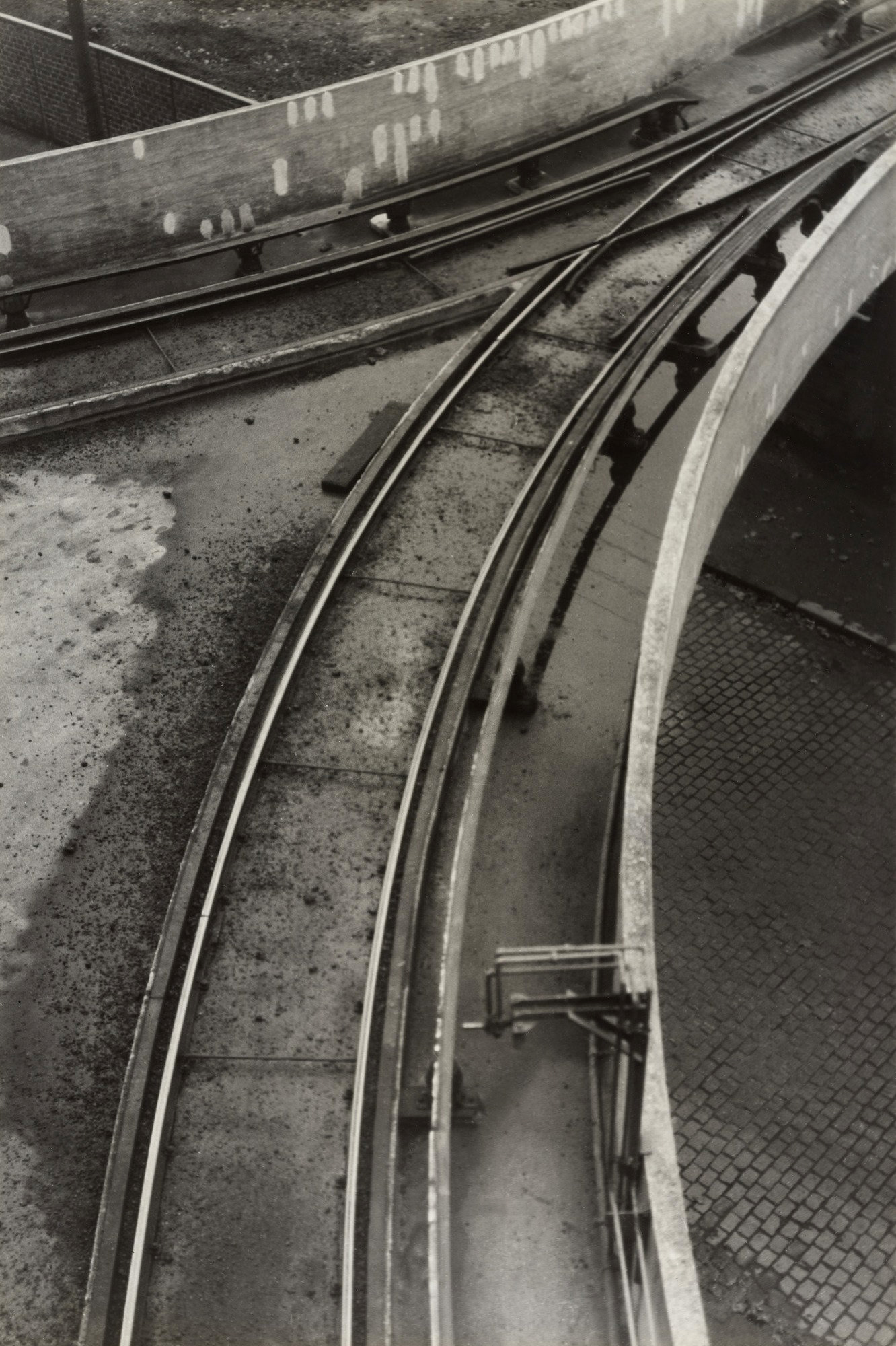
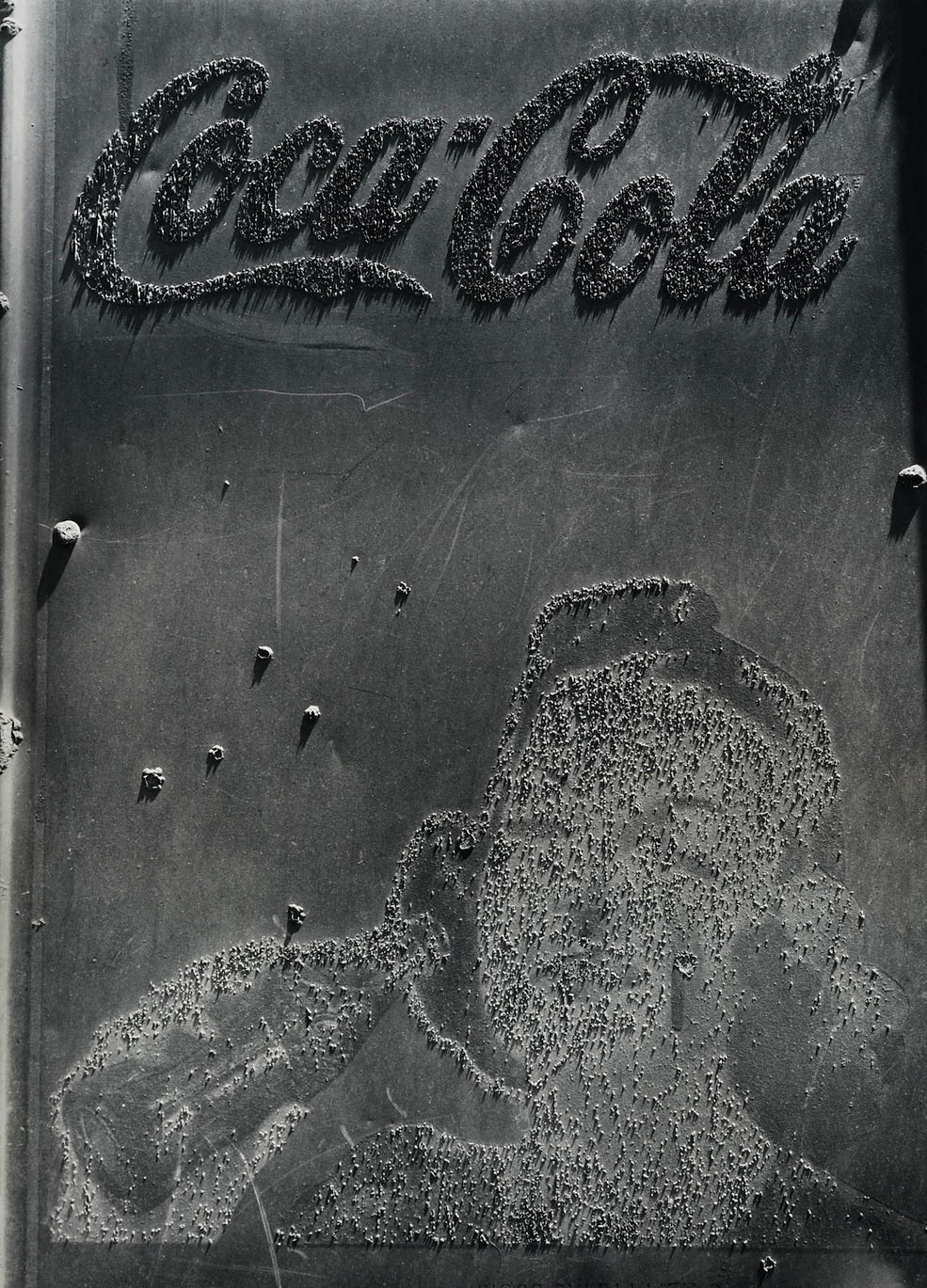
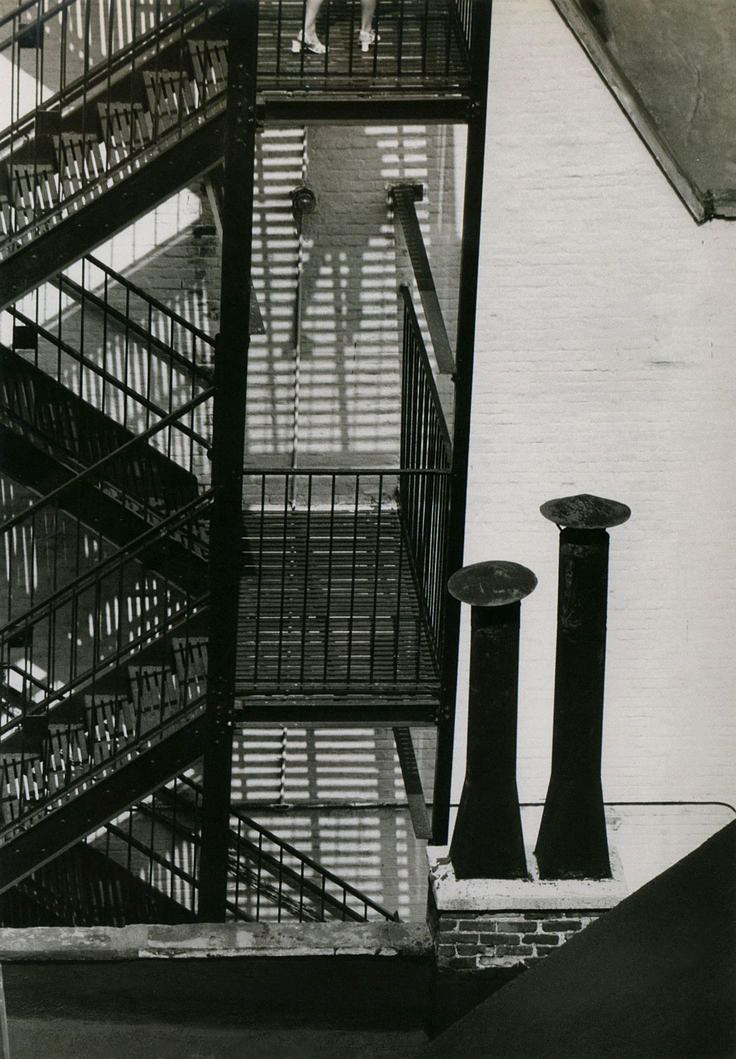
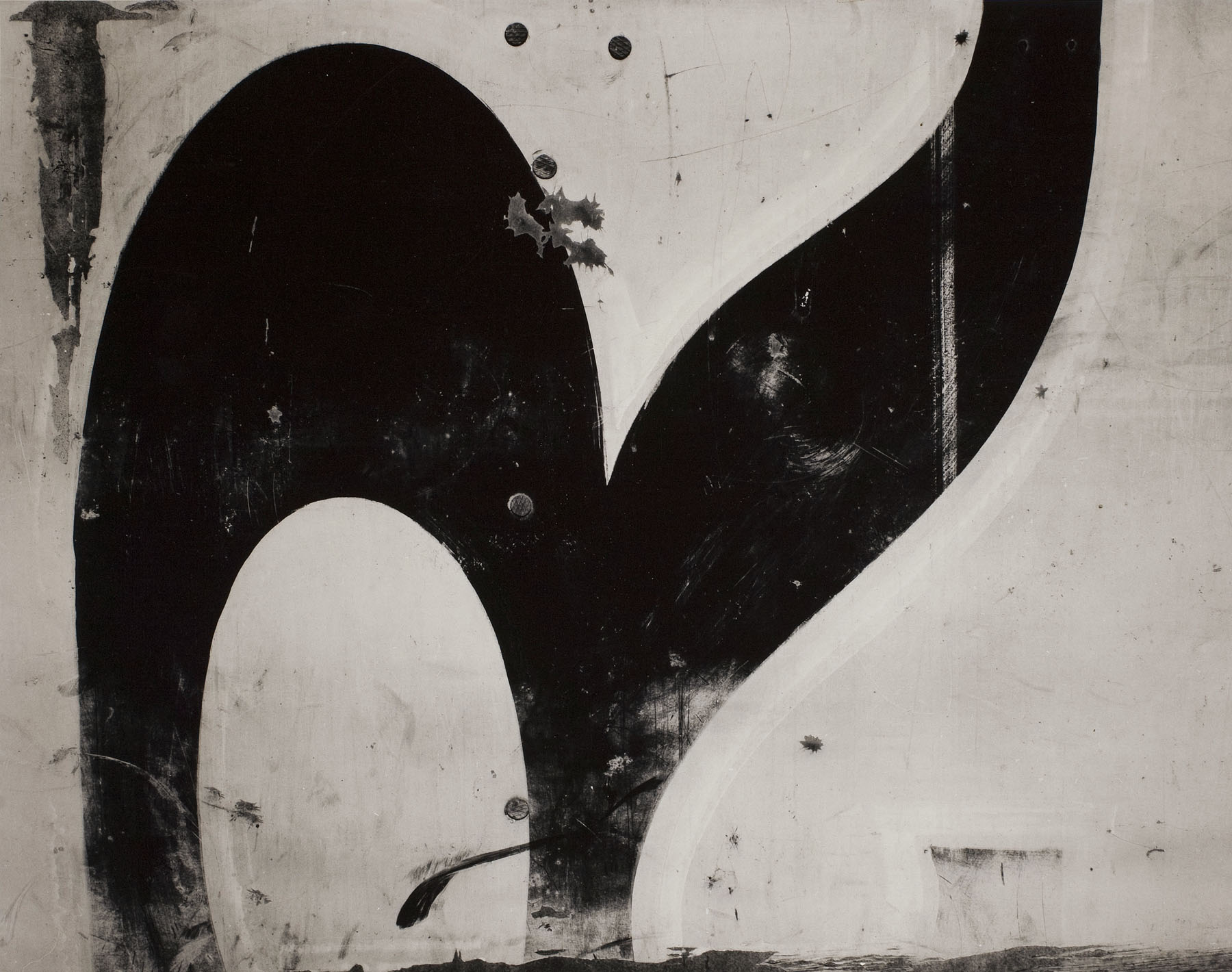
Exhibition: ‘Louis Faurer’ at the Fondation Henri Cartier-Bresson, Paris

Exhibition dates: 9th September – 18th December, 2016

Curator: The exhibition has been curated and organised by Agnès Sire, director of the Fondation Henri Cartier-Bresson in association with the Estate of Louis Faurer in New York, Howard Greenberg Gallery in New York and Deborah Bell Photographs.


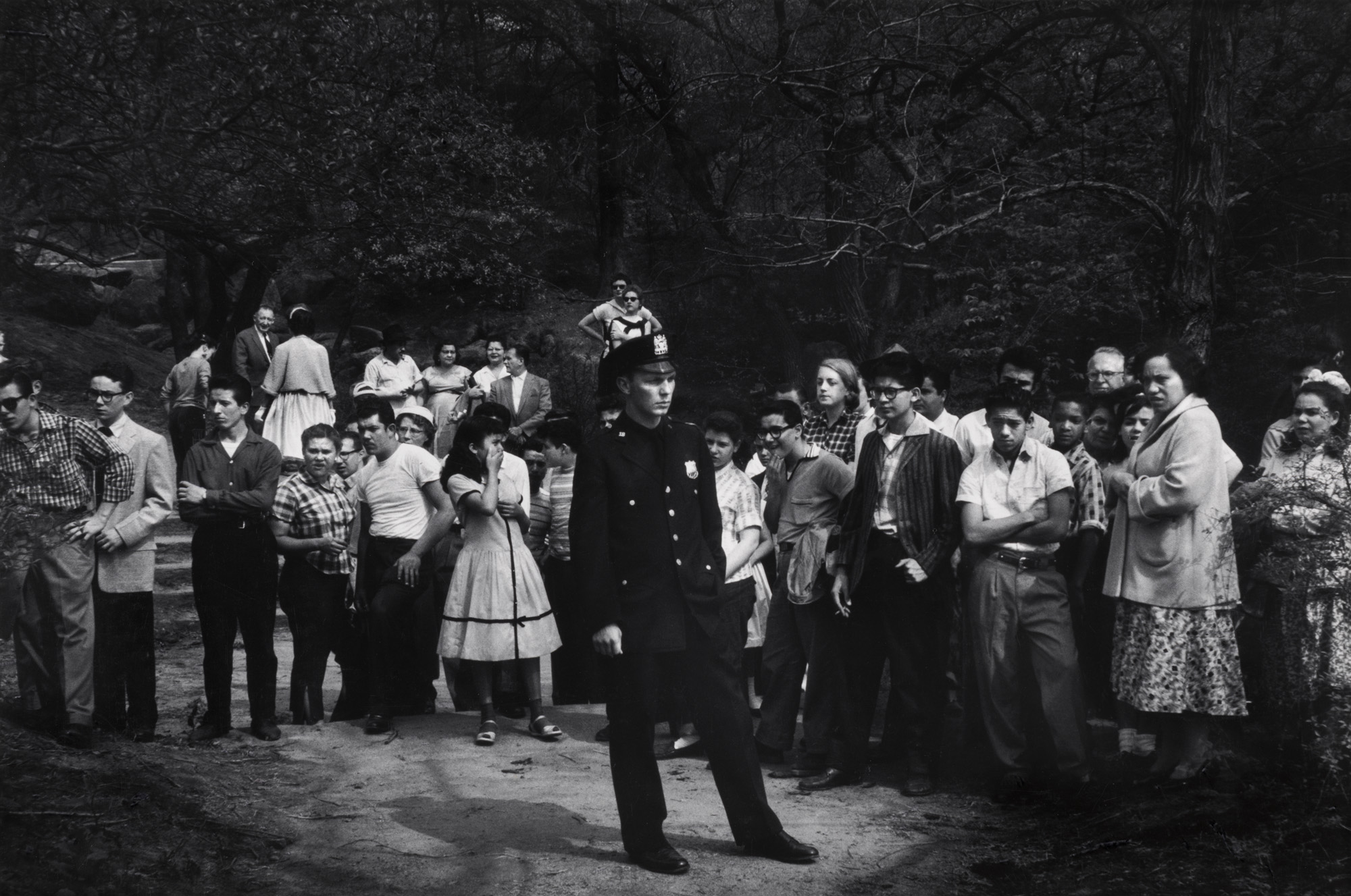
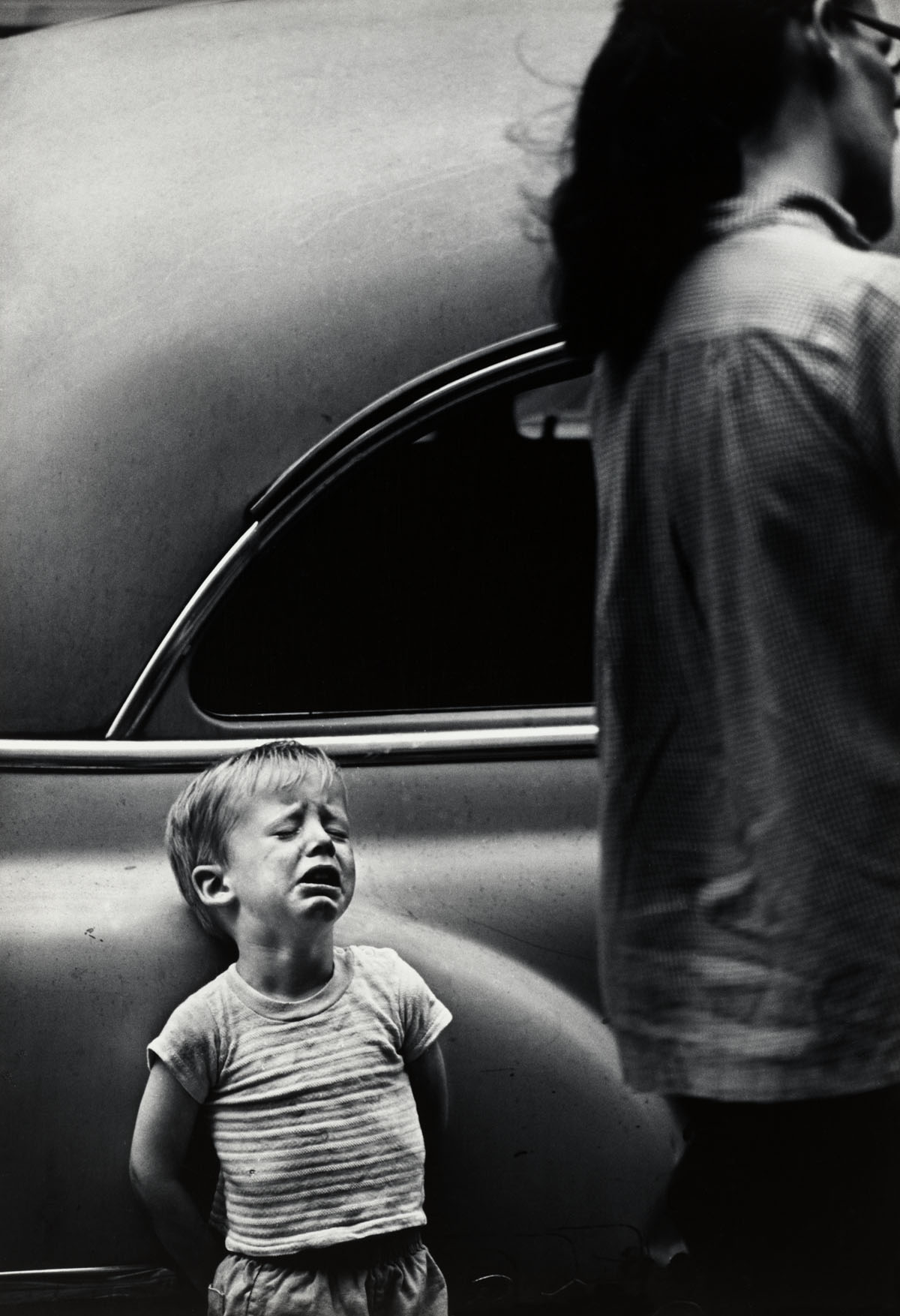
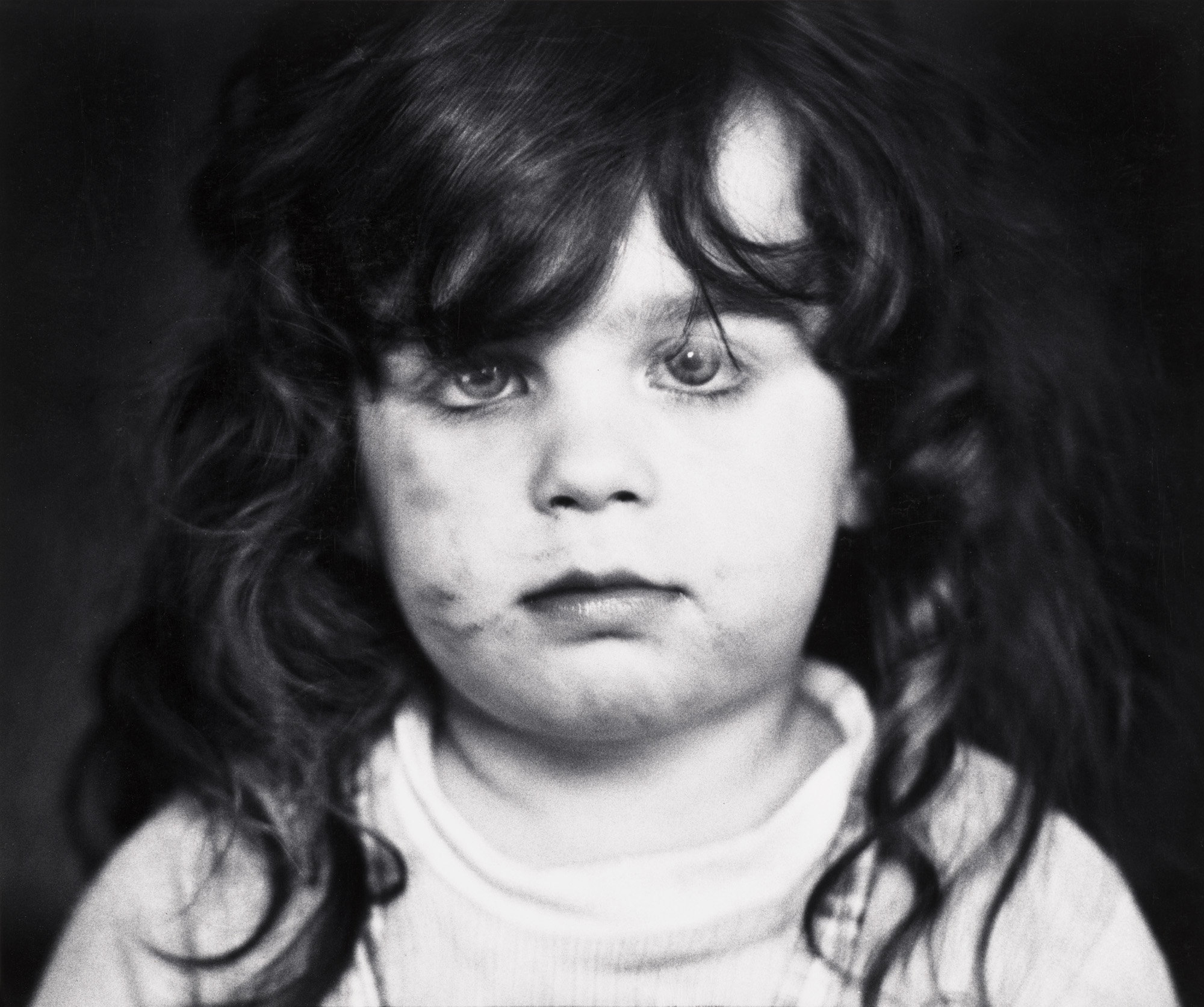
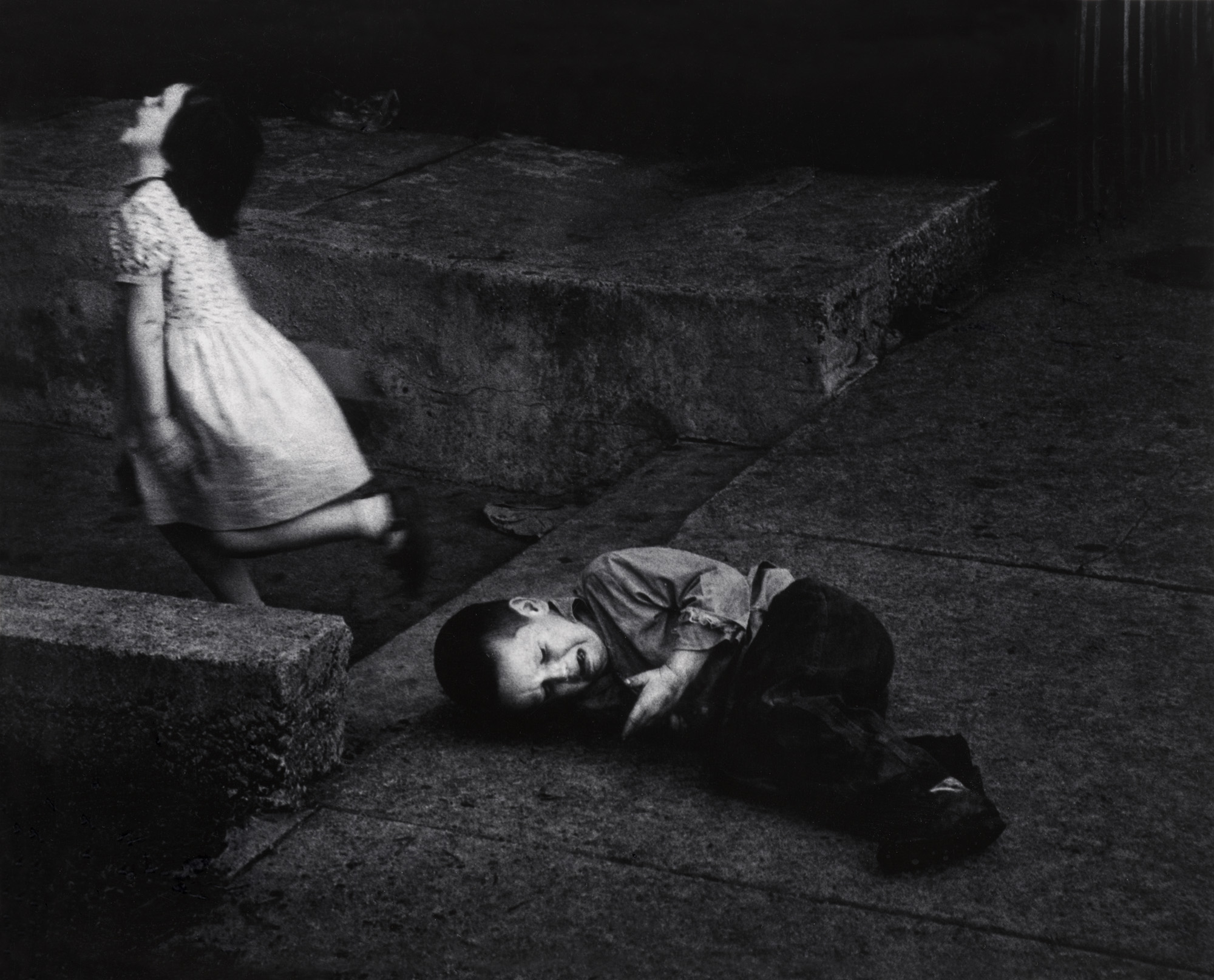
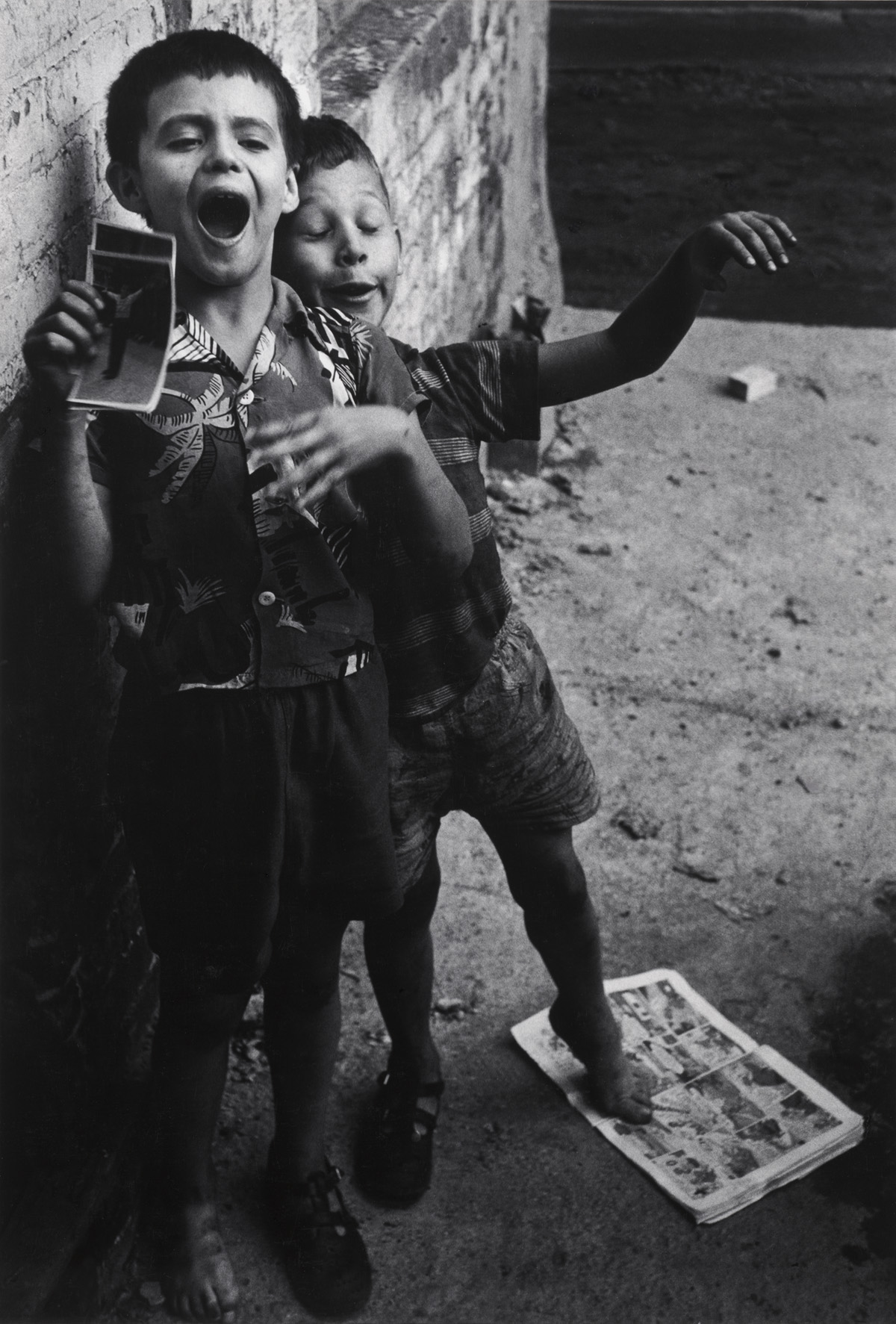
Louis Faurer (American, 1916-2001) 'Accident, New York' 1952 from the exhibition 'Louis Faurer' at the Fondation Henri Cartier-Bresson, Paris, Sept - Dec, 2016


Louis Faurer (American, 1916-2001)
Accident, New York
1952
Gelatin silver print
© Louis Faurer Estate, Courtesy Deborah Bell


Life, love and loneliness in the big smoke.

Champions and accidents.

Home of the brave, land of the fractured and destitute.

Unemployed and Looking.

Both * eyes * removed
Wounded

I AM TOTALLY BLIND.

Dr Marcus Bunyan


Many thankx to the Fondation Henri Cartier-Bresson for allowing me to publish the photographs in the posting. Please click on the photographs for a larger version of the image.


“However, with shocking suddenness in 1976 I came to believe that American photography of the moment of mid-century belonged to Louis Faurer.”


Walter Hopps


“I have an intense desire to record life as I see it, as I feel it. As long as I’m amazed and astonished, as long as I feel that events, messages, expressions and movements are all shot through with the miraculous, I’ll feel filled with the certainty I need to keep going. When that day comes, my doubts will vanish.”


Louis Faurer


Louis Faurer (American, 1916-2001) 'Champion, New York' 1950 from the exhibition 'Louis Faurer' at the Fondation Henri Cartier-Bresson, Paris, Sept - Dec, 2016


Louis Faurer (American, 1916-2001)
Champion, New York
1950
Gelatin silver print
© Louis Faurer Estate, Courtesy Howard Greenberg Gallery


Louis Faurer (American, 1916-2001) 'Orchard Street, New York' 1947


Louis Faurer (American, 1916-2001)
Orchard Street, New York
1947
Gelatin silver print
© Louis Faurer Estate


Louis Faurer (American, 1916-2001) 'New York' 1949


Louis Faurer (American, 1916-2001)
New York
1949
Gelatin silver print
© Louis Faurer Estate, Courtesy Howard Greenberg Gallery


Louis Faurer (American, 1916-2001) 'Untitled, New York' 1949


Louis Faurer (American, 1916-2001)
Untitled, New York
1949
Gelatin silver print
© Louis Faurer Estate


Louis Faurer (American, 1916-2001) '"Win, Place, and Show", 3rd Avenue El at 53rd Street, New York, New York' c. 1946-1948


Louis Faurer (American, 1916-2001)
“Win, Place, and Show”, 3rd Avenue El at 53rd Street, New York, New York
c. 1946-1948
Gelatin silver print
© Louis Faurer Estate


Louis Faurer (American, 1916-2001) 'Market Street, Philadelphia' 1944


Louis Faurer (American, 1916-2001)
Market Street, Philadelphia
1944
Gelatin silver print
© Louis Faurer Estate


Louis Faurer (American, 1916-2001) 'Untitled, New York' c. 1948-1950


Louis Faurer (American, 1916-2001)
Untitled, New York
c. 1948-1950
Gelatin silver print
© Louis Faurer Estate


Louis Faurer (American, 1916-2001) '42nd Street, New York' c. 1949


Louis Faurer (American, 1916-2001)
42nd Street, New York
c. 1949
Gelatin silver print
© Louis Faurer Estate


Louis Faurer (American, 1916-2001) 'Staten Island Ferry, New York' 1946


Louis Faurer (American, 1916-2001)
Staten Island Ferry, New York
1946
Gelatin silver print
© Louis Faurer Estate, Courtesy Deborah Bell


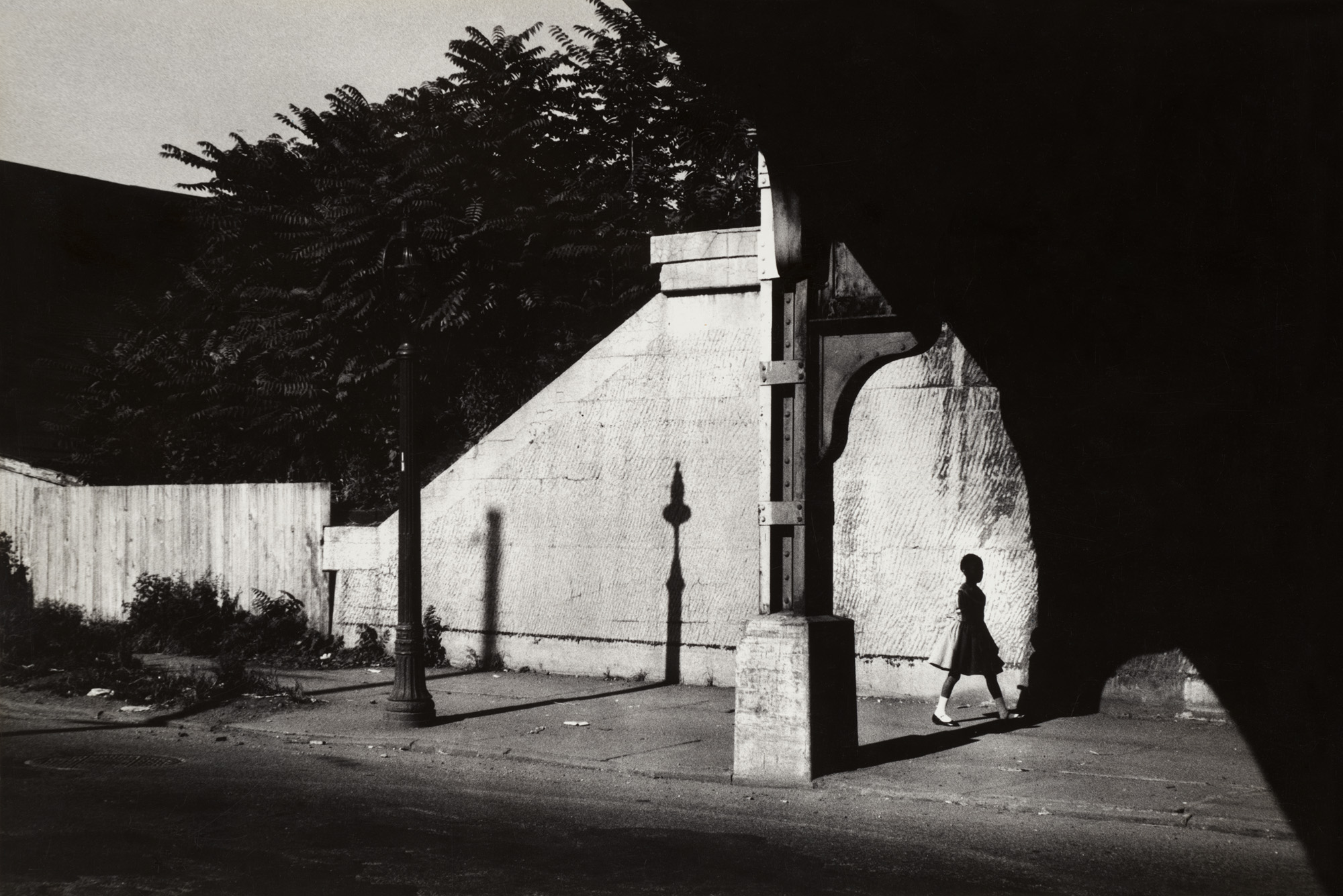
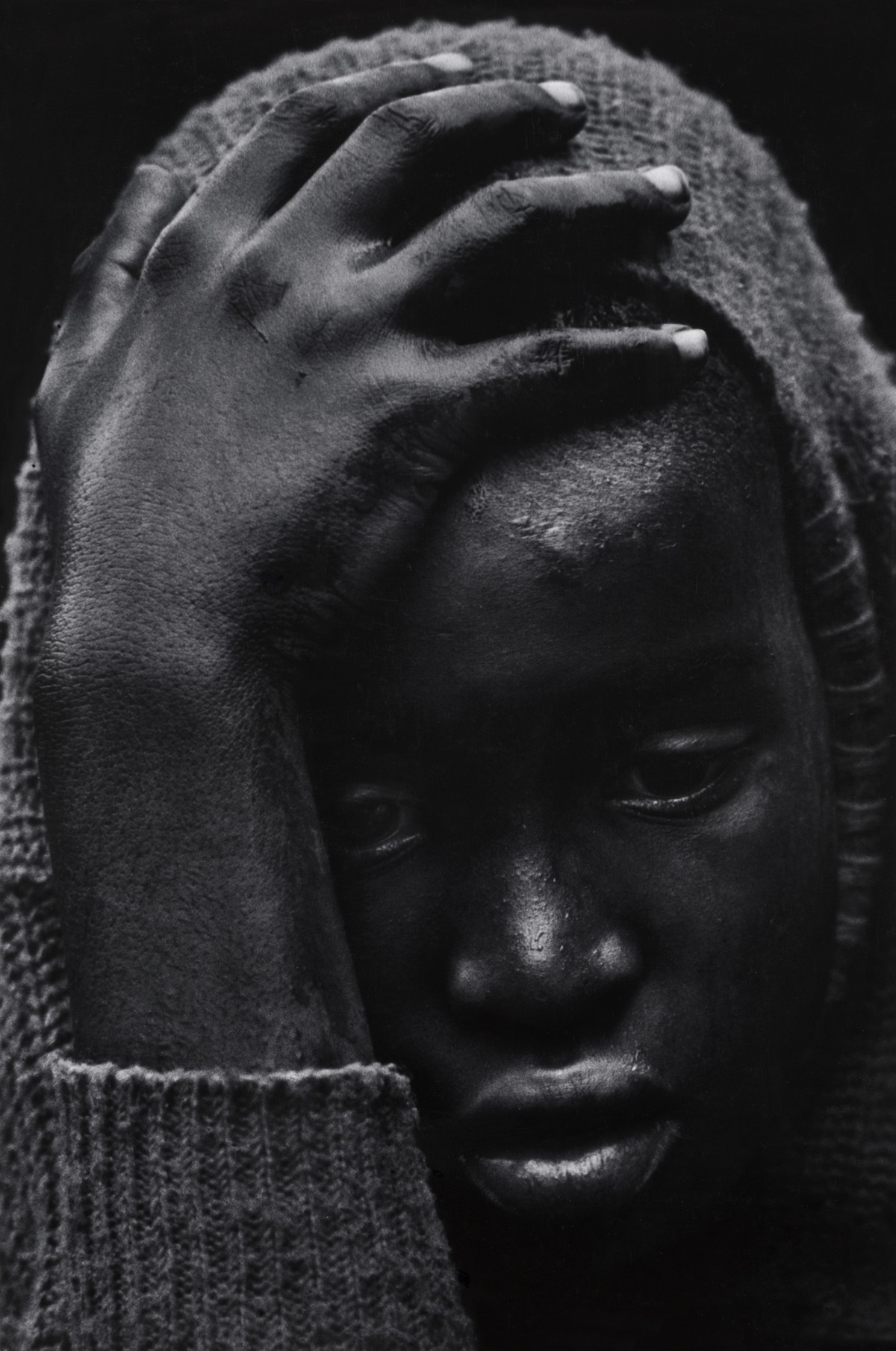
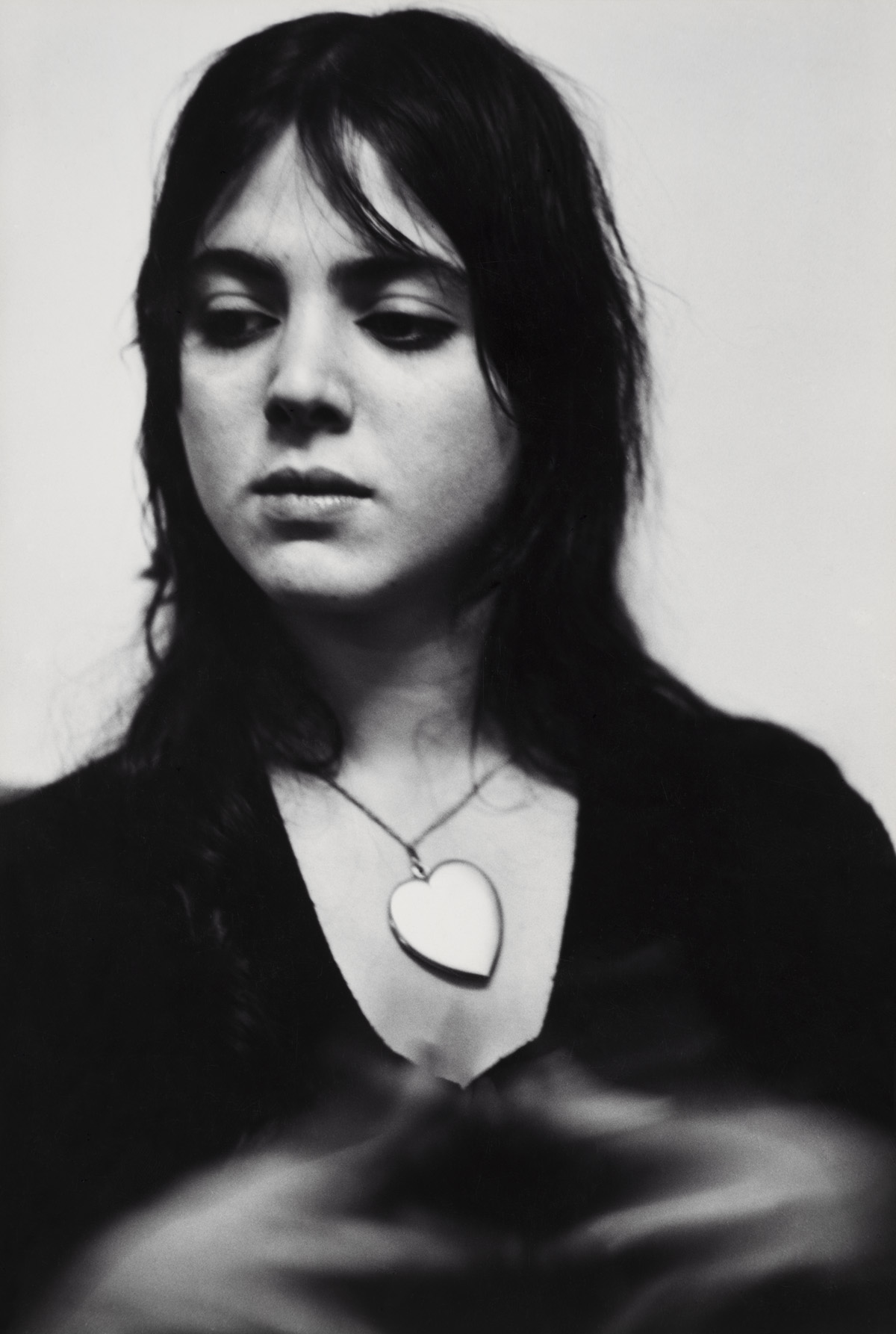
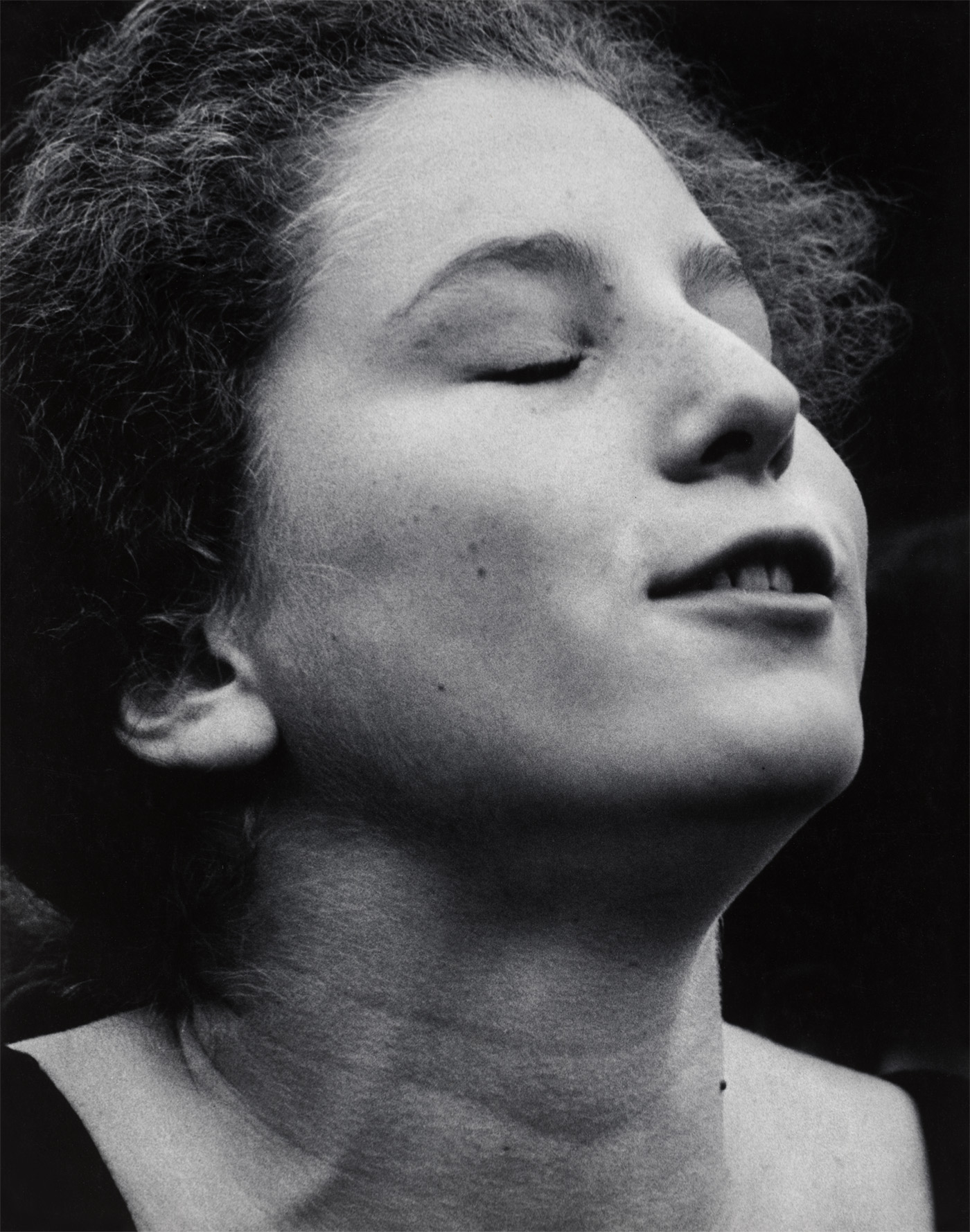
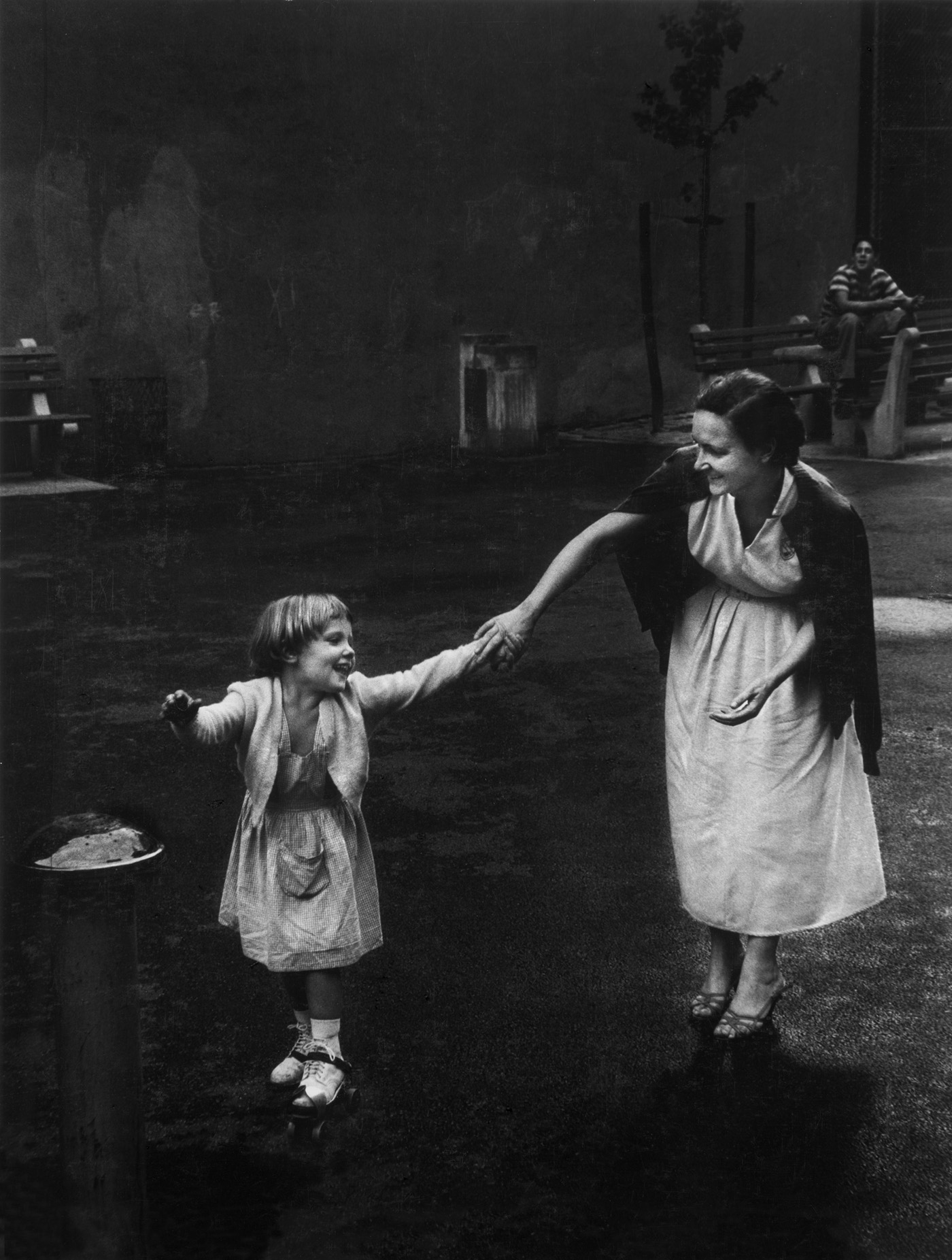
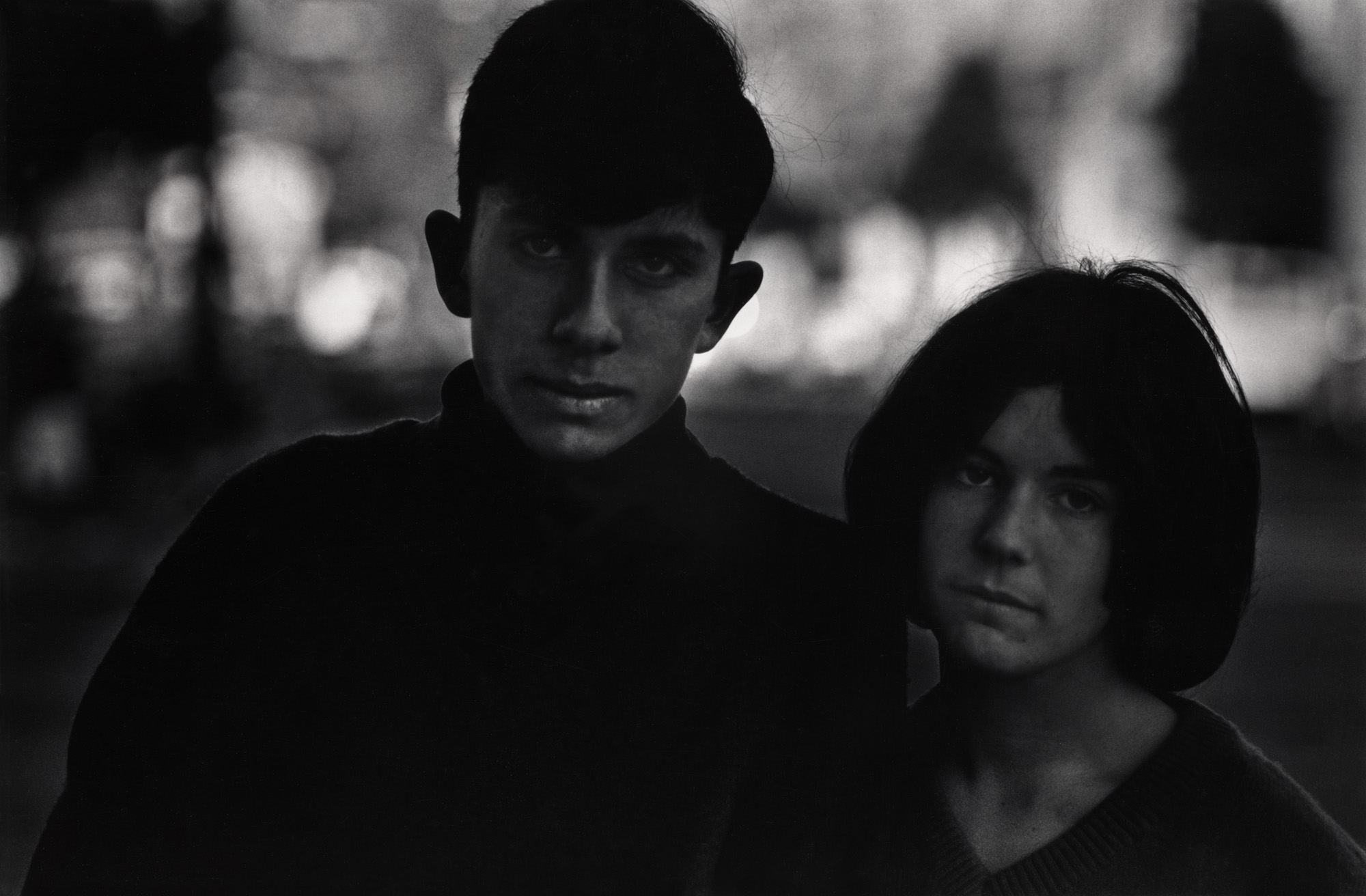
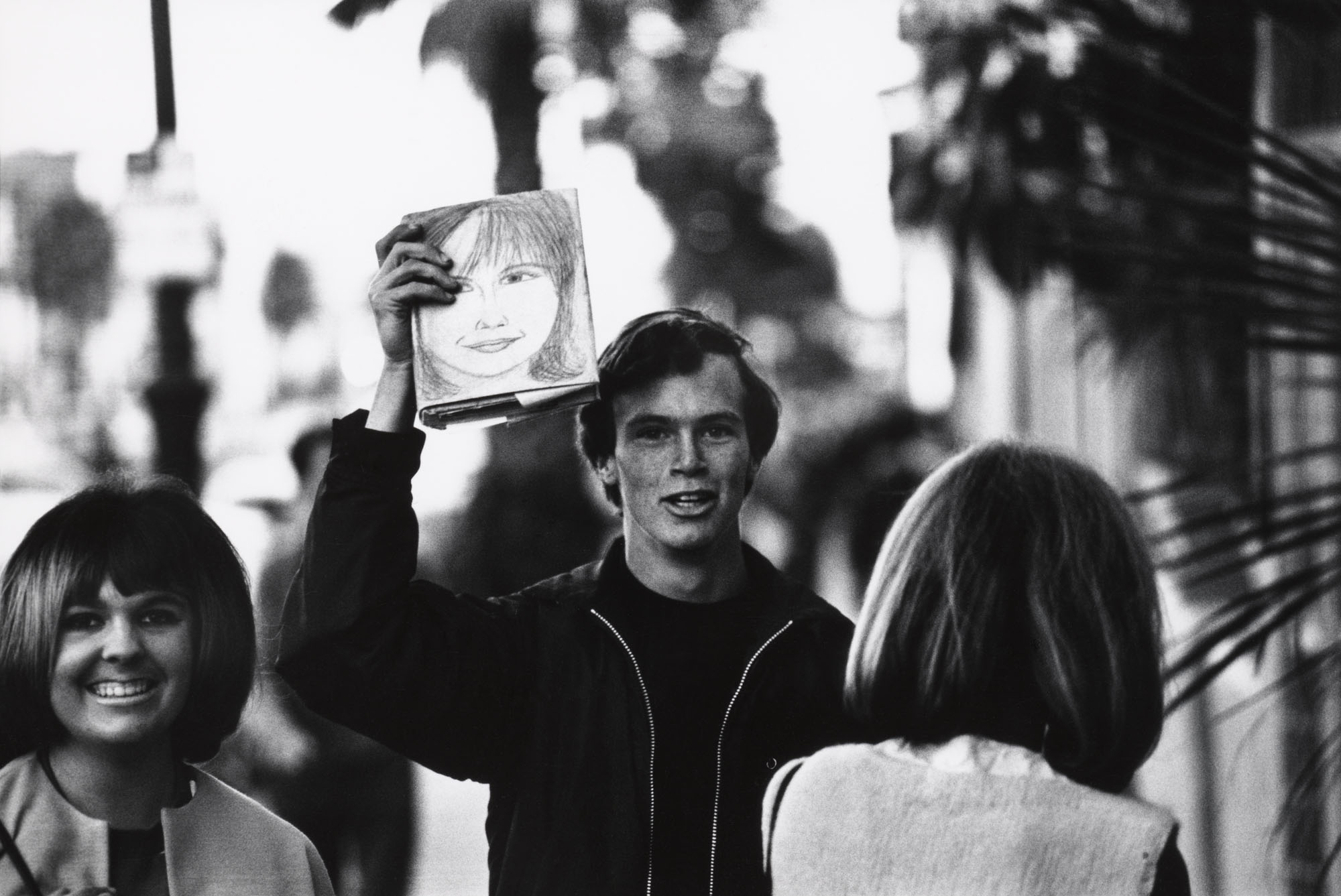
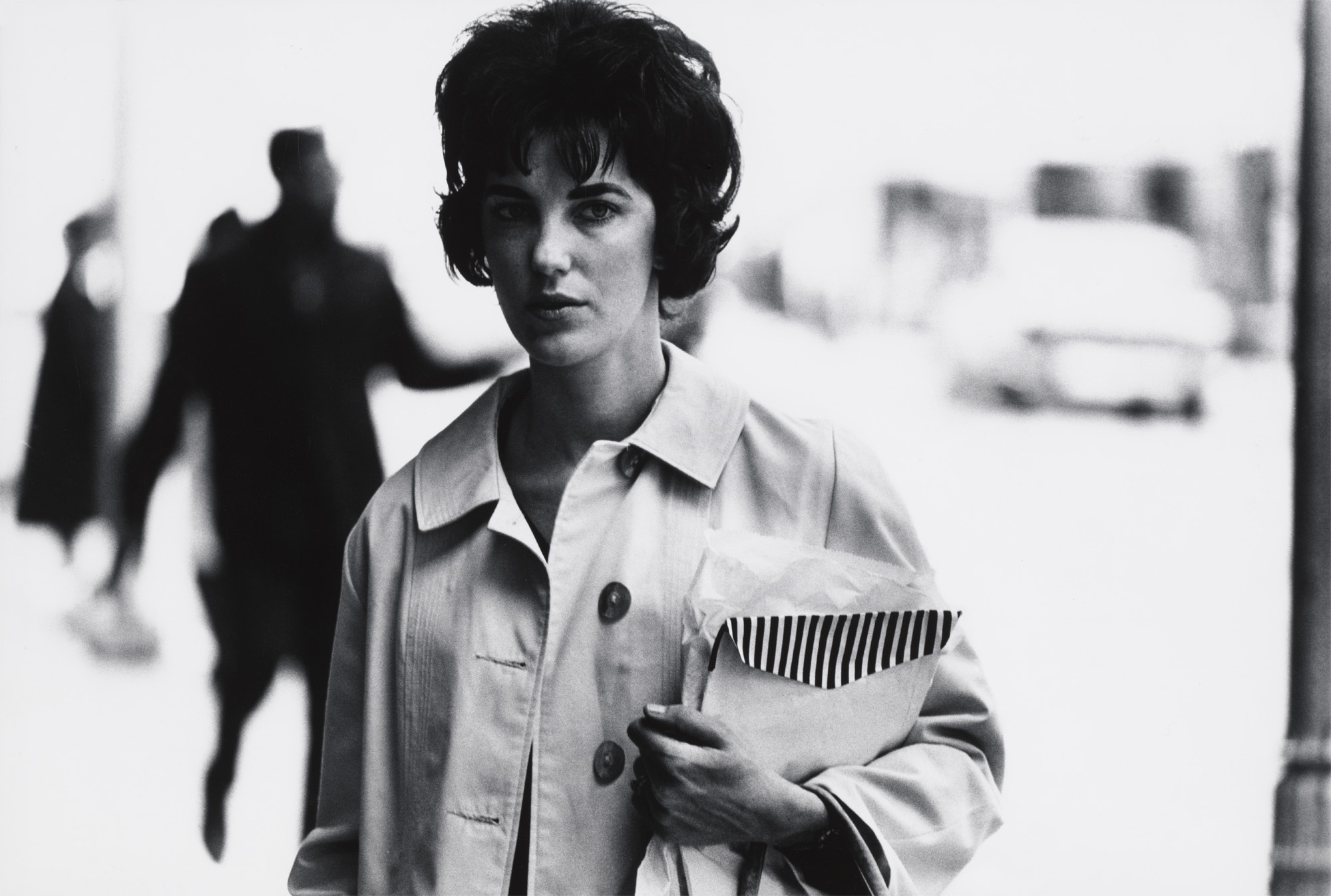
From September 9 to December 18, 2016, The Fondation Henri Cartier-Bresson dedicates an exhibition to the American photographer, Louis Faurer. This show is the occasion to discover this artist who has not been the subject of an exhibition in France since 1992. A native of Philadelphia, Louis Faurer moved to New York after the War, as if irresistibly pulled into the life of Times Square, where he homed in, objectively and pitilessly, on loneliness in the crowd. Reporting held little interest for him, and journalism even less; he was drawn – as the captions to his photographs sometimes indicate – to the poetic side: the fragility of things and the unconscious revelation. He carried out much-admired commissions for leading magazines including Flair, Junior Bazaar, Glamour and Mademoiselle. This gave rise to an unfeigned self-contempt and a paradoxical inner division only humour could counter. These assignments earned a living and helped him pursue a more personal work in New York streets.

Profoundly honest, he refused the excessiveness (or obscenity) of violent scenes that might humiliate his subjects, and deliberately projected himself into the people he photographed; and if he often recognised himself in them, this was the whole point. Sometimes he encountered his double, or even appeared in shot as a reflection. Each of his images was “a challenge to silence and indifference” – theirs and his own.

After studying drawing and being noticed by the Disney Studios at the age of thirteen, Louis Faurer started his professional path by creating advertising posters and sketching caricatures in the seaside of Atlantic City. At the age of 21, he bought his first camera and won first prize for “Photo of the Week” in a contest sponsored by the Philadelphia Evening Public Ledger. Market Street would then be the scene of his first shots. In 1947, he left for New York, as Lilian Bassman, art director for Junior Bazaar, hired him as a photographer. He met Robert Frank who was to become a close friend and with who he would share a studio for a while.

In 1968, he abandoned New York, the scene of his most successful work, for personal and financial reasons. Faurer worked briefly in England, and then in Paris where he struggled doing fashion work, with occasional assignments from Elle and French Vogue. Shortly after Faurer returned to New York in 1974 at the age of 58, he found that photography was being embraced by the art world and was soon to become a commodity in the international art market. The art dealer, Harry Lunn brought his work to public attention through an exhibition at Marlborough Gallery in 1997 and resurrected his career, his contribution then began to be acknowledged. In 1984, a car in New York streets hit Faurer, his wounds prevented him to pursue his career as a photographer. He passed away in Manhattan on March 2, 2001.

Deeply concerned with what he saw, he shares his doubts with us as he chooses anonymous figures spotted amid the ordinariness of the sidewalk: figures pulled out of the ambient melancholy, the film noir, the pervasive distress that seem to have been his personal lot. A remarkably gifted printer, Faurer experimented with blur, overlaid negatives and the marked graininess resulting from his fondness for the nocturnal. His touchiness meant frequent problems with clients and people like the numerous photographers who tried to lend a helping hand; among the latter was William Eggleston, who had discerned the unique depth of Faurer’s work. The issue the elegant Japanese photography quarterly déjà vu devoted to him in 1994 speaks of a rediscovery and a style ahead of its time, and quotes Nan Goldin: “Some people believe again that photography can be honest”.

In 1948, Edward Steichen, Head of the Department of Photography of the MoMA, supported Faurer and included him in In and Out of Focus. Steichen wrote: “Louis Faurer, a new comer in the field of documentary reporting, is a lyricist with a camera, a seeker and finder of magic in some of the highways and byways of life.” Afterwards, Steichen presented Faurer photographs in a few other exhibitions and in particular The Family of Man, in 1955. During his lifetime, Faurer did not have the wherewithal to edit his photographs into a book.

Press release from Fondation Henri Cartier-Bresson


Louis Faurer (American, 1916-2001) 'Market Street, Philadelphia' 1937


Louis Faurer (American, 1916-2001)
Market Street, Philadelphia
1937
Gelatin silver print
© Louis Faurer Estate


Louis Faurer (American, 1916-2001) 'Unemployed and Looking at Rockefeller Center, New York' 1947


Louis Faurer (American, 1916-2001)
Unemployed and Looking at Rockefeller Center, New York
1947
Gelatin silver print
© Louis Faurer Estate


Louis Faurer (American, 1916-2001) 'Eddie, New York' 1948


Louis Faurer (American, 1916-2001)
Eddie, New York
1948
Gelatin silver print
© Louis Faurer Estate


Louis Faurer (American, 1916-2001) 'Deaf Mute, New York' 1950


Louis Faurer (American, 1916-2001)
Deaf Mute, New York
1950
Gelatin silver print
© Louis Faurer Estate


Louis Faurer (American, 1916-2001) 'Union Square from Ohrbach’s Window, New York' c. 1948-1950


Louis Faurer (American, 1916-2001)
Union Square from Ohrbach’s Window, New York
c. 1948-1950
Gelatin silver print
© Louis Faurer Estate, Courtesy Howard Greenberg Gallery


Narrative of my career

My earliest experience in art occurred at the Benjamin Rush Public school in Phila., Penna. Miss Duncan, who seemed to float on a rose petal scent, having requested that numbers be written on paper with lead pencil, was shocked when my sheet yielded a drawing of a locomotive. My next surprise, at the age of 13 arrived in the mail. I had submitted my drawings to Walt Disney and he proposed considering me for a position, although he couldn’t guarantee it, if I travelled to California. It seemed unreachable and so I didn’t go.

After graduating the South Phila. High School for Boys, I enrolled in a Commercial Lettering School. After months of hand trembling, I looked at my first sign, it read “FRESH FISH”. From 1934 to 1937 I sketched caricatures on the beach at Atlantic City, N.J. My interest in photography began in 1937. It was greatly intensified when I was awarded first prize in the Philadelphia Evening Public Ledger for the photo of the week contest. Soon, the Farm Security Administration’s early books became my bible. I was especially taken by Walker Evans’ photography. The world of Harper’s Bazaar also fascinated me.

Later, in New York, I was to meet Robert Frank at the Bazaar Studio. Since I was a commuter, he invited me to stay at his loft together with nine cats. He had recently arrived from Switzerland and was alone. New York enchanted and amazed me. Everywhere a new discovery awaited me. Rejection slips from U.S. Camera were transformed into reproduced pages. My work was being accepted, often it seemed unreal. I showed my photographs to Walker Evans. A handsome brass tea kettle in his tiny room in the offices at FORTUNE projected his stability and eloquence. “You wouldn’t photograph fat women, would you?” he asked me. Later he warned me, “don’t become contaminated.” My need to continue photographing was solved by photography for commerce. I worked for periodicals which included Harper’s Bazaar.

1946 to 1951 were important years. I photographed almost daily and the hypnotic dusk light led me to Times Square. Several nights of photographing in that area and developing and printing in Robert Frank’s dark room became a way of life. He would say, “whatta town”, “whatta town”. I was represented in Edward Steichen’s IN AND OUT OF FOCUS exhibit. Then, work, work, and more work. “Boy,” he boomed, “go out and photograph and put the prints on my desk.” This command was synchronised with a pound of his fist on the glass top desk. I thought it miraculous, that the glass did not shatter.

I tasted and accepted the offerings of the 50s and 60s. LIFE, COWLES PUBLICATIONS, HEARST and CONDE NAST, enabled me to continue with my personal photography efforts. Often I would carry a 16mm motion picture camera as I would a Leica and photograph in the New York streets. The results were never shown commercially. The negative has been stored.

In 1968, I needed new places, new faces and change. I tried Europe. I returned in the mid-seventies and was overwhelmed by the change that had occurred here. I took to photographing the new New York with an enthusiasm almost equal to the beginning. After the Lunn purchase, the gallery world. I was brought again to the drawing I first experienced, and as an unexpected bonus, the photographer had become an artist! 1978 found me the recipient of the National Endowment for the Arts Grant and the Creative Public Service Grant for photography. The latter is known as (CAPS). My eyes search for people who are grateful for life, people who forgive and whose doubts have been removed, who understand the truth, whose enduring spirit is bathed by such piercing white light as to provide their present and future hope.*

Louis Faurer


* Reproduced, with editorial revisions, from the artist’s original text. Text published at the occasion of the exhibition Louis Faurer – Photographs from Philadelphia and New York 1937-1973 presented from March 10 to April 23, 1981 at the Art Gallery of University of Maryland. Extracts from the book Louis Faurer published by Steidl, September 2016


Louis Faurer (American, 1916-2001) 'Somewhere in West Village, New York' 1948


Louis Faurer (American, 1916-2001)
Somewhere in West Village, New York
1948
Gelatin silver print
© Louis Faurer estate


Louis Faurer (American, 1916-2001) 'Untitled, Philadelphia' Date unknown


Louis Faurer (American, 1916-2001)
Untitled, Philadelphia
Date unknown
Gelatin silver print
© Louis Faurer estate


'Louis Faurer' Steidl Verlag


Louis Faurer
Steidl Verlag

Foreword: Agnès Sire. Essay: Susan Kismaric
Original texts: Louis Faurer and Walter Hopps

208 pages
24 x 17.6cm
100 illustrations
ISBN: 978-3-95829-241-3
September 2016


Extracts from the book

New York City has been the major center of the Faurer’s work, and that city’s life at mid-century, his great subject. The city is totally Faurer’s natural habitat. He can be at home, at one, with people on its streets, in its rooms. However serene or edgy his encounters, one senses Faurer (if at all) as being the same as the people in his photographs. And since these people are extremely varied, it is a transcendent vision that allows the photographer to be so many “others.” Faurer’s at-oneness with his subjects contrasts with both the mode of working and the results of Evans and Frank. They have proved to be great and wide-ranging explorers and finders of their images. Faurer made only one important trip: from Philadelphia (where he made his first, early brilliant photographs) to New York, where he stayed, and where in the course of things his vision consumed, whether ordinary or odd, the all of it.

Walter Hopps


Louis Faurer was a “photographer’s photographer”, one whose work was not known to a broad audience, or appreciated by the art world, but was loved by photographers. They saw in his pictures a purity of seeing, akin to what Faurer saw in the work of Walker Evans, the “poetic use of facts”. Faurer distinguished himself within this way of working through his instinct and his uncanny eye for people who radiate a rare and convincing sense of privacy, an inner life. They are people who would be true in any time and place,who are emblematic of human struggle.

For whatever reasons, Faurer did not have the wherewithal to edit his photographs into a book, the most visible and long-lasting expression of a photographer’s work. Yet his pictures are indelible. Their content presages a major shift in subject matter within the rubric of “documentary” American photography that was to come to fruition almost two decades later. In 1967 John Szarkowski identified this radical change when he wrote in his wall text for New Documents, an exhibition at the Museum of Modern Art, about the work of Diane Arbus, Lee Friedlander, and Garry Winogrand: “… In the past decade, a new generation of photographers has directed the documentary approach toward more personal ends. Their aim has been not to reform life, but to know it”.

Susan Kismaric


Louis Faurer (American, 1916-2001) 'Viva, New York' 1962


Louis Faurer (American, 1916-2001)
Viva, New York
1962
Gelatin silver print
© Louis Faurer Estate, Courtesy Christophe Lunn


Fondation Henri Cartier-Bresson
79 rue des Archives
75003 Paris

Opening hours:
Tuesday – Sunday
11am – 7pm
Closed on Mondays

Fondation Henri Cartier-Bresson website

LIKE ART BLART ON FACEBOOK

Back to top

Exhibitions: ‘Beyond Eden: Polixeni Papapetrou’ / ‘Dutch masters of light: Hendrik Kerstens & Erwin Olaf’ / ‘Glamour stakes: Martin Parr’ at Monash Gallery of Art, Melbourne

Exhibition dates: 22nd October – 4th December, 2016


Installation view of 'Beyond Eden: Polixeni Papapetrou' at Monash Gallery of Art, Melbourne featuring three images from the series 'It's all about me' (2016)


Installation view of Beyond Eden: Polixeni Papapetrou at Monash Gallery of Art, Melbourne, featuring three images from the series It’s all about me (2016)
Photo: © Marcus Bunyan, the artist and the Monash Gallery of Art


There was hardly standing room at the opening of Beyond Eden: Polixeni Papapetrou at Monash Gallery of Art, Melbourne. As for car parking, I had to park the car on the grass out the back of the gallery it was so full. Inside, it was great to see Poli and the appreciative crowd really enjoyed her work.

It was the usual fair from the exhibition Glamour stakes: Martin Parr, a whirl of movement, colour, intensity – in the frenetic construction of the picture plane; in the feverish nature of encounter between camera and subject – and obnoxious detail in photographs from the series Luxury (2003-2009). Low depth of field, flash photography, fabulous hats, and vibrant colours feature in images that ‘document leisure and consumption and highlight the unintentional, awkward and often ugly sides of beauty, fashion and wealth’. Sadly, after a time it all becomes a bit too predictable and repetitive.

The pick of the bunch in the exhibition Dutch masters of light: Hendrik Kerstens & Erwin Olaf was the work of Hendrik Kerstens. Simple, elegant portrait compositions that feature, and subvert, the aesthetics of 17th-century Dutch master paintings. I love the humour and disruption in the a/historical account, “the différance [which] simultaneously contains within its neo-graphism the activities of differing and deferring, a distancing acted out temporally as well as spatially.” (Geoffrey Batchen)

Dr Marcus Bunyan


Many thankx to Monash Gallery of Art for allowing me to publish the photographs in the posting. Please click on the photographs for a larger version of the image.


Installation view of 'Beyond Eden: Polixeni Papapetrou' at Monash Gallery of Art, Melbourne featuring three images from the series 'It's all about me' (2016)


Installation view of Beyond Eden: Polixeni Papapetrou at Monash Gallery of Art, Melbourne, featuring three images from the series It’s all about me (2016)
Photo: © Marcus Bunyan, the artist and the Monash Gallery of Art


Polixeni Papapetrou (Australian, 1960-2018) 'It's all about me' 2016 (installation view)


Polixeni Papapetrou (Australian, 1960-2018)
It’s all about me (installation view)
2016
From the series It’s all about me
Pigment ink-jet print
Collection of the artist
Photo: © Marcus Bunyan, the artist and the Monash Gallery of Art


Polixeni Papapetrou (Australian, 1960-2018) 'Ask me again when I'm drunk' (installation view) 2016 from the series 'It's all about me' 2016


Polixeni Papapetrou (Australian, 1960-2018)
Ask me again when I’m drunk (installation view)
2016
From the series It’s all about me
Pigment ink-jet print
Collection of the artist
Photo: © Marcus Bunyan, the artist and the Monash Gallery of Art


It’s all about me comprises five photographs of the artist’s daughter wearing doll-like masks and sporting a series of T-shirts bearing sassy slogans. As in much of Papapetrou’s work, the aesthetic of role-playing is used to suggest an awkward relationship between social appearances and an authentic self. These works specifically explore the complex world that contemporary teenage live in and the way identities are created and manipulated through fashion, social media and the internet. In this respect, the gauche quality of the photographs reflects the awkward self-importance of teenagers reaching for adulthood.


Installation view of 'Beyond Eden: Polixeni Papapetrou' at Monash Gallery of Art, Melbourne featuring photographs from the series 'Eden' (2016)

Installation view of 'Beyond Eden: Polixeni Papapetrou' at Monash Gallery of Art, Melbourne featuring photographs from the series 'Eden' (2016)

Installation view of 'Beyond Eden: Polixeni Papapetrou' at Monash Gallery of Art, Melbourne featuring photographs from the series 'Eden' (2016)

Installation view of 'Beyond Eden: Polixeni Papapetrou' at Monash Gallery of Art, Melbourne featuring photographs from the series 'Eden' (2016)

Installation view of 'Beyond Eden: Polixeni Papapetrou' at Monash Gallery of Art, Melbourne featuring photographs from the series 'Eden' (2016)

Installation view of 'Beyond Eden: Polixeni Papapetrou' at Monash Gallery of Art, Melbourne featuring photographs from the series 'Eden' (2016)


Installation views of Beyond Eden: Polixeni Papapetrou at Monash Gallery of Art, Melbourne, featuring photographs from the series Eden (2016)
Photos: © Marcus Bunyan, the artist and the Monash Gallery of Art


Polixeni Papapetrou (seated) surrounded by friends, family and well wishers at the opening of her exhibition 'Beyond Eden: Polixeni Papapetrou' at Monash Gallery of Art, Melbourne


Polixeni Papapetrou (seated) surrounded by friends, family and well wishers at the opening of her exhibition Beyond Eden: Polixeni Papapetrou at Monash Gallery of Art, Melbourne
Photo: © Marcus Bunyan, the artist and the Monash Gallery of Art


Beyond Eden: Polixeni Papapetrou

Polixeni Papapetrou is a Melbourne-based photographic artist. She first began taking photographs in the 1980s, creating documentary-style portraits of drag queens, body builders and Elvis fans. Soon after the birth of her first child, Papapetrou’s artistic practice began to focus on projects that employed her children, Olympia and Solomon, as models. She is now known nationally and internationally for her staged images that show her children dressed in costumes and masks while performing in front of real and imaginary backgrounds.

This exhibition brings together three recent bodies of work by Papapetrou: Lost psyche (2014), It’s all about me (2016) and Eden (2016). Each of these studio-based series explores themes that have been central to Papapetrou’s practice for the past 30 years. In particular, they highlight her long-term interest in social identity being elaborated through the processes of role-playing and performance.

It is important to note that Papapetrou composes her photographs using a range of historical and contemporary references, thereby embedding these staged performances in a network of competing forces. As a result, there is often a purposefully awkward style to the images, which suggests that identity is continually being inherited, negotiated and perpetuated through the history of representation.

As with much of Papapetrou’s work, the series included in this exhibition either partly or wholly feature the artist’s children, who are now in their late teenage years. By photographing her children and at the same time concealing their identities, Papapetrou is able to create portraits that are grounded in her personal experience of parenting but reflect on more universal themes of childhood innocence and the transience of life.

Text from the Monash Gallery of Art website


Polixeni Papapetrou (Australian, 1960-2018) 'Flora' 2016


Polixeni Papapetrou (Australian, 1960-2018)
Flora
2016
From the series Eden
Pigment print
127.3 x 85cm
Courtesy of the artist and STILLS Gallery, Sydney


In Roman mythology, Flora (Latin: Flōra) was a Sabine-derived goddess of flowers and of the season of spring – a symbol for nature and flowers (especially the may-flower). While she was otherwise a relatively minor figure in Roman mythology, being one among several fertility goddesses, her association with the spring gave her particular importance at the coming of springtime, as did her role as goddess of youth. Her name is derived from the Latin word “flos” which means “flower”. In modern English, “Flora” also means the plants of a particular region or period.


Polixeni Papapetrou (Australian, 1960-2018) 'Blinded' from 'Eden', 2016


Polixeni Papapetrou (Australian, 1960-2018)
Blinded
2016
From the series Eden
Pigment print
127.3 x 85cm
Courtesy of the artist and STILLS Gallery, Sydney


Polixeni Papapetrou (Australian, 1960-2018) 'Eden' 2016


Polixeni Papapetrou (Australian, 1960-2018)
Eden
2016
From the series Eden
Pigment print
127.3 x 85cm
Courtesy of the artist and STILLS Gallery, Sydney


Installation view of 'Dutch masters of light: Hendrik Kerstens and Erwin Olaf' at Monash Gallery of Art, Melbourne, featuring photographs Irwin Olaf's 'Keyhole' series (2012)


Installation view of Dutch masters of light: Hendrik Kerstens and Erwin Olaf at Monash Gallery of Art, Melbourne, featuring photographs Irwin Olaf’s Keyhole series
Photo: © Marcus Bunyan, the artist and the Monash Gallery of Art


Installation view of 'Dutch masters of light: Hendrik Kerstens and Erwin Olaf' at Monash Gallery of Art, Melbourne featuring at left, Irwin Olaf's 'Keyhole 7' (2012); and at right, 'Keyhole 12' (2012)


Installation view of Dutch masters of light: Hendrik Kerstens and Erwin Olaf at Monash Gallery of Art, Melbourne featuring at left, Irwin Olaf’s Keyhole 7 (2012); and at right, Keyhole 12 (2012)
Photo: © Marcus Bunyan, the artist and the Monash Gallery of Art


Erwin Olaf (Netherlands, 1959-2023) 'Keyhole 3' 2011


Erwin Olaf (Netherlands, 1959-2023)
Keyhole 3
2011
From the Keyhole series
Chromogenic print
62.5 x 50.0cm
Courtesy of the artist


Installation view of 'Dutch masters of light: Hendrik Kerstens and Erwin Olaf' at Monash Gallery of Art, Melbourne featuring the work of Hendrik Kerstens


Installation view of Dutch masters of light: Hendrik Kerstens and Erwin Olaf at Monash Gallery of Art, Melbourne featuring the work of Hendrik Kerstens
Photo: © Marcus Bunyan, the artist and the Monash Gallery of Art


Hendrik Kerstens (Dutch, b. 1956) 'Bathing cap' 1992


Hendrik Kerstens (Dutch, b. 1956)
Bathing cap
1992
Ink-jet print 62.5 x 50.0cm
Courtesy of the artist


Installation view of 'Dutch masters of light: Hendrik Kerstens and Erwin Olaf' at Monash Gallery of Art, Melbourne featuring the work of Hendrik Kerstens with at left, 'Re rabbit IV' (2009); and in centre, 'Doilly' (2011)


Installation view of Dutch masters of light: Hendrik Kerstens and Erwin Olaf at Monash Gallery of Art, Melbourne featuring the work of Hendrik Kerstens with at left, Re rabbit IV (2009); and in centre, Doilly (2011)
Photo: © Marcus Bunyan, the artist and the Monash Gallery of Art


Installation view of 'Dutch masters of light: Hendrik Kerstens and Erwin Olaf' at Monash Gallery of Art, Melbourne featuring the work of Hendrik Kerstens with at left, 'Bag' (2007); and at right, 'Paper roll' (2008)


Installation view of Dutch masters of light: Hendrik Kerstens and Erwin Olaf at Monash Gallery of Art, Melbourne featuring the work of Hendrik Kerstens with at left, Bag (2007); and at right, Paper roll (2008)
Photo: © Marcus Bunyan, the artist and the Monash Gallery of Art


Installation view of 'Dutch masters of light: Hendrik Kerstens and Erwin Olaf' at Monash Gallery of Art, Melbourne featuring the work of Hendrik Kerstens with at left, 'Naturel' (1999); and at right, 'Wet' (2002)


Installation view of Dutch masters of light: Hendrik Kerstens and Erwin Olaf at Monash Gallery of Art, Melbourne featuring the work of Hendrik Kerstens with at left, Naturel (1999); and at right, Wet (2002)
Photo: © Marcus Bunyan, the artist and the Monash Gallery of Art


Hendrik Kerstens (Dutch, b. 1956) 'Re rabbit IV' 2009 (installation view)


Hendrik Kerstens (Dutch, b. 1956)
Re rabbit IV (installation view)
2009
Ink-jet print
62.5 x 50.0cm
Collection of the artist
Photo: © Marcus Bunyan, the artist and the Monash Gallery of Art


Dutch masters of light: Hendrik Kerstens and Erwin Olaf

This exhibition features work by the internationally acclaimed Dutch photographers, Hendrik Kerstens and Erwin Olaf. These photographers both create images that reflect an interest in paintings by Dutch Masters such as Rembrandt (1606-1669) and Vermeer (1632-1675). This is particularly evident in their manipulation of light and shade and also in their poetic use of everyday subject matter. Drawing on aesthetics of the past while also incorporating aspects of the present, these photographers create emotionally charged portraits that draw attention to the liminal nature of contemporary life.

Hendrik Kerstens took up photography in 1995 and has since been creating portraits of his daughter, Paula. His photographs began as documents and reflections on the fleeting nature of childhood. He later introduced the aesthetics of 17th-century Dutch master paintings to his portraits, creating a dialogue between painting and photography and between the past and the present.

Erwin Olaf is a multidisciplinary artist who is best known for his highly polished staged photographs that draw on his experiences of everyday life. His refined style and meticulous technique relate his background as a commercial photographer; and his use of light is inspired by painting. The subjects of his Keyhole series turn their gaze away from the camera in a way that evokes feelings of shame and humility.

Dutch masters of light: Hendrik Kerstens and Erwin Olaf is part of a series of events that mark the 400th anniversary of the first Dutch contact with Western Australia. On 25 October 1616, Dirk Hartog made landfall with his ship the Eendracht at Dirk Hartog Island, in the Shark Bay area.

Text from the Monash Gallery of Art website


Hendrik Kerstens (Dutch, b. 1956) 'Bag' 2007


Hendrik Kerstens (Dutch, b. 1956)
Bag
2007
Ink-jet print
62.5 x 50.0cm
Collection of the artist


Hendrik Kerstens (Dutch, b. 1956) 'Cosy' 2012


Hendrik Kerstens (Dutch, b. 1956)
Cosy
2012
Ink-jet print
62.5 x 50.0cm
Collection of the artist


Martin Parr (British, 1952-2025) 'Australia, Melbourne' 2006 (installation view)


Martin Parr (British, 1952-2025)
Australia, Melbourne (installation view)
2006
From the series Luxury
Pigment ink-jet print
50.8 x 76.2cm
Photo: © Marcus Bunyan, the artist and the Monash Gallery of Art


Martin Parr (British, 1952-2025) 'Australia, Melbourne' 2008


Martin Parr (British, 1952-2025)
Australia, Melbourne
2008
From the series Luxury
Pigment ink-jet print
50.8 x 76.2cm
Courtesy of the artist and Niagara Galleries (Melbourne)


Installation view of 'Glamour stakes: Martin Parr' at Monash Gallery of Art, Melbourne with work from the series 'Luxury'


Installation view of Glamour stakes: Martin Parr at Monash Gallery of Art, Melbourne with work from the series Luxury
Photo: © Marcus Bunyan, the artist and the Monash Gallery of Art


Installation view of 'Glamour stakes: Martin Parr' at Monash Gallery of Art, Melbourne with work from the series 'Luxury'

Installation view of 'Glamour stakes: Martin Parr' at Monash Gallery of Art, Melbourne with work from the series 'Luxury'

Installation view of 'Glamour stakes: Martin Parr' at Monash Gallery of Art, Melbourne with work from the series 'Luxury'

Installation view of 'Glamour stakes: Martin Parr' at Monash Gallery of Art, Melbourne with work from the series 'Luxury'


Installation views of Glamour stakes: Martin Parr at Monash Gallery of Art, Melbourne with work from the series Luxury: Australia, Melbourne 2008
Photos: © Marcus Bunyan, the artist and the Monash Gallery of Art


Glamour stakes: Martin Parr

Martin Parr was born in Surrey in the United Kingdom in 1952. He studied photography at Manchester Polytechnic from 1970-73 and held his first exhibition the following year. He has since developed an international reputation as a photographer, filmmaker and curator and has been a full member of Magnum Photos since 1994.

Parr is known for his satirical social documentary photography. Focusing on particular aspects of contemporary consumer culture, he produces images that are a combination of the mundane and the bizarre. He uses the language of commercial photography, creating an aesthetic that is bright, colourful and seductive. However, his images often inspire viewers to cringe or laugh.

Glamour stakes: Martin Parr shows a selection of works from Parr’s Luxury series. This series is comprised of images taken predominantly between 2003 and 2009 in multiple destinations around the world. While creating Luxury, Parr photographed what he describes as ‘situations where people are comfortable showing off their wealth’, such as art fairs, car shows and horse races. The series is indicative of Parr’s practice in that the images document leisure and consumption and highlight the unintentional, awkward and often ugly sides of beauty, fashion and wealth.

The images in this series are not only documents but also critical and humorous reflections on contemporary society. By turning his camera to the world of luxury, Parr invites viewers to consider the sustainability of a culture that constantly demands the latest styles in fashion and the newest luxury items. This exhibition focuses specifically on Parr’s images of horse-racing events, particularly those taken in Melbourne in 2008.

Text from the Monash Gallery of Art website


Martin Parr (British, 1952-2025) 'Australia, Melbourne' 2008


Martin Parr (British, 1952-2025)
Australia, Melbourne
2008
From the series Luxury
Pigment ink-jet print
50.8 x 76.2cm
Courtesy of the artist and Niagara Galleries (Melbourne)


Martin Parr (British, 1952-2025) 'Australia, Melbourne' 2008


Martin Parr (British, 1952-2025)
Australia, Melbourne
2008
From the series Luxury
Pigment ink-jet print
50.8 x 76.2cm
Courtesy of the artist and Niagara Galleries (Melbourne)


Martin Parr (British, 1952-2025) 'Australia, Melbourne' 2008


Martin Parr (British, 1952-2025)
Australia, Melbourne
2008
From the series Luxury
Pigment ink-jet print
50.8 x 76.2cm
Courtesy of the artist and Niagara Galleries (Melbourne)


Martin Parr (British, 1952-2025) 'Australia, Melbourne' 2008


Martin Parr (British, 1952-2025)
Australia, Melbourne
2008
From the series Luxury
Pigment ink-jet print
50.8 x 76.2cm
Courtesy of the artist and Niagara Galleries (Melbourne)


Martin Parr (British, 1952-2025) 'Australia, Melbourne' 2008


Martin Parr (British, 1952-2025)
Australia, Melbourne
2008
From the series Luxury
Pigment ink-jet print
50.8 x 76.2cm
Courtesy of the artist and Niagara Galleries (Melbourne)


Installation view of 'Glamour stakes: Martin Parr' at Monash Gallery of Art, Melbourne with work from the series 'Luxury': showing at right, 'South Africa, Durban' 2003

Installation view of 'Glamour stakes: Martin Parr' at Monash Gallery of Art, Melbourne with work from the series 'Luxury': at right, 'South Africa, Durban' 2003


Installation views of Glamour stakes: Martin Parr at Monash Gallery of Art, Melbourne with work from the series Luxury: at right, South Africa, Durban 2003
Photo: © Marcus Bunyan, the artist and the Monash Gallery of Art


Martin Parr (British, 1952-2025) 'South Africa, Durban' 2005


Martin Parr (British, 1952-2025)
South Africa, Durban
2005
From the series Luxury
Pigment ink-jet print
101.6 x 152.4cm
Courtesy of the artist and Niagara Galleries (Melbourne)


Martin Parr (British, 1952-2025) 'England, Ascot' 2003


Martin Parr (British, 1952-2025)
England, Ascot
2003
From the series Luxury
Pigment ink-jet print
101.6 x 152.4cm
Courtesy of the artist and Niagara Galleries (Melbourne)


Monash Gallery of Art
860 Ferntree Gully Road, Wheelers Hill
Victoria 3150 Australia
Phone: + 61 3 8544 0500

Opening hours:
Tue – Fri: 10am – 5pm
Sat – Sun: 10pm – 4pm
Mon/public holidays: closed

Monash Gallery of Art website

LIKE ART BLART ON FACEBOOK

Back to top

Exhibition: ‘diane arbus: in the beginning’ at the Metropolitan Museum of Art, New York

Exhibition dates: 12th July – 27th November, 2016

Curator: Jeff L. Rosenheim, Curator in Charge of the Department of Photographs at The Met


Diane Arbus (American, 1923-1971) 'Taxicab driver at the wheel with two passengers, N.Y.C. 1956' 1956 from the exhibition 'diane arbus: in the beginning' at the Metropolitan Museum of Art, New York, July - Nov, 2025


Diane Arbus (American, 1923-1971)
Taxicab driver at the wheel with two passengers, N.Y.C. 1956
1956
Silver gelatin print
© Diane Arbus/The Estate of Diane Arbus LLC


#1

This looks to be a fascinating exhibition, presenting as it does images from the first seven years of Arbus’ career as an independent artist. I wish I could see it.

What strikes one when viewing the 35mm photographs is how loose they are in terms of the framing and composition. Most of them could do with a good crop to tighten the image frame. Stripper with Bare Breasts Sitting in Her Dressing Room, Atlantic City, N.J. 1961 would have worked better if the focus had been tightened on the central figure. Similarly, Lady on a Bus, N.Y.C. 1957 works much better as a square image as seen in the feature image for the exhibition (below). Gone is the extraneous frontal detritus which adds nothing to the image. But just feel the intensity of the withering look of the women being projected out of the photograph – it’s as if she could bit your head off at any moment. She’s not a happy camper at being photographed.

This is Arbus experimenting, feeling out the medium and trying to find her signature voice as an artist. All the later, well known elements are there: keen observation; wonderful timing; a love of intimacy and a formal, visual relationship with the subject; strong central characters; a respect for outsiders; an understanding of the pain of others; and “the poignancy of a direct personal encounter … [and] a passionate interest in the individual.”

My favourite photographs in this posting are the two images Boy stepping off the curb, N.Y.C. 1957-58 and Girl with schoolbooks stepping onto the curb, N.Y.C., 1957. There is a marvellous insouciance about these photographs, “the divineness in ordinary things” embedded in the innocence of youth. We could be these people caught half-stride in their young lives, lightly stepping onto the pavement of the future. The reciprocal gaze makes us stare, and stare again… for even as those photographs are glimpses, glances of a life they become so much more, long lasting archetypes to which we can all relate. As Arthur Lubow observes citing John Szarkowski, a longtime director of photography at the Museum of Modern Art, “The reciprocal gaze that marks her early photographs would be furthered and intensified in the collaborative form of portraiture in her mature work, done with a medium-format camera. Szarkowski, for one, believed that the sharpness that larger film offered was in keeping with her aim to be both particular and mythic.”

Particular and mythic. How magical.

Not only did her work need the sharpness that medium format film offered, what a lot of people forget is that using a medium format camera like a Rollei is a totally different way of seeing the world. This is something that hardly anybody mentions. With a 35mm camera you bring the camera to your face and look through the viewfinder; with a medium format camera such as Arbus’ Rolleiflex or her Mamiya C330 (seen around her neck in a portrait of her in Central Park, below), the camera is held at waist level and you look down into the viewing prism of the camera… and everything is seen in reverse. I remember travelling around the world in 2000 and using a Mamiya C220 and thinking to myself, this is the most amazing experience staring down at the world, moving the camera left and right and the image moving the opposite way to what you think it will move, and then having to account for for parallax in the framing (where the image seen in the viewfinder is not framed the same as the image seen through the lens, because the viewfinder is in a slightly different position to the lens). Even with the one medium format image featured in this posting, I can just feel the different relationship of the camera and photographer to the world – in the format, in the cropping and in the previsualisation of the image. Looking down, back up to the subject, back down into the camera – instead of a horizontal perspective, both a horizontal, vertical and square perspective on the world. It’s all about feeling (in) her work. And you couldn’t really miss her if she wanted to take your photograph… look at all the equipment slung around her neck in her portrait in Central Park: twin lens hoods to stop glare, boom and large flash. She wanted you to know that she was there, to acknowledge her presence.

Arbus intuitively knew what she wanted – the presence of the person and the presence of the photographer acknowledged through a circular, two-way relationship. And we, the viewer, understand that process and acknowledge it. Hence, these photographs are not “apparently artless”, they are the very antithesis of that. They are both a thinking and feeling person’s photography. All of her photographs are intelligent investigations of the human condition which produce an empathic response in the viewer. They are a form of empathic vision in which the viewer is drawn into that magical and transcendent relationship. In my opinion, there has never been anyone like her, before or since: no devotees, followers or disciples (except, perhaps, Mary Ellen Mark). Arbus is one of a kind. She will always be my #1.

Dr Marcus Bunyan


Many thankx to the Metropolitan Museum of Art for allowing me to publish the photographs in the posting. Please click on the photographs for a larger version of the image.


The photographs from her early career reveal that the salient characteristics of her work – its centrality, boldness, intimacy and apparent artlessness – were present in her pictures since the very beginning. Arbus’s creative life in photography after 1962 is well documented and already the stuff of legend; now, for the first time, we can properly examine its origins.


'diane arbus: in the beginning' book cover


“The camera is cruel, so I try to be as good as I can to make things even.”

“I do feel I have some slight corner on something about the quality of things. I mean it’s very subtle and a little embarrassing to me but I really believe there are things which nobody would see unless I photographed them.”

“One thing that struck me early is that you don’t put into a photograph what’s going to come out. Or, vice versa, what comes out is not what you put in.”

“…I would never choose a subject for what it means to me. I choose a subject and then what I feel about it, what it means, begins to unfold.”


Diane Arbus


“I think Arbus was suggesting that just as people are looking at us and we’re looking at them every day, the pictures made us introspective as viewers. They forced us to confront our own identity. And that’s a really beautiful switch, that switcheroo. We’re looking at somebody else but we’re mindful of our voyeurism, and we’re mindful of how we ourselves are presenting. ‘How am I different? How did I become the person I am?’ That’s one of the qualifying elements of an Arbus photograph: that you feel something about you, often something that might not be comfortable.”

“Arbus’s early photographs are wonderfully rich in achievement and perhaps as quietly riveting and ultimately controversial as the iconic images for which she is so widely known. She brings us face-to-face with what she had first glimpsed at the age of 16 – “the divineness in ordinary things” – and through her photographs we begin to see it too.”


Exhibition curator Jeff L. Rosenheim


Installation view of the exhibition 'diane arbus: in the beginning' at the Metropolitan Museum of Art, New York

Installation view of the exhibition 'diane arbus: in the beginning' at the Metropolitan Museum of Art, New York

Installation view of the exhibition 'diane arbus: in the beginning' at the Metropolitan Museum of Art, New York


Installation views of the exhibition diane arbus: in the beginning at the Metropolitan Museum of Art, New York


This landmark exhibition features more than 100 photographs that together redefine Diane Arbus (American, 1923-1971), one of the most influential and provocative artists of the 20th century. It focuses on the first seven years of her career, from 1956 to 1962, the period in which she developed the idiosyncratic style and approach for which she has been recognised praised, criticised, and copied the world over.

Arbus made most of her photographs in New York City, where she lived and died, and where she worked in locations such as Times Square, the Lower East Side, and Coney Island. Her photographs of children and eccentrics, couples and circus performers, female impersonators and Fifth Avenue pedestrians are among the most intimate and surprising images of the era.

The majority of the photographs in the exhibition have never before been seen and are part of the Museum’s Diane Arbus Archive, acquired in 2007 by gift and promised gift from the artist’s daughters, Doon Arbus and Amy Arbus. It was only when the archive came to The Met that this remarkable early work came to be fully explored. Arbus’s creative life in photography after 1962 is well documented and already the stuff of legend; now, for the first time, we can properly examine its origins.


Diane Arbus (American, 1923-1971) 'Boy above a crowd, N.Y.C., 1957' 1957 from the exhibition 'diane arbus: in the beginning' at the Metropolitan Museum of Art, New York, July - Nov, 2025


Diane Arbus (American, 1923-1971)
Boy above a crowd, N.Y.C., 1957
1957
Silver gelatin print
© Diane Arbus/The Estate of Diane Arbus LLC


Diane Arbus (American, 1923-1971) 'Girl with a pointy hood and white schoolbag at the curb, N.Y.C. 1957' 1957


Diane Arbus (American, 1923-1971)
Girl with a pointy hood and white schoolbag at the curb, N.Y.C. 1957
1957
Silver gelatin print
© Diane Arbus/The Estate of Diane Arbus LLC


Diane Arbus (American, 1923-1971) 'Empty snack bar, N.Y.C., 1957' 1957


Diane Arbus (American, 1923-1971)
Empty snack bar, N.Y.C., 1957
1957
Silver gelatin print
© Diane Arbus/The Estate of Diane Arbus LLC


Diane Arbus (American, 1923-1971) 'Windblown headline on a dark pavement, N.Y.C., 1956' 1956


Diane Arbus (American, 1923-1971)
Windblown headline on a dark pavement, N.Y.C., 1956
1956
Silver gelatin print
© Diane Arbus/The Estate of Diane Arbus LLC


Diane Arbus (American, 1923-1971) 'Screaming woman with blood on her hands, 1961' 1961


Diane Arbus (American, 1923-1971)
Screaming woman with blood on her hands, 1961
1961
Silver gelatin print
© Diane Arbus/The Estate of Diane Arbus LLC


“This is a shot inside a theater, of a movie called ‘Horrors of the Black Museum.’ The woman is using binoculars and when she focuses, daggers come out and blind her.”


As part of the inaugural season at The Met Breuer, diane arbus: in the beginning will open on July 12, featuring more than 100 photographs that together will redefine one of the most influential and provocative artists of the 20th century. This landmark exhibition will highlight never-before-seen early work of Diane Arbus (1923-1971), focusing on the first seven years of her career, from 1956 to 1962 – the period in which she developed the idiosyncratic style and approach for which she has been recognised, praised, criticised, and copied the world over. The exhibition is made possible by the Alfred Stieglitz Society. Additional support is provided by The Horace W. Goldsmith Foundation and the Art Mentor Foundation Lucerne.

“It is a rare privilege to present an exhibition this revelatory, on an artist of Arbus’s stature. More than two-thirds of these works have never before been exhibited or published,” said Thomas P. Campbell, Director and CEO of The Met. “We sincerely thank the Estate of Diane Arbus for entrusting us to show an unknown aspect of this remarkable artist’s legacy with the camera.”

Jeff Rosenheim, Curator in Charge of the Department of Photographs, added, “Arbus’s early photographs are wonderfully rich in achievement and perhaps as quietly riveting and ultimately controversial as the iconic images for which she is so widely known. She brings us face-to-face with what she had first glimpsed at the age of 16 – ‘the divineness in ordinary things’ – and through her photographs we begin to see it too.”

diane arbus: in the beginning focuses on seven key years that represent a crucial period of the artist’s genesis, showing Arbus as she developed her style and honed her practice. Arbus was fascinated by photography even before she received a camera in 1941 at the age of 18 as a present from her husband, Allan, and made photographs intermittently for the next 15 years while working with him as a stylist in their fashion photography business. But in 1956 she numbered a roll of 35mm film #1, as if to claim to herself that this moment would be her definitive beginning. Through the course of the next seven years (the period in which she primarily used a 35mm camera), an evolution took place – from pictures of individuals that sprang out of fortuitous chance encounters to portraits in which the chosen subjects became engaged participants, with as much stake in the outcome as the photographer. This greatly distinguishes Arbus’s practice from that of her peers, from Walker Evans and Helen Levitt to Garry Winogrand and Lee Friedlander, who believed that the only legitimate record was one in which they, themselves, appear to play little or no role. In almost complete opposition, Arbus sought the poignancy of a direct personal encounter.

Arbus made most of her photographs in New York City, where she was born and died, and where she worked in locations such as Times Square, the Lower East Side, Coney Island, and other areas. Her photographs of children and eccentrics, couples and circus performers, female impersonators and Fifth Avenue pedestrians are among the most intimate and surprising images of the era. From the beginning, Arbus believed fully that she had something special to offer the world, a glimpse of its many secrets: “I do feel I have some slight corner on something about the quality of things. I mean it’s very subtle and a little embarrassing to me but I really believe there are things which nobody would see unless I photographed them.”

Nearly half of the photographs that Arbus printed during her lifetime were made between 1956 and 1962, the period covered by this exhibition. At the time of her death in 1971, much of this work was stored in boxes in an inaccessible corner of her basement darkroom at 29 Charles Street in Greenwich Village. These prints remained undiscovered for several years thereafter and were not even inventoried until a decade after her death. The majority of the photographs included in the exhibition are part of the Museum’s vast Diane Arbus Archive, acquired in 2007 by gift and promised gift from the artist’s daughters, Doon Arbus and Amy Arbus. It was only when the archive – a treasury of photographs, negatives, notebooks, appointment books, correspondence, and collections – came to The Metropolitan Museum of Art in 2007 that this seminal early work began to be fully explored.

Among the highlights in the exhibition are lesser-known published works such as Lady on a bus, N.Y.C. 1957, Boy stepping off the curb, N.Y.C. 1957-58, The Backwards Man in his hotel room, N.Y.C. 1961, and Jack Dracula at a bar, New London, Conn. 1961, as well as completely unknown additions to her oeuvre, such as Taxicab driver at the wheel with two passengers, N.Y.C. 1956, Woman with white gloves and a pocket book, N.Y.C. 1956, Female impersonator holding long gloves, Hempstead, L.I. 1959, and Man in hat, trunks, socks and shoes, Coney Island, N.Y. 1960. Included among the selection of six square-format photographs from 1962 is the iconic Child with a toy hand grenade in Central Park, N.Y.C. 1962, a photograph that signals the moment when Arbus turned away from the 35mm camera and started working with the 2 1/4 inch square format Rolleiflex camera, a format that remained a distinctive attribute of her work for the rest of her life. The photographs from her early career reveal that the salient characteristics of her work – its centrality, boldness, intimacy, and apparent artlessness – were present in her pictures since the very beginning. Arbus’s creative life in photography after 1962 is well documented and already the stuff of legend; now, for the first time, we can properly examine its origins.

diane arbus: in the beginning is curated by Jeff L. Rosenheim, Curator in Charge of the Department of Photographs at The Met.

Press release from the Metropolitan Museum of Art


Diane Arbus (American, 1923-1971) 'Child teasing another, N.Y.C., 1960' 1960


Diane Arbus (American, 1923-1971)
Child teasing another, N.Y.C., 1960
1960
Silver gelatin print
© Diane Arbus/The Estate of Diane Arbus LLC


Diane Arbus (American, 1923-1971) 'Boy at the pool hall, N.Y.C., 1959' 1959


Diane Arbus (American, 1923-1971)
Boy at the pool hall, N.Y.C., 1959
1959
Silver gelatin print
© Diane Arbus/The Estate of Diane Arbus LLC


Diane Arbus (American, 1923-1971) 'Child in a nightgown, Wellfleet, Mass., 1957' 1957


Diane Arbus (American, 1923-1971)
Child in a nightgown, Wellfleet, Mass., 1957
1957
Silver gelatin print
© Diane Arbus/The Estate of Diane Arbus LLC


Diane Arbus (American, 1923-1971) 'Woman wearing a mink stole and bow shoes, N.Y.C., 1956' 1956


Diane Arbus (American, 1923-1971)
Woman wearing a mink stole and bow shoes, N.Y.C., 1956
1956
Silver gelatin print
© Diane Arbus/The Estate of Diane Arbus LLC


Diane Arbus (American, 1923-1971) 'Woman with white gloves and a pocket book, N.Y.C. 1956' 1956


Diane Arbus (American, 1923-1971)
Woman with white gloves and a pocket book, N.Y.C. 1956
1956
Silver gelatin print
© Diane Arbus/The Estate of Diane Arbus LLC


“We’re in the isolationist ’50s, and here’s a glamorous woman on Fifth Avenue, wearing gloves, with her pocketbook, but with this anxiety on her face.”


Diane Arbus (American, 1923-1971) 'Lady on a Bus, N.Y.C. 1957' 1957


Diane Arbus (American, 1923-1971)
Lady on a Bus, N.Y.C. 1957
1957
Gelatin silver print
8 1/2 x 5 3/4 in. (21.6 x 14.6cm)
The Metropolitan Museum of Art, New York, Gift of Danielle and David Ganek, 2005
© Diane Arbus/The Estate of Diane Arbus LLC


Jeff L. Rosenheim curator: There are many pictures from her first 50 rolls of film in the show. And you can see for yourself that she is already isolating individuals, pedestrians on Fifth Avenue. She is approaching people, and in almost every instance, it’s one image and the subject is addressing the camera. Arbus did not want to do what almost every one of her peers was doing, which she was highly aware of – she was well versed in the history of the medium; she was taking classes from Lisette Model and she had studied with Berenice Abbott and Alexey Brodovitch. What she took away from that training was this feeling that she could find her subject and they could find her in equal measure. She allowed herself to be vulnerable enough. Helen Levitt used a right-angle viewfinder so her subjects couldn’t see what she was doing. Walker Evans used the folds of his coat to hide his camera on the subway. The style of documentary photography was that you wanted to see but you didn’t want to be seen, and Arbus had a completely different method. It was to use the camera as an expressive device that allows the viewer of the photograph to be implicated by the subject looking directly at the artist.

Randy Kennedy. “The Diane Arbus You’ve Never Seen,” on the New York Times website 26 May 2016 [Online] Cited 25/10/2021


“Arbus is not without her critics and, where some people praise her ability to celebrate the marginalized and glorify the unusual, others see her work as cruel and exploitative. Lubow, however, claims that both stances oversimplify the real complexity of her work, which is perhaps where both he and Jeff Rosenheim, the curator in charge of photography at the Met, take a stab at redefining Arbus, because if we define her solely by the people she photographed, we’re missing the point.

“I think both Jeff and I realized that from the beginning she wanted to capture a moment where she was seeing and being seen, she wanted a reciprocal look,” Lubow says. “Jeff is doing that formally, and showing you that she needed it as an artist, and I’ve tried to show that she needed it as a person. She was motivated to feel and to record the response of her subject to her. That was how she felt real, this was how she felt alive.””

Krystal Grow. “Diane Arbus and the Art of Exchange,” on the Popular Photography website July 15, 2016 [Online] Cited 25/10/2021


“From the very beginning of her career, she was taking photographs to obtain a vital proof – a corroboration of her own existence. The pattern was set early. When she was 15, she described to a friend how she would undress at night in her lit bathroom and watch an old man across the courtyard watch her (until his wife complained). She not only wanted to see, she needed to be seen. As a street photographer, she dressed at times in something attention-grabbing, like a fake leopard-skin coat. She didn’t blend into the background, she jumped out of it. And she fascinated her subjects. “People were interested in Diane, just as interested in her as she was in them,” John Szarkowski, a longtime director of photography at the Museum of Modern Art, once told me…

Diane had a talent for friendship, and she maintained long-term connections with all sorts of people – eccentrics in rooming houses, freaks in sideshows, socialites on Park Avenue. She needed those relationships. But she also relied on filmed verification of her impact on others. The reciprocal gaze that marks her early photographs would be furthered and intensified in the collaborative form of portraiture in her mature work, done with a medium-format camera. Szarkowski, for one, believed that the sharpness that larger film offered was in keeping with her aim to be both particular and mythic.”

Arthur Lubow. “How Diane Arbus Became ‘Arbus’,” on the New York Times website May 26, 2016 [Online] Cited 25/10/2021


Diane Arbus (American, 1923-1971) 'Boy stepping off the curb, N.Y.C. 1957-58' 1957-1958


Diane Arbus (American, 1923-1971)
Boy stepping off the curb, N.Y.C. 1957-58
1957-1958
Silver gelatin print
© Diane Arbus/The Estate of Diane Arbus LLC


Diane Arbus (American, 1923-1971) 'Girl with schoolbooks stepping onto the curb, N.Y.C., 1957' 1957


Diane Arbus (American, 1923-1971)
Girl with schoolbooks stepping onto the curb, N.Y.C., 1957
1957
Silver gelatin print
© Diane Arbus/The Estate of Diane Arbus LLC


Diane Arbus (American, 1923-1971) 'Kid in a hooded jacket aiming a gun, N.Y.C., 1957' 1957


Diane Arbus (American, 1923-1971)
Kid in a hooded jacket aiming a gun, N.Y.C., 1957
1957
Silver gelatin print
© Diane Arbus/The Estate of Diane Arbus LLC


Diane Arbus (American, 1923-1971) 'Man in hat, trunks, socks and shoes, Coney Island, N.Y. 1960' 1960


Diane Arbus (American, 1923-1971)
Man in hat, trunks, socks and shoes, Coney Island, N.Y. 1960
1960
Silver gelatin print
© Diane Arbus/The Estate of Diane Arbus LLC


Diane Arbus (American, 1923-1971) 'The Backwards Man in his hotel room, N.Y.C. 1961' 1961


Diane Arbus (American, 1923-1971)
The Backwards Man in his hotel room, N.Y.C. 1961
1961
Silver gelatin print
© Diane Arbus/The Estate of Diane Arbus LLC


Diane Arbus (American, 1923-1971) 'Stripper with Bare Breasts Sitting in Her Dressing Room, Atlantic City, N.J. 1961' 1961


Diane Arbus (American, 1923-1971)
Stripper with Bare Breasts Sitting in Her Dressing Room, Atlantic City, N.J. 1961
1961
Silver gelatin print
© Diane Arbus/The Estate of Diane Arbus LLC


Diane Arbus (American, 1923-1971) 'Female impersonator holding long gloves, Hempstead, L.I., 1959' 1959


Diane Arbus (American, 1923-1971)
Female impersonator holding long gloves, Hempstead, L.I., 1959
1959
Silver gelatin print
© Diane Arbus/The Estate of Diane Arbus LLC


Diane Arbus (American, 1923-1971) 'Jack Dracula at a bar, New London, Conn. 1961' 1961


Diane Arbus (American, 1923-1971)
Jack Dracula at a bar, New London, Conn. 1961
1961
Silver gelatin print
© Diane Arbus/The Estate of Diane Arbus LLC


I think Arbus was suggesting that just as people are looking at us and we’re looking at them every day, the pictures made us introspective as viewers. They forced us to confront our own identity. And that’s a really beautiful switch, that switcheroo. We’re looking at somebody else but we’re mindful of our voyeurism, and we’re mindful of how we ourselves are presenting. ‘How am I different? How did I become the person I am?’ That’s one of the qualifying elements of an Arbus photograph: that you feel something about you, often something that might not be comfortable.

Randy Kennedy. “The Diane Arbus You’ve Never Seen,” on the New York Times website 26 May 2016 [Online] Cited 25/10/2021


Diane Arbus (American, 1923-1971) 'Elderly Woman Whispering to Her Dinner Partner, Grand Opera Ball, N.Y.C. 1959' 1959


Diane Arbus (American, 1923-1971)
Elderly Woman Whispering to Her Dinner Partner, Grand Opera Ball, N.Y.C. 1959
1959
Silver gelatin print
© Diane Arbus/The Estate of Diane Arbus LLC


Diane Arbus (American, 1923-1971) 'Fire Eater at a Carnival, Palisades Park, N.J. 1957' 1957


Diane Arbus (American, 1923-1971)
Fire Eater at a Carnival, Palisades Park, N.J. 1957
1957
Silver gelatin print
© Diane Arbus/The Estate of Diane Arbus LLC


Diane Arbus (American, 1923-1971) 'Little man biting woman's breast, N.Y.C.' 1958


Diane Arbus (American, 1923-1971)
Little man biting woman’s breast, N.Y.C.
1958
Silver gelatin print
© Diane Arbus/The Estate of Diane Arbus LLC


Diane Arbus (American, 1923-1971) 'Old woman with hands raised in the ocean, Coney Island, N.Y.C.' 1960


Diane Arbus (American, 1923-1971)
Old woman with hands raised in the ocean, Coney Island, N.Y.C.
1960
Silver gelatin print
© Diane Arbus/The Estate of Diane Arbus LLC


Diane Arbus (American, 1923-1971) 'Blonde receptionist behind a picture window, N.Y.C.' 1962


Diane Arbus (American, 1923-1971)
Blonde receptionist behind a picture window, N.Y.C.
1962
Silver gelatin print
© Diane Arbus/The Estate of Diane Arbus LLC


“This is the transition year, when she changed to square format. The receptionist is in a kind of diorama, not one made by the woman but by the culture.”


Diane Arbus in Central Park with her Mamiya Camera in 1967


Diane Arbus in Central Park with her Mamiya Camera (330?) in 1967


Diane Arbus (American, 1923-1971) 'Child with a toy hand grenade in Central Park, N.Y.C. 1962'


Diane Arbus (American, 1923-1971)
Child with a toy hand grenade in Central Park, N.Y.C. 1962
1962
Silver gelatin print


The Metropolitan Museum of Art
1000 Fifth Avenue at 82nd Street
New York, New York 10028-0198
Phone: 212-535-7710

Opening hours:
Sunday – Tuesday and Thursday: 10am – 5pm
Friday and Saturday: 10am – 9pm
Closed Wednesday

The Metropolitan Museum of Art website

LIKE ART BLART ON FACEBOOK

Back to top

Photographs and postcards: Australia in the first decade of the 20th century

November 2016


Their Royal Highnesses, the Duke and Duchess of Cornwall and York, May 1901 National Library of Australia. Souvenir card of the Duke and Duchess of Cornwall and York with moveable ribbon with printed numbers


Their Royal Highnesses, the Duke and Duchess of Cornwall and York, May 1901
National Library of Australia

Souvenir card of the Duke and Duchess of Cornwall and York with moveable ribbon with printed numbers


I have spent hours digitally cleaning these stereocards that I borrowed from my friend Ellie Young and undertaking the research for this posting. And the hours were well worth it. These 3D photographs really give you a feeling of what it would have been like to live in Australia in the first decade of the 20th century, the spectacle of the country. I also love the colour postcards, with their depictions of kangaroos and Australia surrounded by the red of China and the United States – vulnerable and all on her own!

George Rose (1861-1942), was a Melbourne photographer started his photographic career around 1880 producing three-dimensional images. He called his business ‘The Rose Stereograph Company’. He toured the world with his 3-D camera, producing stereographs for the home and overseas markets. Most notable in this posting are the stereocards of the visit of the American Fleet, also known as the Great White Fleet, to Australia in 1908. The visit included the U.S.S. Ohio, U.S.S. Wisconsin, U.S.S. Louisiana, U.S.S. Kansas, U.S.S. Vermont, U.S.S. Kearsarge and U.S.S. Kentucky amongst others. The sixteen warships were painted white to denote peace. The flagship of the fleet was the U.S.S. Connecticut. As detailed below, the visit caused quite a stir in the relationship between nascent Australian nationalism and the mother country Great Britain, as no British battleship, let alone a modern fleet, had ever entered Australasian waters.

In these stereocards it is interesting to observe:

1/ How few Australian flags are flying (the Australian flag was only created following Federation in 1901), the British flag in prominence at the reviews in Centennial Park, Sydney and Flemington Racecourse, Melbourne. An Australian flag can be observed at the very bottom of the Children’s Flag Drill, Public Schools’ Demonstration, Sydney, 1908 photograph and flying alternatively between the American flag in the review at Flemington Racecourse.

2/ How militarised the society seems to be, with huge turn out of spectators to the parades and reviews – just look at the crowds in Marines Marching through Martin Place, Sydney, 1908 and packing the stands at Flemington in Military Review, Flemington. The Admiral, the Governor, the Prime Minister, &c., (1908). It comes as a surprise, then, that just eight and nine years later, at the height of the First World War, two referendums were held in which compulsory conscription was defeated by popular vote.

3/ How many people – men, women and children – are all wearing hats. Royal Visit to Melbourne, May 1901 (detail below) is almost a bourgeois Dickensian scene of merriment, with all the men and women wearing de rigueur hats. The four women at the front are especially impressive. The crowd is pressed up against the barrier and stacked high behind to get the best view, causing a flattening of the picture plane, the bodies and attitudes of “the people” almost becoming a picture puzzle.

Other points of interest include:

~ A comparison between the horizontal point of view of 2nd Victorian Contingent. Horses Going Aboard (1900, below) replete with geometric shapes and forms; and the structure of Steigltiz’s The Steerage, 1907 with its closer cropping, stronger geometric elements and split horizontal and downward gaze.

~ Also notice the photographer in cap up a very narrow ladder at left in Jack Tars at the Military Review, on the Flemington Racecourse, Melbourne (1908, detail), just about to be passed a dark slide for his plate camera that is mounted on top of the ladder.

~ The Jack Tars make an interesting group of men, marching along with their rifles. I wonder what they thought of Australia at the turn of the century?


Please make sure you enlarge the photographs to see all of the details.

Dr Marcus Bunyan


Many thankx to Ellie Young for lending me the stereocards in this posting. Please click on the photographs for a larger version of the image.


Rose's Stereoscopic Views. '2nd Victorian Contingent. Horses Going Aboard.' Melbourne, Boer War, 1899-1900


Rose’s Stereoscopic Views
George Rose
 (Publisher), Windsor, Melbourne
2nd Victorian Contingent. Horses Going Aboard
Melbourne, Boer War embarkation, 1900
Stereocard
Silver gelatin photograph


1900-01-13. ONLOOKERS WATCH THE HORSES OF THE 2ND VICTORIAN CONTINGENT TO THE BOER WAR BEING PUT ABOARD THE STEAMSHIP “EURYALUS”, BOUND FOR SOUTH AFRICA. THE SECOND VICTORIAN CONTINGENT CONSISTED ENTIRELY OF MOUNTED RIFLES.

Departed Melbourne: SS Euryalus 13 January 1900.

Raised predominantly on the Mounted Rifle Regiment, formed by Lt-Col Tom Price in 1885, and Victorian Rangers, Militia including the battalions of the Infantry Brigade and some from the Royal Australian Artillery. Colonel Price was initially made CO of the Hanover Road Field Force, including one battalion of Lancashire Militia, two companies of Prince Albert’s Guards and Tasmanians. Price was the only Australian Colonial Officer placed in command of British units during the Boer War.

A seminal moment in the Boer War was the capture of Pretoria in 1900 by British commander, Lord Roberts. The Victorian 2nd (Mounted Rifles) Contingent was the first unit to enter the city. A large number of this unit were invalided back to Victoria, having experienced starvation and extreme exhaustion on some treks.

Strength: 265
Service period: Feb 1900 – Dec 1900.

Text from the Defending Victoria website. No longer available online


As part of the British Empire, the Australian colonies offered troops for the war in South Africa. Australians served in contingents raised by the six colonies or, from 1901, by the new Australian Commonwealth. For a variety of reasons many Australians also joined British or South African colonial units in South Africa: some were already in South Africa when the war broke out; others either made their own way to the Cape or joined local units after their enlistment in an Australian contingent ended. Recruiting was also done in Australia for units which already existed in South Africa, such as the Scottish Horse.

Australians served mostly in mounted units formed in each colony before despatch, or in South Africa itself. The Australian contribution took the form of five “waves”. The first were the contingents raised by the Australian colonies in response to the outbreak of war in 1899, which often drew heavily on the men in the militia of the colonial forces. The second were the “bushmen” contingents, which were recruited from more diverse sources and paid for by public subscription or the military philanthropy of wealthy individuals. The third were the “imperial bushmen” contingents, which were raised in ways similar to the preceding contingents, but paid for by the imperial government in London. Then were then the “draft contingents”, which were raised by the state governments after Federation on behalf of the new Commonwealth government, which was as yet unable to do so. Finally, after Federation, and close to the end of the war, the Australian Commonwealth Horse contingents were raised by the new Federal government. These contingents fought in both the British counter-offensive of 1900, which resulted in the capture of the Boer capitals, and in the long, weary guerrilla phases of the war which lasted until 1902. Colonial troops were valued for their ability to “shoot and ride”, and in many ways performed well in the open war on the veldt. There were significant problems, however, with the relatively poor training of Australian officers, with contingents generally arriving without having undergone much training and being sent on campaign immediately. These and other problems faced many of the hastily raised contingents sent from around the empire, however, and were by no means restricted to those from Australia…

The Australians at home initially supported the war, but became disenchanted as the conflict dragged on, especially as the effects on Boer civilians became known…

Conditions for both soldiers and horses were harsh. Without time to acclimatise to the severe environment and in an army with a greatly over-strained logistic system, the horses fared badly. Many died, not just in battle but of disease, while others succumbed to exhaustion and starvation on the long treks across the veld. Quarantine regulations in Australia ensured that even those which did survive could not return home. In the early stages of the war Australian soldier losses were so high through illness that components of the first and second contingents ceased to exist as viable units after a few months of service.

Extract of text from “Australia and the Boer War, 1899-1902” on the Australian War Memorial website


Rose's Stereoscopic Views. '2nd Victorian Contingent. Horses Going Aboard.' Melbourne, Boer War, 1899-1900 (detail)


Rose’s Stereoscopic Views
George Ross
 (Publisher), Windsor, Melbourne
2nd Victorian Contingent. Horses Going Aboard (detail)
Melbourne, Boer War embarkation, 1899-1900
Stereocard
Silver gelatin photograph


Columbia Stereoscopic Company. 'Royal Visit to Melbourne, May 1901'


Columbia Stereoscopic Company
Royal Visit to Melbourne, May 1901
1901
Stereocard
Silver gelatin photograph


Columbia Stereoscopic Company. 'Royal Visit to Melbourne, May 1901' (detail)


Columbia Stereoscopic Company
Royal Visit to Melbourne, May 1901 (detail)
1901
Stereocard
Silver gelatin photograph


Columbia Stereoscopic Company. 'Royal Visit to Melbourne, May 1901' (detail)


Columbia Stereoscopic Company
Royal Visit to Melbourne, May 1901 (detail)
1901
Stereocard
Silver gelatin photograph


The visit to Australia by the Duke of York in 1901 was the first by a British heir-apparent, and it was the occasion of a frenzy of social activity, in which the Duke and Duchess were feted in parades, reviews, balls, dinners, concerts and a range of ceremonies. The royal visit became, in the minds of many, a much larger event than that which was the purpose of the visit; namely, the opening of the first Commonwealth Parliament.

Members of the royal party travelled to Australia on the royal yacht Ophir, which departed from Portsmouth on 16 March. They formally arrived in Melbourne on St Kilda pier at 2.00pm on 6 May, and immediately afterwards took part in a grand procession which travelled along St Kilda Road to the centre of Melbourne, past the front of Parliament House, and to Government House. Mounted troops from all Australian states and New Zealand participated in the procession, which was almost two kilometres long and took two hours to pass some points of the seven kilometre route.

The streets of Melbourne were lined with half a million spectators, many of whom had bought tickets to sit in wooden stands erected two or three stories high. People spilled from every window, step and vantage-point, waving flags and cheering. Thirty-five thousand school children waved union jacks and sang ‘God save the King’ and ‘God Bless the Prince of Wales’ from the slopes of the Domain.

Text from “The Royal Visit: Opening of the First Parliament” 9th May 1901 on the Parliament of Australia exhibitions website


The Rose Stereographs. 'In Sydney Harbour. A view from the heights overlooking Neutral Bay' 1908


The Rose Stereographs
In Sydney Harbour. A view from the heights overlooking Neutral Bay
1908
From the series The American Fleet in Australia
Stereocard
Silver gelatin photograph


The fleet was given a tremendous welcome. Thursday 20 August 1908 was a public holiday and a week long celebration followed. Fleet Week celebrations and entertainments included the Official Landing and Public Reception, a review at Centennial Park, parades, luncheons, dinners, balls, concerts, theatre parties, sporting events such as boxing, football and baseball matches, a gymkhana including a tug-of-war and a regatta. Buildings and streets were decorated and illuminated at night. There were daylight and night time fireworks displays. Excursions were arranged for the Americans to visit Manly, Parramatta, Newcastle, The National Park, the Illawarra and the Blue Mountains. The fleet stayed in Sydney until its departure for Melbourne on 27 August 1908.
Text from the Art Gallery of New South Wales website


The Rose Stereographs. 'In Sydney Harbour. A view from the heights overlooking Neutral Bay' 1908 (detail)


The Rose Stereographs
In Sydney Harbour. A view from the heights overlooking Neutral Bay (detail)
1908
From the series The American Fleet in Australia
Stereocard
Silver gelatin photograph


The Rose Stereographs. 'Three fine U.S. battleships in Sydney Harbour, viewed from Cremorne Heights' 1908


The Rose Stereographs
Three fine U.S. battleships in Sydney Harbour, viewed from Cremorne Heights
1908
From the series The American Fleet in Australia
Stereocard
Silver gelatin photograph


'"Hail Columbia" Australia Greets her American Cousins, In God We Trust' 1908 Postcard


“Hail Columbia”
Australia Greets her American Cousins
In God We Trust
1908
Postcard


Harry T. Weston (publisher) 'Souvenir of the American Fleet's Visit to the Commonwealth of Australia. 1908' 1908


Harry T. Weston (publisher)
Souvenir of the American Fleet’s Visit to the Commonwealth of Australia. 1908
1908
Postcard


The Rose Stereographs. 'The U.S.S. Georgia at anchor off Bradley's Head, Sydney Harbour' 1908


The Rose Stereographs
The U.S.S. Georgia at anchor off Bradley’s Head, Sydney Harbour
1908
From the series The American Fleet in Australia
Stereocard
Silver gelatin photograph


The Rose Stereographs. 'The U.S.S. Georgia at anchor off Bradley's Head, Sydney Harbour' 1908 (detail)


The Rose Stereographs
The U.S.S. Georgia at anchor off Bradley’s Head, Sydney Harbour (detail)
1908
From the series The American Fleet in Australia
Stereocard
Silver gelatin photograph


On 20 August 1908 well over half a million Sydneysiders turned out to watch the arrival of the United States (US) Navy’s ‘Great White Fleet’. For a city population of around 600,000 this was no mean achievement. The largest gathering yet seen in Australia, it far exceeded the numbers that had celebrated the foundation of the Commonwealth just seven years before. Indeed, the warm reception accorded the crews of the 16 white-painted battleships during ‘Fleet Week’, was generally regarded as the most overwhelming of any of the ports visited during the 14 month and 45,000 mile global circumnavigation. The NSW Government declared two public holidays, business came to a standstill and the unbroken succession of civic events and all pervading carnival spirit encountered in Sydney (followed by Melbourne and Albany) severely tested the endurance of the American sailors…

One man undoubtedly well pleased with the visit’s success was Australia’s then Prime Minister, Alfred Deakin, who had not only initiated the invitation to US President Theodore Roosevelt, but had persisted in the face of resistance from both the British Admiralty and the Foreign Office. By making his initial request directly to American diplomats rather than through imperial authorities Deakin had defied protocol, but he was also taking one of the first steps in asserting Australia’s post-colonial independence. His motives for doing so were complex. He was, after all, a strong advocate for the British Empire and Australia’s place within it, but he also wished to send a clear message to Whitehall that Australians were unhappy with Britain’s apparent strategic neglect.

The security of the nascent Commonwealth might still ultimately depend on the Royal Navy’s global reach, but the ships of the small, rarely seen and somewhat obsolescent Imperial Squadron based in Sydney did not inspire confidence. As an officer in the US flagship, observed during the visit: ‘These vessels were, with the exception of the Powerful [the British flagship], small and unimportant … Among British Officers this is known as the Society Station and by tacit consent little work is done’…

Feeling both isolated and vulnerable, it was easy for the small Australian population to believe that Britain was ignoring its antipodean responsibilities. The 1902 Anglo-Japanese Alliance (renewed in 1905), which had allowed the Royal Navy to reduce its Pacific presence, did little to alleviate these fears. Remote from the British Empire’s European centre, Australians had no confidence that their interests, and in particular their determination to prevent Asiatic settlement, would be accommodated in imperial foreign policy. Japan’s evident desire for territorial expansion, its decisive naval victory over the Russians at Tsushima in 1905, and its natural expectation of equal treatment for its citizens all seemed to reinforce the need for Australia to explore alternative security strategies.

Staunchly Anglophile, Deakin was not necessarily seeking to establish direct defence ties with the United States, but more than a few elements in Australian society were prepared to see in America the obvious replacement for Britain’s waning regional power. A new and evidently growing presence in the Pacific, the United States possessed a similar cultural heritage and traditions, and as even Deakin took care to note in his letter of invitation: ‘No other Federation in the world possesses so many features [in common with] the United States as does the Commonwealth of Australia’…
No British battleship, let alone a modern fleet, had ever entered Australasian waters. So with the arrival of the American vessels locals were treated to the greatest display of sea power they had even seen. While the public admired the spectacle’s grandeur, for those interested in defence and naval affairs it was an inspiration. This too was a part of Deakin’s plan, for although he was a firm believer in Australia’s maritime destiny, where defence was concerned national priorities still tended towards the completion of land rather than maritime protection. The Prime Minister’s own scheme for an effective local navy was making slow progress, and like Roosevelt he recognised the need to rouse popular support.

In this, the visit of the Great White Fleet played a crucial role, for it necessarily brought broader issues of naval defence to the fore, and made very plain the links between sea power and national development. Americans clearly had a real sense of patriotism and national mission. Having been tested and hardened in a long and bitter civil war they were confident that the United States was predestined to play a great part in the world. Australians, on the other hand, still saw Federation as a novelty and their first allegiance as state-based. One English traveller captured well the prevailing mood. ‘Australia’, he wrote, ‘presents a paradox. There is a breezy buoyant Imperial spirit. But the national spirit, as it is understood elsewhere, is practically non-existent’.

Extracts from Dr David Stevens. “The Great White Fleet’s 1908 Visit To Australia,” on the Royal Australian Navy website [Online] Cited 11/11/2106. No longer available online


Sydney, Australia20 August 190828 August 1908
Melbourne, Australia29 August 19085 September 1908
Albany, Australia11 September 190818 September 1908


The Fleet, First Squadron, and First Division were commanded by Rear Admiral Charles S. Sperry. First Division consisted of Connecticut, the Fleet’s flagship, Captain Hugo Osterhaus, Kansas, Captain Charles E. Vreeland, Minnesota, Captain John Hubbard, and Vermont, Captain William P. Potter.

Second Division consisted of Georgia, the Division flagship, Captain Edward F. Qualtrough, Nebraska, Captain Reginald F. Nicholson, New Jersey, Captain William H.H. Southerland, and Rhode Island, Captain Joseph B. Murdock.

The Second Squadron and Third Division were commanded by Rear Admiral William H. Emory. Third Division consisted of Louisiana, the Squadron flagship, Captain Kossuth Niles, Virginia, Captain Alexander Sharp, Missouri, Captain Robert M. Doyle, and Ohio, Captain Thomas B. Howard.

Fourth Division was commanded by Rear Admiral Seaton Schroeder. Fourth Division consisted of Wisconsin, the Division flagship, Captain Frank E. Beatty, Illinois, Captain John M. Bowyer, Kearsarge, Captain Hamilton Hutchins, and Kentucky, Captain Walter C. Cowles.”

Text from the Wikipedia website


F.H. Boone & Co., 'Untitled [Wicker chair supplied to the American Fleet during their visit]' 1908


F.H. Boone & Co
Untitled [Wicker chair supplied to the American Fleet during their visit]
1908
NRS 905, Chief Secretary, Letters Received, 1908 [5/6990]


Note the Union Jack and the Stars and Stripes on the back of the chair.


Police Department, Inspector General's Office, Sydney "URGENT MATTER" 8th September, 1908


Police Department, Inspector General’s Office, Sydney
“URGENT MATTER”
8th September, 1908
NRS 905, Chief Secretary, Letters Received, 1908 [5/6995]


The Rose Stereographs. 'A magnificent view of the fine battleship U.S.S. Ohio' 1908


The Rose Stereographs
A magnificent view of the fine battleship U.S.S. Ohio
1908
From the series The American Fleet in Australia
Stereocard
Silver gelatin photograph


The Rose Stereographs. 'A magnificent view of the fine battleship U.S.S. Ohio' 1908 (detail)


The Rose Stereographs
A magnificent view of the fine battleship U.S.S. Ohio (detail)
1908
From the series The American Fleet in Australia
Stereocard
Silver gelatin photograph


Semco Series. 'American Fleet Souvenir Post Card' 1908 (front)

Semco Series. 'American Fleet Souvenir Post Card' 1908 (verso)


Semco Series
American Fleet Souvenir Post Card (front and verso)
1908
Postcard


C.B & Co. S. 'Australia Welcomes The American Fleet' 1908 postcard


C.B & Co. S
Australia Welcomes The American Fleet
1908
Postcard


The Rose Stereographs. 'The March Past of the Navy at the Review, Centennial Park, Sydney' 1908


The Rose Stereographs
The March Past of the Navy at the Review, Centennial Park, Sydney
1908
From the series The American Fleet in Australia
Stereocard
Silver gelatin photograph


The Rose Stereographs. 'The March Past of the Navy at the Review, Centennial Park, Sydney' 1908 (detail)


The Rose Stereographs
The March Past of the Navy at the Review, Centennial Park, Sydney (detail)
1908
From the series The American Fleet in Australia
Stereocard
Silver gelatin photograph


The Rose Stereographs. 'New South Wales mounted infantry at the review, Centennial Park, Sydney' 1908


The Rose Stereographs
New South Wales mounted infantry at the review,  Centennial Park, Sydney
1908
From the series The American Fleet in Australia
Stereocard
Silver gelatin photograph


The Rose Stereographs. 'New South Wales mounted infantry at the review, Centennial Park, Sydney' 1908 (detail)


The Rose Stereographs
New South Wales mounted infantry at the review,  Centennial Park, Sydney (detail)
1908
From the series The American Fleet in Australia
Stereocard
Silver gelatin photograph


The Rose Stereographs. 'Procession of Metropolitan and Country Fire Brigades, Sydney' 1908


The Rose Stereographs
Procession of Metropolitan and Country Fire Brigades, Sydney
1908
From the series The American Fleet in Australia
Stereocard
Silver gelatin photograph


The Rose Stereographs. 'Procession of Metropolitan and Country Fire Brigades, Sydney' 1908 (detail)


The Rose Stereographs
Procession of Metropolitan and Country Fire Brigades, Sydney (detail)
1908
From the series The American Fleet in Australia
Stereocard
Silver gelatin photograph


The Rose Stereographs. 'Marines Marching through Martin Place' 1908


The Rose Stereographs
Marines Marching through Martin Place, Sydney
1908
From the series The American Fleet in Australia
Stereocard
Silver gelatin photograph


The Rose Stereographs. 'Marines Marching through Martin Place, Sydney' 1908 (detail)


The Rose Stereographs
Marines Marching through Martin Place, Sydney (detail)
1908
From the series The American Fleet in Australia
Stereocard
Silver gelatin photograph


'The Great Naval Parade of American Sailors at Sydney, Australia, August 23, 1908' postcard


The Great Naval Parade of American Sailors at Sydney, Australia, August 23, 1908
1908
Postcard


The Rose Stereographs. 'Procession in Sydney' 1908


The Rose Stereographs
Procession in Sydney. The Admiral’s Carriage turning out of Martin Place
1908
From the series The American Fleet in Australia
Stereocard
Silver gelatin photograph


The Rose Stereographs. 'Procession in Sydney' 1908 (detail)


The Rose Stereographs
Procession in Sydney. The Admiral’s Carriage turning out of Martin Place (detail)
1908
From the series The American Fleet in Australia
Stereocard
Silver gelatin photograph


The Rose Stereographs. 'Children's Flag Drill' 1908


The Rose Stereographs
Children’s Flag Drill, Public Schools’ Demonstration, Sydney
1908
From the series The American Fleet in Australia
Stereocard
Silver gelatin photograph


The Rose Stereographs. 'Children's Flag Drill' 1908 (detail)


The Rose Stereographs
Children’s Flag Drill, Public Schools’ Demonstration, Sydney (detail)
1908
From the series The American Fleet in Australia
Stereocard
Silver gelatin photograph


The Rose Stereographs. 'Inside Port Phillip Heads, en route to Hobson's Bay, Victoria' 1908


The Rose Stereographs
Inside Port Phillip Heads, en route to Hobson’s Bay, Victoria
1908
From the series The American Fleet in Australia
Stereocard
Silver gelatin photograph


Victoria pulled out all the stops for ‘Fleet Week’, and records held at Public Record Office Victoria (PROV) show the scale and scope of the welcome: newspaper reporters waxing lyrical about the ‘Turner-esque’ picture of the ships steaming past Dromana; sixteen thousand copies of maps, guide books, railway schedules and souvenir programs printed and distributed to the ships’ crews to guide them around Australia’s biggest city; hundreds of thousands of extra train travellers swarming into Williamstown to see the Fleet, and into Melbourne to meet the sailors; young cadets marching five days from Ballarat to take part in the welcome parade; and of course sailors ‘with a girl on each arm’.

Melburnians laid out the red, white and blue welcome mat for the new Pacific sea power. The records describe months of preparations by state and city officials to celebrate the visit. Suppliers of bunting and decorations rushed to offer their wares, and scores of Victorian town councils, as well as public and private clubs and societies, wrote to beg the State Cabinet American Fleet Reception Committee to consider them when scheduling the official program of events. The Victorian Railways offered cheap excursion trains from country centres, and free travel to the sailors, and carried record numbers of passengers during Fleet Week. Victorians and Americans mingled, as thousands visited the Royal Agricultural Show, where they saw dumbbell and wand exercises by state school students, and flocked to the racing at Flemington, where the Washington Steeplechase and Fleet Trotting Cup were run. The Zoo, the Aquarium and ‘Glacarium’ all offered free entry to visiting sailors.

While country Victoria travelled into the city to meet the sailors, the sailors journeyed out to see the country. At the invitation of a local American citizen, some sailors made the long trip to Mirboo North in East Gippsland, where they saw wood chopping and ‘Aboriginal boomerang throwing’ and took part in foot races (a handsome silver-mounted emu-egg trophy was carried home by the victor) and a tug-of-war. Others travelled to Bendigo and to Ballarat, watching Australian Rules Football and visiting the mines.

In such a flurry of welcome and activity, there were problems, both comic and tragic. The failure of an American officer to pass on an invitation meant that only seven sailors turned up to a reception and dinner at the Exhibition Buildings, where catering had been laid on for 2,800. Two sailors died in train-related accidents, with newspapers quoting a comrade as saying ‘we lose a few in every port’. Spruiking of the state’s liveability was also in evidence. Visitors were proudly told that, in Victoria, ‘All railways … and supplies of water are state-owned’ and that we had ‘Factories Acts and Wage Boards, Pure Food Laws, Compulsory Vaccinations’ and ‘Manhood Suffrage’ – the Fleet had arrived just three months shy of Victoria awarding the vote to women.

This combination of attractions no doubt contributed to the sailors’ view that Melbourne was the ‘best port of call’ in their 14-month, 20-port call, round-the-world voyage. So convinced were the visitors of Victoria’s, and Australia’s, attractions that 221 deserters jumped ship in Melbourne. The USS Kansas stayed on for a number of days after the rest of the Fleet departed for Albany, Western Australia, in part to wait for a mail steamer, but also to collect stragglers. A reward of $10 was advertised for the successful return of each deserter to his ship, but the conditions of the reward were so difficult to meet that no money was ever paid. By the time the Kansas finally weighed anchor and bade farewell to Melbourne, more than half the deserters had been recovered, but about a hundred men remained behind to start a new life.

Anonymous text. “Great White Fleet – 105 years on,” on the Public Records of Victoria website [Online] Cited 11/11/2016. No longer available online


The Rose Stereographs. 'Inside Port Phillip Heads, en route to Hobson's Bay, Victoria' 1908 (detail)


The Rose Stereographs
Inside Port Phillip Heads, en route to Hobson’s Bay, Victoria (detail)
1908
From the series The American Fleet in Australia
Stereocard
Silver gelatin photograph


The Rose Stereographs. 'Steaming up Port Phillip Bay, in the direction of Port Melbourne' 1908


The Rose Stereographs
Steaming up Port Phillip Bay, in the direction of Port Melbourne
1908
From the series The American Fleet in Australia
Stereocard
Silver gelatin photograph


The Rose Stereographs. 'Steaming up Port Phillip Bay, in the direction of Port Melbourne' 1908 (detail)


The Rose Stereographs
Steaming up Port Phillip Bay, in the direction of Port Melbourne (detail)
1908
From the series The American Fleet in Australia
Stereocard
Silver gelatin photograph


'The People of the Southern Cross Offer Greetings to their Kinsmen of the Stars & Stripes' 1908 postcard


Wellman & Co., St Kilda (Publisher)
The People of the Southern Cross Offer Greetings to their Kinsmen of the Stars & Stripes
1908
Postcard


'Visit of the United States Fleet To Melbourne Australia, Sep 1908' postcard


Visit of the United States Fleet To Melbourne Australia, Sep 1908
1908
Postcard


The Rose Stereographs. 'The two 12-inch guns, 'Ben' and 'Jim,' on the U.S. battleship Louisiana' 1908


The Rose Stereographs
The two 12-inch guns, ‘Ben’ and ‘Jim,’ on the U.S. battleship Louisiana
1908
From the series The American Fleet in Australia
Stereocard
Silver gelatin photograph


The Rose Stereographs. 'The two 12-inch guns, 'Ben' and 'Jim,' on the U.S. battleship Louisiana' 1908 (detail)


The Rose Stereographs
The two 12-inch guns, ‘Ben’ and ‘Jim,’ on the U.S. battleship Louisiana
1908
From the series The American Fleet in Australia
Stereocard
Silver gelatin photograph


The Rose Stereographs. 'Rear-Admiral Sperry at St. Kilda Pier. Inspection of Naval Brigade' 1908


The Rose Stereographs
Rear-Admiral Sperry at St. Kilda Pier. Inspection of Naval Brigade
1908
From the series The American Fleet in Australia
Stereocard
Silver gelatin photograph


The Rose Stereographs. 'Rear-Admiral Sperry at St. Kilda Pier. Inspection of Naval Brigade' 1908 (detail)


The Rose Stereographs
Rear-Admiral Sperry at St. Kilda Pier. Inspection of Naval Brigade (detail)
1908
From the series The American Fleet in Australia
Stereocard
Silver gelatin photograph


The Rose Stereographs. 'Military Review, Flemington' 1908


The Rose Stereographs
Military Review, Flemington. The Admiral, the Governor, the Prime Minister, &c.
1908
From the series The American Fleet in Australia
Stereocard
Silver gelatin photograph


The Rose Stereographs. 'Military Review, Flemington' 1908 (detail)


The Rose Stereographs
Military Review, Flemington. The Admiral, the Governor, the Prime Minister, &c. (detail)
1908
From the series The American Fleet in Australia
Stereocard
Silver gelatin photograph


Souvenir and Official Programme of the visit of the Great White Fleet to Victoria 1908


Proprietors of “Punch”, Melbourne Australia (publishers)
Souvenir and Official Programme, American Fleet Reception, Victoria 1908
1908


The Rose Stereographs. 'Jack Tars at the Military Review, on the Flemington Racecourse, Melbourne' 1908


The Rose Stereographs
Jack Tars at the Military Review, on the Flemington Racecourse, Melbourne
1908
From the series The American Fleet in Australia
Stereocard
Silver gelatin photograph


The Rose Stereographs. 'Jack Tars at the Military Review, on the Flemington Racecourse, Melbourne' 1908 (detail)


The Rose Stereographs
Jack Tars at the Military Review, on the Flemington Racecourse, Melbourne (detail)
1908
From the series The American Fleet in Australia
Stereocard
Silver gelatin photograph


Jack Tar

Jack Tar (also JacktarJack-tar or Tar) was a common English term originally used to refer to seamen of the Merchant or Royal Navy, particularly during the period of the British Empire. By World War I the term was used as a nickname for those in the U.S. Navy. Both members of the public, and seafarers themselves, made use of the name in identifying those who went to sea. It was not used as a pejorative and sailors were happy to use the term to label themselves.

Text from the Wikipedia website


The Rose Stereographs. 'Jack Tars at the Military Review, on the Flemington Racecourse, Melbourne' 1908 (detail)


The Rose Stereographs
Jack Tars at the Military Review, on the Flemington Racecourse, Melbourne (detail)
1908
From the series The American Fleet in Australia
Stereocard
Silver gelatin photograph


LIKE ART BLART ON FACEBOOK

Back to top

Marcus Bunyan black and white archive: ‘Études’ 1994

November 2016


Marcus Bunyan (Australian, b. 1958) 'Untitled' from the series 'Études' 1994


Marcus Bunyan (Australian, b. 1958)
Untitled
1994
from the series Études
Silver gelatin print


Studies taken at Newport railway workshops, Melbourne in 1994 with my Mamiya RZ67.

I am scanning my negatives made during the years 1991-1997 to preserve them in the form of an online archive as a process of active memory, so that the images are not lost forever. These photographs were images of my life and imagination at the time of their making, the ideas I was thinking about and the people and things that surrounded me.

Please remember these are just straight scans of the prints, all full frame, no cropping!

Dr Marcus Bunyan


All images © Marcus Bunyan. Please click the photographs for a larger version of the image.

Photographs are available from this series for purchase. As a guide, a vintage 8″ x 10″ silver gelatin print costs $700 plus tracked and insured shipping. For more information please see my Store web page.


Marcus Bunyan (Australian, b. 1958) 'Untitled' from the series 'Études' 1994


Marcus Bunyan (Australian, b. 1958)
Untitled
1994
from the series Études
Silver gelatin print


Marcus Bunyan (Australian, b. 1958) 'Untitled' from the series 'Études' 1994


Marcus Bunyan (Australian, b. 1958)
Untitled
1994
from the series Études
Silver gelatin print


Marcus Bunyan (Australian, b. 1958) 'Untitled' from the series 'Études' 1994


Marcus Bunyan (Australian, b. 1958)
Untitled
1994
from the series Études
Silver gelatin print


Marcus Bunyan (Australian, b. 1958) 'Untitled' from the series 'Études' 1994


Marcus Bunyan (Australian, b. 1958)
Untitled
1994
from the series Études
Silver gelatin print


Marcus Bunyan (Australian, b. 1958) 'Untitled' from the series 'Études' 1994


Marcus Bunyan (Australian, b. 1958)
Untitled
1994
from the series Études
Silver gelatin print


Marcus Bunyan (Australian, b. 1958) 'Untitled' from the series 'Études' 1994


Marcus Bunyan (Australian, b. 1958)
Untitled
1994
from the series Études
Silver gelatin print


Marcus Bunyan (Australian, b. 1958) 'Untitled' from the series 'Études' 1994


Marcus Bunyan (Australian, b. 1958)
Untitled
1994
from the series Études
Silver gelatin print


Marcus Bunyan (Australian, b. 1958) 'Untitled' from the series 'Études' 1994


Marcus Bunyan (Australian, b. 1958)
Untitled
1994
from the series Études
Silver gelatin print


Marcus Bunyan (Australian, b. 1958) 'Untitled' from the series 'Études' 1994


Marcus Bunyan (Australian, b. 1958)
Untitled
1994
from the series Études
Silver gelatin print


Marcus Bunyan (Australian, b. 1958) 'Untitled' from the series 'Études' 1994


Marcus Bunyan (Australian, b. 1958)
Untitled
1994
from the series Études
Silver gelatin print


Marcus Bunyan (Australian, b. 1958) 'Untitled' from the series 'Études' 1994


Marcus Bunyan (Australian, b. 1958)
Untitled
1994
from the series Études
Silver gelatin print


Marcus Bunyan (Australian, b. 1958) 'Untitled' from the series 'Études' 1994


Marcus Bunyan (Australian, b. 1958)
Untitled
1994
from the series Études
Silver gelatin print


Marcus Bunyan (Australian, b. 1958) 'Untitled' from the series 'Études' 1994


Marcus Bunyan (Australian, b. 1958)
Untitled
1994
from the series Études
Silver gelatin print


Marcus Bunyan (Australian, b. 1958) 'Untitled' from the series 'Études' 1994


Marcus Bunyan (Australian, b. 1958)
Untitled
1994
from the series Études
Silver gelatin print


Marcus Bunyan (Australian, b. 1958) 'Untitled' from the series 'Études' 1994


Marcus Bunyan (Australian, b. 1958)
Untitled
1994
from the series Études
Silver gelatin print


Marcus Bunyan (Australian, b. 1958) 'Jim Black, artist' from the series 'Études' 1994


Marcus Bunyan (Australian, b. 1958)
Jim Black, artist
1994
from the series Études
Silver gelatin print


Marcus Bunyan black and white archive page

LIKE ART BLART ON FACEBOOK

Back to top

Exhibition: ‘Sabine Weiss’ at Jeu de Paume – Château de Tours

Exhibition dates: 18th June – 30th October, 2016

Curator: Virginie Chardin, independent curator


Sabine Weiss (Swiss-French, 1924-2021) 'Cheval, Porte de Vanves' Paris, 1952 from the exhibition 'Sabine Weiss' at Jeu de Paume – Château de Tours, June - Oct, 2016


Sabine Weiss (Swiss-French, 1924-2021)
Cheval, Porte de Vanves (Horse, Porte de Vanves)
Paris, 1952
Silver gelatin print
© Sabine Weiss


A photographer I knew very little about before assembling this posting. The undoubted influence of Henri Cartier-Bresson can be seen in many images (such as Vendeurs de pain, Athènes 1958 and Village moderne de pêcheurs 1954, both below), while other images are redolent of Josef Koudelka (Marriage gitan, 1953) and Paul Strand (Jeune mineur, 1955).

Weiss strikes one as a solid photographer in the humanist, Family of Man tradition who doesn’t push the boundaries of the medium or the genre, nor generate a recognisable signature style.

Dr Marcus Bunyan


Many thankx to Jeu de Paume for allowing me to publish the photographs in the posting. Please click on the photographs for a larger version of the image.


Sabine Weiss – Jeu de Paume Château de Tours

“Sabine Weiss”: exhibition at Jeu de Paume Château de Tours from 18 June 2016 until 30 October 2016.

Sabine Weiss is the last representative of the French humanist school of photography, which includes photographers like Robert Doisneau, Willy Ronis, Édouard Boubat, Brassaï and Izis.

Still active at over 90 years of age, she has accepted for the first time to present her personal archives, thereby providing a privileged insight into her life and career as a photographer. The exhibition at the Château de Tours will showcase just a few milestones from her long career. 

Through almost 130 prints, as well as numerous period documents – many of which are being shown for the first time – this exhibition provides visitors with an overview of the multiple facets of this prolific artist, for whom photography was first and foremost, a fascinating occupation.

Text from the Vimeo website


Sabine Weiss au Jeu de Paume, Château de Tours


Sabine Weiss (Swiss-French, 1924-2021) 'Vendeurs de pain' Athènes Grèce, 1958 from the exhibition 'Sabine Weiss' at Jeu de Paume – Château de Tours, June - Oct, 2016


Sabine Weiss (Swiss-French, 1924-2021)
Vendeurs de pain, Athènes (Sellers of bread, Athens)
Greece, 1958
Silver gelatin print
© Sabine Weiss


Sabine Weiss is the last representative of the French humanist school of photography, which includes photographers like Robert Doisneau, Willy Ronis, Édouard Boubat, Brassaï and Izis.

Still active at over 90 years of age, she has accepted for the first time to present her personal archives, thereby providing a privileged insight into her life and career as a photographer. The exhibition at the Château de Tours will showcase just a few milestones from her long career. Through almost 130 prints, as well as numerous period documents – many of which are being shown for the first time – this exhibition provides visitors with an overview of the multiple facets of this prolific artist, for whom photography was first and foremost, a fascinating occupation.


Sabine Weiss (Swiss-French, 1924-2021) 'Village moderne de pêcheurs, Olhão, Algarve' Portugal, 1954


Sabine Weiss (Swiss-French, 1924-2021)
Village moderne de pêcheurs, Olhão, Algarve (Modern fishing village, Olhão, Algarve)
Portugal, 1954
Silver gelatin print
© Sabine Weiss


Sabine Weiss (Swiss-French, 1924-2021) 'I Am A Horse, Spain' 1954


Sabine Weiss (Swiss-French, 1924-2021)
I Am A Horse, Spain
1954
Gelatin silver print
© Sabine Weiss


Sabine Weiss (Swiss-French, 1924-2021) 'Times Square, New York' États-Unis, 1955


Sabine Weiss (Swiss-French, 1924-2021)
Times Square, New York
United States, 1955
Silver gelatin print
© Sabine Weiss


Sabine Weiss (Swiss-French, 1924-2021) 'Feux de Bengale, Naples' Italie, 1955


Sabine Weiss (Swiss-French, 1924-2021)
Feux de Bengale, Naples (Fires of Bengal, Naples)
Italy, 1955
Silver gelatin print
© Sabine Weiss


Sabine Weiss (Swiss-French, 1924-2021) 'André Breton chez lui, 42, rue Fontaine' Paris, 1956


Sabine Weiss (Swiss-French, 1924-2021)
André Breton chez lui, 42, rue Fontaine (André Breton at home, 42 rue Fontaine)
Paris, 1956
Silver gelatin print
© Sabine Weiss


Sabine Weiss (Swiss-French, 1924-2021) 'Françoise Sagan chez elle, lors de la sortie de son premier roman Bonjour tristesse' Paris, 1954


Sabine Weiss (Swiss-French, 1924-2021)
Françoise Sagan chez elle, lors de la sortie de son premier roman Bonjour tristesse
(Françoise Sagan at home, with the release of his first novel Bonjour Tristesse)

Paris, 1954
Silver gelatin print
© Sabine Weiss


Sabine Weiss (Swiss-French, 1924-2021) 'Enfant perdu dans un grand magasin, New York' États-Unis, 1955


Sabine Weiss (Swiss-French, 1924-2021)
Enfant perdu dans un grand magasin, New York (Lost child in a department store, New York)
United States, 1955
Silver gelatin print
© Sabine Weiss


Sabine Weiss (Swiss-French, 1924-2021) 'Vieille dame et enfant' Guadeloupe 1990


Sabine Weiss (Swiss-French, 1924-2021)
Vieille dame et enfant, Guadeloupe (Old lady and child, Guadeloupe)
1990
Silver gelatin print
© Sabine Weiss


Sabine Weiss (Swiss-French, 1924-2021) 'La Petite Égyptienne' 1983


Sabine Weiss (Swiss-French, 1924-2021)
La Petite Égyptienne (Little Egyptian)
1983
Silver gelatin print
© Sabine Weiss


Sabine Weiss is the last representative of the French humanist school of photography, which includes photographers like Robert Doisneau, Willy Ronis, Édouard Boubat, Brassaï and Izis.

Still active at over 90 years of age, she has accepted for the first time to present her personal archives, thereby providing a privileged insight into her life and career as a photographer. The exhibition at the Château de Tours will showcase just a few milestones from her long career. Through almost 130 prints, as well as numerous period documents – many of which are being shown for the first time – this exhibition provides visitors with an overview of the multiple facets of this prolific artist, for whom photography was first and foremost, a fascinating occupation.

Née Weber in Switzerland in 1924, Sabine Weiss was drawn to photography from a very early age and did her apprenticeship at Paul Boissonnas’ studio, a dynasty of photographers practising in Geneva since the late nineteenth century. In 1946, she left Geneva for Paris and became the assistant of Willy Maywald, a German photographer living in the French capital, specialising in fashion photography and portraits. She married the American painter Hugh Weiss in 1950, and at this time embarked upon a career as an independent photographer. She moved into a small Parisian studio with her husband – where she continues to live today – and socialised in the artistic circles of the post-war period. This allowed her to photograph Georges Braque, Joan Miró, Alberto Giacometti, André Breton and Ossip Zadkine, and later numerous musicians, writers and actors.

Circa 1952, Sabine Weiss joined the Rapho Agency thanks to Robert Doisneau’s recommendation. Her personal work met with immediate critical acclaim in the United States with exhibitions at the Museum of Modern Art in New York, the Art Institute of Chicago, the Walker Art Institute in Minneapolis and the Limelight Gallery, New York. Three of her photographs were shown as part of the famous exhibition “The Family of Man”, organised by Edward Steichen in 1955, and Sabine obtained long-lasting contracts with The New York Times Magazine, Life, Newsweek, Vogue, Point de vue-Images du monde, Paris Match, Esquire, and Holiday. From that time and up until the 2000s, Sabine Weiss continued to work for the international illustrated press, as well as for numerous institutions and brands, seamlessly passing from reportage to fashion features, and from advertising to portraits of celebrities or social issues.

In the late 1970s, her work returned to the spotlight thanks to a growing revival of interest in so-called humanist photography on behalf of festivals and institutions. This interest encouraged Sabine to return to black and white photography. At over sixty years of age, she began a new body of personal work, punctuated by her travels in France, Egypt, India, Reunion Island, Bulgaria and Burma, and in which a more sentimental melody may be heard, centred on the pensive and solitary moments of human existence. At the same time, Sabine became the focus of a growing number of tributes, all of which has contributed to her reputation as an independent and dynamic photographer, with a great humanist sensibility and an eye for the detail of everyday life.

Virginie Chardin

Sabine Weiss (Swiss-French, 1924-2021) 'Petit matin brumeux, Lyon, France' 1950

Sabine Weiss (Swiss-French, 1924-2021)
Petit matin brumeux, Lyon, France (Misty early morning, Lyon, France)
1950
Silver gelatin print
© Sabine Weiss


Sabine Weiss (Swiss-French, 1924-2021) 'Marchande de frites' Paris, 1952


Sabine Weiss (Swiss-French, 1924-2021)
Marchande de frites (French fries seller)
Paris, 1952
Silver gelatin print
© Sabine Weiss


Sabine Weiss (Swiss-French, 1924-2021) 'L'homme qui court' Paris 1953


Sabine Weiss (Swiss-French, 1924-2021)
L’homme qui court, Paris (The man who runs, Paris)
1953
Silver gelatin print
© Sabine Weiss


Sabine Weiss (Swiss-French, 1924-2021) 'Vitrine, Paris' 1955


Sabine Weiss (Swiss-French, 1924-2021)
Vitrine, Paris (Showcase, Paris)
1955
Silver gelatin print
© Sabine Weiss


Sabine Weiss (Swiss-French, 1924-2021) 'Prêtre devant une trattoria, Rome' Italie, 1957


Sabine Weiss (Swiss-French, 1924-2021)
Prêtre devant une trattoria, Rome (Priest before a trattoria, Roma)
Italie, 1957
Silver gelatin print
© Sabine Weiss


Sabine Weiss (Swiss-French, 1924-2021) 'Terrain vague, Porte de Saint-Cloud' Paris, 1950


Sabine Weiss (Swiss-French, 1924-2021)
Terrain vague, Porte de Saint-Cloud (Vacant Land, Porte de Saint-Cloud)
Paris, 1950
Silver gelatin print
© Sabine Weiss


Sabine Weiss (Swiss-French, 1924-2021) 'Enfants prenant de l’eau à la fontaine, rue des Terres-au-Curé' Paris, 1954


Sabine Weiss (Swiss-French, 1924-2021)
Enfants prenant de l’eau à la fontaine, rue des Terres-au-Curé
(Children taking water from the fountain, rue des Terres au Curé)

Paris, 1954
Silver gelatin print
© Sabine Weiss


Sabine Weiss (Swiss-French, 1924-2021) 'Mariage gitan' Tarascon, 1953


Sabine Weiss (Swiss-French, 1924-2021)
Mariage gitan (Gypsy wedding)
Tarascon, 1953
Silver gelatin print
© Sabine Weiss


Sabine Weiss (Swiss-French, 1924-2021) 'Enfants jouant, rue Edmond-Flamand' [Children playing, rue Edmond-Flamand] Paris, 1952


Sabine Weiss (Swiss-French, 1924-2021)
Enfants jouant, rue Edmond-Flamand (Children playing, rue Edmond-Flamand)
Paris, 1952
Silver gelatin print
© Sabine Weiss


Sabine Weiss (Swiss-French, 1924-2021) 'Jeune mineur, Lens' 1955


Sabine Weiss (Swiss-French, 1924-2021)
Jeune mineur, Lens (Young minor, Lens)
1955
Silver gelatin print
© Sabine Weiss


Sabine Weiss (Swiss-French, 1924-2021) 'Mendiant, Tolède' Espagne, 1949


Sabine Weiss (Swiss-French, 1924-2021)
Mendiant, Tolède (Beggar, Toledo)
Espagne, 1949
Silver gelatin print
© Sabine Weiss


Sabine Weiss (Swiss-French, 1924-2021) 'Portraits multiples, procédé Polyfoto' Genève, 1937


Sabine Weiss (Swiss-French, 1924-2021)
Portraits multiples, procédé Polyfoto (multiple portraits, Polyfoto process)
Genève, 1937
Silver gelatin print
© Sabine Weiss


Sabine Weiss (Swiss-French, 1924-2021) 'Chez Dior, Paris' 1958


Sabine Weiss (Swiss-French, 1924-2021)
Chez Dior, Paris
1958
© Sabine Weiss


Sabine Weiss (Swiss-French, 1924-2021) 'Anna Karina pour la marque Korrigan' [Anna Karina for the brand Korrigan] 1958


Sabine Weiss (Swiss-French, 1924-2021)
Anna Karina pour la marque Korrigan (Anna Karina for the brand Korrigan)
1958
© Sabine Weiss


Studio Fllebé. 'Sabine Weiss chez Vogue' Paris 1956


Studio Fllebé
Sabine Weiss chez Vogue, Paris
1956
Silver gelatin print
© Studio Fllebé


Jeu de Paume – Château de Tours
25 avenue André Malraux
37000 Tours

Opening hours:
Tuesday to Sunday: 2pm – 6pm
Closed Mondays

Jeu de Paume – Château de Tours

LIKE ART BLART ON FACEBOOK

Back to top

Exhibition: ‘George Tice: Urban Landscapes’ at the Joseph Bellows Gallery, La Jolla, California

Exhibition dates: 10th September – 28th October, 2016


George Tice (American, b. 1938) 'Jimmy's Bar and Grill and Conmar Zipper Company, Newark, NJ, 1973' 1973 from the exhibition 'George Tice: Urban Landscapes' at the Joseph Bellows Gallery, La Jolla, California, Sept - Oct, 2016


George Tice (American, b. 1938)
Jimmy’s Bar and Grill and Conmar Zipper Company, Newark, NJ, 1973
1973
Silver gelatin print


An American iconography

George Tice is a master photographer and an exceptional artist. Using a large format 8 x 10 camera this craftsman has created a “deeply-penetrating” photographic record of the American urban landscape, mainly based around the city of New Jersey where he has lived for most of his life.

Tice’s ongoing epic visual poem is at its strongest in his early period, from 1973-74. While his later 1990s work is qualified by simplified imagery and semiotic statements (for example Dorn’s Photoshop, Red Bank, NJ, 1999 and Lakewood Manor Motel, Lakewood, NJ, 1998, below) it is this early work that produces “attentive and quotidian descriptions of the everyday structures and places that define the American cultural landscape.” There seems to be a greater personal investment in these earlier images. Tice’s recognition of subject matter that mere mortals pass by is translated into beautiful, serene, tonal and dare I say, sensual images, that belie the complexity of their previsualisation. You only have to look at two images, Houses and Water Towers, Moorestown, NJ, 1973 and Hudson’s Fish Market, Atlantic City, NJ, 1973 (below) to understand that these photographs are visually complex, slightly surreal, affectionate images of places he personally knows so well. They possess a totally different feeling from the conceptual photography of the German school of Bernd and Hilla Becher. As Sanford Schwartz in The New York Times, on December 3, 1972 noted: “Tice’s pictures… show a remarkable blend of intimacy, affection and clear-sightedness.”

The almost tragic, objective renditions of a post-industrial landscape evidence a poetic intensity that has deep roots in the history of photography. Vivien Raynor, writing in The New York Times, said, “Finding precedents for Mr. Tice’s photography is easier than defining the personal qualities that make it so special. As others have remarked, his tranquil towns, usually deserted, could sometimes be those of Walker Evans updated; his industrial views are not unrelated to Charles Sheeler’s, and, for good measure, the stillness and silence of his compositions link him to Atget, the first great urban reporter.” Tice builds upon the lineage of other great artists but then, as any good artist should, he forges his own path, not reliant on the signature of others. As he himself observes, “… if you learn to see what photography is through one person’s eyes you become fixed in that one way of seeing.”

When I first started taking photographs in 1990, my heroes were Atget, Strand, Evans and Minor White. Looking at art, and looking at photographers, trained my eye. But as an artist, looking at the world is the most valuable education that you can have, for eventually you have to forge your own style, not copy someone else … and the signature that you create becomes your own. You know it’s a Mapplethorpe, just as you know it’s an Evans, or a Tice. Each piece of handwriting is unique. Nobody can teach that and it only comes with time and experience. As Paul Strand said, it takes 10 years to become an artist, 10 years to learn your craft, 10 years to drop ego away and find your own style. This is what the work of George Tice speaks to. He approaches the world with a clear mind, focused on a objective narrative that flips! exposing us (like his film), to a subjective, visceral charm all of his own making.

Dr Marcus Bunyan


Many thankx to the Joseph Bellows Gallery for allowing me to publish the photographs in the posting. Please click on the photographs for a larger version of the image.


“As I progressed further with my project, it became obvious that it was really unimportant where I chose to photograph. The particular place simply provided an excuse to produce work… you can only see what you are ready to see – what mirrors your mind at that particular time.”

“Documenting the place is principally what I do. The bulk of my photographs are of New Jersey. It may have been a subject series, like ice or aquatic plants, that could have been anywhere, but it was done in New Jersey. Most of my pictures are about place. I would say the Urban Landscape work is what is most distinctive about me.”


George Tice


George Tice (American, b. 1938) 'Houses and Water Towers, Moorestown, NJ, 1973' 1973 from the exhibition 'George Tice: Urban Landscapes' at the Joseph Bellows Gallery, La Jolla, California, Sept - Oct, 2016


George Tice (American, b. 1938)
Houses and Water Towers, Moorestown, NJ, 1973
1973
Silver gelatin print


George Tice (American, b. 1938) 'Hudson's Fish Market, Atlantic City, NJ, 1973' 1973


George Tice (American, b. 1938)
Hudson’s Fish Market, Atlantic City, NJ, 1973
1973
Silver gelatin print


George Tice (American, b. 1938) 'Dorn's Photoshop, Red Bank, NJ, 1999' 1999


George Tice (American, b. 1938)
Dorn’s Photoshop, Red Bank, NJ, 1999
1999
Silver gelatin print


George Tice (American, b. 1938) 'Lexington Avenue, Passaic, NJ, 1973' 1973


George Tice (American, b. 1938)
Lexington Avenue, Passaic, NJ, 1973
1973
Silver gelatin print


George Tice (American, b. 1938) 'Palace Funhouse, Asbury Park, 1995' 1995


George Tice (American, b. 1938)
Palace Funhouse, Asbury Park, 1995
1995
Silver gelatin print


George Tice (American, b. 1938) 'Railroad Bridge, High Bridge, NJ, 1974' 1974


George Tice (American, b. 1938)
Railroad Bridge, High Bridge, NJ, 1974
1974
Silver gelatin print


George Tice (American, b. 1938) 'Route #440 Overpass, Perth Amboy, 1973' 1973


George Tice (American, b. 1938)
Route #440 Overpass, Perth Amboy, 1973
1973
Silver gelatin print


Joseph Bellows Gallery is pleased to announce an exhibition of photographs by one of the medium’s master photographers, George Tice. George Tice: Urban Landscapes will open with a book signing and reception with the artist on Saturday September, 10th from 6-8pm. The exhibition will continue through October 28th, 2016.

The exhibition will present a remarkable selection of forty exceptionally rare vintage 8 x 10 inch gelatin silver contact prints from the early period (1973-1974), of Tice’s ongoing epic visual poem of his native state of New Jersey. These unique vintage prints will be punctuated with larger photographs of some of artist’s most revered and significant images, as well as selections of more recent work from his extended New Jersey portrait.

Renowned for their attentive and quotidian descriptions of the everyday structures and places that define the American cultural landscape, Tice’s exquisitely printed photographs catalog a rich and layered journey that is both personal and universal. In the photographs that comprise Urban Landscapes, Tice defines a sense of America within a tradition rooted in the work of other American masters, namely Edward Hopper and Walker Evans. Tice’s photographs of New Jersey in the early to mid 1970’s describe a particular time and place; however, as the artist states, “It takes the passage of time before an image of a commonplace subject can be assessed. The great difficulty of what I attempt is seeing beyond the moment; the everydayness of life gets in the way of the eternal.” Now, with decades past, Tice’s observations have become even more poignant depictions, everlasting a specific era and landscape, as the artist intended.

As well as being one of the 20th Century’s most prominent photographers, Tice is revered as a master printer, having printed limited-edition portfolios of some of his favourite photographers, among them Edward Steichen, Edward Weston and Frederick H. Evans, as well as other important photographers including Francis Bruguiere, Ralph Steiner and Lewis Hine.

Press release from the Joseph Bellows Gallery


George Tice (American, b. 1938) 'Tenement Rooftops, Hoboken, NJ, 1974' 1974


George Tice (American, b. 1938)
Tenement Rooftops, Hoboken, NJ, 1974
1974
Silver gelatin print


George Tice (American, b. 1938) 'Steve's Diner, Route 130, North Brunswick, 1974' 1974


George Tice (American, b. 1938)
Steve’s Diner, Route 130, North Brunswick, 1974
1974
Silver gelatin print


George Tice (American, b. 1938) 'Ideal Diner, Perth Amboy, NJ, 1980' 1980


George Tice (American, b. 1938)
Ideal Diner, Perth Amboy, NJ, 1980
1980
Silver gelatin print


George Tice (American, b. 1938) 'White Castle, Route #1, Rahway, NJ, 1973' 1973


George Tice (American, b. 1938)
White Castle, Route #1, Rahway, NJ, 1973
1973
Silver gelatin print


George Tice (American, b. 1938) 'Strand Theater, Keyport, NJ, 1973' 1973


George Tice (American, b. 1938)
Strand Theater, Keyport, NJ, 1973
1973
Silver gelatin print


George Tice (American, b. 1938) 'Industrial Landscape, Kearny, NJ, 1973' 1973


George Tice (American, b. 1938)
Industrial Landscape, Kearny, NJ, 1973
1973
Silver gelatin print


George Tice in conversation with Paul Caponigro

JPC You had said, “After a time you don’t want to have any photographic influences. It’s okay to be influenced by writers, poets, people in other fields but not okay by other photographers.”

GT You don’t want to be like anyone else. Like all those people who were influenced by Ansel Adams. I don’t think any of them will do better than he did.

JPC Not until they find their own voice. It’s impossible to successfully imitate someone else’s voice.

GT Right. And the natural landscape of the west, that’s not going to be better in the future, as the population increases and much of the wilderness gets erased. Timothy O’Sullivan probably had a better chance at it than Ansel Adams did. But you don’t want anyone to be too great an influence, like an apprenticeship. If I was to begin photography, study it, I wouldn’t want one teacher. I think one teacher is too great an influence. I’d rather have an education based on workshops. You draw some knowledge through every one of them. But if you learn to see what photography is through one person’s eyes you become fixed in that one way of seeing.

George Tice Conversations on the John Paul Caponigro “Illuminating Creativity” web page 07/01/1997 [Online] Cited 09/10/2016


George Tice (American, b. 1938) 'Jahos Brothers Clothing Store, Trenton, NJ, 1973' 1973


George Tice (American, b. 1938)
Jahos Brothers Clothing Store, Trenton, NJ, 1973
1973
Silver gelatin print


George Tice (American, b. 1938) 'Minnie's Go-Go, Route 130, Merchantville, 1975' 1975


George Tice (American, b. 1938)
Minnie’s Go-Go, Route 130, Merchantville, 1975
1975
Silver gelatin print


George Tice (American, b. 1938) 'Lakewood Manor Motel, Lakewood, NJ, 1998' 1998


George Tice (American, b. 1938)
Lakewood Manor Motel, Lakewood, NJ, 1998
1998
Silver gelatin print


George Tice (American, b. 1938) 'Esso Station and Tenement House, Hoboken, NJ, 1972' 1972


George Tice (American, b. 1938)
Esso Station and Tenement House, Hoboken, NJ, 1972
1972
Silver gelatin print


George Tice (American, b. 1938) 'Telephone Booth, 3 am, Railway, NJ, 1974' 1974


George Tice (American, b. 1938)
Telephone Booth, 3 am, Railway, NJ, 1974
1974
Silver gelatin print


Joseph Bellows Gallery
7661 Girrard Avenue
La Jolla, California
Phone: 858 456 5620

Opening hours:
Tuesday – Saturday 11am – 5pm and by appointment

Joseph Bellows Gallery website

LIKE ART BLART ON FACEBOOK

Back to top

Exhibition: ‘Dream States: Contemporary Photographs and Video’ at the Metropolitan Museum of Art, New York

Exhibition dates: 16th May – 30th October, 2016

Curators: Mia Fineman, Associate Curator; and Beth Saunders, Curatorial Assistant in the Department of Photographs at The Metropolitan Museum of Art


Manuel Alvarez Bravo (Mexican, 1902-2002) 'La Buena Fama Durmiendo (The Good Reputation Sleeping)' 1939, printed c. 1970s from the exhibition 'Dream States: Contemporary Photographs and Video' at the Metropolitan Museum of Art, New York, May - Oct, 2016


Manuel Alvarez Bravo (Mexican, 1902-2002)
La Buena Fama Durmiendo (The Good Reputation Sleeping)
1939, printed c. 1970s
Gelatin silver print
Mat: 16 × 20 in. (40.6 × 50.8cm)
The Elisha Whittelsey Collection, The Elisha Whittelsey Fund, 1973


The best fun I had with this posting was putting together the first twelve images. They seem to act as ‘strange attractors’, a feeling recognised by the curators of the exhibition if you view the first installation photograph by Anders Jones, below.

Dr Marcus Bunyan


Many thankx to photographer Anders Jones and the Duggal website for allowing me to publish the installation photographs in the posting.


Artists have always turned to dreams as a source of inspiration, a retreat from reason, and a space for exploring imagination and desire. In the history of photography, dreams have been most closely associated with the Surrealists, who pushed the technical limits of the medium to transform the camera’s realist documents into fantastical compositions. Whereas their modernist explorations were often bound to psychoanalytic theories, more recently contemporary photographers have pursued the world of sleep and dreams through increasingly open-ended works that succeed through evocation rather than description.

This exhibition takes a cue from the artists it features by displaying a constellation of photographs that collectively evoke the experience of a waking dream. Here, a night sky composed of pills, a fragmented rainbow, a sleeping fairy-tale princess, and an alien underwater landscape illuminate hidden impulses and longings underlying contemporary life. Drawn entirely from The Met collection, Dream States features approximately 30 photographs and video works primarily from the 1970s to the present.

Text from the Metropolitan Museum of Art


Anselm Kiefer (German born Donaueschingen, b. 1945) 'Brünnhilde Sleeps' 1980 from the exhibition 'Dream States: Contemporary Photographs and Video' at the Metropolitan Museum of Art, New York, May - Oct, 2016


Anselm Kiefer (German born Donaueschingen, b. 1945)
Brünnhilde Sleeps
1980
Acrylic and gouache on photograph
23 x 32 7/8in. (58.4 x 83.5cm)
Denise and Andrew Saul Fund, 1995
© Anselm Kiefer


Near the end of Wagner’s second opera of the Ring Cycle, Die Walküre (The Valkyrie), the Valkyrie Brünnhilde, having attempted to help the sibling lovers Siegmund and Sieglinde against their father’s wishes, is punished for her betrayal. Wotan puts her to sleep and surrounds her with a ring of fire (she will be awakened in turn by her nephew Siegfried, the incestuous son of Siegmund and Sieglinde, in the third opera of the cycle).

Kiefer portrays the dormant Brünnhilde as French actress Catherine Deneuve in François Truffaut’s film Mississippi Mermaid, using a photograph he snapped in a movie house in 1969. In the film, Deneuve plays a deceitful mail-order bride who comes to the island of Réunion to marry a plantation owner, played by Jean-Paul Belmondo. Aside from the parallels of love and betrayal in both the Ring Cycle and Truffaut’s film, Kiefer thought the choice of Deneuve for Brünnhilde both ironic and amusing: she was for him “the contrary of Brünnhilde. Very slim, very French, very cool, very sexy,” hinting that no man would go through fire to obtain Wagner’s corpulent, armoured Valkyrie.


Eugène Atget (French, Libourne 1857-1927 Paris) 'Versailles' 1924-1925


Eugène Atget (French, Libourne 1857-1927 Paris)
Versailles
1924-25
Salted paper print from glass negative
Image: 17.5 x 21.9cm (6 7/8 x 8 5/8 in.)
Sheet: 18 × 21.9cm (7 1/16 × 8 5/8 in.)
Mat: 40.6 × 50.8cm (16 × 20 in.)
Gilman Collection, Purchase, Ann Tenenbaum and Thomas H. Lee Gift, 2005


From 1898 until his death in 1927, Atget exhaustively documented the remains of Old Paris: the city’s streets, monuments, interiors, and environs. Among the last entries in this self-directed preservationist effort was a series of images of landscapes and sculpture in the parks of Saint-Cloud and Versailles. Here, the photographer records a statue of a sleeping Ariadne, the mythical Cretan princess abandoned by her lover Theseus on the island of Naxos. Atget’s simultaneously realistic and otherworldly photographs inspired the Surrealist artist Man Ray, who reproduced four of them in a 1926 issue of the journal La Révolution Surréaliste, thus presenting the elder photographer as a modernist forerunner.


Robert Frank (American, 1924-2019) 'Fourth of July, Coney Island' 1958


Robert Frank (American, 1924-2019)
Fourth of July, Coney Island
1958
Gelatin silver print
Image: 26 x 35.6 cm (10 1/4 x 14 in.)
Mat: 47 × 57.2cm (18 1/2 × 22 1/2 in.)
Purchase, Alfred Stieglitz Society Gifts, 2002
© 2005 Robert Frank


As he traveled around the country in 1955-1956 making the photographs that would constitute his landmark book, The Americans, Frank’s impression of America changed radically. He found less of the freedom and tolerance imagined by postwar Europeans, and more alienation and racial prejudice simmering beneath the happy surface. His disillusionment is poignantly embodied in this image of a disheveled African-American man disengaged from the crowd and asleep in a foetal position amid the debris of an Independence Day celebration on Coney Island.

This was one of the last still photographs Frank made before he devoted his creative energy to filmmaking in the early 1960s. As such, it may be interpreted as an elegy to still photography; the lone figure functions as a surrogate for Frank himself, as he turned his back on Life – like photojournalism to concentrate on the more personal, dreamlike imagery of his films.


Shannon Bool (Canadian, b. 1972) 'Vertigo' 2015


Shannon Bool (Canadian, b. 1972)
Vertigo
2015
Gelatin silver print
Image: 7 13/16 × 11 13/16 in. (19.8 × 30cm)
Gift of Shannon Bool and Daniel Faria Gallery, 2015
© Shannon Bool


This photogram – made without a camera by placing a collage of transparencies on a photosensitive sheet of paper and exposing it to light – is part of a series portraying psychoanalysts and their patients. Here, a patient on a Freudian couch is seen from above; the figure, sheathed in patterns of Maori origin, appears to come apart at the seams under the analyst’s scrutiny.


Nan Goldin (American, born Washington, D.C., 1953) 'French Chris on the Convertible, NYC' 1979


Nan Goldin (American, born Washington, D.C., 1953)
French Chris on the Convertible, NYC
1979
Silver dye bleach print
Image: 50.8 x 61cm (20 x 24in.)
Mat: 63.5 × 81.3cm (25 × 32 in.)
Purchase, The Horace W. Goldsmith Foundation Gift, through Joyce and Robert Menschel, 2001
© Nan Goldin Courtesy Matthew Marks Gallery


Following in the tradition of Robert Frank and Helen Levitt, Goldin is her generation’s greatest practitioner of the “snapshot aesthetic” in photography – the intimate, diaristic mode that yields images that, in the right hands, are both spontaneous and carefully seen, tossed off and irreducibly right. In this early work, the artist has captured her friend as a Chatterton of the Lower East Side, lying across the back of a blue convertible with shirt open, eyes closed, and an empty can of Schaeffer beer by his side instead of arsenic – a contemporary vision of glamorous surrender for our own time.


Arthur Tress (American, b. 1940) 'Boy in Flood Dream, Ocean City, New Jersey' 1972


Arthur Tress (American, b. 1940)
Boy in Flood Dream, Ocean City, New Jersey
1972
Gelatin silver print
Mat: 18 × 18 in. (45.7 × 45.7cm)
Gift of the artist, 1973


In the late 1960s, Tress began audio-recording children recounting their dreams and nightmares. He then collaborated with the young people, who acted out their tales for the camera, and published the resulting surreal images in the 1972 book The Dream Collector. Many of the children shared common nightmare scenarios such as falling, drowning, and being trapped, chased by monsters, or humiliated in the classroom. Here, a young boy clings to the roof of a home that has washed ashore as if after a flood. The desolate landscape evokes the sort of non-place characteristic of dreams and conveys feelings of loneliness and abandonment.


Installation view of the exhibition 'Dream States: Contemporary Photography and Video' at the Metropolitan Museum of Art Photo by Anders Jones


Installation view of the exhibition Dream States: Contemporary Photography and Video at the Metropolitan Museum of Art featuring at lower right, Nan Goldin’s French Chris on the Convertible, NYC (1979)
Photo: Anders Jones


Sophie Calle (French, born Paris, 1953) 'Gloria K., first sleeper. Anne B., second sleeper' 1979


Sophie Calle (French, born Paris, 1953)
Gloria K., first sleeper. Anne B., second sleeper
1979
Gelatin silver prints
Image: 12.6 x 18.4cm (4 15/16 x 7 1/4in.)
Mat: 35.6 × 43.2cm (14 × 17 in.)
Gift of the artist and Olivier Renaud-Clement, in memory of Gilles Dusein, 2000
© Sophie Calle


Sophie Calle (French, born Paris, 1953) 'Gloria K., first sleeper. Anne B., second sleeper' 1979


Sophie Calle (French, born Paris, 1953)
Gloria K., first sleeper. Anne B., second sleeper
1979
Gelatin silver prints
Image: 12.6 x 18.4cm (4 15/16 x 7 1/4in.)
Mat: 35.6 × 43.2cm (14 × 17 in.)
Gift of the artist and Olivier Renaud-Clement, in memory of Gilles Dusein, 2000
© Sophie Calle


While obviously indebted to the deadpan photo-text combinations of Conceptualism, Calle’s art is as purely French at its core as the novels of Marguerite Duras and the films of Alain Resnais – an intimate exploration of memory, desire, and obsessive longing. The artist’s primary method involves a perfectly calibrated interplay between narrative and image, both of which steadily approach their object of desire only to find another blind spot-that which can never be captured through language or representation.

This work is the first segment of Calle’s first work, The Sleepers (1979), in which the artist invited twenty-nine friends and acquaintances to sleep in her bed consecutively between April 1 and April 9, during which time she photographed them once an hour and kept notes recording each encounter. All the elements of Calle’s art-from the voyeuristic inversion of the private sphere (rituals of the bedroom) and the public (the book or gallery wall) to the use of serial, repetitive structures-are present here in embryonic form.


Paul Graham (British, b. 1956) 'Senami, Christchurch, New Zealand' 2011


Paul Graham (British, b. 1956)
Senami, Christchurch, New Zealand
2011
Chromogenic print
Image: 44 1/4 in. × 59 in. (112.4 × 149.9cm)
Purchase, Vital Projects Fund Inc. Gift, through Joyce and Robert Menschel and Hideyuki Osawa Gift, 2015


Graham’s series, Does Yellow Run Forever?, juxtaposes three groups of photographs: rainbows arcing over the Irish countryside, the facades of pawn-and-jewellery shops in New York, and tender studies of his partner asleep. The thematic links between the images (the rainbow’s mythical pot of gold, the sparkling objects in the Harlem window display, and a sleeping dreamer) may seem obvious, even pat, but Graham’s photographs transmute those clichés into a constellation of deep feeling. These luminous vignettes evoke a sense of longing and pathos, the quest for something permanent amid the illusory and devalued.


Peter Hujar (American, Trenton, New Jersey 1934-1987 New York) 'Girl in My Hallway' 1976


Peter Hujar (American, Trenton, New Jersey 1934-1987 New York)
Girl in My Hallway
1976
Gelatin silver print
Image: 37 x 37.1cm (14 9/16 x 14 5/8 in.)
Mat: 63.5 × 63.5cm (25 × 25 in.)
Purchase, Alfred Stieglitz Society Gifts, 2006
© The Peter Hujar Archive, L.L.C.


Brassaï (French born Romania, Brașov 1899-1984 Côte d'Azur) 'A Vagrant Sleeping in Marseille' 1935, printed 1940s


Brassaï (French born Romania, Brașov 1899-1984 Côte d’Azur)
A Vagrant Sleeping in Marseille
1935, printed 1940s
Gelatin silver print
Image: 17.2 x 23.3cm (6 3/4 x 9 3/16in.)
Mat: 43.2 × 35.6cm (17 × 14 in.)
Gift of the artist, 1980
Copyright © Gilberte Brassaï


The inevitable suggestion that the homeless, hungry man sprawled on the sidewalk might be dreaming of a finely dressed and improbably large salad links Brassaï’s photograph to the work of the Surrealists. Although he frequently depicted thugs, vagrants, and prostitutes, he did so without judgment or political motive; his were pictures meant to delight or perplex the eye and mind-not to prompt a social crusade.


Installation view of the exhibition 'Dream States: Contemporary Photography and Video' at the Metropolitan Museum of Art showing at left, Paul Graham's 'Gold Town Jewellery, East Harlem, New York' (2012); and at right, Paul Graham's 'Senami, Christchurch, New Zealand' (2011), both from the series 'Does Yellow Run Forever'?


Installation view of the exhibition Dream States: Contemporary Photography and Video at the Metropolitan Museum of Art showing at left, Paul Graham’s Gold Town Jewellery, East Harlem, New York (2012); and at right, Paul Graham’s Senami, Christchurch, New Zealand (2011), both from the series Does Yellow Run Forever?
Photo: Anders Jones


The psychological fluidity of the medium has been noted before by the Met. In 1993, to celebrate its purchase of the Gilman Collection, the curator Maria Morris Hambourg chose to call her exhibition The Waking Dream. The title came from Keats’s “Ode to a Nightingale” and suggested, in Hambourg’s words, “the haunting power of photographs to commingle past and present, to suspend the world and the artist’s experience of it in unique distillations.”

Conceptual latitude can benefit curators, giving them plenty of room to manoeuvre in making their selections, or it can be a detriment if a loose framework has so many sides that it won’t support an argument.

Dream States suffers from the latter, even though the leeway of the title allows splendid pictures in disparate styles to be displayed together. Organised by associate curator Mia Fineman and assistant curator Beth Saunders around a theme that isn’t notably pertinent or provocative, the show has no discernible reason for being. It isn’t stocked with recent purchases – fewer than ten of the works entered the collection in this decade – and it isn’t tightly edited. To quality for inclusion here a photograph need only depict someone lying down or with eyes closed. A “dream state” seems to be loosely defined. It can be as a starry or cloudless sky; a tree-less landscape; inverted or abstract imagery; or something blurry.

Richard B. Woodward. “Dream States: Contemporary Photography and Video @Met,” on the Collector Daily website July 11, 2016 [Online] Cited 06/10/2016


Jack Goldstein (American born Canada, 1945-2003) 'The Pull' 1976


Jack Goldstein (American born Canada, 1945-2003)
The Pull
1976
Chromogenic prints
Frame: 76.2 x 101.6cm (30 x 40 in.) each
Purchase, The Buddy Taub Foundation Gift and Vital Projects Fund Inc. Gift, through Joyce and Robert Menschel, 2009
© The Estate of Jack Goldstein


Born in the postwar baby boom, Goldstein grew up surrounded by the products of the rapidly expanding media culture-movies, television, newspapers, magazines, and advertisements of all kinds. Young artists such as Goldstein went on to be educated in the rigorous and reductive principles of Minimal and Conceptual art during the 1970s but knew from personal experience that images shape our sense of the world and who we are, rather than vice versa; they made their art reflect that secondhand relationship to reality.

In this early work, Goldstein has lifted, or “appropriated,” images of a deep sea diver, a falling figure, and a spaceman from unknown printed sources – isolating them from their original contexts and setting them at a very small scale against monochromatic backgrounds (green for sea, blue for sky, and white for space), as if the viewer were seeing them from a great distance. Because the viewer is unlikely to have seen such figures firsthand, that distance is not merely spatial but also epistemological in nature-the images trigger memories based not on original encounters but on reproductions of experience. The Pull – Goldstein’s only photographic work in a career that spanned painting, performance, film, and sound recordings – was included in “Pictures,” a seminal 1977 exhibition at Artist’s Space in New York, which also introduced the public to other young artists making use of appropriation, such as Sherrie Levine, Robert Longo, and Troy Brauntuch.


Sarah Anne Johnson (Canadian, b. 1976) 'Glitter Bomb' 2012


Sarah Anne Johnson (Canadian, b. 1976)
Glitter Bomb
2012
Chromogenic print with glitter and acrylic paint
Sheet: 29 7/8 in. × 53 in. (75.9 × 134.6cm)
Purchase, Funds from Various Donors in memory of Randie Malinsky, 2016
© Sarah Anne Johnson


Johnson works primarily with photography but also employs a variety of other media – sculpted figurines, dioramas, paint, ink, and bursts of glitter – to amplify the emotional power of her images. Glitter Bomb belongs to a series exploring the bacchanalian culture of summer music festivals. At once ominous and ecstatic, the image evokes the blissed-out mind-set of young revellers taking part in a modern-day rite of passage.


Oliver Wasow (American, b. 1960) 'Float' 1984-2008, printed 2009


Oliver Wasow (American, b. 1960)
Float
1984-2008, printed 2009
Inkjet prints
Frame: 17.3 x 22.3cm (6 13/16 x 8 3/4 in.)
Overall: 116.8 x 152.4cm (46 x 60 in.)
Purchase, Vital Projects Fund Inc. Gift, through Joyce and Robert Menschel, 2010
© Oliver Wasow


Wasow has a long-standing fascination with science fiction, apocalyptic fantasies, and documentation of unidentified flying objects. In his many pictures of mysterious floating disks and orbs, the artist courts doubt by running found images through a battery of processes, including drawing, photocopying, and superimposition, to create distortions. The resulting photographs play with the human propensity to invest form with meaning, offering just enough detail to spur the imagination.


Fred Tomaselli (American born Santa Monica, California, 1956) 'Portrait of Laura' 2015


Fred Tomaselli (American born Santa Monica, California, 1956)
Portrait of Laura
2015
Gelatin silver print with graphite
Image: 16 in. × 19 15/16 in. (40.6 × 50.6cm)
Mat: 24 3/4 × 25 3/4 in. (62.9 × 65.4cm)
Purchase, Vital Projects Fund Inc. Gift, through Joyce and Robert Menschel, 2016
© Fred Tomaselli


This “portrait” of the artist’s wife, Laura, belongs to an ongoing series he calls “chemical celestial portraits of inner and outer space.” Tomaselli creates likenesses based on each sitter’s astrological sign and the star map for his or her date of birth. Placing sugar and pills on photographic paper and exposing it to light, he produces a photogram of the corresponding constellation and names the stars after the various drugs the subject remembers consuming, from cold medicine to cocaine. The result is an unconventional map of identity that cleverly weds the mystical and the pharmacological.


Bea Nettles (American, born Gainesville, Florida, 1946) 'Mountain Dream Tarot: A Deck of 78 Photographic Cards' 1975

Bea Nettles (American, born Gainesville, Florida, 1946) 'Mountain Dream Tarot: A Deck of 78 Photographic Cards' 1975

Bea Nettles (American, born Gainesville, Florida, 1946) 'Mountain Dream Tarot: A Deck of 78 Photographic Cards' 1975

Bea Nettles (American, born Gainesville, Florida, 1946) 'Mountain Dream Tarot: A Deck of 78 Photographic Cards' 1975


Bea Nettles (American, born Gainesville, Florida, 1946)
Mountain Dream Tarot: A Deck of 78 Photographic Cards
1975
Photographically illustrated tarot cards
Purchase, Dorothy Levitt Beskind Gift, 1977


The idea to create a set of photographic tarot cards came to Nettles in a dream during the summer of 1970, while she was on an artist’s residency in the mountains of North Carolina. She subsequently reinterpreted the ancient symbolism of the traditional tarot deck, enlisting friends and family members as models for photographs that she augmented with hand-painted additions. In 2007 the image Nettles created for the Three of Swords card was used as the disc graphic for Bruce Springsteen’s album Magic.


Installation view of the exhibition 'Dream States: Contemporary Photography and Video' at the Metropolitan Museum of Art Photo by Anders Jones showing Bea Nettles' 'Mountain Dream Tarot: A Deck of 78 Photographic Cards' (1975)


Installation view of the exhibition Dream States: Contemporary Photography and Video at the Metropolitan Museum of Art showing Bea Nettles’ Mountain Dream Tarot: A Deck of 78 Photographic Cards (1975)
Photo: Anders Jones


Artists often turn to dreams as a source of inspiration, a retreat from reason, and a space for exploring imagination and desire. In the history of photography, dream imagery has been most closely associated with the Surrealists, who used experimental techniques to bridge the gap between the camera’s objectivity and the internal gaze of the mind’s eye. While those modernist explorations were often bound to psychoanalytic theories, other photographers have pursued the world of sleep and dreams through deliberately open-ended works that succeed through evocation rather than description. The exhibition Dream States: Contemporary Photographs and Video presents 30 photographs and one video drawn from The Met collection, all loosely tied to the subjective yet universal experience of dreaming. The exhibition is on view at the Museum from May 16 through October 30, 2016.

Many of the works take the surrender of sleep as their subject matter. In photographs by Robert Frank, Danny Lyon, and Nan Goldin, recumbent figures appear vulnerable to the wandering gaze of onlookers, yet their inner worlds remain out of reach. Images of bodies floating and falling conjure the tumultuous world of dreams, and landscapes are made strange through the camera’s selective vision. Highlights include photographs by Paul Graham from his recent series Does Yellow Run Forever (2014); images from Sophie Calle’s earliest body of work, The Sleepers (1979), in which she invited friends and acquaintances to sleep in her own bed while she watched; and Anselm Kiefer’s Brünnhilde Sleeps (1980), a hand-painted photograph featuring French actress Catherine Deneuve recast as a Wagnerian Valkyrie. Also featured are recently acquired works by Shannon Bool, Sarah Anne Johnson, Jim Shaw, and Fred Tomaselli.

Dream States: Contemporary Photographs and Video is organised by Mia Fineman, Associate Curator; and Beth Saunders, Curatorial Assistant in the Department of Photographs at The Metropolitan Museum of Art.

Text from the Metropolitan Museum of Art


Grete Stern (Argentinian born Germany, 1904-1999) 'Sueño No. 1: "Articulos eléctricos para el hogar" (Dream No. 1: "Electrical Household items")' c. 1950


Grete Stern (Argentinian born Germany, 1904-1999)
Sueño No. 1: “Articulos eléctricos para el hogar” (Dream No. 1: “Electrical Household items”)
c. 1950
Gelatin silver print
Image: 26.6 x 22.9cm (10 1/2 x 9 in.)
Frame: 63.5 x 76.2cm (25 x 30 in.)
Twentieth-Century Photography Fund, 2012


In 1948 the Argentine women’s magazine Idilio introduced a weekly column called “Psychoanalysis Will Help You,” which invited readers to submit their dreams for analysis. Each week, one dream was illustrated with a photomontage by Stern, a Bauhaus-trained photographer and graphic designer who fled Berlin for Buenos Aires when the Nazis came to power. Over three years, Stern created 140 photomontages for the magazine, translating the unconscious fears and desires of its predominantly female readership into clever, compelling images. Here, a masculine hand swoops in to “turn on” a lamp whose base is a tiny, elegantly dressed woman. Rarely has female objectification been so erotically and electrically charged.


Adam Fuss (British, b. 1961) 'From the series "My Ghost"' 1999


Adam Fuss (British, b. 1961)
From the series “My Ghost”
1999
Gelatin silver print
184.9 x 123.3cm (72 13/16 x 48 9/16 in.)
Purchase, The Horace W. Goldsmith Foundation Gift, through Joyce and Robert Menschel, 2000
© Adam Fuss


With his large-scale photograms, Fuss has breathed new life into the cameraless technique that became the hallmark of modernist photographers such as Man Ray and László Moholy-Nagy in the 1920s. He created this image by blowing thick clouds of smoke over a sheet of photographic paper and exposing it to a quick flash of light. Evoking the wizardry of a medieval alchemist, Fuss fixes a permanent image of evanescence.


The Metropolitan Museum of Art
1000 Fifth Avenue at 82nd Street
New York, New York 10028-0198
Phone: 212-535-7710

Opening hours:
Sunday – Tuesday and Thursday: 10am – 5pm
Friday and Saturday: 10am – 9pm
Closed Wednesday

The Metropolitan Museum of Art website

LIKE ART BLART ON FACEBOOK

Back to top

Exhibition: ‘William Eggleston Portraits’ at the National Portrait Gallery, London

Exhibition dates: 21st July – 23rd October, 2016

Curator: Phillip Prodger, Head of Photographs at the National Portrait Gallery


William Eggleston (American, b. 1939) 'Untitled, 1974' (Biloxi, Mississippi) from the exhibition 'William Eggleston Portraits' at the National Portrait Gallery, London, July - Oct, 2016


William Eggleston (American, b. 1939)
Untitled, 1974 (Biloxi, Mississippi)
1974
Dye transfer print
Wilson Centre for Photography
© Eggleston Artistic Trust


Just look. Really look. And then think about that looking.

Minute, democratic observations produce images which nestle, and take hold, and grow in the imagination.

No words are necessary. This is a looking that comes from the soul.

Dr Marcus Bunyan


Many thankx to the National Portrait Gallery, London for allowing me to publish the photographs in the posting. Please click on the photographs for a larger version of the image.


“A lot of these pictures I take are of very ordinary, unremarkable things. Can one learn to see? I don’t know. I think probably one is born with the ability to compose an image, in the way one is born with the ability to compose music. It is vastly more important to think about the looking, though, rather than to try to talk about a picture and what it means. The graphic image and words, well, they are two very different animals.”


William Eggleston


“Eggleston is someone who has always tried to maintain emotional detachment in his work, photographing landscapes and inanimate objects with the same attention he would apply to people. He does not believe a photograph is a ‘window on the soul’ as we so often have it, nor does he think a viewer can ever truly understand a photographer’s thoughts and feelings from the pictures they make. Instead, he photographs ‘democratically’, which is to say, he gives even the smallest observations equal weight. His usual method is to capture people going about their business unawares, often performing ordinary tasks like eating in a restaurant or pumping petrol at a filling station. He photographs everyone the same, whether they are a celebrity, a member of his family, or a stranger.”


Curator Phillip Prodger


William Eggleston is a pioneering American photographer renowned for his vivid, poetic and mysterious images. This exhibition of 100 works surveys Eggleston’s full career from the 1960s to the present day and is the most comprehensive display of his portrait photography ever. Eggleston is celebrated for his experimental use of colour and his solo show at the Museum of Modern Art, New York, in 1976 is considered a pivotal moment in the recognition of colour photography as a contemporary art form. Highlights of the exhibition will include monumental prints of two legendary photographs first seen forty years ago: the artist’s uncle Adyn Schuyler Senior with his assistant Jasper Staples in Cassidy Bayou, Mississippi, and Devoe Money in Jackson, Mississippi.

Also on display will be a selection of never-before seen vintage black and white prints from the 1960s. Featuring people in diners, petrol stations and markets in and around the artist’s home in Memphis, Tennessee, they help illustrate Eggleston’s unique view of the world.

Text from the NPG website


William Eggleston (American, b. 1939) 'Untitled' (the artist's uncle, Adyn Schuyler Senior, with assistant Jasper Staples, in Cassidy Bayou, Sumner, Mississippi) 1969-1970 from the exhibition 'William Eggleston Portraits' at the National Portrait Gallery, London, July - Oct, 2016


William Eggleston (American, b. 1939)
Untitled, 1969-70 (the artist’s uncle, Adyn Schuyler Senior, with assistant Jasper Staples, in Cassidy Bayou, Sumner, Mississippi)
1969-1970
Dye transfer print
© Eggleston Artistic Trust


For Eggleston this photo is highly personal. Jasper Staples, the figure on the right, had been around him for his whole life as his family’s “house man”. Here he is next to his employer, Eggleston’s uncle, at a funeral. His exact mimicking of his boss’s posture and their shared focus on an event happening off-camera gives them a moment of unity. Yet the composition of the shot, with their balance and the open car door suggesting some ongoing action, is highly theatrical and might even put us in mind of a TV detective show.

Fred Maynard. “William Eggleston, the reluctant portraitist,” on the 1843 Magazine / The Economist website July 26th, 2016 [Online] Cited 01/10/2016. No longer available online


William Eggleston (American, b. 1939) 'Untitled, 1974' (Karen Chatham, left, with the artist's cousin Lesa Aldridge, in Memphis, Tennessee)


William Eggleston (American, b. 1939)
Untitled, 1974 (Karen Chatham, left, with the artist’s cousin Lesa Aldridge, in Memphis, Tennessee)
1974
Dye transfer print
Wilson Centre for Photography
© Eggleston Artistic Trust


William Eggleston (American, b. 1939) 'Untitled, 1970-1974' (Dennis Hopper)


William Eggleston (American, b. 1939)
Untitled, 1970-74 (Dennis Hopper)
1970-1974
Dye transfer print
© Eggleston Artistic Trust


William Eggleston (American, b. 1939) 'Untitled' 1970-1973


William Eggleston (American, b. 1939)
Untitled
1970-1973
Dye transfer print
© Eggleston Artistic Trust


William Eggleston (American, b. 1939) 'Untitled, c. 1975' (Marcia Hare in Memphis Tennessee) c. 1975


William Eggleston (American, b. 1939)
Untitled, c. 1975 (Marcia Hare in Memphis Tennessee)
c. 1975
Dye transfer print
© Eggleston Artistic Trust


One of Eggleston’s most famous images, this pictures shows why he is known as the man who brought colour photography into the artistic mainstream. The subject, Marcia Hare, floats on a cloud-like bed of soft-focus grass, the red buttons on her dress popping out like confectionary on a cake. The dye-transfer technique which Eggleston borrowed from commercial advertising and turned into his trademark gives such richness to the colour that we are brought out of the Seventies and into the realm of Pre-Raphaelite painting. The ghost of Millais’s “Ophelia” sits just out of reach, a connection which the inscrutable artist is happy, as ever, to neither confirm nor deny.

Fred Maynard. “William Eggleston, the reluctant portraitist,” on the 1843 Magazine / The Economist website July 26th, 2016 [Online] Cited 01/10/2016. No longer available online


William Eggleston (American, b. 1939) 'Untitled, c. 1970' (Devoe Money in Jackson, Mississippi)


William Eggleston (American, b. 1939)
Untitled, c. 1970 (Devoe Money in Jackson, Mississippi)
c. 1970
Dye transfer print
© Eggleston Artistic Trust


“This is Devoe, a distant relative of mine (although I can’t remember exactly how), but also a friend. She is dead now, but we were very close. She was a very sweet and charming lady. I took this picture in the yard at the side of her house. I would often visit her there in Jackson. I remember I found the colour of her dress and the chair very exciting, and everything worked out instantly. I think this is the only picture I ever took of her, but I would say it sums her up. I didn’t pose her at all – I never do, usually because it all happens so quickly, but I don’t think I would have moved her in any way. I’m still very pleased with the photograph.”

~ William Eggleston


William Eggleston (American, b. 1939) 'Untitled' c. 1965-1969


William Eggleston (American, b. 1939)
Untitled
c. 1965-1969
Dye transfer print
© Eggleston Artistic Trust


“These two are strangers. I happened to be walking past and there it was, the picture. As usual I took it very rapidly and we didn’t speak. I think I was fortunate to catch that expression on the woman’s face. A lot of these pictures I take are of very ordinary, unremarkable things. Can one learn to see? I don’t know. I think probably one is born with the ability to compose an image, in the way one is born with the ability to compose music. It is vastly more important to think about the looking, though, rather than to try to talk about a picture and what it means. The graphic image and words, well, they are two very different animals.”

~ William Eggleston


William Eggleston (American, b. 1939) 'Untitled, 1970' (Self-portrait)


William Eggleston (American, b. 1939)
Untitled, 1970 (Self-portrait)
1970
Dye transfer print
© Eggleston Artistic Trust


A previously unseen image of The Clash frontman Joe Strummer and a never-before exhibited portrait of the actor and photographer Dennis Hopper will be displayed for the first time in the National Portrait Gallery this summer.  They will be included in the first museum exhibition devoted to the portraits of pioneering American photographer, William Eggleston it was announced today, Thursday 10 March 2016.

William Eggleston Portraits (21 July to 23 October) will bring together over 100 works by the American photographer, renowned for his vivid, poetic and mysterious images of people in diners, petrol stations, phone booths and supermarkets. Widely credited with increasing recognition for colour photography, following his own experimental use of dye-transfer technique, Eggleston will be celebrated by a retrospective of his full career, including a selection of never-before seen vintage black and white photographs from the 1960s taken in and around the artist’s home in Memphis, Tennessee.

The first major exhibition of Eggleston’s photographs in London since 2002 and the most comprehensive of his portraits, William Eggleston Portraits will feature family, friends, musicians and actors including rarely seen images of Eggleston’s own close relations. It will provide a unique window on the artist’s home life, allowing visitors to see how public and private portraiture came together in Eggleston’s work. It will also reveal, for the first time, the identities of many sitters who have until now remained anonymous. Other highlights include monumental, five foot wide prints of the legendary photographs of the artist’s uncle, Adyn Schuyler Senior, with his assistant Jasper Staples in Cassidy Bayou, Mississippi and Devoe Money in Jackson, Mississippi from the landmark book Eggleston’s Guide (1976).

Since first picking up a camera in 1957, Eggleston’s images have captured the ordinary world around him and his work is said to find ‘beauty in the everyday’. His portrayal of the people he encountered in towns across the American South, and in Memphis in particular, is shown in the context of semi-public spaces. Between 1960 and 1965, Eggleston worked exclusively in black and white and people were Eggleston’s primary subject, caught unawares while going about ordinary tasks. In the 1970s, Eggleston increasingly frequented the Memphis night club scene, developing friendships and getting to know musicians and artists. His fascination with club culture resulted in the experimental video ‘Stranded in Canton’, a selection of which will also be on view at the exhibition. ‘Stranded in Canton’ chronicles visits to bars in Memphis, Mississippi and New Orleans.

Eggleston’s 1976 show at the Museum of Modern Art, New York, is considered a pivotal moment in the recognition of colour photography as a contemporary art form. His work has inspired many present day photographers, artists and filmmakers, including Martin Parr, Sofia Coppola, David Lynch and Juergen Teller.

Dr Nicholas Cullinan, Director of the National Portrait Gallery, London, says: William Eggleston makes memorable photographic portraits of individuals – including friends and family, musicians and artists – that are utterly unique and highly influential. More than this, Eggleston has an uncanny ability to find something extraordinary in the seemingly everyday. Combining well-known works with others previously unseen, this exhibition looks at one of photography’s most compelling practitioners from a new perspective.”

Curator Phillip Prodger, Head of Photographs at the National Portrait Gallery says, “Few photographers alive today have had such a profound influence on the way photographs are made and seen as William Eggleston. His pictures are as fresh and exciting as they were when they first grabbed the public’s attention in the 1970s. There is nothing quite like the colour in an Eggleston photograph – radiant in their beauty, that get deep under the skin and linger in the imagination.

Press release from the National Portrait Gallery, London


William Eggleston (American, b. 1939) 'Untitled, 1965' (Memphis Tennessee)


William Eggleston (American, b. 1939)
Untitled, 1965 (Memphis Tennessee)
Nd
Dye transfer print
Wilson Centre for Photography
© Eggleston Artistic Trust


William Eggleston: Democratic Camera, Photographs and Video, 1961-2008

This candid interview with photographer William Eggleston was conducted by film director Michael Almereyda on the occasion of the opening of Eggleston’s retrospective William Eggleston: Democratic Camera, Photographs and Video, 1961-2008 at the Whitney Museum of American Art. A key figure in American photography, Eggleston is credited with helping to usher in the era of colour photography. Eggleston discusses his shift from black and white to colour photography in this video as, “it never was a conscious thing. I had wanted to see a lot of things in colour because the world is in colour”. Also included in this video are Eggleston’s remarks about his personal relationships with the subjects of many of his photographs.

Text from the YouTube website


According to Eggleston talking on the above video, this was his first successful colour negative.

The photo that made Eggleston’s name, this image of a grocery-store boy lining up shopping carts is a prime example of his ability to capture the humdrum reality of life in mid-century America. Yet it is also something more: the delicacy of his motion, the tension in his posture, the concentration on his brow evoke a master craftsman at work. Despite Eggleston’s presence, he seems entirely unselfconscious: caught in perfect profile and sun-dappled like a prime specimen of American youth. Eggleston, hovering between documentarian and sentimentalist, creates a semi-ironic paean to America.

Fred Maynard. “William Eggleston, the reluctant portraitist,” on the 1843 Magazine / The Economist website July 26th, 2016 [Online] Cited 01/10/2016. No longer available online


William Eggleston (American, b. 1939) 'Untitled' (Memphis) c. 1969-1971


William Eggleston (American, b. 1939)
Untitled (Memphis)
c. 1969-1971
Dye transfer print
© Eggleston Artistic Trust


“I took this picture in front of the music school of the university in Memphis. She was waiting on an automobile to come pick her up. I remember she was studying the sheaves of music on her lap. Not one word was exchanged – I was gone before she had the chance to say anything to me and it happened so fast that she wasn’t even sure I had taken a picture. I didn’t make a point of carrying a camera, but I usually had one with me.”

~ William Eggleston


William Eggleston (American, b. 1939) 'Untitled, c. 1980' (Joe Strummer)


William Eggleston (American, b. 1939)
Untitled, c. 1980 (Joe Strummer)
c. 1980
Dye transfer print
© Eggleston Artistic Trust


William Eggleston (American, b. 1939) 'Untitled' 1973-1974


William Eggleston (American, b. 1939)
Untitled, 1973-74
1973-1974
Dye transfer print
© Eggleston Artistic Trust


The closest Eggleston came to taking traditional portraits was in a series he shot in bars in his native Memphis and the Mississippi Delta in 1973-4. The sitters in his Nightclub Portraits – anonymous figures plucked, slightly flushed, from their nights out – are not posing but instead are photographed mid-conversation, Eggleston capturing them at their most unguarded. What is remarkable about this example is the strange composure of the subject, the slightly ethereal sheen as the flash from the camera is reflected by her make-up. Eggleston’s precise focus picks out the individual threads of her cardigan. Something hyper-real and statuesque emerges from an ordinary night out.

Fred Maynard. “William Eggleston, the reluctant portraitist,” on the 1843 Magazine / The Economist website July 26th, 2016 [Online] Cited 01/10/2016. No longer available online


William Eggleston (American, b. 1939) 'Untitled, 1973-1974'


William Eggleston (American, b. 1939)
Untitled, 1973-74
1973-1974
Dye transfer print
© Eggleston Artistic Trust


Another one of the sitters in his Nightclub Portraits


William Eggleston (American, b. 1939) 'Untitled, 1973-74' (Dane Layton)


William Eggleston (American, b. 1939)
Untitled, 1973-74 (Dane Layton)
1973
Dye transfer print
© Eggleston Artistic Trust


William Eggleston (American, b. 1939) 'Untitled' 1970-1973


William Eggleston (American, b. 1939)
Untitled
1970-1973
Dye transfer print
© Eggleston Artistic Trust


“I don’t know who this woman is, I simply saw her on the street. I never know what I am looking for until I see it. The images just seem to happen, wherever I happen to be. Was I attracted by the movement? I think I was attracted to the bright orange of her dress. She wasn’t raising her hand as a result of anything I did, but I think I must have been aware of the repeat made by her shadow in the frame – subconsciously at least – it needed to be in the picture.”

~ William Eggleston


William Eggleston (American, b. 1939) 'Untitled' 1971-1974


William Eggleston (American, b. 1939)
Untitled
1971-1974
Dye transfer print
© Eggleston Artistic Trust


“Refusing to be pinned down to any viewpoint or agenda, Eggleston’s greatest strength is his almost enraging ambiguity. He is neither a sentimentalist nor a documentarian, neither subjective nor objective: he somehow captures that ephemeral moment we experience when we’re not quite sure why a memory sticks with us, why an otherwise mundane glance from a stranger seems to take on a greater significance.

His refusal to think of himself as a portraitist is what gives this exhibition such wry power. Here is a photographer who makes no distinctions, viewing every subject from cousins to coke cans with the same inscrutable gaze. When approached about the idea of a portrait show, the NPG’s Philip Prodger recalls, Eggleston expressed surprise because he didn’t “do” portraits. Prodger reframed the exhibition as a series of photos that just happened to have people in them. “That makes sense”, Eggleston deadpanned.

The unvarnished Americana for which he is so famous – brash logos and a hint of rust – can contain something uneasy, even threatening, precisely because Eggleston maintains a blithe poker-face about his feelings on his subjects. Walking through this exhibition is to meet more placards marked “Untitled” than you can handle. The names of previously anonymous sitters, revealed specially for this exhibition, are hardly likely to make things much more concrete for the viewer. Rather we are let in on an extraordinary experience, moving between the mysterious faces of a transitional moment in American history, not quite sure whether some greater revelation is bubbling under the surface.”

Extract from Fred Maynard. “William Eggleston, the reluctant portraitist,” on the 1843 Magazine / The Economist website July 26th, 2016 [Online] Cited 01/10/2016. No longer available online


William Eggleston (American, b. 1939) 'Untitled, 1960s'


William Eggleston (American, b. 1939)
Untitled, 1960s
1960s
Silver gelatin print
© Eggleston Artistic Trust


William Eggleston (American, b. 1939) 'Untitled, 1960s'


William Eggleston (American, b. 1939)
Untitled, 1960s
1960s
Silver gelatin print
© Eggleston Artistic Trust


National Portrait Gallery
St Martin’s Place
London, WC2H 0HE

Opening hours:
Daily 10.30am – 6pm

National Portrait Gallery website

LIKE ART BLART ON FACEBOOK

Back to top