Max Pam (born Australia 1949, lived in Brunei 1980-1983) Road from Bamiyan 1971 Gelatin silver photograph 20.1 x 20.1cm National Gallery of Victoria, Melbourne Purchased, 1979
Long Distance Vision is a disappointingly wane exploration of travel photography at NGV Australia. With the exception of the work of Max Pam the exhibition lacks insight into the phenomena that the curators want the work to philosophically investigate: namely how photographs shape our expectations of a place (even before we arrive) and how photographs also serve to confirm our experience – the picture as powerful mnemonic tool.
Firstly a quick story: when travelling in America to study at the Kinsey Institute I boarded a train from Chicago to what I thought was Bloomington, Indiana only to arrive many hours later at Bloomington, Illinois. Unbeknownst to me this Bloomington also had a motel of the same name as I was staying at in Indiana! After much confusion I ended up at the local airport trying to catch a single seater aircraft to Bloomington, Indiana with no luck – at the end of my tether, fearful in a foreign country, in tears because I just had to be at this appointment the next morning. Riding to my rescue was a nineteen year old kid with no shoes, driving an ex-cop car, who drove me across the Mid-West states stopping at petrol stops in the dead of night. It was a surreal experience, one that I will never forget for the rest of my life … fear, apprehension, alienation, happiness, joy and the sublime all rolled into one.
I tell this story to illustrate a point about travel – that you never know what is going to happen, what experiences you will have, even your final destination. To me, photographs of these adventures not only document this dislocation but step beyond pure representation to become art that re-presents the nature of our existence.
Matthew Sleeth‘s street photographs could be taken almost anywhere in the world (if it were not for a building with German writing on it). His snapshot aesthetic of caught moments, blinded people and dissected bodies in the observed landscape are evinced (to show in a clear manner; to prove beyond any reasonable doubt; to manifest; to make evident; to bring to light; to evidence – yes to bring to light, to evidence as photography does!) in mundane, dull, almost lifeless prints – ‘heavy’ photographs with a lack of shadow detail combined with a shallow depth of field. His remains, the people walking down the street and their shadow, are odd but as as The Age art critic Robert Nelson succinctly notes in his review of this exhibition, “To become art, the odd cannot remain merely quaint but has to signify an existential anomaly by implication.”1
If we look at the seminal photographs from the book The Americans by Robert Frank we see in their dislocated view of America a foreigners view of the country the artist was travelling across – a subjective view of America that reveals as much about the state of mind of the artist as the country he was exposing. No such exposition happens in the works of Matthew Sleeth.
Christine Godden‘s photographs of family and friends have little to do with travel photography and I struggle to understand their inclusion in this exhibition. Though they are reasonable enough photographs in their own right – small black and white photographs of small intimacies (at the beach, in the garden, at the kitchen table, on the phone, on the porch, on the float, etc…) Godden’s anthropomorphist bodies have nothing to do with a vision of a new land as she had been living in San Francisco, New York and Rochester for six years over the period that these photographs were taken. Enough said.
The highlight of the exhibition is the work of Max Pam. I remember going the National Gallery of Victoria in the late 1980s to view this series of work in the collection – and what a revelation they were then and remain so today. The square formatted, dark sepia toned silver gelatin prints of the people and landscapes of Tibet are both monumental and personal at one and the same time. You are drawn into their intimacies: the punctum of a boys feet; the gathering of families; camels running before a windstorm; human beings as specks in a vast landscape.
“If the world is unfair or beyond our understanding, sublime places suggest it is not surprising things should be thus. We are the playthings of the forces that laid out the oceans and chiselled the mountains. Sublime places acknowledge limitations that we might otherwise encounter with anxiety or anger in the ordinary flow of events. It is not just nature that defies us. Human life is as overwhelming, but it is the vast spaces of nature that perhaps provide us with the finest, the most respectful reminder of all that exceeds us. If we spend time with them, they may help us to accept more graciously the great unfathomable events that molest our lives and will inevitably return us to dust.”2
The meditation on place and space that the artist has undertaken gives true insight into the connection of man and earth, coming closest to Alain de Botton’s understanding of the significance of sublime places. Through a vision of a distant land the photographs transport us in an emotional journey that furthers our understanding of the fragility of life both of the planet and of ourselves.
While the National Gallery of Victoria holds some excellent photography exhibitions (such as Andreas Gursky and Rennie Ellis for example) this was a missed opportunity. The interesting concept of the exhibition required a more rigorous investigation instead of such a cursory analysis (which can be evidenced by the catalogue ‘essay’: one page the size of a quarter of an A4 piece of paper that glosses over the whole history of travel photography in a few blithe sentences).
Inspiration could have easily been found in Alain de Botton’s excellent book The Art of Travel. Here we find chapters titled “On Anticipation”, “On Travelling Places”, “On the Exotic”, “On Curiosity”, “On the Country and the City” and “On the Sublime” to name but a few, with places and art work to illustrate the journey: what more is needed to excite the mind!
Take Charles Baudelaire for example. He travelled outside his native France only once and never ventured abroad again. Baudelaire still dreamt of going to Lisbon, or Java or to the Netherlands but “the destination was not really the point. The true desire was to get away, to go, as he concluded, ‘Anywhere! Anywhere! So long as it is out of the world!'”3
Heavens, we don’t even have to leave home to create travel photography that is out of the world! Our far-sighted vision (like that of photographer Gregory Crewdson) can create psychological narratives of imaginative journeys played out for the camera.
Perhaps what was needed was a longer gestation period, further research into the theoretical nuances of travel photography (one a little death, a remembrance; both a dislocation in the non-linearity of time and space), a gathering of photographs from collections around Australia to better evidence the conceptual basis for the exhibition and a greater understanding of the irregular possibilities of travel photography – so that the work and words could truly reflect the title of the exhibition Long Distance Vision.
Dr Marcus Bunyan
1/ Nelson, Robert. “In blurred focus: le freak c’est chic,” in The Age newspaper. Friday, October 23rd 2009, p. 18
2/ de Botton, Alain. The Art of Travel. London: Penguin, 2002, p. 178-179
“The National Gallery of Victoria will celebrate the work of Christine Godden, Max Pam and Matthew Sleeth in a new exhibition, Long Distance Vision: Three Australian Photographers opening 28 August.
Long Distance Vision will include over 60 photographs from the NGV Collection exploring the concept of the ‘tourist gaze’ and its relationship with the three artists.
Susan van Wyk, Curator Photography, NGV said the exhibition provides a fascinating insight into the unusual perspective brought by the three photographers to their varied world travel destinations.
“There’s a sense in the works in the exhibition that the photographers are not from the places they choose to photograph, and that each is a visitor delighting in the scenes they encounter.
“What is notable about the photographs in Long Distance Vision is that rather than focussing on the well known scenes that each artist encountered, they have turned their attention to the ‘little things’, the details of the everyday,” said Ms van Wyk.
From the nineteenth century, photography has been a means by which people could discover the world, initially through personal collection and albums, and later via postcards, magazines, books and the internet.
Dr Gerard Vaughan, Director, NGV said that both contemporary photographers and tourists use the camera as a means to explore and capture the world.
“Through their photographs, the three artists featured in Long Distance Vision show us highly individual ways of seeing the world. This exhibition will surprise and delight visitors as our attention is drawn to not only what is different but what remains the same as we travel the world,” said Dr Vaughan.
Born in Melbourne in 1949, Max Pam began his career in various commercial photography studios in the 1960s. After responding to a university notice for assistance to drive a Volkswagen from Calcutta to London in 1969, Pam got his first taste of being a traveller. The body of Pam’s work in this exhibition is from the series The Himalayas, which was photographed over a number of early visits to India.
Christine Godden also travelled the popular overland route between Europe and India in the early 1970s, returning to Sydney in 1978. In 1972, after a period of travelling, Godden found her home in the US where she remained for six years. Godden’s photographs in this exhibition were taken between 1972 and 1974 during her stay in the US.
Born in Melbourne in 1972, Matthew Sleeth is another seasoned traveller. During the late 1990s, Sleeth settled in Opfikon, an outer suburb of Zurich, Switzerland. The series of photographs in Long Distance Vision were taken during this time, showing Sleeth’s interest not only in street photography, but also in the narrative possibilities in everyday scenes. Dotted with garishly coloured playhouses, naive sculptures and whimsical arrangements of garden gnomes Sleeth’s photographs go beyond the ‘picture-perfect’ scenes of typical tourist photography.
Long Distance Vision: Three Australian Photographers is on display at The Ian Potter Centre: NGV Australia, Federation Square from 28 August 2009 to 21 February 2010.”
Text from the National Gallery of Victoria press release
Media crowd at the Ricky Swallow exhibition The Bricoleur at NGV Australia with Alex Baker, Senior Curator, Contemporary Art, NGV fourth from left with clasped hands. Photo: Marcus Bunyan
Hot off the press straight to you here at Art Blart!
Photographs of the exhibition Ricky Swallow: The Bricoleur at the National Gallery of Victoria Australia, Federation Square. The photographs are in the chronological order that I took them, walking through the three spaces of the exhibition. A spare, visually minimalist aesthetic to the show, where every vanitas, every mark (in)forms the work as transcendent momenti mori. Review to follow.
“I’ve always been interested in how an object can be remembered and how that memory can be sustained and directed sculpturally, pulling things in and out of time, passing objects through the studio as a kind of filter returning them as new forms.”
Ricky Swallow
Ricky Swallow (Australian, b. 1974) The Bricoleur 2006 Jelutong 48 x 9.75 x 9.75 inches Photo: Marcus Bunyan
Ricky Swallow (Australian, b. 1974) Unbroken Ways (for Derek Bailey) 2006 English Limewood 5 x 30 x 7 inches Photo: Marcus Bunyan
Ricky Swallow (Australian, b. 1974) One Nation Underground 2007 Photo: Marcus Bunyan
Ricky Swallow (Australian, b. 1974) One Nation Underground (detail) 2007 Photo: Marcus Bunyan
Ricky Swallow (Australian, b. 1974) Tusk 2007 Bronze with white patina, brass fixtures 19.75 x 41.25 x 2.25 inches Photo: Marcus Bunyan
Ricky Swallow (Australian, b. 1974) Tusk (detail) 2007 Bronze with white patina, brass fixtures 19.75 x 41.25 x 2.25 inches Photo: Marcus Bunyan
Ricky Swallow (Australian, b. 1974) Rehearsal for Retirement (detail) 2008 English Lime Wood, Poplar Photo: Marcus Bunyan
Ricky Swallow (Australian, b. 1974) Rehearsal for Retirement (detail) 2008 English Lime Wood, Poplar Photo: Marcus Bunyan
Ricky Swallow (Australian, b. 1974) Bowman’s record (detail) 2008 Bronze Photo: Marcus Bunyan
Ricky Swallow (Australian, b. 1974) Bowman’s record (detail) 2008 Bronze Photo: Marcus Bunyan
Ricky Swallow’s sculptures address fundamental issues that lie at the core of who we are. Things have lives. We are our things. We are things. When all is said and done it is our things – our material possessions – that outlive us. Anyone who has lost a family member or close friend knows this: what we have before us once that person is gone are the possessions that formed a life. Just as we are defined and represented by the things that we collect over time, we are ultimately objects ourselves. When we are dead and decomposed what remains are our bones, another type of object. And then there is social science. Archaeology, a subfield of anthropology, is entirely based on piecing together narratives of human relations based on material culture, that is, objects both whole and fragmentary. It may seem obvious but it is worth stressing here that our understanding of cultures from the distant past, those that originated before the advent of writing, is entirely based on the study of objects and skeletal remains. Swallow’s art addresses these basic yet enduring notions and reminds us of our deep symbiotic relationship to the stuff of daily life.
Like the bricoleur put into popular usage by anthropologist Claude Levi-Strauss in his seminal book The Savage Mind, Ricky Swallow creates works of art often based on objects from his immediate surroundings. His method, however, is more of a second order bricolage: his sculptures are not assemblages of found objects, but rather elegantly crafted things. Hand carved from wood or plaster or cast in bronze, these humble objects are transformed into memorials to both the quotidian and the passage of time.
Still life
The still life has been an important touchstone throughout Swallow’s recent practice as it is an inspired vehicle for the exploration of how meaning is generated by objects. Several sculptures in the exhibition reference the still-life tradition in which Swallow updates and personalises this time-honoured genre, in particular the vanitas paintings of 17th century Holland. Vanitas still lifes, through an assortment of objects that had recognisable symbolism to a 17th-century viewer, functioned as allegories on the futility of pleasure and the inevitably of death. Swallow’s embrace of still life convention, however, is non-didactic, secular and open-ended. Swallow is not obsessed by death. On the contrary, his focus on objects is about salvaging them from the dust bin of history and honouring their continued resonance in his life.
Killing time, 2003-2004, and Salad days, 2005, depict animals that Swallow and his family either found or caught when he was young and best highlight how the artist reclaims the still life genre to explore personal narrative. Killing time, which depicts a bounty of fish and crustaceans spread across a table modelled after the Swallow family kitchen table of the artist’s youth, is rife with autobiographical association. It not only references an object from Swallow’s past, but also the profession of his father, a fisherman, and the fact that Swallow was raised by the sea. Salad days is another autobiographical work depicting a range of animals such as birds, a rabbit, mice and a fox skull. Like many boys growing up in rural environments, Swallow recalls shooting magpies, encountering nesting birds in his garage or discovering dead lizards or trapping live ones in an attempt to keep them as pets.
While not an overt still life, History of holding, 2007, suggests the genre in its fragmentary depiction of a musical instrument and the appearance of a lemon with falling rind. The hand holding / presenting a peeled lemon as the rind winds around the wrist in bracelet-like fashion is based on a cast of Swallow’s own hand, insinuating himself into this antiquated tradition. It is as if Swallow is announcing to us his deep interest in the temporality of objects through the presentation of the peeled lemon, which symbolises the passing of time and also appears in Killing time. The second component of History of holding is a sculptural interpretation of the Woodstock music festival icon designed by Arthur Skolnick in 1969, which still circulates today. History of holding, then, also references music, a leitmotif in Swallow’s art that appears both within the work itself, and also through Swallow’s use of titles.
Body fragments
Tusk, 2007 among several other works in the exhibition, explores the theme of body as fragment. Much has been discussed about Swallow’s use of the skeleton as a form rich in meaning within both the traditions of art history as well as popular culture (references range from the Medieval dance macabre and the memento mori of the still life tradition to the skeleton in rock music and skateboard art iconography). Tusk represents two skeletal arms with the hands clasped together in eternal union. A poignant work, Tusk is a meditation on permanence: the permanence of the human body even after death; the permanence of the union between two people, related in the fusion of the hands into that timeless symbol of love, the heart.
Swallow calls his watercolours “atmospheric presentations”, in contradistinction to his obviously more physical sculptures, and he sees them as respites from the intensity of labour and time invested in the sculptural work. They also permit experimentation in ways that sculpture simply does not allow. One nation underground, 2007, is a collection of images based on rock / folk musicians, several who had associations to 1960s Southern California, Swallow’s current home. Most of the subjects Swallow has illustrated in this work are now deceased; several experienced wide recognition only after their deaths. Like many of his sculptures, this group of watercolours tenderly painted with an air of nostalgia has the sensibility of a memorial – or as Swallow has called it “a modest monument”. The title of the work is based on a record album by another under-heralded rock band from the 1960s, Pearls Before Swine, and is a prime example of Swallow’s belief in the importance of titles to the viewing experience as clues or layers of meaning. In this case, the title hints at the quasi-cult status of the musicians and singers depicted. The featured musicians are Chris Bell (Big Star), Karen Dalton (a folk singer), Tim Buckley (legendary singer whose style spanned several genres and father to the late Jeff Buckley), Denny Doherty (The Mamas & the Papas ), Judee Sill (folk singer), Brian Jones (Rolling Stones), Arthur Lee (Love), John Phillips (The Mamas & the Papas ), Skip Spence (Jefferson Airplane and Moby Grape) and Phil Ochs (folk singer).
Installation views of Ricky Swallow: The Bricoleur second space at NGV Australia Photos: Marcus Bunyan
Ricky Swallow (Australian, b. 1974) Caravan (detail) 2008 Bronze Photo: Marcus Bunyan
Ricky Swallow (Australian, b. 1974) Salad days c. 2005 Photo: Marcus Bunyan
Ricky Swallow (Australian, b. 1974) Killing time 2003-2004 Photo: Marcus Bunyan
Ricky Swallow (Australian, b. 1974) Killing time (detail) 2003-2004 Photo: Marcus Bunyan
Ricky Swallow (Australian, b. 1974) Killing time 2003-2004 Photo: Marcus Bunyan
Ricky Swallow (Australian, b. 1974) Killing time (detail) 2003-2004 Photo: Marcus Bunyan
A new exhibition featuring the work of internationally renowned Australian artist Ricky Swallow will open at The Ian Potter Centre: NGV Australia on 16 October 2009.
Ricky Swallow: The Bricoleur is the artist’s first major exhibition in Australia since 2006. This exhibition will feature several of the artist’s well‐known intricately detailed, carved wooden sculptures as well as a range of new sculptural works in wood, bronze and plaster. The exhibition will also showcase two large groups of watercolours, an aspect of Swallow’s practice that is not as well known as his trademark works.
Salad days (2005) and Killing time (2003-2004), which were featured in the 2005 Venice Biennale and are considered Swallow icons, will strike a familiar chord with Melbourne audiences.
Sculptures completed over the past year include bronze balloons on which bronze barnacles seamlessly cling (Caravan, 2008); a series of cast bronze archery targets (Bowman’s Record, 2008) that look like desecrated minimalist paintings; and carved wooden sculpture of a human skull inside what looks like a paper bag (Fig 1, 2008).
A highlight of the show will be Swallow’s watercolour, One Nation Underground (2007), recently acquired by the NGV. The work presents a collection of images based on 1960s musicians including Tim Buckley, Denny Doherty, Brian Jones and John Phillips.
Alex Baker, Senior Curator, Contemporary Art, NGV said the works in this exhibition explore the themes of life and death, time and its passing, mortality and immortality.
“Swallow’s art investigates how memory is distilled within the objects of daily life. His work addresses the fundamental issues that lie at the core of who we are, reminding us of our deep symbiotic relationship to the stuff of everyday life.”
“The exhibition’s title The Bricoleur refers to the kind of activities performed by a handyman or tinkerer, someone who makes creative use of whatever might be at hand. The Bricoleur is also the title of one of the sculptures in the exhibition, which depicts a forlorn houseplant with a sneaker wedged between its branches,” said Mr Baker.
Gerard Vaughan, Director, NGV, said this exhibition reinforces the NGV’s commitment to exhibiting and collecting world‐class contemporary art.
“The NGV has enjoyed a long and successful relationship with Ricky Swallow, exhibiting and acquiring a number of his works over the years. His detailed and exquisitely crafted replicas of commonplace objects never fail to inspire visitors to the Gallery.”
Ricky Swallow was born in Victoria in 1974 and currently lives and works in Los Angeles, California. His career has enjoyed a meteoric rise since winning the NGV’s prestigious Contempora5 art prize in 1999. Since then, Swallow has exhibited in the UK, Europe and the United States, and represented Australia at the 2005 Venice Biennale.”
Press release from the NGV website [Online] Cited 10/10/2009. No longer available online
Ricky Swallow facing the media behind his work Killing time (2003-2004) Photos: Marcus Bunyan
The Ian Potter Centre: NGV Australia Federation Square Corner of Russell and Flinders Streets, Melbourne
Exhibition dates: 28th August 2009 – 21st February 2010
Opening: Thursday 27th August 2009 Artists: Christine Godden, Max Pam and Matthew Sleeth
Opening night crowd for Long Distance Vision at NGV Australia, Melbourne with Senior Curator of Photography, Dr Isobel Crombie, at left of photograph Photo: Marcus Bunyan
A small but social opening of the latest photography exhibition at NGV Australia. Wonderful to see Edwin Nicholls and Sophie Gannon from Sophie Gannon Gallery, Richmond in attendance along with Dr Isobel Crombie, Senior Curator of Photography at the NGV and Susan van Wyk, curator of this exhibition and Curator of Photography at the NGV. Also in attendance were the NGV Director, Gerard Vaughan and Frances Lindsay, Deputy Director of the NGV. The exhibition was opened by Associate Professor Christopher Stewart from RMIT University.
Dr Marcus Bunyan
Many thankx to Alison Murray and Sue Coffey for allowing me to take photographs of the opening, and for allowing me to publish the photographs in the posting. Please click on the photographs for a larger version of the image.
Opening night crowd for Long Distance Vision at NGV Australia, Melbourne Photos: Marcus Bunyan
Long Distance Vision will include over 60 photographs from the NGV Collection exploring the concept of the ‘tourist gaze’ and its relationship with the three artists.
Susan van Wyk, Curator Photography, NGV said the exhibition provides a fascinating insight into the unusual perspective brought by the three photographers to their varied world travel destinations.
“There’s a sense in the works in the exhibition that the photographers are not from the places they choose to photograph, and that each is a visitor delighting in the scenes they encounter.
What is notable about the photographs in Long Distance Vision is that rather than focussing on the well known scenes that each artist encountered, they have turned their attention to the ‘little things’, the details of the everyday,” said Ms van Wyk.
From the nineteenth century, photography has been a means by which people could discover the world, initially through personal collection and albums, and later via postcards, magazines, books and the internet.
Dr Gerard Vaughan, Director, NGV said that both contemporary photographers and tourists use the camera as a means to explore and capture the world.
“Through their photographs, the three artists featured in Long Distance Vision show us highly individual ways of seeing the world. This exhibition will surprise and delight visitors as our attention is drawn to not only what is different but what remains the same as we travel the world,” said Dr Vaughan.
Long Distance Vision: Three Australian Photographers is on display at The Ian Potter Centre: NGV Australia, Federation Square from 28 August 2009 to 21 February 2010. The Ian Potter Centre: NGV Australia is open every day 10am-5pm. Entry to this exhibition is free.”
Press release from the NGV
Opening night crowd for Long Distance Vision at NGV Australia, Melbourne looking at the work of Max Pam from his Tibet series (see the four images below) Photos: Marcus Bunyan
Sophie Gannon and Edwin Nicholls at the opening of Long Distance Vision at NGV Australia, Melbourne Photo: Marcus Bunyan
Dr Isobel Crombie, Senior Curator of Photography at the NGV (left) with Susan van Wyk, Curator of Photography at the NGV and curator of the exhibition (right) at the opening of Long Distance Vision Photo: Marcus Bunyan
.
Opening night crowd for Long Distance Vision at NGV Australia, Melbourne looking at the work of Max Pam from his Tibet series (see two images below) Photos: Marcus Bunyan
This is a solid retrospective of the work of the Australian artist John Brack (1920-1999) presented by the National Gallery of Victoria, Melbourne. John Brack is, quintessentially, an Australian and more specifically a Melbourne artist. Melbournians have a love hate relationship with his work – loving the earlier paintings that view the working classes of 1950s Melbourne through a nostalgic, humorous, sardonic lens (when originally the popularity of the work in the 1950s/60s was, as Robert Nelson has observed, mistakenly identified with ridicule of the subject matter)1 while finding the later work of massed pencils, postcards, deities and wooden people mystifying, cold and elusive.
Brack saw his paintings of suburbia as honest portrayals of the new milieux. His sparse, graphic style evidenced the emotionally distanced relationships between space and people in the new cityscapes and best suited his cerebral approach to the subject matter. Men become mannequins with skeletal faces that hover menacingly behind the barmaid in The bar (1954, above), an amorphous mass of brown-suited humanity. Two women are portrayed in all their high-collared stiffness in the painting ‘Two typists’ (1955, above), their stylised faces, black hat and hair surmounted by hanging, disembodied legs at the top of the painting. These two women then reappear at bottom right in one of Brack’s most famous paintings, Collins St, 5p.m. (1955, above) subsumed into the two lines of people wearily trudging home from a day’s work at the office.
Brack’s early paintings are full of stylised metaphor – for example the clinical emptiness of space, the implied threat of hanging ‘instruments’ in ‘The block’ (1954, above) or the decapitated bird-like alienation of the fish head in The fish shop (1955, above) – offer comment on the nature of suburban life: ordered, dead, soulless surfaces, facades behind which life seethes. Brack recognises the slightly macabre beauty of these industrial spaces, their form and purpose, where no one had recognised them before. There are oversized teeth (The veil, 1952), large hands, the fleshy pink of faces (The barbers shop, 1952) and the tribal mask of a face in Man in pub (1953) where man becomes fragment. Above all there is a simplicity and eloquence in line and form grounded in a limited palette of ochres, yellows, greys, blacks, whites and browns. These are the colours of the early cave painters and it’s poignant that Brack uses them so effectively to anchor his subject matter both in history, memory and the present of contemporary life, a life we still recognise intimately over fifty years later.
Here is the ‘Human Condition’ writ large (with capitals!), the humility of professions such as butchers, seamstresses, typists and barmaids (with their limited control of the environment) portraying the body of the worker, as in Satre’s ‘Nothingness’,2 living the tedium of suburban life whilst wanting to flee the anguish of this existence into the desirable light of the future toward which man projects himself. This a theme that Brack develops in the later paintings with their stilted, cerebral investigation of existentialism. These paintings offer a more general contribution to a view of the human condition – love and hate, we, us, them, pros and cons – a view originally grounded in the suburbs of Melbourne but elevated to the ethereal, paintings that seem to lack material substance but offer a hyper-refined conceptual aesthetic.
Sticks and Stones Will Break My Bones But Pencils Will Never Hurt Me
As early as Knives and forks (1958) and The playground (1959) we can observe the beginnings of the spaces of his later pencil paintings with their uniting of form, line and plane (think the planes of Cezanne). The later work is literally much colder, the palette now blues instead of the warmer ochres and yellows and this change is very obvious when you walk around the exhibition. There is an emotional distance here – from human contact and the warmth of company. Ronald Miller observed in 1970 that Brack’s work is about the rituals of life, about states of uneasy poise and vulnerability, about realities behind facades but in the later work the paintings become the facades: gone are the ambiguities and vulnerabilities to be replaced by an altogether different ‘order’ of existence.
We see in paintings such as Souvenirs (1976), We, Us, Them (1983), The pros and cons (1985) and Watching the flowers (1990-91 – see all below) how the canvas has become a stage set replete with turned up edges, spaces of ritual performance containing generalised metaphors for the nature of human existence, metaphors with universal themes. In his investigation of the universal Brack looses sight of the personal. His towers made of playing cards, his thrusting planes, the military precision of his opposing armies of goose-steeping pencils lack empathy for the thing that he was searching to be attuned with: the nature of existence, the human condition.
As Sartre observed,
“To apprehend myself as seen is, in fact, to apprehend myself as seen in the world and from the standpoint of the world. The look does not carve me out in the universe; it comes to search for me at the heart of my situation and grasps me only in irresolvable relations with instruments. If I am seen as seated, I must be seen as “seated-on-a-chair,” … But suddenly the alienation of myself, which is the act of being-looked-at, involves the alienation of the world which I organise. I am seated on this chair with the result that I do not see it at all, that it is impossible for me to see it …”3
This is the point that John Brack reached: through his desire to paint universal themes he was unable to visualise and apprehend himself as seen in the world from the standpoint of the world. It feels (yes feeling!) that he was alienated from the very thing he sought to portray – how the personal and the universal are one and the same.
Brack’s ‘failure’ as an artist (if indeed it can be called that) is not, as Robert Nelson has suggested, “because he didn’t talk enough or wisely enough to negotiate his way out of a misunderstanding” (that his work was sardonic). On the contrary I believe his ‘success’ as an artist is that he painted exactly what he wanted to paint in the time and place that he wanted to paint it. His later work might strike some as cold and impenetrable but if one looks clearly, with a steady eye, there still beats a heart under that chill exterior, a heart grounded in the life of suburban Melbourne. In the end Brack returns to the beginning, still exploring, still searching.
As T.S. Eliot wrote in one of The Four Quartets,4
“We shall not cease from exploration And the end of all our exploring Will be to arrive where we started And know the place for the first time.”
Dr Marcus Bunyan
Many thankx to the NGV for allowing me to publish the art work in the posting. Please click on the photographs for a larger version of the image.
1/ Nelson, Robert. The Age newspaper. Melbourne, Friday 24th April, 2009
2/ “We learn that Nothingness is revealed to us most fully in anguish and that man generally tries to flee this anguish, this Nothingness which he is, by means of “bad faith.” The study of “bad faith” reveals to us that whereas Being-in-itself simply is, man is the being “who is what he is not and who is not what he is.” In other words man continually makes himself. Instead of being, he “has to be”; his present being has meaning only in the light of the future toward which he projects himself. Thus he is not what at any instant we might want to say he is, and he is that towards which he projects himself but which he is not yet.” Barnes, Hazel. Introduction to Jean-Paul Satre’s Being and Nothingness. London: Methuen, 1966, pp. xvii-xix
3/ Satre, Jean-Paul. Being and Nothingness. (trans. Hazel Barnes). London: Methuen, 1966, p. 263
4/ Eliot, T.S. “Little Gidding” from The Four Quartets (1942)
“What I paint most is what interests me most, that is, people; the Human Condition, in particular the effect on appearance of environment and behaviour… A large part of the motive is the desire to understand, and if possible, to illuminate …”
John Reed, New Painting 1952-62, Longmans, Melbourne, 1963, p. 19.
Opening 24 April, the National Gallery of Victoria will present a major retrospective of the work of John Brack, the first in more than twenty years. This exhibition will survey John Brack’s complete career, incorporating over 150 works from all of his major series. John Brack will bring together a significant body of the artist’s paintings and works on paper, including pictures that have developed ‘icon status’ and others that have rarely, if ever, been seen publicly since they were first exhibited.
Kirsty Grant, Senior Curator Australian Art, NGV said that more than any other artist of his generation, John Brack was a painter of modern Australian life.
“John Brack painted images which explored the social rituals and realities of everyday life. Long considered the quintessential Melbourne artist, Brack’s images of urban and suburban Melbourne painted during the 1950s drew attention for their novelty of subject and instantly recognisable references. His work is much broader however and in this exhibition we will see the continuity throughout his career of his fundamental interest in people, human nature and the human condition,” said Ms Grant.
Frances Lindsay, NGV Deputy Director said John Brack was widely considered one of Australia’s greatest twentieth century artists.
“The NGV has enjoyed a long association with John Brack: he worked as an assistant frame maker at the gallery in 1949, became head of the National Gallery School in 1962, and the NGV was also the first public institution to purchase one of his works. Brack’s iconic works are certainly the highlight for many visitors to the Gallery. We are thrilled to be continuing this special relationship by presenting this important and timely retrospective.”
The exhibition will be displayed chronologically, beginning with some rare early student works. Each phase of Brack’s practice will be explored, from his well-known urban scenes of the 1950s to the highly symbolic paintings from the 1970s. Many of Brack’s most familiar paintings are included in the exhibition such as Collins St, 5p.m, The bar and The Old Time.
Brack produced compelling pictures which captured the essential characteristics of his subjects involved in everyday activities and, in some of his most engaging series, he depicted the characters of the racecourse, children at school and professional ballroom dancers. Throughout his career Brack also painted the nude, still life subjects and portraits, both of family and friends – including artists Fred Williams and John Perceval – as well as commissioned subjects, such as Barry Humphries as his alter-ego Edna Everage. During the 1970s Brack replaced the human figure with an assortment of everyday implements including cutlery, pens and pencils which he used as metaphors for the complexities of human behaviour and relationships.
Press release from the NGV website [Online] Cited 26/07/2009. No longer available online
John Brack (Australian, 1920-1999) Inside and outside (The shop window) 1972 Oil on canvas
Installation view of the interior forecourt of the National Gallery of Victoria showing banners for the exhibition Salvador Dalí: Liquid Desire Photo: Marcus Bunyan
Installation photographs from the latest Winter Masterpieces blockbuster Salvador Dalí: Liquid Desire from the media preview on the day the exhibition opened at NGV International, Melbourne. Thank you to Jemma Altmeier, Media and Public Affairs Administrator at the NGV for the invitation. Photographs were taken using a digital camera, tripod and available light.
Fantastic to see my friend and curator of the exhibition, Dr Ted Gott, at the opening. Congratulations on a wonderful show!
Photographs proceed from the beginning to the end of the exhibition in chronological order.
Many thankx to the National Gallery of Victoria for allowing me to publish the photographs in the posting. Please click on the photographs for a larger version of the image.
Entrance to the Salvador Dalí: Liquid Desire Winter Masterpieces exhibition at the National Gallery of Victoria, Melbourne Photo: Marcus Bunyan
3 panel video installation of the Catalan countryside where Salvador Dali lived. 13 minutes duration from the exhibition Salvador Dalí: Liquid Desire Winter Masterpieces at the National Gallery of Victoria, Melbourne Photo: Marcus Bunyan
Early work from the Salvador Dalí: Liquid Desire Winter Masterpieces exhibition at the National Gallery of Victoria, Melbourne Photo: Marcus Bunyan
To the left View of the Cadaques from the Creus Tower 1923; to the right Table in front of the Sea. Homage to Eric Satie 1926 from the Salvador Dalí: Liquid Desire Winter Masterpieces exhibition at the National Gallery of Victoria, Melbourne Photos: Marcus Bunyan
In the centre The First Days of Spring 1929; to the right Surrealist composition 1928 from the Salvador Dalí: Liquid Desire Winter Masterpieces exhibition at the National Gallery of Victoria, Melbourne Photo: Marcus Bunyan
Installation view with The Age art critic Associate Professor Robert Nelson at centre right and The hand. The remorse of conscience 1930 at far right, from the Salvador Dalí: Liquid Desire Winter Masterpieces exhibition at the National Gallery of Victoria, Melbourne Photo: Marcus Bunyan
Installation view with Memory of the child-woman 1932 at right from the Salvador Dalí: Liquid Desire Winter Masterpieces exhibition at the National Gallery of Victoria, Melbourne Photo: Marcus Bunyan
Salvador Dalí (Spanish 1904-1989, worked in United States 1940-1948) Lobster Telephone (installation view) 1936 Photo: Marcus Bunyan
Jewellery gallery at the Salvador Dalí: Liquid Desire Winter Masterpieces exhibition at the National Gallery of Victoria, Melbourne Photos: Marcus Bunyan
Televisions with film installation from the Salvador Dalí: Liquid Desire Winter Masterpieces exhibition at the National Gallery of Victoria, Melbourne Photo: Marcus Bunyan
Installation of black and white photography from the exhibition Salvador Dalí: Liquid Desire Winter Masterpieces exhibition at the National Gallery of Victoria, Melbourne with Dr Ted Gott, curator of the exhibition, with back to camera at centre Photo: Marcus Bunyan
Reproduction of Gala foot. Stereoscopic paintings 1975-1976 in an installation using mirrors that would have been originally used to obtain the stereoscopic effect Photo: Marcus Bunyan
Final exhibition space from the Salvador Dalí: Liquid Desire Winter Masterpieces exhibition at the National Gallery of Victoria, Melbourne Photo: Marcus Bunyan
Final gallery space from the Salvador Dalí: Liquid Desire Winter Masterpieces exhibition at the National Gallery of Victoria, Melbourne featuring The Ecumenical Council 1960 Photos: Marcus Bunyan
National Gallery of Victoria (International) 180 St Kilda Road, Melbourne
Opening hours: Salvador Dalí: Liquid Desire is open 7 days a week and until 9pm every Wednesday from 17 June
Tickets Adult: $23 Concession: $18 Child: $11 (ages 5-15) Family (2 adults + 3 children): $60 NGV Member Adult: $16 NGV Member Family: $40
An interesting exhibition is presented in the [now closed] permanent third floor photography gallery at NGV International, Melbourne on a subject that deserved a much more rigorous investigation than could been undertaken in this small gallery space. Presenting single works by Ed Ruscha, Bernd and Hilla Becher, Patrick Pound, Robert Rooney, Simon Obarzanek, Penelope Davis, Candid Hofer, Linda Judge and Charles Green and Lyndell Brown the works seek to investigate the nature of the relationship between photography and the archive, between the semi-permanences of an archival memory and the spaces of a transgressive intertexuality marked by fragmentary, ironic counter-performances.
As noted in the catalogue essay by NGV curator Maggie Finch the archive is a place for holding knowledge that contains elements of truth and error, order and disorder; archives are able to shape history and memory, depending on how, when and by whom the records are accessed. Any disruption of order, governance and authority can lead to alternative readings and interpretations as the arcane ‘mysteries’ of the methods of classification are overturned. Since Victorian times when the body came under the self-surveillance of the camera and was found wanting, photographs have documented the faces of criminals, the physiognomy of degeneration and the fever of war.
As Yiannis Papatheodorou has observed when reviewing Jacques Derrida Mal d’Archive,
“Derrida declares that since the dominant power of the archive derives from the economy of knowledge, it also provides the institutional responsibility of the interpretation. The localisation of the information transforms the inscription, provided by the function of the archive, into the impression of a memory’s trace, conscious or unconscious … The preservation of memory, the access to information, the “resources” of the sources and the working environment are not just the representation of a future memory. They are active practices and discourses that create hierarchies and exclusions. The archives are the languages of the past, activated however dialogically, according to scientific and social demands. The content of our choice is marked by the way we are seeking information. Far from being an abstract principle, our choice is an ideologically oriented negotiation closely related to the politics of interpretation.”1
And there’s the rub. Not only is this exhibition a reordering of an unpublished memory (for that is what an archive is, a unique unpublished memory), it is also a reiteration of the authority of the gallery itself, the “institutional responsibility of the interpretation.”2Deciding what was in this exhibition and what to leave out creates hierarchies of inclusion and exclusion – and in this case the inclusions are mainly ‘safe’ works, ones that challenge the ontology of existence, the cataloguing of reality in a slightly ironic way but oh – nothing too shocking! nothing too disordered! Nothing here then of the archive of images that substantiate the horrors of war, the trans/disfiguration of men in both World Wars for example. There are few images to haunt us, none to refresh our memories in a problematic way.
The more successful pieces, the works that challenge the order of the archive (“what is no longer archived in the same way is no longer lived in the same way”)3, are the ones by Ed Ruscha, Penelope Davis and Simon Obarzaneck (all below).
Ruscha’s vertical inverted cityscape is trapped in a display cabinet opened out on the horizontal plane in concertina format, like one of those optical illusion images in which you see an image looking from one direction and a different image from the other direction. Ruscha’s personal experience of driving down Sunset Strip in Los Angeles and his anthropological recording of the urban experience has been disseminated in a mass produced ‘artists’ book. No unique unpublished archive here. Beneath the facades of the shops other narratives emerge – images are stitched together, cars chopped off, people dismembered – all in a very linear, conceptual way; a journey from one point to another, one that is both subjective (the voice and hand of the author) and objective (the en masse production of the book).
As Chris Balaschak has noted, “The images, taken during the day, capture only the facades of the buildings. Ignorance is given to cars or people, both of which are often cut in half between separate exposures. The imperfections of matching the facades are cracks along Ruscha’s drive. Through these cracks we find Ruscha, not such an anonymous author after all. Splitting cars in two, and mismatching facades we become keenly aware of the passage of time. The facades of buildings may appear as stage sets but they are active points on other itineraries, anticipating future and past narratives.”4
This is Ruscha’s trace through the city but also our intersection with his journey, our chance to make our own itineraries as Balaschak (in his insightful writing) rightly points out. The fragmentary dismembering becomes the space between, the disorder of the linear into a heterotopic space of remembering. We the viewer create our own narrative, flitting through the cracks in the archive of memory, the photographer, the author of our own journey.
Penelope Davis photograms are luminous objects. She makes resin casts of the spine of discarded books and places the casts directly onto photographic paper and then exposes them to light. The books glow and hover in the blackness, the words on the spine reversed. Stripped of their context, of their memory, they become ethereal books, phantom texts, liminal images that hover between what is known and what is imagined. As Davis has said, “Most people assume that when they look at a photo that they are looking at the thing photographed – but they are not. They are looking at a photo. Books and photographic images and archives are enigmatic – you can’t be sure of a singular definition or meaning.”
Davis is ‘messing around’ with the idea of veracity, the truth of photography and the ordering of the archive of our mind through the images we collate. We seek to grasp the original memory of an event, of the reading and ordering of our life through images and none is available to us, for as Foucault has observed memories are only ever fragmentary and distorted representations, partial truths a best. Like Jorge Luis Borges’ journey into the infinite universe of The Library of Babel, for Foucault the psyche is not an archive but a mirror, like the shining silver foil surface of the cover of the Ed Ruscha book:
“The search for the self is a journey into a mental labyrinth that takes random courses and ultimately ends at impasses. The memory fragments recovered along the way cannot provide us with a basis for interpreting the overall meaning of the journey. The meanings that we derive from our memories are only partial truths, and their value is ephemeral. For Foucault, the psyche is not an archive but only a mirror. To search the psyche for the truth about ourselves is a futile task because the psyche can only reflect the images we have conjured up to describe ourselves. Looking into the psyche, therefore, is like looking into the mirror image of a mirror. One sees oneself reflected in an image of infinite regress. Our gaze is led not toward the substance of our beginnings but rather into the meaninglessness of previously discarded images of the self.”5
This leads us nicely onto the images of Simon Obarzanek.
In a fantastic series of photographs, the only ones of this exhibition that seemed to haunt me (as Susan Sontag says images do), Obarzanek photographs people in an ordered, almost scientific, manner. Photographed face on against a non-contextual background using a low depth of field, these repetitive, collective, unnamed people remind me of the images of Galton. But here the uniformity is overwhelmed by quirky differences – the placement of eyes and lips seem large offering a strange, surreal physiognomy. These images resonate, the challenge, they remain with you, they question the order of things as no other photograph in this exhibition does. From simplicity comes eloquence.
To finish I must address the elephant in the room, in fact two elephants!
There is not one digital photograph contained in the exhibition, the work being collage, Type C colour or black and white silver gelatin prints. There is no mention in the catalogue of the crisis of cultural memory that is now permeating our world. Some believe the ever expanding digital archive, the Internet, threatens our lived memories “amidst the process of the ‘digitisation of culture’ and the new possibilities of storing.”6 This vision entails the fear of loosing cultural contents, hitting the delete button so that memory passes into forgetting. This is a vision to which I do not subscribe, but the issue needed to be addressed in this exhibition: how are digital technologies altering our re-assemblance of memory, altering photography’s ability inherent ability to record, store and organise visual images? What about the aura of the original or was there never such a thing?
Furthermore, it would seem that with photographs becoming less and less a fixed essence; with the meaning of the photograph more and more divorced from its referent; with the spectators look the key to reading photographs; and the performance of the photograph a cut and paste reality… then perhaps we are left not with the two polar opposites of order and disorder but some orthogonal spaces in-between.
The second elephant in the room in the gallery space itself.
Whilst the curators of photography at the National Gallery of Victoria do an amazing job running large exhibitions such as the Andreas Gursky and Rennie Ellis shows that have starred this year, the NGV ‘International’ is shooting itself in the foot with the current permanent photography gallery space. Small, jaded and dour it seems an addendum to other larger spaces in the gallery and to be honest photography and Melbourne deserves better. Personally I feel more alive in the fashion gallery that is on the floor below and that, for an photographer, is a hard thing to say.
As the theme for this exhibition deserved a greater in depth investigation so the gallery needs to expand it’s horizons and give the permanent photography gallery a redesign and overhaul. Where is the life and passion of contemporary photography displayed in a small space for all to see in a gallery that sees itself as ‘International’? In an occularcentric world the key word is intertexuality: the gallery space should reflect the electri-city, the mixing of a gallery design ethos with images to surround us in a space that makes us passionate about contemporary photography. Now that would really be a new order of things!
Dr Marcus Bunyan
1/ Papatheodorou, Yiannis. History in the promised land of memory. Review of Jacques Derrida, Mal d’Archive, Paris, Éd. Galilée, 1995 [Online] Cited on 20th March 2009 (no longer available online)
2/ “The archive is understood as collective reservoir of knowledge fulfilling diverse functions and conditioned by three main factors: conservation, selection and accessibility. How are contents stored and which media are used to conserve them? What is selected for storage and what is decided to be cleared out and thus forgotten? Who decides what is archived and who has access to the resources? All these questions paint the archive as a political space where relations of power cross aspects of culture and collective identity.” Assmann, A. (2003) Erinnerungsräume, Formen und Wandlungen des kulturellen Gedächtnis. [Memory Spaces, Forms and Transformations of Cultural Memory] Special paperback editon, 1st edition publ. 1999, München: Beck, p. 343-346
3/ Derrida, Jacques. (1996) Archive Fever, A Freudian Impression. Transl. by E. Prenowitz, p. 18 orig. publ. as Mal d’Archive: une impression freudienne in 1995, Chicago, London: The University of Chicago Press
4/ Balaschak, Chris. Itineraries [part 3] [Online] Cited on 20th March 2009 (no longer available online)
5/ Hutton, Patrick. “Foucault, Freud, and the Technologies of the Self,” in Martin, Luther and Gutman, Huck and Hutton, Patrick (eds.,). Technologies of the Self: A Seminar with Michel Foucault. London: Tavistock Publications, 1988, p. 139
6/ Featherstone, M. (2000) “Archiving Cultures,” in British Journal of Sociology, 51(1), pp. 161-184
Many thankx to the National Gallery of Victoria for allowing me to publish the images in the posting. Please click on the photographs for a larger version of the image.
Penelope Davis (Australian, b. 1963) Shelf 2008 From the Fiction-Non-Fiction series 2007-2008 Type C photograph 90.0 x 70.0cm National Gallery of Victoria, Melbourne Purchased, Victorian Foundation for Living Australian Artists, 2008
Archives contain elements of truth and error, order and disorder and are infinitely fascinating. As both collections of records and repositories of data, archives are able to shape history and memory depending on how, when and by whom the materials are accessed. Their vastness allows for multiple readings to be unravelled over time.
Photography is naturally associated with archives because of its inherent ability to record, store and organise visual images. With this in mind, this exhibition brings together artists drawn largely from the permanent collection of the NGV who explore the idea of archives as complex, living and occasionally mysterious systems of knowledge. Several of the selected artists act as archivists, collecting and ordering their own unique bodies of photographs, while others create disorder by critiquing the ideas and systems of archives.
Bernd and Hilla Becher (German, 1931-2007 and 1934-2015) Coal tipple, Goodspring, Pennsylvania 1975 From the Artists and photographs folio 1975 Gelatin silver photographs 24.0 × 33.9cm (image and sheet) 40.7 × 49.6cm (support) National Gallery of Victoria, Melbourne Purchased, 1976
Bill Viola’s video installation, Ocean Without a Shore, is presented in the atmospheric setting of the church of San Gallo, Venice. Monitors positioned on three stone altars in the church show a succession of individuals slowly approaching out of darkness and moving into the light, as if encountered at the intersection between death and life. Viola talks about his artistic intentions and the technical challenges of the piece.
Originally installed inside the intimate 15th century Venetian church of San Gallo as part of the 2007 Venice Biennale (see above) incorporating its internal architecture into the piece using the three existing stone altars as support for the video screens, the installation has been recreated in a small darkened room at The National Gallery of Victoria in Melbourne. What an installation it is.
Deprived of the ornate surroundings of the altars of the Venetian chapel – altars of which Viola has said that, “… as per the original development of the origins of Christianity these alters actually are a place where the dead kind of reside and connect with those of us, the living, who are here on earth. And they really are a connection between a cross, between a tomb and an alter – a place to pray,”1 – the viewer is forced to concentrate on the images themselves. This is no bad thing, stripping away as it does a formalised, religious response to mortality.
In the work Viola combines the use of a primitive twenty five year old security black and white analogue video surveillance camera with a high definition colour video camera through the use of a special mirror prism system. This technology allows for the seamless combination of both inputs: the dead appear far off in a dark obscure place as grey ghosts in a sea of pulsating ‘noise’ and gradually walk towards you, crossing the invisible threshold of a transparent water wall that separates the dead from the living, to appear in the space transformed into a detailed colour image. As they do so the sound that accompanies the transformation grows in intensity reminding me of a jet aircraft. You, the viewer, are transfixed watching every detail as the ghosts cross-over into the light, through a water curtain.
The performances of the actors (for that is what they are) are slow and poignant. As Viola has observed, “I spent time with each person individually talking with them and you know when you speak with people, you realise then that everybody has experienced some kind of loss in their life, great and small. So you speak with them, you work with them, you spend time and that comes to the surface while we were working on this project together, you know? I didn’t want to over-direct them because I knew that the water would have this kind of visual effect and so they were able to, I think, use this piece on their own and a lot of them had their own stories of coming back and visiting a relative perhaps, who had died.”1
The resurrected are pensive, some wringing the hands, some staring into the light. One offers their hands to the viewer in supplication before the tips of the fingers touch the wall of water – the ends turning bright white as they push through the penumbrae of the interface. As they move forward the hands take on a stricken anguish, stretched out in rigour. Slowly the resurrected turn and return to the other side. We watch them as we watch our own mortality, life slipping away one day after another. Here is not the distraction of a commodified society, here is the fact of every human life: that we all pass.
The effect on the viewer is both sad but paradoxically uplifting. I cried.
A friend who I went with said that the images reminded her not of the dead temporarily coming back to life, but the birth of a new life – the breaking of water at the birth of a child. The performers seemed to her to behave like children brought anew into the world. One of my favourite moments was when the three screens were filled with just noise and a figure then appears out of the beyond, a dim and distant outline creating a transcendental moment. Unfortunately there are no images of these grainy figures. As noted below Viola uses a variety of different ethnic groups and cultures for his performers but the one very small criticism I have is they have no real individuality as people – there are no bikers with tattoos, no cross dressers, no punks because these do not serve his purpose. There is the black woman, the old woman, the middle aged man, the younger 30s man in black t-shirt: these are generic archetypes of humanity moulded to Viola’s artistic vision.
Viola has commented, “I think I have designed a piece that’s open ended enough, where the people and the range of people, the kind of people we chose are from various ethnic groups and cultures. And I think that the feeling of more this is a piece about humanity and it’s about the fragility of life, like the borderline between life and death is actually not a hard wall, it’s not to be opened with a lock and key, its actually very fragile, very tenuous.
You can cross it like that in an instant and I think religions, you know institutions aside, I think just the nature of our awareness of death is one of the things that in any culture makes human beings have that profound feeling of what we call the human condition and that’s really something I am really interested in. I think this piece really has a lot to do with, you know, our own mortality and all that that means.”1
These series of encounters at the intersection of life and death are worthy of the best work of this brilliant artist. He continues to astound with his prescience, addressing what is undeniable in the human condition.
Long may he continue.
Dr Marcus Bunyan
1/ TateShots. Venice Biennale: Bill Viola. 30 June 2007 [Online] Cited 23/09/2009. No longer available online
“The unfolding of consciousness, the revelation of beauty, present even after death, the moment of awe, the space without words, the emptiness that builds mountains, the joy of loving, the sorrow of loss, the gift of leaving something behind for the next traveler.”
Bill Viola
Bill Viola (American, 1951-2024) Ocean Without A Shore (excerpt) 2007 Installation in the church of San Gallo, Venice
Bill Viola (American, 1951-2024) Ocean Without A Shore (excerpt) 2007
“Ocean Without a Shore is about the presence of the dead in our lives. The three stone altars in the church of San Gallo become portals for the passage of the dead to and from our world. Presented as a series of encounters at the intersection between life and death, the video sequence documents a succession of individuals slowly approaching out of darkness and moving into the light. Each person must then break through an invisible threshold of water and light in order to pass into the physical world. Once incarnate however, all beings realise that their presence is finite and so they must eventually turn away from material existence to return from where they came. The cycle repeats without end.”
The work was inspired by a poem by the twentieth century Senegalese poet and storyteller Birago Diop:
Hearing things more than beings, listening to the voice of fire, the voice of water. Hearing in wind the weeping bushes, sighs of our forefathers.
The dead are never gone: they are in the shadows. The dead are not in earth: they’re in the rustling tree, the groaning wood, water that runs, water that sleeps; they’re in the hut, in the crowd, the dead are not dead.
The dead are never gone, they’re in the breast of a woman, they’re in the crying of a child, in the flaming torch.
The dead are not in the earth: they’re in the dying fire, the weeping grasses, whimpering rocks, they’re in the forest, they’re in the house, the dead are not dead.
Text from the Ocean Without A Shore website [Online] Cited 23/09/2009. No longer available online
Installation photographs of Ocean Without A Shore at the National Gallery of Victoria, Melbourne Photos: Marcus Bunyan
Bill Viola (American, 1951-2024) Ocean Without A Shore (still) 2007 Original installation at church of San Gallo
This exhibition is a relatively small, muscular yet poetic evocation of the life and work of one of my favourite Australian artists, Rosalie Gascoigne. Perhaps I have an affinity with this artist that goes beyond words: being English I have grown to love the Australian landscape but to see the way Gascoigne visions it is a truly moving experience. I have also admired artists that can successfully combine images and sculptural elements visually in their work, language and memory impinging on consciousness (hence my infatuation with the work of Joseph Cornell).
As we enter the exhibition early constructions – wooden boxes – are presented dating from 1975-1984. These have a rough hewn, rustic charm to them, made as they are of weathered thick planks of wood. Less refined than the boxes of Joseph Cornell (see below) they nevertheless draw on the Australian vernacular in their use of objects. As with the Cornell boxes there is a strong element of childhood fun and games in these constructions. Dolly boxes (1976, below) for example contains innumerable plastic dollies of different sizes held inside wooden boxes; Black bird box (1976) is like a shooting gallery at a fun fair; other boxes feature birds and sea shells trapped in plastic bottles, printed images of moths, test tubes, candlesticks, metal teapots and children’s bicycle seats. Cloister (1977) below echoes the work of Joseph Cornell in it’s use of classical Renaissance imagery but with a rustic Australian charm. Unlike Cornell’s boxes which are enclosed dreamscapes that do not live in the world, Cascoigne’s boxes are made her own by being open and receptive to the landscape from which they merge, by being open to the world.
Forty acre block (1977, above) is a play on the great Aussie dream of owning your own 1/4 acre block. Inside the crate like tableaux we find cardboard parrots perched menacingly on rusted cylindrical metal tubes, two cardboard cut out cows with their white faces turned towards the viewer and at the rear of the box a sun-bleached picture of an orchard and three cows with human heads: a surreal vision of the Aussie landscape. Continuing the playfulness Parrot morning (1976, below) extends the theme, the bicycle wheel almost having elements of Duchamp’s readymades but given an Australian twist with the perching parrots.
Moving forward we find one of my favourite works, Feathered chairs (1978, below), a most beautiful evocation of technology and nature. Two red rusted 1950’s office chairs sit low on the floor, their seats, back and sides replaced by four rows of dark Commorant feathers held in place by wooden slats clamped together. Simple yet eloquent these surreal chairs have a poetic rhythm of place and space, speaking of the abandonment of technology and it’s re-habitation by a trapped but beautiful nature. Other work becomes simpler, more focused around this time (and especially from 1984 onwards) as though the artist was finding her singular voice, was confident of the ‘less is more’ rhythms of the music she was creating. The essence appears: of the land, artefacts and spaces. In Swell (1984) for example two convex forms of corrugated iron (one horizontal, one vertical) play off of each other, forming an opposing flow of energies like the swelling of the sea. Nothing else is needed.
In Step through (1980, below) fragments of floral linoleum floor are mounted on wooden blocks at differing heights allowing the viewer to visually wander across the space of the installation as their mind wanders to memories of the floors of Australian kitchens of the 1950’s – either seen in childhood or in photographs – their is a recognition from all ages, in all Australians. This theme is further developed in the gridded Inland sea (1986, below) patches of corrugated iron float above the ground like gently moving waves. Beautiful in it’s simplicity the colours, shapes and spaces evocatively reflect the undulating rise and fall of the landscape from which the iron has been rescued, the breath of air on the wind rippling the water.
The use of regularised block and grids start to appear in wall mounted vistas: of loopholes, of lovers, the metropolis and the fall, of beach houses and far views, of grasslands and medusas. Promised land (1986) offers a vision resplendent of a far away country – the promised land abstracted to Tarax, Dales, Cottee’s, Blue Bow home deliveries of a Sparkling Fruity Flavour! box ends, the 32 Fl. Oz weight weighing the vision of the Australian landscape in the balance.
The most effective work uses the yellow colour of Schweppes boxes. In Monaro (1989), one of my favourite works in the exhibition, the painted blocks of yellow wood with unreadable fragmented words on them become, from a distance, like the wafting waving dried grasses of the Monaro landscape around Gascoigne’s home. Liquid music of air and place.
“I like the gold of the Schweppes boxes. I think that gold is one of the classical colours. I don’t care if it has got Schweppes written all over it, people seem to think I care. I don’t care! I just like the black and yellow. When I started I had lots of off-cuts, little pieces too good to throw away. So I started joining them up in a sort of way, walking around them, adding a few more. I soon had a 6 x 4 foot panel. In the end I realised that I needed to have four panels to say what I wanted to say. As it grew so did I. I kept thinking of the Monaro grasslands, and I thought of David Campbell saying ‘the Monaro rolls on to the sea’.”
~ Graeme Sullivan, Seeing Australia – Views of artists and art writers, Piper Press, Annandale, New South Wales, 1994, p. 19.
Summer swarm(1995) features small yellow blocks of wood an assemblage of yellow bees; Grassfest (1999, below) like a stand of yellow grass under the Australian sun; Metropolis(1999, below) collaged and patched road signs are worked together overlaying spaces and language. In Plenty (1986) yellow wood bricks mounted in panels are held in place with rusted metal nails. if you move close to the work the effect is immersive – every inflection of colour, grain of the wood, knot, nail hole, rub, scuff, daub of paint becomes evident. Every block is same but different, an almost transcendental experience.
In this work there is a refining of the essence of her vision of the world, a paring back of all extraneous elements but conversely an expansion in the energy of the work. A mature artist at the peak of their power.
In the ‘white’ work Star chart (1995) and Milky way (1995), heaven and earth reflect each other, the grids and patterns linked in a cosmic dance. But mostly air (1994-1995) the large installation that closes the exhibition confirms this dance, containing as it does white blocks of wood (invisible air) with a row of weathered wooden posts propped up against the gallery wall and animal spirits made of wooden blocks: faces with wings and ears, gasping for breath, white animals on a white background hovering between here and there, between heaven and earth.
This is a wonderful exhibition. Gascoigne rightly commands a place in the pantheon of Australian stars. She has left us with a legacy of music that evokes the rhythms, the air, the spaces and colours of our country. As she herself said,
“Look at what we have: Space, skies. You can never have too much of nothing.”
Nothing more, nothing less.
Dr Marcus Bunyan
Many thankx to the NGV for allowing me to publish the photographs in the posting. Please click on the photographs for a larger version of the image.
Joseph Cornell (American, 1903-1972) Medici Princess 1948 Mixed media
Rosalie Gascoigne is one of Australia’s most acclaimed and respected visual artists. Her distinctive style is characterised by her recognition of beauty in the most humble of objects such as soft drink crates, linoleum, retro-reflective road signs, dried grasses and feathers. Collecting and arranging these items, often rescued from rubbish dumps, and scarred and faded by the ravages of weather, is an integral part of her practice. Like a magician she transforms these discarded materials into sculptures, wall pieces and assemblages, which create evocative visual poetry, capturing the essence of things or an experience rather than conveying a literal representation.
Gascoigne like Picasso realised later in life that one is not made an artist, one is born an artist. Some of her fondest memories as a child are of collecting shells on summer holidays at the beach, and the yellow china her grandmother owned. At the age of ten she won first prize for her entry in a table decoration competition that included yellow flowers, an unusual Indian brass vase and Indian brass bowls.
Her journey to becoming a professional artist was highly unconventional. She received no formal art education, openly declared that she could neither draw nor paint and was not officially recognised as part of the Australian art scene until she held her first critically acclaimed exhibition at the age of fifty-seven.
Gascoigne was born in New Zealand in 1917. She studied for a Bachelor of Arts degree, specialising in English and Latin, at the University of Auckland. During this time she got to know her future husband Ben Gascoigne. In 1943, following a short teaching career, she moved to Australia to marry Ben. They lived as part of a small isolated scientific community around Mt Stromlo Observatory outside Canberra, where Ben had taken up a position. The transition from the gentle, green landscape of her home to the hard, unforgiving, dry slopes of Mount Stromlo, bounded by seemingly endless space, was initially a tough and lonely experience. She didn’t fit into the mould of the happy domesticated wife expected of this era. The lack of stimulating conversation with the other wives on the establishment made her feel particularly alone. She befriended nature instead and as she brought up three children in these alien conditions she remembers:
“I’d push the children’s prams around that lonely mountain until I knew the shape of every stone and tree, the texture of every patch of dirt and grass, the colour of every leaf and weed. I’d gaze down at the valley below, a vastness of dry blond grass and grubby sheep and the sky used to hang, from there to there.”
~ Janet Hawley ‘A late developer’, Sydney Morning Herald, Good Weekend, 15 November 1997, p. 40.
She acclimatised to this new terrain and began to gather unusual natural forms. She displayed these found objects in her home, much to the bemusement of the conventional local community. Gascoigne began creating distinctive flower arrangements in the 1950s and won prizes for them in horticultural shows. When the family moved from Mount Stromlo to the Canberra suburb of Deakin in 1960, she studied ikebana, the Japanese art of flower arranging, under Norman Sparnon, a master of the Sogetsu School. Gascoigne appreciated the strict discipline of this form of arranging, which imposed a sense of order on her collected found objects. The emphasis on line, form and sculptural properties was to become a key part of her later practice.
When Gascoigne’s three children had grown up, she had increasing freedom to pursue her growing interest in art. She visited art galleries more often, looked at art books and met people in the art world who were to shape her future career, including James Mollison, who became the inaugural director of the Australian National Gallery (now National Gallery of Australia). Her discussions with those in the arts community taught her much about looking and thinking about art, and confirmed her sense of identity as an artist.
In the mid-1960s she began making assemblages of rusted iron, which were followed, from 1973, by assemblages in boxes. These miniature surreal and often humorous worlds, such as The colonel’s lady, 1976, employed rich patterning and repetition through the arrangement of man-made objects, including advertising symbols used on the packaging of products.
The eclectic mix of objects and surfaces in these early works gave way to her later wall-based works that were elegant compositions limited to one or two materials, and subtly evoke culture, nature, language and the landscape, particularly the country around Canberra, which she came to love. Scrub country, 1982, and Monaro, 1989, epitomise these works. They are made from soft-drink crates – weathered by the sun, rain, wind and time – dismantled, sawn into strips and reassembled.
Gascoigne reached meteoric heights in her career which spanned over two decades until her death in 1999 at the age of eighty-two. She was given a major survey show at the National Gallery of Victoria (NGV) in 1978, only four years after her first solo exhibition at Macquarie Galleries, Canberra. In 1982 she represented Australia with artist Peter Booth at the Venice Biennale. Her work is included in major public, corporate and private collections.
Despite their unusual appearance, this set of feathered chairs is not a departure from Rosalie Gascoigne’s usual practice. This work does not record, despite the reference to furniture in the title, a move to decorative arts – this feathered pair were never intended to function as seating – they are sculptures, conceived to fascinate the eye rather than conform to anyone’s behind.
Gascoigne collected the feathers for the chairs on the shores of Lake George, located about 35 kilometres from Canberra, on the road to Sydney.
“And then I came to this place,” she recalled in 1982, “where there were all these… black birds, you know, cormorants. And a shattering of black beautiful glossy [feathers] as if the birds had just undressed. … They’re beautiful feathers. They’re like the underside of mushrooms. You know… the quill.”
The feathers were assembled in racks similar to those used in Gasgoigne’s Feathered Fence 1979 (NGA Collection, Canberra) which used swan feathers also found at Lake George. Racks of feathers were displayed on two reddish metal chairs that she had found at the dump. Gascoigne aimed to create poetic, rather than literal interpretations of her work, aiming for a succinct ‘plastic metaphor’, where a melding of disparate objects and textures might produce unexpected allusions and tangential meanings. Nonetheless, the claw foot of the chair suggests the foot of a bird and the splayed feathers conjure up the pose of a cormorant with its spread wings drying off in the sun. Or did the sun-basking bird with its arm rest wings suggest a throne? Gascoigne was not an artist to routinely create figurative works and it’s just as likely that in this work she sought a tension between the earthbound weight of the metal and the airy, windborne feathers. She had a longtime fascination with birds and the Feathered Chairs suggest an evocation of flight and freedom; a joyous ability to see and read the story of our ancient land. Elated by exploration and discovery, Gascoigne willingly shares her delight with the armchair traveller.
Extract from Michael Desmond. “Rosalie Gascoigne,” on the Menzies website [Online] Cited 19/12/2018. No longer available online
After first exhibiting her work at the age of 57, Rosalie Gascoigne rapidly established a reputation as one of Australia’s foremost contemporary artists. Following her first exhibition in 1974, Gascoigne subsequently developed an impressive exhibition history that included her being honoured, in 1982, as the first female artist to represent Australia at the Venice Biennale.
This major exhibition of Rosalie Gascoigne’s work ranges from the boxlike assemblages of her early career through to large scale installations and her creation of master works constructed from Schweppes soft drink crates and retro-reflective road signs. The exhibition investigates the artist’s ability to draw creative inspiration from the discarded; her intrinsic response to her chosen materials, and her unique ability to evocatively convey the essence of nature and the transitory and captivating effects of light, air and space.
Rosalie Gascoigne is the first major retrospective exhibition of Gascoigne’s work to be seen in Melbourne and is accompanied by a comprehensive exhibition catalogue.
Extract from A Formal Focus – Art Elements and Principles
In Inland sea, 1986 (below), sixteen large sheets of corrugated tin hover above the floor in a loose grid arrangement. The grid format unifies the separate parts of the composition, and also enhances the expressive power of different visual elements through repetition. The shapes and lines repeated across the buckling sheets of tin create a powerful sense of the gentle movement of wind or water.
The strong visual rhythms and movement evident in Gascoigne’s compositions are often achieved through the repetition of different visual elements. Step through, 1980 (above), is made from fifteen separate parts, each made from a torn piece of brightly coloured, floral patterned linoleum mounted on a block of wood. The blocks sit at different angles creating different levels within the installation. The spaces between the different parts create a meandering path for the viewer to explore, highlighting the importance of movement through and across space in Gascoigne’s work.
“I was thinking about the unkempt empty blocks in built up city areas … usually covered in rank grasses and flowering weeds … rubble, old tins and bottles. One steps through them gingerly and, with possible snakes in mind, lifts one’s knees high.”
~ Vici MacDonald, Rosalie Gascoigne, Regaro Pty Ltd, Sydney, 1998, p. 48
…
Colour assumed a vital presence in Gascoigne’s work. In an overview of her work, as in the exhibition Rosalie Gascoigne (2008), the importance of particular colours is revealed in swathes and groupings of yellow, red, orange and white artworks, culminating in the grey, brown and ochre hues of the Earth series (1999), which were the artist’s last works. Individually, each work reveals something of the beauty of colour and its ability to suggest meaning; from sun-baked, muted yellows that remind us of vistas of dry grass, to soft pale greys and whites that murmur quietly of the open air and cloud.
Gascoigne was often drawn to particular materials because of the beauty of their colour and texture, and the associations or moods these suggested. The visual qualities and associations found in the textures of humble and / or discarded materials are clearly revealed in Gascoigne’s work – from the flaky layers of faded paint on weathered tin or wood that speak of both rural life and work, and the forces and seasons of nature, to the staccato flash of retro-reflective road signs that remind us of driving through the landscape.
Rosalie Gascoigne’s work is often referred to as visual poetry. Her training in literature and fascination for words infuse her work. She had a particular love of poetry. This included the modern Australian poets such as Peter Porter and David Campbell, who also evoked in his writing the landscape around Canberra. Just as a poet distils the essence of their subject with carefully chosen evocative words and phrases, so Gascoigne captures the spirit of a place, or the core of an idea with sensitive arrangements of visual elements. Instead of literary allusions, Gascoigne creates visual metaphors with materials such as corrugated iron in Inland sea, 1986, which evokes movement of air, while slivers of discarded, weathered timber in Monaro, 1989 suggest dried grassland. Repetition, ordering, fragmenting and editing out unnecessary materials are also part of her practice which echo the creation of poetry.
Gascoigne admired the English Romantic poets of the late eighteenth and early nineteenth centuries and often quoted William Wordsworth’s idea that: ‘Poetry is the spontaneous overflow of powerful feelings: it takes its origin from emotion recollected in tranquillity.’ She believed passionately that her work was intricately woven with glimpses of her past feelings and experiences. …
Other works studded with random words are more elusive and hark back to the poetry of Andre Bréton and the Surrealists, who scattered and re-arranged words cut from a newspaper.
Gascoigne frequently described her works as ‘stammering concrete poetry’ (Gregory O’Brien, 2004, p. 42), a reference to a style of poetry originating in the 1950s where the visual arrangement of words or letters suggests something about the subject of the poem. In All that jazz, 1989, for example, the artist has conjured up the pulsating chopped up rhythms of jazz with wooden strips of dazzling colour highlighted by splinters of black lettering. In contrast, the broken and fractured nature of the yellow and black road signs in Skylight, 1993, interspersed with ill-fitting patches of well-worn linoleum, sets up a tension that hints at both the tragedy of drought and the beauty of the Australian light in summer.
The evocative titles of Gascoigne’s works, which are selected after their completion and only after much contemplation, are chosen to be allusive and poetic rather than descriptive. They reveal an entry point but allow the viewer to experience their own intuitive response to the work.
Text from the NGV Rosalie Gascoigne Education Kit
Rosalie Gascoigne’s art comes from, is inspired by, and in turn reflects the spare countryside of the southern tablelands and the Monaro district, a unique natural environment that lies relatively close to Canberra, the artist’s home of more than fifty years. Gascoigne’s transformation and re-investment in her work of battered and weathered materials sourced in the landscape surrounding Canberra also highlights the importance of collecting to her oeuvre, as different materials appear in works from across the decades …
Gascoigne’s knowledge and love of language and of Romantic poetry is evident in many of her works as she aspired to make art that achieved ‘allusive and illusive’ qualities that she experienced in this form. Through the artist’s skill in making poetry of the commonplace and her intrinsic response to both her chosen materials and the particularities of the Australian landscape, we are able to witness her unique ability to evocatively capture and convey the essence of nature and the transitory and captivating effects of light, air and space.
Extract from Landscape – Place, Memory, Experience
The art of Rosalie Gascoigne has a unique place in the rich landscape tradition in Australian art. While painting has been the dominant artform in this tradition, Gascoigne worked in assemblage and installation, using natural and man-made materials collected from the landscape. Unlike many earlier artists, she was not interested in describing the visual reality, picturesque beauty or stories of the Australian landscape. Gascoigne’s artworks capture the essence of the landscape’s topography, space, air, vegetation; and the daily and seasonal natural rhythms of nature, in compositions that are often startling in their refined simplicity. …
In Scrub country, 1982 wooden slats from old soft-drink crates are arranged methodically in rows and columns, but their faded colours, worn surfaces and uneven edges reveal the impact of prolonged use and many hot summers. The medley of faded yellows and greens, and nearly naked wooden surfaces in Scrub country is punctuated by flashes of turquoise blues, evoking the patterns of dappled light and colour often found in the Australian bush.
“I called it Scrub country because to me it had the randomness and relaxed air and the quality of colour which I think is much more typical of the Australia I know than any of those ochres and oranges so often used. I have let air through because we see a lot of filtered light, random pattern and carelessness in the Australian landscape.”
~ Public Programs Department, Art Gallery of New South Wales Education Kit, Material as Landscape – Rosalie Gascoigne Education Kit, 1997
While a palette of ‘blue and gold’ colours was strongly associated with the paintings of the famous Australian landscape painter Arthur Streeton (1867-1943), Scrub country clearly breaks with the landscape conventions associated with Streeton and his generation. The repetition and ordering of elements in distinct rows and columns creates a strong formal structure and a flattened space that avoids literal landscape references. Sensations and moods more associated with memory and experience of the landscape are emphasised. Gascoigne’s focus on the formal qualities suggests some affinity between her landscape inspired artworks and those of her contemporary, Australian artist Fred Williams (1927-1982), who also broke with convention in representing the landscape.
Gascoigne worked intuitively with no preliminary drawings or plans. Her ideas, and the processes used to make each artwork, were inspired and determined by the look and feel of particular materials, and the visual and emotional associations they suggested. Depending on the materials used, many hundreds of hours would be spent on the labour intensive work of cutting, tearing, bending, scrubbing, sorting, grouping, arranging until the ‘right’ idea and visual effect crystallised. The process of transforming found materials into artworks was one of making the mood, experience and sensation of landscape visible.
“Your art has to come out of your daily life. I really believe that if anyone is born an artist they’ve only got to look at what’s round their feet and what’s available to them. They don’t have to be clever, they don’t have to go to art school, they don’t have to get the exotic stuff – make it with what’s there. People think art’s like you strike it lucky and you’re famous tomorrow, but it isn’t like that, it’s a search for honesty on your own terms. The journey to self-recognition took me decades.”
Vici MacDonald, Rosalie Gascoigne, Regaro Pty Ltd, Sydney, 1998, p. 9
“I look for the eternal truths in nature, the rhythms, cycles, seasons, shapes, regeneration, restorative powers, spirit. I’m showing what I believe to be interesting and beautiful.”
Janet Hawley. “A late developer”, Sydney Morning Herald, Good Weekend, 15 November 1997, p. 44
“I was hopeless at painting and drawing, and had no skills at making craftwork. At school, I envied people who could draw a perfect basket of apples. I regarded myself as totally non-artistic. My big love was, and remains, poetry; I always visualised every line of a poem as I read it.”
Janet Hawley. “A late developer”, Sydney Morning Herald, Good Weekend, 15 November 1997, p. 42
“My concerns are as much with my materials as with the work I make of it. They both have to satisfy me … I look for things that have been somewhere, done something. Second-hand materials aren’t deliberate; they have had sun and wind on them …”
Public Programs Department, Art Gallery of New South Wales, Material as Landscape, Rosalie Gascoigne Education Kit, 1997
“Once I’d started on my art journey I was in it with a vengeance. I needed it so badly. At last life was full of possibilities.”
Janet Hawley. “A late developer”, Sydney Morning Herald, Good Weekend, 15 November 1997, p. 41
“I have a real need to express elation at how interesting and beautiful things are and to see them arranged … I work with things I rather like and move them about until they recall the feeling of an actual moment in the landscape; then I’ve won.”
Rosalie Gascoigne interviewed by James Mollison and Steven Heath in Rosalie Gascoigne: Material as landscape (exh. cat), Deborah Edwards (ed.), Art Gallery of New South Wales, Sydney, 1997, p. 7
“My pieces can be looked at in many different ways. I try to provide a starting point from which people can let their imagination wander – what they will discover will be a product of their own experience as much as mine. My aim is to be allusive and elusive.”
Bob Weis, Judi Stack and Robert Lindsay, Survey 2 – Rosalie Gascoigne, video, colour, sound, 16 mins 50 secs, produced by the Media Resource Centre for the NGV, 1978
Andreas Gursky banner at NGV International exhibition, Melbourne
A large but plain crowd assembled for the opening of the first exhibition by world renowned German photographer Andreas Gursky at the National Gallery of Victoria in St Kilda Road, Melbourne. After some lively conversation with friends and following the opening speeches we wandered into a large clean gallery space with minimal design elements. The use of space within the gallery allowed the work to speak for itself. It is a minimal hang and the exhibition works all the better for this.
As for the work itself 21 large photographs are presented ranging from landscapes to buildings, race tracks to formula 1 pits, Madonna concerts to the Tour de France. Most work successfully in building a hyperreal vision of the world. We are not sure what is ‘real’ or hyperreal, what is a straight photograph or what has been digitally manipulated and woven together. The colour and sharpness of the images is often intensified: in reproductions of the famous photograph of the 99c supermarket in America the colours seem flat but ‘in the flesh’ the colours are almost fluoro in their saturation and brightness.
Having said that the photographs are nearly always unemotional – as though seen from above in the third person, they observe with detachment. The intrigue for the viewer is in the detail, in working out what is going on, but these are not passionate photographs on the surface. It is beneath the surface that the photographs have their psychological effect: the best of the images work on the subconscious of the viewer. Like a fantastical dance the three very wide images of the Formula 1 pits feature pit crews practicing tyre changes, frozen in a choreographed ballet. People in the galleries above stare down; pit lane girls seem to have been inserted digitally into the images, standing at side or behind the pit crews in a seemingly surreal comment on these worlds. These are theatrical tableaux vivant, splashed with teams colours. Fantastic photographs.
In some of the images, such as the Madonna concert or the photograph of the Bahrain Formula 1 racetrack, space seems to have folded in on itself and the viewer is unsure of the structure of the image and of their vantage point in looking at them. Space also collapses in the photograph of the pyramid of Cheops (2006, below), where the depth of field from foreground to background of the image is negligible. Less successful are images of a Jackson Pollock painting and a green grass bank with running river (Rhein II 1996, below), intensified beyond belief so that the river seems almost to be made of liquid silver.
A wonderful exhibition in many aspects, well worth a visit to see one the worlds best photographers at work. The photographs tell detached but psychologically emotional stories about what human beings are doing to the world in which they live. These images are a commentary on the state of this relationship – images of repetition, pattern, construction, use, abuse and fantasy woven into hyperreal visions of an unnatural world.
Dr Marcus Bunyan
Many thankx to the National Gallery of Victoria for inviting me to the opening and for allowing me to publish the photographs in the posting. Please click on the photographs for a larger version of the image.
For the first time in Australia, an exhibition by German contemporary photographer Andreas Gursky opened at the National Gallery of Victoria. From the Haus der Kunst in Munich, Andreas Gursky presents 21 major works for which the artist is internationally acclaimed. The photographs range from 1989 to 2007 and include seminal works such as Tokyo Stock Exchange and the diptych 99 cent store. Andreas Gursky is recognised as one of the world’s leading contemporary artists. On view through 22 February, 2009.
Well known for his large-scale (generally measuring an astounding four to five metres) and extraordinarily detailed photographs of contemporary life, Gursky continues the lineage of ‘new objectivity’ in German photography which was brought to contemporary attention by Bernd and Hilla Becher.
In the 1990s, Gursky became inspired by the various manifestations of global capitalism. His interest was piqued looking at a newspaper photograph of the crowded floor of the Tokyo Stock Exchange and he began to photograph its flurry of suited traders, somehow moving according to some inbuilt order.
Dr Gerard Vaughan, Director, NGV said the Andreas Gursky exhibition represented a significant coup for Melbourne: “The National Gallery of Victoria is the only Australian venue for this extraordinary show – the first major exhibition of Gursky’s work ever to be seen in this country. Generously organised by the Haus der Kunst Museum in Munich we are extremely fortunate to have had the works in this show selected for us by Andreas Gursky himself.”
Andreas Gursky was born in 1955 and grew up in Düsseldorf, Germany. In the early 1980s, he studied at the Kunstakademie Düsseldorf, Germany’s State Art Academy. Whilst there he was heavily influenced by his teachers Bernd and Hilla Becher, who were well known for their methodical black and white photographs of industrial machinery.
In 1984 Gursky began to move away from the Becher style, choosing instead to work in colour. Since then he has travelled across the world to cities such as Tokyo, Cairo, Hong Kong, Stockholm, Singapore and Los Angeles photographing factories, hotels and office buildings – places he considered to be symbols of contemporary culture. His world-view photographs during this period are considered amongst the most original achievements in contemporary photography.
Gursky has been the subject of numerous international exhibitions including the Internationale Foto-Triennale in Esslingen, Germany in 1989 and 1995, the Venice Biennale in 1990, and the Biennale of Sydney in 1996 and 2000. In 2001, Gursky was the subject of an exhibition at the Museum of Modern Art in New York.
Press release from the National Gallery of Victoria website
Rennie Ellis (Australian, 1940-2003) Girls’ Night Out, Prahran 1980 Silver gelatin, selenium toned fibre based print
A very social and lively crowd gathered at The Ian Potter Centre: NGV Australia at Federation Square on the evening of 30th October to celebrate the life and work of the Australian social photographer Rennie Ellis.
After opening comments by the NGV Director Dr Gerard Vaughan there was a funny and erudite speech by Phillip Adams AO who had flown down from Sydney to open the exhibition. The crowd enjoyed the anecdotes about his relationship with Rennie and said he thought that dying was a good career move on Rennie’s behalf and that he would have loved the fact that he had a retrospective at the NGV. Adams observed that Ellis used to be everywhere, at every party and opening, using his astute eye to record and never to judge. Applause all round for a life well lived.
On entering the exhibition space viewers were treated to a simple but effective installation of his work, with overtones of the 1970’s-1980s interior decor with yellow and white circle graphics and hanging fabric chandelier. The curatorial staff at the NGV (notably Susan van Wyk) have chosen over 200 works from an archive of over half a million images for the exhibition in a process that has taken over two and a half years.
As an immigrant arriving in Australia in 1986 I remember 397 Club that used to be at 397 Swanston Street. After every other place had closed this club attracted people from every walk of life: pimps, prostitutes, drag queens, faggots, lesbians, straights and druggies. Rennie was probably there recording the scene. We were there just for a good time. It was fun and this is what Ellis’ photography is. Not burdened by overarching conceptual ideas Ellis recorded what he saw insightfully, balancing social commentary and spatial organisation in the construction of his images. The image Girls’ Night Out, Prahran 1980 (above) is a pearler (with the look on the woman’s face) and neatly encapsulates the magic of his image making.

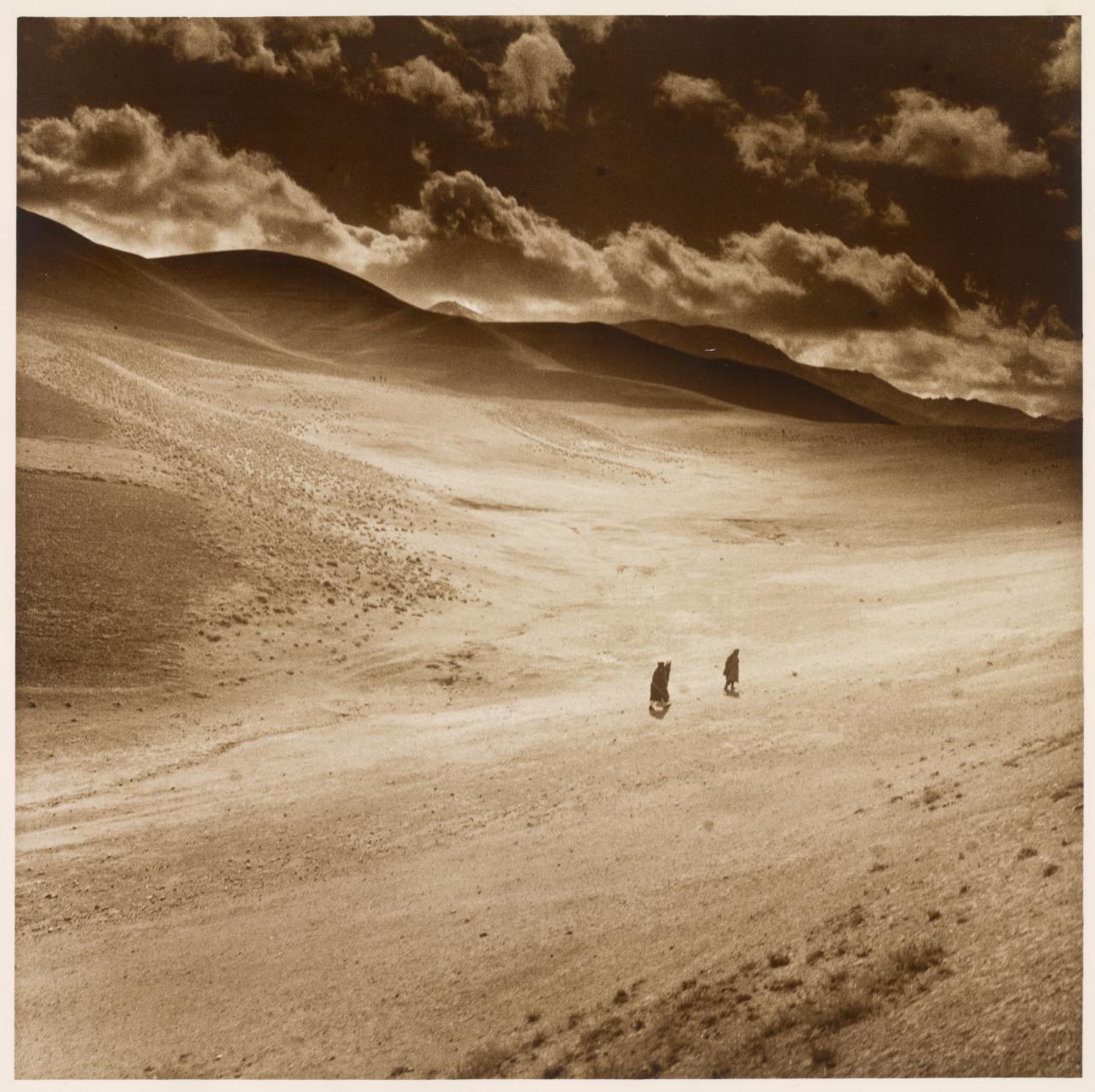
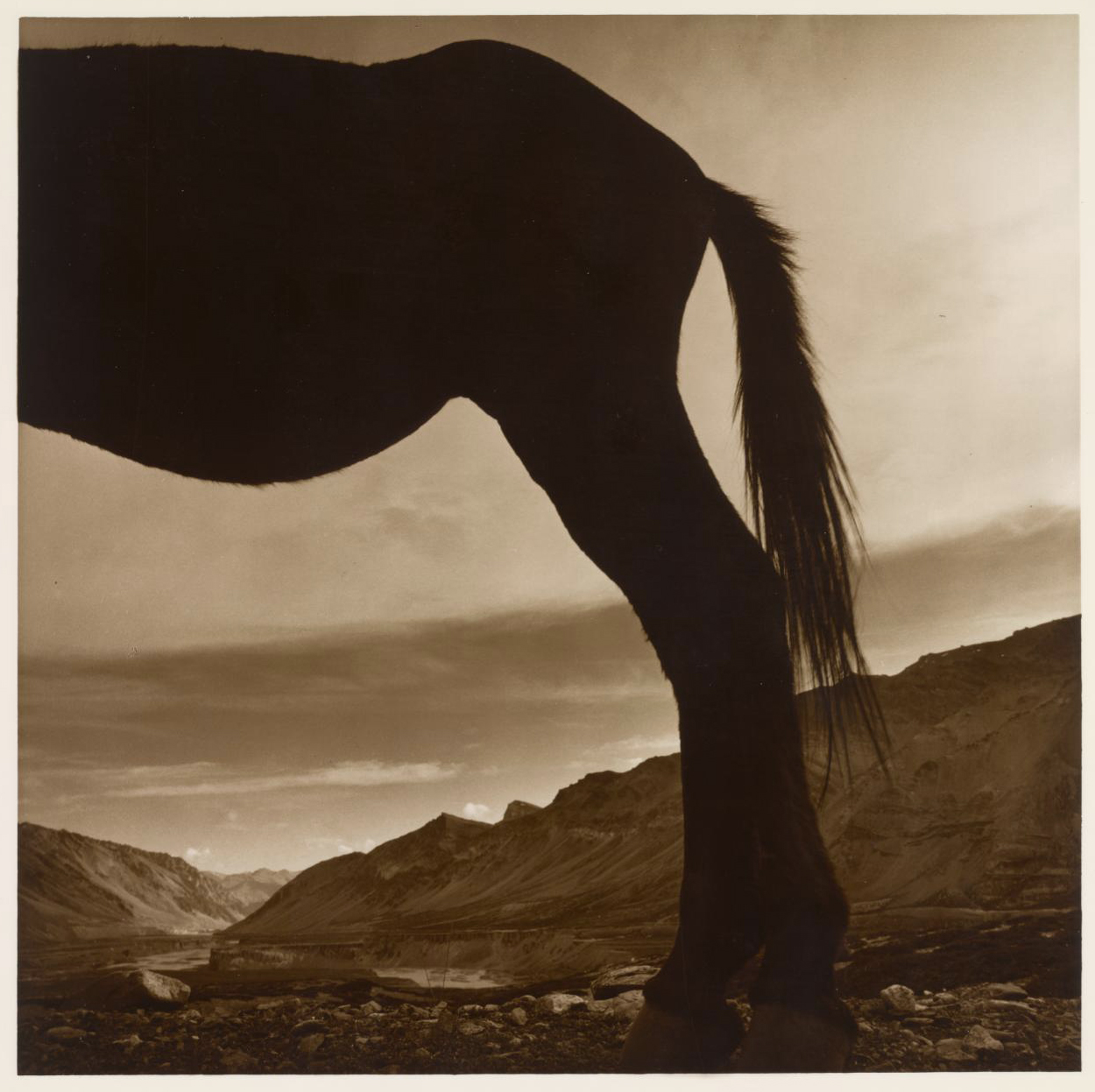


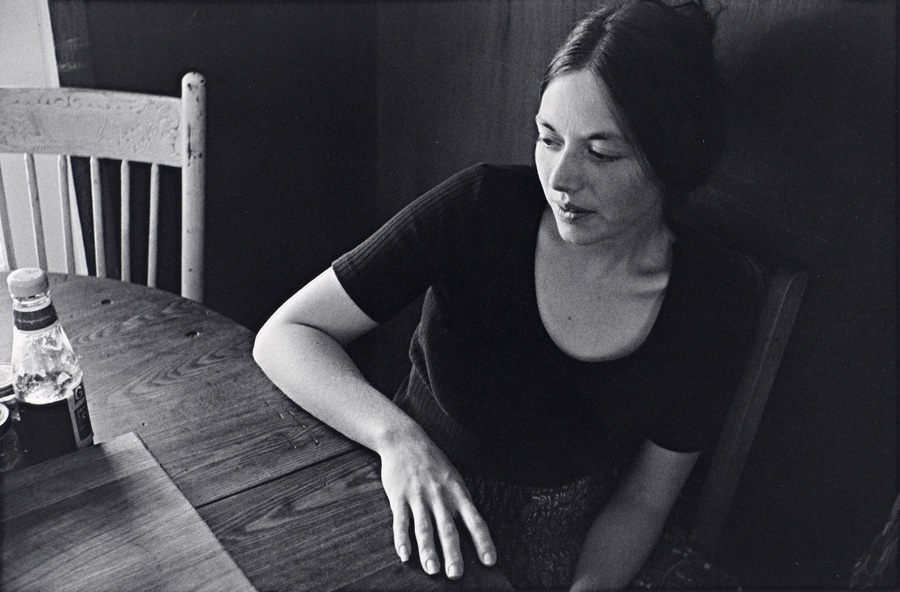
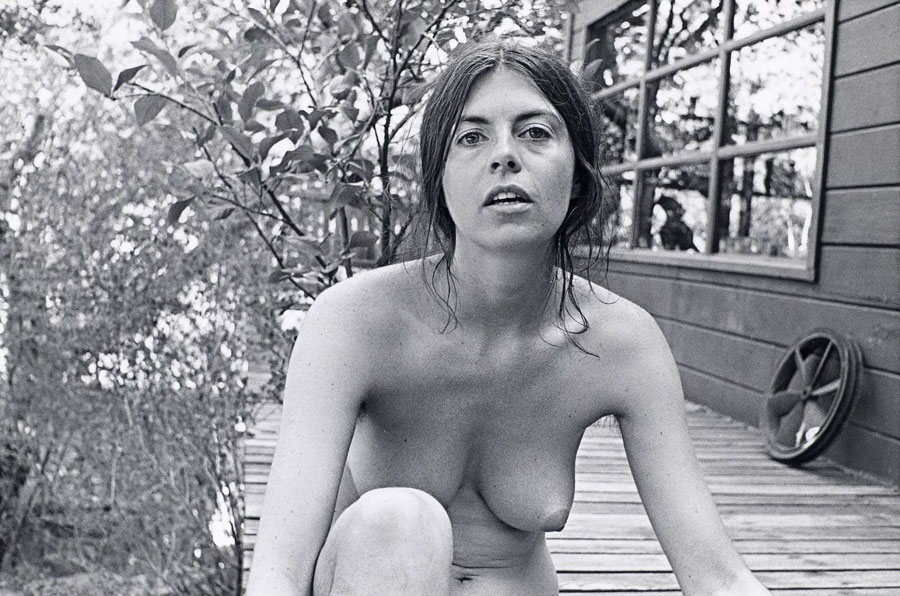
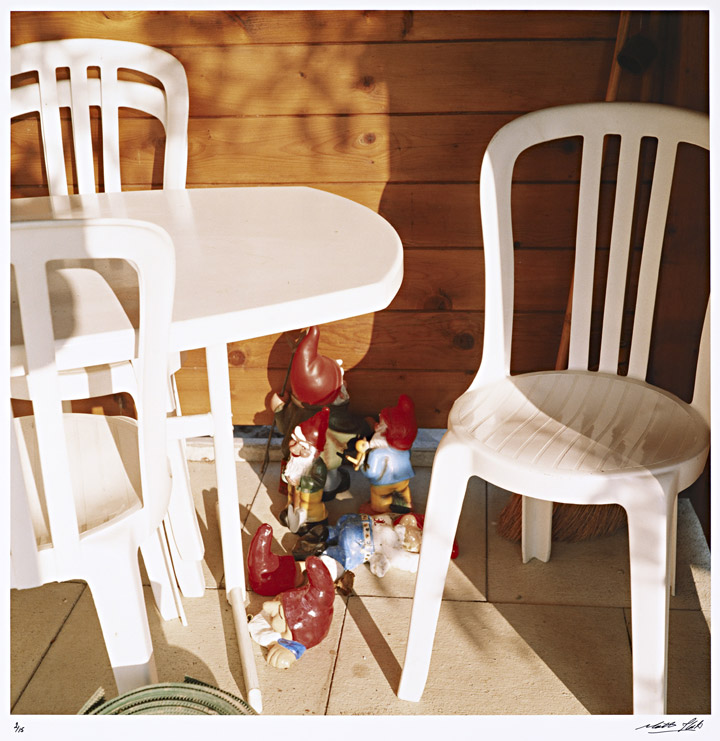
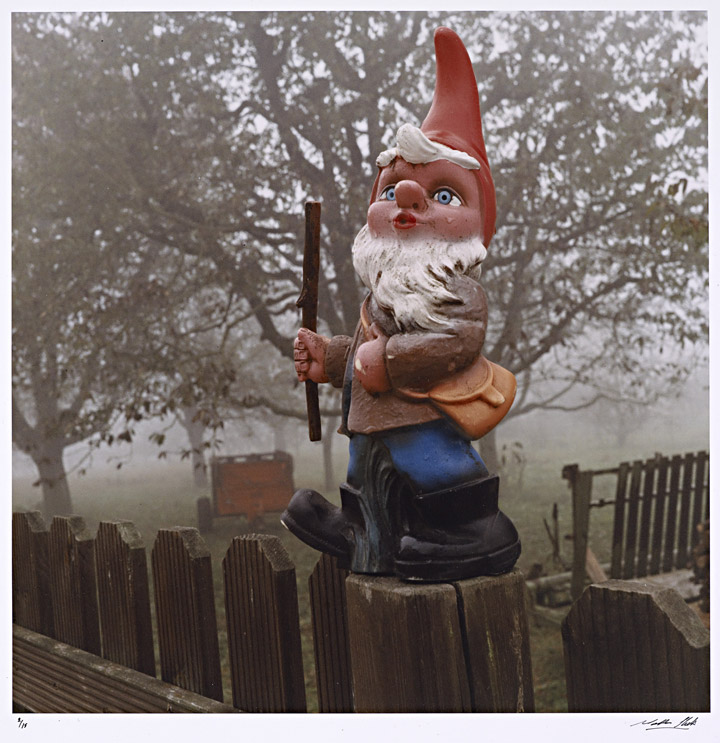
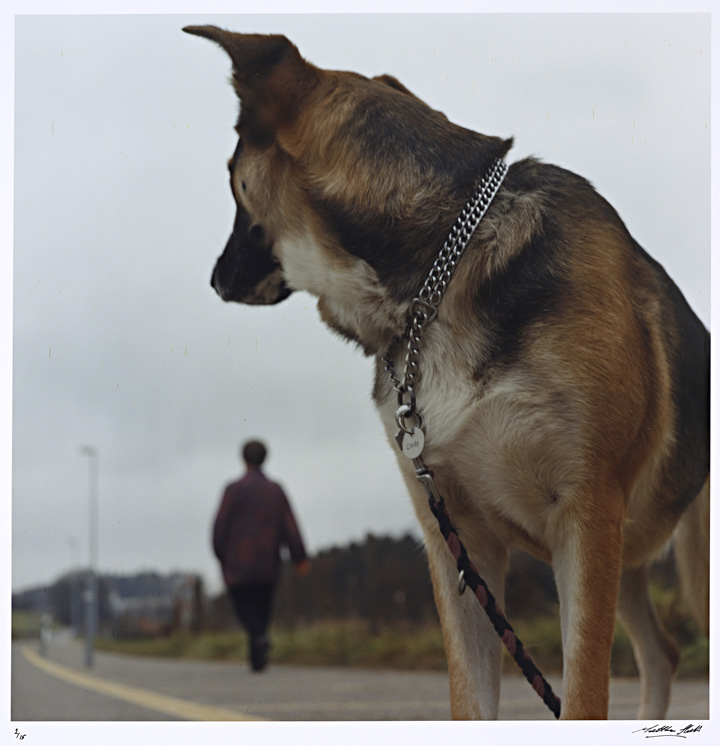

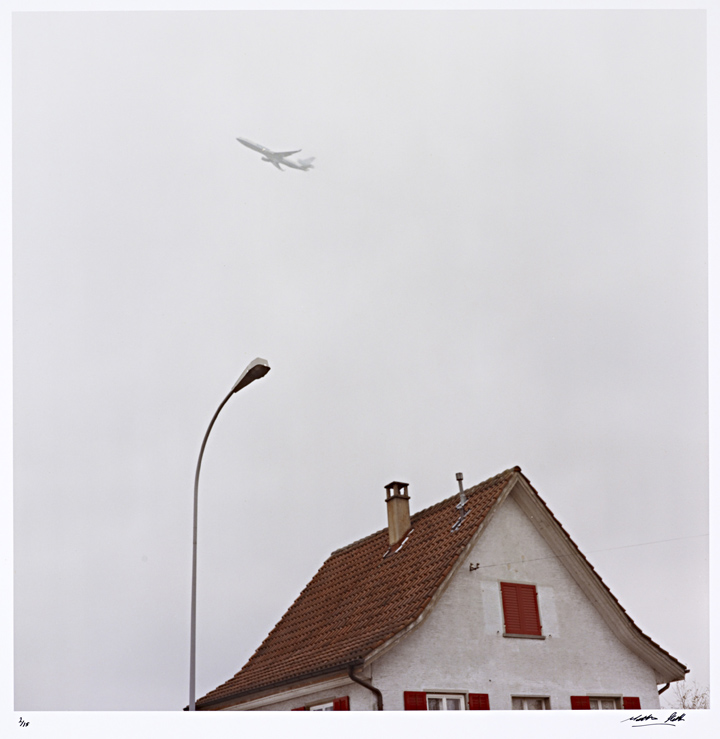
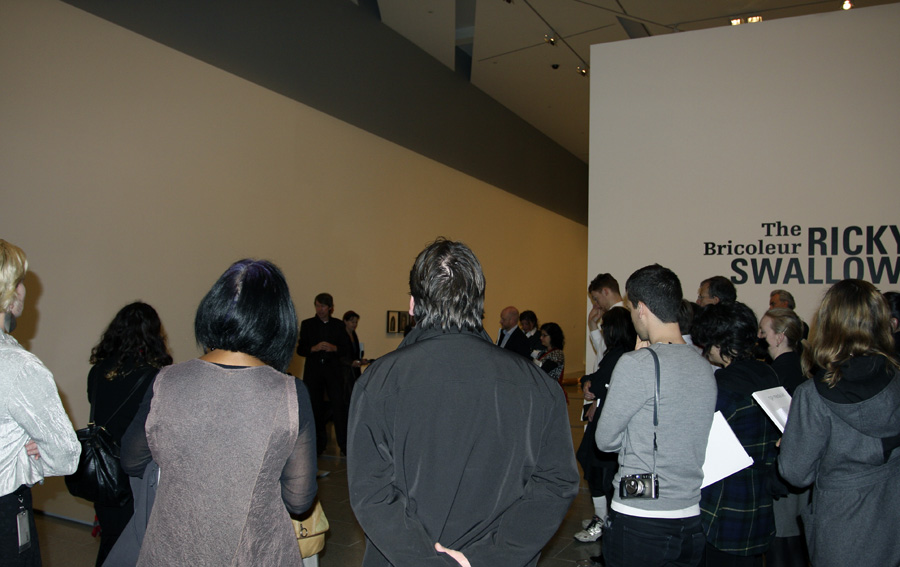


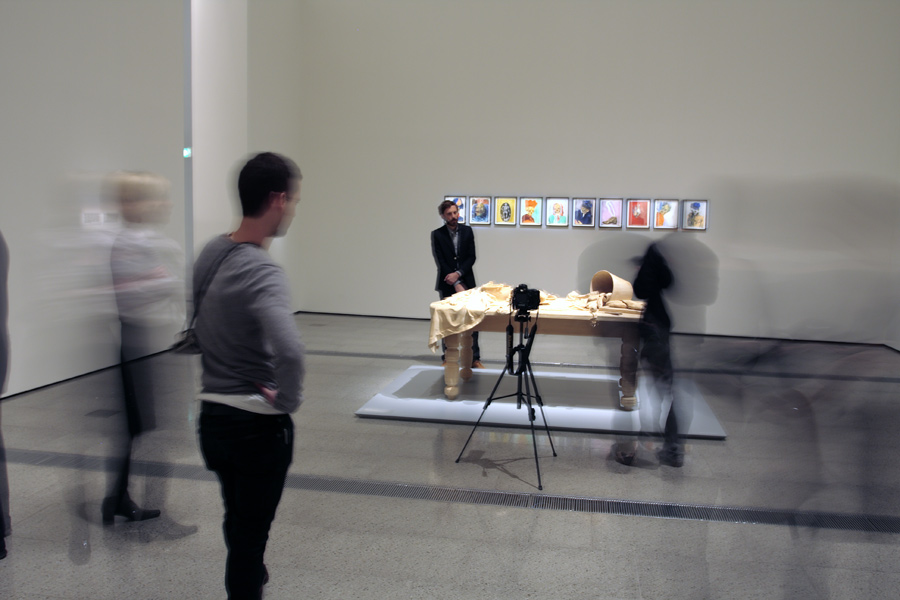
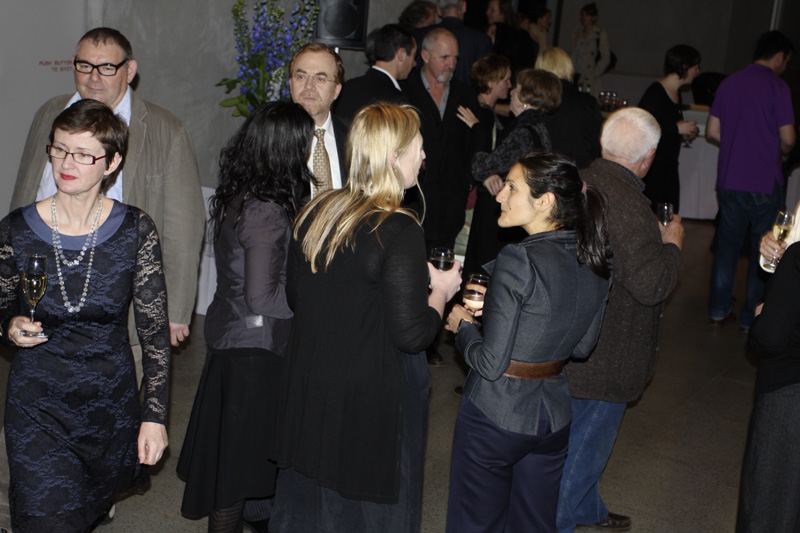
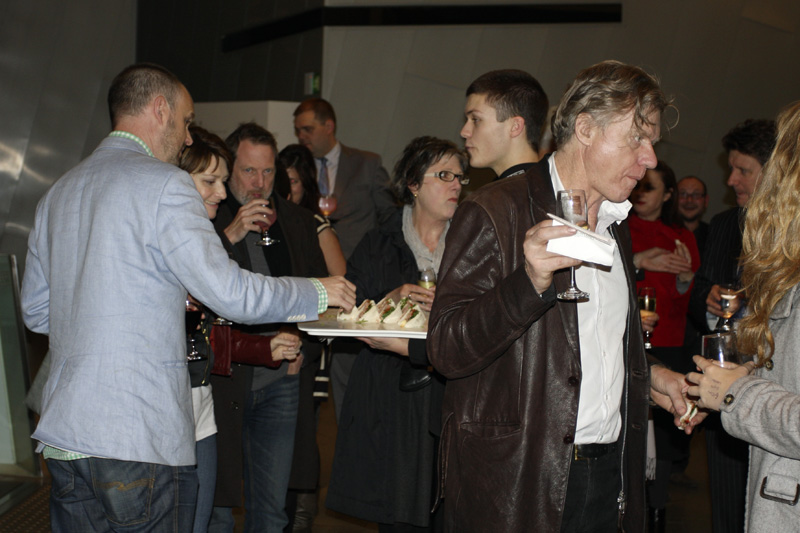
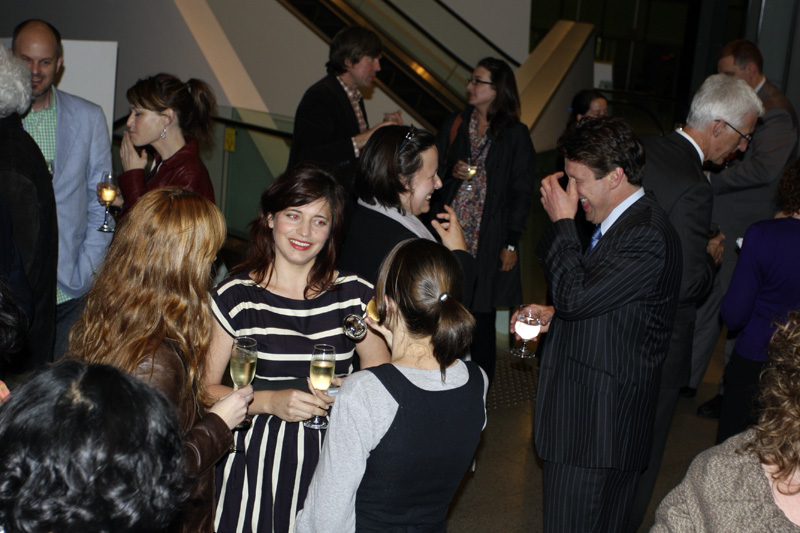
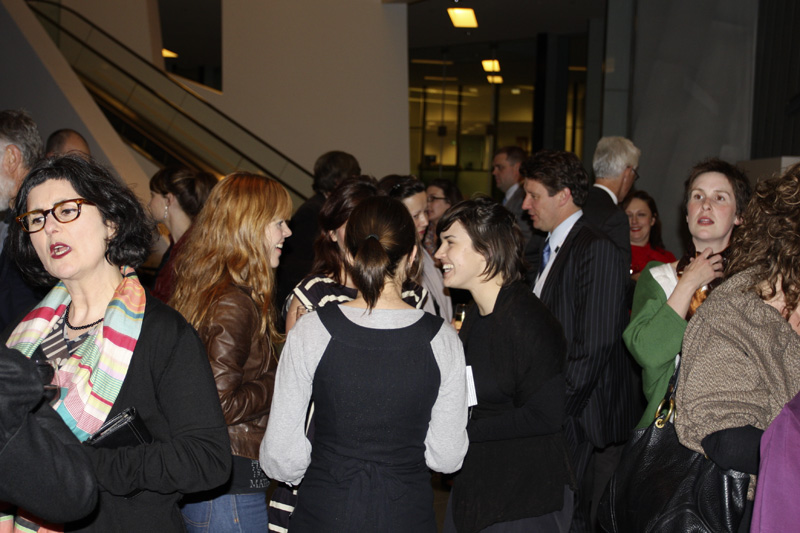
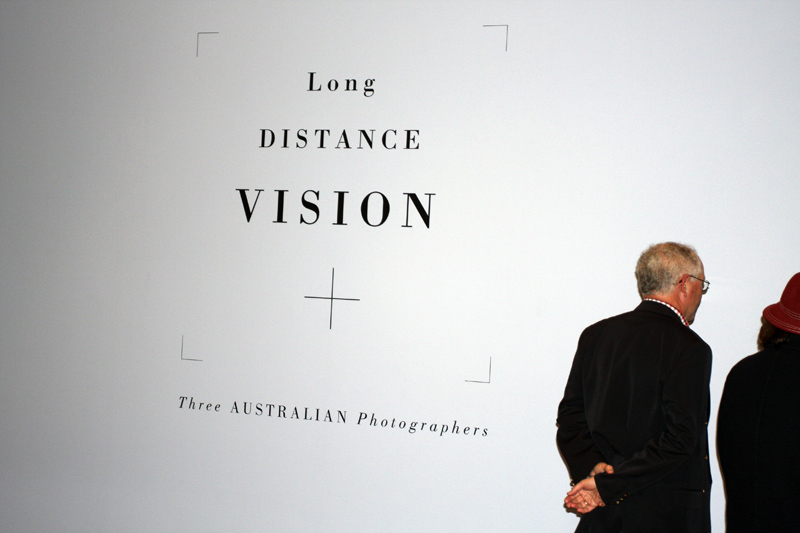
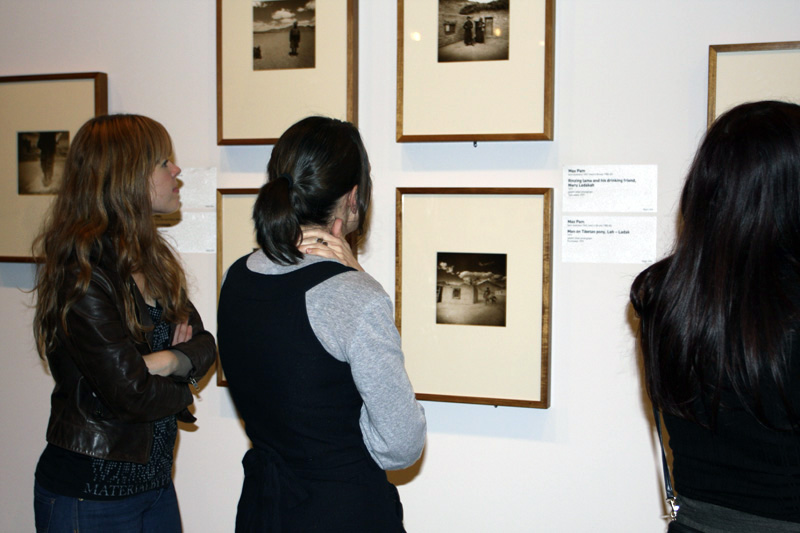
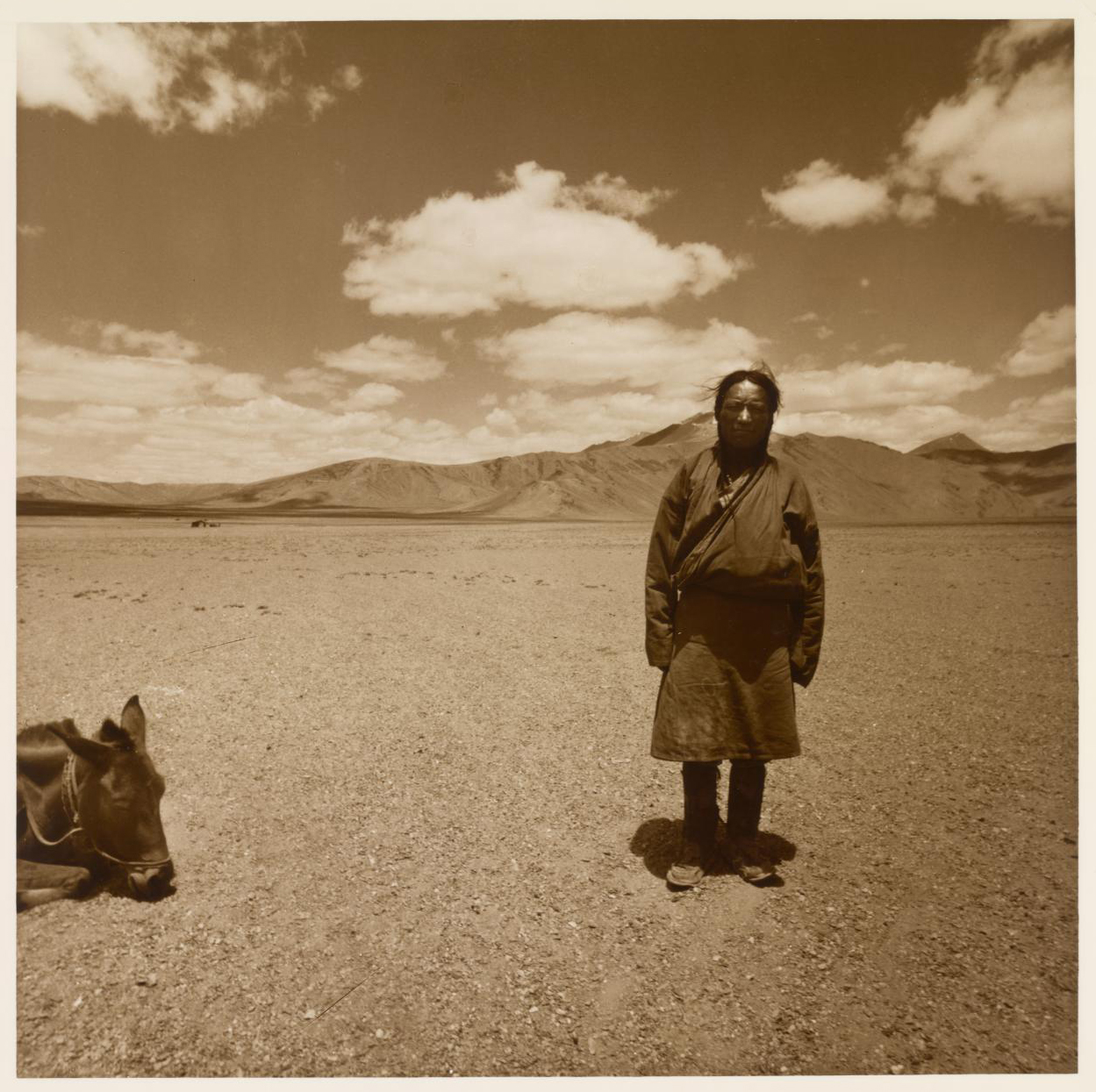
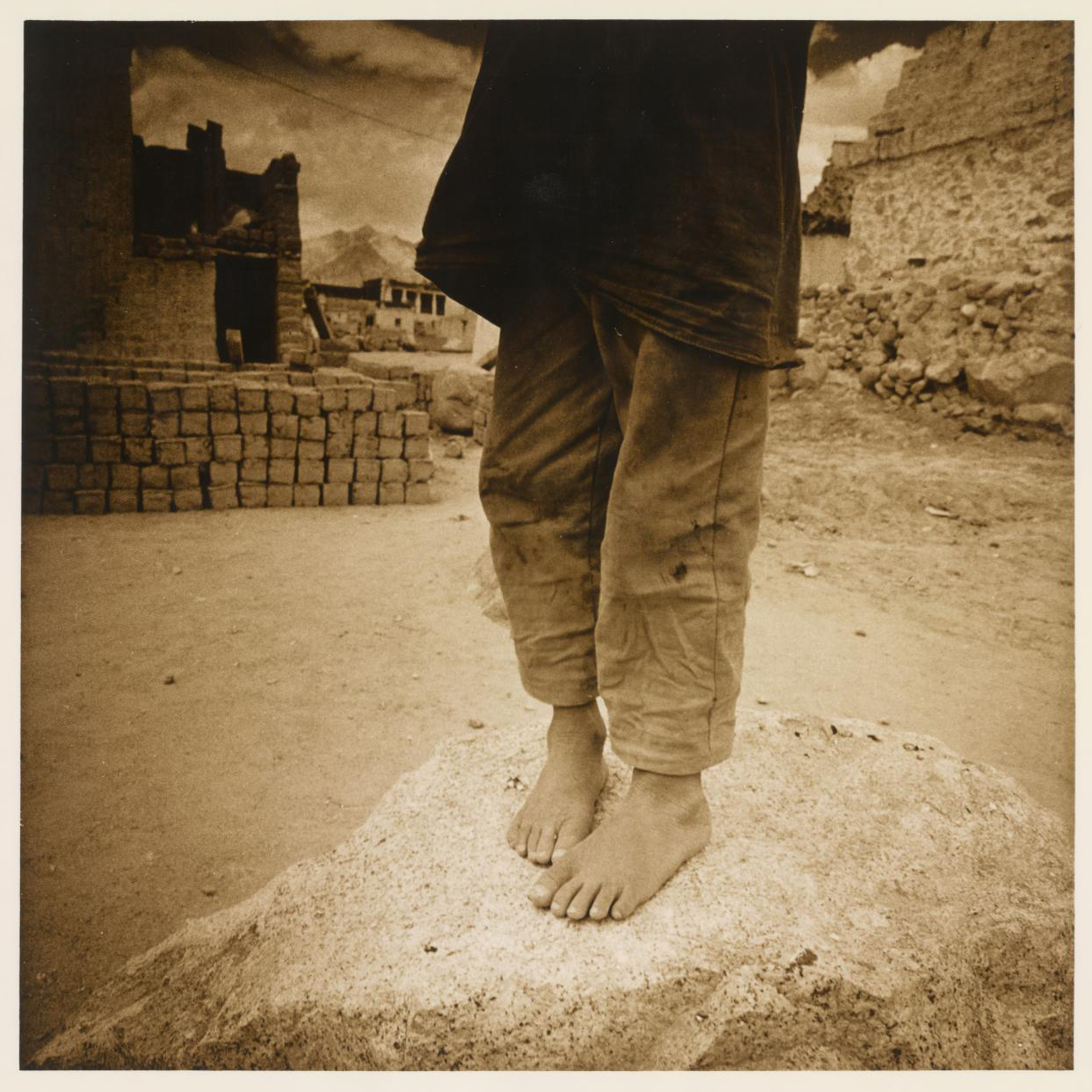
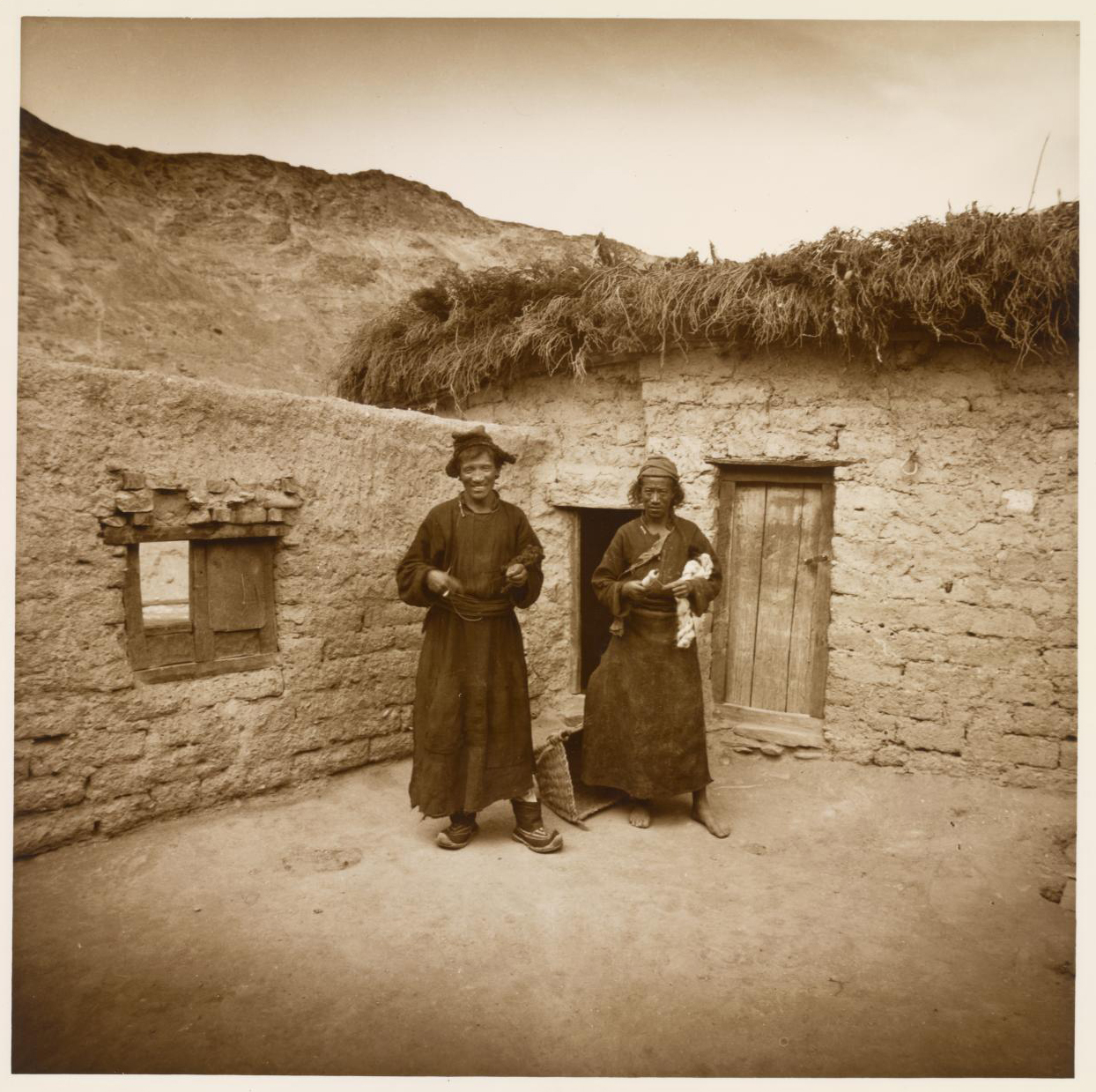
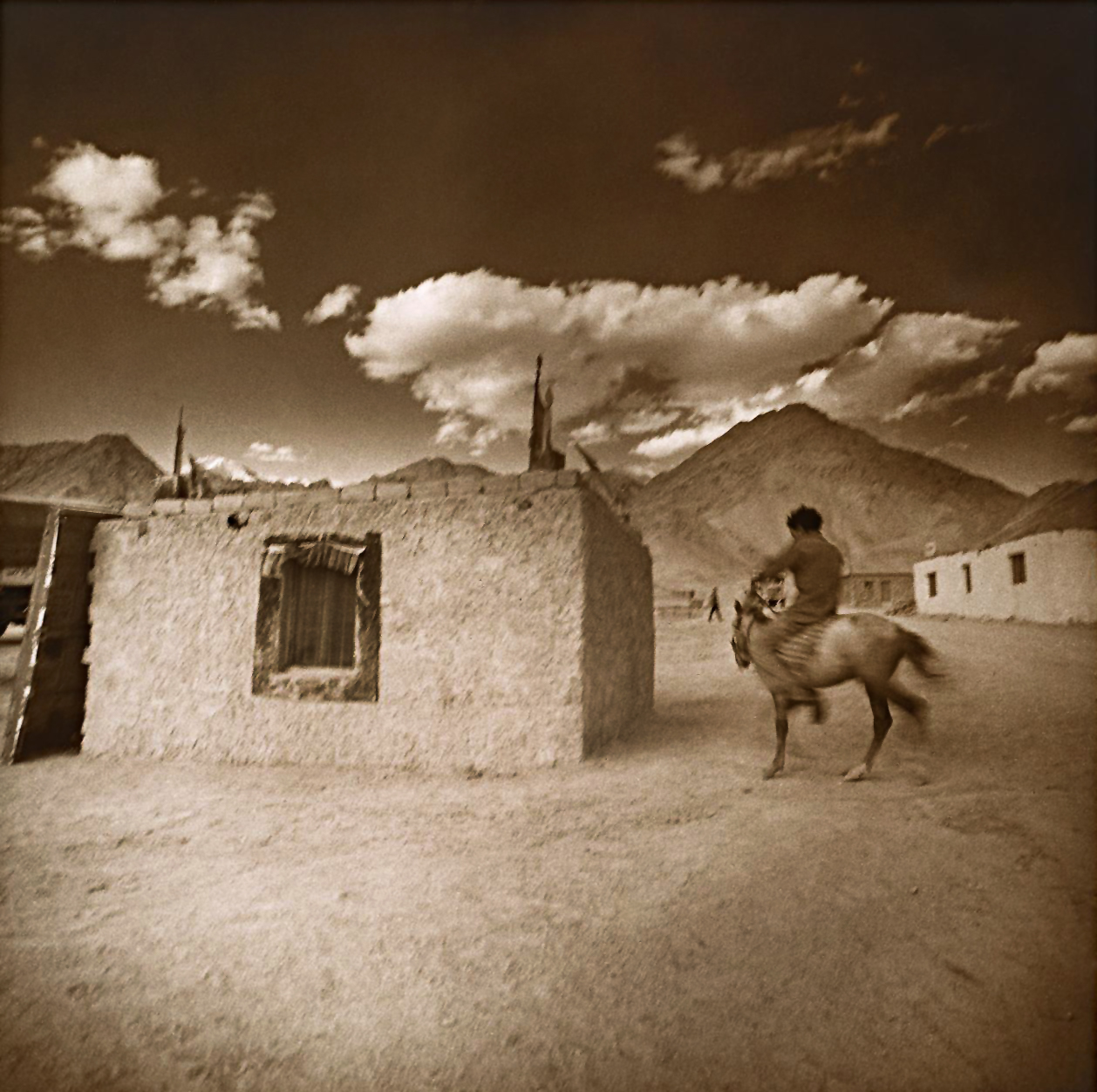
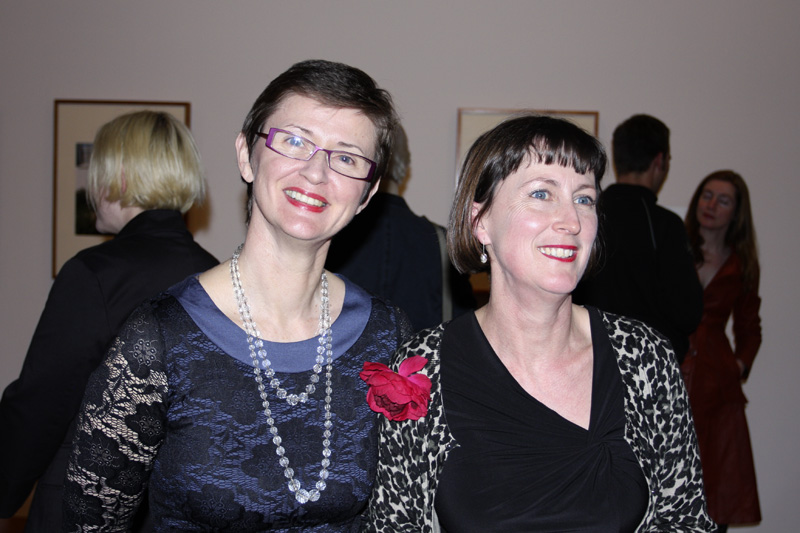
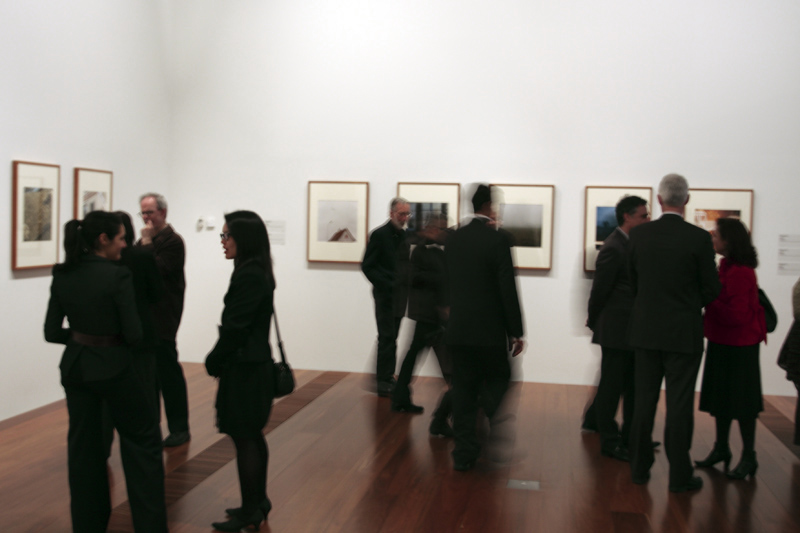
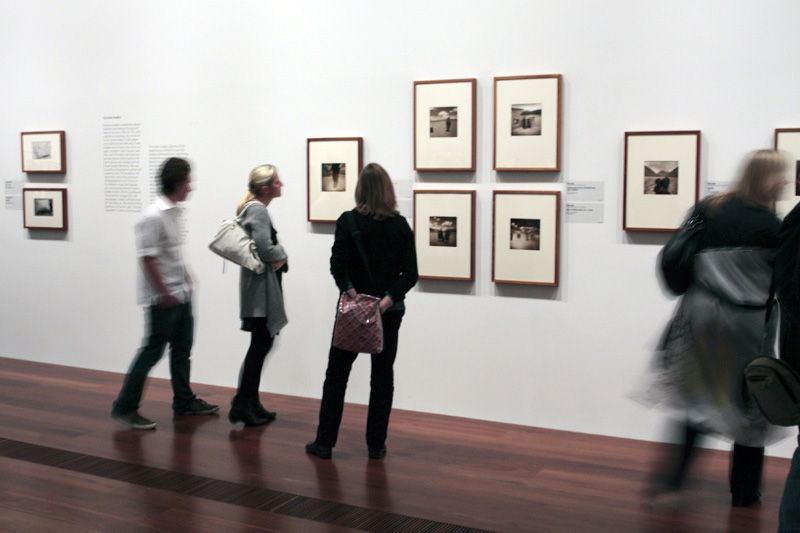
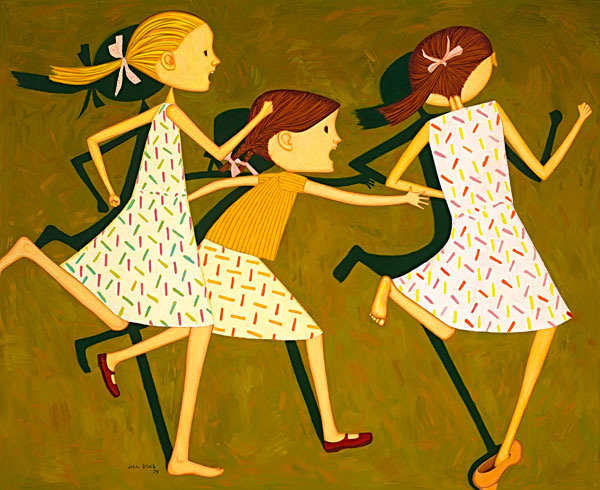


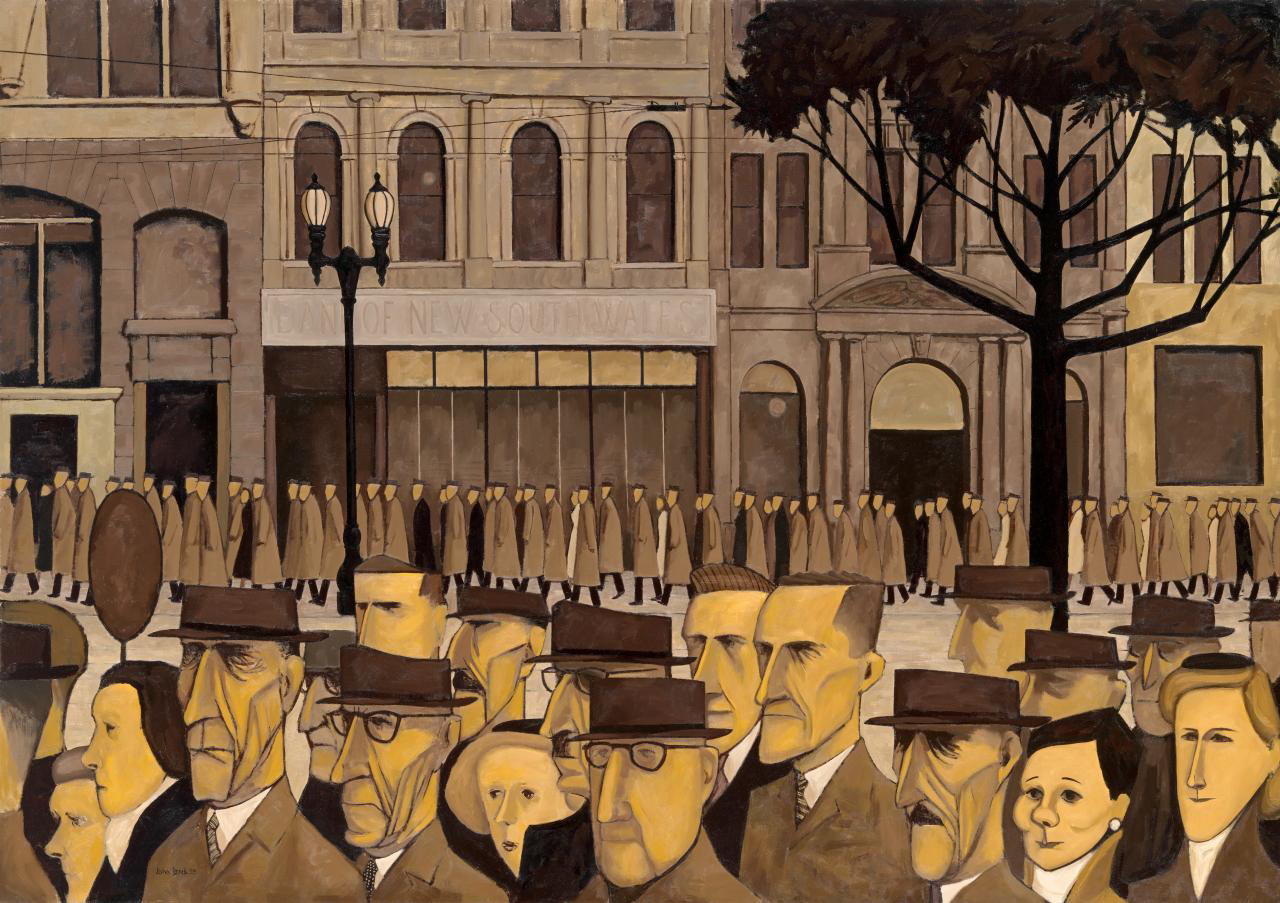


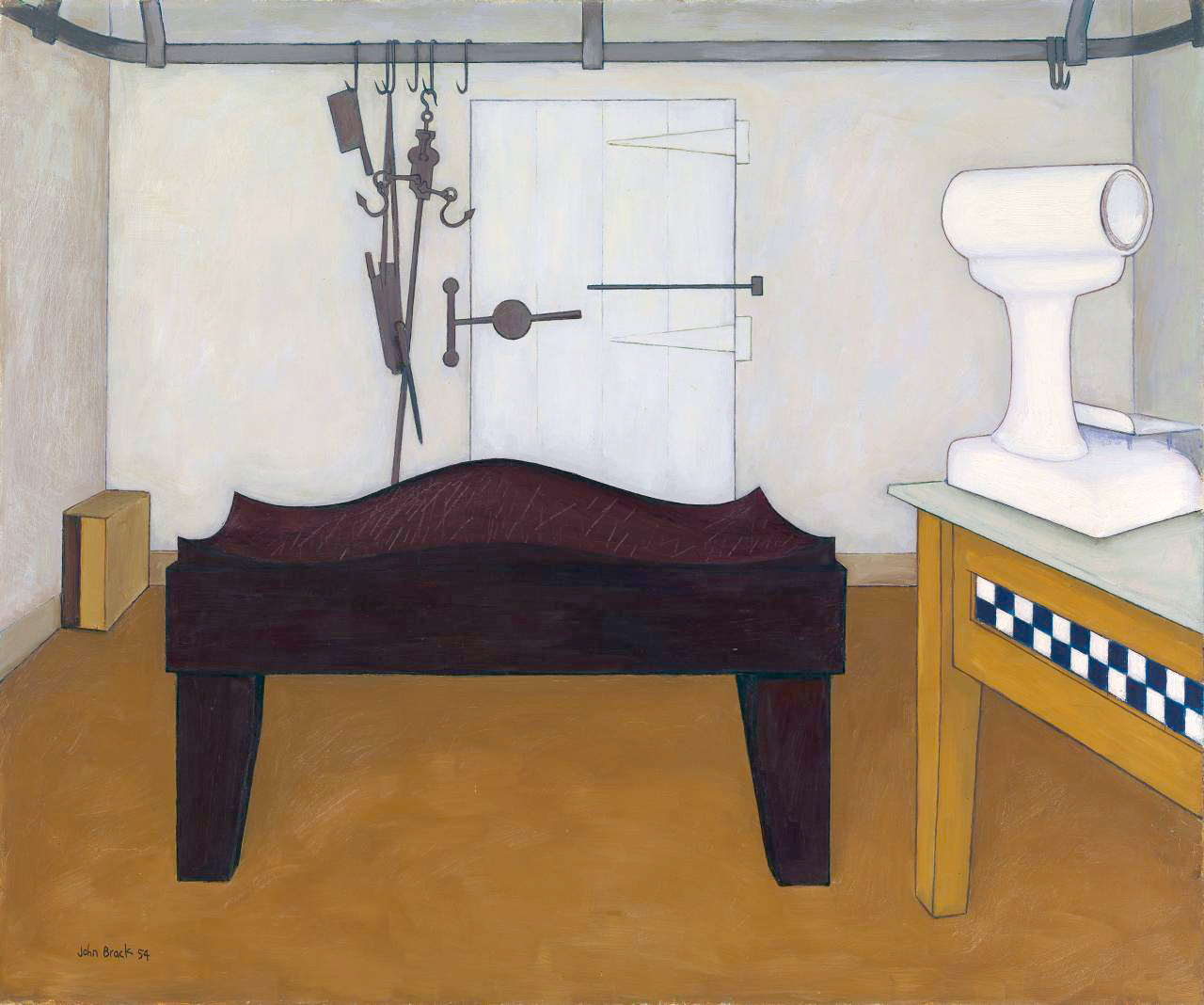


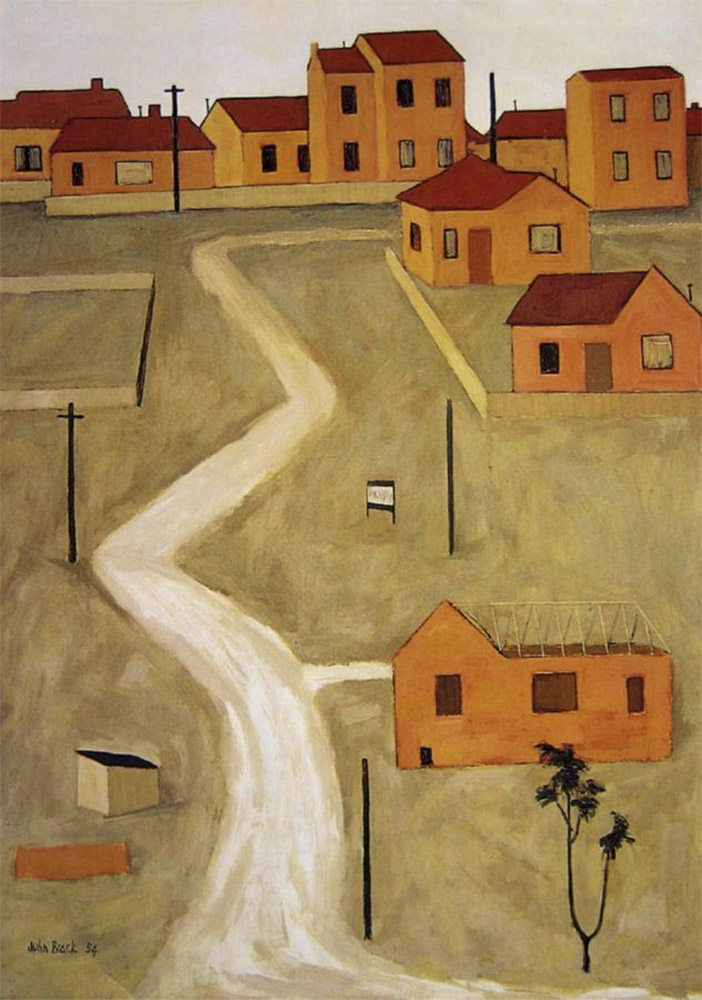


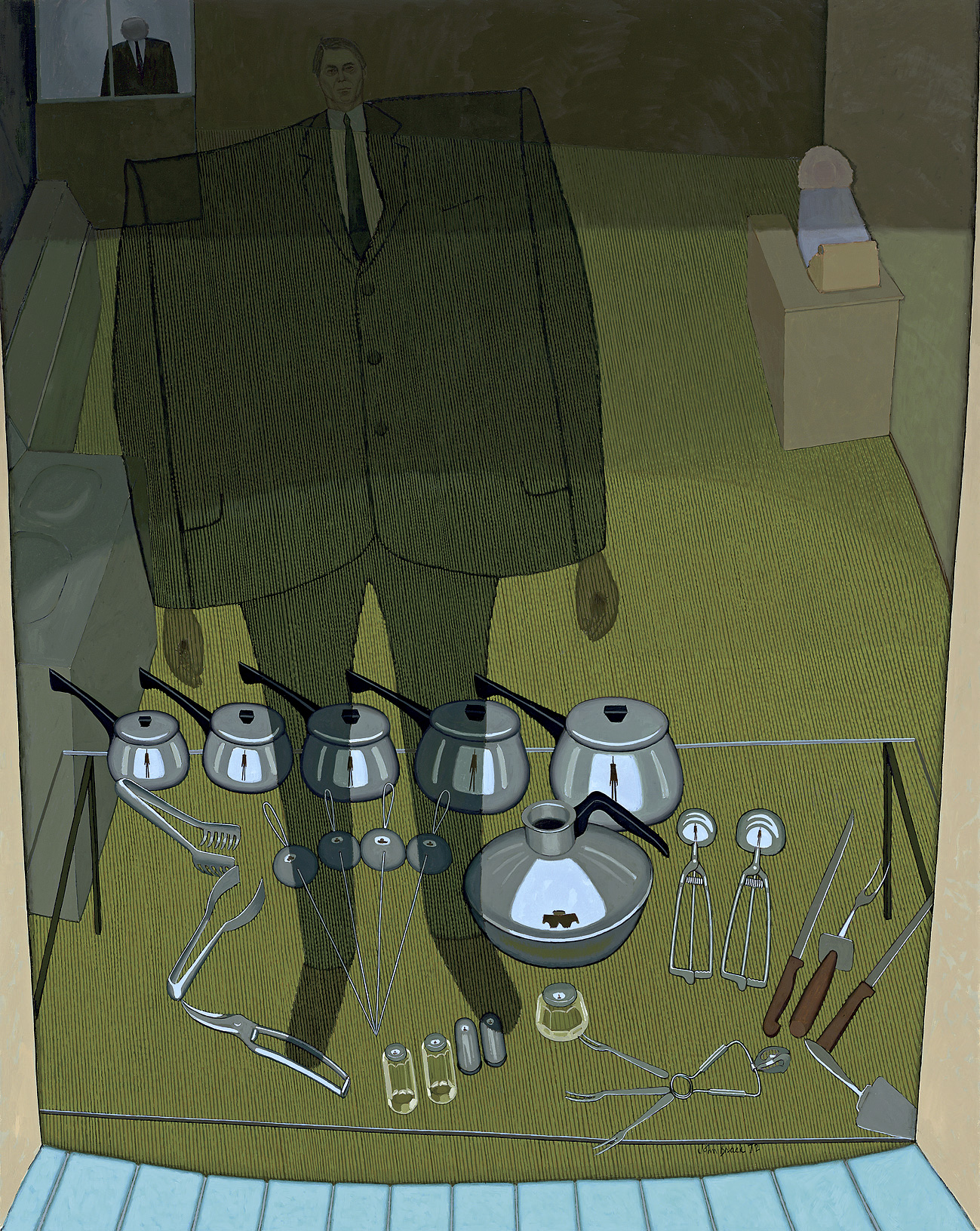

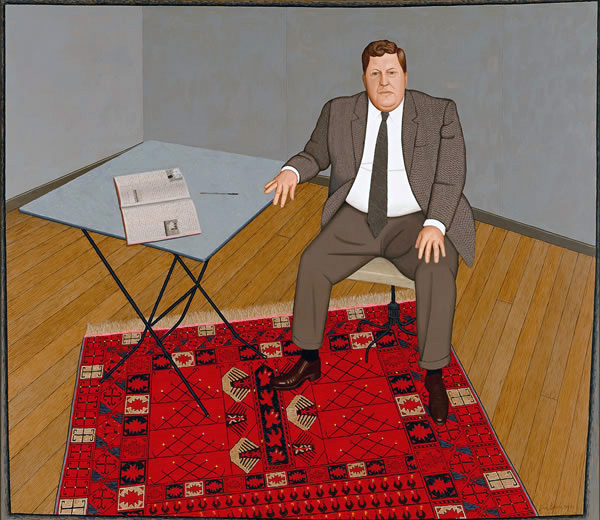


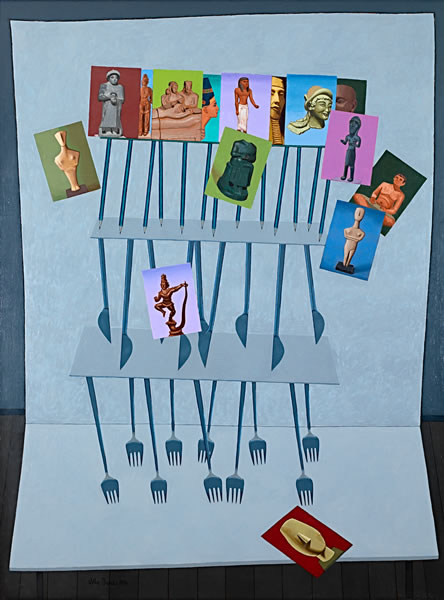

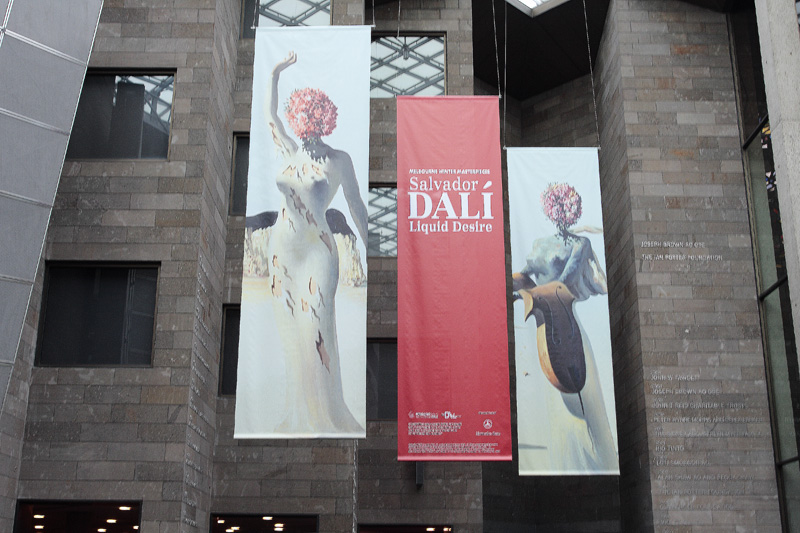
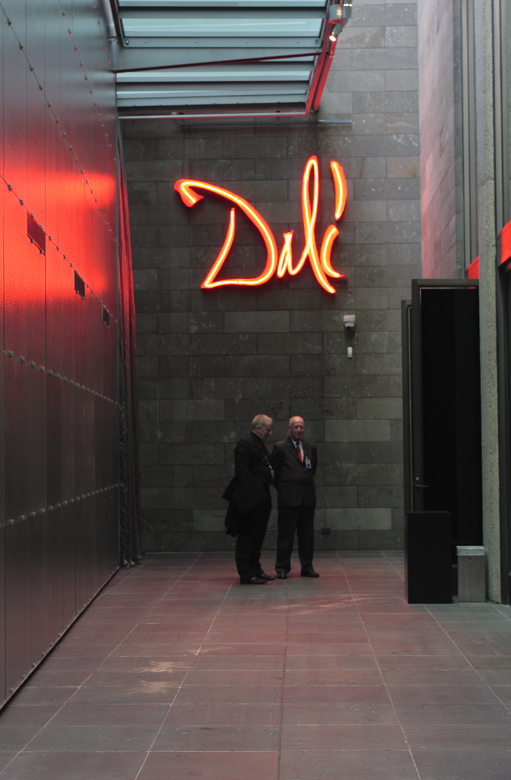
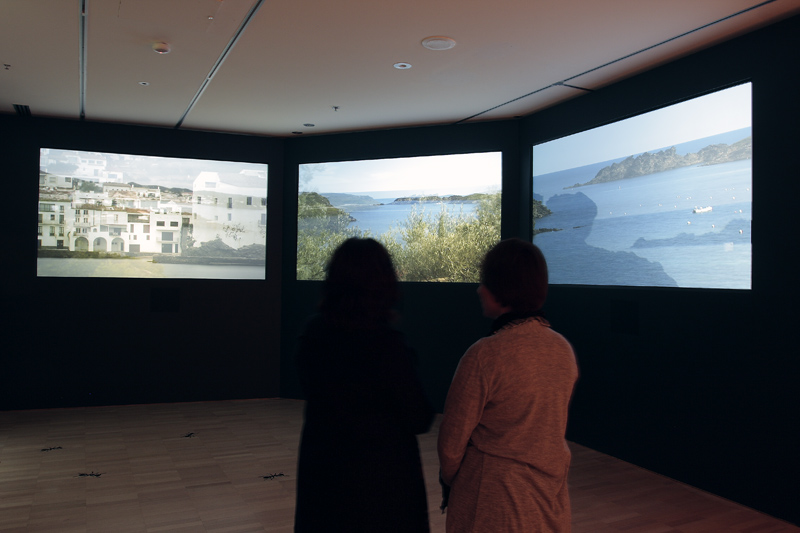
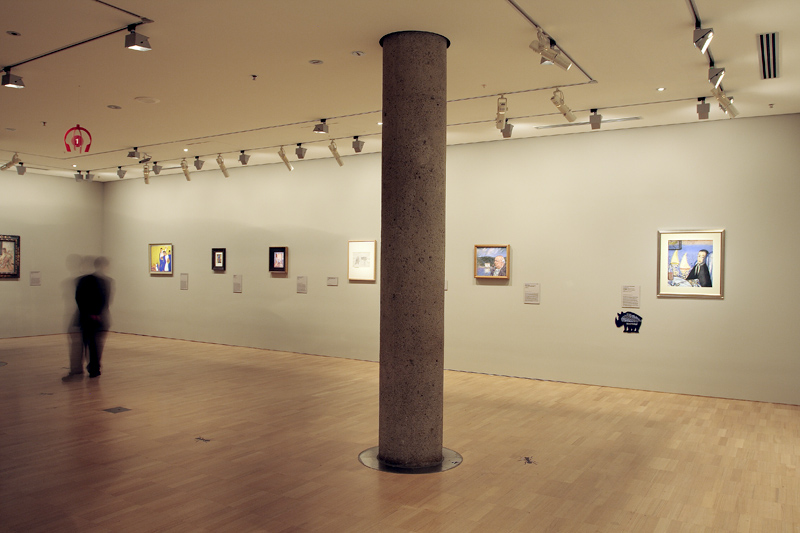
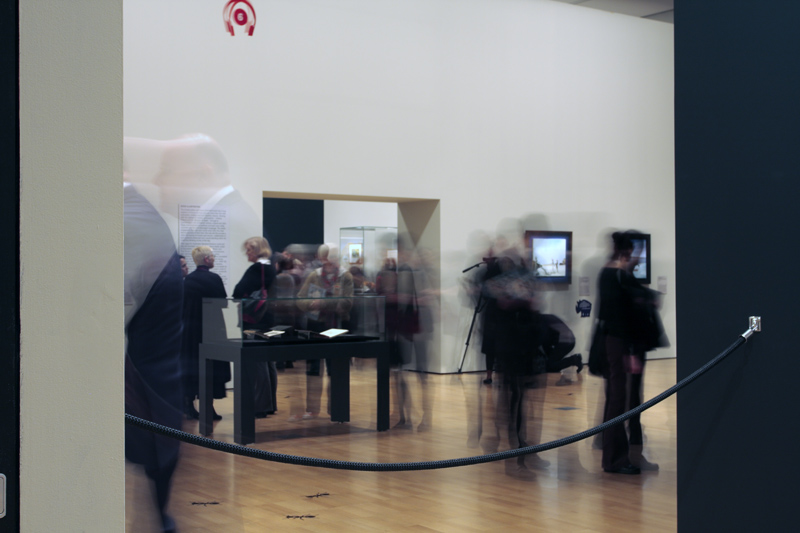

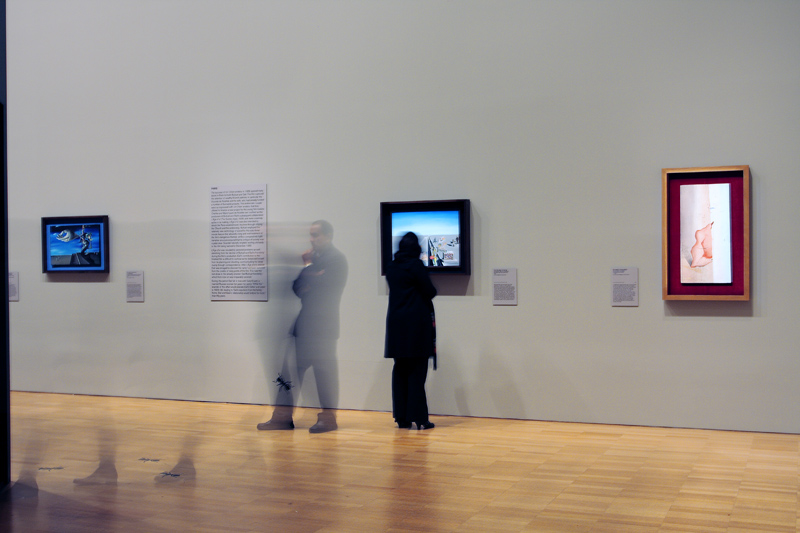
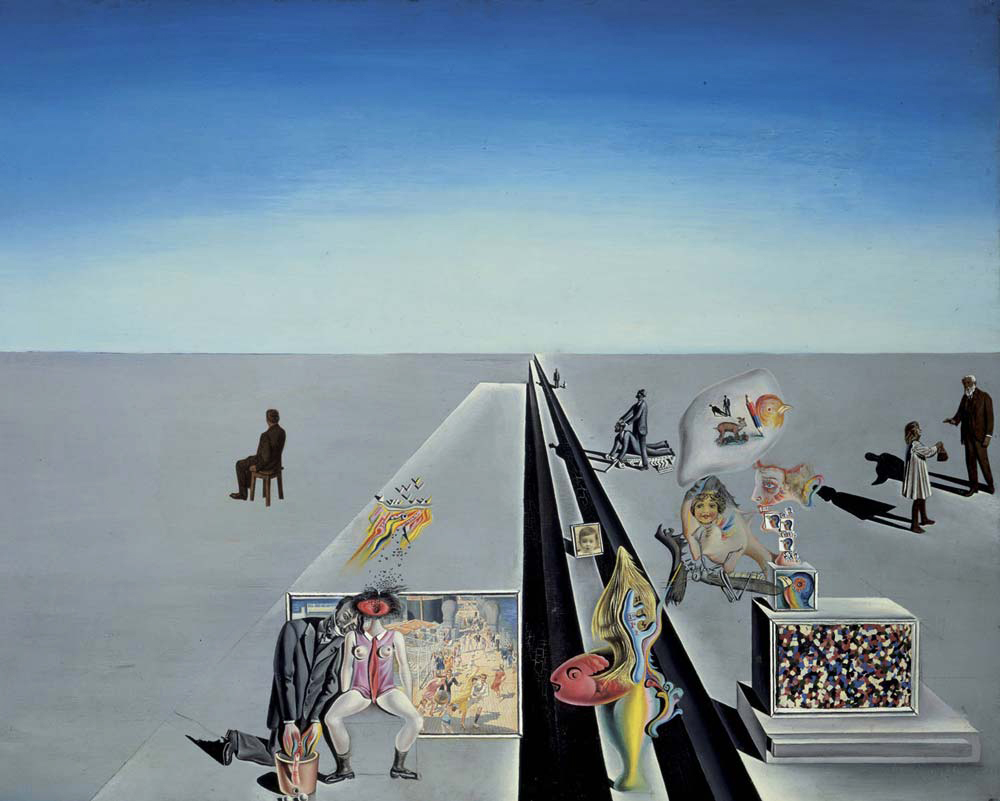
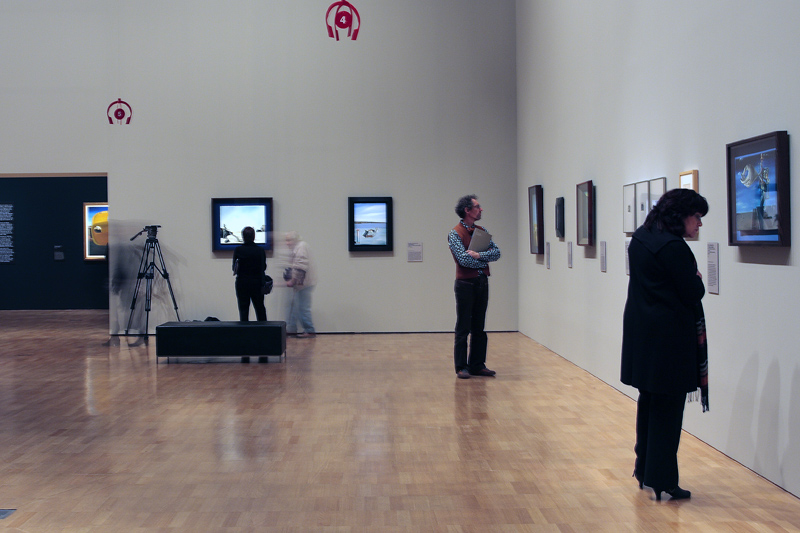
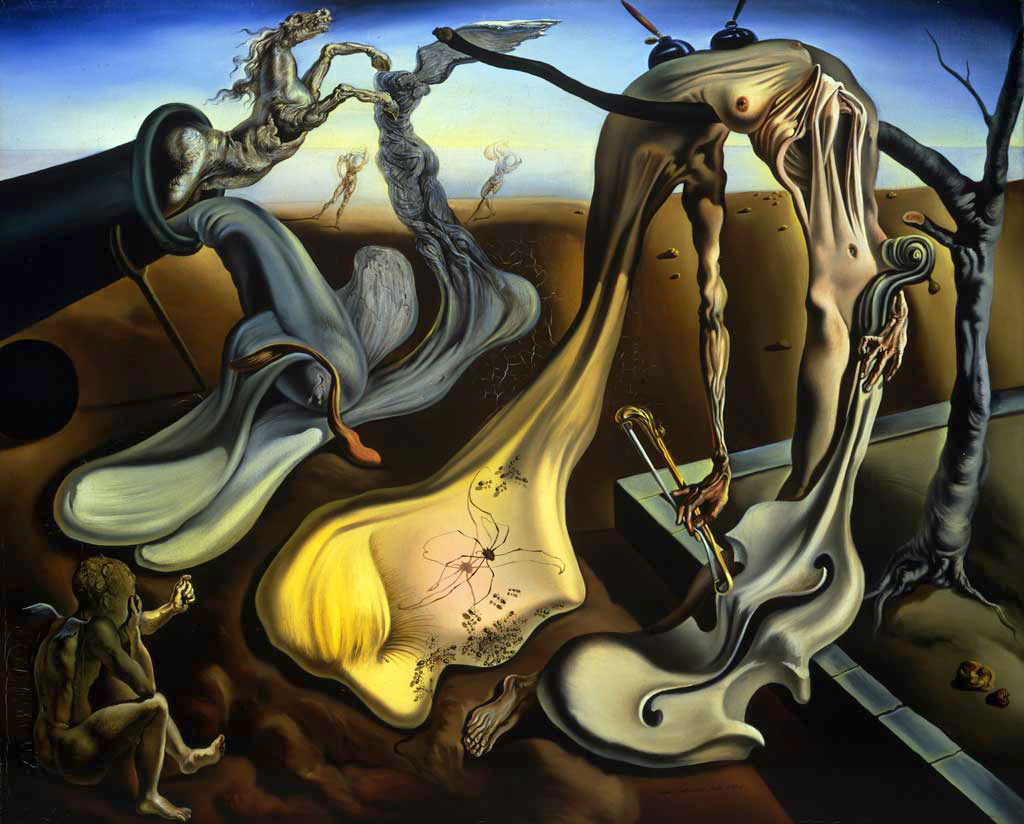
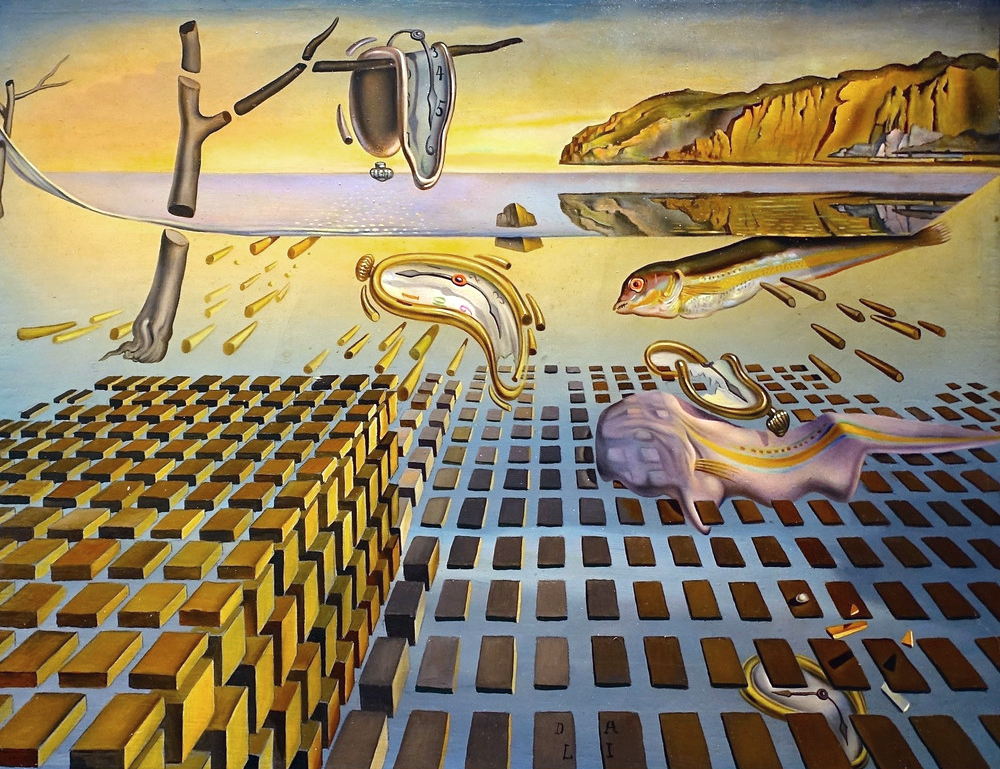
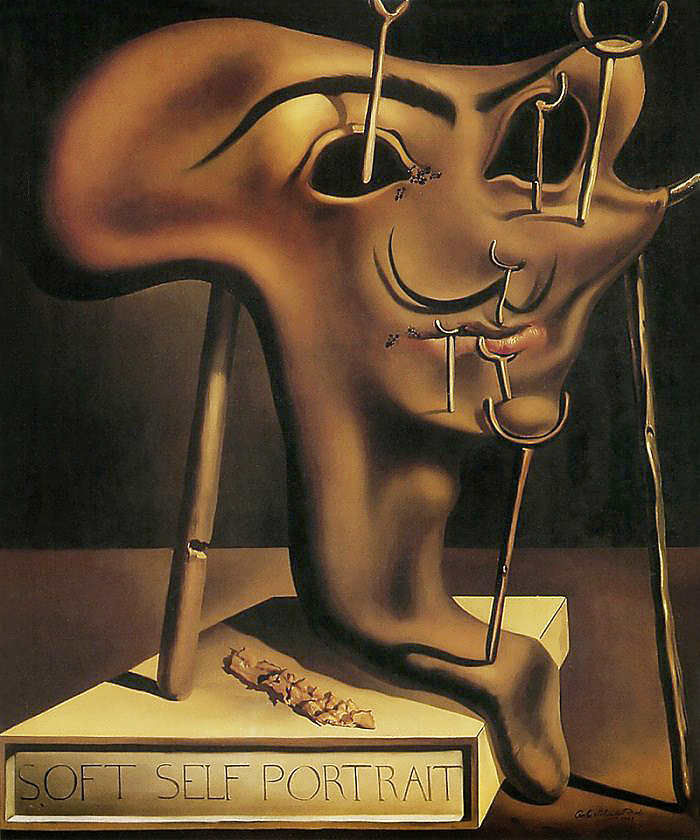
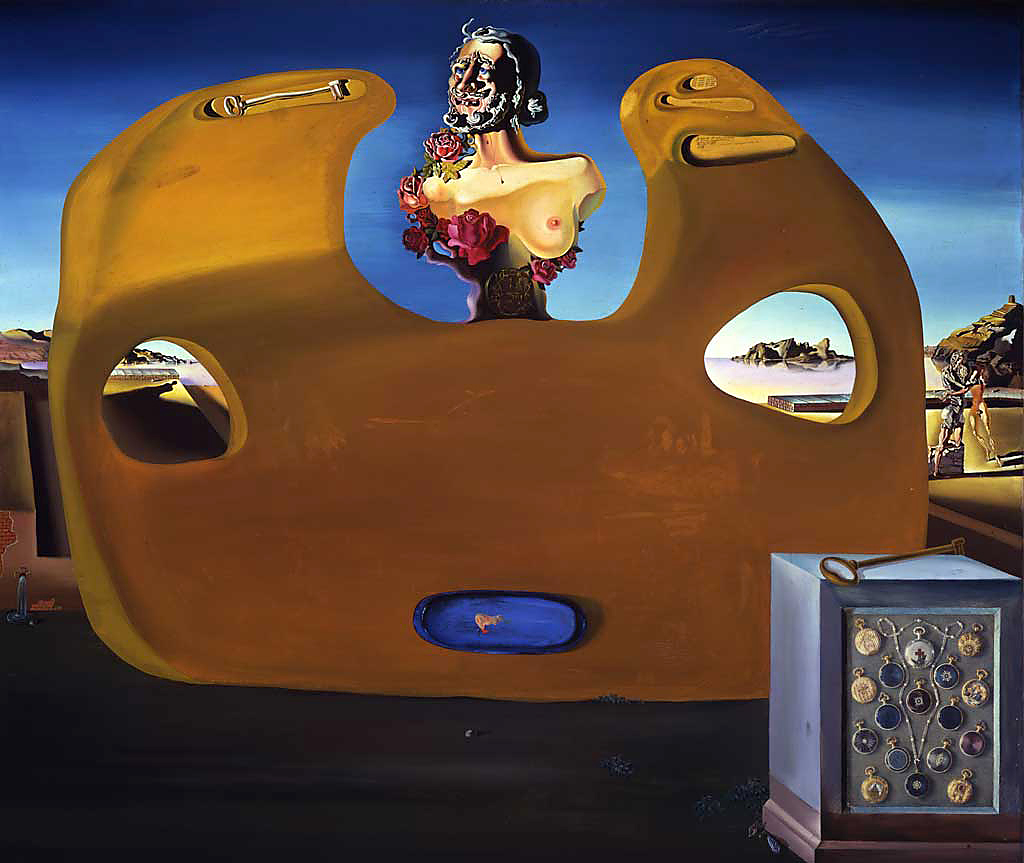
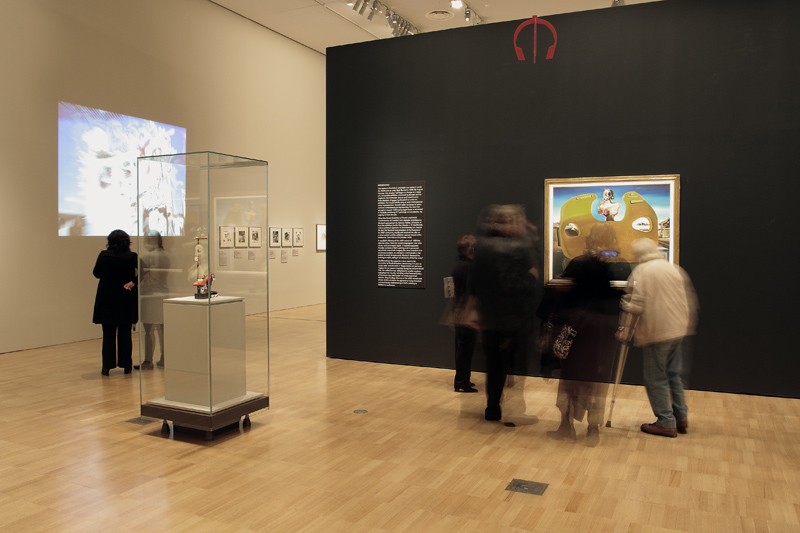
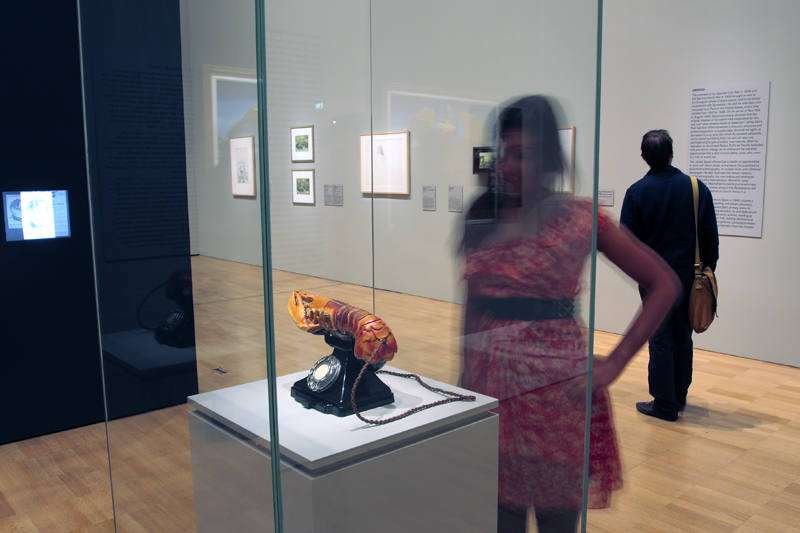
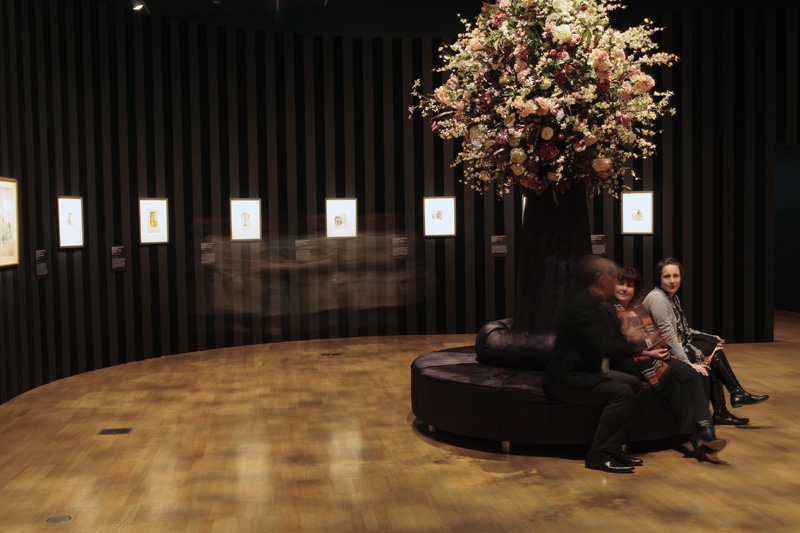
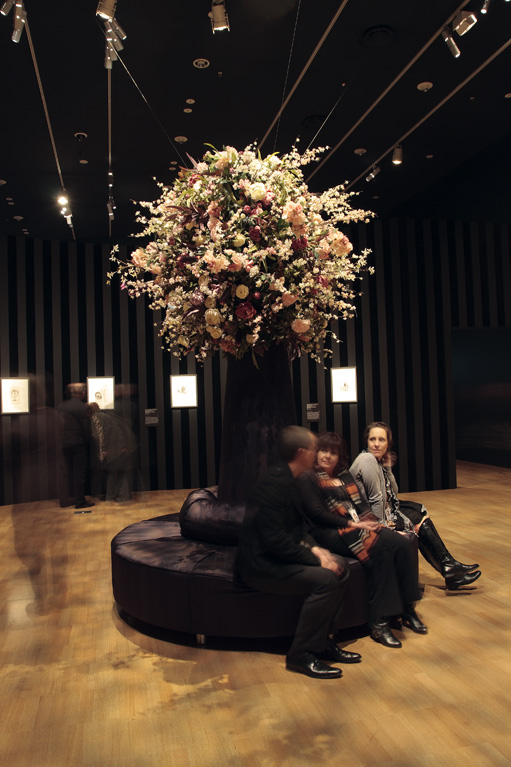
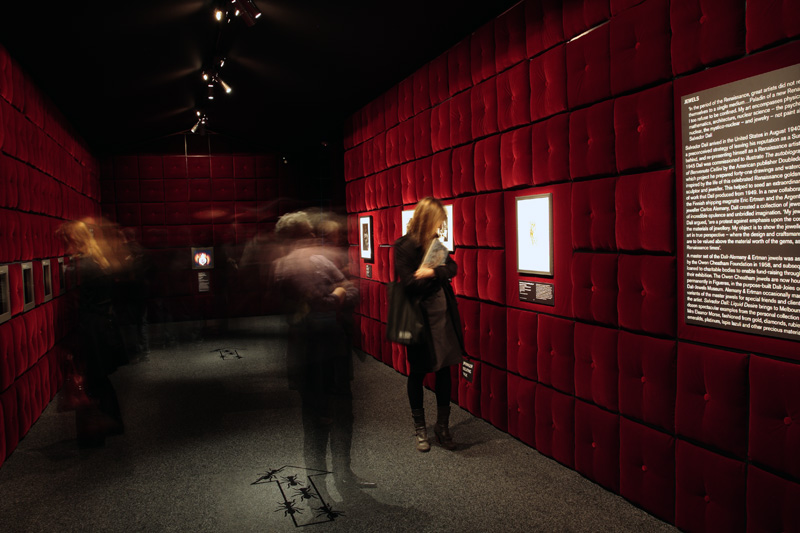
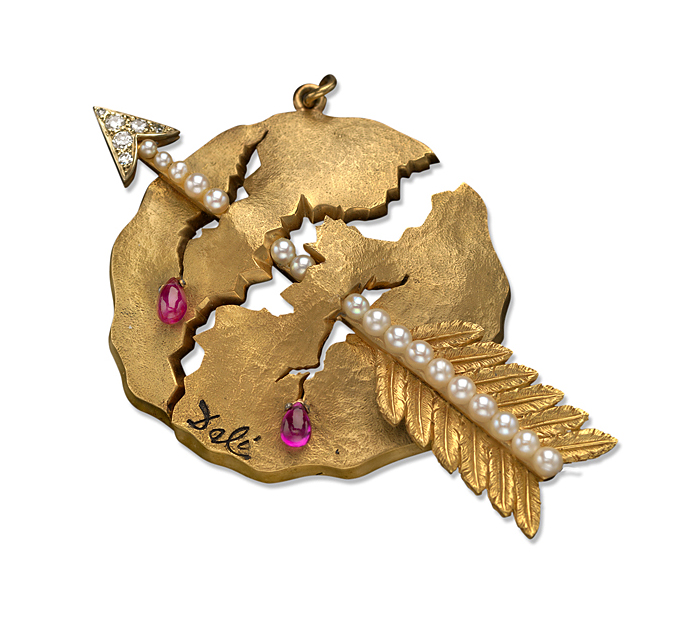
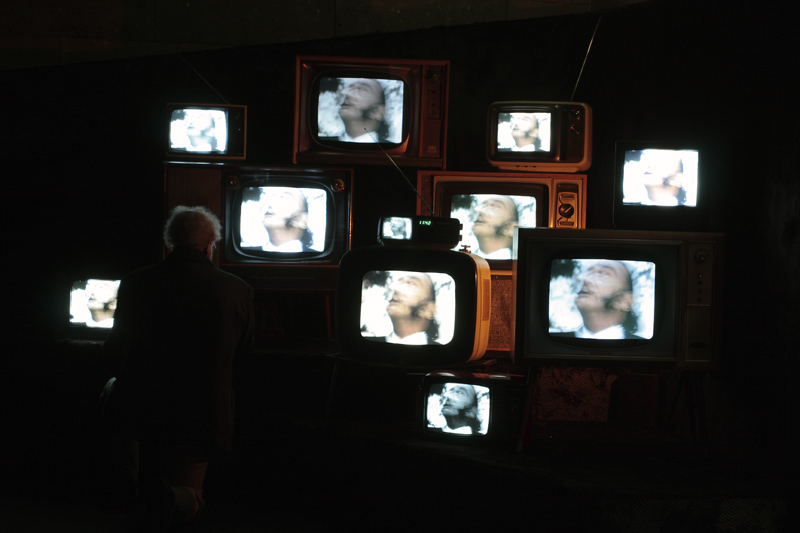
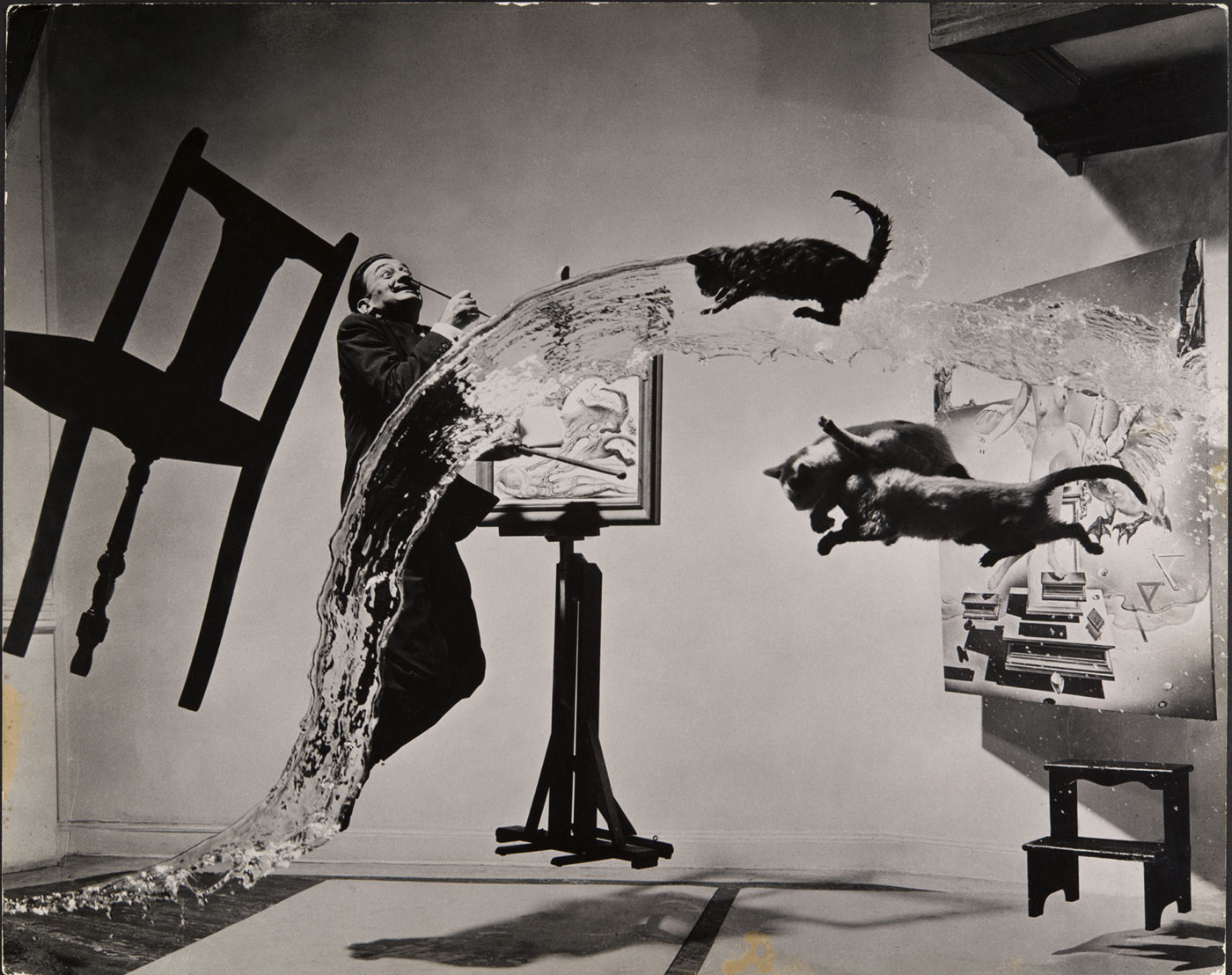
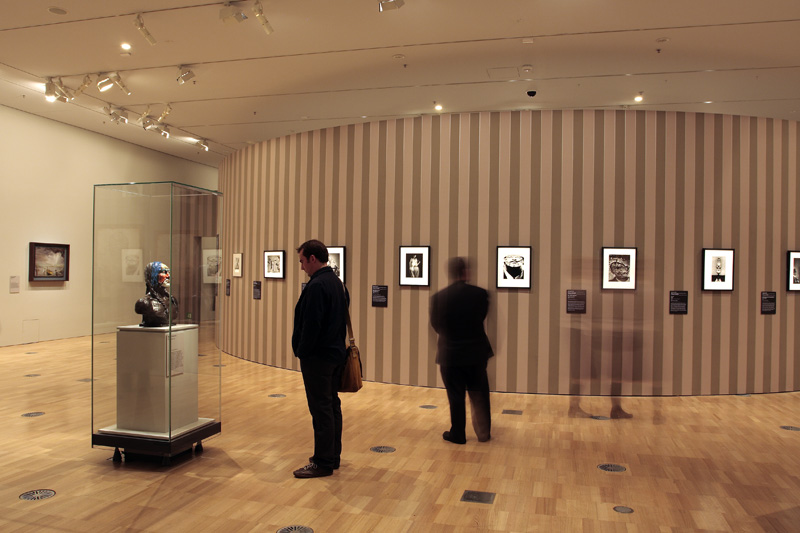
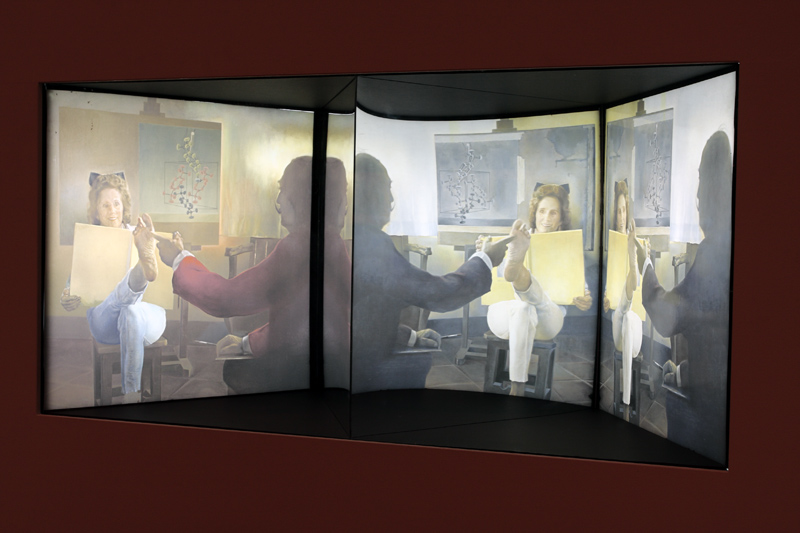
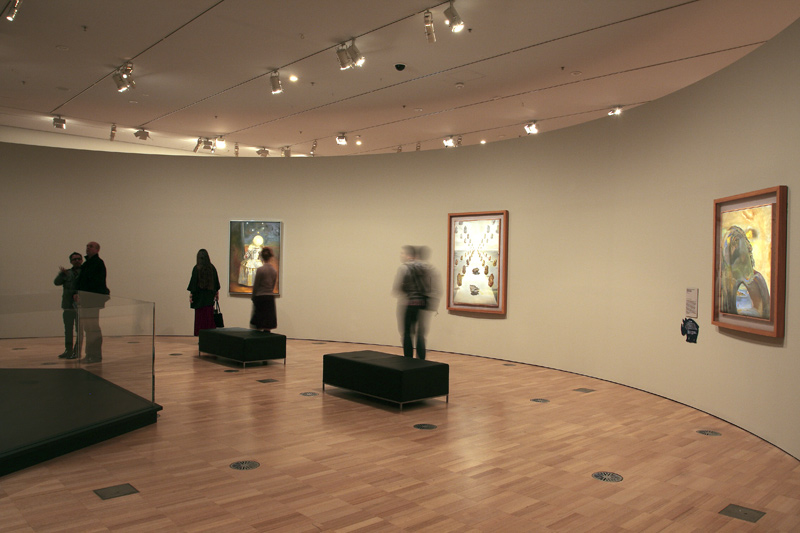
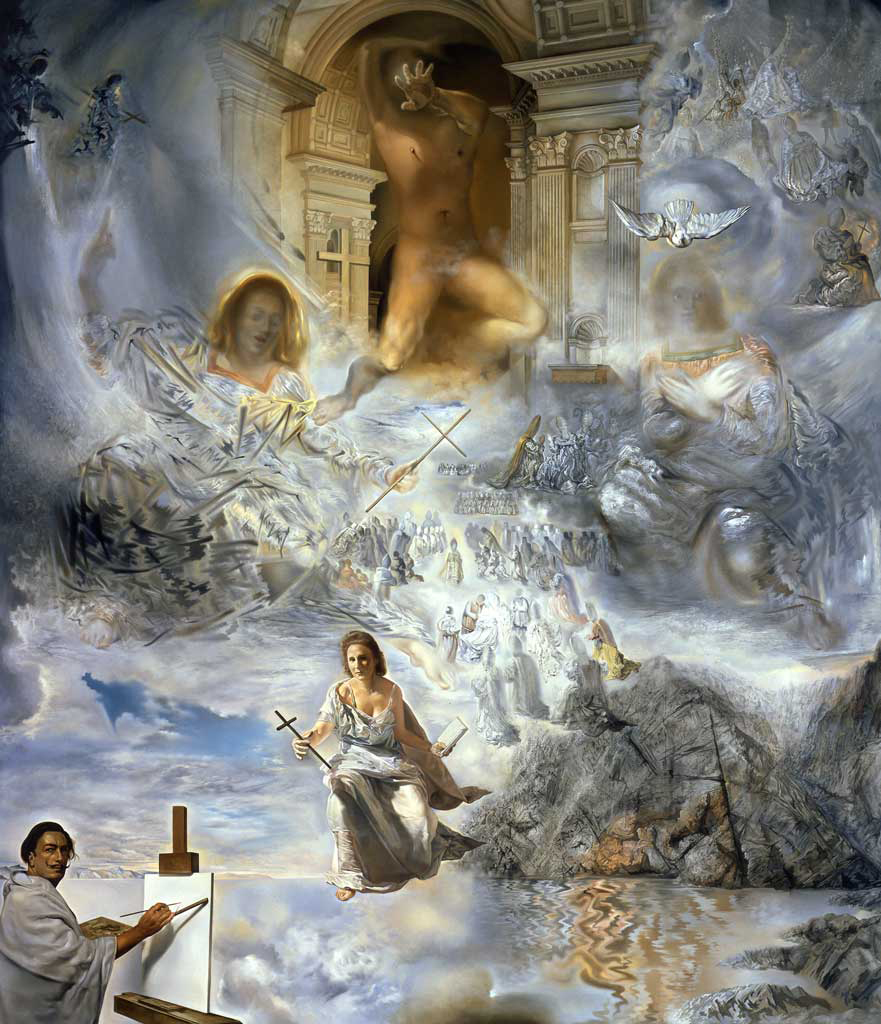
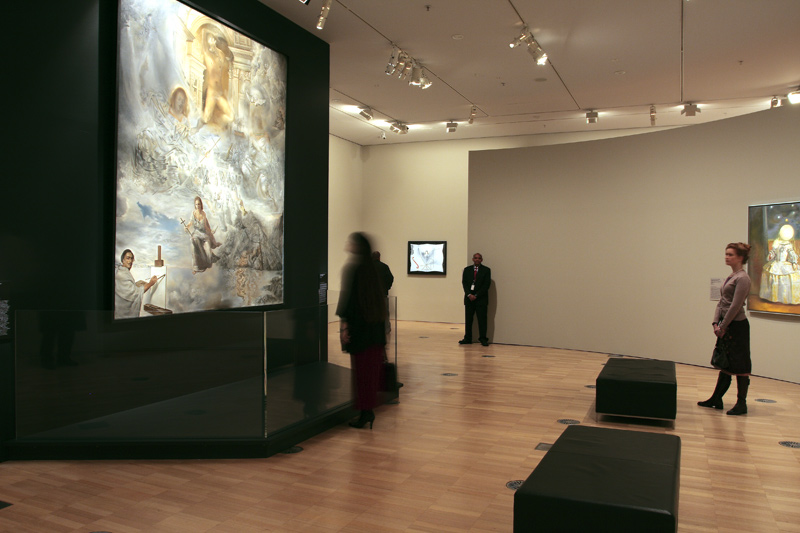
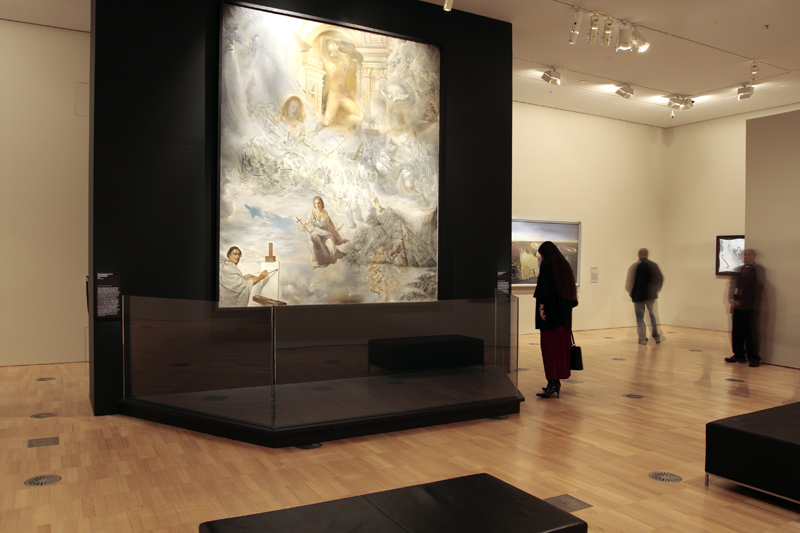


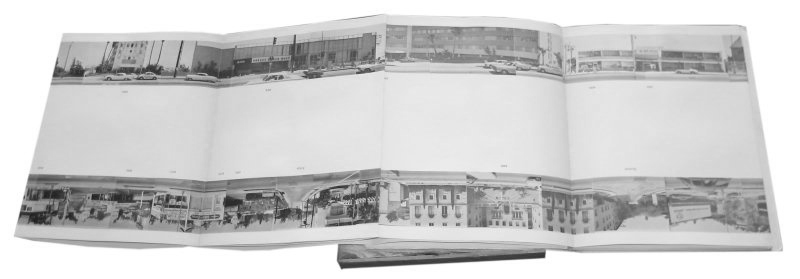

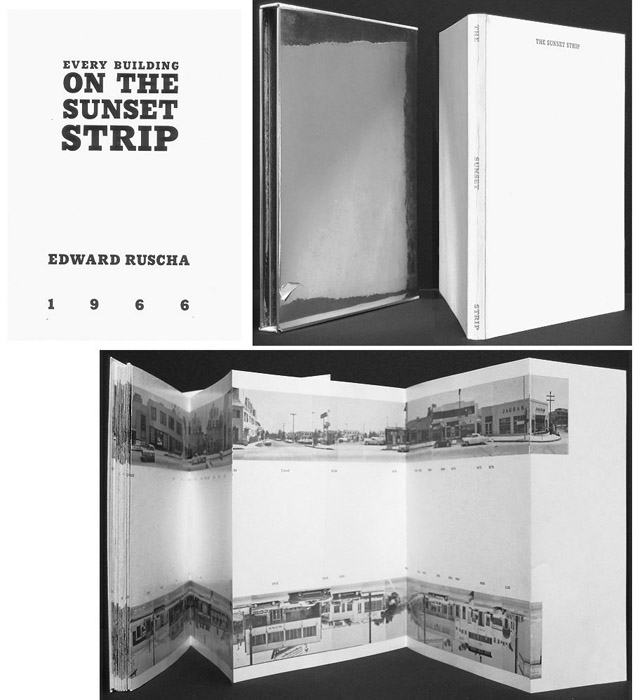

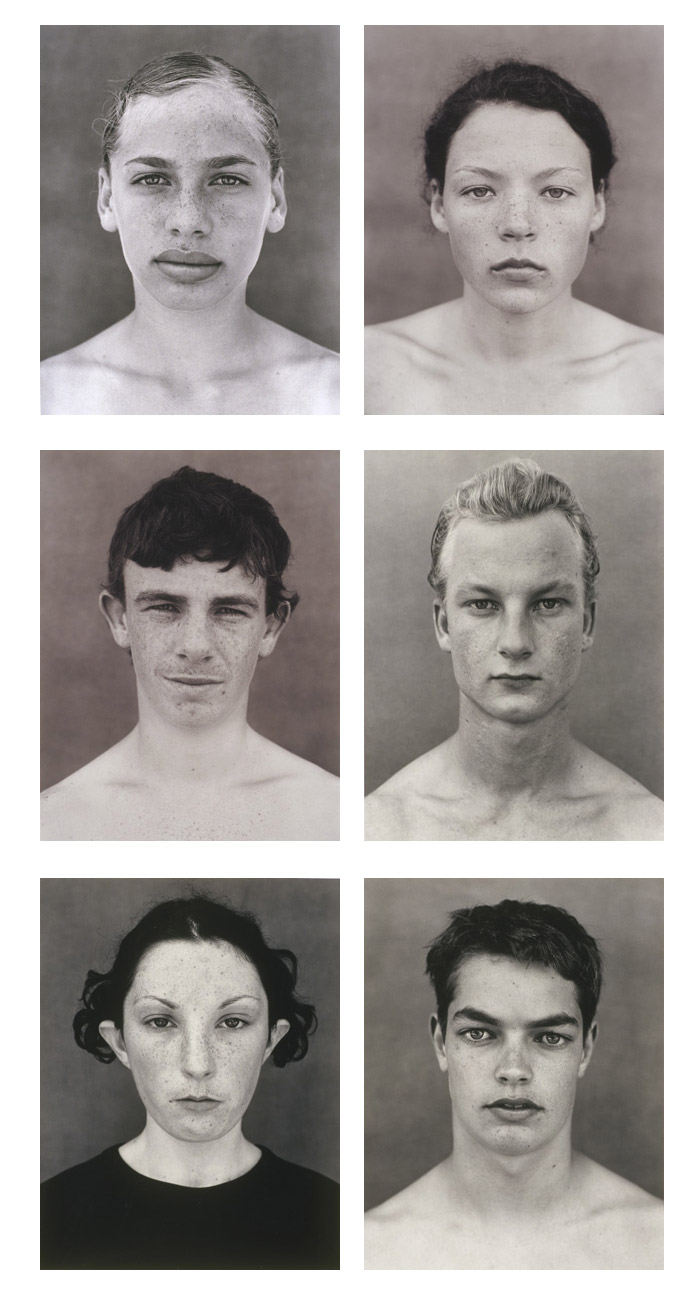


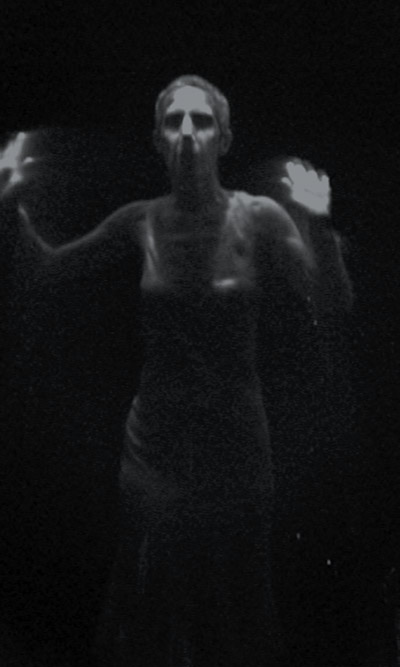

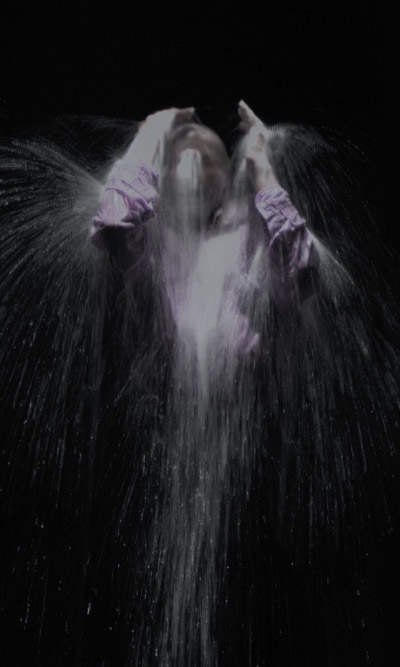


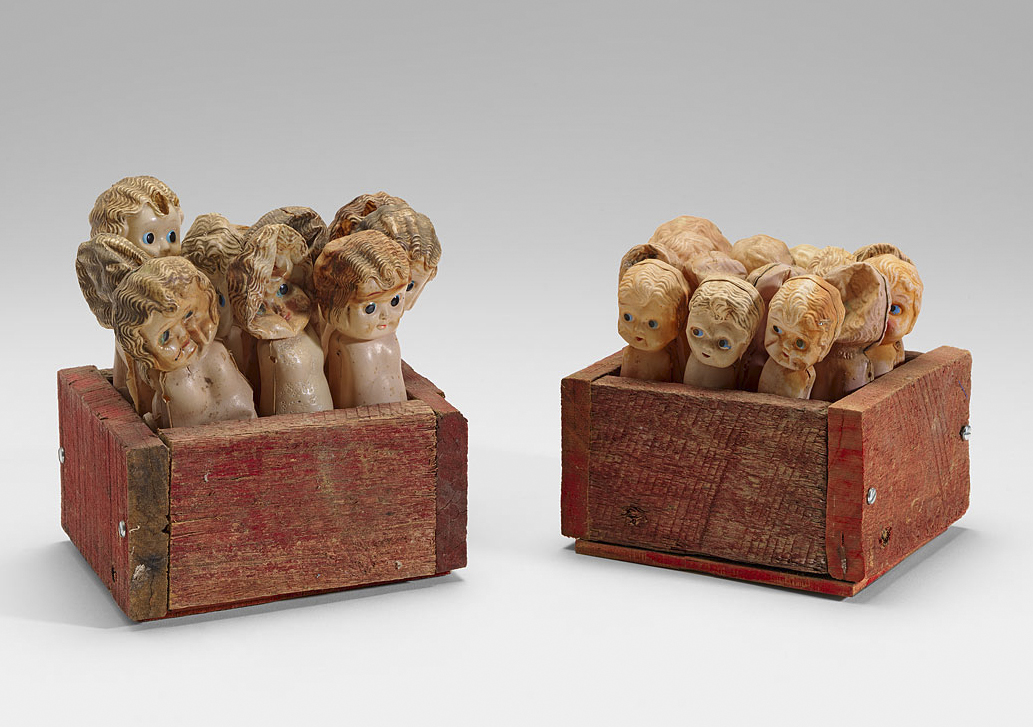


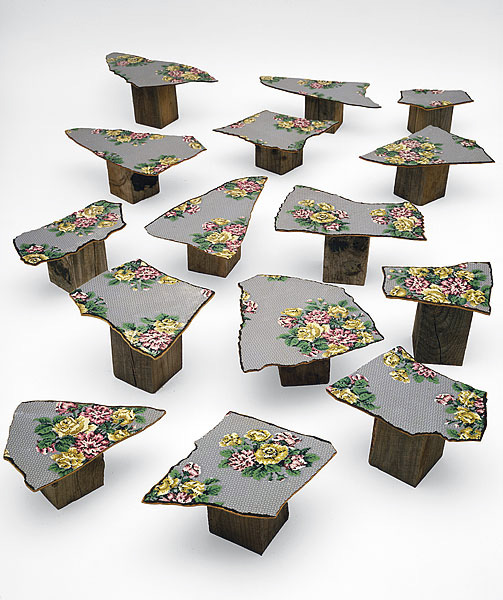
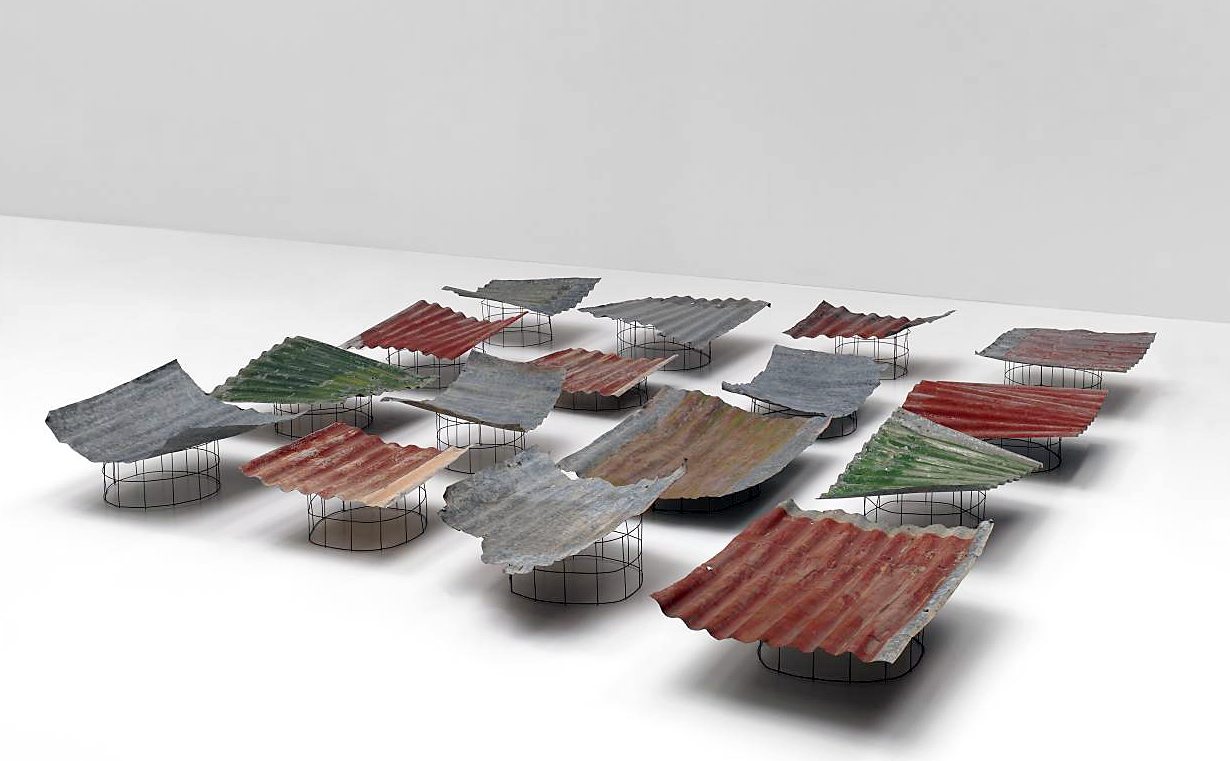
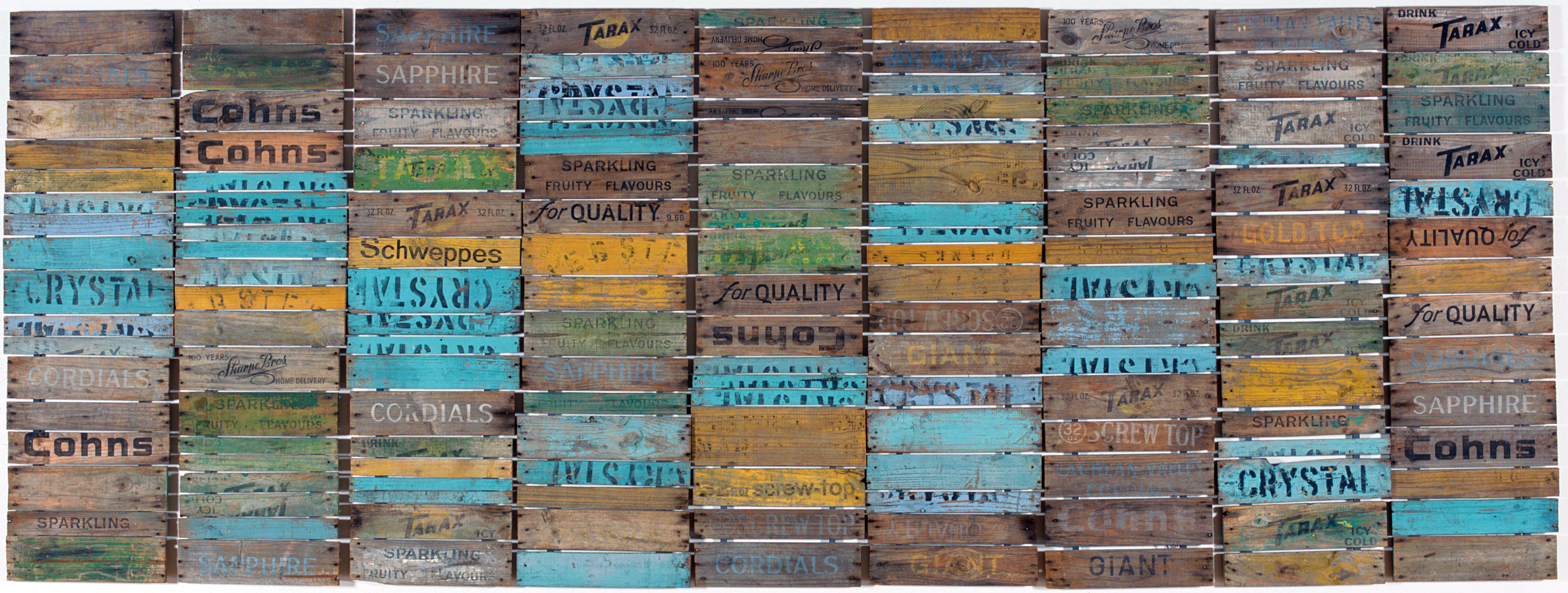


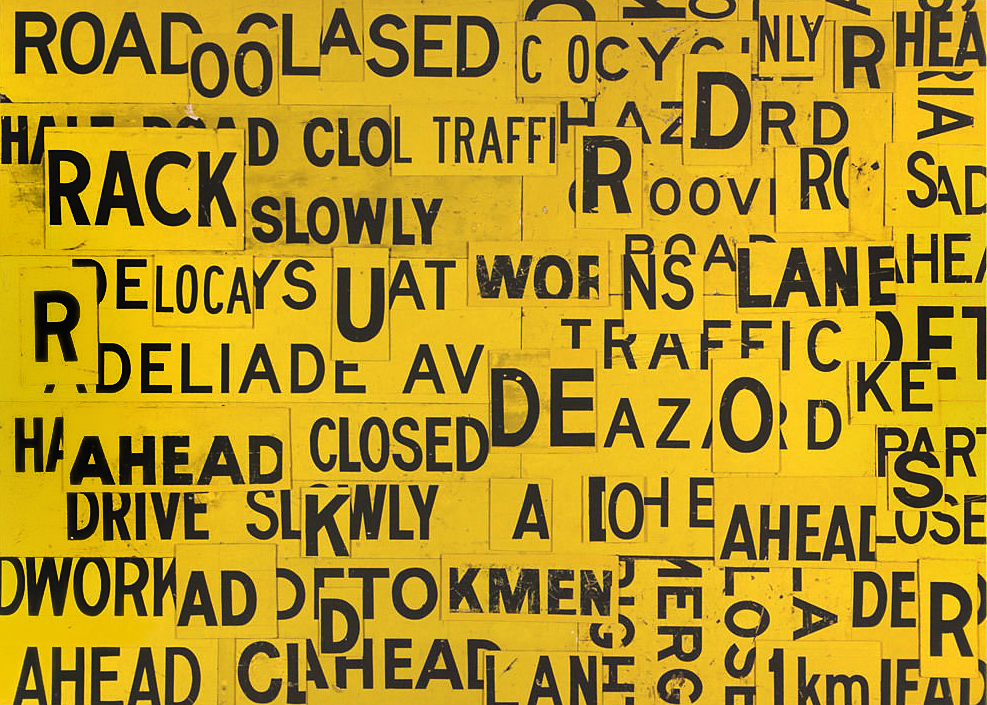


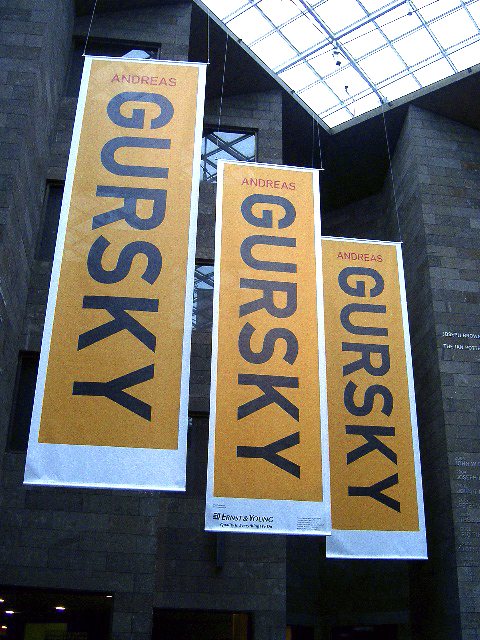

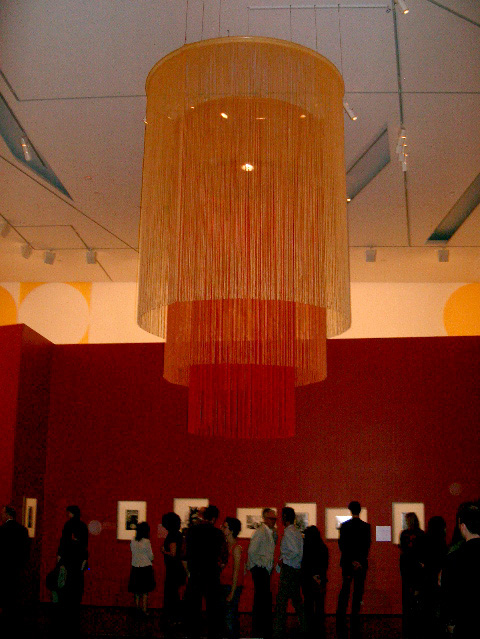
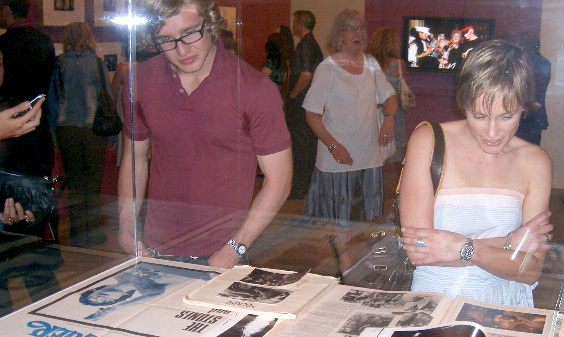
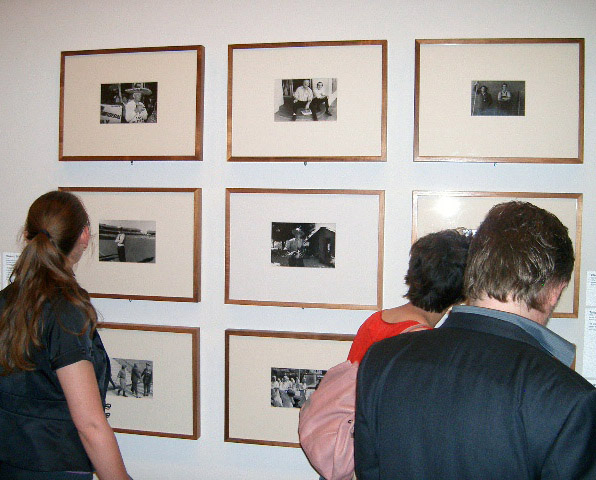
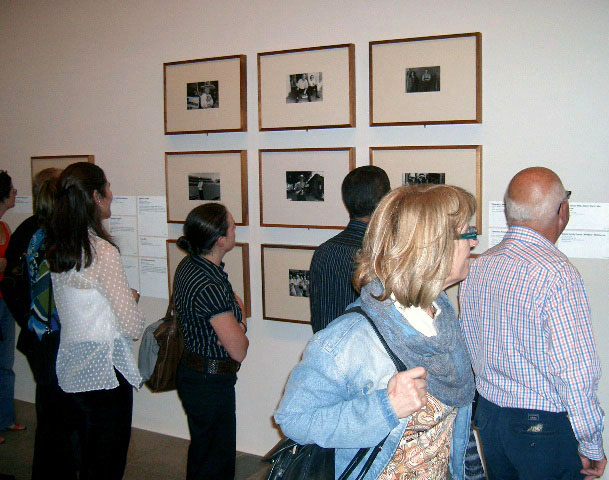
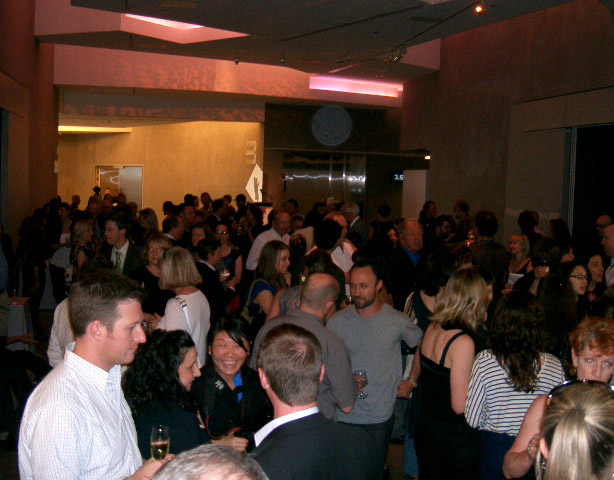
 Art Blart _ art and cultural memory archive
You must be logged in to post a comment.