Review: ‘Stormy Weather: Contemporary Landscape Photography’ at NGV Australia, Melbourne

Exhibition dates: 24th September 2010 – 20th March 2011


Nici Cumpston (Australian / Barkindji, b. 1963) 'Nookamka - Lake Bonney' 2007


Nici Cumpston (Australian / Barkindji, b. 1963)
Nookamka – Lake Bonney
2007
watercolour and coloured pencils on ink on canvas
74.2 x 203cm
National Gallery of Victoria, Melbourne
Purchased, Victorian Foundation for Living Australian Artists, 2008
© Nici Cumpston


“It is this irreversibly modified world, from the polar caps to the equatorial forests, that is all the nature we have.”


Simon Schama. Landscape and Memory 1


“The term “landscape” can be ambiguous and is often used to describe a creative interpretation of the land by an artist and the terrain itself. But there is a clear distinction: the land is shaped by natural forces while the artist’s act of framing a piece of external reality involves exerting creative control. The terms of this ‘control’ have be theorised since the Renaissance and, while representations of nature have changed over the centuries, a landscape is essentially a mediated view of nature.”


Dr Isobel Crombie 2


“And, finally, what of the vexed, interrelated matter of non-Aboriginal Australians’ sense of belonging? While the Australian historian Manning Clark speculated that European settlers were eternal outsiders who could never know ‘heart’s ease in a foreign land, because … there live foreign ancestral spirits’, it now seems plausible that non-Aboriginal Australians are developing their own form of attachment, not to land as such, but to place. Indeed, it has recently been argued that for contemporary non-Aboriginal Australians, belonging may have no connection with land at all. Perhaps this is one of the reasons why art photographs of the natural landscape have lost their currency and are now far outnumbered by photographs of urban and suburban environments – after all, it is ‘here’ that most Australians live and ‘there’ that the tourist industry beckons them to escape.”


Helen Ennis. Photography and Australia 3


This review took a lot of research, reading, thinking and writing, all good stuff – I hope you enjoy it!


Heavy Weather: Photography and the Australian Land(e)scape

There is nothing fresh about the work in this exhibition. If feels like all the oxygen has been sucked out of the term ‘landscape’, the land itself gasping for air, for life. What the exhibition does evince is an “undercurrent of disruption and contradiction that suggests that all is not as it may appear” (wall text) – and on this evidence the process of photographing the Australian landscape seems to have become an escape from the land, a fragmented and dislocated scoping, mapping and photographing of mental aspects of the land that have little to do with the landscape itself. Landscape as a site of psychological performance. In this sense, the title Stormy Weather should perhaps have been Heavy Weather for contemporary photographic artists seem to make heavy going of photographing our sense of belonging to land, to place.

Is it the artists or the curators that seek to name this work ‘landscape photography’ for it is about everything but the landscape – an escape from the land, perhaps even a denial of it’s very existence. I believe it is the framing of landscape and its imaging in terms of another subject matter. While I am not going to critique individual works in the exhibition, what I am interested in is this framing of the work as ‘landscape photography’.


Since colonial settlement there has been a rich history of photographing the Australian landscape. In the early colonial period the emphasis was on documenting the building of new cities and communities through realist photography and later more picturesque and panoramic vistas of the Australian land as settlers sought comfort in familiar surroundings and a sense of ‘belonging’ to the land (for example day trippers and photographers travelling to the Blue Mountains). Photographers rarely accompanied expeditions into the interior, unlike the exploration and mapping of the land from the East Coast to the West Coast in the United States. Unlike America there has been little tradition of photographing sublime places in Australia because they are not of the same scale as in the USA. It is very difficult to photograph the vast horizon line of the Australian outback and make it sublime. Photographing the landscape then ventured through Pictorialism in the interwar years, Modernism after WWII through to the emergence of art photography in the 1970s (for example see my posting on Dr John Cato), wilderness and tourist photography. An excellent book to begin to understand the history of photography in Australia is Photography and Australia by Helen Ennis (London: Reaktion Books, 2007) that contains the chapter “Land and Landscape.” As Ennis comments in this chapter, “… landscape photography has been the practice of settler Australians and the expression of a settler-colonial culture … The viewpoint in landscape photography has therefore been almost exclusively European”4 although this culture has been changing in recent years with the emergence of Indigenous photographers.

Ennis observes that contemporary landscape photographers embrace internationalist styles, showing a distaste for totalising nationalist narratives and a rejection of essentialist or absolutist viewpoints, noting that an overarching framework like multiculturalism has lost its currency in favour of transnationalism (which is a social movement grown out of the heightened interconnectivity between people and the loosening of boundaries between countries) that does not disavow colonial inequalities and asymmetrical relations between countries and continents.5 Photographers have developed a “photographic language that allows for the expression of the contradictions inherent in contemporary settler Australians’ relations with the land,”6 whilst offering visual artists a “non-linear, non-didactic way of dealing with the complexities of Australia history and experience, and the relationship between past and present.”7

This much then is a given. Let us now look at the framing of the work in the exhibition as ‘landscape photography’.


Simon Schama in his erudite book Landscape and Memory (New York: Vintage, 1996) believes that there can never be a natural or neutral landscape (even the brilliant meadow-floor [at Yosemite] which suggested to its first eulogists a pristine Eden was in fact the result of regular fire-clearances by its Ahwahneechee Indian occupants) and that it is our shaping perception that makes the difference between raw matter and landscape. There was also a recognition that ‘nature’ was neither neutral nor beyond ideology during the 1970s-1980s. Hence there is a double mediation – by both nature and the artist.

Despite the rejection of essentialist or absolutist viewpoints by contemporary photographers and an acknowledgment of the mediated view by/of nature one can say that there is not a single photograph in this exhibition that is just a ‘landscape’. Even the most sublime photographs in the exhibition, David Stephenson’s (Self-portrait), Reflected moon, Tasmania (1985) is cut up into a grid, or Murray Fredericks Salt photographs (2005, see below) where the photographer has waited agonisingly for weeks for just the right weather conditions to take his photographs which the general public, when visiting Lake Eyre, would have no chance of ever seeing. Through this mediation there seems to have emerged an abrogation or denial of landscape by the artists and curators conceptualisation of it, as though they are performing a particular condition, a style; working out a plan of what to do and say. Is it just a denial or is it an artistic strategy?

I believe that these are strategies that limit artists, not strategies that enable them. The curators are equally implicated in these strategies by their naming of these works ‘landscapes’. What purpose does this naming serve, in terms of the development of a sense of place, not nation, that people living in Australia seek to have? We can ask the question: Where do you stand in relationship to the landscape both philosophically and geographically?

After Butler, we can also ask: What forms of cultural myth making are “embedded” in the framing of landscape by the curators, the naming of such work as ‘landscape photography’?


Rarely is the framing recognised for what it is, when it is the viewer interpreting the interpretation that has been imposed upon us, that limits the visual discourse, producing a view of Australian landscape as fragmented norms enacted through visual narrative frames – that in this case efface the representation of land and place. This conceptual framing of what the work is about limits the grounds for discourse for a frame excludes as much as it corrals. The curators form an interpretative matrix of what is seen (or not seen, or withheld), reinforcing notions of landscape photography, the ‘landscape photography’ “that requires a certain kind of subject that actually institutes that conceptual requirement as part of its description and diagnosis.”8 In other words the description ‘landscape photography’ established by the curators becomes a limiting, self-fulfilling prophecy.

Personally, I think the problem with a landscape exhibition is that this is virtually an inane topic. Somehow “documentary” works as a topic because it is about a mental discipline. But “landscape” is no longer really a topic – it used to be a topic when landscape painters wanted to show the landscape (!) but does anyone really want to show this today? Even when the landscape painters wanted to show the sublime, the landscape was always treated with deference. No-one thinks of Minor White as a landscape photographer for he was a metaphysical photographer. And that’s what this exhibition needs – another word to give sense to a photographers efforts.

This is difficult subject matter. While artists may reject essentialist or absolutist viewpoints what has been substituted in their place is a framing, a definition that is post-nature, that undermines any sense of belonging to land, to place. The dissolutive pendulum has swung too far the other way; we look to theory to be inclusive and sometimes stand on our heads to achieve this to our detriment.

As of this moment we are not at the point where we can look back with some certainty and see that we have reached the beginning of the path of understanding. What I would propose to any artist is a photography that is broadly based, cumulative, offering a layered body of work that builds and refers back to an original body of work, much like the photographs of Robert Adams – photographs that do not make claims but ask questions and hint at a more responsive engagement with the landscape.

My hope is that a more broadly based view of place and our sense of belonging to the land emerges, one that challenges our contemporary understanding of the landscape, a viewpoint and line of sight that calm our troubled sense of reality. Robert Adams has written eloquently about photography and the art of seeing. Here is a quote from his seminal book Why People Photograph (Aperture Foundation, 1994) that aptly concludes this review.

“At our best and most fortunate we make pictures because of what stands in front of the camera, to honor what is greater and more interesting than we are. We never accomplish this perfectly, though in return we are given something perfect – a sense of inclusion. Our subject thus redefines us, and is part of the biography by which we want to be known.”9

Dr Marcus Bunyan


Many thankx to Jemma Altmeier and the National Gallery of Victoria for allowing me to publish the photographs in the posting. Please click on the photographs for a larger version of the image.

Addendum

Further to my argument above there is a session ‘Australian Identity: Australian Bio-diversity and the Landscape of the Imagination’ at the Festival of Ideas, Friday June 17th 2011 at the University of Melbourne where, in the details of the upcoming session, Ian Burn has been quoted about the loss of the landscape:

Details of the session: ‘The connection between landscape and national identity figures prominently in discussions of Australian experience. Recently the pairing of the two has taken a melancholic turn; artist Ian Burn has remarked that ‘A commitment to representing the landscape has come to be about the “loss” of the landscape’. Has the landscape that once supported the Australian legend disappeared? The landscape is represented not only in art but also through science, law and commerce. Are new landscapes and new identities now being imagined and discovered?’

Quotation: “The idea of landscape does not just invoke rival institutional discourses, but today attracts wider and more urgent reflections. A commitment to representing the landscape has become about the ‘loss’ of landscape in the twentieth century … that is about its necessity and impossibility at the same time. Seeing a landscape means focusing on a picture, implicating language in our seeing of the landscape.”

Burn, Ian quoted in Stephen, Ann (ed.,). Artists think: the late works of Ian Burn. Sydney: Power Publications in association with Monash University Gallery, Melbourne, 1996, p. 8.

Footnotes

1/ Schama, Simon. Landscape and Memory. New York: Vintage, 1996, p. 7

2/ Crombie, Isobel. Stormy Weather. Contemporary Landscape Photography (exhibition catalogue). Melbourne: National Gallery of Victoria, 2010, p. 15

3/ Clark, Manning quoted by Peter Read in “A Haunted Land No Longer? Changing Relationships to a Spiritualised Australia,” in Australian Book Review CCLXV (October 2004) pp. 28-33 in Ennis, Helen. “Land and Landscape,” in Photography and Australia. London: Reaktion Books, 2007, pp. 71-72

4/ Ennis, Helen. “Land and Landscape,” in Photography and Australia. London: Reaktion Books, 2007, pp. 51-52

5/ Ennis, Helen. “Land and Landscape,” in Photography and Australia. London: Reaktion Books, 2007, p. 123, p. 133

6/ Ibid., “Land and Landscape,” pp. 71-72

7/ Ibid., “Localism and Internationalism,” p. 128

8/ Butler, Judith. Frames of War: When is Life Grievable? London: Verso, 2010, p. 161

9/ Adams, Robert. Why People Photograph. New York: Aperture Foundation, 1994, p. 179
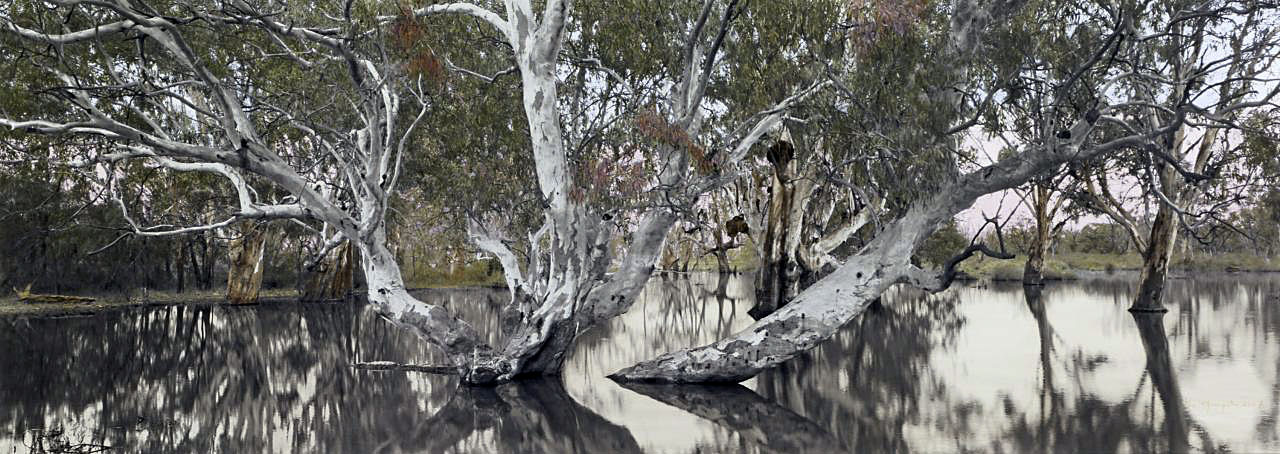


Nici Cumpston (Australian / Barkindji, b. 1963) 'Flooded Gum, Katarapko Creek, Murray River National Park' 2007


Nici Cumpston (Australian / Barkindji, b. 1963)
Flooded Gum, Katarapko Creek, Murray River National Park
2007
Watercolour and pencil on inkjet print on canvas
74.5 x 202.5cm
National Gallery of Victoria, Melbourne
Purchased, Victorian Foundation for Living Australian Artists, 2008
© Nici Cumpston
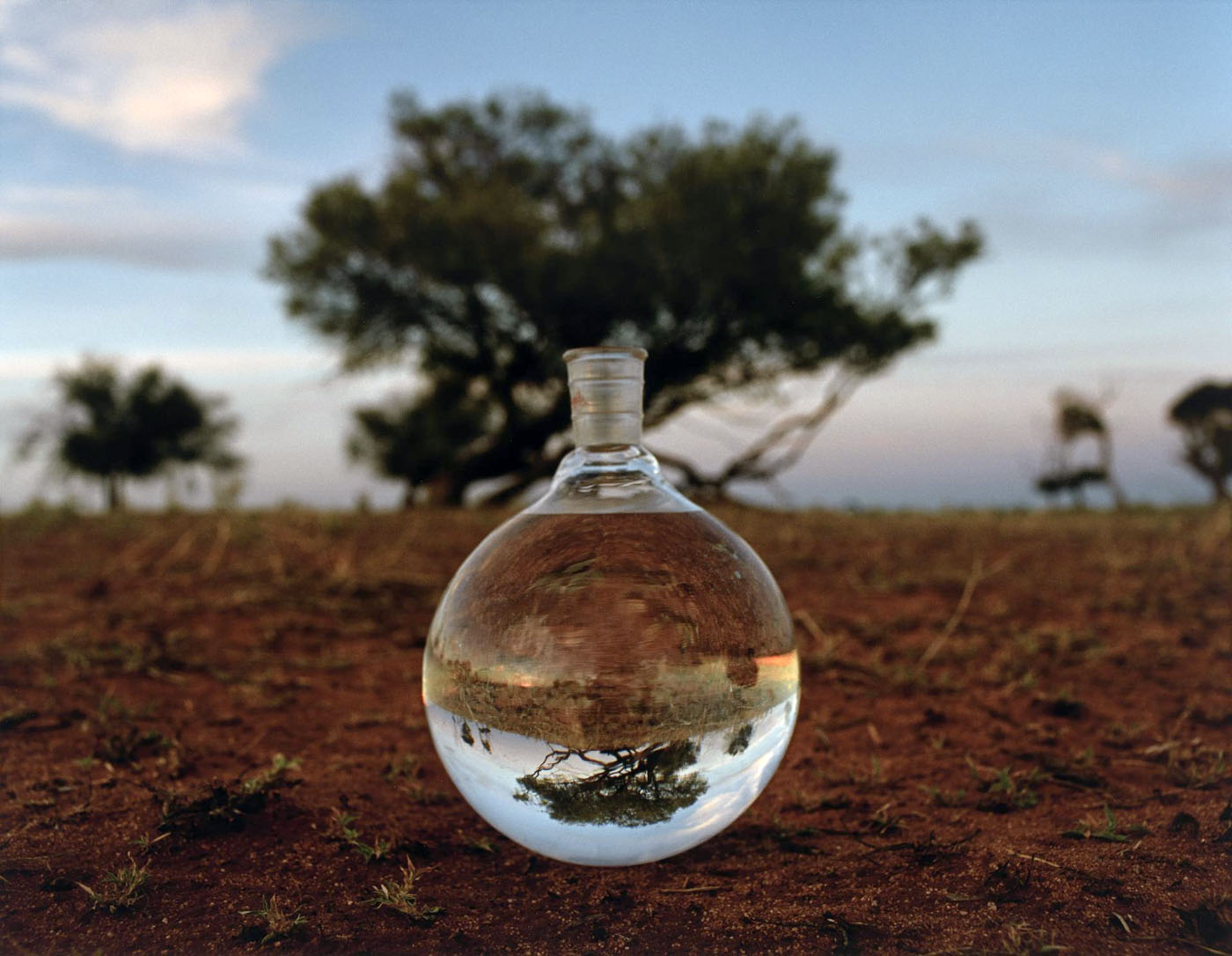
 

Stephanie Valentin (Australian, b. 1962) 'Earthbound' 2009


Stephanie Valentin (Australian, b. 1962)
Earthbound
2009
from the Earthbound series
inkjet photograph
70 x 90cm
National Gallery of Victoria, Melbourne
Purchased with funds donated by Phillip Ross and Sophia Pavlovski-Ross, 2009
© Stephanie Valentin
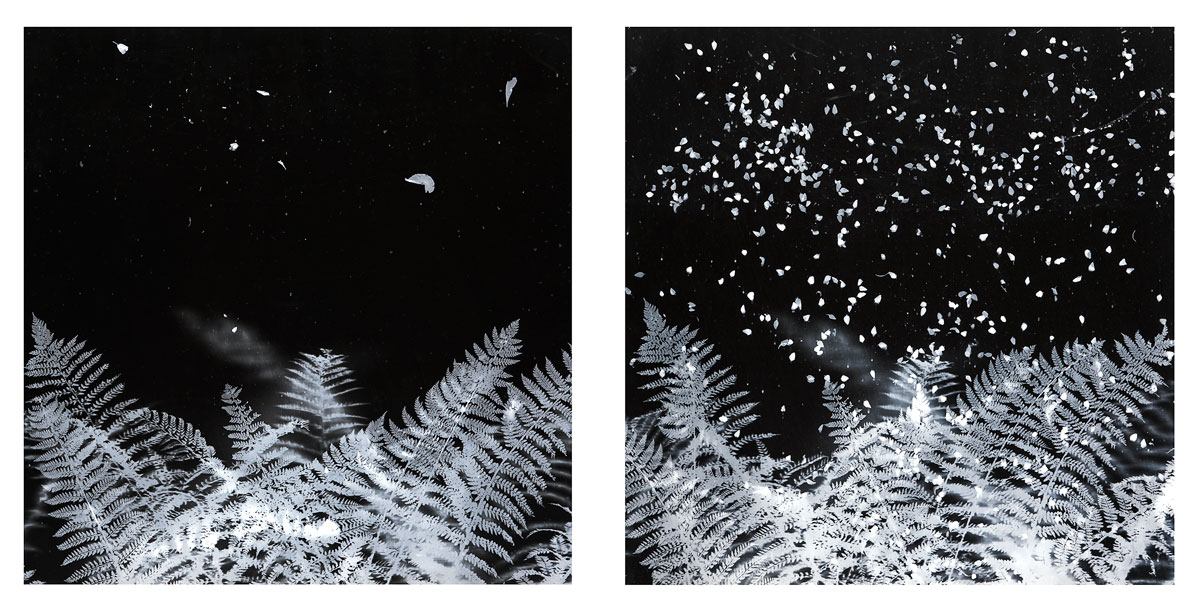
 

Harry Nankin (Australian, b. 1953) 'Of Great Western tears / Duet 2' 2006


Harry Nankin (Australian, b. 1953)
Of Great Western tears / Duet 2
2006
From The rain series 2006-2007
Gelatin silver photographs
(a-b) 107.1 x 214.3cm (overall)
National Gallery of Victoria, Melbourne
Purchased NGV Foundation, 2007
© Harry Nankin


Stephanie Valentin (Australia, b. 1962) 'Rainbook' 2009


Stephanie Valentin (Australia, b. 1962)
Rainbook
2009
From the earthbound series 2009
Colour inkjet print
69.9 x 86.9cm
National Gallery of Victoria, Melbourne
Purchased with funds donated by Philip Ross and Sophia Pavlovski-Ross, 2009
© Stephanie Valentin
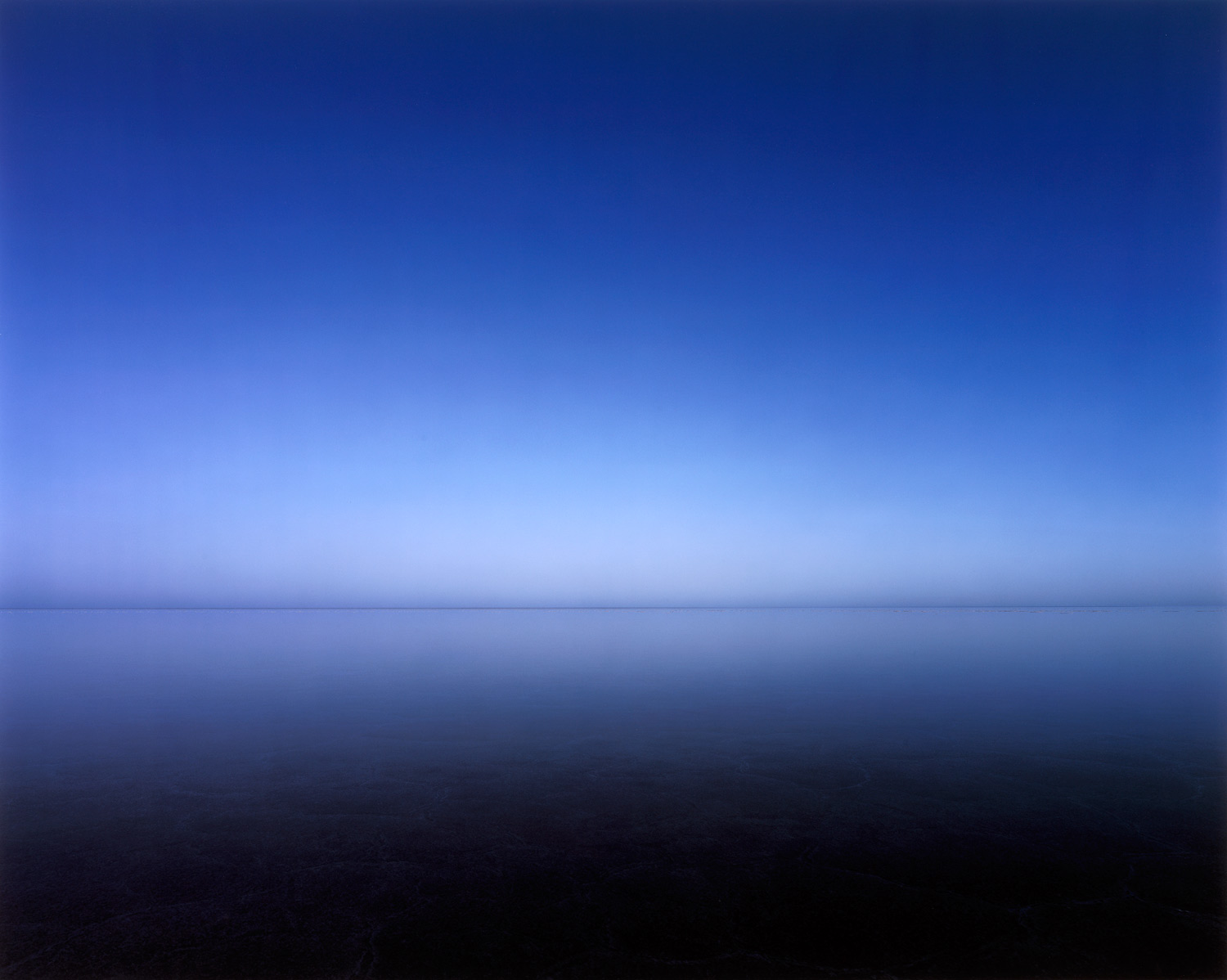
 

Murray Fredericks (Australia, b. 1970) 'Salt 154' 2005


Murray Fredericks (Australia, b. 1970)
Salt 154
2005
From the Salt series 2003-
Colour inkjet print
119.3 x 149.3cm
National Gallery of Victoria, Melbourne
Purchased, Victorian Foundation for Living Australian Artists, 2009
© Murray Fredericks


Siri Hayes (Australia, b. 1977) 'Plein air explorers' 2008


Siri Hayes (Australia, b. 1977)
Plein air explorers
2008
Type C photograph
104.3 x 134.8cm
National Gallery of Victoria, Melbourne
Purchased, Victorian Foundation for Living Australian Artists, 2009
© Siri Hayes


The work of the contemporary Australian photographers highlighted in this exhibition comes from a profound engagement with the lived landscape around them. The quiet intensity of their work comes from their close and sustained relationship to particular environments. These photographers may use that lived observation to reveal the layers of history in a landscape; to provoke ecological concerns; as the place for site specific performances; or to use the specific poetics of light to reveal the beauty of a place.  However for all of them, the real world is the starting point for images of particularity.

Photographers’ interest in the landscape has increased in the last few years. Perhaps as a result of heightened environmental awareness, or an evolution in our engagement with Australian history, practitioners are again turning to the natural world as a site for critical practice and inspiration.

Drawn from the permanent collection the National Gallery of Victoria, the selected photographers in this exhibition have a particular focus that comes from their active relationship to various environments. The artists displayed here reveal history in a landscape; provoke ecological concerns; use the landscape as a site of performance; or reveal the distinctive beauty of a place.

Frequently underpinning these works of quiet intensity and considerable beauty is an undercurrent of disruption and contradiction that suggests all is not as it may first appear.

Text from the National Gallery of Victoria website [Online] Cited 26/02/2011 no longer available online


Rosemary Laing (Australia, b. 1959) 'weather #9' 2006


Rosemary Laing (Australia, b. 1959)
weather #9
2006
From the weather series 2006
Type C photograph
109.9 x 184.6cm
National Gallery of Victoria, Melbourne
Purchased, Victorian Foundation for Living Australian Artists, 2007
© Rosemary Laing and Tolarno Galleries, Melbourne


Jill Orr (Australia , b. 1952, lived in the Netherlands 1980-1984) 'Southern Cross to bear and behold - Burning' 2007)


Jill Orr (Australia , b. 1952, lived in the Netherlands 1980-1984)
Southern Cross to bear and behold – Burning
2007
Colour inkjet print
65.5 x 134.9cm
National Gallery of Victoria, Melbourne
Purchased, Victorian Foundation for Living Australian Artists, 2010
Photographer: Naomi Herzog for Jill Orr
© Jill Orr


The Ian Potter Centre: NGV Australia
Federation Square

Corner of Russell and 
Flinders Streets, Melbourne

Opening hours:
Open daily 10am – 5pm

National Gallery of Victoria website

LIKE ART BLART ON FACEBOOK

Back to top

Vale Dr John Cato (1926-2011)

February 2011


It is with much sadness that I note the death of respected Australian photographer and teacher Dr John Cato (1926-2011). Son of Australian photographer Jack Cato, who wrote one of the first histories of Australian photography (The Story of the Camera in Australia (1955)), John was apprentice to his father before setting up a commercial studio with Athol Shmith that ran from 1950-1971. Dr Cato then joined Shmith at the fledgling Prahran College of Advanced Education photography course in 1974, becoming head of the course when Shmith retired in 1979, a position he held until John retired in 1991.

I was fortunate enough to get to know John and his vivacious wife Dawn. I worked with him and co-curatored his retrospective with William Heimerman, ‘…and his forms were without number’ at The Photographers’ Gallery, South Yarra, in 2002. My catalogue essay from this exhibition is reproduced below.

John was always generous with his time and advice. His photographs are sensitive, lyrical renditions of the Australian landscape. He had a wonderful ear for the land and for the word, a musical lyricism that was unusual in Australian photographers of the early 1970s. He understood how a person from European background could have connection to this land, this Australia, without being afraid to express this sense of belonging; he also imaged an Aboriginal philosophy (that all spirits have a physical presence and everything physical has a spiritual presence) tapping into one of the major themes of his personal work: the mirror held up to reveal an’other’ world – the language of ambiguity and ambivalence (the dichotomy of opposites e.g. black / white, masculine / feminine) speaking through the photographic print.

His contribution to the art of photography in Australia is outstanding. What are the precedents for a visual essay in Australian photography before John Cato? I ask the reader to consider this question.

It would be fantastic if the National Gallery of Victoria could organise a large exhibition and publication of his work, gathering photographs from collections across the land, much like the successful retrospective of the work of John Davis held in 2010. Cato’s work needs a greater appreciation throughout Australia because of it’s seminal nature, containing as it does the seeds of later development for Australian photographers. His educational contribution to the development of photography as an art form within Australia should also be acknowledged in separate essays for his influence was immense. His life, his teaching and his work deserves nothing less.

Dr Marcus Bunyan


‘… and his forms were without number’

John Cato: A Retrospective of the Photographic Work 1971-1991

This writing on the photographic work of Dr John Cato from 1971-1991 is the catalogue essay to a retrospective of his work held at The Photographers’ Gallery in Prahran, Melbourne in 2002. Dr Cato forged his voice as a photographic artist in the early 1970s when photography was just starting to be taken seriously as an art form in Australia. He was a pioneer in the field, and became an educator in art photography. He is respected as one of Australia’s preeminent photographers of the last century.


With the arrival of ‘The New Photography’1 from Europe in the early 1930’s, the formalist style of Modernism was increasingly adopted by photographers who sought to express through photography the new spirit of the age. In the formal construction of the images, the abstract geometry, the unusual camera angles and the use of strong lighting, the representation ‘of the thing in itself’2 was of prime importance. Subject matter often emphasised the monumentality of the factory, machine or body/landscape. The connection of the photographer with the object photographed was usually one of sensitivity and awareness to an external relationship that resulted in a formalist beauty.

Following the upheaval and devastation of the Second World War, photography in Australia was influenced by the ‘Documentary’ style. This “came to be understood as involved chiefly with creating aesthetic experiences … associated with investigation of the social and political environment.”3 This new movement of social realism, “… a human record intimately bound with a moment of perception,”4 was not dissimilar to Henri Cartier-Bresson’s ‘decisive moment’ (images a la sauvette) where existence and essence are in balance.5

The culmination of the ‘Documentary’ style of photography was The Family of Man exhibition curated by Edward Steichen that toured Australia in 1959.6 This exhibition, seen many times by John Cato,7 had a theme of optimism in the unity and dignity of man. The structure of the images in ‘Documentary’ photography echoed those of the earlier ‘New Photography’.

Max Dupain “stressed the objective, impersonal and scientific character of the camera; the photographer could reveal truth by his prerogative of selection.”8 This may have been an objective truth, an external vocalising of a vision that concerned itself more with exterior influences rather than an internal meditation upon the subject matter.


John Cato (Australian, 1926-2011) 'Untitled' from the series 'Essay I, Landscapes in a Figure' 1971-1979


John Cato (Australian, 1926-2011)
Untitled from the series Essay I, Landscapes in a Figure
1971-1979
Silver gelatin photograph


In 1971, John Cato’s personal photographic work was exhibited for the first time as part of the group show Frontiers at the National Gallery of Victoria, Melbourne.9 Earth Song emerged into an environment of social upheaval inflamed by Australian involvement in the Vietnam War. It provided a group of enthusiastic people who were beginning to be interested in photography as art, an opportunity to see the world, and photography, through a different lens. The 52 colour photographic prints in Earth Song, were shown in a sequence that used melodic line and symphonic form as its metaphoric basis, standing both as individual photographs and as part of a total concept.10

In the intensity of the holistic vision, in the connection to the subconscious, the images elucidate the photographers’ search for a perception of the world. This involved an attainment of a receptive state that allowed the cracks, creases and angles inherent in the blank slate of creation to become meaningful. The sequence contained images that can be seen as ‘acts of revelation’,11confirmed and expanded by supporting photographs, and they unearthed a new vocabulary for the discussion of spiritual and political issues by the viewer. They may be seen as a metaphor for life.

The use of sequence, internal meditation and ‘revelation’, although not revolutionary in world terms,12 were perhaps unique in the history of Australian photography at that time. During the production of Earth Song, John Cato was still running a commercial studio in partnership with the photographer Athol Shmith and much of his early personal work was undertaken during holidays and spare time away from the studio. Eventually he abandoned being a commercial photographer in favour of a new career as an educator, but found this left him with even less time to pursue his personal work.13

Earth Song (1970-1971) was followed by the black and white sequences:


 Tree – A Journey18 images1971-1973 
 Petroglyphs14 images1971-1973 
 Seawind14 images1971-1975 
 Proteus18 images1974-1977 
 Waterway16 images1974-1979 


Together they form the extensive series Essay I, Landscapes in a Figure, parts of which are held in the permanent photography collection of the National Gallery of Victoria.14


John Cato (Australian, 1926-2011) 'Untitled' from the series 'Essay I, Landscapes in a Figure' 1971-1979


John Cato (Australian, 1926-2011)
Untitled from the series Essay I, Landscapes in a Figure
1971-1979
Silver gelatin photograph


The inspiration for Essay I and later personal work came from many sources. An indebtedness to his father, the photographer Jack Cato, is gratefully acknowledged. Cato also acknowledges the influence of literature: William Shakespeare (especially the Sonnets, and As You Like It), William Blake, Walt Whitman (Leaves of Grass), Lewis Carroll (Through the Looking Glass), the Bible; and of music (symphonic form), the mythology of the Dreamtime and Aboriginal rock paintings.15 Each body of work in Essay I was based on an expression of nature, the elements and the Creation. They can be seen as Equivalents16 of his most profound life experiences, his life philosophy illuminated in physical form.

John Cato was able to develop the vocabulary of his own inner landscape while leaving the interpretation of this landscape open to the imagination of the viewer. Seeing himself as a photographer rather than an artist, he used the camera as a tool to mediate between what he saw in his mind’s eye, the subjects he photographed and the surface of the photographic negative.17 Photographing ‘in attention’, much as recommended by the teacher and philosopher Krishnamurti,18 he hoped for a circular connection between the photographer and the subject photographed. He then looked for verification of this connection in the negative and, eventually, in the final print.

Essay II, Figures in a Landscape, had already been started before the completion of Essay I and it consists of three black and white sequences:


 Alcheringa11 images1978-1981 
 Broken Spears11 images1978-1983 
 Mantracks22 images in pairs1978-1983 


The photographs in Essay II seem to express “the sublimation of Aboriginal culture by Europeans”19 and, as such, are of a more political nature. Although this is not obvious in the photographs of Alcheringa, the images in this sequence celebrating the duality of reality and reflection, substance and shadow, it is more insistent in the symbology of Broken Spears and Mantracks. Using the metaphor of the fence post (white man / black man in Broken Spears) and contrasting Aboriginal and European ‘sacred’ sites (in pairs of images in Mantracks), John Cato comments on the destruction of a culture and spirit that had existed for thousands of years living in harmony with the land.

In his imaging of an Aboriginal philosophy (that all spirits have a physical presence and everything physical has a spiritual presence) he again tapped one of the major themes of his personal work: the mirror held up to reveal an’other’ world. Cato saw that even as they are part of the whole, the duality of positive / negative, black / white, masculine / feminine are always in conflict.20 In the exploration of the conceptual richness buried within the dichotomy of opposites, Cato sought to enunciate the language of ambiguity and ambivalence,21 speaking through the photographic print.

The theme of duality was further expanded in his last main body of work, Double Concerto: An Essay in Fiction:


 Double Concerto (Pat Noone)30 images1984-1990 
 Double Concerto (Chris Noone)19 images1985-1991 


Double Concerto may be seen as a critique of the power of witness and John Cato created two ‘other’ personas, Pat Noone and Chris Noone, to visualise alternative conditions within himself. The Essay explored the idea that if you send two people to the same location they will take photographs that are completely different from each other, that tell a distinct story about the location and their self:

“For the truth of the matter is that people have mixed feelings and confused opinions and are subject to contradictory expectations and outcomes, in every sphere of experience.”22

This slightly schizophrenic confusion between the two witnesses is further highlighted by Pat Noone using single black and white images in sequence. Chris Noone, on the other hand, uses multiple colour images joined together to form panoramic landscapes that feature two opposing horizons. The use of colour imagery in Double Concerto, with its link to the colour work of Earth Song, can be seen to mark the closing of the circle in terms of John Cato’s personal work. In Another Way of Telling, John Berger states that …

“Photography, unlike drawing, does not possess a language. The photographic image is produced instantaneously by the reflection of light; its figuration is not impregnated by experience or consciousness.”23


But in the personal work of John Cato it is a reflection of the psyche, not of light, that allows a consciousness to be present in the figuration of the photographic prints. The personal work is an expression of his self, his experience, his story and t(his) language, is our language, if we allow our imagination to speak.

Dr Marcus Bunyan 2002


Footnotes

1/ Newton, Gael. Shades of Light: Photography and Australia 1839-1988. Sydney: Australian National Gallery, William Collins, 1988, p. 109

2/ Newton, Gael. Max Dupain. Sydney: David Ell Press,1980, p. 34

3/ Ibid., p. 32

4/ Greenough, Sarah (et al). On the Art of Fixing a Shadow: 150 Years of Photography. Boston: National Gallery of Art, Bullfinch Press, 1989, p. 256

5/ Ibid., p. 256

6/ Newton, Gael. Shades of Light: Photography and Australia 1839-1988. Sydney: Australian National Gallery, William Collins, 1988, p. 131

7/ Ibid., p. 131

8/ Newton, Gael. Max Dupain. Sydney: David Ell Press, 1980, p. 32

9/ Only the second exhibition by Australian photographers at the National Gallery of Victoria, Melbourne

10/ Shmith, Athol. Light Vision No.1. Melbourne: Jean-Marc Le Pechoux (editor and publisher), Sept 1977, p. 21

11/ Berger, John and Mohr, Jean. Another Way of Telling. New York: Pantheon Books, 1982, p. 118

12/ Hall, James Baker. Minor White: Rites and Passages. New York: Aperture, 1978

13/ Conversation with the photographer 29/01/1997, Melbourne, Victoria

14/ Newton, Gael. Shades of Light: Photography and Australia 1839-1988. Sydney: Australian National Gallery, William Collins, 1988, p. 135, Footnote 7; p. 149

15/ Conversation with the photographer 22/01/1997, Melbourne, Victoria

16/ Norman, Dorothy. Alfred Stieglitz. New York: Aperture, 1976, p. 5

17/ Ibid.,

18/ Krishnamurti. Beginnings of Learning. London: Penguin, 1975, p. 131

19/ Strong, Geoff. Review. The Age. Melbourne, 28/04/1982

20/ Conversation with the photographer 22/01/1997, Melbourne, Victoria

21/ The principal definition for ambiguity in Websters Third New International Dictionary is: “admitting of two or more meanings … referring to two or more things at the same time.”
That for ambivalence is “contradictory and oscillating subjective states.”
Quoted in Davis, Fred. Fashion, Culture and Identity. Chicago: University of Chicago Press, 1992, p. 21.

22/ Levine, Donald. The Flight From Ambiguity. Chicago: University of Chicago Press, 1985

23/ Berger, John and Mohr, Jean. Another Way of Telling. New York: Pantheon Books, 1982, p. 95


LIKE ART BLART ON FACEBOOK

Back to top

Exhibition: ‘Acquisitions of Twentieth-Century Photography’ at the Rijksmuseum, Amsterdam

Exhibition dates: 7th December 2010 – 14th February 2011


Many thankx to the Rijksmuseum for allowing me to publish the photographs in the posting. Please click on the photographs for a larger version of the image.


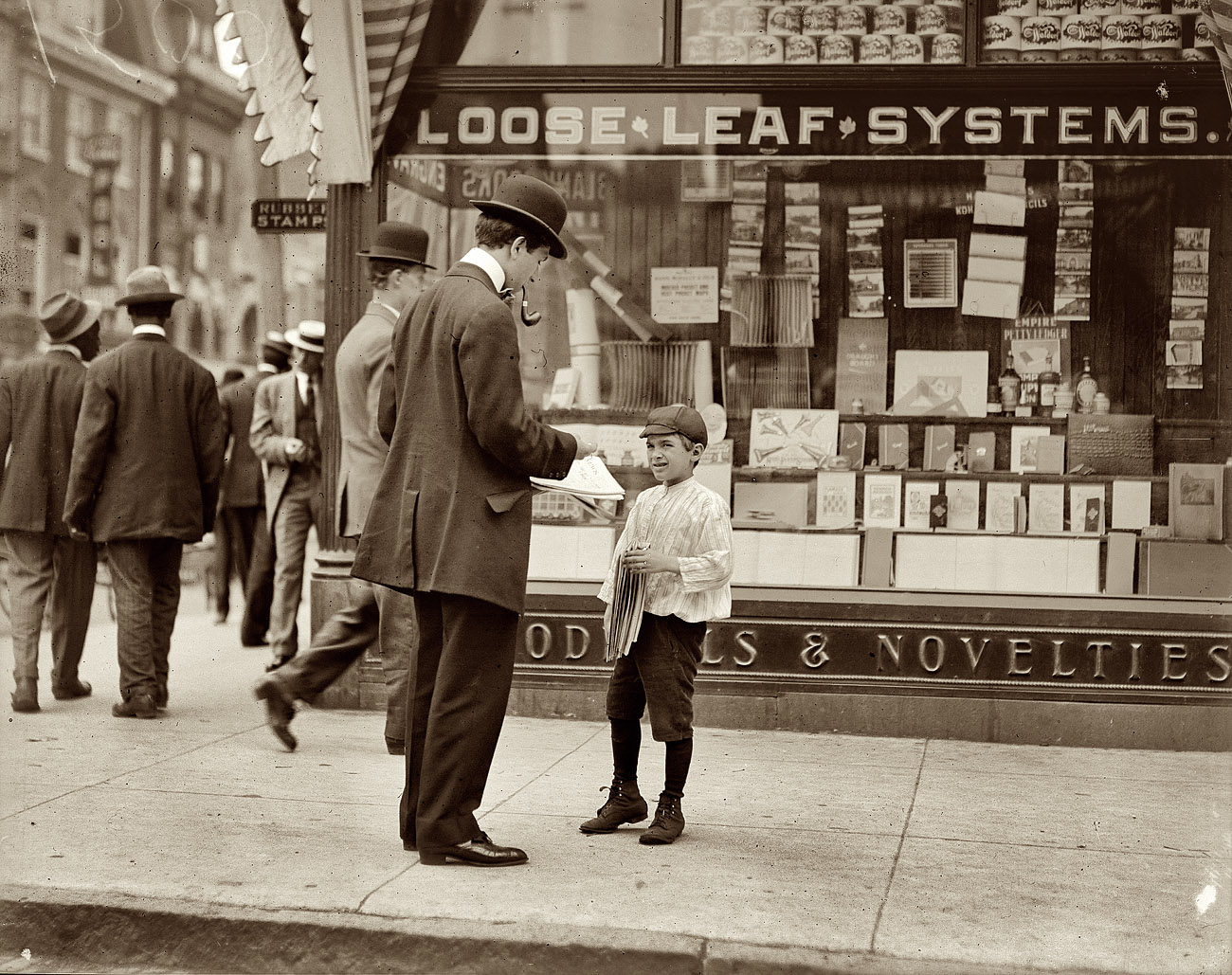
Lewis Hine (American, 1874-1940) 'Don't Smoke, Visits Saloons' 1910


Lewis Hine (American, 1874-1940)
Don’t Smoke, Visits Saloons
1910

Lewis Hine. May 1910. Wilmington, Delaware. “James Lequlla, newsboy, age 12. Selling newspapers 3 years. Average earnings 50 cents per week. Selling newspapers own choice. Earnings not needed at home. Don’t smoke. Visits saloons. Works 7 hours per day.”


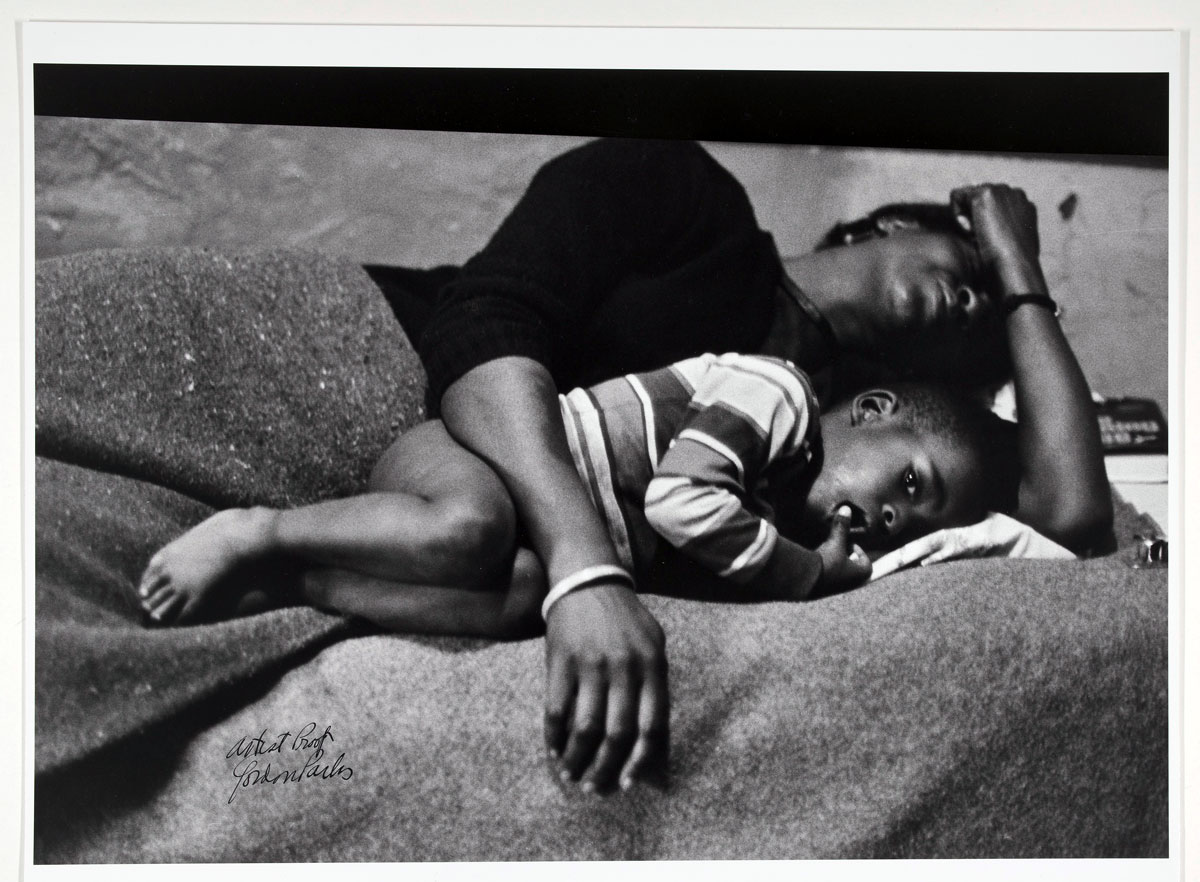
Gordon Parks (American, 1912-2006) 'Bessie Fontenelle and Little Richard in bed, Harlem New York' 1968


Gordon Parks (American, 1912-2006)
Bessie Fontenelle and Little Richard in bed, Harlem New York
1968
Gelatin silver print


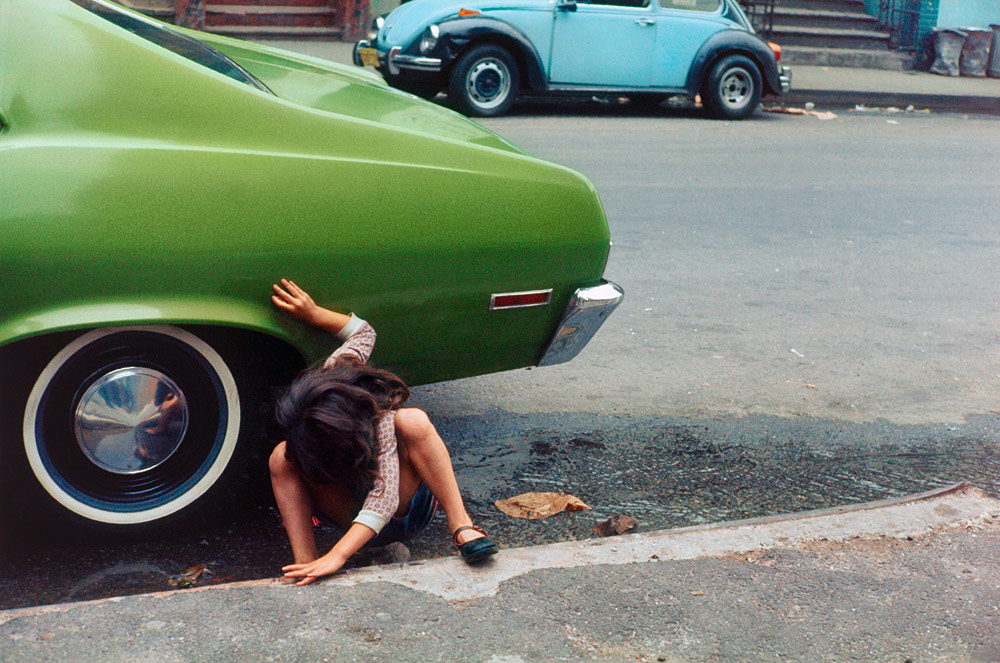
Helen Levitt (American, 1913-2009) 'Squatting girl/spider girl, New York City' 1980


Helen Levitt (American, 1913-2009)
Squatting girl/spider girl, New York City
1980


From 7 December, the Rijksmuseum will display a selection of 20th-century photographic works acquired in recent years with the support of Baker & McKenzie. The sponsorship from the renowned law firm has already allowed the museum to purchase more than thirty photographs, including works by László Moholy-Nagy, Bill Brandt, Robert Capa and Helen Levitt, as well as photography books by Man Ray and others. When it reopens in 2013, the Rijksmuseum will be the only museum in the Netherlands able to provide an overview of the history of photography in the Netherlands and abroad.

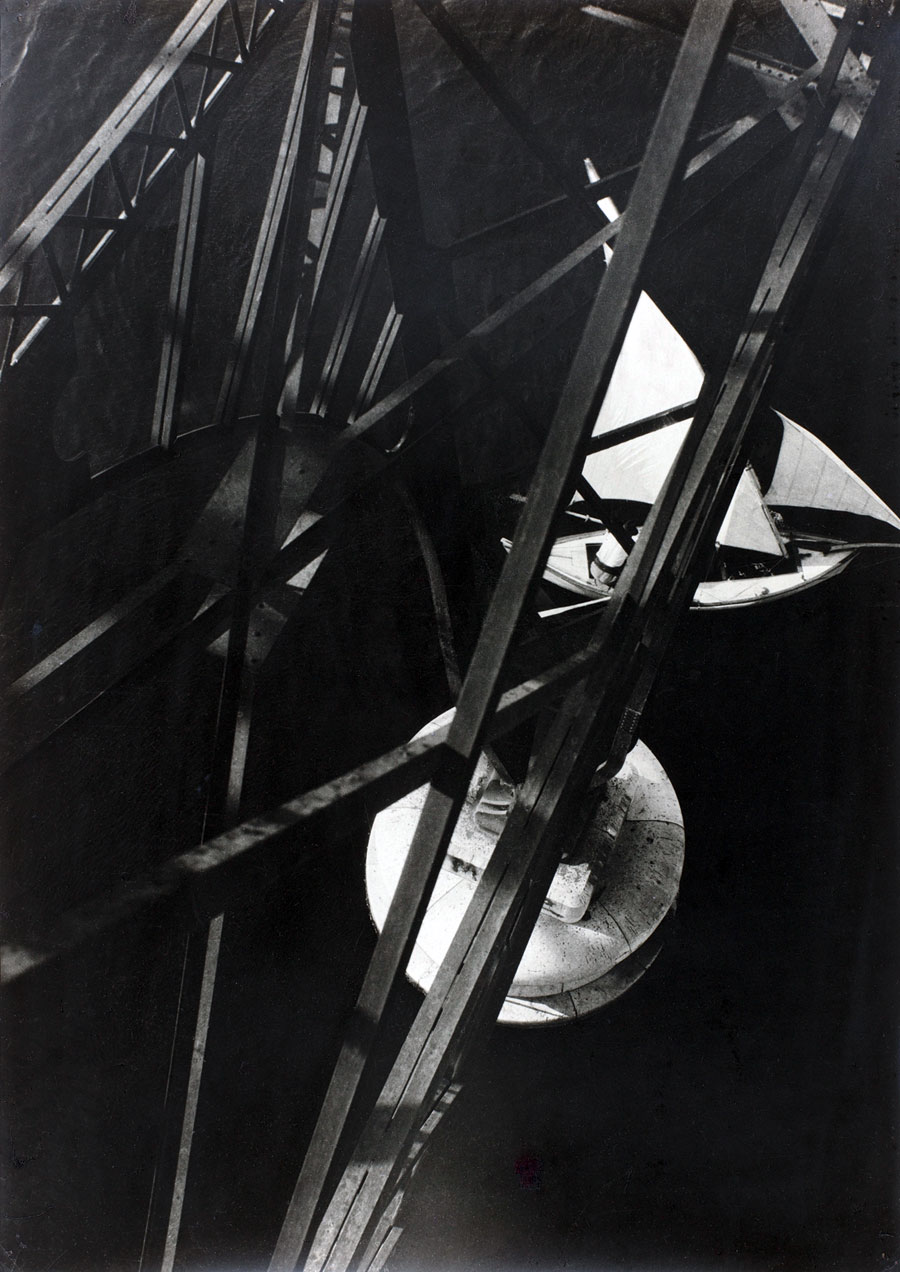
The most recent acquisition sponsored by Baker & McKenzie and the independent art fund Vereniging Rembrandt is a monumental photograph by Bauhaus photographer László Moholy-Nagy (1895-1946). The photograph from 1929 is a key work that marks the transition into modernity. From atop a high bridge, the Pont Transbordeur in Marseille, Moholy-Nagy pointed his camera straight down, where an almost abstract pattern of metal beams contrasted with the sailing boat passing under the bridge. Metal, bridges, machines, aeroplanes and cars formed the icons of a new era for Moholy-Nagy’s generation of artists. They were faced with advancing technology, an enormous increase in scale and mechanisation, and a faster pace of life.

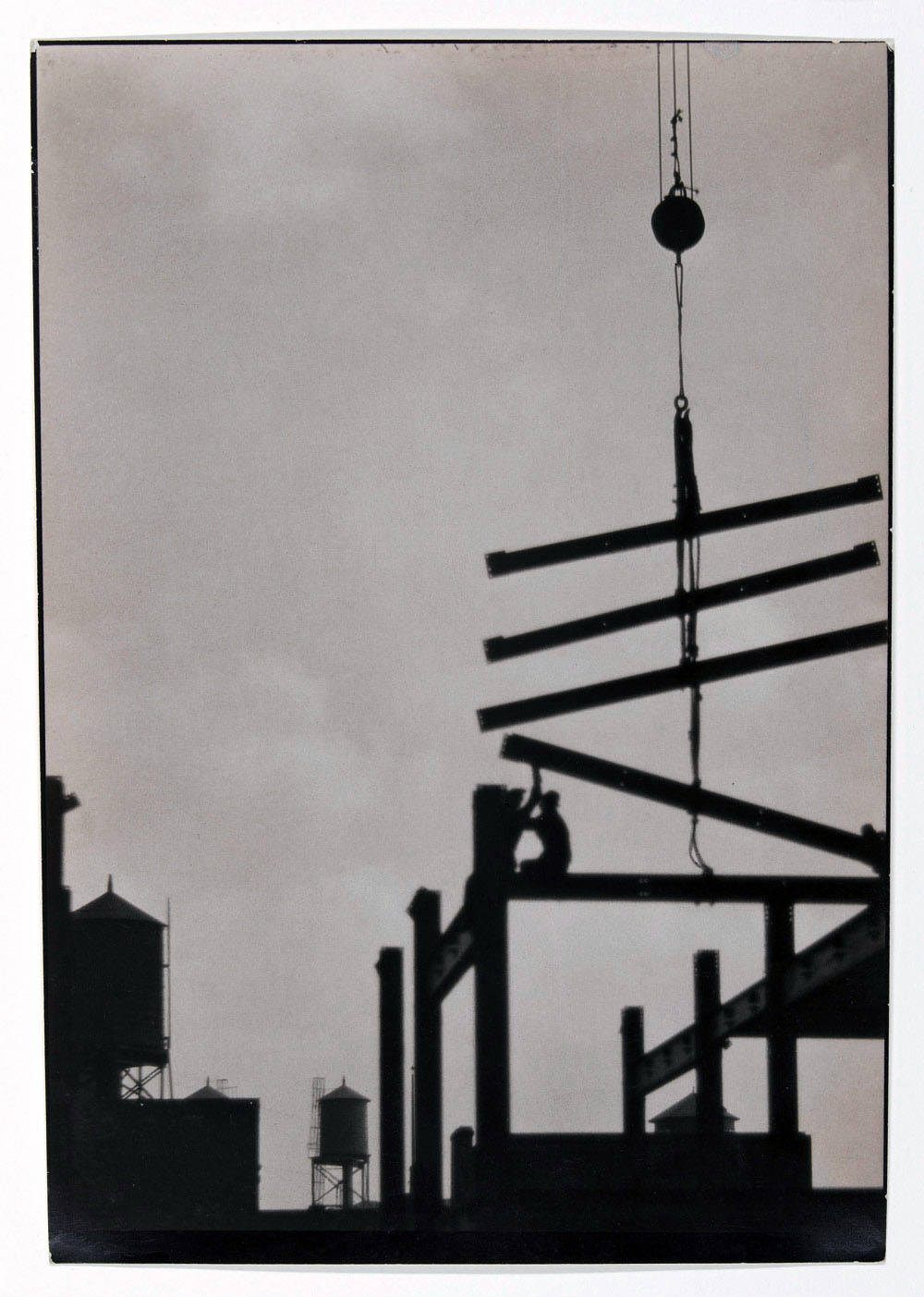
The other photographs to be displayed represent a range of movements in the history of photography. Two photographs by Emil Otto Hoppé (1878-1972) will be displayed. They are both studies of form focusing first and foremost on composition, just as in the Moholy-Nagy work. It was in around 1920 that Hoppé photographed the play of light on cobblestones in New York, and the building of a metal construction in Philadelphia.

The documentary aspects of photography will also be highlighted, with magnificent portraits of a black mother and her child in a report about Harlem in the late 1960s (by Gordon Parks), and a portrait of two men in the southern ‘Cotton States’ of America during the Great Depression of the 1930s (by Peter Sekaer). As early as 1909, Lewis Hine used photography as a weapon in the struggle against injustice. Commissioned by the National Child Labour Committee he documented the child labour industry, in this case a small boy standing on the street selling newspapers.

During the 1930s, Bill Brandt published a (now famous) book on life in London at the time, from which came the photograph Sky lightens over the suburbs, which is both a study of form and documentary in nature. It shows a forest of glistening roofs, depicted in a melancholy yet realistic manner.

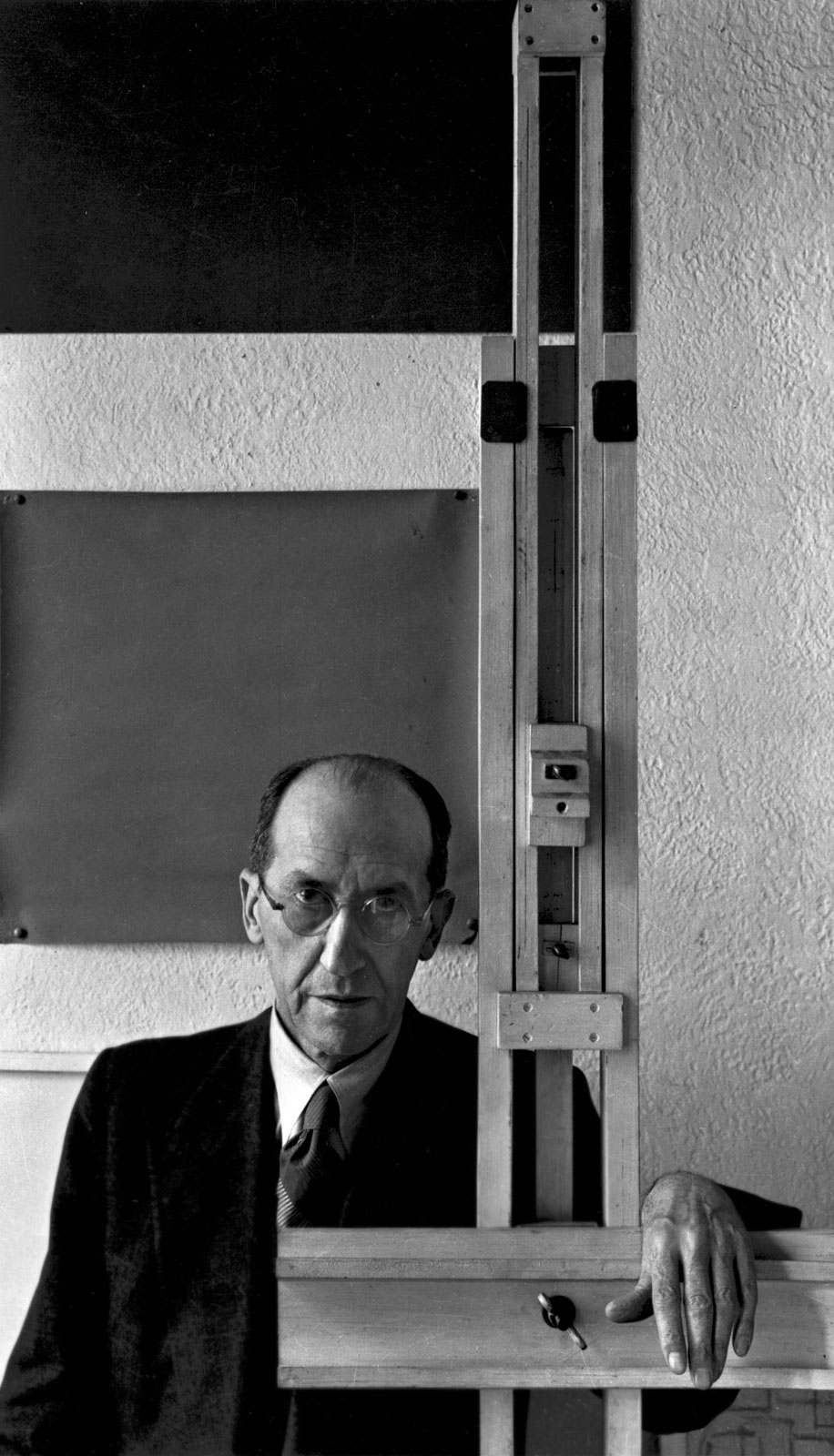
In 1942, Piet Mondrian was photographed in his studio by Arnold Newman, a session from which the Rijksmuseum has acquired a range of photographs. There are few portraits of Mondrian in Dutch collections, making this series particularly special.

A work by Helen Levitt is one of the few colour photographs included in the exhibition. Until the 1980s, colour photography was simply ‘not done’ and Levitt was one of the first to experiment with the method. The photograph of a girl searching for something underneath a green car is a marvellous example of composition in colour.

Press release from the Rijksmuseum website


Arnold Newman (American, 1918-2006) 'Piet Mondrian, New York' 1942


Arnold Newman (American, 1918-2006)
Piet Mondrian, New York
1942
Gelatin silver print


Emil Otto Hoppé (British born Germany, 1979-1942) 'Steel construction, Philadelphia' 1926


Emil Otto Hoppé (British born Germany, 1979-1942)
Steel construction, Philadelphia
1926
Gelatin silver print


László Moholy-Nagy (Hungary, 1895-1946) 'View from Pont Transbordeur, Marseille' 1929


László Moholy-Nagy (Hungary, 1895-1946)
View from Pont Transbordeur, Marseille
1929
Gelatin silver print


Rijksmuseum, Amsterdam
Jan Luijkenstraat 1, Amsterdam

Opening hours:
Every day from 9.00 to 17.00

Rijksmuseum website

LIKE ART BLART ON FACEBOOK

Back to top

Review: ‘Unnerved: The New Zealand Project’ at NGV International, Melbourne

Exhibition dates: 26th November 2010 – 27th February, 2011

A Queensland Art Gallery Touring Exhibition


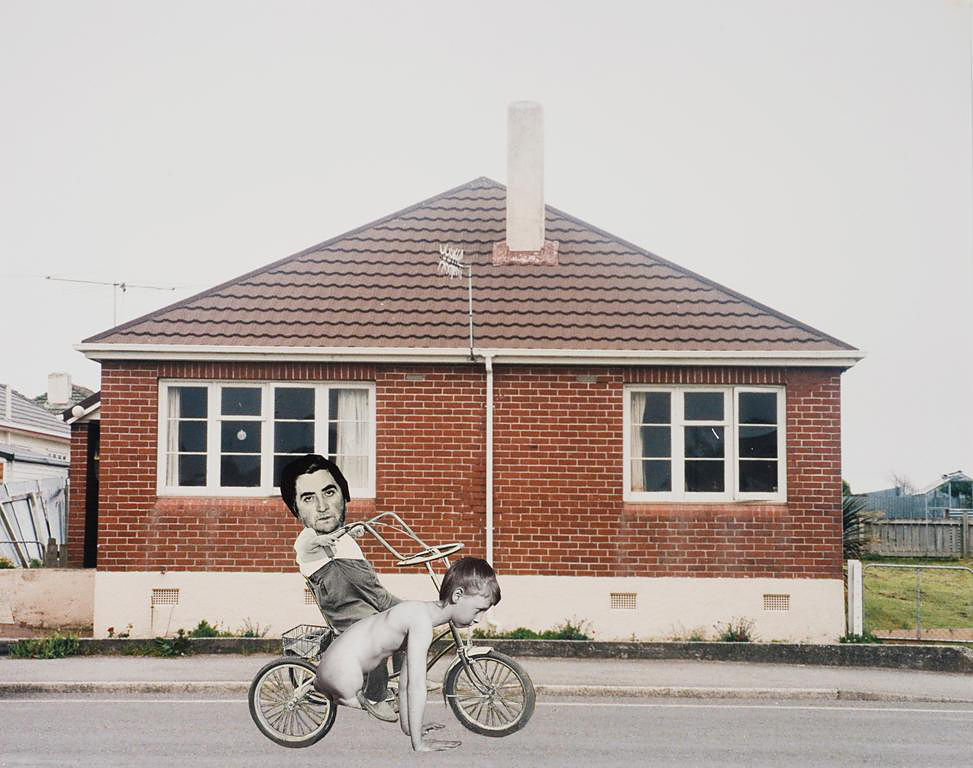
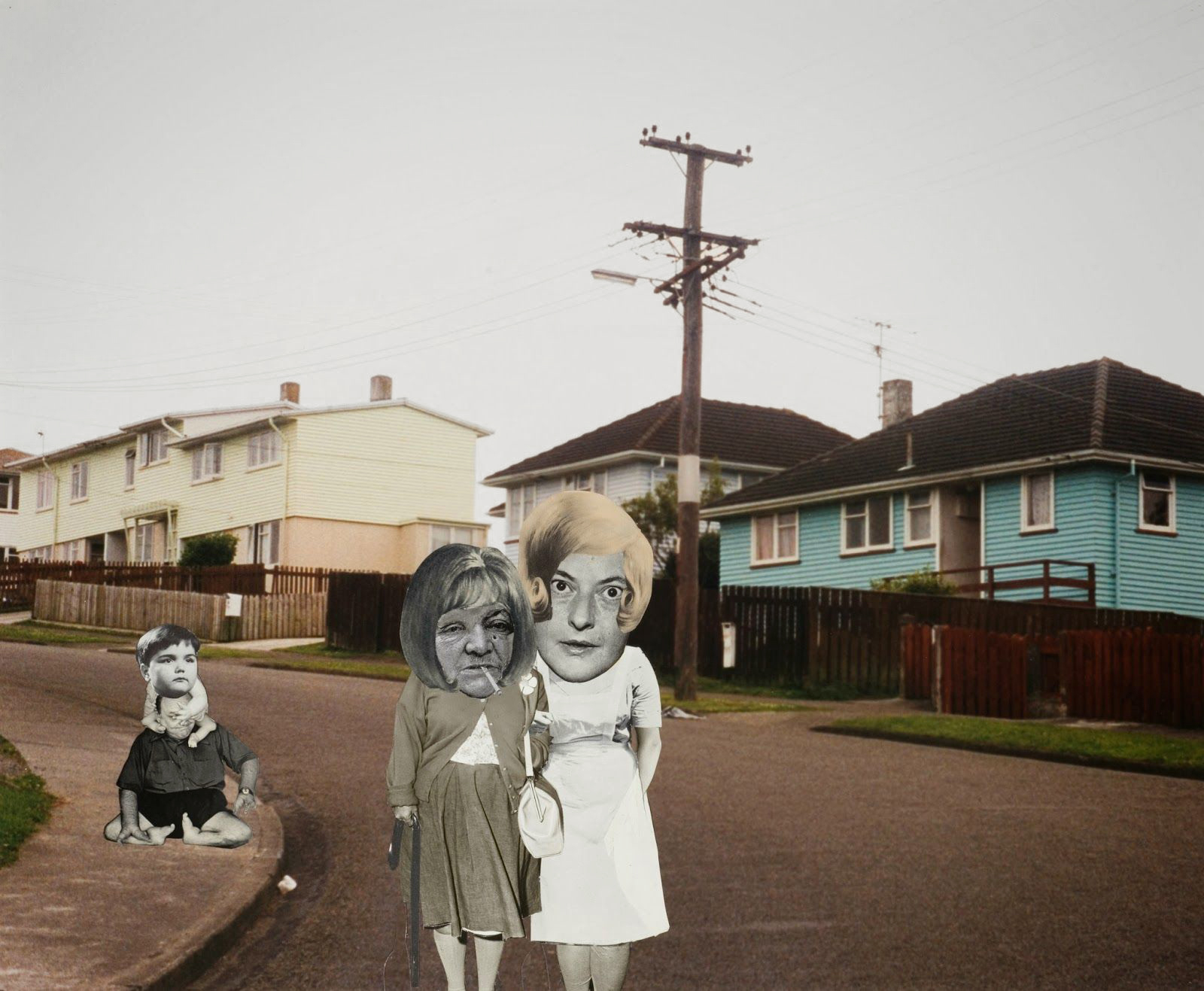
Ava Seymour (New Zealand, b. 1967) 'Sate Highway 1' 1997 from the exhibition 'Unnerved: The New Zealand Project' at NGV International


Ava Seymour (New Zealand, b. 1967)
State Highway I
1997
From Health, happiness and housing series
Colour photograph of a photomontage


Ava Seymour (New Zealand b. 1967) 'Day Care Walkabouts' 1997 from the exhibition 'Unnerved: The New Zealand Project' at NGV International


Ava Seymour (New Zealand b. 1967)
Day Care Walkabouts
1997
From Health, happiness and housing series
Photomontage on colour photograph


New Zealand art adrift in a myriad of stories and symbols – not a brave ‘new world’

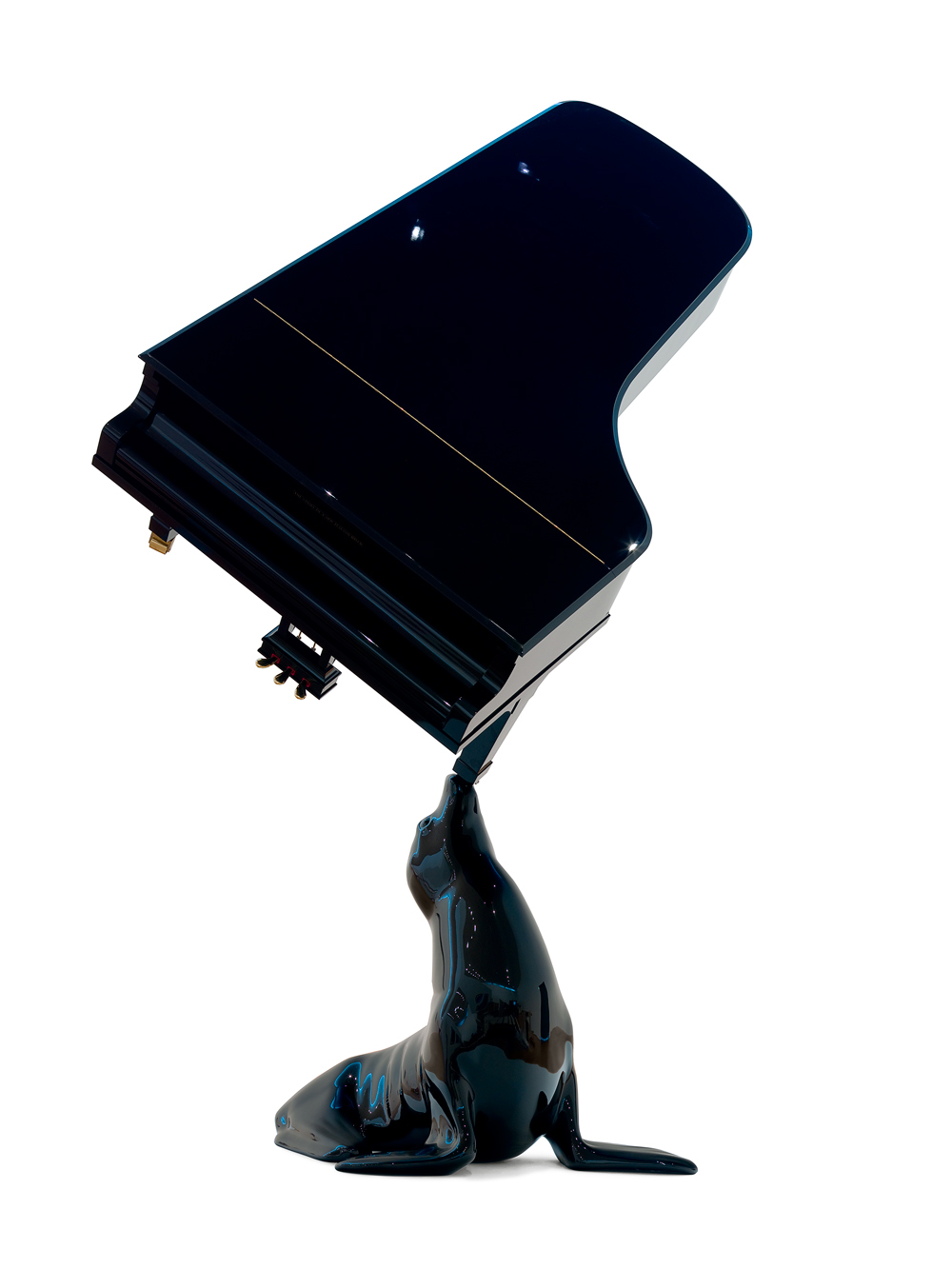
This is an underwhelming group exhibition of over 100 works drawn from the Queensland Art Gallery collection, a show to wander around on a lazy weekend afternoon and not get too excited about. The large number of works in the exhibition make it impossible to review each work individually (although I critique some works below) but one does get an overall sense of the investigation by New Zealand artists into their history, place, culture and identity. While there are a few good works in the exhibition there are also some very mediocre works as well and, other than a few splashes of self-deprecating humour (such as the wonderful The Horn of Africa (2006) by Michael Parekowhai, below) it all seems importantly earnest: an exhibition for serious people (apologies to Oscar Wilde).

On the evidence of this exhibition the country of New Zealand must be a very unnerving place to live, mainly because their artists can’t seem to keep their hand off it – cultural history that is.

Throughout this exhibition we have psychological unease, physical unease, a little humour, parody, poetry, symbology, allegory, mythology, colonialism, post-colonialism, nationalism, commercialisation, representation, anthropology, travel, landscape, topography, advertising, first contact, sacred spaces, indigenous politics, Māori culture, Pacific Islander culture, pakeha (non-indigenous) culture, tools, guns, rabbits, seals, pianos, traditional tattoos, tourist sites and museums, surfing, suburbia, personal journeys, family albums, androgyny, identity, public housing, ambiguous states, hyperreality, surreality, dislocation, disenfranchisement, alienation, bodies, portraits, subjects, past, present, future (and more!)

Ronnie van Hout exhibits three atmospheric, eerie, dark photographs of constructed model landscapes: of a Nazi doodlebug and the words ABDUCT and HYBRID. The wall text tries, unsuccessfully, to link the images to the obscure and haunted landscapes of New Zealand – a very long bow to draw indeed. Bill Cuthbert’s “nice” photographs offer generalised statements of light and place but really don’t take you anywhere and in fact could have been taken anywhere. The wall text offers that the photographs are a “self-conscious, critical response” to the dismantling of colonial ideas of empire and nation … this is art speak gobbledygook at its worst trying to justify basic photography.

Mark Adams panoramic photograph of one of the sites of first contact – an important historical moment of encounter between Māori and pakeha (non-Māori people of European descent) – are a beautiful photograph of a sound and mountains that has then been dissected, fragmented and individually framed and then mounted unevenly on the gallery wall – just to make sure we get the point about the ‘nature’ of the scenery and its cultural implications. Lonnie Hutchinson’s cut wall work Cinco “offers an interplay between paper and space and explores the ‘va’ or space between – a relation between the Samoan people and the landscape saturated with the dialogue of our ancestors … being adrift in a sea of memories caused by feelings related to cultural loss and uncertainty.” I know how they feel: adrift, underwhelmed by the art and overwhelmed by the text.

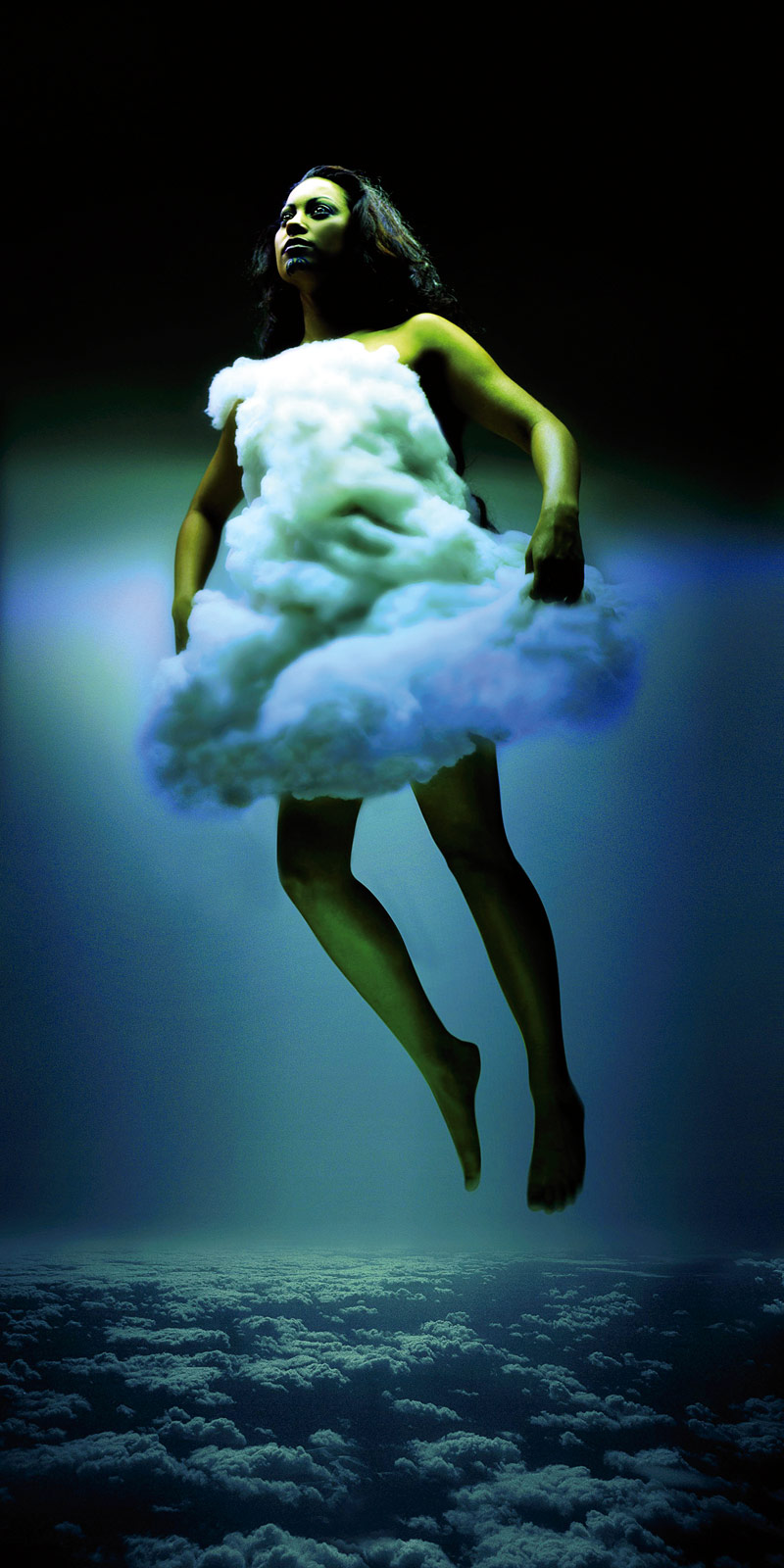
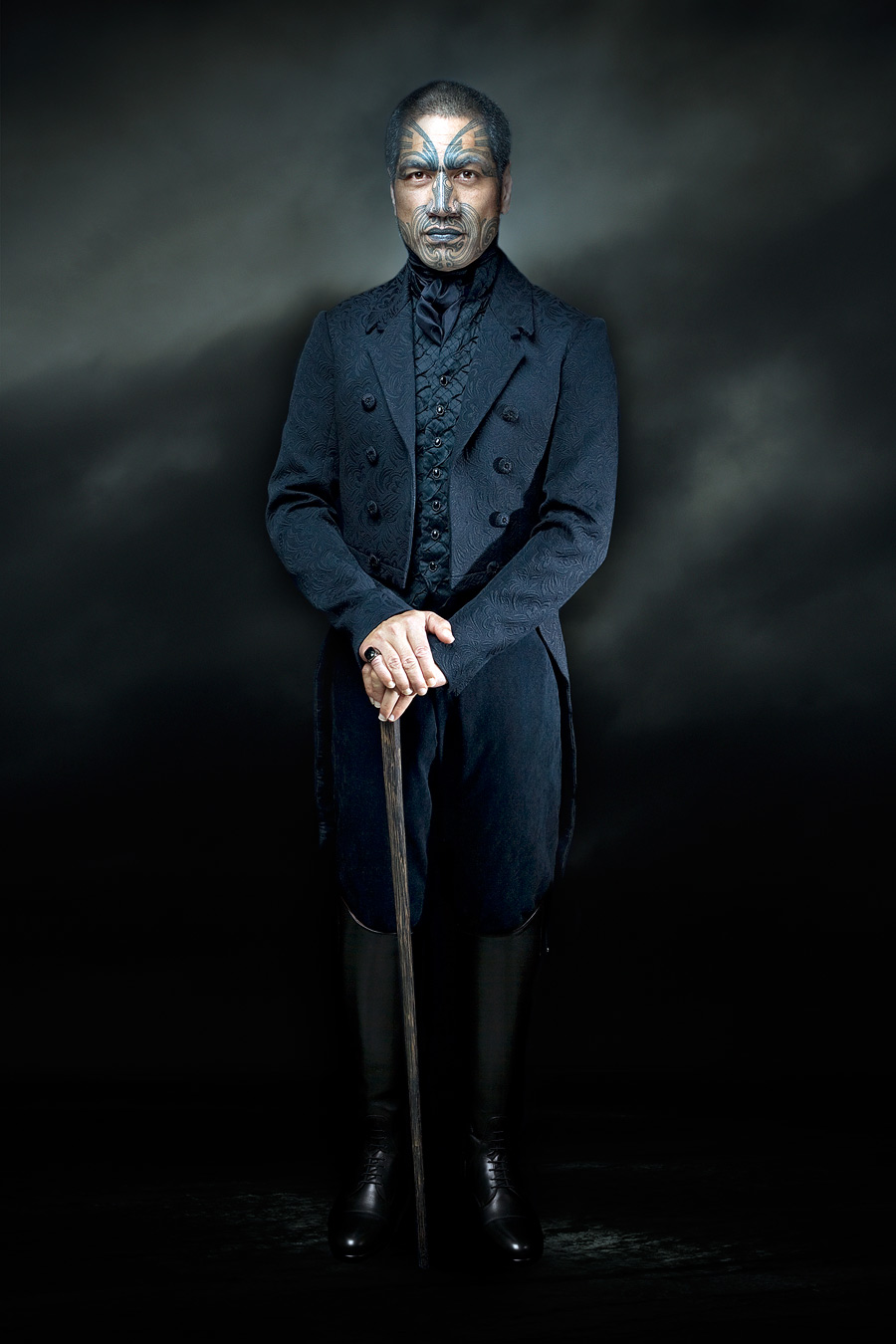
Other than the striking photograph of the Dandy (2007, below) Lisa Reihana’s series Digital Marae (2001- ) also fails to inspire. The marae is a highly structure space where Māori families come together – an outdoor, cleared area, a communal or sacred place which serves religious and social purposes in Polynesian societies. Here can be found male sculptures called poupou featuring diverse forms of masculinity, Māori gods and goddesses. The elder Mahuika, while sometimes described as male, is deliberately depicted in her female state in this series. In Reihanna’s digital interpretation of the marae her gods and goddesses become slick, media-inspired glossy magazine type images printed large, mounted on aluminium and lit for maximum theatrical effect. The unstructured spaces behind the figures have no context, no placement and give lie to the inspiration for the series (a highly structured space) and, as such, they land with a commercial thud onto the cleared earth.

The lowest point in the exhibition must be reserved for the 80 photographs of the series ‘The homely’ (1997-2000) by Gavin Hipkins. Usually when reviewing I refrain from saying anything bad about works of art. Robert Nelson in The Age describes the series as “visually and conceptually incoherent.” Taken over 4 years and supposedly “examining notions of nationhood that are unstable and fractured” Hipkins describes it as “a post-colonial gothic novel.” !!

The series features flat, one-dimensional images of symbols: sculptures, closed doors, open doors, flags, people, repeating circles and vertical elements – where the aggregate of all the images is supposed to MEAN SOMETHING. These are the most simple, most basic of year 12 images formed into a sequence that is conceptually irrelevant in terms of its symbolism and iconography vis a vis the purported critical examination it seeks to undertake. This artist needs to look at the sequences of Minor White to see how a master artist puts photographs together – not just in terms of narrative but the meaning in the spaces between the images, their spiritual resonance – or if wanting to be more literal, study that seminal book The Americans by Robert Frank to see how to really make a sequence.

On to better things. For me the absolute gem of this exhibition were the photomontages of Ava Seymour from her ‘Health, happiness and housing’ series (see photographs above). These are just fantastic! Featuring as a backdrop photographs of state houses built in the 1950s and 60s Seymour assembles her cast of characters – composite figures of found limbs, bodies and faces taken from old medical text books – and creates stark, psychological sites of engagement. The can be seen as family portraits, social documents of unseen alienation and dis-enfranchisement with communities and also a comment on the conduct of the welfare system and state housing, but in their ironic, self-deprecating humour they become so much more. Even though they use old photographs the artist recasts them ingenuously to become something new, a new space that the viewer can step into, unlike most of the work in this exhibition.

Most artists in this exhibition seem intent on a form of cultural excavation to make their work, digging and rooting around in cultural history and memory to find “meaning”, to make new forms from old that actually lead nowhere. They excavate symbols and signs and reform them hoping for what, exactly? All that appears is work that is stunted and fragmented, chopped up dislocations that offer nothing new in terms of a way forward for the culture from which these histories and memories emerge. There is no holistic, healing vision here, only a series of mined observations that fragment, distort and polarise, descending into the decorative, illustrative or the commercial. The same can be said of some Australian art (including the exhibition Stormy Weather: Contemporary Landscape Photography at NGV Federation Square that I will review next). As Robert Nelson succinctly observed in his review of this exhibition in The Age (Wednesday, December 29th, 2010), this exhibition “reveals a weakness that also exists in our scene: fertile tricks and noble intentions, but patchy skill or poetic imagination for connecting them.” Well said.

“”When the soul wants to experience something she throws out an image in front of her and then steps into it.” (Meister Eckhart) It is an evocation of the image as a threshold leading to new dimensions of meaning. Symbolic images are more than data; they are vital seeds, living carriers of possibility.”1


New dimensions of meaning, vital seeds, living carriers of possibility. Everyone of us is a living, breathing embodiment of cultural history and memory. We know that intimately in our bones, as human beings. What artists need to do is observe this legacy but offer a way forward, not constantly excavating the past and hoping this is enough when creating work. These are not new spaces to step into! The cohabitation of indigenous and ethnically mixed non-indigenous cultures in both Australia and New Zealand requires this holistic forward looking vision. It is a redemptive vision that is not mired in the symbols and archetypes of the past but, as Australia writer David Malouf envisages it, ‘a dream history, a myth history, a history of experience in the imagination’.2 It is a vision of the future that all post-colonial countries can embrace, where a people can come to know their sense of place more fully.

Rather than an escapist return to the past perhaps a redemptive vision of New Zealand’s cultural future, a history of experience in the imagination, would be less insular and more open to the capacity to wonder.

Dr Marcus Bunyan


1/ Ronnberg, Ami (ed.,). “Preface,” in The Book of Symbols. Cologne: Taschen, 2010, p. 6

2/ Footnote 6. Daniel, Helen. “Interview with David Malouf,” in Australian Book Review (September , 1996), p. 13 quoted in Ennis, Helen. “The Presence of the Past,” in Photography and Australia. London: Reaktion Books, 2007, p. 141


Many thankx to Jemma Altmeier for her help and to the National Gallery of Victoria for allowing me to publish the photographs in the posting. Please click on the photographs for a larger version of the image.


Lisa Reihana (Ngāpuhi: Ngāti Hine, Ngāi Tu New Zealander, b. 1964) 'Hinepukohurangi' 2001 from the exhibition 'Unnerved: The New Zealand Project' at NGV International


Lisa Reihana (Ngāpuhi: Ngāti Hine, Ngāi Tu New Zealander, b. 1964)
Hinepukohurangi
2001
From Digital Marae 2001-
Cibachrome photograph mounted on aluminium
200 x 100cm
Purchased 2002
© Lisa Reihana


Lisa Reihana (Ngāpuhi: Ngāti Hine, Ngāi Tu New Zealander, b. 1964) 'Dandy' 2007 from the exhibition 'Unnerved: The New Zealand Project' at NGV International


Lisa Reihana (Ngāpuhi: Ngāti Hine, Ngāi Tu New Zealander, b. 1964)
Dandy
2007
From Digital Marae 2001-
Colour digital print mounted on aluminium
200 x 120cm
Queensland Art Gallery, Brisbane
Purchased 2008 with funds from the Estate of Vincent Stack through the Queensland Art Gallery Foundation Queensland Art Gallery, Brisbane
© Lisa Reihana


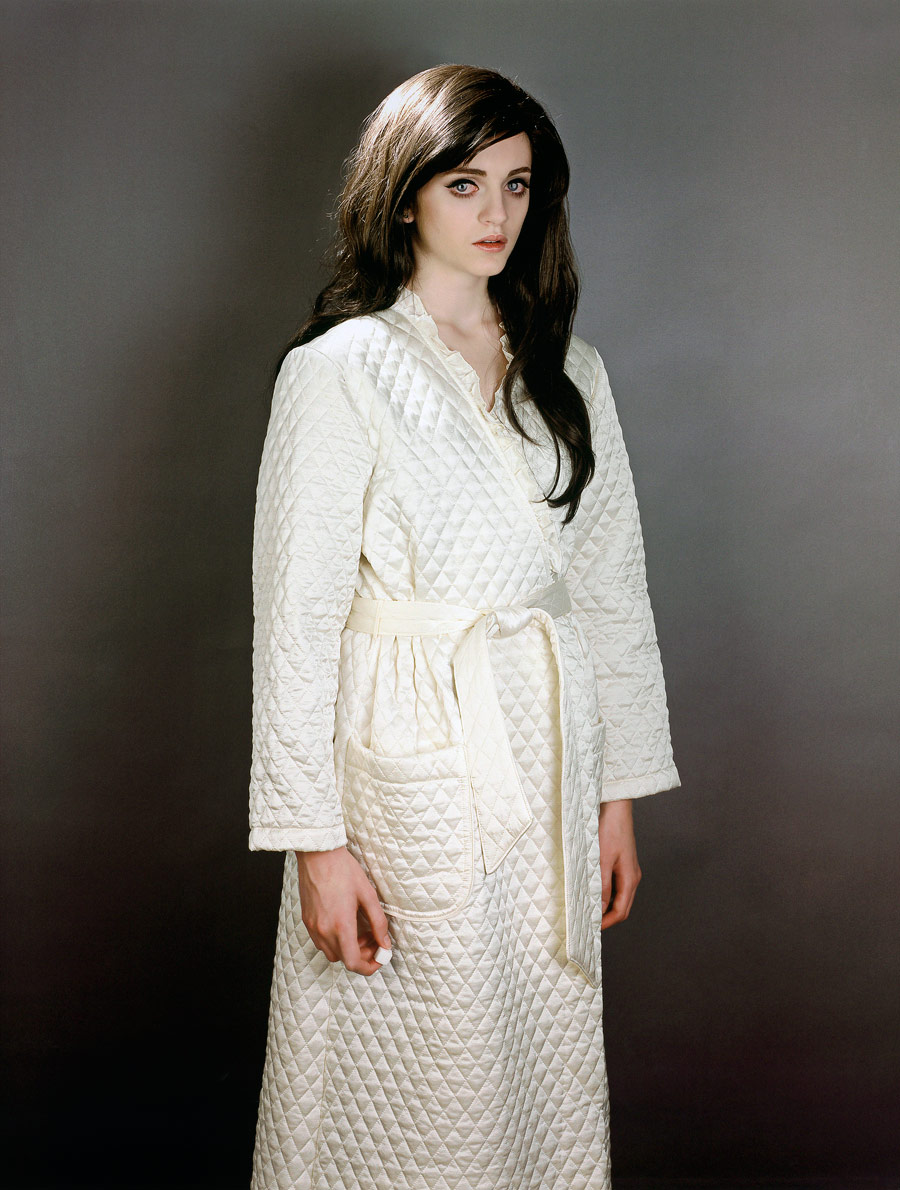
Yvonne Todd (New Zealander, b. 1973) 'January' 2005 from the exhibition 'Unnerved: The New Zealand Project' at NGV International


Yvonne Todd (New Zealander, b. 1973)
January
2005
From the Vagrants’ reception centre series
Light jet photograph
100 x 73.8cm
Queensland Art Gallery, Brisbane
Purchased 2007. Queensland Art Gallery Foundation Grant
©Yvonne Todd


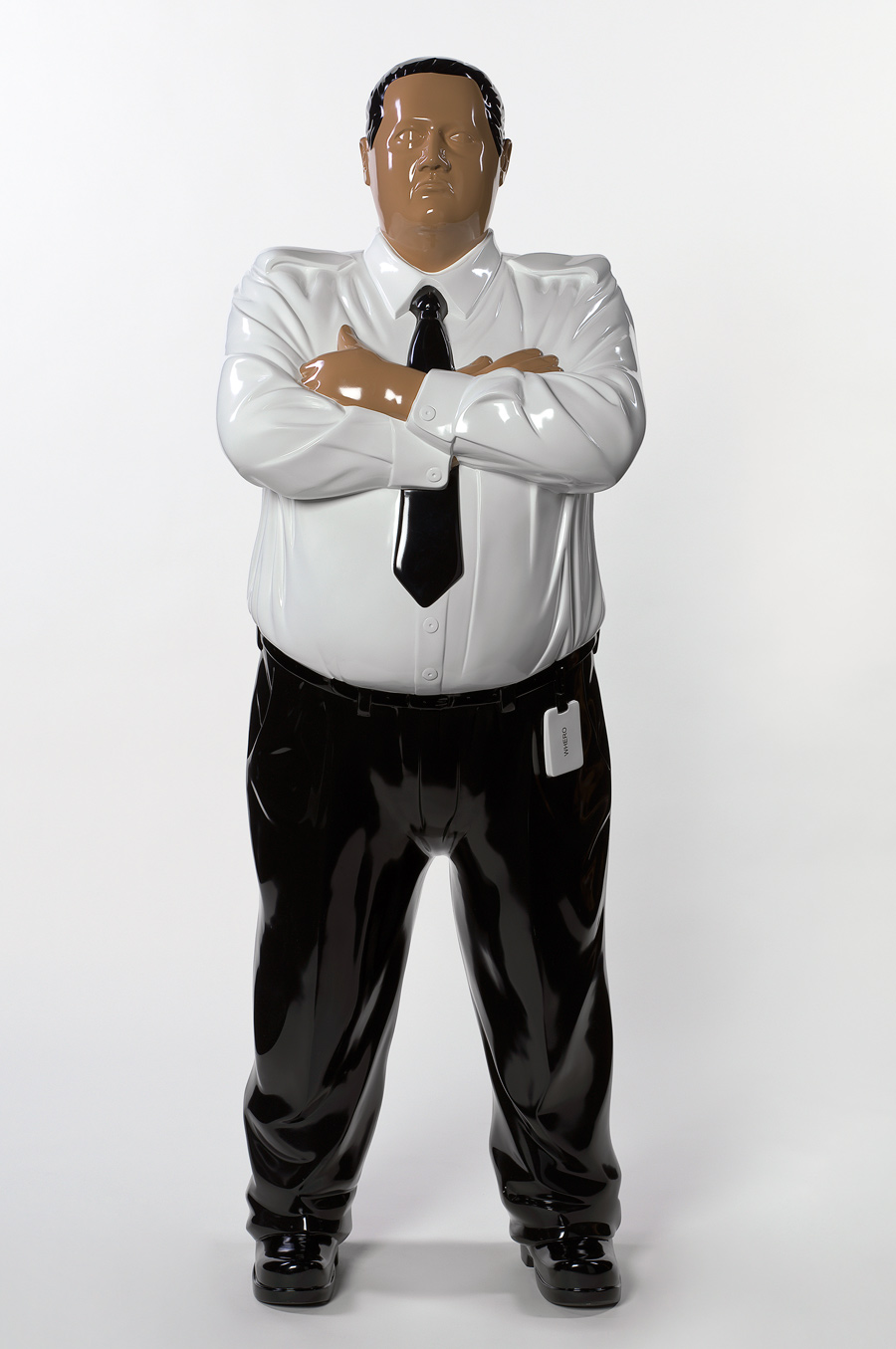
Michael Parekowhai (Ngāti Whakarongo New Zealander, b. 1968) 'Kapa Haka (Whero)' 2003 from the exhibition 'Unnerved: The New Zealand Project' at NGV International


Michael Parekowhai (Ngāti Whakarongo New Zealander, b. 1968)
Kapa Haka (Whero)
2003
Automotive paint on fibreglass
188 x 60 x 50cm
Queensland Art Gallery, Brisbane
Purchased 2009 with funds from Tim Fairfax AM, through the Queensland Art Gallery Foundation
© Michael Parekowhai


The National Gallery of Victoria today opened a major exhibition celebrating the extraordinary work of 26 contemporary New Zealand artists in Unnerved: The New Zealand Project.

Unnerved explores a particularly rich, dark vein found in contemporary New Zealand art. The psychological or physical unease underlying many works in the exhibition is addressed with humour, parody and poetic subtlety by artists across generations and mediums. Bringing together more than 100 works ranging from intimate works on paper to large scale installations by both established and emerging artists, Unnerved engages with New Zealand’s changing social, political and cultural landscape as the country navigates its indigenous settler and migrant histories. These works explore a changing sense of place, the continued importance of contemporary Maori art, biculturalism, a complex colonial past, the creative reworking of memory, and the often interconnected mediums of performance, photography and video. If the vision is unsettling, it is also compelling and Unnerved: The New Zealand Project offers us new ways of seeing one of our closest neighbours.

This fascinating exhibition explores a rich and dark vein found in contemporary art in New Zealand, drawing on the disquieting aspects of New Zealand’s history and culture reflected through more than 100 works of art.

Jane Devery, Coordinating Curator, NGV said: “The works presented in Unnerved reveal a darkness and distinctive edginess that characterises this particular trend in New Zealand contemporary art. The psychological or physical unease underlying many works in the exhibitions is addressed with humour, parody and poetic subtlety.

The exhibition reflects the strength and vitality of contemporary art in New Zealand with works created by both established and emerging artists, across a range of mediums including painting, photography, sculpture, installation, drawing, film and video.

Unnerved engages with New Zealand’s changing social, political and cultural landscape, exploring a shifting sense of place, complex colonial past, the relationships between contemporary Māori, Pacific Islander and pakeha (non-indigenous) culture, and the interplay between performance, video and photography,” said Ms Devery.

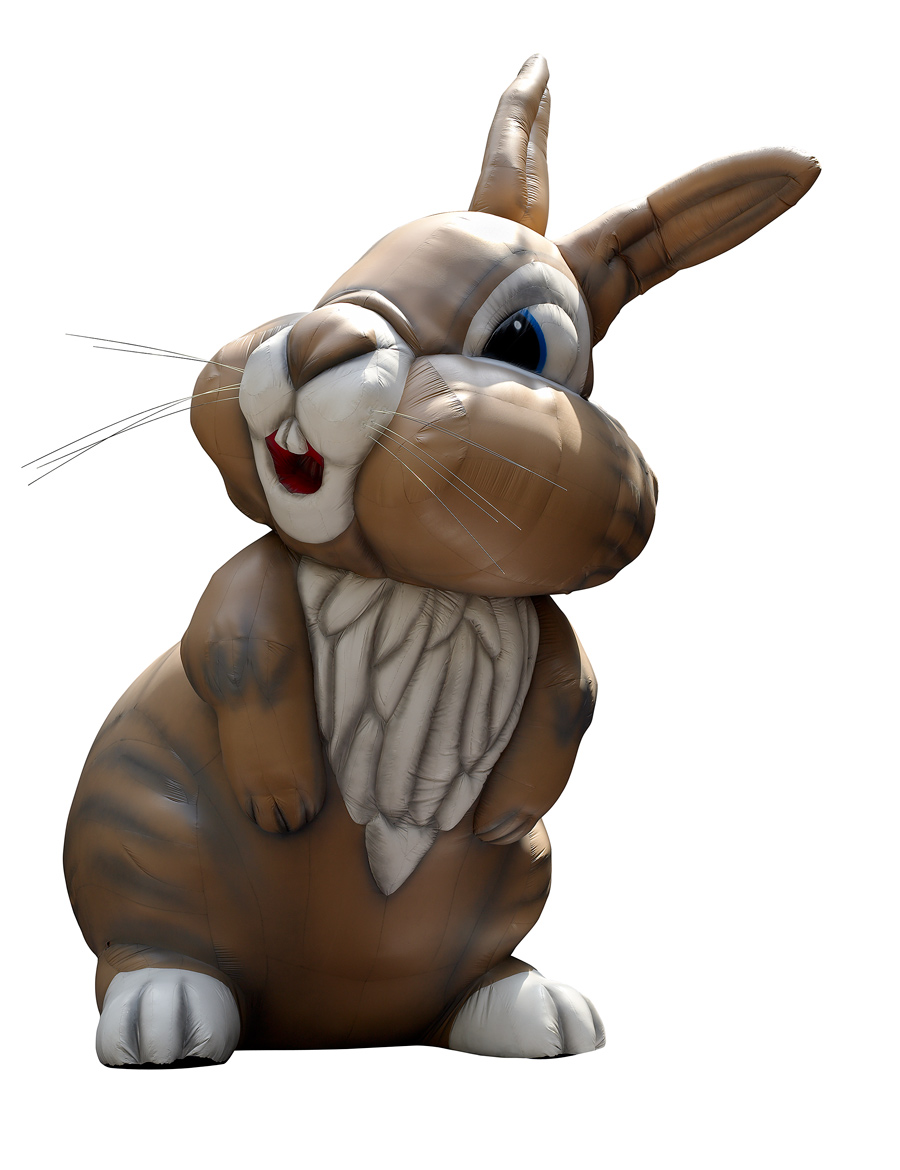
A highlight of the exhibition is a group of sculptural works by Michael Parekowhai including his giant inflatable rabbit, Cosmo McMurtry, which will greet visitors to the exhibition, and a spectacular life-size seal balancing a grand piano on its nose titled The Horn of Africa. Also on display are a series of haunting photographs by Yvonne Todd, whose portrait photography often refers to B-grade films and pulp fiction novels.

Gerard Vaughan, Director, NGV said this exhibition demonstrates the NGV’s strong commitment to interesting and challenging contemporary art secured from around the world; he noted that the NGV has made a special commitment to exhibition the contemporary art of our region.

Unnerved will introduce visitors to the rich contemporary arts scene of one of our closest neighbours, fascinating audiences with works ranging from the life size installations by Parekowhai through to the spectacular 30 metre photographic essay by Gavin Hipkins. This truly is a must see show this summer!” said Dr Vaughan.

Unnerved will also offer a strong and engaging collection of contemporary sculpture, installations, drawings, paintings, photography, film and video art by artists including Lisa Reihana, John Pule, Gavin Hipkins, Anne Noble, Ronnie van Hout, Shane Cotton, Julian Hooper and many others.

Press release from the National Gallery of Victoria website


Michael Parekowhai (Ngāti Whakarongo New Zealander, b. 1968) 'The Horn of Africa' 2006


Michael Parekowhai (Ngāti Whakarongo New Zealander, b. 1968)
The Horn of Africa
2006
Automotive paint, wood, fibreglass, steel, brass
395 x 200 x 260cm
Queensland Art Gallery, Brisbane
Purchased 2008 with funds from the Queensland Government’s Gallery of Modern Art Acquisitions Fund in recognition of the contribution to the Gallery by Wayne Goss (Chair of Trustees 1999-2008)
© Michael Parekowhai


Michael Parekowhai (Ngāti Whakarongo New Zealander, b. 1968) 'Cosmo McMurtry' 2006 from the exhibition 'Unnerved: The New Zealand Project' at NGV International


Michael Parekowhai (Ngāti Whakarongo New Zealander, b. 1968)
Cosmo McMurtry
2006
Synthetic polymer paint on polyvinyl chloride, fibreglass, air compressor
734.3 x 506.4 x 739.1cm (variable)
Presented by the Melbourne Art Fair Foundation with the assistance of funds donated by NGV Contemporary, 2006
National Gallery of Victoria
© Michael Parekowhai


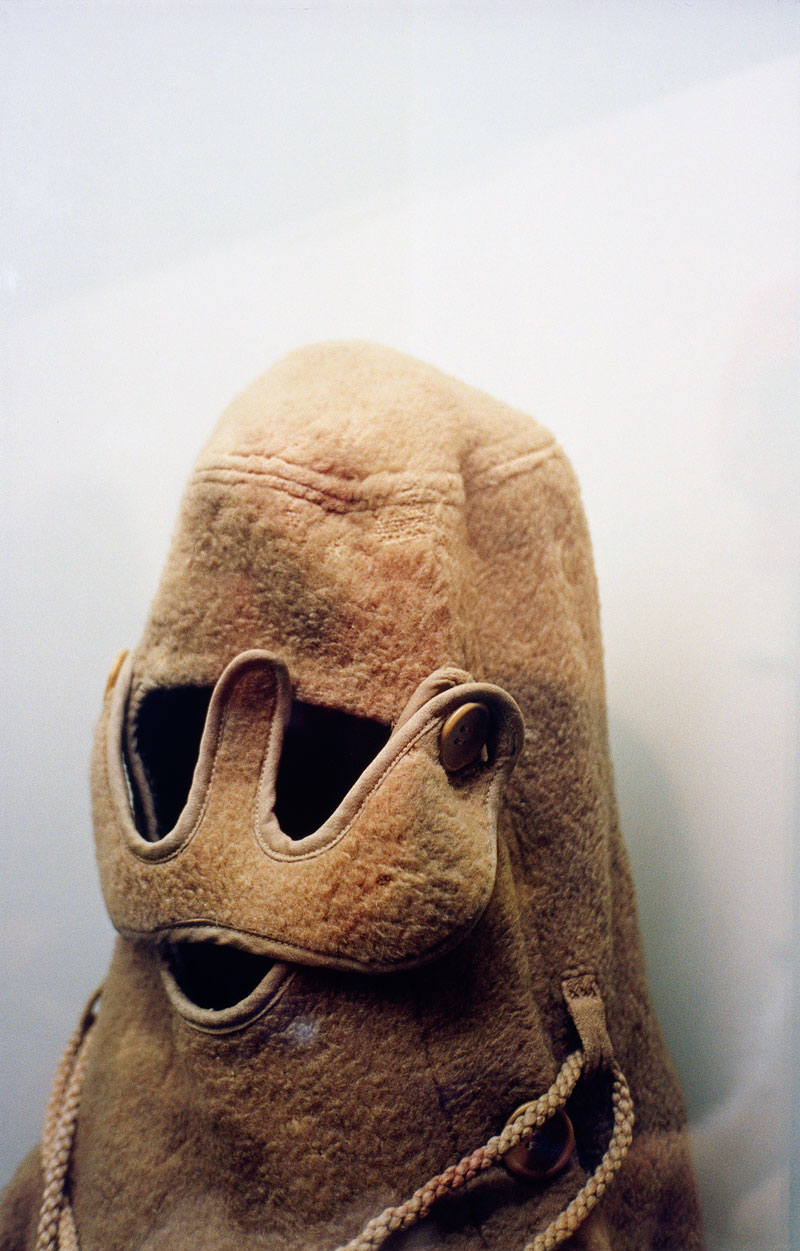
Gavin Hipkins (New Zealander, b. 1968) 'Christchurch (Mask)' 1998 from the exhibition 'Unnerved: The New Zealand Project' at NGV International


Gavin Hipkins (New Zealander, b. 1968)
Christchurch (Mask)
1998
From The homely series 1997-2000
Type C photograph
60 x 40cm
Queensland Art Gallery, Brisbane Purchased 2008. The Queensland Government’s Gallery of Modern Art Acquisitions Fund
© Gavin Hipkins


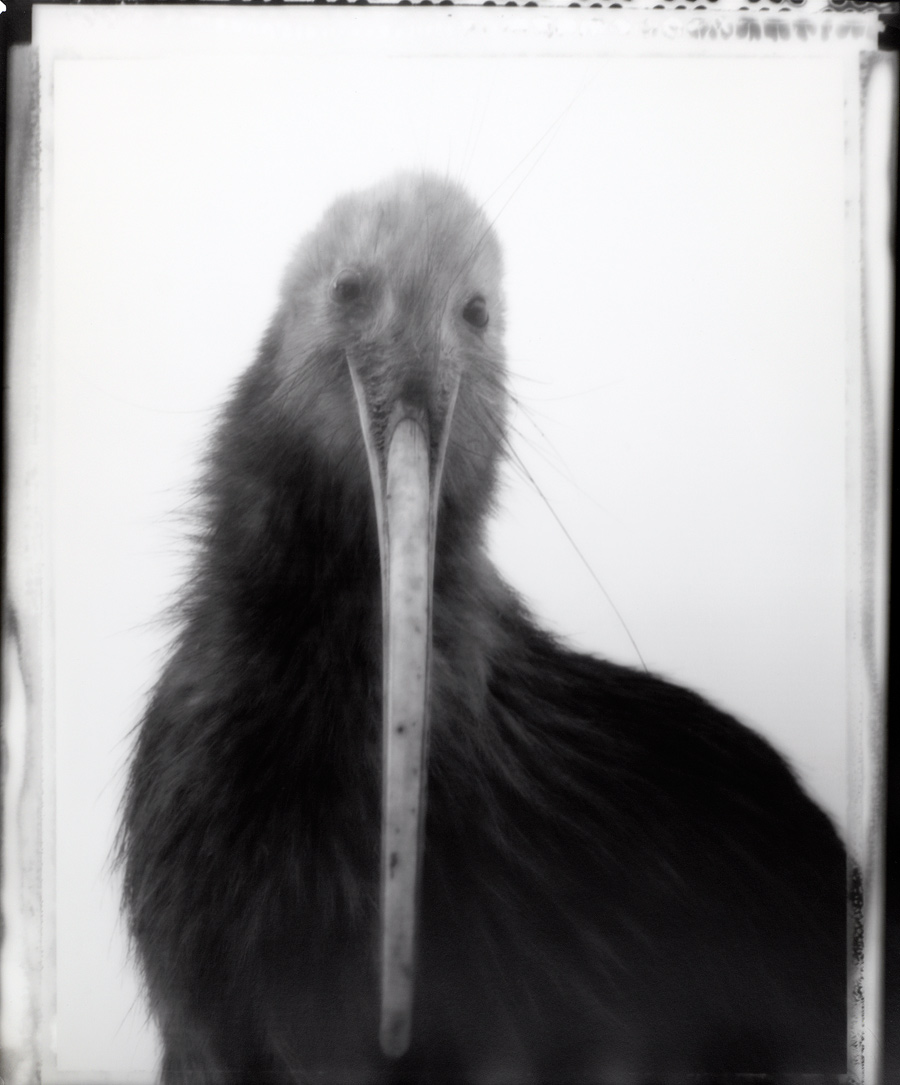
Fiona Pardington (Kai Tahu, Kati Mamoe, Kati Waewae New Zealander, b. 1961) 'Sweet Kiwi, from the collection 'Whanganui Museum'' 2008 from the exhibition 'Unnerved: The New Zealand Project' at NGV International


Fiona Pardington (Kai Tahu, Kati Mamoe, Kati Waewae New Zealander, b. 1961)
Sweet Kiwi, from the collection ‘Whanganui Museum’
2008
Gold-toned gelatin silver photograph
61 x 50.8cm
Queensland Art Gallery, Brisbane
Purchased 2008 with funds from Gina Fairfax through the Queensland Art Gallery Foundation
© Fiona Pardington


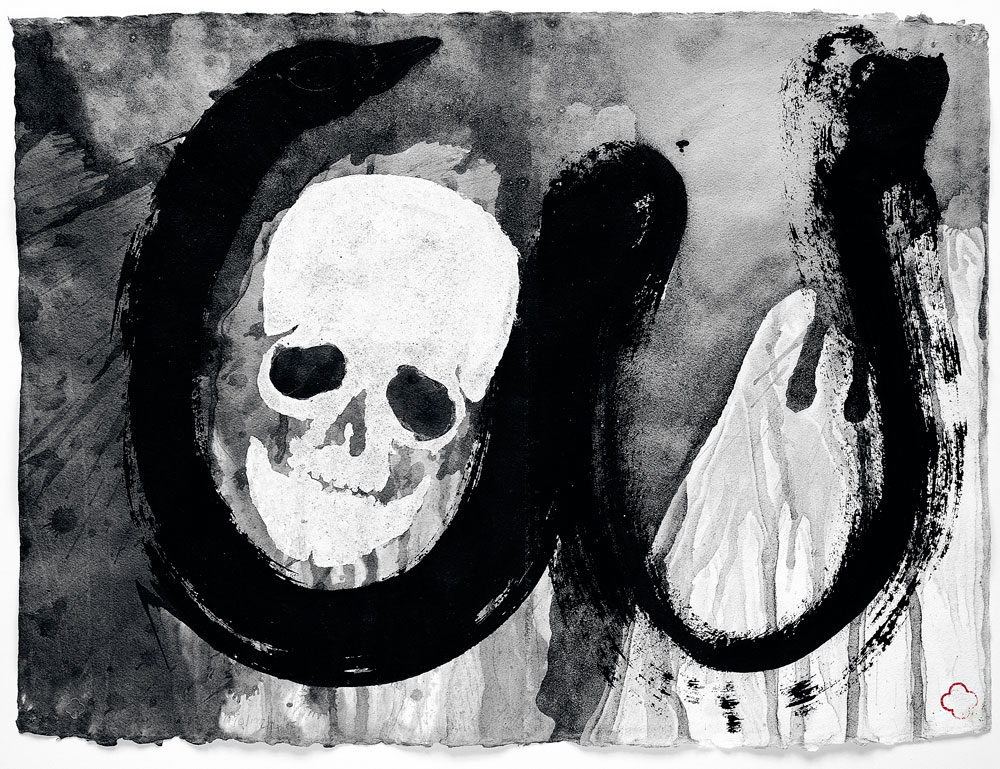
Max Gimblett (New Zealander / American, b. 1935) 'Balls' 1990-1997 from the exhibition 'Unnerved: The New Zealand Project' at NGV International


Max Gimblett (New Zealander/American, b. 1935)
Balls
1990-1997
Brush and ink, synthetic polymer paint and pencil on handmade paper
59.8 x 79.3cm
Queensland Art Gallery, Brisbane
The Max Gimblett Gift.
Gift of the artist through the Queensland Art Gallery Foundation 2000
© Max Gimblett


Anne Noble (New Zealander, b. 1954) 'Ruby's room no. 6' 1999 from the exhibition 'Unnerved: The New Zealand Project' at NGV International


Anne Noble (New Zealander, b. 1954)
Ruby’s room no. 6
1999
Colour digital print
67 x 100.2cm
Queensland Art Gallery, Brisbane
Purchased 2006
© Anne Noble


NGV International
180 St Kilda Road

Opening hours
Daily 10am – 5pm
National Gallery of Victoria website

LIKE ART BLART ON FACEBOOK

Back to top

Review: ‘Luminous Cities: Photographs of the Built Environment’ at NGV International, Melbourne

Exhibition dates: 22nd October 2010 – 13th March 2011


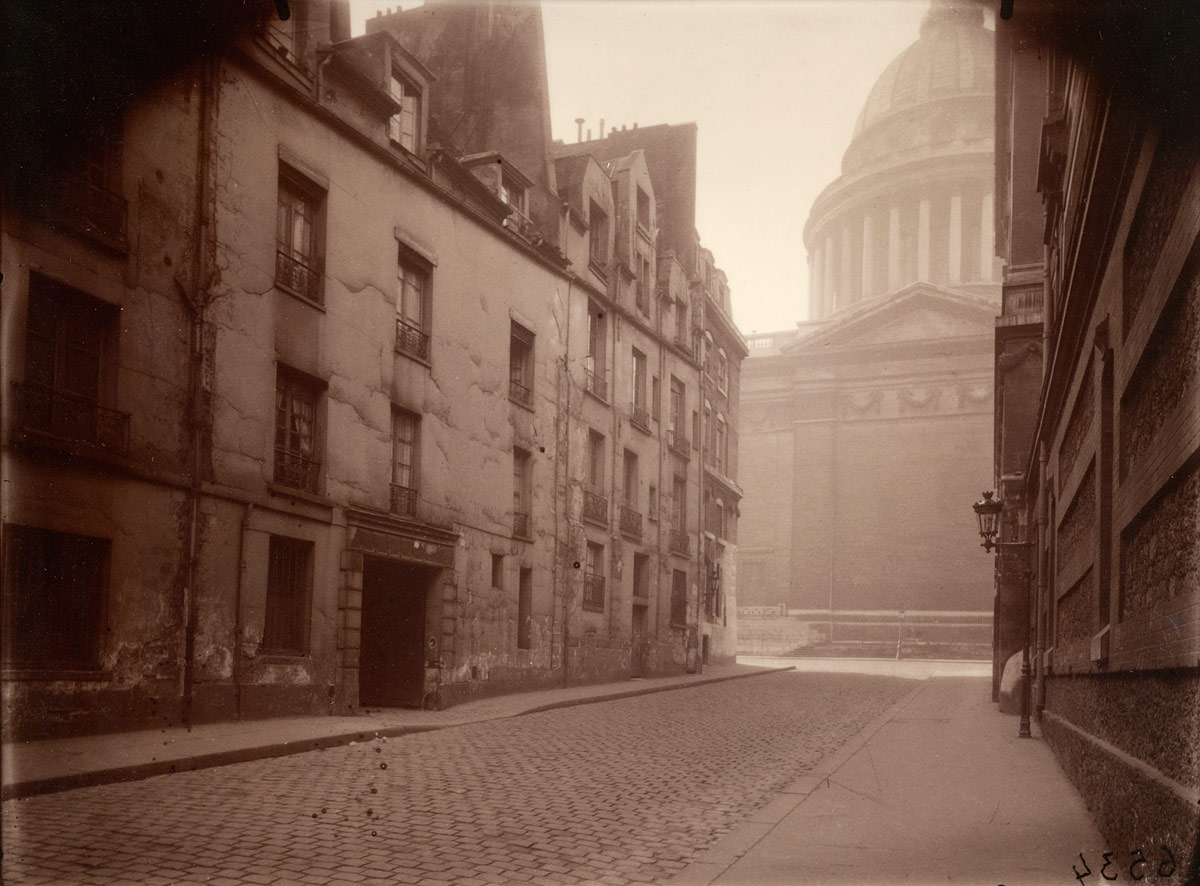
Eugène Atget (French, 1857-1927) 'Coin de la rue Valette et Pantheon, 5e arrondissement, matinee de mars' 1925, printed 1978  from the exhibition 'Luminous Cities: Photographs of the Built Environment' at NGV International


Eugène Atget (French, 1857-1927)
Coin de la rue Valette et Pantheon, 5e arrondissement, matinee de mars
1925, printed 1978
Gelatin silver photograph
17.8 x 23.7cm
National Gallery of Victoria, Melbourne
Purchased, 1980


A delightful exhibition of photographs of the built environment at the National Gallery of Victoria, Melbourne. The exhibition contains some interesting photographs from the collection including the outstanding Coin de la rue Valette et Pantheon, 5e arrondissement, matinee de mars by Eugene Atget taken two years before his death (1925, printed 1978, see below) that simply takes your breath away.

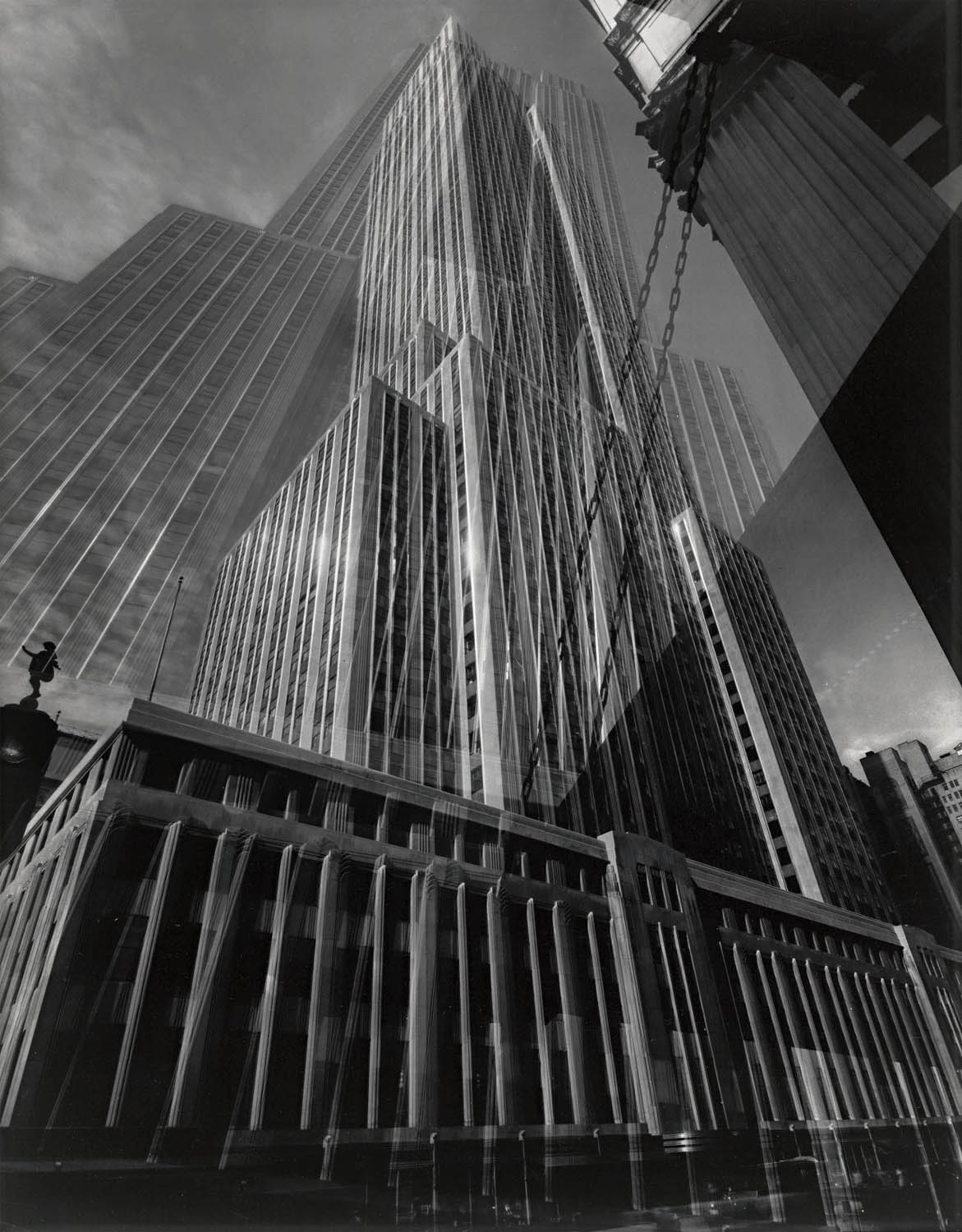
Atget was my hero when I started to study photography in the late 1980s and he remains my favourite photographer. His use of light coupled with his understanding of how to organise space within the pictorial frame is exemplary (note the darkness of the right-hand wall as it supports the integrity of the rest of the image, as it leads your eye to that wonderful space between the buildings, the shaft of light falling on the ground, the blank wall topped by an arrow leading the eye upwards to the misty dome!). The ability to place his large format camera and tripod in just the right position, the perfect height and angle, to allow the subject to reveal itself it all it’s glory is magical: “Atget’s interest in the variable play between nature and art through minute changes in the camera’s angle, or as functions of the effects of light and time of day, is underscored in his notations of the exact month and sometimes even the hour when the pictures were taken.”1 Two other immense works in the exhibition are New York at Night by Berenice Abbott (1932, printed c. 1975 below) and the incredible multiple exposure The Maypole, Empire State Building, New York by Edward Steichen (1932, below).

The only disappointment to the exhibition is the lack of vintage prints, a fair portion of the exhibition including the three prints mentioned above being later prints made from the original negatives. I wonder what vintage prints of these images would look like?

The purchasing of non-vintage prints was the paradigm for the collection of international photographs early in the history of the Department of Photography at the National Gallery of Victoria and was seen as quite acceptable at the time. The paradigm was set by Athol Shmith in 1973 on his visit to Paris and London.

“Typically for the times, Shmith did not choose to acquire vintage prints, that is, photographs made shortly after the negative was taken. While vintage prints are most favoured by collectors today, in the 1970s vintage prints supervised by the artists were considered perfectly acceptable and are still regarded as a viable, if less impressive option now.”2

Some museums including the NGV preferred to acquire portfolios of modern reprints as a speedy way of establishing a group of key images. As noted in the catalogue essay to 2nd Sight: Australian Photography at the National Gallery of Victoria by Dr Isobel Crombie, Senior Curator of Photography at the National Gallery of Victoria, the reason for preferring the vintage over the modern print “is evident when confronted with modern and original prints: differences in paper, scale and printing styles make the original preferable.”3 The text also notes that this sensibility, the consciousness of these differences slowly evolved in the photographic world and, for most, the distinctions were not a matter of concern even though the quality of the original photograph was not always maintained.

This is stating the case too strongly. Appreciation of the qualities of vintage prints was already high in the period of the mid-1970s – early 1980s most notably at institutions such as The Museum of Modern Art, a collection visited by photography curators of the NGV. Size and scale of the vintage prints tend to be much smaller than later prints making them closer to the artists original intentions, while the paper the prints are made on, the contrast and colour of the prints also varies remarkably. Other mundane but vitally important questions may include these: who printed the non-vintage photograph, who authorised the printing and how many non-vintage copies of the original negative were made, none of which are answered when the prints are displayed.

I vividly remember seeing a retrospective of Henri Cartier-Bresson’s work in Edinburgh at the Dean Gallery, National Gallery of Scotland in 2005, the largest retrospective of Cartier-Bresson’s work ever staged in Britain with over 200 photographs. Three large rooms were later 1970s reprints of some of his photographs, about 20″ x 24″ in size, on cold, blue photographic paper. One room, however, was full of his original prints from the 1920s and 30s. The contrast could not have been different: the vintage prints were very small, intense, subtle, printed on brown toned paper, everything that you would want those jewel-like images to be, the vision of the artist intensified; the larger prints diluted that vision until the images seemed to almost waste away despite their size.

Although never stated openly I believe that one of the reasons for the purchase of non-vintage prints was the matter of cost, the Department of Photography never being given the budget to buy the prints that it wanted to in the 1970s – early 1980s, the collection of photography not being a priority for the NGV at that time. In other words by buying non-vintage prints in the 1970s you got more “bang for your buck” even when the cost of vintage prints was relatively low. Unfortunately the price of vintage prints then skyrocketed in the 1980s putting them well outside the budget of the Department. While Dr Crombie acknowledges the preponderance of American works in the collection over European and Asian works she also notes that major 20th century photographers that you would expect to be in the collection are not and blames this lack “on the massive increases in prices for international photography that began in the 1980s and which largely excluded the NGV from the market at this critical time.”4

The policy of purchasing non-vintage prints has now ceased at the National Gallery of Victoria.

The purchasing of non-vintage prints and the paucity of purchasing vintage prints by master photographers during the formative decade of the collection of international photographs in the Department of Photography (1970-1980) is understandable in hindsight but today seems like a golden opportunity missed. While the collection contains many fine photographs due to the diligence of early photographic curators (notably Jennie Boddington), the minuscule nature of the budget of the department in those early years when vintage prints were relatively cheap and affordable (a Paul Caponigro print could be purchased for $200-300 for example) did not allow them to purchase the photographs that the collection desperately needed. With one vintage print by a master of photography now fetching many thousands of dollars the ability to fill gaps in the collection in the future is negligible (according to Dr Crombie) – so we must celebrate and enjoy the photographs that are in the collection such as those in Luminous Cities: Photographs of the Built Environment.

Dr Marcus Bunyan


2/ Crombie, Isobel. “Creating a Collection: International Photography at the National Gallery of Victoria,” in Re_View: 170 years of Photography. Melbourne: National Gallery of Victoria, 2009, p. 9

3/ Crombie, Isobel. Second sight: Australian photography in the National Gallery of Victoria. Melbourne: National Gallery of Victoria, 2002, p. 10

4/ Op.cit. p. 10


Many thankx to Jemma Altmeier for her help and to the National Gallery of Victoria for allowing me to publish the photographs in the posting. Please click on the photographs for a larger version of the image.


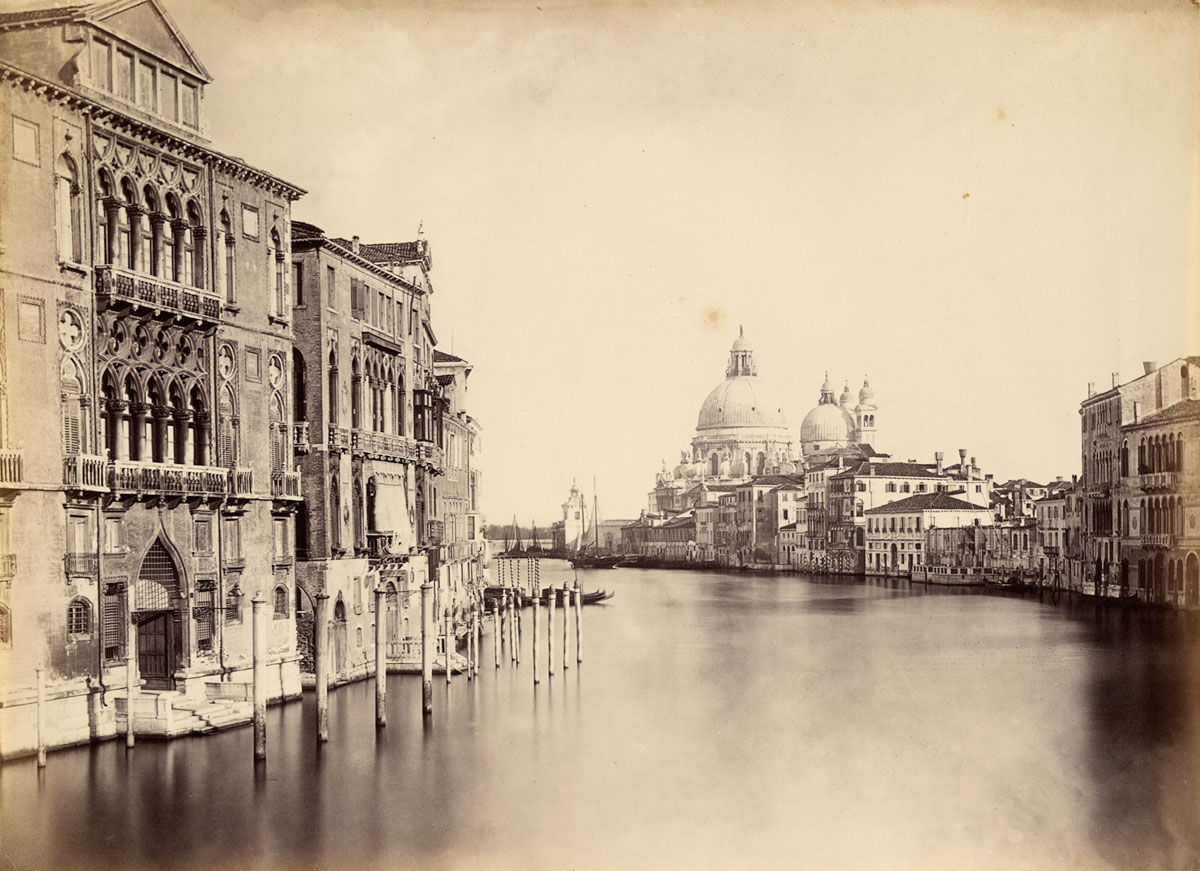
Stephen Thompson (active throughout Europe, 1850s-1880s) 'Grande Canale, Venice' c. 1868 from the exhibition 'Luminous Cities: Photographs of the Built Environment' at NGV International


Stephen Thompson (active throughout Europe, 1850s-1880s)
Grande Canale, Venice
c. 1868
Albumen silver photograph
21.2 x 29.2cm
National Gallery of Victoria, Melbourne
Purchased from Admission Funds, 1988


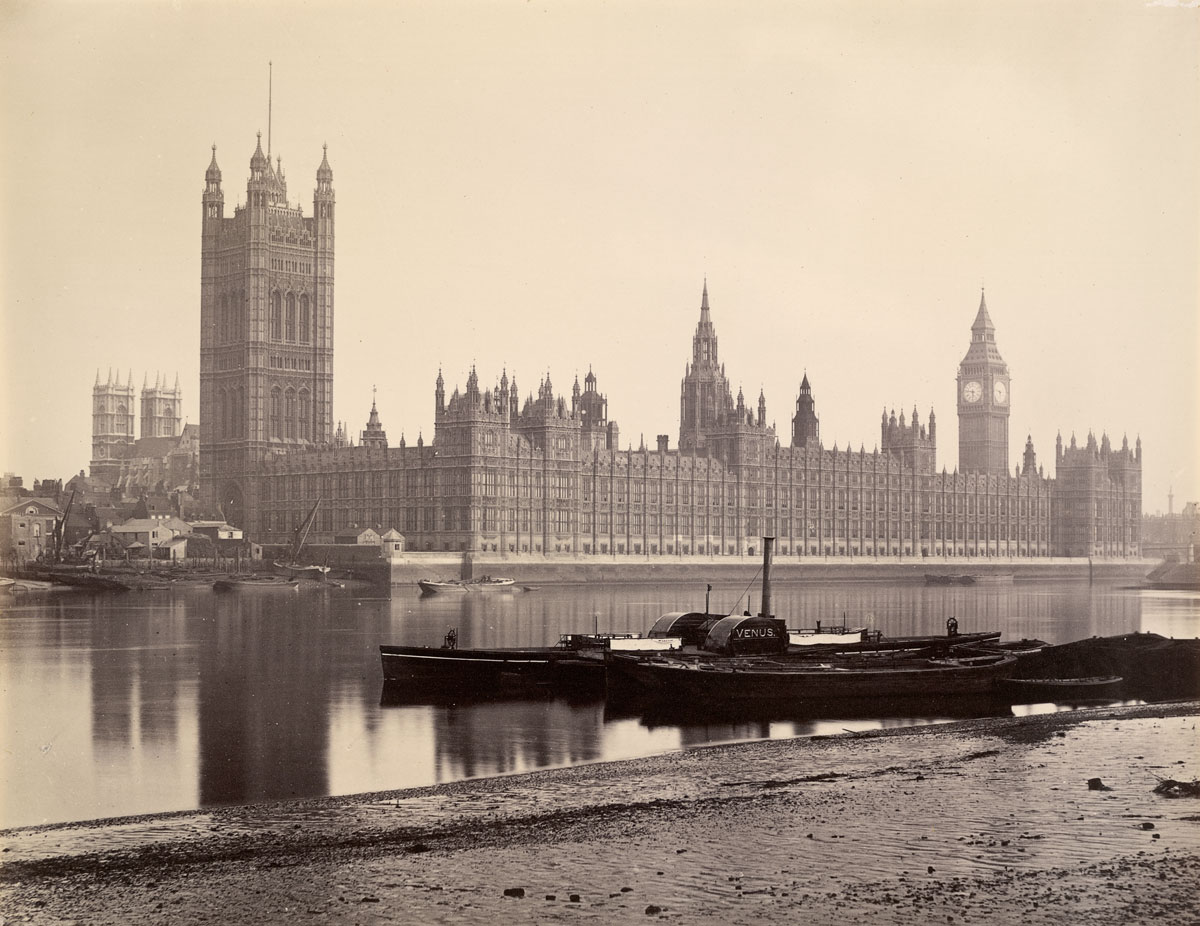
England (active in England 1860s) 'Houses of Parliament, London' 1860s from the exhibition 'Luminous Cities: Photographs of the Built Environment' at NGV International


England (active in England 1860s)
Houses of Parliament, London
1860s
Albumen silver photograph
18.5 x 24.1cm
National Gallery of Victoria, Melbourne
Purchased from Admission funds, 1988


On 22 October the National Gallery of Victoria will open Luminous Cities, a fascinating exhibition that examines the various ways photographers have viewed cities as historical sites, bustling modern hubs and architectural utopias since the nineteenth century.

The great cities of the world are vibrant creative centres in which the built environment is often as inspirational as the activities of its citizens, and, since the nineteenth century photographers have creatively explored the idea of the city.

This exhibition, drawn from the collection of the NGV, considers various ways in which photographers in the 19th and 20th centuries have viewed cities as historical sites, bustling modern metropolises and architectural utopias. These lyrical images describe the physical attributes of cities, offer insights into the creative imaginations of architects and photographers and embody the zeitgeist of their times.

Frances Lindsay, Deputy Director, NGV said: “Through the work of a range of photographers Luminous Cities will take viewers on a fascinating journey around the world, into the streets, buildings and former lives of great international cities.

“Drawn from the NGV collection, Luminous Cities includes works by renowned photographers Eugene Atget, Alfred Stieglitz, Edward Steichen, Berenice Abbott, Laszlo Moholy-Nagy, Bill Brandt, Lee Freidlander and Grant Mudford amongst many others.

The exhibition will also extend into our contemporary gallery space where an outstanding selection of works by celebrated contemporary artists such as Bill Henson, Andreas Gursky and Jon Cattapan will be on display,” said Ms Lindsay.

Through examples from the mid 19th century, Luminous Cities explores the relationship between photographer, architect and archaeologist with photos of Athens, Rome and Pompeii. This was also a time when great cities such as London and Paris underwent unprecedented renewal and expansion, photography served to document new constructions and also presented heroic, inspirational visions of new cities emerging from old.

Susan van Wyk, Curator, Photography, NGV said: “The works on display in Luminous Cities describe the physical attributes of cities, offer insights into the creative imaginations of architects and photographers, and embody the zeitgeist of their times.”

New York, one of the great 20th century cities, was a captivating subject for generations of photographers. Through the work of architects and the images photographers made of the city, New York became synonymous with its skyline. The images of renowned photographers including Alfred Stieglitz, Edward Steichen, Paul Strand and Berenice Abbott show the pictorial possibilities of the modern city in photographs that embody the dynamism of the city that never sleeps.

The contemporary art works included in Luminous Cities explore the creative ways in which artists imagine and represent the cityscape. Vast glittering panoramas taken from bustling urban communities, sprawling architectural structures and fictitious landscapes all combine to reveal fascinating insights into both physical and psychological geographies.

Ms van Wyk said: “At the end of the 20th century a much cooler, more abstracted strain of photography emerged. Photographs in the exhibition from this period range from the formalism of the 1970s to more recent cinematic visions of the nocturnal city.”

Press release from the National Gallery of Victoria website


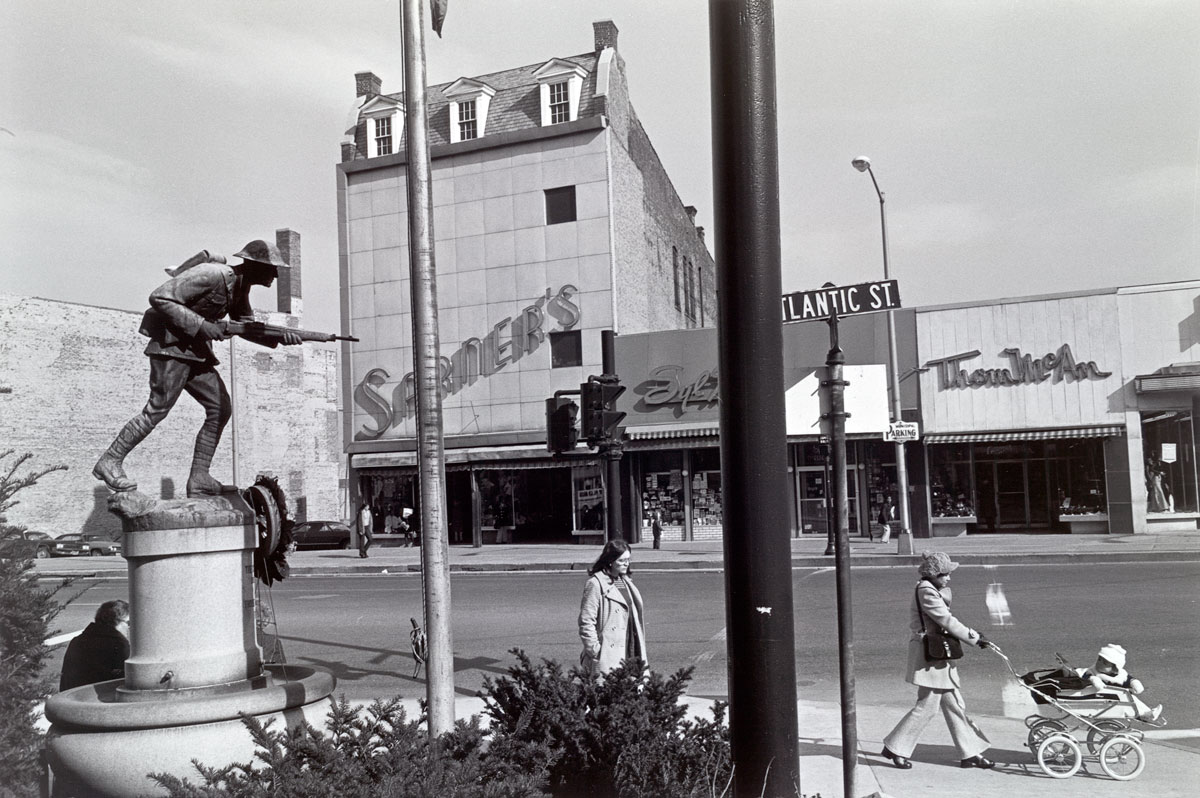
Lee Freidlander (American, b. 1934) 'Stamford, Connecticut' 1973, printed c. 1977 from the exhibition 'Luminous Cities: Photographs of the Built Environment' at NGV International


Lee Freidlander (American, b. 1934)
Stamford, Connecticut
1973, printed c. 1977
Gelatin silver photograph
18.9 x 28.3cm
National Gallery of Victoria, Melbourne
Purchased, 1977
© Lee Friedlander


In the decades following the Second World War the idea of ‘the city’, notably in work of American, European and Australian photographers, came to symbolise the modern condition, the best and worst of contemporary life. This ambiguous stance on the city is exemplified in the work of American photographer Lee Friedlander whose photographs of seemingly ordinary urban scenes are at once amusing and slightly disturbing. In his 1973 photograph Stamford, Connecticut, the banal vernacular architecture of suburban shopping street forms the backdrop to a peculiar scene where shoppers are ‘stalked’ by a statue of first world war sniper. Despite its witty elements, this image has a somewhat despairing tone. The women walking along this rather bleak street are isolated and anonymous, ciphers for the worst aspects of contemporary city life.


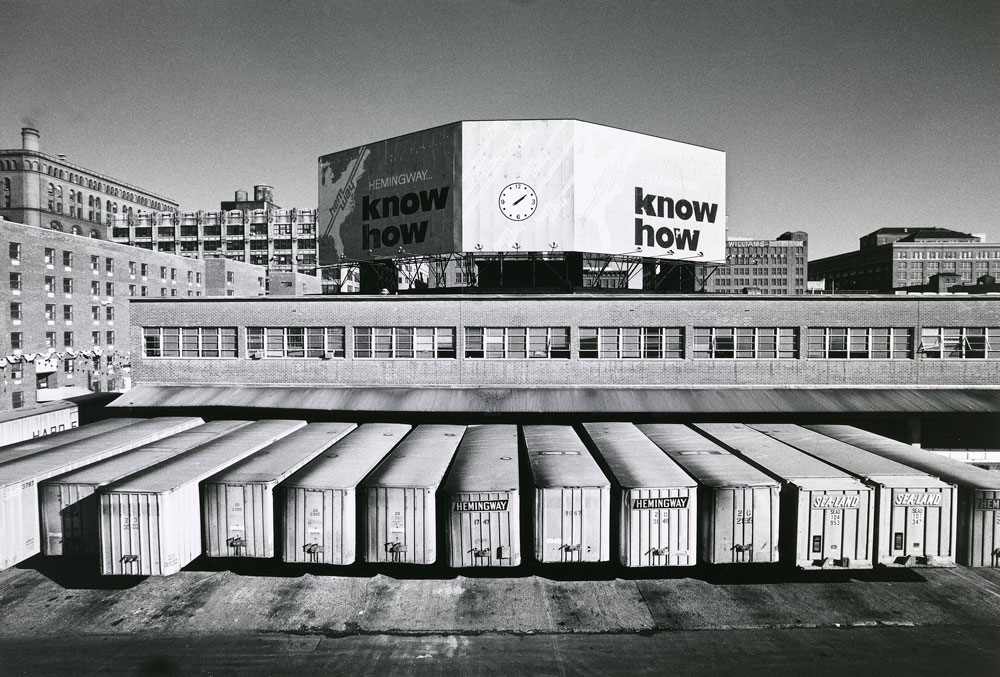
Grant Mudford (b. Australia 1944, lived United States 1977- ) 'New York' 1975 from the exhibition 'Luminous Cities: Photographs of the Built Environment' at NGV International


Grant Mudford (b. Australia 1944, lived United States 1977- )
New York
1975
Gelatin silver photograph
33.8 x 49.8cm
National Gallery of Victoria, Melbourne
Purchased, 1977
© Grant Mudford


A more neutral view of the contemporary city can be seen in the work of Australian photographer Grant Mudford. After moving to the US in 1970s, Mudford continued to photograph the built environment. Familiar with the work of Lee Friedlander, and citing Walker Evans as an influence, Mudford’s photographs continue a tradition of photographing the city as an empty backdrop devoid of the bustle of human activity. In his 1975 Untitled photograph of a truck depot in New York, Mudford simplifies what could be a chaotic scene to the verge of abstraction.


Berenice Abbott (american, 1898-1991) 'New York at Night' 1932 from the exhibition 'Luminous Cities: Photographs of the Built Environment' at NGV International Review: 'Luminous Cities: Photographs of the Built Environment' at NGV International, Melbourne


Berenice Abbott (American, 1898-1991)
New York at Night
1932
Gelatin silver print
34.1 × 26.1cm (image and sheet)
National Gallery of Victoria, Melbourne
Gift of an anonymous donor in memory of Rosa Zerfas (1896-1983), 1985
©Artist estate through the Howard Greenberg Gallery, New York


Edward Steichen (American, 1879-1973) 'The maypole' 1932 from the exhibition 'Luminous Cities: Photographs of the Built Environment' at NGV International Review: 'Luminous Cities: Photographs of the Built Environment' at NGV International, Melbourne


Edward Steichen (American, 1879-1973)
The maypole
1932
Gelatin silver photograph
35.1 × 27.1cm
National Gallery of Victoria, Melbourne
Presented by Maxwell Photo-Optics Pty Ltd, 1973
© Edward Steichen. ARS/Copyright Agency, 2023


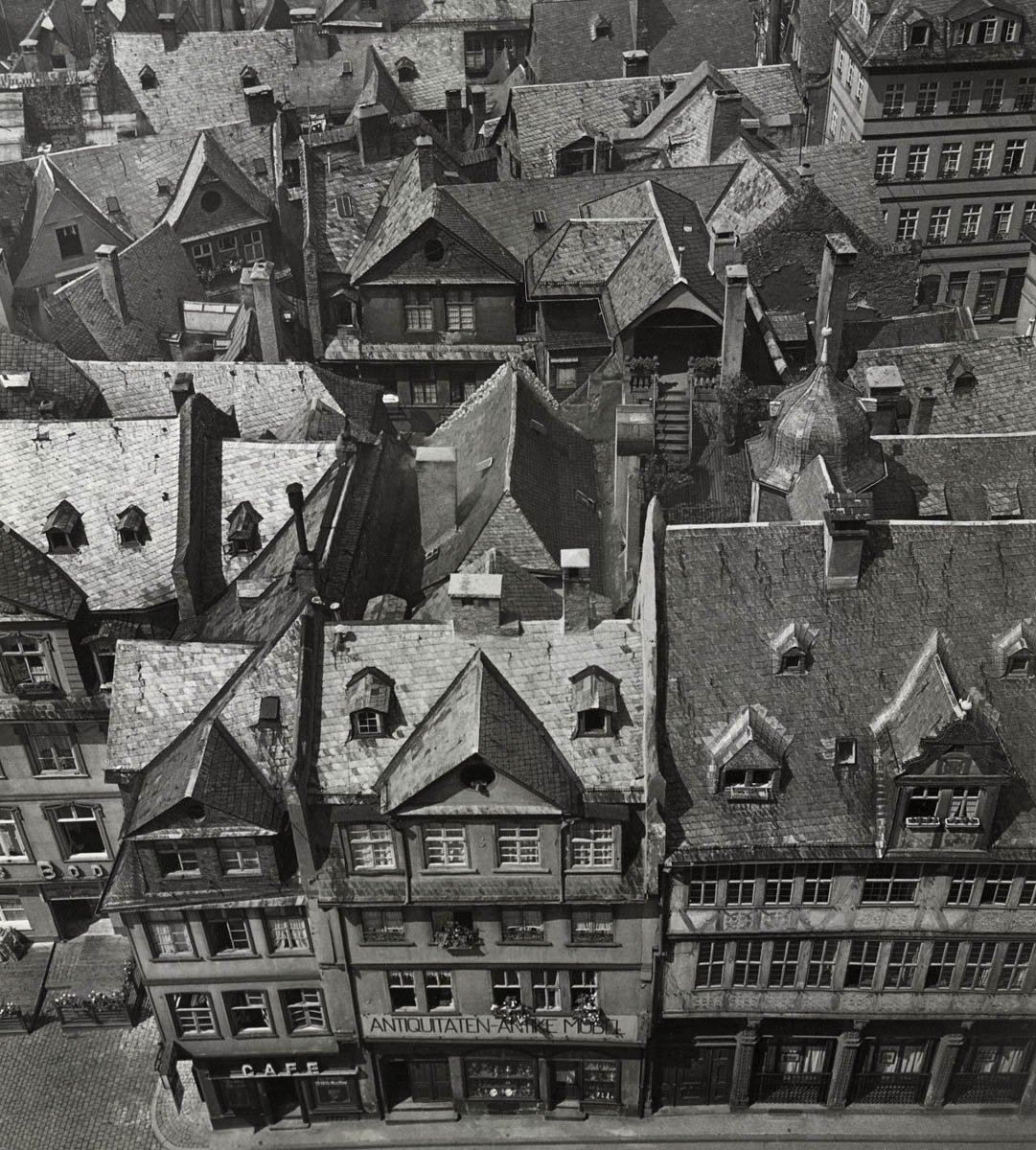
Wolfgang Sievers (Australian born Germany, 1913-2007) 'Old Frankfurt before its total destruction in World War II, Germany' 1933, printed 1986 from the exhibition 'Luminous Cities: Photographs of the Built Environment' at NGV International, Melbourne


Wolfgang Sievers (Australian born Germany, 1913-2007)
Old Frankfurt before its total destruction in World War II, Germany
1933, printed 1986
gelatin silver photograph
28.9 x 26.2 cm
National Gallery of Victoria, Melbourne
Purchased, 1986


Bill Henson (Australian, b. 1955)
'Untitled' 1987-1988 From the 'Untitled 1987/88' series 1987-1988 from the exhibition 'Luminous Cities: Photographs of the Built Environment' at NGV International, Melbourne


Bill Henson (Australian, b. 1955)
Untitled
1987-1988
From the Untitled 1987/88 series 1987-1988
Type C photograph
183.5 x 125.6cm
National Gallery of Victoria, Melbourne
Purchased through The Art Foundation of Victoria with the assistance of the Moët & Chandon Art Acquisition Fund, Fellow, 1989
© The artist and Robert Miller Gallery, New York


NGV International
180 St Kilda Road

Opening hours
Daily 10am – 5pm

National Gallery of Victoria website

LIKE ART BLART ON FACEBOOK

Back to top

melbourne’s magnificent eleven 2010

December 2010


Here’s my pick of the eleven best exhibitions in Melbourne for 2010 that featured on the Art Blart: art and cultural memory archive (in no particular order). Enjoy!

Marcus


1/ Jenny Holzer at The Australian Centre for Contemporary Art (ACCA)

Jenny Holzer (American, b. 1950) 'Right Hand (Palm Rolled)' 2007 from the exhibition 'Jenny Holzer' at The Australian Centre for Contemporary Art (ACCA)


Jenny Holzer (American, b. 1950)
Right Hand (Palm Rolled)
2007
Oil on linen
80 x 62 in (203.2 x 157.5cm)
Text: U.S. government document


The reason that you must visit this exhibition is the last body of work. Working with declassified documents that relate to the wars in Iraq and Afghanistan Holzer’s Redaction paintings address the elemental force that is man’s (in)humanity to man (in the study of literature, redaction is a form of editing in which multiple source texts are combined (redacted) and subjected to minor alteration to make them into a single work) … I left the exhibition feeling shell-shocked after experiencing intimacy with an evil that leaves few traces. In the consciences of the perpetrators? In the hearts of the living! Oh, how I wish to see the day when the human race will truly evolve beyond. We live in hope and the work of Jenny Holzer reminds us to be vigilant, to speak out, to have courage in the face of the unconscionable.


2/ ‘Pondlurking’ by Tom Moore at Helen Gory Galerie, Prahran

This exhibition produced in me an elation, a sense of exalted happiness, a smile on my dial that was with me the rest of the day. The installation features elegantly naive cardboard cityscape dioramas teeming with wondrous, whimsical mythological animals that traverse pond and undulating road. This bestiary of animals, minerals and vegetables (bestiaries were made popular in the Middle Ages in illustrated volumes that described various animals, birds and even rocks) is totally delightful … What really stands out is the presence of these objects, their joyousness. The technical and conceptual never get in the way of good art. The Surrealist imagining of a new world order (the destruction of traditional taxonomies) takes place while balanced on one foot. The morphogenesis of these creatures, as they build one upon another, turns the world upside down … Through their metamorphosed presence in a carnivalesque world that is both weird and the wonderful, Moore’s creatures invite us to look at ourselves and our landscape more kindly, more openly and with a greater generosity of spirit.


Tom Moore (Australian, b. 1971) 'Birdboat with passenger with a vengeance' (left) and 'Robot Island' (right) 2010 and 2009 from the exhibition 'Pondlurking' by Tom Moore at Helen Gory Galerie, Prahran


Tom Moore (Australian, b. 1971)
Birdboat with passenger with a vengeance (left) and Robot Island (right)
2010 and 2009


3/ ‘Safety Zone’ by John Young at Anna Schwartz Gallery

What can one say about work that is so confronting, poignant and beautiful – except to say that it is almost unbearable to look at this work without being emotionally charged, to wonder at the vicissitudes of human life, of events beyond one’s control.

The exhibition tells the story of the massacre of 300,000 people in the city of Nanjing in Jiangsu, China by Japanese troops in December, 1937 in what was to become known as the Nanjing Massacre. It also tells the story of a group of foreigners led by German businessman John Rabe and American missionary Minnie Vautrin who set up a “safety zone” to protect the lives of at least 250,000 Chinese citizens. The work is conceptually and aesthetically well resolved, the layering within the work creating a holistic narrative that engulfs and enfolds the viewer – holding them in the shock of brutality, the poignancy of poetry and the (non)sublimation of the human spirit to the will of others.

Simply, this is the best exhibition that I have seen in Melbourne so far this year.


John Young (Australian, b. 1956) 'Flower Market (Nanjing 1936) #1' 2010 from the exhibition 'Safety Zone' by John Young at Anna Schwartz Gallery


John Young (Australian, b. 1956)
Flower Market (Nanjing 1936) #1
2010
digital print and oil on Belgian linen
240 x 331cm
image courtesy of the artist and Anna Schwartz Gallery


John Young (Australian, b. 1956) 'Safety Zone' 2010


John Young (Australian, b. 1956)
Safety Zone
2010
60 works, digital prints on photographic paper and chalk on blackboard-painted archival cotton paper
Installation shot, Anna Schwartz Gallery, Melbourne
Image courtesy of the artist and Anna Schwartz Gallery


4/ ‘To Hold and Be Held’ by Kiko Gianocca at Gallery Funaki

Kiko Gianocca (Swiss, b. 1974) 'Man & dog' found image, resin, silver 2009 from the exhibition 'To Hold and Be Held' by Kiko Gianocca at Gallery Funaki


Kiko Gianocca (Swiss, b. 1974)
Man & dog
Found image, resin, silver
2009


A beautiful exhibition of objects by Swiss/Italian artist Kiko Gianocca at Gallery Funaki, Melbourne, one full of delicate resonances and remembrances.

Glass vessels with internal funnels filled with the gold detritus of disassembled objects, found pendants: Horse, Anchor, Four leaf clover, Swan, Hammer & sickle … Brooches of gloss and matt black resin plates. On the reverse images exposed like a photographic plate, found images solidified in resin.

The front: the depths of the universe, navigating the dazzling darkness
The back: memories, forgotten, then remade, worn like a secret against the beating chest. Only the wearer knows!

As Kiki Gianocca asks, “I am not sure if I grasp the memories that sometimes come to mind. I start to think they hold me instead of me holding them.”


5/ ‘Jill Orr: Vision’ at Jenny Port Gallery, Richmond

The photographs invite us to share not only the mapping of the surface of the skin and the mapping of place and identity but the sharing of inner light, the light of the imaginary as well – and in this observation the images become unstable, open to reinterpretation. The distance between viewer and subject is transcended through an innate understanding of inner and outer light. The photographs seduce, meaning, literally, to be led astray … I found myself looking at the photographs again and again for small nuances, the detail of hairs on the head, the imagining of what the person was thinking about with their eyes closed: their future, their fears, their hopes, the ‘active imagination as a means to visualise sustainable futures’ (Orr, 2010) …

In the imagination of the darkness that lies behind these children’s closed eyes is the commonality of all places, a shared humanity of memory, of dreams. These photographs testify to our presence and ask us to decide how we feel about our life, our place and the relation to that (un)placeness where we must all, eventually, return.


Jill Orr (Australian, b. 1952) 'Jacinta' 2009 from the exhibition 'Jill Orr: Vision' at Jenny Port Gallery, Richmond

Jill Orr (Australian, b. 1952) 'Jacinta' 2009 from the exhibition 'Jill Orr: Vision' at Jenny Port Gallery, Richmond


Jill Orr (Australian, b. 1952)
Jacinta
2009


6/ ‘AND THEN…’ by Ian Burns at Anna Schwartz Gallery

These are such fun assemblages, the created mis en scenes so magical and hilarious, guffaw inducing even, that they are entirely delightful.

There is so much to like here – the inventiveness, the freshness of the work, the insight into the use of images in contemporary culture. Still photographs of this work do not do it justice. I came away from the gallery uplifted, smiling, happy – and that is a wonderful thing to happen.


Ian Burns (Australian, b. 1964) '15 hours v.4' 2010 from the exhibition 'AND THEN...' by Ian Burns at Anna Schwartz Gallery


Ian Burns (Australian, b. 1964)
15 hours v.4
2010
Found object kinetic sculpture, live video and audio
Image courtesy the artist and Anna Schwartz Gallery


7/ ‘Night’s Plutonian Shore’ by Julia deVille at Sophie Gannon Gallery, Richmond

Julia deVille (Australian, b. 1982) 'Nevermore' 2010 from the exhibition 'Night's Plutonian Shore' by Julia deVille at Sophie Gannon Gallery, Richmond


Julia deVille (Australian, b. 1982)
Nevermore
2010


This is an excellent exhibition by Julia deVille at Sophie Gannon Gallery in Richmond … This exhibition shows a commendable sense of restraint, a beautiful rise and fall in the work as you walk around the gallery space with the exhibits displayed on different types and heights of stand and a greater thematic development of the conceptual ideas within the work. There are some exquisite pieces.

In these pieces there is a simplification of the noise of the earlier works and in this simplification a conversant intensification of the layering of the conceptual ideas. Playful and witty the layers can be peeled back to reveal the poetry of  de Sade, the stories of Greek mythology and the amplification of life force that is at the heart of these works. Good stuff.


8/ ‘Mari Funaki; Objects’ at The Ian Potter Centre: NGV Australia

Mari Funaki (born Japan 1950, arrived Australia 1979, died 2010) 'Object' 2008 from the exhibition 'Mari Funaki; Objects' at The Ian Potter Centre: NGV Australia


Mari Funaki (born Japan 1950, arrived Australia 1979, died 2010)
Object
2008
Heat-coloured mild steel
36 x 47.5 x 14.5cm
Collection of Johannes Hartfuss & Fabian Jungbeck, Melbourne
© The Estate of Mari Funaki


Quiet, precise works. Forms of insect-like legs and proboscises. They balance, seeming to almost teeter on the edge – but the objects are incredibly grounded at the same time. As you walk into the darkened gallery and observe these creatures you feel this pull – lightness and weight. Fantastic!

And so it came to pass in silence, for these works are still, quiet and have a quality of the presence of the inexpressible. Funaki achieves these incredible silences through being true to her self and her style through an expression of her endearing will. While Mari may no longer be amongst us as expressions of her will the silences of these objects will be forever with us.


9/ ‘Up Close: Carol Jerrems with Larry Clark, Nan Goldin and William Yang’ at Heide Museum of Modern Art

When looking at art, one of the best experiences for me is gaining the sense that something is open before you, that wasn’t open before. I don’t mean accessible, I mean open like making a clearing in the jungle, or being able to see further up a road, or just further on. And also like an open marketplace – where there were always good trades. There is the feeling that if you put in a certain amount of honesty, then you would get something back that made some room for you in front – some room that would allow you to look forward, and maybe even walk into that space. Seeing Jerrems work gives you that feeling.


Carol Jerrems (Australian, 1949-1980) 'Mark and Flappers' 1975 from the exhibition 'Up Close: Carol Jerrems with Larry Clark, Nan Goldin and William Yang' at Heide Museum of Modern Art


Carol Jerrems (Australian, 1949-1980)
Mark and Flappers
1975
National Gallery of Victoria, Melbourne
Gift of James Mollison, 1994
© Ken Jerrems & the Estate of Lance Jerrems


10/ ‘John Davis: Presence’ at The Ian Potter Centre: NGV Australia

John Davis (Australia 1936-1999) '(Spotted fish)' 1989 from the exhibition 'John Davis: Presence' at The Ian Potter Centre: NGV Australia


John Davis (Australia 1936-1999)
(Spotted fish)
1989
Twigs, cotton thread, calico, bituminous paint
55 x 145 x 30cm
Private collection, Melbourne
© Penelope Davis & Martin Davis. Administered by VISCOPY, Australia


This is a superlative survey exhibition of the work of John Davis at NGV Australia, Melbourne.

In the mature work you can comment on the fish as ‘travellers’ or ‘nomads’, “a metaphor for people and the way we move around the world.” You can observe the caging, wrapping and bandaging of these fish as a metaphor for the hurt we humans impose on ourselves and the world around us. You can admire the craftsmanship and delicacy of the constructions, the use of found objects, thread, twigs, driftwood and calico and note the ironic use of bituminous paint in relation to the environment, “a sticky tar-like form of petroleum that is so thick and heavy,” of dark and brooding colour.

This is all well and true. But I have a feeling when looking at this work that here was a wise and old spirit, one who possessed knowledge and learning … a human being who attained a state of grace in his life and in his work.


11/ ‘Mortality’ at The Australian Centre for Contemporary Art (ACCA)

Fiona Tan (Indonesian, b. 1966) 'Tilt' 2002 from the exhibition 'Mortality' at The Australian Centre for Contemporary Art (ACCA)


Fiona Tan (Indonesian, b. 1966)
Tilt
2002
DVD
courtesy of the artist, Frith Street Gallery London


I never usually review group exhibitions but this is an exception to the rule. I have seen this exhibition three times and every time it has grown on me, every time I have found new things to explore, to contemplate, to enjoy. It is a fabulous exhibition, sometimes uplifting, sometimes deeply moving but never less than engaging – challenging our perception of life. The exhibition proceeds chronologically from birth to death. I comment on a few of my favourite works below but the whole is really the sum of the parts: go, see and take your time to inhale these works – the effort is well rewarded. The space becomes like a dark, fetishistic sauna with it’s nooks and crannies of videos and artwork. Make sure you investigate them all!


LIKE ART BLART ON FACEBOOK

Back to top

Review: ‘Mortality’ at the Australian Centre for Contemporary Art, Melbourne

Exhibition dates: 8th October – 28th November 2010

Exhibiting artists: Charles Anderson, George Armfield, Melanie Boreham, Bureau of Inverse Technology, Aleks Danko, Tacita Dean, Sue Ford, Garry Hill, Larry Jenkins, Peter Kennedy, Anastasia Klose, Arthur Lindsay, Dora Meeson, Anna Molska, TV Moore, Tony Oursler, Neil Pardington, Giulio Paolini, Mark Richards, David Rosetzky, Anri Sala, James Shaw, Louise Short, William Strutt, Darren Sylvester, Fiona Tan, Bill Viola, Annika von Hausswolff, Mark Wallinger, Lynette Wallworth, Gillian Wearing.


Fiona Tan (Indonesia, b. 1966) 'Tilt' 2002 from the exhibition 'Mortality' at the Australian Centre for Contemporary Art, Melbourne


Fiona Tan (Indonesia, b. 1966)
Tilt
2002
DVD
Courtesy of the artist, Frith Street Gallery London


“… this immersive exhibition swallows us into a kind of spiritual and philosophical lifecycle. As we weave our way through a maze-like series of darkened rooms, we encounter life’s early years, a youth filled with mischief, wonderment, possibilities and choices, and a more reflective experience of mid and later life, preceding the eventual end.”


Dan Rule in The Age


I never usually review group exhibitions but this is an exception to the rule. I have seen this exhibition three times and every time it has grown on me, every time I have found new things to explore, to contemplate, to enjoy. It is a fabulous exhibition, sometimes uplifting, sometimes deeply moving but never less than engaging – challenging our perception of life. The exhibition proceeds chronologically from birth to death. I comment on a few of my favourite works below but the whole is really the sum of the parts: go, see and take your time to inhale these works – the effort is well rewarded. The space becomes like a dark, fetishistic sauna with it’s nooks and crannies of videos and artwork. Make sure you investigate them all!

There is only one photograph by Gillian Wearing from her Album series of self portraits, Self Portrait at Three Years Old (2004, see photograph below) but what a knockout it is. An oval photograph in a bright yellow frame the photograph looks like a perfectly normal studio photograph of a toddler until you examine the eyes: wearing silicon prosthetics, Wearing confronts “the viewer with her adult gaze through the eyeholes of the toddler’s mask, Wearing plays on the rift between interior and exterior and raises a multitude of provocative questions about identity, memory, and the veracity of the photographic medium.”1

Tilt (2002, see photograph above) is a mesmeric video by Fiona Tan of a toddler strapped into a harness suspended from a cluster of white helium-filled balloons in a room with wooden floorboards. The gurgling toddler floats gently into the air before descending to the ground, the little feet scrabbling for traction before gently ascending again –  the whole process is wonderful, the instance of the feet touching the ground magical, the delight of the toddler at the whole process palpable. Dan Rule sees the video as “enlivening and troubling, joyous and worrisome” and he is correct in this observation, in so far as it is the viewer that worries about what is happening to the baby, not, seemingly, the baby itself. It is our anxiety on the toddlers behalf, trying to imagine being that baby floating up into the air looking down at the floor, the imagined alienness of that experience for a baby, that drives our fear; but we need not worry for babies are held above the heads of fathers and mothers every day of the year. Fear is the adult response to the joy of innocence.

There are several photographs by Melbourne photographer Darren Sylvester in the exhibition and they are delightful in their wry take on adolescent life, girls eating KFC (If All We Have Is Each Other, Thats Ok), or pondering the loss of a first love – the pathos of a young man sitting in a traditionally furnished suburban house, reading a letter (in which presumably his first girlfriend has dumped him), surrounded by the detritus of an unfinished Subway meal (see photograph below).

An interesting work by Sue and Ben Ford, Faces (1976-1996, see photograph below) is a video that shows closely cropped faces and the differences in facial features twenty years later. The self consciousness of people when put in front of a camera is most notable, their uncomfortable looks as the camera examines them, surveys them in minute detail. The embarrassed smile, the uncertainty. It is fascinating to see the changes after twenty years.

A wonderful series 70s coloured photographs of “Sharps” by Larry Jenkins that shine a spotlight on this little recognised Melbourne youth sub-culture. These are gritty, funny, in your face photographs of young men bonding together in a tribal group wearing their tight t-shirts, ‘Conte’ stripped wool jumpers (I have a red and black one in my collection) and rat tail hair:

“Larry was the leader of the notorious street gang the “BLACKBURN SOUTH SHARPS” from 1972-1977 when the Sharpie sub-culture was at its peak and the working class suburbs of Melbourne were a tough and violent place to grow up. These photographs represent a period from 1975-1976 in Australian sub-cultural history and are one of the few photographic records of that time. Larry began taking photos at the age of 16 using a pocket camera, when he started working as an apprentice motor mechanic and spent his weekly wage developing his shots… He captured fleeting moments, candid shots and directed his teenage mates through elaborate poses set against the immediate Australian suburban backdrops.”2

Immediate and raw these photographs have an intense power for the viewer.

A personal favourite of the exhibition is Alex Danko’s installation Day In, Day Out (1991, see photograph below). Such as simple idea but so effective: a group of identical silver houses sits on the floor of the gallery and through a rotating wheel placed in front of a light on a stand, the sun rises and sets over and over again. The identical nature of the houses reminds us that we all go through the same process in life: we get up, we work (or not), we go to bed. The sun rises, the sun sets, everyday, on life. Simple, beautiful, eloquent.

Another favourite is Louise Short’s series of found colour slides of family members displayed on one of those old Kodak carrousel slide projectors. This is a mesmeric, nostalgic display of the everyday lives of family caught on film. I just couldn’t stop watching, waiting for the next slide to see what image it brought (the sound of the changing slides!), studying every nuance of environment and people, colour and space: recognition of my childhood, growing up with just such images.

Anri Sala’s video Time After Time (2003, see photograph below) is one of the most poignant works in the exhibition, almost heartbreaking to watch. A horse stands on the edge of a motorway in the near darkness, raising one of it’s feet. It is only when the lights of a passing car illuminate the animal that the viewer sees the protruding rib cage and you suddenly realise how sick the horse must be, how near death.

The film Presentation Sisters (2005, see photographs below) by English artist Tacita Dean, “shows the daily routines and rituals of the last remaining members of a small ecclesiastical community as they contemplate their journey in the spiritual after-life.” Great cinematography, lush film colours, use of shadow and space – but it is the everyday duties of the sisters, a small order of nuns in Cork, Ireland that gets you in. It is the mundanity of washing, ironing, folding, cooking and the procedures of human beings, their duties if you like – to self and each other – that become valuable. Almost like a religious ritual these acts are recognised by Dean as unique and far from the everyday. We are blessed in this life that we live.

Finally two works by Bill Viola: Unspoken (Silver & Gold) 2001 and The Passing (1991, see photographs below). Both are incredibly moving works about the angst of life, the passage of time, of death and rebirth. For me the picture of Viola’s elderly mother in a hospital bed, the sound of her rasping, laboured breath, the use of water in unexpected ways and the beauty of cars travelling at night across a road on a desert plain, their headlights in the distance seeming like atomic fireflies, energised spirits of life force, was utterly beguiling and moving. What sadness with joy in life to see these two works.

Dr Marcus Bunyan


1/ Mann, Ted. “Self-Portrait at Three Years Old,” on the Guggenheim Collection website [Online] Cited 12/11/2010 no longer available online

2/ Anon. “History,” on the Blackburn South Sharps website [Online] Cited 12/11/2010 no longer available online


Many thankx to the Melbourne International Arts Festival and the Australian Centre for Contemporary Art for allowing me to publish the photographs in the posting. Please click on the photographs for a larger version of some of the images.


Gillian Wearing (English, b. 1963) 'Self-Portrait at Three Years Old' 2004 from the exhibition 'Mortality' at the Australian Centre for Contemporary Art, Melbourne


Gillian Wearing (English, b. 1963)
Self-Portrait at Three Years Old
2004
Digital C-type print
© Gillian Wearing


“To take a photograph is to participate in another person’s mortality, vulnerability, mutability. Precisely by slicing out this moment and freezing it, all photographs testify to time’s relentless melt” Susan Sontag wrote. Gillian Wearing registers this, and revisits herself at the age of 3 through the uncanny process of entering her own body. This performance of self, created by the artist putting on a full body prosthetic mask of herself as she was professionally photographed as a child, and peering out at the viewer with her 40-something eyes is a weird sarcophagi of identity. Is Gillian still 3? Is the adult inside the one she has become, or the one who was always there? Is identity pre-determined? Perhaps she would prefer to go back there, and yet this portrait is tinged with a kind of sadness. The eyes betray too much that has passed in the adult life, not yet known by the small child.

Extract from Juliana Engberg About Mortality catalogue


Darren Sylvester (Australian, b. 1974) 'Your First Love Is Your Last Love' 2005 from the exhibition 'Mortality' at the Australian Centre for Contemporary Art, Melbourne


Darren Sylvester (Australian, b. 1974)
Your First Love Is Your Last Love
2005
© Darren Sylvester


Sue Ford (Australian, 1943-2009) and Ben Ford 'Faces' 1976-1996 (still) from the exhibition 'Mortality' at the Australian Centre for Contemporary Art, Melbourne


Sue Ford (Australian, 1943-2009) and Ben Ford
Faces (still)
1976-1996
Detail 
of 15 min b/w 
reversal silent film
16mm, shot on b/w 
reversal film


Photographer, Sue Ford, in her iconic work Faces uses the camera as a kind of mirror to register the changes that occur as we grow older. Without the sometimes pompous commentary of the filmic anthropological voice-over which narrates an imposed, meta-story, Ford allowed her straightforward, black and white, close-up images to suggest the accumulation of experience and the evolution of identity silently. In this version of the work, a video projection which brings old and newer faces together in a rolling sequence, we are able to register the passage of time in a number of ways. The face becomes a terrain of time travelled.

Extract from Juliana Engberg About Mortality catalogue


Faces

Sue Ford’s experimental film “Faces” consists of portraits of the artist and her friends and acquaintances. Ford filmed each subject for roughly 25 seconds, using a wind-up Bolex camera that frames their faces in close-up. Variously self-conscious, serious, amused and distracted, the camera captures every small gesture, expression and flicker of emotion on the person’s face. The result is an examination of portraiture and the performance of identity, demonstrating the artist’s interest in using the camera to capture reality, time and change.

Text from the Youtube website


Sue Ford (Australian, 1943-2009) and Ben Ford 'Faces' (still) 1976-1996


Sue Ford (Australian, 1943-2009) and Ben Ford
Faces (still)
1976-1996
Detail 
of 15 min b/w 
reversal silent film
16mm, shot on b/w 
reversal film


Continuing on from the Time series, in 1976 Ford created the experimental film Faces, in which she filmed portraits of herself, friends and acquaintances. Using a Bolex spring-wound clockwork camera where the film ran through the camera for approximately 25 seconds, Ford directed her subjects to behave as they liked for the duration of the portrait. The camera frames the subject’s face in close-up, steadfastly focusing on them; Memory Holloway described of the work, “While there is no acting, character is revealed by the comfort or uneasiness of the subject. Some laugh, others look romantically pensive, others blow clouds of smoke at the lens as a cover-up”[6]. By bringing an element of time into the creation of a portrait, the film both reveals a moment in that person’s subjective experience and experiments with the plasticity of time, extending and concentrating the 25-second span into a focused moment.

Julia Murphy. “The films of Sue Ford – now part of the ACMI Collection,” on the ACMI website Nd [ONline] Cited 11/03/2025

6/ Memory Holloway, ‘Reel Women: Narrative as a Feminist Alternative’, Art and Text, 1981


Larry Jenkins (Australian) 'Chad, Jono and Mig, Twig, Beatie and Whitey walking down the street at Blackburn South shops' 1975 from the exhibition 'Mortality' at the Australian Centre for Contemporary Art, Melbourne


Larry Jenkins (Australian)
Chad, Jono and Mig, Twig, Beatie and Whitey walking down the street at Blackburn South shops
1975
© Larry Jenkins


The photographs of Larry Jenkins deliver an authentic tribalism. Taken with his instamatic camera, the photos of his sharpie friends, hanging out, posing, wrestling and testing out their manhood, are genuine documents of their time. Belonging to this group is an important and almost primate activity. Surviving the suburbs in the 70s was an ‘us and them’ kind of universe. These were the kinds of boys you crossed the street to avoid. Their collective power, while internally tumultuous as they each try to discover their own identities, nevertheless conveys externally a tight ball of testosterone. They are one, and if you are not them, you are nothing.

Extract from Juliana Engberg About Mortality catalogue


Alex Danko (Australian, b. 1950) 'Day In, Day Out' 1991 from the exhibition 'Mortality' at the Australian Centre for Contemporary Art, Melbourne


Alex Danko (Australian, b. 1950)
Day In, Day Out
1991


From the cradle to the grave… ACCA’s major exhibition Mortality takes us on life’s journey from the moment of lift off to the final send off, and all the bits in between. Curated by Juliana Engberg to reflect the Festival’s visual arts themes of spirituality, death and the afterlife, this transhistorical event includes metaphoric pictures and works by some of the world’s leading artists.

Exhibiting artists include:

Tacita Dean, an acclaimed British artist who works in film and drawing and has shown at Milan’s Fondazione Trussardi and at DIA Beacon, New York.

Anastasia Klose, one of Australia’s most exciting young video artists whose works also include performance and installation.

TV Moore, an Australian artist who completed his studies in Finland and the United States and who has shown extensively in Sydney, Melbourne and overseas.

Tony Oursler, a New York-based artist who works in a range of media and who has exhibited in the major institutions of New York, Paris, Cologne and Britain.

Giulio Paolini, an Italian born artist who has been a representative at both Documenta and the Venice Biennale.

David Rosetzky, a Melbourne-born artist who works predominantly in video and photographic formats and whose work has featured in numerous Australian exhibitions as well as New York, Milan and New Zealand galleries.

Louise Short, an emerging British artist who works predominately with found photographs and slides. Anri Sala, an Albanian-born artist who lives and works in Berlin. He has shown in the Berlin Biennale and the Hayward, London.

Fiona Tan, an Indonesian-born artist, who lives and works in Amsterdam. Tan works with photography and film and has shown in a number of major solo and group exhibitions, including representing the Netherlands at the 2009 Venice Biennale.

Bill Viola, one of the leaders in video and new media art who has shown widely internationally and in Australia.

Gillian Wearing, one of Britain’s most important contemporary artists and a Turner Prize winner who has exhibited extensively internationally.

Highlights of the exhibition include:

Albanian born artist Anri Sala’s acclaimed video work Time After Time, featuring a horse trapped on a Tirana motorway, repeatedly, heartbreakingly raising its hind-leg (see photograph below). Anri first came to acclaim in 1999 for his work in After the Wall, the Stockholm Modern Museum’s exhibition of art from post-communist Europe, and his work is characterised by an interest in seemingly unimportant details and slowness. Scenes are almost frozen into paintings.

Peter Kennedy’s Seven people who died the day I was born – April 18 1945, 1997-98 – a work from a series begun by the artist following the death of his father which connects individual lives with political and historical events. Kennedy’s birth in the last year of World War II and the seven people memorialised imply the multitude of others that died during this catastrophic event as well as the perpetual cycle of life.

A series of slides collected by British artist Louise Short, offering a beguiling insight into the everyday lives of everyday people accumulated as a life narrative.

Acclaimed British artist Tacita Dean’s Presentation Sisters, which shows the daily routines and rituals of the last remaining members of a small ecclesiastical community as they contemplate their journey in the spiritual after-life.

Three works from the Time series by influential Australian photographer Sue Ford, who passed away last year, will also be shown. The photographs capture the artist in various stages of her life.

Text from the ACCA website


Annika von Hausswolff (Swedish, b. 1967) 'Hey Buster! What Do You Know About Desire?' 1995 from the exhibition 'Mortality' at the Australian Centre for Contemporary Art, Melbourne


Annika von Hausswolff (Swedish, b. 1967)
Hey Buster! What Do You Know About Desire?
1995
Colour photograph
Courtesy of the artist and Moderna Museet


Anri Sala (Albanian, b. 1974) 'Time After Time' 2003 (still) from the exhibition 'Mortality' at the Australian Centre for Contemporary Art, Melbourne


Anri Sala (Albanian, b. 1974)
Time After Time (still)
2003
Video, 5 minutes 22 seconds


Sometimes we stagger into dangerous territory. In life, some of us find ourselves on the wrong side of the track. Anri Sala’s Time After Time provides a metaphor for the unfortunate ones who have lost their way or who are marginalised or discarded. A horse has manoeuvred itself, or worse, been abandoned on the wrong side of the highway divider and is now trapped in an endless and shuddering encounter with heavy traffic. The horse visibly flinches and as viewers we are helpless to do anything to assist. It is past its prime and appears malnourished, injured and unwanted. Sala’s horse is symbolic of the scapegoat… the one sent away, or outcast in order for social cohesion to seem reinforced by its exclusion.

Extract from Juliana Engberg About Mortality catalogue


David Rosetzky (Australian, b. 1970) 'Nothing like this' DVD, 2007 (still) from the exhibition 'Mortality' at the Australian Centre for Contemporary Art, Melbourne


David Rosetzky (Australian, b. 1970)
Nothing like this (still)
DVD
2007
Courtesy of the artist and Sutton Gallery, Melbourne


David Rosetzky’s two videos Weekender and Nothing Like This, hyper-construct the languor of these rites of passage for introspective types. One video uses the faded colours of the 1970s Levi’s, Lee’s and Wrangler’s where-do-you-go-to-my-lovely era, through a smudgy David Hamilton Bilitis-like lens. In the other, with a postmodern crispness, Rosetzky establishes scenarios of inner intensity in which the participants narrate their disaffections and doubts. As compared to Ford’s messy, shabby and experimental aesthetic, everything in Rosetzky’s plot is sanitary. This is the synthetic age.

Rosetzky’s videos reference films like The Big Chill which pushes a group together to explore identity. In the instance of Rosetzky’s works however, action is limited and the conventional narrative eliminated in order to zero in on the heightened meditations. Devices such as mirrors refer to a kind of twenty-something narcissism; the beach is presented as a dynamic character of identity flux; time is compressed and delivered in mediated bites.

Things happen on beaches. In Australian culture, as elsewhere they are places of fun, but also menace. When I was a child, the news of the disappearance of children and adults at beaches inflicted a fear into the cultural psyche; children’s freedom was forever altered after the Beaumont Children case.

Extract from Juliana Engberg About Mortality catalogue


David Rosetzky (Australian, b. 1970) 'Nothing like this' DVD 2007 (still) from the exhibition 'Mortality' at the Australian Centre for Contemporary Art, Melbourne


David Rosetzky (Australian, b. 1970)
Nothing like this (still)
DVD
2007
Courtesy of the artist and Sutton Gallery, Melbourne


Tacita Dean (British, b. 1965) 'Presentation Sisters' 2005 (still) from the exhibition 'Mortality' at the Australian Centre for Contemporary Art, Melbourne


Tacita Dean (British, b. 1965)
Presentation Sisters (still)
2005
16 mm film
courtesy of the artist, Frith Street Gallery London


 Some people find solace in religion. And in this exhibition Tacita Dean’s superb film The Presentation Sisters offers a quiet reflection space. Dean emphasises the aspects of quiet devotion, internal contemplation and external dedication that define the Sisters’ spiritual and earthly existence.

In the same way Vermeer suggested spiritualism through domesticity and by using the uplift of light through windows, Dean enlists the ethereal light that travels through the lives and rooms of this small order of nuns who go about their routines and mundane tasks. Dean’s film studies light as a part of metaphysical and theological transformation. However, Dean’s film is also about a kind of Newtonian light: scientific and alchemical.

Her interest in the transformations that occur when light passes through celluloid, and when light passes through glass is a study of the beautiful refractions discovered by scientific observation and written into philosophical enquiries by writers such as Goethe and Burke. As always with Dean’s work, there are layers of encounter in the seemingly simple.

Extract from Juliana Engberg About Mortality catalogue


Tacita Dean (British, b. 1965) 'Presentation Sisters' 2005 (still) from the exhibition 'Mortality' at the Australian Centre for Contemporary Art, Melbourne


Tacita Dean (British, b. 1965)
Presentation Sisters (still)
2005
16 mm film
Courtesy of the artist, Frith Street Gallery London


Bill Viola (American, 1951-2024) 'The Passing' 1991 (still)


Bill Viola (American, 1951-2024)
The Passing (still)
1991
In memory of Wynne Lee Viola
Videotape, black-and-white, mono sound
54 minutes
© Bill Viola


Bill Viola (American, 1951-2024) 'The Passing' 1991 (still)


Bill Viola (American, 1951-2024)
The Passing (still)
1991
In memory of Wynne Lee Viola
Videotape, black-and-white, mono sound
54 minutes
© Bill Viola


Australian Centre for Contemporary Art (ACCA)
111 Sturt Street
Southbank, Victoria 3006
Australia

Opening hours:
Tue – Fri 10am – 5pm
Sat – Sun 11am – 5pm
Mon Closed
Open all public holidays except Christmas Day and Good Friday

Australian Centre for Contemporary Art website

LIKE ART BLART ON FACEBOOK

Back to top

Review: ‘An American Index of the Hidden and Unfamiliar’ by Taryn Simon at the Centre for Contemporary Photography, Fitzroy

Exhibition dates: 15th October – 12th December 2010


Taryn Simon (American, b. 1975) 'U.S. Customs and Border Protection, Contraband Room, John F. Kendedy International Airport, Queens, New York' 2005/2007 from the exhibition 'An American Index of the Hidden and Unfamiliar' by Taryn Simon at the Centre for Contemporary Photography, Oct - Dec 2010


Taryn Simon (American, b. 1975)
U.S. Customs and Border Protection, Contraband Room, John F. Kendedy International Airport, Queens, New York
2005/2007
Chromogenic colour print
37 1/4 x 44 1/2 inches framed (94.6 x 113cm)
© 2007 Taryn Simon
Courtesy Gagosian Gallery/Steidl


African cane rats infested with maggots, African yams (dioscorea), Andean potatoes, Bangladeshi cucurbit plants, bush meat, cherimoya fruit, curry leaves (murraya), dried orange peels, fresh eggs, giant African snail, impala skull cap, jackfruit seeds, June plum, kola nuts, mango, okra, passion fruit, pig nose, pig mouths, pork, raw poultry (chicken), South American pig head, South American tree tomatoes, South Asian lime infected with citrus canker, sugar cane (poaceae), uncooked meats, unidentified sub tropical plant in soil. All items in the photograph were seized from baggage of passengers arriving in the U.S. at JFK Terminal 4 from abroad over a 48-hour period. All seized items are identified, dissected, and then either ground up or incinerated. JFK processes more international passengers than any other airport in the Unites States.

Prohibited agricultural items can harbor foreign animal and plant pests and diseases that could damage U.S. crops, livestock, pets, the environment and the economy. Before entering the country, passengers are required to declare fruits, vegetables, plants, seeds, meats, birds, or animal products that they may be carrying. The CBP agriculture specialists determine if items meet U.S. entry requirements. The U.S. requires permits for animals and plants in order to safeguard against highly infectious diseases, such as foot-and-mouth disease and avian influenza.


This is an exhibition of large format colour photographs by Taryn Simon which features a body of work titled An American Index of the Hidden and Unfamiliar (2006). The work investigates the hidden spaces, places, artefacts and rituals of American cultural warfare (here I mean warfare in the sense of good vs bad, natural vs unnatural (or mutated), safety vs danger, death vs life for example). The photographs are very much like opening a ‘cabinet of curiosities’ where the photographer is attempting to challenge the categorical boundaries of environments and objects, things that are yet to be defined and fixed in place. Some of the photographs work very well in their attempts to categorise, to index; others are far less successful.

Dan Rule in The Age sees the photographs as “slick, high-definition visuals … photographs [that] defy their gritty, documentarian sensibilities. Capturing an ominous vision of Bush-era America, her expansive series … doesn’t merely unearth a sinister vantage of the nation’s underbelly, but renders it in shocking clarity and detail … it ‘s a fascinating and troubling portrait. However, it’s not so much the subject matter but the luminous, hyper-realistic orientation that gives these images such resonance.”1

I see things differently. Where Rule sees luminous photographs I see photographs that are very formal and dull, photographs that are rather lifeless and maudlin. Printed on grey pearlised paper (meaning that the base colour of the photographic paper is not white) and placed in pale grey frames, these A3 high definition, large depth of field photographs possess limited photographic insight into the condition of the spaces and objects being photographed. My friend rather cuttingly, but correctly, noted that they were very National Geographic drained of colour (note: the images in this online posting have far more life and colour than the actual prints!).

This is photography as documentation used to disseminate information, documentation that reinforces the indexical nature of photography (the link between referent and reality) as a form of ‘truth’ – hence the ‘Index’ in the title of the body of work, a taxonomic ordering of reality. Even then some of the photographs have to be validated by text for them to have any meaning. “The visual is processed aesthetically and then redefined by its text” trumpets the wall text. Yes sure, but here the photographs are formalistically visualised, some to very limited effect, and what the text is really doing is semiotically decoding an image that has little meaning (until we are told) through words, words that are about memory, reminders of what we call and know of a thing.

When the photograph tells us very little in the first place, when we do not have knowledge of a thing and cannot construct memories from the photograph but rely solely on words for meaning this can lead to photographs that are intrinsically and inherently poor. An example of a poor photograph in this series is the image of the captured Great white shark. Another example is the photograph of a decomposing body at the Forensic Anthropology Research Facility (see photograph above). Compare this to Sally Mann’s photograph of the same subject matter: the resonance of Mann’s photograph is powerful, confronting yet ambiguous with an amorphous aura surrounding the body, that of Simon’s almost as though the artist was afraid to really approach the subject; there seems to be an obsequiousness to the subject matter. Hidden is hidden and this photograph is definitely not “transforming the unknown into a seductive and intelligible form” (Wall text).

Simon’s photographs are not visual enigmas that approach Atget’s The Marvellous in the Everyday, where he experimented with “the variable play between nature and art through minute changes in the camera’s angle, or as functions of the effects of light and time of day.” Nor do they possess that quality that I noted in my review of the work of Carol Jerrems – spaces that make some room for you in front – some room that would allow you to look forward, and maybe even walk into that space. Despite their ‘hidden’ and ‘unfamiliar’ context these photographs are very dull spaces. Simon’s camera angles are by the book. So are most of the photographs. Of course, I understand the revealing of meaning in the photograph by the text and the surprise this entails but this simply does not dismiss the fact that some of these works are just poor. In fact I would say only about 50% of these photographs could stand alone without the validation of the text. Does this matter? Is this important? Yes I think it is, for some of these works are just deadpan photographs of entropic spaces that are only given meaning because the photographer says they are important things to photograph (see my paper Spaces That Matter: Awareness and Entropia in the Imaging of Place, 2002). Even with text some of the photographs still have no resonance.

When the photographs do work they are astounding. There is delicious irony in the depiction of a Recreational Basketball Court in Cheyenne Mountains Directorate, Chamber D, Colorado Springs, Colorado (2006) a dark, oppressive print of a nuclear bunker with basketball court or the incongruous nature of Death Row, Outdoor Recreational Facility “The Cage” (2006), a barred metal cage situated inside another building for the recreation of death row inmates. Shocking, disorientating. My personal favourite in this human built, human-less world of Simon’s was one of the simplest photographs in the exhibition, a photograph that cuts away the surroundings to picture a labelled flask sitting on a non-descript background. A concise visualisation of a labelled flask given extra meaning when you read the accompanying text: Live HIV, HIV Research Laboratory (2006). Pause for thought. The photographs when understood aesthetically are like snapshots of an alien culture, almost mundane but disturbing. I believe the best photographs in the series combine the presence of the space or object, an understanding of the condition of that space or object without having to read the text. The text then supplements the visual interpretation not overrides it.

Human beings are secretive, unstable, paranoid creatures that are exclusory and fearful of Others. Fear is palpable in these photographs. Here is evidence of the human need for control (through the surveillance of photography) over conduct – control of contamination, death, disease, threat and Other. We investigate and document something in order to control it, in order that science can control it (think Foucault’s disciplinary systems of the prison and the madhouse). These photographs excavate meaning by bringing the shadow into the light in order to index our existence, to make the hidden less frightening and more controllable.

Personally, I prefer my world to remain the mutation that is the catastrophe in the pattern / randomness dialectic. I like the chthonic darkness of difference and the rupture of pattern, the dislocation of identity and the challenge of mutation. Even though these photographs address the context of the hidden and unfamiliar there is nothing in the least unusual about them. Here is the paradox of these works: their (ab)normality vs their lack of humanity. The photographs in this exhibition all too easily confirm our prejudices and limit our understanding of difference through their need to document, label, order and exhibit the fear of (in)difference, all the better to control the mutations of disturbance.

Dr Marcus Bunyan


1/ Rule, Dan. “Taryn Simon: An American Index of the Hidden and Unfamiliar” in The Age newspaper A2. Melbourne: Saturday, October 23rd 2010


Many thankx to the Melbourne International Arts Festival, Institute of Modern Art and the Centre for Contemporary Photography for allowing me to publish the photographs in the posting. Please click on the photographs for a larger version of the image. All photographs © 2007 Taryn Simon. Courtesy Gagosian Gallery/Steidl.


Taryn Simon (American, b. 1975) 'Forensic Anthropology Research Facility, Decomposing Corpse, University of Tennessee, Knoxville, Tennessee' 2003/2007


Taryn Simon (American, b. 1975)
Forensic Anthropology Research Facility, Decomposing Corpse, University of Tennessee, Knoxville, Tennessee
2003/2007
Chromogenic colour print
37 1/4 x 44 1/2 inches framed (94.6 x 113cm)
© 2007 Taryn Simon
Courtesy Gagosian Gallery/Steidl


The decomposing body of a young boy is studied by researchers who have re-created a crime scene.

The Forensic Anthropology Research Facility, popularly known as The Body Farm, is the world’s chief research center for the study of corpse decomposition. Its six-acre plot hosts approximately 75 cadavers in various stage of decomposition. The farm uses physical anthropology (skeletal analysis of human remains) to help solve criminal cases, especially murder cases. Forensic anthropologists work to establish profiles for deceased persons. These profiles can include sex, age, ethnic ancestry, stature, time elapsed since death, and sometimes, the nature of trauma on the bones.


Sally Mann (American, b. 1951) 'Untitled WR Pa 59' 2001 from the series 'What Remains'


Sally Mann (American, b. 1951)
Untitled WR Pa 59
2001
From the series What Remains
© Sally Mann. Courtesy Gagosian Gallery


Taryn Simon (American, b. 1975) 'White Tiger (Kenny), Selective Inbreeding, Turpentine Creek Wildlife Refuge and Foundation, Eureka Springs, Arkansas' 2006/2007 from the exhibition 'An American Index of the Hidden and Unfamiliar' by Taryn Simon at the Centre for Contemporary Photography, Oct - Dec 2010


Taryn Simon (American, b. 1975)
White Tiger (Kenny), Selective Inbreeding, Turpentine Creek Wildlife Refuge and Foundation, Eureka Springs, Arkansas
2006/2007
Chromogenic colour print
37 1/4 x 44 1/2 inches framed (94.6 x 113cm)
© 2007 Taryn Simon
Courtesy Gagosian Gallery/Steidl


In the United States, all living white tigers are the result of selective inbreeding to artificially create the genetic conditions that lead to white fur, ice-blue eyes and a pink nose. Kenny was born to a breeder in Bentonville, Arkansas, on February 3, 1999. As a result of inbreeding, Kenny is mentally retarded and has significant physical limitations. Due to this deep-set nose, he has difficulty breathing and closing his jaw, his teeth are severely malformed and he limps from abnormal bone structure in his forearms. The three other tigers in Kenny’s litter are not considered to be quality white tigers as they are yellow-coated, cross-eyed, and knock-kneed.

White tigers are extremely rare in their natural habitats in Asia. In the U.S., all living white tigers are the result of selective inbreeding in captivity to artificially create the genetic conditions that lead to white fur, ice-blue eyes and a pink nose. Currently, inbreeding such as father to daughter, brother to sister, mother to son has become commonplace. It produces a white cub less than 25% of the time, with only approximately 3% of those considered “quality.” The three other tigers in Kenny’s litter are not considered to be quality white tigers as they are yellow coated, cross-eyed, and knock-kneed.

Conservation experts challenge the perception that white tigers are a rare and endangered species. Instead, they state that zoos, breeders, and entertainment acts have over-bred white tigers for financial gain, citing instances where private breeders and zoos have sold “quality” white tigers for over $60,000. The grave health consequences of inbreeding and over-breeding have led to abortions, stillbirths and a high mortality rate among infants. The Species Survival Plan has condemned the practice. In recent years there has been a significant drop in their market value.


Taryn Simon (American, b. 1975) 'Hymenoplasty, Cosmetic Surgery, P.A., Fort Lauderdale, Florida' 2005/2007 from the exhibition 'An American Index of the Hidden and Unfamiliar' by Taryn Simon at the Centre for Contemporary Photography, Oct - Dec 2010


Taryn Simon (American, b. 1975)
Hymenoplasty, Cosmetic Surgery, P.A., Fort Lauderdale, Florida
2005/2007
Chromogenic colour print
37 1/4 x 44 1/2 inches framed (94.6 x 113cm)
© 2007 Taryn Simon
Courtesy Gagosian Gallery/Steidl


The patient in this photograph is 21 years old. She is of Palestinian descent and living in the United States. In order to adhere to cultural and familial expectations regarding her virginity and marriage, she underwent hymenoplasty. Without it she feared she would be rejected by her future husband and bring shame upon her family. She flew in secret to Florida where the operation was performed by Dr. Bernard Stern, a plastic surgeon she located on the internet. The purpose of hymenoplasty is to reconstruct a ruptured hymen, the membrane which partially covers the opening of the vagina. It is an outpatient procedure which takes approximately 30 minutes and can be done under local or intravenous anesthesia. Dr. Stern charges $3,500 for hymenoplasty. He also performs labiaplasty and vaginal rejuvenation.

The hymen has not been proven to serve any biological function. Some girls are born with an imperforate hymen. Rupture most often occurs during first intercourse, but some girls tear their hymen during sports activities or as a result of injuries. The majority of the time there is a correlation between an intact hymen and a woman’s virginity; many cultures view the tearing of the hymen as a critical symbol of that loss. While similar attempts to alter the hymen predate modern plastic surgery, hymenoplasty is now just one of several vaginal cosmetic surgeries that are growing in popularity worldwide. Dr. Stern charges $3,500 for hymenoplasty. He also performs labiaplasty and vaginal rejuvenation.


“Inspired by rumours of weapons of mass destruction and secret sites in Iraq, American photographic artist Taryn Simon focuses her lens on the hidden and inaccessible places in her own country.

An American Index of the Hidden and Unfamiliar (2006) takes the viewer behind closed doors to uncover some extraordinary things inside places usually hidden from the public’s view. Ranging across the realms of science, government, medicine, entertainment, nature, security, and religion, Simon’s photographic subjects include glowing radioactive capsules in an underwater nuclear-waste storage facility, a Braille edition of Playboy, a deathrow prisoners’ exercise yard, an inbred tiger, corpses rotting in a Forensic Research Facility, and a Scientology screening room.

Shot over four years, mostly with a large-format view camera, the images in this fascinating exhibition are in turn ethereal, foreboding, deadpan and cinematic. In examining what is integral to America’s foundation, mythology and daily functioning, the Index provides a surprising map of the American mindset and creates a vivid portrayal of the contemporary United States.

Inspired by rumours of WMDs and secret sites in Iraq, Taryn Simon decided to address secret sites in her own country, photographing hidden places and things within America’s borders. Ranging across the realms of science, government, medicine, entertainment, nature, security and religion, her subjects include glowing radioactive capsules, a braille edition of Playboy, a death-row prisoners’ exercise yard, an inbred tiger, a teenage corpse rotting in a forensic research facility, and a Scientology screening room. An American Index of the Hidden and Unfamiliar explores a dialectic of security and paranoia that is distinctly American. Offering a heart-of-darkness tour of Bush-period America, it also reflects on photography’s role in revealing and concealing.

In his foreword,1 Salman Rushdie writes ‘In a historical period in which so many people are making such great efforts to conceal the truth from the mass of the people, an artist like Taryn Simon is an invaluable counter-force. Democracy needs visibility, accountability, light. It is in the unseen darkness that unsavoury things huddle and grow. Somehow, Simon has persuaded a good few denizens of hidden worlds not to scurry for shelter when the light is switched on, as cockroaches do, and vampires, but to pose proudly for her invading lens, brandishing their tattoos and Confederate flags.

Simon’s is not the customary aesthetic of reportage – the shaky hand-held camera, the grainy monochrome film stock of the ‘real’. Her subjects… are suffused with light, captured with a bright, hyper-realist, high-definition clarity that gives a kind of star status to these hidden worlds, whose occupants might be thought to be the opposite of stars. In her vision of them, they are dark stars brought into the light. What is not known, rarely seen, possesses a form of occult glamour, and it is that black beauty which she so brightly, and brilliantly, reveals.’

1/ Salman Rushdie, ‘Foreword’ in Taryn Simon, An American Index of the Hidden and Unfamiliar, Steidl Gottingen, Germany, 2007, p. 7.


Text from the Melbourne International Art Festival and the Centre for Contemporary Photography websites


Taryn Simon (American, b. 1975) 'Cryopreservation Unit, Cryonics Institute, Clinton Township, Michigan' 2004/2007


Taryn Simon (American, b. 1975)
Cryopreservation Unit, Cryonics Institute, Clinton Township, Michigan
2004/2007
Chromogenic colour print
37 1/4 x 44 1/2 inches framed (94.6 x 113cm)
© 2007 Taryn Simon
Courtesy Gagosian Gallery/Steidl


This cryopreservation unit holds the bodies of Rhea and Elaine Ettinger, the mother and fist wife of cryonics pioneer, Robert Ettinger. Robert, author of The Prospect of Immortality and Man into Superman is still alive. The Cryogenics Institute offers cryostasis (freezing) services for individuals and pets upon death. Cryostasis is practiced with the hope that lives will ultimately be extended through future developments in science, technology, and medicine. When, and if, these developments occur, Institute members hope to awake to an extended life in good health, free from disease or the ageing process. Cryostasis must begin immediately upon legal death. A person or pet is infused with ice-preventive substances and quickly cooled to a temperature where physical decay virtually stops.

At present, the Cryonics Institute cryopreserves 74 legally dead human patients and 44 legally dead pets. It charges $28,000 for the process if it is planned well in advance of legal death and $35,000 on shorter notice. The cost has not increased since 1976 when the Cryonics Institute was established. The Institute is licensed as a cemetery in the state of Michigan.


Taryn Simon (American, b. 1975) 'Nuclear Waste Encapsulation and Storage Facility, Chernekov Radiation, Hanford Site, U.S. Department of Energy, Southeastern Washington State' 2005/2007


Taryn Simon (American, b. 1975)
Nuclear Waste Encapsulation and Storage Facility, Chernekov Radiation, Hanford Site, U.S. Department of Energy, Southeastern
Washington State
2005/2007
Chromogenic color print
37 1/4 x 44 1/2 inches framed (94.6 x 113cm)
© 2007 Taryn Simon
Courtesy Gagosian Gallery/Steidl


Submerged in a pool of water at Hanford Site are 1,936 stainless-steel nuclear-waste capsules containing cesium and strontium. Combined, they contain over 120 million curies of radioactivity. It is estimated to be the most curies under one roof in the United States. The blue glow is created by the Cherenkov Effect which describes the electromagnetic radiation emitted when a charged particle, giving off energy, moves faster than light through a transparent medium. The temperatures of the capsules are as high as 330 degrees Fahrenheit. The pool of water serves as a shield against radiation; a human standing one foot from an unshielded capsule would receive a lethal dose of radiation in less than 10 seconds. Hanford is among the most contaminated sites in the United States.

Hanford is a 586 square mile former plutonium production complex. It was built for the Manhattan Project, the U.S.-led World War II defense effort that developed the first nuclear weapons. Hanford plutonium was used in the atomic bomb dropped on Nagasaki in 1945. For decades afterwards Hanford manufactured nuclear materials for use in bombs. At Hanford there are more than 53 million gallons of radioactive and chemically hazardous liquid waste, 2,300 tons of spent nuclear fuel, nearly 18 metric tons of plutonium-bearing materials and about 80 square miles of contaminated groundwater. It is among the most contaminated sites in the United States.


Centre for Contemporary Photography
Level 2, Perry St Building
Collingwood Yards, Collingwood
Victoria 3066

Opening hours:
Wednesday – Saturday 11am – 5pm

Centre for Contemporary Photography website

LIKE ART BLART ON FACEBOOK

Back to top

Exhibitions: ‘The Other’ by Titania Henderson at Karen Woodbury Gallery, Richmond, ‘Halftone’ by John Nicholson at Sophie Gannon Gallery, Richmond

Exhibition dates: 19/20th October – 13th November 2010


Titania Henderson (Dutch, b. 1945 emigrated Australia 1956) 'Together II' 2010


Titania Henderson (Dutch, b. 1945 emigrated Australia 1956)
Together II
2010
Images courtesy of the artist and Karen Woodbury Gallery


Two solid exhibitions, ceramics by Titania Henderson at Karen Woodbury Gallery and sculpture by John Nicholson at Sophie Gannon Gallery. Both exhibitions benefit from a straight forward approach to craft – elegant, refined sensibilities that are free from an overly conceptual rendering of ideas; stillness, of form in style, inhabits both bodies of work.

Contemplation is of the essence – in the beautiful, delicate, seemingly fragile shell and tubular mollusc-like bone china structures that, conversely, are physically strong; in the tonal colours of woven amoebic, disc and U-shaped constructions (the Halftone of the exhibition title referring to the loss of colour in digital printing, the longing for sumptuous analogue markings). I liked both exhibitions for the paring down of elements to essentials forming a basis for quiet reflection, a grounding in texture, colour and lightness of form.

Dr Marcus Bunyan


Many thankx to Karen Woodbury Gallery and Sophie Gannon Gallery for allowing me to publish the photographs in the posting. Please click on the photographs for a larger version of the image.


Titania Henderson (Dutch, b. 1945 emigrated Australia 1956) 'Silence' 2010


Titania Henderson (Dutch, b. 1945 emigrated Australia 1956)
Silence
2010
Images courtesy of the artist and Karen Woodbury Gallery


Titania Henderson (Dutch, b. 1945 emigrated Australia 1956) 'Remembering' 2010


Titania Henderson (Dutch, b. 1945 emigrated Australia 1956)
Remembering
2010
Images courtesy of the artist and Karen Woodbury Gallery


Titania Henderson (Dutch, b. 1945 emigrated Australia 1956) 'Piled up 1 (yellow)' 2009/10


Titania Henderson (Dutch, b. 1945 emigrated Australia 1956)
Piled up 1 (yellow)
2009/10
Images courtesy of the artist and Karen Woodbury Gallery


Titania Henderson (Dutch, b. 1945 emigrated Australia 1956) 'Piled up 2 (yellow)' 2009/10


Titania Henderson (Dutch, b. 1945 emigrated Australia 1956)
Piled up 2 (yellow)
2009/10
Images courtesy of the artist and Karen Woodbury Gallery


Titania Henderson’s exhibition The Other presents a range of ceramic sculptural installations in pure white Bone China that convey a three-dimensional engagement. A fragility and vulnerability resonate through these poignant paper-thin configurations, bringing a sense of clarity and freedom. These hand built works challenge the conception of Bone China as a material only suited for slip casting while also incorporating the use of French Limoges. Henderson’s method involves perseverance, technical proficiency and precision, as she creates her own language of rhythmic ceramic art. There is an inherent translucent character that appeals to elements of shadow and light within the works. This new body of work is based on ideas of the human conscience and larger philosophical ideas beyond the objects themselves and beyond language.

Text from the Karen Woodbury Gallery website


John Nicholson (Australian, b. 1970) 'Cloudpopper' 2010


John Nicholson (Australian, b. 1970)
Cloudpopper
2010
Plastic
110 x 38 x 38cm
Photo: Marcus Bunyan


John Nicholson (Australian, b. 1970) 'Scan' 2010


John Nicholson (Australian, b. 1970)
Scan
2010
Plastic
72 x 128cm
Photo: Marcus Bunyan


John Nicholson (Australian, b. 1970) 'Asymmetric' 2010


John Nicholson (Australian, b. 1970)
Asymmetric
2010
Plastic
29 x 70 x 29cm
Photo: Marcus Bunyan


John Nicholson (Australian, b. 1970) 'Concept 101' 2010


John Nicholson (Australian, b. 1970)
Concept 101
2010
Plastic
35 x 46 x 40cm
Photo: Marcus Bunyan


John Nicholson (Australian, b. 1970) Installation view of 'Halftone' 2010


John Nicholson (Australian, b. 1970)
Installation view of Halftone
2010
Photo: Marcus Bunyan


Karen Woodbury Gallery

This gallery has now closed.

Sophie Gannon Gallery
2, Albert Street
Richmond, Melbourne

Opening hours: Tues – Saturday 11 – 5pm

Sophie Gannon Gallery website

LIKE ART BLART ON FACEBOOK

Back to top

Photographs: Marcus Bunyan. ‘Missing in Action (red kenosis)’ 2010

October 2010


Marcus Bunyan (Australian, b. 1958) 'Missing in Action (red kenosis) No. 76' 2010


Marcus Bunyan (Australian, b. 1958)
Missing in Action (red kenosis) No. 76
2010
Digital colour photograph


“God doesn’t give them things he doesn’t want them to use.”
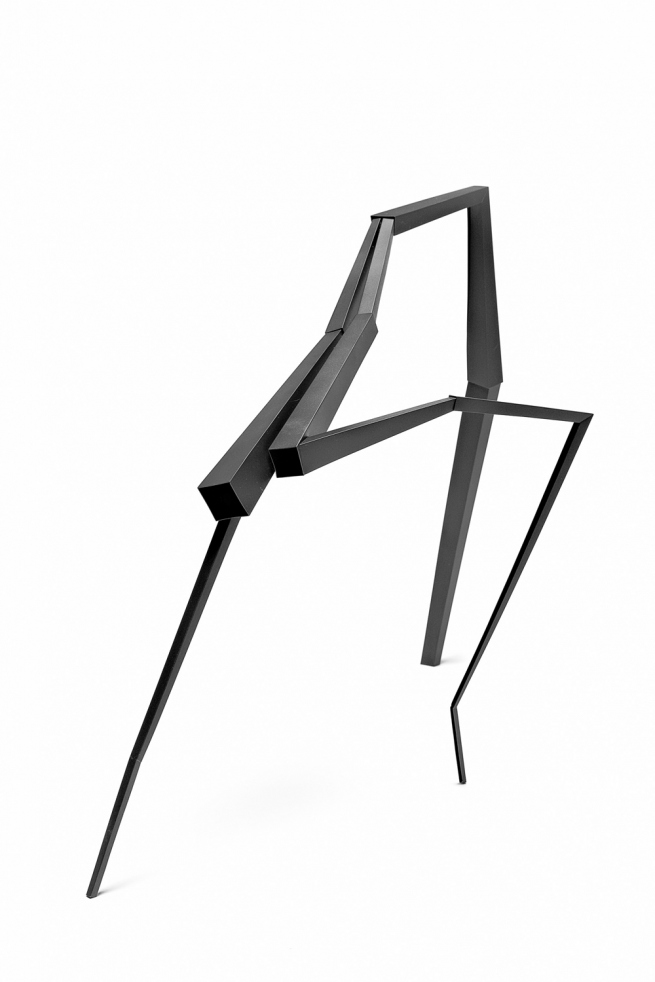

Anon


“There is no glory in battle worth the blood it costs.”


Dwight D. Eisenhower


Missing in Action (red kenosis)

A body of work Missing in Action (red kenosis) 2010 is now online on my website.

There are 100 images in the series which are like variations in music with small shifts in tone and colour. Below is a selection of images, one plane and its variations from the many different planes in the series. Please click on the photographs for a larger version of the image. I hope you like the work!

Dr Marcus Bunyan

Photographs are available from this series for purchase. As a guide, a digital colour 16″ x 20″ costs $1000 plus tracked and insured shipping. For more information please see my Store web page.


Marcus Bunyan (Australian, b. 1958) 'Missing in Action (red kenosis) No. 77' 2010


Marcus Bunyan (Australian, b. 1958) 'Missing in Action (red kenosis) No. 78' 2010


Marcus Bunyan (Australian, b. 1958) 'Missing in Action (red kenosis) No. 79' 2010


Marcus Bunyan (Australian, b. 1958) 'Missing in Action (red kenosis) No. 80' 2010


Marcus Bunyan (Australian, b. 1958) 'Missing in Action (red kenosis) No. 81' 2010


Marcus Bunyan (Australian, b. 1958) 'Missing in Action (red kenosis) No. 82' 2010


Marcus Bunyan (Australian, b. 1958) 'Missing in Action (red kenosis) No. 83' 2010


Marcus Bunyan (Australian, b. 1958) 'Missing in Action (red kenosis) No. 84' 2010


Marcus Bunyan (Australian, b. 1958) 'Missing in Action (red kenosis) No. 85' 2010


Marcus Bunyan (Australian, b. 1958) 'Missing in Action (red kenosis) No. 86' 2010


Marcus Bunyan (Australian, b. 1958) 'Missing in Action (red kenosis) No. 87' 2010


Marcus Bunyan (Australian, b. 1958) 'Missing in Action (red kenosis) No. 88' 2010


Marcus Bunyan (Australian, b. 1958)
Missing in Action (red kenosis) No’s. 77-88
2010
Digital colour photographs


Marcus Bunyan website

LIKE ART BLART ON FACEBOOK

Back to top